
\n\nFunnily enough, this first-ever tweet was actually [sold as an NFT in March 2021 to crypto entrepreneur Sina Estavi](https://www.coindesk.com/business/2022/04/13/jack-dorseys-first-tweet-nft-went-on-sale-for-48m-it-ended-with-a-top-bid-of-just-280/) for $2.9 million, who proceeded to re-sell said [NFT](https://latana.com/post/what-are-nfts/) in 2022 and donate half of the proceeds ($25 million) to charity. What a small world!\n\nBut, back to Twitter’s origin story. The first full version of the platform was introduced to the public on July 15, 2006. Within the same year, Dorsey, Evan Williams, Biz Stone, and other members of Odeo formed a new company called Obvious Corporation — which then acquired Odeo, as well as Twitter.com.\n\nHowever, in 2007, [Twitter officially spun off into its own company](https://web.archive.org/web/20090727073104/http://www.thedailyanchor.com/2009/02/12/a-conversation-with-twitter-co-founder-jack-dorsey/) — and the platform’s founders worked hard to define exactly what it was Twitter was supposed to be. In [a 2013 interview with Inc.](https://www.inc.com/issie-lapowsky/ev-williams-twitter-early-years.html?cid=em01011week40day04b), Williams explained:\n\n*“They called it a social network, they called it microblogging, but it was hard to define, because it didn't replace anything. {...} Twitter actually changed from what we thought it was in the beginning, which we described as status updates and a social utility. {...} Twitter was really more of an information network than it is a social network.”*\n\n---\n\nWith this new direction in mind, Twitter began to gain some organic traction, with the “tipping point” being [identified as the South by Southwest Interactive (SXSWi) conference](https://thenextweb.com/news/5-years-ago-today-twitter-launched-to-the-public) in 2007. During the event, Twitter’s usage went from 20,000 tweets a day to 60,000 — a huge step forward for the brand.\n\nIn [Steven Levy’s 2007 article for Newsweek](https://www.newsweek.com/twitter-brevity-next-big-thing-98045), he attributes this growth to Twitter’s marketing efforts, stating:\n\n*“The Twitter people cleverly placed two 60-inch plasma screens in the conference hallways, exclusively streaming Twitter messages. Hundreds of conference-goers kept tabs on each other via constant twitters.* \n\n*“Panelists and speakers mentioned the service, and the bloggers in attendance touted it. Soon everyone was buzzing and posting about this new thing that was sort of instant messaging and sort of blogging and maybe even a bit of sending a stream of telegrams.”*\n\nIt was a smashing success in more ways than one — influential bloggers of the time lauded Twitter and the platform even received the coveted SXSWi Web Award prize! \n\n---\n\nFrom 2007 to 2010, Twitter experienced rapid growth. In 2007, the platform had 400,000 tweets per quarter — and by 2008, it was 100 million tweets per quarter. Cut to June 2010, and [it’s 65 million tweets *per day*](https://blog.twitter.com/official/en_us/a/2010/big-goals-big-game-big-records.html). That’s some exponential growth if we’ve ever seen it. \n\nFrom 2009 to 2010, Twitter went from the twenty-second to the third-highest-ranking social networking site in the world — and continued to break its own records of daily tweets and tweets per second as the years went on.\n\nIn the fall of 2010, Twitter got a makeover. Dubbed “New Twitter”, this updated version of the platform now allowed users to view pictures and videos without leaving Twitter itself — which afforded members with a much more holistic, enjoyable experience. \n\n“New Twitter” also had a complete overhaul of its interface — shifting “@mentions” and “Retweets” links to above the Twitter stream and moving “Messages” and “Log Out” to the top navigation bar. By November 2010, the “New Twitter experience” had been rolled out to all users and allowed the site to transition to a more seamless experience.\n\n2011 saw the introduction of the “Connect” and “Discover” tabs, as well as a timeline of tweets and completely redesigned user profiles — which [some compared to rival networking site Facebook’s setup](https://www.foxnews.com/tech/twitter-2-0-everything-you-need-to-know-about-the-new-changes). And by 2012, the platform was celebrating its 6th birthday, when it announced that it officially had 140 million users and 340 million tweets per day.\n\nBetween 2011 and 2013, Twitter acquired many notable companies — each of which enhanced the platform’s service and offerings. From Vine to Crashlytics, Twitter was buying up companies left and right with the goal of growing more efficiently. And for a while, it really worked.\n\n## The Dawn of Brand Twitter\n\n\nSource: [Wealth of Geeks](https://wealthofgeeks.com/the-snarkiest-brand-accounts-on-twitter/)\n\nWhile Twitter had been steadily gaining steam since its founding in 2006, it wasn’t until February 2013 that some would say Twitter truly exploded. \n\nDuring Super Bowl XLVII on February 3rd, unfortunately, the power went out — which led to it being dubbed “The Blackout Bowl”. But what was bad for the rival football teams was good for Twitter — and, thanks to a savvy move by its marketing team, none other than “America’s favorite cookie”, Oreo.\n\nWhen the power went out, the vice president of the Mercedes-Benz Superdome Mondeles International, Lisa Mann, was asked (and agreed) to tweet, “You can still dunk in the dark” — which was in reference to Oreo cookies. \n\nIn [a 2020 interview with AdAge](https://adage.com/article/podcast-ad-lib/how-cmo-role-changing-some-cases-worse/2284776), Mann said that “literally the world changed when I woke up the next morning”, — with some going as far as to pinpoint Mann’s tweet as a “watershed moment”, which marked “the beginning of an era when brands endlessly commented on culture”.\n\nAccording to [Nathan Allebach of *Vulture*](https://www.vulture.com/2019/06/brand-twitter-jokes-history.html), marketing and advertising have “always been integrated with culture — [mascots brought brands to life](https://latana.com/post/social-media-home-of-brand-mascot/), influencers became human billboards”. But Twitter took it a step further, making it possible for users to respond to brand’s tweets “without consciously thinking it’s an ad” — a real coup for brand and social media managers everywhere.\n\nIn many ways, this was the beginning of “Brand Twitter” — which “facilitated a new sort of intimacy for brands, one in which they can blend in with people and develop their own personas.” Many brands got off to a rocky, if not entertaining, start. \n\nJust think Los Angeles Chargers way back in 2007:\n\njust setting up my twttr
— jack⚡️ (@jack) March 21, 2006
\n\nTo be completely fair, this Twitter handle was previously owned by the team’s “digital-media person”, and, thus, when the Chargers acquired it, it came with some historical tweets attached. So, while this tweet wasn’t intended to represent the Los Angeles Chargers, in true Twitter fashion, it quickly went viral and became “an artifact of Brand Twitter history”.\n\nBy 2009, many big-name brands had jumped on the Twitter bandwagon — but it wasn’t until 2013 that Brand Twitter really took on a life of its own. \n\nFrom KFC to Old Spice, brands of all kinds were finding their Twitter groove and building out their “Brand Twitter” identities — which, usually, went hand-in-hand with their overall brand identities.\n\n---\n\nFor example, consider fast-food chain Wendy’s Twitter presence. It’s saucy, brazen — if not a bit rude — and was one of the first brands to really solidify its brand image through the use of snappy, 140-character tweets. \n\nIn fact, the brand became so well-known for its cheeky, witty tweets that its [yearly participation in National Roast Day](https://www.today.com/food/trends/wendys-roasts-people-brands-twitter-thread-rcna12076) feels totally natural. On February 12th each year, Wendy’s hard-working social media team “steps up its game even more to celebrate the made-up (but now very real) holiday and send not-so-subtle jabs at its competitors and customers alike.”\n\nAnd more often than not, brands actually nominate themselves to be roasted. After all, going viral thanks to a scathing Wendy’s tweet is fantastic (if not always 100% positive) exposure. From roasting big-time energy drinks…\n\nsoo hungry need to find my wife and head to pf changs
— Los Angeles Chargers (@chargers) February 20, 2007
\n\n…to well-known alcohol brands…\n\nTop drink of choice for when you hate yourself and so does your English teacher. #NationalRoastDay
— Wendy’s (@Wendys) January 12, 2022
\n\nThanks to the brand’s established Brand Twitter persona and the platform’s quippy, irreverent environment, Wendy’s is able to poke fun at brands, influencers, and regular Twitter users alike without facing any real backlash — something that could not be done as effectively on any other social media platform.\n\n---\n\nOver the years, plenty of other brands found their Brand Twitter identity and solidified their place in modern pop culture. \n\nFrom [Denny’s “quirky-surreal-teen-blogger”](https://twitter.com/DennysDiner) iconic tweets — which “arguably kick-started the trend toward ‘weird corporate’ personification” — to Hamburger Helper’s 2016 mixtape, Twitter became a place where brands could be daring, outrageous, and even a bit offensive, all in the name of exposure.\n\nCut to 2016, and Twitter had become a hub of political discourse — with brands like Excedrin and Merriam-Webster taking the opportunity to comment on the US Presidential election and increase brand awareness in the same stroke. \n\nThis was also the beginning of the era of “self-aware Brand Twitter”, where companies became conscious of the fact that they could use their Twitter content to stir up controversy… and get their brand in front of new audiences.\n\nAccording to Allebach, the mainstream “meme-ification” of Brand Twitter officially began in 2018. He explains that:\n\n*“Users talked about brands like they were celebrities, admired their cleverness, embraced their absurdity, and even wanted to get roasted for fun.”*\n\nHowever, it couldn’t last forever, and, over time, the “impact of communities like r/FellowKids dwindled because brands were in on the joke and intentionally trying to get featured; it was like a badge of honor.” What followed was [brand humanization](https://latana.com/post/how-to-humanize-your-brand/), or the process of making your brand more relatable, approachable, and, well, human.\n\nHowever, it was around 2019 that Brand Twitter began to take a turn for the worse — and even more absurd. From the “Silence, Brand” memes to Vita Coco’s infamous jar-full-of-piss tweet, Brand Twitter seemed to be going off the rails.\n\nartificially flavored for teens to make their post-prom feel tRoPiCal #NationalRoastDay
— Wendy’s (@Wendys) January 12, 2022
\n\nInterestingly, this also seemed to coincide with what some dubbed the decline of Twitter — but in what way? Let’s break it down.\n\n## The Decline of Twitter\n\n\nSource: Forbes\n\nIn 2019, [Forbes published a deep dive](https://www.forbes.com/sites/kalevleetaru/2019/04/23/a-fading-twitter-changes-its-user-metrics-once-again/) into the changes Twitter made to its user metrics — where the article’s author, Kalev Leetaru, stated:\n\n*“Twitter is fading. Fast. In the last six years it has dropped by 100 million tweeting users per day, plummeting from an average of 350 million posting users to just 250 million {...} In short, Twitter has been in a six-year decline and stagnation it can’t seem to shake.” *\n\nIn order to fix this issue, the article pointed to Twitter’s decision to “pivot to yet another definition of what counts as a ‘user’ in a desperate attempt to paint its decline in a more positive light.” This new user metric was called a “monetizable daily active user” or an mDAU, and could be defined as anyone who “consumes a tweet in a way that the company can show them ads.”\n\nAnd Leetaru had the data to back up his claim. By shifting its focus to how many users it can show ads to, Twitter managed to pull attention away from the fact that the number of members creating content — aka tweeting — was on the decline.\n\nLeetaru went on to explain that:\n\n*“the company steadfastly declines to provide the kinds of metrics that would permit actual evaluation of its health, from the number of daily tweets to the number of daily tweeting users to its retweet density and average account age.”*\n\nAnd without active users creating daily tweets, “the platform is merely an empty box without all those users pouring in new tweets each day”. After all, consumers come to Twitter to see tweets, memes, and reactions — not to view ads.\n\nSo while the increase in mDAUs was a positive factor for Twitter, the platform still seemed to be in quite a bit of trouble if it couldn’t get the number of tweets up again.\n\nNow, if we fast-forward to 2022, one could say that Twitter is emerging from its slump in a few notable ways. First, the platform has [reported a consistent increase in users from Q3 2020 to Q4 2021](https://www.businessofapps.com/data/twitter-statistics/) — with overall annual users going from 139 million in 2019 to 186 million in 2020.\n\n\n\nAnd that is only including the mDAUs, not the regular DAUs, which are “reportedly between 350 and 400 million”. However, while this growth is a positive thing, it still doesn’t address the issue presented earlier: are the number of tweets, aka content, increasing or decreasing?\n\nAdditionally, while the company has reported a consistent increase in quarterly revenue for all of 2021 — with a majority of said revenue being (unsurprisingly) driven by advertising on the platform — it also saw a net profit loss of $1.1 billion in 2020.\n\nClearly, Twitter is still walking a dangerous line. So, will the platform’s new owner be able to breathe fresh life into it? Or will its popularity continue to wane? \n\n## Twitter Goes Private? The Elon Musk Era\n\n\nSource: [MSNBC News](https://www.msnbc.com/the-reidout/reidout-blog/elon-musk-twitter-deal-rcna25869)\n\nElon Musk has been an active, popular Twitter user since June 2009. With 86.1 million followers and 17.5k tweets under his belt, Musk is a highly influential user on the platform.\n\nBack in March of this year, Musk polled his followers to ask them whether or not they think Twitter adheres to the principles of free speech:\n\nAddress? pic.twitter.com/sQ7Mxrdj9f
— Vita Coco (@VitaCoco) May 15, 2019
\n\nA whopping 70.4% said “no” — and Musk followed up this poll with another tweet asking if a new platform was needed. In a recent Bloomberg article, Tom Forte, an analyst at DA Davidson & Co. was quoted as saying:\n\n*“Given Elon’s prior comments about wanting to start a social media company, I would say it’s possible that he will increase his stake in Twitter or take a controlling interest in the company sometime soon”.*\n\nTalk about prophetic. And when Musk did indeed purchase a 9.2% stake in Twitter on April 4th, the price of the company’s shares rose sharply — as seen in the Bloomberg chart below.\n\n\n\nAnd as of April 25th, Twitter’s board of directors has officially accepted Musk’s offer to acquire the company for $44 billion — which means that Twitter will soon transition from a public to private company. \n\nAnd since private companies are not as open to scrutiny and regulation as public ones, many fear that Musk’s staunch free speech beliefs will only increase the platform’s current issues surrounding regulating what counts as “free speech”.\n\nMost recently, Musk has claimed that Twitter operates as “the de facto public town square” — where “failing to adhere to free speech principles fundamentally undermines democracy.”\n\nBut [according to Microsoft researcher Tarleton Gillespie](https://theconversation.com/what-will-elon-musks-ownership-of-twitter-mean-for-free-speech-on-the-platform-181626), “the notion that social media platforms can operate as truly open spaces is fantasy, given how platforms must moderate content while also disavowing this process.”\n\nIn fact, when it comes to platforms such as Twitter, Gillespie states that they are\n\n*“obliged to moderate, to protect users from their antagonists, to remove offensive, vile, or illegal content and to ensure they can present their best face to new users, advertisers, partners, and the public more generally.”*\n\nHowever, the real issue lies in “exactly when, how, and why to intervene.” And in the end, this is the real challenge of regulating content on a platform like Twitter.\n\nBut, [according to the press release announcing the deal](https://www.cnbc.com/2022/04/25/twitter-accepts-elon-musks-buyout-deal.html), Musk’s priorities will be to “make Twitter better than ever by enhancing the product with new features, making the algorithms open source to increase trust, defeating the spam bots, and authenticating all humans.”\n\nIt’s yet to be seen how Musk’s Twitter takeover will impact users or the platform in general, but we’ll be keeping a close eye on how the story unfolds.\n\n## What You Can Learn From Twitter\n\nWith an enormous, successful company like Twitter, there’s always something to learn. However, we’ll focus on just a few tips in this section.\n\n### 1. Work Smarter, Not Harder\n\nWhile they haven’t always been highly publicized, Twitter has made plenty of acquisitions over the years that allowed the brand to work smarter, not harder. For example, instead of building out its own video capabilities, the brand purchased Vine and integrated its technology into the Twitter platform.\n\nAnd that’s by no means the only example of Twitter acquiring another company in order to enhance its own offerings. Over the years, its service-enhancing acquisitions have been:\n\n- __Vine (2012) -__ a video clip company, allowed Twitter to have a standalone app that could be used to create and share six-second looping videos directly in Twitter users’ feeds.\n- __Crashlytics (2013) -__ software company, allowed Twitter to build out its mobile developer products, as well as collect, analyze, and organize app crash reports to improve service.\n- __Trendrr (2013) -__ a real-time social data & analytics company, allowed Twitter to better tap into media and TV\n- __MoPub (2013) -__ a mobile-focused ad exchange platform, made it possible for mobile app publishers to “manage their inventory of multiple sources of advertising”.\n- __Namo Media (2014) -__ a technology firm, allowed Twitter to enhance its “native advertising” capabilities\n- __SnappyTV (2014) -__ a company that helps edit and share video content from TV, allowed Twitter to help broadcasters and rights holders share video content on Twitter\n- __CardSpring (2014) -__ a coupon-syncing service, allowed Twitter to enhance its eCommerce strategy\n- __Mitro (2014) -__ a password-security company, allowed Twitter to enhance its own password security \n- __Niche (2015) -__ an advertising network for social media influencers, allowed Twitter to streamline the relationship between advertisers and social media celebrities\n- __Periscope (2015) -__ a live-streaming video app, allowed Twitter to enhance its live-streaming abilities\n- __TellApart (2015) -__ a commerce ad tech firm, allowed Twitter to boost its commerce ads\n- __Magic Pony (2016) -__ an artificial intelligence startup, allowed Twitter to enhance images and videos on the platform\n\nFrom this list, it’s clear that often, instead of putting its own resources and effort into developing its own solutions, Twitter chose to outsource. Buying up successful apps and companies and incorporating their technology into its own service saved Twitter a good deal of work.\n\nNow, this specific course of action isn’t possible for all brands, as buying other companies can be an expensive endeavor. However, the overall idea can still be utilized: instead of doing everything in-house, expending a great deal of time and effort, sometimes it's a better idea to make the executive decision to outsource.\n\nThis allowed Twitter to expand rapidly and grow consistently by incorporating other brands’ work and technology into their own platform. Remember: smarter, not harder.\n\n### 2. Don’t Be a Copycat\n\nWhen it comes to social media, it’s *all* about trends. Hashtags, viral music, memes — to be successful in this fast-paced environment, you need to keep up with what’s cool.\n\nHowever, there’s a fine line between being up-to-date and trendy and just being a copycat. And while many social media platforms move fast, Twitter moves at lightspeed. What was trending yesterday may be forgotten by tomorrow — the window of time to produce content that’s “on trend” is extremely short.\n\nAnd because of this setup, Twitter has taught many users an important lesson: Why be a copycat when you can be a cool cat? The most successful accounts and content creators on Twitter are authentic and original — they’re the trendsetters, the cool cats.\n\nWhile other social media platforms are more open to copycatting trends — think TikTok challenges or Instagram hashtags — Twitter users are quick to call out accounts they feel aren’t producing original content.\n\nFor example, consider the decline of Brand Twitter. For a while, posting memes, roasting others, and being wacky were seen as refreshing attributes. But somewhat quickly, users got tired of “brand-posted cringe” and derided those who were late to the game, aka the copycats.\n\nAt the end of the day, the most successful and innovative brands are the ones that come up with new ideas, push the envelope, and aren’t afraid to be different. While being a copycat is definitely easier, it pays to be original.\n\n## Final Thoughts\n\nTwitter has been on quite a journey since its founding back in 2006. Millions upon billions of people have visited the site and its impact on modern culture is undeniable.\n\nHowever, like most large, influential brands, it hasn’t always been easy. Figures on both sides of the political spectrum have criticized the platform’s handling of free speech. And, perhaps more than any other social networking site, particularly vicious trolls abound.\n\nNevertheless, Twitter has been and will likely continue to be a staple of online culture and a hub of important conversation, thoughts, and opinions — a place where everyone from [big-name news outlets](https://latana.com/brand-insights/brand-battles-news-and-entertainment/) to your nextdoor neighbor can come to share their thoughts. \n\nOf course, with the recent takeover by Elon Musk, the platform’s future is up in the air. We’ll be standing by to see when and where it lands.\n\n---\n\n## July 2022 Update\n\nWell, folks — it seems that Musk's buy-out of Twitter may have been just another way for the billionaire to garner attention and grab some headlines. As of July 8th, Musk has officially announced that he's walking away from the deal — \"following ‘multiple breaches’ of the agreement.\"\n\nBut it was back in May when the trouble began. On May 13th, Musk tweeted that the deal was on hold \"pending an investigation into the proportion of bots on the platform\" — [which The Drum notes](https://www.thedrum.com/news/2022/07/11/twitter-and-elon-musk-s-broken-deal-timeline?utm_source=dlvr.it&utm_medium=twitter) \"was largely seen as a tactic for Musk to either drive the price of Twitter down to force a better deal or as a potential way to save face upon an exit.\"\n\nTwitter has stood by its claim that bots only represent 5% of its overall userbase, and, legally, Musk didn't have much backing him. However, shortly after Musk's announcement, Twitter share prices fell by about 25%. \n\nTherefore, on May 16th, [Twitter's shareholders announced that they'd be suing Musk for stock manipulation](https://deadline.com/2022/05/twitter-shareholders-sue-elon-musk-1235034117/) — something the billionaire has been found guilty of in the past, as well (aka [*those* Tesla tweets](https://www.reuters.com/article/us-tesla-musk-tweet-idUSKCN1N10K2)).\n\nMost recently Twitter's CEO, Parag Agwaral, has revised its estimate of how many bots it removes per day to one million — which is double the amount that Agwaral has cited in the past — but maintains the 5% claim.\n\nNow, Twitter has announced its intentions to sue Musk \"not for the $1bn it would get as part of the clause if Musk were to walk away, but to force the billionaire to complete the purchase.\" \n\nIt seems that Twitter is, yet again, calling Musk's bluff.\n\n---\n\n## November 2022 Update\n\nWell, it's finally happened, everyone. After months of trying to get out of the deal, Elon Musk has finally bought Twitter for $44 billion. And he didn't waste any time making big changes.\n\nAccording [to The New York Times](https://www.nytimes.com/2022/10/27/technology/elon-musk-twitter-deal-complete.html), Musk almost immediately \"began cleaning house, with at least four top Twitter executives — including the chief executive and chief financial officer — getting fired on Thursday.\" He also plans to backtrack on many of Twitter's policies — specifically, \"he wants to make the social media platform a more freewheeling place for all types of commentary\".\n\nAnd it hasn't just been C-levels who've been let go. The [BBC recently reported](https://www.bbc.com/news/technology-63495125) that Musk plans to lay off almost half of Twitter's current workforce in an effort to \"ensure the company's success moving forward\".\n\nAdditionally, Musk has ruffled many a feather with his announcement that, in the future, users will have to pay $8 a month for their \"verified\" blue check mark. This means that \"those who pay could have their tweets promoted more widely and see fewer adverts.\"\n\nOn a recent episode of \"The Daily Show\", [Variety noted that](https://variety.com/2022/tv/news/trevor-noah-slams-elon-musk-twitter-8-dollar-blue-check-mark-plan-1235420880/) host Trevor Noah voiced his issues with this plan, reasoning that \"charging people for blue check marks goes against Musk’s mission of bringing free speech and equality to Twitter.\" \n\nInstead, he stated:\n\n*\"If you’re trying to create equality on Twitter, why charge anyone to be verified? Just give everyone a blue checkmark then.\"*\n\nSo far, Musk's changes seem to have received mixed reactions and we'll have to wait and see if his seemingly drastic changes will be for the good of the company or not."},"tags":["Brand Deep Dives","Brand Strategy"],"authorRef":{"slug":"cory-schroder","firstName":"Cory","lastName":"Schröder","title":"Senior Content Marketing Manager","picture":{"__typename":"ContentfulAsset","id":"31ab4d95-0f90-5835-a22f-4b7ff41fece2","description":"","title":"Cory Profile Picture","file":{"contentType":"image/png","url":"//images.ctfassets.net/7so8go2zrvbw/42rTfahl2m45FP1Fzo7B8n/52d40b8bd8af9ab559381bc0ab744cda/avatar.png","details":{"image":{"width":235,"height":235}}},"gatsbyImageData":{"images":{"sources":[{"srcSet":"//images.ctfassets.net/7so8go2zrvbw/42rTfahl2m45FP1Fzo7B8n/52d40b8bd8af9ab559381bc0ab744cda/avatar.png?w=235&h=235&q=95&fm=webp 235w","sizes":"100vw","type":"image/webp"}],"fallback":{"src":"//images.ctfassets.net/7so8go2zrvbw/42rTfahl2m45FP1Fzo7B8n/52d40b8bd8af9ab559381bc0ab744cda/avatar.png?w=235&h=235&q=95&fm=png","srcSet":"//images.ctfassets.net/7so8go2zrvbw/42rTfahl2m45FP1Fzo7B8n/52d40b8bd8af9ab559381bc0ab744cda/avatar.png?w=235&h=235&q=95&fm=png 235w","sizes":"100vw"}},"layout":"fullWidth","backgroundColor":"#080808","width":1,"height":1}}}}},{"node":{"publishDate":"2024-08-23T07:00+01:00","slug":"higher-quality-through-question-design","author":"Imran Choudhary","title":"The hidden layers of brand awareness: How you should be measuring aided awareness","seo":{"__typename":"ContentfulSeo","title":"Unlocking Brand Awareness: Best Practices for Measuring Aided Awareness","description":"Measuring brand awareness can seem pretty straightforward: you simply ask someone whether they know a brand. But the devil is in the detail and the exact question format can have a huge impact on the answer that you get. ","noIndex":null,"ogImage":{"fluid":{"src":"//images.ctfassets.net/7so8go2zrvbw/74BYArLhFbLaySWGWfgjwT/98a260c2c0ef1e0af5707a5328812f36/Screenshot_2023-08-21_at_12.25.54.png?w=1200&h=675&q=90&fm=jpg"},"file":{"url":"//images.ctfassets.net/7so8go2zrvbw/74BYArLhFbLaySWGWfgjwT/98a260c2c0ef1e0af5707a5328812f36/Screenshot_2023-08-21_at_12.25.54.png"}}},"heroImage":{"__typename":"ContentfulAsset","id":"3cba1803-33b0-5e7c-b220-58984bfae7ca","description":"","title":"Blog Cover 1288X400 (2)","file":{"contentType":"image/png","url":"//images.ctfassets.net/7so8go2zrvbw/2K3J6G9YKqtet0SRU6o5cl/9e956266246c3c95e511536fb067eacb/Blog_SEO-Thumbnail_1000X709__1_.png","details":{"image":{"width":1000,"height":709}}},"gatsbyImageData":{"images":{"sources":[{"srcSet":"//images.ctfassets.net/7so8go2zrvbw/2K3J6G9YKqtet0SRU6o5cl/9e956266246c3c95e511536fb067eacb/Blog_SEO-Thumbnail_1000X709__1_.png?w=200&h=142&q=95&fm=webp 200w,\n//images.ctfassets.net/7so8go2zrvbw/2K3J6G9YKqtet0SRU6o5cl/9e956266246c3c95e511536fb067eacb/Blog_SEO-Thumbnail_1000X709__1_.png?w=400&h=284&q=95&fm=webp 400w,\n//images.ctfassets.net/7so8go2zrvbw/2K3J6G9YKqtet0SRU6o5cl/9e956266246c3c95e511536fb067eacb/Blog_SEO-Thumbnail_1000X709__1_.png?w=800&h=567&q=95&fm=webp 800w","sizes":"(min-width: 800px) 800px, 100vw","type":"image/webp"}],"fallback":{"src":"//images.ctfassets.net/7so8go2zrvbw/2K3J6G9YKqtet0SRU6o5cl/9e956266246c3c95e511536fb067eacb/Blog_SEO-Thumbnail_1000X709__1_.png?w=800&h=567&q=95&fm=png","srcSet":"//images.ctfassets.net/7so8go2zrvbw/2K3J6G9YKqtet0SRU6o5cl/9e956266246c3c95e511536fb067eacb/Blog_SEO-Thumbnail_1000X709__1_.png?w=200&h=142&q=95&fm=png 200w,\n//images.ctfassets.net/7so8go2zrvbw/2K3J6G9YKqtet0SRU6o5cl/9e956266246c3c95e511536fb067eacb/Blog_SEO-Thumbnail_1000X709__1_.png?w=400&h=284&q=95&fm=png 400w,\n//images.ctfassets.net/7so8go2zrvbw/2K3J6G9YKqtet0SRU6o5cl/9e956266246c3c95e511536fb067eacb/Blog_SEO-Thumbnail_1000X709__1_.png?w=800&h=567&q=95&fm=png 800w","sizes":"(min-width: 800px) 800px, 100vw"}},"layout":"constrained","backgroundColor":"#f87828","width":800,"height":567}},"coverImage":{"__typename":"ContentfulAsset","id":"95172a90-64ea-5507-875a-ee9cb4eceef4","description":"","title":"Blog SEO-Thumbnail 1000X709 (1)","file":{"contentType":"image/png","url":"//images.ctfassets.net/7so8go2zrvbw/6CTzs1JPNVVlUAwiWnOKeR/40c1458f44ae5db3709358592ee1bc46/Blog_Cover_1288X400__2_.png","details":{"image":{"width":1288,"height":400}}},"gatsbyImageData":{"images":{"sources":[{"srcSet":"//images.ctfassets.net/7so8go2zrvbw/6CTzs1JPNVVlUAwiWnOKeR/40c1458f44ae5db3709358592ee1bc46/Blog_Cover_1288X400__2_.png?w=750&h=233&q=95&fm=webp 750w,\n//images.ctfassets.net/7so8go2zrvbw/6CTzs1JPNVVlUAwiWnOKeR/40c1458f44ae5db3709358592ee1bc46/Blog_Cover_1288X400__2_.png?w=1080&h=335&q=95&fm=webp 1080w,\n//images.ctfassets.net/7so8go2zrvbw/6CTzs1JPNVVlUAwiWnOKeR/40c1458f44ae5db3709358592ee1bc46/Blog_Cover_1288X400__2_.png?w=1288&h=400&q=95&fm=webp 1288w","sizes":"100vw","type":"image/webp"}],"fallback":{"src":"//images.ctfassets.net/7so8go2zrvbw/6CTzs1JPNVVlUAwiWnOKeR/40c1458f44ae5db3709358592ee1bc46/Blog_Cover_1288X400__2_.png?w=1288&h=400&q=95&fm=png","srcSet":"//images.ctfassets.net/7so8go2zrvbw/6CTzs1JPNVVlUAwiWnOKeR/40c1458f44ae5db3709358592ee1bc46/Blog_Cover_1288X400__2_.png?w=750&h=233&q=95&fm=png 750w,\n//images.ctfassets.net/7so8go2zrvbw/6CTzs1JPNVVlUAwiWnOKeR/40c1458f44ae5db3709358592ee1bc46/Blog_Cover_1288X400__2_.png?w=1080&h=335&q=95&fm=png 1080w,\n//images.ctfassets.net/7so8go2zrvbw/6CTzs1JPNVVlUAwiWnOKeR/40c1458f44ae5db3709358592ee1bc46/Blog_Cover_1288X400__2_.png?w=1288&h=400&q=95&fm=png 1288w","sizes":"100vw"}},"layout":"fullWidth","backgroundColor":"#f87828","width":1,"height":0.3105590062111801}},"description":{"description":"Measuring brand awareness can seem pretty straightforward: you simply ask someone whether they know a brand. But the devil is in the detail and the exact question format can have a huge impact on the answer that you get. "},"content":{"content":"Tracking brand awareness is a top priority for most brand marketers, and for good reason—if your target audience doesn’t know you exist, your brand might as well be invisible. We interviewed over 1,000 brand and marketing leaders, and the consensus was clear: aided awareness is the single most important metric to include in any brand tracker.\n\nMeasuring awareness for your brand and competitors has been standard practice for decades, and it might seem straightforward. But here’s what you didn’t know: most brands are getting inaccurate awareness results and they probably aren't even aware of it! This issue often stems from flaws in survey question design which leads to over or under inflated awareness figures, which can lead to poor strategic decisions. This problem is further compounded when you consider most lower funnel KPIs are asked to those aware of the brand, and if you get awareness wrong, you’re then impacting all of the subsequent findings.\n\nAt [Latana](https://www.latana.com/), we've refined our approach to ensure the data you gather is not just accurate, but truly accurate. In this article, you’ll learn how to capture brand awareness accurately, even for small or sub-brands, avoid common pitfalls, and ultimately gain the trustworthy insights your brand needs.\n\n## The problem with how aided brand awareness is currently tracked\n\nGetting your read on how many people are aware of your brand wrong can have major implications. For example, in large markets like the US, if your brand awareness was incorrect by 10%—, that translates to about 25 million people! This error not only distorts the quality of insights but also undermines the credibility of brand tracking efforts.\n\nOne of the key issues lies in how awareness questions are structured and the way brands are shown within the survey. Typically, respondents are presented with a long list of brands and asked to select which of them they are aware of. Our extensive testing reveals that this approach leads to a high cognitive workload for respondents. This list-based question format often causes them to focus on familiar brands while overlooking lesser-known ones, resulting in skewed data. \n\n\n\nThe number of brands on the list also makes a difference. For instance, increasing the number of brands from 5 to 20 in a survey can reduce the average reported awareness level for each brand by up to 15%. Furthermore, the composition of the list can significantly affect awareness measurements. A brand with medium awareness might show a 25% recognition rate when listed among well-known brands but could achieve a 36% recognition rate when placed with mostly lesser-known brands. Even highly recognized brands aren't immune; they might see their awareness reported at 61% when grouped with other well-known brands but jump to 76% when placed among lesser-known ones.\n\n\n\nThese errors have far-reaching consequences. Since awareness questions typically precede those on [brand perception](https://resources.latana.com/post/tackling-the-challenges-of-measuring-brand-perception/), purchase intent, and other key metrics, inaccuracies in the initial awareness measurement will skew all subsequent responses. This compromises the entire survey, leading to misguided business strategies. In large markets like the US or India, even a small error in brand awareness measurement can result in significant missteps in your marketing and brand strategy.\n\n## How can you ask brand awareness questions to get higher-quality insights?\n\n### Use brand logos, not just names\n\nIncorporating brand logos into survey questions significantly enhances the accuracy of brand awareness measurements. Logos, as visual symbols, are more recognizable and memorable than brand names alone, aiding respondents in recalling brands more effectively. This reduces cognitive effort, minimizing the risk of overlooking or confusing brand names. \n\nLogos improve the reliability of responses due to their frequent exposure in advertising, packaging, and digital media. This is particularly helpful in differentiating between brands with similar names and reduces errors from misinterpreting brand names or recall issues, leading to more valid insights.\n\nMoreover, incorporating logos mirrors real-world interactions, where visual branding is crucial for recognition and recall. This method enhances data quality and supports informed decision-making and strategic planning based on reliable insights into [brand perception](https://resources.latana.com/post/tackling-the-challenges-of-measuring-brand-perception/).\n\n\n\n### Ask in silo, just one brand at a time questions \n\nOur research showed that using siloed questions—where respondents answer about individual brands one at a time—tends to produce more reliable data. Although it may seem more time-consuming and costly, this approach reduces cognitive load and enhances data accuracy by minimizing distraction and focusing on one brand at a time.\n\n\n\nEach question in a siloed format typically takes less than a second to answer, which helps maintain respondent engagement and reduces drop-off rates. This method also prevents the common issue of 'brand spillover,' where the presence of well-known brands in a list can skew perceptions and diminish the visibility of lesser-known brands. \n\n\n\n\n\n### Address social desirability bias with the \"Not Sure\" option\n\nSocial desirability bias is a common issue in survey research where respondents may inaccurately claim familiarity with a brand to appear more knowledgeable or socially acceptable. This can significantly skew the results of brand awareness surveys, leading to misleading data and inaccurate insights. When respondents feel pressured to give affirmative answers, they may overstate their familiarity with brands, distorting actual levels of brand awareness and impacting data reliability.\n\nTo mitigate social desirability bias and improve survey accuracy, incorporate a \"Not Sure\" option in the questions. This adjustment provides respondents with a neutral choice that acknowledges their uncertainty without forcing them into a binary \"Yes\" or \"No.\" Allowing respondents to select \"Not Sure\" enables them to express genuine uncertainty about their familiarity with a brand, reducing the pressure to give a positive response they might not fully believe.\n\nIncluding a \"Not Sure\" option can significantly reduce falsely reported brand awareness levels, with studies showing a decrease in inflated awareness reports by up to 10%. This approach builds trust with respondents by acknowledging and validating their honest responses, even if they do not align with a socially desirable narrative. Consequently, this enhances the overall quality of the survey data and provides more reliable insights into consumer perceptions and brand recognition.\n\n\n\n## Conclusion\n\nIn conclusion, accurate brand awareness measurement is crucial for effective brand tracking and strategic planning. Poor survey design can lead to significant inaccuracies:\n\n- Increasing the number of brands in a list from 5 to 20 can reduce reported awareness or usage for each brand by up to 15%.\n- Pairing well-known brands with lesser-known ones can lower the latter's awareness by up to 10%.\n- Excluding logos typically decreases brand recognition by about 20%.\n- Forcing binary choices can inflate reported awareness by around 8%.\n\nAddressing these issues with refined survey techniques ensures more reliable data and better insights into brand performance. Latana’s advanced methodologies overcome these challenges, providing you with accurate and actionable insights. For enhanced brand tracking and strategic planning, book a demo with Latana today.\n"},"tags":["Brand Insights","Brand Tracking"],"authorRef":{"slug":"imran","firstName":"Imran","lastName":"Choudhary","title":"VP Customer Success","picture":{"__typename":"ContentfulAsset","id":"aab68ce8-4146-5e3e-8b9c-7db4ed7ad5ee","description":"","title":"Group 556 (1)","file":{"contentType":"image/png","url":"//images.ctfassets.net/7so8go2zrvbw/6MI3AfP79I6fakYM8ojCUv/bd14087754926a4921195f88b0629ff3/Group_556__1_.png","details":{"image":{"width":262,"height":270}}},"gatsbyImageData":{"images":{"sources":[{"srcSet":"//images.ctfassets.net/7so8go2zrvbw/6MI3AfP79I6fakYM8ojCUv/bd14087754926a4921195f88b0629ff3/Group_556__1_.png?w=262&h=270&q=95&fm=webp 262w","sizes":"100vw","type":"image/webp"}],"fallback":{"src":"//images.ctfassets.net/7so8go2zrvbw/6MI3AfP79I6fakYM8ojCUv/bd14087754926a4921195f88b0629ff3/Group_556__1_.png?w=262&h=270&q=95&fm=png","srcSet":"//images.ctfassets.net/7so8go2zrvbw/6MI3AfP79I6fakYM8ojCUv/bd14087754926a4921195f88b0629ff3/Group_556__1_.png?w=262&h=270&q=95&fm=png 262w","sizes":"100vw"}},"layout":"fullWidth","backgroundColor":"#080808","width":1,"height":1.0305343511450382}}}}},{"node":{"publishDate":"2024-07-26T06:00+01:00","slug":"reach-in-small-markets","author":"Imran Choudhary","title":"How ad-based sampling provides high quality reach in small markets","seo":{"__typename":"ContentfulSeo","title":"How ad-based sampling provides high quality reach in small markets","description":"How you can reliable brand insights in hard-to-reach markets like Norway, Kenya, and Peru with our in-ad surveys, reaching over 3 billion people daily. Fast, cost-effective, and accurate, our approach revolutionizes brand tracking in small markets.","noIndex":null,"ogImage":{"fluid":{"src":"//images.ctfassets.net/7so8go2zrvbw/6ouASpP8aqSGD6uUD64qJa/709bdeff9a0a03e3c6adfd30c7ebb9b5/Blog_SEO-Thumbnail_1000X709_-_2022-03-31T151435.612.png?w=1200&h=675&q=90&fm=jpg"},"file":{"url":"//images.ctfassets.net/7so8go2zrvbw/6ouASpP8aqSGD6uUD64qJa/709bdeff9a0a03e3c6adfd30c7ebb9b5/Blog_SEO-Thumbnail_1000X709_-_2022-03-31T151435.612.png"}}},"heroImage":{"__typename":"ContentfulAsset","id":"3fa399cc-6dd4-500e-9c39-2c2d38d15318","description":"","title":"Photo of a hologram screen in purple frame (thumbnail)","file":{"contentType":"image/png","url":"//images.ctfassets.net/7so8go2zrvbw/6ouASpP8aqSGD6uUD64qJa/709bdeff9a0a03e3c6adfd30c7ebb9b5/Blog_SEO-Thumbnail_1000X709_-_2022-03-31T151435.612.png","details":{"image":{"width":1000,"height":709}}},"gatsbyImageData":{"images":{"sources":[{"srcSet":"//images.ctfassets.net/7so8go2zrvbw/6ouASpP8aqSGD6uUD64qJa/709bdeff9a0a03e3c6adfd30c7ebb9b5/Blog_SEO-Thumbnail_1000X709_-_2022-03-31T151435.612.png?w=200&h=142&q=95&fm=webp 200w,\n//images.ctfassets.net/7so8go2zrvbw/6ouASpP8aqSGD6uUD64qJa/709bdeff9a0a03e3c6adfd30c7ebb9b5/Blog_SEO-Thumbnail_1000X709_-_2022-03-31T151435.612.png?w=400&h=284&q=95&fm=webp 400w,\n//images.ctfassets.net/7so8go2zrvbw/6ouASpP8aqSGD6uUD64qJa/709bdeff9a0a03e3c6adfd30c7ebb9b5/Blog_SEO-Thumbnail_1000X709_-_2022-03-31T151435.612.png?w=800&h=567&q=95&fm=webp 800w","sizes":"(min-width: 800px) 800px, 100vw","type":"image/webp"}],"fallback":{"src":"//images.ctfassets.net/7so8go2zrvbw/6ouASpP8aqSGD6uUD64qJa/709bdeff9a0a03e3c6adfd30c7ebb9b5/Blog_SEO-Thumbnail_1000X709_-_2022-03-31T151435.612.png?w=800&h=567&q=95&fm=png","srcSet":"//images.ctfassets.net/7so8go2zrvbw/6ouASpP8aqSGD6uUD64qJa/709bdeff9a0a03e3c6adfd30c7ebb9b5/Blog_SEO-Thumbnail_1000X709_-_2022-03-31T151435.612.png?w=200&h=142&q=95&fm=png 200w,\n//images.ctfassets.net/7so8go2zrvbw/6ouASpP8aqSGD6uUD64qJa/709bdeff9a0a03e3c6adfd30c7ebb9b5/Blog_SEO-Thumbnail_1000X709_-_2022-03-31T151435.612.png?w=400&h=284&q=95&fm=png 400w,\n//images.ctfassets.net/7so8go2zrvbw/6ouASpP8aqSGD6uUD64qJa/709bdeff9a0a03e3c6adfd30c7ebb9b5/Blog_SEO-Thumbnail_1000X709_-_2022-03-31T151435.612.png?w=800&h=567&q=95&fm=png 800w","sizes":"(min-width: 800px) 800px, 100vw"}},"layout":"constrained","backgroundColor":"#8848e8","width":800,"height":567}},"coverImage":{"__typename":"ContentfulAsset","id":"83e5dec4-72ac-55b1-83ee-82d825eab161","description":"","title":"Photo of a hologram screen in purple frame (cover image)","file":{"contentType":"image/png","url":"//images.ctfassets.net/7so8go2zrvbw/PXP9uewqCToDndZFxUmaG/178f833c5f089d6840646878bd9e859c/Blog_Cover_1288X400_-_2022-03-31T151438.979.png","details":{"image":{"width":1288,"height":400}}},"gatsbyImageData":{"images":{"sources":[{"srcSet":"//images.ctfassets.net/7so8go2zrvbw/PXP9uewqCToDndZFxUmaG/178f833c5f089d6840646878bd9e859c/Blog_Cover_1288X400_-_2022-03-31T151438.979.png?w=750&h=233&q=95&fm=webp 750w,\n//images.ctfassets.net/7so8go2zrvbw/PXP9uewqCToDndZFxUmaG/178f833c5f089d6840646878bd9e859c/Blog_Cover_1288X400_-_2022-03-31T151438.979.png?w=1080&h=335&q=95&fm=webp 1080w,\n//images.ctfassets.net/7so8go2zrvbw/PXP9uewqCToDndZFxUmaG/178f833c5f089d6840646878bd9e859c/Blog_Cover_1288X400_-_2022-03-31T151438.979.png?w=1288&h=400&q=95&fm=webp 1288w","sizes":"100vw","type":"image/webp"}],"fallback":{"src":"//images.ctfassets.net/7so8go2zrvbw/PXP9uewqCToDndZFxUmaG/178f833c5f089d6840646878bd9e859c/Blog_Cover_1288X400_-_2022-03-31T151438.979.png?w=1288&h=400&q=95&fm=png","srcSet":"//images.ctfassets.net/7so8go2zrvbw/PXP9uewqCToDndZFxUmaG/178f833c5f089d6840646878bd9e859c/Blog_Cover_1288X400_-_2022-03-31T151438.979.png?w=750&h=233&q=95&fm=png 750w,\n//images.ctfassets.net/7so8go2zrvbw/PXP9uewqCToDndZFxUmaG/178f833c5f089d6840646878bd9e859c/Blog_Cover_1288X400_-_2022-03-31T151438.979.png?w=1080&h=335&q=95&fm=png 1080w,\n//images.ctfassets.net/7so8go2zrvbw/PXP9uewqCToDndZFxUmaG/178f833c5f089d6840646878bd9e859c/Blog_Cover_1288X400_-_2022-03-31T151438.979.png?w=1288&h=400&q=95&fm=png 1288w","sizes":"100vw"}},"layout":"fullWidth","backgroundColor":"#8848f8","width":1,"height":0.3105590062111801}},"description":{"description":"How you can reliable brand insights in hard-to-reach markets like Norway, Kenya, and Peru with our in-ad surveys, reaching over 3 billion people daily. Fast, cost-effective, and accurate, our approach revolutionizes brand tracking in small markets."},"content":{"content":"Forty percent of global consumer spending, or roughly $20 trillion, happens outside of the world’s biggest markets. Countries like Norway, Kenya, Bangladesh, Peru, Vietnam, Saudi Arabia, and many others present large and often untapped growth opportunities for global brands. However, gathering accurate [brand perception](https://resources.latana.com/post/tackling-the-challenges-of-measuring-brand-perception/) metrics in these markets can be both difficult and expensive, especially within target audiences. \n\nIn this article, you'll discover how Latana's innovative ad-based sampling method tackles the challenge of reaching target audiences in small and emerging markets, providing brands with reliable and actionable insights to capture growth opportunities.\n\n## The Challenge: Reaching Target Audiences in Small Markets\n\nTraditional panels, which have long been the backbone of market research, often fall short in several key areas:\n\n- __Limited Reach of Panels__: Typically, less than 1% of a population is registered in online panels. In large markets like Germany, this might translate to around 600,000 individuals, but in smaller countries like Switzerland, the number drops to less than 60,000. With low participation rates ranging from 5% to 20%, the available pool for research becomes even smaller, making it challenging to gather reliable data, especially for niche groups.\n- __High Costs__: Conducting traditional surveys is expensive, especially in small and emerging markets. High financial and logistical costs can be prohibitive for smaller brands or those entering new markets, limiting the frequency and depth of their research efforts.\n- __Subcontracting and Inconsistent Methodologies__: To maximize respondent pools, traditional tracking providers often subcontract multiple panel providers. This approach leads to inconsistencies in recruitment, incentivization, and data quality. Varying levels of fraudulent responses and varying methodologies can result in volatile trends and unreliable data.\n\n## Latana's Solution: Ad-Based Sampling\n\n### Ad-Based Sampling: Revolutionizing Data Collection\n\nLatana’s innovative approach integrates [survey questions](https://resources.latana.com/post/higher-quality-through-question-design/) directly into advertising space seen by billions of people worldwide via real-time bidding. This seamless survey integration allows for interactive participation directly within the ad space, eliminating the need for redirection to external survey platforms. This revolutionary technique ensures broader, more representative data collection from everyday casual people, enhancing the accuracy and reliability of brand perception metrics.\n\n### Unmatched Reach and Coverage\n\nWith the capacity to reach up to 70% of a country's population per day, Latana's ad-based sampling taps into the largest possible sampling frame of any existing methodology. Six billion people currently own a smartphone, and almost all of them use services, browse websites and use apps that display advertisements. Through our ad-network integrations, we are able to bid on over 40 billion ad requests daily around the world, meaning we can provide frequent, reliable tracking even in small and emerging markets. This broad coverage ensures that brands capture a diverse and representative sample, vital for accurate and actionable insights.\n\n\n\n### Ad Impression Data\n\nLatana's ad-based sampling methodology has an impressive daily reach figures in all countries, including those where traditional panels are often limited:\n\n| Country | Population | Latana Reach |\n| ---------- | ---------- | ---------- |\n| Switzerland | 8,794,341 | 44.14% |\n| Chile | 19,479,170 | 38.01% |\n| UAE | 10,156,199 | 46.02% |\n| Israel | 8,958,451 | 32.58% |\n| Singapore | 5,951,249 | 25.76% |\n\nWhat this means in terms of reach per country is that brands can easily access everyday, casual people representative of each market in large numbers. Latana’s sample size over the course of the year is up to 10x the industry standard. This provides brands the ability for companies to track their brand reliably, frequently and efficiently in these markets.\n\nThis unparalleled reach opens up the door for brands to make data-led decisions with greater confidence.\n\n### Consistent Methodology Across the Globe\n\nOur ad-based sampling works consistently across every country and region, enabling brands to make cross-country comparisons without the need for correcting biases from different sampling approaches. Whether data is collected in Switzerland, Hong Kong or India, the methodology remains uniform, ensuring the integrity and comparability of the results. There’s no subcontracting to other parties, meaning there is end-to-end transparency which ensures consistency. This global consistency is crucial for brands seeking to understand their market position and performance on an international scale. \n\nIt is also possible to tailor your surveys to specific geographic areas, from major cities to sub-city levels, ensuring accuracy and relevance in data collection. In the US, for example, targeting can be set at the state or even sub-state level to guarantee a sampling setup that follows population densities. This can be particularly important in countries like Belgium or Switzerland, where regions can have significant cultural or linguistic differences.\n\n## Case Study: Emma Sleep\n\n\n\n[Emma Sleep](https://www.emma-sleep.com/) is a leading D2C mattress brand present in numerous countries across four continents. With such a vast global reach, the brand recognised the value of having localized brand tracking insights for each market. However, Emma Sleep had the challenge of reaching target audiences in small and emerging markets, particularly Hong Kong, The Netherlands, Taiwan, Switzerland and Belgium. \n\nThrough traditional approaches, the brand was not able to reach enough of their target audience to gain credible insights in these markets, especially when you consider the purchase cycle for mattresses and how infrequently consumers buy into the category. They were also challenged by the costs associated with more traditional incentivised approaches to track frequently in these markets, meaning they had little to no insight on brand perception in key markets. \n\nEmma Sleep made the decision to use Latana to track brand performance in these smaller markets as well as their larger, main markets. By leveraging the digital advertising ecosystem, we are able to help Emma Sleep track in 20 markets worldwide receiving monthly outputs with high levels of precision and accuracy when it comes to brand perception within mattress buyers in a cost effective fashion.\n\n## Conclusion\n\nLatana’s global reach and innovative ad-based sampling methodology address the significant challenge of obtaining reliable brand perception metrics in small and emerging markets. Our approach enables brands to make informed data-led decisions when it comes to capturing growth opportunities. By leveraging data from a diverse and extensive sample, brands can confidently navigate these markets and fine-tune their strategies for maximum impact. \nIf you'd like to learn how Latana can help you track in traditionally hard to reach markets, get in touch with us at hello@latana.com. "},"tags":["Brand Insights","Brand Tracking"],"authorRef":{"slug":"nico","firstName":"Nico","lastName":"Jaspers","title":"CEO","picture":{"__typename":"ContentfulAsset","id":"f15d9219-bdbb-5ce1-a9bb-b08efb5ca84c","description":"","title":"Nico headshot","file":{"contentType":"image/png","url":"//images.ctfassets.net/7so8go2zrvbw/6P3zJxOcq3Z8dJfVDYgG5y/5b95bbfe48f68dc03aa6fe95b1dcfbe9/Group_556.png","details":{"image":{"width":200,"height":200}}},"gatsbyImageData":{"images":{"sources":[{"srcSet":"//images.ctfassets.net/7so8go2zrvbw/6P3zJxOcq3Z8dJfVDYgG5y/5b95bbfe48f68dc03aa6fe95b1dcfbe9/Group_556.png?w=200&h=200&q=95&fm=webp 200w","sizes":"100vw","type":"image/webp"}],"fallback":{"src":"//images.ctfassets.net/7so8go2zrvbw/6P3zJxOcq3Z8dJfVDYgG5y/5b95bbfe48f68dc03aa6fe95b1dcfbe9/Group_556.png?w=200&h=200&q=95&fm=png","srcSet":"//images.ctfassets.net/7so8go2zrvbw/6P3zJxOcq3Z8dJfVDYgG5y/5b95bbfe48f68dc03aa6fe95b1dcfbe9/Group_556.png?w=200&h=200&q=95&fm=png 200w","sizes":"100vw"}},"layout":"fullWidth","backgroundColor":"#080808","width":1,"height":1}}}}},{"node":{"publishDate":"2022-08-26T07:00+02:00","slug":"why-gen-z-loves-starface","author":"Cory Schröder","title":"Why Brands Like Starface Are Leading the Way With Gen Z","seo":{"__typename":"ContentfulSeo","title":"Why Gen Z Loves Brands Like Starface","description":"Bold, offbeat brand Starface wants people to change the way they think about acne — and they’re accomplishing their mission one yellow Hydro-Star at a time.","noIndex":null,"ogImage":{"fluid":{"src":"//images.ctfassets.net/7so8go2zrvbw/4VMWcnWDxSaxI3X2HvVfoM/0d2e1633b2b545a0eac6726dfda27cee/Blog_SEO-Thumbnail_1000X709_-_2022-08-22T100517.784.png?w=1200&h=675&q=90&fm=jpg"},"file":{"url":"//images.ctfassets.net/7so8go2zrvbw/4VMWcnWDxSaxI3X2HvVfoM/0d2e1633b2b545a0eac6726dfda27cee/Blog_SEO-Thumbnail_1000X709_-_2022-08-22T100517.784.png"}}},"heroImage":{"__typename":"ContentfulAsset","id":"621f0e31-e3de-5e30-a94b-6429685cdd63","description":"","title":"Illustration of people with their hands up and Starface logo [Thumbnail]","file":{"contentType":"image/png","url":"//images.ctfassets.net/7so8go2zrvbw/4VMWcnWDxSaxI3X2HvVfoM/0d2e1633b2b545a0eac6726dfda27cee/Blog_SEO-Thumbnail_1000X709_-_2022-08-22T100517.784.png","details":{"image":{"width":1000,"height":709}}},"gatsbyImageData":{"images":{"sources":[{"srcSet":"//images.ctfassets.net/7so8go2zrvbw/4VMWcnWDxSaxI3X2HvVfoM/0d2e1633b2b545a0eac6726dfda27cee/Blog_SEO-Thumbnail_1000X709_-_2022-08-22T100517.784.png?w=200&h=142&q=95&fm=webp 200w,\n//images.ctfassets.net/7so8go2zrvbw/4VMWcnWDxSaxI3X2HvVfoM/0d2e1633b2b545a0eac6726dfda27cee/Blog_SEO-Thumbnail_1000X709_-_2022-08-22T100517.784.png?w=400&h=284&q=95&fm=webp 400w,\n//images.ctfassets.net/7so8go2zrvbw/4VMWcnWDxSaxI3X2HvVfoM/0d2e1633b2b545a0eac6726dfda27cee/Blog_SEO-Thumbnail_1000X709_-_2022-08-22T100517.784.png?w=800&h=567&q=95&fm=webp 800w","sizes":"(min-width: 800px) 800px, 100vw","type":"image/webp"}],"fallback":{"src":"//images.ctfassets.net/7so8go2zrvbw/4VMWcnWDxSaxI3X2HvVfoM/0d2e1633b2b545a0eac6726dfda27cee/Blog_SEO-Thumbnail_1000X709_-_2022-08-22T100517.784.png?w=800&h=567&q=95&fm=png","srcSet":"//images.ctfassets.net/7so8go2zrvbw/4VMWcnWDxSaxI3X2HvVfoM/0d2e1633b2b545a0eac6726dfda27cee/Blog_SEO-Thumbnail_1000X709_-_2022-08-22T100517.784.png?w=200&h=142&q=95&fm=png 200w,\n//images.ctfassets.net/7so8go2zrvbw/4VMWcnWDxSaxI3X2HvVfoM/0d2e1633b2b545a0eac6726dfda27cee/Blog_SEO-Thumbnail_1000X709_-_2022-08-22T100517.784.png?w=400&h=284&q=95&fm=png 400w,\n//images.ctfassets.net/7so8go2zrvbw/4VMWcnWDxSaxI3X2HvVfoM/0d2e1633b2b545a0eac6726dfda27cee/Blog_SEO-Thumbnail_1000X709_-_2022-08-22T100517.784.png?w=800&h=567&q=95&fm=png 800w","sizes":"(min-width: 800px) 800px, 100vw"}},"layout":"constrained","backgroundColor":"#080808","width":800,"height":567}},"coverImage":{"__typename":"ContentfulAsset","id":"7f9db0c3-433a-5eb1-98a8-427b48db61f1","description":"","title":"Illustration of people with their hands up and Starface logo [Cover Image]","file":{"contentType":"image/png","url":"//images.ctfassets.net/7so8go2zrvbw/7cMqHmSMRFclS6pRGDglHt/da388fb22b39a51024f68733e8f3d229/Blog_Cover_1288X400_-_2022-08-22T100520.934.png","details":{"image":{"width":1288,"height":400}}},"gatsbyImageData":{"images":{"sources":[{"srcSet":"//images.ctfassets.net/7so8go2zrvbw/7cMqHmSMRFclS6pRGDglHt/da388fb22b39a51024f68733e8f3d229/Blog_Cover_1288X400_-_2022-08-22T100520.934.png?w=750&h=233&q=95&fm=webp 750w,\n//images.ctfassets.net/7so8go2zrvbw/7cMqHmSMRFclS6pRGDglHt/da388fb22b39a51024f68733e8f3d229/Blog_Cover_1288X400_-_2022-08-22T100520.934.png?w=1080&h=335&q=95&fm=webp 1080w,\n//images.ctfassets.net/7so8go2zrvbw/7cMqHmSMRFclS6pRGDglHt/da388fb22b39a51024f68733e8f3d229/Blog_Cover_1288X400_-_2022-08-22T100520.934.png?w=1288&h=400&q=95&fm=webp 1288w","sizes":"100vw","type":"image/webp"}],"fallback":{"src":"//images.ctfassets.net/7so8go2zrvbw/7cMqHmSMRFclS6pRGDglHt/da388fb22b39a51024f68733e8f3d229/Blog_Cover_1288X400_-_2022-08-22T100520.934.png?w=1288&h=400&q=95&fm=png","srcSet":"//images.ctfassets.net/7so8go2zrvbw/7cMqHmSMRFclS6pRGDglHt/da388fb22b39a51024f68733e8f3d229/Blog_Cover_1288X400_-_2022-08-22T100520.934.png?w=750&h=233&q=95&fm=png 750w,\n//images.ctfassets.net/7so8go2zrvbw/7cMqHmSMRFclS6pRGDglHt/da388fb22b39a51024f68733e8f3d229/Blog_Cover_1288X400_-_2022-08-22T100520.934.png?w=1080&h=335&q=95&fm=png 1080w,\n//images.ctfassets.net/7so8go2zrvbw/7cMqHmSMRFclS6pRGDglHt/da388fb22b39a51024f68733e8f3d229/Blog_Cover_1288X400_-_2022-08-22T100520.934.png?w=1288&h=400&q=95&fm=png 1288w","sizes":"100vw"}},"layout":"fullWidth","backgroundColor":"#b8d8f8","width":1,"height":0.3105590062111801}},"description":{"description":"Bold, offbeat brand Starface wants people to change the way they think about acne — and they’re accomplishing their mission one yellow Hydro-Star at a time."},"content":{"content":"Acne — the bane of every teen’s existence. For years, we tried to cover it up with concealer or heavy foundation (which, in the long run, only made it worse), while the media led us to believe that acne is embarrassing and distasteful — a sign of uncleanliness to be discreetly concealed.\n\nThe shame associated with acne can be debilitating and most people's instinct to try and hide it is a direct product of society’s treatment of it. But up-and-coming skincare brand Starface disagrees. It thinks there’s a better way to help treat and heal acne — and it doesn’t mean hiding your blemishes away, but giving them center stage.\n\nMost well-known for its bright yellow, star-shaped pimple patches, Starface is a brand that’s breaking boundaries with its skin-positive movement — and it's quickly become a [Gen Z](https://latana.com/guides/speaking-to-gen-z/) favorite. Traditionally, acne has been kept on the down-low, but Starface’s pimple patches are hard to miss — and their goal is to allow consumers the ability to be confident no matter the state of their skin.\n\nSo why does Gen Z love Starface so much? And what can other brands learn from its approach to product creation and marketing? Let’s see.\n\n## What is Starface?\n\nLaunched in 2019 by Julie Schott, a former Elle.com beauty director, and entrepreneur Brian Bordainick, [Starface is a boundary-breaking D2C skincare brand](https://fortune.com/2020/08/31/starface-skincare-brands-startup-year-one-advice-small-business/#:~:text=Starface%20launched%20on%20Sept.,on%20acne%20and%20skin%20care.&text=Skin%20care%20is%20increasingly%20outselling%20cosmetics%20in%20the%20beauty%20business.) that “aims to change the conversation around skin and acne today by rejecting negative perceptions.”\n\nThe brand’s first (and most famous) product is its yellow, star-shaped Hydro-Stars — “colorful and bright, like the stickers you may have received as a reward on your homework in elementary school.” Of course, they’re meant to help heal acne, with each patch providing a dose of hydrocolloid spot treatment to consumers’ skin. But, they’re also supposed to look cute and draw the eye — the complete opposite of how acne patches of the past positioned themselves.\n\nIn [an interview with](https://www.lofficielusa.com/beauty/starface-acne-skincare-julie-schott-interview) *L’OFFICIEL*, Schott shared:\n\n*“Before we started, certain retailers or investors didn't necessarily believe in the concept and they said 'Nobody's going to want to wear these loud patches and draw attention to their acne!' And we really believed the opposite to be true.*\n\n*“If you read the reviews or feedback from customers, they always say, 'I feel so much cuter, this made me feel happy!' or 'I'm looking forward to having a breakout!'”*\n\nJust over three years old, Starface is already a hit with consumers — and the brand has been working to continually improve and update its products for its “growing and diverse audience.” \n\nFor example, when the brand received feedback that the original “jelly yellow” color wasn’t showing up the same on all complexions, it went back to the drawing board. Soon after, Starface released an updated version of the Hydro-Star patches, but this time with a truly opaque finish that complemented all skin tones.\n\nSchott explains, “It was just important to have a uniform finish for every complexion so that nobody's having a contrasting experience.” And this attention to detail and the brand experience is what makes a company like Starface so successful. Customers feel heard and as if their voices matter — something which really resonates with Gen Z.\n\n---\n\nOver the past few years, Starface has expanded its product range — which now offers a line of “clean, vegan, and cruelty-free skincare products including a face wash, moisturizer, exfoliating toner, and pore strips.”\n\nAnd the brand’s mission since the beginning has been to challenge the existing stereotypes around acne and change peoples’ perceptions of it. Schott told *L’OFFICIEL* that it all “starts from the language” they use — and Starface prefers to use honest, clinical terms like “acne” or “pimple” rather than “imperfection” or “blemish”. Instead of beating around the bush, Starface gets right to the point — thereby removing the unnecessary niceties and spotlighting authenticity.\n\nSchott explained that “language and visibility are really important and they contribute to normalizing a thing that should totally be normal anyway, because 95 percent of people experience it. Making it fun, making it uplifting, making it optimistic is always the goal.”\n\n## Why Does Gen Z Love Starface So Much?\n\n![Screenshot from Starface website testimonials [Article Image]](//images.ctfassets.net/7so8go2zrvbw/6c0bjn5KWItsnDDxf5FoDQ/5f49368df49774cdac5ac62729214a85/Screenshot_2022-08-22_at_13.57.29.png)\nSource: [Starface Website Testimonials](https://starface.world/)\n\nThere are myriad reasons why Gen Z — and other young consumers — love Starface. But below, we’ll list some of the most important reasons. \n\nLet’s dig in.\n\n### 1. It’s Fun & Eco-Friendly\n\nFor Gen Z, sustainability matters. According to our own research, 37% of Gen Zers and 36% of Millennials reported that they find it “very important” to improve their environmental impact in 2022. \n\nSo, it makes sense why a sustainably-focused brand like Starface would resonate with them — the brand’s refillable, eye-catching cases are not only eco-friendly, they’re “collectible yellow pods” are whimsical and playful. \n\nDescribed in [an article for Vogue](https://www.vogue.com/article/starface-acne-stickers-skin-acceptance-movement) by Arden Fanning Andrews as “a mirrored compact that looks like a mix between an AirPod case and a Polly Pocket toy”, Starface’s “thoughtfully designed” packaging ticks all the boxes for fun-loving Gen Z.\n\nAdd in the fact that the brand’s additional packaging is all recyclable (except for the patches themselves, as seen in the screenshot below), and it becomes even clearer why Starface has hit a home run with this up-and-coming economic powerhouse.\n\n![Screenshot from Starface website \"Earth Friendly\" [Article Image]](//images.ctfassets.net/7so8go2zrvbw/2RRlgR6BgZ1K2CpFpoPAGx/a028325d750fa69450de6af8b77c96d5/Screenshot_2022-07-21_at_14.36.37.png)\nSource: Starface Website\n\n__The Takeaway:__ By blending quirky brand packaging with true eco-consciousness, Starface has won the brand loyalty of countless consumers. Remember, sustainability doesn’t necessarily need to look serious or boring — it can be fun, colorful, and eye-catching.\n\n### 2. It’s Bold & Authentic\n\nIf Gen Z loves one attribute the most, it’s probably authenticity. They aren’t drawn in by traditional marketing ploys or corporate lingo. They want brands that prioritize authenticity, and transparency — and aren’t afraid to take bold stances.\n\nPutting a bright yellow star-shaped sticker on your acne spot is not what anyone could call demure or inconspicuous. It demands to be seen — whether that makes other people comfortable or not.\n\nAndrews goes on to explain that:\n\n*“for the new generation of consumers looking to skincare (rather than concealer) to treat, not disguise, complexions, Starface offers a portable solution that can still fit into the tiniest microbag.*\n\n*“Adorable peel-and-stick star patches create a new opportunity to claim, decorate, and celebrate real, unfiltered faces.”*\n\nThis can easily be seen in Starface’s social media profiles — which often feature real people who use the Hydro-Stars in their everyday lives.\n\nFree speech is essential to a functioning democracy.
— Elon Musk (@elonmusk) March 25, 2022
Do you believe Twitter rigorously adheres to this principle?
\n\nClearly, they’re not meant to be discreet, but to draw attention to and normalize caring for your skin openly. \n\n__The Takeaway:__ Gen Z connects emotionally to brands that celebrate acceptance and embrace authenticity. If your brand is looking to win over this target audience, then don’t be afraid to be bold, authentic, and have a little fun.\n\n### 3. It’s Inclusive & Uplifting\n\nWhen it comes to how Gen Z feels about social, and ethical issues such as LGBTQIA+ rights or the anti-racism movement, we can turn to Latana’s own data. \n\nAccording to research conducted in May 2022, 53% of Gen Z respondents would either be “likely” or “very likely” to purchase from a brand that [actively supports LGBTQIA+ rights](https://latana.com/post/three-best-pride-campaigns-2022/). Additionally, 42% of Gen Z respondents stated that they would be “likely” or “very likely” to avoid buying from brands that don’t take an active stance against racism. \n\nWhile it’s not 100%, these topics are more important to Gen Z and Millennial consumers than they are to their older counterparts. So, it makes total sense that younger consumers connect with Starface’s inclusive, uplifting vibes.\n\nA short look through the brand’s website reveals its [“Your Impact” page](https://starface.world/pages/your-impact), which explains all the ways that the company is working to make the world a safe, more inclusive place. \n\n\nSource: Starface \"Your Impact\" Page\n\nAccording to the brand’s website, 100% of the net proceed from the Rainbow Star pimple patches will be donated forever to the following organizations:\n\n- __The Hetrick-Martin Institute for LGBTQ+ Youth (HMI):__ This organization works with teachers, school administrators, guidance counselors, mental health providers, and local government agencies to “educate and inform policies that better support LGBTQ youth ages 13 - 24 and their families.”\n- __Black-Led Movement Fund (BLMF):__ This donor collaborative at Borealis Philanthropy works to strengthen the Movement for Black Lives (M4BL) to “better shape policy agenda for black communities, create viable alternatives to institutions that have been harmful to Black people, and build local Black community power.”\n- __Black Thrive:__ This UK-based organization works to improve the mental health and overall wellbeing of Black communities — while also striving to reduce health inequalities. \n- __Alliance for Youth Actions:__ This is a non-partisan network of organizations that work to build the progressive power of young people across the US — creating political homes for young people with both physical and online communities.\n- __Black Women In Motion (BWIM):__ This is a Toronto-based organization that works to “empower, advocate for, uplift and support Black women and non-binary folx” through its “anti-racist, intersectionally feminist, trauma-informed and survivor-centred” framework.\n\nStarface has already donated $240,000 to the above-mentioned charities and organizations — which proves to Gen Z consumers that the brand puts its money where its mouth is.\n\n__The Takeaway:__ Many Gen Z and Millennial consumers are looking to give their business to brands whose values coincide with their own. And inclusivity, equality, and an uplifting community are all very attractive attributes to these generations.\n\nSo, if your brand wants to connect with younger consumers, then you’d be smart to consider the ways in which it can uplift and support its community.\n\n## Final Thoughts\n\nBy working to normalize acne — something that’s incredibly common yet so often hidden away from view — Starface has won the attention (and brand loyalty) of thousands of consumers. \n\nThe brand’s bold, whimsical approach to branding and marketing has made it a smash hit — particularly with Gen Z. Furthermore, its inclusive mission and uplifting brand voice have allowed the brand to foster a strong community, therefore enhancing its brand experience.\n\nBy understanding what its target audience wanted and delivering it to them in spades, Starface has grown into a fully-fledged powerhouse in just under three years. So, if you want access to reliable data that allows you to better understand your target audience’s thoughts, needs, and opinions, we recommend giving [brand monitoring software](https://latana.com/product/) a try — you won’t regret it.\n"},"tags":["Brand Marketing","Brand Strategy"],"authorRef":{"slug":"cory-schroder","firstName":"Cory","lastName":"Schröder","title":"Senior Content Marketing Manager","picture":{"__typename":"ContentfulAsset","id":"31ab4d95-0f90-5835-a22f-4b7ff41fece2","description":"","title":"Cory Profile Picture","file":{"contentType":"image/png","url":"//images.ctfassets.net/7so8go2zrvbw/42rTfahl2m45FP1Fzo7B8n/52d40b8bd8af9ab559381bc0ab744cda/avatar.png","details":{"image":{"width":235,"height":235}}},"gatsbyImageData":{"images":{"sources":[{"srcSet":"//images.ctfassets.net/7so8go2zrvbw/42rTfahl2m45FP1Fzo7B8n/52d40b8bd8af9ab559381bc0ab744cda/avatar.png?w=235&h=235&q=95&fm=webp 235w","sizes":"100vw","type":"image/webp"}],"fallback":{"src":"//images.ctfassets.net/7so8go2zrvbw/42rTfahl2m45FP1Fzo7B8n/52d40b8bd8af9ab559381bc0ab744cda/avatar.png?w=235&h=235&q=95&fm=png","srcSet":"//images.ctfassets.net/7so8go2zrvbw/42rTfahl2m45FP1Fzo7B8n/52d40b8bd8af9ab559381bc0ab744cda/avatar.png?w=235&h=235&q=95&fm=png 235w","sizes":"100vw"}},"layout":"fullWidth","backgroundColor":"#080808","width":1,"height":1}}}}},{"node":{"publishDate":"2024-06-12T00:00+02:00","slug":"tackling-the-challenges-of-measuring-brand-perception","author":"Joy Corkery","title":"Tackling the Challenges of Measuring Brand Perception","seo":{"__typename":"ContentfulSeo","title":"Overcoming the Challenges of Measuring Brand Perception","description":"Discover why measuring brand perception is so challenging and how innovative solutions are transforming brand tracking. We explore common pitfalls for accurate and cost-effective brand insights.","noIndex":null,"ogImage":{"fluid":{"src":"//images.ctfassets.net/7so8go2zrvbw/1JWnGWEUHdtUtTEtlwqnUK/113b53eeb3d4b4cbfa0d507d693f99e3/Group_3772__1_.png?w=1200&h=675&q=90&fm=jpg"},"file":{"url":"//images.ctfassets.net/7so8go2zrvbw/1JWnGWEUHdtUtTEtlwqnUK/113b53eeb3d4b4cbfa0d507d693f99e3/Group_3772__1_.png"}}},"heroImage":{"__typename":"ContentfulAsset","id":"27f9b813-ae7f-5b13-8d3b-0287800267bc","description":"DO NOT CHANGE THE TITLE OR IMAGE - used in DPI","title":"map_illustration","file":{"contentType":"image/png","url":"//images.ctfassets.net/7so8go2zrvbw/1JWnGWEUHdtUtTEtlwqnUK/113b53eeb3d4b4cbfa0d507d693f99e3/Group_3772__1_.png","details":{"image":{"width":2611,"height":1672}}},"gatsbyImageData":{"images":{"sources":[{"srcSet":"//images.ctfassets.net/7so8go2zrvbw/1JWnGWEUHdtUtTEtlwqnUK/113b53eeb3d4b4cbfa0d507d693f99e3/Group_3772__1_.png?w=200&h=128&q=95&fm=webp 200w,\n//images.ctfassets.net/7so8go2zrvbw/1JWnGWEUHdtUtTEtlwqnUK/113b53eeb3d4b4cbfa0d507d693f99e3/Group_3772__1_.png?w=400&h=256&q=95&fm=webp 400w,\n//images.ctfassets.net/7so8go2zrvbw/1JWnGWEUHdtUtTEtlwqnUK/113b53eeb3d4b4cbfa0d507d693f99e3/Group_3772__1_.png?w=800&h=512&q=95&fm=webp 800w,\n//images.ctfassets.net/7so8go2zrvbw/1JWnGWEUHdtUtTEtlwqnUK/113b53eeb3d4b4cbfa0d507d693f99e3/Group_3772__1_.png?w=1600&h=1024&q=95&fm=webp 1600w","sizes":"(min-width: 800px) 800px, 100vw","type":"image/webp"}],"fallback":{"src":"//images.ctfassets.net/7so8go2zrvbw/1JWnGWEUHdtUtTEtlwqnUK/113b53eeb3d4b4cbfa0d507d693f99e3/Group_3772__1_.png?w=800&h=512&q=95&fm=png","srcSet":"//images.ctfassets.net/7so8go2zrvbw/1JWnGWEUHdtUtTEtlwqnUK/113b53eeb3d4b4cbfa0d507d693f99e3/Group_3772__1_.png?w=200&h=128&q=95&fm=png 200w,\n//images.ctfassets.net/7so8go2zrvbw/1JWnGWEUHdtUtTEtlwqnUK/113b53eeb3d4b4cbfa0d507d693f99e3/Group_3772__1_.png?w=400&h=256&q=95&fm=png 400w,\n//images.ctfassets.net/7so8go2zrvbw/1JWnGWEUHdtUtTEtlwqnUK/113b53eeb3d4b4cbfa0d507d693f99e3/Group_3772__1_.png?w=800&h=512&q=95&fm=png 800w,\n//images.ctfassets.net/7so8go2zrvbw/1JWnGWEUHdtUtTEtlwqnUK/113b53eeb3d4b4cbfa0d507d693f99e3/Group_3772__1_.png?w=1600&h=1024&q=95&fm=png 1600w","sizes":"(min-width: 800px) 800px, 100vw"}},"layout":"constrained","backgroundColor":"#080808","width":800,"height":512}},"coverImage":null,"description":{"description":"Explore the common pitfalls of traditional brand tracking methods and the innovative solutions that can provide marketers with the actionable insights they need."},"content":{"content":"In the rapidly evolving world of brand marketing, understanding and measuring brand perception is a significant challenge. Brand marketers frequently grapple with questions about the effectiveness of their current tools and methodologies. Why is brand perception so difficult to measure? Why do expensive solutions often fail to deliver reliable insights? \n\nIn this interview, Nico Jaspers, CEO of Latana, delves into these critical issues. He explores the common pitfalls of traditional brand tracking methods and highlights innovative solutions that can provide marketers with the actionable insights they need.\n\n## Brand Marketers: Why is measuring brand perception so difficult?\n\n__Nico Jaspers, CEO of Latana__: Measuring brand perception is inherently challenging due to the complexity and scale of data required. Consumer brands typically invest six to seven-digit figures in [brand tracking](https://www.latana.com/) solutions to understand how their brand is perceived and how this perception changes over time. \n\nHowever, our recent study among marketers highlighted several issues with current brand tracking solutions. We found that marketers often find this data unreliable, especially for niche audiences, and feel that the insights provided are inadequate and the solutions too expensive.\n\n## BM: How is it that marketers get so little value out of such expensive solutions?\n\n__NJ:__ The core issue lies in reaching enough people for research. Current data collection methods are not well-suited for accurately tracking brand perception. \n\nTo illustrate, let's consider a scenario. Imagine the Chinese EV brand BYD wants to understand how people in Germany perceive it compared to 19 other leading EV manufacturers, across five dimensions of perception, segmented by five different audience types and demographics. This means BYD needs to ask 110 questions to a sample of 2,000 people per month to get [reliable segmentation](https://resources.latana.com/audience-segmentation/). \n\nOn an annual basis, BYD needs to ask each of the 24,000 respondents in Germany 110 questions. The challenge magnifies when multiple brands require similar insights. If all 19 EV brands conduct similar research, they need a pool of respondents of nearly half a million to avoid survey fatigue and bias.\n\n\n\n## BM: That sounds like a massive undertaking. Can you explain why this is problematic?\n\n__NJ:__ If we go by the reported numbers of leading online panels, about 1% of a country’s population is typically registered in online panels but only a fraction of those regular users participate in research regularly. The numbers differ by type of panel and country but typically range between 10% and 50% of registered users. \n\nSo in a country like the US, reaching enough people for brand research on numerous brands across different categories is doable. But in most smaller countries, there simply aren’t enough people registered on online panels to conduct high-quality research. \n\n## BM: How does this scarcity of respondents impact the quality of data?\n\n__NJ:__ To motivate participation, research panels often offer incentives like cash payments or gift cards. However, this leads to significant issues like fraud. Industry experts estimate that there are currently over 2,000 businesses globally specializing in survey fraud, often using bots to automatically answer surveys. According to research conducted by industry experts, it’s estimated that up to 40% of survey answers in the current online sampling market could be fraudulent.\n\nEven without fraud, the repetitiveness and length of [brand surveys](https://resources.latana.com/post/unincentivized-surveys-better-data/) can lead to poor data quality. Respondents may rush through surveys, providing inconsistent or random answers just to receive their reward.\n\n## BM: What other challenges do you see with data collection currently?\n\n__NJ:__ One big challenge is agreement bias, where respondents give socially desirable answers instead of honest ones. For example, they might claim to know and consider buying a brand they have never heard of simply because they think it’s the \"right\" answer. \n\nAlso, small sample sizes are particularly problematic for reliable segmentation. If a brand wants to track purchase consideration among a niche audience, like high-income surfers, the sample size might be too small to draw meaningful conclusions. Even slight changes in respondent numbers can falsely suggest significant shifts in perception or behaviour.\n\nAdditionally, high-quality survey research is expensive. The costs per interview can range from $2 to $10, depending on the survey setup and target audience. With a requirement of 10,000 to 20,000 interviews per year for reliable data, the cost for data collection alone can exceed $100,000 annually for just one market.\n\n\n\n## BM: So, what is the solution to these challenges?\n\n__NJ:__ At Latana, we've developed innovative methodologies to address these challenges head-on. We leverage ad-based sampling to access a vast and diverse audience of casual respondents who are motivated by the desire to share their opinions, rather than by monetary incentives. This approach significantly reduces the risk of fraud and improves data quality by engaging genuine respondents.\n\nOur technology ensures that we gather reliable, real-time data from a broad cross-section of the population, avoiding the pitfalls of traditional panels. By doing so, we provide marketers with accurate, actionable insights that are both cost-effective and efficient. Latana is dedicated to transforming brand tracking by offering solutions that meet the needs of modern marketers, making brand measurement more accessible and insightful."},"tags":["Brand Tracking"],"authorRef":{"slug":"joy","firstName":"Joy","lastName":"Corkery","title":"Head of Content Operations","picture":{"__typename":"ContentfulAsset","id":"ff88263c-7542-5e55-a02b-a2fe1c8aade4","description":"","title":"Joy Corkery Prof Pic","file":{"contentType":"image/png","url":"//images.ctfassets.net/7so8go2zrvbw/dBdnR37lTp2H5fzrmQrH4/b85552fa4e33c6f843f1385c20c18947/Author_Joy.png","details":{"image":{"width":235,"height":235}}},"gatsbyImageData":{"images":{"sources":[{"srcSet":"//images.ctfassets.net/7so8go2zrvbw/dBdnR37lTp2H5fzrmQrH4/b85552fa4e33c6f843f1385c20c18947/Author_Joy.png?w=235&h=235&q=95&fm=webp 235w","sizes":"100vw","type":"image/webp"}],"fallback":{"src":"//images.ctfassets.net/7so8go2zrvbw/dBdnR37lTp2H5fzrmQrH4/b85552fa4e33c6f843f1385c20c18947/Author_Joy.png?w=235&h=235&q=95&fm=png","srcSet":"//images.ctfassets.net/7so8go2zrvbw/dBdnR37lTp2H5fzrmQrH4/b85552fa4e33c6f843f1385c20c18947/Author_Joy.png?w=235&h=235&q=95&fm=png 235w","sizes":"100vw"}},"layout":"fullWidth","backgroundColor":"#080808","width":1,"height":1}}}}},{"node":{"publishDate":"2024-05-10T13:00+01:00","slug":"lowering-research-costs-through-standardization","author":"Nico Jaspers","title":"How To Reduce Data Collection Cost For Brand Tracking By Over 90% ","seo":{"__typename":"ContentfulSeo","title":"How to reduce data collection cost for brand tracking by over 90%","description":"Tracking how people perceive a brand can be very expensive typically due to data collection. Reducing data collection costs is therefore the key to making brand tracking more affordable. ","noIndex":null,"ogImage":null},"heroImage":{"__typename":"ContentfulAsset","id":"c62f4f75-c0b5-56bf-ad40-7c14fe25a535","description":"","title":"Team analysing data [cover image]","file":{"contentType":"image/png","url":"//images.ctfassets.net/7so8go2zrvbw/6ySXgE5l1tzVjVB4LiMUSN/b541043b4f7201e95b962896b4fe47b6/Blog_SEO-Thumbnail_1000X709.png","details":{"image":{"width":1001,"height":709}}},"gatsbyImageData":{"images":{"sources":[{"srcSet":"//images.ctfassets.net/7so8go2zrvbw/6ySXgE5l1tzVjVB4LiMUSN/b541043b4f7201e95b962896b4fe47b6/Blog_SEO-Thumbnail_1000X709.png?w=200&h=142&q=95&fm=webp 200w,\n//images.ctfassets.net/7so8go2zrvbw/6ySXgE5l1tzVjVB4LiMUSN/b541043b4f7201e95b962896b4fe47b6/Blog_SEO-Thumbnail_1000X709.png?w=400&h=284&q=95&fm=webp 400w,\n//images.ctfassets.net/7so8go2zrvbw/6ySXgE5l1tzVjVB4LiMUSN/b541043b4f7201e95b962896b4fe47b6/Blog_SEO-Thumbnail_1000X709.png?w=800&h=567&q=95&fm=webp 800w","sizes":"(min-width: 800px) 800px, 100vw","type":"image/webp"}],"fallback":{"src":"//images.ctfassets.net/7so8go2zrvbw/6ySXgE5l1tzVjVB4LiMUSN/b541043b4f7201e95b962896b4fe47b6/Blog_SEO-Thumbnail_1000X709.png?w=800&h=567&q=95&fm=png","srcSet":"//images.ctfassets.net/7so8go2zrvbw/6ySXgE5l1tzVjVB4LiMUSN/b541043b4f7201e95b962896b4fe47b6/Blog_SEO-Thumbnail_1000X709.png?w=200&h=142&q=95&fm=png 200w,\n//images.ctfassets.net/7so8go2zrvbw/6ySXgE5l1tzVjVB4LiMUSN/b541043b4f7201e95b962896b4fe47b6/Blog_SEO-Thumbnail_1000X709.png?w=400&h=284&q=95&fm=png 400w,\n//images.ctfassets.net/7so8go2zrvbw/6ySXgE5l1tzVjVB4LiMUSN/b541043b4f7201e95b962896b4fe47b6/Blog_SEO-Thumbnail_1000X709.png?w=800&h=567&q=95&fm=png 800w","sizes":"(min-width: 800px) 800px, 100vw"}},"layout":"constrained","backgroundColor":"#380868","width":800,"height":567}},"coverImage":{"__typename":"ContentfulAsset","id":"fda14498-37b0-5776-90f8-808bb96d2d67","description":"","title":"People analysing data","file":{"contentType":"image/png","url":"//images.ctfassets.net/7so8go2zrvbw/26N2hYDRGbXokZzl07gUCK/3b2253e321662e7cc63e4bfb648dd41d/Blog_Cover_1288X400__1_.png","details":{"image":{"width":1288,"height":400}}},"gatsbyImageData":{"images":{"sources":[{"srcSet":"//images.ctfassets.net/7so8go2zrvbw/26N2hYDRGbXokZzl07gUCK/3b2253e321662e7cc63e4bfb648dd41d/Blog_Cover_1288X400__1_.png?w=750&h=233&q=95&fm=webp 750w,\n//images.ctfassets.net/7so8go2zrvbw/26N2hYDRGbXokZzl07gUCK/3b2253e321662e7cc63e4bfb648dd41d/Blog_Cover_1288X400__1_.png?w=1080&h=335&q=95&fm=webp 1080w,\n//images.ctfassets.net/7so8go2zrvbw/26N2hYDRGbXokZzl07gUCK/3b2253e321662e7cc63e4bfb648dd41d/Blog_Cover_1288X400__1_.png?w=1288&h=400&q=95&fm=webp 1288w","sizes":"100vw","type":"image/webp"}],"fallback":{"src":"//images.ctfassets.net/7so8go2zrvbw/26N2hYDRGbXokZzl07gUCK/3b2253e321662e7cc63e4bfb648dd41d/Blog_Cover_1288X400__1_.png?w=1288&h=400&q=95&fm=png","srcSet":"//images.ctfassets.net/7so8go2zrvbw/26N2hYDRGbXokZzl07gUCK/3b2253e321662e7cc63e4bfb648dd41d/Blog_Cover_1288X400__1_.png?w=750&h=233&q=95&fm=png 750w,\n//images.ctfassets.net/7so8go2zrvbw/26N2hYDRGbXokZzl07gUCK/3b2253e321662e7cc63e4bfb648dd41d/Blog_Cover_1288X400__1_.png?w=1080&h=335&q=95&fm=png 1080w,\n//images.ctfassets.net/7so8go2zrvbw/26N2hYDRGbXokZzl07gUCK/3b2253e321662e7cc63e4bfb648dd41d/Blog_Cover_1288X400__1_.png?w=1288&h=400&q=95&fm=png 1288w","sizes":"100vw"}},"layout":"fullWidth","backgroundColor":"#380868","width":1,"height":0.3105590062111801}},"description":{"description":"Tracking how people perceive a brand can be very expensive and run into the hundreds of thousands of USD per year and market! Data collection typically accounts for at least half of the total cost of a brand tracker, so reducing data collection costs is the key to making brand tracking more affordable. "},"content":{"content":"Tracking how people perceive a brand can be very expensive, running into the hundreds of thousands of USD per year and market! [Data collection](https://www.latana.com/why-latana/better-data) typically accounts for at least half of the total cost of a brand tracker. This is not just a problem for the brand tracking providers, but also for the brands who wish to use the service, too. \n\nTherefore, when launching Latana for the brand professional masses, reducing data collection costs was the key to making brand tracking more affordable and accessible. This article explains just how we did that while retaining accurate and reliable data.\n\n## What makes collecting brand tracking data so expensive?\n\nTo understand how we can reduce data collection costs, let’s first look at what makes collecting brand tracking data so expensive.\n\n### The length and complexity of a survey\n\nThere are lots of potential metrics to track, from the classic funnel metrics ([brand awareness](https://resources.latana.com/post/6-ways-to-increase-and-improve-brand-awareness/), [brand consideration](https://resources.latana.com/post/brand-consideration-preference-center-of-brand-funnel/), brand preference) to “unaided awareness”, usage metrics, ad-recall, NPS scores, and perception metrics (e.g. whether people “love” a brand). \n\nResearchers and marketers often find it difficult to choose which KPI to track and thus go for “all of the above”, which - if tracked for a dozen or more competitor brands - leads to long and often boring surveys that few people want to complete. Getting enough people to accurately complete poorly [designed surveys](https://resources.latana.com/post/higher-quality-through-question-design/) can be more than twice as expensive as getting people to accurately complete short and easy surveys.\n\n### Audience segmentation\n\nGetting reliable data on how “men between the age of 18 and 39 who regularly drive a car and live in a city” (a group that is less than 5% of the general population in many countries) view electric car brands is tricky. It often requires complex quota management in classic survey research to ensure that the final sample doesn’t just include 37 people who fit that criteria, thus making it difficult to generate meaningful insights from it. The granularity of [audience segmentation](https://resources.latana.com/audience-segmentation/) can increase the cost of data collection by a factor of three or more.\n\n### The frequency of data delivery\n\nHow often do we need updates on our [brand performance](https://www.latana.com/why-measure-brand-performance)? This is a question that many brand managers struggle with, and rightly so. Each “wave” comes with a fixed cost for data collection, so having quarterly updates is four times as expensive as having annual updates, and having monthly updates is three times as expensive as quarterly ones.\n\nCombined, these three drivers can have an enormous impact on sampling costs. Here’s an illustrative overview of data collection costs for different setups of a brand tracking study:\n\n| Complexity level | Tracking setup | Effective cost per interview | Required interviews per year | Total data costs per year |\n| ---------- | ---------- | ---------- | ---------- | ---------- |\n| Very low | Few brands and simple KPIs, general population, bi-annual updates, large market | $1.50 | 2.000 | $3.000 |\n| Low | Many brands and complex KPIs, general population, quarterly updates, large market | $3.00 | 4.000 | $12.000 |\n| Medium | Many brands and complex KPIs, niche audience/detailed segmentation, quarterly waves, large market | $6.00 | 8.000 | $48.000 |\n| High | Many brands and complex KPIs, niche audience/detailed segmentation, monthly waves, large market | $6.00 | 32.000 | $192.000 |\n| Very high | Many brands and complex KPIs, niche audience/detailed segmentation, monthly waves, small market | $10.00 | 32.000 | $320.000 |\n\nThe costs of data collection pose a dilemma for many brands: either they buy a cheap version of brand tracking that provides only high-level insights with often limited value, or they invest quite substantial sums to get reliable data at a sufficient frequency. Often, only the world’s largest brands can afford the latter for all their markets.\n\nSo how can brand tracking become more accessible to brands?\n\n## Reducing data collection costs in brand tracking\n\nBy taking the right steps, it is possible to reduce data collection costs for brand tracking by over 90%. Here’s how.\n\n### Focus on what matters and make surveys user-friendly \n\nSome KPIs like unaided awareness require open questions that often lead to inconsistent data and require lots of manual data cleaning and large sample sizes to deliver reliable results on changes. In addition, other common KPIs rarely change significantly (e.g. usage data), are campaign specific (eg ad-recall), or are difficult to answer adequately (e.g. most image statements) and thus don’t belong to a general tracker. \n\nAt Latana, we focus only on the metrics that matter: brand awareness, brand understanding, positive and negative brand perception, purchase drivers, brand consideration, and brand preference. \n\nWe also split up longer surveys into smaller modules that can be individually answered in one-to-two minutes to maximize engagement. This alone enables us to reduce data collection costs by over 50% while increasing response quality significantly.\n\n### Use Bayesian statistics to get reliable estimates on niche audiences\n\nSegmenting on simple demographics like age and gender, or on key segments like “car drivers”, or “living in a city”, is often easy with a sample size of 1,000 interviews. But when it comes to drilling down on combinations of those segments (e.g. “men between the age of 18 and 39 who regularly drive a car and live in a city”), things get tricky. Results either come with huge margins of errors or the gross sample size needs to be increased significantly.\n\nWe employ Bayesian statistics to be able to segment niche audiences while maintaining high precision and a low margin of error. This enables us to provide a detailed view of the results at less than half the sample size and costs that would be required with non-Bayesian analytical approaches.\n\n### Syndicate data collection\n\nMost KPIs are the same between brands, so instead of running the same setup for multiple clients, we collect data on the shared KPIs in a “syndicated” setup (i.e. generate standard data sets that can be accessed by different brands at shared costs). This enables us to collect a high volume of data and deliver more frequent updates without increasing the cost for our clients.\n\n## Conclusion\n\nBy following the three steps above, Latana can offer a [brand tracking solution](https://www.latana.com/) that delivers the value of a large and sophisticated tracker at a fraction of the price. Our standard setup includes:\n- Monthly updates on key brand metrics that are accessible through a user-friendly dashboard\n- Insights based on the continuous collection of 50,000 interviews throughout a year per industry or product category\n- The ability to drill down on combinations of small segments while maintaining a margin of error that is up to three times lower than industry standards\n\nIf you’re keen to explore a more affordable way to get high-quality brand insights, or if you’re looking for more frequent, timely, and reliable brand insights, book a call with our team today.\n"},"tags":["Brand Tracking"],"authorRef":{"slug":"nico","firstName":"Nico","lastName":"Jaspers","title":"CEO","picture":{"__typename":"ContentfulAsset","id":"f15d9219-bdbb-5ce1-a9bb-b08efb5ca84c","description":"","title":"Nico headshot","file":{"contentType":"image/png","url":"//images.ctfassets.net/7so8go2zrvbw/6P3zJxOcq3Z8dJfVDYgG5y/5b95bbfe48f68dc03aa6fe95b1dcfbe9/Group_556.png","details":{"image":{"width":200,"height":200}}},"gatsbyImageData":{"images":{"sources":[{"srcSet":"//images.ctfassets.net/7so8go2zrvbw/6P3zJxOcq3Z8dJfVDYgG5y/5b95bbfe48f68dc03aa6fe95b1dcfbe9/Group_556.png?w=200&h=200&q=95&fm=webp 200w","sizes":"100vw","type":"image/webp"}],"fallback":{"src":"//images.ctfassets.net/7so8go2zrvbw/6P3zJxOcq3Z8dJfVDYgG5y/5b95bbfe48f68dc03aa6fe95b1dcfbe9/Group_556.png?w=200&h=200&q=95&fm=png","srcSet":"//images.ctfassets.net/7so8go2zrvbw/6P3zJxOcq3Z8dJfVDYgG5y/5b95bbfe48f68dc03aa6fe95b1dcfbe9/Group_556.png?w=200&h=200&q=95&fm=png 200w","sizes":"100vw"}},"layout":"fullWidth","backgroundColor":"#080808","width":1,"height":1}}}}},{"node":{"publishDate":"2022-12-23T07:00+01:00","slug":"how-brands-can-leverage-automation-in-2023","author":"Lucy Manole","title":"How Brands Can Start Leveraging Automation in 2023","seo":{"__typename":"ContentfulSeo","title":"How Brands Can Start Leveraging Automation in 2023","description":"With automation, startups and small businesses can take on corporations, prepare for crises, use resources sparsely, and get jobs done cost-effectively.","noIndex":null,"ogImage":{"fluid":{"src":"//images.ctfassets.net/7so8go2zrvbw/kyL3clCEWc0rhRQEGKLc5/bada07e7a9eba8ee29b22a3faa26e966/Blog_SEO-Thumbnail_1000X709_-_2022-12-07T123241.810.png?w=1200&h=675&q=90&fm=jpg"},"file":{"url":"//images.ctfassets.net/7so8go2zrvbw/kyL3clCEWc0rhRQEGKLc5/bada07e7a9eba8ee29b22a3faa26e966/Blog_SEO-Thumbnail_1000X709_-_2022-12-07T123241.810.png"}}},"heroImage":{"__typename":"ContentfulAsset","id":"83fcc860-3499-5b84-b0d6-338414867cdc","description":"","title":"Image of computer [Thumbnail]","file":{"contentType":"image/png","url":"//images.ctfassets.net/7so8go2zrvbw/kyL3clCEWc0rhRQEGKLc5/bada07e7a9eba8ee29b22a3faa26e966/Blog_SEO-Thumbnail_1000X709_-_2022-12-07T123241.810.png","details":{"image":{"width":1000,"height":709}}},"gatsbyImageData":{"images":{"sources":[{"srcSet":"//images.ctfassets.net/7so8go2zrvbw/kyL3clCEWc0rhRQEGKLc5/bada07e7a9eba8ee29b22a3faa26e966/Blog_SEO-Thumbnail_1000X709_-_2022-12-07T123241.810.png?w=200&h=142&q=95&fm=webp 200w,\n//images.ctfassets.net/7so8go2zrvbw/kyL3clCEWc0rhRQEGKLc5/bada07e7a9eba8ee29b22a3faa26e966/Blog_SEO-Thumbnail_1000X709_-_2022-12-07T123241.810.png?w=400&h=284&q=95&fm=webp 400w,\n//images.ctfassets.net/7so8go2zrvbw/kyL3clCEWc0rhRQEGKLc5/bada07e7a9eba8ee29b22a3faa26e966/Blog_SEO-Thumbnail_1000X709_-_2022-12-07T123241.810.png?w=800&h=567&q=95&fm=webp 800w","sizes":"(min-width: 800px) 800px, 100vw","type":"image/webp"}],"fallback":{"src":"//images.ctfassets.net/7so8go2zrvbw/kyL3clCEWc0rhRQEGKLc5/bada07e7a9eba8ee29b22a3faa26e966/Blog_SEO-Thumbnail_1000X709_-_2022-12-07T123241.810.png?w=800&h=567&q=95&fm=png","srcSet":"//images.ctfassets.net/7so8go2zrvbw/kyL3clCEWc0rhRQEGKLc5/bada07e7a9eba8ee29b22a3faa26e966/Blog_SEO-Thumbnail_1000X709_-_2022-12-07T123241.810.png?w=200&h=142&q=95&fm=png 200w,\n//images.ctfassets.net/7so8go2zrvbw/kyL3clCEWc0rhRQEGKLc5/bada07e7a9eba8ee29b22a3faa26e966/Blog_SEO-Thumbnail_1000X709_-_2022-12-07T123241.810.png?w=400&h=284&q=95&fm=png 400w,\n//images.ctfassets.net/7so8go2zrvbw/kyL3clCEWc0rhRQEGKLc5/bada07e7a9eba8ee29b22a3faa26e966/Blog_SEO-Thumbnail_1000X709_-_2022-12-07T123241.810.png?w=800&h=567&q=95&fm=png 800w","sizes":"(min-width: 800px) 800px, 100vw"}},"layout":"constrained","backgroundColor":"#c8e8f8","width":800,"height":567}},"coverImage":{"__typename":"ContentfulAsset","id":"f411d47c-51e4-58f2-b3b4-4ca1dc1210e0","description":"","title":"Image of computer [Cover Image]","file":{"contentType":"image/png","url":"//images.ctfassets.net/7so8go2zrvbw/xqWGtzrU90KWqDyoUT7qU/85133542992617c4be3853d4385f89be/Blog_Cover_1288X400_-_2022-12-07T123244.148.png","details":{"image":{"width":1288,"height":400}}},"gatsbyImageData":{"images":{"sources":[{"srcSet":"//images.ctfassets.net/7so8go2zrvbw/xqWGtzrU90KWqDyoUT7qU/85133542992617c4be3853d4385f89be/Blog_Cover_1288X400_-_2022-12-07T123244.148.png?w=750&h=233&q=95&fm=webp 750w,\n//images.ctfassets.net/7so8go2zrvbw/xqWGtzrU90KWqDyoUT7qU/85133542992617c4be3853d4385f89be/Blog_Cover_1288X400_-_2022-12-07T123244.148.png?w=1080&h=335&q=95&fm=webp 1080w,\n//images.ctfassets.net/7so8go2zrvbw/xqWGtzrU90KWqDyoUT7qU/85133542992617c4be3853d4385f89be/Blog_Cover_1288X400_-_2022-12-07T123244.148.png?w=1288&h=400&q=95&fm=webp 1288w","sizes":"100vw","type":"image/webp"}],"fallback":{"src":"//images.ctfassets.net/7so8go2zrvbw/xqWGtzrU90KWqDyoUT7qU/85133542992617c4be3853d4385f89be/Blog_Cover_1288X400_-_2022-12-07T123244.148.png?w=1288&h=400&q=95&fm=png","srcSet":"//images.ctfassets.net/7so8go2zrvbw/xqWGtzrU90KWqDyoUT7qU/85133542992617c4be3853d4385f89be/Blog_Cover_1288X400_-_2022-12-07T123244.148.png?w=750&h=233&q=95&fm=png 750w,\n//images.ctfassets.net/7so8go2zrvbw/xqWGtzrU90KWqDyoUT7qU/85133542992617c4be3853d4385f89be/Blog_Cover_1288X400_-_2022-12-07T123244.148.png?w=1080&h=335&q=95&fm=png 1080w,\n//images.ctfassets.net/7so8go2zrvbw/xqWGtzrU90KWqDyoUT7qU/85133542992617c4be3853d4385f89be/Blog_Cover_1288X400_-_2022-12-07T123244.148.png?w=1288&h=400&q=95&fm=png 1288w","sizes":"100vw"}},"layout":"fullWidth","backgroundColor":"#c8e8f8","width":1,"height":0.3105590062111801}},"description":{"description":"With automation, startups and small businesses can take on corporations, prepare for crises, use resources sparsely, and get jobs done cost-effectively."},"content":{"content":"Automation was crucial in refining business operations long before the pandemic. Many SMEs are emphasizing automation to boost their efficiency. With automation, startups and small businesses can take on corporations, prepare for crises, use resources sparsely, and get jobs done cost-effectively.\n\nResearch shows that the worldwide market for business automation could increase from [an anticipated $196.6 billion in 2021](https://www.precedenceresearch.com/industrial-automation-market) to more than $412.8 billion by 2030. This means there is a lot in store for brands looking to adopt automation across different industries.\n\nMany sectors like IT, healthcare, education, banking, healthcare, retail, manufacturing, and more leverage automation across different departments. This includes automation in marketing, sales automation, production automation, data analysis automation, and more\n\nModern-day businesses should consider hyper-automation as a viable strategy for the future. It's necessary for today's highly competitive global market. \n\nLet’s cover the basics.\n\n## Understanding Automation\n\nBusiness automation is a broad term that uses technology to automate routine, time-consuming, and mundane tasks. It aims to drive efficiency by freeing your employees from conducting roofing routinely-repeated processes by replacing them with predetermined actions that are done faster.\n\nSuch automation technology allows workers to concentrate on strategic planning and perform core business tasks. It minimizes the need for human involvement in complicated processes and reduces paperwork, ensures better service, reduces process costs in the long run, and offers efficiency.\n\n## What Automation Should Your Brand Consider in 2023?\n\nEvery business has unique technological requirements, depending on its challenges and goals. However, all businesses have a fundamental goal — to ensure revenue growth. \n\nCompanies are heavily using current intelligent automation trends to create and process massive amounts of data, automate their operations, and improve speed and efficiency.\n\nHere's a list of business automation you should leverage in 2023. \n\nLet's get started!\n\n### 1. Sales Automation\n\nBusinesses can leverage sales automation that integrates artificial intelligence, machine learning, and big data to ensure effective implementation. Such technology replaces labor-intensive human processes in the sales department. \n\nIt helps the sales team take charge of their key tasks and use automation tools for routine tasks. Sales' strategic and planning aspects can take advantage of automation to improve sales forecasting, propel channel sales, and more efficiently allocate resources. \n\nFor lead identification and qualification, automation tools help ensure effective pipeline management and drive future actions for prospects and existing leads. Sales personnel use automation for lead qualification, configuration, and quotation. \n\n[Sales automation](https://dealhub.io/glossary/sales-automation/) also includes scheduling appointments based on the leads funnel. This help determines the efforts required to convert leads. For example, if the lead is fresh, then nurturing it over a sales meet (or call) requires different content than when the lead is ready to purchase. It prepares sales personnel to determine whether they need to inform, highlight advantages, show use cases, or seal the deal.\n\nOnce you grasp what business solutions to unlock through sales automation, it is better to devise the right tactics that help drive more sales.\n\n### 2. Social media automation\n\nAs much as [58.4% of the global population](https://www.businesswire.com/news/home/20220126005361/en/Digital-2022-Report-Finds-Social-Media-Users-Now-Equivalent-to-58-Percent-of-the-World%E2%80%99s-Total-Population) is already active on social media, providing businesses with a vast and readily accessible customer base. Therefore, it is tough to write off the [importance of social media](https://latana.com/post/importance-of-social-media-in-brand-building/) in brand building as it needs businesses to leverage resources (finances, human, and technology) to their full potential. This starts with regularly updating social media profiles, providing useful content, and remaining accessible to the brand's followers.\n\nInvest in social media automation that saves time and effort by enabling post scheduling, publishing content automatically, and managing customer interactions in real time.\n\nFor instance, automation analyzes what could be the ideal time to publish for someone else might not be the best moment for you. Constantly interacting with an online audience can improve social media customer service. But carrying out these tasks on different systems is challenging. Social media marketing automation can help in such situations. \n\n[Posting on the right day and at the right time](https://buffer.com/library/best-time-to-post-on-social-media/) can significantly increase the amount of attention the content gets. [Automation tools](https://influencermarketinghub.com/social-media-automation-tools/) help determine whether the busiest posting hours (in terms of engagement) are on a weekday, if your target audience is more active on the weekend, etc. \n\n### 3. RPA for marketing automation\n\nThere are different fields where companies can implement [RPA in their marketing processes](https://research.aimultiple.com/rpa-marketing/). The following are the primary marketing processes that can be automated using [RPA tools](https://www.itbusinessedge.com/applications/robotic-process-automation-rpa-tools/).\n\nCompanies can use RPA in their marketing processes across a variety of domains. RPA is useful in the following instances:\n\n__Data collection:__ marketers can use RPA to get client data by scraping it from publicly available websites. Web scrapers and RPA enable organizations to automatically gather customer contact information and update the CRM database when used in tandem.\n\n__Competition analysis:__ Unless you sell unique products, setting your product/service pricing requires competition analysis. RPA can help calculate the optimum pricing strategy for goods and services by considering the present economic and market situations. \n\nIt leverages [price scrapping](https://netacea.com/blog/price-scraping-how-does-it-work/) and crawls rivals' eCommerce and retail websites like eBay, Walmart, and others. Similarly, for services, it analyzes reviews and factors in the ROIs of current users to offer the best possible price.\n\n__Bidding:__ Automation ensures seamless bid modifications that help advertisers and marketers gauge their advertising' performance across channels and devices. Such data helps set the frequency at and appears on a given device, in a given place, and at a given time. \n\nFor instance, your brand may drop the price for tablet and mobile users in a campaign if you see the bulk of clicks on your advertisements come from a given device, like a desktop, at a specific time or vice versa.\n\n__Audience analysis:__ RPA frees advertisers and marketers from the time-consuming process of manually evaluating audience behavior and modifying bids to get their desired results. \n\nFor instance, the optimal time to run a digital ad campaign (to a specific group) is during the weekend, between 1 to 4 p.m. Here, RPA tools will automatically change bids and display ads to your target audience at predetermined times to increase impressions and click-throughs.\n\nUsing RPA tools enables collecting customer data to understand the client's requirements and aid the customer service team provide effective solutions. For instance, it helps leverage the power of optical character recognition (OPR) with natural language processing (MLP) for RPA bots to scan customer feedback and get relevant information from several channels. \n\nAlso, you get consumer data reports by sorting and tabulating the collected data about individual consumers.\n\nFor example, Cobmax's sales center partnered with a major Brazilian telco but failed to deal with the volume of calls. Partly because of manual and outdated systems. But, [IBM's RPA technology](https://community.ibm.com/community/user/automation/blogs/p-williams/2021/08/09/cobmax-use-case-removing-growth-obstacles-with-rob) helps speed up routine manual processes and reduce the likelihood of human error. The RPA technology helped reduce 50% of administrative tasks.\n\n## Final Thoughts\n\nWe are approaching the end of 2022, and this is the right time to start planning automation for 2023. To begin with, refer to [tips from five marketers](https://latana.com/post/brand-managers-campaigns/) to run brand campaigns in 2022. Ensure that you plan automation tactics based on your business requirements. Making way for the aforementioned business automation solutions is crucial for your business growth in 2023.\n\nRemember, there is no one-size-fits-all in leveraging automation. Therefore, driving the best results requires awareness and adaptation of current trends. Tailor the automated solutions mentioned in this post to match complex business requirements.\n"},"tags":["Brand Strategy"],"authorRef":{"slug":"lucy","firstName":"Lucy","lastName":"Manole","title":"Creative Content Writer & Strategist","picture":{"__typename":"ContentfulAsset","id":"62c93f8d-ae6d-5192-9f0e-394fc697babd","description":"","title":"Lucy Manole Author Photo","file":{"contentType":"image/png","url":"//images.ctfassets.net/7so8go2zrvbw/4DHjZ5DhHkTMSQW0ySKnui/f7f7a0ecc82588183dd2d4449558841a/Author_LucyManole.png","details":{"image":{"width":235,"height":235}}},"gatsbyImageData":{"images":{"sources":[{"srcSet":"//images.ctfassets.net/7so8go2zrvbw/4DHjZ5DhHkTMSQW0ySKnui/f7f7a0ecc82588183dd2d4449558841a/Author_LucyManole.png?w=235&h=235&q=95&fm=webp 235w","sizes":"100vw","type":"image/webp"}],"fallback":{"src":"//images.ctfassets.net/7so8go2zrvbw/4DHjZ5DhHkTMSQW0ySKnui/f7f7a0ecc82588183dd2d4449558841a/Author_LucyManole.png?w=235&h=235&q=95&fm=png","srcSet":"//images.ctfassets.net/7so8go2zrvbw/4DHjZ5DhHkTMSQW0ySKnui/f7f7a0ecc82588183dd2d4449558841a/Author_LucyManole.png?w=235&h=235&q=95&fm=png 235w","sizes":"100vw"}},"layout":"fullWidth","backgroundColor":"#080808","width":1,"height":1}}}}},{"node":{"publishDate":"2022-11-24T07:00+01:00","slug":"home-to-go-deep-dive","author":"Elena Prokopets","title":"How HomeToGo Uses Travel Market Disruption To Thrive","seo":{"__typename":"ContentfulSeo","title":"How HomeToGo Uses Market Disruption To Thrive ","description":"The vacation rental platform HomeToGo has seen incredible growth over the last few years. So, how has the travel brand managed to climb to the top?","noIndex":null,"ogImage":{"fluid":{"src":"//images.ctfassets.net/7so8go2zrvbw/4escObZCUag0j1DYfYnlRx/f20ba74481632bc82b233ed3a90f6985/Blog_SEO-Thumbnail_1000X709_-_2022-11-17T153341.580.png?w=1200&h=675&q=90&fm=jpg"},"file":{"url":"//images.ctfassets.net/7so8go2zrvbw/4escObZCUag0j1DYfYnlRx/f20ba74481632bc82b233ed3a90f6985/Blog_SEO-Thumbnail_1000X709_-_2022-11-17T153341.580.png"}}},"heroImage":{"__typename":"ContentfulAsset","id":"a9626963-c68d-5f8f-9006-eb701a491d94","description":"","title":"Latana x HomeToGo [Thumbnail]","file":{"contentType":"image/png","url":"//images.ctfassets.net/7so8go2zrvbw/4escObZCUag0j1DYfYnlRx/f20ba74481632bc82b233ed3a90f6985/Blog_SEO-Thumbnail_1000X709_-_2022-11-17T153341.580.png","details":{"image":{"width":1000,"height":709}}},"gatsbyImageData":{"images":{"sources":[{"srcSet":"//images.ctfassets.net/7so8go2zrvbw/4escObZCUag0j1DYfYnlRx/f20ba74481632bc82b233ed3a90f6985/Blog_SEO-Thumbnail_1000X709_-_2022-11-17T153341.580.png?w=200&h=142&q=95&fm=webp 200w,\n//images.ctfassets.net/7so8go2zrvbw/4escObZCUag0j1DYfYnlRx/f20ba74481632bc82b233ed3a90f6985/Blog_SEO-Thumbnail_1000X709_-_2022-11-17T153341.580.png?w=400&h=284&q=95&fm=webp 400w,\n//images.ctfassets.net/7so8go2zrvbw/4escObZCUag0j1DYfYnlRx/f20ba74481632bc82b233ed3a90f6985/Blog_SEO-Thumbnail_1000X709_-_2022-11-17T153341.580.png?w=800&h=567&q=95&fm=webp 800w","sizes":"(min-width: 800px) 800px, 100vw","type":"image/webp"}],"fallback":{"src":"//images.ctfassets.net/7so8go2zrvbw/4escObZCUag0j1DYfYnlRx/f20ba74481632bc82b233ed3a90f6985/Blog_SEO-Thumbnail_1000X709_-_2022-11-17T153341.580.png?w=800&h=567&q=95&fm=png","srcSet":"//images.ctfassets.net/7so8go2zrvbw/4escObZCUag0j1DYfYnlRx/f20ba74481632bc82b233ed3a90f6985/Blog_SEO-Thumbnail_1000X709_-_2022-11-17T153341.580.png?w=200&h=142&q=95&fm=png 200w,\n//images.ctfassets.net/7so8go2zrvbw/4escObZCUag0j1DYfYnlRx/f20ba74481632bc82b233ed3a90f6985/Blog_SEO-Thumbnail_1000X709_-_2022-11-17T153341.580.png?w=400&h=284&q=95&fm=png 400w,\n//images.ctfassets.net/7so8go2zrvbw/4escObZCUag0j1DYfYnlRx/f20ba74481632bc82b233ed3a90f6985/Blog_SEO-Thumbnail_1000X709_-_2022-11-17T153341.580.png?w=800&h=567&q=95&fm=png 800w","sizes":"(min-width: 800px) 800px, 100vw"}},"layout":"constrained","backgroundColor":"#f8f8f8","width":800,"height":567}},"coverImage":{"__typename":"ContentfulAsset","id":"5a736e54-7c99-5c36-bd93-9878710d9f50","description":"","title":"Latana x HomeToGo [Cover Image]","file":{"contentType":"image/png","url":"//images.ctfassets.net/7so8go2zrvbw/4NusJhpGnp7zmnms8ZmYSy/3b3adcadd37757ded5ebb19dc2ca00e8/Blog_Cover_1288X400_-_2022-11-17T153243.138.png","details":{"image":{"width":1288,"height":400}}},"gatsbyImageData":{"images":{"sources":[{"srcSet":"//images.ctfassets.net/7so8go2zrvbw/4NusJhpGnp7zmnms8ZmYSy/3b3adcadd37757ded5ebb19dc2ca00e8/Blog_Cover_1288X400_-_2022-11-17T153243.138.png?w=750&h=233&q=95&fm=webp 750w,\n//images.ctfassets.net/7so8go2zrvbw/4NusJhpGnp7zmnms8ZmYSy/3b3adcadd37757ded5ebb19dc2ca00e8/Blog_Cover_1288X400_-_2022-11-17T153243.138.png?w=1080&h=335&q=95&fm=webp 1080w,\n//images.ctfassets.net/7so8go2zrvbw/4NusJhpGnp7zmnms8ZmYSy/3b3adcadd37757ded5ebb19dc2ca00e8/Blog_Cover_1288X400_-_2022-11-17T153243.138.png?w=1288&h=400&q=95&fm=webp 1288w","sizes":"100vw","type":"image/webp"}],"fallback":{"src":"//images.ctfassets.net/7so8go2zrvbw/4NusJhpGnp7zmnms8ZmYSy/3b3adcadd37757ded5ebb19dc2ca00e8/Blog_Cover_1288X400_-_2022-11-17T153243.138.png?w=1288&h=400&q=95&fm=png","srcSet":"//images.ctfassets.net/7so8go2zrvbw/4NusJhpGnp7zmnms8ZmYSy/3b3adcadd37757ded5ebb19dc2ca00e8/Blog_Cover_1288X400_-_2022-11-17T153243.138.png?w=750&h=233&q=95&fm=png 750w,\n//images.ctfassets.net/7so8go2zrvbw/4NusJhpGnp7zmnms8ZmYSy/3b3adcadd37757ded5ebb19dc2ca00e8/Blog_Cover_1288X400_-_2022-11-17T153243.138.png?w=1080&h=335&q=95&fm=png 1080w,\n//images.ctfassets.net/7so8go2zrvbw/4NusJhpGnp7zmnms8ZmYSy/3b3adcadd37757ded5ebb19dc2ca00e8/Blog_Cover_1288X400_-_2022-11-17T153243.138.png?w=1288&h=400&q=95&fm=png 1288w","sizes":"100vw"}},"layout":"fullWidth","backgroundColor":"#f8f8f8","width":1,"height":0.3105590062111801}},"description":{"description":"The vacation rental platform HomeToGo has seen incredible growth over the last few years. So, how has the travel brand managed to climb to the top?"},"content":{"content":"The global travel industry continues to soldier on through rocky times. After the two-year pandemic slump, it now faces new challenges in the wake of rising fuel costs, geopolitical calamities, and growing inflation — all of which result in lower consumer spending on vacations.\n\nMoreover, people’s travel habits have changed quite a bit. More now choose independent travel over organized tours and stays at all-inclusive resorts. Instead, there’s a growing cohort of free independent travelers (FITs) — people who plan their own trips and travel solo or in small groups. \n\nEastern Europe, Germany, and Scandinavian countries have the biggest FIT markets. In 2019, [35% of German tourists](http://reiseanalyse.de/wp-content/uploads/2022/11/RA2019_Erste-Ergebnisse_DE.pdf) booked their accommodations independently over using a travel agency. \n\nOther Europeans are increasingly seeking more invigorating travel experiences. A [recent poll by Booking.com](https://www.euronews.com/travel/2022/10/21/complete-culture-shock-will-you-be-chasing-these-travel-trends-in-2023) found that 58% of travelers want to get “out of their comfort zone” during their 2023 trips and 47% will seek out destinations offering completely different cultural experiences to their home country. \n\nThese changes in the travel market have already prompted legacy travel brands like [Thomas Cook](https://latana.com/post/thomas-cook-deep-dive/) and [Eurostar](https://latana.com/post/eurostar-deep-dive/) to refresh their brand marketing strategy — and have accelerated growth for challenger brands like HomeToGo. \n\nDespite the ongoing disruptions, HomeToGo has grown into the world’s largest marketplace of vacation rentals. In 2021, the company [successfully IPO-ed](https://shorttermrentalz.com/news/hometogo-spac-merger-lakestar/) with a valuation of above $1 billion. As of Q3 2022, HomeToGo continues to display stellar financial performance results with [revenue growth of 59.8% year-on-year](https://www.investegate.co.uk/hometogo-se/eqs/hometogo-delivers-record-q3-with-highest-profit-ever--upgrading-full-year-guidance-again-as-it-continues-on-path-to-break-even-profitability-in-2023/20221110060006EQHJV/). \n\nHomeToGo is now set to break even by 2023 across all 25 counties where it is present — that's faster than one of its biggest (and older) competitors, Airbnb (which hasn't reached net positive yet.)\n\nSo how has HomeToGo managed to thrive in the tumultuous travel market? Let’s deep dive into the brand’s growth story. \n\n## HomeToGo's Success Story: An Experienced Team and Lean Business Model \n\n![HomeToGo's founding team [Article Image]](//images.ctfassets.net/7so8go2zrvbw/1i87lnM86TzZiZxfZbe362/fc920565af6ff8ea2b3784a469c4dc1f/5WuFYDhJ.jpeg)\n*(HomeToGo Management Board. Left to right: Wolfgang Heigl, Co-Founder & CSO; Steffen Schneider, CFO; Dr. Patrick Andrae, Co-founder & CEO; Valentin Gruber, CCO)*\n\nSource: [HomeToGo Press Kit](https://www.dropbox.com/sh/jlviy4xjkmmp5lg/AAAjwHIb1TR7tO2g46exV1xpa/HomeToGo%20Management%20Board%20Headshots?dl=0&lst=&preview=HomeToGo+Management+Board.jpg)\n\nHomeToGo was co-founded in 2014 in Berlin by Wolfgang Heigl and Patrick Andrae — an experienced entrepreneur and an executive. The duo saw an opportunity to improve the vacation rental experience, which most travelers found confusing. \n\nAs Andrae recounted in [a TNW interview](https://thenextweb.com/news/how-travel-startup-hometogo-became-the-go-to-search-engine-for-holiday-houses): \n\n*“The market of vacation rental used to be really fragmented, way more than, for example, the hotel market. Before HomeToGo, there wasn’t a similar metasearch engine. That’s the void that we tried to fill.“*\n\nAndrae and Heigl built a convenient search platform for aggregating, comparing, and booking [vacation rentals](https://latana.com/guides/best-of-brand-vacation-rentals/) from all around the web. Think of HomeToGo as [Skyscanner](https://latana.com/post/how-skyscanner-helped-transform-the-travel-industry/), but for holiday homes. \n\nBefore co-founding HomeToGo, Wolfgang Heigl created and sold Swoodoo — a metasearch engine for flights. Andrae, in turn, was in charge of business development for home24 — a European online furniture store. They also had another person on board, familiar with the online travel agency (OTA) market. \n\nThe team has deep travel market knowledge, experience in online commerce, and technical know-how. So it only took a few meetings to secure their first round of angel investments to launch the website for German consumers. \n\n---\n\nCut to 2016: HomeToGo has successfully launched in 9 European markets and the US. Their platform integrated over 250 inventory partners from 200 countries, giving users an ample choice of properties of any type, size, and budget.\n\nAnd these performance results couldn’t go unnoticed by VC firms. The same year, HomeToGo [raised a $20 million Series B](https://techcrunch.com/2016/04/15/hometo-20m/) from several high-profile investors. Harley Miller, Vice President at Insight Venture Partners, one of the investors, [explained his firm’s enthusiasm](https://www.startuplithuania.com/news/worlds-largest-vacation-rental-metasearch-hometogo-secures-undisclosed-amount-in-series-c-funding/) for this particular project: \n\n*“We’ve seen a lot of travel meta-search businesses over the years, but never any with such strong retention as HomeToGo. The strong traction is also due to HomeToGo’s massive investment in brand, predominantly in TV ads, rewarded by a large base of loyal returning users.”*\n\nIndeed, HomeToGo was doing a stellar job at generating awareness for its brand. One of their most successful marketing campaigns at that time was with Chris North, better known to some as Mr.Big from Sex and the City series. \n\nThroughout 2018, HomeToGo released a series of short TV promos, each pitching one simple brand value proposition — “[one-stop search destination for all rentals](https://www.ispot.tv/ad/dYSC/hometogo-one-search-featuring-chris-noth)”, “[biggest selection of inventory](https://www.ispot.tv/ad/dVnT/hometogo-outtakes-featuring-chris-noth)”, and “[cheap deals in popular locations](https://www.ispot.tv/ad/dT2P/hometogo-double-take-featuring-chris-noth)”. North eventually became the [brand’s celebrity advocate](https://latana.com/post/how-the-right-celebrity-brand-advocate-is-make-or-break/), singing his praises for HomeToGo in other interviews with outlets like People, Travel + Leisure, and Forbes, among others. \n\nThough North was an “interested party”, he couldn’t have promoted HomeToGo as vocally as he did if the product wasn’t great. On the tech side, HomeToGo has been relentlessly improving on-site user experience (UX) to help users score the best deals.\n\nThere was a kicker, though. As Andrae [explained to PhocusWire](https://www.phocuswire.com/in-the-big-chair-Patrick-Andra-HomeToGo), unlike hotels, “vacation rentals are highly individual, non-standardized (which is also a strength of the product), and do not have unique identifiers”.\n\nThis makes search and comparing properties more challenging for users. HomeToGo solved this issue by creating robust machine learning algorithms for classifying different properties by searchable criteria (e.g. number of bedrooms, special amenities, property type, etc.) and adding other comparison filters to enable easy inventory search for users. \n\nIts strong focus on UX paid off. By the end of 2017, HomeToGo was sending [20 million monthly visitors](https://www.hometogo.com/media/growth-award/) to its partners’ websites, which earned them a prestigious Gründerszene Growth Award.\n\n---\n\nWindwhirl product growth continued through 2018 and 2019 with HomeToGo processing over [€1.22 billion in gross bookings](https://www.rentalscaleup.com/top-9-slides-from-the-hometogo-investor-deck-with-comments/) for the first time. In 2019, the startup also acquired a struggling US competitor, Tripping.com, which strengthened its brand presence in the US. \n\nYet, HomeToGo growth was hitting a plateau. Its original monetization model relied on Cost per Click and Cost per Lead profits — revenue share from partners for whom they generated rental bookings. That’s how other metasearch engines like Skyscanner, Kayak, and Tripadvisor also operate.\n\nBut HomeToGo decided to go another way. [Booking.com](https://latana.com/post/booking-deep-dive/) and Vrbo (formerly HomeAway) directly process user bookings and, therefore, retain more profits and customer information. HomeToGo wanted to operate in the same way. \n\nThis was a contrasting strategy to other travel metasearch engines like Google Travel, which eventually abandoned direct bookings. Yet, HomeToGo managed to successfully make this transition, thanks to its strong technology backbone and efficient customer retention mechanisms. \n\nBy 2019, 76% of revenue in the DACH region came from “on-site bookings”. Looking ahead, the volume of global onsite bookings for HomeToGo [increased by 280% between 2019 and 2022](https://skift.com/2022/11/13/hometogo-made-progress-in-booking-strategy-that-other-metas-abandoned/), netting the company €16.3 million in revenue. \n\nThe global pandemic slowed down HomeToGo growth, but only temporarily. By the summer of 2020, the booking volumes were climbing again. The company still processed over €1.25 billion in gross bookings in 2020, whereas other online travel agencies saw a 58% weighted average decline. \n\nHomeToGo’s secret to success? The ability to rapidly adjust its product technology to better serve new customer needs. \n\nAs Patrick Andrae mentioned in his PhocusWire interview: \n\n*“We immediately saw two major needs emerge: one being the ability to change bookings flexibly and the other being the possibility to look for deals on vacation rentals within a longer time frame due to the new flexibility already discussed”. *\n\nBy early spring, the team rolled out free cancellation filters for booked properties and emphasized flexible date search functionality. Post-roll-out, they saw a 35% increase in guests selecting properties with flexible cancellation policies. \n\n---\n\nThat said, HomeToGo saw issues coming from another angle — namely Google. In 2019, the search engine quietly launched a feature that allowed users to search, compare, and book hotels straight from a destination site (aka Google Travel). \n\nA year later, many travel startups, particularly metasearch engines, noticed some disturbing dips in traffic. As it turned out, Google has started to feature its own results above others. This didn’t feel like fair play to HomeToGo.\n\nTogether with other industry players, the startup petitioned the European competition commissioner with an [antitrust complaint](https://www.competitionpolicyinternational.com/hometogo-files-antitrust-complaint-against-google-in-germany/), arguing that such “favoritism” towards its own products hurts other businesses and is bad for consumers. The legal battle continues. \n\n2021 however, started on a better foot as HomeToGo said it has almost entirely transitioned from an earlier cost-per-acquisition (CPA) model to onsite bookings. “The CPA model aligns the incentives in the right way. It gives our partners a better ratio of what they spend on HomeToGo versus what they earn from an ROI [return-on-investment] perspective,” Andrae said in a Skift interview. \n\nThe same year, HomeToGo [went public on Frankfurt Stock Exchange](https://shorttermrentalz.com/news/hometogo-spac-merger-lakestar/) in a €1.2 billion transaction, which marked a new exciting growth chapter for the company. \n\nWith movement restrictions lifted in most geographies, the [wave of “revenge travel” began](https://latana.com/post/how-to-ride-revenge-travel-wave/) — and HomeToGo was well set to profit from it all through 2022. According to the [latest investor numbers](https://www.investegate.co.uk/hometogo-se/eqs/hometogo-delivers-record-q3-with-highest-profit-ever--upgrading-full-year-guidance-again-as-it-continues-on-path-to-break-even-profitability-in-2023/20221110060006EQHJV/), the platform’s IFRS 15 revenues grew by €39.2 million per quarter, representing a surge of 302.6% in year-over-3-year growth. \n\n## 3 Brand Lessons from HomeToGo \n![Image of HomeToGo office [Article Image]](//images.ctfassets.net/7so8go2zrvbw/Q0s1MfCHSgzttEouei1Nc/f8714b1f97abe969bbbad4d029bdf4a0/HomeToGo_Berlin_Office_Miami_Art_Deco_Conference_Space.jpg)\nSource: [HomeToGo Press Kit](https://www.dropbox.com/sh/jlviy4xjkmmp5lg/AADhEobb1Arj_WfaHrzu8hena/HomeToGo%20Office%20Berlin?dl=0&preview=HomeToGo+Berlin+Office_Miami+Art+Deco+Conference+Space.jpg&subfolder_nav_tracking=1)\n\nHomeToGo has many established direct competitors (like Airbnb or Vrbo by Expedia) and in-direct ones whom they’ve successfully turned into business partners (like Booking.com). They also mustered a massive transition by changing their business model from a metasearch engine to an online travel agency, which further accelerated their growth. \n\nIn both cases, [high brand awareness](https://latana.com/post/6-ways-to-increase-and-improve-brand-awareness/) among target audiences and an impeccable user experience were critical factors for success. HomeToGo delivered on both of these goals through a smart combination of brand marketing and product development strategies that other markets can also apply. \n\n### 1. Test Different User Acquisition Channels to Balance the Costs \n\nBrand marketers have no shortage of [online and offline channels](https://latana.com/post/best-marketing-channels-2021-22-online-offline/) to test drive. \n\nSpending on brand-building channels like OOH and TV ads can boost the [top-of-the-funnel metrics](https://latana.com/post/brand-funnel-brand-analytics/) like brand awareness and consideration, which are critical at early stages. Yet, the HomeToGo business model also required cost-effective bottom-of-the-funnel (BoFU) performance.\n\nAs Nils Regge, formerly responsible for marketing at HomeToGo, [explained to EU Startups](https://www.eu-startups.com/2017/11/vacation-rental-search-engine-hometogo-breaks-even-in-its-fourth-year/): \n\n*“The vacation rental market is very cost-intensive, especially in terms of marketing. It is a difficult market to break even in, and so we’re delighted to be able to grow and break even at such an early stage (in 2017)”.*\n\nThis growth came from HomeToGo’s smart digital marketing strategy — and SEO in particular. \n\nBetween 2014 and 2019, HomeToGo's internal SEO team increased hometogo.de organic website visibility by over 50%, placing them well ahead of Airbnb.\n\n![Chart of HomeToGo growth [Article Image]](//images.ctfassets.net/7so8go2zrvbw/4E1AHvCXLXQgG0VnayplJL/dbaaa6b6fce2d26aa4b64f70ec969639/Sistrix_HomeToGo.de_.at_.ch-vs-airbnb.de_-1536x578.png)\nSource: [Search Engine Journal ](https://searchengineland.com/how-one-in-house-seo-team-is-taking-on-industry-incumbents-320644)\n\nThe brand’s SEO strategy had two pillars: \n\n- Localized data-driven content for each target market \n\n- Extensive content research and outreach for backlinks acquisition \n\nIn 2018 alone, the HomeToGo marketing team created over [100 data-driven content pieces](https://searchengineland.com/how-one-in-house-seo-team-is-taking-on-industry-incumbents-320644) for both domestic (German-speaking) and international audiences. In each case, they pursued a localized angle for each market to [engage their ideal target audiences](https://latana.com/post/how-targeting-specific-audiences-can-benefit-your-brand/) and secure coverage with the local press. \n\nFor instance, the [Ski Price Index](https://www.hometogo.com/united-states/ski-vacation/#ski-price-index) campaign earned the team mentions with the New York Times and MSN.com among other online publishers, which drove a boost in brand awareness. But more importantly, the website’s rankings for relevant keywords increased by as much as 85 positions, which lead to an evergreen source of new traffic and conversions. \n\n__The Takeaway:__ Paid channels are often seen as a “shortcut” to customer acquisition — and a strategy most new brands focus on. Yet, owned channels can bring more lasting marketing impact at a lower cost. \n\nTargeted investments in content marketing, SEO, and [organic social media promotion](https://latana.com/post/importance-of-social-media-in-brand-building/) require more time to bear results. But once they do, their cumulative effect significantly overshadows paid media in terms of cost-efficiency and volume results. \n\n### 2. Put Customer Needs at Focus of Your Technology Investments\n\nHomeToGo operates under the principle of “'we leave no search unanswered”. Whether you’re looking for a castle with a pool in Europe or a remote 6-room farm in the Midwest, HomeToGo will give you attractive options, based on pre-defined criteria like dates, amenities, or number of bathrooms.\n\n![HomeToGo search site [Article Image]](//images.ctfassets.net/7so8go2zrvbw/1JYEJmBMumW4DLNmrkCyLG/200a3a14aab14fc2b71d0e972559115b/HomeToGo.png)\nSource: [HomeToGo](https://www.hometogo.com/search/59688dc9d12ab?properties[]=pool&properties[]=internet&type[]=castle) \n\nWhat also sets them apart from others is property result rankings. In contrast to other accommodation booking platforms, HomeToGo doesn’t let property suppliers “auction” for the top listing position. Instead, they rely on different data points (ranging from selected filters to users’ location or past booking history) to maximize booking rates. \n\nAlso, HomeToGo doesn’t allow users to rank properties by the lowest price. This discourages suppliers from offering misleading low rates to game the platform’s algorithms.\n\nHomeToGo also aggregates all possible deals on the market, plus touts some exclusive listings from long-term partners. The platform’s high user return rate is a direct result of a strong alignment between the underlying technology and target audience knowledge. This alignment is further emphasized by the brand’s ethos of “easy, fast, and cheap access to the best vacation rentals from all over the world”. \n\n__The Takeaway:__ Strong product and brand marketing alignment is the ultimate recipe for sustainable growth. However, it’s a hard balance to achieve as it requires ongoing education on branding for the [product](https://latana.com/guides/branding-for-product-teams/), [tech](https://latana.com/guides/branding-for-tech-teams/), and even [customer service teams](https://latana.com/guides/branding-for-customer-service-teams/). \n\nTo ensure your product evolves in line with the customer needs, inform your product development with brand tracking data and consumer sentiment insights — the type of data our [brand monitoring software](https://latana.com/product/) provides. At the same time, educate your brand marketing team on the value and power of the proprietary tech you’re building, so that they could disseminate this knowledge to targets. \n\n### 3. Turn Proprietary Data Into Unique Brand Stories\n\nSince the early days, HomeToGo focused on [data-driven storytelling](https://latana.com/post/data-driven-brand-storytelling/). As a technology platform, they have visibility into customer vacationing patterns and unique property or location characteristics, as reported by their partners. \n\nSimilar to Spotify's “Wrapped” campaign, HomeToGo uses this data to create unique brandable assets, press-worthy reports, and shareable social media stories. Recent campaigns like “2022 best cities to celebrate pride” or “[2021 travel trend report](https://www.hometogo.com/media/travel-trends-2021/)” have landed HomeToGo free coverage in CNBC, The New York Times, CNN, and other global media. \n\n![Screenshot from Travel + Leisure [Article Image]](//images.ctfassets.net/7so8go2zrvbw/1np70zyheoI2ItfHBXVXxg/b33946f3ba7d6489edcf5704178fa1a5/Screenshot_2022-11-17_at_16.11.32.png)\nSource: [Travel + Leisure](https://www.travelandleisure.com/trip-ideas/lgbt-travel/best-cities-to-celebrate-pride-2022) \n\nThe media stories, in turn, generate possible buzz on social media, drive organic site traffic, and entertain existing audiences. \n\nThat said, HomeToGo could have accomplished an even greater impact by creating social media content based on these data stories (something that Spotify does). Instagram, TikTok, and YouTube are often top sources of travel inspiration for younger consumers. Yet, HomeToGo’s Instagram has rather generic content and barely any engagement. \n\nIncluding social channels in its data-driven content distribution strategy could help HomeToGo [capture the flickering attention of Gen Z consumers](https://latana.com/post/how-travel-brands-are-capturing-gen-z-attention/), who represent a growing cohort in the travel market. \n\nTakeaway: Brands can generate major organic buzz with unique, compelling, and data-driven stories. But most stories also need amplification to reach the right audiences and achieve the “viral” effect. \n\nDistributing stories to online publishers is a good strategy. However, it can be further enhanced by cultivating an online community of brand fans, who’d then take your message further. Engaged communities can give your brand a truly viral moment (which, when harnessed right – can lead to sizable improvements in ToFU metrics). \n\nSo perhaps HomeToGo may want to borrow some community-building lessons from the likes of [Strava](https://latana.com/post/strava-deep-dive/) or [Patreon](https://latana.com/post/patreon-deep-dive/). \n\n## Final Thoughts \n\nHomeToGo went through some incredible growth over several years, going from a local search engine for vacation homes to one of the “category leaders” in the travel space. The team’s sharp focus on harnessing technology to meet changing user needs helped HomeToGo achieve early traction — and then turn it into ongoing success, amplified by tactical investments in organic (and paid) marketing channels.\n\nBy maintaining lean operations and pivoting their product through turbulent times, HomeToGo couldn’t have been slowed down even by the pandemic. Still, we can’t help but wonder how the startup will continue operating at its peak and engaging new travel audiences as the travel market further evolves. What’s certain though, is that some great new brand marketing adventures are ahead for them! \n"},"tags":["Brand Deep Dives"],"authorRef":{"slug":"elena","firstName":"Elena","lastName":"Prokopets","title":"Freelance Writer & Content Strategist","picture":{"__typename":"ContentfulAsset","id":"3656f248-8cb2-5fce-8ae1-2ea977717e1f","description":"","title":"Elena Author Photo Framed","file":{"contentType":"image/png","url":"//images.ctfassets.net/7so8go2zrvbw/1rgsWp0ZBagiKqMSpw7MwV/0cb99f4e752141de6ac06e1e9990363f/Author_Elena.png","details":{"image":{"width":235,"height":235}}},"gatsbyImageData":{"images":{"sources":[{"srcSet":"//images.ctfassets.net/7so8go2zrvbw/1rgsWp0ZBagiKqMSpw7MwV/0cb99f4e752141de6ac06e1e9990363f/Author_Elena.png?w=235&h=235&q=95&fm=webp 235w","sizes":"100vw","type":"image/webp"}],"fallback":{"src":"//images.ctfassets.net/7so8go2zrvbw/1rgsWp0ZBagiKqMSpw7MwV/0cb99f4e752141de6ac06e1e9990363f/Author_Elena.png?w=235&h=235&q=95&fm=png","srcSet":"//images.ctfassets.net/7so8go2zrvbw/1rgsWp0ZBagiKqMSpw7MwV/0cb99f4e752141de6ac06e1e9990363f/Author_Elena.png?w=235&h=235&q=95&fm=png 235w","sizes":"100vw"}},"layout":"fullWidth","backgroundColor":"#080808","width":1,"height":1}}}}},{"node":{"publishDate":"2021-03-11T09:00+01:00","slug":"calms-brand-success","author":"Elena Prokopets","title":"The Audiences Driving Calm's Brand Success","seo":{"__typename":"ContentfulSeo","title":"The Audiences Driving Calm's Brand Success","description":"What’s driving Calm’s success? We analyzed Calm’s brand activities and funnel to identify key target audiences driving brand performance. Here’s what we found.","noIndex":null,"ogImage":{"fluid":{"src":"//images.ctfassets.net/7so8go2zrvbw/2hIMkLZxR66PWYoroP8Xc/3b395d4a36835d6cbde41febad66959c/Hero_1000X709__23_.png?w=1200&h=675&q=90&fm=jpg"},"file":{"url":"//images.ctfassets.net/7so8go2zrvbw/2hIMkLZxR66PWYoroP8Xc/3b395d4a36835d6cbde41febad66959c/Hero_1000X709__23_.png"}}},"heroImage":{"__typename":"ContentfulAsset","id":"db96178e-034d-550a-9166-d6f41b8892af","description":"","title":"Latana x Calm logos with mountain scene (Thumbnail)","file":{"contentType":"image/png","url":"//images.ctfassets.net/7so8go2zrvbw/2hIMkLZxR66PWYoroP8Xc/3b395d4a36835d6cbde41febad66959c/Hero_1000X709__23_.png","details":{"image":{"width":1000,"height":709}}},"gatsbyImageData":{"images":{"sources":[{"srcSet":"//images.ctfassets.net/7so8go2zrvbw/2hIMkLZxR66PWYoroP8Xc/3b395d4a36835d6cbde41febad66959c/Hero_1000X709__23_.png?w=200&h=142&q=95&fm=webp 200w,\n//images.ctfassets.net/7so8go2zrvbw/2hIMkLZxR66PWYoroP8Xc/3b395d4a36835d6cbde41febad66959c/Hero_1000X709__23_.png?w=400&h=284&q=95&fm=webp 400w,\n//images.ctfassets.net/7so8go2zrvbw/2hIMkLZxR66PWYoroP8Xc/3b395d4a36835d6cbde41febad66959c/Hero_1000X709__23_.png?w=800&h=567&q=95&fm=webp 800w","sizes":"(min-width: 800px) 800px, 100vw","type":"image/webp"}],"fallback":{"src":"//images.ctfassets.net/7so8go2zrvbw/2hIMkLZxR66PWYoroP8Xc/3b395d4a36835d6cbde41febad66959c/Hero_1000X709__23_.png?w=800&h=567&q=95&fm=png","srcSet":"//images.ctfassets.net/7so8go2zrvbw/2hIMkLZxR66PWYoroP8Xc/3b395d4a36835d6cbde41febad66959c/Hero_1000X709__23_.png?w=200&h=142&q=95&fm=png 200w,\n//images.ctfassets.net/7so8go2zrvbw/2hIMkLZxR66PWYoroP8Xc/3b395d4a36835d6cbde41febad66959c/Hero_1000X709__23_.png?w=400&h=284&q=95&fm=png 400w,\n//images.ctfassets.net/7so8go2zrvbw/2hIMkLZxR66PWYoroP8Xc/3b395d4a36835d6cbde41febad66959c/Hero_1000X709__23_.png?w=800&h=567&q=95&fm=png 800w","sizes":"(min-width: 800px) 800px, 100vw"}},"layout":"constrained","backgroundColor":"#5828e8","width":800,"height":567}},"coverImage":{"__typename":"ContentfulAsset","id":"be96db99-62ce-5171-9861-ae8f1505e083","description":"","title":"Latana x Calm with mountain view (Cover Image)","file":{"contentType":"image/png","url":"//images.ctfassets.net/7so8go2zrvbw/3Up0cAgzFooSFrHS79gJI8/c6155301b00a41dd8e0d9503c719dce2/Blog_Cover_1288X400__100_.png","details":{"image":{"width":1288,"height":400}}},"gatsbyImageData":{"images":{"sources":[{"srcSet":"//images.ctfassets.net/7so8go2zrvbw/3Up0cAgzFooSFrHS79gJI8/c6155301b00a41dd8e0d9503c719dce2/Blog_Cover_1288X400__100_.png?w=750&h=233&q=95&fm=webp 750w,\n//images.ctfassets.net/7so8go2zrvbw/3Up0cAgzFooSFrHS79gJI8/c6155301b00a41dd8e0d9503c719dce2/Blog_Cover_1288X400__100_.png?w=1080&h=335&q=95&fm=webp 1080w,\n//images.ctfassets.net/7so8go2zrvbw/3Up0cAgzFooSFrHS79gJI8/c6155301b00a41dd8e0d9503c719dce2/Blog_Cover_1288X400__100_.png?w=1288&h=400&q=95&fm=webp 1288w","sizes":"100vw","type":"image/webp"}],"fallback":{"src":"//images.ctfassets.net/7so8go2zrvbw/3Up0cAgzFooSFrHS79gJI8/c6155301b00a41dd8e0d9503c719dce2/Blog_Cover_1288X400__100_.png?w=1288&h=400&q=95&fm=png","srcSet":"//images.ctfassets.net/7so8go2zrvbw/3Up0cAgzFooSFrHS79gJI8/c6155301b00a41dd8e0d9503c719dce2/Blog_Cover_1288X400__100_.png?w=750&h=233&q=95&fm=png 750w,\n//images.ctfassets.net/7so8go2zrvbw/3Up0cAgzFooSFrHS79gJI8/c6155301b00a41dd8e0d9503c719dce2/Blog_Cover_1288X400__100_.png?w=1080&h=335&q=95&fm=png 1080w,\n//images.ctfassets.net/7so8go2zrvbw/3Up0cAgzFooSFrHS79gJI8/c6155301b00a41dd8e0d9503c719dce2/Blog_Cover_1288X400__100_.png?w=1288&h=400&q=95&fm=png 1288w","sizes":"100vw"}},"layout":"fullWidth","backgroundColor":"#5828e8","width":1,"height":0.3105590062111801}},"description":{"description":"What’s driving Calm’s success in the mindfulness market? We analyzed Calm’s brand activities and funnel to identify key target audiences driving brand performance. Here’s what we found. "},"content":{"content":"In 2020, the global mental wellness market (including both digital and physical products & services) was worth [$121 billion](https://globalwellnessinstitute.org/press-room/press-releases/gwi-finds-mental-wellness-is-a-121-billion-market/). The meditation and mindfulness segment within it jumped to a staunch $2.9 billion. This makes sense as the pandemic has prompted us to seek out solace and try new therapeutic routines to cope with the uncertain reality. \n\nBut even before the world went into shambles, the meditation app market had a lot of movers and shakers. [Attest analyzed](https://www.askattest.com/original-research/whats-the-leading-us-brand-in-mental-wellbeing-apps) the popular wellbeing apps in the U.S. They found that over a quarter of people tried one at least once. Among “regulars”, Headspace and Mindstrong were leaders in the pack, with Calm reigning as the most well-known app: over 58% of respondents said that they recognized the Calm brand (even if they didn’t use the app). \n\nThat data left us wondering: what’s driving Calm’s success in the mindfulness market? We wanted to dig deeper and discover just which segments of the general population helps the brand achieve over [3.9 million](https://www.bloomberg.com/news/articles/2020-10-13/meditation-app-calm-said-to-seek-funds-at-2-2-billion-valuation) app downloads in one month? \n\nWe used our [brand tracking](https://latana.com/) platform to analyze Calm’s brand activities and funnel to identify key target audiences driving brand performance. Here’s what we found. \n\n## How You Can Become as Cool as Calm \n\nIn 2012, Calm entered the market as an online tool for hyperactive Silicon Valley developers. Their simple website featured several free guided meditation classes with extra exercises for poor sleeping, stress, and work performance management — all available for a monthly subscription fee. But despite a sound value proposition and good pricing model, Calm was struggling to turn in a decent profit. \n\nSeven years later, Calm grossed over [$92 million](https://techcrunch.com/2020/01/30/top-10-meditation-apps-pulled-in-195m-in-2019-up-52-from-2018/) in profit from over a million paid subscribers. So how did a geeky tool become a celebrity-endorsed (and even backed!) product with a 10-episode HBO Max series called A World of Calm? \n\nThe Calm team got way better at understanding their target audience needs. Then, they “packed” this knowledge into a new brand positioning strategy and went on a major roadshow with it. As a result, we were able to identify some key audiences attributing to its position as the number one wellness app. \n\n\n\n### 1. Polish Your Brand Positioning to Reach Frequent Meditators\n\n\n\nSimilarly, we found that Calm is known by almost 60% of people who meditate regularly. This user cohort is even more eager to consider Calm as their primary product of choice and feels more inclined to use this app over others. \n\nThanks to consistent and strategic brand building, Calm gained very high brand equity among people who meditate regularly. How did that happen? \n\nCalm wasn’t the first successful product Acton Smith brought to the market. In the early 2010s, he was better known as the founder of Moshi Monsters — Britain's viral kids’ browser app. At the pinnacle of its growth, the cute monster game had [over 50 million](https://www.telegraph.co.uk/technology/news/8559744/Moshi-Monsters-hits-50-million-members.html) registered users. \n\nBut by 2012, Moshi Monsters started tanking as kids moved on to mobile phones. And Acton Smith moved on to building Calm. While he was already known as a successful entrepreneur in the UK, Acton Smith lacked “credibility” in the US. His early VC pitches missed the mark and he struggled to acquire more users for Calm.\n\nAs often happens in Silicon Valley fairy tales: Acton Smith also experienced a light-bulb moment. He realized that a lot of people saw meditation as something either too religious, too outdated, or plain New Age woo-woo. So he decided to challenge that narrative. \n\nCalm’s team invested significant marketing resources in cementing the idea that meditation is everyday mind science for anyone — overworked developer, stressed-out celebrity, or anxious college graduate. This pitch took off because it was better aligned to their target audience’s beliefs, values, and preferences. \n\n### 2. Educate Your Audience to Become a Thought-Leader Brand\n\n\n\nWe also found that Calm’s best-performing audience is people who are interested in health and wellness (not religion, for instance). Among this demographic group, Calm has 55% aided brand awareness. Also, 44% of respondents would consider using Calm over a competing brand. \n\nWhy does Calm strike a chord with health buffs? In the [words of Acton Smith](https://www.cnbc.com/2018/08/27/meditation-start-up-calm-looks-to-grow-beyond-its-app.html):\n\n“*We’ve done well at understanding the brand and taking the crunchiness and health and wellness from California and not leaning into it; instead of making it more western, more mainstream — and in a way, more British and cynical*.”\n\nUnlike many other wellness brands, Calm heavily focused on the scientific benefits of mediation and other mindfulness practices, rather than “perceived and unproved” guru-style claims. An entire section on [Calm’s blog](https://blog.calm.com/calm-science) is dedicated to original research and commentary on scientific findings in the sleep, mindfulness, and meditation space. \n\nAs marketers, we know that target audiences can be swayed by both rational and irrational factors. But in the long run, continuous audience education pays off better than click-bait or FOMO-driven practices. \n\n### 3. Pick Your Brand Battles \n\n\n\nNot everyone’s too keen on Calm though. We found that audiences with low education have a 9 percentage point lower brand awareness of Calm compared to regular meditation practitioners and are less likely to consider or ever try using this app. \n\nGiven Calm’s heavy reliance on science-based evidence and neuroscience references, it is understandable why they are not the top choice for the “low education” crowd. Their “geekier” positioning, claims, and slogans don’t quite land with this target audience. \n\nStill, Calm has relatively high brand awareness numbers even among this non-core audience. It may be because Calm heavily invests in paid ads. They are one of the biggest advertisers in the mobile ad space as [per MobileAction](https://medium.com/scale-fanatics/discover-calms-billion-dollar-marketing-strategy-7db1c289d21b).\n\nAlso, they heavily invest in Facebook, Tapjoy, and Instagram ads at different stages of their customer journeys — from acquisition to retention and reactivation. If you are on their targeting radar, you’ll likely see a lot of Calm in your feeds. \n\nThen again, they could do better with [audience segmentation](https://latana.com/audience-segmentation/) to curb ad waste on users who are least likely to engage with their product. Having high brand awareness is good. But earning high unaided brand recognition numbers among the main target audiences is priceless. \n\n## Final Thoughts \n\nCalm chose “mindfulness is science” as a hill they choose to defend and stand by that claim throughout all touchpoints with customers. The company leverages deep audience knowledge, paired with a distinctive brand positioning statement and paid advertising to amplify their content’s reach.\n\nWhile Calm amassed over 60 million app downloads, they are present on 2.2% of smartphones globally. The meditation and mindfulness app segment is growing bigger year-over-year with enough room for new entrants, proving that this focus on audience segmentation works. In order to beat Calm at this point, other mindfulness brands will need to identify and target the core audiences providing them with the downloads.\n\n--------------------------------------------------------------------------\n\nInterested in growing your brand in the health & wellness industry? Learn how you can get [health & wellness industry insights](https://latana.com/industry-insights/health-and-wellness-industry-insights/)."},"tags":["Brand Deep Dives","Consumer Insights"],"authorRef":{"slug":"elena","firstName":"Elena","lastName":"Prokopets","title":"Freelance Writer & Content Strategist","picture":{"__typename":"ContentfulAsset","id":"3656f248-8cb2-5fce-8ae1-2ea977717e1f","description":"","title":"Elena Author Photo Framed","file":{"contentType":"image/png","url":"//images.ctfassets.net/7so8go2zrvbw/1rgsWp0ZBagiKqMSpw7MwV/0cb99f4e752141de6ac06e1e9990363f/Author_Elena.png","details":{"image":{"width":235,"height":235}}},"gatsbyImageData":{"images":{"sources":[{"srcSet":"//images.ctfassets.net/7so8go2zrvbw/1rgsWp0ZBagiKqMSpw7MwV/0cb99f4e752141de6ac06e1e9990363f/Author_Elena.png?w=235&h=235&q=95&fm=webp 235w","sizes":"100vw","type":"image/webp"}],"fallback":{"src":"//images.ctfassets.net/7so8go2zrvbw/1rgsWp0ZBagiKqMSpw7MwV/0cb99f4e752141de6ac06e1e9990363f/Author_Elena.png?w=235&h=235&q=95&fm=png","srcSet":"//images.ctfassets.net/7so8go2zrvbw/1rgsWp0ZBagiKqMSpw7MwV/0cb99f4e752141de6ac06e1e9990363f/Author_Elena.png?w=235&h=235&q=95&fm=png 235w","sizes":"100vw"}},"layout":"fullWidth","backgroundColor":"#080808","width":1,"height":1}}}}},{"node":{"publishDate":"2022-11-21T08:00+02:00","slug":"fintech-marketing-strategy","author":"Maddie Duke","title":"How to Market Your Fintech Brand in 2023","seo":{"__typename":"ContentfulSeo","title":"How Fintech Has the Right Marketing Strategy","description":"Fintech scale-ups have disrupted the global financial services industry. Find out how they did it and what you can learn from their marketing strategy?","noIndex":null,"ogImage":{"fluid":{"src":"//images.ctfassets.net/7so8go2zrvbw/WVzcv6t08W6cg1rGXrdEy/0b848e5b0d10b56858ec15d08f20829e/Blog_SEO-Thumbnail_1000X709_-_2022-11-11T163230.255.png?w=1200&h=675&q=90&fm=jpg"},"file":{"url":"//images.ctfassets.net/7so8go2zrvbw/WVzcv6t08W6cg1rGXrdEy/0b848e5b0d10b56858ec15d08f20829e/Blog_SEO-Thumbnail_1000X709_-_2022-11-11T163230.255.png"}}},"heroImage":{"__typename":"ContentfulAsset","id":"d19ded1b-13d1-5673-923c-683edef26be7","description":"","title":"Illustration of a phone with coins [Thumbnail]","file":{"contentType":"image/png","url":"//images.ctfassets.net/7so8go2zrvbw/WVzcv6t08W6cg1rGXrdEy/0b848e5b0d10b56858ec15d08f20829e/Blog_SEO-Thumbnail_1000X709_-_2022-11-11T163230.255.png","details":{"image":{"width":1000,"height":709}}},"gatsbyImageData":{"images":{"sources":[{"srcSet":"//images.ctfassets.net/7so8go2zrvbw/WVzcv6t08W6cg1rGXrdEy/0b848e5b0d10b56858ec15d08f20829e/Blog_SEO-Thumbnail_1000X709_-_2022-11-11T163230.255.png?w=200&h=142&q=95&fm=webp 200w,\n//images.ctfassets.net/7so8go2zrvbw/WVzcv6t08W6cg1rGXrdEy/0b848e5b0d10b56858ec15d08f20829e/Blog_SEO-Thumbnail_1000X709_-_2022-11-11T163230.255.png?w=400&h=284&q=95&fm=webp 400w,\n//images.ctfassets.net/7so8go2zrvbw/WVzcv6t08W6cg1rGXrdEy/0b848e5b0d10b56858ec15d08f20829e/Blog_SEO-Thumbnail_1000X709_-_2022-11-11T163230.255.png?w=800&h=567&q=95&fm=webp 800w","sizes":"(min-width: 800px) 800px, 100vw","type":"image/webp"}],"fallback":{"src":"//images.ctfassets.net/7so8go2zrvbw/WVzcv6t08W6cg1rGXrdEy/0b848e5b0d10b56858ec15d08f20829e/Blog_SEO-Thumbnail_1000X709_-_2022-11-11T163230.255.png?w=800&h=567&q=95&fm=png","srcSet":"//images.ctfassets.net/7so8go2zrvbw/WVzcv6t08W6cg1rGXrdEy/0b848e5b0d10b56858ec15d08f20829e/Blog_SEO-Thumbnail_1000X709_-_2022-11-11T163230.255.png?w=200&h=142&q=95&fm=png 200w,\n//images.ctfassets.net/7so8go2zrvbw/WVzcv6t08W6cg1rGXrdEy/0b848e5b0d10b56858ec15d08f20829e/Blog_SEO-Thumbnail_1000X709_-_2022-11-11T163230.255.png?w=400&h=284&q=95&fm=png 400w,\n//images.ctfassets.net/7so8go2zrvbw/WVzcv6t08W6cg1rGXrdEy/0b848e5b0d10b56858ec15d08f20829e/Blog_SEO-Thumbnail_1000X709_-_2022-11-11T163230.255.png?w=800&h=567&q=95&fm=png 800w","sizes":"(min-width: 800px) 800px, 100vw"}},"layout":"constrained","backgroundColor":"#181868","width":800,"height":567}},"coverImage":{"__typename":"ContentfulAsset","id":"6f597477-8208-5988-84b7-750291686a13","description":"","title":"Illustration of a phone with coins [Cover Image]","file":{"contentType":"image/png","url":"//images.ctfassets.net/7so8go2zrvbw/4gJi63lXrmh3IJWcaUMqs7/50ff620ce9211c5bcf70642781570a8b/Blog_Cover_1288X400_-_2022-11-11T163233.628.png","details":{"image":{"width":1288,"height":400}}},"gatsbyImageData":{"images":{"sources":[{"srcSet":"//images.ctfassets.net/7so8go2zrvbw/4gJi63lXrmh3IJWcaUMqs7/50ff620ce9211c5bcf70642781570a8b/Blog_Cover_1288X400_-_2022-11-11T163233.628.png?w=750&h=233&q=95&fm=webp 750w,\n//images.ctfassets.net/7so8go2zrvbw/4gJi63lXrmh3IJWcaUMqs7/50ff620ce9211c5bcf70642781570a8b/Blog_Cover_1288X400_-_2022-11-11T163233.628.png?w=1080&h=335&q=95&fm=webp 1080w,\n//images.ctfassets.net/7so8go2zrvbw/4gJi63lXrmh3IJWcaUMqs7/50ff620ce9211c5bcf70642781570a8b/Blog_Cover_1288X400_-_2022-11-11T163233.628.png?w=1288&h=400&q=95&fm=webp 1288w","sizes":"100vw","type":"image/webp"}],"fallback":{"src":"//images.ctfassets.net/7so8go2zrvbw/4gJi63lXrmh3IJWcaUMqs7/50ff620ce9211c5bcf70642781570a8b/Blog_Cover_1288X400_-_2022-11-11T163233.628.png?w=1288&h=400&q=95&fm=png","srcSet":"//images.ctfassets.net/7so8go2zrvbw/4gJi63lXrmh3IJWcaUMqs7/50ff620ce9211c5bcf70642781570a8b/Blog_Cover_1288X400_-_2022-11-11T163233.628.png?w=750&h=233&q=95&fm=png 750w,\n//images.ctfassets.net/7so8go2zrvbw/4gJi63lXrmh3IJWcaUMqs7/50ff620ce9211c5bcf70642781570a8b/Blog_Cover_1288X400_-_2022-11-11T163233.628.png?w=1080&h=335&q=95&fm=png 1080w,\n//images.ctfassets.net/7so8go2zrvbw/4gJi63lXrmh3IJWcaUMqs7/50ff620ce9211c5bcf70642781570a8b/Blog_Cover_1288X400_-_2022-11-11T163233.628.png?w=1288&h=400&q=95&fm=png 1288w","sizes":"100vw"}},"layout":"fullWidth","backgroundColor":"#181868","width":1,"height":0.3105590062111801}},"description":{"description":"Fintech brands have disrupted the global financial services industry. Find out how they did it and what you can learn from their marketing strategy?"},"content":{"content":"With a total value of [$226.5 billion](https://www.statista.com/statistics/557237/value-of-fintech-financing/) in investments worldwide in 2021, there’s no doubt that fintech (financial technology) brands are disrupting the financial services industry and will continue to shake things up in 2023.\n\nBy creating modernized, easy solutions for businesses and consumers, new players in banking, insurance, trading, and financial advice have made traditional financial institutions seem rigid and clunky, forcing them to digitize their services or risk not keeping up. Incumbent market leaders have seen their market share rapidly divided by upstarts like PayPal and N26 and unless they can demonstrate that they’re willing to adapt to this new world, they may get left in the dust.\n\nYet, fintech startups and scale-ups face their own challenges. They face strong competition and rigid compliance laws in an increasingly saturated market. Once they [reach new audiences](https://latana.com/guides/ultimate-target-audience-guide/), they’re tasked with [building trust in new tech](https://latana.com/brand-insights/brand-bites-grammarly/) and educating people on unfamiliar products and services — all without a brick-and-mortar presence. \n\nHow have the biggest fintech brands managed to get it right? This article explores the world of fintech marketing and shows how fintech companies have built brands worth reckoning with. It provides pertinent lessons for all brands, as more and more industries face disruption from paradigm-shifting startups that do things differently.\n\n## **7 Lessons to Learn from Fintech Marketing **\n\n### **1. Take a Customer-Centric Approach**\n\nAdopting a [customer-centric approach](https://latana.com/post/customer-centric-marketing/) to every aspect of the marketing funnel is something that many companies claim to do, but that few manage to sustain. But when it works, it works, and many fintech brands have made this part of their [brand identity](https://latana.com/post/brand-identity-branding-essential-growing-company/).\n\nTake Revolut, a banking app that has continued to maintain an ethos of focusing on the customer’s needs at every level and in every new market. This is something that has enabled them to grow from [150 thousand customers in 2017 to over 15 million by 2021](https://www.businessofapps.com/data/revolut-statistics/).\n\nHaving launched their brand in the US in 2020, Revolut plans to level up their US expansion but they don't plan to take customers from other fintech brands in the US, but those unsatisfied with legacy banks. \n\n“Our new customers come from traditional banks, where folks are just kind of fed up with the fees and the lack of transparency and all the things that go with large banks,” [says Ron Olivera](https://thefinancialbrand.com/115750/how-revoluts-super-app-strategy-could-shake-up-u-s-banking/), former CEO of Revolut USA.\n\nGlobal payments and shopping service provider, Klarna, also includes customer-centricity in its marketing strategy. In 2020, they launched their global [\"Consumer Council\" program,](https://www.klarna.com/international/press/klarna-launches-global-consumer-council/) where consumers were invited to meet and share their experiences of using Klarna. \n\nBy listening to shoppers and Klarna users, marketing managers can learn what customers want, what they need, and how Klarna could be more valuable to them.\n\nSimilarly, Stripe holds Stripe Sessions, which present a forum for the company to hear directly from its users and delight customers through rich brand experiences.\n\n### **2. Take An Experiential Approach to Growth**\n\nFor fintech companies, particularly those operating largely within a B2B environment, it can be difficult to create opportunities for customers to physically experience your brand. Besides the above-mentioned forums, what else can fintech companies do?\n\nKlarna builds [pop-up store experiences and events](https://www.klarna.com/uk/blog/klarna-olivia-rubin-team-up-for-london-fashion-week-2020/) in different cities, working together with merchants to host and feature their brands. \n\nThese pop-ups provide [Klarna](https://latana.com/post/klarna-deep-dive/) with physical touchpoints for customers to experience the brand and build a stronger [emotional connection](https://latana.com/post/emotional-connections-to-create-stronger-customer-bonds/).\n\nOther popular ways that fintech companies create physical brand experiences is by attending or hosting events, hackathons, or meetups. \n\nA physical touchpoint doesn’t always need to involve a big event or project. Stripe initially sent welcome packages to new customers, in a gesture that both makes the customer feel valued and also allowed them to physically experience a brand they’d otherwise only interact with digitally.\n\nHowever, it’s also important to remember that having a physical presence is becoming much less important to consumers, especially if you can compensate for it by having a streamlined user experience and an authentic brand identity online. Transparency, accessibility, and reliability are all worth a lot more than a branch on the main street.\n\nThink about the possible opportunities for customers to experience not just your products but your brand. \n\nCan you create a way for people to touch and feel your brand through an experiential marketing strategy, does this need to be done in a physical space or can you achieve it through social media or other online channels?\n\n### **3. Encourage Branded Language**\n\nWe’ve all heard the phrase “Venmo me”. \n\nMany fintech brands encourage customers to adopt branded language, to “verbify” their [brand name](https://latana.com/post/come-up-with-great-brand-name/), and work it into everyday use. This encouragement can be done via external communications and social media channels, as well as from within the app or platform itself. \n\nBranded language fosters familiarity and brand resonance, and in the best cases, the brand name can become central to the product type or industry itself. (Think “Hoover”!)\n\nCould your brand name be used to describe an action that has to do with your product? What other branded language could you incorporate into your communications strategy?\n\n### **4. Educate Customers**\n\nMany successful fintech brands have invested in efforts to provide customers with advice, guidance, and education — and not just info on how to use their products. By addressing real questions and providing valuable knowledge, brands can position their products as the perfect solution or next step.\n\nWealthsimple offers a free investing masterclass, sharing tips that promise to turn customers into “financial geniuses”. Through short and digestible videos, the course introduces new consumers to the brand, positioning it as smart and approachable, and making people feel empowered to start investing and building wealth. \n\nThe language is simple and the topics are tailored to a specific audience.\n\nKnowledge-sharing has also been a key component of Stripe’s marketing strategy, with articles, guides, and even books providing advice on everything from email marketing to engineering. While these topics may seem unrelated to Stripe’s core offer of payment processing, they’re more broadly relevant to Stripe’s key audience. \n\nBy focusing on adding value and educating your customers in areas of interest that can be even broadly linked to your brand, you can bridge the gap between interest and action when it comes to trying your product or service.\n\n### **5. Leverage Gamification**\n\nBy holding contests, creating puzzles, awarding prizes, or otherwise incentivizing some form of interaction with their products, fintech brands use gamification to generate excitement about new products and build awareness among new users. \n\nIn order to generate pre-launch excitement and capitalize on word-of-mouth customer acquisition, stock trading app [Robinhood](https://latana.com/post/robinhood-deep-dive/) started a clever referral priority waitlist before their product was even launched. \n\nIt works like this: Join the list and you’re at the end of the queue to join their investment app where you can invest for free. However, refer a friend and you can move up in line. The more people you refer, the further you move up the line and the sooner you get access to the app. \n\nThe results were significant, with [almost 1 million](https://www.businessofapps.com/data/robinhood-statistics/) people signing up prior to the 2015 launch. \n\nConsider how, like [Robinhood](https://latana.com/brand-insights/brand-bites-robinhood/), your own brand can generate press or customer interest and excitement before you launch a new product.\n\n### **6. Establish Emotional Connection**\n\nFintech companies have a unique challenge when it comes to the emotional connections customers develop with their brands. The emotions we feel about our hard-earned money and the way we use, manage, and spend it are drastically different from the emotions we feel when we use a food delivery app or streaming service. \n\nSo when our [experience doesn’t match our expectations](https://latana.com/post/guide-brand-integrity/), the impact can be monumental.\n\nSmart fintech brands know this and work hard to establish strong emotional connections with their customers. \n\nKlarna constantly works to be fundamentally different from other brands in the sector. While almost all other fintech brand logos are colored black or blue, in 2017 Klarna boldly [changed theirs to pink](https://www.klarna.com/international/klarna-15/). They argued that even if people don’t like it, they’ll have reacted to it, which is the important thing. \n\nQuirky brand campaigns establish Klarna as creative and unique, appealing to communities and segments that are receptive to the product and brand, but still getting a reaction from those who find the brand off-putting.\n\n\n\n### **7. Utilize Influencer and Affiliate Marketing**\n\nIncentivizing third-party affiliates or [influencers](https://latana.com/post/guide-to-influencer-marketing/) to promote a brand’s products is a popular growth tactic used by fintech brands. It allows them to access niche communities through trusted and influential people or businesses, and can often have a bigger impact than a splashy and expensive brand campaign.\n\nInfluencers who are well-loved in niche communities can be big drivers of culture around specific audiences, particularly among younger people. \n\nWealthsimple leveraged this by collaborating with successful rap artist Awkwafina. The campaign was particularly relatable to her fanbase, who also fit a relevant target customer profile for Wealthsimple.\n\nWorking with carefully selected influencers, who can reflect your brand’s image and whose audience matches a relevant segment of yours, can generate significant awareness of your brand or product.\n\n## **Final Thoughts**\n\nThe [most successful fintech brands](https://latana.com/brand-insights/brand-battles-finance/) are those that reach the right audiences with clever campaigns and customer knowledge, all while experiencing rapid growth and expansion. \n\nConsumers are aware that these brands represent a new chapter in financial services, so using your brand to build trust and foster bonds with them is vital. For some sub-categories, this is more important than for others. Cryptocurrencies, for example, have an uphill struggle to [recover their reputation](https://latana.com/post/how-can-crypto-brands-regain-public-trust/) after the market crashed and various scandals tarred the industry’s image.\n\nThe tactics of these brands are transferable and it’s certainly worth looking to them for inspiration and innovative ideas when it comes to your branding and marketing strategy. Other adjacent industries are all but set to disrupted in the near future in similar ways, so looking ahead and working out how you can stay adaptable is essential. Which of these strategies will you incorporate into your own brand campaigns in 2023?\n\n--------------------------------------------------------------------------\n\nInterested in growing your brand in the fintech industry? Learn how you can get [fintech industry insights](https://latana.com/industry-insights/fintech-industry-insights/)."},"tags":["Brand Marketing","Brand Strategy"],"authorRef":{"slug":"maddie-duke","firstName":"Maddie","lastName":"Duke","title":"Freelance Marketer","picture":{"__typename":"ContentfulAsset","id":"65901de7-355f-5f2e-9afc-385164b94bae","description":"","title":"Maddie Duke","file":{"contentType":"image/png","url":"//images.ctfassets.net/7so8go2zrvbw/1qNUFRwb4TLmuiGH10JDui/9824682cacd443a03bc5e15e39fe2582/Author_Maddie.png","details":{"image":{"width":235,"height":235}}},"gatsbyImageData":{"images":{"sources":[{"srcSet":"//images.ctfassets.net/7so8go2zrvbw/1qNUFRwb4TLmuiGH10JDui/9824682cacd443a03bc5e15e39fe2582/Author_Maddie.png?w=235&h=235&q=95&fm=webp 235w","sizes":"100vw","type":"image/webp"}],"fallback":{"src":"//images.ctfassets.net/7so8go2zrvbw/1qNUFRwb4TLmuiGH10JDui/9824682cacd443a03bc5e15e39fe2582/Author_Maddie.png?w=235&h=235&q=95&fm=png","srcSet":"//images.ctfassets.net/7so8go2zrvbw/1qNUFRwb4TLmuiGH10JDui/9824682cacd443a03bc5e15e39fe2582/Author_Maddie.png?w=235&h=235&q=95&fm=png 235w","sizes":"100vw"}},"layout":"fullWidth","backgroundColor":"#080808","width":1,"height":1}}}}},{"node":{"publishDate":"2022-12-14T07:00+01:00","slug":"utilize-nfts-for-brand-awareness","author":"Chris Hardy","title":"Why NFTs Will Be Huge For Contributing To Brand Awareness","seo":{"__typename":"ContentfulSeo","title":"How To Utilize NFTs For Brand Awareness","description":"In this article, you'll learn how to utilize NFTs for brand awareness and look into who has already adopted the technology and where It could go in the future.","noIndex":null,"ogImage":{"fluid":{"src":"//images.ctfassets.net/7so8go2zrvbw/7eSF4rSxFVgFsxBPT49tY5/1b7afa19b74192ac6439ce74d8e780ec/Blog_SEO-Thumbnail_1000X709_-_2022-12-13T103411.655.png?w=1200&h=675&q=90&fm=jpg"},"file":{"url":"//images.ctfassets.net/7so8go2zrvbw/7eSF4rSxFVgFsxBPT49tY5/1b7afa19b74192ac6439ce74d8e780ec/Blog_SEO-Thumbnail_1000X709_-_2022-12-13T103411.655.png"}}},"heroImage":{"__typename":"ContentfulAsset","id":"9cb506b9-e610-57f3-9d98-f7828fe91044","description":"","title":"Rocket ship with icons [Thumbnail]","file":{"contentType":"image/png","url":"//images.ctfassets.net/7so8go2zrvbw/7eSF4rSxFVgFsxBPT49tY5/1b7afa19b74192ac6439ce74d8e780ec/Blog_SEO-Thumbnail_1000X709_-_2022-12-13T103411.655.png","details":{"image":{"width":1000,"height":709}}},"gatsbyImageData":{"images":{"sources":[{"srcSet":"//images.ctfassets.net/7so8go2zrvbw/7eSF4rSxFVgFsxBPT49tY5/1b7afa19b74192ac6439ce74d8e780ec/Blog_SEO-Thumbnail_1000X709_-_2022-12-13T103411.655.png?w=200&h=142&q=95&fm=webp 200w,\n//images.ctfassets.net/7so8go2zrvbw/7eSF4rSxFVgFsxBPT49tY5/1b7afa19b74192ac6439ce74d8e780ec/Blog_SEO-Thumbnail_1000X709_-_2022-12-13T103411.655.png?w=400&h=284&q=95&fm=webp 400w,\n//images.ctfassets.net/7so8go2zrvbw/7eSF4rSxFVgFsxBPT49tY5/1b7afa19b74192ac6439ce74d8e780ec/Blog_SEO-Thumbnail_1000X709_-_2022-12-13T103411.655.png?w=800&h=567&q=95&fm=webp 800w","sizes":"(min-width: 800px) 800px, 100vw","type":"image/webp"}],"fallback":{"src":"//images.ctfassets.net/7so8go2zrvbw/7eSF4rSxFVgFsxBPT49tY5/1b7afa19b74192ac6439ce74d8e780ec/Blog_SEO-Thumbnail_1000X709_-_2022-12-13T103411.655.png?w=800&h=567&q=95&fm=png","srcSet":"//images.ctfassets.net/7so8go2zrvbw/7eSF4rSxFVgFsxBPT49tY5/1b7afa19b74192ac6439ce74d8e780ec/Blog_SEO-Thumbnail_1000X709_-_2022-12-13T103411.655.png?w=200&h=142&q=95&fm=png 200w,\n//images.ctfassets.net/7so8go2zrvbw/7eSF4rSxFVgFsxBPT49tY5/1b7afa19b74192ac6439ce74d8e780ec/Blog_SEO-Thumbnail_1000X709_-_2022-12-13T103411.655.png?w=400&h=284&q=95&fm=png 400w,\n//images.ctfassets.net/7so8go2zrvbw/7eSF4rSxFVgFsxBPT49tY5/1b7afa19b74192ac6439ce74d8e780ec/Blog_SEO-Thumbnail_1000X709_-_2022-12-13T103411.655.png?w=800&h=567&q=95&fm=png 800w","sizes":"(min-width: 800px) 800px, 100vw"}},"layout":"constrained","backgroundColor":"#0808a8","width":800,"height":567}},"coverImage":{"__typename":"ContentfulAsset","id":"24e5f446-30f4-5ad8-9f6d-9e7a1fc70998","description":"","title":"Rocket ship with icons [Cover Image]","file":{"contentType":"image/png","url":"//images.ctfassets.net/7so8go2zrvbw/21QsrDTH8NliKSqUORh761/3a1eefe57bea94be176b94dfe067221f/Blog_Cover_1288X400_-_2022-12-13T103414.649.png","details":{"image":{"width":1288,"height":400}}},"gatsbyImageData":{"images":{"sources":[{"srcSet":"//images.ctfassets.net/7so8go2zrvbw/21QsrDTH8NliKSqUORh761/3a1eefe57bea94be176b94dfe067221f/Blog_Cover_1288X400_-_2022-12-13T103414.649.png?w=750&h=233&q=95&fm=webp 750w,\n//images.ctfassets.net/7so8go2zrvbw/21QsrDTH8NliKSqUORh761/3a1eefe57bea94be176b94dfe067221f/Blog_Cover_1288X400_-_2022-12-13T103414.649.png?w=1080&h=335&q=95&fm=webp 1080w,\n//images.ctfassets.net/7so8go2zrvbw/21QsrDTH8NliKSqUORh761/3a1eefe57bea94be176b94dfe067221f/Blog_Cover_1288X400_-_2022-12-13T103414.649.png?w=1288&h=400&q=95&fm=webp 1288w","sizes":"100vw","type":"image/webp"}],"fallback":{"src":"//images.ctfassets.net/7so8go2zrvbw/21QsrDTH8NliKSqUORh761/3a1eefe57bea94be176b94dfe067221f/Blog_Cover_1288X400_-_2022-12-13T103414.649.png?w=1288&h=400&q=95&fm=png","srcSet":"//images.ctfassets.net/7so8go2zrvbw/21QsrDTH8NliKSqUORh761/3a1eefe57bea94be176b94dfe067221f/Blog_Cover_1288X400_-_2022-12-13T103414.649.png?w=750&h=233&q=95&fm=png 750w,\n//images.ctfassets.net/7so8go2zrvbw/21QsrDTH8NliKSqUORh761/3a1eefe57bea94be176b94dfe067221f/Blog_Cover_1288X400_-_2022-12-13T103414.649.png?w=1080&h=335&q=95&fm=png 1080w,\n//images.ctfassets.net/7so8go2zrvbw/21QsrDTH8NliKSqUORh761/3a1eefe57bea94be176b94dfe067221f/Blog_Cover_1288X400_-_2022-12-13T103414.649.png?w=1288&h=400&q=95&fm=png 1288w","sizes":"100vw"}},"layout":"fullWidth","backgroundColor":"#0808a8","width":1,"height":0.3105590062111801}},"description":{"description":"In this article, you'll learn how to utilize NFTs for brand awareness and look into who has already adopted the technology and where It could go in the future."},"content":{"content":"Have you been hearing about NFTs but don't know what they are?\n\nNFTs, or [Non-Fungible Tokens](https://latana.com/post/what-are-nfts/), are a new type of digital asset that is quickly gaining popularity. They have the potential to revolutionize the way brands interact with their customers and create more engaging experiences.\n\nWant to learn more? We've created this guide to explain everything you need to know about NFTs and how you can start using them in your brand strategy.\n\nLet’s dive in and find out about this exciting, new technology.\n\n## What Are NFTs And How Do They Work?\n![Image of NFTs on a phone [Article image]](//images.ctfassets.net/7so8go2zrvbw/5nM226MCaB1dGPcMwg2AbR/f97397dc3718e250e057b788b19c1a40/unnamed__7_.png)\nSource: [Campaign Asia](https://www.campaignasia.com/article/the-busy-marketers-guide-to-running-an-nft-campaign/481254)\n\nUnlike traditional assets, such as currency or stocks, NFTs cannot be replaced or interchanged. This allows for the creation of unique digital items, such as art, collectibles, gaming items, and more whereby ownership can be verified.\n\nWhile NFTs are still in the early stages of development, there is potential for them to change the way we interact with digital content.\n\nFor example, NFTs could be used to create unique experiences, such as [virtual reality worlds](https://latana.com/post/branding-in-the-metaverse/) or products, content, or services that can only be accessed by the owner of the corresponding NFT. \n\nAdditionally, NFTs could be used to verify the ownership and provenance of digital artworks. As the technology develops, we will see even more innovative applications for NFTs.\n\n## The Benefits Of Using NFTs For Brand Awareness\n\nNFTs have been gaining popularity in recent years as a tool for businesses to [increase brand awareness](https://latana.com/post/6-ways-to-increase-and-improve-brand-awareness/). By creating NFTs or NFT collections, businesses can attach digital assets to their brand, which can then be traded or sold by customers.\n\nThis allows businesses to tap into a new market of digital collectors and create lasting relationships with their customers. By releasing verifiable, collectible, items that can increase in value and be bought and sold, it adds a brand-new dynamic to how customers interact with your company.\n\nIn addition, NFTs can be used to track customer behavior and collect data that can be used to improve the customer experience. As NFTs become more common, businesses that are early adopters of this technology will have a competitive advantage.\n\n## How To Create A Successful NFT Campaign\n\nFrom digital art and gaming to collectibles and licensing, NFTs provide a new way for creators and businesses to monetize their work.\n\nBy including NFTs as part of your [brand strategy](https://latana.com/topics-brand-management/), you can provide your customers with a unique and valuable way to engage with your company. \n\nHere are a few practical steps for incorporating NFTs into your brand strategy:\n\n### 1. Decide what type of NFT you want to offer\n\nThere are many different types of NFTs available, so it's important to choose one that aligns with your company's goals and values. \n\nDo you want to offer an NFT that represents ownership of a product or service? Or do you want to create an NFT that can be traded or sold on a secondary market? \n\nEvaluating your options and making a decision about what type of NFT you want to offer will help you create a more targeted and effective brand strategy.\n\n### 2. Incorporate NFTs into your existing marketing campaigns\n\nIf you're already running ads or promotional campaigns, consider adding an NFT component to increase [brand engagement](https://latana.com/glossary/brand-engagement) and excitement about your brand. \n\nFor example, if you're promoting a new product launch, consider giving away an exclusive NFT with each purchase. Or if you're running a contest or sweepstakes, consider making the grand prize an NFT instead of a cash prize. \n\nAdding an NFT component to your marketing campaigns will help you stand out from the competition and attract attention from potential customers who are interested in collecting and trading digital assets.\n\n### 3. Offer customer incentives for buying or holding your company's NFTs\n\nMany people are motivated by the potential to make money from buying and selling digital assets. \n\nAs such, offering customer incentives for buying or holding your company's NFTs can help foster loyalty and encourage customers to become more [active advocates](https://latana.com/post/brand-advocacy-next-level/) for your brand. \n\nYou could offer discounts on future purchases or exclusive access to new products for customers who buy or hold a certain amount of your company's NFTs.\n\nFor example, a [payment processor](https://ellencibula.com/payment-processor-features) could create an NFT that can only be used to make payments on their platform. This would give users an incentive to collect the NFT and show it off to their friends. \n\nIn addition, the payment processor could use the NFT to run promotions or offer discounts to users who hold the token.\n\nBy offering these types of incentives, you can encourage customers to view your company's NFTs as valuable investments rather than simply digital assets.\n\n### 4. Use data from your customer's interactions with NFTs to improve your products and services\n\nAs customers interact with NFT-based products and services, they will generate data that can be used to improve those offerings. \n\nFor example, if you offer an NTF-based [loyalty program](https://latana.com/post/how-to-build-a-successful-loyalty-program/), you can use data about customer behavior to refine the program and make it more effective at driving customer loyalty. \n\nAdditionally, data collected from NFT interactions can be used to improve your overall marketing strategy by helping you better understand what type of content and offers resonate most with your target audience.\n\n### 5 . Promote transparency and trust by being upfront about how you plan to use customer data\n\nIn the wake of major data breaches at companies like Facebook and Equifax, consumers have become increasingly concerned about how their personal data is being used by businesses. \n\nAs such, it's important for companies that plan to use NFTs as part of their business model to [be transparent](https://latana.com/post/brand-transparency/) about their data collection practices. \n\nFailing to do so could [damage your company's reputation](https://latana.com/post/how-brands-recover-post-scandal/) and alienate potential customers. \n\nWhen promoting your NFT products and services, make sure to include language that explains how customer data will be used and clearly outlines any rights customers have to Opt-Out of having their data collected. \n\nBeing upfront about how you plan to use NFTs limits any backlash you might get from utilizing a new technology that people aren’t used to.\n\n## Examples Of Successful NFT Campaigns\n\nIn the past year, a number of successful NFT campaigns have been launched.\n\nOne such example is the virtual art gallery known as [SuperRare](https://superrare.com/). SuperRare allows artists to sell their digital artworks as NFTs. The platform has been hugely successful, with some artworks selling for over $100,000.\n\nAnother successful NFT campaign is Decentraland, a virtual world where users can buy, sell, and trade virtual land parcels using NFTs. Decentraland recently held an auction of premium virtual land, which sold for a total of $2.6 million.\n\n![Screenshot from Decentraland [Article Image]](//images.ctfassets.net/7so8go2zrvbw/6gxXnBfsHOt3DK3sQo36vo/0435bcf11d8278a10942cb659c173ee2/Screenshot_2022-11-22_at_10.36.32.png)\nSource: [Decentraland](https://decentraland.org/)\n\nStarbucks also launched its [Starbucks Odyssey](https://stories.starbucks.com/press/2022/starbucks-brewing-revolutionary-web3-experience-for-its-starbucks-rewards-members/), which is an extension of its traditional rewards program. NFT owners can now connect members to each other and offer activities, rewards, and challenges to members.\n\nLoyalty NFT stamps can also be bought, collected, and traded in exchange for premium benefits and rewards, and holders of NFT can connect with each other, almost like having the NFTs act like [digital business cards](https://selfmadenewbie.com/best-digital-business-cards/).\n\nFinally, Royal Perks is an NFT program launched by Burger King, which gives customers an NFT collectible game piece with every order. When 3 pieces are collected, customers receive rewards such as free food, celebrity connections, or other valuable NFTs.\n\n![Screenshot of Burger King NFTs [Article Image]](//images.ctfassets.net/7so8go2zrvbw/RTHL25Kjdw1gfBbvxvHl5/ce2e52e1077be385e71b45797d78a7ab/Screenshot_2022-11-22_at_10.43.12.png)\nSource: [Burger King](https://www.bk.com/crypto)\n\nThese examples show that there is huge potential for NFTs as a way to monetize digital assets.\n\n## The Future Of NFTs And Brand Awareness\n\nWhile the future of NFTs is still uncertain, there is potential for them to become a mainstream way of buying and selling digital content. For brands, NFT's offer a new way to generate awareness and connect with consumers.\n\nAlso, because customers hold something of value that may have demand around it, they’re able to interact with the company in ways that we’ve never seen before. Customer retention and overall brand awareness and connection are therefore also increased.\n\nBy [creating NFTs](https://www.cartoonize.net/nft-maker/) that represent their products or services, brands can reach a wider audience and create experiences that bring ongoing value to everyone who interacts with your brand.\n\nAs the use of NFTs grows, it is likely that we will see more brands experiment with this new technology.\n\n## Final Thoughts\n\nNow that you understand how to incorporate NFTs into your brand strategy, take the time to consider if it's the right move for your company. \n\nWe’ve seen how NFTs can be used to improve branding and that they can act as a powerful marketing tool, which can help create a more [personal connectio](https://latana.com/post/emotional-connections-to-create-stronger-customer-bonds/)n between brands and customers. \n\nAdditionally, NFTs are unique in that they offer an added layer of security for customers. They can provide proof of ownership and verification for digital assets — this makes them ideal for use in online transactions. \n\nFinally, NFTs are also great for building customer loyalty programs that can be extended by offering more services, specials, events, and prizes. So, we hope this article has helped you understand the potential uses of NFT technology for branding and allows you to level up your marketing strategy going forward.\n"},"tags":["Brand Strategy","Brand Awareness"],"authorRef":{"slug":"chris-hardy","firstName":"Chris","lastName":"Hardy","title":"Content Marketer","picture":{"__typename":"ContentfulAsset","id":"bb56ceb9-a813-5edc-85a6-facde71b8efe","description":"","title":"Latana Logo Author Photo","file":{"contentType":"image/png","url":"//images.ctfassets.net/7so8go2zrvbw/7qeUdZpRNeFZFTo0zIasKz/8d00318fb2f317950a2a2d6912eb28bf/Author_Latana__1_.png","details":{"image":{"width":235,"height":235}}},"gatsbyImageData":{"images":{"sources":[{"srcSet":"//images.ctfassets.net/7so8go2zrvbw/7qeUdZpRNeFZFTo0zIasKz/8d00318fb2f317950a2a2d6912eb28bf/Author_Latana__1_.png?w=235&h=235&q=95&fm=webp 235w","sizes":"100vw","type":"image/webp"}],"fallback":{"src":"//images.ctfassets.net/7so8go2zrvbw/7qeUdZpRNeFZFTo0zIasKz/8d00318fb2f317950a2a2d6912eb28bf/Author_Latana__1_.png?w=235&h=235&q=95&fm=png","srcSet":"//images.ctfassets.net/7so8go2zrvbw/7qeUdZpRNeFZFTo0zIasKz/8d00318fb2f317950a2a2d6912eb28bf/Author_Latana__1_.png?w=235&h=235&q=95&fm=png 235w","sizes":"100vw"}},"layout":"fullWidth","backgroundColor":"#080808","width":1,"height":1}}}}},{"node":{"publishDate":"2022-12-19T07:00+01:00","slug":"utilizing-ai-in-digital-marketing","author":"Eva Bouchard","title":"5 Ways Companies Are Utilizing AI in Digital Marketing to Enhance Customer Experience","seo":{"__typename":"ContentfulSeo","title":"5 Ways To Use AI To Enhance Customer Experience","description":"AI has been pushing boundaries for years now in all fields, including the digital marketing space. Let's look at a few ways AI is used to enhance customer experience.","noIndex":null,"ogImage":{"fluid":{"src":"//images.ctfassets.net/7so8go2zrvbw/6yGjJ0OptxAMt3hJVT0dI2/dfbb8a314bc04f4f00047151522ddfc5/Blog_SEO-Thumbnail_1000X709_-_2022-11-29T121202.443.png?w=1200&h=675&q=90&fm=jpg"},"file":{"url":"//images.ctfassets.net/7so8go2zrvbw/6yGjJ0OptxAMt3hJVT0dI2/dfbb8a314bc04f4f00047151522ddfc5/Blog_SEO-Thumbnail_1000X709_-_2022-11-29T121202.443.png"}}},"heroImage":{"__typename":"ContentfulAsset","id":"7bca35c6-0e92-5045-a262-74e5c074d26a","description":"","title":"Robot with background [Thumbnail]","file":{"contentType":"image/png","url":"//images.ctfassets.net/7so8go2zrvbw/6yGjJ0OptxAMt3hJVT0dI2/dfbb8a314bc04f4f00047151522ddfc5/Blog_SEO-Thumbnail_1000X709_-_2022-11-29T121202.443.png","details":{"image":{"width":1000,"height":709}}},"gatsbyImageData":{"images":{"sources":[{"srcSet":"//images.ctfassets.net/7so8go2zrvbw/6yGjJ0OptxAMt3hJVT0dI2/dfbb8a314bc04f4f00047151522ddfc5/Blog_SEO-Thumbnail_1000X709_-_2022-11-29T121202.443.png?w=200&h=142&q=95&fm=webp 200w,\n//images.ctfassets.net/7so8go2zrvbw/6yGjJ0OptxAMt3hJVT0dI2/dfbb8a314bc04f4f00047151522ddfc5/Blog_SEO-Thumbnail_1000X709_-_2022-11-29T121202.443.png?w=400&h=284&q=95&fm=webp 400w,\n//images.ctfassets.net/7so8go2zrvbw/6yGjJ0OptxAMt3hJVT0dI2/dfbb8a314bc04f4f00047151522ddfc5/Blog_SEO-Thumbnail_1000X709_-_2022-11-29T121202.443.png?w=800&h=567&q=95&fm=webp 800w","sizes":"(min-width: 800px) 800px, 100vw","type":"image/webp"}],"fallback":{"src":"//images.ctfassets.net/7so8go2zrvbw/6yGjJ0OptxAMt3hJVT0dI2/dfbb8a314bc04f4f00047151522ddfc5/Blog_SEO-Thumbnail_1000X709_-_2022-11-29T121202.443.png?w=800&h=567&q=95&fm=png","srcSet":"//images.ctfassets.net/7so8go2zrvbw/6yGjJ0OptxAMt3hJVT0dI2/dfbb8a314bc04f4f00047151522ddfc5/Blog_SEO-Thumbnail_1000X709_-_2022-11-29T121202.443.png?w=200&h=142&q=95&fm=png 200w,\n//images.ctfassets.net/7so8go2zrvbw/6yGjJ0OptxAMt3hJVT0dI2/dfbb8a314bc04f4f00047151522ddfc5/Blog_SEO-Thumbnail_1000X709_-_2022-11-29T121202.443.png?w=400&h=284&q=95&fm=png 400w,\n//images.ctfassets.net/7so8go2zrvbw/6yGjJ0OptxAMt3hJVT0dI2/dfbb8a314bc04f4f00047151522ddfc5/Blog_SEO-Thumbnail_1000X709_-_2022-11-29T121202.443.png?w=800&h=567&q=95&fm=png 800w","sizes":"(min-width: 800px) 800px, 100vw"}},"layout":"constrained","backgroundColor":"#a8d8f8","width":800,"height":567}},"coverImage":{"__typename":"ContentfulAsset","id":"e24ce715-2957-5ce4-9889-ec652a4fb350","description":"","title":"Robot with background [Cover Image]","file":{"contentType":"image/png","url":"//images.ctfassets.net/7so8go2zrvbw/6MBypKANoLnq8yvIVuX0jG/af2ebe08d19947a4033eacba1e4e7059/Blog_Cover_1288X400_-_2022-11-29T121204.652.png","details":{"image":{"width":1288,"height":400}}},"gatsbyImageData":{"images":{"sources":[{"srcSet":"//images.ctfassets.net/7so8go2zrvbw/6MBypKANoLnq8yvIVuX0jG/af2ebe08d19947a4033eacba1e4e7059/Blog_Cover_1288X400_-_2022-11-29T121204.652.png?w=750&h=233&q=95&fm=webp 750w,\n//images.ctfassets.net/7so8go2zrvbw/6MBypKANoLnq8yvIVuX0jG/af2ebe08d19947a4033eacba1e4e7059/Blog_Cover_1288X400_-_2022-11-29T121204.652.png?w=1080&h=335&q=95&fm=webp 1080w,\n//images.ctfassets.net/7so8go2zrvbw/6MBypKANoLnq8yvIVuX0jG/af2ebe08d19947a4033eacba1e4e7059/Blog_Cover_1288X400_-_2022-11-29T121204.652.png?w=1288&h=400&q=95&fm=webp 1288w","sizes":"100vw","type":"image/webp"}],"fallback":{"src":"//images.ctfassets.net/7so8go2zrvbw/6MBypKANoLnq8yvIVuX0jG/af2ebe08d19947a4033eacba1e4e7059/Blog_Cover_1288X400_-_2022-11-29T121204.652.png?w=1288&h=400&q=95&fm=png","srcSet":"//images.ctfassets.net/7so8go2zrvbw/6MBypKANoLnq8yvIVuX0jG/af2ebe08d19947a4033eacba1e4e7059/Blog_Cover_1288X400_-_2022-11-29T121204.652.png?w=750&h=233&q=95&fm=png 750w,\n//images.ctfassets.net/7so8go2zrvbw/6MBypKANoLnq8yvIVuX0jG/af2ebe08d19947a4033eacba1e4e7059/Blog_Cover_1288X400_-_2022-11-29T121204.652.png?w=1080&h=335&q=95&fm=png 1080w,\n//images.ctfassets.net/7so8go2zrvbw/6MBypKANoLnq8yvIVuX0jG/af2ebe08d19947a4033eacba1e4e7059/Blog_Cover_1288X400_-_2022-11-29T121204.652.png?w=1288&h=400&q=95&fm=png 1288w","sizes":"100vw"}},"layout":"fullWidth","backgroundColor":"#98d8f8","width":1,"height":0.3105590062111801}},"description":{"description":"AI has been pushing boundaries for years now in all fields, including the digital marketing space. Let's look at a few ways AI is used to enhance customer experience.\n"},"content":{"content":"AI has been pushing boundaries for years now in all fields, including the digital marketing space.\n\nWhether it’s AI content in games, personalized ads, or chatbots online — AI is creeping into our daily lives, and we have no control over it.\n\nToday, we’ll be looking at how AI is used within the digital market. But, before we begin, let’s talk about AI’s role within the digital marketing space.\n\n## What Role Does AI Have In Digital Marketing?\n\nAI offers plenty of benefits within the digital marketing space. Machine learning is able to help improve certain processes, which otherwise would have been wasted on a real person.\n\nThis allows for much better productivity since the AI can take care of tasks like creating effective workflows, data collection, and automation — which frees up time for employees to focus on larger problems, without having to worry about the smaller tasks.\n\nUsing machine learning requires information though, which is why in recent years there has been an uproar over the [protection of data](https://latana.com/post/dawn-of-data-deprecation/) and personal information. Why? Because machine learning can use all of that raw data to create algorithms that companies can use to push products and services to you.\n\nThere has been plenty to say about AI in the digital market. Today, we’ll be taking a look at 5 ways companies are utilizing AI in digital marketing to enhance customer experience.\n\n### 1. Chatbots\n\nA chatbot is essentially an AI-driven program that can have basic conversations and answer certain questions customers might have.\nCustomer support tools, like chatbots, can be programmed to answer frequently asked questions, schedule meetings with clients, or greet customers and send them to the correct person.\n\nThe best part about chatbots though is that when machine learning is implemented, they’re able to learn from their interactions with customers. The more customers ask questions, the better they will become at answering customers’ questions.\n\nChatbots have become more widely used in recent years, mainly because of how far the technology has come. But also so that human staff can spend their time on more important things than answering basic questions like pricing.\n\nNot only that, but chatbots respond immediately — which makes customers feel important. Chatbots can be programmed to greet users with a friendly hello and might even be able to tap into user information to greet them by name.\n\nChatbots can be found running many FAQs these days, as well as operating the landing pages of plenty of websites. If you’ve recently had to reschedule a flight, you might have been in contact with a customer support chatbot and never even spoken to a real person at all. \n\nThere are tons of other examples of companies leveraging these intelligent programs to provide information to potential customers 24/7. \n\nHowever, before programming a chatbot to provide better and quicker customer service, you need to keep in mind what your goals are and what problems you’re trying to solve. And if chatbots fit your strategy, then you’ll need to choose a suitable platform to [set up your AI chatbot](https://shanebarker.com/blog/best-ai-chatbot/) for your own business. \n\nIndeed, many powerful platforms are available on the market but not all of them might fit your needs.\n\n### 2. Image recognition technology\n\nImage recognition technology is getting better day by day, and so are its uses.\n\nImage recognition is the ability of software to identify things in a picture — these can be people, a place, or objects within a given picture.\n\nMachine vision cameras are paired with extremely advanced AI using algorithms to record data, analyze it, and recognize images. The potential growth within this industry is immense, and plenty of companies are investing in the technology.\n\nHowever, their intentions can differ.\n\nMachine vision can be beneficial within an industrial environment, running live cameras to detect issues within a factory or self-driving cars. But what a lot of investors are really interested in is its ability to analyze visual data in the marketplace.\n\nThese days, a lot of information can be gathered from pictures on social media. \n\nIntegrating image recognition with text-based analytics should make searching for valuable data on a social media page much easier.\n\nWhen people post things about a brand online, they might not mention the brand directly, but post a picture of it. Most search engines currently won’t be able to find that post and its relation to your brand.\n\nInstead, if you used image recognition to find the writing or logo of your brand in the picture, you would be able to analyze the post and get some great info from it.\n\nTake, for example, a canned food company that produces a defective batch of canned food that needs to be recalled. Instead of just putting it out on your social media pages, you can also run an image recognition of your brand on each social media site, and send an [automated email](https://www.omnisend.com/blog/email-automation/) to all these accounts.\n\nSure, it does sound much easier than it is, but it’s no lie that using this technology will help you get into contact with more people than simply posting it.\n\n### 3. Predictive and targeted content\n\nCustomers are what marketing is all about, which is why the user experience on your website is everything!\n\nCompanies like [Netflix](https://latana.com/brand-insights/brand-bites-netflix/) have designed an excellent UX, delivering mostly positive results with its AI-curated recommendations. But even then, Netflix has been flirting with the idea of human-curated recommendations called “collections” and were testing it for a while on IOS devices.\n\nThis shows that people are still suckers for being made to feel special and catered to by another person, instead of a computer.\n\nUX, which stands for user experience, has to do with how users interact with a website. This includes the ease of use, how a website’s utility is perceived, and its speed. AI can still be used for UX design, specifically when it comes to helping creative marketing teams get an extra bolt of creativity or need help solving a problem.\n\nUsing AI to help design your UX should allow some extra time away for your design and marketing teams to use their “human skills” for other things that need their attention.\n\nThrow in machine learning and these AI algorithms should learn how users usually do things, offering them a completely different experience than the next person.\n\nAi isn’t just used for personalization though, the future of AI is looking more fascinating with every year that passes.\n\n### 4. Content creation\n\nIt can be extremely hard to create original or creative content these days, especially when the internet is flooded with content daily.\n\nContent marketing platforms are becoming the norm. These companies offer these exact services to companies that need to create original content that is copyright free, yet still engaging. Now AI has joined in on the fun as well.\n\nAI can be used in specific ways to create content that still feels personal and fulfills the customer’s requirements, without needing all the manpower and hours that would have been wasted without AI.\n\nAI can analyze plenty of other, similar content samples and look at their performance as well. It can then either make certain changes to your page or simply suggest changes for you to make. \n\nNot only does this save you a lot of time, but it can also help you boost [lead generation](https://latana.com/post/brand-awareness-campaigns-vs-lead-generation-campaigns/) from the get-go, without any A/B testing even.\n\nUsing AI to create content should keep users happier and engaged with your content. AI can never fully replace content creators, but it can be used together to find the best way to present content that will get more people interested.\n\n### 5. Personalization\n\nIt’s a proven fact that personalization is an important factor when it comes to customer satisfaction and converting leads.\n\n[A 2021 report](https://www.mckinsey.com/business-functions/growth-marketing-and-sales/our-insights/the-value-of-getting-personalization-right-or-wrong-is-multiplying) showed that companies that do great at personalizing content generated 40% more revenue than businesses that didn’t.\n\nWith the dawn of AI, providing a personalized experience to your users has become easier than ever! No more sifting through piles of information to try and get something usable or figure out what your audience really wants.\nAI software can now easily scan your social media pages collecting literal mountains of data in seconds to minutes, compile it all together and make recommendations. \n\nThis information can then be used to personally send ads to specific users, instead of all of your followers. Product suggestions on your website can be based on their previous search history, or even remember previous interactions with your website, offering a product they might have been looking at yesterday.\n\nWhen AI tailors your website’s suggestions toward the content relevant to the user, it satisfies the immediate need of the user. This sort of gratification is what makes users come back to your website or app, over and over again.\n\n## Final Thoughts\n\nAI is rapidly changing the customer experience and for better or worse, companies need to consider getting on the AI train as fast as possible.\nNot only is AI able to provide valuable information to companies regarding the user experience, but is able to assist in curating content to fit the needs of the users, sometimes better than we can do ourselves.\n"},"tags":["Brand Awareness"],"authorRef":{"slug":"eva","firstName":"Eva","lastName":"Bouchard","title":"Content Writer","picture":{"__typename":"ContentfulAsset","id":"bb56ceb9-a813-5edc-85a6-facde71b8efe","description":"","title":"Latana Logo Author Photo","file":{"contentType":"image/png","url":"//images.ctfassets.net/7so8go2zrvbw/7qeUdZpRNeFZFTo0zIasKz/8d00318fb2f317950a2a2d6912eb28bf/Author_Latana__1_.png","details":{"image":{"width":235,"height":235}}},"gatsbyImageData":{"images":{"sources":[{"srcSet":"//images.ctfassets.net/7so8go2zrvbw/7qeUdZpRNeFZFTo0zIasKz/8d00318fb2f317950a2a2d6912eb28bf/Author_Latana__1_.png?w=235&h=235&q=95&fm=webp 235w","sizes":"100vw","type":"image/webp"}],"fallback":{"src":"//images.ctfassets.net/7so8go2zrvbw/7qeUdZpRNeFZFTo0zIasKz/8d00318fb2f317950a2a2d6912eb28bf/Author_Latana__1_.png?w=235&h=235&q=95&fm=png","srcSet":"//images.ctfassets.net/7so8go2zrvbw/7qeUdZpRNeFZFTo0zIasKz/8d00318fb2f317950a2a2d6912eb28bf/Author_Latana__1_.png?w=235&h=235&q=95&fm=png 235w","sizes":"100vw"}},"layout":"fullWidth","backgroundColor":"#080808","width":1,"height":1}}}}},{"node":{"publishDate":"2022-12-21T07:00+01:00","slug":"care-of-deep-dive","author":"Cory Schröder","title":"How Personalization & Consumer Insights Made Care/of A HealthTech Industry Leader","seo":{"__typename":"ContentfulSeo","title":"Personalization & Insights: Care/of’s Growth Story","description":"Care/of has managed to make its mark as a healthcare tech brand in just under 6 years — so what can other brands learn from their story? Find out here.","noIndex":null,"ogImage":{"fluid":{"src":"//images.ctfassets.net/7so8go2zrvbw/2jdDG8s4adcq76wLeKTgUh/b80257b41b234b4263564cff92b3db0e/Blog_SEO-Thumbnail_1000X709_-_2022-11-18T151151.779.png?w=1200&h=675&q=90&fm=jpg"},"file":{"url":"//images.ctfassets.net/7so8go2zrvbw/2jdDG8s4adcq76wLeKTgUh/b80257b41b234b4263564cff92b3db0e/Blog_SEO-Thumbnail_1000X709_-_2022-11-18T151151.779.png"}}},"heroImage":{"__typename":"ContentfulAsset","id":"5905a8aa-6c69-5e02-ac5d-e63c7b9efee7","description":"","title":"Latana x Care/of [Thumbnail]","file":{"contentType":"image/png","url":"//images.ctfassets.net/7so8go2zrvbw/2jdDG8s4adcq76wLeKTgUh/b80257b41b234b4263564cff92b3db0e/Blog_SEO-Thumbnail_1000X709_-_2022-11-18T151151.779.png","details":{"image":{"width":1000,"height":709}}},"gatsbyImageData":{"images":{"sources":[{"srcSet":"//images.ctfassets.net/7so8go2zrvbw/2jdDG8s4adcq76wLeKTgUh/b80257b41b234b4263564cff92b3db0e/Blog_SEO-Thumbnail_1000X709_-_2022-11-18T151151.779.png?w=200&h=142&q=95&fm=webp 200w,\n//images.ctfassets.net/7so8go2zrvbw/2jdDG8s4adcq76wLeKTgUh/b80257b41b234b4263564cff92b3db0e/Blog_SEO-Thumbnail_1000X709_-_2022-11-18T151151.779.png?w=400&h=284&q=95&fm=webp 400w,\n//images.ctfassets.net/7so8go2zrvbw/2jdDG8s4adcq76wLeKTgUh/b80257b41b234b4263564cff92b3db0e/Blog_SEO-Thumbnail_1000X709_-_2022-11-18T151151.779.png?w=800&h=567&q=95&fm=webp 800w","sizes":"(min-width: 800px) 800px, 100vw","type":"image/webp"}],"fallback":{"src":"//images.ctfassets.net/7so8go2zrvbw/2jdDG8s4adcq76wLeKTgUh/b80257b41b234b4263564cff92b3db0e/Blog_SEO-Thumbnail_1000X709_-_2022-11-18T151151.779.png?w=800&h=567&q=95&fm=png","srcSet":"//images.ctfassets.net/7so8go2zrvbw/2jdDG8s4adcq76wLeKTgUh/b80257b41b234b4263564cff92b3db0e/Blog_SEO-Thumbnail_1000X709_-_2022-11-18T151151.779.png?w=200&h=142&q=95&fm=png 200w,\n//images.ctfassets.net/7so8go2zrvbw/2jdDG8s4adcq76wLeKTgUh/b80257b41b234b4263564cff92b3db0e/Blog_SEO-Thumbnail_1000X709_-_2022-11-18T151151.779.png?w=400&h=284&q=95&fm=png 400w,\n//images.ctfassets.net/7so8go2zrvbw/2jdDG8s4adcq76wLeKTgUh/b80257b41b234b4263564cff92b3db0e/Blog_SEO-Thumbnail_1000X709_-_2022-11-18T151151.779.png?w=800&h=567&q=95&fm=png 800w","sizes":"(min-width: 800px) 800px, 100vw"}},"layout":"constrained","backgroundColor":"#f8f8e8","width":800,"height":567}},"coverImage":{"__typename":"ContentfulAsset","id":"deff34cd-4b38-591f-ac18-35f71ced3b7e","description":"","title":"Latana x Care/of [Cover Image]","file":{"contentType":"image/png","url":"//images.ctfassets.net/7so8go2zrvbw/3HvA8kNQFAZnU0Gg6SKAk2/dfa6002871350b02a9e11a13543a1fbc/Blog_Cover_1288X400_-_2022-11-18T151146.442.png","details":{"image":{"width":1288,"height":400}}},"gatsbyImageData":{"images":{"sources":[{"srcSet":"//images.ctfassets.net/7so8go2zrvbw/3HvA8kNQFAZnU0Gg6SKAk2/dfa6002871350b02a9e11a13543a1fbc/Blog_Cover_1288X400_-_2022-11-18T151146.442.png?w=750&h=233&q=95&fm=webp 750w,\n//images.ctfassets.net/7so8go2zrvbw/3HvA8kNQFAZnU0Gg6SKAk2/dfa6002871350b02a9e11a13543a1fbc/Blog_Cover_1288X400_-_2022-11-18T151146.442.png?w=1080&h=335&q=95&fm=webp 1080w,\n//images.ctfassets.net/7so8go2zrvbw/3HvA8kNQFAZnU0Gg6SKAk2/dfa6002871350b02a9e11a13543a1fbc/Blog_Cover_1288X400_-_2022-11-18T151146.442.png?w=1288&h=400&q=95&fm=webp 1288w","sizes":"100vw","type":"image/webp"}],"fallback":{"src":"//images.ctfassets.net/7so8go2zrvbw/3HvA8kNQFAZnU0Gg6SKAk2/dfa6002871350b02a9e11a13543a1fbc/Blog_Cover_1288X400_-_2022-11-18T151146.442.png?w=1288&h=400&q=95&fm=png","srcSet":"//images.ctfassets.net/7so8go2zrvbw/3HvA8kNQFAZnU0Gg6SKAk2/dfa6002871350b02a9e11a13543a1fbc/Blog_Cover_1288X400_-_2022-11-18T151146.442.png?w=750&h=233&q=95&fm=png 750w,\n//images.ctfassets.net/7so8go2zrvbw/3HvA8kNQFAZnU0Gg6SKAk2/dfa6002871350b02a9e11a13543a1fbc/Blog_Cover_1288X400_-_2022-11-18T151146.442.png?w=1080&h=335&q=95&fm=png 1080w,\n//images.ctfassets.net/7so8go2zrvbw/3HvA8kNQFAZnU0Gg6SKAk2/dfa6002871350b02a9e11a13543a1fbc/Blog_Cover_1288X400_-_2022-11-18T151146.442.png?w=1288&h=400&q=95&fm=png 1288w","sizes":"100vw"}},"layout":"fullWidth","backgroundColor":"#e8e8e8","width":1,"height":0.3105590062111801}},"description":{"description":"Care/of has managed to make its mark as a healthcare tech brand in just under 6 years — so what can other brands learn from their story? Find out here."},"content":{"content":"Do you want more energy? Better sleep? Healthier digestion? Well, you’re not alone. But finding the right combination of vitamins and supplements can be a tall order — after all, there are so many options out there, how do you know which ones are right for you?\n\nWell, that’s where a brand like Care/of comes in. Founded in 2016 by Craig Elbert and Akash Shah, Care/of is a D2C healthcare tech brand that sells personalized vitamins and supplements. Allowing consumers to choose from myriad health goals or categories, Care/of’s goal is to make it easier to be healthy. Promising honesty, transparency, and quality, Care/of is a research-backed brand that’s making waves in 2022.\n\nSo, what allowed this niche brand to find such success in just under six years? And what can other companies learn from Care/of’s brand strategy? Let’s dive right in.\n\n## Care/of’s Growth Story\n\n![Screenshot from Care/of website founders [Article Image]](//images.ctfassets.net/7so8go2zrvbw/7HGciy4DaHmcIwCQzKKmi3/70bb34137d8a66daaac6dcb3b1f3fece/Screenshot_2022-11-09_at_12.39.01.png)\nSource: [Care/of Website](https://takecareof.com/about)\n\nAccording to the brand’s About Us page, Craig Elbert and Akash Shah founded Care/of in 2016 — quite possibly in Washington Square Park, NYC — but they aren’t 100% sure about the exact location.\n\nWith a degree from the Wharton School and having previously served as an executive at e-retailer Bonobos, CEO Elbert brought both know-how and hands-on experience to Care/of. In [the words of Christine Lagorio-Chafkin](https://www.inc.com/christine-lagorio/turning-point-careof-fake-company.html), a senior writer for Inc., “Elbert was well-schooled in tech-startup best practices. Start lean, launch fast, iterate fast.” In short, he know what he was doing.\n\nBefore co-founding Care/of, Akash Shah [shared with The Proof](https://www.theproofwellness.com/akash-shah) that he “co-founded Hometeam, a technology-enabled in-home senior care provider that has raised over $40 million.” Furthermore, in 2017, Shah was named one of Forbes’s 30 Under 30 and is one of the four founding members of AARP’s Innovator's Council. Most importantly for Care/of, Shah, who is able the brand’s Head of Product, is “passionate about impacting people’s health” and wants the brand to serve as “a trusted wellness advisor alongside them as they build their health routine.”\n\nBut before Care/of was formally launched, the duo faced an issue: as much as they wanted to test consumer reception of a minimum viable product, the health supplement industry made it nearly impossible to do so. To launch, Care/of would need “a squeaky-clean supply chain in place before opening up sales to customers”, as well as a “friendly brand” that managed to assuage some consumers’ worries.\n\nSo, Elbert and Shah took a novel approach. They launched a fake brand first. Yes, you read that right. To “learn more about how customers would react to the concept of the product”, the duo came up with a fake brand, called “Beets Vitamins” — with a mock logo and website created to mirror Care/of’s future look, they had their friends and family visit and interact with the website.\n\n![Screenshot of Beets Vitamins LP [Article Image]](//images.ctfassets.net/7so8go2zrvbw/5unlZ2o8XNvAOa03jBZ8Na/6f12f3a407651522ea81487efdefac9a/beetsvitamins2-1_51514.jpeg)\nSource: [Inc.](https://www.inc.com/christine-lagorio/turning-point-careof-fake-company.html)\n\nIn their interview with Inc., Elbert shared that their “friends and family who tested Beets were aware they couldn't make purchases, but they took a health quiz on the site and interacted with a company page and ads on Facebook”, which allowed the Care/of “team to watch and learn from their behavior.” They found that consumers were happy to take time with the personalization quiz and were really digging into the articles and studies provided. \n\nThis all made sense to Elbert and Shah, and though their experiment only lasted a few months, they were able to gather incredibly useful data — which enabled Elbert to “put together $3 million in funding from New York venture capital fund Juxtapose.”\n\nAfter adding two “vitamin supply chain insiders from New Chapter, a decades-old vitamin and supplement company” to their team, Care/of was ready to launch the real thing. While the brand struggled in the first few months due to high demand and operational difficulties, the company managed to find its feet and managed its own supply chains.\n\n---\n\nIn 2017, Care/of boasted 70 full-time employees and [had raised $15 million](https://www.cbinsights.com/research/direct-to-consumer-retail-strategies/) — and just a year later, was valued at $156 million after “securing investments from Goldman Sachs’ venture capital unit and several other investors.” 2019 saw the brand’s sales soar 200% year-over-year, which caught the eye of giant-of-the-industry, Bayer.\n\nIn 2020, the Germany-based pharmaceutical company acquired a 70% stake in Care/of, which increase the brand’s value to an impressive $225 million. In the trade-off, Bayer now has access to Care/of’s data from more than 5 million people who have taken its core quiz since 2016, which the brand will likely use to “inform its future product and marketing efforts.”\n\nCare/of is perhaps best known for its “[signature, science-backed quiz](https://www.uschamber.com/co/good-company/the-leap/interview-care-of-ceo-craig-elbert)”, which “deduces uniquely curated regimens for its customers” with “questions pertaining to customer health concerns, diet preferences, lifestyle habits, and fitness goals and recommends products based on those needs.”\n\n![Screenshot of Care/of quiz [Article Image]](//images.ctfassets.net/7so8go2zrvbw/4r9sfOcMleMPOjZ6JusM5u/0688d76a921dd24d17bcd1d2ce6c9cfd/Screenshot_2022-11-09_at_12.35.31.png)\nSource: [Care/of Quiz](https://takecareof.com/)\n\nElbert shared with CO— that “each product recommendation is based on peer-reviewed scientific research and clinical reports”, and then expanded, stating:\n\n*“The quality of our products is a huge priority for us and we take great care to ensure our line of vitamins and minerals is made from the best ingredients out there, sourcing from the places they grow best, so each nutrient is as effective, safe and bioavailable as it can be”.*\n\nIn 2022, Care/of is on the up and up — leaning into its strong social media presence, research-backed product assortment, and seamless customer journey. Let’s take a look at some lessons other brands can learn from Care/of.\n\n## 3 Lessons To Learn From Care/of\n\n![Screenshot of Care/of Homepage [Article Image]](//images.ctfassets.net/7so8go2zrvbw/6wqKc7GKmhzLIF6QYjPwNm/727010b3ba3850a343c279be5e37a668/Screenshot_2022-11-09_at_12.34.37.png)\nSource: [Care/of Homepage](https://takecareof.com/)\n\nCare/of is perhaps best summed up by its “You do you” mission statement, which reads:\n\n*“Everyone has a different path to personal health, and we're here to help you find yours. We believe in the power of technology, science, and human empathy to make the journey simpler. Let us help take care of you.”*\n\nFrom this, it’s clear that Care/of knows its strengths, as well as what consumers want in the health supplement industry. Let’s discuss three lessons we can take away from Care/of’s journey.\n\n### 1. Personalization Is Your Best Friend\n\nWe all know that personalization matters — but it can still be surprising just how much of a difference it can make for brands in 2022. Care/of has a deep understanding of the importance of personalization, which can be seen most clearly in its core quiz.\n\nWhen trying to determine which vitamins and supplements to take, the average consumer conducting their own research will likely end up confused and overwhelmed. There are so many options out there — and they all claim to be the best, exactly what your body needs! \n\nBut how do you know who’s bending the truth and who’s being honest? And how could you possibly figure out which of hundreds of vitamins you need to take to best complement your diet, lifestyle, and health goals?\n\nThat’s where Care/of and its core quiz come in. Lasting about 5 minutes, the brand’s quiz gathers vital information about each consumer’s demographic information, health goals, vitamin history, diet, and more. And [when the quiz is done](https://www.optimonk.com/careof-marketing-strategy/), you “receive customized recommendations for vitamins and supplements that can solve the problems you’ve identified”.\n\nBut Care/of goes a step further and “explains the science behind their recommendations in expandable windows, and highlights the reason(s) you’d benefit from taking each vitamin or supplement.” From these recommendations, consumers can pick and choose what they’d like to take — thus, creating their own personalized vitamin bundle (which has their name on it and everything!)\n\n__The Takeaway:__ To make it in an industry like health supplements — where there’s so much potential but so little common knowledge — Care/of needed to make the process as simple and personalized as possible. Customers need to feel as though they’re getting the vitamins and supplements that are truly tailored to their needs to foster brand loyalty.\n\nNo matter what industry your brand exists in, it’s always a good idea to see how you can incorporate personalization into your customer journey. It helps form [stronger emotional connections with consumers](https://latana.com/post/emotional-connections-to-create-stronger-customer-bonds/) and enhances the brand experience — both of which will support customer retention going forward.\n\n### 2. Acquire Data From Testing To Get Ahead\n\nFrom the very beginning, Elbert and Shah recognized the importance of data and testing. Instead of launching Care/of straight away, the duo went to the trouble of creating and launching a fake brand in order to gather the data and insights they needed to ensure Care/of had its best chance of success.\n\nFrom this data, the co-founders gathered valuable insights. First, they learned that consumers were happy to spend more time than expected on the brand’s core quiz thanks to its focus on personalization. Second, they discovered that consumers were very interested in reading about the vitamins and supplements available. They wanted to truly know more about what they might put into their bodies.\n\n![Screenshot from Care/of website [Article Image]](//images.ctfassets.net/7so8go2zrvbw/3YG92BVTwUSyIJHD9t9X7N/b92356f47ca77c2d432c9c7c0f59b5ca/Screenshot_2022-11-09_at_12.38.06.png)\nSource: [Care/of Website](https://takecareof.com/promise)\n\nThese two learnings, paired with the rest of the insights gleaned from the Beets launch, allowed Elbert and Shah to launch the real thing with far more confidence and foresight.\n\n__The Takeaway:__ Some people may have thought they were crazy for spending time and effort on launching a fake brand to gather insights. But Elbert and Shah understood the value of high-quality data — of knowing what it is your target audiences really want from you and what they best respond to.\n\nWhile brands that already exist can’t take this exact approach (sorry, time travel is still widely regarded as impossible), they can lean into data acquisition and testing — all of which is supported by [brand tracking software](https://latana.com/product/). With access to reliable, authentic consumer data, brands can better position themselves to provide their target audience with what they want.\n\n### 3. (Consumer) Knowledge Is Power & Enhances Trust\n\nFrom the above-mentioned trial run, Care/of’s founders learned that consumers want to be educated on the world of vitamins and supplements. And not just surface-level knowledge, they want to dig deep into the powders, capsules, and pills they may be putting into their bodies.\n\nWith this information at hand, Care/of has executed a robust content marketing strategy that places a strong emphasis on educational content. From a digital library filled with informational articles and detailed project research to hundreds of customer reviews to resources on the brand’s honesty and quality, Care/of has provided potential and current customers with a wealth of information.\n\n![Screenshot of Care/of reviews [Article Image]](//images.ctfassets.net/7so8go2zrvbw/01K6fMn4PrUPNKCsZzZN1j/d3245ed822158cf4b5094ecc0fdc0b61/Screenshot_2022-11-09_at_12.41.11.png)\nSource: [Care/of Website](https://takecareof.com/reviews)\n\nAnd enhancing consumer knowledge does more than just draw people in — it also increases trust and loyalty. As pointed out in a recent Optimnk article:\n\n*“As a DTC brand, you can’t just expect consumers to trust you, you need to show them clearly why they should trust you. To do that, you need to highlight the experts behind your product, be transparent about your ingredients or processes, and never make claims that you can’t back up.”*\n\n__The Takeaway:__ By providing consumers with a font of detailed knowledge, Care/of empowers them to take charge of their health and make informed decisions about the vitamins and supplements they add to their diets.\n\nTherefore, brands that offer less well-known products or services should consider following in Care/of’s footsteps and providing their target audience with all the information they need to make informed decisions.\n\n## Final Thoughts\n\nCare/of has claimed its place in the health supplements industry by leaning into personalization, prioritizing consumer education, and using in-depth user data to tailor its content, products, and brand messaging to consumers’ needs and expectations.\n\nWith its Instagram-worthy packaging, influencer-friendly branding, highly personalized marketing approach, and science-backed products, Care/of is sure to continue its domination of the vitamin and supplement industry in 2023 and beyond. And we’ll be keeping an eye on them, no doubt about it.\n"},"tags":["Brand Deep Dives"],"authorRef":{"slug":"cory-schroder","firstName":"Cory","lastName":"Schröder","title":"Senior Content Marketing Manager","picture":{"__typename":"ContentfulAsset","id":"31ab4d95-0f90-5835-a22f-4b7ff41fece2","description":"","title":"Cory Profile Picture","file":{"contentType":"image/png","url":"//images.ctfassets.net/7so8go2zrvbw/42rTfahl2m45FP1Fzo7B8n/52d40b8bd8af9ab559381bc0ab744cda/avatar.png","details":{"image":{"width":235,"height":235}}},"gatsbyImageData":{"images":{"sources":[{"srcSet":"//images.ctfassets.net/7so8go2zrvbw/42rTfahl2m45FP1Fzo7B8n/52d40b8bd8af9ab559381bc0ab744cda/avatar.png?w=235&h=235&q=95&fm=webp 235w","sizes":"100vw","type":"image/webp"}],"fallback":{"src":"//images.ctfassets.net/7so8go2zrvbw/42rTfahl2m45FP1Fzo7B8n/52d40b8bd8af9ab559381bc0ab744cda/avatar.png?w=235&h=235&q=95&fm=png","srcSet":"//images.ctfassets.net/7so8go2zrvbw/42rTfahl2m45FP1Fzo7B8n/52d40b8bd8af9ab559381bc0ab744cda/avatar.png?w=235&h=235&q=95&fm=png 235w","sizes":"100vw"}},"layout":"fullWidth","backgroundColor":"#080808","width":1,"height":1}}}}},{"node":{"publishDate":"2022-12-16T07:00+01:00","slug":"can-augmented-reality-save-brick-and-mortar","author":"Marilyn Wilkinson","title":"Can AR Save Brick and Mortar Stores in 2023?","seo":{"__typename":"ContentfulSeo","title":"Can AR Save Brick and Mortar Stores in 2023?","description":"Over half of US consumers prefer to shop online. Can augmented reality help attract shoppers to physical stores?","noIndex":null,"ogImage":{"fluid":{"src":"//images.ctfassets.net/7so8go2zrvbw/J74qqLCdB5MI94y63xcYg/70da73a0ce370ee244f3236977a9081c/Blog_SEO-Thumbnail_1000X709_-_2022-12-02T122421.200.png?w=1200&h=675&q=90&fm=jpg"},"file":{"url":"//images.ctfassets.net/7so8go2zrvbw/J74qqLCdB5MI94y63xcYg/70da73a0ce370ee244f3236977a9081c/Blog_SEO-Thumbnail_1000X709_-_2022-12-02T122421.200.png"}}},"heroImage":{"__typename":"ContentfulAsset","id":"a0182b74-0275-5d62-bbc6-0fc9d534aace","description":"","title":"Image of a women in VR goggles [Thumbnail]","file":{"contentType":"image/png","url":"//images.ctfassets.net/7so8go2zrvbw/J74qqLCdB5MI94y63xcYg/70da73a0ce370ee244f3236977a9081c/Blog_SEO-Thumbnail_1000X709_-_2022-12-02T122421.200.png","details":{"image":{"width":1000,"height":709}}},"gatsbyImageData":{"images":{"sources":[{"srcSet":"//images.ctfassets.net/7so8go2zrvbw/J74qqLCdB5MI94y63xcYg/70da73a0ce370ee244f3236977a9081c/Blog_SEO-Thumbnail_1000X709_-_2022-12-02T122421.200.png?w=200&h=142&q=95&fm=webp 200w,\n//images.ctfassets.net/7so8go2zrvbw/J74qqLCdB5MI94y63xcYg/70da73a0ce370ee244f3236977a9081c/Blog_SEO-Thumbnail_1000X709_-_2022-12-02T122421.200.png?w=400&h=284&q=95&fm=webp 400w,\n//images.ctfassets.net/7so8go2zrvbw/J74qqLCdB5MI94y63xcYg/70da73a0ce370ee244f3236977a9081c/Blog_SEO-Thumbnail_1000X709_-_2022-12-02T122421.200.png?w=800&h=567&q=95&fm=webp 800w","sizes":"(min-width: 800px) 800px, 100vw","type":"image/webp"}],"fallback":{"src":"//images.ctfassets.net/7so8go2zrvbw/J74qqLCdB5MI94y63xcYg/70da73a0ce370ee244f3236977a9081c/Blog_SEO-Thumbnail_1000X709_-_2022-12-02T122421.200.png?w=800&h=567&q=95&fm=png","srcSet":"//images.ctfassets.net/7so8go2zrvbw/J74qqLCdB5MI94y63xcYg/70da73a0ce370ee244f3236977a9081c/Blog_SEO-Thumbnail_1000X709_-_2022-12-02T122421.200.png?w=200&h=142&q=95&fm=png 200w,\n//images.ctfassets.net/7so8go2zrvbw/J74qqLCdB5MI94y63xcYg/70da73a0ce370ee244f3236977a9081c/Blog_SEO-Thumbnail_1000X709_-_2022-12-02T122421.200.png?w=400&h=284&q=95&fm=png 400w,\n//images.ctfassets.net/7so8go2zrvbw/J74qqLCdB5MI94y63xcYg/70da73a0ce370ee244f3236977a9081c/Blog_SEO-Thumbnail_1000X709_-_2022-12-02T122421.200.png?w=800&h=567&q=95&fm=png 800w","sizes":"(min-width: 800px) 800px, 100vw"}},"layout":"constrained","backgroundColor":"#080818","width":800,"height":567}},"coverImage":{"__typename":"ContentfulAsset","id":"d5ecf3e9-9733-5355-96f7-a3469ebc6d06","description":"","title":"A woman in VR glasses [Article Image]","file":{"contentType":"image/png","url":"//images.ctfassets.net/7so8go2zrvbw/4L750jA64AXgBVG0c1GoR/2d33bb2372ed90e2e750bbedaf9adf9b/Blog_Cover_1288X400_-_2022-12-02T122355.128.png","details":{"image":{"width":1288,"height":400}}},"gatsbyImageData":{"images":{"sources":[{"srcSet":"//images.ctfassets.net/7so8go2zrvbw/4L750jA64AXgBVG0c1GoR/2d33bb2372ed90e2e750bbedaf9adf9b/Blog_Cover_1288X400_-_2022-12-02T122355.128.png?w=750&h=233&q=95&fm=webp 750w,\n//images.ctfassets.net/7so8go2zrvbw/4L750jA64AXgBVG0c1GoR/2d33bb2372ed90e2e750bbedaf9adf9b/Blog_Cover_1288X400_-_2022-12-02T122355.128.png?w=1080&h=335&q=95&fm=webp 1080w,\n//images.ctfassets.net/7so8go2zrvbw/4L750jA64AXgBVG0c1GoR/2d33bb2372ed90e2e750bbedaf9adf9b/Blog_Cover_1288X400_-_2022-12-02T122355.128.png?w=1288&h=400&q=95&fm=webp 1288w","sizes":"100vw","type":"image/webp"}],"fallback":{"src":"//images.ctfassets.net/7so8go2zrvbw/4L750jA64AXgBVG0c1GoR/2d33bb2372ed90e2e750bbedaf9adf9b/Blog_Cover_1288X400_-_2022-12-02T122355.128.png?w=1288&h=400&q=95&fm=png","srcSet":"//images.ctfassets.net/7so8go2zrvbw/4L750jA64AXgBVG0c1GoR/2d33bb2372ed90e2e750bbedaf9adf9b/Blog_Cover_1288X400_-_2022-12-02T122355.128.png?w=750&h=233&q=95&fm=png 750w,\n//images.ctfassets.net/7so8go2zrvbw/4L750jA64AXgBVG0c1GoR/2d33bb2372ed90e2e750bbedaf9adf9b/Blog_Cover_1288X400_-_2022-12-02T122355.128.png?w=1080&h=335&q=95&fm=png 1080w,\n//images.ctfassets.net/7so8go2zrvbw/4L750jA64AXgBVG0c1GoR/2d33bb2372ed90e2e750bbedaf9adf9b/Blog_Cover_1288X400_-_2022-12-02T122355.128.png?w=1288&h=400&q=95&fm=png 1288w","sizes":"100vw"}},"layout":"fullWidth","backgroundColor":"#080828","width":1,"height":0.3105590062111801}},"description":{"description":"Over half of US consumers prefer to shop online. Can augmented reality help attract shoppers to physical stores?"},"content":{"content":"[Over half of US consumers prefer to shop online](https://fitsmallbusiness.com/online-shopping-statistics/), but many brands and retailers still rely on the in-store experience to connect with customers and drive sales. As marketers look for new and creative ways to drive foot traffic, can augmented reality help attract shoppers to physical stores?\n\nLet’s explore how brands are using AR to elevate the shopping experience.\n\n## How Can Augmented Reality Help Brands?\n\nSince the pandemic, online shopping is more popular than ever. eCommerce will account for [20.4% of global retail sales](https://www.forbes.com/sites/forbestechcouncil/2022/03/14/e-commerce-trends-2022-what-the-future-holds/?sh=2e3bb48d58da) by the end of 2022, up from 10% only five years ago. \n\nIn a world where consumers can buy anything at the click of a button without leaving their couches, many people will only hit the streets and visit brick-and-mortar stores if they have a very good reason to do so. However, this has left a gap for businesses, as [in-store customers tend to spend more per visit](https://www.firstinsight.com/press-releases/71-percent-of-shoppers-are-spending-more-in-store-than-online-according-to-new-survey) and are [more likely to indulge in impulse purchases](https://www.ipsos.com/sites/default/files/ct/publication/documents/2022-08/2022_08_02_Impulse_Buys_Lehman_Ipsos.pdf).\n\nThe in-store experience also plays a key role in brand loyalty. While online shopping is convenient, human interaction gives brands the opportunity to create an emotional connection through memorable moments that create a lasting impact.\n\nMarketers are realizing that, if they want to drive foot traffic, the in-store experience needs to be exceptional. That’s why many brands and retailers are currently experimenting with AR technology to connect with customers and entice them back into stores. \n\n## How Does Augmented Reality Work?\n\nAugmented reality enhances our real-world experience by adding digital content to objects we see in front of us. You point your smartphone camera at something (like an item in a store), and augmented reality software recognizes it and delivers relevant digital content, creating an exciting and [immersive experience](https://staging.latana.com/post/immersive-brand-experiences/).\n\nWhile augmented reality has been around for a while (who remembers [Pokémon GO](https://latana.com/brand-insights/brand-bites-pokemon-go/)?), it has recently become a popular strategy for brands seeking new, innovative ways to engage with shoppers in-store. \n\n## How Can Brands Use AR In-Store?\n\nLet’s take a look at the most common ways brands and retailers can use AR to augment the shopping experience in physical retail locations.\n\n### 1. Virtual Navigation\n\nDon’t you just hate getting lost in the mall? AR navigation systems use GPS markers to guide shoppers through physical retail locations. This enables customers to navigate even the most complex malls and department stores and find exactly what they’re looking for.\n\nFor example, [UK-based retailer M&S recently launched a shopping app](https://www.chargedretail.co.uk/2022/01/20/watch-ms-unveils-new-ar-shopping-app/) to help direct customers through the store. Shoppers can create a shopping list and the app will direct them to the items using a live navigation system. \n\n![Photo of M&S AR app [Article Image]](//images.ctfassets.net/7so8go2zrvbw/3ayB82TEFde3MRpZNDvxnf/af581a3b8790d9f9b85a98daf24bb8c9/M_S.jpeg)\nSource: [The Telegraph](https://www.telegraph.co.uk/business/2022/01/21/ms-enters-augmented-reality-help-customers-find-groceries/)\n\n### 2. In-Store Displays\n\nDigital in-store displays are a great way to engage shoppers with educational experiences and let them discover new products, prompting spontaneous purchases.\n\nNespresso’s experiential store in Leeds, UK, is a great example. The AR-powered “Coffee as Art” masterclass area teaches shoppers about coffee recipes, recycling, and Nespresso’s coffee heritage in an interactive way.\n\n### 3. AR Windows and Storefronts\n\nLooking to engage spontaneous shoppers as they stroll past your store? AR window displays are a striking way to grab customers’ attention.\n\nFor example, take a look at this un-bee-lieveable storefront from NYC-based designer Kate Spade. Passers-by could scan a QR code to experience bees buzzing. The AR-powered bees drew attention to the new summer collection and helped bring foot traffic into stores.\n\n![Image of Kate Space storefront [Article Image]](//images.ctfassets.net/7so8go2zrvbw/2GUcVJr01IIRxC2JlH6iOO/61243c3aac18f58b8f76558969bc0005/Kate_Spade.jpg)\nSource: [Tulfa](https://tulfa.com/kate-spade-new-york-ar-instore-immersive-activation-for-summer-21-collection/)\n\n### 4. Virtual Fitting Rooms and Virtual Mirrors\n\nVirtual fitting rooms enable shoppers to try on items without physically touching them, saving time and offering a more hygienic experience. As more brands start to experiment with this technology, the global virtual fitting room market is predicted to be [worth $6.5 million by 2025](https://www.shopify.com/retail/virtual-fitting-rooms). \n\nMany high-profile brands, including H&M, Ralph Lauren, Adidas, and Macy’s, have already added virtual fitting rooms to many of their stores, providing customers with more flexible shopping experiences while increasing conversions and reducing returns.\n\n### 5. Enhanced Product Information\n\nThere’s only so much info you can include on a product label. Brands can use AR technology to share reviews, user manuals, product demos, social media, and USG content.\n\nFor example, Nike’s flagship House of Innovation store in NYC lets customers scan items with their smartphone to learn more, and they can enter a VR world to find out how the items were produced. \n\n## How Brands Can Integrate AR Into Their Brand Strategy \n\nLet’s dive into how you can use augmented reality to build a stronger brand, and how to ensure it fits into your overall marketing strategy.\n\n### 1. Understand Your Target Audience\n\nAs with any marketing campaign or in-store offer, knowing your customer is key. The better you understand your [target audience](https://latana.com/guides/ultimate-target-audience-guide/) and their specific interests, needs, and pain points, the more likely it is that you will be able to create special in-store moments that resonate with them.\n\n### 2. Brand Consistency Is Key\n\nAs the line between online and offline shopping continues to blur, most consumers come into contact with multiple touchpoints on their way to making a purchase decision. \n\nEnsure your branding is consistent and that customers can expect a high-quality experience on every channel. For example, AR experiences should also show your brand colors and logo, staying true to the look and feel of your brand.\n\n### 3. Add Value\n\nHow can you make the shopping experience easier and more convenient? Map out any potential sources of friction, like returning items or waiting in line, and think about how you can use technology to solve those problems — like contactless checkout, digital product previews, and AR fitting rooms. \n\nFor example, [66% of shoppers claim AR visuals would make them feel more confident](https://www.eclipsegroup.co.uk/wp-content/uploads/2020/06/The-Impact-of-Augmented-Reality-on-Retail.pdf) that they’re buying the right product.\n\n### 4. Create “Wow” Moments\n\nIn-store “surprise and delight” initiatives are a great way to build customer loyalty, and 55% of customers say shopping with AR makes the experience more fun and exciting.\n\n### 5. Don’t Use AR Just for the Sake of It\n\nYes, augmented reality is fun and exciting, but it must have a purpose. Consider your target audience and how you can drive real value for them.\n\n## Final Thoughts\n\nAugmented reality offers a promising opportunity for brands to bridge the gap between online convenience and a more impactful in-store experience. \n\nAs 71% of shoppers say they would shop more often in a store that offered augmented reality, the technology could be the answer brick-and-mortar stores need to up their game and get customers through the door in 2023 and beyond. \n\nNonetheless, for optimal results, businesses will need to ensure the AR experiences are on-brand and deliver [genuine added value](https://latana.com/post/brand-value-worth/)."},"tags":["Brand Marketing","Brand Sustainability"],"authorRef":{"slug":"marilyn","firstName":"Marilyn","lastName":"Wilkinson","title":"Digital Marketing Expert","picture":{"__typename":"ContentfulAsset","id":"e78d550e-a31a-5186-820d-9513596e92d2","description":"","title":"Marilyn Wilkinson Prof Pic","file":{"contentType":"image/png","url":"//images.ctfassets.net/7so8go2zrvbw/1oCRDVeLkqM1iEpuSKa6YK/1ba47f67261d9419b9df6600b8a09c1e/Author_Marilyn.png","details":{"image":{"width":235,"height":235}}},"gatsbyImageData":{"images":{"sources":[{"srcSet":"//images.ctfassets.net/7so8go2zrvbw/1oCRDVeLkqM1iEpuSKa6YK/1ba47f67261d9419b9df6600b8a09c1e/Author_Marilyn.png?w=235&h=235&q=95&fm=webp 235w","sizes":"100vw","type":"image/webp"}],"fallback":{"src":"//images.ctfassets.net/7so8go2zrvbw/1oCRDVeLkqM1iEpuSKa6YK/1ba47f67261d9419b9df6600b8a09c1e/Author_Marilyn.png?w=235&h=235&q=95&fm=png","srcSet":"//images.ctfassets.net/7so8go2zrvbw/1oCRDVeLkqM1iEpuSKa6YK/1ba47f67261d9419b9df6600b8a09c1e/Author_Marilyn.png?w=235&h=235&q=95&fm=png 235w","sizes":"100vw"}},"layout":"fullWidth","backgroundColor":"#080808","width":1,"height":1}}}}},{"node":{"publishDate":"2022-12-06T07:00+02:00","slug":"dollar-shave-club-marketing","author":"Elena Prokopets","title":"How Dollar Shave Club Turned a Viral Video Into 10 Years of Marketing Success","seo":{"__typename":"ContentfulSeo","title":"Dollar Shave Club's Success Story","description":"It takes more than one neat trick to become huge. So what else has Dollar Shave Club been doing right to achieve its brand growth? Find out here.","noIndex":null,"ogImage":{"fluid":{"src":"//images.ctfassets.net/7so8go2zrvbw/6pvzp2m7E7mPajPINAs6tT/5471b3944eee673c5d57517ec861a9b7/Blog_SEO-Thumbnail_1000X709__23_.png?w=1200&h=675&q=90&fm=jpg"},"file":{"url":"//images.ctfassets.net/7so8go2zrvbw/6pvzp2m7E7mPajPINAs6tT/5471b3944eee673c5d57517ec861a9b7/Blog_SEO-Thumbnail_1000X709__23_.png"}}},"heroImage":{"__typename":"ContentfulAsset","id":"57cb0c68-2326-540e-b92f-27805d2f655c","description":"","title":"Dollar Shave Club Thumbnail","file":{"contentType":"image/png","url":"//images.ctfassets.net/7so8go2zrvbw/5P2N4RO5pGNctdFQFt7Gpw/a30585cb1e9d5eae1e163d36eaa18b3e/Blog_SEO-Thumbnail_1000X709__23_.png","details":{"image":{"width":1000,"height":709}}},"gatsbyImageData":{"images":{"sources":[{"srcSet":"//images.ctfassets.net/7so8go2zrvbw/5P2N4RO5pGNctdFQFt7Gpw/a30585cb1e9d5eae1e163d36eaa18b3e/Blog_SEO-Thumbnail_1000X709__23_.png?w=200&h=142&q=95&fm=webp 200w,\n//images.ctfassets.net/7so8go2zrvbw/5P2N4RO5pGNctdFQFt7Gpw/a30585cb1e9d5eae1e163d36eaa18b3e/Blog_SEO-Thumbnail_1000X709__23_.png?w=400&h=284&q=95&fm=webp 400w,\n//images.ctfassets.net/7so8go2zrvbw/5P2N4RO5pGNctdFQFt7Gpw/a30585cb1e9d5eae1e163d36eaa18b3e/Blog_SEO-Thumbnail_1000X709__23_.png?w=800&h=567&q=95&fm=webp 800w","sizes":"(min-width: 800px) 800px, 100vw","type":"image/webp"}],"fallback":{"src":"//images.ctfassets.net/7so8go2zrvbw/5P2N4RO5pGNctdFQFt7Gpw/a30585cb1e9d5eae1e163d36eaa18b3e/Blog_SEO-Thumbnail_1000X709__23_.png?w=800&h=567&q=95&fm=png","srcSet":"//images.ctfassets.net/7so8go2zrvbw/5P2N4RO5pGNctdFQFt7Gpw/a30585cb1e9d5eae1e163d36eaa18b3e/Blog_SEO-Thumbnail_1000X709__23_.png?w=200&h=142&q=95&fm=png 200w,\n//images.ctfassets.net/7so8go2zrvbw/5P2N4RO5pGNctdFQFt7Gpw/a30585cb1e9d5eae1e163d36eaa18b3e/Blog_SEO-Thumbnail_1000X709__23_.png?w=400&h=284&q=95&fm=png 400w,\n//images.ctfassets.net/7so8go2zrvbw/5P2N4RO5pGNctdFQFt7Gpw/a30585cb1e9d5eae1e163d36eaa18b3e/Blog_SEO-Thumbnail_1000X709__23_.png?w=800&h=567&q=95&fm=png 800w","sizes":"(min-width: 800px) 800px, 100vw"}},"layout":"constrained","backgroundColor":"#180858","width":800,"height":567}},"coverImage":{"__typename":"ContentfulAsset","id":"edd75bc3-8ca9-564f-a3bd-02f13ce1b54c","description":"Image showing Dollar Shave Club products","title":"Blog Cover 1288X400 (42)","file":{"contentType":"image/png","url":"//images.ctfassets.net/7so8go2zrvbw/6wnD2Xs2nuV3qvq1BZpmdk/52b3741e16ca00d3ac173466944f2015/Blog_Cover_1288X400__42_.png","details":{"image":{"width":1288,"height":400}}},"gatsbyImageData":{"images":{"sources":[{"srcSet":"//images.ctfassets.net/7so8go2zrvbw/6wnD2Xs2nuV3qvq1BZpmdk/52b3741e16ca00d3ac173466944f2015/Blog_Cover_1288X400__42_.png?w=750&h=233&q=95&fm=webp 750w,\n//images.ctfassets.net/7so8go2zrvbw/6wnD2Xs2nuV3qvq1BZpmdk/52b3741e16ca00d3ac173466944f2015/Blog_Cover_1288X400__42_.png?w=1080&h=335&q=95&fm=webp 1080w,\n//images.ctfassets.net/7so8go2zrvbw/6wnD2Xs2nuV3qvq1BZpmdk/52b3741e16ca00d3ac173466944f2015/Blog_Cover_1288X400__42_.png?w=1288&h=400&q=95&fm=webp 1288w","sizes":"100vw","type":"image/webp"}],"fallback":{"src":"//images.ctfassets.net/7so8go2zrvbw/6wnD2Xs2nuV3qvq1BZpmdk/52b3741e16ca00d3ac173466944f2015/Blog_Cover_1288X400__42_.png?w=1288&h=400&q=95&fm=png","srcSet":"//images.ctfassets.net/7so8go2zrvbw/6wnD2Xs2nuV3qvq1BZpmdk/52b3741e16ca00d3ac173466944f2015/Blog_Cover_1288X400__42_.png?w=750&h=233&q=95&fm=png 750w,\n//images.ctfassets.net/7so8go2zrvbw/6wnD2Xs2nuV3qvq1BZpmdk/52b3741e16ca00d3ac173466944f2015/Blog_Cover_1288X400__42_.png?w=1080&h=335&q=95&fm=png 1080w,\n//images.ctfassets.net/7so8go2zrvbw/6wnD2Xs2nuV3qvq1BZpmdk/52b3741e16ca00d3ac173466944f2015/Blog_Cover_1288X400__42_.png?w=1288&h=400&q=95&fm=png 1288w","sizes":"100vw"}},"layout":"fullWidth","backgroundColor":"#180858","width":1,"height":0.3105590062111801}},"description":{"description":"As brand marketers, we know that it takes more than one neat trick to become huge. So what else has Dollar Shave Club been doing right to achieve its brand growth? Find out here."},"content":{"content":"Every marketer dreams of concocting the ultimate growth hack — a savvy trick that would instantly boost their brand from unknown to iconic.\n\nSome brands make it look easy — brands like Dollar Shave Club, for example. When the company was founded in 2011 by Mark Levine and Michael Dubin, the pair decided to do something about their shared frustrations with the high cost of razor blades.\n\nCombining their own money and some investment from Science Inc., a startup incubator, the duo launched their website in April 2011, only a few months after operations kicked off in January 2011.\n\nBut it wasn’t until 2012 that Dollar Shave Club became a household name thanks to its viral launch video. After that, more investment came pouring in and the brand was on the up and up.\n\nSo, let’s take a look at how Dollar Shave Club has grown over the years, as well as discuss a few lessons other brands can learn from this innovative company in 2022.\n\n## Dollar Shave Club’s Road To Success\n\nWhile the brand was founded in 2011, it caught its big break in 2012 due to its viral launch video starring Michael Dubin, one of its co-founders. With a budget of only $4,500 — that’s how much it cost him to shoot DSC's video — the video featured Dubin bouncing around a warehouse and proclaiming that DSC blades are “f***ing great”.\n\n\n\nAmassing several million views and excessive media coverage, the Dollar Shave Club video became a revered growth hack every other marketer praised. The video is textbook perfect. Why? Well, it:\n\n- __Communicates the main value proposition in the first 10 seconds:__ “For $1 a month, we send high-quality razors right to your door.”\n- __Names the website address several times:__ “Hi, I’m Mike, founder of DollarShaveClub.com. What is DollarShaveClub.com?”\n- __Packs a punch(line):__ “Are our blades good? No. Our blades are f***ing great.”\n- __Makes the product benefits clear:__ “Each blade has stainless steel blades and an aloe vera lubricating strip….”\n\nAnd, more than anything else, it was just fun. For a good reason, too — Mike Dubin studied improvisational comedy for 8 years prior to shooting that video. In fact, [he credits](https://www.inc.com/magazine/201604/kris-frieswick/dollar-shave-club-michael-dubin.html) much of his subsequent marketing accomplishments to this skill.\n\nAnd in April 2012, the brand [received an influx of pre-seed funding](https://venturebeat.com/entrepreneur/dollar-shave-club/) — $1 million, to be exact — from “Silicon Valley fat cats at Kleiner Perkins, Andreesen Horowitz, Shasta Ventures, Felicis Ventures, (and) Forerunner Ventures”, just to name a few.\n\nIndeed, DSC’s growth was so impressive that the same group, this time joined by Venrock, [provided $10 million in Series A funding](https://www.wsj.com/articles/DJFVW00020121101e8b1apm16) only seven months later in October 2012. At the time, Dublin “declined to comment on the timing of rolling out new products or what they could be, but said the funding will be used to introduce numerous goods and services to make men’s lives simpler”.\n\nCome 2013, the company [raised a series B funding round of $12 million](https://www.fastcompany.com/3019667/dollar-shave-club-raises-12-million-to-offer-more-grooming-products) and, a year later, announced that it would be “expanding its portfolio to offer a dozen men’s grooming and skincare products”.\n\nIndeed, Dubin told Fast Company:\n\n*“We see a huge opportunity in the exploding, multibillion dollar men’s grooming and skincare market to provide high-quality products that are affordable and appealing to our members. And given our direct relationship to our 330,000 and growing members, we want to improve and maximize that.”*\n\nAnd maximize on it they did. By 2015, Dollar Shave Club was [worth $615 million and was up to 2 million members](https://www.latimes.com/business/technology/la-fi-tn-dollar-shave-club-investment-20150622-story.html) — and it secured yet another funding round, a Series D worth $75 million in venture capital. Now a real threat to established brands like Gillette, Dollar Shave Club was “seeking to maintain an edge by expanding to new products, trying to offer superior customer service and providing related online content.”\n\nNo surprise here, the edge was maintained, and, in 2016, Dollar Shave Club caught the eye of giant of the industry, Unilever — and [acquired by the brand for $1 billion in cash](https://fortune.com/2016/07/19/unilever-buys-dollar-shave-club-for-1-billion/). Talk about fast growth!\n\n---\n\nBut as [brand marketers](https://latana.com/brand-manager/), we know that it takes more than one neat trick and a singular online marketing channel to become the second-largest men's razor brand in the US and the most used subscription box. \n\nSo what else has Dollar Shave Club been doing right to achieve its [brand growth](https://latana.com/post/brand-analytics-build-better-brand-strategy/)? Let's take a look.\n\n## 3 Brand Growth Lessons from Dollar Shave Club\n\nAfter only a few years on the market, Dollar Shave Club became a brand to reckon with. It aggressively came for Gillette’s market share in the US. Under pressure, Gillette had to reduce its razor prices by [an average of 12%](https://www.washingtonpost.com/business/capitalbusiness/how-hipster-brands-have-the-king-of-razors-on-the-run/2017/04/05/edca3af6-1a27-11e7-9887-1a5314b56a08_story.html) and launch its own subscription service. \n\nStill, Gillette’s US market share dropped from [70% in 2010 to 54% in 2018](https://www.vox.com/the-goods/2018/12/11/18134456/best-razor-gillette-harrys-dollar-shave-club). \n\nDSC's aggressive brand growth caught Unilever’s attention. After four years in operation, Dollar Shave Club received an astounding [$1 billion all-cash offer](https://www.unilever.com/news/press-releases/2016/unilever-acquires-dollar-shave-club.html) from Unilever. For the first time, a direct-to-consumer (D2C) brand joined the unicorn club.\n\nPost-acquisition, Mike Dubin said that he wanted to become the next Starbucks. Why? Because Starbucks took a commodity product and “built a shared language around it and created space for it. They created a church for this brand.\" \n\nDubin wanted Dollar Shave Club to gain the same [brand equity and value](https://latana.com/post/building-measuring-brand-equity-value/). And as of 2021, he's really close to succeeding. \n\nLet’s dig deeper into how Dollar Shave Club's brand marketing evolved post-acquisition and the lessons worth learning from Mike Dubin, dubbed the most creative marketer in [D2C](https://latana.com/reports/d2c-brand-awareness-report-2019/).\n\n### 1. Consistent Brand Marketing \n\nPost-acquisition, brands often lose their [unique identity](https://latana.com/post/brand-identity-branding-essential-growing-company/) and differentiators under the pressure from the new owners. Thankfully, that didn’t happen to Dollar Shave Club. \n\n“*We’re fortunate enough that Unilever bothers to leave us alone in terms of how they’ve positioned (Dollar Shave Club). ... It’s so good to have that trust coming from them to continue doing what we’ve been doing as we’ve enjoyed some success*,” [shared](https://www.marketingweek.com/dollar-shave-club-unilever/) Matt Knapp, Creative Director of the brand. \n\nInstead of rolling all its brands into a unified corporate portfolio, Unilever manages some of its brands as independent subsidiaries. This is a smart strategy as it allows the conglomerate to capitalize on individual brands' strengths, values, and stories. \n\nThus, Dollar Shave Club was able to retain its original brand positioning of “fun”, “no-BS”, “relatable”, and “unapologetically truthful” company. And they keep consistently cultivating these [brand associations](https://latana.com/post/brand-association/). \n\nThe 2019 \"Dad Bod\" campaign is the perfect testament to the above. Featuring men of all different shapes and sizes doing elaborate choreography in bath towels and robes with deadpan faces, it shows that everyone is welcome at the (Dollar Shave) club. \n\n\n\nOr consider the 2018 “Get Ready” campaign, celebrating all of our kooky, weird, and wonderful grooming habits. Plus, this ad showed that we, as humans, can and should thrive outside of prescribed societal norms and expectations. Nice!\n\n\n\nFor most campaigns, Dollar Shave Club spotlights average people with imperfect bodies. They don’t attempt to “gloss things up” or make high-spirited, pretentious speeches about making the world a better place. \n\nInstead, they stick to the small, simple, and very relatable things we do — weird product applications, not-always-appropriate but oh-so-fun bathroom mirror dancing, and so on. And this type of consistent [brand storytelling](https://latana.com/post/are-brand-stories-necessary/) works in their favor.\n\nSome marketers think that consistency is boring as it diminishes room for creativity. Dollar Shave Club is a great example of how you can spin the “Welcome to the Club” idea in a multitude of different ways. \n\n### 2. Good Ol’ Brand Rivalry\n\nCoke has Pepsi, Uber has Lift, and McDonald’s has Burger King. There are many brands with archnemeses out there. \n\nOftentimes, such friendly rivalry helps fan the flames of very creative marketing campaigns. It also keeps target audiences entertained, leading to [higher brand awareness and recall](https://latana.com/post/6-ways-to-increase-and-improve-brand-awareness/). \n\nFrom the very beginning, DSC singled out Gillette as its main rival. The bigger company even sued them over a patent in 2015, though the [dispute was settled by P&G](https://www.bizjournals.com/cincinnati/news/2019/03/29/p-g-settles-lawsuit-with-unilever-s-dollar-shave.html), Gillette's parent company, in 2019. On the marketing turf, however, the two brands still engage in friendly clashes, snarky tweets, and occasional newsjacking. \n\nIn 2019, [Gilette ran a controversial ad campaign about toxic masculinity](https://www.bbc.com/news/newsbeat-46874617). It was both praised and criticized by media outlets and consumers alike. Many people didn’t like the moralizing ring of the story. Others labeled it as too misogynistic. \n\nDespite heaps of praise from NGOs and media, Gillette’s buzz score plummeted from [5.8 to -3.4](https://w3-lab.com/gillettes-ad-dollar-shave-club/) in a week after the campaign aired. Most people were talking about the brand negatively.\n\nWhile the controversy kept unfolding, Dollar Shave Club did two things. First, they re-booted the 2018 “Get Ready” campaign as a series of OOH ads on Times Square, likely to remind consumers of their view of modern masculinity. Next, they published this “innocent” tweet: \n\n
\n\nWhile we don’t have the exact [brand tracking data](https://latana.com/product/) from that period, it’s safe to assume that this round was won by DSC. \n\n---\n\nBut is brand rivalry a good marketing tool for everyone? There’s no straight answer to this question. It depends on how you play the game. A good rivalry can spark creativity and prompt a brand to explore new sales channels, refresh its messaging, and poke fun at the competition. \n\nBurger King and McDonald’s marketing jabs are great examples of the above. For instance, in a UK \"Whooper Secret\" campaign, Burger King shows that for the same price you get a bigger sandwich. To demonstrate that, they shot a fun video, showing that the “other burger” was always placed behind their product in ads, but no one could notice that. \n\nHowever, when a rivalry becomes the focal point of your brand story, you should probably reel it in. People get tired of endless squabbling, especially when the narrative changes from lighter banter to downright accusations, undercutting, and other “below the waist” moves. \n\nFor example, Apple and Samsung have developed this type of negative relationship over the years. On several occasions, Samsung has [resorted to comparative advertising](https://www.forbes.com/sites/jaymcgregor/2015/06/05/samsung-attacks-apple-in-new-advert/?sh=2613b26d22f5) — which is often looked down upon by both consumers and ad regulators alike. \n\nTo show how Samsung phones are superior to iPhones, the company deliberately presented only more favorable features. Unlike Burger King, who is obviously making fun, Samsung was more determined to downplay Apple’s strengths while diverting the eye from its products' weaker sides. \n\nSo, before you engage in this tactic, think twice. Can your creative department pull off humorous marketing without getting borderline offensive or diminutive towards a competitor? Will this brand narrative land well with your [target audiences](https://latana.com/guides/ultimate-target-audience-guide/)? \n\nAnalyze and strategize before acting. \n\n### 3. Effective Omnichannel Scaling \n\nMost [D2C brands](https://latana.com/post/d2c-revolution-helped-grow-specialty-brands/) eventually hit a customer acquisition plateau. Direct sales reach is limited by high marketing costs and low profit margins. Even for subscription businesses with recurring revenue, aggressive customer acquisition gets tough. \n\nThat’s why DSC's acquisition was an equally good move for both Dollar Shave Club and Unilever. At that time, Unilever lacked the ability to connect with customers directly — but DSC excelled in this department. However, Mike Dubin didn’t have any experience with wholesale and retail distribution, where Unilever already dominated. \n\nDespite being hugely successful online, Dollar Shave Club reached a tipping point of exhausting the total addressable market. After all, many people still grab razors and other personal hygiene products at retail locations. \n\nSo DSC started setting the scene for omnichannel operations. In 2018, the brand experimented with selling razors via vending machines during a time-bound pilot. By 2020, Dollar Shave Club did a major brand refresh and rolled out [new brand aesthetics](https://welcome.dollarshaveclub.com/new-look/) for its website, product packaging, and other assets. \n\n\nSource: [Dollar Shave Club](https://welcome.dollarshaveclub.com/new-look/) \n\nThe refreshed look was part of wider pre-launch planning activities. Shortly afterward, DSC goods landed on shelves at Target and Walmart. And their 2021 “[We Got You](https://www.youtube.com/watch?v=aNVB2XrkjZ8&ab_channel=PapayaFilms)” ad campaign places their new retail-special product — a 6 Blade vs 4 Blade Razor Starter Set — in the limelight. \n\n---\n\nAs of 2021, DSC sold its products at [over 40,000](https://adage.com/article/cmo-strategy/dollar-shave-club-hits-40000-stores-song-its-heart-and-six-bladed-razor/2309731) other retail locations. However, the company still plans to maintain an active offline presence and answer men’s pressing grooming questions, like those voiced out in the 2021 ad, through online channels. \n\nBut both the new leadership and the now-departed Mike Dubin were oriented towards omnichannel growth. “*I'm hopeful that we'll be able to, in the next year or two, turn our guns toward omnichannel international*,\" Dubin [said](https://www.inc.com/diana-ransom/dollar-shave-club-michael-dubin-omnichannel-direct-to-consumer-branding.html) before stepping down from the CEO position in 2021. \n\nWhy the not-so-sudden change of heart? The male hygiene market has evolved. Per the [2019 Mindbody survey](https://www.mindbodyonline.com/sites/default/files/public/education/learning-assets/2019_Beauty_in_America.pdf), US men now prioritize beauty and grooming as much as women do. But still, spend somewhat less monthly — $29 vs $39. \n\nAlso, the interest and demand for self-care, cosmetics, and male health products spiked during the pandemic. For instance, younger men are more inclined to seek out eco-friendly and gender-neutral products. Likewise, decorative cosmetics usage is up. \n\nOver [56%](https://www.cnbc.com/2019/05/17/men-are-a-multibillion-dollar-growth-opportunity-for-the-beauty-industry.html) of American men use some form of facial cosmetics like BB cream or concealer. While over [30%](https://morningconsult.com/2019/10/28/as-beauty-norms-blur-one-third-of-young-men-say-theyd-consider-wearing-cosmetics/) of guys under 30 would consider or already wear makeup. \n\nDollar Shave Club is gradually acting upon the market changes. As [Dubin noted](https://www.yahoo.com/lifestyle/dollar-shave-club-debuts-look-040143794.html), “*Men have become a lot more comfortable in (the grooming) terrain, the category is growing and we’re well-positioned to take advantage of that*.” \n\nThe brand already branched out into fragrances and tentatively expanded its product portfolio with more diverse goods. And we are curious to see how their brand marketing will further evolve under the new leadership.\n\n## Final Thoughts \n\nIn mid-2010, Dollar Shave Club started the razor wars — a period of aggressive market re-segmentation in the US. Though the battle was tough, they emerged as the winner by consistently increasing the [customer lifetime value](https://latana.com/post/customer-lifetime-value-is-important/) with their brand and expanding into new product verticals.\n\nIn 2021, Dollar Shave Club was still one of the most successful D2C men’s grooming brands around. According to [Bloomberg Second Measure](https://secondmeasure.com/datapoints/mens-grooming-subscription-companies-harrys-dollar-shave-club-beard-bevel-gillette/), DSC boasted the highest quarterly customer retention between Q1 2020 and Q3 2021 at 54% — beating out rivals like Harry’s, The Beard Club, and Gillette On Demand.\n\nAs the male grooming market further evolves, it will be interesting to see how Dollar Shave Club will leverage the new omnichannel market [strategy to convert](https://breadnbeyond.com/conversion/) those one-time retail shoppers into their grooming “church”. What can we say for certain, it’s going to be a fun ride! \n\n---\n\nUpdated by: [Cory Schröder](https://latana.com/author/cory-schroder/) on 06.12.22"},"tags":["Brand Marketing","Brand Deep Dives"],"authorRef":{"slug":"elena","firstName":"Elena","lastName":"Prokopets","title":"Freelance Writer & Content Strategist","picture":{"__typename":"ContentfulAsset","id":"3656f248-8cb2-5fce-8ae1-2ea977717e1f","description":"","title":"Elena Author Photo Framed","file":{"contentType":"image/png","url":"//images.ctfassets.net/7so8go2zrvbw/1rgsWp0ZBagiKqMSpw7MwV/0cb99f4e752141de6ac06e1e9990363f/Author_Elena.png","details":{"image":{"width":235,"height":235}}},"gatsbyImageData":{"images":{"sources":[{"srcSet":"//images.ctfassets.net/7so8go2zrvbw/1rgsWp0ZBagiKqMSpw7MwV/0cb99f4e752141de6ac06e1e9990363f/Author_Elena.png?w=235&h=235&q=95&fm=webp 235w","sizes":"100vw","type":"image/webp"}],"fallback":{"src":"//images.ctfassets.net/7so8go2zrvbw/1rgsWp0ZBagiKqMSpw7MwV/0cb99f4e752141de6ac06e1e9990363f/Author_Elena.png?w=235&h=235&q=95&fm=png","srcSet":"//images.ctfassets.net/7so8go2zrvbw/1rgsWp0ZBagiKqMSpw7MwV/0cb99f4e752141de6ac06e1e9990363f/Author_Elena.png?w=235&h=235&q=95&fm=png 235w","sizes":"100vw"}},"layout":"fullWidth","backgroundColor":"#080808","width":1,"height":1}}}}},{"node":{"publishDate":"2022-12-01T07:00+01:00","slug":"zillow-deep-dive","author":"Michael Metcalf","title":"What Can Zillow’s Story Teach Us About Brand Growth?","seo":{"__typename":"ContentfulSeo","title":"What Zillow’s Story Teaches About Brand Growth","description":"Zillow is a giant of the real estate industry — but it recently hit a rough patch. Find out what you can learn from this innovative brand’s growth story.","noIndex":null,"ogImage":{"fluid":{"src":"//images.ctfassets.net/7so8go2zrvbw/3jA92MTIrSZenXXQ9aQP2g/1b87089b513d6248a1c3eac99bf40b0f/Blog_SEO-Thumbnail_1000X709_-_2022-11-17T154701.061.png?w=1200&h=675&q=90&fm=jpg"},"file":{"url":"//images.ctfassets.net/7so8go2zrvbw/3jA92MTIrSZenXXQ9aQP2g/1b87089b513d6248a1c3eac99bf40b0f/Blog_SEO-Thumbnail_1000X709_-_2022-11-17T154701.061.png"}}},"heroImage":{"__typename":"ContentfulAsset","id":"a4fee13a-3e68-50be-a70a-7d339bf296c9","description":"","title":"Latana x Zillow [Thumbnail]","file":{"contentType":"image/png","url":"//images.ctfassets.net/7so8go2zrvbw/3jA92MTIrSZenXXQ9aQP2g/1b87089b513d6248a1c3eac99bf40b0f/Blog_SEO-Thumbnail_1000X709_-_2022-11-17T154701.061.png","details":{"image":{"width":1000,"height":709}}},"gatsbyImageData":{"images":{"sources":[{"srcSet":"//images.ctfassets.net/7so8go2zrvbw/3jA92MTIrSZenXXQ9aQP2g/1b87089b513d6248a1c3eac99bf40b0f/Blog_SEO-Thumbnail_1000X709_-_2022-11-17T154701.061.png?w=200&h=142&q=95&fm=webp 200w,\n//images.ctfassets.net/7so8go2zrvbw/3jA92MTIrSZenXXQ9aQP2g/1b87089b513d6248a1c3eac99bf40b0f/Blog_SEO-Thumbnail_1000X709_-_2022-11-17T154701.061.png?w=400&h=284&q=95&fm=webp 400w,\n//images.ctfassets.net/7so8go2zrvbw/3jA92MTIrSZenXXQ9aQP2g/1b87089b513d6248a1c3eac99bf40b0f/Blog_SEO-Thumbnail_1000X709_-_2022-11-17T154701.061.png?w=800&h=567&q=95&fm=webp 800w","sizes":"(min-width: 800px) 800px, 100vw","type":"image/webp"}],"fallback":{"src":"//images.ctfassets.net/7so8go2zrvbw/3jA92MTIrSZenXXQ9aQP2g/1b87089b513d6248a1c3eac99bf40b0f/Blog_SEO-Thumbnail_1000X709_-_2022-11-17T154701.061.png?w=800&h=567&q=95&fm=png","srcSet":"//images.ctfassets.net/7so8go2zrvbw/3jA92MTIrSZenXXQ9aQP2g/1b87089b513d6248a1c3eac99bf40b0f/Blog_SEO-Thumbnail_1000X709_-_2022-11-17T154701.061.png?w=200&h=142&q=95&fm=png 200w,\n//images.ctfassets.net/7so8go2zrvbw/3jA92MTIrSZenXXQ9aQP2g/1b87089b513d6248a1c3eac99bf40b0f/Blog_SEO-Thumbnail_1000X709_-_2022-11-17T154701.061.png?w=400&h=284&q=95&fm=png 400w,\n//images.ctfassets.net/7so8go2zrvbw/3jA92MTIrSZenXXQ9aQP2g/1b87089b513d6248a1c3eac99bf40b0f/Blog_SEO-Thumbnail_1000X709_-_2022-11-17T154701.061.png?w=800&h=567&q=95&fm=png 800w","sizes":"(min-width: 800px) 800px, 100vw"}},"layout":"constrained","backgroundColor":"#e8e8e8","width":800,"height":567}},"coverImage":{"__typename":"ContentfulAsset","id":"92abfe5e-3e8a-5f11-b805-8a9c25540622","description":"","title":"Latana x Zillow [Cover Image]","file":{"contentType":"image/png","url":"//images.ctfassets.net/7so8go2zrvbw/1wz0h5Z6AvwhCujIrw0fvP/e4a7d80e0a0ae1b014cf15ba46132066/Blog_Cover_1288X400_-_2022-11-17T154704.666.png","details":{"image":{"width":1288,"height":400}}},"gatsbyImageData":{"images":{"sources":[{"srcSet":"//images.ctfassets.net/7so8go2zrvbw/1wz0h5Z6AvwhCujIrw0fvP/e4a7d80e0a0ae1b014cf15ba46132066/Blog_Cover_1288X400_-_2022-11-17T154704.666.png?w=750&h=233&q=95&fm=webp 750w,\n//images.ctfassets.net/7so8go2zrvbw/1wz0h5Z6AvwhCujIrw0fvP/e4a7d80e0a0ae1b014cf15ba46132066/Blog_Cover_1288X400_-_2022-11-17T154704.666.png?w=1080&h=335&q=95&fm=webp 1080w,\n//images.ctfassets.net/7so8go2zrvbw/1wz0h5Z6AvwhCujIrw0fvP/e4a7d80e0a0ae1b014cf15ba46132066/Blog_Cover_1288X400_-_2022-11-17T154704.666.png?w=1288&h=400&q=95&fm=webp 1288w","sizes":"100vw","type":"image/webp"}],"fallback":{"src":"//images.ctfassets.net/7so8go2zrvbw/1wz0h5Z6AvwhCujIrw0fvP/e4a7d80e0a0ae1b014cf15ba46132066/Blog_Cover_1288X400_-_2022-11-17T154704.666.png?w=1288&h=400&q=95&fm=png","srcSet":"//images.ctfassets.net/7so8go2zrvbw/1wz0h5Z6AvwhCujIrw0fvP/e4a7d80e0a0ae1b014cf15ba46132066/Blog_Cover_1288X400_-_2022-11-17T154704.666.png?w=750&h=233&q=95&fm=png 750w,\n//images.ctfassets.net/7so8go2zrvbw/1wz0h5Z6AvwhCujIrw0fvP/e4a7d80e0a0ae1b014cf15ba46132066/Blog_Cover_1288X400_-_2022-11-17T154704.666.png?w=1080&h=335&q=95&fm=png 1080w,\n//images.ctfassets.net/7so8go2zrvbw/1wz0h5Z6AvwhCujIrw0fvP/e4a7d80e0a0ae1b014cf15ba46132066/Blog_Cover_1288X400_-_2022-11-17T154704.666.png?w=1288&h=400&q=95&fm=png 1288w","sizes":"100vw"}},"layout":"fullWidth","backgroundColor":"#e8e8e8","width":1,"height":0.3105590062111801}},"description":{"description":"Zillow is a giant of the real estate industry — but it recently hit a rough patch. Find out what you can learn from this innovative brand’s growth story. "},"content":{"content":"Zillow Group, Inc. (or just Zillow) is one of the world’s biggest real-estate marketplace companies, dating all the way back to 2006. It was founded by entrepreneurs Rich Barton and Lloyd Fink, who were also behind the online travel company Expedia (at the time, a subsidiary of Microsoft). \n\nBarton also co-founded Glassdoor, so it’s safe to assume he knows a thing or two about successful online search engines and marketplaces.\n\nZillow has had plenty of ups and downs over the years, but it never stopped innovating and looking for new ways to grow. But how did they do it? Well, it all boils down to brand growth through clever data management and advertising.\n\n## A Brief History of Zillow\n\nRich Barton was already a very wealthy man when the idea of Zillow came to him. His family was growing, his needs were changing, and he was looking to buy a new house. But all the information Barton required to make an informed decision just wasn’t readily available:\n\n*“What other categories could we turn on the lights in the room and empower everybody to make better decisions about something really important to them, emotionally and financially? I was shopping for a house, I was having more babies, and I needed a bigger house. And I was kind of appalled at how hard it was to get the stuff, the information.”*\n\nContacting real estate agents and getting all this information was a real pain. And that’s the problem Zillow was made to solve. When the platform went live in February 2006, its database included more than 40 million listings. It took only about three days for Zillow to hit its millionth visitor.\n\nOver the next 17 years, Zillow kept growing, reaching more people and acquiring several smaller companies (including top competitor Trulia in 2013). As you’ve probably already guessed, Zillow’s biggest strength is data. Let’s look at how it’s worked out for them.\n\n## The Power of Ads\n\nZillow relies on the accuracy of its data as a means of attracting more people to the platform: home buyers, homeowners, and real estate professionals. It displays ads to bring in revenue and fuel growth.\n\nHere’s just how much money Zillow generated in the past three years:\n\n- In 2019, Zillow’s [annual revenue was $2.743B](https://www.macrotrends.net/stocks/charts/ZG/zillow/revenue).\n- In 2020 it brought home __$3.34B__ – a 21.77% increase.\n- In 2021, it made __$8.147B__ – a 144% increase from 2020.\n- For the twelve months ending on the 30th of September 2022, Zillow's revenue was __$10.818B__ – a staggering 180% increase year-over-year.\n\nWith more than 300 million visits per month, Zillow is the number one real estate platform in the U.S. If you’re in the market to buy a new house, sell your home, or rent an apartment, chances are, you’ll visit Zillow. With its enormous reach, it’s no surprise that realtors, property managers, and real estate agencies all want to have their profiles displayed on Zillow.\n\n### An Array of Useful Tools\n\nThe company’s goal is to create a map containing information about every U.S. property — and Zillow is almost there. By collecting all kinds of data from its users, Zillow has built an impressive ecosystem of real estate management tools.\n\nThe “Zestimate” tool can help homeowners quickly come up with an estimated value for their property. Although not 100% accurate, Zillow’s estimates are a great starting point for people entering the real estate market. Zillow also has tools to help users calculate mortgage costs, compare mortgage rates in an area, and connect with local mortgage brokers.\n\nZillow’s mobile app allows users to access these tools with a few taps. There’s also a Premier Agent app that helps agents stay on top of their leads and connections on the go.\n\n### Zillow Premier Agent\n\nZillow Premier Agent is a premium service that makes the lion’s share of Zillow’s profit. It’s a paid feature that connects buyers to sellers within their chosen zip code.\n\nPaying customers can have their agent profiles pop up when potential clients search for property in their area. It doesn’t really cost Zillow anything to add a small feature like this with real estate listings, but agents are willing to pay quite a bit to use it to reach their target audience.\n\n## Zillow Offers — a Minor Setback\n\n\n\nSince 2006, Zillow has used ads as its main source of revenue. Agent advertising had been a driving force for the company, but they were looking for ways to break into other emerging real estate markets, such as iBuying. \n\nYou can think of iBuyers as institutional house flippers. Companies such as Offerpad and Opendoor use algorithms to determine a home’s value, buying it directly from the owner for slightly less than market value. They then sell those properties at (or slightly higher) than market value and make a profit.\n\nZillow attempted to enter the iBuying industry in 2018 as it began using a complex algorithm to purchase homes all around the country. Zillow Offers had all the data needed to thrive, but the program was abruptly shut down in 2021. Zillow admitted heavy losses, sold its existing inventory, and laid off 25% of its employees.\n\nThe company reported [losses of approximately $420 million in Q3 2021](https://www.nytimes.com/2021/11/02/business/zillow-q3-earnings-home-flipping-ibuying.html), and its share price has since plummeted from a high of $203 to a low of $27 in October 2022. The pandemic brought with it labor and supply shortages, leading to operating inefficiencies. Zillow was buying too many homes way too quickly — and wasn’t selling them fast enough to make a profit (or break even). \n\nBy Q1 2020, the housing market had begun to cool off, but Zillow refused to slow down its iBuying operations. We could blame it all on the algorithm, but it certainly seems that Zillow’s business management didn’t properly prepare for the changes that come with a global crisis.\n\nBesides that recent hiccup, Zillow is still growing, bringing in billions of dollars in revenue each year. However, the Zillow Offers failure will probably force management to zero in on advertising for the next few years. \n\n## How to Use Your Platform to Grow Your Brand\n![Zillow app on computers [Article Image]](//images.ctfassets.net/7so8go2zrvbw/6LBqPc46cABvCxpGHqLLsL/db012db354f7ad2076850edfb09dde27/Zillow_Hero_Transparent__download_.png)\nSource: [Zillow Press Kit](https://zillow.mediaroom.com/logos)\n\nZillow is one of the biggest [brands in online real estate](https://latana.com/post/redfin-deep-dive/) and boasts incredibly impressive brand awareness. While it has hit some rough patches lately, the company’s marketing strategy remains simple — and it’s all about constant growth. \n\nHere’s what we can learn from Zillow’s story.\n\n### 1. Learn your audience and give them what they need\n\nZillow invested a lot in acquiring crucial data, and it all paid off in the end. They used data to give back to their users and earn their trust, designing helpful tools such as Zestimate, as well as a range of management tools and calculators. They built an ecosystem that slowly took more and more control of the user’s lifecycle.\n\nZillow is the real estate website at the front of most customers’ minds — a real [brand awareness](https://latana.com/brand-awareness/) success story. The key here is to create a constant flow of incoming data: Users tell you about themselves to make use of your tools and services, and you use that information to design better products and draw in even more users.\n\n### 2. Leverage data to increase your revenue\n\nZillow focused on growing the platform from day one. Once it had established a large enough audience, it was easy to offer lead-generation opportunities to realtors through ads. You don’t need 300 million visitors a month to make this work, but the larger the audience, the easier it is to attract professionals willing to pay to promote their profiles.\n\nMarketing is a numbers game. But if you don’t have the numbers and want to make money from advertising, you need to make sure your audience is highly engaged. If there’s anything we’ve learned from social media over the past few years, it’s that small, [super-engaged audiences](https://latana.com/post/discover-niche-audience/) can be just as valuable, if not more, than massive followings.\n\n### 3. Try new things but don’t take unnecessary risks\n\nFor almost 15 years, Zillow depended on advertising to keep the platform growing. Relying on one revenue source is never ideal because it can leave you vulnerable to the unexpected twists and turns of the market. It’s no secret, for example, that many companies reduce their advertising spend during a recession.\n\nWhen Zillow decided to future-proof the business by entering the iBuying market in 2018, the move made sense from a business perspective. No one could’ve predicted that a pandemic would soon unsettle the world economy or that the real estate industry would suffer due to [supply chain disruptions](https://latana.com/post/supply-chain-shortages-mean-holiday-marketing/) and labor shortages. We can perhaps fault Zillow for not pulling the plug on Zillow Offers sooner, though.\n\nIt was estimated that Zillow’s iBuying venture would make the company more than $20B by 2025. Instead, it led to heavy losses and a 25% workforce reduction. Diversification is good, but it should be closely monitored — especially during the early stages.\n\nIt’s okay to try new things, but don’t get carried away. If something’s not working, it’s okay to scrap it and move on.\n\n## Final Thoughts\n\nZillow is undeniably one of the biggest marketplaces in the online real estate world. Although it’s now the go-to search tool for anyone looking to buy/sell/rent property in the U.S., from a business perspective, the road recently did get quite bumpy. \n\nHowever, Zillow has so far managed to remain afloat by falling back on its main strength: the insightful use of customer data. While iBuying didn’t pan out for the brand, it’s sure to find another bold way to stand out from the crowd in 2023. \n\nAnd if you'd also like to tap into the power of consumer insights, then we recommend checking out [brand monitoring software](https://latana.com/product/). With access to reliable, accurate data, you can rest assured you'll make better, more data-driven marketing decisions.\n"},"tags":["Brand Deep Dives"],"authorRef":{"slug":"michael","firstName":"Michael","lastName":"Metcalf","title":"Content Strategist & Freelance Writer","picture":{"__typename":"ContentfulAsset","id":"3f6adeeb-dc2e-5436-a714-6ae63189be0c","description":"","title":"Michael Metcalf Photo","file":{"contentType":"image/png","url":"//images.ctfassets.net/7so8go2zrvbw/6yX4zD1C6Ubd02p1rJh3NZ/863cebf6906275bfe571d516ef46a2e3/Author_Michael.png","details":{"image":{"width":235,"height":235}}},"gatsbyImageData":{"images":{"sources":[{"srcSet":"//images.ctfassets.net/7so8go2zrvbw/6yX4zD1C6Ubd02p1rJh3NZ/863cebf6906275bfe571d516ef46a2e3/Author_Michael.png?w=235&h=235&q=95&fm=webp 235w","sizes":"100vw","type":"image/webp"}],"fallback":{"src":"//images.ctfassets.net/7so8go2zrvbw/6yX4zD1C6Ubd02p1rJh3NZ/863cebf6906275bfe571d516ef46a2e3/Author_Michael.png?w=235&h=235&q=95&fm=png","srcSet":"//images.ctfassets.net/7so8go2zrvbw/6yX4zD1C6Ubd02p1rJh3NZ/863cebf6906275bfe571d516ef46a2e3/Author_Michael.png?w=235&h=235&q=95&fm=png 235w","sizes":"100vw"}},"layout":"fullWidth","backgroundColor":"#080808","width":1,"height":1}}}}},{"node":{"publishDate":"2022-11-29T07:00+01:00","slug":"klarna-deep-dive","author":"Cory Schröder","title":"Revelation or Debt Trap? The Klarna Dilemma","seo":{"__typename":"ContentfulSeo","title":"Revelation or Debt Trap? Klarna's Branding Dilemma","description":"Swedish fintech brand Klarna rose to cult status in 2017 — but how did it find success in such a crowded industry? And what can you learn from its mistakes?","noIndex":null,"ogImage":{"fluid":{"src":"//images.ctfassets.net/7so8go2zrvbw/5DuHS4USma7HDNXlfNgnLv/b6b9b435f23cafd19920fe0182b05c42/Blog_SEO-Thumbnail_1000X709_-_2022-03-17T160559.530.png?w=1200&h=675&q=90&fm=jpg"},"file":{"url":"//images.ctfassets.net/7so8go2zrvbw/5DuHS4USma7HDNXlfNgnLv/b6b9b435f23cafd19920fe0182b05c42/Blog_SEO-Thumbnail_1000X709_-_2022-03-17T160559.530.png"}}},"heroImage":{"__typename":"ContentfulAsset","id":"199ec153-879a-5918-8310-59b7149661cb","description":"","title":"Latana x Klarna logos (thumbnail)","file":{"contentType":"image/png","url":"//images.ctfassets.net/7so8go2zrvbw/5DuHS4USma7HDNXlfNgnLv/b6b9b435f23cafd19920fe0182b05c42/Blog_SEO-Thumbnail_1000X709_-_2022-03-17T160559.530.png","details":{"image":{"width":1000,"height":709}}},"gatsbyImageData":{"images":{"sources":[{"srcSet":"//images.ctfassets.net/7so8go2zrvbw/5DuHS4USma7HDNXlfNgnLv/b6b9b435f23cafd19920fe0182b05c42/Blog_SEO-Thumbnail_1000X709_-_2022-03-17T160559.530.png?w=200&h=142&q=95&fm=webp 200w,\n//images.ctfassets.net/7so8go2zrvbw/5DuHS4USma7HDNXlfNgnLv/b6b9b435f23cafd19920fe0182b05c42/Blog_SEO-Thumbnail_1000X709_-_2022-03-17T160559.530.png?w=400&h=284&q=95&fm=webp 400w,\n//images.ctfassets.net/7so8go2zrvbw/5DuHS4USma7HDNXlfNgnLv/b6b9b435f23cafd19920fe0182b05c42/Blog_SEO-Thumbnail_1000X709_-_2022-03-17T160559.530.png?w=800&h=567&q=95&fm=webp 800w","sizes":"(min-width: 800px) 800px, 100vw","type":"image/webp"}],"fallback":{"src":"//images.ctfassets.net/7so8go2zrvbw/5DuHS4USma7HDNXlfNgnLv/b6b9b435f23cafd19920fe0182b05c42/Blog_SEO-Thumbnail_1000X709_-_2022-03-17T160559.530.png?w=800&h=567&q=95&fm=png","srcSet":"//images.ctfassets.net/7so8go2zrvbw/5DuHS4USma7HDNXlfNgnLv/b6b9b435f23cafd19920fe0182b05c42/Blog_SEO-Thumbnail_1000X709_-_2022-03-17T160559.530.png?w=200&h=142&q=95&fm=png 200w,\n//images.ctfassets.net/7so8go2zrvbw/5DuHS4USma7HDNXlfNgnLv/b6b9b435f23cafd19920fe0182b05c42/Blog_SEO-Thumbnail_1000X709_-_2022-03-17T160559.530.png?w=400&h=284&q=95&fm=png 400w,\n//images.ctfassets.net/7so8go2zrvbw/5DuHS4USma7HDNXlfNgnLv/b6b9b435f23cafd19920fe0182b05c42/Blog_SEO-Thumbnail_1000X709_-_2022-03-17T160559.530.png?w=800&h=567&q=95&fm=png 800w","sizes":"(min-width: 800px) 800px, 100vw"}},"layout":"constrained","backgroundColor":"#f8b8c8","width":800,"height":567}},"coverImage":{"__typename":"ContentfulAsset","id":"7bb8308f-f5b2-5fc2-a274-a27424ce89af","description":"","title":"Latana x Klarna logos (cover image)","file":{"contentType":"image/png","url":"//images.ctfassets.net/7so8go2zrvbw/6BPN6lU9U2DZCGqpjKvMW6/e63e0d44a84d78888dcc65dc45685be6/Blog_Cover_1288X400_-_2022-03-17T161248.462.png","details":{"image":{"width":1288,"height":400}}},"gatsbyImageData":{"images":{"sources":[{"srcSet":"//images.ctfassets.net/7so8go2zrvbw/6BPN6lU9U2DZCGqpjKvMW6/e63e0d44a84d78888dcc65dc45685be6/Blog_Cover_1288X400_-_2022-03-17T161248.462.png?w=750&h=233&q=95&fm=webp 750w,\n//images.ctfassets.net/7so8go2zrvbw/6BPN6lU9U2DZCGqpjKvMW6/e63e0d44a84d78888dcc65dc45685be6/Blog_Cover_1288X400_-_2022-03-17T161248.462.png?w=1080&h=335&q=95&fm=webp 1080w,\n//images.ctfassets.net/7so8go2zrvbw/6BPN6lU9U2DZCGqpjKvMW6/e63e0d44a84d78888dcc65dc45685be6/Blog_Cover_1288X400_-_2022-03-17T161248.462.png?w=1288&h=400&q=95&fm=webp 1288w","sizes":"100vw","type":"image/webp"}],"fallback":{"src":"//images.ctfassets.net/7so8go2zrvbw/6BPN6lU9U2DZCGqpjKvMW6/e63e0d44a84d78888dcc65dc45685be6/Blog_Cover_1288X400_-_2022-03-17T161248.462.png?w=1288&h=400&q=95&fm=png","srcSet":"//images.ctfassets.net/7so8go2zrvbw/6BPN6lU9U2DZCGqpjKvMW6/e63e0d44a84d78888dcc65dc45685be6/Blog_Cover_1288X400_-_2022-03-17T161248.462.png?w=750&h=233&q=95&fm=png 750w,\n//images.ctfassets.net/7so8go2zrvbw/6BPN6lU9U2DZCGqpjKvMW6/e63e0d44a84d78888dcc65dc45685be6/Blog_Cover_1288X400_-_2022-03-17T161248.462.png?w=1080&h=335&q=95&fm=png 1080w,\n//images.ctfassets.net/7so8go2zrvbw/6BPN6lU9U2DZCGqpjKvMW6/e63e0d44a84d78888dcc65dc45685be6/Blog_Cover_1288X400_-_2022-03-17T161248.462.png?w=1288&h=400&q=95&fm=png 1288w","sizes":"100vw"}},"layout":"fullWidth","backgroundColor":"#f8b8c8","width":1,"height":0.3105590062111801}},"description":{"description":"Swedish fintech brand Klarna rose to cult status in 2017 — but how did it find success in such a crowded industry? And what can you learn from its mistakes?"},"content":{"content":"In 2021, Klarna’s signature catchphrase, “Get smoooth”, transformed into “Get smoooth again” — making it clear that this Swedish fintech company was ready to help consumers all over the world get back into the swing of regular life.\n\nUsing the star power of big names like Snoop Dogg and A$AP Rocky to more niche influencers like Celeste Barber and Bretman Rock — Klarna has been successfully tapping into celebrity power and influence to get its brand name and “Buy now, pay later” mission out there for years.\n\nOriginally founded in 2005 by Sebastian Siemiatkowski, Niklas Adalberth, and Victor Jacobsson, Klarna is a [fintech company](https://latana.com/post/fintech-marketing-strategy/) that provides online financial & payment processing services for the eCommerce industry — such as direct payments and post-purchase payments. \n\nBut it wasn’t until 2014 that Klarna really hit its stride — when “The Klarna Group” was officially founded. Well-funded and recently merged with German SOFORT Banking, Klarna was then able to launch its services in the US in 2015 — which signified a large turning point for the brand, as the US became its [principal focus for future growth and expansion](https://www.reuters.com/article/us-sweden-tech-klarna-idUSKCN0VX1W5).\n\nAs of 2022, Klarna has made impressive strides — gathering more capital, roping in numerous new investors, and even launching the Klarna card in the US & UK. However, with controversy surrounding the post-payment industry’s lack of regulation and numerous privacy concerns over the years, Klarna’s journey to success hasn’t been without its setbacks.\n\nSo, how did this small fintech startup become one of Sweden’s “five unicorns” in just ten years? This brand deep dive will provide all the answers — plus, three lessons other brands can learn from Klarna’s successes and failures.\n\n## Klarna’s “Smoooth” Road To Success\n\n\nSource: [Impulse](https://www.impulse.de/management/wie-drei-schweden-mit-digitalem-rechnungswesen-den-onlinehandel-erobern/2007787.html)\n\nIn 2005, Klarna’s three founders — Siemiatkowski, Adalberth, and Jacobsson — put their idea for Klarna up for the Stockholm School of Economics’ annual Entrepreneurship Award. Unfortunately, their idea wasn’t very well received, and they [lost the competition](https://sifted.eu/articles/klarna-everything-to-know/).\n\nIn [an interview with Whiteboard](https://web.archive.org/web/20180312201552/http://www.whiteboardmag.com/interview-from-burger-king-to-boardroom-how-klarna-became-a-payments-giant/), founder Niklas Adalberth explained:\n\n*“The problem we faced was: we were three students, we had no money whatsoever, and no tech knowledge either. I mean, I did some homepages when I was younger, but no hardcore programming. We needed money and tech, which was hard to find. There was no commercial solution out there solving our need.”*\n\nThough the founders faced a real setback with their loss of the Entrepreneurship Award, they soldiered on. And by mid-2005, Klarna had launched operations in Sweden — thanks, in great part, to Swedish angel investor Jane Walerud. \n\nA former sales manager for Erland Systems, Walerud not only invested capital but also put the founders in contact with the tech resources they’d need to Klarna get off the ground. Adalberth recounted how it all went down, saying:\n\n*“Three weeks later, she gave us 60 000€ (in) seed money for 10% of the company and 5 techies to build our platform in exchange for 37% of the company.”*\n\nWhile some may argue that this was a great deal of stake to give up so early in the game, Adalberth explained that though it “was a tough decision”, they realized that they “wanted to build something big”. And to do that — and do it well — they had to be willing to give up the necessary shares.\n\n---\n\nBy the end of 2007, Klarna had attracted a new investor — namely, venture capital firm Investment AB Öresund, a well-known Swedish investment company. This influx of money allowed Klarna to expand to Norway, Finland, Denmark, Germany, and the Netherlands in 2010.\n\nWithin the same year, [US-based venture capital firm Sequoia Capital](https://www.businessinsider.com/klarna-ceo-looked-up-sandhill-road-on-google-maps-before-sequoia-capital-investment-2016-4) entered the scene and the company saw an [80% increase in revenues](https://techcrunch.com/2011/05/04/klarna-acquires-analyzd-to-tie-social-to-finance-and-payments/). 2011 was another big year of growth for Klarna — with new investments of $155 million from General Atlantic and DST Global. In May 2011, the company acquired Israeli company Analyzed, which specialized in risk management and fraud prevention.\n\nOver the next two years, Klarna expanded to Austria and merged with German SOFORT AG when they acquired SOFORT Banking from Reinmann Investors. This marked the point when Klarna officially became Klarna Group.\n\nShortly thereafter in 2015, Klarna launched in the US and was [dubbed one of Sweden’s five “unicorns”](https://www.thelocal.se/20190125/innovation-in-sweden-the-swedish-unicorn-simplifying-your-online-shopping-sinews/) alongside other Swedish powerhouses Spotify, Skype, King, and Mojang. By 2019, the brand raised another $460 million in funding and [reached a valuation of $5.5 billion](https://www.ft.com/content/3f16a05c-b828-11e9-8a88-aa6628ac896c) — officially becoming the largest fintech startup in Europe.\n\n---\n\nCut to 2020, and Klarna continued to grow. From the acquisition of fashion platform, Nuji, to establishing a global partnership with Ant Financial, the payment affiliate of Alibaba, a Chinese eCommerce brand — Klarna was on a roll. \n\nIn February 2021, Klarna [launched full-fledged bank accounts](https://www.ft.com/content/3f16a05c-b828-11e9-8a88-aa6628ac896c) for a limited number of customers in Germany — complete with a Visa debit card and German IBAN. This was a huge shift, signaling the fintech startup’s evolution into a mobile banking app, with the goal of challenging the likes of N26 and Revolut.\n\nBy June of the same year, Klarna raised another $639 million — led primarily by SoftBank Group’s Vision Fund 2. — which increased the company’s [valuation to a staggering $45.6 billion](https://www.ft.com/content/9f73b352-723f-471b-b098-5f090279b5bb). \n\nA few months later, Klarna also [rolled out a “Pay Now” option for US consumers](https://techcrunch.com/2021/11/23/klarna-offers-pay-now-option-in-u-s-klarna-card-coming-soon/), allowing them to pay immediately instead of paying later, and the “Klarna card”, a physical card that permitted interest-free payments in stores or online. \n\nAs of 2022, UK customers have access to a physical “Klarna card”, accepted anywhere Visa cards are. With a [waiting list of 400,000](https://www.theguardian.com/money/2022/jan/26/klarna-buy-now-pay-later-firm-to-launch-card-in-the-uk), it’s set to be another popular feature for the brand. \n\n### A Model Open to Criticism\n\nHowever, it hasn’t all been *smoooth* sailing for this brand. Operating in a relatively new industry, the post-payment sector has been heavily criticized for seemingly encouraging consumers to enter into hopeless levels of debt.\n\n[Dubbed a “debt trap”](https://www.theguardian.com/money/2018/nov/17/klarna-buy-now-pay-later-system-that-is-seducing-millennials) in the UK by *The Guardian*, Jane Clack — a money advisor at debt advice firm PayPlan — explained: \n\n*“This form of introduction to credit does not encourage budgeting and supports the ‘I want it now’ purchases of items people may not be able to afford. We have seen a worrying increase in the number of young people contacting us for free debt advice. It now makes up more than a fifth of our total client base.”*\n\nTo be fair, Klarna is somewhat transparent that, when accounts are left unpaid for several months, they are passed over to debt collection agencies “as a last resort.” But what many consumers don’t understand is that unpaid fees will affect their credit scores — a rather large side effect of negligence in a Klarna account.\n\nIn fact, these issues created such a stir that, as of February 2021, the post-payment sector is now [subject to regulation from the UK’s Financial Conduct Authority](https://www.bbc.co.uk/news/business-55895162). But it wasn’t just the UK that had issues with Klarna’s business model. Back in 2014, the Swedish Consumer Agency received a large number of complaints about reminder fees and threats from debt collectors — all without ever having received a proper invoice. \n\nThe Swedish Consumer Agency found reason to investigate the above-mentioned issues, as well as how Klarna was adding credit fees for partial payments. And Adalberth even admitted in a [2013 presentation at startup conference Arctic15](https://www.youtube.com/watch?v=ZasUQuoCw2Q&t=1886s) that:\n\n*“That is one of our revenue streams so actually the best customer is the one that doesn't pay directly but actually get a reminder and then also debt collection because we are able to add the legal fees.\"*\n\nClearly, this upset many consumers and didn’t do much to increase brand trust for Klarna. But, the issues don’t end there — the fintech unicorn has also dealt with many privacy concerns.\n\n---\n\nOn top of issues with regulation, Klarna has also had its fair share of privacy issues to contend with — one being that the brand allows customer information to be auto-filled. Normally, this wouldn’t be an issue.\n\nBut, in February 2020, *Der Spiegel* — a German newspaper — reported that the auto-fill feature allows anyone to discover sensitive personal information of Klarna customers. For example, phone numbers, postal addresses, and dates of birth — all based only on an email address or postal code of an existing customer.\n\nThis leaves Klarna customers quite [vulnerable to identity theft and fraud](https://www.bbc.com/news/business-55829879). Though the brand does use strong authentication when registering a new customer, all it takes afterward to [make a fraudulent order](https://www.cnbc.com/2021/11/18/criminals-exploit-buy-now-pay-later-services-like-klarna-and-afterpay.html) is knowing a customer’s postal code and email address.\n\nAdd in some mishaps with emails being sent to the wrong people and user accounts being exposed randomly to other users, and you’ll understand why many consumers view Klarna with a healthy dose of speculation.\n\nStill, this fintech startup has been incredibly successful over the last seventeen years, and there are many things other brands can learn from Klarna’s journey.\n\n### More Funding, More Growth\n\nHowever, in July 2022, Klarna closed [an impressive funding round worth $800 million](https://www.klarna.com/international/regulatory-news/klarna-closes-major-financing-round-during-worst-stock-downturn-in-50-years/) with a $6.7 billion post-money valuation — with is three times higher than it was in 2018. In the brand’s announcement, CEO Sebastian Siemiatkowski said:\n\n*“It’s a testament to the strength of Klarna’s business that, during the steepest drop in global stock markets in over fifty years, investors recognized our strong position and continued progress in revolutionizing the retail banking industry. Now more than ever businesses need a strong consumer base, a superior product, and a sustainable business model.”*\n\nThis investment round received strong support from Klarna’s current investors, including Sequoia, the founders of Bestseller, Silver Lake, and Commonwealth Bank of Australia. According to the brand’s statement, these include “Mubadala Investment Company, the $284bn sovereign fund of the UAE, and Canada Pension Plan Investment Board (CPP Investments) which manages over C$539bn.”\n\nOf Klarna’s future growth goals, Siemiatkowski said:\n\n*“Klarna is the only fintech in the world that has been profitable for its first 14 years of existence. In 2017 Klarna recorded a 12% EBT margin. The last few years however we have made significant investments as we took the opportunity to transform Klarna into a global player. *\n\n*“With the recent shift in investor sentiment we also now shift our focus and look forward to returning to a modus operandi of growth and profitability. The foundation for a global leader has been set.”*\n\nClearly, this fintech startup has been quite successful over the last seventeen years, and there are many things other brands can learn from Klarna’s journey.\n\n## 3 Lessons To Learn From Klarna\n\n![Image of Klarna app [Article Image]](//images.ctfassets.net/7so8go2zrvbw/4d9w0ON0hl6FsXEZ8tLXMn/dbac5b41b97f708bad7e4812204bce69/PressKit_USA_AppScreen_SLAQ.jpg)\nSource: [Klarna Press Kit](https://locker.klarna.com/web/232aa7fcc13f5bb8/press-kit---us/?mediaId=6F55F594-2E79-4CA2-833345745253A249)\n\n### 1. Be Strategic With Brand Partnerships\n\nWhen Klarna takes on a new partner, it’s always for a good reason. The brand has grown impressively over ten or so years, with each new partnership being a strategic choice.\n\nFrom Nike to Zara to Michal Kors, Klarna’s list of partners is extensive and impressive. With over 130,000 partners around the world, Klarna has been able to expand its reach in a large part through partnerships. \n\nFor example, take Klarna’s partnership with ASOS. [According to FinTech Magazine](https://fintechmagazine.com/venture-capital/four-reasons-why-klarna-biggest-fintech-europe):\n\n*“Not only is this an excellent match in terms of seamless spending, but Klarna has tapped into ASOS’s 80mn active customers across 250 countries, which, when paired with its increased order average equates to increased revenue that would notably benefit both companies. With the nature of this expansion, Klarna is moving to be a contender with PayPal.”*\n\n\nSource: [Klarna](https://www.klarna.com/international/press/klarna-asos-expand-uk-partnership-with-new-payment-method/)\n\nThere are hundreds of thousands of brands that Klarna could partner with — but by choosing the ones that allow the brand to expand in an intelligent manner, Klarna saves both money and effort in the long run.\n\n__The Takeaway:__ When looking to expand and grow your business, spend a good amount of time considering which partnerships to enter into. If done correctly, [brand partnerships](https://latana.com/post/co-branding/) can help your company evolve and expand successfully.\n\nThat’s why it’s important to never accept new partnerships without first considering all the benefits and drawbacks.\n\n### 2. Use Branding to Stand Out\n\nMost fintech brands stick to a serious, no-nonsense branding approach. Reason-driven and blandly trustworthy, most brands in the financial services industry use their [brand identity](https://latana.com/post/brand-identity-branding-essential-growing-company/) to inspire trust.\n\nBut Klarna took a different approach. Between 2016 to 2017, the brand underwent a transformation and launched its first “Smoooth” campaign. [According to Marina Chillingaryan of *No Good*](https://nogood.io/2021/02/23/klarna-marketing-strategy/):\n\n*“The bank began the process of shedding the older layers of seriousness so typical to the financial industry; it began taking solid steps away from the traditional, reason-driven marketing and growth pattern so many competitors in the field complied to — and with it, kicked off the disruption of the payment industry immediately.”*\n\nThe “Smoooth” campaign itself consisted of a “series of odd, whimsical videos infused with color and animation.” It also abandoned its “cold and serious (or as they call it, boring) blue hues and instead embraced the bold imagery and the pink color the brand is recognized for today.” \n\n \n\nNow, when comparing Klaran to other brands in the fintech industry, there’s no doubt it stands out. And this fun, light-hearted brand image and marketing approach has connected very well with Millennial customers — one of the brand’s top target audiences.\n\n__The Takeaway:__ When deciding on your [brand image](https://latana.com/post/improve-brand-image/), don’t be afraid to think outside the box. While it may be risky to take a bold or novel approach to branding within your industry, it has paid off for other companies before.\n\nJust make sure that your new approach is a well-thought-out, fully-fledged concept.\n\n### 3. Focus on Fostering Emotional Connections\n\nCreating [an emotional connection with customers](https://latana.com/post/emotional-connections-to-create-stronger-customer-bonds/) as an online fintech brand may seem like a tall order, but Klarna has managed to do so quite impressively. This has been mostly achieved through the company’s unique branding, positioning, and customer-centricity.\n\nThere’s no mistaking the Klarna brand — it’s bold, fun, and [whimsical](https://latana.com/post/why-whimsical-branding-works-for-some-but-not-others/). And for many consumers, this strong brand identity helps foster an emotional connection. Add in the star power of Snoop Dogg — one of Klarna’s shareholders — and the “Smoooth” brand image, and you’ll see why Klarna has been able to elicit strong emotions from consumers.\n\nTo forge an emotional connection, trust is a large factor. But as are entertainment, joy, and surprise. Consider the brand’s [“House of Klarna” pop-ups](https://fintechmagazine.com/venture-capital/house-klarna-pop-opens-uk-public-today) from 2020 in Manchester and Covent Garden. \n\n\nSource: Klarna\n\nThese pop-up stores featured “major partners of the brand such as ASOS, Oliver Bonas, Topshop, Topman, House of Holland, Missguided, BEAUTY BAY, My Protein and Schuh” and showcased their products and services for Klarna customers.\n\n[According to FinTech Magazine](https://fintechmagazine.com/venture-capital/house-klarna-pop-opens-uk-public-today):\n\n*“The event is not only set to create further publicity for Klarna and its partners by devoting 10 days to talks, beauty and lifestyle sessions, but to act as something of a shrine to design and great customer experiences.*\n\n*“Events across the three-story building will include a number of free beauty treatments, styling sessions with the aforementioned partners and yoga”.*\n\nBy launching marketing campaigns such as this, Klarna has been able to show customers that their needs and desires are front and center. These fun, whimsical events also create an opportunity for Klarna to emotionally connect with consumers in inventive, entertaining ways — further cementing their position as a favorite amount younger consumers.\n\n__The Takeaway:__ In order to forge an emotional connection with consumers, your brand has to stand out in some way. After all, people can’t connect with a brand they don’t even remember.\n\nHowever, there’s more than one way to emotionally connect with consumers, and you should stay true to your brand’s values and ethos to do so in a genuine way. \n\n## Final Thoughts\n\nKlarna’s “Buy now, pay later” approach to making purchases has allowed it to become a leader in its industry and staple in the lives of many consumers — primarily younger generations who prefer to try products out before making a commitment.\n\nBut, the BNPL approach has also been a cause for concern, as more and more Klarna customers are finding themselves dealing with mounting debt. Still, Klarna has managed to become the most successful Swedish fintech company ever — and has no plans to slow down any time soon.\n\nHowever, to successfully utilize the lessons learned from Klarna, you’ll need access to reliable consumer data — which can be acquired using [brand monitoring software](https://latana.com/product/). After all, how can you mimic Klarna’s customer-centric approach without any data from your customers?\n\nWith this software, you have access to accurate customer insights, an easy-to-use dashboard, and cutting-edge machine learning — all of which will help you intelligently steer your marketing strategy and make better, more data-driven decisions.\n\n--------------------------------------------------------------------------\n\nInterested in growing your brand in the fintech industry? Learn how you can get [fintech industry insights](https://latana.com/industry-insights/fintech-industry-insights/).\n\nUpdated by: [Cory Schröder](https://latana.com/author/cory-schroder/) on 29.11.22"},"tags":["Brand Deep Dives"],"authorRef":{"slug":"cory-schroder","firstName":"Cory","lastName":"Schröder","title":"Senior Content Marketing Manager","picture":{"__typename":"ContentfulAsset","id":"31ab4d95-0f90-5835-a22f-4b7ff41fece2","description":"","title":"Cory Profile Picture","file":{"contentType":"image/png","url":"//images.ctfassets.net/7so8go2zrvbw/42rTfahl2m45FP1Fzo7B8n/52d40b8bd8af9ab559381bc0ab744cda/avatar.png","details":{"image":{"width":235,"height":235}}},"gatsbyImageData":{"images":{"sources":[{"srcSet":"//images.ctfassets.net/7so8go2zrvbw/42rTfahl2m45FP1Fzo7B8n/52d40b8bd8af9ab559381bc0ab744cda/avatar.png?w=235&h=235&q=95&fm=webp 235w","sizes":"100vw","type":"image/webp"}],"fallback":{"src":"//images.ctfassets.net/7so8go2zrvbw/42rTfahl2m45FP1Fzo7B8n/52d40b8bd8af9ab559381bc0ab744cda/avatar.png?w=235&h=235&q=95&fm=png","srcSet":"//images.ctfassets.net/7so8go2zrvbw/42rTfahl2m45FP1Fzo7B8n/52d40b8bd8af9ab559381bc0ab744cda/avatar.png?w=235&h=235&q=95&fm=png 235w","sizes":"100vw"}},"layout":"fullWidth","backgroundColor":"#080808","width":1,"height":1}}}}},{"node":{"publishDate":"2022-11-09T08:00+01:00","slug":"brewdog-pulls-a-pint-of-controversy-with-its-anti-world-cup-campaign","author":"Ashley Lightfoot","title":"Brewdog Pulls A Pint Of Controversy With Its Anti-World Cup Campaign","seo":{"__typename":"ContentfulSeo","title":"Brewdog Controversy With Anti-World Cup Campaign","description":"Brewdog pronounce themselves anti-sponsors to the FIFA World Cup 2022 in Qatar - however, was their most recent PR campaign an unintentional own goal?","noIndex":null,"ogImage":{"fluid":{"src":"//images.ctfassets.net/7so8go2zrvbw/7fQdDf7Waq7lv9vjm4ldBs/4a4f4d59338012911994643f897dcc16/Blog_SEO-Thumbnail_1000X709.png?w=1200&h=675&q=90&fm=jpg"},"file":{"url":"//images.ctfassets.net/7so8go2zrvbw/7fQdDf7Waq7lv9vjm4ldBs/4a4f4d59338012911994643f897dcc16/Blog_SEO-Thumbnail_1000X709.png"}}},"heroImage":{"__typename":"ContentfulAsset","id":"e3b7722e-e775-5da2-81d6-2fec7ead10ea","description":"","title":"Image of Brewdog OOH campaign - anti-world cup","file":{"contentType":"image/png","url":"//images.ctfassets.net/7so8go2zrvbw/7fQdDf7Waq7lv9vjm4ldBs/4a4f4d59338012911994643f897dcc16/Blog_SEO-Thumbnail_1000X709.png","details":{"image":{"width":1000,"height":709}}},"gatsbyImageData":{"images":{"sources":[{"srcSet":"//images.ctfassets.net/7so8go2zrvbw/7fQdDf7Waq7lv9vjm4ldBs/4a4f4d59338012911994643f897dcc16/Blog_SEO-Thumbnail_1000X709.png?w=200&h=142&q=95&fm=webp 200w,\n//images.ctfassets.net/7so8go2zrvbw/7fQdDf7Waq7lv9vjm4ldBs/4a4f4d59338012911994643f897dcc16/Blog_SEO-Thumbnail_1000X709.png?w=400&h=284&q=95&fm=webp 400w,\n//images.ctfassets.net/7so8go2zrvbw/7fQdDf7Waq7lv9vjm4ldBs/4a4f4d59338012911994643f897dcc16/Blog_SEO-Thumbnail_1000X709.png?w=800&h=567&q=95&fm=webp 800w","sizes":"(min-width: 800px) 800px, 100vw","type":"image/webp"}],"fallback":{"src":"//images.ctfassets.net/7so8go2zrvbw/7fQdDf7Waq7lv9vjm4ldBs/4a4f4d59338012911994643f897dcc16/Blog_SEO-Thumbnail_1000X709.png?w=800&h=567&q=95&fm=png","srcSet":"//images.ctfassets.net/7so8go2zrvbw/7fQdDf7Waq7lv9vjm4ldBs/4a4f4d59338012911994643f897dcc16/Blog_SEO-Thumbnail_1000X709.png?w=200&h=142&q=95&fm=png 200w,\n//images.ctfassets.net/7so8go2zrvbw/7fQdDf7Waq7lv9vjm4ldBs/4a4f4d59338012911994643f897dcc16/Blog_SEO-Thumbnail_1000X709.png?w=400&h=284&q=95&fm=png 400w,\n//images.ctfassets.net/7so8go2zrvbw/7fQdDf7Waq7lv9vjm4ldBs/4a4f4d59338012911994643f897dcc16/Blog_SEO-Thumbnail_1000X709.png?w=800&h=567&q=95&fm=png 800w","sizes":"(min-width: 800px) 800px, 100vw"}},"layout":"constrained","backgroundColor":"#f8f8f8","width":800,"height":567}},"coverImage":{"__typename":"ContentfulAsset","id":"d8c3bb93-c7ab-5605-9bc2-f5f3fd701b54","description":"","title":"Image of Brewdog anti sponsor campaign - cover image","file":{"contentType":"image/png","url":"//images.ctfassets.net/7so8go2zrvbw/16eZBekbdLLAPpYoZGrIRO/afa4a860adb13cc8bb0f667bcd004857/Blog_Cover_1288X400.png","details":{"image":{"width":1288,"height":400}}},"gatsbyImageData":{"images":{"sources":[{"srcSet":"//images.ctfassets.net/7so8go2zrvbw/16eZBekbdLLAPpYoZGrIRO/afa4a860adb13cc8bb0f667bcd004857/Blog_Cover_1288X400.png?w=750&h=233&q=95&fm=webp 750w,\n//images.ctfassets.net/7so8go2zrvbw/16eZBekbdLLAPpYoZGrIRO/afa4a860adb13cc8bb0f667bcd004857/Blog_Cover_1288X400.png?w=1080&h=335&q=95&fm=webp 1080w,\n//images.ctfassets.net/7so8go2zrvbw/16eZBekbdLLAPpYoZGrIRO/afa4a860adb13cc8bb0f667bcd004857/Blog_Cover_1288X400.png?w=1288&h=400&q=95&fm=webp 1288w","sizes":"100vw","type":"image/webp"}],"fallback":{"src":"//images.ctfassets.net/7so8go2zrvbw/16eZBekbdLLAPpYoZGrIRO/afa4a860adb13cc8bb0f667bcd004857/Blog_Cover_1288X400.png?w=1288&h=400&q=95&fm=png","srcSet":"//images.ctfassets.net/7so8go2zrvbw/16eZBekbdLLAPpYoZGrIRO/afa4a860adb13cc8bb0f667bcd004857/Blog_Cover_1288X400.png?w=750&h=233&q=95&fm=png 750w,\n//images.ctfassets.net/7so8go2zrvbw/16eZBekbdLLAPpYoZGrIRO/afa4a860adb13cc8bb0f667bcd004857/Blog_Cover_1288X400.png?w=1080&h=335&q=95&fm=png 1080w,\n//images.ctfassets.net/7so8go2zrvbw/16eZBekbdLLAPpYoZGrIRO/afa4a860adb13cc8bb0f667bcd004857/Blog_Cover_1288X400.png?w=1288&h=400&q=95&fm=png 1288w","sizes":"100vw"}},"layout":"fullWidth","backgroundColor":"#f8f8f8","width":1,"height":0.3105590062111801}},"description":{"description":"Brewdog pronounce themselves anti-sponsors to the FIFA World Cup 2022 in Qatar - however, was their most recent PR campaign an unintentional own goal?"},"content":{"content":"Many advertisers are still nervously reading the room before launching their World Cup 2022 campaigns. While past iterations of the tournament have seen a frenzy of advertising activity that aimed to leverage consumer engagement in any way possible, this year brands have been decidedly muted in the run up to the event's November kickoff.\n\nThey have good reason to be cautious.\n\nFIFA's choice of host for the 2022 World Cup, Qatar, has attracted vocal criticism since being announced back in 2010. The nation’s human rights record, concerns over the safety of LGBTQIA+ players and fans, and allegations of corruption are just some of the factors that have contributed to a more cautious response from brands.\n\nBut the controversy-courting craft beer brand [Brewdog](https://latana.com/brand-insights/brand-bites-brewdog/) in typical fashion, marked itself out from the crowd with a loud, brash campaign that announces itself as an “anti-sponsor” of the 2022 World Cup. It’s not the first time that one of their campaigns has grabbed headlines, indeed, the brand is one that regularly gets people talking — earning a mixture of admiration and ire from consumers and commentators alike (this very article is a perfect example!)\n\nBut is Brewdog’s latest campaign an own goal or a scorcher? Let’s take a look!\n\n\n\nThe anti-sponsor campaign certainly wades head-on into the debate that surrounds the 2022 World Cup. Led by huge, attention-grabbing OOH ads and supported by social media, as well as a new masthead on the brand’s website. [Brewdog](https://latana.com/post/insights-from-brewdog/) places itself in firm opposition to a divisive World Cup, by using ad creatives that feature bold black messages on a simple white background, each taking shots at the stained reputation of both FIFA and Qatar.\n\n**“FIRST RUSSIA, THEN QATAR. CAN’T WAIT FOR NORTH KOREA”**\n\n**“THE BEAUTIFUL SHAME”**\n\n**“EAT, SLEEP, BRIBE, FOOTBALL”**\n\nWhile other brands have decided to stay silent on the issue, it appears that Brewdog is making a principled move against the World Cup. Only there’s a catch.\n\nRather than boycotting the tournament completely, Brewdog will still screen games in its pubs and has actively promoted “Brewdog Fanzones”. So while the ad creative is certainly attention-grabbing, it also oversells and obscures the main message at the heart of the campaign.\n\n\n\nDigging a little deeper on the Brewdog website, a clearer explanation of the campaign’s goals and motivations can be found:\n\n“It might be a World F*Cup – but that shouldn’t stop you from enjoying the ACTUAL on-pitch action. So come watch the live games at ours, the official Anti-Sponsors. Big screen, big atmosphere. And with all profits from our Lost Lager going to fight human rights abuses, it's the perfect place to show your love for the game… and your anger at who happens to be hosting it.”\n\nThe huge, confrontational statements displayed in its OOH ads make a huge impression, but they arguably undermine the core message of the campaign, making anything other than a complete boycott appear hypocritical. So, it’s no surprise that the brand’s campaign has received its fair share of criticism, particularly on Twitter and Linkedin.\n\n\n\nIt isn’t the first time that Brewdog has been accused of shallow stunts — much of its history has been defined by them — but the brand’s reputation is much more vulnerable after a serious scandal shook the business last year.\n\nAn open letter written in early 2021 by a “group of former workers called Punks with Purpose” accused the company’s chief executive James Watt of “creating a ‘toxic’ environment.” The scandal saw the brewer invest £9 million to try and fix its “culture problem” while a rebrand tried to soften Brewdog’s identity to one that focused on inclusivity and good causes. That same year, Brewdog became a certified B-Corp after it [“shifted to a community ownership model”](https://ecofriendlybeer.com/a-toast-to-the-b-corp-breweries-putting-employees-environment-and-community-on-par-with-profits/), removed plastic from its supply chain, “invested heavily in renewable energy”, and became the “world’s first carbon-negative brewery.”\n\nBut despite these moves, many social media responses to the brand’s anti-sponsor campaign pointed to the 2021 scandal as a sign of the company’s hypocrisy. Bryan Simpson, from the British union organization, Unite, said: \n\n_“The treatment of workers in Qatar is an international scandal but Brewdog have a cheek saying anything about workers’ rights when hundreds of their own workers (past and present) signed an open letter detailing a ‘culture of fear’ with workers demanding an apology for ‘harassing, assaulting, belittling, insulting or gaslighting them.”_\n\nOf course, it must be assumed that Brewdog and Saatchi & Saatchi — the ad agency behind this campaign — anticipated this reaction and decided ultimately that being at the center of yet another heated discussion was good for their brand. \n\nThey wouldn’t be at fault for making this assumption. Despite the reputational damage wrought by the 2021 scandal, Brewdog experienced healthy growth that year, with [revenues up by 21% against the previous year](https://presshub.brewdog.com/presshub/brewdog-2021-financial-results) — to levels that even outsize its performance from before the pandemic.\n\nSo while commentators on social media may not hide their distaste for the Scottish beer brand and its campaigns, and industry insiders are well informed of its shortcomings, it appears that the outrage that circulates on these channels has done little to stymie the brand’s growth. \n\nWhether beer drinkers are ultimately unconcerned with the criticisms leveled at Brewdog is yet to be confirmed but it appears that the rebel brewer has found a way to grow, even if it continues to upset those consumers who share their views on social media.\n\nIt’s still too early to tell whether Brewdog’s campaign will see them to victory or result in a red card — but like a streaker running onto the pitch to interrupt play, one thing is clear — for the moment, all eyes are on them.\n\nMain image credit: [BrewDog](https://www.brewdog.com/uk/anti-sponsor-qatar)\n"},"tags":["NewsFlash"],"authorRef":{"slug":"ashley-lightfoot","firstName":"Ashley","lastName":"Lightfoot","title":"Content Marketing Manager","picture":{"__typename":"ContentfulAsset","id":"1b1d3438-966f-59a7-a012-e0110ae96e36","description":"","title":"Ashley Lightfoot Photo","file":{"contentType":"image/png","url":"//images.ctfassets.net/7so8go2zrvbw/4O1r95Q8NMW84P7HtTzRxS/0dc53d7d762d5142d357e1ab71db8dc6/Author_Ashley.png","details":{"image":{"width":235,"height":235}}},"gatsbyImageData":{"images":{"sources":[{"srcSet":"//images.ctfassets.net/7so8go2zrvbw/4O1r95Q8NMW84P7HtTzRxS/0dc53d7d762d5142d357e1ab71db8dc6/Author_Ashley.png?w=235&h=235&q=95&fm=webp 235w","sizes":"100vw","type":"image/webp"}],"fallback":{"src":"//images.ctfassets.net/7so8go2zrvbw/4O1r95Q8NMW84P7HtTzRxS/0dc53d7d762d5142d357e1ab71db8dc6/Author_Ashley.png?w=235&h=235&q=95&fm=png","srcSet":"//images.ctfassets.net/7so8go2zrvbw/4O1r95Q8NMW84P7HtTzRxS/0dc53d7d762d5142d357e1ab71db8dc6/Author_Ashley.png?w=235&h=235&q=95&fm=png 235w","sizes":"100vw"}},"layout":"fullWidth","backgroundColor":"#080808","width":1,"height":1}}}}},{"node":{"publishDate":"2022-11-25T08:00+01:00","slug":"how-luxury-brands-can-overcome-the-industrys-3-biggest-challenges","author":"Ashley Lightfoot","title":"How Luxury Brands Can Overcome The Industry’s 3 Biggest Challenges","seo":{"__typename":"ContentfulSeo","title":"How Luxury Brands Can Overcome The Industry’s 3 Biggest Challenges","description":"Find out why CX is so important for luxury brands, how to create a sense of exclusivity how to grow without compromising your brand’s identity.","noIndex":null,"ogImage":{"fluid":{"src":"//images.ctfassets.net/7so8go2zrvbw/5kZ1ULC9mYpB5u0aWByBO1/9d638c9d2777429bf04e5fbea155fade/Blog_SEO-Thumbnail_1000X709__1_.png?w=1200&h=675&q=90&fm=jpg"},"file":{"url":"//images.ctfassets.net/7so8go2zrvbw/5kZ1ULC9mYpB5u0aWByBO1/9d638c9d2777429bf04e5fbea155fade/Blog_SEO-Thumbnail_1000X709__1_.png"}}},"heroImage":{"__typename":"ContentfulAsset","id":"6a7ff1cf-a44e-5123-ac87-3ad910c71dd8","description":"","title":"Growing Pains thumbnail - diamond","file":{"contentType":"image/png","url":"//images.ctfassets.net/7so8go2zrvbw/7ufzpjbjpa0H3KCrwnD6pL/4cbcd3f841dd8fa7b97324527f453cec/Blog_SEO-Thumbnail_1000X709__3_.png","details":{"image":{"width":1000,"height":709}}},"gatsbyImageData":{"images":{"sources":[{"srcSet":"//images.ctfassets.net/7so8go2zrvbw/7ufzpjbjpa0H3KCrwnD6pL/4cbcd3f841dd8fa7b97324527f453cec/Blog_SEO-Thumbnail_1000X709__3_.png?w=200&h=142&q=95&fm=webp 200w,\n//images.ctfassets.net/7so8go2zrvbw/7ufzpjbjpa0H3KCrwnD6pL/4cbcd3f841dd8fa7b97324527f453cec/Blog_SEO-Thumbnail_1000X709__3_.png?w=400&h=284&q=95&fm=webp 400w,\n//images.ctfassets.net/7so8go2zrvbw/7ufzpjbjpa0H3KCrwnD6pL/4cbcd3f841dd8fa7b97324527f453cec/Blog_SEO-Thumbnail_1000X709__3_.png?w=800&h=567&q=95&fm=webp 800w","sizes":"(min-width: 800px) 800px, 100vw","type":"image/webp"}],"fallback":{"src":"//images.ctfassets.net/7so8go2zrvbw/7ufzpjbjpa0H3KCrwnD6pL/4cbcd3f841dd8fa7b97324527f453cec/Blog_SEO-Thumbnail_1000X709__3_.png?w=800&h=567&q=95&fm=png","srcSet":"//images.ctfassets.net/7so8go2zrvbw/7ufzpjbjpa0H3KCrwnD6pL/4cbcd3f841dd8fa7b97324527f453cec/Blog_SEO-Thumbnail_1000X709__3_.png?w=200&h=142&q=95&fm=png 200w,\n//images.ctfassets.net/7so8go2zrvbw/7ufzpjbjpa0H3KCrwnD6pL/4cbcd3f841dd8fa7b97324527f453cec/Blog_SEO-Thumbnail_1000X709__3_.png?w=400&h=284&q=95&fm=png 400w,\n//images.ctfassets.net/7so8go2zrvbw/7ufzpjbjpa0H3KCrwnD6pL/4cbcd3f841dd8fa7b97324527f453cec/Blog_SEO-Thumbnail_1000X709__3_.png?w=800&h=567&q=95&fm=png 800w","sizes":"(min-width: 800px) 800px, 100vw"}},"layout":"constrained","backgroundColor":"#080808","width":800,"height":567}},"coverImage":{"__typename":"ContentfulAsset","id":"0761b1c7-9624-5fbc-be57-b2e31d8ad6cb","description":"","title":"cover image of Growing Pains design with diamond.","file":{"contentType":"image/png","url":"//images.ctfassets.net/7so8go2zrvbw/2X3iwtAkt4spH4KVuvuvoX/d93929f7c4819fefb5192818342b27c7/Blog_Cover_1288X400__3_.png","details":{"image":{"width":1288,"height":400}}},"gatsbyImageData":{"images":{"sources":[{"srcSet":"//images.ctfassets.net/7so8go2zrvbw/2X3iwtAkt4spH4KVuvuvoX/d93929f7c4819fefb5192818342b27c7/Blog_Cover_1288X400__3_.png?w=750&h=233&q=95&fm=webp 750w,\n//images.ctfassets.net/7so8go2zrvbw/2X3iwtAkt4spH4KVuvuvoX/d93929f7c4819fefb5192818342b27c7/Blog_Cover_1288X400__3_.png?w=1080&h=335&q=95&fm=webp 1080w,\n//images.ctfassets.net/7so8go2zrvbw/2X3iwtAkt4spH4KVuvuvoX/d93929f7c4819fefb5192818342b27c7/Blog_Cover_1288X400__3_.png?w=1288&h=400&q=95&fm=webp 1288w","sizes":"100vw","type":"image/webp"}],"fallback":{"src":"//images.ctfassets.net/7so8go2zrvbw/2X3iwtAkt4spH4KVuvuvoX/d93929f7c4819fefb5192818342b27c7/Blog_Cover_1288X400__3_.png?w=1288&h=400&q=95&fm=png","srcSet":"//images.ctfassets.net/7so8go2zrvbw/2X3iwtAkt4spH4KVuvuvoX/d93929f7c4819fefb5192818342b27c7/Blog_Cover_1288X400__3_.png?w=750&h=233&q=95&fm=png 750w,\n//images.ctfassets.net/7so8go2zrvbw/2X3iwtAkt4spH4KVuvuvoX/d93929f7c4819fefb5192818342b27c7/Blog_Cover_1288X400__3_.png?w=1080&h=335&q=95&fm=png 1080w,\n//images.ctfassets.net/7so8go2zrvbw/2X3iwtAkt4spH4KVuvuvoX/d93929f7c4819fefb5192818342b27c7/Blog_Cover_1288X400__3_.png?w=1288&h=400&q=95&fm=png 1288w","sizes":"100vw"}},"layout":"fullWidth","backgroundColor":"#080808","width":1,"height":0.3105590062111801}},"description":{"description":"Find out why CX is so important for luxury brands, how to create a sense of exclusivity how to grow without compromising your brand’s identity.\n"},"content":{"content":"As a brand manager, your goal is to build a strong, recognizable brand, but this is no easy feat to pull off. Unfortunately, there’s no silver-bullet solution to hack your way to success, what works for one brand might not work for yours. Whether a particular strategy will gain traction depends on your product, your target audience, your brand’s existing identity, and the trends within the industry that it competes in.\n\nDespite this, there are certain universal truths and principles that all brands should be using as the foundation for their diverging campaigns. Whatsmore, brands in the same industry face similar challenges, and there’s a strong likelihood that, with a little adaptation, what works for one brand should work for yours.\n\nIf you’re building a luxury brand, you might find yourself grappling with some particularly stubborn challenges — how to curate a sense of prestige and exclusivity that helps justify your prices, how to find audiences that can fuel your growth, and, indeed, how to grow without compromising your brand’s identity. \n\nLuckily, your brand can play a big role in overcoming these challenges, so let’s find out what you can do to overcome these obstacles.\n\n## **The Universal Foundations Of A Strong Brand**\n\nFirst, let’s first go over some of the fundamentals that every brand needs to get right, regardless of industry. If you haven’t got these pinned down, you might struggle to get your luxury brand off the ground at all.\n\nIt’s important to understand that the most important role of a brand is to act as the recognizable face and emotional core of your business — indeed, for luxury brands, your [identity](https://latana.com/topics-brand-identity/) and how it shifts perceptions will be fundamental in drawing in big spenders. Regardless of the industry though, a brand should give consumers something memorable and emotional to latch onto, while also positioning your product or service in an exciting and favorable way. \n\nYou’ll already know some of the main considerations needed to start achieving these goals. Your brand needs a logo and accompanying visual identity, a tone of voice for your content across both marketing collateral and other customer-facing material, and a series of values that are consistently represented in everything your business does — both internally and externally. The more consistent you can make all of these disparate elements, the stronger your overall brand will be.\n\nGetting the foundation right can be tricky, but it’s vitally important. Brands that invest in market research and analytics can give themselves a huge helping hand. [Knowing more about how your target audience perceives your brand](https://latana.com/guides/ultimate-brand-tracking-guide/) or your competitors, understanding [the size of your market](https://latana.com/post/what-is-market-size-and-why-does-it-matter/), and acquiring insights on consumer behavior trends are all essential if you want to build a sturdy foundation from which to grow a successful brand. \n\nThis might sound like a lot, but you should consider investing in a [brand tracker](https://latana.com/product/), which could allow you to achieve these goals while setting you up to optimize your brand’s performance as you grow.\n\nOnce you know more about your target market and have used that to build the bones of your brand, it’s time to start thinking about some of the specific challenges that you’ll face when trying to take your luxury brand to the next level.\n\n## **Why Luxury Brands Need To Create An Aspirational Identity**\n![Image of a Prada bag [Article Image]](//images.ctfassets.net/7so8go2zrvbw/4Uxs8W3BYdbmAVRPTtesJA/8ca5a8e8828d8d2c0e361973f0a15354/laura-chouette-dRi1hAzjozc-unsplash.jpg)\nSource: [Unsplash](https://unsplash.com/s/photos/luxury-brands?orientation=landscape)\n\nThe line that divides luxury goods and necessity goods is a fuzzy one, but, ultimately, the assumption of need drives demand for the latter, while the former must create their own demand. \n\nSince we can make the assumption that there is no inherent necessity to purchase a fine wine, a designer handbag, or a Swiss watch, it’s important to think about why consumers might feel compelled to spend on these types of products. So let’s break down the key [purchase drivers](https://latana.com/post/why-to-track-purchase-drivers/) of luxury goods:\n\n* They can be used to mark a special occasion, bought as a gift, or perhaps even as a one-time treat.\n* A luxury product might be purchased as a status symbol because the customer in question feels social pressure to look, act, and shop in a way that reflects their position in society.\n* Finally, for some — particularly those with large amounts of disposable income — a luxury good may simply be preferred due to its superiority; whether that’s because it is handmade rather than mass-produced, uses finer ingredients, or is made from better or rarer materials.\n\nLooking at these purchase drivers gives us a clearer idea of what a luxury good’s brand identity needs to achieve, so let’s break them down too:\n\n* For those making one-off purchases for special occasions, the brand must distinguish the product from the norm, by promoting its rarity, the quality of its materials or ingredients, or its elevated value.\n* For those purchasing a status symbol, the brand must form strong associations between the product in question and a desired social class. \n* For those purchasing on the basis of quality alone, the brand must celebrate the factors that elevate it above non-luxury goods,\n\nIn summary, we can see that, regardless of the purchase drivers, a luxury brand’s identity generally must focus on what sets it apart from the norm while fostering strong aspirational associations in the minds of consumers. But how should this be done?\n\n## **How To Craft An Aspirational Identity**\n\nIt’s no easy feat to create a luxury brand with an aspirational identity that encourages consumers to spend big. Ultimately, it requires multiple functions of your business to operate in tandem, but your brand, as ever, can play a big part.\n\nLuxury goods need to be desired. Making your products scarce, either through rarity — creating limited numbers — or by [pricing them out of reach of most consumers](https://www.investopedia.com/terms/v/valuebasedpricing.asp) will help create a sense of exclusivity around your product that will breed desire. \n\nBut you can’t just throw a huge price tag on your product and wait for millionaires to show up at your store. In order to desire something, consumers need to know about it — and in order for a product to hold the type of cultural capital that might allow it to become a status symbol, it needs to be known and desired by many consumers who may never actually become customers.\n\nThink about brands like Rolex, Chanel, or Lamborghini — the average consumer has strong awareness of these brands, but most will likely never purchase them. This unequal relationship isn’t accidental, in fact, it drives the sense of exclusivity that luxury brands need to survive — although, it isn’t typically achieved through traditional advertising either. Can you remember the last time you saw an ad for Rolex or Lamborghini?\n\n[Rather, luxury brands can raise awareness through PR campaigns](https://cpp-luxury.com/why-big-luxury-brands-dont-spend-money-on-advertising/); think about how red-carpet events are used by luxury fashion houses, how prestigious awards for wines and whiskeys generate buzz, or how luxury cars might feature in films and TV. \n\nExclusivity and prestige are useful tools for appealing to wealthy consumers who have the means to splash out on a treat — or those wanting to appear richer than they are — but the quality of your brand can also play a part in forming bonds with wealthy consumers. \n\nLuxury brands can build interest by showcasing the process behind their production and weaving this into their [brand story](https://latana.com/post/same-brand-story-new-way/), distinguishing themselves from the competition and marking themselves out for those consumers with a taste for the finer things in life. \n\nThe Insider YouTube series “So Expensive” is a great example of how superior ingredients, materials, or design processes can form the backbone of a brand’s story.\n\n\n\n## **Why Luxury Brands Need To Master Customer Experience**\n\nYour luxury brand should “feel” elevated above the standard alternative. Not only is this a vital factor in building loyalty, but it will help generate positive word-of-mouth buzz around your product if every interaction with the customer feels optimized or tailormade.\n\nBrand managers then need to focus on nearly every aspect of the customer experience and think about how it can be elevated. Indeed, you need to remember that you’re not just selling a product, you’re also selling a unique, exclusive experience. As James Brown, CEO of Brownstone Hotels & Resorts puts it, luxury customers [“seek stimulation, not standardization.”](https://www.forbes.com/sites/chipbell/2022/04/14/treat-them-like-royalty-customer-experience-lessons-from-luxury-brands/?sh=206f0b416495)\n\nThese experiences can be varied and span the entirety of the customer journey; it might be the ritual of opening a bottle of champagne, it might be the mystique of entering a designer fashion store with the intent to buy, it could mean next-level customer service and assistance or personal touches that demonstrate time, effort, and care have gone into fulfilling your order.\n\nLet’s take a closer look at how luxury brands can master customer experience.\n\n## **How To Master a Luxury Customer Experience**\n\nThere’s a reason that [luxury brands have been a little slower in taking on ](https://www.thedrum.com/opinion/2018/08/23/luxury-fashion-brands-slow-embrace-e-commerce-must-act-now-and-fast)eCommerce. While “rarity and exclusivity often lie at the heart of the luxury business model…digital communications are all about global access.” Creating that exclusive experience is certainly easier in a physical setting, particularly because we have decades of precedent to draw from. \n\nIn a store, the customer can be placed in the well-trained hands of a salesperson who can guarantee the luxury experience, while lighting, design, and decoration can all play their part in building a unique and memorable atmosphere. Indeed, the simple fact that shopping at a particular store is only possible in person, rather than at the consumer’s convenience adds to the exclusivity of the whole experience.\n\nThat isn’t to say that luxury brands aren’t confronting eCommerce and finding their own ways to deliver exceptional service on digital channels and platforms, too. \n\nBurberry is a good example of a luxury brand that has found interesting ways to use digital channels to boost interaction and create memorable experiences online in ways that have also positively affected its bottom line. Its focus on digital experiences helped deliver a [“marked increase” ](https://www.luxurydaily.com/burberry-transforms-customer-experiences-through-digital-innovation/)in sales in 2020, while attracting “new and younger consumers”.\n\nVice President of digital technology, Rajeev Aikkara, explained that “one thing we are looking towards, in particular, is storytelling…I think technologies like VR, AR, gaming are all going to open up new possibilities for storytelling.” This open and experimental approach to online experiences is certainly demonstrated in the brand’s collaboration with Minecraft, which combines “an in-game adventure, capsule collection and real-world experiences” in a way that is precision-targeted at younger, digital natives who expect to find brands in online spaces, even luxury ones.\n\nThis fine-tuned, ritual-driven approach to luxury customer experiences should even influence your brand’s name. [Adam Alter, a psychologist and professor at New York’s Stern School of Business](https://www.linkedin.com/pulse/4-ways-behavioural-science-builds-desire-luxury-brands-kyle-ross/), explains that “people associate more complexity with luxury products and so disfluency, or cognitive difficulty, makes luxury products more appealing.” \n\nThis is why mass-market products often have simple, easy-to-pronounce names, while luxury brands are free to make things a little difficult. Names like Louis Vuitton or Dom Pérignon, for example, force the consumer to spend a little more time reading and working out the pronunciation. An ornate label with a cursive type might increase the difficulty further, but ultimately they all add an “intangible value to a luxury product” to “enhance our perception of their overall value.”\n\n## **Why Luxury Brands Need To Scale Without Compromising Their Identity**\n![Image of Gucci goods [Article Image]](//images.ctfassets.net/7so8go2zrvbw/2xcLUIdzhgnT0e6ElpqbM0/12282ff8b561d69d9641d564cbbb19d5/pexels-katelyn-whitson-12901704.jpg)\nSource: [Pexels](https://www.pexels.com/photo/black-framed-sunglasses-and-jewelries-on-a-gucci-dust-bag-12901704/)\n\nThe third challenge that luxury brands often face in their pursuit of growth is finding a viable way to scale up, reach more consumers and increase sales, without compromising an identity that is based on exclusivity.\n\nIndeed, all brands need to grow and, though the world’s rich are getting richer, this might not always be the case — so luxury brands need a solid strategy for expanding their business without losing that special spark.\n\n## **How To Scale Without Compromising Brand Identity**\n\nIn order to demonstrate how you can achieve success when scaling your luxury brand, let’s go back to Burberry. Back in the early 2000s, the brand had achieved huge success in building strong [brand awareness](https://latana.com/brand-awareness/), becoming highly sought after by consumers and increasingly associated with wealth and status. \n\nBut just as the brand reached an all-time high, it became apparent that [something had been lost along the way — credibility](https://www.bbc.com/news/entertainment-arts-41818169). The brand relied heavily on its famous Burberry check, but the print become overexposed, driving demand for fakes which, in turn, undermined its exclusivity. Burberry’s popularity led it to be simultaneously associated with both “ostentatious luxury” and “[Chavs”](https://www.theguardian.com/media/2004/nov/01/marketingandpr) — a negative caricature of working-class people that rose to prominence in early 2000s Britain. \n\nFashion designer Christopher Bailey helped the brand recover by pulling back the brand’s reliance on its iconic print, raising prices, and refocusing on exclusivity. It drove the trend towards statement pieces like the “it” bag and pioneered ready-to-wear fashion, available to buy straight off the catwalk — all of which not only rehabilitated the brand’s image but also led to its growth.\n\nIn order to compensate for the loss of customers after its prices were raised, the brand launched Burberry Beauty in 2010, a luxury make-up brand with “prices that match competitors like YSL and Estee Lauder” allowing the brand to tap into “the younger generation who can afford a lipstick but not a catwalk dress…It means you can fill your home with Burberry even if you can't afford a £10,000 bag.\"\n\n## **Final Thoughts**\n\nManaging a luxury brand is a delicate balancing act that requires constant analysis of consumer perceptions — so that you can always deliver high-quality experiences and retain a sense of exclusivity and aspiration, while still finding ways to speak to new audiences and achieve brand awareness.\n\nUnfortunately, there’s no magic pill to turn your brand into a status symbol overnight, but if it has history and heritage, if it can demonstrate and deliver unmatched quality, and if it can successfully navigate the tides of public perception — then with time and a riveting [brand story](https://latana.com/post/are-brand-stories-necessary/), it might just be the next Burberry, the next Rolls Royce, or even the next Rolex.\n"},"tags":["Brand Strategy"],"authorRef":{"slug":"ashley-lightfoot","firstName":"Ashley","lastName":"Lightfoot","title":"Content Marketing Manager","picture":{"__typename":"ContentfulAsset","id":"1b1d3438-966f-59a7-a012-e0110ae96e36","description":"","title":"Ashley Lightfoot Photo","file":{"contentType":"image/png","url":"//images.ctfassets.net/7so8go2zrvbw/4O1r95Q8NMW84P7HtTzRxS/0dc53d7d762d5142d357e1ab71db8dc6/Author_Ashley.png","details":{"image":{"width":235,"height":235}}},"gatsbyImageData":{"images":{"sources":[{"srcSet":"//images.ctfassets.net/7so8go2zrvbw/4O1r95Q8NMW84P7HtTzRxS/0dc53d7d762d5142d357e1ab71db8dc6/Author_Ashley.png?w=235&h=235&q=95&fm=webp 235w","sizes":"100vw","type":"image/webp"}],"fallback":{"src":"//images.ctfassets.net/7so8go2zrvbw/4O1r95Q8NMW84P7HtTzRxS/0dc53d7d762d5142d357e1ab71db8dc6/Author_Ashley.png?w=235&h=235&q=95&fm=png","srcSet":"//images.ctfassets.net/7so8go2zrvbw/4O1r95Q8NMW84P7HtTzRxS/0dc53d7d762d5142d357e1ab71db8dc6/Author_Ashley.png?w=235&h=235&q=95&fm=png 235w","sizes":"100vw"}},"layout":"fullWidth","backgroundColor":"#080808","width":1,"height":1}}}}},{"node":{"publishDate":"2022-11-23T07:00+01:00","slug":"twitter-blues-parody-accounts-brand-safety","author":"Cory Schröder","title":"Twitter Blue’s Parody Accounts Wreak Havoc on Brand Safety","seo":{"__typename":"ContentfulSeo","title":"Twitter Blue’s Parody Accounts & Brand Safety","description":"Brand parody accounts had a field day with Musk's \"Blue subscribers\" rollout — putting the brand safety of many a company at risk. Find out more here.","noIndex":null,"ogImage":{"fluid":{"src":"//images.ctfassets.net/7so8go2zrvbw/1OCUqdF3MPgKhqZhaPDzRo/d97ca7e5ddd72e8333c021cf7aa53841/Blog_SEO-Thumbnail_1000X709_-_2022-11-18T150841.840.png?w=1200&h=675&q=90&fm=jpg"},"file":{"url":"//images.ctfassets.net/7so8go2zrvbw/1OCUqdF3MPgKhqZhaPDzRo/d97ca7e5ddd72e8333c021cf7aa53841/Blog_SEO-Thumbnail_1000X709_-_2022-11-18T150841.840.png"}}},"heroImage":{"__typename":"ContentfulAsset","id":"9bd9ecad-b5b0-5e1e-b9ad-048dfd847cd7","description":"","title":"Image of Elon Musk & a tweet [Thumbnail]","file":{"contentType":"image/png","url":"//images.ctfassets.net/7so8go2zrvbw/1OCUqdF3MPgKhqZhaPDzRo/d97ca7e5ddd72e8333c021cf7aa53841/Blog_SEO-Thumbnail_1000X709_-_2022-11-18T150841.840.png","details":{"image":{"width":1000,"height":709}}},"gatsbyImageData":{"images":{"sources":[{"srcSet":"//images.ctfassets.net/7so8go2zrvbw/1OCUqdF3MPgKhqZhaPDzRo/d97ca7e5ddd72e8333c021cf7aa53841/Blog_SEO-Thumbnail_1000X709_-_2022-11-18T150841.840.png?w=200&h=142&q=95&fm=webp 200w,\n//images.ctfassets.net/7so8go2zrvbw/1OCUqdF3MPgKhqZhaPDzRo/d97ca7e5ddd72e8333c021cf7aa53841/Blog_SEO-Thumbnail_1000X709_-_2022-11-18T150841.840.png?w=400&h=284&q=95&fm=webp 400w,\n//images.ctfassets.net/7so8go2zrvbw/1OCUqdF3MPgKhqZhaPDzRo/d97ca7e5ddd72e8333c021cf7aa53841/Blog_SEO-Thumbnail_1000X709_-_2022-11-18T150841.840.png?w=800&h=567&q=95&fm=webp 800w","sizes":"(min-width: 800px) 800px, 100vw","type":"image/webp"}],"fallback":{"src":"//images.ctfassets.net/7so8go2zrvbw/1OCUqdF3MPgKhqZhaPDzRo/d97ca7e5ddd72e8333c021cf7aa53841/Blog_SEO-Thumbnail_1000X709_-_2022-11-18T150841.840.png?w=800&h=567&q=95&fm=png","srcSet":"//images.ctfassets.net/7so8go2zrvbw/1OCUqdF3MPgKhqZhaPDzRo/d97ca7e5ddd72e8333c021cf7aa53841/Blog_SEO-Thumbnail_1000X709_-_2022-11-18T150841.840.png?w=200&h=142&q=95&fm=png 200w,\n//images.ctfassets.net/7so8go2zrvbw/1OCUqdF3MPgKhqZhaPDzRo/d97ca7e5ddd72e8333c021cf7aa53841/Blog_SEO-Thumbnail_1000X709_-_2022-11-18T150841.840.png?w=400&h=284&q=95&fm=png 400w,\n//images.ctfassets.net/7so8go2zrvbw/1OCUqdF3MPgKhqZhaPDzRo/d97ca7e5ddd72e8333c021cf7aa53841/Blog_SEO-Thumbnail_1000X709_-_2022-11-18T150841.840.png?w=800&h=567&q=95&fm=png 800w","sizes":"(min-width: 800px) 800px, 100vw"}},"layout":"constrained","backgroundColor":"#888888","width":800,"height":567}},"coverImage":{"__typename":"ContentfulAsset","id":"6ae12509-067d-5fde-8f41-64e9d641840a","description":"","title":"Image of Elon Musk & a tweet [Cover Image]","file":{"contentType":"image/png","url":"//images.ctfassets.net/7so8go2zrvbw/5ZFJJBeAH3zAxFCa5U2bPx/4af9b81afd50c4187d5d5e750d23ba45/Blog_Cover_1288X400_-_2022-11-18T150845.842.png","details":{"image":{"width":1288,"height":400}}},"gatsbyImageData":{"images":{"sources":[{"srcSet":"//images.ctfassets.net/7so8go2zrvbw/5ZFJJBeAH3zAxFCa5U2bPx/4af9b81afd50c4187d5d5e750d23ba45/Blog_Cover_1288X400_-_2022-11-18T150845.842.png?w=750&h=233&q=95&fm=webp 750w,\n//images.ctfassets.net/7so8go2zrvbw/5ZFJJBeAH3zAxFCa5U2bPx/4af9b81afd50c4187d5d5e750d23ba45/Blog_Cover_1288X400_-_2022-11-18T150845.842.png?w=1080&h=335&q=95&fm=webp 1080w,\n//images.ctfassets.net/7so8go2zrvbw/5ZFJJBeAH3zAxFCa5U2bPx/4af9b81afd50c4187d5d5e750d23ba45/Blog_Cover_1288X400_-_2022-11-18T150845.842.png?w=1288&h=400&q=95&fm=webp 1288w","sizes":"100vw","type":"image/webp"}],"fallback":{"src":"//images.ctfassets.net/7so8go2zrvbw/5ZFJJBeAH3zAxFCa5U2bPx/4af9b81afd50c4187d5d5e750d23ba45/Blog_Cover_1288X400_-_2022-11-18T150845.842.png?w=1288&h=400&q=95&fm=png","srcSet":"//images.ctfassets.net/7so8go2zrvbw/5ZFJJBeAH3zAxFCa5U2bPx/4af9b81afd50c4187d5d5e750d23ba45/Blog_Cover_1288X400_-_2022-11-18T150845.842.png?w=750&h=233&q=95&fm=png 750w,\n//images.ctfassets.net/7so8go2zrvbw/5ZFJJBeAH3zAxFCa5U2bPx/4af9b81afd50c4187d5d5e750d23ba45/Blog_Cover_1288X400_-_2022-11-18T150845.842.png?w=1080&h=335&q=95&fm=png 1080w,\n//images.ctfassets.net/7so8go2zrvbw/5ZFJJBeAH3zAxFCa5U2bPx/4af9b81afd50c4187d5d5e750d23ba45/Blog_Cover_1288X400_-_2022-11-18T150845.842.png?w=1288&h=400&q=95&fm=png 1288w","sizes":"100vw"}},"layout":"fullWidth","backgroundColor":"#888888","width":1,"height":0.3105590062111801}},"description":{"description":"Brand parody accounts had a field day with Musk's \"Blue subscribers\" rollout — putting the brand safety of many a company at risk. Find out more here."},"content":{"content":"Over the last few weeks, we’ve been treated to many a surprising update about Musk’s vision for [Twitter](https://latana.com/post/twitter-deep-dive/). From mass firings to what [TechCrunch dubbed](https://techcrunch.com/2022/11/09/fake-twitter-blue-check-lebron-musk/?guccounter=1&guce_referrer=aHR0cHM6Ly93d3cuZ29vZ2xlLmNvbS8&guce_referrer_sig=AQAAALPgXc1_4v3nvGP72G79lN3EISpFtbzsr9hmdwh8oPPHFFyJerZen2VQyAnkM5lqUd01WCMLV-zlsPPbtKwpoJ6NIfBuY5w-oBJi_Pha2Ol2ga7BkTaqar83RsACn5ZGggxXBbMS8qOZ5HQAyJQ8hlHSNymb2UWlR5ChvPrcqQXb) “half-baked product plans”, the internet has been abuzz with all the changes taking place on and around the platform. \n\nBut perhaps the most controversial update was the roll-out of the “Blue subscribers” feature, which allows regular accounts to pay $8 a month in return for a verified account and the coveted blue checkmark that comes along with it. \n\nFor those that aren’t sure why this might be a problematic feature, we’ll give a bit of background. You see, for years, [earning a blue checkmark on Twitter](https://help.twitter.com/en/managing-your-account/about-twitter-verified-accounts#:~:text=Until%20now%2C%20Twitter%20used%20the,verified%20based%20on%20certain%20requirements.) meant that your account was deemed “active, notable, and authentic” by the platform. \n\nIt indicated that the account in question was the real deal — which is a fairly important thing for brands, celebrities, politicians, and other notable people and organizations on the platform.\n\nSo, when the new $8 verification badge for “Blue subscribers” went live, chaos ensued. With blue checkmarks now available for every day paying subscribers, the platform’s timeline was injected “with tweets that appear(ed) to be from official accounts”... but most definitely were not.\n\nTechCrunch noted that, unfortunately, “Musk’s Twitter skeleton crew made no meaningful changes to the visual language of the blue check, so right now it signals that you’re either really who you say you are — @CocaCola, for instance — or you’re somebody random who just coughed up $8 and got a stamp of approval.”\n\nThus, for a certain amount of time, there was no way for people to distinguish between real accounts and parody accounts — and anyone could “impersonate someone else for $8 a month and see their content boosted algorithmically without any vetting.” It was, in short, absolute chaos with real-world implications.\n\n## Where Does Brand Safety Fit In?\n\nNow that we’re all on the same page about the “Blue subscribers” situation, we can discuss what a blow it was to Twitter’s ability to realistically maintain brand safety.\n\n[Brand safety](https://latana.com/post/what-is-brand-safety/), which refers to the measures used to ensure that a brand’s reputation is not damaged when advertising or promoting itself, is extremely important in 2022. A brand’s image and reputation is carefully crafted and, often, represents years of research and hard work. \n\nUnderstandably, brands want to ensure that their ads, visuals, and logos don’t appear in places that are at odds with their cultivated image — and they also go to great lengths to maintain their brand image on social media accounts. \n\nSo, when a troll with $8 to spare can create a new “verified” Coca-Cola account on Twitter that’s nearly indistinguishable from the authentic account, real and lasting damage can (and did) ensue.\n\n![Screenshot of fake Coca-Cola Tweet [Article Image]](//images.ctfassets.net/7so8go2zrvbw/IRMvoXnJdVlajElrbDjNR/3ba158f2a230114f80538fe32edbde60/Screenshot_2022-11-18_at_12.33.05.png)\nSource: [Business Insider](https://www.businessinsider.com/timeline-elon-musks-chaotic-twitter-blue-verification-rollout-2022-11)\n\nBut Coca-Cola wasn’t the only brand that had its safety compromised thanks to Musk’s “Blue subscribers” feature. Brands like Lockheed Martin and Eli Lilly and Co. saw the real-world impact of parody accounts, with the former’s [share prices having dropped about 5.5%](https://eurasiantimes.com/no-weapons-sales-to-israel-how-a-lockheed-martin-tweet-resulted/) and its capitalization having dropped by more than $7 billion. \n\nWelcome to the Club.
— Dollar Shave Club (@DollarShaveClub) January 14, 2019
\n\nThe latter is also dealing with the fallout from a parody account’s actions, which tweeted “We are excited to announce insulin is free now.” \n\nThe [Washington Post reported](https://www.washingtonpost.com/technology/2022/11/14/twitter-fake-eli-lilly/) that the fake tweet “sparked a panic”. Consequently, “company officials scrambled to contact Twitter representatives and demanded they kill the viral spoof, worried it could undermine their brand’s reputation or push false claims about people’s medicine.” \n\nUnsurprisingly, the tweet managed to accomplish both. [According to Gizmodo](https://gizmodo.com/twitter-eli-lilly-elon-musk-insulin-1849779323), “the pharma company’s stock sank from $368 a share to $346 a share, which according to economic reports at the time—reportedly erased billions in market cap.” It also hurt the brand’s reputation, as it signaled an inability to control its own narrative.\n\n---\n\nDue to the chaos that ensued, Twitter revoked its paid verification features and postponed its debut until after the U.S. midterm elections. [According to Business Insider](https://www.businessinsider.com/timeline-elon-musks-chaotic-twitter-blue-verification-rollout-2022-11), Twitter managers were even told to “ask laid-off engineers if they'd be interested in returning to the company to help with the relaunch of Twitter Blue.” Understandably, most were not.\n\nTo add to the madness, Twitter began rolling out grey checkmarks on November 9th, which appeared on profiles of politicians, famous athletes, news outlets, and more. But it didn’t last long, as Musk “killed” the feature and tweeted the following: \n\nMeanwhile, this is certainly not causing laughter for the @LockheedMartin public relations team. pic.twitter.com/HVbGcAMl4c
— Steve Herman (@W7VOA) November 11, 2022
\n\nHowever, as of November 11th, Twitter’s “Blue subscribers” feature was rolled back in order to “help address impersonation issues”. Now, the future of Twitter is again quite unclear — but one thing’s for certain: it’s not a place that can guarantee brand safety any time soon.\n\nThus, brands will have to take the time to consider if remaining on the platform is worth risking their reputation and safety. Some big-name brands — like [Balenciaga](https://hypebeast.com/2022/11/balenciaga-leaves-twitter-after-elon-musk-acquisition) — have already abandoned the platform. Let’s see who follows. \n\nMain Image Credit: [TechCrunch](https://techcrunch.com/2022/11/16/musk-poses-workers-with-a-choice-quit-twitter-or-prepare-to-get-hardcore/?guccounter=1&guce_referrer=aHR0cHM6Ly93d3cuZ29vZ2xlLmNvbS8&guce_referrer_sig=AQAAAJ_qYPskqHAr5KGypUR1EI8HoLuzXsd4GFwqwdFCbhyQFLo0SKm8655PUL-TqnMLLzFHdqG8xmdb2dnWS_Gy_J2BKbgc63FUrV5AHsW8FYCo3meN9TaX_q8rrabTEv4xuJDiztFkaXbC2PzczGWtKW9ZZdsCULIPDHdtbG0ziJEG) & [Twitter](https://twitter.com/nico_w1992/status/1591246598616788993?s=20&t=j8qi65iGJDgaYUPSZMz4eg)\n"},"tags":["NewsFlash"],"authorRef":{"slug":"cory-schroder","firstName":"Cory","lastName":"Schröder","title":"Senior Content Marketing Manager","picture":{"__typename":"ContentfulAsset","id":"31ab4d95-0f90-5835-a22f-4b7ff41fece2","description":"","title":"Cory Profile Picture","file":{"contentType":"image/png","url":"//images.ctfassets.net/7so8go2zrvbw/42rTfahl2m45FP1Fzo7B8n/52d40b8bd8af9ab559381bc0ab744cda/avatar.png","details":{"image":{"width":235,"height":235}}},"gatsbyImageData":{"images":{"sources":[{"srcSet":"//images.ctfassets.net/7so8go2zrvbw/42rTfahl2m45FP1Fzo7B8n/52d40b8bd8af9ab559381bc0ab744cda/avatar.png?w=235&h=235&q=95&fm=webp 235w","sizes":"100vw","type":"image/webp"}],"fallback":{"src":"//images.ctfassets.net/7so8go2zrvbw/42rTfahl2m45FP1Fzo7B8n/52d40b8bd8af9ab559381bc0ab744cda/avatar.png?w=235&h=235&q=95&fm=png","srcSet":"//images.ctfassets.net/7so8go2zrvbw/42rTfahl2m45FP1Fzo7B8n/52d40b8bd8af9ab559381bc0ab744cda/avatar.png?w=235&h=235&q=95&fm=png 235w","sizes":"100vw"}},"layout":"fullWidth","backgroundColor":"#080808","width":1,"height":1}}}}},{"node":{"publishDate":"2022-11-18T07:00+02:00","slug":"oatly-deep-dive","author":"Cory Schröder","title":"How Humor & Sustainability Made Oatly A International Success","seo":{"__typename":"ContentfulSeo","title":"How Oatly Became an International Success","description":"Oatly burst onto the stage in the mid-2010s & has since gained global recognition. But how did it become one of the top oat milk brands in the world?","noIndex":null,"ogImage":{"fluid":{"src":"//images.ctfassets.net/7so8go2zrvbw/4Sy6pVequSCZ1WJV01myPP/19a61bd3609050e79745566c55361c0b/Blog_SEO-Thumbnail_1000X709__36_.png?w=1200&h=675&q=90&fm=jpg"},"file":{"url":"//images.ctfassets.net/7so8go2zrvbw/4Sy6pVequSCZ1WJV01myPP/19a61bd3609050e79745566c55361c0b/Blog_SEO-Thumbnail_1000X709__36_.png"}}},"heroImage":{"__typename":"ContentfulAsset","id":"6373c829-c542-5ef9-a57e-5800ddfb2ffe","description":"","title":"Oatly and Latana logos on a blue background with a picture of Oatly cartons (Thumbnail)","file":{"contentType":"image/png","url":"//images.ctfassets.net/7so8go2zrvbw/4Sy6pVequSCZ1WJV01myPP/19a61bd3609050e79745566c55361c0b/Blog_SEO-Thumbnail_1000X709__36_.png","details":{"image":{"width":1000,"height":709}}},"gatsbyImageData":{"images":{"sources":[{"srcSet":"//images.ctfassets.net/7so8go2zrvbw/4Sy6pVequSCZ1WJV01myPP/19a61bd3609050e79745566c55361c0b/Blog_SEO-Thumbnail_1000X709__36_.png?w=200&h=142&q=95&fm=webp 200w,\n//images.ctfassets.net/7so8go2zrvbw/4Sy6pVequSCZ1WJV01myPP/19a61bd3609050e79745566c55361c0b/Blog_SEO-Thumbnail_1000X709__36_.png?w=400&h=284&q=95&fm=webp 400w,\n//images.ctfassets.net/7so8go2zrvbw/4Sy6pVequSCZ1WJV01myPP/19a61bd3609050e79745566c55361c0b/Blog_SEO-Thumbnail_1000X709__36_.png?w=800&h=567&q=95&fm=webp 800w","sizes":"(min-width: 800px) 800px, 100vw","type":"image/webp"}],"fallback":{"src":"//images.ctfassets.net/7so8go2zrvbw/4Sy6pVequSCZ1WJV01myPP/19a61bd3609050e79745566c55361c0b/Blog_SEO-Thumbnail_1000X709__36_.png?w=800&h=567&q=95&fm=png","srcSet":"//images.ctfassets.net/7so8go2zrvbw/4Sy6pVequSCZ1WJV01myPP/19a61bd3609050e79745566c55361c0b/Blog_SEO-Thumbnail_1000X709__36_.png?w=200&h=142&q=95&fm=png 200w,\n//images.ctfassets.net/7so8go2zrvbw/4Sy6pVequSCZ1WJV01myPP/19a61bd3609050e79745566c55361c0b/Blog_SEO-Thumbnail_1000X709__36_.png?w=400&h=284&q=95&fm=png 400w,\n//images.ctfassets.net/7so8go2zrvbw/4Sy6pVequSCZ1WJV01myPP/19a61bd3609050e79745566c55361c0b/Blog_SEO-Thumbnail_1000X709__36_.png?w=800&h=567&q=95&fm=png 800w","sizes":"(min-width: 800px) 800px, 100vw"}},"layout":"constrained","backgroundColor":"#f8f8f8","width":800,"height":567}},"coverImage":{"__typename":"ContentfulAsset","id":"27610f47-da73-5696-ac4b-2c64137ede2d","description":"","title":"Latana and Oatly logos on a blue background with a picture of 3 Oatly cartons (Cover Image)","file":{"contentType":"image/png","url":"//images.ctfassets.net/7so8go2zrvbw/4ZitofglXnvUP9aWF3x5zD/bb623e3e79932fb4ee77caa518d2e87e/Blog_Cover_1288X400__55_.png","details":{"image":{"width":1288,"height":400}}},"gatsbyImageData":{"images":{"sources":[{"srcSet":"//images.ctfassets.net/7so8go2zrvbw/4ZitofglXnvUP9aWF3x5zD/bb623e3e79932fb4ee77caa518d2e87e/Blog_Cover_1288X400__55_.png?w=750&h=233&q=95&fm=webp 750w,\n//images.ctfassets.net/7so8go2zrvbw/4ZitofglXnvUP9aWF3x5zD/bb623e3e79932fb4ee77caa518d2e87e/Blog_Cover_1288X400__55_.png?w=1080&h=335&q=95&fm=webp 1080w,\n//images.ctfassets.net/7so8go2zrvbw/4ZitofglXnvUP9aWF3x5zD/bb623e3e79932fb4ee77caa518d2e87e/Blog_Cover_1288X400__55_.png?w=1288&h=400&q=95&fm=webp 1288w","sizes":"100vw","type":"image/webp"}],"fallback":{"src":"//images.ctfassets.net/7so8go2zrvbw/4ZitofglXnvUP9aWF3x5zD/bb623e3e79932fb4ee77caa518d2e87e/Blog_Cover_1288X400__55_.png?w=1288&h=400&q=95&fm=png","srcSet":"//images.ctfassets.net/7so8go2zrvbw/4ZitofglXnvUP9aWF3x5zD/bb623e3e79932fb4ee77caa518d2e87e/Blog_Cover_1288X400__55_.png?w=750&h=233&q=95&fm=png 750w,\n//images.ctfassets.net/7so8go2zrvbw/4ZitofglXnvUP9aWF3x5zD/bb623e3e79932fb4ee77caa518d2e87e/Blog_Cover_1288X400__55_.png?w=1080&h=335&q=95&fm=png 1080w,\n//images.ctfassets.net/7so8go2zrvbw/4ZitofglXnvUP9aWF3x5zD/bb623e3e79932fb4ee77caa518d2e87e/Blog_Cover_1288X400__55_.png?w=1288&h=400&q=95&fm=png 1288w","sizes":"100vw"}},"layout":"fullWidth","backgroundColor":"#f8f8f8","width":1,"height":0.3105590062111801}},"description":{"description":"Oatly burst onto the stage in the mid-2010s & has since gained global recognition. But how did it become one of the top oat milk brands in the world?"},"content":{"content":"Known for its guerilla approach to advertising and brash, tongue-in-cheek packaging — Oatly is a stand-out brand that takes a bold approach to marketing.\n\nFrom publishing the actual text of a lawsuit against its slogan “Milk, but made for humans” in Sweden to launching a European-wide ad campaign called “Are You Stupid?” — Oatly’s irreverent approach to winning over consumers has been surprisingly successful.\n\nThough the company has been around since the early 1990s, it only started picking up steam around 2014 when it relaunched the brand under the guidance of new CEO Toni Petersson. With an increased focus on [sustainability](https://latana.com/post/brands-and-sustainability/) and health, Petersson and the marketing team crafted a new brand voice: quirky, somewhat flippant, and definitely humorous — it became their calling card, of sorts.\n\nHowever, it hasn’t all been smooth sailing for this milk alternative brand — from backlash surrounding chosen investors to fighting Amendment 171 in the EU, Oatly has faced its fair share of setbacks and challenges.\n\nStill, having gone public in 2021 via an IPO valued at up to $10.1 billion, this sassy [vegan brand](https://latana.com/post/vegan-food-brands/) is on the up and up. But how did it reach this point in its growth, and what can you learn from its wins and losses?\nLet’s dive in.\n\n## Oatly’s Journey To Success\n![Image of Oatly being poured in a cup [Article Image]](//images.ctfassets.net/7so8go2zrvbw/315PSUblATO1QobDseAmS/874db64895d22a0bcc06e5bba7a09ae0/IMG_7676.jpeg)\nSource: [Oatly Press Kit](https://investors.oatly.com/gallery/6636/grid)\n\nOatly was founded in the early 1990s by Swedish brothers — Rickard Öste, a food scientist, and his brother Bjorn. The inventors of oat milk, the brothers were researching alternatives to cow’s milk for people who were lactose intolerant.\n\nThough they were successful in creating such a product, Oatly didn’t really make it big on the international scene. That is — until the brand brought in Toni Petersson in 2014 as CEO. With previous roles as CEO in a myriad of companies, Petersson brought a good deal of experience and knowledge to the role.\n\nThe first big changes Petersson made? The packaging. Previously, Oatly’s cartons had a small, red “Oatly” logo in the top left corner. Forgettable and somewhat bland, this logo, placement, and overall packaging style had to go. \n\n\nSource: [CNBC Make It](https://www.cnbc.com/2021/05/20/oatly-ipo-how-the-swedish-oat-milk-became-popular-in-us.html)\n\nIn a bold move, Petersson opted for a combination of block and bubble letters that spelled out “OAT-LY!” in the center of each carton. Additionally, the packaging copy was changed from Swedish to English in an effort to be more accessible to a global audience. \n\nPetersson also did away with the professional, informative tone of the former packaging and utilized Oatly’s new brand voice and personality. Cheeky and fresh, this new copy proved far more eye-catching and entertaining to consumers.\n\n![Image of Oatly Barista package [Article Image]](//images.ctfassets.net/7so8go2zrvbw/dmGtxnfQKIBmAg6dHwYwd/f3444cd2b6e2556f52581e5c30d8a87f/61622_Barista_UK_right_tp_brik_edge_1L_v029.jpeg)\nSource: [Oatly Press Kit](https://investors.oatly.com/gallery/7461/grid?items_per_page=9&page=0)\n\n---\n\nPetersson’s next move was to focus on Oatly’s environmental impact and sustainability. He commissioned a report in 2017 that would show how Oatly is better for the environment than traditional dairy. The findings? [Circular X reported](https://www.circularx.eu/en/cases/37/oatly-sustainable-dairy-alternatives):\n\n*“Oatly estimated that its oat drink can reduce greenhouse gas emissions by 80%, land use by 79% and energy consumption by 60% compared to a same size portion of cow’s milk.”*\n\nWith this kind of data at hand, Petersson could make bold claims about the superiority of oat milk in the areas of sustainability and environmental preservation — which are included in each carton's product information.\n\nAnother tactic Petersson used in 2017 to promote their products in the U.S. was to get in at the ground floor with local baristas. Oatly actually sent representatives to high-end coffee shops in places like New York City to share and test their products with local baristas.\n\nThe thought was that if baristas could recommend and use Oatly’s milk with customers, it would lead to higher rates of interest. Of the strategy, the brand's U.S. General Manager Mike Messersmith [told CNBC Make It](https://www.cnbc.com/2021/05/20/oatly-ipo-how-the-swedish-oat-milk-became-popular-in-us.html):\n\n*“We thought about specialty coffee shops and tea shops, where if you were able to take the recommendation of your local barista you see every day, and try our product through an expertly prepared latte or cappuccino that would be a really amazing way to kind of be introduced to even just the idea of oat milk”.*\n\nPetersson’s changes paid off. Between 2017 and 2019, [Oatly’s revenue in Europe went from about US $15.5 million to about US $69 million](https://www.statista.com/statistics/1066193/revenue-of-oatly-by-market/). That’s a massive increase for just two years. And in 2020, Oatly reported revenue of US $421.4 million — which is a 106.5% increase from their 2019 revenue.\n\n---\n\nHowever, Oatly’s success hasn’t made it immune to controversy or bad decisions. In 2020, Oatly sold $200 million in stake to a myriad of investors — with one such investor being the Blackstone Group, a company that has been [accused of financing businesses contributing to deforestation in the Amazon](https://www.theguardian.com/food/2020/sep/01/oatly-vegan-milk-sale-blackstone) and road development in the jungle to export soy.\n\nShortly after this was announced, Oatly faced backlash from consumers on social media and had to deal with their [first “cancel culture” experience](https://latana.com/post/brands-cancel-culture/). Though many consumers are still not happy about the brand's association with Blackstone, it hasn’t seemed to damage its reputation or sales in the long run.\n\nNow one of the largest oat drink companies in the world, Oatly offers a wide variety of oat-based products — from milk to ice cream to yogurt to spreads. Valued at [$2 billion for the worldwide market in 2021](https://www.statista.com/statistics/1258359/alternative-protein-companies-global-market-value/) and [having made $669 million in Q1 2022 revenue](https://investors.oatly.com/static-files/e068f40e-fa6d-475e-9dc6-274cff1a7dbc), Oatly is not slowing down any time soon.\n\n## What Can You Learn From Oatly?\n\n![Image of a Frenchie on a bench with Oatly [Article Image]](//images.ctfassets.net/7so8go2zrvbw/2DNFBZKK9atSWsEEVreghq/4887342ba248b427397bc796a7b556ae/Berlinoatly-76_US_2.jpeg)\nSource: [Oatly Press Kit](https://investors.oatly.com/gallery/6646/grid?items_per_page=9&page=3)\n\nOatly went from a relatively unknown Swedish oat milk brand to a globally recognized giant of the industry — it just took about 30 years and the addition of a visionary as CEO.\n\nHowever, when it comes to Oatly’s more recent global success, there are a few pointers other brands can use for their own growth journeys. Let’s take a look.\n\n### 1. Don’t Take Yourself Too Seriously\n\nEverything about Oatly screams “fun”. From its billboards to its TV spots to its packaging. Oatly’s distinctive brand voice makes its communication entertaining and laid-back, which increases accessibility.\n\nIt’s clear to consumers that this brand doesn’t take itself too seriously. In keeping with the younger generation’s more irreverent approaches to humor, Oatly approaches almost every situation with its trademark wit and humor.\n\nHowever, as the brand grows, it’s nearing the edge of the challenger brand category — which means it will start having to change its approach to marketing and branding in order to find continued success.\n\n__The Takeaway?__ Of course, this type of brand personality won’t work for every brand. However, it’s still a good approach to keep in mind for your brand’s internal workings. Don’t take yourself or your brand too seriously — it can put unnecessary pressure on your employees.\n\nInstead, try and see the humor in your mistakes. By taking a down-to-earth approach, your brand is seen as more relatable.\n\n### 2. Turn Losses Into Wins\n\nAs previously mentioned, Oatly has had its ups and downs. In 2015,[ Oatly was sued by the Swedish dairy lobby LRF Mjölk](https://theoutline.com/post/8384/sweden-milk-war-oatly) for “disparaging cow milk.”\n\nAfter Oatly lost the case, the brand was ordered to “stop referring to its own product as milk and to stop implying that cow milk is either unhealthy or not fit for human consumption.”\n\nIn many ways, this loss could have been a devastating blow for the up-and-coming brand. However, Oatly and Petersson didn’t take this loss lying down — they responded by publishing the text of the lawsuit, “making LRF Mjölk look like it was bullying the tiny oat company.”\n\nThis tactic worked, and Oatly’s sales in Sweden soared. In 2018, the brand successfully used its Swedish-banned slogan “Milk, but made for humans” in a £700,000 billboard ad campaign in the UK.\n\nInstead of bowing to a hard loss, Oatly tapped into its ingenuity and devil-may-care attitude to turn it into a win — [a strategy that challenger brand Glebe Farms actually used against Oatly in 2022](https://latana.com/post/how-to-transition-from-challenger-to-industry-leader/)!\n\n__The Takeaway?__ During your own growth journey, you’re bound to deal with a loss or two — something doesn’t go your way or [a huge campaign flops](https://latana.com/post/why-brand-marketing-fails/).\n\nInstead of lamenting your loss and moving on, take a deep dive into what happened and see if you can turn it into a win. Get creative and take risks — you never know how it may pay off.\n\n### 3. Be Willing To Fight For Your Future\n\n![Image of a sign with an Oatly sticker [Article Image]](//images.ctfassets.net/7so8go2zrvbw/4qKeQy43jTj7BLQvVafDke/444afdcffe32cd7bdb652753309121e5/londonlifestyle-85_0.jpeg)\nSource: [Oatly Press Kit](https://investors.oatly.com/gallery/6646/grid?items_per_page=36&page=0)\n\nOver the last year or so, Oatly has been working hard to fight Amendment 171 in the EU Parliament. They even went as far as to create a campaign called “Are You Stupid?”, which showed results from focus groups of consumers correctly identifying products that do and do not contain dairy.\n\n\n\nSupported by the European Dairy Association, this amendment claims that current marketing and packaging guidelines for plant-based products are “misleading” consumers.\n\nIf enacted, it would ban non-dairy products from using “dairy-based descriptors” — such as “dairy”, “creamy”, or “does not contain milk”. And [according to The Drum](https://www.thedrum.com/creative-works/project/oatly-are-you-stupid), Amendment 171 would also “impact climate footprint comparisons, where comparing the emissions to dairy could no longer be allowed.”\n\nWhile Amendment 171 was approved by a majority vote in the European Parliament in October 2020, the EU withdrew the amendment on March 25, 2021. This was a big win for brands like Oatly, as it allowed plant-based dairy brands to continue using dairy-based descriptors in their packaging and advertising.\n\n__The Takeaway?__ When something happens that could impact your company negatively, you need to take a stand. While it may sound a bit dramatic, no one will fight for your future if you don’t.\n\nWhen Oatly saw how Amendment 171 could affect its future, it got involved and took action. As a growing brand, you must also be willing to go to the mat for things that will make or break your company.\n\n## Final Thoughts\n\nOatly isn’t by any means a perfect brand. While it has great brand values it tries to live up to, it sometimes falls short. However, through creativity, daring, and a knack for problem-solving, Oatly is managing to dominate the oat milk market — and you can find out more by checking out our [Oatly Brand Bite](https://latana.com/brand-insights/brand-bites-oatly/).\n\nHowever, Oatly will need to be careful that it doesn’t cling too tightly to its challenger-stage brand personality as it continues to grow. In order to be successful as a market leader, Oatly will need to accept that the strategic approach that allowed it to reach its current heights may no longer propel the brand further. And, in actuality, could hinder its future growth.\n\nNevertheless, for brands looking to recreate Oatly’s success, we recommend following the tips provided above. And if you want to go the extra mile and get access to the consumer insights you need to succeed, [brand monitoring software](https://latana.com/product/) is the solution you’re looking for.\n\nAfter all, brands like Oatly have a deep understanding of what their customers want and need — shouldn’t you follow suit?\n\n---\n\nUpdated by: [Cory Schröder](https://latana.com/author/cory-schroder/) on 18.11.22"},"tags":["Brand Marketing","Brand Deep Dives"],"authorRef":{"slug":"cory-schroder","firstName":"Cory","lastName":"Schröder","title":"Senior Content Marketing Manager","picture":{"__typename":"ContentfulAsset","id":"31ab4d95-0f90-5835-a22f-4b7ff41fece2","description":"","title":"Cory Profile Picture","file":{"contentType":"image/png","url":"//images.ctfassets.net/7so8go2zrvbw/42rTfahl2m45FP1Fzo7B8n/52d40b8bd8af9ab559381bc0ab744cda/avatar.png","details":{"image":{"width":235,"height":235}}},"gatsbyImageData":{"images":{"sources":[{"srcSet":"//images.ctfassets.net/7so8go2zrvbw/42rTfahl2m45FP1Fzo7B8n/52d40b8bd8af9ab559381bc0ab744cda/avatar.png?w=235&h=235&q=95&fm=webp 235w","sizes":"100vw","type":"image/webp"}],"fallback":{"src":"//images.ctfassets.net/7so8go2zrvbw/42rTfahl2m45FP1Fzo7B8n/52d40b8bd8af9ab559381bc0ab744cda/avatar.png?w=235&h=235&q=95&fm=png","srcSet":"//images.ctfassets.net/7so8go2zrvbw/42rTfahl2m45FP1Fzo7B8n/52d40b8bd8af9ab559381bc0ab744cda/avatar.png?w=235&h=235&q=95&fm=png 235w","sizes":"100vw"}},"layout":"fullWidth","backgroundColor":"#080808","width":1,"height":1}}}}},{"node":{"publishDate":"2022-11-17T08:00+01:00","slug":"branding-opportunities-and-risks-2022-fifa-world-cup","author":"Ashley Lightfoot","title":"The Branding Opportunities and Risks of the 2022 FIFA World Cup","seo":{"__typename":"ContentfulSeo","title":"Branding Opportunities & Risks: 2022 FIFA World Cup","description":"The FIFA World Cup 2022 presents brands with unique opportunities to connect with engaged consumers, but also comes with its share of risks. How can brands tackle this challenge.","noIndex":null,"ogImage":{"fluid":{"src":"//images.ctfassets.net/7so8go2zrvbw/5kZ1ULC9mYpB5u0aWByBO1/9d638c9d2777429bf04e5fbea155fade/Blog_SEO-Thumbnail_1000X709__1_.png?w=1200&h=675&q=90&fm=jpg"},"file":{"url":"//images.ctfassets.net/7so8go2zrvbw/5kZ1ULC9mYpB5u0aWByBO1/9d638c9d2777429bf04e5fbea155fade/Blog_SEO-Thumbnail_1000X709__1_.png"}}},"heroImage":{"__typename":"ContentfulAsset","id":"e5167dfc-0585-57ae-ad94-999385406e74","description":"","title":"The Branding Opportunities and Risks of the 2022 FIFA World Cup thumbnail image","file":{"contentType":"image/png","url":"//images.ctfassets.net/7so8go2zrvbw/5kZ1ULC9mYpB5u0aWByBO1/9d638c9d2777429bf04e5fbea155fade/Blog_SEO-Thumbnail_1000X709__1_.png","details":{"image":{"width":1000,"height":709}}},"gatsbyImageData":{"images":{"sources":[{"srcSet":"//images.ctfassets.net/7so8go2zrvbw/5kZ1ULC9mYpB5u0aWByBO1/9d638c9d2777429bf04e5fbea155fade/Blog_SEO-Thumbnail_1000X709__1_.png?w=200&h=142&q=95&fm=webp 200w,\n//images.ctfassets.net/7so8go2zrvbw/5kZ1ULC9mYpB5u0aWByBO1/9d638c9d2777429bf04e5fbea155fade/Blog_SEO-Thumbnail_1000X709__1_.png?w=400&h=284&q=95&fm=webp 400w,\n//images.ctfassets.net/7so8go2zrvbw/5kZ1ULC9mYpB5u0aWByBO1/9d638c9d2777429bf04e5fbea155fade/Blog_SEO-Thumbnail_1000X709__1_.png?w=800&h=567&q=95&fm=webp 800w","sizes":"(min-width: 800px) 800px, 100vw","type":"image/webp"}],"fallback":{"src":"//images.ctfassets.net/7so8go2zrvbw/5kZ1ULC9mYpB5u0aWByBO1/9d638c9d2777429bf04e5fbea155fade/Blog_SEO-Thumbnail_1000X709__1_.png?w=800&h=567&q=95&fm=png","srcSet":"//images.ctfassets.net/7so8go2zrvbw/5kZ1ULC9mYpB5u0aWByBO1/9d638c9d2777429bf04e5fbea155fade/Blog_SEO-Thumbnail_1000X709__1_.png?w=200&h=142&q=95&fm=png 200w,\n//images.ctfassets.net/7so8go2zrvbw/5kZ1ULC9mYpB5u0aWByBO1/9d638c9d2777429bf04e5fbea155fade/Blog_SEO-Thumbnail_1000X709__1_.png?w=400&h=284&q=95&fm=png 400w,\n//images.ctfassets.net/7so8go2zrvbw/5kZ1ULC9mYpB5u0aWByBO1/9d638c9d2777429bf04e5fbea155fade/Blog_SEO-Thumbnail_1000X709__1_.png?w=800&h=567&q=95&fm=png 800w","sizes":"(min-width: 800px) 800px, 100vw"}},"layout":"constrained","backgroundColor":"#a81838","width":800,"height":567}},"coverImage":{"__typename":"ContentfulAsset","id":"0209de5b-34bc-51db-bd73-3c02e2ac1419","description":"","title":"Cover image - The Branding Opportunities and Risks of the 2022 FIFA World Cup","file":{"contentType":"image/png","url":"//images.ctfassets.net/7so8go2zrvbw/55CTLDGG8YXqz9xxmPZLlP/fde76868ebabcad1903b29f355eb6e92/Blog_Cover_1288X400__1_.png","details":{"image":{"width":1288,"height":400}}},"gatsbyImageData":{"images":{"sources":[{"srcSet":"//images.ctfassets.net/7so8go2zrvbw/55CTLDGG8YXqz9xxmPZLlP/fde76868ebabcad1903b29f355eb6e92/Blog_Cover_1288X400__1_.png?w=750&h=233&q=95&fm=webp 750w,\n//images.ctfassets.net/7so8go2zrvbw/55CTLDGG8YXqz9xxmPZLlP/fde76868ebabcad1903b29f355eb6e92/Blog_Cover_1288X400__1_.png?w=1080&h=335&q=95&fm=webp 1080w,\n//images.ctfassets.net/7so8go2zrvbw/55CTLDGG8YXqz9xxmPZLlP/fde76868ebabcad1903b29f355eb6e92/Blog_Cover_1288X400__1_.png?w=1288&h=400&q=95&fm=webp 1288w","sizes":"100vw","type":"image/webp"}],"fallback":{"src":"//images.ctfassets.net/7so8go2zrvbw/55CTLDGG8YXqz9xxmPZLlP/fde76868ebabcad1903b29f355eb6e92/Blog_Cover_1288X400__1_.png?w=1288&h=400&q=95&fm=png","srcSet":"//images.ctfassets.net/7so8go2zrvbw/55CTLDGG8YXqz9xxmPZLlP/fde76868ebabcad1903b29f355eb6e92/Blog_Cover_1288X400__1_.png?w=750&h=233&q=95&fm=png 750w,\n//images.ctfassets.net/7so8go2zrvbw/55CTLDGG8YXqz9xxmPZLlP/fde76868ebabcad1903b29f355eb6e92/Blog_Cover_1288X400__1_.png?w=1080&h=335&q=95&fm=png 1080w,\n//images.ctfassets.net/7so8go2zrvbw/55CTLDGG8YXqz9xxmPZLlP/fde76868ebabcad1903b29f355eb6e92/Blog_Cover_1288X400__1_.png?w=1288&h=400&q=95&fm=png 1288w","sizes":"100vw"}},"layout":"fullWidth","backgroundColor":"#a81838","width":1,"height":0.3105590062111801}},"description":{"description":"The FIFA World Cup 2022 presents brands with unique opportunities to connect with engaged consumers, but also comes with its share of risks. How can brands tackle this challenge?"},"content":{"content":"It’s no secret that huge sporting events offer massive opportunities for brands, whether they’re acting as official sponsors or finding other, less official ways to get in on the action and tap into the excitement and anticipation of millions of fans. \n\nAnd they don’t come much bigger than the FIFA World Cup — [the world’s most watched sporting event](https://www.huffingtonpost.co.uk/2018/02/21/10-most-watched-sport-events-in-the-history-of-television_a_23367211/) — which can draw audiences in the billions! Of course, that’s a global, multi-lingual audience spanning numerous markets, but it’s safe to say that in many countries, the World Cup will likely be the only thing that people will be talking about — especially if their team is doing well!\n\nSo what’s the fuss all about? Each year, 32 teams representing nations from across the globe battle it out in 64 matches over the course of 29 days — first in group stages before progressing to a knock-out style tournament. The final, which will be held on December 18th, will likely draw a huge audience. \n\nIndeed, the final of the 2018 World Cup, which saw France defeat Croatia 4 - 2, captured an audience of [516.6 million viewers](https://www.independent.co.uk/sport/football/premier-league/2018-russia-world-cup-england-france-croatia-final-fifa-viewing-figures-numbers-a8694261.html) — although at least 1.12 billion people tuned in for at least one minute of the match.\n\nIn most markets across the world, the FIFA World Cup will be an important fixture around which branding opportunities and advertising campaigns will be crafted. Even in the US, where soccer is something of an underdog that sits in the shadow of “football”, basketball, and baseball, the tournament’s final match can still grab a lot of eyeballs. During the last World Cup back in 2018, [approximately 11.4 million tuned in](https://www.cnbc.com/2019/07/10/us-viewership-of-the-womens-world-cup-final-was-higher-than-the-mens.html#:~:text=According%20to%20a%20statement%20from,a%2022%25%20U.S.%20viewership%20boost.) — a figure that was smashed by the 2019 Women’s World Cup which won 14.3 million US viewers.\n\nSo, it’s safe to say the stakes are high and brands that can translate the passion and dedication wrapped up in this insanely popular international tournament can win big — whether they’re targeting an international audience or focusing on domestic viewers.\n\nBut the 2022 FIFA World Cup is no ordinary installment — taking place in Qatar, it has [faced boycotts and suffered a host of controversies](https://www.theguardian.com/world/2022/oct/04/paris-joins-other-french-cities-in-world-cup-tv-boycott-qatar), which could not only risk the health of sponsoring brands but could damage the reputation of the tournament itself.\n\nIf you’re new to all this, you’ll be forgiven for finding it all a bit overwhelming. But don’t worry! It might be one of the biggest events in the world of branding, but we’re going to break it down into bite-sized chunks — explaining why this year’s installment is wrapped up in controversy and the history of the tournament from a branding perspective. We’ll also take a closer look at the branding opportunities available, for companies, countries, and of course, FIFA.\n\n\nSource: [Unsplash ](https://unsplash.com/photos/qCrKTET_09o)\n\n## Why is FIFA World Cup 2022 Controversial?\n\nThe main reasons that this year’s FIFA World Cup is surrounded by controversy mainly stem from the choice of host, Qatar. Though it will represent the first time the tournament has ever been held in a country within the so-called “Arab World”, it’s believed by many that the lofty aim of spreading the culture of soccer to new markets is not entirely sincere. \n\nIndeed, there have been allegations that soccer’s biggest event is being used to [“sports wash”](https://www.theguardian.com/football/blog/2022/oct/14/forget-sportswashing-qatar-2022-is-about-military-might-and-hard-sports-power) the country and its reputation, and the legitimacy of its selection has also been called into question — although, it must be added that no actual evidence of corruption has been found and a two-year inquiry by FIFA’s ethics committee [“found no significant concerns.”](https://www.theguardian.com/football/2022/oct/08/football-corruption-and-the-remarkable-road-to-qatar-world-cup)\n\nWe’ll run through the main points of contention:\n\n### 1. Qatar’s Treatment of Migrant Workers & Allegations of Slavery\n\nLike the United Arab Emirates further south along the gulf coast, Qatar is a nation where migrant workers vastly outnumber citizens and, as in Dubai or Abu Dhabi, many of these migrant workers have been employed in large-scale construction projects.\n\nIt’s not unusual for a host nation to embark on a spree of development as it prepares to show itself off under international attention and Qatar has been no exception. [The Guardian reports](https://www.theguardian.com/global-development/2021/feb/23/revealed-migrant-worker-deaths-qatar-fifa-world-cup-2022): “In addition to seven new stadiums, dozens of major projects have been completed or are under way, including a new airport, roads, public transport systems, hotels and a new city, which will host the World Cup final.”\n\nBut many commentators have called attention to the conditions under which these migrant workers must toil — particularly the desert heat, [which could be the cause of hundreds of deaths per year](https://www.theguardian.com/global-development/2019/oct/02/revealed-hundreds-of-migrant-workers-dying-of-heat-stress-in-qatar-each-year). Indeed, between December 2010 — when Qatar won in its bid to host the 2022 competition — and 2021, 6500 migrant workers have lost their lives.\n\nFor some migrant workers, their freedom to simply walk away from these conditions and return home is being denied. An investigation by _The Guardian_ in 2013 found that many Nepalese workers faced a combination of debt, “non-payment of wages, confiscation of documents” and an inability to leave their place of work, all of which constituted forced labor — “a form of modern-day slavery,”\n\nWhile some have argued that international pressure has[ since led to positive labor reforms](https://www.theguardian.com/global-development/2022/oct/23/qatar-labour-policy-workers-world-cup-2022-expert-verdict), these scandals have left a mark on the tournament’s reputation that it has struggled to recover from.\n\n### 2. LGBTQIA+ Rights\n\nThe choice of Qatar as the host country for the world cup — a country where homosexuality is illegal — has also drawn criticism from all quarters and given rise to legitimate fears for the safety of fans and players during their visit to the gulf state.\n\nThe president of FIFA at the time, Sepp Blatter, provoked calls for his resignation in 2011 when responding to a question on the issue. His response, a bad-taste joke, suggested that gay football fans [“refrain from any sexual activities.”](https://www.theguardian.com/football/2010/dec/14/fifa-boss-gay-fans-no-sex) Following his joke’s controversy, Blatter clarified “we don't want racism, we don't want any discrimination. What we want to do is open this game to everybody, and to open it to all cultures, and this is what we are doing in 2022.\"\n\nThe state has made some gestures of tolerance, such as allowing rainbow flags to be flown within its stadiums, and high profile figures such as the chief executive of England’s Football Association have attempted to [reassure fans](https://www.independent.co.uk/sport/football/mark-bullingham-football-association-england-harry-kane-lgbtq-b2172421.html) that they “will not face arrest for holding hands or kissing in public at the World Cup in Qatar”. But, under the shadow of potential arrest, [concerns over the safety of LGBTQIA+ fans traveling to Qatar](https://www.theguardian.com/football/2022/mar/31/concerns-raised-over-possible-risk-for-lgbtq-people-at-qatar-world-cup), understandably remain. \n\n### 3. Suitability\n\nWhether, the hot, desert climate is suitable for such a large-scale sporting event is another objection that has been made by many commentators. Indeed, there have been genuine concerns that the heat could have potentially harmful effects on players’ performance as well as the thousands of fans packed into stadiums.\n\nTo accommodate Qatar’s climate, [all eight of the stadiums being used for the event will be air-conditioned.](https://www.sportingnews.com/us/soccer/news/Qatar-World-Cup-stadiums-air-conditioned-temperature/hyib2lcbxydanzwcs4ypxpm3#:~:text=Are%20the%20World%20Cup%20stadiums,competition%20will%20be%20air%2Dconditioned.) In addition to this, the tournament’s traditional summer schedule has actually been moved to winter to take advantage of cooler temperatures — however, this has, in turn, [had a disruptive effect on many domestic football leagues](https://bleacherreport.com/articles/1574775-world-cup-2022-why-the-premier-league-was-right-to-question-winter-tournament) which typically play between late summer and spring.\n\n### 4. Corruption\n\nGiven all of the above issues, it’s no surprise that some commentators questioned whether Qatar’s triumph over rival bids to host the tournament was fair. Although “there is no chain of evidence linking Qatar itself to any kind of corruption in securing its World Cup bid success.”\n\nHowever, the fact that [“16 of 22 voting exco members”](https://www.theguardian.com/football/2022/oct/08/football-corruption-and-the-remarkable-road-to-qatar-world-cup) present at the time of Qatar’s triumph “have been implicated in or investigated over some form of alleged corruption or bad practice” has certainly painted the tournament in an unsavory light.\n\n---\n\nNow that we have the tournament’s many controversies out of the way, let’s take a quick tour through the history of the World Cup — as seen through the lens of brands!\n\n## **A Branding History Of The FIFA World Cup**\n\nWhen the World Cup was first held in Uruguay in 1930, the world was very a different place. Though the Olympics had long made partnerships with a variety of brands, the first World Cup tournament appears to have been a rather muted affair — at least when it came to branding opportunities. Indeed, FIFA rules at the time dictated that even the ball [“could not be visibly branded”](https://www.wsc.co.uk/stories/hell-for-leather-mystery-surrounds-the-first-ever-world-cup-final-ball/).\n\nOf course, as successive World Cups were held and the development of mass media brought the games to more and more listeners and then viewers — brands slowly began to understand the huge impact that could be made for those that stood out and caught consumers’ attention. \n\nCoca-Cola caught on in the 1950s, investing in stadium advertising for every tournament ever since. And In 1974, it entered into a formal association and continues to be a close partner of the games.\n\nBut let’s take a look at some standout campaigns that brands have executed, once they caught on to the massive potential of the World Cup.\n\n### 1. Puma Pounces On The Potential Of Star Power\n\nObviously, it was sports brands that first capitalized on the World Cup to develop desired brand associations and increase awareness. German sports apparel brand, PUMA, has, on more than one occasion, used the tournament to play out highly inventive, headline-catching campaigns.\n\nThe first came in the 1970 tournament in Mexico, when during the final — just before the start of the match — “Brazilian star player Pelé stood on the midfield and requested the referee to pause the game for a minute to tie his laces.” For 42 seconds, the superstar took his time tying his laces, and eyes — and cameras — of the world were fixated on his shoes as he did — a pair of PUMAs. \n\nThe whole thing was a marketing tactic, a free 42-second commercial right before the game began, arguably one of the world’s “[first viral promotional sports marketing campaigns](https://projectnile.in/2021/05/04/the-most-effective-sports-marketing-campaigns-ever/).”\n\nPUMA didn’t stop there, 4 years later at the 1974 World Cup held in West Germany, another star player, Johan Cruyff, became the backbone of a clever campaign. [“Cruyff had an exclusive personal deal with PUMA”](https://footyanalyst.com/two-stripes-how-sponsorship-conflict-made-johan-cruyff-play-the-1974-world-cup-with-a-two-striped-adidas-kit/), but his country had made a separate branding partnership with rivals Adidas. \n\nEver loyal to his brand PUMA, Cruyff refused to wear the Adidas branded kit, arguing that “despite the fact that the kit may belong to the Dutch FA, the head sticking out of it is mine”. Eventually, it was agreed that Cruyff could remove one of the three iconic Adidas stripes from his kit to make it “commercially neutral”.\n\nPUMA, of course, spun this into a yarn, pushing the tale of “the rebel brand and the rebel player” who “ripped off one stripe from his kit because of his distaste of Adidas.” [Partnering with celebrity advocates](https://latana.com/post/how-the-right-celebrity-brand-advocate-is-make-or-break/) doesn’t come better than this — on the world’s stage, their superstar player had publicly shunned their biggest rivals, before going on to win football’s biggest award for individual players, the Ballon d’Or, for a third time.\n\n### 2. Nations Embrace The Power Of Sports Branding\n\n[There’s a lot of skepticism](https://www.investmentmonitor.ai/analysis/world-cup-bring-investment-qatar-2022) over whether hosting major international sporting events like the World Cup has a net positive impact on host nations’ economies or ultimately costs much more than the accumulated value of the tourism and investment they attract. Regardless, sports associations the world over fervently bid to host large-scale events — and politicians often shout loudly about the positive effects, jobs, and investment opportunities that these events can bring.\n\nWhat cannot be denied is that, under the gaze of international media, nations have a unique opportunity to project the desired image of their country and culture to the rest of the world. It is believed by some analysts that [improving perceptions could have indirect effects on investment and tourism](https://brandsouthafrica.com/106264/nearperfect/), so it’s no surprise that host nations reach for branding tools to achieve these goals.\n\nBy the 1986 World Cup in Mexico, host nations were comfortable adopting visual identities, official mottos and songs, non-sporting sponsors (in this case, Bata shoes), and of course mascots. \n\nPique, a green Jalapeño wearing a sombrero, is sometimes cited as [the best-world cup mascot in history](https://www.theguardian.com/football/that-1980s-sports-blog/2014/jun/11/mexico-86-world-cup-argentina-maradona-lineker). The tournament also boasted a poster campaign that featured photography of the country’s [“pre-Columbian heritage”](https://wc-football.jimdofree.com/mexico-1986/) and a completely unique ball — the Azteca — marking the first time that the tournament’s ball would include designs inspired by the host nation.\n\n\n\nThe USA’s own hosting of the tournament in 1994 saw a star-studded opening ceremony held at Chicago’s Soldier Field, while South Africa’s turn would forever be remembered for the deafening buzz of its vuvuzelas. With each successive World Cup, host nations would continue to embrace the chance to showcase homegrown culture, art, and music — making it an integral part of the coverage and experience of the tournament.\n\n### 3. TV Advertising and The World Cup\n\nThe growing profile of the World Cup eventually predicated dedicated campaigns from brands in an attempt to leverage fans’ engagement and direct it toward their products or services. Over the years, brands have utilized a range of different tactics in creating their “World Cup” campaigns — from stone-faced seriousness to humor to taking inspiration from the culture of the host nation.\n\nMcDonald’s 1994 British campaign for the USA World Cup smartly focused on its takeaway option, tying it in with the World Cup fever that afflicts so many viewers.\n\n\n\nOn the topic of afflictions, Adidas’ campaign for the 2002 World Cup in South Korea and Japan also focused on the levels of obsession that hit both fans and players during the tournament with their “Footballitis” ad.\n\n \n\nFor that same World Cup, Pepsi took inspiration from the tournament’s Japanese hosts with an ad that depicted a faceoff between football’s biggest stars at the time and a team of Sumo Wrestlers.\n\n\n\nFinally, there’s the epic 2014 commercial for Beats, which highlights a very important lesson to be learned — you don’t have to be an official partner to leverage engagement surrounding the World Cup. Both Beats and Pepsi, neither of which were official partners, demonstrated that by carefully negotiating around licensed imagery and making partnerships with individual sports stars, it’s entirely possible to outcompete those who’ve paid for the right to use the FIFA logo in their ads.\n\n\n\nIn fact, a study that year found that of the five top brands associated with the 2014 FIFA World Cup, only one of them was an official partner, Continental Tires. Beats, KFC, Nike, and Bridgestone all “ambushed” an official sponsor and [won a stronger association than those that paid for it](https://www.insidethegames.biz/articles/1020892/four-of-top-five-brands-associated-with-fifa-world-cup-not-official-sponsors-claims-report).\n\n## The Key Rewards — And Risks — Of A 2022 World Cup Campaign\n\n### 3 Potential Rewards\n\n**1. Leverage Engagement**\n\nIt should go without saying that an ad campaign that airs in the run-up to or during coverage of the World Cup will receive a lot of engagement — though this will vary depending on the market in question. \n\nIn soccer-obsessed countries like the UK, Italy, Germany, and Brazil (to name but a few), the World Cup represents a valuable moment to connect with consumers. While US audience numbers are growing, they still pale in comparison to events like the Superbowl.\n\nIf you can’t afford to be there at the heart of the action, remember that this event will be front of mind for millions of fans worldwide. So, if you can tie your brand message into the ups and downs of a game of soccer, work with a well-known player, or take inspiration from the host nation’s culture, you’ll likely find your message breaking through the noise.\n\nAlthough, given the controversies surrounding Qatar, it would not be surprising to find most brands steering clear of mentioning the hosts at all. Coca-Cola’s recently released commercial opts for a placeless locale rather than being clearly set in Qatar.\n\n\n\nOf course, it's also possible to stand in vocal opposition to the tournament, like Brewdog did with their loud and controversial \"anti-sponsor\" campaign. You can read more about that campaign [here](https://latana.com/post/brewdog-pulls-a-pint-of-controversy-with-its-anti-world-cup-campaign/).\n\n\n\n**2. Tell a Brand Story**\n\nThe World Cup is a great opportunity to [tell a brand story](https://latana.com/post/same-brand-story-new-way/) that lasts longer than a single commercial — especially for official partners that can follow viewers every step of the way, building up towards the opening match and accompanying fans to the final. \n\nThere are big opportunities here for brands to invest in local communities, fund initiatives, or work with charities — which could leave a larger and most lasting impression on local consumers, while also offering brands a chance to tell real stories that can effectively engage consumers on an emotional level. Here’s an example from Coca-Cola’s 2014 World Cup campaign promoting the “The FIFA World Cup™ Trophy Tour by Coca-Cola”.\n\n\n\n**3. Reach a New Market**\n\nIf you’re planning on expanding into new markets and speaking to new consumers, then a big event like the World Cup could be a great opportunity to get your launch started with a splash.\n\nOfficial partners will benefit from stadium branding and other OOH opportunities that could allow your brand to take on a strong physical presence and effectively announce its arrival. With the World Cup 2022 being the first in the Arab World, there’s an opportunity for brands to leverage the excitement surrounding this moment in history and speak to consumers from across the region.\n\n### ** 2 Potential Risks**\n\n**1. The Risk to Brand Safety**\n\n[Brand safety ](https://latana.com/post/what-is-brand-safety/)refers to the measures used to ensure that a brand’s reputation is not damaged when advertising — and there are myriad ways that this can happen. \n\nTypically it’s related to cases of a brand appearing in places that are at odds with its values — for example on a website that spreads misinformation or distributes controversial content. But your brand can also be at risk when displayed next to content that might inadvertently paint your service or offering in a bad light. Think about an airline ad placed next to news about a plane crash!\n\nHaving already covered the many controversies surrounding the 2022 Qatar World Cup, it should be clear that the event has the potential to damage any brand that is closely associated with it. If, for example, any of the issues we’ve already covered steal the limelight from the soccer being played on the pitch, there’s a risk that sponsoring brands may be perceived as being complicit.\n\nIt presents a unique challenge for brand managers and may explain why campaigns for the 2022 tournament have attempted to focus their narratives on more universal themes. Indeed, a similar scenario played out before the 2018 Russia World Cup. \n\nNot only did brands use much less of the host’s identity to flavor their creatives but brands were [“reluctant to sound the whistle on their campaigns](https://www.marketingweek.com/fifa-world-cup-russia-brand-risk-or-opportunity/)” and waited just weeks before it began to get started. In comparison, the run-up to the 2014 World Cup in Brazil saw brands “touting their campaigns months in advance” while leaning heavily into the country’s soccer-obsessed culture.\n\n**2. The Risks of Ambush Marketing**\n\nFinally, it bears repeating that ambush marketing presents a few unique risks of its own. For official partners, there is the aforementioned possibility that despite paying for the right to bear the FIFA World Cup Logo and advertise within stadiums and in other exclusive spaces, rival brands may still outperform yours — so long as they do so in a way that doesn’t break the law.\n\nIndeed, for those brands that are tempted to chance it with an ambush marketing campaign of their own, remember that you’d be undermining one of FIFA’s biggest sources of revenue and the organization won’t hesitate to go on the offensive and have your campaign taken down if it falls foul of rules designed to protect brands that have paid to be official sponsors.\n\nDuring the 2010 FIFA World Cup, Bavaria Beer snuck Dutch models into the Netherlands' first game against Denmark, wearing dresses supplied to them by the brewery in a stunt that [ended with arrests and a criminal investigation.](https://www.theguardian.com/football/2010/jun/16/fifa-world-cup-ambush-marketing)\n\nThe key here is to bend the rules rather than actually break them!\n\n## Final Thoughts\n\nThere’s no doubt that there are huge opportunities to be had for those brands that can successfully engage with soccer-obsessed fans during the World Cup. With the tournament’s latest hosts surrounded by controversy, the potential rewards are paired with unique risks — but rather than back out altogether, it’s still possible for brands to run successful campaigns on their own terms.\n\nFIFAs brand has already been severely damaged — with various corruption scandals since 2010 sinking its reputation with consumers. The fact that brands like [Nike and McDonald’s also saw their reputation damaged by their association with FIFA](https://www.marketingweek.com/data-shows-that-nike-is-the-most-damaged-brand-from-fifa-scandal/) should act as a cautionary tale as we head into this latest World Cup. \n\nBut it appears to be a lesson that brands are taking heed of. FIFA has struggled to attract [official partners for this tournament](https://inews.co.uk/sport/football/world-cup-2022-qatar-fifa-sponsors-human-rights-1309263), with many, no doubt cautious of being too closely associated with an event that could still deliver more controversy.\n\nWhether your brand opts to boycott the event altogether or seeks to build an ad campaign built around universal themes that focus on the many positive effects that sports can deliver — it’s safe to say that Qatar’s 2022 World Cup will be an event that is certainly worth keeping an eye on.\n"},"tags":["Brand Strategy"],"authorRef":{"slug":"ashley-lightfoot","firstName":"Ashley","lastName":"Lightfoot","title":"Content Marketing Manager","picture":{"__typename":"ContentfulAsset","id":"1b1d3438-966f-59a7-a012-e0110ae96e36","description":"","title":"Ashley Lightfoot Photo","file":{"contentType":"image/png","url":"//images.ctfassets.net/7so8go2zrvbw/4O1r95Q8NMW84P7HtTzRxS/0dc53d7d762d5142d357e1ab71db8dc6/Author_Ashley.png","details":{"image":{"width":235,"height":235}}},"gatsbyImageData":{"images":{"sources":[{"srcSet":"//images.ctfassets.net/7so8go2zrvbw/4O1r95Q8NMW84P7HtTzRxS/0dc53d7d762d5142d357e1ab71db8dc6/Author_Ashley.png?w=235&h=235&q=95&fm=webp 235w","sizes":"100vw","type":"image/webp"}],"fallback":{"src":"//images.ctfassets.net/7so8go2zrvbw/4O1r95Q8NMW84P7HtTzRxS/0dc53d7d762d5142d357e1ab71db8dc6/Author_Ashley.png?w=235&h=235&q=95&fm=png","srcSet":"//images.ctfassets.net/7so8go2zrvbw/4O1r95Q8NMW84P7HtTzRxS/0dc53d7d762d5142d357e1ab71db8dc6/Author_Ashley.png?w=235&h=235&q=95&fm=png 235w","sizes":"100vw"}},"layout":"fullWidth","backgroundColor":"#080808","width":1,"height":1}}}}},{"node":{"publishDate":"2022-11-16T07:00+01:00","slug":"amazon-wellness-industry-new-partnership","author":"Cory Schröder","title":"Amazon Sets Its Sights on The Wellness Industry With New Partnership ","seo":{"__typename":"ContentfulSeo","title":"Amazon Sets Its Sights on The Wellness Industry","description":"Looks like Amazon has its sights set on dominating the wellness industry next. But how does it plan to do so? Find out here.","noIndex":null,"ogImage":{"fluid":{"src":"//images.ctfassets.net/7so8go2zrvbw/5fw1uxIHjldu8T1aah4LUS/eada8010ff064e6098c830c99bd79a35/Blog_SEO-Thumbnail_1000X709_-_2022-11-11T152954.634.png?w=1200&h=675&q=90&fm=jpg"},"file":{"url":"//images.ctfassets.net/7so8go2zrvbw/5fw1uxIHjldu8T1aah4LUS/eada8010ff064e6098c830c99bd79a35/Blog_SEO-Thumbnail_1000X709_-_2022-11-11T152954.634.png"}}},"heroImage":{"__typename":"ContentfulAsset","id":"e57bce78-9962-5b47-926f-d63938a69d87","description":"","title":"Three Halo View Fitness Trackers [Thumbnail]","file":{"contentType":"image/png","url":"//images.ctfassets.net/7so8go2zrvbw/5fw1uxIHjldu8T1aah4LUS/eada8010ff064e6098c830c99bd79a35/Blog_SEO-Thumbnail_1000X709_-_2022-11-11T152954.634.png","details":{"image":{"width":1000,"height":709}}},"gatsbyImageData":{"images":{"sources":[{"srcSet":"//images.ctfassets.net/7so8go2zrvbw/5fw1uxIHjldu8T1aah4LUS/eada8010ff064e6098c830c99bd79a35/Blog_SEO-Thumbnail_1000X709_-_2022-11-11T152954.634.png?w=200&h=142&q=95&fm=webp 200w,\n//images.ctfassets.net/7so8go2zrvbw/5fw1uxIHjldu8T1aah4LUS/eada8010ff064e6098c830c99bd79a35/Blog_SEO-Thumbnail_1000X709_-_2022-11-11T152954.634.png?w=400&h=284&q=95&fm=webp 400w,\n//images.ctfassets.net/7so8go2zrvbw/5fw1uxIHjldu8T1aah4LUS/eada8010ff064e6098c830c99bd79a35/Blog_SEO-Thumbnail_1000X709_-_2022-11-11T152954.634.png?w=800&h=567&q=95&fm=webp 800w","sizes":"(min-width: 800px) 800px, 100vw","type":"image/webp"}],"fallback":{"src":"//images.ctfassets.net/7so8go2zrvbw/5fw1uxIHjldu8T1aah4LUS/eada8010ff064e6098c830c99bd79a35/Blog_SEO-Thumbnail_1000X709_-_2022-11-11T152954.634.png?w=800&h=567&q=95&fm=png","srcSet":"//images.ctfassets.net/7so8go2zrvbw/5fw1uxIHjldu8T1aah4LUS/eada8010ff064e6098c830c99bd79a35/Blog_SEO-Thumbnail_1000X709_-_2022-11-11T152954.634.png?w=200&h=142&q=95&fm=png 200w,\n//images.ctfassets.net/7so8go2zrvbw/5fw1uxIHjldu8T1aah4LUS/eada8010ff064e6098c830c99bd79a35/Blog_SEO-Thumbnail_1000X709_-_2022-11-11T152954.634.png?w=400&h=284&q=95&fm=png 400w,\n//images.ctfassets.net/7so8go2zrvbw/5fw1uxIHjldu8T1aah4LUS/eada8010ff064e6098c830c99bd79a35/Blog_SEO-Thumbnail_1000X709_-_2022-11-11T152954.634.png?w=800&h=567&q=95&fm=png 800w","sizes":"(min-width: 800px) 800px, 100vw"}},"layout":"constrained","backgroundColor":"#f8f8f8","width":800,"height":567}},"coverImage":{"__typename":"ContentfulAsset","id":"43c9df29-bf3f-5201-9567-143bbb75b34c","description":"","title":"Three Halo View Fitness Trackers [Cover Image]","file":{"contentType":"image/png","url":"//images.ctfassets.net/7so8go2zrvbw/Eusi8i6UnuexrBOdoIOxV/db7b7232252e95dd32eda67deac5cfb6/Blog_Cover_1288X400_-_2022-11-11T152959.432.png","details":{"image":{"width":1288,"height":400}}},"gatsbyImageData":{"images":{"sources":[{"srcSet":"//images.ctfassets.net/7so8go2zrvbw/Eusi8i6UnuexrBOdoIOxV/db7b7232252e95dd32eda67deac5cfb6/Blog_Cover_1288X400_-_2022-11-11T152959.432.png?w=750&h=233&q=95&fm=webp 750w,\n//images.ctfassets.net/7so8go2zrvbw/Eusi8i6UnuexrBOdoIOxV/db7b7232252e95dd32eda67deac5cfb6/Blog_Cover_1288X400_-_2022-11-11T152959.432.png?w=1080&h=335&q=95&fm=webp 1080w,\n//images.ctfassets.net/7so8go2zrvbw/Eusi8i6UnuexrBOdoIOxV/db7b7232252e95dd32eda67deac5cfb6/Blog_Cover_1288X400_-_2022-11-11T152959.432.png?w=1288&h=400&q=95&fm=webp 1288w","sizes":"100vw","type":"image/webp"}],"fallback":{"src":"//images.ctfassets.net/7so8go2zrvbw/Eusi8i6UnuexrBOdoIOxV/db7b7232252e95dd32eda67deac5cfb6/Blog_Cover_1288X400_-_2022-11-11T152959.432.png?w=1288&h=400&q=95&fm=png","srcSet":"//images.ctfassets.net/7so8go2zrvbw/Eusi8i6UnuexrBOdoIOxV/db7b7232252e95dd32eda67deac5cfb6/Blog_Cover_1288X400_-_2022-11-11T152959.432.png?w=750&h=233&q=95&fm=png 750w,\n//images.ctfassets.net/7so8go2zrvbw/Eusi8i6UnuexrBOdoIOxV/db7b7232252e95dd32eda67deac5cfb6/Blog_Cover_1288X400_-_2022-11-11T152959.432.png?w=1080&h=335&q=95&fm=png 1080w,\n//images.ctfassets.net/7so8go2zrvbw/Eusi8i6UnuexrBOdoIOxV/db7b7232252e95dd32eda67deac5cfb6/Blog_Cover_1288X400_-_2022-11-11T152959.432.png?w=1288&h=400&q=95&fm=png 1288w","sizes":"100vw"}},"layout":"fullWidth","backgroundColor":"#f8f8f8","width":1,"height":0.3105590062111801}},"description":{"description":"Looks like Amazon has its sights set on dominating the wellness industry next. But how does it plan to do so? Find out here."},"content":{"content":"Looks like Amazon has big plans for the wellness industry. Last week, the eCommerce giant announced a new partnership with Planet Fitness to promote its Halo View wellness tracker and, hopefully, gain access to insights on Gen Z consumers.\n\nIn a recent article, [Marketing Dive reports](https://www.marketingdive.com/news/amazon-planet-fitness-partner-halo-view-marketing/636108/) that this comes just on the heels of the brand shutting down its Amazon Care business \"due to a lack of momentum just one month after acquiring primary care network One Medical for $3.9 billion.\" Seems like instead of leaving the wellness industry alone for now, Amazon is just changing its tactics.\n\nClearly, this new partnership with Fitness Planet signals that \"the e-commerce behemoth (is) sinking its teeth further into the wellness space\" — and the setup is quite extensive. First, for a limited time, new Planet Fitness Black Card holders will [receive a free Halo View wellness tracker](https://www.prnewswire.com/news-releases/planet-fitness-collaborates-with-amazon-halo-to-provide-people-with-the-tools-and-resources-to-start-and-stick-with-their-fitness-journeys-301669885.html?tc=eml_cleartime) and a year-long membership, if they sign up between November 7th-15th. \n\nBut that's not all, the partnership also has a social media element to it in the form of a [TikTok](https://latana.com/post/tik-tok-brand-building/) challenge — which is aimed at attracting the attention of Gen Z consumers.\n\nThe partners are offering up $500 Amazon gift cards to ten creators who add a video of themselves dancing to TikTok — but they have to tag Planet Fitness and add the hashtag #GlowUsYourMoves. So far, only [three videos have been uploaded](https://www.tiktok.com/tag/glowusyourmoves) with the hashtag — though one is labeled as an ad promoting the challenge. Seems like TikTok-loving Zoomers haven’t been convinced yet.\n\n---\n\nClearly, Amazon is looking to gather insights on Gen Z — an audience that Planet Fitness has started to actively court post-pandemic. In its [Q3 earnings call](https://www.fool.com/earnings/call-transcripts/2022/11/08/planet-fitness-plnt-q3-2022-earnings-call-transcri/#:~:text=Net%20income%20was%2030.7%20million,found%20in%20the%20earnings%20release.), CEO Chris Rondeau “pointed to the young demographic as a major opportunity point” and shared that “Gen Z was the smallest segment of its user base pre-pandemic, but is now the second largest group of members.”\n\nPlease note that Twitter will do lots of dumb things in coming months.
— Elon Musk (@elonmusk) November 9, 2022
We will keep what works & change what doesn’t.
\n\nSo, if Amazon can get Gen Z consumers to wear the Halo View trackers, they can gather incredibly important insights into how this audience lives their lives — then tailor their ads, content, and product suggestions to their findings.\n\nBut what kind of data is gathered? Well, the wearables track heart rate, sleep, movement, body composition, nutrition, and even tone analysis. Yes, the Halo View will listen to its wearers and [analyze their tone of voice](https://www.amazon.com/Halo_Membership/b?ie=UTF8&node=23432473011) so that they can be “more aware of how they sound to others.”\n\nThis is a lot of potential data for Amazon to utilize to better understand and connect with Gen Z going forward. \n\n---\n\nBut it’s not just about tapping into [Gen Z insights](https://latana.com/reports/gen-z-consumer-preferences-report/) — Marketing Dive explains that by teaming up with “one of the largest fitness franchises in America, Amazon can market its wearable to an engaged audience and maintain its foothold in the wellness industry”. And it’s a fairly good idea — [brand partnerships](https://latana.com/post/co-branding/) can be incredibly effective if done well.\n\nIt’s yet to be seen how successful the Halo View will be, especially when considering the fact that there are many other more established names in the fitness tracker industry — think FitBit, Oura, or the Apple Watch. Amazon’s main hurdle when breaking into the wellness industry will be earning consumer trust and proving the quality of its products. \n\nThis partnership with Planet Fitness is a well-timed, solid start, as it could “help the franchise maintain its membership momentum with the potential for increased traffic in the lead up to the post-holiday season, a period that typically sees increased traffic as many commit to New Years resolutions.” We’ll be checking back in come 2023 to see how this partnership has fared — and if it’s brought Amazon the value it’s hoping for. \n\nMain Image Credit: [Digital Trends](https://www.digitaltrends.com/mobile/halo-view-review/)\n"},"tags":["NewsFlash"],"authorRef":{"slug":"cory-schroder","firstName":"Cory","lastName":"Schröder","title":"Senior Content Marketing Manager","picture":{"__typename":"ContentfulAsset","id":"31ab4d95-0f90-5835-a22f-4b7ff41fece2","description":"","title":"Cory Profile Picture","file":{"contentType":"image/png","url":"//images.ctfassets.net/7so8go2zrvbw/42rTfahl2m45FP1Fzo7B8n/52d40b8bd8af9ab559381bc0ab744cda/avatar.png","details":{"image":{"width":235,"height":235}}},"gatsbyImageData":{"images":{"sources":[{"srcSet":"//images.ctfassets.net/7so8go2zrvbw/42rTfahl2m45FP1Fzo7B8n/52d40b8bd8af9ab559381bc0ab744cda/avatar.png?w=235&h=235&q=95&fm=webp 235w","sizes":"100vw","type":"image/webp"}],"fallback":{"src":"//images.ctfassets.net/7so8go2zrvbw/42rTfahl2m45FP1Fzo7B8n/52d40b8bd8af9ab559381bc0ab744cda/avatar.png?w=235&h=235&q=95&fm=png","srcSet":"//images.ctfassets.net/7so8go2zrvbw/42rTfahl2m45FP1Fzo7B8n/52d40b8bd8af9ab559381bc0ab744cda/avatar.png?w=235&h=235&q=95&fm=png 235w","sizes":"100vw"}},"layout":"fullWidth","backgroundColor":"#080808","width":1,"height":1}}}}},{"node":{"publishDate":"2021-05-13T08:50+02:00","slug":"insights-from-brewdog","author":"Elena Prokopets","title":"How to Brew a Strong Beer Brand: Insights from BrewDog","seo":{"__typename":"ContentfulSeo","title":"How to Brew a Strong Beer Brand","description":"Craft beer BrewDog is now competing with players such as Budweiser, Heineken, and Carlsberg. What stands behind BrewDogs’ success? This article has the answers.","noIndex":null,"ogImage":{"fluid":{"src":"//images.ctfassets.net/7so8go2zrvbw/2o1nNkn7xuYeUhy0G21v2j/995220b58cef8fbd62b14d5dbb3f1f94/Hero_1000X709__25_.png?w=1200&h=675&q=90&fm=jpg"},"file":{"url":"//images.ctfassets.net/7so8go2zrvbw/2o1nNkn7xuYeUhy0G21v2j/995220b58cef8fbd62b14d5dbb3f1f94/Hero_1000X709__25_.png"}}},"heroImage":{"__typename":"ContentfulAsset","id":"cfcb8aaa-3437-5dba-a04a-a718d4863c27","description":"","title":"Latana x Brewdog logos with beer cans (Thumbnail)","file":{"contentType":"image/png","url":"//images.ctfassets.net/7so8go2zrvbw/2o1nNkn7xuYeUhy0G21v2j/995220b58cef8fbd62b14d5dbb3f1f94/Hero_1000X709__25_.png","details":{"image":{"width":1000,"height":709}}},"gatsbyImageData":{"images":{"sources":[{"srcSet":"//images.ctfassets.net/7so8go2zrvbw/2o1nNkn7xuYeUhy0G21v2j/995220b58cef8fbd62b14d5dbb3f1f94/Hero_1000X709__25_.png?w=200&h=142&q=95&fm=webp 200w,\n//images.ctfassets.net/7so8go2zrvbw/2o1nNkn7xuYeUhy0G21v2j/995220b58cef8fbd62b14d5dbb3f1f94/Hero_1000X709__25_.png?w=400&h=284&q=95&fm=webp 400w,\n//images.ctfassets.net/7so8go2zrvbw/2o1nNkn7xuYeUhy0G21v2j/995220b58cef8fbd62b14d5dbb3f1f94/Hero_1000X709__25_.png?w=800&h=567&q=95&fm=webp 800w","sizes":"(min-width: 800px) 800px, 100vw","type":"image/webp"}],"fallback":{"src":"//images.ctfassets.net/7so8go2zrvbw/2o1nNkn7xuYeUhy0G21v2j/995220b58cef8fbd62b14d5dbb3f1f94/Hero_1000X709__25_.png?w=800&h=567&q=95&fm=png","srcSet":"//images.ctfassets.net/7so8go2zrvbw/2o1nNkn7xuYeUhy0G21v2j/995220b58cef8fbd62b14d5dbb3f1f94/Hero_1000X709__25_.png?w=200&h=142&q=95&fm=png 200w,\n//images.ctfassets.net/7so8go2zrvbw/2o1nNkn7xuYeUhy0G21v2j/995220b58cef8fbd62b14d5dbb3f1f94/Hero_1000X709__25_.png?w=400&h=284&q=95&fm=png 400w,\n//images.ctfassets.net/7so8go2zrvbw/2o1nNkn7xuYeUhy0G21v2j/995220b58cef8fbd62b14d5dbb3f1f94/Hero_1000X709__25_.png?w=800&h=567&q=95&fm=png 800w","sizes":"(min-width: 800px) 800px, 100vw"}},"layout":"constrained","backgroundColor":"#080808","width":800,"height":567}},"coverImage":{"__typename":"ContentfulAsset","id":"418e2630-1c30-5efa-973f-29407660a225","description":"","title":"Latana x Brewdog with beer cans (Cover Image)","file":{"contentType":"image/png","url":"//images.ctfassets.net/7so8go2zrvbw/tdQNuTarcOpIPjsNDexac/ff0d9c15402e323ef38396db2c942a05/Blog_Cover_1288X400_-_2021-12-21T104103.421.png","details":{"image":{"width":1288,"height":400}}},"gatsbyImageData":{"images":{"sources":[{"srcSet":"//images.ctfassets.net/7so8go2zrvbw/tdQNuTarcOpIPjsNDexac/ff0d9c15402e323ef38396db2c942a05/Blog_Cover_1288X400_-_2021-12-21T104103.421.png?w=750&h=233&q=95&fm=webp 750w,\n//images.ctfassets.net/7so8go2zrvbw/tdQNuTarcOpIPjsNDexac/ff0d9c15402e323ef38396db2c942a05/Blog_Cover_1288X400_-_2021-12-21T104103.421.png?w=1080&h=335&q=95&fm=webp 1080w,\n//images.ctfassets.net/7so8go2zrvbw/tdQNuTarcOpIPjsNDexac/ff0d9c15402e323ef38396db2c942a05/Blog_Cover_1288X400_-_2021-12-21T104103.421.png?w=1288&h=400&q=95&fm=webp 1288w","sizes":"100vw","type":"image/webp"}],"fallback":{"src":"//images.ctfassets.net/7so8go2zrvbw/tdQNuTarcOpIPjsNDexac/ff0d9c15402e323ef38396db2c942a05/Blog_Cover_1288X400_-_2021-12-21T104103.421.png?w=1288&h=400&q=95&fm=png","srcSet":"//images.ctfassets.net/7so8go2zrvbw/tdQNuTarcOpIPjsNDexac/ff0d9c15402e323ef38396db2c942a05/Blog_Cover_1288X400_-_2021-12-21T104103.421.png?w=750&h=233&q=95&fm=png 750w,\n//images.ctfassets.net/7so8go2zrvbw/tdQNuTarcOpIPjsNDexac/ff0d9c15402e323ef38396db2c942a05/Blog_Cover_1288X400_-_2021-12-21T104103.421.png?w=1080&h=335&q=95&fm=png 1080w,\n//images.ctfassets.net/7so8go2zrvbw/tdQNuTarcOpIPjsNDexac/ff0d9c15402e323ef38396db2c942a05/Blog_Cover_1288X400_-_2021-12-21T104103.421.png?w=1288&h=400&q=95&fm=png 1288w","sizes":"100vw"}},"layout":"fullWidth","backgroundColor":"#080808","width":1,"height":0.3105590062111801}},"description":{"description":"Craft beer BrewDog is now competing with players such as Budweiser, Heineken, and Carlsberg. So what stands behind BrewDogs’ success? This article has the answers."},"content":{"content":"In 2021, they say you need 100 true fans to run a successful business — be it selling comics, art, or craft beer. BrewDog put that concept to a gritty test and built a competitive craft beer brand, fully backed by the power of community. A company of over 100,000 stakeholders, BrewDog is now competing with “household name” players such as Budweiser, [Heineken](https://latana.com/post/heineken-releases-limited-edition-sneakers/), and Carlsberg across markets. \n\nConsidering that the global market for craft beers is poised to cross the [$200 million](https://www.globenewswire.com/news-release/2021/01/07/2154650/0/en/By-2026-Global-Craft-Beer-Market-Size-Share-to-Cross-USD-200-Million-at-8-CAGR-Analyst-Report-from-Facts-Factors.html) mark by 2026, other brands too may want to up their marketing game. So what stands behind BrewDogs’ success? \n\n## How BrewDog Became the Fastest Growing Alternative Beer Brand in the UK \n\nA self-funded startup, BrewDog had a [whirlwind journey to success](https://www.brewdog.com/uk/community/culture/our-history). That includes several world records, a beer museum, and pint brewing at the bottom of the ocean. Born in the Scottish highlands in 2007, BrewDog turned its unapologetic quirkiness and punk-ish vibe into a brand story that appeals to audiences across the globe. \n\nJames Watt and Martin Dickie, the founding duo, got a strong head start at the local market. The craft ales were a hit among Brittons and, soon enough, the team needed to upgrade from additive brewing to a pro-level distillery. In a contrarian spirit, the team rejected the idea of traditional funding — eschewing business loans or venture capital. Instead, they offered their brand fans a chance to chip in to support their favorite brewery. In 2009, BrewDog issued the first round of shares. \n\nBy 2011, BrewDog founders had gotten really good at stunning their fans. They dispensed beer from a modified deer's head (it looks less morbid than it sounds), brewed the beer at the bottom of the ocean, opened bars across the country, and grew business volume by 200%. All these stunts attracted over 5,000 shareholders and £2.2 million in funding.\n\n\n(BrewDog Union Square Bar. Source: [BrewDog](https://www.brewdog.com/blog/brewdog-union-square/))\n\nAnd the money went straight to the business. BrewDog once again upgraded its distillery, opened several bars in the UK, and started shipping its brewski to 55 countries. 2016-17 was full of some sizzling successes, too — as BrewDog broke two world records: \n\n- Achieved the highest ever crowdfunding raise (twice!)\n- Had the most consecutive years in the Sunday Times \"Fast Track 100\"\n\nAs of 2019, BrewDog’s Punk IPA ranks as the number one craft beer in the UK with sales volume growing at [25% per year](https://d1fnkk8n0t8a0e.cloudfront.net/docs/BrewDog-Reports-and-Accounts-Doc-2019_v1.pdf). BrewDog also had a strong growth momentum (30%) in two new markets — France and Sweden — where they primarily sell online. \n\nThrough all those years, the key element to BrewDog’s success was a strong community of brand supporters turned company stakeholders, “spreading the craft beer gospel beyond their communities”. But, BrewDog couldn’t have amassed over 130,000 company stakeholders without strategically growing their [brand equity](https://latana.com/post/building-measuring-brand-equity-value/). \n\n## 4 Insights From Brewdog\n\nUsing our [brand monitoring](https://latana.com/product/) software, we sampled BrewDog’s target audiences and found some fine intel. If you want to get more “crafty” with your target audience research and brand positioning, here are several insights you can borrow from BrewDog. \n\n### 1. Strong Product Differentiation Goes a Long Way \n\nDuring our analysis, we found that BrewDog has moderately high brand awareness (31%) among the general UK population. \n\n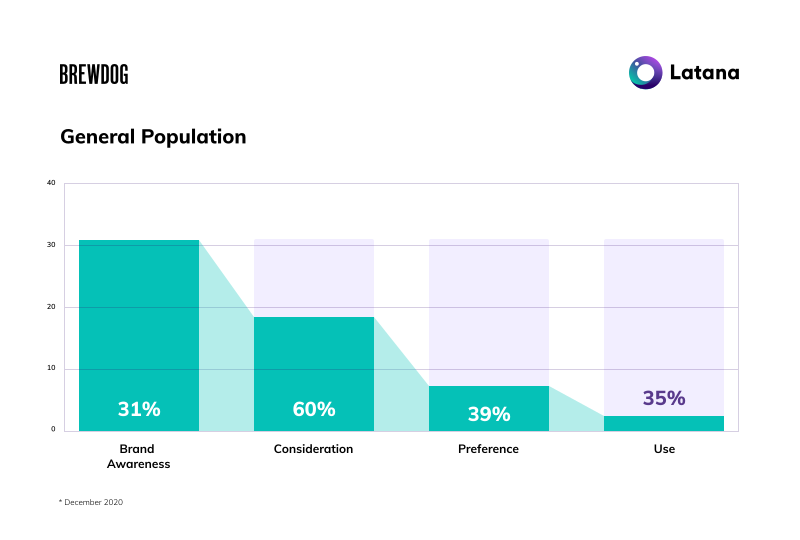\n\nAmong those familiar with the beer brand, 60% would consider using them. Of this cohort, 39% have a preference for this brand over others. And among those who prefer BrewDog’s goods, 35% currently use the brand. \n\nFor a craft beer manufacturer that’s competing with more established players, these results are strong. BrewDog effectively engages with prospects at later stages of the funnel. Distinctive visual branding, collaborations with artists and NGOs for labels, and offline presence — paired with excellent product quality — are doing the job for BrewDog. \n\n\n(In 2015, BrewDog teamed up with LGBTQI+ events organizers Queerest of the Queer to create a [NoLabel](https://www.brewdog.com/blog/no-label) ‘non-binary, postgender beer’)\n\nSmartly, they are not using price as a brand differentiator as many in the CPG industry do. \n\nJames Watt mentioned in an [interview with Scotsman](https://www.scotsman.com/business/interview-james-watt-and-martin-dickie-brewdog-1547508):\n\n“*Pouring £12,000 worth of hops into a tank of already brewed beer doesn’t make much economic sense, but it’s how I like the beer*.” \n\nThe duo launched their business with an idea to brew a beer they’d personally enjoy drinking. And it looks like their community shares their taste preferences. \n\nAs marketers, we know that every successful brand has a distinctive selling proposition. But oftentimes, it's built on personal judgment and assumptions which struggle to get a strong response from target audiences. Such a knowledge gap is a prime reason why many branding and [rebranding efforts fail](https://latana.com/post/5-major-reasons-rebranding-fails/). While BrewDog’s hunch paid off and struck a chord with the community, it’s always better to back your inklings with audience data. \n\n### 2. Primary Audiences Help Grow, Secondary Audiences Help Scale\n\nBoth British men and women have the same levels of brand awareness — 31%. But the males are more likely to consider using the brand: 65% vs 60%. Respectively, of that 65%, 43% prefer BrewDog over other brands. At the bottom of the funnel, 40% are already sipping BrewDog’s ales. \n\n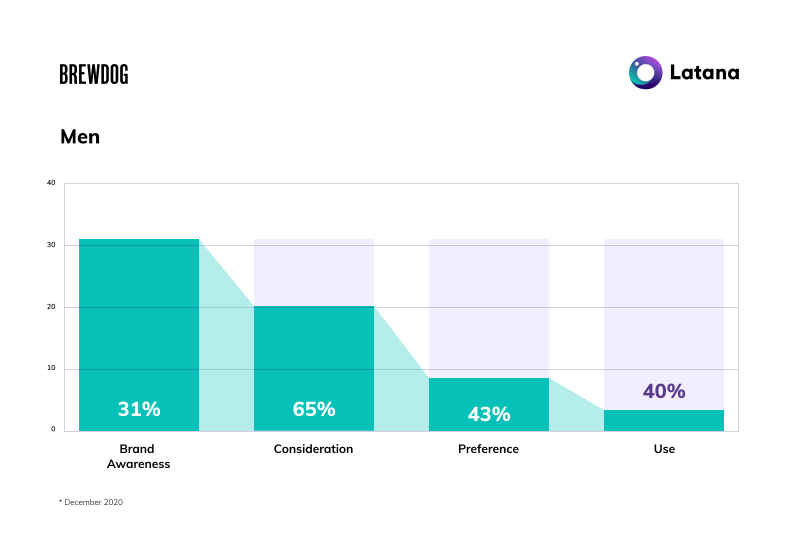\n\nThe data can be interpreted in several ways. On the surface level, BrewDog is a brand built by men for other beer-loving men. It’s no non-nonsense positioning and tone of voice lands well with this audience. Then, its male orientation also extends to product development. The brewer holds the record for the world’s strongest beer and has a range of products with above-average alcohol content. \n\nWomen are also aware of BrewDog. Among them, 60% are considering this brand, whereas 39% of this pack has a preference for the brand over others. At the lowest level, only 35% are using it. \n\n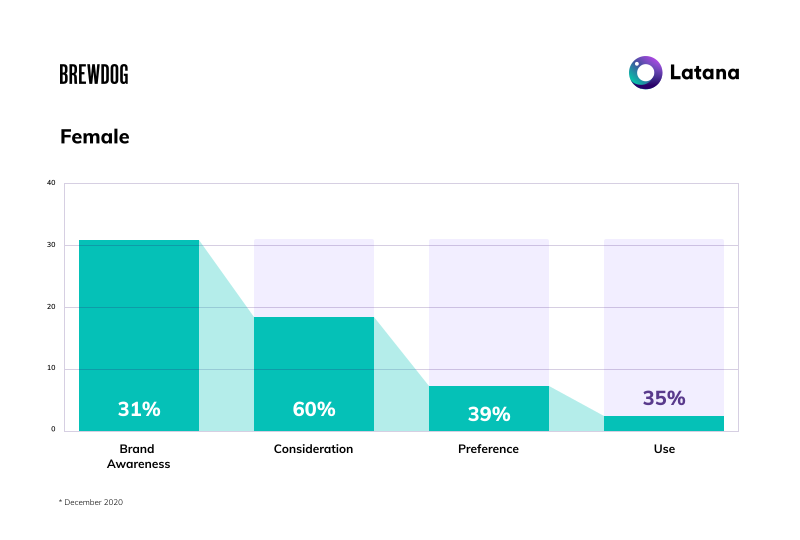\n\nThe drop in brand performance is sharp when compared to male audiences. How so? We assume that BrewDog seems to have gotten into the trap most other beer brands do: failing to engage with female beer drinkers.\n\nA [recent report](https://beertoday.co.uk/beer-industry-female-drinkers-0518/) of UK consumers found that male-oriented advertising is a strong barrier, pushing away 27% of women from ordering beers. The figure jumps to 48% among the 18 to 24-year-old female group. Interestingly, taste is also a divider. Among beer-loving gals, 56% go for a pint because they like the taste. At the same time, 83% of women never drink beer because they don’t like the taste. \n\nThe “taste factor” could explain the lower numbers of brand preference and brand usage among females. On the other hand, BrewDog and other beer brands could have done better work with their advertising and positioning towards women. Especially given the fact that women seem to be strongly interested in considering this brand, but then don’t follow through and try it. \n\n### 3. Marketing to Gen Z Consumers Will be Tricky for Beer Brands \n\nMillennials (aged 25 to 41 in 2021) helped propel the craft beer movement by choosing “local”, “organic”, and “craft” over mass-market. But the newest generation coming of legal drinking age, [Gen Zers, are not as hooked on craft beers.](https://latana.com/post/how-brands-are-adapting-to-gen-z-alcohol-trends/)\n\nWe found that among the 18 to 24-year-old demographic in the UK, only 17% are aware of BrewDog. That’s a plummeting drop. Yet, among them, 57% are considering trying this brand, and among them, 40% have a preference for it. These figures are similar to other audiences. Why so? \n\n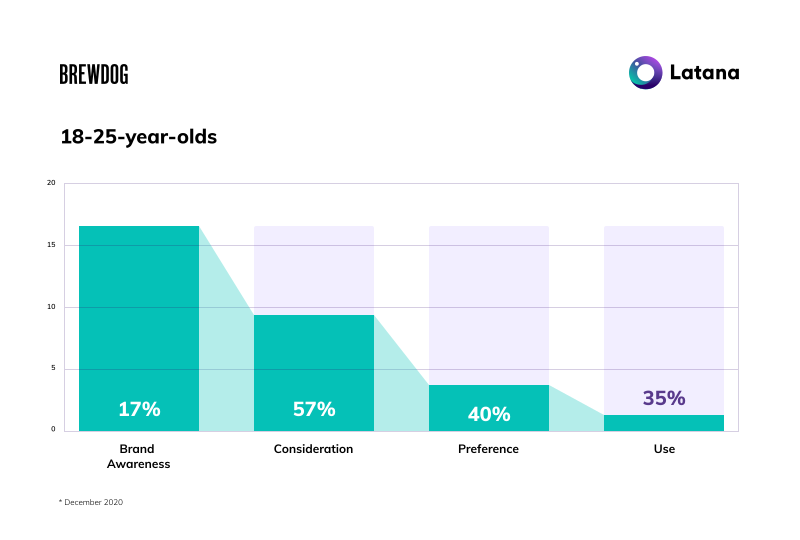\n\nA lag in awareness probably stems from the new drinking habits. Per the [Society of Independent Brewers](https://www.brewer-world.com/siba-craft-beer-report-2019-key-insights/), 23% of 18 to 24-year-olds are now teetotal, with 6% going sober in the past 12 months. The decision to avoid alcohol consumption per se partially explains a gap in awareness. \n\nSecondly, the newest generation also drinks [20% less per capita](https://www.businessinsider.com/millennials-gen-z-drag-down-beer-sales-2018-2?) than their Millennial counterparts did at the same age. A [survey by Berenberg](https://csnews.com/why-generation-z-may-be-bad-your-beer-business) also notes that 64% of young adults today already say that they plan to drink less when they get older (and past the “party” stage in life) as they are more concerned about their health. \n\nFinally, when the youngsters go for some booze, most prefer spirits (such as vodka or gin) and wine to beer. \n\nStill, despite the overall changing perception of beer drinking, Gen Zers do love to grab a beer once in a while. When they do, most go for local, heritage brands with values they can relate to. BrewDog does well in the storytelling department and that likely explains higher brand consideration and preference numbers. \n\n### 4. Boomers are The Best Performing Beer Audience \n\nCommon wisdom prompts us into thinking that the young drink and party the hardest, but data proves otherwise. The drinking rates are declining among younger consumers — however, Boomers still greatly enjoy their pints. \n\nConsumers aged 56-65 are the best performing target audience for BrewDog. 44% of this demographic is aware of BrewDog, likely due to a mix of several factors — overall interest in beers and wide-cast [offline and online advertising](https://latana.com/post/measure-campaign-effectiveness/). \n\n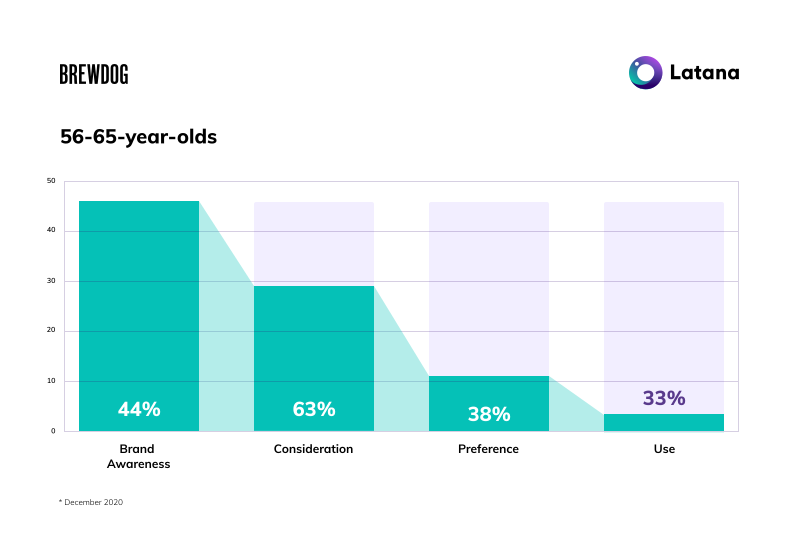\n\nA 2019 UK government-backed survey found that: \n\n- 64% of adults aged 45-64 had at least one drink per week \n- 41% of adults aged 16-24 had at least one drink per week \n\nBoomers abstain less from alcohol than their younger counterparts and statistically consume more alcohol than Millennials or Gen Zs. Hence, targeting this audience for [brand awareness campaigns](https://latana.com/post/6-ways-to-increase-and-improve-brand-awareness/) makes perfect sense. \n\nWhat we also noticed, however, is that despite higher awareness, BrewDog loses some points at later stages of the funnel. Out of 44%, only 63% are considering this brand (vs 31% and 65% among Millennial men for comparison). Also, of the above, 38% prefer BrewDog to other beers and only 33% are using the brand. \n\nBrewDog could improve its funnel by tailoring its campaigns even more to this generation. For example, dwell more on how age enables a richer and fuller lifestyle. Recruiting more mature ambassadors, which the brand already has aplenty, could be one way to accomplish that. \n\n
\n\n## Final Thoughts \n\nBrewDog has a refreshing approach to branding marketing. [Their campaigns may be daring, blunt, and defiant](https://latana.com/post/brewdog-pulls-a-pint-of-controversy-with-its-anti-world-cup-campaign/) at times, but always with a good cause in mind. Over the years, they spoke about important community issues — inclusiveness, diversity, sustainability, and giving back. \n\nThe grand sum of such creativity, values, and commitment to delivering excellent products helped BrewDog turn its brand equity into financial support. Other craft beer brands should take a cue when it comes to [brand identity development](https://latana.com/post/brand-identity-branding-essential-growing-company/). \n\nOn the other hand, there’s also room to grow. BrewDog has a strong potential to convert more secondary audiences — female beer fans and Boomers. Doubling down on tailoring a portion of their messaging towards them could lead to significant gains at the later stages of the funnel and sales volumes subsequently. "},"tags":["Brand Marketing","Brand Deep Dives"],"authorRef":{"slug":"elena","firstName":"Elena","lastName":"Prokopets","title":"Freelance Writer & Content Strategist","picture":{"__typename":"ContentfulAsset","id":"3656f248-8cb2-5fce-8ae1-2ea977717e1f","description":"","title":"Elena Author Photo Framed","file":{"contentType":"image/png","url":"//images.ctfassets.net/7so8go2zrvbw/1rgsWp0ZBagiKqMSpw7MwV/0cb99f4e752141de6ac06e1e9990363f/Author_Elena.png","details":{"image":{"width":235,"height":235}}},"gatsbyImageData":{"images":{"sources":[{"srcSet":"//images.ctfassets.net/7so8go2zrvbw/1rgsWp0ZBagiKqMSpw7MwV/0cb99f4e752141de6ac06e1e9990363f/Author_Elena.png?w=235&h=235&q=95&fm=webp 235w","sizes":"100vw","type":"image/webp"}],"fallback":{"src":"//images.ctfassets.net/7so8go2zrvbw/1rgsWp0ZBagiKqMSpw7MwV/0cb99f4e752141de6ac06e1e9990363f/Author_Elena.png?w=235&h=235&q=95&fm=png","srcSet":"//images.ctfassets.net/7so8go2zrvbw/1rgsWp0ZBagiKqMSpw7MwV/0cb99f4e752141de6ac06e1e9990363f/Author_Elena.png?w=235&h=235&q=95&fm=png 235w","sizes":"100vw"}},"layout":"fullWidth","backgroundColor":"#080808","width":1,"height":1}}}}},{"node":{"publishDate":"2020-07-30T00:00+02:00","slug":"brand-loyalty-content","author":"Marques Coleman","title":"8 Tips for Building Brand Loyalty with Long-Form Content","seo":{"__typename":"ContentfulSeo","title":"Building Brand Loyalty with Long-Form Content","description":"In the age of fast data circulation and competitive marketing, emphasis on brand loyalty can transform your business for the better. Long-form content can help.","noIndex":null,"ogImage":{"fluid":{"src":"//images.ctfassets.net/7so8go2zrvbw/6JHVbH0zN4D9NkMcuDdyOk/6fe6e4da9bb08abb0b0b4f26e3b7a9ab/Thumbnail_1000X709.png?w=1200&h=675&q=90&fm=jpg"},"file":{"url":"//images.ctfassets.net/7so8go2zrvbw/6JHVbH0zN4D9NkMcuDdyOk/6fe6e4da9bb08abb0b0b4f26e3b7a9ab/Thumbnail_1000X709.png"}}},"heroImage":{"__typename":"ContentfulAsset","id":"2f808b1f-b40e-549d-a52f-298a8f43c719","description":"Branding tips from the world’s biggest brands and how they can help mid-sized companies grow.","title":"5 Branding Tips To Borrow From The World’s Biggest Brands","file":{"contentType":"image/png","url":"//images.ctfassets.net/7so8go2zrvbw/6JHVbH0zN4D9NkMcuDdyOk/6fe6e4da9bb08abb0b0b4f26e3b7a9ab/Thumbnail_1000X709.png","details":{"image":{"width":2000,"height":1419}}},"gatsbyImageData":{"images":{"sources":[{"srcSet":"//images.ctfassets.net/7so8go2zrvbw/6JHVbH0zN4D9NkMcuDdyOk/6fe6e4da9bb08abb0b0b4f26e3b7a9ab/Thumbnail_1000X709.png?w=200&h=142&q=95&fm=webp 200w,\n//images.ctfassets.net/7so8go2zrvbw/6JHVbH0zN4D9NkMcuDdyOk/6fe6e4da9bb08abb0b0b4f26e3b7a9ab/Thumbnail_1000X709.png?w=400&h=284&q=95&fm=webp 400w,\n//images.ctfassets.net/7so8go2zrvbw/6JHVbH0zN4D9NkMcuDdyOk/6fe6e4da9bb08abb0b0b4f26e3b7a9ab/Thumbnail_1000X709.png?w=800&h=568&q=95&fm=webp 800w,\n//images.ctfassets.net/7so8go2zrvbw/6JHVbH0zN4D9NkMcuDdyOk/6fe6e4da9bb08abb0b0b4f26e3b7a9ab/Thumbnail_1000X709.png?w=1600&h=1136&q=95&fm=webp 1600w","sizes":"(min-width: 800px) 800px, 100vw","type":"image/webp"}],"fallback":{"src":"//images.ctfassets.net/7so8go2zrvbw/6JHVbH0zN4D9NkMcuDdyOk/6fe6e4da9bb08abb0b0b4f26e3b7a9ab/Thumbnail_1000X709.png?w=800&h=568&q=95&fm=png","srcSet":"//images.ctfassets.net/7so8go2zrvbw/6JHVbH0zN4D9NkMcuDdyOk/6fe6e4da9bb08abb0b0b4f26e3b7a9ab/Thumbnail_1000X709.png?w=200&h=142&q=95&fm=png 200w,\n//images.ctfassets.net/7so8go2zrvbw/6JHVbH0zN4D9NkMcuDdyOk/6fe6e4da9bb08abb0b0b4f26e3b7a9ab/Thumbnail_1000X709.png?w=400&h=284&q=95&fm=png 400w,\n//images.ctfassets.net/7so8go2zrvbw/6JHVbH0zN4D9NkMcuDdyOk/6fe6e4da9bb08abb0b0b4f26e3b7a9ab/Thumbnail_1000X709.png?w=800&h=568&q=95&fm=png 800w,\n//images.ctfassets.net/7so8go2zrvbw/6JHVbH0zN4D9NkMcuDdyOk/6fe6e4da9bb08abb0b0b4f26e3b7a9ab/Thumbnail_1000X709.png?w=1600&h=1136&q=95&fm=png 1600w","sizes":"(min-width: 800px) 800px, 100vw"}},"layout":"constrained","backgroundColor":"#4818c8","width":800,"height":568}},"coverImage":null,"description":{"description":"In the age of fast data circulation and competitive marketing, emphasis on brand loyalty can truly transform your business for the better. Long-form content can help."},"content":{"content":"Whether you operate as a small business within a local market or a large-scale international company, brand loyalty is an important performance factor to consider. \n\nAccording to [Forbes](https://www.forbes.com/sites/blakemorgan/2020/05/07/50-stats-that-show-the-importance-of-good-loyalty-programs-even-during-a-crisis/#794be4122410), 29% of consumers want their brand loyalty rewards to be more interesting. Likewise, 87% of them are open to brands monitoring their activities if it leads to more personalized user experience (UX) on their respective platform.\n\nThis showcases a shift in brand perception, one that leaves businesses with ample opportunity to build brand loyalty in a variety of ways in 2020 and beyond. Data published by [Small Biz Genius](https://www.smallbizgenius.net/by-the-numbers/customer-loyalty-statistics/#gref) showcased that 82% of companies agree with the sentiment that retention is cheaper than acquisition. Furthermore, 65% of a company’s business comes from existing customers — just 5% retention has the ability to raise profits by 25-95%.\n\nOften-overlooked blogs offer a unique and cost-effective way of building a high-loyalty brand without delving into PPC or paid social media placement. Enter long-form content — content which is more complex and valuable than typical blog content found across the web. \n\nLong-form content can, in fact, encourage a sizable audience to remain on your website and ensure their brand loyalty due to its professional nature. That said, let’s take a closer look at how you can build a long-form content pipeline for your business and encourage brand loyalty.\n\n## 1. Goals & Milestones Matter\n\n\n\nProducing long-form content takes more time than typical blog posts created exclusively for the purposes of SEO. While long-form posts will likewise add to your SEO ranking, their planning and execution should be done more carefully. Setting concrete KPIs in regards to your goals and milestones matters.\n\nGoal-setting methodologies such as [SMART](https://www.mindtools.com/pages/article/smart-goals.htm) can act as a great catalyst for your long-form content production. The goals set for your content creators should be attainable, numeric, and clearly understandable to ensure proper audience targeting, calls to action, and emotional triggers. \n\nSome of the KPIs you can use as brand loyalty via long-form content include:\n\n- Pieces of content produced over several weeks/month\n- Number of visitors from SERP/social media/industry websites\n- Number of visitors converted into subscribers/customers\n- Number of social media shares and mentions\n- Number of B2B stakeholders reached out after reading long-form content\n\n## 2. Standardize your Long-Form Content Format\n\nBefore you commit to a long-form content format for your blog, make sure that you settle for a standardized set of formatting rules. For example, how long-form is long-form in your website’s case? Do you have enough resources and time to devote to 1500+ word pieces on a weekly (or more frequent) basis?\n\nDoes your industry have ample opportunities to explore new trends, innovation, case studies, and other forms of long-form writing regularly? Standardization of long-form content formatting also applies to the way you treat headings, subheadings, lists, and other elements contained within a single article.\n\nDigital marketers often rely on a standard content creation stack for editing and formating necessities, so it might be a good idea to assemble one. Don’t go into long-form content creation ad hoc and expect brand loyalty to follow — adopt a more methodical approach instead.\n\n## 3. Topic Clustering as a Catalyst for Retention\n\nIdeal long-form content creation should serve a two-fold purpose. Primarily, it should add to the appeal of [brand loyalty](https://latana.com/post/european-brands-brand-loyalty/) for your business in regards to lead retention. However, it should also enable your content creators to produce content as quickly and professionally as possible within the confines of your industry.\n\nAccording to [Smart Insights](https://www.smartinsights.com/content-management/content-marketing-strategy/essential-content-marketing-statistics/), it takes 65% more time to write posts than it did in 2014 — with 19% of bloggers spending six hours or more writing. Standard form blog posts now include images (90%), lists (60%), and statistics (57%), as well as contributor quotes (39%). These elements can find their place in your long-form content in the form of topic clusters or articles which are related to one another. \n\nA great example of topic clustering can be found in [Typeform and their \"Brand Awareness\" cluster of pages](https://www.typeform.com/blog/guides/brand-awareness/). As the name suggests, the pillar of their topic cluster revolves around [brand awareness](https://latana.com/topics-brand-awareness/) tips and guidelines — with different articles embedded throughout the main content. This allows for a seamless transition between pages that are interconnected allowing readers to pick and choose what to read.\n\nTopic clusters offer the opportunity to explore a single topic in-depth and provide minute details for your readers. Likewise, interested readers will be very likely to come back for more information on a certain topic within a cluster, leading to elevated brand loyalty.\n\n## 4. Emphasize Personality & UX in Content\n\nBuilding brand loyalty through long-form content is all about making sure that readers feel welcome and appreciated on your platform. Thus, personal pronouns, casual tone of voice, and an inviting and approachable vocabulary play pivotal roles in your content’s appeal. Address individual readers as “you, yourself” and your brand as “us, me” — include the reader in the topic’s exploration with “we”.\n\nIf we turn our attention to eCommerce, a great example of UX personalization can be found in Pull & Bear and their website’s navigation design. Inherently, eCommerce websites consist of endless product pages with descriptions, sales incentives, and calls to action — making personalization a must. \n\nPull & Bear adopts an approach that invites visitors to personalize their browsing experience from the moment they hit the landing page without mandatory registration.\n\nDon’t distance yourself from the reader who took time to go through your long-form content. Instead, include them in the journey. You can refer to writing services such as or Evernote to edit and format the flow of your writing prior to publishing. While informative writing and professionalism play a large role in brand loyalty, user-centric UX, and brand personality are just as vital for long-term success.\n\n## 5. User-Generated Content Implementation\n\nGiven the nature and size of long-form content pieces, user-generated content (UGC) can find its way into your articles without much trouble. You can emphasize the necessity for UGC through social media, email marketing, and other communication channels to let users know about your newly-implemented initiative.\n\nAccording to [Medium](https://medium.com/@lexywright/the-50-user-generated-content-stats-you-need-to-know-8ffbeebf8552), 84% of Millennials report that UGC on company websites had an influence on what they buy. Additionally, Millennials trust UGC 50% more than original content produced by online brands — further cementing its necessity in long-form content. \n\nOne of the most predominant venues for UGC can be found in social media channels such as Instagram and Facebook, due to their easy-to-share nature. [Starbucks](https://medium.com/@lexywright/the-50-user-generated-content-stats-you-need-to-know-8ffbeebf8552) took this as a sign that UGC campaigns can improve its brand awareness and personalization efforts and, thus, rolls out the [Red Cup Contest](https://www.instagram.com/explore/tags/redcupcontest/) every December. \n\nThe goal is to bridge the gap between customer and brand, effectively marketing their products while providing a platform for users to express their creativity.\n\nUGC in long-form articles can also take the form of quotes, related multimedia, or reviews/testimonials relevant to the topic you’re tackling at the moment. Depending on the type of business you run (marketing, design, IT, etc.), UGC can take the form of fan art and production inspired by your products.\n\n\n\nPhoto Source: [Unsplash](https://unsplash.com/@robin_rednine?utm_source=unsplash&utm_medium=referral&utm_content=creditCopyText)\n\n## 6. Long-Form Multimedia – Appealing & Unique\n\nWe’ve discussed long-form content primarily as text-based articles and production centered on case studies on trending industry topics — but what about multimedia? \n\nLong-form content can take the form of extensive infographics, presentations, as well as video materials or audio podcasts, and then be posted on your company website. You can also [compress videos online](https://www.videoconverter.com/video-compressor.html) if the file size is large, to ensure your users do not lose out on great content because of page loading issues. \n\nTake REI, the outdoor apparel company, as an example of long-form video content. The goal of their long-form documentary (which acts as an advertisement platform) was to humanize the brand and showcase its authentic, professional outdoor apparel. The entirety of the “content” takes the form of video — there is no accompanying article or case study which offers a transcript of the [Paul’s Boots](https://www.rei.com/blog/paulsboots) video.\n\nThat’s because Paul’s Boots IS the content specifically produced as a means to incite loyalty, word of mouth, and brand awareness. The same strategy can be applied to any number of industries without effort – all you need is to get creative and start producing unique content.\n\n## 7. Influencer & Guest Contributions\n\nIndividuals who opt for brand loyalty are likely to do so because your brand plays well with others — no one likes to follow monopoly-centric companies. Even large-scale brands such as Disney and Coca-Cola collaborate with local creators and youth to encourage positive change through teamwork and networking.\n\nAs such, it’s a great practice to invite community influencers from social media and blogging sphere to your website for long-form content contributions. Working with B2B partners and inviting them to contribute to your blog (in accordance with standardized long-form content formatting) can do wonders for brand loyalty. \n\nFor example, Leesa is a brand that specializes in luxury mattress manufacture and works exclusively online. Thus, the company has decided to reach out to influencer bloggers to produce long-form blog content as a means to promote their brand worldwide. Content such as the article published by [Sleepopolis](https://sleepopolis.com/mattress-reviews/leesa-mattress-review/) has managed to spread awareness of Leesa and, thus, impact their engagement and sales in a positive manner.\n\nThese long-form content pieces can take the form of interviews, Q&A sessions, or simple discussions between like-minded individuals which are then published as blog posts. Coupled with the aforementioned UGC, guest contributions and influencer content present on your blog section will further elevate the appeal of brand loyalty toward your company.\n\n## 8. Data Gathering & Reevaluation\n\nLastly, once your long-form content pipeline is in place and performing as intended, data analysis should become a priority going forward. [Gathering data](https://latana.com/data-confidence/) and evaluating your content’s performance will give you ample opportunity to detect bottlenecks and build on the solid foundations of long-form content. \n\nWhen it comes to the question of brands that use data to improve their services, the real question is “which ones don’t do it”. Data has become an inherent part of online interaction — be it social media, your favorite streaming platform, or an indie blogger.\n\nPlatforms such as Google Analytics, as well as Lucky Orange for user heatmap tracking, are great examples of tools that can help improve your services. Consulting these tools will give insight into how your leads interact with the long-form content you produce. \n\nUse a variety of sampling and performance tracking methods to ensure the quality and relevance of generated data. Surveys, polls, as well as live tracking on your website, can help detect behavior patterns, interest triggers, and other hot spots on your website.\n\nFailing to track your long-form content’s performance post-publishing will leave you in the dark in regard to its appeal and effects on brand loyalty. Remain vigilant and apply your findings to future content production to allow for organic growth of interest in brand loyalty for your company.\n\n## Final Thoughts\n\nIn the age of fast data circulation and competitive marketing, emphasis on brand loyalty can truly transform your business for the better. Long-form [content marketing](https://latana.com/post/content-marketing-brand-identity) can serve as a catalyst for positive change and inspiration for deep discussion, sharing of experience, and user retention regardless of your industry.\n\nHowever, proper planning, format standardization, and collaboration with like-minded industry individuals are what will seal the proverbial deal for many customers and brand followers. Don’t be afraid to commit to long-form content to help avoid [brand agnosticism](https://latana.com/post/what-is-brand-agnosticism/) — play your cards in a smart way and your user base will return the favor in spades."},"tags":["Brand Marketing"],"authorRef":{"slug":"marques","firstName":"Marques","lastName":"Coleman","title":"Freelance Copywriter & Marketer","picture":{"__typename":"ContentfulAsset","id":"bb56ceb9-a813-5edc-85a6-facde71b8efe","description":"","title":"Latana Logo Author Photo","file":{"contentType":"image/png","url":"//images.ctfassets.net/7so8go2zrvbw/7qeUdZpRNeFZFTo0zIasKz/8d00318fb2f317950a2a2d6912eb28bf/Author_Latana__1_.png","details":{"image":{"width":235,"height":235}}},"gatsbyImageData":{"images":{"sources":[{"srcSet":"//images.ctfassets.net/7so8go2zrvbw/7qeUdZpRNeFZFTo0zIasKz/8d00318fb2f317950a2a2d6912eb28bf/Author_Latana__1_.png?w=235&h=235&q=95&fm=webp 235w","sizes":"100vw","type":"image/webp"}],"fallback":{"src":"//images.ctfassets.net/7so8go2zrvbw/7qeUdZpRNeFZFTo0zIasKz/8d00318fb2f317950a2a2d6912eb28bf/Author_Latana__1_.png?w=235&h=235&q=95&fm=png","srcSet":"//images.ctfassets.net/7so8go2zrvbw/7qeUdZpRNeFZFTo0zIasKz/8d00318fb2f317950a2a2d6912eb28bf/Author_Latana__1_.png?w=235&h=235&q=95&fm=png 235w","sizes":"100vw"}},"layout":"fullWidth","backgroundColor":"#080808","width":1,"height":1}}}}},{"node":{"publishDate":"2022-09-27T08:00+02:00","slug":"booking-deep-dive","author":"Ashley Lightfoot","title":"How Booking.com Became Travel’s Biggest Brand","seo":{"__typename":"ContentfulSeo","title":"How Booking.com Became Travel's Biggest Brand","description":"How did Booking.com become the biggest brand in travel? The story behind one of the world’s biggest OTAs is also the story of how the internet transformed the travel industry.","noIndex":null,"ogImage":{"fluid":{"src":"//images.ctfassets.net/7so8go2zrvbw/3caugNEN2kPJwc8JATxP79/165d346f45341ae9d20e95a9b7f6c2ec/Blog_SEO-Thumbnail_1000X709__66_.png?w=1200&h=675&q=90&fm=jpg"},"file":{"url":"//images.ctfassets.net/7so8go2zrvbw/3caugNEN2kPJwc8JATxP79/165d346f45341ae9d20e95a9b7f6c2ec/Blog_SEO-Thumbnail_1000X709__66_.png"}}},"heroImage":{"__typename":"ContentfulAsset","id":"6d1a8b16-3ffe-5de5-ac28-34ec082213f0","description":"","title":"How Booking.Com Became Travel's Biggest Brand. Brand Deep Dive","file":{"contentType":"image/png","url":"//images.ctfassets.net/7so8go2zrvbw/3caugNEN2kPJwc8JATxP79/165d346f45341ae9d20e95a9b7f6c2ec/Blog_SEO-Thumbnail_1000X709__66_.png","details":{"image":{"width":1000,"height":709}}},"gatsbyImageData":{"images":{"sources":[{"srcSet":"//images.ctfassets.net/7so8go2zrvbw/3caugNEN2kPJwc8JATxP79/165d346f45341ae9d20e95a9b7f6c2ec/Blog_SEO-Thumbnail_1000X709__66_.png?w=200&h=142&q=95&fm=webp 200w,\n//images.ctfassets.net/7so8go2zrvbw/3caugNEN2kPJwc8JATxP79/165d346f45341ae9d20e95a9b7f6c2ec/Blog_SEO-Thumbnail_1000X709__66_.png?w=400&h=284&q=95&fm=webp 400w,\n//images.ctfassets.net/7so8go2zrvbw/3caugNEN2kPJwc8JATxP79/165d346f45341ae9d20e95a9b7f6c2ec/Blog_SEO-Thumbnail_1000X709__66_.png?w=800&h=567&q=95&fm=webp 800w","sizes":"(min-width: 800px) 800px, 100vw","type":"image/webp"}],"fallback":{"src":"//images.ctfassets.net/7so8go2zrvbw/3caugNEN2kPJwc8JATxP79/165d346f45341ae9d20e95a9b7f6c2ec/Blog_SEO-Thumbnail_1000X709__66_.png?w=800&h=567&q=95&fm=png","srcSet":"//images.ctfassets.net/7so8go2zrvbw/3caugNEN2kPJwc8JATxP79/165d346f45341ae9d20e95a9b7f6c2ec/Blog_SEO-Thumbnail_1000X709__66_.png?w=200&h=142&q=95&fm=png 200w,\n//images.ctfassets.net/7so8go2zrvbw/3caugNEN2kPJwc8JATxP79/165d346f45341ae9d20e95a9b7f6c2ec/Blog_SEO-Thumbnail_1000X709__66_.png?w=400&h=284&q=95&fm=png 400w,\n//images.ctfassets.net/7so8go2zrvbw/3caugNEN2kPJwc8JATxP79/165d346f45341ae9d20e95a9b7f6c2ec/Blog_SEO-Thumbnail_1000X709__66_.png?w=800&h=567&q=95&fm=png 800w","sizes":"(min-width: 800px) 800px, 100vw"}},"layout":"constrained","backgroundColor":"#f8f8f8","width":800,"height":567}},"coverImage":{"__typename":"ContentfulAsset","id":"da961131-88b5-5699-845c-7f04ec2866fd","description":"","title":"How Booking.com became Travel's Biggest Brand. Cover Image","file":{"contentType":"image/png","url":"//images.ctfassets.net/7so8go2zrvbw/5y4I3NegYFEgmJcpCLxyk3/774025a131b59284f548e375c7815da7/Blog_Cover_1288X400__77_.png","details":{"image":{"width":1288,"height":400}}},"gatsbyImageData":{"images":{"sources":[{"srcSet":"//images.ctfassets.net/7so8go2zrvbw/5y4I3NegYFEgmJcpCLxyk3/774025a131b59284f548e375c7815da7/Blog_Cover_1288X400__77_.png?w=750&h=233&q=95&fm=webp 750w,\n//images.ctfassets.net/7so8go2zrvbw/5y4I3NegYFEgmJcpCLxyk3/774025a131b59284f548e375c7815da7/Blog_Cover_1288X400__77_.png?w=1080&h=335&q=95&fm=webp 1080w,\n//images.ctfassets.net/7so8go2zrvbw/5y4I3NegYFEgmJcpCLxyk3/774025a131b59284f548e375c7815da7/Blog_Cover_1288X400__77_.png?w=1288&h=400&q=95&fm=webp 1288w","sizes":"100vw","type":"image/webp"}],"fallback":{"src":"//images.ctfassets.net/7so8go2zrvbw/5y4I3NegYFEgmJcpCLxyk3/774025a131b59284f548e375c7815da7/Blog_Cover_1288X400__77_.png?w=1288&h=400&q=95&fm=png","srcSet":"//images.ctfassets.net/7so8go2zrvbw/5y4I3NegYFEgmJcpCLxyk3/774025a131b59284f548e375c7815da7/Blog_Cover_1288X400__77_.png?w=750&h=233&q=95&fm=png 750w,\n//images.ctfassets.net/7so8go2zrvbw/5y4I3NegYFEgmJcpCLxyk3/774025a131b59284f548e375c7815da7/Blog_Cover_1288X400__77_.png?w=1080&h=335&q=95&fm=png 1080w,\n//images.ctfassets.net/7so8go2zrvbw/5y4I3NegYFEgmJcpCLxyk3/774025a131b59284f548e375c7815da7/Blog_Cover_1288X400__77_.png?w=1288&h=400&q=95&fm=png 1288w","sizes":"100vw"}},"layout":"fullWidth","backgroundColor":"#f8f8f8","width":1,"height":0.3105590062111801}},"description":{"description":"How did Booking.com become the biggest brand in travel? The story behind one of the world’s biggest OTAs is also the story of how the internet transformed the travel industry.\n"},"content":{"content":"Booking a holiday has never been easier. We take it for granted that, with a few exceptions, no matter where we’re traveling in the world, we can book flights, hotels, transfers, and excursions all from the comfort of our homes — [increasingly from our phones!](https://econsultancy.com/mobile-use-for-travel-and-holidays-rapidly-becoming-the-norm/) With ease, consumers can become their own travel agents; filtering through millions of options to find the ones that best suit their tastes.\n\nIt’s worth remembering that it wasn’t always this easy. In fact, the model for booking a holiday looked completely different before the 2000s. Brochures, travel agents, package deals, and guided tours were all commonplace — long before the arrival of technology that allowed consumers to do it all themselves. \n\nIn short, at the turn of the century the travel industry was revolutionized and this great leap forward was fueled by the growth of the internet, as well as a handful of innovative brands that leveraged it to change everything. One of those brands was Booking.com.\n\nIn this Brand Deep Dive, we’re going to take a closer look at Booking.com, the Netherlands-based travel behemoth that transformed how trips are booked. With more than 28 million listings in virtually every corner of the world, Booking.com built its brand around simplifying the buying experience and solving common consumer problems.\n\nBut how did they do it? And what lessons can you learn from them?\n\nLet’s dive right in.\n\n## Traveling Back To The 90s\n\nBooking.com started life in 1996 as bookings.nl, founded by Geert-Jan Bruinsma, who was fresh out of college when he saw the potential of the internet and [decided to create a hotel booking website.](https://skift.com/oral-history-of-booking-acquisition/)\n\nHe wasn’t the first to have this idea. The Hotel Reservation Network had already launched its first website — Hoteldiscount.com — in 1995, Expedia came along a year later in 1996 as a division of Microsoft, and Lastminute.com joined the gang in 1998. \n\nNot long after, Andy Phillipps and Adrian Critchlow decided they could do better than all of these brands and created Activebooking.com, which eventually changed its name to Active Hotels. They saw a gap in the market — independent hotels which weren’t yet connected to the internet like larger, hotel-chain brands were.\n\nIn these early days of the internet though, things weren’t as simple as they are now. Many of the independent hotels that Activebooking.com wanted to list [“didn't have a laptop or a computer.”](https://skift.com/oral-history-of-booking-acquisition/) As a solution, they would provide them with “this small, Alcatel phone with a modem that gave them access to the Internet.” Despite having only a very simple interface, with these phones hotel owners “could put in their rates and availability and then we would connect to the World Wide Web.”\n\nThis was the age of the dot-com bubble, when internet use was still being discovered and adopted by millions of consumers. It provided ample opportunity for growth for all of these brands — that is until the bubble burst in the early 2000s. While many online travel brands didn’t survive, Active Hotels and Bookings.nl were able to keep growing and thriving in the new travel ecosystem.\n\n---\n\nIn 2004 and 2005, these two brands were both acquired by another internet travel company, Priceline.com — and in 2006, they were merged to finally create the brand we know today as Booking.com.\n\nIn the run-up to their acquisition, both brands had developed distinct specialties. Active Hotels had developed a web of distribution partnerships and affiliate deals, while Bookings.nl had become very adept at search engine marketing. Under the new brand, their strengths could be combined. Booking.com was ultimately able to start outsmarting competitors by using the full capabilities of the internet — setting trends that would be copied by others.\n\nFor instance, the site would display messaging “about how many site visitors were looking at a specific hotel at that particular moment, or the number of people who had booked the property in the past day”. These were Booking.com innovations, but they would soon become “standard fare across online travel.”\n\nWhile the 2010s saw the rapid growth of Airbnb, a disruptive innovation that could yet have implications for Booking.com, this didn’t stop the brand’s upward trajectory. Indeed, its dominance is so impressive that in 2015, [leaked EU documents](https://www.theguardian.com/technology/2015/apr/24/eu-warns-internet-firms-regulated-amazon-etsy) expressed concerns about Booking.com (as well as dominant other brands) exercising “undue power over their market sector” acting as the “main entry point to the travel sector” and, thus, being able to charge “fees with full discretion”.\n\nThis shouldn’t come as a surprise. Available in 43 languages and with over 28 million listings, Booking.com has become a worldwide phenomenon. However, it hasn’t been without its controversies. \n\n---- \n\nWhile listing the number of bookings made with a particular hotel and displaying the number of rooms remaining is a great way to create a sense of urgency, it has also brought the brand under scrutiny for misleading holidaymakers and pressuring them into booking. In 2018, the UK’s competition watchdog, the Competition and Markets Authority, [launched an investigation into online booking websites that utilized this technique](https://www.bbc.com/news/business-44633411), as well as other misleading methods aimed at increasing conversion rates.\n\nIndeed, the CMA highlighted four main areas of investigation and ordered the sites to review their practices. The four main concerns were:\n\n- How search result rankings could potentially be influenced by factors such as how much commission a hotel pays the site.\n- Whether “a false impression is created” when displaying information on how many people are looking at one particular room, how many rooms are remaining, and how long a price is available for.\n- A need for clarity over discounts, including “whether a weekday rate is being compared to a previous weekend rate”.\n- Whether holidaymakers were being hit with “unexpected extra charges such as taxes and booking fees later in the booking process.”\n\nA year later, the UK consumer watchdog, Which?, claimed that Booking.com was still making misleading claims, reportedly finding “clear evidence that Booking.com has not yet sufficiently cleaned up its act and is flouting the rules on pressure-selling, which could lead to millions of consumers being rushed into making a booking.” They found that five out of 10 of Booking.com's \"only 1 room left on our site\" claims failed to give an accurate picture of availability.\n\nBut controversies aside, what can you learn from this globetrotting brand?\n\n## 3 Lessons To Be Learned From Booking.com\n\nUp early for a rambling and indirect 16 mile plus wander in to Ffion Loch and back around and then home for a couple of cans of @BrewDog Clockwork Tangerine for lunch pic.twitter.com/EfKDum0Q9X
— mark littlejohn (@mark_lj) April 21, 2021
\n\n### 1. Don’t Just Be Convenient, Be Empowering!\n\nBooking.com’s brand mission is to “make it easier for everyone to experience the world.” This makes sense, as Booking.com earns its revenue by linking up consumers with businesses and taking commissions. \n\nIn order to succeed at this, it needs to give consumers an incentive to include them as middlemen — and it does so by making the process of planning and booking a holiday extremely simple while offering a one-stop shop for millions of accommodation types, flights, transfers, car hire, and activities.\n\nInteractions with the brand are geared towards simplicity and straightforwardness, with a website that features numerous tools for consumers to filter and find the right services, all displayed in a functional and clear way.\n\nWhile this is all obviously the core of Booking.com’s brand proposition, its identity elevates what these tools all mean to the consumer — it’s not just about convenience, it’s about empowerment.\n\nIts long-standing slogan — Booking.yeah — is the perfect embodiment of how the brand packages and sells empowerment. It’s usually accompanying an ad injected with a heavy dose of humor, such as this one that ironically celebrates — to triumphantly empowering music — the popular joys of taking a vacation.\n\n\n\nThis was taken a step further in the brand’s 2022 “Surfs Up” campaign, which explicitly frames the ease of booking everything in one place as a source of empowerment.\n\n**The Takeaway:** This comes back to something that virtually every brand should be practicing. When thinking about your core message and identity, take a step back and consider what your product or service enables consumers to achieve. \n\nBooking.com isn’t just an easier way to book a holiday — it’s an empowering service that places the wonders of the world at consumers’ fingertips. Think about the ways your own brand empowers consumers, and focus on that — like fellow travel brand [Centre Parcs](https://latana.com/post/center-parcs-brand-deep-dive/) does.\n\n### 2. Give Your USPs A Dose Of Emotion\n\nBooking.com’s pre-pandemic 2019 campaign “live curious” also provides some useful lessons for how you can inject emotion into your brand proposition to inspire passion in consumers. \n\nWhile sticking to the brand’s typical light-hearted and comedic tone, this campaign leaned heavily into the wealth of diverse experiences possible around the world, in order to highlight Booking.com’s filtering and search capabilities.\n\n\n\n**The takeaway:** If lesson one was about zooming out to think about how your brand empowers consumers, this lesson is about zooming in to think about the human effect of your USPs. Why did your brand work so hard to bring a particular feature to life? What new possibilities does that open up for consumers, and how could it be used in practice?\n\nWhen showing off how your brand’s product or service can be used, don’t be afraid to get emotional. You’ll find your brand building deeper connections with consumers.\n\n### 3. Know When To Adapt Your Brand Message\n\nLike its competitor [Skyscanner](https://latana.com/post/how-skyscanner-helped-transform-the-travel-industry/), and various other online travel agents, Booking.com was forced to make lots of changes to its brand message when it faced the existential crisis that was the COVID-19 Pandemic.\n\nDespite the downturn in travel during 2020 that ravaged the travel industry, Booking.com wanted to make sure its brand remained in consumers’ minds — and it did so with a message that was a stark departure from its usual humorous tone.\n\n\n\nOn top of this, the brand [adapted its services to fit with the host of new considerations and expectations](https://latana.com/post/how-to-ride-revenge-travel-wave/) that consumers now had when it come to booking trips — once travel reopened enough for them to do so.\n\n**The Takeaway:** While historic events that affect your brand will hopefully be rare, Booking.com’s reaction to the pandemic demonstrates the value of [building emotional connections](https://latana.com/post/emotional-connections-to-create-stronger-customer-bonds/) between your brand and consumers, even in times when there might be real obstacles standing in the way. \n\nWhatever those obstacles might be, take time to invest in your brand’s relationships with consumers and you’ll likely see it repaid in the future when things return to normality.\n\n## Final Thoughts\n\nIt’s clear that the powers behind Booking.com recognized early on just how personal our tastes in travel can be — and how catering to those individual tastes could be the central ingredient to a winning brand.\n\nWith its mission to “make it easier for everyone to experience the world”, Booking.com ultimately owes its dominant position to a brand strategy that celebrates the quirks of travel alongside its near infinite possibilities, while empowering consumers to embrace their personal preferences and pursue their travel ambitions."},"tags":["Brand Deep Dives"],"authorRef":{"slug":"ashley-lightfoot","firstName":"Ashley","lastName":"Lightfoot","title":"Content Marketing Manager","picture":{"__typename":"ContentfulAsset","id":"1b1d3438-966f-59a7-a012-e0110ae96e36","description":"","title":"Ashley Lightfoot Photo","file":{"contentType":"image/png","url":"//images.ctfassets.net/7so8go2zrvbw/4O1r95Q8NMW84P7HtTzRxS/0dc53d7d762d5142d357e1ab71db8dc6/Author_Ashley.png","details":{"image":{"width":235,"height":235}}},"gatsbyImageData":{"images":{"sources":[{"srcSet":"//images.ctfassets.net/7so8go2zrvbw/4O1r95Q8NMW84P7HtTzRxS/0dc53d7d762d5142d357e1ab71db8dc6/Author_Ashley.png?w=235&h=235&q=95&fm=webp 235w","sizes":"100vw","type":"image/webp"}],"fallback":{"src":"//images.ctfassets.net/7so8go2zrvbw/4O1r95Q8NMW84P7HtTzRxS/0dc53d7d762d5142d357e1ab71db8dc6/Author_Ashley.png?w=235&h=235&q=95&fm=png","srcSet":"//images.ctfassets.net/7so8go2zrvbw/4O1r95Q8NMW84P7HtTzRxS/0dc53d7d762d5142d357e1ab71db8dc6/Author_Ashley.png?w=235&h=235&q=95&fm=png 235w","sizes":"100vw"}},"layout":"fullWidth","backgroundColor":"#080808","width":1,"height":1}}}}},{"node":{"publishDate":"2022-02-24T08:00+01:00","slug":"social-media-content-fatigue","author":"Cory Schröder","title":"How to Battle Social Media Content Fatigue","seo":{"__typename":"ContentfulSeo","title":"How to Battle Social Media Fatigue","description":"It’s only natural that people will become tired of seeing the same thing repeatedly. That’s why you have to work hard to fight social media content fatigue. ","noIndex":null,"ogImage":{"fluid":{"src":"//images.ctfassets.net/7so8go2zrvbw/6FjEffSnFO8niUSygnNbX4/dfd1a8c43db48039a8eb9f611cc1c536/Blog_SEO-Thumbnail_1000X709_-_2022-02-22T164846.757.png?w=1200&h=675&q=90&fm=jpg"},"file":{"url":"//images.ctfassets.net/7so8go2zrvbw/6FjEffSnFO8niUSygnNbX4/dfd1a8c43db48039a8eb9f611cc1c536/Blog_SEO-Thumbnail_1000X709_-_2022-02-22T164846.757.png"}}},"heroImage":{"__typename":"ContentfulAsset","id":"48803c95-395c-5ed9-bac0-b6e51dfd1c42","description":"","title":"Illustration of a man sitting in front of a computer with notifications (Thumbnail)","file":{"contentType":"image/png","url":"//images.ctfassets.net/7so8go2zrvbw/6FjEffSnFO8niUSygnNbX4/dfd1a8c43db48039a8eb9f611cc1c536/Blog_SEO-Thumbnail_1000X709_-_2022-02-22T164846.757.png","details":{"image":{"width":1000,"height":709}}},"gatsbyImageData":{"images":{"sources":[{"srcSet":"//images.ctfassets.net/7so8go2zrvbw/6FjEffSnFO8niUSygnNbX4/dfd1a8c43db48039a8eb9f611cc1c536/Blog_SEO-Thumbnail_1000X709_-_2022-02-22T164846.757.png?w=200&h=142&q=95&fm=webp 200w,\n//images.ctfassets.net/7so8go2zrvbw/6FjEffSnFO8niUSygnNbX4/dfd1a8c43db48039a8eb9f611cc1c536/Blog_SEO-Thumbnail_1000X709_-_2022-02-22T164846.757.png?w=400&h=284&q=95&fm=webp 400w,\n//images.ctfassets.net/7so8go2zrvbw/6FjEffSnFO8niUSygnNbX4/dfd1a8c43db48039a8eb9f611cc1c536/Blog_SEO-Thumbnail_1000X709_-_2022-02-22T164846.757.png?w=800&h=567&q=95&fm=webp 800w","sizes":"(min-width: 800px) 800px, 100vw","type":"image/webp"}],"fallback":{"src":"//images.ctfassets.net/7so8go2zrvbw/6FjEffSnFO8niUSygnNbX4/dfd1a8c43db48039a8eb9f611cc1c536/Blog_SEO-Thumbnail_1000X709_-_2022-02-22T164846.757.png?w=800&h=567&q=95&fm=png","srcSet":"//images.ctfassets.net/7so8go2zrvbw/6FjEffSnFO8niUSygnNbX4/dfd1a8c43db48039a8eb9f611cc1c536/Blog_SEO-Thumbnail_1000X709_-_2022-02-22T164846.757.png?w=200&h=142&q=95&fm=png 200w,\n//images.ctfassets.net/7so8go2zrvbw/6FjEffSnFO8niUSygnNbX4/dfd1a8c43db48039a8eb9f611cc1c536/Blog_SEO-Thumbnail_1000X709_-_2022-02-22T164846.757.png?w=400&h=284&q=95&fm=png 400w,\n//images.ctfassets.net/7so8go2zrvbw/6FjEffSnFO8niUSygnNbX4/dfd1a8c43db48039a8eb9f611cc1c536/Blog_SEO-Thumbnail_1000X709_-_2022-02-22T164846.757.png?w=800&h=567&q=95&fm=png 800w","sizes":"(min-width: 800px) 800px, 100vw"}},"layout":"constrained","backgroundColor":"#8888f8","width":800,"height":567}},"coverImage":{"__typename":"ContentfulAsset","id":"c334c14e-d265-54e8-ae8e-fa3f21cca6ab","description":"","title":"Illustration of a man sitting in front of a computer with notifications (Cover image)","file":{"contentType":"image/png","url":"//images.ctfassets.net/7so8go2zrvbw/01js89pUQVbZ51c7K6G2TH/ee57a3e1faad5a4d607fe19b6cad6b04/Blog_Cover_1288X400_-_2022-02-22T164849.346.png","details":{"image":{"width":1288,"height":400}}},"gatsbyImageData":{"images":{"sources":[{"srcSet":"//images.ctfassets.net/7so8go2zrvbw/01js89pUQVbZ51c7K6G2TH/ee57a3e1faad5a4d607fe19b6cad6b04/Blog_Cover_1288X400_-_2022-02-22T164849.346.png?w=750&h=233&q=95&fm=webp 750w,\n//images.ctfassets.net/7so8go2zrvbw/01js89pUQVbZ51c7K6G2TH/ee57a3e1faad5a4d607fe19b6cad6b04/Blog_Cover_1288X400_-_2022-02-22T164849.346.png?w=1080&h=335&q=95&fm=webp 1080w,\n//images.ctfassets.net/7so8go2zrvbw/01js89pUQVbZ51c7K6G2TH/ee57a3e1faad5a4d607fe19b6cad6b04/Blog_Cover_1288X400_-_2022-02-22T164849.346.png?w=1288&h=400&q=95&fm=webp 1288w","sizes":"100vw","type":"image/webp"}],"fallback":{"src":"//images.ctfassets.net/7so8go2zrvbw/01js89pUQVbZ51c7K6G2TH/ee57a3e1faad5a4d607fe19b6cad6b04/Blog_Cover_1288X400_-_2022-02-22T164849.346.png?w=1288&h=400&q=95&fm=png","srcSet":"//images.ctfassets.net/7so8go2zrvbw/01js89pUQVbZ51c7K6G2TH/ee57a3e1faad5a4d607fe19b6cad6b04/Blog_Cover_1288X400_-_2022-02-22T164849.346.png?w=750&h=233&q=95&fm=png 750w,\n//images.ctfassets.net/7so8go2zrvbw/01js89pUQVbZ51c7K6G2TH/ee57a3e1faad5a4d607fe19b6cad6b04/Blog_Cover_1288X400_-_2022-02-22T164849.346.png?w=1080&h=335&q=95&fm=png 1080w,\n//images.ctfassets.net/7so8go2zrvbw/01js89pUQVbZ51c7K6G2TH/ee57a3e1faad5a4d607fe19b6cad6b04/Blog_Cover_1288X400_-_2022-02-22T164849.346.png?w=1288&h=400&q=95&fm=png 1288w","sizes":"100vw"}},"layout":"fullWidth","backgroundColor":"#8888f8","width":1,"height":0.3105590062111801}},"description":{"description":"It’s only natural that people will become tired of seeing the same thing again and again. That’s why you have to work hard to fight social media content fatigue. "},"content":{"content":"Brand and social media managers — do you ever worry that followers aren’t noticing your posts anymore? That was used to grab their attention is now part of the mindless daily scroll? That your [social commerce](https://latana.com/reports/social-commerce-report-2022/) is dwindling as a result?\n\nYou aren’t alone. Social media content fatigue is a real issue, and no brand is immune to it. Even the most vibrant, creative visuals, videos, and posts will eventually become expected.\n\nSo, how can brand and social media managers work together to fight social media content fatigue and drive engagement with consumers? \n\nIn this edition of our #WorkAdvice series, we’ll provide an interesting case study on a brand that has managed to shine on all its social channels — plus a few tips and tricks to help keep your own social media content fresh.\n\n## What is Social Media Content Fatigue?\n\nIt’s always best to start with the basics — which, in this case, is defining social media content fatigue.\n\nIn short, it’s the tendency for social media users to become numb or immune to certain visuals or content. For example, let’s say that every time your brand publishes a new article on your blog, you upload the following:\n\n\n\nSure, it fits your aesthetic and looks great, but don’t you think users might get sick of seeing the same thing time and time again? In fact, they might even become so used to this particular visual (or a version of it), they don’t even register a new blog post on their feed anymore.\n\nThis can happen on any social media networking platform, so it’s important that you conduct regular analyses to ensure that user engagement remains strong — if not, you could risk dealing with social media content fatigue. \n\n## 3 Tips to Fight Social Media Content Fatigue\n\nFighting social media content fatigue is an uphill battle, as users can become accustomed to your content quickly. Therefore, it’s important that you keep the following tips in mind when creating your marketing strategy.\n\n### 1. Decrease Frequency & Increase Quality\n\nIn some cases, less really is more. For many brand and social media managers, there’s a great deal of pressure to constantly increase output — with the hypothesis that more posts, videos, or tweets will directly equal more engagement and a larger following.\n\nWhile constantly increasing content may work for some brands, most will see a decrease in quality at a certain point. After all, not every brand has a content team big enough to post multiple times a day on every platform and maintain their quality threshold.\n\nThat’s not to say that you should decrease your current posting frequency by too much — just that it makes sense to focus on quantity and quality. \n\nWhile more activity does have a positive impact on many a social media profile, users still have to feel like the time they invested in your content was worth it. There’s nothing worse than getting labeled “spammy” and “annoying” and unfollowed. \n\n__The Takeaway:__ In the [words of digital marketer Ann Hadley](https://annhandley.com/), “We don’t need more content. We need better content.” It’s fine to have a social media growth goal and want to meet it — but make sure that your goals also include increasing the quality of your work, not just the frequency.\n\n[According to HubSpot](https://blog.hubspot.com/blog/tabid/6307/bid/23865/13-mind-bending-social-media-marketing-statistics.aspx), “83% of marketers believe the quality of social media posts is more important than the quantity.” So take a step back and analyze your current social media output. Is there room to increase quality? If so, go for it — even if it means decreasing quantity for a while. \n\n### 2. Regularly Switch Up Formats \n\nDon’t knock it till you try it, right? Social media sites are constantly evolving — releasing new features all the time. While that can feel overwhelming for many a social media manager, it also presents brands with the opportunity to diversify their content.\n\nFor example, say you’re the social media manager of a brand called BrightEyez, which sells prescription and colored contacts.\n\nOn Instagram, you publish daily main feed posts and fun stories to engage with users. However, you haven’t yet broken into Reels or Instagram Guides because you’re unsure if they’ll add value to your account or if they fit your “vibe”.\n\nOf course, it’s good to be circumspect and consider your options before jumping on a new trend. But, social media is all about remaining on the cutting edge — and you can’t do that if you aren’t willing to embrace all the features such platforms have to offer.\n\nRemember, there’s no “right way” to use features such as Instagram Reels, TikTok videos, or Pinterest infographics. You have to figure out how to make them work for your brand. \n\n__The Takeaway:__ In order to maintain user interest, drive engagement, and avoid content fatigue, you need to regularly switch up the formats used. Don’t get stuck in a rut of posting the same kind of content in the same format.\n\nUsers want to be entertained and surprised — so, take the plunge and figure out how to shoot a Reel or take a deep dive into Instagram Guides. You’ll never know if it’s right for your brand until you try it. \n\nAnd keep in mind — “82% of marketers repurpose content across various social media channels.” So it’s not always about making unique content for each channel, there are ways you can repurpose content and save time while still appealing to users.\n\n### 3. Ask Your Followers For Feedback\n\nBelieve it or not — no one expects you to be omniscient. You can and should always look at social media stats to see which types of content are performing best. But, one of your greatest assets as a brand or social media manager is consumer data. \n\nWhy? Because it helps to go directly to the source (your users) and ask, “What kind of content do you want to see?” Gathering this type of information makes it so much easier to create content that your target audience is actually interested in.\n\nSo, instead of spending hours creating Reels that gain very little traction and your target audience doesn’t connect with, shift towards investing time and effort into something they do like — such as livestreams with Q&A sessions.\n\nTo gather this kind of data, you can use social media polls or [DIY surveys](https://latana.com/post/survey-tools-brand-tracking/) — with free options like Google Forms or SurveyMonkey. Inexpensive and easy-to-use, DIY surveys can be a great source of information for social media managers looking to refine their strategy with consumer insights.\n\nHowever, keep in mind that there are real limitations to the reliability and accuracy of consumer data gathered via DIY surveys — as well as the level of complexity the data can provide.\n\nFor brands that require more accurate, reliable consumer data in an easier-to-digest form, advanced [brand monitoring software](https://latana.com/product/) presents a more viable solution. With the ability to ask your target audience customized questions, you can gather the data you need to make it big in social media.\n\nNext, let’s consider a short case study on online banking brand Monzo — which illustrates a brand that’s hitting all the right notes with its social media content.\n\n## Case Study: Monzo\n\nMonzo is a UK-based online bank and was one of the first “app-based challenger banks” to hit the market back in 2015. Offering customers everything from business to personal to joint accounts, Monzo differentiates itself from its competitors through its social program, community forum, and down-to-earth tone of voice.\n\nBut where Monzo really shines is on its social media channels. Active on Instagram, Twitter, LinkedIn, Facebook, TikTok, and YouTube, Monzo tailors its content to each channels’ individual features and vibe.\n\nNext, we’ll take a look at some of the brand’s most important channels and how it fights social media fatigue.\n\n### 1. Instagram \n\nLet’s start with Instagram. When scrolling through Monzo’s profile, there’s a clear use of branded visuals — with Monzo’s red-orange and dark blue colors used throughout. The bank takes a somewhat casual approach to its content here and makes full use of all of Instagram’s features.\n\n\nSource: [Monzo](https://www.instagram.com/monzo/?hl=en)\n\nPosts, guides, reels, videos, and stories — Monzo does it all. And while some of their content is light-hearted and fun, the brand does a great job of simultaneously educating consumers. For example, consider the following Reel.\n\n
\n\nIt’s accessible, fun, and above all — informative. Monzo has does a fantastic job of using social media features in ways that work for its audience and fall in line with its overall tone. Plus, the brand always published quality content, which doesn't hurt either.\n\n### 2. Twitter\n\nNext, let’s consider Monzo’s Twitter. With 134.8k followers, the brand has a respectably-sized audience. But when compared to Instagram, Monzo’s Twitter account has a slightly different vibe — more so in keeping with the meme-driven, dry humor of the channel.\n\nFor example, many of Monzo’s tweets are purely for entertainment purposes. Take its recent round of “What Would You Rather”.\n\n
\n\nThis series of tweets were fun and engaging — and did their job of making the brand accessible and relatable. But Monzo also uses Twitter to educate consumers, albeit in a rather tongue-in-cheek manner.\n\nWhat would you rather?
— Monzo (@monzo) February 7, 2022
A - It’s raining men
B - It’s raining money
\n\nClearly, Monzo understands how to speak to and engage with users on this particular platform — and is able to do so in a way that is fresh, fun, and on-brand.\n\nNo social media content fatigue here.\n\n### 3. LinkedIn\n\nMonzo’s LinkedIn paints a slightly different image of the brand. While Monzo maintains its colorful visuals and down-to-earth tone of voice, this channel is clearly used for the purpose of educating and updating consumers.\n\nSharing posts on everything from helpful writing tips to holiday celebrations to exciting company news, Monzo takes a more reserved, professional approach to its LinkedIn content. \n\n\n\nClearly, Monzo understands what users want and expect from its LinkedIn channel, and it gives it to them in spades while keeping things fresh and interesting. \n\n### 4. YouTube\n\nFinally, let’s consider Monzo’s YouTube profile. Perhaps the most effective channel for educating consumers using long-form video content, Monzo offers a wide variety of content.\n\nThe brand’s video content is a delightful mix of more professional “Monzo Insider” episodes, community-made “how-to” videos, “The Future of Monzo” speeches, and more. \n\n\n\nRanging from light and informative to serious and inspiring — there’s something for everyone on Monzo’s YouTube channel. \n\nIt’s also markedly different from the brand’s Instagram and Twitter channels — proving that Monzo has a clear and effective strategy when it comes to creating social media content.\n\n---\n\nOverall, Monzo manages to utilize all its social media platforms in fun, informative and creative ways. From Instagram Reels showing different ways to save money to Twitter threads about how to prevent fraud, Monzo generates fresh content that meets its users’ needs at every turn, while remaining true to its brand voice.\n\n## Final Thoughts\n\nHere’s the bad news: Battling social media content fatigue is a constant struggle. But, there’s also good news — it pushes you and your colleagues to constantly improve your social content and dig deeper into consumer data.\n\nRemember, not everything you post will be a hit. And that’s okay! Finding your [social media](https://latana.com/post/importance-of-social-media-in-brand-building/) groove takes time, testing, and access to heaps of consumer data. So, keep our above tips in mind, and you’ll do just fine. \n"},"tags":["Brand Strategy","Work Advice"],"authorRef":{"slug":"cory-schroder","firstName":"Cory","lastName":"Schröder","title":"Senior Content Marketing Manager","picture":{"__typename":"ContentfulAsset","id":"31ab4d95-0f90-5835-a22f-4b7ff41fece2","description":"","title":"Cory Profile Picture","file":{"contentType":"image/png","url":"//images.ctfassets.net/7so8go2zrvbw/42rTfahl2m45FP1Fzo7B8n/52d40b8bd8af9ab559381bc0ab744cda/avatar.png","details":{"image":{"width":235,"height":235}}},"gatsbyImageData":{"images":{"sources":[{"srcSet":"//images.ctfassets.net/7so8go2zrvbw/42rTfahl2m45FP1Fzo7B8n/52d40b8bd8af9ab559381bc0ab744cda/avatar.png?w=235&h=235&q=95&fm=webp 235w","sizes":"100vw","type":"image/webp"}],"fallback":{"src":"//images.ctfassets.net/7so8go2zrvbw/42rTfahl2m45FP1Fzo7B8n/52d40b8bd8af9ab559381bc0ab744cda/avatar.png?w=235&h=235&q=95&fm=png","srcSet":"//images.ctfassets.net/7so8go2zrvbw/42rTfahl2m45FP1Fzo7B8n/52d40b8bd8af9ab559381bc0ab744cda/avatar.png?w=235&h=235&q=95&fm=png 235w","sizes":"100vw"}},"layout":"fullWidth","backgroundColor":"#080808","width":1,"height":1}}}}},{"node":{"publishDate":"2022-02-17T08:00+01:00","slug":"vinted-deep-dive","author":"Elena Prokopets","title":"How Vinted Used Community-Led Brand Marketing to Grow","seo":{"__typename":"ContentfulSeo","title":"How Vinted Used Community-Led Brand Marketing to Grow","description":"Second-hand clothes are making a comeback, and no one knows that better than Vinted. Click here for a deep dive into this wildly successful brand’s journey!","noIndex":null,"ogImage":{"fluid":{"src":"//images.ctfassets.net/7so8go2zrvbw/5JxTdvekhqI7B7jvuMiYI0/b4c05a41272002c1b9afdb5f6d96a6ef/Blog_SEO-Thumbnail_1000X709__90_.png?w=1200&h=675&q=90&fm=jpg"},"file":{"url":"//images.ctfassets.net/7so8go2zrvbw/5JxTdvekhqI7B7jvuMiYI0/b4c05a41272002c1b9afdb5f6d96a6ef/Blog_SEO-Thumbnail_1000X709__90_.png"}}},"heroImage":{"__typename":"ContentfulAsset","id":"e4fd27c7-b396-5038-995e-fb7f2931fd33","description":"","title":"Latana x Vinted logos with woman in background (Thumbnail)","file":{"contentType":"image/png","url":"//images.ctfassets.net/7so8go2zrvbw/5JxTdvekhqI7B7jvuMiYI0/b4c05a41272002c1b9afdb5f6d96a6ef/Blog_SEO-Thumbnail_1000X709__90_.png","details":{"image":{"width":1000,"height":709}}},"gatsbyImageData":{"images":{"sources":[{"srcSet":"//images.ctfassets.net/7so8go2zrvbw/5JxTdvekhqI7B7jvuMiYI0/b4c05a41272002c1b9afdb5f6d96a6ef/Blog_SEO-Thumbnail_1000X709__90_.png?w=200&h=142&q=95&fm=webp 200w,\n//images.ctfassets.net/7so8go2zrvbw/5JxTdvekhqI7B7jvuMiYI0/b4c05a41272002c1b9afdb5f6d96a6ef/Blog_SEO-Thumbnail_1000X709__90_.png?w=400&h=284&q=95&fm=webp 400w,\n//images.ctfassets.net/7so8go2zrvbw/5JxTdvekhqI7B7jvuMiYI0/b4c05a41272002c1b9afdb5f6d96a6ef/Blog_SEO-Thumbnail_1000X709__90_.png?w=800&h=567&q=95&fm=webp 800w","sizes":"(min-width: 800px) 800px, 100vw","type":"image/webp"}],"fallback":{"src":"//images.ctfassets.net/7so8go2zrvbw/5JxTdvekhqI7B7jvuMiYI0/b4c05a41272002c1b9afdb5f6d96a6ef/Blog_SEO-Thumbnail_1000X709__90_.png?w=800&h=567&q=95&fm=png","srcSet":"//images.ctfassets.net/7so8go2zrvbw/5JxTdvekhqI7B7jvuMiYI0/b4c05a41272002c1b9afdb5f6d96a6ef/Blog_SEO-Thumbnail_1000X709__90_.png?w=200&h=142&q=95&fm=png 200w,\n//images.ctfassets.net/7so8go2zrvbw/5JxTdvekhqI7B7jvuMiYI0/b4c05a41272002c1b9afdb5f6d96a6ef/Blog_SEO-Thumbnail_1000X709__90_.png?w=400&h=284&q=95&fm=png 400w,\n//images.ctfassets.net/7so8go2zrvbw/5JxTdvekhqI7B7jvuMiYI0/b4c05a41272002c1b9afdb5f6d96a6ef/Blog_SEO-Thumbnail_1000X709__90_.png?w=800&h=567&q=95&fm=png 800w","sizes":"(min-width: 800px) 800px, 100vw"}},"layout":"constrained","backgroundColor":"#28a8a8","width":800,"height":567}},"coverImage":{"__typename":"ContentfulAsset","id":"3371f27a-50d5-5f15-bd12-8b0603689afd","description":"","title":"Latana x Vinted logos with woman in background (cover image)","file":{"contentType":"image/png","url":"//images.ctfassets.net/7so8go2zrvbw/4JLf96MjK9TqCPlsHmc3l3/5f68296407c29ca9ac0364635ed3ec3e/Blog_Cover_1288X400_-_2022-01-07T102857.687.png","details":{"image":{"width":1288,"height":400}}},"gatsbyImageData":{"images":{"sources":[{"srcSet":"//images.ctfassets.net/7so8go2zrvbw/4JLf96MjK9TqCPlsHmc3l3/5f68296407c29ca9ac0364635ed3ec3e/Blog_Cover_1288X400_-_2022-01-07T102857.687.png?w=750&h=233&q=95&fm=webp 750w,\n//images.ctfassets.net/7so8go2zrvbw/4JLf96MjK9TqCPlsHmc3l3/5f68296407c29ca9ac0364635ed3ec3e/Blog_Cover_1288X400_-_2022-01-07T102857.687.png?w=1080&h=335&q=95&fm=webp 1080w,\n//images.ctfassets.net/7so8go2zrvbw/4JLf96MjK9TqCPlsHmc3l3/5f68296407c29ca9ac0364635ed3ec3e/Blog_Cover_1288X400_-_2022-01-07T102857.687.png?w=1288&h=400&q=95&fm=webp 1288w","sizes":"100vw","type":"image/webp"}],"fallback":{"src":"//images.ctfassets.net/7so8go2zrvbw/4JLf96MjK9TqCPlsHmc3l3/5f68296407c29ca9ac0364635ed3ec3e/Blog_Cover_1288X400_-_2022-01-07T102857.687.png?w=1288&h=400&q=95&fm=png","srcSet":"//images.ctfassets.net/7so8go2zrvbw/4JLf96MjK9TqCPlsHmc3l3/5f68296407c29ca9ac0364635ed3ec3e/Blog_Cover_1288X400_-_2022-01-07T102857.687.png?w=750&h=233&q=95&fm=png 750w,\n//images.ctfassets.net/7so8go2zrvbw/4JLf96MjK9TqCPlsHmc3l3/5f68296407c29ca9ac0364635ed3ec3e/Blog_Cover_1288X400_-_2022-01-07T102857.687.png?w=1080&h=335&q=95&fm=png 1080w,\n//images.ctfassets.net/7so8go2zrvbw/4JLf96MjK9TqCPlsHmc3l3/5f68296407c29ca9ac0364635ed3ec3e/Blog_Cover_1288X400_-_2022-01-07T102857.687.png?w=1288&h=400&q=95&fm=png 1288w","sizes":"100vw"}},"layout":"fullWidth","backgroundColor":"#28a8a8","width":1,"height":0.3105590062111801}},"description":{"description":"Second-hand clothes are making a comeback, and no one knows that better than Vinted. Click here for a deep dive into this wildly successful brand’s journey!"},"content":{"content":"“A closet full of clothes, but nothing to wear” isn’t just a commonplace problem — it’s a huge and profitable business opportunity. \n\nTo be precise, the [global second-hand apparel market is now worth $26.7 billion](https://www.reuters.com/business/retail-consumer/second-none-fashion-resalers-bulk-up-capitalize-booming-sales-2021-10-28/) and is projected to almost triple in size by 2025. \n\nWhat’s driving this surge? Consumers’ changing attitudes towards mass-market fashion (and the practices driving pollution behind it) are a huge factor. However, we also have to consider the impact of aggressive brand growth efforts utilized by tech startups like Vinted. \n\nSporting a [brand mission](https://www.vinted.com/about) of “Sell the clothes that have more to give. Shop for items you won’t find in stores”, [Vinted](https://latana.com/brands-insights/brand-bites-vinted/) is one of the biggest fashion resale platforms in Europe. Per the latest data, the platform has over [45 million active users and $32.5 million in annual revenue](https://craft.co/vinted).\n\nSo how did Vinted earn the status of Europe’s most popular second-hand clothing marketplace? And what actually fuel’s their brand success? Let’s take a deep dive. \n\n## Vinted’s Success Story \n\n\nSource: Vinted\n\nFounded in 2008 by Lithuanian entrepreneurs Milda Mitkute and Justas Janauskas, the idea for Vinted was first discussed at a party. \n\nMitkute was about to move away for college, but her new place could barely fit all the clothes she owned. And that got her thinking: why isn’t there an easy way to sell used clothing online? \n\nIn [an interview with Nordic Business Forum](https://www.nbforum.com/nbreport/vinted-founder-from-a-shy-and-insecure-girl-to-a-global-clothing-player/), Mitkute explained:\n\n*“I was invited to a housewarming party where I met Justas. I remember telling him about my idea at around 2 am, and he said: ‘Why not, we should try’.”* \n\nIn just two weeks, the duo had created a simple website to test their idea… and people loved it. \n\nIn the following months, hundreds of members joined their peer-to-peer clothing marketplace. And thanks to Lithuanian media publishers who covered the launch, the news spread fast. From radio stations to newspapers, journalists were calling constantly in to invite Mitkute and Janauskas for interviews. \n\nEmpowered by this initial wave of organic brand growth, the team doubled down. By 2009, Vinted launched in Germany under the name *Kleiderkreisel*. Soon, the news about the Baltic startup’s success traveled across oceans — backed by the investments from Accel Partners, Vinted expanded operations to the US and the UK in 2011. \n\n---\n\nAs opposed to the typical B2B or B2C, Vinted operates as a C2C marketplace — providing a space for sellers and buyers to connect. Additionally, they don’t handle shipping or offer consignment services. So, cross-border expansion was easy to orchestrate and Vinted was able to new markets in record time. \n\nBut rapid growth comes at a toll. Despite raising several rounds of investments, totaling €52.2 million, Vinted was once again short on cash by 2016. As [Thomas Plantenga, then-consultant and now-Vinted CEO, admitted](https://fashionunited.uk/news/retail/fashion-resale-a-booming-market-interview-with-thomas-plantenga-ceo-of-vinted/2019102245875): “company growth stalled whilst the costs were increasing rapidly”.\n\nThe company was in peril due to several factors — operational overspending, high customer acquisition costs, low user retention efforts, and mounting complaints around service levels. And to make things worse, Vinted’s [brand value](https://latana.com/post/brand-value-worth/) was diminishing fast. \n\nSo, Plantenga decided to make some radical changes. Under his guidance, the company:\n\n- __Adopted a “No Sellers’ Fee Model”:__ This allowed sellers to list an unlimited number of items without paying any selling fees. \n\n- __Added “Buyer Protection”:__ An extra “insurance” fee users could pay to acquire more safety and security on the platform.\n\n- __Set Up 24/7 Customer Support:__ This was to improve the speed and efficiency of issue resolution and improve the platform's reputation. \n\nAlso, Vinted switched gears from aggressive new market expansion to achieving higher [brand consideration](https://latana.com/post/brand-consideration-preference-center-of-brand-funnel/) numbers in two core markets: Germany and France. \n\nWith their refreshed [brand marketing strategy](https://latana.com/post/why-brand-marketing-is-a-must/), Vinted now focused on cultivating a better sense of community. The team noticed that platform users developed connections that resembled more of a social network than an eCommerce website. \n\nUsers followed one another, exchanged likes, and partook in many private conversations. So, Vinted decided to capitalize on this behavioral trend and rolled out more community-building features. \n\nThis major shift in strategy worked. Within several weeks, [Vinted broke over $2 million in sales in one day](https://techcrunch.com/2018/09/04/behind-the-turnaround-that-netted-vinted-e50-million/) — and then proceeded to close the largest ever investment round for a Baltic startup. \n\nBy 2019, Vinted became the first unicorn startup in Lithuania with a €1 billion valuation. A year later, the platform was [acquired by a Dutch competitor, United Wardrobe](https://ww.fashionnetwork.com/news/Vinted-acquires-dutch-competitor-united-wardrobe,1254601.html), for an undisclosed (but likely lavish) sum.\n\nCirca 2021, Vinted is still in its active growth stage. Once again, the brand is [raising funds upwards of $303 million](https://techcrunch.com/2021/05/11/vinted-raises-303m-for-its-2nd-hand-clothes-marketplace-used-by-45m-and-now-valued-at-4-5b/) with the goal of making an even bigger mark in the circular economy — just like its US competitor [thredUP](https://latana.com/post/thred-up-deep-dive/). \n\nBut despite having strong positions in European markets and a more refined growth strategy, Vinted still has plenty of challenges ahead. They need to differentiate from a growing number of competitors, improve [brand affinity](https://latana.com/post/guide-brand-affinity/), and fulfill a bigger brand mission they’ve committed to — making second-hand fashion the first choice worldwide. \n\n## 3 Brand Growth Lessons from Vinted \n\nIn the early day, Vinted boasted strong organic growth momentum. Paired with strategic product development, its efforts landed the brand atop several European markets. \n\nBut as more brands enter the space, Vinted will need to strengthen its connection with current customers to increase retention while further [increasing brand awareness](https://latana.com/post/6-ways-to-increase-and-improve-brand-awareness/). Thus far, the team has been moderately successful with this task. \n\nSo, if your brand is struggling to transition from organic to orchestrated brand growth, here are several tips to keep in mind.\n\n### 1. Focus on Value Creation \n\nWhen Plantenga joined Vinted, the app was making most revenue of its from charging a commission on sales — a standard model many C2C marketplaces use. \n\nBut with the rising competition and ability to sell goods directly (e.g. via the then-new Facebook Marketplace), Plantenga recognized this wasn’t a viable approach for the long term.\n\nSo, he changed Vinted's monetization strategy to the one they use today. Now, the platform makes money from:\n\n- listing visibility boosts \n- buyer protection \n- brand-sponsored ads (akin to social media) \n\nBuyer protection is the feature that nets Vinted the most revenue. Why? Because it’s value-driven. People are wary of buying things from strangers and some have probably been burned by scams on other platforms. \n\nThus, buyer protection fulfills several jobs at once:\n\n- Motivates more people to shop on Vinted without worrying about fraud\n- Helps locate and eliminate dishonest sellers through submitted reviews and complaints \n- Allows Vinted to attract more sellers as product listings can remain fee-free. \n\nAnd this monetization strategy works to their advantage and even prompts users from other platforms to switch. As [one former Depop seller admitted to Refinery29](https://www.refinery29.com/en-gb/vinted-vs-depop-which-is-better) that she *“really hates how Depop takes 10% of sellers’ earnings. On Vinted, the system is more logical and it falls to buyers to pay this fee.”*\n\n__The Takeaway:__ Understanding the features customers are willing to pay for is crucial when operating on slim margins. While it’s easy to focus your product development efforts around the highest-grossing features or copy your competition and then try to sell to consumers at any cost — eventually, this can lead to a high rate of resistance and user attrition. \n\nThus, smarter marketers [seek data to understand what prompts consumers to consider, use, and stay with your product](https://latana.com/product/). Then, they invest in strategies to maximize the perceived and obtained value from the product through a mix of pricing tiers and premium features. \n\n### 2. Cultivate and Curate a Community \n\nShopping is a social experience. It’s not just picking clothes from racks, it’s also sharing “looks” from the changing room with your friend group or texting about the “steal” you’ve just managed. \n\nVinted was among the first marketplace platforms to take note of the users’ “social” behaviors: *“On other platforms, you visit the site when you know what you want, but usually, on Vinted, people seem to be spending time there when they don’t know what they want, or when they have too much time,”* [Janauskas told Tech.eu about their observations](https://tech.eu/features/3655/vinted-profile/) during early company days. \n\nSo, they tried to amplify these behaviors through the platform’s shopping mechanics, with Vinted user-profiles resembling social media accounts. They were also among the first to add “likes” and the ability to follow seller profiles. Plus, they encouraged users to add photos and quick “About Me” sections. \n\n\nSource: [Vinted](https://www.vinted.com/member/71063248-hannysfashions) \n\nSimilarly, the team deliberately attempted to preserve the C2C aspect by not allowing resellers onto the platform. Plus, they haven’t made any attempts to [partner with brands](https://latana.com/post/co-branding/). \n\n[Natacha Blanchard, Consumer Lead at Vinted, says](https://www.refinery29.com/en-gb/vinted-vs-depop-which-is-better): *“We do not allow professional sellers or dropshippers on the platform. We work closely with our members and customer service teams to enforce this. If there is any suspicion of commercial activity, users are warned and may be suspended or blocked permanently.”*\n\nOn one hand, such a consistent focus on one brand value is good for maintaining [brand integrity](https://latana.com/post/guide-brand-integrity/). Users love Vinted for what it is — an affordable way to buy or sell clothes. \n\nBut this singular approach also limits their potential for growth. In the future, if Vinted decides to change its attitude towards pro sellers and pursue alternative revenue streams, this may create brand-damaging community backlash. \n\n__The Takeaway:__ Over [59% of consumers](https://www.pwc.com/us/en/services/consulting/library/consumer-intelligence-series/future-of-customer-experience.html) feel that businesses have lost touch with the human element of customer experience. However, Vinted’s carefully-cultivated community plays to its advantage of maintaining a personable, approachable, and likable brand personality. \n\nStill — a distinctive, narrow brand focus can limit the possibilities for future growth. At some point, Vinted may struggle to [attract new target audiences](https://latana.com/post/7-steps-perfect-target-audience/) unless they come up with a creative angle on their original brand promises. \n\n### 3. Use Voice of the Customer (VoC) as a Marketing Tool \n\nApart from cultivating a community on the platform, Vinted also uses social media to amplify its reach to new audiences. But given their business model (a marketplace), coming up with on-brand content can be challenging. \n\nBut it looks like the community really came through for them here. For instance, French users have set up a hilarious [Best of Vinted Twitter account](https://twitter.com/bestofvintedfr) — which now has over 378K followers (vs 7,800+ on the official Vinted FR account). \n\nThe community-run profile curates the best gems from the platform like [impromptu Kermit the Frog appearances](https://twitter.com/bestofvintedfr/status/1462339199546413057) in the product listings. Or funny dialogs between users (in French) about the possibility of getting a discount because *“the listing said that the item was never worn, but now you are sending me pictures, where you are modeling it for me”.* \n\n\nSource: Twitter \n\nVinted shoppers are also super active on TikTok, where the brand’s hashtag [amassed over 705 million views organically](https://www.tiktok.com/tag/vinted?lang=en). However, Vinted doesn’t have a corporate TikTok — which seems to be a mistake, as many fans use TikTok to vent about their unfortunate purchases and unmet expectations.\n\nVinted’s use of community voices gets more intentional in TV campaigns and out-of-home ads. For example, in the brand’s recent promos in [Poland](https://www.linkedin.com/pulse/made-x-vinted-tv-online-campaign-worlds-biggest-second-hand-/?trk=organization-update-content_share-article), [France](https://www.youtube.com/watch?time_continue=49&v=YRE15ciO0AI&feature=emb_logo&ab_channel=Vinted), and [the UK](https://www.thinkbox.tv/case-studies/vinted/) spotlight its users as the ads’ protagonists. \n\nIn each market, they focus on promoting their key brand differentiators — affordability, ease of use, and access to the circular economy. Such consistency is nice for global branding, but are they doing enough to engage with local audiences? \n\nGiven that it’s mostly the community that drives the local online conversations, Vinted might be lacking accurate [brand tracking data](https://latana.com/post/interpret-brand-tracking-data/) on local trends. \n\n__The Takeaway:__ Word of mouth and community-led marketing can create a viral buzz around your brand, leading to higher [brand awareness](https://latana.com/topics-brand-awareness/) numbers. But the problem is that you can’t control the conversation. \n\nInstead, you let both favorable and not-so-favorable [brand associations](https://latana.com/post/brand-association/) emerge and become part of the narrative. Also, without listening to and interacting with your audiences, it’s easy to miss major changes in sentiment, satisfaction levels, and overall content. And that can ultimately derail your growth. \n\n## Final Thoughts\n\nVinted championed growth by being the “first mover”. They impressed users in Lithuania, Germany, and France — among others — by filling in a vacant niche. As Janauskas recounted: *“Similar to Lithuania, Kleiderkreisel was growing organically through word of mouth. We didn’t do any marketing and just focused on the product.”*\n\nBut as the global and regional pre-loved apparel market gets more competitive — think of brands like [Reflaunt](https://latana.com/post/reflaunt-deep-dive/) — Vinted will need to shake up its marketing mix. Community voices can help you gain popularity — but can just as easily result in cancelation. From off-hand comments to minor mishaps, we’ve seen it happen to other brands like [Too Faced](https://latana.com/post/too-faced-deep-dive/), [Heineken](https://latana.com/post/brands-cancel-culture/), and [The Honest Company](https://latana.com/post/honest-company-deep-dive/) — among others. \n\nTo outsmart the competition, Vinted will need to become more intentional with owning and shaping its brand marketing strategy. And we’re eager to see where that will take them! \n"},"tags":["Brand Deep Dives","Brand Marketing"],"authorRef":{"slug":"elena","firstName":"Elena","lastName":"Prokopets","title":"Freelance Writer & Content Strategist","picture":{"__typename":"ContentfulAsset","id":"3656f248-8cb2-5fce-8ae1-2ea977717e1f","description":"","title":"Elena Author Photo Framed","file":{"contentType":"image/png","url":"//images.ctfassets.net/7so8go2zrvbw/1rgsWp0ZBagiKqMSpw7MwV/0cb99f4e752141de6ac06e1e9990363f/Author_Elena.png","details":{"image":{"width":235,"height":235}}},"gatsbyImageData":{"images":{"sources":[{"srcSet":"//images.ctfassets.net/7so8go2zrvbw/1rgsWp0ZBagiKqMSpw7MwV/0cb99f4e752141de6ac06e1e9990363f/Author_Elena.png?w=235&h=235&q=95&fm=webp 235w","sizes":"100vw","type":"image/webp"}],"fallback":{"src":"//images.ctfassets.net/7so8go2zrvbw/1rgsWp0ZBagiKqMSpw7MwV/0cb99f4e752141de6ac06e1e9990363f/Author_Elena.png?w=235&h=235&q=95&fm=png","srcSet":"//images.ctfassets.net/7so8go2zrvbw/1rgsWp0ZBagiKqMSpw7MwV/0cb99f4e752141de6ac06e1e9990363f/Author_Elena.png?w=235&h=235&q=95&fm=png 235w","sizes":"100vw"}},"layout":"fullWidth","backgroundColor":"#080808","width":1,"height":1}}}}},{"node":{"publishDate":"2022-06-14T07:00+02:00","slug":"will-digital-go-physical","author":"Michael Metcalf","title":"Will Digital Trends Go Physical in 2022?","seo":{"__typename":"ContentfulSeo","title":"Will Digital Trends Go Physical in 2022?","description":"Traditionally, things happen in the physical world and the discussion around them ripples through cyberspace. But has that changed in 2022? Let’s see.","noIndex":null,"ogImage":{"fluid":{"src":"//images.ctfassets.net/7so8go2zrvbw/2nlWcv6nxLkNWvw6nRb1VH/3abc2d8ca7eaa3842271899c548d306b/Blog_SEO-Thumbnail_1000X709_-_2022-06-08T083002.638.png?w=1200&h=675&q=90&fm=jpg"},"file":{"url":"//images.ctfassets.net/7so8go2zrvbw/2nlWcv6nxLkNWvw6nRb1VH/3abc2d8ca7eaa3842271899c548d306b/Blog_SEO-Thumbnail_1000X709_-_2022-06-08T083002.638.png"}}},"heroImage":{"__typename":"ContentfulAsset","id":"501182d0-2532-58c3-b9e7-e3a40d90a7e0","description":"","title":"Illustration of a desktop with images (thumbnail)","file":{"contentType":"image/png","url":"//images.ctfassets.net/7so8go2zrvbw/2nlWcv6nxLkNWvw6nRb1VH/3abc2d8ca7eaa3842271899c548d306b/Blog_SEO-Thumbnail_1000X709_-_2022-06-08T083002.638.png","details":{"image":{"width":1000,"height":709}}},"gatsbyImageData":{"images":{"sources":[{"srcSet":"//images.ctfassets.net/7so8go2zrvbw/2nlWcv6nxLkNWvw6nRb1VH/3abc2d8ca7eaa3842271899c548d306b/Blog_SEO-Thumbnail_1000X709_-_2022-06-08T083002.638.png?w=200&h=142&q=95&fm=webp 200w,\n//images.ctfassets.net/7so8go2zrvbw/2nlWcv6nxLkNWvw6nRb1VH/3abc2d8ca7eaa3842271899c548d306b/Blog_SEO-Thumbnail_1000X709_-_2022-06-08T083002.638.png?w=400&h=284&q=95&fm=webp 400w,\n//images.ctfassets.net/7so8go2zrvbw/2nlWcv6nxLkNWvw6nRb1VH/3abc2d8ca7eaa3842271899c548d306b/Blog_SEO-Thumbnail_1000X709_-_2022-06-08T083002.638.png?w=800&h=567&q=95&fm=webp 800w","sizes":"(min-width: 800px) 800px, 100vw","type":"image/webp"}],"fallback":{"src":"//images.ctfassets.net/7so8go2zrvbw/2nlWcv6nxLkNWvw6nRb1VH/3abc2d8ca7eaa3842271899c548d306b/Blog_SEO-Thumbnail_1000X709_-_2022-06-08T083002.638.png?w=800&h=567&q=95&fm=png","srcSet":"//images.ctfassets.net/7so8go2zrvbw/2nlWcv6nxLkNWvw6nRb1VH/3abc2d8ca7eaa3842271899c548d306b/Blog_SEO-Thumbnail_1000X709_-_2022-06-08T083002.638.png?w=200&h=142&q=95&fm=png 200w,\n//images.ctfassets.net/7so8go2zrvbw/2nlWcv6nxLkNWvw6nRb1VH/3abc2d8ca7eaa3842271899c548d306b/Blog_SEO-Thumbnail_1000X709_-_2022-06-08T083002.638.png?w=400&h=284&q=95&fm=png 400w,\n//images.ctfassets.net/7so8go2zrvbw/2nlWcv6nxLkNWvw6nRb1VH/3abc2d8ca7eaa3842271899c548d306b/Blog_SEO-Thumbnail_1000X709_-_2022-06-08T083002.638.png?w=800&h=567&q=95&fm=png 800w","sizes":"(min-width: 800px) 800px, 100vw"}},"layout":"constrained","backgroundColor":"#98d8c8","width":800,"height":567}},"coverImage":{"__typename":"ContentfulAsset","id":"4ebf1ef3-c9c8-504d-89ae-fba4927f3e10","description":"","title":"Illustration of a desktop with images (cover image)","file":{"contentType":"image/png","url":"//images.ctfassets.net/7so8go2zrvbw/9vagR55TqnB9rdKl7Rp0H/0060c8975bff8047dbce53457e0ab3a4/Blog_Cover_1288X400_-_2022-06-08T082959.516.png","details":{"image":{"width":1288,"height":400}}},"gatsbyImageData":{"images":{"sources":[{"srcSet":"//images.ctfassets.net/7so8go2zrvbw/9vagR55TqnB9rdKl7Rp0H/0060c8975bff8047dbce53457e0ab3a4/Blog_Cover_1288X400_-_2022-06-08T082959.516.png?w=750&h=233&q=95&fm=webp 750w,\n//images.ctfassets.net/7so8go2zrvbw/9vagR55TqnB9rdKl7Rp0H/0060c8975bff8047dbce53457e0ab3a4/Blog_Cover_1288X400_-_2022-06-08T082959.516.png?w=1080&h=335&q=95&fm=webp 1080w,\n//images.ctfassets.net/7so8go2zrvbw/9vagR55TqnB9rdKl7Rp0H/0060c8975bff8047dbce53457e0ab3a4/Blog_Cover_1288X400_-_2022-06-08T082959.516.png?w=1288&h=400&q=95&fm=webp 1288w","sizes":"100vw","type":"image/webp"}],"fallback":{"src":"//images.ctfassets.net/7so8go2zrvbw/9vagR55TqnB9rdKl7Rp0H/0060c8975bff8047dbce53457e0ab3a4/Blog_Cover_1288X400_-_2022-06-08T082959.516.png?w=1288&h=400&q=95&fm=png","srcSet":"//images.ctfassets.net/7so8go2zrvbw/9vagR55TqnB9rdKl7Rp0H/0060c8975bff8047dbce53457e0ab3a4/Blog_Cover_1288X400_-_2022-06-08T082959.516.png?w=750&h=233&q=95&fm=png 750w,\n//images.ctfassets.net/7so8go2zrvbw/9vagR55TqnB9rdKl7Rp0H/0060c8975bff8047dbce53457e0ab3a4/Blog_Cover_1288X400_-_2022-06-08T082959.516.png?w=1080&h=335&q=95&fm=png 1080w,\n//images.ctfassets.net/7so8go2zrvbw/9vagR55TqnB9rdKl7Rp0H/0060c8975bff8047dbce53457e0ab3a4/Blog_Cover_1288X400_-_2022-06-08T082959.516.png?w=1288&h=400&q=95&fm=png 1288w","sizes":"100vw"}},"layout":"fullWidth","backgroundColor":"#98d8c8","width":1,"height":0.3105590062111801}},"description":{"description":"Traditionally, things happen in the physical world and the discussion around them ripples through cyberspace. But has that changed in 2022? Let’s see."},"content":{"content":"Traditionally, the outside world has driven online conversation. Things happen in real life, and the discussion around them ripples through cyberspace.\n\nBut interesting things happen when it's the other way round.\n\nIdeas, fashions, and memes now make waves through online discourse, eventually finding their way out into the real world. Through commerce, culture and crypto, the way brands interact with consumers is becoming a hybrid of the tangible and the technological.\n\nIf your brand presence is mostly online and you're looking for inspiration for spicing things up in the real world, the brands and examples below will give you something to think about. Let's take a look at some of the ways in which digital trends are impacting what happens in the physical world — and how brand managers can get in on the fun.\n\n## 1. Online Trends Are Curating Physical Retail Experiences\n\n\nSource: [Campaign](https://www.campaignlive.co.uk/article/argos-collaborates-pinterest-open-trend-inspired-hotel/1748890)\n\nWould you trust your home decorating to a social media platform? Crowd-sourced interior design might actually turn out better than you think.\n\nIn early 2022, UK retailer Argos announced a collaboration with Pinterest, launching the Argos Mood Hotel in Bethnal Green, London. It was a pop-up hotel with rooms decorated entirely with products from Argos, based on interior design trends on Pinterest.\n\n\nSource: [Channelx](https://channelx.world/2022/04/argos-and-pinterest-open-doors-to-the-mood-hotel)\n\n[Pinterest Predicts](https://business.pinterest.com/en-gb/pinterest-predicts/) is the platform's annual report of the hottest new trends in fashion and design, which, in 2022, highlighted popular choices like luxe gold accessories, biophilic design, curved sofas, and goth kitchen décor. These are the trends that pinners have recently been excited about, and bringing them into a real-world setting was a fun way to see the trends up close.\n\nPinterest has a strong focus on shopping, being one of the most prominent links between the digital space and the physical world.\n\nBut this collab with Argos was only a three-day affair, and it wouldn't be worth doing if it was only for the hundred or so lucky tenants that got to book a stay themselves. So, the space was recorded in 360° video and alluring photos were shared through a wide variety of publications — letting anyone [buy the curated products themselves](https://www.argos.co.uk/features/the-mood-hotel) through the Argos website.\n\n__The Takeaway:__ Where else could you take this model? We've already looked at brand-building in the metaverse. But instead of taking your real-world brand into a virtual universe, why not think of it the other way round? \n\nThe world of gaming and virtual reality is a canvas for infinite creativity — and spaces like Minecraft, Roblox, and even The Sims show that people just love creating their own digital spaces.\n\nSavvy retailers and brands will look at what people are building in their digital lives and help them recreate it in real life.\n\n## 2. Online Brands Are Growing Through Offline Channels\n\n\nGlossier Flagship Store, Source: [Dezeen](https://www.dezeen.com/2021/12/06/glossier-los-angeles-store-west-hollywood/)\n\nThe eCommerce boom of the last two years has resulted in some amazing new brands springing up in the digital world. Direct-to-customer retail brands are growing at pace, and online commerce is going from strength to strength.\n\nAnd the success of these eCommerce brands is literally breaking out into the real world by prompting the creation of more brick-and-mortar retail locations.\n\nWith an increasing appetite for in-person experiences, the opportunity for digital brands to connect with customers and grow their presence in the physical world is abundant. Online shopping remains mostly transactional, while [physical retail](https://www.shopify.com/blog/why-digital-brands-need-physical-retail) benefits from the obvious human interaction and knowledge of in-store staff.\n\nDirect-to-consumer brands like Warby Parker, Everlane, [Glossier](https://latana.com/post/glossier-deep-dive/), Yardbird, and others all experienced a boom in customer demand during 2020-2021— each deciding to increase their physical retail footprint afterward. It seems counterintuitive, but it actually increases sales and brand value as a whole.\n\nOne specific way this manifests is through Search Engine Optimization (SEO). Having physical stores grants a place in Google's local search rankings, enhancing a brand's overall visibility for their eCommerce site. Funnily enough, existing in the physical world means digital brands increase their footprint in the digital world.\n\nAccording to [Luxe Digital](https://luxe.digital/business/digital-luxury-reports/digital-luxury-ecommerce-brands-open-physical-stores/):\n\n*\"...the multiplication of brick-and-mortar locations usually means an increase in brand mentions and searches online, which is often accompanied by increased financial returns, making physical stores a good investment both in terms of popularity and profitability.\"*\n\nLuxe goes on to note that when a digital-native brand opens a new store, its web traffic can increase by up to 45%:\n\n*\"Physical stores also drive digital engagement and improve brand health such as awareness, consumer perceptions, and recommendations.\"*\n\n__The Takeaway:__ So, if your brand is dominating its online niche and your eCommerce operations are optimized, your next growth channel could well be a good old-fashioned high street store.\n\nIt may seem counterintuitive, as, for so many years, the focus has been on getting everything online and digitally streamlined. But as it so often happens, the pendulum swings a bit in the other direction — bringing back trends we thought long gone.\n\n## 3. Web3 Goes Real World\n\n\nSource: [Wunderman Thompson](https://www.wundermanthompson.com/insight/sxsw-2022-doodles-sxsw)\n\nAt 2022's South by South West (SXSW) festival in Austin, Texas, there was a particularly popular attraction by the name of [Doodles](https://sxsw.doodles.app/). Doodles is a colorful collection of NFT illustrations that turned out to be hugely popular in the digital art space. \n\nAt SXSW, the abstract became real, as part of an immersive festival experience where “owners” of Doodles NFTs were granted access to exclusive parts of the exhibition. Visitors could explore a pastel-colored feast for the eyes, and get themselves a bowl of Doodle-themed noodles as well.\n\nAs a brand-building exercise, it was a fun endeavor, generating a good buzz online as well as throughout the event. It shows the actual utility of NFTs as access-granting tokens — which may persist past the current hype phase, predominantly made up of cartoons and art projects.\n\nOf course, there are some things to be wary of. If you search for news about the Doodles SXSW event, you'll find it was unanimously reported as a “huge success”. But if you look a little closer, every site reporting this is an NFT / Metaverse / Crypto publication. In other words — those that have a stake in maintaining the hype are the ones hyping it up.\n\nOther pop culture and tech brands did cover the story but in a much more level-headed tone. Even a surprisingly hyped headline from the Wall Street Journal (\"[SXSW Goes Crazy for Doodles](https://www.wsj.com/articles/sxsw-goes-crazy-for-doodles-11647621351)\") turns out to be a rather snarky putdown.\n\n__The Takeaway:__ The main problem facing [NFT projects](https://latana.com/post/what-are-nfts/) — and other Web3 darlings — is that their value is so abstract that it's hard for everyone to agree on what's worth what. By bringing their value from cyberspace to meatspace, people can see, touch, hear, smell and taste what they're paying for. \n\nAnd that means there are a lot of potential opportunities for brands and brand managers to make successful crossovers — although you could achieve a pretty similar result using regular coupons or tickets.\n\n## To Consider: The Influencer Backlash\n\nInfluencers continue to have a [massive impact on the branding landscape](https://influencermarketinghub.com/influencer-marketing-benchmark-report/), both physical and digital.\n\nFor example, home cleaning and design enthusiast [Mrs. Hinch wields a sensational effect](http://www.sourcepr.co.uk/mrs-hinch-influencer-effect/) over the shopping habits of her millions of followers — participating in a [growing global market](https://www.fortunebusinessinsights.com/household-cleaning-products-market-103286) expected to reach $320bn in the next five years.\n\nBut what happens when the tide starts to turn against influencers — will brands lose out on valuable growth opportunities?\n\nCasual [burrito brand Chipotle](https://latana.com/post/chipotle-deep-dive/) is one of a number of brands joining BeReal, an anti-influencer social media platform. It's designed to get users to share real, unfiltered photos by sending everyone a notification at the same time and giving them two minutes to upload a picture. The thinking is that you've got no time to pose a carefully-manicured photo that glamorizes your life in an unrealistic way.\n\nChipotle was one of the [first brands to join BeReal](https://www.thedrum.com/news/2022/04/29/chipotle-gets-candid-with-the-anti-filter-social-media-app-bereal), offering a promo code for free food in its restaurants to followers on the app.\n\nWith Instagram being [identified by users as the worst social network for self-esteem](https://www.irreverentgent.com/social-media-and-self-esteem-statistics/), there's been a notable backlash against the traditional influencer platforms of choice, and there's a growing online trend for being online less as a way to live a healthier life.\n\nIs the right way to deal with this to join another social platform like Chipotle did? Or is it to ditch them completely, like Swift Cup Coffee did (finding their [sales continued to increase after leaving Instagram](https://thingtesting.com/stories/creative-social-media))?\n\nWhile Chipotle's experiment may have increased footfall in a few stores, it's not certain they'll be able to turn this into a big win in the long term. If they're really sincere about promoting good mental health and discouraging inauthenticity, why not promote their restaurants as a spot for connecting with friends and family over authentic Mexican food?\n\n## Final Thoughts\n\nOnline trends don't just shape online commerce — they influence real-world culture and the physical spaces we spend time in.\n\nAs a brand manager, the most important thing you can do to harness the digital zeitgeist is to listen intently. Good [digital communication](https://latana.com/reports/digital-communication-report-2022/) is key for a strong brand. \n\nYou don't have to kit out an entire hotel to bring digital trends to the real world. It all goes back to the fundamentals of marketing — finding out what your ideal customer wants and providing them with it… wherever they might be.\n\nSo, are you going to set the trends yourself, or use them as inspiration for your next big move?\n"},"tags":["Brand Strategy"],"authorRef":{"slug":"michael","firstName":"Michael","lastName":"Metcalf","title":"Content Strategist & Freelance Writer","picture":{"__typename":"ContentfulAsset","id":"3f6adeeb-dc2e-5436-a714-6ae63189be0c","description":"","title":"Michael Metcalf Photo","file":{"contentType":"image/png","url":"//images.ctfassets.net/7so8go2zrvbw/6yX4zD1C6Ubd02p1rJh3NZ/863cebf6906275bfe571d516ef46a2e3/Author_Michael.png","details":{"image":{"width":235,"height":235}}},"gatsbyImageData":{"images":{"sources":[{"srcSet":"//images.ctfassets.net/7so8go2zrvbw/6yX4zD1C6Ubd02p1rJh3NZ/863cebf6906275bfe571d516ef46a2e3/Author_Michael.png?w=235&h=235&q=95&fm=webp 235w","sizes":"100vw","type":"image/webp"}],"fallback":{"src":"//images.ctfassets.net/7so8go2zrvbw/6yX4zD1C6Ubd02p1rJh3NZ/863cebf6906275bfe571d516ef46a2e3/Author_Michael.png?w=235&h=235&q=95&fm=png","srcSet":"//images.ctfassets.net/7so8go2zrvbw/6yX4zD1C6Ubd02p1rJh3NZ/863cebf6906275bfe571d516ef46a2e3/Author_Michael.png?w=235&h=235&q=95&fm=png 235w","sizes":"100vw"}},"layout":"fullWidth","backgroundColor":"#080808","width":1,"height":1}}}}},{"node":{"publishDate":"2020-05-27T00:00+02:00","slug":"improve-brand-image","author":"Shaurya Jain","title":"Brand Experts Explain What's Harming Your Brand Image","seo":{"__typename":"ContentfulSeo","title":"Brand Experts Explain What Is Harming Your Brand Image","description":"Having a positive brand image is extremely important. Check out the 7 most common mistakes that can have a negative effect on your brand image in 2022.","noIndex":null,"ogImage":{"fluid":{"src":"//images.ctfassets.net/7so8go2zrvbw/2hS8bPaHjsefjMVGUcbtfh/cf6839e4398d3befa326501de9c3a030/Blog_SEO-Thumbnail_1000X709_-_2022-09-19T150123.197.png?w=1200&h=675&q=90&fm=jpg"},"file":{"url":"//images.ctfassets.net/7so8go2zrvbw/2hS8bPaHjsefjMVGUcbtfh/cf6839e4398d3befa326501de9c3a030/Blog_SEO-Thumbnail_1000X709_-_2022-09-19T150123.197.png"}}},"heroImage":{"__typename":"ContentfulAsset","id":"8c98b54e-2741-5f3a-98c1-6ca1ee6c4bb2","description":"","title":"Illustration of \"brand image\" with shattered glass [Thumbnail]","file":{"contentType":"image/png","url":"//images.ctfassets.net/7so8go2zrvbw/2hS8bPaHjsefjMVGUcbtfh/cf6839e4398d3befa326501de9c3a030/Blog_SEO-Thumbnail_1000X709_-_2022-09-19T150123.197.png","details":{"image":{"width":1000,"height":709}}},"gatsbyImageData":{"images":{"sources":[{"srcSet":"//images.ctfassets.net/7so8go2zrvbw/2hS8bPaHjsefjMVGUcbtfh/cf6839e4398d3befa326501de9c3a030/Blog_SEO-Thumbnail_1000X709_-_2022-09-19T150123.197.png?w=200&h=142&q=95&fm=webp 200w,\n//images.ctfassets.net/7so8go2zrvbw/2hS8bPaHjsefjMVGUcbtfh/cf6839e4398d3befa326501de9c3a030/Blog_SEO-Thumbnail_1000X709_-_2022-09-19T150123.197.png?w=400&h=284&q=95&fm=webp 400w,\n//images.ctfassets.net/7so8go2zrvbw/2hS8bPaHjsefjMVGUcbtfh/cf6839e4398d3befa326501de9c3a030/Blog_SEO-Thumbnail_1000X709_-_2022-09-19T150123.197.png?w=800&h=567&q=95&fm=webp 800w","sizes":"(min-width: 800px) 800px, 100vw","type":"image/webp"}],"fallback":{"src":"//images.ctfassets.net/7so8go2zrvbw/2hS8bPaHjsefjMVGUcbtfh/cf6839e4398d3befa326501de9c3a030/Blog_SEO-Thumbnail_1000X709_-_2022-09-19T150123.197.png?w=800&h=567&q=95&fm=png","srcSet":"//images.ctfassets.net/7so8go2zrvbw/2hS8bPaHjsefjMVGUcbtfh/cf6839e4398d3befa326501de9c3a030/Blog_SEO-Thumbnail_1000X709_-_2022-09-19T150123.197.png?w=200&h=142&q=95&fm=png 200w,\n//images.ctfassets.net/7so8go2zrvbw/2hS8bPaHjsefjMVGUcbtfh/cf6839e4398d3befa326501de9c3a030/Blog_SEO-Thumbnail_1000X709_-_2022-09-19T150123.197.png?w=400&h=284&q=95&fm=png 400w,\n//images.ctfassets.net/7so8go2zrvbw/2hS8bPaHjsefjMVGUcbtfh/cf6839e4398d3befa326501de9c3a030/Blog_SEO-Thumbnail_1000X709_-_2022-09-19T150123.197.png?w=800&h=567&q=95&fm=png 800w","sizes":"(min-width: 800px) 800px, 100vw"}},"layout":"constrained","backgroundColor":"#080808","width":800,"height":567}},"coverImage":{"__typename":"ContentfulAsset","id":"bd44c7c6-11a7-51c6-8420-0323d057724d","description":"","title":"Illustration of \"brand image\" with shattered glass [Cover Image]","file":{"contentType":"image/png","url":"//images.ctfassets.net/7so8go2zrvbw/4KxQ85ol5jdmFRfqWodHEw/ff7cd04e920727ba3cdd4dbaf0e8356d/Blog_Cover_1288X400_-_2022-09-19T150126.189.png","details":{"image":{"width":1288,"height":400}}},"gatsbyImageData":{"images":{"sources":[{"srcSet":"//images.ctfassets.net/7so8go2zrvbw/4KxQ85ol5jdmFRfqWodHEw/ff7cd04e920727ba3cdd4dbaf0e8356d/Blog_Cover_1288X400_-_2022-09-19T150126.189.png?w=750&h=233&q=95&fm=webp 750w,\n//images.ctfassets.net/7so8go2zrvbw/4KxQ85ol5jdmFRfqWodHEw/ff7cd04e920727ba3cdd4dbaf0e8356d/Blog_Cover_1288X400_-_2022-09-19T150126.189.png?w=1080&h=335&q=95&fm=webp 1080w,\n//images.ctfassets.net/7so8go2zrvbw/4KxQ85ol5jdmFRfqWodHEw/ff7cd04e920727ba3cdd4dbaf0e8356d/Blog_Cover_1288X400_-_2022-09-19T150126.189.png?w=1288&h=400&q=95&fm=webp 1288w","sizes":"100vw","type":"image/webp"}],"fallback":{"src":"//images.ctfassets.net/7so8go2zrvbw/4KxQ85ol5jdmFRfqWodHEw/ff7cd04e920727ba3cdd4dbaf0e8356d/Blog_Cover_1288X400_-_2022-09-19T150126.189.png?w=1288&h=400&q=95&fm=png","srcSet":"//images.ctfassets.net/7so8go2zrvbw/4KxQ85ol5jdmFRfqWodHEw/ff7cd04e920727ba3cdd4dbaf0e8356d/Blog_Cover_1288X400_-_2022-09-19T150126.189.png?w=750&h=233&q=95&fm=png 750w,\n//images.ctfassets.net/7so8go2zrvbw/4KxQ85ol5jdmFRfqWodHEw/ff7cd04e920727ba3cdd4dbaf0e8356d/Blog_Cover_1288X400_-_2022-09-19T150126.189.png?w=1080&h=335&q=95&fm=png 1080w,\n//images.ctfassets.net/7so8go2zrvbw/4KxQ85ol5jdmFRfqWodHEw/ff7cd04e920727ba3cdd4dbaf0e8356d/Blog_Cover_1288X400_-_2022-09-19T150126.189.png?w=1288&h=400&q=95&fm=png 1288w","sizes":"100vw"}},"layout":"fullWidth","backgroundColor":"#080808","width":1,"height":0.3105590062111801}},"description":{"description":"Having a positive brand image is extremely important. Check out the 7 most common mistakes that can have a negative effect on your brand image in 2022."},"content":{"content":"You've likely heard the term \"brand image\" thrown around from time to time as a marketer. But what is it, exactly?\n\nWell, brand image is the overall opinion consumers form about your company based on the interactions they have with your brand. So, how important is your brand image? While a positive image can help improve relationships, build overall trust, and make your sales efforts smoother... a negative image, well…\n\nThe problem is that companies are often too busy chasing financial goals and are [reluctant to invest budget into building their brand](https://latana.com/post/improve-brand-strategy-limited-budget/). This is a big mistake. Neglecting your brand can cause a lot of harm in the long run. \n\nBut, how do you know when your brand image is at risk? Don’t worry! We’re here to point you in the right direction. This article will cover seven common mistakes to avoid if brands want to maintain their positive image — as told by brand experts themselves.\n\n## The 7 Things Harming Your Brand Image\n![Illustration of two circles saying \"brand image\" [Article Image]](//images.ctfassets.net/7so8go2zrvbw/50qn0bDf9rEAxgrORF2pXA/c1c963237e7114c25410227994991cd3/Blog_Cover_1288X400_-_2022-09-19T122207.401.png)\n\nBrand image is important and, in 2022, it's vital that companies understand the role that brand image plays in their overall marketing strategies. \n\nHere, we'll discuss seven situations where your brand image is at a risk for negative associations. Let's dive right in.\n\n### 1. Bad Customer Service & Communication\n\nJason Berkowitz, an SEO Director at [**Break the Web**](http://breaktheweb.agency), believes that today’s consumers want honesty, transparency, and communication. If you’re not giving it to them, your brand will suffer.\n\nHe explains:\n\n*“Let’s face it, today’s consumers are more suspicious and cynical than ever. If they don’t trust you or your business, they’ll simply block you and move on to someone else. Transparency and communication are key in any industry, and they’re especially important in the [SEO space](https://latana.com/post/seo-increase-brand-awareness/) where there’s already a lot of distrust and ambiguity.*\n\n*\"In the current market, consumers want to do business with companies that are engaged, relatable, and have [a human face to represent the brand](https://latana.com/post/how-to-humanize-your-brand/). There are more choices than ever before, so you have to show them why your brand can be trusted to deliver on their promises.”*\n\nBut convincing customers to purchase from you is not enough. Jason advises that you be transparent about your company’s values and culture, too.\n\n*“Being totally transparent and forming connections with your audience is the key to gaining their trust while attempting to be secretive or hide details about your product or service from your customers can be more damaging to your brand’s reputation than almost anything else.”*\n\n---\n\nBad communication practices are a common problem for both B2B and B2C companies. From his own experience, Michael Costin, Director of [Local Digital](https://www.localdigital.com.au), believes this can often be a result of a lack of quality reporting and poor communication.\n\nHe shares:\n\n*“Clients like to know what’s going on with their business. It’s vital that you keep in touch with clients on a consistent basis with reports that actually provide value and insight. Poor communication is another common complaint. A lot of agencies will allow their clients to deal directly with the team members working on their account, either by phone or email, with no real oversight on how well these inquiries are handled.*\n\n*\"What happens when the team member forgets the client called or reads the email but doesn’t act on it? Many days can pass with no action and a frustrated client as a result. So being on top of this, having a process in place for handling client inquiries and support is vital.”*\n\nThese experiences can seriously damage your brand’s reputation and trust amongst your target audience. But how can you ensure that your customers have a smooth experience when reaching out to you for help?\n\nYuri Burchenya, Cofounder of [GetFound XL](http://getfoundxl.com), recommends putting the training of your customer support agents high on your priorities list.\n\n*“Customer support agents are the face of the brand, and shouldn’t steep down to sarcastic, mocking, rude, or condescending remarks. Nor should they blame the customer for whatever the issue at hand is. Our goal should be to educate the customer and help them achieve their goals.* \n\n*\"When that happens, we build a stronger brand, and that greatly helps with word of mouth marketing for our products and services. Failure to do this would negatively impact your brand image.”*\n\nWhen it comes to replying to customer queries, quick answers are also important, suggested Brad Smith, Founder of [Codeless](http://getcodeless.com).\n\n*“Customers form their own opinions based on their brief, fleeting first impression. And nowhere is that more true than one simple thing: response time. If you say ‘replies within 5 minutes’ actually reply within five minutes. *\n\n*\"Don't make customers jump through hoops to get answers to their questions. Otherwise, the Internet doesn't make the world smaller, but bigger. And there's no shortage of other companies or alternatives out there waiting to intercept new business.”*\n\n### 2. Not Dealing Well with Negative Reviews\n\nCorey Northcutt, the CEO of [Northcutt](http://northcutt.com), thinks that review and reputation searches are a big deal for every brand. He shares:\n\n*“You can optimize a ‘reviews’ page on your site and proactively drive clients/customers to a few sites that you've decided are critical. Usually, those are the sites that your audience might also be going around Google to search directly.”*\n\nThe hope is that these pages are overflowing with positive reviews praising your brand. But what can you do if you come across some negative reviews?\n\nIn the experience of Kevin Hilton, Director at [Multi-Layer Marketing](https://www.multi-layer-media.co.uk/), it's best to [engagw with negative comments](https://latana.com/post/negative-comments-social-media/) but avoiding an emotional response.\n\n*“Reacting badly to negative reviews will never be a good look for your brand. You should respond to all reviews you receive, good or bad, as this shows customers that you are willing to engage with them. However, arguing against a negative review will hurt your brand image more than anything. *\n\n*\"For the sake of your brand, reply to negative reviews but make sure all emotion is removed from your reply. Regardless of whether the negative review is true or not, you should only respond gracefully and factually, while apologizing for the bad experience.”*\n\nBut should you have a different approach on different platforms? Nick Kanter, Director of Operations at [Smash Digital](https://smashdigital.com/), is of the opinion that you should avoid entering into discussions with the negative inhabitants of social media at all costs.\n\n*“Every brand will attract a couple of persistent trolls once in a while. You want to be very careful and avoid getting into a heated argument on social media with them and/or trying to defend your brand’s image as that can come off as disrespectful and bullying to others.*\n\n*\"Instead of trying to prove your point on social media, direct every troll to your customer service channels, politely, and warmly. If they keep kicking up dust, hold fast to the higher ground, and they will eventually tire themselves out at some point.”*\n\n---\n\nWhen it comes to different platforms, Brandyn Morelli, CEO of Tilt Metrics finds it crucial to look beyond your own website and social media channels and browse the web a bit more to discover new customer reviews.\n\nHe shared the following tips:\n\n*“A mistake we see a lot of companies make is focusing on how they're portraying their brand on the properties they control (website, social media, etc.) while ignoring other channels.*\n\n*\"If you already have an established brand, start by using queries in Google like 'yourbrand + reviews', 'yourbrand + support', 'yourbrand + alternatives' and start researching what people are saying about your company. This gives you two primary benefits. The first benefit being you can directly interact with customers and potential customers who you may be on the fence of losing. Secondly, you can start to build relationships with bloggers and site owners who may be willing to review or write about your brand.“*\n\nBut what if you ignore these reviews altogether? Amanda Thomas, a Partner at [Konstruct Digital](http://konstructdigital.com/), explained to us what happens if you fail to solicit and respond to your reviews online — and how it will ultimately impact the perception of your brand in a negative way.\n\nShe explained:\n\n*“Online reviews have been shown to impact nearly 68% of online purchase decisions. Ultimately, your buyers will be checking your online reviews before finalizing their decision.*\n\n*\"Buyers tend to look for a few things when assessing reviews:*\n\n*- How many reviews do you have?- This can indicate how popular your brand is.*\n*- How frequently are reviews occurring?- Are all of the reviews from 2017 with nothing since? This can give the perception that people are choosing to no longer buy from your brand.*\n*- What did the reviews say?- Are a good proportion of your reviews negative? If more than 15% are negative consumers will feel unfavorable towards your brand.*\n*- How is the company responding? If you're not responding to negative reviews, buyers can perceive that customer satisfaction is not a high priority for your brand.”*\n\nAmanda recommends having an ongoing review solicitation plan, actively responding to both negative and positive reviews, and leveraging the information you find in the critical comments for product development. Following these steps will ensure that your brand will keep receiving the praise you deserve when it comes to online reviews.\n\n### 3. Inactive on Social Media\n\n“Inactive social media accounts is an easy-to-avoid brand mistake I see every day“, said Stephen Sumner, the Founder of [Optimise Agency](http://optimiseagency.com/). \n\n*“If a business is going to link to an account from their website I don't want to see the last post from them to be from 2 years ago. Either use the channels or get rid of them. You would not show a non-functioning customer service telephone number, so why do the same with the web equivalent.”*\n\nHe finds that choosing the right social media accounts for your business is something to look out for as well.\n\n*“If your business targets retirees you might not find them on Snapchat or Tiktok, so think carefully when you set your website up and choose which social media channels you want to use and the ones you don't, you don’t necessarily need to be on all of them.”*\n\n---\n\nBeing active and engaging with your audience on social media has countless benefits, but increasing your brand awareness is one of the most important of them all. Brandyn Morelli, CEO of [Tilt Metrics](http://tiltmetrics.com/), explained that being active on social media is a great opportunity to [increase your brand awareness](https://www.latana.com/post/6-ways-to-increase-and-improve-brand-awareness/) by engaging with relevant site owners.\n\n*“Site owners and bloggers get bombarded with requests from companies pitching their products and services. To stand out, start by following and engaging with their social accounts and then send an intro email asking for their opinion on your product or service. Be willing to give sample products or a free offering/subscription (depending on your business) to boost your chances of being written about.”*\n\n---\n\nNow, you don't want to miss an opportunity to reach out to influencers and [engage with your audience](https://latana.com/post/how-brands-reacted-to-boris-johnsons-resignation/) through your socials, would you? But is there such a thing as posting too much? What many people forget is that most of these platforms are very much focused on visuals — and creating content with low-quality designs can do more harm than good.\n\nHere’s Elliott Davidson’s, Founder of [Contrast Digital](http://www.contrast.digital), take on this: \n\n*“Design is very important, if it is done on a low budget you are better off not posting that content as that poor design is then associated with the brand. You do not have to spend an extortionate amount of money but you would be able to tell the difference in quality.”*\n\n### 4. Poor Design & Copy\n\nFollowing on our last point, good design should be a feature of everything you put out there — not just your social media content. Providing excellent service or having an outstanding product is sadly not enough these days. \n\nDan Christensen, President of [Morningdove Marketing](https://morningdove.co), thinks that even though there are plenty of companies out there that are good at what they do, the problem is that they don’t showcase it the right way.\n\n*“[Poor branding, design, and copy](https://latana.com/post/web-design-branding/) are a few things that can be a complete turn-off to the casual searcher. I’ve seen lots of poor copywriting techniques being used by companies that by all available metrics, are legitimately good companies.*\n\n*“A simple tweak in their messaging could enhance their brand image and cause people to engage with them. With all the freelance platforms available, and options for nearly every budget, there’s really no excuse to have outdated and bland copy on your site.”*\n\nBut beware, quality design does not mean putting your logo or brand elements on every section or design element you can find. Tom De Spiegelaere, the Director of [Mango Matter Media](https://mangomattermedia.com/), finds the over-exposure of your brand, both in design and advertising campaigns, to be a big branding mistake.\n\n*“It’s definitely not a good look! As for advertising campaigns, we know people need a lot of touchpoints with brands to get those brands to stick, but there is definitely a point where you can cross the line with consumers. A point where the constant retargeting back-fires on you.”*\n\n### 5. Cold Email Campaigns\n\n\n\n[Photo source](https://unsplash.com/@austindistel?utm_source=unsplash&utm_medium=referral&utm_content=creditCopyText)\n\nJoe Robinson, Founder of [Green Flag Digital](https://www.greenflagdigital.com/) finds overeager [cold email campaigns](https://www.poptin.com/blog/7-cold-emailing-tools-amplify-lead-generation/) to be a concept that might be hurting your brand image — and you might not even thought about it yet. \n\nWhile this applies more to the B2B industry, it can apply to any industry where a ton of cold sales emails are sent out to valuable buyers.\n\n*“After listening to many cold email sales podcasts I've realized the risk of ‘burning out’ contacts at companies if you send a pitch that comes across as too spammy - whether it's the content of the message, the number of emails sent, or sending them to the wrong person at the company.*\n\n*\"Word gets around if your company sending the cold emails is looked at in a negative light. The solution to this is to be extra careful with email messaging and who you're targeting. This mainly applies to cold prospecting emails, but could also apply to marketing email sequences that miss the mark with overly aggressive sends and poor execution.”*\n\n### 6. Bad Website Experience\n\nNick Eubanks, the CEO of [From The Future](http://ftf.agency), has strong feelings [about having a poor quality website](https://latana.com/post/web-design-branding/), as it can impact the trust he has in a brand.\n\n*“I'm talking about a free theme with no customization, no thought put into their positioning, and no real purpose for their website (whether it's an agency site or a personal / name domain site). Even if you don't have the time to put something slick up, at least get up a single page that explains who you are and what you do.”*\n\nDoes your website design follow Nick’s advice? Great, but don’t think you’re done. As your business evolves you need to keep updating and optimizing your website accordingly to avoid harming your brand image.\n\n---\n\nChris Sloane, the President of [Heaviside Group](https://heaviside.digital) believes that your website is the most important part of your branding and that’s why you need to take constant care of it.\n\n*“If you let it ‘get old’ and look not up-to-date, you're telling potential customers that you are not on top of things and giving them a reason to doubt the quality of service you provide.*\n\n*\"Of course, the quality of your service likely has nothing to do with what your website looks like - but people checking you out are not going to know that. If the copyright in the footer on your site was last updated three years ago, and the last blog post was years ago as well - they might wonder if you're still growing and ‘in business.’“*\n\n### 7. A Blog with No Direction\n\n[Content marketing](https://latana.com/post/content-marketing-benefits/) — and especially having a blog section on your website — can be a great way to provide value to your audience and connect with them. But you need to stay consistent and have a clear idea about the brand purpose behind your articles.\n\nCurt Storring, the Founder of [Floor500](https://floorfivehundred.com), admits that it's common to start a blog with no direction. Having a blog can yield massive returns for your business, but doing it wrong will absolutely negatively impact your brand image. But what does a low-quality blog look like?\n\n*“Either they write irregularly, they cover topics their target market isn't interested in, they don't target useful search terms to drive organic traffic, or they simply publish whatever is on the owner's mind.*\n\n*\"If your blog looks haphazard, it can erode trust in your brand. With such a forward-facing medium, your customers expect to be able to read valuable information about either your company, your products, or the industry. After all, you're supposed to be the expert.”*\n\nCurt offers advice on how to improve your blog articles.\n\n*“Combat an unprofessional blog by creating a [content strategy](https://latana.com/post/content-marketing-brand-identity/) and sticking to a regular publishing schedule, with content written by experts in your field. *\n\n*\"A content strategy might focus on writing content to increase organic Google traffic, or it could focus on writing content to share on social media (either with the intent of going viral or to establish thought-leadership in your space).”*\n\nIf your blog is thrown together without much thought or hasn't been updated in years, consider freshening it up to boost your brand image.\n\n## Final Thoughts\n\nYour brand image must mirror your company’s values to make sure that people understand what your company stands for while also receiving impeccable service. \n\nOften, these minor mistakes in communications create major misunderstandings with consumers and can lead to disappointing your target audience. We recommend you listen to the experts, and don’t fall into the trap of these seven common branding mistakes."},"tags":["Brand Strategy"],"authorRef":{"slug":"shaurya","firstName":"Shaurya","lastName":"Jain","title":"Marketer & Writer","picture":{"__typename":"ContentfulAsset","id":"bb56ceb9-a813-5edc-85a6-facde71b8efe","description":"","title":"Latana Logo Author Photo","file":{"contentType":"image/png","url":"//images.ctfassets.net/7so8go2zrvbw/7qeUdZpRNeFZFTo0zIasKz/8d00318fb2f317950a2a2d6912eb28bf/Author_Latana__1_.png","details":{"image":{"width":235,"height":235}}},"gatsbyImageData":{"images":{"sources":[{"srcSet":"//images.ctfassets.net/7so8go2zrvbw/7qeUdZpRNeFZFTo0zIasKz/8d00318fb2f317950a2a2d6912eb28bf/Author_Latana__1_.png?w=235&h=235&q=95&fm=webp 235w","sizes":"100vw","type":"image/webp"}],"fallback":{"src":"//images.ctfassets.net/7so8go2zrvbw/7qeUdZpRNeFZFTo0zIasKz/8d00318fb2f317950a2a2d6912eb28bf/Author_Latana__1_.png?w=235&h=235&q=95&fm=png","srcSet":"//images.ctfassets.net/7so8go2zrvbw/7qeUdZpRNeFZFTo0zIasKz/8d00318fb2f317950a2a2d6912eb28bf/Author_Latana__1_.png?w=235&h=235&q=95&fm=png 235w","sizes":"100vw"}},"layout":"fullWidth","backgroundColor":"#080808","width":1,"height":1}}}}},{"node":{"publishDate":"2020-12-10T09:00+01:00","slug":"gaming-industry-branding","author":"Marilyn Wilkinson","title":"What the Gaming Industry Can Teach You About Branding","seo":{"__typename":"ContentfulSeo","title":"The Gaming Industry and Branding","description":"We compared brand awareness and usage to discover the secrets behind the success of the Angry Birds brand and how Epic Games won over Gen Z. ","noIndex":null,"ogImage":{"fluid":{"src":"//images.ctfassets.net/7so8go2zrvbw/21ITnrLlFRzIoW1TPCOipK/38d87334f2856f4267cee9d34e73bf21/Frame_1000x709__10_.png?w=1200&h=675&q=90&fm=jpg"},"file":{"url":"//images.ctfassets.net/7so8go2zrvbw/21ITnrLlFRzIoW1TPCOipK/38d87334f2856f4267cee9d34e73bf21/Frame_1000x709__10_.png"}}},"heroImage":{"__typename":"ContentfulAsset","id":"41abf606-3cb3-52be-a6e0-f325a1f5302e","description":"","title":"Gaming Industry Brand","file":{"contentType":"image/png","url":"//images.ctfassets.net/7so8go2zrvbw/21ITnrLlFRzIoW1TPCOipK/38d87334f2856f4267cee9d34e73bf21/Frame_1000x709__10_.png","details":{"image":{"width":2000,"height":1418}}},"gatsbyImageData":{"images":{"sources":[{"srcSet":"//images.ctfassets.net/7so8go2zrvbw/21ITnrLlFRzIoW1TPCOipK/38d87334f2856f4267cee9d34e73bf21/Frame_1000x709__10_.png?w=200&h=142&q=95&fm=webp 200w,\n//images.ctfassets.net/7so8go2zrvbw/21ITnrLlFRzIoW1TPCOipK/38d87334f2856f4267cee9d34e73bf21/Frame_1000x709__10_.png?w=400&h=284&q=95&fm=webp 400w,\n//images.ctfassets.net/7so8go2zrvbw/21ITnrLlFRzIoW1TPCOipK/38d87334f2856f4267cee9d34e73bf21/Frame_1000x709__10_.png?w=800&h=567&q=95&fm=webp 800w,\n//images.ctfassets.net/7so8go2zrvbw/21ITnrLlFRzIoW1TPCOipK/38d87334f2856f4267cee9d34e73bf21/Frame_1000x709__10_.png?w=1600&h=1134&q=95&fm=webp 1600w","sizes":"(min-width: 800px) 800px, 100vw","type":"image/webp"}],"fallback":{"src":"//images.ctfassets.net/7so8go2zrvbw/21ITnrLlFRzIoW1TPCOipK/38d87334f2856f4267cee9d34e73bf21/Frame_1000x709__10_.png?w=800&h=567&q=95&fm=png","srcSet":"//images.ctfassets.net/7so8go2zrvbw/21ITnrLlFRzIoW1TPCOipK/38d87334f2856f4267cee9d34e73bf21/Frame_1000x709__10_.png?w=200&h=142&q=95&fm=png 200w,\n//images.ctfassets.net/7so8go2zrvbw/21ITnrLlFRzIoW1TPCOipK/38d87334f2856f4267cee9d34e73bf21/Frame_1000x709__10_.png?w=400&h=284&q=95&fm=png 400w,\n//images.ctfassets.net/7so8go2zrvbw/21ITnrLlFRzIoW1TPCOipK/38d87334f2856f4267cee9d34e73bf21/Frame_1000x709__10_.png?w=800&h=567&q=95&fm=png 800w,\n//images.ctfassets.net/7so8go2zrvbw/21ITnrLlFRzIoW1TPCOipK/38d87334f2856f4267cee9d34e73bf21/Frame_1000x709__10_.png?w=1600&h=1134&q=95&fm=png 1600w","sizes":"(min-width: 800px) 800px, 100vw"}},"layout":"constrained","backgroundColor":"#08d8e8","width":800,"height":567}},"coverImage":{"__typename":"ContentfulAsset","id":"dda7ecba-f98a-5d15-bb9f-1c50d0bbc492","description":"Gaming Industry Brand","title":"Gaming Industry Brand - cover","file":{"contentType":"image/png","url":"//images.ctfassets.net/7so8go2zrvbw/4esKSCVvstkgpssM4LV2u/553fbbdd0ad5c8d37a78eaa210b3984f/Blog_Cover_1288X400__14_.png","details":{"image":{"width":1288,"height":400}}},"gatsbyImageData":{"images":{"sources":[{"srcSet":"//images.ctfassets.net/7so8go2zrvbw/4esKSCVvstkgpssM4LV2u/553fbbdd0ad5c8d37a78eaa210b3984f/Blog_Cover_1288X400__14_.png?w=750&h=233&q=95&fm=webp 750w,\n//images.ctfassets.net/7so8go2zrvbw/4esKSCVvstkgpssM4LV2u/553fbbdd0ad5c8d37a78eaa210b3984f/Blog_Cover_1288X400__14_.png?w=1080&h=335&q=95&fm=webp 1080w,\n//images.ctfassets.net/7so8go2zrvbw/4esKSCVvstkgpssM4LV2u/553fbbdd0ad5c8d37a78eaa210b3984f/Blog_Cover_1288X400__14_.png?w=1288&h=400&q=95&fm=webp 1288w","sizes":"100vw","type":"image/webp"}],"fallback":{"src":"//images.ctfassets.net/7so8go2zrvbw/4esKSCVvstkgpssM4LV2u/553fbbdd0ad5c8d37a78eaa210b3984f/Blog_Cover_1288X400__14_.png?w=1288&h=400&q=95&fm=png","srcSet":"//images.ctfassets.net/7so8go2zrvbw/4esKSCVvstkgpssM4LV2u/553fbbdd0ad5c8d37a78eaa210b3984f/Blog_Cover_1288X400__14_.png?w=750&h=233&q=95&fm=png 750w,\n//images.ctfassets.net/7so8go2zrvbw/4esKSCVvstkgpssM4LV2u/553fbbdd0ad5c8d37a78eaa210b3984f/Blog_Cover_1288X400__14_.png?w=1080&h=335&q=95&fm=png 1080w,\n//images.ctfassets.net/7so8go2zrvbw/4esKSCVvstkgpssM4LV2u/553fbbdd0ad5c8d37a78eaa210b3984f/Blog_Cover_1288X400__14_.png?w=1288&h=400&q=95&fm=png 1288w","sizes":"100vw"}},"layout":"fullWidth","backgroundColor":"#08d8e8","width":1,"height":0.3105590062111801}},"description":{"description":"We compared brand awareness and usage to discover the secrets behind the success of the Angry Birds brand and how Epic Games won over Gen Z. "},"content":{"content":"A few years ago, gaming might have conjured up images of a nerdy teenage boy glued to a console in his bedroom. In reality, the gaming industry is one of the most competitive and dynamic industries with an estimated value of [$200 billion by 2023](https://www.statista.com/statistics/292056/video-game-market-value-worldwide/). \n\nMarketers in other fast-paced industries, such as tech, can learn a lot from the branding strategies of gaming companies who made it to the top and managed to stay there. We decided to analyze the top companies in the gaming industry — according to data — and explore how they have been successful in building a strong brand during times of extreme change.\n\nUsing insights from our [brand tracking](https://latana.com/) software, we compared brand awareness and brand usage to discover the secrets behind the success of the iconic Angry Birds) brand and how Epic Games managed to win over Generation Z.\n\n## Gaming is for Nerds, Right?\n\nWrong. According to [data from the Entertainment Software Association](https://www.statista.com/statistics/232383/gender-split-of-us-computer-and-video-gamers/), in 2021, 45% of US gamers were female — and [the average video game player is 35 years old](https://dataprot.net/statistics/gamer-demographics/#:~:text=The%20majority%20of%20gamers%20in,gamers%20are%20older%20than%2055.).\n\nAs gaming is now the [leading form of entertainment today](https://thirdeyeblindproductions.com/how-gaming-became-the-biggest-entertainment-industry/), the “gamer” stereotype is fast becoming extinct. After all, we don’t have a specific term to describe people who watch movies or listen to music.\nSo what changed? In a word, mobile. Making games accessible to everybody changed the face of the industry forever. People no longer need to buy special hardware; almost anyone can just whip out their smartphone and start playing. The massive shift to mobile has inspired new distribution and monetization strategies, a trend also seen in other industries such as finance, healthcare, and retail.\n\nSo, let’s dive into the [brand awareness](https://latana.com/topics-brand-awareness/) and brand usage of the top gaming companies and take a look at how they successfully navigated dramatic changes in technology and user behavior. \n\n## Which Companies in the Gaming Industry are Winning at Brand Awareness?\n\nAngry Birds enjoys the highest level of brand awareness, scoring 79% among the general population and comfortably beating FarmVille, who ranks second at 48%. Epic Games (45%) and Bejeweled (45%) tie for third place and Farm Frenzy just makes it into the top 5 with 27%. The three brands with the lowest brand awareness among the general population are Glu (5%), Signal (4%), and EVE Valkyrie (4%).\n\n\n\nBrand usage tells a slightly different story, with Epic Games taking the top spot with 57%, followed by Glu (41%), Angry Birds (37%), and Bejeweled (29%). Despite FarmVille’s high brand awareness, their brand usage is much lower at 23%. \n\n\n\nLet’s take a closer look at the top three gaming companies with the highest brand awareness and explore what brand managers can learn from them.\n\n### 1. Angry Birds \n\nAngry Birds boasts the highest level of brand awareness across all ages and genders. The game became famous overnight after Apple promoted it on the homepage of the app store. Yet Rovio, the creator of Angry Birds, had launched other online games before that you might not have heard of. \n\n\n\nSo, what made Angry Birds so successful? Firstly, the concept behind Angry Birds is straight-forward yet engaging: launch the bird, hit the pigs. The simplicity draws you in, and then the variety keeps you hooked, with Rovio constantly designing new levels and creating new challenges for users. Who doesn’t love a challenge?\n\nThe Angry Birds brand is one of the most recognizable in the world because it is so ubiquitous. Taking a leaf out of Disney’s book, they have essentially built an empire around their product. Why stop at a game when you can have branded merchandising, a movie, and a theme park? (That is not a joke -the Angry Birds movie came out in 2016 and you can even visit Angry Birds Land in the city of Tampere, Finland.)\n\n### 2. FarmVille\n\nFarmVille enjoys the second-highest level of brand awareness, reaching 48%. However, their brand usage is much lower, scoring 23%. So what happened?\nA decade ago, every time you logged into Facebook, you could expect to be poked (or forked) with a notification from a farmer. FarmVille was the most popular application on the most popular social network. Lady Gaga even released songs from her new album Born This Way on FarmVille! \n\nHowever, as an early pioneer of social gaming, FarmVille struggled to adjust to the shift from social to mobile. The rise and fall of FarmVille show companies need to make the user experience a priority in order to build and sustain a strong brand. As technology continues to evolve, users’ expectations grow with it and today’s customers expect effortless brand experiences at their fingertips.\n\n### 3. Epic Games (Fortnite) \n\nIf you haven’t heard of them, you are probably over 25. Epic Games, the creator of Fortnite, is the most popular brand among young people, both male and female. Achieving the highest level of brand awareness (76%) and brand usage (76%) among young males, brand usage rises even further among young males with low education (80%). It is not just a “boys game” though, scoring second-highest brand awareness (65%) and the highest brand usage (57%) among young females. \n\n\n\nWhy is Fortnite so popular with Generation Z? Firstly, two of their three games, Battle Royal and Creative, are free-to-play; only Save the World is pay-to-play. Fortnite’s monetization strategy revolves around V-Bucks, the in-game currency that users can either purchase or earn through completing missions and other achievements. Secondly, players can move from their PlayStation to their smartphone and back as it suits them.\n\nOffering the games for free and on a wide range of devices reduces the barrier to entry. What keeps users hooked is the fast-paced, Hunger Games-style experience, with one hundred players competing in a no-holds-barred deathmatch. \n\nSimilar to Angry Birds, Fortnite has reached the level of ubiquity where it is far more than just a game. Fortnite is so deeply entwined with youth culture and popular with celebrities such as Drake, it has become a lifestyle and identity statement for Generation Z.\n\n## Key Takeaways for Brand Managers\n\n- __Stay ahead of new trends in your industry.__ As the FarmVille example shows, today’s customers are spoilt for choice and have high expectations around User Experience (UX). If you don’t provide effortless user experiences at the touch of a button, your competitors will.\n\n- __Think outside the box.__ The best-known gaming brands leverage celebrity endorsement, influencers, merchandising, movies, and even theme parks. Going beyond your core product to offer customers something new and fresh can take your brand to new heights.\n\n- __Make it easy for customers to start using your product.__ Offering a basic version for free and on a wide variety of devices was key to the success of many of these games. Breaking down the barriers to entry helps turn people who have vaguely heard of you into actual customers who use your product.\n\n- __Brand awareness does not always correlate with brand usage.__ Even established brands need to drive engagement and retention, as users can be fickle. A brand tracker makes brand awareness, usage, loyalty, and advocacy measurable, so businesses can tap into how their target audience perceives them. \n\n---------------------------------------------------------------------\n\nWant to learn from one of the most successful gaming brands of all time? Check out our [Pokémon Go Brand Bite](https://latana.com/brand-insights/brand-bites-pokemon-go/)."},"tags":["Brand Marketing","Brand Insights"],"authorRef":{"slug":"marilyn","firstName":"Marilyn","lastName":"Wilkinson","title":"Digital Marketing Expert","picture":{"__typename":"ContentfulAsset","id":"e78d550e-a31a-5186-820d-9513596e92d2","description":"","title":"Marilyn Wilkinson Prof Pic","file":{"contentType":"image/png","url":"//images.ctfassets.net/7so8go2zrvbw/1oCRDVeLkqM1iEpuSKa6YK/1ba47f67261d9419b9df6600b8a09c1e/Author_Marilyn.png","details":{"image":{"width":235,"height":235}}},"gatsbyImageData":{"images":{"sources":[{"srcSet":"//images.ctfassets.net/7so8go2zrvbw/1oCRDVeLkqM1iEpuSKa6YK/1ba47f67261d9419b9df6600b8a09c1e/Author_Marilyn.png?w=235&h=235&q=95&fm=webp 235w","sizes":"100vw","type":"image/webp"}],"fallback":{"src":"//images.ctfassets.net/7so8go2zrvbw/1oCRDVeLkqM1iEpuSKa6YK/1ba47f67261d9419b9df6600b8a09c1e/Author_Marilyn.png?w=235&h=235&q=95&fm=png","srcSet":"//images.ctfassets.net/7so8go2zrvbw/1oCRDVeLkqM1iEpuSKa6YK/1ba47f67261d9419b9df6600b8a09c1e/Author_Marilyn.png?w=235&h=235&q=95&fm=png 235w","sizes":"100vw"}},"layout":"fullWidth","backgroundColor":"#080808","width":1,"height":1}}}}},{"node":{"publishDate":"2020-01-16T00:00+02:00","slug":"content-marketing-brand-identity","author":"Laura Harker","title":"How Content Marketing Can Help Build a Brand Identity","seo":{"__typename":"ContentfulSeo","title":"How Content Marketing Can Build Brand Identity","description":"There are lots of ways to build a brand, many of which you probably never thought about. Find out how to use content marketing to create a brand identity.","noIndex":null,"ogImage":{"fluid":{"src":"//images.ctfassets.net/7so8go2zrvbw/4I594nw5PO2TxqYLweM2MV/43f97d6e566ca1788452ba29066ccce0/content-marketing-brand-identity_1.jpg?w=1200&h=675&q=90&fm=jpg"},"file":{"url":"//images.ctfassets.net/7so8go2zrvbw/4I594nw5PO2TxqYLweM2MV/43f97d6e566ca1788452ba29066ccce0/content-marketing-brand-identity_1.jpg"}}},"heroImage":{"__typename":"ContentfulAsset","id":"597f7586-b21e-5ee9-9366-db2efac7fe29","description":"How to Increase Brand Value to Get Ahead of Your Competitors","title":"How to Increase Brand Value to Get Ahead of Your Competitors","file":{"contentType":"image/svg+xml","url":"//images.ctfassets.net/7so8go2zrvbw/YyLgRYeLcPCwYA91F6EEF/7615c23f0b2b08735249c57035e94c24/Thumbnail_1000X709.svg","details":{"image":{"width":1000,"height":710}}},"gatsbyImageData":null},"coverImage":{"__typename":"ContentfulAsset","id":"56f71137-d19d-51f3-9254-ef2a4f1067b8","description":"Article Image","title":"Brand Value Cover Image ","file":{"contentType":"image/png","url":"//images.ctfassets.net/7so8go2zrvbw/1K9tB0xzZi4Tx4672NctkU/ab4355f6d5d74f4499af11977ff4c548/Blog_Cover_1288X400__37_.png","details":{"image":{"width":1288,"height":400}}},"gatsbyImageData":{"images":{"sources":[{"srcSet":"//images.ctfassets.net/7so8go2zrvbw/1K9tB0xzZi4Tx4672NctkU/ab4355f6d5d74f4499af11977ff4c548/Blog_Cover_1288X400__37_.png?w=750&h=233&q=95&fm=webp 750w,\n//images.ctfassets.net/7so8go2zrvbw/1K9tB0xzZi4Tx4672NctkU/ab4355f6d5d74f4499af11977ff4c548/Blog_Cover_1288X400__37_.png?w=1080&h=335&q=95&fm=webp 1080w,\n//images.ctfassets.net/7so8go2zrvbw/1K9tB0xzZi4Tx4672NctkU/ab4355f6d5d74f4499af11977ff4c548/Blog_Cover_1288X400__37_.png?w=1288&h=400&q=95&fm=webp 1288w","sizes":"100vw","type":"image/webp"}],"fallback":{"src":"//images.ctfassets.net/7so8go2zrvbw/1K9tB0xzZi4Tx4672NctkU/ab4355f6d5d74f4499af11977ff4c548/Blog_Cover_1288X400__37_.png?w=1288&h=400&q=95&fm=png","srcSet":"//images.ctfassets.net/7so8go2zrvbw/1K9tB0xzZi4Tx4672NctkU/ab4355f6d5d74f4499af11977ff4c548/Blog_Cover_1288X400__37_.png?w=750&h=233&q=95&fm=png 750w,\n//images.ctfassets.net/7so8go2zrvbw/1K9tB0xzZi4Tx4672NctkU/ab4355f6d5d74f4499af11977ff4c548/Blog_Cover_1288X400__37_.png?w=1080&h=335&q=95&fm=png 1080w,\n//images.ctfassets.net/7so8go2zrvbw/1K9tB0xzZi4Tx4672NctkU/ab4355f6d5d74f4499af11977ff4c548/Blog_Cover_1288X400__37_.png?w=1288&h=400&q=95&fm=png 1288w","sizes":"100vw"}},"layout":"fullWidth","backgroundColor":"#58d8d8","width":1,"height":0.3105590062111801}},"description":{"description":"There are lots of ways to build a brand, many of which you probably never thought about. Find out how to use content marketing to create a brand identity."},"content":{"content":"If somebody were to ask you right now what your main goal is in terms of content marketing, what would you say? Sales? Prospects? Leads? Revenue? How many of you would add building a [brand identity](https://latana.com/topics-brand-identity/) to that list?\n\n**If building a brand identity is not on your list, you are doing something wrong.**\n\nThat’s not to say you should forget about sales, revenue, etc. However, these things will come along naturally when you build a strong brand identity. Why? Because of trust. A credible brand identity is a trusted brand identity. In fact, according to a study, [90% of people make up their mind about a brand after doing a search about it](https://thenextscoop.com/content-marketing-helps-build-brand/).\n\nYou can spread this trustworthy brand identity through content marketing.\n\nAine Bonner, Content Marketing Manager at [Global Shares](http://www.globalshares.com/) is a big advocate of using content marketing as a means of building a brand identity.\n\n“_You can absolutely create a brand identity with content marketing_,'' says Aine. “_It’s a bit of a chicken and egg scenario really: which comes first? You can define who you are as a brand and then produce content that’s on point and in keeping with that brand._”\n\nThe question now is “how”?\n\nThe answer lies within this article. Let’s take a look at how you can use content marketing to create a credible, trusted brand that will benefit you in the long run.\n\n## Why Content Marketing When Building a Brand Identity?\n\nYou might be wondering of all the options out there, why focus on content marketing as the main tool for building a brand identity. Our reply was originally “because it’s awesome!” but we decided to opt for a more eloquent answer from Jonathan Bluemel, Senior Content Marketing Manager at leading fin-tech ecosystem [finleap](https://www.finleap.com/), instead.\n\n“_Content marketing is a valuable instrument in the marketing mix that keeps brand identity in motion_” says Jonathan.\n\n“_In my view, building a healthy brand identity with the help of content marketing involves three elements_:\n\n1\\. **Discovery**: _Content marketing is like a sponge that absorbs new trends, insights and, customer pain points from the outside world (via e.g. SEO, web analytics, thought leaders, industrial experts). All new impulses and insights are being edited and made digestible for your own company by means of content creation. In this way, new product ideas are constantly being developed, previously unknown topics and market gaps are discovered and valuable assets for customer success are designed._\n\n2\\. **Transport**: _An unknown brand has three arch-enemies: invisibility, lack of trustworthiness and no relevance. Content marketing helps to overcome all of these three enemies. How? By helping to transport the expertise and distinctiveness of the company as well as the added value of the services and products to the outside world. The most important content parameters such as relevance, up-to-dateness and feasibility can show when content should best be communicated to the outside world._\n\n3\\. **Build and Confirm**: _Content marketing not only transports brand content but it can help you build up your brand identity as well. Previously created content is subjected to an ongoing success measurement. You can deepen successful topics further while discovering niches to expand on. These discoveries are immensely valuable for a brand identity, because content marketing sharpens the focus on the appropriate topics, discards the inappropriate and seeks constant exchange with the outside world.”_\n\nThanks for that, Jonathan! Content Marketing Manager [Liesa Huppertz](http://www.iamliesa.com) also has some wise words to add on why brands should use content marketing:\n\n\"_As a content marketing expert I often get asked what the difference is between traditional marketing and content marketing. I have a very short answer to that: With traditional marketing you’re telling the world that you’re a rockstar, with content marketing however, you’re proving it._\n\n_Content Marketing makes you stand out from the competition by reflecting your position as an authority in your field of expertise. Imagine your company sells superfoods which are in high demand these days. Your customer starts his buying journey by comparing prices and products online and finds two sellers, let’s call them company A and company B, with similar offers. But: Company A doesn’t only show product details on the website as company B does it; they also provide valuable information on nutrition, smoothie recipes and a background story of why superfoods are important._\n\n_What do you think, where is the customer more likely to end up buying? Where would you buy?_\"\n\nNow let’s dig deeper into how content marketing can help build a brand identity.\n\n## Content Marketing Can Tell a Story\n\nBelieve us when we say it, telling a brand story really is an incredibly effective marketing tool.\n\nStorytelling is something that has been ingrained in our existence since time began. We like to tell stories, hear stories, communicate via stories, and most importantly, connect with stories.\n\nYou need this connection with your target audience in order to be a successful brand. This can be done by telling the story of your company: who you are, what you represent, and what your goals are.\n\n#### **Mini Case Study: TOMS**\n\nTOMS Shoes do storytelling extremely well. The company has dedicated an entire page on their site to the story behind their company. After seeing child poverty while traveling through Argentina, founder Blake Mycoskie created TOMS Shoes, “a company that would match every pair of shoes purchased with a new pair of shoes for a child in need.”\n\n\n\nPhoto by Jeremy Perkins on Unsplash\n\nTOMS has tapped into the notion that today’s customers, especially millennials, need their brands to have intrinsic value. Zita Cassizzi, former Chief Digital Officer at TOMS got that understanding how important it was to build a movement people were happy to be part of. In an [interview with Forbes](https://www.forbes.com/sites/johnellett/2014/08/19/how-toms-creates-customers-for-life/), Cassizzi explained how this movement was apparent in the company’s content marketing: “Valuable content should be what the customer cares about at that particular time and will spend his or her time engaging with.”\n\n#### **Mini Case Study: Airbnb**\n\nAirbnb is known for putting its customers right at the heart of what it does. And where is this heart? In the home, of course! The marketing team at Airbnb wanted travellers and hosts to see Airbnb beyond a means of simply renting space. They wanted their rentals to be considered a home away from home.\n\n“*You see, a house is just a space, but a home is where you belong*,\" [explained Airbnb CEO Brian Chesky](https://www.meetsoci.com/blog/what-airbnb-teaches-us-about-having-a-strong-brand-identity/). “*And what makes this global community so special is that for the very first time, you can belong anywhere*.”\n\nAs a result, Airbnb became a brand associated with home, focusing on the real experiences only a home can provide.\n\nAirbnb uses content marketing to take their brand identity above and beyond by sharing stories based in some of its most popular rental locations. Instead of telling the company story, [Airbnb tells those of their customers](https://www.airbnb.com/community-stories). What could be more personable and relatable than hearing from fellow Airbnb users?\n\nBoth TOMS and Airbnb do a great job of interloping their story with people’s lives. When they share this story, it does a better job of grabbing attention than any “buy me” paid advertisement can.\n\nFind your story and share it using content marketing. Show your target audience you have the same values they do via informative articles, beautiful images, and/or a video they just can’t look away from. Catch their eye by using one form of content marketing and see how consumers seep into other areas before soon becoming loyal customers.\n\n## Content Marketing Can Help Your Brand Stand Out as Different\n\nWe’re sure that the brand stories of TOMS and Airbnb have softened your heart but don’t take the easy way out by trying to replicate the identity they have built. A strong brand identity is also a unique brand identity that helps you stand out from your competitors.\n\nThe first port of call in using content marketing to build your brand identity is adding that story we mentioned above to as many content pieces that make sense. By adding your story to your content, you can turn anything you create from dull and boring into engaging pieces that your target audience will want to click on.\n\nIt’s a chance to relay facts through a narrative, which will make them a whole lot more entertaining. As humans, we’re all looking for things to connect with and a narrative is something that is instantly connectable.\n\nStories can also prompt action. Add a narrative to a bland piece of writing, and you will transform it into content that instantly creates an emotional response in readers. They then won’t be able to resist acting in the way you had in mind, whether that’s to sign up for your email list or to click through to your online shop.\n\nAs you are reading this article you are automatically thinking of all the cool blog articles you have written that your story can be added to. And that’s great. Your story should be there considering 346 million people [read blogs throughout the world](https://thefuturebuzz.com/2009/01/12/social-media-web-20-internet-numbers-stats/). At the same time, there are more than 500 million blogs live in the world today, with over [two million blog posts being published daily.](https://hostingtribunal.com/blog/how-many-blogs/) This means it is easy for your brand identity to drown in a sea of others.\n\nIf you want to give your brand identity that extra push as well as something a little more special, go down some content avenues that no one else is exploring. Take a look at these trend predictions for 2020 and see how you can create your own niche in them:\n\n### **Augmented Reality**\n\nRemember when Pokemon Go first broke out into the gaming world? This is one of the first major uses of augmented reality. These days, it’s not just for games. More apps are starting to use AR (think Instagram filters and SnapChat lenses) and this new media will be big in the content marketing world come next year.\n\nOne example of this is the IKEA Place app. Consumers who are considering buying new furniture can see how IKEA pieces will fit into their home and current decor. Just snap a picture of a room and you can then place true-to-scale, 3D images of furniture in the pic.\n\nIs there a way you could be using AR in your content marketing that no other brand is doing? Breaking into a rarely used content marketing territory such as AR, gives you something that your brand can become known for, something that adds more to your identity.\n\n### **Voice Technology**\n\nTech like Alexa and Siri may not be new, but not many brands use this kind of voice technology in their content marketing just yet.\n\nBut that looks set to change next year. This is the bandwagon that you want to be driving, rather than jumping on once the trend is already underway.\n\nThere’s no getting away from the fact that voice-control is becoming a much bigger part of our everyday lives, so it’s about time brands started using it in their content marketing and brand identity as well. Make it part of your website or implement it in your app and other platform interfaces in order to stay ahead of all the competition.Again, becoming known for your use of voice technology as part of your content marketing can set you apart from competitors and really double down to ensure your brand identity is clear in your audience’s mind.\n\nRemember those connections that were explained in the above point about telling a story? These are important for brand recall. The stronger a connection between your brand and consumers, then the stronger their [brand awareness](https://latana.com/topics-brand-awareness/) and recollection of you will be.\n\n## Content Marketing Can Create A Brand Identity That Defines Your Value\n\nThe overall value of your brand is the sum of its many parts. In most cases, these parts are your beliefs, vision, and company goals. But what can often be overlooked is the value your brand can bring to those who purchase from you. Share this value within your brand’s story.\n\nRob Smith, Digital Marketing Manager at [ramarketing](https://www.ramarketingpr.com/) explains further using the case of a B2B brand as an example:\n\n“_\\[One\\] way \\[to use content marketing to create a brand identity\\] is through the core messaging that the brand is trying to get across. This may be that the brand wants to be seen as 'innovative' or 'agile' for example. This content marketing would present these brand values by discussing cutting edge techniques they are using or though case studies showing their ability to turn a project around quickly_.”\n\n“Cutting edge techniques”, “quick project turnaround”; if we were a company looking for a marketing service these terms would certainly catch our eye. Why? Because they bring ease and value to our everyday operations.\n\nSimply tell your target audience how your brand can add value to their lives and build a brand identity around this value.\n\nThis shouldn’t be too hard to do in terms of content marketing. Start with publishing some case studies that are full of facts and figures demonstrating how you have helped your clients/customers. Then go even bigger by publishing a whitepaper. Now, if you include information that shows how you helped a specific client/customer, the value of your product will become apparent.\n\nLet’s take a look at an example of a brand that has created a strong brand identity by creating value: Nike.\n\n#### **Mini Case Study: Nike**\n\nNike’s values are strongly linked to their famous slogan, “Just Do It”.\n\nMotivation is key to the company and all its customers. By bringing inspiration through its innovative products, it continues to be one of the leading sportswear brands around the world. Its inclusivity and belief that anyone with a body is an athlete is another reason why it continues to be a huge international hit.\n\n\n\nPhoto by who?du!nelson on Unsplash\n\nWhat’s more, the Nike slogan is completely timeless. It also crosses boundaries, as Davide Grasso, VP of Global Brand Marketing at Nike explains:\n\n_“It has been translated into many, many languages \\[...\\] One of my favourite examples is this one: The American Foundation for the Blind gave Nike the 1995 Access Award for its creation and distribution of a ‘Just Do It’ poster done in braille.”_ \\[[from Creative Review](https://www.creativereview.co.uk/just-do-it-slogan/)\\]\n\nIn fact, if you ask Grasso, he’d explain that the marketers at Nike don’t believe in slogans:\n\n_“Instead, what we’ve found to be most effective is inviting people to join us in what we believe in and what we stand for. And what we stand for is to serve and honor athletes. I think that’s why ‘Just Do It’ has had such an impact over the last 20 years and continues to. It’s genuine and speaks to our core mission.”_ \\[[from Creative Review](https://www.creativereview.co.uk/just-do-it-slogan/)\\]\n\nIf Nike had a sports club, we’d definitely want to be a part of it!\n\n## Content Marketing Can Make Your Brand More Memorable\n\n\n\nAs well as being different, your brand should be memorable.\n\nThink of it this way: if your brand isn’t easy to remember then people might forget about it no matter how different it is from all the others.\n\nOne great example of this is Hubspot. Their content marketing has helped them to stick in the minds of many professionals.\n\nIf you were to ask, we’re sure that the majority of marketing professionals would name Hubspot as a fantastic go-to place for marketing resources and advice. As a marketer, we are sure you will have used the brand before.\n\nBut why are they so memorable? Because they create fantastic content that is bursting with insider knowledge and tips. They create blogs and other resources that people in the industry want to read.\n\nImagine if you could build a brand like that. One that every industry professional has on their tongue and has a strong reputation as a result.\n\nYou can do this with content marketing. Once people begin to associate your content with quality, then this will rub off onto your brand.\n\nHubspot’s main secret weapon is their very own inbound sales engine. They went against the grain of using traditional outbound marketing methods and instead used their own content and services by offering first-class blog posts, industry resources, and reputable webinars. Customers then want to engage with the brand and be associated with them.\n\nIf you’re able to build and create similar quality tools, such as eBooks, whitepapers, and tutorials, that are relevant to your niche, then you should see a flood of web traffic heading your way.\n\nHowever, as Aine Bonner of Global Shares reminds us, “_creating a brand identity through the content you produce is an ongoing process. Quality content will continue to nurture your brand and help it flourish. Your content needs to be engaging, emotional and have an authentic tone of voice. The more you produce and distribute through your various channels, the more people will learn about what it is you do and will remember you. It is this type of content that will stand to you in helping your brand grow from strength to strength._”\n\n## Content Marketing Can Reach Your Target Audience\n\nBy now, you should be very familiar with [your target audience](https://latana.com/post/7-steps-perfect-target-audience/). That’s good because you always need to keep them in mind when creating your content.\n\nYou’ll be half-way there if you start off with publishing content that you know they want to see. And you’ll know exactly what kind of content will appeal to them if you know and understand your target audience fully.\n\nOnce you have gotten to know each and every demographic that makes up your target audiences, you’ll be able to understand them better. You’ll figure out what drives their views and opinions and therefore, will be able to create content that resonates with them.\n\n\n\nUltimately, the more targeted content you can put out into the public domain, the better. Your audience will easily see this type of content and might even actively seek it out. Once the word spreads about this fantastic content, you will be able to build a very firm reputation of being an expert in your industry and field.\n\nJust don’t fall into the age-old trap of stopping there. Content marketing goes beyond simply creating content. It’s equally about getting your content in the faces of the right people. Remember, there are millions of blogs online. Simply posting something and hoping the right people find it is not enough.\n\nSo, after creating your content, your number-one goal should be to push it right under the nose of your target audience.\n\nWe suggested some more forward-thinking and innovative ways to do content marketing earlier in this article. But that doesn’t mean you should steer away entirely from the tried and tested methods. Some of the best things you can do within your content marketing strategy are:\n\n### **Team Up with Influencers**\n\nSocial media influencers are a big deal today. If you find one who you know your target audience will be following, then you should see if they are interested in collaborating. By doing sponsored posts on their channels that link to your blog posts and other forms of content, you’re creating a new pathway for consumers to find you.\n\n### **Make Relevant Content**\n\nThe content marketers were making 10 years ago is completely different to what brands are creating today. That’s because our tastes change over time and what was once seen as cool and fashionable might be seen as old fashioned now. So, make sure you’re utilizing the types of content that a modern audience wants to actively seek out—think videos, social media posts, and stylish articles for your blog. If your content isn’t relevant for the contemporary world anymore, then there’s little chance of it reaching your target audience.\n\n### **Consider Changing Your Tact with Referral Marketing**\n\nIt’s often overlooked by content marketers, but using referrals is a great way to develop your brand identity through word of mouth.One referral scheme to take some inspiration from is the [one by mattress firm Dream Bed](https://www.azcentral.com/story/sponsor-story/dream-bed/2015/12/09/dream-bed-buy-bed-give-bed-concept-catching-on/77056796/). Instead of just using the scheme as a way to grow their customer base, they have transformed it into a platform for showing off the brand’s charitable side.\n\nFor everyone who refers a friend through the scheme, the brand will also donate a mattress for a person in need.Using referral schemes in this way is a great way to showcase your brand’s values and create more of a defined brand identity. Just like Dream Bed are known as the charitable mattress firm, you could also become known as the charitable brand in your niche.\n\n### **Social Media**\n\nYou need to have a promotional campaign embedded in your content strategy as well. And there’s no better campaign tool than social media. If you align your social media and content, it’s like having a secret weapon that can really get your marketing off with a bang!\n\nSetting up a content calendar can really help with this.\n\nYou’ve probably already drawn up a schedule for future blog posts. But have you also thought about how you can fit their promotion into your social media plan? Aligning a calendar for both social and content could be just the ticket.\n\nFor instance, imagine you were planning on writing a blog post that celebrates the female members of your team for International Women’s Day. You can add this to your calendar so that you remember to publish it to your blog on the day itself, March 8th. As well as that, make sure there is a note on your social media calendar so that a link to the post is published to all your social channels and promoted thoroughly.\n\nPeople need to know about your brand, and the only way they will find anything out about it is by telling them yourself.\n\nKeep on reminding the public about who you are, what you do, and what you stand for. Push this message out far and wide so there is no doubt about your brand. Keep on publishing blog posts, tweet on a regular basis, and push more and more innovative content out for your audience to see.\n\nEventually, the public will have a strong sense of your brand identity, and there won’t be any doubt in your message.\n\n## Content Marketing Can Help You Rebrand\n\nThink it’s time to freshen up your brand’s look? You bet your content marketing can help you with this side of brand identity, too!\n\nIf your [brand tracking](https://latana.com/) software has shown you that your target audience is actually somewhat younger than what you’d originally thought, then it could be worth adding some youth to your branding. This could entail changing your web copy up so it’s less formal and will appeal to millennials and Gen Z.\n\n#### **Mini Case Study: Old Spice**\n\nTake the aftershave brand [Old Spice,](https://www.inc.com/articles/201108/5-marketing-lessons-from-old-spice.html) for example. Once seen as a very outdated scent that peaked in popularity in the 1970s and ‘80s, it has seen a big makeover in the past couple of years.\n\nIn the mid-2010s, the male-fragrance brand teamed up with NFL player Isaiah Mustafa who starred in a number of TV ads that were actually aimed at women. These ads had the sole aim of shifting the perception of Old Spice from being outdated to a fragrance that was alluring to women. Along with some fun updates to the language used—they started calling its body wash line “scent vacations”—they successfully began to target a younger audience.\n\n## Content Marketing Can Implement Some Damage Control\n\nSometimes things might not go according to plan.\n\nA tweet might go viral for all the wrong reasons; your online reviews might take a nosedive; a PR disaster might turn customers away from you. When things like this start to snowball, it might seem like there’s no way back from the edge.\n\nIt is possible to contain things, though, and carry out some important damage control. This can be done with a clever and reactive content marketing strategy.\n\nRemember this tweet [from the NRA back in 2012](https://www.businessinsider.com/nra-twitter-colorado-theater-shooting-batman-aurora-2012-7?r=US&IR=T)? The brand tweeted “Good morning, shooters. Happy Friday! Any weekend plans?” This might seem innocent enough coming from the National Rifle Association, however, it was seen as grossly miss-timed as a mass shooting had occurred in Colorado just hours before.\n\nThere was a huge backlash, which prompted the brand to quickly apologize. They also explained that the individual who was running their social media at the time was completely unaware of the prior event.\n\nLet this be a warning for all brand tweeters—you need to always be aware of the wider picture and understand the context of each and every tweet.\n\nApologetic and positive—that’s what your content needs to be in the face of a PR issue. From publishing a statement on social media to posting an apology in a blog post, there are ways you can limit the damage and ensure that your brand’s reputation comes out as in-tact as possible. It also pays to answer each of the hundreds of bad reviews and emails that will inevitably flood into your inbox.\n\nBy being proactive and professional in this way with your content strategy, you will find that the disaster blows over a lot quicker than you might have thought, and your customers will slowly return.\n\nSpeaking of proactivity, you can also work in damage control before a scandal could even happen. If over time you are able to show that you are a strong, trustworthy brand that offers value, your customers might be more forgiving toward one minor slip-up that might occur. Still though, better not to make that slip-up at all.\n\n## What Is Your Brand About? Keep Shouting About It\n\nSo, you’ve built a brand and have got a firm handle on its identity. You’re clear on your vision and all of the values and goals, plus you’re sure that these are shared with your target audience.\n\nDon’t waste any time in letting your audience and customers know all about this!\n\nAgain, this is something that content marketing can help you with.\n\nYou shouldn’t just shout about your brand once and then keep schtum. This is a [message that you need to continually send](https://latana.com/post/brand-managers-campaigns/), and what better way than by putting your content to good use?\n\nThe public then won’t have any issues trying to understand your brand, and it also shows them why they should put their trust in you.\n\nCan you think of a brand that you haven’t heard from in a while? They might have neglected their social media and other forms of advertising, but that doesn’t mean that they are defunct. Even so, you might now be unclear on what they actually stand for.\n\nWould you make an effort to search for this brand and use them again? Probably not.\n\nSimply put, you’ve lost your trust in them.\n\nAnd you sure don’t want this scenario playing out with your target audience for your own brand...\n\nSo, create some shareable content that you can continually push out into the public sphere. Make your blog posts, social media posts, and website easy to find using some strong content marketing strategies. And then there’s no way your customers will stop hearing about your brand and its message.\n\nNot only will replaying your brand’s message ensure that your customers do not lose sight of your values and vision, but it will also ensure that you stay fresh in your mind. That will help heaps with brand recall. And as we know, consumers are a lot more likely to trust and choose brands that they know well!\n\n## Content Marketing Shows You’re Sticking Around for the Long Term\n\nThis closely links to the point above about always shouting about your brand. Having a solid content marketing campaign in place will show people that you are serious about being around for the long term.\n\nThis is a key point for all B2B businesses and brands. If you’re in this industry, then there’s a good chance that you’re charging your clients a regular fee or subscription. Whether that’s to use some corporate software or for regular access to your business services, this is the most common way B2B brands operate.\n\nPaying a monthly subscription will give your customers peace of mind that they can always rely on your service. Showing your audience that you intend to be around for the long-term will make them think about reliability and reassurance when they think of your brand. This, in turn, reinforces your brand identity in their minds.\n\nEstablishing a very strong content campaign can also help you to convey stability. Your content will describe your visions for the future and will really assure your clients that you will be able to deliver well into the future.\n\nThink of your various pieces of content as building blocks. All of these blocks can be put together to create brand identity. The more blocks you have, and the stronger they are linked, then the better they are for your brand identity. Over time, you can place larger and much more stable foundations to create a completely watertight brand.\n\nImagine this… Once your brand has been around for a while, the brand recognition and awareness will start to really pick up. This will cement your brand’s identity as one that is reliable and can be trusted. Any other attributes and characteristics that you’ve been pushing should also start being associated with your brand. This is a result of you being around long enough for your audience to start connecting them to your brand identity.\n\nThis can also be linked to creating a long-term, consistent message. If your brand is going to survive for years to come, you need to guarantee its consistency.\n\nRob Smith of ramarketing explains his take on this:\n\n_“Consistency in content is a big part of this - having a consistent voice and message throughout all marketing channels creates a stronger impression of what a 'brand' sounds and looks like._\n\n_This is powerful when building a brand, as their target audience will get to know a brand and the elements like voice, messaging and values as they interact with it. This allows us to connect with people on a personal level, as they look for companies with similar values to themselves.“_\n\nSo, there you have it. There’s a whole lot more to content marketing than just being an SEO tool. When you do it well, you can use it to shape your brand identity. Most of the time, this is all down to increasing your trustworthiness.\n\nFrom telling your brand story and defining your value to differentiating yourself and aiding any future rebrand: there’s so much that content marketing can help you with.\n\nAre you ready to make yours work for you and your brand identity in 2020?"},"tags":["Brand Marketing"],"authorRef":{"slug":"laura","firstName":"Laura","lastName":"Harker","title":"Freelance Writer & Editor","picture":{"__typename":"ContentfulAsset","id":"bb56ceb9-a813-5edc-85a6-facde71b8efe","description":"","title":"Latana Logo Author Photo","file":{"contentType":"image/png","url":"//images.ctfassets.net/7so8go2zrvbw/7qeUdZpRNeFZFTo0zIasKz/8d00318fb2f317950a2a2d6912eb28bf/Author_Latana__1_.png","details":{"image":{"width":235,"height":235}}},"gatsbyImageData":{"images":{"sources":[{"srcSet":"//images.ctfassets.net/7so8go2zrvbw/7qeUdZpRNeFZFTo0zIasKz/8d00318fb2f317950a2a2d6912eb28bf/Author_Latana__1_.png?w=235&h=235&q=95&fm=webp 235w","sizes":"100vw","type":"image/webp"}],"fallback":{"src":"//images.ctfassets.net/7so8go2zrvbw/7qeUdZpRNeFZFTo0zIasKz/8d00318fb2f317950a2a2d6912eb28bf/Author_Latana__1_.png?w=235&h=235&q=95&fm=png","srcSet":"//images.ctfassets.net/7so8go2zrvbw/7qeUdZpRNeFZFTo0zIasKz/8d00318fb2f317950a2a2d6912eb28bf/Author_Latana__1_.png?w=235&h=235&q=95&fm=png 235w","sizes":"100vw"}},"layout":"fullWidth","backgroundColor":"#080808","width":1,"height":1}}}}},{"node":{"publishDate":"2022-11-15T07:00+01:00","slug":"reflaunt-deep-dive","author":"Cory Schröder","title":"How Reflaunt Found Success In the Luxury Second-Hand Market","seo":{"__typename":"ContentfulSeo","title":"Reflaunt’s Success in the Luxury Second-Hand Market","description":"Luxury second-hand resell platform Reflaunt found an underserved niche and ran with it. So, what can you learn from this sustainability-focused brand?","noIndex":null,"ogImage":{"fluid":{"src":"//images.ctfassets.net/7so8go2zrvbw/1MGdVIQULo5PEk5dmHwiXF/50ad47ffa975ba8b210dfaec0e5f74d0/Blog_SEO-Thumbnail_1000X709_-_2022-11-07T112509.883.png?w=1200&h=675&q=90&fm=jpg"},"file":{"url":"//images.ctfassets.net/7so8go2zrvbw/1MGdVIQULo5PEk5dmHwiXF/50ad47ffa975ba8b210dfaec0e5f74d0/Blog_SEO-Thumbnail_1000X709_-_2022-11-07T112509.883.png"}}},"heroImage":{"__typename":"ContentfulAsset","id":"6aec9f55-cce6-57fe-9999-d9f226c0aad2","description":"","title":"Latana x Reflaut [Thumbnail]","file":{"contentType":"image/png","url":"//images.ctfassets.net/7so8go2zrvbw/1MGdVIQULo5PEk5dmHwiXF/50ad47ffa975ba8b210dfaec0e5f74d0/Blog_SEO-Thumbnail_1000X709_-_2022-11-07T112509.883.png","details":{"image":{"width":1000,"height":709}}},"gatsbyImageData":{"images":{"sources":[{"srcSet":"//images.ctfassets.net/7so8go2zrvbw/1MGdVIQULo5PEk5dmHwiXF/50ad47ffa975ba8b210dfaec0e5f74d0/Blog_SEO-Thumbnail_1000X709_-_2022-11-07T112509.883.png?w=200&h=142&q=95&fm=webp 200w,\n//images.ctfassets.net/7so8go2zrvbw/1MGdVIQULo5PEk5dmHwiXF/50ad47ffa975ba8b210dfaec0e5f74d0/Blog_SEO-Thumbnail_1000X709_-_2022-11-07T112509.883.png?w=400&h=284&q=95&fm=webp 400w,\n//images.ctfassets.net/7so8go2zrvbw/1MGdVIQULo5PEk5dmHwiXF/50ad47ffa975ba8b210dfaec0e5f74d0/Blog_SEO-Thumbnail_1000X709_-_2022-11-07T112509.883.png?w=800&h=567&q=95&fm=webp 800w","sizes":"(min-width: 800px) 800px, 100vw","type":"image/webp"}],"fallback":{"src":"//images.ctfassets.net/7so8go2zrvbw/1MGdVIQULo5PEk5dmHwiXF/50ad47ffa975ba8b210dfaec0e5f74d0/Blog_SEO-Thumbnail_1000X709_-_2022-11-07T112509.883.png?w=800&h=567&q=95&fm=png","srcSet":"//images.ctfassets.net/7so8go2zrvbw/1MGdVIQULo5PEk5dmHwiXF/50ad47ffa975ba8b210dfaec0e5f74d0/Blog_SEO-Thumbnail_1000X709_-_2022-11-07T112509.883.png?w=200&h=142&q=95&fm=png 200w,\n//images.ctfassets.net/7so8go2zrvbw/1MGdVIQULo5PEk5dmHwiXF/50ad47ffa975ba8b210dfaec0e5f74d0/Blog_SEO-Thumbnail_1000X709_-_2022-11-07T112509.883.png?w=400&h=284&q=95&fm=png 400w,\n//images.ctfassets.net/7so8go2zrvbw/1MGdVIQULo5PEk5dmHwiXF/50ad47ffa975ba8b210dfaec0e5f74d0/Blog_SEO-Thumbnail_1000X709_-_2022-11-07T112509.883.png?w=800&h=567&q=95&fm=png 800w","sizes":"(min-width: 800px) 800px, 100vw"}},"layout":"constrained","backgroundColor":"#e8e8e8","width":800,"height":567}},"coverImage":{"__typename":"ContentfulAsset","id":"2ff9da1b-976c-59d0-ac71-3fe1c415985a","description":"","title":"Latana x Refalunt [Cover Image]","file":{"contentType":"image/png","url":"//images.ctfassets.net/7so8go2zrvbw/395YF2Agrv7ksKjJXd8yQe/0d8eae1ec1412fceb997ffda6fb6fc2b/Blog_Cover_1288X400_-_2022-11-07T112505.048.png","details":{"image":{"width":1288,"height":400}}},"gatsbyImageData":{"images":{"sources":[{"srcSet":"//images.ctfassets.net/7so8go2zrvbw/395YF2Agrv7ksKjJXd8yQe/0d8eae1ec1412fceb997ffda6fb6fc2b/Blog_Cover_1288X400_-_2022-11-07T112505.048.png?w=750&h=233&q=95&fm=webp 750w,\n//images.ctfassets.net/7so8go2zrvbw/395YF2Agrv7ksKjJXd8yQe/0d8eae1ec1412fceb997ffda6fb6fc2b/Blog_Cover_1288X400_-_2022-11-07T112505.048.png?w=1080&h=335&q=95&fm=webp 1080w,\n//images.ctfassets.net/7so8go2zrvbw/395YF2Agrv7ksKjJXd8yQe/0d8eae1ec1412fceb997ffda6fb6fc2b/Blog_Cover_1288X400_-_2022-11-07T112505.048.png?w=1288&h=400&q=95&fm=webp 1288w","sizes":"100vw","type":"image/webp"}],"fallback":{"src":"//images.ctfassets.net/7so8go2zrvbw/395YF2Agrv7ksKjJXd8yQe/0d8eae1ec1412fceb997ffda6fb6fc2b/Blog_Cover_1288X400_-_2022-11-07T112505.048.png?w=1288&h=400&q=95&fm=png","srcSet":"//images.ctfassets.net/7so8go2zrvbw/395YF2Agrv7ksKjJXd8yQe/0d8eae1ec1412fceb997ffda6fb6fc2b/Blog_Cover_1288X400_-_2022-11-07T112505.048.png?w=750&h=233&q=95&fm=png 750w,\n//images.ctfassets.net/7so8go2zrvbw/395YF2Agrv7ksKjJXd8yQe/0d8eae1ec1412fceb997ffda6fb6fc2b/Blog_Cover_1288X400_-_2022-11-07T112505.048.png?w=1080&h=335&q=95&fm=png 1080w,\n//images.ctfassets.net/7so8go2zrvbw/395YF2Agrv7ksKjJXd8yQe/0d8eae1ec1412fceb997ffda6fb6fc2b/Blog_Cover_1288X400_-_2022-11-07T112505.048.png?w=1288&h=400&q=95&fm=png 1288w","sizes":"100vw"}},"layout":"fullWidth","backgroundColor":"#e8e8e8","width":1,"height":0.3105590062111801}},"description":{"description":"Luxury second-hand resell platform Reflaunt found an underserved niche and ran with it. So, what can you learn from this sustainability-focused brand?"},"content":{"content":"With the interest in sustainability and circular fashion growing, it’s no wonder that the second-hand shopping market is booming all over the world. Well-known brands like Amazon, [Etsy](https://latana.com/brand-insights/brand-bites-etsy/), eBay, and Facebook Marketplace all have a hand in facilitating the second-hand market’s proliferation — and its popularity is set to grow even more over the next few years.\n\nIn the U.S. alone, [56% of consumers reported having purchased second-hand fashion](https://www.statista.com/statistics/1310404/consumers-open-to-secondhand-fashion/), and another 32% are open to the idea of purchasing second-hand fashion in the future. Buying and selling clothing, shoes, and accessories online has become easier than ever before — and, now, the luxury second-hand goods market is following suit. \n\nAccording to [recent research from Statista](https://www.statista.com/statistics/1316124/secondhand-luxury-goods-market-growth-rate-forecast/), the luxury second-hand goods market is set to grow at a steady rate of 8% each year from 2023-2027. But selling used high-end goods isn’t quite as straightforward as reselling regular products. Boasting much higher price tags and (sometimes) pickier buyers/sellers, luxury second-hand goods require a slightly different approach when being resold.\n\nThat’s where a brand like Reflaunt comes in. [According to Forbes](https://www.forbes.com/sites/brookerobertsislam/2019/06/21/sustainabilitys-biggest-players-youve-never-heard-of/), Reflaunt’s service is best described as “a software platform that promotes the circular economy by connecting brands/retailers with the second-hand market.” \n\nEssentially, Reflaunt provides luxury retailers with a “resale eCommerce and tailor-made branded marketplace technology and operations solution” which allows them to improve their brand experience and provide more value for their customers by making reselling used luxury items as easy as possible.\n\nSo, how has Reflaunt grown over the years, and what can other brands learn from this sustainability-focused company? Let’s dive in.\n\n## What is Reflaunt?\n\n\n\nWith the goal to “build a world of positive consumption”, Reflaunt was founded in 2018 by an ambitious trio of entrepreneurs with highly complementary areas of experience.\n\nAccording to the brand’s [About Us page](https://www.reflaunt.com/about), they are:\n\n- __Stephanie Crespin, CEO:__ bringing “10 years of experience managing luxury brands between P&G Fine Fragrances and leading Asian resale marketplace StyleTribute”, she brings the fashion experience\n- __Felix Winckler, CCO:__ a “serial entrepreneur in the consumer technology space”, he brings the tech experience\n- __Philippe Benedetti, CTO:__ boasting “10 years of experience building and leading tech businesses from Rocket Internet to StyleTribute”, he brings that business-building experience\n\nIn [an article for Fashion United](https://fashionunited.com/news/business/reflaunt-excites-fashion-brands-and-retailers-with-their-accessible-resale-as-a-service-proposition/2021102543102), Reflaunt is described as “a technology company that brings Resale-as-a-Service to fashion brands and multi-brand retailers” so they “can empower their own customers to resell or recycle their past purchases in a click, directly on their ecommerce platform.”\n\nIn a nutshell, Reflaunt partners with fashion brands and retailers to provide them with the platform they need to allow their customers to resell their pre-loved products — aka “an integrated resale model within their after-sale services.”\n\nFor consumers who purchase high-end fashion, it’s often difficult to resell their pieces using traditional second-hand avenues. After all, your average second-hand shop isn’t necessarily looking to resell a $3000 purse — their customers are on the hunt for vintage, pre-loved goods that won’t break the bank.\n\nThus, Reflaunt meets the needs of a more niche group of consumers: high-end fashion lovers who value sustainability through circular fashion. And, over the last four years, Reflaunt has been quite successful in building its brand and finding new partners.\n\n---\n\nThe abovementioned Fashion United article references a fascinating report — one which “indicated that resale has grown 21 times faster than traditional retail over the past three years.” Furthermore, by 2023, “the market is set to reach $51bn, growing at an annual projected rate of 16%.”\n\n![Image of a dress, shoes, and earrings [Article image]](//images.ctfassets.net/7so8go2zrvbw/78KnPZ2QjE0FPg6DMXY0Q9/e5d06bfb299da6d931f1a6aa8fce5133/gabrielle-henderson-pL1qsBqCatk-unsplash.jpg)\nSource: [Unsplash](https://unsplash.com/photos/pL1qsBqCatk)\n\nClearly, resale has become a real competitor for traditional retail. And by keeping sustainability at its core, this circular fashion movement is sure to connect with even greater numbers of consumers as time goes on. \n\nWhy? Because it’s not just about getting rid of clothing, shoes, or accessories you no longer wear — these days, “research shows that 40% of consumers under 30 consider the resale value of an item before buying it.” Based on this data, Gen Z and younger Millennials are ideal target audiences for brands like Reflaunt, as they’re already considering resale possibilities before making new purchases. \n\nAnd while second-hand shopping has traditionally been viewed as only popular for those looking to spend less on clothes, Fashion United shared:\n\n*“Another striking figure is the large number (35%) of high-income shoppers involved in second-hand trade. This number reveals that the growth of the second-hand market is more driven by ethical and environmental concerns rather than financial gain.”*\n\n---\n\nToday, Reflaunt’s notable partners include the likes of Harvey Nichols, Balenciaga, [Net-a-Porter](https://latana.com/brand-insights/brand-bites-net-a-porter/), The Outnet, and more. \n\nAnd in August 2022, the brand [secured a Series A funding round of $11 million](https://fashionunited.uk/news/business/resale-tech-solution-reflaunt-secures-11-million-us-dollars-in-funding/2022082564827) in order to “accelerate the circular growth of the fashion industry (...) led by Shanghai-based Ventech China, Global Blue and Bombyx Growth Fund”.\n\nIn a statement commenting on the investment, Tomas Mostany, the Senior VP of Strategy and CPO at Global Blue said:\n\n*“The resale market is one of the fastest growing sectors in luxury, and customer demand for circular fashion is strong.*\n\n*\"Our partnership with Reflaunt continues to place us at the forefront of innovation for retail growth areas, enabling us to constantly offer new solutions that empower our merchants to capture the opportunities these fast-growing new sectors represent.”*\n\nIn late 2022, Reflaunt is poised to dominate the resale space in the coming years — and other brands would be smart to take a look at what sets this brand apart from the competition.\n\n## 3 Lessons to Learn From Reflaunt\n\n![Image of luxury purses and perfume [Article Image]](//images.ctfassets.net/7so8go2zrvbw/4di5HPyrZFhz540I1bUfDR/10025afa08325c6cf1b61da052f7e308/laura-chouette-FTaKIJ_uEo0-unsplash.jpg)\nSource: [Unsplash](https://unsplash.com/photos/FTaKIJ_uEo0)\n\n### 1. Always Be On The Lookout For Ways to Provide More Value to Customers\n\nEvery marketer knows how difficult it is to build customer loyalty in 2022. With nearly “unlimited choice and a limited attention span”, modern consumers are becoming [brand agnostics](https://latana.com/post/what-is-brand-agnosticism/) — no longer loyal to brand names but always searching for the best value.\n\nIn order to keep customers loyal in 2022 and beyond, brands absolutely need to [provide unmatched value](https://latana.com/post/brand-value-worth/) to their customers. Reflaunt understands this principle and its entire business model revolves around how it can add value to its customers’ lives.\n\nThe 2021 article from Fashion United perfectly outlines the ways in which Reflaunt’s “service model brings significant value to the brand’s customers”, stating:\n\n*“The main (value) being the ease of putting an item for sale: Reflaunt sources the product description from the brand database to simplify the listing process. The listing process is a seamless journey where customers can create their product listing in a few clicks.”*\n\nSo, first, Reflaunt adds value by making its listing process as simple as possible. It requires very minimal input from customers — which makes for an enjoyable customer experience.\n\nThe article continues, explaining: \n\n*“The other and considerable value for the customer in this model is the additional financial return they receive in store credit. The store credit scheme gives the customer the option to be paid in cash or receive a higher return in store credits, making it more interesting to resell via the brand rather than reselling on their own. *\n\n*“This approach enables customers to unlock the value they have tied up in their garments and support a fundamental change in how they view and engage with the brand.”*\n\nSecondly, Reflaunt makes it possible for its customers to receive actual monetary value while simultaneously staying true to their personal values — which, in this case, has to do with sustainability and circular fashion.\n\n__The Takeaway:__ Modern consumers require more than convenience to [remain loyal](https://latana.com/post/brand-loyalty-content/) to a brand. In order to build customer loyalty in 2022, you need to provide customers with unmatched value — so much so that switching over to a competitor would mean losing out.\n\nWhether that’s in the quality of your products, the seamlessness of your brand experience, or the fact that your brand allows consumers to stay true to their beliefs — providing value to your customers is vital.\n\n### 2. Use Consumer Insights & Industry Trends To Guide You\n\nReflaunt’s goal is to build a world of positive consumption — one where “fashion is art lived daily, uniquely expressing one’s personal style” and “potentially appreciating in value” as time goes on. In short, to move forward the circular fashion movement.\n\nHowever, Reflaunt’s founders didn’t decide to launch their company on a whim — they looked to evolving industry trends and consumer preferences (i.e. sustainability, love for second-hand clothing) to make strategic decisions. \n\nIn an [interview with Fashion United in September 2021](https://fashionunited.com/news/people/resell-as-a-service-felix-winckler-on-the-rise-of-reflaunt-and-how-it-plans-to-change-the-industry/2021090641943), Reflaunt’s CCO Felix Winckler touched on one of the brand’s main values, sustainability, stating:\n\n*“Sustainability is something of great importance and makes the subject part of their agenda, as well as product life cycles and circularity.”*\n\nFurthermore, he shared additional insights into why Reflaunt has been so successful, explaining:\n\n*“the second-hand market has been quite dynamic. I think when people were at home looking at their wardrobe and had time on their hands we saw the market grow during this period. It supported the idea that this market is quite strong and resilient.”*\n\n__The Takeaway:__ Clearly, Reflaunt’s brand strategy is based soundly on real data and insights — and it’s allowed the brand to grow and find success even during a time as tumultuous as the last two, Covid-stricken years.\n\nOther brands should take a page out of Reflaunt’s book and look to consumer insights to inform their strategic business decisions. And if you’re not sure where to access reliable consumer insights and market trends, we suggest looking into [brand monitoring software](https://latana.com/product/) — as it provides accurate data on brands’ target audiences, as well as insights into what consumers really want.\n\n### 3. Find Creative Ways to Reegnage With Customers To Strengthen Your Connection\n\nTraditionally, fashion brands only had one main point of contact with their customers: to sell them new products. And efforts to reengage with them had to center around encouraging them to purchase more — something that sustainability-minded consumers aren’t fans of these days.\n\nHowever, Reflaunt makes it possible for fashion brands to reconnect with customers in an exciting, novel way. Fashion United expanded on this thought, stating:\n\n*“beyond the financial opportunity, the resale service can be used strategically as an opportunity to re-engage existing customers in a clever and meaningful way, boosting customer retention and reaching new audiences with a sustainability-driven mindset. *\n\n*“The other plus of having an integrated resale experience is that the brand and retailer owns the customer journey, as customers remain on their website for the entire process, continuing their brand experience.”*\n\nWhen integrating Reflaunt’s service, fashion brands have the opportunity to re-engage with customers and offer them a new, highly-valuable service: an easy-to-use resale platform. \n\nInstead of customers having to resell their items on their own, they can return to the brand from which they purchased their items and continue their brand experience seamlessly. \n\n__The Takeaway:__ With the importance of [sustainability](https://latana.com/reports/sustainability-perception-index-2020/) growing for consumers, brands will need to find new, creative ways to re-engage that don’t just push more consumption. \n\nFinding innovative methods to reconnect with customers will be the way forward — so brainstorm ways that your brand can re-engage with customers and add value to their experience without selling them new products. It may sound difficult, but it’s definitely worth thinking about.\n\n## Final Thoughts\n\nReflaunt found an underserved niche in a growing market and crafted a service that makes consumers’ lives easier, allows brands to re-engage with customers, and leans into important trends like [sustainability and circular fashion](https://latana.com/guides/best-of-brand-mens-fashion/).\n\nWhile not every brand may be able to find such a perfect fit, they can learn from Reflaunt’s methods and take the lessons discussed in this deep dive into consideration.\n"},"tags":["Brand Deep Dives"],"authorRef":{"slug":"cory-schroder","firstName":"Cory","lastName":"Schröder","title":"Senior Content Marketing Manager","picture":{"__typename":"ContentfulAsset","id":"31ab4d95-0f90-5835-a22f-4b7ff41fece2","description":"","title":"Cory Profile Picture","file":{"contentType":"image/png","url":"//images.ctfassets.net/7so8go2zrvbw/42rTfahl2m45FP1Fzo7B8n/52d40b8bd8af9ab559381bc0ab744cda/avatar.png","details":{"image":{"width":235,"height":235}}},"gatsbyImageData":{"images":{"sources":[{"srcSet":"//images.ctfassets.net/7so8go2zrvbw/42rTfahl2m45FP1Fzo7B8n/52d40b8bd8af9ab559381bc0ab744cda/avatar.png?w=235&h=235&q=95&fm=webp 235w","sizes":"100vw","type":"image/webp"}],"fallback":{"src":"//images.ctfassets.net/7so8go2zrvbw/42rTfahl2m45FP1Fzo7B8n/52d40b8bd8af9ab559381bc0ab744cda/avatar.png?w=235&h=235&q=95&fm=png","srcSet":"//images.ctfassets.net/7so8go2zrvbw/42rTfahl2m45FP1Fzo7B8n/52d40b8bd8af9ab559381bc0ab744cda/avatar.png?w=235&h=235&q=95&fm=png 235w","sizes":"100vw"}},"layout":"fullWidth","backgroundColor":"#080808","width":1,"height":1}}}}},{"node":{"publishDate":"2022-11-11T08:00+01:00","slug":"center-parcs-brand-deep-dive","author":"Ashley Lightfoot","title":"How Center Parcs Conquered The Hearts Of British Holidaymakers","seo":{"__typename":"ContentfulSeo","title":"How Center Parcs Conquered UK Holidaymakers' Hearts","description":"Center Parcs is a popular brand in the UK, particularly for consumers with young children. But how did it use its brand to build this reputation?","noIndex":null,"ogImage":{"fluid":{"src":"//images.ctfassets.net/7so8go2zrvbw/7eoUB6i1sDKIxk5frNToMj/61c7e1082ec36199a2bef1d4494a77a0/Blog_SEO-Thumbnail_1000X709__8_.png?w=1200&h=675&q=90&fm=jpg"},"file":{"url":"//images.ctfassets.net/7so8go2zrvbw/7eoUB6i1sDKIxk5frNToMj/61c7e1082ec36199a2bef1d4494a77a0/Blog_SEO-Thumbnail_1000X709__8_.png"}}},"heroImage":{"__typename":"ContentfulAsset","id":"7f5e423b-9b40-5bed-b611-135bd4ad99ff","description":"","title":"Center Parcs Brand Deep Dive Thumbnail - image of red squirrel","file":{"contentType":"image/png","url":"//images.ctfassets.net/7so8go2zrvbw/7eoUB6i1sDKIxk5frNToMj/61c7e1082ec36199a2bef1d4494a77a0/Blog_SEO-Thumbnail_1000X709__8_.png","details":{"image":{"width":1000,"height":709}}},"gatsbyImageData":{"images":{"sources":[{"srcSet":"//images.ctfassets.net/7so8go2zrvbw/7eoUB6i1sDKIxk5frNToMj/61c7e1082ec36199a2bef1d4494a77a0/Blog_SEO-Thumbnail_1000X709__8_.png?w=200&h=142&q=95&fm=webp 200w,\n//images.ctfassets.net/7so8go2zrvbw/7eoUB6i1sDKIxk5frNToMj/61c7e1082ec36199a2bef1d4494a77a0/Blog_SEO-Thumbnail_1000X709__8_.png?w=400&h=284&q=95&fm=webp 400w,\n//images.ctfassets.net/7so8go2zrvbw/7eoUB6i1sDKIxk5frNToMj/61c7e1082ec36199a2bef1d4494a77a0/Blog_SEO-Thumbnail_1000X709__8_.png?w=800&h=567&q=95&fm=webp 800w","sizes":"(min-width: 800px) 800px, 100vw","type":"image/webp"}],"fallback":{"src":"//images.ctfassets.net/7so8go2zrvbw/7eoUB6i1sDKIxk5frNToMj/61c7e1082ec36199a2bef1d4494a77a0/Blog_SEO-Thumbnail_1000X709__8_.png?w=800&h=567&q=95&fm=png","srcSet":"//images.ctfassets.net/7so8go2zrvbw/7eoUB6i1sDKIxk5frNToMj/61c7e1082ec36199a2bef1d4494a77a0/Blog_SEO-Thumbnail_1000X709__8_.png?w=200&h=142&q=95&fm=png 200w,\n//images.ctfassets.net/7so8go2zrvbw/7eoUB6i1sDKIxk5frNToMj/61c7e1082ec36199a2bef1d4494a77a0/Blog_SEO-Thumbnail_1000X709__8_.png?w=400&h=284&q=95&fm=png 400w,\n//images.ctfassets.net/7so8go2zrvbw/7eoUB6i1sDKIxk5frNToMj/61c7e1082ec36199a2bef1d4494a77a0/Blog_SEO-Thumbnail_1000X709__8_.png?w=800&h=567&q=95&fm=png 800w","sizes":"(min-width: 800px) 800px, 100vw"}},"layout":"constrained","backgroundColor":"#d8d8c8","width":800,"height":567}},"coverImage":{"__typename":"ContentfulAsset","id":"612dc340-9046-5af7-9a9a-11b6fba172b6","description":"","title":"Center Parcs Brand Deep Dive Cover Image ","file":{"contentType":"image/png","url":"//images.ctfassets.net/7so8go2zrvbw/5ydpyFMvrhAb7O1Z08Fkul/448ccaf85f5f427cad3d2d75101bc3cd/Blog_Cover_1288X400__8_.png","details":{"image":{"width":1288,"height":400}}},"gatsbyImageData":{"images":{"sources":[{"srcSet":"//images.ctfassets.net/7so8go2zrvbw/5ydpyFMvrhAb7O1Z08Fkul/448ccaf85f5f427cad3d2d75101bc3cd/Blog_Cover_1288X400__8_.png?w=750&h=233&q=95&fm=webp 750w,\n//images.ctfassets.net/7so8go2zrvbw/5ydpyFMvrhAb7O1Z08Fkul/448ccaf85f5f427cad3d2d75101bc3cd/Blog_Cover_1288X400__8_.png?w=1080&h=335&q=95&fm=webp 1080w,\n//images.ctfassets.net/7so8go2zrvbw/5ydpyFMvrhAb7O1Z08Fkul/448ccaf85f5f427cad3d2d75101bc3cd/Blog_Cover_1288X400__8_.png?w=1288&h=400&q=95&fm=webp 1288w","sizes":"100vw","type":"image/webp"}],"fallback":{"src":"//images.ctfassets.net/7so8go2zrvbw/5ydpyFMvrhAb7O1Z08Fkul/448ccaf85f5f427cad3d2d75101bc3cd/Blog_Cover_1288X400__8_.png?w=1288&h=400&q=95&fm=png","srcSet":"//images.ctfassets.net/7so8go2zrvbw/5ydpyFMvrhAb7O1Z08Fkul/448ccaf85f5f427cad3d2d75101bc3cd/Blog_Cover_1288X400__8_.png?w=750&h=233&q=95&fm=png 750w,\n//images.ctfassets.net/7so8go2zrvbw/5ydpyFMvrhAb7O1Z08Fkul/448ccaf85f5f427cad3d2d75101bc3cd/Blog_Cover_1288X400__8_.png?w=1080&h=335&q=95&fm=png 1080w,\n//images.ctfassets.net/7so8go2zrvbw/5ydpyFMvrhAb7O1Z08Fkul/448ccaf85f5f427cad3d2d75101bc3cd/Blog_Cover_1288X400__8_.png?w=1288&h=400&q=95&fm=png 1288w","sizes":"100vw"}},"layout":"fullWidth","backgroundColor":"#d8d8c8","width":1,"height":0.3105590062111801}},"description":{"description":"Center Parcs is a popular brand in the UK, particularly for consumers with young children. But how did it use its brand to build this reputation?"},"content":{"content":"Though it has its roots in continental Europe, Center Parcs, a brand of well-kept holiday villages, is nowadays a uniquely British institution. Ever since the first site was opened in 1987, it has offered British consumers a popular alternative to the dominant options available to them in the travel and leisure industry. \n\nEven as budget airlines opened up sunnier climes to more and more British consumers — and even as Airbnb made it easier than ever to find a cottage, lodge, or villa in unspoiled natural settings — the brand has gone from strength to strength.\n\nBut why does Center Parks continue to be such a hit with British consumers?\n\nThe answer lies in a brand identity that deals in the currency of aspiration — each holiday village is a mini utopia, an idealized family-focused place where consumers can make memories and be in close contact with nature. Over its more than 30 years of providing staycations for British consumers, it has deftly positioned its key USPs through the lens of aspiration — creating an iconic brand that resonates effectively with scores of consumers across Britain and, as of 2019, Ireland, too.\n\nIn this article, we’re going to explore exactly how Center Parcs has built its aspirational brand and how it uses branding campaigns to promote values that keep British consumers coming back again and again.\n\nBut first, let’s take a look at how it all began. \n\n## Constructing A Staycation Sensation\n\nCenter Parcs’ story begins in the 1950s with Dutch businessman, Piet Derkson, who opened a range of successful sports department stores, Sporthuis Centrum, across the Netherlands. \n\nCapitalizing on a trend for camping that had swept the nation in the late 60s, Derkson purchased a tract of woodland near Reuver where consumers could rent large tents, inspired by the [“tradition of the European workers-union camp or American corporate retreat”](https://www.iconeye.com/design/features/center-parcs-the-paradise-machine). Though the concept of Center Parcs would evolve over the years, this small campground would be the progenitor of the brand’s first-ever holiday village, “De Lommerbergen”. \n\nEventually, the tents were replaced by villas as Derkson enlisted the help of Dutch architect, Jacob “Jaap” Bakema, to create a destination that allowed for close contact with nature. The original plan included “30 villas clustered around a ‘Center’ that combined a swimming pool and some basic outdoor sports facilities” — a design that endures to this day in the brand’s latest parks. The villas themselves were “simple, single-story bungalows with low flat roofs, sunk into the ground to minimise visual impact”. Their large windows slid open to create a “literal connection to nature.”\n\nThe concept became an instant hit, and high demand predicated a building spree between 1970 and 1980 when five more holiday villages were constructed. The sixth park in the Sporthuis Centrum collection, known as de Eemhof, included a revolutionary new feature — a “Subtropical Swimming Paradise” — which would soon become a staple across all of the brand’s locations.\n\nIn 1978, Derkson sold all 17 of his Sporthuis Centrum stores to concentrate on the running of his holiday parks — and in 1986, with a view to expanding internationally, the name was finally changed to Center Parcs. A year later, the first UK village was opened in Sherwood Forest, England — featuring an enormous dome that contains the Subtropical Swimming Paradise and a range of other centrally located attractions and facilities.\n\nMore locations were opened on an almost yearly basis, but in 1989, Derksen sold the business to concentrate on ventures related to his Catholic faith. Under new management, Center Parcs continued to expand — however, in 2001, the four locations that comprised the UK wing of the business were sold to Deutsche Bank Capital Partners, breaking the brand into two parts: Center Parks UK — which would eventually become Center Parks UK and Ireland — and Center Parks Europe. \n\nThough they were now two distinct business entities, the two would continue to share a common brand identity, making them nearly indistinguishable to the average consumer. However, for the remainder of this article, we’re going to be focusing on Center Parks UK and Ireland.\n\n\n\n## Capturing British Aspirations\n\nThe continental European brand was an instant hit with British consumers when it arrived in 1987. A column from May of that year in the _Nottingham Evening Post_ proclaimed that the “£37m revolutionary holiday village in Sherwood Forest, has announced boom business before its opening day on July 3” with several summer weeks fully booked even before construction had been completed. The English tourist board described the park’s opening as [“the most important innovation in British Tourism since the war.”](https://www.nottinghampost.com/news/local-news/how-center-parcs-went-sherwood-4462121)\n\nExactly why the brand landed with such a splash in the United Kingdom is hard to pinpoint, yet worth scrutinizing. According to Peter Moore, Center Parks’ Marketing Director in the late 80s who was tasked with opening the first Sherwood Forest site, the company [“felt there was a gap in the market for people who wanted a little bit of quality and a touch of leisure”](https://www.mirror.co.uk/tv/tv-news/secrets-center-parcs-unique-water-22681142) that could compete with increasingly accessible holidays to sunny destinations abroad.\n\nIndeed, Center Parcs has always deftly positioned itself to leverage the aspirations of the British public. It’s not just the promise of nature — which could be found in many of Britain’s national parks — that draws consumers to the brand, but the Parks’ offer of an exclusive, family-friendly environment designed with convenience in mind. Customers can ditch their cars and, within the sanitized confines of the park, find numerous memorable experiences and family activities at their fingertips. \n\nOn top of this, the brand has a talent for appealing to British consumers’ tastes by adding extra flair to their offering, in the form of attractions that can’t be found anywhere else — whether that’s the impressive [“Subtropical Swimming Paradise”](https://www.centerparcs.co.uk/discover-center-parcs/activities/subtropical-swimming-paradise.html) waterparks found at the heart of every destination, exclusive spas with themed rooms, or instagrammable [Treehouses](https://www.centerparcs.co.uk/discover-center-parcs/lodge-holidays/accommodation-type/luxury-treehouse-holidays.html) — the parks’ most exclusive category of accommodation built amidst the boughs of the British woodland with a range of luxurious amenities.\n\nNeedless to say, the brand has continued to expand to the present day and, while other travel trends have come and gone, Center Parcs has crafted its reputation into something of a British institution. By 2019, the brand expanded into Ireland, opening its first park there and, after weathering the COVID-19 pandemic, announced in 2021 plans for a seventh park in West Sussex, just south of London.\n\nNow we know more about the history of Center Parcs, let’s dive into some important lessons we can learn from its brand and some of its most memorable campaigns.\n\n## 3 Branding Lessons We Can Learn From Center Parcs\n\n### 1. __When it comes to Brand Identity, Leave Nothing To Chance__\n\nThe success of Center Parcs can not be attributed to just a single factor, but it cannot be denied that its brand identity plays an important role. Indeed, just like its holiday villages, Center Parcs’ brand identity is well-kept and preened, nothing is left to chance and even the tiniest details are considered. \n\nEvery element of a brand’s identity represents a choice and, with Center Parcs, no stone has been left unturned. For example, despite splitting off from its European counterparts in 2001, the brand’s name still proudly wears its European heritage — Center Parcs instead of _“Centre Parks”, _a detail that lends an air of continental sophistication to its identity.\n\nFor Center Parcs, crafting this identity requires a lot more than just running sumptuous ad campaigns that highlight the host of activities that can be enjoyed at one of its parks — though it does that, too. But, the experiences of each and every customer during their stay feed into their perception of the brand, and in the presentation, design, and delivery of its services, Center Parcs also looks after every detail both big and small.\n\nA 2003 article from _The Observer_ sums it all up — [“It's twee, manufactured, but safe, clean, polite, unpolluted, tranquil and above all very enjoyable.”](https://www.theguardian.com/travel/2003/mar/23/unitedkingdom.familyholidays.family) \n\n“Over the course of both trips we heard the f-word once, saw kids smoking once, and encountered hundreds of 13-19 year-olds who clearly and demonstratively felt that Center Parcs, despite the presence of all those mums, dads, grandparents and baby brothers, was 'cool'.”\n\n\n\nBy curating an environment that appeals to “middle England” and creating a safe, sanitized simulacrum of the English countryside, the brand has found a winning formula. Although it must be added, that sometimes it's possible to over-egg the pudding! Following the death of Queen Elizabeth II, the brand — like many others — went out of its way to show respect and reverence to the departed monarch, originally decided to close all its parks for the Queen’s funeral so that its employees could take part in the historic day. \n\nFollowing a huge backlash from angry holidaymakers, some of whom faced being evicted from the park halfway through their break with nowhere else to go, Center Parcs backtracked. Despite this, the brand still restricted check-ins on the day of the Queen’s funeral, asking guests to delay their arrival until the next day — a move that will have cost them some loyal customers.\n\n**The Takeaway:** The ways that consumers can interact with your brand are numerous beyond count — make sure to go over every design, UX, campaign decision, and every instance of customer interaction, then, think about the choices that have been made. Ask yourself, do these choices resonate with the preferences of my target audience? If they don’t, it’s time to make other choices.\n\n### __2. Build Your Brand Proposition From Audience Insights__\n\nWe’ve already observed that Center Parcs leaves nothing to chance when it comes to its brand identity, so it should come as no surprise that the brand utilizes market research to build its campaigns.\n\nIn 2021, Center Parcs ran a new campaign called “Family. Refreshed.” which ever so slightly repositioned the brand’s laser-sharp focus on providing a place for families to get together.\n\n\n\nMarket research had shown that [“during the pandemic and lockdowns being together as a family was no longer an issue.”](https://www.campaignlive.co.uk/article/center-parcs-powers-families-new-campaign/1736213) However, parents felt “increasingly exhausted and in need of being refreshed.” \n\nWith just a small twist, Center Parcs still led with images of an idealized family enjoying time together, but by adding a battery bar filling up as they spent quality time together, they appealed to current consumer demands and placed themselves in an advantageous position to compete in the post-lockdown travel and leisure landscape.\n\n**The Takeaway:** Market research is an indispensable step when building your brand, as it can offer insights that can make your core messages resonate more effectively with consumers. \n\nWhen you’re planning your next branding campaign remember that research could give you the edge against the competition, whether you’re tracking the performance of your own brand, [measuring the size of the market](https://latana.com/post/what-is-market-size-and-why-does-it-matter/), or just finding out consumers’ tastes and preferences.\n\n### __3. Adopt A “Whole Brand” Approach To Foster Loyalty__\n\nThe final lesson that we can learn from Center Parcs loops back to the brand’s attention to detail, particularly when it comes to the experiences of customers within their parks. As a case study, the brand acts as a great reminder that your brand doesn’t start and end with the runtime of your latest commercial — and it isn’t limited to the confines of billboards, display ads, or even the UX of your website.\n\nCenter Parcs understands that repeat bookings and brand loyalty rely on building a “whole brand” experience that not only builds hype for their service through aspirational branding, but delivers on those promises while customers are spending time in their parks. Once they leave, how the brand interacts with them in the days that follow could be vital for clinching a booking next year.\n\nJust one way that the brand delivers this “whole brand” approach is by printing a magazine and distributing it to [“300,000 regular visitors of Center Parcs”.](https://www.dialogue.agency/content-marketing-for-center-parcs)\n\nThe aim of the magazine was “invoke memories that would result in repeat bookings” for those consumers already engaged with the brand, while also reinforcing the brand’s core message of “family togetherness”. \n\nThe resulting _Village Life_ magazine was a huge success, placing a “strong emphasis on storytelling – such as the ‘Locally Sourced’ series focusing on local food producers” while imparting the brand’s vital “luxury feel.” The results? The following year saw a “139.2% increase in bookings from those receiving the print edition of Village Life.”\n\n**Takeaway:** All interactions with your brand will affect consumers’ perceptions of it — whether that’s making an order online, opening a delivery, contacting a customer service representative, or seeing a commercial that grabs their attention just for a second. \n\nIt’s not always easy to interfere with other departments and change how they function, but by doing whatever you can to make sure that your brand’s values sit at the core of every team, you’ll be working towards a more consistent and successful brand.\n\n## **Final Thoughts**\n\nRegardless of the industry your brand competes in, meticulously crafting its identity, so that it resonates effectively with consumers is vital. The story of Center Parcs teaches us that, with insights from market research, it’s possible to build a brand that forges strong bonds with customers and that by adopting a “whole brand” approach, you can deliver a consistent experience across every interaction.\n\nIf you’re looking to adopt a similar approach, market research might be your first step — and if that is the case, you might want to consider a [brand tracker](https://latana.com/product/) like Latana’s, which allows you to evaluate the health of your brand, understand market size, and gauge consumer perceptions and preferences. It could be the dividing line between a forgettable brand and one that turns into an institution, like Center Parcs."},"tags":["Brand Deep Dives"],"authorRef":{"slug":"ashley-lightfoot","firstName":"Ashley","lastName":"Lightfoot","title":"Content Marketing Manager","picture":{"__typename":"ContentfulAsset","id":"1b1d3438-966f-59a7-a012-e0110ae96e36","description":"","title":"Ashley Lightfoot Photo","file":{"contentType":"image/png","url":"//images.ctfassets.net/7so8go2zrvbw/4O1r95Q8NMW84P7HtTzRxS/0dc53d7d762d5142d357e1ab71db8dc6/Author_Ashley.png","details":{"image":{"width":235,"height":235}}},"gatsbyImageData":{"images":{"sources":[{"srcSet":"//images.ctfassets.net/7so8go2zrvbw/4O1r95Q8NMW84P7HtTzRxS/0dc53d7d762d5142d357e1ab71db8dc6/Author_Ashley.png?w=235&h=235&q=95&fm=webp 235w","sizes":"100vw","type":"image/webp"}],"fallback":{"src":"//images.ctfassets.net/7so8go2zrvbw/4O1r95Q8NMW84P7HtTzRxS/0dc53d7d762d5142d357e1ab71db8dc6/Author_Ashley.png?w=235&h=235&q=95&fm=png","srcSet":"//images.ctfassets.net/7so8go2zrvbw/4O1r95Q8NMW84P7HtTzRxS/0dc53d7d762d5142d357e1ab71db8dc6/Author_Ashley.png?w=235&h=235&q=95&fm=png 235w","sizes":"100vw"}},"layout":"fullWidth","backgroundColor":"#080808","width":1,"height":1}}}}},{"node":{"publishDate":"2022-11-10T07:00+01:00","slug":"what-is-brand-agnosticism","author":"Cory Schröder","title":"What Does it Mean to Be \"Brand Agnostic\" in 2022?","seo":{"__typename":"ContentfulSeo","title":"What Does It Mean to Be “Brand Agnostic” in 2022?","description":"Brand agnosticism isn’t necessarily new, but it’s definitely more popular than it’s ever been in the past. Read on to learn how to connect with these consumers.","noIndex":null,"ogImage":{"fluid":{"src":"//images.ctfassets.net/7so8go2zrvbw/67myPmRUEcT8kkOOEeK92I/b277c2a13922acb0b008a1e80fb4a89d/Blog_SEO-Thumbnail_1000X709_-_2022-11-07T164508.106.png?w=1200&h=675&q=90&fm=jpg"},"file":{"url":"//images.ctfassets.net/7so8go2zrvbw/67myPmRUEcT8kkOOEeK92I/b277c2a13922acb0b008a1e80fb4a89d/Blog_SEO-Thumbnail_1000X709_-_2022-11-07T164508.106.png"}}},"heroImage":{"__typename":"ContentfulAsset","id":"1a721013-00c0-51d8-bf3d-c741db93b755","description":"","title":"A woman choosing between two products [Thumbnail]","file":{"contentType":"image/png","url":"//images.ctfassets.net/7so8go2zrvbw/67myPmRUEcT8kkOOEeK92I/b277c2a13922acb0b008a1e80fb4a89d/Blog_SEO-Thumbnail_1000X709_-_2022-11-07T164508.106.png","details":{"image":{"width":1000,"height":709}}},"gatsbyImageData":{"images":{"sources":[{"srcSet":"//images.ctfassets.net/7so8go2zrvbw/67myPmRUEcT8kkOOEeK92I/b277c2a13922acb0b008a1e80fb4a89d/Blog_SEO-Thumbnail_1000X709_-_2022-11-07T164508.106.png?w=200&h=142&q=95&fm=webp 200w,\n//images.ctfassets.net/7so8go2zrvbw/67myPmRUEcT8kkOOEeK92I/b277c2a13922acb0b008a1e80fb4a89d/Blog_SEO-Thumbnail_1000X709_-_2022-11-07T164508.106.png?w=400&h=284&q=95&fm=webp 400w,\n//images.ctfassets.net/7so8go2zrvbw/67myPmRUEcT8kkOOEeK92I/b277c2a13922acb0b008a1e80fb4a89d/Blog_SEO-Thumbnail_1000X709_-_2022-11-07T164508.106.png?w=800&h=567&q=95&fm=webp 800w","sizes":"(min-width: 800px) 800px, 100vw","type":"image/webp"}],"fallback":{"src":"//images.ctfassets.net/7so8go2zrvbw/67myPmRUEcT8kkOOEeK92I/b277c2a13922acb0b008a1e80fb4a89d/Blog_SEO-Thumbnail_1000X709_-_2022-11-07T164508.106.png?w=800&h=567&q=95&fm=png","srcSet":"//images.ctfassets.net/7so8go2zrvbw/67myPmRUEcT8kkOOEeK92I/b277c2a13922acb0b008a1e80fb4a89d/Blog_SEO-Thumbnail_1000X709_-_2022-11-07T164508.106.png?w=200&h=142&q=95&fm=png 200w,\n//images.ctfassets.net/7so8go2zrvbw/67myPmRUEcT8kkOOEeK92I/b277c2a13922acb0b008a1e80fb4a89d/Blog_SEO-Thumbnail_1000X709_-_2022-11-07T164508.106.png?w=400&h=284&q=95&fm=png 400w,\n//images.ctfassets.net/7so8go2zrvbw/67myPmRUEcT8kkOOEeK92I/b277c2a13922acb0b008a1e80fb4a89d/Blog_SEO-Thumbnail_1000X709_-_2022-11-07T164508.106.png?w=800&h=567&q=95&fm=png 800w","sizes":"(min-width: 800px) 800px, 100vw"}},"layout":"constrained","backgroundColor":"#48a8e8","width":800,"height":567}},"coverImage":{"__typename":"ContentfulAsset","id":"3058f7a1-efd1-58a3-819a-96f2ecf3aba4","description":"","title":"A woman choosing between two products [Cover Image]","file":{"contentType":"image/png","url":"//images.ctfassets.net/7so8go2zrvbw/2BkQbjOe3CYiK2jEESlJV7/9a2d8771570b0afd6f41d28fad128b30/Blog_Cover_1288X400_-_2022-11-07T164510.344.png","details":{"image":{"width":1288,"height":400}}},"gatsbyImageData":{"images":{"sources":[{"srcSet":"//images.ctfassets.net/7so8go2zrvbw/2BkQbjOe3CYiK2jEESlJV7/9a2d8771570b0afd6f41d28fad128b30/Blog_Cover_1288X400_-_2022-11-07T164510.344.png?w=750&h=233&q=95&fm=webp 750w,\n//images.ctfassets.net/7so8go2zrvbw/2BkQbjOe3CYiK2jEESlJV7/9a2d8771570b0afd6f41d28fad128b30/Blog_Cover_1288X400_-_2022-11-07T164510.344.png?w=1080&h=335&q=95&fm=webp 1080w,\n//images.ctfassets.net/7so8go2zrvbw/2BkQbjOe3CYiK2jEESlJV7/9a2d8771570b0afd6f41d28fad128b30/Blog_Cover_1288X400_-_2022-11-07T164510.344.png?w=1288&h=400&q=95&fm=webp 1288w","sizes":"100vw","type":"image/webp"}],"fallback":{"src":"//images.ctfassets.net/7so8go2zrvbw/2BkQbjOe3CYiK2jEESlJV7/9a2d8771570b0afd6f41d28fad128b30/Blog_Cover_1288X400_-_2022-11-07T164510.344.png?w=1288&h=400&q=95&fm=png","srcSet":"//images.ctfassets.net/7so8go2zrvbw/2BkQbjOe3CYiK2jEESlJV7/9a2d8771570b0afd6f41d28fad128b30/Blog_Cover_1288X400_-_2022-11-07T164510.344.png?w=750&h=233&q=95&fm=png 750w,\n//images.ctfassets.net/7so8go2zrvbw/2BkQbjOe3CYiK2jEESlJV7/9a2d8771570b0afd6f41d28fad128b30/Blog_Cover_1288X400_-_2022-11-07T164510.344.png?w=1080&h=335&q=95&fm=png 1080w,\n//images.ctfassets.net/7so8go2zrvbw/2BkQbjOe3CYiK2jEESlJV7/9a2d8771570b0afd6f41d28fad128b30/Blog_Cover_1288X400_-_2022-11-07T164510.344.png?w=1288&h=400&q=95&fm=png 1288w","sizes":"100vw"}},"layout":"fullWidth","backgroundColor":"#0858c8","width":1,"height":0.3105590062111801}},"description":{"description":"Brand agnosticism isn’t necessarily new, but it’s definitely more popular than it’s ever been in the past. Read on to learn how to connect with these consumers."},"content":{"content":"For most brands, the ultimate goal is to build strong brand loyalty — to foster a customer base that is dedicated to your products and services and won’t be swayed to jump ship for a competitor. But in 2022, brand loyalty is harder than ever to achieve, and that has a good deal to do with the rising trend of being “brand agnostic”.\n\nIn a nutshell, [brand agnosticism](https://fourweekmba.com/brand-agnostic/#:~:text=Brand%20agnostic%20refers%20to%20a,consumers%20typically%20possess%20several%20characteristics.) “refers to a consumer who does not show a preference for one brand over another”. As opposed to brand loyal consumers, brand agnostic consumers are more so motivated by discounts, their personal values, product/service quality, and emotional connections. \n\nThey’re less interested in buying from a brand just because of a label or brand name’s reputation — and they’re more motivated by their own desire for variety. In fact, according to [a report published by Daymon Worldwide and Hartman Group](https://www.fmi.org/docs/knowledge-portal/foodcultureresearch_daymonhartmanfmi.pdf?sfvrsn=4), “67 percent said they choose products according to a whim or desire for variety rather than brand affinity.”\n\nSo, how can brands best deal with brand agnostic consumers in 2022? Let’s see.\n\n## Is Brand Agnosticism New?\n\nYes and no. Brand agnosticism has always existed, but it’s definitely increased in popularity over the last few years.\n\nAccording to [Gennaro Cuofano’s recent article for FourWeekMBA](https://fourweekmba.com/brand-agnostic/#:~:text=Brand%20agnostic%20refers%20to%20a,consumers%20typically%20possess%20several%20characteristics.), there are many reasons for the trend’s increased prevalence, and he stated:\n\n*“Today, consumers faced with unlimited choice and a limited attention span tend to be more brand agnostic than previous generations. Brand loyalty has been replaced with a desire for new experiences.”*\n\nFurthermore, Cuofano explained that “supply chain disruptions arising from the COVID-19 pandemic also caused a rapid shift to brand agnosticism as consumers rushed to purchase whatever products were still in stock.”\n\nSo, the rise in brand agnosticism was a natural reaction to increasing choice and decreasing attention span — but it was super-charged by the pandemic’s impact on the world. And in 2022, this means that brand agnostic consumers are more common than they were in previous years.\n\nUnderstandably, these kinds of consumers have different desires and needs than brand loyal consumers. However, Cuofano notes that “while the brand does remain an important factor in some purchase decisions, modern consumers now consider a range of other criteria, such as social responsibility, product quality, innovation, healthiness, and of course value.”\n\nTo meet brand agnostic consumers’ expectations, brands will need to get creative. But first, let’s compare the two types of consumers.\n\n## Brand Agnostic vs. Brand Loyal\n\nBefore we try and tackle how companies can best win over brand agnostic consumers, let’s consider the differences between brand agnostic and brand loyal consumers.\n\n### Brand Loyal Consumers\n\n- Place value in brand name & reputation\n- Have high levels of trust in brands they’re loyal to\n- Aren’t as swayed by changes in price & are willing to pay more\n- Often act as brand advocates\n\n### Brand Agnostic Consumers\n\n- Place little value in famous brand names and labels\n- Will jump from brand to brand looking for the best deal\n- Are sensitive to prices changes\n- Are motivated by their own values/ethics\n- Are drawn to innovative products/brands\n\nNow, there are some similarities between the two types of consumers. Both are looking to forge emotional connections with brands and both groups want high-quality products/services. \n\nBut in order to attract brand agnostic consumers, companies will need to take a slightly different approach than before. For newer, more agile brands, this won’t be too difficult — as they’re used to changing things up to meet evolving consumer needs. \n\nHowever, larger, more traditional brands might struggle to attract brand agnostic consumers if they place too much faith in the appeal of their brand name and the loyalty it inspires. Not every brand has managed to foster the die-hard loyalty of Apple, Starbucks, or Nike.\n\nSo, let’s discuss three methods brands can use to try and connect with brand agnostic consumers.\n\n## 3 Tips to Connect With Brand Agnostic Consumers in 2022\n\n![Two women standing at a counter [Article Image]](//images.ctfassets.net/7so8go2zrvbw/3mTcfgBw7WAQtahV3s3PdI/283139e737a95b6ed33ffc8357a9dbfc/christiann-koepke-dQyS2pMYtok-unsplash.jpg)\nSource: [Unsplash](https://unsplash.com/photos/dQyS2pMYtok) \n\nIn order to win over brand agnostic consumers, there are a few methods you can try out. Let’s dive in.\n\n### 1. Focus on Variety & Innovation\n\nUnlike brand loyal customers who stay focused on their chosen brands and aren’t easily swayed, brand agnostic consumers have wandering eyes. They’re constantly on the lookout for variety and innovation — something new and shiny to grab their attention.\n\nIn order to attract these types of consumers, you need to be dedicated to creativity and willing to offer up more variety (where possible). According to [research from Euromonitor International](https://www.linkedin.com/pulse/brand-agnosticism-akkul-dhand/), brand agnostic consumers find value in innovative products/services and are in “constant search for value and inspiration through consumption.”\n\nThus, in order to attract these types of consumers, brands need to know what their ideal target audience members are searching for — and then be willing to provide them with variety. Of course, there’s nothing wrong with sticking to a successful product or service — but, you have to be willing to shake it up now and again if you want to connect with brand agnostic consumers.\n\n### 2. Offer Discounts When Possible\n\nOne of the very best traits about brand loyal customers is that they’re not super price-sensitive. If they’re found a brand that they trust and share values with, they’re not necessarily going to jump ship if you raise your prices.\n\nOn the other hand, brand agnostic consumers are often on the hunt for discounts and bargains — and if your brand is a good deal more expensive than the competition and offers (what they view as) the same quality products or services, you’re not likely to draw them in.\n\nThus, where and when it’s feasible, you should be willing to offer reasonable discounts or price match your competitors. Brand agnostic consumers are doing their research and then know exactly how much your rival is charging for the same product or service — so you’ll need to be willing to make some small sacrifices in the form of discounts to reel these consumers in.\n\nOnce a brand agnostic consumer has tried your product or service and knows that it offers the best value for price, they’re far more likely to keep buying from you.\n\n### 3. Highlight Your Brand’s Quality\n\nMore than anything else, brand agnostic consumers are looking for the best quality goods at the best possible price. Now, not every brand is able to offer consistent discounts or match competitors’ prices. But what they can control is the quality of their own products or services.\n\nTherefore, when looking to connect with brand agnostic consumers — who are looking for high-quality products and services that fit into their [ethical beliefs and personal values](https://latana.com/reports/the-ethics-in-marketing-report/) — you’d be smart to highlight what makes your offerings so high in value.\n\nWhether it's better quality materials than your competitors, a smoother user experience, or unparalleled customer service — use it as a USP to attract brand agnostic consumers, because they certainly aren’t swayed by famous brand names alone.\n\n## Final Thoughts\n\nBrand agnosticism isn’t necessarily new, it’s been a growing trend for years. But the global pandemic and current cost of living crises have definitely increased its prevalence — and in order to survive in this new consumer landscape, brands will need to learn how to best connect with brand agnostic consumers.\n\nWe hope this article has provided you with some helpful, practical tips that your brand can try out in 2022 and beyond. And if you’re struggling to understand what it is your target customers want from your brand, then we recommend trying out [brand monitoring software](https://latana.com/product/). With the data it provides, you’ll have access to all sorts of helpful, actionable insights that you can use to better market your company to brand agnostic consumers.\n"},"tags":["Brand Strategy","Brand Marketing"],"authorRef":{"slug":"cory-schroder","firstName":"Cory","lastName":"Schröder","title":"Senior Content Marketing Manager","picture":{"__typename":"ContentfulAsset","id":"31ab4d95-0f90-5835-a22f-4b7ff41fece2","description":"","title":"Cory Profile Picture","file":{"contentType":"image/png","url":"//images.ctfassets.net/7so8go2zrvbw/42rTfahl2m45FP1Fzo7B8n/52d40b8bd8af9ab559381bc0ab744cda/avatar.png","details":{"image":{"width":235,"height":235}}},"gatsbyImageData":{"images":{"sources":[{"srcSet":"//images.ctfassets.net/7so8go2zrvbw/42rTfahl2m45FP1Fzo7B8n/52d40b8bd8af9ab559381bc0ab744cda/avatar.png?w=235&h=235&q=95&fm=webp 235w","sizes":"100vw","type":"image/webp"}],"fallback":{"src":"//images.ctfassets.net/7so8go2zrvbw/42rTfahl2m45FP1Fzo7B8n/52d40b8bd8af9ab559381bc0ab744cda/avatar.png?w=235&h=235&q=95&fm=png","srcSet":"//images.ctfassets.net/7so8go2zrvbw/42rTfahl2m45FP1Fzo7B8n/52d40b8bd8af9ab559381bc0ab744cda/avatar.png?w=235&h=235&q=95&fm=png 235w","sizes":"100vw"}},"layout":"fullWidth","backgroundColor":"#080808","width":1,"height":1}}}}},{"node":{"publishDate":"2022-11-02T07:00+01:00","slug":"millennials-mourn-made-com-potential-closure","author":"Cory Schröder","title":"Millennials Mourn Made.com’s Closure","seo":{"__typename":"ContentfulSeo","title":"Millennials Mourn Made.com’s Closure","description":"With D2C furniture Made.com announcing its closure, other challenger brands should take notice and learn from its mistakes.","noIndex":null,"ogImage":{"fluid":{"src":"//images.ctfassets.net/7so8go2zrvbw/637qbFmMguKfOqP8p8grIT/6a1cd9bb728a9eb5ebd6df83e4892f60/Blog_SEO-Thumbnail_1000X709_-_2022-10-31T162647.955.png?w=1200&h=675&q=90&fm=jpg"},"file":{"url":"//images.ctfassets.net/7so8go2zrvbw/637qbFmMguKfOqP8p8grIT/6a1cd9bb728a9eb5ebd6df83e4892f60/Blog_SEO-Thumbnail_1000X709_-_2022-10-31T162647.955.png"}}},"heroImage":{"__typename":"ContentfulAsset","id":"5f7b5ab7-def5-5d6b-845a-4941829e2c4c","description":"","title":"Woman looking through a fish bowl [Thumbnail]","file":{"contentType":"image/png","url":"//images.ctfassets.net/7so8go2zrvbw/637qbFmMguKfOqP8p8grIT/6a1cd9bb728a9eb5ebd6df83e4892f60/Blog_SEO-Thumbnail_1000X709_-_2022-10-31T162647.955.png","details":{"image":{"width":1000,"height":709}}},"gatsbyImageData":{"images":{"sources":[{"srcSet":"//images.ctfassets.net/7so8go2zrvbw/637qbFmMguKfOqP8p8grIT/6a1cd9bb728a9eb5ebd6df83e4892f60/Blog_SEO-Thumbnail_1000X709_-_2022-10-31T162647.955.png?w=200&h=142&q=95&fm=webp 200w,\n//images.ctfassets.net/7so8go2zrvbw/637qbFmMguKfOqP8p8grIT/6a1cd9bb728a9eb5ebd6df83e4892f60/Blog_SEO-Thumbnail_1000X709_-_2022-10-31T162647.955.png?w=400&h=284&q=95&fm=webp 400w,\n//images.ctfassets.net/7so8go2zrvbw/637qbFmMguKfOqP8p8grIT/6a1cd9bb728a9eb5ebd6df83e4892f60/Blog_SEO-Thumbnail_1000X709_-_2022-10-31T162647.955.png?w=800&h=567&q=95&fm=webp 800w","sizes":"(min-width: 800px) 800px, 100vw","type":"image/webp"}],"fallback":{"src":"//images.ctfassets.net/7so8go2zrvbw/637qbFmMguKfOqP8p8grIT/6a1cd9bb728a9eb5ebd6df83e4892f60/Blog_SEO-Thumbnail_1000X709_-_2022-10-31T162647.955.png?w=800&h=567&q=95&fm=png","srcSet":"//images.ctfassets.net/7so8go2zrvbw/637qbFmMguKfOqP8p8grIT/6a1cd9bb728a9eb5ebd6df83e4892f60/Blog_SEO-Thumbnail_1000X709_-_2022-10-31T162647.955.png?w=200&h=142&q=95&fm=png 200w,\n//images.ctfassets.net/7so8go2zrvbw/637qbFmMguKfOqP8p8grIT/6a1cd9bb728a9eb5ebd6df83e4892f60/Blog_SEO-Thumbnail_1000X709_-_2022-10-31T162647.955.png?w=400&h=284&q=95&fm=png 400w,\n//images.ctfassets.net/7so8go2zrvbw/637qbFmMguKfOqP8p8grIT/6a1cd9bb728a9eb5ebd6df83e4892f60/Blog_SEO-Thumbnail_1000X709_-_2022-10-31T162647.955.png?w=800&h=567&q=95&fm=png 800w","sizes":"(min-width: 800px) 800px, 100vw"}},"layout":"constrained","backgroundColor":"#c8c8c8","width":800,"height":567}},"coverImage":{"__typename":"ContentfulAsset","id":"c76cc564-6f68-56b3-b5f7-9d39cfbdb235","description":"","title":"Woman looking through a fish bowl [Cover Image]","file":{"contentType":"image/png","url":"//images.ctfassets.net/7so8go2zrvbw/152GLHAjYY3YvZL7dcwZPv/0fa8b4ad329c5a2106ff604ddafef208/Blog_Cover_1288X400_-_2022-10-31T151949.585.png","details":{"image":{"width":1288,"height":400}}},"gatsbyImageData":{"images":{"sources":[{"srcSet":"//images.ctfassets.net/7so8go2zrvbw/152GLHAjYY3YvZL7dcwZPv/0fa8b4ad329c5a2106ff604ddafef208/Blog_Cover_1288X400_-_2022-10-31T151949.585.png?w=750&h=233&q=95&fm=webp 750w,\n//images.ctfassets.net/7so8go2zrvbw/152GLHAjYY3YvZL7dcwZPv/0fa8b4ad329c5a2106ff604ddafef208/Blog_Cover_1288X400_-_2022-10-31T151949.585.png?w=1080&h=335&q=95&fm=webp 1080w,\n//images.ctfassets.net/7so8go2zrvbw/152GLHAjYY3YvZL7dcwZPv/0fa8b4ad329c5a2106ff604ddafef208/Blog_Cover_1288X400_-_2022-10-31T151949.585.png?w=1288&h=400&q=95&fm=webp 1288w","sizes":"100vw","type":"image/webp"}],"fallback":{"src":"//images.ctfassets.net/7so8go2zrvbw/152GLHAjYY3YvZL7dcwZPv/0fa8b4ad329c5a2106ff604ddafef208/Blog_Cover_1288X400_-_2022-10-31T151949.585.png?w=1288&h=400&q=95&fm=png","srcSet":"//images.ctfassets.net/7so8go2zrvbw/152GLHAjYY3YvZL7dcwZPv/0fa8b4ad329c5a2106ff604ddafef208/Blog_Cover_1288X400_-_2022-10-31T151949.585.png?w=750&h=233&q=95&fm=png 750w,\n//images.ctfassets.net/7so8go2zrvbw/152GLHAjYY3YvZL7dcwZPv/0fa8b4ad329c5a2106ff604ddafef208/Blog_Cover_1288X400_-_2022-10-31T151949.585.png?w=1080&h=335&q=95&fm=png 1080w,\n//images.ctfassets.net/7so8go2zrvbw/152GLHAjYY3YvZL7dcwZPv/0fa8b4ad329c5a2106ff604ddafef208/Blog_Cover_1288X400_-_2022-10-31T151949.585.png?w=1288&h=400&q=95&fm=png 1288w","sizes":"100vw"}},"layout":"fullWidth","backgroundColor":"#e8e8e8","width":1,"height":0.3105590062111801}},"description":{"description":"With D2C furniture Made.com announcing its closure, other challenger brands should take notice and learn from its mistakes."},"content":{"content":"Perhaps the most surprising recent brand news, D2C furniture brand Made.com announced on October 26th that it had officially stopped trading. Shortly after, its site functionality was switched off and replaced with the following message:\n\n*“Sorry, MADE is not currently taking any new orders. We appreciate your patience and we hope to be able to restart accepting orders again soon.”*\n\nWhile this message didn’t outright state that the brand has shut down, [according to The Drum](https://www.thedrum.com/news/2022/10/26/why-madecom-s-fall-grace-serves-warning-challenger-brands?utm_campaign=newsletter_daily_europe_pm&utm_source=pardot&utm_medium=email), the “business is short of the £70m it needs to survive the next 18 months and, as a result, the share price plummeted by 93% to 1/2p after the announcement came that it had shut up shop.”\n\nClearly, Made.com was in the red and, like many other [challenger brands](https://latana.com/post/how-to-transition-from-challenger-to-industry-leader/), suffered \"from a combination of supply chain issues, spiraling business costs, a living cost crisis tightening consumer purses and a pandemic boom that created an inflated success.” \n\nMillennials all over the world are in mourning — with many taking to Twitter to express their devastation at losing this made-to-order darling.\n\nAnd take a close look at the posts themselves 🔍
— Monzo (@monzo) February 9, 2022
Tell-tale signs include people awkwardly photoshopped onto backgrounds, or obvious spelling mistakes.
“Promotion” doesn’t have an “a” in it, for instance.
\n\nAt the beginning of October, the brand announced that it was in talks with a number of interested potential investors and shared an end-of-the-month deadline. But, [according to Time Out](https://www.timeout.com/uk/news/made-com-could-soon-be-closing-and-twitter-has-gone-into-full-grief-mode-102622), “none of its potential buyers were able to meet that date. As a result, Made.com has ended the rescue talks, putting the company at severe risk of closure.”\n\nAnd in early November, it was announced that the rescue talks didn't pan out and, sadly, [Made.com entered administration](https://news-sky-com.cdn.ampproject.org/c/s/news.sky.com/story/amp/made-com-collapses-but-hope-for-some-jobs-as-next-buys-brand-12742336) — putting 573 people out of jobs and \"leaving thousands of customer orders hanging in the balance.\"\n\nAccording to Sky News, British fashion brand Next has snapped up \"parts of the broken online furniture business\" — but that doesn't mean they'll be fulfilling outstanding orders. The article recommends that \"those worried about their orders are being urged to contact administrators while financial experts urged anyone losing out to make refund claims through their card or credit providers.\"\n\nWhile consumers are “divided over how good the retailer actually is” — with some swearing by the brand’s trendy goods and others lamenting the brand’s quality — another cohort is waiting with bated breath for one thing and one thing only: a sale.\n\nWe’re yet to see whether or not Made.com will go through with a getting rid of stock sale, but if it does, it’s sure to be a virtual bloodbath.\n\n---\n\nAs a category disrupter, Made.com spent the last decade working hard to [take on industry leaders](https://latana.com/post/how-challenger-brands-can-take-on-an-industry-champion-and-win/). With “hyper-stylish campaigns based on its iconic pastel color palette and quirky furniture”, Made.com depended on its in-house creative team to manage all its advertising needs. \n\nAnd many marketers, such as Wunderman Thompson’s Social Strategy Director Laura Shephard, appreciated Made.com’s approach. Shepherd shared her view with The Drum, stating:\n\n*“As someone who has long viewed the brand as a golden goose of the furniture category with a class-leading online presence, I was surprised to see its fall from grace. (The brand put a) huge amount of work in to build mental availability through an appetite to constantly test, learn and scale through digital.”*\n\n![Image of a woman leaning against a candle [Article Image]](//images.ctfassets.net/7so8go2zrvbw/2JgOqS3IKiirqrpkULLTVm/1c396366e5b5afbc0f94e12b4683afaa/_MADE.COM__A_Different_Point_of_View.jpg)\nSource: [Made.com Press Kit](https://drive.google.com/drive/folders/1E8xBbo8Eiq1iFXdCz41k9RLZ_ux316z9)\n\nAs a D2C brand, this made sense — Made.com needed to test, review, and test again in order to figure out the perfect way to connect with its target audiences. And though the brand worked tirelessly to find its sweet spot, it might not have been enough. Just consider the previously successful [D2C brand Eve Sleep](https://latana.com/post/can-brand-positioning-save-eve-sleep/), which filed for administration in June and is still looking for a buyer these many months later.\n\n---\n\nAs Nicola Strange, a senior problem solver and impact lead at B+A agency, pointed out, in the post-pandemic atmosphere, challenger brands like Made.com have found it increasingly difficult to compete with established industry leaders. \n\nShe explains that while “stalwarts can use their vast infrastructures to pivot and respond to rivals, as John Lewis has with its Anyday collection of homewares and fashion” — category disrupter brands like Made.com face must instead find ways to add “value, such as social impact commitments, robust sustainability or an overriding brand purpose to keep customers loyal” and survive.\n\nMore specifically, Strange believes that Made.com “suffered from a disconnect between the external brand and the internal company.” She told *The Drum*:\n\n“There is a sweet spot for challengers where the brand can do the legwork while the business organizes itself, but in tough economic times growth driven by the brand can quickly turn into your downfall when the human beings doing the work behind the scenes can’t keep up.”\n\n---\n\nIn [a recent statement](https://uk.news.yahoo.com/made-com-collapses-loss-573-071900368.html), Made.com Chief Executive Nicola Thompson apologized for the business's descent into administration and shared some insight into what made it necessary:\n\n*\"Over the past months we have fought tooth and nail to rapidly re-size the cost base, re-engineer the sourcing and stock model, and try every possible avenue to raise fresh financing and avoid this outcome.*\n\n*\"Made is a much-loved brand that was highly successful and well adapted, over many years, to a world of low inflation, stable consumer demand, reliable and cost efficient global supply chains and limited geo-political volatility.*\n\n*\"That world vanished, the business could not survive in its current iteration, and we could not pivot fast enough.\"*\n\nThe fate of Made.com is a sad one — and we wouldn’t be surprised if other [D2C challenger brands](https://latana.com/post/d2c-revolution-helped-grow-specialty-brands/) also struggle to make it in the coming months. \n"},"tags":["NewsFlash","Brand Strategy"],"authorRef":{"slug":"cory-schroder","firstName":"Cory","lastName":"Schröder","title":"Senior Content Marketing Manager","picture":{"__typename":"ContentfulAsset","id":"31ab4d95-0f90-5835-a22f-4b7ff41fece2","description":"","title":"Cory Profile Picture","file":{"contentType":"image/png","url":"//images.ctfassets.net/7so8go2zrvbw/42rTfahl2m45FP1Fzo7B8n/52d40b8bd8af9ab559381bc0ab744cda/avatar.png","details":{"image":{"width":235,"height":235}}},"gatsbyImageData":{"images":{"sources":[{"srcSet":"//images.ctfassets.net/7so8go2zrvbw/42rTfahl2m45FP1Fzo7B8n/52d40b8bd8af9ab559381bc0ab744cda/avatar.png?w=235&h=235&q=95&fm=webp 235w","sizes":"100vw","type":"image/webp"}],"fallback":{"src":"//images.ctfassets.net/7so8go2zrvbw/42rTfahl2m45FP1Fzo7B8n/52d40b8bd8af9ab559381bc0ab744cda/avatar.png?w=235&h=235&q=95&fm=png","srcSet":"//images.ctfassets.net/7so8go2zrvbw/42rTfahl2m45FP1Fzo7B8n/52d40b8bd8af9ab559381bc0ab744cda/avatar.png?w=235&h=235&q=95&fm=png 235w","sizes":"100vw"}},"layout":"fullWidth","backgroundColor":"#080808","width":1,"height":1}}}}},{"node":{"publishDate":"2022-02-16T08:00+01:00","slug":"real-representation-brand-success","author":"Cory Schröder","title":"Why Real Representation Matters to Brand Success","seo":{"__typename":"ContentfulSeo","title":"Why Real Representation Matters to Brand Success","description":"Modern brand & marketing campaigns need to lean into diversity and focus on achieving real representation — or risk losing customers. Find out why here.","noIndex":null,"ogImage":{"fluid":{"src":"//images.ctfassets.net/7so8go2zrvbw/2x5tXQfY2fOuj0NSQisXEp/d025725c4d463c6075223f4942ee78d2/Blog_SEO-Thumbnail_1000X709_-_2022-02-14T140906.459.png?w=1200&h=675&q=90&fm=jpg"},"file":{"url":"//images.ctfassets.net/7so8go2zrvbw/2x5tXQfY2fOuj0NSQisXEp/d025725c4d463c6075223f4942ee78d2/Blog_SEO-Thumbnail_1000X709_-_2022-02-14T140906.459.png"}}},"heroImage":{"__typename":"ContentfulAsset","id":"20e79ca7-062f-5d45-9b41-d494e24a82f3","description":"","title":"Collage of diverse people with colorful backgrounds (Thumbnail)","file":{"contentType":"image/png","url":"//images.ctfassets.net/7so8go2zrvbw/2x5tXQfY2fOuj0NSQisXEp/d025725c4d463c6075223f4942ee78d2/Blog_SEO-Thumbnail_1000X709_-_2022-02-14T140906.459.png","details":{"image":{"width":1000,"height":709}}},"gatsbyImageData":{"images":{"sources":[{"srcSet":"//images.ctfassets.net/7so8go2zrvbw/2x5tXQfY2fOuj0NSQisXEp/d025725c4d463c6075223f4942ee78d2/Blog_SEO-Thumbnail_1000X709_-_2022-02-14T140906.459.png?w=200&h=142&q=95&fm=webp 200w,\n//images.ctfassets.net/7so8go2zrvbw/2x5tXQfY2fOuj0NSQisXEp/d025725c4d463c6075223f4942ee78d2/Blog_SEO-Thumbnail_1000X709_-_2022-02-14T140906.459.png?w=400&h=284&q=95&fm=webp 400w,\n//images.ctfassets.net/7so8go2zrvbw/2x5tXQfY2fOuj0NSQisXEp/d025725c4d463c6075223f4942ee78d2/Blog_SEO-Thumbnail_1000X709_-_2022-02-14T140906.459.png?w=800&h=567&q=95&fm=webp 800w","sizes":"(min-width: 800px) 800px, 100vw","type":"image/webp"}],"fallback":{"src":"//images.ctfassets.net/7so8go2zrvbw/2x5tXQfY2fOuj0NSQisXEp/d025725c4d463c6075223f4942ee78d2/Blog_SEO-Thumbnail_1000X709_-_2022-02-14T140906.459.png?w=800&h=567&q=95&fm=png","srcSet":"//images.ctfassets.net/7so8go2zrvbw/2x5tXQfY2fOuj0NSQisXEp/d025725c4d463c6075223f4942ee78d2/Blog_SEO-Thumbnail_1000X709_-_2022-02-14T140906.459.png?w=200&h=142&q=95&fm=png 200w,\n//images.ctfassets.net/7so8go2zrvbw/2x5tXQfY2fOuj0NSQisXEp/d025725c4d463c6075223f4942ee78d2/Blog_SEO-Thumbnail_1000X709_-_2022-02-14T140906.459.png?w=400&h=284&q=95&fm=png 400w,\n//images.ctfassets.net/7so8go2zrvbw/2x5tXQfY2fOuj0NSQisXEp/d025725c4d463c6075223f4942ee78d2/Blog_SEO-Thumbnail_1000X709_-_2022-02-14T140906.459.png?w=800&h=567&q=95&fm=png 800w","sizes":"(min-width: 800px) 800px, 100vw"}},"layout":"constrained","backgroundColor":"#a898b8","width":800,"height":567}},"coverImage":{"__typename":"ContentfulAsset","id":"ba9d7b96-d7fe-5d34-8c88-396b3a5f446b","description":"","title":"Collage of diverse people with colorful backgrounds (cover image)","file":{"contentType":"image/png","url":"//images.ctfassets.net/7so8go2zrvbw/GgyODmPHDN74qRIlSBHNA/813edd72ec0a4d3b50c753a013000a12/Blog_Cover_1288X400_-_2022-02-14T140909.209.png","details":{"image":{"width":1288,"height":400}}},"gatsbyImageData":{"images":{"sources":[{"srcSet":"//images.ctfassets.net/7so8go2zrvbw/GgyODmPHDN74qRIlSBHNA/813edd72ec0a4d3b50c753a013000a12/Blog_Cover_1288X400_-_2022-02-14T140909.209.png?w=750&h=233&q=95&fm=webp 750w,\n//images.ctfassets.net/7so8go2zrvbw/GgyODmPHDN74qRIlSBHNA/813edd72ec0a4d3b50c753a013000a12/Blog_Cover_1288X400_-_2022-02-14T140909.209.png?w=1080&h=335&q=95&fm=webp 1080w,\n//images.ctfassets.net/7so8go2zrvbw/GgyODmPHDN74qRIlSBHNA/813edd72ec0a4d3b50c753a013000a12/Blog_Cover_1288X400_-_2022-02-14T140909.209.png?w=1288&h=400&q=95&fm=webp 1288w","sizes":"100vw","type":"image/webp"}],"fallback":{"src":"//images.ctfassets.net/7so8go2zrvbw/GgyODmPHDN74qRIlSBHNA/813edd72ec0a4d3b50c753a013000a12/Blog_Cover_1288X400_-_2022-02-14T140909.209.png?w=1288&h=400&q=95&fm=png","srcSet":"//images.ctfassets.net/7so8go2zrvbw/GgyODmPHDN74qRIlSBHNA/813edd72ec0a4d3b50c753a013000a12/Blog_Cover_1288X400_-_2022-02-14T140909.209.png?w=750&h=233&q=95&fm=png 750w,\n//images.ctfassets.net/7so8go2zrvbw/GgyODmPHDN74qRIlSBHNA/813edd72ec0a4d3b50c753a013000a12/Blog_Cover_1288X400_-_2022-02-14T140909.209.png?w=1080&h=335&q=95&fm=png 1080w,\n//images.ctfassets.net/7so8go2zrvbw/GgyODmPHDN74qRIlSBHNA/813edd72ec0a4d3b50c753a013000a12/Blog_Cover_1288X400_-_2022-02-14T140909.209.png?w=1288&h=400&q=95&fm=png 1288w","sizes":"100vw"}},"layout":"fullWidth","backgroundColor":"#a898b8","width":1,"height":0.3105590062111801}},"description":{"description":"Modern brand & marketing campaigns need to lean into diversity and focus on achieving real representation — or risk losing customers. Find out why here."},"content":{"content":"When creating a brand campaign, how much thought and effort do you put into the strategy and content? What about the imagery and visuals? For most brand and marketing managers, it’s quite a lot.\n\nBut in 2022, your brand campaigns have to be about more than just snappy copy and eye-catching visuals — they need to accurately reflect your target audience and [brand identity](https://latana.com/topics-brand-identity/).\n\nOver the past few decades, we’ve seen families change and grow. What was once a cookie-cutter expectation has evolved into a beautifully diverse concept — and brands have a duty to evolve alongside consumers.\n\nTherefore, when creating brand campaigns and strategies that resonate with modern consumers, it’s imperative that brands explore and deeply understand their [target audiences](https://latana.com/guides/ultimate-target-audience-guide/) — to ensure their visuals are representative and inspire connection.\n\nThis article will take a look at how consumer and family demographics have evolved over the last decade, as well as provide tips for brands to increase emotional connection and inspire loyalty with modern consumers.\n\n## Why Should Brands Care About Accurate Representation?\n\n\nSource: [Pexels](https://www.pexels.com/photo/happy-diverse-family-talking-to-little-girl-on-sofa-indoors-6393037/)\n\nBefore we dig into how family demographics have changed over the past few decades, it’s important to address why this actually matters for brands. \n\nAccording to [a 2019 report from Adobe](https://www.forbes.com/sites/soniathompson/2020/02/05/data-shows-consumers-want-diversity-in-marketing-why-many-brands-struggle-to-get-it-right-and-how-to-fix/?sh=3dc1fbc432f5), “61% of Americans find diversity in advertising important, and 38% of consumers are more likely to trust brands that do well with showing diversity in their ads.”\n\nHowever, the same report found that “66% of African-Americans, and 53% of Latino and Hispanic Americans feel their ethnicity is portrayed stereotypically in advertisements.” While increasing diversity in advertising is important, it must be done intelligently and with sensitivity. \n\nDiversity for diversity’s sake (without careful consideration and research) won’t get you far with modern consumers.\n\nInstead, you need to do your homework and gather data on what your target audience looks like. What’s their demographic makeup? What do they like to see from brands? All this information will help you to better understand how to approach diversity and representation in your ads and branded materials — that way, you can provide consumers with the experience they’re looking for and increase brand loyalty.\n\nNext, let’s take a look at how family demographics have evolved over the last few decades to see what brands should pay attention to going forward.\n\n## How Have Consumer & Family Demographics Changed?\n\n\nSource: [Pexels](https://www.pexels.com/photo/a-family-eating-ice-cream-8576042/)\n\nWhen looking at family demographics over the last few decades, there have been some interesting changes — not just in size and makeup, but also concerning marital status and average family income.\n\nBetween 1960 and 2020, the [average family size in the US dropped from 3.67 to 3.15 people](https://www.statista.com/statistics/183657/average-size-of-a-family-in-the-us/) — a 14% decrease. And, according to the [NCHS & US Department of Health and Human Service](https://www.statista.com/statistics/195943/birth-rate-in-the-united-states-since-1990/), between 1990 and 2019, the birthrate decreased from 16.7 to 11.4 per 1000. That’s a pretty significant drop.\n\nBut what does this tell us? When it comes to size, the landscape of the US family has changed over the last 30-60 years, with the average size and birthrate both dropping — which is something to keep in mind when representing families in brand campaigns.\n\nQuite interestingly, the [divorce rate in the US has also seen a decline](https://www.statista.com/statistics/195939/number-of-divorces-in-the-united-states-since-1981/) — going from 1.21 million divorces in 1981 to only 750,000 divorces in 2019. However, at the same time, the number of single parents has increased quite a bit. \n\n[According to the US Census Bureau](https://www.statista.com/statistics/205000/number-of-families-with-a-single-mother-in-the-us/), there were 11.27 million families with single mothers in 1990 and 15.49 million families in 2020 — that’s a 37% increase over the last 30 years. Similarly, the [number of families with single fathers has also increased](https://www.statista.com/statistics/204966/number-of-families-with-a-single-father-in-the-us/) — going from 2.91 million in 1990 to 6.96 million in 2020.\n\nSo, while divorce rates have decreased, the rate of single parenthood has increased — meaning the definition of “family” must be expanded to include single-parent households, whether they’re a product of divorce or began that way.\n\nThus, to connect with families in 2020, brand and marketing campaign visuals should show more than just two-parent households in their ads and branding materials — single-parent families need to be represented appropriately.\n\n---\n\nIt’s also important to look at how demographics have changed concerning family makeup. What for many years was assumed to be the “average family” — a cis, heterosexual married couple with 2.5 children — no longer applies in 2022.\n\nNow, families come in all shapes and sizes — there’s no “correct” ethnic or cultural makeup, sexual orientation, gender expression, or relationship status. [According to the Pew Research Center](https://www.pewresearch.org/social-trends/2015/12/17/1-the-american-family-today/), one in six kids in the US now lives in a blended family — aka a household that includes a step-parent, step-sibling, or half-sibling.\n\n\nSource: Pew Research\n\nAs we can see, Hispanic, Black, and Caucasian children are all equally likely to live in a blended family, while Asian (7%) children are a bit less likely. Clearly, blended families are a part of today’s family landscape and brands should find innovative ways to include them in messaging and visuals.\n\nAnother important change Pew Research found over the past six decades has been an increase in mothers as the family’s primary breadwinner — with four in ten families now being supported primarily by the mother.\n\n*“The bulk of these breadwinner moms—8.3 million—are either unmarried or are married and living apart from their spouse.19 The remaining 4.9 million, who are married and living with their spouse, earn more than their husbands.* \n\n*“While families with married breadwinner moms tend to have higher median incomes than married-parent families where the father earns more ($88,000 vs. $84,500), families headed by unmarried mothers have incomes far lower than unmarried father families.”*\n\nHowever, based on [data from Facebook Advertising](https://www.impactplus.com/blog/diverse-inclusive-marketing-statistics), “male characters are 1.3x more likely than female characters to be shown working, and 1.6x more likely to be shown in the office.” Obviously, this doesn’t accurately represent the current landscape.\n\nSo, for brands looking to accurately represent and connect with modern families, it’s important to remember that many women work full-time and provide the main source of income for their households. Be mindful of the ways in which they’re represented in brand visuals and avoid antiquated stereotypes.\n\n---\n\nFinally, we need to consider the growing ethnic and cultural diversity in our modern landscape. According to the 2020 US Census, diversity is increasing faster than predicted — as seen in the chart below.\n\n\n\nSource: [Brookings](https://www.brookings.edu/research/new-census-data-shows-the-nation-is-diversifying-even-faster-than-predicted/)\n\nAnd, this diversity is increasing most dramatically in younger generations — specifically those 16 and under. As these consumers age, they will likely be even more interested in seeing brands that employ proper representation — as will the parents of this age group.\n\nBut advertising isn’t keeping up. According to [data from Facebook Advertising](https://www.impactplus.com/blog/diverse-inclusive-marketing-statistics), “ethnic minorities are 2x less likely than white characters to be shown as a member of a family and 1.9x less likely to be shown driving.” This just won’t work in 2022.\n\nSo, for brands whose target audiences include younger consumers (and their parents), keep in mind that the importance of diversity will likely increase — and to connect with these consumers, you need to provide accurate representation in your brand visuals.\n\n## 3 Tips To Encourage Proper Representation in 2022\n\n\nSource: [Pexels](https://www.pexels.com/photo/happy-diverse-family-resting-on-bed-in-morning-4545202/)\n\nBased on the data we’ve shared, it’s clear that the landscape of diversity has been evolving, and brands who want to remain successful need to keep up. \n\nLet’s discuss three tips you can implement to encourage proper representation in 2022 and beyond.\n\n### 1. Diversify Your Own Company\n\nOne of the best ways to encourage proper representation in your brand visuals and ads is to start at the foundation: a diverse company.\n\nWhen you make it a top priority to hire and foster a diverse team, it will become a whole lot easier to gather different perspectives and insights. And there’s more than one type of diversity — ethnic and cultural diversity, gender diversity, neurodiversity, the list goes on.\n\nHaving a team that more accurately corresponds to your target audience provides a huge advantage. Diverse colleagues bring in diverse perspectives — and that’s something we need a bit more of in 2022 to keep up with consumers.\n\n### 2. Deep Dive Into Consumer Data\n\nYou can’t really know what your customers are looking for unless you know your customers. And to do that, you need heaps of data.\n\nFirst, you need to consider the demographics of your customers. What age are they? What gender? What’s their income level? Marital status? Ethnicity? \n\nWhile you may not have access to some of this data due to data protection laws — these are the kinds of questions you need to find the answers to if you want to paint an accurate picture of your customer landscape. \n\nThen, take a deep dive into your consumer data to find out how these different target audiences currently feel about your brand. Would they consider using your products and services? Do they prefer you to the competition? Do they think of your brands as innovative or bold or diverse?\n\nAnd if you’re still unsure of how your target audiences feel about diversity and proper representation in your brand visuals, ask them using a [brand monitoring](https://latana.com/product/) tool like Latana. With the ability to gather data directly from the source — your target consumers — you can figure out the answer to this (and many more) important questions.\n\n### 3. Understand & Meet Your Customers’ Preferences\n\nRemember, customer demographics won’t tell you the whole story. Not all of your customers may be neurodiverse, people of color, or members of the LGBTQIA+ community — but that doesn’t mean they don’t want to see representations of diversity and inclusion.\n\nAccording to a [2019 survey by GLAAD](https://www.statista.com/statistics/1178500/lgbtq-representation-advertising-media-acceptance-united-states/), 75% of non-LGBTQIA+ adults are comfortable seeing an LGBTQIA+ person in a commercial and 70% are comfortable seeing an LGBTQIA+ family with children in an ad. \n\nAnd based on [data from Microsoft Advertising](https://www.impactplus.com/blog/diverse-inclusive-marketing-statistics), we know that 70% of Gen Z consumers are “more trusting of brands that represent diversity in ads.” But perhaps the most revealing insight for brands considering diversity in advertising comes from Facebook Advertising data:\n\n*“In more than 90% of the simulations run by Facebook, diverse representation was the winning strategy for ad recall lift.”* \n\nClearly, you don’t have to belong to a specific demographic to support diversity and want to see it properly represented. So, while it’s important to know the demographic breakdown of your target audiences, it’s also important to understand what consumers want and are expecting from you.\n\nAnd in 2022, 71% are *expecting* brands to promote diversity and inclusion and will vote with their wallets. \n\n## Final Thoughts\n\nEnsuring that your brand promotes proper representation in all advertising and brand visuals is a big undertaking — there are many mistakes to be made and pitfalls to avoid along the way.\n\nNo one is expecting you to be perfect from day one — but to do your research, put in the effort, and learn from your errors. At the end of the day, it’s a smart marketing move. So start working on your representation sooner rather than later — we promise it will be worth it.\n"},"tags":["Brand Strategy"],"authorRef":{"slug":"cory-schroder","firstName":"Cory","lastName":"Schröder","title":"Senior Content Marketing Manager","picture":{"__typename":"ContentfulAsset","id":"31ab4d95-0f90-5835-a22f-4b7ff41fece2","description":"","title":"Cory Profile Picture","file":{"contentType":"image/png","url":"//images.ctfassets.net/7so8go2zrvbw/42rTfahl2m45FP1Fzo7B8n/52d40b8bd8af9ab559381bc0ab744cda/avatar.png","details":{"image":{"width":235,"height":235}}},"gatsbyImageData":{"images":{"sources":[{"srcSet":"//images.ctfassets.net/7so8go2zrvbw/42rTfahl2m45FP1Fzo7B8n/52d40b8bd8af9ab559381bc0ab744cda/avatar.png?w=235&h=235&q=95&fm=webp 235w","sizes":"100vw","type":"image/webp"}],"fallback":{"src":"//images.ctfassets.net/7so8go2zrvbw/42rTfahl2m45FP1Fzo7B8n/52d40b8bd8af9ab559381bc0ab744cda/avatar.png?w=235&h=235&q=95&fm=png","srcSet":"//images.ctfassets.net/7so8go2zrvbw/42rTfahl2m45FP1Fzo7B8n/52d40b8bd8af9ab559381bc0ab744cda/avatar.png?w=235&h=235&q=95&fm=png 235w","sizes":"100vw"}},"layout":"fullWidth","backgroundColor":"#080808","width":1,"height":1}}}}},{"node":{"publishDate":"2022-02-15T08:00+01:00","slug":"why-brand-packaging-matters","author":"Cory Schröder","title":"Why Brand Packaging Matters in 2022","seo":{"__typename":"ContentfulSeo","title":"Why Brand Packaging Matters in 2022","description":"Brand packaging is more than a box and some packing peanuts — it’s an important part of your brand experience. Learn more about why brand packing matters here.","noIndex":null,"ogImage":{"fluid":{"src":"//images.ctfassets.net/7so8go2zrvbw/5HURi2uROuaGXHKFaYqviz/def2fa9b844eae6773394fbfc674db4b/Blog_SEO-Thumbnail_1000X709.png?w=1200&h=675&q=90&fm=jpg"},"file":{"url":"//images.ctfassets.net/7so8go2zrvbw/5HURi2uROuaGXHKFaYqviz/def2fa9b844eae6773394fbfc674db4b/Blog_SEO-Thumbnail_1000X709.png"}}},"heroImage":{"__typename":"ContentfulAsset","id":"2476f69f-791a-53f2-ba50-57d6fddc993c","description":"","title":"Illustration of blue boxes with orange rings (Thumbnail)","file":{"contentType":"image/png","url":"//images.ctfassets.net/7so8go2zrvbw/5HURi2uROuaGXHKFaYqviz/def2fa9b844eae6773394fbfc674db4b/Blog_SEO-Thumbnail_1000X709.png","details":{"image":{"width":1000,"height":709}}},"gatsbyImageData":{"images":{"sources":[{"srcSet":"//images.ctfassets.net/7so8go2zrvbw/5HURi2uROuaGXHKFaYqviz/def2fa9b844eae6773394fbfc674db4b/Blog_SEO-Thumbnail_1000X709.png?w=200&h=142&q=95&fm=webp 200w,\n//images.ctfassets.net/7so8go2zrvbw/5HURi2uROuaGXHKFaYqviz/def2fa9b844eae6773394fbfc674db4b/Blog_SEO-Thumbnail_1000X709.png?w=400&h=284&q=95&fm=webp 400w,\n//images.ctfassets.net/7so8go2zrvbw/5HURi2uROuaGXHKFaYqviz/def2fa9b844eae6773394fbfc674db4b/Blog_SEO-Thumbnail_1000X709.png?w=800&h=567&q=95&fm=webp 800w","sizes":"(min-width: 800px) 800px, 100vw","type":"image/webp"}],"fallback":{"src":"//images.ctfassets.net/7so8go2zrvbw/5HURi2uROuaGXHKFaYqviz/def2fa9b844eae6773394fbfc674db4b/Blog_SEO-Thumbnail_1000X709.png?w=800&h=567&q=95&fm=png","srcSet":"//images.ctfassets.net/7so8go2zrvbw/5HURi2uROuaGXHKFaYqviz/def2fa9b844eae6773394fbfc674db4b/Blog_SEO-Thumbnail_1000X709.png?w=200&h=142&q=95&fm=png 200w,\n//images.ctfassets.net/7so8go2zrvbw/5HURi2uROuaGXHKFaYqviz/def2fa9b844eae6773394fbfc674db4b/Blog_SEO-Thumbnail_1000X709.png?w=400&h=284&q=95&fm=png 400w,\n//images.ctfassets.net/7so8go2zrvbw/5HURi2uROuaGXHKFaYqviz/def2fa9b844eae6773394fbfc674db4b/Blog_SEO-Thumbnail_1000X709.png?w=800&h=567&q=95&fm=png 800w","sizes":"(min-width: 800px) 800px, 100vw"}},"layout":"constrained","backgroundColor":"#f8f8f8","width":800,"height":567}},"coverImage":{"__typename":"ContentfulAsset","id":"7bd98160-6963-510a-9bb0-5e3823175b46","description":"","title":"Illustration of blue boxes with orange rings (Cover Image)","file":{"contentType":"image/png","url":"//images.ctfassets.net/7so8go2zrvbw/4eusymt193SN1Ov1RD8vfN/b7edd793fb098925de8ef08491863158/Blog_Cover_1288X400_-_2022-02-15T083102.532.png","details":{"image":{"width":1288,"height":400}}},"gatsbyImageData":{"images":{"sources":[{"srcSet":"//images.ctfassets.net/7so8go2zrvbw/4eusymt193SN1Ov1RD8vfN/b7edd793fb098925de8ef08491863158/Blog_Cover_1288X400_-_2022-02-15T083102.532.png?w=750&h=233&q=95&fm=webp 750w,\n//images.ctfassets.net/7so8go2zrvbw/4eusymt193SN1Ov1RD8vfN/b7edd793fb098925de8ef08491863158/Blog_Cover_1288X400_-_2022-02-15T083102.532.png?w=1080&h=335&q=95&fm=webp 1080w,\n//images.ctfassets.net/7so8go2zrvbw/4eusymt193SN1Ov1RD8vfN/b7edd793fb098925de8ef08491863158/Blog_Cover_1288X400_-_2022-02-15T083102.532.png?w=1288&h=400&q=95&fm=webp 1288w","sizes":"100vw","type":"image/webp"}],"fallback":{"src":"//images.ctfassets.net/7so8go2zrvbw/4eusymt193SN1Ov1RD8vfN/b7edd793fb098925de8ef08491863158/Blog_Cover_1288X400_-_2022-02-15T083102.532.png?w=1288&h=400&q=95&fm=png","srcSet":"//images.ctfassets.net/7so8go2zrvbw/4eusymt193SN1Ov1RD8vfN/b7edd793fb098925de8ef08491863158/Blog_Cover_1288X400_-_2022-02-15T083102.532.png?w=750&h=233&q=95&fm=png 750w,\n//images.ctfassets.net/7so8go2zrvbw/4eusymt193SN1Ov1RD8vfN/b7edd793fb098925de8ef08491863158/Blog_Cover_1288X400_-_2022-02-15T083102.532.png?w=1080&h=335&q=95&fm=png 1080w,\n//images.ctfassets.net/7so8go2zrvbw/4eusymt193SN1Ov1RD8vfN/b7edd793fb098925de8ef08491863158/Blog_Cover_1288X400_-_2022-02-15T083102.532.png?w=1288&h=400&q=95&fm=png 1288w","sizes":"100vw"}},"layout":"fullWidth","backgroundColor":"#f8f8f8","width":1,"height":0.3105590062111801}},"description":{"description":"Brand packaging is more than a box and some packing peanuts — it’s an important part of your brand experience. Learn more about why brand packing matters here."},"content":{"content":"Imagine the following scenario: you ordered a luxury candle from an online home goods brand but when it arrives, you’re at a loss for words. \n\nTo start with, the box is completely unbranded — if you didn’t see the brand’s name on the tiny return address sticker, you never would have known where it was from. Plus, the thin, flimsy cardboard has already been crushed on one end. Not a good sign. \n\nWhen you open up the box, your lovely candle is just free-floating, surrounded by a few, meager packing peanuts. A return slip has been haphazardly shoved inside and you’re a bit worried about what looks like a scratch on the glass of the candle.\n\nThe cherry on top? The candle itself is completely bare — no branded sticker or tag in sight. And to make matters worse, there’s no thank you note or personalized message of any kind. This candle could truly be from anyone.\n\nAll in all — shockingly bad packaging. To be fair, the candle smells amazing and is exactly what you were looking for. But when considering whether or not you’ll order from this brand again, it’s a strong no. \n\nMoral of the story? Brand packaging matters. And not just for aesthetic and [brand identity](https://latana.com/topics-brand-identity/) reasons — it has an effect on your brand’s [sustainability](https://latana.com/reports/sustainability-perception-index-2020/) and [accessibility](https://latana.com/post/why-accessibility-matters/), as well as your brand experience. All of which affect your company’s most important KPI — revenue. \n\nSo, let’s discuss the myriad reasons why brand packaging matters in 2022 and how you can ensure your brand is getting it right.\n\n## What is Brand Packaging?\n\nBrand packaging is exactly what it sounds like — the container, protective packing, and any additional branded materials that come with an online purchase. In many ways, it’s a consumer’s first real, hands-on experience with an online brand.\n\nBut — for many years — brand packaging was an afterthought. After all, if your delivery is speedy and your products high-quality, do the shipping boxes you use really make a difference? Thankfully, we now know that it very much does. \n\nAccording to a [2021 survey from Dotcom Distribution](https://www.statista.com/statistics/1255515/packaging-impact-on-digital-shopping-behavior-united-states/), there are a few important packaging components that make US consumers want to shop from brands online:\n\n- 42% want sustainable packaging\n- 34% want free samples\n- 6% want gift-like packaging\n- 5% want a personal note\n- 14% want something “other”\n\nBased on this data, we can see that the most important factor for consumers is sustainability — which is supported by data from [bespoke packaging company Swiftpak](https://www.swiftpak.co.uk/insights/5-top-packaging-trends-for-2021). \n\nAccording to their research, “74% of consumers indicated they would actually pay a higher amount for products that were contained within environmentally safe and sustainable packaging.” Clearly, the sustainability and eco-friendly nature of a brand’s packaging does have an impact on sales and revenue. \n\nAdd in the rapid growth of eCommerce over the last two years in response to the Covid-19 pandemic and it’s understandable that both consumers and brands have doubled down on the importance of brand packaging.\n\nAccording to Holly Adams’ 2021 article “[Packaging trends in 2021 and beyond](https://sparkemotions.com/2021/07/06/packaging-trends-in-2021-and-beyond/)”:\n\n*“2021 packaging is being made with the focus of deliverable suitability – meaning sturdy and supportive casing in order to protect the contents, but also quality materials and trendy designs to make the eventual receiving of the product all the more pleasurable.”*\n\nClearly, modern brand packaging is about more than just ensuring a product arrives safely — it’s part of the larger brand experience. But how, exactly, does brand packaging impact consumer experience? Let’s discuss. \n\n## How Does Brand Packaging Impact Consumer Experience?\n\nBefore the arrival of online eCommerce, most people visited brick-and-mortar stores to make purchases. They were able to see, touch — even smell — possible purchases. They could speak directly with sales associates about products’ benefits and drawbacks, and take in their surroundings. \n\nIn-person shopping was and is a personal, in-depth brand experience.\n\nOrdering products online is an entirely different experience. Consumers use the internet to research an item they want and, without ever physically seeing or touching said item, buy it. \n\nThus, a good deal of ordering products and services online is faith-based — whether that means believing the brands themselves or the [positive social proof](https://latana.com/post/importance-of-social-proof/) of other clients. If you’re a new customer, you have to hope and trust that you’ll be impressed with your purchase.\n\nSo, how do online brands entice consumers to make a purchase? Sure, there are attention-grabbing ads, exclusive discounts, and convincing website copy — they all do their part. \n\nBut one of the most important factors is branded product packaging.\n\nAccording to Inc., every year, [95% of new products fail](https://www.inc.com/joshua-conran/why-your-product-s-packaging-is-as-important-as-the-product-itself.html) due to the fact that most consumers judge them based on first impressions alone. And while that might not be the best news for up-and-coming brands, it’s just human nature.\n\nIf a consumer is comparing two products from different brands — both with similar functions and customer reviews — in the end, they’re most likely to pick the one with better presentation packaging. \n\n[According to Swiftpak](https://www.swiftpak.co.uk/insights/what-is-presentation-packaging-everything-you-need-to-know), presentation packaging is “a collection of techniques and processes that goes beyond just an ordinary box, it’s all about re-thinking the package and turning it into a piece of art.”\n\nThough investing time and money into branded product packaging may seem like a chore to some, it’s actually an opportunity to better connect with and impress modern customers.\n\nFor example, brands that want to earn or maintain a reputation for being sustainable in order to impress their [target audiences](https://latana.com/guides/ultimate-target-audience-guide/) should use eco-friendly packaging materials and practices. \n\n---\n\nAnother reason to focus on brand packaging is to increase accessibility. Brands that pride themselves on being inclusive and accessible can’t just be so on their websites. It needs to be consistent throughout their entire brand experience — and that includes packaging. \n\nFor example, let’s pretend you’re the product manager of an online brand that sells organic cleaning products. For most consumers, your product labels are enough to identify what is what. \n\nBut what about blind and visually impaired customers? How would they differentiate between your products? After all, no one wants to be using glass cleaner on wood.\n\nIn this case, it would make sense to include a form of braille labeling for your product packaging. Whether it’s on the bottles themselves or as removable tags, it would make your products far more accessible to all.\n\n---\n\nAt the end of the day, high-quality brand packaging provides another opportunity to share your brand story with consumers. And i’s about more than just consistent brand colors, imagery, and fonts — it’s about the common thread that runs through your entire experience. \n\nThat way, from the first time a customer lands on your website or social media profile to the moment they open their package, their experience is consistent and uniquely yours.\n\n## 3 Companies That Are Acing Brand Packaging (+ Tips)\n\nWhen it comes to brands that have thought up amazing brand packaging solutions, a few big-time names come to mind.\n\nThink Tiffany’s and their iconic robin’s egg blue boxes and bags. You see this color and immediately know the brand in question. \n\nOr consider the Chanel No. 5 bottle. It’s immediately recognizable and unique to the Chanel aesthetic. In fact — at this point — it’s part of the product’s allure.\n\nHowever, most brands are decades away from the levels of brand awareness those examples possess. So, instead, we’ll discuss three mid-sized brands that are acing their brand packaging — plus provide tips other brands can use to improve their own.\n\n### 1. Get Creative, like Thelma’s Treats\n\n\nSource: DesignRush\n\nWhen it comes to absolutely nailing brand packaging, look no further than Thelma’s Treats. A US company based out of Des Moines, Iowa, this inventive brand's cookies come in custom packaging — aka [an iconic and memorable “Oven Box”](https://www.packworld.com/issues/operational-excellence/article/13364053/oven-box-design-delights-thelmas-treats).\n\nMade to look like a retro oven, the package opens on the front side and the cookies slide out on sheets, just as they would from an actual oven. It’s fun, quirky, and [plays on consumers' nostalgia](https://latana.com/post/nostalgia-marketing/). A true brand packaging home run. \n\nNow, think about what it feels like to take warm, fresh cookies out of the oven. The smell, the anticipation. Does that feeling usually translate to opening a plastic package of Oreos? No. (Though Oreos are still great.)\n\nThe design of the “Oven Box” evokes those thoughts and memories for customers. It reminds them of youthful treats and the thrill of a fresh-baked goodie — making unboxing this package an integral part of their brand experience.\n\n__The Takeaway:__ When it comes to your brand packaging, don’t be afraid to get creative. You want consumers to remember your brand — remember how it made them feel. \n\nUnique, fun brand packaging is one great way to do just that. So, if it falls in line with your [brand image](https://latana.com/post/improve-brand-image/) and identity, it’s time to think outside the box.\n\n### 2. Keep It Simple, like Huel\n\n\nSource: [Huel](https://huel.com/pages/about-us)\n\nSometimes, simple really is better. And when you take a look at health & nutrition brand [Huel’s](https://latana.com/post/huel-deep-dive/) packaging, it’s clear that this is a mantra the brand lives by.\n\nBold, sleek, and minimalistic, Huel’s brand packaging serves as an extension of its brand identity. How do we know this? Just consider Huel’s mission:\n\n*“To make nutritionally complete, convenient, affordable food, with minimal impact on animals and the environment.”*\n\nIt’s clear and to the point — no fluff, no hype. Exactly like the packaging seen above. \n\nAnd this simple, clean approach extends to the brand’s external packaging as well. Huel’s deliveries arrive in a matte, all-black box — with “Huel” featured prominently on the top and sides.\n\nWhen opened, all the contents have been arranged with thought and care — everything has its place. Each product is clearly labeled and easy to identify, allowing consumers to also view the brand itself as easy to use and convenient. \n\nIn the end, Huel’s brand packaging’s success is rooted in its simplicity and sleek, no-fuss design. Positioning itself as a practical, smart choice, Huel is a great example for brands looking to connect with similar target audiences.\n\n__The Takeaway:__ For many brands, simplicity is the key. It’s easy to get caught up in branding and design trends — to want to stay up to date and modern. But you have to consider if the latest styles really suit your brand identity. \n\nAs a brand, Huel knows who it is and what it represents — and its brand packaging does a great job of reinforcing its values. When choosing your own brand packaging, keep your mission, values, and goals in mind. \n\nIf you don’t, you might end up with a visually pleasing but disjointed brand experience.\n\n### 3. Prioritize Your Values, like Patagonia\n\n\nSource: [Core77](https://designawards.core77.com/Packaging/30763/Patagonia-Baselayer-Packaging)\n\n[Patagonia](https://latana.com/brand-insights/brand-bites-patagonia/) is a brand that’s well-known for its sustainability initiatives. A self-labeled “activist brand”, Patagonia has never shied away from addressing tough issues — even when it’s rubbed some consumers the wrong way.\n\nRecently, Patagonia chose to [redesign its packaging for its Baselayer clothing line](https://casemakes.com/resources/blog/creative-packaging-examples-2021/) as part of its Corporate Social Responsibility efforts. For this new “rightsized” packaging, they wanted a design that upheld their brand values — something sustainable, eco-friendly, and practical. \n\nThey ended up with an ingenious hexagonal box design — space efficient and easily stackable, this option “reduces air space in the packaging, and thus the materials used.” Not only does this design allow for more efficient shipping, but it also makes in-store stocking easier. Win-win.\n\n__The Takeaway:__ Keep in mind, excellent brand packaging isn’t just about pretty designs and on-brand color schemes. It’s about function and values. \n\nWhen you look at your brand packaging as an extension of your brand experience and an opportunity to enhance your brand story, you’ll be able to find more functional, creative ways to integrate it. \n\nSo, when coming up with your brand packaging design, remember to let your values guide you and think unconventionally. \n\n## Final Thoughts\n\nBrand packaging is so much more than the materials that hold and transport your products. It’s a chance to [emotionally connect with customers](https://latana.com/post/emotional-connections-to-create-stronger-customer-bonds/), strengthen your brand values, and elevate your brand storytelling.\n\nHowever, it’s important that you keep your target audiences’ values and perceptions in mind when designing your brand packaging. After all, you need to know what’s important to them to deliver brand packaging they’ll love and connect with.\n\nThat’s why we recommend using [brand monitoring software](https://latana.com/product/). With access to reliable, nuanced consumers data and insights, you’ll know exactly which direction to take your brand packaging in 2022.\n"},"tags":["Brand Marketing","Brand Sustainability"],"authorRef":{"slug":"cory-schroder","firstName":"Cory","lastName":"Schröder","title":"Senior Content Marketing Manager","picture":{"__typename":"ContentfulAsset","id":"31ab4d95-0f90-5835-a22f-4b7ff41fece2","description":"","title":"Cory Profile Picture","file":{"contentType":"image/png","url":"//images.ctfassets.net/7so8go2zrvbw/42rTfahl2m45FP1Fzo7B8n/52d40b8bd8af9ab559381bc0ab744cda/avatar.png","details":{"image":{"width":235,"height":235}}},"gatsbyImageData":{"images":{"sources":[{"srcSet":"//images.ctfassets.net/7so8go2zrvbw/42rTfahl2m45FP1Fzo7B8n/52d40b8bd8af9ab559381bc0ab744cda/avatar.png?w=235&h=235&q=95&fm=webp 235w","sizes":"100vw","type":"image/webp"}],"fallback":{"src":"//images.ctfassets.net/7so8go2zrvbw/42rTfahl2m45FP1Fzo7B8n/52d40b8bd8af9ab559381bc0ab744cda/avatar.png?w=235&h=235&q=95&fm=png","srcSet":"//images.ctfassets.net/7so8go2zrvbw/42rTfahl2m45FP1Fzo7B8n/52d40b8bd8af9ab559381bc0ab744cda/avatar.png?w=235&h=235&q=95&fm=png 235w","sizes":"100vw"}},"layout":"fullWidth","backgroundColor":"#080808","width":1,"height":1}}}}},{"node":{"publishDate":"2021-11-11T08:00+01:00","slug":"same-brand-story-new-way","author":"Michael Metcalf","title":"How to Tell the Same Brand Story — in a New Way","seo":{"__typename":"ContentfulSeo","title":"How to Tell the Same Brand Story — in a New Way","description":" Your brand story is the ‘hero’s journey’ behind your brand. Here’s how to write one that makes a real impact.","noIndex":null,"ogImage":{"fluid":{"src":"//images.ctfassets.net/7so8go2zrvbw/4os0jRNhNRiJixPOy7v1hI/e31b1592808009856a2dbbe83434b9bb/Blog_SEO-Thumbnail_1000X709__42_.png?w=1200&h=675&q=90&fm=jpg"},"file":{"url":"//images.ctfassets.net/7so8go2zrvbw/4os0jRNhNRiJixPOy7v1hI/e31b1592808009856a2dbbe83434b9bb/Blog_SEO-Thumbnail_1000X709__42_.png"}}},"heroImage":{"__typename":"ContentfulAsset","id":"b6933dc9-3f5b-5ec6-b8bd-6560cc92bed9","description":"","title":"A woman seeing a man holding a beer in a thought bubble (Thumbnail)","file":{"contentType":"image/png","url":"//images.ctfassets.net/7so8go2zrvbw/4os0jRNhNRiJixPOy7v1hI/e31b1592808009856a2dbbe83434b9bb/Blog_SEO-Thumbnail_1000X709__42_.png","details":{"image":{"width":1000,"height":709}}},"gatsbyImageData":{"images":{"sources":[{"srcSet":"//images.ctfassets.net/7so8go2zrvbw/4os0jRNhNRiJixPOy7v1hI/e31b1592808009856a2dbbe83434b9bb/Blog_SEO-Thumbnail_1000X709__42_.png?w=200&h=142&q=95&fm=webp 200w,\n//images.ctfassets.net/7so8go2zrvbw/4os0jRNhNRiJixPOy7v1hI/e31b1592808009856a2dbbe83434b9bb/Blog_SEO-Thumbnail_1000X709__42_.png?w=400&h=284&q=95&fm=webp 400w,\n//images.ctfassets.net/7so8go2zrvbw/4os0jRNhNRiJixPOy7v1hI/e31b1592808009856a2dbbe83434b9bb/Blog_SEO-Thumbnail_1000X709__42_.png?w=800&h=567&q=95&fm=webp 800w","sizes":"(min-width: 800px) 800px, 100vw","type":"image/webp"}],"fallback":{"src":"//images.ctfassets.net/7so8go2zrvbw/4os0jRNhNRiJixPOy7v1hI/e31b1592808009856a2dbbe83434b9bb/Blog_SEO-Thumbnail_1000X709__42_.png?w=800&h=567&q=95&fm=png","srcSet":"//images.ctfassets.net/7so8go2zrvbw/4os0jRNhNRiJixPOy7v1hI/e31b1592808009856a2dbbe83434b9bb/Blog_SEO-Thumbnail_1000X709__42_.png?w=200&h=142&q=95&fm=png 200w,\n//images.ctfassets.net/7so8go2zrvbw/4os0jRNhNRiJixPOy7v1hI/e31b1592808009856a2dbbe83434b9bb/Blog_SEO-Thumbnail_1000X709__42_.png?w=400&h=284&q=95&fm=png 400w,\n//images.ctfassets.net/7so8go2zrvbw/4os0jRNhNRiJixPOy7v1hI/e31b1592808009856a2dbbe83434b9bb/Blog_SEO-Thumbnail_1000X709__42_.png?w=800&h=567&q=95&fm=png 800w","sizes":"(min-width: 800px) 800px, 100vw"}},"layout":"constrained","backgroundColor":"#380868","width":800,"height":567}},"coverImage":{"__typename":"ContentfulAsset","id":"5fa3d254-fa95-558a-8d60-4d3c569de8f0","description":"","title":"A woman seeing a man holding a beer in a thought bubble (Cover Image)","file":{"contentType":"image/png","url":"//images.ctfassets.net/7so8go2zrvbw/oyO3KC29jL74de8UrM719/b148880cffd075b546a7e1a290d245a5/Blog_Cover_1288X400__60_.png","details":{"image":{"width":1288,"height":400}}},"gatsbyImageData":{"images":{"sources":[{"srcSet":"//images.ctfassets.net/7so8go2zrvbw/oyO3KC29jL74de8UrM719/b148880cffd075b546a7e1a290d245a5/Blog_Cover_1288X400__60_.png?w=750&h=233&q=95&fm=webp 750w,\n//images.ctfassets.net/7so8go2zrvbw/oyO3KC29jL74de8UrM719/b148880cffd075b546a7e1a290d245a5/Blog_Cover_1288X400__60_.png?w=1080&h=335&q=95&fm=webp 1080w,\n//images.ctfassets.net/7so8go2zrvbw/oyO3KC29jL74de8UrM719/b148880cffd075b546a7e1a290d245a5/Blog_Cover_1288X400__60_.png?w=1288&h=400&q=95&fm=webp 1288w","sizes":"100vw","type":"image/webp"}],"fallback":{"src":"//images.ctfassets.net/7so8go2zrvbw/oyO3KC29jL74de8UrM719/b148880cffd075b546a7e1a290d245a5/Blog_Cover_1288X400__60_.png?w=1288&h=400&q=95&fm=png","srcSet":"//images.ctfassets.net/7so8go2zrvbw/oyO3KC29jL74de8UrM719/b148880cffd075b546a7e1a290d245a5/Blog_Cover_1288X400__60_.png?w=750&h=233&q=95&fm=png 750w,\n//images.ctfassets.net/7so8go2zrvbw/oyO3KC29jL74de8UrM719/b148880cffd075b546a7e1a290d245a5/Blog_Cover_1288X400__60_.png?w=1080&h=335&q=95&fm=png 1080w,\n//images.ctfassets.net/7so8go2zrvbw/oyO3KC29jL74de8UrM719/b148880cffd075b546a7e1a290d245a5/Blog_Cover_1288X400__60_.png?w=1288&h=400&q=95&fm=png 1288w","sizes":"100vw"}},"layout":"fullWidth","backgroundColor":"#380868","width":1,"height":0.3105590062111801}},"description":{"description":"Your brand story is the ‘hero’s journey’ behind your brand. Here’s how to write one that makes a real impact."},"content":{"content":"An enthralling story makes for a powerful way for brands to connect with consumers. It's how brands share their values, how they differentiate their product or service, and how they [create an emotional bond](https://latana.com/post/emotional-connections-to-create-stronger-customer-bonds/) between themselves and their target audience.\n\nBut it's easy to use clichés in brand storytelling.\n\nA smorgasbord of choice for consumers means they're discerning in who they pay attention to, and being the same as everyone else means you'll only be ignored.\n\nSo how do you stay creative when you're telling people what your company does? Below, we'll discuss some strategies that'll help you write a brand story that hooks consumers and attracts them to your brand.\n\n## What is a Brand Story?\n\nAn important part of your [brand identity](https://latana.com/topics-brand-identity/), your brand story is the narrative behind your brand. It's the story you tell when you introduce who you are, and includes your reasons for existing, how you started, and what you're helping people with.\n\nIt can be an actual story told in one sitting, or a narrative \"universe\" like you'd encounter in fictional entertainment.\n\nWhy have a compelling brand story? Well, it tells the world how you're different from the competition. It can help you illustrate abstract concepts with real examples.\n\nMost importantly, a good story helps create an emotional bond between your brand and potential customers, by letting them identify with the human side of your business.\n\n## How to Tell Your Brand Story in 2022 and Beyond\n\nPredicting the future isn't easy. The only thing you can say for certain is that things aren't slowing down; the next few years will likely bless us with even more social causes, economic volatility, incredible innovations, and nonsensical memes. \n\nAnyone launching or running a brand during the new \"roaring twenties\" has quite a task on their hands, but it's far from impossible. Classic storytelling methods don't go out of fashion, and following them will make it much easier to cut through the noise.\n\nAny story worth telling has a certain structure, and that's no different for brands. Not just a start, middle, and end, but heroes, side characters, challenges, victories, and drama.\n\nThankfully you don't need to construct a Marvel Universe of lore for your brand to be a hit. You just need to get the fundamentals right.\n\nHere are the basics of writing a great brand story:\n\n### 1) Start with the foundation\n\nYour brand needs a clear purpose, and your stories should embody that. It might be how you're powering the future of energy consumption or how you're creating better lives for the people in your community. Now's the time to think back to when it all began and figure out the *why*.\n\n### 2) Define the setting and situation\n\nEvery story takes place somewhere, so where's yours happening?\n\nThe suburbs of London? Beauty salons in Peru? Online forums for lizard owners? Every scene has its inhabitants, with their own unique concerns and desires. \n\nIt might be obvious to you as a founder, but faced with multiple stories competing for their attention, consumers need to know they're in familiar territory.\n\n### 3) Identify the protagonist\n\nThis \"hero\" of the story is the one who takes action and makes things happen. It could be the founder, the employees, the customer, investors, community members, or someone else. The story will center around this main character, so you need to be clear about who they are.\n\n### 4) First steps on the journey\n\nWhat prompted the hero to take action in the first place? What was the defining event or revelation that caused them to set out on their journey? For a product-led brand, it might stem from the realization that everything else out there was just no good.\n\n### 5) When things go wrong\n\nDid anything go wrong along the way? Moments of vulnerability can help you connect with your audience, so remember to share them. Don't shy away from admitting mistakes or unexpected misfortune. Stories that go too well can seem a bit untrustworthy, so the tension of a hiccup can bring it back to reality.\n\n### 6) The moment of victory\n\nNow it's time to talk up your successes. Describe how you finally figured out the perfect recipe for your product, or the time your website almost crashed from a rush of customers. There had to be a time when you realized the hard work was worth it – it's a moment of joy the whole story leads up to.\n\n### 7) Setting up for the future\n\nJust like superhero movie franchises, the story is never really done. As a brand, you'll want to give customers a reason to stick with you for the long run, whether that's through reliable service, cool new innovations, or a connection with your cause.\n\n## Making Your Brand Story Work For the Future\n\nThere are a couple of other important things you'll need to remember when creating, maintaining, and communicating your brand story. Here's how to get the best out of it.\n\n### Unify Your Messaging\n\nThe framework above is pretty versatile. The most obvious place to use it is on the \"About Us\" page on your website, where you can go through the whole thing, start to finish.\n\nBut that's just the beginning. A truly effective brand story will percolate throughout your brand communication channels. It could be in:\n\n- interviews with the press\n- a feel-good customer case study\n- a five-day email drip campaign for new sign-ups\n- a pinned Instagram story about how you started\n- the micro-copy in your transactional emails\n\nAnd so on. Like any piece of content, brand stories can and should be chopped up, remixed, repurposed, and told in different ways for different audiences.\n\n### Stay Focused\n\nThere are so many things happening in the world that it's tempting to jump on every trend that comes along. [Brand managers](https://latana.com/brand-manager/) are only human, and they feel the FOMO just like the rest of us.\n\nBut not every fad is an opportunity, and just like the social causes mentioned above, you're doing your brand a disservice if you try to jump aboard each one.\n\nYour story shouldn't drift too far from its original state just because others are talking about different things.\n\nFocus is what turns short-term wonders into perennial sellers that stand the test of time. Remember your initial vision, and stick to it.\n\n### Zig When Others Zag\n\nJust because you shouldn't follow everyone else down the latest path, doesn't mean you shouldn't blaze some new trails yourself. A commitment to sensible creativity and necessary innovation will keep your brand fresh. So you can continue to solve the same problems but in different ways.\n\nExperiment, listen to the data, and see what works.\n\n## Brand Storytelling Case Study: Fly by Jing\n\nSource: [Fly by Jing](https://flybyjing.com/about-us)\n\nIndependent food brands demonstrate some of the most successful brand storytelling out there, which you can learn from no matter what industry you're in.\n\nFood is a global connector of cultures, and anyone can relate to enjoying a delicious meal and connecting with people over the dinner table. From humble beginnings in a family kitchen to widespread popularity, startup food brands usually go through a journey that's ripe for sharing.\n\nIt's not always easy to spark desire for food simply through photographs and great ad copy. You need something more – an emotional connection that's built through a great story. Fly by Jing is a superb example of this.\n\nCreated by Chengdu-born, LA-based entrepreneur Jing Gao, Fly by Jing is a brand selling hot sauces and seasonings inspired by the Sichuan region of China.\n\nJing's cross-cultural origin story is told through various different channels. There's the [About Us](https://flybyjing.com/about-us) page, which is a snackable summary of the journey so far:\n\n*\"Hey, I'm Jing. I founded Fly By Jing in 2018, inspired by the amazing flavors of my hometown Chengdu and its famous fly restaurants— soulful hole-in-the-wall eateries so good they attract diners like flies.\"*\n\nIt doesn't end there, though. Jing's brand narrative is expanded on in her [press interviews](https://www.heremagazine.com/articles/fly-by-jing-chengdu-china-interview) where she has the chance to go deeper and explore more of the motivation behind her creations. It's also told in the brand's [Instagram stories](https://www.instagram.com/flybyjing/) (both explicitly and weaved into other relevant content), online shop copy, blog posts, product packaging, and pretty much everywhere it exists.\n\nJing does authentic brand storytelling at its finest, and never sounds insincere or untrustworthy. Fly by Jing is now stocked in over 400 stores around the United States and is starting to go global. With coverage in the New York Times, Esquire, Forbes, and other major publications, it's clearly a story that resonates with people.\n\n## Clichés to Avoid in Your Brand Storytelling\n\nConsumers are smarter than marketers give them credit for. They'll remember more than you might think, and if they see a certain phrase, punchline, or idea more than a few times, they'll notice. And that doesn't reflect well on your brand.\n\nHere are a few brand story clichés that you probably want to avoid.\n\n### 1. Made by x, for x\n\nLots of brand stories come from founders that want to improve an aspect of their industry. It's rare that industry outsiders start a new venture without at least some relevant experience.\n\nBut for some reason, thousands of brands rely on this hackneyed turn of phrase:\n\n- Made by gamers, for gamers\n- Created by surfboarders, for surfboarders\n- An SEO tool crafted by SEO nerds\n\nWhile the \"by x, for x\" structure sounds neat, it's kinda redundant. You wouldn't trust a kitchen knife that was made by accountants, for chefs, would you?\n\nIf you really want to show off your credentials as part of your story, there are better ways to do it. The old classic \"show, don't tell\" applies here – if you tell the story of how your company came together and which problem you're passionate about solving, you won't need to declare that you're qualified.\n\n### 2. Caring about every trending social cause\n\nWhile companies doing good is broadly a good thing for society, doing it the wrong way can make for a confusing, ineffective brand story.\n\nSome of today's brand managers read think-pieces celebrating the purpose-led brand and go a little overboard with their social responsibility efforts.\n\n[Integrity](https://latana.com/post/guide-brand-integrity/) is a vital asset for any strong brand. If your brand only supports the latest social cause because everyone else is doing it, it's going to be obvious. Consumers will sniff out your insincerity, and if your brand tries too hard to look like it cares about social issues by jumping on every trend, they won't appreciate it.\n\nEven if it's a really great cause, it might not be a great fit for your brand. If you're a coffee brand that wants to publicly support a sanctuary for orphaned llamas, that's great! But...why? Do your customers know? Do you really know?\n\nThere's a fine line to walk with this. You probably won't hear a chorus of disparaging comments when you donate to a worthy, but irrelevant, cause. But each time you proclaim your support for something that was never a part of your brand purpose, you undermine it a little bit.\n\nRemember, support comes in many different ways. Donations are effective of course, and so is raising awareness for important issues. But you actually have to do the work behind the scenes, too. This means making sure your corporate practices don't go against what you're saying in public. \n\nIf you want consumers to believe that your company is really passionate about changing society for the better, authenticity has to be demonstrated with real, long-term commitments.\n\nBeyoncé found this out after the launch of her Ivy Park fashion brand back in 2016. The collaboration with [retailer Topshop hit a major roadblock](https://glassclothing.com/beyonce-and-sweatshops-is-ivy-park-unethical/) when it emerged that the mostly female workers making the clothes in Sri Lanka were paid staggeringly low amounts – not a great look for a singer championing the empowerment of women around the world.\n\nIt's taken a few years to revamp the brand's operations and earn back the trust it lost during that disastrous time. That's quite an expensive mistake to make.\n\n### 3. \"We make things for humans\"\n\nIt's a cute phrase that you'll see on any non-mainstream tech-related brand right now. But it's soon going to outstay its welcome.\n\nTapping into peoples' fears of increasingly powerful technology, the mantra \"made for humans\" (and its variant, \"made by humans\") is a rather on-the-nose reminder that we are human after all, and the brand in question is made of actual people with feelings who care about you, the customer. You aren't just a transaction ID to them.\n\nBut is it really necessary to shout this from the rooftops? Every digital agency and Shopify store under the sun has it in their website footer these days: \"Made by humans in (city name).\" Unless you're selling to bots (and in the era of the supply chain squeeze, your next customer may indeed be a bot) it's redundant and a little too common.\n\nYou might think this is a little picky. Not all brand messages make sense under the microscope, and that's fine. Abstract ideas and sharp witticisms don't have to be examined in detail to make an impact. But it sends a subtle message that you're not a paragon of originality, which could lead to less trust in your brand.\n\nThe solution here is the same as the one for 'made for x by x': show, don't tell. Use natural language in your copy and plenty of non-stock images of real people using your products.\n\n## Final Thoughts\n\nBeing truly original is never easy. But you don't have to be completely unique in every dimension to run a likable brand. You just need at least one differentiating factor that elevates you above the competition and tempts a purchase decision to come your way.\n\nHopefully, the work you do when creating your brand in the first place will put you in a good spot to achieve this; a clearly defined vision and offering is crucial in a noisy world of endless consumer choice.\n\nThat said, you really don't want to erode that hard work by drifting into clichéd phrases and ideas throughout your messaging. Your brand story should be a memorable, relatable narrative that your prospects can identify with. \n\nWhatever tone it strikes is down to you, but you have to leave customers with a singular desire: to ally with your brand instead of the others.\nThe best way to make this happen is by using a little creativity and some classic storytelling techniques.\n\n*And they all lived happily ever after.*\n"},"tags":["Brand Marketing","Brand Strategy"],"authorRef":{"slug":"michael","firstName":"Michael","lastName":"Metcalf","title":"Content Strategist & Freelance Writer","picture":{"__typename":"ContentfulAsset","id":"3f6adeeb-dc2e-5436-a714-6ae63189be0c","description":"","title":"Michael Metcalf Photo","file":{"contentType":"image/png","url":"//images.ctfassets.net/7so8go2zrvbw/6yX4zD1C6Ubd02p1rJh3NZ/863cebf6906275bfe571d516ef46a2e3/Author_Michael.png","details":{"image":{"width":235,"height":235}}},"gatsbyImageData":{"images":{"sources":[{"srcSet":"//images.ctfassets.net/7so8go2zrvbw/6yX4zD1C6Ubd02p1rJh3NZ/863cebf6906275bfe571d516ef46a2e3/Author_Michael.png?w=235&h=235&q=95&fm=webp 235w","sizes":"100vw","type":"image/webp"}],"fallback":{"src":"//images.ctfassets.net/7so8go2zrvbw/6yX4zD1C6Ubd02p1rJh3NZ/863cebf6906275bfe571d516ef46a2e3/Author_Michael.png?w=235&h=235&q=95&fm=png","srcSet":"//images.ctfassets.net/7so8go2zrvbw/6yX4zD1C6Ubd02p1rJh3NZ/863cebf6906275bfe571d516ef46a2e3/Author_Michael.png?w=235&h=235&q=95&fm=png 235w","sizes":"100vw"}},"layout":"fullWidth","backgroundColor":"#080808","width":1,"height":1}}}}},{"node":{"publishDate":"2021-10-19T08:00+02:00","slug":"celebrity-brand-ambassadors","author":"Nina Rübsteck","title":"Are Celebrity Brand Ambassadors Effective in 2022?","seo":{"__typename":"ContentfulSeo","title":"Are Celebrity Brand Ambassadors Effective in 2022?","description":"It seems like every big-name brand has its own celebrity ambassador. But, in 2022, are they actually effective? Or a waste of time and money? Let’s take a look.","noIndex":null,"ogImage":{"fluid":{"src":"//images.ctfassets.net/7so8go2zrvbw/5W7p5x9Iq7g0LiXadNZMX6/c07041426745643b072258f87ec21e68/Blog_SEO-Thumbnail_1000X709__1_.png?w=1200&h=675&q=90&fm=jpg"},"file":{"url":"//images.ctfassets.net/7so8go2zrvbw/5W7p5x9Iq7g0LiXadNZMX6/c07041426745643b072258f87ec21e68/Blog_SEO-Thumbnail_1000X709__1_.png"}}},"heroImage":{"__typename":"ContentfulAsset","id":"65eb309f-2919-524d-882b-19c1ff391ee8","description":"","title":"Celeb Brand Ambassadors Thumbnail","file":{"contentType":"image/png","url":"//images.ctfassets.net/7so8go2zrvbw/5W7p5x9Iq7g0LiXadNZMX6/c07041426745643b072258f87ec21e68/Blog_SEO-Thumbnail_1000X709__1_.png","details":{"image":{"width":1000,"height":709}}},"gatsbyImageData":{"images":{"sources":[{"srcSet":"//images.ctfassets.net/7so8go2zrvbw/5W7p5x9Iq7g0LiXadNZMX6/c07041426745643b072258f87ec21e68/Blog_SEO-Thumbnail_1000X709__1_.png?w=200&h=142&q=95&fm=webp 200w,\n//images.ctfassets.net/7so8go2zrvbw/5W7p5x9Iq7g0LiXadNZMX6/c07041426745643b072258f87ec21e68/Blog_SEO-Thumbnail_1000X709__1_.png?w=400&h=284&q=95&fm=webp 400w,\n//images.ctfassets.net/7so8go2zrvbw/5W7p5x9Iq7g0LiXadNZMX6/c07041426745643b072258f87ec21e68/Blog_SEO-Thumbnail_1000X709__1_.png?w=800&h=567&q=95&fm=webp 800w","sizes":"(min-width: 800px) 800px, 100vw","type":"image/webp"}],"fallback":{"src":"//images.ctfassets.net/7so8go2zrvbw/5W7p5x9Iq7g0LiXadNZMX6/c07041426745643b072258f87ec21e68/Blog_SEO-Thumbnail_1000X709__1_.png?w=800&h=567&q=95&fm=png","srcSet":"//images.ctfassets.net/7so8go2zrvbw/5W7p5x9Iq7g0LiXadNZMX6/c07041426745643b072258f87ec21e68/Blog_SEO-Thumbnail_1000X709__1_.png?w=200&h=142&q=95&fm=png 200w,\n//images.ctfassets.net/7so8go2zrvbw/5W7p5x9Iq7g0LiXadNZMX6/c07041426745643b072258f87ec21e68/Blog_SEO-Thumbnail_1000X709__1_.png?w=400&h=284&q=95&fm=png 400w,\n//images.ctfassets.net/7so8go2zrvbw/5W7p5x9Iq7g0LiXadNZMX6/c07041426745643b072258f87ec21e68/Blog_SEO-Thumbnail_1000X709__1_.png?w=800&h=567&q=95&fm=png 800w","sizes":"(min-width: 800px) 800px, 100vw"}},"layout":"constrained","backgroundColor":"#1898e8","width":800,"height":567}},"coverImage":{"__typename":"ContentfulAsset","id":"79647882-cb21-59e8-8a03-75cb6e3f0f2f","description":"","title":"Celeb Brand Ambassadors Cover Image","file":{"contentType":"image/png","url":"//images.ctfassets.net/7so8go2zrvbw/7I0uX8dkSLbmvOR3d5D3Lk/76d6631822b3fad8e46bec890b93e493/Blog_Cover_1288X400__4_.png","details":{"image":{"width":1288,"height":400}}},"gatsbyImageData":{"images":{"sources":[{"srcSet":"//images.ctfassets.net/7so8go2zrvbw/7I0uX8dkSLbmvOR3d5D3Lk/76d6631822b3fad8e46bec890b93e493/Blog_Cover_1288X400__4_.png?w=750&h=233&q=95&fm=webp 750w,\n//images.ctfassets.net/7so8go2zrvbw/7I0uX8dkSLbmvOR3d5D3Lk/76d6631822b3fad8e46bec890b93e493/Blog_Cover_1288X400__4_.png?w=1080&h=335&q=95&fm=webp 1080w,\n//images.ctfassets.net/7so8go2zrvbw/7I0uX8dkSLbmvOR3d5D3Lk/76d6631822b3fad8e46bec890b93e493/Blog_Cover_1288X400__4_.png?w=1288&h=400&q=95&fm=webp 1288w","sizes":"100vw","type":"image/webp"}],"fallback":{"src":"//images.ctfassets.net/7so8go2zrvbw/7I0uX8dkSLbmvOR3d5D3Lk/76d6631822b3fad8e46bec890b93e493/Blog_Cover_1288X400__4_.png?w=1288&h=400&q=95&fm=png","srcSet":"//images.ctfassets.net/7so8go2zrvbw/7I0uX8dkSLbmvOR3d5D3Lk/76d6631822b3fad8e46bec890b93e493/Blog_Cover_1288X400__4_.png?w=750&h=233&q=95&fm=png 750w,\n//images.ctfassets.net/7so8go2zrvbw/7I0uX8dkSLbmvOR3d5D3Lk/76d6631822b3fad8e46bec890b93e493/Blog_Cover_1288X400__4_.png?w=1080&h=335&q=95&fm=png 1080w,\n//images.ctfassets.net/7so8go2zrvbw/7I0uX8dkSLbmvOR3d5D3Lk/76d6631822b3fad8e46bec890b93e493/Blog_Cover_1288X400__4_.png?w=1288&h=400&q=95&fm=png 1288w","sizes":"100vw"}},"layout":"fullWidth","backgroundColor":"#1898e8","width":1,"height":0.3105590062111801}},"description":{"description":"It seems like every big-name brand has its own celebrity ambassador. But, in 2022, are they actually effective? Or a waste of time and money? Let’s take a look."},"content":{"content":"At a time when more and more companies are promoting their products on a wide variety of channels, it’s more important than ever to find a [brand identity](https://latana.com/topics-brand-identity/) that stands out from the crowd. And choosing the right multipliers can make a huge difference.\n\nThus, \"Celebrity Brand Ambassador\" is a real job and there’s no getting around in the 2021 marketing landscape. If the goal of your integrated brand campaign is to attract attention and improve your company's image, adding a celebrity to the marketing mix can make all the difference. \n\nFor example, consider the 2014 [collaboration between Calvin Klein and Justin and Hailey Bieber](https://blog.hollywoodbranded.com/celebrity-endorsement-case-study-calvin-klein-and-the-biebers) — the black-and-white campaign images quickly went viral and the media response was enormous. Of course, Calvin Klein knew what they were doing: the Biebers have an en masse social following of 150 million and were sure to bring the sex appeal the brand was looking for. \n\nUnsurprisingly, the campaign was the talk of the town for weeks and provided the brand with a huge upsurge in popularity — especially among younger audiences. \n\nTo provide more context and take a deep dive into why celebrity brand ambassadors are useful, this article will outline the main advantages of utilizing a prominent face. However, in an effort to provide objectivity, we’ll also discuss the risks you should be aware of and what to pay attention to when selecting and handling partners so that the investment pays off in the end.\n\n## Why Celebrity Brand Ambassadors Can Pay Off\n\nBefore we start, let’s first define what a brand ambassador is: \nA brand ambassador is someone hired by a brand to portray them in a positive light, help increase brand awareness, and work towards achieving company goals. \n\nOften seen as opinion leaders or influential members of their community, brand ambassadors can have a significant impact on sales figures through their popularity and influence — after all, word-of-mouth marketing can generate [more than twice the sales of paid marketing](https://www.pixlee.com/blog/the-50-user-generated-content-stats-you-need-to-know/#:~:text=UGC%20is%2035%25%20more%20memorable,campaigns%20or%20websites%20without%20it.&text=Consumers%20on%20average%20spend%205.4,day%20with%20user%2Dgenerated%20content.). \n\nIn a so-called “celebrity endorsement”, one or more celebrities are used to advertise a brand’s service or product. The goal of such a campaign is to reach a larger audience with the help of the brand ambassador’s existing fanbase. Additionally, a well-structured brand ambassador campaign should transfer the positive associations that fans connect with the celebrity to the advertised products. \n\nDid you know that [71% of marketers believe](https://www.tapinfluence.com/influencer-marketing-statistics/) ongoing brand ambassador campaigns are the most effective form of influencer marketing — not to mention a great way to reach new and existing customers? \n\nKeeping those impressive stats in mind, let’s take a look at some celebrity brand ambassador examples and how they paid off. \n\n### Mini Case Study: Nespresso\n\nWhen most consumers think of Nespresso, their minds immediately go to George Clooney — whose charming, mischievous personality and renowned celebrity quickly turned Nespresso into a must-have brand with humorous commercials and suave billboards. \n\n\n\nNespresso paid Clooney $40 million for this collaboration — and it was money well spent. Not only did [sales increase by 30% in one year alone](https://www.dailymail.co.uk/news/article-3775308/Coffee-pod-sales-set-beat-instant-Clooney-effect-sparks-boom-despite-costing-15-times-cup-instant.html), but Clooney has also sworn to remain with the brand until the end, despite [alleged child labor reports](https://www.theguardian.com/global-development/2020/feb/26/george-clooney-saddened-by-alleged-child-labour-on-nespresso-coffee-farms).\n\nSocial influencers who are well-known on platforms like YouTube, Instagram, or Tiktok are also popular choices as brand ambassadors. Although they’re often less familiar to the general public, they have loyal fan bases who trust their advice. Therefore, they command a high degree of respect within their community and often have a certain “expert” status — which, in turn, can be extremely helpful when it comes to credibility. \n\nHowever, if you’re aiming for a broader, possibly older target group and want more PR coverage, then [classic celebrity brand ambassadors](https://latana.com/post/how-the-right-celebrity-brand-advocate-is-make-or-break/), like George Clooney, should be your first choice. \n\n## What Are the Benefits of Celebrity Ambassadors in 2022?\n\nWe’re all aware that many well-known brands are successfully using celebrity ambassadors. But what exactly are they hoping to achieve by employing these famous faces? \n\nHere are some of the top advantages of a successful celebrity campaign:\n\n### 1. More Brand Attention\n\nIn the age of information overload, many stimuli are often ignored. Only those that are [perceived as truly important catch consumers’ attention](https://www.researchgate.net/publication/326300080_Role_of_Celebrities_in_Creation_of_Brand_Image) and sink into their consciousness. Therefore, celebrities serve as eye-catchers and attention magnets for advertisements. \n\n### 2. Higher Sales\n\nThe right brand ambassador creates trust with consumers and, thus, has a positive impact on their purchase decisions. Celebrity brand ambassadors can also improve a brand’s value and [increase sales by up to 4%](https://eu.usatoday.com/story/money/columnist/2017/11/03/brain-science-heres-why-you-cant-resist-celebrity-endorsements/827171001/). Furthermore, they can also [improve a brand’s overall image](https://www.sciencedirect.com/science/article/abs/pii/S2212571X16303031). \n\n### 3. Positive Image Transfer From the Ambassador\n\nWhen engaging in a celebrity endorsement, the reputation that precedes the chosen celebrity is automatically transferred to the advertised product or brand. Ideally, that means primarily positive associations are transferred to the advertised brand. \n\nA great example of this phenomenon can be seen in the 2008 partnership between talk show host Ellen Degeneres and cosmetics brand CoverGirl. By partnering with a 50-year-old queer woman, the brand broke new ground and was able to appeal to more consumers. \n\n\nSource: [Kelsey Baldwin](https://kelseybaldwin99.wixsite.com/home/post/ellen-degeneres-covergirl)\n\nThe campaign was focused on shattering beauty standards, and the collaboration was a huge success — [CoverGirl became the first US cosmetics brand to reach $1 billion in sales](https://www.thedrum.com/news/2016/03/31/2008-ellen-degeneres-becomes-covergirl) within a year of partnering with Ellen. \n\n### 4. Higher Recognition Value\n\nHow many consumers recognize your brand? Your logo, colors, or slogan? Brand recognition is extremely important, and, of course, also very difficult to attain. Consumers forget brands all the time — and the market is extremely oversaturated.\n\nHowever, most of the time, a [product stays in a consumer’s mind much longer if they associate it with a celebrity](https://www.ijhassnet.com/file/2.%20Melissa%20SamirAraigy.pdf). Thus, the recognition value of the brand in question becomes significantly higher.\n\n## How to Find the Perfect Brand Ambassador \n\nThe above-mentioned advantages are, of course, very persuasive arguments in favor of using celebrity ambassadors for many a marketing strategist. \nHowever, celebrities also tie up a fair amount of the marketing budget and the risks (which we'll get to later) are not to be ignored either. \n\nTherefore, when selecting a celebrity brand ambassador, you should consider some important factors to make the collaboration a success, such as: \n\n### Good Brand Fit\n\nIt’s important that your chosen brand ambassador is easily identifiable with your brand. To create a partnership that works, your brand ambassador must appear authentic and stand behind your brand and its values. \n\nThus, brand fit plays a particularly important role here, and thorough research should be conducted to determine whether previous collaborations, projects, and personal public actions of the potential ambassador match your brand values. \n\n### Credibility\n\nCredibility is another important factor in determining whether a collaboration will be a success or a flop. Brand ambassador testimonials must be authentic and viewed as \"real\". This is only possible if the ambassador themselves has a positive public image and is popular with the brand’s core target group. \n\nOf course, the general public must also like your chosen brand ambassador. A good example of this is David Beckham, who’s been promoting Adidas since 2003 with his signature suave, charming personality.\n\nThis relationship works well because the values of both the brand and the chosen ambassador mesh well. And, as a world-famous sports star, you’d be hard-pressed to find someone who wouldn’t see Beckham and Adidas as a natural, credible fit. \n\n### Public Interest\n\nThe public's interest in a potential ambassador is another important factor to consider. The greater the interest — from both the press and the public — the more successful the campaign is likely to be. \n\nIn 2017, P&G-owned brand Head & Shoulders signed Sofia Vergara as its newest brand ambassador, launching a very successful ad campaign. In the video spot, Vergara helps her son prepare for an interview. When he scratches his head, she offers him Head & Shoulders shampoo as a solution.\n\n\n\nAn award-winning actress who’s extremely well-liked by the public, Vergara was a great choice for a celebrity brand ambassador. She’s charismatic, funny, and aspirational. And most importantly, Vergara actually uses Head & Shoulders and has for more than 20 years. This also lends itself to the credibility of the partnership.\n\n### Competence\n\nAnother aspect of the relationship to consider before signing a contract? The ambassador’s skill in building and maintaining connections. Essentially, their competence. \n\nAsk yourself: Is this potential ambassador communicative and well connected? Do they feel comfortable interacting with media representatives and consumers? Do they have charisma and a high level of communicative competence? \n\nBy asking these types of questions, you’ll be able to get a better feel for if this person is the right overall fit as your brand ambassador.\n\nAdditionally, an ideal ambassador has a good reputation — which should also rub off on your brand. They should be able to quickly establish and maintain new, important contacts and, ideally, be active on social media with a dedicated following. While it’s great to have a big-name ambassador on your side, it’s also important that they’re able to uphold their end of the bargain.\n\n### Emotional Connection\n\nDo consumers have an [emotional connection](https://latana.com/post/emotional-connections-to-create-stronger-customer-bonds/) to your chosen ambassador? If yes, then there’s a greater possibility that your partnership will resonate well with your target audience.\n\nFor example, consider the recent partnership of American actress Zendaya with jeweler Bvlgari. Zendaya is well-loved and has a huge fan base, and in the words of Bvlgari’s own Jean-Christophe Babin, she epitomizes “the Generation-Z spirit” and showcases the brand’s dedication to diversity. \n\n\nSource: [WWD](https://wwd.com/accessories-news/jewelry/zendaya-bulgari-diversity-bzero1-nyfw-1203464913/)\n\nAnd so, the emotional connection that younger consumers feel to Zendaya will influence their view of the more traditional jeweler in a positive manner. \n\n## Consider the Risk Factors\n\nBefore you start making a list of your dream celebrity ambassadors, keep in mind: not every brand partnership with a celebrity ambassador will be a success. Stars don’t always strengthen advertising campaigns. In fact, they sometimes even have a negative impact.\n\nIn these hyper-connected digital times, famous personalities are often in consistent contact with fans — but also with “haters”. While, in some ways, this increases the potential of success for a celebrity endorsement — due to the enormous media echo, it also increases the risk involved. \n\nTherefore, it’s important to take different risk factors into account before embarking on a brand ambassador campaign.\n\n### Scandals and Misconduct\n\nKeep in mind: celebrities who are involved in scandals, or behave questionably in public, can drag a company down with them and will often result in negative press coverage.\n\nFor example, back in the early 2000s, Kate Moss signed numerous high-profile advertising deals — with brands like Burberry or Chanel. However, she lost all major advertising deals after her cocaine addiction was revealed and a scandal ensued. Moss only managed to win back advertising partners years later after a successful stint in rehab. \n\n### Lack of Brand Fit\n\nIf the celebrity and the product do not match, their endorsement can seem to be out of place and is more likely to attract ridicule than impress consumers.\n\nFor example, consider the partnership between the legendary Ozzy Osbourne and I Can’t Believe It’s Not Butter! from 2006. While the ad was quirky and entertaining, the mash-up made no sense for brand fit. Osbourne is known for his larger-than-life antics and distinctive voice — neither of which make much sense for selling fake butter.\n\n\n\n### Overshadowing\n\nWhen a celebrity brand ambassador chooses to draw attention to themselves instead of the product — thus overshadowing it — viewers end up remembering the celebrity, not the brand.\n\nTherefore, it’s important to find a brand ambassador that understands their role and the importance of centering your brand.\n\n### Conflict of Interest\n\nWhen searching for the perfect brand ambassador, you also need to consider their current and former endorsements. When celebrities promote multiple brands — especially those with opposing values — it can sew distrust among potential consumers.\n\nTherefore, you need to make sure your chosen ambassador doesn’t have any conflicts of interest before signing them.\n\nAdditionally, make sure you have the necessary resources and know-how available, as well as [a crisis plan in place](https://latana.com/guides/how-to-handle-a-brand-crisis/) — that way, if you need to react immediately to a possible scandal of your ambassador’s making, you’re ready.\n\n## Final Thoughts\n\nFor many big-name brands, it’s no longer possible to imagine their brand strategies without celebrities involved. However, before jumping on the “celebrity brand ambassador” train, it’s important that you consider the idea carefully. And if you do choose to try this approach, minimize potential risks by formulating realistic KPIs and building a goal-oriented communication strategy.\n\nRemember, celebrity star power alone will not make a product, collection, or brand a sales hit. In order for a celebrity endorsement to achieve the desired effect, multiple variables must be accounted for. Plus, successful brand ambassadors are usually hired for longer periods, allowing brands to build up their awareness over time.\n\nTherefore, the relationship between brands and their celebrity ambassadors is characterized by trust, transparency, shared values, and open communication. Only then can the cooperation truly become a success."},"tags":["Brand Strategy","Brand Awareness"],"authorRef":{"slug":"nina","firstName":"Nina","lastName":"Rübsteck","title":"Freelance Brand Content Strategist","picture":{"__typename":"ContentfulAsset","id":"bb56ceb9-a813-5edc-85a6-facde71b8efe","description":"","title":"Latana Logo Author Photo","file":{"contentType":"image/png","url":"//images.ctfassets.net/7so8go2zrvbw/7qeUdZpRNeFZFTo0zIasKz/8d00318fb2f317950a2a2d6912eb28bf/Author_Latana__1_.png","details":{"image":{"width":235,"height":235}}},"gatsbyImageData":{"images":{"sources":[{"srcSet":"//images.ctfassets.net/7so8go2zrvbw/7qeUdZpRNeFZFTo0zIasKz/8d00318fb2f317950a2a2d6912eb28bf/Author_Latana__1_.png?w=235&h=235&q=95&fm=webp 235w","sizes":"100vw","type":"image/webp"}],"fallback":{"src":"//images.ctfassets.net/7so8go2zrvbw/7qeUdZpRNeFZFTo0zIasKz/8d00318fb2f317950a2a2d6912eb28bf/Author_Latana__1_.png?w=235&h=235&q=95&fm=png","srcSet":"//images.ctfassets.net/7so8go2zrvbw/7qeUdZpRNeFZFTo0zIasKz/8d00318fb2f317950a2a2d6912eb28bf/Author_Latana__1_.png?w=235&h=235&q=95&fm=png 235w","sizes":"100vw"}},"layout":"fullWidth","backgroundColor":"#080808","width":1,"height":1}}}}},{"node":{"publishDate":"2021-08-05T08:00+02:00","slug":"babbels-target-audiences-brand-associations","author":"Elena Prokopets","title":"What Babbel's Target Audiences Are Associating With The Brand","seo":{"__typename":"ContentfulSeo","title":"Babbel's Brand Associatons","description":"We can never pass on the opportunity to analyze how others build a strong rapport with target audiences. So let’s see what story Babbel can tell us.","noIndex":null,"ogImage":{"fluid":{"src":"//images.ctfassets.net/7so8go2zrvbw/2a3FUuiRqm1kLvE3MqflLK/831ae891c2180c8ea53cbedb51bb2c23/Blog_SEO-Thumbnail_1000X709__86_.png?w=1200&h=675&q=90&fm=jpg"},"file":{"url":"//images.ctfassets.net/7so8go2zrvbw/2a3FUuiRqm1kLvE3MqflLK/831ae891c2180c8ea53cbedb51bb2c23/Blog_SEO-Thumbnail_1000X709__86_.png"}}},"heroImage":{"__typename":"ContentfulAsset","id":"a8c8fdc4-18d6-5523-bfef-6f78e0cabac6","description":"","title":"Latana x Babbel logos with woman on computer screen (Thumbnail)","file":{"contentType":"image/png","url":"//images.ctfassets.net/7so8go2zrvbw/2a3FUuiRqm1kLvE3MqflLK/831ae891c2180c8ea53cbedb51bb2c23/Blog_SEO-Thumbnail_1000X709__86_.png","details":{"image":{"width":1000,"height":709}}},"gatsbyImageData":{"images":{"sources":[{"srcSet":"//images.ctfassets.net/7so8go2zrvbw/2a3FUuiRqm1kLvE3MqflLK/831ae891c2180c8ea53cbedb51bb2c23/Blog_SEO-Thumbnail_1000X709__86_.png?w=200&h=142&q=95&fm=webp 200w,\n//images.ctfassets.net/7so8go2zrvbw/2a3FUuiRqm1kLvE3MqflLK/831ae891c2180c8ea53cbedb51bb2c23/Blog_SEO-Thumbnail_1000X709__86_.png?w=400&h=284&q=95&fm=webp 400w,\n//images.ctfassets.net/7so8go2zrvbw/2a3FUuiRqm1kLvE3MqflLK/831ae891c2180c8ea53cbedb51bb2c23/Blog_SEO-Thumbnail_1000X709__86_.png?w=800&h=567&q=95&fm=webp 800w","sizes":"(min-width: 800px) 800px, 100vw","type":"image/webp"}],"fallback":{"src":"//images.ctfassets.net/7so8go2zrvbw/2a3FUuiRqm1kLvE3MqflLK/831ae891c2180c8ea53cbedb51bb2c23/Blog_SEO-Thumbnail_1000X709__86_.png?w=800&h=567&q=95&fm=png","srcSet":"//images.ctfassets.net/7so8go2zrvbw/2a3FUuiRqm1kLvE3MqflLK/831ae891c2180c8ea53cbedb51bb2c23/Blog_SEO-Thumbnail_1000X709__86_.png?w=200&h=142&q=95&fm=png 200w,\n//images.ctfassets.net/7so8go2zrvbw/2a3FUuiRqm1kLvE3MqflLK/831ae891c2180c8ea53cbedb51bb2c23/Blog_SEO-Thumbnail_1000X709__86_.png?w=400&h=284&q=95&fm=png 400w,\n//images.ctfassets.net/7so8go2zrvbw/2a3FUuiRqm1kLvE3MqflLK/831ae891c2180c8ea53cbedb51bb2c23/Blog_SEO-Thumbnail_1000X709__86_.png?w=800&h=567&q=95&fm=png 800w","sizes":"(min-width: 800px) 800px, 100vw"}},"layout":"constrained","backgroundColor":"#e84818","width":800,"height":567}},"coverImage":{"__typename":"ContentfulAsset","id":"ff961223-7f4b-5d46-bb13-b4df0157228f","description":"","title":"Latana x Babbel logos with woman on computer screen (Cover Image)","file":{"contentType":"image/png","url":"//images.ctfassets.net/7so8go2zrvbw/72qrTLhxcshTjjupLzSMGq/fdf31800e8eb03768825814a93251ce2/Blog_Hero_1288X400__1_.png","details":{"image":{"width":1288,"height":400}}},"gatsbyImageData":{"images":{"sources":[{"srcSet":"//images.ctfassets.net/7so8go2zrvbw/72qrTLhxcshTjjupLzSMGq/fdf31800e8eb03768825814a93251ce2/Blog_Hero_1288X400__1_.png?w=750&h=233&q=95&fm=webp 750w,\n//images.ctfassets.net/7so8go2zrvbw/72qrTLhxcshTjjupLzSMGq/fdf31800e8eb03768825814a93251ce2/Blog_Hero_1288X400__1_.png?w=1080&h=335&q=95&fm=webp 1080w,\n//images.ctfassets.net/7so8go2zrvbw/72qrTLhxcshTjjupLzSMGq/fdf31800e8eb03768825814a93251ce2/Blog_Hero_1288X400__1_.png?w=1288&h=400&q=95&fm=webp 1288w","sizes":"100vw","type":"image/webp"}],"fallback":{"src":"//images.ctfassets.net/7so8go2zrvbw/72qrTLhxcshTjjupLzSMGq/fdf31800e8eb03768825814a93251ce2/Blog_Hero_1288X400__1_.png?w=1288&h=400&q=95&fm=png","srcSet":"//images.ctfassets.net/7so8go2zrvbw/72qrTLhxcshTjjupLzSMGq/fdf31800e8eb03768825814a93251ce2/Blog_Hero_1288X400__1_.png?w=750&h=233&q=95&fm=png 750w,\n//images.ctfassets.net/7so8go2zrvbw/72qrTLhxcshTjjupLzSMGq/fdf31800e8eb03768825814a93251ce2/Blog_Hero_1288X400__1_.png?w=1080&h=335&q=95&fm=png 1080w,\n//images.ctfassets.net/7so8go2zrvbw/72qrTLhxcshTjjupLzSMGq/fdf31800e8eb03768825814a93251ce2/Blog_Hero_1288X400__1_.png?w=1288&h=400&q=95&fm=png 1288w","sizes":"100vw"}},"layout":"fullWidth","backgroundColor":"#f86828","width":1,"height":0.3105590062111801}},"description":{"description":"As data-obsessed brand marketers, we can never pass on the opportunity to analyze how others build a strong rapport with target audiences. So let’s see what story Babbel can tell us."},"content":{"content":"Learning a new foreign language is something we all aspire to do, but always find an excuse not to — too little time, no spare cash, lack of opportunity to practice. To all those doubting learners, Babbel presents very compelling arguments.\n\nA Berlin-bred and globally used language learning app has not only democratized the access and cost of language learning but actually built a fun and effective experience. One that teaches you to converse with other fellow humans, rather than reciting century-old adages. Proof? Recent milestone of [10 million paid subscribers](https://press.babbel.com/en/releases/2020-09-21-Babbel-10million-US.html) and a potential [€1 billion IPO](https://www.reuters.com/article/us-lesson-nine-ipo-idUSKBN2B32A7) in the works.\n\nAs data-obsessed brand marketers, we can never pass on the opportunity to analyze how others [build a strong rapport with target audiences](https://latana.com/post/target-audience-improve-brand-awareness/). So let’s see what story Babbel can tell us.\n\n## The Backstory of Building Babbel\n\nIn 2007, Thomas Holl was nagging his friend Lorenz Hein to find some online app for learning Spanish. But a cursory scan over Google results proved otherwise — there was nada bueno. Just some textbooks, CDs/DVDs, and a bunch of private teachers, listing their services online. That got Thomas Holl thinking: why can’t I build that app?\n\nSince then, Babbel underwent several iterations, morphing from an online course, to an e-learning portal, and then a sleek mobile app.\n\nBut one idea remains a pillar to the company’s product: there is not a \"one-size-fits-all\" approach to language learning. People have different linguistics backgrounds and learning preferences to account for.\n\nAs Holl explained in a [BBC interview](https://www.bbc.com/news/business-42136370): “*A Spaniard should be able to gain fluency in Italian quicker than a Swede, because Spanish and Italian have a lot in common as Romance languages related to Latin*.”\n\nBabbel's team spent a lot of time doing [segmented consumer research](https://latana.com/post/consumer-research-brand-strategy/) and comparing notes across geographies. Based on that data, they created a signature roaster of online classes. All are designed for specific use cases (e.g. travel) and adapted to the learner’s background. Course content for Germans learning French is slightly different than one showed to Spaniards.\n\nThe brand’s rigorous investment in customer intelligence paid off. Last year, sales in the US and German-speaking markets boomed by 200%. Babbel capitalized on the pandemic-prompted trend of self-education we all jumped on. Moreover, the team saw a nice spike in corporate subscriptions to their B2B platform. Babbel for Business revenues doubled YoY too.\n\nHowever, Babbel's success goes beyond favorable market conditions. The brand also has a [strong understanding of its core target audiences](https://www.latana.com/post/7-steps-perfect-target-audience/) — their needs, preferences, and pet peeves. They pack this knowledge into compelling brand differentiators, sinking in consumers minds’ like a hot choco sauce into a pair of new white jeans.\n\nSo what conversations happen around Babbel and how do they steer them? Using our [brand tracking](https://latana.com/) software, we analyzed Babbel through the lens of customer brand associations.\n\n## Why Measure and Moderate Brand Associations\n\n[Brand associations](https://latana.com/post/brand-association/) are characteristics customers retain about your brand. Think funky attributes, personality, emotions, and overall vibe you present to the world. [Deloitte](https://www.deloittedigital.com/content/dam/deloittedigital/us/documents/offerings/offerings-20190521-exploring-the-value-of-emotion-driven-engagement-2.pdf) found 62% of consumers feel they have a relationship with a brand. About the same number (60%) also use emotional language to describe their connection with long-loved brands.\n\nBy developing positive brand associations, you plant emotional anchors within your target audiences. These, in turn, give them a good reason-to-buy and recommend. Mostly, brand associations come into play at the consideration and preference stages of the [brand funnel](https://latana.com/post/brand-funnel-brand-analytics/).\n\nBabbel, for instance, shares the same turf with freemiums apps such as Duolingo app, a bunch of similar paid online platforms and apps such as Rosetta Stone and Memrise, plus online language exchange platforms like italki and Lingoda pairing online tutors with students.\n\nAll of these brands share a similar value proposition. Yet, each has a set of strong brand differentiators and [brand identity](https://latana.com/topics-brand-identity/), making them more competitive.\nUsing our software, we found that among general populations, Babbel has cultivated the following brand associations:\n\n\n\nAlright, but how did Babebel arrive at these results? And what other brands in the space can do to spark the right conversations too? Let’s dig in.\n\n## Your Product Will Impact the Brand Associations\n\nStarting with the obvious: if you are selling a substandard product or service, you cannot force desirable brand associations down your customers' throats.\n\nBut there are no universally perfect products either, right? What smart brand marketers focus on instead is determining the perfect buyer for what you are selling.\n\n[Goop](https://latana.com/post/goop-deep-dive/) is a prime example of a brand selling all-sorts of arguably useless lifestyle gizmos at a price. Nonetheless, the brand has a raving community of fans, oblivious to Gwyneth Paltrow’s lifestyle goofs. How so? Because Goop is good at pitching their products to perceptive audiences and ignoring everyone else.\n\nIn the case of Babbel, the company also has a [clear-cut brand agenda](https://www.babbel.com/en/magazine/babbel-perspectives-values): “making complicated simple”. They are obsessed with accessibility and curate the brand assets accordingly. And this works:\n\n- Babbel mobile app has a 4.55 rating on Google Play, based on 450,000+ reviews.\n- Their overall product rating is 4.6 on Trustpilot, based on 17,000+ reviews.\n\nMost people comment on the ease of getting started with Babbel. During onboarding, new users are asked to add their age, native language, the reason for learning a new language and then select their proficiency level. The app will personalize the content accordingly and you are ready to roll. \n\nBe it signing up for a live class or contacting customer service, dealing with Babbel is always easy. So it follows that most target audiences have “User-friendly” as the strongest brand association.\n\n\n\n__Takeaway__: Your product’s strengths and weaknesses are like raw clay. You can mold them into the right brand positioning and brand messages to shape the audience’s perception of your product.\n\n## Consistency is Key to Forming Desirable Brand Associations\n\nApart from making their product deadpan easy to use, Babbel also strengthens that they are effective.\n\nTheir narrative can be summed up as: “Yes, you can learn a language with us to the point that you actually speak it. And we have a polished method to back that claim.” \n\nWhenever you touch grounds with Babbel, you get to experience this sentiment: on their website, when seeing a TV ad, offline billboard, or even in a TikTok creator sponsorship. Speaking of which, Babbel did a very good job with reaching Gen Z consumers.\n\nOne of the brand’s sponsored hashtags, #learnwithbabbel, amassed over 1.4 million views. While individual creator videos rack up over 500K views and a ton of upbeat comments.\n\n\nSource: [@blairsbrainiacs on Tiktok](https://www.tiktok.com/@blairsbrainiacs/video/6923244605781708037?is_copy_url=1&is_from_webapp=v1)\n\nBabbel's biggest achievement is perhaps its users' perception of it as an effective solution. Per an internal survey, [87% of customers](https://www.reuters.com/article/ctech-us-tech-babbel-idCAKCN1G40YR-OCATC) saw more success with Babbel than with another product.\n\nOur brand tracking data proves that claim too. 41% of male and 37.5% of female learners associate Babbel with “effectiveness”. It's even more interesting to see that an equal share of beginners and advanced learners (33%) say the app is helpful.\n\n\n\nBecause educational products, especially language learning apps, tend to lose appeal at some point. As a [NY Times correspondent notes](https://www.nytimes.com/2019/05/04/smarter-living/500-days-of-duolingo-what-you-can-and-cant-learn-from-a-language-app.html) apps like Duolingo are good for mastering conversational basics and writing best practices. But few let you graduate further than Lifestyle Conversation 101. You can’t learn to discuss banking regulations or astrophysics if that’s your jam.\n\nBabbel has addressed this “plateau of language learning productivity” by recruiting 150 linguistics experts and native speakers to lead live teaching classes. You can choose your proficiency level (A1 to C1) and sign up for a class around a particular topic. Though there was no Astrophysics 101 in Italian, the last time we checked :)\n\n__Takeaway__: Shuffling your brand narrative may seem tempting when you have many touchpoints with customers. Yes, personalization is important. But you should always check that your take-home messages align with your [brand identity](https://latana.com/post/brand-identity-branding-essential-growing-company/). You can’t be “result-focused” on one channel and then switch to being that “chill learn-how-you-like” buddy for the other.\n\n## Higher Brand Credibility Staves Off Price Sensitivity\n\nWhen describing Babbel, “affordability” was the lowest scored brand association among users. Only 21% of females, as well as folk with high and low education, think of the brand as such. \n\n\n\nWhile Babbel runs seasonal promotions (up to 60%), they do not actively advertise themselves as a “cheap way to learn a language”. That’s a good move. Because otherwise, they’d have to compete for bargain-seeking customers with free language apps. A race like that can dilute any brand. \n\nInstead, Babbel settles for a “good price-to-value ratio” narrative. You can test-drive the app for free and then upgrade to a paid plan if you find it effective. Given that this is at check, it makes sense why Babbel became so good at growing its customer base.\n\n__Takeaway__: [Scientific research](https://www.sciencedirect.com/science/article/abs/pii/S0167811601000489) found brand credibility decreases price sensitivity among consumers across product categories. Use the available means to show that your brand solves a tangible problem and does so better than others before letting another discount offer out of the door. \n\n## Room for Improvement: Learning to Talk to Female Audiences\n\nDespite being positively reviews, women are less sure of Babbel’s effectiveness, affordability, and fun factor as our data shows:\n\n\n\n\n\nThe [above trend](https://www.businesslanguageservices.co.uk/general/women-men-study-foreign-languages/) is interesting because statistically, women study more foreign languages than men. And gals also often outperform dudes in their rigor as one analysis of [Dutch language learners](https://www.ncbi.nlm.nih.gov/pmc/articles/PMC4634989/) found.\n\nA possible explanation for this is the difference in learning goals. Men more often pick a new tongue for aspirational purposes, rather than work or academic interest. Thus self-paced, casual, and fun learning apps like Babbel fit better into their goals.\n\nWomen, on the contrary, often seek a more structured, guided learning experience. They are driven by achieving faster mastery to advance their careers or get fluent for other reasons. Respectively, some may discard Babbel as a more “basic” app that’s good for beginners, but not pros (which isn’t the case).\n\n__Takeaway__: Secondary audiences are crucial to scaling your brand’s reach. Yet they may have somewhat different agendas. Analyze jobs-to-be-done for different segments to better understand what drives their brand consideration and usage patterns.\n\n## Final Thoughts\n\nEmotions inspire and frame the depth of brand loyalty, as well as encourage brand advocacy. But forging ties with targets is often harder than assembling one-color puzzles.\n\nCultivating distinctive brand associations requires consistency and dedication. But the long-term investment pays off, especially for SaaS products. Improving customer retention rates [by 5%](https://hbswk.hbs.edu/archive/the-economics-of-e-loyalty) can lend to a revenue boost of 25% to 95%\n\nBabbel does a stellar job in activating and retaining the learners. They also centered their brand identity around the ideas of “simplicity”, “effectiveness”, and opportunities language learning provides. There’s still some polishing left to do on a more granular level. But that makes us even more eager to watch Babbel’s progress!\n\n-------------------------------------------------------------------------\n\nInterested in growing your brand in the e-learning industry? Learn how you can get [e-learning industry insights](https://latana.com/industry-insights/elearning-industry-insights/) for your brand."},"tags":["Brand Deep Dives"],"authorRef":{"slug":"elena","firstName":"Elena","lastName":"Prokopets","title":"Freelance Writer & Content Strategist","picture":{"__typename":"ContentfulAsset","id":"3656f248-8cb2-5fce-8ae1-2ea977717e1f","description":"","title":"Elena Author Photo Framed","file":{"contentType":"image/png","url":"//images.ctfassets.net/7so8go2zrvbw/1rgsWp0ZBagiKqMSpw7MwV/0cb99f4e752141de6ac06e1e9990363f/Author_Elena.png","details":{"image":{"width":235,"height":235}}},"gatsbyImageData":{"images":{"sources":[{"srcSet":"//images.ctfassets.net/7so8go2zrvbw/1rgsWp0ZBagiKqMSpw7MwV/0cb99f4e752141de6ac06e1e9990363f/Author_Elena.png?w=235&h=235&q=95&fm=webp 235w","sizes":"100vw","type":"image/webp"}],"fallback":{"src":"//images.ctfassets.net/7so8go2zrvbw/1rgsWp0ZBagiKqMSpw7MwV/0cb99f4e752141de6ac06e1e9990363f/Author_Elena.png?w=235&h=235&q=95&fm=png","srcSet":"//images.ctfassets.net/7so8go2zrvbw/1rgsWp0ZBagiKqMSpw7MwV/0cb99f4e752141de6ac06e1e9990363f/Author_Elena.png?w=235&h=235&q=95&fm=png 235w","sizes":"100vw"}},"layout":"fullWidth","backgroundColor":"#080808","width":1,"height":1}}}}},{"node":{"publishDate":"2021-07-16T08:30+02:00","slug":"goop-deep-dive","author":"Cory Schröder","title":"How Goop Used Community To Create A Wellness Empire ","seo":{"__typename":"ContentfulSeo","title":"How Goop Used Community To Create A Wellness Empire","description":"Through building a strong community, Goop has created a rock-solid brand identity. What can you learn from this controversial brand? Keep reading to find out.","noIndex":null,"ogImage":{"fluid":{"src":"//images.ctfassets.net/7so8go2zrvbw/3cVhe48MVuXWB4VH13HFHb/3b0fa1253d085ea88e0950a43c411f71/Hero_1000X709__16_.png?w=1200&h=675&q=90&fm=jpg"},"file":{"url":"//images.ctfassets.net/7so8go2zrvbw/3cVhe48MVuXWB4VH13HFHb/3b0fa1253d085ea88e0950a43c411f71/Hero_1000X709__16_.png"}}},"heroImage":{"__typename":"ContentfulAsset","id":"624114b0-003a-5c2c-90c0-260e1a173de1","description":"","title":"Goop logo & Latana logo on a black background with image of Goop products (Thumbnail)","file":{"contentType":"image/png","url":"//images.ctfassets.net/7so8go2zrvbw/7aYUIC2SaLFPN0nU5rexrB/7b87d378e424c3891938e67963b99c2d/Hero_1000X709__3_.png","details":{"image":{"width":1000,"height":709}}},"gatsbyImageData":{"images":{"sources":[{"srcSet":"//images.ctfassets.net/7so8go2zrvbw/7aYUIC2SaLFPN0nU5rexrB/7b87d378e424c3891938e67963b99c2d/Hero_1000X709__3_.png?w=200&h=142&q=95&fm=webp 200w,\n//images.ctfassets.net/7so8go2zrvbw/7aYUIC2SaLFPN0nU5rexrB/7b87d378e424c3891938e67963b99c2d/Hero_1000X709__3_.png?w=400&h=284&q=95&fm=webp 400w,\n//images.ctfassets.net/7so8go2zrvbw/7aYUIC2SaLFPN0nU5rexrB/7b87d378e424c3891938e67963b99c2d/Hero_1000X709__3_.png?w=800&h=567&q=95&fm=webp 800w","sizes":"(min-width: 800px) 800px, 100vw","type":"image/webp"}],"fallback":{"src":"//images.ctfassets.net/7so8go2zrvbw/7aYUIC2SaLFPN0nU5rexrB/7b87d378e424c3891938e67963b99c2d/Hero_1000X709__3_.png?w=800&h=567&q=95&fm=png","srcSet":"//images.ctfassets.net/7so8go2zrvbw/7aYUIC2SaLFPN0nU5rexrB/7b87d378e424c3891938e67963b99c2d/Hero_1000X709__3_.png?w=200&h=142&q=95&fm=png 200w,\n//images.ctfassets.net/7so8go2zrvbw/7aYUIC2SaLFPN0nU5rexrB/7b87d378e424c3891938e67963b99c2d/Hero_1000X709__3_.png?w=400&h=284&q=95&fm=png 400w,\n//images.ctfassets.net/7so8go2zrvbw/7aYUIC2SaLFPN0nU5rexrB/7b87d378e424c3891938e67963b99c2d/Hero_1000X709__3_.png?w=800&h=567&q=95&fm=png 800w","sizes":"(min-width: 800px) 800px, 100vw"}},"layout":"constrained","backgroundColor":"#080808","width":800,"height":567}},"coverImage":null,"description":{"description":"Through building a strong community, Goop has created a rock-solid brand identity. What can you learn from this controversial healthy and wellness brand? Keep reading to find out."},"content":{"content":"From [psychic vampire repellent spray](https://www.ranker.com/list/craziest-goop-products/donn-saylor) to 24k gold playing cards, Goop offers a wide, rather eclectic range of products.\n\nThe luxurious, the mysterious, the downright odd — you can have it all for the low, low price of… wait. Scratch that, not a single one of the prices on this site is reasonable.\n\nHowever, that doesn’t mean the brand isn’t successful.\n\nGoop — spearheaded by actress turned wellness guru Gwyneth Paltrow — has been sharing its highly specific and eccentric aesthetic with people all over the world since 2008. But what is Goop, really?\n\nIs it a wellness company? A peddler of the luxury lifestyle? A mixture of both high-quality and borderline insane products? Yes, yes, and yes. \n\nAbove all, Goop is a brand. Whether it’s selling [golden vibrator necklaces](https://stylecaster.com/beauty/crazy-goop-products/) or to-go coffee enemas, the [brand identity](https://latana.com/topics-brand-identity/) is consistent. From the messaging to imagery, Gwyneth and her fellow Goop-ies know exactly what they’re doing: creating a community.\n\nSo, what can you learn from Goop? This article will take a deep dive into the brand’s journey to success and the controversy it’s encountered along the way — as well as provide some tips you can use when building your own brand.\n\n## Where Did Goop Come From?\n\n\nSource: [NYTimes](https://www.nytimes.com/2018/09/05/business/goop-vaginal-egg-settlement.html)\n\nGwyneth’s Goop empire grew from humble beginnings — namely, a weekly e-newsletter offering “new age” advice on health and wellness. \n\nEarly-days-Goop encouraged readers to “[Nourish the Inner Aspect](https://www.nytimes.com/2009/02/22/fashion/22gwyneth.html)”, and each newsletter came with an editor’s note from Gwyneth herself, offering insight into her daily life and routines. People ate it up. \n\nBy 2011, Goop was incorporated — now with a website and an eCommerce angle. Over the next few years, Goop collaborated with exclusive fashion brands, launched pop-up shops, started a print magazine, and even [hosted its own “wellness summit”](https://people.com/bodies/in-goop-health-gwyneth-paltrow-wellness-summit/) — which customers could take part in for the meager price of $500. \n\nEverything was looking up.\n\nHowever, around 2014 doctors began to note that Goop’s “wellness” content had become increasingly radical — moving in the direction of what some called pseudoscience. [The New York Times even claimed](https://www.nytimes.com/2018/07/25/magazine/big-business-gwyneth-paltrow-wellness.html) that Goop’s content was “no longer ludicrous — no, now it was dangerous.”\n\nFrom potentially hazardous “snake oil” vaginal steaming to the wearable “Body Vibes” sticker which falsely claimed to “rebalance the energy frequency of our bodies”, Goop has promoted many unverified, untested remedies and products. \n\nIn 2017, Truth in Advertising, an independent advertising watchdog, even filed a legal complaint with California regulators citing over 50 health claims made by Goop. The results were a [$145,000 settlement and a five-year injunction that prohibited the company](https://www.truthinadvertising.org/tina-takes-goop-claims-to-regulators/) from making “unsubstantiated, and therefore deceptive health and disease-treatment” claims about the benefits of its products.\n\nTo prevent any further issues, all blog articles on Goop now come with a disclaimer at the end, which states:\n\n*“This article is not, nor is it intended to be, a substitute for professional medical advice, diagnosis, or treatment, and should never be relied upon for specific medical advice.”*\n\nWhile Goop is covering its legal bases here, thousands of people all over the world love the brand and are still highly influenced by it — which leads us to the next section.\n\n## Why Are People So Critical of Goop?\n\n\nSource: [NYTimes](https://www.nytimes.com/2020/02/03/opinion/goop-gwyneth-paltrow-netflix.html)\n\nDangerous products are not the only criticisms that Goop has faced. \n\nThe wellness brand has also faced critique for its [incredibly expensive and “out of touch”](https://www.vanityfair.com/hollywood/2015/03/gwyneth-paltrow-goop) product recommendations — which Gwyneth herself defended, stating they were “aspirational” — as well as its controversial marketing strategy. \n\nIn [an article for Jezebel](https://jezebel.com/wellness-womanhood-and-the-west-how-goop-profits-fro-1793674265), Stassa Edwards pointed to Goop’s marketing strategy and claimed that it “profits from endless illness.” Doesn’t really fit into the whole “wellness” theme, does it?\n\nBy focusing heavily on traditional Eastern medicinal philosophies, Goop frames its wellness products as “healing agents (...) supposedly untapped by Western doctors who refuse to see their potential” — meaning, they are “almost magical approaches to nearly any disease or disorder.” \n\n[Brand analyst Jill Avery](https://www.vox.com/science-and-health/2017/7/19/15988180/gwyneth-paltrow-goop-jade-egg-debunkers) also weighed in on the situation, making astute observations about the way Goop handles almost all criticism — with a clever change of narrative and a focus on community.\n\nWhen faced with a critique, they double-down on their “open-minded” worldview, leaning into their brand identity and using the situation to “draw their customer closer.” Avery further stated that Goop’s response to such criticism evokes:\n\n*“themes from feminism, Eastern medicines and philosophies, and anti-establishment politics to incite (Paltrow’s) consumers to action: to make them feel as if they are under attack, to reassure them that their ideology will be supported by Goop, and to arm them with arguments to help them defend themselves.”*\n\nFurthermore, Gywneth and her team seem to enjoy the “cultural firestorms” such scandals create, which only end up drawing in more potential customers. All press is good press, right?\n\nEssentially, Goop has succeeded in identifying an extremely open-minded (some would say vulnerable) [target audience](https://latana.com/post/7-steps-perfect-target-audience/), who are looking for a supportive community and, therefore, are more than receptive to all her wellness remedies. For one reason or another, traditional Western medicine has failed them and they’re seeking a new source of truth.\n\nEnter Gwyneth and the Goop empire — all too happy to sell them expensive, unverified products laden with disclaimers.\n\nStill, Goop has managed to create a brand empire. Most recently [valued at $250 million](https://www.worth.com/goop-empowering-women-elise-loehnen/), the company is extremely influential. They’re masters at generating controversial content to gain attention and spinning criticism to further strengthen their [brand image](https://latana.com/post/improve-brand-image/).\n\nSo, what can you take away from Goop’s [brand strategy](https://latana.com/post/improve-brand-strategy-limited-budget/)?\n\n## What Can You Learn From Goop’s Success?\n\n\nSource: [Vanity Fair](https://www.vanityfair.com/style/2016/03/all-about-gwyneth-paltrows-goop-blend)\n\nGoop has built a cult of eccentricity and luxury around their muse and leader — the [“internet’s kooky rich aunt”](https://jezebel.com/wellness-womanhood-and-the-west-how-goop-profits-fro-1793674265) — Gywneth Paltrow.\n\nShe’s beautiful, healthy, wealthy, and more than willing to share all her secrets to success. Whether or not a rose quartz yoni egg will also help you achieve your dreams is up to you.\n\nSo — questionable methods aside — why has Goop been successful, and what can you learn from this brand?\n\n### __1. Identify & Address Your Target Audiences’ Concerns__\n\n\nSource: [Goop](https://goop.com/wellness/)\n\nWhile some health and luxury brands focus quite openly on making customers feel unworthy, Goop spends more time delving into, assuaging, and subsequently monetizing consumers’ curiosities, worries, and concerns. \n\nGoop’s [target audience](https://latana.com/guides/ultimate-target-audience-guide/) is looking for answers they haven’t been able to find anywhere else and is dazzled by the brand’s sleek image and eye-opening content. Goop knows what their readers want and it gives it to them in spades. \n\nWhile some may claim that the way Goop goes about this process borders on unethical — nevertheless, it does work for the brand. \n\nShould you wish to apply this approach to your own brand, keep in mind: successful brands are the ones that provide solutions to consumers’ problems. (Ideally, trustworthy, safe solutions.)\n\n### __2. Make Suggestions, Don’t Coerce__\n\nSource: [Goop](https://goop.com/whats-goop/)\n\nSomehow, whether you’re exploring Goop’s articles or taking “a peek inside GP’s shopping cart”, a certain feeling follows you. \n\nGoop is guiding, suggesting, and showing — but never forcing or coercing. \n\nAfter a few hours exploring the site, you find yourself slowly getting sucked into the Goop universe — questioning the truth behind modern science and warming to her alternative remedies. It’s like falling into digital quicksand. \n\nBut because of the way Goop communicates with its readers, they feel like they’re making their own decisions and not being forced into buying anything. All hail the power of suggestion.\n\nHow can you apply this principle? Don’t go straight for the hard sell. Take the time to explain how and why your brand can solve consumers’ issues and, then, suggest your product as the solution. \n\nTrying to force modern consumers into buying your products or services via bullying or criticism won’t work.\n\n### __3. Create A Community & Sprinkle in the Absurd__ \n\nSource: [Goop](https://goop.com/goop-wellness-rose-quartz-egg/p/?variant_id=25157)\n\nGwyneth herself has admitted that certain products are released with the goal of creating “cultural firestorms”. These products bring an influx of traffic to the site — with the end goal being to “monetize those eyeballs”.\n\nWhile it may not be the most above-board approach, it is effective. \n\nTo be fair, Goop does sell some great (albeit expensive) products. Sure, they have the eccentric outliers that are used to bring attention to the brand, but as a whole, Goop has built an incredibly [strong brand identity](https://latana.com/post/content-marketing-brand-identity/) surrounding alternative approaches to health and wellness.\n\nThis, in turn, fosters impressive [brand loyalty](https://latana.com/post/brand-loyalty-content/). Goop has created a community for its customers. A place where they can discuss their issues openly with like-minded individuals. This creates an incredibly intoxicating allure — one many consumers are likely to indulge in.\n\nHow can you use this approach? Create a community for your consumers. A place where they can gather knowledge about your industry and connect with other people who have the same issues and interests. \n\n### __4. Slowly Integrate Your Own Product Lines__\nthe MADE .com closing down sale is going to be the millennial Dunkirk… people are going to lose their lives, impaled on a velvet sofa. we’ll be telling our grandchildren about it!
— Louis Staples (@LouisStaples) October 26, 2022
\n\nGoop started out peddling products and services from a variety of bespoke, luxury brands. However, as time went on and the brand’s own success grew, new Goop-brand product lines began to emerge. \n\nFrom a partnership with Juice Beauty (Goop by Juice Beauty) to its own fashion line (Goop Label) to selling vitamins and supplements (Goop Wellness), Goop has been slowly and consistently expanding its product reach.\n\nThough the website still sells products of a similar nature from other brands, each new Goop product line was released and integrated in a strategic fashion. \n\nSo, if you want to release your own product line, make sure you do so in an organized, well-thought-out manner. This way, you don’t overwhelm consumers and make them feel forced into buying from your brand — everyone likes choice.\n\n## Final Thoughts\nAt the end of the day, whether or not you like Goop doesn’t really matter — the brand has been incredibly successful. They know who their target audience is, what they want, and how to communicate with them.\n\nThey also know how to spin criticism and media attention in order to deepen their [connection with customers](https://latana.com/post/emotional-connections-to-create-stronger-customer-bonds/). And based on recent valuation, they aren’t going anywhere but up. \n\nSo, what’s the truth about Goop? Well, it isn’t always backed by science, it’s sometimes controversial, but — gosh — if it isn’t effective.\n\n--------------------------------------------------------------------------\n\nInterested in growing your brand in the health & wellness industry? Learn how you can get [health & wellness industry insights](https://latana.com/industry-insights/health-and-wellness-industry-insights/)."},"tags":["Brand Deep Dives"],"authorRef":{"slug":"cory-schroder","firstName":"Cory","lastName":"Schröder","title":"Senior Content Marketing Manager","picture":{"__typename":"ContentfulAsset","id":"31ab4d95-0f90-5835-a22f-4b7ff41fece2","description":"","title":"Cory Profile Picture","file":{"contentType":"image/png","url":"//images.ctfassets.net/7so8go2zrvbw/42rTfahl2m45FP1Fzo7B8n/52d40b8bd8af9ab559381bc0ab744cda/avatar.png","details":{"image":{"width":235,"height":235}}},"gatsbyImageData":{"images":{"sources":[{"srcSet":"//images.ctfassets.net/7so8go2zrvbw/42rTfahl2m45FP1Fzo7B8n/52d40b8bd8af9ab559381bc0ab744cda/avatar.png?w=235&h=235&q=95&fm=webp 235w","sizes":"100vw","type":"image/webp"}],"fallback":{"src":"//images.ctfassets.net/7so8go2zrvbw/42rTfahl2m45FP1Fzo7B8n/52d40b8bd8af9ab559381bc0ab744cda/avatar.png?w=235&h=235&q=95&fm=png","srcSet":"//images.ctfassets.net/7so8go2zrvbw/42rTfahl2m45FP1Fzo7B8n/52d40b8bd8af9ab559381bc0ab744cda/avatar.png?w=235&h=235&q=95&fm=png 235w","sizes":"100vw"}},"layout":"fullWidth","backgroundColor":"#080808","width":1,"height":1}}}}},{"node":{"publishDate":"2019-09-26T00:00+02:00","slug":"online-fashion-brand-index-germany","author":"Fiona Laughton","title":"Online Fashion Brand Index: Germany","seo":{"__typename":"ContentfulSeo","title":"Online Fashion Brand Index: Germany","description":"Online fashion has brought brands directly to consumers fingertips. But just how well are they performing? Check out our brand index to find out.","noIndex":null,"ogImage":{"fluid":{"src":"//images.ctfassets.net/7so8go2zrvbw/2ZTJPQ1BPu1viYsMvoSNRY/b8b294e93fee1c0f3564c4c05342c197/online-fashion-brand-index-germany_1.jpg?w=1200&h=675&q=90&fm=jpg"},"file":{"url":"//images.ctfassets.net/7so8go2zrvbw/2ZTJPQ1BPu1viYsMvoSNRY/b8b294e93fee1c0f3564c4c05342c197/online-fashion-brand-index-germany_1.jpg"}}},"heroImage":{"__typename":"ContentfulAsset","id":"a27e8cad-11cb-528d-b8c3-6ab29896dc08","description":"Online Fashion Brand Index: Germany","title":"Online Fashion Brand Index: Germany","file":{"contentType":"image/jpeg","url":"//images.ctfassets.net/7so8go2zrvbw/2ZTJPQ1BPu1viYsMvoSNRY/b8b294e93fee1c0f3564c4c05342c197/online-fashion-brand-index-germany_1.jpg","details":{"image":{"width":820,"height":312}}},"gatsbyImageData":{"images":{"sources":[{"srcSet":"//images.ctfassets.net/7so8go2zrvbw/2ZTJPQ1BPu1viYsMvoSNRY/b8b294e93fee1c0f3564c4c05342c197/online-fashion-brand-index-germany_1.jpg?w=200&h=76&q=95&fm=webp 200w,\n//images.ctfassets.net/7so8go2zrvbw/2ZTJPQ1BPu1viYsMvoSNRY/b8b294e93fee1c0f3564c4c05342c197/online-fashion-brand-index-germany_1.jpg?w=400&h=152&q=95&fm=webp 400w,\n//images.ctfassets.net/7so8go2zrvbw/2ZTJPQ1BPu1viYsMvoSNRY/b8b294e93fee1c0f3564c4c05342c197/online-fashion-brand-index-germany_1.jpg?w=800&h=304&q=95&fm=webp 800w","sizes":"(min-width: 800px) 800px, 100vw","type":"image/webp"}],"fallback":{"src":"//images.ctfassets.net/7so8go2zrvbw/2ZTJPQ1BPu1viYsMvoSNRY/b8b294e93fee1c0f3564c4c05342c197/online-fashion-brand-index-germany_1.jpg?w=800&h=304&fl=progressive&q=95&fm=jpg","srcSet":"//images.ctfassets.net/7so8go2zrvbw/2ZTJPQ1BPu1viYsMvoSNRY/b8b294e93fee1c0f3564c4c05342c197/online-fashion-brand-index-germany_1.jpg?w=200&h=76&fl=progressive&q=95&fm=jpg 200w,\n//images.ctfassets.net/7so8go2zrvbw/2ZTJPQ1BPu1viYsMvoSNRY/b8b294e93fee1c0f3564c4c05342c197/online-fashion-brand-index-germany_1.jpg?w=400&h=152&fl=progressive&q=95&fm=jpg 400w,\n//images.ctfassets.net/7so8go2zrvbw/2ZTJPQ1BPu1viYsMvoSNRY/b8b294e93fee1c0f3564c4c05342c197/online-fashion-brand-index-germany_1.jpg?w=800&h=304&fl=progressive&q=95&fm=jpg 800w","sizes":"(min-width: 800px) 800px, 100vw"}},"layout":"constrained","backgroundColor":"#f8e828","width":800,"height":304}},"coverImage":null,"description":{"description":"Online fashion has brought brands directly to consumers fingertips. But just how well are they performing? Check out our brand index to find out."},"content":{"content":"Online fashion has brought designers, boutiques and department stores directly to the consumers' fingertips. And the convenience it brings is unprecedented when compared to a brick and mortar fashion store. Ecommerce is a booming industry. \n\nIn 2019, the ecommerce industry in Germany alone is forecast to be worth 58.5 billion euros, increasing 9% (or 5 billion euros) from the previous year. But how would these online fashion brands rank on a brand index?\n\nAnd why should they care?\n\nConsidering the fast changing pace of the fashion industry, knowing how they rank against their competitors should be considered highly important for fashion brands. With 52 fashion seasons in the year now, it can be very easy to lost track of what is trending and, most importantly, what consumers want to buy. \n\nPlus, with more and more people buying online and not just the younger generations, online fashion brands need to be able to cater for all ages, styles, and tastes. The best way to find out if your brand is staying in favor with your target audience is via [brand tracking](https://latana.com/).\n\n## Online Fashion Brand Index: the Latana Brand Score\n\nHere's the good news:\n\nWe’ve drawn on data from the best online fashion brands Germany. In June 2019, we surveyed 1000 people aged between 18-65 to get an immediate insight into how well a brand is performing.\n\nTo be able to accurately rank the online fashion brand, we used the Latana brand score. The brand score is simply a weighted average drawn from [aided brand awareness](https://latana.com/topics-brand-awareness/) (40%), unaided brand awareness (30%) and [brand consideration](https://latana.com/post/brand-consideration-preference-center-of-brand-funnel/) (30%). The score is then given out of ten.\n\nTo compile the brand score, we look at two things:\n\n1. Aided brand awareness expands on this further by asking consumers which brands they know based on a list of brands provided.\n\n2. Finally, brand consideration: \"which of the following brands would you consider using from the list below?\"\n\nParticipants were given a list of all brands mentioned in this article. These include: Amazon, Zalando, Bonprix, About You, Baur, Schwab, Asos, Shein, Conleys, and Breuninger. And from these 1000 participants we surveyed in Germany, we present the brand score results, with rankings from best to worst.\n\nAre you ready to find out where your brand ranks?\n\n## From Amazon to Zalando: How Online Fashion Brands Rank on the Brand Index\n\n### 1. Amazon\n\nAs one of the Big 4 technology companies (alongside Facebook, Google, and Apple), it’s no surprise that Amazon ranks the highest of all the online fashion brands on the brand index. In 2012, Amazon made a leap into the world of online fashion ecommerce. Since then there’s been the Met Gala and fashion week sponsorships and it boasts a large range of products, fast service, free shipping and returns.\n\nAmongst our 1000 survey participants, Amazon’s brand score ranked at: 6.5, with 92% aided brand awareness and 80% brand consideration.\n\n\n\n### 2. Zalando\n\nFashion retailer [Zalando](https://www.zalando.co.uk/men-home/) is a European eCommerce company with headquarters in Berlin. Founded in 2008, Zalando had a 5.3 billion Euro revenue in 2018 and offers both over 1500 high street and high end fashion brands to the European market. \n\nIt is expected a European company would rank well amongst the Germany-based survey respondents, and it closed in at second place with a brand score of 5.2 including 89% aided brand awareness and 56% of brand consideration.\n\n\n\n### 3. Bonprix\n\nServicing over 35 million customers in more than 30 countries, Hamburg fashion retailed Bonprix has been in business since 1986. Bonprix’s website ranks as one of the top 10 most visited websites in the German-speaking market and offers affordable fashion items to the European market. \n\nIt ranked highly in Germany, with a third-best brand score of 4.6. Aided brand awareness polled at 79% with brand consideration at 48%.\n\n\n\n### 4. About You\n\nAlongside Bonprix, About You is another Otto Group subsidiary brand. Founded in 2014, About You generated over 450 million euros in revenue in 2018 and ranked as one of the top 5 online retailers in the German-speaking market.\n\nOffering a wide selection of over 200 000 items spanning from 1200 designer brands as well as their own brand, About Yo achieved a brand score of 4.5. This was made up of an aided brand awareness of 68% and a brand consideration of 51%.\n\n\n\n### 5. Asos\n\nBritish brand Asos was founded in London in 2000 as a fashion brand targeted at the young adult market. It sells over 850 brands and ships to almost 200 countries around the world, with the Asos German brand launched as part of its international strategy in 2010. \n\nTheir aided brand awareness was ranked significantly lower than About You, dropping to 37% however brand consideration ranked higher at 54%. Overall their brand score was 4.\n\n\n\n### 6. Baur\n\nCompared to other highly ranked brands Baur has a long history, with humble beginnings as a mail-order company back in 1925. Last year it held a gross revenue of 758 million euros and its ecommerce website focussed on fashion, home and lifestyle products to a target audience of women between 40-55 years old. \n\nIt had a brand score of 3.2 with aided brand awareness at 60% and brand consideration at 30%.\n\n\n\n### 7. Breueninger\n\nSince 1881, Breueninger has been serving fashion and lifestyle products to the German market. What started as a high street brand, it evolved into a department store with stores Germany-wide.\n\nIt now has an accompanying online store, with fashion and lifestyle products for women, men and children. Its brand score was a 3, with aided brand awareness ranking at 33% and brand consideration ranking at 36%.\n\n\n\n### 8. Schwab\n\nMail order company Schwab had a brand score of 2.8, made up of brand awareness at 42% and brand consideration at 21%.\n\n\n\n### 9. Shein\n\nShein ranked a 2 for its brand score, with a drop in aided brand awareness (22%) yet ranked higher in brand consideration at 43%.\n\n\n\n### 10. Conleys\n\nConleys brand score was 1.5%, with aided brand awareness at 9% and brand consideration again slightly higher at 49%.\n\n\n\n## Key Takeaways\n\n- The difference in brand score and brand awareness between the different brands is not that large as we scale down the brand index. However, there is a very big difference between the best and worst ranked companies: Amazon and Conleys. Therefore, Conleys know they have a log way to go before they can overtake Amazon.\n\n- The difference in brand consideration is substantial between Amazon and Zalando - 24%. This is interesting to note for Zalando as Amazon is not predominantly a fashion retailer. It would be interesting for them to look more into how Amazon promotes their fashion section and learn from their marketing campaigns. The difference between the rest of the brands is not as big. This will be good news for the other online fashion brands as it means that with the right strategy, they make be able to overtake some of their competitors soon.\n\n- For all other brands besides Amazon, roughly half of respondents would not consider using the brand. This figure can go as high as 79%, as we saw with Schwab, who had just 21% brand consideration. Brands should investigate why that is. Bad reviews online? Unappealing website?\n\n## Help Your Brand Rank Higher on the Brand Index\n\nAs online fashion brand managers and marketers, what can you draw from this data and how does scoring your brand help your fashion brand’s strategy? Have you previously considered using data-driven insights such as the Latana platform to help your brand?\n\nWhen you use [brand tracking](https://latana.com/) to score a brand index it will quantify how well your brand is performing on the market. It will give you valuable insights you’ll need that will accurately measure your brand’s performance across your [target audiences](https://latana.com/guides/ultimate-target-audience-guide/). \n\nYou can even use this data to check out how your competitors are performing. In such a big ecommerce industry, online fashion brand managers love these data-driven insights as they can tailor their marketing strategy accordingly."},"tags":["Brand Insights","Consumer Insights"],"authorRef":{"slug":"fiona","firstName":"Fiona ","lastName":"Laughton","title":"Freelance Writer & Creative Consultant","picture":{"__typename":"ContentfulAsset","id":"bb56ceb9-a813-5edc-85a6-facde71b8efe","description":"","title":"Latana Logo Author Photo","file":{"contentType":"image/png","url":"//images.ctfassets.net/7so8go2zrvbw/7qeUdZpRNeFZFTo0zIasKz/8d00318fb2f317950a2a2d6912eb28bf/Author_Latana__1_.png","details":{"image":{"width":235,"height":235}}},"gatsbyImageData":{"images":{"sources":[{"srcSet":"//images.ctfassets.net/7so8go2zrvbw/7qeUdZpRNeFZFTo0zIasKz/8d00318fb2f317950a2a2d6912eb28bf/Author_Latana__1_.png?w=235&h=235&q=95&fm=webp 235w","sizes":"100vw","type":"image/webp"}],"fallback":{"src":"//images.ctfassets.net/7so8go2zrvbw/7qeUdZpRNeFZFTo0zIasKz/8d00318fb2f317950a2a2d6912eb28bf/Author_Latana__1_.png?w=235&h=235&q=95&fm=png","srcSet":"//images.ctfassets.net/7so8go2zrvbw/7qeUdZpRNeFZFTo0zIasKz/8d00318fb2f317950a2a2d6912eb28bf/Author_Latana__1_.png?w=235&h=235&q=95&fm=png 235w","sizes":"100vw"}},"layout":"fullWidth","backgroundColor":"#080808","width":1,"height":1}}}}},{"node":{"publishDate":"2021-06-25T08:00+02:00","slug":"build-brand-identity-email-marketing","author":"Elizabeth Luther","title":"How to Build Brand Identity Through Email Marketing","seo":{"__typename":"ContentfulSeo","title":"How to Build Brand Identity Through Email Marketing","description":"It's time to grow! This article provides actionable steps to help you build brand identity through email marketing - with examples from the experts.","noIndex":null,"ogImage":{"fluid":{"src":"//images.ctfassets.net/7so8go2zrvbw/6mMG6kB9AzUi37UnAcy3JI/556ebfc572d9b09fdcde75a9236c03eb/Image_of_letter_coming_out_of_envelope_and_a_woman.png?w=1200&h=675&q=90&fm=jpg"},"file":{"url":"//images.ctfassets.net/7so8go2zrvbw/6mMG6kB9AzUi37UnAcy3JI/556ebfc572d9b09fdcde75a9236c03eb/Image_of_letter_coming_out_of_envelope_and_a_woman.png"}}},"heroImage":{"__typename":"ContentfulAsset","id":"82a14748-2f74-5e0b-9cb0-d0a0c4ed7c72","description":"Image of letter coming out of envelope and a woman","title":"Image of letter coming out of envelope and a woman (1)","file":{"contentType":"image/png","url":"//images.ctfassets.net/7so8go2zrvbw/6Gu6QzJs5uP4Vyl2iTzhl1/200c848191b6e548e3483dc8d9388a96/Image_of_letter_coming_out_of_envelope_and_a_woman__1_.png","details":{"image":{"width":612,"height":434}}},"gatsbyImageData":{"images":{"sources":[{"srcSet":"//images.ctfassets.net/7so8go2zrvbw/6Gu6QzJs5uP4Vyl2iTzhl1/200c848191b6e548e3483dc8d9388a96/Image_of_letter_coming_out_of_envelope_and_a_woman__1_.png?w=153&h=108&q=95&fm=webp 153w,\n//images.ctfassets.net/7so8go2zrvbw/6Gu6QzJs5uP4Vyl2iTzhl1/200c848191b6e548e3483dc8d9388a96/Image_of_letter_coming_out_of_envelope_and_a_woman__1_.png?w=306&h=217&q=95&fm=webp 306w,\n//images.ctfassets.net/7so8go2zrvbw/6Gu6QzJs5uP4Vyl2iTzhl1/200c848191b6e548e3483dc8d9388a96/Image_of_letter_coming_out_of_envelope_and_a_woman__1_.png?w=612&h=434&q=95&fm=webp 612w","sizes":"(min-width: 612px) 612px, 100vw","type":"image/webp"}],"fallback":{"src":"//images.ctfassets.net/7so8go2zrvbw/6Gu6QzJs5uP4Vyl2iTzhl1/200c848191b6e548e3483dc8d9388a96/Image_of_letter_coming_out_of_envelope_and_a_woman__1_.png?w=612&h=434&q=95&fm=png","srcSet":"//images.ctfassets.net/7so8go2zrvbw/6Gu6QzJs5uP4Vyl2iTzhl1/200c848191b6e548e3483dc8d9388a96/Image_of_letter_coming_out_of_envelope_and_a_woman__1_.png?w=153&h=108&q=95&fm=png 153w,\n//images.ctfassets.net/7so8go2zrvbw/6Gu6QzJs5uP4Vyl2iTzhl1/200c848191b6e548e3483dc8d9388a96/Image_of_letter_coming_out_of_envelope_and_a_woman__1_.png?w=306&h=217&q=95&fm=png 306w,\n//images.ctfassets.net/7so8go2zrvbw/6Gu6QzJs5uP4Vyl2iTzhl1/200c848191b6e548e3483dc8d9388a96/Image_of_letter_coming_out_of_envelope_and_a_woman__1_.png?w=612&h=434&q=95&fm=png 612w","sizes":"(min-width: 612px) 612px, 100vw"}},"layout":"constrained","backgroundColor":"#280868","width":800,"height":567}},"coverImage":null,"description":{"description":"It's time to grow! This article provides actionable steps to help you build brand identity through email marketing — with examples from the experts.\n"},"content":{"content":"Email marketing — though considered by some an archaic means to market a brand — is still thriving as one of the most efficient channels worldwide. Most importantly, it's still an area with big growth potential for brands.\n\nThere were [4 billion email users worldwide](https://www.statista.com/statistics/255080/number-of-e-mail-users-worldwide/#:~:text=In%202019%2C%20the%20number%20of,4.48%20billion%20users%20in%202024.&text=In%202018%2C%20approximately%20281%20billion,daily%20e%2Dmails%20in%202023.) in 2020 and this number is expected to increase to 4.6 billion by 2025. This means that with the right email marketing strategy, you can successfully brand your business and gain more customers. \n\nHowever, the process takes time to yield fruitful results, and expecting an outcome overnight is unwise.\n\nBut we're here to help! This article provides actionable steps to help you [build brand identity](https://latana.com/post/brand-identity-branding-essential-growing-company/) through email marketing — with examples from the experts.\n\n## Why Is Brand Identity Important?\n\nBrands build [brand identity](https://latana.com/topics-brand-identity/) because consumers are more likely to trust and rely on a brand with a strong brand identity. \n\nTypically, the brand identity of a business involves showcasing a consistent interface and content that meets the original business goals. Designing a high-quality brand identity system and logo can attract users and develop a good first impression. These consumers would potentially remember your brand and later convert into buyers.\n\nAlso, having a reliable brand image ensures high credibility. Businesses that focus on creating and [promoting marketing strategies](https://prgstore.ca/promotional-marketing/) like banner images, [video ads](https://clipchamp.com/en/promo-video/), and online promotional ads gain more impressions. In turn, viewers can start to believe that your business is reputable and trustworthy of their time and money. \n\nOne way to successfully build brand identity is to utilize effective and affordable strategies, like email marketing. With this content, you can show your users what you have to offer and represent your brand’s aim. \n\nAlso, adding guidelines on how to use the services/platform can impress new subscribers. Here, keep in mind it's important to maintain consistency in the tone of the content you push in your emails to all users.\n\n\n\n## How to Build Brand Identity Via Email Marketing\n\nCreating and promoting an accurate brand image contributes to the success of a business. There are various ways in which you can improve your relationship with users and build brand identity through email marketing.\n\n### 1. A Strong Welcome Email\n\nCreating a good first impression is crucial for improving brand image among consumers. Typically, viewers [take around 0.05 seconds](https://www.8ways.ch/en/digital-news/visual-design-why-first-impressions-matter) to assess the digital layout of a website and form their opinion on your business. \n\nWhen it comes to emails, the first impression occurs via \"Welcome\" emails that are sent to new subscribers. For the best outcome, it's a good idea to add information that will guide new users, so they know what to expect from your brand. Also, you can add a welcoming quote to emphasize how much you are looking forward to having them as a customer.\n\nOne example of a robust welcome email is that of [Canva](https://latana.com/post/canva-deep-dive/). They've created an engaging and friendly write-up, provided a step-by-step guide for new users, and kept the content brief and to-the-point.\n\n\n\nTypically, adding an engaging tone in the welcome email allows users to expect the same consistency from the brand’s services going forward. For instance, if the welcome email is user-friendly and interactive, customers will be more likely to feel that the business cares about their opinions. \n\nThus, customers feel more connected to a company's brand identity if its email tone is uniform and pleasant across all communication.\n\nFor your brand’s welcome email, choose a format that will help you connect with new customers and acknowledges their efforts. Users are more likely to trust and rely on a company if they find the first message helpful.\n\n### 2. Redirect Your Readers To Your Website / Blog\n\nAdding a compelling blurb and CTA is one of the best ways to redirect your email readers to your blogs. To get people clicking, you'll need to use creative wording that evokes a sense of excitement, while also suggesting the next course of action for the users to take. \n\nDon’t add something that the user may not see in the blog, as it will decrease trust in your brand.\n\nFor the CTA itself, use action-related words such as \"Download Now!\" or “Our New Success Story”. It's essential that the readers feel interested enough to take action. You can take things one step forward by using personalized CTAs, which can [increase your readers' trust in you by 42x](https://dsim.in/blog/2017/07/21/113-cta-stats-to-quantify-its-power-for-brands/#:~:text=Emails%20with%20a%20single%20call,anchor%20text%20%26%20internal%20link%20CTAs.).\n\nConsumers feel more inclined to trust a brand when they can quickly access their blog or website to find all the relevant information. Easy access to vital information about your brand makes it easier to connect with customers and answer all their burning questions — which is extremely important for a strong brand image. \n\nHowever, you don't necessarily have to send your readers to just your blog. If your brand is featured in a magazine or publication, that too can be a good place to redirect consumers.\n\n__Pro Tip__: Make sure to use short phrases, and keep your text large and noticeable. Remember that you need to draw in users' attention without going overboard.\n\n### 3. Personalize Your Content\n\nA touch of personalization can have a significant impact on your branding efforts. Statistically, [77% of marketers](https://www.statista.com/statistics/451788/digital-marketing-channels-with-personalized-communication/) push personalized content to users who have subscribed to their email. \n\nMost customers prefer brands that speak directly to them and add content that is oriented to their preference.\n\nIt can be as easy as using a customer's first name in your greeting. You can also add personal sign-offs at the end. Moreover, you can send customized emails with graphics or videos on birthdays, anniversaries, and other special occasions — or even just a simple [thank you video](https://www.bonjoro.com/blog/post/6-thank-you-video-examples-and-scripts-you-can-use) — to forge a special, more personal bond. \n\nThe more you [build an emotional connection with your audience](https://latana.com/post/emotional-connections-to-create-stronger-customer-bonds/), the higher the chances of conversions and referrals.\n\nSince this is the first thing a viewer would notice, it sets precedence for the rest of the brand experience. Readers will feel that your brand is dependable and customer-friendly if you focus on meeting your customers’ interests and demands. \n\nIndeed, personalized email content can portray your brand’s image as one that cares about its clients, not just meeting the sales quota.\n\nPersonalizing the email content itself boosts engagement rates as well. For example, Moosend has a good personalized welcome email, which includes the quote: “(Client’s-name), Welcome to Moosend!” You can create a similarly engaging and interactive personalized email for your brand to gain more loyal subscribers.\n\n### 4. Limit The Sales Pitch \n\nCustomers do not like constant emails promoting products or services. This can actually have a countereffect and reduce their interest in your brand. Therefore, brand owners should avoid pushing sales-oriented emails too much.\n\nWhere you do send such an email, focus on targeting people that have indicated interest. This will help streamline your brand’s promotional marketing strategies to a selected group who are possibly more amenable towards getting said advertisements. \n\nIn terms of your brand’s image, the recipients will consider your company dependable. Furthermore, they're more likely to turn into your loyal customers compared to other businesses who continuously bombard them with sales pitches in email form.\n\nOverall, implementing lead scoring for your emails will help you recognize a solid behavioral pattern. This targeted promotion will improve their experience and your brand image compared to generic product promotion emails.\n\n\n\n### 5. Create Short & Crisp Emails\n\nIn today's era, most people view emails on-the-go. That is why penning short and concise emails is of the utmost importance. \n\nInstead of only including text, try adding visuals. Emails with graphics have an [opening rate of 27%](https://snov.io/blog/email-marketing-statistics/#:~:text=89%25%20of%20marketers%20use%20email,rate%20for%202019%20was%200.2%25.&text=47%25%20of%20marketers%20rate%20email,33%25%20for%20content%20marketing)) compared to text-based emails, which stand at just 20%.\n\nIt's crucial to remember that generic texts can distract the attention of the user. You need to think outside the box and move away from conventional layouts to garner enhanced audience attention. Even if you want to opt for the text-based format, make sure that the content is engaging and concise. Delivering value with every email is vital for lead generation.\n\nMost users don't have the time or patience to read through long emails — regardless of the content. Consumers currently prefer to-the-point content that provides consistent rewards and is easy-to-use. \n\nA short and personalized email with clear information works on all fronts and establishes value-centric brand identity.\n\n### 6. An Unique Subject Line Helps\n\nThe best way to enhance your leads is to incorporate a catchy subject line in your email. \n\nStatistics reveal that [47% of users open emails](https://optinmonster.com/101-email-subject-lines-your-subscribers-cant-resist/) just by seeing the subject line. If the subject line is enticing, you can expect more clickthrough rates, which can ultimately lead to improved conversion rates.\n\nIt is vital to maintain balance while writing the subject line. If it's too long, the user will lose interest, and if it's too short, you run the risk of not conveying enough information. Moreover, usage of terms like discount, offer, bonus, etc., can impact audience attention.\n\nA concise email with a unique subject line gives off the image that the sender (in this case, your company) is straightforward and fresh. Most users feel drawn towards interesting or new content/services compared to something expected. Also, a unique title that mentions the solution they are after would likely create a trustworthy brand image.\n\nThe addition of adjectives and verbs can make a mundane line quirky and engaging. It is vital to keep in mind that it is the subject line that ultimately compels the user to read the message.\n\n## Final Thoughts\n\nEmail marketing is an effective tool for increasing customer interest, promoting the brand, and generating leads. It's important to keep in mind that the end-users and their interests are the main priority. \n\nTherefore, orient your email campaigns with content, tone, and tools that your target audience prefers. With the strategies mentioned earlier, you can create high-quality emails that are informative and engaging to generate high CTRs."},"tags":["Brand Marketing"],"authorRef":{"slug":"elizabeth","firstName":"Elizabeth","lastName":"Luther","title":"Freelance Writer","picture":{"__typename":"ContentfulAsset","id":"bb56ceb9-a813-5edc-85a6-facde71b8efe","description":"","title":"Latana Logo Author Photo","file":{"contentType":"image/png","url":"//images.ctfassets.net/7so8go2zrvbw/7qeUdZpRNeFZFTo0zIasKz/8d00318fb2f317950a2a2d6912eb28bf/Author_Latana__1_.png","details":{"image":{"width":235,"height":235}}},"gatsbyImageData":{"images":{"sources":[{"srcSet":"//images.ctfassets.net/7so8go2zrvbw/7qeUdZpRNeFZFTo0zIasKz/8d00318fb2f317950a2a2d6912eb28bf/Author_Latana__1_.png?w=235&h=235&q=95&fm=webp 235w","sizes":"100vw","type":"image/webp"}],"fallback":{"src":"//images.ctfassets.net/7so8go2zrvbw/7qeUdZpRNeFZFTo0zIasKz/8d00318fb2f317950a2a2d6912eb28bf/Author_Latana__1_.png?w=235&h=235&q=95&fm=png","srcSet":"//images.ctfassets.net/7so8go2zrvbw/7qeUdZpRNeFZFTo0zIasKz/8d00318fb2f317950a2a2d6912eb28bf/Author_Latana__1_.png?w=235&h=235&q=95&fm=png 235w","sizes":"100vw"}},"layout":"fullWidth","backgroundColor":"#080808","width":1,"height":1}}}}},{"node":{"publishDate":"2020-08-27T00:00+02:00","slug":"brand-identity-online","author":"Rodney Laws","title":"How To Maintain Your Brand Identity When Moving Online","seo":{"__typename":"ContentfulSeo","title":"Maintaining Brand Identity When Moving Online","description":"Maintaining your brand's identity when moving your business online can be a difficult task. The good news is that you don’t need to abandon your existing work.","noIndex":null,"ogImage":{"fluid":{"src":"//images.ctfassets.net/7so8go2zrvbw/30js56tAcfNlocnjhscawb/8861410a526a47b13fed63583cd47f67/Frame_1000x709__12_.webp?w=1200&h=675&q=90&fm=jpg"},"file":{"url":"//images.ctfassets.net/7so8go2zrvbw/30js56tAcfNlocnjhscawb/8861410a526a47b13fed63583cd47f67/Frame_1000x709__12_.webp"}}},"heroImage":{"__typename":"ContentfulAsset","id":"4ec78268-a5ef-5897-a8af-5ab288958cad","description":"How To Maintain Your Brand Identity When Moving Online","title":"How To Maintain Your Brand Identity When Moving Online","file":{"contentType":"image/webp","url":"//images.ctfassets.net/7so8go2zrvbw/30js56tAcfNlocnjhscawb/8861410a526a47b13fed63583cd47f67/Frame_1000x709__12_.webp","details":{"image":{"width":2000,"height":1418}}},"gatsbyImageData":{"images":{"sources":[{"srcSet":"//images.ctfassets.net/7so8go2zrvbw/30js56tAcfNlocnjhscawb/8861410a526a47b13fed63583cd47f67/Frame_1000x709__12_.webp?w=200&h=142&q=95&fm=webp 200w,\n//images.ctfassets.net/7so8go2zrvbw/30js56tAcfNlocnjhscawb/8861410a526a47b13fed63583cd47f67/Frame_1000x709__12_.webp?w=400&h=284&q=95&fm=webp 400w,\n//images.ctfassets.net/7so8go2zrvbw/30js56tAcfNlocnjhscawb/8861410a526a47b13fed63583cd47f67/Frame_1000x709__12_.webp?w=800&h=567&q=95&fm=webp 800w,\n//images.ctfassets.net/7so8go2zrvbw/30js56tAcfNlocnjhscawb/8861410a526a47b13fed63583cd47f67/Frame_1000x709__12_.webp?w=1600&h=1134&q=95&fm=webp 1600w","sizes":"(min-width: 800px) 800px, 100vw","type":"image/webp"}]},"layout":"constrained","backgroundColor":"#3858a8","width":800,"height":567}},"coverImage":{"__typename":"ContentfulAsset","id":"45807250-2d45-5577-ae3e-9305bded2169","description":"Article - image","title":"Maintaining your brand identity - cover ","file":{"contentType":"image/webp","url":"//images.ctfassets.net/7so8go2zrvbw/m7tLelGUDVNHHPRMFWNQk/9f084d4ecc8f11b3fddf47f8d634fcd7/Blog_Cover_1288X400__16_.webp","details":{"image":{"width":1288,"height":400}}},"gatsbyImageData":{"images":{"sources":[{"srcSet":"//images.ctfassets.net/7so8go2zrvbw/m7tLelGUDVNHHPRMFWNQk/9f084d4ecc8f11b3fddf47f8d634fcd7/Blog_Cover_1288X400__16_.webp?w=750&h=233&q=95&fm=webp 750w,\n//images.ctfassets.net/7so8go2zrvbw/m7tLelGUDVNHHPRMFWNQk/9f084d4ecc8f11b3fddf47f8d634fcd7/Blog_Cover_1288X400__16_.webp?w=1080&h=335&q=95&fm=webp 1080w,\n//images.ctfassets.net/7so8go2zrvbw/m7tLelGUDVNHHPRMFWNQk/9f084d4ecc8f11b3fddf47f8d634fcd7/Blog_Cover_1288X400__16_.webp?w=1288&h=400&q=95&fm=webp 1288w","sizes":"100vw","type":"image/webp"}]},"layout":"fullWidth","backgroundColor":"#4868b8","width":1,"height":0.3105590062111801}},"description":{"description":"Maintaining your brand's identity when moving your business online can be a difficult task. The good news is that you don’t need to abandon your existing work."},"content":{"content":"Barring the occasional exception, the writing has been on the wall for offline-only businesses for many years now. The online world plays far too of an integral part in everyday life — and _all_ forms of retail and enterprise — to be overlooked altogether. Even so, some business owners are stubborn in the [offline vs. online](https://latana.com/post/online-vs-offline-brand-marketing/) debate and prefer being self-defeatingly contrarian to moving with the times.\n\nUp until early 2020, many of these business owners were determined to continue operating as they always had. Then along came the [COVID-19 outbreak to change everything](https://latana.com/post/covid-19-impacting-small-brands/). In the blink of an eye, non-essential businesses were confronted with a simple dichotomy: operate online, or don’t operate at all.\n\n\n\n\nImage Source: [Morning Brew](https://unsplash.com/@morningbrew?utm_source=unsplash&utm_medium=referral&utm_content=creditCopyText) on [Unsplash](https://unsplash.com/s/photos/moving-online?utm_source=unsplash&utm_medium=referral&utm_content=creditCopyText)\n\n## Moving Your Business Online\n\nLet’s say, for the sake of argument, that you’re planning to move your business online soon. Maybe you’ve been in operation for quite some time and you just can’t hold out any longer: if you want your company to thrive (or even just _survive_) then you need to go online. Or perhaps it’s a new business you’ve been working on as a part-time endeavor, and taking it to the digital landscape is just the next step in its development. Either way, you’re in a tricky position.\n\nSo much of a company’s [brand identity](https://latana.com/topics-brand-identity/) can get wrapped up in its local elements. The layout and design of the office. The nature and location of the store (or storefront). The simple practice of conversing with customers and parlaying that into participating in the community. Venture to the internet, and suddenly everything is different: you’re a small fish in a _vast_ ocean, stripped of many of the unique identifiers that have helped you make progress so far.\n\nIf you’re going to make the most of this move into the online world, you need to do what you can to preserve that [brand identity](https://latana.com/post/brand-identity-branding-essential-growing-company/). So how can you do it? Well, in this post we’re going to look at some core tips for getting it done. Let’s get started.\n\n## Retain offline elements through embracing a hybrid model\n\nDespite common framing, it isn’t necessary to choose between operating [offline or online](https://latana.com/post/online-vs-offline-brand-marketing/). It’s perfectly possible to do both — in fact, it’s increasingly _important_. They’ve previously been viewed as somehow incompatible, but eCommerce (being a pioneering industry in many ways) was fairly quick to devise smart ways to offer the best of both worlds.\n\nFirst came [the click-and-collect model](https://www.entrepreneur.com/article/319393): place an order online, and collect it from a store (or another drop-off location). The result is improved convenience. The customer gets to secure their purchase without going anywhere but doesn’t need to watch out for delivery. Instead, they can simply pick it up when it’s ready.\n\n\n\nThen came the advent of pop-up shops: online sellers taking some of their products with them, setting up tables or booths in public areas or shopping malls, and temporarily taking advantage of in-person communication to make some sales and drum up brand recognition in the process. The development of hybrid-capable point-of-sale systems made it possible for online sellers to sync their in-person sales with their digital inventories.\n\nThe takeaway here is that moving online doesn’t require you to abandon your local identity. By maintaining an offline presence in some reduced form, you can continue to engage with people in your local area — and use that activity as fuel for your broad online content. Even if you operate nationally, supporting your local area is something that most people will appreciate.\n\n## Invest in comprehensive and wide-ranging content marketing\n\nThe expression of personality and unique brand elements is mission-critical when trying to support and expand a memorable corporate identity, so you need to consider all available avenues — and that means [investing _heavily_ in content marketing](https://latana.com/post/content-marketing-brand-identity/). Most online activity goes unnoticed because there’s just too much to see. If you want attention, you must be proactive.\n\nThat means drawing upon the huge range of viable content types, playing to the strengths of each chosen variety, and using it to demonstrate aspects of your identity. Organic social media conversation is the closest to the in-person interactions of traditional business: being active on platforms like Twitter and Facebook will give you plenty of opportunities to show the humanity behind your business and play to your corporate values.\n\nVideo content, meanwhile, brings in the face-to-face aspect: watching people speak (and [observing their body language](https://www.forbes.com/sites/carolkinseygoman/2018/08/26/5-ways-body-language-impacts-leadership-results/#11f6e1ec536a)) is something we rely on when gauging how much we trust them, and trust is a difficult thing to earn when you’re conducting business online. You could record a series of video tutorials concerning your target niche — this would allow you to come across as likable _and_ demonstrate your notable expertise.\n\nThen there’s the classic company blog, albeit without the stilted and generic news updates that generate no interest. Offering _honest_ and in-depth insight into the behind-the-scenes operation of your business will do even more to dampen the perception of your company as a nameless and faceless entity. And provided you stick to a comprehensive set of brand guidelines (your content needs memorable hallmarks, of course), you can get as creative as you want.\n\nAnd if you have the budget to really go hard, take a leaf out of [Angry Birds'](https://latana.com/post/gaming-industry-branding/) book and create a movie around your brand. The ultimate \"video\"! \n\n## Fight the temptation to cater to all audiences\n\n[One of the most common mistakes business owners make](https://latana.com/post/marketing-increase-brand-awareness/) when they move their businesses online is watering them down to the point of incoherence in an effort to cater to everyone. It’s somewhat understandable, admittedly: it’s easy to focus on niche appeal when you’re operating in clearly-defined physical locations, but so much harder to stick to that approach when your pool of prospective customers expands nationally (or even internationally).\n\nThe problem is that no business, no matter _how_ generic, can appeal to everyone. Even grocery stores have distinct demographics based on pricing and product ranges. If you want to get noticed online, it’s _far_ easier to impress a small group of people than it is to develop a strategy to take on the industry juggernauts. You’ll never see a company like Coca-Cola take a real creative _risk_ because it could easily drive some customers away. You have relative freedom.\n\n\n\nImage Source: [PIXNIO](https://pixnio.com/media/archery-practice-sport-target-hay)\n\nInstead of shying away from your niche activity, then, _double down on it_. Revel in what makes your company different. Be proud to serve a specific audience. This will allow you to carry on in the same vein and hold on to the origin of the company. Remember who your real competitors are: not those companies doing everything, but those competing for your niche audience.\n\nIf you’re not already tracking what those competitors are doing, [you should start as a matter of great urgency](https://latana.com/cases/airhelp/). Seeing what they’re doing will prove hugely useful. If they all start to embrace a new standard, you’ll have two options: go along with it (if it’s clear that it’s where the industry is going), _or_ go in a fresh direction to make it clear that _your_ business is different. This consistent comparison will help narrow your focus and prevent your creative direction from wandering.\n\n## Partner with compatible companies on side projects\n\nOur identities are heavily influenced _and_ highlighted by the people around us. Imagine being settled in a particular place for a long stretch of time, feeling utterly comfortable with the area, then taking the nerve-wracking step of moving into a much bigger town. Very suddenly you’re unmoored: left alone and unsupported in an unfamiliar area. How can you reassert yourself? Resume the role you previously played? The key is _networking_ — and so it is online.\n\nExpressing your identity through content is certainly useful, but having that identity directly acknowledged and publicized by respected companies from overlapping fields can make a huge difference. That’s why you should look to partner with compatible companies on side projects. You could propose an in-depth industry survey, for instance: something that would require interviewing yet more businesses, offering commentary, and generating subsequent resources informed by the findings (guides and tutorials, for instance, or even infographics).\n\n\n\nImage Source: [Cytonn Photography](https://unsplash.com/@cytonn_photography?utm_source=unsplash&utm_medium=referral&utm_content=creditCopyText) on [Unsplash](https://unsplash.com/s/photos/partnerships?utm_source=unsplash&utm_medium=referral&utm_content=creditCopyText)\n\nIt isn’t outright _easy_ to convince a bigger business to partner with you, but if you can get a solid plan in place (and come across as competent and enthusiastic) then it will likely be easier than you might think. After all, projects like that are great for all participants. Provided the results of a given project are good, your partner will be happy to associate with them — and if they’re _not_, well, they don’t need to bother mentioning them.\n\nSuccessfully collaborating with a notable company that shares your values will do three great things:\n\n1. give you better marketing content than you could have managed in isolation\n2. introduce your brand to a much larger audience\n3. give you ample opportunity to talk about who you are, what you do, and what your goals are\n\nIn closing, while there are various ways to develop a business identity online, you don’t need to abandon your existing work. By retaining offline elements, engaging in content marketing, keeping your niche appeal, and building working relationships with various compatible brands, you’ll be able to successfully manage the offline-to-online brand transition."},"tags":["Brand Marketing"],"authorRef":{"slug":"rodney","firstName":"Rodney","lastName":"Laws","title":"eCommerce Expert","picture":{"__typename":"ContentfulAsset","id":"bb56ceb9-a813-5edc-85a6-facde71b8efe","description":"","title":"Latana Logo Author Photo","file":{"contentType":"image/png","url":"//images.ctfassets.net/7so8go2zrvbw/7qeUdZpRNeFZFTo0zIasKz/8d00318fb2f317950a2a2d6912eb28bf/Author_Latana__1_.png","details":{"image":{"width":235,"height":235}}},"gatsbyImageData":{"images":{"sources":[{"srcSet":"//images.ctfassets.net/7so8go2zrvbw/7qeUdZpRNeFZFTo0zIasKz/8d00318fb2f317950a2a2d6912eb28bf/Author_Latana__1_.png?w=235&h=235&q=95&fm=webp 235w","sizes":"100vw","type":"image/webp"}],"fallback":{"src":"//images.ctfassets.net/7so8go2zrvbw/7qeUdZpRNeFZFTo0zIasKz/8d00318fb2f317950a2a2d6912eb28bf/Author_Latana__1_.png?w=235&h=235&q=95&fm=png","srcSet":"//images.ctfassets.net/7so8go2zrvbw/7qeUdZpRNeFZFTo0zIasKz/8d00318fb2f317950a2a2d6912eb28bf/Author_Latana__1_.png?w=235&h=235&q=95&fm=png 235w","sizes":"100vw"}},"layout":"fullWidth","backgroundColor":"#080808","width":1,"height":1}}}}},{"node":{"publishDate":"2020-03-24T00:00+02:00","slug":"come-up-with-great-brand-name","author":"Laura Harker","title":"How to Come Up With a Brand Name: A Guide","seo":{"__typename":"ContentfulSeo","title":"How To Come Up With A Brand Name (Guide)","description":"Creating your brand identity is the fun part of marketing. Except for one little thing... choosing your brand name. But this easy guide is here to help you!","noIndex":null,"ogImage":{"fluid":{"src":"//images.ctfassets.net/7so8go2zrvbw/1kKqkVvAugie0RIoCyxqaD/7ba25c47d3c52605077fed92f43d3abf/Screenshot_2021-06-11_at_17.00.03.png?w=1200&h=675&q=90&fm=jpg"},"file":{"url":"//images.ctfassets.net/7so8go2zrvbw/1kKqkVvAugie0RIoCyxqaD/7ba25c47d3c52605077fed92f43d3abf/Screenshot_2021-06-11_at_17.00.03.png"}}},"heroImage":{"__typename":"ContentfulAsset","id":"c62154e6-9721-5238-b416-97f8f7e17ea8","description":"","title":"Illustration of two people sitting at computers (Thumbnail)","file":{"contentType":"image/png","url":"//images.ctfassets.net/7so8go2zrvbw/7bpPndcKrvveSfyXyG5Zdy/b8fcf4b6dcb6aee42c38fc07a6911cb8/Blog_SEO-Thumbnail_1000X709__16_.png","details":{"image":{"width":1000,"height":709}}},"gatsbyImageData":{"images":{"sources":[{"srcSet":"//images.ctfassets.net/7so8go2zrvbw/7bpPndcKrvveSfyXyG5Zdy/b8fcf4b6dcb6aee42c38fc07a6911cb8/Blog_SEO-Thumbnail_1000X709__16_.png?w=200&h=142&q=95&fm=webp 200w,\n//images.ctfassets.net/7so8go2zrvbw/7bpPndcKrvveSfyXyG5Zdy/b8fcf4b6dcb6aee42c38fc07a6911cb8/Blog_SEO-Thumbnail_1000X709__16_.png?w=400&h=284&q=95&fm=webp 400w,\n//images.ctfassets.net/7so8go2zrvbw/7bpPndcKrvveSfyXyG5Zdy/b8fcf4b6dcb6aee42c38fc07a6911cb8/Blog_SEO-Thumbnail_1000X709__16_.png?w=800&h=567&q=95&fm=webp 800w","sizes":"(min-width: 800px) 800px, 100vw","type":"image/webp"}],"fallback":{"src":"//images.ctfassets.net/7so8go2zrvbw/7bpPndcKrvveSfyXyG5Zdy/b8fcf4b6dcb6aee42c38fc07a6911cb8/Blog_SEO-Thumbnail_1000X709__16_.png?w=800&h=567&q=95&fm=png","srcSet":"//images.ctfassets.net/7so8go2zrvbw/7bpPndcKrvveSfyXyG5Zdy/b8fcf4b6dcb6aee42c38fc07a6911cb8/Blog_SEO-Thumbnail_1000X709__16_.png?w=200&h=142&q=95&fm=png 200w,\n//images.ctfassets.net/7so8go2zrvbw/7bpPndcKrvveSfyXyG5Zdy/b8fcf4b6dcb6aee42c38fc07a6911cb8/Blog_SEO-Thumbnail_1000X709__16_.png?w=400&h=284&q=95&fm=png 400w,\n//images.ctfassets.net/7so8go2zrvbw/7bpPndcKrvveSfyXyG5Zdy/b8fcf4b6dcb6aee42c38fc07a6911cb8/Blog_SEO-Thumbnail_1000X709__16_.png?w=800&h=567&q=95&fm=png 800w","sizes":"(min-width: 800px) 800px, 100vw"}},"layout":"constrained","backgroundColor":"#1898e8","width":800,"height":567}},"coverImage":{"__typename":"ContentfulAsset","id":"4f655e56-d5ba-532d-b302-01b580a8031d","description":"","title":"Illustration of two people sitting at computers (Cover Image)","file":{"contentType":"image/png","url":"//images.ctfassets.net/7so8go2zrvbw/1WHNj89xXLMD22HgPoGq98/6c2efc86fd195af0d0d1f513e87a2370/Blog_Cover_1288X400__31_.png","details":{"image":{"width":1288,"height":400}}},"gatsbyImageData":{"images":{"sources":[{"srcSet":"//images.ctfassets.net/7so8go2zrvbw/1WHNj89xXLMD22HgPoGq98/6c2efc86fd195af0d0d1f513e87a2370/Blog_Cover_1288X400__31_.png?w=750&h=233&q=95&fm=webp 750w,\n//images.ctfassets.net/7so8go2zrvbw/1WHNj89xXLMD22HgPoGq98/6c2efc86fd195af0d0d1f513e87a2370/Blog_Cover_1288X400__31_.png?w=1080&h=335&q=95&fm=webp 1080w,\n//images.ctfassets.net/7so8go2zrvbw/1WHNj89xXLMD22HgPoGq98/6c2efc86fd195af0d0d1f513e87a2370/Blog_Cover_1288X400__31_.png?w=1288&h=400&q=95&fm=webp 1288w","sizes":"100vw","type":"image/webp"}],"fallback":{"src":"//images.ctfassets.net/7so8go2zrvbw/1WHNj89xXLMD22HgPoGq98/6c2efc86fd195af0d0d1f513e87a2370/Blog_Cover_1288X400__31_.png?w=1288&h=400&q=95&fm=png","srcSet":"//images.ctfassets.net/7so8go2zrvbw/1WHNj89xXLMD22HgPoGq98/6c2efc86fd195af0d0d1f513e87a2370/Blog_Cover_1288X400__31_.png?w=750&h=233&q=95&fm=png 750w,\n//images.ctfassets.net/7so8go2zrvbw/1WHNj89xXLMD22HgPoGq98/6c2efc86fd195af0d0d1f513e87a2370/Blog_Cover_1288X400__31_.png?w=1080&h=335&q=95&fm=png 1080w,\n//images.ctfassets.net/7so8go2zrvbw/1WHNj89xXLMD22HgPoGq98/6c2efc86fd195af0d0d1f513e87a2370/Blog_Cover_1288X400__31_.png?w=1288&h=400&q=95&fm=png 1288w","sizes":"100vw"}},"layout":"fullWidth","backgroundColor":"#1898e8","width":1,"height":0.3105590062111801}},"description":{"description":"Creating your brand identity is the fun part of marketing. Except for one little thing... choosing your brand name. But this easy guide is here to help you!"},"content":{"content":"There are some brand names that just seem to stick with us. \n\nCan you imagine a world in which our favorite soda or baked beans hadn’t been christened Coca-Cola or Heinz? Who knows what we’d be asking for at dinner time! \n\nBut why is a brand name so important? And how can you come up with a good brand name?\n\nThink of it like this — everything needs a name. It’s the label that people will refer to things by and defines the very thing it's naming.\n\n---\n\nWhen you think of all the best brand names, you’ll start to realize just how important it is to try and come up with one that will [grab your target audiences' attention](https://latana.com/guides/ultimate-target-audience-guide/). \n\nTake the name “Hoover”, for example. This simple word has gone on to become a catch-all term for the common vacuum cleaner in the UK. Even if a household doesn’t have a Hoover-branded vacuum, they’ll probably still refer to their model as a Hoover. \n\nImagine if your new brand name went on to become the household standard for your product? Customers will be asking for you in the shops without even thinking about it, and you’ll blow your competitors right out of the water!\n\n## How to Come Up With a Brand Name\n\n\nChances are, you already know just how difficult it can be to come up with such a unique and catchy brand name. \n\nYou might have way too many ideas — meaning trying to pinpoint the best one for your brand could be like being made to choose between your own kids. And that’s when it’s just you trying to decide — imagine how chaotic it would be with a whole team of managers behind you shouting out their ideas!\n\nSome companies spend weeks — even months — agonizing over a new brand name. They want to get it just right, as the name really could make or break for them. You can’t just go with the first name that comes to mind!\n\nIdeally, naming your brand should be easy, but it very rarely is. Consequently, there are a few common problems that many companies face — you might have even encountered some of these yourself already.\n\n- Everyone on your team disagrees. With too many opinions, it can be very difficult to reach a final decision.\n\n- Everything you come up with is, well… let’s face it, not that great. Inspiration doesn’t always strike when you want it to and your list of possibilities might only be a couple of suggestions that (to put it bluntly) stink.\n\nDo these sound anything like problems you’ve been facing?\n\nNot to worry, you aren’t the first and you certainly won’t be the last company to go through these struggles. \n\nSo, take heart! These steps should help you push through and find your perfect brand name.\n\n### Create a naming team\n\nThis isn’t a decision that should be opened up to your entire staff, as there will be far too many conflicting ideas to shortlist. \n\nInstead, spend some time deciding on a [core team of stakeholders](https://latana.com/how-to-share-insights-so-stakeholders-pay-attention/) (3-4 people) who can succinctly debate the pros and cons of each possible name. Also, your brand manager is the best candidate to supervise this team.\n\n### Define your brand\n\nWhat are the [core values of your company](https://latana.com/post/brand-value-worth/)? Who are you trying to attract with this new brand name? How do you want your name to reflect your business? \n\nOnce you’ve answered these important questions, you should find it easier to think of a word or phrase that really reflects your [brand identity](https://latana.com/topics-brand-identity/).\n\n### Shortlist, categorize, and evaluate\n\nNow that you should have a list of possibilities, you need to choose some favorites to shortlist. You might find that sorting the possible choices into categories helps you with this. \n\nOnce you have a shortlist, evaluate each option and discuss its strengths and weaknesses. \n\nAny names on the list that could be deemed offensive? Strike them from the list. Any options that are just too confusing to ever work? Don’t need those.\n\n### Remember to Think Globally, Not Just Locally\n\nNow you have your finalized shortlist, it’s important to takea look at your potential brand names from a different perspective.\n\nYou need to ensure the name you think sounds original and catchy will also translate well. After all, you don’t want to limit yourself to a monolingual market. \n\nAnd you certainly don’t want to unknowingly put your foot in your mouth by giving your wonderful new product a name that could [offend speakers of another language](https://latana.com/post/cultural-differences-brand-campaign/) or just give them a good laugh.\n\nYour brand name needs to be able to cross borders just as easily as the product itself. Perhaps the name you’ve chosen means something less-than-polite in Mandarin. Or perhaps it’s the name of a controversial figure somewhere on the globe. Or maybe it just sounds really odd in the language spoken by one of your target markets. \n\nYou should focus most of your attention on the languages spoken in markets you’re currently operating in or plan to operate in. But it’s also worth making sure that it wouldn’t be controversial in any of the world’s major languages, just in case you become an international phenomenon.\n\nOf course, you can never guarantee that your chosen brand name won’t have some negative connotations in any of the seven thousand plus languages spoken on our wonderfully varied planet. But, as long as you’re not offending millions or billions of consumers, you should be okay. \n\nSome brands do, of course, change product names for different markets for just this reason. However, if you can, it’s best to keep your brand name consistent internationally.\n\n---\n\nHere are a few examples of international brand names gone wrong, and what we can learn from them:\n\n### __1. Mercedes-Benz __\n\nMercedes-Benz first entered the Chinese market as “Bensi”, which means “rush to die”.\n\n### __The Lesson:__\n\nIf you’re targeting a specific market, make sure you work with a native speaker.\n\n### __2. Ford __\n\nFord tried to launch the Pinto in Brazil, not realizing that it’s a slang term for rather small male genitals.\n\n### __The Lesson:__\n\nTake slang into account when selecting a name, especially if you’re borrowing a word from another language.\n\n### __3. Vicks __\n\nVicks thought that their brand name would do just fine in Germany, but failed to take into account that Germans pronounce “v” as “f”, and “ficks” is a rather intimate term. The brand is now known as Wicks in Germany.\n\n### __The Lesson:__\n\nJust because something isn’t spelled in a certain way doesn’t mean it won’t sound strange when it’s said out loud.\n\n### __4. Colgate __\n\nColgate launched a toothpaste called “Cue” in France without realizing that there’s a French pornographic magazine with the same name.\n\n### __The Lesson:__\n\nIt’s not just offensive words you want to avoid. Other products or companies with the same name could cause you problems too. If you find that you are still stuck with finding a name, try using a powerful [brand name generator](https://www.squadhelp.com/business-name-generator) to act as a springboard for creativity.\n\n## You Got The Name… Now What?\n\n\nSo, you think you’ve come up with the perfect brand name? Not so fast! Once you have a contender that looks set to be crowned the winner, it’s worth letting your whole team know. \n\nYou don’t have to take any of their personal feedback onboard, but it is worth passing your idea by as many people as possible to make sure there are no negative connotations you might have missed.\n\nWhat will your competitors think about your new brand name? You’ll no doubt want them to be green with envy over just how excellent it is. However, you certainly don’t want their ears to prick up thinking that it reminds them of something… like their own name! \n\nYour brand name needs to be unique to ensure it doesn’t infringe on any of your competitors’ copyright. Not only could this put you in some hot (legal) water, but it might also end up confusing for your target market.\n\n## Final Thoughts\n\nAlthough choosing a new brand name can be a frustrating, labor-intensive process, if you stick to the process outlined above, you should be able to choose a great name without too many hiccups. \n\nRemember, this isn’t the place to cut corners — creating a fantastic, memorable brand name is part of the foundation of any successful company. Once you have a strong name in place, it will be a lot easier to build a reliable brand around it going forward.\n\nThat being said, a good name is just a small part of building a strong brand. Read why [brand tracking should also matter](https://latana.com/post/what-is-brand-tracking-and-why-do-you-need-it/)."},"tags":["Brand Strategy"],"authorRef":{"slug":"laura","firstName":"Laura","lastName":"Harker","title":"Freelance Writer & Editor","picture":{"__typename":"ContentfulAsset","id":"bb56ceb9-a813-5edc-85a6-facde71b8efe","description":"","title":"Latana Logo Author Photo","file":{"contentType":"image/png","url":"//images.ctfassets.net/7so8go2zrvbw/7qeUdZpRNeFZFTo0zIasKz/8d00318fb2f317950a2a2d6912eb28bf/Author_Latana__1_.png","details":{"image":{"width":235,"height":235}}},"gatsbyImageData":{"images":{"sources":[{"srcSet":"//images.ctfassets.net/7so8go2zrvbw/7qeUdZpRNeFZFTo0zIasKz/8d00318fb2f317950a2a2d6912eb28bf/Author_Latana__1_.png?w=235&h=235&q=95&fm=webp 235w","sizes":"100vw","type":"image/webp"}],"fallback":{"src":"//images.ctfassets.net/7so8go2zrvbw/7qeUdZpRNeFZFTo0zIasKz/8d00318fb2f317950a2a2d6912eb28bf/Author_Latana__1_.png?w=235&h=235&q=95&fm=png","srcSet":"//images.ctfassets.net/7so8go2zrvbw/7qeUdZpRNeFZFTo0zIasKz/8d00318fb2f317950a2a2d6912eb28bf/Author_Latana__1_.png?w=235&h=235&q=95&fm=png 235w","sizes":"100vw"}},"layout":"fullWidth","backgroundColor":"#080808","width":1,"height":1}}}}},{"node":{"publishDate":"2022-05-20T08:00+02:00","slug":"the-sound-of-a-brand-a-retrospective-on-jingles","author":"Ashley Lightfoot","title":"The Sound Of A Brand: A Retrospective On Jingles","seo":{"__typename":"ContentfulSeo","title":"Why Did Advertisers Stop Using Jingles?","description":"Jingles were once the bread and butter of many leading brands' ad campaigns. So why did jingles go out fashion? And should brands still use them today?","noIndex":null,"ogImage":{"fluid":{"src":"//images.ctfassets.net/7so8go2zrvbw/38wyCAbzAO9Rw0hvHaj9iZ/fad6987cf4521d894ecbae81e1a1239f/Blog_SEO-Thumbnail_1000X709__33_.png?w=1200&h=675&q=90&fm=jpg"},"file":{"url":"//images.ctfassets.net/7so8go2zrvbw/38wyCAbzAO9Rw0hvHaj9iZ/fad6987cf4521d894ecbae81e1a1239f/Blog_SEO-Thumbnail_1000X709__33_.png"}}},"heroImage":{"__typename":"ContentfulAsset","id":"735b4af1-9f9f-5db2-aceb-1f3380e733fc","description":"","title":"A retrospective on jingles - images of iconic ads with jingles","file":{"contentType":"image/png","url":"//images.ctfassets.net/7so8go2zrvbw/38wyCAbzAO9Rw0hvHaj9iZ/fad6987cf4521d894ecbae81e1a1239f/Blog_SEO-Thumbnail_1000X709__33_.png","details":{"image":{"width":1000,"height":709}}},"gatsbyImageData":{"images":{"sources":[{"srcSet":"//images.ctfassets.net/7so8go2zrvbw/38wyCAbzAO9Rw0hvHaj9iZ/fad6987cf4521d894ecbae81e1a1239f/Blog_SEO-Thumbnail_1000X709__33_.png?w=200&h=142&q=95&fm=webp 200w,\n//images.ctfassets.net/7so8go2zrvbw/38wyCAbzAO9Rw0hvHaj9iZ/fad6987cf4521d894ecbae81e1a1239f/Blog_SEO-Thumbnail_1000X709__33_.png?w=400&h=284&q=95&fm=webp 400w,\n//images.ctfassets.net/7so8go2zrvbw/38wyCAbzAO9Rw0hvHaj9iZ/fad6987cf4521d894ecbae81e1a1239f/Blog_SEO-Thumbnail_1000X709__33_.png?w=800&h=567&q=95&fm=webp 800w","sizes":"(min-width: 800px) 800px, 100vw","type":"image/webp"}],"fallback":{"src":"//images.ctfassets.net/7so8go2zrvbw/38wyCAbzAO9Rw0hvHaj9iZ/fad6987cf4521d894ecbae81e1a1239f/Blog_SEO-Thumbnail_1000X709__33_.png?w=800&h=567&q=95&fm=png","srcSet":"//images.ctfassets.net/7so8go2zrvbw/38wyCAbzAO9Rw0hvHaj9iZ/fad6987cf4521d894ecbae81e1a1239f/Blog_SEO-Thumbnail_1000X709__33_.png?w=200&h=142&q=95&fm=png 200w,\n//images.ctfassets.net/7so8go2zrvbw/38wyCAbzAO9Rw0hvHaj9iZ/fad6987cf4521d894ecbae81e1a1239f/Blog_SEO-Thumbnail_1000X709__33_.png?w=400&h=284&q=95&fm=png 400w,\n//images.ctfassets.net/7so8go2zrvbw/38wyCAbzAO9Rw0hvHaj9iZ/fad6987cf4521d894ecbae81e1a1239f/Blog_SEO-Thumbnail_1000X709__33_.png?w=800&h=567&q=95&fm=png 800w","sizes":"(min-width: 800px) 800px, 100vw"}},"layout":"constrained","backgroundColor":"#380868","width":800,"height":567}},"coverImage":{"__typename":"ContentfulAsset","id":"5e93e860-2b10-5f33-8b8b-75bb1d37ab6e","description":"","title":"Cover image of famous ad jingles commercials","file":{"contentType":"image/png","url":"//images.ctfassets.net/7so8go2zrvbw/4DavVfGyoB762E4te4BNW/dee446c03cb752211ab32222178dd596/Blog_Cover_1288X400__36_.png","details":{"image":{"width":1288,"height":400}}},"gatsbyImageData":{"images":{"sources":[{"srcSet":"//images.ctfassets.net/7so8go2zrvbw/4DavVfGyoB762E4te4BNW/dee446c03cb752211ab32222178dd596/Blog_Cover_1288X400__36_.png?w=750&h=233&q=95&fm=webp 750w,\n//images.ctfassets.net/7so8go2zrvbw/4DavVfGyoB762E4te4BNW/dee446c03cb752211ab32222178dd596/Blog_Cover_1288X400__36_.png?w=1080&h=335&q=95&fm=webp 1080w,\n//images.ctfassets.net/7so8go2zrvbw/4DavVfGyoB762E4te4BNW/dee446c03cb752211ab32222178dd596/Blog_Cover_1288X400__36_.png?w=1288&h=400&q=95&fm=webp 1288w","sizes":"100vw","type":"image/webp"}],"fallback":{"src":"//images.ctfassets.net/7so8go2zrvbw/4DavVfGyoB762E4te4BNW/dee446c03cb752211ab32222178dd596/Blog_Cover_1288X400__36_.png?w=1288&h=400&q=95&fm=png","srcSet":"//images.ctfassets.net/7so8go2zrvbw/4DavVfGyoB762E4te4BNW/dee446c03cb752211ab32222178dd596/Blog_Cover_1288X400__36_.png?w=750&h=233&q=95&fm=png 750w,\n//images.ctfassets.net/7so8go2zrvbw/4DavVfGyoB762E4te4BNW/dee446c03cb752211ab32222178dd596/Blog_Cover_1288X400__36_.png?w=1080&h=335&q=95&fm=png 1080w,\n//images.ctfassets.net/7so8go2zrvbw/4DavVfGyoB762E4te4BNW/dee446c03cb752211ab32222178dd596/Blog_Cover_1288X400__36_.png?w=1288&h=400&q=95&fm=png 1288w","sizes":"100vw"}},"layout":"fullWidth","backgroundColor":"#888888","width":1,"height":0.3105590062111801}},"description":{"description":"Jingles were once the bread and butter of many leading brands' ad campaigns. So why did jingles go out fashion? And should brands still use them today?"},"content":{"content":"We can all name a famous ad jingle — whether it's McDonald's short and simple \"I'm lovin' it\" or a golden oldie from our childhood — I'm looking at you [Toys \"R\" Us!](https://www.youtube.com/watch?v=5qpEVl-Q-Ks).\n\nThey represent an important point in the history of brands and of course they're still relevant today — even if they're not as common. Plus, the can be a strong driver of [feel-good marketing](https://latana.com/post/is-feel-good-marketing-right-for-your-brand/), helping brands build a strong [emotional connection](https://latana.com/post/emotional-connections-to-create-stronger-customer-bonds/) with consumers. \n\nIn the below infographic, we explore the history of jingles, why they went out of fashion and how brands still use sound to connect with consumers.\n\n\n\nThe story of why jingles went out of fashion demonstrates that no matter how effective a single channel is, it won’t last forever..!\n\nIndeed, there are so many stories of rises and falls as technology changes consumer behavior and brands have to switch focus or risk shouting into the void. For example, it used to be that brands would clamor to feature during TV ad breaks, but the rise of on-demand TV has triggered [a new focus on product placement](https://latana.com/post/does-brand-product-placement-in-films-work/) instead. In a few years' time, we may look back at TikToks and Instagram posts in the same way we do those cheesy jingles from the 80s.\n\n\n\nBut some brands still do have jingles — McDonald’s is one of the most well-known — so it begs the question, is there still a case to use them today?\n\nWell, there’s a good reason brands have abandoned the style of jingle that was so popular from the 50s through to the 80s — nowadays they feel outdated and out of place, they require real talent to pull off effectively and are probably not cost-effective when compared against licensed music. \n\n\n\nHowever, rather than simply disappear, they’ve actually evolved into a shorter, much more subtle form and continue to play a small but essential role in how companies shape their [brand identity](https://latana.com/topics-brand-identity/).\n\nThis much shorter, more minimalistic successor is one that many leading brands still invest in to create a kind of audio signature at the end of their ads. \n\nThis applies to McDonald’s famous and fleeting jingle but also to a host of other brands such as Audi whose ads end with a [distinctive percussive heartbeat](https://www.youtube.com/watch?v=pWaHZ2oRE7s), Playstation’s [distorted voice over](https://www.youtube.com/watch?v=4yuEnY9ItqA) as the brand’s symbols illuminate with a click, and the two-note trill of Colombian delivery start-up Rappi that plays at the start and end of their ads.\n\n\n\nWith these much shorter jingles, brands are still able to rely on the appeal and popularity of licensed music, while stamping their own aural identity onto the ends of commercials. It’s certainly not as memorable as a fully-fledged original song, though its subtlety may be one of its key benefits.\n\nIndeed, many of these short audio signatures aren’t going to be remembered by consumers, but they allow one last moment to repeat the emotional tone of the ad creative while the brand logo is onscreen.\n\nThey represent a growing movement of brands that are still prioritizing sound and how it plays into their identity, but with a focus on the subtle ways that it can be deployed to help build those vital emotional connections.\n\nFrom the sound that a Mac makes as it starts up to the furor created by SunChip’s [noisy eco-friendly bags](https://thetakeout.com/the-history-of-loud-sun-chips-bags-compostable-biodeg-1846577698), sounds play a vital part in the way that consumers experience brands. It’s an important factor that many brands invest a lot of time and effort in, even if most consumers never really consciously notice it.\n\nUltimately brands now have more choice than ever when it comes to creating a sonic identity for their brand. They can piggyback on the cultural relevance of pop music, create their own aural signature at the end of commercials, incorporate sound into their products and even resurrect traditional jingles to tap into the current trend for [nostalgia marketing](https://latana.com/post/nostalgia-marketing/).\n\nFiguring out which works best for your brand is a matter of understanding your audience and knowing what resonates best with them. For this task, [brand tracking software](https://latana.com/product/) can give you the insights you need to learn how to effectively speak and engage with your target audience.\n"},"tags":["Brand Insights"],"authorRef":{"slug":"ashley-lightfoot","firstName":"Ashley","lastName":"Lightfoot","title":"Content Marketing Manager","picture":{"__typename":"ContentfulAsset","id":"1b1d3438-966f-59a7-a012-e0110ae96e36","description":"","title":"Ashley Lightfoot Photo","file":{"contentType":"image/png","url":"//images.ctfassets.net/7so8go2zrvbw/4O1r95Q8NMW84P7HtTzRxS/0dc53d7d762d5142d357e1ab71db8dc6/Author_Ashley.png","details":{"image":{"width":235,"height":235}}},"gatsbyImageData":{"images":{"sources":[{"srcSet":"//images.ctfassets.net/7so8go2zrvbw/4O1r95Q8NMW84P7HtTzRxS/0dc53d7d762d5142d357e1ab71db8dc6/Author_Ashley.png?w=235&h=235&q=95&fm=webp 235w","sizes":"100vw","type":"image/webp"}],"fallback":{"src":"//images.ctfassets.net/7so8go2zrvbw/4O1r95Q8NMW84P7HtTzRxS/0dc53d7d762d5142d357e1ab71db8dc6/Author_Ashley.png?w=235&h=235&q=95&fm=png","srcSet":"//images.ctfassets.net/7so8go2zrvbw/4O1r95Q8NMW84P7HtTzRxS/0dc53d7d762d5142d357e1ab71db8dc6/Author_Ashley.png?w=235&h=235&q=95&fm=png 235w","sizes":"100vw"}},"layout":"fullWidth","backgroundColor":"#080808","width":1,"height":1}}}}},{"node":{"publishDate":"2021-06-16T08:30+02:00","slug":"brand-consideration-preference-center-of-brand-funnel","author":"Cory Schröder","title":"Brand Consideration & Preference: Why the Center of Your Brand Funnel Matters in 2022","seo":{"__typename":"ContentfulSeo","title":"Brand Consideration & the Center of the Brand Funnel","description":"When it comes to the brand funnel, too many mid-sized companies are focusing almost exclusively on brand awareness. But what about the middle? Find out here!","noIndex":null,"ogImage":{"fluid":{"src":"//images.ctfassets.net/7so8go2zrvbw/4X1LdD9ogq0WjzDaG86gpf/90717ff3458af0ef63e80c0cd7c9eaea/1200x627_2x.png?w=1200&h=675&q=90&fm=jpg"},"file":{"url":"//images.ctfassets.net/7so8go2zrvbw/4X1LdD9ogq0WjzDaG86gpf/90717ff3458af0ef63e80c0cd7c9eaea/1200x627_2x.png"}}},"heroImage":{"__typename":"ContentfulAsset","id":"6614a853-769a-55db-a49d-cf8f0ea6658b","description":"","title":"Illustration showing funnel with Brand Consideration & Preference (Hero Image)","file":{"contentType":"image/png","url":"//images.ctfassets.net/7so8go2zrvbw/4X1LdD9ogq0WjzDaG86gpf/90717ff3458af0ef63e80c0cd7c9eaea/1200x627_2x.png","details":{"image":{"width":2400,"height":1254}}},"gatsbyImageData":{"images":{"sources":[{"srcSet":"//images.ctfassets.net/7so8go2zrvbw/4X1LdD9ogq0WjzDaG86gpf/90717ff3458af0ef63e80c0cd7c9eaea/1200x627_2x.png?w=200&h=105&q=95&fm=webp 200w,\n//images.ctfassets.net/7so8go2zrvbw/4X1LdD9ogq0WjzDaG86gpf/90717ff3458af0ef63e80c0cd7c9eaea/1200x627_2x.png?w=400&h=209&q=95&fm=webp 400w,\n//images.ctfassets.net/7so8go2zrvbw/4X1LdD9ogq0WjzDaG86gpf/90717ff3458af0ef63e80c0cd7c9eaea/1200x627_2x.png?w=800&h=418&q=95&fm=webp 800w,\n//images.ctfassets.net/7so8go2zrvbw/4X1LdD9ogq0WjzDaG86gpf/90717ff3458af0ef63e80c0cd7c9eaea/1200x627_2x.png?w=1600&h=836&q=95&fm=webp 1600w","sizes":"(min-width: 800px) 800px, 100vw","type":"image/webp"}],"fallback":{"src":"//images.ctfassets.net/7so8go2zrvbw/4X1LdD9ogq0WjzDaG86gpf/90717ff3458af0ef63e80c0cd7c9eaea/1200x627_2x.png?w=800&h=418&q=95&fm=png","srcSet":"//images.ctfassets.net/7so8go2zrvbw/4X1LdD9ogq0WjzDaG86gpf/90717ff3458af0ef63e80c0cd7c9eaea/1200x627_2x.png?w=200&h=105&q=95&fm=png 200w,\n//images.ctfassets.net/7so8go2zrvbw/4X1LdD9ogq0WjzDaG86gpf/90717ff3458af0ef63e80c0cd7c9eaea/1200x627_2x.png?w=400&h=209&q=95&fm=png 400w,\n//images.ctfassets.net/7so8go2zrvbw/4X1LdD9ogq0WjzDaG86gpf/90717ff3458af0ef63e80c0cd7c9eaea/1200x627_2x.png?w=800&h=418&q=95&fm=png 800w,\n//images.ctfassets.net/7so8go2zrvbw/4X1LdD9ogq0WjzDaG86gpf/90717ff3458af0ef63e80c0cd7c9eaea/1200x627_2x.png?w=1600&h=836&q=95&fm=png 1600w","sizes":"(min-width: 800px) 800px, 100vw"}},"layout":"constrained","backgroundColor":"#380868","width":800,"height":418}},"coverImage":null,"description":{"description":"When it comes to the brand funnel, too many mid-sized companies are focusing almost exclusively on brand awareness. But what about the middle? Find out here!"},"content":{"content":"When it comes to the brand funnel, there are a few key definitions that all brand managers should be familiar with.\n\n[Brand awareness](https://latana.com/topics-brand-awareness/) is an easy one to start off with. How familiar is your target audience with your brand? Simple.\n\nHowever, as the funnel continues on, it gets a bit more complicated.\n\nAlthough brand consideration and brand preference sound quite similar, they actually represent very different levels in your customer journeys and brand marketing funnel. \n\nAnd while many brand managers pour most of their resources and budget into increasing their brand awareness, is there something to be said for focusing more of your efforts on the center of your brand funnel?\n\nThis article will take a closer look at the two terms and discuss the importance of shifting focus further into your funnel. \n\n## What is Brand Consideration?\n\nThe traditional brand funnel consists of four levels: awareness, consideration, preference, and usage. \n\n\n\nAs previously mentioned, brand awareness has to do with how familiar your target audience is with your brand. Do they recognize your brand name? Logo? Slogan?\n\nBut here’s where the “funnel” part comes in. Those who are aware of your brand are only a certain percentage of the total amount surveyed — be it the general population or a more [customized target audience](https://latana.com/post/target-audience-improve-brand-awareness/). \n\nNow, from the percentage that knows about your brand, who would consider using it? This is the next step in the funnel — it makes sense that people have to be aware of a brand to consider using it. \n\n---\n\nBrand consideration is [shaped by consumer experience with your brand](https://bbf.digital/how-to-improve-your-brand-consideration) and evolves along with the consumer relationship. From brand messaging and values to actual experience, many aspects are influencing consumer brand consideration levels.\n\nAdditionally, brand consideration is an ever-changing metric and one that is highly dependent on brand experience meeting expectations. Plus, it’s influenced by your industry and market. \n\nFor example, a brand in an oversaturated market with hundreds of competitors will have a harder time amassing brand consideration than a [niche brand](https://latana.com/post/discover-niche-audience/) with just a handful of competitors. \n\nTherefore, increasing brand awareness might not naturally lead to an increase in brand consideration for companies in larger, more competitive markets. Instead, they should focus on increasing brand awareness only with their target audiences and improving their brand value, [brand understanding](https://latana.com/post/how-to-track-brand-understanding/), positioning, and consistency. \n\n---\n\nTo give an example — in a survey, a brand consideration question could look like this:\n\n*“Of the ten travel brands you are aware of, which one(s) would you consider using?”*\n\n\tor\n\n*“Of the seven vegan food brands you’re aware of, which one(s) would you consider purchasing from?”*\n\nWhile consideration is definitely a step in the right direction, the ultimate goal for all brands should be usage.\n\nHowever, to get to brand usage, you still have to pass brand preference, which is up next on the docket.\n\n## What is Brand Preference?\n\n\nAfter brand consideration, brand preference is the next step in the brand funnel. \n\nSimilar to its predecessor, the percentage of people who prefer your brand has to come out of the percentage that would consider using your brand. Therefore, the percentages will continue to drop as the funnel continues. \n\nBut what sets consideration and preference apart?\n\nWhile those who consider using your brand are somewhat wishy-washy in their feelings towards your brand, those who prefer your brand are more resolute in their feelings. \n\nWhen looking at a list of brands offering similar products and services to your own, brand preference is [defined as those who would prefer to use your brand over the competition](https://www.forbes.com/sites/theyec/2021/02/16/what-is-brand-preference-and-how-do-you-build-it/?sh=139b41a35ff0).\n\nBrand preference is influenced by many factors, such as [brand associations ](https://latana.com/post/brand-association/)and loyalty. \n\nHow does your target audience feel about your brand? Do they have positive associations? And when it comes to how loyal they are to a brand, do they choose you over the competition regularly?\n\nPositive associations and strong brand loyalty both do their part to increase brand preference and, therefore, brand usage.\n\n---\n\nTo provide an example, a brand preference question might look like this:\n\n*“Of the list of five cosmetics brands that you would consider using, which one(s) do you prefer using?”*\n\nAgain, this is not a done deal, but it’s a step closer to your final goal. After all, the more consumers who prefer your brand, the bigger chance you have to turn them into active customers. \n\n## How Can I Improve My Brands’ Consideration & Preference Levels in 2022?\n\n\n\nWhen it comes to brand awareness, most brand managers know the ropes. \n\nTo [increase your brand awareness](https://latana.com/post/6-ways-to-increase-and-improve-brand-awareness/) focus on targeted brand campaigns, high-quality content, top-notch SEO, and strategic partnerships with industry influencers. \n\nEasy.\n\nBut when it comes to consideration and preference, consumers are a bit harder to convince. As previously discussed, brand consideration has a lot to do with your brand positioning, value, and messaging — as well as offering a consistently good experience.\n\nHow you communicate with customers and potential customers is incredibly important — and it plays a large role in their levels of brand consideration. So keep your communication consistently impressive across all touchpoints and your [brand value high](https://latana.com/post/brand-value-worth/).\n\nBut what about brand preference? How can you increase this metric?\n\nLike brand consideration, increasing brand preference will require brands to focus on creating a consistently excellent experience for consumers. You prefer brands that deliver impressive results and products on a regular basis.\n\nIt also helps to [conduct extensive market research](https://smallbusiness.chron.com/increase-brand-preference-61602.html), as the better you know your target audiences’ needs and motivations, the easier it will be to appeal to them through your messaging.\n\nFurthermore, increasing and [improving your brand engagement](https://latana.com/post/brand-kpis-mid-sized-companies/) can have a positive impact on your brand preference levels. From customized email marketing campaigns to fun, engaging social media, customers respond more positively to brands that actively engage with them in personalized, interesting ways. \n\n## Reconsider Your Funnel Focus\n\nAccording to [a study by Forrester](https://www.forrester.com/report/Why+Consideration+And+Preference+Are+A+Priority/-/E-RES55517), many brands spend far too much money on brand awareness and should instead focus spend on the center of the funnel — consideration and preference. \n\nWhile more traditional advertising via newspapers, TV, and outdoor ads is great for brand awareness, to improve the center of the funnel, brands need to keep in mind that consumers respond well to different things — such as peer recommendations, internet reviews, and in-store information.\n\nTherefore, finding ways to incentivize customers to recommend friends or write positive online reviews can help increase your brand consideration and preference levels.\n\nAnd if you have physical stores, make sure you focus on the in-store experience. From rigorous employee training to creating a pleasant environment, ensure consumers feel welcomed, valued, and important. \n\n## Final Thoughts\n\nThe brand funnel is an integral part of any brand marketing strategy, and understanding how it all fits together is vital.\n\nBut it’s also important to consider how much time, money, and effort to put into each stage of the funnel. \n\nWhile it makes sense for unknown startups to pour a majority of their funds into brand awareness, for more established mid-sized brands, it may be time to reassess your brand strategy and focus more on the funnel’s center.\n\nFor those who want to learn more, [check out our previous article](https://latana.com/post/brand-funnel-brand-analytics/) for a deeper look into brand funnels and how they can be used to help brands grow.\n"},"tags":["Brand Strategy","Brand Tracking"],"authorRef":{"slug":"cory-schroder","firstName":"Cory","lastName":"Schröder","title":"Senior Content Marketing Manager","picture":{"__typename":"ContentfulAsset","id":"31ab4d95-0f90-5835-a22f-4b7ff41fece2","description":"","title":"Cory Profile Picture","file":{"contentType":"image/png","url":"//images.ctfassets.net/7so8go2zrvbw/42rTfahl2m45FP1Fzo7B8n/52d40b8bd8af9ab559381bc0ab744cda/avatar.png","details":{"image":{"width":235,"height":235}}},"gatsbyImageData":{"images":{"sources":[{"srcSet":"//images.ctfassets.net/7so8go2zrvbw/42rTfahl2m45FP1Fzo7B8n/52d40b8bd8af9ab559381bc0ab744cda/avatar.png?w=235&h=235&q=95&fm=webp 235w","sizes":"100vw","type":"image/webp"}],"fallback":{"src":"//images.ctfassets.net/7so8go2zrvbw/42rTfahl2m45FP1Fzo7B8n/52d40b8bd8af9ab559381bc0ab744cda/avatar.png?w=235&h=235&q=95&fm=png","srcSet":"//images.ctfassets.net/7so8go2zrvbw/42rTfahl2m45FP1Fzo7B8n/52d40b8bd8af9ab559381bc0ab744cda/avatar.png?w=235&h=235&q=95&fm=png 235w","sizes":"100vw"}},"layout":"fullWidth","backgroundColor":"#080808","width":1,"height":1}}}}},{"node":{"publishDate":"2022-05-19T07:00+02:00","slug":"zalando-deep-dive","author":"Elena Prokopets","title":"How Zalando Aims to Dominate European Fashion Retail","seo":{"__typename":"ContentfulSeo","title":"How Zalando Aims To Dominate Euro Fashion Retail","description":"Online retail is on the up and up — and fashion eCommerce platform Zalando wants to be the starting point for fashion. How have they done so far? Find out here.","noIndex":null,"ogImage":{"fluid":{"src":"//images.ctfassets.net/7so8go2zrvbw/4E95kqhV6u7qYBPguRjaUz/486f4e53beaffcb4b82e40072d55cd59/Blog_SEO-Thumbnail_1000X709_-_2022-05-10T163150.653.png?w=1200&h=675&q=90&fm=jpg"},"file":{"url":"//images.ctfassets.net/7so8go2zrvbw/4E95kqhV6u7qYBPguRjaUz/486f4e53beaffcb4b82e40072d55cd59/Blog_SEO-Thumbnail_1000X709_-_2022-05-10T163150.653.png"}}},"heroImage":{"__typename":"ContentfulAsset","id":"7dd3143f-e04c-5399-94a7-3543f8f7f341","description":"","title":"Latana x Zalando logos (Thumbnail)","file":{"contentType":"image/png","url":"//images.ctfassets.net/7so8go2zrvbw/4E95kqhV6u7qYBPguRjaUz/486f4e53beaffcb4b82e40072d55cd59/Blog_SEO-Thumbnail_1000X709_-_2022-05-10T163150.653.png","details":{"image":{"width":1000,"height":709}}},"gatsbyImageData":{"images":{"sources":[{"srcSet":"//images.ctfassets.net/7so8go2zrvbw/4E95kqhV6u7qYBPguRjaUz/486f4e53beaffcb4b82e40072d55cd59/Blog_SEO-Thumbnail_1000X709_-_2022-05-10T163150.653.png?w=200&h=142&q=95&fm=webp 200w,\n//images.ctfassets.net/7so8go2zrvbw/4E95kqhV6u7qYBPguRjaUz/486f4e53beaffcb4b82e40072d55cd59/Blog_SEO-Thumbnail_1000X709_-_2022-05-10T163150.653.png?w=400&h=284&q=95&fm=webp 400w,\n//images.ctfassets.net/7so8go2zrvbw/4E95kqhV6u7qYBPguRjaUz/486f4e53beaffcb4b82e40072d55cd59/Blog_SEO-Thumbnail_1000X709_-_2022-05-10T163150.653.png?w=800&h=567&q=95&fm=webp 800w","sizes":"(min-width: 800px) 800px, 100vw","type":"image/webp"}],"fallback":{"src":"//images.ctfassets.net/7so8go2zrvbw/4E95kqhV6u7qYBPguRjaUz/486f4e53beaffcb4b82e40072d55cd59/Blog_SEO-Thumbnail_1000X709_-_2022-05-10T163150.653.png?w=800&h=567&q=95&fm=png","srcSet":"//images.ctfassets.net/7so8go2zrvbw/4E95kqhV6u7qYBPguRjaUz/486f4e53beaffcb4b82e40072d55cd59/Blog_SEO-Thumbnail_1000X709_-_2022-05-10T163150.653.png?w=200&h=142&q=95&fm=png 200w,\n//images.ctfassets.net/7so8go2zrvbw/4E95kqhV6u7qYBPguRjaUz/486f4e53beaffcb4b82e40072d55cd59/Blog_SEO-Thumbnail_1000X709_-_2022-05-10T163150.653.png?w=400&h=284&q=95&fm=png 400w,\n//images.ctfassets.net/7so8go2zrvbw/4E95kqhV6u7qYBPguRjaUz/486f4e53beaffcb4b82e40072d55cd59/Blog_SEO-Thumbnail_1000X709_-_2022-05-10T163150.653.png?w=800&h=567&q=95&fm=png 800w","sizes":"(min-width: 800px) 800px, 100vw"}},"layout":"constrained","backgroundColor":"#f8f8f8","width":800,"height":567}},"coverImage":{"__typename":"ContentfulAsset","id":"d82154ad-824b-5c20-bf8b-05585688c30d","description":"","title":"Latana x Zalando logos (cover image)","file":{"contentType":"image/png","url":"//images.ctfassets.net/7so8go2zrvbw/QjWP8k3HSbNjIEE5z6nYE/7dcb0a783962f5e1440a915bd9b79fd0/Blog_Cover_1288X400_-_2022-05-10T163225.440.png","details":{"image":{"width":1288,"height":400}}},"gatsbyImageData":{"images":{"sources":[{"srcSet":"//images.ctfassets.net/7so8go2zrvbw/QjWP8k3HSbNjIEE5z6nYE/7dcb0a783962f5e1440a915bd9b79fd0/Blog_Cover_1288X400_-_2022-05-10T163225.440.png?w=750&h=233&q=95&fm=webp 750w,\n//images.ctfassets.net/7so8go2zrvbw/QjWP8k3HSbNjIEE5z6nYE/7dcb0a783962f5e1440a915bd9b79fd0/Blog_Cover_1288X400_-_2022-05-10T163225.440.png?w=1080&h=335&q=95&fm=webp 1080w,\n//images.ctfassets.net/7so8go2zrvbw/QjWP8k3HSbNjIEE5z6nYE/7dcb0a783962f5e1440a915bd9b79fd0/Blog_Cover_1288X400_-_2022-05-10T163225.440.png?w=1288&h=400&q=95&fm=webp 1288w","sizes":"100vw","type":"image/webp"}],"fallback":{"src":"//images.ctfassets.net/7so8go2zrvbw/QjWP8k3HSbNjIEE5z6nYE/7dcb0a783962f5e1440a915bd9b79fd0/Blog_Cover_1288X400_-_2022-05-10T163225.440.png?w=1288&h=400&q=95&fm=png","srcSet":"//images.ctfassets.net/7so8go2zrvbw/QjWP8k3HSbNjIEE5z6nYE/7dcb0a783962f5e1440a915bd9b79fd0/Blog_Cover_1288X400_-_2022-05-10T163225.440.png?w=750&h=233&q=95&fm=png 750w,\n//images.ctfassets.net/7so8go2zrvbw/QjWP8k3HSbNjIEE5z6nYE/7dcb0a783962f5e1440a915bd9b79fd0/Blog_Cover_1288X400_-_2022-05-10T163225.440.png?w=1080&h=335&q=95&fm=png 1080w,\n//images.ctfassets.net/7so8go2zrvbw/QjWP8k3HSbNjIEE5z6nYE/7dcb0a783962f5e1440a915bd9b79fd0/Blog_Cover_1288X400_-_2022-05-10T163225.440.png?w=1288&h=400&q=95&fm=png 1288w","sizes":"100vw"}},"layout":"fullWidth","backgroundColor":"#f8f8f8","width":1,"height":0.3105590062111801}},"description":{"description":"Online retail is on the up and up — and fashion eCommerce platform Zalando wants to be the starting point for fashion. How have they done so far? Find out here."},"content":{"content":"Online commerce is experiencing its “Golden Age”. The number of first-time buyers is up, and the percentage of returning shoppers is growing, too. \n\nAnd what items do Europeans shop for online the most? Clothes! Among consumers, [apparel ranks first in future online shopping preferences](https://www.forbes.com/sites/lelalondon/2021/12/31/fashion-is-officially-europes-favorite-thing-to-shop-for-online/?sh=67e595a017ed) in Spain and second in the UK & Germany. And many of these shoppers get their fix for new fashion at Zalando — a pan-European online clothing marketplace and category leader.\n\nFounded in 2008 in Germany, Zalando now operates in 23 European markets. As of 2021, this eCommerce marketplace accumulated over [48 million active customers and €10.4 billion in revenue](https://corporate.zalando.com/en/about-us) — up by 30% compared to 2020. \n\nSo, how did [Zalando](https://www.zalando.ie/) become the go-to fashion marketplace in Europe? This Brand Deep Dive will give you the story — plus, several lessons for others to apply. \n\n## Zalando’s Success Story \n\nSource: [Zalando](https://corporate.zalando.com/sites/default/files/media-download/Zalando%20SE%20Investor%20Factbook%20April%202021_vf.pdf) \n\nZalando’s story started back in 2008, days before the financial crisis. That’s when Robert Gentz and David Schneider came up with the idea for a European eCommerce platform. Modeled after Zappos — a rising US shoe e-tailer, later purchased by Amazon — Zalando was hatched with a [€50,000 cash investment](https://cordmagazine.com/business/entrepreneurship/robert-gentz-zalando-how-robert-gentz-built-e1-8b-company-in-6-years/) from several friends and “leased” software developers. \n\nTo begin with, Gentz and Schneider set up a simple storefront for selling flip-flops in Germany. Within the year, they added more footwear categories for men and women. At that time, the competition was non-existent — and Zalando got early traction. Soon after, the team moved from a shared apartment to an office at Torstrasse in Berlin, hired permanent staff, and began fundraising. \n\nZalando was soon able to expand into Austria and Switzerland with the help of investor cash. And as it turns out, entering two other DACH countries was a safe bet. In both cases, Zalando didn’t have to [localize their brand experience](https://latana.com/post/is-localization-right-for-your-brand/) that much to engage target audiences. But, they did begin to feel a deeper strain on their logistical operations. \n\nTo attract more customers, Zalando offered a free shipping and returns policy — a novel concept at that time. But while fast shipping and easy returns helped them grow their user base, it also ran up a huge courier bill. \n\nAt the end of 2010, Zalando [reported a net loss of €23.1 million](https://accid.org/wp-content/uploads/2019/07/Case-Zalandoformatv.pdf) with a negative cash flow from operating activities of €18 million. Thus, much of the money raised in the 2010 Series A round went towards expanding their logistics network as part of a wider pan-European go-to-market strategy. \n\n### The Era of Market Expansion\n\nBetween 2011 to 2013, Zalando doubled down on market expansion, entering an incredible 12 new markets. However, as this was a major undertaking, some flops were inevitable. \n\nFor example — at the time, Zalando decided to use the cheeky brand slogan “Scream of Joy” in its cross-channel marketing campaign. In each market, the premise was the same: You have a group of people (mainly women) in a ridiculous situation, and they inevitably scream with joy when a bunch of Zalando packages enters the frame.\n\nThe [Italian version](https://www.youtube.com/watch?v=wejSxSG52lA&ab_channel=Modaonlive) featured a famous local TV presenter and singer whose voice sounds unnaturally low and hoarse, unlike her normal, well-known voice. Then, a Zalando courier shows up and hears her — and while she squeals with joy, the courier screams in surprise. The local audiences quite liked it. \n\n\nSource: [Working Not Working ](https://workingnotworking.com/projects/168311-zalando-scream-of-joy)\n\nThis stupid-funny (but viral) ad campaign secured strong brand growth in German and Italian-speaking markets — but didn’t manage to “translate” in all others. \n\nCase in point — the bank robbery version, dubbed for the Dutch market. Unfortunately, it didn’t perform as intended. \n\n\n\nThe ad’s absurdity wasn’t perceived as humorous, but as jarring. In fact, this ad was voted as the most irritating ad by locals… twice in a row. But hey, [negative comments can be played up to your advantage](https://latana.com/post/negative-comments-social-media/). \n\nStill, as part of the cross-border expansion, Zalando worked relentlessly on the operational side of things. Its goal was to become a customer experience (CX) leader in every market and win over consumers with unmatched service levels. \n\nProgressively, Zalando localized each element of their brand — from website microcopy and payment methods to customer support and local logistics. As of 2022, [Zalando supports 19 languages and 20 local payment methods](https://corporate.zalando.com/en/about-us/our-history) — and collaborates with hundreds of regional logistics providers. \n\nAs brand markers, we know that superb a brand experience is the grand sum of all interactions targets have at different touchpoints. High consistency, localization, and uniform convenience are key to success. \n\n### The Era of Product Expansion & Partnerships\n\nProportionally to market presence, Zalando also expanded its product assortment mix — adding more merchandise and covering new niches from beauty to luxury items. Strong relationships with partners were a growth lever for them. \n\nTo that end, they’ve been working on an advanced technology platform to be the backbone of their entire operations. Originally, Zalando used a classic eCommerce model, where they purchased stock from some 2,000 brands and shipped it from the company's own warehouses. But this approach had limited scaling capabilities and required a lot of cash. \n\nSo, in 2015, Zalando changed course and decided to switch to a marketplace model, similar to Amazon’s. The team developed brand-facing functionality, enabling retailers to list their stock, set prices, and ship orders straight from their locations. \n\nAs Carsten Keller, Zalando’s managing director of partner solutions, [describes it](https://www.reuters.com/article/zalando-brands-idUSL8N1OB4NQ): \n\n*“The brands are put in the driving seat. They keep control over the assortment, prices, and brand representation. It is a very different environment to other marketplaces like eBay or Amazon.”*\n\nAccess to large audiences and a seamless sign-up experience enticed many brands to join Zalando as marketplace partners. At the same time, it allowed Zalando to improve their bottom lines as they often lost sales when best-selling items ran out of stock. \n\nAfter launching the partner’s model in Germany, Zalando [doubled its sales within 12 months](https://www.reuters.com/article/zalando-brands-idUSL8N1OB4NQ) — and proceeded to expand the program into other markets. \n\nIn 2018, their partner-driven approach morphed into a [“Connected Retail” strategy](https://magazine.whosnext.com/en/connected-retail-by-zalando-un-service-numerique-au-service-des-boutiques-physiques/), with the newly-developed functionality enabling physical stores to connect their stock to Zalando’s platform in several steps. Smaller brick-and-mortar retailers found this to be a much-needed alternative to building their own online footprint. \n\nIn short, they could capitalize on Zalando’s large customer base and move stock faster. This feature became even more in demand during the pandemic, as many physical retailers had to rapidly pivot to online selling. And as of 2021, Zalando offers [a host of retail tools and customer intelligence solutions for partnering brands](https://corporate.zalando.com/en/brand-hub/news-stories/2021-brand-opportunities-optimize-your-marketing-strategy).\n\n### The Era of Personalization & Customer Retention\n\n\nSource: [Zalando](https://corporate.zalando.com/en/brand-hub/news-stories/2021-brand-opportunities-optimize-your-marketing-strategy) \n\nAt the same time, Zalando needed to maintain its strong [customer lifetime value](https://latana.com/post/customer-lifetime-value-is-important/). Once again, their technical DNA plays a pivotal role. \n\nZalando was among the first European e-tailers to roll out data-driven personalization — such that goes beyond basic product recommendations. Since Zalando sells stock from multiple brands (which often use different sizing systems), they’ve focused on minimizing confusion with shoppers by creating an advanced sizing personalization tool. \n\nAs Stacia Carr, Head of Engineering & Sizing, [explains](https://corporate.zalando.com/en/newsroom/en/stories/data-personalization-and-future-sizing): \n\n*“We have a wealth of data available to us, which allows for clear insights around Sizing topics. We can leverage these findings internally, but we’re also able to share this information with our brand partners. Brands gain knowledge from a ‘Size Related Returns’ perspective and customers are better able to make sense of the vast assortment in the Zalando store”.*\n\nIn 2018, Zalando also pioneered an AI-powered digital outfit recommendation tool. The team used outfit data from Zalon, the retailer’s curated shopping service, to instill “great fashion sense” in the algorithm. \n\nThen, the system was configured to use customers’ “wishlist” items to create different looks and to further hone its performance, stylists provide feedback. Zalando has since reported that outfit recommendations [drive 40% larger shopping cart sizes](https://fashionunited.uk/news/fashion/ai-in-fashion-interview-with-vp-of-inspire-and-engage-at-zalando/2019080944674).\n\nZalando was also among the few retailers to build their own payment method, instead of using a payment services provider. Though this is a costly and complex move, it paid off. Custom payment infrastructure allowed Zalando to customize the check-out experience, reduce fraud and non-payment rates, and rapidly release new payment features such as “try now, pay later” or installment payments. \n\n---\n\n2019 marks yet another era of Zalando. The new “Free to Be” slogan replaced the long-lasting “Scream of Joy” —- and the team started a more complex brand transition. \n\nJonathan Ng, Zalando’s director of marketing strategy and campaigns, [describes their new brand vector ](https://corporate.zalando.com/en/newsroom/en/stories/zalando-repositions-brand-new-slogan-zalando-free-be)as: \n\n*“free to be” expresses a powerful truth about fashion: when we’re free to be who we want, and wear what we want, nothing can hold us back. It also connects to our purpose as a company: to reimagine fashion for the good of all. Zalando believes in a world where everyone is free to be themselves regardless of style, size, age, gender, or background.”*\n\nOperationally, they also [framed their new strategy as becoming the “starting point for fashion”](https://corporate.zalando.com/sites/default/files/media-download/Zalando%20SE%20Investor%20Factbook%20April%202021_vf.pdf) — the prime destination European consumers navigate to for any apparel purchase. To become this category leader, Zalando plans to further level up its customer experience, focus on customer retention, double down on sustainability-oriented efforts — and become even more inclusive. \n\n## 3 Brand Lessons from Zalando \n\nZalando had almost two decades to morph from a shoe-selling startup to a leading multi-brand fashion platform, powered by advanced tech and a vast logistics network. \n\nThough it’s hard to copy them entirely, there are several smaller lessons brand marketers can borrow from Zalando. \n\n### 1. Get Creative with Ad Personalization \n\nZalando has two strong competitive points: fast deliveries to anywhere in Europe and top-notch personalization.\n\nThey decided to spotlight both in a 2016 #whereveryouare campaign with Cara Delevigne. To give you some background, Zalando has just signed up Topshop (acquired by ASOS in 2021) as their latest big-name partner — and their goal was to prove they can now ship their products to any city.\n\n\n\nTo amplify the message, Zalando asked Cara Delevigne to read-our various hard-to-pronounce small town names for a funny bloopers-styled video. Then, Zalando reused those mini-clips for a large-scale Facebook ad campaign. \n\nUsing FB advanced targeting, Zalando showed ad versions to users, referencing their hometown, and the campaign went viral. As t[heir agency partner reports](https://www.infinitizer.de/en/case-studies/zalando-cara-calavigne/), it gained:\n\n- 180 million impressions across social media\n- 40% of these were earned free media \n- Topshop sales grew by 54% \n\nThis campaign also [landed Zalando a prestigious Effie ad award](https://www.effie.org/case_database/case/EU_2016_1012) — and made Cara Delevigne a long-term [celebrity brand ambassador](https://latana.com/post/celebrity-brand-ambassadors/). \n\n__The Takeaway:__ Zalando used the tactics of low-hanging fruit — they target audiences in traditionally overlooked markets with highly creative, celebrity-led, and personalized messages. This has allowed them to keep campaign costs low and engagement rates sky-high. \n\nDon’t overlook secondary audiences and less competitive niche markets — be it by location or another parameter. With the right creative, you can reduce your marketing costs, while securing higher conversion rates. \n\n### 2. Connect Customers to a Story \n\n[Emotional connections](https://latana.com/post/emotional-connections-to-create-stronger-customer-bonds/) play a strong part in branding. According to Accenture, 60% of top-performing companies agree that they [need to stand for something bigger than the products/services](https://www.accenture.com/us-en/insights/interactive/business-of-experience) they sell to customers. \n\nIn the past, Zalando secured some good brand associations of “free delivery”, “fast shipping”, and perhaps “screaming women”. But until 2019, their brand marketing lacked a wider, more nuanced story. They never mentioned what they stand for and made no attempt to [humanize their brand](https://latana.com/post/how-to-humanize-your-brand/). \n\nThe “Free to Be” era changed all that. To work out a sharper brand positioning, [Zalando asked some 10,000 consumers what they expected from the brand](https://corporate.zalando.com/en/newsroom/en/stories/zalando-repositions-brand-new-slogan-zalando-free-be): \n\n*“What did we learn? They want an even more personal, relevant, and emotional approach. It’s about combining our playful, disruptive startup spirit with innovative ways of connecting with consumers, becoming a more confident voice within fashion; the go-to fashion destination for the digital age”.*\n\nZalando leveraged this knowledge to shape the first “Free to Be” campaign video, making it substantially different from anything they did earlier. Moody, narrated, and hero-focused, it spoke straight to the new values Zalando wanted to stand for: body positivity, inclusivity, diversity, and the “freedom to be you”. \n\n\n\nIn the next campaigns, Zalando incorporated even more “social” themes into their marketing, reflective of current buzz-worthy topics in society — gender, sustainability, and LGBTQIA+ rights. \n\nIn 2019, they sponsored London’s Queer Fashion Show, were a chief partner of Helsinki Pride in 2021, and made [Rain Dove, a gender non-conforming model, the face of Zalando’s menswear and womenswear](https://www.voguebusiness.com/fashion/model-rain-dove-zalando-gender-non-conforming).\n\nOverall, the roster of models used on the platform became more diverse in terms of race, age, body size, and gender. Yet, former employees came through with [allegations of typecasting and racism in 2019](https://www.businessinsider.com/zalando-starts-internal-investigation-after-racism-allegations-2020-6?r=US&IR=T) — suggesting that not all Zalando leadership was on board with diversity initiatives. \n\n---\n\nSince 2020, Zalando has also made a stronger push towards sustainability. They introduced filtering by the “sustainable” category and encouraged partners to make full disclosures on their production standards. They also launched a pre-loved marketplace section, plus a “care & repair” service for shoppers. Zalando-owned private-label Zign is also cultivated as a sustainable brand. \n\nIn a 2021 interview, Zalando’s co-CEO [Robert Gentz even went on record saying that](https://www.ft.com/content/afdf9568-d9ac-4021-adb2-ab9bf80d24eb) “eventually there is no alternative to a more sustainable fashion industry”. But independent research companies found Zalando guilty of “[greenwashing](https://latana.com/post/greenwashing-sustainable-brand/)” and glossing over its sustainability efforts. \n\nThe company uses a higher percentage of synthetic fibers in their sustainable collections — which is incongruous with the green label applied to them. \n\nAccording to [a Synthetic Anonymous report](http://changingmarkets.org/wp-content/uploads/2021/07/SyntheticsAnonymous_FinalWeb.pdf), sustainability claims were made for 86% of all products analyzed — but 79% of them flouted UK’s Competition and Markets Authority (CMA) guidelines for fair disclosures. In actuality, Zalando's main and sustainable collections have marginally different material compositions, suggesting the latter's labeling is primarily for marketing purposes.\n\n__The Takeaway:__ You can’t become an “ethical” brand overnight. It’s a multi-step process, that required sweeping changes across departments. However, the public has a positive sentiment toward brands that address and atone for past mistakes and mishaps in their branding. \n\nBut consumers are understandably suspicious of companies that suddenly add an “ethical” or “sustainable” dimension to their marketing and take a stance on values only for marketing purposes. \n\nIf you’re planning to rebrand in this direction, make sure that your changes go beyond the surface level. Collect consumer data to understand what truly matters for your audiences and then work on cultivating the right associations — by addressing both internal and customer-facing elements of your brand.\n\n### 3. Take A Subtle Approach When Introducing New Categories \n\nZalando started by selling fast-fashion and mid-market brands. They primarily focused on younger demographics, often with limited disposable income. But their [brand positioning](https://latana.com/post/brand-tracking-brand-positioning/) has evolved over time. \n\nThanks to their super-convenient shopping experience, shoppers grew comfortable with buying expensive items from Zalando. Their target audiences also became more mature and affluent. Both factors made Zalando more attractive to apparel brands in the higher-end segment — and Zalando was happy to cultivate this relationship. After all, a higher average order value could help them increase their profit margins. \n\nIn 2020, Zalando began expanding in the “luxury” product vertical. While FarFetch and Net-a-Porter are the go-to online destination for Gen X and Millennial fashion editors, influencers, and fashionistas alike — Zalando decided to secure a future stake with the Gen Z shoppers. \n\nAs Lena-Sophie Röper, Head of Premium & Luxury Purchasing at Zalando, [says](https://corporate.zalando.com/en/newsroom/en/news-stories/premium-category-expands-luxury-brands-alberta-ferretti-moschino-couture): \n\n*“Zalando has the largest customer base of GenZ and millennials in Europe. These groups are predicted to make 55 percent of all luxury purchases by 2025. This is very interesting for brand partners, as they can access new customers through the designer destination within Zalando.\"*\n\nWhile their timing was unfortunate — cue pandemic and declined luxury spending — Zalando’s push into the luxury market was well-executed from a brand-building perspective. \n\nInstead of adding a “luxury” or “premium” tag to some of its merchandise, Zalando decided to name the high-end section “Designer” — and encouraged shoppers to discover “their interpretation of luxury.” \n\nIn actuality, [luxury Gen Z shoppers have several prominent differences from Millennials](http://media-publications.bcg.com/france/True-Luxury%20Global%20Consumer%20Insight%202019%20-%20Plenary%20-%20vMedia.pdf): \n\n- They purchase collaborations more often (67% vs 50% of general True-luxury consumers) — and prefer different designers. \n\n- They are more influenced by sustainability and shop second-hand luxury items more often. \n\nAlso, they are more likely to mix-and-match items across categories — few appear all designer-clad. Instead, [56% of Gen Z partially shifted to purchasing a mix](http://media-publications.bcg.com/france/True-Luxury%20Global%20Consumer%20Insight%202019%20-%20Plenary%20-%20vMedia.pdf) of premium, fast-fashion, niche, and sports brands — and Zalando sells all of these categories in one place. \n\nZalando’s activation of Gen Z luxury shoppers began with a #RealLifeLuxury I Designer Campaign for AW 2020 — which is whimsically wonderful and somewhat reminiscent of Wes Andreson movies. \n\nIn 2021, they followed up with a blended “Luxury On Your Terms” campaign that consisted of a shoppable film series, *[The Life of Liberty](https://zalando.wirewax.com/?autoStart=true)*. In each episode, you meet characters, donning garments from Zalando’s Designer section — all oozing that subtle luxury vibe. \n\nThey also launched a series of promotional TikTok and Instagram content, made by diverse young creatives such as queer activist William Ernult and non-binary actor Lachlan Watson.\n\n
\n\n__The Takeaway:__ Brand development is a marathon, not a sprint. You can’t “sell” a new brand association to target audiences with one announcement or several savvy targeting ads. \n\nNot only do you need to perform precise segmentation to identify the best targets, but you also need to be subtle with your marketing push to avoid alienating (or belittling) other prospective customer segments. Precise brand performance data from advanced [brand moniotring software](https://latana.com/product/) can help a lot here.\n\n## Final Thoughts \n\nFrom starting out as a Zappos clone to evolving into a distinctive brand of its own — Zalando has come a long way over the last two decades.\n\nIn its home market, [Zalando boasts nearly as high aided brand awareness numbers as Amazon](https://latana.com/post/online-fashion-brand-index-germany/). In Austria, the platform holds an estimated 15%-20% market share — well ahead of the competition. \n\nA strong focus on customer service levels and technical know-how helped them reach these results. But the team has strategically [aligned product development with marketing and brand-building initiatives](https://latana.com/guides/branding-for-product-teams/) — and their tech complements and reinforces the main brand differentiators and competitive points. \n\nAlthough their recent transition to a value-based brand strategy was positively received, gaps do remain. The brand still appears to be on shaky grounds when it comes to its externally projected brand ethos and internal practices. But those are relatively easy to resolve with some effort, and we’re interested to see how it develops.\n"},"tags":["Brand Deep Dives"],"authorRef":{"slug":"elena","firstName":"Elena","lastName":"Prokopets","title":"Freelance Writer & Content Strategist","picture":{"__typename":"ContentfulAsset","id":"3656f248-8cb2-5fce-8ae1-2ea977717e1f","description":"","title":"Elena Author Photo Framed","file":{"contentType":"image/png","url":"//images.ctfassets.net/7so8go2zrvbw/1rgsWp0ZBagiKqMSpw7MwV/0cb99f4e752141de6ac06e1e9990363f/Author_Elena.png","details":{"image":{"width":235,"height":235}}},"gatsbyImageData":{"images":{"sources":[{"srcSet":"//images.ctfassets.net/7so8go2zrvbw/1rgsWp0ZBagiKqMSpw7MwV/0cb99f4e752141de6ac06e1e9990363f/Author_Elena.png?w=235&h=235&q=95&fm=webp 235w","sizes":"100vw","type":"image/webp"}],"fallback":{"src":"//images.ctfassets.net/7so8go2zrvbw/1rgsWp0ZBagiKqMSpw7MwV/0cb99f4e752141de6ac06e1e9990363f/Author_Elena.png?w=235&h=235&q=95&fm=png","srcSet":"//images.ctfassets.net/7so8go2zrvbw/1rgsWp0ZBagiKqMSpw7MwV/0cb99f4e752141de6ac06e1e9990363f/Author_Elena.png?w=235&h=235&q=95&fm=png 235w","sizes":"100vw"}},"layout":"fullWidth","backgroundColor":"#080808","width":1,"height":1}}}}},{"node":{"publishDate":"2022-11-08T07:00+02:00","slug":"redfin-deep-dive","author":"Elena Prokopets","title":"Ready for a Restart: How Redfin Is Tackling The Volatile Online Real Estate Market ","seo":{"__typename":"ContentfulSeo","title":"How Redfin Is Tackling The Online Real Estate Market","description":"The last few years have been challenging, but the real estate market took a huge hit. So, how did online real estate brokerage Redfin fare? Find out here.","noIndex":null,"ogImage":{"fluid":{"src":"//images.ctfassets.net/7so8go2zrvbw/1IJswoPUctbQ4OL600CY9r/c072a99049b0c030f51cf43f78109c8f/Blog_SEO-Thumbnail_1000X709__81_.png?w=1200&h=675&q=90&fm=jpg"},"file":{"url":"//images.ctfassets.net/7so8go2zrvbw/1IJswoPUctbQ4OL600CY9r/c072a99049b0c030f51cf43f78109c8f/Blog_SEO-Thumbnail_1000X709__81_.png"}}},"heroImage":{"__typename":"ContentfulAsset","id":"03afc504-c676-542c-807c-1a91921e6637","description":"","title":"Latana x Redfin logos with phone screen (Thumbnail)","file":{"contentType":"image/png","url":"//images.ctfassets.net/7so8go2zrvbw/1IJswoPUctbQ4OL600CY9r/c072a99049b0c030f51cf43f78109c8f/Blog_SEO-Thumbnail_1000X709__81_.png","details":{"image":{"width":1000,"height":709}}},"gatsbyImageData":{"images":{"sources":[{"srcSet":"//images.ctfassets.net/7so8go2zrvbw/1IJswoPUctbQ4OL600CY9r/c072a99049b0c030f51cf43f78109c8f/Blog_SEO-Thumbnail_1000X709__81_.png?w=200&h=142&q=95&fm=webp 200w,\n//images.ctfassets.net/7so8go2zrvbw/1IJswoPUctbQ4OL600CY9r/c072a99049b0c030f51cf43f78109c8f/Blog_SEO-Thumbnail_1000X709__81_.png?w=400&h=284&q=95&fm=webp 400w,\n//images.ctfassets.net/7so8go2zrvbw/1IJswoPUctbQ4OL600CY9r/c072a99049b0c030f51cf43f78109c8f/Blog_SEO-Thumbnail_1000X709__81_.png?w=800&h=567&q=95&fm=webp 800w","sizes":"(min-width: 800px) 800px, 100vw","type":"image/webp"}],"fallback":{"src":"//images.ctfassets.net/7so8go2zrvbw/1IJswoPUctbQ4OL600CY9r/c072a99049b0c030f51cf43f78109c8f/Blog_SEO-Thumbnail_1000X709__81_.png?w=800&h=567&q=95&fm=png","srcSet":"//images.ctfassets.net/7so8go2zrvbw/1IJswoPUctbQ4OL600CY9r/c072a99049b0c030f51cf43f78109c8f/Blog_SEO-Thumbnail_1000X709__81_.png?w=200&h=142&q=95&fm=png 200w,\n//images.ctfassets.net/7so8go2zrvbw/1IJswoPUctbQ4OL600CY9r/c072a99049b0c030f51cf43f78109c8f/Blog_SEO-Thumbnail_1000X709__81_.png?w=400&h=284&q=95&fm=png 400w,\n//images.ctfassets.net/7so8go2zrvbw/1IJswoPUctbQ4OL600CY9r/c072a99049b0c030f51cf43f78109c8f/Blog_SEO-Thumbnail_1000X709__81_.png?w=800&h=567&q=95&fm=png 800w","sizes":"(min-width: 800px) 800px, 100vw"}},"layout":"constrained","backgroundColor":"#f8f8f8","width":800,"height":567}},"coverImage":{"__typename":"ContentfulAsset","id":"5f5f642b-9925-5196-9829-60ecb95426cc","description":"","title":"Redfin Cover Image","file":{"contentType":"image/png","url":"//images.ctfassets.net/7so8go2zrvbw/6r7odHji8FtxNzBG00fi9I/06853af63b84526bb0264b2603750362/Blog_Cover_1288X400__3_.png","details":{"image":{"width":1288,"height":400}}},"gatsbyImageData":{"images":{"sources":[{"srcSet":"//images.ctfassets.net/7so8go2zrvbw/6r7odHji8FtxNzBG00fi9I/06853af63b84526bb0264b2603750362/Blog_Cover_1288X400__3_.png?w=750&h=233&q=95&fm=webp 750w,\n//images.ctfassets.net/7so8go2zrvbw/6r7odHji8FtxNzBG00fi9I/06853af63b84526bb0264b2603750362/Blog_Cover_1288X400__3_.png?w=1080&h=335&q=95&fm=webp 1080w,\n//images.ctfassets.net/7so8go2zrvbw/6r7odHji8FtxNzBG00fi9I/06853af63b84526bb0264b2603750362/Blog_Cover_1288X400__3_.png?w=1288&h=400&q=95&fm=webp 1288w","sizes":"100vw","type":"image/webp"}],"fallback":{"src":"//images.ctfassets.net/7so8go2zrvbw/6r7odHji8FtxNzBG00fi9I/06853af63b84526bb0264b2603750362/Blog_Cover_1288X400__3_.png?w=1288&h=400&q=95&fm=png","srcSet":"//images.ctfassets.net/7so8go2zrvbw/6r7odHji8FtxNzBG00fi9I/06853af63b84526bb0264b2603750362/Blog_Cover_1288X400__3_.png?w=750&h=233&q=95&fm=png 750w,\n//images.ctfassets.net/7so8go2zrvbw/6r7odHji8FtxNzBG00fi9I/06853af63b84526bb0264b2603750362/Blog_Cover_1288X400__3_.png?w=1080&h=335&q=95&fm=png 1080w,\n//images.ctfassets.net/7so8go2zrvbw/6r7odHji8FtxNzBG00fi9I/06853af63b84526bb0264b2603750362/Blog_Cover_1288X400__3_.png?w=1288&h=400&q=95&fm=png 1288w","sizes":"100vw"}},"layout":"fullWidth","backgroundColor":"#f8f8f8","width":1,"height":0.3105590062111801}},"description":{"description":"The last few years have been challenging, but the real estate market took a huge hit. So, how did online real estate brokerage Redfin fare? Find out here."},"content":{"content":"2020 was a challenging year on many accounts — but the real estate market arguably took one of the biggest hits. Prime commercial real estate was swiftly abandoned and bidding wars for homes cooled down for a while.\n\nBetween April and May of 2021, residential housing sales in the US hit the lowest point since the housing and financial crisis of 2007.\n\nNationwide [home showings per listing were down by 40%](https://www.showingtime.com/showingtime-showing-index/), and in U.S. metro areas, the number of pending home sales declined by 33% on average — though asking prices remained largely unscathed. People felt compelled to shelter in place. Home flippers and real estate investors were wary of spending cash in such uncertainty.\n\nUnderstandably, these market conditions put pressure on online real estate startups such as Redfin, whose entire business is built upon matching sellers with buyers.\n\nBut company leadership didn’t let this crisis derail its growth ambitions. On the contrary, it looks like Redfin used this temporary “cool down” opportunity to refine its priorities and prepare the brand for the market rebound — one we saw in late 2021.\n\n\nSource: [Redfin](https://www.redfin.com/news/coronavirus-pandemic-real-estate-impact-charts/) \n\nAnd as one of the countries with the highest price [growth in residential property markets in the third quarter of 2021 at 18.7%](https://www.statista.com/statistics/1041586/price-growth-fastest-growing-home-markets-worldwide/), the U.S. presented an interesting opportunity for Redfin.\n\nSo, to understand how Redfin not only weathered the crisis but re-emerged from it with a stronger brand than ever, let’s travel down memory lane. First, we'll explore how Redfin got started, then we'll take a look at what lessons other companies can learn from this brand to encourage their own growth.\n\n## What is Redfin?\n\nIn 2004, David Eraker decided that a career in medicine wasn’t for him. He dropped out of med school at the University of Washington and started looking for gigs in software development instead. And, in the meantime, he needed a new place to live.\n\nApartment hunting in Seattle wasn’t going great. Eraker was stuck with endless spreadsheets, comparing property location, prices, etc. Frustrated, he decided to code an automated real estate search tool. His two friends — Michael Dougherty and David Selinger — loved the initial idea and chipped in to add online map functionality to the tool.\n\nAnd that’s how the Redfin MVP came about.\n\nAlmost two decades later, Redfin has evolved into a full-service real estate brokerage with an online-to-offline business model. Users can research properties on the website, compare prices, and schedule a virtual visit. Then, they can connect with local real estate agents to tour the grounds in person.\n\nSince its early days, the team majorly evolved its tech stack and now relies on advanced machine learning algorithms to recommend listings to buyers and estimate home value for sellers. Plus, the platform is jam-packed with useful guides for listing, marketing, and selling your property, too.\n\nRedfin’s [main brand value](https://latana.com/post/brand-value-worth/) proposition is convenience combined with cost-effectiveness. The brand charges sellers a 1% listing fee across most states — but, thanks to its transparent pricing model, [customers save about $8,600 on average](https://www.redfin.com/why-redfin-how-you-save) with Redfin compared to traditional brokerage firms.\n\n\nSource: [Redfin](https://www.redfin.com/why-redfin-how-you-save) \n\n---\n\nIn 2017, Redfin rolled out its competitive, tech-driven mortgage application solution for originating and underwriting loans in 20 states and Washington D.C. Using a combo of technology and human expertise, Redfin provides fully underwritten mortgage pre-approval to its customers.\n\nThe brand has also [extended a 30-day closing guarantee](https://www.prnewswire.com/news-releases/redfin-mortgage-expands-to-arizona-delaware-and-new-hampshire-301067818.html) — which is a promise that’s paramount in the home financing world.\n\n“We’ll track every aspect of the closing in a single system used by mortgage advisers, real estate agents, title experts, and the customer so everyone works together on an on-time closing,” [said Redfin CEO Glenn Kelman](https://www.housingwire.com/articles/39056-redfin-gets-into-the-mortgage-business/). \n\n\nSource: [Redfin Investor Presentation](https://investors.redfin.com/static-files/338eefbf-7ce2-40e5-b42c-20eed0fb5c18) \n\nAgain, the main idea behind this offering was to simplify yet another leg of a home-buying journey and cement Redfin’s [brand associations](https://latana.com/post/brand-association/) of convenience, speed, and efficiency. \n\nA year later, Redfin launched yet another “fast-track” service RedfinNow — an option to get an instant valuation of your home and close the sale in under 7 days. In such cases, your home gets purchased either by Redfin directly or by one of their institutional buyers. \n\nAs [the latest numbers suggest](https://www1.realtrends.com/rankings/real-trends-500-by-volume-2022), Redfin’s hold on the real estate market remains strong. In 2021, the company served 76,680 customers and reported a sales volume of $52.5 million, ranking 5th among brokerage firms U.S.-wide.\n\n## Who’s Redfin Competition? \n\nThe real estate market is large, lucrative, and jam-packed with traditional firms and digital-first startups. \n\nRedfin assumed a [brand position](https://latana.com/post/brand-tracking-brand-positioning/) of an orchestrator — a tech-led “middleman”, connecting buyers with sellers (and vice versa) via local real estate agents or directly with some value-added services sandwiched in between. \n\nIts closest competitor for a long time has been Zillow — an online home listing website, boasting the highest [brand awareness](https://latana.com/topics-brand-awareness/) numbers in the U.S. But that wasn’t enough for Zillow. In 2019, the company also decided to dive into the brokerage game and presented a Zillow 2.0. brand vision. \n\nThe re-imagined Zillow platform now lets users:\n\n- Rent and buy houses straight from the platform \n- Get financing options — Zillow Home loans \n- Sell properties — to buyers and Zillow itself\n\nNext comes Opendoor — a pioneer in the iBuying market. iBuying is a business model where a buyer gets an instant property valuation and a cash offer from the company, something Zillow and Redfin also provide. Apart from an instant buy-sell experience, Opendoor also offers home financing options through partners. \n\n---\n\nToday, these three top online real estate companies — Redfin, Zillow, and Opendoor — offer very similar value propositions. Yet, each of them also possesses a host of brand differentiators, which has allowed each of them to carve and maintain a separate niche in the market.\n\nHowever, all three companies saw a surge in value and net worth in 2021 — only to fall back to 2020 levels this year. In [a July 2022 article for Redfin News](https://www.redfin.com/news/home-purchases-fall-through-2022/), the brand reported that home sales were being canceled at the “highest rate since the start of the pandemic” — which was partly due to “a slowing housing marketing” giving homebuyers “more room to negotiate”.\n\nThe brand continued, explaining: \n\n*“Nationwide, roughly 60,000 home-purchase agreements fell through in June, equal to 14.9% of homes that went under contract that month. That’s the highest percentage on record with the exception of March and April 2020, when the housing market all but ground to a halt due to the onset of the coronavirus pandemic. It compares with 12.7% a month earlier and 11.2% a year earlier.”*\n\n![Graph of the 2022 Housing Market [Article Image]](//images.ctfassets.net/7so8go2zrvbw/2JJ9izRLmMcemBgr0o9Chg/779ee1f330475282c2cb1fee88883547/Screenshot_2022-09-19_at_14.07.30.png)\nSource: [Redfin News](https://www.redfin.com/news/home-purchases-fall-through-2022/)\n\nFor comparison, in September 2021,[ Redfin was valued at $6.4 billion](https://www.fool.com/investing/2021/03/09/why-i-still-like-redfin-better-than-zillow-and-ope/), Zillow at $31.5 billion, and Opendoor at $11.2 billion. But in September 2022, Redfin is [currently valued at just $0.8 billion](https://www.macrotrends.net/stocks/charts/RDFN/redfin/net-worth#:~:text=Redfin%20net%20worth%20as%20of%20September%2016%2C%202022%20is%20%240.8B.), with [$8.4 billion for Zillow](https://www.macrotrends.net/stocks/charts/ZG/zillow/net-worth#:~:text=Interactive%20chart%20of%20historical%20net,16%2C%202022%20is%20%248.4B.) and [$2.55 billion for Opendoor](https://www.macrotrends.net/stocks/charts/OPEN/opendoor-technologies/net-worth#:~:text=How%20much%20a%20company%20is,14%2C%202022%20is%20%242.87B.&text=Opendoor%20Technologies%20Inc.,platform%20for%20residential%20real%20estates.). \n\nStill, Redfin remains a major power to reckon with in the brokerage segment.\n\n## 4 Brand Growth Lessons from Redfin in 2022\n\nDespite stressors on all fronts — the market, the competition, and consumers — Redfin is still working to grow and actively expanding its services into new states. \n\n[Redfin CEO Glenn Kelman told](https://therealdeal.com/2022/08/05/redfins-second-quarter-slowed-with-the-weakened-housing-market/) *The Real Deal* that “Even as the housing market weakened our results, Redfin has gotten stronger” — “pointing to things like expanding the platform to include 91 percent of the homes in America to 94 percent, with 52 new MLSs.”\n\nSo, what drives Redfin’s competitiveness in 2022? We have some ideas.\n\n### 1. Active Customer Listening \n\nRedfin started as a simple online listing website but progressively grew into a more sophisticated tool for selling and buying properties. \n\nHowever, the team was initially reluctant to pursue the “eCommerce” route for real estate. In fact, the company already [tried adding a “buy” button](https://www.redfin.com/news/introducing_redfin_direct_and_redfins_blog-2/) next to listings in 2006 but this idea never gained traction. \n\nFast-forward to spring 2019, Redfin made another attempt to enable direct sales. This time around, the idea worked. Why? Because Redfin audiences were ready for this step. \n\nThe company’s legal team reported that swashes of unrepresented people were approaching Redfin’s listing agents with rather good offers. But few agents knew how to respond appropriately. \n\nSo Redfin decided to try the “old-new” — create an online service for sellers who want to avoid buyer agent fees and receive offers directly. At the same time, Redfin also considered how it could best serve people who want to make those direct offers. The team created several tools in response:\n\n- A 55-question online self-assessment for preparing a good offer \n- In-person, virtual, and more recently — self-guided, tour scheduling \n- Attractive 2% fee scheme for sellers who accept a direct offer (vs standard 3.5%) \n\n\nSource: [Redfin Blog](https://www.redfin.com/news/redfin-direct-unrepresented-buyers/)\n\nAfter successfully testing the tool in Boston, Redfin Direct expanded into new hot markets in California, Texas, and Virginia — all thanks to their active customer listening. The company reports that [half of the unrepresented buyers now get their offers accepted](https://www.geekwire.com/2021/new-realities-real-estate-redfin-ceo-tech-climate-housing-era-thousand-hqs/). \n\n### 2. Consistent Brand Experience \n\nThe customer experience (CX) is a complex but crucial element of branding — and tech startups need to get it right to succeed. Other “intermediary” tech brands like [Airbnb](https://latana.com/post/airbnb-uk-brand/), [Grab](https://latana.com/post/grab-deep-dive/), and [DoorDash](https://latana.com/post/doordash-success-story/) made an early bet on delivering a stellar online experience — offering convenient websites and handy mobile apps.\n\nBut then there’s also the offline component of your product experience — ensuring that the service providers, home renters, drivers, or real estate agents also contribute to a consistent CX and branding experience.\n\nRedfin recognized early on that its offline arm should be well-aligned with the image they present online. Kelman shared:\n\n*“Our relationship with our agents isn’t like Uber’s relationship with its drivers; our agents are my colleagues and friends, and many are shareholders in this company and the fiercest advocates for our mission.”*\n\nAnd the brand doesn’t just talk a good game. Redfin real estate agents pass a strict vetting process during the application, then receive extensive training.\n\nWhat’s more, they’re empowered by a growing collection of tech tools for streamlining repetitive chores and advising homebuyers. Finally, despite operating on slim margins, Redfin agents [receive twice the median compensation](https://www.redfin.com/guides/how-are-redfin-agents-paid), plus most business expenses paid.\n\nThe compounding effect of these factors is that Redfin provides a consistent brand experience at every touchpoint with potential customers — be it a first-time seller, unrepresented buyer, or serial real estate investor.\n\nMaintaining a consistent brand experience is also extremely important to brand perception — something that can and should be tracked regularly. And companies that use [brand tracking software](https://latana.com/) to gather the consumer insights they need to constantly improve their CX are the ones that get ahead.\n\n### 3. Focus on Sustainability \n\nFor [8 in 10 consumers, sustainability is an important criterion](https://www.ibm.com/downloads/cas/EXK4XKX8) when considering a brand. Even when it comes to real estate purchases. According to a [REALTORS® and Sustainability 2020 report](https://www.nar.realtor/sites/default/files/documents/2020-sustainability-04-30-2020.pdf):\n\n- 61% of agents say that clients are at least somewhat interested in sustainability.\n- 70% claim that energy efficiency promotion in listings was helpful. \n- 40% mention that properties with solar panels tend to receive higher offers. \n\nRedfin caught wind of the “green” trends early on and [added sustainability data to home listings in 2021](https://sustainablebrands.com/read/defining-the-next-economy/redfin-now-provides-climate-risk-data-for-prospective-home-purchases). Buyers now see a ClimateCheck rating next to each property, indicating how susceptible it can be to extreme weather conditions — heat, droughts, storms, fires, etc. \n\nThe algorithm calculates possible risks using global climate models that assume both conservative and worst-case scenarios of climate change. \n\nA home is a major financial investment. Oftentimes one you’d be still paying off in 20-30 years. Given the current state of climate change, it makes perfect sense why many sellers and buyers take climate risks into account when assessing a property. \n\nUnlike many [“greenwashing” companies](https://latana.com/post/greenwashing-sustainable-brand/), Redfin does not gloss over or overblow the potential risks but provides honest acknowledgment and helpful information to its customers. \n\n### 4. Learn From Your Mistakes \n\nLet’s be honest: no brand is perfect. Uncomfortable truths get swept under the rug — and re-emerge at the worst possible moments. Until recently, Redfin was not doing enough to address the race-based inequality in homeownership — to the point where matters got heated. \n\nIn 2020, the [National Fair Housing Alliance (NFHA) sued Redfin](https://nationalfairhousing.org/2020/10/29/nfha-files-federal-discrimination-lawsuit-to-stop-redfins-real-estate-redlining/) for real estate redlining and discriminatory practices towards people of color (POC). As of April 2022, the case was settled and [the outcome was reported as follows](https://nationalfairhousing.org/national-fair-housing-alliance-and-redfin-agree-to-settlement-which-greatly-expands-access-to-real-estate-services-in-communities-of-color-%EF%BF%BC/):\n\n*“Redfin will change its minimum housing price policy, alter other practices, and pay $4 million to settle the suit brought against it by NFHA and nine other fair housing organizations.*\n\n*“The changes will increase access to Redfin’s real estate services across the country and help counter redlining and residential segregation that NFHA and the other plaintiffs alleged Redfin’s policies perpetuated. Settlement proceeds of $4 million will be used to conduct monitoring and compliance programs that expand homeownership opportunities in the cities covered by the lawsuit and cover litigation and investigation expenses.”*\n\n---\n\nInterestingly, however, Redfin yet again managed to turn this crisis into an opportunity to investigate and reflect on its operations. “I can’t pretend there’s nothing we can learn from the lawsuit, but I disagree with the premise of the lawsuit,” [Kelman said in an interview](https://www.washingtonpost.com/business/2021/01/13/consolidation-competition-real-estate-could-mean-consumers-win-redfin-chief-says/). \n\nBut the CEO seems to be acting within the company’s [brand values](https://www.redfin.com/careers/redfin-values) of “doing the right thing” and “admitting mistakes”.\n\nHowever, he also believes that the problem of racial inequality in homeownership runs much deeper than redlining and starts with lenders. According to Kelman, more financing options should be made available to higher-risk borrowers, which often include POC. But that is not an issue they can solve alone. \n\nTo prove the above point, Redfin conducted a [study of Black homeowners in 2021](https://www.redfin.com/news/redfin-survey-black-homeownership-financial-barriers/) and found that:\n\n- 86% of Black homeowners had to make financial sacrifices to afford their first property versus 77% of white homeowners. \n\n- 16% of Black Americans who apply for mortgages are denied, compared with 7% of white Americans. \n\n- 10% of Black borrowers face at least one rejection for a loan before getting approved vs 4% of white borrowers. \n\nDespite being in a tricky situation, Redfin managed to own up to its wrongdoings (at least to some extent). The company decided not to profusely apologize or dole out lavish promises to do better. Instead, it chose to give the matter a holistic assessment and attempt to figure out the root of the problem before applying any remedies — which is a smart thing to do.\n\n## Final Thoughts\n\nThe residential real estate market in the U.S. remains volatile in 2022 — with peaks and valleys in prices, inventory availability, and selling speeds. \n\nAmidst this all, Redfin stands clear with its underlying brand purpose of listening to the customers’ issues and acting upon their evolving needs and preferences. \n\nThe team remains strongly committed to further simplifying the home buying and selling processes as remote workers escape high-cost living cities, move to lower-tax states, or change zip codes for other reasons. \n\nAnd its success can be attributed to its ability to listen to customer needs, provide a consistent customer experience, and learn from its mistakes — all tips that other brands can (and likely should) take on board.\n\n---\n\nUpdated by: [Cory Schröder](https://latana.com/author/cory-schroder/) on 08.11.22\n"},"tags":["Brand Deep Dives"],"authorRef":{"slug":"elena","firstName":"Elena","lastName":"Prokopets","title":"Freelance Writer & Content Strategist","picture":{"__typename":"ContentfulAsset","id":"3656f248-8cb2-5fce-8ae1-2ea977717e1f","description":"","title":"Elena Author Photo Framed","file":{"contentType":"image/png","url":"//images.ctfassets.net/7so8go2zrvbw/1rgsWp0ZBagiKqMSpw7MwV/0cb99f4e752141de6ac06e1e9990363f/Author_Elena.png","details":{"image":{"width":235,"height":235}}},"gatsbyImageData":{"images":{"sources":[{"srcSet":"//images.ctfassets.net/7so8go2zrvbw/1rgsWp0ZBagiKqMSpw7MwV/0cb99f4e752141de6ac06e1e9990363f/Author_Elena.png?w=235&h=235&q=95&fm=webp 235w","sizes":"100vw","type":"image/webp"}],"fallback":{"src":"//images.ctfassets.net/7so8go2zrvbw/1rgsWp0ZBagiKqMSpw7MwV/0cb99f4e752141de6ac06e1e9990363f/Author_Elena.png?w=235&h=235&q=95&fm=png","srcSet":"//images.ctfassets.net/7so8go2zrvbw/1rgsWp0ZBagiKqMSpw7MwV/0cb99f4e752141de6ac06e1e9990363f/Author_Elena.png?w=235&h=235&q=95&fm=png 235w","sizes":"100vw"}},"layout":"fullWidth","backgroundColor":"#080808","width":1,"height":1}}}}},{"node":{"publishDate":"2022-11-07T07:00+01:00","slug":"tik-tok-political-content-crackdown","author":"Marilyn Wilkinson","title":"TikTok Cracks Down on Political Content – But Is It Enough?","seo":{"__typename":"ContentfulSeo","title":"TikTok Cracks Down on Political Content in 2022","description":"Ahead of the US midterm elections, TikTok has introduced a series of restrictions to limit the influence of politicians and political groups.","noIndex":null,"ogImage":{"fluid":{"src":"//images.ctfassets.net/7so8go2zrvbw/6diX1TAABbCdFVsHC2QvmF/b24416157fe09ca94637337719ad9d94/Blog_SEO-Thumbnail_1000X709_-_2022-10-31T094359.731.png?w=1200&h=675&q=90&fm=jpg"},"file":{"url":"//images.ctfassets.net/7so8go2zrvbw/6diX1TAABbCdFVsHC2QvmF/b24416157fe09ca94637337719ad9d94/Blog_SEO-Thumbnail_1000X709_-_2022-10-31T094359.731.png"}}},"heroImage":{"__typename":"ContentfulAsset","id":"809d056f-e1f2-59a6-bc33-4788661eea28","description":"","title":"TikTok logo on newspapers [Thumbnail]","file":{"contentType":"image/png","url":"//images.ctfassets.net/7so8go2zrvbw/6diX1TAABbCdFVsHC2QvmF/b24416157fe09ca94637337719ad9d94/Blog_SEO-Thumbnail_1000X709_-_2022-10-31T094359.731.png","details":{"image":{"width":1000,"height":709}}},"gatsbyImageData":{"images":{"sources":[{"srcSet":"//images.ctfassets.net/7so8go2zrvbw/6diX1TAABbCdFVsHC2QvmF/b24416157fe09ca94637337719ad9d94/Blog_SEO-Thumbnail_1000X709_-_2022-10-31T094359.731.png?w=200&h=142&q=95&fm=webp 200w,\n//images.ctfassets.net/7so8go2zrvbw/6diX1TAABbCdFVsHC2QvmF/b24416157fe09ca94637337719ad9d94/Blog_SEO-Thumbnail_1000X709_-_2022-10-31T094359.731.png?w=400&h=284&q=95&fm=webp 400w,\n//images.ctfassets.net/7so8go2zrvbw/6diX1TAABbCdFVsHC2QvmF/b24416157fe09ca94637337719ad9d94/Blog_SEO-Thumbnail_1000X709_-_2022-10-31T094359.731.png?w=800&h=567&q=95&fm=webp 800w","sizes":"(min-width: 800px) 800px, 100vw","type":"image/webp"}],"fallback":{"src":"//images.ctfassets.net/7so8go2zrvbw/6diX1TAABbCdFVsHC2QvmF/b24416157fe09ca94637337719ad9d94/Blog_SEO-Thumbnail_1000X709_-_2022-10-31T094359.731.png?w=800&h=567&q=95&fm=png","srcSet":"//images.ctfassets.net/7so8go2zrvbw/6diX1TAABbCdFVsHC2QvmF/b24416157fe09ca94637337719ad9d94/Blog_SEO-Thumbnail_1000X709_-_2022-10-31T094359.731.png?w=200&h=142&q=95&fm=png 200w,\n//images.ctfassets.net/7so8go2zrvbw/6diX1TAABbCdFVsHC2QvmF/b24416157fe09ca94637337719ad9d94/Blog_SEO-Thumbnail_1000X709_-_2022-10-31T094359.731.png?w=400&h=284&q=95&fm=png 400w,\n//images.ctfassets.net/7so8go2zrvbw/6diX1TAABbCdFVsHC2QvmF/b24416157fe09ca94637337719ad9d94/Blog_SEO-Thumbnail_1000X709_-_2022-10-31T094359.731.png?w=800&h=567&q=95&fm=png 800w","sizes":"(min-width: 800px) 800px, 100vw"}},"layout":"constrained","backgroundColor":"#080808","width":800,"height":567}},"coverImage":{"__typename":"ContentfulAsset","id":"ee43b420-b29b-5410-94aa-bac1df400b81","description":"","title":"TikTok logo with newspapers [Cover Image]","file":{"contentType":"image/png","url":"//images.ctfassets.net/7so8go2zrvbw/3TS1ysnqTHK0nrkfM3mMAO/9dd7272be78c449ebac80e308e09f59d/Blog_Cover_1288X400_-_2022-10-31T094405.292.png","details":{"image":{"width":1288,"height":400}}},"gatsbyImageData":{"images":{"sources":[{"srcSet":"//images.ctfassets.net/7so8go2zrvbw/3TS1ysnqTHK0nrkfM3mMAO/9dd7272be78c449ebac80e308e09f59d/Blog_Cover_1288X400_-_2022-10-31T094405.292.png?w=750&h=233&q=95&fm=webp 750w,\n//images.ctfassets.net/7so8go2zrvbw/3TS1ysnqTHK0nrkfM3mMAO/9dd7272be78c449ebac80e308e09f59d/Blog_Cover_1288X400_-_2022-10-31T094405.292.png?w=1080&h=335&q=95&fm=webp 1080w,\n//images.ctfassets.net/7so8go2zrvbw/3TS1ysnqTHK0nrkfM3mMAO/9dd7272be78c449ebac80e308e09f59d/Blog_Cover_1288X400_-_2022-10-31T094405.292.png?w=1288&h=400&q=95&fm=webp 1288w","sizes":"100vw","type":"image/webp"}],"fallback":{"src":"//images.ctfassets.net/7so8go2zrvbw/3TS1ysnqTHK0nrkfM3mMAO/9dd7272be78c449ebac80e308e09f59d/Blog_Cover_1288X400_-_2022-10-31T094405.292.png?w=1288&h=400&q=95&fm=png","srcSet":"//images.ctfassets.net/7so8go2zrvbw/3TS1ysnqTHK0nrkfM3mMAO/9dd7272be78c449ebac80e308e09f59d/Blog_Cover_1288X400_-_2022-10-31T094405.292.png?w=750&h=233&q=95&fm=png 750w,\n//images.ctfassets.net/7so8go2zrvbw/3TS1ysnqTHK0nrkfM3mMAO/9dd7272be78c449ebac80e308e09f59d/Blog_Cover_1288X400_-_2022-10-31T094405.292.png?w=1080&h=335&q=95&fm=png 1080w,\n//images.ctfassets.net/7so8go2zrvbw/3TS1ysnqTHK0nrkfM3mMAO/9dd7272be78c449ebac80e308e09f59d/Blog_Cover_1288X400_-_2022-10-31T094405.292.png?w=1288&h=400&q=95&fm=png 1288w","sizes":"100vw"}},"layout":"fullWidth","backgroundColor":"#080808","width":1,"height":0.3105590062111801}},"description":{"description":"Ahead of the US midterm elections, TikTok has introduced a series of restrictions to limit the influence of politicians and political groups."},"content":{"content":"TikTok has banned political ads since 2019. Despite the official policy, the platform has still become a hotbed of political content. Who remembers the infamous Trump Dance Challenge? \n\nAhead of the US midterm elections this year, TikTok has introduced a series of new restrictions to further limit the influence of politicians and political groups. But will they prove effective? And what about the political content from influencers or brands that slips through the cracks?\n\nWith these questions in mind, let’s take a look at TikTok’s history with politics, as well as the steps it's taken to limit politicians’ influence and the spread of misinformation on the platform. \n\n## TikTok and Politics – A Complicated Relationship\n\nThe social media app, which counts more than [one billion users](https://newsroom.tiktok.com/en-us/1-billion-people-on-tiktok) and is owned by China's ByteDance, [considers itself as](https://newsroom.tiktok.com/en-us/updating-our-policies-for-political-accounts) “first and foremost an entertainment platform”. In theory, [TikTok’s ads policy](https://ads.tiktok.com/help/article?aid=9550) prevents politicians, their spouses, and even royal family members from running ads — deeming political campaigning “unsuitable”. \n\nIn reality, though, political ads still slip through the cracks. According to [TikTok’s 2020 Transparency Report](https://newsroom.tiktok.com/en-us/tiktoks-h-2-2020-transparency-report), 347,225 videos were removed in the US for spreading election misinformation, disinformation, or manipulated media. As the 2022 midterm elections heat up, it’s no surprise that the platform is taking action to protect its users from fake news. So, what’s changing?\n\n![Screenshot of TikTok video from Dr. Oz [Article Image]](//images.ctfassets.net/7so8go2zrvbw/xRhafcnKqPGn1YjL1TQHF/42f05a9e5a3706303a15ea1cc433793c/Screenshot_20221031_132100_com.zhiliaoapp.musically_edit_1889678940856.jpg)\nSource: [Dr. Oz TikTok Account](https://www.tiktok.com/@dr_oz/video/7097697051923811630?is_copy_url=1&is_from_webapp=v1&lang=en)\n\nIn August 2022, the company launched the TikTok Elections Center, a hub of reliable, objective information available in more than 45 languages. Now, the platform has taken things one step further. In [a press release](https://newsroom.tiktok.com/en-us/our-commitment-to-election-integrity) entitled “Our commitment to election integrity”, Eric Han, Head of US Safety, laid out a series of measures designed to take a tougher stance on political campaigning. \n\nHan wrote:\n\n*“At TikTok, we take our responsibility to protect the integrity of our platform - particularly around elections - with the utmost seriousness. We're proud to be a place that brings people together over creative and entertaining content, and we work hard to keep harmful misinformation and other violations of our policies off our platform.”*\n\n## TikTok’s Stricter New Rules for Politicians\n![TikTok logo on purple background [Article Image]](//images.ctfassets.net/7so8go2zrvbw/2PtRw95hG9s5hLXB1U9AOh/b8318e013244a9e61e70208b19642d96/Blog_Cover_1288X400_-_2022-11-01T100922.107.png)\n\nRecently, TikTok has cracked down on accounts belonging to governments, politicians, and political parties — and here are the main changes: \n\n### 1. Mandatory Verification for Political Accounts\n\nWhile many political accounts voluntarily add the “verified” badge to their profile to prove they are who they say they are, until now, this was optional. \n\nHowever, TikTok has started trialing mandatory verification for accounts belonging to governments, politicians, and political parties through the midterm elections.\n\n### 2. No Access to Advertising Features\n\nTikTok has a longstanding ban on political advertising, which covers both paid ads and influencers being paid to create branded content. Now, the platform has applied new restrictions at the account level. \n\nAccounts belonging to politicians and political parties automatically have their access to advertising features turned off. Governments can only run ads in exceptional circumstances — like to raise awareness for COVID vaccines — while working directly with a TikTok representative.\n\n### 3. Monetization Tools Off-Limits\n\nPolitical accounts no longer have access to features like gifting, tipping, and Commerce — and are not eligible for TikTok’s Creator Fund. This means political accounts will not be able to donate or receive money on the platform.\n\n### 4. Campaign Fundraising Officially Banned\n\nTikTok no longer allows any kind of campaign fundraising, whether it’s a video from a politician asking for donations or a political party sending users to a donation page on their website.\n\n## Why Do the TikTok Policy Changes Matter?\n\nWe’ve seen in the past how social media influences politics — like [Cambridge Analytica’s Facebook campaign](https://www.theguardian.com/technology/2017/may/07/the-great-british-brexit-robbery-hijacked-democracy) to skew the Brexit vote in the United Kingdom or Donald Trump’s avid use of Twitter during the 2016 elections.\n\nConsidering the design and viral nature of TikTok, it’s even more important to keep a close eye on the political messages being shared. Content on TikTok spreads fast — a video can amass millions of views overnight. \n\nThe way TikTok is built makes it particularly vulnerable to spreading political misinformation. The platform’s algorithm delivers highly-tailored content based on users’ interests, which means the “For You” page can quickly become an information bubble.\n\n![Screenshot of TikTok video [Article Image]](//images.ctfassets.net/7so8go2zrvbw/4P7LnMNXgrMq2a7UCbNmYn/d04c4db66fd738c88ea9bf79d90f1807/Screenshot_20221031_131514_com.zhiliaoapp.musically_edit_1929749916371.jpg)\nSource: [MAGA 2024 TikTok](https://www.tiktok.com/@donaldtrump_fanp/video/7159881943893478662?is_copy_url=1&is_from_webapp=v1&lang=en)\n\nOf TikTok’s [80 million monthly active users](https://wallaroomedia.com/blog/social-media/tiktok-statistics/#:~:text=60%25%20are%20between%20the%20ages,data%20comes%20straight%20from%20TikTok.) in the US, [60% are between the ages of 16-24 and 80% are between the ages of 16-34](https://wallaroomedia.com/blog/social-media/tiktok-statistics/#:~:text=60%25%20are%20between%20the%20ages,data%20comes%20straight%20from%20TikTok.). This makes the platform a powerful channel to reach younger voters — who, according to [a recent study](https://circle.tufts.edu/yesi2022), could swing the election results in key states like Arizona, Georgia, Pennsylvania, and Wisconsin.\n\nIn [an announcement titled](https://newsroom.tiktok.com/en-us/updating-our-policies-for-political-accounts) “Updating our policies for political accounts”, Blake Chandlee, President of Global Business Solutions at TikTok stated:\n\n*“By prohibiting campaign fundraising and limiting access to our monetization features and verifying accounts, we're aiming to strike a balance between enabling people to discuss the issues that are relevant to their lives while also protecting the creative, entertaining platform that our community wants.”*\n\nIn other words, TikTok is trying to stay true to its roots as an entertainment platform and avoid misuse. \n\n## How Effective Are TikTok’s Political Ads Rules?\n![TikTok logo on dark purple background [Article Image]](//images.ctfassets.net/7so8go2zrvbw/75JyhCZwBqptbD6X0y2Fir/05d795d8b43602cff800c4b80534bf00/Blog_Cover_1288X400_-_2022-11-01T100931.492.png)\n\nTikTok doesn't provide a publicly-searchable database of advertising data, unlike other social media platforms including Facebook and Twitter. Without this insight, it’s difficult to say for sure how effectively TikTok is enforcing its advertising policies. \n\nA recent experiment revealed that [TikTok failed to catch 90%](https://www.globalwitness.org/en/press-releases/facebook-and-tiktok-fail-block-deceptive-ads-blatant-us-midterms-disinformation/) of ads featuring false and misleading messages about elections, while YouTube and Facebook identified and blocked most of them. The watchdog group Global Witness and the Cybersecurity for Democracy uploaded ten ads in English and ten in Spanish, without declaring the ads to be political. They deleted the accepted ads before they were published.\n\nA key issue seems to be TikTok’s reliance on self-declaration. Two weeks before the 2020 US Presidential Election, left-wing content creators shared anti-Trump get-out-the-vote TikTok posts. \n\nThey were paid by the agency Bigtent Creative, which receives funding from Democratic political organizations, but failed to disclose this and the videos gained hundreds of thousands of views. TikTok only removed the posts after [BBC journalists conducted an investigation](https://www.bbc.com/news/election-us-2020-54555798) and approached the platform.\n\nSimilarly, several [right-wing TikTok influencers](https://www.theverge.com/2022/1/5/22868483/turning-point-charlie-kirk-republican-influencers-instagram-today-is-america) appear to be funded by conservative organizations like Turning Point USA, whose influencer program funds young conservative content creators on social media.\n\nA brief look at the platform today shows no shortage of political content on all sides of the spectrum. This raises the question, what is an ad? On other platforms like Facebook, organic reach has been dwindling for years, so brands pay to boost their content and engage with targeted audiences. On TikTok, paid ads might be off-limit for politicians and influencers directly collaborating with them, but political content is still allowed and can reach thousands or even millions of people. \n\nTikTok is a platform where videos can go viral overnight — no advertising dollars needed. Since politicians and political groups are still using the platform to promote themselves and their ideas, at scale, the crackdown on ads and fundraising seems like an empty gesture.\n\n## Final Thoughts\n\nIn a world where Donald Trump can launch his own social media app, Truth, and [Elon Musk can buy Twitter](https://latana.com/post/twitter-deep-dive/), taking steps to limit politics on social media seems like a refreshing step in the right direction. \n\nAnd as the elections creep up, brands and influencers alike will need to be careful of what kind of content they agree to post — as getting too political on a platform like TikTok may no longer be the way to go in 2022 and beyond.\n\nBut as the lines between ad and content continue to blur, the main question is, will it be enough?\n"},"tags":["Brand Strategy"],"authorRef":{"slug":"marilyn","firstName":"Marilyn","lastName":"Wilkinson","title":"Digital Marketing Expert","picture":{"__typename":"ContentfulAsset","id":"e78d550e-a31a-5186-820d-9513596e92d2","description":"","title":"Marilyn Wilkinson Prof Pic","file":{"contentType":"image/png","url":"//images.ctfassets.net/7so8go2zrvbw/1oCRDVeLkqM1iEpuSKa6YK/1ba47f67261d9419b9df6600b8a09c1e/Author_Marilyn.png","details":{"image":{"width":235,"height":235}}},"gatsbyImageData":{"images":{"sources":[{"srcSet":"//images.ctfassets.net/7so8go2zrvbw/1oCRDVeLkqM1iEpuSKa6YK/1ba47f67261d9419b9df6600b8a09c1e/Author_Marilyn.png?w=235&h=235&q=95&fm=webp 235w","sizes":"100vw","type":"image/webp"}],"fallback":{"src":"//images.ctfassets.net/7so8go2zrvbw/1oCRDVeLkqM1iEpuSKa6YK/1ba47f67261d9419b9df6600b8a09c1e/Author_Marilyn.png?w=235&h=235&q=95&fm=png","srcSet":"//images.ctfassets.net/7so8go2zrvbw/1oCRDVeLkqM1iEpuSKa6YK/1ba47f67261d9419b9df6600b8a09c1e/Author_Marilyn.png?w=235&h=235&q=95&fm=png 235w","sizes":"100vw"}},"layout":"fullWidth","backgroundColor":"#080808","width":1,"height":1}}}}},{"node":{"publishDate":"2022-10-25T07:00+02:00","slug":"woowoo-deep-dive","author":"Cory Schröder","title":"Fighting Stigma: How WooWoo Found Success as an Intimate Wellness Brand","seo":{"__typename":"ContentfulSeo","title":"Fighting Stigma: The Key to WooWoo’s Success","description":"Intimate care brand WooWoo wants to break taboos surrounding female self-care — and they’ve been pretty successful so far. Click here to learn more!","noIndex":null,"ogImage":{"fluid":{"src":"//images.ctfassets.net/7so8go2zrvbw/6gbgS4lqcS4K9koxBiOvYB/8ad46a3c7f7702932a822b08974a41a4/Blog_SEO-Thumbnail_1000X709_-_2022-09-23T160933.763.png?w=1200&h=675&q=90&fm=jpg"},"file":{"url":"//images.ctfassets.net/7so8go2zrvbw/6gbgS4lqcS4K9koxBiOvYB/8ad46a3c7f7702932a822b08974a41a4/Blog_SEO-Thumbnail_1000X709_-_2022-09-23T160933.763.png"}}},"heroImage":{"__typename":"ContentfulAsset","id":"460391fa-ca2d-579f-872a-f145af60e73d","description":"","title":"Latana x WooWoo logos [Thumbnail]","file":{"contentType":"image/png","url":"//images.ctfassets.net/7so8go2zrvbw/6gbgS4lqcS4K9koxBiOvYB/8ad46a3c7f7702932a822b08974a41a4/Blog_SEO-Thumbnail_1000X709_-_2022-09-23T160933.763.png","details":{"image":{"width":1000,"height":709}}},"gatsbyImageData":{"images":{"sources":[{"srcSet":"//images.ctfassets.net/7so8go2zrvbw/6gbgS4lqcS4K9koxBiOvYB/8ad46a3c7f7702932a822b08974a41a4/Blog_SEO-Thumbnail_1000X709_-_2022-09-23T160933.763.png?w=200&h=142&q=95&fm=webp 200w,\n//images.ctfassets.net/7so8go2zrvbw/6gbgS4lqcS4K9koxBiOvYB/8ad46a3c7f7702932a822b08974a41a4/Blog_SEO-Thumbnail_1000X709_-_2022-09-23T160933.763.png?w=400&h=284&q=95&fm=webp 400w,\n//images.ctfassets.net/7so8go2zrvbw/6gbgS4lqcS4K9koxBiOvYB/8ad46a3c7f7702932a822b08974a41a4/Blog_SEO-Thumbnail_1000X709_-_2022-09-23T160933.763.png?w=800&h=567&q=95&fm=webp 800w","sizes":"(min-width: 800px) 800px, 100vw","type":"image/webp"}],"fallback":{"src":"//images.ctfassets.net/7so8go2zrvbw/6gbgS4lqcS4K9koxBiOvYB/8ad46a3c7f7702932a822b08974a41a4/Blog_SEO-Thumbnail_1000X709_-_2022-09-23T160933.763.png?w=800&h=567&q=95&fm=png","srcSet":"//images.ctfassets.net/7so8go2zrvbw/6gbgS4lqcS4K9koxBiOvYB/8ad46a3c7f7702932a822b08974a41a4/Blog_SEO-Thumbnail_1000X709_-_2022-09-23T160933.763.png?w=200&h=142&q=95&fm=png 200w,\n//images.ctfassets.net/7so8go2zrvbw/6gbgS4lqcS4K9koxBiOvYB/8ad46a3c7f7702932a822b08974a41a4/Blog_SEO-Thumbnail_1000X709_-_2022-09-23T160933.763.png?w=400&h=284&q=95&fm=png 400w,\n//images.ctfassets.net/7so8go2zrvbw/6gbgS4lqcS4K9koxBiOvYB/8ad46a3c7f7702932a822b08974a41a4/Blog_SEO-Thumbnail_1000X709_-_2022-09-23T160933.763.png?w=800&h=567&q=95&fm=png 800w","sizes":"(min-width: 800px) 800px, 100vw"}},"layout":"constrained","backgroundColor":"#f8f8e8","width":800,"height":567}},"coverImage":{"__typename":"ContentfulAsset","id":"d2c401e0-844c-521c-9ded-27b4c9d9017a","description":"","title":"Latana x WooWoo logos [Cover Image]","file":{"contentType":"image/png","url":"//images.ctfassets.net/7so8go2zrvbw/5UY1tMfjP0noWzHgi1Mgz8/8e1d945da06ba654a2ce1c5aaf649d1c/Blog_Cover_1288X400_-_2022-09-23T160936.402.png","details":{"image":{"width":1288,"height":400}}},"gatsbyImageData":{"images":{"sources":[{"srcSet":"//images.ctfassets.net/7so8go2zrvbw/5UY1tMfjP0noWzHgi1Mgz8/8e1d945da06ba654a2ce1c5aaf649d1c/Blog_Cover_1288X400_-_2022-09-23T160936.402.png?w=750&h=233&q=95&fm=webp 750w,\n//images.ctfassets.net/7so8go2zrvbw/5UY1tMfjP0noWzHgi1Mgz8/8e1d945da06ba654a2ce1c5aaf649d1c/Blog_Cover_1288X400_-_2022-09-23T160936.402.png?w=1080&h=335&q=95&fm=webp 1080w,\n//images.ctfassets.net/7so8go2zrvbw/5UY1tMfjP0noWzHgi1Mgz8/8e1d945da06ba654a2ce1c5aaf649d1c/Blog_Cover_1288X400_-_2022-09-23T160936.402.png?w=1288&h=400&q=95&fm=webp 1288w","sizes":"100vw","type":"image/webp"}],"fallback":{"src":"//images.ctfassets.net/7so8go2zrvbw/5UY1tMfjP0noWzHgi1Mgz8/8e1d945da06ba654a2ce1c5aaf649d1c/Blog_Cover_1288X400_-_2022-09-23T160936.402.png?w=1288&h=400&q=95&fm=png","srcSet":"//images.ctfassets.net/7so8go2zrvbw/5UY1tMfjP0noWzHgi1Mgz8/8e1d945da06ba654a2ce1c5aaf649d1c/Blog_Cover_1288X400_-_2022-09-23T160936.402.png?w=750&h=233&q=95&fm=png 750w,\n//images.ctfassets.net/7so8go2zrvbw/5UY1tMfjP0noWzHgi1Mgz8/8e1d945da06ba654a2ce1c5aaf649d1c/Blog_Cover_1288X400_-_2022-09-23T160936.402.png?w=1080&h=335&q=95&fm=png 1080w,\n//images.ctfassets.net/7so8go2zrvbw/5UY1tMfjP0noWzHgi1Mgz8/8e1d945da06ba654a2ce1c5aaf649d1c/Blog_Cover_1288X400_-_2022-09-23T160936.402.png?w=1288&h=400&q=95&fm=png 1288w","sizes":"100vw"}},"layout":"fullWidth","backgroundColor":"#f8f8e8","width":1,"height":0.3105590062111801}},"description":{"description":"Intimate care brand WooWoo wants to break taboos surrounding female self-care — and they’ve been pretty successful so far. Click here to learn more!"},"content":{"content":"Let’s talk about intimate care, or as up-and-coming intimate wellness brand WooWoo calls it, “care down there”. Much like menstruation, discussing female intimate care — aka the cleaning, grooming, and caring for one’s vagina — is still quite taboo.\n\nWell, WooWoo is having none of it. In [the brand’s own words](https://woowoo.fun/en-de/pages/about), its goal is to: \n\n*“help you value your vagina and in turn approach sex with high standards for health, pleasure and hygiene. We’re giving the finger to the female sexuality taboo and creating a world where you can proudly love, groom and talk about your vagina.”*\n\nOffering everything from intimate body wash to pH-balanced wipes to hair removal creams, female-founded WooWoo has positioned itself as a one-stop shop for feminine intimate care. Coming at it from a “self-care” lens, WooWoo understands that intimate care is about more than just hygiene and health — it’s about pleasure, community, and fun. \n\nAnd in just 6 years, the UK-based brand has grown quite a bit and is now poised to expand into the US market. So, what can you learn from this bold, exciting brand? Let’s see.\n\n## WooWoo’s Growth Story\n\n![Screenshot of WooWoo website [Article Image]](//images.ctfassets.net/7so8go2zrvbw/6ohupxHpJEv1WxBw7L79B9/fea393d30837d209170b4f2327b9d6d6/Screenshot_2022-09-08_at_14.54.56.png)\nSource: [WooWoo Website](https://woowoo.fun/en-de)\n\nFounded in 2016 by Lucy Anderson, WooWoo is an intimate wellness brand that boasts one of the UK’s few all-female boards. From the beginning, WooWoo’s founder saw just how much stigma surrounded female intimate care and wanted to make a real difference.\n\nThus, WooWoo’s goal over the last six years has been to shatter the many taboos surrounding female intimate care. In [Anderson’s own words](http://www.styleofthecitymag.co.uk/how-the-femtech-brand-woowoo-established-a-cult-following/), WooWoo wants “to provide 21st-century women with fun and fearless intimate products that really work, as well as a judgement-free space.” \n\nAnd since the brand’s launch, Anderson has noted some positive trends, stating:\n\n*“more big retailers are stocking female orientated products, and there’s also more frank and honest content entering mainstream media and social media which is normalising topics that for so long were off the table.” *\n\nHowever, there’s still a way to go, which is why femtech brands like WooWoo remain so important.\n\n---\n\nIn 2018, Anderson [raised £500,00 in a pre-seed](https://www.beautyindependent.com/british-intimate-care-specialist-woowoo-raises-1m-prepares-us-launch/#:~:text=Accessibly%20priced%20British%20intimate%20wellness,Kingdom's%20few%20all%2Dfemale%20boards.) and “closed the pre-seed round after scoring distribution at British mass-market health and beauty retailer [Superdrug](https://latana.com/post/superdrug-combats-cost-of-living-crisis/)” — which likely had something to do with the brand’s price-accessibility. Most of WooWoo’s products are under $15, making them affordable for the average consumer.\n\nAccording to Claire McCormack of Beauty Independent, “WooWoo’s mix of colorful packaging, cheeky branding, and advocacy for women’s self-esteem and the normalization of their sexuality has helped the brand build a dedicated consumer base notably of 18- to 30-year-old consumers”. Clearly, WooWoo knows who its [target audience](https://latana.com/guides/level-up-refining-your-target-audience/) is — as well as how to effectively connect with them.\n\nRecently, Bettina Wonsag — who sits on the company’s board — shared with Beauty Independent why she’s so excited to be a part of the brand’s growth, stating:\n\n*“Lucy’s vision in bringing to market a brand of gorgeous, standout products that truly deliver on their claims has not only been instrumental in leading the charge in carving out a whole exciting new and much needed intimate skincare category, but through her vision and determination she has also created a platform and a safe space for women to ask and learn more about intimate health and pleasure”.*\n\nNot only does WooWoo have a clear vision for its growth, but it also has a board and team that’s highly dedicated to said vision — which is a great indicator of future success.\n\n---\n\nIn May 2022, the brand’s products launched in the US after they set up a company and warehouse in LA. And in September, WooWoo’s product became available in clothing retailer American Eagle. However, the brand has its sights set on many more American retail partners, and, according to McCormack, it’s been “eyeing chains like Walmart, Target and CVS.”\n\nAnd in exciting news for WooWoo’s future and growth plans, Anderson recently [secured 75% of $1 million in funding](https://www.crunchbase.com/organization/woowoo) from all-female investors — which will allow the company to fund its expansion into the US, as well as develop its product range going forward.\n\nWooWoo not only wants to provide consumers with great products, but it also wants to encourage certain groups of consumers not to be “afraid to have the frank conversations” — as well as “to educate and to provide useful information that empowers women to feel more confident in the bedroom.”\n\nSo, what can your brand learn from WooWoo? Let’s see.\n\n## 3 Brand Lessons to Learn From WooWoo\n\n![Image of a woman putting lotion on her leg [Article Image]](//images.ctfassets.net/7so8go2zrvbw/2ez6akYjaGgfHh2m9NbkRv/1bdc3212c2c042178ce79ebce48990a7/pexels-sora-shimazaki-5938567.jpg)\nSource: [Pexels](https://www.pexels.com/search/feminine%20care/?orientation=landscape)\n\nBold, unapologetic, and incredibly fun, WooWoo is a brand that knows who it is and what its target audience wants. We could all learn a thing or two from a brand such as this. So, let’s take a look at three lessons to learn from WooWoo.\n\n### 1. Make Sustainability A Core Value\n\nSustainability is incredibly important to many modern consumers. According to [our own research](https://latana.com/reports/sustainability-perception-index-2020/), 66% of customers say sustainability is important when buying products, and 51% are willing to pay more for sustainable products.\n\nWooWoo definitely understands the importance of sustainability to its target audiences, and it’s made its stance on the issue crystal clear. The brand’s “[About Us](https://woowoo.fun/en-de/pages/about)” page has an entire section dedicated to the ways that sustainability is a core value.\n\nFirst, it highlights its “guilt-free packaging”, saying:\n\n*“We avoid using petrochemicals that are harmful to the planet and the packaging for our creams and balms (not including Tame it!) are produced using material from the sugar cane plant, which is a renewable resource that can be recycled.*\n\n*“We are recruiting an eco-packaging specialist to help us find a suitable alternative for the plastic caps and looking at using ocean recovered plastic. Our wipes are 100% cellulose thus plastic free and biodegradable and can be flushed one a time.”*\n\nNot only does WooWoo call attention to the ways in which its products are currently sustainable — but it also highlights the steps it's taking to enhance its sustainability going forward. The same can be said for the brand’s goal to become 100% vegan, as it’s working to remove the hydrolyzed silk proteins from its Tame it! Cream, its only product that’s not made from fully vegan ingredients.\n\nFinally, WooWoo also spotlights the fact that its products do not contain any parabens, which are preservatives used to prolong shelf life and prevent the growth of bacteria. However, the brand explains that “parabens are a chemical compound and can be harmful to your body and have been linked to disrupting hormone function, as it is able to mimic oestrogen – a key hormone for your femininity and your woo woo!”\n\nFurthermore, parabens are also harmful to the environment. According to research cited in [an article from the Environmental Working Group](https://www.ewg.org/what-are-parabens#:~:text=Environmental%20Effects,and%20sediments%20(Haman%202015).):\n\n“Parabens are also linked to ecological harm, as low levels of butylparaben can kill coral, according to laboratory tests (Danaovaro 2008). Parabens have been detected in surface waters, fish and sediments (Haman 2015).”\n\n__The Takeaway:__ Where possible, your brand should consider ways to become more sustainable, as modern consumers prioritize sustainability and want to take an eco-conscious approach when making purchasing decisions.\n\nAnd should you take steps to increase your [sustainability](https://latana.com/post/top-global-brands-environment/), make sure it’s made clear to consumers. That way, they can see that their core values overlap with your own.\n\n### 2. Breaking Taboos Can Be Fun\n\nBreaking the taboos surrounding menstruation, intimate care, and other bodily functions is hard work — but it doesn’t have to be boring or stuffy. At least, that’s WooWoo’s approach, and it’s worked quite well for them so far.\n\nIn the words of the brand’s founder, Lucy Anderson, “it needs to be fun”. And she means all of it — “from the products, to the communications and of course, the team.” A short perusal of WooWoo’s website makes it clear that the brand is taking a bold approach to branding. \n\nJust consider this quote from Anderson for [Global Cosmetics News](https://www.globalcosmeticsnews.com/british-brand-woowoo-brings-intimate-pampering-to-the-uk-with-new-range-of-beauty-products-for-the-vagina/):\n\n*“Our aim is to empower women to feel more body confident and ready to play, rather than embarrassed about buying products to ‘fix a problem’. It’s high time us girls valued our vaginas and WOO WOO was designed to do just that by enabling women to feel unapologetically sexually confident.”*\n\nClearly, WooWoo isn’t shying away from speaking openly about its products, using traditionally taboo words like “vagina”, or cutting right to the heart of the matter with visuals that say “F*ck gender roles”. \n\nAnd this bold approach to marketing is resonating very well with the brand’s target audience: people looking for period care, hair removal, and intimate care products. By positioning intimate care as just another part of self-care, WooWoo has been very clever — as the health & wellness, as well as sexual wellness, industries are on the rise.\n\n__The Takeaway:__ Breaking taboos can be really hard work, but it doesn’t have to be a solemn, cheerless endeavor. By taking a fun, light-hearted approach, brands like WooWoo are making previously taboo products and industries appear more accessible and open.\n\nIf your brand is looking to break any taboos, consider what kind of approach and tone you take. While being serious and austere has its place, you should consider what type of messaging your target audience will be most drawn to.\n\n### 3. Inclusivity Is Everything \n\nWhen many people think of feminine intimate care, they imagine young women looking for the perfect hair removal cream or the best lubricant — not necessarily older women looking to relieve menopause symptoms. \n\nBut WooWoo knows that [inclusivity](https://latana.com/post/how-to-get-brand-inclusivity-right-in-2022/) is key to success in 2022, and they’re soon to release a new line specifically made for people experiencing menopause. Beauty Independent provided more detail on what the line will look like, stating:\n\n*“Formulated with artichoke leaf peptides, an active ingredient chosen to boost collagen, the range will feature a gentle exfoliator, intimate wash, lube and a bath product, among various products.”*\n\nThere’s so much about menopause that we’re unprepared to experience, and that’s mainly because no one really talks about menopause openly. It’s well-known that “at a certain age”, people go through menopause and deal with an array of uncomfortable symptoms. From hot flashes to mood changes to sleeping problems, those undergoing menopause and perimenopause are often overlooked.\n\n
\n\n---\n\nIn [an article published on WooWoo’s blog](https://woowoo.fun/en-de/blogs/news/perimenopause-and-hrt) as part of its “Real Women Real Stories” series, the author speaks very openly about her difficult perimenopause symptoms, noting:\n\n*“my lack of sleep, my anxiety and my added anxiety that I was going mad. I was mixing up my words, my friends and children had started to call me out on it. (...) The anxiety, the brain fog along with a catalogue of other symptoms including increased UTI’s, headaches...The list goes on, are all related to having lower levels of estrogen.”*\n\nWhile we often hear about the symptoms of menopause, we rarely discuss the causes behind it. WooWoo’s blog post speaks honestly about menopause, what causes the troublesome symptoms (changes in hormones), and the options available to deal with them.\n\nThe author of the article chose the HRT route — also known as hormone replacement therapy. For her, it included “a programme of bio identical hormones derived from yams (that took) the form of a spray”. And in the post’s conclusion, she explains her reasoning for penning this piece:\n\n*“I wanted to share my story as it is real, very real and there's not enough conversation around it. (...) The choice is entirely yours. You just need to know that there are choices!”*\n\nThis post, as well as the brand’s upcoming line of menopause products, provide representation for those a group that’s often left out of the conversation. Yes, we should be able to discuss periods, sexual health, and more openly — but we have to be mindful that we’re not leaving anyone behind.\n\nWooWoo understands that part of inclusivity is representation. In order to feel included, menopausal people need to feel like there’s a place for them at the table, and WooWoo makes sure they know they’re welcome.\n\n__The Takeaway:__ Inclusivity is a hot topic in 2022, and many brands are keen to ensure they’re being as open and inclusive as possible. But true inclusivity is about more than just saying you’re inclusive, you have to take the steps to become so.\n\nWooWoo has created a community that welcomes and includes all those who currently menstruate or previously menstruated. For consumers to believe your claims of inclusivity, they’ll need to see real action.\n\n## Final Thoughts\n\nWooWoo is on a mission to get rid of the stigmas and break the taboos surrounding the intimate care industry — to normalize female sexuality, self-care, and [sexual wellness](https://latana.com/reports/sexual-wellness-consumer-insights-report/). And, so far, the brand has been incredibly successful in this undertaking.\n\nClearly, WooWoo understands who its target market is and what it is they really want from brands, which has allowed them to forge strong emotional connections with consumers. And with its planned US expansion and forthcoming menopause product line, WooWoo is set to find even more success in 2023.\n\nIf you want to follow in WooWoo’s footsteps, you’ll need access to reliable consumer insights — which we recommend getting from advanced brand tracking software. Providing reliable data on important KPIs like brand awareness, understanding, consideration, and more, brand monitoring software allows you to tailor your products and brand communication to your target audience's wants and needs.\n"},"tags":["Brand Deep Dives"],"authorRef":{"slug":"cory-schroder","firstName":"Cory","lastName":"Schröder","title":"Senior Content Marketing Manager","picture":{"__typename":"ContentfulAsset","id":"31ab4d95-0f90-5835-a22f-4b7ff41fece2","description":"","title":"Cory Profile Picture","file":{"contentType":"image/png","url":"//images.ctfassets.net/7so8go2zrvbw/42rTfahl2m45FP1Fzo7B8n/52d40b8bd8af9ab559381bc0ab744cda/avatar.png","details":{"image":{"width":235,"height":235}}},"gatsbyImageData":{"images":{"sources":[{"srcSet":"//images.ctfassets.net/7so8go2zrvbw/42rTfahl2m45FP1Fzo7B8n/52d40b8bd8af9ab559381bc0ab744cda/avatar.png?w=235&h=235&q=95&fm=webp 235w","sizes":"100vw","type":"image/webp"}],"fallback":{"src":"//images.ctfassets.net/7so8go2zrvbw/42rTfahl2m45FP1Fzo7B8n/52d40b8bd8af9ab559381bc0ab744cda/avatar.png?w=235&h=235&q=95&fm=png","srcSet":"//images.ctfassets.net/7so8go2zrvbw/42rTfahl2m45FP1Fzo7B8n/52d40b8bd8af9ab559381bc0ab744cda/avatar.png?w=235&h=235&q=95&fm=png 235w","sizes":"100vw"}},"layout":"fullWidth","backgroundColor":"#080808","width":1,"height":1}}}}},{"node":{"publishDate":"2022-08-10T07:00+02:00","slug":"heineken-releases-limited-edition-sneakers","author":"Cory Schröder","title":"Heineken Celebrates New Gen Z Brew With Buzz-Worthy, Limited Edition Sneakers","seo":{"__typename":"ContentfulSeo","title":"Heineken Appeals to Gen Z With Beer-Filled Sneakers","description":"In its latest attempts to win the hearts of Gen Z, Heineken has released limited edition sneakers dubbed “Heinekicks” filled with actual beer.","noIndex":null,"ogImage":{"fluid":{"src":"//images.ctfassets.net/7so8go2zrvbw/3ezLamnEM9fGLucGYendvY/78eb33195940224d81bb52435370ffb2/Blog_SEO-Thumbnail_1000X709_-_2022-08-08T094829.660.png?w=1200&h=675&q=90&fm=jpg"},"file":{"url":"//images.ctfassets.net/7so8go2zrvbw/3ezLamnEM9fGLucGYendvY/78eb33195940224d81bb52435370ffb2/Blog_SEO-Thumbnail_1000X709_-_2022-08-08T094829.660.png"}}},"heroImage":{"__typename":"ContentfulAsset","id":"2822d91d-523a-5f1a-9a9f-7a6d44fa4b0a","description":"","title":"Black & white image of Heineken beers in fridge (Thumbnail)","file":{"contentType":"image/png","url":"//images.ctfassets.net/7so8go2zrvbw/3ezLamnEM9fGLucGYendvY/78eb33195940224d81bb52435370ffb2/Blog_SEO-Thumbnail_1000X709_-_2022-08-08T094829.660.png","details":{"image":{"width":1000,"height":709}}},"gatsbyImageData":{"images":{"sources":[{"srcSet":"//images.ctfassets.net/7so8go2zrvbw/3ezLamnEM9fGLucGYendvY/78eb33195940224d81bb52435370ffb2/Blog_SEO-Thumbnail_1000X709_-_2022-08-08T094829.660.png?w=200&h=142&q=95&fm=webp 200w,\n//images.ctfassets.net/7so8go2zrvbw/3ezLamnEM9fGLucGYendvY/78eb33195940224d81bb52435370ffb2/Blog_SEO-Thumbnail_1000X709_-_2022-08-08T094829.660.png?w=400&h=284&q=95&fm=webp 400w,\n//images.ctfassets.net/7so8go2zrvbw/3ezLamnEM9fGLucGYendvY/78eb33195940224d81bb52435370ffb2/Blog_SEO-Thumbnail_1000X709_-_2022-08-08T094829.660.png?w=800&h=567&q=95&fm=webp 800w","sizes":"(min-width: 800px) 800px, 100vw","type":"image/webp"}],"fallback":{"src":"//images.ctfassets.net/7so8go2zrvbw/3ezLamnEM9fGLucGYendvY/78eb33195940224d81bb52435370ffb2/Blog_SEO-Thumbnail_1000X709_-_2022-08-08T094829.660.png?w=800&h=567&q=95&fm=png","srcSet":"//images.ctfassets.net/7so8go2zrvbw/3ezLamnEM9fGLucGYendvY/78eb33195940224d81bb52435370ffb2/Blog_SEO-Thumbnail_1000X709_-_2022-08-08T094829.660.png?w=200&h=142&q=95&fm=png 200w,\n//images.ctfassets.net/7so8go2zrvbw/3ezLamnEM9fGLucGYendvY/78eb33195940224d81bb52435370ffb2/Blog_SEO-Thumbnail_1000X709_-_2022-08-08T094829.660.png?w=400&h=284&q=95&fm=png 400w,\n//images.ctfassets.net/7so8go2zrvbw/3ezLamnEM9fGLucGYendvY/78eb33195940224d81bb52435370ffb2/Blog_SEO-Thumbnail_1000X709_-_2022-08-08T094829.660.png?w=800&h=567&q=95&fm=png 800w","sizes":"(min-width: 800px) 800px, 100vw"}},"layout":"constrained","backgroundColor":"#e8e8e8","width":800,"height":567}},"coverImage":{"__typename":"ContentfulAsset","id":"a3be1587-485d-57ee-a9c6-2437a5023cfe","description":"","title":"Black & white image of Heineken beers in fridge (cover image)","file":{"contentType":"image/png","url":"//images.ctfassets.net/7so8go2zrvbw/6nUq8aCjR9Xou1rd7FXIQ6/a16c1a5ee79b1e6875008ab853b96112/Blog_Cover_1288X400_-_2022-08-08T094825.069.png","details":{"image":{"width":1288,"height":400}}},"gatsbyImageData":{"images":{"sources":[{"srcSet":"//images.ctfassets.net/7so8go2zrvbw/6nUq8aCjR9Xou1rd7FXIQ6/a16c1a5ee79b1e6875008ab853b96112/Blog_Cover_1288X400_-_2022-08-08T094825.069.png?w=750&h=233&q=95&fm=webp 750w,\n//images.ctfassets.net/7so8go2zrvbw/6nUq8aCjR9Xou1rd7FXIQ6/a16c1a5ee79b1e6875008ab853b96112/Blog_Cover_1288X400_-_2022-08-08T094825.069.png?w=1080&h=335&q=95&fm=webp 1080w,\n//images.ctfassets.net/7so8go2zrvbw/6nUq8aCjR9Xou1rd7FXIQ6/a16c1a5ee79b1e6875008ab853b96112/Blog_Cover_1288X400_-_2022-08-08T094825.069.png?w=1288&h=400&q=95&fm=webp 1288w","sizes":"100vw","type":"image/webp"}],"fallback":{"src":"//images.ctfassets.net/7so8go2zrvbw/6nUq8aCjR9Xou1rd7FXIQ6/a16c1a5ee79b1e6875008ab853b96112/Blog_Cover_1288X400_-_2022-08-08T094825.069.png?w=1288&h=400&q=95&fm=png","srcSet":"//images.ctfassets.net/7so8go2zrvbw/6nUq8aCjR9Xou1rd7FXIQ6/a16c1a5ee79b1e6875008ab853b96112/Blog_Cover_1288X400_-_2022-08-08T094825.069.png?w=750&h=233&q=95&fm=png 750w,\n//images.ctfassets.net/7so8go2zrvbw/6nUq8aCjR9Xou1rd7FXIQ6/a16c1a5ee79b1e6875008ab853b96112/Blog_Cover_1288X400_-_2022-08-08T094825.069.png?w=1080&h=335&q=95&fm=png 1080w,\n//images.ctfassets.net/7so8go2zrvbw/6nUq8aCjR9Xou1rd7FXIQ6/a16c1a5ee79b1e6875008ab853b96112/Blog_Cover_1288X400_-_2022-08-08T094825.069.png?w=1288&h=400&q=95&fm=png 1288w","sizes":"100vw"}},"layout":"fullWidth","backgroundColor":"#282828","width":1,"height":0.3105590062111801}},"description":{"description":"In its latest attempts to win the hearts of Gen Z, Heineken has released limited edition sneakers dubbed “Heinekicks” filled with actual beer."},"content":{"content":"Just last week, Heineken announced the release of its limited edition sneakers dubbed “Heinekicks”. A collaboration between the beer brand and well-known shoe designer Dominic Ciambrone, aka the Shoe Surgeon, “Heinekicks” not only embody Heineken's signature colors and unique branding — but include soles filled with actual Heineken Silver.\n\n
\n\nThese wild and wacky shoes will drop in the fourth quarter in Singapore — with [only 32 pairs having been created](https://adage.com/creativity/work/heinekens-sneakers-have-beer-them/2425176). However, only seven pairs of shoes will actually be available for purchase. But until they’re up for grabs, they’ll be on display in a Singapore shopping mall in the Limited Edition Vault at 313@Somerset — part of an exhibition organized by Cultural Cartel x Tomorrow Lapse called “Project Future”.\n\nThe goal of this visionary collaboration? To promote Heineken’s new beer, [Heineken Silver](https://www.heineken.com/global/en/our-products/heineken-silver), to a [Gen Z audience](https://latana.com/guides/speaking-to-gen-z/). This new brew is lighter than the brand’s other beers, dubbed “an accessible & unique lager with a crisp and subtle finish” — and, [according to AdAge](https://adage.com/creativity/work/heineken-silvers-launch-campaign-plays-fakeness-instagram/2411766), has been “specially formulated to appeal to Gen Z”, a group known for drinking less than their older counterparts.\n\nAnd by tapping into another trend that Gen Z loves — fun, unique sneakers — Heineken is hoping to catch the attention of these young consumers by showing that it “gets” them. From the Heineken-green leather to the removable tongue that doubles as a bottle opener to the see-through soles filled with actual beer — the Heinekicks are truly buzz-worthy.\n\n---\n\nInterestingly, this isn’t the first campaign Heineken has rolled out for its new, lighter brew. Back in April when the beer was released, the brand launched a series of ads that played on the “Instagram vs Reality” trope — showing attractive, young consumers in typical Instagram-esque setups, only to be revealed that they’re just handing out with friends.\n\n\n\nThe ads’ goal was to appeal to a younger generation of consumers who are sick of the “fakeness” that many social media platforms perpetuate. By positioning Heineken Silver as an option for down-to-earth drinkers, this “playful campaign” extolled “the benefits of real life over digital connections”.\n\nComparatively, the “Heinekicks” don’t fit as neatly into the “down-to-earth” vibes — but seem to represent the brand’s multi-pronged approach to targeting the Gen Z consumer. If they aren’t reeled in by the “Instagram vs Reality” ads, perhaps they’ll be lured in via a wacky, (hopefully) viral, beer-filled sneaker. \n\nAnd that wouldn’t be the first time Heineken has gone viral. Back in July 2021, the brand released [a series of ads encouraging consumers to get vaccinated](https://latana.com/post/brands-cancel-culture/). While many people enjoyed the ads and appreciate the brand making its pro-vaccine stance known, others were upset that it took a side.\n\nThe hashtag #BoycottHeineken took off for a bit, but, ultimately, the campaign didn’t do irreparable damage to the brand itself.\n\n---\n\nDubbed “Beer for your sole”, “Heinekicks” prove that the brand is ready to take a more experimental, artistic approach to marketing its latest brew — but only time will tell if it’s an [effective strategy to win the hearts and wallets of Gen Z](https://latana.com/post/how-brands-are-adapting-to-gen-z-alcohol-trends/). \n"},"tags":["NewsFlash"],"authorRef":{"slug":"cory-schroder","firstName":"Cory","lastName":"Schröder","title":"Senior Content Marketing Manager","picture":{"__typename":"ContentfulAsset","id":"31ab4d95-0f90-5835-a22f-4b7ff41fece2","description":"","title":"Cory Profile Picture","file":{"contentType":"image/png","url":"//images.ctfassets.net/7so8go2zrvbw/42rTfahl2m45FP1Fzo7B8n/52d40b8bd8af9ab559381bc0ab744cda/avatar.png","details":{"image":{"width":235,"height":235}}},"gatsbyImageData":{"images":{"sources":[{"srcSet":"//images.ctfassets.net/7so8go2zrvbw/42rTfahl2m45FP1Fzo7B8n/52d40b8bd8af9ab559381bc0ab744cda/avatar.png?w=235&h=235&q=95&fm=webp 235w","sizes":"100vw","type":"image/webp"}],"fallback":{"src":"//images.ctfassets.net/7so8go2zrvbw/42rTfahl2m45FP1Fzo7B8n/52d40b8bd8af9ab559381bc0ab744cda/avatar.png?w=235&h=235&q=95&fm=png","srcSet":"//images.ctfassets.net/7so8go2zrvbw/42rTfahl2m45FP1Fzo7B8n/52d40b8bd8af9ab559381bc0ab744cda/avatar.png?w=235&h=235&q=95&fm=png 235w","sizes":"100vw"}},"layout":"fullWidth","backgroundColor":"#080808","width":1,"height":1}}}}},{"node":{"publishDate":"2022-11-03T08:00+01:00","slug":"how-brands-are-adapting-to-gen-z-alcohol-trends","author":"Ashley Lightfoot","title":"How Brands Are Adapting To Gen Z Alcohol Trends","seo":{"__typename":"ContentfulSeo","title":"How Brands Are Adapting To Gen Z Alcohol Trends","description":"Get effective branding strategies to connect with changing alcohol consumption trends from innovators within the alcoholic beverage industry","noIndex":null,"ogImage":{"fluid":{"src":"//images.ctfassets.net/7so8go2zrvbw/4VSOyHAJKPyGly2JWTg0Ys/4669424a5b801455ebc36ce00334926d/Blog_SEO-Thumbnail_1000X709__6_.png?w=1200&h=675&q=90&fm=jpg"},"file":{"url":"//images.ctfassets.net/7so8go2zrvbw/4VSOyHAJKPyGly2JWTg0Ys/4669424a5b801455ebc36ce00334926d/Blog_SEO-Thumbnail_1000X709__6_.png"}}},"heroImage":{"__typename":"ContentfulAsset","id":"233f247d-2921-5c7f-80bb-90d72dab23df","description":"","title":"How Brands Are Adapting To Gen Z Alcohol Trends - image of Nolo beverage brands","file":{"contentType":"image/png","url":"//images.ctfassets.net/7so8go2zrvbw/4VSOyHAJKPyGly2JWTg0Ys/4669424a5b801455ebc36ce00334926d/Blog_SEO-Thumbnail_1000X709__6_.png","details":{"image":{"width":1000,"height":709}}},"gatsbyImageData":{"images":{"sources":[{"srcSet":"//images.ctfassets.net/7so8go2zrvbw/4VSOyHAJKPyGly2JWTg0Ys/4669424a5b801455ebc36ce00334926d/Blog_SEO-Thumbnail_1000X709__6_.png?w=200&h=142&q=95&fm=webp 200w,\n//images.ctfassets.net/7so8go2zrvbw/4VSOyHAJKPyGly2JWTg0Ys/4669424a5b801455ebc36ce00334926d/Blog_SEO-Thumbnail_1000X709__6_.png?w=400&h=284&q=95&fm=webp 400w,\n//images.ctfassets.net/7so8go2zrvbw/4VSOyHAJKPyGly2JWTg0Ys/4669424a5b801455ebc36ce00334926d/Blog_SEO-Thumbnail_1000X709__6_.png?w=800&h=567&q=95&fm=webp 800w","sizes":"(min-width: 800px) 800px, 100vw","type":"image/webp"}],"fallback":{"src":"//images.ctfassets.net/7so8go2zrvbw/4VSOyHAJKPyGly2JWTg0Ys/4669424a5b801455ebc36ce00334926d/Blog_SEO-Thumbnail_1000X709__6_.png?w=800&h=567&q=95&fm=png","srcSet":"//images.ctfassets.net/7so8go2zrvbw/4VSOyHAJKPyGly2JWTg0Ys/4669424a5b801455ebc36ce00334926d/Blog_SEO-Thumbnail_1000X709__6_.png?w=200&h=142&q=95&fm=png 200w,\n//images.ctfassets.net/7so8go2zrvbw/4VSOyHAJKPyGly2JWTg0Ys/4669424a5b801455ebc36ce00334926d/Blog_SEO-Thumbnail_1000X709__6_.png?w=400&h=284&q=95&fm=png 400w,\n//images.ctfassets.net/7so8go2zrvbw/4VSOyHAJKPyGly2JWTg0Ys/4669424a5b801455ebc36ce00334926d/Blog_SEO-Thumbnail_1000X709__6_.png?w=800&h=567&q=95&fm=png 800w","sizes":"(min-width: 800px) 800px, 100vw"}},"layout":"constrained","backgroundColor":"#f8f8f8","width":800,"height":567}},"coverImage":{"__typename":"ContentfulAsset","id":"4dd95b65-8576-5548-be76-addbe42fdaaf","description":"","title":"How Brands Are Adapting To Gen Z Alcohol Trends - cover image","file":{"contentType":"image/png","url":"//images.ctfassets.net/7so8go2zrvbw/4ggJRzinmheambaEqpiYFi/96a2d728b642198db286465c778653ec/Blog_Cover_1288X400__7_.png","details":{"image":{"width":1288,"height":400}}},"gatsbyImageData":{"images":{"sources":[{"srcSet":"//images.ctfassets.net/7so8go2zrvbw/4ggJRzinmheambaEqpiYFi/96a2d728b642198db286465c778653ec/Blog_Cover_1288X400__7_.png?w=750&h=233&q=95&fm=webp 750w,\n//images.ctfassets.net/7so8go2zrvbw/4ggJRzinmheambaEqpiYFi/96a2d728b642198db286465c778653ec/Blog_Cover_1288X400__7_.png?w=1080&h=335&q=95&fm=webp 1080w,\n//images.ctfassets.net/7so8go2zrvbw/4ggJRzinmheambaEqpiYFi/96a2d728b642198db286465c778653ec/Blog_Cover_1288X400__7_.png?w=1288&h=400&q=95&fm=webp 1288w","sizes":"100vw","type":"image/webp"}],"fallback":{"src":"//images.ctfassets.net/7so8go2zrvbw/4ggJRzinmheambaEqpiYFi/96a2d728b642198db286465c778653ec/Blog_Cover_1288X400__7_.png?w=1288&h=400&q=95&fm=png","srcSet":"//images.ctfassets.net/7so8go2zrvbw/4ggJRzinmheambaEqpiYFi/96a2d728b642198db286465c778653ec/Blog_Cover_1288X400__7_.png?w=750&h=233&q=95&fm=png 750w,\n//images.ctfassets.net/7so8go2zrvbw/4ggJRzinmheambaEqpiYFi/96a2d728b642198db286465c778653ec/Blog_Cover_1288X400__7_.png?w=1080&h=335&q=95&fm=png 1080w,\n//images.ctfassets.net/7so8go2zrvbw/4ggJRzinmheambaEqpiYFi/96a2d728b642198db286465c778653ec/Blog_Cover_1288X400__7_.png?w=1288&h=400&q=95&fm=png 1288w","sizes":"100vw"}},"layout":"fullWidth","backgroundColor":"#f8f8f8","width":1,"height":0.3105590062111801}},"description":{"description":"Get effective branding strategies to connect with changing alcohol consumption trends from innovators within the alcoholic beverage industry"},"content":{"content":"Like all goods and services, alcoholic beverages are subject to changes in consumer trends. What was once popular and ubiquitous can slowly start to lose ground to fresh new products on the market. Consumers can and will lose interest if your brand becomes stale, and there’s no other sector that quite demonstrates this like the alcoholic beverage industry.\n\nIn one decade, the drink of choice might be craft beer, in another hard seltzer — one moment everybody’s drinking Gin & Tonics, and the next everybody’s ordering Rum & Cokes. Even within subcategories, trends ebb and flow. Take wine, for instance, where different styles and grape varieties pop in and out of fashion — consider the 2005 film Sideways and its protagonist’s disdain for merlot, which was [widely credited for depressing the merlot market](https://www.npr.org/sections/thesalt/2017/07/05/535038513/the-sideways-effect-how-a-wine-obsessed-film-reshaped-the-industry).\n\nOf course, a strong brand can protect a product line from the worst effects of consumers’ fickle tastes — it is possible to successfully resist the prevailing winds of change, either to prolong your brand’s reign or to elevate it as a perennial choice across a wide range of markets. Just think about brands like Guinness or Aperol.\n\nBut beyond the rise and fall of competing brands, there’s a major existential crisis looming over the entirety of the beverage industry… What if people just stop drinking altogether?\n\nIndeed, [a growing share of Millennials and particularly Gen Z are turning away from alcohol completely](https://www.bbc.com/worklife/article/20220920-why-gen-zers-are-growing-up-sober-curious). In the UK, out of all age cohorts, 16 to 25-year-olds were the most likely to be teetotal — while in the US, the number of college-aged consumers who don’t drink alcohol has risen from 20% to 28% in just a decade. In 2022, 38% of Gen Z were [“buying more non-alcoholic beverages than in the previous year”.](https://www.drinkripples.com/blog/5-stats-behind-the-gen-z-drink-trend-thats-not-going-away)\n\nSo, it’s no surprise that brands, seeing the market for their products shrink, are starting to take action — but they’re doing so in a variety of ways.\n\nIn this article, we’re going to explore how brands within this category are adapting to changing consumer trends, whether that means changing their messaging and identities to match consumer sentiment or launching new products that appeal to a growing share of teetotallers.\n\nLet’s dive right in.\n\n## **1. The Alcohol-Free Revolution**\n\nThe clearest response from brands to the increasing share of consumers going teetotal is the growing range of low-alcohol or alcohol-free beverages that are still positioned adjacent to their alcoholic counterparts. Indeed, the no/low-alcohol drinks category, often shortened to “nolo”, is [projected to grow by 31% in the next two years](https://foodmatterslive.com/article/the-history-rise-of-low-no-alcohol-drinks-clubs/#:~:text=According%20to%20research%20published%20in,of%20the%20entire%20alcohol%20industry.). \n\nUltimately, the market is developing in ways that mean opportunities await any brand that can fill this growing gap in the market. A strong majority of consumers (61%) “want better choice when it comes to non-alcoholic drinks”, while “58% are drinking more no and low ABC drinks than last year.” Those brands that stick to their guns are likely going to see their market share pulled out from underneath them by new brands offering consumers the variety that they want.\n\nAs a result, consumers are likely going to see big brands putting their nolo alcohol products front and center for their advertising campaigns, so as to not be [usurped by upstarts and challenger brands](https://latana.com/post/how-challenger-brands-can-take-on-an-industry-champion-and-win/).\n\nTake Carlsberg, for example, who re-enlisted the star power of Mads Mikkelsen to create a new version of their Danish-focused ad campaign for their 0.0% product. This represents a real investment in this category for the beer giant — and demonstrates how big alcohol brands are adapting to consumer trends.\n\n\n\nBut they’re not the only ones at it. Heineken has also recently pumped cash into a lavish campaign for their zero-alcohol beer — set to Stevie Wonder’s “Suspicion”, the ad whimsically positions Heineken as a way for teetotalers to blend in and avoid the suspicions of other drinkers.\n\n\n\nBut it’s not just established drinks brands that are moving into this space and investing in campaigns. Indeed, newer brands are also coming out of the woodwork with their entire identity pitched at those who want so-called nolo options.\n\nThere are brands such as [Big Drop Brewing](https://www.bigdropbrew.com/) and [Athletic Brewin](https://athleticbrewing.com/)g that specialize in alcohol-free craft beers, both positioning their brand in a matter-of-fact way aimed at consumers who don’t want to sacrifice the taste of beer when trying to cut alcohol out of their lifestyle.\n\nFor Athletic Brewing this is summed up with their messaging:\n\n“Whether you’re looking to cut out alcohol for life or just for a night, you shouldn’t have to sacrifice your ability to be healthy, active and at your best, to enjoy great beer.”\n\nWhile for Big Drop, their focus is “making great beer… that just happens to be alcohol-free” — a feat that is backed up by an array of brewing awards, many of which were awarded to their beers over full alcohol entrants — not just other “nolos” like theirs.\n\n\n\nIn order to get in on the “nolo” game, you don’t just have to be a beer brand! [Polly](https://drinkpolly.de/en), an alcohol-free spirits brand, is also courting teetotal consumers with its range of gins and Italian-style aperitifs.\n\nThe takeaway that we can learn from the way all of these brands have brought their products to market? Positioning is vital. \n\nRather than deviate from traditional branding, these products embrace the standardized design choices of their industry throughout. They look and feel like the alcoholic brands they’re deviating from. There’s a host of reasons they’re doing this — whether it’s to maximize the taste experience, allow consumers to blend in with their alcohol-consuming buddies, or signal a maturer product that fits in with the other beverages on offer in bars, restaurants, or clubs.\n\n## **2. Responsible Brands For Responsible Drinkers**\n\nAnother way that alcoholic drink brands are attempting to sync their identities with the tastes and preferences of Gen Z consumers is by appealing to this generation’s fondness for brands that align with their values.\n\nWith more than “three fifths of Gen Z” saying that they’re “likely to stop buying from a brand that doesn’t meet their personal values”, it makes sense for brands that want to speak directly to this demographic to clean up their image and be seen as forces for good.\n\nBeer brands have been really speeding ahead on this front, with brands like [Brewdog](https://latana.com/brand-insights/brand-bites-brewdog/) reinventing themselves as eco-friendly activist brands or Sierra Nevada shouting about their sustainable production plants and “commitment to high quality, low impact brewing”.\n\n\n\nIt’s no surprise then that specialists have been able to step into this space too, with sustainability built into the core of their brand identity. Brewgooder is one such example, founded with the intention of selling beer to help fund clean water initiatives in developing countries.\n\nIn 2021, Brewgooder was awarded [“Best for the World](https://www.brewgooder.com/pages/timeline)” by B Lab, the organization that also awards B-Corp status — “joining brands that include [Patagonia](https://latana.com/brand-insights/brand-bites-patagonia/) and TOMS as one of the highest rated B-Corp brands in the world”.\n\nBut other brands in some of the alcoholic beverage industry’s other subcategories are also catching on and building sustainability into their brand — and shouting about their B-Corp status! \n\nOne example is whisky brand “Nc’nean”, proudly B-Corp certified, whose entire brand identity is focused on sustainability and the intention to “create a whisky which could exist in harmony with this planet we call home.” Even the brand’s name is in sync with this mission, inspired as it is by the Gaelic goddess Neachneohain — Queen of Spirits and a fierce protector of nature.\n\n## **3. Mixing Up The Message**\n\nThe final way that brands are adapting to Gen Z’s shifting tastes and behavioral trends is simply by mixing up the messaging. These are exactly the challenges that brands were designed to overcome.\n\nOf course, it’s a natural fact of life that consumers gradually lose their preference for a particular product or service over time — but this can be combatted by repositioning a brand, appealing to new emotions, and creating fresh demand.\n\nSo how exactly are brands doing this?\n\nHeineken’s strategy includes the launch of a new beer, designed to appeal to Gen Z taste buds — Heineken Silver — [an accessible & unique lager with a crisp and subtle finish](https://latana.com/post/heineken-releases-limited-edition-sneakers/). In order to promote their new beverage, they decided to dip their toes into the world of sneaker culture and teamed up with legendary shoe designer Dominic “The Shoe Surgeon” Ciambrone to create Heinekicks, a pair of limited edition sneakers that actually contain Heineken Silver.\n\n\n\nLooking beyond the headline-grabbing stunt, Heineken’s decision to launch a new product designed with its target audience in mind makes perfect sense. Alcoholic drinks are subject to generational trends, with each new age cohort eager to find offerings that sync with their tastes and align with contemporary culture. \n\nThis means there are ample opportunities for brands that represent completely new styles of alcoholic beverage — even if it might just be a simple repositioning of an existing product! And for Gen Z, a new category is already proving to be particularly popular.\n\nYes, we’re talking about hard seltzer, which has exploded out of the US beverages industry and sunk its (white) claws into Gen Z. This wouldn’t be the first new category to achieve huge success with the youngest cohort of consumers that can legally buy and drink alcohol — alcopops and fruit ciders have also offered a winning combination of alcohol, sweet flavor, and low calories to young Millennials and Gen X consumers in the past.\n\n\n\nBetween 2018 & 2019, sales of leading hard seltzer brand White Claw[ “grew by 320% in the US](https://www.theguardian.com/food/2020/aug/26/alcopops-grown-up-a-wave-of-hard-seltzers-has-hit-australian-shores)”. Even the COVID-19 pandemic couldn’t dampen its ascent, “prompting Nielsen to label it “the most resilient alcohol segment in the US.”\n\nFor White Claw, in particular, the success of its brand has been attributed to the way that it markets to a [“post-gender world”](https://www.washingtonpost.com/news/voraciously/wp/2019/09/10/the-key-to-white-claws-surging-popularity-marketing-to-a-post-gender-world/), which particularly resonates with Gen Z consumers. In advertising campaigns, the beverage is present for kinds of “group hangs” that “define young people’s social lives, marking a break from the typically gendered advertising of beer and wine brands.”\n\nSanjiv Gajiwala, Vice President of Marketing for White Claw, explained that the world being conjured in their advertising and marketing campaigns “wasn’t a world where guys got together in a basement and drank beer and women were off doing something else, drinking with their girlfriends… Whatever we put out creatively and how we positioned the brand really reflects that everyone hangs out together all the time.”\n\nDanelle Kosmal, Vice President of Nielsen’s beverage alcohol practice backed this up, explaining that “hard seltzer is one of the most gender-neutral products we have seen across the alcohol industry… In comparison, traditional beer drinkers are two times more likely to be men than women.”\n\nThe question now, however, is whether hard seltzer brands can retain their position as the generation that embraced them gets older and matures. Millennials and Gen X had brands like Hooch, Baracadi Breezer, Smirnoff Ice, and WKD — all of which synced with the contemporary youth culture of the time to achieve massive growth. However, they were arguably tied too closely to the zeitgeist — drinks that consumers grew out of, and before long [“they stopped being seen as aspirational”.](https://www.bbc.com/news/magazine-23502892)\n\n## Final Thoughts\n\nAll brands must adapt to trends within the market in order to survive — as more and more of Gen Z (who are currently 18-25) — get jobs, move out, go to college, and make more purchase decisions for themselves, their importance to brands will grow too. \n\nThis is why so many brands are scrambling to understand their tastes and preferences — and for the alcoholic beverages industry, being in sync with these trends is essential for them to survive. Whether it’s a propensity to drink less, a greater concern for a brand’s values, or simply a yearning for new flavors and styles — Gen Z is already making an impact on the market and the biggest prize will go to the brands that can serve them exactly what they’re looking for.\n\nAnd if you’d like to learn more about Gen Z’s consumer preferences, feel free to check out our [recent Gen Z report](https://latana.com/reports/gen-z-consumer-preferences-report/)."},"tags":["Brand Strategy","Consumer Insights"],"authorRef":{"slug":"ashley-lightfoot","firstName":"Ashley","lastName":"Lightfoot","title":"Content Marketing Manager","picture":{"__typename":"ContentfulAsset","id":"1b1d3438-966f-59a7-a012-e0110ae96e36","description":"","title":"Ashley Lightfoot Photo","file":{"contentType":"image/png","url":"//images.ctfassets.net/7so8go2zrvbw/4O1r95Q8NMW84P7HtTzRxS/0dc53d7d762d5142d357e1ab71db8dc6/Author_Ashley.png","details":{"image":{"width":235,"height":235}}},"gatsbyImageData":{"images":{"sources":[{"srcSet":"//images.ctfassets.net/7so8go2zrvbw/4O1r95Q8NMW84P7HtTzRxS/0dc53d7d762d5142d357e1ab71db8dc6/Author_Ashley.png?w=235&h=235&q=95&fm=webp 235w","sizes":"100vw","type":"image/webp"}],"fallback":{"src":"//images.ctfassets.net/7so8go2zrvbw/4O1r95Q8NMW84P7HtTzRxS/0dc53d7d762d5142d357e1ab71db8dc6/Author_Ashley.png?w=235&h=235&q=95&fm=png","srcSet":"//images.ctfassets.net/7so8go2zrvbw/4O1r95Q8NMW84P7HtTzRxS/0dc53d7d762d5142d357e1ab71db8dc6/Author_Ashley.png?w=235&h=235&q=95&fm=png 235w","sizes":"100vw"}},"layout":"fullWidth","backgroundColor":"#080808","width":1,"height":1}}}}},{"node":{"publishDate":"2021-03-29T00:00+02:00","slug":"brand-identity-branding-essential-growing-company","author":"Laura Harker","title":"Why You Need to Create a Brand Identity to Grow","seo":{"__typename":"ContentfulSeo","title":"Why You Need to Create a Brand Identity to Grow","description":"Want to launch a new brand but skip out on brand identity? Big mistake. Discover why creating a brand identity essential for growth.","noIndex":null,"ogImage":{"fluid":{"src":"//images.ctfassets.net/7so8go2zrvbw/4tTV0AO0eARvbBaJlsmRW1/6b2fa20aba16a553d5654be3710c5715/Frame_1000x709__13_.webp?w=1200&h=675&q=90&fm=jpg"},"file":{"url":"//images.ctfassets.net/7so8go2zrvbw/4tTV0AO0eARvbBaJlsmRW1/6b2fa20aba16a553d5654be3710c5715/Frame_1000x709__13_.webp"}}},"heroImage":{"__typename":"ContentfulAsset","id":"f1cc2a4e-cd8f-541f-9693-ab8f94d61ea2","description":"Brand identity","title":"Brand identity (Article Image)","file":{"contentType":"image/webp","url":"//images.ctfassets.net/7so8go2zrvbw/4tTV0AO0eARvbBaJlsmRW1/6b2fa20aba16a553d5654be3710c5715/Frame_1000x709__13_.webp","details":{"image":{"width":2000,"height":1418}}},"gatsbyImageData":{"images":{"sources":[{"srcSet":"//images.ctfassets.net/7so8go2zrvbw/4tTV0AO0eARvbBaJlsmRW1/6b2fa20aba16a553d5654be3710c5715/Frame_1000x709__13_.webp?w=200&h=142&q=95&fm=webp 200w,\n//images.ctfassets.net/7so8go2zrvbw/4tTV0AO0eARvbBaJlsmRW1/6b2fa20aba16a553d5654be3710c5715/Frame_1000x709__13_.webp?w=400&h=284&q=95&fm=webp 400w,\n//images.ctfassets.net/7so8go2zrvbw/4tTV0AO0eARvbBaJlsmRW1/6b2fa20aba16a553d5654be3710c5715/Frame_1000x709__13_.webp?w=800&h=567&q=95&fm=webp 800w,\n//images.ctfassets.net/7so8go2zrvbw/4tTV0AO0eARvbBaJlsmRW1/6b2fa20aba16a553d5654be3710c5715/Frame_1000x709__13_.webp?w=1600&h=1134&q=95&fm=webp 1600w","sizes":"(min-width: 800px) 800px, 100vw","type":"image/webp"}]},"layout":"constrained","backgroundColor":"#280878","width":800,"height":567}},"coverImage":{"__typename":"ContentfulAsset","id":"e45777e6-497f-51ae-8756-b421862986b4","description":"","title":"Brand Identity - Cover Image","file":{"contentType":"image/webp","url":"//images.ctfassets.net/7so8go2zrvbw/5s3z3YrhUKomITRzRvTfPQ/05c307d2f9fbd0a7d9403459c2ec06ce/Blog_Cover_1288X400__17_.webp","details":{"image":{"width":1288,"height":400}}},"gatsbyImageData":{"images":{"sources":[{"srcSet":"//images.ctfassets.net/7so8go2zrvbw/5s3z3YrhUKomITRzRvTfPQ/05c307d2f9fbd0a7d9403459c2ec06ce/Blog_Cover_1288X400__17_.webp?w=750&h=233&q=95&fm=webp 750w,\n//images.ctfassets.net/7so8go2zrvbw/5s3z3YrhUKomITRzRvTfPQ/05c307d2f9fbd0a7d9403459c2ec06ce/Blog_Cover_1288X400__17_.webp?w=1080&h=335&q=95&fm=webp 1080w,\n//images.ctfassets.net/7so8go2zrvbw/5s3z3YrhUKomITRzRvTfPQ/05c307d2f9fbd0a7d9403459c2ec06ce/Blog_Cover_1288X400__17_.webp?w=1288&h=400&q=95&fm=webp 1288w","sizes":"100vw","type":"image/webp"}]},"layout":"fullWidth","backgroundColor":"#280878","width":1,"height":0.3105590062111801}},"description":{"description":"Want to launch a new brand but skip out on brand identity? Big mistake. Discover why creating a brand identity essential for growth."},"content":{"content":"As someone who works in marketing, you’re used to solving a myriad of problems — from content issues to [stumbling blocks with your SEO](https://latana.com/post/seo-increase-brand-awareness/). However, there are some issues that can prove a little trickier to come to terms with, such as brand identity. \n\nSome marketers even regularly neglect brand identity, as they just don’t understand the importance of it. So, why does brand identity pose such an issue?\n\nOne of the biggest problems is that many marketers don’t want to put their hard-earned budget toward improving it. Others believe that tracking your progress correctly is nearly impossible and will even joke that you need to be a mind reader to get it right.\n\nIf you’ve ever felt this way about brand identity, then this article is for you. To find out why your company’s brand identity is crucial, read on.\n\n## What is Brand Identity?\n\nWhen it comes to defining brand identity, we’re partial to this [quote by 99 designs](https://en.99designs.de/blog/tips/brand-identity/#brandidentity):\n\n*\"Brand identity is the collection of all elements that a company creates to portray the right image to its consumer.\"*\n\nAs an example, let’s take a look at Airbnb. First, they have a strong mission that people relate to: \"Belong Anywhere\". What’s more, they really work on making sure this message comes across in all their communications. \n\nTake the “A” in the Airbnb logo — it represents four major concepts that relate to [Airbnb’s brand identity](https://www.entrepreneur.com/article/235709): “a head to represent people, a location icon to represent place, a heart for love and then an A for Airbnb.” \n\nTheir light red color palette continues this warm and fuzzy feeling, and the font used is fun and friendly. Most importantly, their brand identity is working. How do we know? We took a little peek into [Airbnb's brand awareness](https://latana.com/post/airbnb-uk-brand/).\n\n\n\n## Why You Need to Create a Brand Identity to Grow\nNext, we’ll look at a few reasons why you need a strong, recognizable brand identity to grow your business. \n\n### 1. Without Good Brand Identity, You’ll Never Be Recognizable\n\nYour logo design and colors are some of the main components that help make your brand highly recognizable. \n\nEverybody knows the blue and yellow of Ikea and the iconic red of the Coca-Cola brand. As soon as someone sees your color palette alongside your logo, they should instantly realize that they’re looking at your brand.\n\n\n\nDon’t worry about the general public getting sick of seeing your brand everywhere. This is actually something to be embraced, as continued recognition will lead to increased trust. \n\nSo, the more people see and recognize your brand, the sooner you’ll be able to build trust in your company. Before you know it, you’ll become a household name!\n\nIf you don’t think that your brand currently boasts good recognition, here are some things you can change:\n\n* **Train your team**: Everyone needs to be on the same page when it comes to brand identity. If your employees keep on getting it wrong, then your customers will never recognize your branding.\n* **Create a new logo:** Your logo needs to reflect your brand’s message and values. And don’t take your brand colors for granted either — bright colors that suit your company can make a huge impact.\n* **Come up with a new company name:** Are you sure your current brand name is pulling its weight? Find out more about [choosing a new name here](https://latana.com/post/come-up-with-great-brand-name/).\n\n### 2. Brand Identity Builds Loyalty and Trust\n\nIn order to differentiate yourself from the competition, your brand needs something to set it apart — something unique. \n\nOnce you identify what that is, why not focus on this as your main USP? \n\nA strong, unique brand image is an essential part of building a good relationship with customers. If they feel that you both share the same values, they’ll be attracted to your brand and will likely feel comfortable choosing you over the competition.\n\nIf you can keep this connection alive, you’ll be able to cultivate a long-term relationship — which can ultimately lead to stronger customer loyalty and higher lifetime value (LTV).\n\nIn fact, customers who have an emotional connection with a brand report a [306% higher LTV](https://blog.accessdevelopment.com/2018-customer-loyalty-statistics#loyalty).\n\n### 3. A Poor Brand Identity Will Lower Revenue\n\nStrong brand identity leads to increased recognition and brand awareness, which should hopefully help improve your company’s word-of-mouth recommendations. \n\nWhen your brand is top-of-mind for your customers, they won’t have to think twice when an acquaintance asks them for a recommendation — your company’s name will roll right off their tongue!\n\nBut how would this same situation play out should a customer find your brand unmemorable?\n\nIf someone approaches them for a recommendation, they won’t be very likely to suggest your brand — as they’ll have forgotten all about you. Losing the possibility of word-of-mouth sales is a portion of your revenue going straight down the drain.\n\nTo ensure you don’t miss out on revenue, keep our previous tips in mind.\n\n### 4. While Good Brand Identity Can Increase Revenue\n\nWhen one thinks about incredibly strong brand identity, Apple comes to mind almost immediately. Apple's high price point is a direct result of the strong, reliable brand it’s built over the years.\n\nDespite the fact that quality-wise Apple products are pretty much on the same level as the competition, Apple is able to charge a premium price. In the minds of its customers, its products are worth more than the many other technology brands. This has a lot to do with brand identity.\n\nSo what can you learn from Apple? By spending the money necessary to create a strong, unique brand identity, you too can attract high-paying customers.\n\n\n\n## How to Build Your Brand Identity\n\nThe first step is knowing what you want your brand identity to be. Then, the real work begins — you need to build your brand identity from the ground up.\n\nThere are many ways in which you can do so, such as:\n\n- [Online and offline advertising](https://latana.com/post/online-vs-offline-brand-marketing/)\n- [Social media marketing](https://latana.com/post/facebook-algorithm-brand/)\n- Influencer marketing\n- Email marketing\n- Visual branding\n- Events\n\nThe list goes on.\n\nHowever, keep in mind that it won't be possible to build your brand identity using all these channels at once. Instead, assess which ones are the best fit for your current strategy. Then, revisit the other options in the future to see if you need to mix it up.\n\nOnce you’ve created your new brand identity, you’ll need to ensure that there is consistency across the board. To make sure all of your team members are properly briefed, you should create branding guidelines that they can use as a reference with all your brand assets at hand. \n\nIf someone decides to go rogue and disregard your brand style guide, your brand identity will suffer from major inconsistencies — which can put your customer trust and loyalty at risk.\n\nWant to know a secret that will help your brand identity remain consistent across all customer touchpoints? [Define your target audience](https://latana.com/post/7-steps-perfect-target-audience/).\n\nOnce you know who your brand needs to appeal to, create an audience persona. By sharing this persona with your marketing team, everyone is aware of who they’re speaking to with future campaigns, strategies, and publications.\n\n## Take Brand Identity Inspiration From These Three Brands\n\nNext, we’ll walk you through how three of our favorite brands have achieved enviable awareness with their target demographic via a strong brand identity.\n\nNote: All data below was gathered using our own [brand tracking](https://latana.com/product/) software — which helped us generate the insights we share with you here. \n\n### 1. Foot Locker\n\n[Retail giant Foot Locker](https://www.footlocker.eu/gdpr?c=DE&l=en) is a household name that boasts 79% brand awareness within the general population. Now, that’s pretty good, wouldn’t you say? \n\nOf that 79% that are aware of the brand, 74% would consider using it and almost half (44%) would choose Footlocker as their preferred sports brand.\n\n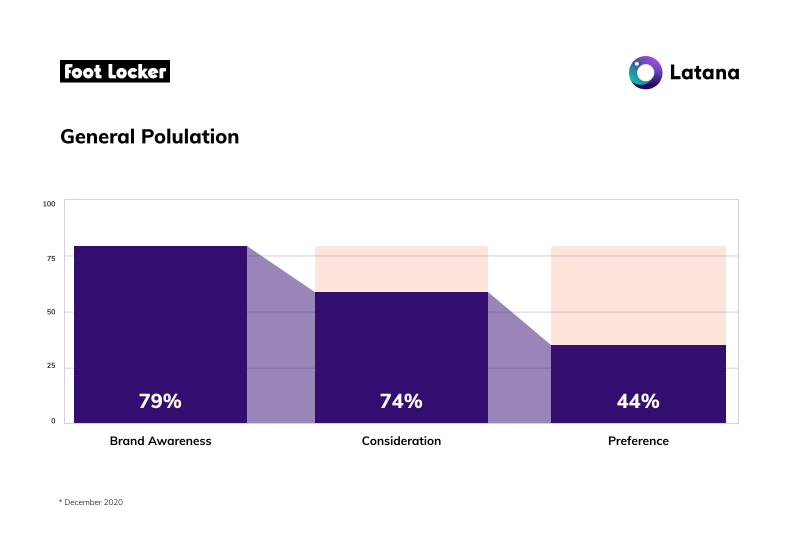\n\nSo, what has Foot Locker done to achieve results like these? Firstly, this brand is in tune with its audience. \n\nDuring the pandemic last year, the brand launched a campaign that focused on embracing individuality. It was reported that [the new campaign featured](https://www.lbbonline.com/news/foot-locker-and-gen-z-changemakers-pave-the-way-for-embracing-individuality) “leading changemakers who are championing individuality and a more progressive future for their communities and beyond.”\n\n[According to a 2018 survey](https://www.statista.com/topics/5239/foot-locker/#:~:text=Foot%20Locker%20is%20one%20of,in%20the%20last%2012%20months.), over 23 % of respondents aged 18 to 29-years-old stated that they had shopped for shoes in person at Foot Locker in the last 12 months. \n\nThis 2020 campaign is a great example of how Foot Locker is working to further connect with this demographic through values and movements that resonate with them.\n\n### 2. Airbnb\n\nEveryone’s heard of Airbnb — if you haven’t, perhaps you’ve been living under a rock? \n\nSo, why does everyone know about Airbnb? Yes, they advertise pretty much everywhere — TV ads, social media ads, paid search ads. However, initially, their big driver was word of mouth.\n\nThe brand quickly realized that [referrals accounted for millions of dollars of sales](https://www.referralcandy.com/blog/airbnb-referral-program/). Underpinned by their tagline “Belong Anywhere”, staying in an Airbnb is a personal experience. Consumers instantly feel at ease, which is reflected in the brand awareness stats below.\n\nLook how high those numbers are! It seems, regardless of age, people are more than willing to use Airbnb.\n\n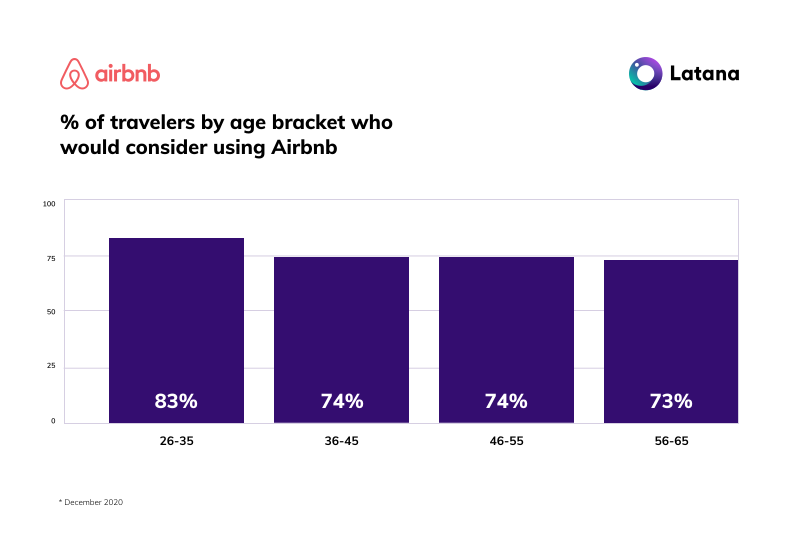\n\nWhen booking an Airbnb, the process is as follows: find the best location, read through the reviews, and pick the option that best suits your needs. \n\nUser-generated reviews are a magnificently powerful and trustworthy form of marketing. So trustworthy, in fact, that [79% of consumers say they trust online reviews](https://www.brightlocal.com/research/local-consumer-review-survey/#:~:text=79%25%20of%20consumers%20say%20they,recommendations%20from%20friends%20or%20family.) as much as personal recommendations from friends or family. \n\nSo, if you’re trying to craft a brand identity people will love, take a page out of Airbnb’s book — invest in a referral program, then focus on delighting your customers to increase word-of-mouth recommendations and online reviews.\n\nWhy? Because reviews speak volumes and enable users to make snap decisions about your brand.\n\n### 3. JBL\n\n[JBL](https://latana.com/brand-insights/brand-bites-jbl/) manufactures high-end audio equipment, which is a bit more of a niche market than Airbnb or Foot Locker. So, it’s not surprising that the general population’s brand awareness currently stands at 27% — a good bit lower than the others we discussed. \n\nHowever, of the 27% that are aware, 74% would consider using the brand. As we can see, although their audience is small, it’s mightly engaged!\n\n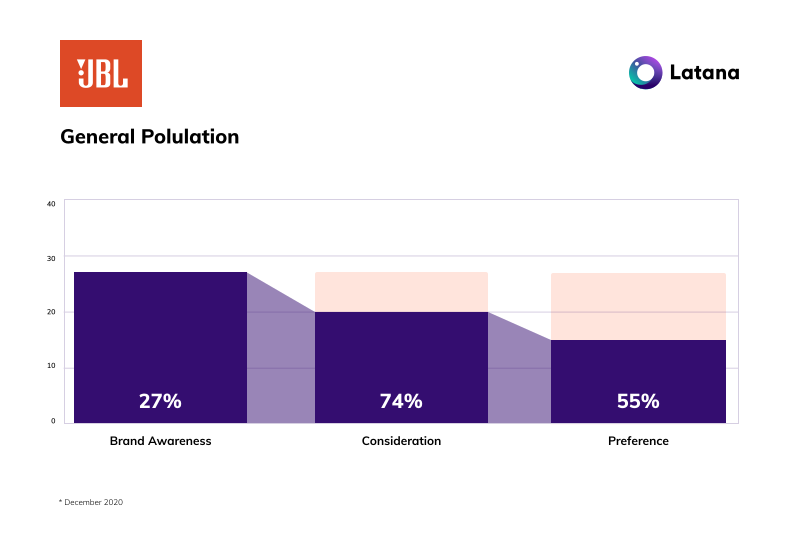\n\nWhen looking at the demographic make-up, JBL’s audience skews male — with men showing higher brand awareness as 30%. When looking at the female audience, we see a significant drop in brand awareness to 19%. \n\nWhat does this tell us? It seems that JBL’s brand identity is focused more on a male audience. Perhaps the brand has found them to be a more receptive audience?\n\n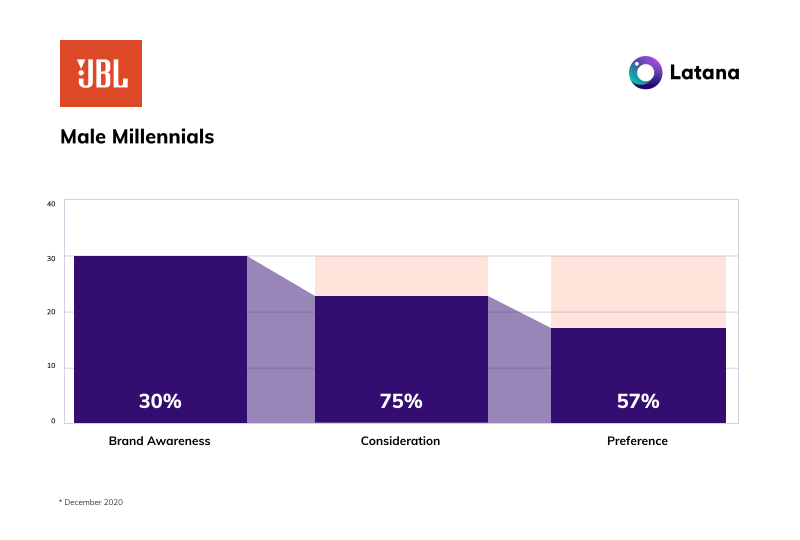\n\n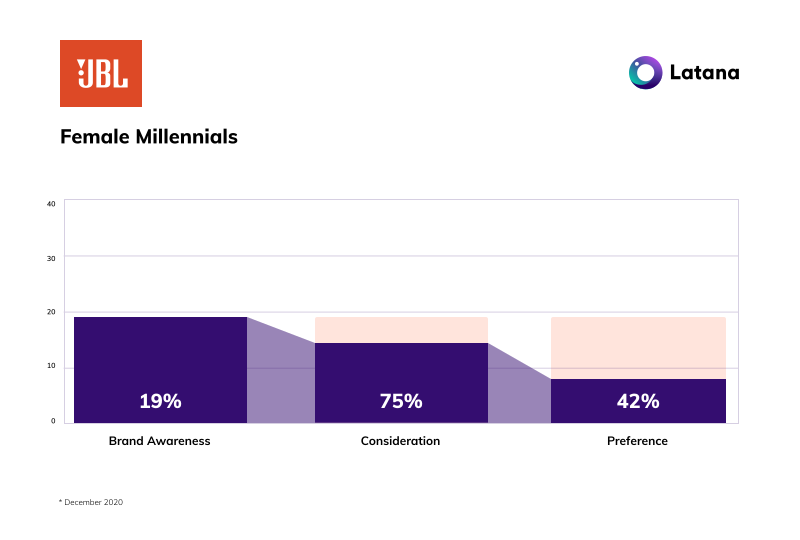\n\nSo, what makes JBL’s brand identity so strong? It’s lauded for its high-quality, affordable equipment. Although JBL is competing with premium brands such as Apple, its brand identity resonates better with a younger Gen Z demographic — which is apparent in the kind of content they share online.\n\n## Final Thoughts\n\nAs you can see, your company’s brand identity is extremely important. When you invest time and effort into it, it can bring tangible results. \n\nAnd even though some entrepreneurs might still disagree, it’s most certainly something you can [effectively track with the right resources](https://latana.com/brand-awareness/).\n\nWhen tracked properly, you’ll be rewarded with precise insights into previous campaigns — which you can use to make smarter marketing decisions going forward. \n"},"tags":["Brand Strategy","Brand Marketing"],"authorRef":{"slug":"laura","firstName":"Laura","lastName":"Harker","title":"Freelance Writer & Editor","picture":{"__typename":"ContentfulAsset","id":"bb56ceb9-a813-5edc-85a6-facde71b8efe","description":"","title":"Latana Logo Author Photo","file":{"contentType":"image/png","url":"//images.ctfassets.net/7so8go2zrvbw/7qeUdZpRNeFZFTo0zIasKz/8d00318fb2f317950a2a2d6912eb28bf/Author_Latana__1_.png","details":{"image":{"width":235,"height":235}}},"gatsbyImageData":{"images":{"sources":[{"srcSet":"//images.ctfassets.net/7so8go2zrvbw/7qeUdZpRNeFZFTo0zIasKz/8d00318fb2f317950a2a2d6912eb28bf/Author_Latana__1_.png?w=235&h=235&q=95&fm=webp 235w","sizes":"100vw","type":"image/webp"}],"fallback":{"src":"//images.ctfassets.net/7so8go2zrvbw/7qeUdZpRNeFZFTo0zIasKz/8d00318fb2f317950a2a2d6912eb28bf/Author_Latana__1_.png?w=235&h=235&q=95&fm=png","srcSet":"//images.ctfassets.net/7so8go2zrvbw/7qeUdZpRNeFZFTo0zIasKz/8d00318fb2f317950a2a2d6912eb28bf/Author_Latana__1_.png?w=235&h=235&q=95&fm=png 235w","sizes":"100vw"}},"layout":"fullWidth","backgroundColor":"#080808","width":1,"height":1}}}}},{"node":{"publishDate":"2021-04-22T11:00+02:00","slug":"brand-image-caterpillar-cake","author":"Cory Schröder","title":"The Importance of Brand Image (as Told By A Chocolate Caterpillar Cake)","seo":{"__typename":"ContentfulSeo","title":"The Importance of Brand Image: Asda and M&S","description":"The recent Twitter war between M&S and Aldi over a chocolate caterpillar cake shows just how vital brand messaging is to brand image. Check out our take here!","noIndex":null,"ogImage":{"fluid":{"src":"//images.ctfassets.net/7so8go2zrvbw/4a9M0n4q4nZmaAiMSmgbKq/99b4d35ff26bc2fddc7c89fa72049ce6/Brand_Image_Hero_Image.png?w=1200&h=675&q=90&fm=jpg"},"file":{"url":"//images.ctfassets.net/7so8go2zrvbw/4a9M0n4q4nZmaAiMSmgbKq/99b4d35ff26bc2fddc7c89fa72049ce6/Brand_Image_Hero_Image.png"}}},"heroImage":{"__typename":"ContentfulAsset","id":"667be296-53ab-5680-8b22-d63499cec841","description":"","title":"Aldi Tweet about Caterpillars for Cancer","file":{"contentType":"image/png","url":"//images.ctfassets.net/7so8go2zrvbw/4a9M0n4q4nZmaAiMSmgbKq/99b4d35ff26bc2fddc7c89fa72049ce6/Brand_Image_Hero_Image.png","details":{"image":{"width":667,"height":345}}},"gatsbyImageData":{"images":{"sources":[{"srcSet":"//images.ctfassets.net/7so8go2zrvbw/4a9M0n4q4nZmaAiMSmgbKq/99b4d35ff26bc2fddc7c89fa72049ce6/Brand_Image_Hero_Image.png?w=167&h=86&q=95&fm=webp 167w,\n//images.ctfassets.net/7so8go2zrvbw/4a9M0n4q4nZmaAiMSmgbKq/99b4d35ff26bc2fddc7c89fa72049ce6/Brand_Image_Hero_Image.png?w=334&h=173&q=95&fm=webp 334w,\n//images.ctfassets.net/7so8go2zrvbw/4a9M0n4q4nZmaAiMSmgbKq/99b4d35ff26bc2fddc7c89fa72049ce6/Brand_Image_Hero_Image.png?w=667&h=345&q=95&fm=webp 667w","sizes":"(min-width: 667px) 667px, 100vw","type":"image/webp"}],"fallback":{"src":"//images.ctfassets.net/7so8go2zrvbw/4a9M0n4q4nZmaAiMSmgbKq/99b4d35ff26bc2fddc7c89fa72049ce6/Brand_Image_Hero_Image.png?w=667&h=345&q=95&fm=png","srcSet":"//images.ctfassets.net/7so8go2zrvbw/4a9M0n4q4nZmaAiMSmgbKq/99b4d35ff26bc2fddc7c89fa72049ce6/Brand_Image_Hero_Image.png?w=167&h=86&q=95&fm=png 167w,\n//images.ctfassets.net/7so8go2zrvbw/4a9M0n4q4nZmaAiMSmgbKq/99b4d35ff26bc2fddc7c89fa72049ce6/Brand_Image_Hero_Image.png?w=334&h=173&q=95&fm=png 334w,\n//images.ctfassets.net/7so8go2zrvbw/4a9M0n4q4nZmaAiMSmgbKq/99b4d35ff26bc2fddc7c89fa72049ce6/Brand_Image_Hero_Image.png?w=667&h=345&q=95&fm=png 667w","sizes":"(min-width: 667px) 667px, 100vw"}},"layout":"constrained","backgroundColor":"#f8f8f8","width":800,"height":414}},"coverImage":null,"description":{"description":"The recent Twitter war waged between M&S and Aldi over a chocolate caterpillar cake shows just how vital brand messaging is to brand image. Check out our take on the debacle here!"},"content":{"content":"There’s a good chance you’ve heard some digital chit-chat this week surrounding edible caterpillars with alliterative names such as “Colin” or “Cuthbert”. \n\nYou see, Marks & Spencer seem to have started a legal battle with Aldi over a chocolate, caterpillar-shaped cake. (Yes, we’re 100% serious. This isn’t a joke.)\n\n\n\nSource: [M&S](https://www.marksandspencer.com/c/food-to-order/not-just-any-food/mands-brands/colin-the-caterpillar)\n\nAs of Thursday, April 15th, [M&S lodged a legal complaint with the High Court](https://www.standard.co.uk/business/aldi-colin-the-caterpillar-high-court-marks-spencer-m-s-macmillan-b929831.html) stating that Aldi’s lookalike cake “Cuthbert the Caterpillar” is riding \"on the coat-tails” of the more exclusive (and expensive) “Colin the Caterpillar”. \n\nWhile the cakes do, admittedly, look incredibly similar, M&S’s Colin has been a British household staple since late 1990 — while Cuthbert only made his debut in 2019. Additionally, they have quite different price points, with Colin costing a respectable £7 and Cuthbert coming in at a cool £4.99. \n\nM&S claims that the physical and visual similarity leads consumers to believe that they’re receiving the same quality of cake from both anthropomorphic chocolate logs. Understandably, this pedantic food fight has garnered international attention.\n\nBut what does this tiff have to do with brand messaging and [brand identity](https://latana.com/post/brand-identity-branding-essential-growing-company/)? In this article, we'll dig into the existing brand identity and communication of both M&S and Aldi, as well as discuss how each company’s handling of the situation affects their brand image.\n\n## How are M&S and Colin Handling the Situation?\n\nAs one of the UK’s most well-known, high-end companies, Marks & Spencer is definitely [aware of their brand image](https://medium.com/@Stewart_Fabrik/its-not-just-branding-it-s-marks-spencer-branding-bcd3df9988cc): luxurious, high-quality, respectable, and exclusive. Everything from their digital advertisements to their Twitter account reflects these values. \n\nSo, in a situation such as this — where important and somewhat sensitive conversations are playing out in public — how is M&S handling their Twitter spat with Aldi? \n\nWith only one slightly cheeky tweet and a situationally appropriate meme, M&S seems to be maintaining a (comparatively) stiff upper lip.\n\n\nSource: [Twitter](https://twitter.com/marksandspencer/status/1384489545899470853)\n\nHowever, with plenty of other Colin “copycaterpillars” out there — from Tesco’s Curly to Waitrose’s Cecil — it begs the question, why zero in on Cuthbert? \n\nThe Guardian hypothesizes that [it might have something to do with Cuthbert’s origins](https://www.theguardian.com/business/2021/apr/18/caterpillar-wars-time-to-pick-sides-in-battle-of-colin-v-cuthbert) — he is a German caterpillar, after all. And if that’s the case, going after the other, respectable British caterpillar cakes might not be the move. \n\nSuing Aldi by alleging an intellectual property claim is a bold move for M&S. If they truly believe that their caterpillar is superior, should they be bothered by a Teutonic lookalike? And what does this say about their brand identity?\n\nWell, M&S has been approaching this issue in a reserved manner, with the trademark “Keep Calm and Carry On” approach we’ve come to expect. They certainly aren’t the digital instigators of this situation, but by remaining consistent with their brand messaging, they’ll most likely please their current customer base. \n\n## How are Aldi and Cuthbert Handling the Situation?\n\nAldi, on the other hand, has taken a somewhat different — but still on-brand — approach to the spat. Instead of bowing out quietly and removing Cuthbert from its shelves until the legal battle is settled, they’ve [launched a limited edition version](https://www.mirror.co.uk/money/aldi-bringing-back-cuthbert-caterpillar-23945734) to benefit the Teenage Cancer Trust and Macmillan Cancer Support. \n\nThey’ve also taken to Twitter to assemble a crack team of British caterpillar cakes to join their cause using the hashtags #FreeCuthbert and #CaterpillarsForCancer. They’ve seen some success with fellow supermarkets Waitrose and Asda, who’ve both tweeted support for Cuthbert and agreed to join the “Caterpillars for Cancer” initiative. \n\nBeer for your sole
— Heineken (@Heineken) August 2, 2022
Designed in collaboration with noted shoe designer, Dominic Ciambrone, to celebrate the smoothness of Heineken®️ Silver. Heinekicks aren't your everyday shoe, but it’s not every day you get to walk on beer. pic.twitter.com/LefwD5X7if
\n\nMark Ritson of MarketingWeek [explains Aldi’s brand image](https://www.marketingweek.com/brand-equity-is-dead-long-live-aldi/) as a “no-nonsense approach” that positions itself around “high-quality products at the lowest possible prices”. Their stores aren’t flashy or elegant, but they communicate what Aldi’s brand image is all about: they’re simple, down-to-earth, price-driven, and plain-spoken.\n\nThis positioning extends to Aldi’s social communication as well, where we are witnessing far more active, casual, and humorous Twitter commentary.\n\n\nSource: [Twitter](https://twitter.com/AldiUK/status/1384176280929636352)\n\nWith numerous tweets and memes shared over the past few days, Aldi is not shying away from confrontation, but heading straight into the dogfight armed with their wit and devil-may-care attitude. \n\nThis type of brand messaging is meant to [resonate with their target audience](https://latana.com/guides/level-up-refining-your-target-audience/). And just like M&S, their style of communications is a strategic move. How consumers respond to the situation most likely falls in line with the kind of supermarket they usually shop at. \n\n## What Does This Situation Reveal About Brand Image?\n\nBrand image can be a delicate thing to properly maintain, and companies won’t ever be able to please everyone. From [bad online communication to inactive social media](https://latana.com/post/improve-brand-image/), there are numerous ways businesses can inadvertently damage their brand image.\n\nHowever, in this case, it seems that both M&S and Aldi have made a good choice by sticking to their traditional brand messaging and tone in an effort to please their existing customer base and possibly win over new ones.\n\nSome Twitter commentators believe that this situation has hurt M&S’s image, as Aldi has put a great deal of focus on their idea to “[raise money for charity, not lawyers](https://twitter.com/AldiUK/status/1384446799029616641)” — which doesn’t paint M&S’s refusal to join in the best light. In essence, by choosing to donate all Cuthbert’s proceeds to charity, Aldi has successfully aligned their brand image with corporate responsibility and altruism and boxed M&S into a metaphorical corner. \n\nHowever, others see this as Aldi trying to stir up unnecessary trouble online to avoid reasonable copyright litigation and point to M&S’s own history of charity work. Either way, both brands have found fervent supporters all over the Twitterverse.\n\n\nSource: [Twitter](https://twitter.com/AldiUK/status/1384520840973373441)\n\n## Final Thoughts\n\nThough waging a war over a chocolate log cake in the shape of a caterpillar is not something many people saw coming for 2021, it probably won’t be the weirdest thing to happen this year. Plus, legal consequences aside, this squabble has generated a [nice bump in brand awareness for both brands](https://trends.google.com/trends/explore?geo=GB&q=aldi,M%26S) since the debacle began last week.\n\nIn a day and age where nothing online can stay private for long, brand image is directly linked to your digital reputation and presence. So, what does this situation teach us about brand image? You won’t be able to please everyone with your style of communication and internet presence. But, choosing a tone and method of communication that resonates with your target audiences is key to finding success.\n\nIf you’re interested in learning more about finding your target audience and communicating the right brand image, check out our [free ebook on target audiences](https://latana.com/guides/ultimate-target-audience-guide/).\n\n---\n\n## The Caterpillar War: 2022 Update\n\nAlmost a year after the showdown first began, it seems that Colin and Cuthbert have finally come to a legal understanding. \n\nWhile details of the ruling from the high court have not yet been revealed, [the Guardian reports](https://www.theguardian.com/business/2022/feb/01/marks-spencer-and-aldi-call-truce-in-colin-the-caterpillar-cake-war) that it's \"understood that Cuthbert will not appear again in quite the same form.\"\n\nFor their part, Marks & Spencers seem to be quite chuffed, having stated: \"The objective of the claim was to protect the (intellectual property) in our Colin the Caterpillar cake and we are very pleased with the outcome.\"\n\nHowever, a spokesperson for Aldi came forward and added: “Cuthbert is free and looking forward to seeing all his fans again very soon!”\n\nMorning @Tesco @sainsburys @asda @Morrisons @waitrose @coopuk. Cuthbert needs the help of Curly, Clyde, Cecil, Charlie, Morris and Wiggles. Caterpillars clubbing together to raise money for charity, not lawyers. #caterpillarsforcancer. Up for it?
— Aldi Stores UK (@AldiUK) April 20, 2021
\n\nIn typical Aldi-fashion, the discount grocer also took to Twitter to share their take — with many a humerous tweet and meme.\n\nGetting out early on good behaviour, keep an eye out for Cuthy B this Spring 👀👀 x #FreeCuthbert
— Aldi Stores UK (@AldiUK) February 1, 2022
\n\nWe'll have to see what decision the high court landed on. But until then, we'll enjoy the show.\n"},"tags":["Brand Marketing","Brand Awareness"],"authorRef":{"slug":"cory-schroder","firstName":"Cory","lastName":"Schröder","title":"Senior Content Marketing Manager","picture":{"__typename":"ContentfulAsset","id":"31ab4d95-0f90-5835-a22f-4b7ff41fece2","description":"","title":"Cory Profile Picture","file":{"contentType":"image/png","url":"//images.ctfassets.net/7so8go2zrvbw/42rTfahl2m45FP1Fzo7B8n/52d40b8bd8af9ab559381bc0ab744cda/avatar.png","details":{"image":{"width":235,"height":235}}},"gatsbyImageData":{"images":{"sources":[{"srcSet":"//images.ctfassets.net/7so8go2zrvbw/42rTfahl2m45FP1Fzo7B8n/52d40b8bd8af9ab559381bc0ab744cda/avatar.png?w=235&h=235&q=95&fm=webp 235w","sizes":"100vw","type":"image/webp"}],"fallback":{"src":"//images.ctfassets.net/7so8go2zrvbw/42rTfahl2m45FP1Fzo7B8n/52d40b8bd8af9ab559381bc0ab744cda/avatar.png?w=235&h=235&q=95&fm=png","srcSet":"//images.ctfassets.net/7so8go2zrvbw/42rTfahl2m45FP1Fzo7B8n/52d40b8bd8af9ab559381bc0ab744cda/avatar.png?w=235&h=235&q=95&fm=png 235w","sizes":"100vw"}},"layout":"fullWidth","backgroundColor":"#080808","width":1,"height":1}}}}},{"node":{"publishDate":"2020-12-17T09:00+01:00","slug":"brand-statement","author":"Daniela McVicker","title":"How to Write a Strong Brand Statement in 2022","seo":{"__typename":"ContentfulSeo","title":"How to Write a Strong Brand Statement in 2022","description":"The first step to building a strong brand identity, and indeed a strong brand, is creating a brand statement. Want to know the best way to do it in 2022? Find out here.","noIndex":null,"ogImage":{"fluid":{"src":"//images.ctfassets.net/7so8go2zrvbw/45Bwdw3nS4hho0TlmveUes/e3eee25c0daef28e00a4b718f4492aa8/Blog_SEO-Thumbnail_1000X709_-_2022-09-20T151634.682.png?w=1200&h=675&q=90&fm=jpg"},"file":{"url":"//images.ctfassets.net/7so8go2zrvbw/45Bwdw3nS4hho0TlmveUes/e3eee25c0daef28e00a4b718f4492aa8/Blog_SEO-Thumbnail_1000X709_-_2022-09-20T151634.682.png"}}},"heroImage":{"__typename":"ContentfulAsset","id":"341ec4f5-7820-5dbf-83c8-af074cb50052","description":"","title":"Illustration of a typewriter with books [Thumbnail]","file":{"contentType":"image/png","url":"//images.ctfassets.net/7so8go2zrvbw/45Bwdw3nS4hho0TlmveUes/e3eee25c0daef28e00a4b718f4492aa8/Blog_SEO-Thumbnail_1000X709_-_2022-09-20T151634.682.png","details":{"image":{"width":1000,"height":709}}},"gatsbyImageData":{"images":{"sources":[{"srcSet":"//images.ctfassets.net/7so8go2zrvbw/45Bwdw3nS4hho0TlmveUes/e3eee25c0daef28e00a4b718f4492aa8/Blog_SEO-Thumbnail_1000X709_-_2022-09-20T151634.682.png?w=200&h=142&q=95&fm=webp 200w,\n//images.ctfassets.net/7so8go2zrvbw/45Bwdw3nS4hho0TlmveUes/e3eee25c0daef28e00a4b718f4492aa8/Blog_SEO-Thumbnail_1000X709_-_2022-09-20T151634.682.png?w=400&h=284&q=95&fm=webp 400w,\n//images.ctfassets.net/7so8go2zrvbw/45Bwdw3nS4hho0TlmveUes/e3eee25c0daef28e00a4b718f4492aa8/Blog_SEO-Thumbnail_1000X709_-_2022-09-20T151634.682.png?w=800&h=567&q=95&fm=webp 800w","sizes":"(min-width: 800px) 800px, 100vw","type":"image/webp"}],"fallback":{"src":"//images.ctfassets.net/7so8go2zrvbw/45Bwdw3nS4hho0TlmveUes/e3eee25c0daef28e00a4b718f4492aa8/Blog_SEO-Thumbnail_1000X709_-_2022-09-20T151634.682.png?w=800&h=567&q=95&fm=png","srcSet":"//images.ctfassets.net/7so8go2zrvbw/45Bwdw3nS4hho0TlmveUes/e3eee25c0daef28e00a4b718f4492aa8/Blog_SEO-Thumbnail_1000X709_-_2022-09-20T151634.682.png?w=200&h=142&q=95&fm=png 200w,\n//images.ctfassets.net/7so8go2zrvbw/45Bwdw3nS4hho0TlmveUes/e3eee25c0daef28e00a4b718f4492aa8/Blog_SEO-Thumbnail_1000X709_-_2022-09-20T151634.682.png?w=400&h=284&q=95&fm=png 400w,\n//images.ctfassets.net/7so8go2zrvbw/45Bwdw3nS4hho0TlmveUes/e3eee25c0daef28e00a4b718f4492aa8/Blog_SEO-Thumbnail_1000X709_-_2022-09-20T151634.682.png?w=800&h=567&q=95&fm=png 800w","sizes":"(min-width: 800px) 800px, 100vw"}},"layout":"constrained","backgroundColor":"#e8b898","width":800,"height":567}},"coverImage":{"__typename":"ContentfulAsset","id":"071d5062-4b39-5b06-94d8-a6414058f04b","description":"","title":"Illustration of a typewriter with books [Cover Image]","file":{"contentType":"image/png","url":"//images.ctfassets.net/7so8go2zrvbw/6owgcU1HgHGLmMaIYWPipa/fa3ec73783f0f141a8c9932f7fc7e4bb/Blog_Cover_1288X400_-_2022-09-20T151637.467.png","details":{"image":{"width":1288,"height":400}}},"gatsbyImageData":{"images":{"sources":[{"srcSet":"//images.ctfassets.net/7so8go2zrvbw/6owgcU1HgHGLmMaIYWPipa/fa3ec73783f0f141a8c9932f7fc7e4bb/Blog_Cover_1288X400_-_2022-09-20T151637.467.png?w=750&h=233&q=95&fm=webp 750w,\n//images.ctfassets.net/7so8go2zrvbw/6owgcU1HgHGLmMaIYWPipa/fa3ec73783f0f141a8c9932f7fc7e4bb/Blog_Cover_1288X400_-_2022-09-20T151637.467.png?w=1080&h=335&q=95&fm=webp 1080w,\n//images.ctfassets.net/7so8go2zrvbw/6owgcU1HgHGLmMaIYWPipa/fa3ec73783f0f141a8c9932f7fc7e4bb/Blog_Cover_1288X400_-_2022-09-20T151637.467.png?w=1288&h=400&q=95&fm=webp 1288w","sizes":"100vw","type":"image/webp"}],"fallback":{"src":"//images.ctfassets.net/7so8go2zrvbw/6owgcU1HgHGLmMaIYWPipa/fa3ec73783f0f141a8c9932f7fc7e4bb/Blog_Cover_1288X400_-_2022-09-20T151637.467.png?w=1288&h=400&q=95&fm=png","srcSet":"//images.ctfassets.net/7so8go2zrvbw/6owgcU1HgHGLmMaIYWPipa/fa3ec73783f0f141a8c9932f7fc7e4bb/Blog_Cover_1288X400_-_2022-09-20T151637.467.png?w=750&h=233&q=95&fm=png 750w,\n//images.ctfassets.net/7so8go2zrvbw/6owgcU1HgHGLmMaIYWPipa/fa3ec73783f0f141a8c9932f7fc7e4bb/Blog_Cover_1288X400_-_2022-09-20T151637.467.png?w=1080&h=335&q=95&fm=png 1080w,\n//images.ctfassets.net/7so8go2zrvbw/6owgcU1HgHGLmMaIYWPipa/fa3ec73783f0f141a8c9932f7fc7e4bb/Blog_Cover_1288X400_-_2022-09-20T151637.467.png?w=1288&h=400&q=95&fm=png 1288w","sizes":"100vw"}},"layout":"fullWidth","backgroundColor":"#b87848","width":1,"height":0.3105590062111801}},"description":{"description":"The first step to building a strong brand identity, and indeed a strong brand, is creating a brand statement. Want to know the best way to do it in 2022? Find out here."},"content":{"content":"The first step to building a strong [brand identity](https://latana.com/post/brand-identity-online/), and indeed a strong brand, is creating a brand statement. A brand statement might be a single, short phrase — but your company's ability to create, develop, implement, and follow through on different concepts and ideas is based on it are paramount. \n\nA branding statement is a promise that you make to your customers. It should be realistic, meaningful, and informative enough to make them understand what you do — and why. However, while it may sound pretty simple to write, it can be difficult to condense everything you want to say — in a way that people can relate to — into a sentence or two.\n\nStill, it's a must for every brand. We’ll start with a quick intro to get you in the right mindset for writing a brand statement and then move straight to writing tips that will ensure your company ends up with the best statement possible. \n\n## What is a Brand Statement?\n\n![Illustration of a woman writing and floating letters [Article Image]](//images.ctfassets.net/7so8go2zrvbw/7jYSKvJ97FvKUaKhr31dG1/e708aff3db2b012c7061b12f3e47400f/Blog_Cover_1288X400_-_2022-09-20T151640.911.png)\n\nA brand statement is a one or two-sentence phrase that describes a company’s mission, expertise, and promise. \n\nThe purpose of a brand statement is to help others understand what your company does, why it does it, and what makes it unique. Essentially, it’s a unique selling proposition, which gives you your own [brand identity](https://latana.com/post/brand-identity-branding-essential-growing-company/). \n\nFor example, consider the following branding statement for a real estate business:\n\n“*Our company helps people find their dream home for less.*”\n\nIt's short, concise, and perfectly embodies the mission of the brand.\n\nAnd it’s not just companies that have brand statements — individuals use them, too. Creating a personal brand statement to differentiate oneself from the competition is a common practice among job seekers, solo entrepreneurs, and marketers. \n\nConsider the following example of a marketer's personal brand statement:\n\n“*I help [startups](https://latana.com/post/startup-brand-operating-system/) achieve their true potential by creating powerful digital marketing strategies*.” \n\n## Why Write a Brand Statement?\n\nKeep in mind, a brand statement isn’t a PR slogan full of salesy buzzwords. Its goal is twofold: \n\n- Helping brands stand out from the competition\n- Making it easy for clients to relate to the brand\n\nThis makes a brand statement a critical part of [brand-building campaigns](https://latana.com/post/brand-building-campaigns/), as it becomes your tool to spark consumers' curiosity and make your target audience want to learn more about your business. \n\nSo, it could be said that a branding statement is a starting point for building relationships with customers. Coming up with a strong statement, however, can be tricky.\n\nIt may seem easy to just reword your expertise and business goals, but... there are millions of other businesses doing the same thing. Sadly, it won't work this way. \n\nA strong brand statement must be intriguing and compelling enough to make people want to learn more about your company. And this is where problems begin, as combining everything into a short, striking phrase is hard. Here’s how to go about it.\n\n## How to Write a Strong Branding Statement\n\n\nIf you're looking to write a compelling, relatable, and inviting brand statement, we recommend keeping the below tips in mind.\n\n### 1. Determine Your Unique Selling Proposition\n\nA unique selling proposition (USP) should lie at the core of your brand statement. However, while your USPs might seem easy to determine and describe, that's not always the case.\n\nWhy so?\n\nAs someone who works as a part of the brand, it might be difficult to “detach” yourself from it and speak the language of the customer. Here’s an example. Let’s suppose you work at an advertising agency. Since your typical day consists mostly of developing and perfecting slogans and ads, this brand statement might sound just fine to you:\n\n“*We help companies create high-performing online advertising campaigns*”. \n\nHowever, this says very little to the customer. While it does capture the essence of the business and its value, it doesn’t quite speak “the language of the customer.” Take a look at this one:\n\n“*We help companies grow and reach more customers through unique and engaging campaigns*.” \n\nInstead of talking about the result of your work, it focuses on the best-case scenario for the customer. This is how you use your USPs when crafting your own branding statement — always imagine the base-case scenario for the customer. \n\n### 2. Choose the Right Adjectives\n\nBy now, we've discussed USPs — and if you know yours, you've already done 50% of the work. At this point, we need to move on to the *language* of your brand statement. It’s important you word it the right way — after all, it’s going to be a major marketing tool. \n\nAdjectives should be your first consideration. \n\nWhen writing a brand statement, it’s quite easy to get carried away and choose adjectives that sound fake or irrelevant. To avoid that, we’ll undergo a simple exercise. \n\nFirst, write down a list of adjectives that represent your business (if you’re working on a personal brand statement, they should describe your personality or traits). Some examples might be:\n\n- Useful \n- Helpful\n- Authentic\n- Convenient\n- Hip\n- Reliable\n- Accessible\n- Safe\n\nThe list goes on and on. \n\nWhen you have a decent collection to choose from, pick three and focus on them. It’s important that you don’t overuse adjectives throughout your statement, as they can begin to feel redundant. \n\nChoose the ones that are attention-grabbing, but also meaningful to your mission and vision. For example, “safe” wouldn’t be the best choice for businesses like advertising agencies, writing services, or coffee shops. If you stick to the best ones, you can use them to improve your brand statement. \n\nAdjectives like “excellent” and “transformative,” for example, could be relevant for online team building training companies and educational institutions. \n\nHere are some examples of how well-known companies & individuals did it (with adjectives in bold):\n\n- “*Improving people’s lives through __meaningful__ innovation.*” - Philips\n\n- “*Greenpeace is an __independent__ campaigning organisation, which uses __non-violent__, __creative__ confrontation to expose __global__ environmental problems, and to force the solutions which are __essential__ to a __green__ and __peaceful__ future.*” - Greenpeace\n\n- “*To organize the world’s information and make it universally __accessible__ and __useful__*.” - Google\n\nIn some cases, businesses stick with only adjectives. Sofia Crokos, an event planner, has chosen three specific ones to describe her company, seen below. \n\n\n\nSo, if you feel like your brand statement should consist solely of adjectives, go for it. But remember to limit their use — too many aren’t necessary. \n\n### 3. Make it Memorable\n\nOne reason why the brand statement examples from the previous section are great is the fact that they’re memorable. In fact, everything we’ve been doing until now was focused on that in one way or another. So, let's discuss a few more tips on how to make your brand statement resonate with customers:\n\n- Avoid industry slang, jargon, and professional vocabulary\n- Write with your customer’s perspective in mind\n- Be realistic and don’t make promises you can’t fulfill\n- Describe a long-term goal that other people can benefit from, too \n\nHere’s an example that follows these tips, courtesy of Caterpillar, the world’s leading manufacturer of mining and construction equipment. Clearly, the company operates in a unique niche, and its statement could easily have a lot of professional terms. But instead, Caterpillar went with the following:\n\n\"*To enable economic growth through infrastructure and energy development, and to provide solutions that support communities and protect the planet*.\"\n\nFirst and foremost, it's a meaningful statement — which makes it memorable. But, most of all, it makes Caterpillar's brand values clear. \n\nSo, how can you do the same? You know this one already (hint: it's the best-case scenario for your [target audience](https://latana.com/post/7-steps-perfect-target-audience/)). \n\n### 4. Conduct an Empathy Review\n\nEmpathy is often called the new marketing, and for good reason. An “empathetic” brand is a brand that:\n\n- Implements its vision and mission in daily life\n- Encourage employees to follow their vision\n- Is environmentally conscious \n- Is authentic and empowers its employees\n\nBut what does empathy have to do with writing branding statements? \n\nIt’s all about speaking the language of the customer. Once you’ve identified the best-case scenario for your customers, you need to make them the hero of the statement.\n\nConducting an empathy review, or simply analyzing if you've identified your customers' interests correctly, is a great idea. Here’s how to conduct the empathy review:\n\n- __Hold a feedback meeting__. Sit down with your product managers, customer support folks, and other stakeholders who are in regular contact with your customers and ask them to read the statement and provide feedback.\n\n- __Check if the customer is the hero__. Ask yourself the question: “Have we defined how we can empower our target customer?” If the answer is yes, then you've made the customer the hero of your statement.\n\nIf you need an example, Tumblr’s is great:\n\n“*To empower creators to make their best work and get it in front of the audience they deserve.*” \n\nThat’s empathy at its best. \n\n__Pro Tip__: If you’re writing a branding statement for a personal brand, the trick here is actually the same. Make sure you’re making it clear how your services empower your customer.\n\n### 5. Research Your Competitors\n\nIf you’re having a hard time coming up with unique ideas, you might need some inspiration. There’s nothing wrong with [checking out the websites of competitors](https://latana.com/post/competitor-analysis-for-brands/) and seeing how they wrote their branding statements. \n\nYou never know where or when the inspiration will strike, so feel free to do some investigating. \n\n## Final Thoughts\n\nThat’s it, five tips to write a strong branding statement: use USPs, add adjectives, make it memorable, employ empathy, and conduct competitor research. Now that you know what it takes to write one, make sure you take your time. Speak to your colleagues, employees, and other stakeholders while brainstorming — and make sure you ask for feedback when you’re done. \n\nStill sounds like a 10-minute job? Well, you’ll be surprised how much time crafting those meaningful two lines of text will take. But no worries, with the knowledge you have now, getting to the final draft will be much easier. "},"tags":["Brand Strategy"],"authorRef":{"slug":"daniela","firstName":"Daniela","lastName":"McVicker","title":"Freelance Writer","picture":{"__typename":"ContentfulAsset","id":"bb56ceb9-a813-5edc-85a6-facde71b8efe","description":"","title":"Latana Logo Author Photo","file":{"contentType":"image/png","url":"//images.ctfassets.net/7so8go2zrvbw/7qeUdZpRNeFZFTo0zIasKz/8d00318fb2f317950a2a2d6912eb28bf/Author_Latana__1_.png","details":{"image":{"width":235,"height":235}}},"gatsbyImageData":{"images":{"sources":[{"srcSet":"//images.ctfassets.net/7so8go2zrvbw/7qeUdZpRNeFZFTo0zIasKz/8d00318fb2f317950a2a2d6912eb28bf/Author_Latana__1_.png?w=235&h=235&q=95&fm=webp 235w","sizes":"100vw","type":"image/webp"}],"fallback":{"src":"//images.ctfassets.net/7so8go2zrvbw/7qeUdZpRNeFZFTo0zIasKz/8d00318fb2f317950a2a2d6912eb28bf/Author_Latana__1_.png?w=235&h=235&q=95&fm=png","srcSet":"//images.ctfassets.net/7so8go2zrvbw/7qeUdZpRNeFZFTo0zIasKz/8d00318fb2f317950a2a2d6912eb28bf/Author_Latana__1_.png?w=235&h=235&q=95&fm=png 235w","sizes":"100vw"}},"layout":"fullWidth","backgroundColor":"#080808","width":1,"height":1}}}}},{"node":{"publishDate":"2022-09-30T07:00+02:00","slug":"methods-to-help-sexual-wellness-brands-grow","author":"Cory Schröder","title":"3 Methods To Help Sexual Wellness Brands Grow in 2022","seo":{"__typename":"ContentfulSeo","title":"How Sexual Wellness Brands Can Grow in 2022","description":"The sexual wellness industry is definitely on the up-and-up, but will likely face many growing pains along the way. Want to know more? Find out here.","noIndex":null,"ogImage":{"fluid":{"src":"//images.ctfassets.net/7so8go2zrvbw/5pSYqlAtx2Io1SZDtCtGaW/3adab1e33e35c2100196ed7b90acc6cb/Blog_SEO-Thumbnail_1000X709_-_2022-09-20T105546.510.png?w=1200&h=675&q=90&fm=jpg"},"file":{"url":"//images.ctfassets.net/7so8go2zrvbw/5pSYqlAtx2Io1SZDtCtGaW/3adab1e33e35c2100196ed7b90acc6cb/Blog_SEO-Thumbnail_1000X709_-_2022-09-20T105546.510.png"}}},"heroImage":{"__typename":"ContentfulAsset","id":"047df1bf-02ee-58b6-8f86-fd5efde75999","description":"","title":"Illustration of two hands and a condom [Thumbnail]","file":{"contentType":"image/png","url":"//images.ctfassets.net/7so8go2zrvbw/5pSYqlAtx2Io1SZDtCtGaW/3adab1e33e35c2100196ed7b90acc6cb/Blog_SEO-Thumbnail_1000X709_-_2022-09-20T105546.510.png","details":{"image":{"width":1000,"height":709}}},"gatsbyImageData":{"images":{"sources":[{"srcSet":"//images.ctfassets.net/7so8go2zrvbw/5pSYqlAtx2Io1SZDtCtGaW/3adab1e33e35c2100196ed7b90acc6cb/Blog_SEO-Thumbnail_1000X709_-_2022-09-20T105546.510.png?w=200&h=142&q=95&fm=webp 200w,\n//images.ctfassets.net/7so8go2zrvbw/5pSYqlAtx2Io1SZDtCtGaW/3adab1e33e35c2100196ed7b90acc6cb/Blog_SEO-Thumbnail_1000X709_-_2022-09-20T105546.510.png?w=400&h=284&q=95&fm=webp 400w,\n//images.ctfassets.net/7so8go2zrvbw/5pSYqlAtx2Io1SZDtCtGaW/3adab1e33e35c2100196ed7b90acc6cb/Blog_SEO-Thumbnail_1000X709_-_2022-09-20T105546.510.png?w=800&h=567&q=95&fm=webp 800w","sizes":"(min-width: 800px) 800px, 100vw","type":"image/webp"}],"fallback":{"src":"//images.ctfassets.net/7so8go2zrvbw/5pSYqlAtx2Io1SZDtCtGaW/3adab1e33e35c2100196ed7b90acc6cb/Blog_SEO-Thumbnail_1000X709_-_2022-09-20T105546.510.png?w=800&h=567&q=95&fm=png","srcSet":"//images.ctfassets.net/7so8go2zrvbw/5pSYqlAtx2Io1SZDtCtGaW/3adab1e33e35c2100196ed7b90acc6cb/Blog_SEO-Thumbnail_1000X709_-_2022-09-20T105546.510.png?w=200&h=142&q=95&fm=png 200w,\n//images.ctfassets.net/7so8go2zrvbw/5pSYqlAtx2Io1SZDtCtGaW/3adab1e33e35c2100196ed7b90acc6cb/Blog_SEO-Thumbnail_1000X709_-_2022-09-20T105546.510.png?w=400&h=284&q=95&fm=png 400w,\n//images.ctfassets.net/7so8go2zrvbw/5pSYqlAtx2Io1SZDtCtGaW/3adab1e33e35c2100196ed7b90acc6cb/Blog_SEO-Thumbnail_1000X709_-_2022-09-20T105546.510.png?w=800&h=567&q=95&fm=png 800w","sizes":"(min-width: 800px) 800px, 100vw"}},"layout":"constrained","backgroundColor":"#d87888","width":800,"height":567}},"coverImage":{"__typename":"ContentfulAsset","id":"4b7c3bc5-968f-59c1-af03-5249f31682ad","description":"","title":"Illustration of two hands and a condom [Cover Image]","file":{"contentType":"image/png","url":"//images.ctfassets.net/7so8go2zrvbw/4wifvOdYYzjOv53Y95PbMe/debca3d30f2dff0be4d969df9b59ba87/Blog_Cover_1288X400_-_2022-09-20T105549.171.png","details":{"image":{"width":1288,"height":400}}},"gatsbyImageData":{"images":{"sources":[{"srcSet":"//images.ctfassets.net/7so8go2zrvbw/4wifvOdYYzjOv53Y95PbMe/debca3d30f2dff0be4d969df9b59ba87/Blog_Cover_1288X400_-_2022-09-20T105549.171.png?w=750&h=233&q=95&fm=webp 750w,\n//images.ctfassets.net/7so8go2zrvbw/4wifvOdYYzjOv53Y95PbMe/debca3d30f2dff0be4d969df9b59ba87/Blog_Cover_1288X400_-_2022-09-20T105549.171.png?w=1080&h=335&q=95&fm=webp 1080w,\n//images.ctfassets.net/7so8go2zrvbw/4wifvOdYYzjOv53Y95PbMe/debca3d30f2dff0be4d969df9b59ba87/Blog_Cover_1288X400_-_2022-09-20T105549.171.png?w=1288&h=400&q=95&fm=webp 1288w","sizes":"100vw","type":"image/webp"}],"fallback":{"src":"//images.ctfassets.net/7so8go2zrvbw/4wifvOdYYzjOv53Y95PbMe/debca3d30f2dff0be4d969df9b59ba87/Blog_Cover_1288X400_-_2022-09-20T105549.171.png?w=1288&h=400&q=95&fm=png","srcSet":"//images.ctfassets.net/7so8go2zrvbw/4wifvOdYYzjOv53Y95PbMe/debca3d30f2dff0be4d969df9b59ba87/Blog_Cover_1288X400_-_2022-09-20T105549.171.png?w=750&h=233&q=95&fm=png 750w,\n//images.ctfassets.net/7so8go2zrvbw/4wifvOdYYzjOv53Y95PbMe/debca3d30f2dff0be4d969df9b59ba87/Blog_Cover_1288X400_-_2022-09-20T105549.171.png?w=1080&h=335&q=95&fm=png 1080w,\n//images.ctfassets.net/7so8go2zrvbw/4wifvOdYYzjOv53Y95PbMe/debca3d30f2dff0be4d969df9b59ba87/Blog_Cover_1288X400_-_2022-09-20T105549.171.png?w=1288&h=400&q=95&fm=png 1288w","sizes":"100vw"}},"layout":"fullWidth","backgroundColor":"#280818","width":1,"height":0.3105590062111801}},"description":{"description":"The sexual wellness industry is definitely on the up-and-up, but will likely face many growing pains along the way. Want to know more? Find out here."},"content":{"content":"Building a strong brand is no walk in the park. It requires time, effort, (a good deal of) money — and the ability to effectively connect with consumers. Now, not every brand or industry need function the same way, as different brands fulfill different roles in consumers’ lives.\n\nConsider the fact that your insurance company meets different needs than your favorite apparel brand — but, for a well-rounded life, both are important to consumers. However, some brands and industries have a harder go of it — for example, consider the [sexual wellness industry](https://latana.com/reports/sexual-wellness-consumer-insights-report/).\n\nA budding industry with a growing market around the world, the sexual wellness industry faces many a challenge. From social and cultural taboos to a lack of education, there are plenty of areas where the sexual wellness industry is experiencing — and will continue to experience — growing pains.\n\nIn this article, we’ll explore some of the obstacles that might stand in the way of your sexual wellness brand’s growth as you seek to increase your awareness and market share. We’ll also provide a few tips that will help sexual wellness brands of all kinds increase their chances for success in 2022 and beyond.\n\n## Starting With The Basics\n\nAs we already mentioned, not every brand will have the same goals or measure success in the same manner. For example, U.S. brand [Avocados From Mexico ](https://latana.com/post/avocados-from-mexico-deep-dive/)measure its success by how well it’s been able to grow awareness for the avocado in the U.S. — whereas e-mobility brand [Lime](https://latana.com/post/lime-deep-dive/) looks to ride count and revenue to measure success.\n\nBut, regardless of how your brand defines success, you still need a strong [brand identity](https://latana.com/post/brand-identity-branding-essential-growing-company/) to get where you want to go. And keep in mind, that your brand identity is about more than just your logo or slogan — it’s formed in the minds of consumers at every brand touch point they experience. \n\nEverything from their first visit to your website to their 12th order on your app informs consumers about your brand identity. And your identity — think tone of voice, brand messaging, brand values, etc. — needs to remain consistent throughout it all. \n\nSo, when it comes to the sexual wellness industry, what challenges arise when creating and growing a brand — and what tips can we offer to help your brand succeed? Let’s take a look.\n\n## 1. Why Sexual Wellness Brands Must Focus On Education\n\n![Image of a condom on a red background [Article image]](//images.ctfassets.net/7so8go2zrvbw/9PO4UaMi5C5zg3DSbATv5/526fb19150441e0aea16f8b0eff81cd8/charlesdeluvio-aNHBgtjoUDE-unsplash.jpg)\nSource: [Unsplash](https://unsplash.com/photos/aNHBgtjoUDE) \n\nWhile brands from various industries would be smart to focus on educating consumers about their products and services, it’s absolutely paramount for sexual wellness brands.\n\nBut before we get into the “why”, let’s consider the “what” — as in, “What is sexual wellness?” In short, the [Phanes Clinic defines sexual wellness](https://phanesclinic.com/sexual-wellness/) as “a blend of physical state, mental state, and social well-being that has a connection with sexuality.” \n\nThus, the sexual wellness industry covers many issues — ranging from sexual health to sexual orientation to sexual pleasure. And brands within this industry sell everything from contraceptives to BDSM gear. It’s a wide-ranging, varied industry that meets many consumer needs — and has been gaining popularity over the last few years \n\nHowever, even in 2022, knowledge levels surrounding sexual wellness are surprisingly low. Just consider this [2021 study from SKDK and Thinx Inc.](https://www.statista.com/statistics/1243057/teens-lack-of-communication-and-education-on-periods/), which revealed that 76% of female teenage students in the U.S. were “taught more about the biology of frogs than the human female body at school.” According to [the same study](https://www.statista.com/statistics/1243075/teen-girl-need-for-menstrual-health-education/), another 77% reported that “there needs to be more in-depth education about menstrual health.” \n\nFor [young men in the U.S.](https://admissionsly.com/sex-education-statistics/), a shocking 30% never received “any sex education before their first-ever intercourse”. And it gets even worse when looking into queer sexual education in the U.S. According to the [GLSEN 2013 National School Climate Survey](https://www.hrc.org/resources/a-call-to-action-lgbtq-youth-need-inclusive-sex-education), “fewer than five percent of LGBT students had health classes that included positive representations of LGBT-related topics.”\n\nClearly, education around sexual wellness topics is severely lacking in places like the U.S. — and though many other countries boast comprehensive sex ed programs, it isn’t a topic covered universally. Therefore, for sexual wellness brands to overcome the challenge that this lack of knowledge creates, they need to step up and provide comprehensive education for consumers.\n\nAfter all, you can’t expect to increase demand for products and services that consumers have little to no understanding of.\n\n## How Sexual Wellness Brands Can Provide Education\n\nIn 2022, there are many ways that [sexual wellness brands can provide consumers with education and support](https://latana.com/post/ann-summers-deep-dive/). First and foremost, they can offer easy-to-understand, accessible educational materials on their websites. \n\nThis includes:\n\n- Blog posts\n- Explainer videos\n- Webinars \n- Comprehensive guides\n- Access to sexual wellness experts\n- And more…\n\nIn a study that Latana conducted in July 2022, we found that 52% of U.S. adults want sexual wellness brands to “provide more educational materials for adults”. This insight proves that consumers actively want sexual wellness brands to play an educational role in their journey.\n\nBut supporting sexual wellness education isn’t just about providing materials for adults — it’s also about supporting movements to increase sex education in schools for teenagers. \n\nWhile sexual wellness brands definitely need to provide educational materials for adults, they also need to be proactive about the next generations’ knowledge levels — thus, ensuring future demand for their products and services. \n\n## 2. Why Sexual Wellness Brands Must Promote Inclusivity\n\n![Image of two women in bed smiling [Article Image]](//images.ctfassets.net/7so8go2zrvbw/5kgH9ENaWyc7XndiahUGLS/d7ae49cd36cfdcdf6faac679ee347a76/pexels-mahrael-boutros-1215709.jpg)\nSource: [Pexels](https://www.pexels.com/photo/photo-of-two-women-1215709/)\n\nFor many people, the sexual wellness industry can feel intimidating — there’s so much to learn and experience, and many people are looking for a place where they feel like they belong. And this is especially true for queer consumers, who are often faced with an overwhelmingly heteronormative approach to sexual education.\n\nQueer teens want to feel included in sex ed — and queer adults want sexual wellness brands that cater to their needs. Everyone wants to feel seen and as if their wants and desires are worthwhile. \n\nAccording to [an interview with Chloe Macintosh](https://theindustry.beauty/why-we-are-witnessing-a-sexual-wellness-revolution/), the Founder/CEO of sexual wellness app Kama, for The Industry, “the attitude of the younger generation is driving and forcing the change. (...) Our generation is a very binary structure, we make binary decisions, ‘are you in or out?’ There isn’t a lot of fluidity or flexibility”.\n\nIn 2020, [Gallup found that Gen Z](https://www.statista.com/statistics/719685/american-adults-who-identify-as-homosexual-bisexual-transgender-by-generation/) boasts the highest percentage of those who identify as LGBT+ in the U.S. at 15.9% — compared to only 2% of Boomers. Macintosh and the Kama team understand this trend, stating:\n\n*“Gen Z’s different way of seeing the world, dressing up, their make-up, is what is affecting the consumer market. We need to move away from the taboo, the shame, the oppression. Now, more than ever, those things are starting to become more visible. They want to identify with new models. Models that are current, inclusive and forward thinking, where people can fully explore and develop their potential.”*\n\nAnd as time goes on, the percentage of consumers that identify as LGBTQIA+ will likely increase, as more people will become comfortable with exploring and expressing their sexuality. Sexual wellness brands can get ahead of the curve by providing a safe, inclusive space for consumers of all genders and sexualities to explore.\n\n## How Sexual Wellness Brands Can Promote Inclusivity\n\nPromoting inclusivity in every aspect of their brand experience is an excellent way for sexual wellness brands to get ahead in 2022. This means having a product range, educational materials, and brand messaging that cater to all sexual orientations and needs.\n\nIn order to [form an emotional connection with consumers](https://latana.com/post/emotional-connections-to-create-stronger-customer-bonds/), brands need to show them that they understand their wants, needs, and painpoints — and they’re ready to exceed their expectations. \n\nFor example, consider the sexual wellness brand Cake. Founded in 2020, one of its main goals is to make “the pleasure market (...) a more inclusive place” — which it is achieving “by creating specialized, high-quality products that are accessible to all genders, sexual preferences, and relationship structures.”\n\nIn [an interview with Well + Good](https://www.wellandgood.com/inclusive-sexual-wellness-products/), Cake’s founders explain their approach, stating:\n\n*“Cake's lubricants are geared toward different sexual activities, rather than just a ‘his/hers’ approach. This not only validates varying identities, but also acknowledges a range of preferences and experiences in a way that maximizes pleasure for all.”*\n\nIn the same article, author Mary Grace Garis quotes sex educator and trauma specialist Jimanekia Eborn, who shared the following:\n\n*\"Psychologically\" gendering sexual wellness products \"can cause folks to distrust and discount their own feelings and desires, which, over time, can lead to folks struggling in many other ways sexually”.*\n\nThus, it’s clear that sexual wellness brands who want to grow and connect with consumers in 2022 and beyond should make it a priority to create an inclusive brand experience — from the way they advertise their products to the products themselves, brands should focus on making all potential customers feel welcomed — just like [UK-based brand WooWoo](https://latana.com/post/woowoo-deep-dive/) does.\n\n## 3. Why Social Taboos Means Your Sexual Wellness Brand Must Work Harder\n![Image of a pad with flowers [Article Image]](//images.ctfassets.net/7so8go2zrvbw/369YBhYWuuGe4NtQtc33pK/59b617b38401db7c7eeac0a1f9b04b3f/pexels-cliff-booth-6590856.jpg)\nSource: [Pexels](https://www.pexels.com/photo/white-napkin-with-flowers-6590856/)\n\nIt’s no secret that sex and sexuality are taboo subjects in many places around the world. Even in 2022, it’s difficult for anyone to speak openly about sexual health, orientation, and pleasure without getting censored, fined, or admonished.\n\nAs a small case study, let’s consider the [difficulty that faces menstruation brands](https://latana.com/post/building-a-period-brand/) who want to accurately advertise their products in ad campaigns. But first, a little background.\n\nDid you know that while tampons became popular in the 1930s and 40s, it [wasn’t until 1972 that a commercial for a tampon aired on TV](https://www.mentalfloss.com/article/24501/not-so-famous-firsts-ads-feminine-products)? But don’t be fooled — that didn’t mean that the visuals and language used weren’t heavily restricted. Think back to any menstruation ads you’ve seen in the past — do you remember anything resembling actual blood being used?\n\nFast-forward to 2022 and people still respond negatively to ads that dare to show a hanging tampon string. Just a few years ago, the social platform [Facebook banned ads that depict realistic period blood](https://www.thedrum.com/news/2020/10/02/facebook-backtracks-modibodi-ad-ban-after-claiming-period-blood-violated-rules). So, how is a modern menstruation brand supposed to advertise its products and educate consumers if it can’t break past social taboos and antiquated rules?\n\nWell, we don’t have a perfect answer for you. But we do know that exposure, education, and acceptance can go a long way toward breaking social and cultural taboos of all kinds — those surrounding sexual wellness included. Let’s look at a few ways that sexual wellness brands can help change the status quo.\n\n## What Your Sexual Wellness Brand Can Do To Break Barriers\n\nThe sexual wellness industry’s best weapon against social and cultural taboos is accessible education and the willingness to engage in uncomfortable conversations. Nothing changes if people — and, in this case, brands — aren’t willing to go the extra mile and confront outdated taboos.\n\nMany sexual wellness brands are at the forefront of breaking down such barriers — providing educational materials, financial support, and a place for everyone to belong. Remember, your brand can’t thrive in a market that heavily censors your ads or one where consumers have little to no knowledge about what it is you sell. \n\nIn order for sexual wellness brands to grow and expand in the coming years, they’ll need to work together — be it with other sexual wellness brands, relevant organizations, or even lawmakers — in order to achieve true, lasting change.\n\nChanging the status quo isn’t easy, but as time goes on, people’s views evolve. According to our own research, Millennials* are by far the most knowledgeable and interested group when it comes to the sexual wellness industry — far exceeding their older counterparts. \n\nThis proves that, with time and effort, there’s likely a bright future for sexual wellness brands — but you can’t rely solely on changing values, you have to be proactive and work to create the best conditions for your brand to thrive.\n\n## Final Thoughts\n\nCreating a successful, long-lasting sexual wellness brand isn’t for the faint of heart. This industry faces many challenges and will likely experience more growing pains over the next few years. \n\nBut for brands that are willing to put in the work — which means realizing the pivotal role they play in providing education, promoting inclusion, and breaking centuries-old taboos — then there’s a real chance they can find success.\n\nAnd for companies that want to really understand their target audience — what they want, need, and desire, how they view your brand (and competitors), and what drives them to make purchases — we recommend trying out [brand monitoring software](https://latana.com/product/). With access to accurate, reliable consumer insights, you can build a more data-driven brand strategy and make better marketing decisions.\n\nFinally, if you want more exclusive insights into the sexual wellness industry in 2022, you can check out our Sexual Wellness Consumer Insights Report.\n\n---\n\n*In our research, Millennials refer to respondents aged 26-45.\n"},"tags":["Brand Strategy"],"authorRef":{"slug":"cory-schroder","firstName":"Cory","lastName":"Schröder","title":"Senior Content Marketing Manager","picture":{"__typename":"ContentfulAsset","id":"31ab4d95-0f90-5835-a22f-4b7ff41fece2","description":"","title":"Cory Profile Picture","file":{"contentType":"image/png","url":"//images.ctfassets.net/7so8go2zrvbw/42rTfahl2m45FP1Fzo7B8n/52d40b8bd8af9ab559381bc0ab744cda/avatar.png","details":{"image":{"width":235,"height":235}}},"gatsbyImageData":{"images":{"sources":[{"srcSet":"//images.ctfassets.net/7so8go2zrvbw/42rTfahl2m45FP1Fzo7B8n/52d40b8bd8af9ab559381bc0ab744cda/avatar.png?w=235&h=235&q=95&fm=webp 235w","sizes":"100vw","type":"image/webp"}],"fallback":{"src":"//images.ctfassets.net/7so8go2zrvbw/42rTfahl2m45FP1Fzo7B8n/52d40b8bd8af9ab559381bc0ab744cda/avatar.png?w=235&h=235&q=95&fm=png","srcSet":"//images.ctfassets.net/7so8go2zrvbw/42rTfahl2m45FP1Fzo7B8n/52d40b8bd8af9ab559381bc0ab744cda/avatar.png?w=235&h=235&q=95&fm=png 235w","sizes":"100vw"}},"layout":"fullWidth","backgroundColor":"#080808","width":1,"height":1}}}}},{"node":{"publishDate":"2021-04-29T08:50+02:00","slug":"social-media-brand-engagement","author":"Maddie Duke","title":"How to Increase Brand Engagement on Social Media","seo":{"__typename":"ContentfulSeo","title":"How to Increase Brand Engagement on Social Media","description":"Right now, many brands aren’t using social media to their advantage. We share examples and pointers on to use social media to build better brand engagement. ","noIndex":null,"ogImage":{"fluid":null,"file":{"url":"//images.ctfassets.net/7so8go2zrvbw/7awJl9iW8kBsn5wtmvbOtp/8d0bea9ff43b8497e5b5a2f11e2e3ec5/Social_Media___Brand_Engagement.svg"}}},"heroImage":{"__typename":"ContentfulAsset","id":"68184626-4a8f-54e9-b57c-b61a08b6072b","description":"Social Media & Brand Engagement","title":"Social Media & Brand Engagement","file":{"contentType":"image/svg+xml","url":"//images.ctfassets.net/7so8go2zrvbw/7awJl9iW8kBsn5wtmvbOtp/8d0bea9ff43b8497e5b5a2f11e2e3ec5/Social_Media___Brand_Engagement.svg","details":{"image":{"width":1200,"height":627}}},"gatsbyImageData":null},"coverImage":null,"description":{"description":"Right now, many brands aren’t using social media to their advantage. We share examples and pointers on to use social media to build better brand engagement. "},"content":{"content":"We spend around [145 minutes every day on social media](https://www.statista.com/statistics/433871/daily-social-media-usage-worldwide/) — that’s up 55 minutes from 2012, which is a pretty significant increase in a relatively short space of time.\n\nBut it’s not the time spent on social media that brands should be taking note of; it’s how that time is being spent. Users are buying through social media more than ever before; they’re building connections with brands across multiple platforms. And [90% of consumers](https://www.marketingdive.com/news/90-of-people-buy-from-brands-they-follow-on-social-media-study-says/577882/#:~:text=CMO%20Corner-,90%25%20of%20people%20buy%20from%20brands%20they,on%20social%20media%2C%20study%20says) say they’re more likely to buy from a brand they follow on social media. \n\nIf that statistic isn’t enough to coax you into building a solid brand presence on social media, then check out what else we have to say on the matter.\n\n## Brands Are Causing Problems For Themselves\n\nSocial media offers brands the chance to show a personal side. It’s a space where you can instigate direct conversations about topics that reflect your values and enables you to build an emotional connection with audience members.\n\nIt’s not like a website that might get updated once a week; most marketers share social content [3 to 4 times per week](https://www.hubspot.com/state-of-marketing). __Social media holds the power to facilitate two-way communication en mass, which is unlike any other marketing channel__.\n\nBut, it seems a lot of brands are still using social media as a megaphone. Tracy L. Tuten writes in her book *[Social Media Marketing](https://books.google.co.uk/books?id=2hDnDwAAQBAJ&dq)* that 95% of brands studied are stuck in “broadcast” mode — which is basically shouting about themselves. Fewer than 40% of brands ever ask their followers questions, and only 2% consistently responded to their follower’s comments about the brand.\n\nIt would seem brands are their own worst enemy; they’re creating an empty void filled with self-promotion that will eventually disenfranchise the followers they do have. This is not the path to building brand engagement.\n\n## How to Use Social Media to Build Brand Engagement\n\n### Employ emotional understanding \nCompanies are slowly realizing that to stand out in a competitive marketplace, they need to [focus on building audience emotional attachment](https://latana.com/post/emotional-connections-to-create-stronger-customer-bonds/) through their social channels. This means ditching the hard sell and focusing on authentic conversations.\n\nFocusing on emotional connections doesn’t just help businesses remain socially competitive; it also creates more valuable consumers:\n\n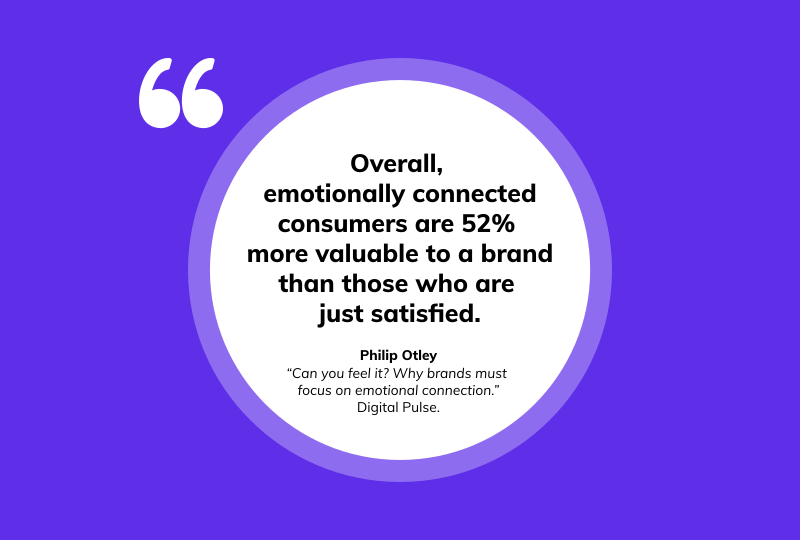\n- Otley, P. (2016, March 23). “Can you feel it? Why brands must focus on emotional connection”. [Digital Pulse](https://www.digitalpulse.pwc.com.au/branded-content-emotional-connection/).\n\n64% of consumers want brands to connect with them. But what does “connect” really mean? [According to Sprout Social](https://sproutsocial.com/insights/data/social-media-connection/#brands-must-listen-before-they-speak), 44% of consumers say they would feel more connected to brands if they create, participate in, or even host relevant conversations online.\n\n__It’s all about listening to what your audience truly wants and delivering it.__\n\nThis strategy is about tapping into what makes your audience tick, not just once but consistently. Find out what they care about, establish creative social conversations to engage them on an emotional level, and show them that you care about the same issues and causes.\n\nPutting aside our primitive needs, when creating social content, turn to Maslow’s Hierarchy of Needs. Above the basic needs of food, water and shelter, lie ego and social needs. Needs including belonging, inclusion, self-esteem, power, recognition and inclusion, can all be applied to your social strategies.\n\nPeople want to be part of something bigger than themselves, and this is your opportunity to deliver that. You need to create more than just a sprinkling of sporadic posts, but think of the bigger picture and how can your brand help support your audience and deliver on these needs.\n\n### Only focus on social platforms your audience is active on\n\nMany brands see a new platform pop up, and they gravitate towards it, creating a profile as quickly as possible. But here’s why you shouldn’t do that: firstly, you need to concentrate your resources strategically on platforms your audience is actively using. Secondly, rushing into any old platform could damage your brand. Before starting your social media strategy, it's crucial you choose the right platforms from the very beginning. Reaching out to reliable companies that can offer [best white label social media management services](https://www.designrush.com/agency/social-media-marketing/trends/best-white-label-social-media-management-services) is always a viable option before you start creating your plan.\n\nLet’s say you create a TikTok profile because it’s all the rage right now. However, you don’t really understand it or how it could work for your business because you’ve jumped in too quickly without assessing:\n\nA. Whether your audience is even on TikTok\nB. What kind of content will perform well for your brand.\n\nBy doing this, you’re just removing direction away from your mission of brand engagement.\n\nA quick social demographic overview: [26% of the UK TikTok audience](https://www.statista.com/statistics/1091438/tiktok-penetration-demographics-in-the-uk/) is aged 18-24, [33% of Instagram users](https://www.statista.com/statistics/325587/instagram-global-age-group/) are between the ages of 25-34, the 25-34 age bracket is also the most prominent [segment for Facebook users](https://www.statista.com/statistics/376128/facebook-global-user-age-distribution/).\n\nYou can use the above stats as a guide, but to truly understand which platform your audience is on, you can do two things: \n\n__Ask them what they’re using__: Survey your customers and find out which platform they prefer for which kind of content. \n__Check out the competition__: What platforms are they having success with? Use social listening tools such as Hootsuite or Buffer to keep tabs on their content performance.\n\nIf you know your audience is on Facebook, consider searching groups to understand your audience better. There are [1.8 billion people using Facebook groups](https://www.facebook.com/community/whats-new/facebook-communities-summit-keynote-recap/) — and there’s pretty much a group for any topic you can think of. \n\nAs a business, you can start a group of your own around your shared values with your audience to connect with them on that emotional level, without an ounce of sales or promotion talk. \n\nIt’s what consumers want. \n\n[23% of consumers](https://sproutsocial.com/insights/marketing-tips-facebook-groups/) want to see brands engaging in private community groups. This setting means you’re on neutral ground, bonding over a shared interest, indirectly building brand engagement.\n\n## How to Increase Brand Engagement on Social Media\n\nIt’s all well and good discussing how you should approach social media to influence brand engagement, but real-life examples can help you realize what is truly possible for your brand. \n\nWe’re focusing on three brands with three very different social platform strategies.\n\n### User-generated content with Cupshe\n\nSwimwear brand Cupshe has almost 1 million followers on Instagram. How? The team is smashing it with user-generated content. Their strategy plays into the hands of women who want recognition for their photos - tapping into Maslow’s need for inclusion, belonging, and recognition. \n\nThis strategy is reciprocal: the user gets their content seen by thousands of people and the brand gains exposure for their swimwear - without having to lift a finger.\n\n \nSource: [Cupshe Instagram](https://www.instagram.com/cupshe/?hl=en) \n\nIn their bio above, you can see Cupshe is actively encouraging users to share pictures using its handle and dedicated hashtag. By creating its own hashtag, the brand can easily keep track of brand mentions and [measure brand awareness](https://latana.com/post/brand-awareness-measure/).\n\n### Facebook Group marketing with National Geographic\n\nNational Geographic is an excellent example of a brand engaging its audience with shared values and shunning self-promotion. Its Facebook group, named “Women of Impact”, has over 70,000 members and “is a space for everyone who is invested in and passionate about women breaking barriers in their fields, changing their communities, and exploring the world.”\n\nThe brand has built a strong community and is dedicated to learning about the lives and work of women it believes deserve a spotlight. This brand engagement tactic is subtle and keeps National Geographic in the minds of its community members without forcing them to buy any products or services. In the meantime, they’re bonding over shared interests in remarkable women.\n\n\nSource: [Women of Impact Facebook Group](https://www.facebook.com/groups/natgeowomenofimpact)\n\n### Relevant Social Content with BooHoo\n\nUK clothing giant, BooHoo, is a great example of a brand engaging its audience with the right kind of content. Their content is fun and always relatable. They pick up on trends quickly and keep their tone conversational. \n\nIn January, it was reported that the popular TV show Bridgerton (designed for Gen Z and millennial audiences) was rated the most-watched original Netflix series ever, pulling in 82 million households. As soon as news broke that series two was being filmed, BooHoo jumped straight on the news, eager to share it with its social audience.\n\nThe tweet (below) garnered over 3,000 likes and more than 400 retweets. That short, six-word phrase generated a lot of exposure for the brand. It shows communicating with your audience can be effortless when you know them well.\n\n\nSource: [BooHoo Twitter](https://twitter.com/boohoo/status/1371524572131033093)\n\n## Final Thoughts\n\nHopefully, you’re leaving this post feeling inspired to rejig your social media approach. Social media directly influences brand engagement, and to treat it as a way of broadcasting company updates and new products only is a waste of your resources.\n\nSo remember:\n\n- It’s not about you; it’s about your customers. Don’t approach social media solely to sell\n- Focus on building a social community around shared values\n- Create authentic content experiences for your audience, get them involved in your content\n- Try your hand at [conversational marketing](https://latana.com/post/benefits-of-conversational-marketing/) to connect with consumers\n- Ditch the social platforms your customers aren’t actively using\n- Stay on top of trends and news that your audience cares about and incorporate them into your social strategy"},"tags":["Brand Marketing"],"authorRef":{"slug":"maddie-duke","firstName":"Maddie","lastName":"Duke","title":"Freelance Marketer","picture":{"__typename":"ContentfulAsset","id":"65901de7-355f-5f2e-9afc-385164b94bae","description":"","title":"Maddie Duke","file":{"contentType":"image/png","url":"//images.ctfassets.net/7so8go2zrvbw/1qNUFRwb4TLmuiGH10JDui/9824682cacd443a03bc5e15e39fe2582/Author_Maddie.png","details":{"image":{"width":235,"height":235}}},"gatsbyImageData":{"images":{"sources":[{"srcSet":"//images.ctfassets.net/7so8go2zrvbw/1qNUFRwb4TLmuiGH10JDui/9824682cacd443a03bc5e15e39fe2582/Author_Maddie.png?w=235&h=235&q=95&fm=webp 235w","sizes":"100vw","type":"image/webp"}],"fallback":{"src":"//images.ctfassets.net/7so8go2zrvbw/1qNUFRwb4TLmuiGH10JDui/9824682cacd443a03bc5e15e39fe2582/Author_Maddie.png?w=235&h=235&q=95&fm=png","srcSet":"//images.ctfassets.net/7so8go2zrvbw/1qNUFRwb4TLmuiGH10JDui/9824682cacd443a03bc5e15e39fe2582/Author_Maddie.png?w=235&h=235&q=95&fm=png 235w","sizes":"100vw"}},"layout":"fullWidth","backgroundColor":"#080808","width":1,"height":1}}}}},{"node":{"publishDate":"2022-08-15T07:00+02:00","slug":"d2c-revolution-helped-grow-specialty-brands","author":"Elena Prokopets","title":"How The D2C Revolution Helped Grow Specialty Brands","seo":{"__typename":"ContentfulSeo","title":"How The D2C Revolution Helped Grow Specialty Brands","description":"The D2C industry has exploded over the last few years — but specialty brands seem to have found a winning formula. Find out why here.","noIndex":null,"ogImage":{"fluid":{"src":"//images.ctfassets.net/7so8go2zrvbw/7rWiCYsPgpeJyMeFOpX6i3/94b9782e0f2bcdd7d922a6edd149bc2f/Blog_SEO-Thumbnail_1000X709_-_2022-08-08T165132.801.png?w=1200&h=675&q=90&fm=jpg"},"file":{"url":"//images.ctfassets.net/7so8go2zrvbw/7rWiCYsPgpeJyMeFOpX6i3/94b9782e0f2bcdd7d922a6edd149bc2f/Blog_SEO-Thumbnail_1000X709_-_2022-08-08T165132.801.png"}}},"heroImage":{"__typename":"ContentfulAsset","id":"64b4c4eb-e2fa-5513-a975-675d2ecd270a","description":"","title":"Illustration of a phone with icons and arrows flying under (thumbnail)","file":{"contentType":"image/png","url":"//images.ctfassets.net/7so8go2zrvbw/7rWiCYsPgpeJyMeFOpX6i3/94b9782e0f2bcdd7d922a6edd149bc2f/Blog_SEO-Thumbnail_1000X709_-_2022-08-08T165132.801.png","details":{"image":{"width":1000,"height":709}}},"gatsbyImageData":{"images":{"sources":[{"srcSet":"//images.ctfassets.net/7so8go2zrvbw/7rWiCYsPgpeJyMeFOpX6i3/94b9782e0f2bcdd7d922a6edd149bc2f/Blog_SEO-Thumbnail_1000X709_-_2022-08-08T165132.801.png?w=200&h=142&q=95&fm=webp 200w,\n//images.ctfassets.net/7so8go2zrvbw/7rWiCYsPgpeJyMeFOpX6i3/94b9782e0f2bcdd7d922a6edd149bc2f/Blog_SEO-Thumbnail_1000X709_-_2022-08-08T165132.801.png?w=400&h=284&q=95&fm=webp 400w,\n//images.ctfassets.net/7so8go2zrvbw/7rWiCYsPgpeJyMeFOpX6i3/94b9782e0f2bcdd7d922a6edd149bc2f/Blog_SEO-Thumbnail_1000X709_-_2022-08-08T165132.801.png?w=800&h=567&q=95&fm=webp 800w","sizes":"(min-width: 800px) 800px, 100vw","type":"image/webp"}],"fallback":{"src":"//images.ctfassets.net/7so8go2zrvbw/7rWiCYsPgpeJyMeFOpX6i3/94b9782e0f2bcdd7d922a6edd149bc2f/Blog_SEO-Thumbnail_1000X709_-_2022-08-08T165132.801.png?w=800&h=567&q=95&fm=png","srcSet":"//images.ctfassets.net/7so8go2zrvbw/7rWiCYsPgpeJyMeFOpX6i3/94b9782e0f2bcdd7d922a6edd149bc2f/Blog_SEO-Thumbnail_1000X709_-_2022-08-08T165132.801.png?w=200&h=142&q=95&fm=png 200w,\n//images.ctfassets.net/7so8go2zrvbw/7rWiCYsPgpeJyMeFOpX6i3/94b9782e0f2bcdd7d922a6edd149bc2f/Blog_SEO-Thumbnail_1000X709_-_2022-08-08T165132.801.png?w=400&h=284&q=95&fm=png 400w,\n//images.ctfassets.net/7so8go2zrvbw/7rWiCYsPgpeJyMeFOpX6i3/94b9782e0f2bcdd7d922a6edd149bc2f/Blog_SEO-Thumbnail_1000X709_-_2022-08-08T165132.801.png?w=800&h=567&q=95&fm=png 800w","sizes":"(min-width: 800px) 800px, 100vw"}},"layout":"constrained","backgroundColor":"#080818","width":800,"height":567}},"coverImage":{"__typename":"ContentfulAsset","id":"52c49b76-724b-5115-8414-50b3a43ba694","description":"","title":"Illustration of a phone with icons and arrows flying under (cover image)","file":{"contentType":"image/png","url":"//images.ctfassets.net/7so8go2zrvbw/1AM5Tmur7Zf7OMKpPzgfF4/89fd25d2868ab32fb7f559bb72505abc/Blog_Cover_1288X400_-_2022-08-08T165135.335.png","details":{"image":{"width":1288,"height":400}}},"gatsbyImageData":{"images":{"sources":[{"srcSet":"//images.ctfassets.net/7so8go2zrvbw/1AM5Tmur7Zf7OMKpPzgfF4/89fd25d2868ab32fb7f559bb72505abc/Blog_Cover_1288X400_-_2022-08-08T165135.335.png?w=750&h=233&q=95&fm=webp 750w,\n//images.ctfassets.net/7so8go2zrvbw/1AM5Tmur7Zf7OMKpPzgfF4/89fd25d2868ab32fb7f559bb72505abc/Blog_Cover_1288X400_-_2022-08-08T165135.335.png?w=1080&h=335&q=95&fm=webp 1080w,\n//images.ctfassets.net/7so8go2zrvbw/1AM5Tmur7Zf7OMKpPzgfF4/89fd25d2868ab32fb7f559bb72505abc/Blog_Cover_1288X400_-_2022-08-08T165135.335.png?w=1288&h=400&q=95&fm=webp 1288w","sizes":"100vw","type":"image/webp"}],"fallback":{"src":"//images.ctfassets.net/7so8go2zrvbw/1AM5Tmur7Zf7OMKpPzgfF4/89fd25d2868ab32fb7f559bb72505abc/Blog_Cover_1288X400_-_2022-08-08T165135.335.png?w=1288&h=400&q=95&fm=png","srcSet":"//images.ctfassets.net/7so8go2zrvbw/1AM5Tmur7Zf7OMKpPzgfF4/89fd25d2868ab32fb7f559bb72505abc/Blog_Cover_1288X400_-_2022-08-08T165135.335.png?w=750&h=233&q=95&fm=png 750w,\n//images.ctfassets.net/7so8go2zrvbw/1AM5Tmur7Zf7OMKpPzgfF4/89fd25d2868ab32fb7f559bb72505abc/Blog_Cover_1288X400_-_2022-08-08T165135.335.png?w=1080&h=335&q=95&fm=png 1080w,\n//images.ctfassets.net/7so8go2zrvbw/1AM5Tmur7Zf7OMKpPzgfF4/89fd25d2868ab32fb7f559bb72505abc/Blog_Cover_1288X400_-_2022-08-08T165135.335.png?w=1288&h=400&q=95&fm=png 1288w","sizes":"100vw"}},"layout":"fullWidth","backgroundColor":"#080828","width":1,"height":0.3105590062111801}},"description":{"description":"The D2C industry has exploded over the last few years — but specialty brands seem to have found a winning formula. Find out why here."},"content":{"content":"D2C, short for direct-to-consumer, is a retail segment that’s been thriving since the mid-2010s. eCommerce platforms like Shopify and BigCommerce commoditized access to the tech needed to set up, stock, and manage an online store. \n\nThe manufacturing industry, in turn, lowered the minimum order quantity (MOQ) bar and became more receptive to on-demand production. These two operational factors made it easier than ever before to launch small specialty D2C brands.\n\nToday, over [22,000 D2C fashion brands operate in the US alone](https://julienfontaine.com/wp-content/uploads/2019/12/pipecandy-dtc-public-version.pdf). Among them, [17 D2C companies are “unicorns”](https://www.cbinsights.com/research-unicorn-companies) with a valuation of $1 billion or above. \n\nThis article will explain how the D2C market evolved over time, as well as what it takes to grow a new, specialty brand in 2022. \n\n## D2C Space (R)evolution: From From Unicorns to New-Gen Specialty Brands\n\nD2C brands like Warby Parker, [Nest Bedding](https://latana.com/post/how-nest-bedding-built-a-competitive-brand/), Casper, Harry’s, and [Glossier](https://latana.com/post/glossier-deep-dive/) launched the D2C movement. Each of them hit billion-dollar valuations (and IPO-ed) in a short span, thanks to a mix of strategy and serendipity. \n\nBen Lehrer, a Managing Partner at venture firm Lerer Hippeau, [described the early days of the D2C as an environment](https://hbr.org/2020/03/reinventing-the-direct-to-consumer-business-model):\n\n*“It wasn’t too hard to succeed as a smart person with a mediocre product in a big, sleepy TAM (total addressable market).”*\n\nAnd in the early 2010s “sleepy” TAMs were plentiful. Larger players like P&G, Nestlé, and PepsiCo, took the most space in retail chains with larger merchants — while smaller businesses mostly created local competition. Though social media was rapidly coming of age, traditional players saw networks as an opportunity to increase [brand awareness](https://latana.com/topics-brand-awareness/), rather than sell products. \n\nThat proved to be an oversight. In 2013, [Nielsen reported](https://www.marketingcharts.com/brand-related-56444) that consumers mostly discovered new brands and products via:\n\n- 68% – Internet \n- 61% – TV advertising\n- 53% – friends and family \n- 43% – in retail stores \n- 36% – social networking websites \n\nTraditional brands dominated [TV](https://latana.com/guides/a-guide-to-tv-advertising-in-2021/) and [OOH advertising](https://latana.com/post/out-of-home-advertising/), but largely lagged behind in terms of digital marketing.\n\nD2C entrepreneurs chose cheaper digital acquisition channels, and successes soon followed. \n\n- Harry’s, one of the first D2C subscription razor brands, [secured over 100,000 potential customers in a week](https://www.cbinsights.com/research/direct-to-consumer-retail-strategies/#harry2) by doing a pre-launch sponsorship campaign on Tim Ferriss' blog.\n\n- [Dollar Shave Club](https://latana.com/post/dollar-shave-club-marketing/) made a $4,500 YouTube promo video that went supernova-viral in 72 hours and led to tons of orders. \n\n- [Glossier](https://latana.com/brand-insights/brand-bites-glossier/) was built on the base of the “Into the Gloss” blog of founder Emily Weiss, pulling over 1.5M unique views every month. It then helped her product line [grow its revenue by 600% year-on-year](https://www.cbinsights.com/research/direct-to-consumer-retail-strategies/#glossier1).\n\nIn other words: early D2C brands excelled in locating, nurturing, and converting online audiences into customers and, oftentimes, into long-term brand fans. \n\n---\n\nThe timing was also on the D2C side, as people were growing more comfortable buying products online.\n\n- __2014:__ global eCommerce sales were a “modest” [$1.33 trillion](https://www.statista.com/statistics/379046/worldwide-retail-e-commerce-sales/).\n\n- __2018:__ global online retail market almost tripled to $2.9 trillion. \n\n- __2022:__ the US eCommerce sales volume alone is set to cross the [$1 trillion mark](https://www.insiderintelligence.com/newsroom/index.php/us-ecommerce-will-cross-1-trillion-in-2022/).\n\nIn the mid-2010s, consumers also switched their attention from TV ads and retail shelves to social media recommendations. \n\nAccording to [a 2017 US consumer survey](https://martech.org/survey-consumers-seeking-buy-directly-brands-vs-retailers/), social media ads (51%) and search engine ads (47%) prompted more people to visit a brand’s website than recommendations from friends (38%) or TV/radio ads (35%). \n\nD2C startups, in turn, got even better at running paid ad campaigns for customer acquisition, as evidenced in numerous Google case studies from that period. \n\nIn short, D2C brands won over customers with:\n\n- Uncanny, transparent, and novel product offerings, paired with minimalistic, fresh branding (which sometimes bordered on \"blanding\", however). \n\n- Publicly active, amicable founders and stellar [brand storytelling](https://latana.com/post/data-driven-brand-storytelling/) put D2C in direct contrast with “faceless” retail corporations. \n\n- Referral marketing, personalization, and investment in customer experience (CX). Every D2C promised to make shopping for mattresses/razors/suitcases a “better experience”. \n\nIn summation, a digital-focused customer acquisition machine was bringing early D2C players oodles of new customers at a relatively low cost. \n\n---\n\nHowever, customer retention proved to be a weak spot for D2C players. By design, this business model limits your product distribution capabilities to “owned” online channels — your website, social media accounts, or mobile apps. \n\nIn contrast, regular B2C brands benefit from wholesale distribution to retail chains, malls, and multi-brand online marketplaces. \n\nAs Neil Blumenthal, CEO of Warby Parker, noted in [an interview with *The New York Times*](https://www.nytimes.com/2020/01/23/business/Billion-Dollar-Brands.html): \n\n*“It’s never been cheaper to start a business, although I think it’s never been harder to scale a business.” *\n\nYet for several glorious years, D2C brands continued to grow by cheaply acquiring more and more new customers across markets with the help of investor cash. \n\nHowever, the tide shifted around 2018. Under investors’ pressure, D2C startups had to double down on customer acquisition. Feeling threatened by competition, retailers upped their ad spending, too. \n\nSince 2014, [average CAC increased by 60%](https://www.profitwell.com/recur/all/how-is-cac-changing-over-time) on average for B2B and B2C companies — much due to a rise in paid costs across platforms.\n\nIn 2021, [Business Insider reported](https://www.businessinsider.com/facebook-google-amazon-advertising-break-down-ad-prices-2021-7) that in one year:\n\n- Facebook ad costs increased by 89% \n- Google and YouTube ad prices jumped by 108% \n- TikTok ad costs went up by 92% \n\n…and that happened just after an “unprecedented year” of soaring shipping costs, ongoing supply chain disruptions, and calamities in consumer spending. \n\nCombined, these factors made a dent in mature D2C startups’ ambition, which in turn led to a “sobering” phase in the D2C space. \n\nMattress brand Casper had a lackluster IPO at the beginning of 2020, where it was valued at $600,000 lower than during the previous funding round. Furniture brand [Wayfair reported a $78 million loss](https://www.cnbc.com/2022/03/14/the-direct-to-consumer-craze-is-slamming-into-reality.html) in the third quarter of 2021 after generating $173 million in net income in 2020. And the list goes on — many more D2C companies have shown less than stellar performance figures. \n\n## The New Era of D2C: Specialty Commerce and RetailTech Brands \n\n\nSource: [Pexels](https://www.pexels.com/photo/person-holding-black-iphone-5-5076511/)\n\nTo be fair, the D2C business model comes with unique challenges, such as:\n\n- Low-profit margins \n- Rising customer acquisition costs \n- Limited retail distribution capabilities \n\nThus, many D2C players had to turn to new channels and reinvested funds in customer retention after exhausting \"easy\" ad-based customer acquisition.\n\nSince 2018, a host of D2C startups have opened physical retail locations (once deemed ineffective) and signed wholesale distribution deals with bigger retail chains and online marketplaces to expand their reach. \n\nBut the above decisions raised a valid question among consumers and investors alike: Are D2C brands really just regular retail brands? \n\nIn [a Retail Media article](https://www.retaildive.com/news/the-decade-of-vc-funding-that-shaped-e-commerce-and-dtc-brands/587134/), Carle Stenmark, a partner at VMG Partners, explained that: \n\n*“There are some definitely real, legitimate arguments for (D2C startups) to be valued in a different way than a traditional consumer company if they’re actually providing unique personalization through the data that they are capturing, and thus delivering a better consumer experience. *\n\n*“But if they’re using direct to consumer just as a distribution channel, which I think a lot was, then all of a sudden they’re just way overvalued because they’re not going to ultimately trade any differently than any other consumer brand.”*\n\nThe good news? Booming online retail markets have room for everyone. Yet, we’ll likely see more proliferation and distinctions in the D2C space in the coming years. \n\nBigger consumer brands will continue to embrace D2C as a new distribution channel as companies like P&G, Nike, and [Crocs](https://latana.com/brand-insights/brand-bites-crocs/), among others, already do. The first gen of well-funded D2C startups will be morphing into something closer to retail brands. \n\nAs Suzy Davidkhanian, an eMarketer principal analyst, [notes](https://www.insiderintelligence.com/content/shifting-strategies-large-brands-move-toward-d2c-while-digital-natives-pivot-wholesale): \n\n*“Well-known brands are looking to cut back on wholesale to increase their margins, provide more control over distribution, and create an element of exclusivity. Meanwhile, digitally native D2C brands need to go wholesale to get more eyeballs on their product”.*\n\nAt the same time, we’ll also get to see the “second generation” of D2C startups who are leaning more on technology to offer truly unique shopping and brand experiences — like [Peloton](https://latana.com/post/peloton-deep-dive/) or [Hims and Hers](https://latana.com/post/hims-deep-dive/) do. \n\nSeparately, more specialty brands will continue to emerge in the D2C space. Smaller, niche companies with a limited product range and strong customer audience rapport such as [Huel](https://latana.com/post/huel-deep-dive/) or [Just Spices](https://latana.com/post/brand-deep-dive-just-spices/). The latter category, in fact, already seems to dominate the US D2C space, where 75% of brands generate less than $1 million in online sales.\n\nNew entrepreneurs will enter the eCommerce space as entry barriers remain low and sales channels multiply. Hopefully, the newer generation will not chase sensational growth but rather play the [long game of brand building](https://latana.com/post/overcome-challenges-brand-building/).\n\n## Starting a Specialty D2C Brand in 2022: 3 Brand Growth Tips \n\nAfter 2020, new audiences — Boomers and Millennials — flocked online, eager to experience the wonders of online shopping and digital-only brands. \n\nRespectively, [consumer goods companies saw 70% growth](https://www.ey.com/en_gl/consumer-products-retail/how-to-accelerate-online-direct-to-consumer-strategies-beyond-covid-19) coming from D2C sales online and [almost double the traffic](https://www.emarketer.com/content/direct-to-consumer-brands-2019) in the last two years. Although marketing a D2C brand today is harder than ten years ago, there are still many underserved customer segments to activate and engage. \n\nBelow are our top three tips for that. \n\n### 1. Look for Alternative Advertising Channels \n\nPaid ads were game-changing for early D2C players. But growing ad costs and banner blindness among consumers warrant more creative brand marketing. \n\nExplore slower, but more sustainable ways to acquire your target audiences — such as cultivating niche communities rather than building a massive social media following. \n\nThat's what successful specialty brands now do. Nadya Okamoto of period care brand August started [building a community well ahead of the brand launch](https://www.fastcompany.com/90718217/august-sustainable-period-care). On her TikTok, Nadya began to discuss an array of topics around menstruation, body issues, and women's health. In several months, her account grew to 3.4 million followers, providing her with a free advertising channel for her brand. \n\nYet, August’s true community of buyers and brand fans is on the Geneva app (a Slack-like social app) where some 2,000 members chat about all sorts of bodily issues, support one another through harder days, and share their experiences with August products. \n\nGefen Skolnick, founder of Couplet Coffee chose an even more creative D2C marketing strategy. She focused on carving our Couplet’s own niche in LA’s LGBTQ+ community through hosting queer art shows and poetry nights and is yet to spend a dollar on paid marketing. \n\nFreedom has never tasted so good https://t.co/24dLUF38mY
— Aldi Stores UK (@AldiUK) February 2, 2022
\n\n__The Takeaway:__ There are a lot of promising channels for connecting with your target audiences if you’re willing to dig a little — from private chatting apps and newsletters to Discord, Clubhouse, or even in-person events. \n\nOur tip? Figure out what your most promising primary and secondary audiences are with [brand monitoring software](https://latana.com/product/) like Latana, then create a “space” for connecting with them. \n\n### 2. Curate Product Choices \n\nThough most of us are eager to discover new products, we’re also feeling overloaded with choices.\n\nA [2022 study](https://journals.sagepub.com/doi/10.1177/1069031X211073821) found that 48% of US consumers reported an overabundance of options in soft drink choices. At the same time, [51% of European consumers said they were seeking curated experiences](https://www.thinkwithgoogle.com/intl/en-gb/consumer-insights/consumer-journey/retail-product-curation-choice/#:~:text=Curation%3A%20The%20value%20of%20personalised%20recommendations&text=This%20has%20increased%20in%20popularity,experiences%20tailored%20to%20their%20taste.) tailored to their tastes. \n\nD2C brands need to not only spark consumers' interest in mere seconds but also persuade them to actually consider using their products. To promote [brand consideration](https://latana.com/post/brand-consideration-preference-center-of-brand-funnel/), you should curate your product choices and communicate their value clearly.\n\nCosmetics brand Rowse handles product curation with skincare quizzes — an interactive way to help customers discover the best products for them. Rowse also smartly bundles up individual products into “Routines”, which increase order value and enable consumers to get a better taste of their brand. \n\nCare/Of, a D2C vitamin brand, also uses a combo of quizzes and analytical algorithms to recommend the best vitamin bundle for users. Some [5 million shoppers have taken its core quiz since 2016](https://www.glossy.co/beauty/care-of-expands-into-the-booming-beauty-ingestibles-category). Because the strategy worked, Care/Of also made new quizzes for subsequent product launches like beauty ingestibles. In 2020, Bayer acquired a majority stake in the company primarily because of its unique customer data collection process and robust distribution capabilities. \n\n__The Takeaway:__ With fewer differences between attractive product options and more information available about them, making a selection becomes more difficult for shoppers. Customers may feel overwhelmed by choice if they’re unfamiliar with the products in the assortment.\n\nCreate engaging mechanisms for product discovery and recommendations using quizzes, personalized in-take forms, or in-person recommendations to improve your conversion rates. \n\n### 3. Collaborate with Other Specialty Brands \n\nHigh customer acquisition cost is the biggest barrier to growth for new specialty brands. Split the costs with other emerging players to cross-promote one another.\n\nTo amplify its reach during its launch, furniture brand Feather teamed up with a food subscription box Daily Harvest. The first 100 customers to rent its furniture in the summer received a complimentary Daily Harvest box. Both startups benefited from extra brand exposure for a low cost. \n\nKinfield cosmetics brand staged a bigger collaboration last November with some 50 BIPOC-led D2C brands. Jointly, they cross-promoted each other on social media and shared a universal discount code. One of the participating brands, Curie, [saw a 1,000% increase in sales](https://www.glossy.co/beauty/dtc-beauty-brands-double-down-on-cross-category-collabs/) a week after the campaign went live. \n\nGravity, a weighted blanket brand, has been a long-time proponent of collaborations. The company now [draws 20% of its revenue from co-branding](https://www.modernretail.co/startups/partnerships-now-make-up-nearly-20-of-weighted-blanket-brand-gravitys-revenue/) and partnership deals. \n\nAt the same time, D2C brands can broaden their reach with retail and wholesale partnerships, which are also growing in frequency. Cued by consumer demand, “legacy” players are eagerly adding specialty brands to their range. For instance, D2C underwear startup Parade accessed new audiences thanks to [a partnership with Urban Outfitters](https://www.modernretail.co/startups/how-dtc-startup-parade-is-moving-beyond-underwear-and-into-new-retail-channels/). Earlier, Parade also collaborated with Swarovski on a holiday-special product launch and floral designer Brittany Asch of Brrch Floral.\n\n
\n\nSpecialty brands can leverage retail as a discovery platform — and use wholesale as an alternative to setting up expensive brick & mortar locations. \n\n__The Takeaway:__ D2C brands can’t scale if they focus on just one marketing and sales channel. Diversify your reach by engaging other players in the retail space.\n\nThe key to [a successful co-branding partnership](https://latana.com/post/co-branding/) is selecting brands with similar core consumer bases, values, and sales goals. \n\n## Final Thoughts \n\nD2C went from virtually non-existent to a mass-market business model in the span of a decade. During this time, we saw break-neck growth alongside painful pivots and unmet customer expectations. \n\nLaunching a specialty brand today remains relatively easy. But scaling it — not as much. Consumers aren’t just looking for more products (pitched as ads). They want to discover unique, creative, ethical brands that align with their values. And if you get it wrong, you could end up like [former D2C darlings Made.com](https://latana.com/post/millennials-mourn-made-com-potential-closure/) or [Eve Sleep](https://latana.com/post/can-brand-positioning-save-eve-sleep/): in hot water.\n\nTo successfully grow a specialty brand in 2022 and beyond, prioritize your brand story over the number of SKUs on offer and conduct in-depth target audience research to better understand to whom, how, and where you should market your goodies. \n"},"tags":["Brand Marketing","Brand Strategy"],"authorRef":{"slug":"elena","firstName":"Elena","lastName":"Prokopets","title":"Freelance Writer & Content Strategist","picture":{"__typename":"ContentfulAsset","id":"3656f248-8cb2-5fce-8ae1-2ea977717e1f","description":"","title":"Elena Author Photo Framed","file":{"contentType":"image/png","url":"//images.ctfassets.net/7so8go2zrvbw/1rgsWp0ZBagiKqMSpw7MwV/0cb99f4e752141de6ac06e1e9990363f/Author_Elena.png","details":{"image":{"width":235,"height":235}}},"gatsbyImageData":{"images":{"sources":[{"srcSet":"//images.ctfassets.net/7so8go2zrvbw/1rgsWp0ZBagiKqMSpw7MwV/0cb99f4e752141de6ac06e1e9990363f/Author_Elena.png?w=235&h=235&q=95&fm=webp 235w","sizes":"100vw","type":"image/webp"}],"fallback":{"src":"//images.ctfassets.net/7so8go2zrvbw/1rgsWp0ZBagiKqMSpw7MwV/0cb99f4e752141de6ac06e1e9990363f/Author_Elena.png?w=235&h=235&q=95&fm=png","srcSet":"//images.ctfassets.net/7so8go2zrvbw/1rgsWp0ZBagiKqMSpw7MwV/0cb99f4e752141de6ac06e1e9990363f/Author_Elena.png?w=235&h=235&q=95&fm=png 235w","sizes":"100vw"}},"layout":"fullWidth","backgroundColor":"#080808","width":1,"height":1}}}}},{"node":{"publishDate":"2022-04-22T08:00+02:00","slug":"too-good-to-go-brand-deep-dive","author":"Ashley Lightfoot","title":"How Too Good To Go Fuses Profits And Purpose","seo":{"__typename":"ContentfulSeo","title":"How Too Good To Go Fuses Profits And Purpose","description":"Brands that put purpose over profit are becoming increasingly common but exactly how can they find the right balance? Find out in our Too Good To Go deep dive!","noIndex":null,"ogImage":{"fluid":{"src":"//images.ctfassets.net/7so8go2zrvbw/7tFIAsLtlnTeom2ba6i3oe/9bab18ba8b7941a7a067e204b27b5b27/Blog_SEO-Thumbnail_1000X709__24_.png?w=1200&h=675&q=90&fm=jpg"},"file":{"url":"//images.ctfassets.net/7so8go2zrvbw/7tFIAsLtlnTeom2ba6i3oe/9bab18ba8b7941a7a067e204b27b5b27/Blog_SEO-Thumbnail_1000X709__24_.png"}}},"heroImage":{"__typename":"ContentfulAsset","id":"ff8dd12d-569c-520a-a182-b210057be681","description":"","title":"Too Good To Go Brand Deep Dive Image","file":{"contentType":"image/png","url":"//images.ctfassets.net/7so8go2zrvbw/7tFIAsLtlnTeom2ba6i3oe/9bab18ba8b7941a7a067e204b27b5b27/Blog_SEO-Thumbnail_1000X709__24_.png","details":{"image":{"width":1000,"height":709}}},"gatsbyImageData":{"images":{"sources":[{"srcSet":"//images.ctfassets.net/7so8go2zrvbw/7tFIAsLtlnTeom2ba6i3oe/9bab18ba8b7941a7a067e204b27b5b27/Blog_SEO-Thumbnail_1000X709__24_.png?w=200&h=142&q=95&fm=webp 200w,\n//images.ctfassets.net/7so8go2zrvbw/7tFIAsLtlnTeom2ba6i3oe/9bab18ba8b7941a7a067e204b27b5b27/Blog_SEO-Thumbnail_1000X709__24_.png?w=400&h=284&q=95&fm=webp 400w,\n//images.ctfassets.net/7so8go2zrvbw/7tFIAsLtlnTeom2ba6i3oe/9bab18ba8b7941a7a067e204b27b5b27/Blog_SEO-Thumbnail_1000X709__24_.png?w=800&h=567&q=95&fm=webp 800w","sizes":"(min-width: 800px) 800px, 100vw","type":"image/webp"}],"fallback":{"src":"//images.ctfassets.net/7so8go2zrvbw/7tFIAsLtlnTeom2ba6i3oe/9bab18ba8b7941a7a067e204b27b5b27/Blog_SEO-Thumbnail_1000X709__24_.png?w=800&h=567&q=95&fm=png","srcSet":"//images.ctfassets.net/7so8go2zrvbw/7tFIAsLtlnTeom2ba6i3oe/9bab18ba8b7941a7a067e204b27b5b27/Blog_SEO-Thumbnail_1000X709__24_.png?w=200&h=142&q=95&fm=png 200w,\n//images.ctfassets.net/7so8go2zrvbw/7tFIAsLtlnTeom2ba6i3oe/9bab18ba8b7941a7a067e204b27b5b27/Blog_SEO-Thumbnail_1000X709__24_.png?w=400&h=284&q=95&fm=png 400w,\n//images.ctfassets.net/7so8go2zrvbw/7tFIAsLtlnTeom2ba6i3oe/9bab18ba8b7941a7a067e204b27b5b27/Blog_SEO-Thumbnail_1000X709__24_.png?w=800&h=567&q=95&fm=png 800w","sizes":"(min-width: 800px) 800px, 100vw"}},"layout":"constrained","backgroundColor":"#e8e8e8","width":800,"height":567}},"coverImage":{"__typename":"ContentfulAsset","id":"d2f92681-e710-5210-8e96-6ca428200625","description":"","title":"Too Good To Go Cover Image","file":{"contentType":"image/png","url":"//images.ctfassets.net/7so8go2zrvbw/5KQ9MqSollNrk0d5vhIUSw/8e7052fd3d6af7652611100db1caf011/Blog_Cover_1288X400__25_.png","details":{"image":{"width":1288,"height":400}}},"gatsbyImageData":{"images":{"sources":[{"srcSet":"//images.ctfassets.net/7so8go2zrvbw/5KQ9MqSollNrk0d5vhIUSw/8e7052fd3d6af7652611100db1caf011/Blog_Cover_1288X400__25_.png?w=750&h=233&q=95&fm=webp 750w,\n//images.ctfassets.net/7so8go2zrvbw/5KQ9MqSollNrk0d5vhIUSw/8e7052fd3d6af7652611100db1caf011/Blog_Cover_1288X400__25_.png?w=1080&h=335&q=95&fm=webp 1080w,\n//images.ctfassets.net/7so8go2zrvbw/5KQ9MqSollNrk0d5vhIUSw/8e7052fd3d6af7652611100db1caf011/Blog_Cover_1288X400__25_.png?w=1288&h=400&q=95&fm=webp 1288w","sizes":"100vw","type":"image/webp"}],"fallback":{"src":"//images.ctfassets.net/7so8go2zrvbw/5KQ9MqSollNrk0d5vhIUSw/8e7052fd3d6af7652611100db1caf011/Blog_Cover_1288X400__25_.png?w=1288&h=400&q=95&fm=png","srcSet":"//images.ctfassets.net/7so8go2zrvbw/5KQ9MqSollNrk0d5vhIUSw/8e7052fd3d6af7652611100db1caf011/Blog_Cover_1288X400__25_.png?w=750&h=233&q=95&fm=png 750w,\n//images.ctfassets.net/7so8go2zrvbw/5KQ9MqSollNrk0d5vhIUSw/8e7052fd3d6af7652611100db1caf011/Blog_Cover_1288X400__25_.png?w=1080&h=335&q=95&fm=png 1080w,\n//images.ctfassets.net/7so8go2zrvbw/5KQ9MqSollNrk0d5vhIUSw/8e7052fd3d6af7652611100db1caf011/Blog_Cover_1288X400__25_.png?w=1288&h=400&q=95&fm=png 1288w","sizes":"100vw"}},"layout":"fullWidth","backgroundColor":"#e8e8e8","width":1,"height":0.3105590062111801}},"description":{"description":"Brands that put purpose over profit are becoming increasingly common — but exactly how can businesses find the right balance? Find out in our Brand Deep Dive on Too Good To Go!"},"content":{"content":"More than ever, consumers have real concerns about the impact that their actions have on the environment. Spurred by the looming presence of the climate crisis, it’s unsurprising that more and more people are examining the various systems in our society that are not set up to last and trying to find solutions to make them sustainable. \n\nThese solutions don’t just take the form of government policies though, new ideas present exciting opportunities for new businesses and a host of new brands have risen up to meet consumers’ demand for sustainability.\n\nIn fashion, this has seen the rise of thrift and second-hand brands at the expense of so-called “fast fashion”. In the tourism sector, it’s resulted in new brands catering specifically for eco-friendly and sustainable holidays, and in the food and beverage industry meat-free and vegan alternatives to a vast array of traditional products have created more choices for consumers than ever before.\n\nToo Good To Go is a prime example of a new business and brand that has found a valuable gap in this emergent market. However, its place in the food and beverage industry is unique. Rather than producing its own products, Too Good To Go provides a useful service, linking up restaurants and businesses that have [food waste](https://latana.com/post/brands-need-to-care-food-waste/) with consumers hungry for discounted meals and ingredients that would otherwise just be thrown in the trash.\n\nLike many other new sustainably-minded brands that have filled gaps in the market, Too Good To Go fuses activism with business, putting its environmental cause at the heart of its brand identity.\n\nIn this Brand Deep Dive, we’re going to take a closer look at Too Good To Go’s origins, discover how they successfully built a brand that closely aligns with an environmental cause, and provide three important lessons you can take away from their story.\n\n## Waste Not, Want Not: Building a Brand Out Of Trash\n\nSource: [BP](https://www.bp.com/de_ch/switzerland/retail/bp-shop/too-good-to-go.html)\n\n[Too Good To Go was founded in 2015 ](https://zerowasteeurope.eu/wp-content/uploads/2020/01/zero_waste_europe_CS7_CP_TooGoodToGo_en.pdf)by Brian Christensen, Thomas Bjørn Momsen, Stian Olesen, Klaus Bagge Pedersen, and Adam Sigbrand in Copenhagen, Denmark. Created as a solution to the massive problem of food waste across the world, the founders' initial idea was to “focus on the food that became waste at the end of buffets”.\n\nHowever, they quickly realized that their approach needn’t be so narrow — a whole range of foodservice providers from restaurants and cafes to hotels and bakeries could be included in their new idea.\n\nAnd the idea was a simple one. One-third of all food produced ends up going to waste. We’re not talking exclusively about fresh produce going moldy on the shelf, but also meals prepped by restaurants, baked goods in bakeries, and breakfast foods from hotels. So many businesses that sell food throw a great deal of it away for a variety of reasons — so, why not connect those consumers concerned about food waste (and interested in discounted prices) with businesses looking to make a little extra revenue from their waste?\n\nLike all new ideas these days, Too Good To Go became an app, one that connected those businesses that signed up with consumers looking to save a perfectly good meal from ending up in the trash. In March 2016, the company saved its first meal — 15 months later, the Too Good To Go app [reached one million users](https://www.peterfisk.com/gamechanger/too-good-to-go/), and since then the company has helped to [save 129 million meals and counting](https://toogoodtogo.com/en-us/)!\n\nToo Good To Go is now the world’s largest B2C platform aimed at fighting food waste. It operates in 17 countries including the US, UK, Germany, and France — though coverage in each region is usually centered on large cities. Each day it saves 100,000 meals.\n\nBut the brand isn’t just focused on expanding its services and earning more revenue — it’s also a vocal proponent of the larger movement against food waste, advocating for policy changes, providing educational resources, and supporting charities like [Fare Share](https://fareshare.org.uk/) in the UK. \n\nAs a certified B Corp brand, Too Good To Go is part of a growing number of businesses that are putting profit on an equal footing to other considerations — such as sustainability — so that as a business it is transparent, accountable, and, ultimately, a force for good.\n\n\n\nEven a brand with a positive, eco-friendly purpose such as this one has not been without controversy though. In 2021, shortly after the brand’s launch in Philadelphia, an [opinion piece from a local news website](https://phillyplaindealer.com/2021/03/04/opinion-too-good-to-go-has-got-to-go-the-for-profit-app-threatens-the-literal-food-chain/) posited that, by diverting surplus food that might otherwise be sent to charities and selling it instead, the brand posed a threat to those in the city struggling with food insecurity. \n\nIn response, [some restaurant owners in the city](https://philly.eater.com/2021/4/12/22368600/too-good-to-go-philly-food-waste-mutual-aid) have argued that Too Good To Go allows them to offload incredibly small quantities of food that charities and community support groups do not have the infrastructure to collect.\n\nToo Good To Go has successfully found a valuable niche that ultimately benefits both the businesses it works with and offers useful services to its customers. But what can we learn from its story and the way it has built its brand? \n\n## What Can You Learn From Too Good To Go?\n\n### 1. Enfuse Your Brand With Purpose\n\nWhile many brands that have sprung up to meet the demands of sustainably-minded consumers have fused their cause and purpose into their brand identity, we shouldn’t assume this is the only option.\n\nIndeed, [Impossible Foods](https://latana.com/post/impossible-foods-deep-dive/) is a great example of one such brand that has chosen the alternative option of putting factors other than environmentalism at the heart of its messaging. So, while Too Good To Go could have built a brand identity around offering bargains to consumers and extra revenue to businesses, the team behind its brand consciously chose to lead with messages relating to the wider food-waste movement.\n\nEven if Too Good To Go was a company driven solely by profit — its certified B Corp status proves otherwise — this would be a wise decision. With around 70% of consumers eager to improve their environmental impact in 2022, consumers are hungry for solutions that can fit into their existing routines and buying habits that allow them to make these positive changes. \n\nSo, Too Good To Go’s heavy reliance on its purpose-driven plans and environmental goals is something that is likely to resonate with a large portion of consumers.\n\nThis is something that is present across the brand’s messaging. On Too Good To Go’s homepage, users are greeted with a bold opening statement — “Ready to fight food waste?” — while many of the website’s pages are devoted to facts and figures about the scale of food waste and what can be done to combat it.\n\nThe brand’s social media accounts also prioritize messages relating to the wider food waste cause rather than their core product offering. Its Instagram account, for example, is rich with tips and tricks that consumers can employ to cut their own food waste with much fewer posts about its core service.\n\n**The Takeaway:** Attaching your brand to something much bigger than your core product or services like a social movement or political cause can be a great way of capturing its energy and enthusiasm to help grow your business — while also making a positive impact on the world. \n\nBut be warned, you can’t fake it! Case in point, Pepsi, which tried to capitalize on increased political engagement following the election of Donald Trump in 2016. \n\n\n\nIts “Live For Now” campaign was widely criticized for attempting to capitalize on movements like Black Lives Matter without actively contributing or participating in them. The ad was pulled shortly after its release. \n\nSo, if you want to infuse your brand with purpose, make sure it’s sincere and back up your campaigns with real actions to avoid accusations of profiteering.\n\n\n\n### 2. Embrace Your Offering’s Shortcomings\n\nNo brand is perfect. But ultimately, those imperfections might just be what sets your brand apart from the competition. In some cases, there are great opportunities to embrace the shortcomings of your offering and turn it into something that makes your brand stand out. \n\nIn the case of Too Good To Go, the fact that the food on offer is not always consistently available could have been something that consumers saw as a major drawback. \n\nWith no guarantees as to the types of food products that will be leftover, every time a consumer makes an order with a restaurant or bakery through the Too Good To Go app, they’re rolling the dice. But Too Good To Go embraced this randomness and made it a core part of their offering — their “magic bags” which can include an assortment of leftover food items are not dissimilar to the phenomena of [“mystery boxes”](https://www.eccnederland.nl/en/news/mystery-box-box-full-surprises-or-disappointments#:~:text=A%20mystery%20box%20is%20a,remain%20a%20surprise%20until%20delivery.) and have been [embraced by consumers who love surprises](https://www.businessinsider.com/too-good-to-go-food-waste-app-cheap-meals-restaurants-2022-1). \n\nBy embracing the unpredictability of its offering, Too Good To Go has added an extra element to its brand experience — which is perfectly summed up in this [review from Wired](https://www.wired.com/story/too-good-to-go-app-food-waste/):\n\n_“that element of surprise is what makes it so exciting and fun. Sometimes you strike gold with an amazing value—like $3 for 10 bagels, many of which are still in my freezer waiting to be toasted up for breakfast.”_\n\n**The Takeaway:** You’ve probably heard the saying [“it’s not a bug, it’s a feature”](https://dancedric.com/blog/its-not-a-bug-its-a-feature-explained-what-does-it-mean/) — but in some cases, this can actually be true! Too Good To Go wouldn’t be the first brand to shift the perspective on an element of its offering that might be construed as a weakness.\n\nBuckley’s cough syrup has the famous tagline [“it tastes awful. And it works”](https://www.buckleys.ca/about-buckleys/award-winning-advertising/), while Czech automobile brand Skoda embraced the fact that it had [terrible brand associations with many consumers](https://www.youtube.com/watch?v=ZWTJ_TPraLQ).\n\nDon’t always assume that consumers will balk at your brand’s shortcomings, instead try to find a way to incorporate them into your brand’s identity and make them part of your USP.\n\n### 3. Keep Things Simple\n\nThe basic idea behind Too Good To Go’s service is a simple one — and this simplicity is something that has been carried over into the brand’s identity and its core service. Everything from the uncomplicated three-color logo to the app’s straightforward layout has been designed to create as little resistance to signing up and getting involved as possible.\n\nThis simplicity also helps keep the brand’s environmental cause visible — indeed, the fight to end food-waste acts as a through-line that gracefully connects all the brand’s messaging, its look and feel, and its core offering. This uncomplicated design has certainly been a factor in the rapid growth of Too Good To Go, which has been able to convince millions of people to sign up, download the app, and get involved.\n\n**The Takeaway:** When it comes to building a brand and speaking to consumers, [less is more](https://www.businessnewsdaily.com/8918-keep-online-ads-simple.html). By keeping things simple in your brand’s messaging, you leave room for a single message to resonate time and time again. \n\nIf your brand is a new player in an emergent market, the need to keep things straightforward becomes even more important. Don’t alienate your target audience with different messaging and selling points or convoluted ways to sign up and get involved. Find a simple message that communicates who you are and what you do and stick with that.\n\n## Final Thoughts\n\nToo Good To Go represents an increasingly common approach to business where the founding principles and goals are not overwhelmingly focused on profit. The growth of activist brands is moving in step with consumers’ concerns over a myriad of environmental and social issues — and, in turn, all brands are beginning to feel increasing pressure to demonstrate how they’re contributing to positive change.\n\nJust consider environmental activist brand [Patagonia](https://latana.com/post/patagonia-deep-dive/) or second-hand electronics platform [Refurbed](https://latana.com/post/refurbed-deep-dive/) — there are plenty of ways that modern brands are adhering to their values. \n\nWhether you’re an established brand or a new one with an environmental mission at the heart of your business, with Latana’s [brand monitoring software](https://latana.com/product/) you can track how consumers perceive your brand and identify the gaps in your messaging that might be leading to low awareness or a build-up of negative associations."},"tags":["Brand Deep Dives"],"authorRef":{"slug":"ashley-lightfoot","firstName":"Ashley","lastName":"Lightfoot","title":"Content Marketing Manager","picture":{"__typename":"ContentfulAsset","id":"1b1d3438-966f-59a7-a012-e0110ae96e36","description":"","title":"Ashley Lightfoot Photo","file":{"contentType":"image/png","url":"//images.ctfassets.net/7so8go2zrvbw/4O1r95Q8NMW84P7HtTzRxS/0dc53d7d762d5142d357e1ab71db8dc6/Author_Ashley.png","details":{"image":{"width":235,"height":235}}},"gatsbyImageData":{"images":{"sources":[{"srcSet":"//images.ctfassets.net/7so8go2zrvbw/4O1r95Q8NMW84P7HtTzRxS/0dc53d7d762d5142d357e1ab71db8dc6/Author_Ashley.png?w=235&h=235&q=95&fm=webp 235w","sizes":"100vw","type":"image/webp"}],"fallback":{"src":"//images.ctfassets.net/7so8go2zrvbw/4O1r95Q8NMW84P7HtTzRxS/0dc53d7d762d5142d357e1ab71db8dc6/Author_Ashley.png?w=235&h=235&q=95&fm=png","srcSet":"//images.ctfassets.net/7so8go2zrvbw/4O1r95Q8NMW84P7HtTzRxS/0dc53d7d762d5142d357e1ab71db8dc6/Author_Ashley.png?w=235&h=235&q=95&fm=png 235w","sizes":"100vw"}},"layout":"fullWidth","backgroundColor":"#080808","width":1,"height":1}}}}},{"node":{"publishDate":"2022-11-01T07:00+02:00","slug":"refurbed-deep-dive","author":"Elena Prokopets","title":"How Refurbed Became Europe’s Fastest-Growing CleanTech Startup ","seo":{"__typename":"ContentfulSeo","title":"How Refurbed Became Europe’s Fastest-Growing Startup","description":"Learn how Refurbed took second-hand electronics mainstream to become Europe's fastest-growing CleanTech Startup and flag-bearers for the circular economy.","noIndex":null,"ogImage":{"fluid":{"src":"//images.ctfassets.net/7so8go2zrvbw/14RjbsicCTThmo9QrCnf3a/279535851fc2855b104afa3c0fc737cb/Blog_SEO-Thumbnail_1000X709__4_.png?w=1200&h=675&q=90&fm=jpg"},"file":{"url":"//images.ctfassets.net/7so8go2zrvbw/14RjbsicCTThmo9QrCnf3a/279535851fc2855b104afa3c0fc737cb/Blog_SEO-Thumbnail_1000X709__4_.png"}}},"heroImage":{"__typename":"ContentfulAsset","id":"0c2c7b59-b024-52a2-a8e1-25daa6b91b86","description":"","title":"Refurbed Deep Dive Thumbnail Image","file":{"contentType":"image/png","url":"//images.ctfassets.net/7so8go2zrvbw/14RjbsicCTThmo9QrCnf3a/279535851fc2855b104afa3c0fc737cb/Blog_SEO-Thumbnail_1000X709__4_.png","details":{"image":{"width":1000,"height":709}}},"gatsbyImageData":{"images":{"sources":[{"srcSet":"//images.ctfassets.net/7so8go2zrvbw/14RjbsicCTThmo9QrCnf3a/279535851fc2855b104afa3c0fc737cb/Blog_SEO-Thumbnail_1000X709__4_.png?w=200&h=142&q=95&fm=webp 200w,\n//images.ctfassets.net/7so8go2zrvbw/14RjbsicCTThmo9QrCnf3a/279535851fc2855b104afa3c0fc737cb/Blog_SEO-Thumbnail_1000X709__4_.png?w=400&h=284&q=95&fm=webp 400w,\n//images.ctfassets.net/7so8go2zrvbw/14RjbsicCTThmo9QrCnf3a/279535851fc2855b104afa3c0fc737cb/Blog_SEO-Thumbnail_1000X709__4_.png?w=800&h=567&q=95&fm=webp 800w","sizes":"(min-width: 800px) 800px, 100vw","type":"image/webp"}],"fallback":{"src":"//images.ctfassets.net/7so8go2zrvbw/14RjbsicCTThmo9QrCnf3a/279535851fc2855b104afa3c0fc737cb/Blog_SEO-Thumbnail_1000X709__4_.png?w=800&h=567&q=95&fm=png","srcSet":"//images.ctfassets.net/7so8go2zrvbw/14RjbsicCTThmo9QrCnf3a/279535851fc2855b104afa3c0fc737cb/Blog_SEO-Thumbnail_1000X709__4_.png?w=200&h=142&q=95&fm=png 200w,\n//images.ctfassets.net/7so8go2zrvbw/14RjbsicCTThmo9QrCnf3a/279535851fc2855b104afa3c0fc737cb/Blog_SEO-Thumbnail_1000X709__4_.png?w=400&h=284&q=95&fm=png 400w,\n//images.ctfassets.net/7so8go2zrvbw/14RjbsicCTThmo9QrCnf3a/279535851fc2855b104afa3c0fc737cb/Blog_SEO-Thumbnail_1000X709__4_.png?w=800&h=567&q=95&fm=png 800w","sizes":"(min-width: 800px) 800px, 100vw"}},"layout":"constrained","backgroundColor":"#c8c8d8","width":800,"height":567}},"coverImage":{"__typename":"ContentfulAsset","id":"a57f0acf-b516-534f-88a8-0b750fd6c78e","description":"","title":"Refurbed Cover Image","file":{"contentType":"image/png","url":"//images.ctfassets.net/7so8go2zrvbw/5EFGZmyHjNbhtpv0Z5Cteg/79c01396016a7611e74e533509e946b7/Blog_Cover_1288X400__5_.png","details":{"image":{"width":1288,"height":400}}},"gatsbyImageData":{"images":{"sources":[{"srcSet":"//images.ctfassets.net/7so8go2zrvbw/5EFGZmyHjNbhtpv0Z5Cteg/79c01396016a7611e74e533509e946b7/Blog_Cover_1288X400__5_.png?w=750&h=233&q=95&fm=webp 750w,\n//images.ctfassets.net/7so8go2zrvbw/5EFGZmyHjNbhtpv0Z5Cteg/79c01396016a7611e74e533509e946b7/Blog_Cover_1288X400__5_.png?w=1080&h=335&q=95&fm=webp 1080w,\n//images.ctfassets.net/7so8go2zrvbw/5EFGZmyHjNbhtpv0Z5Cteg/79c01396016a7611e74e533509e946b7/Blog_Cover_1288X400__5_.png?w=1288&h=400&q=95&fm=webp 1288w","sizes":"100vw","type":"image/webp"}],"fallback":{"src":"//images.ctfassets.net/7so8go2zrvbw/5EFGZmyHjNbhtpv0Z5Cteg/79c01396016a7611e74e533509e946b7/Blog_Cover_1288X400__5_.png?w=1288&h=400&q=95&fm=png","srcSet":"//images.ctfassets.net/7so8go2zrvbw/5EFGZmyHjNbhtpv0Z5Cteg/79c01396016a7611e74e533509e946b7/Blog_Cover_1288X400__5_.png?w=750&h=233&q=95&fm=png 750w,\n//images.ctfassets.net/7so8go2zrvbw/5EFGZmyHjNbhtpv0Z5Cteg/79c01396016a7611e74e533509e946b7/Blog_Cover_1288X400__5_.png?w=1080&h=335&q=95&fm=png 1080w,\n//images.ctfassets.net/7so8go2zrvbw/5EFGZmyHjNbhtpv0Z5Cteg/79c01396016a7611e74e533509e946b7/Blog_Cover_1288X400__5_.png?w=1288&h=400&q=95&fm=png 1288w","sizes":"100vw"}},"layout":"fullWidth","backgroundColor":"#c8c8d8","width":1,"height":0.3105590062111801}},"description":{"description":"Learn how Refurbed took second-hand electronics mainstream to become Europe's fastest-growing CleanTech Startup and flag-bearers for the circular economy."},"content":{"content":"Did you know that tech-obsessed humans generate over [40 million](https://www.theworldcounts.com/stories/electronic-waste-facts) tons of electronic waste every year? What’s worse is that e-waste comprises 70% of the global toxic total waste. This complicates traditional recycling. \n\nBut as an old adage goes: One man’s trash is another man’s treasure. Or better yet — an idea for a new venture as it appears to be with Refurbed.\n\nThe five-year startup, backed by the likes of angel investor Michael Altrichter and VC firms like Evli Growth Partners and Almaz Capital, wants to become a European “Amazon” for refurbished electronics. \n\nThat’s an ambitious goal. Consumer perception of second-hand products has always been ambiguous. When the startup was founded in 2017, [69% of surveyed consumers](https://resource-recycling.com/e-scrap/2017/12/07/survey-hints-attitudes-toward-refurbished-phones/) said they wouldn’t be buying a pre-owned phone even with warranties and insurance included.\n\nYet, despite the initially low intention to purchase pre-owned goods, Refurbed managed to scale to over [815,000 customers](https://docs.google.com/presentation/d/14YNchvKRSLvkCCz6RzuVazflVL1YLe9q/edit#slide=id.p7) across 9 European markets, cementing its position as a category leader. \n\nSo how did this brand manage to change consumer attitudes toward preloved e-goods? Here’s the story and several lessons other markets can apply. \n\n## Unwiring Refurbed Success Story \n\n\n\n_Source: [Refurbed](https://press.refurbed.ie/?_gl=1*bdlsyv*ref_ga*MzI0NjUzNzIxLjE2NjYyNzk1Mjk.*ref_ga_PKLM96ZY0H*MTY2NjI3OTUyOS4xLjEuMTY2NjI4MTI2OC42MC4wLjA.) _\n\nRefurbed is a Vienna-born project, co-founded by Kilian Kaminski, Jürgen Riedl, and Peter Windischhofer in 2017. As the [story](https://www.ergo.com/en/Microsites/tacklingclimatechange/Start/Climate/Refurbed) goes, Windischhofer once purchased a pre-owned smartphone from an online website. It broke several weeks later. As there was no warranty, Windischhofer had to pay out of pocket for a new device.\n\nAfter having this frustrating experience he came up with a unique value proposition — a marketplace of pre-vetted consumer devices with reassuring quality guarantees. He pitched the idea to his friends, Kilian Kaminski and Jürgen Riedl — and work began on the Refurbed prototype. \n\nThe team had an “unfair” advantage. Kaminski was the head of “Refurbished Products” at Amazon Germany at that time and had substantial operational knowledge in the industry. Windischhofer, in turn, was a digital consultant for McKinsey with experience in brand marketing and new product development. Riedl was a seasoned IT engineer and entrepreneur on the side.\n\nTogether, they made an expert team, bound for success — and it soon followed. As Kaminski recounted on [his blog](http://all-about-refurbished.com/new-projec-city-adventure-company-refurbed/): \n\n*\"In the first month after launching an MVP, we were already able to generate first sales and could increase our product portfolio to around 300 different items, from phones, laptops to tablets, and headphones. In addition, we were able to learn many insights about customer behavior as well as feedback from sellers.\" *\n\nIn roughly three months, the team presented their startup to a jury of Munich Re, ERGO, and Climate-KIC executives. Early traction, paired with a “green” ethos, left the panel impressed and led to a placement in the prestigious [ClimAcceletaror program](https://climaccelerator.climate-kic.org/), backed by the European Commission and private entities.\n\n---\n\nWith even greater support, Refurbed's operations picked up speed. The initial USP turned into the brand’s cornerstone message of *“40% cheaper and 100% environmentally friendly”* gadgets. \n\nA refurbished device has [39%-60%](https://core.ac.uk/download/pdf/222823425.pdf) less environmental impact than a newer one. Refurbed offsets the remaining ≈40% through its _“Plant a Tree”_ program. Each device sale funds tree planting in Haiti, Madagascar, Nepal, and other corners of the world. \n\n\n\n_Source: [Refurbed](https://www.refurbed.ie/advantages/)_\n\nRefurbed also worked hard to change consumer attitudes towards pre-loved electronics. To overcome quality-related objections, the team developed a meticulous 40-steps device verification process. That’s on top of only buying gadgets from certified retailers, rather than individual sellers. \n\nTo further forge trust with consumers, Refurbed also added a free 12-month warranty against any device issues or breakdowns. Combined, these two factors lent them greater legitimacy — and progressively built up its [brand equity.](https://latana.com/glossary/brand-equity) \n\n---\n\nIn 2018, Reburbed appeared on national television at a startup show _“2 Minuten 2 Millionen” _(an Austrian version of Shark Tank). Yet another impressed judge panel gave them a [€500,000 check](https://dach.climate-kic.org/en/success-stories/climate-kic-start-up-refurbed-pitches-its-concept-at-the-successful-tv-show-2-minuten-2-millionen/), estimating the entire idea to be worth over €3 million. The appearance also led to a sizable boost in brand awareness across German-speaking markets. [70%](http://superfounders.com/amp/2019/03/austrian-green-tech-startup-refurbed-raises-e2m/) of Refurbed sales came from Austria and Germany. \n\nThe same year, Refurbed also won a [Green Alley Award](https://www.youtube.com/watch?v=riWXCMYhfl0&ab_channel=GreenAlleyAward), which recognized the platform for its contribution to the circular economy. \n\nThe positive recognition streak culminated with Refurbed raising the largest seed investment round ([€2 million](http://superfounders.com/amp/2019/03/austrian-green-tech-startup-refurbed-raises-e2m/)) ever made in Austria. Peter Windischhofer and Kilian Kaminski also got included in the *Forbes 30 Under 30* lists for Europe as two forward-thinking, “green” entrepreneurs — and their company became synonymous with _“Europe’s fastest-growing online marketplace for refurbished products”_. \n\nRefurbed closed 2019 with a [reported](https://techcrunch.com/2020/03/17/refurbished-electronics-startup-refurbed-raises-17m-round-led-by-evli-growth-partners/) €45 million in gross merchandising volume, a 5X increase in sales, and some 150,000 customers across European markets. \n\n---\n\nIn 2020, Refurbed raised [$17 million](https://tech.eu/2020/03/17/refurbed-series-a/) in Series A funding. Extra cash went straight into market expansion and merchandise volume expansion. The marketplace also added more retailers to its vetted networks. \n\nRefurbed brand marketing strategy remained focused on cultivating positive associations around refurbished electronics. Given that its gross merchandising volume grew to [ €100 million](https://techcrunch.com/2021/08/05/european-refurbished-electronics-marketplace-refurbed-raises-54m-series-b/) in that year, Refurbed definitely succeeded in decoding customer behaviors and shaping their perception. \n\nCut to 2021, Refurbed raised another funding round of [$54 million](https://tech.eu/2021/08/05/refurbished-electronics-marketplace-refurbed-raises-54-million-in-recent-round/). By this time, the company already developed a strong presence in Italy, Poland, and France, with Ireland being the next target market. Peter Windischhofer mentioned having €10 million allocated specifically for Irish marketing campaigns. \n\nAdditionally, the raised capital went into expanding the product categories. Refurbed added household appliances, e-mobility devices, gaming consoles, and TVs to the mix, sourced from some [130+ merchants](https://www.irishtimes.com/business/technology/refurbed-raises-45m-as-it-positions-itself-for-international-growth-1.4639503).\n\n\n\n_Source: [Refurbed Press Kit](https://docs.google.com/presentation/d/14YNchvKRSLvkCCz6RzuVazflVL1YLe9q/edit#slide=id.p8) _\n\nBy 2022, Refurbed has reached [20,000 Irish households ](https://www.irishtimes.com/business/technology/refurbed-raises-45m-as-it-positions-itself-for-international-growth-1.4639503)— an admirable result for one year — and is now eying up other countries for expansion with Amazon-like speed. \n\nWith the sizzling demand for sustainable products among European consumers, Refurbed is well-positioned to maintain its break-neck growth streak. \n\n## Brand Growth Lessons from Refurbed \n\nRefurbished electronics have been around for decades, but they previously had a hard time winning mainstream affection.\n\nFor many, pre-loved electronics sold online or in-person appeared as either *“an option for the poor”*, *“likely scam”*, or *“low-quality stuff”*. Even at present, [studies](https://www.tandfonline.com/doi/full/10.1080/14606925.2018.1472856) have found that visual or text information about prior use of refurbished electronics has a negative effect on consumer evaluation. As well, consumers are [increasingly worried](https://ideas.repec.org/a/eee/joreco/v62y2021ics0969698921002186.html) about purchased products’ characteristics such as functions, battery health, and visual appearances. \n\nAt the same time, not all [consumer segments](https://latana.com/post/market-segmentation/) are open to the idea of even considering recycled goods in the first place. Though the proportion of “resistors” and “adopters” is progressively evening out as younger demographics shift to more conscious consumption. \n\n[Negative brand associations](https://latana.com/post/how-to-shake-off-unwanted-brand-associations/) and low consideration levels are the common brand marketing challenges that circular and recycling-driven companies face. Refurbed managed to effectively address them with these three strategies. \n\n### 1. Pursue Core Audiences First \n\nNew brands need to show market traction in order to grow further. Engaging [sustainability-oriented target audiences](https://latana.com/post/audience-sustainable-brands/) is the easiest way to secure initial brand awareness and translate it into early sales figures. \n\nRefurbed rightfully chose to [increase its brand awareness](https://latana.com/post/6-ways-to-increase-and-improve-brand-awareness/) among prospects who already understood the problems of e-waste. For instance, [seven in ten](https://www.buzz.ie/news/irish-news/refurbished-electronic-devices-helping-irish-26785802) Irish consumers say they’d buy refurbished e-goods to reduce their environmental impact. \n\nFor such audiences, Refurbed appeared as a great choice because of the company’s environmental and quality commitments. The *“Plant a Tree”* campaign acted as a sweet extra. A consumer not only took care of the planet by buying pre-loved but also offset any further impacts by sponsoring reforestation. These coupled benefits likely helped shoppers develop a preference for Refurbed, which later translated to advocacy. \n\nAdditionally, Refurbed used TV/social media videos to educate other audiences about the benefits of second-hand electronics. The quick reels transmitted one simple message: Buying pre-loved is easy, safe, and good for the planet. \n\n\n\n**The Takeaway?** Identify your ideal target audiences. Let them become the early adopters and direct them to help you seed your [core brand values](https://latana.com/post/brand-value-worth/) to others. To grow a purpose-driven brand, you need to have a vocal community of advocates, who’re ready to promote your cause together with you. \n\nRefurbed gives consumers extra reasons to get excited about shopping for refurbished electronics by supporting reforestation efforts. [Too Good To Go](https://latana.com/post/too-good-to-go-brand-deep-dive/) rallies consumers around the shared cause of reducing food waste, while [Tony’s Chocolonely](https://latana.com/post/tonys-chocolonely-brand/) seeks equality in the chocolate industry. \n\nChoose a hill you want to defend — and make it part of your [brand story](https://latana.com/post/are-brand-stories-necessary/). \n\n### 2. Overcome Customer Objections \n\nPeople are naturally concerned about buying second-hand goods, especially electronics (since e-devices tend to lose performance characteristics as they age). \n\nFrom day one, Refurbed has to work with those objections and dispel doubts. This _“myth-busting”_ is a huge part of their operations and brand marketing. On the supply side, the platform only accepts goods from pre-vetted retail partners. Each new device then goes through a 40-step inspection process within their network of professional refurbishers. \n\nIn an [interview with Utopia](https://utopia.de/ratgeber/refurbed-gruender-interview-refurbished-elektrogeraete-amazon/), Kaminski described their back-office operations as “_quasi-professional factories, looking closer to a lab. Refurbishers work in smocks and hairnets, professionally taking care of up to 10,000 devices per week”. _\n\nOn the customer-facing side, Refurbed also focuses on forging trust in the quality of purchased goods. Their [website](https://www.refurbed.de) has ample social proof in form of customer reviews, “as seen on” badges, and constant reassurances that refurbed™ devices are “_like new, only better”_. \n\n\n_Source: [Refurbed](https://www.refurbed.ie/what-does-refurbed-mean/) _\n\nAnd those aren’t just some empty marketing claims. Refurbed customers also get a 12-month warranty on all devices and a 30-day no-questions-asked return period. Not all regular retailers have equally lavish terms. \n\n**Takeaway?** Persuasion plays an important role in brand marketing. But persuasion is impossible without trust. Refurbed invests ample resources in educating consumers on their refurbishing process, end-product quality, and performance characteristics. \n\nAnd there’s something for every doubter — social proof, money-back guarantees, detailed product guides, and [product unboxing videos](https://www.youtube.com/c/refurbed_official/videos), which show that there’s no difference between a spanking new and refurbed™ product. \n\n\n\n### 3. Transform Your Purpose Into Action \n\nSimilar to pre-loved clothes marketplaces like [Vinted](https://latana.com/post/vinted-deep-dive/) or [thredUP](https://latana.com/post/thred-up-deep-dive/), Refurbed has to nudge consumers into changing their shopping habits. This step is crucial for eventually securing a bigger customer base. That’s no small or fast task. But Refurbed remained committed to creatively promoting its agenda of reducing e-waste, one cognizant brand message at a time. \n\nThis year, Refurbed launched a particularly impactful campaign for the German-speaking market, which sounds like _“Do I need this?”_. The main objective of the campaign is to make consumers more aware of the downsides of conspicuous consumption — and perhaps consider changing their behaviors. \n\nRefurbed set up a new [Fix Our Planet](https://www.fix-our-planet.com/) portal where the general public can learn more about their environmental impacts and eco-activists — join the action. \n\n\n\nAs part of the campaign, Refurbed promises to plant a tree for each social media post with [#FixOurPlanet](https://www.instagram.com/explore/tags/fixourplanet/) hashtag. So far, the campaign resulted in some 13,000 trees planted — and more positive sentiments cultivated around the Refurbed brand. \n\n**The Takeaway?** Purpose-driven brands naturally drift towards social activism. Such fiery campaigns can lead to higher brand awareness and recall (while also driving the promoted agenda). \n\nThe possible downside, however, is staying 100% true to your claims. Because the slightest indication of \"[greenwashing](https://latana.com/glossary/greenwashing)\" or other wrongdoing can easily turn your vocal supporters into the biggest brand critics. Or even lead to regulatory action as is now the [case with ASOS](https://latana.com/post/asos-faces-cma-investigation-potential-greenwashing/). \n\n## Final Thoughts \n\nRefurbed was among the first to recognize pre-loved electronics as an unoccupied niche with a “conscious” component to it. But as most pioneers, the marketplace also had to deal with the most resistance. Consumers were reluctant to shop second-hand — and Refurbed threw a lot of effort into persuading them otherwise. \n\nThe present-day market dynamics are different because European consumers are more attuned toward conscious shopping. Some [40%](https://www.mckinsey.com/industries/consumer-packaged-goods/our-insights/playing-offense-on-circularity-can-net-european-consumer-goods-companies-500-billion-euros) rank sustainability as a *“highly important” *quality for a brand. \n\nAt the same time, the rising cost of living and inflation will likely further affect consumers' attitudes toward cheaper and greener product options. This could give rise to more circular companies like Refurbed and prompt general retailers to link cause and cost-savings in their brand marketing. "},"tags":["Brand Deep Dives"],"authorRef":{"slug":"elena","firstName":"Elena","lastName":"Prokopets","title":"Freelance Writer & Content Strategist","picture":{"__typename":"ContentfulAsset","id":"3656f248-8cb2-5fce-8ae1-2ea977717e1f","description":"","title":"Elena Author Photo Framed","file":{"contentType":"image/png","url":"//images.ctfassets.net/7so8go2zrvbw/1rgsWp0ZBagiKqMSpw7MwV/0cb99f4e752141de6ac06e1e9990363f/Author_Elena.png","details":{"image":{"width":235,"height":235}}},"gatsbyImageData":{"images":{"sources":[{"srcSet":"//images.ctfassets.net/7so8go2zrvbw/1rgsWp0ZBagiKqMSpw7MwV/0cb99f4e752141de6ac06e1e9990363f/Author_Elena.png?w=235&h=235&q=95&fm=webp 235w","sizes":"100vw","type":"image/webp"}],"fallback":{"src":"//images.ctfassets.net/7so8go2zrvbw/1rgsWp0ZBagiKqMSpw7MwV/0cb99f4e752141de6ac06e1e9990363f/Author_Elena.png?w=235&h=235&q=95&fm=png","srcSet":"//images.ctfassets.net/7so8go2zrvbw/1rgsWp0ZBagiKqMSpw7MwV/0cb99f4e752141de6ac06e1e9990363f/Author_Elena.png?w=235&h=235&q=95&fm=png 235w","sizes":"100vw"}},"layout":"fullWidth","backgroundColor":"#080808","width":1,"height":1}}}}},{"node":{"publishDate":"2022-10-19T08:00+02:00","slug":"deliveroo-and-klarna-partnership-draws-criticism","author":"Ashley Lightfoot","title":"Is The Deliveroo and Klarna Partnership a Step Too Far?","seo":{"__typename":"ContentfulSeo","title":"Is The Deliveroo and Klarna partnership a Step Too Far?","description":"Deliveroo and Klarna have received criticism from economists & consumer rights group over the news of their recently announced partnership","noIndex":null,"ogImage":{"fluid":{"src":"//images.ctfassets.net/7so8go2zrvbw/7AHcjIATR7fPhXPEHRYiVN/c6f49b1448db55d2fe5535c2d07474a5/Blog_SEO-Thumbnail_1000X709__1_.png?w=1200&h=675&q=90&fm=jpg"},"file":{"url":"//images.ctfassets.net/7so8go2zrvbw/7AHcjIATR7fPhXPEHRYiVN/c6f49b1448db55d2fe5535c2d07474a5/Blog_SEO-Thumbnail_1000X709__1_.png"}}},"heroImage":{"__typename":"ContentfulAsset","id":"96d5b1f5-c5e7-5afa-b575-3b77455b2b87","description":"","title":"Is the Deliveroo and Klarna partnership a step too far?","file":{"contentType":"image/png","url":"//images.ctfassets.net/7so8go2zrvbw/7AHcjIATR7fPhXPEHRYiVN/c6f49b1448db55d2fe5535c2d07474a5/Blog_SEO-Thumbnail_1000X709__1_.png","details":{"image":{"width":1000,"height":709}}},"gatsbyImageData":{"images":{"sources":[{"srcSet":"//images.ctfassets.net/7so8go2zrvbw/7AHcjIATR7fPhXPEHRYiVN/c6f49b1448db55d2fe5535c2d07474a5/Blog_SEO-Thumbnail_1000X709__1_.png?w=200&h=142&q=95&fm=webp 200w,\n//images.ctfassets.net/7so8go2zrvbw/7AHcjIATR7fPhXPEHRYiVN/c6f49b1448db55d2fe5535c2d07474a5/Blog_SEO-Thumbnail_1000X709__1_.png?w=400&h=284&q=95&fm=webp 400w,\n//images.ctfassets.net/7so8go2zrvbw/7AHcjIATR7fPhXPEHRYiVN/c6f49b1448db55d2fe5535c2d07474a5/Blog_SEO-Thumbnail_1000X709__1_.png?w=800&h=567&q=95&fm=webp 800w","sizes":"(min-width: 800px) 800px, 100vw","type":"image/webp"}],"fallback":{"src":"//images.ctfassets.net/7so8go2zrvbw/7AHcjIATR7fPhXPEHRYiVN/c6f49b1448db55d2fe5535c2d07474a5/Blog_SEO-Thumbnail_1000X709__1_.png?w=800&h=567&q=95&fm=png","srcSet":"//images.ctfassets.net/7so8go2zrvbw/7AHcjIATR7fPhXPEHRYiVN/c6f49b1448db55d2fe5535c2d07474a5/Blog_SEO-Thumbnail_1000X709__1_.png?w=200&h=142&q=95&fm=png 200w,\n//images.ctfassets.net/7so8go2zrvbw/7AHcjIATR7fPhXPEHRYiVN/c6f49b1448db55d2fe5535c2d07474a5/Blog_SEO-Thumbnail_1000X709__1_.png?w=400&h=284&q=95&fm=png 400w,\n//images.ctfassets.net/7so8go2zrvbw/7AHcjIATR7fPhXPEHRYiVN/c6f49b1448db55d2fe5535c2d07474a5/Blog_SEO-Thumbnail_1000X709__1_.png?w=800&h=567&q=95&fm=png 800w","sizes":"(min-width: 800px) 800px, 100vw"}},"layout":"constrained","backgroundColor":"#181818","width":800,"height":567}},"coverImage":{"__typename":"ContentfulAsset","id":"d7fd6778-2d8f-5093-b91b-85cd7f8f5c51","description":"","title":"Is the Deliveroo and Klarna partnership a step too far? cover image","file":{"contentType":"image/png","url":"//images.ctfassets.net/7so8go2zrvbw/55YrdBn4fjoQuZ1GTcAyU6/a6ac02b396df3f0376c8dd924e477e4c/Blog_Cover_1288X400__1_.png","details":{"image":{"width":1288,"height":400}}},"gatsbyImageData":{"images":{"sources":[{"srcSet":"//images.ctfassets.net/7so8go2zrvbw/55YrdBn4fjoQuZ1GTcAyU6/a6ac02b396df3f0376c8dd924e477e4c/Blog_Cover_1288X400__1_.png?w=750&h=233&q=95&fm=webp 750w,\n//images.ctfassets.net/7so8go2zrvbw/55YrdBn4fjoQuZ1GTcAyU6/a6ac02b396df3f0376c8dd924e477e4c/Blog_Cover_1288X400__1_.png?w=1080&h=335&q=95&fm=webp 1080w,\n//images.ctfassets.net/7so8go2zrvbw/55YrdBn4fjoQuZ1GTcAyU6/a6ac02b396df3f0376c8dd924e477e4c/Blog_Cover_1288X400__1_.png?w=1288&h=400&q=95&fm=webp 1288w","sizes":"100vw","type":"image/webp"}],"fallback":{"src":"//images.ctfassets.net/7so8go2zrvbw/55YrdBn4fjoQuZ1GTcAyU6/a6ac02b396df3f0376c8dd924e477e4c/Blog_Cover_1288X400__1_.png?w=1288&h=400&q=95&fm=png","srcSet":"//images.ctfassets.net/7so8go2zrvbw/55YrdBn4fjoQuZ1GTcAyU6/a6ac02b396df3f0376c8dd924e477e4c/Blog_Cover_1288X400__1_.png?w=750&h=233&q=95&fm=png 750w,\n//images.ctfassets.net/7so8go2zrvbw/55YrdBn4fjoQuZ1GTcAyU6/a6ac02b396df3f0376c8dd924e477e4c/Blog_Cover_1288X400__1_.png?w=1080&h=335&q=95&fm=png 1080w,\n//images.ctfassets.net/7so8go2zrvbw/55YrdBn4fjoQuZ1GTcAyU6/a6ac02b396df3f0376c8dd924e477e4c/Blog_Cover_1288X400__1_.png?w=1288&h=400&q=95&fm=png 1288w","sizes":"100vw"}},"layout":"fullWidth","backgroundColor":"#181818","width":1,"height":0.3105590062111801}},"description":{"description":"Deliveroo and Klarna have received criticism from economists & consumer rights group over the news of their recently announced partnership"},"content":{"content":"The British online-food delivery service Deliveroo recently announced that it was partnering with [Klarna](https://latana.com/post/klarna-deep-dive/), the Swedish Fintech brand, in order to roll out a buy now, pay later (BNPL) scheme, allowing consumers to get their takeaways and groceries with credit rather than paying directly.\n\nUsers of the Deliveroo app will now be offered this extra payment option at the checkout stage of purchasing and can opt to pay the total amount there and then, to pay in full within 30 days, or in installments over 60 days. In order to use this service, the total bill must exceed £30.\n\nCarlo Mocci, chief business officer for the UK and Ireland at Deliveroo explained that the scheme is designed to give “customers more choice and more flexibility with a safe, secure way to pay online.” Over at Klarna, chief commercial officer David Sykes added that “Deliveroo provides a great service to households, and that’s why we’re excited to offer our alternative payment options to Deliveroo customers,”\n\nBut the announcement of the new scheme was quickly met with criticism from [finance experts](https://latana.com/guides/branding-for-finance-teams/) and economists. The popular UK consumer rights expert Martin Lewis [shot down the new partnership in a tweet](https://www.yorkshireeveningpost.co.uk/read-this/martin-lewis-slams-deliveroo-for-buy-now-pay-later-klarna-option-advising-not-to-borrow-for-cheeky-nandos-3880286) that pointed out that BNPL schemes are unregulated in the UK and that offering them for takeaways is irresponsible.\n\n\n\nPersonal finance expert, Tara Flynn from consumer rights organization Choosewisely.co.uk also added their voice to the chorus of those criticizing the partnership, commenting: \n\n_“If you’re considering buying your takeaway now and paying for it later…don’t. Getting yourself into debt over a meal that’s gone in 15 minutes isn’t worth it. Having fast food delivered should be considered a treat for now and again, and if you can’t afford to do it, you shouldn’t…I think it’s irresponsible for Deliveroo to offer this as an option, and need to seriously reconsider this move ASAP\"_\n\nAndy Duggan, from the marketing agency, Hitsuzendo was also critical of the announcement. “It’s a step too far because there’s never any financial education to go alongside this. All brands working with Deliveroo now need to ask themselves: are they part of a problem that’s going to explode in the future.”\n\nIn response, Klarna has clarified that they do not charge interest or fees when the total amount of credit is paid in full on time and that this is not the main that their business makes revenue. In their own words “You will only ever owe the cost of your original purchase…our retailers pay us a transaction fee each and every time you shop on their website or in-store with Klarna.”\n\nAccording to them, its users “have extremely low default rates, well below 1%” and “40% of full repayments are made before the due date.” \n\nThey clarified their position stating that according to their research [“1 in 5 Brits pay for takeaways on a credit card](https://www.thegrocer.co.uk/online/deliveroo-offers-eat-now-pay-later-with-klarna/672416.article), and 1 in 7 have used an overdraft…We believe you should only pay for what you buy with no interest or fees, and it’s never been more important for consumers to have access to payment options which help them stay in control of their finances,”\n\nThis wouldn’t be the first time that consumer groups have sounded the alarm over the growth of BNPL schemes and brands like Klarna — pointing out, like Martin Lewis, that the industry is unregulated and that despite appearing to be harmless [“customers are often unaware of the risks attached to using this payment method.”](https://inews.co.uk/news/consumer/deliveroo-klarna-eat-now-pay-later-scheme-risky-1909938)\n\nConsumer Rights organization Which? Conducted research on the sector and found that there is often [“little to no information provided on the danger of falling into debt if repayments aren’t made.”](https://inews.co.uk/news/consumer/deliveroo-klarna-eat-now-pay-later-scheme-risky-1909938) and that for many consumers, BNPL schemes are not thought of as a type of credit.\n\nSam Richardson, deputy editor at Which? Money explained that “With more companies offering BNPL at the checkout – sometimes offering multiple options without explaining the differences – it makes the need for regulation of the market even more important.”\n\nKlarna’s own brand deftly positions itself as offering consumers simplicity and freedom when making their purchasing decisions and while this is certainly the case, the brand needs to incorporate an element of education into its offering to protect vulnerable users.\n\nOf course, many consumers already purchase their takeaways with credit, but if consumers don’t actually feel they’re purchasing their next “cheeky Nandos” with borrowed funds when using a BNPL provider, then there’s clearly a breakdown in communication that needs to be addressed. If Klarna wants to be a responsible brand it should help consumers understand exactly the types of services that it offers and provide resources for those who might be uninformed.\n\nIn the UK, it is not uncommon for gambling brands to accompany their ads with gambling safety messages such as “when the fun stops, stop” and provide links to helplines for vulnerable consumers where they can access assistance or advice. A similar strategy might be necessary here for BNPL brands, at least until regulation forces their hand.\n\nMain image credit: [Adam Rhodes ](https://unsplash.com/photos/JdwNFjxrjkg?utm_source=unsplash&utm_medium=referral&utm_content=creditShareLink)"},"tags":["NewsFlash"],"authorRef":{"slug":"ashley-lightfoot","firstName":"Ashley","lastName":"Lightfoot","title":"Content Marketing Manager","picture":{"__typename":"ContentfulAsset","id":"1b1d3438-966f-59a7-a012-e0110ae96e36","description":"","title":"Ashley Lightfoot Photo","file":{"contentType":"image/png","url":"//images.ctfassets.net/7so8go2zrvbw/4O1r95Q8NMW84P7HtTzRxS/0dc53d7d762d5142d357e1ab71db8dc6/Author_Ashley.png","details":{"image":{"width":235,"height":235}}},"gatsbyImageData":{"images":{"sources":[{"srcSet":"//images.ctfassets.net/7so8go2zrvbw/4O1r95Q8NMW84P7HtTzRxS/0dc53d7d762d5142d357e1ab71db8dc6/Author_Ashley.png?w=235&h=235&q=95&fm=webp 235w","sizes":"100vw","type":"image/webp"}],"fallback":{"src":"//images.ctfassets.net/7so8go2zrvbw/4O1r95Q8NMW84P7HtTzRxS/0dc53d7d762d5142d357e1ab71db8dc6/Author_Ashley.png?w=235&h=235&q=95&fm=png","srcSet":"//images.ctfassets.net/7so8go2zrvbw/4O1r95Q8NMW84P7HtTzRxS/0dc53d7d762d5142d357e1ab71db8dc6/Author_Ashley.png?w=235&h=235&q=95&fm=png 235w","sizes":"100vw"}},"layout":"fullWidth","backgroundColor":"#080808","width":1,"height":1}}}}},{"node":{"publishDate":"2022-10-31T07:00+02:00","slug":"wolt-deep-dive","author":"Cory Schröder","title":"International Zeal, Localized Feel: How Wolt Achieved Success","seo":{"__typename":"ContentfulSeo","title":"How Wolt Achieved Success [2022 Update]","description":"In just over 6 years, Wolt went from a small, Nordic-based delivery app to one of the world’s top contenders — and just recently joined forces with DoorDash! ","noIndex":null,"ogImage":{"fluid":{"src":"//images.ctfassets.net/7so8go2zrvbw/DJlmQ6G5z8RoRjWRa2xQt/21f4a16df1e266e676dc833d5c622333/download__1_.png?w=1200&h=675&q=90&fm=jpg"},"file":{"url":"//images.ctfassets.net/7so8go2zrvbw/DJlmQ6G5z8RoRjWRa2xQt/21f4a16df1e266e676dc833d5c622333/download__1_.png"}}},"heroImage":{"__typename":"ContentfulAsset","id":"43b67914-015e-5181-a15c-cb7789905a3e","description":"","title":"International Zeal, Localized Feel: How Wolt Achieved Success Hero/Thumbnail","file":{"contentType":"image/png","url":"//images.ctfassets.net/7so8go2zrvbw/FGTEjRNcr66YOFQnsMWGb/b55e176f6c6e48ec149e396e04d39708/Blog_SEO-Thumbnail_1000X709.png","details":{"image":{"width":1000,"height":709}}},"gatsbyImageData":{"images":{"sources":[{"srcSet":"//images.ctfassets.net/7so8go2zrvbw/FGTEjRNcr66YOFQnsMWGb/b55e176f6c6e48ec149e396e04d39708/Blog_SEO-Thumbnail_1000X709.png?w=200&h=142&q=95&fm=webp 200w,\n//images.ctfassets.net/7so8go2zrvbw/FGTEjRNcr66YOFQnsMWGb/b55e176f6c6e48ec149e396e04d39708/Blog_SEO-Thumbnail_1000X709.png?w=400&h=284&q=95&fm=webp 400w,\n//images.ctfassets.net/7so8go2zrvbw/FGTEjRNcr66YOFQnsMWGb/b55e176f6c6e48ec149e396e04d39708/Blog_SEO-Thumbnail_1000X709.png?w=800&h=567&q=95&fm=webp 800w","sizes":"(min-width: 800px) 800px, 100vw","type":"image/webp"}],"fallback":{"src":"//images.ctfassets.net/7so8go2zrvbw/FGTEjRNcr66YOFQnsMWGb/b55e176f6c6e48ec149e396e04d39708/Blog_SEO-Thumbnail_1000X709.png?w=800&h=567&q=95&fm=png","srcSet":"//images.ctfassets.net/7so8go2zrvbw/FGTEjRNcr66YOFQnsMWGb/b55e176f6c6e48ec149e396e04d39708/Blog_SEO-Thumbnail_1000X709.png?w=200&h=142&q=95&fm=png 200w,\n//images.ctfassets.net/7so8go2zrvbw/FGTEjRNcr66YOFQnsMWGb/b55e176f6c6e48ec149e396e04d39708/Blog_SEO-Thumbnail_1000X709.png?w=400&h=284&q=95&fm=png 400w,\n//images.ctfassets.net/7so8go2zrvbw/FGTEjRNcr66YOFQnsMWGb/b55e176f6c6e48ec149e396e04d39708/Blog_SEO-Thumbnail_1000X709.png?w=800&h=567&q=95&fm=png 800w","sizes":"(min-width: 800px) 800px, 100vw"}},"layout":"constrained","backgroundColor":"#08c8e8","width":800,"height":567}},"coverImage":{"__typename":"ContentfulAsset","id":"cc51dbb3-8bc8-5f53-a895-7a92dfe737e7","description":"","title":"Wolt Deep Dive Cover Photo","file":{"contentType":"image/png","url":"//images.ctfassets.net/7so8go2zrvbw/2y7WzZ2kMjq5Wsrl1O1RdB/10bd315e980837d6c1dfa97b3e1b2238/Blog_Cover_1288X400__23_.png","details":{"image":{"width":1288,"height":400}}},"gatsbyImageData":{"images":{"sources":[{"srcSet":"//images.ctfassets.net/7so8go2zrvbw/2y7WzZ2kMjq5Wsrl1O1RdB/10bd315e980837d6c1dfa97b3e1b2238/Blog_Cover_1288X400__23_.png?w=750&h=233&q=95&fm=webp 750w,\n//images.ctfassets.net/7so8go2zrvbw/2y7WzZ2kMjq5Wsrl1O1RdB/10bd315e980837d6c1dfa97b3e1b2238/Blog_Cover_1288X400__23_.png?w=1080&h=335&q=95&fm=webp 1080w,\n//images.ctfassets.net/7so8go2zrvbw/2y7WzZ2kMjq5Wsrl1O1RdB/10bd315e980837d6c1dfa97b3e1b2238/Blog_Cover_1288X400__23_.png?w=1288&h=400&q=95&fm=webp 1288w","sizes":"100vw","type":"image/webp"}],"fallback":{"src":"//images.ctfassets.net/7so8go2zrvbw/2y7WzZ2kMjq5Wsrl1O1RdB/10bd315e980837d6c1dfa97b3e1b2238/Blog_Cover_1288X400__23_.png?w=1288&h=400&q=95&fm=png","srcSet":"//images.ctfassets.net/7so8go2zrvbw/2y7WzZ2kMjq5Wsrl1O1RdB/10bd315e980837d6c1dfa97b3e1b2238/Blog_Cover_1288X400__23_.png?w=750&h=233&q=95&fm=png 750w,\n//images.ctfassets.net/7so8go2zrvbw/2y7WzZ2kMjq5Wsrl1O1RdB/10bd315e980837d6c1dfa97b3e1b2238/Blog_Cover_1288X400__23_.png?w=1080&h=335&q=95&fm=png 1080w,\n//images.ctfassets.net/7so8go2zrvbw/2y7WzZ2kMjq5Wsrl1O1RdB/10bd315e980837d6c1dfa97b3e1b2238/Blog_Cover_1288X400__23_.png?w=1288&h=400&q=95&fm=png 1288w","sizes":"100vw"}},"layout":"fullWidth","backgroundColor":"#08c8e8","width":1,"height":0.3105590062111801}},"description":{"description":"In just over 6 years, Wolt went from a small, Nordic-based delivery app to one of the world’s top contenders — and just recently joined forces with DoorDash! "},"content":{"content":"The list of so-called “super apps” seems to be on the rise lately. What once was a rarity — a platform that aimed to meet all your delivery needs — is now a common goal for brands all over the world.\n\nWolt, the Nordic online ordering and delivery service, is a perfect example of an app that started out offering one service and has since expanded to multiple other verticals. \n\nFounded in 2014, Wolt is headquartered in Helsinki, Finland and run by CEO Miki Kuusi — formerly of Slush. While its original business model focused primarily on the restaurant delivery space in its home city — as of early 2021, the company had expanded to 23 different markets around the world and now offers everything from pet food to flowers to grocery delivery. \n\nBut how was Wolt able to make it in such a competitive and well-funded industry? And what can you learn from this brand’s success? Let’s take a look.\n\n## Wolt’s Journey To Success\n\n![Photo of Wolt's Founder Miki Kuusi [Article Image]](//images.ctfassets.net/7so8go2zrvbw/7ozti6LCxT9bJTgCoUygfG/1e9c8b6da4be703b4b23633339fc5666/406821-2021-11-08_Miki-blog-final__1_-cc6b9e-original-1636496237.jpg)\nSource: [Wolt Press Kit](https://press.wolt.com/en-WW/media_kits/227898/)\n\nWhen Wolt started out in 2015, it had just 10 partner restaurants in Helsinki and only offered a pick-up service. But, with €2.5 million in seed money, the founders of Wolt were determined to break into the world of online delivery. \n\nBy 2016, Wolt did just that, adding a delivery service to its platform and expanding to the nearby countries of Sweden and Estonia. In their Series A financing, which was led by EQT Ventures, Wolt raised another €10 million — which was used to fuel their rapid growth. \n\nIt was also during this time that [Wolt experimented with “self-driving” robots in Tallinn](https://blog.wolt.com/hq/2016/11/28/yes-wolt-testing-food-deliveries-robots-happening-speak/), in partnership with Starship Technologies.\n\nThe way it worked? After an order was placed on the Wolt app, a robot provided by Starship would be loaded up with the chosen food in a secure container. The little robot would then make its way to the delivery location and the customer would open the box containing their food by clicking a link in the app.\n\nWhile customers did have to go outside to retrieve the food from the robot, the idea was that robot delivery would lead to a more sustainable method of delivering goods. In their blog post, Wolt explained that they were:\n\n*“working on how robots can manoeuvre down the street and interact with humans, how to make robotics affordable and thus everything around logistics more environmental (it’s way less CO2 than a car or a scooter).”*\n\nBy 2017, Wolt had expanded to Denmark, Latvia, and Lithuania and had replaced third-party tools with its own “in-house created courier apps” and logistics backend — allowing the app to function more efficiently and independently.\n\nWolt launched its [Series B funding round, spearheaded by 83North](https://www.crunchbase.com/funding_round/wolt-series-b--a58f99d9), in 2018 and raised €27 million. This was also a time of “hypergrowth”, where the app went from 100 to 300 employees in an effort to push forward and meet its goals.\n\nBy 2019, Wolt had expanded further into Eastern Europe and partnered with South Pole to compensate for CO2 emissions on all Wolt deliveries — even those from the past. The company also entered its Series C funding round, led by ICONIQ Capital and Highland Europe, and raised another €116 million.\n\nFor Wolt, 2020 saw the beginning of the Covid pandemic, expansion into Japan and Germany, the addition of groceries and retail to the app, an official “Unicorn” status, and another €100 million in funding — a big year, to say the least. \n\n---\n\nAt the end of the day, Wolt is a self-described “technology company known for (their) food delivery platform”. Although the world mainly saw Wolt operating in one vertical, the brand has since expanded into many other verticals and markets.\n\nWhen asked to pinpoint Wolt’s rapid growth and success in an [interview with TechCrunch, Kuusi explained](https://techcrunch.com/2021/01/25/wolt-closes-530m-round-to-continue-expanding-beyond-restaurant-delivery/): \n\n*“We started with an exclusive focus on the restaurant, as it’s the biggest local service with an underlying high-frequency use case. We quickly learnt that the magical product market fit for bringing the restaurant online was to offer a quick and predictable delivery experience from restaurants that didn’t use to be available for delivery. We do this by handling the complexity of the delivery on the restaurant’s behalf”.*\t\t\n\nHowever, coming from a difficult home market in the Nordics, Wolt needed to build an “optimization-heavy logistics setup for last-mile delivery” which allowed the service to operate even in “very small cities with low income disparity, limited population density and high labor costs”.\n\nThis approach allowed Wolt to operate efficiently even when met with low order volumes, which also enabled the brand to “grow and expand rapidly with much less financing than some of the other players in the market.” \n\nBy finding their niche, Wolt was able to succeed in cities and markets that rivals hadn’t yet been able to conquer.\n\nAnd the ultimate goal? To become a “super app”, much like [Southeast Asian competitor Grab](https://latana.com/post/grab-deep-dive/) — offering everything from pharmaceuticals to clothes to electronics and more. \n\nEventually, they want to launch the “Wolt Market”, which would serve as an online retailer that bridged the gap with offline retailers. In their own words, [Wolt’s vision](https://wolt.com/en/about) is “to build the digital world version of the shopping malls we used to frequent, this time brought to the convenience of our homes and workplaces within the half-hour or so.” A bold goal, but one they’ll likely achieve.\n\nSo, what can you learn from a brand like Wolt?\n\n## What Can You Learn From Wolt?\n\n![Screenshot of Wolt's app on a laptop [Article Image]](//images.ctfassets.net/7so8go2zrvbw/4zMkduMJp2hi2mlbKQj0gO/ef80b87a036ecef5dcffb2d83ea4126b/392711-Wolt.com-Japan-45f1f1-original-1622789258.jpg)\nSource: [Wolt Press Kit](https://press.wolt.com/en-WW/media_kits/227105/)\n\nWhen looking at Wolt’s origin, it’s somewhat surprising the brand was able to find such success. The food delivery industry is crowded and cutthroat — making it big in this market requires a certain *je ne sais quoi*.\n\nLet’s look at a few things that set Wolt apart from the competition.\n\n### 1. Take A “Logistics Optimization First” Approach\n\nTo be successful in a difficult market like Finland, Wolt had to rely heavily on technology to become efficient. \n\nAs “second generation providers”, aka the ones who bring the food from restaurants to customers, [Wolt sees itself](https://www.food-service.de/international/int-news/interview-wolt-ceo-miki-kuusi-monopolies-are-never-good-for-people-46999) as “first and foremost as a logistics optimization company”. In order to conquer such a market, Wolt needed to constantly optimize its technological solutions.\n\nWhat did that mean? Kuusi explained that it’s all about “mathematical and technological improvements to make the delivery business more efficient for all parties.” Though the customer would never know, Wolt employs 180 product developers who are constantly working to improve their offerings and app. \n\n__The takeaway?__ If your brand relies on technology to function, make sure you’re setting aside enough time and resources to really push the envelope. \n\nFocusing on how you can increase efficiency and better the user experience will inevitably lead to higher customer satisfaction.\n\n### 2. Have A Clear, Specific Focus \n\nIn his interview with Food Service, Kuusi explained that, as a guiding principle to Wolt’s success, he believes in focus. What does that mean, exactly? \n\nIn his own words, “you should focus on one thing and work to become the best in the world at it.” For Wolt, this meant that they don’t partner with restaurants that also deliver themselves — they focus on those who need them. \n\nWhy? Because the only way they can “guarantee a fast and consistent customer experience at an affordable price is with (their) setup and technology.” And, admittedly, individual restaurants can “never make delivery as efficient and affordable as a highly specialized technology company”.\n\nFollowing this approach, Wolt has a clear, highly specified focus that isn’t slowed down or cluttered up by trying to overstretch themselves. They’ve identified their niche and are working to become the best.\n\n__The takeaway?__ Find your niche and conquer it. Don’t try to overexert your brand — especially in the early days. Many a promising brand has failed because they tried to do too much too soon. Having a clear focus helps brands grow sustainably.\n\n### 3. Be An International Company and A Local Business\n\nWhile Wolt is most definitely an international company, they place a great deal of focus on also being a local business. \n\nEach country has its own team running the day-to-day operations and on their app, all content is translated and localized. \n\nWhen it comes to [operations and marketing](https://www.noah-conference.com/wolt-interview-noah-london-19/), Wolt made sure to hire “local talent” who are able to help the app “resonate with the country’s and city’s culture in an authentic way.” Furthermore, they provide local customer support to be able to help and connect with customers in their native language. \n\nBy ensuring that each branch of Wolt has an authentic, local feel, this app has been able to rapidly and successfully expand to over 23 countries. \n\n__Our tip?__ If you’re looking to grow your own brand and expand to new cities or countries, keep this point in mind: if you’re going to be accepted and embraced by locals, you need to speak their language and understand their culture.\n\n## Final Thoughts\n\nWhile Wolt started out small, they’ve grown to be one of the most successful delivery apps in the world. But for Wolt, it’s about more than just financial success — they’re “building new infrastructure” to “make our cities a better place to live.”\n\nBy optimizing its logistics and ensuring a localized approach to all new markets, Wolt has been able to expand rapidly. Over the last year or so, Wolt has remained focused on growth, increasing revenue, and investing new funds into its “people, technology, and markets”.\n\nFor brands looking to follow in their footsteps, keep our above tips in mind. Plus, it’s always a good idea to use [brand monitoring](https://latana.com/product/) to gain a better understanding of how consumers view your brand — after all, how consumers feel about your brand is incredibly important to overall success. \n\n---\n\n## 2022 Update: Wolt & DoorDash Join Forces\n\n![Image of Wolt and DoorDash logos [Article Image]](//images.ctfassets.net/7so8go2zrvbw/3bCGgM2hcxSuwTbAYAHbhv/eeaf1999448678e78d0c995365e072b3/406815-Blog_Image_Landscape_Final_2560x1440-26962d-original-1636492017.jpg)\nSource: [Wolt Press Kit](https://press.wolt.com/en-WW/media_kits/227898/)\n\nBack in November 2021, it was announced that Wolt and [DoorDash](https://latana.com/post/doordash-success-story/) would be joining forces, with the latter company planning to acquire Wolt Enterprises OY in an all-stock transaction. In [Wolt’s official press release announcing the coming merger](https://press.wolt.com/en-WW/204364-doordash-joins-forces-with-wolt), the brand shared that it expected “this partnership to accelerate our progress towards our common goals.”\n\nFrom Wolt’s perspective, their “combination of technological innovation, operational expertise, and intense focus on the consumer experience are characteristics” that will make it possible for the combined companies “to build a leading local commerce platform and drive substantial growth for many years.”\n\nAs of June 1st, 2022, Wolt was officially acquired by DoorDash in the aforementioned all-stock transaction — making Wolt’s CEO Miki Kuusi the new head of DoorDash International, a position that will report to DoorDash CEO Tony Xu. \n\nThis acquisition expands DoorDash’s reach to a total of 27 countries — helping the brand to further solidify its place as a global market leader. However, Wolt won’t just disappear into the DoorDash universe. According to [Wolt’s official press release](https://press.wolt.com/en-WW/215041-doordash-completes-acquisition-of-wolt):\n\n*“Under Miki's leadership, DoorDash aims to accelerate its international growth through faster product development and improved investment efficiency. The Wolt consumer app will continue to run separately, supported by the resources of a global technology company. Wolt plans to maintain operations in all of the markets where it currently operates.”*\n\nIn fact, both DoorDash CEO Tony Xu and Wolt CEO Miki Kuusi see this merger as an opportunity to improve their combined brands. In the press release, Kuusi shared:\n\n*“Today marks the beginning of a new chapter for Wolt. By joining forces with DoorDash, we have an even greater ability to build delightful products and services across continents. Our two companies share a strong vision for local commerce, and working side by side, we can accomplish more for all our stakeholders.”*\n\nWe’ll be interested to see how this acquisition impacts the combined companies' success — and will, thus, be keeping our eyes open for any forthcoming announcements. \n\n---\n\nUpdated by: [Cory Schröder](https://latana.com/author/cory-schroder/) on 31.10.22"},"tags":["Brand Deep Dives"],"authorRef":{"slug":"cory-schroder","firstName":"Cory","lastName":"Schröder","title":"Senior Content Marketing Manager","picture":{"__typename":"ContentfulAsset","id":"31ab4d95-0f90-5835-a22f-4b7ff41fece2","description":"","title":"Cory Profile Picture","file":{"contentType":"image/png","url":"//images.ctfassets.net/7so8go2zrvbw/42rTfahl2m45FP1Fzo7B8n/52d40b8bd8af9ab559381bc0ab744cda/avatar.png","details":{"image":{"width":235,"height":235}}},"gatsbyImageData":{"images":{"sources":[{"srcSet":"//images.ctfassets.net/7so8go2zrvbw/42rTfahl2m45FP1Fzo7B8n/52d40b8bd8af9ab559381bc0ab744cda/avatar.png?w=235&h=235&q=95&fm=webp 235w","sizes":"100vw","type":"image/webp"}],"fallback":{"src":"//images.ctfassets.net/7so8go2zrvbw/42rTfahl2m45FP1Fzo7B8n/52d40b8bd8af9ab559381bc0ab744cda/avatar.png?w=235&h=235&q=95&fm=png","srcSet":"//images.ctfassets.net/7so8go2zrvbw/42rTfahl2m45FP1Fzo7B8n/52d40b8bd8af9ab559381bc0ab744cda/avatar.png?w=235&h=235&q=95&fm=png 235w","sizes":"100vw"}},"layout":"fullWidth","backgroundColor":"#080808","width":1,"height":1}}}}},{"node":{"publishDate":"2022-10-28T08:00+02:00","slug":"how-to-beat-the-3-biggest-challenges-of-building-a-music-streaming-brand","author":"Ashley Lightfoot","title":"How to Beat The 3 Biggest Challenges of Building a Music Streaming Brand","seo":{"__typename":"ContentfulSeo","title":"3 Biggest Challenges of Building a Music Streaming Brand","description":"Building a strong music streaming brand means going up against some big rivals. Find out how to build an effective challenger brand in this category.","noIndex":null,"ogImage":{"fluid":{"src":"//images.ctfassets.net/7so8go2zrvbw/3mg6yzVYI3XSsj8jGXmZ9O/bf57276b508d498aede4e720944dddba/Blog_SEO-Thumbnail_1000X709__5_.png?w=1200&h=675&q=90&fm=jpg"},"file":{"url":"//images.ctfassets.net/7so8go2zrvbw/3mg6yzVYI3XSsj8jGXmZ9O/bf57276b508d498aede4e720944dddba/Blog_SEO-Thumbnail_1000X709__5_.png"}}},"heroImage":{"__typename":"ContentfulAsset","id":"d1c225d3-4a52-52ae-8185-f4ae097832ab","description":"","title":"Growing Pains Audio Streaming Thumbnail Image","file":{"contentType":"image/png","url":"//images.ctfassets.net/7so8go2zrvbw/3mg6yzVYI3XSsj8jGXmZ9O/bf57276b508d498aede4e720944dddba/Blog_SEO-Thumbnail_1000X709__5_.png","details":{"image":{"width":1000,"height":709}}},"gatsbyImageData":{"images":{"sources":[{"srcSet":"//images.ctfassets.net/7so8go2zrvbw/3mg6yzVYI3XSsj8jGXmZ9O/bf57276b508d498aede4e720944dddba/Blog_SEO-Thumbnail_1000X709__5_.png?w=200&h=142&q=95&fm=webp 200w,\n//images.ctfassets.net/7so8go2zrvbw/3mg6yzVYI3XSsj8jGXmZ9O/bf57276b508d498aede4e720944dddba/Blog_SEO-Thumbnail_1000X709__5_.png?w=400&h=284&q=95&fm=webp 400w,\n//images.ctfassets.net/7so8go2zrvbw/3mg6yzVYI3XSsj8jGXmZ9O/bf57276b508d498aede4e720944dddba/Blog_SEO-Thumbnail_1000X709__5_.png?w=800&h=567&q=95&fm=webp 800w","sizes":"(min-width: 800px) 800px, 100vw","type":"image/webp"}],"fallback":{"src":"//images.ctfassets.net/7so8go2zrvbw/3mg6yzVYI3XSsj8jGXmZ9O/bf57276b508d498aede4e720944dddba/Blog_SEO-Thumbnail_1000X709__5_.png?w=800&h=567&q=95&fm=png","srcSet":"//images.ctfassets.net/7so8go2zrvbw/3mg6yzVYI3XSsj8jGXmZ9O/bf57276b508d498aede4e720944dddba/Blog_SEO-Thumbnail_1000X709__5_.png?w=200&h=142&q=95&fm=png 200w,\n//images.ctfassets.net/7so8go2zrvbw/3mg6yzVYI3XSsj8jGXmZ9O/bf57276b508d498aede4e720944dddba/Blog_SEO-Thumbnail_1000X709__5_.png?w=400&h=284&q=95&fm=png 400w,\n//images.ctfassets.net/7so8go2zrvbw/3mg6yzVYI3XSsj8jGXmZ9O/bf57276b508d498aede4e720944dddba/Blog_SEO-Thumbnail_1000X709__5_.png?w=800&h=567&q=95&fm=png 800w","sizes":"(min-width: 800px) 800px, 100vw"}},"layout":"constrained","backgroundColor":"#5828e8","width":800,"height":567}},"coverImage":{"__typename":"ContentfulAsset","id":"041a65fa-cd8e-565a-b810-ea9ee1ad7968","description":"","title":"Growing Pains Audio Streaming Cover Image","file":{"contentType":"image/png","url":"//images.ctfassets.net/7so8go2zrvbw/2qEGLYqAtdvJRyQlyZSLry/03f9dc48bc1eb99e5fa0eb50d661bb09/Blog_Cover_1288X400__6_.png","details":{"image":{"width":1288,"height":400}}},"gatsbyImageData":{"images":{"sources":[{"srcSet":"//images.ctfassets.net/7so8go2zrvbw/2qEGLYqAtdvJRyQlyZSLry/03f9dc48bc1eb99e5fa0eb50d661bb09/Blog_Cover_1288X400__6_.png?w=750&h=233&q=95&fm=webp 750w,\n//images.ctfassets.net/7so8go2zrvbw/2qEGLYqAtdvJRyQlyZSLry/03f9dc48bc1eb99e5fa0eb50d661bb09/Blog_Cover_1288X400__6_.png?w=1080&h=335&q=95&fm=webp 1080w,\n//images.ctfassets.net/7so8go2zrvbw/2qEGLYqAtdvJRyQlyZSLry/03f9dc48bc1eb99e5fa0eb50d661bb09/Blog_Cover_1288X400__6_.png?w=1288&h=400&q=95&fm=webp 1288w","sizes":"100vw","type":"image/webp"}],"fallback":{"src":"//images.ctfassets.net/7so8go2zrvbw/2qEGLYqAtdvJRyQlyZSLry/03f9dc48bc1eb99e5fa0eb50d661bb09/Blog_Cover_1288X400__6_.png?w=1288&h=400&q=95&fm=png","srcSet":"//images.ctfassets.net/7so8go2zrvbw/2qEGLYqAtdvJRyQlyZSLry/03f9dc48bc1eb99e5fa0eb50d661bb09/Blog_Cover_1288X400__6_.png?w=750&h=233&q=95&fm=png 750w,\n//images.ctfassets.net/7so8go2zrvbw/2qEGLYqAtdvJRyQlyZSLry/03f9dc48bc1eb99e5fa0eb50d661bb09/Blog_Cover_1288X400__6_.png?w=1080&h=335&q=95&fm=png 1080w,\n//images.ctfassets.net/7so8go2zrvbw/2qEGLYqAtdvJRyQlyZSLry/03f9dc48bc1eb99e5fa0eb50d661bb09/Blog_Cover_1288X400__6_.png?w=1288&h=400&q=95&fm=png 1288w","sizes":"100vw"}},"layout":"fullWidth","backgroundColor":"#180838","width":1,"height":0.3105590062111801}},"description":{"description":"Building a strong music streaming brand means going up against some big rivals. Find out how to build an effective challenger brand in this category."},"content":{"content":"The task of building a strong, recognizable brand involves many tough challenges and difficult choices — for which there are rarely straightforward solutions. Ultimately, it all depends on your product, your target audience, and the industry within which your brand exists. \n\nIf you’re building a music streaming brand — whether it’s a major player or a smaller platform aimed at serving a particular community — you’ll probably find yourself struggling with some challenges unique to your sector. Standing out against established competitors, fostering a community, and driving engagement are all essential if you want to thrive in this space. Luckily, your brand can play a huge role in helping you achieve these goals.\n\nIn this article, we’ll explore some of the key roadblocks that might stand in the way of your music streaming business as you develop its brand and take a look at some of the considerations you should make when designing the different aspects of its identity and the role it will play with customers and target audiences. \n\n**So without further ado.**\n\n## **The Basics That All Brands Need To Get Right**\n\nBefore we get started, let’s first go over some basic functions that every brand needs to get right, regardless of industry. \n\nFirstly, the most important role of a brand is to act as the recognizable face and emotional core of a business — that gives consumers something memorable to latch onto while positioning your product or service in an exciting and favorable way. Ultimately, you want to set up your brand to foster relationships with consumers that build loyalty.\n\nYou’ll already know some of the main considerations needed to start achieving these goals. Your brand needs a logo and accompanying visual identity, a tone of voice for your content across both marketing collateral and other customer-facing material, and a series of values that are consistently represented in everything your business does — both internally and externally.\n\nBut, when it comes to the music streaming industry, what are the biggest challenges when building and growing a brand — and what are some tried and tested ways of overcoming them? Furthermore, **which brand functions must be prioritized**? \n\nLet’s find out.\n\n\n\n## **Why Music Streaming Brands Must Create A Strong Brand Proposition**\n\nThe music streaming space is dominated by a few big players. [Globally, Spotify owns around 31% of the market](https://www.theverge.com/2022/1/20/22892939/music-streaming-services-market-share-q2-2021-spotify-apple-amazon-tencent-youtube), with Apple and Amazon hoarding another 30% (approx.) between them. That final 40% remaining is where the category’s other brands are scrapping it out — but even this portion includes big players like YouTube, Tencent Music (which serves the Chinese market), and Deezer.\n\nIn short, music streaming is a crowded market, owned by powerful brands that have huge resources to maintain their dominant position. \n\nBut it gets worse! Both Spotify and Amazon both offer free, ad-supported tiers to their streaming service, which means new entrants into the market will struggle to create a rival brand proposition based on price alone.\n\nSo, in order to compete in this market, brands need a strong _raison d'être_, a point to them existing at all — and this needs to be communicated to consumers so they can differentiate between their options and choose the one best suited to their needs.\n\nIn order to do this, it helps to have a strong, clear brand that is backed up by a distinct brand proposition.\n\n### **How Music Streaming Brands Can Build A Strong Brand Proposition**\n\nIn order to see how brands can overcome this issue, let’s take a look at some music streaming services that already differentiate themselves from the competition in a unique way.\n\nFirstly, there’s Tidal — formerly owned by Jay Z — which positions itself as the option for discerning audiophiles who don’t want to compromise on sound quality.\n\nThis positioning runs right through the brand, but it wasn't always like this. The service was [originally known as WiMP](https://www.lexiconbranding.com/entertainment-branding-tech-names-tidal) — a name that poorly represented its offering and struggled to convince consumers that it was _the _alternative for those who valued sound quality.\n\nWith the help of brand-name agency Lexicon, they mixed things up by opting for a name that helped signal to consumers the “high-fidelity positioning” while capturing “the promise of truly big, truly immersive sound waves washing over you.”. Thus, Tidal was born.\n\nNowadays, the brand focuses with laser precision on [its key USP](https://tidal.com/): “a lossless audio experience and high-fidelity sound quality” that allows consumers to “listen to music the way it’s meant to sound.” This is backed up by a visual identity that features bright colors, crisp and clear against black.\n\nTidal also boasts a secondary USP that neatly fits into messaging that positions itself as the best option for true music lovers — the brand’s Direct Artist Payout program means that each customer’s most streamed artists can get “up to 10%” of their monthly subscription.\n\nAll of this is summed up in an ad campaign that drives home the main selling points of the brand, seen below.\n\n\n\n---\n\nTwo other streaming platforms with clear differentiation from the competition are BandCamp and Soundcloud — brands are built around nurturing truly independent artists and fostering a community around emerging musicians. \n\nNext, we’ll take a closer look at these brands as we zoom in on the importance of using your brand to build a community around your service.\n\n## Why Music Streaming Brands Should Focus On Community\n\nMusic is a deeply social art form that has, at least in the modern era, sat at the core of an untold number of subcultures. From punks and emos to the myriad local variants of rap and hip & hop to heavy metal and techno — music has provided a focal point for many larger cultural communities.\n\nSo it makes sense that music streaming services try to harness and leverage this power in order to grow their own brands and connect with consumers. Indeed, for brands sitting in the shadow of the industry’s biggest players, taking a role in fostering and serving music-based communities could be the difference between irrelevance and growth.\n\nSo, while it’s clear that community building can be a clear win for music streaming brands, how exactly should it be done? Let’s take a look at two brands that lead with community — Bandcamp and Soundcloud.\n\n### How Music Streaming Brands Can Focus On Community\n\nBoth Bandcamp and Soundcloud are open to independent musicians who can upload their music free of charge and use these platforms to help grow their following from a grassroots level. Clearly, both brands take community very seriously — they’re not just trying to build their own, but are providing a platform on which artists can build communities around their work.\n\nUltimately, success here is about empowering creators on the platform to engage with their fans in whichever way suits them, while also giving fans more channels to enjoy the work of their favorite artists. \n\nA good example of an initiative that promotes this thinking is Bandcamp’s recently announced _Live_ feature, which empowers artists by giving them more ways to share their work — whether they want to release a music video, stream a live performance, or just hang out and talk to their followers. This, in return, gives listeners more reasons to stick with the platform, rather than opt for bigger streaming services.\n\n\n\nSoundcloud also positions itself as a community hub first, rather than a music streaming platform, and provides numerous tools for artists to release their work and for fans to connect. \n\nThe grassroots nature of Soundcloud means that it can nurture artists as they grow out of the communities its supports — which ultimately means it can host hot new artists ahead of their breakout success and presence on competitor’s platforms. This gives them content that can only be found with their service, a fact that is highlighted in their brand messaging.\n\n\n\n## Why Music Streaming Brands Need to Jolt Users Out of Their Habits\n\nOne key challenge that many music streaming brands face when trying to convert consumers from a competitor is overcoming habitual behavior and creating a proposition that can overcome the switching costs associated with changing from one service provider to another.\n\nSpotify, Apple Music, and Amazon all have different features that help embed their brand into the lives of their customers, making it harder and more inconvenient for consumers to switch. For example, both Apple Music and Amazon integrate their services with others — for Amazon, their music streaming service is bundled with next-day deliveries and Prime Video, while Apple Music can sync across multiple devices and might even be included when purchasing a new Apple phone.\n\nSwitching costs are a real pain but overcoming them isn’t impossible — it just requires a vibrant, memorable brand with a clear and decisive call to action.\n\n### **What Your Music Streaming Brand Can Do To Break Consumer Habits**\n\nThe first important step when attempting to win customers from rival brands is to ensure that you are focused on a specific segment of consumers, rather than casting a wide net and hoping for the best. \n\nIf you’re going to successfully detach customers from their current music streaming service, you’ll need to stand out from the crowd and speak to individual’s needs directly — and this won’t be possible if you’re opting for broad, untargeted messaging.\n\nBefore you start, you need to [build a profile for the ideal type of customer](https://latana.com/guides/template-building-a-target-audience/) that you’re hoping to convert — you might even want to use market research to learn more about consumer behavior and find an audience that is potentially underrepresented by the current offerings on the market.\n\nOnce you have a better idea of who you’re targeting, never lose sight of them as you build a strategy designed to shake them loose from their current brand loyalty and convert them to your offering.\n\nRemember to focus on the parts of your brand proposition that make you different and consider working with artists to create unique content that your competitors don’t have access to. For example, Tidal has hosted all manner of exclusive content, such as Ye’s album — _The Life of Pablo_ — which was initially [released exclusively on Tidal, ](https://www.theverge.com/2016/2/15/11008932/kanye-life-of-pablo-tidal-exclusive-permanently)despite later being distributed to all streaming platforms.\n\n Obviously, this content doesn’t always need to come from chart-topping megastars — the trick here is to find exclusive content that sums up the best of your brand. That might be unsigned acts, live performances, podcasts, exclusive covers or sessions. Whatever it is, make sure to shout about it and let fans know that it’s out there waiting to be discovered, only on your platform\n\n## **Final Thoughts**\n\nThe music streaming industry is a tricky one, but there’s still room for new brands to emerge with distinct offerings as more and more consumers turn to them to listen to their favorite tunes, discover new artists, catch the latest podcast, or build a playlist. \n\nSuccess here depends on your brand clearly communicating what sets it apart and building up hype around its offering that is able to pull consumers away from their established habits and get them to try something new.\n\n[Just over half a billion people worldwide are members of a music streaming service](https://www.statista.com/topics/6408/music-streaming/) — but there are billions more that the industry has not yet activated. So don’t be afraid to throw your hat in the ring — after all, the battle for their ears could be one that your brand wins, rather than the current industry champions."},"tags":["Brand Strategy"],"authorRef":{"slug":"ashley-lightfoot","firstName":"Ashley","lastName":"Lightfoot","title":"Content Marketing Manager","picture":{"__typename":"ContentfulAsset","id":"1b1d3438-966f-59a7-a012-e0110ae96e36","description":"","title":"Ashley Lightfoot Photo","file":{"contentType":"image/png","url":"//images.ctfassets.net/7so8go2zrvbw/4O1r95Q8NMW84P7HtTzRxS/0dc53d7d762d5142d357e1ab71db8dc6/Author_Ashley.png","details":{"image":{"width":235,"height":235}}},"gatsbyImageData":{"images":{"sources":[{"srcSet":"//images.ctfassets.net/7so8go2zrvbw/4O1r95Q8NMW84P7HtTzRxS/0dc53d7d762d5142d357e1ab71db8dc6/Author_Ashley.png?w=235&h=235&q=95&fm=webp 235w","sizes":"100vw","type":"image/webp"}],"fallback":{"src":"//images.ctfassets.net/7so8go2zrvbw/4O1r95Q8NMW84P7HtTzRxS/0dc53d7d762d5142d357e1ab71db8dc6/Author_Ashley.png?w=235&h=235&q=95&fm=png","srcSet":"//images.ctfassets.net/7so8go2zrvbw/4O1r95Q8NMW84P7HtTzRxS/0dc53d7d762d5142d357e1ab71db8dc6/Author_Ashley.png?w=235&h=235&q=95&fm=png 235w","sizes":"100vw"}},"layout":"fullWidth","backgroundColor":"#080808","width":1,"height":1}}}}},{"node":{"publishDate":"2022-10-28T07:00+02:00","slug":"benefits-of-conversational-marketing","author":"Lucy Manole","title":"Should Your Brand Consider Conversational Marketing?","seo":{"__typename":"ContentfulSeo","title":"Should Brands Consider Conversational Marketing?","description":"Conversations have always been at the heart of conducting business, but matching the scale of communication today is no cakewalk. Find out more here.","noIndex":null,"ogImage":{"fluid":{"src":"//images.ctfassets.net/7so8go2zrvbw/3v8JYtX1mnLqppqqN6Iy3o/ab6414a2563e6cf445524b087b1ec3f3/Blog_SEO-Thumbnail_1000X709_-_2022-10-14T113653.080.png?w=1200&h=675&q=90&fm=jpg"},"file":{"url":"//images.ctfassets.net/7so8go2zrvbw/3v8JYtX1mnLqppqqN6Iy3o/ab6414a2563e6cf445524b087b1ec3f3/Blog_SEO-Thumbnail_1000X709_-_2022-10-14T113653.080.png"}}},"heroImage":{"__typename":"ContentfulAsset","id":"8397f802-f6ea-5084-958f-ed463a66e7bb","description":"","title":"Image of people walking around & talking [Thumbnail]","file":{"contentType":"image/png","url":"//images.ctfassets.net/7so8go2zrvbw/3v8JYtX1mnLqppqqN6Iy3o/ab6414a2563e6cf445524b087b1ec3f3/Blog_SEO-Thumbnail_1000X709_-_2022-10-14T113653.080.png","details":{"image":{"width":1000,"height":709}}},"gatsbyImageData":{"images":{"sources":[{"srcSet":"//images.ctfassets.net/7so8go2zrvbw/3v8JYtX1mnLqppqqN6Iy3o/ab6414a2563e6cf445524b087b1ec3f3/Blog_SEO-Thumbnail_1000X709_-_2022-10-14T113653.080.png?w=200&h=142&q=95&fm=webp 200w,\n//images.ctfassets.net/7so8go2zrvbw/3v8JYtX1mnLqppqqN6Iy3o/ab6414a2563e6cf445524b087b1ec3f3/Blog_SEO-Thumbnail_1000X709_-_2022-10-14T113653.080.png?w=400&h=284&q=95&fm=webp 400w,\n//images.ctfassets.net/7so8go2zrvbw/3v8JYtX1mnLqppqqN6Iy3o/ab6414a2563e6cf445524b087b1ec3f3/Blog_SEO-Thumbnail_1000X709_-_2022-10-14T113653.080.png?w=800&h=567&q=95&fm=webp 800w","sizes":"(min-width: 800px) 800px, 100vw","type":"image/webp"}],"fallback":{"src":"//images.ctfassets.net/7so8go2zrvbw/3v8JYtX1mnLqppqqN6Iy3o/ab6414a2563e6cf445524b087b1ec3f3/Blog_SEO-Thumbnail_1000X709_-_2022-10-14T113653.080.png?w=800&h=567&q=95&fm=png","srcSet":"//images.ctfassets.net/7so8go2zrvbw/3v8JYtX1mnLqppqqN6Iy3o/ab6414a2563e6cf445524b087b1ec3f3/Blog_SEO-Thumbnail_1000X709_-_2022-10-14T113653.080.png?w=200&h=142&q=95&fm=png 200w,\n//images.ctfassets.net/7so8go2zrvbw/3v8JYtX1mnLqppqqN6Iy3o/ab6414a2563e6cf445524b087b1ec3f3/Blog_SEO-Thumbnail_1000X709_-_2022-10-14T113653.080.png?w=400&h=284&q=95&fm=png 400w,\n//images.ctfassets.net/7so8go2zrvbw/3v8JYtX1mnLqppqqN6Iy3o/ab6414a2563e6cf445524b087b1ec3f3/Blog_SEO-Thumbnail_1000X709_-_2022-10-14T113653.080.png?w=800&h=567&q=95&fm=png 800w","sizes":"(min-width: 800px) 800px, 100vw"}},"layout":"constrained","backgroundColor":"#f8f8f8","width":800,"height":567}},"coverImage":{"__typename":"ContentfulAsset","id":"56c65c02-5d29-5eb3-acc7-d5d9fe29dc50","description":"","title":"Image of people walking around & talking [Cover Image]","file":{"contentType":"image/png","url":"//images.ctfassets.net/7so8go2zrvbw/1BZTBCts9xhh4bd7oSCQ1L/73f11f9be9c30a046d2dea96332394a6/Blog_Cover_1288X400_-_2022-10-14T113655.064.png","details":{"image":{"width":1288,"height":400}}},"gatsbyImageData":{"images":{"sources":[{"srcSet":"//images.ctfassets.net/7so8go2zrvbw/1BZTBCts9xhh4bd7oSCQ1L/73f11f9be9c30a046d2dea96332394a6/Blog_Cover_1288X400_-_2022-10-14T113655.064.png?w=750&h=233&q=95&fm=webp 750w,\n//images.ctfassets.net/7so8go2zrvbw/1BZTBCts9xhh4bd7oSCQ1L/73f11f9be9c30a046d2dea96332394a6/Blog_Cover_1288X400_-_2022-10-14T113655.064.png?w=1080&h=335&q=95&fm=webp 1080w,\n//images.ctfassets.net/7so8go2zrvbw/1BZTBCts9xhh4bd7oSCQ1L/73f11f9be9c30a046d2dea96332394a6/Blog_Cover_1288X400_-_2022-10-14T113655.064.png?w=1288&h=400&q=95&fm=webp 1288w","sizes":"100vw","type":"image/webp"}],"fallback":{"src":"//images.ctfassets.net/7so8go2zrvbw/1BZTBCts9xhh4bd7oSCQ1L/73f11f9be9c30a046d2dea96332394a6/Blog_Cover_1288X400_-_2022-10-14T113655.064.png?w=1288&h=400&q=95&fm=png","srcSet":"//images.ctfassets.net/7so8go2zrvbw/1BZTBCts9xhh4bd7oSCQ1L/73f11f9be9c30a046d2dea96332394a6/Blog_Cover_1288X400_-_2022-10-14T113655.064.png?w=750&h=233&q=95&fm=png 750w,\n//images.ctfassets.net/7so8go2zrvbw/1BZTBCts9xhh4bd7oSCQ1L/73f11f9be9c30a046d2dea96332394a6/Blog_Cover_1288X400_-_2022-10-14T113655.064.png?w=1080&h=335&q=95&fm=png 1080w,\n//images.ctfassets.net/7so8go2zrvbw/1BZTBCts9xhh4bd7oSCQ1L/73f11f9be9c30a046d2dea96332394a6/Blog_Cover_1288X400_-_2022-10-14T113655.064.png?w=1288&h=400&q=95&fm=png 1288w","sizes":"100vw"}},"layout":"fullWidth","backgroundColor":"#f8f8f8","width":1,"height":0.3105590062111801}},"description":{"description":"Conversations have always been at the heart of conducting business, but matching the scale of communication today is no cakewalk. Find out more here."},"content":{"content":"It's fascinating how something as simple as conversations can change the outlook of transactions, customer support, business deals, and whatnot. \n\nConversations have always been at the heart of conducting business. \n\nIt is a testament to the fact that understanding the nuances of the way humans communicate is what connects businesses to their customers and employees alike. \n\nToday, conversations still rule the game. New technologies have only changed the way we communicate. But at its core, the reasons are more or less the same — to employ advanced communication tactics to enhance customer experience and streamline internal processes. \n\nHowever, matching the scale of communication in today’s enterprises is not a cakewalk. Because of multiple stakeholders and fulfilling the expectations of a growing customer base, it’s challenging to maintain a consistent communication strategy that benefits everyone. \n\nTo address this, companies are implementing what we call conversational marketing strategies. \n\n## What is Conversational Marketing?\n![Image of two women speaking [Article Image]](//images.ctfassets.net/7so8go2zrvbw/4PVlpmfFq8ZS3RlyAcj4HV/4f7007de999ac9645b30926eaa6d316e/christina-wocintechchat-com-LQ1t-8Ms5PY-unsplash.jpg)\nSource: [Unsplash](https://unsplash.com/photos/LQ1t-8Ms5PY)\n\nConversational marketing enables companies to foster long-lasting customer relationships through one-to-one, automated, real-time interactions across multiple platforms. According to Hubspot, there are [four key elements to conversational marketing](https://blog.hubspot.com/marketing/conversational-marketing) which are:\n\n- __Real-time:__ The idea is to have conversations with customers at their time of convenience. Even if it's a weekend or midnight, customers can communicate with the company at any time and expect an immediate response. \n\n- __Context-oriented Conversations:__ Conversational marketing leverages data to add context to conversations. It makes it convenient for chatbots to start and continue conversations with relevant customer history. \n\n- __Scalability:__ Automation paves the way for scalability. The best part about conversational marketing is that whether you have 500 customers or 5000, everyone will get a consistent experience and continue to do so even if the number of customers reaches 50,000. \n\n- __Meeting Customers where they are:__ Conversational marketing makes it possible for companies to have real-time automated conversations on any digital platform and be present where the customers are. \n\nNow, onto our main question — should brands consider conversational marketing? \n\nIn a highly digitalized world, strong conversational marketing is essential to remain competitive and fulfill consumers’ increasing demands. \n\nChatbots and live chat are becoming key components of any marketing strategy for numerous reasons. So in a nutshell, yes, conversational marketing is a must-have strategy for today’s brands. Why so? You’re about to find out. \n\n## 7 Reasons Your Brand Should Consider Conversational Marketing\n![Image of a laptop in a person's lap [Article Image]](//images.ctfassets.net/7so8go2zrvbw/1hspqVB134k4s5UMvF6jw6/1dc28a64e094ceacc7760973b900bce1/windows-w79mIrYKcK4-unsplash__1_.jpg)\nSource: [Unsplash](https://unsplash.com/photos/w79mIrYKcK4)\n\n### 1. Faster Data Collection \n\nAll marketing activities today are backed by concrete data, leaving less room for guesswork and aiming for accurate results. Conversational marketing tools give a deep insight into what the customers want, how they want it when they want it, and so on. \n\nThis holds especially true for messaging channels like chatbots. You can integrate them into your CRM system and gather data at scale as it records the conversations that can be used to optimize for better customer interactions, product improvements, develop engaging content, and more. \n\nAutomated messaging gives insights into top customer pain points and fixes them in advance, which can ultimately save the business money. The data also paves the way for cross-selling and upselling. For example, if a customer is chatting with a representative on a live chat about the items they are considering buying, the rep can leverage the opportunity to sell complementary products that customers bought based on conversational history. \n\n### 2. Generate Higher Quality Leads \n\nSince customer expectations are changing, you have to go beyond the lesser interactive forms and opt for interactive messaging channels to generate leads. Lead generation is one of the most time-consuming and essential activities in marketing. The point isn’t just to automate the process, but automate it in a way that is still engaging and urges the users to provide their information. \n\nThrough conversational marketing tools like omnichannel chatbots, brands can easily generate leads and even qualify them to an extent. Instead of having the users fill out lengthy forms, bots and live chat make lead generation more engaging and also add a touch of personalization. \n\nAnd since there is a seamless flow of a two-way conversation, you can also take up the opportunity to ask screening questions that qualify the leads. For example, if you’re a SaaS company, you can ask the name, approximate employee size, location, revenue, etc on the chat interface itself. Based on the answers, you can easily qualify the clients and check who has potential. \n\n### 3. Goes In Hand-in-Hand with Inbound Marketing \n\nBusinesses are always looking at ways to improve their inbound marketing efforts since inbound marketing techniques are non-invasive. It is all about meeting people where they are and providing them with the content they need at the right time. \n\nConversational marketing is based on the same principles. Bots or live chat don’t hamper the continuity of the website or [social media experience](https://latana.com/post/social-media-brand-engagement/). It just supplements that experience by providing the users with more information. \n\nFor potential customers who are surfing through social media handles and websites, it becomes easier to have a simple conversation directly with the company as they would with a salesperson in an offline environment. It is also an affordable inbound marketing technique since with the numerous options in [chatbot pricing](https://wotnot.io/blog/chatbot-pricing/), you can get a plan that fetches you the greatest ROI and elevate your marketing efforts. \n\n### 4. Proactive Engagement \n\nYou cannot deny the power of proactive communication. [85% of consumers](https://www.nuance.com/content/dam/nuance/en_us/collateral/enterprise/data-sheet/ds-nuance-proactive-engagement-en-us.pdf) are interested in receiving proactive notifications from brands. Besides, you cannot wait for the customers to contact you. Having customer-centric support means being able to reach out to customers before them, on a platform they prefer. \n\nWith conversational marketing, you can make the customer’s experience more delightful by proactively communicating everything they’d want to know. Bots can send personalized notifications based on user activity or the lack thereof. Be it an eCommerce industry or a healthcare institution, a proactive message to a customer can change the trajectory of a customer’s buying journey. \n\nFor example, you can send discount offers and coupons to reduce cart abandonment in online shopping, you can send appointment reminders for doctors and saloons, and send notification updates about shipping, orders, payments, and so on. \n\n### 5. Easy Relationship Building \n\nA company’s goodwill is a representation of how well it treats its customers and employees through valuable communication. Conversational marketing drives this principle through interactive and responsive communication that forges a personal relationship with stakeholders. AI chatbots have the ability to have human-like conversations with customers that empowers the customers throughout their buying journey by providing an authentic user experience. \n\nConversational marketing allows you to match up to the pace of providing timely support and just being there for the customers at all times. Customers feel they are being heard and are more likely to trust the brand with their money. \n\nReal-time communication and 24/7 availability builds trust and shows that a brand takes its customer support seriously. It further helps a brand in accomplishing its objectives and accelerates brands to effectively engage with customers and increase the overall revenue across the [marketing funnel](https://latana.com/post/brand-funnel-brand-analytics/). \n\n### 6. Escalate Customer Service \n\nEfficient [customer service](https://latana.com/guides/branding-for-customer-service-teams/) relies on three prominent factors — speed, accuracy, and time. With conversational marketing, you can achieve all three with minimum effort. For example, if a user raises a question to a chatbot, “What is the status of my order?”, the bot immediately requests the order number. \n\nIt then fetches the details from the online store integration and provides the customer with an accurate answer, all within minutes. It reduces the waiting time that customers often face when they raise a query through a call. \n\nConversational marketing also blends the elements of human interaction and automated support. It means that if the customer is not satisfied with the bot support, they can always request a human handover in the chat. It shifts the conversation to a live agent right away who continues to provide support. \n\n### 7. Stimulates Sales \n\nSince conversational marketing aids with lead generation, it provides a greater chance of increasing sales. You can guide your customers at each stage of the buying journey before they make a purchase decision. You can provide personalized recommendations based on customers’ previous histories and inquiries. Conversational marketing also allows you to nurture leads strategically and reinforce relationships at every stage of the buying journey. \n\nBots and chat interfaces also allow users to book appointments and schedule demos from the customers’ end. It shows that they have a higher commitment to the brand. It adds another channel through which customers can place their orders and request services without the need for human interaction at any time of the day. \n\n## Final Thoughts \n\nOne important thing that brands should know is that automation is not at the center of conversational marketing, conversations are. Be it live chat, social media chatbots, or website chatbots, the ultimate motive is to strive for customer satisfaction and [improve lead generation](https://latana.com/post/brand-awareness-campaigns-vs-lead-generation-campaigns/) through engaging conversations. \n\nConversational marketing is already adopted by companies worldwide because of the obvious benefits it provides. It makes brands more scalable and efficient for customers. In a world where personalization is the need of the hour, conversational marketing helps brands achieve just that, and that too with a solid approach towards relationship building and elevating customer engagement on digital platforms. \n"},"tags":["Brand Marketing","Brand Strategy"],"authorRef":{"slug":"lucy","firstName":"Lucy","lastName":"Manole","title":"Creative Content Writer & Strategist","picture":{"__typename":"ContentfulAsset","id":"62c93f8d-ae6d-5192-9f0e-394fc697babd","description":"","title":"Lucy Manole Author Photo","file":{"contentType":"image/png","url":"//images.ctfassets.net/7so8go2zrvbw/4DHjZ5DhHkTMSQW0ySKnui/f7f7a0ecc82588183dd2d4449558841a/Author_LucyManole.png","details":{"image":{"width":235,"height":235}}},"gatsbyImageData":{"images":{"sources":[{"srcSet":"//images.ctfassets.net/7so8go2zrvbw/4DHjZ5DhHkTMSQW0ySKnui/f7f7a0ecc82588183dd2d4449558841a/Author_LucyManole.png?w=235&h=235&q=95&fm=webp 235w","sizes":"100vw","type":"image/webp"}],"fallback":{"src":"//images.ctfassets.net/7so8go2zrvbw/4DHjZ5DhHkTMSQW0ySKnui/f7f7a0ecc82588183dd2d4449558841a/Author_LucyManole.png?w=235&h=235&q=95&fm=png","srcSet":"//images.ctfassets.net/7so8go2zrvbw/4DHjZ5DhHkTMSQW0ySKnui/f7f7a0ecc82588183dd2d4449558841a/Author_LucyManole.png?w=235&h=235&q=95&fm=png 235w","sizes":"100vw"}},"layout":"fullWidth","backgroundColor":"#080808","width":1,"height":1}}}}},{"node":{"publishDate":"2020-12-28T09:00+01:00","slug":"digital-brand-audit","author":"Laura Harker","title":"How to Perform a Digital Brand Audit","seo":{"__typename":"ContentfulSeo","title":"How to Perform a Digital Brand Audit","description":"For a brand that has never performed a digital brand audit before, it can be tricky knowing where to start. This guide covers all you need to know.","noIndex":null,"ogImage":{"fluid":{"src":"//images.ctfassets.net/7so8go2zrvbw/5fUOJcwrn2TzEz3Mio27E9/78ec47162a1628b69254a24434173ae4/Frame_1000x709__3_.png?w=1200&h=675&q=90&fm=jpg"},"file":{"url":"//images.ctfassets.net/7so8go2zrvbw/5fUOJcwrn2TzEz3Mio27E9/78ec47162a1628b69254a24434173ae4/Frame_1000x709__3_.png"}}},"heroImage":{"__typename":"ContentfulAsset","id":"ca709ee1-2a4f-5185-b457-fbb177c38ec0","description":"","title":"Niche TV Advertising Hero Image","file":{"contentType":"image/png","url":"//images.ctfassets.net/7so8go2zrvbw/5fUOJcwrn2TzEz3Mio27E9/78ec47162a1628b69254a24434173ae4/Frame_1000x709__3_.png","details":{"image":{"width":2000,"height":1418}}},"gatsbyImageData":{"images":{"sources":[{"srcSet":"//images.ctfassets.net/7so8go2zrvbw/5fUOJcwrn2TzEz3Mio27E9/78ec47162a1628b69254a24434173ae4/Frame_1000x709__3_.png?w=200&h=142&q=95&fm=webp 200w,\n//images.ctfassets.net/7so8go2zrvbw/5fUOJcwrn2TzEz3Mio27E9/78ec47162a1628b69254a24434173ae4/Frame_1000x709__3_.png?w=400&h=284&q=95&fm=webp 400w,\n//images.ctfassets.net/7so8go2zrvbw/5fUOJcwrn2TzEz3Mio27E9/78ec47162a1628b69254a24434173ae4/Frame_1000x709__3_.png?w=800&h=567&q=95&fm=webp 800w,\n//images.ctfassets.net/7so8go2zrvbw/5fUOJcwrn2TzEz3Mio27E9/78ec47162a1628b69254a24434173ae4/Frame_1000x709__3_.png?w=1600&h=1134&q=95&fm=webp 1600w","sizes":"(min-width: 800px) 800px, 100vw","type":"image/webp"}],"fallback":{"src":"//images.ctfassets.net/7so8go2zrvbw/5fUOJcwrn2TzEz3Mio27E9/78ec47162a1628b69254a24434173ae4/Frame_1000x709__3_.png?w=800&h=567&q=95&fm=png","srcSet":"//images.ctfassets.net/7so8go2zrvbw/5fUOJcwrn2TzEz3Mio27E9/78ec47162a1628b69254a24434173ae4/Frame_1000x709__3_.png?w=200&h=142&q=95&fm=png 200w,\n//images.ctfassets.net/7so8go2zrvbw/5fUOJcwrn2TzEz3Mio27E9/78ec47162a1628b69254a24434173ae4/Frame_1000x709__3_.png?w=400&h=284&q=95&fm=png 400w,\n//images.ctfassets.net/7so8go2zrvbw/5fUOJcwrn2TzEz3Mio27E9/78ec47162a1628b69254a24434173ae4/Frame_1000x709__3_.png?w=800&h=567&q=95&fm=png 800w,\n//images.ctfassets.net/7so8go2zrvbw/5fUOJcwrn2TzEz3Mio27E9/78ec47162a1628b69254a24434173ae4/Frame_1000x709__3_.png?w=1600&h=1134&q=95&fm=png 1600w","sizes":"(min-width: 800px) 800px, 100vw"}},"layout":"constrained","backgroundColor":"#6828b8","width":800,"height":567}},"coverImage":{"__typename":"ContentfulAsset","id":"d7b436da-32a4-5ff9-9299-dfcde8365e7f","description":"Niche TV Advertising Cover Image","title":"Niche TV Advertising Cover Image","file":{"contentType":"image/png","url":"//images.ctfassets.net/7so8go2zrvbw/4cfNAxL4X8KBjTuI3EWTUm/65db41d67a5f50bfbe09f3a1e7ba27b2/Blog_Cover_1288X400__9_.png","details":{"image":{"width":1288,"height":400}}},"gatsbyImageData":{"images":{"sources":[{"srcSet":"//images.ctfassets.net/7so8go2zrvbw/4cfNAxL4X8KBjTuI3EWTUm/65db41d67a5f50bfbe09f3a1e7ba27b2/Blog_Cover_1288X400__9_.png?w=750&h=233&q=95&fm=webp 750w,\n//images.ctfassets.net/7so8go2zrvbw/4cfNAxL4X8KBjTuI3EWTUm/65db41d67a5f50bfbe09f3a1e7ba27b2/Blog_Cover_1288X400__9_.png?w=1080&h=335&q=95&fm=webp 1080w,\n//images.ctfassets.net/7so8go2zrvbw/4cfNAxL4X8KBjTuI3EWTUm/65db41d67a5f50bfbe09f3a1e7ba27b2/Blog_Cover_1288X400__9_.png?w=1288&h=400&q=95&fm=webp 1288w","sizes":"100vw","type":"image/webp"}],"fallback":{"src":"//images.ctfassets.net/7so8go2zrvbw/4cfNAxL4X8KBjTuI3EWTUm/65db41d67a5f50bfbe09f3a1e7ba27b2/Blog_Cover_1288X400__9_.png?w=1288&h=400&q=95&fm=png","srcSet":"//images.ctfassets.net/7so8go2zrvbw/4cfNAxL4X8KBjTuI3EWTUm/65db41d67a5f50bfbe09f3a1e7ba27b2/Blog_Cover_1288X400__9_.png?w=750&h=233&q=95&fm=png 750w,\n//images.ctfassets.net/7so8go2zrvbw/4cfNAxL4X8KBjTuI3EWTUm/65db41d67a5f50bfbe09f3a1e7ba27b2/Blog_Cover_1288X400__9_.png?w=1080&h=335&q=95&fm=png 1080w,\n//images.ctfassets.net/7so8go2zrvbw/4cfNAxL4X8KBjTuI3EWTUm/65db41d67a5f50bfbe09f3a1e7ba27b2/Blog_Cover_1288X400__9_.png?w=1288&h=400&q=95&fm=png 1288w","sizes":"100vw"}},"layout":"fullWidth","backgroundColor":"#6828b8","width":1,"height":0.3105590062111801}},"description":{"description":"For a brand that has never performed a digital brand audit before, it can be tricky knowing where to start. This guide covers all you need to know."},"content":{"content":"Most of the time in business, we can see why certain issues occur. Perhaps a spate of poor PR has caused a downturn in sales or a period of high employee turnover caused a reduced quality in product and service. \n\nHowever, when it comes to brand growth, i's often not very clear why it's hit a rocky patch. If this ever happens to your brand, one solution to get to the bottom of things you can try? A digital brand audit. \n\nAs well as helping you get to the root of the problem, a digital brand audit will also perform a full service for your brand — showing you exactly what it is that needs to be done to stand out from competitors. For a brand that has never performed a digital brand audit before, it can be tricky knowing where to start. \n\nIn this article, we’ll cover all the basics so that you have a complete understanding of exactly how your brand is performing.\n\n## Why Carry Out a Digital Brand Audit?\n\n\n\n### 1. Figure Out Your Brand’s Position in the Market\n\nOnce you’ve done the digital audit, you’ll see where your [brand positioning](https://latana.com/post/brand-tracking-brand-positioning/) lies in terms of search and social media engagement. \n\nThis will help you understand your ranking against competitors for your niche audience.\n\n### 2. See Your Strengths and Weaknesses in Branding\n\nMarketing strategies often fail so you need to establish which initiatives aren’t worth your time. \n\nA digital brand audit will give you insight into the ones that are best suited to your own brand. \n\n### 3. Align Your Products and Services with Your Target Audience\n\nYou should already be aware of the benefits of defining your [target audience](https://latana.com/post/7-steps-perfect-target-audience/). Knowing the people who are more likely to purchase from you will help with your branding and marketing efforts. \n\nCarrying out a digital brand audit will ensure that all your campaigns are definitely aligned with the right audience and that they’re having the desired effect. \n\nRemember to also figure out where your audience are and how they liked to be reached. Good [digital communication](https://latana.com/reports/digital-communication-report-2022/) is key for a strong brand. \n\n### 4. Understand Brand Perception\n\nHow does your target audience view your brand? It’s important to know this, as this can help you tweak your marketing and branding while also fine-tuning products and services. \n\nYour digital brand audit might even flag that a [rebranding](https://latana.com/guides/ultimate-guide-to-rebranding/) is necessary to overhaul your [audience’s perception](https://latana.com/post/brand-perception-2020/).\n\n### 5. Ensure Consistency\n\nYour digital brand is more than just your website. It’s also your logo, social media platforms, content, and all your brand’s other online presence. \n\nBecause there are so many different fragments that make up a brand, it’s easy for inconsistencies to slip in. Any inconsistency within your brand can cause confusion among your target audience. Thankfully, a digital brand audit will help establish a base for your brand so that there is perfect consistency throughout your brand’s digital presence.\n\n## How to Perform a Digital Brand Audit\n\n\n\n### 1. Put a Framework in Place\n\nAs with most things, good planning is key to a successful digital brand audit. Building a framework is the perfect plan, as you’ll see all the aspects of the brand that need to be audited and how you will go about it. \n\nSo, first, make a list of everything that needs to be audited. This will likely include things like your website, target market, competitors’ performance, and products or services. \n\nThere are other things that might be useful to your audit too. For example, as [73% of consumers](https://www.smallbizgenius.net/by-the-numbers/branding-statistics/#gref) love brands with helpful customer service — thus, you might even want to include your own customer service as part of the audit. If it can help improve your brand, then it needs to be included as part of the framework.\n\n### 2. Analyze Your Social Media\n\nHow is your social media looking? One of the most important things is that your brand needs to be completely consistent across all profiles. This has been shown to improve [revenues by up to 23%](https://www.smallbizgenius.net/by-the-numbers/branding-statistics/#gref). So if your brand looks different on each platform, this needs to be urgently addressed.\n\nMaking sure all social media profiles are consistent is the main part of auditing your socials, but there are some other things that need carrying out too, such as checking all links in bios to ensure they aren’t broken or lead to outdated URLs. Now is also the time to reevaluate your hashtag and [content strategy](https://latana.com/post/content-marketing-brand-identity/). Could there be new hashtags that are suitable for your brand? Is our content-posting strategy frequent enough to maintain a flow of traffic from socials to your website?\n\nYou should also check on your [influencer marketing](https://latana.com/post/guide-to-influencer-marketing/). Was yours one of the [65% of influencer marketing budgets](https://www.bigcommerce.co.uk/blog/influencer-marketing-statistics/#10-most-important-influencer-marketing-statistics-for-2020) that grew in 2020? If so, you’ll need to make sure that all that extra spending is going on the right influencers. If the influencers you’re using aren’t engaging your audience correctly, then it’s time for a rethink.\n\n### 3. Focus on Website and Analytics\n\nYour website will be incredibly important to your brand. After all, it’s essentailly your home on the internet and will be where you want to direct your target audience. Even though you should be scrutinizing it on a regular basis, it’s still important to include it in your digital brand audit. \n\nWebsite [conversion rates drop by 4.42%](https://www.hubspot.com/marketing-statistics) with each additional second of loading after the first five seconds. If yours is loading slowly then this is something that needs addressing. Otherwise, you’re pretty much turning away potential customers.\n\nDon’t forget to rule out any inconsistencies in the site’s design. If it looks different from the branding design on your socials, white papers, and the rest of your online presence then it needs to change. It takes around [five to seven brand impressions](https://www.elateral.com/branding/brand-consistency-statistics/) for a customer to remember you, so any inconsistencies in the design could make it incredibly difficult for you to stick in their head.\n\nLet’s not forget to use a brand assessment tool for [brand monitoring](https://latana.com/product/) purposes. If your analytics look healthy and are consistently growing, then it shows your brand is gaining in popularity. And that’s what we like to see!\n\n\n\nBut large amounts of web traffic aren’t always a good thing. For instance, if all that traffic isn’t coming from your target geographical market, then you likely won’t be growing any sales. Take the time to analyze your traffic — where it’s coming from and the demographics that it consists of. If these don’t match your target audience, it’s time to alter some of your marketing strategies.\n\nOne final thing to look at is your site’s bounce rate. This rate shows how quickly people leave your site after landing on it. The higher your bounce rate, then the less time people are spending on your site. This could be for various reasons: perhaps they navigated there by mistake, your site’s navigation might not make it easy for them to find what they’re after, or perhaps your site loaded far too slowly. \n\nIf your rate is fairly high, it’s important to see how you can bring it down and persuade people to spend as long as possible on your site.\n\n### 4. Take Your Target Audience’s Viewpoint\n\nWhat does your target audience think about your brand? Carrying out a digital brand audit will let you know. As customer experience is the [top priority of businesses](https://www.superoffice.com/blog/customer-experience-statistics/) for the next five years, it’s important to include this analysis in your audit. \n\nThe easiest way to see your audience’s viewpoint is to just ask them about it. After all, brand analytics can show you so much, but questioning your target audience directly will give you their honest view.\n\nThere are various ways you can do this, from running online polls to brand tracking. You’ll be able to ask whatever you want, such as whether a customer would recommend your brand to their friends and family or what they think the weaknesses of your brand are. It’s also worth finding out how your customers differentiate your brand from all your competitors. This should show you how and why your brand is standing out and whether it’s successfully attracting your target audience away from competitor brands.\n\nAs part of seeing things from your customers’ point of view, it’s also a good idea to do some UX testing. Are your website and apps benefiting customers in the way you expect? If not, it could be costing you customers as [88% of users](https://uxcam.com/blog/ux-statistics/) are less likely to return to a website after a bad experience.\n\nDon’t forget to also test out the security and privacy of your site too. On average, there is an attack [every 39 seconds](https://www.webarxsecurity.com/website-hacking-statistics-2018-february/) on a site. You need to make sure that your site doesn’t fall foul to one of these attacks otherwise your customers’ data and privacy could be at risk.\n\n### 5. Check the Market\n\nHow are you performing next to the competition? Answering this question should give you an idea of where your brand is placed in the online market and whether your branding is standing up to that of your competitors.\n\nTo get an initial idea of your brand’s positioning, using a brand tracker should give you an idea of how well your brand is performing in your specific industry.\n\nThere are other benefits that come with checking the market. For instance, you’ll also find out the keywords that your competitors are targeting. Uncovering this should show you whether you are targeting the right ones for your niche and if there are any others you could jump onto. Plus, you’ll also see which keywords your competitors are neglecting to target—perfect for you to use as they won’t be so saturated. \n\n### 6. Analyze Your Findings and Take Necessary Action\n\nThe final part of your digital brand audit should be to finalize an action plan so that you and your team know how you can move forward with all this new information.\n\nFound a few problems with your brand? List them down and come up with some actionable points for each one. That way your whole team will understand what needs to be done, and they will have a structured plan to work through.\n\nKeep this plan close even once all the points have been actioned—you’ll be able to return to it when monitoring your efforts to ensure that your brand is on course for improving.\n\nAs a digital brand audit is required fairly frequently, it’s worth keeping hold of these old reports as you’ll be able to reflect on the growth and improved overall health of your brand. \n\n## Final Thoughts\n\nEvery brand needs to carry out a thorough digital brand audit. Whether you think your brand is performing well or could do with some polishing, it’s worth taking the time to analyze it as you’ll never be quite sure what might be thrown up.\n\nA strong brand is key to success in any niche or online market. Following all the steps above will bring some clarity and point the way to an even better brand that stands out from competitors, delivers a more streamlined customer experience, performs well in the digital sphere."},"tags":["Brand Strategy"],"authorRef":{"slug":"laura","firstName":"Laura","lastName":"Harker","title":"Freelance Writer & Editor","picture":{"__typename":"ContentfulAsset","id":"bb56ceb9-a813-5edc-85a6-facde71b8efe","description":"","title":"Latana Logo Author Photo","file":{"contentType":"image/png","url":"//images.ctfassets.net/7so8go2zrvbw/7qeUdZpRNeFZFTo0zIasKz/8d00318fb2f317950a2a2d6912eb28bf/Author_Latana__1_.png","details":{"image":{"width":235,"height":235}}},"gatsbyImageData":{"images":{"sources":[{"srcSet":"//images.ctfassets.net/7so8go2zrvbw/7qeUdZpRNeFZFTo0zIasKz/8d00318fb2f317950a2a2d6912eb28bf/Author_Latana__1_.png?w=235&h=235&q=95&fm=webp 235w","sizes":"100vw","type":"image/webp"}],"fallback":{"src":"//images.ctfassets.net/7so8go2zrvbw/7qeUdZpRNeFZFTo0zIasKz/8d00318fb2f317950a2a2d6912eb28bf/Author_Latana__1_.png?w=235&h=235&q=95&fm=png","srcSet":"//images.ctfassets.net/7so8go2zrvbw/7qeUdZpRNeFZFTo0zIasKz/8d00318fb2f317950a2a2d6912eb28bf/Author_Latana__1_.png?w=235&h=235&q=95&fm=png 235w","sizes":"100vw"}},"layout":"fullWidth","backgroundColor":"#080808","width":1,"height":1}}}}},{"node":{"publishDate":"2022-09-13T08:30+02:00","slug":"how-to-get-brand-inclusivity-right-in-2022","author":"Ashley Lightfoot","title":"How To Get Brand Inclusivity Right In 2022","seo":{"__typename":"ContentfulSeo","title":"How To Get Brand Inclusivity Right In 2022","description":"Brand inclusivity is a vital aspect of your brand's identity but how can you get beyond the buzz words and ensure your brand is authentically inclusive?","noIndex":null,"ogImage":{"fluid":{"src":"//images.ctfassets.net/7so8go2zrvbw/3RSCOixoRYqrxyGCFO8xBn/356c0d0d8cf5008a651bb54ec201c73c/Blog_SEO-Thumbnail_1000X709__62_.png?w=1200&h=675&q=90&fm=jpg"},"file":{"url":"//images.ctfassets.net/7so8go2zrvbw/3RSCOixoRYqrxyGCFO8xBn/356c0d0d8cf5008a651bb54ec201c73c/Blog_SEO-Thumbnail_1000X709__62_.png"}}},"heroImage":{"__typename":"ContentfulAsset","id":"072f11ce-9a51-5819-b630-ab6a8bdb1700","description":"","title":"How To Get Brand Inclusivity Right In 2022 thumbnail image of people facing a hole in a wall","file":{"contentType":"image/png","url":"//images.ctfassets.net/7so8go2zrvbw/3RSCOixoRYqrxyGCFO8xBn/356c0d0d8cf5008a651bb54ec201c73c/Blog_SEO-Thumbnail_1000X709__62_.png","details":{"image":{"width":1000,"height":708}}},"gatsbyImageData":{"images":{"sources":[{"srcSet":"//images.ctfassets.net/7so8go2zrvbw/3RSCOixoRYqrxyGCFO8xBn/356c0d0d8cf5008a651bb54ec201c73c/Blog_SEO-Thumbnail_1000X709__62_.png?w=200&h=142&q=95&fm=webp 200w,\n//images.ctfassets.net/7so8go2zrvbw/3RSCOixoRYqrxyGCFO8xBn/356c0d0d8cf5008a651bb54ec201c73c/Blog_SEO-Thumbnail_1000X709__62_.png?w=400&h=283&q=95&fm=webp 400w,\n//images.ctfassets.net/7so8go2zrvbw/3RSCOixoRYqrxyGCFO8xBn/356c0d0d8cf5008a651bb54ec201c73c/Blog_SEO-Thumbnail_1000X709__62_.png?w=800&h=566&q=95&fm=webp 800w","sizes":"(min-width: 800px) 800px, 100vw","type":"image/webp"}],"fallback":{"src":"//images.ctfassets.net/7so8go2zrvbw/3RSCOixoRYqrxyGCFO8xBn/356c0d0d8cf5008a651bb54ec201c73c/Blog_SEO-Thumbnail_1000X709__62_.png?w=800&h=566&q=95&fm=png","srcSet":"//images.ctfassets.net/7so8go2zrvbw/3RSCOixoRYqrxyGCFO8xBn/356c0d0d8cf5008a651bb54ec201c73c/Blog_SEO-Thumbnail_1000X709__62_.png?w=200&h=142&q=95&fm=png 200w,\n//images.ctfassets.net/7so8go2zrvbw/3RSCOixoRYqrxyGCFO8xBn/356c0d0d8cf5008a651bb54ec201c73c/Blog_SEO-Thumbnail_1000X709__62_.png?w=400&h=283&q=95&fm=png 400w,\n//images.ctfassets.net/7so8go2zrvbw/3RSCOixoRYqrxyGCFO8xBn/356c0d0d8cf5008a651bb54ec201c73c/Blog_SEO-Thumbnail_1000X709__62_.png?w=800&h=566&q=95&fm=png 800w","sizes":"(min-width: 800px) 800px, 100vw"}},"layout":"constrained","backgroundColor":"#a878f8","width":800,"height":566}},"coverImage":{"__typename":"ContentfulAsset","id":"8648151d-4e62-5852-9e0b-daf6b0f2c884","description":"","title":"Brand Inclusivity Cover Image","file":{"contentType":"image/png","url":"//images.ctfassets.net/7so8go2zrvbw/7nla4Ec7pXI9wluG64Fq9N/e61cf32c363de5942f08933f6132ca89/Blog_Cover_1288X400__73_.png","details":{"image":{"width":1288,"height":400}}},"gatsbyImageData":{"images":{"sources":[{"srcSet":"//images.ctfassets.net/7so8go2zrvbw/7nla4Ec7pXI9wluG64Fq9N/e61cf32c363de5942f08933f6132ca89/Blog_Cover_1288X400__73_.png?w=750&h=233&q=95&fm=webp 750w,\n//images.ctfassets.net/7so8go2zrvbw/7nla4Ec7pXI9wluG64Fq9N/e61cf32c363de5942f08933f6132ca89/Blog_Cover_1288X400__73_.png?w=1080&h=335&q=95&fm=webp 1080w,\n//images.ctfassets.net/7so8go2zrvbw/7nla4Ec7pXI9wluG64Fq9N/e61cf32c363de5942f08933f6132ca89/Blog_Cover_1288X400__73_.png?w=1288&h=400&q=95&fm=webp 1288w","sizes":"100vw","type":"image/webp"}],"fallback":{"src":"//images.ctfassets.net/7so8go2zrvbw/7nla4Ec7pXI9wluG64Fq9N/e61cf32c363de5942f08933f6132ca89/Blog_Cover_1288X400__73_.png?w=1288&h=400&q=95&fm=png","srcSet":"//images.ctfassets.net/7so8go2zrvbw/7nla4Ec7pXI9wluG64Fq9N/e61cf32c363de5942f08933f6132ca89/Blog_Cover_1288X400__73_.png?w=750&h=233&q=95&fm=png 750w,\n//images.ctfassets.net/7so8go2zrvbw/7nla4Ec7pXI9wluG64Fq9N/e61cf32c363de5942f08933f6132ca89/Blog_Cover_1288X400__73_.png?w=1080&h=335&q=95&fm=png 1080w,\n//images.ctfassets.net/7so8go2zrvbw/7nla4Ec7pXI9wluG64Fq9N/e61cf32c363de5942f08933f6132ca89/Blog_Cover_1288X400__73_.png?w=1288&h=400&q=95&fm=png 1288w","sizes":"100vw"}},"layout":"fullWidth","backgroundColor":"#a878f8","width":1,"height":0.3105590062111801}},"description":{"description":"Brand inclusivity is a vital aspect of your brand's identity but how can you get beyond the buzz words and ensure your brand is authentically inclusive?"},"content":{"content":"Inclusivity is one of those buzzwords that can start to lose meaning the more we hear it thrown around with wild abandon. As a result, as brand managers and marketers, we might lose sight of the fact that practicing inclusivity is a multi-faceted process — much more than ensuring your latest ad campaign features a diverse range of actors. \n\nIndeed, building an inclusive brand is more than just a passing trend — it can make your brand more accessible, broaden its appeal to new audiences, and boost its reputation.\n\nIn this article, we’re going to look beyond the buzzword and break down how you can get inclusivity right for your brand — outlining what goals you should strive towards and what pitfalls you should avoid. So without further ado, let’s begin.\n\n## **Defining Inclusivity**\n\nFirst things first, we need to make sure we’re all on the same page — so let’s begin by going through a definition of brand inclusivity. \n\nIn essence, inclusivity means that you’re considering diversity in all its forms and attempting to remove any barriers to participation that might exist. Diversity in this instance includes people’s appearance, age, gender identity, ethnicity, religion, socioeconomic status, the languages they can — or can’t — speak, and their physical or mental abilities and limitations.\n\nUltimately, all consumers should feel that engaging with your brand is a matter of choice and not decided for them based on characteristics they have no control over. Beyond that, it’s vital to interrogate why certain groups might share a lack of preference for your brand and what you can do to be more welcoming.\n\nIn practice, there are numerous paths to building an inclusive brand and, while it’s no easy feat, it really is worth the effort and can gift your brand with a range of benefits.\n\n### **The Benefits Of Building An Inclusive Brand**\n\nImagine your brand as a physical store located on a busy street. You’d want that store to be visible and accessible because, otherwise, customers wouldn’t enter and spend money inside. So, of course, you would take the necessary steps to ensure it looked open and inviting. The more inclusive you could make your store, the more people you’d empower to shop there. \n\nThis is one of the central benefits of building an inclusive brand — it opens up your services or products to a wider audience.\n\nThere are times when achieving inclusivity is simply about stepping outside of your own bubble of experiences, considering how others might interact with your brand, and making small changes to remove barriers.\n\nHowever, there are also cases when striving towards inclusivity requires extra investment. It’s fair to wonder whether the investments made would positively impact enough consumers and empower them to engage with your brand, that you can consider the whole practice commercially viable. At this point, you also have to consider the positive impact on your reputation that being an inclusive brand can gift you, as well as the negative impact that might result if consumers far and wide feel that your brand isn’t inclusive.\n\nUltimately, inclusivity is about fairness. It’s why consumers feel so passionate about it. Our own [Ethics in Marketing Report](https://latana.com/reports/the-ethics-in-marketing-report/) found that 74% of the general population felt that their purchasing decisions were influenced by their ethical beliefs — meaning that as inclusivity continues to be an important consideration for consumers, your brand’s reputation in regard to this topic could heavily influence whether it is perceived positively or negatively.\n\nDon’t just take our word for it though.\n\nA [2018 survey by Shutterstock](https://www.nosto.com/blog/diversity-and-inclusion-in-marketing/) found that “88 percent of Generation X and 90 percent of Millennials believe a diverse representation in a brand campaign can improve that brand’s reputation.” While [a survey by Google and The Female Quotient](https://www.thinkwithgoogle.com/future-of-marketing/management-and-culture/diversity-and-inclusion/thought-leadership-marketing-diversity-inclusion/) found that “people are more likely to consider or even purchase a product, after seeing an ad they consider to be diverse or inclusive.”\n\n## **5 Considerations To Help You Get Inclusivity Right**\n\n### **1. Authenticity Matters**\n\nOne of the most crucial things to remember when building an inclusive brand is that it isn’t just a box-ticking exercise. Getting this right takes a lot more than just showcasing a broader range of demographics in your marketing collateral. If your efforts don’t feel authentic, consumers won’t be convinced — “90 percent of consumers say authenticity is important when deciding which brands they like and support.”\n\nOf course, it helps for people to see themselves reflected in your brand’s messaging but being seen counts for nothing if peoples’ experiences are still not factored into the overall brand experience.\n\nHowever, authenticity is a hard thing to quantify. Indeed, it’s difficult to point out exactly why Nike’s “[Until We All Win](https://www.youtube.com/watch?v=55gbXdVxfyU)” campaign lands so much better than Pepsi’s infamous “[Live For Now](https://www.youtube.com/watch?v=NApOXaynEJM&t=11s)”. One big factor is that Nike’s campaign _feels_ informed by the real experiences of a diverse range of athletes, while Pepsi’s ad trivializes and romanticizes the struggles marginalized people face.\n\nA good example of what to avoid is Burger King’s now infamous International Women’s Day tweet in support of a campaign aimed at making kitchens more inclusive to female employees.\n\n\n\nWhile their intentions were sincere, their shock-jock approach undermined this sincerity. The campaign would have felt a lot more authentic if they’d led with their mission to change the gender ratio in the restaurant industry. Instead, they led with a tongue-in-cheek reference to a sexist stereotype.\n\nWe’ll come back to some good ways to achieve authenticity later when we cover user-generated content.\n\n### **2. Consider The Diversity Of Diversity**\n\nBuilding an inclusive brand means thinking about the experiences of a broad range of demographics. No matter who you are or what your background is, it’s important to take the time to think about the scope of diversity and the myriad ways your brand’s messages might be interpreted. Essentially, check your blind spots!\n\nRemember that while characteristics like gender identity, religious belief, or ethnicity (to name just a few) are important to acknowledge and account for, your efforts to achieve inclusivity also need to take into account that no group is homogenous. And, on top of that, some individuals may experience multiple, overlapping barriers to engaging with your brand.\n\n### **3. Think About The Diversity Of Your Own Teams**\n\nCreating an inclusive brand can be much easier if your business’s activities are informed by the broad range of experiences that comes with a diverse workforce. Indeed, an inclusive brand should ultimately be a reflection of an inclusive company culture. \n\nIf this isn’t the case, not only will your own business potentially miss out on untapped talent, but you’ll likely struggle to get the message right when reaching for an inclusive campaign and could end up damaging your brand as you try to broaden its scope.\n\nA perfect example is Samsung’s “Night Owl” campaign. The ad Featured a woman running alone at 2 A.M. in the morning and, while the message was intended to be empowering, it received a wall of criticism for being tone-deaf. Esther Newman, editor of _Women’s Running Magazine_ [commented that](https://www.theguardian.com/technology/2022/apr/28/samsung-ad-featuring-woman-running-alone-at-2am-criticised-as-naive) “the ad was not empowering and instead was “shortsighted, naive and comical”.\n\n\n\nAs criticism for the ad built, the focus turned to the nearly all-male team at Ogilvy New York, the agency behind its inception and creation. Had this campaign been developed with a more diverse range of voices behind it, the tone would likely have been very different and the message may have landed with a positive impact instead of a negative one.\n\n### **4. Embrace User Generated Content**\n\nCapturing the entire breadth of consumer diversity would be a struggle even in the biggest of teams. So, small marketing teams can hardly be expected to have the first-hand knowledge required to create a truly authentic and inclusive brand.\n\nThis is where the value of having a strong brand community comes to the fore — as you can enlist your own customers to share their experiences while also tapping them for user-generated content.\n\nFor most brands, enlisting your customers to help bring your next campaign to life is almost guaranteed to bring about diverse results and you can rest assured that the results will be authentic.\n\nA strong example comes from swimwear brand Andie, which cast real customers for a 2022 campaign that highlighted how their flagship swimsuit could perfectly fit anyone.\n\n\n\nWhile this type of content can be extremely valuable in building stronger emotional bonds with consumers, an extra level of care must be taken when using content that has been created by your customers.\n\nAlways remember to get their consent first!\n\nA 2022 campaign by the Spanish Equality Ministry made huge mistakes in this regard when it launched its summer campaign, [intended as a positive message](https://www.theguardian.com/world/2022/aug/01/third-woman-complains-at-use-of-her-image-in-spanish-beach-body-ad) that was “supposed to encourage women of all shapes and sizes to be proud of their bodies.”\n\nAgain, while the intended message was a good one, the execution did more harm than good. Three women featured in the ad came forward to complain that their images had been used without consent and even altered — with one model’s prosthetic leg edited out completely.\n\n### **5. Accept That Inclusivity Is An Ongoing Process**\n\nBeing an inclusive brand isn’t something that can be achieved overnight, and consumers are aware of this.\n\nLooping back to the importance of authenticity, when confronting inclusivity in relation to your brand it’s often more productive to be honest with consumers about where you’re at, what you’ve implemented so far, and what you’re doing to improve.\n\nNo brand will get every aspect of inclusivity down perfectly, especially on the first try. However, highlighting that you’re taking actions to improve, changing guidelines, and taking feedback into consideration will help demonstrate to your audience that you’re committed to continually improving inclusivity in your brand.\n\n## **Final Thoughts**\n\nIncorporating inclusivity into your brand is something that will bring a range of benefits to your business, though it can be daunting when considering just how many experiences might need to be taken into consideration.\n\nInvesting in brand tracking can help you measure how well your brand resonates with certain demographics and could point you in the direction of areas where your brand might be undeserving certain groups and putting up barriers to engagement. You can then keep track of how your brand is performing as you make improvements and change your brand’s message — seeing whether this is having a positive impact on the number of consumers who consider or have a preference for your brand.\n\nBut, ultimately, when incorporating inclusivity into your brand, nothing can compare to actual input from individuals within the groups that you are targeting. Listening to these people and considering their experiences is the most surefire way to ensure you make positive progress on inclusivity and achieve authenticity.\n"},"tags":["Brand Strategy"],"authorRef":{"slug":"ashley-lightfoot","firstName":"Ashley","lastName":"Lightfoot","title":"Content Marketing Manager","picture":{"__typename":"ContentfulAsset","id":"1b1d3438-966f-59a7-a012-e0110ae96e36","description":"","title":"Ashley Lightfoot Photo","file":{"contentType":"image/png","url":"//images.ctfassets.net/7so8go2zrvbw/4O1r95Q8NMW84P7HtTzRxS/0dc53d7d762d5142d357e1ab71db8dc6/Author_Ashley.png","details":{"image":{"width":235,"height":235}}},"gatsbyImageData":{"images":{"sources":[{"srcSet":"//images.ctfassets.net/7so8go2zrvbw/4O1r95Q8NMW84P7HtTzRxS/0dc53d7d762d5142d357e1ab71db8dc6/Author_Ashley.png?w=235&h=235&q=95&fm=webp 235w","sizes":"100vw","type":"image/webp"}],"fallback":{"src":"//images.ctfassets.net/7so8go2zrvbw/4O1r95Q8NMW84P7HtTzRxS/0dc53d7d762d5142d357e1ab71db8dc6/Author_Ashley.png?w=235&h=235&q=95&fm=png","srcSet":"//images.ctfassets.net/7so8go2zrvbw/4O1r95Q8NMW84P7HtTzRxS/0dc53d7d762d5142d357e1ab71db8dc6/Author_Ashley.png?w=235&h=235&q=95&fm=png 235w","sizes":"100vw"}},"layout":"fullWidth","backgroundColor":"#080808","width":1,"height":1}}}}},{"node":{"publishDate":"2022-10-27T07:00+02:00","slug":"doordash-success-story","author":"Cory Schröder","title":"DoorDash's Strategy Made It the Most Successful Food Delivery Service in the US","seo":{"__typename":"ContentfulSeo","title":"How DoorDash's Strategy Achieved Food Delivery Domination","description":"DoorDash’s meteoric rise has been an inspiration for mid-sized companies everywhere. But how did they manage it, and what sets them apart? Find out here!","noIndex":null,"ogImage":{"fluid":{"src":"//images.ctfassets.net/7so8go2zrvbw/5giB1VdgIb0rSIFcARHzC2/80746570ec72a9d3a3e353980ec3f003/Hero_1000X709__20_.png?w=1200&h=675&q=90&fm=jpg"},"file":{"url":"//images.ctfassets.net/7so8go2zrvbw/5giB1VdgIb0rSIFcARHzC2/80746570ec72a9d3a3e353980ec3f003/Hero_1000X709__20_.png"}}},"heroImage":{"__typename":"ContentfulAsset","id":"53807cf2-3962-552d-842a-e171013ec62d","description":"","title":"Latana x Doordash with food (Thumbnail)","file":{"contentType":"image/png","url":"//images.ctfassets.net/7so8go2zrvbw/5giB1VdgIb0rSIFcARHzC2/80746570ec72a9d3a3e353980ec3f003/Hero_1000X709__20_.png","details":{"image":{"width":1000,"height":709}}},"gatsbyImageData":{"images":{"sources":[{"srcSet":"//images.ctfassets.net/7so8go2zrvbw/5giB1VdgIb0rSIFcARHzC2/80746570ec72a9d3a3e353980ec3f003/Hero_1000X709__20_.png?w=200&h=142&q=95&fm=webp 200w,\n//images.ctfassets.net/7so8go2zrvbw/5giB1VdgIb0rSIFcARHzC2/80746570ec72a9d3a3e353980ec3f003/Hero_1000X709__20_.png?w=400&h=284&q=95&fm=webp 400w,\n//images.ctfassets.net/7so8go2zrvbw/5giB1VdgIb0rSIFcARHzC2/80746570ec72a9d3a3e353980ec3f003/Hero_1000X709__20_.png?w=800&h=567&q=95&fm=webp 800w","sizes":"(min-width: 800px) 800px, 100vw","type":"image/webp"}],"fallback":{"src":"//images.ctfassets.net/7so8go2zrvbw/5giB1VdgIb0rSIFcARHzC2/80746570ec72a9d3a3e353980ec3f003/Hero_1000X709__20_.png?w=800&h=567&q=95&fm=png","srcSet":"//images.ctfassets.net/7so8go2zrvbw/5giB1VdgIb0rSIFcARHzC2/80746570ec72a9d3a3e353980ec3f003/Hero_1000X709__20_.png?w=200&h=142&q=95&fm=png 200w,\n//images.ctfassets.net/7so8go2zrvbw/5giB1VdgIb0rSIFcARHzC2/80746570ec72a9d3a3e353980ec3f003/Hero_1000X709__20_.png?w=400&h=284&q=95&fm=png 400w,\n//images.ctfassets.net/7so8go2zrvbw/5giB1VdgIb0rSIFcARHzC2/80746570ec72a9d3a3e353980ec3f003/Hero_1000X709__20_.png?w=800&h=567&q=95&fm=png 800w","sizes":"(min-width: 800px) 800px, 100vw"}},"layout":"constrained","backgroundColor":"#f82808","width":800,"height":567}},"coverImage":{"__typename":"ContentfulAsset","id":"f92fa3a4-cd04-5fb6-bfaf-0b7bd2c85a5a","description":"","title":"Latana x DoorDash with image of food (Cover Image)","file":{"contentType":"image/png","url":"//images.ctfassets.net/7so8go2zrvbw/3MsrGHk5Emng8G7pzby1Oo/e24b27d7b53a231edfacfcd697f71d85/Blog_Cover_1288X400_-_2021-12-21T115737.596.png","details":{"image":{"width":1288,"height":400}}},"gatsbyImageData":{"images":{"sources":[{"srcSet":"//images.ctfassets.net/7so8go2zrvbw/3MsrGHk5Emng8G7pzby1Oo/e24b27d7b53a231edfacfcd697f71d85/Blog_Cover_1288X400_-_2021-12-21T115737.596.png?w=750&h=233&q=95&fm=webp 750w,\n//images.ctfassets.net/7so8go2zrvbw/3MsrGHk5Emng8G7pzby1Oo/e24b27d7b53a231edfacfcd697f71d85/Blog_Cover_1288X400_-_2021-12-21T115737.596.png?w=1080&h=335&q=95&fm=webp 1080w,\n//images.ctfassets.net/7so8go2zrvbw/3MsrGHk5Emng8G7pzby1Oo/e24b27d7b53a231edfacfcd697f71d85/Blog_Cover_1288X400_-_2021-12-21T115737.596.png?w=1288&h=400&q=95&fm=webp 1288w","sizes":"100vw","type":"image/webp"}],"fallback":{"src":"//images.ctfassets.net/7so8go2zrvbw/3MsrGHk5Emng8G7pzby1Oo/e24b27d7b53a231edfacfcd697f71d85/Blog_Cover_1288X400_-_2021-12-21T115737.596.png?w=1288&h=400&q=95&fm=png","srcSet":"//images.ctfassets.net/7so8go2zrvbw/3MsrGHk5Emng8G7pzby1Oo/e24b27d7b53a231edfacfcd697f71d85/Blog_Cover_1288X400_-_2021-12-21T115737.596.png?w=750&h=233&q=95&fm=png 750w,\n//images.ctfassets.net/7so8go2zrvbw/3MsrGHk5Emng8G7pzby1Oo/e24b27d7b53a231edfacfcd697f71d85/Blog_Cover_1288X400_-_2021-12-21T115737.596.png?w=1080&h=335&q=95&fm=png 1080w,\n//images.ctfassets.net/7so8go2zrvbw/3MsrGHk5Emng8G7pzby1Oo/e24b27d7b53a231edfacfcd697f71d85/Blog_Cover_1288X400_-_2021-12-21T115737.596.png?w=1288&h=400&q=95&fm=png 1288w","sizes":"100vw"}},"layout":"fullWidth","backgroundColor":"#f82808","width":1,"height":0.3105590062111801}},"description":{"description":"DoorDash’s meteoric rise has been an inspiration for mid-sized companies everywhere. But how did they manage it, and what sets them apart? Find out here!"},"content":{"content":"When it comes to having food delivered to your doorstep in the US, you’re definitely not lacking in choices.\n\nFrom GrubHub to Uber Eats, the food delivery industry is a somewhat crowded marketplace. So to make it big and beat out the competition, you have to be willing to make bold, calculated moves.\n\nBy March 2019, a new kid on the block by the name of DoorDash overtook seasoned competitors to earn the title of most consumer sales — [boasting 27.6% of the on-demand delivery market](https://fortune.com/2019/03/11/doordash-tops-grubhub-on-demand-food/). \n\nFrom its impressive [audience segmentation](https://latana.com/audience-segmentation/) to its invaluable brand insights app *Drive*, DoorDash has been efficiently making its way to the top for the past few years. And with its impressive handling of the global pandemic in 2020, it’s clear that DoorDash’s success will only continue.\n\nBut, how did a student-founded delivery service from Palo Alto really become the largest on-demand food delivery brand in the US in under six years? And how is the brand performing in 2022?\n\nLet’s dig in!\n\n## Humble Beginnings\n\nFounded by Stanford University students in 2012, four friends — Zu, Tang, Fang, and Moore — were testing out a mobile app for small business owners when a local macaroon store owner asked for their help. \n\nUsing technology for delivery was still a relatively new venture in the early 2010s, and the founders saw an opportunity to enter the market with their website PaloAltoDelivery.com. \n\n\n\nSource: [DoorDash Blog](https://medium.com/precoil/how-doordash-experimented-to-find-product-market-fit-57577eb97b3d)\n\nWhile they started small and local, with most customers being fellow Stanford students, by summer 2013 they [received $120,000 in seed money from Y Combinator](https://www.wired.com/2015/11/doordash-wants-to-own-the-last-mile/), and DoorDash was officially born.\n\nFrom then on out, the founders [stood by their mission](https://medium.com/@DoorDash/the-doordash-story-b370c2bb1e5f) to “build the local, on-demand Fedex”, further stating:\n\n*“We are a logistics company more so than a food company. We help small businesses grow, we give underemployed people meaningful work, and we offer affordable convenience to consumers. We’re tackling some of the most difficult logistical challenges that come with on-demand delivery — both in engineering and in operations.”*\n\nWith a focus on logistics and technology, DoorDash has been able to maintain continual growth and revenue.\n\nBut who have they pushed to the side in their mad dash to the top? And how?\n\n## Strategically Overtaking the Competition\n\nThough they were only five years old at the time, in 2018 [DoorDash overtook food delivery giant Uber Eats](https://qz.com/1549084/doordash-overtook-uber-eats-in-us-online-food-delivery-second-measure-finds/) — emerging as “the dark horse in the food delivery race.” \n\nAnd by 2019, they beat out reigning champion GrubHub as well. So, what drives their growth and success? Let’s explore.\n\n\n\nSource: [Business of Apps](https://www.businessofapps.com/data/doordash-statistics/)\n\n### 1. Audience Segmentation\n\nThough there are many reasons DoorDash has been successful, one main driver has been the clear [audience segmentation](https://latana.com/audience-segmentation/). Instead of lumping everyone into one category and treating them all the same, DoorDash separates its customers into two groups: Users and Restaurants. \n\nThere are [many ways that businesses can separate out their audience](https://latana.com/post/7-steps-perfect-target-audience/) — by location, age, gender, interests, education, etc. But separating one’s audience into defined groups makes advertising and marketing communication easier and more effective. When a brand manager knows which audience they’re addressing, they can tailor their communication style, visuals, and tone to be able to speak to that particular group most effectively. \n\nFor DoorDash, its first group, Users, are people who want convenience and high-quality food from the comfort of their homes — and are willing to pay for it.\n\nTheir second audience is made up of Restaurants — and DoorDash often targets those that don’t have the means to deliver or don’t have adequate seating for dining-in. Clearly, DoorDash understands who will be most in-need (and, therefore, most receptive) to their services, which has helped them grow strategically.\n\nFinally, DoorDash also has its \"Dashers\" — individuals looking for steady yet flexible work. Though technically not customers of the service, they are separated from the other groups with their own app, making it easier to maintain a steady workforce.\n\nFurthermore, by employing their own drivers to make deliveries and not outsourcing from a third party, DoorDash can control revenue and earn higher profits.\n\n### 2. Advanced Value Propositions\n\nAs mentioned above in their mission statement, DoorDash is committed to tackling logistical problems and creating a simple, easy-to-use app that leaves their competition in the dust. \n\nTo accomplish this goal and set itself apart, DoorDash knows that providing additional value to its partners is key to creating a strong brand.\n\nDoorDash has [built its brand identity](https://latana.com/post/content-marketing-brand-identity/) on offering more than just assistance with food deliveries. While many of their competitors can help restaurants reach a wider audience, none of them provide the same kind of invaluable, nuanced customer data as DoorDash.\n\nTherefore, in an effort to enhance the experience for their Restaurants, DoorDash offers access to *Drive*, its unique [customer insights app](https://digiday.com/retail/delivery-speed-data-advantages-doordash-pitches-platform-retailers/). From which products are most in-demand to data on surrounding neighborhoods and delivery times, *Drive* gives DoorDash a real leg up on the competition.\n\nBecause many local, smaller restaurants cannot afford to gather such extensive customer and brand insights on their own, partnering with DoorDash is an extremely appealing opportunity. \n\nFurthermore, the *Drive* app offers Partner Restaurants access to their extensive “Dasher” fleet of drivers, customizable delivery options, and direct point-of-sale integration. \n\nAll of these features work together to help Partner Restaurants achieve better access to and understanding of their customer data. They also help define DoorDash’s [brand positioning](https://latana.com/post/brand-tracking-brand-positioning/) in terms of how they want current and potential Partner Restaurants to view them: as the brand that provides added value to the standard offering, making them the obvious choice for restaurants that want to get ahead. \n\n### 3. Filling the Gap\n\nTo go up against established food delivery service providers and win, DoorDash had to have a bold and unique [brand strategy.](https://latana.com/post/brand-analytics-build-better-brand-strategy/)\n\nInstead of trying to beat out its rivals on their home turf (large inner cities), DoorDash focused on areas with less competition — mainly the suburbs and smaller cities.\n\nBy differentiating themselves from the likes of Uber Eats and GrubHub and claiming their own space in the food delivery market, DoorDash was able to find a gap in their competitor’s marketing strategies and capitalize on it.\n\nDoorDash found success and provided value in a largely ignored segment of the population by catering to new locations and target audiences. When considering your own brand strategy, it’s important to keep this example in mind.\n\nInstead of advertising to the general public, research your competitors and find gaps in their brand marketing strategies. If, for example, they aren’t performing well with a [niche audience](https://latana.com/post/discover-niche-audience/) you think your brand caters to, this is a great opportunity to grow your market share.\n\nOne of the best ways to identify such gaps is by using [brand monitoring](https://latana.com/product/), which allows you to track the performance of your competitors and see where they’re faltering.\n\n### 4. Technological Simplicity\n\nIt’s no secret that DoorDash is heavily invested in tackling logistical, engineering, and operational challenges via the use of cutting-edge technology. \n\nFrom their brand insight app to their consumer-facing app, [DoorDash understands that simplicity matters](https://thespoon.tech/doordash-now-holds-35-percent-of-consumer-spend-in-third-party-delivery/). There is a great deal that goes into the creation and improvement of their apps, and it would be all too easy to overwhelm users with fun, new feature releases or a complicated interface. \n\nEnsuring that the end-user is met with a simple, intuitive experience is one of the main things that has set DoorDash apart from the competition. Their brand image is inextricably tied to this central concept of simplicity and ease-of-use, which leads to a better overall customer experience. \n\nShould you choose to develop and implement an app for your brand, try to keep your overall brand image in mind — the level of simplicity or complexity should correspond with your brand’s identity and increase your brand’s continuity.\n\n## Getting Ahead in Covid-19 \n\nThe past two years have been difficult, complicated, and devastating for people around the globe. Many businesses have suffered and [struggled to remain competitive](https://latana.com/post/covid-19-impacting-small-brands/) with all the necessary changes Covid-19 brought about.\n\nTo survive in this new world, brands like DoorDash had to get creative and consider how to best communicate with a scared and unsure community. \n\nIn March 2020, [DoorDash CEO Tony Xu announced](https://www.insider.com/food-delivery-services-grubhub-postmates-uber-eats-reacting-adapting-coronavirus-2020-3) that they’d “stockpiled tens of thousands of gloves and bottles of hand sanitizer”, which they offered free of charge to their delivery drivers. \n\nThey also introduced contact-free deliveries as their default drop-off option, prioritizing the safety of their customers and drivers.\n\nHowever, their most ingenious moves had to do with efforts made to support Dashers, Restaurant Partners, and the community as a whole. \n\n\n\nSource: [DoorDash Blog](https://blog.doordash.com/expanding-project-dash-to-serve-vulnerable-communities-in-the-face-of-covid-19-14bab3b3b199)\n\nDrivers with confirmed Covid-19 or a mandated quarantine were offered up to two weeks’ pay. Affected restaurant workers received invitations to DoorDash’s “priority access program” to become temporary Dashers while their work schedules were on hold.\n\nFurthermore, on March 17, 2020, they offered 30 days with no commission fees for independent restaurants that joined their platform through the end of April — which was then extended to the end of May. \n\nDoorDash also waived the commission fees for pick-up orders for all existing Partner Restaurants and reduced commission fees for local restaurants across the US by 50%.\n\nFinally, DoorDash [expanded Project DASH](https://blog.doordash.com/expanding-project-dash-to-serve-vulnerable-communities-in-the-face-of-covid-19-14bab3b3b199) to assist government and nonprofit agencies, such as United Way Worldwide, by offering their last-mile solution to help get food and supplies to at-risk senior centers, schools, and food pantries. \n\nWhile these well-timed moves might have backfired and DoorDash could have ended up losing money, the choice to make strategic decisions and take calculated risks to survive in an unknown time worked out for them. \n\nBy showing empathy and taking steps to support those at-risk, DoorDash connected with thousands of customers on a new level — which definitely shows in the numbers! With [revenue of $2.9 billion and a valuation of $16 billion in 2020](https://www.businessofapps.com/data/doordash-statistics/), DoorDash has continued its growth throughout the pandemic. \n\n## What Can You Learn from DoorDash in 2022?\n\nAlthough their meteoric ascent would be hard to replicate, there are a few important takeaways that other mid-sized businesses can extract from DoorDash's strategy.\n\n\n\nSource: Apple\n\n### 1. Use technology to your advantage and invest in a simple user interface (UI).\n\nMaking it a priority to always push the technological envelope is one of the driving factors of DoorDash’s success — keep this in mind when trying to expand your own business. \n\nAdditionally, while it’s tempting to provide all the latest feature updates, a cluttered app can lead to frustrated customers and high churn rates. When in doubt, keep it simple. \n\n### 2. Be flexible and willing to reevaluate your priorities when the state of the world demands it.\n\nDoorDash made some bold but lucrative moves during the Covid-19 pandemic. \n\nBy focusing on supporting Partner Restaurants and their own employees instead of sacrificing them to the market in search of higher profits, DoorDash made good on their brand values.\n\nHopefully, there won’t be an event as life-changing and catastrophic as Covid-19 in the years to come. However, their handling of the pandemic is something that mid-sized companies can learn from going forward. \n\nWhen a unique situation arises, be willing to reevaluate your brand and business priorities in favor of supporting your employees and community — [customers usually respond well to brands](https://latana.com/post/brands-embrace-good-causes/) that show empathy in times of need.\n\n### 3. Remember the importance of customer data insights to support strategic brand growth.\n\nFrom its own brand growth strategy to the customer insights app provided for Partner Restaurants, DoorDash clearly understands the importance of using customer data to gain key insights and make informed marketing decisions.\n\nBy [tracking brand performance](https://latana.com/guides/ultimate-brand-tracking-guide/) and gathering customer feedback, you’ll be better equipped to understand how customers are responding to your brand — what they like, dislike, or don’t care about.\n\nMost importantly, the way a company responds to such insights is a good indicator of what kind of brand they are and how successful they’ll be in the long run. \n\n[Access to nuanced, detailed customer data](https://latana.com/data-confidence/) — and the actionable steps subsequently taken — are key factors that differentiate good brands from great brands. Good brands test out theories and use gut feelings. Great brands listen to and base marketing decisions on detailed data.\n\nKeep this in mind when the topic of [brand tracking](https://latana.com/) or customer insights come up in the future, as it’s a strong argument in favor of enhancing overall [brand performance](https://latana.com/post/prove-brand-performance/). \n\n## Final Thoughts\n\nDoorDash has used technology, advanced value propositions, and a deep understanding of its market to become the US leader in online food delivery.\n\nAs of 2021, DoorDash [boasted over 390,000 Partner Restaurants](https://www.businessofapps.com/data/doordash-statistics/) and 18 million users, with a market share of 45%. Their ascent to food delivery domination has been swift, though not without some bumps along the way. From accusations of withholding tips to a data breach in 2019, DoorDash’s history isn’t spotless. \n\nHowever, it’s clear that DoorDash has learned from its past mistakes and used them to improve upon its service, offerings, and policies going forward — as well as solidify its brand image. \n\nIf this on-demand titan of the industry continues with its penchant for innovation and taking calculated risks, we’re interested to see how much more growing they have left to do.\n\n---\n\n## 2022 Updates: DoorDash Keeps On Growing\n\n\nSource: Statista\n\nAccording to [recent data released by Statista](https://www.statista.com/chart/26865/doordash-gross-order-volume/), DoorDash has yet again beat the odds — reporting a 70% increase in gross order volume in 2021 and effectively defying all the \"fears that the boost provided by restaurant closures and stay-at-home orders in 2020 could be short-lived\".\n\nOnce again, this hard-working brand proved that its brand strategy and positioning have it the mark.\n\nOver the last two years, DoorDash took everything in stride — using its cutting-edge technology to get ahead and placing customer insights front and center. The brand also made the smart move of expanding beyond just restaurant food delivery by adding grocery and alcohol delivery services, as well.\n\nAccording to Felix Richter of Statista, the goal of this expansion is to \"create more reasons to interact with its platform and subsequently increase order volume across all categories\". Clearly, DoorDash plans to continue its growth trajectory.\n\nFor 2022, as seen in its [recent shareholder letter](https://s22.q4cdn.com/280253921/files/doc_financials/2021/q4/DASH-Q4-2021-Shareholder-Letter_FINAL.pdf), the brand states that the \"addition of new verticals, new services, and new geographies provides more surfaces to execute against and greater room to drive long-term growth\". Thus, Doordash expects to see order and volume between $48 and $50 billion — a solid increase from 2021's $42 billion. \n\nThe stakeholder letter goes on, stating:\n\n*\"We continue to believe the transition to omni-channel local commerce is in its early innings and we are just beginning to build the platform we envision.\"*\n\n---\n\nIn July, DoorDash made the exciting announcement that it had [officially acquired Helsinki-based food delivery brand Wolt](https://ir.doordash.com/news/news-details/2022/DoorDash-Completes-Acquisition-of-Wolt/default.aspx#:~:text=SAN%20FRANCISCO%20and%20HELSINKI%2C%20June,countries%20including%20the%20United%20States.) — bringing its global coverage up to 27 countries.\n\nOn the brand's blog, DoorDash Co-Founder and CEO, Tony Xu, shared: \n\n*\"Together with Wolt, we believe we have the best team and platform to serve merchants, consumers, and couriers in our existing and future markets. Our journey in building our international business is just beginning and we're confident in the incredible future we will build together.\"*\n\nHowever, in August, [CNBC reported that DoorDash](https://www.cnbc.com/2022/08/04/doordash-dash-earnings-q2-2022.html) \"beat Wall Street’s revenue expectations but showed a greater loss per share than anticipated.\"\n\nDoorDash revealed that its revenue actually grew 30% year-over-year, \"which the company attributed to increased order frequency and more monthly active users.\" It also saw an increase in the total number of orders it delivered, which \"grew 23% year over year to 426 million.\" According to CNBC, Wolt accounted for 12 million of the total orders.\n\nHowever, due to anticipating a \"softer consumer spending environment\", DoorDash warned \"investors that consumer spending could deteriorate faster than anticipated, which could drive results below its expectations.\"\n\nWhile DoorDash is well-positioned to continue its growth in 2022 and beyond, it can't control how willing and able consumers are to spend money on ordering food as inflation rises and cost of living increases. Needless to say, we'll be keeping close tabs on this situation. \n"},"tags":["Brand Strategy","Brand Deep Dives"],"authorRef":{"slug":"cory-schroder","firstName":"Cory","lastName":"Schröder","title":"Senior Content Marketing Manager","picture":{"__typename":"ContentfulAsset","id":"31ab4d95-0f90-5835-a22f-4b7ff41fece2","description":"","title":"Cory Profile Picture","file":{"contentType":"image/png","url":"//images.ctfassets.net/7so8go2zrvbw/42rTfahl2m45FP1Fzo7B8n/52d40b8bd8af9ab559381bc0ab744cda/avatar.png","details":{"image":{"width":235,"height":235}}},"gatsbyImageData":{"images":{"sources":[{"srcSet":"//images.ctfassets.net/7so8go2zrvbw/42rTfahl2m45FP1Fzo7B8n/52d40b8bd8af9ab559381bc0ab744cda/avatar.png?w=235&h=235&q=95&fm=webp 235w","sizes":"100vw","type":"image/webp"}],"fallback":{"src":"//images.ctfassets.net/7so8go2zrvbw/42rTfahl2m45FP1Fzo7B8n/52d40b8bd8af9ab559381bc0ab744cda/avatar.png?w=235&h=235&q=95&fm=png","srcSet":"//images.ctfassets.net/7so8go2zrvbw/42rTfahl2m45FP1Fzo7B8n/52d40b8bd8af9ab559381bc0ab744cda/avatar.png?w=235&h=235&q=95&fm=png 235w","sizes":"100vw"}},"layout":"fullWidth","backgroundColor":"#080808","width":1,"height":1}}}}},{"node":{"publishDate":"2022-10-26T08:00+02:00","slug":"how-brands-reacted-to-the-resignation-of-liz-truss","author":"Ashley Lightfoot","title":"How Brands Reacted To The Resignation Of Liz Truss","seo":{"__typename":"ContentfulSeo","title":"How Brands Reacted To The Resignation Of Liz Truss","description":"Liz Truss resigned as Prime Minister of the UK, but how did brands react to this news on Social Media? We've rounded up the best responses here.","noIndex":null,"ogImage":{"fluid":{"src":"//images.ctfassets.net/7so8go2zrvbw/6wwgccB7S5r5sI2EZKrA2I/bcc70ff178e32aad5b19edf53b7db9db/Blog_SEO-Thumbnail_1000X709__3_.png?w=1200&h=675&q=90&fm=jpg"},"file":{"url":"//images.ctfassets.net/7so8go2zrvbw/6wwgccB7S5r5sI2EZKrA2I/bcc70ff178e32aad5b19edf53b7db9db/Blog_SEO-Thumbnail_1000X709__3_.png"}}},"heroImage":{"__typename":"ContentfulAsset","id":"f02bb82c-49eb-5649-a073-bd52170bab83","description":"Image Source: https://flic.kr/p/2nazSAc","title":"Lizz Truss News Flash Thumbnail Image","file":{"contentType":"image/png","url":"//images.ctfassets.net/7so8go2zrvbw/6wwgccB7S5r5sI2EZKrA2I/bcc70ff178e32aad5b19edf53b7db9db/Blog_SEO-Thumbnail_1000X709__3_.png","details":{"image":{"width":1000,"height":709}}},"gatsbyImageData":{"images":{"sources":[{"srcSet":"//images.ctfassets.net/7so8go2zrvbw/6wwgccB7S5r5sI2EZKrA2I/bcc70ff178e32aad5b19edf53b7db9db/Blog_SEO-Thumbnail_1000X709__3_.png?w=200&h=142&q=95&fm=webp 200w,\n//images.ctfassets.net/7so8go2zrvbw/6wwgccB7S5r5sI2EZKrA2I/bcc70ff178e32aad5b19edf53b7db9db/Blog_SEO-Thumbnail_1000X709__3_.png?w=400&h=284&q=95&fm=webp 400w,\n//images.ctfassets.net/7so8go2zrvbw/6wwgccB7S5r5sI2EZKrA2I/bcc70ff178e32aad5b19edf53b7db9db/Blog_SEO-Thumbnail_1000X709__3_.png?w=800&h=567&q=95&fm=webp 800w","sizes":"(min-width: 800px) 800px, 100vw","type":"image/webp"}],"fallback":{"src":"//images.ctfassets.net/7so8go2zrvbw/6wwgccB7S5r5sI2EZKrA2I/bcc70ff178e32aad5b19edf53b7db9db/Blog_SEO-Thumbnail_1000X709__3_.png?w=800&h=567&q=95&fm=png","srcSet":"//images.ctfassets.net/7so8go2zrvbw/6wwgccB7S5r5sI2EZKrA2I/bcc70ff178e32aad5b19edf53b7db9db/Blog_SEO-Thumbnail_1000X709__3_.png?w=200&h=142&q=95&fm=png 200w,\n//images.ctfassets.net/7so8go2zrvbw/6wwgccB7S5r5sI2EZKrA2I/bcc70ff178e32aad5b19edf53b7db9db/Blog_SEO-Thumbnail_1000X709__3_.png?w=400&h=284&q=95&fm=png 400w,\n//images.ctfassets.net/7so8go2zrvbw/6wwgccB7S5r5sI2EZKrA2I/bcc70ff178e32aad5b19edf53b7db9db/Blog_SEO-Thumbnail_1000X709__3_.png?w=800&h=567&q=95&fm=png 800w","sizes":"(min-width: 800px) 800px, 100vw"}},"layout":"constrained","backgroundColor":"#a8a8a8","width":800,"height":567}},"coverImage":{"__typename":"ContentfulAsset","id":"4c6cb262-b063-5528-8e42-458d9806efd8","description":"","title":"Liz Truss resigns, British Brands Respond - Cover Image","file":{"contentType":"image/png","url":"//images.ctfassets.net/7so8go2zrvbw/76fyqd8RmFcXc49P3owkP0/11b6ea03bef0a32183895782385733c7/Blog_Cover_1288X400__4_.png","details":{"image":{"width":1288,"height":400}}},"gatsbyImageData":{"images":{"sources":[{"srcSet":"//images.ctfassets.net/7so8go2zrvbw/76fyqd8RmFcXc49P3owkP0/11b6ea03bef0a32183895782385733c7/Blog_Cover_1288X400__4_.png?w=750&h=233&q=95&fm=webp 750w,\n//images.ctfassets.net/7so8go2zrvbw/76fyqd8RmFcXc49P3owkP0/11b6ea03bef0a32183895782385733c7/Blog_Cover_1288X400__4_.png?w=1080&h=335&q=95&fm=webp 1080w,\n//images.ctfassets.net/7so8go2zrvbw/76fyqd8RmFcXc49P3owkP0/11b6ea03bef0a32183895782385733c7/Blog_Cover_1288X400__4_.png?w=1288&h=400&q=95&fm=webp 1288w","sizes":"100vw","type":"image/webp"}],"fallback":{"src":"//images.ctfassets.net/7so8go2zrvbw/76fyqd8RmFcXc49P3owkP0/11b6ea03bef0a32183895782385733c7/Blog_Cover_1288X400__4_.png?w=1288&h=400&q=95&fm=png","srcSet":"//images.ctfassets.net/7so8go2zrvbw/76fyqd8RmFcXc49P3owkP0/11b6ea03bef0a32183895782385733c7/Blog_Cover_1288X400__4_.png?w=750&h=233&q=95&fm=png 750w,\n//images.ctfassets.net/7so8go2zrvbw/76fyqd8RmFcXc49P3owkP0/11b6ea03bef0a32183895782385733c7/Blog_Cover_1288X400__4_.png?w=1080&h=335&q=95&fm=png 1080w,\n//images.ctfassets.net/7so8go2zrvbw/76fyqd8RmFcXc49P3owkP0/11b6ea03bef0a32183895782385733c7/Blog_Cover_1288X400__4_.png?w=1288&h=400&q=95&fm=png 1288w","sizes":"100vw"}},"layout":"fullWidth","backgroundColor":"#a8a8a8","width":1,"height":0.3105590062111801}},"description":{"description":"Liz Truss resigned as Prime Minister of the UK, but how did brands react to this news on Social Media? We've rounded up the best responses here."},"content":{"content":"British politics was again in the spotlight as the UK Prime Minister Liz Truss stepped down from her role, just 44 days after being sworn into office — making her premiership, the shortest-lived of any Prime Minister in history. \n\nAs the resignation of her predecessor demonstrated, it isn’t uncommon for brands to leap into the fray during political events like this and make wry observations, jokes, or references that tie into their offering or sync well with their brand identity.\n\nWhile delving into politics can sometimes be a risky business, brands could rely on a rare moment of national unity; Truss was an almost universally disliked figurehead during her short stay in number 10 — [liked by just 18% of voters](https://yougov.co.uk/topics/politics/explore/public_figure/Liz_Truss) — she held the ignoble record of being the “least-popular UK prime minister in the history of polling.\"\n\nSo the resignation of Liz Truss offered brands a relatively safe moment to get their business in the spotlight and, just as with Boris Johnson, there were a range of reactions across social media. Let’s take a look at some of the highlights.\n\n\n\nIf you saw brands reacting to the news with a wry reference to lettuce, you would be forgiven for being a little bit confused. What does lettuce have to do with the British Prime Minister?\n\nLet’s explain.\n\nTabloid publication, the Daily Star was inspired by an article in The Economist magazine which predicted that Ms Truss’ time in the top job of British politics had [“the shelf life of a lettuce.”](https://www.economist.com/leaders/2022/10/11/liz-truss-has-made-britain-a-riskier-bet-for-bond-investors?utm_medium=affiliates.content.pd&utm_source=Skimbit%20Ltd.&utm_campaign=16002&utm_content=Online%20Tracking%20Link&channel=Impact&irclickid=XJ1T0nwLexyNUsaU9dVa21evUkDVaYUucy7ERU0&irgwc=1) The PM’s dire polling, lack of support from MPs and the consequences of her mini-budget all conspired to create a perfect storm that many commentators felt could not be recovered from.\n\nThe Daily Star ran with this comparison between the PM and a lettuce, by setting up a live YouTube feed, showing a 60 pence Lettuce perched next to a photo of Liz Truss, posing the question: can Lizz Truss outlast a lettuce?\n\nOn 20th October, when it transpired that, in fact, no, the PM could not outlast a lettuce, The Daily Star’s stunt blew up, summarizing as it did, the farcical nature of the situation.\n\nSupermarket brands Lidl and [Aldi](https://latana.com/post/brand-image-caterpillar-cake/) both led with lettuce references, receiving thousands of favorites in the process, while grocery delivery service Deliveroo offered to send the Tabloid another Lettuce for the next Prime Minister in waiting. \n\n\n\n\n\nInnocent Drinks also referenced lettuces in their response, while Scottish beer brand [BrewDog](https://latana.com/brand-insights/brand-bites-brewdog/) referenced their own penchant for brewing novelty batches in response to the news, while also nodding to renewed calls for a general election.\n\n\n\n\n\nNot all brands decided to reference the victorious head of lettuce in their response. [Ryanair’s](https://latana.com/post/ryanair-deep-dive/) reaction related the news to their own brand offering, with a personalized boarding pass just for the outgoing Prime Minister.\n\n\n\nNot content with just a single response to the news, they quickly followed up with another tweet that read:\n\n“Liz Truss 🤝 Ryanair\n\n25 minute turnaround”\n\nRival budget airline easyJet also responded, using the news to promote flights to continental Europe as low as £29.99.\n\n\n\nAnother brand that used the news to highlight low price points was [Thomas Cook](https://latana.com/post/thomas-cook-deep-dive/), which jumped on the opportunity to draw attention to “short stays from £159PP”\n\n\n\nPeriod-tracking app, [Clue](https://latana.com/brand-insights/brand-bites-clue/), tied the news into their product offering by focusing on the short tenure of the outgoing prime minister — shorter than a menstrual cycle — providing them with an opportunity to show off their UX.\n\n\n\nFinally UK phone providor o2 also subtly referenced the news in order to speak about the ease with which consumers can switch contracts.\n\n\n\n## Final Thoughts\n\nThe tumultuous nature of British politics has given many brands an opportunity to gain relevance and connect with consumers without having to worry about causing offence or upsetting supporters of particularly political parties.\n\nThough brands don’t have to choose a side, there’s big rewards for those that can make consumers feel their values are being reflected. 60% of consumers in the UK are more likely to purchase from a brand that does this — but as we know, values differ from person to person and appealing to one individual’s sensibilities might offend another. \n\nHere then, brands were able to deliver a message that could resonate with consumers’ sense of frustration, without having to commit to a particular political message or pick a side in the fray.\n\nMain Image Source: [https://flic.kr/p/2nazSAc](https://flic.kr/p/2nazSAc) "},"tags":["NewsFlash"],"authorRef":{"slug":"ashley-lightfoot","firstName":"Ashley","lastName":"Lightfoot","title":"Content Marketing Manager","picture":{"__typename":"ContentfulAsset","id":"1b1d3438-966f-59a7-a012-e0110ae96e36","description":"","title":"Ashley Lightfoot Photo","file":{"contentType":"image/png","url":"//images.ctfassets.net/7so8go2zrvbw/4O1r95Q8NMW84P7HtTzRxS/0dc53d7d762d5142d357e1ab71db8dc6/Author_Ashley.png","details":{"image":{"width":235,"height":235}}},"gatsbyImageData":{"images":{"sources":[{"srcSet":"//images.ctfassets.net/7so8go2zrvbw/4O1r95Q8NMW84P7HtTzRxS/0dc53d7d762d5142d357e1ab71db8dc6/Author_Ashley.png?w=235&h=235&q=95&fm=webp 235w","sizes":"100vw","type":"image/webp"}],"fallback":{"src":"//images.ctfassets.net/7so8go2zrvbw/4O1r95Q8NMW84P7HtTzRxS/0dc53d7d762d5142d357e1ab71db8dc6/Author_Ashley.png?w=235&h=235&q=95&fm=png","srcSet":"//images.ctfassets.net/7so8go2zrvbw/4O1r95Q8NMW84P7HtTzRxS/0dc53d7d762d5142d357e1ab71db8dc6/Author_Ashley.png?w=235&h=235&q=95&fm=png 235w","sizes":"100vw"}},"layout":"fullWidth","backgroundColor":"#080808","width":1,"height":1}}}}},{"node":{"publishDate":"2022-03-30T08:00+02:00","slug":"patreon-deep-dive","author":"Ashley Lightfoot","title":"How Patreon Used Online Communities To Build Its Brand","seo":{"__typename":"ContentfulSeo","title":"How Patreon Used Online Communities To Build Its Brand","description":"Learn how Patreon grew its brand by building a thriving online community for creators, with three vital takeaways that you can apply to your own campaigns.","noIndex":null,"ogImage":{"fluid":{"src":"//images.ctfassets.net/7so8go2zrvbw/7CklTUUGoiJrFe7X4VXjj7/419bf0f20f7e7d20b48767e3a3bb772b/Blog_SEO-Thumbnail_1000X709__19_.png?w=1200&h=675&q=90&fm=jpg"},"file":{"url":"//images.ctfassets.net/7so8go2zrvbw/7CklTUUGoiJrFe7X4VXjj7/419bf0f20f7e7d20b48767e3a3bb772b/Blog_SEO-Thumbnail_1000X709__19_.png"}}},"heroImage":{"__typename":"ContentfulAsset","id":"d0bc732a-6cda-56ea-a39f-4123ea86e77f","description":"","title":"Patreon Brand Bite Hero Image","file":{"contentType":"image/png","url":"//images.ctfassets.net/7so8go2zrvbw/7CklTUUGoiJrFe7X4VXjj7/419bf0f20f7e7d20b48767e3a3bb772b/Blog_SEO-Thumbnail_1000X709__19_.png","details":{"image":{"width":1000,"height":709}}},"gatsbyImageData":{"images":{"sources":[{"srcSet":"//images.ctfassets.net/7so8go2zrvbw/7CklTUUGoiJrFe7X4VXjj7/419bf0f20f7e7d20b48767e3a3bb772b/Blog_SEO-Thumbnail_1000X709__19_.png?w=200&h=142&q=95&fm=webp 200w,\n//images.ctfassets.net/7so8go2zrvbw/7CklTUUGoiJrFe7X4VXjj7/419bf0f20f7e7d20b48767e3a3bb772b/Blog_SEO-Thumbnail_1000X709__19_.png?w=400&h=284&q=95&fm=webp 400w,\n//images.ctfassets.net/7so8go2zrvbw/7CklTUUGoiJrFe7X4VXjj7/419bf0f20f7e7d20b48767e3a3bb772b/Blog_SEO-Thumbnail_1000X709__19_.png?w=800&h=567&q=95&fm=webp 800w","sizes":"(min-width: 800px) 800px, 100vw","type":"image/webp"}],"fallback":{"src":"//images.ctfassets.net/7so8go2zrvbw/7CklTUUGoiJrFe7X4VXjj7/419bf0f20f7e7d20b48767e3a3bb772b/Blog_SEO-Thumbnail_1000X709__19_.png?w=800&h=567&q=95&fm=png","srcSet":"//images.ctfassets.net/7so8go2zrvbw/7CklTUUGoiJrFe7X4VXjj7/419bf0f20f7e7d20b48767e3a3bb772b/Blog_SEO-Thumbnail_1000X709__19_.png?w=200&h=142&q=95&fm=png 200w,\n//images.ctfassets.net/7so8go2zrvbw/7CklTUUGoiJrFe7X4VXjj7/419bf0f20f7e7d20b48767e3a3bb772b/Blog_SEO-Thumbnail_1000X709__19_.png?w=400&h=284&q=95&fm=png 400w,\n//images.ctfassets.net/7so8go2zrvbw/7CklTUUGoiJrFe7X4VXjj7/419bf0f20f7e7d20b48767e3a3bb772b/Blog_SEO-Thumbnail_1000X709__19_.png?w=800&h=567&q=95&fm=png 800w","sizes":"(min-width: 800px) 800px, 100vw"}},"layout":"constrained","backgroundColor":"#080808","width":800,"height":567}},"coverImage":{"__typename":"ContentfulAsset","id":"20ff1d75-c458-5f26-908c-60c64bbba868","description":"","title":"Patreon Brand Biter Cover Image","file":{"contentType":"image/png","url":"//images.ctfassets.net/7so8go2zrvbw/3hVMv62vNtDV8rOc9we3hL/01598ae96778effcb16e5761e3145f53/Blog_Cover_1288X400__18_.png","details":{"image":{"width":1288,"height":400}}},"gatsbyImageData":{"images":{"sources":[{"srcSet":"//images.ctfassets.net/7so8go2zrvbw/3hVMv62vNtDV8rOc9we3hL/01598ae96778effcb16e5761e3145f53/Blog_Cover_1288X400__18_.png?w=750&h=233&q=95&fm=webp 750w,\n//images.ctfassets.net/7so8go2zrvbw/3hVMv62vNtDV8rOc9we3hL/01598ae96778effcb16e5761e3145f53/Blog_Cover_1288X400__18_.png?w=1080&h=335&q=95&fm=webp 1080w,\n//images.ctfassets.net/7so8go2zrvbw/3hVMv62vNtDV8rOc9we3hL/01598ae96778effcb16e5761e3145f53/Blog_Cover_1288X400__18_.png?w=1288&h=400&q=95&fm=webp 1288w","sizes":"100vw","type":"image/webp"}],"fallback":{"src":"//images.ctfassets.net/7so8go2zrvbw/3hVMv62vNtDV8rOc9we3hL/01598ae96778effcb16e5761e3145f53/Blog_Cover_1288X400__18_.png?w=1288&h=400&q=95&fm=png","srcSet":"//images.ctfassets.net/7so8go2zrvbw/3hVMv62vNtDV8rOc9we3hL/01598ae96778effcb16e5761e3145f53/Blog_Cover_1288X400__18_.png?w=750&h=233&q=95&fm=png 750w,\n//images.ctfassets.net/7so8go2zrvbw/3hVMv62vNtDV8rOc9we3hL/01598ae96778effcb16e5761e3145f53/Blog_Cover_1288X400__18_.png?w=1080&h=335&q=95&fm=png 1080w,\n//images.ctfassets.net/7so8go2zrvbw/3hVMv62vNtDV8rOc9we3hL/01598ae96778effcb16e5761e3145f53/Blog_Cover_1288X400__18_.png?w=1288&h=400&q=95&fm=png 1288w","sizes":"100vw"}},"layout":"fullWidth","backgroundColor":"#080808","width":1,"height":0.3105590062111801}},"description":{"description":"Learn how Patreon grew its brand by building a thriving online community for creators, with three vital takeaways that you can apply to your own campaigns."},"content":{"content":"For much of history, musicians, artists, playwrights, and other creatives were supported not by sales revenue from their latest release but by wealthy individuals or organizations. These patrons of the arts sponsored creatives whose work they liked — giving them the financial freedom to simply keep creating more art. Commercial success rarely, if ever, factored into the equation.\n\nThis is essentially the core idea behind [Patreon](https://latana.com/brand-bites/brand-bites-patreon/), a service that allows fans to support their favorite creators financially and provides a platform for artists to build communities around their work. From its founding in 2013 by musician and YouTuber Jack Conte, it has grown to provide a thriving online ecosystem for creators and [is now valued at $4 billion](https://techcrunch.com/2021/04/06/patreon-triples-valuation-to-4-billion/).\n\nThe story of Patreon is vital because it represents a brand that puts customer-centricity at its heart and, by empowering its clients, capitalized on the needs of a new online media ecosystem. It's also that of the new media landscape, where traditional distribution channels and their gatekeepers have been bypassed completely. For better or worse, this allows a diverse range of disparate voices to connect directly with their audiences.\n\nSo without further ado, let’s take a deep dive into Patreon.\n\n## Starving Artist to Startup Sensation\n\nThe internet’s profound impact on, well, pretty much everything can’t really be overstated — but its effect on the way that we consume media was perhaps the most revolutionary. \n\nThere’s hardly a single artform whose mode of distribution has not been fundamentally altered. \n\nA single’s success is now measured in streams instead of physical CD sales, while films are increasingly released simultaneously [across both cinemas and on subscription streaming services](https://latana.com/post/can-cinema-survive-streaming/) like Netflix or HBO Max. TV must now compete with a wealth of online content, and even visual art has entered new uncharted territory with [the arrival of the NFT](https://latana.com/post/what-are-nfts/).\n\nThe disruptive force of the internet took years to uproot and transform the creative industries — but its implacable march from the mid-90s onwards has now created an online ecosystem of popular platforms where creatives are empowered to circumvent traditional industry gatekeepers. \n\nMusicians no longer need record labels, film-makers no longer need executives, and artists no longer need galleries. But while creatives were able to get their content out on the web and seen or heard by millions – there was no viable way of turning their activities into an income that could allow them to keep on creating full time.\n\nEnter Patreon.\n\nPatreon’s founder, Jack Conte, was a YouTuber and musician who had successfully harnessed the power of YouTube to find an audience online. While his creativity certainly showed no bounds, his budget was presenting a severe limitation to his vision. \n\nAfter maxing out his credit cards and investing over $10,000 for a music video that features robots and a recreation of the Millennium Falcon’s cockpit from _Star Wars_ — Conte felt dissatisfied by the financial returns he was generating from ad revenue.\n\n \n\n[In an interview with The Verge](https://www.theverge.com/22543655/patreon-ceo-decoder-interview-jack-conte), Conte explained the pressures that eventually led to the founding of Patreon:\n\n*“What world are we in, where creative people are pouring their hearts out, uploading stuff to the internet, getting millions of views — this is not like the starving artists problem. A million people are seeing this. Ten football stadiums full of humans are about to watch this thing that I made. *\n\n*\"Thousands of comments and excitement and passion and energy from the community. And I’m going to get paid $160 for this? What world is this? And how is everybody not screaming about this problem right now? It felt so obvious.”*\n\nConte’s solution was to go back to the days of patronage and seek support directly from his fans; having already circumvented studio execs to distribute his work, why not do the same to get paid? This was the spark that led him to create a service that directly links up creators and their fans.\n\n\n\nConte teamed up with an old college classmate, Patreon’s co-founder Sam Yam, to turn his ideas into reality and build the Patreon platform. Yam’s experience and connections in the startup world meant that Patreon quickly snowballed, gathering the necessary investments for it to grow. \n\nIn just 18 months, over 125,000 patrons were actively using the platform to “[make recurring payments to creators”](https://backlinko.com/patreon-users), while total payments processed by Patreon “hit the $1 million landmark.”\n\nAs of June 2021, [Patreon has over 6 million patrons and 195,219 creators](https://influencermarketinghub.com/patreon-stats/#:~:text=Patreon%20has%20more%20than%206%20million%20patrons%2C%204%20million%20of,by%20at%20least%20one%20patron.) and boasts an impressive array of popular podcasters, vloggers, and musicians who use the platform to earn as much as $200,000 per year. \n\n[True Crime Obsessed currently tops the charts](https://graphtreon.com/top-patreon-creators) with 49,000 patrons. And while podcasters rule the roost at the moment, there’s no single genre or topic that stands out — with an ever wider range of creators using Patreon to get paid and support themselves.\n\n## Dealing With The Internet’s Incendiary Side\n\nPatreon’s story is intertwined with that of [Web 2.0](https://www.techopedia.com/definition/4922/web-20) — the internet of participatory, interactive platforms that enabled user-generated content, such as Facebook, Twitter, Wikipedia, and of course, YouTube. \n\nAs such, the next chapter of Patreon’s story is a familiar one, because by removing the traditional barriers for distributing and financing media, these platforms have empowered _all voices_. This means that, as well as budding musicians or creators from underrepresented groups, those spreading disinformation and extremism have also been able to find their audience online and get paid for it.\n\nWhile the commentary and criticism surrounding extremist content hosted and promoted on YouTube has focused mainly on YouTube’s role and responsibilities, Patreon has still had to wrestle with the fact that the diverse range of the views and voices that it empowers includes many creators that are outside of the mainstream — and some that could be considered extremist. \n\nThe platform, therefore, has extensive [community guidelines](https://www.patreon.com/en-GB/policy/community-guidelines) that outline its stance against hate speech, threatening behavior, doxing, and harassment.\n\nBut this has not spared Patreon controversy. By attempting to remain open and accessible for all viewpoints that fall within its guidelines, it has attracted the criticism of those who believe online channels should do more to fight extreme content. Conversely, in the instances [where it has de-platformed creators](https://www.nytimes.com/2018/12/24/technology/patreon-hate-speech-bans.html), it has been accused of censorship.\n\nIn response to the removal of controversial YouTuber Carl Benjamin in 2018 for breaching the site's community guidelines, a collection of prominent Patreon names left the platform. This included the right-wing psychologist Jordan Peterson, who’d been earning upwards of $80k per month from Patreon. Alongside Conservative commentator Paul Rubin, [Peterson founded Thinkspot](https://www.dailydot.com/layer8/jordan-peterson-thinkspot/), a “censorship-free” competitor in 2019.\n\nIndeed, Patreon is being forced to confront the fact that “creator” doesn’t just apply to people like Conte — but to [“YouTube shock-jocks, porn game developers and camgirls”](https://www.theguardian.com/technology/2018/may/14/patreon-rise-jordan-peterson-online-membership). And while it's eager not to define what is and isn’t art, the incendiary nature of the internet is slowly but surely pulling it into the fray of online flame wars.\n\n## **The Future of Patreon**\n\n[The crowdfunding industry is set to keep on growing](https://www.globenewswire.com/news-release/2022/01/18/2368834/0/en/Crowdfunding-Market-Growth-Status-and-Outlook-2022-2028-Opportunities-and-Challenges-Industry-Size-Share-Revenue-Analysis-Reports-by-Absolute-Reports.html) as the online media ecosystem continues to diversify. Looking to the future, Patreon is committed to giving its creators better tools to focus on hosting content and fostering community by providing “ways for creators to be more closely connected to their fans”. \n\nOn top of this, the brand is looking at ways it can continue to improve creators’ ownership of the relationships they have with fans and the accompanying data. As Conte put it: \n\n*“With one change, they (content platforms like YouTube) can cut my traffic in half. I’m left as a creator with suddenly half the views, half the ad revenue, and none of the control. Now I’ve actually lost touch with half of my audience.”*\n\nIndeed creators, and particularly YouTubers, have been [complaining about this issue for a long time](https://www.theverge.com/2018/9/21/17879652/youtube-creator-youtuber-burnout-problem), so it makes sense that Patreon want to bridge this gap, providing a safe (and stable) haven for creators — where they have a greater degree of control over how they communicate with their fans and keep them up to date.\n\n## **What Can You Learn From Patreon?**\n\n### 1. Speak To Your Target Audience In Their Language\n\nIn order to generate buzz around Patreon and integrate it into the online community of creators, the brand is an active presence on YouTube — where a large proportion of its clients publish their content, It also uses the specific _language_ of vlogging to communicate brand messages.\n\nFrom instructional videos detailing how to set up a Patreon account to coaching videos aimed at helping creators deal with burnout, the brand makes sure it is speaking to its audience in their language, using a medium they’re comfortable with.\n\n\n\n__The Takeaway:__ When communicating with your target audience, it’s important to think about delivery just as much as the message. Perhaps you want your brand to appeal to a demographic that hasn’t really taken notice yet, such as younger consumers. \n\nIf that’s the case, do your research, think about the social media platforms they might use and how they communicate, find out what’s important to them and what type of messages resonates with them. Try to incorporate your brand messaging into relevant mediums, and you’re more likely to get your audience’s attention.\n\n### 2. Don’t Underestimate The Value Of Transparency\n\nPatreon’s goal of empowering creators to build communities with their fans has partly been so successful because they have created their own community of creators, allowing them to foster a strong emotional connection with their clients.\n\nIn practice, this means that not only is the platform providing creators with a way to earn money from their fans, but it also acts as a gateway to an active, interconnected online community. \n\nWhile the success of this approach lies partly in the brand’s use of creative brand messaging (as mentioned above), transparency also plays a key role. The brand, which often utilizes its founder Jack Conte, speaks in a very open and clear way about its decision-making process, its goals, and the challenges that it faces.\n\n \n\nFor Patreon, this transparency is essential in building trust and ensuring that not only new creators continue to sign up but that the platform’s highest earners stay put —instead of seeking lucrative deals elsewhere.\n\n__The Takeaway:__ Transparency is a vital quality for a brand to aim for, indeed [94% of consumers identify it as a key factor that would make them more loyal to a brand or company](https://www.benefitspro.com/2021/05/26/millenials-are-all-in-on-transparency-and-companies-need-to-follow-suit/?slreturn=20220217045811#:~:text=In%20a%20recent%20survey%20conducted,a%20company's%20culture%20and%20values.).\n\nSo if you can be open and honest about the decisions you are making, you’re more likely to see your customers stick around, even through hard times.\n\n### 3. Empower Your Customers\n\nPatreon was founded to solve the glaring gaps in the new online media ecosystem, which meant popular creators weren’t getting paid. But the service and the brand that they created are about far more than just providing a platform that links artists with patrons. Everything about the brand’s identity exudes empowerment, even the call to action on the Patreon home page is “Are you ready to take back control?”.\n\nPatreon’s brand messaging — many of which take the form of YouTube videos — focuses not just on encouraging passionate and creative people to take the plunge and try to make their art into a livelihood, but also provides tips and tricks for those already hustling on the platform with ideas and strategies for promoting [Patreon accounts to followers](https://blog.patreon.com/en-GB/how-to-boost-your-income-on-patreon-with-a-special-offer).\n\n\n\nPatreon doesn’t charge its members a flat fee but earns revenue by taking a cut from the money that creators earn (between 5 - 12%). Therefore Patreon only makes money when its members do, so by providing resources, support, and community to encourage and empower its members to succeed, it is also investing in its own growth.\n\n__The Takeaway:__ All brands need their customers to achieve some level of success with their products or services in order to continue growing sustainably. \n\nSome brands still engineer obsolescence into their products to make sure consumers purchase the latest iteration on a regular basis — we’re looking at you Apple!. But, generally speaking, your brand should be doing everything it can to empower your customers and improve their lives. Do that, and you’ll have a much greater chance at sustainable growth.\n\nIt’s important not to forget how brand strategy can play a big part in this process. While focusing on strong customer support is essential, you can also empower your customers with resources such as videos, social media posts, or guides. \n\nAs well as thinking about your product or service, try to identify any barriers or pain points that might exist and work out ways these could be removed to increase customer satisfaction.\n\n## Final Thoughts\n\nPatreon represents just one interesting innovation that has helped to fuel the growth of online media. By finding such a glaring gap in the marketplace the brand has been able to carve out an invaluable niche in this new media landscape, but its success was never guaranteed. \n\nGreat ideas can sometimes fail because they’re not backed up by a strong brand, so the value of Patreon’s efforts to create a transparent, inclusive digital community that empowers its clients should not be overlooked.\n\nMore than anything, Patreon’s story backs up the importance of knowing who your target audience is and understanding how best to speak with them. With Latana’s [audience segmentation](https://latana.com/audience-segmentation/) tools you can build custom target audiences and track how your brand is performing with them over time. This empowers you to learn the right way to communicate with them and opens the way to build your own community around your brand."},"tags":["Brand Deep Dives"],"authorRef":{"slug":"ashley-lightfoot","firstName":"Ashley","lastName":"Lightfoot","title":"Content Marketing Manager","picture":{"__typename":"ContentfulAsset","id":"1b1d3438-966f-59a7-a012-e0110ae96e36","description":"","title":"Ashley Lightfoot Photo","file":{"contentType":"image/png","url":"//images.ctfassets.net/7so8go2zrvbw/4O1r95Q8NMW84P7HtTzRxS/0dc53d7d762d5142d357e1ab71db8dc6/Author_Ashley.png","details":{"image":{"width":235,"height":235}}},"gatsbyImageData":{"images":{"sources":[{"srcSet":"//images.ctfassets.net/7so8go2zrvbw/4O1r95Q8NMW84P7HtTzRxS/0dc53d7d762d5142d357e1ab71db8dc6/Author_Ashley.png?w=235&h=235&q=95&fm=webp 235w","sizes":"100vw","type":"image/webp"}],"fallback":{"src":"//images.ctfassets.net/7so8go2zrvbw/4O1r95Q8NMW84P7HtTzRxS/0dc53d7d762d5142d357e1ab71db8dc6/Author_Ashley.png?w=235&h=235&q=95&fm=png","srcSet":"//images.ctfassets.net/7so8go2zrvbw/4O1r95Q8NMW84P7HtTzRxS/0dc53d7d762d5142d357e1ab71db8dc6/Author_Ashley.png?w=235&h=235&q=95&fm=png 235w","sizes":"100vw"}},"layout":"fullWidth","backgroundColor":"#080808","width":1,"height":1}}}}},{"node":{"publishDate":"2022-06-02T07:00+02:00","slug":"peloton-deep-dive","author":"Cory Schröder","title":"Soaring Highs & Sizzling Lows: Peloton’s Journey To Success","seo":{"__typename":"ContentfulSeo","title":" From Highs To Lows: Peloton’s Journey To Success","description":"Peloton is loved by some & hated by others. Learn how it rode some incredible highs these last few years, and how it now faces with new lows. ","noIndex":null,"ogImage":{"fluid":{"src":"//images.ctfassets.net/7so8go2zrvbw/6xsCgkJtjJQyd4c47XLPWl/5efa10c6a713609cc132d896d4b9232d/Blog_SEO-Thumbnail_1000X709_-_2022-05-27T093434.968.png?w=1200&h=675&q=90&fm=jpg"},"file":{"url":"//images.ctfassets.net/7so8go2zrvbw/6xsCgkJtjJQyd4c47XLPWl/5efa10c6a713609cc132d896d4b9232d/Blog_SEO-Thumbnail_1000X709_-_2022-05-27T093434.968.png"}}},"heroImage":{"__typename":"ContentfulAsset","id":"6aeceba5-0575-5e9c-a2cb-1609730bbb2e","description":"","title":"Latana x Peloton logos (thumbnail)","file":{"contentType":"image/png","url":"//images.ctfassets.net/7so8go2zrvbw/6xsCgkJtjJQyd4c47XLPWl/5efa10c6a713609cc132d896d4b9232d/Blog_SEO-Thumbnail_1000X709_-_2022-05-27T093434.968.png","details":{"image":{"width":1000,"height":709}}},"gatsbyImageData":{"images":{"sources":[{"srcSet":"//images.ctfassets.net/7so8go2zrvbw/6xsCgkJtjJQyd4c47XLPWl/5efa10c6a713609cc132d896d4b9232d/Blog_SEO-Thumbnail_1000X709_-_2022-05-27T093434.968.png?w=200&h=142&q=95&fm=webp 200w,\n//images.ctfassets.net/7so8go2zrvbw/6xsCgkJtjJQyd4c47XLPWl/5efa10c6a713609cc132d896d4b9232d/Blog_SEO-Thumbnail_1000X709_-_2022-05-27T093434.968.png?w=400&h=284&q=95&fm=webp 400w,\n//images.ctfassets.net/7so8go2zrvbw/6xsCgkJtjJQyd4c47XLPWl/5efa10c6a713609cc132d896d4b9232d/Blog_SEO-Thumbnail_1000X709_-_2022-05-27T093434.968.png?w=800&h=567&q=95&fm=webp 800w","sizes":"(min-width: 800px) 800px, 100vw","type":"image/webp"}],"fallback":{"src":"//images.ctfassets.net/7so8go2zrvbw/6xsCgkJtjJQyd4c47XLPWl/5efa10c6a713609cc132d896d4b9232d/Blog_SEO-Thumbnail_1000X709_-_2022-05-27T093434.968.png?w=800&h=567&q=95&fm=png","srcSet":"//images.ctfassets.net/7so8go2zrvbw/6xsCgkJtjJQyd4c47XLPWl/5efa10c6a713609cc132d896d4b9232d/Blog_SEO-Thumbnail_1000X709_-_2022-05-27T093434.968.png?w=200&h=142&q=95&fm=png 200w,\n//images.ctfassets.net/7so8go2zrvbw/6xsCgkJtjJQyd4c47XLPWl/5efa10c6a713609cc132d896d4b9232d/Blog_SEO-Thumbnail_1000X709_-_2022-05-27T093434.968.png?w=400&h=284&q=95&fm=png 400w,\n//images.ctfassets.net/7so8go2zrvbw/6xsCgkJtjJQyd4c47XLPWl/5efa10c6a713609cc132d896d4b9232d/Blog_SEO-Thumbnail_1000X709_-_2022-05-27T093434.968.png?w=800&h=567&q=95&fm=png 800w","sizes":"(min-width: 800px) 800px, 100vw"}},"layout":"constrained","backgroundColor":"#080808","width":800,"height":567}},"coverImage":{"__typename":"ContentfulAsset","id":"33f73520-ad40-5b2a-96f6-e93a860a7dd5","description":"","title":"Latana x Peloton logos (cover image)","file":{"contentType":"image/png","url":"//images.ctfassets.net/7so8go2zrvbw/7zQdURTKPD3ZIN0Pj1d3jC/09182c2da1fcdb5b10596f4edae9a1c7/Blog_Cover_1288X400_-_2022-05-27T093438.531.png","details":{"image":{"width":1288,"height":400}}},"gatsbyImageData":{"images":{"sources":[{"srcSet":"//images.ctfassets.net/7so8go2zrvbw/7zQdURTKPD3ZIN0Pj1d3jC/09182c2da1fcdb5b10596f4edae9a1c7/Blog_Cover_1288X400_-_2022-05-27T093438.531.png?w=750&h=233&q=95&fm=webp 750w,\n//images.ctfassets.net/7so8go2zrvbw/7zQdURTKPD3ZIN0Pj1d3jC/09182c2da1fcdb5b10596f4edae9a1c7/Blog_Cover_1288X400_-_2022-05-27T093438.531.png?w=1080&h=335&q=95&fm=webp 1080w,\n//images.ctfassets.net/7so8go2zrvbw/7zQdURTKPD3ZIN0Pj1d3jC/09182c2da1fcdb5b10596f4edae9a1c7/Blog_Cover_1288X400_-_2022-05-27T093438.531.png?w=1288&h=400&q=95&fm=webp 1288w","sizes":"100vw","type":"image/webp"}],"fallback":{"src":"//images.ctfassets.net/7so8go2zrvbw/7zQdURTKPD3ZIN0Pj1d3jC/09182c2da1fcdb5b10596f4edae9a1c7/Blog_Cover_1288X400_-_2022-05-27T093438.531.png?w=1288&h=400&q=95&fm=png","srcSet":"//images.ctfassets.net/7so8go2zrvbw/7zQdURTKPD3ZIN0Pj1d3jC/09182c2da1fcdb5b10596f4edae9a1c7/Blog_Cover_1288X400_-_2022-05-27T093438.531.png?w=750&h=233&q=95&fm=png 750w,\n//images.ctfassets.net/7so8go2zrvbw/7zQdURTKPD3ZIN0Pj1d3jC/09182c2da1fcdb5b10596f4edae9a1c7/Blog_Cover_1288X400_-_2022-05-27T093438.531.png?w=1080&h=335&q=95&fm=png 1080w,\n//images.ctfassets.net/7so8go2zrvbw/7zQdURTKPD3ZIN0Pj1d3jC/09182c2da1fcdb5b10596f4edae9a1c7/Blog_Cover_1288X400_-_2022-05-27T093438.531.png?w=1288&h=400&q=95&fm=png 1288w","sizes":"100vw"}},"layout":"fullWidth","backgroundColor":"#080808","width":1,"height":0.3105590062111801}},"description":{"description":"A polarizing brand, Peloton is loved by some & hated by others. Though it’s managed to ride some incredible highs these last few years, it’s now faced with new lows. "},"content":{"content":"When you hear “Peloton”, what comes to mind? A big [fitness brand](https://latana.com/brand-insights/brand-bites-puregym/)? High-end, at-home workout equipment? Multiple lawsuits and safety recalls? The uncomfortable 2019 commercial where a husband gifted his wife a Peloton for Christmas (and she looked less than pleased)?\n\nOr maybe that episode of *And Just Like That…* where Mr. Big dies of a heart attack after a grueling Peloton session? Or, perhaps… no, we’ve made our point: Clearly, Peloton has dealt with its fair share of issues over the last few years.\n\nIn many ways, the pandemic allowed Peloton to reach unprecedented heights. With the demand for at-home workout equipment skyrocketing in 2020 due to stay-at-home requirements, the brand actually had to up production to meet orders at a time when so many other companies were losing business.\n\nBut, the last few years also saw new lows for the brand — and were riddled with controversy. From tone-deaf commercials to tragic loss of life, Peloton has had to deal with some incredibly difficult situations. And while the brand’s responses haven't always been perfect, it has made an effort to make amends.\n\nHowever, with post-pandemic demand having decreased and [Peloton’s shares having dropped 76% from their pandemic high in 2020](https://www.cnbc.com/2022/01/20/pelotons-market-value-drops-by-2point5-billion-as-shares-close-below-ipo-price.html), the brand is now facing a new crisis: an oversupply of products.\n\nSo, this brand deep dive will take a look at Peloton’s controversial rise to fame, as well as the issues it previously faced and will have to face in the coming months. Plus, three lessons other brands can learn from Peloton’s actions.\n\n## Peloton’s Rise to Fame\n\n\nSource: [Good Housekeeping](https://www.goodhousekeeping.com/health-products/a29659127/what-is-peloton-bike-review-cost-facts/)\n\nIn 2011, John Foley was an executive at Barnes & Noble when he came up with an idea: what if he could make it possible for people to have the[ full high-end studio cycling experience in the comfort of their own homes](https://www.cnbc.com/2019/02/12/how-peloton-exercise-bikes-and-streaming-gained-a-cult-following.html)?\n\nFoley saw technology as the answer to this quandary, and in January 2012, Peloton Interactive, LLC was officially founded. To get off the ground, the company [raised $400,000 USD in seed money](https://angel.co/company/peloton/funding) in February 2012 and another (much more impressive) $3.5 million in December of 2012. \n\nWith these first injections of capital, Peloton was able to [create and sell its first bike on Kickstarter in 2013](https://eu.detroitnews.com/story/business/2019/09/16/peloton-founder-goes-kickstarter-millionaire/40144205/) — which offered an “early bird” price of $1500. Clearly, the Peloton bike was supposed to feel exclusive and luxurious with a price tag like that. And by 2014, the brand [released its first stationary bicycle](https://www.vox.com/the-goods/2018/11/14/18088390/peloton-hugh-jackman-spin-bikes-hydrow-tonal) — perhaps what it's best known for.\n\nPerhaps most importantly, Peloton showed up on the scene at a time when our collective obsession with stationary cycling was at an all-time high. Think SoulCycle and Equinox — everyone from your middle-aged, recently divorced neighbor to celebrities on social media were obsessed with cycling classes.\n\nIn many ways, brands like Peloton created a cult-like following. According to [an article for CNBC Make It](https://www.cnbc.com/2019/02/12/how-peloton-exercise-bikes-and-streaming-gained-a-cult-following.html), there’s a good reason people were so invested in Peloton:\n\n*“The convenience of being able to take a top-notch studio cycling class on a high tech bike at home any time you want, combined with motivational instructors and a supportive but competitive community of users has created a devoted following”.*\n\nBut it’s not just customer devotion to the Peloton experience, it’s also how much they’re prepared to pay to have and maintain this experience. After all, they’re “willing to pay $1,995 for an exercise bike, not including the $250 delivery fee or the $39-per-month subscription to stream the company’s live and on-demand classes.”\n\nSure, you could buy a Peloton bike and then just use it to do your own, individual workouts. But that’s not what Peloton’s selling — they’re selling a brand experience. When you buy a Peloton bike or treadmill, you become a part of the Peloton community. [Dubbed “the Apple of fitness” by Business Insider](https://www.businessinsider.com/peloton-raises-325-million-2017-5), Peloton’s goal is to control the user’s workout experience from start to finish.\n\n---\n\nIn 2018, the brand unveiled its new Tread+ — [a $4000 treadmill that came with a 32-inch touchscreen and soundbar](https://www.nhregister.com/news/article/Peloton-Just-Unveiled-a-4-000-Treadmill-and-12483861.php) mounted to the front of the machine that streamed Peloton classes and audio. Like the stationary bike, Tread+ allowed customers to become fully immersed in the Peloton community — providing a sensory experience far superior to your average treadmill. \n\nLater the same year, the brand announced its plans to expand to the UK and Canada, as well as the construction of a flagship studio in New York City — where it could film its high-energy classes.\n\nHowever, 2019 ushered in some real problems for the brand. In March, [Peloton was sued by the National Music Publishers Association](https://www.theverge.com/2019/3/19/18273063/peloton-music-lawsuit-licensing-video-fitness-classes-nmpa). The complaint was filed by Ultra Music, Downtown Music Publishing, and eight other publishing groups, and it claimed that Peloton had been “using their musical works for years in its workout videos without proper licensing, resulting in income lost for songwriters.”\n\n\nSource: [CNN](https://cdn.cnn.com/cnnnext/dam/assets/190320165124-peloton-lawsuit-music-licensing-infringement-super-tease.jpg)\n\nThe main issue was that Peloton “used more than 1,000 musical works owned or administered by Plaintiffs over a period of years in the videos that it makes available to its hundreds of thousands of customers without a synchronization (or “sync”) license.” Thus, the plaintiffs asked for $150 million in damages. \n\nThis lawsuit forced Peloton to change the music used in its sessions, as well as remove certain workout sessions that used music specifically mentioned in the lawsuit — which made a real impact on the user experience.\n\nAccording to [an article from The Verge](https://www.theverge.com/2019/4/24/18514036/peloton-music-copyright-fitness-studios-gym-on-demand-media-strategy), with the changes brought about by the NMPA lawsuit, workout playlists no longer “flow[ed] like they used to”. One Peloton customer went as far as to say:\n\n*“It has affected the way I work out. I find myself scrolling through classes for at least five minutes before I can find a playlist with 50 percent decent songs. It’s annoying. (...) I paid a considerable amount of money (for Peloton) and I expect a premium experience.”*\n\nThis sentiment was shared by many Peloton customers, and, understandably, this did some damage to the company’s brand image. Later that year, the lawsuit was amended and increased to $300 million — putting even more pressure on the brand. Shortly thereafter, [Peloton settled the lawsuit](https://variety.com/2020/digital/news/peloton-settles-music-publishers-lawsuit-1203517495/), but the terms were never made public.\n\n---\n\n2019 also saw Peloton [become a public company via an IPO](https://www.cnbc.com/2019/09/25/peloton-prices-ipo-at-29-per-share.html), which raised $1.6 billion and brought the company’s value up to $8.1 billion. However, although the company’s sales did grow between 2018 and 2019, so did its costs.\n\nWhile sales rose 110% from $435 million in 2018 to $915 million in 2019 — the 2019 net loss “widened to $245.7 million, from a net loss of $47.9 million in the prior year, amid growing sales and marketing costs.” Clearly, growing the Peloton brand was an expensive endeavor.\n\nThe brand’s next *faux pas* came in the form of a cringe-worthy holiday commercial, titled “The Gift That Gives Back.” In the ad, a woman receives a Peloton from her husband and begins recording a video diary of herself using the bike. Towards the end of the ad, she states that she “didn’t realize how much it would change” her. \n\n\nSource: [Distractify](https://www.distractify.com/p/woman-peloton-christmas-ad)\n\nWhile the commercial was meant to spotlight and celebrate a “fitness and wellness journey”, consumers saw it as “dystopian” and “sexist”. Not only did the woman herself look less than pleased while using the product, but [critics also pointed out](https://www.theguardian.com/media/2019/dec/04/peloton-backlash-sexist-dystopian-exercise-bike-christmas-advert) that “the woman was already slim at the start and the implication that her partner thinks she needs to get fitter and lose weight was patronising and damaging.”\n\nIn response to the ad, Peloton’s value dropped by almost $1.5 billion USD and the brand’s share price was also negatively impacted. The commercial was also spoofed by the likes of Ryan Reynolds, in his Aviation Gin ad entitled “The Gift That Doesn’t Give Back”.\n\n\n\nCut to 2020, and [Peloton was in the midst of another lawsuit](https://www.vice.com/en/article/qjdz7v/project-magnum-flywheel-peloton-patent-lawsuit) — but this time, they were the complainants. In February, competitor Flywheel stopped offering its at-home cycling services after Peloton “accused Flywheel of corporate espionage and intellectual property theft”. As part of the settlement, Flywheel “admitted that it copied elements of the Peloton bike in developing its Fly Anywhere bike” under an initiative called “Project Magnum”. \n\nNot only did Peloton rid itself of a rival, but it also took the opportunity to gain new customers. After Flywheel shut down, Peloton offered Flywheel customers the opportunity to [exchange their bikes for refurbished Peloton bikes](https://www.theverge.com/2020/2/20/21145349/flywheel-bike-shut-down-email-user-reactions-peloton-trade-in) — at no cost. This was a smart move and showed Peloton to be “the bigger person”. \n\n---\n\nOver the last two years, Peloton also saw an increased demand for its products — as, with gyms shut down, working out at home became a necessity for many consumers around the world. However, Peloton wasn’t able to keep up with the rapid increase in demand, which lead to shipping delays and canceled orders. \n\nThus, in December 2020, the brand [invested $100 million in shipping solutions](https://www.theverge.com/2021/2/5/22266121/peloton-shipping-delays-earnings-q4-2020) with the goal of decreasing shipping times and accelerating manufacturing. This made sense as a solution to the increased demand of 2020 and 2021. However, since early 2022, demand decreased quite a bit — leaving Peloton with an abundance of unsold bikes and treadmills.\n\nAdditionally, Peloton’s [shares dropped 80% from their pandemic high in 2021](https://www.cnbc.com/2022/01/20/pelotons-market-value-drops-by-2point5-billion-as-shares-close-below-ipo-price.html), which lead CEO John Foley to lay off 2,800 employees in an effort to save $800 million annually. Following the layoffs, Foley stepped down as CEO but still retained 80% voting power.\n\nIn 2022, Peloton seems to be shifting focus and has [announced a comprehensive program](https://investor.onepeloton.com/news-releases/news-release-details/peloton-announces-comprehensive-program-reduce-costs-and-drive/) to “reduce costs and drive growth, profitability, and free cash flow”. Whether or not this plan will work has yet to be seen.\n\n## 3 Lessons You Can Learn From Peloton\n\n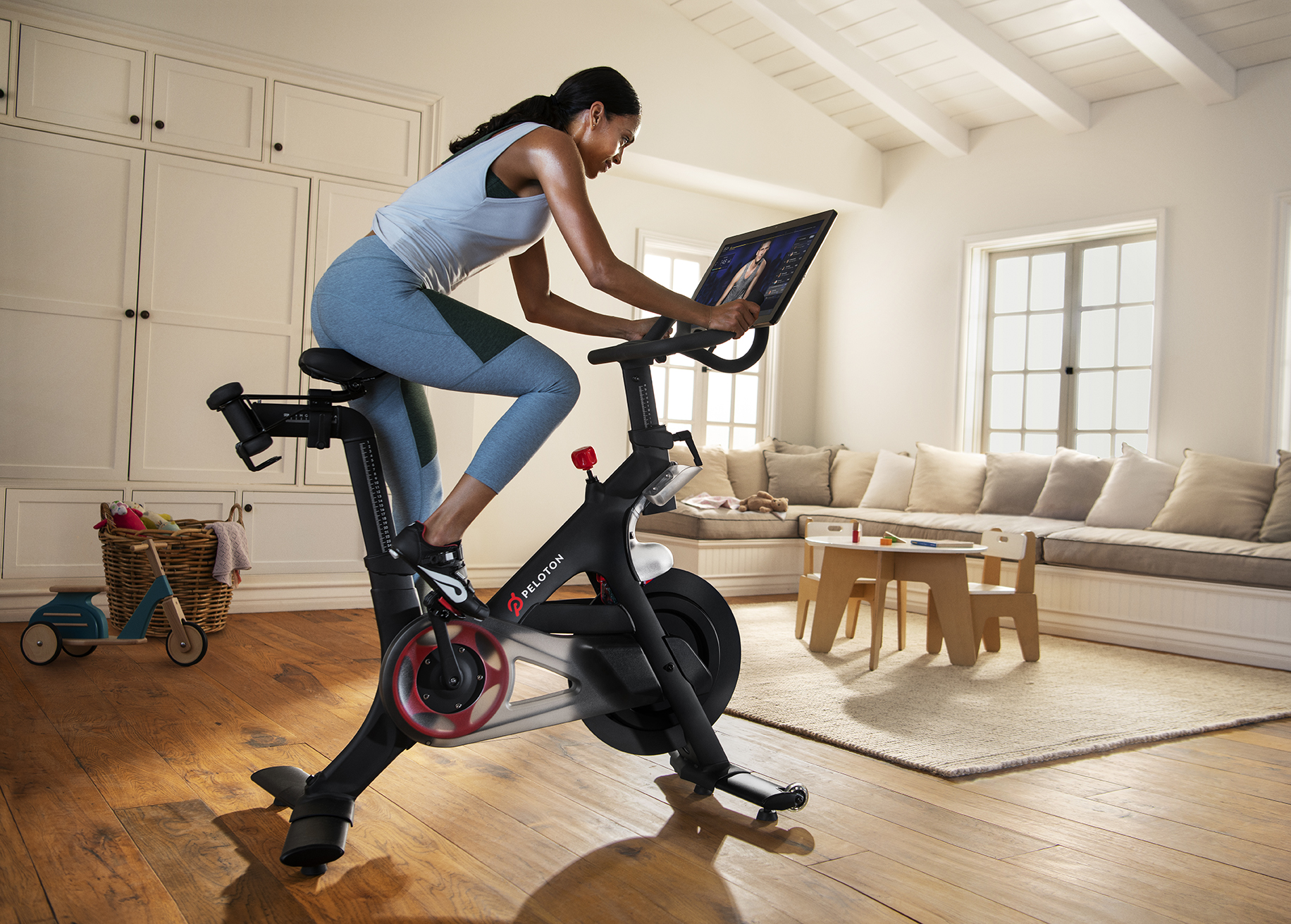\nSource: [24me](https://24me.de/neuer-fitnesstrend-aus-den-usa-peloton/)\n\nWhen looking at a brand like Peloton, there’s a lot to learn from — both positives and negatives. While the company has made mistakes over the years, it’s also managed to build up a tight-knit, cult-like community who are dedicated to the brand.\n\nSo, what can you learn from Peloton? Let’s take a look.\n\n### 1. Make Customer Safety A Priority\n\nThis may seem like a fairly obvious tip, but looking at Peloton’s history, it’s clearly still one that some brands need to learn.\n\nIn May 2021, [the U.S. Consumer Product Safety Commission made an official statement](https://www.theguardian.com/us-news/2021/apr/17/peloton-treadmill-us-regulators-child-death) warning consumers with pets and children to immediately stop using the Tread+ — as one child had died and 40+ had been injured because of the treadmill. \n\nThey had received multiple reports of children and pets being “pulled, pinned and entrapped under the rear roller of the Tread+ treadmill, leading to fractures, scrapes and the death of one child.”\n\nPeloton’s response to this incident was less than impressive. Instead of erring on the side of caution, the brand claimed that there was “no reason to stop using the treadmill as long as children and pets are kept away from it at all times, it is turned off when not in use, and a safety key is removed.”\n\nUnderstandably, many consumers were not impressed with Peloton’s response to such serious and upsetting claims — and [shares fell by 14%](https://news.sky.com/story/peloton-recalls-treadmills-after-injuries-and-child-death-12297597). Thankfully, the brand reconsidered and decided to voluntarily recall the Tread and Tread+ models in May 2021. \n\nCEO John Foley also apologized publicly, saying:\n\n*“I want to be clear, Peloton made a mistake in our initial response to the Consumer Product Safety Commission's request that we recall the Tread+. We should have engaged more productively with them from the outset. For that, I apologise.”*\n\nPeloton also offered to move customers’ treadmills free of charge to a room where children and pets have no access, and the brand [reintroduced an updated version of the Tread that included a removable safety key](https://eu.usatoday.com/story/money/2021/08/24/peloton-treadmill-tread-safety-features-coming-after-recall/5574633001/). Furthermore, Peloton introduced the Tread Lock feature, to prevent children from being able to use the treadmills when alone.\n\nWhile this was a much better response to the issue at hand, some consumers still felt it was too little, too late — and the brand’s image took another hit. Additionally, as of August 2021, the brand was also under investigation by the Securities and Exchange Commission concerning customer injuries and has also been subpoenaed by the Department of Justice.\n\n__The Takeaway:__ When it comes to a brand’s priorities, customer safety must come first. If your products or services are causing consumers harm, the only course of action is to recall and see how you can make amends.\n\nPeloton didn’t approach this situation correctly and, thus, ended up looking like a brand that cares more about profit than human life. This damaged its reputation and share prices, which eventually led to the brand taking a different approach — but it never should have gone down this way.\n\n### 2. Lean Into Community & Gamification\n\nOne of the most appealing aspects of Peloton is the close-knit community it created. Peloton users LOVE the brand — everything from the bikes and treadmills themselves to the live-streamed classes. \n\nTo own a Peloton product is to be a part of the Peloton community — and this is an impressive allure for many consumers who enjoy this feeling of belonging. It’s one of the reasons why Peloton has managed to become so successful in such a short period of time.\n\nIn addition to the community the brand has created, it also uses gamification features in smart, fun ways. Users can [compete with one another on a live leaderboard](https://www.nytimes.com/wirecutter/reviews/peloton-review-what-to-know-before-you-buy/) based on output (aka the total wattage of energy expended) — which taps into humans’ natural sense of competition.\n\n\nSource: [Peloton](https://www.onepeloton.de/lanebreak)\n\nUsers can also tap on others’ usernames to give them a virtual “high five” — a nice way to show encouragement in a digital setup. Additionally, in July 2021, [Peloton launched a game for its stationary bike, called Lanebreak](https://www.engadget.com/peloton-exercise-game-bike-090808077.html?guccounter=1&guce_referrer=aHR0cHM6Ly9lbi53aWtpcGVkaWEub3JnLw&guce_referrer_sig=AQAAACzYtXfDcJU7W0d2u2WPkCjH1yFJ_YPVZFqkvKCE8JJRp02suJ3Cd64CQ38K9C9Takulp1hNO18f6OtVAlZ_t-yEIhO3NYyE_gp-xyRxOWfVfdOf2P2RzZwDewmgmoKsLS3-pUdyqFDxBNrGu8vRSpcsuwivH10tMJYpm-x-QIpo).\n\nThe game featured an obstacle course where players can control a tire by pedaling and use the resistance knob to switch lanes and avoid obstacles. This added a whole new layer of fun and excitement to using a Peloton bike and likely enticed more consumers to give it a go.\n\n__The Takeaway:__ When creating a product or service, it’s always a good idea to search for ways to [build up a community](https://latana.com/post/online-brand-communities-help-brands-grow/). When a brand can successfully foster a community around its goods or services, it becomes more than just a purchase — it becomes a part of customers’ lives.\n\nFinding ways to connect with consumers and integrate your brand into their lives isn’t an easy feat, but using community and gamification features is a smart way to go about it.\n\n### 3. Make Strategic Use of Relevant Influencers\n\nThey may not have started out as well-known influencers, but many a Peloton instructor has become one over time. From [Christopher Meloni](https://latana.com/post/christoper-meloni-shines-in-pelotons-latest-ad/) to Jess King — Peloton’s association with these influencers has helped strengthen its brand over time.\n\nThese fitness instructors/influencers are a huge part of Peloton’s allure — and the brand has made good use of them.\n\nBut, not only has Peloton built up a cult following around its charismatic, high-energy instructors, it’s also tapped into the power of famous faces.\n\nJust [consider the brand’s *Artist Series*](https://www.engadget.com/apple-fitness-plus-artist-spotlight-jeanette-jenkins-time-to-walk-season-2-140003237.html), which are special formated classes that feature playlists from featured musicians — such as Britney Spears, Alicia Keys, and Jennifer Lopez. Associating the Peloton brand with these famous figures actually improves consumer perception of the brand.\n\n\nSource: [Sports Insider](https://www.sports-insider.de/beyonce-x-peloton-artist-series-workouts-und-langjaehrige-partnerschaft-38567/)\n\nFurthermore, there are quite a few celebrities that are active members of the Peloton community. From Usain Bolt to Hugh Jackman to Richard Branson — their use of Peloton’s equipment makes the brand more attractive to many consumers.\n\n__The Takeaway:__ Never underestimate the power of a famous face. Seeing a big-time celebrity using a product or service can increase [brand awareness](https://latana.com/topics-brand-awareness/) and even [brand consideration](https://latana.com/post/brand-consideration-preference-center-of-brand-funnel/).\n\nOf course, you have to ensure that you’re using the right influencers in the right ways — but, celebrity endorsements and influencer partnerships can be an effective way to connect with your target audience.\n\n## Final Thoughts\n\nThere’s no getting around it, Peloton is a polarizing brand — but, for many consumers, that’s part of the appeal. If you love Peloton, then you really love it. And if you don’t like Peloton, then you think it’s a joke.\n\nEither way, consumers feel strongly about the brand — and Peloton has used this friction to build brand awareness and grow. Though it experienced a boom in demand thanks to the global pandemic, the brand is not struggling as the world opens up again.\n\nTo make it through this slump and come back stronger than before, we would recommend that Peloton taps into consumer insights via the use of [brand monitoring software](https://latana.com/product/). Providing reliable, accurate data on what the brand’s target audience likes and dislikes, brand tracking would allow Peloton to make smarter, more data-driven decisions.\n\n--------------------------------------------------------------------------\n\nInterested in growing your brand in the health & wellness industry? Learn how you can get [health & wellness industry insights](https://latana.com/industry-insights/health-and-wellness-industry-insights/).\n"},"tags":["Brand Deep Dives"],"authorRef":{"slug":"cory-schroder","firstName":"Cory","lastName":"Schröder","title":"Senior Content Marketing Manager","picture":{"__typename":"ContentfulAsset","id":"31ab4d95-0f90-5835-a22f-4b7ff41fece2","description":"","title":"Cory Profile Picture","file":{"contentType":"image/png","url":"//images.ctfassets.net/7so8go2zrvbw/42rTfahl2m45FP1Fzo7B8n/52d40b8bd8af9ab559381bc0ab744cda/avatar.png","details":{"image":{"width":235,"height":235}}},"gatsbyImageData":{"images":{"sources":[{"srcSet":"//images.ctfassets.net/7so8go2zrvbw/42rTfahl2m45FP1Fzo7B8n/52d40b8bd8af9ab559381bc0ab744cda/avatar.png?w=235&h=235&q=95&fm=webp 235w","sizes":"100vw","type":"image/webp"}],"fallback":{"src":"//images.ctfassets.net/7so8go2zrvbw/42rTfahl2m45FP1Fzo7B8n/52d40b8bd8af9ab559381bc0ab744cda/avatar.png?w=235&h=235&q=95&fm=png","srcSet":"//images.ctfassets.net/7so8go2zrvbw/42rTfahl2m45FP1Fzo7B8n/52d40b8bd8af9ab559381bc0ab744cda/avatar.png?w=235&h=235&q=95&fm=png 235w","sizes":"100vw"}},"layout":"fullWidth","backgroundColor":"#080808","width":1,"height":1}}}}},{"node":{"publishDate":"2020-11-26T09:00+01:00","slug":"brands-and-sustainability","author":"Laura Harker","title":"7 Experts Discuss How They Are Creating Sustainable Brands","seo":{"__typename":"ContentfulSeo","title":"7 Experts Discuss How They Create Sustainable Brands","description":"Incorporating sustainability in your brand marketing shouldn't be hard. Here are our best tips for starting out in sustainable marketing.","noIndex":null,"ogImage":{"fluid":{"src":"//images.ctfassets.net/7so8go2zrvbw/3cHbQnhlV3rAkmlYhZP0OY/1b0399f4a628b7ad5acff8ca8c8784a5/sustanability.jpg?w=1200&h=675&q=90&fm=jpg"},"file":{"url":"//images.ctfassets.net/7so8go2zrvbw/3cHbQnhlV3rAkmlYhZP0OY/1b0399f4a628b7ad5acff8ca8c8784a5/sustanability.jpg"}}},"heroImage":{"__typename":"ContentfulAsset","id":"cf30809d-3519-5bbb-88f7-18df82cf7292","description":"sustainability brands","title":"sustainability brands","file":{"contentType":"image/jpeg","url":"//images.ctfassets.net/7so8go2zrvbw/3cHbQnhlV3rAkmlYhZP0OY/1b0399f4a628b7ad5acff8ca8c8784a5/sustanability.jpg","details":{"image":{"width":1920,"height":1280}}},"gatsbyImageData":{"images":{"sources":[{"srcSet":"//images.ctfassets.net/7so8go2zrvbw/3cHbQnhlV3rAkmlYhZP0OY/1b0399f4a628b7ad5acff8ca8c8784a5/sustanability.jpg?w=200&h=133&q=95&fm=webp 200w,\n//images.ctfassets.net/7so8go2zrvbw/3cHbQnhlV3rAkmlYhZP0OY/1b0399f4a628b7ad5acff8ca8c8784a5/sustanability.jpg?w=400&h=267&q=95&fm=webp 400w,\n//images.ctfassets.net/7so8go2zrvbw/3cHbQnhlV3rAkmlYhZP0OY/1b0399f4a628b7ad5acff8ca8c8784a5/sustanability.jpg?w=800&h=533&q=95&fm=webp 800w,\n//images.ctfassets.net/7so8go2zrvbw/3cHbQnhlV3rAkmlYhZP0OY/1b0399f4a628b7ad5acff8ca8c8784a5/sustanability.jpg?w=1600&h=1066&q=95&fm=webp 1600w","sizes":"(min-width: 800px) 800px, 100vw","type":"image/webp"}],"fallback":{"src":"//images.ctfassets.net/7so8go2zrvbw/3cHbQnhlV3rAkmlYhZP0OY/1b0399f4a628b7ad5acff8ca8c8784a5/sustanability.jpg?w=800&h=533&fl=progressive&q=95&fm=jpg","srcSet":"//images.ctfassets.net/7so8go2zrvbw/3cHbQnhlV3rAkmlYhZP0OY/1b0399f4a628b7ad5acff8ca8c8784a5/sustanability.jpg?w=200&h=133&fl=progressive&q=95&fm=jpg 200w,\n//images.ctfassets.net/7so8go2zrvbw/3cHbQnhlV3rAkmlYhZP0OY/1b0399f4a628b7ad5acff8ca8c8784a5/sustanability.jpg?w=400&h=267&fl=progressive&q=95&fm=jpg 400w,\n//images.ctfassets.net/7so8go2zrvbw/3cHbQnhlV3rAkmlYhZP0OY/1b0399f4a628b7ad5acff8ca8c8784a5/sustanability.jpg?w=800&h=533&fl=progressive&q=95&fm=jpg 800w,\n//images.ctfassets.net/7so8go2zrvbw/3cHbQnhlV3rAkmlYhZP0OY/1b0399f4a628b7ad5acff8ca8c8784a5/sustanability.jpg?w=1600&h=1066&fl=progressive&q=95&fm=jpg 1600w","sizes":"(min-width: 800px) 800px, 100vw"}},"layout":"constrained","backgroundColor":"#282818","width":800,"height":533}},"coverImage":null,"description":{"description":"Incorporating sustainability in your brand marketing shouldn't be hard. Here are our best tips for starting out in sustainable marketing."},"content":{"content":"[Sustainability](https://latana.com/post/brand-sustainability-australia/) isn’t too far from customers’ minds these days. With [68% of US internet users believing product sustainability to be an important decision-making factor](https://www.emarketer.com/content/sustainability-is-driving-consumers-purchase-decisions), it’s become something that brands can’t afford to ignore anymore.\n\nWhile many brands will have already considered ways to make their products or services more eco-friendly, what some don’t think about is their marketing. Not only can sustainable marketing help to open up your brand to some wider [target audiences](https://latana.com/post/audience-sustainable-brands/), but it can inform and encourage consumers about the benefits of sustainability. Converting consumers to greener purchasing preferences could motivate them to switch to your more environmentally-friendly brand.\n\nSome brands find that they struggle to get their sustainable marketing off the ground. It’s more nuanced than regular brand marketing and will require a bit more in the development and planning stages. But it doesn’t have to be that hard for you.\n\nIn this article, we’ll go over our best tips for starting out in sustainable marketing as well as seeing what other brands have done to incorporate green practices into their branding.\n\n## Commit to Sustainable Packaging & Recycling\n\nThese days, plastic is out and reusable, recyclable packaging is very much in.\n\nThe demand for sustainable packaging has grown over time, from [49% of consumers saying they would pay more for it in 2011 to 57% in 2018](https://blog.globalwebindex.com/chart-of-the-week/lifting-the-lid-on-sustainable-packaging/). The numbers show that customers are actually happy to put their money where their mouth is, as over 50% of the same audience has actively reduced their plastic usage over the past 12 months.\n\nSourcing sustainable packaging is something that the swimwear brand [Triffid Swim](https://triffidswim.com) has done, according to Emily Amor:\n\n> We have gone to great lengths to incorporate more environmentally friendly practices into our business processes wherever possible. One way we've done this is through sourcing sustainable packaging materials, including compostable mailing satchels, twine, and recycled paper, as part of our commitment to our brand ethos. So as a customer, you immediately see these reflected in our website and social media messaging, and as soon as you receive your order in your hands.\n\nStart by using more sustainable packaging and this point should naturally make its way into your marketing message and be picked up by consumers. \n\nThis is also something that Shari Aubrey, owner of boutique chocolate brand [Fiamma Life](https://www.fiamma.life) has discovered:\n\n> Even as a start-up business I'll always pay a premium for sustainable packaging and use this to subtly educate in the process. I'm a big believer in beautiful gift boxes not just for effect but to encourage re-purposing. But otherwise, I proudly use recyclable pouches, home compostable mailers, etc. It is a process, and you do good, better, best - but there are new products hitting the market all the time if you stay abreast, that make a difference. I'm super excited for example, that I've just purchased compostable food handling gloves and tape!\n\nSure, sustainable packaging may come at a premium, but with most customers willing to pay that bit extra for it, then it is certainly worth the switch away from plastics. And, as Shari explains, it also gives you the chance to educate and persuade consumers to move away from their former plastic habits.\n\nIf you think that your customers might need a bit more of an incentive to get behind your sustainable packaging, why not take a page out of beauty brand Lush’s book? Their recycling policy gives customers [the chance to exchange their used pots and bottles](https://uk.lush.com/article/recycling-our-plastic-bottles-bottle-caps-and-black-pots) for a free face mask. All customers need to do is wash the used containers, take five of them back into a store so they can be sent away for refilling, and the customer gets the face mask as a big thank you.\n\nCustomers love incentives like these, no matter how small they may be. What’s more, they have a very good chance of leading to some positive word-of-mouth marketing on social media.\n\n\n\n## Work with Sustainable Companies and Partners\n\nOf course, being a sustainable brand isn’t just about your own efforts—you also need to consider how sustainable all the other companies are that you work with.\n\nThis is something that Shari Aubrey, owner of [Fiamma Life](https://www.fiamma.life/), is all too aware of:\n\n> I use Sendle as my courier, as not only do they meet most of my delivery needs but they are Australia's first carbon-neutral courier company. What I always tell people about these decisions, is if we use the Sendle example, they are one of the most affordable companies so it meets my budget needs, but if you do a little research you can choose to support actively sustainable companies with your spending - and that's brilliant. It doesn't even have to cost more in some cases.\n\nThe fact that it doesn’t have to be more expensive to work with other sustainable brands should be good news, as it means there’s no extra cost to be passed onto consumers. \n\nNot only is it good news for customers, but sustainable brand partnerships can also hugely benefit the companies involved.\n\nJust take the German soup brand Knorr as an example. It set up the Knorr Sustainability Partnership Partnership Fund. The fund aims to help all of Knorr’s suppliers so that they can continue their mission to be environmentally-friendly. The whole idea behind this is that Knorr’s suppliers can launch new sustainability projects and practices without worrying about the financial impact.\n\nLila Ong, from the vegan indoor plant brand [Ceroote](https://www.ceroote.com.au), explains how her partnership with other local sustainable brands is beneficial for each of the organizations involved:\n\n> We partner with local businesses to divert spare packaging from landfills. Our boxes may not be shiny new. They may even have someone else's branding. But we believe in the power of reusing and it is a small sacrifice to make.\n\nSo, even though the Ceroote packaging might not showcase its own branding, Lila has found that the benefits of teaming up with other local businesses far outweigh this. And as [76% of the Millennial and Boomer generations would be influenced by a brand reducing its waste](https://www.foodpackagingforum.org/news/survey-quantifies-consumer-perceptions-by-packaging-types), it shouldn’t matter too much what this greener packaging says on the outside.\n\n\n\n## Build a Sustainable Brand Story\n\nOnce you do start incorporating sustainable practices into your organization, it’s imperative that you build a brand story around this. \n\nSomeone who has already done this successfully is Anesley Clarke, Owner & Director of [B2C Furniture](https://b2cfurniture.com.au).\n\n> At B2C Furniture, our mission is to provide our Australian community with timeless, enduring furnishings, whilst offering excellent customer service. We make substance and style affordable by directly sourcing furniture from trusted manufacturers, cutting out the inflated mark-ups of the ‘middleman’.\n\nAnesley goes on to explain the reasoning behind his decision for a sustainable brand marketing message:\n\n> The reason I made a conscious decision to focus on sustainable hardwood timber because it ensures each customer receives the highest value products, whilst empowering our community with sustainable consumer habits and reducing the damage \"fast furniture\" has on our precious planet. We relay this message to our target audience primarily via our website. But it is also captured in all our digital marketing channels including email marketing and social media. Sustainability is no longer a buzzword. It is an integral part of life and necessary to future proof our planet.\n\nCurrently, many different brands across various sectors are now adding sustainability to their marketing message. The Swedish furniture giant IKEA is one great example.\n\nThe brand has recently developed a [sustainable strategy that covers various environmental matters](https://www.ikea.com/us/en/this-is-ikea/). This ranges from using less water to replacing all of the lightbulbs in its stores with LEDs. IKEA has promoted all of these sustainable initiatives widely, and so far it looks like to be having a positive effect on consumers. It’s believed this new marketing message has led to [a 58% increase in sales](https://mediareach.co.uk/The+Success+of+Sustainable+Messaging+in+Marketing+Campaigns).\n\nWhatever you do when it comes to telling your story, do not indlulge in [greenwashing](https://latana.com/post/greenwashing-sustainable-brand/); it will erase all the good you have done in terms of sustainability.\n\n## Be an Educational Brand\n\nBeing sustainable should take your brand so far, but you’ll find it also pays dividends to try to educate consumers as you go as well. This is something that Jordan Wilkes, owner of Australian sustainable fashion retailer [Stride](https://www.stridestore.com.au), has learned:\n\n> The majority of my content is informational in that I'm providing valuable insights on the issues my target market cares about - tips on how to be more eco-friendly, stats on the human rights abuses of the fast fashion industry, etc. Alternatively, a lot of my competitors are merely TV commercials - basically all of their content is transactional and focuses on pushing a product to get money out of their customers.\n> \n> I do something different with my email campaigns and welcome series. Over 75% of my email content is not promotional and instead, educates my audience on the topics they care about.\n\nIt makes sense to lean more on education-based marketing, as many consumers give the cold shoulder to any branding that is purely promotional. [42.7% of US adults use ad blockers](https://backlinko.com/ad-blockers-users), so there’s a good chance that promotional online ads aren’t even getting to them. Of the 69.9% who don’t use ad blockers, 51% believe that websites should be ad-free. \n\nBy using some form of educational marketing—whether that’s white papers, eBooks, or case studies—you’ll find it easier to cut through all the promotional noise and hit your target audience with facts and stats that they want to know. It will inform them of the benefits of sustainable brands and will further cement their sustainable reasons for choosing your brand.\n\n## Focus on Sustainable Email and Social Media Marketing\n\n\n\nAnother way you can get your brand’s sustainable message and mission out to customers is by following the example of Australian brand [Cartridges Direct](https://www.cartridgesdirect.com.au). Steven Lord, the brand’s marketing manager explains what their aim is:\n\n> Our Mission? To ensure 100% of all supplied ink cartridges are recycled through preferred channels. It can take up to 1000 years for ink cartridges to decompose and by achieving our mission, for every 100,00 ink cartridges we can stop from entering landfill, we will cleanse the earth of the following: 40 tons of reusable plastic; 1 million liters of wasted oil; 9,569 kgs of reusable aluminum; 862 million kgs of co2 emissions. The recycling program is totally free for customers.\n\nWhat was the best way for the brand to inform their customers about this? Through their email campaigns and social media channels:\n\n> We publish regularly via social media and email marketing to our existing customer base (approximately 100,000 subscribers). Once we are completely happy with the processes of the program, we plan on activating paid social marketing with video content on sustainability.\n\nIt makes sense to try to get the message out this way. [50% of the world’s population is now on social media](https://blog.hubspot.com/blog/tabid/6307/bid/23865/13-mind-bending-social-media-marketing-statistics.aspx), so that’s a lot of people that your campaign could hit. Sure, not all of those individuals are going to see your Facebook posts or tweets, but there’ll still be a large pool of people who will make up your target market and will be interested in any sustainable news.\n\nSimilarly, a lot of consumers can be exposed to email marketing campaigns. [73% of millennials prefer to hear from businesses this way](https://blog.hubspot.com/marketing/email-marketing-stats) and 78% of marketers have seen an increase in email engagement over the past 12 months. As emails are also super easy to forward, it’s also a handy way to get some extra word-of-mouth marketing going about your sustainable brand.\n\n## Know How to Reach Your Audience\n\nOf course, social media and email marketing won’t gain any significant traction if you aren’t too sure how to reach your audience. You might end up sending tweets and emails into a vacuum where no one is paying attention!\n\nJamie Kay, Co-Founder of [theotherstraw](https://theotherstraw.com) told us how his brand hones in on the right audience:\n\n> Our primary target audience consists of our next Gen group. They are Gen Ys and Gen Zs who are passionate about climate change and sustainable living. They have some sort of tertiary education and are very much involved in issues around climate change and related issues.\n\n> We mostly reach this target audience through Instagram. Promoting our ethos and sustainability policies in our messaging is key. Once someone enters our funnel, we promote our story and sustainability initiatives. As an example, our retargeting Facebook Ads might include our commitment to giving back and being a 1% for Planet Member, providing 100% carbon-neutral delivery service or our zero waste shipping policy. We want to ensure they can trust us and know that their purchase from us is helping provide a better, more sustainable future for all.\n\nAs Jamie shows, one of the most important parts of finding your audience is knowing where they hang out. In the case of Gen Y and Gen Z, it’s Instagram. However, if you were targeting an older generation, such as the Baby Boomers, you’d be better off targeting them on [their favorite platform, Facebook](https://www.statista.com/statistics/309166/boomer-senior-social-networks/).\n\n## Devise a Solid PR Strategy\n\nPR is another great way to target an audience. The Sydney co-working space [Workit Spaces](https://www.workitspaces.com.au) has found this to be especially effective for them. Laura Tien, the brand’s Digital Content and Partnerships Associate explains how they’ve tackled PR while also keeping sustainability at the core of their message:\n\n> We've been trying to share the importance of sustainability in our business when working with external publishers. We'll continue to push this message externally as well as in our own publications and internal communications.\n\nHere’s [an example of the kind of PR](https://powerretail.com.au/online-retailer-2/five-post-pandemic-trends-to-watch-in-2021/) that Workit Spaces has been chasing. On the face of it, it might just seem like a shoutout in an online publication, but it creates one extra place for their target audience to find the brand online. And that link to the Workit Spaces website will help to improve the site’s SEO. The more external links leading to your site, the better. Eventually, the improved SEO will move the site into the top 5 organic results, [which account for 67.6% of all clicks](https://www.impactplus.com/blog/seo-statistics).\n\n\n\n## Final Thoughts\n\nAs [88% of consumers want brands to help them make a difference](https://www.forbes.com/sites/solitairetownsend/2018/11/21/consumers-want-you-to-help-them-make-a-difference/?sh=463424606954) with environmentally friendly purchases, it makes sense to want to jump onto sustainable marketing. And by using educational methods to help create a solid sustainable brand message and story, it should be entirely possible to do so. Working with companies that hold similar green values and policies, and highlighting the use of recyclable packaging should also have a place in your advertising. And do not forget to work on PR campaigns, as well as email and social media marketing strategies that help you find the right audience.\n\nAs soon as sustainable marketing is implemented, it shouldn’t be too long before your brand’s name shows up as the new bright star amongst the sustainable target audiences. Your sales and revenues should hopefully follow suit!"},"tags":["Brand Sustainability","Brand Strategy"],"authorRef":{"slug":"laura","firstName":"Laura","lastName":"Harker","title":"Freelance Writer & Editor","picture":{"__typename":"ContentfulAsset","id":"bb56ceb9-a813-5edc-85a6-facde71b8efe","description":"","title":"Latana Logo Author Photo","file":{"contentType":"image/png","url":"//images.ctfassets.net/7so8go2zrvbw/7qeUdZpRNeFZFTo0zIasKz/8d00318fb2f317950a2a2d6912eb28bf/Author_Latana__1_.png","details":{"image":{"width":235,"height":235}}},"gatsbyImageData":{"images":{"sources":[{"srcSet":"//images.ctfassets.net/7so8go2zrvbw/7qeUdZpRNeFZFTo0zIasKz/8d00318fb2f317950a2a2d6912eb28bf/Author_Latana__1_.png?w=235&h=235&q=95&fm=webp 235w","sizes":"100vw","type":"image/webp"}],"fallback":{"src":"//images.ctfassets.net/7so8go2zrvbw/7qeUdZpRNeFZFTo0zIasKz/8d00318fb2f317950a2a2d6912eb28bf/Author_Latana__1_.png?w=235&h=235&q=95&fm=png","srcSet":"//images.ctfassets.net/7so8go2zrvbw/7qeUdZpRNeFZFTo0zIasKz/8d00318fb2f317950a2a2d6912eb28bf/Author_Latana__1_.png?w=235&h=235&q=95&fm=png 235w","sizes":"100vw"}},"layout":"fullWidth","backgroundColor":"#080808","width":1,"height":1}}}}},{"node":{"publishDate":"2021-08-25T08:30+02:00","slug":"podcast-sponsorship-brand-awareness","author":"Cory Schröder","title":"How Podcast Sponsorship Can Increase Brand Awareness","seo":{"__typename":"ContentfulSeo","title":"How Podcast Sponsorship Can Increase Brand Awareness","description":"Podcast sponsorship can feel somewhat daunting for those new to the genre. But it’s a great way to increase brand awareness. How? Our article breaks it down.","noIndex":null,"ogImage":{"fluid":{"src":"//images.ctfassets.net/7so8go2zrvbw/4Fdl6wVytttS1uBWnYAAia/b183e253dafbfa1dd1794d61fc661307/Blog_SEO-Thumbnail_1000X709__8_.png?w=1200&h=675&q=90&fm=jpg"},"file":{"url":"//images.ctfassets.net/7so8go2zrvbw/4Fdl6wVytttS1uBWnYAAia/b183e253dafbfa1dd1794d61fc661307/Blog_SEO-Thumbnail_1000X709__8_.png"}}},"heroImage":{"__typename":"ContentfulAsset","id":"1e83e4a7-f214-5237-aa73-1b588462e899","description":"","title":"Podcast Sponsorship Hero image with two people talking microphones","file":{"contentType":"image/png","url":"//images.ctfassets.net/7so8go2zrvbw/4Fdl6wVytttS1uBWnYAAia/b183e253dafbfa1dd1794d61fc661307/Blog_SEO-Thumbnail_1000X709__8_.png","details":{"image":{"width":1000,"height":709}}},"gatsbyImageData":{"images":{"sources":[{"srcSet":"//images.ctfassets.net/7so8go2zrvbw/4Fdl6wVytttS1uBWnYAAia/b183e253dafbfa1dd1794d61fc661307/Blog_SEO-Thumbnail_1000X709__8_.png?w=200&h=142&q=95&fm=webp 200w,\n//images.ctfassets.net/7so8go2zrvbw/4Fdl6wVytttS1uBWnYAAia/b183e253dafbfa1dd1794d61fc661307/Blog_SEO-Thumbnail_1000X709__8_.png?w=400&h=284&q=95&fm=webp 400w,\n//images.ctfassets.net/7so8go2zrvbw/4Fdl6wVytttS1uBWnYAAia/b183e253dafbfa1dd1794d61fc661307/Blog_SEO-Thumbnail_1000X709__8_.png?w=800&h=567&q=95&fm=webp 800w","sizes":"(min-width: 800px) 800px, 100vw","type":"image/webp"}],"fallback":{"src":"//images.ctfassets.net/7so8go2zrvbw/4Fdl6wVytttS1uBWnYAAia/b183e253dafbfa1dd1794d61fc661307/Blog_SEO-Thumbnail_1000X709__8_.png?w=800&h=567&q=95&fm=png","srcSet":"//images.ctfassets.net/7so8go2zrvbw/4Fdl6wVytttS1uBWnYAAia/b183e253dafbfa1dd1794d61fc661307/Blog_SEO-Thumbnail_1000X709__8_.png?w=200&h=142&q=95&fm=png 200w,\n//images.ctfassets.net/7so8go2zrvbw/4Fdl6wVytttS1uBWnYAAia/b183e253dafbfa1dd1794d61fc661307/Blog_SEO-Thumbnail_1000X709__8_.png?w=400&h=284&q=95&fm=png 400w,\n//images.ctfassets.net/7so8go2zrvbw/4Fdl6wVytttS1uBWnYAAia/b183e253dafbfa1dd1794d61fc661307/Blog_SEO-Thumbnail_1000X709__8_.png?w=800&h=567&q=95&fm=png 800w","sizes":"(min-width: 800px) 800px, 100vw"}},"layout":"constrained","backgroundColor":"#08c8b8","width":800,"height":567}},"coverImage":{"__typename":"ContentfulAsset","id":"c2e50432-11a5-56fb-bc05-3e3a8310f22e","description":"","title":"Podcast Sponsorship Cover Image with two people speaking into microphones","file":{"contentType":"image/png","url":"//images.ctfassets.net/7so8go2zrvbw/5T8abaMkp3mstYnAMnSw6S/128ec1262e1576707ab6fd2dea031e3f/Blog_Cover_1288X400__11_.png","details":{"image":{"width":1288,"height":400}}},"gatsbyImageData":{"images":{"sources":[{"srcSet":"//images.ctfassets.net/7so8go2zrvbw/5T8abaMkp3mstYnAMnSw6S/128ec1262e1576707ab6fd2dea031e3f/Blog_Cover_1288X400__11_.png?w=750&h=233&q=95&fm=webp 750w,\n//images.ctfassets.net/7so8go2zrvbw/5T8abaMkp3mstYnAMnSw6S/128ec1262e1576707ab6fd2dea031e3f/Blog_Cover_1288X400__11_.png?w=1080&h=335&q=95&fm=webp 1080w,\n//images.ctfassets.net/7so8go2zrvbw/5T8abaMkp3mstYnAMnSw6S/128ec1262e1576707ab6fd2dea031e3f/Blog_Cover_1288X400__11_.png?w=1288&h=400&q=95&fm=webp 1288w","sizes":"100vw","type":"image/webp"}],"fallback":{"src":"//images.ctfassets.net/7so8go2zrvbw/5T8abaMkp3mstYnAMnSw6S/128ec1262e1576707ab6fd2dea031e3f/Blog_Cover_1288X400__11_.png?w=1288&h=400&q=95&fm=png","srcSet":"//images.ctfassets.net/7so8go2zrvbw/5T8abaMkp3mstYnAMnSw6S/128ec1262e1576707ab6fd2dea031e3f/Blog_Cover_1288X400__11_.png?w=750&h=233&q=95&fm=png 750w,\n//images.ctfassets.net/7so8go2zrvbw/5T8abaMkp3mstYnAMnSw6S/128ec1262e1576707ab6fd2dea031e3f/Blog_Cover_1288X400__11_.png?w=1080&h=335&q=95&fm=png 1080w,\n//images.ctfassets.net/7so8go2zrvbw/5T8abaMkp3mstYnAMnSw6S/128ec1262e1576707ab6fd2dea031e3f/Blog_Cover_1288X400__11_.png?w=1288&h=400&q=95&fm=png 1288w","sizes":"100vw"}},"layout":"fullWidth","backgroundColor":"#08c8b8","width":1,"height":0.3105590062111801}},"description":{"description":"Podcast sponsorship can feel somewhat daunting for those new to the genre. But it’s a great way to increase brand awareness. How? Our article breaks it down."},"content":{"content":"[Podcasts](https://latana.com/webinars-and-podcasts/) — everyone seems to have one these days. From celebrities to authors to therapists, a wide range of people are now hosting or contributing to well-known podcasts around the world.\n\nBut what does that have to do with your brand? Well, as a growing and popular medium for learning and entertainment, podcasts provide a great opportunity to increase your brand awareness through sponsorship. A recent study predicted that by 2024, there would be over [100 million podcast listeners in the US alone.](https://www.statista.com/statistics/1123105/statista-amo-podcast-reach-us/)\n\nAnd the best part? You can not only choose podcasts that align well with your target audience to increase brand awareness, but you can also be mindful in your choices and partner with podcasts that align with your brand values. \n\nWhile it’s great to [increase brand awareness](https://latana.com/post/budget-increase-brand-awareness/) within your target audiences, it’s even more impactful when the podcast you choose to sponsor upholds similar values as your brand — therefore improving your brand integrity and loyalty. \n\nThis article will take a look at the how and why of podcast sponsorship — as well as a couple of great examples of brands that have partnered successfully with podcasts. Plus, a few tips for brands that would like to start sponsoring podcasts. \n\n## How and Why Does Podcast Sponsorship Work?\n\n\nSource: [Unsplash](https://unsplash.com/photos/XQKUIPjPl-s)\n\nThough podcasts have been around for a while, it’s only in recent years that they’ve really started to gain traction in a larger part of the population. As of 2021, [57% of US respondents stated that they have listened to a podcast](https://www.statista.com/statistics/188955/percentage-of-us-adults-who-listen-to-audio-podcasts-since-2006/) — a 58% increase over the last five years.\n\nWhen asked if they’d listened to a podcast in the last month, a [2021 survey found that 56% of US respondents aged 12-34 said yes](https://www.statista.com/statistics/912381/united-states-monthly-podcast-listening-age/), the highest percentage of all age groups. What does this tell us? Podcasts are an effective way to advertise your brand, and they’ll likely become even more popular as time goes on.\n\nPlus, when it comes to attitudes surrounding free ad-supported podcasts versus paid ad-free podcasts, a [June 2020 survey found that most respondents are happy for both options to exist](https://www.statista.com/statistics/1128195/paid-or-ad-supported-podcasts-us-age-group/) — with 56% of respondents aged 18-34 and 63% aged 35-54 agreeing. Therefore, we can rest assured that podcast ads are here to stay.\n\nRegardless of which side of the equation you’re on — whether you’re finding the right sponsor for your podcast or the right podcast to sponsor — it’s important that the fit is right. Otherwise, you’ll risk raising brand awareness for an inappropriate audience, leading to an unsuccessful partnership. \n\nAfter all, what’s the point of advertising your brand’s vegan food line on a podcast dedicated to ranking the top BBQ joints in the US?\n\n### The How\n\n\nSource: [Unsplash](https://unsplash.com/photos/XQKUIPjPl-s)\n\nSo, first, let’s discuss how podcast sponsorships work. For the sake of clarity, we’ll be analyzing this situation from the point of view of a brand looking to sponsor a podcast. \n\nIn this case, the first thing you’ll need to do as a brand manager is to define a few specifics — such as the [target audience](https://latana.com/post/target-audience-improve-brand-awareness/) you want to reach, the budget you can dedicate, and which KPI(s) you’ll measure to determine success.\n\nOnce you’ve figured these details out, you can then make a list of podcasts that fit your requirements and start reaching out. After you’ve received a good amount of responses, you should compare the cost, reach, and previous success rates of each potential podcast and see which one, or ones, would work well. \n\nKeep in mind, you’re looking to increase brand awareness. So when deciding which KPI to measure to determine success, it should be more top-of-funnel. After all, if your goal is to increase brand awareness, you can’t really measure success by purchases. \n\nInstead, you should stick to something more relevant — such as website visits, social media follows, or online mentions. This way, you’ll be able to more accurately see if brand awareness has increased.\n\nAnother option to measure brand awareness is to use [brand monitoring](https://latana.com/product/). With the ability to track important KPIs like brand awareness, consideration, usage, associations, and more, brand tracking software provides reliable, statistically significant data that you, as a brand manager, can use to make better-informed decisions. \n\n### The Why\n\n\nSource: [Pexels](https://www.pexels.com/photo/positive-black-woman-talking-to-radio-host-6954162/)\n\nNext, let’s talk about why brand sponsorship of podcasts works. To begin with, it’s flexible — there are lots of different options you can choose from when sponsoring a podcast.\n\nFrom buying pre-rolls to mid-rolls to sponsoring the entire podcast, there are a variety of different ways you can test out podcast sponsorship. If you’re looking to start conservative, it would make sense to buy a few week’s worth of pre or post-rolls, which are usually a bit shorter and less expensive than a mid-roll.\n\nThis way, your trial will have enough time to really be tested and you’ll have enough data to see if a more involved sponsorship is worth it. \n\nHowever, if you want to really give it a go, buy a few week’s worth of mid-rolls. As they occur within the podcast itself, they are often more involved and longer — and, understandably, more expensive. However, if they prove successful, you could then consider becoming the podcast’s main or only sponsor. \n\nAnother reason why podcast sponsorship works so well? You have an engaged audience. Because many podcasts deal with niche subjects, you are able to get your brand in front of a high-quality, active audience. \n\nPlus, many people listen to podcasts on the go, meaning podcasts become a well-loved part of their daily routine. Additionally, with the placement of podcast sponsor ads — which are often added within the content itself — listeners are less likely to skip them over. \n\n[According to Midroll](https://awesome.midroll.com/), a staggering 81% of podcast listeners say they sometimes or always pay attention to podcast ads. The same group of respondents admitted to sometimes or always ignoring billboard ads 61% of the time and ignoring digital ads 66% of the time. These numbers weigh heavily in podcasts’ favor. \n\nFinally, the quality of podcast listeners is quite high, as the “shows that people listen (to) are carefully selected and curated by topic.” Because the audience has made a conscious decision to listen to this podcast, they’re more likely to be invested in the topic, and “by association, the products and services advertised.” \n\nAccording to a [2020 survey by Morning Consult](https://www.statista.com/statistics/786938/top-podcast-genres/), the most popular podcast genre is comedy at 22%, followed by news at 21%, true crime at 18%, and sport at 17%. Of course, the list goes on, which is another reason why podcast sponsorship is often so successful — there’s variety. \n\n__Pro tip:__ When testing podcast sponsorship, it’s a good idea to try out a variety of different setups. From different ad types to different podcast genres, you need to see which of your target audiences respond best to this medium of advertising. \n\n## Brand KPIs Podcast Sponsorship Can Improve\n\nBefore we look at a few examples of successful brand podcast partnerships, let’s talk more specifically about the brand KPIs that podcast sponsorship can improve. \n\n### Brand Awareness\nFirst and foremost, we have [brand awareness](https://latana.com/topics-brand-awareness/). The primary goal of most podcast sponsorship is to increase brand awareness — specifically with a brand’s target audience. \n\nBy partnering with a relevant podcast to promote their products or services, brands can work more effectively to increase brand awareness levels where they matter. But how can you know if brand awareness is increasing? There are a few methods.\n\nFirst, you can keep an eye on direct and referral traffic. After your podcast sponsorship goes live, you should see an uptick in users directly searching for your brand name or arriving on your website via a referral link.\n\n__Pro tip:__ Make sure you’re also counting direct traffic that uses misspelled versions of your brand name. As an auditory medium, it can often be difficult to get a brand name right — especially if your brand doesn’t pass the Radio Test (aka are consumers able to spell your brand name from hearing it). \n\nWhile you can’t always know exactly how direct traffic originally heard of your brand, seeing an increase post-sponsorship is a good sign.\n\n### Brand Engagement\nAnother KPI that podcast sponsorship can increase is [brand engagement](https://latana.com/post/brand-kpis-mid-sized-companies/). When potential customers arrive on your website or social media profile because they heard about you on a trusted podcast, they’re most likely to be engaged with your brand. \n\nOne way to see if their engagement is really increasing? Offer an exclusive discount or promo code — which is unique to the podcast sponsorship. This way, you can see if any new customers can be attributed to your recent podcast activities. \n\nYou should also keep an eye on other key engagement indicators — such as bounce rate, unique page views, time on site, and average pages visited. \n\nAn ideal mix would be a low bounce rate, high unique page view count, high time on site, and high average pages visited, as this would indicate the most engagement.\n\nIf possible, make sure to filter out which users came via referral in Google Analytics, which will allow you to measure the engagement metrics more accurately. \n\n### Brand Associations\nFinally, podcast sponsorship can also do wonders for [brand associations](https://latana.com/post/brand-association/), which are the traits and characteristics that consumers associate with your brand.\n\nIdeally, your brand associations should match up with your brand values. For example, if one of your brand values is that you care about the environment, you’d hope that consumers associate your brand with being “sustainable” or “eco-conscious”.\n\nOne way to enhance and support your brand associations is to partner with podcasts with similar values. \n\nFor example, say you’re the brand manager of a fun, new inclusive dating app. Ideally, you’d then look to sponsor a podcast that aligns with your values — such as “Why Won’t You Date Me” by Nicole Byer or “Nancy” by Tobin Low and Kathy Tu.\n\nAnd while there are a few ways to track brand associations — such as DIY surveys or social listening tools — the best method is with brand tracking software. It allows you to gather detailed, reliable data that you can use to decide whether or not your podcast sponsorship has been successful. \n\n## Two Successful Brand + Podcast Partnerships\n\nWhen it comes to what’s deemed a “successful” brand + podcast partnership, we have to be a bit circumspect and rely on a few key indicators to make our judgments. \n\nAs we don’t have access to the individual brands’ data on performance, we must look to two factors: namely, the success of the podcast itself and the length of the brand sponsorship.\n\nIf both the podcast and the sponsorship are relatively long-running, we take this as an indication that it’s been a successful partnership. Additionally, we’ll be looking at partnerships where the values and personalities match up — another indication of a strong partnership. \n\nSo, let’s take a look at two different partnerships and why they’ve been successful.\n\n### 1. P&G + The Man Enough Podcast (2021 - Now)\n\n\nSource: Podtail\n\n[*The Man Enough Podcast*](https://manenough.com/podcast/), which is sponsored by launch partner P&G, is relatively new — only having started in June of 2021. However, the partnership between the podcast’s main host, Justin Baldoni, and P&G is a bit more extensive than a simple podcast sponsorship.\n\nBaldoni, who also authored a book of the same name, joined forces with P&G earlier this year — with Proctor & Gamble co-financing and co-producing many projects for Baldoni’s company, Wayfarer Studios. \n\nAccording to P&G’s Chief Brand Officer, Marc Pritchard: *“Wayfarer is creating authentic content and stories that bring much-needed love, light and positive energy into the world.”*\n\nSo, how does this sponsorship playout for *The Man Enough Podcast*? Within the first five minutes of each episode, Baldoni includes a detailed, minute-long explanation of why he’s partnered with P&G — which outlines their shared values and goals. \n\nBaldoni states: \n\n*“Our amazing partner P&G aspires to build a better world where boys and girls, men and women of all backgrounds and abilities can learn, grow, succeed, and thrive with equal access and opportunity. (...) P&G, the maker of brands like Tide, Swiffer, Mr. Clean, Pantene, and Braun is dedicated to supporting communities like ours, like Man Enough, where we undefine masculinity. (...) So thank you, P&G, for stepping up as a force for good in the world. Visit P&Ggoodeveryday.com to learn more.”*\n\nWhile this is only a portion of the explanation provided, we can see how strongly Baldoni appreciates this partnership and the pride he has to be associated with P&G. By providing context for their partnership through a heartfelt message, Baldoni increases his listeners’ interest in his sponsor. \n\nWhile we can’t say for sure that this podcast will last the test of time, the extensivity and honesty of the partnership between P&G and Wayfarer Studios is a good indication that it will remain strong for the foreseeable future.\n\n### Why Does This Partnership Work?\n\nTo be fair, there are a couple of important reasons why this partnership works so well. \n\nFirst, we need to consider the shared values involved. According to Pritchard, this partnership works because both parties are on the same page, stating: *“P&G is committed to creating even more content for good through this unique first-look deal with a wonderful partner that shares our values.”*\n\nThrough its program, *P&G Everyday Good*, P&G is looking to make a positive impact in the communities it serves. From equality & inclusion to environmental sustainability, this brand is doing its part to make the world a better, more equal place. \n\nAnd for these exact reasons, P&G is the perfect sponsor for *The Man Enough Podcast* — as their shared values provide an incredibly strong basis for this partnership to be successful and long-lived. \n\nAnother reason P&G is smart to sponsor this podcast? The content that *The Man Enough Podcast* puts out strengthens P&G’s brand associations. It’s one thing for P&G to say they support equality and inclusion, it’s another thing entirely to put their money where their mouth is and support groundbreaking podcasts like this one.\n\n__Our advice?__ At the end of the day, partnerships like this work — and will continue to work — because both parties want the same things. \n\nAligned values and goals will go a long way to make this kind of partnership successful, so when looking for a podcast to sponsor, make sure your values line up.\n\n### 2. Mailchimp + Serial (2014 - 2015)\n\nSource: [AdWeek](https://www.adweek.com/brand-marketing/how-mailchimp-benefiting-return-serial-168691/)\n\nMailchimp, a marketing automation platform and email marketing service, began as a sponsor of the *Serial* podcast as its start in 2014. \n\nAs one of the early adopters of podcast sponsorship, Mailchimp reaped the rewards of this partnership for years. \n\nIn an [interview with *The Guardian*](https://www.theguardian.com/technology/2014/nov/27/serial-podcast-mailchimp-advert), Mailchimp’s Marketing Director Mark DiCristina stated that their sponsorship was “not intended to boost profits, but to raise awareness of the service.” How nice, someone who understands the importance of brand awareness!\n\nSo how was this ad set up within the *Serial* podcast? As an unintentionally funny 19 second pre-roll ad. \n\nInstead of a traditional ad where the podcast host talks about why they chose their sponsor, this ad consisted of the show’s producer approaching strangers on the street and asking them to pronounce the company’s name.\n\nThe result was surprisingly successful, as some of the people approached seemed to struggle with the pronunciation — with one woman even saying something akin to “Mail kimp”.\n\nOf course, this was not planned. Yet, the ad went viral and got people on the internet buzzing about the brand. Whether or not the goal of this podcast sponsorship was or is to drive growth, it has been pretty successful in doing so.\n\n[Engagement Labs reported](https://www.adweek.com/performance-marketing/now-nprs-serial-podcast-runaway-hit-mailchimp-reaping-rewards-161642/) that Mailchimp gained 6,891 new Twitter followers between the ad’s start in early October 2014 and when their article was published at the end of November 2014. That’s no mean feat!\n\nFurthermore, [Amobee Brand Intelligence calculated](https://www.theguardian.com/technology/2014/nov/27/serial-podcast-mailchimp-advert) that there are 2,488 tweets that mention Mailchimp and Serial together. While this kind of organic virality is hard to replicate, Mailchimp’s early success in sponsoring the Serial podcast led them to continue the relationship through the second season.\n\nAs of June 2020, *Serial* was purchased by *The New York Times* and all sponsorship now goes through them. That being said, Serial’s third and subsequent seasons found new sponsors among the likes of Accenture and Clickup.\n\n__Why Did This Partnership Work__ \n\nWhile Mailchimp and *Serial* don’t necessarily seem like the most logical pairing, it was still a good choice for both parties. Mailchimp was able to raise awareness of its product with a fairly suitable audience and *Serial* got the funding it needed to get off the ground.\n\nAs of September 2018, seasons 1 and 2 of *Serial* have been downloaded over 340 million times — which is an ongoing podcast world record. In terms of exposure and brand awareness, that is a pretty large audience for Mailchimp to reach.\n\n[According to the *Financial Times*](https://www.ft.com/content/aeb8d37c-7af1-11e4-8646-00144feabdc0), brands like Mailchimp, “themselves products of the digital revolution”, saw “opportunities in the close connection that forms between listeners and the voices in their ears.” Because of this connection, listeners are more open to the advertisers that podcasts choose to partner with.\n\nBased on data from Midroll, a podcast advertising company, Mailchimp said they paid between $25 - $40 per thousand impressions for their ads on *Serial* — which is more expensive than traditional radio advertising, but still worth it.\n\nAnd with “downloads far exceeding the producers’ initial estimates”, Emily Condon, one of *Serial’s* producers, [stated that Mailchimp](https://www.ft.com/content/aeb8d37c-7af1-11e4-8646-00144feabdc0) was “getting a very good deal.” Add in the additional benefit of social media buzz that this podcast ad generated, and we can see why this partnership worked out so well for Mailchimp. \n\n__Our advice?__ When creating an ad for the podcast your brand has chosen to sponsor, consider who your audience is. While some brand + podcast partnerships benefit from more straightforward, honest approaches, others do well with more humorous, lighthearted ads. \n\nConsider your own brand personality and that of your chosen podcast to decide what kind of ad you want to create. Be it pre-roll or mid-roll, it should be enjoyable and, more importantly, memorable.\n\n## Final Thoughts\n\nWhile choosing a podcast to sponsor in order to increase brand awareness can seem daunting, it doesn’t have to be. As long as you ensure your values are aligned and your brand personalities fit, it’s worth a shot.\n\nKeep in mind that the goal is not necessarily to drive purchases, but to generally increase knowledge of your brand within your target audience. So whether you go for a short pre-roll or a longer mid-roll, keep our advice in mind and you’ll be just fine. \n\nAfter all, with [41% of the US population saying they’ve listened to a podcast](https://www.statista.com/statistics/270365/audio-podcast-consumption-in-the-us/) in the last month, chances of you reaching members of your target audience are pretty good. \n\nIf you would like to use podcasts to grow your brand, check out [The Ultimate Guide to Podcast Advertising](https://latana.com/guides/ultimate-guide-to-podcast-advertising/)."},"tags":["Brand Awareness"],"authorRef":{"slug":"cory-schroder","firstName":"Cory","lastName":"Schröder","title":"Senior Content Marketing Manager","picture":{"__typename":"ContentfulAsset","id":"31ab4d95-0f90-5835-a22f-4b7ff41fece2","description":"","title":"Cory Profile Picture","file":{"contentType":"image/png","url":"//images.ctfassets.net/7so8go2zrvbw/42rTfahl2m45FP1Fzo7B8n/52d40b8bd8af9ab559381bc0ab744cda/avatar.png","details":{"image":{"width":235,"height":235}}},"gatsbyImageData":{"images":{"sources":[{"srcSet":"//images.ctfassets.net/7so8go2zrvbw/42rTfahl2m45FP1Fzo7B8n/52d40b8bd8af9ab559381bc0ab744cda/avatar.png?w=235&h=235&q=95&fm=webp 235w","sizes":"100vw","type":"image/webp"}],"fallback":{"src":"//images.ctfassets.net/7so8go2zrvbw/42rTfahl2m45FP1Fzo7B8n/52d40b8bd8af9ab559381bc0ab744cda/avatar.png?w=235&h=235&q=95&fm=png","srcSet":"//images.ctfassets.net/7so8go2zrvbw/42rTfahl2m45FP1Fzo7B8n/52d40b8bd8af9ab559381bc0ab744cda/avatar.png?w=235&h=235&q=95&fm=png 235w","sizes":"100vw"}},"layout":"fullWidth","backgroundColor":"#080808","width":1,"height":1}}}}},{"node":{"publishDate":"2022-07-07T08:00+02:00","slug":"bird-mobility-brand-deep-dive","author":"Ashley Lightfoot","title":"The Story of Bird: The E-Mobility Brand That Flew Too Close to the Sun","seo":{"__typename":"ContentfulSeo","title":"How Micromobility Brand Bird Grew So Fast","description":"Micro mobility brand Bird is one of the fastest ever companies to achieve unicorn status but its services and work practices are controversial. Find out why!","noIndex":null,"ogImage":{"fluid":{"src":"//images.ctfassets.net/7so8go2zrvbw/14kDaX85Eg5BBmMW1Qmm3o/bf41900794474b9d98197f4dcc0ecd77/Blog_SEO-Thumbnail_1000X709__46_.png?w=1200&h=675&q=90&fm=jpg"},"file":{"url":"//images.ctfassets.net/7so8go2zrvbw/14kDaX85Eg5BBmMW1Qmm3o/bf41900794474b9d98197f4dcc0ecd77/Blog_SEO-Thumbnail_1000X709__46_.png"}}},"heroImage":{"__typename":"ContentfulAsset","id":"25ec1157-1424-56de-b8e9-96c9ed847307","description":"","title":"Bird Scooters Thumbnail image","file":{"contentType":"image/png","url":"//images.ctfassets.net/7so8go2zrvbw/14kDaX85Eg5BBmMW1Qmm3o/bf41900794474b9d98197f4dcc0ecd77/Blog_SEO-Thumbnail_1000X709__46_.png","details":{"image":{"width":2000,"height":1418}}},"gatsbyImageData":{"images":{"sources":[{"srcSet":"//images.ctfassets.net/7so8go2zrvbw/14kDaX85Eg5BBmMW1Qmm3o/bf41900794474b9d98197f4dcc0ecd77/Blog_SEO-Thumbnail_1000X709__46_.png?w=200&h=142&q=95&fm=webp 200w,\n//images.ctfassets.net/7so8go2zrvbw/14kDaX85Eg5BBmMW1Qmm3o/bf41900794474b9d98197f4dcc0ecd77/Blog_SEO-Thumbnail_1000X709__46_.png?w=400&h=284&q=95&fm=webp 400w,\n//images.ctfassets.net/7so8go2zrvbw/14kDaX85Eg5BBmMW1Qmm3o/bf41900794474b9d98197f4dcc0ecd77/Blog_SEO-Thumbnail_1000X709__46_.png?w=800&h=567&q=95&fm=webp 800w,\n//images.ctfassets.net/7so8go2zrvbw/14kDaX85Eg5BBmMW1Qmm3o/bf41900794474b9d98197f4dcc0ecd77/Blog_SEO-Thumbnail_1000X709__46_.png?w=1600&h=1134&q=95&fm=webp 1600w","sizes":"(min-width: 800px) 800px, 100vw","type":"image/webp"}],"fallback":{"src":"//images.ctfassets.net/7so8go2zrvbw/14kDaX85Eg5BBmMW1Qmm3o/bf41900794474b9d98197f4dcc0ecd77/Blog_SEO-Thumbnail_1000X709__46_.png?w=800&h=567&q=95&fm=png","srcSet":"//images.ctfassets.net/7so8go2zrvbw/14kDaX85Eg5BBmMW1Qmm3o/bf41900794474b9d98197f4dcc0ecd77/Blog_SEO-Thumbnail_1000X709__46_.png?w=200&h=142&q=95&fm=png 200w,\n//images.ctfassets.net/7so8go2zrvbw/14kDaX85Eg5BBmMW1Qmm3o/bf41900794474b9d98197f4dcc0ecd77/Blog_SEO-Thumbnail_1000X709__46_.png?w=400&h=284&q=95&fm=png 400w,\n//images.ctfassets.net/7so8go2zrvbw/14kDaX85Eg5BBmMW1Qmm3o/bf41900794474b9d98197f4dcc0ecd77/Blog_SEO-Thumbnail_1000X709__46_.png?w=800&h=567&q=95&fm=png 800w,\n//images.ctfassets.net/7so8go2zrvbw/14kDaX85Eg5BBmMW1Qmm3o/bf41900794474b9d98197f4dcc0ecd77/Blog_SEO-Thumbnail_1000X709__46_.png?w=1600&h=1134&q=95&fm=png 1600w","sizes":"(min-width: 800px) 800px, 100vw"}},"layout":"constrained","backgroundColor":"#080808","width":800,"height":567}},"coverImage":{"__typename":"ContentfulAsset","id":"e1d9f935-737e-5643-920f-0017ebc0696d","description":"","title":"Bird Scooters Cover Image","file":{"contentType":"image/png","url":"//images.ctfassets.net/7so8go2zrvbw/4jBBqFCLxlu63w54KKvRsO/fe942d6108cdaf0d08d13d4446cb161c/Blog_Cover_1288X400__53_.png","details":{"image":{"width":1288,"height":400}}},"gatsbyImageData":{"images":{"sources":[{"srcSet":"//images.ctfassets.net/7so8go2zrvbw/4jBBqFCLxlu63w54KKvRsO/fe942d6108cdaf0d08d13d4446cb161c/Blog_Cover_1288X400__53_.png?w=750&h=233&q=95&fm=webp 750w,\n//images.ctfassets.net/7so8go2zrvbw/4jBBqFCLxlu63w54KKvRsO/fe942d6108cdaf0d08d13d4446cb161c/Blog_Cover_1288X400__53_.png?w=1080&h=335&q=95&fm=webp 1080w,\n//images.ctfassets.net/7so8go2zrvbw/4jBBqFCLxlu63w54KKvRsO/fe942d6108cdaf0d08d13d4446cb161c/Blog_Cover_1288X400__53_.png?w=1288&h=400&q=95&fm=webp 1288w","sizes":"100vw","type":"image/webp"}],"fallback":{"src":"//images.ctfassets.net/7so8go2zrvbw/4jBBqFCLxlu63w54KKvRsO/fe942d6108cdaf0d08d13d4446cb161c/Blog_Cover_1288X400__53_.png?w=1288&h=400&q=95&fm=png","srcSet":"//images.ctfassets.net/7so8go2zrvbw/4jBBqFCLxlu63w54KKvRsO/fe942d6108cdaf0d08d13d4446cb161c/Blog_Cover_1288X400__53_.png?w=750&h=233&q=95&fm=png 750w,\n//images.ctfassets.net/7so8go2zrvbw/4jBBqFCLxlu63w54KKvRsO/fe942d6108cdaf0d08d13d4446cb161c/Blog_Cover_1288X400__53_.png?w=1080&h=335&q=95&fm=png 1080w,\n//images.ctfassets.net/7so8go2zrvbw/4jBBqFCLxlu63w54KKvRsO/fe942d6108cdaf0d08d13d4446cb161c/Blog_Cover_1288X400__53_.png?w=1288&h=400&q=95&fm=png 1288w","sizes":"100vw"}},"layout":"fullWidth","backgroundColor":"#080808","width":1,"height":0.3105590062111801}},"description":{"description":"Micromobility brand Bird is one of the fastest ever companies to achieve unicorn status but its services and work practices are controversial. Find out why!"},"content":{"content":"For many who live in cities, the rise of micromobility has been hard to ignore. Tangled masses of [electric scooters](https://latana.com/post/2019-insights-electric-scooters-brand-awareness/) — sometimes toppled like a row of dominos — have become part of many cities’ daily sights. They’ve also become a core part of how many urbanites get around — providing a quick, affordable, and eco-friendly alternative to cars or public transport.\n\nJust as automobiles were controversial when they first started jostling for space amongst the pedestrians and horses of early 20th-century city streets, so micromobility is also highly divisive. While they’re derided by some who see them as a nuisance and an eyesore, they’re supported by those who enjoy their convenience and ease of use, as well as advocates of infrastructure solutions that move away from our current over-reliance on cars. But, whether you support them or oppose them, it cannot be denied that they sit at the center of a revolution in urban mobility.\n\nThe host of new brands providing consumers with a range of alternative transport options could well be the new Ford or Volkswagen of the next century. Indeed, this is exactly how Florida-based micromobility brand Bird sees itself — but the success of this revolution could depend on whether these brands can grow in a sustainable, responsible way and win over their harshest critics.\n\nIn this brand deep dive, we’re going to take a closer look at Bird — a leading micromobility brand with e-scooters and bikes available in over 350 communities across the globe — to understand how they’ve grown to become one of the biggest brands in the industry, what [brand management](https://latana.com/topics-brand-management/) challenges they face in taking their vehicles mainstream, and what you can learn from their journey.\n\n\n\n## **Flying the Nest**\n\nMicromobility is an industry that’s still in its infancy. Just 10 years ago, the category was focused mainly on dockless bicycles, but the growing affordability of GPS trackers and batteries, alongside the proliferation of smartphones that can easily facilitate the process of finding, unlocking, and paying for a ride has made it possible — and profitable — to provide electrically powered vehicles. \n\n2017 saw the founding of Bird — alongside well-known rival Lime — which rushed to fill this new opening in the market. Bird’s founder Travis VanderZanden already had experience disrupting the transport category, following his time as COO of Lyft and VP of international growth at Uber.\n\nThe first city that found itself with a flock of Bird scooters was Santa Monica, California — where the company began operating unannounced and without first seeking permission from city officials. Since there were no laws that explicitly regulated the distribution, parking, and use of these new vehicles, Bird was free to expand its services in the city at its own pace.\n\nE-scooters were soon scattered haphazardly across Santa Monica and Venice Beach in what is now a familiar scene. VanderZanden finally sent a message to the city’s mayor over LinkedIn, [notifying him of the company’s intentions](https://www.inc.com/magazine/201902/will-yakowicz/bird-electric-scooter-travis-vanderzanden-2018-company-of-the-year.html) and promising that more scooters were on their way:\n\n_\"We have $3M in venture funding to focus on the traffic and parking problems in Santa Monica and Venice…I'd love to work together.\"_\n\nGiven their unannounced arrival, the mayor’s response was understandably a little colder. \"If your company is the one deploying electric scooters in the public right of way,\" he replied, \"my understanding is there are serious legal issues with doing so.\"\n\nBird’s arrival in San Diego was nothing short of chaos, but it created the perfect storm to build a brand around a product that now felt radical and revolutionary. In May of 2018, the company achieved unicorn status less than a year after its founding, [becoming the fastest ever company to do so](https://qz.com/1305719/electric-scooter-company-bird-is-the-fastest-startup-ever-to-become-a-unicorn/).\n\nStill a mere hatchling, Bird’s first 14 months saw e-scooters deployed in more than 120 cities across the globe — from Los Angeles to Paris, Tel Aviv, and Mexico City. Everywhere the brand went, it chose the same tactic to expand: \n\n_“Identify cities without laws proscribing e-scooters, launch a fleet of them, watch as people start scooting all over town, and then wait as city officials scramble to respond to the newfangled transport option.”_\n\nBut just as important as expansion was making sure that the scooters themselves were efficient and profitable. The company’s first scooters were bought from the Chinese e-commerce site Alibaba and designed by consumer electronics company Xiaomi. \n\nBut deploying, charging, and replacing the scooters could be a costly task. Even if a scooter wasn’t purposefully vandalized, its lifespan could be limited to less than a year. \n\nOn top of this, a team of freelance Bird “chargers” are depended upon to round up scattered e-scooters from the day’s many trips, recharge them all, and redistribute them in “nests” — where the next morning’s commuters can easily find them. All of this eats into a micromobility brand’s profit, but designing a scooter around the demands of their service could help cut costs.\n\nThe brand’s first own-designed scooter — the much more durable, Bird Zero — was created to solve this issue. In 2019, they optimized further, with the Bird One, which could survive for around two years — long enough to pay for itself. According to VanderZanden, every ride “taken on a Bird Zero or a Bird One makes money.”\n\n## **Ruffling Feathers**\n\nBeing a revolutionary brand that upends the status quo inevitably means there will be conflicts along the way. This is definitely true for Bird.\n\nIn just over a year, the company had been handed nearly “half a million dollars in fines and court fees”, had hundreds of its scooters seized by city officials, received a slew of cease-and-desist letters from various government departments, and had become entangled in “at least three lawsuits”.\n\nThe rebellious, gung-ho attitude was not just constrained to the brand’s expansion strategy — internally Bird did things a little differently, too, and while this often resulted in a positive experience for its employees, some well-documented reports paint a less positive picture of its management. Ex-employees have told of [“erratic decision-making, careless leadership, and puzzling, ever-changing metrics of success”](https://www.theverge.com/2020/4/23/21231802/bird-electric-scooter-company-workplace-culture-layoffs) that created a culture of doubt over the brand’s business model and the “dream they’d sold investors.”\n\nComplaints about workplace practices and culture were not always taken gracefully, with Bird’s COO reacting angrily during a feedback session when the issue of low pay was raised by frustrated staff. In a widely known episode, the same COO “got so drunk” at a summit in Amsterdam that he “decided it would be amusing to fire employees at random over Slack”.\n\nIndeed, the company had a poor reputation when it came to hiring and firing, to say the least. Employee turnover was high and many felt that they were laid off “in ways that felt careless and dehumanizing”. It’s somewhat ironic that a brand that put so much energy into increasing the longevity of its scooters couldn’t do the same with its personnel. \n\nThis all culminated in a [mass firing over zoom](https://www.youtube.com/watch?v=wxTYKCOnRe4) as the COVID-19 pandemic clipped the company’s wings and stifled its growth.\n\n\n\n## **Is Bird a Dodo or a Phoenix?**\n\nThe easing of pandemic-related restrictions brought life back to many cities across the world and the micromobility sector is [expected to make a strong recovery](https://www.mckinsey.com/industries/automotive-and-assembly/our-insights/the-future-of-micromobility-ridership-and-revenue-after-a-crisis). Changes in behavior during the pandemic and newly gained attitudes to hygiene mean that many consumers are trying electric scooters for the first time, often as an alternative to busy trains or buses that now present an increased risk of infection.\n\nOn top of this, cities across the world are expected to do more to limit private car travel and promote more ecologically sustainable options — and micromobility has certainly already earned its place as part of a viable solution to urban transport.\n\nDespite this, Bird’s post-pandemic story has not been free of turbulence. The company went public in November 2021 through a SPAC merger but, since then, its stock value has suffered a [“fairly consistent downward trajectory”](https://techcrunch.com/2022/06/24/bird-gets-a-warning-from-the-nyse-because-its-stock-price-is-too-low/). With an initial implied value of $2.3 billion, the company’s shares have [“since fallen more than 90%, leaving the company worth about $200 million.”](https://www.businessinsider.com/scooter-startup-bird-laying-off-23-percent-staff-2022-6)\n\nIn an effort to pull out of this freefall and gain some altitude once again, Bird cut even more of its workforce in June 2022, with around “a quarter of its staff” losing their jobs. This move comes as part of a renewed strategy that focuses on profitability. And while the brand currently looks more like the doomed Dodo than a Phoenix, with gas prices rising there may still be a chance for Bird to soar once again.\n\nBut what can you learn from its story?\n\n## **3 Lessons You Can Learn From Bird**\n\n### **1. Be Part Of Something Bigger**\n\nA major role of your brand is to [create emotional connections](https://latana.com/post/emotional-connections-to-create-stronger-customer-bonds/) between your product and your consumers, and this is often done by associating said product with something much bigger. An outdoor clothing brand can embody the wonder of exploring the countryside, a makeup brand can represent empowerment and confidence, and somehow an energy drink brand such as Red Bull can even become synonymous with extreme sports.\n\nSo, it’s no surprise that many micromobility brands are eager to align themselves with movements relating to fighting climate change and carbon emissions. Bird is no exception.\n\n\n\nIndeed, right from its inception, Bird has sought to use the weight of its eco-friendly cause to excuse its aggressive strategy of expansion. Offloading e-scooters on unsuspecting cities and then allowing chaos to ensue while city officials scramble to work out how such activities should be regulated, has all been done — they claim — in the name of revolutionizing travel, taking cars off the road, and reducing emissions. \n\nIt’s a tactic that has, arguably, made micromobility more controversial than it needs to be, but for Bird, it has allowed the brand to paint itself as a standard-bearer of change.\n\nWhile we don’t recommend [greenwashing](https://latana.com/post/greenwashing-sustainable-brand/) your brand, if you can’t back up how your product or service actually makes a positive impact, finding a way to align your brand with something far greater could be the key to unlocking those emotional connections that drive growth and foster loyalty.\n\n### **2. Controversy Can Be A Good Thing**\n\nWhile Bird’s internal woes regarding toxic workplace practices are something that a brand should never strive for, the controversy surrounding its aggressive growth has arguably worked in its favor.\n\nIf your brand offers an alternative to established norms, then controversy can sometimes be a great way of drumming up attention, forcing a conversation about the status quo, and encouraging consumers to pick a side — preferably your side!\n\nThis is something that anti-establishment beer brand [BrewDog](https://latana.com/brand-insights/brand-bites-brewdog/) used to pull off with aplomb. Their rallying cry was that beer had become boring and corporate and they were there to shake up the industry. In courting controversy wherever they could, they were able to draw attention to their exciting, new take on a category that had started to stagnate.\n\nBird’s tactic of unannounced expansion may have ended up costing them a great deal of money in fines, but it has often put them front and center of a rowdy discussion about the future of cities and our over-reliance on cars. In essence, they have used controversy to help build their brand into something bigger (as discussed in the first point).\n\n### **3. Futureproof Your Brand**\n\nThe stagnating growth of 2022 has taught many brands some serious lessons — not least, that the good times are not guaranteed to last and you should be ready to survive in a leaner market with fewer opportunities for growth.\n\nBird, like many startups from the last decade or so, gained lift-off because eager investors were happy to pump investment into them, and growth — while not always guaranteed — could be hacked by prioritizing acquisition over retention. It’s a tactic that works for a time, but eventually, these businesses must shift gear and refocus their attention on profitability. This is something that Bird has now done, but only after severe turbulence and a plummeting share value.\n\nIndeed, the tide has changed. Consumers are tightening their belts and the new markets created by the rise of the internet and mobile have reached maturity. The combined weight of both these forces means that holding on to your most valuable customers is more important than ever.\n\nIn order to futureproof your brand, you need to build strong emotional relationships with consumers now. With [brand monitoring software](https://latana.com/product/), you can gain the insights required to build those relationships and strengthen those bonds.\n\nBy understanding who your target audience is and how your brand fits into their lives, you can make sure you optimize your messaging to stay relevant and, vitally, stay on consumers’ shopping lists.\n\n## **Final Thoughts**\n\nBird’s story has echoes of many of the last decade’s biggest disruptors — from Uber to [Netflix](https://latana.com/post/how-netflix-thrives-on-controversy/) to the slew of cryptocurrency brands that hit the mainstream from 2020 onwards. \n\nLike all of these, they offered something new and exciting, something revolutionary that challenged age-old ideas of how things were supposed to work — and they used this excitement to fuel precipitous growth.\n\nBut like all of these brands, Bird pursued a model that ignored balance and prioritized growth above all else. In believing their own hype, Bird flew, perhaps, just a little too close to the sun. Though it’s increasingly apparent that micromobility will have a lasting place in the future of urban transport — at the moment, the same can’t be said for Bird."},"tags":["Brand Deep Dives"],"authorRef":{"slug":"ashley-lightfoot","firstName":"Ashley","lastName":"Lightfoot","title":"Content Marketing Manager","picture":{"__typename":"ContentfulAsset","id":"1b1d3438-966f-59a7-a012-e0110ae96e36","description":"","title":"Ashley Lightfoot Photo","file":{"contentType":"image/png","url":"//images.ctfassets.net/7so8go2zrvbw/4O1r95Q8NMW84P7HtTzRxS/0dc53d7d762d5142d357e1ab71db8dc6/Author_Ashley.png","details":{"image":{"width":235,"height":235}}},"gatsbyImageData":{"images":{"sources":[{"srcSet":"//images.ctfassets.net/7so8go2zrvbw/4O1r95Q8NMW84P7HtTzRxS/0dc53d7d762d5142d357e1ab71db8dc6/Author_Ashley.png?w=235&h=235&q=95&fm=webp 235w","sizes":"100vw","type":"image/webp"}],"fallback":{"src":"//images.ctfassets.net/7so8go2zrvbw/4O1r95Q8NMW84P7HtTzRxS/0dc53d7d762d5142d357e1ab71db8dc6/Author_Ashley.png?w=235&h=235&q=95&fm=png","srcSet":"//images.ctfassets.net/7so8go2zrvbw/4O1r95Q8NMW84P7HtTzRxS/0dc53d7d762d5142d357e1ab71db8dc6/Author_Ashley.png?w=235&h=235&q=95&fm=png 235w","sizes":"100vw"}},"layout":"fullWidth","backgroundColor":"#080808","width":1,"height":1}}}}},{"node":{"publishDate":"2022-10-18T07:00+02:00","slug":"3-brands-celebrate-world-mental-health-day-2022","author":"Cory Schröder","title":"How 3 Brands Celebrated World Mental Health Day 2022","seo":{"__typename":"ContentfulSeo","title":"How 3 Brands Celebrated World Mental Health Day 2022","description":"Find out more about what World Mental Health Day is, as well as 3 examples of brands that celebrated it well in 2022.","noIndex":null,"ogImage":{"fluid":{"src":"//images.ctfassets.net/7so8go2zrvbw/7JPg7kk2eM38zxEJYousp2/0315feb524876d88e274ea1f87e1493a/Blog_SEO-Thumbnail_1000X709_-_2022-10-13T115750.797.png?w=1200&h=675&q=90&fm=jpg"},"file":{"url":"//images.ctfassets.net/7so8go2zrvbw/7JPg7kk2eM38zxEJYousp2/0315feb524876d88e274ea1f87e1493a/Blog_SEO-Thumbnail_1000X709_-_2022-10-13T115750.797.png"}}},"heroImage":{"__typename":"ContentfulAsset","id":"65cc7dc9-6bb1-57ac-9841-753c0dcdc075","description":"","title":"Image of a brain with flowers and a hand [Thumbnail]","file":{"contentType":"image/png","url":"//images.ctfassets.net/7so8go2zrvbw/7JPg7kk2eM38zxEJYousp2/0315feb524876d88e274ea1f87e1493a/Blog_SEO-Thumbnail_1000X709_-_2022-10-13T115750.797.png","details":{"image":{"width":1000,"height":709}}},"gatsbyImageData":{"images":{"sources":[{"srcSet":"//images.ctfassets.net/7so8go2zrvbw/7JPg7kk2eM38zxEJYousp2/0315feb524876d88e274ea1f87e1493a/Blog_SEO-Thumbnail_1000X709_-_2022-10-13T115750.797.png?w=200&h=142&q=95&fm=webp 200w,\n//images.ctfassets.net/7so8go2zrvbw/7JPg7kk2eM38zxEJYousp2/0315feb524876d88e274ea1f87e1493a/Blog_SEO-Thumbnail_1000X709_-_2022-10-13T115750.797.png?w=400&h=284&q=95&fm=webp 400w,\n//images.ctfassets.net/7so8go2zrvbw/7JPg7kk2eM38zxEJYousp2/0315feb524876d88e274ea1f87e1493a/Blog_SEO-Thumbnail_1000X709_-_2022-10-13T115750.797.png?w=800&h=567&q=95&fm=webp 800w","sizes":"(min-width: 800px) 800px, 100vw","type":"image/webp"}],"fallback":{"src":"//images.ctfassets.net/7so8go2zrvbw/7JPg7kk2eM38zxEJYousp2/0315feb524876d88e274ea1f87e1493a/Blog_SEO-Thumbnail_1000X709_-_2022-10-13T115750.797.png?w=800&h=567&q=95&fm=png","srcSet":"//images.ctfassets.net/7so8go2zrvbw/7JPg7kk2eM38zxEJYousp2/0315feb524876d88e274ea1f87e1493a/Blog_SEO-Thumbnail_1000X709_-_2022-10-13T115750.797.png?w=200&h=142&q=95&fm=png 200w,\n//images.ctfassets.net/7so8go2zrvbw/7JPg7kk2eM38zxEJYousp2/0315feb524876d88e274ea1f87e1493a/Blog_SEO-Thumbnail_1000X709_-_2022-10-13T115750.797.png?w=400&h=284&q=95&fm=png 400w,\n//images.ctfassets.net/7so8go2zrvbw/7JPg7kk2eM38zxEJYousp2/0315feb524876d88e274ea1f87e1493a/Blog_SEO-Thumbnail_1000X709_-_2022-10-13T115750.797.png?w=800&h=567&q=95&fm=png 800w","sizes":"(min-width: 800px) 800px, 100vw"}},"layout":"constrained","backgroundColor":"#f8b8b8","width":800,"height":567}},"coverImage":{"__typename":"ContentfulAsset","id":"8f187cd1-9570-52ca-8191-851b98e6624c","description":"","title":"Image of a brain with flowers and a hand [Cover Image]","file":{"contentType":"image/png","url":"//images.ctfassets.net/7so8go2zrvbw/FdUXvpn56rdky2RQKvAUC/28adc38f23e98576630add20402fca89/Blog_Cover_1288X400_-_2022-10-13T115808.951.png","details":{"image":{"width":1288,"height":400}}},"gatsbyImageData":{"images":{"sources":[{"srcSet":"//images.ctfassets.net/7so8go2zrvbw/FdUXvpn56rdky2RQKvAUC/28adc38f23e98576630add20402fca89/Blog_Cover_1288X400_-_2022-10-13T115808.951.png?w=750&h=233&q=95&fm=webp 750w,\n//images.ctfassets.net/7so8go2zrvbw/FdUXvpn56rdky2RQKvAUC/28adc38f23e98576630add20402fca89/Blog_Cover_1288X400_-_2022-10-13T115808.951.png?w=1080&h=335&q=95&fm=webp 1080w,\n//images.ctfassets.net/7so8go2zrvbw/FdUXvpn56rdky2RQKvAUC/28adc38f23e98576630add20402fca89/Blog_Cover_1288X400_-_2022-10-13T115808.951.png?w=1288&h=400&q=95&fm=webp 1288w","sizes":"100vw","type":"image/webp"}],"fallback":{"src":"//images.ctfassets.net/7so8go2zrvbw/FdUXvpn56rdky2RQKvAUC/28adc38f23e98576630add20402fca89/Blog_Cover_1288X400_-_2022-10-13T115808.951.png?w=1288&h=400&q=95&fm=png","srcSet":"//images.ctfassets.net/7so8go2zrvbw/FdUXvpn56rdky2RQKvAUC/28adc38f23e98576630add20402fca89/Blog_Cover_1288X400_-_2022-10-13T115808.951.png?w=750&h=233&q=95&fm=png 750w,\n//images.ctfassets.net/7so8go2zrvbw/FdUXvpn56rdky2RQKvAUC/28adc38f23e98576630add20402fca89/Blog_Cover_1288X400_-_2022-10-13T115808.951.png?w=1080&h=335&q=95&fm=png 1080w,\n//images.ctfassets.net/7so8go2zrvbw/FdUXvpn56rdky2RQKvAUC/28adc38f23e98576630add20402fca89/Blog_Cover_1288X400_-_2022-10-13T115808.951.png?w=1288&h=400&q=95&fm=png 1288w","sizes":"100vw"}},"layout":"fullWidth","backgroundColor":"#f8b8b8","width":1,"height":0.3105590062111801}},"description":{"description":"Find out more about what World Mental Health Day is, as well as 3 examples of brands that celebrated it well in 2022."},"content":{"content":"“Make mental health & well-being __for all__ a global priority” — this year’s slogan for World Mental Health Day is especially poignant, as it highlights the importance of dealing with the social and economic inequalities that are currently plaguing the world.\n\n[According to the World Health Organization (WHO)](https://www.who.int/campaigns/world-mental-health-day/2022), these past few years have been especially difficult on people’s mental health:\n\n*“The COVID-19 pandemic has created a global crisis for mental health, fueling short- and long-term stresses and undermining the mental health of millions. Estimates put the rise in both anxiety and depressive disorders at more than 25% during the first year of the pandemic. At the same time, mental health services have been severely disrupted and the treatment gap for mental health conditions has widened.” *\n\nClearly, the pandemic exacerbated an already difficult situation — making it harder for the most vulnerable to access the help and support they need to take care of their mental health. \n\nWHO’s 2022 goal for World Mental Health Day? Well, the organization envisions “a world in which mental health is valued, promoted and protected; where everyone has an equal opportunity to enjoy mental health and to exercise their human rights; and where everyone can access the mental health care they need.”\n\nThese days, consumers want more from brands than they ever have before. According to our own research, 63.6% of the general population believes that brands should be talking openly about mental health and 75.2% think brands should invest more time and money into supporting mental health initiatives.\n\nSo, in this article, we’ll take a look at a few brands that celebrated World Mental Health Day this year and explore how successful they each were with their campaigns.\n\n## What is World Mental Health Day? \n\n![Photo of a woman sitting on a chair [Article Image]](//images.ctfassets.net/7so8go2zrvbw/2LnfB3MZ1Q4BwEXNZsRyB4/cae085f0a4c1fe4afde7fc636be17ce0/anthony-tran-vXymirxr5ac-unsplash.jpg)\nSource: [Unsplash](https://unsplash.com/photos/vXymirxr5ac) \n\nWorld Mental Health Day was first celebrated on October 10th, 1992 by the [World Federation for Mental Health](https://wfmh.global/) (WFMH) — an international non-governmental organization (NGO) that works to “promote the advancement of mental health awareness, prevention of mental disorders, advocacy, and best practice recovery focused interventions worldwide.”\n\nThe WFMH itself was actually created at the suggestion of the first Director-General of the WHO, George Brock Chisholm, who was a prominent Canadian psychiatrist. According to the [WFMH’s “History” page](https://wfmh.global/who-we-are/history), Chisholm was “a radical thinker,” and it was his “view that ‘health is a state of complete physical, mental and social wellbeing and not merely the absence of disease or infirmity” — a view that provided direction for both the WFMH and the WHO since the early 20th century.\n\nUnder the suggestion of psychiatrist and Secretary General Eugene Brody, World Mental Health Day got its first theme in 1994: “Improving the Quality of Mental Health Services throughout the World”. \n\nSince then, each year has had a new theme, with notable themes over the years being:\n\n- __1998:__ “Mental Health and Human Rights”\n- __2007:__ “Mental Health in A Changing World: The Impact of Culture and Diversity”\n- __2011:__ “The Great Push: Investing in Mental Health”\n- __2015:__ “Dignity in Mental Health”\n- __2017:__ “Mental health in the workplace”\n- __2019:__ “Mental health promotion and suicide prevention”\n- __2021:__ “Mental Health in an Unequal World”\n\nThis year’s theme, “Make mental health & well-being for all a global priority”, will focus on the ways that “growing social and economic inequalities, protracted conflicts, violence and public health emergencies (are affecting) whole populations, threatening progress towards improved well-being”. \n\nThe WHO wants to “strengthen mental health care so that the full spectrum of mental health needs is met through a community-based network of accessible, affordable and quality services and supports.”\n\nAnd that’s where brands can really make their mark this year — by leaning into the “community-based network” aspect of the campaign and supporting their customers in getting access to affordable, high-quality mental health care.\n\nSo, let’s take a look at a few brands that ran effective, well-thought-out campaigns this year in honor of World Mental Health Day.\n\n## 3 Brands That Celebrated World Mental Health Day Well in 2022\n\n![Image of \"self care is not selfish\" sign [Article Image]](//images.ctfassets.net/7so8go2zrvbw/6EAF5qsyL3VKNQKqASRvPt/e42dcd5161648b07a507a32cae14f4ab/pexels-madison-inouye-2821823.jpg)\nSource: [Pexels](https://wfmh.global/who-we-are/history)\n\nNow, let’s discuss a few brands that celebrated World Mental Health Day well this year and see what others can learn from them.\n\n### 1. TOMS, “Toms 10x10 Campaign”\n\nThis year, TOMS has rolled out a special campaign to celebrate World Mental Health Day, called the “Toms 10x10”. Back in 2020, the brand shared that it's been able to positively impact 100 million lives — and now wants to help 50 million more by helping them gain access to mental health resources.\n\nAccording to [The Peninsula](https://thepeninsulaqatar.com/article/09/10/2022/toms-celebrates-world-mental-health-day-with-10x10-campaign), “Toms 10x10 seeks to help fund access to resources for people to take the ‘first step’ into bettering their mental health.” As such, the campaign will give away 10 grants each worth $10,000 to 10 mental health-focused organizations. \n\nOf the campaign, TOMS’ Chief Strategy and Impact Officer, Amy Smith, told The Peninsula:\n\n*“The earlier a mental health challenge is identified, and the more quickly a person receives care, the more attainable recovery can be. We have learned from our impact partners that one of the primary reasons people do not seek professional help is a lack of information and resources about where to start. *\n\n*\"Every single day we are committed to supporting people on their journey to better mental health, and every Toms purchase supports this commitment by funding access to mental health resources for the millions of people who need them. We created Toms 10x10 in celebration of World Mental Health Day. *\n\n*\"We are proud to give grants to these 10 organisations across the globe that support mental health programming on a local level.”*\n\n__The Takeaway:__ TOMS is consistently committed to supporting consumers’ mental health — and not just once a year with a flashy campaign. In fact, according to the brand’s [Impact page](https://www.toms.com/de/impact-emea.html), \"1/3 of profits (are invested) into social initiatives, including financial grants and partnerships with nonprofit organizations, to drive lasting change.”\n\nIt’s wonderful when brands celebrate World Mental Health Day, but it’s also important that their investment in the topic isn’t a one-off. Consumers are looking to give their business to brands who are committed to their values all year round.\n\n### 2. Headspace, “#myheadspace Campaign”\n\n[Health and wellness](https://latana.com/brand-insights/brand-battles-health-wellness/) app [Headspace](https://latana.com/case-studies/headspace/) is a big name in the mental health industry, so it’s no surprise that the brand found an authentic, collaborative way to celebrate the holiday this year.\n\nDubbed the #myheadspace campaign, the brand posted to its social media account using a combination of a video from Mediation Teacher Sam Snowden and quotes from real Headspace users.\n\n
\n\nThe goal of the post was to have other consumers “join the conversation” by sharing their own experiences of how they care for their mental health using the hashtag #myheadspace.\n\nIn the caption, Headspace explained:\n\n*“When we share our journeys together, it helps us see we’re not alone in our thoughts, feelings, and stories. It’s not always so easy, but vulnerability and strength go hand in hand.”*\n\nAs a brand that exists in the mental health industry, creating an authentic campaign to celebrate World Mental Health Day isn’t as difficult as it might be for brands in other industries. \n\nNevertheless, Headspace is a great example of a company that found a way to celebrate the holiday in a genuine way which allows it to connect with consumers and build up its community.\n\n__The Takeaway:__ Celebrating important holidays like this requires sensitivity and finesse. While it’s always a nice idea to make a charitable donation to a mental health organization, it’s also important to provide your customers with something of tangible value.\n\nIn the case of Headspace’s #myheadspace campaign, it allows the brand to foster a stronger sense of community and normalize mental health struggles.\n\n### 3. Lululemon, Influencer Collaboration Videos\n\nTo celebrate World Mental Health Day this year, athleisure brand [Lululemon](https://latana.com/post/lululemon-deep-dive/) has teamed up with three influential individuals to create a short video series exploring what it is they each do to better their mental well-being.\n\nFirst, there’s Olympian Tara David Oly, who explains how important her mental health is to her life — and how she used journaling to slow her days down and “capture her gratitude for the day”.\n\n
\n\nAnother participant in the campaign is a content creator who goes by [we_park](https://www.instagram.com/we_park/), and he shares that he “seeks out the positive in every situation to improve his mental health” by focusing on the present and seeking happiness in small, everyday acts.\n\nBut that’s not all — the campaign also highlights Lululemon’s ongoing initiative, which is “working to improve equity in well-being for over 10 million people by 2025 through the Lululemon Center for Social Impact.”\n\nAccording to the brand’s [Social Impact page](http://impact), the center’s goal is to “break barriers that prevent access to wellbeing” by leveraging “expertise, resources, and communities to invest in and advocate for the wellbeing of those most impacted by systemic inequity worldwide.”\n\nIn order to achieve this goal, Lululemon is working to invest in local community resilience, build internal capacity, and scale the project “through partnerships, philanthropy, research, and advocacy.”\n\n__The Takeaway:__ By partnering with relatable, authentic influencers, Lululemon was able to craft a World Mental Health Day campaign that resonated with its target audience. And like TOMS, Lululemon’s interest in its customers’ well-being isn’t a one-time thing. \n\nThe brand’s Center for Social Impact is an ongoing project that speaks to its real dedication to the topic of mental health. Other brands would be smart to consider a similar approach. \n\n## Final Thoughts\n\nTo celebrate a holiday as important and wide-reaching as World Mental Health Day, brands need to be careful about how they approach it. For millions of people around the world, [mental health is a serious, highly-impactful topic](https://latana.com/reports/mental-health-marketing-report/) — and if it’s treated with even a hint of irreverence or flippancy, you could stand to alienate many consumers.\n\nThat being said, the brands discussed in this article all found creative ways to celebrate World Mental Health Day that are true to their brand values and respectful of their consumers. So, if you’re looking to celebrate WMHD 2023, then you’d be wise to take a deep dive into their campaigns.\n"},"tags":["Brand Marketing"],"authorRef":{"slug":"cory-schroder","firstName":"Cory","lastName":"Schröder","title":"Senior Content Marketing Manager","picture":{"__typename":"ContentfulAsset","id":"31ab4d95-0f90-5835-a22f-4b7ff41fece2","description":"","title":"Cory Profile Picture","file":{"contentType":"image/png","url":"//images.ctfassets.net/7so8go2zrvbw/42rTfahl2m45FP1Fzo7B8n/52d40b8bd8af9ab559381bc0ab744cda/avatar.png","details":{"image":{"width":235,"height":235}}},"gatsbyImageData":{"images":{"sources":[{"srcSet":"//images.ctfassets.net/7so8go2zrvbw/42rTfahl2m45FP1Fzo7B8n/52d40b8bd8af9ab559381bc0ab744cda/avatar.png?w=235&h=235&q=95&fm=webp 235w","sizes":"100vw","type":"image/webp"}],"fallback":{"src":"//images.ctfassets.net/7so8go2zrvbw/42rTfahl2m45FP1Fzo7B8n/52d40b8bd8af9ab559381bc0ab744cda/avatar.png?w=235&h=235&q=95&fm=png","srcSet":"//images.ctfassets.net/7so8go2zrvbw/42rTfahl2m45FP1Fzo7B8n/52d40b8bd8af9ab559381bc0ab744cda/avatar.png?w=235&h=235&q=95&fm=png 235w","sizes":"100vw"}},"layout":"fullWidth","backgroundColor":"#080808","width":1,"height":1}}}}},{"node":{"publishDate":"2022-10-20T07:00+01:00","slug":"christmas-advertising-campaigns","author":"Lavender Nguyen","title":"How to Ace Christmas Marketing in 2022 — According to the Professionals","seo":{"__typename":"ContentfulSeo","title":"How to Ace Your Christmas Branding in 2022","description":"Learn how to run top-notch Christmas marketing campaigns in 2022, with tips and advice from expert marketers on how to build successful holiday strategies.","noIndex":null,"ogImage":{"fluid":{"src":"//images.ctfassets.net/7so8go2zrvbw/6RUWCWX7jBELhV1XEDSQDR/89d11aadd8c3345df0b8388cd659834e/Blog_SEO-Thumbnail_1000X709_-_2022-10-04T124834.532.png?w=1200&h=675&q=90&fm=jpg"},"file":{"url":"//images.ctfassets.net/7so8go2zrvbw/6RUWCWX7jBELhV1XEDSQDR/89d11aadd8c3345df0b8388cd659834e/Blog_SEO-Thumbnail_1000X709_-_2022-10-04T124834.532.png"}}},"heroImage":{"__typename":"ContentfulAsset","id":"f6c12874-41ef-50fd-b627-86b0b03af288","description":"","title":"Illustration of 2022 with Christmas theme [Thumbnail]","file":{"contentType":"image/png","url":"//images.ctfassets.net/7so8go2zrvbw/6RUWCWX7jBELhV1XEDSQDR/89d11aadd8c3345df0b8388cd659834e/Blog_SEO-Thumbnail_1000X709_-_2022-10-04T124834.532.png","details":{"image":{"width":1000,"height":709}}},"gatsbyImageData":{"images":{"sources":[{"srcSet":"//images.ctfassets.net/7so8go2zrvbw/6RUWCWX7jBELhV1XEDSQDR/89d11aadd8c3345df0b8388cd659834e/Blog_SEO-Thumbnail_1000X709_-_2022-10-04T124834.532.png?w=200&h=142&q=95&fm=webp 200w,\n//images.ctfassets.net/7so8go2zrvbw/6RUWCWX7jBELhV1XEDSQDR/89d11aadd8c3345df0b8388cd659834e/Blog_SEO-Thumbnail_1000X709_-_2022-10-04T124834.532.png?w=400&h=284&q=95&fm=webp 400w,\n//images.ctfassets.net/7so8go2zrvbw/6RUWCWX7jBELhV1XEDSQDR/89d11aadd8c3345df0b8388cd659834e/Blog_SEO-Thumbnail_1000X709_-_2022-10-04T124834.532.png?w=800&h=567&q=95&fm=webp 800w","sizes":"(min-width: 800px) 800px, 100vw","type":"image/webp"}],"fallback":{"src":"//images.ctfassets.net/7so8go2zrvbw/6RUWCWX7jBELhV1XEDSQDR/89d11aadd8c3345df0b8388cd659834e/Blog_SEO-Thumbnail_1000X709_-_2022-10-04T124834.532.png?w=800&h=567&q=95&fm=png","srcSet":"//images.ctfassets.net/7so8go2zrvbw/6RUWCWX7jBELhV1XEDSQDR/89d11aadd8c3345df0b8388cd659834e/Blog_SEO-Thumbnail_1000X709_-_2022-10-04T124834.532.png?w=200&h=142&q=95&fm=png 200w,\n//images.ctfassets.net/7so8go2zrvbw/6RUWCWX7jBELhV1XEDSQDR/89d11aadd8c3345df0b8388cd659834e/Blog_SEO-Thumbnail_1000X709_-_2022-10-04T124834.532.png?w=400&h=284&q=95&fm=png 400w,\n//images.ctfassets.net/7so8go2zrvbw/6RUWCWX7jBELhV1XEDSQDR/89d11aadd8c3345df0b8388cd659834e/Blog_SEO-Thumbnail_1000X709_-_2022-10-04T124834.532.png?w=800&h=567&q=95&fm=png 800w","sizes":"(min-width: 800px) 800px, 100vw"}},"layout":"constrained","backgroundColor":"#08c8b8","width":800,"height":567}},"coverImage":{"__typename":"ContentfulAsset","id":"6b2e3488-21c3-51e2-96bc-2e42b9949c02","description":"","title":"Illustration of 2022 with Christmas theme [Cover Image]","file":{"contentType":"image/png","url":"//images.ctfassets.net/7so8go2zrvbw/4vLwLvwGBr9pofYNJPcNMS/8b32961d74d95fc109dac5d8979e0b19/Blog_Cover_1288X400_-_2022-10-04T124838.271.png","details":{"image":{"width":1288,"height":400}}},"gatsbyImageData":{"images":{"sources":[{"srcSet":"//images.ctfassets.net/7so8go2zrvbw/4vLwLvwGBr9pofYNJPcNMS/8b32961d74d95fc109dac5d8979e0b19/Blog_Cover_1288X400_-_2022-10-04T124838.271.png?w=750&h=233&q=95&fm=webp 750w,\n//images.ctfassets.net/7so8go2zrvbw/4vLwLvwGBr9pofYNJPcNMS/8b32961d74d95fc109dac5d8979e0b19/Blog_Cover_1288X400_-_2022-10-04T124838.271.png?w=1080&h=335&q=95&fm=webp 1080w,\n//images.ctfassets.net/7so8go2zrvbw/4vLwLvwGBr9pofYNJPcNMS/8b32961d74d95fc109dac5d8979e0b19/Blog_Cover_1288X400_-_2022-10-04T124838.271.png?w=1288&h=400&q=95&fm=webp 1288w","sizes":"100vw","type":"image/webp"}],"fallback":{"src":"//images.ctfassets.net/7so8go2zrvbw/4vLwLvwGBr9pofYNJPcNMS/8b32961d74d95fc109dac5d8979e0b19/Blog_Cover_1288X400_-_2022-10-04T124838.271.png?w=1288&h=400&q=95&fm=png","srcSet":"//images.ctfassets.net/7so8go2zrvbw/4vLwLvwGBr9pofYNJPcNMS/8b32961d74d95fc109dac5d8979e0b19/Blog_Cover_1288X400_-_2022-10-04T124838.271.png?w=750&h=233&q=95&fm=png 750w,\n//images.ctfassets.net/7so8go2zrvbw/4vLwLvwGBr9pofYNJPcNMS/8b32961d74d95fc109dac5d8979e0b19/Blog_Cover_1288X400_-_2022-10-04T124838.271.png?w=1080&h=335&q=95&fm=png 1080w,\n//images.ctfassets.net/7so8go2zrvbw/4vLwLvwGBr9pofYNJPcNMS/8b32961d74d95fc109dac5d8979e0b19/Blog_Cover_1288X400_-_2022-10-04T124838.271.png?w=1288&h=400&q=95&fm=png 1288w","sizes":"100vw"}},"layout":"fullWidth","backgroundColor":"#08c8b8","width":1,"height":0.3105590062111801}},"description":{"description":"Learn how to run top-notch Christmas marketing campaigns in 2022, with tips and advice from expert marketers on how to build successful holiday strategies."},"content":{"content":"For many brands, Christmas is the most crucial sales period, with between [50% and 80% of total sales](https://www.marketingweek.com/mark-ritson-covid-christmas-campaign/) often generated in these last few weeks of the year. That also means every year, brands should create strategic Christmas marketing campaigns to increase their holiday turnover and boost [brand awareness](https://latana.com/topics-brand-awareness/).\n\nHowever, Christmas 2022 will be a bit different from previous years. Due to Covid-19, consumers’ behaviors have changed, and any new habits formed at this time are likely to shape trends for this season and beyond.\nHow can brands overcome these new challenges and boost sales during the holidays this year? If you’re looking for answers to this question, we’ve got you covered.\n\nIn this guide, we’ll provide useful advice from marketing experts to help you create an effective Christmas marketing strategy for 2022. We’ll also include practical tips just in case you need some inspiration or want to try something new.\n\nExcited? Let’s jump in.\n\n## 9 Tips to Ace Your Christmas Marketing in 2022\n\n\n## 1. Understand Consumers’ Changing Behaviors\n\nWhen it comes to Christmas marketing, we often look at what we did last year, jot down what worked, and use those [consumer insights](https://latana.com/consumer-insights-email-series/) to develop marketing campaigns for the upcoming holiday season.\n\nThis approach isn’t necessarily wrong, but before you make any decisions for Christmas 2022, there’s something important you should first explore: the way consumers are shopping online.\n\nThe pandemic has changed almost every aspect of our lives, and consumer behaviors are no exception.\n\nA [recent Facebook survey](https://www.facebook.com/business/insights/tools/holiday-season) found that changes in shopping behaviors are popular, especially among Gen X and Boomers, with 80% shopping online since Covid-19 happened. Almost half of the respondents expressed that they would be inclined to shop online more frequently even after the outbreak is over — with the highest percentage being Millennials at 45%, followed by Gen Z at 44%, Gen X at 42%, and Boomers coming in last at 34%.\n\n---\n\nIn another survey, [Numerator](https://www.numerator.com/holiday-trends/consumer-survey) found that 73% of consumers “expect Covid-19 to impact their 2022 holiday celebrations”, with 38% expecting the impact to be “moderate or significant.” Furthermore, about 80% of consumers reported that they plan to shop online for Christmas gifts in 2022 — something brands should keep in mind.\n\nBecause of these changes, Steven Lord, a Marketing Manager at [Digital Next Australia](https://www.digitalnext.com.au/) suggests that businesses should “use historical data with caution.” He continues, stating:\n\n*\"Data is one of the critical tools in your commercial artillery, but it’s going to be a lot more useful alongside other insights - cultural trends, ethnography, demography, and behavioral studies, to name a few.*\n\n*\"Of course, historical data will tell you that [Black Friday](https://latana.com/post/black-friday-tips/) and Christmas are going to go gangbusters. But insights will tell you that consumers have been spending big all year, are facing financial uncertainty, and that one-off spending occasions are not receiving much traction — globally.*\n\n*\"So, invite your data insights and business intelligence team to the meeting, but don’t forget to bring a sociologist too.\"*\n\nSo, to craft your 2022 Christmas marketing plan, keep yourself updated on the latest news with brand [reports](https://latana.com/reports/), consumer surveys, and holiday trends and you’ll be in a good position to better understand your potential customers’ mindsets. \n\n## 2. Start Early & Make It As Easy As Possible\n\nIf you haven’t thought about your plans for Christmas 2022, you should get moving. Otherwise, you’re sure to be left behind.\n\nAccording to [Pinterest’s 2020 Holiday Guide](https://assets.ctfassets.net/h67z7i6sbjau/SjOMN2XAsoI6rUoxPdz64/7aeebdc4289df0441a7deb8cd2559bfa/Earlier-than-ever-Pinterest-Holiday-2020.pdf): \"When you reach people first where they make their plans, they’ll reach for you first when they make their purchases.\"\n\nSo, when it comes to holiday marketing, here is a rule of thumb: Start planning early. The sooner you think about your Christmas campaign strategy, the more of an advantage you’ll have. \n\nSpecifically, you’ll have more time to:\n\n- Analyze historical performance, target audiences, industry trends, etc.\n- Brainstorm ideas with your team and run A/B tests to discover what works best\n- Keep up with changes in the market and make necessary adjustments\n- Ensure you’ll have the most profitable Christmas sales ever by preparing in advance\n\nTo ensure you have enough time and resources to perform all these tasks (and more), you should start planning your holiday marketing as soon as possible. And, as Karyn Parkinson, the Director of [Unstoppable eCommerce](https://unstoppableecomm.com/), suggests — keep up the communication.\n\nShe states:\n\n*“Christmas is a hectic time of year and no doubt will once again see shipping delays. Keep your customers up to date with expected lead times and prompt them to buy early to avoid disappointment. *\n\n*“If things go south and packages get delayed, contact your customers before they contact you. This way you’ll impress them with your service and prevent things from heating up.”*\n\n---\n\nAnd Karyn’s second tip? Make gift giving as easy as possible:\n\n*“Make it easy for customers to shop for their friends and family by offering beautiful gift wrapping and hand-written cards. This way they can purchase from you and have you ship their gifts directly. *\n\n*“This is a huge incentive for the millions of last-minute shoppers out there. You’re saving them time and effort, and they’ll be more than happy to pay for the convenience.”*\n\n\nSource: [For Dignity Website](https://www.fordignity.com.au/products/eco-friendly-gift-wraps?variant=32241043734646)\n\n## 3. Optimize Your Website for Conversions\n\nDecorating your website for the holidays could be a crucial part of your Christmas marketing strategy. Why? Because decorations with colors act as visual cues, evoking a warm and fuzzy feeling for visitors when they land on a website — and that’s what people crave. \n\nGive it to them and they’ll be more inclined to remain on your website and buy their holiday gifts in your brand. For example, you can make your homepage all about Christmas, as Pandora does:\n\n![Screenshot of Pandora Christmas website [Article Image]](//images.ctfassets.net/7so8go2zrvbw/1a1Y42V22LbQvlz0KNRgTv/b2eed6758e21febce82bd222d978b688/Screenshot_2022-09-13_at_09.47.06.png)\nSource: [Bulldog Digital Media](https://bulldogdigitalmedia.co.uk/blog/7-examples-of-brands-that-spread-joy-through-festive-homepages/)\n\nOr, learn from Arbonne and create your own gift guides. Remember, not all shoppers know what they want — some need guidance to navigate the online experience, regardless of generation. Arbonne does a great job of providing shoppers with an attractive, festive landing page full of options sorted by price, as seen below.\n\n![Screenshot of Arbonne's Christmas offerings [Article Image]](//images.ctfassets.net/7so8go2zrvbw/2I8QyUwA1yHovhYihhpC6x/f954f10b93b957761b8682c7f7b5869e/Screenshot_2022-09-13_at_09.52.16.png) \nSource: [Arbonne Holiday Collection](https://www.arbonne.com/us/en/holidaycollection)\n\nYou can also add a Christmas tab to the menu header so shoppers can see it right away when they land on your website. This makes it easier to navigate and find what they’re looking for. \n\n__Pro Tip:__ Remember to do your best to make online shopping feel like real-life shopping. Provide clear information about payment methods, delivery/returns policies, product quality, etc. In doing so, you can help consumers feel more comfortable and confident when making a purchase from your brand in 2022.\n\n## 4. Create a Real Reason to Buy With Deals and Offers — But Don’t Go Overboard\n\nThis year, consumers seem to be ramping up their Christmas shopping budgets. According to the survey data from Numerator, 59% of consumers plan to spend over $200 on Christmas purchases — that’s the highest of all holidays.\n\nHowever, you should still make the best of this increased budget and reel potential consumers in with great deals and offers this year. Keep in mind, 89% of consumers do expect inflation to impact their 2022 holiday shopping, so they’ll still be looking for good deals.\n\nWhen creating your Christmas marketing plans, ensure that you’re providing consumers with real incentives to buy from your brand. For many, this can be achieved by providing a discount, promo code, free shipping, or anything valuable to potential customers.\n\nFor example, last year, Jurlique presented customers who spent over $120 or more with a limited edition Jurlique Christmas candle — an attractive offer for those considering shopping with the brand.\n\n![Screenshot of Jurlique Christmas email [Article Image]](//images.ctfassets.net/7so8go2zrvbw/4g80wMSoDCPKMPFHvXVlG5/72eb4d9e3295836234f9e5c2d2f1aafd/Screenshot_2022-09-13_at_10.03.06.png)\nSource: [Milled](https://milled.com/jurlique-au/fresh-from-the-jurlique-farm-adZ2T9BnuyzU2OmF)\n\n---\n\nAnother way to incentivize shoppers is to create bundles or specialized gift baskets that allow them to test out more of your products. For example, if one product is a best-seller, but you’d like to introduce consumers to your other offerings, consider taking a page of our Stonewall Kitchen’s book with their 2021 “Favorite Flavors Gift” basket.\n\n![Screenshot of Stonewall Kitchen's Christmas basket [Article Image]](//images.ctfassets.net/7so8go2zrvbw/16KkZqaIULkV2BHb1Imc1Y/44be1a188771d4eba9771047580d8e70/Screenshot_2022-09-13_at_10.09.48.png)\nSource: [New York Post](https://nypost.com/article/best-christmas-gift-baskets-for-the-holidays/)\n\nBy offering up a bundled gift basket with an array of products, you can entice consumers to try out new products that, perhaps, they hadn’t previously considered.\n\n---\n\nIn the words of Katt Srinivasan, the co-founder of [SneakQIK](https://sneakqik.com/):\n\n*“You need to stand out from the crowd, as everyone's going to be marketing big.*\n\n*“Consumers expect big discounts, so don't think you can get away with a modest discount. You need to attract customers and drive sales. Not drive customers away. So get your big discounts out. If you can't, just being a non-participant will earn you better respect.*\n\n*“The best thing to try this year is to promote something very special that's never been done before. And keep it for a very short time as a sense of urgency together works well.*\n\n*“Besides remember, to expand your channels and collaborate with your partners to leverage their traffic as well maybe even a special exclusive discount just for them.”*\n\nThis year, consider new, creative ways you can offer consumers value when they purchase from your brand, as it’s a great way to set yourself apart from the competition.\n\n---\n\nHowever, Karyn Parkinson warns brands not to go overboard with their sales, stating:\n\n*“Q4 is a busy time for eCommerce, there’s Black Friday, Cyber Monday, Thanksgiving, Christmas, and then Boxing Day.*\n\n*“If you run a sale for each, then you’re basically going to be on sale for 2 months straight. This can tarnish your brand and teach your customers never to buy anything full price. The last thing you want is for a customer to wait because they know that you’ll have a sale soon.*\n\n*“Consider running one main sale during Q4 and, then you can have smaller promotions throughout the period, such as free shipping.*\n\n*“When you do have a sale, be sure to clearly communicate with your customers that this will be your last or biggest sale of the year.”*\n\n## 5. Create Buyer Personas for Your Christmas Campaign\n\nIn 2022, you can’t afford to be shooting blind with your holiday campaigns. You need to know exactly who it is you’re targeting.\n\nIn the words of Ebony Vaz, the CEO of [Above Promotions](https://abovepromotions.com/): “Knowing your customer is the number one priority in creating a marketing plan for your business, whether it’s the holiday season or just the ordinary days.”\nEbony goes on to explain:\n\n*“You should be able to create different buyer personas to identify who is your ideal customer, and who is not your customer. You can craft better stories and sales pitches when you know your customer profile and what makes them tick.*\n\n*\"If you know your buyer personas, you can set up more effective parameters for your online ads, thus, yielding a higher ROI.*\n\n*\"Persona + Persona’s Interest + Persona’s Preferences = Higher Conversions”*\n\n---\n\nEbony was kind enough to provide us with some incredibly helpful checklists and tips for marketers to use this year when setting up their Christmas campaigns. She stated:\n\n*“You should have the following:*\n\n*__Basic Marketing Channels__*\n- *Website*\n- *Social Media*\n- *Newsletter*\n- *Advertisements*\n- *SMS Messaging*\n\n__Marketing Management__\n- *Project Management Tool*\n- *Content Scheduling Tool*\n- *Automation Workflows*\n- *Customer Service*\n\n__Holiday Campaign Ideas for B2B and B2C__\n\n__Highlight:__\n - *holiday feelings of sharing & generosity*\n - *spending time with loved ones*\n - *ending the year on a good note*\n - *pushing people to accomplish business or personal goals before the end of the year*\n - *or setting themselves up for a successful new year.*\n\n- *Create a gift guide*\n- *Run a holiday cross-promotion with another business*\n- *Host tutorials or classes*\n- *Create a contest-style campaign to encourage engagement*\n- *Persuade customers to ‘give back’ to their community. Show them how your business can help.*\n- *Share user-generated content that displays the spirit of the season*\n- *Highlight the staff and their accomplishments through the year or thoughts on the holidays*\n- *Host an event to bring together customers or bring them together with their interests or communities*\n\n*\"No matter the B2B or B2C Campaign Ideas you use, keep your persona and their interests in mind for ultimate success.”*\n\n## 6. Personalized Christmas Campaign Emails\n\nEmail marketing is still one of the most effective marketing channels. And with just a few simple steps, your emails can feel a lot more personal.\n\nIn case you don’t know, today’s shoppers expect a personalized shopping experience. According to [Octane AI](https://www.octaneai.com/blog/ecommerce-personalization-stats#:~:text=80%25%20of%20consumers%20are%20more,shoppers%20online%20to%20buy%20products.), “80% of consumers are more likely to make a purchase from a brand that provides personalized experiences.” \n\nFurthermore, “98% of marketers say personalization advances customer relationships.”\n\nClearly, personalized marketing can improve your campaigns and help deliver the results you’ve been striving for.\n\nFor example, consider haircare brand Function of Beauty’s Christmas email design, which sported the friendly header “Did you forget someone?! Don’t worry…”\n\nAccording to [Drip](https://www.drip.com/blog/christmas-email-examples), the brand “goes above and beyond to make its gift card option as visually appealing as possible. What’s more, they explain the benefits of giving a gift card, such as convenience and flexibility, rather than focusing on it being a last resort.” It’s personalized, fun, and a great example of successful retargeting. \n\n![Screenshot of Function of Beauty Email [Article Image]](//images.ctfassets.net/7so8go2zrvbw/ZCKMKtELON8dcuMs4EIJg/6a1eae4cca683364d2ad2103a3c49d59/Function-of-Beauty-Christmas-Email-Promoting-Gift-Cards-2.gif)\nSource: Drip\n\nSo, here are a few tips to personalize your emails this Christmas season:\n\n- Using the recipient’s first name is the easiest and simplest way to personalize an email\n- If a shopper has left some products in their cart, send a friendly reminder\n- Send an email with the products a shopper looked at without purchasing\n- Use automated behavioral triggers for your email campaigns. A trigger campaign can be based on content or product interest, or it can also be a follow-up email from a live chat conversation. If you want it to be completely automated, you can send an email asking for feedback.\n\nFinally, we’ll close out this section with some expert advice from Emily Goodwin, the Digital Marketing Coordinator at [Neon Supply](https://www.linkedin.com/company/get-neon-supply/): \n\n*“One thing to steer clear of in holiday campaigns has to do with your email marketing. Service providers continually strengthen their spam filters, so you need to know what triggers it. *\n\n*“Avoiding spammy words and emojis in your subject line is key. Words like ‘buy’, ‘clearance’ and ‘as seen on’, writing in all caps, and excessive exclamation or question marks can all trigger spam filters.*\n\n*“Although emojis can improve open rates, overusing emojis in the subject line can also put your email directly in the spam folder. You want to select a single emoji and place it strategically so it motivates your recipients to see what’s inside.”*\n\n## 7. Make Sure Social Media is a Part of Your Plan\n\nChristmas is a time to get creative with your social media campaigns.\nWith [4.62 billion social media active users worldwide as of January 2022](https://www.smartinsights.com/social-media-marketing/social-media-strategy/new-global-social-media-research/#:~:text=The%20number%20of%20social%20media,of%20global%20social%20media%20usage.), you have a huge opportunity to convert more customers and drive sales throughout the 2022 holiday season.\n\nBut to get there, you need to learn how to do Christmas marketing right on social media. Here are some ideas to get you started:\n\n- __User-Generated Content:__ Encourage followers to share their Christmas stories or photos and use your brand hashtags in exchange for free gifts or discounts.\n- __Run Giveaways & Contests:__ These activities can be run on Instagram, Facebook, or Twitter. Don’t be afraid to make fun videos and share them on new channels like [TikTok](https://latana.com/post/tik-tok-brand-building/). As long as the content helps you reach your audience and satisfies them, you can be creative in whatever way you want.\n- __Create an Advent Calendar:__ Once it’s ready, share it on Instagram. You can use it to make a daily competition and ask followers to like or comment on your post for the chance of winning.\n\n__Pro Tip:__ Some people [use social media trolls to increase engagement](https://latana.com/post/social-media-trolls-protect-brand/). But be careful when doing that during Christmas because it can harm your message and your brand reputation.\n\n## 8. Run Paid Advertising Campaigns\n\nPay-per-click advertising (PPC) on Google is effective.\n\nIn fact, [49% of surveyed shoppers said they use Google](https://www.thinkwithgoogle.com/marketing-strategies/search/google-product-discovery-statistics/) to find new items or products. This makes Google Ads an ideal way to reach consumers at just the right time — when they’re actively searching for gift ideas and products.\n\nBesides, when you advertise with Google, you reach people across platforms, including Google search engine results pages, YouTube, Gmail, and Maps. Plus, with the PPC model, you’re only charged when someone takes your desired action — like clicks to your website.\n\nSounds good, right? But around Christmas, you need to put extra effort into your campaigns to ensure you’re ranking for the right keywords.\n\nAccording to Petra Odak, the Chief Marketing Officer at [Better Proposals](https://betterproposals.io/), you should “spend a few extra bucks on promoting your offer with paid ads - it will make sense if you target the right audiences.”\n\nTo have a successful PPC Christmas campaign in 2022, you should:\n\n- __Have clear goals in mind:__ this means you understand what you want to achieve, who you want to reach, which products you want to promote, and how you want to do it.\n- __Research keywords thoroughly:__ Review your previous campaigns to see which keywords work. Also, check out your competitors’ ads and find out which keywords they’re ranking for.\n- __Create a well-designed Christmas ad:__ Consider adding a little Christmas glam to your copy to achieve a higher position on search engine page results.\n- __Optimize your website:__ ensure it’s accessible and easy to navigate across devices.\n\n## 9. Apply Marketing Psychology Principles\n\nMarketing psychology anticipates shoppers’ behaviors by understanding humans’ cognitive biases. As consumers, we’re all irrational, and our decision-making is mostly driven by those innate biases.\n\nYou can apply marketing psychology principles to optimize ad campaigns, email marketing, and website copy to drive purchase behavior. For example, Wool and the Gang used these principles in its 2021 Christmas email campaign, with the subject line “Order today for Christmas delivery 🎄”.\n\nAccording to [Drip](https://www.drip.com/blog/christmas-email-examples), “this is one of the emails you find in your inbox when it’s almost time for Wool and the Gang to ship the last Christmas orders. It’s a straightforward call to action that nudges people to place their orders right now.”\n\n![Screenshot from Wool and the Gang email GIF [Article Image]](//images.ctfassets.net/7so8go2zrvbw/7ExwthNKkQ6yvhjp6qianZ/24fdf879813a661c6d5b7584563538ef/Wool-and-the-Gang-Christmas-Email.gif)\nSource: Drip\n\nDrip goes on to explain:\n\n*“In the email, Wool and the Gang drives urgency without overwhelming potential customers. The animated GIF and lighthearted design help lighten the mood for what could otherwise be an overly salesy email.*\n\n*\"The message is loud and clear, as well: if you want to get your gifts in time, place your order today. No fake scarcity or guilt trip—just logistical facts.”*\n\nWhile some brands may choose to try and scare consumers into making purchases (i.e. “This is your LAST CHANCE!”), Wool and the Gang took a more subtle approach — which many consumers prefer, as it’s generally considered to be a bit more dignified.\n\n---\n\nIn 2022, consider using these 3 important marketing psychology principles:\n\n- __Social Proof:__ Consumers tend to adopt the beliefs or actions of a group of people they like or trust. You can take advantage of [social proof](https://latana.com/post/importance-of-social-proof/) by showing reviews, ratings, testimonials, etc. to build trust with shoppers.\n- __Scarcity:__ The more rare the opportunity, the more valuable it is. Apply this psychology principle by showing a countdown stock on product pages.\n- __Urgency:__ Let customers know a deal is about to end by using a countdown timer. This will give them a little push to take action immediately. You can apply this principle in many places like pop-ups, web pages, emails, or ads.\n\n## Final Thoughts\n\nLike the last two Christmas seasons, Christmas 2022 will be different from years gone by due to Covid-19’s lasting impact. However, there are some things that haven’t changed — people love to give gifts to their loved ones and they’re still looking for great deals.\n\nThis year, take inspiration from our above tips while building your Christmas marketing campaign to find out what works best for your brand. And don't just stop at Christmas — you can apply this advice to all your seasonal marketing campaigns to take them to the next level and drive results.\n\n---\n\nUpdated by: [Cory Schröder](https://latana.com/author/cory-schroder/) on 20.10.22\n"},"tags":["Brand Marketing","Brand Strategy"],"authorRef":{"slug":"lavender","firstName":"Lavender","lastName":"Nguyen","title":"Marketing Content Creator","picture":{"__typename":"ContentfulAsset","id":"bb56ceb9-a813-5edc-85a6-facde71b8efe","description":"","title":"Latana Logo Author Photo","file":{"contentType":"image/png","url":"//images.ctfassets.net/7so8go2zrvbw/7qeUdZpRNeFZFTo0zIasKz/8d00318fb2f317950a2a2d6912eb28bf/Author_Latana__1_.png","details":{"image":{"width":235,"height":235}}},"gatsbyImageData":{"images":{"sources":[{"srcSet":"//images.ctfassets.net/7so8go2zrvbw/7qeUdZpRNeFZFTo0zIasKz/8d00318fb2f317950a2a2d6912eb28bf/Author_Latana__1_.png?w=235&h=235&q=95&fm=webp 235w","sizes":"100vw","type":"image/webp"}],"fallback":{"src":"//images.ctfassets.net/7so8go2zrvbw/7qeUdZpRNeFZFTo0zIasKz/8d00318fb2f317950a2a2d6912eb28bf/Author_Latana__1_.png?w=235&h=235&q=95&fm=png","srcSet":"//images.ctfassets.net/7so8go2zrvbw/7qeUdZpRNeFZFTo0zIasKz/8d00318fb2f317950a2a2d6912eb28bf/Author_Latana__1_.png?w=235&h=235&q=95&fm=png 235w","sizes":"100vw"}},"layout":"fullWidth","backgroundColor":"#080808","width":1,"height":1}}}}},{"node":{"publishDate":"2021-11-08T08:00+01:00","slug":"pandora-deep-dive","author":"Elena Prokopets","title":"A Sparkling Comeback: How Pandora is Relaunching its Brand","seo":{"__typename":"ContentfulSeo","title":"How Pandora is Relaunching Its Brand","description":"Despite huge brand awareness, the last few years have been bleak for Pandora. Why did they lose brand equity and what’s being done to restore it?","noIndex":null,"ogImage":{"fluid":{"src":"//images.ctfassets.net/7so8go2zrvbw/aeLpA4mAiLJ3sSlhkijZF/576578a257f43953b7d701197b470eb1/Blog_SEO-Thumbnail_1000X709__41_.png?w=1200&h=675&q=90&fm=jpg"},"file":{"url":"//images.ctfassets.net/7so8go2zrvbw/aeLpA4mAiLJ3sSlhkijZF/576578a257f43953b7d701197b470eb1/Blog_SEO-Thumbnail_1000X709__41_.png"}}},"heroImage":{"__typename":"ContentfulAsset","id":"7b298cdf-f758-55b4-8ae6-85702ea1cca3","description":"","title":"Pandora x Latana logos with bracelet shown (Thumbnail)","file":{"contentType":"image/png","url":"//images.ctfassets.net/7so8go2zrvbw/aeLpA4mAiLJ3sSlhkijZF/576578a257f43953b7d701197b470eb1/Blog_SEO-Thumbnail_1000X709__41_.png","details":{"image":{"width":1000,"height":709}}},"gatsbyImageData":{"images":{"sources":[{"srcSet":"//images.ctfassets.net/7so8go2zrvbw/aeLpA4mAiLJ3sSlhkijZF/576578a257f43953b7d701197b470eb1/Blog_SEO-Thumbnail_1000X709__41_.png?w=200&h=142&q=95&fm=webp 200w,\n//images.ctfassets.net/7so8go2zrvbw/aeLpA4mAiLJ3sSlhkijZF/576578a257f43953b7d701197b470eb1/Blog_SEO-Thumbnail_1000X709__41_.png?w=400&h=284&q=95&fm=webp 400w,\n//images.ctfassets.net/7so8go2zrvbw/aeLpA4mAiLJ3sSlhkijZF/576578a257f43953b7d701197b470eb1/Blog_SEO-Thumbnail_1000X709__41_.png?w=800&h=567&q=95&fm=webp 800w","sizes":"(min-width: 800px) 800px, 100vw","type":"image/webp"}],"fallback":{"src":"//images.ctfassets.net/7so8go2zrvbw/aeLpA4mAiLJ3sSlhkijZF/576578a257f43953b7d701197b470eb1/Blog_SEO-Thumbnail_1000X709__41_.png?w=800&h=567&q=95&fm=png","srcSet":"//images.ctfassets.net/7so8go2zrvbw/aeLpA4mAiLJ3sSlhkijZF/576578a257f43953b7d701197b470eb1/Blog_SEO-Thumbnail_1000X709__41_.png?w=200&h=142&q=95&fm=png 200w,\n//images.ctfassets.net/7so8go2zrvbw/aeLpA4mAiLJ3sSlhkijZF/576578a257f43953b7d701197b470eb1/Blog_SEO-Thumbnail_1000X709__41_.png?w=400&h=284&q=95&fm=png 400w,\n//images.ctfassets.net/7so8go2zrvbw/aeLpA4mAiLJ3sSlhkijZF/576578a257f43953b7d701197b470eb1/Blog_SEO-Thumbnail_1000X709__41_.png?w=800&h=567&q=95&fm=png 800w","sizes":"(min-width: 800px) 800px, 100vw"}},"layout":"constrained","backgroundColor":"#f8f8f8","width":800,"height":567}},"coverImage":{"__typename":"ContentfulAsset","id":"72ce9798-0341-507c-a6da-ccc3b5a86160","description":"","title":"Pandora x Latana logos with bracelet shown (Cover Image)","file":{"contentType":"image/png","url":"//images.ctfassets.net/7so8go2zrvbw/4OYWCPcJOteEvuzezuid2Y/dd4135b629121e1841b395dad6bf86b9/Blog_Cover_1288X400__59_.png","details":{"image":{"width":1288,"height":400}}},"gatsbyImageData":{"images":{"sources":[{"srcSet":"//images.ctfassets.net/7so8go2zrvbw/4OYWCPcJOteEvuzezuid2Y/dd4135b629121e1841b395dad6bf86b9/Blog_Cover_1288X400__59_.png?w=750&h=233&q=95&fm=webp 750w,\n//images.ctfassets.net/7so8go2zrvbw/4OYWCPcJOteEvuzezuid2Y/dd4135b629121e1841b395dad6bf86b9/Blog_Cover_1288X400__59_.png?w=1080&h=335&q=95&fm=webp 1080w,\n//images.ctfassets.net/7so8go2zrvbw/4OYWCPcJOteEvuzezuid2Y/dd4135b629121e1841b395dad6bf86b9/Blog_Cover_1288X400__59_.png?w=1288&h=400&q=95&fm=webp 1288w","sizes":"100vw","type":"image/webp"}],"fallback":{"src":"//images.ctfassets.net/7so8go2zrvbw/4OYWCPcJOteEvuzezuid2Y/dd4135b629121e1841b395dad6bf86b9/Blog_Cover_1288X400__59_.png?w=1288&h=400&q=95&fm=png","srcSet":"//images.ctfassets.net/7so8go2zrvbw/4OYWCPcJOteEvuzezuid2Y/dd4135b629121e1841b395dad6bf86b9/Blog_Cover_1288X400__59_.png?w=750&h=233&q=95&fm=png 750w,\n//images.ctfassets.net/7so8go2zrvbw/4OYWCPcJOteEvuzezuid2Y/dd4135b629121e1841b395dad6bf86b9/Blog_Cover_1288X400__59_.png?w=1080&h=335&q=95&fm=png 1080w,\n//images.ctfassets.net/7so8go2zrvbw/4OYWCPcJOteEvuzezuid2Y/dd4135b629121e1841b395dad6bf86b9/Blog_Cover_1288X400__59_.png?w=1288&h=400&q=95&fm=png 1288w","sizes":"100vw"}},"layout":"fullWidth","backgroundColor":"#f8f8f8","width":1,"height":0.3105590062111801}},"description":{"description":"Despite huge brand awareness and a well-performing product, the last few years have been bleak for Pandora. So why did they lose brand equity and what’s being done to restore it?"},"content":{"content":"Founded in 1982 by Danish jeweler Per & Winnie Enevoldsen, [Pandora](https://latana.com/brand-insights/brand-bites-pandora/) rapidly got global consumers hooked on wearing their hearts on their sleeves. Or more precisely — to wearing a sturdy silver cord with an array of heart-shaped charms and funky beads on their wrists. \n\nBut despite having huge brand awareness and a well-performing product, up until recently Pandora’s business was bleak. In 2019 alone, [company profits dropped by 40%](https://www.themds.com/companies/pandoras-profit-drops-by-more-than-40-in-2019.html). Inventory wasn’t moving. Audiences became disenchanted with the company's bling. And Pandora’s leadership admitted to having a full-blown [brand identity](https://latana.com/post/guide-brand-integrity/) crisis. \n\nSo how and why did Pandora lose its brand equity? What is the brand doing to restore it? We’ve got some answers in this deep dive. \n\n## Pandora’s Journey To Success\n\n\n(Per and Winnie Enevoldsen, center), Source: [Flickr](https://www.flickr.com/photos/kenlennox/2536080166)\n\nOver the span of 30 years, Pandora evolved from a tiny jewelry shop to a publicly traded company with a presence on six continents. Much of the brand’s success undeniably came from the iconic Pandora charm bracelet. \n\nThe original bracelet design was developed in 2000 by Per Enevoldsen himself, with the help of Lisbeth Enø Larsen, a fellow Danish goldsmith and designer. Together they came up with the concept of selling a selection of handmade beads and charms on a metal cord. \n\nA sample collection quickly sold out and Pandora kept pushing new charms in different materials — precious and semi-precious metals; man-made and lab-cultivated stones — at an array of price points. \n\nIn 2005, Pandora opened a manufacturing facility in Gemopolis, Thailand — one of the largest jewelry industry zones in the world. Later, it set up several more facilities. The company is [very transparent about its overseas operations](https://pandoragroup.com/careers/pandora-in-your-region/thailand-pandora-production) and consistently ensures that its local laborers receive fair compensation and have proper work conditions. \n\nPandora also prides itself in producing hand-finished jewelry. This means each item passes several hands during the production — from soldering to oxidizing and polishing the charms. Some of their designs such as Murano glass charms are fully handmade, and thus have a slight variation in each design, lending to its uniqueness. \n\n\nSource: [YouTube](https://www.youtube.com/watch?v=rRxD9nxyb1I&ab_channel=BenBridgeJeweler) \n\nPandora didn’t invent the charm bracelet concept. The likes of Queen Victoria, Wallis Simpson, and Elizabeth Taylor donned similar styles back in their day. But Pandora made the charms bracelet both affordable and desirable. \n\nCharms are indeed a genius concept from the product development perspective. Jewelry isn’t a commodity product you need to replenish. Yet this brand entices shoppers to return to its stores without waiting for a special occasion. \n\n*\"People who buy one Pandora charm are more likely to come back, and keep coming back,\"* [says Jaime Barr](https://www.racked.com/2016/8/23/12525316/pandora-jewelry-charm-bracelets), a US Footwear & Accessories expert at WGSN. *\"They keep the consumer hooked by rolling out new, trendy charms, essentially building a loyal base of clientele. It's an extremely smart way of building a business.”*\n\nAnd a profitable one too — [over half of Pandora’s revenue comes from charms sales](https://www.statista.com/statistics/970540/global-revenue-share-pandora-a-s-by-product-category/). \n\nBetween 2008 and 2016, Pandora was securing good profits across markets and strengthening its global presence by opening one shop after another. \n\nBut then the tide changed. Since 2017, [Pandora’s profits have been tumbling](https://www.themds.com/companies/pandoras-profit-drops-by-more-than-40-in-2019.html). Sales in multi-brand stores and wholesalers took a major downturn. Old inventory wasn’t selling out as fast as the company needed. Yet the brand kept pushing new charms. \n\n## What Went Wrong for Pandora?\n\nPandora had a flawed merchandising strategy. [Independent stockists complained](https://www.jewellermagazine.com/Article/8711/No-surprise-Pandora-got-it-wrong) that they were denied access to some inventory, reserved solely for Pandora stores. Or deliveries got purposefully delayed. As a result, they had to heavily discount the older collections to prevent deadstock. This was impacting Pandora’s [brand value](https://latana.com/post/brand-value-worth/). \n\nIn 2018, company executives agreed that the brand was at peril. Pandora had strong [brand awareness](https://latana.com/topics-brand-awareness/) numbers, but it performed poorly at later stages of the brand funnel. Consumer preference was low because the brand no longer appealed to new target audiences. \n\nDespite having fun and quirky designs, Pandora’s brand promise didn’t sound exciting. In fact, since the mid-2010s, [brand marketers commented on Pandora’s blank brand identity](https://www.racked.com/2016/8/23/12525316/pandora-jewelry-charm-bracelets). Some called it intentional. By not using a single narrative and casting a wide positioning net, Pandora manages to appeal to a wide array of target audiences. \n\nBut in the current competitive landscape, such a lack of sharp differentiation and clear-cut [brand associations](https://latana.com/post/brand-association/) won’t take a jewelry brand too far. And that’s what happened to Pandora. \n\nThus, Pandora decided to hit a timely reset. It launched a global rebranding campaign to give the brand new sparkle. \n\n## 3 Brand Lessons from Pandora \n\nIn 2018, Pandora announced its new [\"Programme Now\" strategy](https://ml-eu.globenewswire.com/Resource/Download/0618ce5f-3848-4592-b5f8-e756f8845167) — a two-year transformation plan for reigniting the passion for Pandora. The document lays out new vectors for [brand marketing](https://latana.com/post/why-brand-marketing-is-a-must/) such as:\n\n- Revive interest and consideration of the brand\n- Develop a stronger, more distinctive positioning\n- Improve consistency between local and global marketing\n\nThe plan was sound, but the timing was off. Pandora heavily invested in re-branding its offline presence — in-store experience, relationships with wholesalers, and [out-of-home (OOH) advertising](https://latana.com/post/out-of-home-advertising/). Additionally, it was going through a change in its organizational structure and operating model.\n\nThen the global pandemic hit. So once again, Pandora had to switch gears and focus on the online experience. In 2020, the company’s ecommerce sales nearly doubled, but the overall [revenue still declined by 13%](https://www.nationaljeweler.com/articles/4726-pandora-s-2020-sales-sink-despite-strong-online-performance).\n\nStill, this didn’t deter Pandora from pushing ahead with its new brand vision and making mighty changes in its marketing over this year. How did the brand manage to achieve growth amidst all the calamities and what can other jewelry brands learn? Here’s our take. \n\n### 1. Focus on Growing Brand Equity \n\nDue to a poor merchandising strategy, a suboptimal cadence of new product launches, and an endless string of promotions, Pandora has a severe case of diluted [brand equity](https://latana.com/post/building-measuring-brand-equity-value/). Its jewels seemed neither “precious” nor “affordable” for consumers. \n\nSo Pandora did two things to improve customers perception: \n\n- Reduced the number of stock\n- Updated the promotion strategy \n\nCutting down on a number of products is never easy but, in Pandora’s case, it was good for the brand. Its ubiquitous presence and heavy discounting deterred consumers who sought out more exclusivity. \n\n[Target audience](https://latana.com/post/target-audience-improve-brand-awareness/) preferences have changed too. As the [former company CEO told CNN](https://money.cnn.com/2018/08/09/investing/pandora-jewelry-sales/index.html): *“Consumers are preferring a simple look with fewer charms. They used to wear six to seven charms, now they wear five.”* \n\nFinally, the global pandemic also sent the jewelry market in flux. Sales volumes across product categories and markets were uneven. Some people cut down on non-essential spending. Others, on the contrary, [stocked up on fine jewelry items](https://www.nytimes.com/2020/12/03/fashion/jewelry-rising-sales-pandemic-.html) but ignored Pandora. \n\nAll of these factors prompted Pandora to trim its product portfolio and double-down on uniqueness and customization instead. \n\nTo restore relationships with wholesalers, the company also [rolled out a \"buy-back\" scheme](https://www.jewellermagazine.com/Article/8467/Pandora-moves-to-buyback-jewellery-from-retailers-for-smelting). It purchased deadstock and underperforming inventory to then remake it into new products. That’s also a nice move from the [sustainability perspective](https://latana.com/post/brand-sustainability-perception/). \n\n__The Takeaway:__ Size gives you an advantage for entering new markets. But agility in operations helps you grow your bottom lines. Maintaining strong brand equity for mid-market jewelry brands is a tough balancing act. \n\nYou need to stay at the “affordable” spectrum to retain clients, but also avoid mass-market brand associations, leveling you with retailers selling costume jewelry. Pandora learned this lesson the hard way — but you don't have to. \n\nUsing [brand tracking](https://latana.com/) you can collect first-hand data from your customers and sharpen your positioning.\n\n### 2. Fuel Brand Desirability Among Younger Audiences \n\nPandora has always been a “youthful” brand, appealing more to teenagers, students, and young working women. But it didn’t quite connect with [Gen Z](https://latana.com/guides/speaking-to-gen-z/) — the youngest generation with [$156 billion in spending power](https://www.bloomberg.com/news/articles/2021-06-04/gen-z-is-now-spending-more-than-it-ever-did-before-the-pandemic). \n\nGen Z is sold on personalization, which is an advantage for Pandora. [58% percent are ready to pay more for personalized offerings](https://www.mckinsey.com/industries/consumer-packaged-goods/our-insights/true-gen-generation-z-and-its-implications-for-companies), including accessories and jewelry. But up till recently, Pandora was hardly a top-of-mind Gen Z brand. So the team decided to activate this audience. \n\nFor its latest 2021 Pandora Me product lineup and brand marketing campaign, the company concocted an ideal Gen Z fantasy — modernized Y2K aesthetics, favorite [TikTok](https://latana.com/post/tik-tok-brand-building/) creators, and endless degree of product customization and remixing options. \n\nFor the first time in a while, Pandora enlisted specific “faces” to promote its brand — Addison Rae, Charli XCX, Donté Colley, Beabadoobee, and Cecilia Cantarano — a collective of TikTok singers, dancers, and trendsetters.\n\nWith the help of new ambassadors, Pandora launched a hashtag challenge on TikTok to [elevate brand awareness](https://latana.com/post/6-ways-to-increase-and-improve-brand-awareness/). At present, the [posted videos have amassed over 10.8 billion views](https://www.tiktok.com/tag/123pandorame?is_copy_url=1&is_from_webapp=v1).\n\n\nSource: [TikTok](https://www.tiktok.com/tag/123pandorame?is_copy_url=1&is_from_webapp=v1) \n\nTikTok was just the beginning. Pandora also went after Gen Z's favorite multiplayer game — Animal Crossing.\n\nWith the help of [Blarla Button](https://www.youtube.com/channel/UCJ7FHA3RiUJH--MJxIoocWw), a popular YouTube streamer and game designer, Pandora presented a custom Pandora Me Animal Crossing island — a digital space, designed to promote Pandora Me.\n\nPlayers can discover a digital version of Pandora’s Thailand factory, featuring solar panels and other sustainable elements. Or check out the materials Pandora uses to make its jewels. Then attend a bunch of photo locations, inspired by the aesthetics of Pandora’s ambassadors such as Charli XCX’s Greenroom or Donte Colley Dance room. \n\n__The Takeaway:__ Great [brand ambassadors](https://latana.com/post/celebrity-brand-ambassadors/) don't just drive attention to your brand, but they also help you shape your campaign’s creative vision and direction. \n\nTapping into their ideas can give your brand some fresh coating. Plus, influencer marketing has a strong ROI. It would be very interesting to see Pandora’s financial results from this year. \n\n### 3. Transition to Digital Channels \n\nPandora had an online presence since the mid-2010s. But its website was secondary to selling through brand stores and wholesalers. That is until 2020 when it had to close down their stores and rapidly dial up on the online presence and ecommerce operations. \n\nOn a positive note, Pandora already had the [most visited website in the luxury and jewelry products category](https://www.similarweb.com/top-websites/category/lifestyle/jewelry-and-luxury-products/), ahead of Swarovski, Tiffany, and many others. Given that [33% of consumers named retailer websites as the No. 1 influence](https://instoremag.com/consumer-study-identifies-primary-factors-in-jewelry-purchases/) for new jewelry purchases, that’s a solid advantage. But online sales figures weren’t great.\n\nSo Pandora focused on upgrading its digital brand experience to move consumers further down the brand funnel — from [brand awareness](https://latana.com/topics-brand-awareness/) to [consideration](https://latana.com/post/brand-consideration-preference-center-of-brand-funnel/) and purchase. \n\nFirst Pandora doubled-down on on-site personalization. In [a UK trial campaign](https://pandoragroup.com/staticcontent?url=http://pandoragroup.gcs-web.com/static-files/fcc4e1f1-52ac-4c3f-8256-03ccd06ebc7c&format=pdf&title=Annual%20Report%202020), personalized ad banners increased click-rates by 17% and the number of items added to the cart by 4%. Also, the team used a mix of [consumer data](https://latana.com/post/consumer-research-brand-strategy/) and machine learning algorithms to personalize newsletter campaigns, which also led to a 60% revenue boost.\n\nFinally, Pandora also launched several omnichannel services like a virtual assistant, digital gifting, Reserve & Collect, and virtual Product Try-On across markets. On Pandora’s mobile website, you can now try almost the entire product catalog using augmented reality (AR) technology in one tap. \n\nPandora’s progressive transition to bridging digital and physical shopping experience has worked. By [Q2 2020 the company’s online sales soared by 176%](https://www.professionaljeweller.com/revealed-pandoras-astonishing-online-sales-growth-as-covid-forces-change-in-buying-habits/). The positive dynamic is expected to remain in 2021. \n\n__The Takeaway:__ Omnichannel has become the “default” way of shopping for consumers. This means you need to up your strengths in the underperforming area — be it your digital operations or lack of a physical footprint — if you want to retain an upper hand on the market. \n\n## Final Thoughts\n\nPandora has always been a vibrant brand. But due to a series of missteps, it temporarily lost its allure. As brand marketers, we know that there’s an opportunity in every crisis. By first acknowledging its failures and then taking concrete steps to heal the brand equity, Pandora’s back on the market with a more distinct positioning, sharper differentiation, and creative brand marketing.\n\n[As Pandora’s CEO said](https://www.reuters.com/world/china/pandora-eyes-us-china-fresh-sparkle-after-strong-start-2021-2021-05-04/), the company is slowing down its expansion efforts, and instead, plans to strengthen its brand in core markets: \n\n*\"We see untapped opportunities in the United States and China, where our brand penetration is still very low. We see good opportunities to grow (there), rather than expanding into new geographies.\"*\n\nSo if you too plan to get a firmer grip over your current market, improving your customer acumen will be essential. Our [brand tracking](https://latana.com/) software can provide you with the granular consumer knowledge you need to strengthen your brand. \n"},"tags":["Brand Marketing","Brand Deep Dives"],"authorRef":{"slug":"elena","firstName":"Elena","lastName":"Prokopets","title":"Freelance Writer & Content Strategist","picture":{"__typename":"ContentfulAsset","id":"3656f248-8cb2-5fce-8ae1-2ea977717e1f","description":"","title":"Elena Author Photo Framed","file":{"contentType":"image/png","url":"//images.ctfassets.net/7so8go2zrvbw/1rgsWp0ZBagiKqMSpw7MwV/0cb99f4e752141de6ac06e1e9990363f/Author_Elena.png","details":{"image":{"width":235,"height":235}}},"gatsbyImageData":{"images":{"sources":[{"srcSet":"//images.ctfassets.net/7so8go2zrvbw/1rgsWp0ZBagiKqMSpw7MwV/0cb99f4e752141de6ac06e1e9990363f/Author_Elena.png?w=235&h=235&q=95&fm=webp 235w","sizes":"100vw","type":"image/webp"}],"fallback":{"src":"//images.ctfassets.net/7so8go2zrvbw/1rgsWp0ZBagiKqMSpw7MwV/0cb99f4e752141de6ac06e1e9990363f/Author_Elena.png?w=235&h=235&q=95&fm=png","srcSet":"//images.ctfassets.net/7so8go2zrvbw/1rgsWp0ZBagiKqMSpw7MwV/0cb99f4e752141de6ac06e1e9990363f/Author_Elena.png?w=235&h=235&q=95&fm=png 235w","sizes":"100vw"}},"layout":"fullWidth","backgroundColor":"#080808","width":1,"height":1}}}}},{"node":{"publishDate":"2021-06-22T08:30+02:00","slug":"pantene-deep-dive","author":"Cory Schröder","title":"How Pantene’s Incredible Brand Awareness Drives Global Success","seo":{"__typename":"ContentfulSeo","title":"Pantene’s Brand Awareness and Global Success","description":"Let’s take a deep dive into Pantene Pro-V, one of the world’s most recognizable brands. Who’s using their products in 2021 and driving their success?","noIndex":null,"ogImage":{"fluid":{"src":"//images.ctfassets.net/7so8go2zrvbw/6ma7zSJq7AguGEz6FQCiN1/7a9447476db73fca5bd49981a328827b/Hero_1000X709__19_.png?w=1200&h=675&q=90&fm=jpg"},"file":{"url":"//images.ctfassets.net/7so8go2zrvbw/6ma7zSJq7AguGEz6FQCiN1/7a9447476db73fca5bd49981a328827b/Hero_1000X709__19_.png"}}},"heroImage":{"__typename":"ContentfulAsset","id":"64463706-3087-50a5-a1a8-182cf7e89adc","description":"","title":"Latana x Pantene logos with shampoo bottle (Thumbnail)","file":{"contentType":"image/png","url":"//images.ctfassets.net/7so8go2zrvbw/6ma7zSJq7AguGEz6FQCiN1/7a9447476db73fca5bd49981a328827b/Hero_1000X709__19_.png","details":{"image":{"width":1000,"height":709}}},"gatsbyImageData":{"images":{"sources":[{"srcSet":"//images.ctfassets.net/7so8go2zrvbw/6ma7zSJq7AguGEz6FQCiN1/7a9447476db73fca5bd49981a328827b/Hero_1000X709__19_.png?w=200&h=142&q=95&fm=webp 200w,\n//images.ctfassets.net/7so8go2zrvbw/6ma7zSJq7AguGEz6FQCiN1/7a9447476db73fca5bd49981a328827b/Hero_1000X709__19_.png?w=400&h=284&q=95&fm=webp 400w,\n//images.ctfassets.net/7so8go2zrvbw/6ma7zSJq7AguGEz6FQCiN1/7a9447476db73fca5bd49981a328827b/Hero_1000X709__19_.png?w=800&h=567&q=95&fm=webp 800w","sizes":"(min-width: 800px) 800px, 100vw","type":"image/webp"}],"fallback":{"src":"//images.ctfassets.net/7so8go2zrvbw/6ma7zSJq7AguGEz6FQCiN1/7a9447476db73fca5bd49981a328827b/Hero_1000X709__19_.png?w=800&h=567&q=95&fm=png","srcSet":"//images.ctfassets.net/7so8go2zrvbw/6ma7zSJq7AguGEz6FQCiN1/7a9447476db73fca5bd49981a328827b/Hero_1000X709__19_.png?w=200&h=142&q=95&fm=png 200w,\n//images.ctfassets.net/7so8go2zrvbw/6ma7zSJq7AguGEz6FQCiN1/7a9447476db73fca5bd49981a328827b/Hero_1000X709__19_.png?w=400&h=284&q=95&fm=png 400w,\n//images.ctfassets.net/7so8go2zrvbw/6ma7zSJq7AguGEz6FQCiN1/7a9447476db73fca5bd49981a328827b/Hero_1000X709__19_.png?w=800&h=567&q=95&fm=png 800w","sizes":"(min-width: 800px) 800px, 100vw"}},"layout":"constrained","backgroundColor":"#f8f8f8","width":800,"height":567}},"coverImage":null,"description":{"description":"Let’s take a deep dive into Pantene Pro-V, one of the world’s most recognizable brands. Who’s using their products in 2021 and driving their success?"},"content":{"content":"What comes to mind when you hear the phrase: *“Don’t hate me because I’m beautiful”?*\n\nAds filled with gorgeous, statuesque women running their hands through luxurious, voluminous hair? The [Pantene Pro-V](https://latana.com/brand-insights/brand-bites-pantene-pro-v/) formula? All of the above?\n\nPantene — one of the most well-recognized haircare brands in the world — released their [“Don’t hate me because I’m beautiful” commercials](https://www.youtube.com/watch?v=hz8ul-gmLyA) in 1989. Starring then It-Girls Kelly Lebrock and Iman, these [controversial ads were wildly successful](https://www.pantene.com.ph/en-ph/about-us/the-history-of-pantene) and quickly became part of the cultural lexicon of the 1990s. \n\n
\n\nThrough the ad’s popularity, Pantene was able to increase their brand awareness and make themselves even more of a household name — along with their 2-in-1 shampoo and conditioning formula, Pro-V. \n\nBy 1994, Pantene was the #1 global haircare brand, available in 55 countries, and achieving $1 billion in sales. By 1998, it was the leading haircare brand in 90 countries worldwide. And most recently, Pantene achieved a [global brand value of $5.57 billion](https://www.statista.com/statistics/1010952/pantene-brand-value-worldwide/) in 2020.\n\nWith big names like Selene Gomez and Giselle Bündchen as current brand ambassadors, Pantene has been working constantly to keep their brand awareness and consideration levels high.\n\n---\n\nBut who is actually using Pantene these days? And which audiences are most aware of their products?\n\nUsing our advanced brand tracking software at Latana, we conducted a [mobile-optimized brand survey](https://latana.com/mobile-optimized-surveys/) to find out more about Pantene’s brand performance in 2021. \n\nThis article will take a deeper look at Pantene’s recent brand performance, as well as discuss possible [new target audiences](https://latana.com/post/target-audience-improve-brand-awareness/) for Pantene Pro-V.\n\n## Latana’s Pantene Survey Results \n\n\n\nSurveying 1000 respondents in the US with our brand tracking tool, we discovered that an incredible 91% of the general population is aware of the Pantene Pro-V brand.\n\nHowever, when we look solely at women, that brand awareness level jumps to 94% — with more than 55% of female respondents showing [brand loyalty](https://latana.com/post/brand-loyalty-content/). \n\nWhen it comes to the “who” of brand awareness, Pantene’s strongest audience can be found among women aged 46-55. This group reports 96% brand awareness, with 57% of them having used Pantene Pro-V’s products in the last six months. \n\nHowever, we found that although 98% of women aged 56-65 are aware of Pantene Pro-V, less than 50% have actually used the brand in the last six months. \n\nPerhaps they need to consider more targeted advertising for this audience segmentation?\n\n## Which Audiences Should Pantene Focus on, And What Can You Learn From Them?\n\nIn 2020, Pantene Pro-V was [used by over 23 million people in the US alone](https://www.statista.com/statistics/276123/us-households-brands-of-hair-conditioner-and-treatment-used/). As one of the world’s leading haircare brands, they need to be incredibly vigilant about maintaining their brand funnel performance — their awareness, consideration, preference, and usage levels. \n\nTo ensure their market dominance, they’ll need to keep an eye on the performance of big competitors like Suave, Tresemme, and L’Oréal — who aren’t that far behind Pantene Pro-V in terms of brand usage. \n\nThat being said, which audience should Pantene Pro-V focus on next to tighten their hold on the market?\n\n### Double Down On Success\n\n\nSource: [Pexels](https://www.pexels.com)\n\nBased on our mobile-optimized survey results, we found a much more niche audience for Pantene to focus their efforts on: people with an extensive hair washing routine.\n\nWithin this audience, 94% are aware of Pantene’s brand and 62% have used their products in the last six months — the best performance by far!\n\nSo why not double down on such a well-performing audience to see if they could increase their brand usage levels? They’ll need to be creative in the ways they find and then target this niche audience, but we believe it could be a great strategy going forward.\n\n### The Takeaway\n\n[Finding a strong niche audience](https://latana.com/post/discover-niche-audience/) isn’t always the easiest thing to do. It requires a good deal of market and [consumer research](https://latana.com/post/consumer-research-brand-strategy/), as well as a deep customer analysis. \n\nBut if you’re able to identify a niche audience with a strong brand funnel, double down on it. Make sure you’re reaching every member of this audience possible, as they’ll be more likely to become loyal customers.\n\nWhen you’ve found something good, it’s best to stick with it. \n\n## Reach Out To A Weak Audience\n\n\nSource: [Pexels](https://www.pexels.com/)\n\nAs previously mentioned, Pantene Pro-V is struggling a bit with women aged 56-65 in terms of brand usage. This could be for a myriad of reasons, but perhaps Pantene’s recent advertising materials aren’t connecting with this audience the way they want them to?\n\nWhen it comes to media — from TV to film to ads — representation matters. As [Chief Marketing Officer at Nissan Allyson Witherspoon](https://www.linkedin.com/pulse/why-representation-marketing-matters-allyson-witherspoon/) explains, representation in advertising is about more than just casting choices, it’s about:\n\n“shifting the way we look at supporting our communications to these audiences. It’s about making sure our messages are authentic and relatable.”\n\nPantene tried this theory out by releasing ads that celebrated grey hair in older women back in 2019, with their [“Power of Grey” campaign](https://www.campaignlive.co.uk/article/pantene-breaks-beauty-advertising-norms-celebrating-grey-hair/1592281). \n\nBy encouraging women and men to embrace their grey hair instead of covering it up, Pantene took a stand against modern beauty norms. Their goal was to “play a role in normalising grey hair”, as everyone deserves to feel confident and celebrated. \n\nThey’ve also been good about including older women in their commercials for the launch of other Pantene Pro-V products, like their [Hair Biology collection.](https://www.youtube.com/watch?v=7w2HbFWSvwM&t=1s)\n\nHowever, if Pantene really wants to connect with women aged 56-65, they need to do their research. Where is this target audience consuming media? What brand values are they looking for? What are their brand associations when they think about Pantene Pro-V?\n\nAll of these questions and more can be answered via the use of [brand monitoring](https://latana.com/product/).\n\nOnce they have the data they need, Pantene can more easily understand how to structure their brand messaging, advertising visuals, and brand voice to better speak to this struggling audience. \n\n### The Takeaway\n\nWhen you use advanced brand tracking software to analyze your strengths, weaknesses, and opportunities for growth, you will find some audiences that are weaker than others.\n\nHowever, just because an audience isn’t performing well at the moment doesn’t mean they don’t hold a great deal of potential.\n\nHaving an audience that reports high brand awareness but lower brand preference and usage just means you have to work harder to speak to this audience. \n\nUsing brand tracking software allows you to explore the consumers’ [brand associations](https://latana.com/post/brand-association/), engagement, and purchase behavior — all things that will help you craft better brand messaging.\n\n## Final Thoughts\n\nPantene has been wildly successful over the past 80 years, becoming a globally recognized leader in haircare.\n\nPlacing [greater emphasis on sustainability and inclusivity](https://pantene.com/en-us/pantene-story), Pantene has been evolving with the times — which is a big driver to their continued success.\n\nBased on our research, we can see that their brand funnel levels are already impressive. But even for a brand as big as Pantene, there’s always room for improvement and growth.\n\nWe’re excited to see what their next big brand campaign will look like!\n"},"tags":["Brand Deep Dives"],"authorRef":{"slug":"cory-schroder","firstName":"Cory","lastName":"Schröder","title":"Senior Content Marketing Manager","picture":{"__typename":"ContentfulAsset","id":"31ab4d95-0f90-5835-a22f-4b7ff41fece2","description":"","title":"Cory Profile Picture","file":{"contentType":"image/png","url":"//images.ctfassets.net/7so8go2zrvbw/42rTfahl2m45FP1Fzo7B8n/52d40b8bd8af9ab559381bc0ab744cda/avatar.png","details":{"image":{"width":235,"height":235}}},"gatsbyImageData":{"images":{"sources":[{"srcSet":"//images.ctfassets.net/7so8go2zrvbw/42rTfahl2m45FP1Fzo7B8n/52d40b8bd8af9ab559381bc0ab744cda/avatar.png?w=235&h=235&q=95&fm=webp 235w","sizes":"100vw","type":"image/webp"}],"fallback":{"src":"//images.ctfassets.net/7so8go2zrvbw/42rTfahl2m45FP1Fzo7B8n/52d40b8bd8af9ab559381bc0ab744cda/avatar.png?w=235&h=235&q=95&fm=png","srcSet":"//images.ctfassets.net/7so8go2zrvbw/42rTfahl2m45FP1Fzo7B8n/52d40b8bd8af9ab559381bc0ab744cda/avatar.png?w=235&h=235&q=95&fm=png 235w","sizes":"100vw"}},"layout":"fullWidth","backgroundColor":"#080808","width":1,"height":1}}}}},{"node":{"publishDate":"2021-02-25T09:00+01:00","slug":"challenges-ecommerce-brands-2021","author":"Rodney Laws","title":"4 Biggest Challenges Ecommerce Brands Face In 2021","seo":{"__typename":"ContentfulSeo","title":"4 Biggest Challenges Ecommerce Brands Face In 2021","description":"Emerging from the bleak year 2020 will be a huge relief — but with no guarantee 2021will be better. Here are the biggest challenges e-commerce brands will face.","noIndex":null,"ogImage":{"fluid":{"src":"//images.ctfassets.net/7so8go2zrvbw/2xnbm5O1bRYoYzg08yl2Is/52f06e1af23ca2ce7602553402103a32/ecommerce-4849055_1280.jpg?w=1200&h=675&q=90&fm=jpg"},"file":{"url":"//images.ctfassets.net/7so8go2zrvbw/2xnbm5O1bRYoYzg08yl2Is/52f06e1af23ca2ce7602553402103a32/ecommerce-4849055_1280.jpg"}}},"heroImage":{"__typename":"ContentfulAsset","id":"6991644e-98aa-503c-9d2f-d321449a6d71","description":"Ecommerce challenges 2021","title":"Ecommerce challenges 2021","file":{"contentType":"image/jpeg","url":"//images.ctfassets.net/7so8go2zrvbw/2xnbm5O1bRYoYzg08yl2Is/52f06e1af23ca2ce7602553402103a32/ecommerce-4849055_1280.jpg","details":{"image":{"width":1280,"height":825}}},"gatsbyImageData":{"images":{"sources":[{"srcSet":"//images.ctfassets.net/7so8go2zrvbw/2xnbm5O1bRYoYzg08yl2Is/52f06e1af23ca2ce7602553402103a32/ecommerce-4849055_1280.jpg?w=200&h=129&q=95&fm=webp 200w,\n//images.ctfassets.net/7so8go2zrvbw/2xnbm5O1bRYoYzg08yl2Is/52f06e1af23ca2ce7602553402103a32/ecommerce-4849055_1280.jpg?w=400&h=258&q=95&fm=webp 400w,\n//images.ctfassets.net/7so8go2zrvbw/2xnbm5O1bRYoYzg08yl2Is/52f06e1af23ca2ce7602553402103a32/ecommerce-4849055_1280.jpg?w=800&h=516&q=95&fm=webp 800w","sizes":"(min-width: 800px) 800px, 100vw","type":"image/webp"}],"fallback":{"src":"//images.ctfassets.net/7so8go2zrvbw/2xnbm5O1bRYoYzg08yl2Is/52f06e1af23ca2ce7602553402103a32/ecommerce-4849055_1280.jpg?w=800&h=516&fl=progressive&q=95&fm=jpg","srcSet":"//images.ctfassets.net/7so8go2zrvbw/2xnbm5O1bRYoYzg08yl2Is/52f06e1af23ca2ce7602553402103a32/ecommerce-4849055_1280.jpg?w=200&h=129&fl=progressive&q=95&fm=jpg 200w,\n//images.ctfassets.net/7so8go2zrvbw/2xnbm5O1bRYoYzg08yl2Is/52f06e1af23ca2ce7602553402103a32/ecommerce-4849055_1280.jpg?w=400&h=258&fl=progressive&q=95&fm=jpg 400w,\n//images.ctfassets.net/7so8go2zrvbw/2xnbm5O1bRYoYzg08yl2Is/52f06e1af23ca2ce7602553402103a32/ecommerce-4849055_1280.jpg?w=800&h=516&fl=progressive&q=95&fm=jpg 800w","sizes":"(min-width: 800px) 800px, 100vw"}},"layout":"constrained","backgroundColor":"#286898","width":800,"height":516}},"coverImage":null,"description":{"description":"Finally emerging from the bleak cavern of 2020 will come as a huge relief — but there is no guarantee the year will be better. Here are the biggest challenges e-commerce brands face in 2021.\n"},"content":{"content":"Finally emerging from the bleak cavern of 2020 will come as a huge relief to most people, businesses, and industries. While there’s no guarantee that the coming year will be markedly better (though there are reasons for cautious optimism), we’re all hoping for the best.\n\nMost is an important modifier here. It’s a persistent truism that disastrous circumstances for some ultimately benefit others, and we’ve seen that borne out again this year — most significantly in the [world of eCommerce](https://latana.com/brand-insights/brand-battles-ecommerce/). Even as industries relying on foot traffic have withered to the point of suffering fatal damage, [online retail has boomed](https://www.entrepreneur.com/article/354266).\n\nThis isn’t the product of cynical exploitation. It’s the simple result of brick-and-mortar retail losing its viability and people being stuck at home with little to do but indulge in retail therapy. All the money that would otherwise have gone to malls and department stores (already diminished due to the rise of eCommerce) ended up barreling towards the internet.\n\nConsider, though, that we’re talking about the success of an industry — not of all the stores and organizations that comprise it. [Online retail](https://latana.com/brand-insights/brand-bites-etsy/) in general will continue to make huge sums of money regardless of what happens with the COVID-19 pandemic, but that says little about the plight of the average online seller. In fact, many such entrepreneurs face a difficult 2021.\n\nIn this post, we’re going to look at the biggest challenges in eCommerce that all brands will face in the year ahead. Those that can overcome these challenges will be able to reap the rewards, while those unable to adapt will struggle to survive. Let’s get started.\n\n## The 4 Biggest Challenges in eCommerce in 2021\n\n### 1. Standing Out in a Saturated Industry\n\nWhen it became clear that offices would need to shut down and remote working would become the new standard, the consequences were calamitous. The best many people could hope for was being furloughed and paid until things got better — but things still aren’t better for plenty of companies. Take a look at the movie industry, for instance. Since traditional cinema setups simply aren’t viable in current circumstances, huge chains [such as AMC](https://www.bloomberg.com/news/articles/2020-12-11/amc-movie-theaters-seek-liquidity-lifelines-to-avert-bankruptcy) are on the verge of bankruptcy and might go under this year, leaving many thousands of people unemployed.\n\nThis is relevant in the context of eCommerce because it’s the driving force behind a huge wave of entrepreneurialism. More and more people have decided to escape conventional employment due to its lack of job security: after all, feeling that you can rely on getting paid is one of the biggest reasons to work for someone else. When it’s become clear that your employer will breezily discard you if times get tough, the risk of self-employment seems less of a concern.\n\nEcommerce is one of the most accessible routes to making money online, as absolutely anyone can contact suppliers (or use dropshipping services) and get selling within days. It’s also competitive, and that’s unlikely to get better now that the dominance of online retail has been further solidified by the shuttering of brick-and-mortar stores. Look for any given product online and you’ll find countless stores offering similar experiences. This is a challenge for sellers.\n\nAny eCommerce brand that wants to excel will need to do everything it can to stand out, and this will mostly come down to brand management. Every facet of online activity at a business level must be carefully controlled. That means pulling out all the stops. Here are some suggestions:\n\n- __Embrace social media (but carefully)__. Regardless of how you feel about social media, there’s no denying the vital role it plays in making (or breaking) online brands. If you can interact with your target audience in a compelling and personable way, you can establish your brand as memorable and attract followers to whom you can later market.\n\n- __Produce high-quality content__. Content marketing is a reliably-effective way to get noticed, but only if the work is excellent. There’s so much free content around that bland posts will go unnoticed. Sellers should look for gaps in the market (search terms that others aren’t addressing) and find ways to be different, ideally through personality.\n\n- __Jump on PR opportunities__. Whether it’s through HARO schemes (HARO standing for Help A Reporter Out) or buzzing hashtags, it’s possible to get PR attention without putting in too much effort. Timing is everything. Keep an eye out for chances to weigh in on hot topics, and it’ll work to your benefit.\n\n- __Run finely-honed ad campaigns__. Proactivity is vital in eCommerce, and advertising is a consistent generator of leads — but you need to do it tactically to avoid wasting money. Instead of advertising to everyone, narrow your focus (Facebook Ads is ideal for this, offering keen targeting options), and pursue specific trackable metrics.\n\n- __Diligently track [brand awareness](https://latana.com/topics-brand-awareness/)__. Your initial strategy won’t get the results you want. That takes time and iteration: on a regular basis, you must review performance to figure out what’s working (and what isn’t). And if you’re not tracking brand awareness, you can’t know how things are going — so choose the right tool and get to work.\n\n\n\n### 2. Choosing the Right Software Tools\n\nAn old adage states that a bad workman blames his tools, and there’s some truth to that — but it’s also true that you’ll get a lot more work done (and achieve superior results) if you make a concerted effort to select and invest in the right tools for what you’re doing. After all, despite having a simple premise, eCommerce is a hugely complex industry to participate in.\n\nWe already touched upon the actions necessary for managing a brand reputation and alluded to how a [brand tracking](https://latana.com/) tool can make the workload far easier to handle. Trying to track brand performance for your target audiences manually would take a lot of effort, soaking up time that would be far better used for more creative tasks. Getting a good software foundation is vital.\n\n\n\nThe challenge here lies in selecting the right tools, because there are so many out there. When you pick a tool to govern something like your social media activity, you empower and hamper yourself based on what it can do. If it’s highly powerful, it can take your social impact to the next level — but if it’s very limited then it’ll see you fall behind other sellers using better tools. And even though you can switch to an alternative fairly easily, you can’t get that time back, and you’ll inevitably need to go through a learning curve as you move from one system to another.\n\nEven if you leave aside quality, there’s the matter of scope to consider, because some tools are designed for startups and others are geared towards enterprise operations. That applies all the way down to the eCommerce CMS being used. While it’s true that sellers with limited aspirations should use low-cost platforms that focus on basic features (Wix being a good example, with Wix website pricing being notably low — [this review explains more](https://ecommerceplatforms.io/wix-review/)), those aiming to grow their stores as much as possible really need to invest in more powerful platforms such as Shopify or Magento. The better the features, the better the resulting website.\n\nTo look at it another way, the SaaS industry is bigger than ever before, and automation gets more useful and accessible with each passing day. Any online seller not taking full advantage of the best software resources at their disposal will be unable to compete — and if you want to get the best tools, you need to put time into research and careful consideration.\n\n### 3. Consistently Getting Pricing Right\n\nOne key consequence of the saturation of the eCommerce world is the narrowing of profit margins. Every company that wants to grab some easy attention will simply undercut its competitors, and when that keeps happening it inevitably leads to consumers getting used to those low prices and being unwilling to spend more.\n\nYou might look at the demand for certain electronic products in recent months and doubt this process, noting that next-generation consoles have gone up in price and even the venerable Nintendo Switch is in high demand — but this isn’t really a counterexample. Instead, it speaks to the fundamental divide between unique products and generic products.\n\nMost sellers (and it’s a large majority) rely on the latter, often through dropshipping services. Such products have polished production costs, making it hard to produce them more cheaply, and are sold so broadly that it’s hard to be the cheapest. Due to this, pricing them correctly is a tricky undertaking: go too low and you lose profitability, but go too high and you lose sales.\n\nAny business that can produce unique products will have a much easier time, simply scaling its pricing in accordance with demand and what people are clearly willing to pay. Those with generic products should look to [dynamic pricing software](https://prisync.com/dynamic-pricing-software/) that can monitor what other sellers are charging and adjust prices on the fly to keep them competitive.\n\n### 4. Keeping Up With the UX of Bigger Brands\n\nLastly, just as people get used to lower prices for staple goods, they also get used to improved customer experiences. Once you’ve added something useful to the eCommerce process, it’s hard to take it out without people getting frustrated — and since the biggest brands in the world will have the most comprehensive UX designs, keeping up is a mission-critical concern.\n\nOne great example of a vital element is the now-common live chat system. Since people go to grips with using chatbots and typing their queries instead of calling support lines, they’ve become accustomed to the improved convenience. Anyone trying to operate solely using slower means of support (like support ticket systems) will drive away their target consumers.\n\nThen there’s the matter of varied fulfillment options. The [click-and-collect system](https://www.bringg.com/blog/industry-trends/click-and-collect-growth/) was already in popular use before 2020 began, but it became even more important when brick-and-mortar retail slowed to a crawl. People increasingly wanted options beyond just having things delivered to their doors (which isn’t always convenient), and using drop-off points was the clear solution.\n\nMore than anything else, small online retailers will need to provide options in 2021, allowing their customers to customize their buying experiences. And since dominant retailers like Amazon have drop-off points and next-day delivery, any seller without unique products to give them an edge will need to avoid falling too far behind the curve.\n\n## Final Thoughts\n\nWhile the results of 2020 provided hope to the eCommerce industry that it could make it through the pandemic mildly scathed, many eCommerce brands will face major challenges in 2021.\n\nThe four challenges we’ve set out here — standing out, making smart software choices, getting pricing right, and matching the service and features of top brands — are certainly intimidating, and there’s no easy way to succeed. To have a chance, you’ll need to set a sensible budget and put everything you have into your business. Find a way to provide your customers with what they need and you will have a fighting chance of pulling through.\n\n-------------------------------------------------------------------------\n\nWant to learn about an e-commerce brand that succeeds? Check out our [Ali Exppress Brand Bite](https://latana.com/brand-insights/brand-bites-aliexpress/).\n"},"tags":["Brand Marketing"],"authorRef":{"slug":"rodney","firstName":"Rodney","lastName":"Laws","title":"eCommerce Expert","picture":{"__typename":"ContentfulAsset","id":"bb56ceb9-a813-5edc-85a6-facde71b8efe","description":"","title":"Latana Logo Author Photo","file":{"contentType":"image/png","url":"//images.ctfassets.net/7so8go2zrvbw/7qeUdZpRNeFZFTo0zIasKz/8d00318fb2f317950a2a2d6912eb28bf/Author_Latana__1_.png","details":{"image":{"width":235,"height":235}}},"gatsbyImageData":{"images":{"sources":[{"srcSet":"//images.ctfassets.net/7so8go2zrvbw/7qeUdZpRNeFZFTo0zIasKz/8d00318fb2f317950a2a2d6912eb28bf/Author_Latana__1_.png?w=235&h=235&q=95&fm=webp 235w","sizes":"100vw","type":"image/webp"}],"fallback":{"src":"//images.ctfassets.net/7so8go2zrvbw/7qeUdZpRNeFZFTo0zIasKz/8d00318fb2f317950a2a2d6912eb28bf/Author_Latana__1_.png?w=235&h=235&q=95&fm=png","srcSet":"//images.ctfassets.net/7so8go2zrvbw/7qeUdZpRNeFZFTo0zIasKz/8d00318fb2f317950a2a2d6912eb28bf/Author_Latana__1_.png?w=235&h=235&q=95&fm=png 235w","sizes":"100vw"}},"layout":"fullWidth","backgroundColor":"#080808","width":1,"height":1}}}}},{"node":{"publishDate":"2022-08-29T09:00+01:00","slug":"brand-transparency","author":"Lavender Nguyen","title":"What is Brand Transparency, and Why Is It Important In 2022?","seo":{"__typename":"ContentfulSeo","title":"What is Brand Transparency and Why It Is Important?","description":"what exactly do companies have to do to meet brand transparency criteria? And why is it so vital in modern business? Find the answers here. ","noIndex":null,"ogImage":{"fluid":{"src":"//images.ctfassets.net/7so8go2zrvbw/fgp5HAnn1sqRWMPhxHzwx/39b228e576e2ebab42c20320a3dde2fb/frozen-bubble-1943224_640.jpg?w=1200&h=675&q=90&fm=jpg"},"file":{"url":"//images.ctfassets.net/7so8go2zrvbw/fgp5HAnn1sqRWMPhxHzwx/39b228e576e2ebab42c20320a3dde2fb/frozen-bubble-1943224_640.jpg"}}},"heroImage":{"__typename":"ContentfulAsset","id":"3baa307f-2bc4-5567-868d-13822e6774e0","description":"","title":"Brand Transparency: image of ingredients and products","file":{"contentType":"image/png","url":"//images.ctfassets.net/7so8go2zrvbw/4Q6L35SmD15UHizseyqhvy/88e37c041eeba7c05231c129272c2adf/Blog_SEO-Thumbnail_1000X709__59_.png","details":{"image":{"width":1000,"height":709}}},"gatsbyImageData":{"images":{"sources":[{"srcSet":"//images.ctfassets.net/7so8go2zrvbw/4Q6L35SmD15UHizseyqhvy/88e37c041eeba7c05231c129272c2adf/Blog_SEO-Thumbnail_1000X709__59_.png?w=200&h=142&q=95&fm=webp 200w,\n//images.ctfassets.net/7so8go2zrvbw/4Q6L35SmD15UHizseyqhvy/88e37c041eeba7c05231c129272c2adf/Blog_SEO-Thumbnail_1000X709__59_.png?w=400&h=284&q=95&fm=webp 400w,\n//images.ctfassets.net/7so8go2zrvbw/4Q6L35SmD15UHizseyqhvy/88e37c041eeba7c05231c129272c2adf/Blog_SEO-Thumbnail_1000X709__59_.png?w=800&h=567&q=95&fm=webp 800w","sizes":"(min-width: 800px) 800px, 100vw","type":"image/webp"}],"fallback":{"src":"//images.ctfassets.net/7so8go2zrvbw/4Q6L35SmD15UHizseyqhvy/88e37c041eeba7c05231c129272c2adf/Blog_SEO-Thumbnail_1000X709__59_.png?w=800&h=567&q=95&fm=png","srcSet":"//images.ctfassets.net/7so8go2zrvbw/4Q6L35SmD15UHizseyqhvy/88e37c041eeba7c05231c129272c2adf/Blog_SEO-Thumbnail_1000X709__59_.png?w=200&h=142&q=95&fm=png 200w,\n//images.ctfassets.net/7so8go2zrvbw/4Q6L35SmD15UHizseyqhvy/88e37c041eeba7c05231c129272c2adf/Blog_SEO-Thumbnail_1000X709__59_.png?w=400&h=284&q=95&fm=png 400w,\n//images.ctfassets.net/7so8go2zrvbw/4Q6L35SmD15UHizseyqhvy/88e37c041eeba7c05231c129272c2adf/Blog_SEO-Thumbnail_1000X709__59_.png?w=800&h=567&q=95&fm=png 800w","sizes":"(min-width: 800px) 800px, 100vw"}},"layout":"constrained","backgroundColor":"#a8d8f8","width":800,"height":567}},"coverImage":{"__typename":"ContentfulAsset","id":"28008a2c-d1c4-55b1-abd3-81196996fade","description":"","title":"Brand Transparency cover image","file":{"contentType":"image/png","url":"//images.ctfassets.net/7so8go2zrvbw/rVyekxkez7rJ9FzqlIdWp/1885d87513bdaf6ec6700c8d4ad3b179/Blog_Cover_1288X400__70_.png","details":{"image":{"width":1288,"height":400}}},"gatsbyImageData":{"images":{"sources":[{"srcSet":"//images.ctfassets.net/7so8go2zrvbw/rVyekxkez7rJ9FzqlIdWp/1885d87513bdaf6ec6700c8d4ad3b179/Blog_Cover_1288X400__70_.png?w=750&h=233&q=95&fm=webp 750w,\n//images.ctfassets.net/7so8go2zrvbw/rVyekxkez7rJ9FzqlIdWp/1885d87513bdaf6ec6700c8d4ad3b179/Blog_Cover_1288X400__70_.png?w=1080&h=335&q=95&fm=webp 1080w,\n//images.ctfassets.net/7so8go2zrvbw/rVyekxkez7rJ9FzqlIdWp/1885d87513bdaf6ec6700c8d4ad3b179/Blog_Cover_1288X400__70_.png?w=1288&h=400&q=95&fm=webp 1288w","sizes":"100vw","type":"image/webp"}],"fallback":{"src":"//images.ctfassets.net/7so8go2zrvbw/rVyekxkez7rJ9FzqlIdWp/1885d87513bdaf6ec6700c8d4ad3b179/Blog_Cover_1288X400__70_.png?w=1288&h=400&q=95&fm=png","srcSet":"//images.ctfassets.net/7so8go2zrvbw/rVyekxkez7rJ9FzqlIdWp/1885d87513bdaf6ec6700c8d4ad3b179/Blog_Cover_1288X400__70_.png?w=750&h=233&q=95&fm=png 750w,\n//images.ctfassets.net/7so8go2zrvbw/rVyekxkez7rJ9FzqlIdWp/1885d87513bdaf6ec6700c8d4ad3b179/Blog_Cover_1288X400__70_.png?w=1080&h=335&q=95&fm=png 1080w,\n//images.ctfassets.net/7so8go2zrvbw/rVyekxkez7rJ9FzqlIdWp/1885d87513bdaf6ec6700c8d4ad3b179/Blog_Cover_1288X400__70_.png?w=1288&h=400&q=95&fm=png 1288w","sizes":"100vw"}},"layout":"fullWidth","backgroundColor":"#a8d8f8","width":1,"height":0.3105590062111801}},"description":{"description":"What exactly do companies have to do to meet brand transparency criteria? And why is it so vital in modern business? Find the answers here. \n"},"content":{"content":"Many businesses know the term “brand transparency,” but not all of them understand just how essential it is in building trust with consumers and maintaining the health of your brand.\n\nIn this article, we’ll explore the definition of brand transparency and how it can affect your brand’s performance.\n\nYou’d be forgiven for overlooking this aspect of your brand. Even tech giant Facebook seems to forget the importance of putting transparency on top of their [corporate branding](https://latana.com/post/how-to-fix-impersonal-corporate-branding/) list. \n\nIndeed, the company has experienced a [sharp decline](https://www.forbes.com/sites/kateoflahertyuk/2018/10/10/this-is-why-people-no-longer-trust-google-and-facebook-with-their-data/?sh=22cbb6694b09) in user trust due to data breach, failure to explain how it handles personal data, and the Cambridge Analytica scandal. This crisis of trust finally began to bite at the beginning of 2022 when, for the first time, Facebook’s total user base declined rather than grew.\n\nDetails on how your business operates — both externally and internally — can be easily disseminated to reach consumers nowadays, which means they are more informed than ever before. This has put more pressure on brands to embrace transparency.\n\nThis is especially true in the [fashion industry](https://latana.com/brand-insights/brand-bites-net-a-porter/). According to [Fashion Revolution’s Fashion Transparency Index 2020](https://www.fashionrevolution.org/about/transparency/), while 40% of brands published a list of their first-tier manufacturers, just 7% disclosed their raw material suppliers' details. Some brands even canceled orders and changed payment terms at the last-minute hour without noticing customers. \n\nBut pressure is starting to lead to change, as brands realize that transparency has begun to mean more to consumers and could, ultimately, be a deciding factor in whether someone makes a purchase or not.\n\nSo, what exactly do companies have to do to meet brand transparency criteria? And why is it so vital in modern business? Find the answers here.\n\n## What is Brand Transparency?\n\nBrand transparency indicates how a brand shows itself to be open, genuine, and accessible to internal and external stakeholders. When a brand is transparent, it reveals information about its goals, values, prices, operations, financial statements, and even data that could be considered sensitive, like business impact on the environment. \n\nAccording to [The Consumer Good Forum](https://www.theconsumergoodsforum.com/), there are three elements of a transparent brand:\n\n1. __Corporate practice__: The brand communicates its policies and performance clearly to experts (Or its answer to the question, “How is this company progressing?”)\n2. __Product proof__: The brand communicates proof to customers (Or its answer to the question, “What’s the impact of what I’m actually buying?”)\n3. __Brand purpose__: The brand communicates values and beliefs to customers (Or its answer to the question, “Does this brand align with my values?)\n\nIt is worth noting that brand transparency can mean different things to different brands, and it also varies depending on industries. But the main principle should remain consistent: being honest and transparent to the general public. \n\n## Why Does Brand Transparency Matter in 2022?\n\n![Illustration of people with olive oil [Article Image]](//images.ctfassets.net/7so8go2zrvbw/1sfo3Y6KbJHEG9AlyoYqOn/e166f4e17bab04ad51d8f137fdea728e/Blog_Cover_1288X400_-_2022-08-29T083100.228.png)\n\nConsumers increasingly want to know more than what’s in your products. They want detailed information about your material sources, manufacturing process, corporate social responsibility, and so on. \n\nIf your brand refuses to provide those details, consumers will hunt for this information elsewhere and the chances are they’ll eventually get the answers their looking for. If your brand is a responsible one with nothing to hide, the details of your supply chain, ingredients, and work practices could now become valuable assets that help give your products or services the edge over the competition.\n\nIf your brand has secrets that you’d really not share with consumers, remember that a scandal could do huge harm to your brand — it’s probably better in the long term to be open and honest rather than misleading. Commit to making positive changes even if your current situation isn’t ideal and you’ll likely win over consumers who have misgivings about your brand.\n\nBrand transparency can result in a range of different benefits depending on the type of brand. Read on to find out what you can get from practicing brand transparency.\n\n### 1. Gain consumer trust \n\n\n\nIn this hyper-connected and-complicated world where fake news, data breaches, and privacy concerns are hot topics, whichever brand gains consumers’ trust will win the game. The way they can create this kind of trust is by showing transparency. \n\nThe latest survey from [Sprout Social](https://sproutsocial.com/insights/data/social-media-transparency/) reveals interesting insights about transparency and trust: \n\n- 89% of people say a brand can regain their trust if it admits to a mistake and is transparent about its steps to resolve the issue. \n- When brands are honest and develop a history of transparency, nearly nine in 10 people will be willing to give them second chances after bad experiences. 85% are more likely to stick with them during crises. \n- Brands that prioritize transparency in their social media marketing strategies earn great rewards—gains in consumer trust, increased sales, and a bolstered brand reputation.\n- Consumer’s transparency expectations grow daily, and long-term relationships inspire long-term trust. \n\n### 2. Increase brand loyalty \n\nTransparency makes trust possible, and trust is an essential foundation for any long-lasting relationship. When a brand builds good customer relationships, it can [build loyalty](https://latana.com/post/brand-loyalty-content/) with their customers. \n\nA [study](https://www.labelinsight.com/hubfs/2016_Transparency_ROI_Study_Label_Insight.pdf?hsCtaTracking=1ca86907-bde6-493d-92df-65b02a48a837%7C9357b528-9aa6-484e-ac6f-bf8df0c0704d&) from Label Insights shows that 94% of respondents will stay loyal to a transparent brand. Approximately 75% of these same customers will be happy to pay more for products or services from a brand they believe to be genuine. But if the brand isn’t transparent, they have no tolerance for any mistake the brand has made and quickly switch to another. \n\nWhen you’re honest about what you’re doing, you show your loyal customers that you value them, and you understand and appreciate the role they play in growing your business. \n\n### 3. Grow the business\n\n\n\nStrong customer trust and loyalty gives you competitive advantages, meaning you can charge a higher price or easily launch new products. \n\n[Polls](https://www.labelinsight.com/Transparency-ROI-Study) found that at least two-thirds of customers will be willing to spend more from a transparent company. They’re more likely to spread the words about the brand, share positive experiences with friends, or leave good reviews. This leads to an increase in [brand perception](https://latana.com/reports/sustainability-perception-index-2020/), helping drive further growth and success. \n\nTransparency also helps a business thrive through fostering employee engagement and happiness. [More than one study](https://www.tinypulse.com/resources/employee-engagement-survey-2013) even emphasizes that company transparency was the number-one factor in determining workplace happiness. And when employees feel happier to work, they’re up to [20% more productive](http://www.smf.co.uk/wp-content/uploads/2015/10/Social-Market-Foundation-Publication-Briefing-CAGE-4-Are-happy-workers-more-productive-281015.pdf#page=9) than unhappy employees. For salespeople, happiness has an even greater impact, [raising sales by 37%](https://hbr.org/2011/06/the-happiness-dividend). \n\n### 4. Drive integrity \n\nPeople often define integrity as doing the right thing even when no one else is around. It’s the ability to act with honesty and be consistent in whatever you’re doing based on the particular moral value or belief compass you have. \n\nA company can’t achieve integrity without being transparent first. When it’s transparent, it establishes its own ground rules, values, processes, and policies and demonstrates that it has nothing to hide. But it’s not just about doing the talk—a brand shows a full commitment to delivering its values and promises to really prove its authenticity. \n\n## Examples of Brand Transparency\n\nHere are three well-known instances where brands achieved transparency:\n\n### 1. Lush \n\nThe cosmetic brand [Lush](https://latana.com/brand-insights/brand-bites-lush/) sells natural and handmade beauty products. It’s one of the most successful digital beauty brands, mainly driven via social media, often in the form of ever-coveted organic, user-generated content. Lush aims to place authenticity in its products (“fresh, handmade cosmetics” and “the best, safest, and most beautiful ingredients”). Its products are also cruelty-free, meaning never tested on animals. \n\n\n\nHow Lush has built its transparency:\n\n- Display policies and values on the company website, including ethical buying, tax avoidance, animal testing, modern slavery statements, and the Lush ethos. \n- Disclose ingredients list, clearly differing between natural ingredients and “safe synthetics.”\n- Show appreciation to the name and a drawing of the person who makes stickers the brand uses for product packaging. Lush limits the number of packaging types and designs products to be sold unpackaged, reducing materials use. \n- Contract regular third-party audits of its animal testing policy, its ethical and environmental practices, as well as regular business audits.\n\n### 2. Buffer\n\nBuffer is a social media management platform offering solutions to help businesses manage their social media accounts. The company started its path to full transparency several years ago because they think it’s the right thing to do, as Buffer co-founder explains: \n\n“There’s no benefit, we don’t do it to get press. We don’t do it to get people to join our company, to sign up for Buffer. We don’t do it for anything. We just think the best possible way we can develop ourselves as people is by making the company as transparent as possible.”\n\n\n\nHow Buffer has built its transparency:\n\n- Share transparently at the individual level.\n- Reveal each employee's pay rate by name, from co-founder to content writers, and the formula it uses to come up with employee salaries. \n- Be transparent internally by organizing quarterly, monthly, or weekly all-hands meetings and making all email transparent and accessible to the full team. \n- Establish the motto “Default to transparency,” meaning everything the brand does, its first instinct is to make it public and transparent. \n\n### 3. Patagonia\n\nThe apparel [Patagonia](https://latana.com/post/patagonia-deep-dive/) is a leader and an innovator in brand transparency. It has implemented the Footprint Chronicles project to tell customers how it sources raw materials, where the cotton is grown, and how products are stocked at its warehouse.\n\n“They can see slideshows, videos, and interviews of the people behind the product. But more importantly, these slides, videos, and interviews discuss what is good about the product and what sucks. It’s the good and the bad. It’s total transparency,” Rick Ridgeway, VP for Environmental initiatives at Patagonia, explains. \n\n\n\nHow Patagonia has built its transparency:\n\n- Use videos to showcase everything related to products, from sourcing materials to manufacturing, on its website.\n- Invite feedback from customers on how it can improve the manufacturing process. \n- Share information about its Action Works to find solutions for environmental crises, clearly define its mission, give back to communities, and more. \n\n## How Brand Tracking Can Help With Brand Transparency in 2022\n\nUltimately, whenever you make changes to your branding strategy or brand identity, you need to rely on [brand tracking](https://latana.com/product/) in order to see how consumers are responding to your efforts.\n\nAs you make changes to your brand in order to make it more transparent, you’ll want to know how these changes are being perceived by different types of consumers — and most importantly — your target audience. Brand tracking can allow you to measure your brand awareness, understanding, consideration, and preference over time, giving you a clear picture of your progress.\n\nOn top of this, if your brand is well known enough you can also gain insights into brand associations, to see whether consumers think of your brand in a way that aligns with your core values.\n\n## Time to get real!\n\nBuilding true transparency for your business isn’t a one-off activity— it’s a continuous effort and takes (a lot of) time. You must practice it regularly and consistently to make it “default” in all aspects of your business operations and [brand identity](https://latana.com/post/brand-identity-online/).\n\nBut once you have brand transparency in place, customers will trust you and show their loyalty to your business. They’ll probably stick with you forever and support you even when you make mistakes. That’s the key to your long-term growth that you’ll never want to ignore.\n\n---\nUpdated by: [Ash Lightfoot](https://latana.com/author/ashley-lightfoot/) on 29.08.22\n"},"tags":["Brand Strategy","Brand Sustainability"],"authorRef":{"slug":"lavender","firstName":"Lavender","lastName":"Nguyen","title":"Marketing Content Creator","picture":{"__typename":"ContentfulAsset","id":"bb56ceb9-a813-5edc-85a6-facde71b8efe","description":"","title":"Latana Logo Author Photo","file":{"contentType":"image/png","url":"//images.ctfassets.net/7so8go2zrvbw/7qeUdZpRNeFZFTo0zIasKz/8d00318fb2f317950a2a2d6912eb28bf/Author_Latana__1_.png","details":{"image":{"width":235,"height":235}}},"gatsbyImageData":{"images":{"sources":[{"srcSet":"//images.ctfassets.net/7so8go2zrvbw/7qeUdZpRNeFZFTo0zIasKz/8d00318fb2f317950a2a2d6912eb28bf/Author_Latana__1_.png?w=235&h=235&q=95&fm=webp 235w","sizes":"100vw","type":"image/webp"}],"fallback":{"src":"//images.ctfassets.net/7so8go2zrvbw/7qeUdZpRNeFZFTo0zIasKz/8d00318fb2f317950a2a2d6912eb28bf/Author_Latana__1_.png?w=235&h=235&q=95&fm=png","srcSet":"//images.ctfassets.net/7so8go2zrvbw/7qeUdZpRNeFZFTo0zIasKz/8d00318fb2f317950a2a2d6912eb28bf/Author_Latana__1_.png?w=235&h=235&q=95&fm=png 235w","sizes":"100vw"}},"layout":"fullWidth","backgroundColor":"#080808","width":1,"height":1}}}}},{"node":{"publishDate":"2022-09-29T08:00+01:00","slug":"black-friday-tips","author":"Helen Jackson","title":"4 Common Black Friday Mistakes To Avoid in 2022","seo":{"__typename":"ContentfulSeo","title":"4 Common Black Friday Mistakes To Avoid in 2022","description":"Black Friday 2022 is just around the corner — you'll want to make sure your brand is ready to deliver an impactful Black Friday campaign. Read more.","noIndex":null,"ogImage":{"fluid":{"src":"//images.ctfassets.net/7so8go2zrvbw/3wqzo2OrYouaqA0CBi0tI7/89a4a5c2173a5a1769fb17faf8d15d25/Blog_SEO-Thumbnail_1000X709__67_.png?w=1200&h=675&q=90&fm=jpg"},"file":{"url":"//images.ctfassets.net/7so8go2zrvbw/3wqzo2OrYouaqA0CBi0tI7/89a4a5c2173a5a1769fb17faf8d15d25/Blog_SEO-Thumbnail_1000X709__67_.png"}}},"heroImage":{"__typename":"ContentfulAsset","id":"177d3aff-7fd6-5868-bc2d-bccf42e80951","description":"","title":"Illustration of a black Friday rush for sales products","file":{"contentType":"image/png","url":"//images.ctfassets.net/7so8go2zrvbw/3wqzo2OrYouaqA0CBi0tI7/89a4a5c2173a5a1769fb17faf8d15d25/Blog_SEO-Thumbnail_1000X709__67_.png","details":{"image":{"width":1000,"height":709}}},"gatsbyImageData":{"images":{"sources":[{"srcSet":"//images.ctfassets.net/7so8go2zrvbw/3wqzo2OrYouaqA0CBi0tI7/89a4a5c2173a5a1769fb17faf8d15d25/Blog_SEO-Thumbnail_1000X709__67_.png?w=200&h=142&q=95&fm=webp 200w,\n//images.ctfassets.net/7so8go2zrvbw/3wqzo2OrYouaqA0CBi0tI7/89a4a5c2173a5a1769fb17faf8d15d25/Blog_SEO-Thumbnail_1000X709__67_.png?w=400&h=284&q=95&fm=webp 400w,\n//images.ctfassets.net/7so8go2zrvbw/3wqzo2OrYouaqA0CBi0tI7/89a4a5c2173a5a1769fb17faf8d15d25/Blog_SEO-Thumbnail_1000X709__67_.png?w=800&h=567&q=95&fm=webp 800w","sizes":"(min-width: 800px) 800px, 100vw","type":"image/webp"}],"fallback":{"src":"//images.ctfassets.net/7so8go2zrvbw/3wqzo2OrYouaqA0CBi0tI7/89a4a5c2173a5a1769fb17faf8d15d25/Blog_SEO-Thumbnail_1000X709__67_.png?w=800&h=567&q=95&fm=png","srcSet":"//images.ctfassets.net/7so8go2zrvbw/3wqzo2OrYouaqA0CBi0tI7/89a4a5c2173a5a1769fb17faf8d15d25/Blog_SEO-Thumbnail_1000X709__67_.png?w=200&h=142&q=95&fm=png 200w,\n//images.ctfassets.net/7so8go2zrvbw/3wqzo2OrYouaqA0CBi0tI7/89a4a5c2173a5a1769fb17faf8d15d25/Blog_SEO-Thumbnail_1000X709__67_.png?w=400&h=284&q=95&fm=png 400w,\n//images.ctfassets.net/7so8go2zrvbw/3wqzo2OrYouaqA0CBi0tI7/89a4a5c2173a5a1769fb17faf8d15d25/Blog_SEO-Thumbnail_1000X709__67_.png?w=800&h=567&q=95&fm=png 800w","sizes":"(min-width: 800px) 800px, 100vw"}},"layout":"constrained","backgroundColor":"#080808","width":800,"height":567}},"coverImage":{"__typename":"ContentfulAsset","id":"8b654e1b-0a73-56cd-8331-b23dd0dec3f1","description":"","title":"Cover illustration of a black Friday rush for sales items","file":{"contentType":"image/png","url":"//images.ctfassets.net/7so8go2zrvbw/ncWrS3ClgPCeVhXsBmAXF/973be1efd4bedd0c11dcd5cf93693e47/Blog_Cover_1288X400__78_.png","details":{"image":{"width":1288,"height":400}}},"gatsbyImageData":{"images":{"sources":[{"srcSet":"//images.ctfassets.net/7so8go2zrvbw/ncWrS3ClgPCeVhXsBmAXF/973be1efd4bedd0c11dcd5cf93693e47/Blog_Cover_1288X400__78_.png?w=750&h=233&q=95&fm=webp 750w,\n//images.ctfassets.net/7so8go2zrvbw/ncWrS3ClgPCeVhXsBmAXF/973be1efd4bedd0c11dcd5cf93693e47/Blog_Cover_1288X400__78_.png?w=1080&h=335&q=95&fm=webp 1080w,\n//images.ctfassets.net/7so8go2zrvbw/ncWrS3ClgPCeVhXsBmAXF/973be1efd4bedd0c11dcd5cf93693e47/Blog_Cover_1288X400__78_.png?w=1288&h=400&q=95&fm=webp 1288w","sizes":"100vw","type":"image/webp"}],"fallback":{"src":"//images.ctfassets.net/7so8go2zrvbw/ncWrS3ClgPCeVhXsBmAXF/973be1efd4bedd0c11dcd5cf93693e47/Blog_Cover_1288X400__78_.png?w=1288&h=400&q=95&fm=png","srcSet":"//images.ctfassets.net/7so8go2zrvbw/ncWrS3ClgPCeVhXsBmAXF/973be1efd4bedd0c11dcd5cf93693e47/Blog_Cover_1288X400__78_.png?w=750&h=233&q=95&fm=png 750w,\n//images.ctfassets.net/7so8go2zrvbw/ncWrS3ClgPCeVhXsBmAXF/973be1efd4bedd0c11dcd5cf93693e47/Blog_Cover_1288X400__78_.png?w=1080&h=335&q=95&fm=png 1080w,\n//images.ctfassets.net/7so8go2zrvbw/ncWrS3ClgPCeVhXsBmAXF/973be1efd4bedd0c11dcd5cf93693e47/Blog_Cover_1288X400__78_.png?w=1288&h=400&q=95&fm=png 1288w","sizes":"100vw"}},"layout":"fullWidth","backgroundColor":"#080808","width":1,"height":0.3105590062111801}},"description":{"description":"Black Friday 2022 is just around the corner — you'll want to make sure your brand is ready to deliver an impactful Black Friday campaign. Read more."},"content":{"content":"The busiest retail period of the year is getting closer. For shoppers, Black Friday is an exciting time. But for marketers, it can be pretty stressful. \n\nWhile it’s a great opportunity to boost sales, reach new consumers with limited offers and grow your profile, there’s also a great deal of pressure to perform better and better each year — and many brands are their own worst enemies when it comes to success at this pivotal point in the year. \n\nHow so? Well, some brands are making the same mistakes year after year — mistakes that enable the competition to outperform them or undermine the hard work that they’ve put into their brand for the rest of the year. So often, they don’t even realize they're making these mistakes year in, year out.\n\nBut this year, your brand can battle through the onslaught of Black Friday deals to emerge victorious, all by avoiding 4 common pitfalls and focusing your preparation efforts on the right areas. \n\nIn this article, we’ll share some common brand mistakes to avoid while giving you actionable advice that will help you deliver your holiday campaigns with aplomb — and reach the sales goals you need. \n\n## Why is Black Friday So Important?\n\nIt’s only one of the biggest retail dates in the calendar! The holiday shopping extravaganza dates back to the 1950s in the US, with the UK (and other countries) introducing the concept in the 2010s courtesy of US retail giant [Amazon](https://latana.com/post/amazon-prime-hikes-prices-as-netflix-and-microsoft-partner-for-ad-supported/). \n\nBlack Friday is always the Friday after Thanksgiving. This, for some, signifies the start of the Christmas countdown, which means brands can take advantage of Black Friday to extend their most profitable time of year — Christmas!\n\nOn Black Friday, retail sales are in the billions — in the US, [Black Friday 2020 consumers spent $9.0 billion](https://www.forbes.com/sites/shelleykohan/2020/11/28/online-customer-spend-14-billion-on-black-friday-and-thanksgiving-by-the-numbers/?sh=39c256643194). With a figure like that, it’s not surprising that marketers are feeling the pressure to create impactful campaigns. \n\nThere’s no doubt that it’s a wildly competitive period between brands — this day represents not only a chance to increase online sales but an opportunity to boost brand exposure and gain new customers.\n\nBut only if brands avoid these common mistakes! Here’s what you need to watch out for.\n\n## 4 Common Black Friday Campaign Pitfalls Brands Must Avoid in 2022\n\nWe all make mistakes — it’s part of being human. But some mistakes can cost you precious customers and revenue. \n\nAre you making any of these Black Friday campaign mistakes? If you are, you might want to address them quickly before the end of November.\n\n### Mistake #1 | Assuming current customers will naturally gravitate to you \n\nNever assume that your customers will automatically come to you for Black Friday shopping, even those who are typically loyal to your brand. Remember, this is a time when consumers are getting bombarded with ads from hundreds of retailers, all vying for their attention. To guarantee sales, you need to stand out.\n\nWhile you’ll want to leap on the opportunity to acquire new customers — and Black Friday is a perfect way to do this — don’t forget about your most loyal customers and remember to target them as well as chasing first-timers. \n\nWhy? Because they’re easier to sell to! 57% of consumers will spend more on brands to which they are loyal, [according to Accenture](https://www.accenture.com/_acnmedia/pdf-43/accenture-strategy-gcpr-customer-loyalty.pdf). Plus, increasing customer retention rates by just 5% yields [profit increases of between 25% and 95%](https://hbr.org/2014/10/the-value-of-keeping-the-right-customers).\n\nIndeed, it’s often overlooked how events like Black Friday can increase your brand’s retention and promote loyalty. In [a survey by Yopto](https://www.yotpo.com/resources/brand-loyalty-statistics/), early access to sales was seen as a vital part of loyalty programs by 46% of consumers. So this could be the perfect time to get not only boost sales but add value to your loyalty program.\n\nRemember that a [loyalty program](https://latana.com/post/how-to-build-a-successful-loyalty-program/) can act as a direct line to your most committed customers — You can use this channel to attract attention before other brands have even had a chance to act, hyping them up for your Black Friday sale and sweetening the deal with early access benefits.\n\n### Mistake #2 | Focusing too much on sales\n\nOf course, sales are important, but not to the detriment of your [brand positioning](https://latana.com/post/brand-tracking-brand-positioning/), targeting, core messaging, and values. Don’t let all that hard work you’ve done building a recognizable, relatable brand fall by the wayside! Remember, consumers, are [4-6 times more likely to purchase from ](https://www.forbes.com/sites/afdhelaziz/2020/06/17/global-study-reveals-consumers-are-four-to-six-times-more-likely-to-purchase-protect-and-champion-purpose-driven-companies/?sh=6bba3339435f) and recommend purpose-driven companies.\n\nWe understand that it’s easy to get tunnel vision when it comes to Black Friday or Cyber Monday. All you want to see is sales. However, you must take a step back and look at the long-term effects of your strategy and the bigger picture in general. \n\nAs we’ve already stated, Black Friday can achieve other goals as well — so it’s worth trying to figure out which ones you can achieve without sacrificing your brand’s identity. \n\nFor example, if your brand has sustainability at the core of its identity, the rampant consumerism that some associate with Black Friday may be something your customers aren’t engaged in at all — and it’s likely your campaign could fall flat with them if you don’t keep this in mind.\n\nIndeed, there’s a growing [Anti-Black Friday movement](https://www.sportscareerconsulting.com/marketing-currents/top-anti-black-friday-campaigns-patagonia-allbirds-more-reject-consumerism/) being helmed by brands such as Brompton, Allbirds, and Patagonia — that still run campaigns during this season, but diverge from the usual sales messages that most brands opt for.\n\nEven IKEA has embraced a non-sales-orientated strategy in the past. Its Buy Back Friday was aimed at increasing the lifespan of IKEA’s furniture by allowing consumers to sell older pieces back to the store to be repurposed and eventually given a new home.\n\n\n\nUltimately being fixated on the sales figures tied to such a short period of time could mean you overlook some of the longer-term benefits that could be gained by developing a Black Friday strategy that seeks to gain high-value customers that will spend with you again and again rather than just as a one-off when prices are low.\n\nWhatever you do, make sure that you don’t sacrifice your brand identity or undermine your brand’s principles by chasing black-Friday targets as you could stand to alienate your loyal target audience. To create a positive impact over time, your brand messaging needs to remain consistent. Black Friday isn’t the time to drop all of that and push a sales-only focus.\n\n### Mistake #3 | Not being reactive \n\nThe lead-up to Black Friday for brands can be stressful, and the day itself is usually a whirlwind. But you can’t just press \"play\" on your campaign and sit back.\n\nNo campaign should be set in stone and with a big retail event like this. It’s best you approach your marketing strategy with a reactive mind. Not only does this approach help your brand stay relevant, but it can help you attract new customers. \n\nHow can you stay reactive? By keeping up with trending conversations on social media. The work you do pre-campaign is crucial, setting up landing pages, scheduling social posts, and building automated email campaigns — but as the campaign is running, you need to be poised to jump on trends and news items relevant to your target market. \n\nThis way it’s easy to take advantage of newsjacking possibilities to boost your content organically. Set up keyword and branded notifications so you can react as quickly as possible.\n\nP.S. In your pre-campaign prep, you can unlock unbiased brand information using [mobile-optimized brand surveys](https://latana.com/mobile-optimized-surveys/). Learn more about what consumers think about your competitors and use it to craft compelling campaign messaging.\n\n### Mistake #4 | Forgetting about your target audience\n\nAny decision you make about your Black Friday campaign needs to be cross-referenced with your [target audience](https://latana.com/guides/level-up-refining-your-target-audience/). There is no point in spending your time learning more about your target market and painting a detailed picture of your audience segments, for you to then pull a 180 and create campaigns they just won’t care about or relate to.\n\nWhat all this ultimately means is that your ad copy, social posts, email content — __all of it__ — needs to relate to your target audience. If you don’t do this, you risk detaching your brand from current customers. \n\nSo how can you make sure your campaigns speak directly to your audience and reflects their expectations this Black Friday? By researching [audience segments](https://latana.com/post/how-targeting-specific-audiences-can-benefit-your-brand/) and understanding their motivation behind buying products from your brand and competing brands.\n\n## Final Thoughts\n\nBlack Friday can be stressful for marketers, but by creating a campaign that is tailored to your audience segments, you won’t stray from your brand messaging and can continue to build trusting relationships. \n\nWhile most brands use it as an opportunity to shift stock and kick off the festive season’s sales period with a bang, it’s not the only way to engage with the date. Get creative and try and find a campaign that builds excitement and engagement around your brand in a way that stays true to its identity.\n\nAbove all here are three things to remember coming into this year’s Black Friday:\n\n- Don’t ignore your brand values; build them into your campaign\n- Analyze the most recent target audience data so your campaign is super targeted and personal\n- Think about your campaign beyond Black Friday to engage brand new customers\n\nGood luck! We look forward to seeing your Black Friday campaigns and all the amazing holiday gifts up for sale.\n"},"tags":["Brand Marketing"],"authorRef":{"slug":"helen","firstName":"Helen","lastName":"Jackson","title":"Freelance Content Writer","picture":{"__typename":"ContentfulAsset","id":"94d6abfa-bfc3-5a6e-a835-be9b0126ec4d","description":"","title":"Helen Jackson Profile Pic","file":{"contentType":"image/png","url":"//images.ctfassets.net/7so8go2zrvbw/t3FrsVmYvMLU8o1Te7mXn/475f19bb2c5d838fd4a0f924346b0824/Author_Helen.png","details":{"image":{"width":235,"height":235}}},"gatsbyImageData":{"images":{"sources":[{"srcSet":"//images.ctfassets.net/7so8go2zrvbw/t3FrsVmYvMLU8o1Te7mXn/475f19bb2c5d838fd4a0f924346b0824/Author_Helen.png?w=235&h=235&q=95&fm=webp 235w","sizes":"100vw","type":"image/webp"}],"fallback":{"src":"//images.ctfassets.net/7so8go2zrvbw/t3FrsVmYvMLU8o1Te7mXn/475f19bb2c5d838fd4a0f924346b0824/Author_Helen.png?w=235&h=235&q=95&fm=png","srcSet":"//images.ctfassets.net/7so8go2zrvbw/t3FrsVmYvMLU8o1Te7mXn/475f19bb2c5d838fd4a0f924346b0824/Author_Helen.png?w=235&h=235&q=95&fm=png 235w","sizes":"100vw"}},"layout":"fullWidth","backgroundColor":"#080808","width":1,"height":1}}}}},{"node":{"publishDate":"2022-06-21T08:00+02:00","slug":"the-benefits-of-corporate-social-responsibility","author":"Ashley Lightfoot","title":"The Benefits of Corporate Social Responsibility","seo":{"__typename":"ContentfulSeo","title":"What Are the Biggest Benefits of Corporate Social Responsibility?","description":"Discover the key benefits of corporate social responsibility, whether you’re pursuing B Corp certification or just trying to make the world better.","noIndex":null,"ogImage":{"fluid":{"src":"//images.ctfassets.net/7so8go2zrvbw/6PstGQHaG63GbYACXZjO2h/a168896000aa948c1b7d752a3afee7cd/Blog_SEO-Thumbnail_1000X709__44_.png?w=1200&h=675&q=90&fm=jpg"},"file":{"url":"//images.ctfassets.net/7so8go2zrvbw/6PstGQHaG63GbYACXZjO2h/a168896000aa948c1b7d752a3afee7cd/Blog_SEO-Thumbnail_1000X709__44_.png"}}},"heroImage":{"__typename":"ContentfulAsset","id":"c18b8c6d-893c-5cc9-9934-ceba5d6a4aba","description":"","title":"What are the biggest benefits of corporate social responsibility - image with scales","file":{"contentType":"image/png","url":"//images.ctfassets.net/7so8go2zrvbw/6PstGQHaG63GbYACXZjO2h/a168896000aa948c1b7d752a3afee7cd/Blog_SEO-Thumbnail_1000X709__44_.png","details":{"image":{"width":1000,"height":709}}},"gatsbyImageData":{"images":{"sources":[{"srcSet":"//images.ctfassets.net/7so8go2zrvbw/6PstGQHaG63GbYACXZjO2h/a168896000aa948c1b7d752a3afee7cd/Blog_SEO-Thumbnail_1000X709__44_.png?w=200&h=142&q=95&fm=webp 200w,\n//images.ctfassets.net/7so8go2zrvbw/6PstGQHaG63GbYACXZjO2h/a168896000aa948c1b7d752a3afee7cd/Blog_SEO-Thumbnail_1000X709__44_.png?w=400&h=284&q=95&fm=webp 400w,\n//images.ctfassets.net/7so8go2zrvbw/6PstGQHaG63GbYACXZjO2h/a168896000aa948c1b7d752a3afee7cd/Blog_SEO-Thumbnail_1000X709__44_.png?w=800&h=567&q=95&fm=webp 800w","sizes":"(min-width: 800px) 800px, 100vw","type":"image/webp"}],"fallback":{"src":"//images.ctfassets.net/7so8go2zrvbw/6PstGQHaG63GbYACXZjO2h/a168896000aa948c1b7d752a3afee7cd/Blog_SEO-Thumbnail_1000X709__44_.png?w=800&h=567&q=95&fm=png","srcSet":"//images.ctfassets.net/7so8go2zrvbw/6PstGQHaG63GbYACXZjO2h/a168896000aa948c1b7d752a3afee7cd/Blog_SEO-Thumbnail_1000X709__44_.png?w=200&h=142&q=95&fm=png 200w,\n//images.ctfassets.net/7so8go2zrvbw/6PstGQHaG63GbYACXZjO2h/a168896000aa948c1b7d752a3afee7cd/Blog_SEO-Thumbnail_1000X709__44_.png?w=400&h=284&q=95&fm=png 400w,\n//images.ctfassets.net/7so8go2zrvbw/6PstGQHaG63GbYACXZjO2h/a168896000aa948c1b7d752a3afee7cd/Blog_SEO-Thumbnail_1000X709__44_.png?w=800&h=567&q=95&fm=png 800w","sizes":"(min-width: 800px) 800px, 100vw"}},"layout":"constrained","backgroundColor":"#e81848","width":800,"height":567}},"coverImage":{"__typename":"ContentfulAsset","id":"962eb798-e125-5a90-ae08-376d51e52ec7","description":"","title":"Banner image - What are the biggest benefits of corporate social responsibility?","file":{"contentType":"image/png","url":"//images.ctfassets.net/7so8go2zrvbw/3FmPI0ZwOw31tyGmz6XvO8/7636cc16003b97b5c4ca72e2ceaeda6a/Blog_Cover_1288X400__48_.png","details":{"image":{"width":1288,"height":400}}},"gatsbyImageData":{"images":{"sources":[{"srcSet":"//images.ctfassets.net/7so8go2zrvbw/3FmPI0ZwOw31tyGmz6XvO8/7636cc16003b97b5c4ca72e2ceaeda6a/Blog_Cover_1288X400__48_.png?w=750&h=233&q=95&fm=webp 750w,\n//images.ctfassets.net/7so8go2zrvbw/3FmPI0ZwOw31tyGmz6XvO8/7636cc16003b97b5c4ca72e2ceaeda6a/Blog_Cover_1288X400__48_.png?w=1080&h=335&q=95&fm=webp 1080w,\n//images.ctfassets.net/7so8go2zrvbw/3FmPI0ZwOw31tyGmz6XvO8/7636cc16003b97b5c4ca72e2ceaeda6a/Blog_Cover_1288X400__48_.png?w=1288&h=400&q=95&fm=webp 1288w","sizes":"100vw","type":"image/webp"}],"fallback":{"src":"//images.ctfassets.net/7so8go2zrvbw/3FmPI0ZwOw31tyGmz6XvO8/7636cc16003b97b5c4ca72e2ceaeda6a/Blog_Cover_1288X400__48_.png?w=1288&h=400&q=95&fm=png","srcSet":"//images.ctfassets.net/7so8go2zrvbw/3FmPI0ZwOw31tyGmz6XvO8/7636cc16003b97b5c4ca72e2ceaeda6a/Blog_Cover_1288X400__48_.png?w=750&h=233&q=95&fm=png 750w,\n//images.ctfassets.net/7so8go2zrvbw/3FmPI0ZwOw31tyGmz6XvO8/7636cc16003b97b5c4ca72e2ceaeda6a/Blog_Cover_1288X400__48_.png?w=1080&h=335&q=95&fm=png 1080w,\n//images.ctfassets.net/7so8go2zrvbw/3FmPI0ZwOw31tyGmz6XvO8/7636cc16003b97b5c4ca72e2ceaeda6a/Blog_Cover_1288X400__48_.png?w=1288&h=400&q=95&fm=png 1288w","sizes":"100vw"}},"layout":"fullWidth","backgroundColor":"#e81848","width":1,"height":0.3105590062111801}},"description":{"description":"Find out the key benefits of corporate social responsibility for your brand, whether you’re pursuing B Corp certification or just trying to make the world a better place."},"content":{"content":"It shouldn’t come as too much of a surprise that consumer trust in the biggest businesses and corporations is at an all-time low. Roughly \"[40% of Americans say they have little or no confidence in big business, up from just 24% in 1985.](https://hbr.org/2018/05/the-conundrum-of-corporate-power)” \n\nThis, of course, was the peak of the Reagan era, when consumers (and voters) were eagerly endorsing free-market ideas, backing deregulation, and willing to put their trust in businesses to create jobs and drive growth.\n\nFast forward to the present day and it appears an increasing share of consumers have lost their faith in businesses to behave responsibly. The last 20 years have seen countless examples of avoidable crises or controversies, whether its unscrupulous use of user data, a full-blown recession, or yet another ecological disaster — so many caused by businesses putting profits over everything else.\n\nThis transformation of consumer attitudes is beginning to take effect, especially as new challenger brands rise up with corporate social responsibility built into their business model. This means, that being perceived as a force for good that doesn’t just prioritize revenue, may actually affect your business’s bottom line.\n\nIn this article, we’ll explore the myriad ways you can foster corporate social responsibility and build it into the identity of your brand. We’ll also discuss how this can benefit your business in a marketplace where consumers are increasingly concerned about these issues.\n\n## **What is Corporate Social Responsibility?**\n\nCorporate social responsibility can broadly be defined as when a business measures its success by parameters other than profit, growth, or even brand recognition. \n\nBusinesses that are socially responsible are [essentially self-regulating](https://www.businessnewsdaily.com/4679-corporate-social-responsibility.html), building issues such as the environment, poverty, equality, diversity, and inclusion into their business mission. They ensure that everything they do is ethical, fair, and beneficial to the communities they work and interact with.\n\nIn essence, these businesses are thinking about and trying to work towards the greater good, rather than just making more money or pleasing their shareholders.\n\n### **The Pyramid of Corporate Social Responsibility**\n\nOne popular framework for corporate social responsibility is the eponymous [pyramid of corporate social responsibility](https://www.leandna.com/blog/pyramid-of-corporate-social-responsibility-and-the-3-ps/#:~:text=Created%20in%201979%20by%20Archie,People%2C%20planet%2C%20profit.), developed by Archie Caroll in 1979. Carroll literally wrote the book on this issue and his pyramid continues to be used as a guide for how businesses should work through their responsibilities to their local community, society, and the environment — as well as their clients, customers, and employees.\n\n\n\nEconomic responsibility sits at the base of the pyramid, which essentially covers a business’s duty to stay profitable and to continue surviving. It’s an important stepping stone — not only to serve its employees and service providers with income but simply because the proceeding levels can not be accomplished if the business does not exist.\n\nThe next level is a company’s legal responsibility to obey the existing regulations and laws of the nation or region that they operate in. One step above that is ethical responsibility, which represents the duty to self-regulate and go above and beyond the legal requirements to ensure practices are fair and ethical. The pyramid is topped off with philanthropic responsibility — which represents not only doing what is ethical but trying to improve conditions and striving for the greater good through activities that are unrelated to profit.\n\nIt's by no means a perfect framework — indeed, there’s a worrying insinuation that a business’s survival comes before its legal requirements. Regardless, it demonstrates a popular way of staging different duties depending on the size and reach of the business in question.\n\nAnother increasingly popular — and more current — way of providing a framework for social responsibility is B Corp certification.\n\n### **What is B Corp Certification?**\n\nDeveloped by non-profit organization B Lab, which works to transform [“the global economy to benefit all people, communities, and the planet”](https://www.bcorporation.net/en-us/certification) — B Corp Certification is a “designation that a business is meeting high standards of verified performance, accountability, and transparency on factors from [employee benefits](https://latana.com/post/is-employer-branding-worth-it/) and charitable giving to supply chain practices and input materials.”\n\nIn order to be B Corp certified, a business or organization must:\n\n* Achieve a score of 80 or above in a B Impact Assessment and pass a risk review. Multinationals must also meet “baseline requirement standards.”\n* Change their “corporate governance structure” so that it is accountable to all stakeholders instead of just shareholders.\n* Be transparent by allowing their performance in B Lab’s standards to be publicly available.\n\nB Corp Certification is an increasingly common achievement of ethical brands and activist companies with certified B Corps including [Patagonia](https://latana.com/post/patagonia-deep-dive/), Toms, The Body Shop, Intrepid, Aesop, and [BrewDog](https://latana.com/brand-insights/brand-bites-brewdog/)!\n\n## **How Focusing On Corporate Social Responsibility Can Benefit Your Brand**\n\nBeing socially responsible — accountable to those stakeholders who rely on your business or are impacted by its actions, ensuring your business does not damage the environment, and promoting fairness, equality and inclusion are all things that, in an ideal world, would be done automatically.\n\nBut the realities of business, as demonstrated by Carroll’s pyramid, mean that survival is a consideration that trumps all others. Furthermore, individuals within a business who must strive towards targets and achieve certain goals may rightly be asking how corporate social responsibility will affect their bottom line. \n\nIt’s a sad truth that, until the whole global economy is recalibrated to prioritize more than just profit and share value, many businesses will feel social responsibility is an extravagance they cannot afford.\n\nBut structuring your business to be more socially responsible isn’t just good for helping you sleep guilt-free at night — there are demonstrable benefits to becoming a more ethical, fair, inclusive, and environmentally conscious business.\n\nSo without further ado, let’s explain how.\n\n### **1. It can power new campaigns & drive engagement**\n\nUnlike people, brands are given a license to boast to their heart’s content whenever they do anything remotely altruistic. For businesses that are already in the public eye, new practices aimed at becoming more socially responsible often attract attention from news providers and can provide an excellent source of free exposure. \n\nSo, putting your latest initiative at the heart of your brand identity or as the focal point of a new campaign can be a great way to drive engagement and interest in your brand.\n\nHowever, remember that faking it isn’t an option. Nothing could be more harmful to your brand than disingenuously promoting your business as socially responsible when it isn’t. Consumers are more engaged with causes related to equality and the environment than ever before — and your brand will be gleefully torn to smithereens in the court of public opinion if you attempt to _“[greenwash](https://latana.com/post/greenwashing-sustainable-brand/)\"_ it.\n\nIt’s also important to remember that consumers are more concerned with real action rather than words or gestures — only 25% of US citizens surveyed in 2020 wanted brands to make statements in support of racial justice compared to 37% who wanted a commitment to equal pay and hiring. So, when planning a campaign around corporate social responsibility, make sure your initiative is more than just a pledge or statement.\n\n### **2. It can help your brand stand out from the crowd**\n\nAs consumers become more and more concerned with a variety of causes, they’re eager to see these attitudes reflected in the brands that they interact with and purchase from. As a result, a number of brands have carved out a niche for themselves by making their status as a socially responsible business the foundation of their brand identity.\n\nAs already mentioned above, this can be a great way of building a newsworthy campaign, but for many brands it also allows them to stand out from the crowd and differentiate themselves from their competitors — typically bigger brands with more resources at hand.\n\nThe travel industry is a great example of this where a range of new brands have emerged to cater to travelers’ increased concern over the [sustainability of their vacations](https://latana.com/post/the-rise-of-sustainability-in-the-travel-industry/) and the impact it has on their destination. Brands such as Intrepid (a certified B Corp), responsible travel, and bookdifferent.com are all examples of travel brands that cater specifically to those looking to reduce their impact whilst traveling.\n\n### **3. Retain customers and foster loyalty**\n\nResearch shows that [“87% of Americans are more likely to buy a product from a company that they can align their values with”](https://alayagood.com/guide/corporate-social-responsibility/benefits/). By embracing corporate social responsibility, you can add another reason for customers to choose your brand over the competition.\n\nWhile it’s true that the values of those 87% of Americans likely differ in sometimes quite stark ways — showcasing the good that your brand is doing doesn’t need to be a political gesture. Supporting the communities that you work with and impact, being transparent and fair, and not destroying the environment are hardly divisive issues.\n\nSo, don’t be afraid to embrace these changes and foster a loyal base of customers in the process.\n\n### **4. It can improve your employer branding **\n\nAttracting the right talent can be an uphill battle at the best of times but prospective employees (especially those from Gen Z) are anything but unscrupulous and the reputation of your business and brand may deter top talent.\n\n[“82% of Generation Z workers, according to Allegis Group, consider CSR a major factor when deciding where to work, ](https://www.hrexchangenetwork.com/hr-talent-management/articles/rise-of-generation-z-what-hr-should-know)while a further 66% of them would “take a pay cut to work for a more socially responsible company.”\n\nIt’s not just younger workers who feel this way, indeed, 75% of Americans reported that they [“would not take a job with a company with a poor corporate responsibility reputation.”](https://www2.staffingindustry.com/site/Editorial/Daily-News/Bad-Reputation-75-Would-Refuse-Job-Offers-23086)\n\nIf you want to attract the best talent, then offering them a competitive salary is only part of the equation. As people have become more aware of the consequences of corporate irresponsibility, fewer than ever before are at ease working for companies that are deemed to be doing more harm than good to the world.\n\n## **Final Thoughts**\n\nThe gathering momentum around corporate social responsibility and the growth of B Lab’s B Corp Certification are signs that a paradigm shift may be taking place. Indeed, more and more of us are looking back on the mistakes and crises of the last 20 years and longing for businesses to take more responsibility — even if the law doesn’t compel them to do so.\n\nThe belief that this all amounts to spending your budget on policies that won’t affect your bottom line is categorically false. Your brand represents everything your business does from the product it sells to the quality of your customer service to the impact of your actions. And by taking steps to become more socially responsible, you’re ultimately making your brand healthier in the long run."},"tags":["Brand Strategy","Brand Sustainability"],"authorRef":{"slug":"ashley-lightfoot","firstName":"Ashley","lastName":"Lightfoot","title":"Content Marketing Manager","picture":{"__typename":"ContentfulAsset","id":"1b1d3438-966f-59a7-a012-e0110ae96e36","description":"","title":"Ashley Lightfoot Photo","file":{"contentType":"image/png","url":"//images.ctfassets.net/7so8go2zrvbw/4O1r95Q8NMW84P7HtTzRxS/0dc53d7d762d5142d357e1ab71db8dc6/Author_Ashley.png","details":{"image":{"width":235,"height":235}}},"gatsbyImageData":{"images":{"sources":[{"srcSet":"//images.ctfassets.net/7so8go2zrvbw/4O1r95Q8NMW84P7HtTzRxS/0dc53d7d762d5142d357e1ab71db8dc6/Author_Ashley.png?w=235&h=235&q=95&fm=webp 235w","sizes":"100vw","type":"image/webp"}],"fallback":{"src":"//images.ctfassets.net/7so8go2zrvbw/4O1r95Q8NMW84P7HtTzRxS/0dc53d7d762d5142d357e1ab71db8dc6/Author_Ashley.png?w=235&h=235&q=95&fm=png","srcSet":"//images.ctfassets.net/7so8go2zrvbw/4O1r95Q8NMW84P7HtTzRxS/0dc53d7d762d5142d357e1ab71db8dc6/Author_Ashley.png?w=235&h=235&q=95&fm=png 235w","sizes":"100vw"}},"layout":"fullWidth","backgroundColor":"#080808","width":1,"height":1}}}}},{"node":{"publishDate":"2021-06-18T08:30+02:00","slug":"robinhood-deep-dive","author":"Cory Schröder","title":"Investing in Women: Will This Be the Trick to Help Robinhood Grow?","seo":{"__typename":"ContentfulSeo","title":"Investing in Women Will Help Robinhood Grow","description":"With an overwhelmingly male user base, Robinhood needs to shake things up if they want to expand into new target audiences. But how will they attract more women?","noIndex":null,"ogImage":{"fluid":{"src":"//images.ctfassets.net/7so8go2zrvbw/44nWrtVRh3LKlsWFtwAb2I/f2d0d0755377570bff1710d5363dcf65/Blog_SEO-Thumbnail_1000X709__87_.png?w=1200&h=675&q=90&fm=jpg"},"file":{"url":"//images.ctfassets.net/7so8go2zrvbw/44nWrtVRh3LKlsWFtwAb2I/f2d0d0755377570bff1710d5363dcf65/Blog_SEO-Thumbnail_1000X709__87_.png"}}},"heroImage":{"__typename":"ContentfulAsset","id":"4de705aa-c4ee-5626-8c71-1cf7ad2532e4","description":"","title":"Latana x Robinhood logos with illustration of phone (Thumbnail)","file":{"contentType":"image/png","url":"//images.ctfassets.net/7so8go2zrvbw/44nWrtVRh3LKlsWFtwAb2I/f2d0d0755377570bff1710d5363dcf65/Blog_SEO-Thumbnail_1000X709__87_.png","details":{"image":{"width":1000,"height":709}}},"gatsbyImageData":{"images":{"sources":[{"srcSet":"//images.ctfassets.net/7so8go2zrvbw/44nWrtVRh3LKlsWFtwAb2I/f2d0d0755377570bff1710d5363dcf65/Blog_SEO-Thumbnail_1000X709__87_.png?w=200&h=142&q=95&fm=webp 200w,\n//images.ctfassets.net/7so8go2zrvbw/44nWrtVRh3LKlsWFtwAb2I/f2d0d0755377570bff1710d5363dcf65/Blog_SEO-Thumbnail_1000X709__87_.png?w=400&h=284&q=95&fm=webp 400w,\n//images.ctfassets.net/7so8go2zrvbw/44nWrtVRh3LKlsWFtwAb2I/f2d0d0755377570bff1710d5363dcf65/Blog_SEO-Thumbnail_1000X709__87_.png?w=800&h=567&q=95&fm=webp 800w","sizes":"(min-width: 800px) 800px, 100vw","type":"image/webp"}],"fallback":{"src":"//images.ctfassets.net/7so8go2zrvbw/44nWrtVRh3LKlsWFtwAb2I/f2d0d0755377570bff1710d5363dcf65/Blog_SEO-Thumbnail_1000X709__87_.png?w=800&h=567&q=95&fm=png","srcSet":"//images.ctfassets.net/7so8go2zrvbw/44nWrtVRh3LKlsWFtwAb2I/f2d0d0755377570bff1710d5363dcf65/Blog_SEO-Thumbnail_1000X709__87_.png?w=200&h=142&q=95&fm=png 200w,\n//images.ctfassets.net/7so8go2zrvbw/44nWrtVRh3LKlsWFtwAb2I/f2d0d0755377570bff1710d5363dcf65/Blog_SEO-Thumbnail_1000X709__87_.png?w=400&h=284&q=95&fm=png 400w,\n//images.ctfassets.net/7so8go2zrvbw/44nWrtVRh3LKlsWFtwAb2I/f2d0d0755377570bff1710d5363dcf65/Blog_SEO-Thumbnail_1000X709__87_.png?w=800&h=567&q=95&fm=png 800w","sizes":"(min-width: 800px) 800px, 100vw"}},"layout":"constrained","backgroundColor":"#188818","width":800,"height":567}},"coverImage":null,"description":{"description":"With an overwhelmingly male user base, Robinhood needs to shake things up if they want to expand into new target audiences. But how will they attract more women?"},"content":{"content":"Who’s ready to steal from the rich and give to the poor? Don’t all raise your hands at once.\n\nAs fun as that all sounds, we’re not actually talking about *that* [Robinhood](https://latana.com/brand-insights/brand-bites-robinhood/). \n\nInstead, we’ll be discussing the up-and-coming commission-free stock tracking and investing app of the same name.\n\n[Founded on the belief](https://robinhood.com/us/en/about-us/) that “the financial system should be built to work for everyone”, Robinhood (the app) hopes to educate (and ultimately capture as customers) audiences who have previously been ignored in the world of finance — aka the non-rich, non-Wall Street crowd.\n\nChallenging the status quo and ensuring the same standards for every user, Robinhood hopes to democratize finance for the masses — with their app, the rich don’t get a better deal.\n\nBut who’s actually using this revolutionary app, and are they achieving their goals?\n\nThis article will take a closer look at Robinhood’s journey, as well as its setbacks. Most importantly, it will investigate the relative participation of both men and women that are active in the realm of finance apps to ask the question: Could this ground-breaking app be doing more to attract, educate, and uplift female users? \n\nLet’s discuss.\n\n## The Robinhood Journey\n\n\nSource: [Noteworthy](https://blog.usejournal.com/robinhood-a-5-billion-company-disrupting-the-financial-world-76123965494b)\n\nLike many other successful apps in recent years, Robinhood can trace its origins back to two college roommates with a great idea.\n\nBaiju Bhatt and Vlad Tenev met at Standford in the early 2010s, where they both studied physics and mathematics. After graduating, they headed to NYC to live the dream — to build their own finance companies. Ultimately, both men ended up selling their trading software to hedge funds. \n\nDuring their time on Wall Street, they were met with some hard truths: the big-wigs in trading — prominent Wall Street firms — paid “next-to-nothing to trade stocks, while most Americans were charged a commission for every single trade.”\n\nWith this insider information, the pair decided to head back to California in 2013 and develop their own financial app — one that would provide equal access to the financial markets to everyone.\n\nBy March 2015, the first version of Robinhood was launched. With [80% of their users falling into the “Millennial” category](https://www.wsj.com/articles/BL-MBB-31486) and an average user age of 26, they were starting out strong. By April 2017, they’d raised $110 million in funding and reached a valuation of $1.3 billion — an incredibly impressive number after only two years on the market. \n\nJust a year later, in May 2018, they amassed a total of $539 million in venture capital funding and [reached a valuation of $5.6 billion](https://techcrunch.com/2018/05/10/robinhood-rockets-to-a-5-6b-valuation-with-a-massive-new-funding-round/). This shocking number was increased yet again by May 2019 when the founders decided to pursue another $200 million in funding to reach $7-$10 billion in valuation. \n\nBy 2020, the Robinhood app had over [13 million users around the world](https://www.ft.com/content/b208cbbe-579c-4cbf-9358-01ae02b4381b). And while the financial market experienced a crash in 2020, Robinhood traders continue to use the app. \n\n---\n\nHaving successfully finished their Series G funding round with another cool $280 million, it looked like Robinhood was on the up and up. That is until they meddled in the trading of certain stocks (i.e. GameStop). \n\nReferred to as the [2021 \"short squeeze\" debacle](https://www.cnbc.com/2021/01/28/robinhood-interactive-brokers-restrict-trading-in-gamestop-s.html), Robinhood faced widespread backlash for restricting the trading of certain stocks that were being targeted by an organized Reddit group. Robinhood dealt with a great deal of criticism concerning how they handled the situation from many people — from US House representative Rashida Tlaib to billionaire tech guru Elon Musk.\n\nHaving left an influx of 1-star reviews, angry Robinhood users are bent on achieving justice. On January 28th, a [class-action lawsuit was filed in the Southern District of New York against Robinhood](https://thehill.com/policy/healthcare/536320-class-action-lawsuit-filed-against-robinhood-for-restricting-trading), alleging market manipulation.\n\nIn response, Robinhood announced that it would [reallow limited buys of the stocks as of January 29th](https://edition.cnn.com/business/live-news/wallstreetbets-reddit-vs-wall-street/h_b1b6230e4e5232ed0ce80f4e4eb1e29e). However, the financial app is now facing a bit of a brand image problem. \n\nFrom stock and EFT trading to cryptocurrency trading, who is currently using Robinhood to level the financial playing field? And how can they rebound from this very public setback?\n\n## Who is Actually Using Robinhood?\n\n\n\nUsing [brand tracking](https://latana.com/) software, we recently conducted a [mobile-optimized brand survey](https://latana.com/mobile-optimized-surveys/) on Robinhood’s brand performance in the US, where we found that 26% of the general population is aware of Robinhood.\n\nThis isn’t really a bad level of [brand awareness](https://latana.com/topics-brand-awareness/), and when you break it down between genders, men come in at 28% and women at 23%.\n\nOf the 28% of men that are aware of Robinhood, 54% of those respondents would consider using the app. However, just 2% of the males surveyed actually use Robinhood.\n\nWhile brand usage levels are usually a good bit lower than consideration and preference levels, this is still pretty low and could stand to be improved. \n\nBased on these results, we see that Robinhood has a long way to go in terms of increasing brand usage — and in keeping with the reported lower brand awareness levels, we can surmise that women report even lower subsequent consideration, preference, and usage levels.\n\nAs men have been historically more involved in the financial sphere — based on years of traditionally restrictive gender roles and norms — it makes sense that they still make up a larger part of the user base for Robinhood.\n\nThe [Wall Street Journal reported](https://www.wsj.com/articles/robinhood-wants-more-female-investors-so-does-everyone-else-11610015400) that during 2020 “the number of women on Robinhood tripled (..) to reach its highest share of customers yet. Even so, they still account for a minority of users.”\n\nDoes this disparity present an opportunity for Robinhood in terms of user expansion? Could they work harder to educate, encourage, and support women in the financial industry?\n\nWe believe so, and will discuss ways they could improve usage with the female sector (and their damaged brand image) in the next section.\n\n## What Can Be Done to Encourage Female Participation in the Finance Industry?\n\n\nSource: [Pexels](https://www.pexels.com/photo/happy-ethnic-woman-sitting-at-table-with-laptop-3769021/)\n\nIf Robinhood wants to make a difference and bring more women into the industry as they’ve previously claimed, they’ll need to take actionable steps.\n\nWhile it’s one thing to [offer great introductions to finance in their user onboarding journey](https://www.purewow.com/money/robinhood-investment-app-for-women), it might not be enough to increase female app usage.\n\nLet’s discuss some of the things they could do to help women feel more empowered and welcomed in the financial world.\n\n### 1. Team Up With Tech-Focused Female Empowerment Organizations\n\nThough it’s tempting to try and get the word out with massive brand awareness campaigns, it’s a much better strategy to work with more [targeted audiences](https://latana.com/post/target-audience-improve-brand-awareness/). Should Robinhood wish to expand its user base and welcome more women into the fold, they’ll need to be smart and strategic.\n\nA great possibility would be to team up with tech-focused groups like [*Girls Who Code*](https://girlswhocode.com/), [*Black Girls Code*](https://www.blackgirlscode.com/), or [*Girl Develop It*](https://girldevelopit.com/). Perhaps Robinhood could provide funding, educational sessions, or internships to members of such organizations, empowering them to further their reach in the financial sphere. \n\nPlus, publicly associating themselves with great organizations like those listed above would have a very positive impact on Robinhood’s [brand image](https://latana.com/post/improve-brand-image/). \n\n### 2. Offer Free Online Courses in Financial Services to Women\n\nAnother way that Robinhood could encourage and empower women to feel more at home in the financial world would be to offer free online courses.\n\nSome women may not have the advantage or possibility to belong to an organization that promotes women in tech. Or they have no previous experience in the financial sector.\n\nEither way, having a few stand-alone courses available to interested women around the world would be a great option. Though Robinhood’s blog already offers a great deal of fantastic information, it is always helpful to create more interactive forms for learning.\n\n### 3. Set up Scholarships for Women Pursuing Finance Degrees\n\nThe final option we would suggest would be for Robinhood to set up a scholarship fund for women who want to pursue financial degrees but don’t have the resources to do it on their own.\n\nThere are women all over the world that could use financial and moral support to pursue their dreams of breaking into the financial industry but have been met with roadblock after roadblock.\n\nBy offering a few yearly scholarships, Robinhood could do its part to further the education and subsequent careers of women in tech and finance. \n\nFrom the [Microsoft Women’s Fellowship Program](https://www.microsoft.com/en-us/research/academic-program/dissertation-grant/) to the Booking.com Women in Technology Scholarships, companies from many different industries understand the importance of uplifting women in STEM. Robinhood would be wise to follow their lead.\n\n## Final Thoughts\n\n\nSource: [Pexels](https://www.pexels.com/photo/photo-of-woman-taking-notes-4458554/)\n\nThere’s no denying it — Robinhood didn’t exactly handle the Reddit and GameStop fiasco as well as they could have. That being said, there’s a hefty amount of goodwill and trust they’ll need to earn back from the public.\n\nIf they want to take a proactive approach and steer the conversation in a different direction, now would be the perfect time to outline a plan to uplift women in finance. \n\nHowever, the key to raising awareness and usage levels within the female population will rely heavily on Robinhood’s approach and outreach.\n\nAs a group that has been discouraged from taking up an interest in the financial sector for centuries — both subtly and outright — it’s up to brands like Robinhood to make the effort to connect with women. \n\nWe’ll be interested to see how Robinhood recovers from their recent incident, as well as which direction they’ll take their brand image going forward."},"tags":["Brand Deep Dives"],"authorRef":{"slug":"cory-schroder","firstName":"Cory","lastName":"Schröder","title":"Senior Content Marketing Manager","picture":{"__typename":"ContentfulAsset","id":"31ab4d95-0f90-5835-a22f-4b7ff41fece2","description":"","title":"Cory Profile Picture","file":{"contentType":"image/png","url":"//images.ctfassets.net/7so8go2zrvbw/42rTfahl2m45FP1Fzo7B8n/52d40b8bd8af9ab559381bc0ab744cda/avatar.png","details":{"image":{"width":235,"height":235}}},"gatsbyImageData":{"images":{"sources":[{"srcSet":"//images.ctfassets.net/7so8go2zrvbw/42rTfahl2m45FP1Fzo7B8n/52d40b8bd8af9ab559381bc0ab744cda/avatar.png?w=235&h=235&q=95&fm=webp 235w","sizes":"100vw","type":"image/webp"}],"fallback":{"src":"//images.ctfassets.net/7so8go2zrvbw/42rTfahl2m45FP1Fzo7B8n/52d40b8bd8af9ab559381bc0ab744cda/avatar.png?w=235&h=235&q=95&fm=png","srcSet":"//images.ctfassets.net/7so8go2zrvbw/42rTfahl2m45FP1Fzo7B8n/52d40b8bd8af9ab559381bc0ab744cda/avatar.png?w=235&h=235&q=95&fm=png 235w","sizes":"100vw"}},"layout":"fullWidth","backgroundColor":"#080808","width":1,"height":1}}}}},{"node":{"publishDate":"2022-10-24T07:00+02:00","slug":"diversity-in-the-metaverse-virtual-influencers","author":"Michael Metcalf","title":"Diversity in the Metaverse: What Role Will Virtual Influencers Play?","seo":{"__typename":"ContentfulSeo","title":"Metaverse Diversity & Virtual Influencers","description":"Virtual influencers are on the rise, and metaverse become more popular, they'll serve as an important bridge between brands and consumers. Find out more here.","noIndex":null,"ogImage":{"fluid":{"src":"//images.ctfassets.net/7so8go2zrvbw/14lZn9eAo4I0Zs38K84ZMX/1a98ba160f49e6036c866553ad412111/Blog_SEO-Thumbnail_1000X709_-_2022-10-14T084508.805.png?w=1200&h=675&q=90&fm=jpg"},"file":{"url":"//images.ctfassets.net/7so8go2zrvbw/14lZn9eAo4I0Zs38K84ZMX/1a98ba160f49e6036c866553ad412111/Blog_SEO-Thumbnail_1000X709_-_2022-10-14T084508.805.png"}}},"heroImage":{"__typename":"ContentfulAsset","id":"efab6bab-6801-5697-bc89-8ea3aee7aef1","description":"","title":"A figure standing in the metaverse [Article Image]","file":{"contentType":"image/png","url":"//images.ctfassets.net/7so8go2zrvbw/14lZn9eAo4I0Zs38K84ZMX/1a98ba160f49e6036c866553ad412111/Blog_SEO-Thumbnail_1000X709_-_2022-10-14T084508.805.png","details":{"image":{"width":1000,"height":709}}},"gatsbyImageData":{"images":{"sources":[{"srcSet":"//images.ctfassets.net/7so8go2zrvbw/14lZn9eAo4I0Zs38K84ZMX/1a98ba160f49e6036c866553ad412111/Blog_SEO-Thumbnail_1000X709_-_2022-10-14T084508.805.png?w=200&h=142&q=95&fm=webp 200w,\n//images.ctfassets.net/7so8go2zrvbw/14lZn9eAo4I0Zs38K84ZMX/1a98ba160f49e6036c866553ad412111/Blog_SEO-Thumbnail_1000X709_-_2022-10-14T084508.805.png?w=400&h=284&q=95&fm=webp 400w,\n//images.ctfassets.net/7so8go2zrvbw/14lZn9eAo4I0Zs38K84ZMX/1a98ba160f49e6036c866553ad412111/Blog_SEO-Thumbnail_1000X709_-_2022-10-14T084508.805.png?w=800&h=567&q=95&fm=webp 800w","sizes":"(min-width: 800px) 800px, 100vw","type":"image/webp"}],"fallback":{"src":"//images.ctfassets.net/7so8go2zrvbw/14lZn9eAo4I0Zs38K84ZMX/1a98ba160f49e6036c866553ad412111/Blog_SEO-Thumbnail_1000X709_-_2022-10-14T084508.805.png?w=800&h=567&q=95&fm=png","srcSet":"//images.ctfassets.net/7so8go2zrvbw/14lZn9eAo4I0Zs38K84ZMX/1a98ba160f49e6036c866553ad412111/Blog_SEO-Thumbnail_1000X709_-_2022-10-14T084508.805.png?w=200&h=142&q=95&fm=png 200w,\n//images.ctfassets.net/7so8go2zrvbw/14lZn9eAo4I0Zs38K84ZMX/1a98ba160f49e6036c866553ad412111/Blog_SEO-Thumbnail_1000X709_-_2022-10-14T084508.805.png?w=400&h=284&q=95&fm=png 400w,\n//images.ctfassets.net/7so8go2zrvbw/14lZn9eAo4I0Zs38K84ZMX/1a98ba160f49e6036c866553ad412111/Blog_SEO-Thumbnail_1000X709_-_2022-10-14T084508.805.png?w=800&h=567&q=95&fm=png 800w","sizes":"(min-width: 800px) 800px, 100vw"}},"layout":"constrained","backgroundColor":"#081848","width":800,"height":567}},"coverImage":{"__typename":"ContentfulAsset","id":"a4adde4d-7e04-51c4-855e-cf6b9df68101","description":"","title":"A figure standing in the metaverse [Cover Image]","file":{"contentType":"image/png","url":"//images.ctfassets.net/7so8go2zrvbw/DjCjiiKXP22Y4Nf2kNlne/59fd21c3ac12d6b3ebb7e23b55d1ad38/Blog_Cover_1288X400_-_2022-10-14T084518.984.png","details":{"image":{"width":1288,"height":400}}},"gatsbyImageData":{"images":{"sources":[{"srcSet":"//images.ctfassets.net/7so8go2zrvbw/DjCjiiKXP22Y4Nf2kNlne/59fd21c3ac12d6b3ebb7e23b55d1ad38/Blog_Cover_1288X400_-_2022-10-14T084518.984.png?w=750&h=233&q=95&fm=webp 750w,\n//images.ctfassets.net/7so8go2zrvbw/DjCjiiKXP22Y4Nf2kNlne/59fd21c3ac12d6b3ebb7e23b55d1ad38/Blog_Cover_1288X400_-_2022-10-14T084518.984.png?w=1080&h=335&q=95&fm=webp 1080w,\n//images.ctfassets.net/7so8go2zrvbw/DjCjiiKXP22Y4Nf2kNlne/59fd21c3ac12d6b3ebb7e23b55d1ad38/Blog_Cover_1288X400_-_2022-10-14T084518.984.png?w=1288&h=400&q=95&fm=webp 1288w","sizes":"100vw","type":"image/webp"}],"fallback":{"src":"//images.ctfassets.net/7so8go2zrvbw/DjCjiiKXP22Y4Nf2kNlne/59fd21c3ac12d6b3ebb7e23b55d1ad38/Blog_Cover_1288X400_-_2022-10-14T084518.984.png?w=1288&h=400&q=95&fm=png","srcSet":"//images.ctfassets.net/7so8go2zrvbw/DjCjiiKXP22Y4Nf2kNlne/59fd21c3ac12d6b3ebb7e23b55d1ad38/Blog_Cover_1288X400_-_2022-10-14T084518.984.png?w=750&h=233&q=95&fm=png 750w,\n//images.ctfassets.net/7so8go2zrvbw/DjCjiiKXP22Y4Nf2kNlne/59fd21c3ac12d6b3ebb7e23b55d1ad38/Blog_Cover_1288X400_-_2022-10-14T084518.984.png?w=1080&h=335&q=95&fm=png 1080w,\n//images.ctfassets.net/7so8go2zrvbw/DjCjiiKXP22Y4Nf2kNlne/59fd21c3ac12d6b3ebb7e23b55d1ad38/Blog_Cover_1288X400_-_2022-10-14T084518.984.png?w=1288&h=400&q=95&fm=png 1288w","sizes":"100vw"}},"layout":"fullWidth","backgroundColor":"#081848","width":1,"height":0.3105590062111801}},"description":{"description":"Virtual influencers are on the rise, and metaverse become more popular, they'll serve as an important bridge between brands and consumers. Find out more here."},"content":{"content":"Virtual influencers are on the rise. Metaverse talk is increasing in tech and non-tech circles. And more and more consumers are creating digital versions of themselves and stepping into the virtual world to interact with others.\n\nSome of these virtual influencers will have thousands, or even millions, of followers. And as the various forms of metaverse become more popular, they'll have the ability to serve as an important bridge between brands and consumers.\n\nThese consumers — especially Gen Z and younger — will have increasing expectations of diversity in the things they interact with. So as brands become more interested in this evolving arena, they'd be wise to understand an important group of diversity champions within this new world: virtual influencers.\n\nWhat role will these virtual influencers play in increasing diversity in the metaverse? Let's find out.\n\n## Defining the Metaverse – Again\n\nIt seems like every week there's a different definition of what the metaverse is. Here's how we currently see it, from our recent article on [branding opportunities in the metaverse](https://latana.com/post/branding-in-the-metaverse/):\n\n*\"... a shared 3D world that a number of people can interact within. It's like a video game, but on a much more ambitious scale: a persistent world that you can represent yourself in with an avatar, own objects, and even have property to your name.\"*\n\nThe metaverse is not the specific virtual world created by Mark Zuckerberg's Meta (previously Facebook). That's currently known as [Horizon Worlds](https://www.oculus.com/horizon-worlds/), which confusingly promises users that it helps them enter *“the metaverse”* — whereas really, it should refer to *“a metaverse”*.\n\nThat said, there are tons of different metaverse projects being worked on right now. And as it makes for [a potential $800 billion market opportunity](https://www.bloomberg.com/professional/blog/metaverse-may-be-800-billion-market-next-tech-platform/), it's worth understanding.\n\n## Metaverse Diversity Is Important For Everyone\n![A girl wearing VR goggles [Article Image]](//images.ctfassets.net/7so8go2zrvbw/1fJVIhD7I1JHRXNxdgyM6D/bbe905d034438d9583c183929920cdf0/uk-black-tech-dLLQNd7RP28-unsplash.jpg)\nSource: [Unsplash](https://unsplash.com/photos/dLLQNd7RP28)\n\nWhile this tech should bring some cool new opportunities for socializing, playing, and doing business, it's also a recipe for trouble, as [the Times reports](https://www.bloomberg.com/professional/blog/metaverse-may-be-800-billion-market-next-tech-platform/):\n\n*\"Academics, VR experts and children’s charities say it is already a poorly regulated ‘Wild West’ and ‘a tragedy waiting to happen’ with legislation and safeguards woefully behind the technology. It is a place where adults and children, using their real voices, are able to mingle freely and chat, their headsets obscuring their activities from those around them.\"*\n\nAn anarchic metaverse that doesn't represent and protect its users will end up harming itself as well as society. Not only that, a lack of diversity among inhabitants of various metaverses is a problem for brands wishing to participate. In short: it makes for a smaller pool of potential customers and brand evangelists to connect with.\n\nAnd as [Gen Z cares about diversity more than any previous generation](https://izea.com/resources/gen-z-values-diversity/), this massive cohort of future consumers and brand fans will expect diverse representation as a bare minimum.\n\nA non-diverse metaverse also harms the growth of the medium itself, impacting everyone involved. [According to the WEF](https://www.weforum.org/agenda/2022/06/metaverse-platforms-face-diversity-equity-and-inclusion-challenges-heres-how-to-address-them/):\n\n*\"A metaverse platform that lacks inclusivity may give new users a bad first impression. For example, if the first thing that female users encounter is sexual harassment or unpleasant comments about their gender, they may lose the desire to return to the platform in the future.*\n\n*“Such failure to engage certain user groups will hinder the metaverse platform from building the ‘network effect’ needed to continuously attract mainstream users.\"*\n\nSo if we want this emerging technology to be successful, it needs to be fair, inclusive, equitable, and diverse. In fact, the topic is so important that [the World Economic Forum has launched an initiative](https://www.weforum.org/press/2022/05/new-initiative-to-build-an-equitable-interoperable-and-safe-metaverse/) to \"build an equitable, interoperable and safe metaverse\".\n\n## How to Promote Diversity in the Metaverse\n\nIs it possible to build an inclusive metaverse? In theory, yes — of course. In the infinite world of pixel-based virtual universes, anything is possible.\n\nBut each different metaverse platform has different diversity challenges, depending on who runs it (is it centralized or decentralized?), who its early adopters are, what its cultural norms are, and how it works on a practical level, in terms of features and functionality.\n\nSo, there's no rulebook for making it happen. There's no guide to increasing the diversity of the space, and no defined targets as to what exactly constitutes a diverse metaverse.\n\nThus, we can only take cues from other industries that have become more diverse and support initiatives like [Beyond Inclusion](https://venturebeat.com/games/beyond-inclusion-builds-workforce-diversity-for-the-metaverse/), a workforce diversity training program that helps people develop their technical skills for building the metaverse. It's not unreasonable to suggest that having a more diverse set of people building these virtual worlds should lead to positive outcomes in many areas. We can also look at companies like [Treatwell](https://latana.com/brand-insights/brand-bites-treatwell/), who have been working hard to breakdown gender stereotypes.\n\nThe world is still working it out, and hopefully, efforts like the WEF and Beyond Inclusion will level the playing field for everyone.\n\nThat said, there's one other group of people poised to make a positive difference in this area: influencers.\n\n## What's a Metaverse Influencer?\n![Image of a women wearing VR goggles [Article Image]](//images.ctfassets.net/7so8go2zrvbw/1w9vKwo9iFUGkS1vM8GXzm/3dceb954d25e18fb7888290aac99a3ad/nicolas-arnold--hcfzUuQ3uw-unsplash.jpg)\n\nLike influencers in other fields, metaverse influencers can take on a huge number of forms. They can be real, virtual, or a mix between the two. Let's look at some examples.\n\n“Real-life” metaverse influencers are currently the ones that encourage understanding and use of the technology in its nascent stage.\n\nYou could call [Matthew Ball](https://www.washingtonpost.com/video-games/2022/07/18/metaverse-book-matthew-ball-interview/), author of “Metaverse: And How It Will Revolutionize Everything”, an influencer because he's an evangelist for the technology. Others in the Web3 / Blockchain space can be equally bullish on the tech itself. But these sorts of influencers tend to have their own commercial interests and aren't too relevant to our purpose.\n\nInstead, we want to look at the creators that are likely to pick up large organic followings from their creative work within virtual worlds.\n\n[Lil Miquela](https://en.wikipedia.org/wiki/Miquela) is a computer-generated Instagram model with over three million followers and has been involved in various high-profile marketing campaigns. Being completely digital, she's a perfect example of someone who could make waves in the metaverse, champion important issues, and partner with willing brands.\n\n[SVORA](https://svora.online/), in contrast, exists as a hybrid between the two worlds. They are a \"digital artist, virtual performer, and enigmatic fluid entity\". They perform giant interactive virtual raves in a web3-connected metaverse environment. They are, in one sense, a real human being too, who [speaks at events](https://www.activaire.com/sonard-the-metaverse-ai-digital-twins-virtual-artists-and-a-whole-lot-of-bass/) (in a mask, with a modulator disguising their voice).\n\n \n\nBut while real-world activity has a limit on the number of participants, metaverse performances theoretically have no limit. So artists like SVORA could represent the next step in virtual influencers.\n\n## How Metaverse Influencers Can Affect Diversity\n\nSo how do these creative souls impact diversity within their sphere of influence?\n\nMetaverse influencers will have the power to create their own worlds. They'll [build amazing structures](https://screenrant.com/minecraft-massive-build-best-design-years-complete-huge/), perform concerts, give lectures, and amass followers. They'll hold huge sway over the opinions and behaviors of thousands. This means they'll certainly have the power to bring more (or less) diversity to almost everything they do.\n\nVirtual creators and thought leaders can represent themselves and their work in different ways. The diversity they can promote can be:\n\n- __Demographic:__ diversity in background and ethnicity\n- __[Cognitive](https://www.psychologytoday.com/us/blog/you-according-them/201706/cognitive-diversity):__ diversity in thought and mental models\n- __Cultural:__ diversity in behavior, ideology, and language\n- __Physical ability:__ diversity in how people interact with tech and represent their bodies\n- __Sex, gender identity and sexual orientation:__ diversity in identity and relationship dynamics\n- __Socioeconomic:__ diversity in social status and financial means\n- __Artistic:__ diversity in their creations and how people experience them\n\nThe rules are still being written — but the opportunities for change are available now.\n\nIf you run a brand and you're thinking of partnering your diversity efforts with metaverse influencers, there are some important things to know before you start recruiting your virtual brand ambassadors.\n\n## 3 Tips for Brands Wanting to Work With Virtual Influencers\n![A woman in VR glasses [Article Image]](//images.ctfassets.net/7so8go2zrvbw/4L750jA64AXgBVG0c1GoR/8ee16c6581a16e4da9bb8ffc041a344b/Blog_Cover_1288X400_-_2022-10-14T084328.489.png)\n\nIf you're a brand manager wanting to make your mark in this new world, there are some simple guidelines to follow so you don't end up causing a [scandal](https://latana.com/post/how-brands-recover-post-scandal/). Firstly, choose how you're going to do it.\n\nYou could launch a metaverse like Nike's [Nikeland](https://www.complex.com/sneakers/nike-roblox-virtual-nikeland), or make your mark in an already-established metaverse. You could sponsor a popular influencer in the same vein as traditional influencer marketing — paying for them to showcase your product or brand to those in their virtual orbit.\n\nOr you could even create a virtual influencer yourself, like [Knox Frost](https://findyourinfluence.com/knox-frost/).\n\nMaking your own creations can be pretty resource-heavy, and most brand managers will start their metaverse efforts by partnering with a trusted voice in the space. So here's what you need to know if you want to create or sponsor a metaverse influencer.\n\n### 1. Keep it on-brand\n\nYou can't just pick an influencer with a big following and pay them to make you a success. (This applies to traditional [influencer marketing](https://latana.com/post/guide-to-influencer-marketing/), too.)\n\nMake sure there's a real, believable link between them and your brand values. They don't need to be a super-fan of yours (especially if you've got a niche offering), but if their followers think it's an insincere sponsorship, the trust is lost.\n\n### 2. Respect the community you're selling to\n\nVirtual worlds are built by their inhabitants, and amongst their digital streets, cities, and empires, there are rules and expectations — just like any real-world group or society.\n\nSometimes, these will be explicitly laid out when you enter their world, but they could just as easily be implicit, unwritten rules that you only discover after spending time there. If you get it wrong, at best, you'll simply be ignored. At worst, you'll be exiled, and your brand reputation will be damaged.\n\n### 3. Don't be boring — use the tech creatively\n\nThe metaverse offers an infinite world of creativity for anyone participating. You can make and do pretty much anything you can imagine there. So whatever campaign you're thinking of launching — think bigger, weirder, and more unique.\n\nOriginality will be a currency in this highly creative environment. Don't try to do the same things that work in a conventional advertising space, or you're likely to be ignored.\n\n## Final Thoughts\n\nAs we're on the cusp of a great social and technological change, the doors are open to making positive changes in the virtual world that will have real-world implications.\n\nDiversity isn't just voluntary in building digital communities and entertainment products — it's necessary. Without it, they simply won't gain traction with today's demanding consumers. And if that happens, brands lose out on opportunities to connect with their ideal target audiences.\n\nThe responsibility to make this happen lies with the companies building metaverse tech, their inhabitants, influencers, and the brands participating in virtual worlds. It's certainly a challenge, but for those that want to make a difference, the possibilities are there.\n"},"tags":["Brand Strategy"],"authorRef":{"slug":"michael","firstName":"Michael","lastName":"Metcalf","title":"Content Strategist & Freelance Writer","picture":{"__typename":"ContentfulAsset","id":"3f6adeeb-dc2e-5436-a714-6ae63189be0c","description":"","title":"Michael Metcalf Photo","file":{"contentType":"image/png","url":"//images.ctfassets.net/7so8go2zrvbw/6yX4zD1C6Ubd02p1rJh3NZ/863cebf6906275bfe571d516ef46a2e3/Author_Michael.png","details":{"image":{"width":235,"height":235}}},"gatsbyImageData":{"images":{"sources":[{"srcSet":"//images.ctfassets.net/7so8go2zrvbw/6yX4zD1C6Ubd02p1rJh3NZ/863cebf6906275bfe571d516ef46a2e3/Author_Michael.png?w=235&h=235&q=95&fm=webp 235w","sizes":"100vw","type":"image/webp"}],"fallback":{"src":"//images.ctfassets.net/7so8go2zrvbw/6yX4zD1C6Ubd02p1rJh3NZ/863cebf6906275bfe571d516ef46a2e3/Author_Michael.png?w=235&h=235&q=95&fm=png","srcSet":"//images.ctfassets.net/7so8go2zrvbw/6yX4zD1C6Ubd02p1rJh3NZ/863cebf6906275bfe571d516ef46a2e3/Author_Michael.png?w=235&h=235&q=95&fm=png 235w","sizes":"100vw"}},"layout":"fullWidth","backgroundColor":"#080808","width":1,"height":1}}}}},{"node":{"publishDate":"2022-09-26T07:00+02:00","slug":"3-tips-to-nail-halloween-marketing-in-2022","author":"Cory Schröder","title":"3 Tips To Nail Your Halloween Marketing in 2022","seo":{"__typename":"ContentfulSeo","title":"3 Tips to Nail Halloween Marketing in 2022","description":"Is your brand thinking of rolling out a Halloween campaign this year? Check out our tips and tricks to make sure you get it right.","noIndex":null,"ogImage":{"fluid":{"src":"//images.ctfassets.net/7so8go2zrvbw/4d3JDHC1ppJuM1Z3IVFDDV/ff30d1c45f67093a7b83503c74c26891/Blog_SEO-Thumbnail_1000X709_-_2022-09-15T114042.846.png?w=1200&h=675&q=90&fm=jpg"},"file":{"url":"//images.ctfassets.net/7so8go2zrvbw/4d3JDHC1ppJuM1Z3IVFDDV/ff30d1c45f67093a7b83503c74c26891/Blog_SEO-Thumbnail_1000X709_-_2022-09-15T114042.846.png"}}},"heroImage":{"__typename":"ContentfulAsset","id":"9b3edd59-6b75-5596-ae1f-f9f87e69420b","description":"","title":"Illustration of a graveyard with moon [Thumbnail]","file":{"contentType":"image/png","url":"//images.ctfassets.net/7so8go2zrvbw/4d3JDHC1ppJuM1Z3IVFDDV/ff30d1c45f67093a7b83503c74c26891/Blog_SEO-Thumbnail_1000X709_-_2022-09-15T114042.846.png","details":{"image":{"width":1000,"height":709}}},"gatsbyImageData":{"images":{"sources":[{"srcSet":"//images.ctfassets.net/7so8go2zrvbw/4d3JDHC1ppJuM1Z3IVFDDV/ff30d1c45f67093a7b83503c74c26891/Blog_SEO-Thumbnail_1000X709_-_2022-09-15T114042.846.png?w=200&h=142&q=95&fm=webp 200w,\n//images.ctfassets.net/7so8go2zrvbw/4d3JDHC1ppJuM1Z3IVFDDV/ff30d1c45f67093a7b83503c74c26891/Blog_SEO-Thumbnail_1000X709_-_2022-09-15T114042.846.png?w=400&h=284&q=95&fm=webp 400w,\n//images.ctfassets.net/7so8go2zrvbw/4d3JDHC1ppJuM1Z3IVFDDV/ff30d1c45f67093a7b83503c74c26891/Blog_SEO-Thumbnail_1000X709_-_2022-09-15T114042.846.png?w=800&h=567&q=95&fm=webp 800w","sizes":"(min-width: 800px) 800px, 100vw","type":"image/webp"}],"fallback":{"src":"//images.ctfassets.net/7so8go2zrvbw/4d3JDHC1ppJuM1Z3IVFDDV/ff30d1c45f67093a7b83503c74c26891/Blog_SEO-Thumbnail_1000X709_-_2022-09-15T114042.846.png?w=800&h=567&q=95&fm=png","srcSet":"//images.ctfassets.net/7so8go2zrvbw/4d3JDHC1ppJuM1Z3IVFDDV/ff30d1c45f67093a7b83503c74c26891/Blog_SEO-Thumbnail_1000X709_-_2022-09-15T114042.846.png?w=200&h=142&q=95&fm=png 200w,\n//images.ctfassets.net/7so8go2zrvbw/4d3JDHC1ppJuM1Z3IVFDDV/ff30d1c45f67093a7b83503c74c26891/Blog_SEO-Thumbnail_1000X709_-_2022-09-15T114042.846.png?w=400&h=284&q=95&fm=png 400w,\n//images.ctfassets.net/7so8go2zrvbw/4d3JDHC1ppJuM1Z3IVFDDV/ff30d1c45f67093a7b83503c74c26891/Blog_SEO-Thumbnail_1000X709_-_2022-09-15T114042.846.png?w=800&h=567&q=95&fm=png 800w","sizes":"(min-width: 800px) 800px, 100vw"}},"layout":"constrained","backgroundColor":"#0888a8","width":800,"height":567}},"coverImage":{"__typename":"ContentfulAsset","id":"cf2f13ce-6828-583e-9e36-2e3a112864c8","description":"","title":"Illustration of a graveyard with moon [Cover Image]","file":{"contentType":"image/png","url":"//images.ctfassets.net/7so8go2zrvbw/4ngadhA4DEBQLrSnieeyZZ/e02f8b6b6aae57481b66d4db416376ad/Blog_Cover_1288X400_-_2022-09-15T114045.734.png","details":{"image":{"width":1288,"height":400}}},"gatsbyImageData":{"images":{"sources":[{"srcSet":"//images.ctfassets.net/7so8go2zrvbw/4ngadhA4DEBQLrSnieeyZZ/e02f8b6b6aae57481b66d4db416376ad/Blog_Cover_1288X400_-_2022-09-15T114045.734.png?w=750&h=233&q=95&fm=webp 750w,\n//images.ctfassets.net/7so8go2zrvbw/4ngadhA4DEBQLrSnieeyZZ/e02f8b6b6aae57481b66d4db416376ad/Blog_Cover_1288X400_-_2022-09-15T114045.734.png?w=1080&h=335&q=95&fm=webp 1080w,\n//images.ctfassets.net/7so8go2zrvbw/4ngadhA4DEBQLrSnieeyZZ/e02f8b6b6aae57481b66d4db416376ad/Blog_Cover_1288X400_-_2022-09-15T114045.734.png?w=1288&h=400&q=95&fm=webp 1288w","sizes":"100vw","type":"image/webp"}],"fallback":{"src":"//images.ctfassets.net/7so8go2zrvbw/4ngadhA4DEBQLrSnieeyZZ/e02f8b6b6aae57481b66d4db416376ad/Blog_Cover_1288X400_-_2022-09-15T114045.734.png?w=1288&h=400&q=95&fm=png","srcSet":"//images.ctfassets.net/7so8go2zrvbw/4ngadhA4DEBQLrSnieeyZZ/e02f8b6b6aae57481b66d4db416376ad/Blog_Cover_1288X400_-_2022-09-15T114045.734.png?w=750&h=233&q=95&fm=png 750w,\n//images.ctfassets.net/7so8go2zrvbw/4ngadhA4DEBQLrSnieeyZZ/e02f8b6b6aae57481b66d4db416376ad/Blog_Cover_1288X400_-_2022-09-15T114045.734.png?w=1080&h=335&q=95&fm=png 1080w,\n//images.ctfassets.net/7so8go2zrvbw/4ngadhA4DEBQLrSnieeyZZ/e02f8b6b6aae57481b66d4db416376ad/Blog_Cover_1288X400_-_2022-09-15T114045.734.png?w=1288&h=400&q=95&fm=png 1288w","sizes":"100vw"}},"layout":"fullWidth","backgroundColor":"#0888a8","width":1,"height":0.3105590062111801}},"description":{"description":"Is your brand thinking of rolling out a Halloween campaign this year? Check out our tips and tricks to make sure you get it right."},"content":{"content":"A beloved holiday of both children and adults alike, Halloween is a candy-fueled scare-fest that millions of consumers look forward to every year. And for many brands, it’s an event that absolutely rakes in revenue.\n\nIn 2021, the [National Retail Federation found](https://www.statista.com/statistics/275736/annual-halloween-expenditure-in-the-us-by-item/) that planned Halloween expenditure in the US was $3.3 billion for costumes, $3.2 billion for decorations, $3 billion for candy, and $7 million for greeting cards. Whatsmore, just last year [65% of US consumers planned to celebrate Halloween](https://www.statista.com/statistics/243201/planned-halloween-participation-in-the-united-states/) — that’s 214,175,000 potential customers for brands to attract in the US alone.\n\nAnd it’s not just the US that celebrates Halloween — the holiday is also popular in the UK, Ireland (where it originated), Mexico, Italy, Portugal, and more. As the years have gone by, more and more countries around the world have begun to celebrate. In 2021, retail expenditure on Halloween products was [estimated to be £607 million in the UK](https://www.statista.com/statistics/330279/halloween-products-expenditure-in-the-united-kingdom-uk-forecast/).\n\nKeep in mind, you don’t need to be a costume or candy brand to get in on the Halloween fun. If there’s a way that makes sense for your brand to join in, you can and should run a Halloween campaign, as it’s a great way to connect with consumers and [add a bit of fun to your marketing strategy](https://latana.com/post/entertainment-through-the-years/). \n\nSo, let’s take a quick look at the history of Halloween, as well as touch on three tips brands can take on board when planning their Halloween marketing campaigns in 2022.\n\n## A Short History of Halloween\n\n![Photo of a lantern with books [Article Image]](//images.ctfassets.net/7so8go2zrvbw/4iWlfmrpVGnFQO1qTbSsrt/e1b3126c31d830a6ae5df16448a1b3cd/tengyart-zLETygkHMvQ-unsplash.jpg)\nSource: [Unsplash](https://unsplash.com/photos/zLETygkHMvQ)\n\nBeing the most widely celebrated in the US, you wouldn’t be remiss in thinking Halloween was a holiday with North American origins. However, you’d be wrong.\n\nAccording to [Joshua J. Mark’s article](https://www.worldhistory.org/article/1456/history-of-halloween/) for *World History*, Halloween’s origins go way back:\n\n*“Countries around the world today celebrate Halloween in one form or another, from Mexico's Day of the Dead to China's Tomb Sweeping Day. The modern-day observance of Halloween in countries such as the United States and Canada – where this tradition is most popular – share in this ancient tradition, even though some aspects of the holiday are relatively recent developments, and can be traced back to the Celtic festival of Samhain.”*\n\nFor those unfamiliar with Samhain, it’s the Celtic New Year’s festival and it translates to “summer’s end”. Traditionally, it marked the end of the harvest season and the beginning of winter. In his article, Mark explains that:\n\n*“The Celts believed that the veil between the worlds of the living and the dead were thinnest at this time and so the dead could return and walk where they had before. Further, those who had died in the past year and who, for one reason or another, had not yet moved on, would do so at this time and could interact with the living.”*\n\nOver time, the pagan traditions of Samhain were Christianized and the holiday was transformed into All Hallow’s Eve. And in the 8th century, Pope Gregory III moved All Saint’s Day to November 1st — meaning All Hallow’s Eve now fell on October 31st.\n\nToday, people all over the world celebrate Halloween by carving pumpkins, trick or treating, and visiting scary, “haunted” houses. It’s an exciting, enjoyable holiday with a rich history — and, in the words of Mark, some things haven’t changed as much as one might expect:\n\n*“At its most basic level, Halloween is – or can be – a triumph of hope over fear; which is most likely what it also meant to the ancient Celts at Samhain thousands of years ago.”*\n\n## What Kinds of Brands Excel At Halloween Campaigns?\n\n![Photo of a dog in a ghost costume [Article Image]](//images.ctfassets.net/7so8go2zrvbw/6JkKXVxoQMNHgJ2BRoIkTy/ea84e272ec02259a646b9ab1449a1098/paige-cody-29j0KKj2fbg-unsplash.jpg)\nSource: [Unsplash](https://unsplash.com/photos/29j0KKj2fbg) \n\nTo be fair, some industries and brands will find it easier than others to roll out successful Halloween campaigns. A few come to mind immediately — candy brands, costume and party stores, or greeting card companies, for instance. They all boast a natural fit into the Halloween season.\n\nHowever, other brands have been quite successful in finding creative ways to join in on the Halloween fun. Just consider the following examples:\n\n- __Pet Care:__ [Chewy](https://www.chewy.com/b/costumes-1963) has found a successful niche in pet costumes \n- __Apparel:__ Social commerce brand [Fashion Nova](https://www.fashionnova.com/collections/halloween) branched out into Halloween costumes a few years ago and has been very successful\n- __Home Decor:__ Arts and crafts brand Michaels rolls out its Halloween decoration line each year to much success, while [Etsy seller W. Francis Design](https://www.etsy.com/listing/253557255/halloween-pillow-halloween-decoration) offers a pillow perfect for spooky season\n\nClearly, plenty of regular brands have found creative ways to cash in on Halloween and celebrate in style. And other brands would be smart to follow their lead and find innovative ways that they, too, could take advantage of the Halloween season.\n\n## 3 Tips To Nail Halloween Marketing in 2022\n![Illustration of a graveyard with a huge moon [Article Image]](//images.ctfassets.net/7so8go2zrvbw/5ySOzm6Eyx33Ptq7svQf6v/10e76ee596bb1aaea1d21d6a498a68f5/Blog_Cover_1288X400_-_2022-09-15T114052.897.png)\n\nCrafting the perfect Halloween campaign will look a bit different for each brand. But there are some general tips that are important for all brand managers to keep in mind this holiday season.\n\n### 1. Lean Into the Fun of the Holiday\n\nOften, holiday ads for Christmas or New Year's are serious things that are meant to pull at your heartstrings and make you shed a tear. They play into consumers’ emotional sides — and are often quite successful because of it.\n\nBut that approach won’t really work for a wacky, spooky holiday such as Halloween. The whole idea behind the modern celebration is to dress up, go a bit wild, and have fun — and you’d be smart to create a marketing campaign that leans into this fact.\n\nWhether you decide to release a limited edition, Halloween-themed product, offer a special Halloween discount, or throw a Halloween event — don’t be afraid to have a little fun. Make your campaign creatives colorful and your brand messaging punny, and your customers will love it.\n\n__Pro Tip:__ When creating your Halloween campaign, it’s important to keep your target audience in mind. It goes without saying that a brand geared towards children wouldn’t create a truly scary Halloween product or campaign. \n\nBut brands that target adults and want to go the scary route should take a deep dive into what their customers' likes and dislikes are. Remember, while some consumers may be disappointed that a brand’s Halloween campaign isn’t scary enough, you’d be taking a much bigger risk by making it too scary.\n\n### 2. Don’t Forget About Your Existing Customers\n\nWith big holiday campaigns, there’s often a great deal of focus placed on winning over new customers. After all, the lead-up to holidays is a time when more consumers than usual are looking to spend money and a flashy campaign may be a good way to reel them in.\n\nHowever, while acquiring new customers is great, it’s an expensive endeavor — especially when compared to how much less expensive it is to advertise to your existing client base. \n\nAccording to [research](https://www.retentionscience.com/blog/customer-retention-should-outweigh-customer-acquisition/), the probability of selling to a new customer is 5-20%, while the probability of selling to an existing customer is 60-70%. Furthermore, existing customers are “50% more likely to try new products and 31% spend more, when compared to new customers.”\n\nClearly, it makes sense to devote a good portion of your Halloween campaign resources towards activating existing customers with special promotions, discounts, and limited edition products or services. A great way to do this is via email marketing, which allows brands to speak directly to their customers and build stronger relationships. \n\nA fun holiday such as Halloween is a great opportunity for brands to offer up content, discounts, or products that provide their customers with value — whether that be entertainment value or a high-value item at a discounted price.\n\n### 3. Get Spooky on Social Media\n\nAnother great way to capture consumer attention and celebrate Halloween is to create a fun, spooky social media campaign that highlights your brand’s special holiday products, offers, or events.\n\nModern consumers want to be entertained — and with so many options available, it’s hard for brands to keep their attention and build loyalty. An effective way to connect with consumers is to create an engaging, appealing social media presence — one that grabs their attention and inspires them to interact.\n\n
\n\nExciting Halloween graphics, music, and content are a great way to showcase your brand’s fun side and connect with consumers. It’s also a great opportunity to set up brand partnerships, host giveaways, and drum up user-generated content.\n\nFor example, if creating Halloween-themed products or services isn’t a natural fit for your brand, consider partnering with a brand that does have a natural fit to set up a contest or giveaway. You’ll not only increase your audience reach, but you’ll also increase interest in your brand. It’s a win-win.\n\n## Final Thoughts\n\nHalloween presents brands with an opportunity to connect with consumers, provide valuable content and products, and show their target audiences their fun-loving, humanized side. \n\nWhile not every brand can or should celebrate the holiday with a Halloween-themed campaign, product, or event — brands from all industries can join in on the fun if they’re willing to get creative and put in the effort.\n\nWe wish you the best of luck with your 2022 Halloween campaign — be it silly, spooky, or downright terrifying.\n"},"tags":["Brand Marketing"],"authorRef":{"slug":"cory-schroder","firstName":"Cory","lastName":"Schröder","title":"Senior Content Marketing Manager","picture":{"__typename":"ContentfulAsset","id":"31ab4d95-0f90-5835-a22f-4b7ff41fece2","description":"","title":"Cory Profile Picture","file":{"contentType":"image/png","url":"//images.ctfassets.net/7so8go2zrvbw/42rTfahl2m45FP1Fzo7B8n/52d40b8bd8af9ab559381bc0ab744cda/avatar.png","details":{"image":{"width":235,"height":235}}},"gatsbyImageData":{"images":{"sources":[{"srcSet":"//images.ctfassets.net/7so8go2zrvbw/42rTfahl2m45FP1Fzo7B8n/52d40b8bd8af9ab559381bc0ab744cda/avatar.png?w=235&h=235&q=95&fm=webp 235w","sizes":"100vw","type":"image/webp"}],"fallback":{"src":"//images.ctfassets.net/7so8go2zrvbw/42rTfahl2m45FP1Fzo7B8n/52d40b8bd8af9ab559381bc0ab744cda/avatar.png?w=235&h=235&q=95&fm=png","srcSet":"//images.ctfassets.net/7so8go2zrvbw/42rTfahl2m45FP1Fzo7B8n/52d40b8bd8af9ab559381bc0ab744cda/avatar.png?w=235&h=235&q=95&fm=png 235w","sizes":"100vw"}},"layout":"fullWidth","backgroundColor":"#080808","width":1,"height":1}}}}},{"node":{"publishDate":"2021-09-29T08:00+02:00","slug":"trust-brand-tracking-software","author":"Sam Tetrault","title":"Can Marketers Trust Brand Tracking Software? [Updated]","seo":{"__typename":"ContentfulSeo","title":"Can Marketers Trust Brand Tracking Software?","description":"Can brand tracking software be trusted? Tiimes are changing. Click here to discover 5 markers of trustworthy brand tracking software!","noIndex":null,"ogImage":{"fluid":{"src":"//images.ctfassets.net/7so8go2zrvbw/7bpPndcKrvveSfyXyG5Zdy/b8fcf4b6dcb6aee42c38fc07a6911cb8/Blog_SEO-Thumbnail_1000X709__16_.png?w=1200&h=675&q=90&fm=jpg"},"file":{"url":"//images.ctfassets.net/7so8go2zrvbw/7bpPndcKrvveSfyXyG5Zdy/b8fcf4b6dcb6aee42c38fc07a6911cb8/Blog_SEO-Thumbnail_1000X709__16_.png"}}},"heroImage":{"__typename":"ContentfulAsset","id":"c62154e6-9721-5238-b416-97f8f7e17ea8","description":"","title":"Illustration of two people sitting at computers (Thumbnail)","file":{"contentType":"image/png","url":"//images.ctfassets.net/7so8go2zrvbw/7bpPndcKrvveSfyXyG5Zdy/b8fcf4b6dcb6aee42c38fc07a6911cb8/Blog_SEO-Thumbnail_1000X709__16_.png","details":{"image":{"width":1000,"height":709}}},"gatsbyImageData":{"images":{"sources":[{"srcSet":"//images.ctfassets.net/7so8go2zrvbw/7bpPndcKrvveSfyXyG5Zdy/b8fcf4b6dcb6aee42c38fc07a6911cb8/Blog_SEO-Thumbnail_1000X709__16_.png?w=200&h=142&q=95&fm=webp 200w,\n//images.ctfassets.net/7so8go2zrvbw/7bpPndcKrvveSfyXyG5Zdy/b8fcf4b6dcb6aee42c38fc07a6911cb8/Blog_SEO-Thumbnail_1000X709__16_.png?w=400&h=284&q=95&fm=webp 400w,\n//images.ctfassets.net/7so8go2zrvbw/7bpPndcKrvveSfyXyG5Zdy/b8fcf4b6dcb6aee42c38fc07a6911cb8/Blog_SEO-Thumbnail_1000X709__16_.png?w=800&h=567&q=95&fm=webp 800w","sizes":"(min-width: 800px) 800px, 100vw","type":"image/webp"}],"fallback":{"src":"//images.ctfassets.net/7so8go2zrvbw/7bpPndcKrvveSfyXyG5Zdy/b8fcf4b6dcb6aee42c38fc07a6911cb8/Blog_SEO-Thumbnail_1000X709__16_.png?w=800&h=567&q=95&fm=png","srcSet":"//images.ctfassets.net/7so8go2zrvbw/7bpPndcKrvveSfyXyG5Zdy/b8fcf4b6dcb6aee42c38fc07a6911cb8/Blog_SEO-Thumbnail_1000X709__16_.png?w=200&h=142&q=95&fm=png 200w,\n//images.ctfassets.net/7so8go2zrvbw/7bpPndcKrvveSfyXyG5Zdy/b8fcf4b6dcb6aee42c38fc07a6911cb8/Blog_SEO-Thumbnail_1000X709__16_.png?w=400&h=284&q=95&fm=png 400w,\n//images.ctfassets.net/7so8go2zrvbw/7bpPndcKrvveSfyXyG5Zdy/b8fcf4b6dcb6aee42c38fc07a6911cb8/Blog_SEO-Thumbnail_1000X709__16_.png?w=800&h=567&q=95&fm=png 800w","sizes":"(min-width: 800px) 800px, 100vw"}},"layout":"constrained","backgroundColor":"#1898e8","width":800,"height":567}},"coverImage":{"__typename":"ContentfulAsset","id":"4f655e56-d5ba-532d-b302-01b580a8031d","description":"","title":"Illustration of two people sitting at computers (Cover Image)","file":{"contentType":"image/png","url":"//images.ctfassets.net/7so8go2zrvbw/1WHNj89xXLMD22HgPoGq98/6c2efc86fd195af0d0d1f513e87a2370/Blog_Cover_1288X400__31_.png","details":{"image":{"width":1288,"height":400}}},"gatsbyImageData":{"images":{"sources":[{"srcSet":"//images.ctfassets.net/7so8go2zrvbw/1WHNj89xXLMD22HgPoGq98/6c2efc86fd195af0d0d1f513e87a2370/Blog_Cover_1288X400__31_.png?w=750&h=233&q=95&fm=webp 750w,\n//images.ctfassets.net/7so8go2zrvbw/1WHNj89xXLMD22HgPoGq98/6c2efc86fd195af0d0d1f513e87a2370/Blog_Cover_1288X400__31_.png?w=1080&h=335&q=95&fm=webp 1080w,\n//images.ctfassets.net/7so8go2zrvbw/1WHNj89xXLMD22HgPoGq98/6c2efc86fd195af0d0d1f513e87a2370/Blog_Cover_1288X400__31_.png?w=1288&h=400&q=95&fm=webp 1288w","sizes":"100vw","type":"image/webp"}],"fallback":{"src":"//images.ctfassets.net/7so8go2zrvbw/1WHNj89xXLMD22HgPoGq98/6c2efc86fd195af0d0d1f513e87a2370/Blog_Cover_1288X400__31_.png?w=1288&h=400&q=95&fm=png","srcSet":"//images.ctfassets.net/7so8go2zrvbw/1WHNj89xXLMD22HgPoGq98/6c2efc86fd195af0d0d1f513e87a2370/Blog_Cover_1288X400__31_.png?w=750&h=233&q=95&fm=png 750w,\n//images.ctfassets.net/7so8go2zrvbw/1WHNj89xXLMD22HgPoGq98/6c2efc86fd195af0d0d1f513e87a2370/Blog_Cover_1288X400__31_.png?w=1080&h=335&q=95&fm=png 1080w,\n//images.ctfassets.net/7so8go2zrvbw/1WHNj89xXLMD22HgPoGq98/6c2efc86fd195af0d0d1f513e87a2370/Blog_Cover_1288X400__31_.png?w=1288&h=400&q=95&fm=png 1288w","sizes":"100vw"}},"layout":"fullWidth","backgroundColor":"#1898e8","width":1,"height":0.3105590062111801}},"description":{"description":"Can brand tracking software be trusted? Though many said \"no\" in the past, times are changing. Click here to discover 5 markers of trustworthy brand tracking software!"},"content":{"content":"After years of disappointing results, brand tracking software earned itself a rather lackluster reputation in the marketing world. With so many brand tracking tools having promised an all-in-one, seemingly magical solution — it’s no wonder they sent many [brand managers](https://latana.com/post/tips-brand-managers/) running for the hills.\n\nUntil recently, it was difficult to find a tool offering actionable solutions that converted into real results. It’s only fair that today’s brand managers have a healthy skepticism surrounding the trustworthiness of some brand tracking software.\n\nLuckily, times are changing and [technology is constantly evolving](https://latana.com/brand-insights/brand-bites-grammarly/). Many modern brand tracking tools have left behind traditional outdated methods — instead leaning into the latest technology and research. \n\nAnd with the right brand tracking software, you’ll be able to [increase brand awareness](https://latana.com/post/6-ways-to-increase-and-improve-brand-awareness/), learn more about your competitors, and target the right audiences — including new niche audiences you hadn’t yet discovered.\n\nYet, the one question still looms large: How can [brand tracking](https://latana.com/post/what-is-brand-tracking-and-why-do-you-need-it/) software establish trust with brand managers? It’s quite straightforward: steer clear of the fluff and flimsy results by giving them a tool that’s actually useful and makes [data easy to share with all stakeholders](https://latana.com/how-to-share-insights-so-stakeholders-pay-attention/). \n\nIn this article, we’re hoping to teach brand managers and brand marketers alike why [brand tracking](https://latana.com/) software like Latana can be trusted. We’ll outline the five most important characteristics to look for, that way you’ll be fully prepared when on the hunt for a new brand tracking solution.\n\nLet’s get started.\n\n## Can Brand Tracking Software Lead to Actionable Results?\n\nThere are a number of ways to [measure brand awareness](https://latana.com/post/brand-awareness-measure/) that will translate to real, actionable results — especially when using advanced brand tracking software.\n\nThe unfortunate reality? Too many marketers have been burned by poor experiences with similar tools in the past. Maybe you previously tried your hand at [brand tracking surveys](https://latana.com/post/brand-survey-questions-mobile/) only to doubt the validity of the results. Perhaps you launched an entire awareness campaign only to be left with a huge margin of error.\n\nIt’s understandable why brand managers are hesitant — they’ve already wasted too much time on unreliable data, poorly designed interfaces, and limited audience reach. However, these are all signs of poor brand tracking practices — it doesn’t mean that brand tracking software as a whole is untrustworthy.\n\nIn fact, some of the biggest names in the business use brand tracking software to help them grow — take, for example, Headspace. As one of the most well-known mindfulness apps on the market, [Headspace uses Latana’s brand tracking software](https://latana.com/case-studies/headspace/) to measure how successful its campaigns are within niche demographics.\n\nAt the end of the day, not all software and platforms are made equal. Some rely on outdated practices, while others try to sell you add-ons you don’t need. In order to identify reliable, trustworthy brand tracking software that supports their marketing goals, brand managers just need to learn what to look for.\n\nThat’s where we can help.\n\n## 5 Markers of Trustworthy Brand Tracking Software\n\n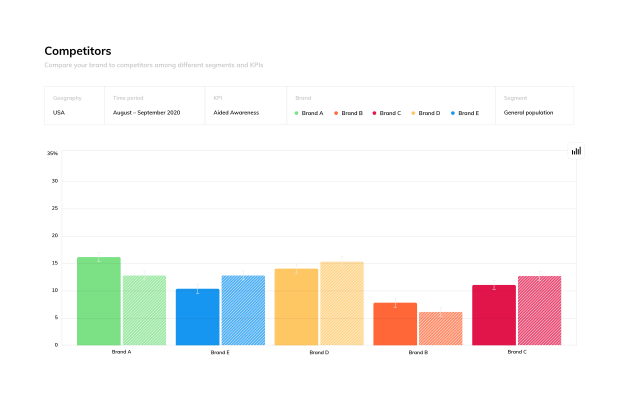\n\nThe brand tracking software you’ll encounter today is a new breed. Backed by research, technology, and the latest marketing practices, many tools have come a long way from the outdated methods of the past.\n\nThe key is to know what sets certain brand tracking software apart — what makes some options better than others. To help you make this judgment call, we’ve identified the top 5 characteristics trusted brand tracking software all have in common.\n\nSo, let’s discover how the right brand tracking software will look and how it will optimize your campaigns.\n\n### 1. Speedy Data Delivery\n\nIn the marketing world, time really is money. If it takes too long to learn about your target audience, you’re at risk of being left behind.\n\nUnfortunately, speed isn’t a priority for many brand tracking platforms. Just another cog in the marketing wheel, then end up slowing down your turnaround significantly. What’s the use of data if it takes 6+ months to get your results?\n\nAnd, after several months of waiting, how trustworthy are those results? As you know, audiences change quickly. A large gap in turnaround time leaves a lot of room for error.\n\nIf a brand tracking tool is taking months or longer to gather its data, it’s time to ask where that data is coming from. Either way, you likely can’t afford to lose that time. Just think of how it would negatively impact your marketing efforts?\n\n__What to look for?__ You need to find a brand tracking tool that promises (and delivers) timely delivery of data waves. That way, you can monitor your target audiences’ perception of your brand continually, without delay or interruption. \n\nAfter all, isn’t that the most core point of brand tracking software?\n\n### 2. Up-to-Date Delivery Methods\n\nWhen it comes to your data, delivery matters. If you can’t easily navigate your interface or understand your data, how can your team turn it into actionable insights? \n\nWith this in mind, it’s difficult to trust brand tracking software that delivers data in PDFs, [confusing spreadsheets](https://latana.com/post/brand-tracking-data-spreadsheets-campaigns/), Excel files, and so on. This type of delivery feels weirdly outdated in our hyper-digital world — where real-time platforms and [dynamic dashboards](https://latana.com/post/dynamic-dashboard-brand-insights/) are so commonplace.\n\nWouldn’t it be better if your data was delivered through an easy-to-navigate dashboard — something like Google Analytics? We thought so.\n\nMost importantly, t’s vital that your data is displayed in a way that everyone on your team can understand, as this leads to greater insights. That’s why it’s important to call into question outdated methods of data delivery, like PDFs and spreadsheets. \n\nWhile they might look impressive at first glance, there’s no substance underneath.\n\n__What to look for?__ As a brand manager on the hunt for a brand tracking solution, you need to be on the lookout for a tool that provides up-to-date delivery methods.\n\nFrom the tool’s dashboard to its overall interface, it’s crucial that you and your team can easily navigate and understand your data. Essentially, if they offer to send you a PDF of your insights, move on to the next option.\n\n### 3. Focus on the Right KPIs\n\nAs the saying goes, if it sounds too good to be true, that’s because it probably is. This rings especially true for brand tracking software.\n\nIn this day and age, we’re constantly being bombarded by ads for new software solutions and so-called “entrepreneurship gurus” who offer us the moon and stars. \n\nThey have the answers to all of our marketing problems… you just need to download 5 lead magnets, join 2 mailing lists, and sign up for a 10-year subscription. Then all of your problems will magically disappear overnight, right?\n\nWrong.\n\nHigh-quality brand tracking tools know that it’s essential to focus time and effort on the most important KPIs. By using [mobile-optimized brand surveys](https://latana.com/mobile-optimized-surveys/) that target your ideal audience members, it’s easier to gather the data you’re looking for with a tool like Latana.\n\nDon’t forget — branding is a marathon, not a sprint. You can’t ask your audience different questions a week or so apart and expect to receive groundbreaking insights. \n\nThink about a TV campaign. How can you measure the overall impact if you change your survey questions or methods every few weeks? You won’t be able to gather reliable data to monitor your KPIs. \n\nTV campaigns can take weeks — or even months — to create a noticeable impact on your target audience. You can’t expect reliable results by sending out a new [DIY survey](https://latana.com/post/survey-tools-brand-tracking/) every week.\n\n__What to look for?__ With brand tracking software, sometimes less is more. Instead of focusing on a tool that pushed vanity KPIs, find one that gathers data that actually matters to your marketing team — important KPIs like brand awareness, consideration, preference, [associations](https://latana.com/post/brand-association/), and more. \n\nFrom there, you can always expand as needed. But in the meantime, don’t become distracted by every shiny new KPI that’s dangled in front of you — they’re only distractions that drive you further from your real goals.\n\n### 4. Reliable Sampling Methods\n\nTraditional methods of survey research simply aren’t up to par these days. \n\nUsing outdated processes that involve collecting a sample from the general public, some brand tracking tools make conclusions about the opinions of specific niches from within that sample, based only on the answers given.\n\nWhile this might make sense at first glance, in actuality, you’re sacrificing research quality. Why is that? Because with traditional methods, the closer you zoom in to a specific audience niche, the lower the quality of your results. \n\nLet’s look at an example to see why [traditional brand tracking is often flawed](https://latana.com/post/issues-brand-tracking/). Say a new app launches a campaign targeting tech-savvy college students. To track whether this campaign is successful, they conduct a survey with a sample size of 1000 people.\n\nHerein lies the problem: Of those 1000 people, they determine 300 are college students and 400 are tech-savvy. Ultimately, only 40 are tech-savvy college students, aka their target niche.\n\nFrom this number, they might be able to claim that 30% of their target audience is aware of their brand. However, their small number of respondents makes this statistic unreliable. And the farther they go into more specific niches, the more challenging it is to accurately track.\n\nThat’s why, at Latana, we came up with a different approach. Instead of relying on the 40 individual tech-savvy college students within their sample, good brand tracking software should instead focus on respondent characteristics. \n\nThat’s exactly what we do here at Latana with a process known as [Multilevel Regression and Poststratification](https://latana.com/mrp/), or MRP. Boasting the ability to produce lower margins of error with deeper segmentation and more accurate data, MRP leads to more effective and reliable brand tracking results.\n\nAs the only brand tracking software currently using this groundbreaking technology, Latana is able to provide far more nuanced, insightful data to our clients. \n\n__What to look for?__ When searching for a brand tracking solution to help you better understand your target audience, you need to take sampling and data processing into account. \n\nTools that use outdated methods of sampling will provide unreliable results. You need to look for an option that uses the most cutting-edge technology to ensure you’ll get the data you need,\n\n### 5. Advanced Audience Segmentation Capabilities\n\nTraditional brand tracking software that relies on outdated sampling methods is also limited when it comes to [audience segmentation](https://latana.com/audience-segmentation/). Many such tools only allowed users to segment by basic demographics — such as age, gender, or location.\n\nThis led to lackluster results and audience insights.\nToday, brand tracking platforms like Latana give you the freedom to choose between hundreds of audience segmentation options. And more options mean more accurate results.\n\nFor example, let’s say you’re the brand manager of a maternity brand that targets first-time mothers. You need to be able to trust your brand tracking software to not only help you understand your niche target audience but also to help you monitor any changes. \n\nFor years, this simply wasn’t possible. But today, with the right tools, it’s become a reality.\n\n__What to look for?__ When considering which brand tracking tool to use, take a close look at their audience segmentation capabilities. If they don’t offer customization and accurate niche data, they aren’t the solution for you. \n\nWith a tool like Latana, you can rest assured that your customized target audience is truly at the center of your brand awareness campaigns. And that when exploring your data, you’ll be able to deep dive into the niches that matter. \n\nAfter all, you can’t afford to waste time or money on the wrong audience.\n\n## Final Thoughts \n\n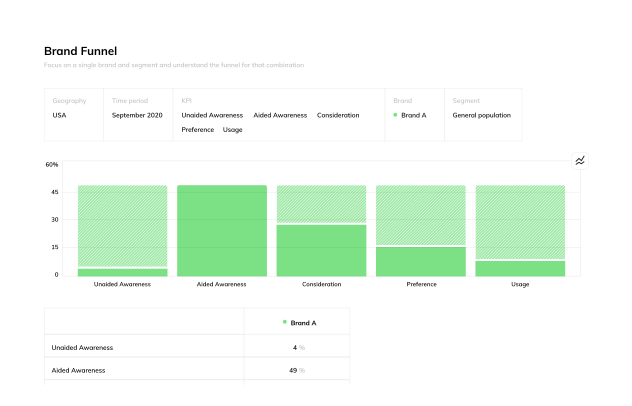\n\nWe’ve officially entered a “Brave New World” of brand tracking. Not only are companies of all shapes and sizes relying on brand tracking data to make smarter marketing decisions — it’s one of the best ways to get ahead in today’s competitive world\n\nTherefore, when choosing brand tracking software, you need to be mindful of the methods and techniques each tool uses. If you want to have access to real-time insights that matter to your business, keep our five top characteristics in mind.\n\nAnd in our opinion, whether you’re looking to [measure the performance of your offline campaigns](https://latana.com/post/offline-marketing-increase-brand-awareness-2019/), learn more about your target audience, or see how you stack up against the competition, Latana is the answer. \n\nRemember — brand tracking software is the best way to not only get the answers you’re looking for, but to then turn such information into actionable insights. \n\n---\n\nUpdated by: [Cory Schröder](https://latana.com/author/cory-schroder/) on 29.09.21"},"tags":["Brand Tracking"],"authorRef":{"slug":"sam","firstName":"Sam","lastName":"Tetrault","title":"Content Marketer & Freelance Writer","picture":{"__typename":"ContentfulAsset","id":"bb56ceb9-a813-5edc-85a6-facde71b8efe","description":"","title":"Latana Logo Author Photo","file":{"contentType":"image/png","url":"//images.ctfassets.net/7so8go2zrvbw/7qeUdZpRNeFZFTo0zIasKz/8d00318fb2f317950a2a2d6912eb28bf/Author_Latana__1_.png","details":{"image":{"width":235,"height":235}}},"gatsbyImageData":{"images":{"sources":[{"srcSet":"//images.ctfassets.net/7so8go2zrvbw/7qeUdZpRNeFZFTo0zIasKz/8d00318fb2f317950a2a2d6912eb28bf/Author_Latana__1_.png?w=235&h=235&q=95&fm=webp 235w","sizes":"100vw","type":"image/webp"}],"fallback":{"src":"//images.ctfassets.net/7so8go2zrvbw/7qeUdZpRNeFZFTo0zIasKz/8d00318fb2f317950a2a2d6912eb28bf/Author_Latana__1_.png?w=235&h=235&q=95&fm=png","srcSet":"//images.ctfassets.net/7so8go2zrvbw/7qeUdZpRNeFZFTo0zIasKz/8d00318fb2f317950a2a2d6912eb28bf/Author_Latana__1_.png?w=235&h=235&q=95&fm=png 235w","sizes":"100vw"}},"layout":"fullWidth","backgroundColor":"#080808","width":1,"height":1}}}}},{"node":{"publishDate":"2021-09-30T08:00+02:00","slug":"test-brand-marketing","author":"Maddie Duke","title":"How To Test If Your Brand Marketing Works","seo":{"__typename":"ContentfulSeo","title":"How to Test If Your Brand Marketing Works in 2022","description":"Brand managers: How do you know if your brand marketing is really going to improve your brand’s performance? Read about how to test your brand marketing in 2022.","noIndex":null,"ogImage":{"fluid":{"src":"//images.ctfassets.net/7so8go2zrvbw/28ObI3EucvDi3XE5mx3awv/5d7ddc07917d8de5df7056f77cb6d29a/Thumbnail_1000X709__1_.png?w=1200&h=675&q=90&fm=jpg"},"file":{"url":"//images.ctfassets.net/7so8go2zrvbw/28ObI3EucvDi3XE5mx3awv/5d7ddc07917d8de5df7056f77cb6d29a/Thumbnail_1000X709__1_.png"}}},"heroImage":{"__typename":"ContentfulAsset","id":"5ed9fe35-e966-517a-a7fa-453809e3dd98","description":"Image showing man testing on different devices","title":"Image showing man testing on different devices","file":{"contentType":"image/png","url":"//images.ctfassets.net/7so8go2zrvbw/28ObI3EucvDi3XE5mx3awv/5d7ddc07917d8de5df7056f77cb6d29a/Thumbnail_1000X709__1_.png","details":{"image":{"width":1000,"height":709}}},"gatsbyImageData":{"images":{"sources":[{"srcSet":"//images.ctfassets.net/7so8go2zrvbw/28ObI3EucvDi3XE5mx3awv/5d7ddc07917d8de5df7056f77cb6d29a/Thumbnail_1000X709__1_.png?w=200&h=142&q=95&fm=webp 200w,\n//images.ctfassets.net/7so8go2zrvbw/28ObI3EucvDi3XE5mx3awv/5d7ddc07917d8de5df7056f77cb6d29a/Thumbnail_1000X709__1_.png?w=400&h=284&q=95&fm=webp 400w,\n//images.ctfassets.net/7so8go2zrvbw/28ObI3EucvDi3XE5mx3awv/5d7ddc07917d8de5df7056f77cb6d29a/Thumbnail_1000X709__1_.png?w=800&h=567&q=95&fm=webp 800w","sizes":"(min-width: 800px) 800px, 100vw","type":"image/webp"}],"fallback":{"src":"//images.ctfassets.net/7so8go2zrvbw/28ObI3EucvDi3XE5mx3awv/5d7ddc07917d8de5df7056f77cb6d29a/Thumbnail_1000X709__1_.png?w=800&h=567&q=95&fm=png","srcSet":"//images.ctfassets.net/7so8go2zrvbw/28ObI3EucvDi3XE5mx3awv/5d7ddc07917d8de5df7056f77cb6d29a/Thumbnail_1000X709__1_.png?w=200&h=142&q=95&fm=png 200w,\n//images.ctfassets.net/7so8go2zrvbw/28ObI3EucvDi3XE5mx3awv/5d7ddc07917d8de5df7056f77cb6d29a/Thumbnail_1000X709__1_.png?w=400&h=284&q=95&fm=png 400w,\n//images.ctfassets.net/7so8go2zrvbw/28ObI3EucvDi3XE5mx3awv/5d7ddc07917d8de5df7056f77cb6d29a/Thumbnail_1000X709__1_.png?w=800&h=567&q=95&fm=png 800w","sizes":"(min-width: 800px) 800px, 100vw"}},"layout":"constrained","backgroundColor":"#380868","width":800,"height":567}},"coverImage":{"__typename":"ContentfulAsset","id":"e02dd6f4-2995-5072-afbd-138886a1a800","description":"Image showing man testing brand marketing","title":"Image showing man testing brand marketing","file":{"contentType":"image/png","url":"//images.ctfassets.net/7so8go2zrvbw/1JgJmZtgxk05vpGblZNRwJ/aec0b9f88d7d7e37b6a06d3bed069b9b/Blog_Cover_1288X400__4_.png","details":{"image":{"width":1288,"height":400}}},"gatsbyImageData":{"images":{"sources":[{"srcSet":"//images.ctfassets.net/7so8go2zrvbw/1JgJmZtgxk05vpGblZNRwJ/aec0b9f88d7d7e37b6a06d3bed069b9b/Blog_Cover_1288X400__4_.png?w=750&h=233&q=95&fm=webp 750w,\n//images.ctfassets.net/7so8go2zrvbw/1JgJmZtgxk05vpGblZNRwJ/aec0b9f88d7d7e37b6a06d3bed069b9b/Blog_Cover_1288X400__4_.png?w=1080&h=335&q=95&fm=webp 1080w,\n//images.ctfassets.net/7so8go2zrvbw/1JgJmZtgxk05vpGblZNRwJ/aec0b9f88d7d7e37b6a06d3bed069b9b/Blog_Cover_1288X400__4_.png?w=1288&h=400&q=95&fm=webp 1288w","sizes":"100vw","type":"image/webp"}],"fallback":{"src":"//images.ctfassets.net/7so8go2zrvbw/1JgJmZtgxk05vpGblZNRwJ/aec0b9f88d7d7e37b6a06d3bed069b9b/Blog_Cover_1288X400__4_.png?w=1288&h=400&q=95&fm=png","srcSet":"//images.ctfassets.net/7so8go2zrvbw/1JgJmZtgxk05vpGblZNRwJ/aec0b9f88d7d7e37b6a06d3bed069b9b/Blog_Cover_1288X400__4_.png?w=750&h=233&q=95&fm=png 750w,\n//images.ctfassets.net/7so8go2zrvbw/1JgJmZtgxk05vpGblZNRwJ/aec0b9f88d7d7e37b6a06d3bed069b9b/Blog_Cover_1288X400__4_.png?w=1080&h=335&q=95&fm=png 1080w,\n//images.ctfassets.net/7so8go2zrvbw/1JgJmZtgxk05vpGblZNRwJ/aec0b9f88d7d7e37b6a06d3bed069b9b/Blog_Cover_1288X400__4_.png?w=1288&h=400&q=95&fm=png 1288w","sizes":"100vw"}},"layout":"fullWidth","backgroundColor":"#380868","width":1,"height":0.3105590062111801}},"description":{"description":"Brand managers: How do you know if your brand marketing is really going to improve your brand’s performance? Read about how to test your brand marketing in 2022."},"content":{"content":"You spend months planning, consulting, strategizing, and carefully allocating your budget until finally, you and your team execute a [brand marketing campaign](https://latana.com/post/why-brand-marketing-is-a-must/) that you believe will help you reach your brand objectives. \n\nCome next quarter, you discover that your brand is performing much the same — or perhaps even worse than before! You realize your messaging didn’t have its intended effect. You’ve either reached the wrong audience — [or offended the right one](https://latana.com/post/cultural-differences-brand-campaign/) — creating undesired associations and negative sentiment for your brand.\n\nThere’s nothing more frustrating than realizing your time and resources went to waste on brand marketing that didn’t achieve your goals. Or perhaps there is — having to [explain to your boss just what went awry](https://latana.com/post/prove-brand-performance/)!\n\nThankfully, there are ways to test how your brand marketing is performing and be able to easily [share your success with relevant stakeholders](https://latana.com/how-to-share-insights-so-stakeholders-pay-attention/). In this article, we'll take a look at some of these options to help you understand which might be best for your brand — and stop you from throwing money away on brand marketing campaigns that aren't working.\n\n## Why Test Your Brand Marketing in 2022?\n\n\n\nMarketing budgets have hit a low recently, with the average having fallen from [11.6% to 6.4% of total revenue in 2021](https://www.gartner.com/en/marketing/research/annual-cmo-spend-survey-research). Therefore, marketing and brand managers need to be more scrupulous than ever when it comes to allocating their budget — ensuring every cent spent has a good chance of delivering results. \n\nA brand marketing campaign that doesn’t perform could mean significant marketing spend is wasted. Even worse, if it damages your brand’s existing performance, you’re faced with decisions about how to best recover — further chewing into a shrinking budget. \n\nHowever, by testing brand marketing campaigns, you can avoid wasting team resources on ineffective or misguided efforts. After all, time is as valuable as money. \n\nOne of the most important things testing allows you to do — though it's not often the most considered — is that it provides the opportunity to optimize your brand marketing specifically to your target audience. Doing so can help you reduce the risk and impact of getting it wrong when building your brand. \n\nTesting also provides you with opportunities to learn [more about your target audience](https://latana.com/post/target-audience-improve-brand-awareness/). You can never know the profiles too well. By testing how they perceive your campaign, as well as your products and services, there’s always a chance you'll gain new insights into [how a particular segment views the world around them](https://latana.com/post/brands-psychographic-segmentation/).\n\nReady to get testing? Almost. Before looking at how to test brand marketing, let’s look at what successful brand marketing might look like for your company.\n\n## What Should You Measure?\n\n\n\nUnlike some other marketing activities, brand marketing doesn’t always have clear and obvious performance indicators. So, what should you be paying attention to?\n\nBrand marketing is focused on building and maintaining brand equity, brand awareness, and brand recognition, as well as reputation, trust, and visibility. Some common brand performance metrics that give an indication of how your brand is performing include:\n\n- __[Brand Awareness](https://latana.com/topics-brand-awareness/)__: Can people recall your brand with or without a prompt?\n- __[Brand Understanding](https://latana.com/post/how-to-track-brand-understanding/)__: Do consumers really understand which industry your brand is in and what it is you offer?\n- __[Brand Consideration and Preference](https://latana.com/post/brand-consideration-preference-center-of-brand-funnel/)__: How many people consider your brand or prefer it over others?\n- __[Brand Associations](https://latana.com/post/brand-association/) and Sentiment__: How do people feel about your brand? When people think of your brand, what qualities or characteristics come to mind?\n- __[Customer Lifetime Value](https://latana.com/post/customer-lifetime-value-is-important/) (CLV)__: What is the total amount of money a customer is expected to spend on your products or brand during their lifetime?\n\nRemember, this is just a taster of what you can test/measure. Your specific brand marketing goals will be unique to your company, your audiences, and your branding objectives. \n\nFor example, brand marketing for a new product or brand will likely be focused on building awareness, while a rebrand or [refresh](https://latana.com/post/what-is-a-brand-refresh-and-do-you-need-one/) might be aimed more at influencing a change in sentiment and tweaking brand identity. Naturally, your brand marketing strategy will be designed to achieve these specific goals. \n\nTherefore, when testing a brand campaign, you’ll want to test for the metrics that are the most relevant indicators to your objectives. But how do we get that information before signing off on a campaign and sending it out into the world?\n\n## How To Test Your Brand Marketing\n\nHindsight is a wonderful thing! It’s much easier to assess how a brand marketing campaign is performing once it's been fully executed than it is to predict and anticipate how it will perform before it’s been launched. \n\nSurveys and focus groups are great methods for testing how a particular campaign might impact an audience prior to its launch. Additionally, A/B testing and advanced brand tracking allow you to test a live campaign and optimize it before investing more into it. \n\nBelow you'll find a few different ways of testing. Read on to determine which works best for your brand.\n\n### 1. Surveys\n\n[Surveys](https://latana.com/post/survey-tools-brand-tracking/) are one of the most inexpensive ways to gain insights from your target demographic about how they feel about your brand and competitors. In fact, [almost 80% of growth organizations](https://www.gartner.com/en/newsroom/press-releases/2020-03-31-gartner-says-growth-companies-are-more-actively-collecting-customer-experience-data-than-nongrowth-companies) use surveys to collect customer experience data.\n\nYou can reach out to existing customers or other people in your demographic to ask what they think of specific brand campaign elements, testing how well it resonates and whether or not it creates the desired effect.\n\nA basic survey is quick to set up, as well as easy and affordable to distribute to large numbers of respondents than other options — quickly delivering insights and trends about how people feel about a certain aspect of your brand marketing campaign. \n\nSurveys can include open-ended questions, which help to garner deeper insights, or predefined questions such as multiple-choice, rating scales, ranking questions, or Likert scale questions. Online surveys allow you to gather data from anywhere in the world, no matter how remote and widespread your target audiences might be.\n\nHowever, brand managers need to be aware of the risk involved in DIY surveys. Without the proper set-up, you may end up generating inaccurate data by using confusing or misleading questions or failing to provide the answer choices that reflect the way the survey respondent feels. Make your survey too long and respondents may experience survey fatigue — which could lead to response bias, skipped questions, or higher drop-off rates, giving you incomplete data.\n\nIt can also be difficult to reach enough qualified respondents to build a sample size big enough to give a realistic representation of your audience segments. Remember, [data quality](https://latana.com/post/why-data-quality-is-make-or-break-for-growing-brands/) is a major key to success — especially for growing brands.\n\nHubspot and Delighted are both examples of survey software that allow you to create and customize questions, as well as gather and report response data. Depending on your needs, survey software plans range from around $35 up to around $500 USD per month.\n\n### 2. Focus Groups and Interviews\n\nGathering people together to discuss ideas and gather feedback is still a solid way to dive deeper into a topic. Focus groups can help you collect qualitative data about how your brand marketing ideas will be perceived and what sort of impact they’ll have on your target audience. \n\nUnlike surveys, the interactive nature of focus groups and interviews allow you to probe deeper into the responses given, delving into aspects of your brand campaign that you hadn’t considered before a product launch.\n\nIf, for example, you’re developing a new brand logo, you can present different designs to a focus group of relevant people and ask which ones are more attractive and why. The personal interaction of focus groups and one-on-one interviews allows you to observe reactions and responses as well as listen to what’s explicitly said. \n\nAllowing participants to answer questions in their own words offers more complex information than what a multiple choice or written survey might.\n\nIf, in the logo example, participants found most of the designs to be unappealing, you may uncover through further, unplanned questioning that your audience is particularly resistant to change — or that there are some very strong and specific feelings held around your old logo. \n\nYou then have the opportunity to assess the risk of alienating your audience with the change, or whether you’ll need to focus your campaign on nurturing audiences in order to foster acceptance. You may even find that there’s a new segment or opportunity in learning about the legacy of the brand in consumers’ minds.\n\nYou may choose to run focus groups or interviews via an agency, with professional moderators, or run one yourself to attempt to save some costs. Focus groups can cost anywhere [between a few thousand to over $10,000](https://www.driveresearch.com/market-research-company-blog/how-much-does-a-focus-group-cost-focus-groups-syracuse-ny/), depending on factors such as whether you need help sourcing participants, whether you need to hire a venue, and how many attendees you need for how long. \n\nHowever, it's important to make sure you have an appropriate sample size (three groups of 6-10 people is a good start) and participants who represent relevant profiles to your brand, or else you’ll undertake a costly exercise without generating strong enough insights. \n\n### 3. A/B Testing\nA/B testing is another effective method for finding out which version of a brand marketing element performs better — which allows you to refine different aspects of a campaign. \n\nA/B testing is not only useful to test possible brand marketing campaign elements prior to a full campaign launch, but also to optimize a campaign at any point in time once a campaign is running.\n\nTo conduct an A/B test, you run two variants of a campaign element, with one aspect changed, and collect data on performance. You can then implement the variant that achieved a better result. \n\nFor example, two different variants of the same campaign might contain all the same imagery, with different ad copy. You’ll be able to see which ad copy resonates better among various real audiences. \n\nMost marketing software has some level of built-in A/B testing functionality that uses AI to measure and optimize your brand campaigns. You could also incorporate A/B testing in other testing methodologies like surveys and focus groups.\n\n### 4. Advanced Brand Tracking\n\n\n\nEmerging technologies like AI and machine learning have enabled us to gather and analyze consumer data in new ways. Advanced brand tracking helps companies track key brand KPIs across different target audience segments to determine how their campaigns are making an impact. \n\nIt can be used to gain a comprehensive picture of your [brand health](https://latana.com/post/brand-health-metrics/) before, during, and after a brand marketing campaign — providing detailed, nuanced insights into brand performance. \n\nAlthough brand tracking won’t allow you to test how a brand marketing campaign will perform prior to its launch, it has some other advantages. With [brand monitoring software](https://latana.com/product/) from Latana, you can build and track custom target audiences and segmentations, allowing you to monitor the impact your brand marketing has on niche audiences that are most important to your brand. \n\nThanks to AI-powered algorithms that enhance the data that’s collected, brand tracking generates accurate insights that you can confidently use to make data-driven brand marketing decisions.\n\nBy consistently tracking how consumers perceive your brand, you can easily measure and benchmark your key brand metrics over time, and continuously refine, iterate, and optimize your brand marketing strategy.\n\n## Share The Results\n\nThere’s not much point in testing if you’re not making good use of the results. Once you’ve applied what you’ve learned to the relevant aspects of your brand marketing campaign, make sure to share and allow these findings to inform future campaigns and other areas of your business. \n\nIf, after testing, you realize that the ad copy used in your brand awareness campaign is likely to cause confusion and dilute the brand message, don’t just change the ad copy and move on. \n\nShare the test results with other members of the branding and marketing team, and check for any other potential issues with confusion. Is confusing language used in any other brand touchpoints? Do you need to update other elements such as landing pages, emails, or product campaigns?\n\nAllow these insights to inform future campaigns, too. If you discovered that one particular [audience segmentation](https://latana.com/audience-segmentation/) tends to engage more with humor, consider how you could incorporate humor into future brand campaigns targeting that segment. \n\nShare findings among team members who contribute to brand campaign ideation and development and may not otherwise be aware of what performs better, such as designers, copywriters, or creative agencies. \n\nGetting accurate results is one thing, but what you do with it is just as essential. Saving and sharing test data will allow your knowledge to grow, improving brand marketing over the long term.\n\n## Final Thoughts\n\nWhile surveys and focus groups can be helpful in the development and pre-launch phase of your brand marketing, A/B testing and advanced brand tracking are essential to consistently monitor and optimize your campaign — even after it’s gone live. \n\nEach of these methods can be helpful in testing the effectiveness of your brand marketing and gaining new insights that allow you to understand your audience and improve your message. Of course, the more time and money you can spend on testing, the more reliable your results will be.\n\nKeep in mind that brand marketing is a long-term strategy that includes your brand at every touchpoint of your business. Measuring the impact of a brand campaign over a longer period of time that allows for natural peaks, falls, and anomalies are essential to truly get an understanding of whether your brand marketing is working."},"tags":["Brand Marketing","Brand Strategy"],"authorRef":{"slug":"maddie-duke","firstName":"Maddie","lastName":"Duke","title":"Freelance Marketer","picture":{"__typename":"ContentfulAsset","id":"65901de7-355f-5f2e-9afc-385164b94bae","description":"","title":"Maddie Duke","file":{"contentType":"image/png","url":"//images.ctfassets.net/7so8go2zrvbw/1qNUFRwb4TLmuiGH10JDui/9824682cacd443a03bc5e15e39fe2582/Author_Maddie.png","details":{"image":{"width":235,"height":235}}},"gatsbyImageData":{"images":{"sources":[{"srcSet":"//images.ctfassets.net/7so8go2zrvbw/1qNUFRwb4TLmuiGH10JDui/9824682cacd443a03bc5e15e39fe2582/Author_Maddie.png?w=235&h=235&q=95&fm=webp 235w","sizes":"100vw","type":"image/webp"}],"fallback":{"src":"//images.ctfassets.net/7so8go2zrvbw/1qNUFRwb4TLmuiGH10JDui/9824682cacd443a03bc5e15e39fe2582/Author_Maddie.png?w=235&h=235&q=95&fm=png","srcSet":"//images.ctfassets.net/7so8go2zrvbw/1qNUFRwb4TLmuiGH10JDui/9824682cacd443a03bc5e15e39fe2582/Author_Maddie.png?w=235&h=235&q=95&fm=png 235w","sizes":"100vw"}},"layout":"fullWidth","backgroundColor":"#080808","width":1,"height":1}}}}},{"node":{"publishDate":"2022-07-05T07:00+02:00","slug":"in-game-advertising-2022","author":"Michael Metcalf","title":"Will In-Game Advertising Explode in 2022? ","seo":{"__typename":"ContentfulSeo","title":" Will In-Game Advertising Explode in 2022?","description":"In-game advertising is a growing industry — and smart brands should consider trying it out sooner rather than later. Want to know why? All the answers are here.","noIndex":null,"ogImage":{"fluid":{"src":"//images.ctfassets.net/7so8go2zrvbw/7arpIRmYgNJqQny4KXxzCI/83664001932dc41484cb0b4e14e6aee6/Blog_SEO-Thumbnail_1000X709_-_2022-06-23T102853.037.png?w=1200&h=675&q=90&fm=jpg"},"file":{"url":"//images.ctfassets.net/7so8go2zrvbw/7arpIRmYgNJqQny4KXxzCI/83664001932dc41484cb0b4e14e6aee6/Blog_SEO-Thumbnail_1000X709_-_2022-06-23T102853.037.png"}}},"heroImage":{"__typename":"ContentfulAsset","id":"e5859770-4ba7-53fe-b8be-73325e6fa31d","description":"","title":"Illustration of computer screens with ads (thumbnail)","file":{"contentType":"image/png","url":"//images.ctfassets.net/7so8go2zrvbw/7arpIRmYgNJqQny4KXxzCI/83664001932dc41484cb0b4e14e6aee6/Blog_SEO-Thumbnail_1000X709_-_2022-06-23T102853.037.png","details":{"image":{"width":1000,"height":709}}},"gatsbyImageData":{"images":{"sources":[{"srcSet":"//images.ctfassets.net/7so8go2zrvbw/7arpIRmYgNJqQny4KXxzCI/83664001932dc41484cb0b4e14e6aee6/Blog_SEO-Thumbnail_1000X709_-_2022-06-23T102853.037.png?w=200&h=142&q=95&fm=webp 200w,\n//images.ctfassets.net/7so8go2zrvbw/7arpIRmYgNJqQny4KXxzCI/83664001932dc41484cb0b4e14e6aee6/Blog_SEO-Thumbnail_1000X709_-_2022-06-23T102853.037.png?w=400&h=284&q=95&fm=webp 400w,\n//images.ctfassets.net/7so8go2zrvbw/7arpIRmYgNJqQny4KXxzCI/83664001932dc41484cb0b4e14e6aee6/Blog_SEO-Thumbnail_1000X709_-_2022-06-23T102853.037.png?w=800&h=567&q=95&fm=webp 800w","sizes":"(min-width: 800px) 800px, 100vw","type":"image/webp"}],"fallback":{"src":"//images.ctfassets.net/7so8go2zrvbw/7arpIRmYgNJqQny4KXxzCI/83664001932dc41484cb0b4e14e6aee6/Blog_SEO-Thumbnail_1000X709_-_2022-06-23T102853.037.png?w=800&h=567&q=95&fm=png","srcSet":"//images.ctfassets.net/7so8go2zrvbw/7arpIRmYgNJqQny4KXxzCI/83664001932dc41484cb0b4e14e6aee6/Blog_SEO-Thumbnail_1000X709_-_2022-06-23T102853.037.png?w=200&h=142&q=95&fm=png 200w,\n//images.ctfassets.net/7so8go2zrvbw/7arpIRmYgNJqQny4KXxzCI/83664001932dc41484cb0b4e14e6aee6/Blog_SEO-Thumbnail_1000X709_-_2022-06-23T102853.037.png?w=400&h=284&q=95&fm=png 400w,\n//images.ctfassets.net/7so8go2zrvbw/7arpIRmYgNJqQny4KXxzCI/83664001932dc41484cb0b4e14e6aee6/Blog_SEO-Thumbnail_1000X709_-_2022-06-23T102853.037.png?w=800&h=567&q=95&fm=png 800w","sizes":"(min-width: 800px) 800px, 100vw"}},"layout":"constrained","backgroundColor":"#281858","width":800,"height":567}},"coverImage":{"__typename":"ContentfulAsset","id":"81bbab2a-7410-5864-82ab-2055ec2329cb","description":"","title":"Illustration of computer screens with ads (cover image)","file":{"contentType":"image/png","url":"//images.ctfassets.net/7so8go2zrvbw/2eaNTMKU6Ad7m1b7spHp7p/9f230be42d9316e1fc1ad953f4d66962/Blog_Cover_1288X400_-_2022-06-23T102857.208.png","details":{"image":{"width":1288,"height":400}}},"gatsbyImageData":{"images":{"sources":[{"srcSet":"//images.ctfassets.net/7so8go2zrvbw/2eaNTMKU6Ad7m1b7spHp7p/9f230be42d9316e1fc1ad953f4d66962/Blog_Cover_1288X400_-_2022-06-23T102857.208.png?w=750&h=233&q=95&fm=webp 750w,\n//images.ctfassets.net/7so8go2zrvbw/2eaNTMKU6Ad7m1b7spHp7p/9f230be42d9316e1fc1ad953f4d66962/Blog_Cover_1288X400_-_2022-06-23T102857.208.png?w=1080&h=335&q=95&fm=webp 1080w,\n//images.ctfassets.net/7so8go2zrvbw/2eaNTMKU6Ad7m1b7spHp7p/9f230be42d9316e1fc1ad953f4d66962/Blog_Cover_1288X400_-_2022-06-23T102857.208.png?w=1288&h=400&q=95&fm=webp 1288w","sizes":"100vw","type":"image/webp"}],"fallback":{"src":"//images.ctfassets.net/7so8go2zrvbw/2eaNTMKU6Ad7m1b7spHp7p/9f230be42d9316e1fc1ad953f4d66962/Blog_Cover_1288X400_-_2022-06-23T102857.208.png?w=1288&h=400&q=95&fm=png","srcSet":"//images.ctfassets.net/7so8go2zrvbw/2eaNTMKU6Ad7m1b7spHp7p/9f230be42d9316e1fc1ad953f4d66962/Blog_Cover_1288X400_-_2022-06-23T102857.208.png?w=750&h=233&q=95&fm=png 750w,\n//images.ctfassets.net/7so8go2zrvbw/2eaNTMKU6Ad7m1b7spHp7p/9f230be42d9316e1fc1ad953f4d66962/Blog_Cover_1288X400_-_2022-06-23T102857.208.png?w=1080&h=335&q=95&fm=png 1080w,\n//images.ctfassets.net/7so8go2zrvbw/2eaNTMKU6Ad7m1b7spHp7p/9f230be42d9316e1fc1ad953f4d66962/Blog_Cover_1288X400_-_2022-06-23T102857.208.png?w=1288&h=400&q=95&fm=png 1288w","sizes":"100vw"}},"layout":"fullWidth","backgroundColor":"#281858","width":1,"height":0.3105590062111801}},"description":{"description":"In-game advertising is a growing industry — and smart brands should consider trying it out sooner rather than later. Want to know why? All the answers are here."},"content":{"content":"Product placement in films and TV has been around for decades. But video games don't always get included in the same conversations.\n\nThis seems like a missed opportunity for marketers. The [gaming industry](https://latana.com/post/gaming-industry-branding/) is huge, with around 2.5 billion people across the world playing some form of video game. The worldwide gaming market is set to [reach $260 billion in the next few years](https://techjury.net/blog/gaming-industry-worth/) — that's an awful lot of time and attention spent by consumers across the world.\n\nSo if you're a marketer and you've never considered advertising in games, you're missing out. Even if your brand isn't tech-related at all.\n\nThe wide world of IGA (in-game advertising) consists of virtual billboards to entire branded digital experiences. So below, we'll take a look at how in-game advertising actually works, and what you need to know if you're thinking of running in-game campaigns for your own brand.\n\n## The Rich History of Gaming and Advertising\n\nThe convergence of gaming and advertising is not particularly new.\n\nBack in 1993, Cool Spot was released for the Sega Mega Drive. In it, you played as a personification of the red dot from the 7UP logo. Games have had a long history of film tie-ins, too — from [the infamous E.T.](https://en.wikipedia.org/wiki/E.T._the_Extra-Terrestrial_(video_game)) to the mega-popular Lego Star Wars games.\n\n[Alan Wake](https://en.wikipedia.org/wiki/Alan_Wake#Product_placement), the 2010 cult horror hit, followed an author's descent into madness in a small Pacific Northwest town. When darkness falls, monsters come out to get Mr. Wake, but he defends himself with the beam of a flashlight — powered, quite clearly, by Energizer batteries.\n\n\nSource: [Alan Wake II](https://www.alanwake.com/de/story/aufwachen-alan-alan-wake-2/)\n\nWhile it wasn't the first game to feature in-game ads (that honor goes to 1978's text-based microcomputer release, [Adventureland](https://en.wikipedia.org/wiki/Adventureland_(video_game)), it did [spark fierce conversation about what constitutes an appropriate in-game ad](https://www.popmatters.com/126254-alan-wake-and-the-proper-use-of-product-placement-2496187359.html). Since then, we've seen the in-game ad landscape mature into a widely-accepted and highly effective form of brand-building.\n\nNow, you're just as likely to see a Mercedes billboard in a racing game as you are a Marvel character in [Fortnite](https://www.polygon.com/2019/5/23/18635920/fortnite-jumpman-john-wick-marvel-brand-advertisement). While gamers do have limits to what they'll deem appropriate, most now accept ads as a natural part of many gaming experiences.\n\nIf you're a marketer, the enormous variety of game worlds and genres means there's plenty of opportunities to find appropriate placements for your ads.\n\n## The State of In-Game Advertising in 2022\n\n\n\nThe games industry itself shows no sign of slowing down.\n\nIn mid-2022, amidst economic fears and increasing talk of a recession, VC firm Andreessen Horowitz chose the path of optimism by [announcing a $600m fund for gaming](https://www.gamesindustry.biz/articles/2022-05-19-andreessen-horowitz-launches-usd600m-vc-fund-for-games). Its announcement stated that \"Games Fund One is founded on the belief that games will play a pivotal role in defining how we socialise, play, and work over the next century.\"\n\nThis comes a few months after games publisher Activision Blizzard — of World of Warcraft & Call of Duty fame — was [acquired by Microsoft](https://www.theverge.com/2022/1/18/22889258/microsoft-activision-blizzard-xbox-acquisition-call-of-duty-overwatch) for an eye-watering $68.7 billion.\n\nAs for the in-game advertising market, the industry itself isn't widely tracked, so you have to look at individual firms to get a grasp of its scale. Unity, the software engine that many modern games are made with, [brought in $184 million in Q1 2022](https://www.fool.com/investing/2022/05/21/unity-software-growth-slowdown-permanent-problem/) from its Operate platform — which helps developers serve ads within their games. This is a 26% year-on-year increase.\n\nWe're likely to see much more [metaverse branding](https://latana.com/post/branding-in-the-metaverse/) as that sector matures, too. While it's certainly uncharted territory, this part of game advertising is gaining pace rapidly. WPP, the world's largest ad agency, recently [partnered with Epic Games](https://finance.yahoo.com/news/wpp-epic-games-partner-accelerate-130000097.html) to help their agencies deliver a new era of digital experiences for brands in the metaverse.\n\nThe “metaverse” is essentially a type of virtual experience focused on immersive worlds. With infinite virtual real estate to be created, there are plenty of opportunities for advertising — but, with so many options out there, earning people's attention might not be the easiest task.\n\n## How Does In-Game Advertising Work?\n\nThere's a surprising amount of different ways that ads can work in games. Some of the ways you can advertise to customers while they play games are in the following ad formats:\n\n- __Product placement__: Just like in movies and TV, [product placement](https://latana.com/post/does-brand-product-placement-in-films-work/) can make for a natural ad slot within a familiar environment. It might not work in fantasy games for example, but it's not a stretch to imagine Sonic the Hedgehog wearing a pair of Air Jordans.\n\n- __Banner ads__: These are most common in free-to-play mobile games. They overlap a portion of the screen during gameplay.\n\n- __Interstitial ads__: These take over the screen when the game is paused between levels, usually for a set amount of time before allowing the player to continue.\n\n- __Rewarding ads__: Ads that reward the player with in-game items or currency for watching or interacting with them.\n\n- __Dynamic ads__: Actual banners and billboards in virtual environments that can be updated and changed at any time. Great for racing and sports games.\n\n- __Brand partnerships__: Any form of sponsored content within a game that creates new gameplay opportunities.\n\nThat last one is one of the more interesting and relevant examples for modern brands — even ones that don't have an immediate connection with gaming. Let's look at one of the current masters of virtual brand partnerships: Rocket League.\n\n## Rocket League: Helping Brands Score More Goals\n\nRocket League is a competitive e-sport soccer game in which you control a flying RC car. It's been played by tens of millions of gamers across consoles and PC over the last five years — and is owned by Epic Games, the makers of billion-dollar sensation Fortnite.\n\nRocket League is frequently updated with brand tie-ins that are much more substantial than mere ads.\n\nDuring the Superbowl week, the game partnered with the NFL to run a limited-time “gridiron” game mode. Instead of using your rocket cars to kick a ball into the net, you'd carry it and throw quarterback-style passes to your teammates chasing a touchdown. You could also decorate your cars to show your support for whichever NFL team you followed.\n\n\n\nTake a look at their [partnership with Dacia](https://www.thedrum.com/news/2022/06/03/how-dacia-s-driving-electric-vehicle-sales-rocket-league), the car manufacturer.\n\nPromoting its new range of “Spring” electric vehicles, Dacia appeared in Rocket League with a sponsored tournament and the Dacia *Spring Electric Challenge Map*, an entire gameplay arena 100x larger than any previously available ones. It was free for gamers to play and was created in partnership with the game's community. The arena was designed to give gamers a tour around an electric-powered virtual town and play with electric-themed vehicles — highlighting the values of Dacia's own *Spring* car and brand.\n\nThis partnership didn't just get exposure to those that played the arena. It was also visible to the viewers of participating streamers, including one with 1.4 million followers. (Streamers are a key entry point into the gaming community, and the streaming world is a very brand partnership-friendly environment).\n\nWhat Rocket League is doing should give you an idea of the depth of what 'game advertising' really is; the scope of it is really only limited by your imagination.\n\n## What to Know Before Considering In-Game Advertising\n\n\n\n### 1. Proper segmentation is crucial.\n\nIn-game ads reward specificity, so you need to get specific with who you're advertising to.\n\nIn [an article for *The Drum*](https://www.thedrum.com/news/2022/05/17/brands-are-still-unsure-about-advertising-games-here-s-how-change-their-minds), Malcolm Poynton notes that explaining ad opportunities in gaming is like \"describing the world, only with fewer people\". Essentially, the world of gaming is so huge — you can't just decide to run some game ads and hope it works.\n\nYou still have to understand your [audience segmentation](https://latana.com/audience-segmentation/), where they are in the brand awareness funnel, where they hang out, how they consume information, and what KPIs you want to measure from your campaign activities.\n\n“Gamer” is an identity, yes, but it's about as vague as “mom” or “professional”. It's a start, but it's nowhere near specific enough to claim as your target demographic. Gamers these days can be 5 years old or 85, of any gender, ethnicity, ability, or preference.\n\n### 2. Choose your partners carefully.\n\nIt's unlikely that you'll be able to make games or interactive assets yourself. You'll need to partner with a game advertising agency or syndication network — which should be able to liaise with game publishers to find you the best opportunities and execute them.\n\nCompanies like [Bidstack](https://www.bidstack.com/) and [Anzu](https://www.anzu.io/) run platforms that deliver in-game advertising without disrupting the playing experience. In virtual worlds, dynamic ads are fairly simple in nature and can be customized depending on the player's profile.\n\nYou might also find there's a specific gaming brand that you'd love to work with. Why not reach out directly to their publisher and explore how you might forge a partnership?\n\n### 3. Get creative if you want to stand out.\n\nThere's no reason that the traditional style of display advertising won't be a great match for your brand. Dynamic ad networks are growing in popularity, and you could always try some smaller campaigns with those if you want to dip your toes into the game advertising world.\n\nBut there's opportunity for so much more. You could create a virtual world of your own or make your brand mascot a playable character in a game. You could launch virtual versions of your own products or sponsor an item that gives players an advantage in a competitive arena. \n\nHowever, you have to be sensitive about it (don't force your brand into somewhere it won't be appreciated) and data-driven. But if you get it right, you could make a huge splash with a gaming collaboration.\n\n## Final Thoughts\n\nThese options and more are something you'll want to explore with partners, as we mentioned above, but interactive, in-game digital campaigns could be an inspiring way for consumers to forge a connection with your brand.\n\nRemember that, whatever you can imagine — in the virtual world, it can be built. So if in-game advertising sounds like something your brand would like to try, do your research, keep our tips in mind, and give it a go. It could be what launches your brand to new heights!\n"},"tags":["Brand Marketing","Brand Strategy"],"authorRef":{"slug":"michael","firstName":"Michael","lastName":"Metcalf","title":"Content Strategist & Freelance Writer","picture":{"__typename":"ContentfulAsset","id":"3f6adeeb-dc2e-5436-a714-6ae63189be0c","description":"","title":"Michael Metcalf Photo","file":{"contentType":"image/png","url":"//images.ctfassets.net/7so8go2zrvbw/6yX4zD1C6Ubd02p1rJh3NZ/863cebf6906275bfe571d516ef46a2e3/Author_Michael.png","details":{"image":{"width":235,"height":235}}},"gatsbyImageData":{"images":{"sources":[{"srcSet":"//images.ctfassets.net/7so8go2zrvbw/6yX4zD1C6Ubd02p1rJh3NZ/863cebf6906275bfe571d516ef46a2e3/Author_Michael.png?w=235&h=235&q=95&fm=webp 235w","sizes":"100vw","type":"image/webp"}],"fallback":{"src":"//images.ctfassets.net/7so8go2zrvbw/6yX4zD1C6Ubd02p1rJh3NZ/863cebf6906275bfe571d516ef46a2e3/Author_Michael.png?w=235&h=235&q=95&fm=png","srcSet":"//images.ctfassets.net/7so8go2zrvbw/6yX4zD1C6Ubd02p1rJh3NZ/863cebf6906275bfe571d516ef46a2e3/Author_Michael.png?w=235&h=235&q=95&fm=png 235w","sizes":"100vw"}},"layout":"fullWidth","backgroundColor":"#080808","width":1,"height":1}}}}},{"node":{"publishDate":"2022-10-21T08:00+02:00","slug":"can-brand-positioning-save-eve-sleep","author":"Ashley Lightfoot","title":"Can Brand Positioning Save Eve Sleep?","seo":{"__typename":"ContentfulSeo","title":"Can Brand Positioning Save Eve Sleep?","description":"The mattress industry has been revolutionized by the D2C business model, but can new e-commerce focused brands like Eve Sleep live up to the hype?","noIndex":null,"ogImage":{"fluid":{"src":"//images.ctfassets.net/7so8go2zrvbw/5GlvOVNd4EZddzaLW86ihN/7d6f4c35ff5a6dd01eef29fda40a8117/Blog_SEO-Thumbnail_1000X709__2_.png?w=1200&h=675&q=90&fm=jpg"},"file":{"url":"//images.ctfassets.net/7so8go2zrvbw/5GlvOVNd4EZddzaLW86ihN/7d6f4c35ff5a6dd01eef29fda40a8117/Blog_SEO-Thumbnail_1000X709__2_.png"}}},"heroImage":{"__typename":"ContentfulAsset","id":"7a9e83a7-1017-5983-bd0b-6dde51964b70","description":"","title":"Eve Sleep Brand Deep Dive Thumbnail Image","file":{"contentType":"image/png","url":"//images.ctfassets.net/7so8go2zrvbw/5GlvOVNd4EZddzaLW86ihN/7d6f4c35ff5a6dd01eef29fda40a8117/Blog_SEO-Thumbnail_1000X709__2_.png","details":{"image":{"width":1000,"height":709}}},"gatsbyImageData":{"images":{"sources":[{"srcSet":"//images.ctfassets.net/7so8go2zrvbw/5GlvOVNd4EZddzaLW86ihN/7d6f4c35ff5a6dd01eef29fda40a8117/Blog_SEO-Thumbnail_1000X709__2_.png?w=200&h=142&q=95&fm=webp 200w,\n//images.ctfassets.net/7so8go2zrvbw/5GlvOVNd4EZddzaLW86ihN/7d6f4c35ff5a6dd01eef29fda40a8117/Blog_SEO-Thumbnail_1000X709__2_.png?w=400&h=284&q=95&fm=webp 400w,\n//images.ctfassets.net/7so8go2zrvbw/5GlvOVNd4EZddzaLW86ihN/7d6f4c35ff5a6dd01eef29fda40a8117/Blog_SEO-Thumbnail_1000X709__2_.png?w=800&h=567&q=95&fm=webp 800w","sizes":"(min-width: 800px) 800px, 100vw","type":"image/webp"}],"fallback":{"src":"//images.ctfassets.net/7so8go2zrvbw/5GlvOVNd4EZddzaLW86ihN/7d6f4c35ff5a6dd01eef29fda40a8117/Blog_SEO-Thumbnail_1000X709__2_.png?w=800&h=567&q=95&fm=png","srcSet":"//images.ctfassets.net/7so8go2zrvbw/5GlvOVNd4EZddzaLW86ihN/7d6f4c35ff5a6dd01eef29fda40a8117/Blog_SEO-Thumbnail_1000X709__2_.png?w=200&h=142&q=95&fm=png 200w,\n//images.ctfassets.net/7so8go2zrvbw/5GlvOVNd4EZddzaLW86ihN/7d6f4c35ff5a6dd01eef29fda40a8117/Blog_SEO-Thumbnail_1000X709__2_.png?w=400&h=284&q=95&fm=png 400w,\n//images.ctfassets.net/7so8go2zrvbw/5GlvOVNd4EZddzaLW86ihN/7d6f4c35ff5a6dd01eef29fda40a8117/Blog_SEO-Thumbnail_1000X709__2_.png?w=800&h=567&q=95&fm=png 800w","sizes":"(min-width: 800px) 800px, 100vw"}},"layout":"constrained","backgroundColor":"#f8f8e8","width":800,"height":567}},"coverImage":{"__typename":"ContentfulAsset","id":"df06ec39-5865-591a-ade2-af4f72c95512","description":"","title":"Brand Deep Dive Eve Sleep Cover Image","file":{"contentType":"image/png","url":"//images.ctfassets.net/7so8go2zrvbw/4ol0efYbSDCDhICRD6FBx6/fb6f260050b68884c52c521a3a303870/Blog_Cover_1288X400__3_.png","details":{"image":{"width":1288,"height":400}}},"gatsbyImageData":{"images":{"sources":[{"srcSet":"//images.ctfassets.net/7so8go2zrvbw/4ol0efYbSDCDhICRD6FBx6/fb6f260050b68884c52c521a3a303870/Blog_Cover_1288X400__3_.png?w=750&h=233&q=95&fm=webp 750w,\n//images.ctfassets.net/7so8go2zrvbw/4ol0efYbSDCDhICRD6FBx6/fb6f260050b68884c52c521a3a303870/Blog_Cover_1288X400__3_.png?w=1080&h=335&q=95&fm=webp 1080w,\n//images.ctfassets.net/7so8go2zrvbw/4ol0efYbSDCDhICRD6FBx6/fb6f260050b68884c52c521a3a303870/Blog_Cover_1288X400__3_.png?w=1288&h=400&q=95&fm=webp 1288w","sizes":"100vw","type":"image/webp"}],"fallback":{"src":"//images.ctfassets.net/7so8go2zrvbw/4ol0efYbSDCDhICRD6FBx6/fb6f260050b68884c52c521a3a303870/Blog_Cover_1288X400__3_.png?w=1288&h=400&q=95&fm=png","srcSet":"//images.ctfassets.net/7so8go2zrvbw/4ol0efYbSDCDhICRD6FBx6/fb6f260050b68884c52c521a3a303870/Blog_Cover_1288X400__3_.png?w=750&h=233&q=95&fm=png 750w,\n//images.ctfassets.net/7so8go2zrvbw/4ol0efYbSDCDhICRD6FBx6/fb6f260050b68884c52c521a3a303870/Blog_Cover_1288X400__3_.png?w=1080&h=335&q=95&fm=png 1080w,\n//images.ctfassets.net/7so8go2zrvbw/4ol0efYbSDCDhICRD6FBx6/fb6f260050b68884c52c521a3a303870/Blog_Cover_1288X400__3_.png?w=1288&h=400&q=95&fm=png 1288w","sizes":"100vw"}},"layout":"fullWidth","backgroundColor":"#f8f8e8","width":1,"height":0.3105590062111801}},"description":{"description":"The mattress industry has been revolutionized by the D2C business model, but can new e-commerce focused brands like Eve Sleep live up to the hype?"},"content":{"content":"Most humans spend something like a third of their life asleep. That ideal eight hours of rest per night certainly adds up and, unless you’re a traveling salesman or a pop star on tour, there’s a good chance you’ll be returning, night after night, to the same trusty mattress. \n\nSo, it’s no surprise that consumers like to really weigh up all their options when purchasing one — a process that can take up to two weeks, in fact — and once they’ve got it, unless there’s a problem with it, they’ll likely hang on to it for nine to ten years!\n\nThus, mattress brands have a unique relationship with consumers — their products are probably going to be used way more than our cars, our sofas, or our high-definition TVs. But unlike these products, they only really need to be good at one thing: getting us to sleep. And if they achieve this, it’s unlikely consumers will even think about their mattress again for another decade at least.\n\nBecause of the challenges that mattress brands face in engaging consumers and building long-lasting relationships that can persevere through their product’s long lifecycle, there are some really useful branding lessons we can take from them. Also, it’s an industry that has been disrupted by a host of hyped-up challenger brands that have vowed to shake things up and take the industry into the future — only for many of them to falter as they fail to live up to their lofty promises.\n\nSo in this brand deep dive, we’re going to delve into a well-known mattress brand that represents the modern mattress market — which means it's embraced eCommerce, while still keeping one foot firmly planted in the world of traditional retail — and see what we can learn from its story. The brand in question: Eve Sleep.\n\nFirst things first, let’s map out the history of this brand.\n\n## Stirring The Mattress Sector From Its Slumber\n\nFounded in 2015, Eve Sleep was created with the intention to shake up a sleepwalking industry and offer consumers something different. Co-founder and CMO at Eve Sleep,[ Kuba Wieczorek explained](https://www.evelyn.com/insights-and-events/insights/eve-sleep-turning-a-great-product-into-a-cool-brand/), “I thought about our competitors and how they were marketing their products… Everyone was doing much the same thing. We decided to do things differently.”\n\nThat different approach to the mattress industry came in the form of a “revolutionary memory foam mattress” that could be ordered online and delivered in a box. Designed to adjust to the sleeper’s body while keeping them cool, comfort was the principal consideration. But even with a product its founders truly believed in, they still faced the uphill struggle of waking consumers up from their usual habits and getting them on board with Eve Sleep.\n\nBut the team behind Eve Sleep was well-equipped to face the challenges of bringing a disruptive new product to the market. As well as Kuba Wieczorek, a marketing and branding whizz who’d captained Channel 4’s in-house creative agency 4 Creative, there was Jas Bagniewski, former head of Zalando UK, Joe Moore from accountancy firm Deloitte, and James Fryer, a veteran of the mattress industry.\n\nWieczorek took the lead on building Eve Sleep’s brand and sought to set it apart from the competition by positioning it as a “cool lifestyle brand”. He explained:\n\n_“When I looked at other mattress providers, they based their messaging either around sleep or functionality… I took a different approach by focusing on the benefits of sleep. The idea that every great day starts with a good night’s sleep.”_\n\n## The Dream Comes True\n\nEve Sleep’s dream to shake up the market became a reality as its brand launched and made an instant impact on consumers. Within just six months of its launch, [the brand was on track for £1m in sales](https://www.evelyn.com/insights-and-events/insights/eve-sleep-turning-a-great-product-into-a-cool-brand/) for its first year.\n\nIts initial marketing strategy focused on Google Adwords and led customers to a website optimized for conversion, where every feature was “beautifully simple.” In order to really put their brand on the map, they decided to branch out into other channels — particularly social media and OOH advertising. They invested in a huge poster campaign targeting London and saw their brand awareness shoot up from 1% to 14%.\n\nTwo years after the launch of Eve Sleep, the brand was taken public in an IPO that sought to raise funds for a massive European expansion and accompanying investment in their advertising and marketing. The move was a success, allowing Eve Sleep to [successfully raise £35 million, valuing the company at £140 million](https://www.lseg.com/markets-products-and-services/our-markets/london-stock-exchange/equities-markets/raising-equity-finance/market-open-ceremony/london-stock-exchange-welcomes-eve-sleep-plc-aim).\n\nTo some analysts, it appeared that the dream was set to never end, with Eve envisioned “as the only real pan-European player in the e-commerce sleep market.” Many felt that it was “easy to see how Eve could soon own the sleep category, be the go-to brand for everything around sleep.”\n\nBut bad dreams, perhaps even nightmares, were on the horizon.\n\n## The Dream Becomes a Nightmare\n\nIn the year that followed Eve’s IPO, the brand achieved strong growth, with sales jumping up [“132%”](https://www.retailgazette.co.uk/blog/2018/03/eve-sleep-reports-losses-despite-132-sales-rise/) to a value of £27.7 million. But despite this massive growth, the brand posted massive losses — as high as £19 million. In 2018, the impressive record of growth also began to slow, with only 61% achieved, rather than the 100% that had been anticipated.\n\nInvestors were spooked, and following the announcement, the brand's share price took a massive plunge — dropping 60%. CEO, Jas Bagnieowski, stepped down from his role and Eve refocused its efforts on key markets in the UK and France rather than expanding into multiple new territories. The brand also entered into a partnership with UK bed retailer, Dreams, to [sell its mattresses in 193 of its stores](https://www.retailgazette.co.uk/blog/2018/07/eve-sleep-shares-crash-60-amid-profit-warning-ceo-departure/).\n\nBy 2020, Eve’s share price had only fallen further, losing 98.5% of its initial value since floating — something which was blamed on [“competitors cutting prices and low consumer confidence.”](https://www.wired.co.uk/article/casper-sleep-ipo-mattress-companies) \n\nTheir fate, alongside the turbulence experienced by other challenger mattress brands, caused some commentators to question whether these brands were equipped to actually live up to their promises. In their mission to completely dominate the market, brands like Eve Sleep, Casper, and Simba had to “outspend” their rivals on marketing.\n\nDan Coatsworth, a stock market analyst at AJ Bell, painted a dreary picture of their prospects. He explained that “mattress brand loyalty is likely to be very low… Consumers will no doubt accept any product as long as it is comfortable and the price is right.”\n\nFrom his perspective, the long lifespan of the product really undermines the value of loyalty. While other [D2C brands](https://latana.com/post/d2c-revolution-helped-grow-specialty-brands/) can spend huge sums of money on customer acquisition, their subscription model and regular reorders create ample opportunities for that initial investment to be won back. But Eve Sleep was spending 54% of its revenue on customer acquisition and winning just a single transaction.\n\n## Time To Wake Up?\n\nIn response to the challenges of the market, Eve Sleep took another look at its brand and started to make changes. While the eCommerce model had worked well, trying out mattresses before buying was still [very important to consumers,](https://bedtimesmagazine.com/2016/11/bsc-research-on-what-motivates-mattress-shoppers/#:~:text=A%20whopping%2092%25%20of%20consumers,mattress%20before%20making%20a%20purchase.) so they expanded their brick-and-mortar retail presence by adding department stores, [Debenhams and Next, to their list of partners](https://www.marketingweek.com/eve-sleep-brand-positioning-dtc/).\n\nWith Cheryl Calverley as CMO, Eve Sleep began to redefine exactly what type of brand it was — not a mattress brand, but a “sleep wellness brand” eager to ensure that it had “more than a ‘one-night stand’ relationship with customers by talking about the importance of sleep and selling more than mattresses.”\n\nIn her own words, Calverly admitted that “we will not be successful if all we are is a mattress brand, there are a million of them and you can get a perfectly good one anywhere; it’s a dog fight. There has to be much more to our offering,”\n\nTo signal the change to consumers, Eve Sleep invested in an ad campaign to mark World Sleep Day on March 13th. Airing at 9:45 pm, the 90-second ad functioned as a “relaxation film that featured adults, a young child, a baby and a puppy enjoying a good night’s sleep.”\n\nThe shift came with positive revenue and profit figures, with Eve Sleep posting an [11% increase in revenue](https://www.retailgazette.co.uk/blog/2022/03/eve-sleep-grows-full-year-revenue-as-shoppers-headed-online-during-lockdown/), despite a 40% decrease in marketing spend over a two-year period.\n\nDespite a strong start to the year, in June of 2022, the company put itself up for sale in an attempt to fund its future as the first “digital sleep wellness retailer” and to help it overcome the challenges of a market struggling with low consumer confidence and rising costs. \n\nAt the time of writing, it’s yet to find a buyer, and unless things improve, it looks like one of the mattress category’s most promising brands could be set to take a slumber from which it won’t wake.\n\n## **3 Lessons We Can Learn From Eve Sleep**\n\nSo now that we know the story of Eve Sleep and the trials and tribulations the brand has faced over the years, let’s break down some of the biggest branding lessons that you can learn from it that might apply to your own brand.\n\n### 1. It’s All About Positioning!\n\nHow you position your brand can have a massive impact on how audiences perceive your product and offers, can affect consumer purchasing decisions, and influence the type of relationship your brand forms with customers.\n\nEve Sleep really helps to demonstrate how important brand positioning is. Early on in the brand’s history, its messaging focused on its product but positioned Eve as a “cool lifestyle brand” rather than relying too much on the technicalities of its mattresses. This positioning gave Eve Sleep license to theme its messaging in a more upbeat and lively way compared to the competition.\n\nThe challenges of the marketplace forced Eve Sleep to rethink this positioning. In a bid to strengthen and lengthen the relationship that consumers have with its brand, it repositioned itself as a sleep wellness brand, diversifying its offering in order to capture repeat purchases.\n\n**The Takeaway: **Positioning can be vital, particularly for emerging brands as they figure out who their target audience is or attempt to grow their appeal from niche segments to the mass market. Challenger brands have a wealth of [different positioning strategies that they can adopt](https://latana.com/post/how-challenger-brands-can-take-on-an-industry-champion-and-win/) — from posing as the irreverent maverick of a particular category — like Brew Dog or [Dollar Shave Club](https://latana.com/post/dollar-shave-club-marketing/) — or taking on a missionary role as an activist brand.\n\nYour strategy should always be informed by tracking your own brand’s performance and performing market research — this should give you useful insights into how your competition is faring and where the biggest opportunities can be found in the market.\n\n### 2. Understanding Customer Behavior and Market Size Is Vital\n\nThe story of Eve Sleep and how it repositioned its brand to adapt to the challenges of the market also demonstrates another important brand lesson — your decisions should be informed by your understanding of customer behavior and the market within which you’re competing. \n\nGetting insights into your brand performance, into the lifecycles of customers and the average value they bring — against the cost of acquiring them in the first place — is not just useful for optimizing a sales and marketing strategy, but can also inform the identity of your brand and the tone of its messaging.\n\n**The Takeaway:** Eve Sleep’s realization that its survival relied on its being more than a mattress brand was likely fueled by data and insights into the market and its performance. \n\nThese insights then directly influenced the direction it took in its brand. This is the right way to do things. Just as other parts of a business are influenced by data and performance KPIs, so should your brand strategy! Don’t leave it up to chance and build your strategy by relying on the same data the rest of your marketing and sales team are using.\n\n### 3. Activate Consumers With Advertising\n\nWhile the lifecycle of a mattress is much longer than most other products, that doesn’t mean your brand should simply rest on its laurels and wait for consumers to activate themselves. Eve Sleep, like many other mattress brands, has used advertising not just to raise awareness, but to convince consumers it's time to give their old mattresses up.\n\n\n\nEve’s “8 Signs You May Be Sleep Poor” uses humor to target consumers who just aren’t getting enough sleep, making the compelling case that they might need a new mattress. \n\nFocusing on poor sleep and discomfort is a clear strategy that many brands employ in order to activate consumers who may not have actually had their mattress longer than the average lifespan, but may be susceptible to advertising and activation earlier than anticipated.\n\n**The Takeaway: **Industries absolutely have the power to influence how consumers perceive a particular product and can change customer behavior through positioning and advertising. Just think about the commonly held notion that an engagement ring should cost 2 months’ salary. Guess who started this trend? That’s right, [De Beers diamond company](https://www.bbc.com/news/magazine-27371208).\n\nAt first, their advertising suggested a single month’s salary was the norm, but by the 80s this had risen to two months. Their campaign was a roaring success that influences consumer behavior to this day. Before the 1930s, only 10% of engagement rings contained diamonds, by the end of the 20th century, that figure had jumped up to 80%.\n\nRemember that your brand has the power to change how consumers perceive a particular category — whether that means shortening a product’s lifecycle, increasing the average spend, or encouraging the purchasing of other accompanying products.\n\n## Final Thoughts\n\nEve Sleep, alongside other disrupting brands within the mattress category, such as Casper and Nectar, certainly made their mark on the industry and the result is that consumers have more choice than ever. \n\nBut the rush to shake up [the mattress industry](https://latana.com/guides/marketers-guide-to-mattress-industry/) and the battle for one brand to completely dominate it, has, for the time being at least, ended in stale-mate — with many challenger brands retreating or repositioning after overextension, while traditional ones now find themselves with new adaptations for the modern market.\n\nIn this challenging, crowded marketplace, brand is more important than ever — marketers and [brand managers](https://latana.com/topics-brand-management/) need to ensure that they understand their relationship with consumers and leverage all the tools at their disposal in order to build loyalty and grow. If they don’t, they could find themselves abruptly woken from their dreams of success in the mattress industry.\n"},"tags":["Brand Deep Dives"],"authorRef":{"slug":"ashley-lightfoot","firstName":"Ashley","lastName":"Lightfoot","title":"Content Marketing Manager","picture":{"__typename":"ContentfulAsset","id":"1b1d3438-966f-59a7-a012-e0110ae96e36","description":"","title":"Ashley Lightfoot Photo","file":{"contentType":"image/png","url":"//images.ctfassets.net/7so8go2zrvbw/4O1r95Q8NMW84P7HtTzRxS/0dc53d7d762d5142d357e1ab71db8dc6/Author_Ashley.png","details":{"image":{"width":235,"height":235}}},"gatsbyImageData":{"images":{"sources":[{"srcSet":"//images.ctfassets.net/7so8go2zrvbw/4O1r95Q8NMW84P7HtTzRxS/0dc53d7d762d5142d357e1ab71db8dc6/Author_Ashley.png?w=235&h=235&q=95&fm=webp 235w","sizes":"100vw","type":"image/webp"}],"fallback":{"src":"//images.ctfassets.net/7so8go2zrvbw/4O1r95Q8NMW84P7HtTzRxS/0dc53d7d762d5142d357e1ab71db8dc6/Author_Ashley.png?w=235&h=235&q=95&fm=png","srcSet":"//images.ctfassets.net/7so8go2zrvbw/4O1r95Q8NMW84P7HtTzRxS/0dc53d7d762d5142d357e1ab71db8dc6/Author_Ashley.png?w=235&h=235&q=95&fm=png 235w","sizes":"100vw"}},"layout":"fullWidth","backgroundColor":"#080808","width":1,"height":1}}}}},{"node":{"publishDate":"2022-05-31T07:00+02:00","slug":"mobile-first-brands-level-up","author":"Elena Prokopets","title":"How Mobile-First Companies Can Level Up Their Branding","seo":{"__typename":"ContentfulSeo","title":"How Mobile-First Companies Can Level Up Branding","description":"Many brands operate primarily on mobile platforms, but what makes mobile-first companies successful, & how do they navigate branding challenges? Find out here.","noIndex":null,"ogImage":{"fluid":{"src":"//images.ctfassets.net/7so8go2zrvbw/HzwJzQH7nJij2d2cxpPEN/576776ffc253de1925920955c3d9f046/Blog_SEO-Thumbnail_1000X709_-_2022-05-30T113016.675.png?w=1200&h=675&q=90&fm=jpg"},"file":{"url":"//images.ctfassets.net/7so8go2zrvbw/HzwJzQH7nJij2d2cxpPEN/576776ffc253de1925920955c3d9f046/Blog_SEO-Thumbnail_1000X709_-_2022-05-30T113016.675.png"}}},"heroImage":{"__typename":"ContentfulAsset","id":"a90c4472-11c4-5221-860e-14cb05233f9a","description":"","title":"Image of two hands with phones (thumbnail)","file":{"contentType":"image/png","url":"//images.ctfassets.net/7so8go2zrvbw/HzwJzQH7nJij2d2cxpPEN/576776ffc253de1925920955c3d9f046/Blog_SEO-Thumbnail_1000X709_-_2022-05-30T113016.675.png","details":{"image":{"width":1000,"height":709}}},"gatsbyImageData":{"images":{"sources":[{"srcSet":"//images.ctfassets.net/7so8go2zrvbw/HzwJzQH7nJij2d2cxpPEN/576776ffc253de1925920955c3d9f046/Blog_SEO-Thumbnail_1000X709_-_2022-05-30T113016.675.png?w=200&h=142&q=95&fm=webp 200w,\n//images.ctfassets.net/7so8go2zrvbw/HzwJzQH7nJij2d2cxpPEN/576776ffc253de1925920955c3d9f046/Blog_SEO-Thumbnail_1000X709_-_2022-05-30T113016.675.png?w=400&h=284&q=95&fm=webp 400w,\n//images.ctfassets.net/7so8go2zrvbw/HzwJzQH7nJij2d2cxpPEN/576776ffc253de1925920955c3d9f046/Blog_SEO-Thumbnail_1000X709_-_2022-05-30T113016.675.png?w=800&h=567&q=95&fm=webp 800w","sizes":"(min-width: 800px) 800px, 100vw","type":"image/webp"}],"fallback":{"src":"//images.ctfassets.net/7so8go2zrvbw/HzwJzQH7nJij2d2cxpPEN/576776ffc253de1925920955c3d9f046/Blog_SEO-Thumbnail_1000X709_-_2022-05-30T113016.675.png?w=800&h=567&q=95&fm=png","srcSet":"//images.ctfassets.net/7so8go2zrvbw/HzwJzQH7nJij2d2cxpPEN/576776ffc253de1925920955c3d9f046/Blog_SEO-Thumbnail_1000X709_-_2022-05-30T113016.675.png?w=200&h=142&q=95&fm=png 200w,\n//images.ctfassets.net/7so8go2zrvbw/HzwJzQH7nJij2d2cxpPEN/576776ffc253de1925920955c3d9f046/Blog_SEO-Thumbnail_1000X709_-_2022-05-30T113016.675.png?w=400&h=284&q=95&fm=png 400w,\n//images.ctfassets.net/7so8go2zrvbw/HzwJzQH7nJij2d2cxpPEN/576776ffc253de1925920955c3d9f046/Blog_SEO-Thumbnail_1000X709_-_2022-05-30T113016.675.png?w=800&h=567&q=95&fm=png 800w","sizes":"(min-width: 800px) 800px, 100vw"}},"layout":"constrained","backgroundColor":"#c8b8f8","width":800,"height":567}},"coverImage":{"__typename":"ContentfulAsset","id":"04c38dca-40fd-5a23-ac65-7b57bd464b56","description":"","title":"Illustration of two hands with phones (cover image)","file":{"contentType":"image/png","url":"//images.ctfassets.net/7so8go2zrvbw/5FWCNMA0vYKFR0N5y60cQX/e15d0d8ec0d77576ba02fa1cf1257e17/Blog_Cover_1288X400_-_2022-05-30T113019.112.png","details":{"image":{"width":1288,"height":400}}},"gatsbyImageData":{"images":{"sources":[{"srcSet":"//images.ctfassets.net/7so8go2zrvbw/5FWCNMA0vYKFR0N5y60cQX/e15d0d8ec0d77576ba02fa1cf1257e17/Blog_Cover_1288X400_-_2022-05-30T113019.112.png?w=750&h=233&q=95&fm=webp 750w,\n//images.ctfassets.net/7so8go2zrvbw/5FWCNMA0vYKFR0N5y60cQX/e15d0d8ec0d77576ba02fa1cf1257e17/Blog_Cover_1288X400_-_2022-05-30T113019.112.png?w=1080&h=335&q=95&fm=webp 1080w,\n//images.ctfassets.net/7so8go2zrvbw/5FWCNMA0vYKFR0N5y60cQX/e15d0d8ec0d77576ba02fa1cf1257e17/Blog_Cover_1288X400_-_2022-05-30T113019.112.png?w=1288&h=400&q=95&fm=webp 1288w","sizes":"100vw","type":"image/webp"}],"fallback":{"src":"//images.ctfassets.net/7so8go2zrvbw/5FWCNMA0vYKFR0N5y60cQX/e15d0d8ec0d77576ba02fa1cf1257e17/Blog_Cover_1288X400_-_2022-05-30T113019.112.png?w=1288&h=400&q=95&fm=png","srcSet":"//images.ctfassets.net/7so8go2zrvbw/5FWCNMA0vYKFR0N5y60cQX/e15d0d8ec0d77576ba02fa1cf1257e17/Blog_Cover_1288X400_-_2022-05-30T113019.112.png?w=750&h=233&q=95&fm=png 750w,\n//images.ctfassets.net/7so8go2zrvbw/5FWCNMA0vYKFR0N5y60cQX/e15d0d8ec0d77576ba02fa1cf1257e17/Blog_Cover_1288X400_-_2022-05-30T113019.112.png?w=1080&h=335&q=95&fm=png 1080w,\n//images.ctfassets.net/7so8go2zrvbw/5FWCNMA0vYKFR0N5y60cQX/e15d0d8ec0d77576ba02fa1cf1257e17/Blog_Cover_1288X400_-_2022-05-30T113019.112.png?w=1288&h=400&q=95&fm=png 1288w","sizes":"100vw"}},"layout":"fullWidth","backgroundColor":"#c8b8f8","width":1,"height":0.3105590062111801}},"description":{"description":"Many brands operate primarily on mobile platforms, but what makes mobile-first companies successful, & how do they navigate branding challenges? Find out here."},"content":{"content":"Mobile is a promising marketing medium. Even more so today as many of us stay glued to our phones longer than usual. To be precise: [people spent a record-setting 38 trillion hours on mobile apps in 2021](https://www.forbes.com/sites/roberthart/2022/01/12/record-38-trillion-hours-spent-on-mobile-apps-during-2021-in-another-blockbuster-year-for-digital-economy/?sh=67febdcd2a42). \n\nIn light of this information, it's not surprising that so many brands have launched and operate primarily on mobile platforms. \n\nBut what makes mobile-first companies so successful in their niches and how do they navigate branding challenges? Grab your goggles, and let's dive in! \n\n## What’s a Mobile-First Company? \n\nMobile-first companies design their digital product experience primarily for mobile users instead of prioritizing desktop users. \n\nTo create a memorable and effective product experience, mobile-first companies leverage smartphone-native features like cameras, location-based services, and mobile wallets — and adjust their main offerings to mobile users’ needs. \n\nExamples of popular mobile-first companies:\n\n- Instagram \n- Waze \n- Revolut \n- Whatsapp \n- Uber \n- Deliveroo \n- [Calm](https://latana.com/post/calms-brand-success/) \n\nAll of these examples launched as app-only and shaped their entire operations — product, marketing, sales, etc — around mobile users. \n\n## A Brief History of Mobile-First Thinking \n\nOriginally, desktop and laptop computers were the primary ways of interacting with software. This has changed with the advent and evolution of smartphones — aka Internet-connected pocket computers. \n\nSmartphones started to appear back in the late 90s but gained major traction in the mid-2000s when cellular connectivity got cheaper, screens got larger, and microprocessors became more robust.\n\nThe first iPhone release in 2007 was arguably the turning point for the mobile platform. Equipped with an HD camera, a convenient touch screen, and a powerful new chip — Apple's iPhone kickstarted the era of mobile app businesses. \n\n\nSource: [Chip](https://www.chip.de/news/15-Jahre-iPhone-Das-sind-die-ersten-Modelle-heute-wert_107069964.html)\n\nIn 2008, Google released the Android OS, which proliferated the mobile app ecosystem. More hardware developers jumped into the hardware market — Samsung, Xiaomi, LG, and Huawei among others. Brands also started building and adapting their desktop and web products to the mobile channel. \n\nGoogle was among the first to popularize the term “mobile-first strategy”. In 2010, Eric Schmidt, then-CEO, [told VentureBeat](https://venturebeat.com/2010/04/12/eric-schmidt-mobile-first/):\n\n*“Mobile will ultimately be the way you provision most of your services. The way I like to put it is, that the answer should always be mobile-first. You should always put your best team and your best app on your mobile app”.*\n\n…And that’s exactly what mobile-first companies did — [purpose-built a product around the needs and preferences of mobile users](https://latana.com/post/mobile-optimization-brand-success/). \n\n---\n\nFew remember that [Instagram was originally designed as a location-sharing app](https://www.theatlantic.com/technology/archive/2014/07/instagram-used-to-be-called-brbn/373815/), called Burbn. The MVP version allowed users to check-in at different locations akin to Foursquare, make plans for future visits, and post pics from visited places. \n\n\nSource: [PG Designs](https://pg-designs.ca/burbn-the-early-instagram2/)\n\nBut the product wasn’t getting much traction. Frustrated, Kevin Systrom and Mike Krieger, Instagram's co-founders, decided to analyze why users weren’t happy. With the help of the app's analytics, the duo discovered two things:\n\n- Too many features left users confused\n\n- People loved and used photo-sharing the most \n\nSo, the Burbn team made a radical move: they scrapped everything but the photo-sharing functionality. In place of check-in features, they added more camera controls and cool photo filters. \n\nAs Kevin Systrom recounted in [a \"Fireside Chat\" interview](https://www.youtube.com/watch?v=Fgn2fhZBAVA&ab_channel=PandoDaily):\n\n*“The lesson I’ve learned is that you need to make sure to always cut what doesn’t work, cut the stuff that isn’t popular. (...) Companies go through identity crises and they figure themselves out over time, but I think it’s all about keeping what sticks and throwing away what doesn’t.”*\n\nAfter Instagram revamped its mobile product UX, the app really took off and became the global phenomenon we all love to hate today. \n\nThat being said: a brand doesn’t necessarily have to be a \"born\" as a mobile-first company, but can also transition into one. And taking a mobile-first approach is a smart move because the mobile digital economy is booming. \n\nBetween 2016 and 2022, smartphone ownership nearly doubled — going [from 3.6 billion to 6.56 billion people](https://www.statista.com/statistics/330695/number-of-smartphone-users-worldwide/). \n\nIn developing markets across LATAM and Southeast Asia, smartphone ownership and usage top desktop usage by a sizable notch. In Europe and the US, mobile also became a strong supplementary channel to the web. \n\nIn some cases, mobile even proves to be more profitable than the web. For instance:\n\n- Mobile eCommerce sales now represent [72.9% of all online retail sales globally](https://www.statista.com/statistics/806336/mobile-retail-commerce-share-worldwide/). \n\n- The global mobile banking revenues in 2021 were [$69 billion](https://www.globenewswire.com/en/news-release/2022/05/09/2438301/0/en/1-359-5-Mn-Growth-of-Mobile-Banking-Market-with-CAGR-of-11-9-Increasing-Personalization-of-Products-and-Services-Mobile-Banking-Report-Growth-Trends-Usage-by-Country-by-Vantage-Mar.html)\n\n- The app-based online food delivery market in SEA is [set to hit $23 billion by 2025].(https://www.bain.com/globalassets/noindex/2021/e_conomy_sea_2021_report.pdf) \n\n…and many other pockets of growth exist for mobile-first companies for brands to explore. \n\n## The Key Principles of a Mobile-First Strategy \n\nA mobile-first strategy has a strong focus on mobile users’ preferences. Thus, you design your product and wider brand experience around the levers and constraints of smartphones. \n\nThe baseline mobile-first strategy principles are:\n\n- Leverage native smartphone features \n\n- Adapt your UX to phone-specific gestures \n\n- Remap your visual content hierarchy \n\n- Change your navigation and information architecture \n\n- Design with microsessions (usage sessions under 15 secs) in mind\n\nAny brand with a past experience in designing desktop or web products has to re-think and re-fit their brand experience into smaller screens. Plus adapt everything — from standard customer journeys to the checkout experience — to a different set of gestures. \n\nThat’s no small task. As [Nielsen Norman Group](https://www.nngroup.com/articles/mobile-first-not-mobile-only/) emphasizes, simply “porting” desktop products to mobile is always a bad idea. \n\n*“Providing content and feature parity across devices is a great goal, but it doesn’t mean that all the UI elements and the design must also stay exactly the same. Each UI platform has different capabilities leading to different design requirements for an optimized user experience”. *\n\nApart from having strong [design knowledge](https://latana.com/post/intro-to-design-brand-managers/), you also need to [de-brief your mobile product team on branding best practices](https://latana.com/guides/branding-for-product-teams/) — or else you’ll struggle to achieve consistency between your products and deliver impeccable CX at every touchpoint. \n\nOn the other hand, when you hit that sweet spot between mobile UX, desirable brand experience, and user needs — your mobile product markets itself.\n\nTake it from Revolut — a British mobile-first bank. Founded in 2015, [Revolut reached 1.5 million users](https://techcrunch.com/2018/02/25/revolut-broke-even-in-december-now-has-1-5-million-customers/) and a $1.7 billion valuation after just three years. Across markets, stellar mobile user experience has been instrumental to this growth. \n\n\nSource: [Revolut](https://dribbble.com/shots/12010986-Revolut-App-Store-Screenshots-2-0)\n\nIrina Scarlat, Former Global Head of Growth at Revolut, [explained their journey in Romania](https://pony.studio/design-for-growth/achieving-hypergrowth-irina-scarlat): \n\n*“The initial growth that we had in Romania was purely product-driven growth. Romanians started using Revolut because the product was much better than there any existing alternative”.*\n\nRevolut didn’t have a big marketing budget for the region. Instead of using [paid digital marketing channels](https://latana.com/post/best-marketing-channels-2021-22-online-offline/), Revolut focused on cultivating a community of brand evangelists and ambassadors. \n\nThey engaged the most active users to drive brand awareness around Revolut through word-of-mouth (WOM) and referrals. Because their product experience was excellent, Revolut managed to grow from 20K to over 1.5 million users in Romania [using brand advocacy alone](https://latana.com/post/brand-advocacy-next-level/). \n\nThe bottom line: if you play your mobile card right, immense growth opportunities will follow. \n\n## 3 Ways Mobile-First Companies Can Level Up Their Branding \n\nGiven that UX comprises a bulk of the overall brand experience, it’s hugely important to get your product design right. \n\nBut design is a continuous process — especially as consumer preferences evolve. To ensure that your mobile products remain competitive and on-brand, here are several tips to apply. \n\n### 1. Create Design Systems to Ensure Consistency \n\nMobile-first thinking is user-centered thinking. \n\nYou need to build out your product experience around preferences, gestures, and jobs to be accomplished by users interacting with your app — on the go, behind the wheel, and even in the bathroom.\n\nAt the same time, you need to follow mobile design principles set forth by mobile OS developers: [Google’s Material Design](https://material.io/design) and [Apple’s Human Interface Guidelines](https://developer.apple.com/design/human-interface-guidelines/ios/). These can help you reign in your creativity — but can also pose branding challenges. \n\nFor example, when the New York Times decided to create an Android NYT Cooking app, one of the first things the team did was develop a design system, which is:\n\n*a documented set of shared guidelines, patterns, and best practices you apply in digital product design and development. *\n\nThe NYT team based its design system on: \n\n- Material design principles\n\n- Audit data from the iOS app and website \n\nBased on these findings, the project lead created a set of clear guidelines for typography, spacing, color pallets, and app iconography. They also developed a content hierarchy — consistent between Android and Apple apps (even though Android devices have greater variability in terms of breakpoints).\n\n\nSource: [MacObserver](https://www.macobserver.com/tips/quick-tip/5-cooking-apps-help-thanksgiving-dinner/)\n\nThe research and documentation efforts paid off, and the much-anticipated Android NYT Cooking app now has [a 4.8 rating based on 9K+ reviews on Google Store](https://play.google.com/store/apps/details?id=com.nytimes.cooking&hl=en&gl=US). \n\n__Action Point:__ [Conduct user research within your target audience](https://latana.com/post/consumer-research-brand-strategy/). Understand how they are using your mobile product(s) — if you already have one — or survey them on intended usage. \n\nUse the findings to create prototypes and low-fidelity mockups. Then, collect early feedback and validate your design assumptions. Finally, systemize all your knowledge into an evolving design system document and refer back to it every time you want to update your product(s). \n\n### 2. Use Native Mobile Features to Address Customers' Concerns \n\nAn [average smartphone today is more powerful than the onboard computer](https://futurism.com/the-byte/nasas-new-mars-rover-is-less-powerful-than-many-smartphones) used by Mars Rover — which is currently exploring the Red Planet. \n\nApart from having a robust computing core, smartphones are also packed with extra features brands can use to their advantage, such as: \n\n- High-definition cameras \n\n- Location-based services (GPS, Bluetooth, etc) \n\n- Accelerometer, gyroscope, temperature sensors, etc. \n\n- Stored payment methods\n\nStrategize how you can use native hardware features to address some issues on the customer's journey.\n\nFor example, let’s consider online shopping. Last year, [US retailers faced](https://multichannelmerchant.com/operations/ecommerce-returns-hit-20-8-in-2021/): \n\n- $218 billion bill for processing eCommerce returns \n\n- The average return rate was 20.8% of goods sold\n\n- 10.3% of returns are being lost to fraud \n\nIn dollar equivalent, out of every $1 billion in online sales, retailers saw $166 million worth of goods returned. \n\nAbout [58% of online order returns happen because the items didn’t fit properly](https://www.voguebusiness.com/technology/zalando-sizing-technology-asos). While the clothes sizing and fit problem is a complex one, it can be lessened with mobile virtual try-on tools.\n\nTake it from Warby Parker. In 2019, the popular eyewear retailer launched a virtual try-on tool for its iPhone app. \n\n\nSource: [Insider](https://www.insider.com/guides/style/warby-parker-virtual-try-on-app-review)\n\nThe [team admits that developing this feature was hard](https://techcrunch.com/2019/02/04/warby-parker-dips-into-ar-with-the-launch-of-virtual-try-on/): \n\n*“The first was getting fit right, which was a technical challenge that required a bunch of revisions. And the second thing was making sure the frame images looked as photorealistic as possible, which meant getting 3D artists to digital render them and lots of revisions to get it pixel perfect on each pair of frames.”*\n\nBut the return on investment soon followed. As Warby Parker states in their [2021 investor report](https://s28.q4cdn.com/987131352/files/doc_financials/2021/annual/Warby-Parker-Annual-Report-2021.pdf), virtual try-on and virtual vision test products helped them ensure a steady inflow of sales during the pandemic when many of their storefronts had to close. In 2021, Warby Parker recorded a 37.4% and 46% increase in net revenue compared to 2020 and 2019, respectively. \n\n__Action Point:__ Great mobile-first features will not only delight users but will also help you improve certain operational shortcomings. Use [brand sentiment analysis](https://latana.com/post/sentiment-analysis/) and other customer analytics tools to understand what prevents targets from buying from you. \n\nThen think about how mobile technologies can help address those. From faster customer service to better navigation to the physical locations, there are plenty of brand experience gaps mobile can help address. \n\n### 3. Focus on Helping Your Users as Quickly As Possible\n\nMobile product usage differs a lot from desktop usage. We often access apps on the go to get something accomplished as fast as possible with minimum friction. \n\nSuch short-burst activity is called mobile microsessions — and they can account for as much as [40% of average app usage](https://www.nngroup.com/articles/mobile-microsessions/). Though microsessions frequency can be higher for some products like navigation apps or weather apps. \n\nAt any rate, the “big selling point” of a mobile app is that it offers a faster way to accomplish a goal than a mobile website or desktop app. \n\nThis need-for-speed often means that you need to simplify your brand experience by:\n\n- Shortening navigation paths \n\n- Dropping some checkbox forms\n\n- Pre-filling user information \n\n- Offering “save for later” features \n\nPeter Ramsey, a UX consultant, [conducted in-depth UX research](https://builtformars.com/case-studies/opening-12-bank-accounts) on online account opening with mobile-only and standard banks. \n\nOne of his main findings? \n\n*Mobile-first banks require 45 clicks or less to open a new bank account online. Incumbent banks require 88 clicks on average (twice as more!).* \n\nMobile-first banks manage to achieve faster speed by offering ID verification online (using a phone camera) and asking for limited address details and personal information. They're also instantly engaging users by issuing a virtual card user can add to Apple Wallet or Google Pay. \n\nAs a result, users experience instant gratification — they get value from their account even before the physical card arrives — and start building the habit of using their mobile banking app. \n\n---\n\nFor example, one of the mobile banks, analyzed by Peter Ramsey, was Monzo. \n\n\nSource: [Ycombinator](https://www.ycombinator.com/blog/monzo-makes-money-work-for-everyone)\n\nMonzo managed to [scale to 5.3 million users while spending only £20 million](https://www.ycombinator.com/blog/monzo-makes-money-work-for-everyone) ($25 million) on marketing in one year, or less than £20 to acquire a customer. Keep in mind, the [average customer acquisition cost (CAC) in the banking sector stands at £240](https://www.soprabanking.com/insights/how-to-reduce-customer-acquisition-costs/) ($300). \n\nTheir secret? An intuitive product, competitive online banking features, transparent terms and conditions — which have [the required reading age of 11](https://monzo.com/blog/2018/07/02/the-monzo-mission) — consistent tone of voice, and stellar customer support. In other words: an immaculate brand experience. \n\nSimilar to Revolut, Monzo also used word-of-mouth marketing to increase [brand awareness](https://latana.com/topics-brand-awareness/) and [brand consideration](https://latana.com/post/brand-consideration-preference-center-of-brand-funnel/). Pre-launch, Monzo announced a [Golden Ticket program](https://monzo.com/blog/2016/10/17/wonderful-surprises). It allowed early-bird users to send their friends a “skip-the-waitlist” invite, and use the peer-to-peer payments feature. \n\nExcellent overall mobile product experience, plus extra social features, allowed Monzo to [boost user growth by 5% week-over-week](https://www.which.co.uk/news/article/nationwide-launches-125-switching-bonus-is-it-worth-it-aehSL1s5XfSt) during the launch and acquire new users at a low cost. \n\n__Action Points:__ Great mobile experience should happen in an instant The faster you bring a mobile user to the finishing line — the higher the probability of conversion gets. \n\nConduct a UX audit to locate redundancies and inefficiencies in current user flows. Then trim those up to accelerate time-to-value. \n\n## Final Thoughts: It’s a Mobile-First World \n\nNearly [9 in 10 smartphone owners](https://www.thinkwithgoogle.com/marketing-strategies/app-and-mobile/consumer-mobile-brand-content-interaction/) who described a mobile brand experience as “helpful or relevant” would purchase from the brand again. And those who don’t often develop negative [brand associations](https://latana.com/post/brand-association/) — and rarely give the company a second chance. \n\nWith so many excellent mobile-first products, the benchmarks for CX are high. At the same time, it’s never been easier to amplify your mobile brand experience as there’s no shortage of tools, best practices, and industry recommendations for appeasing mobile consumers.\n\nSo, if you’re a mobile-first company looking to level up your brand experience, we recommend you keep our tips in mind. "},"tags":["Brand Strategy"],"authorRef":{"slug":"elena","firstName":"Elena","lastName":"Prokopets","title":"Freelance Writer & Content Strategist","picture":{"__typename":"ContentfulAsset","id":"3656f248-8cb2-5fce-8ae1-2ea977717e1f","description":"","title":"Elena Author Photo Framed","file":{"contentType":"image/png","url":"//images.ctfassets.net/7so8go2zrvbw/1rgsWp0ZBagiKqMSpw7MwV/0cb99f4e752141de6ac06e1e9990363f/Author_Elena.png","details":{"image":{"width":235,"height":235}}},"gatsbyImageData":{"images":{"sources":[{"srcSet":"//images.ctfassets.net/7so8go2zrvbw/1rgsWp0ZBagiKqMSpw7MwV/0cb99f4e752141de6ac06e1e9990363f/Author_Elena.png?w=235&h=235&q=95&fm=webp 235w","sizes":"100vw","type":"image/webp"}],"fallback":{"src":"//images.ctfassets.net/7so8go2zrvbw/1rgsWp0ZBagiKqMSpw7MwV/0cb99f4e752141de6ac06e1e9990363f/Author_Elena.png?w=235&h=235&q=95&fm=png","srcSet":"//images.ctfassets.net/7so8go2zrvbw/1rgsWp0ZBagiKqMSpw7MwV/0cb99f4e752141de6ac06e1e9990363f/Author_Elena.png?w=235&h=235&q=95&fm=png 235w","sizes":"100vw"}},"layout":"fullWidth","backgroundColor":"#080808","width":1,"height":1}}}}},{"node":{"publishDate":"2021-04-23T00:00+02:00","slug":"travel-brands-ad-campaigns-2021","author":"Marilyn Wilkinson","title":"Travel Brands Bounce Back with Big Ad Campaigns","seo":{"__typename":"ContentfulSeo","title":"Travel Brands Bounce Back with Big Ad Campaigns","description":"Major travel brands like Expedia and Airbnb are ramping up their marketing efforts with big-budget ad campaigns. But is now the right time?","noIndex":null,"ogImage":{"fluid":{"src":"//images.ctfassets.net/7so8go2zrvbw/2YNkJ2G8ADyGKlZpaQbBkC/ca5355a361afcd65946ebbb3f6f3acc7/Expedia_instagram.JPG?w=1200&h=675&q=90&fm=jpg"},"file":{"url":"//images.ctfassets.net/7so8go2zrvbw/2YNkJ2G8ADyGKlZpaQbBkC/ca5355a361afcd65946ebbb3f6f3acc7/Expedia_instagram.JPG"}}},"heroImage":{"__typename":"ContentfulAsset","id":"83b82373-a26b-5a01-b7e6-4996889dabff","description":"Expedia Instagram campaign 2021","title":"Expedia instagram","file":{"contentType":"image/jpeg","url":"//images.ctfassets.net/7so8go2zrvbw/2YNkJ2G8ADyGKlZpaQbBkC/ca5355a361afcd65946ebbb3f6f3acc7/Expedia_instagram.JPG","details":{"image":{"width":811,"height":599}}},"gatsbyImageData":{"images":{"sources":[{"srcSet":"//images.ctfassets.net/7so8go2zrvbw/2YNkJ2G8ADyGKlZpaQbBkC/ca5355a361afcd65946ebbb3f6f3acc7/Expedia_instagram.JPG?w=200&h=148&q=95&fm=webp 200w,\n//images.ctfassets.net/7so8go2zrvbw/2YNkJ2G8ADyGKlZpaQbBkC/ca5355a361afcd65946ebbb3f6f3acc7/Expedia_instagram.JPG?w=400&h=296&q=95&fm=webp 400w,\n//images.ctfassets.net/7so8go2zrvbw/2YNkJ2G8ADyGKlZpaQbBkC/ca5355a361afcd65946ebbb3f6f3acc7/Expedia_instagram.JPG?w=800&h=591&q=95&fm=webp 800w","sizes":"(min-width: 800px) 800px, 100vw","type":"image/webp"}],"fallback":{"src":"//images.ctfassets.net/7so8go2zrvbw/2YNkJ2G8ADyGKlZpaQbBkC/ca5355a361afcd65946ebbb3f6f3acc7/Expedia_instagram.JPG?w=800&h=591&fl=progressive&q=95&fm=jpg","srcSet":"//images.ctfassets.net/7so8go2zrvbw/2YNkJ2G8ADyGKlZpaQbBkC/ca5355a361afcd65946ebbb3f6f3acc7/Expedia_instagram.JPG?w=200&h=148&fl=progressive&q=95&fm=jpg 200w,\n//images.ctfassets.net/7so8go2zrvbw/2YNkJ2G8ADyGKlZpaQbBkC/ca5355a361afcd65946ebbb3f6f3acc7/Expedia_instagram.JPG?w=400&h=296&fl=progressive&q=95&fm=jpg 400w,\n//images.ctfassets.net/7so8go2zrvbw/2YNkJ2G8ADyGKlZpaQbBkC/ca5355a361afcd65946ebbb3f6f3acc7/Expedia_instagram.JPG?w=800&h=591&fl=progressive&q=95&fm=jpg 800w","sizes":"(min-width: 800px) 800px, 100vw"}},"layout":"constrained","backgroundColor":"#f8f8f8","width":800,"height":591}},"coverImage":null,"description":{"description":"Major travel brands like Expedia and Airbnb are ramping up their marketing efforts with big-budget ad campaigns. But is now the right time?"},"content":{"content":"Major travel brands are ramping up their marketing activity with big-budget ad campaigns. While at this point nobody is sure when travel will resume or what that will even look like, Expedia and Airbnb are keen to stay top of mind. \n\nDoes it make sense for travel brands to get their message out there before things have opened up again — and what do consumers think?\n\n## Consumers Miss Traveling\n\nA [Global Travel Trends Report](https://www.americanexpress.com/en-us/travel/fine-hotels-resorts/get-inspired/global-travel-trends) sponsored by American Express found people desperately miss traveling. 64% would be willing to give up social media for a month to go on vacation while 76% are busy creating wish lists of future travel destinations.\n\nThe prospect of traveling seems to hold high emotional value for consumers. The same report, which surveyed travelers from 7 different countries, revealed that 87% of consumers agree having a trip planned in the future gives them something to look forward to. Planning future travel makes them feel excited (63%), happy (53%), and hopeful (53%). \n\nTravelers are eager to experience the world again and are already dreaming of their next once-in-a-lifetime trip. Let’s dive into Expedia and Airbnb’s latest advertising campaigns designed to give wanderlust-stricken consumers a taste of what’s (hopefully) to come.\n\n## Expedia\n\nExpedia has just launched a complete [global rebrand](https://latana.com/guides/ultimate-guide-to-rebranding/), revealing a new logo, tone of voice, and visual identity to highlight their brand values: uplifting, positive, and travel savvy. \n\nThe Seattle-based travel company kicked off their rebranding efforts around the beginning of the pandemic, when Expedia started to feel out of touch with changing consumer needs.\n\nThe brand recently released a new spot positioning Expedia as the ultimate travel companion, with the tagline \"It matters who you travel with\". While “All By Myself” plays in the background, a young woman experiences some difficulties on her trip. \n\nThen, Expedia (played by American actress Rashida Jones in the US version and British actress Naomie Harris in the UK version) shows up in physical form to provide encouragement and support. \n\n[In a recent press release](https://advertising.expedia.com/blog/travel-trends/new-expedia-brand-travel-demand-returns/), Expedia explained their decision to use “relatable and empowering individuals” Rashida Jones and Naomie Harris puts companionship at the core of their brand narrative.\n\nThe bold new branding and powerful ad campaign represent the brand’s [largest marketing spend in years](https://adage.com/article/cmo-strategy/expedia-banks-biggest-campaign-years-and-user-experience-overhaul-spur-travel-rebound/2329101). It’s more than just a marketing initiative, though — the transition is designed to represent a fundamental shift in how Expedia shows up for its customers.\n\nExpedia’s [marketing and product teams](https://latana.com/guides/branding-for-product-teams/) worked hand in glove for the first time ever to reshape the user experience. Expedia revamped their mobile app to enable travelers to check all the details of their trip in one place, simplified their insurance policy, and extended their loyalty program to all customers.\n\n
\n\nThe new brand positioning is designed to appeal to consumers dreaming of traveling again, but needing to feel safe and supported on their journey. The message seems to have resonated, with the announcement on Instagram invoking a flurry of enthusiastic comments from users. \n\nOverall, “All By Myself” is effective in positioning Expedia as the ultimate travel companion.\n\n## Airbnb\n\nAfter famously cutting out digital advertising following the onset of the pandemic, Airbnb is back. The company’s first global branding campaign in five years is designed to remind consumers of Airbnb’s key value proposition: unique experiences, magical connections with local hosts, and a community of hosts and guests.\n\n[In a recent update](https://www.airbnb.com/resources/hosting-homes/a/ceo-brian-chesky-on-travel-trends-and-our-new-host-campaign-325), the company stated that hosts are what makes the travel experience with Airbnb's [travel accommodation](https://latana.com/reports/travel-accommodation-consumer-insights/) so special. The new campaign celebrates “the magical, unique hospitality” by highlighting “the little touches to the big gestures—this is what makes hosted travel on Airbnb so special”.\n\nThe “Made Possible By Hosts” campaign is centered around a series of short films depicting real memories from travel experiences around the world. The authentic storytelling shows glimpses of real guests on real trips to create lifelong memories together — a reunion between mother and daughter in Australia, a farewell vacation in a lodge in Texas, and a family’s first holiday together in New England. \n\nThe soundtrack of the campaign is equally emotional, featuring uplifting songs like Dolly Parton’s “I Will Always Love You” and a Goldspot cover of the classic Sonny and Cher hit, “I Got You Babe.”\n\n\n\nThe scenic locations and precious family moments stir up a sense of wanderlust and [nostalgia, a key marketing trend in 2021](https://latana.com/post/nostalgia-marketing/).\n\n
\n\nOverall, “Made Possible By Hosts” succeeds in reminding travelers of the incredible moments you can only experience while traveling. It effectively positions Airbnb as the ideal way to ensure your travel experience is unique and memorable.\n\n## Final Thoughts\n\nIt’s never been more important to have a strong brand and now is the perfect time for travel brands to reposition themselves. Tourism agencies and airlines that have been slow to ramp up their marketing and adapt to shifts in consumer behavior are in danger of falling behind.\n\nWhile consumers are keen to start traveling again, the travel landscape has changed, with new trends emerging around sustainability, hygiene, and staying local. Even some less well-known brands, like Culture Trip, are working to assuage consumers' worries with [campaings like \"Stay Safe, Stay Curious\"](https://theculturetrip.com/about-us/).\n\n
\n\n[According to PwC’s Traveler Sentiment Survey](https://www.pwc.com/us/en/industries/consumer-markets/library/traveler-sentiment-survey.html), brand loyalty is in flux, with more than 37% of consumers being likely to switch airlines, while 41% are likely to switch hotels.\n\nThe smartest thing a travel company can do right now is [build brand affinity](https://latana.com/post/guide-brand-affinity/), so when people can travel again — whenever that will be — bookings will come flowing in. \n\nIn any case, the beautiful campaigns really do make you reminisce about the magical days of escaping somewhere new. Hopefully, those days will come sooner than we all think!"},"tags":["Brand Marketing"],"authorRef":{"slug":"marilyn","firstName":"Marilyn","lastName":"Wilkinson","title":"Digital Marketing Expert","picture":{"__typename":"ContentfulAsset","id":"e78d550e-a31a-5186-820d-9513596e92d2","description":"","title":"Marilyn Wilkinson Prof Pic","file":{"contentType":"image/png","url":"//images.ctfassets.net/7so8go2zrvbw/1oCRDVeLkqM1iEpuSKa6YK/1ba47f67261d9419b9df6600b8a09c1e/Author_Marilyn.png","details":{"image":{"width":235,"height":235}}},"gatsbyImageData":{"images":{"sources":[{"srcSet":"//images.ctfassets.net/7so8go2zrvbw/1oCRDVeLkqM1iEpuSKa6YK/1ba47f67261d9419b9df6600b8a09c1e/Author_Marilyn.png?w=235&h=235&q=95&fm=webp 235w","sizes":"100vw","type":"image/webp"}],"fallback":{"src":"//images.ctfassets.net/7so8go2zrvbw/1oCRDVeLkqM1iEpuSKa6YK/1ba47f67261d9419b9df6600b8a09c1e/Author_Marilyn.png?w=235&h=235&q=95&fm=png","srcSet":"//images.ctfassets.net/7so8go2zrvbw/1oCRDVeLkqM1iEpuSKa6YK/1ba47f67261d9419b9df6600b8a09c1e/Author_Marilyn.png?w=235&h=235&q=95&fm=png 235w","sizes":"100vw"}},"layout":"fullWidth","backgroundColor":"#080808","width":1,"height":1}}}}},{"node":{"publishDate":"2020-03-19T00:00+02:00","slug":"long-term-brand-marketing","author":"Laura Harker","title":"7 Experts Discuss How Long-Term Marketing Benefits Brands","seo":{"__typename":"ContentfulSeo","title":"7 Experts Discuss Long-Term Marketing","description":"Long-term brand marketing is important to achieve sustainable growth. Let us tell you how to invest in long-term brand marketing to benefit your company.","noIndex":null,"ogImage":{"fluid":{"src":"//images.ctfassets.net/7so8go2zrvbw/1xSMaPjY5HHfCpAPVgkajn/37920c20078b44f2c63d7dc7021f9d0b/long-term-brand-marketing_1.jpg?w=1200&h=675&q=90&fm=jpg"},"file":{"url":"//images.ctfassets.net/7so8go2zrvbw/1xSMaPjY5HHfCpAPVgkajn/37920c20078b44f2c63d7dc7021f9d0b/long-term-brand-marketing_1.jpg"}}},"heroImage":{"__typename":"ContentfulAsset","id":"3d80e7a9-7d99-5451-bd26-32ee0c1d65c1","description":"Worlds Recognizable Brands","title":"Worlds Recognizable Brands","file":{"contentType":"image/png","url":"//images.ctfassets.net/7so8go2zrvbw/2wNOmlgQ00wttg422ZRGbg/2f497148b6ce6de01f23b682a373c9c2/Frame_1000x709__5_.png","details":{"image":{"width":2000,"height":1418}}},"gatsbyImageData":{"images":{"sources":[{"srcSet":"//images.ctfassets.net/7so8go2zrvbw/2wNOmlgQ00wttg422ZRGbg/2f497148b6ce6de01f23b682a373c9c2/Frame_1000x709__5_.png?w=200&h=142&q=95&fm=webp 200w,\n//images.ctfassets.net/7so8go2zrvbw/2wNOmlgQ00wttg422ZRGbg/2f497148b6ce6de01f23b682a373c9c2/Frame_1000x709__5_.png?w=400&h=284&q=95&fm=webp 400w,\n//images.ctfassets.net/7so8go2zrvbw/2wNOmlgQ00wttg422ZRGbg/2f497148b6ce6de01f23b682a373c9c2/Frame_1000x709__5_.png?w=800&h=567&q=95&fm=webp 800w,\n//images.ctfassets.net/7so8go2zrvbw/2wNOmlgQ00wttg422ZRGbg/2f497148b6ce6de01f23b682a373c9c2/Frame_1000x709__5_.png?w=1600&h=1134&q=95&fm=webp 1600w","sizes":"(min-width: 800px) 800px, 100vw","type":"image/webp"}],"fallback":{"src":"//images.ctfassets.net/7so8go2zrvbw/2wNOmlgQ00wttg422ZRGbg/2f497148b6ce6de01f23b682a373c9c2/Frame_1000x709__5_.png?w=800&h=567&q=95&fm=png","srcSet":"//images.ctfassets.net/7so8go2zrvbw/2wNOmlgQ00wttg422ZRGbg/2f497148b6ce6de01f23b682a373c9c2/Frame_1000x709__5_.png?w=200&h=142&q=95&fm=png 200w,\n//images.ctfassets.net/7so8go2zrvbw/2wNOmlgQ00wttg422ZRGbg/2f497148b6ce6de01f23b682a373c9c2/Frame_1000x709__5_.png?w=400&h=284&q=95&fm=png 400w,\n//images.ctfassets.net/7so8go2zrvbw/2wNOmlgQ00wttg422ZRGbg/2f497148b6ce6de01f23b682a373c9c2/Frame_1000x709__5_.png?w=800&h=567&q=95&fm=png 800w,\n//images.ctfassets.net/7so8go2zrvbw/2wNOmlgQ00wttg422ZRGbg/2f497148b6ce6de01f23b682a373c9c2/Frame_1000x709__5_.png?w=1600&h=1134&q=95&fm=png 1600w","sizes":"(min-width: 800px) 800px, 100vw"}},"layout":"constrained","backgroundColor":"#280868","width":800,"height":567}},"coverImage":null,"description":{"description":"Long-term brand marketing is important to achieve sustainable growth. Let us tell you how to invest in long-term brand marketing to benefit your company."},"content":{"content":"There are many important areas which companies can invest in. Unfortunately, for many of these companies, long-term brand marketing isn’t one of them. And that’s bad news for marketers.\n\nTruth is, if you aren't investing time and resources in brand marketing you are missing a serious trick. Paid ads, [performance marketing](https://latana.com/post/brand-performance-marketing/), affiliate marketing... They will all help with growth but eventually, you will hit that glass ceiling. Plus, with nearly every market oversaturated at this point, you will need to spend a whole lot of money to have any chance of standing out.\n\nLong-term brand marketing is where it's at if you want to achieve sustainable growth. It's true! 7 marketing experts tell you why investing in long-term brand marketing will benefit your company.\n\n\n\n## Short-Term Marketing: The Main Issue\n\nThere’s one thing we should iron out first: short-term marketing—what’s wrong with it?\n\nWell, nothing _exactly._ It’s still worth doing as it brings value. Take these examples:\n\n\\- Trade shows\n\n\\- Pay-per-click advertising\n\n\\- Limited-time price reductions\n\n\\- Discount promotions\n\nWhen you do these activities right, they can help you achieve growth and instant results. The problem is, that’s all it will be—a one-off boost that won’t have the momentum to keep results high for as long as you’d like. Even when pushing hundreds of thousands, even millions, of dollars into your campaigns, you will still eventually hit a point where you can’t steadily grow anymore.\n\nPlus, there’s no way your boss is going to allocate you that kind of budget, right? Yet marketers don't want to push these strategies out of the limelight. But they must. The activation effects of such campaigns will only dominate for a period of about 6 months. [Why? Because brand that is the main driver of growth and profit](https://www.irishtimes.com/advertising-feature/inside-marketing/the-long-term-value-of-brand-building-1.4052381).\n\nAre we starting to convince you? We sense you are still 50/50. Let's use performance marketing as an example to explain ourselves further.\n\nIf you've done a lot of performance marketing you will have at some point had generated results that put a huge smile on your face. And then, all of a sudden: nothing. Things always seem to peter out. And companies do spend a lot of money on this. Investment in [paid social media campaigns reached $31 billion](https://www.smallbizgenius.net/by-the-numbers/advertising-statistics/) in 2016 and larger companies spent around [13% of their revenue on digital marketing](https://www.gartner.com/en/marketing/insights/articles/gartner-cmo-spend-survey-2016-2017-shows-marketing-budgets-continue-to-climb) in 2017.\n\n\n\nBut why does performance marketing only bring these limited returns? That’s because there’s only so far performance marketing can take you. Web-users might click a link or advert when they first see it. However, after repeated sightings, there’s little chance of getting their attention anymore. In their eyes, those ads that they see become nothing more than spam. At least, that’s what 91% [of web users](https://www.theukdomain.uk/how-online-advertising-is-annoying-customers-and-how-you-can-improve-your-advertising-as-an-sme/) who view ads as intrusive will tell you.\n\nThat’s going to quickly create a negative perception of your brand.\n\nWhat’s more, there’s only so many web-users out there who your ads can be shown to. Once an ad has been displayed to your [target audience](https://latana.com/post/7-steps-perfect-target-audience/), and some of them might have decided to click on it, then there will be no one else worth showing it to. The threat of hitting a glass ceiling is enough to put anyone off performance marketing for good. But it’s not such a bad thing if you are also diversifying your marketing strategy across other channels. For example, a pay-per-click ad campaign can help to support a well-thought-out brand strategy.\n\nThink of performance marketing as a vitamin supplement. It's useful but it’s definitely not a proper substitute for a healthy diet, which in this case would be your long-term brand marketing campaign.\n\n## What is Long-Term Brand Marketing Then?\n\nWe couldn’t help but include this analogy from Alexander Porter, Head of Copy at [Search It Local](https://www.searchitlocal.com.au/):\n\n“_Imagine you joined a gym with a 12-month plan. Your goal is to build muscle. For the first few weeks your training is intense, structured and focused. Then, as the months pass, you find yourself at the gym less. You're still telling people about your goal to build muscle, but you're not backing up those aspirations with your actions or results. In fact, what you're saying about your body doesn't match the food you're eating or the lifestyle you're living. By the end of the year, everyone knows you want to build muscle, everyone knows you talk about building muscle, but there's no change in your body to match your words. There's a disconnect between your identity and your aspirations. That sums up why we need long-term brand marketing in a nutshell._”\n\n\n\nAlexander continues, discussing misconceived conceptions of what long-term brand marketing is:\n\n“_Brand marketing isn't the process of putting your business out in the world and expecting success to arrive in the form of increased traffic, clicks or conversions. The same way you have to put in effort over a prolonged period at the gym to bulk up, long-term brand marketing builds up your brand slowly, and builds both trust and relationships with your audience. While this takes time, the effects compound, creating a stronger, fitter and more capable business. Nurturing your long-term goals helps to create a stable foundation for success. Over time you’ll remove any doubts regarding your quality, values or personality. So when it comes time to communicating with your audience to drive sales, you've already proven yourself to be THE outstanding choice_.”\n\nLet’s go into those benefits in more detail!\n\n**Why Investing in Long-Term Brand Marketing Will Benefit Your Company\n\n### It Fuels Loyalty\n\nA strong brand is one that sticks in people's minds long after they have seen an ad. In the past, a catchy song or some sort of special effect might have been enough to achieve this, but consumers are changing. Nowadays, if you want your target audience to remember you, you need to speak to their soul.\n\n\"_Now, more than ever, people want to be able to connect with brands that align with their personal values_,\" says Natasha Ritz, Co-Founder at ARNAonline. “_A brand has to stand up and stand for something, sharing impactful, thoughtful messaging not just marketing jargon or sales messages_.\"\n\nNatasha practices what she preaches. When she and her sister, Arianne, founded ARNA, they did so with a mission to empower women to make bold decisions and change the stories women see and tell about themselves in society.\n\n“_We wanted to make a real impact in the world_,\"says Natasha. “_It will take 208 years until there is gender parity and there are currently more Andrews as CEOs in Australia in the top 100 companies than there are women. We wanted to play a part in fuelling the move away from this as the norm, so we created not just a business but a movement that supports the education, growth and leadership of women. On top of this, ARNA gives 1% of its total profits to women's charities and NFPs working on women's issues and rights._”\n\nThis long-term strategy is already paying off for ARNA. So far, they have experienced significant organic growth, have spoken at a conference in Dubai, created a new line of stunning women's work and laptop bags, and are about to launch their first campaign in February 2020 - all while juggling full-time jobs at other companies.\n\nOf course, it is also possible to use short-term advertising to try to hook people with your story. However, brand storytelling is not a one-off exercise like PPC campaigns often are. To sell your story and have your target audience truly believe it, you need to have a long-term plan in place, one that is consistent but can adapt to human needs.\n\nA study by [Inc.com](https://www.inc.com/tracy-leigh-hazzard/boost-profit-with-constant-brand-consistency.html) has shown that 90% of people expect brands to use the same branding across all platforms and channels. Yet, only one-quarter of brands adhere to this. If you can stick to building a consistent brand, you will ensure a positive customer experience, one that consumers won’t be able to turn away from.\n\nPlus, focusing on loyalty building is beneficial to your budget in the long run.\n\nFounder of [Carma Social](http://www.carma.social/), Carma Levene, told us that “_Investing in long term brand marketing means people will recognize and understand your business. If it's done well, you'll attract your target audience to your brand and spend less on chasing them with advertising. Customer acquisition costs decline as people know your brand and understand what it stands for. It’s said to cost_ [_5x more to attract a new customer than to retain an existing one_](https://www.forbes.com/sites/jiawertz/2018/09/12/dont-spend-5-times-more-attracting-new-customers-nurture-the-existing-ones/)_. Plus, selling to an existing customer stands somewhere at 60-70%_”.\n\n### **It Helps You Stand Out**\n\nWere you aware that [90% of searchers haven’t made up their mind about a brand before they’ve started their search](https://www.hubspot.com/marketing-statistics)? That means you could capture a lot of people if your brand stands out from all the others in your niche. You just need to work towards making your brand the first choice. Let’s look at an example of a company who has done this excellently.\n\nThere are many smartphones available to buy but we can guarantee that if you asked a significant chunk of consumers to name one brand off the top of their heads they would name Apple.\n\nThat's not to say that Apple is better in terms of software or quality. A [smartphone like Huawei is just as good](https://versus.com/en/apple-iphone-11-vs-huawei-p30) (even better for some features). It's just that Apple's branding is beyond the league of any other smartphone manufacturer and has enabled them to differentiate themselves as THE smartphone to have.\n\nDifferentiation is essential if you want to stand out in an oversaturated industry. Every product or service has a USP, you just need to find yours and sell it. If your distinctive edge can help you solve the problems of your target audience, you've made one big leap towards brand loyalty - and increased sales and profits, of course.\n\nAt the end of the day, you want to try and get over that initial stat that 90% of searchers are undecided. Follow through with a dedicated long-term brand marketing strategy that could make you the Apple of your industry.\n\n### It Helps Customers View Your Company in a Positive Light\n\nOz Chowdhury, marketer at [Powerphrase](https://powerphrase.com/) has been learning how to grow a positive brand from the big players.\n\n“_Big companies, like Nike, Mcdonalds, etc. take their time in growing their brand and segment their audience properly. Take, for instance, the Colin Kaepernick shoes from _Nike_. Nike took action to promote Colin and build a \"mini brand\" around him for his own shoes_.”\n\nSome might have viewed Colin as a controversial choice for a collaboration following his refusal to stand during the US national anthem in 2016 as a protest against racial inequality. However, Nike believed Colin was an inspiring figure for many people.. Nike’s careful and thought-out consideration around the branding of the True to 7 shoes paid off; it [sold out on the first day of its North American release](https://www.cnbc.com/2019/12/23/colin-kaepernicks-new-nike-shoe-sells-out-on-the-first-day.html).\n\n\n\n[Image Source](https://www.thebigq.org/2018/09/25/colin-kaepernick-nike-activism-or-marketing-strategy/)\n\nBy throwing their support behind Colin in this way, Nike scored some serious brownie points in the eyes of their target audience, who tend to be young adults—a demographic that is known for being strongly in favor of fighting against injustices in society. By reinforcing this positive message, Nike was seen in a brilliant light by its consumers.\n\nPlus, it aligns the brand very closely with something that many people see as a positive and important thing—equality in society.\n\nOther brand marketers could take inspiration from this. By finding a worthy cause or reinforcing positive associations throughout their brand marketing campaigns, all of these good vibes will stick to the brand.\n\n### It Will Help You Build Credibility\n\n“_Brand recognition and awareness play a huge part in building credibility with customers and helping the sales team close a deal. If a prospect doesn’t know your company, the sales rep will have to spend the first few precious minutes explaining who you are,_” says Stephen Molloy, Founder of [LOMAH Studios](https://www.lomahstudios.com/).\n\n“_Think Apple, Amazon, Ferrari and Starbucks or B2B companies such as Intel. In today’s market, brand credibility is your competitive advantage. Whether you are a start-up or a growth-phase business, it’s imperative for marketing heads to position the brand as a market leader, and leverage their founders’ profile to create positive brand perception and customer behavior_.”\n\nJust be careful. It is easy to become a well-known brand - for the wrong reasons. Take Ryanair as an example.\n\n\n\nImage by [pxhere](https://pxhere.com/en/photo/881618)\n\nRyanair received enough negative publicity for its brand to have a TV show dedicated to it called [“Ryanair: Britain’s Most Hated Airline?”](https://www.theguardian.com/tv-and-radio/2019/feb/07/ryanair-britains-most-hated-airline-review) Sure, Ryanair is well-known around Europe, not just the UK. But if you ask most people, they’ll probably be able to list a lot of reasons why they would never use them.\n\nWhat you need to ensure is that your brand is not just well-known, but it has a strong and positive reputation. As you build credibility, you also build recognition, loyalty, and competitiveness. The more credible you become, the more at ease your target audience is when buying from you and they’ll recommend your product to their friends and family. You know what that means. Increased sales and profits.\n\nBut is there really such a thing as bad publicity?\n\nEven though they are known as a “cheap and nasty” airline, a lot of people use them because of that first point—they are incredibly cheap. This cheapness might have helped them for so long, but it looks like travelers are finally starting to turn their noses up at the budget airline. Just a few years ago, a huge crisis that saw many of their flights being canceled was the straw that broke the camel’s back for most consumers. After this, the [brand saw their image plunge](https://www.irishtimes.com/business/media-and-marketing/ryanair-plunge-suggests-there-is-such-a-thing-as-bad-publicity-1.3274115) a lot more than it has before.\n\nSo, there’s a lot that can be said for building brand credibility. It can certainly help you work through turbulent times as you’ll have a strong safety net to fall back onto. But it can also help support your marketing, too. After all, your customers will want to recommend your brand to everyone they know if they see you as credible, which might not be the case for Ryanair anymore.\n\n### It Can Help You Scale\n\nYour product or service is at one stage of its life right now. But that's probably not where you want to end up. You see bigger and better things for the future. Michael Nova, Director of [Nova Custom Printing](https://www.novacustomlabelprinting.com/brand-labeling-packaging/) knows all about being able to scale business thanks to long-term brand marketing.\n\n“_We wouldn't be serving clients like AMEX, Google, Chase Bank, Calvin Klein and L'Oreal without proper long-term brand marketing. In fact, some of our long-term clients are marketing agencies. We've positioned ourselves as experts in the field of branding and marketing solutions by solving our client's custom printing challenges and fulfilling rush orders within hours. Our blog posts constantly speak about the importance of aligning packaging with the brand_.”\n\nThose that work in the B2B sector can really take a lot from this quote. But those who run B2C brands should listen up as well. Some may say that the line between B2B and B2C is getting blurry, but there are still some differences that B2C marketers need to be aware of.\n\nAs this blog post on [talenthub](https://www.talenthubresourcing.com/news/4-key-differences-b2b-b2c-marketing-skill-sets/) explains, B2B should focus on building relationships while B2C will benefit from knuckling down with transactions. Campaigns for the latter need to be geared towards getting to that all-important sale. They should focus on creating better brand recognition, which requires long-term work. B2C brands need to spend time emphasizing the benefits that consumers will get from their product or service. Promoting and advertising with the intention of building awareness takes time, too. Marketers need to roll out campaigns that consumers repeatedly see all branding so that they eventually become a well-known name.\n\nOf course, there is one main reason why B2Bs and B2Cs should work hard on long-term brand marketing. When they’re ready to scale their company, it will come in super handy.\n\n“_Google loves well-established brands because they're generally more trustworthy and authoritative when it comes to information on the web_,'' says Joe Edgley at [Amplified Marketing](https://www.amplifiedmarketing.com.au/). _This means that Google is more likely to favor a well known, established brand in the SERPs (search engine results pages) over a new or little known brand simply because they have already built up trust and authority_. _This is super important, as we see most of our clients get between 60-70% of their total website traffic straight from Google. Part of the reason Google loves big brands is also because they know that consumers often place more trust in brands they already know and love_.\n\n_So here's the bottom line: Long-term brand marketing investment is a surefire way to improve your organic search engine performance - the more trusted your brand, the more customers you'll get visiting your website._”\n\nAt the end of the day, every brand is trying to make their name a household one. That’s how you earn the big bucks: people recognize you while shopping or associate you with being the best in your sector, and they’re happy to spend their hard-earned cash on you.\n\nIt’s this philosophy you should take with you when trying to scale. Once you ramp up your long-term marketing efforts, you’ll find that brand awareness starts to spread. And, as Joe points out above, this means more organic hits to your site through search engines. Those hits can then be converted into more sales, which is critical in helping your brand to scale up.\n\n## The Benefits of Long-Term Brand Marketing Can Be Tracked\n\nAfter a long time spent in areas like performance marketing, you are used to receiving instant results. And so is your boss. How are you meant to prove the value of what brand marketing is bringing your company?\n\nBrand marketing is known as a notoriously difficult area to prove impact in.\n\nDifficult, but not impossible.\n\nBrand tracking has come on leaps and bounds in the last couple of years and advanced [brand tracking](https://latana.com/) is the solution to this problem. You just need to make sure that in choosing a brand tracker, you choose one that will give you access to accurate data on your target audience and competitor brands. This [brand tracking software checklist](https://latana.com/post/chose-brand-tracker-checklist) will help you with your search.\n\nIf you take all the points from this article, you’ll be able to put some serious work into long-term brand campaigns. Not only will these bring fruitful rewards, but you’ll also be able to show your boss why these are efforts worth their investment!"},"tags":["Brand Strategy","Brand Marketing"],"authorRef":{"slug":"laura","firstName":"Laura","lastName":"Harker","title":"Freelance Writer & Editor","picture":{"__typename":"ContentfulAsset","id":"bb56ceb9-a813-5edc-85a6-facde71b8efe","description":"","title":"Latana Logo Author Photo","file":{"contentType":"image/png","url":"//images.ctfassets.net/7so8go2zrvbw/7qeUdZpRNeFZFTo0zIasKz/8d00318fb2f317950a2a2d6912eb28bf/Author_Latana__1_.png","details":{"image":{"width":235,"height":235}}},"gatsbyImageData":{"images":{"sources":[{"srcSet":"//images.ctfassets.net/7so8go2zrvbw/7qeUdZpRNeFZFTo0zIasKz/8d00318fb2f317950a2a2d6912eb28bf/Author_Latana__1_.png?w=235&h=235&q=95&fm=webp 235w","sizes":"100vw","type":"image/webp"}],"fallback":{"src":"//images.ctfassets.net/7so8go2zrvbw/7qeUdZpRNeFZFTo0zIasKz/8d00318fb2f317950a2a2d6912eb28bf/Author_Latana__1_.png?w=235&h=235&q=95&fm=png","srcSet":"//images.ctfassets.net/7so8go2zrvbw/7qeUdZpRNeFZFTo0zIasKz/8d00318fb2f317950a2a2d6912eb28bf/Author_Latana__1_.png?w=235&h=235&q=95&fm=png 235w","sizes":"100vw"}},"layout":"fullWidth","backgroundColor":"#080808","width":1,"height":1}}}}},{"node":{"publishDate":"2021-10-20T08:00+02:00","slug":"benefit-cosmetics-deep-dive","author":"Cory Schröder","title":"How Passion & Creativity Made Benefit Cosmetics a Household Name","seo":{"__typename":"ContentfulSeo","title":"How Benefit Cosmetics Became a Household Name","description":"Global beauty brand Benefit Cosmetics is a force to reckon with — but it started out as a single shop business. So how did it become so successful? Read on!","noIndex":null,"ogImage":{"fluid":{"src":"//images.ctfassets.net/7so8go2zrvbw/J5KVnxSqwxj6rRBacbJYV/1feb97e115c6e46b22f16a5e70435745/Blog_SEO-Thumbnail_1000X709__28_.png?w=1200&h=675&q=90&fm=jpg"},"file":{"url":"//images.ctfassets.net/7so8go2zrvbw/J5KVnxSqwxj6rRBacbJYV/1feb97e115c6e46b22f16a5e70435745/Blog_SEO-Thumbnail_1000X709__28_.png"}}},"heroImage":{"__typename":"ContentfulAsset","id":"9f031257-41bc-58d2-a8ae-ddfad342904e","description":"","title":"Benefit Cosmetics Thumbnail","file":{"contentType":"image/png","url":"//images.ctfassets.net/7so8go2zrvbw/J5KVnxSqwxj6rRBacbJYV/1feb97e115c6e46b22f16a5e70435745/Blog_SEO-Thumbnail_1000X709__28_.png","details":{"image":{"width":1000,"height":709}}},"gatsbyImageData":{"images":{"sources":[{"srcSet":"//images.ctfassets.net/7so8go2zrvbw/J5KVnxSqwxj6rRBacbJYV/1feb97e115c6e46b22f16a5e70435745/Blog_SEO-Thumbnail_1000X709__28_.png?w=200&h=142&q=95&fm=webp 200w,\n//images.ctfassets.net/7so8go2zrvbw/J5KVnxSqwxj6rRBacbJYV/1feb97e115c6e46b22f16a5e70435745/Blog_SEO-Thumbnail_1000X709__28_.png?w=400&h=284&q=95&fm=webp 400w,\n//images.ctfassets.net/7so8go2zrvbw/J5KVnxSqwxj6rRBacbJYV/1feb97e115c6e46b22f16a5e70435745/Blog_SEO-Thumbnail_1000X709__28_.png?w=800&h=567&q=95&fm=webp 800w","sizes":"(min-width: 800px) 800px, 100vw","type":"image/webp"}],"fallback":{"src":"//images.ctfassets.net/7so8go2zrvbw/J5KVnxSqwxj6rRBacbJYV/1feb97e115c6e46b22f16a5e70435745/Blog_SEO-Thumbnail_1000X709__28_.png?w=800&h=567&q=95&fm=png","srcSet":"//images.ctfassets.net/7so8go2zrvbw/J5KVnxSqwxj6rRBacbJYV/1feb97e115c6e46b22f16a5e70435745/Blog_SEO-Thumbnail_1000X709__28_.png?w=200&h=142&q=95&fm=png 200w,\n//images.ctfassets.net/7so8go2zrvbw/J5KVnxSqwxj6rRBacbJYV/1feb97e115c6e46b22f16a5e70435745/Blog_SEO-Thumbnail_1000X709__28_.png?w=400&h=284&q=95&fm=png 400w,\n//images.ctfassets.net/7so8go2zrvbw/J5KVnxSqwxj6rRBacbJYV/1feb97e115c6e46b22f16a5e70435745/Blog_SEO-Thumbnail_1000X709__28_.png?w=800&h=567&q=95&fm=png 800w","sizes":"(min-width: 800px) 800px, 100vw"}},"layout":"constrained","backgroundColor":"#f8f8f8","width":800,"height":567}},"coverImage":{"__typename":"ContentfulAsset","id":"fa171ce1-80fa-5ddd-912a-cdbcd5ec5ab8","description":"","title":"Benefit Cosmetics Cover Image","file":{"contentType":"image/png","url":"//images.ctfassets.net/7so8go2zrvbw/5FCbP5uFsPHGrdRvsFWBt1/b9cc1fe606766d81af379f50ca111a2d/Blog_Cover_1288X400__47_.png","details":{"image":{"width":1288,"height":400}}},"gatsbyImageData":{"images":{"sources":[{"srcSet":"//images.ctfassets.net/7so8go2zrvbw/5FCbP5uFsPHGrdRvsFWBt1/b9cc1fe606766d81af379f50ca111a2d/Blog_Cover_1288X400__47_.png?w=750&h=233&q=95&fm=webp 750w,\n//images.ctfassets.net/7so8go2zrvbw/5FCbP5uFsPHGrdRvsFWBt1/b9cc1fe606766d81af379f50ca111a2d/Blog_Cover_1288X400__47_.png?w=1080&h=335&q=95&fm=webp 1080w,\n//images.ctfassets.net/7so8go2zrvbw/5FCbP5uFsPHGrdRvsFWBt1/b9cc1fe606766d81af379f50ca111a2d/Blog_Cover_1288X400__47_.png?w=1288&h=400&q=95&fm=webp 1288w","sizes":"100vw","type":"image/webp"}],"fallback":{"src":"//images.ctfassets.net/7so8go2zrvbw/5FCbP5uFsPHGrdRvsFWBt1/b9cc1fe606766d81af379f50ca111a2d/Blog_Cover_1288X400__47_.png?w=1288&h=400&q=95&fm=png","srcSet":"//images.ctfassets.net/7so8go2zrvbw/5FCbP5uFsPHGrdRvsFWBt1/b9cc1fe606766d81af379f50ca111a2d/Blog_Cover_1288X400__47_.png?w=750&h=233&q=95&fm=png 750w,\n//images.ctfassets.net/7so8go2zrvbw/5FCbP5uFsPHGrdRvsFWBt1/b9cc1fe606766d81af379f50ca111a2d/Blog_Cover_1288X400__47_.png?w=1080&h=335&q=95&fm=png 1080w,\n//images.ctfassets.net/7so8go2zrvbw/5FCbP5uFsPHGrdRvsFWBt1/b9cc1fe606766d81af379f50ca111a2d/Blog_Cover_1288X400__47_.png?w=1288&h=400&q=95&fm=png 1288w","sizes":"100vw"}},"layout":"fullWidth","backgroundColor":"#f8f8f8","width":1,"height":0.3105590062111801}},"description":{"description":"Global beauty brand Benefit Cosmetics is a force to reckon with — but it started out as a small, single shop business. So how did it become so successful? Read on!"},"content":{"content":"Founded in 1976 by twins Jean and Jane Ford, Benefit Cosmetics was known for its first 15 years as “The Face Place”. Most identifiable by their famous “benetint” — a rose-colored blush, lip, and nipple tint — Benefit Cosmetics started out quite small.\n\nThough it sounds stranger than fiction, the twins’ decision to open their beauty boutique was [based on the outcome of a coin toss](https://www.benefitcosmetics.com/en-us/about-us). It was either cosmetics or a casserole cafe — an outcome I’m sure they appreciated when Benefit became a world-renowned brand by the 90s.\n\nIn 2021, Benefit products are available in more than 30 countries around the world and the brand has counters at the likes of big-name stores such as Sephora, Boots, and Douglas. Plus, they sell more than just lip tint now — offering skincare, fragrances, accessories, and more.\n\nSo, how did this small, family-run beauty business become one of the most recognizable cosmetics brands in the world? Let’s dive in.\n\n## Benefit’s Journey to Success\n\n\nSource: [Professional Beauty](https://www.professionalbeauty.com.au/news/benefit-co-founder-dies/)\n\nTwins Jean and Jane Ford were born on a farm in Northern Indianapolis in 1947. After attending Indiana University, the sisters moved to San Francisco, where they became successful models and makeup artists.\n\nIn 1976, their now-famous coin flip took place — heads for a casserole cafe, tails for a beauty boutique. And with that momentous decision made, they opened “The Face Place” in San Francisco’s Mission District.\n\nFrom nipple tint to lip plumping gloss, The Face Place slowly but surely grew in success and celebrity over the next 15 years. In 1990, they rebranded to “Benefit Cosmetics” and opened their first Benefit counter at Henri Bendel, a well-known department store in NYC.\n\nBy 1997 they’d made it across the pond, opening their first Benefit counter at Harrods in London. Officially an international brand, Benefit didn’t slow down at all. Shortly after the brand went global, they launched the Benefit Cosmetics website — making the products more accessible to consumers all over the world.\n\nIn 1999, everything changed for the Ford twins when [Moët Hennessy Louis Vuitton (LVMH) noticed and acquired their brand](https://wwd.com/fashion-news/fashion-features/article-1078366/). With both added prestige and a good deal more financial backing, Benefit was able to soar to even greater heights.\n\nIn 2003, Benefit opened its first “Brow Bar” — a boutique that specialized in brow shaping — in San Francisco’s Macy’s Union Square. From here on out, Benefit became known for its brow-expertise — and even [won a Guinness World Record in 2012](http://www.guinnessworldrecords.com/world-records/most-eyebrow-waxes-performed-in-8-hours-by-a-team) for “the most eyebrow waxes performed in 8 hours by a team”.\n\n2008 saw the addition of Jean’s daughters, Maggie & Annie, to the team — who focused on opening more stores worldwide and growing their Home Shopping Network business. Bringing “vibrancy and passion” to the brand, the newest members of Benefit served as a source of inspiration and got the creative juices flowing.\n\nFor decades, Benefit Cosmetics has been dedicated to uplifting the lives of women around the world, seen in their slogan “Laughters is the best cosmetic”. [Coined by Jean in 1995](https://www.benefitcosmetics.com/en-ie/about-us), a phrase that signalled a fundamental shift in the industry that could now embrace women — smiling, laughing and empowered by cosmetics\n\nThis support of women is encapsulated in the brand’s 2015 philanthropy initiative, the Bold is Beautiful Project, which partners with organizations and charities around the world that empower women and girls.\n\nIn 2021, Benefit Cosmetics has over 2000 counters worldwide and can claim honors such as their “Hoola Matte Bronzer” having achieved [\"cult-favorite fame\"](https://www.instyle.com/best-bronzers-6342739#toc-best-overall-benefit-hoola-bronzer). But most importantly, Benefit remains a brand that lives to uplift women — a legacy that is carried on to this day.\n\nSo, what can you learn from this fun-loving beauty brand? Let’s see.\n\n## What Can You Learn from Benefit?\n\n\nSource: [LVMH](https://www.lvmh.com/houses/perfumes-cosmetics/benefit/)\n\nMaking it in the [beauty industry](https://latana.com/post/build-brand-awareness-fenty/) is a feat unto itself. Overcrowded and cutthroat, most brands don’t survive long enough to tell their tale.\n\nSo how was Benefit Cosmetics able to thrive in the beauty industry over the last 45 years? And what can other brands learn from their journey and subsequent success?\n\nLet’s discuss.\n\n### 1. Nothing Replaces Passion \n\nThere are many reasons why the Benefit brand has been such as success, but one of the most notable is the founder’s passion for what they do.\n\nBuilding the Benefit brand was always about more than just making money and having a successful business. The sisters loved their jobs and they worked hard every day to make other women happy.\n\nCreating new products was never a chore, but an exciting opportunity to provide high-quality products that made their customers smile. The twins always began with a need — asking themselves what problem their products could solve for consumers. \n\nTo identify these requirements and desires, the brand used [consumer data](https://latana.com/post/consumer-research-brand-strategy/) — which, subsequently, allowed them to create products that spoke directly to their consumers’ needs.\n\nBy taking a solution-driven approach and infusing it with their passion for their business, Benefit has been able to create unique, innovative products that consumers absolutely adore.\n\n__The takeaway?__ When it comes to careers, not everyone is lucky enough to find their passion. And for the average person, that’s just fine. But for those that want to found their own business? Launching a brand you’re not passionate about often leads to lackluster results. \n\nSo, before you decide to start your own brand, ask yourself whether or not this is something you’re really interested in. If not, it might make sense to go back to the drawing board.\n\n### 2. Put Aside Ego & Reap the Rewards\n\nFor many people, it can be tempting to let ego get the best of you — especially if you've encountered a good bit of success.\n\nBut one of the most important lessons to be learned from Benefit Cosmetics is that ego has no place in a truly creative space. By opening up the floor to others’ ideas and giving them the same weight as your own, you’re far more likely to come out the other side with unique, creative ideas.\n\nIn [an interview with HuffPost](https://www.huffpost.com/entry/benefit-cosmetics-founders_n_1041346), Jean and Jane explained the process behind their Thursday morning product naming sessions, saying:\n\n*“There are usually about ten of us gathered around our tin table, munching on Skittles and M&M’s. The process is always done by democracy, everyone needs to buy into the name, whether it’s a product name or shade name. *\n\n*“Everyone votes, there are no egos and when we get it right everyone just lights up. We start by blurting out name ideas and then we vote thumbs up or thumbs down for our favorites.”*\n\nBy removing ego from the equation and opening up the floor to other voices, the sisters were able to find a process that brought out the best in everyone. From their “Dr. Feelgood'' face balm to their “BROWVO! Conditioning Eyebrow Primer”, there’s a sense of joy and levity that makes their products stand out from the crowd. \n\n__The takeaway?__ Consider opening up the floor to other voices in your own brand and try to check your ego at the door. For creativity to flow, people need to feel comfortable speaking up and sharing their ideas. That can’t happen without creating a truly safe and open atmosphere.\n\n### 3. Stay True to Your Brand Message\n\nSomething the most successful brands in the world have in common? No matter what happened, they always stayed true to their brand message. \n\nIn a [recent interview with aeworld](https://aeworld.com/beauty/meet-the-ladies-behind-the-success-of-benefit-cosmetics/), Maggie and Annie provide insight into how the brand is fairing in 2021. When asked about what challenges they face today, Maggie explained: \n\n*“We have to stay true to who we are in terms of our message. Because it is enticing to want to jump on a trend or jump on the bandwagon of what is causing sales to happen right now. *\n\n*“At the end of the day, trends come and go and at Benefit, we try to not attach ourselves too strongly to those trends so that we will last. We want to be aware of what’s out there, but not get so caught up in it that we lose who we are.”*\n\nRiding the razor edge of remaining true to your brand message while keeping up with the times and innovating is a real art form. There will always be challenges that come along which force brands to either innovate or get left behind. \n\nBut that doesn’t mean that you have to jump on the bandwagon with trends if that’s not a part of your core brand message. \n\n__The takeaway?__ Make sure you have a very clear concept of your brand message — what it is, how it is applied to your daily operations, and the ways in which it makes your brand unique.\n\nWhen you know what your brand stands for, it’s a lot easier to say no to trends that don’t serve you.\n\n## Final Thoughts\n\nBenefit Cosmetics has always understood that to be truly successful, they had to be more than just a beauty brand. So, they fostered a community, created products that solved consumers’ problems, and let their joy and passion saturate every aspect of their business. \n\nIn the words of Peter Born from Women’s Wear Daily, \"Benefit is a community forged out of a deep understanding of the human condition.\" Thus, if you’re looking to create a brand that follows in the footsteps of Benefit Cosmetics, keep our above tips in mind. \n\nTo learn how other successful beauty brands have made it big, check out our deep dives on household names like [Pantene](https://latana.com/post/pantene-deep-dive/), [Glossier](https://latana.com/post/glossier-deep-dive/), and [Too Faced](https://latana.com/post/too-faced-deep-dive/).\n\nAnd if you need access to consumer data to steer your own product development, we suggest trying out [brand monitoring](https://latana.com/product/). It provides you with access to all the reliable data and insights you need to get ahead."},"tags":["Brand Deep Dives"],"authorRef":{"slug":"cory-schroder","firstName":"Cory","lastName":"Schröder","title":"Senior Content Marketing Manager","picture":{"__typename":"ContentfulAsset","id":"31ab4d95-0f90-5835-a22f-4b7ff41fece2","description":"","title":"Cory Profile Picture","file":{"contentType":"image/png","url":"//images.ctfassets.net/7so8go2zrvbw/42rTfahl2m45FP1Fzo7B8n/52d40b8bd8af9ab559381bc0ab744cda/avatar.png","details":{"image":{"width":235,"height":235}}},"gatsbyImageData":{"images":{"sources":[{"srcSet":"//images.ctfassets.net/7so8go2zrvbw/42rTfahl2m45FP1Fzo7B8n/52d40b8bd8af9ab559381bc0ab744cda/avatar.png?w=235&h=235&q=95&fm=webp 235w","sizes":"100vw","type":"image/webp"}],"fallback":{"src":"//images.ctfassets.net/7so8go2zrvbw/42rTfahl2m45FP1Fzo7B8n/52d40b8bd8af9ab559381bc0ab744cda/avatar.png?w=235&h=235&q=95&fm=png","srcSet":"//images.ctfassets.net/7so8go2zrvbw/42rTfahl2m45FP1Fzo7B8n/52d40b8bd8af9ab559381bc0ab744cda/avatar.png?w=235&h=235&q=95&fm=png 235w","sizes":"100vw"}},"layout":"fullWidth","backgroundColor":"#080808","width":1,"height":1}}}}},{"node":{"publishDate":"2022-10-14T07:00+02:00","slug":"brand-managers-campaigns","author":"Joy Corkery","title":"Tips From 5 Marketers To Run Great Brand Campaigns in 2022","seo":{"__typename":"ContentfulSeo","title":"Tips From 5 Marketers To Run Great Brand Campaigns","description":"Brand campaigns are an essential yet frustrating part of marketing. There's so much pressure to get it right, so we asked a few marketing experts how they nail it.","noIndex":null,"ogImage":{"fluid":{"src":"//images.ctfassets.net/7so8go2zrvbw/8keXWY6wPTJcRv78JqBpc/ed203312ee05a2571b5f8e9c8450ecf3/Blog_SEO-Thumbnail_1000X709_-_2022-10-05T165342.111.png?w=1200&h=675&q=90&fm=jpg"},"file":{"url":"//images.ctfassets.net/7so8go2zrvbw/8keXWY6wPTJcRv78JqBpc/ed203312ee05a2571b5f8e9c8450ecf3/Blog_SEO-Thumbnail_1000X709_-_2022-10-05T165342.111.png"}}},"heroImage":{"__typename":"ContentfulAsset","id":"a4aa75d3-f4ee-5303-963d-d2749c0a29f2","description":"","title":"Collage of loudspeakers [Thumbnail]","file":{"contentType":"image/png","url":"//images.ctfassets.net/7so8go2zrvbw/8keXWY6wPTJcRv78JqBpc/ed203312ee05a2571b5f8e9c8450ecf3/Blog_SEO-Thumbnail_1000X709_-_2022-10-05T165342.111.png","details":{"image":{"width":1000,"height":709}}},"gatsbyImageData":{"images":{"sources":[{"srcSet":"//images.ctfassets.net/7so8go2zrvbw/8keXWY6wPTJcRv78JqBpc/ed203312ee05a2571b5f8e9c8450ecf3/Blog_SEO-Thumbnail_1000X709_-_2022-10-05T165342.111.png?w=200&h=142&q=95&fm=webp 200w,\n//images.ctfassets.net/7so8go2zrvbw/8keXWY6wPTJcRv78JqBpc/ed203312ee05a2571b5f8e9c8450ecf3/Blog_SEO-Thumbnail_1000X709_-_2022-10-05T165342.111.png?w=400&h=284&q=95&fm=webp 400w,\n//images.ctfassets.net/7so8go2zrvbw/8keXWY6wPTJcRv78JqBpc/ed203312ee05a2571b5f8e9c8450ecf3/Blog_SEO-Thumbnail_1000X709_-_2022-10-05T165342.111.png?w=800&h=567&q=95&fm=webp 800w","sizes":"(min-width: 800px) 800px, 100vw","type":"image/webp"}],"fallback":{"src":"//images.ctfassets.net/7so8go2zrvbw/8keXWY6wPTJcRv78JqBpc/ed203312ee05a2571b5f8e9c8450ecf3/Blog_SEO-Thumbnail_1000X709_-_2022-10-05T165342.111.png?w=800&h=567&q=95&fm=png","srcSet":"//images.ctfassets.net/7so8go2zrvbw/8keXWY6wPTJcRv78JqBpc/ed203312ee05a2571b5f8e9c8450ecf3/Blog_SEO-Thumbnail_1000X709_-_2022-10-05T165342.111.png?w=200&h=142&q=95&fm=png 200w,\n//images.ctfassets.net/7so8go2zrvbw/8keXWY6wPTJcRv78JqBpc/ed203312ee05a2571b5f8e9c8450ecf3/Blog_SEO-Thumbnail_1000X709_-_2022-10-05T165342.111.png?w=400&h=284&q=95&fm=png 400w,\n//images.ctfassets.net/7so8go2zrvbw/8keXWY6wPTJcRv78JqBpc/ed203312ee05a2571b5f8e9c8450ecf3/Blog_SEO-Thumbnail_1000X709_-_2022-10-05T165342.111.png?w=800&h=567&q=95&fm=png 800w","sizes":"(min-width: 800px) 800px, 100vw"}},"layout":"constrained","backgroundColor":"#380868","width":800,"height":567}},"coverImage":{"__typename":"ContentfulAsset","id":"c60de2d1-7922-523f-9370-d475189b195a","description":"","title":"Collage of loudspeakers [Cover Image]","file":{"contentType":"image/png","url":"//images.ctfassets.net/7so8go2zrvbw/2LIxleqjEboZ4gkYzfuGVc/4e9880ecac315c45fbb715f35cd51584/Blog_Cover_1288X400_-_2022-10-05T165345.291.png","details":{"image":{"width":1288,"height":400}}},"gatsbyImageData":{"images":{"sources":[{"srcSet":"//images.ctfassets.net/7so8go2zrvbw/2LIxleqjEboZ4gkYzfuGVc/4e9880ecac315c45fbb715f35cd51584/Blog_Cover_1288X400_-_2022-10-05T165345.291.png?w=750&h=233&q=95&fm=webp 750w,\n//images.ctfassets.net/7so8go2zrvbw/2LIxleqjEboZ4gkYzfuGVc/4e9880ecac315c45fbb715f35cd51584/Blog_Cover_1288X400_-_2022-10-05T165345.291.png?w=1080&h=335&q=95&fm=webp 1080w,\n//images.ctfassets.net/7so8go2zrvbw/2LIxleqjEboZ4gkYzfuGVc/4e9880ecac315c45fbb715f35cd51584/Blog_Cover_1288X400_-_2022-10-05T165345.291.png?w=1288&h=400&q=95&fm=webp 1288w","sizes":"100vw","type":"image/webp"}],"fallback":{"src":"//images.ctfassets.net/7so8go2zrvbw/2LIxleqjEboZ4gkYzfuGVc/4e9880ecac315c45fbb715f35cd51584/Blog_Cover_1288X400_-_2022-10-05T165345.291.png?w=1288&h=400&q=95&fm=png","srcSet":"//images.ctfassets.net/7so8go2zrvbw/2LIxleqjEboZ4gkYzfuGVc/4e9880ecac315c45fbb715f35cd51584/Blog_Cover_1288X400_-_2022-10-05T165345.291.png?w=750&h=233&q=95&fm=png 750w,\n//images.ctfassets.net/7so8go2zrvbw/2LIxleqjEboZ4gkYzfuGVc/4e9880ecac315c45fbb715f35cd51584/Blog_Cover_1288X400_-_2022-10-05T165345.291.png?w=1080&h=335&q=95&fm=png 1080w,\n//images.ctfassets.net/7so8go2zrvbw/2LIxleqjEboZ4gkYzfuGVc/4e9880ecac315c45fbb715f35cd51584/Blog_Cover_1288X400_-_2022-10-05T165345.291.png?w=1288&h=400&q=95&fm=png 1288w","sizes":"100vw"}},"layout":"fullWidth","backgroundColor":"#d88848","width":1,"height":0.3105590062111801}},"description":{"description":"Brand campaigns are an essential yet frustrating part of marketing. There's so much pressure to get it right, so we asked a few marketing experts how they nail it."},"content":{"content":"Let’s face it, we’ve all had times during our career where we’ve Googled tips on how to do our jobs. Not because we don’t know how to actually *do* our job — but because we feel stuck and in need of some inspiration. When you're running numerous brand campaigns simultaneously, this comes as no surprise.\n\nSo, let's take a poll. Raise your hand if you feel like you gained a bit of inspiration from these searches? Probably quite a few hands up.\n\nBut how many of you feel that you gained *real* insight into how the big players are doing things? Not as many?\n\nThat's because many of the articles on this topic are written by people who *think* they know how [brand managers](https://latana.com/post/tips-brand-managers/) are running the show. While these articles may bring value when you're starting out, as you progress in your career as a brand manager, you'll probably be looking for something a little bit more insightful.\n\nThat's where this article comes in.\n\nWe had the pleasure of speaking with a handful of excellent brand managers and marketing experts who shared insight into how they run successful campaings, as well as tips for other brands to take on board.\n\n## Advice From 5 Brand Managers on Running Great Brand Campaigns\n\n![Photo of people sitting together on chairs [Article Image]](//images.ctfassets.net/7so8go2zrvbw/UbIVTQgUHusaSr3Zskbcb/6d1008c781c138d2773ab1af0f7903a7/jason-goodman-6awfTPLGaCE-unsplash.jpg)\nSource: [Unsplash](https://unsplash.com/photos/6awfTPLGaCE)\n\nThere's tons of advice floating around the internet about what goes into running a successful brand campaign. But it's not always verifable. \n\nHere, we'll disucss advice from five industry experts who have the experience to back up their advice and tips.\n\n### 1. Tapping into Brand Tracking Data: Alex Allcott, [Thread](https://www.thread.com/)\n\nLet's start with Alex Allcott, who is an amazing brand marketer with an incredible background. Alex began her career in advertising and gained over 10 years of experience in the field, mostly at Wieden and Kennedy. \n\nShe started out in account management before moving into strategy as a planner, which included: brand tracking, looking at input and output, developing creative briefs and working with creative teams to build brand campaigns and, of course, [evaluating the effect of the brand campaigns](https://latana.com/brand-awareness/).\n\nAlex shared: *“But I wanted to make more of an impact. I was interested in tech.\"*\n\nThus, in 2018, Alex moved to Thread, which is an innovative service that combines expert stylists with AI to create a service that only recommends clothes in your style, size, and budget.\n\n*“The thing that’s tricky is companies are very ‘data-led’ and brand is very hard to measure. Plus, it’s not something that always pays back in the short term.\"*\n\nAlex has implemented brand tracking into Thread’s everyday marketing activities so she can measure brand. The ability to focus on certain regions is important for her as she can see how brand campaigns are performing in targeted regions, or how one region compares to another.\n\nThe results gained from brand tracking open up important discussions for Alex and Thread, such as: \n\n*“Are the brand campaigns we are running building [brand awareness](https://latana.com/topics-brand-awareness/)?”, “Do we want to focus on different target audiences to increase brand awareness there?”, “How can we measure the impact of the creative in helping our campaigns cut through?”.*\n\nIt is safe to say that brand tracking allows Alex to run brand campaigns the right way: by giving her another data point to help build a rounded view of brand activity.\n\n### 2. Leveraging the Power of SEO: Gisera Matanda, [WeLoans](https://weloans.com/)\n\nGisera Matanda is the co-founder and Marketing Director of WeLoans, a brands that works to minimize the hassle of taking out loans. According to Gisera, SEO is the driving force behind her company's success.\n\nShe explained:\n\n*\"Search engine optimization has been at the heart of all our successful marketing campaigns. Through leveraging SEO, we can match our target customer intent when they search for solutions to their problems online. SEO enables us to offer the right solution to our target customers by using keywords that provide answers to what they are searching for.*\n\n*\"SEO enables us to optimize our campaigns as the need arises since it is easy to monitor the performance of a campaign through Google Analytics. Additionally, leveraging SEO works long-term and allows you to continue reaping benefits - attracting customers without actively managing a campaign in the future. All you need to do is set up everything and then keep a check on any developments.\"*\n\nSo, when looking for tips on how to run great brand campaigns of your own in 2022, you should never overlook [the power of strong SEO](https://latana.com/post/seo-increase-brand-awareness/).\n\n### 3. Understanding Your Audience: Cassia Cruz, [Momentum Collective](https://mymomentum.org.au/)\n\nCassia Cruz is the Marketing Communications Manager at a not-for-profit brand called the Momentum Collective, an organization which offers everything from short-term respite accomodation to community housing to supported employment for those in need.\n\nCassia shared the following insights into what allows her to run successful brand campaigns:\n\n*\"With over 12 years experience in the marketing and brand space in Australia and overseas, for me, one of the secrets to from a successful brand campaign is to understand your audience. *\n\n*\"Start with data. Hear what your public have to say, their pain points, the challenges they face, understand their behaviour, etc. you will then be able to work on your storytelling considering all those things. You know there are some ads that you look and say 'wow! This seems that it was written for me or made for me'.\"*\n\nAnd we couldn't agree more. Having a deep understanding of your target audience — who they are, what they need, and what they think about your brand — is essential when crafting effective brand campaigns. \n\nKeep this in mind when planning your next campaign and consider [taking a deep dive into your target audiences](https://latana.com/guides/level-up-refining-your-target-audience/)' like, dislike, and pain points.\n\n### 4. Spotlighting Consumer Trust: Rik Schnabel, [Life Beyond Limits](https://lifebeyondlimits.com.au/)\n\nRik Schnabel is a former brand manager for News Limited and former owner of advertising agencies. Now, he works as a life coach and has his own brand, Life Beyond Limits. For him, a key ingredient that is often overlooked when running brand campaigns — particularly by those new to the marketing sector — is [the trust factor](https://latana.com/post/building-trusted-brand/).\n\nRik explained his view as follows:\n\n*\"Consumers begin to trust when they can trust that your message and means of delivery can be trusted. I'm not talking about your message. I'm talking about your 'Style Guide.'*\n\n*\"Your Style Guide is your corporate colour palette. Your fonts. Your layouts. Your dos and don'ts. I see people running ads on Facebook and in mainstream media and making costly mistakes, by changing:*\n\n- Fonts\n- Colour themes\n- Logo and logo position\n- Etc.\n\n*\"[According to Harvard professor Gerald Zaltman](https://www.inc.com/logan-chierotti/harvard-professor-says-95-of-purchasing-decisions-are-subconscious.html), 95 percent of our purchasing decisions are emotional and derive from the subconscious. I personally know that it's deeper than that. Our buying decisions actually are hard-wired to our feelings of safety and therefore are below the subconscious and are found in the unconscious. In other words, a scant few can tell you 'why' they just bought something and will admit that it was emotional.\"*\n\n*\"Most people will rationalise and intellectualise their purchases. So that they are justified and make sense to others. Failing this, they will be relegated down the social ladder and labelled a fool.*\n\n*\"Their are three levels of trust that we must mentally tick those boxes before purchasing and yet, few people are conscious of these. The 'Three Levels of Trust' are:*\n\n1. Do I trust you, the advertiser (or the seller)?\n2. Do I trust the product or service to do what it promises?\n3. Do I trust myself to get what I want from the product or service?\"\n\n*\"Now, when we (the advertiser or marketer) continually change our approach, we are losing trust - because we don't trust ourselves enough to continue our tact or approach.\"*\n\n---\n\nTo further underscore his point, Rik provided us with the following case study on haircare brand Decoré.\n\n*\"Launched in May 1988 by client Reckitt & Colman Pharmaceuticals, I witnessed amazing courage when Decoré ran an TV campaign that had people singing in the shower with a one line song featuring the brand name. For almost three months, nothing happened. Sales weren't moving, but they stuck to their commitment and direction. Only to find that after the 3 month mark, sales suddenly surged. Why? For two reasons.*\n\n*\"__One:__ consumers had to trust this new brand and nothing is better than longevity. Over time, we can come to trust almost anything.*\n\n*\"__Two:__ the agency came to realise that shampoos on average, were bought every 3 or 4 months. So they had to continue until they hit the renew cycle of purchasing.*\n\n*\"The television commercial boosted consumer awareness of the Decoré brand, which was almost invisible beforehand. It generated huge trial sales of Decore, pushing it into the ranks of the most frequently used brands in the cluttered shampoo and conditioner market, which amounts to $200 million a year.\"*\n\n\n\n*\"While so many are focusing their attention on getting the right headline, copy and promise in play to generate immediate sales. It's the trust leaders today that become the brand leaders of tomorrow.\"*\n\n### 5. Focusing on Personalization: Elice Max, [EMUCoupon](https://www.emucoupon.com/)\n\nElice Max is the Co-Owner and Marketing Director of EMUCoupon, a self-proclaimed community of smart online shoppers that promotes discounts, promo codes, and coupons for retail products. \n\nWhen asked to share her advice on what makes for a great brand campaign, Elice explained:\n\n*\"Personalization is at the center of brand marketing. You must find a way to engage customers directly and address them as unique individuals. Data analytics is something that makes this possible. You need to find every little detail of customers on how they engaged with your brand previously, what are some of their needs and whether they are satisfied with the solution that's been offered.*\n\n*\"You can apply personalization even in marketing procedures that are automated. For instance, every business uses auto-replies for one reason or another. Most of these replies are extremely bland and robotic. You can make the reply sound human even if it's automated. There are software that can add a customer's name to personalize your reply. An automated reply that directly addressed the customer will make an experience that's unique and specific to your customers.*\n\n*\"There are a number of other ways where technology helps you make you add a personal touch while marketing to customers. And whenever you engage the customer in a more personalized manner, you take another step into becoming a powerful brand.\"*\n\nIn 2022, personalization is an absolute must for brands that want to form real connections with their target audiences. And, as Elice explains so well, brand managers need to go beyond the basic and get creative with personalization to really stand out.\n\n## Final Thoughts\n\nThere you have it, some great insights from five experienced brand managers and marketing leaders that you can take and apply to your own future brand campaigns. \n\nA big thanks to all five experts for taking the time to speak with us and sharing their experience, tips, and advice. We'll certainly be taking some of these tips on board — and we hope you will, too.\n\n---\n\nUpdated by: [Cory Schröder](https://latana.com/author/cory-schroder/) on 14.10.22"},"tags":["Brand Marketing","Brand Strategy"],"authorRef":{"slug":"joy","firstName":"Joy","lastName":"Corkery","title":"Head of Content Operations","picture":{"__typename":"ContentfulAsset","id":"ff88263c-7542-5e55-a02b-a2fe1c8aade4","description":"","title":"Joy Corkery Prof Pic","file":{"contentType":"image/png","url":"//images.ctfassets.net/7so8go2zrvbw/dBdnR37lTp2H5fzrmQrH4/b85552fa4e33c6f843f1385c20c18947/Author_Joy.png","details":{"image":{"width":235,"height":235}}},"gatsbyImageData":{"images":{"sources":[{"srcSet":"//images.ctfassets.net/7so8go2zrvbw/dBdnR37lTp2H5fzrmQrH4/b85552fa4e33c6f843f1385c20c18947/Author_Joy.png?w=235&h=235&q=95&fm=webp 235w","sizes":"100vw","type":"image/webp"}],"fallback":{"src":"//images.ctfassets.net/7so8go2zrvbw/dBdnR37lTp2H5fzrmQrH4/b85552fa4e33c6f843f1385c20c18947/Author_Joy.png?w=235&h=235&q=95&fm=png","srcSet":"//images.ctfassets.net/7so8go2zrvbw/dBdnR37lTp2H5fzrmQrH4/b85552fa4e33c6f843f1385c20c18947/Author_Joy.png?w=235&h=235&q=95&fm=png 235w","sizes":"100vw"}},"layout":"fullWidth","backgroundColor":"#080808","width":1,"height":1}}}}},{"node":{"publishDate":"2022-10-13T08:50+02:00","slug":"tonys-chocolonely-brand","author":"Elena Prokopets","title":"How Tony's Chocolonely Built a Mission-Driven Brand","seo":{"__typename":"ContentfulSeo","title":"How Tony’s Chocolonely Built a Mission-Driven Brand","description":"Tony’s Chocolonely is an unapologetically outspoken brand that prompts consumers to think before they munch. How do they do it? Find out here!","noIndex":null,"ogImage":{"fluid":{"src":"//images.ctfassets.net/7so8go2zrvbw/3GDg5NpZQIGlRpUeBzuU2i/a8c4abbb1295a5b1acd5e249950875ed/Hero_1000X709.png?w=1200&h=675&q=90&fm=jpg"},"file":{"url":"//images.ctfassets.net/7so8go2zrvbw/3GDg5NpZQIGlRpUeBzuU2i/a8c4abbb1295a5b1acd5e249950875ed/Hero_1000X709.png"}}},"heroImage":{"__typename":"ContentfulAsset","id":"c82bb02d-796c-5f84-91af-b38c8317f3f2","description":"","title":"Latana x Tony's Chocolonely logos with chocolate bars (Thumbnail)","file":{"contentType":"image/png","url":"//images.ctfassets.net/7so8go2zrvbw/3GDg5NpZQIGlRpUeBzuU2i/a8c4abbb1295a5b1acd5e249950875ed/Hero_1000X709.png","details":{"image":{"width":1000,"height":709}}},"gatsbyImageData":{"images":{"sources":[{"srcSet":"//images.ctfassets.net/7so8go2zrvbw/3GDg5NpZQIGlRpUeBzuU2i/a8c4abbb1295a5b1acd5e249950875ed/Hero_1000X709.png?w=200&h=142&q=95&fm=webp 200w,\n//images.ctfassets.net/7so8go2zrvbw/3GDg5NpZQIGlRpUeBzuU2i/a8c4abbb1295a5b1acd5e249950875ed/Hero_1000X709.png?w=400&h=284&q=95&fm=webp 400w,\n//images.ctfassets.net/7so8go2zrvbw/3GDg5NpZQIGlRpUeBzuU2i/a8c4abbb1295a5b1acd5e249950875ed/Hero_1000X709.png?w=800&h=567&q=95&fm=webp 800w","sizes":"(min-width: 800px) 800px, 100vw","type":"image/webp"}],"fallback":{"src":"//images.ctfassets.net/7so8go2zrvbw/3GDg5NpZQIGlRpUeBzuU2i/a8c4abbb1295a5b1acd5e249950875ed/Hero_1000X709.png?w=800&h=567&q=95&fm=png","srcSet":"//images.ctfassets.net/7so8go2zrvbw/3GDg5NpZQIGlRpUeBzuU2i/a8c4abbb1295a5b1acd5e249950875ed/Hero_1000X709.png?w=200&h=142&q=95&fm=png 200w,\n//images.ctfassets.net/7so8go2zrvbw/3GDg5NpZQIGlRpUeBzuU2i/a8c4abbb1295a5b1acd5e249950875ed/Hero_1000X709.png?w=400&h=284&q=95&fm=png 400w,\n//images.ctfassets.net/7so8go2zrvbw/3GDg5NpZQIGlRpUeBzuU2i/a8c4abbb1295a5b1acd5e249950875ed/Hero_1000X709.png?w=800&h=567&q=95&fm=png 800w","sizes":"(min-width: 800px) 800px, 100vw"}},"layout":"constrained","backgroundColor":"#2868c8","width":800,"height":567}},"coverImage":{"__typename":"ContentfulAsset","id":"56bda150-6769-5cfe-808e-058eab0594ce","description":"","title":"Latana x Tony's Chocolonely with chocolate bars (Cover Image)","file":{"contentType":"image/png","url":"//images.ctfassets.net/7so8go2zrvbw/11qu8TWsMPe7TcocMmA8hH/cd557486f5916697b27a36ef0c02c853/Blog_Cover_1288X400.png","details":{"image":{"width":1288,"height":400}}},"gatsbyImageData":{"images":{"sources":[{"srcSet":"//images.ctfassets.net/7so8go2zrvbw/11qu8TWsMPe7TcocMmA8hH/cd557486f5916697b27a36ef0c02c853/Blog_Cover_1288X400.png?w=750&h=233&q=95&fm=webp 750w,\n//images.ctfassets.net/7so8go2zrvbw/11qu8TWsMPe7TcocMmA8hH/cd557486f5916697b27a36ef0c02c853/Blog_Cover_1288X400.png?w=1080&h=335&q=95&fm=webp 1080w,\n//images.ctfassets.net/7so8go2zrvbw/11qu8TWsMPe7TcocMmA8hH/cd557486f5916697b27a36ef0c02c853/Blog_Cover_1288X400.png?w=1288&h=400&q=95&fm=webp 1288w","sizes":"100vw","type":"image/webp"}],"fallback":{"src":"//images.ctfassets.net/7so8go2zrvbw/11qu8TWsMPe7TcocMmA8hH/cd557486f5916697b27a36ef0c02c853/Blog_Cover_1288X400.png?w=1288&h=400&q=95&fm=png","srcSet":"//images.ctfassets.net/7so8go2zrvbw/11qu8TWsMPe7TcocMmA8hH/cd557486f5916697b27a36ef0c02c853/Blog_Cover_1288X400.png?w=750&h=233&q=95&fm=png 750w,\n//images.ctfassets.net/7so8go2zrvbw/11qu8TWsMPe7TcocMmA8hH/cd557486f5916697b27a36ef0c02c853/Blog_Cover_1288X400.png?w=1080&h=335&q=95&fm=png 1080w,\n//images.ctfassets.net/7so8go2zrvbw/11qu8TWsMPe7TcocMmA8hH/cd557486f5916697b27a36ef0c02c853/Blog_Cover_1288X400.png?w=1288&h=400&q=95&fm=png 1288w","sizes":"100vw"}},"layout":"fullWidth","backgroundColor":"#2868c8","width":1,"height":0.3105590062111801}},"description":{"description":"Tony’s Chocolonely is an unapologetically outspoken brand that prompts consumers to think before they munch. How do they do it? Find out here!"},"content":{"content":"When you are sizing up a chocolate bar off the supermarket shelf, your top-of-mind concern is how good will it taste. Standard brand packaging, product descriptions, and visuals also encourage you to think with your stomach. \n\nChocolate brands are very good at playing the brain-gut connection. They focus on eliciting positive emotions through our taste buds. And while Tony’s Chocolonely definitely does this too. This boldly colored and unapologetically outspoken brand also prompts consumers to think before they munch. \n\nBut how exactly did Tony’s Chocolonely do this? In an industry where taste matters more than anything else, it managed to build a quality brand while making sure its mission sits at the heart of its identity. And how has the brand recovered from accusations made against it in 2022 that it’s part of the problem it seeks to solve rather than a solution to it?\n\nLet’s explore how they do it, and what you can take away to build strong [brand management](https://latana.com/topics-brand-management/) in this Brand Deep Dive.\n\n## **Who is Tony Chocolonely?**\n\nTony's Chocolonely is a confectionary company on a mission to rewire the cocoa industry. Or as they put in their [brand statement](https://latana.com/post/brand-statement/): “Crazy about chocolate, serious about people” The company is committed to making the world’s chocolate 100% slave-free by addressing problematic workers’ conditions in the cocoa plantations — unfair compensation, exploitation, and lack of transparency on the bean origins and growing conditions. \n\nThe brand’s name is a nod to its founder, a Dutch journalist, Teun van der Keuken. “Tony” is an anglicized version of his first name, while “Chocolonely” is a nickname he took for being the lonely warrior against the inequality in the cocoa industry. \n\nIn the early 2000s, van de Keuken went on an assignment to West Africa to report on chocolate production. During his investigations, he uncovered the atrocious working conditions of local workers — below living wage compensation, modern slavery practices, and even child labor. \n\nThe pitiful state of affairs riled him to the point where he approached the local police to get arrested for eating a chocolate bar. He then demanded the local judge to convict him of supporting child slavery. \n\nHis reasoning was simple: by paying for chocolate, made from beans, harvested by under-aged workers, he too was guilty of supporting the dubious practices. While the case was dismissed, van de Keuken made a very big call-out statement and drew global attention to the issue. \n\nBut that was hardly enough for Teun. In 2005, he teamed up with other journalists to launch a fair-trade, 100% traceable, ethically sourced chocolate brand — Tony Chocolonely. \n\nThe company created a [three-step roadmap](https://tonyschocolonely.com/uk/en/our-mission#manifest-63) for spreading the idea of 100% slave-free chocolate to the world: \n\n1. Create awareness\n\n2. Lead by example\n\n3. Inspire to act\n\nWhile van de Keuken later stepped away from the company, the bold approach to branding and the strong mission at the heart of its identity remains Tony’s Chocolonely signature “flavor”. Indeed, we’re seeing more and more that consumers want brands to take action on important issues and act in ethical ways. If you’re interested in this topic, make sure to read our [Ultimate Guide to Conscious Consumption](https://latana.com/guides/ultimate-guide-to-conscious-consumption/).\n\n## **How Tony's Chocolonely Gained Global Brand Awareness **\n\nLast year, the choco producer achieved an [€88.4 million turnover](https://www.retaildetail.eu/en/news/food/tonys-chocolonely-sells-more-chocolate) — a 27% jump from the year prior. The company holds [16.5% of the Dutch market](https://www.statista.com/statistics/942628/revenue-market-share-of-tony-s-chocolonely-in-the-netherlands/), making it one of the largest local players. \n\nMore impressive for marketers, however, is that [23% of Dutch consumers](https://tonyschocolonely.com/nl/en/annual-fair-reports/) have a high brand preference for Tony's Chocolonely. Given the brand’s industry and age, that is very impressive. The chocolatier also operates in 20 other markets including the US, the UK, Belgium, and France among others with plans for further expansion. \n\nSo how did Tony's Chocoloney become so successful in [increasing brand awareness](https://latana.com/post/6-ways-to-increase-and-improve-brand-awareness/)? And more importantly, engaging consumers using a serious stance? We tried to break down their brand marketing efforts into several components other purpose-led brands can employ too. \n\n### 1. Using a Contrarian Approach to Visual Identity and Branding \n\nFrom the get-go, Tony's Chocolonely decided to forgo the standard branding playbook. Instead of making their bars blue, a signature color for milk chocolate in the Dutch market, the team went for red color. As Thecla Schaeffer, the company’s CMO [explained](https://www.creativereview.co.uk/tonys-chocolonely-branding-chocolate/), they wanted to use color “*as a symbol for the alarming situation in the cocoa industry*.” \n\nOverall, Tony’s bars may look fun and whimsical on the outside. But the team wrapped deeper meaning in every aspect of the product design. For example, they deliberately divided the chocolate pieces asymmetrically as a cue to the inequality within the cocoa supply chain.\n\n\n\nSource: [Tony’s website](https://tonyschocolonely.com/uk/en/our-chocolate/product/milk-hazelnut-32-180-gram-1-bar) \n\nSome consumers initially complain about the bar design. But the company believes that edginess is a great “conversation starter”. And they jump on every opportunity to educate the public about their mission, both using [online and offline brand marketing campaigns](https://latana.com/post/online-vs-offline-brand-marketing/). \n\nThe bar wrapper is another “talking” tool in their [brand identity development kit](https://latana.com/post/brand-identity-branding-essential-growing-company/). Using compelling copy they urge the consumer to think about their company’s mission. The company also encourages everyone to join the conversation on its social media channels. That’s a great touch of omnichannel marketing. \n\n\n\nSource: Tony’s website \n\n### 2. Inviting Consumers to Talk and Act \n\nAs marketers, we know that strong [brand awareness](https://latana.com/topics-brand-awareness/) is good to have. But it’s not enough to build long-term [brand equity](https://latana.com/post/building-measuring-brand-equity-value/) and improve KPIs at later stages of the sales funnel. \n\nA significant part of Tony’s brand building is driven by the team. But they also strategically leverage online customer engagement and empowerment to multiply their impact. \n\n“*We’re not a chocolate company, we’re an impact company that makes chocolate*,” [says the brand](https://www.independent.co.uk/life-style/food-and-drink/tonys-chocolonely-chocolate-brand-plans-end-slavery-netherlands-teun-van-de-keuken-a8874801.html?fbclid=IwAR1abC7JEkbrGJQg1pjvSH4tGcpDO3FrFhrsE9zCVU877ZxSPUU4j38NosQ). In the same vein, they prompt their audiences to make an impact too, not just for their brand’s sake, but for a greater cause. \n\nCustomers are urged not only to shop but also to take action to make cocoa production more ethical. For example: \n\n- [Sign the 100% Responsibility petition](https://tonyschocolonely.com/petition)\n\n- Learn more about the cocoa industry and choco production \n\n- Educate others about poor workers conditions and inequality \n\nThe above call-to-actions create positive word-of-mouth for the brand too. While ethical brands run the risk of being criticized for their shortcomings and [misleading consumers](https://latana.com/post/greenwashing-sustainable-brand/) which is something that this brand has certainly experienced, Tony Chocolonely remains 100% transparent about its practices and contributions to the industry. From farmer’s payouts to figures on the investigated cases of child labor, the brand layouts the full picture of their affairs in their annual reports. \n\nAdditionally, the brand hosts [(Un)Fair](https://fair.tonyschocolonely.com/) — an annual event for fans, partners, and retailers to get together and discuss the industry, learn about the problematic causes, and have some fun too! \n\n<iframe width=\"560\" height=\"315\" src=\"https://www.youtube.com/embed/2ylS00uwgKA\" title=\"YouTube video player\" frameborder=\"0\" allow=\"accelerometer; autoplay; clipboard-write; encrypted-media; gyroscope; picture-in-picture\" allowfullscreen></iframe>\n\n### 3. Leveraging Unapologetic Brand Campaigning Practices\n\nAn activist-led brand, Tony still uses somewhat provocative marketing practices to drive brand awareness. \n\nLast year, the company launched a limited edition of Sweet Solution bars — bars in wrappers mimicking the big chocos such as Twix, Toblerone, KitKat. \n\n\n\nSource: [Tony’s website ](https://tonyschocolonely.com/us/en/sweet-solution)\n\nThe idea was to call out some of the bigger brands on their murky sourcing practices and lack of fair compensation. Plus, gather signatures for a petition to the EU and US legislators to pressure them to address the issue of child labor. All the profits from this campaign went to 100WEEKS, a foundation that helps women in Africa to get out of poverty.\n\nPaul Shoenmakers, Head of Impact at Tony’s, [explained](https://www.foodingredientsfirst.com/news/big-choco-responds-tonys-chocolonely-look-alike-bars-challenge-industry-to-eradicate-illegal-cacao-labor.html) that their idea was to “*raise awareness of the issues in chocolate and the need for human rights legislation – in a positive, upbeat, and collaborative way*.”\n\nOverall, the response among the brand’s target audience was positive. But not every [customer persona for a sustainable brand](https://latana.com/post/audience-sustainable-brands/) will respond well to such ballsy campaigning. \n\nFor example, Considerate Conventionalists, an older eco-consumer group, aged 45-65 who live in more rural areas, tends to be against boycotting unsustainable brands or pursuing other radical actions. But they better respond to continuous education — something Tony does well. \n\n[Download the Sustainability Perception Index](https://latana.com/reports/sustainability-perception-index-2020/) to find out more about sustainable consumers.\n\n### 4. Focusing on Conversations on Owned Channels \n\nBig PR moves may help generate awareness. But strategic community building improves [brand affinity](https://latana.com/post/guide-brand-affinity/), consideration, and ultimately drives loyalty. Tony Chocolonely recognizes that soft power is another way to achieve impact. \n\nThecla Schaeffer, Tony’s CMO, says that their current focus is to “*get people on board with the mission and (build) a movement of choco-fans worldwide*” who’ll share the brand values and drive continuous support. \n\n<iframe width=\"560\" height=\"315\" src=\"https://www.youtube.com/embed/lqWxI05RJFU\" title=\"YouTube video player\" frameborder=\"0\" allow=\"accelerometer; autoplay; clipboard-write; encrypted-media; gyroscope; picture-in-picture\" allowfullscreen></iframe>\n\nVideo marketing has been a long-time favorite medium for Tony. In 2016, they published a 1.30 hour-long investigative documentary (in Dutch) lifting the curtain on the dubious practices in the chocolate industry. \n\nWith the brand’s increased focus on the international market, the company also started releasing shorter video content for their social media and website. Fun and serious ideas blend together in the company's trademark whimsical style. \n\n\n\nNarrated by Idris Elba, whose parents come from Ghana and Sierra Leone, the promo video explains why consumers should care about the brand mission and what they can do to support the cause. \n\nFocus on video makes perfect sense. This medium helps distribute rich, compelling stories that forge an emotional connection with the audiences. At the same time, video consumption is on the rise. According to [Wyzowl](https://www.wyzowl.com/video-marketing-statistics/), the average person spends 2.20 hours per day watching video content online (up from 1.5 hours in 2018!). What’s more, 84% of consumers admit that a brand’s video convinced them to buy a product. \n\nPerhaps this is why the choco brand started 2021 with a new video campaign. [Tony’s Chocolloquium](https://tonyschocolonely.com/int/en/tonys-chocolloquium) is a collection of short, multi-language, conversational lectures, narrated by activists from diverse industries. \n\nThe new video series hardly mention Tony’s products. But they leave a lasting impression and prompt consumers to research more about the cocoa industry and fair-trade chocolate — a road that will lead them back to Tony’s bars. \n\n## 2022 Update: Supply Chain Child Labor Issues\n\n\n\nSource: [Tony's Chocoloney](https://tonyschocolonely.com/de/de/sei-dabei/news-blog/dont-kid-yourself-about-child-labor)\n\nOn February 7th, Tony's Chocolonely released its [annual report for 2020-21](https://tonyschocolonely.com/storage/configurations/tonyschocolonelycom.app/files/jaarfairslag/2020-2021/jfs_2021_en_binw_13.pdf), which admitted to having identified 1,701 cases of child labor in its West African cocoa supply farms.\n\nA [spokesperson from Tony's told *Supply Management*](https://www.cips.org/supply-management/news/2022/february/tonys-chocolonely-admits-to-1700-cases-of-supply-chain-child-labour/) that the increase from 2019-20 report — which logged 387 incidents — is due to the \"onboarding of two farming cooperatives which had child labour rates of 50% and accounted for 1,426 cases.\"\n\nThe Tony's spokesperson went on to explain that the reason they source from West Africa — an area with very prevalent child labor issues — is actually to encourage change. It seems as though the brand is taking Robert Frost's \"the only way round is through\" approach.\n\nThey continued, saying:\n\n*“We look for both problems in our supply chain and while we have never found any cases of modern slavery, we do find instances of child labour and report this in our Annual Fair Report.\"*\n\nClearly, the brand is not trying to hide anything from the public, as admitting to child labor issues is not likely to endear them to modern consumers. The Tony's spokesperson went on to tell *Supply Management* that:\n\n*“Finding cases of child labour in your supply chain means you are taking responsibility and change is happening, which is reflected in the reduction in the prevalence of child labour at our long-term partner cooperatives.”*\n\nHowever, it does get a bit more complicated, as Tony's also partners with big-time cocoa processor Barry Callebaut — which was a \"no brainer\" for the brand. \n\nAs one of the largest chocolate makers in the world, Barry Callebaut reported 21,258 cases of child labor in its supply chain in 2020-21 — a fair bit higher than Tony's. However, Tony's positions this partnership as a way to get in at the ground level and prove to \"Big Choco\" that it's possible to be successful and slave-free. \n\nHowever, this move still got Tony's Chocolonely removed from Slave Free Chocolate's list in 2021. Founder [Ayn Riggs even went as far as to accuse Tony's](https://www.thetimes.co.uk/article/anti-slavery-chocolate-is-taken-off-ethical-list-ghsrh06vs) of “pitching virtue to consumers” when, in fact, the brand is \"completely dependent on its relationship with Barry Callebaut to make and sell chocolate which is in fact tainted by child labourers”.\n\n---\n\nWhether or not Tony's Chocolonely partnership with Barry Callebaut will make a real impact on the chocolate industry is yet to be seen. However, the brand is making good on its [dedication to transparency as outlined in its mission statement](https://tonyschocolonely.com/us/en/our-mission).\n\nThis incident will likely increase the company’s brand awareness levels, as they’ll be making headlines for a while. And while consumers’ perception of Tony’s may be negatively or positively impacted — it will depend on the value consumers place on honesty and transparency in the face of wrongdoing.\n\nOnly time will tell how this issue develops, and we'll be following along closely.\n\n## Final Thoughts \n\nTony's Chocolonely perfectly balances the quality of its product with its brand mission, marrying the two together to create a memorable and distinct brand. \n\nFunky visual identity, kitschy creative collateral, catty call-outs to competitors, and ravenous annual events are on the top layer of their branding. But looking at the inside of the “wrapper” reveals paramount levels of research, empathy, and commitment to the good cause. The topics they speak about are dire. \n\nBut by assuming a lighter tone and data-backed approach to content creation, the chocolatier manages to spread its mission to wider audience segments without sounding too patronizing.\n\nGiven the brand’s founding mission, the criticism leveled at them in 2022 suggests that it's exceptionally hard to keep your hands clean in an industry like chocolate and even harder to please everyone. But the brand’s transparent response signals an intent to continue pushing on with its mission despite the flaws that some consumers see in its strategy."},"tags":["Brand Strategy","Brand Deep Dives"],"authorRef":{"slug":"elena","firstName":"Elena","lastName":"Prokopets","title":"Freelance Writer & Content Strategist","picture":{"__typename":"ContentfulAsset","id":"3656f248-8cb2-5fce-8ae1-2ea977717e1f","description":"","title":"Elena Author Photo Framed","file":{"contentType":"image/png","url":"//images.ctfassets.net/7so8go2zrvbw/1rgsWp0ZBagiKqMSpw7MwV/0cb99f4e752141de6ac06e1e9990363f/Author_Elena.png","details":{"image":{"width":235,"height":235}}},"gatsbyImageData":{"images":{"sources":[{"srcSet":"//images.ctfassets.net/7so8go2zrvbw/1rgsWp0ZBagiKqMSpw7MwV/0cb99f4e752141de6ac06e1e9990363f/Author_Elena.png?w=235&h=235&q=95&fm=webp 235w","sizes":"100vw","type":"image/webp"}],"fallback":{"src":"//images.ctfassets.net/7so8go2zrvbw/1rgsWp0ZBagiKqMSpw7MwV/0cb99f4e752141de6ac06e1e9990363f/Author_Elena.png?w=235&h=235&q=95&fm=png","srcSet":"//images.ctfassets.net/7so8go2zrvbw/1rgsWp0ZBagiKqMSpw7MwV/0cb99f4e752141de6ac06e1e9990363f/Author_Elena.png?w=235&h=235&q=95&fm=png 235w","sizes":"100vw"}},"layout":"fullWidth","backgroundColor":"#080808","width":1,"height":1}}}}},{"node":{"publishDate":"2022-10-12T07:00+02:00","slug":"old-spice-strikes-gold-with-inclusive-campaign","author":"Cory Schröder","title":"Old Spice Strikes Gold (Again) With Inclusive “Men Have Skin Too” Campaign ","seo":{"__typename":"ContentfulSeo","title":"Old Spice Spotlights Diversity in New Campaign","description":"Old Spice’s “Men Have Skin Too” campaign has been a hit — and not just because of its wit and humor. Find out more here.","noIndex":null,"ogImage":{"fluid":{"src":"//images.ctfassets.net/7so8go2zrvbw/1ytZb2ZBuesnUNJIIhvF66/83af62cd28562d4b32d173f2a764ffdb/Blog_SEO-Thumbnail_1000X709_-_2022-10-07T112824.545.png?w=1200&h=675&q=90&fm=jpg"},"file":{"url":"//images.ctfassets.net/7so8go2zrvbw/1ytZb2ZBuesnUNJIIhvF66/83af62cd28562d4b32d173f2a764ffdb/Blog_SEO-Thumbnail_1000X709_-_2022-10-07T112824.545.png"}}},"heroImage":{"__typename":"ContentfulAsset","id":"ec834850-9821-5b86-ba47-26851a914f01","description":"","title":"Screenshot from Old Spice ad [Thumbnail]","file":{"contentType":"image/png","url":"//images.ctfassets.net/7so8go2zrvbw/1ytZb2ZBuesnUNJIIhvF66/83af62cd28562d4b32d173f2a764ffdb/Blog_SEO-Thumbnail_1000X709_-_2022-10-07T112824.545.png","details":{"image":{"width":1000,"height":709}}},"gatsbyImageData":{"images":{"sources":[{"srcSet":"//images.ctfassets.net/7so8go2zrvbw/1ytZb2ZBuesnUNJIIhvF66/83af62cd28562d4b32d173f2a764ffdb/Blog_SEO-Thumbnail_1000X709_-_2022-10-07T112824.545.png?w=200&h=142&q=95&fm=webp 200w,\n//images.ctfassets.net/7so8go2zrvbw/1ytZb2ZBuesnUNJIIhvF66/83af62cd28562d4b32d173f2a764ffdb/Blog_SEO-Thumbnail_1000X709_-_2022-10-07T112824.545.png?w=400&h=284&q=95&fm=webp 400w,\n//images.ctfassets.net/7so8go2zrvbw/1ytZb2ZBuesnUNJIIhvF66/83af62cd28562d4b32d173f2a764ffdb/Blog_SEO-Thumbnail_1000X709_-_2022-10-07T112824.545.png?w=800&h=567&q=95&fm=webp 800w","sizes":"(min-width: 800px) 800px, 100vw","type":"image/webp"}],"fallback":{"src":"//images.ctfassets.net/7so8go2zrvbw/1ytZb2ZBuesnUNJIIhvF66/83af62cd28562d4b32d173f2a764ffdb/Blog_SEO-Thumbnail_1000X709_-_2022-10-07T112824.545.png?w=800&h=567&q=95&fm=png","srcSet":"//images.ctfassets.net/7so8go2zrvbw/1ytZb2ZBuesnUNJIIhvF66/83af62cd28562d4b32d173f2a764ffdb/Blog_SEO-Thumbnail_1000X709_-_2022-10-07T112824.545.png?w=200&h=142&q=95&fm=png 200w,\n//images.ctfassets.net/7so8go2zrvbw/1ytZb2ZBuesnUNJIIhvF66/83af62cd28562d4b32d173f2a764ffdb/Blog_SEO-Thumbnail_1000X709_-_2022-10-07T112824.545.png?w=400&h=284&q=95&fm=png 400w,\n//images.ctfassets.net/7so8go2zrvbw/1ytZb2ZBuesnUNJIIhvF66/83af62cd28562d4b32d173f2a764ffdb/Blog_SEO-Thumbnail_1000X709_-_2022-10-07T112824.545.png?w=800&h=567&q=95&fm=png 800w","sizes":"(min-width: 800px) 800px, 100vw"}},"layout":"constrained","backgroundColor":"#a8a8a8","width":800,"height":567}},"coverImage":{"__typename":"ContentfulAsset","id":"8bea1639-327e-5b99-b893-35d6a99109b8","description":"","title":"Screenshot from Old Spice ad [Cover Image]","file":{"contentType":"image/png","url":"//images.ctfassets.net/7so8go2zrvbw/5gEp7Iyyb1W9eLHMR6Y9gf/d2778e6d285b608fdecec44bab7efd5b/Blog_Cover_1288X400_-_2022-10-07T112828.268.png","details":{"image":{"width":1288,"height":400}}},"gatsbyImageData":{"images":{"sources":[{"srcSet":"//images.ctfassets.net/7so8go2zrvbw/5gEp7Iyyb1W9eLHMR6Y9gf/d2778e6d285b608fdecec44bab7efd5b/Blog_Cover_1288X400_-_2022-10-07T112828.268.png?w=750&h=233&q=95&fm=webp 750w,\n//images.ctfassets.net/7so8go2zrvbw/5gEp7Iyyb1W9eLHMR6Y9gf/d2778e6d285b608fdecec44bab7efd5b/Blog_Cover_1288X400_-_2022-10-07T112828.268.png?w=1080&h=335&q=95&fm=webp 1080w,\n//images.ctfassets.net/7so8go2zrvbw/5gEp7Iyyb1W9eLHMR6Y9gf/d2778e6d285b608fdecec44bab7efd5b/Blog_Cover_1288X400_-_2022-10-07T112828.268.png?w=1288&h=400&q=95&fm=webp 1288w","sizes":"100vw","type":"image/webp"}],"fallback":{"src":"//images.ctfassets.net/7so8go2zrvbw/5gEp7Iyyb1W9eLHMR6Y9gf/d2778e6d285b608fdecec44bab7efd5b/Blog_Cover_1288X400_-_2022-10-07T112828.268.png?w=1288&h=400&q=95&fm=png","srcSet":"//images.ctfassets.net/7so8go2zrvbw/5gEp7Iyyb1W9eLHMR6Y9gf/d2778e6d285b608fdecec44bab7efd5b/Blog_Cover_1288X400_-_2022-10-07T112828.268.png?w=750&h=233&q=95&fm=png 750w,\n//images.ctfassets.net/7so8go2zrvbw/5gEp7Iyyb1W9eLHMR6Y9gf/d2778e6d285b608fdecec44bab7efd5b/Blog_Cover_1288X400_-_2022-10-07T112828.268.png?w=1080&h=335&q=95&fm=png 1080w,\n//images.ctfassets.net/7so8go2zrvbw/5gEp7Iyyb1W9eLHMR6Y9gf/d2778e6d285b608fdecec44bab7efd5b/Blog_Cover_1288X400_-_2022-10-07T112828.268.png?w=1288&h=400&q=95&fm=png 1288w","sizes":"100vw"}},"layout":"fullWidth","backgroundColor":"#989898","width":1,"height":0.3105590062111801}},"description":{"description":"Old Spice’s “Men Have Skin Too” campaign has been a hit — and not just because of its wit and humor. Find out more here."},"content":{"content":"Old Spice has been selling men’s grooming products since 1937, but it’s perhaps best known for its 2010 ad, “The Man Your Man Could Smell Like”. Starring former football player Isaiah Mustafa, the whimsical, humorous ad was an immediate cultural sensation.\n\n\n\n“Look at your man. Now back to me. Now back at your man. Now back to me.” Fast-paced and direct, the ad was created by the Wieden + Kennedy creative agency and served to both double sales and “cement the brand in pop culture.” According to [Creative Review](https://www.creativereview.co.uk/an-oral-history-of-the-old-spice-ads/), the ad:\n\n*“laid the foundations for follow-up spots and online stunts, including live videos responding to Twitter posts, prank websites scorning questionable consumer behaviour, and the later introduction of Terry Crews’ character.”*\n\nThe campaign also laid the groundwork for Old Spice’s [humorous, slightly quirky new brand personality](https://latana.com/post/why-whimsical-branding-works-for-some-but-not-others/) — which has been expertly developed over the years. In 2019, the brand launched a new campaign which is still running in 2022, called “Men Have Skin Too”.\n\nAs the face of the campaign, actress Gabrielle Dennis shines, and its latest release, called “Brunch”, was once again created by Wieden+Kennedy Portland. The ad, which also stars comedian Deon Cole and actress La La Anthony, opens with Cole in a bathrobe on his way to confront his brunching wife, played by Dennis.\n\n\n\nSlamming the empty Old Spice GentleMan’s Blend Body Wash with Lavender and Mint (a mouthful, we know) on the table, he says “Admit it, you used my Old Spice body wash.” — to which Dennis replies “Of course, I’m not letting hotel soap near my skin.” \n\n“Now I’m going to be ashy”, retorts a defeated Cole, snatching his empty bottle back from Savannah and her moisturized hands and marching back upstairs. \n\nFunny, authentic, and creative, this spot adds another gold star to Old Spice’s “Men Have Skin Too” campaign. And it’s not just the ad’s humor and wit that shine — it’s the entire campaign’s dedication to diversity. In [an article for AdAge](https://adage.com/creativity/work/deon-cole-interrupts-brunch-new-old-spice-commercial/2438776?utm_medium=social&utm_source=twitter&utm_term=adage&utm_content=b85c3625-4193-4374-9e4a-84a8cd2f862d), actress La La Anthony shared:\n\n*“For as long as I can remember, Old Spice body washes and deodorants have been a staple for the men in my family. Working with companies and brands that put diversity and inclusion at the forefront of all that they do is so important to me.\"*\n\n---\n\nOld Spice clearly understands [the importance of diversity and inclusion](https://latana.com/post/how-to-get-brand-inclusivity-right-in-2022/). In June, the brand released a “Men Have Skin Too” spot called “Finer Things”, starring actor Ross Butler. \n\n\n\nIn the ad, Butler’s mother asks his love interest “How do I know you’ll be good enough for my son? You see, he enjoys the finer things in life.” — referencing the Old Spice body wash in question. This leads to the love interest noticing Butler’s mother’s smooth, lavender-scented skin — and they both realize they’ve been using his body wash.\n\nShortly after, Butler emerges from the bathroom to ask who’s been using his Old Spice body wash only to have the two women provide different answers. Once again humorous and light-hearted, the spot was written and directed by Creative Director Clayton Tony Au in partnership with Plan C, an Asian American marketing and communications agency.\n\nAgain, it’s clear that Old Spice knows what’s important when it comes to getting diversity and inclusion right — and that’s including authentic voices from the communities you’re looking to represent and connect with. The “Finer Things” ad not only stars Asian-American actors but was created by an Asian-American director and agency. \n\nBy spotlighting authentic voices, as the brand does in its other “Men Have Skin Too” ads, it’s managed to build a campaign that approaches diversity and inclusion with sensitivity and finesse.\n\nThankfully, the “Men Have Skin Too” campaign is set to continue into 2023, and an additional spot entitled “Family Reunion” will feature Anthony and Dennis “borrowing” poor Cole’s Old Spice yet again. We, for one, are looking forward to this spot — and all the others to come.\n\nMain Image Credit: [Old Spice Ad “Brunch”](https://www.youtube.com/embed/Ns7VPt-neTE)\n"},"tags":["NewsFlash"],"authorRef":{"slug":"cory-schroder","firstName":"Cory","lastName":"Schröder","title":"Senior Content Marketing Manager","picture":{"__typename":"ContentfulAsset","id":"31ab4d95-0f90-5835-a22f-4b7ff41fece2","description":"","title":"Cory Profile Picture","file":{"contentType":"image/png","url":"//images.ctfassets.net/7so8go2zrvbw/42rTfahl2m45FP1Fzo7B8n/52d40b8bd8af9ab559381bc0ab744cda/avatar.png","details":{"image":{"width":235,"height":235}}},"gatsbyImageData":{"images":{"sources":[{"srcSet":"//images.ctfassets.net/7so8go2zrvbw/42rTfahl2m45FP1Fzo7B8n/52d40b8bd8af9ab559381bc0ab744cda/avatar.png?w=235&h=235&q=95&fm=webp 235w","sizes":"100vw","type":"image/webp"}],"fallback":{"src":"//images.ctfassets.net/7so8go2zrvbw/42rTfahl2m45FP1Fzo7B8n/52d40b8bd8af9ab559381bc0ab744cda/avatar.png?w=235&h=235&q=95&fm=png","srcSet":"//images.ctfassets.net/7so8go2zrvbw/42rTfahl2m45FP1Fzo7B8n/52d40b8bd8af9ab559381bc0ab744cda/avatar.png?w=235&h=235&q=95&fm=png 235w","sizes":"100vw"}},"layout":"fullWidth","backgroundColor":"#080808","width":1,"height":1}}}}},{"node":{"publishDate":"2022-10-11T08:00+02:00","slug":"what-is-market-size-and-why-does-it-matter","author":"Ashley Lightfoot","title":"What Is Market Size and Why Does It Matter?","seo":{"__typename":"ContentfulSeo","title":"What is Market Size, and Why is it Important?","description":"What is market size? Find out why measuring market size is important for growing your business and building a successful brand that connects with consumers.","noIndex":null,"ogImage":{"fluid":{"src":"//images.ctfassets.net/7so8go2zrvbw/5bdpORVNLgNWxuMp4NPAWf/1d4e439c6d504d2af8bf3e846a87a876/Blog_SEO-Thumbnail_1000X709__69_.png?w=1200&h=675&q=90&fm=jpg"},"file":{"url":"//images.ctfassets.net/7so8go2zrvbw/5bdpORVNLgNWxuMp4NPAWf/1d4e439c6d504d2af8bf3e846a87a876/Blog_SEO-Thumbnail_1000X709__69_.png"}}},"heroImage":{"__typename":"ContentfulAsset","id":"9161bf52-1f04-5775-bc3b-8f3a6462b3b3","description":"","title":"What is Market Size. Image of giant coins and crowds representing varying market sizes.","file":{"contentType":"image/png","url":"//images.ctfassets.net/7so8go2zrvbw/5bdpORVNLgNWxuMp4NPAWf/1d4e439c6d504d2af8bf3e846a87a876/Blog_SEO-Thumbnail_1000X709__69_.png","details":{"image":{"width":1000,"height":709}}},"gatsbyImageData":{"images":{"sources":[{"srcSet":"//images.ctfassets.net/7so8go2zrvbw/5bdpORVNLgNWxuMp4NPAWf/1d4e439c6d504d2af8bf3e846a87a876/Blog_SEO-Thumbnail_1000X709__69_.png?w=200&h=142&q=95&fm=webp 200w,\n//images.ctfassets.net/7so8go2zrvbw/5bdpORVNLgNWxuMp4NPAWf/1d4e439c6d504d2af8bf3e846a87a876/Blog_SEO-Thumbnail_1000X709__69_.png?w=400&h=284&q=95&fm=webp 400w,\n//images.ctfassets.net/7so8go2zrvbw/5bdpORVNLgNWxuMp4NPAWf/1d4e439c6d504d2af8bf3e846a87a876/Blog_SEO-Thumbnail_1000X709__69_.png?w=800&h=567&q=95&fm=webp 800w","sizes":"(min-width: 800px) 800px, 100vw","type":"image/webp"}],"fallback":{"src":"//images.ctfassets.net/7so8go2zrvbw/5bdpORVNLgNWxuMp4NPAWf/1d4e439c6d504d2af8bf3e846a87a876/Blog_SEO-Thumbnail_1000X709__69_.png?w=800&h=567&q=95&fm=png","srcSet":"//images.ctfassets.net/7so8go2zrvbw/5bdpORVNLgNWxuMp4NPAWf/1d4e439c6d504d2af8bf3e846a87a876/Blog_SEO-Thumbnail_1000X709__69_.png?w=200&h=142&q=95&fm=png 200w,\n//images.ctfassets.net/7so8go2zrvbw/5bdpORVNLgNWxuMp4NPAWf/1d4e439c6d504d2af8bf3e846a87a876/Blog_SEO-Thumbnail_1000X709__69_.png?w=400&h=284&q=95&fm=png 400w,\n//images.ctfassets.net/7so8go2zrvbw/5bdpORVNLgNWxuMp4NPAWf/1d4e439c6d504d2af8bf3e846a87a876/Blog_SEO-Thumbnail_1000X709__69_.png?w=800&h=567&q=95&fm=png 800w","sizes":"(min-width: 800px) 800px, 100vw"}},"layout":"constrained","backgroundColor":"#6808b8","width":800,"height":567}},"coverImage":{"__typename":"ContentfulAsset","id":"ca8cd17a-aab6-5675-aa05-b58d8a9ddf26","description":"","title":"What is Market Size - Cover Image","file":{"contentType":"image/png","url":"//images.ctfassets.net/7so8go2zrvbw/4oPleh0aXsJHVfvCV7dmKP/613898c79430e343b507df74a6eeff1b/Blog_Cover_1288X400__80_.png","details":{"image":{"width":1288,"height":400}}},"gatsbyImageData":{"images":{"sources":[{"srcSet":"//images.ctfassets.net/7so8go2zrvbw/4oPleh0aXsJHVfvCV7dmKP/613898c79430e343b507df74a6eeff1b/Blog_Cover_1288X400__80_.png?w=750&h=233&q=95&fm=webp 750w,\n//images.ctfassets.net/7so8go2zrvbw/4oPleh0aXsJHVfvCV7dmKP/613898c79430e343b507df74a6eeff1b/Blog_Cover_1288X400__80_.png?w=1080&h=335&q=95&fm=webp 1080w,\n//images.ctfassets.net/7so8go2zrvbw/4oPleh0aXsJHVfvCV7dmKP/613898c79430e343b507df74a6eeff1b/Blog_Cover_1288X400__80_.png?w=1288&h=400&q=95&fm=webp 1288w","sizes":"100vw","type":"image/webp"}],"fallback":{"src":"//images.ctfassets.net/7so8go2zrvbw/4oPleh0aXsJHVfvCV7dmKP/613898c79430e343b507df74a6eeff1b/Blog_Cover_1288X400__80_.png?w=1288&h=400&q=95&fm=png","srcSet":"//images.ctfassets.net/7so8go2zrvbw/4oPleh0aXsJHVfvCV7dmKP/613898c79430e343b507df74a6eeff1b/Blog_Cover_1288X400__80_.png?w=750&h=233&q=95&fm=png 750w,\n//images.ctfassets.net/7so8go2zrvbw/4oPleh0aXsJHVfvCV7dmKP/613898c79430e343b507df74a6eeff1b/Blog_Cover_1288X400__80_.png?w=1080&h=335&q=95&fm=png 1080w,\n//images.ctfassets.net/7so8go2zrvbw/4oPleh0aXsJHVfvCV7dmKP/613898c79430e343b507df74a6eeff1b/Blog_Cover_1288X400__80_.png?w=1288&h=400&q=95&fm=png 1288w","sizes":"100vw"}},"layout":"fullWidth","backgroundColor":"#280848","width":1,"height":0.3105590062111801}},"description":{"description":"What is market size? Find out why measuring market size is important for growing your business and building a successful brand that connects with consumers."},"content":{"content":"Market size is a vital metric that can be used to measure the health of a particular industry and the scope of opportunities that exist within it. Understanding market size is essential for marketers and brand managers, but it’s not the easiest concept to understand — especially because there isn’t a one-size-fits-all way of measuring it.\n\nBut fear not. In this article, we’re going to break down what market size is — and how we define it here at Latana — as well as why it’s important for you to have some idea of the scope, shape, and size of the market within which your brand exists.\n\nSo without further ado, let’s begin.\n\n-----\n\nWe all know that growing a brand is no easy feat, it takes a lot of moving parts to get right.\n\nYou’ll need a product or service that fulfills consumer needs, ad creatives and marketing campaigns to promote it, a strong sales strategy to get it into customers’ shopping baskets, and, of course, a brand strategy to help [build an emotional connection between your offering and consumers](https://latana.com/post/emotional-connections-to-create-stronger-customer-bonds/). \n\nBut, even if you somehow score straight As on all of these, if you overlook one vital factor, then you’re still not guaranteed to grow your brand. So, what exactly is that dividing line between success and failure?\n\nThe answer: It’s whether the team behind your brand understands the marketplace within which it needs to compete. And the most vital element of any marketplace is its size.\n\n## But What is Market Size?\n\nPut simply, market size is the total number of consumers who could potentially purchase a particular product or service within a given window of time. \n\nWhen marketers measure the size of a market, they’re attempting to estimate the potential of their product — it’s more than just seeing if consumers like the idea of your offering, but gauging who actually has the need, means, and intention to make that purchase.\n\n## How To Measure Market Size\n\nAs we’ve already said, there’s no one-size-fits-all way of working out market size — it all depends on what you’re attempting to get the measure of. Brands that are looking to gauge the size of the market specifically for their products or services would typically measure the number of potential customers and then calculate the revenue on sales that this potential demand would create.\n\nAlternatively, you might want to look at the scope of opportunities available within an entire industry — for this, you would just need to measure the number of potential buyers of a particular product type.\n\nOne thing to take into account is that consumers behave in different ways in relation to different products and services, and this may affect how potential customers can be measured. \n\nA [mattress brand](https://latana.com/guides/marketers-guide-to-mattress-industry/), for example, has relatively few alternative products to compete with and is only replaced on average every 9 - 10 years — so finding out how many consumers intend to buy a mattress this year is relatively straightforward. However, for other products, particularly fast-moving consumer goods (FMCG), consumers may not consistently buy the same types of products week in and week out. A snack brand, for example, isn’t just in competition with other snack brands but a range of grocery items.\n\nSo in order to gauge the size of your market, you’ll need to accurately categorize your offering in a way that reflects how consumers make their purchasing decisions and allocate their budget across different products and services.\n\nOnce you’ve worked out the type of insight you’d like to gain, you’ll need to run a survey — and remember to make sure that it’s free of potential biases that might skew how consumers respond. Or, you could leave that to the professionals, like Latana, who can collect the data for you — while also relying on some technical wizardry to draw accurate insights into different audience segments.\n\n## How Latana Measures Market Size\n\nAt Latana we measure the market size of a range of different industries by asking consumers about their intentions. Because we’re giving an industry-wide impression, rather than focusing on a single brand, our definition of market size relates only to the number of potential buyers and doesn’t include estimated revenue.\n\nWhen we run our surveys, the format of the question is standardized but adjustable, to account for the different customer behaviors that surround different product types.\n\nQuestions may use the verb “buy” or “use” or may use different time frames (“regularly” vs “next 3 months” vs “next 6 months” vs “next 12 months”) so that we allow for a variety of measurements depending on what makes sense for the product. \n\nSome examples of our market size questions:\n\n_“Are you regularly buying sweet biscuits and baked goods?”_\n\n_“Are you considering using a digital banking app in the next 6 months?”_\n\n_“Are you considering purchasing or selling a car in the next 12 months?”_\n\n## Why is Market Size Important?\n\nImagine for a moment that you have a great new product that you’re about to bring to market. You’ve developed an eye-catching brand identity and you’ve built a functional website from which it can be sold to customers. \n\nAt launch, things start slow but the few customers you do have leave rave reviews. Your campaigns are getting tons of impressions but nothing seems to shift the needle — even when you offer big discounts. What could be happening here? Your marketing strategy is sound, your product has good reviews, and your website is optimized.\n\nHowever, did you ever stop to think about how many people actually need or want your product — or even have the means to buy it? It doesn’t matter how great your advertising campaigns are, in most cases, if consumers can’t afford it, or don’t need it, they’re not likely to buy it.\n\nOf course, a large function of advertising is to persuade consumers to take action, so there’s always going to be some wiggle room — where, with a great campaign, you might just grow the market and activate consumers who didn’t expect or intend to make a particular purchase. But these would only represent minor deviations from the baseline, and, ultimately, it’s essential that you map the natural boundaries of your industry.\n\nMeasuring market size allows you to understand the environment in which you're launching your product. You can see how many consumers consistently buy certain product types as part of their regular grocery shopping or how many plan to make a specific purchase within the next few months. This gives you a crucial window, not only into the value of the market and the potential opportunities that it holds but also into customer behavior patterns associated with your product category.\n\nIt’s also important to track market size over time because new products or services — including your own — can shift consumers’ intentions, while all manner of factors can suddenly reshape consumer priorities. \n\nThink about the current [cost of living crisis in 2022](https://latana.com/post/superdrug-combats-cost-of-living-crisis/), with energy prices high and inflation driving up the cost of day-to-day essentials, consumers are starting to cut back on luxuries — many markets may experience shrinking numbers of customers who expect to purchase a particular product, while of course, others might experience growth. Tracking market size can give you a clear picture of how large numbers of consumers are making those types of purchasing decisions and allow you to predict the impact of those decisions on your brand — and bottom line!\n\n## Final Thoughts\n\nPut simply, a business that has no idea of its category’s market size is asking for trouble. Either you’ll overestimate the demand for your product or be caught off guard when consumers come flooding and you can’t keep up — it’s unlikely you’ll get the balance right while going in blind. \n\nBut, ultimately, measuring and understanding market size isn’t about averting disaster, rather it’s about gaining insights that can empower your brand to make the most of the opportunities that currently exist. It’s about knowing when the time is right to release a campaign, where consumers will be most susceptible to it, and who to target when you do. \n\nBy tracking who has the need, means, and intention to spend on a particular product or service, you’re making sure that no opportunity passes your brand without you taking notice first. And that could be the difference between your brand growing or your competitors taking the prize."},"tags":["Brand Insights","Brand Tracking"],"authorRef":{"slug":"ashley-lightfoot","firstName":"Ashley","lastName":"Lightfoot","title":"Content Marketing Manager","picture":{"__typename":"ContentfulAsset","id":"1b1d3438-966f-59a7-a012-e0110ae96e36","description":"","title":"Ashley Lightfoot Photo","file":{"contentType":"image/png","url":"//images.ctfassets.net/7so8go2zrvbw/4O1r95Q8NMW84P7HtTzRxS/0dc53d7d762d5142d357e1ab71db8dc6/Author_Ashley.png","details":{"image":{"width":235,"height":235}}},"gatsbyImageData":{"images":{"sources":[{"srcSet":"//images.ctfassets.net/7so8go2zrvbw/4O1r95Q8NMW84P7HtTzRxS/0dc53d7d762d5142d357e1ab71db8dc6/Author_Ashley.png?w=235&h=235&q=95&fm=webp 235w","sizes":"100vw","type":"image/webp"}],"fallback":{"src":"//images.ctfassets.net/7so8go2zrvbw/4O1r95Q8NMW84P7HtTzRxS/0dc53d7d762d5142d357e1ab71db8dc6/Author_Ashley.png?w=235&h=235&q=95&fm=png","srcSet":"//images.ctfassets.net/7so8go2zrvbw/4O1r95Q8NMW84P7HtTzRxS/0dc53d7d762d5142d357e1ab71db8dc6/Author_Ashley.png?w=235&h=235&q=95&fm=png 235w","sizes":"100vw"}},"layout":"fullWidth","backgroundColor":"#080808","width":1,"height":1}}}}},{"node":{"publishDate":"2020-08-13T00:00+02:00","slug":"brand-awareness-distribution","author":"Laura Harker","title":"How Brand Awareness Distribution Varies by Demographic for Neobanks","seo":{"__typename":"ContentfulSeo","title":"How Brand Awareness Distribution Varies for Neobanks","description":"Neobanks are changing the banking industry, converting people one niche audience at a time. Here's how their brand awareness levels vary by demographic.","noIndex":null,"ogImage":{"fluid":{"src":"//images.ctfassets.net/7so8go2zrvbw/6iVA8upPvR6OIgL96TC11D/5b9b35c5b911b8ee9fc6b4e73b808ebb/Frame_1000x709__6_.png?w=1200&h=675&q=90&fm=jpg"},"file":{"url":"//images.ctfassets.net/7so8go2zrvbw/6iVA8upPvR6OIgL96TC11D/5b9b35c5b911b8ee9fc6b4e73b808ebb/Frame_1000x709__6_.png"}}},"heroImage":{"__typename":"ContentfulAsset","id":"615df716-23e5-5808-b59b-30b4df67386c","description":"How Brand Awareness Distribution Varies by Demographic for Neobanks","title":"How Brand Awareness Distribution Varies by Demographic for Neobanks","file":{"contentType":"image/png","url":"//images.ctfassets.net/7so8go2zrvbw/6iVA8upPvR6OIgL96TC11D/5b9b35c5b911b8ee9fc6b4e73b808ebb/Frame_1000x709__6_.png","details":{"image":{"width":2000,"height":1418}}},"gatsbyImageData":{"images":{"sources":[{"srcSet":"//images.ctfassets.net/7so8go2zrvbw/6iVA8upPvR6OIgL96TC11D/5b9b35c5b911b8ee9fc6b4e73b808ebb/Frame_1000x709__6_.png?w=200&h=142&q=95&fm=webp 200w,\n//images.ctfassets.net/7so8go2zrvbw/6iVA8upPvR6OIgL96TC11D/5b9b35c5b911b8ee9fc6b4e73b808ebb/Frame_1000x709__6_.png?w=400&h=284&q=95&fm=webp 400w,\n//images.ctfassets.net/7so8go2zrvbw/6iVA8upPvR6OIgL96TC11D/5b9b35c5b911b8ee9fc6b4e73b808ebb/Frame_1000x709__6_.png?w=800&h=567&q=95&fm=webp 800w,\n//images.ctfassets.net/7so8go2zrvbw/6iVA8upPvR6OIgL96TC11D/5b9b35c5b911b8ee9fc6b4e73b808ebb/Frame_1000x709__6_.png?w=1600&h=1134&q=95&fm=webp 1600w","sizes":"(min-width: 800px) 800px, 100vw","type":"image/webp"}],"fallback":{"src":"//images.ctfassets.net/7so8go2zrvbw/6iVA8upPvR6OIgL96TC11D/5b9b35c5b911b8ee9fc6b4e73b808ebb/Frame_1000x709__6_.png?w=800&h=567&q=95&fm=png","srcSet":"//images.ctfassets.net/7so8go2zrvbw/6iVA8upPvR6OIgL96TC11D/5b9b35c5b911b8ee9fc6b4e73b808ebb/Frame_1000x709__6_.png?w=200&h=142&q=95&fm=png 200w,\n//images.ctfassets.net/7so8go2zrvbw/6iVA8upPvR6OIgL96TC11D/5b9b35c5b911b8ee9fc6b4e73b808ebb/Frame_1000x709__6_.png?w=400&h=284&q=95&fm=png 400w,\n//images.ctfassets.net/7so8go2zrvbw/6iVA8upPvR6OIgL96TC11D/5b9b35c5b911b8ee9fc6b4e73b808ebb/Frame_1000x709__6_.png?w=800&h=567&q=95&fm=png 800w,\n//images.ctfassets.net/7so8go2zrvbw/6iVA8upPvR6OIgL96TC11D/5b9b35c5b911b8ee9fc6b4e73b808ebb/Frame_1000x709__6_.png?w=1600&h=1134&q=95&fm=png 1600w","sizes":"(min-width: 800px) 800px, 100vw"}},"layout":"constrained","backgroundColor":"#987868","width":800,"height":567}},"coverImage":{"__typename":"ContentfulAsset","id":"c34fbef3-49fc-5608-9299-608b08f13436","description":"How Brand Awareness Distribution Varies by Demographic for Neobanks - Cover","title":"How Brand Awareness Distribution Varies by Demographic for Neobanks - Cover","file":{"contentType":"image/png","url":"//images.ctfassets.net/7so8go2zrvbw/6YoUiyEMMUFliF1M4sC49T/9243a3681d2d24b55a1541cfb58548cf/Blog_Cover_1288X400__10_.png","details":{"image":{"width":1288,"height":400}}},"gatsbyImageData":{"images":{"sources":[{"srcSet":"//images.ctfassets.net/7so8go2zrvbw/6YoUiyEMMUFliF1M4sC49T/9243a3681d2d24b55a1541cfb58548cf/Blog_Cover_1288X400__10_.png?w=750&h=233&q=95&fm=webp 750w,\n//images.ctfassets.net/7so8go2zrvbw/6YoUiyEMMUFliF1M4sC49T/9243a3681d2d24b55a1541cfb58548cf/Blog_Cover_1288X400__10_.png?w=1080&h=335&q=95&fm=webp 1080w,\n//images.ctfassets.net/7so8go2zrvbw/6YoUiyEMMUFliF1M4sC49T/9243a3681d2d24b55a1541cfb58548cf/Blog_Cover_1288X400__10_.png?w=1288&h=400&q=95&fm=webp 1288w","sizes":"100vw","type":"image/webp"}],"fallback":{"src":"//images.ctfassets.net/7so8go2zrvbw/6YoUiyEMMUFliF1M4sC49T/9243a3681d2d24b55a1541cfb58548cf/Blog_Cover_1288X400__10_.png?w=1288&h=400&q=95&fm=png","srcSet":"//images.ctfassets.net/7so8go2zrvbw/6YoUiyEMMUFliF1M4sC49T/9243a3681d2d24b55a1541cfb58548cf/Blog_Cover_1288X400__10_.png?w=750&h=233&q=95&fm=png 750w,\n//images.ctfassets.net/7so8go2zrvbw/6YoUiyEMMUFliF1M4sC49T/9243a3681d2d24b55a1541cfb58548cf/Blog_Cover_1288X400__10_.png?w=1080&h=335&q=95&fm=png 1080w,\n//images.ctfassets.net/7so8go2zrvbw/6YoUiyEMMUFliF1M4sC49T/9243a3681d2d24b55a1541cfb58548cf/Blog_Cover_1288X400__10_.png?w=1288&h=400&q=95&fm=png 1288w","sizes":"100vw"}},"layout":"fullWidth","backgroundColor":"#c8b898","width":1,"height":0.3105590062111801}},"description":{"description":"Neobanks are changing the banking industry, converting people one niche audience at a time. Here's how their brand awareness levels vary by demographic."},"content":{"content":"Banking is often seen as a traditional industry: it’s been around for hundreds of years and in that time has rarely seen any major changes. Most consumers will say it’s an industry made up of a few major brands that have a very steady customer base. But, in the last few years, the banking world has begun to change.\n\nThe big brands remain, but there is now a host of smaller and newer challenger banks that are swooping in on the marketing and claiming loyal customers.\n\nUnlike the main banking brands, these new neobanks - modern, digital-only banks without physical locations - mostly build their presence online, before finally including more widely used marketing methods, like TV advertising.\n\nIn addition, most neobanks enter the market by focusing on niche customer segments. They don’t want a head-on challenge with traditional banks - or not just yet, at least. But it’s also not a case of neobanks versus traditional banks, even if it might seem like that on the surface. Different neobanks will be attractive to different customers. But which audience fits with which brand? We decided to examine [brand awareness](https://latana.com/topics-brand-awareness/) for four of the UK’s top neobanks (Starling, Monzo, Cleo, and Monese) to determine the niche demographic most aware of which brand and why.\n\n## Starling\n\nStarling is one of the forerunners of the UK’s neobanks. After being found in 2014 by Anne Boden, it was granted a banking license in July 2016, launched its first mobile personal current account in May 2017, and launched the UK’s first digital business bank account in March 2018.\n\n\n\nStarling has pretty strong brand awareness across numerous demographics. However, one interesting insight that we found is that it is strongest in older generations - 66.73% of males and 64.15% of females aged 56-65.\n\nStarling has nabbed this key audience by pushing beyond the stereotype of new, modern brands only appealing to millennials (not that it’s unknown to the younger generation, as it still scores highly with the 18-25 and 26-36 age groups too). This is likely due to its recent decision to take a more traditional marketing approach and launch its first TV campaign in Q3 2019. Starling’s advert focused on a small business owner and how she runs her business. The presence of this advert could also account for the fact that people with a medium-high income are more likely to be aware of the brand.\n\nHowever, while some key demographics stand out more than others, it is clear to see that Starling is resonating well across the board. Of course, this is a key marketing aim of Starling. They are actively creating a brand that isn’t “[defined by age or geography](https://www.starlingbank.com/blog/who-are-we-building-starling-for/)” by setting themselves up as a bank for everyone. One way the bank has established itself with such mass-appeal is that they shunned marketing that would be seen as cool and trendy. Instead, [they positioned themselves as a trustworthy bank that customers can trust with their money](https://www.warc.com/newsandopinion/news/starling-bank-moves-from-start-up-to-scale-up/43046) - which certainly appeals to the high-income, older generation.\n\nThat doesn’t mean that Starling’s branding is completely without its quirks. It reimagined the common debit card [by producing ones with a vertical design](https://www.designcouncil.org.uk/news-opinion/starling-bank-how-design-benefits-business), rather than the traditional horizontal look that we’re all so used to. Starling just needs to be careful not to fall into the trap of [catch-all marketing](https://latana.com/post/marketing-increase-brand-awareness/) if they want to build a loyal customer base and stay in the banking game for the long run.\n\n## Monzo\n\nMonzo is another of the neobanks that is doing particularly well with its brand awareness. With males and females in the 18-25 bracket, the brand scores 33.11% and 34.3% respectively. This percentage increases as people get older, and 62.96% of women and 63.71% of men aged between 56 and 65 know of the brand. In addition, the higher the education, the more people are aware of the brand.\n\n\n\nThe neobank can have the fact that it’s [the UK’s most recommended bank](https://monzo.com/blog/monzo-is-the-uks-most-recommended-brand) to thank for these promising brand awareness figures. If it wants to keep this title though, it may have to think outside the box a bit more. Monzo’s brand awareness and marketing are very similar to Starling.\n\nJust like Starling, Monzo created an equally eye-catching debit card, although rather than designing it in portrait, [they colored it in neon orange](https://medium.com/better-marketing/how-monzo-bank-became-the-uks-most-recommended-brand-ef58fd0255b8). When early adopters were out flashing their cards, it got people talking, which helped with word-of-mouth marketing.\n\nMonzo also forayed into offline marketing with its first [TV advert](https://latana.com/post/track-brand-awareness-tv-campaigns/) in May 2019. The impact on brand awareness was noticeable immediately, as the following month was the brand’s [best for sign-ups and brought in more than 250,000 new members](https://www.marketingweek.com/monzo-tv-ad-campaign/). This could also help to explain why the brand scores better for brand awareness in older age groups. [As Millennials and Gen Z are more likely to watch TV content on social media](https://www.rev.com/blog/how-gen-z-and-millennials-consume-video-content-what-that-means-for-production-teams), they may miss these ads that appear on traditional TV channels.\n\n\n\nOne unique thing that can help Monzo hold onto its prime position is the [Monzo Community Forum](https://community.monzo.com/?google_client_id=1709614300.1584464284), users’ go-to place for voicing their queries and complaints directly to the brand. The brand’s sense of community also helped them find their footing in the market early on. Customers and employees regularly frequent the community, which helps give it a real sense of personal engagement. The forum doesn’t just benefit customers, though, as employees are able to suggest possible changes to the app and brand, letting the wider community cast their vote. For example, when the brand changed its name from Mondo to Monzo in 2017, Monzo was voted for by customers.\n\nIt will be interesting to keep an eye on the Starling versus Monzo battle as the years go on.\n\n## Cleo\n\nNot all neobanks are doing quite as well with brand awareness as Starling and Monzo. Take Cleo for example. Its best performing demographic is 18-25-year-olds with higher education, but it still only manages to reach 10.76%.\n\n\n\nCleo does perform better with younger generations, compared to the other two brands we’ve seen. 9.37% of females and 7.94% of males aged 18-25 know the brand compared to just 3.45% of females and 3.11% of males aged 56-65. Brand awareness in this older age group is always weaker than younger ones, regardless of other demographics, too.\n\nThis may initially read as bad news for Cleo but it’s not. These insights show that they stand out with a niche audience that the other neobanks in this article don’t: 18-25-year-olds with higher education. Cleo can capitalize on this to accelerate growth and build a loyal customer base. In fact, they already are.\n\nOne reason why Cleo [performs better with Millenials](https://latana.com/post/speaking-to-millennials/) and Gen Z [is its use of quirky chatbots](https://techcrunch.com/2018/03/20/cleo-across-the-pond/). The bots can communicate usually boring and complicated information and advice on all aspects of banking in a fun and humorous way. The use of memes and emojis mixed in with regular bank-speak has really helped to win over its young target audience.\n\n\n\nAs well as using memes and emojis in chatbot conversations, Cleo [also harnesses its power in their digital marketing as well](https://neoreach.com/campaign-teardown-cleo/). This might not be an older consumers’ cup of tea, who would prefer a more traditional image for a bank, but it certainly helps the brand build awareness amongst their younger target audience.\n\n## Monese\n\nMonese will be glad to know that it has its own nice to tap into. The brand does quite well with the 26-35 and 36-45 age groups, especially those who have been in higher education (16.48% and 16.98% respectively). It might not be on the same level as Starling or Monzo when it comes to brand awareness, but this insight shows there is a space the bank can dominate.\n\n\n\nWhat was also interesting for Monese, that we didn’t see with any of the other brands, is higher brand awareness amongst those who live in urban areas. In the 26-35 bracket, 17.11% of those who live in one of the top 3 cities know the brand compared to just 10.92% of those in rural areas. This is mirrored in the 36-45 age group as it’s 17.13% vs 10.99% when comparing the top 3 cities and non-urban areas.\n\nThe brand’s rebrand in 2016 could be down to the appeal with middle-aged clientele. Monese decided to move away from a [childish logo](https://medium.com/monese/branding-monese-9f076baf0d79) and built the new brand around values that would appeal to older consumers - trustworthiness, progressiveness, and showing a human side.\n\nThe bank has proven to be particularly popular with digital nomads interested in opening UK and EU bank accounts, as there is no need to provide proof of address when signing up to many of the high-street brands. The brand’s customer service is available in a number of EU languages, and it can be used alongside Apple Pay in a number of European countries.\n\nThis popularity with European expats could be one reason why the brand’s awareness rates are the highest amongst the 26-35 and 36-45 age groups and those who have been in higher education. Consumers who have come out of university and are at a stage in their career will be more likely to move abroad, compared to young Gen Z-ers and those who are older and potentially more settled in their life.\n\n## Final Thoughts\n\nIt’s easy to think that these modern neobanks are big hits within the Gen Z and Millennial generation, but as you can see from the data, that isn’t always the case. With some carefully tuned branding and marketing, even a neobank can easily target the older generations.\n\nRight now, Starling and Monzo only really need to worry about each other; Cleo and Monese just don’t have the same levels of brand awareness. While this could be despairing for Cleo and Monese, our data shows that they have their own niche in which they are popular. They should take this niche and run with it to accelerate growth.\n\nEven if you’re not in the fintech sector, you can still take this nugget of wisdom away for your brand. By targeting marketing and branding, you’ll be able to [increase brand awareness](https://latana.com/post/6-ways-to-increase-and-improve-brand-awareness/) amongst your chosen audience. Once brand awareness starts to get some traction, you can build on this and begin to work on branching out into other audiences or working on other brand metrics, such as [equity and loyalty](https://latana.com/post/building-measuring-brand-equity-value/).\n\n--------------------------------------------------------------------------\n\nInterested in growing your brand in the fintech industry? Learn how you can get [fintech industry insights](https://latana.com/industry-insights/fintech-industry-insights/)."},"tags":["Brand Awareness","Brand Strategy"],"authorRef":{"slug":"laura","firstName":"Laura","lastName":"Harker","title":"Freelance Writer & Editor","picture":{"__typename":"ContentfulAsset","id":"bb56ceb9-a813-5edc-85a6-facde71b8efe","description":"","title":"Latana Logo Author Photo","file":{"contentType":"image/png","url":"//images.ctfassets.net/7so8go2zrvbw/7qeUdZpRNeFZFTo0zIasKz/8d00318fb2f317950a2a2d6912eb28bf/Author_Latana__1_.png","details":{"image":{"width":235,"height":235}}},"gatsbyImageData":{"images":{"sources":[{"srcSet":"//images.ctfassets.net/7so8go2zrvbw/7qeUdZpRNeFZFTo0zIasKz/8d00318fb2f317950a2a2d6912eb28bf/Author_Latana__1_.png?w=235&h=235&q=95&fm=webp 235w","sizes":"100vw","type":"image/webp"}],"fallback":{"src":"//images.ctfassets.net/7so8go2zrvbw/7qeUdZpRNeFZFTo0zIasKz/8d00318fb2f317950a2a2d6912eb28bf/Author_Latana__1_.png?w=235&h=235&q=95&fm=png","srcSet":"//images.ctfassets.net/7so8go2zrvbw/7qeUdZpRNeFZFTo0zIasKz/8d00318fb2f317950a2a2d6912eb28bf/Author_Latana__1_.png?w=235&h=235&q=95&fm=png 235w","sizes":"100vw"}},"layout":"fullWidth","backgroundColor":"#080808","width":1,"height":1}}}}},{"node":{"publishDate":"2021-07-13T00:00+02:00","slug":"brands-cancel-culture","author":"Marilyn Wilkinson","title":"As Consumers #BoycottHeineken, Should Brands Be Afraid of Cancel Culture?","seo":{"__typename":"ContentfulSeo","title":"Should Brands Be Afraid of Cancel Culture?","description":"With over half of Gen Z and millennials boycotting at least one brand right now, so-called “cancel culture” is becoming commonplace.","noIndex":null,"ogImage":{"fluid":{"src":"//images.ctfassets.net/7so8go2zrvbw/1GQXlN7i0YYW9TIDobXO37/1f2fe066fd5d03a0e1e45e17481f6a59/Thumbnail_1000X709__6_.png?w=1200&h=675&q=90&fm=jpg"},"file":{"url":"//images.ctfassets.net/7so8go2zrvbw/1GQXlN7i0YYW9TIDobXO37/1f2fe066fd5d03a0e1e45e17481f6a59/Thumbnail_1000X709__6_.png"}}},"heroImage":{"__typename":"ContentfulAsset","id":"fa8a7e90-9887-5239-804c-08f7c8aa30bc","description":"","title":"heineken1","file":{"contentType":"image/png","url":"//images.ctfassets.net/7so8go2zrvbw/1GQXlN7i0YYW9TIDobXO37/1f2fe066fd5d03a0e1e45e17481f6a59/Thumbnail_1000X709__6_.png","details":{"image":{"width":2000,"height":1418}}},"gatsbyImageData":{"images":{"sources":[{"srcSet":"//images.ctfassets.net/7so8go2zrvbw/1GQXlN7i0YYW9TIDobXO37/1f2fe066fd5d03a0e1e45e17481f6a59/Thumbnail_1000X709__6_.png?w=200&h=142&q=95&fm=webp 200w,\n//images.ctfassets.net/7so8go2zrvbw/1GQXlN7i0YYW9TIDobXO37/1f2fe066fd5d03a0e1e45e17481f6a59/Thumbnail_1000X709__6_.png?w=400&h=284&q=95&fm=webp 400w,\n//images.ctfassets.net/7so8go2zrvbw/1GQXlN7i0YYW9TIDobXO37/1f2fe066fd5d03a0e1e45e17481f6a59/Thumbnail_1000X709__6_.png?w=800&h=567&q=95&fm=webp 800w,\n//images.ctfassets.net/7so8go2zrvbw/1GQXlN7i0YYW9TIDobXO37/1f2fe066fd5d03a0e1e45e17481f6a59/Thumbnail_1000X709__6_.png?w=1600&h=1134&q=95&fm=webp 1600w","sizes":"(min-width: 800px) 800px, 100vw","type":"image/webp"}],"fallback":{"src":"//images.ctfassets.net/7so8go2zrvbw/1GQXlN7i0YYW9TIDobXO37/1f2fe066fd5d03a0e1e45e17481f6a59/Thumbnail_1000X709__6_.png?w=800&h=567&q=95&fm=png","srcSet":"//images.ctfassets.net/7so8go2zrvbw/1GQXlN7i0YYW9TIDobXO37/1f2fe066fd5d03a0e1e45e17481f6a59/Thumbnail_1000X709__6_.png?w=200&h=142&q=95&fm=png 200w,\n//images.ctfassets.net/7so8go2zrvbw/1GQXlN7i0YYW9TIDobXO37/1f2fe066fd5d03a0e1e45e17481f6a59/Thumbnail_1000X709__6_.png?w=400&h=284&q=95&fm=png 400w,\n//images.ctfassets.net/7so8go2zrvbw/1GQXlN7i0YYW9TIDobXO37/1f2fe066fd5d03a0e1e45e17481f6a59/Thumbnail_1000X709__6_.png?w=800&h=567&q=95&fm=png 800w,\n//images.ctfassets.net/7so8go2zrvbw/1GQXlN7i0YYW9TIDobXO37/1f2fe066fd5d03a0e1e45e17481f6a59/Thumbnail_1000X709__6_.png?w=1600&h=1134&q=95&fm=png 1600w","sizes":"(min-width: 800px) 800px, 100vw"}},"layout":"constrained","backgroundColor":"#080808","width":800,"height":567}},"coverImage":{"__typename":"ContentfulAsset","id":"36637b5b-23a7-51c2-995d-a544cc6aa4e4","description":"","title":"BoycottHeineken Cover Image","file":{"contentType":"image/png","url":"//images.ctfassets.net/7so8go2zrvbw/2spHksM5hm7A2lTba78qQu/98bea3ce74a267bb0b4b15593ef88941/output-onlinepngtools__7_.png","details":{"image":{"width":1288,"height":400}}},"gatsbyImageData":{"images":{"sources":[{"srcSet":"//images.ctfassets.net/7so8go2zrvbw/2spHksM5hm7A2lTba78qQu/98bea3ce74a267bb0b4b15593ef88941/output-onlinepngtools__7_.png?w=750&h=233&q=95&fm=webp 750w,\n//images.ctfassets.net/7so8go2zrvbw/2spHksM5hm7A2lTba78qQu/98bea3ce74a267bb0b4b15593ef88941/output-onlinepngtools__7_.png?w=1080&h=335&q=95&fm=webp 1080w,\n//images.ctfassets.net/7so8go2zrvbw/2spHksM5hm7A2lTba78qQu/98bea3ce74a267bb0b4b15593ef88941/output-onlinepngtools__7_.png?w=1288&h=400&q=95&fm=webp 1288w","sizes":"100vw","type":"image/webp"}],"fallback":{"src":"//images.ctfassets.net/7so8go2zrvbw/2spHksM5hm7A2lTba78qQu/98bea3ce74a267bb0b4b15593ef88941/output-onlinepngtools__7_.png?w=1288&h=400&q=95&fm=png","srcSet":"//images.ctfassets.net/7so8go2zrvbw/2spHksM5hm7A2lTba78qQu/98bea3ce74a267bb0b4b15593ef88941/output-onlinepngtools__7_.png?w=750&h=233&q=95&fm=png 750w,\n//images.ctfassets.net/7so8go2zrvbw/2spHksM5hm7A2lTba78qQu/98bea3ce74a267bb0b4b15593ef88941/output-onlinepngtools__7_.png?w=1080&h=335&q=95&fm=png 1080w,\n//images.ctfassets.net/7so8go2zrvbw/2spHksM5hm7A2lTba78qQu/98bea3ce74a267bb0b4b15593ef88941/output-onlinepngtools__7_.png?w=1288&h=400&q=95&fm=png 1288w","sizes":"100vw"}},"layout":"fullWidth","backgroundColor":"#080808","width":1,"height":0.3105590062111801}},"description":{"description":"With over half of Gen Z and millennials boycotting at least one brand right now, so-called “cancel culture” is becoming commonplace."},"content":{"content":"[Heineken blew up Twitter last week](https://twitter.com/Heineken/status/1413172805852614661?s=20) with their strong stance in favor of the COVID-vaccine. The controversial post sparked a wave of indignant cries to #BoycottHeineken, as well as a flurry of support. \n\nWith [over half of Gen Z and millennials boycotting at least one brand right now](https://www.prnewswire.com/news-releases/nearly-4-in-10-consumers-are-currently-boycotting-a-company-301096367.html), so-called “cancel culture” is becoming commonplace. Should brands be worried?\n\n## What Does Cancel Culture Mean for Brands?\n\nCancel culture—the process of shaming and boycotting a person, brand or company on social media—has reached unparalleled heights in recent months and shows no signs of slowing down. [64% of consumers](https://www.edelman.com/news-awards/two-thirds-consumers-worldwide-now-buy-beliefs) around the world will buy or boycott a brand solely because of its position on a social or political issue.\n\nBoycotts are nothing new. In the Great Depression, Black Americans held “Buy Where You Can Work” campaigns boycotting companies unwilling to hire Black people. Before women won the right to vote, many working-class women organized consumer boycotts to ensure their voices were heard in other ways.\n\nIn today’s globalized world of Twitter and [TikTok](https://latana.com/post/tik-tok-brand-building/), cancel culture is boycotting on steroids. Cancel culture was instrumental to the #BlackLivesMatter and #MeToo movements, which sought to right social injustice and push for meaningful change. \n\nMore recently, cancel culture has spilled over into the world of marketing and advertising, making it hard for brands to look away. With the power of social media, one disgruntled customer is all it takes for your brand to go viral for all the wrong reasons.\n\nLet’s take a look at brands that have got caught up in cancel culture and how they have handled it.\n\n## Heineken\n\n
\n\nThe Dutch beverage company Heineken dived head-first into a controversy after striking a firmly pro-vaccination stance as part of its #FreshBeginnings campaign.\n\nBoldly declaring ‘The Night Belongs to the Vaccinated’ and depicting people partying like it’s 2019, [Heineken](https://www.thedrum.com/topics/heineken) has become one of the first brands to position itself as pro-vaccine.\n\nThe post, which has been viewed almost 500,000 times, sparked fierce criticism for being hypocritical and divisive. The hashtag #BoycottHeineken rapidly began trending on Twitter.\n\n\n\nWhile at first glance, the boycott seems like terrible news for the brand, the strong pro-vaccine stance resonated with many users who were quick to support the brand. One user even wrote it “made them want to drink Heineken more”.\n\nCheers to the vaccinated. Time to join them. #FreshBeginnings pic.twitter.com/uKeYOWKuEH
— Heineken (@Heineken) July 8, 2021
\n\nOthers reacted with humor and suggested that the people outraged by the beer brand’s pro-vaccine stance should purchase bottles of Heineken and pour it down the drain.\n\nMe enjoying my Blade beer machine drinking Heineken enjoying it even more knowing the Anti-vaxxers are crying about the new Heineken advert 🥰🥰💉💉🍻🍻 #BoycottHeineken pic.twitter.com/1aidrkbPcH
— Anthony Carl (@Paz_uzu666) July 9, 2021
\n\nAll in all, this was a very clever marketing move by the folks at Heineken. By putting their brand at front and center of a topical debate, they tapped into a level of reach that would be impossible with a normal advertising campaign.\n\nEveryone who's mad about this should go buy a case of Heineken, and share videos of them dumping it down the drain. That'll show them!
— SILLY SZN (@KyleTheRacinFan) July 8, 2021
\n\n## Oatly\n\nExcellent piece of marketing. Annoys the anti-vaxxers so much they make it viral with #BoycottHeineken 😂 the ROI must be insane 👏🏻🙇🏻♀️🙌🏻
— Bee (@MsBee_Em) July 9, 2021
10/10 would recommend. https://t.co/GZG0we2AEQ
\n\nSwedish oat milk brand [Oatly](https://latana.com/post/oatly-deep-dive/), popular among vegans and non-dairy drinkers, faced fierce criticism from climate and political activists.\n\nThe brand came under fire for their $200m deal with Blackstone, a private equity firm led by Trump donor Stephen Schwartzman. A Twitter thread appeared last year that linked Blackstone to a controversial Brazilian infrastructure investment that has been accused of contributing to deforestation in the Amazon.\n\nActivist Laura Young wrote: “*I don’t want my money going to the destruction of the planet, and putting people’s lives and land at risk just so that I can have a creamy coffee in the morning!*”\n\n[The brand was quick to issue an apology](https://twitter.com/oatlyuk/status/1299972592942678016?lang=en) and said, “*We’re still the same company with sustainability at the core of everything we do*.”\n\nDiscovered that @oatly has partnered with Blackstone - an investment company who part own companies who are responsible for Amazon deforestation. I have done a full information post on Instagram and will from now on be moving my own purchases elsewhere
— Laura Young (@LessWasteLaura) August 29, 2020
Thread key points: pic.twitter.com/8jn2bFKAg6
\n\nConsumers are more likely to be forgiving if a brand genuinely owns up to its mistakes and explains why it happened. So, in this case, Oatly did the right thing by apologizing and was able to mitigate the damage. \n\n## PepsiCo\n\n(2/8) We’re sorry to hear you’re frustrated in our choice - we’re still the same company with sustainability at the core of everything we do. Which includes who we choose as owners, as we need to move global capital in a sustainable direction if we’re to see real change.>
— OatlyUK (@OatlyUK) August 30, 2020
\n\nPepsiCo, the parent company of popular potato chips brand Frito-Lay, recently came under fire for the working conditions of factory employees.\n600 workers from the Frito-Lay plant in Topeka are striking to protest against long working hours and excessive overtime, including aptly-named “suicide shifts” of 12 hours with only an 8-hour break in between. \n\nThe workers’ protest has been amplified on social media, with users calling out the brand’s alleged unethical treatment of workers and encouraging others to boycott all of PepsiCo’s brands.\n\nData from Statista shows that [41% of US adults would boycott a brand for mistreating workers](https://www.statista.com/chart/25283/us-adults-who-would-boycott-a-brand-reasons/). In this case, an apology is unlikely to suffice – the brand will need to take real action to convince consumers they are an ethical company that cares about its employees.\n\n## Final Thoughts\n\nBrands are being held accountable for their impact on the environment, society and culture. \n\nGlobalization, social media and digital media have given consumers the power to vote with their feet without needing to wait for the elections.\n\nIn the past, brands preferred to stay safely out of the way of politics, as taking sides can offend and alienate customers. However, as younger consumers, in particular, are increasingly “woke”, brands can no longer afford to remain neutral on key issues.\n\nAs the Heineken example shows, taking sides can result in positive publicity for your brand if your values are in line with those of your target audience.\n\nConsumers of today are highly informed and empowered. They expect brands to stand up for their values and stick to their promises, and if they don’t, it’s all too easy for consumers to call them out. \n\nCanceling or boycotting usually happens when a brand goes against the values of its target audience. This is why understanding your customers and where they fall on social issues is critical. Need help gaining a deeper understanding of your target audience? Check out Latana’s [Ultimate Guide to Target Audiences](https://latana.com/guides/ultimate-target-audience-guide/) to figure out who your customers are and what makes them tick. "},"tags":["Brand Strategy","Brand Marketing"],"authorRef":{"slug":"marilyn","firstName":"Marilyn","lastName":"Wilkinson","title":"Digital Marketing Expert","picture":{"__typename":"ContentfulAsset","id":"e78d550e-a31a-5186-820d-9513596e92d2","description":"","title":"Marilyn Wilkinson Prof Pic","file":{"contentType":"image/png","url":"//images.ctfassets.net/7so8go2zrvbw/1oCRDVeLkqM1iEpuSKa6YK/1ba47f67261d9419b9df6600b8a09c1e/Author_Marilyn.png","details":{"image":{"width":235,"height":235}}},"gatsbyImageData":{"images":{"sources":[{"srcSet":"//images.ctfassets.net/7so8go2zrvbw/1oCRDVeLkqM1iEpuSKa6YK/1ba47f67261d9419b9df6600b8a09c1e/Author_Marilyn.png?w=235&h=235&q=95&fm=webp 235w","sizes":"100vw","type":"image/webp"}],"fallback":{"src":"//images.ctfassets.net/7so8go2zrvbw/1oCRDVeLkqM1iEpuSKa6YK/1ba47f67261d9419b9df6600b8a09c1e/Author_Marilyn.png?w=235&h=235&q=95&fm=png","srcSet":"//images.ctfassets.net/7so8go2zrvbw/1oCRDVeLkqM1iEpuSKa6YK/1ba47f67261d9419b9df6600b8a09c1e/Author_Marilyn.png?w=235&h=235&q=95&fm=png 235w","sizes":"100vw"}},"layout":"fullWidth","backgroundColor":"#080808","width":1,"height":1}}}}},{"node":{"publishDate":"2021-11-10T08:00+02:00","slug":"branding-evolution-infographic","author":"Cory Schröder","title":"How Branding Has Evolved: An Infographic","seo":{"__typename":"ContentfulSeo","title":"How Branding Has Evolved: An Infographic","description":"Ever wondered how much branding has changed over the years? This handy infographic will give you a helpful retrospective! ","noIndex":null,"ogImage":{"fluid":{"src":"//images.ctfassets.net/7so8go2zrvbw/3l8NMg1onupXYPuH5WSb75/386ff9d9330dd5cb72dc70a35d8beae5/Blog_SEO-Thumbnail_1000X709__43___1_.png?w=1200&h=675&q=90&fm=jpg"},"file":{"url":"//images.ctfassets.net/7so8go2zrvbw/3l8NMg1onupXYPuH5WSb75/386ff9d9330dd5cb72dc70a35d8beae5/Blog_SEO-Thumbnail_1000X709__43___1_.png"}}},"heroImage":{"__typename":"ContentfulAsset","id":"0e1345c5-b093-5749-9393-af9ddd2713db","description":"","title":"How Branding Has Evolved with an old-fashioned Coca-Cola ad (Thumbnail)","file":{"contentType":"image/png","url":"//images.ctfassets.net/7so8go2zrvbw/3l8NMg1onupXYPuH5WSb75/386ff9d9330dd5cb72dc70a35d8beae5/Blog_SEO-Thumbnail_1000X709__43___1_.png","details":{"image":{"width":1000,"height":709}}},"gatsbyImageData":{"images":{"sources":[{"srcSet":"//images.ctfassets.net/7so8go2zrvbw/3l8NMg1onupXYPuH5WSb75/386ff9d9330dd5cb72dc70a35d8beae5/Blog_SEO-Thumbnail_1000X709__43___1_.png?w=200&h=142&q=95&fm=webp 200w,\n//images.ctfassets.net/7so8go2zrvbw/3l8NMg1onupXYPuH5WSb75/386ff9d9330dd5cb72dc70a35d8beae5/Blog_SEO-Thumbnail_1000X709__43___1_.png?w=400&h=284&q=95&fm=webp 400w,\n//images.ctfassets.net/7so8go2zrvbw/3l8NMg1onupXYPuH5WSb75/386ff9d9330dd5cb72dc70a35d8beae5/Blog_SEO-Thumbnail_1000X709__43___1_.png?w=800&h=567&q=95&fm=webp 800w","sizes":"(min-width: 800px) 800px, 100vw","type":"image/webp"}],"fallback":{"src":"//images.ctfassets.net/7so8go2zrvbw/3l8NMg1onupXYPuH5WSb75/386ff9d9330dd5cb72dc70a35d8beae5/Blog_SEO-Thumbnail_1000X709__43___1_.png?w=800&h=567&q=95&fm=png","srcSet":"//images.ctfassets.net/7so8go2zrvbw/3l8NMg1onupXYPuH5WSb75/386ff9d9330dd5cb72dc70a35d8beae5/Blog_SEO-Thumbnail_1000X709__43___1_.png?w=200&h=142&q=95&fm=png 200w,\n//images.ctfassets.net/7so8go2zrvbw/3l8NMg1onupXYPuH5WSb75/386ff9d9330dd5cb72dc70a35d8beae5/Blog_SEO-Thumbnail_1000X709__43___1_.png?w=400&h=284&q=95&fm=png 400w,\n//images.ctfassets.net/7so8go2zrvbw/3l8NMg1onupXYPuH5WSb75/386ff9d9330dd5cb72dc70a35d8beae5/Blog_SEO-Thumbnail_1000X709__43___1_.png?w=800&h=567&q=95&fm=png 800w","sizes":"(min-width: 800px) 800px, 100vw"}},"layout":"constrained","backgroundColor":"#380868","width":800,"height":567}},"coverImage":{"__typename":"ContentfulAsset","id":"8882dcd6-5f52-5d28-a273-3d0d10ae2c18","description":"","title":"How Branding Has Evolved with an old-fashioned Coca-Cola ad (Cover Image)","file":{"contentType":"image/png","url":"//images.ctfassets.net/7so8go2zrvbw/5tNAyOkn871WAQ8Cwnrzs8/15b6e9b6e84a83a16b9a91116c99df0b/Blog_Cover_1288X400__61_.png","details":{"image":{"width":1288,"height":400}}},"gatsbyImageData":{"images":{"sources":[{"srcSet":"//images.ctfassets.net/7so8go2zrvbw/5tNAyOkn871WAQ8Cwnrzs8/15b6e9b6e84a83a16b9a91116c99df0b/Blog_Cover_1288X400__61_.png?w=750&h=233&q=95&fm=webp 750w,\n//images.ctfassets.net/7so8go2zrvbw/5tNAyOkn871WAQ8Cwnrzs8/15b6e9b6e84a83a16b9a91116c99df0b/Blog_Cover_1288X400__61_.png?w=1080&h=335&q=95&fm=webp 1080w,\n//images.ctfassets.net/7so8go2zrvbw/5tNAyOkn871WAQ8Cwnrzs8/15b6e9b6e84a83a16b9a91116c99df0b/Blog_Cover_1288X400__61_.png?w=1288&h=400&q=95&fm=webp 1288w","sizes":"100vw","type":"image/webp"}],"fallback":{"src":"//images.ctfassets.net/7so8go2zrvbw/5tNAyOkn871WAQ8Cwnrzs8/15b6e9b6e84a83a16b9a91116c99df0b/Blog_Cover_1288X400__61_.png?w=1288&h=400&q=95&fm=png","srcSet":"//images.ctfassets.net/7so8go2zrvbw/5tNAyOkn871WAQ8Cwnrzs8/15b6e9b6e84a83a16b9a91116c99df0b/Blog_Cover_1288X400__61_.png?w=750&h=233&q=95&fm=png 750w,\n//images.ctfassets.net/7so8go2zrvbw/5tNAyOkn871WAQ8Cwnrzs8/15b6e9b6e84a83a16b9a91116c99df0b/Blog_Cover_1288X400__61_.png?w=1080&h=335&q=95&fm=png 1080w,\n//images.ctfassets.net/7so8go2zrvbw/5tNAyOkn871WAQ8Cwnrzs8/15b6e9b6e84a83a16b9a91116c99df0b/Blog_Cover_1288X400__61_.png?w=1288&h=400&q=95&fm=png 1288w","sizes":"100vw"}},"layout":"fullWidth","backgroundColor":"#380868","width":1,"height":0.3105590062111801}},"description":{"description":"Ever wondered how much branding has changed over the years? This handy infographic will give you a helpful retrospective! "},"content":{"content":"\n\n## Mini Case Study: Coca-Cola\n\nClearly, branding has had quite an evolution over the past few centuries. From actual brands used to claim ownership of livestock to the very essence that defines a modern business — branding is now a vital part of any company’s success.\n\nTo get a better feeling for what this branding evolution can look like, let’s consider an example: Coca-Cola.\n\nThe Coca-Cola Company was established in 1886 and started off marketing their carbonated soda as a “temperance drink” and over-the-counter medicine. Early ads even claimed Coca-Cola was “as wholesome as pure water” that people should drink it “every day — many times a day”.\n\n\nSource: [Fine Art America](https://fineartamerica.com/featured/vintage-coca-cola-ad-1911-nomad-art-and-design.html?product=poster)\n\nObviously, there were not yet any hard-and-fast regulations as to what kind of claims brands could make when advertising. However, this particular ad is a great example of Coca-Cola’s earliest branding. Any consumer who saw it would think that refined ladies love Coca-Cola, it’s a healthy thing to drink, and it’s unique.\n\nIn the bottom right corner, they even go as far as to say “Whenever you see an Arrow think of Coca-Cola.” Clearly, they knew what they were doing — establishing a recognizable brand identity, from the logo to the symbols used. \n\nTo explore how this brand identity evolved, let’s look at some ads from the following decades.\n\n### Coca-Cola Ads: 1950s\n\nThe Coca-Cola ads of the 1950s are iconic — colorful, cheerful, and eye-catching, these ads made it seem as though drinking Coca-Cola would fix all your life’s problems.\n\n\nSource: [CR Fashion Book](https://www.crfashionbook.com/culture/g26753337/vintage-coca-cola-ads/)\n\nInterestingly, the 50s Coke ads still claim the drink is “pure and wholesome” and that it’s a “real refreshment for everybody.” In keeping with previous decade’s styles, 50s Coca-Cola ads follow a similar pattern — happy, beautiful people are engaging in fun activities made even better by drinking Coca-Cola.\n\nTaking a Norman Rockwell-style approach to depicting the people in their ads, Coke did a great job of consistently defining and refining their brand, as well as promoting brand recognition. When consumers thought about Coca-Cola, they thought of happiness, refreshment, and wholesomeness. \n\n### Coca-Cola Ads: 1970s\n\nThe Coke ads of the 70s took an interesting turn — gone were the perfect, cookie-cutter families. In their place, Coca-Cola’s advertising became more far more “of-the-time”.\n\nMost famously, in 1971 they released the “Hilltop” commercial, where a group of multicultural young men and women sang “I’d like to buy the world a Coke” while standing on — you guessed it — a hilltop. \n\n\n\nThe 1970s was the era of the Antiwar Movement and the fight for civil and women’s rights. It was a tumultuous time, filled with upheaval and cultural changes. And instead of fighting against these developments, Coca-Cola embraced them.\n\nIn this and other 70s ads, Coke let consumers know that they were moving with the times — hip, informed, and always ready to meet their customers’ needs. It’s this kind of forward-thinking advertising that has kept Coke relevant for so long — not to mention it harkened back to the [time of the jingle](https://latana.com/post/the-sound-of-a-brand-a-retrospective-on-jingles/).\n\n### Coca-Cola Ads: 1990s - 2000s\n\nIn the late 80s, Coca-Cola unveiled its new slogan, “You can’t beat the feeling!”, which was heavily used in its 90s & 2000s ads. \n\n\nSource: [CR Fashion Book](https://www.crfashionbook.com/culture/g26753337/vintage-coca-cola-ads/?slide=25)\n\nWith ads showing cool guys in leather jackets and sunglasses eating pizza and drinking Coke, the brand knew exactly what they were doing. By associating Coke with people and things that were hip at the time, the brand was able to project an image of effortless trendiness.\n\n### Coca-Cola Ads: 2010s - Now\n\nIn the 2010s, Coca-Cola began to try out more collaborations. Instead of just hiring famous faces to represent their brand, Coke adapted its brand strategy to offer limited-edition versions of the drink — collaborating with the likes of Karl Lagerfeld and J.W. Anderson.\n\n\nSource: ici & là\n\nMost recently, Coca-Cola has been leaning hard into the emotional angle with its advertising during the Covid-19 global pandemic. Using its “Together tastes better” slogan, Coke ads from 2020 and 2021 often featured families and friends spending quality time together.\n\n\nSource: [MediaPost](https://www.mediapost.com/publications/article/354536/coke-confronts-a-turbulent-market-with-ads-that-fo.html)\n\nThe brand also [released limited-edition packs](https://www.talkingretail.com/products-news/soft-drinks/coca-cola-celebrates-2021-campaign-with-limited-edition-packs-08-01-2021/) this year featuring “a series of inspiring resolutions to encourage consumers to reflect on 2020 and look ahead to how we can be ‘Open To Better’ in 2021”.\n\nUsing the #opentobetter tag, Coca-Cola is encouraging consumers to share the ways the past year has changed their lives and to appreciate things previously taken for granted — a campaign of positivity, so to speak.\n\nAnd while this may seem like a new angle, it still fits in perfectly with one of Coke’s main brand associations — happiness.\n\n### Bonus Insight: The Coca-Cola Logo\n\nFinally, let’s consider the logo itself. There have been many different permutations — from the simple black-and-white type of the 19th century to the iconic red, cursive version of modern times.\n\n\nSource: Logos World\n\nInterestingly, the current Coca-Cola logo is actually the same as the one that was used between 1941-1986. It seems that Coca-Cola’s brand management team decided to go retro in 2003 by adopting an older version of the logo.\n\nIn many ways, this fits with the recent re-emergence of the [nostalgia marketing](https://latana.com/post/nostalgia-marketing/) trend. A tactic that’s been popular during hard times, nostalgia marketing uses familiar, sentimental content to [connect with consumers on an emotional level](https://latana.com/post/emotional-connections-to-create-stronger-customer-bonds/) — making them feel comfortable and safe. \n\nBy using an older version of their logo, Coca-Cola is harkening back to the days of old — when things were simpler. The “nostalgia” angle is a part of much of Coca-Cola’s marketing strategy, and since they’ve been around for so many decades, they come by it honestly.\n\n## Final Thoughts\n\nAs a brand that’s been wildly successful for decades and, in many ways, defined its market, Coca-Cola is the perfect example of how branding can successfully evolve under the right guidance and leadership.\n\nCoca-Cola is also a brand that possesses a deep understanding of its customers' needs, wants, and painpoints — seen in the way it’s remained relevant since the late 19th century. And if you’d like to take a deep dive into your own brand’s perception and brand awareness levels, we recommend trying out [brand monitoring](https://latana.com/product/). \n\nGone are the days of gut feelings and guesswork — brand tracking software provides reliable, real-time data and consumer insights that will help brand managers better connect with their target audiences. \n"},"tags":["Brand Strategy","Brand Marketing"],"authorRef":{"slug":"cory-schroder","firstName":"Cory","lastName":"Schröder","title":"Senior Content Marketing Manager","picture":{"__typename":"ContentfulAsset","id":"31ab4d95-0f90-5835-a22f-4b7ff41fece2","description":"","title":"Cory Profile Picture","file":{"contentType":"image/png","url":"//images.ctfassets.net/7so8go2zrvbw/42rTfahl2m45FP1Fzo7B8n/52d40b8bd8af9ab559381bc0ab744cda/avatar.png","details":{"image":{"width":235,"height":235}}},"gatsbyImageData":{"images":{"sources":[{"srcSet":"//images.ctfassets.net/7so8go2zrvbw/42rTfahl2m45FP1Fzo7B8n/52d40b8bd8af9ab559381bc0ab744cda/avatar.png?w=235&h=235&q=95&fm=webp 235w","sizes":"100vw","type":"image/webp"}],"fallback":{"src":"//images.ctfassets.net/7so8go2zrvbw/42rTfahl2m45FP1Fzo7B8n/52d40b8bd8af9ab559381bc0ab744cda/avatar.png?w=235&h=235&q=95&fm=png","srcSet":"//images.ctfassets.net/7so8go2zrvbw/42rTfahl2m45FP1Fzo7B8n/52d40b8bd8af9ab559381bc0ab744cda/avatar.png?w=235&h=235&q=95&fm=png 235w","sizes":"100vw"}},"layout":"fullWidth","backgroundColor":"#080808","width":1,"height":1}}}}},{"node":{"publishDate":"2022-10-10T07:00+02:00","slug":"home-chef-deep-dive","author":"Elena Prokopets","title":"From the Back of the Truck to Nationwide Grocery Chain: Home Chef’s Growth Story","seo":{"__typename":"ContentfulSeo","title":"Home Chef’s Growth & Success Story","description":"Home Chef has grown immensely over its 8-year lifespan — and offers plenty of lessons to other brands looking to follow in its footsteps. ","noIndex":null,"ogImage":{"fluid":{"src":"//images.ctfassets.net/7so8go2zrvbw/715A99bVjkT8huytW8a4hT/ac6f7e5ec27d30f137e5ac5f959ef049/Blog_SEO-Thumbnail_1000X709_-_2022-09-23T161052.712.png?w=1200&h=675&q=90&fm=jpg"},"file":{"url":"//images.ctfassets.net/7so8go2zrvbw/715A99bVjkT8huytW8a4hT/ac6f7e5ec27d30f137e5ac5f959ef049/Blog_SEO-Thumbnail_1000X709_-_2022-09-23T161052.712.png"}}},"heroImage":{"__typename":"ContentfulAsset","id":"2783346b-4f31-5ce0-a6e3-b9846b32dabc","description":"","title":"Latana x Home Chef [Thumbnail]","file":{"contentType":"image/png","url":"//images.ctfassets.net/7so8go2zrvbw/715A99bVjkT8huytW8a4hT/ac6f7e5ec27d30f137e5ac5f959ef049/Blog_SEO-Thumbnail_1000X709_-_2022-09-23T161052.712.png","details":{"image":{"width":1000,"height":709}}},"gatsbyImageData":{"images":{"sources":[{"srcSet":"//images.ctfassets.net/7so8go2zrvbw/715A99bVjkT8huytW8a4hT/ac6f7e5ec27d30f137e5ac5f959ef049/Blog_SEO-Thumbnail_1000X709_-_2022-09-23T161052.712.png?w=200&h=142&q=95&fm=webp 200w,\n//images.ctfassets.net/7so8go2zrvbw/715A99bVjkT8huytW8a4hT/ac6f7e5ec27d30f137e5ac5f959ef049/Blog_SEO-Thumbnail_1000X709_-_2022-09-23T161052.712.png?w=400&h=284&q=95&fm=webp 400w,\n//images.ctfassets.net/7so8go2zrvbw/715A99bVjkT8huytW8a4hT/ac6f7e5ec27d30f137e5ac5f959ef049/Blog_SEO-Thumbnail_1000X709_-_2022-09-23T161052.712.png?w=800&h=567&q=95&fm=webp 800w","sizes":"(min-width: 800px) 800px, 100vw","type":"image/webp"}],"fallback":{"src":"//images.ctfassets.net/7so8go2zrvbw/715A99bVjkT8huytW8a4hT/ac6f7e5ec27d30f137e5ac5f959ef049/Blog_SEO-Thumbnail_1000X709_-_2022-09-23T161052.712.png?w=800&h=567&q=95&fm=png","srcSet":"//images.ctfassets.net/7so8go2zrvbw/715A99bVjkT8huytW8a4hT/ac6f7e5ec27d30f137e5ac5f959ef049/Blog_SEO-Thumbnail_1000X709_-_2022-09-23T161052.712.png?w=200&h=142&q=95&fm=png 200w,\n//images.ctfassets.net/7so8go2zrvbw/715A99bVjkT8huytW8a4hT/ac6f7e5ec27d30f137e5ac5f959ef049/Blog_SEO-Thumbnail_1000X709_-_2022-09-23T161052.712.png?w=400&h=284&q=95&fm=png 400w,\n//images.ctfassets.net/7so8go2zrvbw/715A99bVjkT8huytW8a4hT/ac6f7e5ec27d30f137e5ac5f959ef049/Blog_SEO-Thumbnail_1000X709_-_2022-09-23T161052.712.png?w=800&h=567&q=95&fm=png 800w","sizes":"(min-width: 800px) 800px, 100vw"}},"layout":"constrained","backgroundColor":"#f8f8f8","width":800,"height":567}},"coverImage":{"__typename":"ContentfulAsset","id":"8f02a082-52e4-5934-beee-7748bb2b9891","description":"","title":"Latana x Home Chef [Cover Image]","file":{"contentType":"image/png","url":"//images.ctfassets.net/7so8go2zrvbw/3DkmyemKX79nr3PFGqsDPL/ad29b686cd6cf9cb658cec2a8c9a2d26/Blog_Cover_1288X400_-_2022-09-23T160913.043.png","details":{"image":{"width":1288,"height":400}}},"gatsbyImageData":{"images":{"sources":[{"srcSet":"//images.ctfassets.net/7so8go2zrvbw/3DkmyemKX79nr3PFGqsDPL/ad29b686cd6cf9cb658cec2a8c9a2d26/Blog_Cover_1288X400_-_2022-09-23T160913.043.png?w=750&h=233&q=95&fm=webp 750w,\n//images.ctfassets.net/7so8go2zrvbw/3DkmyemKX79nr3PFGqsDPL/ad29b686cd6cf9cb658cec2a8c9a2d26/Blog_Cover_1288X400_-_2022-09-23T160913.043.png?w=1080&h=335&q=95&fm=webp 1080w,\n//images.ctfassets.net/7so8go2zrvbw/3DkmyemKX79nr3PFGqsDPL/ad29b686cd6cf9cb658cec2a8c9a2d26/Blog_Cover_1288X400_-_2022-09-23T160913.043.png?w=1288&h=400&q=95&fm=webp 1288w","sizes":"100vw","type":"image/webp"}],"fallback":{"src":"//images.ctfassets.net/7so8go2zrvbw/3DkmyemKX79nr3PFGqsDPL/ad29b686cd6cf9cb658cec2a8c9a2d26/Blog_Cover_1288X400_-_2022-09-23T160913.043.png?w=1288&h=400&q=95&fm=png","srcSet":"//images.ctfassets.net/7so8go2zrvbw/3DkmyemKX79nr3PFGqsDPL/ad29b686cd6cf9cb658cec2a8c9a2d26/Blog_Cover_1288X400_-_2022-09-23T160913.043.png?w=750&h=233&q=95&fm=png 750w,\n//images.ctfassets.net/7so8go2zrvbw/3DkmyemKX79nr3PFGqsDPL/ad29b686cd6cf9cb658cec2a8c9a2d26/Blog_Cover_1288X400_-_2022-09-23T160913.043.png?w=1080&h=335&q=95&fm=png 1080w,\n//images.ctfassets.net/7so8go2zrvbw/3DkmyemKX79nr3PFGqsDPL/ad29b686cd6cf9cb658cec2a8c9a2d26/Blog_Cover_1288X400_-_2022-09-23T160913.043.png?w=1288&h=400&q=95&fm=png 1288w","sizes":"100vw"}},"layout":"fullWidth","backgroundColor":"#f8f8f8","width":1,"height":0.3105590062111801}},"description":{"description":"Home Chef has grown immensely over its 8-year lifespan — and offers plenty of lessons to other brands looking to follow in its footsteps. "},"content":{"content":"The meal kit market emerged almost out of nowhere in the mid-2010s — and took over the continents, one delivery box at a time. \n\nBy 2021, American [meal delivery companies generated $6.7 billion in revenue](https://www.statista.com/statistics/761621/meal-kit-delivery-service-market-value/) and plan to cross into the double-digit territory by 2024. \n\nHome Chef stood at the helm of the meal kit market conceptualization. Launched in 2013 as a bootstrapped project, this Chicago-based company claimed its market share from bigger competitors like HelloFresh and Blue Apron.\n\nHome Chef’s striking growth also seized the attention of Kroger, which resulted in an acquisition deal in 2018. Home Chef remained an independent brand, but benefited a lot from Kroger’s substantial retail footprint and marketing acumen. Though a lot of brand growth ideas were initially conceived and then scaled by the founding team.\n\nSo let’s take a closer look at Home Chef’s growth story and what other brands can learn from this innovator in our brand deep dive.\n\n## Cooking Up Home Chef \n\n![Home Chef products on a kitchen counter [Article image]](//images.ctfassets.net/7so8go2zrvbw/RFsUTSIgqOt1neBEgLRaF/b19b02d78c5aae57065505d6dd54dbbe/product-1-b234864ce53386c5d23caa52242cd8fbfc32ee4528f143ffb68d4419b17df127.jpeg)\nSource: [Home Chef Press Kit](https://www.homechef.com/press)\n\nHome Chef was founded by Pat Vihtelic — a former web developer and tech analyst for investment banks. Fascinated by the coming-of-age meal kit market, Vihtelic decided to put together a simple website to test his meal kit company idea. \n\nFor almost a year, the project stayed “scrappy”. Pat Vihtelic recounted in [an interview with Built In Chicago](https://www.builtinchicago.org/2018/12/18/spotlight-working-at-home-chef): \n\n*“I built our first website and hired our first employee, an executive chef, through Craigslist. After developing and photographing initial recipes in my condo and several weeks of beta testing — where I made deliveries around Chicago from a U-haul truck.”*\n\nAs the meal kit service was getting solid traction, Vihtelic and his co-founder Bryon Finke, decided it was time for fundraising. \n\nDuring the first year, Home Chef's [userbase was growing at 25%-30% each month](https://www.builtinchicago.org/2014/12/09/home-chef-adds-big-backers-bring-funding-total-750k), while only being available to 60% of the US population — from Kansas to the East Coast. The solid performance results persuaded two groups of investors to fund the project in 2014. \n\nExtra cash went towards expanding the company’s operation. The team moved from a shared kitchen to a professional food production facility in Chicago’s West Loop neighborhood. \n\nWith better infrastructure in place, growth accelerated. By August 2015, Home Chef was [shipping up to 20,000 boxes per month](https://www.homechef.com/assets/press/downloads/Home_Chef_Fact_Sheet-7d8cb07a157f6c2c485eef8cb80e09c66162eddd7a2a69ce5ad7a552b4edf1aa.pdf). The team also improved the variety of available recipes, delivery times, and ordering experience. \n\nWhat set Home Chef apart from other competitors at that time was bigger meal selection. Customers could choose from 13 recipes each week. The coding team also created a unique “taste algorithm” for the website, which personalized meal recommendations. Paired with affordable prices, Home Chef has had the perfect recipe for customer acquisition. \n\n### Sizzling Growth Leads to a Tasty Acquisition \n\nIn April 2016, [Home Chef raised a Series A $10 million round](https://techcrunch.com/2016/04/29/home-chef-series-a/), and the funds went into two operational pockets: Operations and Marketing. \n\nThe same year, Home Chef opened two new distribution centers in San Bernardino and Atlanta, further extending its operational footprint across the country. \n\nThe team also doubled down on advertising. In 2016, Home Chef dropped [an estimated $2 million on desktop digital ads](https://blog.adbeat.com/meal-kit-delivery/) and another $4 million on mobile ads. Interestingly, the brand chose to run ads on high-traffic websites, including those that didn’t cover cooking at all. Segmenting down to [niche target audience](https://latana.com/post/how-targeting-specific-audiences-can-benefit-your-brand/) profiles and publishers they peruse could have likely gotten Home Chef a better return on advertising spend (ROAS). \n\nBut since digital ads were cheap and consumers’ weren’t as dismissive of them as they are today, Home Chef was doing exceptionally well in the customer acquisition department. When then-CTO Matt Pulley joined in 2017, Home Chef revenue saw [a 60% revenue increase to $255 million](https://technori.com/2019/08/17989-home-chef-cto-on-building-the-tech-to-help-picky-eaters-find-the-perfect-meal/fiske/). \n\n---\n\nHome Chef’s massive success [earned them third place on the Inc.’s 2018 list](https://www.inc.com/profile/home-chef) of the fastest growing private companies in the US. This growth started to attract the attention of traditional retail players, one of them being Kroger.\n\nAt that time, Kroger was looking to expand its digital footprint and capture new target audiences. Their competition, Walmart, was already slightly ahead in terms of online food deliveries — and Amazon had just entered the game. \n\nKroger already knew the appeal of cultivating online channels since their [online sales rose by 66%](https://www.fooddive.com/news/grocery--kroger-tops-earnings-expectations-with-strong-q1-report/526249/) after they started offering delivery through providers like Instacart in select markets. \n\nEntering the meal kit market was the next frontier Kroger wanted to capture — and Home Chef was a brand many consumers already knew, preferred, and consistently used (as their growth figures suggested). \n\nIn May 2018, Kroger extended [an acquisition offer of $200 million](https://www.cnbc.com/2018/05/23/kroger-to-buy-home-chef-in-bid-to-capitalize-on-meal-kit-craze.html) with future earnout payments of up to $500 million over five years, and Home Chef accepted it. \n\n### Growing as Part of Kroger Family \n\nOnce the acquisition had been finalized, Kroger progressively began to integrate Home Chef into its operations, and Home Chef benefitted significantly from Kroger’s nationwide retail footprint, well-established logistics operations, and exposure to some 60 million retail shoppers. \n\nKroger, in turn, was looking to make Home Chef an attractive upsell to its existing digital membership program, plus take the brand omnichannel — as low-prep Home Chef meals and 5-minute lunches paired well with Kroger's Prep+Pared offering.\n\nIn 2020, Home Chef remained in double-digit revenue growth territory. They’ve also achieved greater synergy with Kroger and adapted their product line to benefit more from omnichannel distribution. Kroger started retailing a selection of Home Chef meal kits on its shelves — and later expanded the product line of heat-and-eat meals and soups. \n\nHome Chef now [delivers over 7 million meals each month](https://www.businesswire.com/news/home/20220223005605/en/Home-Chef-Selects-UserTesting-to-Continue-Delivering-the-Freshest-Customer-Service-Possible) and [surpassed $1 billion in sales in 2021](https://ir.kroger.com/CorporateProfile/press-releases/press-release/2021/Krogers-Home-Chef-Surpasses-1-Billion-in-Annual-Sales/default.aspx). Money-wise, they overtook Blue Apron, whose recorded net revenue for the same year stood at $470.4 million. Yet, Home Chef remained in a tight battle with HelloFresh, whose [US revenue rose 65% in 2021](https://www.grocerydive.com/news/hellofreshs-sales-decelerate-as-it-looks-to-ready-to-eat-meals-for-growth/619668/).\n\nThe above revenue growth figures are a direct result of brand awareness and consideration levels among the targeted populations. Latana recently analyzed [how different meal kit brands perform in the US](https://latana.com/brand-insights/brand-battles-meal-kit-delivery/) and why some brands are emerging on top. You can claim your copy of consumer market insights for free. \n\n## 3 Brand Growth Lessons from Home Chef \n\n![Image of Home Chef food [Article image]](//images.ctfassets.net/7so8go2zrvbw/43DUKyrPUB7SApfTZ4Jgip/0be8ddeef525848c4647234abd34b75b/recipe-1-ebea9fae96f1ef0f6b1b0cd65cb361174f27343468eb39985cf6921541086ddf.jpeg)\nSource: [Home Chef Press Kit](https://www.homechef.com/press)\n\nHome Chef had a unique vision for being a customer-centric, affordable, and not-too-elaborate meal kit delivery service. Its brand mission isn’t to turn you into a “world-class chef”, but a more prosaic one. In [the words of the company](https://www.homechef.com/assets/press/downloads/Home_Chef_Fact_Sheet-7d8cb07a157f6c2c485eef8cb80e09c66162eddd7a2a69ce5ad7a552b4edf1aa.pdf):\n\n*“Home Chef is focused on developing meals that anyone can cook and everyone will love. This includes a rigorous recipe testing process that ensures our meals will be a success each time they’re cooked”.*\n\nThis down-to-earth brand positioning initially drew customers to Home Chef — and they continue to cultivate the same brand narrative post-acquisition. \n\nThat said, the company is also open to exploring [new online and offline marketing channels](https://latana.com/post/best-marketing-channels-2021-22-online-offline/) to diversify its brand marketing and customer acquisition efforts. \n\nHere are three brand marketing lessons other meal kit companies (acquired or self-funded) should borrow from Home Chef. \n\n### 1. Leverage Customer Feedback for Brand Building \n\nFrom the early days, Home Chef was meticulous about figuring out people's eating habits. It turned out, most of their users were slightly nitpicky and had a bunch of personal taste preferences to account for. The team set out to make it easier for users to choose tasty, nutrient-dense foods.\n\nThe platform’s algorithm artfully recommended recipes and Home Chef saw that people actually went with algorithmic suggestions. However, as then-CTO Matt Pulley, the team decided not to make this into a fully “done for you” experience, where the algorithm decides what you’ll eat in a week or even a month. \n\n“The data has shown us over and over that it’s not as enticing to customers. They want to be able to choose, and we’ve really targeted that,” [Pulley recounted in a podcast](https://technori.com/2019/08/17989-home-chef-cto-on-building-the-tech-to-help-picky-eaters-find-the-perfect-meal/fiske/). \n\nThe team also practiced customer listening in other areas such as recipe development. Long-term customers were invited to a \"Beta Box\", where they could provide feedback on new recipes under development. In fact, a separate role was created, called [a Recipe Analyst](https://www.wayup.com/i-Education-j-Home-Chef-349451110201291/), and they were set to be responsible for analyzing customer feedback on recipes, identifying meal trends, and reporting back to the chefs on findings. \n\n__The takeaway?__ Voice of customer (VoC) data can be a powerful tool for shaping both your product development and your brand perception. Use input from existing customers to cross-validate your internal research and drive product development. \n\nSeparately, you can rely on audience data from [brand monitoring software ](https://latana.com/product/)like Latana to better understand how recipes or menu changes after brand perception among prospective targets — and then adjust your product selection accordingly. \n\n### 2. Collaborate with Influencers to Strengthen Your Brand Funnel \n\nHome Chef originally grew through “classic” SaaS marketing strategies — cheap online ads and organic social media reach. As both channels became more crowded and Home Chef’s brand awareness reached a higher level, the company smartly decided to focus on other areas of its [brand funnel](https://latana.com/post/brand-funnel-brand-analytics/) — brand consideration and preference over the competition.\n\nFor that task, Home Chef turned to food influencers whose power over consumer choices has been proved time and again. \n\nA friend posting regularly about a particular type of food could lead you to copy their food choices, [scientists found](https://www.sciencedirect.com/science/article/abs/pii/S0195666319310359?via%3Dihub). Similarly, [our minds tend to naturally find oozing proteins](https://www.bbc.com/future/article/20171120-the-secret-tricks-hidden-inside-restaurant-menus) — like melted cheese or dribbling yolk — highly attractive. And yet another study found that [social media makes us think differently](https://pubmed.ncbi.nlm.nih.gov/34038746/) about the food we consume. \n\nBecause of the way visual food imagery affects our brain, influencer collaborations are a natural choice for many food brands, Home Chef included. \n\nIn 2022, in particular, there’s been a flurry of sponsorship deals with:\n\n- Skinnytast, a recipe and cookbook franchise by chef Gina Homolka, who developed 12 meal kits for the brand. \n\n- FitMenCook aka Kevin Curry, creator, entrepreneur, and cookbook author delivered a seasonal set of four tasty and time-saving recipes.\n\nAt the end of September 2022, Home Chef signed up Rachel Ray, a world-class chef, and well-known TV host, to endorse the brand. Over the next six months, Home Chef will release a set of unique recipes from Ray directly, much to consumers’ delight.\n\nHey Frito-Lay, Frito-Pay your workers a living wage. https://t.co/A2CXTOPM72
— 🇺🇸Josh Keaton🇵🇪 (@joshkeaton) July 11, 2021
\n\n__The takeaway?__ Influencer marketing is often seen as a tool for [increasing brand awareness](https://latana.com/post/6-ways-to-increase-and-improve-brand-awareness/) only. You enlist some folks to promote your product once or twice, then call it a day. Yet, ongoing influencer collaboration can do much more for your brand. Through multiple exposure and ongoing endorsements, influencers can help improve the levels of brand consideration, preference, and ultimately — usage among your targets. \n\nThat said: Unsuitable partnerships can dilute your brand equity or fail to translate to meaningful outcomes. So [be selective with whom you’re choosing as a spokesperson for your brand](https://latana.com/post/brands-responsibility-regulate-influencers/). \n\n### 3. Build a Balanced Brand Marketing Funnel \n\nInfluencer collaborations, digital PR, and organic social media are great for securing high brand awareness and brand recall rates. But Home Chef then spends extra effort on converting those brand-curious prospects into customers with the help of targeted ads. \n\nThe team relies on AdTech software to identify warm leads across mobile and desktop and then re-target them with personalized ads. Using The Trade Desk software, Home Chef meticulously optimizes ad delivery across geographies, formats, and frequency in order to maximize conversion rates. \n\nThis data-driven approach to customer retargeting yielded Home Chef [a 12.4% lift in service sign-ups](https://www.thetradedesk.com/assets/global/documents/CaseStudy_HomeChef_Conversion-Lift_TheTradeDesk.pdf) and 1.2X ROAS over one month. Clearly, since 2016, the team learned their lessons and now chooses to spend their ad budgets on granular audience segments, rather than serving haphazard, generic ads to just about anyone. \n\n__The takeaway?__ Prioritize [meaningful marketing metrics and KPIs](https://latana.com/post/brand-kpis-mid-sized-companies/). Low cost-per-action (CPA) or high ad click-through rates (CTAs) aren’t a cause for celebration if your conversion rates remain painfully low. On the other hand, prioritizing conversions and underfunding top-of-the-funnel marketing initiatives won’t yield the desired results either. \n\nDistribute your marketing budgets equitably across different stages of your brand funnel — and prioritize different marketing channels for achieving goals at each stage.\n\n## Final Thoughts\n\nHome Chef went from a bootstrapped project to a company generating $1 billion in revenues in the span of 8 years. Undeniably, the timing was on their side — and so did the Kroger acquisition offer. \n\nStill, much of the company’s distinctive branding and marketing positioning was cooked up in-house, thanks to a sharp focus on customer feedback, solid knowledge of their customer purchase behaviors, and strategic investments in all stages of their brand funnel. \n"},"tags":["Brand Deep Dives"],"authorRef":{"slug":"elena","firstName":"Elena","lastName":"Prokopets","title":"Freelance Writer & Content Strategist","picture":{"__typename":"ContentfulAsset","id":"3656f248-8cb2-5fce-8ae1-2ea977717e1f","description":"","title":"Elena Author Photo Framed","file":{"contentType":"image/png","url":"//images.ctfassets.net/7so8go2zrvbw/1rgsWp0ZBagiKqMSpw7MwV/0cb99f4e752141de6ac06e1e9990363f/Author_Elena.png","details":{"image":{"width":235,"height":235}}},"gatsbyImageData":{"images":{"sources":[{"srcSet":"//images.ctfassets.net/7so8go2zrvbw/1rgsWp0ZBagiKqMSpw7MwV/0cb99f4e752141de6ac06e1e9990363f/Author_Elena.png?w=235&h=235&q=95&fm=webp 235w","sizes":"100vw","type":"image/webp"}],"fallback":{"src":"//images.ctfassets.net/7so8go2zrvbw/1rgsWp0ZBagiKqMSpw7MwV/0cb99f4e752141de6ac06e1e9990363f/Author_Elena.png?w=235&h=235&q=95&fm=png","srcSet":"//images.ctfassets.net/7so8go2zrvbw/1rgsWp0ZBagiKqMSpw7MwV/0cb99f4e752141de6ac06e1e9990363f/Author_Elena.png?w=235&h=235&q=95&fm=png 235w","sizes":"100vw"}},"layout":"fullWidth","backgroundColor":"#080808","width":1,"height":1}}}}},{"node":{"publishDate":"2022-10-07T07:00+02:00","slug":"how-travel-brands-are-capturing-gen-z-attention","author":"Michael Metcalf","title":"How Travel Brands Are Capturing Gen Z Consumer Attention","seo":{"__typename":"ContentfulSeo","title":"How Travel Brands Are Capturing Gen Z Attention","description":"2022 brought economic woes — but Gen Z didn't stop traveling, and they continue to play a huge role in keeping the travel industry afloat. Find out more here.","noIndex":null,"ogImage":{"fluid":{"src":"//images.ctfassets.net/7so8go2zrvbw/4HbzQJBXs0v4Hj2e8itJfH/eee85b5769787a7cbb0e28e1b60715aa/Blog_SEO-Thumbnail_1000X709_-_2022-10-11T115622.358.png?w=1200&h=675&q=90&fm=jpg"},"file":{"url":"//images.ctfassets.net/7so8go2zrvbw/4HbzQJBXs0v4Hj2e8itJfH/eee85b5769787a7cbb0e28e1b60715aa/Blog_SEO-Thumbnail_1000X709_-_2022-10-11T115622.358.png"}}},"heroImage":{"__typename":"ContentfulAsset","id":"b7604398-3ec8-5517-aec5-3e6c3846d69d","description":"","title":"Woman carrying a suitcase on a yellow background [Thumbnail]","file":{"contentType":"image/png","url":"//images.ctfassets.net/7so8go2zrvbw/4HbzQJBXs0v4Hj2e8itJfH/eee85b5769787a7cbb0e28e1b60715aa/Blog_SEO-Thumbnail_1000X709_-_2022-10-11T115622.358.png","details":{"image":{"width":1000,"height":709}}},"gatsbyImageData":{"images":{"sources":[{"srcSet":"//images.ctfassets.net/7so8go2zrvbw/4HbzQJBXs0v4Hj2e8itJfH/eee85b5769787a7cbb0e28e1b60715aa/Blog_SEO-Thumbnail_1000X709_-_2022-10-11T115622.358.png?w=200&h=142&q=95&fm=webp 200w,\n//images.ctfassets.net/7so8go2zrvbw/4HbzQJBXs0v4Hj2e8itJfH/eee85b5769787a7cbb0e28e1b60715aa/Blog_SEO-Thumbnail_1000X709_-_2022-10-11T115622.358.png?w=400&h=284&q=95&fm=webp 400w,\n//images.ctfassets.net/7so8go2zrvbw/4HbzQJBXs0v4Hj2e8itJfH/eee85b5769787a7cbb0e28e1b60715aa/Blog_SEO-Thumbnail_1000X709_-_2022-10-11T115622.358.png?w=800&h=567&q=95&fm=webp 800w","sizes":"(min-width: 800px) 800px, 100vw","type":"image/webp"}],"fallback":{"src":"//images.ctfassets.net/7so8go2zrvbw/4HbzQJBXs0v4Hj2e8itJfH/eee85b5769787a7cbb0e28e1b60715aa/Blog_SEO-Thumbnail_1000X709_-_2022-10-11T115622.358.png?w=800&h=567&q=95&fm=png","srcSet":"//images.ctfassets.net/7so8go2zrvbw/4HbzQJBXs0v4Hj2e8itJfH/eee85b5769787a7cbb0e28e1b60715aa/Blog_SEO-Thumbnail_1000X709_-_2022-10-11T115622.358.png?w=200&h=142&q=95&fm=png 200w,\n//images.ctfassets.net/7so8go2zrvbw/4HbzQJBXs0v4Hj2e8itJfH/eee85b5769787a7cbb0e28e1b60715aa/Blog_SEO-Thumbnail_1000X709_-_2022-10-11T115622.358.png?w=400&h=284&q=95&fm=png 400w,\n//images.ctfassets.net/7so8go2zrvbw/4HbzQJBXs0v4Hj2e8itJfH/eee85b5769787a7cbb0e28e1b60715aa/Blog_SEO-Thumbnail_1000X709_-_2022-10-11T115622.358.png?w=800&h=567&q=95&fm=png 800w","sizes":"(min-width: 800px) 800px, 100vw"}},"layout":"constrained","backgroundColor":"#f8b828","width":800,"height":567}},"coverImage":{"__typename":"ContentfulAsset","id":"4df3df55-a4e7-503f-9183-f0909c812f87","description":"","title":"Woman carrying a suitcase on a yellow background [Cover image]","file":{"contentType":"image/png","url":"//images.ctfassets.net/7so8go2zrvbw/1UEfAyn6bcwzUbud5WuN6A/eb6aae2dac03d4a42dac64db3760e51a/Blog_Cover_1288X400_-_2022-10-11T115624.910.png","details":{"image":{"width":1288,"height":400}}},"gatsbyImageData":{"images":{"sources":[{"srcSet":"//images.ctfassets.net/7so8go2zrvbw/1UEfAyn6bcwzUbud5WuN6A/eb6aae2dac03d4a42dac64db3760e51a/Blog_Cover_1288X400_-_2022-10-11T115624.910.png?w=750&h=233&q=95&fm=webp 750w,\n//images.ctfassets.net/7so8go2zrvbw/1UEfAyn6bcwzUbud5WuN6A/eb6aae2dac03d4a42dac64db3760e51a/Blog_Cover_1288X400_-_2022-10-11T115624.910.png?w=1080&h=335&q=95&fm=webp 1080w,\n//images.ctfassets.net/7so8go2zrvbw/1UEfAyn6bcwzUbud5WuN6A/eb6aae2dac03d4a42dac64db3760e51a/Blog_Cover_1288X400_-_2022-10-11T115624.910.png?w=1288&h=400&q=95&fm=webp 1288w","sizes":"100vw","type":"image/webp"}],"fallback":{"src":"//images.ctfassets.net/7so8go2zrvbw/1UEfAyn6bcwzUbud5WuN6A/eb6aae2dac03d4a42dac64db3760e51a/Blog_Cover_1288X400_-_2022-10-11T115624.910.png?w=1288&h=400&q=95&fm=png","srcSet":"//images.ctfassets.net/7so8go2zrvbw/1UEfAyn6bcwzUbud5WuN6A/eb6aae2dac03d4a42dac64db3760e51a/Blog_Cover_1288X400_-_2022-10-11T115624.910.png?w=750&h=233&q=95&fm=png 750w,\n//images.ctfassets.net/7so8go2zrvbw/1UEfAyn6bcwzUbud5WuN6A/eb6aae2dac03d4a42dac64db3760e51a/Blog_Cover_1288X400_-_2022-10-11T115624.910.png?w=1080&h=335&q=95&fm=png 1080w,\n//images.ctfassets.net/7so8go2zrvbw/1UEfAyn6bcwzUbud5WuN6A/eb6aae2dac03d4a42dac64db3760e51a/Blog_Cover_1288X400_-_2022-10-11T115624.910.png?w=1288&h=400&q=95&fm=png 1288w","sizes":"100vw"}},"layout":"fullWidth","backgroundColor":"#f8b828","width":1,"height":0.3105590062111801}},"description":{"description":"2022 brought economic woes — but Gen Z didn't stop traveling, and they continue to play a huge role in keeping the travel industry afloat. Find out more here."},"content":{"content":"When we asked a sample of Zoomers — aka Generation Z — how often they traveled before the pandemic, 53% said “1 or 2 times per year”.\n\nAnd when asked in late 2021 when they’d be most likely to travel again, 28% of them “in the next year”. Then 2022's economic woes began, and it seemed like all bets were off.\n\nBut did they stop traveling? Nope – and the industry isn't quite on its knees yet. Gen Z continues to play a huge role in keeping it afloat, and anyone working in a travel-related business would be wise to know what makes them tick.\n\nWhat does Gen Z care about in travel, and how are brands responding to them? This resilient, creative, and energetic cohort of consumers has a unique set of demands for travel brands around the world. Using data from both Latana and the wider world, we've looked into what really works for getting Gen Z travelers to part with their hard-earned cash.\n\nHere's what we found out.\n\n## Gen Z Wants To Travel, Whatever the Weather\n\nAs of August 2022, the US “[travel price index](https://www.statista.com/statistics/1319074/travel-price-index-change-by-industry-united-states/)” — a tracker of general sector prices like transportation, accommodation, and restaurants — shows a significant increase over previous years. Since 2021, it's up 10.8%, and up almost 17% compared to pre-pandemic levels.\n\nTravel and tourism, like many things right now, are more expensive than they used to be. The state of global travel has been pretty turbulent since 2020, and it may seem like optimism surrounding this sector is a long ways away.\n\nBut it's not all over yet. Planes are still flying, new hotels and bars are still opening, and [startups continue to raise funding](https://explodingtopics.com/blog/travel-startups) to disrupt the travel industry.\n\nGen Z is one of the fastest–growing and most important consumer segments to play a part in this. [According to Student Beans](https://partner.studentbeans.com/blog/gen-z-trends/gen-z-travel-2022/), 75% of UK Gen Zers intend to go traveling or backpacking in the near future.\n\nAs [Statista reports](https://www.statista.com/topics/9662/impact-of-inflation-on-travel-and-tourism-worldwide/#dossierKeyfigures):\n\n*\"In a May 2022 poll on the impact of high prices on summer travel plans in the U.S., nearly a third of surveyed Americans intended to use alternative means of transport instead of flying.\"*\n\nTranslation? Travel plans are being changed, not canceled.\n\nDespite economic difficulties, those that want to travel will find a way to do it. For Gen Z, it's an important part of their lives and identities, and while they might not be happy about paying an additional 10% or more for their travel indulgences, they still think it's a worthy spend.\n\nSure, the economic situation will have an impact on the big picture, but smart brands that can understand what these consumers really care about will have a much easier time reaching them and earning their business.\n\nHow do you go about doing that? Let's take a look.\n\n## Four Ways Travel Brands Can Reach Gen Z Effectively\n\n![Image of two women laughing [Article Image]](//images.ctfassets.net/7so8go2zrvbw/6PmnGpN2Sr6rWXo0h3gOTp/3e4182bc6b5d1250908e74ae780b46b4/pexels-elle-hughes-1549280__1_.jpg)\nSource: [Pexels](https://www.pexels.com/photo/two-women-sitting-on-white-bench-1549280/)\n\n### 1. Focus on Sustainability\n\nSustainability is something Gen Z cares deeply about. Using Latana data, we found that when on vacation, 30% of Gen Z travelers are looking for eco-friendly accommodation — that's 50% higher than Boomers. (Eco-friendly accommodation can range all the way from off-grid forest cabins to luxury city hotels that use sustainable materials and energy production methods.)\n\nSustainable travel in a wider sense can manifest in a range of ways. It could be sustainable transit, accommodation, products, experiences, or more. These things can be directly eco-friendly, or indirectly, if they contribute to carbon offset schemes or environmental organizations like charities and nonprofits.\n\nFor example, [according to Contiki](https://www.contiki.com/six-two/voice-of-a-generation-our-survey-reveals-your-thoughts-on-the-future-of-travel/), 66% of Gen Z travelers want to avoid single-use plastics on their adventures. That could provide an opportunity for air and train travel companies (which often serve plastic-wrapped food items), hotels (with lots of plastic bathroom items), or any retailer involved in the travel experience.\n\nThe key aspect of getting this right, as with any branding project, is to be authentic. Building trust with consumers involves more than just slapping a logo on a product and expecting the praise to roll in.\n\nMaybe that involves [becoming a B-corp](https://www.bcorporation.net/en-us/certification/) (meaning the entire business and supply chain adheres to strict environmental and social responsibility criteria) or being publicly transparent about which parts of the business are eco-friendly and which aren't. \n\nAs we found in our deep dive into [sustainability in the travel industry](https://latana.com/post/the-rise-of-sustainability-in-the-travel-industry/), there are some smart ways to tackle this — initiatives like BookDifferent's green labeling system show potential customers how environmentally friendly each purchase decision is.\n\n### 2. Emphasize Price\n\nBeing in the early stages of their careers and lives, Gen Z travelers don't always have huge spending power when it comes to travel. They care about paying low prices, and this is especially true when the whole sector is suffering from price inflation.\n\nBrands like budget hotel chain Premier Inn are poised to be a winner in difficult economic times. In fact, UK Gen Zers show a similar preference for Premier Inn as they do for Airbnb, with [just under 40% willing to consider booking with either](https://etc-corporate.org/uploads/2020/07/2020_ETC-Study-Generation-Z-Travellers.pdf).\n\nIn many of their consumer purchases, Gen Z uses [Buy Now, Pay Later (BNPL)](https://www.modernretail.co/technology/gen-z-is-flocking-to-buy-now-pay-later-to-beat-inflation/) services. 61% of consumers aged 18-24 report using a BNPL service such as [Klarna](https://latana.com/post/klarna-deep-dive/). While it's not particularly responsible to encourage consumers to go into debt to buy your products, it's a reality of many shoppers' experiences. So it makes sense to offer it as part of a payment option, if possible.\n\nFurthermore, brands that empathize with consumers during the cost of living crisis will thrive, opines Andrew Turner in [The Drum](https://www.thedrum.com/opinion/2022/09/23/brands-empathize-during-the-cost-living-crisis-will-thrive):\n\n*\"Looking after (customers) during difficult times, with reward schemes and promotions (for example), will generate more interest and drive conversions from both existing and new customers.\"*\n\nWith Gen Z expected to feel the impact of economic trouble the hardest, helping them keep their travel dreams a reality will be most welcome.\n\nIt's not quite as simple as “sell cheaper stuff to Gen Z”, though. Consider accommodation, for example. We found that:\n\n- 17% of Gen Z consumers would be willing to pay $101-150 per night for travel accommodation.\n- When traveling, 30% of Gen Z consumers are willing to pay $51-100 for accommodation, and 7% will pay $250-500.\n- 46% of Gen Z would be willing to pay more for higher-quality travel accommodations.\n\nThe range of prices they're willing to accept varies quite a bit. And a large chunk of this group are [seriously into luxury brands](https://www.modernretail.co/retailers/the-consumer-of-the-future-luxury-brands-place-their-bets-on-gen-z/), too. So you'll need to segment your target audience by more than just age.\n\n### 3. Offer Flexibility\n\nFlexibility, in one sense, is all about being protected. Gen Z suffered from canceled plans during the pandemic as much as everyone else, and don't have the budget to lose when plans go awry.\nThe pandemic isn't quite over yet, and it'll continue to impact travel, for the time being. So nobody wants to be left out of pocket. \n\nThis is especially important to young consumers — we found that 39% of Gen Z consumers would be willing to pay more in their bookings for free cancellations, date changes, and refunds. Offering guarantees like this is a fairly simple win for travel brands wanting new customers to take a punt on them.\n\nGen Z also wants flexibility in the way their trips are arranged. The idea of a “trip” can have various meanings for them. It could be a city break, or it could be a hiking adventure through the jungle. It could be a night spent in a nearby town when there's an event on. The ETC reports that [discovering new destinations](https://etc-corporate.org/reports/study-on-generation-z-travellers/) is something young travelers care about (unsurprisingly), and choice is important to them.\n\nThis ties in well with their love of experiences. One particular example is in the Asia-Pacific region, where Gen Z guests make up the [fastest-growing guest group for Airbnb Experiences](https://news.airbnb.com/en-au/whats-next-in-travel-the-rise-of-gen-z-adventures-and-conscious-dining/), choosing curated tours and creative activities in places like Bali, Tokyo, and Sydney.\n\n### 4. Embrace UGC\n\nUser-generated content (UGC) continues to do well across the board in 2022, and Gen Z is certainly a part of that. Airbnb, one of the pioneers in [travel-based user-generated content](https://www.pixlee.com/blog/how-airbnb-thrives-on-user-generated-content), is one of Gen Z's [favorite global brands](https://www.businessinsider.com/best-brands-according-to-gen-z-comparably-2021-11?op=1&r=US&IR=T#35-airbnb-17). In fact, we found that 42% of Gen Z think that Airbnb has the best social media presence for a travel brand.\n\nInfluencers certainly play a significant part in travel marketing, and that's not stopping anytime soon. But Gen Z won't just blindly follow the recommendation of anyone with a million followers. They're more discerning than that.\n\nContent has to be more authentic than ever to really reach them. While Forbes reports that the “[Instagrammability](https://www.forbes.com/sites/andrewarnold/2018/01/24/heres-how-much-instagram-likes-influence-millennials-choice-of-travel-destinations/?sh=4246c17a4eba)” of a destination plays a key part in Millennials' booking decisions, this might not be the case for the less showy, more privacy-focused Gen Z. A less polished, filtered aesthetic tends to work better for the younger crowd. As [Modern Retail reports](https://www.modernretail.co/marketing/we-dont-care-if-its-good-or-bad-brands-are-updating-their-user-generated-content-strategies-to-stretch-marketing-dollars/), \"less polished customer images tend to be more effective in creating buzz\".\n\nInteractivity is a great way for people to express their identity. So, user-generated content is a fantastic way of expressing both individuality and the causes that people care about. With 30% more [Gen Z showing support for same-sex relationships](https://etc-corporate.org/uploads/2020/07/2020_ETC-Study-Generation-Z-Travellers.pdf) than Boomers, LGBT+ issues are one such cause that this group is happy to shout about.\n\nTravel fare aggregator Orbitz expressed its commitment to the LGBT+ community with a campaign called “Travel as you are”, which promoted destinations and ideas for LGBT+ travelers to enjoy their journeys where they're \"celebrated, not tolerated\". This included an interactive engagement drive inviting consumers and artists to share their thoughts.\n\nA careful balance has to be struck with things like this, due to the risk of [rainbow-washing](https://latana.com/post/why-rainbow-washing-is-bad/) or claims of insincerity. But a sensitive, appropriate engagement with LGBT+ and other minority communities can make for some really authentic and successful UGC campaigns.\n\n## Final Thoughts\n\nNo business is immune to the realities of the global economic situation. And Gen Z, being early in their lives and careers, don't always have the biggest spending power. But they're such an important group — they're the consumers of the future, driven by values and purpose, with growing spending power and a desire to have their voices heard.\n\nOther causes Gen Z cares about, according to the [European Travel Commission's 2020 report](https://etc-corporate.org/uploads/2020/07/2020_ETC-Study-Generation-Z-Travellers.pdf), are personal health & wellbeing, personal image curation, equality, privacy and trust, and access (renting) vs. ownership.\n\nSome travel brands are still figuring out the best ways to approach these issues, and some have it nailed already. These days, it's not enough to generalize with statements like \"they use social media a lot\". This discerning, complex generation of young people sees the world differently and travels differently, and brands need to respect that.\n\nWith a smart, data-driven approach, Gen Z can be understood and catered for well. Travel brands that lean into this are poised to win a new generation of fans for life. \n"},"tags":["Brand Marketing","Brand Strategy"],"authorRef":{"slug":"michael","firstName":"Michael","lastName":"Metcalf","title":"Content Strategist & Freelance Writer","picture":{"__typename":"ContentfulAsset","id":"3f6adeeb-dc2e-5436-a714-6ae63189be0c","description":"","title":"Michael Metcalf Photo","file":{"contentType":"image/png","url":"//images.ctfassets.net/7so8go2zrvbw/6yX4zD1C6Ubd02p1rJh3NZ/863cebf6906275bfe571d516ef46a2e3/Author_Michael.png","details":{"image":{"width":235,"height":235}}},"gatsbyImageData":{"images":{"sources":[{"srcSet":"//images.ctfassets.net/7so8go2zrvbw/6yX4zD1C6Ubd02p1rJh3NZ/863cebf6906275bfe571d516ef46a2e3/Author_Michael.png?w=235&h=235&q=95&fm=webp 235w","sizes":"100vw","type":"image/webp"}],"fallback":{"src":"//images.ctfassets.net/7so8go2zrvbw/6yX4zD1C6Ubd02p1rJh3NZ/863cebf6906275bfe571d516ef46a2e3/Author_Michael.png?w=235&h=235&q=95&fm=png","srcSet":"//images.ctfassets.net/7so8go2zrvbw/6yX4zD1C6Ubd02p1rJh3NZ/863cebf6906275bfe571d516ef46a2e3/Author_Michael.png?w=235&h=235&q=95&fm=png 235w","sizes":"100vw"}},"layout":"fullWidth","backgroundColor":"#080808","width":1,"height":1}}}}},{"node":{"publishDate":"2022-10-06T07:00+02:00","slug":"grab-deep-dive","author":"Cory Schröder","title":"Listen & Adapt: How Grab Used Customer Insights To Get Ahead","seo":{"__typename":"ContentfulSeo","title":"How Grab Used Customer Insights To Get Ahead","description":"Grab’s domination of Southeast Asia’s transportation market is impressive, to say the least. But what can you learn from their road to success in 2022? Find out here.","noIndex":null,"ogImage":{"fluid":{"src":"//images.ctfassets.net/7so8go2zrvbw/6oR0fTzir7Gvu33ftl1Uls/e01cdd56c0a82a22ac963d2e7d3d543e/Blog_SEO-Thumbnail_1000X709__83_.png?w=1200&h=675&q=90&fm=jpg"},"file":{"url":"//images.ctfassets.net/7so8go2zrvbw/6oR0fTzir7Gvu33ftl1Uls/e01cdd56c0a82a22ac963d2e7d3d543e/Blog_SEO-Thumbnail_1000X709__83_.png"}}},"heroImage":{"__typename":"ContentfulAsset","id":"5d2ae0fa-b4e3-55a6-b343-4ab5be835cfa","description":"","title":"Latana x Grab logos with people on a bike (Thumbnail)","file":{"contentType":"image/png","url":"//images.ctfassets.net/7so8go2zrvbw/6oR0fTzir7Gvu33ftl1Uls/e01cdd56c0a82a22ac963d2e7d3d543e/Blog_SEO-Thumbnail_1000X709__83_.png","details":{"image":{"width":1000,"height":709}}},"gatsbyImageData":{"images":{"sources":[{"srcSet":"//images.ctfassets.net/7so8go2zrvbw/6oR0fTzir7Gvu33ftl1Uls/e01cdd56c0a82a22ac963d2e7d3d543e/Blog_SEO-Thumbnail_1000X709__83_.png?w=200&h=142&q=95&fm=webp 200w,\n//images.ctfassets.net/7so8go2zrvbw/6oR0fTzir7Gvu33ftl1Uls/e01cdd56c0a82a22ac963d2e7d3d543e/Blog_SEO-Thumbnail_1000X709__83_.png?w=400&h=284&q=95&fm=webp 400w,\n//images.ctfassets.net/7so8go2zrvbw/6oR0fTzir7Gvu33ftl1Uls/e01cdd56c0a82a22ac963d2e7d3d543e/Blog_SEO-Thumbnail_1000X709__83_.png?w=800&h=567&q=95&fm=webp 800w","sizes":"(min-width: 800px) 800px, 100vw","type":"image/webp"}],"fallback":{"src":"//images.ctfassets.net/7so8go2zrvbw/6oR0fTzir7Gvu33ftl1Uls/e01cdd56c0a82a22ac963d2e7d3d543e/Blog_SEO-Thumbnail_1000X709__83_.png?w=800&h=567&q=95&fm=png","srcSet":"//images.ctfassets.net/7so8go2zrvbw/6oR0fTzir7Gvu33ftl1Uls/e01cdd56c0a82a22ac963d2e7d3d543e/Blog_SEO-Thumbnail_1000X709__83_.png?w=200&h=142&q=95&fm=png 200w,\n//images.ctfassets.net/7so8go2zrvbw/6oR0fTzir7Gvu33ftl1Uls/e01cdd56c0a82a22ac963d2e7d3d543e/Blog_SEO-Thumbnail_1000X709__83_.png?w=400&h=284&q=95&fm=png 400w,\n//images.ctfassets.net/7so8go2zrvbw/6oR0fTzir7Gvu33ftl1Uls/e01cdd56c0a82a22ac963d2e7d3d543e/Blog_SEO-Thumbnail_1000X709__83_.png?w=800&h=567&q=95&fm=png 800w","sizes":"(min-width: 800px) 800px, 100vw"}},"layout":"constrained","backgroundColor":"#084808","width":800,"height":567}},"coverImage":{"__typename":"ContentfulAsset","id":"7b319ba0-9cbf-5e17-ac1a-f176eed815c2","description":"","title":"Grab Deep Dive Cover Image","file":{"contentType":"image/png","url":"//images.ctfassets.net/7so8go2zrvbw/2Sem1rnKZcueUiv3LBj7Nx/b131e010036f37a36900ce9450e9fe89/Blog_Cover_1288X400__14_.png","details":{"image":{"width":1288,"height":400}}},"gatsbyImageData":{"images":{"sources":[{"srcSet":"//images.ctfassets.net/7so8go2zrvbw/2Sem1rnKZcueUiv3LBj7Nx/b131e010036f37a36900ce9450e9fe89/Blog_Cover_1288X400__14_.png?w=750&h=233&q=95&fm=webp 750w,\n//images.ctfassets.net/7so8go2zrvbw/2Sem1rnKZcueUiv3LBj7Nx/b131e010036f37a36900ce9450e9fe89/Blog_Cover_1288X400__14_.png?w=1080&h=335&q=95&fm=webp 1080w,\n//images.ctfassets.net/7so8go2zrvbw/2Sem1rnKZcueUiv3LBj7Nx/b131e010036f37a36900ce9450e9fe89/Blog_Cover_1288X400__14_.png?w=1288&h=400&q=95&fm=webp 1288w","sizes":"100vw","type":"image/webp"}],"fallback":{"src":"//images.ctfassets.net/7so8go2zrvbw/2Sem1rnKZcueUiv3LBj7Nx/b131e010036f37a36900ce9450e9fe89/Blog_Cover_1288X400__14_.png?w=1288&h=400&q=95&fm=png","srcSet":"//images.ctfassets.net/7so8go2zrvbw/2Sem1rnKZcueUiv3LBj7Nx/b131e010036f37a36900ce9450e9fe89/Blog_Cover_1288X400__14_.png?w=750&h=233&q=95&fm=png 750w,\n//images.ctfassets.net/7so8go2zrvbw/2Sem1rnKZcueUiv3LBj7Nx/b131e010036f37a36900ce9450e9fe89/Blog_Cover_1288X400__14_.png?w=1080&h=335&q=95&fm=png 1080w,\n//images.ctfassets.net/7so8go2zrvbw/2Sem1rnKZcueUiv3LBj7Nx/b131e010036f37a36900ce9450e9fe89/Blog_Cover_1288X400__14_.png?w=1288&h=400&q=95&fm=png 1288w","sizes":"100vw"}},"layout":"fullWidth","backgroundColor":"#084808","width":1,"height":0.3105590062111801}},"description":{"description":"Grab’s absolute domination of Southeast Asia’s transportation market is impressive, to say the least. But what can you learn from their road to success in 2022? Find out here."},"content":{"content":"Low on groceries and need some delivered? Want to book a ride to the airport for you and your family? Looking for affordable, everyday insurance?\n\nWell, if you live in Southeast Asia, you’ll be happy to hear that all of those issues (and many, many more) can be solved with one app: Grab.\n\nFounded back in 2011 by two Harvard Business School students, Grab was originally a simple taxi booking app. However, over the past 10 years, it’s grown almost exponentially and now offers a wide range of services — from food delivery to cab rides to hotel booking — making it a true “super app”.\n\nBut how did Grab manage to achieve such stunning success in just over a decade? And what can you learn about [brand management](https://latana.com/topics-brand-management/) from their journey?\n\nWe’ll address these questions and more, as well as take a look at Grab’s extensive list of services, in this article. \n\n## Grab’s Journey to Success\n\n\nSource: [Nikkei Asia](https://asia.nikkei.com/Spotlight/Nikkei-Asia-Prizes/Grab-co-founders-clean-water-pioneer-and-museum-curator-honored)\n\nDuring their time at Harvard Business School, founders Anthony Tan and Tan Hooi Ling created the app *MyTeksi* in 2011.\n\nOriginally launched in Malaysia, the goal of this app was to make taxi rides safer. By 2013, the company had expanded to the Philippines, Singapore, and Thailand and changed its name to GrabTaxi.\n\nIn 2014, two new services were launched. The first, called GrabCar, provided transportation via the use of personal cars through a licensed partner. The second, GrabBike, was launched in Ho Chi Minh City as a trial service — though it did run into some legal problems later on.\n\nThough GrabTaxi applied for a grant from the Malaysian government’s sovereign wealth fund, Khazanah Nasional, they were turned down. Therefore, the company turned to the government of Singapore’s investment fund, called Temasek, which agreed to [finance GrabTaxi with $10 million](http://www.financeasia.com/News/436929,how-vertex-lured-grab-to-singapore.aspx). \n\nUnderstandably, the business’ headquarters was moved to Singapore later that year. By 2015, GrabBike’s services had expanded to Vietnam and Indonesia, and they launched GrabCar+ in the Philippines, which provided a fleet of higher-end cars.\n\nIn these first three years alone, Grab seemed to have cracked the code for rapid, successful expansion.\n\n---\n\nBy 2016, the business rebranded to Grab, which encompasses the company’s wide range of services — including new options like GrabHitch for carpooling. They also expanded further outside the realm of ride-hailing with their new GrabPay and GrabRewards options. \n\nGrabPay functions as a digital payment service among third-party merchants and can be used for Grab rides, food deliveries, in-store purchases, and fund transfers. Essentially a mobile wallet, GrabPay [holds its own against competitors like Apple Pay and Google Pay](https://beepmix.com/post/popular-cashless-payments-malaysia) in Southeast Asia. \n\nThe same year, Grab launched an in-app instant messaging service, called GrabChat, which permitted riders and drivers to communicate. This innovative service even allowed for the translation of messages if their languages differed. It’s this kind of attention to detail that has helped Grab achieve such impressive, multinational success.\n\nIn 2017, Grab introduced two new services — GrabFamily and GrabCoach — which each allowed them to expand their customer base. Just the next year, Grab acquired Uber’s Southeast Asian operations, which allowed them to expand into food delivery services with GrabFood. \n\n2018 also saw the launch of GrabExpress, their last-mile courier service, and Grab Financial, the financial area of the company — which provides insurance, financing services, and payment options. \n\nAs we can see, at this point, Grab had made a clear step towards their “super app” title, having far exceeded their original services. They also began their Series H funding round in 2018, which [reached around $5 billion](https://techcrunch.com/2018/12/28/grab-5-billion/).\n\nIn 2019, Grab was able to expand to Japan and the Middle East through a partnership with JapanTaxi and Careem, respectively. They also co-branded with big-name brand Mastercard to launch Asia’s first numberless payment card. \n\nWhen the pandemic hit in 2020, Grab made some incredibly smart and thoughtful moves. In February, they launched GrabCare, providing 24-hour ride services for healthcare workers, who were dealing with increased discrimination due to fear of the Covid-19 pandemic. \n\nFurthermore, in an effort to support their driver and merchant partners, Grab committed $40 million to relief efforts across Southeast Asia and [slashed the salaries of top management by 20%](https://www.straitstimes.com/singapore/transport/coronavirus-grab-slashes-senior-managers-pay-by-up-to-20-warns-drivers-that). Due to increased demand, they also expanded GrabMart and GradAssistant services to more cities and countries in the area. \n\nIn April 2021, Grab announced its plans to go public via a $39.6 billion SPAC merger with Altimeter Growth Corp. And by May 2021, the company was valued at just under $40 billion — a huge feat.\n\nSo, what has made Grab so wildly successful? We’ll break it down in the next section. \n\n## Why Has Grab Been So Successful?\n\n\nSource: [Vulcan Post](https://vulcanpost.com/662327/grab-singapore-superapp-updates/)\n\nGrab has done incredibly well over the last ten years, and it has a great deal to do with its flexible approach to growth and general adaptability. \n\nWith the goal of becoming a “super app”, Grab knew that it needed to do more than just provide taxi rides. So, let’s explore some of the reasons that Grab has been able to grow so quickly.\n\n### 1. Building Brand Trust\n\n\nOne of Grab’s largest differentiators is that they have worked hard to [earn consumers’ trust](https://latana.com/post/building-trusted-brand/) — which can be seen in a few important factors. \n\n__Their Rides Have Set Price Fares__\n\nUpon first look, this may seem like a minor difference between Grab and its competitors. But when you consider the level of traffic often seen in Southeast Asia, what might have been a $15 ride elsewhere could end up costing five times as much in Bangkok or Manila.\n\nMany rivals like Uber and local taxis do not offer set price fares, meaning if they hit traffic, get lost, or just take a longer route, the rider pays the price. But with Grab, users know what to expect from the get-go, which leads to greater brand trust. \n\nAdditionally, because the price is set from the beginning, Grab drivers have an incentive to get you to your destination as efficiently as possible — dawdling won’t make them more money. Therefore, riders and drivers can forge more relaxed, genuine relationships.\n\n__They Offer Flexibility in Payment__\n\nThrough their own GrabPay or via uploading your own credit card info in their secured app, you can pay for their services electronically.\n\nThis provides users with a sense of security, knowing that they don’t have to give out their payment information or cash to drivers or delivery people if they don’t want to — not to mention greater ease of use. \n\nHowever, Grab is also aware that many regions in Southeast Asia are still very much cash-based economies. For this reason, they still offer a “cash payment” feature to encourage more app use — something Uber didn’t incorporate until 2015.\n\nNo matter where you are, Grab makes payment straightforward and flexible.\n\n### 2. Offering Ease of Use\n\n\nAnother area Grab excels in is ease of use. As Grab is available all over Southeast Asia, some might think the app would struggle with consistency. \n\nHowever, this brand has mastered the art of a consistent user experience, making their “super app” fun and easy to use. \n\n__Their In-App Chat Allows for Translation__\n\nOne of Grab’s most impressive features is located within GrabChat, an instant messaging system that allows riders and drivers to communicate. With so many different languages spoken throughout Southeast Asia, it follows that many users will be met with a language barrier.\n\nHowever, GrabChat allows riders and drivers to write in their own language and then translates the messages. This takes a lot of the stress and anxiety out of such an experience, as users can rest assured their wants and needs are understood.\n\n__The App Is The Same for All Locations __\n\nAs previously mentioned, consistency is one of Grab’s strongest features — and this is perfectly encapsulated in their app design. \n\nWhile the app will always show the language the user has chosen, for each new location, there are GPS maps, rates in local currencies, and pre-loaded locations — which all allow users to better navigate their surroundings. \n\nIt’s also what makes the Grab app so easy to use — there are no “fun” surprises in store when you pull up the app in a new country. \n\n### 3. Providing A Superior Brand Experience\n\n\nThis last point is, in many ways, heavily supported by the previous two. Still, as Grab’s brand experience is worth delving into further, it requires its own section.\n\n__Their Offerings Are Hyper-Localized__\n\nWhile Grab does a great job of offering consistency across Southeast Asia, they also understand that some locations have different needs than others. For this reason, their [hyper-localization](https://latana.com/post/is-localization-right-for-your-brand/) is a true stand-out quality.\n\nAccording to [Russell Cohen, Grab’s Head of Regional Operations](https://asia.nikkei.com/Business/Companies/Grab-pours-another-500m-into-Vietnam-expansion), their “strategy has always been, and will continue to be, to focus on Grab services in a country, our customers — and providing what we think and what we hope to be outstanding customer experience.”\n\nWhat does this mean for their services? They listen to the regional needs of consumers and deliver. Tuktuks in Thailand, GrabBike in Vietnam, GrabBajay in Indonesia — Grab identifies consumers’ needs via the use of consumer insight data and provides them with solutions.\n\n__Their “Super App” Is A One-Stop-Shop__\n\nNot many apps can realistically claim the title of “super app”. But, offering services for transportation, food delivery, insurance, online payments, booking hotels, and more — Grab really does have it all.\n\nBy providing such a wide range of important services, Grab becomes a real staple in the lives of many users. \n\nInstead of downloading a handful of apps to meet their varied needs, customers can get everything they need from Grab — easily, quickly, and securely. \n\n## What Can You Learn From Grab’s Success?\n\n\nSource: Grab Press Kit\n\nWhile it may seem that Grab’s journey to success was seamless and devoid of roadblocks, that’s not necessarily the case. \n\nFrom disputes between local taxi operators to violence against Grab drivers and assaults on riders to [regulation issues](http://cnnphilippines.com/news/2016/02/05/GrabBike-temporarily-stops-operations-LTFRB-DOTC.html), this brand has been met with its fair share of hardships along the way. However, what sets Grab apart is the way they’ve adapted.\n\nIssues with the Land Transport Authority in Singapore over child safety requirements? Launch GrabFamily, a service that covers all their bases. \n\nStruggling with users who cancel food orders last minute and rob delivery drivers of their income? Change up your rules and enforce penalties, such as suspension, for those who don’t use the app “responsibly”.\n\nAs a general rule, Grab has been able to adapt to the issues they’ve encountered, leaning into their flexibility and use of customer insights to anticipate needs. So, what can you learn from Grab’s story?\n\n### 1. Reframe Your Struggles into Opportunities\n\nWhen Grab has been met with issues, they haven’t folded — they’ve reframed. And oftentimes, were even able to improve their service based on changes made to remedy problems. (Read: GrabFamily)\n\nWhen your brand encounters an issue, instead of seeing it as a roadblock to success, think of how this could create an opportunity for growth. Perhaps this issue brings to light a new improvement or feature you haven’t yet considered?\n\nEither way, when you’re able to find a positive side to your struggles, you’re far more likely to grow from them.\n\n### 2. When In Doubt, Adapt\n\nWhile Grab could have easily created one business model and applied it to the whole of Southeast Asia, they were smart enough to realize that they needed to adapt.\n\nDifferent countries and regions have varied needs. Be it [cultural differences](https://latana.com/post/cultural-differences-brand-campaign/) or differences in infrastructure, Grab used consumer insights to adapt its business model to what was required. \n\nWhen you’re building your own brand, keep in mind that for many industries, a “one size fits all” approach is not the ticket to success. Instead, you need to delve deeply into your [target audiences](https://latana.com/post/target-audience-improve-brand-awareness/)’ wants and needs — this way, you can tailor your products and services to meet their expectations.\n\nA great way to do this is by using advanced brand tracking software, which allows you to gather accurate data at a geographically granular level. You can then use such information to inform better, more effective marketing campaigns.\n\n### 3. Incorporate Employee Feedback\n\nMore often than not, brands look to [consumer feedback](https://latana.com/post/consumer-research-brand-strategy/) to see where they need to make changes and improvements. And rest assured, there is nothing wrong with this approach. Consumers provide invaluable insights that help brand managers refine their marketing strategies.\n\nHowever, one of the areas where Grab stands out is in its incorporation of employee feedback into updates and improvements. Grab’s [Head of People, Ong Chin Yin](https://www.businesstimes.com.sg/brunch/the-grab-effect), explained, saying:\n\n*“Our Grabbers are at the forefront of solving some of the most significant challenges in this incredibly diverse region, from traffic congestion to income equality and financial inclusion”.*\n\nBy systematically listening to the issues and challenges that their local employees face, Grab has been able to identify niche problems and find inventive solutions. When building your own brand, remember to include employee feedback in your own problem-solving. \n\nEvery person has a different background and experience, and as the people on the ground running the day-to-day operations of your company, they are likely filled with helpful insights. \n\n## Final Thoughts\n\nIn just over ten years, Grab has become the leading ride-hailing app in Southeast Asia — beating out the likes of big names like Uber. \n\nThough their road to success wasn’t always easy, their dedication to adaptability and using consumer insights to anticipate needs has led them to unprecedented success.\n\nFor those looking to Grab for guidance, keep in mind our tips listed above. And if you’re interested in following Grab’s example and utilizing consumer insights to drive your own brand growth, check out our [brand tracking](https://latana.com/) tool.\n\n---\n\n## 2022 Grab Update\n\n2022 Grab Update\nAccording to data from S&P Global Market Intelligence, shares of Grab Holdings fell 64.5% in the first half of 2022. While the company completed a successful [merger with Altimeter back in December 2021](https://www.ropesgray.com/en/newsroom/news/2021/December/Altimeter-Closes-Stock-for-Stock-Merger-with-Grab-Holdings) for $40 billion, its stock began to fall shortly thereafter.\n\nBased on insight from The Motley Fool, Grab’s gross merchandise value (GMV) did climb “32% year over year to $4.8 billion, while the number of monthly transacting users rose 10% year over year to 30.9 million.” However, the company only saw a “6% year over year increase in revenue to $228 million but incurred a net loss of $435 million.”\n\nThis has proved to be a bit discouraging, but the brand has plans to increase growth. Most notably, [Grab is partnering up with Starbucks](https://stories.starbucks.com/asia/stories/2022/starbucks-partners-with-grab-to-enhance-customer-experience-in-southeast-asia/) to extend its awareness within its six markets. The partnership will allow Grab customers to earn Starbucks Rewards points through their Grab apps, thus incentivizing them to use Grab more frequently.\n\nAdditionally, the company is looking to further expand its offerings. And in June 2022, it launched GrabMaps — which, [according to Technode](https://technode.global/2022/06/08/grab-launches-mapping-service-grabmaps/), is “a new enterprise service that will allow the company to tap into the $1 billion market opportunity in Southeast Asia per year for mapping and location-based services.” \n\nThe goal is to increase the quality of the app’s service to both users and partners, therefore improving the overall brand experience. We’ll be interested to see how these new partnerships and offerings will impact the brand’s overall performance as the year goes on.\n\n---\n\nUpdated by: [Cory Schröder](https://latana.com/author/cory-schroder/) on 06.10.22\n"},"tags":["Consumer Insights","Brand Deep Dives"],"authorRef":{"slug":"cory-schroder","firstName":"Cory","lastName":"Schröder","title":"Senior Content Marketing Manager","picture":{"__typename":"ContentfulAsset","id":"31ab4d95-0f90-5835-a22f-4b7ff41fece2","description":"","title":"Cory Profile Picture","file":{"contentType":"image/png","url":"//images.ctfassets.net/7so8go2zrvbw/42rTfahl2m45FP1Fzo7B8n/52d40b8bd8af9ab559381bc0ab744cda/avatar.png","details":{"image":{"width":235,"height":235}}},"gatsbyImageData":{"images":{"sources":[{"srcSet":"//images.ctfassets.net/7so8go2zrvbw/42rTfahl2m45FP1Fzo7B8n/52d40b8bd8af9ab559381bc0ab744cda/avatar.png?w=235&h=235&q=95&fm=webp 235w","sizes":"100vw","type":"image/webp"}],"fallback":{"src":"//images.ctfassets.net/7so8go2zrvbw/42rTfahl2m45FP1Fzo7B8n/52d40b8bd8af9ab559381bc0ab744cda/avatar.png?w=235&h=235&q=95&fm=png","srcSet":"//images.ctfassets.net/7so8go2zrvbw/42rTfahl2m45FP1Fzo7B8n/52d40b8bd8af9ab559381bc0ab744cda/avatar.png?w=235&h=235&q=95&fm=png 235w","sizes":"100vw"}},"layout":"fullWidth","backgroundColor":"#080808","width":1,"height":1}}}}},{"node":{"publishDate":"2022-10-04T07:00+02:00","slug":"ann-summers-deep-dive","author":"Cory Schröder","title":"Breaking Taboos: How Ann Summers Found Success","seo":{"__typename":"ContentfulSeo","title":"How Ann Summers Broke Taboos & Found Success","description":"Ann Summers has been breaking taboos in the sexual wellness industry for decades — but what can you learn from this forward-thinking brand? Find out here.","noIndex":null,"ogImage":{"fluid":{"src":"//images.ctfassets.net/7so8go2zrvbw/6kROY5zP5qDVsbFoaLceoo/2f508887d8357818f26ef4ac0108fc31/Blog_SEO-Thumbnail_1000X709_-_2022-09-23T150734.906.png?w=1200&h=675&q=90&fm=jpg"},"file":{"url":"//images.ctfassets.net/7so8go2zrvbw/6kROY5zP5qDVsbFoaLceoo/2f508887d8357818f26ef4ac0108fc31/Blog_SEO-Thumbnail_1000X709_-_2022-09-23T150734.906.png"}}},"heroImage":{"__typename":"ContentfulAsset","id":"e843cb89-6cf3-50ca-bdc0-9130346626f4","description":"","title":"Latana x Ann Summers logos [Thumbnail]","file":{"contentType":"image/png","url":"//images.ctfassets.net/7so8go2zrvbw/6kROY5zP5qDVsbFoaLceoo/2f508887d8357818f26ef4ac0108fc31/Blog_SEO-Thumbnail_1000X709_-_2022-09-23T150734.906.png","details":{"image":{"width":1000,"height":709}}},"gatsbyImageData":{"images":{"sources":[{"srcSet":"//images.ctfassets.net/7so8go2zrvbw/6kROY5zP5qDVsbFoaLceoo/2f508887d8357818f26ef4ac0108fc31/Blog_SEO-Thumbnail_1000X709_-_2022-09-23T150734.906.png?w=200&h=142&q=95&fm=webp 200w,\n//images.ctfassets.net/7so8go2zrvbw/6kROY5zP5qDVsbFoaLceoo/2f508887d8357818f26ef4ac0108fc31/Blog_SEO-Thumbnail_1000X709_-_2022-09-23T150734.906.png?w=400&h=284&q=95&fm=webp 400w,\n//images.ctfassets.net/7so8go2zrvbw/6kROY5zP5qDVsbFoaLceoo/2f508887d8357818f26ef4ac0108fc31/Blog_SEO-Thumbnail_1000X709_-_2022-09-23T150734.906.png?w=800&h=567&q=95&fm=webp 800w","sizes":"(min-width: 800px) 800px, 100vw","type":"image/webp"}],"fallback":{"src":"//images.ctfassets.net/7so8go2zrvbw/6kROY5zP5qDVsbFoaLceoo/2f508887d8357818f26ef4ac0108fc31/Blog_SEO-Thumbnail_1000X709_-_2022-09-23T150734.906.png?w=800&h=567&q=95&fm=png","srcSet":"//images.ctfassets.net/7so8go2zrvbw/6kROY5zP5qDVsbFoaLceoo/2f508887d8357818f26ef4ac0108fc31/Blog_SEO-Thumbnail_1000X709_-_2022-09-23T150734.906.png?w=200&h=142&q=95&fm=png 200w,\n//images.ctfassets.net/7so8go2zrvbw/6kROY5zP5qDVsbFoaLceoo/2f508887d8357818f26ef4ac0108fc31/Blog_SEO-Thumbnail_1000X709_-_2022-09-23T150734.906.png?w=400&h=284&q=95&fm=png 400w,\n//images.ctfassets.net/7so8go2zrvbw/6kROY5zP5qDVsbFoaLceoo/2f508887d8357818f26ef4ac0108fc31/Blog_SEO-Thumbnail_1000X709_-_2022-09-23T150734.906.png?w=800&h=567&q=95&fm=png 800w","sizes":"(min-width: 800px) 800px, 100vw"}},"layout":"constrained","backgroundColor":"#f8e8e8","width":800,"height":567}},"coverImage":{"__typename":"ContentfulAsset","id":"601925f8-6326-5243-abe5-d995e1118463","description":"","title":"Latana x Ann Summers logos [Cover Image]","file":{"contentType":"image/png","url":"//images.ctfassets.net/7so8go2zrvbw/5M5C3OboAg6nGAAS2WnFZa/ad6a1abda0dbc09416d4e439f6e5f00b/Blog_Cover_1288X400_-_2022-09-23T150740.895.png","details":{"image":{"width":1288,"height":400}}},"gatsbyImageData":{"images":{"sources":[{"srcSet":"//images.ctfassets.net/7so8go2zrvbw/5M5C3OboAg6nGAAS2WnFZa/ad6a1abda0dbc09416d4e439f6e5f00b/Blog_Cover_1288X400_-_2022-09-23T150740.895.png?w=750&h=233&q=95&fm=webp 750w,\n//images.ctfassets.net/7so8go2zrvbw/5M5C3OboAg6nGAAS2WnFZa/ad6a1abda0dbc09416d4e439f6e5f00b/Blog_Cover_1288X400_-_2022-09-23T150740.895.png?w=1080&h=335&q=95&fm=webp 1080w,\n//images.ctfassets.net/7so8go2zrvbw/5M5C3OboAg6nGAAS2WnFZa/ad6a1abda0dbc09416d4e439f6e5f00b/Blog_Cover_1288X400_-_2022-09-23T150740.895.png?w=1288&h=400&q=95&fm=webp 1288w","sizes":"100vw","type":"image/webp"}],"fallback":{"src":"//images.ctfassets.net/7so8go2zrvbw/5M5C3OboAg6nGAAS2WnFZa/ad6a1abda0dbc09416d4e439f6e5f00b/Blog_Cover_1288X400_-_2022-09-23T150740.895.png?w=1288&h=400&q=95&fm=png","srcSet":"//images.ctfassets.net/7so8go2zrvbw/5M5C3OboAg6nGAAS2WnFZa/ad6a1abda0dbc09416d4e439f6e5f00b/Blog_Cover_1288X400_-_2022-09-23T150740.895.png?w=750&h=233&q=95&fm=png 750w,\n//images.ctfassets.net/7so8go2zrvbw/5M5C3OboAg6nGAAS2WnFZa/ad6a1abda0dbc09416d4e439f6e5f00b/Blog_Cover_1288X400_-_2022-09-23T150740.895.png?w=1080&h=335&q=95&fm=png 1080w,\n//images.ctfassets.net/7so8go2zrvbw/5M5C3OboAg6nGAAS2WnFZa/ad6a1abda0dbc09416d4e439f6e5f00b/Blog_Cover_1288X400_-_2022-09-23T150740.895.png?w=1288&h=400&q=95&fm=png 1288w","sizes":"100vw"}},"layout":"fullWidth","backgroundColor":"#f8e8e8","width":1,"height":0.3105590062111801}},"description":{"description":"Ann Summers has been breaking taboos in the sexual wellness industry for decades — but what can you learn from this forward-thinking brand? Find out here."},"content":{"content":"When Ann Summers was first launched in 1970, it scandalized many a British consumer. After all, sex shops weren’t meant for the high streets, right? \n\nWell, as luck would have it, that view eventually proved outdated, and in the 52 years since its founding, Ann Summers has gone from a string of small sex shops to a multinational lingerie boutique — selling everything from nightwear to swimwear to [sexual wellness](https://latana.com/reports/sexual-wellness-consumer-insights-report/) products.\n\nThese days, you’ll be hard-pressed to find a British consumer who hasn’t heard of the Ann Summers brand — or its infamous parties. Exclusively women-only, these parties were launched in 1981 as a creative way to circumvent legal restrictions concerning the display of sex toys — and they’ve proved to be a fabulous marketing tool over the last few decades.\n\nIn 2022, Ann Summers has 86 high street stores across the UK, Ireland, and the Channel Islands and a thriving online presence. So, what can other brands learn from this boundary-pushing brand? Let’s take a look and see.\n\n## The Ann Summers Story\n\n\nSource: [BDaily](https://bdaily.co.uk/articles/2020/10/22/ann-summers-celebrates-diversity-with-its-new-website-designed-by-dept) \n\nA self-proclaimed “iconic empire”, [Ann Summers was established in 1970](https://www.annsummers.com/about-us.html?_gl=1*hsnvqy*_up*MQ..) when its first shop opened in Marble Arch in London. Originally owned by Michael “Dandy Kim” Caborn-Waterfield, the brand got its name from its founder’s one-time mistress. \n\nBorn Annice Goodwin, Caborn-Waterfield persuaded her to change her name to Annice Summers in return for a directorship, and the name was subsequently shortened to “Ann Summers”.\n\nFor its first two years, the brand was a standard sex shop, but, in 1972, it went into “voluntary liquidation” and was purchased by brothers Ralph and David Gold for £10,000. Post-purchase, the brother’s goal was to transform Ann Summers from a run-of-the-mill sex shop into a lingerie boutique worthy of the high street.\n\nOver the next few years, the brand expanded and, in 1981, David Gold’s daughter, Jacqueline Gold, officially joined the business. Starting as an intern, Jacqueline quickly proved to be a font of creativity — as it was she who [introduced the idea of the Ann Summers party](https://www.telegraph.co.uk/finance/newsbysector/retailandconsumer/8224107/Jacqueline-Gold-profile-of-the-chief-executive-of-Ann-Summers.html). \n\nSimilar to a Tupperware party, Ann Summers parties are hosted in the homes of Party Organizers who invite their friends to take part. They were — and still are — a great way for the brand to show off its products and circumvent regulations around displaying sex toys. As a marketing tactic, the parties proved to be incredibly successful.\n\nIn 2022, the Ann Summers parties are still being booked left and right and 13,000 women are now official members of the “[Sisterhood](https://www.annsummers.com/join-the-sisterhood.html?_gl=1*1ntwhia*_up*MQ..)” — meaning they host parties and sell the brand’s products to make a commission. From social selling to home events to virtual events — which gained popularity due to Covid-19 — the brand has moved with the times quite seamlessly. \n\n---\n\nIn the 1980s, Ann Summers was known for its cheeky, saucy catalog — which featured the brand’s many products and was often used to drum up interest in Ann Summers parties. In 1984, the brand made its first foray into international waters when the “Party Plan” expanded to Germany, the Netherlands, and Denmark.\n\nIt was around this time that the first Party Plan conference took place, with 150 Ann Summers ambassadors in attendance. Since then, the conference has grown from a one-day event to an entire weekend — offering thousands of prizes for sales and taking design suggestions.\n\nIn the late 80s, Vanessa Gold officially joined the business and the company launched the Ann Summers fashion show. It was a roadshow featuring “professional dance troupes, Xperience and Xcalibur, dressed in Ann Summers product, touring Britain and spreading the good word.” This fun event epitomized the Ann Summers’ approach to making sex more fun and openly discussed — something it’s still working on today.\n\nThe early 90s saw the introduction of the brand’s most popular product: the Rampant Rabbit, a sex toy that’s still selling well today. And around this time, Jacqueline Gold was promoted to Director of Ann Summers and, then, CEO. With Jacqueline at the helm, the brand took a new approach to visual merchandising and store design which centered on “female empowerment”.\n\nThe idea was to design more “female friendly” stores — ones that your average woman would feel comfortable walking into and perusing. And the change paid off, as it “resulted in a 50% increase in turnover.”\n\nBut Ann Summers wasn’t stopping there. In the late 90s, its first plus-size range was launched — marking its official foray into being a more inclusive brand. And in 1999, the Ann Summers website officially made its debut and allowed the brand to increase its reach and visibility.\n\n---\n\nEnter the new millennium and Ann Summers is a force to reckon with. After the successful [acquisition of underwear brand Knickerbocker](http://news.bbc.co.uk/2/hi/business/699230.stm), the company opened its first store in Ireland — which earned some real backlash and lead to CEO Jacqueline Gold receiving a bullet in the mail. \n\nNevertheless, the brand’s first Irish location was a success and the expansion continued. Unsurprisingly, the adult nature of the brand’s products has led to some serious opposition both socially and legally over the years. In 2003, Ann Summers’ ads for staff in government job centers were banned — but, [Jacqueline took the UK government to court and won](https://web.archive.org/web/20071029164541/http://business.scotsman.com/topics.cfm?tid=930&id=672582003). The justice agreed that the ban was “unlawful and irrational”, which showcased just how much public sentiment was changing in the early 2000s.\n\nOver the next few years, there were a few complaints filed with the Advertising Standards Authority (ASA) over the brand’s advertisements — with the ASA often finding the brand’s ads to be inappropriate for the general public and, more specifically, children. \n\nIn 2006, the brand landed itself in some particularly hot water due to its recently released blow-up doll named “Mustafa Shag”. Many Muslim groups complained that the name was offensive, and eventually, [the doll was renamed following protests](https://www.manchestereveningnews.co.uk/news/local-news/sex-doll-re-named-after-protest-1025824) from Muslim activists.\n\n---\n\nEnter the 2010s and Ann Summers is clearly interested in listening to consumers and using their feedback to improve its products and services via [a customer-centric strategy](https://latana.com/post/customer-centric-marketing/). \n\nIn 2013, the brand acted on this feedback and joined forces with ITV to find a new face for their plus size range — wanting a regular woman to rep the new line. The winner, Lucy Moore, became the face of the Ann Summers plus size range shortly thereafter.\n\nAround the same time, Ann Summers teamed up with Relate to conduct a sex census of 20,000 people, with the goal of finding \"out what really happens under the sheets” and improving its offerings. The company’s method of relying on consumer insights to inform its brand strategy is one of the most effective ways to grow successfully — even in 2022.\n\nAnd come 2014, the brand’s products were officially available on eBay and Amazon, increasing its accessibility and reaching more customers than ever before. From 2016 to the present day, Ann Summers’ stockists expanded to include big-name partners such as Simply Be, Debenhams, ASOS, Zalando, Boots, Misguided, ASDA, and more. \n\nAdditionally, the brand launched its blog in 2016, which provides readers with phenomenal resources on all things sex. Finally, over the last two years, Ann Summers has really started to focus on making its products more eco-friendly — with a new, eco-conscious “Be Bad, Do Good” line and a green makeover for its best-selling collection, “Sexy Lace Planet”.\n\n---\n\nClearly, Ann Summers knows how to keep up with the changing times and has been at the forefront of the movement to make sexuality and sexual wellness a less taboo topic for years. \n\nSo, let’s take a look at what other brands can learn from Ann Summers.\n\n## 3 Lessons Other Brands Can Learn From Ann Summers\n\n
\n\nAnn Summers’ journey has been one of wins and losses, but it provides a great example to other brands that may be struggling to gain market traction due to the status quo and cultural taboos.\n\nLet’s discuss three lessons we can learn from Ann Summers.\n\n### 1. Inclusivity Is Everything in 2022\n\nThis shouldn’t come as a surprise, but, in 2022, most consumers are sick of seeing the same thing over and over again in advertisements. The world is a more diverse place than it was in the past, and using exclusively thin, white, able-bodied models just isn’t the ticket.\n\nAccording to [a 2019 survey from Adobe](https://www.statista.com/statistics/1048674/importance-of-diversity-advertising-consumers-us/), 61% of US consumers stated that diversity in advertising is “important” to them. Furthermore, according to [Facebook Advertising](https://www.facebook.com/business/news/insights/the-difference-diversity-makes-in-online-advertising?utm_source=morning_brew), 64% of consumers in the US, UK, and Brazil reported that they’d like to see more diversity in ads.\n\nTo Ann Summers’ credit, it’s kept up with changing consumers' desires quite admirably. The models and influencers the brand works with are incredibly diverse — ranging from drag artists to plus-size influencers to non-binary models. And scrolling through Ann Summers’ social media platforms is exciting, as it’s clearly a place for everyone.\n\nJust take a quick glance at the brand’s website or Instagram — both of which showcase models of all sizes, colors, and abilities. From gorgeous women with vitiligo to visibly pregnant models, Ann Summers’ is committed to reflecting what real women look like in their advertising. \n\nWe weren’t playing when we called this collection Icon…✨ Discover the Icon collection: https://t.co/aGtWs6yUMR pic.twitter.com/FqMwixSR5o
— annsummers (@AnnSummers) August 15, 2022
\n\nBut that’s not all — the brand is also working with Stonewall as Diversity Champions, which has allowed it to support and educate its colleagues and to raise “£25,000 in 2022 across all (their) stores” with [the #WeSeeYou campaign](https://www.annsummers.com/pride.html?_gl=1*8gwfm1*_up*MQ..).\n\nFurthermore, the brand has released a “Be Proud” collection, which is designed with the LGBTQIA+ community in mind. From lingerie to accessories to sex toys, the Be Proud collection was specially created to support and celebrate queer sexuality. And to top it all off, Ann Summers also provides detailed guides — from “Lesbian Sex Toys” to “Bisexual Sex Positions”, the brand is working hard to educate consumers and break taboos along the way.\n\n__The Takeaway?__ Diversity and inclusion aren’t trends — they’re here to stay. And brands that refuse to embrace them will find themselves relegated to the past. Of course, D&I will look different for each brand. What works for Ann Summers might not make sense for a brand that, for example, sells children’s toys.\n\nHowever, the base strategy remains the same: ensure that your brand marketing materials, visuals, and communication reflect the reality of your consumer base. When people feel left out or overlooked, they’re often less likely to connect with a brand. \n\n### 2. Fighting Cultural Norms Can Be Tiring — But Worth It\n\nAs a brand that sells lingerie, sex toys, and more, Ann Summers has been fighting the status quo for decades. From the court of public opinion to the actual High Court of England, the brand has been successfully working to break taboos for years.\n\nTake, for example, [the Pleasure Positivity Project](https://www.annsummers.com/page/pleasure-positive.html?_gl=1*15qofcd*_up*MQ..#intro). Launched in 2019, its goal is to “break down all the taboos surrounding female sexuality”. The project partners with different Guest Editors who are invited to “break down some of the taboos surrounding female sexuality” and to “share their expertise, knowledge, and advice as well as their toy edit.”\n\nThe current Guest Editor is influencer Anna Lawlor, who lent her expertise on “the honest realities of parenting solo, and navigating the dating world as a single parent”. The project also features guides on sexual well-being and pleasure positivity.\n\n
\n\nIn the brand’s own words: “Female sexual empowerment has been in our DNA for decades, and this project uses our voice and our expertise to close the orgasm gap.” This project, along with other taboo-breaking initiatives, have helped the Ann Summers brand evolve and shift its brand identity. \n\nWhat once was seen as simply a sex toy and lingerie brand has become so much more — now providing educational resources for sexual wellness, support for the LGBTQIA+ community, and — as of 2022 — more eco-friendly products.\n\n__The Takeaway?__ Don’t be afraid to break some taboos and push boundaries — especially if doing so allows your brand to make the world a better place for your consumers.\n\nFor Ann Summers, this means breaking taboos surrounding sexuality and sexual wellness. But for your brand, perhaps it could be something completely different. The moral of the story is that taking risks and standing up for your brand values can really pay off.\n\n### 3. Sometimes, You Just Have To Get Creative\n\nWhen Ann Summers was still a young, fledgling brand, it faced a pretty big challenge — how to market its products and spread the word when there were so many regulations and restrictions on the sex toy industry. \n\nMarketing in traditional advertising spaces was risky, and it often resulted in complaints to the ASA and potential legal action. To get the word out, Jacqueline Gold came up with a creative strategy: Ann Summers Parties.\n\nAs we discussed earlier, these parties were a great way to circumvent the restrictions and morals of the time to increase [brand awareness](https://latana.com/topics-brand-awareness/) with the company’s main target audience: adult women. \n\nBecause the brand wasn’t able to advertise its products openly, it had to find inventive ways to connect with potential customers. These parties not only helped increase brand awareness but also generated many sales — a win-win for Ann Summers.\n\nOr, consider the brand’s extensive Halloween costume range — or “fancy dress” as it’s known in the UK. While regular nurses and maids may not dress quite as scandalously, selling Halloween costumes was another creative way for Ann Summers to get its products out there.\n\nBy branching out into the fancy dress scene, the brand was able to increase awareness and make a good deal of money in the process.\n\n__The Takeaway?__ Not every brand will have the easiest time marketing its products and services to the general public — and this is still true for sexual wellness brands in 2022. \n\nThus, brands that face such challenges should take a page out of Ann Summers’ book and get creative. If you can find ways to reach your target audience through non-conventional channels, you’ll increase your chances of success a great deal.\n\n## Final Thoughts\n\nAnn Summers is a household name in the UK in 2022 — but it wasn’t always this way. For decades, the brand struggled to increase awareness and connect with consumers, constantly fighting cultural taboos.\n\nBut thanks to creativity, tenacity, and evolving morals, this [sexual wellness brand](https://latana.com/post/methods-to-help-sexual-wellness-brands-grow/) was able to make it big and now boasts an international presence. Carving out a space for your brand in an industry that faces judgment will always be tough, but the best thing a brand can do is listen to what its target audience wants and give it to them in spades.\n\nAnd if you’re not 100% what your target audience wants, then we recommend trying out brand monitoring software. With access to accurate, reliable consumer insights and data on your competitors, you’ll be able to make more informed decisions and beat out your rivals.\n"},"tags":["Brand Deep Dives"],"authorRef":{"slug":"cory-schroder","firstName":"Cory","lastName":"Schröder","title":"Senior Content Marketing Manager","picture":{"__typename":"ContentfulAsset","id":"31ab4d95-0f90-5835-a22f-4b7ff41fece2","description":"","title":"Cory Profile Picture","file":{"contentType":"image/png","url":"//images.ctfassets.net/7so8go2zrvbw/42rTfahl2m45FP1Fzo7B8n/52d40b8bd8af9ab559381bc0ab744cda/avatar.png","details":{"image":{"width":235,"height":235}}},"gatsbyImageData":{"images":{"sources":[{"srcSet":"//images.ctfassets.net/7so8go2zrvbw/42rTfahl2m45FP1Fzo7B8n/52d40b8bd8af9ab559381bc0ab744cda/avatar.png?w=235&h=235&q=95&fm=webp 235w","sizes":"100vw","type":"image/webp"}],"fallback":{"src":"//images.ctfassets.net/7so8go2zrvbw/42rTfahl2m45FP1Fzo7B8n/52d40b8bd8af9ab559381bc0ab744cda/avatar.png?w=235&h=235&q=95&fm=png","srcSet":"//images.ctfassets.net/7so8go2zrvbw/42rTfahl2m45FP1Fzo7B8n/52d40b8bd8af9ab559381bc0ab744cda/avatar.png?w=235&h=235&q=95&fm=png 235w","sizes":"100vw"}},"layout":"fullWidth","backgroundColor":"#080808","width":1,"height":1}}}}},{"node":{"publishDate":"2022-02-22T08:00+01:00","slug":"hims-deep-dive","author":"Elena Prokopets","title":"Here’s How Hims Grew a Male Wellness Brand ","seo":{"__typename":"ContentfulSeo","title":"Here’s How Hims Grew a Male Wellness Brand","description":"Learn how Hims tapped into its core target audiences’ preferences and needs to build a successful male wellness brand here.","noIndex":null,"ogImage":{"fluid":{"src":"//images.ctfassets.net/7so8go2zrvbw/2O4PnKFWoh46YDzLX4b5jh/b75fcc56ce6fe237a57ce45a6e52f07e/Blog_SEO-Thumbnail_1000X709_-_2022-02-14T152837.897.png?w=1200&h=675&q=90&fm=jpg"},"file":{"url":"//images.ctfassets.net/7so8go2zrvbw/2O4PnKFWoh46YDzLX4b5jh/b75fcc56ce6fe237a57ce45a6e52f07e/Blog_SEO-Thumbnail_1000X709_-_2022-02-14T152837.897.png"}}},"heroImage":{"__typename":"ContentfulAsset","id":"4e316dc8-3e1c-51db-90d7-7bc8742ad691","description":"","title":"Latana x Hims logos with man in background","file":{"contentType":"image/png","url":"//images.ctfassets.net/7so8go2zrvbw/2O4PnKFWoh46YDzLX4b5jh/b75fcc56ce6fe237a57ce45a6e52f07e/Blog_SEO-Thumbnail_1000X709_-_2022-02-14T152837.897.png","details":{"image":{"width":1000,"height":709}}},"gatsbyImageData":{"images":{"sources":[{"srcSet":"//images.ctfassets.net/7so8go2zrvbw/2O4PnKFWoh46YDzLX4b5jh/b75fcc56ce6fe237a57ce45a6e52f07e/Blog_SEO-Thumbnail_1000X709_-_2022-02-14T152837.897.png?w=200&h=142&q=95&fm=webp 200w,\n//images.ctfassets.net/7so8go2zrvbw/2O4PnKFWoh46YDzLX4b5jh/b75fcc56ce6fe237a57ce45a6e52f07e/Blog_SEO-Thumbnail_1000X709_-_2022-02-14T152837.897.png?w=400&h=284&q=95&fm=webp 400w,\n//images.ctfassets.net/7so8go2zrvbw/2O4PnKFWoh46YDzLX4b5jh/b75fcc56ce6fe237a57ce45a6e52f07e/Blog_SEO-Thumbnail_1000X709_-_2022-02-14T152837.897.png?w=800&h=567&q=95&fm=webp 800w","sizes":"(min-width: 800px) 800px, 100vw","type":"image/webp"}],"fallback":{"src":"//images.ctfassets.net/7so8go2zrvbw/2O4PnKFWoh46YDzLX4b5jh/b75fcc56ce6fe237a57ce45a6e52f07e/Blog_SEO-Thumbnail_1000X709_-_2022-02-14T152837.897.png?w=800&h=567&q=95&fm=png","srcSet":"//images.ctfassets.net/7so8go2zrvbw/2O4PnKFWoh46YDzLX4b5jh/b75fcc56ce6fe237a57ce45a6e52f07e/Blog_SEO-Thumbnail_1000X709_-_2022-02-14T152837.897.png?w=200&h=142&q=95&fm=png 200w,\n//images.ctfassets.net/7so8go2zrvbw/2O4PnKFWoh46YDzLX4b5jh/b75fcc56ce6fe237a57ce45a6e52f07e/Blog_SEO-Thumbnail_1000X709_-_2022-02-14T152837.897.png?w=400&h=284&q=95&fm=png 400w,\n//images.ctfassets.net/7so8go2zrvbw/2O4PnKFWoh46YDzLX4b5jh/b75fcc56ce6fe237a57ce45a6e52f07e/Blog_SEO-Thumbnail_1000X709_-_2022-02-14T152837.897.png?w=800&h=567&q=95&fm=png 800w","sizes":"(min-width: 800px) 800px, 100vw"}},"layout":"constrained","backgroundColor":"#e8d8d8","width":800,"height":567}},"coverImage":{"__typename":"ContentfulAsset","id":"68aea156-9221-5cf6-aaae-61822563109a","description":"","title":"Latana x Hims logos with man in background","file":{"contentType":"image/png","url":"//images.ctfassets.net/7so8go2zrvbw/6V4HswF3UdL7CL6dEpp7In/8c6e89dd663406f478e624d4ac15ff2b/Blog_Cover_1288X400_-_2022-02-14T152840.544.png","details":{"image":{"width":1288,"height":400}}},"gatsbyImageData":{"images":{"sources":[{"srcSet":"//images.ctfassets.net/7so8go2zrvbw/6V4HswF3UdL7CL6dEpp7In/8c6e89dd663406f478e624d4ac15ff2b/Blog_Cover_1288X400_-_2022-02-14T152840.544.png?w=750&h=233&q=95&fm=webp 750w,\n//images.ctfassets.net/7so8go2zrvbw/6V4HswF3UdL7CL6dEpp7In/8c6e89dd663406f478e624d4ac15ff2b/Blog_Cover_1288X400_-_2022-02-14T152840.544.png?w=1080&h=335&q=95&fm=webp 1080w,\n//images.ctfassets.net/7so8go2zrvbw/6V4HswF3UdL7CL6dEpp7In/8c6e89dd663406f478e624d4ac15ff2b/Blog_Cover_1288X400_-_2022-02-14T152840.544.png?w=1288&h=400&q=95&fm=webp 1288w","sizes":"100vw","type":"image/webp"}],"fallback":{"src":"//images.ctfassets.net/7so8go2zrvbw/6V4HswF3UdL7CL6dEpp7In/8c6e89dd663406f478e624d4ac15ff2b/Blog_Cover_1288X400_-_2022-02-14T152840.544.png?w=1288&h=400&q=95&fm=png","srcSet":"//images.ctfassets.net/7so8go2zrvbw/6V4HswF3UdL7CL6dEpp7In/8c6e89dd663406f478e624d4ac15ff2b/Blog_Cover_1288X400_-_2022-02-14T152840.544.png?w=750&h=233&q=95&fm=png 750w,\n//images.ctfassets.net/7so8go2zrvbw/6V4HswF3UdL7CL6dEpp7In/8c6e89dd663406f478e624d4ac15ff2b/Blog_Cover_1288X400_-_2022-02-14T152840.544.png?w=1080&h=335&q=95&fm=png 1080w,\n//images.ctfassets.net/7so8go2zrvbw/6V4HswF3UdL7CL6dEpp7In/8c6e89dd663406f478e624d4ac15ff2b/Blog_Cover_1288X400_-_2022-02-14T152840.544.png?w=1288&h=400&q=95&fm=png 1288w","sizes":"100vw"}},"layout":"fullWidth","backgroundColor":"#e8d8d8","width":1,"height":0.3105590062111801}},"description":{"description":"Learn how Hims tapped into its core target audiences’ preferences and needs to build a successful male wellness brand here."},"content":{"content":"If you have ever suggested to a man in your life that he go see a doctor about some minor — but possibly important — issue, you’re likely familiar with the parade of excuses: “It’s nothing”, “I’m busy”, “Leave me alone, you’re not my mother!” (Yeah, even if you are).\n\nStatistically speaking, [almost half of men miss their annual checkups](https://www.webmd.com/men/news/20210706/men-less-likely-to-see-doctor-study) with a general practitioner (GP) — and they even ignore their dentists. And when it comes to “private issues” — around their mental or sexual health — an even higher number refuse to seek professional help.\n\nWhen doing initial research for his product, Andrew Dudum found that [less than 10% of 20 to 40-year-old men had a GP](https://www.vox.com/2017/11/16/16656188/hims-male-grooming-viagra-hair-loss) they trusted to call with questions about issues like hair loss or [sexual wellness](https://latana.com/reports/sexual-wellness-consumer-insights-report/). \n\nBoth Dudum and his friends often turned to Google, instead of a licensed professional, for medical advice. More times than not, they ended up buying either over-priced products made for women or some sort of mysterious “snake oil”. \n\nSo, Dudum decided to break the pattern and launched Hims — an online platform that helps men get accurate advice and affordable prescriptions for many “hush-hush” health concerns such as hair loss, erectile dysfunction, and anxiety, among others. \n\nIn just five years, Hims [shot up to a $1.6 billion valuation](https://www.forbes.com/sites/katiejennings/2021/01/20/digital-health-startup-hims--hers-goes-public-in-16-billion-spac-deal/) and went public at the beginning of 2021. The latest investor figures suggest that Hims is still growing fast. In Q3 2021, the company revenue was $74.2 million and member subscriptions count hit 551,000. \n\nSo, how did Hims use [mental health marketing](https://latana.com/reports/mental-health-marketing-report/) to sway public opinion around “unsexy” issues and reach a cult brand status with a somewhat skeptical [target audience](https://latana.com/post/target-audience-improve-brand-awareness/)? This brand deep dive provides the gist. \n\n## Turning Shame into Acclaim: The Hims Success Story \n\n\nSource: Entrepreneur\n\nBefore Andrew Dudum founded Hims in 2017, he had already launched several startups and was serving as a partner at Atomic — a VC firm that also doubles as a startup incubator. \n\nAs Dudum recounted in [an intervew with Fast Company](https://www.fastcompany.com/40495756/goop-for-men-this-new-site-targets-the-3-7-trillion-wellness-industry), the product idea itself came to him during a family dinner. His sister cornered him in between courses and demanded to know why he was not taking better care of himself. To fix all the appalling issues identified — “ashy skin color, wrinkles, and pimples” — Dudum’s sister bought him $300 worth of cosmetic products, mainly from women’s brands. \n\nPost-encounter, Dudum took away two main things. First, not everyone has a blunt (yet caring) close family member or friend to stage health interventions. Second, few men are willing to spend that much on skincare. \n\nLike every proper Millennial, Dudum decided to do some googling. He found that most male-focused retailers focused on grooming products over healthcare. At the same time, \nmany men complained that getting an appointment with a dermatologist or urologist took ages. \n\nSo, with the support of Atomic, Dudum decided to build his product — a platform selling direct-to-consumer (D2C) pharmacy products for hair loss, penile issues, and skin concerns. \n\n\n\n*Hims website circa 2017*. Source: [Web Archive](https://web.archive.org/web/20171116020351/https://www.forhims.com/).\n\nSporting a minimalistic design, affordable pricing, and cheeky slogans with emojis — Hims was quickly dubbed “Glossier for Dudes”. \n\nBut the direct tone of voice, simple language, and “light” design were intentional: Hims wanted its target audience to feel at ease and understood. In [a Vox interview](https://www.vox.com/2017/11/16/16656188/hims-male-grooming-viagra-hair-loss), Dudum explained: \n\n*“We just need to talk to guys like they want to be spoken to, which is, like, super blunt and super directly. We’re not bullshitting them, we’re not selling them snake oil. We’re selling them stuff that works, it’s really good cost, and it’s doctor-approved. All you have to do is use it.”*\n\nAnd this [brand story](https://latana.com/post/are-brand-stories-necessary/)hit the mark — sales trickled in and VC funding followed. In just one year, Hims [raised $97 million in three rounds of funding](https://digiday.com/retail/hims-founder-andrew-dudum-plans-build-20b-business/).\n\n---\n\nBut there was a problem: Hims was marketing prescription products to a reluctant and somewhat distrusting audience. \n\nTo show that all the products they offer are legit, the brand doubled down on the “scientific” aspect of their service. Hims [recruited a Medical Advisory Board](https://www.forhims.com/our-medical-experts) featuring a roaster of licensed medical professionals who acted both as consultants and [brand advocates](https://latana.com/post/brand-advocacy-next-level/). They also upgraded their self-questionnaire to include a short online consultation with a medical professional for any prescription products. \n\nOver time, the Hims team expanded from selling ED and hair loss treatments to offering a broader spectrum of “primary care” products and services. Technologically, they’ve upgraded into a proper telehealth platform. You can schedule a virtual doctor appointment in several taps, fill in an intake form, and receive personalized medical advice from a provider. \n\nIn three years, Hims’ [annual revenue grew by 128%](https://nymag.com/intelligencer/2021/10/hims-health-care.html) — reaching $130 million in 2020. The number of virtual patient consultations topped 2 million in mid-2020. And in late 2018, Dudum also launched [Hers](https://www.forhers.com/) — a female-oriented subsidiary with a similar value prop. But that’s a story for another day. \n\nAs of 2022, Hims operates in all 50 states and in the UK (in a limited capacity). The team also launched a teletherapy app (another high-growth market!) and is focused on growing its subscriber base. \n\nIf wellness and online healthcare are the two niches you are sizing up, here are several brand growth lessons to take from Hims.\n\n## Three Brand Lessons From Hims\n\nBrands are shaped both by internal expertise and external factors like [market conditions](https://latana.com/post/10-best-market-research-tools/), pre-existing consumer sentiment, and [competitive landscape](https://latana.com/post/competitor-analysis-for-brands/). \n\nHims was launched during the “golden era” of D2C startups. In 2017, soon-to-be unicorns like Warby Parker, [Glossier](https://latana.com/brand-insights/brand-bites-glossier/), and [Casper](https://latana.com/post/mattress-brands-us/) among others were the new consumer obsessions and investor darlings. \n\nTheir niche, online health+self care, was also picking up speed until it boomed in 2020-21 — which was a not-so-lucky, but convenient concurrence. \n\nFinally, the Hims team was smart about their product sourcing and pricing. They managed to source generic versions of popular prescription drugs from pharma manufacturers for a fraction of retail prices. \n\nThe challenge for Hims, however, was building rapport with their [target audiences](https://latana.com/guides/ultimate-target-audience-guide/). Nudging men to give a fuss about their health wasn’t easy. Here’s how Hims turned uncomfortable conversions into a vibrant, fun, and compelling brand narrative. \n\n### 1. Build Your Brand Around Your Targets \n\nWhen Dudum decided to launch, Hims he already knew who he was marketing to — guys from his friend group, who’d rather read WebMD and buy woo-woo stuff than visit the actual doctor. \n\nThat sounds like a large [niche for an audience](https://latana.com/post/discover-niche-audience/) — but the choice was intentional. \n\nHims wasn’t there just for frat boys or tech nerds, straight or queer folks. Their goal was to speak to every guy who may struggle with uncomfortable health issues. For that reason, they settled on the somewhat “vague”, but modern-looking brand aesthetics. \n\nTogether with their design partner, Gin Lane, Hims translated their brand vision into a sleek visual identity, consistent across multiple formats and mediums:\n\n\n\nSource: Gin Lane\n\nEvery element of the designed UX was aimed at creating a friendly destination where:\n\n- Conversations on sensitive topics are normalized\n- The language is clear, relatable, and understandable \n- Users can discover extra content and get educated \n\nHims’ look was simple, fresh, and effective. In the first week, the brand raked in [$1 million in sales](https://nymag.com/intelligencer/2021/10/hims-health-care.html) — and that was their smallest week ever.\n\n__The Takeaway:__ Invest in [consumer research](https://latana.com/post/consumer-research-brand-strategy/) early on. Don’t get caught up with demographics data alone — think about physiographic factors, too. How do your targets prefer to be talked to? What goals do they want to accomplish? What things do they lack to live their best lives? \n\nCollect [brand monitoring](https://latana.com/product/) data to understand what language and messaging will best land with your audience and prompt them to action.\n\n### 2. Ditch the Industry Standards\n\nA lot of brand marketers believe that choosing a safe route of a “best practice” — be it pink color packing for women or a 4-step payment checkout form — primes you for a good start. \n\nBut more times than not, the “sameness” gets you nowhere.\n\nYes, consumers have certain mental anchors that help you market things to them. Many tech companies [use blue as their dominant brand color](https://www.inc.com/jessica-stillman/the-fascinating-science-of-why-so-many-brands-have-blue-logos.html) because it’s universally appealing. Or offer three-tier pricing because it boosts conversion. \n\nWhen it comes to branding, however, the overuse of some visual aesthetics eventually plays against those who adopt them. \n\nConsumers are already wondering why coffee shops, hotels, and coworking spaces from Singapore to LA have the same “AirSpace” look of raw wood tables, exposed brick, and hanging Edison bulbs. \n\nSimilarly, people are questioning why lifestyle startups are [obsessed with sans serif fonts](https://www.vox.com/2017/7/27/16029512/sans-serif-lifestyle-font). Or why the Big Tech loves Corporate Memphis design so much. \n\n\nSource: [Are.na](https://www.are.na/claire-l-evans/corporate-memphis)\n\nFrom the get-go, the Hims team was adamant about using “traditional” branding. No “macho language”, forest green or dark blue colors, or “a man sitting on a leather couch, smoking a cigar” type of vibes. \n\nAs Hilary Coles, the Brand Lead at Hims, explained in an interview, they [chose muted tones and minimalistic universal packaging](https://www.entrepreneur.com/article/321920) that anyone would feel proud to place on a bathroom shelf — regardless of their position on the gender spectrum or personal aesthetic preferences. \n\nAnd because this “neutrality” was a bit too similar to other lifestyle startups, to spruce things up, Hims doubled down on clever marketing creatives — plastering its cheeky visuals and minimalistic slogans as OOH ads all across the US: \n\n\nSource: Gin Lane \n\nUsing tongue-in-cheek humor is a great tactic other startups like [Dollar Shave Club](https://latana.com/post/dollar-shave-club-marketing/) used to successfully activate and engage male audiences. \n\nBut some overly cocky and sassy ads did [raise issues with consumers and regulators](https://www.gov.uk/government/publications/advertising-investigations-september-2021/september-2021-promotion-of-sildenafil-by-hims-uk-limited-trading-as-hims). For example, after a filed complaint, Hims was banned from running this Facebook ad in the UK. \n\n\nSource: [Swipe File](https://swipefile.com/hims-facebook-ad/) \n\n__The Takeaway:__ Being bold, instead of bland, with your brand marketing can [increase brand awareness](https://latana.com/post/6-ways-to-increase-and-improve-brand-awareness/). But you need to understand where the “border” is in borderline offensive. Especially, when it comes to a topic as sensitive as someone’s health. \n\nMaking off-hand remarks about a personal struggle — anxiety, ED, or hair loss — can leave some of your targets feeling offended. At the same time, miraculous promises and overly-confident medical advice can tank your credibility and lead to regulatory action. \n\nSo, if you’re marketing in a sensitive industry like healthcare, ensure that your collateral ticks both consumer preference and regulatory checkboxes. \n\n### 3. Use Partners to Grow \n\nThe common struggle of D2C brands is scaling the business.\n\nCustomer acquisition costs (CAC) for owned channels can add up fast. So partnerships often become the next stepping stone on the growth journey.\n\nThe common options are: \n\n- [Co-branding](https://latana.com/post/co-branding/) deals and collabs with D2C players in adjacent industries \n- Exclusive retail or wholesaler partnerships \n- [Influencer-led / celebrity partnerships](https://latana.com/post/celebrity-brand-ambassadors/) \n\nTeaming up with another D2C for cross-promotion is a particularly common tactic. For example, Gravity Products, a startup specializing in weighted blankets, ran collabs with a popular online mattress brand, Purple, and a [mediation app, Calm](https://latana.com/post/calms-brand-success/). The results were impressive — [20% of Gravity Products’ revenue for that year came through partners](https://www.modernretail.co/startups/partnerships-now-make-up-nearly-20-of-weighted-blanket-brand-gravitys-revenue/). \n\nHims appears to be riding a partnership train, too. In 2021, the company signed distribution deals with Target, Revolve, and UO to get in front of new audiences and expand their retail footprint (and boost profits). \n\nInterestingly, they also partnered with Uber Eats, allowing consumers in select US cities to order same-day door-to-door delivery. That’s a smart alternative to building a bunch of retail locations to get the same instant experience. Plus, with ongoing bottlenecks in last-mile deliveries (courtesy of surged eCommerce sales and ongoing supply chain disruptions), Hims probably wants to position “extra fast shipping” as another brand strength for their subscription customers. \n\n---\n\nFinally, the team is no stranger to recruiting celebrity ambassadors. In 2021, they had [Alex Rodriguez (also an investor in the company) promoting the new line of male make-up](https://www.beautypackaging.com/contents/view_breaking-news/2021-05-24/alex-rodriguez-is-selling-makeup-for-men/). That’s a cool choice for showing that there’s no shame in using make-up as a straight, mainly, middle-aged man. \n\n
\n\nAdditionally, [Hims enlisted NFL star Rob Gronkowski](https://www.fiercepharma.com/marketing/hims-scores-new-spokesman-nfl-super-bowl-star-rob-gronkowski-to-drive-men-s-health) to talk about men’s health issues for its Superbowl ad. Again, the personality choice and the narrative he presented were fully on-beat with Hims branding. \n\n__The Takeaway:__ With current sales numbers, Hims has the budget to broker major partnerships across the board. But smaller brands too can (and should) get on this bandwagon as the benefits are well worth it. \n\nThe key to an effective brand partnership is choosing a company that cultivates similar brand values and brand associations to yours. \n\n## Final Thoughts \n\nHims found a vacant niche and took it by storm. Dudum’s personal experience with other startups, Atomic support, and favorable marketing conditions played a major part in the brand’s rapid success. But so did deep audience research and product development efforts — backed by customer data. \n\nHims nailed the type of narrative male consumers wanted to hear around sensitive health issues — an honest, no-nonsense conversation. And they’ve been successfully amplifying their initial idea of “taking care of yourself” via a growing collection of convenient online services. \n\n[Dudum also believes](https://www.fiercehealthcare.com/digital-health/hims-hers-q2-revenue-climbs-69-as-company-invests-more-specialty-care-international) that “80% of the $4 trillion healthcare market will move toward a delivery service that ‘looks like Hims & Hers’ in the next five to 10 years”. So it will be interesting to see what Hims does next and how other brands will capitalize on digitally-led healthcare. \n\nAnd if you want to learn more about the consumers who are supporting Hims, you can check out our [Hims Brand Bite](https://latana.com/brand-insights/brand-bites-hims/)."},"tags":["Brand Deep Dives","Brand Marketing"],"authorRef":{"slug":"elena","firstName":"Elena","lastName":"Prokopets","title":"Freelance Writer & Content Strategist","picture":{"__typename":"ContentfulAsset","id":"3656f248-8cb2-5fce-8ae1-2ea977717e1f","description":"","title":"Elena Author Photo Framed","file":{"contentType":"image/png","url":"//images.ctfassets.net/7so8go2zrvbw/1rgsWp0ZBagiKqMSpw7MwV/0cb99f4e752141de6ac06e1e9990363f/Author_Elena.png","details":{"image":{"width":235,"height":235}}},"gatsbyImageData":{"images":{"sources":[{"srcSet":"//images.ctfassets.net/7so8go2zrvbw/1rgsWp0ZBagiKqMSpw7MwV/0cb99f4e752141de6ac06e1e9990363f/Author_Elena.png?w=235&h=235&q=95&fm=webp 235w","sizes":"100vw","type":"image/webp"}],"fallback":{"src":"//images.ctfassets.net/7so8go2zrvbw/1rgsWp0ZBagiKqMSpw7MwV/0cb99f4e752141de6ac06e1e9990363f/Author_Elena.png?w=235&h=235&q=95&fm=png","srcSet":"//images.ctfassets.net/7so8go2zrvbw/1rgsWp0ZBagiKqMSpw7MwV/0cb99f4e752141de6ac06e1e9990363f/Author_Elena.png?w=235&h=235&q=95&fm=png 235w","sizes":"100vw"}},"layout":"fullWidth","backgroundColor":"#080808","width":1,"height":1}}}}},{"node":{"publishDate":"2022-10-05T08:00+02:00","slug":"what-kim-kardashians-sec-fine-means-for-influencer-marketing","author":"Ashley Lightfoot","title":"What Kim Kardashian’s SEC Fine Means For Influencer Marketing","seo":{"__typename":"ContentfulSeo","title":"What Kim Kardashian’s SEC Fine Means For Influencer Marketing","description":"Star Influencer Kim Kardashian has been fined by the SEC for a 2021 cryptocurrency promotion. Could the ruling have an impact on other celebrity influencers?","noIndex":null,"ogImage":{"fluid":{"src":"//images.ctfassets.net/7so8go2zrvbw/4plyQrkuOutKXPPkeOroZD/0317770ef8ac11c1d3c525349d8535ed/Blog_SEO-Thumbnail_1000X709__68_.png?w=1200&h=675&q=90&fm=jpg"},"file":{"url":"//images.ctfassets.net/7so8go2zrvbw/4plyQrkuOutKXPPkeOroZD/0317770ef8ac11c1d3c525349d8535ed/Blog_SEO-Thumbnail_1000X709__68_.png"}}},"heroImage":{"__typename":"ContentfulAsset","id":"3015c46c-f832-51f8-9c0e-2a3430728d16","description":"Credit: Kim Kardashian Instagram","title":"Newsflash image of Kim Kardashian","file":{"contentType":"image/png","url":"//images.ctfassets.net/7so8go2zrvbw/4plyQrkuOutKXPPkeOroZD/0317770ef8ac11c1d3c525349d8535ed/Blog_SEO-Thumbnail_1000X709__68_.png","details":{"image":{"width":1000,"height":709}}},"gatsbyImageData":{"images":{"sources":[{"srcSet":"//images.ctfassets.net/7so8go2zrvbw/4plyQrkuOutKXPPkeOroZD/0317770ef8ac11c1d3c525349d8535ed/Blog_SEO-Thumbnail_1000X709__68_.png?w=200&h=142&q=95&fm=webp 200w,\n//images.ctfassets.net/7so8go2zrvbw/4plyQrkuOutKXPPkeOroZD/0317770ef8ac11c1d3c525349d8535ed/Blog_SEO-Thumbnail_1000X709__68_.png?w=400&h=284&q=95&fm=webp 400w,\n//images.ctfassets.net/7so8go2zrvbw/4plyQrkuOutKXPPkeOroZD/0317770ef8ac11c1d3c525349d8535ed/Blog_SEO-Thumbnail_1000X709__68_.png?w=800&h=567&q=95&fm=webp 800w","sizes":"(min-width: 800px) 800px, 100vw","type":"image/webp"}],"fallback":{"src":"//images.ctfassets.net/7so8go2zrvbw/4plyQrkuOutKXPPkeOroZD/0317770ef8ac11c1d3c525349d8535ed/Blog_SEO-Thumbnail_1000X709__68_.png?w=800&h=567&q=95&fm=png","srcSet":"//images.ctfassets.net/7so8go2zrvbw/4plyQrkuOutKXPPkeOroZD/0317770ef8ac11c1d3c525349d8535ed/Blog_SEO-Thumbnail_1000X709__68_.png?w=200&h=142&q=95&fm=png 200w,\n//images.ctfassets.net/7so8go2zrvbw/4plyQrkuOutKXPPkeOroZD/0317770ef8ac11c1d3c525349d8535ed/Blog_SEO-Thumbnail_1000X709__68_.png?w=400&h=284&q=95&fm=png 400w,\n//images.ctfassets.net/7so8go2zrvbw/4plyQrkuOutKXPPkeOroZD/0317770ef8ac11c1d3c525349d8535ed/Blog_SEO-Thumbnail_1000X709__68_.png?w=800&h=567&q=95&fm=png 800w","sizes":"(min-width: 800px) 800px, 100vw"}},"layout":"constrained","backgroundColor":"#989898","width":800,"height":567}},"coverImage":{"__typename":"ContentfulAsset","id":"f0c890f5-a553-5714-be33-ea71b4135486","description":"","title":"Newsflash Cover image of Kim Kardashian","file":{"contentType":"image/png","url":"//images.ctfassets.net/7so8go2zrvbw/2WgJr3dUfpNNpDXl7RM7Be/c825c517054942612132b5853a7efd8e/Blog_Cover_1288X400__79_.png","details":{"image":{"width":1288,"height":400}}},"gatsbyImageData":{"images":{"sources":[{"srcSet":"//images.ctfassets.net/7so8go2zrvbw/2WgJr3dUfpNNpDXl7RM7Be/c825c517054942612132b5853a7efd8e/Blog_Cover_1288X400__79_.png?w=750&h=233&q=95&fm=webp 750w,\n//images.ctfassets.net/7so8go2zrvbw/2WgJr3dUfpNNpDXl7RM7Be/c825c517054942612132b5853a7efd8e/Blog_Cover_1288X400__79_.png?w=1080&h=335&q=95&fm=webp 1080w,\n//images.ctfassets.net/7so8go2zrvbw/2WgJr3dUfpNNpDXl7RM7Be/c825c517054942612132b5853a7efd8e/Blog_Cover_1288X400__79_.png?w=1288&h=400&q=95&fm=webp 1288w","sizes":"100vw","type":"image/webp"}],"fallback":{"src":"//images.ctfassets.net/7so8go2zrvbw/2WgJr3dUfpNNpDXl7RM7Be/c825c517054942612132b5853a7efd8e/Blog_Cover_1288X400__79_.png?w=1288&h=400&q=95&fm=png","srcSet":"//images.ctfassets.net/7so8go2zrvbw/2WgJr3dUfpNNpDXl7RM7Be/c825c517054942612132b5853a7efd8e/Blog_Cover_1288X400__79_.png?w=750&h=233&q=95&fm=png 750w,\n//images.ctfassets.net/7so8go2zrvbw/2WgJr3dUfpNNpDXl7RM7Be/c825c517054942612132b5853a7efd8e/Blog_Cover_1288X400__79_.png?w=1080&h=335&q=95&fm=png 1080w,\n//images.ctfassets.net/7so8go2zrvbw/2WgJr3dUfpNNpDXl7RM7Be/c825c517054942612132b5853a7efd8e/Blog_Cover_1288X400__79_.png?w=1288&h=400&q=95&fm=png 1288w","sizes":"100vw"}},"layout":"fullWidth","backgroundColor":"#888888","width":1,"height":0.3105590062111801}},"description":{"description":"Star Influencer Kim Kardashian has been fined by the SEC for a 2021 cryptocurrency promotion. Could the ruling have an impact on other celebrity influencers?"},"content":{"content":"When brands partner with the right influencer they can effectively grow their profile by reaching new audiences and building trust. It’s no surprise then that by the end of 2022, the [influencer industry is set to be worth $15 billion](https://latana.com/post/9-influencer-marketing-tactics-to-grow-your-business/).\n\nBut the world of influencer marketing is still relatively young, and there are clear risks as well as rewards. While they represent a new way for consumers to interact and form new relationships with brands, they also have the potential to mislead or cause harm. It seems advertising-standards watchdogs are still drawing up the boundaries of what’s acceptable, while many brands are coming together to set their own standards — such as when [Ogilvy decided not to work with influencers who alter their appearance in pictures](https://inflownetwork.com/ogilyv-stopped-working-with-photoshopped-influencers/#:~:text=The%20ad%20agency%20Ogilvy%20recently,that%20influencer%20marketing%20should%20have.).\n\nThe latest celebrity to be caught up in these developments is perhaps one of the most well-known and effective influencers around — Kim Kardashian. [“Her intrinsic star quality”](https://www.adweek.com/brand-marketing/kim-kardashians-sec-settlement-is-a-warning-to-all-influencers/) has lifted up a wealth of companies, from [Beyond Meat](https://latana.com/post/beyond-meat-deep-dive/) to Balenciaga. But a 2021 promotion of cryptocurrency company Ethereum Max has landed the star in hot water and resulted in a $1.26 million fine.\n\nThe US Securities and Exchange Commission (SEC) fined Kardashian for failing to publicly disclose that she was being paid to promote the crypto firm in a post on her Instagram story. Though eagle-eyed followers of her account may have spotted a clue in the form of a hashtag, reading #ad, that was displayed at the bottom of the screen, the SEC “found that insufficient”.\n\n\n\nThe reality TV star was reportedly paid $250,000 through an intermediary for the ad, which read “Are you guys into crypto???? This is not financial advice but sharing what my friends just told me about the Ethereum Max token!” \n\nShe isn’t the first celebrity recruited to endorse cryptocurrencies. She’s joined by Matt Damon, Paul Pierce, Tom Brady, and Cristiano Ronaldo, to name a few — but her story represents what AdWeek called a “cautionary tale for what can go wrong when pumping up a financial brand’s image”, especially to those influencers who might not be able to absorb a fine as easily as billionaire Kim Kardashian can.\n\nThe story may also act as a cautionary tale for consumers, too — as the value of many of the cryptocurrencies advertised by celebrities in the last few years have typically tended to fall rather than rising after being pumped up by influencers. Indeed, EthereumMax, the cryptocurrency that Kardashian was promoting in 2021 has since “suffered a 98% wipeout in its value since the end of May 2021”, [according to Bloomberg](https://www.bloomberg.com/features/2022-crypto-celebrity-endorsements/?leadSource=uverify%20wall).\n\n---\n\nInfluencers still have their reputations on the line when it comes to the products they promote but in the fast-moving, volatile world of crypto — and maybe even they are being taken a ride. It’s still yet to be seen how the SEC’s ruling will affect Kim’s reputation and the apparent trust that she commands with her 330.5 million followers. As part of her agreement with the SEC, she has agreed to “not promote crypto assets for three years.”\n\nCurrently, [48% of consumers think influencer marketing is more authentic](https://www.curemedia.com/influencer-marketing-statistics/) than other marketing methods, but scandals like this one have the potential to damage the collective value and effectiveness of this marketing channel if it erodes consumer trust.\n\nIn September 2021, the head of the UK’s FCA (Financial Conduct Authority) [“specifically called out Kardashian”](https://uk.movies.yahoo.com/movies/sec-charges-kim-kardashian-promoting-120152220.html) in a speech, saying that the star’s post may have been the biggest financial promotion in history. However, he went on to caution that “social media influencers are routinely paid by scammers to help them pump and dump new tokens on the back of pure speculation. Some influencers promote coins that turn out simply not to exist at all.”\n\nWith the value of cryptocurrencies crashing between May and June 2022, causing many investors to lose huge sums of money, the brands within this industry face an increasingly difficult uphill struggle to rehabilitate their reputation with consumers. This latest news may only hurt them more, giving consumers a reason to doubt what is typically one of the most trusted forms of marketing.\n\nEven if they’re able to bounce back from their current slump, if cryptocurrencies are ever to become the money of the future, they’ll need to [fix their reputation and recover the trust](https://latana.com/post/how-can-crypto-brands-regain-public-trust/) of the average consumer — otherwise, they’re doomed to only be remembered as a folly of the past.\n\nMain Image Credit: [Kim Kardashian / Instagram](https://www.instagram.com/kimkardashian/?hl=en)."},"tags":["NewsFlash"],"authorRef":{"slug":"ashley-lightfoot","firstName":"Ashley","lastName":"Lightfoot","title":"Content Marketing Manager","picture":{"__typename":"ContentfulAsset","id":"1b1d3438-966f-59a7-a012-e0110ae96e36","description":"","title":"Ashley Lightfoot Photo","file":{"contentType":"image/png","url":"//images.ctfassets.net/7so8go2zrvbw/4O1r95Q8NMW84P7HtTzRxS/0dc53d7d762d5142d357e1ab71db8dc6/Author_Ashley.png","details":{"image":{"width":235,"height":235}}},"gatsbyImageData":{"images":{"sources":[{"srcSet":"//images.ctfassets.net/7so8go2zrvbw/4O1r95Q8NMW84P7HtTzRxS/0dc53d7d762d5142d357e1ab71db8dc6/Author_Ashley.png?w=235&h=235&q=95&fm=webp 235w","sizes":"100vw","type":"image/webp"}],"fallback":{"src":"//images.ctfassets.net/7so8go2zrvbw/4O1r95Q8NMW84P7HtTzRxS/0dc53d7d762d5142d357e1ab71db8dc6/Author_Ashley.png?w=235&h=235&q=95&fm=png","srcSet":"//images.ctfassets.net/7so8go2zrvbw/4O1r95Q8NMW84P7HtTzRxS/0dc53d7d762d5142d357e1ab71db8dc6/Author_Ashley.png?w=235&h=235&q=95&fm=png 235w","sizes":"100vw"}},"layout":"fullWidth","backgroundColor":"#080808","width":1,"height":1}}}}},{"node":{"publishDate":"2022-01-13T08:00+01:00","slug":"impossible-foods-deep-dive","author":"Ashley Lightfoot","title":"Why Impossible Foods Built its Brand for Meat-Lovers","seo":{"__typename":"ContentfulSeo","title":"Why Impossible Foods Built its Brand for Meat-Lovers","description":"Impossible Foods make meat-free products for meat-eaters. In this Brand Deep Dive find out why and learn how they built a mainstream eco-brand.","noIndex":null,"ogImage":{"fluid":{"src":"//images.ctfassets.net/7so8go2zrvbw/6b0QJ1Si1l7v58EycFGJ73/bdb7d32daaba301802383c3e4b91de16/Blog_SEO-Thumbnail_1000X709__92_.png?w=1200&h=675&q=90&fm=jpg"},"file":{"url":"//images.ctfassets.net/7so8go2zrvbw/6b0QJ1Si1l7v58EycFGJ73/bdb7d32daaba301802383c3e4b91de16/Blog_SEO-Thumbnail_1000X709__92_.png"}}},"heroImage":{"__typename":"ContentfulAsset","id":"18d0bcff-897d-5da8-a5e8-cf1ff022ff53","description":"","title":"Latana x Impossible Foods with burger in background (Thumbnail)","file":{"contentType":"image/png","url":"//images.ctfassets.net/7so8go2zrvbw/6b0QJ1Si1l7v58EycFGJ73/bdb7d32daaba301802383c3e4b91de16/Blog_SEO-Thumbnail_1000X709__92_.png","details":{"image":{"width":1000,"height":709}}},"gatsbyImageData":{"images":{"sources":[{"srcSet":"//images.ctfassets.net/7so8go2zrvbw/6b0QJ1Si1l7v58EycFGJ73/bdb7d32daaba301802383c3e4b91de16/Blog_SEO-Thumbnail_1000X709__92_.png?w=200&h=142&q=95&fm=webp 200w,\n//images.ctfassets.net/7so8go2zrvbw/6b0QJ1Si1l7v58EycFGJ73/bdb7d32daaba301802383c3e4b91de16/Blog_SEO-Thumbnail_1000X709__92_.png?w=400&h=284&q=95&fm=webp 400w,\n//images.ctfassets.net/7so8go2zrvbw/6b0QJ1Si1l7v58EycFGJ73/bdb7d32daaba301802383c3e4b91de16/Blog_SEO-Thumbnail_1000X709__92_.png?w=800&h=567&q=95&fm=webp 800w","sizes":"(min-width: 800px) 800px, 100vw","type":"image/webp"}],"fallback":{"src":"//images.ctfassets.net/7so8go2zrvbw/6b0QJ1Si1l7v58EycFGJ73/bdb7d32daaba301802383c3e4b91de16/Blog_SEO-Thumbnail_1000X709__92_.png?w=800&h=567&q=95&fm=png","srcSet":"//images.ctfassets.net/7so8go2zrvbw/6b0QJ1Si1l7v58EycFGJ73/bdb7d32daaba301802383c3e4b91de16/Blog_SEO-Thumbnail_1000X709__92_.png?w=200&h=142&q=95&fm=png 200w,\n//images.ctfassets.net/7so8go2zrvbw/6b0QJ1Si1l7v58EycFGJ73/bdb7d32daaba301802383c3e4b91de16/Blog_SEO-Thumbnail_1000X709__92_.png?w=400&h=284&q=95&fm=png 400w,\n//images.ctfassets.net/7so8go2zrvbw/6b0QJ1Si1l7v58EycFGJ73/bdb7d32daaba301802383c3e4b91de16/Blog_SEO-Thumbnail_1000X709__92_.png?w=800&h=567&q=95&fm=png 800w","sizes":"(min-width: 800px) 800px, 100vw"}},"layout":"constrained","backgroundColor":"#f8f868","width":800,"height":567}},"coverImage":{"__typename":"ContentfulAsset","id":"51289937-c2c5-5469-b598-35fc68b68ec6","description":"","title":"Latana x Impossible Foods with burger in background","file":{"contentType":"image/png","url":"//images.ctfassets.net/7so8go2zrvbw/2cdgZv6pTwoPf7JRhhKXJq/58a2fd9b9de095367a8288d24b7bf5c5/Blog_Cover_1288X400.png","details":{"image":{"width":1288,"height":400}}},"gatsbyImageData":{"images":{"sources":[{"srcSet":"//images.ctfassets.net/7so8go2zrvbw/2cdgZv6pTwoPf7JRhhKXJq/58a2fd9b9de095367a8288d24b7bf5c5/Blog_Cover_1288X400.png?w=750&h=233&q=95&fm=webp 750w,\n//images.ctfassets.net/7so8go2zrvbw/2cdgZv6pTwoPf7JRhhKXJq/58a2fd9b9de095367a8288d24b7bf5c5/Blog_Cover_1288X400.png?w=1080&h=335&q=95&fm=webp 1080w,\n//images.ctfassets.net/7so8go2zrvbw/2cdgZv6pTwoPf7JRhhKXJq/58a2fd9b9de095367a8288d24b7bf5c5/Blog_Cover_1288X400.png?w=1288&h=400&q=95&fm=webp 1288w","sizes":"100vw","type":"image/webp"}],"fallback":{"src":"//images.ctfassets.net/7so8go2zrvbw/2cdgZv6pTwoPf7JRhhKXJq/58a2fd9b9de095367a8288d24b7bf5c5/Blog_Cover_1288X400.png?w=1288&h=400&q=95&fm=png","srcSet":"//images.ctfassets.net/7so8go2zrvbw/2cdgZv6pTwoPf7JRhhKXJq/58a2fd9b9de095367a8288d24b7bf5c5/Blog_Cover_1288X400.png?w=750&h=233&q=95&fm=png 750w,\n//images.ctfassets.net/7so8go2zrvbw/2cdgZv6pTwoPf7JRhhKXJq/58a2fd9b9de095367a8288d24b7bf5c5/Blog_Cover_1288X400.png?w=1080&h=335&q=95&fm=png 1080w,\n//images.ctfassets.net/7so8go2zrvbw/2cdgZv6pTwoPf7JRhhKXJq/58a2fd9b9de095367a8288d24b7bf5c5/Blog_Cover_1288X400.png?w=1288&h=400&q=95&fm=png 1288w","sizes":"100vw"}},"layout":"fullWidth","backgroundColor":"#f8f868","width":1,"height":0.3105590062111801}},"description":{"description":"Impossible Foods make meat-free products for meat-eaters. In this Brand Deep Dive find out why and learn how they built a mainstream eco-brand."},"content":{"content":"In response to growing consumer concern about the environment, many [brand management](https://latana.com/topics-brand-management/) strategies have been about green credentials and a host of new market disruptors have emerged to provide environmentally conscious choices where they didn’t exist previously. \n\nBut while these issues definitely impact consumer decisions, there are still many people [who aren’t willing to make lifestyle changes](https://www.theguardian.com/environment/2021/nov/07/few-willing-to-change-lifestyle-climate-survey) in order to reduce their footprint on the planet — and while traditional options are losing market share, they still reign supreme.\n\nFor Impossible Foods, this poses a serious challenge. Their mission is to lead the charge against animal agriculture, with the goal of [eliminating it by 2035](https://www.forbes.com/sites/jefffromm/2021/05/27/how-to-disrupt-your-category-with-an-inside-out-approach-to-brand-an-interview-with-impossible-foods/?sh=3d963b454190) by providing meat, fish, and dairy products made from plants. But across the globe, [meat consumption is still growing](https://www.statista.com/statistics/1270102/meat-consumption-worldwide-per-capita/) and, for many meat-eaters, ditching their favorite foods is a sacrifice they just can’t stomach.\n\nThis brand deep dive looks at how Impossible Foods built an environmentally conscious brand aimed squarely at meat-eaters and the things they got right, and wrong, as they promoted their offering to mainstream consumers.\n\n## The Improbable Rise of Impossible Foods\n\nSpurred by the environmental impact of meat production, demand for meat-free alternatives has exploded in recent years, while the range of products available to consumers has become ever more sophisticated. \n\nImpossible Foods is a major player in this growing industry, founded in 2011 by Stanford University professor, Patrick O. Brown, with the ambitious goal of eliminating animal agriculture. The Impossible Foods brand has been built around this mission, which permeates every aspect of the company’s product, culture, and messaging.\n\n\n\nSource: [Impossible Foods](https://impossiblefoods.com/blog/how-a-consumer-driven-transformation-to-a-plant-based-food-system-can-turn)\n\nTheir flagship product, the Impossible Burger, was first released in 2016 — fueled by a belief that the only way to wean people off animal products is to create something that looks, cooks, and tastes like the real thing. To that effect, Impossible Foods analyzed meat “at the molecular level” to faithfully recreate the experience of a burger made from beef. Their special ingredient “heme” even makes the burgers _bleed_.\n\nIn 2019, a revised version of the Impossible Burger was released (dubbed the Impossible Burger 2.0) and, though a few detractors still aren’t convinced, commentators and critics praised the recreation of beef’s texture and flavor with many claiming their taste buds were completely tricked into believing it was the real deal. \n\nFollowing a successful trial with 59 Burger King restaurants in and around St Louis that same year, the fast-food giant vowed to make Impossible Whoppers available across the US by 2020.\n\nSince then, Impossible Foods’ growth has been precipitous, becoming one of America’s fastest-growing brands — with its products available in more than 11,000 supermarkets as well as restaurants and fast-food chains. \n\nMost importantly, this growth is not coming at the expense of other meat-free products. Nine out of 10 people who buy Impossible Burgers regularly eat animal-derived foods. According to Jessica Appelgren, VP Communications at Impossible Foods, “_72% of people buying our product are buying it at the expense of the animal version.”_\n\n\n\nSource: Impossible Foods\n\nHowever, the brand’s growth has also come at a cost. Impossible Foods’ decision to partner with fast food restaurants in order to gain access to mainstream markets raised concerns about the health impact of their products, particularly the highly processed nature of their offering as well as the high levels of sodium in Impossible Burgers. \n\nThis backlash has forced the brand [to defend its products](https://impossiblefoods.com/blog/are-impossible-products-healthy), something which is unusual for many of the other players in the meat-free category — even if it is typical for the fast food industry.\n\nOn top of this, the use of soy heme in their products required approval from the FDA, and in order to get this, the ingredient was tested on animals. So while the ingredients of the Impossible Burger (and the sausages, meatballs, and chicken nuggets that make up their full product range) are technically vegan, there will be some consumers who still choose to skip them for ethical reasons. \n\nTo make matters worse, Impossible Foods was caught off guard by surging demand. Production had to increase 10-fold by the end of 2020 to fulfill orders from their new fast-food partners, as well as supermarkets and restaurants. \n\nIn order to pull it off, the company’s staff had to go the extra mile, volunteering on the assembly line to get Impossible Burgers produced and packed for delivery. [It was a feat that somewhat damaged the company’s reputation](https://www.inc.com/magazine/202002/burt-helm/impossible-foods-pat-brown-plant-based-burger-vegan-fake-meat-protein-beef.html), with employee reviews on Glassdoor painting a chaotic and unsavory picture of the company’s management.\n\nDespite these challenges, Impossible Foods continued to grow and by the end of 2021 was on course for a [$7 billion valuation](https://www.bloomberg.com/news/articles/2021-10-28/impossible-foods-is-said-to-eye-7-billion-value-in-fundraising), beating its main competitor [Beyond Meat](https://latana.com/post/beyond-meat-deep-dive/). Their offering has expanded from just the Impossible Burger to sausages, chicken nuggets, pork patties, and meatballs. By the end of 2021, they’d launched the brand in Australia and New Zealand and have their sights firmly set on European and Chinese markets for the future.\n\nBut what can your brand learn from Impossible Foods’ journey? Let’s discuss.\n\n## What Can You Learn From Impossible Foods?\n\n### 1. Look beyond your category’s traditional target audience\nMany brands catering to vegetarians, vegans, or environmentally conscious consumers [prioritize their eco-friendly credentials](https://latana.com/post/oatly-deep-dive/) and, while this is a core part of Impossible Foods’ brand messaging, they’ve been open with their customers from the start. Their target audience isn’t people who are already making sacrifices or avoiding animal products — it is meat eaters. In their own words:\n\n_“We’ve known from the beginning that if we want to transform the global food system, we need to create mouthwatering alternatives to our favorite foods that don’t require sacrifice or compromise…We like to say that while our products are made FROM plants, they’re made FOR people who love eating meat.”_\n\nApplegren [clarifies](https://www.forbes.com/sites/jefffromm/2021/05/27/how-to-disrupt-your-category-with-an-inside-out-approach-to-brand-an-interview-with-impossible-foods/) that they built the company _“on the philosophy that we should not put the pressure on people to care about sustainability as a requirement of loving this product. It can't be about guilt. It can't be about sacrifice. It can't be about just saving the planet. It has to be about, I want this, this is delicious and it's good for my body and the planet.”_\n\nThe brand’s first national ad campaign in 2021 reflects this ethos. “_We love meat_” bears all the hallmarks of a traditional burger ad, only mentioning at the end, as little more than an afterthought, that the product is made from plants. \n\n\n\nWhile environmental sustainability is central to Impossible Foods’ mission, in order to reach meat-eating consumers they’ve placed the quality, taste, and experience of their product front and center — rather than relying on facts and figures about carbon footprints or water usage which might otherwise fall on deaf ears. \n\n__What can you learn from this?__ Growing your brand means speaking to and converting consumers who might not be the traditional target audience of your product. Rather than fighting for market share in a crowded category, there can be huge rewards for brands that find a way to grow the market instead.\n\nUltimately, preaching to the converted will only get you so far. Think about what your brand can do to help consumers change their behavior and choose your offering over the competition.\n\n### 2. If you’re innovating, make sure to shout about it!\n\nDoing things differently can be risky, but it can also be the key to shaping your brand’s identity and distinguishing your offering from that of the competition. \n\nImpossible Foods’ use of heme to recreate the distinct flavor of real meat is a USP that they shout about, and the fact that their Impossible Burgers are the result of cutting edge science is not something they try to hide. Indeed, even the brand name “Impossible Foods” highlights the technological achievements of their product.\n\n\n\n__What can you learn from this?__ Unless you're doing things the good old fashioned way (which can be a USP in and of itself), the things that make your brands’ offering distinct from the competition could be vital ingredients in your brand’s identity. \n\nWe live in revolutionary times, so if you’re disrupting the status-quo or innovating in any way, this might be something that fires up your target audience and turns them into brand advocates.\n\n### 3. Consider a whole brand approach.\n\nYour brand is defined by more than just a few handpicked campaigns. Absolutely everything your company does, from the suppliers you work with to your customer support services, can influence how consumers perceive your brand. \n\nImpossible Foods practices a [whole brand approach](https://www.barkleyus.com/wholebrand/#ambition) where a single core idea helps guide and define all of their brand actions. For them, their brand is built around the mission to replace animal agriculture and the belief that this can only be done by meeting “animal meat, head to head with a plant-based version that performs the same in every way that the animal meat version performs.”\n\nThese ideas inform everything the company does, from its advertising campaigns straight through to the partners it works with and the great emphasis placed on the Impossible Burger experience.\n\n__What can you learn from this?__ According to ad agency Barkley, “Whole brands are rated five times more likely as a _brand on the rise”,_ so it really pays to take on a holistic approach and ensure all of your company’s moving parts are aligned and working on the same mission. \n\nHere are some key questions to ask about your brand and its offering, if you want to build a whole brand: *Are all of your employees working towards the same shared goal? Are your customer touchpoints aligned with your brand identity? Do you have a consistent core message across all of your campaigns?*\n\n## Final Thoughts\n\nIn much the same way that Tesla redefined consumers’ perceptions of electric vehicles, by creating an aspirational brand, Impossible Foods has challenged the pre-conception that alternative, meat-free products are only for vegans, vegetarians, and the environmentally conscious. And they’ve done this through strong branding which incorporates their founding goal and values. \n\nThe meat-free category looks set to grow as more players enter the market with different solutions to the problem of animal agriculture. As the demand for these products continues to grow, so too will their sophistication. In the words of Impossible Foods’ founder Patrick O. Brown, “the benefit we have over the cow, is that the cow stopped getting better ages ago, and we get better every day.”\n\n[Learn more about the growth of Impossible Foods in our exclusive Brand Bite](https://latana.com/brand-insights/brand-bites-impossible-foods/), where we explore the numbers behind consumer perception of their brand.\n"},"tags":["Brand Deep Dives","Brand Insights"],"authorRef":{"slug":"ashley-lightfoot","firstName":"Ashley","lastName":"Lightfoot","title":"Content Marketing Manager","picture":{"__typename":"ContentfulAsset","id":"1b1d3438-966f-59a7-a012-e0110ae96e36","description":"","title":"Ashley Lightfoot Photo","file":{"contentType":"image/png","url":"//images.ctfassets.net/7so8go2zrvbw/4O1r95Q8NMW84P7HtTzRxS/0dc53d7d762d5142d357e1ab71db8dc6/Author_Ashley.png","details":{"image":{"width":235,"height":235}}},"gatsbyImageData":{"images":{"sources":[{"srcSet":"//images.ctfassets.net/7so8go2zrvbw/4O1r95Q8NMW84P7HtTzRxS/0dc53d7d762d5142d357e1ab71db8dc6/Author_Ashley.png?w=235&h=235&q=95&fm=webp 235w","sizes":"100vw","type":"image/webp"}],"fallback":{"src":"//images.ctfassets.net/7so8go2zrvbw/4O1r95Q8NMW84P7HtTzRxS/0dc53d7d762d5142d357e1ab71db8dc6/Author_Ashley.png?w=235&h=235&q=95&fm=png","srcSet":"//images.ctfassets.net/7so8go2zrvbw/4O1r95Q8NMW84P7HtTzRxS/0dc53d7d762d5142d357e1ab71db8dc6/Author_Ashley.png?w=235&h=235&q=95&fm=png 235w","sizes":"100vw"}},"layout":"fullWidth","backgroundColor":"#080808","width":1,"height":1}}}}},{"node":{"publishDate":"2021-11-02T08:00+02:00","slug":"dos-and-donts-holiday-ads","author":"Cory Schröder","title":"The Do's & Don'ts of 2021 Holiday Advertising","seo":{"__typename":"ContentfulSeo","title":"The Do's & Don'ts of 2021 Holiday Advertising","description":"This holiday season it’s important that you know which strategies to use and which to avoid. This article provides 6 tips to help you level up your advertising.","noIndex":null,"ogImage":{"fluid":{"src":"//images.ctfassets.net/7so8go2zrvbw/13m8VNCbshawtmSSxFcTjT/e29ae8d39182d3ddb236227082b00298/Thumbnail_1000X709.png?w=1200&h=675&q=90&fm=jpg"},"file":{"url":"//images.ctfassets.net/7so8go2zrvbw/13m8VNCbshawtmSSxFcTjT/e29ae8d39182d3ddb236227082b00298/Thumbnail_1000X709.png"}}},"heroImage":{"__typename":"ContentfulAsset","id":"97fc1a36-6422-5e9e-81c8-e84996da624e","description":"","title":"Various illustrations representing Winter Holidays (Thumbnail)","file":{"contentType":"image/png","url":"//images.ctfassets.net/7so8go2zrvbw/13m8VNCbshawtmSSxFcTjT/e29ae8d39182d3ddb236227082b00298/Thumbnail_1000X709.png","details":{"image":{"width":1000,"height":709}}},"gatsbyImageData":{"images":{"sources":[{"srcSet":"//images.ctfassets.net/7so8go2zrvbw/13m8VNCbshawtmSSxFcTjT/e29ae8d39182d3ddb236227082b00298/Thumbnail_1000X709.png?w=200&h=142&q=95&fm=webp 200w,\n//images.ctfassets.net/7so8go2zrvbw/13m8VNCbshawtmSSxFcTjT/e29ae8d39182d3ddb236227082b00298/Thumbnail_1000X709.png?w=400&h=284&q=95&fm=webp 400w,\n//images.ctfassets.net/7so8go2zrvbw/13m8VNCbshawtmSSxFcTjT/e29ae8d39182d3ddb236227082b00298/Thumbnail_1000X709.png?w=800&h=567&q=95&fm=webp 800w","sizes":"(min-width: 800px) 800px, 100vw","type":"image/webp"}],"fallback":{"src":"//images.ctfassets.net/7so8go2zrvbw/13m8VNCbshawtmSSxFcTjT/e29ae8d39182d3ddb236227082b00298/Thumbnail_1000X709.png?w=800&h=567&q=95&fm=png","srcSet":"//images.ctfassets.net/7so8go2zrvbw/13m8VNCbshawtmSSxFcTjT/e29ae8d39182d3ddb236227082b00298/Thumbnail_1000X709.png?w=200&h=142&q=95&fm=png 200w,\n//images.ctfassets.net/7so8go2zrvbw/13m8VNCbshawtmSSxFcTjT/e29ae8d39182d3ddb236227082b00298/Thumbnail_1000X709.png?w=400&h=284&q=95&fm=png 400w,\n//images.ctfassets.net/7so8go2zrvbw/13m8VNCbshawtmSSxFcTjT/e29ae8d39182d3ddb236227082b00298/Thumbnail_1000X709.png?w=800&h=567&q=95&fm=png 800w","sizes":"(min-width: 800px) 800px, 100vw"}},"layout":"constrained","backgroundColor":"#f8f8f8","width":800,"height":567}},"coverImage":{"__typename":"ContentfulAsset","id":"645ba166-6272-567b-a5e5-6ff1719cd356","description":"","title":"Various Iillustrations representing Winter holidays (Cover Image)","file":{"contentType":"image/png","url":"//images.ctfassets.net/7so8go2zrvbw/61G8up6fWp1CV7Nz2o0Vbq/0eb8e0d77ea3d4e81d1dcd193b1f97b5/Blog_Cover_1288X400__54_.png","details":{"image":{"width":1288,"height":400}}},"gatsbyImageData":{"images":{"sources":[{"srcSet":"//images.ctfassets.net/7so8go2zrvbw/61G8up6fWp1CV7Nz2o0Vbq/0eb8e0d77ea3d4e81d1dcd193b1f97b5/Blog_Cover_1288X400__54_.png?w=750&h=233&q=95&fm=webp 750w,\n//images.ctfassets.net/7so8go2zrvbw/61G8up6fWp1CV7Nz2o0Vbq/0eb8e0d77ea3d4e81d1dcd193b1f97b5/Blog_Cover_1288X400__54_.png?w=1080&h=335&q=95&fm=webp 1080w,\n//images.ctfassets.net/7so8go2zrvbw/61G8up6fWp1CV7Nz2o0Vbq/0eb8e0d77ea3d4e81d1dcd193b1f97b5/Blog_Cover_1288X400__54_.png?w=1288&h=400&q=95&fm=webp 1288w","sizes":"100vw","type":"image/webp"}],"fallback":{"src":"//images.ctfassets.net/7so8go2zrvbw/61G8up6fWp1CV7Nz2o0Vbq/0eb8e0d77ea3d4e81d1dcd193b1f97b5/Blog_Cover_1288X400__54_.png?w=1288&h=400&q=95&fm=png","srcSet":"//images.ctfassets.net/7so8go2zrvbw/61G8up6fWp1CV7Nz2o0Vbq/0eb8e0d77ea3d4e81d1dcd193b1f97b5/Blog_Cover_1288X400__54_.png?w=750&h=233&q=95&fm=png 750w,\n//images.ctfassets.net/7so8go2zrvbw/61G8up6fWp1CV7Nz2o0Vbq/0eb8e0d77ea3d4e81d1dcd193b1f97b5/Blog_Cover_1288X400__54_.png?w=1080&h=335&q=95&fm=png 1080w,\n//images.ctfassets.net/7so8go2zrvbw/61G8up6fWp1CV7Nz2o0Vbq/0eb8e0d77ea3d4e81d1dcd193b1f97b5/Blog_Cover_1288X400__54_.png?w=1288&h=400&q=95&fm=png 1288w","sizes":"100vw"}},"layout":"fullWidth","backgroundColor":"#f8f8f8","width":1,"height":0.3105590062111801}},"description":{"description":"This holiday season, it’s important that you know which strategies to use and which ones to avoid. This article provides 6 tips to help you level up your holiday advertising in 2021."},"content":{"content":"Most consumers have a bit of a love-hate relationship when it comes to holiday advertising. \n\nWhile it can be irritating to be constantly bombarded with holiday campaigns and ads as early as October — when you’re on the hunt for the perfect holiday gifts, the right ads can also be incredibly helpful.\n\nJust like 2020, this year’s holiday season is shaping up to be heavily focused on [digital eCommerce](https://latana.com/brand-insights/brand-bites-etsy/). Covid-19 has changed the way we approach many activities, with shopping being high on the list. \n\nWhile in-person holiday shopping was once an exciting — if challenging — tradition, the 2021 holiday shopping season will mainly take place online. Therefore, it’s imperative that your brand is ready to digitally educate, convince, and convert as many interested consumers as possible.\n\nThis article will provide three “do’s” and three “don’ts” to help brand managers all over the world level up their 2021 holiday advertising game. So, without further ado, let’s jump in!\n\n## 3 Holiday Advertising “Do’s” \n\n\nSource: [Pexels](https://www.pexels.com/search/advertisement/)\n\nFirst, let’s start with the “do’s”. While there are plenty of activities and methods you can employ to create successful holiday marketing campaigns, these are the top three we’ve identified for 2021.\n\n### 1. Do: Take Advantage of Retargeting Campaigns\n\nWhen you’re shopping for holiday gifts, do you go straight to a brand’s website and purchase exactly what you want? Or do you take a look around the internet for other options and better deals?\n\nLet’s be honest, most of us fall in the second category. With the ability to quickly and easily compare various brand offers, products, and USPs — modern consumers are hopping all over the web looking for the best deals for family and friends.\n\nAnd because most consumers are conducting so much research, your brand is at risk of getting lost in the mix! Maybe you were the twelfth website of the 20 they visited yesterday — and today, your brand has slipped their mind. Unfortunately, it’s easier than you think to be forgotten. \n\nTherefore, if they aren’t already part of your holiday advertising strategy, you should consider setting up retargeting campaigns. With these kinds of campaigns, you can create personalized holiday ads that show up on the devices of users who have interacted with your brand recently. Whether it’s a one-time visitor from the past 30 days or a user who frequents your website, you can set up retargeting campaigns to invite them back and nudge them along the funnel. \n\nWhen setting retargeting campaigns up, it’s best to separate out your audiences — this way, you can create more personalized ads. \n\nSome brand managers choose to create audiences based on how long ago they visited their website, while others do so based on where they dropped out of their funnel. After all, someone who only visited your website once will require different content than someone who had three items in their basket but didn’t complete their purchase.\n\nWith these customized audiences, you can then create ad content that speaks to their individual needs and shopping experiences. For example, your retargeting ads can send users who dropped out early to your product page or a relevant blog article. Often, these consumers need more general information about your brand before they’re convinced.\n\nOn the other hand, it might make sense to send users who dropped out much later to a landing page with stellar customer reviews or one with special holiday promotions and discounts. Either way, it’s important that you customize your retargeting ads to make the most out of them.\n\n### 2. Do: Work With Micro-Influencers Who Share Your Brand’s Values\n\nWhen it comes to working with influencers — somewhat surprisingly — the big names aren’t always the best option. Studies have shown that while mega influencers may have the numbers, it’s micro-influencers who have consumer trust.\n\nIn a [recent survey published by Cision](https://www.statista.com/statistics/1196771/effectiveness-types-influencers-usa/), they found that communications professionals rated micro-influencers as 54% effective — beating out both bloggers and celebrities. Another study found that [influencers with 1000-5000 followers have the highest rates of engagement](https://www.statista.com/statistics/992939/engagement-rate-among-influencers-profile-size-instagram-usa/) at 4.6%, while those with over one million followers report a much lower 1.39%.\n\nClearly, micro-influencers are worth a try for brands that are looking to diversify their holiday advertising campaigns in 2021. However, for the best results, it’s a good idea to partner with micro-influencers that are cause-driven and share your brand values. \n\nFor example, if one of your brand’s values is sustainability, it wouldn’t make sense to partner with an influencer that’s known for their fast-fashion hauls. Many would see this as hypocritical and you’d risk damaging [consumer trust](https://latana.com/post/building-trusted-brand/). \n\nThus, when searching for micro-influencers to add to your holiday advertising strategy, make sure you do your homework and find ones that match your brand values and, ideally, are also driven by similar causes.\n\nAdditionally, it’s incredibly important to prioritize diversity. Partnering with the same kinds of micro-influencers will not get you the reach you need. Instead, you should choose micro-influencers whose followers fit your target audiences, but who also provide diversity. \n\nLook for variety in age, gender, race, culture, and more — by partnering with a more diverse set of influencers, you’ll be able to expose new consumers to your brand.\n\n__Pro Tip:__ Make sure you provide your chosen influencers with flexible content prompts. Modern consumers can tell when an influencer is readying from a script, and it screams inauthenticity.\n\nIf you want to encourage trust, work with your chosen micro-influencers to come up with an agreed-upon approach, as it gives a more natural feeling.\n\n### 3. Do: Utilize Cross-Device Targeting \n\nThroughout the course of an average day, which devices do you normally use? Your mobile phone, your laptop, or maybe even your tablet? Unsurprisingly, most people use multiple devices.\n\nThe same goes for shopping online. While some consumers prefer shopping via their desktop, others prefer via mobile. And many use them interchangeably. \n\nIn a [2020 study by CRR](https://www.statista.com/statistics/1194644/devices-used-in-europe-for-online-christmas-shopping/), they found that in select European countries, 39.2% of online Christmas shoppers used desktops, 35.8% used mobile phones, and 25% used tablets. While this data does prove a small advantage for desktop shopping, it’s clear that most consumers are using a mix. \n\nThus, when setting up your holiday advertising campaigns, it’s crucial that your holiday-themed ads are following consumers across all the devices they use. \n\nMaybe they weren’t ready to make a purchase on their mobile phone yesterday, but an ad on their desktop may be what converts them today. By using cross-device targeting, you’re able to reach consumers more frequently and in ways that enhance their brand recall. \n\nAfter all, the more they see your logo and are exposed to your brand, the higher their [brand awareness](https://latana.com/topics-brand-awareness/) levels are likely to be.\n\n## 3 Holiday Advertising “Don'ts”\n\n\n\nNext, we move on to the “don’ts”. \n\nOf course, this is by no means an exhaustive list of all the pitfalls to avoid when building a holiday advertising campaign, but it’s a good place to start.\n\n### 1. Don’t: Wait Until December To Start Advertising\n\nThis may seem like advice you’ve heard before, but it will be more important than ever for brands that want to rake in impressive holiday sales in 2021.\n\nConsumers know that this will be another tough year for timely delivery and that there are likely to be thousands of [supply chain shortages](https://latana.com/post/supply-chain-shortages-mean-holiday-marketing/). Thus, many people will be purchasing gifts even earlier than usual — so don’t miss out on their business by being unprepared.\n\nWhile, traditionally, Black Friday has signaled the hard start of most holiday advertising, it might be too late this year. Instead, we recommend starting holiday brand awareness and consideration campaigns in early to mid-November. This way, you’ll be able to get your brand on the radar of responsible shoppers who are getting ahead of the rush.\n\nPlus, by encouraging consumers to purchase their holiday gifts from your brand sooner rather than later, you can ensure a better overall brand experience — more timely shipping, no stock shortages, and less overwhelmed customer service reps. \n\n### 2. Don’t: Send the Same Message To All Customers\n\nPersonalization — it’s the next frontier of advertising. Cookie-cutter brand communication just won’t work anymore. As a brand manager, you have to go the extra mile and make sure different audiences are receiving different messages.\n\nIn a [2020 study published by Evergage](https://www.statista.com/statistics/809002/personalization-website-in-app-benefits-worldwide/), they found that 64% of US marketers reported an “improved customer experience” and 63% reported “increased conversion rates” when utilizing marketing personalization. Not to mention it also increases user engagement and lead generation, as well as improves [brand perception](https://latana.com/post/brand-perception-2020/) and loyalty.\n\nTo be honest, modern consumers have come to expect personalized brand messaging — and not just in terms of traditional forms of brand communication, like email marketing campaigns. They also expect personalized content suggestions, deals, and offers — ones that are customized to their interests and purchase histories.\n\nWhat is your average consumer more likely to click on: a general ad that lists your top 3 USPs or one that offers them 15% off an item they previously placed in their cart and abandoned?\n\nOf course, you’re not limited to using deals and discounts to reel in customers — though they definitely help. You should also take advantage of your content to personalize brand messaging. Roll out ads that lead to your latest holiday gift guide or a specialized landing page info on all your holiday bundles.\n\nAt the end of the day, customers are looking for guidance and want information so they can feel like they’re making informed decisions. When you provide a personalized brand experience, they’re far more likely to get in the holiday spirit and view your brand favorably.\n\n### 3. Don’t: Overlook The Importance of Social Media \n\nWhile traditional search and display ads are effective ways to advertise and shouldn’t be put aside, plenty of consumers are influenced by social media advertising and are more likely to discover brands via social platforms.\n\nIn a [2021 study by GfK](https://www.statista.com/statistics/308217/us-generations-social-media-purchasing-influence/), 75% of Gen Z respondents and 68% of Boomers in the US said their purchase decisions were influenced by social media advertising. While many marketers might assume that younger generations are more influenced by social media, it seems they would be incorrect — social media’s influence is wide-reaching.\n\nWith these statistics in mind, it’s important that you don’t overlook social media when creating your holiday advertising strategy. Whether or not consumers are purchasing products directly on social platforms or not, social media advertising is a great way to ramp up brand awareness during this time of the year.\n\nAdditionally, many modern consumers see a brand’s social media presence as an integral part of the buying experience. Consumers can be skeptical of a brand that have no or very little social media presence. \n\nFinally, social media is a way that people connect and interact with one another — meaning it’s a great venue to share gift ideas and make recommendations to friends. When brands include social media ads in their holiday arsenal, they’re making it much easier for consumers to discover and share their products.\n\n## Final Thoughts\n\nWhile this is the second holiday season since Covid-19 arrived on the scene, there’s still more to learn about the ever-evolving world of marketing and holiday advertising. \n\nHowever, as the focus on digital eCommerce continues to grow, it will become increasingly important to stay up-to-date with the latest tips and tricks. So if you’re looking to build a successful holiday marketing strategy, we suggest starting with our pointers listed above.\n\nAnd if you’re interested in learning more about how consumers view your brand — their levels of awareness and consideration or their associations — we recommend investing in [brand tracking](https://latana.com/). Remember — high-quality marketing strategies are built using reliable data and top-notch insights."},"tags":["Brand Marketing","Brand Strategy"],"authorRef":{"slug":"cory-schroder","firstName":"Cory","lastName":"Schröder","title":"Senior Content Marketing Manager","picture":{"__typename":"ContentfulAsset","id":"31ab4d95-0f90-5835-a22f-4b7ff41fece2","description":"","title":"Cory Profile Picture","file":{"contentType":"image/png","url":"//images.ctfassets.net/7so8go2zrvbw/42rTfahl2m45FP1Fzo7B8n/52d40b8bd8af9ab559381bc0ab744cda/avatar.png","details":{"image":{"width":235,"height":235}}},"gatsbyImageData":{"images":{"sources":[{"srcSet":"//images.ctfassets.net/7so8go2zrvbw/42rTfahl2m45FP1Fzo7B8n/52d40b8bd8af9ab559381bc0ab744cda/avatar.png?w=235&h=235&q=95&fm=webp 235w","sizes":"100vw","type":"image/webp"}],"fallback":{"src":"//images.ctfassets.net/7so8go2zrvbw/42rTfahl2m45FP1Fzo7B8n/52d40b8bd8af9ab559381bc0ab744cda/avatar.png?w=235&h=235&q=95&fm=png","srcSet":"//images.ctfassets.net/7so8go2zrvbw/42rTfahl2m45FP1Fzo7B8n/52d40b8bd8af9ab559381bc0ab744cda/avatar.png?w=235&h=235&q=95&fm=png 235w","sizes":"100vw"}},"layout":"fullWidth","backgroundColor":"#080808","width":1,"height":1}}}}},{"node":{"publishDate":"2021-12-01T08:00+01:00","slug":"dealing-with-presentation-anxiety","author":"Cory Schröder","title":"3 Practical Tips to Deal With Presentation Anxiety","seo":{"__typename":"ContentfulSeo","title":" 3 Practical Tips to Deal With Presentation Anxiety","description":"Presentation anxiety affects almost everyone at some point in their lives — but there are ways to combat it. Here our 3 tips to deal with presentation anxiety.","noIndex":null,"ogImage":{"fluid":{"src":"//images.ctfassets.net/7so8go2zrvbw/58wQMDL71Q8IHDHWuNZKzg/c1cd2aaf623b1cbee29ccb6f3fa40451/Blog_SEO-Thumbnail_1000X709__58_.png?w=1200&h=675&q=90&fm=jpg"},"file":{"url":"//images.ctfassets.net/7so8go2zrvbw/58wQMDL71Q8IHDHWuNZKzg/c1cd2aaf623b1cbee29ccb6f3fa40451/Blog_SEO-Thumbnail_1000X709__58_.png"}}},"heroImage":{"__typename":"ContentfulAsset","id":"065f9cff-c0cb-5934-b248-c4de6d67aec8","description":"","title":"Woman smiling against a purple background (Thumbnail)","file":{"contentType":"image/png","url":"//images.ctfassets.net/7so8go2zrvbw/58wQMDL71Q8IHDHWuNZKzg/c1cd2aaf623b1cbee29ccb6f3fa40451/Blog_SEO-Thumbnail_1000X709__58_.png","details":{"image":{"width":1000,"height":709}}},"gatsbyImageData":{"images":{"sources":[{"srcSet":"//images.ctfassets.net/7so8go2zrvbw/58wQMDL71Q8IHDHWuNZKzg/c1cd2aaf623b1cbee29ccb6f3fa40451/Blog_SEO-Thumbnail_1000X709__58_.png?w=200&h=142&q=95&fm=webp 200w,\n//images.ctfassets.net/7so8go2zrvbw/58wQMDL71Q8IHDHWuNZKzg/c1cd2aaf623b1cbee29ccb6f3fa40451/Blog_SEO-Thumbnail_1000X709__58_.png?w=400&h=284&q=95&fm=webp 400w,\n//images.ctfassets.net/7so8go2zrvbw/58wQMDL71Q8IHDHWuNZKzg/c1cd2aaf623b1cbee29ccb6f3fa40451/Blog_SEO-Thumbnail_1000X709__58_.png?w=800&h=567&q=95&fm=webp 800w","sizes":"(min-width: 800px) 800px, 100vw","type":"image/webp"}],"fallback":{"src":"//images.ctfassets.net/7so8go2zrvbw/58wQMDL71Q8IHDHWuNZKzg/c1cd2aaf623b1cbee29ccb6f3fa40451/Blog_SEO-Thumbnail_1000X709__58_.png?w=800&h=567&q=95&fm=png","srcSet":"//images.ctfassets.net/7so8go2zrvbw/58wQMDL71Q8IHDHWuNZKzg/c1cd2aaf623b1cbee29ccb6f3fa40451/Blog_SEO-Thumbnail_1000X709__58_.png?w=200&h=142&q=95&fm=png 200w,\n//images.ctfassets.net/7so8go2zrvbw/58wQMDL71Q8IHDHWuNZKzg/c1cd2aaf623b1cbee29ccb6f3fa40451/Blog_SEO-Thumbnail_1000X709__58_.png?w=400&h=284&q=95&fm=png 400w,\n//images.ctfassets.net/7so8go2zrvbw/58wQMDL71Q8IHDHWuNZKzg/c1cd2aaf623b1cbee29ccb6f3fa40451/Blog_SEO-Thumbnail_1000X709__58_.png?w=800&h=567&q=95&fm=png 800w","sizes":"(min-width: 800px) 800px, 100vw"}},"layout":"constrained","backgroundColor":"#8848f8","width":800,"height":567}},"coverImage":{"__typename":"ContentfulAsset","id":"0435be42-7c8a-5571-a90e-8c4e7fae1651","description":"","title":"Woman smiling against a purple background (Cover Image)","file":{"contentType":"image/png","url":"//images.ctfassets.net/7so8go2zrvbw/1lmjnFwd0WkjMxIAG7V7Hb/7f8ecbc7959f1ae5e1ef601126f14d15/Blog_Cover_1288X400__74_.png","details":{"image":{"width":1288,"height":400}}},"gatsbyImageData":{"images":{"sources":[{"srcSet":"//images.ctfassets.net/7so8go2zrvbw/1lmjnFwd0WkjMxIAG7V7Hb/7f8ecbc7959f1ae5e1ef601126f14d15/Blog_Cover_1288X400__74_.png?w=750&h=233&q=95&fm=webp 750w,\n//images.ctfassets.net/7so8go2zrvbw/1lmjnFwd0WkjMxIAG7V7Hb/7f8ecbc7959f1ae5e1ef601126f14d15/Blog_Cover_1288X400__74_.png?w=1080&h=335&q=95&fm=webp 1080w,\n//images.ctfassets.net/7so8go2zrvbw/1lmjnFwd0WkjMxIAG7V7Hb/7f8ecbc7959f1ae5e1ef601126f14d15/Blog_Cover_1288X400__74_.png?w=1288&h=400&q=95&fm=webp 1288w","sizes":"100vw","type":"image/webp"}],"fallback":{"src":"//images.ctfassets.net/7so8go2zrvbw/1lmjnFwd0WkjMxIAG7V7Hb/7f8ecbc7959f1ae5e1ef601126f14d15/Blog_Cover_1288X400__74_.png?w=1288&h=400&q=95&fm=png","srcSet":"//images.ctfassets.net/7so8go2zrvbw/1lmjnFwd0WkjMxIAG7V7Hb/7f8ecbc7959f1ae5e1ef601126f14d15/Blog_Cover_1288X400__74_.png?w=750&h=233&q=95&fm=png 750w,\n//images.ctfassets.net/7so8go2zrvbw/1lmjnFwd0WkjMxIAG7V7Hb/7f8ecbc7959f1ae5e1ef601126f14d15/Blog_Cover_1288X400__74_.png?w=1080&h=335&q=95&fm=png 1080w,\n//images.ctfassets.net/7so8go2zrvbw/1lmjnFwd0WkjMxIAG7V7Hb/7f8ecbc7959f1ae5e1ef601126f14d15/Blog_Cover_1288X400__74_.png?w=1288&h=400&q=95&fm=png 1288w","sizes":"100vw"}},"layout":"fullWidth","backgroundColor":"#8848f8","width":1,"height":0.3105590062111801}},"description":{"description":"Presentation anxiety affects almost everyone at some point in their lives — but there are ways to combat it. Click here to learn our 3 tips to deal with presentation anxiety."},"content":{"content":"We’ve all been there: you’re getting ready to give a big presentation and feeling beyond nervous. Sweaty hands, sped-up heart rate, mind racing — the works. While the rational part of your brain knows you’ll be fine, for many people, that doesn’t do much to erase the building anxiety.\n\nAs a brand or marketing manager, you’ll be called upon many times throughout your career to give important speeches and presentations — to explain your strategies to C-levels or present your brand to an audience. Thus, whether or not public speaking is currently included in your arsenal of talents, you’ll need to find a way to master it.\n\nThis article will take a look at a few different reasons presentations can cause anxiety and provide actionable steps to move beyond any worries so you can perform your best. After all, with enough practice, anyone can become a good public speaker — you just have to be willing to invest the required time and energy.\n\n## Why Do Presentations Make People Nervous?\n\nThere are myriad reasons why presentations make people feel nervous — not everyone is inherently comfortable being the center of attention. \n\nFor you, maybe it’s:\n\n- Having to stand at the front of a room while people stare at you. \n- The fear that you’ll forget your planned speaking points. \n- The worry that you’ll make a mistake.\n- The fear that people will find your presentation boring or uninspired.\n\nWhatever the root of your presentation anxiety, it all comes down to one thing: you’re afraid that others won’t believe you’re good at your job.\n\nOf course, this fear may not be rational — after all, your success as a public speaker is not a direct reflection of your success as a [brand manager](https://latana.com/post/how-brand-managers-can-deal-with-unrealistic-requests/). However, most modern professionals will be expected to give a presentation or two throughout their careers — especially those that work in front-facing departments like marketing. \n\nNevertheless, it’s helpful to remember that being a good public speaker is only one part of being a top-notch brand or marketing manager. There’s so much more that goes into excelling in such a role. You have to be creative, hard-working, innovative, and flexible — always ready to try new things and take a risk.\n\nStill, it doesn’t hurt to practice your public speaking skills to ensure you’re ready for any and all challenges that come your way.\n\n## Why Do Brand Managers (In Particular) Need To Master Public Speaking?\n\n\nIn our day and age, [brand managers](https://latana.com/post/negative-feedback-brand-manager/) in particular are often forced to serve as branding evangelists — working hard to convince colleagues and supervisors of the merit of their campaigns and activities. \n\nThus, while you don’t have to love public speaking, you will likely have to achieve a certain level of comfort to succeed in this type of role. From informal presentations for your colleagues to update them on recent branding activities to more high-stakes quarterly reviews for the C-Suite, brand managers will engage in a wide range of presentations.\n\nIf you’re someone who isn’t as comfortable as you’d like to be when it comes to public speaking, consider the three tips listed below. Additionally, you can check out our [“How to Share Insights So Stakeholders Pay Attention” guide](https://latana.com/how-to-share-insights-so-stakeholders-pay-attention/) for even more insight.\n\n## 3 Practical Tips To Gain Confidence\n\nLike learning any other skill, becoming a good public speaker requires practice. However, not everyone knows where to start on the road to building this kind of confidence.\n\nTherefore, we’ve put together three practical tips you can use to help you achieve your goals and improve your presentation skills.\n\n### 1. Practice: Start Small & Build Steadily\n\nAnxious about presenting to a large audience of important people? Have a bone-deep fear of public speaking? Take a step back and a deep breath — there’s a strategy for this.\n\nIf you know you have a big presentation on the horizon, do yourself a favor and set up a few practice sessions. Start small — perhaps with one or two colleagues you trust to serve as your practice audience members. Reserve a meeting room or set up a video conference and invite them to listen and provide feedback. \n\nYou don’t necessarily need to give the presentation you’re preparing for — sometimes it’s helpful to just practice speaking in front of other people about a topic you like. Either way, setting up a few practice sessions with colleagues or friends is a great way to dispel some of the jitters and gather more confidence.\n\nNext — if possible — ask your supervisor if they’d be willing to listen to your presentation a few days before the big day. This way, they can provide feedback and give advice, and you have enough time to include it. \n\nPlus, when you give your official presentation, you have one less person to worry about. If you were able to set up a practice session, you already know your supervisor approves and is there to support you.\n\nFinally, it can also be helpful to give the presentation to… yourself. Set up your laptop to record and run through your presentation from start to finish. Later, when you watch the video, you can gather helpful information — like if you should slow down, add more pauses, or make more eye contact with the crowd.\n\nNo matter what option(s) you choose to practice, you’ll feel much more confident when you’ve been over the material and already presented it to other people.\n\n### 2. Create an Outline & Highlight Key Points\n\nOne of the biggest fears people have about giving presentations is that they forget their talking points or fumble over their words. One of the best ways to combat this issue is to come prepared with an outline.\n\nAfter you’ve finished up a somewhat final version of your presentation, go through and highlight the most important parts. Then use this info to create a structure — this way you can see if your presentation is missing any important information or repeating itself.\n\nOnce you have your outline completed, feel free to create flashcards or add notes to your slide deck — bullet points and short phrases will do just fine. \n\nBe careful not to include a word-for-word script, as this can often backfire by making you appear stiff and robotic. Instead, only write down the key points of each section. That way, if you stumble over your words or forget your train of thought, you have a perfect reminder at hand.\n\nIt’s also a good idea to share your outline with a colleague or supervisor beforehand, as a new set of eyes can often spot mistakes or gaps in your flow. Ideally, one should be able to understand the broad strokes of your presentation by reading your outline alone.\n\nFinally, take the time to consider how you will open and close your presentation — after all, fumbling in the first minute or two is never a great way to kick off speaking in public. Oftentimes, we spend so much time preparing the main content we forget to think of interesting, engaging ways to begin and end it.\n\nWith this part of your presentation planned as well, you’re much more likely to begin with confidence.\n\n### 3. Calm Your Mind & Body Beforehand\n\nNerves are inevitable for most people before a big presentation. And though it may seem like an obvious fix, many people neglect to take real steps to calm their minds and bodies beforehand.\n\nA great way to deal with both mind and body is to meditate or practice mindfulness. Even just a 10-minute meditation can make all the difference. Many people forget that calming the body through something as simple as breathing exercises will do wonders to help calm the mind.\n\nSo instead of pacing or fidgeting while your mind races, find a quiet place to be alone. Give yourself 15-20 minutes before the presentation to relax. Try out breathing exercises or listen to a mindfulness exercise — whatever helps you to get out of your head and lower your stress levels.\n\nApps like [Calm](https://latana.com/brand-insights/brand-bites-calm/) and [Headspace](https://latana.com/case-studies/headspace/) are great resources for those that want to try out meditation and mindfulness before a big presentation. From guided meditations to breathing exercises, there’s lots to choose from.\n\nBut no matter which approach you take, it’s important to slow down and take the time to relax before giving your presentation. If you’re rushing to finish up a slide or reading through your outline for the 57th time, it’s unlikely you’ll be calm and collected when your presentation begins. \n\n## Final Thoughts\n\nRemember, if you suffer from presentation anxiety, you’re not alone. Everyone has had to face down their nerves at one point or another — be it in school, their job, or their personal life.\n\nAnd while there’s no magic fix to cure presentation or social anxiety, with practice, preparation, and the right mind frame, you can improve your public speaking skills over time. And you know what else will help you feel confident? Reliable brand data.\n\nBrand managers who are looking to enhance their presentations and grow more confident in their public speaking skills need look no further — [brand monitoring](https://latana.com/product/) will provide the data and insights you need to level up any presentation. Because when you can back up your campaigns and activities with accurate data, there’s so much less to be worried about. \n"},"tags":["Brand Strategy","Work Advice"],"authorRef":{"slug":"cory-schroder","firstName":"Cory","lastName":"Schröder","title":"Senior Content Marketing Manager","picture":{"__typename":"ContentfulAsset","id":"31ab4d95-0f90-5835-a22f-4b7ff41fece2","description":"","title":"Cory Profile Picture","file":{"contentType":"image/png","url":"//images.ctfassets.net/7so8go2zrvbw/42rTfahl2m45FP1Fzo7B8n/52d40b8bd8af9ab559381bc0ab744cda/avatar.png","details":{"image":{"width":235,"height":235}}},"gatsbyImageData":{"images":{"sources":[{"srcSet":"//images.ctfassets.net/7so8go2zrvbw/42rTfahl2m45FP1Fzo7B8n/52d40b8bd8af9ab559381bc0ab744cda/avatar.png?w=235&h=235&q=95&fm=webp 235w","sizes":"100vw","type":"image/webp"}],"fallback":{"src":"//images.ctfassets.net/7so8go2zrvbw/42rTfahl2m45FP1Fzo7B8n/52d40b8bd8af9ab559381bc0ab744cda/avatar.png?w=235&h=235&q=95&fm=png","srcSet":"//images.ctfassets.net/7so8go2zrvbw/42rTfahl2m45FP1Fzo7B8n/52d40b8bd8af9ab559381bc0ab744cda/avatar.png?w=235&h=235&q=95&fm=png 235w","sizes":"100vw"}},"layout":"fullWidth","backgroundColor":"#080808","width":1,"height":1}}}}},{"node":{"publishDate":"2020-08-20T00:00+02:00","slug":"brand-sustainability-perception","author":"Joy Corkery","title":"Brand Sustainability Perception and the Role of Age","seo":{"__typename":"ContentfulSeo","title":"Brand Sustainability Perception and the Role of Age","description":"Sustainability is a becoming an increasingly important feature when it comes to brand perception. We looked at how this differs across generations.","noIndex":null,"ogImage":{"fluid":{"src":"//images.ctfassets.net/7so8go2zrvbw/3E9D2NQR0XnyejjzK7NoP7/ac311098c24fe0d0cf9942cd007c788f/Blog_SEO-Thumbnail_1000X709_-_2022-10-04T141755.234.png?w=1200&h=675&q=90&fm=jpg"},"file":{"url":"//images.ctfassets.net/7so8go2zrvbw/3E9D2NQR0XnyejjzK7NoP7/ac311098c24fe0d0cf9942cd007c788f/Blog_SEO-Thumbnail_1000X709_-_2022-10-04T141755.234.png"}}},"heroImage":{"__typename":"ContentfulAsset","id":"4109f344-2059-5ddd-98d7-902ea7ba11ff","description":"","title":"Illustration of a planet in hands [Thumbnail]","file":{"contentType":"image/png","url":"//images.ctfassets.net/7so8go2zrvbw/3E9D2NQR0XnyejjzK7NoP7/ac311098c24fe0d0cf9942cd007c788f/Blog_SEO-Thumbnail_1000X709_-_2022-10-04T141755.234.png","details":{"image":{"width":1001,"height":709}}},"gatsbyImageData":{"images":{"sources":[{"srcSet":"//images.ctfassets.net/7so8go2zrvbw/3E9D2NQR0XnyejjzK7NoP7/ac311098c24fe0d0cf9942cd007c788f/Blog_SEO-Thumbnail_1000X709_-_2022-10-04T141755.234.png?w=200&h=142&q=95&fm=webp 200w,\n//images.ctfassets.net/7so8go2zrvbw/3E9D2NQR0XnyejjzK7NoP7/ac311098c24fe0d0cf9942cd007c788f/Blog_SEO-Thumbnail_1000X709_-_2022-10-04T141755.234.png?w=400&h=284&q=95&fm=webp 400w,\n//images.ctfassets.net/7so8go2zrvbw/3E9D2NQR0XnyejjzK7NoP7/ac311098c24fe0d0cf9942cd007c788f/Blog_SEO-Thumbnail_1000X709_-_2022-10-04T141755.234.png?w=800&h=567&q=95&fm=webp 800w","sizes":"(min-width: 800px) 800px, 100vw","type":"image/webp"}],"fallback":{"src":"//images.ctfassets.net/7so8go2zrvbw/3E9D2NQR0XnyejjzK7NoP7/ac311098c24fe0d0cf9942cd007c788f/Blog_SEO-Thumbnail_1000X709_-_2022-10-04T141755.234.png?w=800&h=567&q=95&fm=png","srcSet":"//images.ctfassets.net/7so8go2zrvbw/3E9D2NQR0XnyejjzK7NoP7/ac311098c24fe0d0cf9942cd007c788f/Blog_SEO-Thumbnail_1000X709_-_2022-10-04T141755.234.png?w=200&h=142&q=95&fm=png 200w,\n//images.ctfassets.net/7so8go2zrvbw/3E9D2NQR0XnyejjzK7NoP7/ac311098c24fe0d0cf9942cd007c788f/Blog_SEO-Thumbnail_1000X709_-_2022-10-04T141755.234.png?w=400&h=284&q=95&fm=png 400w,\n//images.ctfassets.net/7so8go2zrvbw/3E9D2NQR0XnyejjzK7NoP7/ac311098c24fe0d0cf9942cd007c788f/Blog_SEO-Thumbnail_1000X709_-_2022-10-04T141755.234.png?w=800&h=567&q=95&fm=png 800w","sizes":"(min-width: 800px) 800px, 100vw"}},"layout":"constrained","backgroundColor":"#98d8b8","width":800,"height":567}},"coverImage":{"__typename":"ContentfulAsset","id":"d9a6d9f4-f549-5ed7-81a2-5fa2ef12f030","description":"","title":"Illustration of a planet in hands [Cover Image]","file":{"contentType":"image/png","url":"//images.ctfassets.net/7so8go2zrvbw/4h2mlkFdrlrb4chRVtuMkv/04a6ccc67716069aa9438f8dded5daf9/Blog_Cover_1288X400_-_2022-10-04T142236.048.png","details":{"image":{"width":1288,"height":400}}},"gatsbyImageData":{"images":{"sources":[{"srcSet":"//images.ctfassets.net/7so8go2zrvbw/4h2mlkFdrlrb4chRVtuMkv/04a6ccc67716069aa9438f8dded5daf9/Blog_Cover_1288X400_-_2022-10-04T142236.048.png?w=750&h=233&q=95&fm=webp 750w,\n//images.ctfassets.net/7so8go2zrvbw/4h2mlkFdrlrb4chRVtuMkv/04a6ccc67716069aa9438f8dded5daf9/Blog_Cover_1288X400_-_2022-10-04T142236.048.png?w=1080&h=335&q=95&fm=webp 1080w,\n//images.ctfassets.net/7so8go2zrvbw/4h2mlkFdrlrb4chRVtuMkv/04a6ccc67716069aa9438f8dded5daf9/Blog_Cover_1288X400_-_2022-10-04T142236.048.png?w=1288&h=400&q=95&fm=webp 1288w","sizes":"100vw","type":"image/webp"}],"fallback":{"src":"//images.ctfassets.net/7so8go2zrvbw/4h2mlkFdrlrb4chRVtuMkv/04a6ccc67716069aa9438f8dded5daf9/Blog_Cover_1288X400_-_2022-10-04T142236.048.png?w=1288&h=400&q=95&fm=png","srcSet":"//images.ctfassets.net/7so8go2zrvbw/4h2mlkFdrlrb4chRVtuMkv/04a6ccc67716069aa9438f8dded5daf9/Blog_Cover_1288X400_-_2022-10-04T142236.048.png?w=750&h=233&q=95&fm=png 750w,\n//images.ctfassets.net/7so8go2zrvbw/4h2mlkFdrlrb4chRVtuMkv/04a6ccc67716069aa9438f8dded5daf9/Blog_Cover_1288X400_-_2022-10-04T142236.048.png?w=1080&h=335&q=95&fm=png 1080w,\n//images.ctfassets.net/7so8go2zrvbw/4h2mlkFdrlrb4chRVtuMkv/04a6ccc67716069aa9438f8dded5daf9/Blog_Cover_1288X400_-_2022-10-04T142236.048.png?w=1288&h=400&q=95&fm=png 1288w","sizes":"100vw"}},"layout":"fullWidth","backgroundColor":"#98d8b8","width":1,"height":0.3105590062111801}},"description":{"description":"Sustainability is a becoming an increasingly important feature when it comes to brand perception. We looked at how this differs across generations."},"content":{"content":"Sustainability is one of the most important issues of our time. That means that brands no longer have the luxury of ignoring sustainability practices. And hose who are committed to sustainability succeed. In fact, [CPG sales from sustainably marketed products grew by 50% from 2013 to 2018](https://www.stern.nyu.edu/experience-stern/about/departments-centers-initiatives/centers-of-research/center-sustainable-business/research/internal-research/sustainable-share-index).\n\n[Consumer brand perception](https://latana.com/post/track-brand-perception/) now has the power to shape a company's future and building a [brand that is perceived as sustainable](https://latana.com/post/top-global-brands-environment/) is a requirement in today’s world. If a brand doesn’t adhere, they will be punished. \n\nTake the fast fashion industry, as an example. With the release of reports highlighting the industry’s [high carbon emissions](https://oxfamapps.org/media/press_release/fast-fashion-produces-more-carbon-emissions-per-minute-than-driving-a-car-around-the-world-six-times-oxfam/) and the [millions worth of clothing that fills landfills every year](https://www.wrap.org.uk/content/clothing-waste-prevention), people are moving away from brands like H&M and Zara toward more sustainable brands such as &Daughter and House of Sunny. \n\nWe can see this in the numbers as the [global fast fashion market](https://www.globenewswire.com/news-release/2020/06/09/2045523/0/en/Global-Fast-Fashion-Market-Report-2020-to-2030-COVID-19-Growth-and-Change.html) is expected to decline from $35.8 billion in 2019 and to $31.4 billion in 2020.\n\nHowever, every brand and every industry is different. What is happening in the [fashion industry](https://latana.com/brand-insights/brand-bites-net-a-porter/) might not be reflective of the technology industry, for example. The key to really knowing how your brand can embrace sustainability and grow is by understanding [key audiences](https://latana.com/post/audience-sustainable-brands/).\n\nWe used our [brand tracking](https://latana.com/) tool to unearth key insights brands can use in their strategy. Some of the most interesting information we found was surrounding differences in brand perception across generations. While social media might give the impression that only the younger generation cares about sustainability, is that really the case? \n\nLet’s zone in on brand sustainability perception and the role of age and help companies make better choices.\n\n## Differences in Brand Perception Across Generations\n\nPlacing a generational lens on brand perception shows clear divides in opinion between older and younger generations. Consumers not only view specific brands differently, but entire industries vary in reception too.\n\nHere's what we found.\n\n### 1. Baby Boomers are most critical of brands when it comes to environmental sustainability\n\n\n\nThe perception of brand sustainability seems to have some consensus between the oldest generation and the youngest. The oldest generation, [Baby Boomers](https://latana.com/guides/speaking-to-boomers/) (56-65-year-olds), are most critical of brands, followed by the youngest, [Gen Z](https://latana.com/guides/speaking-to-gen-z/) (18-25-year-olds).\n\nBoth mid-generations, Gen Y/Millennials (26-40-year-olds) and [Gen X](https://latana.com/guides/speaking-to-gen-x/) (41-55-year-olds) have average brand receptivity - Gen Y being the most positive about brands' sustainability efforts.\n\nWhile the younger generations may be the ones advocating for sustainability in the public eye, it is the Baby Boomers who are protesting with their wallets. And with older generations earning more, it is them who will hurt sales most in the long term.\n\nKeep note of this when creating a [brand statement](https://latana.com/post/brand-statement/) and while running your marketing campaigns. Even if your product doesn’t immediately seem like a fit for this age group, remember that they are also parents and grandparents - the ones making the purchases for your target audience. \n\nIn addition to sustainability, [Baby Boomers also value education, loyalty, and authenticity](https://www.quicksprout.com/marketing-to-baby-boomers/). Create a connection between your brand and Baby Boomers in your marketing and you can easily tap into the market really making the decisions. Consider the example of fashion brand Stride, where [educating their target audience](https://latana.com/post/brands-and-sustainability/) about sustainability is key to relatioship building. \n\n### 2. The most sustainably rated brands differ by generation\n\n\n\nIt also helps when creating a sustainable brand to see what strategies work well for other companies. We found that top-rated brands also differ across generations. For Gen Z the most sustainable brand is Google, while it is Discovery that comes out top for both Gen Y and Gen X, and PayPal for the oldest generation of Boomers.\n\nAn interesting mix of brands, you might agree. What is it that attracts the different generations? Let’s look at some mini case studies.\n\n#### Case Study: Google\n\n[Google](https://sustainability.google/environment/) strives to achieve the most of innovation without using extra resources. They want to “empower users with technology to help ensure a cleaner, healthier future for generations to come.” This appeals to [Gen Z’s desire](https://www.pwc.de/de/handel-und-konsumguter/gen-z-is-talking-are-you-listening.pdf) for convenience and technology tailored for individual needs.\n\n\n\nTechnology companies like Google have acknowledged that these desires make Gen Z a very responsible group. They have made themselves aware of Gen Z’s priority toward companies who set an example and promote sustainable choices and market towards these areas.\n\n### Case Study: PayPal\n\n[23% of Baby Boomers](https://www.finder.com/baby-boomer-money-statistics) say they prefer their digital wallet over the traditional ways of transferring money so this age group would have a strong awareness of PayPal regardless. However, PayPal’s strong stance on sustainability is likely to have strengthened the bond between the brand and this older generation.\n\n\n\n[PayPal’s Global Impact Report](https://www.prnewswire.com/news-releases/paypal-releases-2019-global-impact-report-301047271.html) for 2019 showed the brand significant advancement in the area of sustainability, including the fact that it has matched 65% of the energy in data centers with renewable generation (the company's goal being 100% by 2023).\n\n## Brand Sustainability Perception Age x Industry\n![Illustration of a lightbulb [Article Image]](//images.ctfassets.net/7so8go2zrvbw/xrCS60UxlFjQ5NRmC0MSr/6870403d5ce9c3ece5d9b06b2ccfeae3/Blog_Cover_1288X400_-_2022-10-04T142117.092.png)\n\nBy breaking our data into blocks, we also saw nuanced results across whole industries between the generations. Business services/finance and alcoholic beverages perform worse with the younger Gen Z's. \n\nBrands such as American Express, Cisco, IBM, SAP, and Oracle are rated lower than average within the business industry, and brands like Budweiser, Corona, and Heineken perform poorly within beverages.\n\n\n\nFor the oldest Baby Boomers, apparel and tech perform particularly poorly. Lower than average rated brands within apparel include Adidas, H&M, and Nike. For tech, the list includes Amazon, Facebook, Huawei, Nintendo, Spotify, and Uber - even business tech solution company Salesforce performs poorly for this generation.\n\nIf you think back to earlier commentary on fast fashion, it is not a surprise to see H&M in this list. However, Nike surprising. Nike has been very tactful with its marketing, given the impression of a highly sustainable company. That’s not exactly the case. While [Nike has made some positive changes in the last few years](https://goodonyou.eco/how-ethical-is-nike/), it still only uses a few eco-friendly materials and has refused to commit to the removal of hazardous chemicals.\n\nIt is always expected to see the automotive industry on a list of the least sustainable brands and it performs worst across most generations, except for Gen Y.\n\nGen Y perceives the luxury industry to be the least sustainable. This is interesting as this generation makes up one of the largest and fastest-growing segments of the luxury consumer base. Luxury brands have mostly focused their marketing efforts on Gen Y-ers as they consider that market to have the most long-term potential. However, this potential could rapidly evaporate as Gen Y moves more to caring about the environment than making a fashion statement.\n\n## Final Thoughts\n\nThere is no doubt that for brands to win the loyalty of today’s consumers, they need to move more toward sustainability. However, brands need to make this move carefully and steadily; one slip up could undo much hard work.\n\nTo create a strategy based on sustainability, brands need to [understand their target audience more](https://latana.com/guides/level-up-refining-your-target-audience/). As we have seen, what constitutes a sustainable brand in the eyes of one generation may not be the case for another. Brands should commit now to track their sustainability perception so they can make better decisions."},"tags":["Brand Marketing","Brand Sustainability"],"authorRef":{"slug":"joy","firstName":"Joy","lastName":"Corkery","title":"Head of Content Operations","picture":{"__typename":"ContentfulAsset","id":"ff88263c-7542-5e55-a02b-a2fe1c8aade4","description":"","title":"Joy Corkery Prof Pic","file":{"contentType":"image/png","url":"//images.ctfassets.net/7so8go2zrvbw/dBdnR37lTp2H5fzrmQrH4/b85552fa4e33c6f843f1385c20c18947/Author_Joy.png","details":{"image":{"width":235,"height":235}}},"gatsbyImageData":{"images":{"sources":[{"srcSet":"//images.ctfassets.net/7so8go2zrvbw/dBdnR37lTp2H5fzrmQrH4/b85552fa4e33c6f843f1385c20c18947/Author_Joy.png?w=235&h=235&q=95&fm=webp 235w","sizes":"100vw","type":"image/webp"}],"fallback":{"src":"//images.ctfassets.net/7so8go2zrvbw/dBdnR37lTp2H5fzrmQrH4/b85552fa4e33c6f843f1385c20c18947/Author_Joy.png?w=235&h=235&q=95&fm=png","srcSet":"//images.ctfassets.net/7so8go2zrvbw/dBdnR37lTp2H5fzrmQrH4/b85552fa4e33c6f843f1385c20c18947/Author_Joy.png?w=235&h=235&q=95&fm=png 235w","sizes":"100vw"}},"layout":"fullWidth","backgroundColor":"#080808","width":1,"height":1}}}}},{"node":{"publishDate":"2020-10-01T09:00+01:00","slug":"brand-sustainability-australia","author":"Joy Corkery","title":"4 Key Insights Into Consumers and Brand Sustainability in Australia","seo":{"__typename":"ContentfulSeo","title":"Key Insights Into Consumers and Brand Sustainability","description":"Sustainability is the future for consumers. But what does this mean for Australian brands? Here's what our recent sustainable study discovered.","noIndex":null,"ogImage":{"fluid":{"src":"//images.ctfassets.net/7so8go2zrvbw/5bbT5GfcmTHdne4drastDo/ff9c7bf0eaed9702c66371ed020cc964/Considerate_Conventionalist.png?w=1200&h=675&q=90&fm=jpg"},"file":{"url":"//images.ctfassets.net/7so8go2zrvbw/5bbT5GfcmTHdne4drastDo/ff9c7bf0eaed9702c66371ed020cc964/Considerate_Conventionalist.png"}}},"heroImage":{"__typename":"ContentfulAsset","id":"ef5c3a8b-a57d-52ae-8292-9d0283f401cc","description":"","title":"australia brand sustainability","file":{"contentType":"image/jpeg","url":"//images.ctfassets.net/7so8go2zrvbw/3e3XSpFtRG8lVRkQPpL0su/ce19bbb84ba6e63aa179901183bc8f3c/sustainability_australia.jpg","details":{"image":{"width":1920,"height":1280}}},"gatsbyImageData":{"images":{"sources":[{"srcSet":"//images.ctfassets.net/7so8go2zrvbw/3e3XSpFtRG8lVRkQPpL0su/ce19bbb84ba6e63aa179901183bc8f3c/sustainability_australia.jpg?w=200&h=133&q=95&fm=webp 200w,\n//images.ctfassets.net/7so8go2zrvbw/3e3XSpFtRG8lVRkQPpL0su/ce19bbb84ba6e63aa179901183bc8f3c/sustainability_australia.jpg?w=400&h=267&q=95&fm=webp 400w,\n//images.ctfassets.net/7so8go2zrvbw/3e3XSpFtRG8lVRkQPpL0su/ce19bbb84ba6e63aa179901183bc8f3c/sustainability_australia.jpg?w=800&h=533&q=95&fm=webp 800w,\n//images.ctfassets.net/7so8go2zrvbw/3e3XSpFtRG8lVRkQPpL0su/ce19bbb84ba6e63aa179901183bc8f3c/sustainability_australia.jpg?w=1600&h=1066&q=95&fm=webp 1600w","sizes":"(min-width: 800px) 800px, 100vw","type":"image/webp"}],"fallback":{"src":"//images.ctfassets.net/7so8go2zrvbw/3e3XSpFtRG8lVRkQPpL0su/ce19bbb84ba6e63aa179901183bc8f3c/sustainability_australia.jpg?w=800&h=533&fl=progressive&q=95&fm=jpg","srcSet":"//images.ctfassets.net/7so8go2zrvbw/3e3XSpFtRG8lVRkQPpL0su/ce19bbb84ba6e63aa179901183bc8f3c/sustainability_australia.jpg?w=200&h=133&fl=progressive&q=95&fm=jpg 200w,\n//images.ctfassets.net/7so8go2zrvbw/3e3XSpFtRG8lVRkQPpL0su/ce19bbb84ba6e63aa179901183bc8f3c/sustainability_australia.jpg?w=400&h=267&fl=progressive&q=95&fm=jpg 400w,\n//images.ctfassets.net/7so8go2zrvbw/3e3XSpFtRG8lVRkQPpL0su/ce19bbb84ba6e63aa179901183bc8f3c/sustainability_australia.jpg?w=800&h=533&fl=progressive&q=95&fm=jpg 800w,\n//images.ctfassets.net/7so8go2zrvbw/3e3XSpFtRG8lVRkQPpL0su/ce19bbb84ba6e63aa179901183bc8f3c/sustainability_australia.jpg?w=1600&h=1066&fl=progressive&q=95&fm=jpg 1600w","sizes":"(min-width: 800px) 800px, 100vw"}},"layout":"constrained","backgroundColor":"#e8e8e8","width":800,"height":533}},"coverImage":null,"description":{"description":"Sustainability is the future for consumers. But what does this mean for Australian brands? Here's what our recent sustainable study discovered."},"content":{"content":"Even though [9 out of 10 Australians are concerned about sustainability,](https://www.sustainabilitymatters.net.au/content/sustainability/news/nine-in-10-australians-concerned-about-sustainability-survey-698649130) [Australia rates poorly](https://theconversation.com/australia-ranks-20th-on-progress-towards-the-sustainable-development-goals-62820#:~:text=Australia%2C%20with%20some%20of%20the,well%20as%20loss%20of%20biodiversity.) when it comes to clean energy and climate change goals. Making progress here lies in the hands of the government, some might argue. But that’s not necessarily true. \n\n[Local designers](https://www.smh.com.au/lifestyle/fashion/australian-labels-rewriting-the-rules-by-taking-a-stand-for-sustainability-20200319-p54bsg.html) are already playing their part to make a difference, switching to producing conscious, ethical, and cruelty-free fashion. However, the big-name brands are slow to follow. \n\nThink of Amazon’s excessive packaging or the [fast fashion practices](https://latana.com/brand-insights/brand-bites-net-a-porter/) of brands like H&M and Zara. Sales may still be high right now but the mindset of consumers is changing — and brands will need to keep up in order to survive.\n\nBut what exactly is it that consumers want from you as a brand? [Our latest sustainable study](https://latana.com/reports/sustainability-perception-index-2020/) asked 1046 respondents for their opinion. The answers are key to prevailing in today’s ever-changing world.\n\n## Consumers Want Brands With A Sustainable Reputation\n![Illustration of a hand holding a globe of nature [Article Image]](//images.ctfassets.net/7so8go2zrvbw/7zORBsZfL6kiI69NUqzqBi/78b644e0bbe00919f200608b0fe4d40c/Blog_Cover_1288X400_-_2022-09-30T093044.818.png)\n\nWe often see [statistics](https://blog.reputationx.com/online-reputation-management-statistics#:~:text=Online%20reputation%20management%20statistics%20for%202020&text=49%25%20of%20consumers%20need%20at,so%20on%20a%20daily%20basis.) like “49% of consumers need at least a four-star rating before they choose to use a business” and “consumers read an average of 7 reviews before trusting a business.” But that's not the only thing affecting consumer purchasing choices.\n\n69% of respondents from the sustainability study placed importance on knowing a brand has a good [online reputation](https://referralrock.com/hub/reputation-management/) for being environmentally sustainable. That’s a much higher number than those who care about four-star ratings — showing that sustainability is becoming a key factor for consumers.\n\nFurthremore, 56% of respondents stated that they would buy a sustainable product over another, and a further 38% of respondents answered “maybe”. Just 6% of respondents surveyed answered “no”. \n\nAgain, this shows that consumers are leaning more towards sustainability. So much so that 44% of respondents are willing to pay more for sustainable products. However, a significant chunk of respondents (30%) did signify that they wouldn’t pay more for those more sustainable products.\n\n---\n\nOne brand that has built a reputation for being sustainable, and is benefiting as a result, is the fashion label Arnsdorf.\n\nArnsdorf prides itself on transparency and follows an approach to clothes that is built around sustainable design and manufacturing. Practically every part of the design and creation process has now been taken in-house in the brand’s Melbourne factory.\n\nFurthermore, the label rejects the traditional fashion cycle of releasing new clothes every season. Arnsdorf runs a constant collection of permanent pieces as well as very limited runs of [“trans-seasonal” collections](https://arnsdorf.com.au/pages/purpose).\n\nThanks to all of Arnsdorf’s work to create such an ethical brand, they are now fully accredited by [Ethical Clothing Australia.](https://arnsdorf.com.au/blogs/news/arnsdorf-receives-full-accreditation-by-ethical-clothing-australia) \n\n## It's Not Easy For Consumers To Find Sustainable Brands\n\nAlthough consumers are actively looking for sustainable brands, they're finding it difficult to locate brands that meet this criteria. \n\n37% of respondents indicated that they didn’t know any brands that offer sustainable products — and this is despite the fact that 43% of respondents indicated that they search for sustainable companies. \n\nIt shouldn’t be difficult for you as a sustainable brand to find the right audience. There are a few steps to take to increase your visibility:\n\n* __Join an ethical database.__ Once you roll out ethical practices, join a database, such as The Good Shopping Guide. As more consumers start to actively seek out sustainable brands, these databases are a brilliant tool for matchmaking.\n* __Shout about sustainable values in brand marketing.__ You need to make it clear in your marketing just how ethical and sustainable your brand is. Word of mouth should do the rest. If someone uses your brand for its sustainability and it exceeds their expectations, then they will surely tell their ethically minded friends. Plus, as long as mentions of sustainable efforts feature in adverts and branding, more consumers will see it when out and about.\n* __Get certified.__ There are a few [different green certificates](https://www.businessnewsdaily.com/10950-sustainability-certifications-guide.html) that you can get. Once a certificate has been granted, they’ll usually be listed on the accrediting organization’s website.\n\n## Consumers Won’t Be Fooled By Greenwashing\n![Image of the planet [Cover Image]](//images.ctfassets.net/7so8go2zrvbw/7zZJxX54uJa8ccbmsqv2Fv/7c8e6e9804a6969c16b2b53dca4cb9b4/Blog_Cover_1288X400_-_2022-09-30T093035.708.png)\n\nH&M’s “Conscious” line is one of the most marketed sustainable fashion lines, thanks to the brand’s big budget. Sustainable shoppers will be impressed by claims of organic cotton and recycled polyester. \n\nHowever, a more detailed look at the products shows the use of [greenwashing](https://latana.com/post/greenwashing-sustainable-brand/) by the brand to make themselves appear more environmentally friendly. For instance, a men’s “green” long sleeve shirt from H&M might be made of “100% organic cotton”, but, on average, it takes about [20,000 liters of water to produce](https://www.worldwildlife.org/industries/cotton). \n\nThe Australian Association of National Advertisers has begun [cracking down on greenwashing](https://www.soularchmedia.com/australia-cracks-down-on-greenwashing-in-advertising/), and consumers won’t be fooled by greenwashing either.\n\nThey look beyond marketing to more tangible aspects of products to determine if it is right for them. In fact, respondent’s top three most important things it came to a sustainable product were:\n\n- Recyclable packaging (37%)\n- No harmful chemicals (34%)\n- Made from 100% recycled materials (34%)\n\nConsumers who make sustainable purchases will be easily able to determine the truth in these areas. If they find out your brand is deceiving, they will leave negative reviews and damage your reputation.\n\n## Sustainability Is More Pressing For Some Industries\n\nBased on respondents answers, these are the top three industries people expect to be more environmentally sustainable:\n\n- Household products (43%)\n- Personal care (40%)\n- Food and non-alcoholic beverages (37%)\n\nConsumers will shop with their feet and it will be interesting to track these industries over time to identify any downward trends for certain brands. \n\nAs consumers look to reduce the number of chemicals in their homes, many view green and organic household products as being better for them. This is one reason why brands such as Tri Nature are doing so well at the minute. Their eco-friendly products and sustainable production methods have led to the brand becoming market leaders in green technologies within the household-products industry.\n\nSimilarly, when it comes to personal care products, those which are eco-friendly are often considered to be safer by consumers. [Scout Cosmetics](https://www.scoutactivebeauty.com/pages/mission-and-philosophy) is a brand that shows how to do safe, sustainable personal care well. By only using natural Australian ingredients, Scout has created organic vegan beauty products that have gone on to win accreditations from ACO Certified Organic and Australian Made and Owned, amongst others. \n\nIt’s not just things that we put in our home or on our skin that people agree should be safer — the food and drinks that we consume are also a large consideration for many. Just take a morning cup of coffee for example. Many Australians rely on their coffee, and the organic brand Sacred Grounds is there to get them through the day when they want to feel good about the coffee they drink. \n\nIt’s actually one of the few Australian coffee bands that have [committed themselves to sustainability](https://www.ordermentum.com/blog/four-food-suppliers-who-are-embracing-sustainability). From only selling biodegradable and recyclable cups and trays to only using products and ingredients that have been certified organic, the brand has quickly become known as one of Australia’s only eco-friendly coffee brands. \n\n## Final Thoughts\n\nSustainability is the future for consumers. The insights derived from our study have made that clear. Consumers are fickle and have plenty of options as to where to spend their money. \n\nEven despite years of brand loyalty, if a new brand fits their needs and values more, consumers will make the move. Your job is to stop them from moving on from you by growing your brand into one that is truly sustainable."},"tags":["Brand Sustainability"],"authorRef":{"slug":"joy","firstName":"Joy","lastName":"Corkery","title":"Head of Content Operations","picture":{"__typename":"ContentfulAsset","id":"ff88263c-7542-5e55-a02b-a2fe1c8aade4","description":"","title":"Joy Corkery Prof Pic","file":{"contentType":"image/png","url":"//images.ctfassets.net/7so8go2zrvbw/dBdnR37lTp2H5fzrmQrH4/b85552fa4e33c6f843f1385c20c18947/Author_Joy.png","details":{"image":{"width":235,"height":235}}},"gatsbyImageData":{"images":{"sources":[{"srcSet":"//images.ctfassets.net/7so8go2zrvbw/dBdnR37lTp2H5fzrmQrH4/b85552fa4e33c6f843f1385c20c18947/Author_Joy.png?w=235&h=235&q=95&fm=webp 235w","sizes":"100vw","type":"image/webp"}],"fallback":{"src":"//images.ctfassets.net/7so8go2zrvbw/dBdnR37lTp2H5fzrmQrH4/b85552fa4e33c6f843f1385c20c18947/Author_Joy.png?w=235&h=235&q=95&fm=png","srcSet":"//images.ctfassets.net/7so8go2zrvbw/dBdnR37lTp2H5fzrmQrH4/b85552fa4e33c6f843f1385c20c18947/Author_Joy.png?w=235&h=235&q=95&fm=png 235w","sizes":"100vw"}},"layout":"fullWidth","backgroundColor":"#080808","width":1,"height":1}}}}},{"node":{"publishDate":"2019-09-20T00:00+02:00","slug":"brand-equity-brand-awareness-guide","author":"Lavender Nguyen","title":"Brand Awareness vs. Brand Equity: Everything You Need to Know ","seo":{"__typename":"ContentfulSeo","title":"Differences Between Brand Equity & Brand Awareness","description":"Brand awareness and brand equity are often confused, but they aren't the same. Learn more about their differences and how to build and measure each of them.","noIndex":null,"ogImage":{"fluid":{"src":"//images.ctfassets.net/7so8go2zrvbw/6i0UAuTKxR0gOK1JviWUtu/ffb62554e9317ce278e82f3689b642e5/brand-equity-brand-awareness-guide_1.jpg?w=1200&h=675&q=90&fm=jpg"},"file":{"url":"//images.ctfassets.net/7so8go2zrvbw/6i0UAuTKxR0gOK1JviWUtu/ffb62554e9317ce278e82f3689b642e5/brand-equity-brand-awareness-guide_1.jpg"}}},"heroImage":{"__typename":"ContentfulAsset","id":"ed2c5f69-639d-5d82-b820-2b9ee1f7c661","description":"","title":"Brand Value Cover Image","file":{"contentType":"image/png","url":"//images.ctfassets.net/7so8go2zrvbw/6EB8wsxqGtOkNtgNuZjtJ0/1ed55eb7bbd336839343cf94c996667d/Blog_Hero_2127X709__2_.png","details":{"image":{"width":2127,"height":710}}},"gatsbyImageData":{"images":{"sources":[{"srcSet":"//images.ctfassets.net/7so8go2zrvbw/6EB8wsxqGtOkNtgNuZjtJ0/1ed55eb7bbd336839343cf94c996667d/Blog_Hero_2127X709__2_.png?w=200&h=67&q=95&fm=webp 200w,\n//images.ctfassets.net/7so8go2zrvbw/6EB8wsxqGtOkNtgNuZjtJ0/1ed55eb7bbd336839343cf94c996667d/Blog_Hero_2127X709__2_.png?w=400&h=134&q=95&fm=webp 400w,\n//images.ctfassets.net/7so8go2zrvbw/6EB8wsxqGtOkNtgNuZjtJ0/1ed55eb7bbd336839343cf94c996667d/Blog_Hero_2127X709__2_.png?w=800&h=267&q=95&fm=webp 800w,\n//images.ctfassets.net/7so8go2zrvbw/6EB8wsxqGtOkNtgNuZjtJ0/1ed55eb7bbd336839343cf94c996667d/Blog_Hero_2127X709__2_.png?w=1600&h=534&q=95&fm=webp 1600w","sizes":"(min-width: 800px) 800px, 100vw","type":"image/webp"}],"fallback":{"src":"//images.ctfassets.net/7so8go2zrvbw/6EB8wsxqGtOkNtgNuZjtJ0/1ed55eb7bbd336839343cf94c996667d/Blog_Hero_2127X709__2_.png?w=800&h=267&q=95&fm=png","srcSet":"//images.ctfassets.net/7so8go2zrvbw/6EB8wsxqGtOkNtgNuZjtJ0/1ed55eb7bbd336839343cf94c996667d/Blog_Hero_2127X709__2_.png?w=200&h=67&q=95&fm=png 200w,\n//images.ctfassets.net/7so8go2zrvbw/6EB8wsxqGtOkNtgNuZjtJ0/1ed55eb7bbd336839343cf94c996667d/Blog_Hero_2127X709__2_.png?w=400&h=134&q=95&fm=png 400w,\n//images.ctfassets.net/7so8go2zrvbw/6EB8wsxqGtOkNtgNuZjtJ0/1ed55eb7bbd336839343cf94c996667d/Blog_Hero_2127X709__2_.png?w=800&h=267&q=95&fm=png 800w,\n//images.ctfassets.net/7so8go2zrvbw/6EB8wsxqGtOkNtgNuZjtJ0/1ed55eb7bbd336839343cf94c996667d/Blog_Hero_2127X709__2_.png?w=1600&h=534&q=95&fm=png 1600w","sizes":"(min-width: 800px) 800px, 100vw"}},"layout":"constrained","backgroundColor":"#58d8d8","width":800,"height":267}},"coverImage":null,"description":{"description":"Though they're often confused, brand awareness and brand equity aren't the same. This post will teach you more about their differences, plus provide ways to build and measure each."},"content":{"content":"Marketing jargon — it's a love-hate relationship. Until you're so deeply entrenched that something like *\"Get me the top KPIs for Q3 so that we can show ROI improvement to the CMO. We need to A/B test to ensure our SEO is up-to-par\"* makes sense... learning to decode can be frustrating, to say the least. \n\nWith so many acronyms and hybrid words thrown around, we have to remember that not all entrepreneurs, business owners, and [brand managers](https://latana.com/brand-manager/) possess the same [brand management](https://latana.com/topics-brand-management/) knowledge levels. For some people, [brand awareness](https://latana.com/topics-brand-awareness/) and [brand equity](https://latana.com/post/building-measuring-brand-equity-value/) fall into this category.\n\nBrand awareness and brand equity don’t mean the same thing, yet we often hear these terms used interchangeably. However, each has its own meaning and role in a well-developed brand strategy. \n\nIn this article, we’ll explain the differences between brand awareness and brand equity, plus take a look at some ways you can build and measure both.\n\n## What is Brand Awareness?\n\nAccording to Kevin Lane Keller, author of the best-selling book *Strategic Brand Management*, brand awareness refers to “whether consumers can recall or recognize a brand.” \n\nEssentially, have you ever heard of this brand?\n\n## Why Is Brand Awareness Important?\n\nIn many cases, consumers can be overly attached to tradition or affected by neophobia (ake the fear of trying new things). \n\nThese issues can make it difficult for brands to get consumers to take notice of their new products — even when they’re [already spending a lot of money advertising](https://latana.com/post/budget-increase-brand-awareness/).\n\n[Studies have shown](https://hbr.org/2007/03/getting-attention-for-unrecognized-brands) that consumers trust recognized brands to produce better and safer products than unrecognized ones. *“People prefer a brand they know over one they don’t — even when the familiar one is dangerous,”* said Daniel G. Goldstein, Principal Researcher at Microsoft Research.\n\nAchieving high brand awareness means consumers know your brand exists and recognize your products within your industry. The more consumers are familiar with your brand, the more likely you are to earn “top-of-mind” real estate in consumers’ minds — the first step towards brand loyalty increased sales.\n\n\n\nBrand awareness levels are [directly linked to market performance](https://sci-hub.do/10.1007/978-1-4939-0277-4_8) — as awareness affects consumers’ purchasing decisions. A known brand has a much better chance of being chosen by consumers over an unknown brand, making it likely to perform better in the marketplace.\n\nBrand awareness also affects consumers’ decision-making abilities — despite differences in quality and price. A study found that [consumers will choose a well-known brand](https://sci-hub.do/10.1016/s0148-2963(98)00070-8), even when — relative to competing brands — its price is high. \n\nThe power that brand awareness holds is impressive — and we see that the effect of awareness is stronger than that of price.\n\n## What is Brand Equity?\n\nBrand equity describes a brand’s value — which is determined by how consumers think and feel about a brand. Brand equity is one of the main reasons why marketing efforts of branded and nonbranded products perform so differently.\n\n\n\nThe concept of brand equity arose in the 1980s, and, until now, has been defined as consumer-based, sales-based, financial-based, firm-based, or employee-based. However, of all listed, consumer-based brand equity (CBBE) is the most widely used brand equity model.\n\n[According to Keller](https://sci-hub.do/10.2307/1252054), CBBE is “defined as the differential effect of brand knowledge on consumer response to the marketing of the brand.” Now, that definition is filled with words and phrases that many might not know. So, let go over some new definitions:\n\n- __Differential effect:__ Comparing consumer response to a well-known brand’s marketing efforts with that of an unnamed brand (that puts forth the same marketing efforts.)\n\n- __Brand knowledge:__ This is consumers’ level of knowledge of information such as brand images, logos, slogans, and identity.\n\n- __Consumer response to marketing:__ Consumer perceptions, preferences, and behaviors which arise from marketing activities.\n\nConsumers can react more or less favorably to a product, price, promotion, or distribution of a brand when compared to another brand. Hence, brand equity can be either positive or negative.\n\nStrong, positive brand equity stands for something important for target audiences. It captures and communicates what a brand wants to be known for. Think about Amazon — the world’s largest online marketplace and an ecosystem of products and services. \n\nAccording to [Graham Staplehurst, BrandZ’s global strategy director](https://www.marketingweek.com/amazon-brandz-2019/): *“It has successfully connected the values and positive brand associations from one business – ease of use, speed, reliability – to other areas.”*\n\nIn contrast, brands with negative brand equity have an unfavorable position in certain customers’ minds. It’s crucial to understand that while these unliked brands may gain popularity and recognition, it’s not the good kind. With negative brand equity, consumers can develop negative feelings, share negative word-of-mouth, or even give their loyalty to another brand. \n\nTake Facebook as an example. Despite having over 2.7 billion active users, Facebook has experienced a perceived decline in popularity, increased criticism, and [a boycott](https://www.nytimes.com/2020/08/01/business/media/facebook-boycott.html) for the past few years.\n\n## Why Is Brand Equity Important?\n\nBrand equity matters for both consumers and brands. It creates value by helping consumers interpret, process, and store vast quantities of information about products and brands. \n\nThink about it this way: Why do you pick an iPhone over an LG smartphone? Probably because the name “iPhone” holds a great deal of brand equity in the cellphone category. \n\nAdditionally, strong brand equity helps increase customers’ satisfaction. Knowing that a bag comes from Louis Vuitton can actually enhance the experience of wearing it: Customers feel different.\n\nBrands with strong equity consistently increase in popularity and gain [advantages in customer acquisition, retention, and profitability](https://sci-hub.do/10.1509/jm.10.0522). This makes it easy to then introduce premium pricing, attract new customers, or recapture old ones. \n\nFor example, a promotion that incentivizes trying a new ice cream flavor will be more effective if the brand is already a familiar one — you don’t have to worry about combating consumers’ skepticism of brand quality.\n\nStudies show that [strong equity helps brands achieve brand forgiveness](https://sci-hub.do/10.1016/j.jbusres.2019.12.029), meaning loyal consumers are more likely to forgive their transgressions and service failures. In 2009, Toyota recalled 3.8 million vehicles because of floor mats that trapped accelerator pedals. \n\nBut did customers turn their back on the brand? They did for a bit, but it wasn’t long-lived. Consumers’ relationship with Toyota was so strong that they [forgave the brand almost immediately](https://www.nytimes.com/2010/03/03/business/03auto.html) after it showed commitment to fixing the problem.\n\n## The Relationship Between Brand Awareness and Brand Equity\n\nBrand equity includes several dimensions — brand awareness is just one of them. The role of brand awareness in building brand equity depends on the strength of the brand’s presence in consumers’ minds. Research has shown that [a high level of brand awareness helps increase brand choice](https://papers.ssrn.com/sol3/papers.cfm?abstract_id=3097398), produce greater consumer loyalty, and, therefore, improve brand equity.\n\nBrand awareness is often considered a critical first step in building brand equity and the basis for a strong marketing strategy. Repeated exposure to brand messaging creates familiarity, increases customer trust and willingness to purchase, as [consumers don’t believe in the quality of unfamiliar brands](https://hbr.org/2007/03/getting-attention-for-unrecognized-brands).\n\n## How to Build and Measure Brand Awareness\n\n### Building Brand Awareness\n\nBrand awareness should be a top priority, but that doesn’t mean you need to spend huge amounts of money to be successful. There are methods to build brand awareness that require little or no cost.\n\n1. __Referral programs __\n\nA [referral program](https://referralrock.com/blog/referral-programs-101-everything-you-need-to-build-a-referral-marketing-program/) is a word-of-mouth marketing tactic that motivates satisfied customers to share their experiences with your brand, turning them into brand advocates. \n\nWhen a customer tells someone about your product, they’re proactively sharing a real experience with others — which is far more valuable than paid advertizing. A 2014 study found that [advertizing doesn’t predict brand awareness](https://sci-hub.do/10.1007/978-1-4939-0277-4_8) and increasing your budget doesn’t always improve it either. \n\nThe reason? [Consumers hate ads](https://www.nytimes.com/2019/10/28/business/media/advertising-industry-research.html), and they often don’t respond to an ad unless it shows something new.\n\nA referral program helps brands generate positive social proof for future customers. To start with, the more potential customers who see people referring your brand, the more familiar your products and services become. If a referral comes from someone already within their social group, the power of the social proof increases.\n\nAdditionally, existing customers’ testimonies can help create awareness surrounding the legitimacy and worth of your brand — helping reduce risk perceptions and build trust with new customers. \n\nThis also makes your product stand out from the competition, especially if they have few or no referrals. In fact, Nielsen reported that [92% of consumers trust their friends’ and families’ suggestions](https://www.nielsen.com/us/en/press-releases/2015/recommendations-from-friends-remain-most-credible-form-of-advertising/) more than advertizing when choosing a brand.\n\n__2. Guest posting__ \n\nAnother great way to increase your brand awareness is to share valuable content on other blogs, also known as guest posting. \n\nDone right, guest posts can drive organic search and referral traffic, which can potentially lead to qualified prospects. Potential customers who read an article with a byline from your brand become aware of you. If they’re curious about what you offer, they’ll click through to read more on your site and potentially enter your funnel.\n\nCase in point: \n\n\n\n__3. Freebies__\n\nMany brands offer “freebies”, or free samples of their product, to raise awareness and collect customer feedback. \n\nConsider the free gift promotion offered by Feed Me Vegan: a bundle of its new products, including assorted desserts like key lime pie and tiramisu. To receive this freebie, the brand only asks followers to follow its Instagram account and tag a friend in the post. These days, such promotions are commonplace.\n\nTo increase the performance of a promotion, you can partner with a more recognized brand, like *Feed Me Vegan* did when they teamed up with *Vegan Food*. Then, you can run giveaway contests on social media. \n\nAlternatively, you can find influencers in your niche and ask them to share your freebies with their followers. [Fenty Beauty by Rihanna](https://latana.com/brand-insights/brand-bites-fenty-beauty/) is a great example of the power of influencer marketing. At Fenty Beauty’s launch party, the singer encouraged invitees to try out product samples and take them home — which created a lot of buzz around the brand.\n\n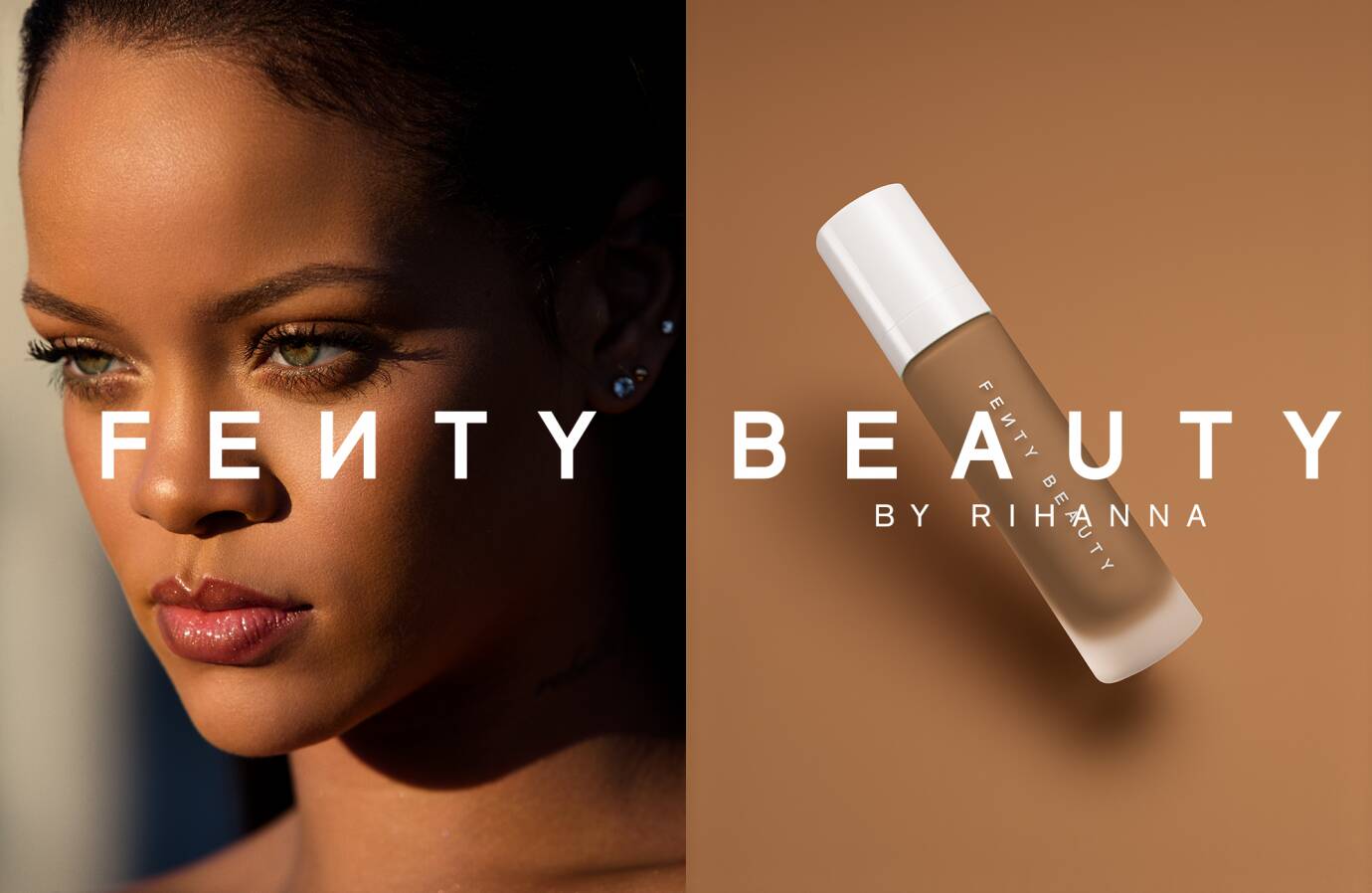\n\n__4. Paid advertising __\n\nPaid advertising is an effective — if expensive — way to increase brand awareness. \n\nAs an example, consider Facebook ads. They allow you to reach millions of users, with the ability to narrow down by demographic to target the audience most attractive to your brand. Facebook also has the added bonus of social sharing.\n\n\n\nWhether through social media or search ads, [paid advertizing can have a positive impact on top-of-mind awareness](https://adwords.googleblog.com/2014/06/new-study-search-ads-lift-brand.html.\n\nThe Canadian grocery retailer Sobeys saw this after running a brand awareness campaign on Facebook to reach more customers. The ad helped the store acquire 8% higher in-store sales on promoted categories.\n\nThe bottom line? With targeted keywords and a focused segment, you can get your brand in front of thousands of people. Even if they don’t end up clicking through to your website, seeing your name at the top of search results or their social media feeds makes an impression. \n\nRemember, every piece of familiarity counts when a prospect is finally ready to make a purchase.\n\n### Measuring Brand Awareness\n\nTracking brand awareness can help you understand what works and what doesn’t. You can consider the following methods:\n\n- __Use [Social Listening Tools](https://latana.com/post/social-listening-brand/):__ These help reveal what people are saying about your brand and competitors across social channels. The insights will provide you with a bigger picture of your brand. However, you should note that these tools may provide inaccurate data, as they can only discover the perception of a tiny percentage of the general population.\n\n- __Use Brand Tracking Software:__ [Brand tracking](https://latana.com/) can help you monitor overall brand health — including brand awareness, brand usage, brand consideration, [brand perception](https://latana.com/post/brand-perception-2020/), and [brand associations](https://latana.com/guides/ultimate-guide-to-brand-associations/).\n\n\n\n- __Track Brand Mentions:__ A brand mention is a reference to a brand on the internet and describes anytime someone uses your brand name. By tracking brand mentions, you can figure out how many people are talking about your brand or sharing your posts on a specific channel.\n\n- __Use Google Analytics__: Using this tool, you can track website traffic, traffic source, keywords driving traffic, search volume, user demographics, and how engaged your audience is with your brand. \n\n- __Collect feedback__: You can display a survey form on your website or run a poll on social media asking how your audience found out about your brand. The insights gathered will tell you where you’ve succeeded in your marketing efforts. Review sites are also a good source to track conversations. \n\n## How to Build and Measure Brand Equity\n\n### How to Build Brand Equity\n\nDeveloping brand equity requires establishing brand awareness early on. But it also involves the initial choice of your brand identity — such as your [brand name](https://latana.com/post/come-up-with-great-brand-name/), logo, or slogan. \n\nResearch suggests that a brand name should be simple, familiar, and distinctive. It should also be easy to understand, pronounce, and spell. Similar criteria also apply to [brand logos](https://latana.com/post/survey-design-why-logos-are-better-than-text-in-brand-surveys/) and symbols.\n\nSupporting marketing activities are another vital part of [building brand equity](https://latana.com/post/building-measuring-brand-equity-value/). These activities help increase exposure to a brand, develop customer perception, and increase the desire to try out products. It’s important to note that [consumer expectations are always changing](https://latana.com/post/5-trends-brands-2021/). Hence, brands need to adapt to meet those expectations and strengthen relationships with consumers.\n\nConsider the following tips for building brand equity:\n\n- Shape your brand personality by choosing a logo, slogan, color palette, font, social media presence, and product packaging the fits with your brand identity.\n\n- Use storytelling techniques to create a story around your brand to trigger emotional responses from your target audience. Maintain your story’s authenticity and consistency across channels.\n\n- Communicate and build relationships with your customers through email marketing, social media platforms, and your customer support team.\n\n### How to Measure Brand Equity\n\nTo measure brand equity, brands should keep the following metrics in mind. \n\nThe first six metrics represent a brand’s customer perceptions along the four dimensions of brand equity — loyalty, perceived quality, associations, and awareness. The last one, financial metrics, involves behavioral measures that represent information obtained from the market rather than directly from customers. \n\nBy measuring brand equity from customer and market perspectives, brands can get an accurate and comprehensive view of their brand values.\n\n- __Loyalty__: [Brand loyalty](https://latana.com/post/brand-loyalty-content/) is a core dimension of brand equity. A loyal customer base means consistent sales, a basis for a price premium, and other advantages. A basic indicator of loyalty is the amount a customer will pay for your brand in comparison to other brands offering similar benefits.\n\n- __Customer satisfaction__: Customer satisfaction (CSAT) [surveys](https://latana.com/mobile-optimized-surveys/) can help you understand if your customers are satisfied, delighted, or dissatisfied with your products or services. CSAT is a useful measure for service-focused brands like rental firms or hotels, where loyalty is often the cumulative result of the customer experience.\n\n- __Perceived quality__: Using surveys or focus groups, you can evaluate what customers think about your product quality. For example, is your product the best or one of the best? Is it the worst or one of the worst? Does your product have consistent or inconsistent quality?\n\n- __Awareness__: [Brand monitoring](https://latana.com/product/) is a great way to discover if customers recall your brand when they are in need of a specific product. The data it provides can help you paint a picture of the mental real estate your brand owns and how it stacks up against the competition.\n\n- __Value__: [Brand value](https://latana.com/post/brand-value-worth/) can be measured by whether a brand provides good value for the money or whether customers buy its products over competitors’ for other reasons.\n\n- __Brand personality__: Brand personality can help forge an emotional connection with customers. For example, Nike offers a sense of confidence and a spirit of athleticism, while Coca-Cola associates itself with happiness and excitement. You can measure brand personality by applying the [Big Five personality test](https://sci-hub.do/10.1002/mar.20658), which has five dimensions: Sincerity, Excitement, Competence, Sophistication, and Ruggedness.\n\n- __Financial metrics__: Look at your market share, sales revenue, the percentage of stores carrying your brand, and the percentage of people who have access to it to better understand your brand equity.\n\n## Grow with Brand Awareness and Brand Equity\n\nAs you can see, brand awareness and brand equity are quite different concepts, but they are deeply connected to each other. \n\nBrand awareness plays a vital role in consumer decision-making, market performance, and the overall marketing mix. It’s also one of brand equity’s core dimensions, meaning you need to create brand awareness in order to build brand equity.\n\n__What are some key takeaways to build and measure brand awareness?__\n\n- Building brand awareness doesn’t always require a large investment. You can try referral programs, guest posting, freebies, or paid advertising, depending on your brand strategy and budget. \n- Consider investing in a brand tracker, as it will provide you with valuable insights into your brand awareness, target audience, and customer perception — helping you make better branding decisions. \n\n__What are some key takeaways to build and measure to build and measure brand equity?__\n\n- To build brand equity, focus on creating brand awareness, a brand story, and brand personality. Also, create and maintain emotional connections with customers across channels. \n- To measure brand equity, pay attention to metrics such as brand awareness, customer loyalty, customer satisfaction, perceived quality, brand value, brand personality, and financial performance. \n\nDeveloping strong brand equity has become a priority for brands, regardless of size, industry, or market. After all, high brand value opens the doors to gaining loyal customers, obtaining more business opportunities, and achieving greater profits. \n\nThe rewards of creating strong brand equity are clear. So when do you start?"},"tags":["Brand Awareness"],"authorRef":{"slug":"lavender","firstName":"Lavender","lastName":"Nguyen","title":"Marketing Content Creator","picture":{"__typename":"ContentfulAsset","id":"bb56ceb9-a813-5edc-85a6-facde71b8efe","description":"","title":"Latana Logo Author Photo","file":{"contentType":"image/png","url":"//images.ctfassets.net/7so8go2zrvbw/7qeUdZpRNeFZFTo0zIasKz/8d00318fb2f317950a2a2d6912eb28bf/Author_Latana__1_.png","details":{"image":{"width":235,"height":235}}},"gatsbyImageData":{"images":{"sources":[{"srcSet":"//images.ctfassets.net/7so8go2zrvbw/7qeUdZpRNeFZFTo0zIasKz/8d00318fb2f317950a2a2d6912eb28bf/Author_Latana__1_.png?w=235&h=235&q=95&fm=webp 235w","sizes":"100vw","type":"image/webp"}],"fallback":{"src":"//images.ctfassets.net/7so8go2zrvbw/7qeUdZpRNeFZFTo0zIasKz/8d00318fb2f317950a2a2d6912eb28bf/Author_Latana__1_.png?w=235&h=235&q=95&fm=png","srcSet":"//images.ctfassets.net/7so8go2zrvbw/7qeUdZpRNeFZFTo0zIasKz/8d00318fb2f317950a2a2d6912eb28bf/Author_Latana__1_.png?w=235&h=235&q=95&fm=png 235w","sizes":"100vw"}},"layout":"fullWidth","backgroundColor":"#080808","width":1,"height":1}}}}},{"node":{"publishDate":"2019-09-17T00:00+02:00","slug":"brand-awareness-makeup-brands-uk","author":"Fiona Laughton","title":"Measuring Brand Awareness for New Make-up Brands in the UK","seo":{"__typename":"ContentfulSeo","title":"Measuring Brand Awareness for Make-up Brands","description":"Measuring brand awareness is important — especially for new brands. To illustrate why, we delve into three UK make-up brands: Milk, Glossier, and The Ordinary.","noIndex":null,"ogImage":{"fluid":{"src":"//images.ctfassets.net/7so8go2zrvbw/63gfqjzZBCRaMwqPTZa0Re/cfefdf1a7af2173683640feb3f23c9c5/brand-awareness-makeup-brands-uk_1.jpg?w=1200&h=675&q=90&fm=jpg"},"file":{"url":"//images.ctfassets.net/7so8go2zrvbw/63gfqjzZBCRaMwqPTZa0Re/cfefdf1a7af2173683640feb3f23c9c5/brand-awareness-makeup-brands-uk_1.jpg"}}},"heroImage":{"__typename":"ContentfulAsset","id":"5e20ca38-4b99-5413-bbab-38cdb7fd97d2","description":"Measuring Brand Awareness for New Make-up Brands in the UK","title":"Measuring Brand Awareness for New Make-up Brands in the UK","file":{"contentType":"image/jpeg","url":"//images.ctfassets.net/7so8go2zrvbw/63gfqjzZBCRaMwqPTZa0Re/cfefdf1a7af2173683640feb3f23c9c5/brand-awareness-makeup-brands-uk_1.jpg","details":{"image":{"width":1320,"height":951}}},"gatsbyImageData":{"images":{"sources":[{"srcSet":"//images.ctfassets.net/7so8go2zrvbw/63gfqjzZBCRaMwqPTZa0Re/cfefdf1a7af2173683640feb3f23c9c5/brand-awareness-makeup-brands-uk_1.jpg?w=200&h=144&q=95&fm=webp 200w,\n//images.ctfassets.net/7so8go2zrvbw/63gfqjzZBCRaMwqPTZa0Re/cfefdf1a7af2173683640feb3f23c9c5/brand-awareness-makeup-brands-uk_1.jpg?w=400&h=288&q=95&fm=webp 400w,\n//images.ctfassets.net/7so8go2zrvbw/63gfqjzZBCRaMwqPTZa0Re/cfefdf1a7af2173683640feb3f23c9c5/brand-awareness-makeup-brands-uk_1.jpg?w=800&h=576&q=95&fm=webp 800w","sizes":"(min-width: 800px) 800px, 100vw","type":"image/webp"}],"fallback":{"src":"//images.ctfassets.net/7so8go2zrvbw/63gfqjzZBCRaMwqPTZa0Re/cfefdf1a7af2173683640feb3f23c9c5/brand-awareness-makeup-brands-uk_1.jpg?w=800&h=576&fl=progressive&q=95&fm=jpg","srcSet":"//images.ctfassets.net/7so8go2zrvbw/63gfqjzZBCRaMwqPTZa0Re/cfefdf1a7af2173683640feb3f23c9c5/brand-awareness-makeup-brands-uk_1.jpg?w=200&h=144&fl=progressive&q=95&fm=jpg 200w,\n//images.ctfassets.net/7so8go2zrvbw/63gfqjzZBCRaMwqPTZa0Re/cfefdf1a7af2173683640feb3f23c9c5/brand-awareness-makeup-brands-uk_1.jpg?w=400&h=288&fl=progressive&q=95&fm=jpg 400w,\n//images.ctfassets.net/7so8go2zrvbw/63gfqjzZBCRaMwqPTZa0Re/cfefdf1a7af2173683640feb3f23c9c5/brand-awareness-makeup-brands-uk_1.jpg?w=800&h=576&fl=progressive&q=95&fm=jpg 800w","sizes":"(min-width: 800px) 800px, 100vw"}},"layout":"constrained","backgroundColor":"#182838","width":800,"height":576}},"coverImage":null,"description":{"description":"Measuring brand awareness is important — especially for new brands. To illustrate why, we delve into three new make-up brands in the UK: Milk, Glossier, and The Ordinary."},"content":{"content":"Beauty rituals such as skincare and make-up date back to ancient times — over 7000 years ago, to be precise — and enjoyed by almost every culture in the world. \n\nThen came the rise of the Hollywood starlet which saw entrepreneurs Elizabeth Arden and Max Factor bring skincare and makeup brands to the mass market. \n\nToday, skincare and makeup brands and products are enjoyed by women on a multitude of levels: they inspire confidence, they are the base for hundreds of new and creative looks, they allow for reinvention, and they facilitate wellbeing and self-care. \n\nMeasuring [brand awareness](https://latana.com/topics-brand-awareness/) is important to see which make-up brands continue to reach the mass market.\n\n## Measuring Brand Awareness for Make-up Brands in the UK\n\nAs beauty brand managers, you’re aware that women are the biggest global consumers of both skincare and makeup products. It’s your job to make sure they choose your brand — but the challenge is how to make your brand stand out in an incredibly noisy, multi-billion dollar industry.\n\nSo, how is it done?\n\nBy using brand tracking software to obtain data-driven insights about consumers that allow you to market directly to your target audiences. More specifically, by [measuring brand awareness](https://latana.com/post/improve-brand-awareness-campaigns-brand-tracker/) for your brand.\n\nLet’s jump in and see how brand-aware British women are and see if these relatively new makeup brands are making waves in an already saturated beauty market.\n\n## Measuring Brand Awareness: The Results\n\nWe recently asked 1000 respondents in the UK about three relatively new makeup brands, Milk, [Glossier](https://latana.com/brand-insights/brand-bites-glossier/), and [the Ordinary](https://latana.com/brand-insights/brand-bites-ordinary/). The goal was to measure the brand awareness for each brand in order to find out with which [niche audience](https://latana.com/whitepapers/mrp-uncovering-insights-in-niche-audiences/) each brand was at its highest.\n\nUsing brand tracking data, we were able to get a closer look at the types of women who’d purchase these brands, their brand awareness levels, and brand consideration levels — as well as age, level of income, and employment details.\n\n### Milk Makeup\n\nMilk Makeup is a cruelty-free, vegan makeup brand hailing from New York City. Measuring brand awareness within the general British female population, Milk’s showed 7%. Of the 7% that were aware of the brand, 50% reported brand consideration.\n\n\n\n__Measuring Brand Awareness: Age__\n\nWithin our results, we found a difference in brand awareness between various age groups, starting with 11% for the 18 to 45-year-olds and dropping to 9% for the 46 to 65-year-olds. \n\nPerhaps Milk could run a marketing campaign tailored towards their older demographic? With so little difference in brand awareness, it may be worth a try.\n\n\n\n__Measuring Brand Awareness: Income__\n\nUsing data on respondents' incomes, we can dig a little deeper into our audience. \n\nLooking at the younger age group, those with higher reported income levels report 12% when measuring brand awareness. Alternatively, those with a lower income bracket report 11% — showing a fairly insignificant difference between them.\n\n\n\n__Measuring Brand Awareness: Location__\n\nNow, let’s take a look at the location for the younger age group. \n\nRespondents who reside in a city indicated 12% brand awareness, whilst rural respondents reported 11%. Again, we did not find a significant difference in brand awareness between the 18 to 45-year-old’s location demographic data.\n\n\n\nWe continued our analysis of our respondents' demographic data — employment status and education levels — but, once again, there were no significant differences to be found. \n\nTherefore, it's safe to say that the best audience for Milk brand managers to focus on going forward into is: high-income females aged 18-45 who live in a city.\n\n### Glossier\n\nNext, let’s take a look at the [D2C makeup brand](https://latana.com/reports/d2c-brand-awareness-report-2019/), Glossier. \n\nFounded on the back of popular beauty blog *Into the Gloss*, American company Glossier has evolved into one of the most “disruptive brands in beauty”. High praise! But what exactly are they disrupting? \n\nA (supposedly) unpaid endorsement by Kim Kardashian got the brand in front of millions — but what does the data tell us?\n\nFor Glossier, we measured a brand awareness level of 13% for the general population. And of the 13% that are aware, 62% reported brand consideration.\n\n\n\n__Measuring Brand Awareness: Age__\n\nWhen looking at the different age groups surveyed, 18 to 45-year-olds reported brand awareness levels of 23%, whilst 46 to 65-year-olds reported slightly lower levels at 20%.\n\n\n\n__Measuring Brand Awareness: Other Factors__\n\nRemaining with the younger age bracket, let’s take a deeper look at this demographics' data. \n\nFor both high- and low-income levels, brand awareness shows no significant differences, with both income levels for 18 to 45-year-olds reporting 23%. \n\nTherefore, brand awareness for Glossier is at its highest for females aged 18-45 — interestingly, a more general audience than Milk.\n\nFor a deep-dive into Glossier's 2020 brand performance, check out our [Brand Bite](https://latana.com/brand-insights/brand-bites-glossier/).\n\n### The Ordinary\n\nCanadian beauty brand [The Ordinary](https://latana.com/brand-insights/brand-bites-ordinary/) calls itself \"The Abnormal Beauty Company\". With its radical ingredient transparency, attractive packaging, and affordable pricing, The Ordinary has become a bestseller. \n\nBut just how well-known is it amongst British women?\n\nIn the general population, The Ordinary has brand awareness levels of 8% for brand awareness. However, of the 8% that are aware, it boasts brand consideration of 68%. Impressive!\n\n\n\n__Measuring Brand Awareness: Age__\n\nAmongst the younger age group (18 to 45-year-olds), brand awareness came in at 12% — decreasing only slightly for the older age group (46 to 65-year-olds) to 11%.\n\n\n\n__Measuring Brand Awareness: Income__\n\nBreaking it down further within the 18 to 45-year-old female demographic, those who reported higher incomes ranked The Ordinary at 12% for brand awareness. Those who reported lower incomes ranked the brand at 11%.\n\n\n\n__Measuring Brand Awareness: Employment__\n\nDrilling down even further into the data, we were interested to see if full-time employment made a difference.\n\nSpoiler alert, it does! At 18%, full-time employed women aged 18-45 with high incomes are the most aware. This is the first time we've seen a jump of more than 1% across all three brands.\n\n\n\n## Conclusion\n\nOf the three makeup brands we researched, The Ordinary showed the best results. This is good news for their future success with British women! \n\nBut why do women seem to love the brand so much? We suspect they're a fan of the company's sleek branding, reasonable prices, and product transparency. Such features will often help raise brand awareness via word-of-mouth.\n\nWe conducted an updated, mini deep dive into this brand recently and found that the following:\n\n
\n\nAs you can see, The Ordinary seems to be growing and continuing its streak of success.\n\n---\n\nWhen it comes to Glossier, it's owning the content marketing space with traffic from their cult-beauty website *Into The Gloss*, which publishes thoughtful long-form content and educational interviews with influential celebrities.\n\nFinally, Milk has several impressive USPs — such as being vegan, cruelty-free, paraben-free, and headquartered in NYC. If they can hone their strategy accordingly, Milk should be able to easily take on more established make-up brands.\n\nWe also found that across these three relatively new brands, they all have (more or less) the same audience. When it comes to brand awareness, it's similar across the board — with only a small jump of 6%. \n\nPerhaps these brands need to double down and identify more niche audiences. With a brand tracking tool like Latana, this is easy and would allow brands to look into more customized audience characteristics, such as \"cruelty-free products\" or \"women with children\".\n\n## Final Thoughts: What Brand Managers Should Know\n\nThe main takeaway here? The three brand's audiences are not very distinct, which indicates a highly competitive market. \n\nWhat action can they take going forward? Perhaps more influencer marketing? How will they retain customers? By working on developing a brand strategy — which is critical to make waves in a noisy consumer space. \n\nAdditionally, using [brand monitoring ](https://latana.com/product/) to define their niche audiences will help [brand managers](https://latana.com/brand-manager/) tailor their strategies accordingly.\n\nWhilst we found minimal differences in brand awareness between income brackets for The Ordinary, we did identify a significant jump to 18% awareness for full-time employed British women between the ages of 18-45.\n\nBy understanding the key differences between brand awareness and brand consideration and using a [brand tracker](https://latana.com/), brand managers will put themselves in the best possible position going forward. Additionally, by utilizing more precise demographic data and tailoring their brand strategy accordingly, they'll set themselves up for success. \n\nNow more than ever, brand managers need to understand their audience if they want to be able to deliver the next cult beauty brand.\n\nFor more insights into a major beauty brand, check out our article on [Fenty Beauty](https://latana.com/post/build-brand-awareness-fenty/)."},"tags":["Brand Insights","Brand Awareness"],"authorRef":{"slug":"fiona","firstName":"Fiona ","lastName":"Laughton","title":"Freelance Writer & Creative Consultant","picture":{"__typename":"ContentfulAsset","id":"bb56ceb9-a813-5edc-85a6-facde71b8efe","description":"","title":"Latana Logo Author Photo","file":{"contentType":"image/png","url":"//images.ctfassets.net/7so8go2zrvbw/7qeUdZpRNeFZFTo0zIasKz/8d00318fb2f317950a2a2d6912eb28bf/Author_Latana__1_.png","details":{"image":{"width":235,"height":235}}},"gatsbyImageData":{"images":{"sources":[{"srcSet":"//images.ctfassets.net/7so8go2zrvbw/7qeUdZpRNeFZFTo0zIasKz/8d00318fb2f317950a2a2d6912eb28bf/Author_Latana__1_.png?w=235&h=235&q=95&fm=webp 235w","sizes":"100vw","type":"image/webp"}],"fallback":{"src":"//images.ctfassets.net/7so8go2zrvbw/7qeUdZpRNeFZFTo0zIasKz/8d00318fb2f317950a2a2d6912eb28bf/Author_Latana__1_.png?w=235&h=235&q=95&fm=png","srcSet":"//images.ctfassets.net/7so8go2zrvbw/7qeUdZpRNeFZFTo0zIasKz/8d00318fb2f317950a2a2d6912eb28bf/Author_Latana__1_.png?w=235&h=235&q=95&fm=png 235w","sizes":"100vw"}},"layout":"fullWidth","backgroundColor":"#080808","width":1,"height":1}}}}},{"node":{"publishDate":"2020-09-17T00:00+02:00","slug":"top-global-brands-environment","author":"Laura Harker","title":"10 Global Companies and Their Brand Sustainability","seo":{"__typename":"ContentfulSeo","title":"10 Global Companies and Their Brand Sustainability","description":"A brand's sustainability is often decided based on their industry not their efforts. We looked at 10 brands helping the environment, despite their reputation.","noIndex":null,"ogImage":{"fluid":{"src":"//images.ctfassets.net/7so8go2zrvbw/1jg1b9IEn0JrFbI8rg93tN/8db5ed55c39f6812bc873bc4829ddf50/Blog_SEO-Thumbnail_1000X709_-_2022-09-30T093032.831.png?w=1200&h=675&q=90&fm=jpg"},"file":{"url":"//images.ctfassets.net/7so8go2zrvbw/1jg1b9IEn0JrFbI8rg93tN/8db5ed55c39f6812bc873bc4829ddf50/Blog_SEO-Thumbnail_1000X709_-_2022-09-30T093032.831.png"}}},"heroImage":{"__typename":"ContentfulAsset","id":"0ece25d0-6d60-5934-b901-8b2051d0c695","description":"","title":"Image of the planet [Thumbnail]","file":{"contentType":"image/png","url":"//images.ctfassets.net/7so8go2zrvbw/1jg1b9IEn0JrFbI8rg93tN/8db5ed55c39f6812bc873bc4829ddf50/Blog_SEO-Thumbnail_1000X709_-_2022-09-30T093032.831.png","details":{"image":{"width":1000,"height":709}}},"gatsbyImageData":{"images":{"sources":[{"srcSet":"//images.ctfassets.net/7so8go2zrvbw/1jg1b9IEn0JrFbI8rg93tN/8db5ed55c39f6812bc873bc4829ddf50/Blog_SEO-Thumbnail_1000X709_-_2022-09-30T093032.831.png?w=200&h=142&q=95&fm=webp 200w,\n//images.ctfassets.net/7so8go2zrvbw/1jg1b9IEn0JrFbI8rg93tN/8db5ed55c39f6812bc873bc4829ddf50/Blog_SEO-Thumbnail_1000X709_-_2022-09-30T093032.831.png?w=400&h=284&q=95&fm=webp 400w,\n//images.ctfassets.net/7so8go2zrvbw/1jg1b9IEn0JrFbI8rg93tN/8db5ed55c39f6812bc873bc4829ddf50/Blog_SEO-Thumbnail_1000X709_-_2022-09-30T093032.831.png?w=800&h=567&q=95&fm=webp 800w","sizes":"(min-width: 800px) 800px, 100vw","type":"image/webp"}],"fallback":{"src":"//images.ctfassets.net/7so8go2zrvbw/1jg1b9IEn0JrFbI8rg93tN/8db5ed55c39f6812bc873bc4829ddf50/Blog_SEO-Thumbnail_1000X709_-_2022-09-30T093032.831.png?w=800&h=567&q=95&fm=png","srcSet":"//images.ctfassets.net/7so8go2zrvbw/1jg1b9IEn0JrFbI8rg93tN/8db5ed55c39f6812bc873bc4829ddf50/Blog_SEO-Thumbnail_1000X709_-_2022-09-30T093032.831.png?w=200&h=142&q=95&fm=png 200w,\n//images.ctfassets.net/7so8go2zrvbw/1jg1b9IEn0JrFbI8rg93tN/8db5ed55c39f6812bc873bc4829ddf50/Blog_SEO-Thumbnail_1000X709_-_2022-09-30T093032.831.png?w=400&h=284&q=95&fm=png 400w,\n//images.ctfassets.net/7so8go2zrvbw/1jg1b9IEn0JrFbI8rg93tN/8db5ed55c39f6812bc873bc4829ddf50/Blog_SEO-Thumbnail_1000X709_-_2022-09-30T093032.831.png?w=800&h=567&q=95&fm=png 800w","sizes":"(min-width: 800px) 800px, 100vw"}},"layout":"constrained","backgroundColor":"#b8a898","width":800,"height":567}},"coverImage":{"__typename":"ContentfulAsset","id":"638c140b-4eb5-5d98-bc18-685039a12c5e","description":"","title":"Image of the planet [Cover Image]","file":{"contentType":"image/png","url":"//images.ctfassets.net/7so8go2zrvbw/7zZJxX54uJa8ccbmsqv2Fv/7c8e6e9804a6969c16b2b53dca4cb9b4/Blog_Cover_1288X400_-_2022-09-30T093035.708.png","details":{"image":{"width":1288,"height":400}}},"gatsbyImageData":{"images":{"sources":[{"srcSet":"//images.ctfassets.net/7so8go2zrvbw/7zZJxX54uJa8ccbmsqv2Fv/7c8e6e9804a6969c16b2b53dca4cb9b4/Blog_Cover_1288X400_-_2022-09-30T093035.708.png?w=750&h=233&q=95&fm=webp 750w,\n//images.ctfassets.net/7so8go2zrvbw/7zZJxX54uJa8ccbmsqv2Fv/7c8e6e9804a6969c16b2b53dca4cb9b4/Blog_Cover_1288X400_-_2022-09-30T093035.708.png?w=1080&h=335&q=95&fm=webp 1080w,\n//images.ctfassets.net/7so8go2zrvbw/7zZJxX54uJa8ccbmsqv2Fv/7c8e6e9804a6969c16b2b53dca4cb9b4/Blog_Cover_1288X400_-_2022-09-30T093035.708.png?w=1288&h=400&q=95&fm=webp 1288w","sizes":"100vw","type":"image/webp"}],"fallback":{"src":"//images.ctfassets.net/7so8go2zrvbw/7zZJxX54uJa8ccbmsqv2Fv/7c8e6e9804a6969c16b2b53dca4cb9b4/Blog_Cover_1288X400_-_2022-09-30T093035.708.png?w=1288&h=400&q=95&fm=png","srcSet":"//images.ctfassets.net/7so8go2zrvbw/7zZJxX54uJa8ccbmsqv2Fv/7c8e6e9804a6969c16b2b53dca4cb9b4/Blog_Cover_1288X400_-_2022-09-30T093035.708.png?w=750&h=233&q=95&fm=png 750w,\n//images.ctfassets.net/7so8go2zrvbw/7zZJxX54uJa8ccbmsqv2Fv/7c8e6e9804a6969c16b2b53dca4cb9b4/Blog_Cover_1288X400_-_2022-09-30T093035.708.png?w=1080&h=335&q=95&fm=png 1080w,\n//images.ctfassets.net/7so8go2zrvbw/7zZJxX54uJa8ccbmsqv2Fv/7c8e6e9804a6969c16b2b53dca4cb9b4/Blog_Cover_1288X400_-_2022-09-30T093035.708.png?w=1288&h=400&q=95&fm=png 1288w","sizes":"100vw"}},"layout":"fullWidth","backgroundColor":"#b8a898","width":1,"height":0.3105590062111801}},"description":{"description":"A brand's is sustainability is often decided based on their industry not their efforts. We looked at 10 brands that are helping the environment, despite their reputation."},"content":{"content":"The environment is, quite rightly, extremely important to most people these days. As the general public becomes much more aware of how their actions and day-to-day life affect the world around them, many consumers are now looking to give their business to brands that prioritize [sustainability](https://latana.com/reports/sustainability-perception-index-2020/).\n\nThis makes [brand management](https://latana.com/topics-brand-management/) a bit more complicated, as marketers need to ensure that their brand projects a sustainable and eco-friendly brand image. And that can be especially difficult in industries that don’t have such a great reputation for their environmental initiatives.\n\nTake the car industry, for instance. The environmental and sustainable efforts of the industry continually score low with consumers. But is that judging a book by its cover? Quite possibly. There are plenty of car brands that are actually making positive moves to improve the environment.\n\nOn the other hand, industries that may have positive reputations for sustainability sometimes aren't always doing the best — especially when we look at what’s happening behind the scenes. \n\nTherefore, it’s time to pull back the curtain and see exactly wha's going on. In this article, we’ll take a look at 10 brands that are helping the environment — despite the reputation of their industries.\n\n## 5 Companies Actively Working to Change Negative Brand Sustainability Perception\n\n![Illustration of a hand holding a globe of nature [Article Image]](//images.ctfassets.net/7so8go2zrvbw/7zORBsZfL6kiI69NUqzqBi/78b644e0bbe00919f200608b0fe4d40c/Blog_Cover_1288X400_-_2022-09-30T093044.818.png)\n\n### 1. Land Rover\n\n\n\nSource: [Unsplash](https://unsplash.com/@woeiman?utm_source=unsplash&utm_medium=referral&utm_content=creditCopyText)\n\nOn the whole, car brands don’t have a great reputation when it comes to sustainability. It makes sense — cars aren’t exactly great for the environment. In 2018, vehicles emitted [9% of global greenhouse gas emissions](https://www.smartgreenpost.com/2019/09/10/the-most-harmful-car-companies-greenpeace-ranking/). So, it’s no wonder that auto brands face an uphill struggle with their image in this area.\n\nBut you can’t say that Land Rover isn’t trying. If you take a look at its site, it has an entire page dedicated to sustainability and its efforts toward [increasing brand sustainability](https://www.landrover.co.uk/explore-land-rover/responsibility/index.html).\n\nAnother way the company displays its sustainability values is by publicizing its partnerships online. The brand has cleverly teamed up with big names in the environmental sector, including the Born Free Foundation and the Royal Geographic Society. By aligning itself with these reputable organizations, Land Rover is showing eco-conscious consumers that its shares the same values.\n\n---\n\nTo dispel any lingering hesitance, let’s take a closer look at one of these partnerships: Land Rover x Born Free Foundation. \n\nSince 2002, Land Rover has been sponsoring the Born Free Foundation and supplies them with vehicles for their conversation work in [Kenya, South Africa, and India](https://4x4i.com/land-rover-continues-support-of-born-free-foundation/). \n\nAs well as helping on the ground with vital animal welfare initiatives, the brand also supports the foundation’s charitable efforts back in the UK. These efforts are usually praised in the press, such as the time [Land Rover sold a one-of-a-kind vehicle to raise £400 thousand for the foundation](https://www.birminghammail.co.uk/news/local-news/born-free-foundation-boosted-one-10715688).\n\nThat’s not all that Land Rover is doing to help the environment. It's also dedicated to offsetting the first 45,000 miles that consumers drive in their new vehicles in the UK. This unique program is one that the brand believes to be the largest customer-facing program of its kind in the world. While this may be unique — in that no other car brand appears to offer this exact program — there are other ways for customers to offset miles, such as [through their car insurance](https://www.theguardian.com/environment/2007/may/21/money.travel).\n\n\n\n### 2. Ford\n\n![Image of a Ford truck [Article Image]](//images.ctfassets.net/7so8go2zrvbw/1pGf30vIhpNziXqLPQ1hGR/27da403c96e6f80d32b5de80a9ef29d0/caleb-white-XGJBSkoqX_I-unsplash.jpg)\nSource: [Unsplash](https://unsplash.com/photos/XGJBSkoqX_I)\n\nFord is another car brand that might not be quite as bad as people believe — as the brand is actually doing quite a bit to help the planet and improve its brand sustainability perception. So much so that in early 2019, it was recognized as [a global sustainability leader in water and climate change efforts](https://media.ford.com/content/fordmedia/feu/en/news/2019/01/31/ford-motor-company-recognized-as-global-sustainability-leader-in.html) — which was all down to the brand’s water security and climate change efforts.\n\nFord’s efforts in helping fight climate change were spearheaded by its [ten green initiatives](https://www.reliableplant.com/Read/5906/green-initiatives-ford), which were rolled out as part of its Earth Day celebration. \n\nThe initatives were set up to help guide the organization’s manufacturing, materials, and facilities management. From the use of sustainable fabrics to switching to a geothermal cooling system in manufacturing — the initiatives are widespread and help the brand maintain eco-friendly processes for all of its vehicles.\n\n### 3. Goldman Sachs\n![Photo of the New York City skyline [Article Image]](//images.ctfassets.net/7so8go2zrvbw/tZeIrWrukDSZzCeTx2iyg/dd274d785bec183ca7cb6968075fab9b/jordan-merrick-lMhkCwidlRY-unsplash.jpg)\nSource: [Unsplash](https://unsplash.com/photos/lMhkCwidlRY)\n\nThese days, it’s not just car brands that have a bad rep when it comes to sustainability. Investment banking company Goldman Sachs [doesn’t rate so highly with consumers due to various crises](http://www.brandindex.com/article/goldman-sachs-reputation-scores-dive) — despite the fact [that, in 2019, the brand pledged $750 billion to environmental causes by 2030](https://www.reuters.com/article/goldman-sachs-environment/goldman-sachs-pledges-750-billion-to-environmental-causes-by-2030-idUSL1N28Q0RL).\n\nWhat’s more, the bank is trying to make it even easier for customers to invest their money into initiatives and investments that are environmentally friendly and sustainable. By setting up a new [global markets council](https://uk.reuters.com/article/us-goldman-sachs-sustainability/goldman-sachs-puts-premium-on-sustainable-investing-with-new-global-markets-council-idUKKBN22B3C0), the organization has put together a dedicated team of sales staff and traders to ensure that customers have access to knowledge on everything to do with sustainable investing.\n\nGoldman Sachs has also made some significant changes to the way the business is run in order to improve sustainability. From [driving inclusive growth through innovation and partnerships, as well as using market-driven solutions to mitigate climate risks](https://www.goldmansachs.com/s/sustainability-report/index.html), it looks like the firm is paying close attention to ways it can help the environment and improve its brand sustainability perception.\n\n### 4. KFC\n\n\nSource: [Unsplash](https://unsplash.com/photos/HYpXP6Zk1dw)\n\nInterestingly, the public doesn’t necessarily equate fast-food brand KFC with sustainability. Sure, they may sell finger-licking good chicken, but — many consumers want to know — how is it faring when it comes to making its brand as sustainable and eco-minded as possible?\n\nWell, for starters, the company has [committed to using more sustainable packaging by 2025](https://www.restaurantdive.com/news/kfc-commits-to-using-more-sustainable-packaging-by-2025/546850/). That’s a great start, as it will help consumers recycle more and significantly cut down on waste. The brand is also dedicated to cutting down on [food waste](https://latana.com/post/brands-need-to-care-food-waste/) itself, and so far [has donated over 80 million pounds of food through its global Harvest program](https://global.kfc.com/our-social-impact/).\n\nAs the brand is focused on building more KFC restaurants around the world, it understands that this needs to be done sustainably. That’s why the fast-food chain is working on its sustainable footprint by using [green building initiatives](https://global.kfc.com/our-social-impact/) that cover waste reduction and energy efficiency.\n\n### 5. Zara\n\n![Image of Zara storefront [Article Image]](//images.ctfassets.net/7so8go2zrvbw/2gswKL261kdNu6dyypK0yj/8b0085c4391b379a7b428ba30992dc2d/highlight-id-DbOdCSoefsg-unsplash.jpg)\nSource: [Unsplash](https://unsplash.com/photos/DbOdCSoefsg)\n\nZara doesn’t score highly in public brand sustainability perception. Currently, in the clothing world, consumers have a huge appetite for ditching “[fast fashion](https://www.thegoodtrade.com/features/what-is-fast-fashion)” and instead move towards more sustainable and reusable brands. \n\nIf Zara isn’t able to win the public over, then there’s a chance they could face a PR problem in a world where consumers turn their backs on labels they view as problematic.\n\nIn 2019 it announced some [very ambitious sustainability goals](https://www.forbes.com/sites/celiashatzman/2019/07/18/zara-reveals-ambitious-new-sustainability-goals/) — ones that even included earning the top green certifications for buildings for all of its head offices.\n\nThe brand has also vowed that all of its clothes will [be made from 100% sustainable fabric by 2025](https://docs.google.com/document/d/1MRJmXTRp7Je2MgjRvzLaMMIASMdlWUyRb9E0F4CTtLw/edit), something that the anti-fast-fashion crowd will no doubt be glad to hear. Not only that, though, but 80% of the energy consumed by the brand at its headquarters, factories, and stores will also come from sustainable sources by the same year.\n\n## 5 Companies Already Winning Brand Sustainable Perception\n\n### 1. PayPal\n\n![Image of PayPal logo on phone [Article Image]](//images.ctfassets.net/7so8go2zrvbw/7nZn9K6RAJ7CZaTKCfu9VQ/70cfb5c28fe792d2749117d77d681feb/marques-thomas-gs9uci8JvGw-unsplash.jpg)\nSource: [Unsplash](https://unsplash.com/photos/gs9uci8JvGw)\n\nPayPal is one of the companies that consumers believe is utilizing effective brand sustainability strategies.\n\nAt face value, it looks like it should be easy for PayPal to be an environmentally-friendly corporation, as it doesn’t produce physical products. But that doesn’t mean that the brand hasn't had to make some changes to boost its sustainability perception further. \n\nTake it’s [PayPal Missions Sustainability Challenge](https://www.edie.net/news/7/How-employee-engagement-is-helping-PayPal-make-environmental-sustainability--business-as-usual-/), an initiative introduced to try and improve staff engagement in a way that also promotes environmental efforts. Through this scheme, PayPal staff across 60 different sites have reduced the brand’s footprint by an impressive 892,000 pounds of carbon, 332,000 gallons of water, and 40,000 pounds of waste.\n\nFurthermore, PayPal has also showcased its environmental values by partnering with major industry organizations, including the Environmental Defense Fund and the World Resources Institute.\n\n### 2. Netflix\n\n\n\nSource: [Unsplash](https://unsplash.com/@molliesivaram?utm_source=unsplash&utm_medium=referral&utm_content=creditCopyText)\n\nAnother tech firm that has a great reputation for brand sustainability is [Netflix](https://latana.com/brand-insights/brand-bites-netflix/). Again, a company that doesn’t manufacture anything should be able to keep waste and carbon production down thanks to a lack of factories, right?\n\nIn most cases, the answer is a yes — although there have [been some reports that](https://www.bbc.co.uk/news/technology-45798523) the streaming service might not be _quite_ as eco-friendly as what audiences believe. However, Netflix is certainly doing its bit and has started upping its eco game.\n\nFor starters, Netflix vows to use as [little electricity as possible in all offices and DVD warehouses](https://media.netflix.com/en/company-blog/a-renewable-energy-update-from-us), and any energy the brand does use is matched with regional renewable energy certificates.\n\nBut what about all the electricity that Netflix’s customers use when streaming their favorite shows and films? The brand also has this covered. Even though the brand can’t control this indirect use of energy, they [still try to make it as sustainable as possible](https://media.netflix.com/en/company-blog/a-renewable-energy-update-from-us) by getting suppliers to match and report on this usage. Netflix then uses carbon off-setting and renewable energy certificates to try and match it.\n\n### 3. IKEA\n\n![Image of a living room with furniture [Article Image]](//images.ctfassets.net/7so8go2zrvbw/4bzjAchXWjoPJYGTucI5qY/d561e5fb911e754d5a79977e5abb91e8/amin-hasani-9XKWp1BzlE0-unsplash.jpg)\nSource: [Unsplash](https://unsplash.com/photos/9XKWp1BzlE0)\n\nUnlike Netflix and PayPal, [IKEA](https://latana.com/post/ikea-deep-dive/) is a brand that produces a huge amount of consumer goods. Despite its output, though, it still ranks well with consumers when it comes to brand sustainability.\n\nThat could be because of the natural vibe that the Scandi brand has, but it could also be down to the fact that IKEA is serious about sustainability and the environment. In 2020, the brand completely [phased out single-use packaging in all of its stores](https://www.ikea.com/gb/en/this-is-ikea/about-us/were-all-in-this-together-pubc8331c51). Additionally, lighting throughout the stores will also be converted to efficient LEDs — and by 2030 all materials used will be completely renewable and recyclable.\n\nSo far, these efforts seem to be having a positive effect as 2019 was the first year IKEA’s [carbon footprint reduced while its retail sales grew](https://newsroom.inter.ikea.com/news/breaking-the-trend--ikea-reports-a-decrease-in-climate-footprint/s/309a4361-6968-4bda-8542-a3cbc26dcd6f).\n\n### 4. Facebook\n\n![Image of phone and laptop with Facebook [Article Image]](//images.ctfassets.net/7so8go2zrvbw/23gDFMfrBxMetRPQQOOyBU/41fbded82c1b6007fb1a97d4035b9a44/timothy-hales-bennett-OwvRB-M3GwE-unsplash.jpg)\nSource: [Unsplash](https://unsplash.com/photos/OwvRB-M3GwE)\n\nFacebook may have been involved in a few controversies over some of its more [dubious policies](https://www.wired.com/story/facebook-scandals-2018/) and incidents, but it’s doing fairly well when it comes to brand sustainability perception.\n\nThe brand even disclosed [its carbon footprint right back in 2012](https://www.theguardian.com/environment/2012/aug/01/facebook-google-carbon-footprint) before many big organizations were willing to do so. It also shared its energy sources — even though 27% came from coal, this was almost matched with renewable resources at 23%.\n\nNot letting up in its sustainability efforts, Facebook has set itself some big goals for 2020. For instance, the brand promised to reduce its greenhouse gas footprint by 75% and reach 100% renewable energy.\n\nAs with many other brands mentioned already, Facebook is also keen to partner with other businesses and organizations [that have sustainability at their core](https://sustainability.fb.com/collaboration-for-good/).\n\n### 5. Amazon\n\n\n\nSource: [Unsplash](https://unsplash.com/@pixtolero2)\n\nFacebook isn’t the only brand that has successfully weathered a fair share of scandals. Amazon [hasn’t had an easy time with PR](https://www.pcr-online.biz/2018/03/19/a-non-exhaustive-list-of-amazon-scandals/) over the past few years either. But what about when it comes to its sustainability and environmental policies? Well, that’s one area in which Jeff Bezos actually impresses.\n\nBezos is known to be committed to Amazon’s environmental efforts and has committed the brand [to meet the goals of the Paris Climate Agreement](https://www.cnbc.com/2019/09/19/jeff-bezos-speaks-about-amazon-sustainability-in-washington-dc.html). To help the brand achieve that, Amazon has purchased 100,000 electric delivery vans and 80% of the energy used by the brand is expected to be from reusable resources by 2024. Bezos hopes that the brand will be completely emission-free by 2030.\n\nThat’s not where the Amazon green pledges end. The brand is also keen to [reduce water usage in all its data centers](https://blog.aboutamazon.com/innovation/reducing-water-usage-in-aws-data-centers) and to minimize waste and increase recycling through its [circular economy](https://sustainability.aboutamazon.com/environment/circular-economy).\n\n## Final Thoughts\n\nThese days, most global brands are doing something to help the environment and maintain sustainable operations. Even those that aren’t well-known for their sustainability policies are often making moves behind the scenes. But, if companies were honest — 100% honest, that is — they'd likely admit there's more they could be doing to help the enviroment.\n\nAs consumers wise up to the reality of the current state of the environment, it’s something that every brand needs to be aware of. Most importantly, [brand managers](https://latana.com/brand-manager/) should be looking at how their organization is helping the environment and make sure that the [brand story](https://latana.com/post/same-brand-story-new-way/) is clear in portraying these values. \n\nNot only will this attract a wider customer base, but it should also prevent you from earning a negative reputation despite putting in plenty of effort —just like the five unfortunate brands in the first half of this article."},"tags":["Brand Marketing","Brand Sustainability"],"authorRef":{"slug":"laura","firstName":"Laura","lastName":"Harker","title":"Freelance Writer & Editor","picture":{"__typename":"ContentfulAsset","id":"bb56ceb9-a813-5edc-85a6-facde71b8efe","description":"","title":"Latana Logo Author Photo","file":{"contentType":"image/png","url":"//images.ctfassets.net/7so8go2zrvbw/7qeUdZpRNeFZFTo0zIasKz/8d00318fb2f317950a2a2d6912eb28bf/Author_Latana__1_.png","details":{"image":{"width":235,"height":235}}},"gatsbyImageData":{"images":{"sources":[{"srcSet":"//images.ctfassets.net/7so8go2zrvbw/7qeUdZpRNeFZFTo0zIasKz/8d00318fb2f317950a2a2d6912eb28bf/Author_Latana__1_.png?w=235&h=235&q=95&fm=webp 235w","sizes":"100vw","type":"image/webp"}],"fallback":{"src":"//images.ctfassets.net/7so8go2zrvbw/7qeUdZpRNeFZFTo0zIasKz/8d00318fb2f317950a2a2d6912eb28bf/Author_Latana__1_.png?w=235&h=235&q=95&fm=png","srcSet":"//images.ctfassets.net/7so8go2zrvbw/7qeUdZpRNeFZFTo0zIasKz/8d00318fb2f317950a2a2d6912eb28bf/Author_Latana__1_.png?w=235&h=235&q=95&fm=png 235w","sizes":"100vw"}},"layout":"fullWidth","backgroundColor":"#080808","width":1,"height":1}}}}},{"node":{"publishDate":"2020-03-26T00:00+02:00","slug":"image-recognition-brand","author":"Laura Harker","title":"How Image Recognition Can Strengthen Your Brand Strategy","seo":{"__typename":"ContentfulSeo","title":"How Image Recognition Can Strengthen Brand Strategy","description":"Image recognition AI is the hottest new tactic to build a strong brand. Read this article to see how adopting it now will help you beat the competition.","noIndex":null,"ogImage":{"fluid":{"src":"//images.ctfassets.net/7so8go2zrvbw/4vaG5zpbnGjV5214FbGXer/f7adac16039a70470c41b62f6fd653c2/image-recognition-brand_1.jpg?w=1200&h=675&q=90&fm=jpg"},"file":{"url":"//images.ctfassets.net/7so8go2zrvbw/4vaG5zpbnGjV5214FbGXer/f7adac16039a70470c41b62f6fd653c2/image-recognition-brand_1.jpg"}}},"heroImage":{"__typename":"ContentfulAsset","id":"ff9a9f59-a456-5ad4-90e1-56f1acb5e2d5","description":"How Image Recognition Can Strengthen Your Brand Strategy","title":"How Image Recognition Can Strengthen Your Brand Strategy","file":{"contentType":"image/jpeg","url":"//images.ctfassets.net/7so8go2zrvbw/4vaG5zpbnGjV5214FbGXer/f7adac16039a70470c41b62f6fd653c2/image-recognition-brand_1.jpg","details":{"image":{"width":1298,"height":790}}},"gatsbyImageData":{"images":{"sources":[{"srcSet":"//images.ctfassets.net/7so8go2zrvbw/4vaG5zpbnGjV5214FbGXer/f7adac16039a70470c41b62f6fd653c2/image-recognition-brand_1.jpg?w=200&h=122&q=95&fm=webp 200w,\n//images.ctfassets.net/7so8go2zrvbw/4vaG5zpbnGjV5214FbGXer/f7adac16039a70470c41b62f6fd653c2/image-recognition-brand_1.jpg?w=400&h=244&q=95&fm=webp 400w,\n//images.ctfassets.net/7so8go2zrvbw/4vaG5zpbnGjV5214FbGXer/f7adac16039a70470c41b62f6fd653c2/image-recognition-brand_1.jpg?w=800&h=487&q=95&fm=webp 800w","sizes":"(min-width: 800px) 800px, 100vw","type":"image/webp"}],"fallback":{"src":"//images.ctfassets.net/7so8go2zrvbw/4vaG5zpbnGjV5214FbGXer/f7adac16039a70470c41b62f6fd653c2/image-recognition-brand_1.jpg?w=800&h=487&fl=progressive&q=95&fm=jpg","srcSet":"//images.ctfassets.net/7so8go2zrvbw/4vaG5zpbnGjV5214FbGXer/f7adac16039a70470c41b62f6fd653c2/image-recognition-brand_1.jpg?w=200&h=122&fl=progressive&q=95&fm=jpg 200w,\n//images.ctfassets.net/7so8go2zrvbw/4vaG5zpbnGjV5214FbGXer/f7adac16039a70470c41b62f6fd653c2/image-recognition-brand_1.jpg?w=400&h=244&fl=progressive&q=95&fm=jpg 400w,\n//images.ctfassets.net/7so8go2zrvbw/4vaG5zpbnGjV5214FbGXer/f7adac16039a70470c41b62f6fd653c2/image-recognition-brand_1.jpg?w=800&h=487&fl=progressive&q=95&fm=jpg 800w","sizes":"(min-width: 800px) 800px, 100vw"}},"layout":"constrained","backgroundColor":"#080808","width":800,"height":487}},"coverImage":null,"description":{"description":"Image recognition AI is the hottest new tactic to build a strong brand. Read this article to see how adopting it now will help you beat the competition."},"content":{"content":"Brand marketing is changing and you and your team need to keep pushing your strategy forward to continue succeeding. Here’s our suggestion for bringing your brand strategy right up to speed for the 21st century: image recognition.\n\nImage recognition helps computers and other tech devices to spot images and identify what’s on them. This is something humans do every waking second, but for computers? This is really some exciting new tech that will provide companies with essential insights and will help them strengthen their brand.\n\nIn this article, we’ll cover the reasons why marketers are turning to image recognition to support their brand strategy. Read on to see why it’s worth converting to this form of AI.\n\n\n\n## What Is Image Recognition?\n\nOur brains determine what we are looking at. For instance, if we have a dog and a cat in front of us, the brain is able to tell the difference and informs us which is which.\n\nComputers don’t work like our brains and find it very difficult to tell images apart. So, [computer scientists have had to create specialist devices and a system](https://arxiv.org/pdf/1706.06969.pdf) that gives computers the ability of image recognition.\n\nHere’s a quick explanation of how it works:\n\n1\\. Firstly, **pixel features are extracted from an image**. This makes the computer able to identify certain characteristics and qualities of an image, such as colors.\n\n**1\\. The computer is ‘trained’ with labeled images.** So, if you want it to be able to identify fish, then you would need to feed it a lot of different fish images. It would then pick out the shared qualities of all these images. Eventually, when a computer is ‘shown’ an image, it will be able to tell whether its qualities and characteristics match any of the labeled images. If so, then it will be able to point out all the new fish that it sees.\n\n## How Image Recognition Can Strengthen Your Brand Strategy\n\nJennifer, editor at [etia.com](https://www.etia.com/) explains that strengthening your brand with image recognition is all to do with gaining new data and brand insights:\n\n_“If marketers are not utilizing image recognition technology, they are missing out on a lot of valuable data. If your customers are seeking visual data via image recognition, it’s important to understand why. The future of digital marketing is all about visual data and having an understanding of this is key.”_\n\nThere are a few pointers that you should take a closer look at to fully explain the importance of image recognition for brands.\n\n### It Helps Reveal Consumers’ Behavioral Triggers\n\n[Three-quarters of internet users](https://www.emarketer.com/Report/Visual-Commerce-2017-How-Image-Recognition-Augmentation-Changing-Retail/2002059) in the US always search for images and visual content while deciding to make a purchase. Brand is about telling a story and communicating it the right way. If you know which images can influence your audience best, you can incorporate them into your strategy.\n\nTake advantage of this information by researching which visuals trigger certain actions with your target audience, and use these triggers to strengthen your brand strategy.\n\nFor instance, if you’re a dog food company, you might have an inkling that consumers are more likely to purchase from you if you add photos and images of dogs to social media posts. However, you should never base your brand strategy on an inkling. A really good image recognition tool or software can provide the precise information you need by telling you which _types_ of dog images will work the best for your brand. One such example is [IBM’s Watson Visual Recognition software](https://www.ibm.com/cloud/watson-visual-recognition).\n\nYou might think that this is data that your team could find themselves, but with so much content online, it’s becoming less possible for humans to sift through it all. Just bear this in mind: there are a billion Instagram accounts active each month. An AI device will be able to run its image recognition on those in no time. But how long will it take a human team to analyze all those accounts and their use?\n\nAny delay in gaining essential insights into your brand may result in you lagging behind the competition.\n\nAlso, look into consumer behavioral triggers as you can then use them to help you tell your brand’s story. If you’ve already read a few of our previous articles, you’ll already know that [telling a story can really strengthen your brand strategy](https://latana.com/post/content-marketing-brand-identity/).\n\nThe main thing to remember is that the key to a good brand strategy is being able to use marketing and branding to form a strong connection with your target audience.\n\nThe more human and personal this connection is, the better. A good image recognition API will point you to the best visuals to use and they will strike a chord with all your target audience and get them engaging with your posts.\n\n### Company Spotlight: Boohoo\n\nThe clothing brand Boohoo has developed a visual search tool to help customers sift through its huge inventory. A customer can upload a picture of an item of clothing or an accessory and the app will then bring them items on sale that are similar. This makes sorting through the inventory much quicker and also makes it a lot more likely that shoppers will find something they want.\n\n### It Helps Grow Your Influencer Marketing Strategy\n\nAs most influencers use a lot of visuals in their work, especially those that are Insta-famous, it’s no surprise that an image recognition tool can be of great help in this area of your brand strategy. In fact, research shows that [77% of fashion micro-influencers prefer to work on Instagram](https://influencermarketinghub.com/influencer-marketing-statistics/). So, posting regular photos and stories must be their most profitable type of content.\n\nFirst of all, you can use image recognition to make sure you’re working with the right influencers.\n\nTrust in influencers has fallen. [Only 4% of people](https://www.thedrum.com/news/2019/05/09/only-4-people-trust-what-influencers-say-online) say that they trust what influencers say online. Millennials, the generation that we closely associate with influencer marketing, are starting to see beyond the people they follow—[52% of millennials no longer trust influencers](https://marketinginsidergroup.com/influencer-marketing/the-rise-and-fall-of-the-social-media-influencer/) at all.\n\nSo, how can you guarantee that an influencer’s followers will trust the recommendations your brand is given?\n\n**Collaborate with an influencer who has publicly used your brand before** - without being paid to do so. Maybe a well-known Instagrammer has previously posted a photo at your restaurant chain. Or they might have posted a photo with a product from your beauty brand in the background. These are the people you should reach out to regarding potential collaboration. You know they already like you, so why not make the relationship official? This should also make the collaboration look a lot more genuine to their followers. The sponsored posts won’t be so obviously #sponcon. This strengthens your brand as it brings a lot more trust between you and your customers. The collab will look genuine and people will be likely to believe that the influencer truly uses your brand for its benefits.\n\nYou can find such influencers using a reliable image recognition tool. Train the tool to pick out your own products or logo, and you’ll be able to analyze thousands of influencers’ profiles in one quick click.\n\nThe tool will scan the internet to try and spot any logos or images that match or have a lot of similarities. It’ll then point you to where they are online, so you can judge for yourself whether it’s real or not.\n\nUsing logo recognition in this way can greatly cut down the time a human would spend searching the internet for any images. Time is crucial when you have competition to beat!\n\n### Company Spotlight: Sephora\n\n[Sephora](https://latana.com/brand-bites/how-sephora-investigated-their-target-audience/), a beauty brand known for its range of makeup, gives customers the chance to virtually try before they buy. This technology has actually been around for a while but has never been _that_ great. But now Sephora has perfected it and customers can get a very realistic view of themselves wearing the brand’s makeup before deciding to purchase it.\n\n\n\nImage source: [Sephora Virtual Artist](https://sephoravirtualartist.com/app_exclusives_5.0.php?country=US&lang=en&x=&skintone=¤tModel=)\n\n### It Helps with Brand Protection\n\nWhat some marketers fail to remember is that brand strategy should not just be about growing brand awareness and customer loyalty, it should incorporate tactics to protect their brand, too.\n\nHere’s an example to show why this is important:\n\n### Mini Case Study: Formula 1\n\nFormula 1 announced a redesign of its branding and logo. However, if you look at it closely, it looks surprisingly similar to the logo for Futuro, a brand of compression tights. [This caused a bit of a stir](https://www.creativebloq.com/news/new-formula-1-logo-sparks-similarity-backlash), and the lawyers were brought out in 2018.\n\nA settlement was made between the two brands, but it could have caused some major legal difficulties for F1. 3M, the huge company behind many well-known brands like Scotch Tape and Post-it Notes, own the brand Futuro and they had filed to trademark the logo back in February 2017. That was bad news for F1, especially as the trademark covered specific territories that F1 covered.\n\nIt’s not just a huge legal bill that F1 would have faced if this issue had been taken further by 3M. It could have also cost them greatly in terms of negative publicity.\n\nBut how would you even know that your brand has an issue with something like this?\n\n**Image recognition AI can spot logos.** Running a logo recognition tool should flag all online instances of your logo—or extremely similar designs. The results will show any suspicious-looking logos or outright copies. This helps make sure that no one ever copies your brilliant branding and prevents you from getting into a similar rebranding trouble as Formula 1 did.\n\n### It Helps with Analyzing Events\n\nEvents are notoriously difficult to track and analyze. But image recognition is [starting to change that](https://learn.g2.com/logo-recognition).\n\nSay you’re sponsoring a large event. It could be an important game in the sporting calendar or a huge conference in your industry. Your logo will be everywhere: on all the literature, used on event branding or even on volunteers’ uniforms. This is good news for brand recognition and awareness—but how can you tell how well this event worked for you?\n\nYou need to know which audience demographics are actually seeing your logo and taking it in. As well as that, it’s good to know the context they see it in, and how your logo is shared online during the event.\n\n\n\nImage by [britt gaiser](https://unsplash.com/@brittanyg?utm_source=unsplash&utm_medium=referral&utm_content=creditCopyText) on [Unsplash](https://unsplash.com/s/photos/event?utm_source=unsplash&utm_medium=referral&utm_content=creditCopyText)\n\n**Visual analytics from image recognition can help with this.** The data will show whether there was a positive shift in sharing and instances of your logo online in the days after the event. This could show whether more people are engaging with your brand after being exposed to it at the event.\n\nA good logo recognition API will provide you with all the necessary data, and your team can then analyze these insights to get a good view of the outcome of the event sponsorship.\n\nSo, would sponsoring a certain event be a good addition to your marketing strategy? Well, it’s very hard to tell unless you look into image recognition. One way to do this could be to check the visuals for the brand that sponsored this event the last time it took place and see if it was beneficial for them. You could use an image recognition API to see the effect it had on their brand by entering their logo into logo recognition and you’ll see if its appearance on social media increased after the event. If this all looked positive, then it’s clear that sponsoring this event provided a big boost to their brand strategy.\n\nTherefore, doing something similar could bring these significant gains for your brand as well.\n\n## It’s Easy to Level Up With Image Recognition\n\nOnce you’ve added image recognition to your brand marketing strategy, you and your team might be hungry for more. But for now, why not start looking into getting started with some tools for image recognition.\n\n### Google Image Recognition\n\nThere’s a good chance that you have already used Google Image Recognition. It’s what people use to do a “reverse image search.” You simply upload a picture from your computer and it then gives you a list of websites that show the same or a very similar image.\n\nYou can now also search using Google Lens. Using a phone or device that has the app, simply take a picture with the app’s camera. Press search and then see anywhere where the thing you photographed appears online.\n\n### GumGum\n\nGumGum is on a self-proclaimed mission “to solve hard problems across a variety of industries by teaching machines to see and understand the world.” These guys have been working on their technology for ten years and use it to identify visual content appropriate for marketers in order to help further their ad campaigns. They don’t just help the marketing industry though, their image recognition has also been used in the sporting world.**\n\n### LogoGrab\n\nAs their name suggests, LogoGrab is known for their excellent logo-detection service. They have a great reputation and they’ve been used by many big names, including eBay and Bloomberg. The brand is also known for their social media monitoring, sports sponsorship monitoring, and expertise on how to monetize visual data.\n\n\n\n## Final Thoughts\n\nBy now, you should be eager to get behind image recognition. From strengthening lead nurturing strategies to analyzing events, this kind of API can bring a multitude of benefits to any brand strategy. It’s also a brilliant way to support your influencer marketing as well.\n\nWith today’s industries and niches more saturated and competitive than ever before, brands need to get the edge any way they can. Adding image recognition to your brand marketing is one more weapon for your arsenal."},"tags":["Brand Strategy"],"authorRef":{"slug":"laura","firstName":"Laura","lastName":"Harker","title":"Freelance Writer & Editor","picture":{"__typename":"ContentfulAsset","id":"bb56ceb9-a813-5edc-85a6-facde71b8efe","description":"","title":"Latana Logo Author Photo","file":{"contentType":"image/png","url":"//images.ctfassets.net/7so8go2zrvbw/7qeUdZpRNeFZFTo0zIasKz/8d00318fb2f317950a2a2d6912eb28bf/Author_Latana__1_.png","details":{"image":{"width":235,"height":235}}},"gatsbyImageData":{"images":{"sources":[{"srcSet":"//images.ctfassets.net/7so8go2zrvbw/7qeUdZpRNeFZFTo0zIasKz/8d00318fb2f317950a2a2d6912eb28bf/Author_Latana__1_.png?w=235&h=235&q=95&fm=webp 235w","sizes":"100vw","type":"image/webp"}],"fallback":{"src":"//images.ctfassets.net/7so8go2zrvbw/7qeUdZpRNeFZFTo0zIasKz/8d00318fb2f317950a2a2d6912eb28bf/Author_Latana__1_.png?w=235&h=235&q=95&fm=png","srcSet":"//images.ctfassets.net/7so8go2zrvbw/7qeUdZpRNeFZFTo0zIasKz/8d00318fb2f317950a2a2d6912eb28bf/Author_Latana__1_.png?w=235&h=235&q=95&fm=png 235w","sizes":"100vw"}},"layout":"fullWidth","backgroundColor":"#080808","width":1,"height":1}}}}},{"node":{"publishDate":"2021-08-11T08:30+02:00","slug":"entertainment-through-the-years","author":"Cory Schröder","title":"Entertainment Through the Years: An Infographic","seo":{"__typename":"ContentfulSeo","title":"Entertainment Through the Years: An Infographic","description":"Enjoy this retrospective on historically entertaining ads over the last eight decades to see how humor and advertizing have evolved.","noIndex":null,"ogImage":{"fluid":{"src":"//images.ctfassets.net/7so8go2zrvbw/3p3YsdrBLMkzdXr1LJkSM8/709b3c752019d42d3abf2ad4a2de0c73/Blog_SEO-Thumbnail_1000X709.png?w=1200&h=675&q=90&fm=jpg"},"file":{"url":"//images.ctfassets.net/7so8go2zrvbw/3p3YsdrBLMkzdXr1LJkSM8/709b3c752019d42d3abf2ad4a2de0c73/Blog_SEO-Thumbnail_1000X709.png"}}},"heroImage":{"__typename":"ContentfulAsset","id":"b47cfac0-3e33-59f1-a87f-d7a79575bab7","description":"","title":"Entertainment Thumbnail 2","file":{"contentType":"image/png","url":"//images.ctfassets.net/7so8go2zrvbw/28UdewI5rht6IrXIwVeZBl/002f139f96c2bc0aaf9da95ccce878ad/Blog_SEO-Thumbnail_1000X709.png","details":{"image":{"width":2001,"height":1418}}},"gatsbyImageData":{"images":{"sources":[{"srcSet":"//images.ctfassets.net/7so8go2zrvbw/28UdewI5rht6IrXIwVeZBl/002f139f96c2bc0aaf9da95ccce878ad/Blog_SEO-Thumbnail_1000X709.png?w=200&h=142&q=95&fm=webp 200w,\n//images.ctfassets.net/7so8go2zrvbw/28UdewI5rht6IrXIwVeZBl/002f139f96c2bc0aaf9da95ccce878ad/Blog_SEO-Thumbnail_1000X709.png?w=400&h=284&q=95&fm=webp 400w,\n//images.ctfassets.net/7so8go2zrvbw/28UdewI5rht6IrXIwVeZBl/002f139f96c2bc0aaf9da95ccce878ad/Blog_SEO-Thumbnail_1000X709.png?w=800&h=567&q=95&fm=webp 800w,\n//images.ctfassets.net/7so8go2zrvbw/28UdewI5rht6IrXIwVeZBl/002f139f96c2bc0aaf9da95ccce878ad/Blog_SEO-Thumbnail_1000X709.png?w=1600&h=1134&q=95&fm=webp 1600w","sizes":"(min-width: 800px) 800px, 100vw","type":"image/webp"}],"fallback":{"src":"//images.ctfassets.net/7so8go2zrvbw/28UdewI5rht6IrXIwVeZBl/002f139f96c2bc0aaf9da95ccce878ad/Blog_SEO-Thumbnail_1000X709.png?w=800&h=567&q=95&fm=png","srcSet":"//images.ctfassets.net/7so8go2zrvbw/28UdewI5rht6IrXIwVeZBl/002f139f96c2bc0aaf9da95ccce878ad/Blog_SEO-Thumbnail_1000X709.png?w=200&h=142&q=95&fm=png 200w,\n//images.ctfassets.net/7so8go2zrvbw/28UdewI5rht6IrXIwVeZBl/002f139f96c2bc0aaf9da95ccce878ad/Blog_SEO-Thumbnail_1000X709.png?w=400&h=284&q=95&fm=png 400w,\n//images.ctfassets.net/7so8go2zrvbw/28UdewI5rht6IrXIwVeZBl/002f139f96c2bc0aaf9da95ccce878ad/Blog_SEO-Thumbnail_1000X709.png?w=800&h=567&q=95&fm=png 800w,\n//images.ctfassets.net/7so8go2zrvbw/28UdewI5rht6IrXIwVeZBl/002f139f96c2bc0aaf9da95ccce878ad/Blog_SEO-Thumbnail_1000X709.png?w=1600&h=1134&q=95&fm=png 1600w","sizes":"(min-width: 800px) 800px, 100vw"}},"layout":"constrained","backgroundColor":"#380868","width":800,"height":567}},"coverImage":{"__typename":"ContentfulAsset","id":"09b5e66f-ade6-5473-86bf-9927ab716453","description":"","title":"Entertainment Cover 1288x400","file":{"contentType":"image/png","url":"//images.ctfassets.net/7so8go2zrvbw/20Rj0wsZThMLzDk5xZm6SF/2161f9dd590276db42e642693b1ed2a9/Frame_1__1_.png","details":{"image":{"width":1288,"height":400}}},"gatsbyImageData":{"images":{"sources":[{"srcSet":"//images.ctfassets.net/7so8go2zrvbw/20Rj0wsZThMLzDk5xZm6SF/2161f9dd590276db42e642693b1ed2a9/Frame_1__1_.png?w=750&h=233&q=95&fm=webp 750w,\n//images.ctfassets.net/7so8go2zrvbw/20Rj0wsZThMLzDk5xZm6SF/2161f9dd590276db42e642693b1ed2a9/Frame_1__1_.png?w=1080&h=335&q=95&fm=webp 1080w,\n//images.ctfassets.net/7so8go2zrvbw/20Rj0wsZThMLzDk5xZm6SF/2161f9dd590276db42e642693b1ed2a9/Frame_1__1_.png?w=1288&h=400&q=95&fm=webp 1288w","sizes":"100vw","type":"image/webp"}],"fallback":{"src":"//images.ctfassets.net/7so8go2zrvbw/20Rj0wsZThMLzDk5xZm6SF/2161f9dd590276db42e642693b1ed2a9/Frame_1__1_.png?w=1288&h=400&q=95&fm=png","srcSet":"//images.ctfassets.net/7so8go2zrvbw/20Rj0wsZThMLzDk5xZm6SF/2161f9dd590276db42e642693b1ed2a9/Frame_1__1_.png?w=750&h=233&q=95&fm=png 750w,\n//images.ctfassets.net/7so8go2zrvbw/20Rj0wsZThMLzDk5xZm6SF/2161f9dd590276db42e642693b1ed2a9/Frame_1__1_.png?w=1080&h=335&q=95&fm=png 1080w,\n//images.ctfassets.net/7so8go2zrvbw/20Rj0wsZThMLzDk5xZm6SF/2161f9dd590276db42e642693b1ed2a9/Frame_1__1_.png?w=1288&h=400&q=95&fm=png 1288w","sizes":"100vw"}},"layout":"fullWidth","backgroundColor":"#380868","width":1,"height":0.3105590062111801}},"description":{"description":"Enjoy this retrospective on historically entertaining ads over the last eight decades to see how humor and advertizing have evolved."},"content":{"content":"Let's be honest, what qualifies as “entertainment” has definitely changed over the last few decades.\n\nFrom the sexist humor of the 1950s to the weird and witty humor of many modern ads, consumers’ tastes have evolved as well.\n\nIn the below infographic, we explore “funny” ads from the last eight decades in an effort to identify any unifying themes.\n\n---\n\n\n\n---\n\n## “Surprise & Delight”: A Formula for Success\n\nAs you can see, when it comes to the makeup of a “funny” ad there seems to be a certain formula that advertisers follow, often called “surprise and delight”. \n\nThis formula is fairly self-explanatory, as the goal of such an ad is to catch viewers unaware in an effort to entertain them. When this kind of ad begins, the viewer is led to believe that they know what’s going on. But, at some point in the ad, everything changes — that’s the “surprise” part. \n\nNow, for it to be a successful and funny ad, this surprise needs to also delight the viewers. For example, in the last ad discussed above — Ryan Reynolds’ ad within an ad — as viewers, we start out thinking we know what’s happening.\n\n\n\nIt’s a regular ad for a QLED Samsung TV, where the TV itself is showing Reynolds’ newest movie, *6 Underground*. This, of course, is not surprising. Using a well-known actor to promote a new TV has been done before, and adding his own movie as the backdrop is a logical choice. \n\nSo where does the “surprise” come from? After a few seconds of a seemingly normal ad, the screen behind Reynolds changes to an ad for Aviation Gin, which is (coincidentally) Reynolds’ company. \n\nFeigning surprise, Reynolds hesitantly asks: “Oh, how’d that get there?”\n\nAfter this moment, the facade of a normal ad is dropped and the ad’s director shouts “Cut!” and walks on set to ask Reynolds what’s going on. Somewhat flustered yet charming, Reynolds explains that he’s purchased a mid-roll ad within this ad, stating: “It felt like the right thing to do.”\n\nAs the director isn’t sure whether or not this is prohibited, she reluctantly turns to the crew, saying “Okay, we’re going to make that work,” and the ad keeps running. \n\nAs the viewer hears a voice-over in the background of Reynolds extolling the virtues of Aviation Gin, the on-set Reynolds confidently states: “I think we got it.”\n\nAs we’re already identified the “surprise” aspect of this ad, let’s now touch on the “delight” aspect. Why is this ad delightful to the modern viewer? \n\nWell, it plays into our current understanding of humor. By going for something witty and a bit irreverent, this ad provides viewers with the unexpected, and it is, indeed, incredibly delightful. \n\nOverall, this ad hits every note of the “surprise & delight” formula with impressive precision. But what exactly are these stages? Let’s explore.\n\n## Applying This Winning Formula To Your Own Brand Ads\n\nSo, as a brand, what can you do to ensure your ads meet the requirements to adequately “surprise and delight” viewers? \n\nLet’s discuss.\n\n### 1. Start Out With the Expected\n\nFor this kind of ad to work, you need to start out with a relatively familiar situation or concept. \n\nViewers need to be able to identify with, or at least understand, what’s going on — otherwise, the “surprise” aspect will only lead to more confusion. \n\nAdditionally, you need to keep your target audience in mind when deciding what an “expected” situation might be. From age to geographic location to education level, all of these characteristics will have an effect on whether or not your intended audience will understand and sympathize with the situation on screen.\n\nFor example, if your target audience is filled with rural Boomers, creating an ad that features Gen Z celebrities making TikToks will fall flat. \n\n### 2. Sprinkle in a Surprise\n\nOnce you’ve lulled your viewers into a false sense of comfort, you need to roll out your “surprise”. \n\nBe it a character who does the unexpected or a situation that goes awry, your [target audience](https://latana.com/guides/ultimate-target-audience-guide/) needs to be legitimately surprised by what unfolds. \n\nHowever, this doesn’t mean you need to go crazy with your ad, the “surprise” can be subtle and still work. For example, consider the 1970s Volkswagen ad included in our infographic.\n\nThroughout the ad, nothing too over the top happens. The deceased’s will is read in voice-over and we learn that he believes most of his spoiled relatives are unworthy of inheriting his fortune. \n\nHowever, when he gets to the last car in his funeral processional — a Volkswagen Beetle — we learn that his thrifty, practical nephew is about to become a millionaire. \n\nWhile this is a surprising realization for both the viewers and the nephew, the speaker’s delivery is subtle and calm.\n\nTherefore, when deciding what your “surprise” will be, consider your target audience’s likes and dislikes, as well as the demographic makeup. Depending on their age, location, interests, and more, you’ll know which route to go.\n\n### 3. End With the Thoroughly Delightful\n\nAt this point, you should know what it is that will delight your audience. While a decent surprise is vital, it’s even more important that the aftermath of that surprise is delightful for your audience.\n\nBe it hilarious, satisfying, or kooky, your ending needs to leave a lasting impression on your viewers — essentially, they need to remember your ad. Again, what your target audience considers “delightful” will depend on their makeup. So, keep this in mind when formulating your ad.\n\nMoreover, when consumers start to recognize your brand via different touchpoints, such as your TV, digital, or print ads, website, or social media profiles — you can increase your brand recognition, which ties into your brand awareness.\n\nBy consistently delivering surprising and delightful ads, you’re more likely to remain top of mind with consumers, allowing you to [increase your brand awareness](https://latana.com/post/6-ways-to-increase-and-improve-brand-awareness/) where it matters most.\n\n## Final Thoughts\n\nWe hope this infographic and subsequent breakdown of the “surprise & delight” ad formula has been both informative and entertaining.\n\nKeep in mind that these kinds of ads are quite flexible and can be used for a variety of different industries. \n\nAnd, if you'd like to learn more about the importance of changing up brand communication, check out [our recent article](https://latana.com/post/change-up-brand-communication/)."},"tags":["Brand Insights"],"authorRef":{"slug":"cory-schroder","firstName":"Cory","lastName":"Schröder","title":"Senior Content Marketing Manager","picture":{"__typename":"ContentfulAsset","id":"31ab4d95-0f90-5835-a22f-4b7ff41fece2","description":"","title":"Cory Profile Picture","file":{"contentType":"image/png","url":"//images.ctfassets.net/7so8go2zrvbw/42rTfahl2m45FP1Fzo7B8n/52d40b8bd8af9ab559381bc0ab744cda/avatar.png","details":{"image":{"width":235,"height":235}}},"gatsbyImageData":{"images":{"sources":[{"srcSet":"//images.ctfassets.net/7so8go2zrvbw/42rTfahl2m45FP1Fzo7B8n/52d40b8bd8af9ab559381bc0ab744cda/avatar.png?w=235&h=235&q=95&fm=webp 235w","sizes":"100vw","type":"image/webp"}],"fallback":{"src":"//images.ctfassets.net/7so8go2zrvbw/42rTfahl2m45FP1Fzo7B8n/52d40b8bd8af9ab559381bc0ab744cda/avatar.png?w=235&h=235&q=95&fm=png","srcSet":"//images.ctfassets.net/7so8go2zrvbw/42rTfahl2m45FP1Fzo7B8n/52d40b8bd8af9ab559381bc0ab744cda/avatar.png?w=235&h=235&q=95&fm=png 235w","sizes":"100vw"}},"layout":"fullWidth","backgroundColor":"#080808","width":1,"height":1}}}}},{"node":{"publishDate":"2022-09-28T07:00+02:00","slug":"duolingo-guerrilla-marketing-campaign","author":"Cory Schröder","title":"“Please Adopt Me”: Duolingo Promotes Family Plan With Guerrilla Marketing Campaign ","seo":{"__typename":"ContentfulSeo","title":"Duolingo’s Guerrilla Marketing Adoption Campaign","description":"In an effort to promote its family plan, Duolingo rolled out a fun, interactive guerrilla marketing campaign in NYC. Click here to find out more!","noIndex":null,"ogImage":{"fluid":{"src":"//images.ctfassets.net/7so8go2zrvbw/4q9vvlRgZDtF9l8ALFUmm2/7717089824439046e7e9713b001c6351/Blog_SEO-Thumbnail_1000X709_-_2022-09-22T125227.893.png?w=1200&h=675&q=90&fm=jpg"},"file":{"url":"//images.ctfassets.net/7so8go2zrvbw/4q9vvlRgZDtF9l8ALFUmm2/7717089824439046e7e9713b001c6351/Blog_SEO-Thumbnail_1000X709_-_2022-09-22T125227.893.png"}}},"heroImage":{"__typename":"ContentfulAsset","id":"6c130873-9cb6-5589-9317-6e910082708f","description":"","title":"Image of man with phone [Thumbnail]","file":{"contentType":"image/png","url":"//images.ctfassets.net/7so8go2zrvbw/4q9vvlRgZDtF9l8ALFUmm2/7717089824439046e7e9713b001c6351/Blog_SEO-Thumbnail_1000X709_-_2022-09-22T125227.893.png","details":{"image":{"width":1000,"height":709}}},"gatsbyImageData":{"images":{"sources":[{"srcSet":"//images.ctfassets.net/7so8go2zrvbw/4q9vvlRgZDtF9l8ALFUmm2/7717089824439046e7e9713b001c6351/Blog_SEO-Thumbnail_1000X709_-_2022-09-22T125227.893.png?w=200&h=142&q=95&fm=webp 200w,\n//images.ctfassets.net/7so8go2zrvbw/4q9vvlRgZDtF9l8ALFUmm2/7717089824439046e7e9713b001c6351/Blog_SEO-Thumbnail_1000X709_-_2022-09-22T125227.893.png?w=400&h=284&q=95&fm=webp 400w,\n//images.ctfassets.net/7so8go2zrvbw/4q9vvlRgZDtF9l8ALFUmm2/7717089824439046e7e9713b001c6351/Blog_SEO-Thumbnail_1000X709_-_2022-09-22T125227.893.png?w=800&h=567&q=95&fm=webp 800w","sizes":"(min-width: 800px) 800px, 100vw","type":"image/webp"}],"fallback":{"src":"//images.ctfassets.net/7so8go2zrvbw/4q9vvlRgZDtF9l8ALFUmm2/7717089824439046e7e9713b001c6351/Blog_SEO-Thumbnail_1000X709_-_2022-09-22T125227.893.png?w=800&h=567&q=95&fm=png","srcSet":"//images.ctfassets.net/7so8go2zrvbw/4q9vvlRgZDtF9l8ALFUmm2/7717089824439046e7e9713b001c6351/Blog_SEO-Thumbnail_1000X709_-_2022-09-22T125227.893.png?w=200&h=142&q=95&fm=png 200w,\n//images.ctfassets.net/7so8go2zrvbw/4q9vvlRgZDtF9l8ALFUmm2/7717089824439046e7e9713b001c6351/Blog_SEO-Thumbnail_1000X709_-_2022-09-22T125227.893.png?w=400&h=284&q=95&fm=png 400w,\n//images.ctfassets.net/7so8go2zrvbw/4q9vvlRgZDtF9l8ALFUmm2/7717089824439046e7e9713b001c6351/Blog_SEO-Thumbnail_1000X709_-_2022-09-22T125227.893.png?w=800&h=567&q=95&fm=png 800w","sizes":"(min-width: 800px) 800px, 100vw"}},"layout":"constrained","backgroundColor":"#989898","width":800,"height":567}},"coverImage":{"__typename":"ContentfulAsset","id":"dfd50f2d-e9c9-53f7-9191-3a7ee8d2498c","description":"","title":"Image of a man with a phone [Cover Image]","file":{"contentType":"image/png","url":"//images.ctfassets.net/7so8go2zrvbw/44iR45z0cM1ownAY4Zg7Fz/f3fd675e5eafd89ca3da900d464a9bc2/Blog_Cover_1288X400_-_2022-09-22T125232.865.png","details":{"image":{"width":1288,"height":400}}},"gatsbyImageData":{"images":{"sources":[{"srcSet":"//images.ctfassets.net/7so8go2zrvbw/44iR45z0cM1ownAY4Zg7Fz/f3fd675e5eafd89ca3da900d464a9bc2/Blog_Cover_1288X400_-_2022-09-22T125232.865.png?w=750&h=233&q=95&fm=webp 750w,\n//images.ctfassets.net/7so8go2zrvbw/44iR45z0cM1ownAY4Zg7Fz/f3fd675e5eafd89ca3da900d464a9bc2/Blog_Cover_1288X400_-_2022-09-22T125232.865.png?w=1080&h=335&q=95&fm=webp 1080w,\n//images.ctfassets.net/7so8go2zrvbw/44iR45z0cM1ownAY4Zg7Fz/f3fd675e5eafd89ca3da900d464a9bc2/Blog_Cover_1288X400_-_2022-09-22T125232.865.png?w=1288&h=400&q=95&fm=webp 1288w","sizes":"100vw","type":"image/webp"}],"fallback":{"src":"//images.ctfassets.net/7so8go2zrvbw/44iR45z0cM1ownAY4Zg7Fz/f3fd675e5eafd89ca3da900d464a9bc2/Blog_Cover_1288X400_-_2022-09-22T125232.865.png?w=1288&h=400&q=95&fm=png","srcSet":"//images.ctfassets.net/7so8go2zrvbw/44iR45z0cM1ownAY4Zg7Fz/f3fd675e5eafd89ca3da900d464a9bc2/Blog_Cover_1288X400_-_2022-09-22T125232.865.png?w=750&h=233&q=95&fm=png 750w,\n//images.ctfassets.net/7so8go2zrvbw/44iR45z0cM1ownAY4Zg7Fz/f3fd675e5eafd89ca3da900d464a9bc2/Blog_Cover_1288X400_-_2022-09-22T125232.865.png?w=1080&h=335&q=95&fm=png 1080w,\n//images.ctfassets.net/7so8go2zrvbw/44iR45z0cM1ownAY4Zg7Fz/f3fd675e5eafd89ca3da900d464a9bc2/Blog_Cover_1288X400_-_2022-09-22T125232.865.png?w=1288&h=400&q=95&fm=png 1288w","sizes":"100vw"}},"layout":"fullWidth","backgroundColor":"#080808","width":1,"height":0.3105590062111801}},"description":{"description":"In an effort to promote its family plan, Duolingo rolled out a fun, interactive guerrilla marketing campaign in NYC. Click here to find out more!"},"content":{"content":"What would you do if, when walking down the streets of NYC, an adult holding a large green sign emblazoned with the words “Please adopt me” approached you? Well, most of us would be understandably intrigued — and that was the whole point.\n\nOn September 21st, Duolingo launched an experiential [guerrilla marketing](https://latana.com/post/three-guerilla-marketing-methods-to-try/) campaign with the help of the creative agency Mischief @ No Fixed Address to raise awareness for its family plan. Dubbed the “Adoption Center” campaign, 50 adults took to the streets of NYC with the hope of being “adopted” into someone’s Duolingo family plan with logins to spare.\n\nMichaela Kron, the Director of U.S. Marketing for Duolingo, [recently told AdAge that](https://adage.com/creativity/work/duolingos-adoption-campaign-invites-freeloaders-join-your-family-plan/2431421?utm_medium=social&utm_source=twitter&utm_term=adage&utm_content=29927398-e479-46ae-852c-8a16b41fed5f):\n\n*“Overall, we really want to raise awareness of our family plan as a fun, cost-effective way to make the most of Duolingo’s subscription offering. In a time when we’re seeing many services crack down on password and account sharing, we wanted to take a different approach that highlights the power of learning together on one Duolingo account—because it really does take you further.”*\n\nThis creative, fun campaign’s goal of manufacturing interest in the brand’s family plan — which includes “the benefits of Super, the premium subscription” and “an ad-free experience, unlimited hearts, and a monthly streak repair” — was definitely achieved. \n\nOf course, the campaign was filmed and we can see the participants interacting with regular consumers and encouraging them to scan the QR codes on their signs — which took them to the brand’s [dedicated campaign landing page](https://duolingoadoptioncenter.com/).\n\nThe campaign leaned hard into the comical, somewhat absurd nature of full-grown people begging strangers to adopt them or shouting “I just want to learn Spanish!” off the side of a bridge. It was amusing and definitely attention-grabbing. \n\nBut, once you arrive at the brand’s website, the true goal of the campaign is made clear, as it reads:\n\n\nSource: [Duolingo Adoption Center](https://duolingoadoptioncenter.com/)\n\nAnd, as every successful marketing campaign must be in 2022, the “Duolingo Adoption Center” campaign was also promoted on the brand’s social media accounts, such as Twitter, Facebook, and Instagram.\n\n
\n\nHowever, the campaign’s goal wasn’t only to drum up awareness for the brand’s family plan — but also to juxtapose Duolingo’s much more generous approach to subscription models with other companies. \n\nAs Maia Vines points out in her AdAge piece, it comes at an opportune time, seeing that “other brands such as [Netflix](https://latana.com/brand-insights/brand-bites-netflix/) have gotten serious about limiting password sharing by imposing additional user fees.”\n\nClearly, Duolingo wants to highlight the features that set it apart from other e-learning platforms — as well as adjacent entertainment brands. And it succeeded. The “Duolingo Adoption Center” campaign took a joyful approach to marketing and remained true to the brand’s [overall values of making learning fun and universally accessible](https://www.duolingo.com/info).\n\nOf the campaign, Kron said that the brand is “hopeful about the connections that can be made among our learners, both those looking to get ‘adopted’ into a family plan and those with extra room in their family plan.”\n\nWe’ll be interested to see if Duolingo’s family plan subscriptions increase over the next few weeks due to this fantastic campaign — as well as keep our eyes peeled for the brand’s next creative ad. \n\n---\n\nCover Image Source: [Duolingo Press Kit](https://drive.google.com/drive/folders/110d-46sn4lKFJceAdACmqXfSPk_6aPXI)\n"},"tags":["NewsFlash"],"authorRef":{"slug":"cory-schroder","firstName":"Cory","lastName":"Schröder","title":"Senior Content Marketing Manager","picture":{"__typename":"ContentfulAsset","id":"31ab4d95-0f90-5835-a22f-4b7ff41fece2","description":"","title":"Cory Profile Picture","file":{"contentType":"image/png","url":"//images.ctfassets.net/7so8go2zrvbw/42rTfahl2m45FP1Fzo7B8n/52d40b8bd8af9ab559381bc0ab744cda/avatar.png","details":{"image":{"width":235,"height":235}}},"gatsbyImageData":{"images":{"sources":[{"srcSet":"//images.ctfassets.net/7so8go2zrvbw/42rTfahl2m45FP1Fzo7B8n/52d40b8bd8af9ab559381bc0ab744cda/avatar.png?w=235&h=235&q=95&fm=webp 235w","sizes":"100vw","type":"image/webp"}],"fallback":{"src":"//images.ctfassets.net/7so8go2zrvbw/42rTfahl2m45FP1Fzo7B8n/52d40b8bd8af9ab559381bc0ab744cda/avatar.png?w=235&h=235&q=95&fm=png","srcSet":"//images.ctfassets.net/7so8go2zrvbw/42rTfahl2m45FP1Fzo7B8n/52d40b8bd8af9ab559381bc0ab744cda/avatar.png?w=235&h=235&q=95&fm=png 235w","sizes":"100vw"}},"layout":"fullWidth","backgroundColor":"#080808","width":1,"height":1}}}}},{"node":{"publishDate":"2022-09-23T07:00+02:00","slug":"cazoo-deep-dive","author":"Michael Metcalf","title":"Lesson Learned From The Rise & Fall of Cazoo","seo":{"__typename":"ContentfulSeo","title":"The Rise & Fall of Cazoo: What Can You Learn?","description":"Cazoo grew at lightning speed — but recently, they’ve had to scale back quite a bit. What can you learn from this brand’s journey? Find out here.","noIndex":null,"ogImage":{"fluid":{"src":"//images.ctfassets.net/7so8go2zrvbw/1cGxWZd5FO4x9N2Pbo7HK9/07a7024359700dd92bb998e285842921/Blog_SEO-Thumbnail_1000X709_-_2022-09-15T123423.851.png?w=1200&h=675&q=90&fm=jpg"},"file":{"url":"//images.ctfassets.net/7so8go2zrvbw/1cGxWZd5FO4x9N2Pbo7HK9/07a7024359700dd92bb998e285842921/Blog_SEO-Thumbnail_1000X709_-_2022-09-15T123423.851.png"}}},"heroImage":{"__typename":"ContentfulAsset","id":"79c47a9a-5f0f-5542-b0be-0a0e39f948fc","description":"","title":"Latana x Cazoo [Thumbnail]","file":{"contentType":"image/png","url":"//images.ctfassets.net/7so8go2zrvbw/1cGxWZd5FO4x9N2Pbo7HK9/07a7024359700dd92bb998e285842921/Blog_SEO-Thumbnail_1000X709_-_2022-09-15T123423.851.png","details":{"image":{"width":1000,"height":709}}},"gatsbyImageData":{"images":{"sources":[{"srcSet":"//images.ctfassets.net/7so8go2zrvbw/1cGxWZd5FO4x9N2Pbo7HK9/07a7024359700dd92bb998e285842921/Blog_SEO-Thumbnail_1000X709_-_2022-09-15T123423.851.png?w=200&h=142&q=95&fm=webp 200w,\n//images.ctfassets.net/7so8go2zrvbw/1cGxWZd5FO4x9N2Pbo7HK9/07a7024359700dd92bb998e285842921/Blog_SEO-Thumbnail_1000X709_-_2022-09-15T123423.851.png?w=400&h=284&q=95&fm=webp 400w,\n//images.ctfassets.net/7so8go2zrvbw/1cGxWZd5FO4x9N2Pbo7HK9/07a7024359700dd92bb998e285842921/Blog_SEO-Thumbnail_1000X709_-_2022-09-15T123423.851.png?w=800&h=567&q=95&fm=webp 800w","sizes":"(min-width: 800px) 800px, 100vw","type":"image/webp"}],"fallback":{"src":"//images.ctfassets.net/7so8go2zrvbw/1cGxWZd5FO4x9N2Pbo7HK9/07a7024359700dd92bb998e285842921/Blog_SEO-Thumbnail_1000X709_-_2022-09-15T123423.851.png?w=800&h=567&q=95&fm=png","srcSet":"//images.ctfassets.net/7so8go2zrvbw/1cGxWZd5FO4x9N2Pbo7HK9/07a7024359700dd92bb998e285842921/Blog_SEO-Thumbnail_1000X709_-_2022-09-15T123423.851.png?w=200&h=142&q=95&fm=png 200w,\n//images.ctfassets.net/7so8go2zrvbw/1cGxWZd5FO4x9N2Pbo7HK9/07a7024359700dd92bb998e285842921/Blog_SEO-Thumbnail_1000X709_-_2022-09-15T123423.851.png?w=400&h=284&q=95&fm=png 400w,\n//images.ctfassets.net/7so8go2zrvbw/1cGxWZd5FO4x9N2Pbo7HK9/07a7024359700dd92bb998e285842921/Blog_SEO-Thumbnail_1000X709_-_2022-09-15T123423.851.png?w=800&h=567&q=95&fm=png 800w","sizes":"(min-width: 800px) 800px, 100vw"}},"layout":"constrained","backgroundColor":"#f8f8f8","width":800,"height":567}},"coverImage":{"__typename":"ContentfulAsset","id":"00e235be-60e5-51eb-b52a-8b28bff83ce7","description":"","title":"Latana x Cazoo [Cover Image]","file":{"contentType":"image/png","url":"//images.ctfassets.net/7so8go2zrvbw/lPxhS6R4keXtV2f0S6tSL/c9db04491ddbd431b05864c7c9431320/Blog_Cover_1288X400_-_2022-09-15T123418.264.png","details":{"image":{"width":1288,"height":400}}},"gatsbyImageData":{"images":{"sources":[{"srcSet":"//images.ctfassets.net/7so8go2zrvbw/lPxhS6R4keXtV2f0S6tSL/c9db04491ddbd431b05864c7c9431320/Blog_Cover_1288X400_-_2022-09-15T123418.264.png?w=750&h=233&q=95&fm=webp 750w,\n//images.ctfassets.net/7so8go2zrvbw/lPxhS6R4keXtV2f0S6tSL/c9db04491ddbd431b05864c7c9431320/Blog_Cover_1288X400_-_2022-09-15T123418.264.png?w=1080&h=335&q=95&fm=webp 1080w,\n//images.ctfassets.net/7so8go2zrvbw/lPxhS6R4keXtV2f0S6tSL/c9db04491ddbd431b05864c7c9431320/Blog_Cover_1288X400_-_2022-09-15T123418.264.png?w=1288&h=400&q=95&fm=webp 1288w","sizes":"100vw","type":"image/webp"}],"fallback":{"src":"//images.ctfassets.net/7so8go2zrvbw/lPxhS6R4keXtV2f0S6tSL/c9db04491ddbd431b05864c7c9431320/Blog_Cover_1288X400_-_2022-09-15T123418.264.png?w=1288&h=400&q=95&fm=png","srcSet":"//images.ctfassets.net/7so8go2zrvbw/lPxhS6R4keXtV2f0S6tSL/c9db04491ddbd431b05864c7c9431320/Blog_Cover_1288X400_-_2022-09-15T123418.264.png?w=750&h=233&q=95&fm=png 750w,\n//images.ctfassets.net/7so8go2zrvbw/lPxhS6R4keXtV2f0S6tSL/c9db04491ddbd431b05864c7c9431320/Blog_Cover_1288X400_-_2022-09-15T123418.264.png?w=1080&h=335&q=95&fm=png 1080w,\n//images.ctfassets.net/7so8go2zrvbw/lPxhS6R4keXtV2f0S6tSL/c9db04491ddbd431b05864c7c9431320/Blog_Cover_1288X400_-_2022-09-15T123418.264.png?w=1288&h=400&q=95&fm=png 1288w","sizes":"100vw"}},"layout":"fullWidth","backgroundColor":"#f8f8f8","width":1,"height":0.3105590062111801}},"description":{"description":"Cazoo grew at lightning speed — but recently, they’ve had to scale back quite a bit. What can you learn from this brand’s journey? Find out here."},"content":{"content":"Cazoo seemingly sprung out of nowhere.\n\nThe online-only used car marketplace, founded in the UK in 2018, went through massive growth over the last few years.\n\nIt rapidly spread across Europe and attracted major investment. The company had ambitious aims and spent big in attempts to achieve them. Cazoo was racing ahead — until suddenly, it wasn't.\n\nWhat can we learn from the rapid rise and fall of Cazoo? Was it just bad market timing, or the result of bad decisions? Let's take a closer look at this fascinating brand.\n\n## Green Light for Growth\n\nCazoo was founded in 2018 by serial entrepreneur Alex Chesterman. He had previous experience founding film rental company Screenselect (which later became LoveFilm and was sold to Amazon), and property listing site Zoopla (sold to a private equity firm for £2.2bn). So, it wasn't a surprise to see investors place their trust in him.\n\nWhile it's not the only online used car marketplace in the UK or EU, Cazoo does operate a bit differently from the competition.\n\nCazoo has often been likened to Amazon due to the scale of its operation and its promise of quick delivery to customers. It owns every car that it lists, and with a speedy fulfillment process from its massive UK storage facility, it promises to deliver any car you order to your driveway within 72 hours. And, in theory, without having to operate dealerships throughout the continent, savings are passed on to the consumer.\n\nCustomers can buy cars outright from Cazoo, or they can arrange to purchase on finance. It can also collect vehicles for trade-in deals.\n\nIn 2021, the company's international expansion began, launching in Germany and France. And the following year, it acquired a competitor in Italy and launched in Spain.\n\nCazoo became one of the fastest-growing brands in Europe, rapidly raising over $1.4billion of capital investment in total. It was listed on the New York Stock Exchange in a Spac deal [valuing it at $7bn at the time.](https://techcrunch.com/2021/03/28/uks-cazoo-will-list-on-the-nyse-by-way-of-a-spac-valuing-it-at-7b-and-raising-1-6b/)\n\n## The Brand Accelerates\n![Image of a man in a Cazoo uniform [Article Image]](//images.ctfassets.net/7so8go2zrvbw/4VILLP3GiLnYIASfGCt4BZ/77b97eb4a168de0dd3fe631421560f78/e262770f-6c34-48c1-a9f5-a46c88d2d81f_Cazoo_-_Delivery_Specialist__M_.jpeg.jpg)\nSource: [Cazoo Press Kit](https://www.cazoo.co.uk/press/media-assets/)\n\nCazoo wasn't the only used car marketplace, of course. So why did it grow so big, so quickly?\n\nCazoo's growth was, by most standards, exceptional — and a warning sign of things to come. Multiple factors contributed to its eye-watering valuation at the time of its stock-market listing.\n\nAs the *Financial Times* [opined](https://www.ft.com/content/9b3be670-f224-4072-a832-4b9ba5b3267f):\n\n*\"It was the perfect alignment of factors at the point of Cazoo’s float that gave an anomalous boost — surging used car prices, an unsustainable shift to online shopping and heightened consumer spending on durable goods compared with services.\"*\n\nMarket conditions clearly played their part in its growth (and they're an important factor later in the story, too).\n\nBut that mountain of VC cash helped, as well. What did they spend it on? One major item on their bank statements was a range of sponsorship deals inked throughout 2020-2021.\n\nCazoo became well-known for its huge sponsorship advertising push, particularly in the world of sports. It sponsored teams and events in:\n\n- Soccer\n- Horse racing\n- Snooker\n- Golf\n- Rugby\n- Cricket\n- Darts\n\nThese were all significant deals in the multi-million-pound range per year. Sponsoring teams, as they did with Aston Villa, Marseille and Valencia, involved not just the exposure from the front of the team shirt, but from a wide range of touchpoints. The brand's logo and messaging would appear throughout the team's stadium, website, social media, and even collateral from other sponsors, like the shirt manufacturer's advertising for replica kits.\n\nLarge sponsorship deals like this involve multi-year contracts; they take time to set up, and if things go wrong, they're expensive to get out of (again, something to note for later in the story).\n\nFans of sponsored teams like this have a high chance of [increased brand awareness](https://latana.com/post/6-ways-to-increase-and-improve-brand-awareness/), which can lead to preferential decisions down the line — in this case, when they want to buy a car, Cazoo would be the first brand they think of.\n\nBut, sports sponsorships weren't the only form of publicity Cazoo relied upon. They also promoted the brand through different marketing channels — a must when you're an online retailer. However, much of their brand awareness came through these partnership deals — and they were expensive.\n\n## The Wheels Fall Off\n\nIn a not-entirely-unexpected turn of events, Cazoo's meteoric rise eventually stalled.\n\nWarning signs emerged in June 2022, as economic uncertainty started to grip the world. Cazoo laid off 15% of its workforce and [shuttered its car leasing option entirely](https://www.cazoo.co.uk/subscription-update/). This happened alongside a range of other companies facing similar fates due to market turmoil, and Cazoo blamed the “perfect storm” of economic conditions, implying they had no way of predicting it.\n\nAnd later, in early September 2022, Cazoo's outlook changed dramatically.\n\nThe company announced that it was [leaving the European Union entirely](https://sifted.eu/articles/cazoo-layoffs-european-union/) — and shifting operations solely back to the UK. Cazoo had been operating in the EU for less than a year when this decision was made.\n\nIt was a massive move that came as a big disappointment for many — not just customers and business partners, but employees, of whom 1,500 lost their jobs.\n\nFrom August, the company reported losses of £243m in the first half of the year — double what they were previously — and they had to switch focus to save cash and achieve profitability quickly.\n\nThe UK market is still [regarded as a big opportunity for Cazoo](https://investors.cazoo.co.uk/news-events/press-releases/detail/40/cazoo-announces-conclusion-of-strategic-review-of-its-eu), though:\n\n*\"Growth in the UK remains strong... the demand for our proposition leaves management very excited about the future opportunity for Cazoo and its ability to capture a 5% or greater UK market share.\"*\n\nThere's not much optimism around many aspects of the UK economy right now, so we have to take this statement with a pinch of salt. But alongside the anticipated savings of £100m from leaving the EU, it does at least provide some hope that Cazoo can perform another U-turn — this time, a positive one.\n\n## Reverse Gear Engaged\n\nWhat will happen to Cazoo's brand after such a rapid turnaround?\n\nFirstly, their consumer reputation might suffer. Newspaper headlines about the “troubled” company won't do any favors for consumer confidence.\n\nAnd while most retailers are having a tough time, this does represent an opportunity for competitors to step in. The used car market is dominated by dealerships, of which there are around 15,000 in the UK. Furthermore, other online dealerships and directories offer the same end product (a used car) with a slightly different service model. If customers care more about price during such an economic environment, they'll be willing to forgo the convenience of Cazoo's online-only approach and find a cheaper option.\n\nCazoo might have trouble recruiting the best talent in the future if there's an underlying fear that the rug might be pulled once again. High numbers of job losses mere months after entering new markets is never a good sign.\n\nThere's also the potential for embarrassment as their wide-ranging sponsorships throughout Europe will have to be altered. Their deal with French soccer team Olympique de Marseille, [announced in March 2022](https://www.cazoo.co.uk/press/cazoo-to-become-new-shirt-sponsor-of-lolympique-de-marseille/), will instead [be canceled](https://www.sportspromedia.com/news/cazoo-europe-sports-sponsorship-marseille-real-sociedad-freiburg-bologna/), along with those of other clubs across the continent — including Freiburg, Bologna, and Real Sociedad. Fans won't be happy if this impacts their club's ability to spend money on the best players.\n\nAnd investors won't forget either, with the company valuation plummeting more than 90% since its peak in February 2021.\n\n## Lessons From Cazoo's Rise and Fall\n![Image of Cazoo transporters [Article Image]](//images.ctfassets.net/7so8go2zrvbw/5touhb8eCww2EFjDMjBo8I/a7cba0c8ff9bce2fb4a5eff2df46756d/9475bf72-d974-4a34-8fc3-72570d5dfba8_Cazoo_-_Transporter_Line_Up.jpeg)\nSource: [Cazoo Press Kit](https://www.cazoo.co.uk/press/media-assets/)\n\nFailure can be a learning opportunity, as we've seen with various [failed product launches](https://latana.com/post/learn-from-5-failed-products/) that big brands bounced back from. Setbacks like Cazoo's don't necessarily signal the end.\n\nSo for brand managers of all backgrounds, there are two major takeaways from this unfortunate situation. And they're better to know up-front, rather than learn from bitter experience.\n\n### 1. Growing in the good times? Prepare for the bad times.\n\nIt's a bit too easy to say \"we told you so\", but it's hardly surprising that a company over-valued in 2021 is struggling in 2022. Cazoo is certainly not the only example. But it's worth reiterating for future brand-builders operating in a bull market — good times rarely last forever.\n\nWhen conditions are positive, it might seem like you can conquer the world. But do you have a plan for when things go sour? Do you have enough cash in the bank to sustain your core business and keep your brand alive?\n\nWhen people's jobs are at stake, you better have a backup plan.\n\n### 2. Sponsorships don't always get you sales\n\nOr at least to the extent you want them to.\n\nCazoo bet the farm on sports sponsorships being the way to achieve multinational success. VC-backed brands have a mandate for rapid growth, and Cazoo was operating on quarterly timelines. Sponsorships, in contrast, are often a long-term play, aimed at building brand recognition through multiple exposures over time — not prompting an immediate uplift in sales.\nYou have to blend brand sponsorship with more practical, ground-level marketing activity if you want to get those sales rolling in quickly.\n\nReporting in *Smart Company*, [Sarah Jane Kelly suggests that sponsorships are hard to measure](https://www.smartcompany.com.au/finance/sports-sponsorship-attracts-billions-dollars-work/), and lack data proving their impact. They're not a short-term solution:\n\n*\"To make matters worse, there is generally a lag between a promotional activity and the effect showing up in increased awareness and sales. Seeing a real impact also often requires several 'exposures' — for instance, a long-term partnership with a sport or team.\"*\n\nSports brand sponsorships can certainly be worth investing in — but they have to be part of a wider brand strategy for the long term.\n\n## Final Thoughts\n\nA bumpy road lies ahead for Cazoo. But if it drives carefully, it may well reach its destination, albeit a little later than planned.\n\nThe company's new focus on “cash preservation” and breaking even signals a more conservative approach to its brand strategy. The used car market will change in the years ahead, but it won't disappear — there are plenty of opportunities still out there.\n\nBut how badly will Cazoo's sudden U-turn affect its brand? Will customers and potential employees continue to trust the company? Will it be granted a second chance in the market?\n\nAny brand looking to replicate Cazoo's success would be wise to examine its setbacks, too. \nEven if it does end up as Europe's premier used car marketplace, it'll be taking the scenic route to get there.\n"},"tags":["Brand Deep Dives"],"authorRef":{"slug":"michael","firstName":"Michael","lastName":"Metcalf","title":"Content Strategist & Freelance Writer","picture":{"__typename":"ContentfulAsset","id":"3f6adeeb-dc2e-5436-a714-6ae63189be0c","description":"","title":"Michael Metcalf Photo","file":{"contentType":"image/png","url":"//images.ctfassets.net/7so8go2zrvbw/6yX4zD1C6Ubd02p1rJh3NZ/863cebf6906275bfe571d516ef46a2e3/Author_Michael.png","details":{"image":{"width":235,"height":235}}},"gatsbyImageData":{"images":{"sources":[{"srcSet":"//images.ctfassets.net/7so8go2zrvbw/6yX4zD1C6Ubd02p1rJh3NZ/863cebf6906275bfe571d516ef46a2e3/Author_Michael.png?w=235&h=235&q=95&fm=webp 235w","sizes":"100vw","type":"image/webp"}],"fallback":{"src":"//images.ctfassets.net/7so8go2zrvbw/6yX4zD1C6Ubd02p1rJh3NZ/863cebf6906275bfe571d516ef46a2e3/Author_Michael.png?w=235&h=235&q=95&fm=png","srcSet":"//images.ctfassets.net/7so8go2zrvbw/6yX4zD1C6Ubd02p1rJh3NZ/863cebf6906275bfe571d516ef46a2e3/Author_Michael.png?w=235&h=235&q=95&fm=png 235w","sizes":"100vw"}},"layout":"fullWidth","backgroundColor":"#080808","width":1,"height":1}}}}},{"node":{"publishDate":"2022-05-11T08:00+02:00","slug":"Leading-brands-pledge-to-close-influencer-pay-gap","author":"Ashley Lightfoot","title":"Coca-Cola, Heineken, & L’Oréal Pledge to Close Influencer Pay Gap","seo":{"__typename":"ContentfulSeo","title":"Leading Brands Pledge to Close the Influencer Pay Gap","description":"In order to tackle inequality, Coca-Cola, Costa, Heineken, L'Oréal and many other leading brands have committed to do more to close the influencer pay gap. ","noIndex":null,"ogImage":{"fluid":{"src":"//images.ctfassets.net/7so8go2zrvbw/3rlp1Z6zMd5n4YEMyiuCH8/ed729c65de85ea335e5480ad95098091/Blog_SEO-Thumbnail_1000X709_-_2022-09-21T100918.106.png?w=1200&h=675&q=90&fm=jpg"},"file":{"url":"//images.ctfassets.net/7so8go2zrvbw/3rlp1Z6zMd5n4YEMyiuCH8/ed729c65de85ea335e5480ad95098091/Blog_SEO-Thumbnail_1000X709_-_2022-09-21T100918.106.png"}}},"heroImage":{"__typename":"ContentfulAsset","id":"5bc8e5be-4d9f-5048-8cf0-6385fa27d272","description":"","title":"Image of two women speaking [Thumbnail]","file":{"contentType":"image/png","url":"//images.ctfassets.net/7so8go2zrvbw/3rlp1Z6zMd5n4YEMyiuCH8/ed729c65de85ea335e5480ad95098091/Blog_SEO-Thumbnail_1000X709_-_2022-09-21T100918.106.png","details":{"image":{"width":1000,"height":709}}},"gatsbyImageData":{"images":{"sources":[{"srcSet":"//images.ctfassets.net/7so8go2zrvbw/3rlp1Z6zMd5n4YEMyiuCH8/ed729c65de85ea335e5480ad95098091/Blog_SEO-Thumbnail_1000X709_-_2022-09-21T100918.106.png?w=200&h=142&q=95&fm=webp 200w,\n//images.ctfassets.net/7so8go2zrvbw/3rlp1Z6zMd5n4YEMyiuCH8/ed729c65de85ea335e5480ad95098091/Blog_SEO-Thumbnail_1000X709_-_2022-09-21T100918.106.png?w=400&h=284&q=95&fm=webp 400w,\n//images.ctfassets.net/7so8go2zrvbw/3rlp1Z6zMd5n4YEMyiuCH8/ed729c65de85ea335e5480ad95098091/Blog_SEO-Thumbnail_1000X709_-_2022-09-21T100918.106.png?w=800&h=567&q=95&fm=webp 800w","sizes":"(min-width: 800px) 800px, 100vw","type":"image/webp"}],"fallback":{"src":"//images.ctfassets.net/7so8go2zrvbw/3rlp1Z6zMd5n4YEMyiuCH8/ed729c65de85ea335e5480ad95098091/Blog_SEO-Thumbnail_1000X709_-_2022-09-21T100918.106.png?w=800&h=567&q=95&fm=png","srcSet":"//images.ctfassets.net/7so8go2zrvbw/3rlp1Z6zMd5n4YEMyiuCH8/ed729c65de85ea335e5480ad95098091/Blog_SEO-Thumbnail_1000X709_-_2022-09-21T100918.106.png?w=200&h=142&q=95&fm=png 200w,\n//images.ctfassets.net/7so8go2zrvbw/3rlp1Z6zMd5n4YEMyiuCH8/ed729c65de85ea335e5480ad95098091/Blog_SEO-Thumbnail_1000X709_-_2022-09-21T100918.106.png?w=400&h=284&q=95&fm=png 400w,\n//images.ctfassets.net/7so8go2zrvbw/3rlp1Z6zMd5n4YEMyiuCH8/ed729c65de85ea335e5480ad95098091/Blog_SEO-Thumbnail_1000X709_-_2022-09-21T100918.106.png?w=800&h=567&q=95&fm=png 800w","sizes":"(min-width: 800px) 800px, 100vw"}},"layout":"constrained","backgroundColor":"#d8d8d8","width":800,"height":567}},"coverImage":{"__typename":"ContentfulAsset","id":"8db69ed6-4656-54b5-9001-4c302c8d62a8","description":"","title":"Image of two women speaking [Cover Image]","file":{"contentType":"image/png","url":"//images.ctfassets.net/7so8go2zrvbw/7iwjt7o9fg9cy67FKUDJ4V/72d5d79e25583289854bf76e2860a0ef/Blog_Cover_1288X400_-_2022-09-21T100922.895.png","details":{"image":{"width":1288,"height":400}}},"gatsbyImageData":{"images":{"sources":[{"srcSet":"//images.ctfassets.net/7so8go2zrvbw/7iwjt7o9fg9cy67FKUDJ4V/72d5d79e25583289854bf76e2860a0ef/Blog_Cover_1288X400_-_2022-09-21T100922.895.png?w=750&h=233&q=95&fm=webp 750w,\n//images.ctfassets.net/7so8go2zrvbw/7iwjt7o9fg9cy67FKUDJ4V/72d5d79e25583289854bf76e2860a0ef/Blog_Cover_1288X400_-_2022-09-21T100922.895.png?w=1080&h=335&q=95&fm=webp 1080w,\n//images.ctfassets.net/7so8go2zrvbw/7iwjt7o9fg9cy67FKUDJ4V/72d5d79e25583289854bf76e2860a0ef/Blog_Cover_1288X400_-_2022-09-21T100922.895.png?w=1288&h=400&q=95&fm=webp 1288w","sizes":"100vw","type":"image/webp"}],"fallback":{"src":"//images.ctfassets.net/7so8go2zrvbw/7iwjt7o9fg9cy67FKUDJ4V/72d5d79e25583289854bf76e2860a0ef/Blog_Cover_1288X400_-_2022-09-21T100922.895.png?w=1288&h=400&q=95&fm=png","srcSet":"//images.ctfassets.net/7so8go2zrvbw/7iwjt7o9fg9cy67FKUDJ4V/72d5d79e25583289854bf76e2860a0ef/Blog_Cover_1288X400_-_2022-09-21T100922.895.png?w=750&h=233&q=95&fm=png 750w,\n//images.ctfassets.net/7so8go2zrvbw/7iwjt7o9fg9cy67FKUDJ4V/72d5d79e25583289854bf76e2860a0ef/Blog_Cover_1288X400_-_2022-09-21T100922.895.png?w=1080&h=335&q=95&fm=png 1080w,\n//images.ctfassets.net/7so8go2zrvbw/7iwjt7o9fg9cy67FKUDJ4V/72d5d79e25583289854bf76e2860a0ef/Blog_Cover_1288X400_-_2022-09-21T100922.895.png?w=1288&h=400&q=95&fm=png 1288w","sizes":"100vw"}},"layout":"fullWidth","backgroundColor":"#d8d8d8","width":1,"height":0.3105590062111801}},"description":{"description":"In order to tackle inequality, Coca-Cola, Costa, Heineken, L'Oréal and many other leading brands have committed to do more to close the influencer pay gap. "},"content":{"content":"It shouldn’t be surprising that equality is an issue that many consumers consider to be crucially important. It only takes one glance at the news or a short scroll through [Twitter](https://latana.com/post/twitter-deep-dive/) to see that it’s a topic many people feel passionately about.\n\nIn 2014, 61% of British adults agreed with the statement “[I think we should strive for equality for all](https://www.kantar.com/uki/inspiration/equality/consumers-views-on-the-big-three-es-equality-environment-and-economy)” but by 2020 that number had increased to 71%. In the US, racial equality is “[now the most important social value to consumers](https://www.ipsos.com/en-us/knowledge/society/Consumers-want-deeper-social-justice-commitments-from-brands).”\n\nWhile it’s not unheard of for brands to comment on this topic, particularly when they’re using activism as part of their marketing strategy, a slew of mainstream brands are starting to rethink the myriad ways that inequality might manifest — and are attempting to tackle it in new campaigns and initiatives.\n\nBrands including L’oreal, Costa, Heineken, and Coca-Cola have committed to take on the [well-documented influencer pay gap](https://www.thedrum.com/news/2020/04/13/young-shafted-and-black-anything-being-done-close-the-influencer-ethnicity-pay-gap), which has seen “black influencers get paid less than white influencers.” \n\nThose responsible for brokering deals between influencers and brands within the influencer marketing industry have claimed that “pay discrepancy based on race is by no means built into the system” with prices that are predicated on an influencer’s ability to reach target audiences. According to them “if an influencer of color has more followers than a white influencer in the same category, they would be paid more.”\n\nThe disparity has been attributed to the devaluation of the “black dollar” — where white audiences are courted over those of color, meaning demand is higher for white influencers which in turn allows them to command a higher price.\n\nAlisa Metzger, founder of the Innbeauty Project clarifies that “It comes from where you’re finding your low-hanging fruit, from who’s there to buy your brand. And in the US, in beauty, it’s still more often white women between the ages of 25 and 40. So you’re going out and finding lookalike influencers to match that demographic.”\n\nThe pledges made by L’oreal, Coca-Cola, Heineken, and 20 other brands come as the ISBA (Incorporated Society of British Advertisers) revised its best practice code with [three new principles](https://www.isba.org.uk/article/updated-isba-influencer-marketing-code-conduct-focuses-diversity-and-inclusion):\n\n* Be allies in addressing the unacceptable pay gaps in influencer marketing, including those based on race and gender\n* Regularly audit the diversity of the pool of talent with which they work\n* Work to address diversity in their own marketing teams, to promote truly inclusive campaigns\n\nThe code of conduct, only released in September 2021 is intended to provide a standard for best practices for brands, agencies, and talent to[ “deliver transparency and authenticity across influencer marketing collaborations.”](https://www.adweek.com/brand-marketing/23-brands-including-coca-cola-pepsico-britvic-pledge-to-improve-influencer-diversity-and-pay/)\n\n__Brands vs Bias__\nElsewhere, Heineken is attempting to leverage its brand’s clout in the world of soccer to take on gender bias within the sport. Their [Fresher Football website](https://www.goal.com/story/fresherfootball/) provides bias-free statistics on the world of soccer that level the playing field by putting the achievements of male and female players side by side.\n\n\n\nBram Westernbrink, global head of Heineken brand, [commented that](https://www.thedrum.com/news/2022/05/03/thierry-henry-and-alex-scott-star-heineken-ad-tackling-football-gender-bias?utm_source=Bibblio-Related&utm_campaign=editorial-content): \n\n_“Heineken is a brand for the fans and we’ve always been passionate about bringing people together to celebrate the things they love — Now, on our journey to improve inclusivity in football through our sponsorships, we’re committed to ensuring the sport is a safe and welcoming space for everyone.”_\n\nThe online community for women, Peanut, is also challenging bias in their latest campaign that attempts to reframe [how female bodies are presented](https://www.thedrum.com/news/2022/05/04/ad-the-day-peanut-s-medical-illustrations-reframe-female-healthcare). In relation to healthcare services, female bodies have historically been portrayed as “white, slim, hairless, young and able-bodied” — a notion that is visibly resisted in their striking campaign that has garnered a good deal of consumer attention.\n\n\n\nFinally, the controversy surrounding Samsung’s recent [Night Owl campaign](https://corp.smartbrief.com/original/2022/05/lessons-from-samsungs-ad-controversy) demonstrates how brands need to make careful considerations while issues of equality are so high on the public’s agenda. While the message behind the ad in question was intended to be empowering, many felt that its portrayal of a woman jogging at 2 am in the morning was oblivious to the “ongoing conversations around women’s safety”.\n\nErica Frite of the women-owned and operated ad agency, Fancy, commented that “it’s good that brands are celebrating women and encouraging them to be independent and brave, but that this advice doesn’t make sense when it ignores realities about their lives.”\n\nThe main lesson here is that tackling inequality and ensuring sincere representation of groups that have struggled to be seen and head in an authentic way requires input from those very groups — whether you want to comment on a specific issue, target a specific demographic, or just make your creatives more diverse. \n\nIf you can’t find those voices in your own teams, why not work with an organization or charity that knows their stuff to make sure your attempts at inclusivity are collaborative and authentic? Consumers will appreciate your efforts.\n\nIt’s also important to remember that consumers are more concerned with real action rather than words or gestures — only 25% of US citizens surveyed in 2020 wanted brands to make statements in support of racial justice compared to 37% who wanted a commitment to equal pay and hiring.\n\nDiving into consumer data can also be a useful tool in the process of figuring out how your brand should face this issue — though it's no replacement for first-hand collaboration. Understanding who your customers are could go some way to removing your own biases and assumptions — and even help you find valuable new audiences to who you’re currently not speaking.\n\n----\n\nFollowing the furor around Samsung’s Night Owl Campaign, it’s understandable that some brands may feel reluctant to delve into issues that can inspire passionate responses from both sides of the political spectrum. Indeed, [“not all consumers want to see brands engage in actions aimed at transforming culture.”](https://www.ipsos.com/en-us/knowledge/society/Consumers-want-deeper-social-justice-commitments-from-brands)\n\nHowever, while the focus on these topics tends to be on the outrage that plays out on social media, it’s important to remember that brands have a vested interest in meeting the needs of target consumers. \n\nAs an issue that factors heavily into many people’s purchasing decisions, it shouldn’t be controversial for your brand to make changes to reflect these new preferences. Indeed, with 50% of consumers in the US prepared to stop using a brand if it does not align with their stance on equality — addressing these issues doesn’t have to be about activism or politics but is simply a crucial business decision that can open your brand up to a wider audience."},"tags":["Brand Strategy","NewsFlash"],"authorRef":{"slug":"ashley-lightfoot","firstName":"Ashley","lastName":"Lightfoot","title":"Content Marketing Manager","picture":{"__typename":"ContentfulAsset","id":"1b1d3438-966f-59a7-a012-e0110ae96e36","description":"","title":"Ashley Lightfoot Photo","file":{"contentType":"image/png","url":"//images.ctfassets.net/7so8go2zrvbw/4O1r95Q8NMW84P7HtTzRxS/0dc53d7d762d5142d357e1ab71db8dc6/Author_Ashley.png","details":{"image":{"width":235,"height":235}}},"gatsbyImageData":{"images":{"sources":[{"srcSet":"//images.ctfassets.net/7so8go2zrvbw/4O1r95Q8NMW84P7HtTzRxS/0dc53d7d762d5142d357e1ab71db8dc6/Author_Ashley.png?w=235&h=235&q=95&fm=webp 235w","sizes":"100vw","type":"image/webp"}],"fallback":{"src":"//images.ctfassets.net/7so8go2zrvbw/4O1r95Q8NMW84P7HtTzRxS/0dc53d7d762d5142d357e1ab71db8dc6/Author_Ashley.png?w=235&h=235&q=95&fm=png","srcSet":"//images.ctfassets.net/7so8go2zrvbw/4O1r95Q8NMW84P7HtTzRxS/0dc53d7d762d5142d357e1ab71db8dc6/Author_Ashley.png?w=235&h=235&q=95&fm=png 235w","sizes":"100vw"}},"layout":"fullWidth","backgroundColor":"#080808","width":1,"height":1}}}}},{"node":{"publishDate":"2022-09-22T07:00+02:00","slug":"oktoberfest-rebrand-2022","author":"Cory Schröder","title":"The Benefits of Oktoberfest’s 2022 Rebrand","seo":{"__typename":"ContentfulSeo","title":"The Benefits of Oktoberfest’s 2022 Rebrand ","description":"Oktoberfest is back & it has a shiny new logo! Over the last two years, the Oktoberfest team has made some smart branding moves. Want to know more? Find out here.","noIndex":null,"ogImage":{"fluid":{"src":"//images.ctfassets.net/7so8go2zrvbw/7FOLKWCSFmFFn8W2PM2Uyh/b41c128df10e6bd55a04f56b3d05bed3/Blog_SEO-Thumbnail_1000X709_-_2022-09-09T145414.348.png?w=1200&h=675&q=90&fm=jpg"},"file":{"url":"//images.ctfassets.net/7so8go2zrvbw/7FOLKWCSFmFFn8W2PM2Uyh/b41c128df10e6bd55a04f56b3d05bed3/Blog_SEO-Thumbnail_1000X709_-_2022-09-09T145414.348.png"}}},"heroImage":{"__typename":"ContentfulAsset","id":"c6c0970f-1f53-570d-ab35-8d63962409fc","description":"","title":"Oktoberfest logo with image of beers [Thumbnail]","file":{"contentType":"image/png","url":"//images.ctfassets.net/7so8go2zrvbw/7FOLKWCSFmFFn8W2PM2Uyh/b41c128df10e6bd55a04f56b3d05bed3/Blog_SEO-Thumbnail_1000X709_-_2022-09-09T145414.348.png","details":{"image":{"width":1000,"height":709}}},"gatsbyImageData":{"images":{"sources":[{"srcSet":"//images.ctfassets.net/7so8go2zrvbw/7FOLKWCSFmFFn8W2PM2Uyh/b41c128df10e6bd55a04f56b3d05bed3/Blog_SEO-Thumbnail_1000X709_-_2022-09-09T145414.348.png?w=200&h=142&q=95&fm=webp 200w,\n//images.ctfassets.net/7so8go2zrvbw/7FOLKWCSFmFFn8W2PM2Uyh/b41c128df10e6bd55a04f56b3d05bed3/Blog_SEO-Thumbnail_1000X709_-_2022-09-09T145414.348.png?w=400&h=284&q=95&fm=webp 400w,\n//images.ctfassets.net/7so8go2zrvbw/7FOLKWCSFmFFn8W2PM2Uyh/b41c128df10e6bd55a04f56b3d05bed3/Blog_SEO-Thumbnail_1000X709_-_2022-09-09T145414.348.png?w=800&h=567&q=95&fm=webp 800w","sizes":"(min-width: 800px) 800px, 100vw","type":"image/webp"}],"fallback":{"src":"//images.ctfassets.net/7so8go2zrvbw/7FOLKWCSFmFFn8W2PM2Uyh/b41c128df10e6bd55a04f56b3d05bed3/Blog_SEO-Thumbnail_1000X709_-_2022-09-09T145414.348.png?w=800&h=567&q=95&fm=png","srcSet":"//images.ctfassets.net/7so8go2zrvbw/7FOLKWCSFmFFn8W2PM2Uyh/b41c128df10e6bd55a04f56b3d05bed3/Blog_SEO-Thumbnail_1000X709_-_2022-09-09T145414.348.png?w=200&h=142&q=95&fm=png 200w,\n//images.ctfassets.net/7so8go2zrvbw/7FOLKWCSFmFFn8W2PM2Uyh/b41c128df10e6bd55a04f56b3d05bed3/Blog_SEO-Thumbnail_1000X709_-_2022-09-09T145414.348.png?w=400&h=284&q=95&fm=png 400w,\n//images.ctfassets.net/7so8go2zrvbw/7FOLKWCSFmFFn8W2PM2Uyh/b41c128df10e6bd55a04f56b3d05bed3/Blog_SEO-Thumbnail_1000X709_-_2022-09-09T145414.348.png?w=800&h=567&q=95&fm=png 800w","sizes":"(min-width: 800px) 800px, 100vw"}},"layout":"constrained","backgroundColor":"#1898e8","width":800,"height":567}},"coverImage":{"__typename":"ContentfulAsset","id":"ec188fc6-7d89-5fb0-804b-193b0d3f7357","description":"","title":"Oktoberfest logo with image of beers [Cover Image]","file":{"contentType":"image/png","url":"//images.ctfassets.net/7so8go2zrvbw/5Z48RkYKYBkQ7xQqa9bt8f/8e5253ede18366229daa0a947b223021/Blog_Cover_1288X400_-_2022-09-09T112246.395.png","details":{"image":{"width":1288,"height":400}}},"gatsbyImageData":{"images":{"sources":[{"srcSet":"//images.ctfassets.net/7so8go2zrvbw/5Z48RkYKYBkQ7xQqa9bt8f/8e5253ede18366229daa0a947b223021/Blog_Cover_1288X400_-_2022-09-09T112246.395.png?w=750&h=233&q=95&fm=webp 750w,\n//images.ctfassets.net/7so8go2zrvbw/5Z48RkYKYBkQ7xQqa9bt8f/8e5253ede18366229daa0a947b223021/Blog_Cover_1288X400_-_2022-09-09T112246.395.png?w=1080&h=335&q=95&fm=webp 1080w,\n//images.ctfassets.net/7so8go2zrvbw/5Z48RkYKYBkQ7xQqa9bt8f/8e5253ede18366229daa0a947b223021/Blog_Cover_1288X400_-_2022-09-09T112246.395.png?w=1288&h=400&q=95&fm=webp 1288w","sizes":"100vw","type":"image/webp"}],"fallback":{"src":"//images.ctfassets.net/7so8go2zrvbw/5Z48RkYKYBkQ7xQqa9bt8f/8e5253ede18366229daa0a947b223021/Blog_Cover_1288X400_-_2022-09-09T112246.395.png?w=1288&h=400&q=95&fm=png","srcSet":"//images.ctfassets.net/7so8go2zrvbw/5Z48RkYKYBkQ7xQqa9bt8f/8e5253ede18366229daa0a947b223021/Blog_Cover_1288X400_-_2022-09-09T112246.395.png?w=750&h=233&q=95&fm=png 750w,\n//images.ctfassets.net/7so8go2zrvbw/5Z48RkYKYBkQ7xQqa9bt8f/8e5253ede18366229daa0a947b223021/Blog_Cover_1288X400_-_2022-09-09T112246.395.png?w=1080&h=335&q=95&fm=png 1080w,\n//images.ctfassets.net/7so8go2zrvbw/5Z48RkYKYBkQ7xQqa9bt8f/8e5253ede18366229daa0a947b223021/Blog_Cover_1288X400_-_2022-09-09T112246.395.png?w=1288&h=400&q=95&fm=png 1288w","sizes":"100vw"}},"layout":"fullWidth","backgroundColor":"#1898e8","width":1,"height":0.3105590062111801}},"description":{"description":"Oktoberfest is back & it has a shiny new logo! Over the last two years, the Oktoberfest team has made some smart branding moves. Want to know more? Find out here."},"content":{"content":"In a few short weeks, millions of people will descend upon Munich, Germany to celebrate the 187th annual Oktoberfest. As the world’s largest “Volksfest”, Oktoberfest combines a beer festival with all the excitement of a traveling funfair — including parades, amusement rides, food stalls, and games.\n\nThis year’s festivities are especially exciting, as the event was canceled in both 2020 and 2021 due to the global pandemic. But during this time, Oktoberfest took the opportunity to focus on its branding. In 2020, the city of [Munich managed to get the “Oktoberfest” brand protected internationally](https://www.oktoberfest.de/en/magazine/oktoberfest-news/2022/new-logo-for-the-oktoberfest).\n\nAdditionally, in an effort to “strengthen the brand”, the Oktoberfest team rolled out a new, uniform design — a “curved letter ‘O’ in a modern fracture font”, which “symbolizes the Munich Oktoberfest as a concise logo”.\n\nThis new logo will grace the festival’s decor, promotional materials, merchandise, and more — and, in many ways, symbolizes a new era for the Oktoberfest brand. So, what’s the origin of this globally-recognized festival? And in what ways will its recent rebranding strengthen its brand awareness and identity? \n\nLet’s find out.\n\n## A Brief History of Oktoberfest\n\n![Image of people at Oktoberfest [Article Image]](//images.ctfassets.net/7so8go2zrvbw/7DW1D4RmjDcrm0t9MlUMmi/943d8c3e76a96b3647225248df173b05/pexels-brett-sayles-1467807.jpg)\nSource: [Pexels](https://www.pexels.com/photo/woman-standing-in-a-crowd-holding-up-beer-glass-1467807/)\n\nThe origins of Oktoberfest can be traced back to the wedding celebrations of King Ludwig I and Princess Therese of Saxe-Hildburghausen in 1810. To honor their recent marriage, [the couple hosted festivities on fields](https://web.archive.org/web/20131020064254/http://www.germanbeerinstitute.com/Oktoberfestbier.html) in front of the city gates, an area named *Theresienwiese* after the Crown Princess.\n\nCitizens of Munich were invited to attend the celebrations, which included horse races, wine and beer tastings, and performances by local children. In 1811, a show promoting Bavarian agriculture was added to the festival — and in the following years, it expanded to include tree climbing, bowling alleys, swings, and carnival booths.\n\nIn 1819, the city fathers took over responsibility for managing the festival and it was officially decided that Oktoberfest would become an annual event. As technology evolved in the late 19th century, the festival kept up with the times — adding electric lights in 1880. And it was in 1892 that the first beer was served in the festival’s iconic glass mug.\n\nAt the end of the 19th century, the festival underwent a reorganization to make more room for guests and musicians — after all, a bulk of the money made from the event came from beer sales. Therefore, the booths transformed into the much larger beer halls we know today. \n\nIn the 20th century, Oktoberfest contented to grow — but due to the unrest in Europe at the time, did not occur reliably every year. During World War I, the event was temporarily suspended. And post-war, the event was [canceled for a few years due to hyperinflation](https://www.oktoberfest.net/history-oktoberfest/).\n\nIn the 1930s, Oktoberfest was unfortunately used as a propaganda tool by the National Socialist regime, and [the event was temporarily renamed](https://www.oktoberfest.net/history-oktoberfest/) the *Großdeutches Volksfest* (Greater German folk festival) and used as a way to show the regime’s power.\n\nLike during the First World War, Oktoberfest was again put on hold during World War II — and even after the war ended, the official Oktoberfest wasn’t celebrated for a while. However, in 1950, the festival started back up again and in the 1970s, local German gay organizations arranged for [“Gay Days” at Oktoberfest](https://www.theguardian.com/travel/blog/2009/sep/22/oktoberfest-gay-munich) — which are still happening today, known as *Rosa Wiesn*.\n\nIn 1980, the festival dealt with its first instance of terrorism when [a pipe bomb was set off near the main entrance](https://www.polizei.bayern.de/wir-ueber-uns/geschichte/003413/index.html) — killing 13 people and injuring 225 more. The State Police still haven't officially solved the case in 2022, though numerous theories have been pursued.\n\n---\n\nToday, Oktoberfest is celebrated by millions of people who come from all over the world to enjoy the festival’s libations, traditional costumes and music, and fairgrounds. \n\nThe festival’s organizers keep a tight leash on what’s allowed to happen within the event’s grounds — from [what kind of beer can be sold](http://www.costumecrazy.com.au/blog/blog-posts/10-things-you-didn-t-know-about-oktoberfest/) (there are only six breweries permitted to sell beer at Oktoberfest) to who can advertise in the space. \n\nWhile the festival is meant to celebrate the culture and history of the Bavarian people, it’s also a money-making enterprise — which means its organizers are always looking for ways to improve the festival year on year.\n\nThis year, we’ll witness the official Oktoberfest rebranding — with a new logo, design, and branding experience. But how will this rebrand benefit the Oktoberfest brand? Let’s take a look.\n\n## 3 Potential Benefits of Oktoberfest’s 2022 Rebrand\n![Image of a man and woman dancing [Article Image]](//images.ctfassets.net/7so8go2zrvbw/FmkBdbcErhElL4O40pCbl/f552f9b3a69cfab6e75db58c3322d657/Blog_Cover_1288X400_-_2022-09-08T155235.746.png)\n\nOn a [landing page dedicated to the event’s fresh, new brand look](https://www.oktoberfest.de/en/magazine/oktoberfest-news/2022/new-logo-for-the-oktoberfest), the Oktoberfest team explains the rebrand as follows:\n\n*“The motif has a traditional Bavarian look, is modern at the same time and can be understood worldwide. The logo's creators from the brand agency RED even designed their own new font for it. Selected colors and a uniform visual language complement the design and make it a recognizable appearance.”*\n\nIt’s clear that a good amount of thought and research went into this rebrand. And while the Oktoberfest team was surely disappointed that the festival was canceled two years in a row, it gave them the time and space they needed to execute a successful rebrand.\n\nLet’s discuss three potential benefits this rebrand could provide Oktoberfest with.\n\n### 1. Better International Brand Recognition\n\nOktoberfest is a distinctly German — specifically Bavarian — event. It’s rooted in a deep cultural history and means a great deal to the people of the area. That being said, it’s also an event that draws an enormous international crowd — and to do that successfully, the Oktoberfest brand needs to be easily understandable on a multi-cultural, multilingual level.\n\nPrevious Oktoberfest logos have leaned into the blue and yellow color scheme, using imagery unique to the festival — such as the glass beer mug, the Ferris wheel, giant pretzels, and the traditional Bavarian hat, known as the Tirolerhut. It’s had many iterations over the years, simultaneously trying to keep up with the times while retaining its Bavarian roots.\n\nWhat these previous logos lacked in durability, they made up for in festiveness. However, they fell short when it came to increasing brand recognition on a global scale. That’s where the brand’s new logo and visual identity excel.\n\n![New Oktoberfest logo [Article Image]](//images.ctfassets.net/7so8go2zrvbw/LCxhhSj80f9G40XvpqZbY/9f0310cdebd6db6918e7ca6f503673be/lhm-0058_andrucke_90x65_2208029.-normal.png)\nSource: [Oktoberfest.de](https://www.oktoberfest.de/en/magazine/oktoberfest-news/2022/new-logo-for-the-oktoberfest)\n\nThe goal of the new logo, seen above, is to blend the traditional with the modern to create a visual identity that is uniquely associated with Oktoberfest and recognizable on a global scale.\n\nIn their own word, the Oktoberfest team explains:\n\n*“The lively appearance with its colorful and different color gradients is just as varied and colorful as the Oktoberfest and the typical Oktoberfest moments themselves. The dynamic shape of the letter 'O' reflects the swing and the 'spirit' of the Oktoberfest.*\n\n*“The entire design thus matches the emotional character of the Oktoberfest: it captures the typical Oktoberfest mood in terms of color and visualizes it as if in a kaleidoscope. Thus, a varied and free corporate design has been created, which enables the long-term development of the brand 'Oktoberfest'\".*\n\nThe team even went as far as to create a new font, aptly named \"Wiesn\", which is “based on a traditional broken Fraktur typeface” but “geared towards internationality and optimum legibility.”\n\nThis new logo and visual identity represent the evolution of Oktoberfest — something that has traditional roots but has grown into an international brand. But working to make its logo, font, and visual identity more understandable on an international scale, Oktoberfest will likely increase its brand recognition over the next few years.\n\n### 2. More Opportunities For Merchandising \n\nTo be fair, Oktoberfest has been selling merchandise for decades. Poster, shirts, glass mugs — you could buy it all to commemorate your time at Oktoberfest. But with the logo and visual identity changing over the years, there wasn’t much of a common thread to connect it all and make it recognizably “Oktoberfest”.\n\nThat’s where the new logo will really shine. But choosing something simple yet immediately identifiable, the new Oktoberfest logo will allow the event to create (and hopefully sell) more merchandise in the future.\n\nAccording to Michael Mazanec, the Managing Director and Creative Director at the brand agency RED, the thought process behind the rebrand was as follows:\n\n*“As an agency, we asked ourselves the question: Which symbol is the right one that can stand for Oktoberfest. We came to the conclusion that the Oktoberfest is so colorful and multi-layered that no single pictorial sign could do justice to these different facets - be it the beer mug, the heart, or the Ferris wheel. *\n\n*“Rather, it should be abstract, open to interpretation, and atmospheric. The initial 'O' of the word Oktoberfest meets all these requirements.\"*\n\nThis unified visual framework and recognizable new logo will make it possible for Oktoberfest to sell a wide range of merchandise going forward. What might have before looked like a fan-made tote bag to celebrate the event can now be replaced by an official, professional-looking option that’s clearly on-brand — as seen in the below image from the official Oktoberfest website.\n\n![Image of a bag with Oktoberfest logo [Article Image]](//images.ctfassets.net/7so8go2zrvbw/6YeFS40wVSoqUF0FK0jK18/69e7b37fc64b51d90c44c7a0da23af2d/5.-normal.png)\nSource: Oktoberfest.de\n\n### 3. Attract New Consumer Attention\n\nOktoberfest attracts millions of people from all over the world every year — but that doesn’t mean it has any plans to plateau. An event like Oktoberfest is always looking for novel ways to attract new customers — and rebranding is a surefire way to get some attention.\n\nOf course, you should [never rebrand just for the sake of rebranding](https://latana.com/post/5-major-reasons-rebranding-fails/) — that can definitely backfire. However, that’s not the case here. Oktoberfest clearly put a lot of time and effort into this rebrand, and it shows.\n\nAs Benedikt Brandmeier, the head of tourism, events, and hospitality at the Department of Labor and Economic Affairs, explained on Oktoberfest.de: \n\n*\"The demand we placed on the new branding: of course, it has to be perceived as typically Bavarian, but it also has to combine the tradition of the festival with modernity. And it must be open to interpretation in such a way that it can be understood internationally and works for all target groups. In short: you shouldn't have to explain it, but be able to see it directly: This is the Oktoberfest!\"*\n\nWe can see that the Oktoberfest team had a clear goal when carrying out this rebrand — which allowed them to create a distinctive, recognizable new visual identity that will serve them well for years to come.\n\n## Final Thoughts\n\nWhile not technically a music festival, Oktoberfest’s journey from a local event to an international brand is [similar to the likes of Coachella or Glastonbury](https://latana.com/post/festival-brand-building-how-to/). All three evolved from much smaller, individual events to tried and true brands with global recognition.\n\nThey understand that, in 2022, to host a successful event like Oktoberfest, it needs to be about more than just serving great beer or playing fantastic music — they need to create a brand and an experience that consumers care about and want to revisit in the future.\n\nOktoberfest’s 2022 rebrand signals the latest stage in its evolution — polished and traditional, yet open to interpretation at the same time. We’re looking forward to seeing how the brand’s new visual identity is received by consumers in a few weeks' time.\n"},"tags":["Brand Marketing","Brand Strategy"],"authorRef":{"slug":"cory-schroder","firstName":"Cory","lastName":"Schröder","title":"Senior Content Marketing Manager","picture":{"__typename":"ContentfulAsset","id":"31ab4d95-0f90-5835-a22f-4b7ff41fece2","description":"","title":"Cory Profile Picture","file":{"contentType":"image/png","url":"//images.ctfassets.net/7so8go2zrvbw/42rTfahl2m45FP1Fzo7B8n/52d40b8bd8af9ab559381bc0ab744cda/avatar.png","details":{"image":{"width":235,"height":235}}},"gatsbyImageData":{"images":{"sources":[{"srcSet":"//images.ctfassets.net/7so8go2zrvbw/42rTfahl2m45FP1Fzo7B8n/52d40b8bd8af9ab559381bc0ab744cda/avatar.png?w=235&h=235&q=95&fm=webp 235w","sizes":"100vw","type":"image/webp"}],"fallback":{"src":"//images.ctfassets.net/7so8go2zrvbw/42rTfahl2m45FP1Fzo7B8n/52d40b8bd8af9ab559381bc0ab744cda/avatar.png?w=235&h=235&q=95&fm=png","srcSet":"//images.ctfassets.net/7so8go2zrvbw/42rTfahl2m45FP1Fzo7B8n/52d40b8bd8af9ab559381bc0ab744cda/avatar.png?w=235&h=235&q=95&fm=png 235w","sizes":"100vw"}},"layout":"fullWidth","backgroundColor":"#080808","width":1,"height":1}}}}},{"node":{"publishDate":"2021-08-19T08:00+02:00","slug":"branding-affects-consumer-behavior","author":"Nicholas Samuel ","title":"How Branding Affects Consumer Behavior in 2022","seo":{"__typename":"ContentfulSeo","title":"How Branding Affects Consumer Behavior in 2022","description":"Explore the different ways branding affects consumer behavior, plus why it’s important to know how your brand is perceived by consumers in 2022.","noIndex":null,"ogImage":{"fluid":{"src":"//images.ctfassets.net/7so8go2zrvbw/1WX6B9Cn6MvFUBJiQmBEJ5/9c70d977c63448fa97392aac58fe0ef3/Blog_SEO-Thumbnail_1000X709__2_.png?w=1200&h=675&q=90&fm=jpg"},"file":{"url":"//images.ctfassets.net/7so8go2zrvbw/1WX6B9Cn6MvFUBJiQmBEJ5/9c70d977c63448fa97392aac58fe0ef3/Blog_SEO-Thumbnail_1000X709__2_.png"}}},"heroImage":{"__typename":"ContentfulAsset","id":"633ec32d-d58b-5036-be18-71949a31a1af","description":"","title":"Blog SEO-Thumbnail 999X708","file":{"contentType":"image/png","url":"//images.ctfassets.net/7so8go2zrvbw/3jqEmgYeWZO9yK6IJCljPP/258ebd909171a21383313c57335d95af/Blog_SEO-Thumbnail_999X708.png","details":{"image":{"width":999,"height":708}}},"gatsbyImageData":{"images":{"sources":[{"srcSet":"//images.ctfassets.net/7so8go2zrvbw/3jqEmgYeWZO9yK6IJCljPP/258ebd909171a21383313c57335d95af/Blog_SEO-Thumbnail_999X708.png?w=200&h=142&q=95&fm=webp 200w,\n//images.ctfassets.net/7so8go2zrvbw/3jqEmgYeWZO9yK6IJCljPP/258ebd909171a21383313c57335d95af/Blog_SEO-Thumbnail_999X708.png?w=400&h=284&q=95&fm=webp 400w,\n//images.ctfassets.net/7so8go2zrvbw/3jqEmgYeWZO9yK6IJCljPP/258ebd909171a21383313c57335d95af/Blog_SEO-Thumbnail_999X708.png?w=800&h=567&q=95&fm=webp 800w","sizes":"(min-width: 800px) 800px, 100vw","type":"image/webp"}],"fallback":{"src":"//images.ctfassets.net/7so8go2zrvbw/3jqEmgYeWZO9yK6IJCljPP/258ebd909171a21383313c57335d95af/Blog_SEO-Thumbnail_999X708.png?w=800&h=567&q=95&fm=png","srcSet":"//images.ctfassets.net/7so8go2zrvbw/3jqEmgYeWZO9yK6IJCljPP/258ebd909171a21383313c57335d95af/Blog_SEO-Thumbnail_999X708.png?w=200&h=142&q=95&fm=png 200w,\n//images.ctfassets.net/7so8go2zrvbw/3jqEmgYeWZO9yK6IJCljPP/258ebd909171a21383313c57335d95af/Blog_SEO-Thumbnail_999X708.png?w=400&h=284&q=95&fm=png 400w,\n//images.ctfassets.net/7so8go2zrvbw/3jqEmgYeWZO9yK6IJCljPP/258ebd909171a21383313c57335d95af/Blog_SEO-Thumbnail_999X708.png?w=800&h=567&q=95&fm=png 800w","sizes":"(min-width: 800px) 800px, 100vw"}},"layout":"constrained","backgroundColor":"#e8e8e8","width":800,"height":567}},"coverImage":{"__typename":"ContentfulAsset","id":"1cbc04d3-bce4-5d98-8d64-5ecee1b11ea0","description":"","title":"Blog Cover 1287X400","file":{"contentType":"image/png","url":"//images.ctfassets.net/7so8go2zrvbw/7hsmXqPqZ55sfaiTJwwTVo/27d4ef50f51c4158c4c66013c7d2056c/blog_cover_1288x400.png","details":{"image":{"width":1288,"height":400}}},"gatsbyImageData":{"images":{"sources":[{"srcSet":"//images.ctfassets.net/7so8go2zrvbw/7hsmXqPqZ55sfaiTJwwTVo/27d4ef50f51c4158c4c66013c7d2056c/blog_cover_1288x400.png?w=750&h=233&q=95&fm=webp 750w,\n//images.ctfassets.net/7so8go2zrvbw/7hsmXqPqZ55sfaiTJwwTVo/27d4ef50f51c4158c4c66013c7d2056c/blog_cover_1288x400.png?w=1080&h=335&q=95&fm=webp 1080w,\n//images.ctfassets.net/7so8go2zrvbw/7hsmXqPqZ55sfaiTJwwTVo/27d4ef50f51c4158c4c66013c7d2056c/blog_cover_1288x400.png?w=1288&h=400&q=95&fm=webp 1288w","sizes":"100vw","type":"image/webp"}],"fallback":{"src":"//images.ctfassets.net/7so8go2zrvbw/7hsmXqPqZ55sfaiTJwwTVo/27d4ef50f51c4158c4c66013c7d2056c/blog_cover_1288x400.png?w=1288&h=400&q=95&fm=png","srcSet":"//images.ctfassets.net/7so8go2zrvbw/7hsmXqPqZ55sfaiTJwwTVo/27d4ef50f51c4158c4c66013c7d2056c/blog_cover_1288x400.png?w=750&h=233&q=95&fm=png 750w,\n//images.ctfassets.net/7so8go2zrvbw/7hsmXqPqZ55sfaiTJwwTVo/27d4ef50f51c4158c4c66013c7d2056c/blog_cover_1288x400.png?w=1080&h=335&q=95&fm=png 1080w,\n//images.ctfassets.net/7so8go2zrvbw/7hsmXqPqZ55sfaiTJwwTVo/27d4ef50f51c4158c4c66013c7d2056c/blog_cover_1288x400.png?w=1288&h=400&q=95&fm=png 1288w","sizes":"100vw"}},"layout":"fullWidth","backgroundColor":"#e8e8e8","width":1,"height":0.3105590062111801}},"description":{"description":"Explore the different ways branding affects consumer behavior, plus why it’s important to know how your brand is perceived by consumers in 2022."},"content":{"content":"Have you ever purchased a book because you were drawn to its cover? The answer is probably yes. Naturally, human beings enjoy making decisions that they feel reflect their likes, dislikes, and preferences. And that's something that smart brand managers know — and use it to impact consumer behavior. \n\nBrands influence consumer behavior by finding ways to fit in with consumers' “self-image”. Adverts show levels of happiness and types of lifestyles that consumers want to have — and those act as symbols of what the brand represents. Essentially, a brand's impact on consumer behavior depends a great deal on how [consumers perceive and relate to the brand](https://latana.com/post/brand-perception-2020/). \n\nWant to know more? In this article, we'll discuss the different ways in which branding affects consumer behavior. We'll also examine why it’s important to know how your branding is perceived by consumers. \n\n## Why Is It Important to Understand How Your Brand Is Perceived in 2022?\n\n\n\nBrand perception is the sum of the experiences, attitudes, and feelings people have with a product or service. Positive brand perception among target audiences is what moves the needle for brands — after all, [77% of consumers](https://www.getfeedback.com/resources/cx/brand-perception/) are more likely to recommend a brand to others after having a positive experience with it. \n\nThink about it: Every ad from a skincare brand seeks to sway the emotions of consumers to create favorable brand perception. Using eye-catching images or well-known celebrities to get noticed, skincare brands understand that most consumers value beauty — thus, they use beautiful images to spark emotions. However, they can’t control *which* emotions are sparked. \n\nIn this case, it's the customer who determines their perception of your brand. Regardless of the kind of product that you are marketing, the way consumers perceive your brand can be make or break. \n\n---\n\nIn the end, it’s the role of a brand to understand its target audience and do what it takes to improve its perception. This can be achieved through myriad methods — such as creating branded TV spots, YouTube ads, or asking customers to review their products online. Such interactions help can improve consumers’ perception of brands \n\nA brand owner may feel that they understand exactly what their brand stands for. However, their brand image may only reflect their aspirations, rather than what consumers want to see and feel. For example, a [study by Brain and Company](https://medium.com/@CMcVoy/80-of-ceos-believe-they-deliver-superior-customer-experience-661efabd16b0) shows that, although 80% of companies believe they offer great services, only 8% of consumers actually agree. \n\nThough it may be a tough pill to swallow, consumers are the owners of brand perception, not you. No matter type of message or image you want your brand to project, it all comes down to how consumers think and feel about it. When consumers hear, see, or interact with a brand, they develop feelings and thoughts towards it. It's the sum of all these feelings and thoughts — by all consumers — that truly make up brand perception.\n\n## How to Measure Brand Perception\n![Illustration of a man with shapes above head [Cover Image]](//images.ctfassets.net/7so8go2zrvbw/4FkZI9JAm2dsRODblkuDGH/98e6de358974edc9428d38d120b3ff92/Blog_Cover_1288X400_-_2022-09-07T094316.993.png)\n\nUnderstanding consumers’ perception of your brand allows you to gauge whether your brand has a positive or negative image. Such insights can help you to make sound decisions as far as promoting your brand is concerned. \n\nFurthermore, brand perception data can help you understand what consumers like or don’t like about your brand — which will enable you to quickly correct any mistakes in your branding that might be harming your perception. Measuring this data over time will also show whether or not your brand marketing is making a difference.\n\nHowever, there are a few different ways with which brand managers and marketers can measure brand perception. They include the following:\n\n### 1. Surveys and Focus Groups \n[Surveys](https://latana.com/mobile-optimized-surveys/) and focus groups are great tools to measure and, thus, improve brand perception. \n\nThey work by conducting online or face-to-face surveys with consumers and asking specific questions that will help you understand how your brand is perceived. \n\n### 2. Brand Tracking\n\n\n\nBrand tracking is another method that can help brand owners to understand changes in brand perception over time. The data it provides helps to quantify the returns on marketing campaigns and influences brand strategies. \n\nWith the use of [brand tracking](https://latana.com/), brands can measure consumer perception almost instantaneously — breaking data down into the target audiences most important to them. Brands can also compare brand perception across different markets and competitors, allowing for a more holistic view of the subject.\n\n### 3. Social Listening\nAnother way to track brand perception is to use [social listening tools](https://latana.com/post/social-listening-brand/) to monitor social media platforms for the mentions of their brands. \n\nThis will help them figure out what consumers are saying about their brand and determine the impact of your branding. Furthermore, it also provides brands an opportunity to give timely responses to any queries raised by consumers — which is an important step to improve brand perception. \n\n## 5 Ways in Which Branding Can Affect Consumer Behavior\n\nBranding shapes human perception surrounding familiarity and attraction — and, thus, plays a significant role in fostering loyal consumers and increasing sales. \n\nBranding affects consumer behavior in the following ways:\n\n### 1. Consumer Perception\n\nWhen you plant a clear brand message in the minds of consumers, they very well may connect with that message and consider using your brand. If the message relayed to your target audience is consistent and memorable enough to get and hold their attention, it's almost like a seed planted in their minds — one which will begin to develop over time into their brand perception.\n\nA brand's image is not the product itself, nor is it the messaging created by marketers. It's the personal perception of a brand's products or services that has been created in the minds of consumers. If this perception aligns well with the needs of the consumers, there's a good chance that they can develop brand loyalty. \n\nIn fact, the [Temkin Group conducted a study](https://www.superoffice.com/blog/customer-experience-statistics/) and found that companies that make $1 billion annually can make an additional $700 million within 3 years by investing in consumer perception. Not too shabby!\n\n### 2. Purchasing Decisions \n\nThe process of making a purchase begins when an individual realizes that they have a problem that needs to be solved. There are many steps that go into making a purchase decision — such as research and comparison.\n\nFor example, let's say you lose your phone and need to buy a new one. In this scenario, you have two options:\n\n*Buy the same phone or look for another brand from the options available.* \n\nWhen making purchasing decisions, well-established brands have a clear advantage when dealing with consumers. After all, a person with little to no knowledge about phones will likely prefer an iPhone or Samsung over a phone with an unknown brand — not because of its features, but because the brand has gone to great lengths to ensure *everyone* knows who they are. \n\n### 3. Peer Influence\n\n[According to Nielsen](https://www.buyapowa.com/blog/92-of-consumers-trust-word-of-mouth/), 92% of consumers trust recommendations from family and friends. This means that a majority of consumers are more likely to make a purchase from a brand that is liked and trusted by their friends and family members. This trust is also extended to other products manufactured by said brand. \n\nBut that's not all. [According to research from Esteban Kolsky](https://www.superoffice.com/blog/customer-experience-statistics/), 72% of consumers will share a positive experience with at least six people. On the other hand, 13% of unhappy customers will share their experience with at least 15 people. \n\nBrands cannot underestimate the impact of peer influence on consumer behavior. Therefore, a marketing strategy that highlights a brand's personality and values rather than just its pricing or features will connect more successfully with consumers.\n\n### 4. Status and Prestige\n\nThere's a reason why small business owners spend days to weeks evaluating logo designs before settling on a perfect one. They understand that their brand image is essential in communicating their value — and the logo, colors, and design aesthetic they choose will all have an impact. \n\nAdditionally, branding communicates the perks associated with a brand’s services. For example, many consumers purchase Apple products because of the prestige attached to them. And it’s worth noting that status and prestige convey more than just high price — they also signify credibility, quality, and satisfaction!\n\n### 5. Builds Trust and Loyalty\n\nWell-executed branding will not only capture the attention of your target audience, but it will also enable them to get to know your brand better. \n\nIf done well, this knowledge can be followed by consumer trust in your brand. When consumers trust your brand, they're more likely to buy your products again — and, eventually, this can turn into brand loyalty, which is key to consistent sales and brand growth. \n\nBrand marketers need to ensure consumers understand that their brand offers excellent service and high quality — while also making sure they have customers who can testify to it. A consistent customer experience, strong social media presence, and positive online reviews will all speak to your brand’s trust and build loyalty. \n\nIf your focus is on making your customers happy, they're more likely to stick around. \n\n## 3 Examples of Companies with Strong Branding\n\nMost people could build a small company if push came to shove — but to grow a large, successful one, you need an essential ingredient: you MUST be able to create a brand that everyone will love and talk about. \n\nThe best brands in the world didn't necessarily start with higher capital or unfair advantages. They went through the same struggles to gain traction and establish their role in their industry — and we can all gain insights from their marketing strategies. \n\nWhile these branding case studies won't make your brand an immediate smash hit, you might identify one or two powerful branding techniques with which you can improve your profits. \n\nThus, we’ve chosen 3 world-famous companies with strong branding and analyzed how consumers respond to their brands:\n\n### 1. Apple\n\n\n\nApple is a great example of a strong brand. It builds aesthetically-pleasing, innovative technology that's unique — and it markets its products in a way that aligns with the desires of the consumers. \n\nThis brand boasts passionate fans who will queue for hours and hours just to be the first ones to get their hands on the latest iPhone — and Apple understands this. Thus, it makes products for its target market: consumers who believe that Apple's products make life easier, better, more fun, and cooler. \n\nIts brand messaging highlights overlapping qualities between its products and its customers: creativity, imagination, and innovation. \n\n__The Takeaway:__ Interestingly, Apple doesn’t include pricing in its branding. Instead, it focuses on the value its products offer and the connections it creates with the consumers. \n\nThus, brand managers should focus on communicating to consumers how valuable their brand is and personalize their messages so as to better connect with them. \n\n### 2. Tesla\n\n\n\nTesla, a luxurious and forward-thinking auto brand, is more expensive than its competitors. Due to this fact, it doesn't focus on pricing in its branding — but, instead, it places a great deal of focus on the quality of its cars. By focusing on the high-quality features that its competitor brands don’t have, consumers aren't as concerned with the high prices of Tesla cars. \n\nFurthermore, Tesla's cars are eco-friendly, long-range, and electric. Again, the company's branding message makes it clear that its cars are different from standard electric cars because they have a longer range and are of higher quality. \n\nIn this way, Tesla has planted the message of “uniqueness” and “quality” in the minds of consumers — which is why many prefer Tesla cars over the competition.\n\n__The Takeaway:__ When determining your brand USPs — aka the selling points that set you apart from the competition — it's best to focus on what will resonate well with consumers.\n\nIf Tesla has decided to focus on its expensive prices instead of the features that set it apart and create value, consumers might have not been as interested and perhaps preferred cheaper brands. \n\n### 3. Coca-Cola\n\n\n\nCoca-Cola is perhaps the most recognizable brand in the world. Thus, there are a number of branding lessons that we can learn from this brand's past successes and failures. \n\nFor example, Coca-Cola’s leading competitor, Pepsi, once started to gain traction through a successful ad campaign — and its slightly sweeter taste was consistently winning over consumers.\n\nThus, Coca-Cola decided to come up with a response. First, the brand made some changes to its famous Coca-Cola formula — which was then branded as “New Coke”. \n\nSomewhat surprisingly, Coca-Cola lovers became angry. You see, Coca-Cola made the grave error of not remaining consistent. By changing the flavor of its flagship drink, the brand unknowingly attacked its own value proposition. After realizing it had made a mistake, it returned Coca-Cola’s original formula to the market and labeled it as “Coca-Cola Classic”. \n\nAnd that’s how the problem was solved. \n\n__The Takeaway:__ When growing your brand, not everything can or should remain the same. Sometimes you need to change things up to find success.\n\nSo, if you need to make changes to the product or service your brand is famous for, you'd be smart to provide a way for your current customers to continue enjoying this product or service instead of totally overhauling it.\n\n## Final Thoughts\n\nConsumers are the real owners of brands, not the company. Marketers should ensure that their brand messaging falls in line with the “self-image” of consumers and ads should reflect the feelings and lifestyles that consumers desire. \n\nAt the end of the day, branding has a significant impact on consumer behavior. Brands should focus on communicating the value that they will add to consumers' lives rather than focusing on less attractive aspects like pricing. Brand alignment with consumer values is key!\n\nWith hard work and dedication, branding can change consumer's perception from negative to positive. Thus, brands should be careful when crafting their brand messaging and stick to their brand identity. "},"tags":["Brand Marketing","Brand Strategy"],"authorRef":{"slug":"nicholas-samuel","firstName":"Nicholas","lastName":"Samuel ","title":"Brand Marketing Expert","picture":{"__typename":"ContentfulAsset","id":"bb56ceb9-a813-5edc-85a6-facde71b8efe","description":"","title":"Latana Logo Author Photo","file":{"contentType":"image/png","url":"//images.ctfassets.net/7so8go2zrvbw/7qeUdZpRNeFZFTo0zIasKz/8d00318fb2f317950a2a2d6912eb28bf/Author_Latana__1_.png","details":{"image":{"width":235,"height":235}}},"gatsbyImageData":{"images":{"sources":[{"srcSet":"//images.ctfassets.net/7so8go2zrvbw/7qeUdZpRNeFZFTo0zIasKz/8d00318fb2f317950a2a2d6912eb28bf/Author_Latana__1_.png?w=235&h=235&q=95&fm=webp 235w","sizes":"100vw","type":"image/webp"}],"fallback":{"src":"//images.ctfassets.net/7so8go2zrvbw/7qeUdZpRNeFZFTo0zIasKz/8d00318fb2f317950a2a2d6912eb28bf/Author_Latana__1_.png?w=235&h=235&q=95&fm=png","srcSet":"//images.ctfassets.net/7so8go2zrvbw/7qeUdZpRNeFZFTo0zIasKz/8d00318fb2f317950a2a2d6912eb28bf/Author_Latana__1_.png?w=235&h=235&q=95&fm=png 235w","sizes":"100vw"}},"layout":"fullWidth","backgroundColor":"#080808","width":1,"height":1}}}}},{"node":{"publishDate":"2022-02-03T08:00+01:00","slug":"guide-to-influencer-marketing","author":"Marilyn Wilkinson","title":"The Savvy Brand Manager's Guide to Influencer Marketing","seo":{"__typename":"ContentfulSeo","title":"The Savvy Brand Manager's Guide to Influencer Marketing ","description":"While you may be familiar with influencer marketing, there’s always more to learn to get the most out of your campaigns. Check out our comprehensive guide here!","noIndex":null,"ogImage":{"fluid":{"src":"//images.ctfassets.net/7so8go2zrvbw/vM5gUptd3NyKrlAKNN4RQ/9f90e2dccefd5502f5d397649dea4879/Blog_SEO-Thumbnail_1000X709__95_.png?w=1200&h=675&q=90&fm=jpg"},"file":{"url":"//images.ctfassets.net/7so8go2zrvbw/vM5gUptd3NyKrlAKNN4RQ/9f90e2dccefd5502f5d397649dea4879/Blog_SEO-Thumbnail_1000X709__95_.png"}}},"heroImage":{"__typename":"ContentfulAsset","id":"86790688-2064-5269-ac4f-7556ed4225d4","description":"","title":"Illustration of a woman in a instagram pots with a megaphone (Thumbnail)","file":{"contentType":"image/png","url":"//images.ctfassets.net/7so8go2zrvbw/vM5gUptd3NyKrlAKNN4RQ/9f90e2dccefd5502f5d397649dea4879/Blog_SEO-Thumbnail_1000X709__95_.png","details":{"image":{"width":1000,"height":709}}},"gatsbyImageData":{"images":{"sources":[{"srcSet":"//images.ctfassets.net/7so8go2zrvbw/vM5gUptd3NyKrlAKNN4RQ/9f90e2dccefd5502f5d397649dea4879/Blog_SEO-Thumbnail_1000X709__95_.png?w=200&h=142&q=95&fm=webp 200w,\n//images.ctfassets.net/7so8go2zrvbw/vM5gUptd3NyKrlAKNN4RQ/9f90e2dccefd5502f5d397649dea4879/Blog_SEO-Thumbnail_1000X709__95_.png?w=400&h=284&q=95&fm=webp 400w,\n//images.ctfassets.net/7so8go2zrvbw/vM5gUptd3NyKrlAKNN4RQ/9f90e2dccefd5502f5d397649dea4879/Blog_SEO-Thumbnail_1000X709__95_.png?w=800&h=567&q=95&fm=webp 800w","sizes":"(min-width: 800px) 800px, 100vw","type":"image/webp"}],"fallback":{"src":"//images.ctfassets.net/7so8go2zrvbw/vM5gUptd3NyKrlAKNN4RQ/9f90e2dccefd5502f5d397649dea4879/Blog_SEO-Thumbnail_1000X709__95_.png?w=800&h=567&q=95&fm=png","srcSet":"//images.ctfassets.net/7so8go2zrvbw/vM5gUptd3NyKrlAKNN4RQ/9f90e2dccefd5502f5d397649dea4879/Blog_SEO-Thumbnail_1000X709__95_.png?w=200&h=142&q=95&fm=png 200w,\n//images.ctfassets.net/7so8go2zrvbw/vM5gUptd3NyKrlAKNN4RQ/9f90e2dccefd5502f5d397649dea4879/Blog_SEO-Thumbnail_1000X709__95_.png?w=400&h=284&q=95&fm=png 400w,\n//images.ctfassets.net/7so8go2zrvbw/vM5gUptd3NyKrlAKNN4RQ/9f90e2dccefd5502f5d397649dea4879/Blog_SEO-Thumbnail_1000X709__95_.png?w=800&h=567&q=95&fm=png 800w","sizes":"(min-width: 800px) 800px, 100vw"}},"layout":"constrained","backgroundColor":"#08c8b8","width":800,"height":567}},"coverImage":{"__typename":"ContentfulAsset","id":"dda02d55-35a1-58cf-bd36-78ef0452d3e1","description":"","title":"Illustration of a woman in a instagram pots with a megaphone (Cover Image)","file":{"contentType":"image/png","url":"//images.ctfassets.net/7so8go2zrvbw/43LD9UGjKYuexcdj8w18Ou/aa12055a966813472855669b2b748204/Blog_Cover_1288X400_-_2022-01-12T104547.438.png","details":{"image":{"width":1288,"height":400}}},"gatsbyImageData":{"images":{"sources":[{"srcSet":"//images.ctfassets.net/7so8go2zrvbw/43LD9UGjKYuexcdj8w18Ou/aa12055a966813472855669b2b748204/Blog_Cover_1288X400_-_2022-01-12T104547.438.png?w=750&h=233&q=95&fm=webp 750w,\n//images.ctfassets.net/7so8go2zrvbw/43LD9UGjKYuexcdj8w18Ou/aa12055a966813472855669b2b748204/Blog_Cover_1288X400_-_2022-01-12T104547.438.png?w=1080&h=335&q=95&fm=webp 1080w,\n//images.ctfassets.net/7so8go2zrvbw/43LD9UGjKYuexcdj8w18Ou/aa12055a966813472855669b2b748204/Blog_Cover_1288X400_-_2022-01-12T104547.438.png?w=1288&h=400&q=95&fm=webp 1288w","sizes":"100vw","type":"image/webp"}],"fallback":{"src":"//images.ctfassets.net/7so8go2zrvbw/43LD9UGjKYuexcdj8w18Ou/aa12055a966813472855669b2b748204/Blog_Cover_1288X400_-_2022-01-12T104547.438.png?w=1288&h=400&q=95&fm=png","srcSet":"//images.ctfassets.net/7so8go2zrvbw/43LD9UGjKYuexcdj8w18Ou/aa12055a966813472855669b2b748204/Blog_Cover_1288X400_-_2022-01-12T104547.438.png?w=750&h=233&q=95&fm=png 750w,\n//images.ctfassets.net/7so8go2zrvbw/43LD9UGjKYuexcdj8w18Ou/aa12055a966813472855669b2b748204/Blog_Cover_1288X400_-_2022-01-12T104547.438.png?w=1080&h=335&q=95&fm=png 1080w,\n//images.ctfassets.net/7so8go2zrvbw/43LD9UGjKYuexcdj8w18Ou/aa12055a966813472855669b2b748204/Blog_Cover_1288X400_-_2022-01-12T104547.438.png?w=1288&h=400&q=95&fm=png 1288w","sizes":"100vw"}},"layout":"fullWidth","backgroundColor":"#08c8b8","width":1,"height":0.3105590062111801}},"description":{"description":"While you may be familiar with influencer marketing, there’s always more to learn to get the most out of your campaigns. Check out our comprehensive guide here!"},"content":{"content":"Influencer marketing is a powerful way to build brand authority, grow awareness, boost traffic and acquire new customers. Brands who collaborate with influencers typically see a [return on investment of $18 per $1 spent](https://influencermarketinghub.com/influencer-marketing-2019-benchmark-report/) — which is considerably higher than other marketing channels.\n\nAs a brand manager, you’re almost certainly familiar with influencer marketing, and perhaps you’ve already run some campaigns. Nevertheless, there’s always more to learn in order to get the most out of this increasingly popular tactic.\n\nIn this article, you will find best practices and case studies from top brands — and we’ll share how to create an effective influencer [marketing strategy](https://latana.com/post/brand-analytics-build-better-brand-strategy/) to help you meet your brand goals.\n\n## What is Influencer Marketing?\n\n\nInfluencer marketing is a type of [social media marketing](https://latana.com/post/social-media-brand-engagement/) that uses product placements and endorsements from content creators and bloggers, also known as influencers.\n\nThe majority of influencers operate on social media channels such as TikTok and Instagram, and many have their own blog or YouTube channel. Top influencers have spent years producing quality content, carefully growing their audience, and building a close relationship with their followers. \nIf an influencer endorses your product or advocates for your brand, this can give your brand a huge boost. \n\nInfluencer marketing works a bit like celebrity endorsements or product placements in movies. Let’s say you’re the brand manager for a fashion brand. Twenty years ago, you might have run a magazine or television campaign with a well-known supermodel wearing your jeans. \n\nThese days, you might opt to get the “popular girl next door” to wear them in her Instagram story. \n\nIn some ways, it's a bit like [affiliate marketing](https://www.osiaffiliate.com/) — but instead of working with a brand to sell products & services in exchange for a commission, influencer marketing usually focuses more on big-picture KPIs like brand awareness and consideration.\n\n## Why Influencer Marketing?\n\nHave you ever found yourself watching someone on YouTube or Instagram using a product — like styling their hair, making coffee with a new espresso machine, or even driving a sports car — and you start thinking how that product could help you? \n\nThen you’ve seen an influencer in action.\n\n### 1. Brands can use influencers to reach new audiences.\n\nSomeone who’s unfamiliar with your brand and isn’t following your social media channels is unlikely to see your content — but they might be following an influencer with whom you can collaborate.\n\nBy partnering with influencers, businesses can amplify their brand messages and distribute product information to acquire new customers. \n\n### 2. Influencer marketing is more authentic.\n\nInstead of openly “selling” a product like a traditional ad, an influencer shows themselves actually using the product and talks about the benefits.\n\nThis feels almost like a genuine recommendation from a friend, which is more authentic than traditional brand advertising. Read: [positive social proof](https://latana.com/post/importance-of-social-proof/).\n\n### 3. You can target specific audiences.\n\nMany influencers focus on a specific niche — such as health, beauty, travel, or motherhood — and share this knowledge with their followers. By posting content on a particular topic and acting as a helpful resource for followers, influencers position themselves as people of authority in their particular niche and build a following of interested users. \n\nBrands can capitalize on this relationship to reach specific consumer segments — such as moms, foodies, travel lovers, and more.\n\n## Examples of Influencer Marketing\n\nLet’s dive into some case studies demonstrating how top brands successfully collaborate with influencers.\n\n### 1. L’Oréal\n\n\n\n__About the Campaign__\n\nIn 2017, L’Oréal UK collaborated with 2,000 female influencers to promote the L’Oréal Pure Clay Mask. The aim was for real women to post photos, videos, and reviews across a wide range of social media channels — including Snapchat, Twitter, Facebook, Instagram, Pinterest, and YouTube.\n\n__Why it Worked__\n\nThe campaign reached over 740,000 users and was especially popular on Snapchat. The cosmetics brand revealed that their Snapchat efforts, as part of a wider influencer campaign, generated a [51% lift in sales of its clay mask](https://www.business2community.com/marketing/snapchat-influencer-marketing-drove-51-increase-sales-loreal-01848057).\n\nBy getting real women to share their experiences, the brand managed to raise awareness of their new skincare product in a way that resonated with their target audience. It was more authentic than a campaign with well-known celebrities or influencers with a huge following.\n\nThe brand realized that micro-influencers and “normal” social media users with a smaller following of family and friends are uniquely positioned to influence the purchasing decisions of those around them. You don’t necessarily need an influencer with millions of followers for your campaign to be effective.\n\n### 2. Nature Made\n\n\n\n__About the Campaign__\n\nNature Made, a vitamin and supplement brand, partnered with micro-influencers in various niches, including health, wellness, moms, and foodies for their [#HealthyTogether campaign](http://www.lomckenzie.com/nature-made-social-promotion). \n\nInfluencers shared advice on how to create a daily routine that works for you and build healthy habits.\n\n__Why it Worked__\n\nPrior to the campaign, the brand conducted research into their consumers’ lifestyles and found out that 77% of people say their schedule gets in the way of their healthy habits.\n\nThey provided influencers with the insights from the survey and tasked them with creating authentic content, using a mix of photos and videos to create engagement and build trust — resulting in more than one million engagements overall.\n\nThe campaign was successful because the brand and the influencers they partnered with genuinely wanted to help people lead healthier lifestyles. By empowering influencers to help their audience solve actual problems they are facing, the content provided real value which resonated with the target audience. \n\n## 3. Nespresso\n\n\n\n__About the Campaign__\n\nCoffee brand Nespresso partnered with Italian digital entrepreneur and Instagram influencer Chiara Ferragni to celebrate the launch of the new Nespresso Vertuo coffee machine and capsule range. \n\nAs part of the campaign, Chiara Ferragni and Nespresso co-created limited editions of the Vertuo and Essenza Mini coffee machines, glass and travel mugs, and the Aeroccino milk frother. The collection retains Nespresso’s signature sophistication, but the baby pink is unmistakably Chiara Ferragni — as seen in the above Instagram post.\n\n__Why it Worked__\n\nChiara Ferragni was a perfect fit for this campaign. Being Italian, she’s a self-professed “big coffee drinker” and is passionate about recycling and sustainability. With over 25.6 million followers, Chiara Ferragni has an extensive reach — which enabled Nespresso to run an impactful campaign that successfully generated awareness for their new product range and enabled them to position themselves as a modern, sustainable coffee brand. \n\nNow we have seen how top brands, both large and small, collaborate with influencers, let’s dive into how you can create your own influencer marketing strategy.\n\n## How to Create an Influencer Marketing Strategy\n\n### 1. Set the right goals\n\nWhat do you want to achieve with your influencer marketing efforts? Whether you are aiming to reach new target customers, drive sales, or improve brand perception — ensure that you set clear goals and have [KPIs](https://latana.com/post/brand-kpis-mid-sized-companies/) and tracking in place to measure them.\n\nYour influencer marketing campaigns should be in line with your overall marketing strategy and support key business objectives. This is an important step: Thinking carefully about your expectations will help you find the right influencers, choose the best channels, and set a realistic budget.\n\n### 2. Decide on a budget\nHow much are you prepared to invest in your campaign? Brands usually fund their influencer collaborations from their overall marketing budget. If you have run influencer marketing campaigns before, you can look at historical data to predict the [expected ROI](https://latana.com/post/measure-offline-advertising-roi/) and set a budget accordingly. \n\nIf it’s your first campaign, you might want to start small and build up your influencer marketing program gradually once you have enough learnings to ensure your influencer activities are profitable. \n\n### 3. Find the best influencers for your brand\n\nYour choice of influencers will depend largely on your target audience and your own brand values. \n\nTo find the right type of influencers for your brand, you need a deep understanding of your audience. What traits do they share? What is important to them? Where do they look for information? Looking at your brand’s audience personas can help you find content creators and bloggers with a community you would like to reach out to.\n\nIt’s important to stay true to your brand values. Before reaching out to influencers, be sure to vet them thoroughly. Which brands have they partnered with in the past? What is their content like? \n\nFor instance, if one of your brand values is “[sustainability](https://latana.com/post/audience-sustainable-brands/)”, then it makes sense to collaborate with an influencer who is environmentally conscious. This is important so that the content they create for your brand is authentic and resonates with their community, aka your potential customers.\n\n### 4. Make the collaboration official\n\nOnce you’ve found the right influencers for your brand, and they’ve agreed to work with you, the next step is to sort out the paperwork. \n\nThis covers payment as well as any other terms and conditions, such as exclusivity. While this may not be the most exciting part, it is extremely important. \n\n### 5. Launch your campaign\n\nThis is the fun part — the influencers you have chosen to partner with can finally start creating content for you! It’s important to brief the influencers on your campaign goals, brand values, and brand identity — so the influencer understands your expectations and how to represent you on social media. \n\nIt’s usually best to brief influencers then give them creative freedom — as they know their community best and are aware of what kind of topics and formats perform well. Once you are both happy with the content, the campaign can go live.\n\n### 6. Measure and analyze\n\nOnce your campaign is live, it’s important to keep an eye on the performance so you can step in and make any changes if needed. Depending on the goals of your campaign, you’ll usually want to track KPIs like reach, engagement, and sales. \n\nBut it’s not just about the numbers. Be sure to check qualitative data as well to see how the audience is reacting to the content. Hopefully, they will respond positively and you will see a lift in brand awareness and brand perception. \n\nThe influencer and your own social media team should step in if there are any questions or discussions. If your brand follows these steps, you’ll be able to create a powerful influencer marketing strategy that helps you meet your wider brand and content marketing goals. \n\n## Tips for Influencer Marketing Success\n\nHere are a few more tips to ensure you get the most out of your collaborations and campaigns with influencers.\n\n### 1. It’s not all about follower size.\n\nThe best influencers for you might not be the ones with the biggest following. Micro-influencers with smaller, highly-engaged audiences can offer great opportunities for businesses to amplify their brand message. \n\nMicro-influencers on Instagram demonstrate an [average engagement rate of 3.86%, compared to 1.21% for mega-influencers](https://influencermarketinghub.com/influencer-marketing-statistics/). Smaller influencers are often more accessible and open to collaborations with a new brand. \n\nWhile their reach might not be huge, their community is often all the more loyal and engaged — which can result in a highly effective and impactful collab.\n\n### 2. Watch out for influencer fraud.\n\nOver a third of brands claim to have been affected by influencer fraud. Ensure you have processes in place to protect your brand. \n\nOne key indicator is engagement rate compared to the number of followers. If the influencer has lots of followers but few comments, or only spammy one-word comments, then the followers might be fake. There are third-party social media tools and influencer marketing platforms that can help you verify the data and do a background check on the social media influencer. \n\n### 3. Keep it authentic.\n\nAuthenticity is the key to successful influencer marketing. Trust and credibility play a critical role here. Is the influencer considered a trustworthy source of information in their niche? And are they genuinely a fan of your brand? \n\nInfluencers should practice what they preach and be the right fit for the products and services being promoted. If they’re genuinely enthusiastic about your product, that will shine through when they recommend you and share content about you. \n\nRemember: Their audience will be able to tell the difference!\n\n### 4. Think long-term.\n\nTry to cultivate a long-term relationship with influencers. This will seem more genuine and is more likely to resonate with the audience. \n\nSo, treat your influencers well and give them reasons — besides payment — to keep coming back for more collaborations.\n\n### 5. Be sure to track your campaigns.\n\n[67% of brands measure the ROI](https://influencermarketinghub.com/influencer-marketing-benchmark-report-2021/) from their influencer campaigns. It’s important to track and analyze the results so you know what’s working, and what’s not.\n\nThese insights can fuel your future collaborations and ensure you get the most out of your influencer marketing.\n\n## Final Thoughts\n\nInfluencer marketing is one of the most powerful marketing tactics in the modern brand manager’s arsenal. Collaborating with influencers opens up exciting possibilities for brands to win over new customers and improve [brand awareness](https://latana.com/post/increase-brand-awareness-brand-tracking/) and perception. \n\nTo pull off a great influencer marketing campaign, you need a solid strategy, the right influencers to work with, and a deep understanding of your target market and audience. \n\nIf you truly know your customers and their needs, then you’re well-positioned to select perfect influencers for your brand and create impactful campaigns your audience will love.\n"},"tags":["Brand Marketing","Brand Strategy"],"authorRef":{"slug":"marilyn","firstName":"Marilyn","lastName":"Wilkinson","title":"Digital Marketing Expert","picture":{"__typename":"ContentfulAsset","id":"e78d550e-a31a-5186-820d-9513596e92d2","description":"","title":"Marilyn Wilkinson Prof Pic","file":{"contentType":"image/png","url":"//images.ctfassets.net/7so8go2zrvbw/1oCRDVeLkqM1iEpuSKa6YK/1ba47f67261d9419b9df6600b8a09c1e/Author_Marilyn.png","details":{"image":{"width":235,"height":235}}},"gatsbyImageData":{"images":{"sources":[{"srcSet":"//images.ctfassets.net/7so8go2zrvbw/1oCRDVeLkqM1iEpuSKa6YK/1ba47f67261d9419b9df6600b8a09c1e/Author_Marilyn.png?w=235&h=235&q=95&fm=webp 235w","sizes":"100vw","type":"image/webp"}],"fallback":{"src":"//images.ctfassets.net/7so8go2zrvbw/1oCRDVeLkqM1iEpuSKa6YK/1ba47f67261d9419b9df6600b8a09c1e/Author_Marilyn.png?w=235&h=235&q=95&fm=png","srcSet":"//images.ctfassets.net/7so8go2zrvbw/1oCRDVeLkqM1iEpuSKa6YK/1ba47f67261d9419b9df6600b8a09c1e/Author_Marilyn.png?w=235&h=235&q=95&fm=png 235w","sizes":"100vw"}},"layout":"fullWidth","backgroundColor":"#080808","width":1,"height":1}}}}},{"node":{"publishDate":"2022-09-21T08:00+02:00","slug":"patagonias-founder-gives-the-company-away-to-help-fight-climate-crisis","author":"Ashley Lightfoot","title":"Patagonia’s Founder Gives The Company Away To Help Fight Climate Crisis","seo":{"__typename":"ContentfulSeo","title":"Patagonia Founder Gives Company Away","description":"The popular outdoor fashion brand Patagonia has been given away by its founder to help fight the climate crisis, setting a new standard for ethical brands.","noIndex":null,"ogImage":{"fluid":{"src":"//images.ctfassets.net/7so8go2zrvbw/7lpI1krW4uzLLNpWUYheHV/6fd552d59312fa07f8d297bcfa4ae4ed/Blog_SEO-Thumbnail_1000X709__65_.png?w=1200&h=675&q=90&fm=jpg"},"file":{"url":"//images.ctfassets.net/7so8go2zrvbw/7lpI1krW4uzLLNpWUYheHV/6fd552d59312fa07f8d297bcfa4ae4ed/Blog_SEO-Thumbnail_1000X709__65_.png"}}},"heroImage":{"__typename":"ContentfulAsset","id":"202ac0fb-9649-5a90-931b-4a14977b710e","description":"","title":"Patagonia's founder gives the company away to help fight the climate crisis","file":{"contentType":"image/png","url":"//images.ctfassets.net/7so8go2zrvbw/7lpI1krW4uzLLNpWUYheHV/6fd552d59312fa07f8d297bcfa4ae4ed/Blog_SEO-Thumbnail_1000X709__65_.png","details":{"image":{"width":1000,"height":709}}},"gatsbyImageData":{"images":{"sources":[{"srcSet":"//images.ctfassets.net/7so8go2zrvbw/7lpI1krW4uzLLNpWUYheHV/6fd552d59312fa07f8d297bcfa4ae4ed/Blog_SEO-Thumbnail_1000X709__65_.png?w=200&h=142&q=95&fm=webp 200w,\n//images.ctfassets.net/7so8go2zrvbw/7lpI1krW4uzLLNpWUYheHV/6fd552d59312fa07f8d297bcfa4ae4ed/Blog_SEO-Thumbnail_1000X709__65_.png?w=400&h=284&q=95&fm=webp 400w,\n//images.ctfassets.net/7so8go2zrvbw/7lpI1krW4uzLLNpWUYheHV/6fd552d59312fa07f8d297bcfa4ae4ed/Blog_SEO-Thumbnail_1000X709__65_.png?w=800&h=567&q=95&fm=webp 800w","sizes":"(min-width: 800px) 800px, 100vw","type":"image/webp"}],"fallback":{"src":"//images.ctfassets.net/7so8go2zrvbw/7lpI1krW4uzLLNpWUYheHV/6fd552d59312fa07f8d297bcfa4ae4ed/Blog_SEO-Thumbnail_1000X709__65_.png?w=800&h=567&q=95&fm=png","srcSet":"//images.ctfassets.net/7so8go2zrvbw/7lpI1krW4uzLLNpWUYheHV/6fd552d59312fa07f8d297bcfa4ae4ed/Blog_SEO-Thumbnail_1000X709__65_.png?w=200&h=142&q=95&fm=png 200w,\n//images.ctfassets.net/7so8go2zrvbw/7lpI1krW4uzLLNpWUYheHV/6fd552d59312fa07f8d297bcfa4ae4ed/Blog_SEO-Thumbnail_1000X709__65_.png?w=400&h=284&q=95&fm=png 400w,\n//images.ctfassets.net/7so8go2zrvbw/7lpI1krW4uzLLNpWUYheHV/6fd552d59312fa07f8d297bcfa4ae4ed/Blog_SEO-Thumbnail_1000X709__65_.png?w=800&h=567&q=95&fm=png 800w","sizes":"(min-width: 800px) 800px, 100vw"}},"layout":"constrained","backgroundColor":"#989898","width":800,"height":567}},"coverImage":{"__typename":"ContentfulAsset","id":"86c1c265-c592-5c97-9286-f7eea1726a12","description":"","title":"Patagonia News Flash Article Cover Image","file":{"contentType":"image/png","url":"//images.ctfassets.net/7so8go2zrvbw/67YIdkeEPrzWsg3UnRBJXq/ddf201a5407a7526f0f1a04369131de8/Blog_Cover_1288X400__76_.png","details":{"image":{"width":1288,"height":400}}},"gatsbyImageData":{"images":{"sources":[{"srcSet":"//images.ctfassets.net/7so8go2zrvbw/67YIdkeEPrzWsg3UnRBJXq/ddf201a5407a7526f0f1a04369131de8/Blog_Cover_1288X400__76_.png?w=750&h=233&q=95&fm=webp 750w,\n//images.ctfassets.net/7so8go2zrvbw/67YIdkeEPrzWsg3UnRBJXq/ddf201a5407a7526f0f1a04369131de8/Blog_Cover_1288X400__76_.png?w=1080&h=335&q=95&fm=webp 1080w,\n//images.ctfassets.net/7so8go2zrvbw/67YIdkeEPrzWsg3UnRBJXq/ddf201a5407a7526f0f1a04369131de8/Blog_Cover_1288X400__76_.png?w=1288&h=400&q=95&fm=webp 1288w","sizes":"100vw","type":"image/webp"}],"fallback":{"src":"//images.ctfassets.net/7so8go2zrvbw/67YIdkeEPrzWsg3UnRBJXq/ddf201a5407a7526f0f1a04369131de8/Blog_Cover_1288X400__76_.png?w=1288&h=400&q=95&fm=png","srcSet":"//images.ctfassets.net/7so8go2zrvbw/67YIdkeEPrzWsg3UnRBJXq/ddf201a5407a7526f0f1a04369131de8/Blog_Cover_1288X400__76_.png?w=750&h=233&q=95&fm=png 750w,\n//images.ctfassets.net/7so8go2zrvbw/67YIdkeEPrzWsg3UnRBJXq/ddf201a5407a7526f0f1a04369131de8/Blog_Cover_1288X400__76_.png?w=1080&h=335&q=95&fm=png 1080w,\n//images.ctfassets.net/7so8go2zrvbw/67YIdkeEPrzWsg3UnRBJXq/ddf201a5407a7526f0f1a04369131de8/Blog_Cover_1288X400__76_.png?w=1288&h=400&q=95&fm=png 1288w","sizes":"100vw"}},"layout":"fullWidth","backgroundColor":"#989898","width":1,"height":0.3105590062111801}},"description":{"description":"The popular outdoor fashion brand Patagonia has been given away by its founder to help fight the climate crisis, setting a new standard for ethical brands."},"content":{"content":"The founder of Patagonia, billionaire Yvon Chouinard, has handed his company over to a charitable trust… for free.\n\nFrom now on, the popular outdoor fashion brand [Patagonia](https://latana.com/post/patagonia-deep-dive/) — already an established activist brand — will be managed by a charitable trust and any profit that is not reinvested into the company will go towards the fight against climate change.\n\nFounded in 1973, the brand has been dedicated to environmental causes since the 80s, pledging 1% of its income to the [“preservation and restoration of the natural environment”](https://www.patagonia.com/one-percent-for-the-planet.html). In 2002, the brand formalized this arrangement by creating a non-profit organization, “1% for the planet” — and encouraged other companies to do the same.\n\nIn 2012, Patagonia was certified with [B Corp status](https://www.bcorporation.net/en-us/) and, just a year earlier, was registered as a California Benefit Corporation — a status which allowed it to consider [“the triple bottom line of profit, people, and planet when making business decisions.”](https://jeremychenlaw.com/what-is-a-california-benefit-corporation/)\n\nIn 2018, the brand’s company purpose was altered to reflect an even stronger environmentalist sentiment — “We’re in the business to save our home planet.”\n\nThis latest move of handing the company over to a charitable organization was motivated by a desire to do even more for the environment while preserving the Patagonia brand. [A complete sale was initially considered](https://eu.patagonia.com/gb/en/home/), but Chouinard wanted to preserve the brand’s values and keep team members employed — and this could not be guaranteed once control was handed over. \n\nThey also decided against taking the company public because, in their view, even businesses with good intentions are “under too much pressure to create short-term gain at the expense of long-term vitality and responsibility.”\n\nTo that end, they created their own solution to preserve Patagonia’s brand values while directing revenue towards environmental causes. “100% of the company’s voting stock” was transferred to the Patagonia Purpose Trust — the charitable organization that was created “to protect the company’s values”\n\nOn top of this, 100% of the non-voting stock was then given to the Holdfast Collective, “a nonprofit dedicated to fighting the environmental crisis and defending nature.” \n\nFrom now on, the money that Patagonia makes that is not reinvested into the brand will be “distributed as a dividend to help fight the [climate] crisis.”\n\nThe brand’s homepage now contains a message from founder Chouinard with a statement certifying that “Earth is now our only shareholder.”\n\n\n\nThe move creates a new standard for activist brands. It cements Patagonia’s status as an authentically environmentalist brand that is committed to fighting climate change rather than simply [greenwashing](https://latana.com/post/greenwashing-sustainable-brand/) its brand identity in order to connect with consumers.\n\nChouinard has previously said that he was “horrified to be seen as a billionaire” and “never wanted to be a businessman” — but these traits have clearly influenced the hugely successful Patagonia brand and helped direct it in building a brand that is seen as authentic, sustainable, and ethical.\n\nIndeed, Patagonia’s marketing and branding campaigns have often focused on environmental causes and encouraged consumers to [“buy only what they need”](https://www.bbc.com/news/business-62906853). Its 2011 Black Friday campaign “Don’t Buy This Jacket” had an intentionally anti-consumerist message, urging those reading to not “buy what they don’t need” and to “think twice before you buy anything.” \n\nThe brand’s common threads initiative was launched to encourage customers to buy fewer items and use them for longer. It included the five Rs:\n\n**Reduce**\n\nWE make useful gear that lasts a long time\n\nYOU don’t buy what you don’t need\n\n**Repair**\n\nWE help you repair your Patagonia gear\n\nYOU pledge to fix what’s broken\n\n**Reuse**\n\nWE help find a home for Patagonia gear\n\nyou no longer need\n\nYOU sell or pass it on*\n\n**Recycle**\n\nWE will take back your Patagonia gear\n\nthat is worn out\n\nYOU pledge to keep your stuff out of\n\nthe landfill and incinerator\n\n**REIMAGINE**\n\n**TOGETHER** we reimagine a world where we take only what nature can replace.\n\nWhile critics have argued that these very tactics have actually increased the brand's prominence and encouraged more spending, those consumers that do spend certainly have to be prepared to pay the price — as Patagonia products are priced well above many other fashion brands. For example, a typical Patagonia puffer jacket costs upwards of $200.\n\nPatagonia has clarified that the high cost of its products means its clothes are “meant to last a lifetime” and allows the brand to “invest in making sure we use the least water, the least dangerous chemistries and dyes, and use the least carbon in the production of our products.”\n\nWhether or not all consumers genuinely do buy Patagonia products and use them for a lifetime rather than throwing them out when fashion trends move on, the brand is undoubtedly doing a lot to ensure that its environmental impact is reduced. And, to be fair, this is much, much more than can be said for many fast-fashion brands that actively encourage consumption, while also producing their products in ways that are harmful to the environment.\n\nCover image credit: [Unsplash](https://unsplash.com/photos/5cspgaYBxmI?utm_source=unsplash&utm_medium=referral&utm_content=creditShareLink)"},"tags":["NewsFlash"],"authorRef":{"slug":"ashley-lightfoot","firstName":"Ashley","lastName":"Lightfoot","title":"Content Marketing Manager","picture":{"__typename":"ContentfulAsset","id":"1b1d3438-966f-59a7-a012-e0110ae96e36","description":"","title":"Ashley Lightfoot Photo","file":{"contentType":"image/png","url":"//images.ctfassets.net/7so8go2zrvbw/4O1r95Q8NMW84P7HtTzRxS/0dc53d7d762d5142d357e1ab71db8dc6/Author_Ashley.png","details":{"image":{"width":235,"height":235}}},"gatsbyImageData":{"images":{"sources":[{"srcSet":"//images.ctfassets.net/7so8go2zrvbw/4O1r95Q8NMW84P7HtTzRxS/0dc53d7d762d5142d357e1ab71db8dc6/Author_Ashley.png?w=235&h=235&q=95&fm=webp 235w","sizes":"100vw","type":"image/webp"}],"fallback":{"src":"//images.ctfassets.net/7so8go2zrvbw/4O1r95Q8NMW84P7HtTzRxS/0dc53d7d762d5142d357e1ab71db8dc6/Author_Ashley.png?w=235&h=235&q=95&fm=png","srcSet":"//images.ctfassets.net/7so8go2zrvbw/4O1r95Q8NMW84P7HtTzRxS/0dc53d7d762d5142d357e1ab71db8dc6/Author_Ashley.png?w=235&h=235&q=95&fm=png 235w","sizes":"100vw"}},"layout":"fullWidth","backgroundColor":"#080808","width":1,"height":1}}}}},{"node":{"publishDate":"2022-09-20T07:00+02:00","slug":"meditation-apps-dach","author":"Laura Harker","title":"How 6 Meditation Brands Are Performing in Germany in 2022","seo":{"__typename":"ContentfulSeo","title":"6 Meditation Apps Performance in Germany 2022","description":"Meditation apps have seen a boom in popularity over the past few years in the US — but does their growth extend to Europe? Let’s take a look at data from Germany.","noIndex":null,"ogImage":{"fluid":{"src":"//images.ctfassets.net/7so8go2zrvbw/5jz5vKR8OuJe2vEafwWFDn/ca84094df176f4d9d95e080bffb58feb/Blog_SEO-Thumbnail_1000X709_-_2022-09-12T084231.306.png?w=1200&h=675&q=90&fm=jpg"},"file":{"url":"//images.ctfassets.net/7so8go2zrvbw/5jz5vKR8OuJe2vEafwWFDn/ca84094df176f4d9d95e080bffb58feb/Blog_SEO-Thumbnail_1000X709_-_2022-09-12T084231.306.png"}}},"heroImage":{"__typename":"ContentfulAsset","id":"8a9a0c59-9392-5717-8b4d-97548a58f593","description":"","title":"Illustration of a woman mediating [Thumbnail]","file":{"contentType":"image/png","url":"//images.ctfassets.net/7so8go2zrvbw/5jz5vKR8OuJe2vEafwWFDn/ca84094df176f4d9d95e080bffb58feb/Blog_SEO-Thumbnail_1000X709_-_2022-09-12T084231.306.png","details":{"image":{"width":1000,"height":709}}},"gatsbyImageData":{"images":{"sources":[{"srcSet":"//images.ctfassets.net/7so8go2zrvbw/5jz5vKR8OuJe2vEafwWFDn/ca84094df176f4d9d95e080bffb58feb/Blog_SEO-Thumbnail_1000X709_-_2022-09-12T084231.306.png?w=200&h=142&q=95&fm=webp 200w,\n//images.ctfassets.net/7so8go2zrvbw/5jz5vKR8OuJe2vEafwWFDn/ca84094df176f4d9d95e080bffb58feb/Blog_SEO-Thumbnail_1000X709_-_2022-09-12T084231.306.png?w=400&h=284&q=95&fm=webp 400w,\n//images.ctfassets.net/7so8go2zrvbw/5jz5vKR8OuJe2vEafwWFDn/ca84094df176f4d9d95e080bffb58feb/Blog_SEO-Thumbnail_1000X709_-_2022-09-12T084231.306.png?w=800&h=567&q=95&fm=webp 800w","sizes":"(min-width: 800px) 800px, 100vw","type":"image/webp"}],"fallback":{"src":"//images.ctfassets.net/7so8go2zrvbw/5jz5vKR8OuJe2vEafwWFDn/ca84094df176f4d9d95e080bffb58feb/Blog_SEO-Thumbnail_1000X709_-_2022-09-12T084231.306.png?w=800&h=567&q=95&fm=png","srcSet":"//images.ctfassets.net/7so8go2zrvbw/5jz5vKR8OuJe2vEafwWFDn/ca84094df176f4d9d95e080bffb58feb/Blog_SEO-Thumbnail_1000X709_-_2022-09-12T084231.306.png?w=200&h=142&q=95&fm=png 200w,\n//images.ctfassets.net/7so8go2zrvbw/5jz5vKR8OuJe2vEafwWFDn/ca84094df176f4d9d95e080bffb58feb/Blog_SEO-Thumbnail_1000X709_-_2022-09-12T084231.306.png?w=400&h=284&q=95&fm=png 400w,\n//images.ctfassets.net/7so8go2zrvbw/5jz5vKR8OuJe2vEafwWFDn/ca84094df176f4d9d95e080bffb58feb/Blog_SEO-Thumbnail_1000X709_-_2022-09-12T084231.306.png?w=800&h=567&q=95&fm=png 800w","sizes":"(min-width: 800px) 800px, 100vw"}},"layout":"constrained","backgroundColor":"#58d8d8","width":800,"height":567}},"coverImage":{"__typename":"ContentfulAsset","id":"7a4b48a3-2a5c-5047-a470-db0c1549be19","description":"","title":"Illustration of a woman mediating [Cover Image]","file":{"contentType":"image/png","url":"//images.ctfassets.net/7so8go2zrvbw/3zIDBlrR92oKXtXXLwsSV6/f216ca4ba1b749863973fa5b969c1be9/Blog_Cover_1288X400_-_2022-09-12T084234.732.png","details":{"image":{"width":1288,"height":400}}},"gatsbyImageData":{"images":{"sources":[{"srcSet":"//images.ctfassets.net/7so8go2zrvbw/3zIDBlrR92oKXtXXLwsSV6/f216ca4ba1b749863973fa5b969c1be9/Blog_Cover_1288X400_-_2022-09-12T084234.732.png?w=750&h=233&q=95&fm=webp 750w,\n//images.ctfassets.net/7so8go2zrvbw/3zIDBlrR92oKXtXXLwsSV6/f216ca4ba1b749863973fa5b969c1be9/Blog_Cover_1288X400_-_2022-09-12T084234.732.png?w=1080&h=335&q=95&fm=webp 1080w,\n//images.ctfassets.net/7so8go2zrvbw/3zIDBlrR92oKXtXXLwsSV6/f216ca4ba1b749863973fa5b969c1be9/Blog_Cover_1288X400_-_2022-09-12T084234.732.png?w=1288&h=400&q=95&fm=webp 1288w","sizes":"100vw","type":"image/webp"}],"fallback":{"src":"//images.ctfassets.net/7so8go2zrvbw/3zIDBlrR92oKXtXXLwsSV6/f216ca4ba1b749863973fa5b969c1be9/Blog_Cover_1288X400_-_2022-09-12T084234.732.png?w=1288&h=400&q=95&fm=png","srcSet":"//images.ctfassets.net/7so8go2zrvbw/3zIDBlrR92oKXtXXLwsSV6/f216ca4ba1b749863973fa5b969c1be9/Blog_Cover_1288X400_-_2022-09-12T084234.732.png?w=750&h=233&q=95&fm=png 750w,\n//images.ctfassets.net/7so8go2zrvbw/3zIDBlrR92oKXtXXLwsSV6/f216ca4ba1b749863973fa5b969c1be9/Blog_Cover_1288X400_-_2022-09-12T084234.732.png?w=1080&h=335&q=95&fm=png 1080w,\n//images.ctfassets.net/7so8go2zrvbw/3zIDBlrR92oKXtXXLwsSV6/f216ca4ba1b749863973fa5b969c1be9/Blog_Cover_1288X400_-_2022-09-12T084234.732.png?w=1288&h=400&q=95&fm=png 1288w","sizes":"100vw"}},"layout":"fullWidth","backgroundColor":"#b8e8e8","width":1,"height":0.3105590062111801}},"description":{"description":"Meditation apps have seen a boom in popularity over the past few years in the US — but does their growth extend to Europe? Let’s take a look at data from Germany. "},"content":{"content":"Are you feeling zen? If not, there’s an app that can help!\n\nThese days, we all lead such hectic lives — both in and out of the office. So, there’s no wonder that more and more people around the world are taking up meditation as a means to relax and unwind. Due to this increased awareness, there’s been a boom in the popularity of meditation in the media and across social media — and meditation brands are now enjoying a new demand for their products.\n\nBut is that the same in all regions across the globe?\n\nIt certainly appears to be the case at first glance. In 2019, we saw a particular explosion of popularity, with [Calm](https://latana.com/post/calms-brand-success/) becoming [the first unicorn company in the mental health category](https://blog.prioridata.com/growth-of-meditation-apps). Across the board, we also saw a lot of new meditation apps start to pop up, like German mindfulness app 7mind — not to mention, a few of the big household-name brands started branching out, too.\n\nTherefore, we became curious to learn more about how various meditation and mindfulness apps are viewed by consumers in Germany. A stereotypically hard-working, nature-loving people, how aware are German consumers of mindfulness brands in 2022? And do they consider adding them to their daily routines? Let’s see.\n\n## Mindfulness & Meditation Brands Performance in Germany 2022\n\nIn order to determine how German consumers view mindfulness and meditation apps, we’ll look to data collected in June 2022 for the following brands: 7mind, Calm, Fabulous, InsightTimer, Meditopia, and Waking Up.\n\nBelow, we’ll look at brand awareness and brand consideration data from a few important audiences. Let’s jump right in.\n\n### Brand Awareness\n\nTo set a baseline, let’s take a look at brand awareness for the general population.\n\n![Chart Brand Awareness Mediation Apps Germany Gen Pop [Article Image]](//images.ctfassets.net/7so8go2zrvbw/3seWk9s25I9rlvbPAF2Ear/ce1949cc88743c7b8a3e698f0cbc0aa8/Graph_01.png)\n\nConsidering the above chart, the US-based brand Calm is the clear winner with 28.8% brand awareness among the German population. And although 28.8% may not seem like a large percentage, when considering the [current size of the German population](https://www.worldometers.info/world-population/germany-population/) (846,954,430), it’s actually a huge number of consumers — 24,392,283, to be exact.\n\n7mind comes in second with 11.5% awareness, followed by Meditopia at 10.9%. Interestingly, these brands are both German — which could explain why they came next in terms of brand awareness for German consumers. \n\nFabulous (9.1%), Waking Up (5.6%), and InsightTimer (4.0%) are all US-based brands, which may explain why they came in behind 7mind and Meditopia. However, even though Calm is a US brand, its performance here underscores just how well it's performing internationally — which is a huge feat.\n\n---\n\nNow that we’ve set a baseline with the general population, we wanted to see if the brands performed differently when bringing in the demographic of gender. So, let’s see how aware German men and women are of our six brands.\n\n![Chart Brand Awareness Mediation Apps Germany Men [Article Image]](//images.ctfassets.net/7so8go2zrvbw/21jlhEhzNiOpnuFnP0yeUj/9e12b6c4c529aabe9a852af6a53c20ea/Graph_02.png)\n\n![Chart Brand Awareness Mediation Apps Germany Women [Article Image]](//images.ctfassets.net/7so8go2zrvbw/5kGmb9mG4FPUHQyUqgrnN6/9a2e49050e61ee4d789f6ca68c8eb4c8/Graph_03.png)\n\nWhen comparing the awareness levels of men and women, overall, women seem to be more aware of mindfulness and meditation apps than men. German women reported higher brand awareness levels for every brand, with the exception of InsightTimer and Waking Up.\n\nThese results do make sense, as studies show that [women actually meditate more than men do](https://earthweb.com/meditation-statistics/) — with 16.3% of women and 11.8% of men stating they partake in meditation. Therefore, women represent a slightly more receptive audience for mediation apps, and it shows in their awareness numbers. \n\n---\n\nFinally, let’s take a look at whether or not education makes a difference in brand awareness for our chosen six mindfulness apps.\n\n![Chart Brand Awareness Mediation Apps Germany High Ed [Article Image]](//images.ctfassets.net/7so8go2zrvbw/67nH11OqegGOfgIuFLkvmz/cdf65b22dfad2ec290c20a49bc8126dc/Graph_04.png)\n\n![Chart Brand Awareness Mediation Apps Germany Low Ed [Article Image]](//images.ctfassets.net/7so8go2zrvbw/5ufAzs4qXZyw4BcwG8FEh9/675d82aa5d9188ebfa1f73408e663f80/Graph_05.png)\n\nComparing the two audiences, overall, German consumers with high educational levels are more aware of mindfulness and meditation apps — particularly so for 7mind and Calm. However, both Meditopia and Fabulous same slightly higher awareness among low education consumers — which might indicate that these apps are the most accessible for all.\n\nEither way, the level of education does seem to have an impact on brand awareness for meditation apps, with highly-educated consumers being generally more aware.\n\n### Brand Consideration\n\nNext, let’s take a look at brand consideration — which is one step further into the brand funnel. While brand awareness indicates that a consumer knows about a brand, brand consideration shows whether or not they would consider making a purchase.\n\nAgain, we’ll begin with the German general population.\n\n![Chart Brand Consideration Mediation Apps Germany Gen Pop [Article Image]](//images.ctfassets.net/7so8go2zrvbw/4rVof2H5NjxKN3zmvVj67m/1fde5c605a0c1ea8b79a55616656adb4/Graph_07.png)\n\nOnce again, Calm comes out on top with the highest brand consideration at 14.6%. Interestingly, 7mind loses its small lead on Meditopia when consideration is taken into account, with both reporting 6.1%. This indicates that while more German consumers may be aware of 7mind, a greater percentage of those aware of both apps would be willing to try Meditopia.\n\nFabulous comes in at 4.7%, followed by Waking Up at 3.4%, and InsightTimer takes the last spot at 2.6%. These values follow the same pattern as the brand awareness levels, with no other brand pulling ahead like Meditopia was able to do.\n\n---\n\nNext, we’ll look at the brand consideration numbers for men and women in Germany to see if there are any noticeable differences.\n\n![Chart Brand Consideration Mediation Apps Germany Men[Article Image]](//images.ctfassets.net/7so8go2zrvbw/29epBj4MkQodTbWAF6wgff/0165d3b46d29ff903804c63cc6ee0bd9/Graph_07.png)\n\n![Chart Brand Consideration Mediation Apps Germany Women [Article Image]](//images.ctfassets.net/7so8go2zrvbw/53zD7rSW56zMcCljEGyf0u/de606136f6b73593371b3b0393e64236/Graph_08.png)\n\nWhen comparing the brand consideration results for German men and women, women generally report higher brand consideration for our 6 chosen apps. Most notably, women are 23% more likely to consider using Calm and 14% more likely to consider using 7mind than men. \n\nInterestingly, men report higher consideration for two apps: InsightTimer and Waking Up. The difference between men and women for InsightTimer is negligent, but men are 34% more likely to consider using Waking Up than women.\n\nTherefore, while women report higher consideration levels overall, men seem to gravitate towards InsightTimer and Waking Up, while women prefer Calm and 7mind.\n\n---\n\nFinally, we’ll look at the brand consideration results for education level.\n\n![Chart Brand Consideration Mediation Apps Germany High Ed [Article Image]](//images.ctfassets.net/7so8go2zrvbw/3oXYIvETGiDwHWv1csuzOQ/dd5e17a191b8c5bf933ebe760b720a85/Graph_09.png)\n\n![Chart Brand Consideration Mediation Apps Germany Low Ed [Article Image]](//images.ctfassets.net/7so8go2zrvbw/4qByvkahSYGjPVF3WtLRMy/272f5370f1ac36ee2425e3fbf9500ff8/Graph_10__3_.png)\n\nComparing the two audiences, many of the chosen apps earned the (nearly) same consideration levels from consumers with high and low education levels — such as Fabulous, Meditopia, and Waking Up.\n\nThe only apps that saw noticeable differences were Calm, 7mind, and InsightTimer — with all three showing higher brand consideration levels with highly-educated consumers. Whether this is intentional in the brands’ marketing strategies or not, German consumers with high education levels represent a more receptive audience for mindfulness apps.\n\n## Final Thoughts\n\nWhile mindfulness and meditation apps may not be as popular in Germany as they are in other parts of the world, there does seem to be growing interest in the industry coming from the German population — especially from women and highly-educated consumers.\n\nThe mindfulness brands we discussed could take these insights into consideration and double down on connecting with the aforementioned audiences. Or, they could try and build awareness and increase interest across the entire population — it’s up to each brand to decide individually.\n\nBut, one thing’s for certain — having access to the kinds of data we shared above through the use of [brand monitoring software](https://latana.com/product/) will allow brands to really get ahead of the competition. Not only will you have data on your own brand’s performance, but you’ll also be able to see how your top competitors are performing in different regions, with various audiences. \n\nThis kind of information will allow savvy brand managers to build out data-driven strategies to grow their brand awareness and reach the right audiences in 2022 and beyond. Want to know more? You can [book a demo with our Sales Team](https://latana.com/book-demo/) now!\n\n---\n\nUpdated by: [Cory Schröder](https://latana.com/author/cory-schroder/) on 20.09.22\n"},"tags":["Brand Insights","Consumer Insights"],"authorRef":{"slug":"laura","firstName":"Laura","lastName":"Harker","title":"Freelance Writer & Editor","picture":{"__typename":"ContentfulAsset","id":"bb56ceb9-a813-5edc-85a6-facde71b8efe","description":"","title":"Latana Logo Author Photo","file":{"contentType":"image/png","url":"//images.ctfassets.net/7so8go2zrvbw/7qeUdZpRNeFZFTo0zIasKz/8d00318fb2f317950a2a2d6912eb28bf/Author_Latana__1_.png","details":{"image":{"width":235,"height":235}}},"gatsbyImageData":{"images":{"sources":[{"srcSet":"//images.ctfassets.net/7so8go2zrvbw/7qeUdZpRNeFZFTo0zIasKz/8d00318fb2f317950a2a2d6912eb28bf/Author_Latana__1_.png?w=235&h=235&q=95&fm=webp 235w","sizes":"100vw","type":"image/webp"}],"fallback":{"src":"//images.ctfassets.net/7so8go2zrvbw/7qeUdZpRNeFZFTo0zIasKz/8d00318fb2f317950a2a2d6912eb28bf/Author_Latana__1_.png?w=235&h=235&q=95&fm=png","srcSet":"//images.ctfassets.net/7so8go2zrvbw/7qeUdZpRNeFZFTo0zIasKz/8d00318fb2f317950a2a2d6912eb28bf/Author_Latana__1_.png?w=235&h=235&q=95&fm=png 235w","sizes":"100vw"}},"layout":"fullWidth","backgroundColor":"#080808","width":1,"height":1}}}}},{"node":{"publishDate":"2022-09-19T07:00+02:00","slug":"what-is-industry-benchmarking","author":"Cory Schröder","title":"You’ve Been Using Industry Benchmarking Incorrectly — Here’s the Right Way","seo":{"__typename":"ContentfulSeo","title":"How to Use Industry Benchmarking the Right Way","description":"Industry benchmarking can be incredibly helpful — when used correctly. Find out whether or not you’ve been using it incorrectly here. ","noIndex":null,"ogImage":{"fluid":{"src":"//images.ctfassets.net/7so8go2zrvbw/1gdJc8dKC4WP2vTdgQTJwy/ad2e7d088c57c244625624409c8d8896/Blog_SEO-Thumbnail_1000X709_-_2022-09-15T121137.773.png?w=1200&h=675&q=90&fm=jpg"},"file":{"url":"//images.ctfassets.net/7so8go2zrvbw/1gdJc8dKC4WP2vTdgQTJwy/ad2e7d088c57c244625624409c8d8896/Blog_SEO-Thumbnail_1000X709_-_2022-09-15T121137.773.png"}}},"heroImage":{"__typename":"ContentfulAsset","id":"37b73f31-64cf-50e8-96a7-6e5c2a1cdf79","description":"","title":"Illustration of a person giving a presentation [Thumbnail]","file":{"contentType":"image/png","url":"//images.ctfassets.net/7so8go2zrvbw/1gdJc8dKC4WP2vTdgQTJwy/ad2e7d088c57c244625624409c8d8896/Blog_SEO-Thumbnail_1000X709_-_2022-09-15T121137.773.png","details":{"image":{"width":1000,"height":709}}},"gatsbyImageData":{"images":{"sources":[{"srcSet":"//images.ctfassets.net/7so8go2zrvbw/1gdJc8dKC4WP2vTdgQTJwy/ad2e7d088c57c244625624409c8d8896/Blog_SEO-Thumbnail_1000X709_-_2022-09-15T121137.773.png?w=200&h=142&q=95&fm=webp 200w,\n//images.ctfassets.net/7so8go2zrvbw/1gdJc8dKC4WP2vTdgQTJwy/ad2e7d088c57c244625624409c8d8896/Blog_SEO-Thumbnail_1000X709_-_2022-09-15T121137.773.png?w=400&h=284&q=95&fm=webp 400w,\n//images.ctfassets.net/7so8go2zrvbw/1gdJc8dKC4WP2vTdgQTJwy/ad2e7d088c57c244625624409c8d8896/Blog_SEO-Thumbnail_1000X709_-_2022-09-15T121137.773.png?w=800&h=567&q=95&fm=webp 800w","sizes":"(min-width: 800px) 800px, 100vw","type":"image/webp"}],"fallback":{"src":"//images.ctfassets.net/7so8go2zrvbw/1gdJc8dKC4WP2vTdgQTJwy/ad2e7d088c57c244625624409c8d8896/Blog_SEO-Thumbnail_1000X709_-_2022-09-15T121137.773.png?w=800&h=567&q=95&fm=png","srcSet":"//images.ctfassets.net/7so8go2zrvbw/1gdJc8dKC4WP2vTdgQTJwy/ad2e7d088c57c244625624409c8d8896/Blog_SEO-Thumbnail_1000X709_-_2022-09-15T121137.773.png?w=200&h=142&q=95&fm=png 200w,\n//images.ctfassets.net/7so8go2zrvbw/1gdJc8dKC4WP2vTdgQTJwy/ad2e7d088c57c244625624409c8d8896/Blog_SEO-Thumbnail_1000X709_-_2022-09-15T121137.773.png?w=400&h=284&q=95&fm=png 400w,\n//images.ctfassets.net/7so8go2zrvbw/1gdJc8dKC4WP2vTdgQTJwy/ad2e7d088c57c244625624409c8d8896/Blog_SEO-Thumbnail_1000X709_-_2022-09-15T121137.773.png?w=800&h=567&q=95&fm=png 800w","sizes":"(min-width: 800px) 800px, 100vw"}},"layout":"constrained","backgroundColor":"#1898e8","width":800,"height":567}},"coverImage":{"__typename":"ContentfulAsset","id":"18a045ed-eafe-5354-b5e5-1be45a14b9a6","description":"","title":"Illustration of a person giving a presentation [Cover Image]","file":{"contentType":"image/png","url":"//images.ctfassets.net/7so8go2zrvbw/2L49ArBy2byqkC1Iwddq4p/928ef775a48aefac6fd0974739f09328/Blog_Cover_1288X400_-_2022-09-15T121212.709.png","details":{"image":{"width":1288,"height":400}}},"gatsbyImageData":{"images":{"sources":[{"srcSet":"//images.ctfassets.net/7so8go2zrvbw/2L49ArBy2byqkC1Iwddq4p/928ef775a48aefac6fd0974739f09328/Blog_Cover_1288X400_-_2022-09-15T121212.709.png?w=750&h=233&q=95&fm=webp 750w,\n//images.ctfassets.net/7so8go2zrvbw/2L49ArBy2byqkC1Iwddq4p/928ef775a48aefac6fd0974739f09328/Blog_Cover_1288X400_-_2022-09-15T121212.709.png?w=1080&h=335&q=95&fm=webp 1080w,\n//images.ctfassets.net/7so8go2zrvbw/2L49ArBy2byqkC1Iwddq4p/928ef775a48aefac6fd0974739f09328/Blog_Cover_1288X400_-_2022-09-15T121212.709.png?w=1288&h=400&q=95&fm=webp 1288w","sizes":"100vw","type":"image/webp"}],"fallback":{"src":"//images.ctfassets.net/7so8go2zrvbw/2L49ArBy2byqkC1Iwddq4p/928ef775a48aefac6fd0974739f09328/Blog_Cover_1288X400_-_2022-09-15T121212.709.png?w=1288&h=400&q=95&fm=png","srcSet":"//images.ctfassets.net/7so8go2zrvbw/2L49ArBy2byqkC1Iwddq4p/928ef775a48aefac6fd0974739f09328/Blog_Cover_1288X400_-_2022-09-15T121212.709.png?w=750&h=233&q=95&fm=png 750w,\n//images.ctfassets.net/7so8go2zrvbw/2L49ArBy2byqkC1Iwddq4p/928ef775a48aefac6fd0974739f09328/Blog_Cover_1288X400_-_2022-09-15T121212.709.png?w=1080&h=335&q=95&fm=png 1080w,\n//images.ctfassets.net/7so8go2zrvbw/2L49ArBy2byqkC1Iwddq4p/928ef775a48aefac6fd0974739f09328/Blog_Cover_1288X400_-_2022-09-15T121212.709.png?w=1288&h=400&q=95&fm=png 1288w","sizes":"100vw"}},"layout":"fullWidth","backgroundColor":"#1898e8","width":1,"height":0.3105590062111801}},"description":{"description":"Industry benchmarking can be incredibly helpful — when used correctly. Find out whether or not you’ve been using it incorrectly here. "},"content":{"content":"Industry benchmarking is an important tool in many a brands’ arsenal. Traditionally, it’s been understood as a means for brands to measure their performance against that of industry leaders — showing them how their brand compares to top companies in their market.\n\n[According to Shopify](https://www.shopify.com/encyclopedia/benchmarking#:~:text=Benchmarking%20is%20a%20process%20of,identify%20internal%20opportunities%20for%20improvement.), traditional benchmarking “is a process of measuring the performance of a company’s products, services, or processes against those of another business considered to be the best in the industry, aka ‘best in class.’ The point of benchmarking is to identify internal opportunities for improvement.”\n\nNow, this form of industry benchmarking isn’t meant to make brand managers feel defeated or needlessly frustrated — it’s meant to show them what they’re striving for and point them in the right direction.\n\nHowever, over time we’ve learned that brands need to be careful and thoughtful about which companies they choose to benchmark themselves against. After all, just because another brand is a successful industry leader doesn’t necessarily mean it would be prudent for your company to compare themselves to or even emulate them.\n\nTherefore, in this article, we’ll take a deeper look at how industry benchmarking can be used correctly to help your brand get ahead, as well as why it’s important to carefully select the brands you benchmark against. Plus, we’ll present an example from our own tool.\n\n## How Can Your Brand Utilize Industry Benchmarking To Get Ahead?\n\nWhen your brand is growing, using every resource at your disposal is a key to success. And one of the most important resources you can tap into is industry benchmarking data. \n\nNow, when many people think about industry benchmarking, they assume it’s only helpful for mid-sized to large companies — for brands that see industry leaders as more realistic competition. But that’s not necessarily true.\n\nIndustry benchmarking data is helpful for all types of brands, as Shopify notes:\n\n*“By studying companies with superior performance, breaking down what makes such superior performance possible, and then comparing those processes to how your business operates, you can implement changes that will yield significant improvements.”*\n\nWith this understanding, it’s clear that industry benchmarking data can be useful for brands of all sizes — be it emerging, challenger, or leader — as there’s bound to be some aspect of another company’s process, offerings, or marketing strategy that your brand can implement. The key is choosing companies to benchmark against that make sense for your brand’s long-term goal and objectives.\n\n---\n\nAnother benefit of industry benchmarking is to help your brand define growth goals for important performance metrics like [brand awareness](https://latana.com/topics-brand-awareness/), brand consideration, [brand associations](https://latana.com/guides/ultimate-guide-to-brand-associations/), brand preference, and more. \n\nSetting internal OKRs and benchmarks can be tricky if you have nothing else to compare your progress and performance to. When you have industry benchmarking data for other comparable brands in your market, you can better chart your future growth.\n\nFor example, with a brand tracking tool like Latana, you’ll have access to your own company’s brand KPI data — like brand awareness — as well as that of your competitors. That data is then presented to you on an interactive dashboard, seen as an average line across your selected brands.\n\nWith this data at hand, you can see how your brand compares to your relevant competitors in your market and how much room you have to grow.\n\n---\n\nAnother great resource that Latana offers comes in the form of our syndicated data, which provides brands with access to widespread awareness benchmarking data of up to 20 brands in various categories.\n\nThese data sets provide information about:\n\n- __Market Size:__ Discover which consumers are active in your industry and considering using products or services that are relevant to your brand\n\n- __Brand Awareness:__ Find out the percentage of consumers that know your brand and chart how this changes over time\n\n- __Purchase Drivers:__ Determine the key factors that make people purchase from a brand like yours, and how they differ across target groups\n\n- __Brand Competition:__ Learn exactly how brand competitive your industry is, and where you stand against the competition\n\n- __Population Sizes:__ Discover how many consumers are active in your industry and are considering using products or services relevant to your brand, in real-world population terms\n\nIn order to give you an idea of what that data could look like and how your brand could use it, let’s dive into a mini-case study on our syndicated data for the e-bike industry.\n\n## Industry Benchmarking Mini Case Study: E-Bike Industry\n\n![Screenshot of Latana's Industry Benchmarking [Article Image]](//images.ctfassets.net/7so8go2zrvbw/6FEL50GALTBftVySZLr41R/85a16680aed05307ca1726e9de663837/Industry_Benchmarking_Screenshot.png)\n\nAs an example, let’s consider our [e-bike industry insights](https://latana.com/industry-insights/ebike-industry-insights/). This data set delivers key brand perception data for 10 important players in the market — such as Gazelle, Van Moof, Winora, and more — with a choice between data from the U.S., UK, or Germany. \n\nWith these insights, you can learn from audience opinions and competitor performance to make better marketing decisions for your own brand. You can discover which factors motivate consumers to consider e-bike brands, as well as segment the data by various demographics — such as location, income, gender, education level, and more.\n\nAnd you can do all that while referring to the data from other, carefully-chosen brands in the market. At the end of the day, our in-dashboard benchmarking features make it possible for brands to see how they stack up against their most important rivals, as well as keep an eye on industry averages and top performers over time.\n\n## Final Thoughts\n\nIndustry benchmarking can be an invaluable tool when used correctly. Though it may be tempting, don’t get caught in the trap of benchmarking your brand’s success against ill-fitting competitors. Make sure you choose the right brands to compare your own brand’s performance against when using industry benchmarking to get ahead.\n\nAnd you’ll be happy to hear that we’re rolling our industry insights modules for more than just e-bikes. From fintech to mattresses to e-learning, [our syndicated data](https://latana.com/industry-insights/) will allow brands from all different industries the ability to measure their performance against the right benchmarks and grow more efficiently in 2022 and beyond.\n"},"tags":["Brand Tracking","Brand Strategy"],"authorRef":{"slug":"cory-schroder","firstName":"Cory","lastName":"Schröder","title":"Senior Content Marketing Manager","picture":{"__typename":"ContentfulAsset","id":"31ab4d95-0f90-5835-a22f-4b7ff41fece2","description":"","title":"Cory Profile Picture","file":{"contentType":"image/png","url":"//images.ctfassets.net/7so8go2zrvbw/42rTfahl2m45FP1Fzo7B8n/52d40b8bd8af9ab559381bc0ab744cda/avatar.png","details":{"image":{"width":235,"height":235}}},"gatsbyImageData":{"images":{"sources":[{"srcSet":"//images.ctfassets.net/7so8go2zrvbw/42rTfahl2m45FP1Fzo7B8n/52d40b8bd8af9ab559381bc0ab744cda/avatar.png?w=235&h=235&q=95&fm=webp 235w","sizes":"100vw","type":"image/webp"}],"fallback":{"src":"//images.ctfassets.net/7so8go2zrvbw/42rTfahl2m45FP1Fzo7B8n/52d40b8bd8af9ab559381bc0ab744cda/avatar.png?w=235&h=235&q=95&fm=png","srcSet":"//images.ctfassets.net/7so8go2zrvbw/42rTfahl2m45FP1Fzo7B8n/52d40b8bd8af9ab559381bc0ab744cda/avatar.png?w=235&h=235&q=95&fm=png 235w","sizes":"100vw"}},"layout":"fullWidth","backgroundColor":"#080808","width":1,"height":1}}}}},{"node":{"publishDate":"2021-05-11T08:50+02:00","slug":"mobile-optimization-brand-success","author":"Cory Schröder","title":"Why a Mobile-First Approach is Key for Brand Success in 2022","seo":{"__typename":"ContentfulSeo","title":"Why a Mobile-First Approach is Key for Brand Success in 2022","description":"Ever wondered why marketing experts are obsessed with a mobile-first approach? Read our deep dive into the mobile-first world and why it matters for brand success in 2022.","noIndex":null,"ogImage":{"fluid":{"src":"//images.ctfassets.net/7so8go2zrvbw/4MuO9GAiZbfLVXUosVgQkg/88907a8412414b646198e3002e502b92/Mobile_Optimization_Hero_Image.png?w=1200&h=675&q=90&fm=jpg"},"file":{"url":"//images.ctfassets.net/7so8go2zrvbw/4MuO9GAiZbfLVXUosVgQkg/88907a8412414b646198e3002e502b92/Mobile_Optimization_Hero_Image.png"}}},"heroImage":{"__typename":"ContentfulAsset","id":"8549b19b-ed3b-55e5-8944-f142da14bc4e","description":"","title":"Illustration of a mobile phone with charts, a timer, and SEO (Hero Image)","file":{"contentType":"image/png","url":"//images.ctfassets.net/7so8go2zrvbw/4MuO9GAiZbfLVXUosVgQkg/88907a8412414b646198e3002e502b92/Mobile_Optimization_Hero_Image.png","details":{"image":{"width":2400,"height":1254}}},"gatsbyImageData":{"images":{"sources":[{"srcSet":"//images.ctfassets.net/7so8go2zrvbw/4MuO9GAiZbfLVXUosVgQkg/88907a8412414b646198e3002e502b92/Mobile_Optimization_Hero_Image.png?w=200&h=105&q=95&fm=webp 200w,\n//images.ctfassets.net/7so8go2zrvbw/4MuO9GAiZbfLVXUosVgQkg/88907a8412414b646198e3002e502b92/Mobile_Optimization_Hero_Image.png?w=400&h=209&q=95&fm=webp 400w,\n//images.ctfassets.net/7so8go2zrvbw/4MuO9GAiZbfLVXUosVgQkg/88907a8412414b646198e3002e502b92/Mobile_Optimization_Hero_Image.png?w=800&h=418&q=95&fm=webp 800w,\n//images.ctfassets.net/7so8go2zrvbw/4MuO9GAiZbfLVXUosVgQkg/88907a8412414b646198e3002e502b92/Mobile_Optimization_Hero_Image.png?w=1600&h=836&q=95&fm=webp 1600w","sizes":"(min-width: 800px) 800px, 100vw","type":"image/webp"}],"fallback":{"src":"//images.ctfassets.net/7so8go2zrvbw/4MuO9GAiZbfLVXUosVgQkg/88907a8412414b646198e3002e502b92/Mobile_Optimization_Hero_Image.png?w=800&h=418&q=95&fm=png","srcSet":"//images.ctfassets.net/7so8go2zrvbw/4MuO9GAiZbfLVXUosVgQkg/88907a8412414b646198e3002e502b92/Mobile_Optimization_Hero_Image.png?w=200&h=105&q=95&fm=png 200w,\n//images.ctfassets.net/7so8go2zrvbw/4MuO9GAiZbfLVXUosVgQkg/88907a8412414b646198e3002e502b92/Mobile_Optimization_Hero_Image.png?w=400&h=209&q=95&fm=png 400w,\n//images.ctfassets.net/7so8go2zrvbw/4MuO9GAiZbfLVXUosVgQkg/88907a8412414b646198e3002e502b92/Mobile_Optimization_Hero_Image.png?w=800&h=418&q=95&fm=png 800w,\n//images.ctfassets.net/7so8go2zrvbw/4MuO9GAiZbfLVXUosVgQkg/88907a8412414b646198e3002e502b92/Mobile_Optimization_Hero_Image.png?w=1600&h=836&q=95&fm=png 1600w","sizes":"(min-width: 800px) 800px, 100vw"}},"layout":"constrained","backgroundColor":"#081868","width":800,"height":418}},"coverImage":null,"description":{"description":"Ever wondered why marketing experts are obsessed with a mobile-first approach? Read our deep dive into the mobile-first world and why it matters for brand success in 2022."},"content":{"content":"We’re sure there’s a part of you that’s tired of hearing the phrases “mobile-optimized” or “mobile-first approach” tossed around left and right. \n\nFrom websites to emails, it seems like everything marketing-related has to be mobile-first these days. And while it may feel a bit irritating, we promise there are good reasons for it. \n\nBut what does a mobile-first approach really mean in terms of brand success? Stay tuned, as this article will take a closer look at how mobile optimization fits into your overall marketing strategy and provide a few examples of how it contributes to brand success in 2022.\n\n## What is Mobile Optimization?\n\n\n\nMobile optimization is a process of reformatting one’s website to ensure that mobile visitors experience a customized, high-quality experience that fits their smartphone’s smaller screen.\n\nIn an age where [mobile minutes account for 77% of time spent online](https://www.statista.com/statistics/266379/mobile-share-of-digital-minutes-countries/), companies can no longer dismiss mobile-first-optimization as “nice to have” — it’s now a requirement for success.\n\nAnd mobile optimization is more than making sure your website generally looks nice on smartphones, it’s also about the details — customized navigation menus, footers, and buttons. But what is the difference between a mobile-friendly website and a mobile-optimized website?\n\n### Mobile-Friendly Site vs. Mobile-Optimized Site\n\nThough these two terms sound somewhat interchangeable, in reality, they are quite different. A [mobile-friendly website](https://stevens-tate.com/articles/the-importance-of-having-a-mobile-optimized-website/) adapts the regular website to smaller, mobile dimensions — allowing visitors to see a version of the site that better fits a mobile screen. \n\nOn the other hand, a mobile-optimized website goes a step further and creates a completely reformatted version of the website specifically designed for mobile dimensions. This means that not only is the website content better scaled to fit a mobile screen, navigation menus, CTA buttons, and images are also optimized in accordance with mobile screen size and required load time.\n\nWhat’s more, though it’s not a requirement to create a mobile-optimized version of your website, [Google does primarily use mobile-first indexing](https://developers.google.com/search/mobile-sites/mobile-first-indexing). This means that — as a general rule — Google uses the mobile version of a website’s content for ranking and indexing.\n\nWith this knowledge at hand, it makes sense to ensure your website is optimized for mobile. But what are the benefits for your brand — besides making the biggest search engine in the world happy?\n\n## What are the Benefits of a Mobile-Optimized Website in 2022?\n\n\n\n### 1. Improve UX (User Experience)\n\nA mobile-optimized website not only looks nicer but also provides a better overall user experience. What’s more annoying than opening a mobile webpage and not being able to access the navigation menu or the Help Chat? \n\nWhen websites aren’t optimized in a mobile-first manner, small issues can add up to create an unimpressive user experience. This can lead to higher bounce rates, less time spent on-page, and an overall drop in your SERP ranking. It can also affect your [brand consideration](https://latana.com/post/brand-consideration-preference-center-of-brand-funnel/) levels, which provide information on how likely consumers are to consider using your brand. \n\nHowever, when you invest time and money into a mobile-optimized version of your website, you’re ensuring that a majority of your traffic is met with the very best you have to offer. \n\nMake sure to work with your [tech team](https://latana.com/guides/branding-for-tech-teams/) to guarantee that the mobile version of your website is up to snuff — from both a technical and content perspective. This way, those considering using your brand will be thoroughly impressed.\n\n### 2. Improve Mobile SEO & Accessibility\n\nWhen it comes to your brand awareness levels and overall SEO ranking on Google, many factors come into play. Back in April 2015, [Google announced that mobile-friendliness would become a ranking factor](https://developers.google.com/search/blog/2015/02/finding-more-mobile-friendly-search), which meant that the mobile usability of your website would serve as a signal to Google concerning overall quality.\n\nThis update also meant that those who ignored this new ranking factor could see a drop in their SERP ranking and, with it, likely their [brand awareness](https://latana.com/topics-brand-awareness/) levels. Thus, Google made it quite clear that creating a mobile-optimized website would be critical in determining a brand’s success. \n\nMobile-first optimization also increases [accessibility](https://latana.com/post/why-accessibility-matters/) to your website. Why cut off over half of your potential traffic will a subpar experience? Make sure your website is optimized for mobile devices first, and you’ll reap the benefits. \n\nIt also helps to [keep in mind the Web Content Accessibility Guidelines](https://www.w3.org/WAI/standards-guidelines/mobile/). These guidelines were created to ensure equal accessibility for all internet users, no matter their physical or intellectual differences. From color ratios in headers to size requirements for text, it’s important to strive for an equal experience for all users. \n\nPlus, the more accessible your website is, the more people you’ll be able to speak to — which can lead to an increase in overall brand awareness.\n\n### 3. Improve Site Speed & Performance\n\nWhen considering your site speed and performance, unless your website has been optimized for both desktop and mobile, it will not perform as well as it could. Nothing to argue here.\n\nA website programmed for desktop viewing is quite different from one set up for mobile. When a company uses its desktop version for mobile viewing, it often leads to an inefficient, somewhat clunky version of the site. \n\nResearch indicates that one in four mobile visitors will abandon a webpage if it takes more than four seconds to load. That’s not a very long time — apparently, even one second can make a huge difference.\n\nHaving your tech team code a mobile-optimized version of your website can vastly improve your page load speed and overall performance. And in a day and age where mobile performance outranks desktop performance, ensuring you offer a top-notch mobile experience is critical.\n\n### 4. Increase Engagement & Time Spent\n\nIt makes sense that visitors will want to spend more time on a well-designed and optimized mobile website. When you offer logical navigation and easy-to-click buttons, visitors are more likely to explore your site — which increases their engagement. \n\nAnd increased engagement goes hand in hand with important KPIs like brand preference. Consumers are more likely to prefer and actually use brands that provide enjoyable, high-quality mobile experiences.\n\nAdditionally, engagement is an important factor in how Google determines the quality of your webpage and overall site. Though it’s a bit unclear exactly how important user engagement really is to ranking, the [March 2019 Google algorithm update](https://www.searchenginejournal.com/increase-user-engagement-seo/306677/#close) indicated that search engines are indeed paying close attention to user engagement via metrics such as dwell time. \n\nThese metrics help Google establish how long people spend on your website, how much they engage, and, therefore, how helpful your content is. As a general rule, the longer visitors spend on and the more they interact with your webpages, the better you look to Google — and the more likely it is that consumers prefer your brand. \n\n## Where Does Mobile Optimization Fit Into Your Marketing Strategy?\n\nWhen creating a thorough and ambitious marketing strategy, there are many different areas you need to focus on. Some teams go for a content-heavy strategy, hoping to attract visitors with high-quality blog articles and webinars. \n\nOther companies prefer to invest more heavily in paid search and social ads, looking to achieve a large reach and high return on investment (ROI).\n\nHowever, whether visitors arrive organically via a blog article or through a paid ad, they all end up on your website. \n\nAs a general rule, you [use your website to educate, convince, and sell](https://www.forbes.com/sites/theyec/2020/02/03/why-every-business-needs-a-website/?sh=7014f02b6e75). So what happens when users arrive at a slow-loading mobile site? Or one that’s difficult to navigate? They leave — driving your bounce rate up and your time on page down, indicating to the search engines that your content is not addressing people’s needs.\n\nTherefore, if you want to ensure that all your various well-planned marketing efforts are worth the time and effort, start with your website. If you don’t already have a truly mobile-optimized version of your site, now is the time to make one. \n\nWe promise, you won’t regret it. \n\n## 3 Examples of How a Mobile-First Approach Affects Brand Success\n\n\n\nWith more and more people discovering brands through social media and personal referrals via their smartphones, your website needs to be [mobile-optimized and well-branded](https://latana.com/post/mobile-first-brands-level-up/). You could have the most exciting visuals and logo ever, but if they won’t load correctly or your links aren’t clickable, your brand will suffer. \n\nEnsuring that your mobile website remains consistent with your brand identity, brand messaging, and [brand positioning](https://latana.com/post/brand-tracking-brand-positioning/) is extremely important to your overall [brand health](https://latana.com/post/brand-health-metrics/). \n\nAnd it’s not just brand health that a mobile-optimized website can help. Many companies have taken a mobile-first approach to provide better access to their products, engage with their customers, and gather data for marketing purposes. But this doesn’t just pertain to mobile-optimized websites, it also has to do with mobile apps. \n\nWhen considering a mobile-first approach, many businesses have gone a step further and decided to launch their own app. While they require more work to create and are not as flexible as mobile websites, [mobile apps boast a 3x higher conversion rate](https://jmango360.com/mobile-app-vs-mobile-website-statistics/) than mobile websites and encourage users to view 4.2x more products per session.\n\nThese stats are impressive and — depending on the products and services your company offers — could make a huge difference in your sales and brand success. Let’s look at three B2C examples to gain a better understanding of how a mobile-first approach can affect brand success. \n\n### 1. Nike Fit\n\nWhen it comes to sports gear and shoes, Nike is about as well-known as it gets — offering an easy-to-navigate mobile website that puts its best foot forward for smartphone users. \n\nBut in 2019, Nike took its mobile-first approach a step further and launched “Nike Fit”, a scanning technology that allows customers to photograph and then measure their feet within the Nike app. \n\n\nSource: [Nike](https://news.nike.com/news/nike-fit-digital-foot-measurement-tool)\n\nAccording to Nike, whether it’s a faulty foot-measurement tool or the concept of sizing alone, one in five people are most likely wearing the wrong size shoe. And with [45% of consumers reporting](https://www.bigcommerce.com/blog/online-shopping-statistics/#5-essential-online-shopping-statistics) that they’ve purchased shoes online in the past 12 months, knowing your size is important if you don’t want to be ordering multiple pairs only to send all but one back.\n\nTo remedy this issue, “Nike Fit” was created and added to their mobile app. This scanning technology has users photograph their feet, from which it collects 13 data points to map foot morphology and provides your actual shoe size. \n\nBy considering their customers’ main barriers to online shoe shopping, Nike was able to come up with a mobile-first solution that simplified the shopping experience. This new addition to their mobile app, spearheaded by the Nike Direct team, was meant to improve their direct-to-consumer sales — with the [goal of reaching $16 billion in sales by the end of 2020](https://digiday.com/retail/nike-boosting-direct-consumer-business-tech-acquisitions/).\n\nWhen the average consumer shops for shoes, their instinct isn’t necessarily to do it through a mobile app. But by listening to their customers’ feedback, Nike was able to use their mobile app to better connect with and sell to their target audience — while also working to improve their brand consideration, preference, and usage. \n\n### 2. IKEA Place\n\nShopping for furniture has traditionally been an activity that requires an actual visit to a furniture store. And [IKEA excels in the physical shopping experience](https://www.cnbc.com/2019/10/05/psychology-behind-ikeas-huge-success.html) — from the logical flow of their store layout to the delicious (and cheap) food — they make furniture shopping fun and easy.\n\nBut what about the customers who aren’t able to visit an [IKEA](https://latana.com/post/ikea-deep-dive) store or don’t enjoy the physical shopping experience — those that prefer to explore and order online? Well, IKEA wasn’t about to miss out on this potential revenue, so they developed “IKEA Place”, an augmented reality (AR) app that displays furniture in customers’ homes. \n\n\nSource: [Ikea](https://www.ikea.com/au/en/customer-service/mobile-apps/say-hej-to-ikea-place-pub1f8af050)\n\nWondering what that green, velvet armchair will look like in your living room? The “IKEA Place” mobile app shows you a to-scale, 3D version of exactly how it will fit — helping you avoid setting up (and then taking apart) ill-fitting couches or bookcases.\n\nResearch shows that [customers using an AR tool are 11 times more likely to purchase an item](https://www.futurithmic.com/2019/02/20/how-businesses-using-ar-boost-sales/#:~:text=The%20Place%20app%20was%20groundbreaking,their%20homes%20before%20they%20buy.&text=Customers%20using%20the%20AR%20tool,times%20longer%20in%20the%20app.), plus they spend 2.7 times longer browsing the app. By combining the needs of a less-traditional target audience (stay-at-home furniture shoppers) with cutting-edge mobile technology, IKEA came up with a creative, mobile-first solution to drive more business, stay ahead of the competition, and improve brand preference. \n\nEvolving with the times and embracing ever-changing technology is one of the reasons IKEA boasts such [impressive and consistent annual revenue](https://www.statista.com/statistics/264433/annual-sales-of-ikea-worldwide/) and brand success. \n\n### 3. L’Oréal\n\nFor decades, choosing a new hair color or style required an in-store visit — be that your local hair salon or the hair dye aisle of a nearby drug store.\n\nIn an effort to help people make the best choices, L’Oréal took a bold, mobile-first approach: they developed their “Style My Hair” mobile app, which uses advanced facial mapping technology to turn a customer’s smartphone into a virtual mirror. \n\n\nSource: [L'Oréal](https://www.loreal.com/en/news/research-innovation/style-my-hair-putting-artificial-intelligence-to-work-for-consumers/)\n\nNow, customers can try out various hair colors and styles from the comfort of their own homes. Once they’ve found one they like, the mobile app offers to connect them with nearby L’Oréal salons. Customer hair preferences are saved in the app and shared with the salon of their choice, allowing them to take a more active role in the entire process. \n\nConcerning the goal behind the mobile app, L’Oréal’s [digital officer Lubomira Rochet](https://www.dayspamagazine.com/business/tools-tech/article/21153814/loral-professionnel-and-modiface-launch-style-my-hair-app) says:\n\n*“These tech collaborations enable our dynamic professional brands to enhance the expertise quotient in their services, while also providing consumers with a personalized brand experience and richer engagement.”*\n\nIt’s clear that L’Oréal understands how this mobile-first approach fits into their overall brand strategy, with the goal of improving the overall customer experience and brand’s success.\n\n## How Do I Know If a Mobile App Is Right For My Brand?\n\nMany B2C companies provide mobile apps that enhance their services and brand offerings, but before you decide to jump on the bandwagon, make sure you ask yourself if a mobile app really makes sense for your brand and customer experience.\n\nMobile apps take time and money to develop, and they require near-constant upkeep and attention. Therefore, make sure your product translates well to a mobile app before you begin development and deployment. \n\nJust because a mobile app seems like a good idea, doesn’t necessarily mean it will be successful. \n\n## Final Thoughts\n\nTo be fair, most established brands do offer a mobile-optimized version of their website in 2022 — and many have ventured into the mobile app arena as well. \n\nThis article isn’t necessarily for them — it’s for the brand manager of a new start-up who’s struggling to explain to their supervisor why they should invest the tech team’s precious time in mobile optimization. Or the small business that is just starting out and hasn’t quite grasped why a mobile-first approach will be crucial to their success.\n\nSo, if either of those situations feel familiar, or if you’re facing difficulties for a completely different reason, we hope this article has helped you to better understand not only why a mobile-first approach is important, but how it can affect your brand’s marketing strategy and success."},"tags":["Brand Strategy"],"authorRef":{"slug":"cory-schroder","firstName":"Cory","lastName":"Schröder","title":"Senior Content Marketing Manager","picture":{"__typename":"ContentfulAsset","id":"31ab4d95-0f90-5835-a22f-4b7ff41fece2","description":"","title":"Cory Profile Picture","file":{"contentType":"image/png","url":"//images.ctfassets.net/7so8go2zrvbw/42rTfahl2m45FP1Fzo7B8n/52d40b8bd8af9ab559381bc0ab744cda/avatar.png","details":{"image":{"width":235,"height":235}}},"gatsbyImageData":{"images":{"sources":[{"srcSet":"//images.ctfassets.net/7so8go2zrvbw/42rTfahl2m45FP1Fzo7B8n/52d40b8bd8af9ab559381bc0ab744cda/avatar.png?w=235&h=235&q=95&fm=webp 235w","sizes":"100vw","type":"image/webp"}],"fallback":{"src":"//images.ctfassets.net/7so8go2zrvbw/42rTfahl2m45FP1Fzo7B8n/52d40b8bd8af9ab559381bc0ab744cda/avatar.png?w=235&h=235&q=95&fm=png","srcSet":"//images.ctfassets.net/7so8go2zrvbw/42rTfahl2m45FP1Fzo7B8n/52d40b8bd8af9ab559381bc0ab744cda/avatar.png?w=235&h=235&q=95&fm=png 235w","sizes":"100vw"}},"layout":"fullWidth","backgroundColor":"#080808","width":1,"height":1}}}}},{"node":{"publishDate":"2019-07-23T00:00+02:00","slug":"meal-kit-brand","author":"Laura Harker","title":"Which Meal-Kit Delivery Service Brand Is the UK's Best?","seo":{"__typename":"ContentfulSeo","title":"Meal-Kit Delivery Service Brand In the UK","description":"Investors are loving meal-kit brands, but what does the average British citizen think? To find out more about brand performance, we surveyed 1,000 people.","noIndex":null,"ogImage":{"fluid":{"src":"//images.ctfassets.net/7so8go2zrvbw/7HEErdZnylLbwHV6AkwcKf/4e2ec5dc928fd45182f078f32c659ca9/meal-kit-brand_1.jpg?w=1200&h=675&q=90&fm=jpg"},"file":{"url":"//images.ctfassets.net/7so8go2zrvbw/7HEErdZnylLbwHV6AkwcKf/4e2ec5dc928fd45182f078f32c659ca9/meal-kit-brand_1.jpg"}}},"heroImage":{"__typename":"ContentfulAsset","id":"85c33d57-a5b7-53a9-87c4-7ddea9dda899","description":"Which Meal-Kit Delivery Service Brand Is the UK's Best?","title":"Which Meal-Kit Delivery Service Brand Is the UK's Best?","file":{"contentType":"image/jpeg","url":"//images.ctfassets.net/7so8go2zrvbw/7HEErdZnylLbwHV6AkwcKf/4e2ec5dc928fd45182f078f32c659ca9/meal-kit-brand_1.jpg","details":{"image":{"width":940,"height":788}}},"gatsbyImageData":{"images":{"sources":[{"srcSet":"//images.ctfassets.net/7so8go2zrvbw/7HEErdZnylLbwHV6AkwcKf/4e2ec5dc928fd45182f078f32c659ca9/meal-kit-brand_1.jpg?w=200&h=168&q=95&fm=webp 200w,\n//images.ctfassets.net/7so8go2zrvbw/7HEErdZnylLbwHV6AkwcKf/4e2ec5dc928fd45182f078f32c659ca9/meal-kit-brand_1.jpg?w=400&h=336&q=95&fm=webp 400w,\n//images.ctfassets.net/7so8go2zrvbw/7HEErdZnylLbwHV6AkwcKf/4e2ec5dc928fd45182f078f32c659ca9/meal-kit-brand_1.jpg?w=800&h=671&q=95&fm=webp 800w","sizes":"(min-width: 800px) 800px, 100vw","type":"image/webp"}],"fallback":{"src":"//images.ctfassets.net/7so8go2zrvbw/7HEErdZnylLbwHV6AkwcKf/4e2ec5dc928fd45182f078f32c659ca9/meal-kit-brand_1.jpg?w=800&h=671&fl=progressive&q=95&fm=jpg","srcSet":"//images.ctfassets.net/7so8go2zrvbw/7HEErdZnylLbwHV6AkwcKf/4e2ec5dc928fd45182f078f32c659ca9/meal-kit-brand_1.jpg?w=200&h=168&fl=progressive&q=95&fm=jpg 200w,\n//images.ctfassets.net/7so8go2zrvbw/7HEErdZnylLbwHV6AkwcKf/4e2ec5dc928fd45182f078f32c659ca9/meal-kit-brand_1.jpg?w=400&h=336&fl=progressive&q=95&fm=jpg 400w,\n//images.ctfassets.net/7so8go2zrvbw/7HEErdZnylLbwHV6AkwcKf/4e2ec5dc928fd45182f078f32c659ca9/meal-kit-brand_1.jpg?w=800&h=671&fl=progressive&q=95&fm=jpg 800w","sizes":"(min-width: 800px) 800px, 100vw"}},"layout":"constrained","backgroundColor":"#f8e828","width":800,"height":671}},"coverImage":null,"description":{"description":"Investors are loving meal-kit brands, but what does the average British citizen think? To find out more about brand performance, we surveyed 1,000 people."},"content":{"content":"If it seems like the meal-kit industry is everywhere these days, that’s because it well and truly is! No matter where you go online, you will usually end up seeing some sort of promotion for these types of firms. One of the current market leaders, Hello Fresh, has sponsored ads on social media platforms, while a lot of influencers are regularly tweeting or ‘gramming about their current favorite meal-kit brand. This indicates high [brand performance](https://latana.com/post/prove-brand-performance/), right?\n\nThese brands are growing stronger. In fact, [Gousto recently raised](https://www.foodnavigator.com/Article/2019/01/11/Delivering-tremendous-growth-Meal-kit-start-ups-Gousto-and-Mindful-Chef-raise-cash-for-expansion) 18m GBP in a series E funding while Mindful Chef closed a 6m GBP series A round. If anything, it looks like the buzz and excitement around these meal kits are only going to get louder!\n\nInvestors are loving all of the marketing around meal-kit brands, but what does the average British citizen think of it all? To find out, we surveyed 1,000 people to see just how aware they are of the differences between each industry brand and how favourably they view them.\n\nRead on to see how we unboxed the brand performance results for meal-kit delivery brands!\n\n## The British Public on Meal-Kit Delivery Brand Performance\n\nFor the purpose of this survey, we wanted to find out about brand performance for the following brands that are active in the UK: Simply Cook, Gousto, Riverford Organic Farmers, Abel & Cole, Marley Spoon, and Hello Fresh.\n\nTo get the ball rolling, we asked to find out about [unaided brand awareness](https://latana.com/post/unaided-brand-awareness/) with an open-ended question. Unaided brand awareness answers are the answers respondents provide without being prompted. It is a way of showing which brands are top-of-mind in an industry. When you think of meal-kit delivery, which brands come to mind. Unfortunately, not many of the brands will be pleased with the results. Hello Fresh was the brand that most were aware of, but only 14% of participants had heard of it before. Just 6% had heard of Gousto while a mere 2% thought of Simply Cook. It’s bad news for all of the other brands in question as none of them popped into our participants’ minds.\n\nYou would hope that branding and marketing would do enough for a company to at least be remembered by some participants, but 50% of the brands fell flat at this point. When thinking about exactly how well-known these meal-kit delivery services are, these results aren’t all that promising.\n\n\n\nWe then thought it was only fair to jog our participants’ memories with an [aided brand awareness](https://latana.com/topics-brand-awareness/) question. We gave them a list of the brands and asked which they had heard of. Thankfully, no one received 0% anymore!\n\n[D2C brand](https://latana.com/reports/d2c-brand-awareness-report-2019/) Hello Fresh was by-far the most known brand as 53% of participants had heard of it. Next was Simply Cook as 38% knew of the name and logo. Gousto and Abel & Cole were known by 31% and 20% of those surveyed respectively. The brands that our participants knew least well were Riverford Organic Farmers (13%) and Marley Spoon (4%).\n\n\n\nBrand awareness jumped up when people had the meal-kit delivery service names and logo in front of them. But is that enough to think of them as well-known in the UK? If a consumer can’t think of a brand without being prompted, then they might be less likely to think to use them on their own time.\n\n## Brand Associations\n\nIt is always interesting to look into the public’s awareness of certain brands. Sometimes this can be slightly misleading if we want to know how well-liked a brand is, as awareness can also come from negative press. In order to find out exactly what our participants thought about the meal-kit delivery services, we asked them about what they associate with each one.\n\nWhen it came to Simply Cook, 45% of participants said that they thought of the brand as appealing and good value. 43% also stated that they believe it’s a high-quality brand. 35% described the brand as reliable and 30% said trustworthy.\n\n\n\nGousto fared slightly better in some categories. 50% of respondents said that they believed the brand to be of high quality and 49% stated that it is appealing. 36% also said that they believe it to be good value for money. Both reliability and trustworthiness came in at 29%.\n\n\n\nRiverford Organic Farmers did even better when it comes to quality as 51% of respondents rated it as high. 49% said that they think of it as appealing and trustworthy, while 45% said that the brand is reliable. Slightly fewer people (32%) said that it offered good value for money.\n\n\n\nNext, it’s the turn of Abel & Cole. It scored well as a high-quality brand – 49% of respondents described it as such. 44% said that it is an appealing brand and 36% said that they trusted it. Reliable and good value scored 33% and 31% respectively.\n\n\n\nWhen asked about the same associations with regards to Hello Fresh, 51% stated they saw it as high quality and 49% said they found it appealing. 43% associated the brand with good value, while 32% thought it to be reliable. Finally, 31% said it was a trustworthy brand.\n\n\n\n## What Can We Take from These Associations?\n\nWhen it comes to high quality, Riverford Organic Farmers and Hello Fresh take the top spot.\n\nRiverford Organic Farmers also do quite well on reliability as they are just 4% behind Marley Spoon. All of the other brands fall at least 10% below. It’s a similar story for trustworthiness.\n\nAs every brand are only at or under 50% for most associations, there is still plenty of room for improvement. If plenty were put into their marketing efforts, then their brand awareness and associations could drastically improve.\n\n## What Can Meal-Kit Delivery Brands Take from This?\n\nThe main takeaway from this research is that there is still some work to be done in order to raise brand performance, especially brand awareness. That’s even the case with Hello Fresh, who is arguably the most well-known brand in the whole list.\n\nOne way for these brands to move forward would be to start diversifying their promotional methods, rather than solely relying on social media influencers and sponsored posts. Take the American brand Blue Apron as an example — their [strong content marketing](https://marqueex.com/blue-apron-marketing-strategy/#Content_marketing) has helped them increase their customer base and gain a lot of positive press and PR opportunities. Another American-based brand, YouFoodz, has taken a similar approach and also saw considerable success after reducing its customer acquisition costs.\n\nOf course, brands shouldn’t just try to copy their competitors’ methods – they can start to track them as well to see how well their own [brand awareness](https://latana.com/topics-brand-awareness/) methods compare up against them. These comparisons can also give a long-term view of how well brand consideration and associations are also performing, especially as the market starts to grow. Overall, these insights will help them improve their brand performance. Sounds good!"},"tags":["Brand Insights","Consumer Insights"],"authorRef":{"slug":"laura","firstName":"Laura","lastName":"Harker","title":"Freelance Writer & Editor","picture":{"__typename":"ContentfulAsset","id":"bb56ceb9-a813-5edc-85a6-facde71b8efe","description":"","title":"Latana Logo Author Photo","file":{"contentType":"image/png","url":"//images.ctfassets.net/7so8go2zrvbw/7qeUdZpRNeFZFTo0zIasKz/8d00318fb2f317950a2a2d6912eb28bf/Author_Latana__1_.png","details":{"image":{"width":235,"height":235}}},"gatsbyImageData":{"images":{"sources":[{"srcSet":"//images.ctfassets.net/7so8go2zrvbw/7qeUdZpRNeFZFTo0zIasKz/8d00318fb2f317950a2a2d6912eb28bf/Author_Latana__1_.png?w=235&h=235&q=95&fm=webp 235w","sizes":"100vw","type":"image/webp"}],"fallback":{"src":"//images.ctfassets.net/7so8go2zrvbw/7qeUdZpRNeFZFTo0zIasKz/8d00318fb2f317950a2a2d6912eb28bf/Author_Latana__1_.png?w=235&h=235&q=95&fm=png","srcSet":"//images.ctfassets.net/7so8go2zrvbw/7qeUdZpRNeFZFTo0zIasKz/8d00318fb2f317950a2a2d6912eb28bf/Author_Latana__1_.png?w=235&h=235&q=95&fm=png 235w","sizes":"100vw"}},"layout":"fullWidth","backgroundColor":"#080808","width":1,"height":1}}}}},{"node":{"publishDate":"2022-06-01T08:00+02:00","slug":"how-emerging-brands-can-stick-to-their-roots-as-they-grow","author":"Ashley Lightfoot","title":"How Emerging Brands Can Stick To Their Roots As They Grow","seo":{"__typename":"ContentfulSeo","title":"How to Grow Your Brand in New Markets & Keep Local Identity","description":"Wondering how to grow a brand in new markets while staying true to your local identity? Learn from the likes of Carlsberg, Yorkshire Tea and Barcardi ","noIndex":null,"ogImage":{"fluid":{"src":"//images.ctfassets.net/7so8go2zrvbw/3M3e4woTtcGs5ZqFG24pb/d7c6cfd81cb99318edb14326c47e8fa2/Blog_SEO-Thumbnail_1000X709__38_.png?w=1200&h=675&q=90&fm=jpg"},"file":{"url":"//images.ctfassets.net/7so8go2zrvbw/3M3e4woTtcGs5ZqFG24pb/d7c6cfd81cb99318edb14326c47e8fa2/Blog_SEO-Thumbnail_1000X709__38_.png"}}},"heroImage":{"__typename":"ContentfulAsset","id":"1844ab3e-6a5f-5978-b909-0ec111b977a4","description":"","title":"Image of Cuba, UK and Denmark with flags and brands that have strong local identity","file":{"contentType":"image/png","url":"//images.ctfassets.net/7so8go2zrvbw/3M3e4woTtcGs5ZqFG24pb/d7c6cfd81cb99318edb14326c47e8fa2/Blog_SEO-Thumbnail_1000X709__38_.png","details":{"image":{"width":1000,"height":709}}},"gatsbyImageData":{"images":{"sources":[{"srcSet":"//images.ctfassets.net/7so8go2zrvbw/3M3e4woTtcGs5ZqFG24pb/d7c6cfd81cb99318edb14326c47e8fa2/Blog_SEO-Thumbnail_1000X709__38_.png?w=200&h=142&q=95&fm=webp 200w,\n//images.ctfassets.net/7so8go2zrvbw/3M3e4woTtcGs5ZqFG24pb/d7c6cfd81cb99318edb14326c47e8fa2/Blog_SEO-Thumbnail_1000X709__38_.png?w=400&h=284&q=95&fm=webp 400w,\n//images.ctfassets.net/7so8go2zrvbw/3M3e4woTtcGs5ZqFG24pb/d7c6cfd81cb99318edb14326c47e8fa2/Blog_SEO-Thumbnail_1000X709__38_.png?w=800&h=567&q=95&fm=webp 800w","sizes":"(min-width: 800px) 800px, 100vw","type":"image/webp"}],"fallback":{"src":"//images.ctfassets.net/7so8go2zrvbw/3M3e4woTtcGs5ZqFG24pb/d7c6cfd81cb99318edb14326c47e8fa2/Blog_SEO-Thumbnail_1000X709__38_.png?w=800&h=567&q=95&fm=png","srcSet":"//images.ctfassets.net/7so8go2zrvbw/3M3e4woTtcGs5ZqFG24pb/d7c6cfd81cb99318edb14326c47e8fa2/Blog_SEO-Thumbnail_1000X709__38_.png?w=200&h=142&q=95&fm=png 200w,\n//images.ctfassets.net/7so8go2zrvbw/3M3e4woTtcGs5ZqFG24pb/d7c6cfd81cb99318edb14326c47e8fa2/Blog_SEO-Thumbnail_1000X709__38_.png?w=400&h=284&q=95&fm=png 400w,\n//images.ctfassets.net/7so8go2zrvbw/3M3e4woTtcGs5ZqFG24pb/d7c6cfd81cb99318edb14326c47e8fa2/Blog_SEO-Thumbnail_1000X709__38_.png?w=800&h=567&q=95&fm=png 800w","sizes":"(min-width: 800px) 800px, 100vw"}},"layout":"constrained","backgroundColor":"#3818a8","width":800,"height":567}},"coverImage":{"__typename":"ContentfulAsset","id":"1171407e-fb40-5e49-bffe-c78ae898134b","description":"","title":"Cover image of brands with strong local or national identities ","file":{"contentType":"image/png","url":"//images.ctfassets.net/7so8go2zrvbw/WhT1wtySKTfMpM267B0L2/7da0241ceea7614e6e49268300b948b3/Blog_Cover_1288X400__41_.png","details":{"image":{"width":1288,"height":400}}},"gatsbyImageData":{"images":{"sources":[{"srcSet":"//images.ctfassets.net/7so8go2zrvbw/WhT1wtySKTfMpM267B0L2/7da0241ceea7614e6e49268300b948b3/Blog_Cover_1288X400__41_.png?w=750&h=233&q=95&fm=webp 750w,\n//images.ctfassets.net/7so8go2zrvbw/WhT1wtySKTfMpM267B0L2/7da0241ceea7614e6e49268300b948b3/Blog_Cover_1288X400__41_.png?w=1080&h=335&q=95&fm=webp 1080w,\n//images.ctfassets.net/7so8go2zrvbw/WhT1wtySKTfMpM267B0L2/7da0241ceea7614e6e49268300b948b3/Blog_Cover_1288X400__41_.png?w=1288&h=400&q=95&fm=webp 1288w","sizes":"100vw","type":"image/webp"}],"fallback":{"src":"//images.ctfassets.net/7so8go2zrvbw/WhT1wtySKTfMpM267B0L2/7da0241ceea7614e6e49268300b948b3/Blog_Cover_1288X400__41_.png?w=1288&h=400&q=95&fm=png","srcSet":"//images.ctfassets.net/7so8go2zrvbw/WhT1wtySKTfMpM267B0L2/7da0241ceea7614e6e49268300b948b3/Blog_Cover_1288X400__41_.png?w=750&h=233&q=95&fm=png 750w,\n//images.ctfassets.net/7so8go2zrvbw/WhT1wtySKTfMpM267B0L2/7da0241ceea7614e6e49268300b948b3/Blog_Cover_1288X400__41_.png?w=1080&h=335&q=95&fm=png 1080w,\n//images.ctfassets.net/7so8go2zrvbw/WhT1wtySKTfMpM267B0L2/7da0241ceea7614e6e49268300b948b3/Blog_Cover_1288X400__41_.png?w=1288&h=400&q=95&fm=png 1288w","sizes":"100vw"}},"layout":"fullWidth","backgroundColor":"#3818a8","width":1,"height":0.3105590062111801}},"description":{"description":"Wondering how to grow a brand in new markets while staying true to your local identity? Learn from the likes of Carlsberg, Yorkshire Tea and Barcardi "},"content":{"content":"Transitioning from an emerging brand to one that has global recognition can be a long and arduous process — one with numerous challenges along the way that can stall or even reverse your growth. Like a giant game of Snakes and Ladders, one wrong move could undo all of your progress and send your brand right back to square one.\n\nOne tricky balance to consider along the way is how to broaden your appeal to a national or global audience, especially if you’ve already fostered a strong connection with the local consumers that fueled your business’s growth in its earliest days. \n\nDo you stay true to your roots or do you sell out?\n\nIndeed, if you’ve already fostered a strong connection with local consumers then you’ve acquired an invaluable asset, one that could actually help you grow and connect with consumers elsewhere if you adapt it in the right way to their preferences. \n\nWhile it’s not a tactic that suits every brand, boasting about your brand’s heritage and drawing on the local influences that have flavored its identity can be a great way of making it stand out in a crowded, global marketplace — where every offering looks, sounds, and feels the same.\n\nIn this article, we’re going to explore how brands can leverage their hometown culture to give their brand identity a distinctive character, along with the considerations needed to preserve that local flavor when breaking into new markets.\n\n## **What Makes A Local Brand**\n\nAll brands have roots in the places they base themselves — by employing local people or having your logo emblazoned on a town’s skyline, you’ll inevitably become entwined in the fabric of that community.\n\nIt’s no surprise then, that in a 2015 survey, consumers in America’s Pacific Northwest had [a special affinity for Amazon and Starbucks](https://www.seattlebusinessmag.com/article/brands-we-love) — two brands with strong links to Seattle.\n\nBut you can go much further than this when building your brand. By piggybacking on local culture, ingratiating yourself in homegrown _scenes_, and engaging with the communities there, you can unlock regional growth and gain loyal customers in the process.\n\nSports teams and breweries are particularly good at creating this strong sense of connection with their hometowns — in the UK, nearly every town has at least one of each and, in most cases, they’re a source of intense local pride. A quick scan of the branding from any randomly selected local brewery and you’ll be sure to find messaging that celebrates the history, culture, and community of its hometown.\n\nBut tapping into local heritage and pride is not just restricted to these two brand types. Whether your brand is in the financial sector, a [locally produced foodstuff, ](https://www.thestar.co.uk/lifestyle/food-and-drink/why-hendersons-relish-still-means-so-much-to-sheffielders-136-years-after-its-creation-3372736)or even a tech startup — by telling a [“local story”](https://www.forbes.com/sites/forbesagencycouncil/2018/05/14/12-strategies-for-local-brands-to-stay-relevant-on-facebook/) and creating a sense of community with consumers “who want to understand your story and support your business”, you can become part of a local ecosystem and thrive.\n\nBut how can a brand maintain this specific element of its brand identity as it pursues consumers in new markets? Luckily we have examples from some of the biggest brands that have achieved global recognition while still retaining the character of their hometown.\n\n## **Carlsberg | Stand Out From The Crowd**\n\nWe’ve already discussed how beer brands successfully establish themselves in local markets by leveraging the culture and heritage of their hometown, but Carlsberg represents a global beer brand that has gone back to its roots in order to speak to a transnational audience.\n\n\n\nStarring Danish actor Mads Mikkelsen, _The Danish Way_ campaign was used to promote Carlsberg in the UK in 2017 — after recognizing that previous messaging had [“led it to become interchangeable with other beer brands”](https://www.marketingweek.com/carlsberg-revitalise-brand/). \n\nLiam Newton, Vice President of Marketing at Carlsberg UK, explained:\n\n_“Our Danish provenance may be a bit more interesting than four or five years ago, as there’s been this explosion of Scandi-cool. But this is not about jumping on the Scandi bandwagon, it’s about going back to basics. We’ve got this amazing brand that’s 170 years old, but people don’t know much about it.”_\n\nRegardless of whether it was intentional, the ad practically doubles as a promotion for Danish tourism. Touring notable landmarks from the country’s capital, the ad undoubtedly leans on increased interest and exposure to Scandinavian culture — and even includes a casual reference to the concept of Hygge (which was widely popular in the UK at the time the ad aired).\n\nIn going back to its roots at a time when the beer market was oversaturated, Carlsberg was able to find a way to stand out from the crowd by incorporating unique and quintessentially Danish characteristics into its brand.\n\n## **Yorkshire Tea | Embodying Regional Character**\n\nThe number one selling tea brand in the UK, Yorkshire Tea leans heavily into the culture and heritage of its home county. Indeed, despite containing a product grown and processed in Africa and India, the brand’s packaging showcases an illustrated panorama of Yorkshire countryside — while its slogan “Let’s have a proper brew” draws from the county’s dialect.\n\nThe brand’s *“Where everything’s done proper”* campaign was conceptualized to grow the brand in what was then a shrinking market — and wake up the those who always buy the same brand of tea and \"[to help spread the message of properness](https://www.thegrocer.co.uk/marketing/sean-bean-and-dynamo-star-in-yorkshire-teas-3m-tv-push/594970.article).\" Like much of the brand’s messaging, the campaign leveraged the region’s stereotypical character to humorous effect.\n\n\n\nAs with Carlsberg, finding a [brand ambassador](https://latana.com/post/celebrity-brand-ambassadors/) who can effectively personify the local character that you want your brand to represent is vital — and Yorkshire Tea found the ideal candidate in Yorkshire native and Hollywood filmstar, Sean Bean.\n\nThe campaign catapulted the brand from third place into its current leading position, [growing its market share from 15% to 28%](https://www.thedrum.com/news/2020/10/29/self-proclaimed-underdog-yorkshire-tea-finding-its-brand-voice), by waking up those habitual shoppers and making the brand “culturally famous to cut through the noise”. \n\n## **Barcadi | Create A Sense Of Heritage**\n\nBaracadi’s identity is a unique one — exiled from its original home of Cuba after the Castro government confiscated and seized its assets in 1960, the rum producer relocated to the Bahamas. \n\nIts brand story is one that is tied up in the history of the Caribbean. In fact, the original Barcadi building still stands in Havana, topped with the brand’s famous bat emblem.\n\nHowever, in 2013, Bacardi chose to put its Caribbean heritage front and center in its “Untamable” campaign. Senior Global Category Director of Rums for Baracadi, Dmitry Ivanov, explained that:\n\n_“Taking a global creative approach with the ‘Bacardi Untameable Since 1862’ campaign allows us to focus all of our marketing resources against a single powerful idea; an idea that’s completely ownable to Bacardi as it is rooted in the brand’s history and the Bacardí family’s attitude to life.”_\n\n\n\nThe campaign demonstrates a key benefit of emphasizing your brand’s origins as you grow to target international audiences — your brand’s roots and history can create a sense of heritage, and this can become a valuable asset that is unique to your brand. Whatsmore, research suggests that incorporating heritage into your brand can “among other benefits, lead consumers to believe products are of a high quality because they are time-tested.”\n\n**Final Thoughts**\n\nDon’t overlook your hometown and the local enthusiasm for your brand, even if you have your sights set on markets further afield than those on your doorstep. Your brand identity can be given a strong sense of authenticity, heritage, and uniqueness by leveraging your business’s roots.\n\nAs demonstrated by Carlsberg, leading brands can often smoothen their brand identity to allow it to fit comfortably into as many markets as possible — but this can lead to consumers’ forgetting what set your offering apart from the competition. If you’re competing against bigger brands with deeper pockets, drawing on your brand’s roots can be a great way to stand out. For these brands, it’s much wiser to [“resist the temptation to try and reach all customers or imitate the multinationals”](https://hbr.org/1999/03/competing-with-giants-survival-strategies-for-local-companies-in-emerging-markets) and, instead, target consumers who “appreciate the local touch”.\n\nYour brand’s roots are an asset that only you can leverage — and there are numerous ways that you can incorporate them into your brand identity in a way that will excite and intrigue consumers in other markets, as well as those local consumers who’ve already built a strong connection to your brand.\n"},"tags":["Brand Strategy"],"authorRef":{"slug":"ashley-lightfoot","firstName":"Ashley","lastName":"Lightfoot","title":"Content Marketing Manager","picture":{"__typename":"ContentfulAsset","id":"1b1d3438-966f-59a7-a012-e0110ae96e36","description":"","title":"Ashley Lightfoot Photo","file":{"contentType":"image/png","url":"//images.ctfassets.net/7so8go2zrvbw/4O1r95Q8NMW84P7HtTzRxS/0dc53d7d762d5142d357e1ab71db8dc6/Author_Ashley.png","details":{"image":{"width":235,"height":235}}},"gatsbyImageData":{"images":{"sources":[{"srcSet":"//images.ctfassets.net/7so8go2zrvbw/4O1r95Q8NMW84P7HtTzRxS/0dc53d7d762d5142d357e1ab71db8dc6/Author_Ashley.png?w=235&h=235&q=95&fm=webp 235w","sizes":"100vw","type":"image/webp"}],"fallback":{"src":"//images.ctfassets.net/7so8go2zrvbw/4O1r95Q8NMW84P7HtTzRxS/0dc53d7d762d5142d357e1ab71db8dc6/Author_Ashley.png?w=235&h=235&q=95&fm=png","srcSet":"//images.ctfassets.net/7so8go2zrvbw/4O1r95Q8NMW84P7HtTzRxS/0dc53d7d762d5142d357e1ab71db8dc6/Author_Ashley.png?w=235&h=235&q=95&fm=png 235w","sizes":"100vw"}},"layout":"fullWidth","backgroundColor":"#080808","width":1,"height":1}}}}},{"node":{"publishDate":"2021-11-19T08:00+02:00","slug":"honest-company-deep-dive","author":"Cory Schröder","title":"How The Honest Company Overcame Scandal","seo":{"__typename":"ContentfulSeo","title":"How The Honest Company Overcame Scandal","description":"The Honest Co. has been very successful — and also a magnet for controversy. This organic baby product brand weathered the storms to emerge victorious.","noIndex":null,"ogImage":{"fluid":{"src":"//images.ctfassets.net/7so8go2zrvbw/3AMkFSIXdJkS4JKelvhGL5/3b24bd9c3c6ac78c6feb5a66df54b592/Blog_SEO-Thumbnail_1000X709__44_.png?w=1200&h=675&q=90&fm=jpg"},"file":{"url":"//images.ctfassets.net/7so8go2zrvbw/3AMkFSIXdJkS4JKelvhGL5/3b24bd9c3c6ac78c6feb5a66df54b592/Blog_SEO-Thumbnail_1000X709__44_.png"}}},"heroImage":{"__typename":"ContentfulAsset","id":"815285c6-93b2-57d0-ad1d-da7721517d45","description":"","title":"The Honest Company x Latana logos with jars of cream (Thumbnail)","file":{"contentType":"image/png","url":"//images.ctfassets.net/7so8go2zrvbw/3AMkFSIXdJkS4JKelvhGL5/3b24bd9c3c6ac78c6feb5a66df54b592/Blog_SEO-Thumbnail_1000X709__44_.png","details":{"image":{"width":1000,"height":709}}},"gatsbyImageData":{"images":{"sources":[{"srcSet":"//images.ctfassets.net/7so8go2zrvbw/3AMkFSIXdJkS4JKelvhGL5/3b24bd9c3c6ac78c6feb5a66df54b592/Blog_SEO-Thumbnail_1000X709__44_.png?w=200&h=142&q=95&fm=webp 200w,\n//images.ctfassets.net/7so8go2zrvbw/3AMkFSIXdJkS4JKelvhGL5/3b24bd9c3c6ac78c6feb5a66df54b592/Blog_SEO-Thumbnail_1000X709__44_.png?w=400&h=284&q=95&fm=webp 400w,\n//images.ctfassets.net/7so8go2zrvbw/3AMkFSIXdJkS4JKelvhGL5/3b24bd9c3c6ac78c6feb5a66df54b592/Blog_SEO-Thumbnail_1000X709__44_.png?w=800&h=567&q=95&fm=webp 800w","sizes":"(min-width: 800px) 800px, 100vw","type":"image/webp"}],"fallback":{"src":"//images.ctfassets.net/7so8go2zrvbw/3AMkFSIXdJkS4JKelvhGL5/3b24bd9c3c6ac78c6feb5a66df54b592/Blog_SEO-Thumbnail_1000X709__44_.png?w=800&h=567&q=95&fm=png","srcSet":"//images.ctfassets.net/7so8go2zrvbw/3AMkFSIXdJkS4JKelvhGL5/3b24bd9c3c6ac78c6feb5a66df54b592/Blog_SEO-Thumbnail_1000X709__44_.png?w=200&h=142&q=95&fm=png 200w,\n//images.ctfassets.net/7so8go2zrvbw/3AMkFSIXdJkS4JKelvhGL5/3b24bd9c3c6ac78c6feb5a66df54b592/Blog_SEO-Thumbnail_1000X709__44_.png?w=400&h=284&q=95&fm=png 400w,\n//images.ctfassets.net/7so8go2zrvbw/3AMkFSIXdJkS4JKelvhGL5/3b24bd9c3c6ac78c6feb5a66df54b592/Blog_SEO-Thumbnail_1000X709__44_.png?w=800&h=567&q=95&fm=png 800w","sizes":"(min-width: 800px) 800px, 100vw"}},"layout":"constrained","backgroundColor":"#e8c8a8","width":800,"height":567}},"coverImage":{"__typename":"ContentfulAsset","id":"aefc2315-c308-59ef-b04a-58de72f81245","description":"","title":"The Honest Company x Latana logos with jars of cream (Cover Image)","file":{"contentType":"image/png","url":"//images.ctfassets.net/7so8go2zrvbw/2scO6dmjjPphtuiHxpGTjB/9b7b58e803fb15af3311e975d0bc9029/Blog_Cover_1288X400__62_.png","details":{"image":{"width":1288,"height":400}}},"gatsbyImageData":{"images":{"sources":[{"srcSet":"//images.ctfassets.net/7so8go2zrvbw/2scO6dmjjPphtuiHxpGTjB/9b7b58e803fb15af3311e975d0bc9029/Blog_Cover_1288X400__62_.png?w=750&h=233&q=95&fm=webp 750w,\n//images.ctfassets.net/7so8go2zrvbw/2scO6dmjjPphtuiHxpGTjB/9b7b58e803fb15af3311e975d0bc9029/Blog_Cover_1288X400__62_.png?w=1080&h=335&q=95&fm=webp 1080w,\n//images.ctfassets.net/7so8go2zrvbw/2scO6dmjjPphtuiHxpGTjB/9b7b58e803fb15af3311e975d0bc9029/Blog_Cover_1288X400__62_.png?w=1288&h=400&q=95&fm=webp 1288w","sizes":"100vw","type":"image/webp"}],"fallback":{"src":"//images.ctfassets.net/7so8go2zrvbw/2scO6dmjjPphtuiHxpGTjB/9b7b58e803fb15af3311e975d0bc9029/Blog_Cover_1288X400__62_.png?w=1288&h=400&q=95&fm=png","srcSet":"//images.ctfassets.net/7so8go2zrvbw/2scO6dmjjPphtuiHxpGTjB/9b7b58e803fb15af3311e975d0bc9029/Blog_Cover_1288X400__62_.png?w=750&h=233&q=95&fm=png 750w,\n//images.ctfassets.net/7so8go2zrvbw/2scO6dmjjPphtuiHxpGTjB/9b7b58e803fb15af3311e975d0bc9029/Blog_Cover_1288X400__62_.png?w=1080&h=335&q=95&fm=png 1080w,\n//images.ctfassets.net/7so8go2zrvbw/2scO6dmjjPphtuiHxpGTjB/9b7b58e803fb15af3311e975d0bc9029/Blog_Cover_1288X400__62_.png?w=1288&h=400&q=95&fm=png 1288w","sizes":"100vw"}},"layout":"fullWidth","backgroundColor":"#e8c8a8","width":1,"height":0.3105590062111801}},"description":{"description":"The Honest Co. has been very successful — and also a magnet for controversy. Learn how this organic baby product brand weathered the storms to emerge victorious."},"content":{"content":"Founded in 2011 by American actress Jessica Alba, The Honest Company was created in an effort to provide safe, eco-friendly alternatives to traditional baby products — which are often riddled with petrochemicals and synthetic fragrances.\n\nDue to Alba’s own history of childhood illnesses and an upsetting experience with welt-inducing baby laundry detergent, it was incredibly important for the founder to ensure that all of The Honest Co.’s products were organic and toxin-free.\n\nWith the help of her fellow founders, Alba built a successful consumer goods company — [recently valued at over US $2 billion](https://www.reuters.com/business/retail-consumer/jessica-albas-honest-co-valued-nearly-2-bln-market-debut-2021-05-05/) after its successful 2021 IPO.\n\nBut the journey hasn’t been easy for Alba and The Honest Co. Having dealt with multiple lawsuits over the last decade — filed by consumers, investors, and non-profit organizations alike — it seems as though this brand is almost constantly surrounded by controversy. \n\nStill, with increasing public interest in [sustainability](https://latana.com/post/audience-sustainable-brands/) and eco-friendly products, The Honest Co. is serving a market that’s set to boom and see an increase in spending power over the next few years. \n\nSo, how did The Honest Co. reach its 2021 success, and what can you learn from its hits and misses? Let’s take a deep dive.\n\n## The Honest Co.’s (Rocky) Road to Success\n\n\nSource: [USA Today](https://eu.usatoday.com/story/tech/2016/03/10/jessica-albas-honest-co-accused-not-using-green-ingredients/81619486/)\n\nAfter the birth of her first child in 2008, Jessica Alba’s interest in finding alternative baby products began to take shape. And after an incident with some welt-inducing baby detergent, her determination to create the products she needed was solidified.\n\nAfter joining with business partners Sean Kane, Brian Lee, and Christopher Gavigan, Alba launched The Honest Company in 2012 — with 17 products available for purchase. During the following year, Alba lobbied the US Congress in an effort to make the testing of consumer goods more regulated for chemical ingredients — something that would have a positive effect on many different industries.\n\nIn 2013, The Honest Co. boasted sales of US $50 million, and by 2014 they’d [raised US $70 million from venture capitalists](https://www.wsj.com/articles/BL-VCDB-15328) to fund their first — albeit unsuccessful — attempt at an IPO. Within the same year, the brand reported US $170 million in sales, which is a big jump from the previous year. \n\nThe next few years saw more funding, a move from Santa Monica to Los Angeles, and the acquisition of Alt12 Apps — things were looking up for The Honest Co. With retail partners like Whole Foods, Costco, and Target, The Honest Co. was able to reach its target audiences quite easily. By the end of 2014, the brand sold 90 products — from diapers to baby wipes to formula. \n\nAnd in 2015, they [launched Honest Beauty](https://people.com/style/jessica-alba-launches-line-of-beauty-products-for-the-honest-company/), a separate entity that sold organic skincare and makeup products.\n\n---\n\nHowever, one of the brand’s first roadblocks showed up the same year when multiple customers reported skin burns when using The Honest Co.’s SPF 30 sunblock. After the product was first released, customers complained that the consistency was greasy and thick — unpleasant to use and with an odd scent.\n\nIn an effort to address these issues, The Honest Co. [reformulated their SPF 30 sunblock](https://www.forbes.com/sites/davidkroll/2015/08/03/the-failure-of-jessica-albas-honest-company-sunscreen-explained/) and rereleased it. However, to make the sunblock more aesthetically pleasing, they had to decrease the zinc oxide concentration — aka the stuff that actually protects your skin from the sun. And though this new formula was approved by the FDA, some customers reported bad skin burns when using it.\n\nThe Honest Co. handled the situation quite well, [stating in an article for *People*](https://people.com/celebrity/jessica-albas-honest-company-responds-to-sunscreen-complaints/):\n\n*“The Honest Company is committed to providing safe and effective products, and we take all consumer feedback very seriously.*\n\n*\"Our Sunscreen Lotion was tested, by an independent 3rd party, against the protocols prescribed by the U.S. Food & Drug Administration's (FDA) monograph for over-the-counter sunscreen products. The results showed that our product is effective and safe for use as an 80 minute water-resistant (FDA's highest rating), SPF 30 sunscreen lotion in accordance with FDA regulations when used as directed.*\n\n*\"The number of complaints received on our own website about our Sunscreen Lotion constitute less than one half of one percent of all units actually sold at honest.com.”*\n\nIn many ways, this seemed to be a case of a few, loud voices making their displeasure known and less a case of The Honest Co. selling a dangerously ineffective product. Thankfully, this scandal didn’t seem to stick around too long — but that doesn’t mean this brand caught a break.\n\nIn 2016, Honest dealt with an issue surrounding the use of SLS in their detergent, and later that year, they were [sued by the Organic Consumers Association](https://www.yahoo.com/lifestyle/first-sunscreen-now-baby-food-190000274.html) for advertising their baby formula as organic — with the OCA alleging that it contained “11 synthetic substances prohibited under federal law in organic products.”\n\nThe Honest Co. fired back, pointing to its FDA approval and certified USDA Organic status, and, in December, the [Los Angeles Superior Court dismissed the complaint permanently](https://www.forbes.com/sites/clareoconnor/2016/12/19/court-dismisses-honest-co-baby-formula-suit-as-organic-group-files-appeal/). Once again, this up-and-coming brand had to deal with a scandal that didn’t amount to much in reality. However, it did its part to ensure Honest’s journey to success wasn’t an easy one.\n\nAfter settling their open lawsuits, The Honest Co. saw its valuation drop below US $1 billion in 2017. And between the 2015 Series D and [2017 Series E funding rounds](https://www.businesswire.com/news/home/20171005006456/en/Honest-Company-Closes-Series-Financing), the brand’s shares went from $45.75 to $19.60. \n\nThough Honest didn’t admit to any wrongdoing on their part, it seems that their [brand image](https://latana.com/post/improve-brand-image/) took some damage from the negative publicity.\n\n---\n\nCut to 2021 and the situation is still pretty complicated. On a positive note, The Honest Co. officially went public on May 5th, with its shares being traded o the Nasdaq stock exchange. After raising more than US $412 million via its IPO, the brand was up 40% with shares priced at US $15.\n\nThis is great news for Alba, as in many ways, this has shown Honest’s ability to rally and persevere through hard times. \n\nHowever, as of September, [a new lawsuit has been filed against the company by shareholders](https://radaronline.com/p/jessica-alba-honest-company-sued-covid-19-fraud/) — this time for failing “to disclose the fact that sales were only up because customers were stockpiling the products due to the Covid-19 pandemic sweeping the nation.”\n\nClaiming fraud, we’ve yet to see how this particular scandal will unfold. However, despite the many upsets along the way, The Honest Co. has still managed to become an incredibly successful brand in the industry of organic, sustainable baby products.\n\nSo, let’s discuss what we can all learn from their journey.\n\n## What Can You Learn From The Honest Company?\n\n\nSource: [The Honest Company](https://www.honest.com/personal-care-products)\n\nIt does feel as though The Honest Co. has dealt with more than their fair share of roadblocks over the past decade. And while some of the customer complaints and lawsuits were based on legitimate issues, others were dismissed outright.\n\nSo what can you learn from Honest’s mistakes and resilience? Let’s see.\n\n### 1. Do Your (Own) Research\n\nIn 2016, The Honest Co. was handed yet another scandal — this time about their laundry detergent.\n\n[*The Wall Street Journal* reported](https://www.wsj.com/articles/laundry-detergent-from-jessica-albas-honest-co-contains-ingredient-it-pledged-to-avoid-1457647350) that Honest’s liquid laundry detergent contained “a significant amount” of SLS, or sodium lauryl sulfate. But why was this considered breaking news? Well, according to their Honestly Free Guarantee, there are certain synthetic chemicals that the brand promised never to use in their products — SLS being one of them.\n\nAnd while the detergent didn’t contain SLS in its pure form, it did contain sodium coco sulfate — a gentler alternative for sure, but still composed primarily of SLS. \n\nSo how did this happen? Well, The Honest Co. sourced their detergent from Earth Friendly Products (EFP), which didn’t test for SLS. And EFP purchased untested chemicals from Trichromatic West who also… didn’t test for SLS. \n\nIt seems as though each company assumed the other would be responsible for keeping SLS out of the product. However, that clearly wasn’t the case — and it was The Honest Co. who took the brunt of the blame.\n\nAt the end of the day, a brand is responsible for the ingredients used in its products — the buck stops with them. And while it may not have been The Honest Co.’s mistake that landed them in hot water, it was, at the end of the day, their responsibility to their customers to ensure their products met their self-proclaimed standards.\n\n__The Takeaway?__ Many brands outsource the ingredients needed to make their products to third-party suppliers. And there’s nothing unusual or wrong with that setup. However, if your brand wants to guarantee its quality standards are met, it’s up to you to do your own research.\n\nWhile it would save money and time to blindly trust the companies supplying your own, the safest route will always be to take responsibility and do your own research.\n\n### 2. Use Data To Combat Naysayers\n\nMost successful companies will deal with criticism and negative feedback at one point or another. Unfortunately, some seem to attract more than others.\n\nIn the case of Alba and The Honest Co., there have been naysayers in spades — and the founder has had to find ways to deal with them while growing her brand. In a [2021 interview with *People*](https://people.com/tv/jessica-alba-learned-to-tune-out-naysayers-when-building-her-empire-honest/), Alba explained her approach to dealing with her critics, saying:\n\n*\"I love facts and data, so whenever there's a naysayer with a laundry list of why everything shouldn't happen, I love asking questions. 'Oh really? Why couldn't this work?' And then you collect all the data that you need to come in and hit them over the head with it.\"*\n\nClearly, this approach has worked a few times, as Honest has bounced back from many a potential downfall. And this approach is not unique to Alba’s brand or industry — it’s always a good idea to have data on hand that supports your campaigns and initiatives.\n\n__The Takeaway?__ You are going to deal with questions, criticism, and negative feedback in your job at one point or another — be it from a colleague, supervisor, or customer. How you respond will have a huge impact on your future success.\n\nInstead of ignoring or outright refuting such feedback, take it in, do your research, and come back with facts and data to support your position. This will always be a better-received rebuttal, as it’s harder to dismiss hard data.\n\nAnd for all the brand managers looking for a tool that provides the data and customer insights they need to support their own activities, we encourage you to consider [brand tracking](https://latana.com/). With reliable insights and customizable target audiences, brand tracking software gives you the data you need to combat your own naysayers.\n\n### 3. Leverage Customer Feedback To Improve Brand Experience\n\nWhile this may seem like advice you’ve heard before, it never hurts to see how a successful brand has used customer feedback to make it to the top.\n\nThere are plenty of instances where The Honest Co. has used customer feedback to make important changes and improve their brand experience. A great example from 2016 is as follows: Honest offered a diaper subscription service, where customers would receive a certain amount of diapers at pre-determined intervals.\n\nHowever, to cancel this subscription, customers were required to call the company and potentially wait on hold. While this isn’t a huge faux pas, it did prove irritating and problematic for many customers.\n\nIn response to this issue, The Honest Co. quickly [rolled out a new online cancelation feature](https://www.cosmeticsbusiness.com/news/article_page/The_Honest_Company_confirms_new_subscription_cancellation_feature_coming_soon/121856), which was well-received by consumers. \n\nWhile this wasn’t a make-or-break issue, it’s impressive that the brand reacted so swiftly to customer feedback and made the changes necessary to meet consumer expectations.\n\n__The Takeaway?__ Some customer feedback is very helpful and other feedback is… less helpful. Not every piece of feedback you receive is worth your time and effort. But every once in a while, a customer will point out something about your products or services that you yourself had not yet noticed.\n\nBy listening to customer feedback and using it to make changes to your brand experience, you can show consumers that you truly care about their thoughts and opinions. This should, in turn, increase brand loyalty and [trust](https://latana.com/post/building-trusted-brand/).\n\n## Final Thoughts\n\nIn just over 10 years, The Honest Company went from a tiny start-up to a publicly-traded company valued at nearly US $2 billion. That’s a pretty impressive journey!\n\nAnd while the road hasn’t been easy, The Honest Co. has established its place in the industry of organic, sustainable baby care & beauty products. For those that want to follow in this brand’s footsteps, feel free to try out our tips listed above.\n\nAnd for those that now understand how important data is to support your growth and initiative, we recommend trying out advanced brand tracking software. You won’t regret it!\n"},"tags":["Brand Insights","Brand Deep Dives"],"authorRef":{"slug":"cory-schroder","firstName":"Cory","lastName":"Schröder","title":"Senior Content Marketing Manager","picture":{"__typename":"ContentfulAsset","id":"31ab4d95-0f90-5835-a22f-4b7ff41fece2","description":"","title":"Cory Profile Picture","file":{"contentType":"image/png","url":"//images.ctfassets.net/7so8go2zrvbw/42rTfahl2m45FP1Fzo7B8n/52d40b8bd8af9ab559381bc0ab744cda/avatar.png","details":{"image":{"width":235,"height":235}}},"gatsbyImageData":{"images":{"sources":[{"srcSet":"//images.ctfassets.net/7so8go2zrvbw/42rTfahl2m45FP1Fzo7B8n/52d40b8bd8af9ab559381bc0ab744cda/avatar.png?w=235&h=235&q=95&fm=webp 235w","sizes":"100vw","type":"image/webp"}],"fallback":{"src":"//images.ctfassets.net/7so8go2zrvbw/42rTfahl2m45FP1Fzo7B8n/52d40b8bd8af9ab559381bc0ab744cda/avatar.png?w=235&h=235&q=95&fm=png","srcSet":"//images.ctfassets.net/7so8go2zrvbw/42rTfahl2m45FP1Fzo7B8n/52d40b8bd8af9ab559381bc0ab744cda/avatar.png?w=235&h=235&q=95&fm=png 235w","sizes":"100vw"}},"layout":"fullWidth","backgroundColor":"#080808","width":1,"height":1}}}}},{"node":{"publishDate":"2020-03-05T00:00+02:00","slug":"marketing-increase-brand-awareness","author":"Laura Harker","title":"Why Catch-All Marketing Won't Increase Brand Awareness","seo":{"__typename":"ContentfulSeo","title":"Why Catch-All Marketing Won't Help Your Brand","description":"Catch-all marketing means you are wasting money and it doesn't increase brand awareness. Tips from top professionals will tell you how to fix this.","noIndex":null,"ogImage":{"fluid":null,"file":{"url":"//images.ctfassets.net/7so8go2zrvbw/3KbUeMV2z8tp2WMJCDcOlW/524065b3e1aedfefd17da3a78d1f4e76/use-brand-analytics-grow-brand_3.svg"}}},"heroImage":{"__typename":"ContentfulAsset","id":"6d4bd751-d69d-5b45-950f-49cc28e9ba22","description":"Why Catch-All Marketing Won't Increase Brand Awareness","title":"Why Catch-All Marketing Won't Increase Brand Awareness","file":{"contentType":"image/png","url":"//images.ctfassets.net/7so8go2zrvbw/6ZqDMIEz9pBS00fkFex9YE/5cdd96bd99290990b93bbfdae6feb63f/Frame_1000x709__9___1_.png","details":{"image":{"width":2000,"height":1418}}},"gatsbyImageData":{"images":{"sources":[{"srcSet":"//images.ctfassets.net/7so8go2zrvbw/6ZqDMIEz9pBS00fkFex9YE/5cdd96bd99290990b93bbfdae6feb63f/Frame_1000x709__9___1_.png?w=200&h=142&q=95&fm=webp 200w,\n//images.ctfassets.net/7so8go2zrvbw/6ZqDMIEz9pBS00fkFex9YE/5cdd96bd99290990b93bbfdae6feb63f/Frame_1000x709__9___1_.png?w=400&h=284&q=95&fm=webp 400w,\n//images.ctfassets.net/7so8go2zrvbw/6ZqDMIEz9pBS00fkFex9YE/5cdd96bd99290990b93bbfdae6feb63f/Frame_1000x709__9___1_.png?w=800&h=567&q=95&fm=webp 800w,\n//images.ctfassets.net/7so8go2zrvbw/6ZqDMIEz9pBS00fkFex9YE/5cdd96bd99290990b93bbfdae6feb63f/Frame_1000x709__9___1_.png?w=1600&h=1134&q=95&fm=webp 1600w","sizes":"(min-width: 800px) 800px, 100vw","type":"image/webp"}],"fallback":{"src":"//images.ctfassets.net/7so8go2zrvbw/6ZqDMIEz9pBS00fkFex9YE/5cdd96bd99290990b93bbfdae6feb63f/Frame_1000x709__9___1_.png?w=800&h=567&q=95&fm=png","srcSet":"//images.ctfassets.net/7so8go2zrvbw/6ZqDMIEz9pBS00fkFex9YE/5cdd96bd99290990b93bbfdae6feb63f/Frame_1000x709__9___1_.png?w=200&h=142&q=95&fm=png 200w,\n//images.ctfassets.net/7so8go2zrvbw/6ZqDMIEz9pBS00fkFex9YE/5cdd96bd99290990b93bbfdae6feb63f/Frame_1000x709__9___1_.png?w=400&h=284&q=95&fm=png 400w,\n//images.ctfassets.net/7so8go2zrvbw/6ZqDMIEz9pBS00fkFex9YE/5cdd96bd99290990b93bbfdae6feb63f/Frame_1000x709__9___1_.png?w=800&h=567&q=95&fm=png 800w,\n//images.ctfassets.net/7so8go2zrvbw/6ZqDMIEz9pBS00fkFex9YE/5cdd96bd99290990b93bbfdae6feb63f/Frame_1000x709__9___1_.png?w=1600&h=1134&q=95&fm=png 1600w","sizes":"(min-width: 800px) 800px, 100vw"}},"layout":"constrained","backgroundColor":"#080808","width":800,"height":567}},"coverImage":{"__typename":"ContentfulAsset","id":"c9ff50a6-2488-50f2-9935-9b02b5e17b40","description":"Why Catch-All Marketing Won't Increase Brand Awareness","title":"Why Catch-All Marketing Won't Increase Brand Awareness - Cover","file":{"contentType":"image/png","url":"//images.ctfassets.net/7so8go2zrvbw/4O73fIRrVqo4maG4G3vcrY/4348880b4ade2ced58eb2c8a44b0eae9/Blog_Cover_1288X400__5_.png","details":{"image":{"width":1288,"height":400}}},"gatsbyImageData":{"images":{"sources":[{"srcSet":"//images.ctfassets.net/7so8go2zrvbw/4O73fIRrVqo4maG4G3vcrY/4348880b4ade2ced58eb2c8a44b0eae9/Blog_Cover_1288X400__5_.png?w=750&h=233&q=95&fm=webp 750w,\n//images.ctfassets.net/7so8go2zrvbw/4O73fIRrVqo4maG4G3vcrY/4348880b4ade2ced58eb2c8a44b0eae9/Blog_Cover_1288X400__5_.png?w=1080&h=335&q=95&fm=webp 1080w,\n//images.ctfassets.net/7so8go2zrvbw/4O73fIRrVqo4maG4G3vcrY/4348880b4ade2ced58eb2c8a44b0eae9/Blog_Cover_1288X400__5_.png?w=1288&h=400&q=95&fm=webp 1288w","sizes":"100vw","type":"image/webp"}],"fallback":{"src":"//images.ctfassets.net/7so8go2zrvbw/4O73fIRrVqo4maG4G3vcrY/4348880b4ade2ced58eb2c8a44b0eae9/Blog_Cover_1288X400__5_.png?w=1288&h=400&q=95&fm=png","srcSet":"//images.ctfassets.net/7so8go2zrvbw/4O73fIRrVqo4maG4G3vcrY/4348880b4ade2ced58eb2c8a44b0eae9/Blog_Cover_1288X400__5_.png?w=750&h=233&q=95&fm=png 750w,\n//images.ctfassets.net/7so8go2zrvbw/4O73fIRrVqo4maG4G3vcrY/4348880b4ade2ced58eb2c8a44b0eae9/Blog_Cover_1288X400__5_.png?w=1080&h=335&q=95&fm=png 1080w,\n//images.ctfassets.net/7so8go2zrvbw/4O73fIRrVqo4maG4G3vcrY/4348880b4ade2ced58eb2c8a44b0eae9/Blog_Cover_1288X400__5_.png?w=1288&h=400&q=95&fm=png 1288w","sizes":"100vw"}},"layout":"fullWidth","backgroundColor":"#181818","width":1,"height":0.3105590062111801}},"description":{"description":"Catch-all marketing is killing your brand. You are wasting money and it doesn't increase brand awareness. Tips from top professionals will tell you how to fix this."},"content":{"content":"Politics and brand marketing have something in common: lazy tactics are used more often than they should be. The worst of all is the “catch-all” tactic that both use in the hope that it will increase [brand awareness](https://latana.com/topics-brand-awareness/).\n\nThe term “catch-all” originally comes from the political sphere, where a catch-all party is a party that “permits of encourages a broad spectrum of views among its members” (as defined by the Oxford English Dictionary). Basically, they want to attract as many members of the electorate to them as possible.\n\n[Brand and marketing managers](https://latana.com/brand-manager/) are also guilty of this.\n\nDoes that sound like you? If you are pushing forward with the catch-all strategy that many politicians have adopted, then stop right now. You won’t get more leads or sales as a result. In fact, all it will do is result in you sinking even further in the polls.\n\nAs Steven Jaenke, Founder and CEO at [Digimark Australia](https://www.digimark.com.au/) told us: “_Choosing a target audience doesn't mean that you are neglecting the rest of the market, it just means that you are selecting a small portion of that market and saying, \"Hey you with the pink shirt who likes rock music and eats vegan ice cream. I thought this product would help make your day better.\" This is much more effective than saying, \"Hey everyone, I have this great product that would help make your day better._\"\n\nUnfortunately, there are many marketing professionals who have had their time with catch-all marketing. Luckily for you, they were willing to share what they learned to help others avoid the same mistake. Grab a cup of coffee and get comfy: we’ll go through the reasons why catch-all marketing is ruining your brand.\n\n## It’s a Waste of Money That Doesn’t Increase Brand Awareness\n\nCatch-all marketing can be a huge cash-drain, even if the benefits of marketing broad can be appealing at first, says Georgios Chasiotis, Managing Director at [MINUTTIA](http://minuttia.com/).\n\n“_The benefits of marketing broad are (at first) appealing:_\n\n_a) You'll get more users at your door_\n\n_b) You'll most likely spend less money to acquire those users_\n\n_c) You'll prove that your product is of interest and there are people willing to use it_”\n\nYou might think that it’s helping to increase brand awareness, but it’s just burning a huge hole in your team’s budget. True, the CAC might be quite low, but so will be the conversion rate. You might not even get any conversions.\n\n“_In my experience_”, says Georgios, “_most of these users won't stay for long and the fact that you're paying a lower CAC to acquire them doesn't mean anything since they're not qualified and they probably won't stick with the product. Also, the fact that someone is using the product doesn't mean anything about the quality of the product or the actual value that the user gets_.”\n\nAlso, remember that a waste of resources is also a waste of money! Consumers expect adverts to be tailored to them and, if they aren’t, they won't work.\n\nMarketing Executive at [Shiply](https://www.shiply.com/courier-service), Louis Watton, learned how to spend time and money best when he changed the way a former company did email marketing:\n\n“_Back when I was working for a ceiling speaker website, we wanted to push a set of products which were able to transform old setups into bluetooth/wi-fi capable systems. These products would only appeal to people who had bought systems over 5 years ago, and so we sent the marketing email only to those who this applied to. As a result of this targeted advert, we saw an improved conversion rate compared to generic emails that had been sent out before. Had we not started with a personalized subject line and had a generic one instead I do not think this would have had the success that it did!_”\n\nMoral of the story: non-targeted marketing will waste money. And as many marketers already know, it can be difficult to get a substantial budget for your branding. If you aren’t getting any results with poor campaigns, then it will be impossible to persuade your boss to give you a larger wedge of cash. So, start some [highly targeted campaigns](https://latana.com/post/out-of-home-advertising) that bring fantastic results that will make your boss want to invest heavily in branding!\n\n\n\n### **Mini Case Study: Nestle Hot Chocolate**\n\nNestle Hot Chocolate is South Africa’s favorite winter drink. However, they felt that they could resonate with their audience better and therefore wanted to make their ads more relevant. They decided to test ads tailored to a broad audience between the ages of 18-44. Their campaign was split into three different segments: men aged 18-34, women aged 18-34, and both men and women aged 35-44.\n\nShort videos were created with a different message for men, women, and couples, all with the same main message: make time for love and hot chocolate. Nestle used Facebook to share their campaigns, using Facebook’s best practices of introducing the product immediately and clearly showing an image of the product, in this case, a shot of a person sipping it.\n\nNestlé’s experiment proved that [ad creative tailored to specific target groups drove significantly better results than broad targeting](https://www.facebook.com/business/success/nestle-hot-chocolate-south-africa). Between June 3–30, 2019, these ads achieved:\n\n* 6-point lift in message association\n* 2-point lift in favourability\n* 33% lift in ad recall\n\n## It Can Cause Internal Problems\n\nOne of the last things you will need on your hands is a mutiny within the team. OK, slight exaggeration but you get what we mean. Internal friction and tension between team members can be tricky to navigate.\n\nSome team members might not agree that your generic targeting strategy can increase brand awareness. Prepare for them to be very vocal about this!\n\nIf this dissent spreads throughout the ranks, then you might have to face a full-blown strike before too long.\n\nOne further risk of dissenting voices in the team is that some of them could become wildcards. If these marketers and salespeople decide to do their own thing then your brand could end up publishing different messages to the public—and that’s going to really confuse audiences.\n\nIf you have been making the mistake of pushing catch-all marketing on your team, own up, apologize and move on. The dent to your ego will be worth it.\n\nJames Cazanella, Owner of [Internet Marketing Nights](https://www.imnights.com/), told us what you can achieve as a team when switching to targeted marketing:\n\n“_I used to refer individuals to products that were related to just \"making more money online\" and because of that, I got many more people who were interested, but they were never the type of people who I wanted to help the most._\n\n“_Because of that, I soon realized that I was building an online business that was more so draining as opposed to being energizing. So instead, I changed my marketing message to focus more on building and growing an online business by utilizing software tools. The jargon that I used also changed significantly too since the types of individuals that I attracted were much deeper into the process of building their online business. They knew more about landing pages, marketing metrics, email marketing, and so on and so force. They were also much more serious about their success, and most importantly (to me), had a great work ethic to go along with a solid mindset about success_.“\n\n## No Clear Focus Means No Increase in Brand Awareness\n\nThis might be going back to the very first class in any marketing course, but it’s worth thinking again about this very important question: what do you need to do to get customers?\n\nAnswer: you need to make them feel like they absolutely need your product. They need to see the value in it. Creating an emotional connection won’t hurt either. Digital Marketing Consultant and Founder of [MarketingSyrup](http://marketingsyrup.com/), Kristina Azarenko, told us:\n\n“_The biggest downside of catch-all marketing is that you can't properly communicate your value to all different customers. If you can't communicate your value, you become a commodity which means you compete with other companies only in the price you charge, not the actual value you provide. Moreover, if you market to everyone (= no one), you can end up either with not so many clients (as you don't speak their language) or with many unsatisfied clients_.”\n\nYour brand’s product will matter to different people for different reasons. If you run a generalized campaign, you won’t be able to connect with the right people, the people who will connect with your brand.\n\nThis strategy also runs the risk of making your actual target audience disconnect from your ads too. If the message in all of your brand campaigns is too generic, they may struggle to make that all-important emotional connection. There’s little chance of them realizing that you are the brand for them!\n\nMost of the time, this could lead to your [target audience](https://latana.com/post/7-steps-perfect-target-audience/) ignoring your ads, but the worst-case scenario is that they actually create a negative association with your brand.\n\n\n\nHere is an example of what can happen if you do move toward targeting a specific audience.\n\n“_I have been working as a content marketer at my current company for 2 years”, Ben Culpin of_ [_Wakeup Data_](https://www.wakeupdata.com/) _told us. “When I first started we had no specific personas in place and initially my marketing efforts followed this 'catch-all' or 'scatter-gun' approach._\n\n_“Trying to attract everyone at once by using an unfocused array of blog, video and mail content made our product confusing, our messaging haphazard and our site difficult to navigate. Needless to say, inbound lead generation was low - on average just 5 per month and from a range of different backgrounds with totally different interests in our business._\n\n_“After doing the research, speaking to existing customers and talking to other marketers, I was able to narrow our approach from the 'catch-all'. We constructed a solid set of personas who we knew we could actively engage in an effective way and began to implement a flexible marketing plan. So by narrowing our approach to inbound we saw an immediate widening of traffic, newsletter subscribers grew and relevant marketing-qualified leads increased to 60 per month_.”\n\n## Catch-All Marketing Lowers Morale\n\nThinking back to the previous point about this form of marketing causing internal issues, that might not be the only well-being problem that raises its head. You might also find that your team suffers from low morale.\n\nCarrying out very general brand campaigns will result in your team pushing hard to increase brand awareness that they simply have no chance of achieving.\n\nWhen the team gets a poor set of results or none at all, they won’t be all that excited about presenting it to the head honcho. There will be a huge sense of dread in the office as the meeting looms—there’s very little chance your team will get anything done while thinking about the upcoming meeting which has the potential to be very dispiriting.\n\nThe team will also have to endure their boss’s endless complaints about their “useless” work. That’s going to instantly sink morale. And with low morale, you will start to notice your entire team’s efforts dipping below the 100% mark. The work they put into your campaign will be damaged, and that’s going to make the generalized ads and branding even less effective.\n\nIf you want your team to be excited about their work, you need to help them win by moving away from catch-all marketing. Just look at this example from MI Academy's Founder and Managing Director, [Alita Harvey Rodriguez](https://miacademy.com.au/about-us/our-consultants).\n\nMI Academy ran a campaign for an Australian online extreme sports retailer with a loyal customer base and a high percentage of return customers. The aim of the campaign was to reactivate dormant customers who haven’t made a purchase in the past nine months, plus gather honest and valuable suggestions for improvement from this segment of their audience.\n\n“_For this campaign, we used RFM (Recency, Frequency and Monetary) Modelling_”, said Alita, “_a powerful strategy for extracting high-impact customer segments, to define a segment of their audience that had fallen dormant_.”\n\n“_The plain text email series had a 24% open rate from repeat customers who had not made a purchase or opened an email in 9 months, and a 15.4% open rate from one-time purchasers who had become dormant. These open rates are great, but the success of the reactivation campaign was really validated by the feedback!_\n\n“_7.5% of subscribers who opened the email replied providing the retailer with valuable insight into their barriers to purchase and how lifestyle changes affected buying habits. This led to many quick fixes and process clarifications on the retailer's side, ultimately resulting in a far superior customer experience._\n\n“_Moral of the story? You’re not only missing major opportunities for ROI by overlooking segments of your audience with spray and pray campaigns—but closing the feedback loop that provides the valuable customer insights you won’t find anywhere else!_”\n\n## You’ll Be Small Fry to All Your Competitors\n\nYou don’t want to hear this but… your competitors are all beating your brand, hands down. If you take a step back and really look at your catch-all strategy, it’s super easy to see why.\n\nFirst of all, you will be dealing with all of the issues that have been previously mentioned in the above points. Secondly, you will be implementing an extremely general campaign that isn’t bringing in any results, while your competitors are forging ahead with well-thought-out campaigns that are targeting their audiences with extreme precision.\n\nYour competition is not only able to increase brand awareness but is increasing profit too. But if you switch your strategy, you can take those big bucks out from right under their noses.\n\nThe marketing team at [DUNK](https://www.dunk.com.au/), a business producing custom basketball jerseys and uniforms for the Australian market quickly learned what could be gained by moving to a more specific marketing strategy.\n\n“_A prime example of catch-all marketing fail I can recall is from about five years back”_, said Ben Arndt, Business Manager at DUNK, “_when we ran an awareness campaign on Facebook. At the time we weren’t as lasered in on target markets, and we ran a campaign that targeted an Australian audience. We didn’t drill down into any specifics, that was it! We barely generated any reasonable leads for our $1k spend – lesson learnt!_\n\n“_I knew we’d made a poor error of judgment in advertising so broadly, so I went back over our order histories and determined that 95% of our sales were coming from 18-39-year-old males who resided in one of six capital cities. I then set up the same awareness campaign but targeted these specifics, paired with ‘basketball’ or ‘NBA’ as known interests. Our $1k spend this time generated 10x the value and confirmed to me that ‘catch-all’ marketing was a massive waste of expenditure_.”\n\nSee, targeting the right audience and doing it very well can make a huge difference.\n\nIf you aren’t already taking a look at your competitors’ campaigns, then you won’t have any idea of just how well they are doing. Investing in [brand monitoring](https://latana.com/product/) can help with that.\n\nIn fact, tracking your competitors is highly recommended. You can then see what they are doing well and if there are any aspects of their branding that you should copy. And by “copy” we mean “take inspiration from…”\n\nLots of brand marketers find that tracking their competitors can give them a wakeup call, as they’ll see the areas that are in dire need for improvement in their own campaigns. Not observing your competitors will mean that you are blind to all your own brand problems—and consumers will quickly become blind to you.\n\nFailing to follow competitors means that you will almost certainly fall at the first hurdle. You’ll be unable to improve and increase brand awareness, and consumers won’t get behind you.\n\nWhy carry on if no one knows your brand? Your brand will be over before you even convince people to use it. This may sound quite melodramatic, but sadly it’s very true. Without knowing [what your competitors are doing](https://www.business2community.com/social-business/5-actionable-marketing-tips-to-beat-your-competitors-on-facebook-02206559), there’s little room for you to improve your branding and move away from a catch-all marketing strategy.\n\n## The Best Way to Increase Brand Awareness? Targeted Brand Campaigns\n\nAfter reading all that, you probably need to sit down and breathe. It’s a lot to take in, but at least you know that being proactive will really bring results.\n\nIf you do have a lot of generic catch-all campaigns on the go, you now need to alter them to [target the specific audience](https://latana.com/post/7-steps-perfect-target-audience/) you have defined for your brand. That’s all there is to it. Then you will be in a much stronger position to target all of your campaigns. You will know _who_ to target and _where_ you can target them.\n\nHere’s an example from Georgios Chasiotis regarding a brand who are marketing the right way - by targeting a specific audience.\n\n“[_Respona_](https://respona.com/) _is an outreach tool for digital PR, link building and content promotion. If you visit Respona's blog, you'll notice two things_:\n\na) _The company has started creating high-quality content early on (which is very rare for SaaS companies)_\n\nb) _The company seems to know exactly what their target audience is—based on the content it produces_\n\n_For example, their piece about_ [_outreach marketing_](https://respona.com/blog/outreach-marketing/) _is an in-depth guide that explains how to use outreach marketing the right way_. _The same applies to all the other posts Respona has published on their blog. If you think about it, the company could go a bit broader with its approach and start writing about things like email marketing or cold outreach for sales. After all, there is some relevance with that, right?_\n\n_By making their marketing super-targeted, Respona manages to communicate the value of its product and talk directly to their product’s audience: individuals and companies who are interested in building relationships through outreach_.”\n\nGo out there and be another Respona. You know what to do now."},"tags":["Brand Marketing","Brand Awareness"],"authorRef":{"slug":"laura","firstName":"Laura","lastName":"Harker","title":"Freelance Writer & Editor","picture":{"__typename":"ContentfulAsset","id":"bb56ceb9-a813-5edc-85a6-facde71b8efe","description":"","title":"Latana Logo Author Photo","file":{"contentType":"image/png","url":"//images.ctfassets.net/7so8go2zrvbw/7qeUdZpRNeFZFTo0zIasKz/8d00318fb2f317950a2a2d6912eb28bf/Author_Latana__1_.png","details":{"image":{"width":235,"height":235}}},"gatsbyImageData":{"images":{"sources":[{"srcSet":"//images.ctfassets.net/7so8go2zrvbw/7qeUdZpRNeFZFTo0zIasKz/8d00318fb2f317950a2a2d6912eb28bf/Author_Latana__1_.png?w=235&h=235&q=95&fm=webp 235w","sizes":"100vw","type":"image/webp"}],"fallback":{"src":"//images.ctfassets.net/7so8go2zrvbw/7qeUdZpRNeFZFTo0zIasKz/8d00318fb2f317950a2a2d6912eb28bf/Author_Latana__1_.png?w=235&h=235&q=95&fm=png","srcSet":"//images.ctfassets.net/7so8go2zrvbw/7qeUdZpRNeFZFTo0zIasKz/8d00318fb2f317950a2a2d6912eb28bf/Author_Latana__1_.png?w=235&h=235&q=95&fm=png 235w","sizes":"100vw"}},"layout":"fullWidth","backgroundColor":"#080808","width":1,"height":1}}}}},{"node":{"publishDate":"2022-09-16T08:00+02:00","slug":"3-brands-that-changed-product-offerings-and-succeeded","author":"Ashley Lightfoot","title":"3 Brands That Changed Product Offerings & Succeeded","seo":{"__typename":"ContentfulSeo","title":"3 Brands That Changed Product Offerings & Succeeded","description":"In order to survive many brands need to evolve over time and switch up their main offering — but how do they do it and what can we learn from them? We analyse Nokia, BlackBerry and Amazon.","noIndex":null,"ogImage":{"fluid":{"src":"//images.ctfassets.net/7so8go2zrvbw/8QPU8RJd8ajMAMx84dy1U/429e39ab844b23f58793c498cfa31ae7/Blog_SEO-Thumbnail_1000X709__64_.png?w=1200&h=675&q=90&fm=jpg"},"file":{"url":"//images.ctfassets.net/7so8go2zrvbw/8QPU8RJd8ajMAMx84dy1U/429e39ab844b23f58793c498cfa31ae7/Blog_SEO-Thumbnail_1000X709__64_.png"}}},"heroImage":{"__typename":"ContentfulAsset","id":"72b63695-f995-50ee-b1a0-d6acb6034c3d","description":"","title":"3 Brands that changes product offering - image of butterfly emerging from cocoon.","file":{"contentType":"image/png","url":"//images.ctfassets.net/7so8go2zrvbw/8QPU8RJd8ajMAMx84dy1U/429e39ab844b23f58793c498cfa31ae7/Blog_SEO-Thumbnail_1000X709__64_.png","details":{"image":{"width":1000,"height":709}}},"gatsbyImageData":{"images":{"sources":[{"srcSet":"//images.ctfassets.net/7so8go2zrvbw/8QPU8RJd8ajMAMx84dy1U/429e39ab844b23f58793c498cfa31ae7/Blog_SEO-Thumbnail_1000X709__64_.png?w=200&h=142&q=95&fm=webp 200w,\n//images.ctfassets.net/7so8go2zrvbw/8QPU8RJd8ajMAMx84dy1U/429e39ab844b23f58793c498cfa31ae7/Blog_SEO-Thumbnail_1000X709__64_.png?w=400&h=284&q=95&fm=webp 400w,\n//images.ctfassets.net/7so8go2zrvbw/8QPU8RJd8ajMAMx84dy1U/429e39ab844b23f58793c498cfa31ae7/Blog_SEO-Thumbnail_1000X709__64_.png?w=800&h=567&q=95&fm=webp 800w","sizes":"(min-width: 800px) 800px, 100vw","type":"image/webp"}],"fallback":{"src":"//images.ctfassets.net/7so8go2zrvbw/8QPU8RJd8ajMAMx84dy1U/429e39ab844b23f58793c498cfa31ae7/Blog_SEO-Thumbnail_1000X709__64_.png?w=800&h=567&q=95&fm=png","srcSet":"//images.ctfassets.net/7so8go2zrvbw/8QPU8RJd8ajMAMx84dy1U/429e39ab844b23f58793c498cfa31ae7/Blog_SEO-Thumbnail_1000X709__64_.png?w=200&h=142&q=95&fm=png 200w,\n//images.ctfassets.net/7so8go2zrvbw/8QPU8RJd8ajMAMx84dy1U/429e39ab844b23f58793c498cfa31ae7/Blog_SEO-Thumbnail_1000X709__64_.png?w=400&h=284&q=95&fm=png 400w,\n//images.ctfassets.net/7so8go2zrvbw/8QPU8RJd8ajMAMx84dy1U/429e39ab844b23f58793c498cfa31ae7/Blog_SEO-Thumbnail_1000X709__64_.png?w=800&h=567&q=95&fm=png 800w","sizes":"(min-width: 800px) 800px, 100vw"}},"layout":"constrained","backgroundColor":"#9878f8","width":800,"height":567}},"coverImage":{"__typename":"ContentfulAsset","id":"3d6e16bd-1f48-54b9-b8ef-c5cf9b4754cc","description":"","title":"3 brand that changed product offering and succeeded cover image","file":{"contentType":"image/png","url":"//images.ctfassets.net/7so8go2zrvbw/7A7TrkUkF7QnmlP1MUnWty/509872e65d7a36f5bf7e581f7b6a44de/Blog_Cover_1288X400__75_.png","details":{"image":{"width":1288,"height":400}}},"gatsbyImageData":{"images":{"sources":[{"srcSet":"//images.ctfassets.net/7so8go2zrvbw/7A7TrkUkF7QnmlP1MUnWty/509872e65d7a36f5bf7e581f7b6a44de/Blog_Cover_1288X400__75_.png?w=750&h=233&q=95&fm=webp 750w,\n//images.ctfassets.net/7so8go2zrvbw/7A7TrkUkF7QnmlP1MUnWty/509872e65d7a36f5bf7e581f7b6a44de/Blog_Cover_1288X400__75_.png?w=1080&h=335&q=95&fm=webp 1080w,\n//images.ctfassets.net/7so8go2zrvbw/7A7TrkUkF7QnmlP1MUnWty/509872e65d7a36f5bf7e581f7b6a44de/Blog_Cover_1288X400__75_.png?w=1288&h=400&q=95&fm=webp 1288w","sizes":"100vw","type":"image/webp"}],"fallback":{"src":"//images.ctfassets.net/7so8go2zrvbw/7A7TrkUkF7QnmlP1MUnWty/509872e65d7a36f5bf7e581f7b6a44de/Blog_Cover_1288X400__75_.png?w=1288&h=400&q=95&fm=png","srcSet":"//images.ctfassets.net/7so8go2zrvbw/7A7TrkUkF7QnmlP1MUnWty/509872e65d7a36f5bf7e581f7b6a44de/Blog_Cover_1288X400__75_.png?w=750&h=233&q=95&fm=png 750w,\n//images.ctfassets.net/7so8go2zrvbw/7A7TrkUkF7QnmlP1MUnWty/509872e65d7a36f5bf7e581f7b6a44de/Blog_Cover_1288X400__75_.png?w=1080&h=335&q=95&fm=png 1080w,\n//images.ctfassets.net/7so8go2zrvbw/7A7TrkUkF7QnmlP1MUnWty/509872e65d7a36f5bf7e581f7b6a44de/Blog_Cover_1288X400__75_.png?w=1288&h=400&q=95&fm=png 1288w","sizes":"100vw"}},"layout":"fullWidth","backgroundColor":"#9878f8","width":1,"height":0.3105590062111801}},"description":{"description":"In order to survive many brands need to evolve over time and switch up their main offering — but how do they do it and what can we learn from them? We analyse Nokia, BlackBerry and Amazon."},"content":{"content":"Getting your product right on the first try is a feat that even some of today’s biggest companies could not pull off in their infancy. Did you know that YouTube was originally [envisioned as a dating website](https://www.theguardian.com/technology/2016/mar/16/youtube-past-video-dating-website)? Or that the popular messaging service for companies, Slack, was initially built as an internal tool by what was then a game development studio called Tiny Speck?\n\nWhile it’s possible to make drastic changes to your core product early on — while you are still figuring things out and while general awareness of your brand is low — there are some brands that found themselves with no choice but to switch things up, despite being strongly established with consumers.\n\nAs you’re developing your own brand, growing awareness, and building connections with consumers — there might be a time when you’re forced to change your core product offering in order to stay competitive or, perhaps, just to seize an opportunity.\n\nIn order to help you with the hurdles that this process presents, let’s take a look at three companies that found themselves in a similar situation — brands that completely reinvented who they were — and how they made a success of that transformation.\n\nSo without further ado, let’s begin.\n\n\n\n## BlackBerry: From Mobile Phone Giant To CyberSecurity Specialists\n\nRemember BlackBerry? Before iPhone completely turned the mobile industry on its head, this Canadian brand was one of the leading names in the industry.\n\nFounded in the 80s and originally known as Research In Motion (RIM), the brand was the first wireless data technology company in North America, releasing a range of technology solutions until it found success with pagers in the 90s. The first device to feature what would become the brand’s icon QWERTY keyboard was a two-way pager — the 850 — released in 1999 and nicknamed BlackBerry because of the keyboard’s resemblance to the drupelets of a blackberry.\n\nInto the 2000s, BlackBerry became a leading mobile phone brand but it wasn’t until 2006 that it began launching products specifically targeted at consumers — until this point it was mainly focused on selling to businesses. \n\nEven after the release of the iPhone in 2007, BlackBerry continued to dominate the market, reaching its peak [“in 2010, controlling 43% of the market share”](https://www.forbesmiddleeast.com/innovation/technology/remembering-the-legacy-the-once-iconic-blackberry-phone-dies-today) and boasting 80 million users. In this period, BlackBerry was hugely popular and was well known “for its exceptional security, which made it very popular with business”. US President Barrack Obama was known to have one — indeed, commentators identified it as [part of his progressive image](https://www.nbcnews.com/id/wbna28780205).\n\nBut BlackBerry struggled to compete. As iPhone and Samsung both innovated and brought new ideas to the industry, BlackBerry played catch-up. And while it did launch touch-screen models, its focus [“on enterprise over consumer tastes” ](https://www.toptal.com/finance/management-consultants/what-happened-to-blackberry#:~:text=What%20caused%20BlackBerry's%20failure%3F,nobody%20was%20building%20apps%20for.)ultimately resulted in phones that had fewer features and that developers did not build apps for.\n\n**But this was not the end of BlackBerry’s story…**\n\nBlackBerry continues on to this day as a cybersecurity specialist, as well as a developer of operating systems used in cars, “air-traffic control and medical devices.” Indeed, the brand never truly committed to targeting consumers, and while its stubborn focus on enterprise clients may have hastened its exit from the mobile device market, it allowed BlackBerry to comfortably pivot back into a brand that served businesses.\n\nThe brand had invested heavily in the security of its devices and was well known by consumers for leading the way in this regard. So, its transformation into a cybersecurity brand allowed it to transfer a lot of the associations from its time as a developer of phones.\n\nInterestingly, despite a complete transformation of its business model, BlackBerry did not choose to [rebrand](https://latana.com/post/5-major-reasons-rebranding-fails/), retaining the same look and logo as used during its time as the market leader in the mobile sector. This is a powerful reminder that, actually, rebrands are not always necessary. And, even if you’re changing as thoroughly as BlackBerry did, as long as you're relying on the same [brand associations](https://latana.com/guides/ultimate-guide-to-brand-associations/) and hoping to leverage the same emotional connections, you don’t necessarily need to abandon your old brand altogether.\n\n## Amazon: Online Book Seller To Streaming And Cloud Computing\n\nUnlike BlackBerry, which changed its product offering as a response to its failures, Amazon is a brand that has evolved over time and transformed as a result of huge successes. You might be surprised to learn that the bulk of Amazon’s revenue doesn’t actually come from eCommerce or video streaming at all but from its [Amazon Web Service](https://www.visualcapitalist.com/aws-powering-the-internet-and-amazons-profits/) (AWS), which “provides the critical infrastructure for an assortment of applications like data storage and networking”.\n\nBut before we go into more detail, let’s start at the beginning.\n\nFounded in 1994 by Jeff Bezos, Amazon started out as an online bookseller. Bezos had read a report that foretold the coming explosion of the internet economy and, eager to capitalize on the moment, chose books as the basis for his new eCommerce business. \n\nHis [selection of books wasn’t completely random](http://www.fundinguniverse.com/company-histories/amazon-com-inc-history/) but informed by “the large worldwide market for literature, the low price that could be offered for books, and the tremendous selection of titles that were available in print.” \n\nFrom here, Amazon went from strength to strength, expanding its product range beyond books in 1998 when it added [music CDs, toys, electronics, and tools](https://www.history.com/this-day-in-history/amazon-opens-for-business#:~:text=In%201998%2C%20Amazon%20extended%20beyond,as%20toys%2C%20electronics%20and%20tools.). Two years later, the company “introduced a new service allowing individual sellers and other outside merchants to peddle their products” on the Amazon website, alongside their own branded items.\n\nThe business survived the bursting of the dot-com bubble but did not become profitable until the end of 2003 as it continued to focus on expansion. Indeed, expansion is something that defines Amazon’s strategy and brand identity. \n\nSince 2000, even before the launch of many of its sub-divisions, the brand has been fronted by that yellow smirking arrow that links A to Z. Some of these forays into new products, services, and technologies have made sense — the launch of its own e-reader, the Kindle, for example, was a logical step for a brand strongly associated with books, While the Amazon Alexa allowed the brand to integrate its shopping services more seamlessly into consumers’ lives.\n\n\n(source: [Amazon](https://press.aboutamazon.com/amazon-devices-and-services-2021))\n\nBut what about launching its own rival to Netflix or cloud computing? How on earth did that happen?\n\nThe [official line is that](https://www.nytimes.com/2021/05/26/technology/amazon-prime-video.html) “a video service in Prime is one more reason for people to stick with Amazon’s membership program” — in essence, it adds value to the total package and encourages loyalty. But thinking of Amazon Prime Video as nothing but an added extra doesn’t quite fit. If this was the case, why has the company invested so much money into creating its own programs and movies, going as far as creating one of the most expensive TV shows of all time in its “Rings Of Power” series? \n\n\n\nThere’s some speculation that the brand’s video offering is a long-term strategy, in which Amazon will use “ads on Prime Video and its other online video sites to get us interested in new products” that can they can sell — allowing them to “encompass the entire life span of shopping, from “Huh, that looks interesting” to clicking buy.\n\nIt’s completely possible that the brand’s pivoting into a producer of films and television is simply a passion project of founder Jeff Bezos (or vanity project, depending on your perspective). However, the company’s hugely successful sub-division, Amazon Web Services, arose from a much more organic source.\n\nBack in 2000 when [the company launched a new feature](https://techcrunch.com/2016/07/02/andy-jassys-brief-history-of-the-genesis-of-aws/) that allowed external merchants to sell from Amazon.com, it needed “a set of common infrastructure services” to make the whole endeavor possible, but developers soon realized the solutions being created could have bigger applications.\n\nAt an executive retreat in 2003, an exercise was undertaken to identify what the brand’s “core competencies” were. As part of this process, “they realized they had also become quite good at running infrastructure services like compute, storage and database”. From here on, the core services behind AWS were gradually developed, creating what is in essence, “an operating system of sorts for the internet.”\n\nUltimately, Amazon has been able to reinvent itself again and again over the years — dipping its fingers into manifold pies and it has done this while retaining a single recognizable brand under which all of these sub-divisions exist. Its ability to do this is partly the result of a brand that was built with expansion in mind and that has fearlessly sought to integrate itself deeper and deeper into consumers' lives.\n\n## Nokia: From Finnish Mill To Mobile Phones To Telecommunications Infrastructure\n\nMany of us will probably think of Nokia and remember the iconic _3310_ mobile phones, one of the most successful mobiles of all time. But Nokia is a brand that has been on a long and wild journey that begins way back in 1865!\n\nWithout going into too much detail — there simply isn’t time to cover it all! — Nokia began life as a Pulp Mill near the town of Nokia, near Tampere, Finland. It was then part of the Russian Empire and, through a series of mergers and acquisitions leading up to the 1960s, the Nokia Corporation was formed with four main wings: forestry, cable, rubber, and electronics.\n\nYet more acquisitions followed, but most important was the purchase of Mobira in the 1980s, a mobile telephony company, which would become the foundation of the brand’s mobile phone business.\n\nFlash forward to the 2000s and Nokia was one of the biggest brands in the mobile market — thanks in large part to the huge success of its 3310 model and a range of features that were uncommon for phones at the time, such as the video game Snake. But the emergence of competitors such as BlackBerry, Apple, and Samsung chipped away at Nokia’s dominance of the mobile market. In 2013, Microsoft purchased the mobile device and services part of the corporation, leaving the remainder of the company to focus on mobile networks.\n\n\nSource: [Unsplash](https://unsplash.com/photos/okfXVsBHAtQ?utm_source=unsplash&utm_medium=referral&utm_content=creditShareLink) \n\nLike BlackBerry, Nokia was able to leverage its huge consumer-focused brand and pivot into a B2B business that sells telecom equipment to networks. It’s a move that demonstrates how a brand’s core values and the associations that consumers develop can be passed on through different iterations of the brand in question, serving different [target audiences](https://latana.com/guides/level-up-refining-your-target-audience/) and supporting variant business strategies.\n\n## **Final Thoughts**\n\nAs demonstrated by Nokia, businesses aren’t always clear-cut organizations founded with an unchanging guiding principle. In fact, most businesses evolve over time as they are acquired or make acquisitions, develop new services, and streamline their operations to cut away unprofitable activities. \n\nThese three examples demonstrate that a brand has the ability to carry a business through multiple changes if its able to reflect a series of consistent values that can support different activities and audiences. \n\nIn the case of Nokia and BlackBerry, both businesses pivoted into specialties that were strongly associated with their brand already, while Amazon had the foresight to bake the far-reaching corporation it has become into its brand from very early on in its journey.\n"},"tags":["Brand Strategy"],"authorRef":{"slug":"ashley-lightfoot","firstName":"Ashley","lastName":"Lightfoot","title":"Content Marketing Manager","picture":{"__typename":"ContentfulAsset","id":"1b1d3438-966f-59a7-a012-e0110ae96e36","description":"","title":"Ashley Lightfoot Photo","file":{"contentType":"image/png","url":"//images.ctfassets.net/7so8go2zrvbw/4O1r95Q8NMW84P7HtTzRxS/0dc53d7d762d5142d357e1ab71db8dc6/Author_Ashley.png","details":{"image":{"width":235,"height":235}}},"gatsbyImageData":{"images":{"sources":[{"srcSet":"//images.ctfassets.net/7so8go2zrvbw/4O1r95Q8NMW84P7HtTzRxS/0dc53d7d762d5142d357e1ab71db8dc6/Author_Ashley.png?w=235&h=235&q=95&fm=webp 235w","sizes":"100vw","type":"image/webp"}],"fallback":{"src":"//images.ctfassets.net/7so8go2zrvbw/4O1r95Q8NMW84P7HtTzRxS/0dc53d7d762d5142d357e1ab71db8dc6/Author_Ashley.png?w=235&h=235&q=95&fm=png","srcSet":"//images.ctfassets.net/7so8go2zrvbw/4O1r95Q8NMW84P7HtTzRxS/0dc53d7d762d5142d357e1ab71db8dc6/Author_Ashley.png?w=235&h=235&q=95&fm=png 235w","sizes":"100vw"}},"layout":"fullWidth","backgroundColor":"#080808","width":1,"height":1}}}}},{"node":{"publishDate":"2022-09-16T07:00+02:00","slug":"brand-value-worth","author":"Marilyn Wilkinson","title":"Marketing Experts Discuss the Importance of Brand Value in 2022","seo":{"__typename":"ContentfulSeo","title":"Experts Discuss Importance of Brand Value in 2022","description":"A strong brand is a valuable business asset. Learn how to define, measure, and increase brand value — with examples from some experts in 2022.","noIndex":null,"ogImage":{"fluid":null,"file":{"url":"//images.ctfassets.net/7so8go2zrvbw/YyLgRYeLcPCwYA91F6EEF/7615c23f0b2b08735249c57035e94c24/Thumbnail_1000X709.svg"}}},"heroImage":{"__typename":"ContentfulAsset","id":"597f7586-b21e-5ee9-9366-db2efac7fe29","description":"How to Increase Brand Value to Get Ahead of Your Competitors","title":"How to Increase Brand Value to Get Ahead of Your Competitors","file":{"contentType":"image/svg+xml","url":"//images.ctfassets.net/7so8go2zrvbw/YyLgRYeLcPCwYA91F6EEF/7615c23f0b2b08735249c57035e94c24/Thumbnail_1000X709.svg","details":{"image":{"width":1000,"height":710}}},"gatsbyImageData":null},"coverImage":{"__typename":"ContentfulAsset","id":"56f71137-d19d-51f3-9254-ef2a4f1067b8","description":"Article Image","title":"Brand Value Cover Image ","file":{"contentType":"image/png","url":"//images.ctfassets.net/7so8go2zrvbw/1K9tB0xzZi4Tx4672NctkU/ab4355f6d5d74f4499af11977ff4c548/Blog_Cover_1288X400__37_.png","details":{"image":{"width":1288,"height":400}}},"gatsbyImageData":{"images":{"sources":[{"srcSet":"//images.ctfassets.net/7so8go2zrvbw/1K9tB0xzZi4Tx4672NctkU/ab4355f6d5d74f4499af11977ff4c548/Blog_Cover_1288X400__37_.png?w=750&h=233&q=95&fm=webp 750w,\n//images.ctfassets.net/7so8go2zrvbw/1K9tB0xzZi4Tx4672NctkU/ab4355f6d5d74f4499af11977ff4c548/Blog_Cover_1288X400__37_.png?w=1080&h=335&q=95&fm=webp 1080w,\n//images.ctfassets.net/7so8go2zrvbw/1K9tB0xzZi4Tx4672NctkU/ab4355f6d5d74f4499af11977ff4c548/Blog_Cover_1288X400__37_.png?w=1288&h=400&q=95&fm=webp 1288w","sizes":"100vw","type":"image/webp"}],"fallback":{"src":"//images.ctfassets.net/7so8go2zrvbw/1K9tB0xzZi4Tx4672NctkU/ab4355f6d5d74f4499af11977ff4c548/Blog_Cover_1288X400__37_.png?w=1288&h=400&q=95&fm=png","srcSet":"//images.ctfassets.net/7so8go2zrvbw/1K9tB0xzZi4Tx4672NctkU/ab4355f6d5d74f4499af11977ff4c548/Blog_Cover_1288X400__37_.png?w=750&h=233&q=95&fm=png 750w,\n//images.ctfassets.net/7so8go2zrvbw/1K9tB0xzZi4Tx4672NctkU/ab4355f6d5d74f4499af11977ff4c548/Blog_Cover_1288X400__37_.png?w=1080&h=335&q=95&fm=png 1080w,\n//images.ctfassets.net/7so8go2zrvbw/1K9tB0xzZi4Tx4672NctkU/ab4355f6d5d74f4499af11977ff4c548/Blog_Cover_1288X400__37_.png?w=1288&h=400&q=95&fm=png 1288w","sizes":"100vw"}},"layout":"fullWidth","backgroundColor":"#58d8d8","width":1,"height":0.3105590062111801}},"description":{"description":"A strong brand is a valuable business asset. Learn how to define, measure, and increase brand value — with examples from some experts in 2022."},"content":{"content":"Companies spend millions of dollars to generate awareness for their products and market their brands — and what they reap from these expenditures can make or break them. \n\n[Brand management](https://latana.com/topics-brand-management/) is more than the products or services that you sell. It's what you stand for — remember, your company logo, products, website, or marketing campaigns may change with time, but your brand value must always remain the same. \n\n[Consumers are constantly looking to forge emotional connections with brands](https://latana.com/post/emotional-connections-to-create-stronger-customer-bonds/), hence, it’s important for companies to offer consumers something that they can relate to. \n\nThis goes beyond an attractive website or a beautiful logo. Although the external elements of your brand like your name and your voice can help to create [brand awareness](https://latana.com/topics-brand-awareness/), it's your brand value that will deliver real engagement and help you create powerful bonds with your target audience. \n\nIn this article, we will be discussing brand value in depth. We will also be sharing what 8 successful [brand managers](https://latana.com/brand-manager/) had to say about the importance of brand value. \n\n## What is Brand Value?\n\nRani Cohen, Chief Marketing Officer, [Australian Family Lawyers](https://www.australianfamilylawyers.com.au/), defines brand value as follows:\n\n\"*Brand value is the ‘perceived value’, and how often people will choose one brand over alternatives. Brand value is important because when people perceive that a brand is distinct and aligns with their personal values, it’s a really powerful competitive advantage*.\" \n\nSo, brand value refers to the worth of a brand to the consumer. It's a subject of much debate in the world of marketing, and there are two schools of thought about its definition:\n\n__Financial worth:__ This is the monetary value assigned to a brand. \n__Perceived worth:__ The worth that consumers perceive your brand. \n\nLet’s have a look at both. \n\nFinancial worth denotes the market value of a brand. It can be calculated based on current and future sales, as well as the potential for future growth. For example, [the financial brand value of Coca-Cola is around $78 billion](https://blog.loomly.com/brand-value-definition/). \n\n![Photo of many Coca-Cola cans lined up [Article Image]](//images.ctfassets.net/7so8go2zrvbw/5mk4byvnapD7aHPVQxlNaP/d9994958ede1061865f82385c99cae55/pawel-czerwinski-Px7rw3I3e1M-unsplash.jpg)\nSource: [Unsplash](https://unsplash.com/photos/Px7rw3I3e1M)\n\nOn the other hand, perceived worth denotes how important consumers *feel* your brand is to their life, social status, or job. For example, both Coca-Cola and Pepsi are both soda companies, but many soda drinkers perceive Coca-Cola to have a higher brand value than Pepsi. \n\nWhen consumers find value in a brand, they can develop loyalty towards it — and this can discourage other companies from joining the market and protect the market share of an existing company. For example, a diaper brand like Pampers is well-known in the market. Other companies may opt for other product lines outside of diapers to avoid competing with well-known companies, which may be detrimental to their bottom line. \n\n---\n\nIf the term brand value makes you think of dollars and cents, you’re partly correct.\n\nWhen customers know and love your brand, they are willing to pay more. This is known as [brand equity](https://latana.com/post/brand-equity-brand-awareness-guide/). In other words, brand equity is the price above a product’s market value that consumers are willing to pay. \n\nBrand equity and brand value are linked, but strictly speaking, they are not the same thing.\n\n## Why Is Brand Value Important?\n\nLet’s imagine you’re negotiating the acquisition or merger of a major brand.\n\nIf you were taking over Coca-Cola, you would be buying a lot more than the recipe for a caffeinated, sugary drink. You would be benefiting from the name, logo, and other brand elements that consumers instantly recognize and trust.\n\nBrand value is a fairly modern phenomenon. In the past, consumers relied on product quality and value to make purchasing decisions. However, the advertising boom of the 1960s turned certain businesses into household brand names. \n\nWith the emergence of modern marketing, companies could choose to associate themselves with positive characteristics such as style, elegance, trustworthiness, security, and innovation. This is essentially what it means to [build a brand](https://instasize.com/blog/building-your-brand-from-the-ground-up-a-guide-for-business) — a key element of any marketing strategy today.\n\nPretty much everyone agrees a strong brand is valuable — the tricky part is putting a number on that value.\n\n## How Is Brand Value Calculated?\n\n\n\nYour brand is a valuable asset. With other assets in life, such as your house or your car, you can easily do some research and figure out the going rate. \n\nCalculating the value of a brand — also called brand valuation — however, is more complex.\n\nWe consider a brand’s value to be a measurable concept encompassing the total net worth of a brand. \n\nKey factors include:\n\n- __Brand Recognition:__ have consumers heard of your brand?\n- __[Brand Image](https://latana.com/post/improve-brand-image/):__ how do consumers perceive your brand?\n- __[Brand Understanding](https://latana.com/post/how-to-track-brand-understanding/):__ do consumers truly understand what is it your brand offers?\n- __Brand Consideration:__ do consumers consider purchasing from your brand over the competition?\n- __[Brand Loyalty](https://latana.com/post/brand-loyalty-content/):__ do customers *stick* with you over the competition?\n\nOne simple way to gain insight into your brand value is to send [surveys](https://latana.com/post/survey-tools-brand-tracking/) to your customers, as direct customer feedback will show you how people perceive your brand. \n\nWith [brand monitoring software](https://latana.com/product/), you can accurately measure your brand awareness and track levels of recognition, popularity, and customer loyalty among specific relevant [audience segmentations](https://latana.com/audience-segmentation/). This helps you make better-informed decisions related to your brand.\n\nIf you are spending your time and budget on brand marketing campaigns, it's vital to measure the impact of what you are doing. \n\nAfter all, just like an IT manager or accountant can easily point to cost reductions in technology systems or show increased profitability, modern brand managers need to be able to show how their brand has increased or decreased in value over time.\n\n## What Makes A Brand Valuable?\n\nValuable brands have a few things in common. A brand is considered valuable if it’s: \n\n- __Highly recognizable:__ this means people know who they are\n- __Positively perceived:__ consumers have a good view of them\n- __Popular:__ people actually buy and use the products or services\n- __Have a loyal following:__ customers are ambassadors of the brand\n\nAccording to Glen Bhimani, the CEO and founder of [BPS Security](https://bpssecuritysa.com/), having a valuable brand is essential to the growth and prosperity of any growing company. He explains:\n\n*\"Brand value is extremely important because it dictates how much you can charge for your service or product. People expect certain prices from different kinds of brands, and the more widely known your up-scale brand is, the more you are able to charge.* \n\n*\"If you haven't built up your brand value yet, start by getting some marketing expert consultation on your current brand. The more of a cohesive brand you have, the greater your brand value so it's important to have a cohesive brand across all your marketing assets.\"*\n\nAs we can see, brand value not only allows you to reel in new customers but also impacts how much you can charge for your products and services. The higher the perceived value of your brand — both its tangible and intangible assets — the more likely it is you'll be able to charge higher price points. \n\n## 6 Tips to Help Build Brand Value in 2022\n\n\n\nAccording to Walter Landor of [Landor & Fitch](https://landorandfitch.com/en), \"products are manufactured in the factory, but brands are created in the mind.\" \n\nIt may be easy to calculate the physical value of your products, but it’s consumer perception that will determine the value your brand has in the marketplace. This means that it’s important for you to build value into your brand and communicate that value to your customers. \n\nThe following are some of the ways through which you can build or achieve brand value:\n\n### 1. Improve the Consumer Experience\n\n[Amazon is the leading brand in the world](https://www.investopedia.com/amazon-s-brand-value-crosses-usd400-billion-amid-lockdowns-5070100), with a value of $415.8 billion. But, how did it get there?It worked on its user experience. \n\nAmazon is well-known for providing a great brand experience. Consumers love the speed and convenience of buying books, gadgets, and other items on its site. \n\nThe point is, make it easy for customers to buy from you. If customers are not impressed when interacting with your brand or if the process of making purchases is too complex to follow, then there will be no reason for them to remain loyal to your brand. \n\nSo, you should take a look at your platforms and processes. Is it easy to use and navigate through your website? Is it mobile responsive? Is your customer service team effective?\n\nIf you work on the above areas and others, you will improve your user experience and build your brand value. \n\n### 2. Understand your Target Audience\n\nIf you need to build a strong brand, you MUST understand your customers and appeal to their needs. This means that you should create original and creative ads that go beyond products and features and tap into customer emotions. \n\nApple, one of the top brands in the world, discovered this trick and employed it in its marketing campaigns. When the brand launched the iPod, it used the tagline, “1000 songs in your pocket”. It didn’t focus on product features or technical specs. \n\nApple has shown that it truly understands its customers. The brand designs sleek and easy-to-use products that have a value far beyond their technical quality. \n\nUnderstanding who your customers are and meeting their needs is ideal for building brand value. This will give you ideas about what you should say to them. \n\nBuilding brand value also requires finding a group of people who actually care about what you are saying. You should target people who will find your brand and products valuable, instead of casting a wide net. So, you must know the channel where your target audience is and customize your brand message for that channel. \n\n### 3. Be Unique\n\nYou must put in effort for your brand to stand out, which may mean breaking free from your comfort zone. \n\nBe willing to challenge the current standards of the market and go where your competitors can’t — or won’t. Having a unique brand identity will help you to distinguish yourself from your competitors. But how can you remain unique?\n\nThe answer is simple. By sticking to the core values of your company. \n\n### 4. Work from the Inside Out\n\nTo build your brand value, you must employ a technique called \"remarkable marketing\". It's the art of building things that are worth noticing into your product or service. \n\nFor example, nobody will be amazed by a brown cow, as the world is full of brown cows. So, how can you stand out from the herd? By being the purple cow. \n\nTo build a strong brand value, focus on superlatives. The happiest employees, the most innovative, the best customer service, etc. \n\n### 5. Keep your Tone of Voice (ToV) Consistent\n\nBrand consistency is very key in building brand value. The more often you present the personality of your organization to prospective buyers, the more likely it is they'll remember you. \n\nIf you use the same tone, language, and syntax in your output, you'll do away with confusion and allow your audience to establish easy associations with your content.\n\nCreate a formal set of ToV guidelines to guide the creation of future content and ensure that your blogs, emails, and social posts all speak with one voice. \n\n### 6. Use High Standards for Design\n\nDesign is essential for visual communication. How you use shapes, colors, and fonts or lay out elements on your website, product package, or email campaign will determine whether your brand is perceived as valuable or not. \n\nThe way you [package your brand](https://latana.com/post/why-brand-packaging-matters/) will determine how it is perceived and interpreted. Your company may be small but a “strong visual branding system” can make it seem more powerful or create the impression of a large company’s strength on consumers. \n\nOn the other hand, if you use a bad design, you will destroy your brand value. \n\n## Expert Advice on Building Brand Value from Successful Marketers\n\n\n\nAccording to Drew Sherman of [RPM](https://www.rpmmoves.eu/), \"brand value lies in how well the brand connects with its customers philosophically. When many people can connect with a brand, not just in terms of what it offers but what its mission represents on a human level, this makes the brand more valuable.\"\n\nWe couldn't agree more — so let's see what other experts say on how you can make a brand valuable in 2022.\n\n### 1. Harry Morton, Founder of [Lower Street](https://lowerstreet.co/)\n\n*\"Create an impeccable customer experience. No matter how you choose to look at it, the fact remains that customer satisfaction is what drives a brand towards success. If your customers love what you do and how you do it, they aren't going to look anywhere else. *\n\n*\"Putting this customer-centric approach into action involves creating a smooth experience for your users at every part of the funnel and offering continued guidance and support to them. *\n\n*\"From lending an ear to resolve unexpected challenges to making your website incredibly user-friendly, you really need to evaluate every single customer touch point and refine it so that it not only makes the lives of your audience easier but also inspires joy in every interaction they have with you.\"*\n\n### 2. Katt Srinivasan, Co-Founder of [SneakQik](https://sneakqik.com/)\n\n*\"Besides how much the brand is worth on the paper, brand value to me is what you first buy into a brand in your mind before you actually buy from the brand - as you don't buy from a brand you don't value. It's the impression, perception and belief the brand is able to create in your mind, about what the brand stands for.*\n\n*\"Try to recall any brand you can. What comes to the mind immediately? Whatever you can think of will ultimately influence your behavior towards it, which says a lot about the brand value. This perceived brand value inherently stays in you and either grows or diminishes in you, based on what the brand is worth according to you. *\n\n*\"The stronger the value of a brand, the stronger the notion it imprints on you (or consumers), which consequently determines the brand's bottom line. Brand value is what establishes your affinity and liking for the brand. *\n\n*\"To build value, brands have to focus on the customers' wants and needs. And it really depends on what niche the brand is targeting. It varies from one industry to the other. Brands have to first define that. And COVID has also changed the way brands are built. One of the things I think the brands will particularly need to look at post-COVID is addressing environmental sustainability that today's consumers care about.\"*\n\n### 3. Shelley Grieshop, Creative Writer & PR Manager at [Totally Promotional](https://www.totallypromotional.com/)\n\n*\"Brand value is the sum of all the unique things about a company that helps others gauge its worth and potential.*\n\n*\"Brand value is important because it can set a business apart from another in the same industry. It should be used to guide decisions in the company's best interest. Just like brand culture, every employee should be aware of a company's brand value to keep actions, content and behaviors consistent. This shows a company's stability and authority over time.*\n\n*\"In 2022 and beyond, companies can build brand value by keeping their message consistent about who they are and what goals they strive to achieve. This can be accomplished by the tone used in all communications, especially marketing campaigns. Each company should create a 'brand voice' - a portfolio, if you will, of its identity - and share it with staff members. This ensures everyone is on the same page when representing the company in person, on social media or any other methods of communication.\"*\n\n### 4. Emily Goodwin, Digital Marketing Coordinator at [Neon Supply](https://www.linkedin.com/company/get-neon-supply/)\n\n*\"Brand value centres on recognition, and that's a long game. Creating a cohesive, recognizable brand takes consistency in how you implement your creative assets. To do that, brands need to have a thorough understanding of their business goals and how to communicate that to the consumer. Too often, the brand doesn't speak to the customer, which hampers its ability to create consistent experiences and cultivate customer loyalty.*\n\n*\"Building your brand's value can be done by using your brand to tell stories that can connect with customers or stakeholders. Use your mission and values to align your brand with your audience's emotions.*\n\n*\"Brands also need to ensure they target specific demographics or subsegments of their target market to find ways to align their brand values and stories with various customer segments. Brands no longer have to be stagnant. They can evolve to align with social or political issues while ensuring they achieve a wider array of marketing objectives.\"*\n\n### 5. Hamna Amjad, Outreach Manager at [Physicians Thrive](https://physiciansthrive.com/)\n\n*\"Brand values represent the unique personality of your brand and help in distinguishing your brand from your competitors.*\n\n*\"Your brand values lie at the core of its existence. So knowing it yourself and explaining it to your customers is imperative if you want your business to be successful. You must clearly define why you do what you do and how it helps people or solves certain problems in society. This should be the very foundation of your company and the center of your brand’s vision. All your business decisions should be based on that. *\n\n*\"Your brand values control how your customers perceive your brand. With so many brands available in the market, it’s hard to get your consumers’ attention. They no longer gravitate towards just any brand, even if it provides good services or products. They prefer brands that reflect their values and beliefs. You can create a powerful bond with your customers by attracting the right audience that resonates with you.\"*\n\n### 6. Jodi Duncan, Founder of [Fletch & Co.](http://www.fletchandco.com.au/)\n\n*\"A big part of what I do with my clients, is helping them move from an old school business model of just profit and growth to a conscious brand business model that includes purpose, culture, community, and social and environmental impact. This is where the value of brand growth sits in today's world, as we are seeing an increase in conscious buyers and people becoming more aware of how brands are operating to impact the world.*\n\n*\"When you build a brand that consumers can connect with, relate to and get behind and support; this is where the value increases and differentiates you from others in the same field / industry.*\n\n*\"This would be my biggest tip for any brand looking to grow in 2022 - stand for something, actually act on it, relate to your consumers, evoke their emotions AND include your team in the process; so they feel valued, respected and trusted (after all, they are your biggest brand ambassadors).\"*\n\n### 7. Sera Chern, Marketing Director of [Virtudesk](https://www.myvirtudesk.com/)\n\n*“Brand value is the worth of your brand in your industry, especially in the eyes of your audience. This also determines how you’ll make a business from the products/services you provide. Your audience should know that your brand exists.* \n\n*Establishing why your brand is important and being recognized by the general public attracts potential customers, and drives sales for your business. Thus, it is very important to work on your brand visibility, brand logo, tone, and voice, so your brand can be recognizable from your competitors.*\n\n*\"My number one tip in building your brand this 2022 is to focus on increasing your online visibility, especially on social media platforms and search engines such as Google. A lot of studies revealed an increase in their usage today, and you’ll be missing out on a great opportunity if you are not doing this. Work on your SEO ranking so you’ll get more chances of being seen by your audience.*\n\n*\"Lastly, provide value to your audience through content creation. They will not be interested in your brand if you are not solving any of their problems.”*\n\n## Final Thoughts\n\nBrand value is made up of far more than just the products or services a company sells — it's what the company itself stands for. Brand value helps companies build strong bonds with their target audiences, and it's the reason why consumers may prefer Coca-Cola over Pepsi, Mercedes Benz over Nissan, etc. \n\nFor a company to build or achieve brand value, it must first improve its user experience. This means making sure that all interactions between their brand and customers are as easy and enjoyable as possible. Big brands like Amazon discovered this trick long ago and made it easy for customers to shop on their websites — which has seen them get to where they are today. \n\nBuilding brand value also requires a company to be unique, which may mean being willing to go where its competitors cannot or won’t. In the end, building brand value is the key to building a sustainable, successful brand in 2022 and beyond. \n\n---\nUpdated by: [Cory Schröder](https://latana.com/author/cory-schroder/) on 15.09.22\n"},"tags":["Brand Strategy","Brand Marketing"],"authorRef":{"slug":"marilyn","firstName":"Marilyn","lastName":"Wilkinson","title":"Digital Marketing Expert","picture":{"__typename":"ContentfulAsset","id":"e78d550e-a31a-5186-820d-9513596e92d2","description":"","title":"Marilyn Wilkinson Prof Pic","file":{"contentType":"image/png","url":"//images.ctfassets.net/7so8go2zrvbw/1oCRDVeLkqM1iEpuSKa6YK/1ba47f67261d9419b9df6600b8a09c1e/Author_Marilyn.png","details":{"image":{"width":235,"height":235}}},"gatsbyImageData":{"images":{"sources":[{"srcSet":"//images.ctfassets.net/7so8go2zrvbw/1oCRDVeLkqM1iEpuSKa6YK/1ba47f67261d9419b9df6600b8a09c1e/Author_Marilyn.png?w=235&h=235&q=95&fm=webp 235w","sizes":"100vw","type":"image/webp"}],"fallback":{"src":"//images.ctfassets.net/7so8go2zrvbw/1oCRDVeLkqM1iEpuSKa6YK/1ba47f67261d9419b9df6600b8a09c1e/Author_Marilyn.png?w=235&h=235&q=95&fm=png","srcSet":"//images.ctfassets.net/7so8go2zrvbw/1oCRDVeLkqM1iEpuSKa6YK/1ba47f67261d9419b9df6600b8a09c1e/Author_Marilyn.png?w=235&h=235&q=95&fm=png 235w","sizes":"100vw"}},"layout":"fullWidth","backgroundColor":"#080808","width":1,"height":1}}}}},{"node":{"publishDate":"2021-04-08T09:00+02:00","slug":"measure-campaign-effectiveness","author":"Elena Prokopets","title":"How to Measure Advertising Campaign Effectiveness Offline and Online","seo":{"__typename":"ContentfulSeo","title":"Measuring Advertising Campaign Effectiveness in 2022","description":"A campaign can only be deemed a success if you have the data to prove it. Find out how to measure campaign effectiveness & get the data you need in 2022.","noIndex":null,"ogImage":{"fluid":{"src":"//images.ctfassets.net/7so8go2zrvbw/4lqwUbUHWa2HoUFeEEFAz8/2e55eea1dc858a32ad738d6b684294c8/Blog_SEO-Thumbnail_1000X709_-_2022-09-14T120119.309.png?w=1200&h=675&q=90&fm=jpg"},"file":{"url":"//images.ctfassets.net/7so8go2zrvbw/4lqwUbUHWa2HoUFeEEFAz8/2e55eea1dc858a32ad738d6b684294c8/Blog_SEO-Thumbnail_1000X709_-_2022-09-14T120119.309.png"}}},"heroImage":{"__typename":"ContentfulAsset","id":"4dccb3cd-32d5-5009-891a-744e36922024","description":"","title":"Illustration of two people with a magnifying glass [Thumbnail]","file":{"contentType":"image/png","url":"//images.ctfassets.net/7so8go2zrvbw/4lqwUbUHWa2HoUFeEEFAz8/2e55eea1dc858a32ad738d6b684294c8/Blog_SEO-Thumbnail_1000X709_-_2022-09-14T120119.309.png","details":{"image":{"width":1000,"height":709}}},"gatsbyImageData":{"images":{"sources":[{"srcSet":"//images.ctfassets.net/7so8go2zrvbw/4lqwUbUHWa2HoUFeEEFAz8/2e55eea1dc858a32ad738d6b684294c8/Blog_SEO-Thumbnail_1000X709_-_2022-09-14T120119.309.png?w=200&h=142&q=95&fm=webp 200w,\n//images.ctfassets.net/7so8go2zrvbw/4lqwUbUHWa2HoUFeEEFAz8/2e55eea1dc858a32ad738d6b684294c8/Blog_SEO-Thumbnail_1000X709_-_2022-09-14T120119.309.png?w=400&h=284&q=95&fm=webp 400w,\n//images.ctfassets.net/7so8go2zrvbw/4lqwUbUHWa2HoUFeEEFAz8/2e55eea1dc858a32ad738d6b684294c8/Blog_SEO-Thumbnail_1000X709_-_2022-09-14T120119.309.png?w=800&h=567&q=95&fm=webp 800w","sizes":"(min-width: 800px) 800px, 100vw","type":"image/webp"}],"fallback":{"src":"//images.ctfassets.net/7so8go2zrvbw/4lqwUbUHWa2HoUFeEEFAz8/2e55eea1dc858a32ad738d6b684294c8/Blog_SEO-Thumbnail_1000X709_-_2022-09-14T120119.309.png?w=800&h=567&q=95&fm=png","srcSet":"//images.ctfassets.net/7so8go2zrvbw/4lqwUbUHWa2HoUFeEEFAz8/2e55eea1dc858a32ad738d6b684294c8/Blog_SEO-Thumbnail_1000X709_-_2022-09-14T120119.309.png?w=200&h=142&q=95&fm=png 200w,\n//images.ctfassets.net/7so8go2zrvbw/4lqwUbUHWa2HoUFeEEFAz8/2e55eea1dc858a32ad738d6b684294c8/Blog_SEO-Thumbnail_1000X709_-_2022-09-14T120119.309.png?w=400&h=284&q=95&fm=png 400w,\n//images.ctfassets.net/7so8go2zrvbw/4lqwUbUHWa2HoUFeEEFAz8/2e55eea1dc858a32ad738d6b684294c8/Blog_SEO-Thumbnail_1000X709_-_2022-09-14T120119.309.png?w=800&h=567&q=95&fm=png 800w","sizes":"(min-width: 800px) 800px, 100vw"}},"layout":"constrained","backgroundColor":"#e85848","width":800,"height":567}},"coverImage":{"__typename":"ContentfulAsset","id":"9eb54edb-92ad-589a-b36b-7fc5f3e6468d","description":"","title":"Illustration of two people with a magnifying glass [Cover Image]","file":{"contentType":"image/png","url":"//images.ctfassets.net/7so8go2zrvbw/4r8gwMtqppl7I4LNHLVI8G/485c001741e6388864f0d9cf11242658/Blog_Cover_1288X400_-_2022-09-14T120122.420.png","details":{"image":{"width":1288,"height":400}}},"gatsbyImageData":{"images":{"sources":[{"srcSet":"//images.ctfassets.net/7so8go2zrvbw/4r8gwMtqppl7I4LNHLVI8G/485c001741e6388864f0d9cf11242658/Blog_Cover_1288X400_-_2022-09-14T120122.420.png?w=750&h=233&q=95&fm=webp 750w,\n//images.ctfassets.net/7so8go2zrvbw/4r8gwMtqppl7I4LNHLVI8G/485c001741e6388864f0d9cf11242658/Blog_Cover_1288X400_-_2022-09-14T120122.420.png?w=1080&h=335&q=95&fm=webp 1080w,\n//images.ctfassets.net/7so8go2zrvbw/4r8gwMtqppl7I4LNHLVI8G/485c001741e6388864f0d9cf11242658/Blog_Cover_1288X400_-_2022-09-14T120122.420.png?w=1288&h=400&q=95&fm=webp 1288w","sizes":"100vw","type":"image/webp"}],"fallback":{"src":"//images.ctfassets.net/7so8go2zrvbw/4r8gwMtqppl7I4LNHLVI8G/485c001741e6388864f0d9cf11242658/Blog_Cover_1288X400_-_2022-09-14T120122.420.png?w=1288&h=400&q=95&fm=png","srcSet":"//images.ctfassets.net/7so8go2zrvbw/4r8gwMtqppl7I4LNHLVI8G/485c001741e6388864f0d9cf11242658/Blog_Cover_1288X400_-_2022-09-14T120122.420.png?w=750&h=233&q=95&fm=png 750w,\n//images.ctfassets.net/7so8go2zrvbw/4r8gwMtqppl7I4LNHLVI8G/485c001741e6388864f0d9cf11242658/Blog_Cover_1288X400_-_2022-09-14T120122.420.png?w=1080&h=335&q=95&fm=png 1080w,\n//images.ctfassets.net/7so8go2zrvbw/4r8gwMtqppl7I4LNHLVI8G/485c001741e6388864f0d9cf11242658/Blog_Cover_1288X400_-_2022-09-14T120122.420.png?w=1288&h=400&q=95&fm=png 1288w","sizes":"100vw"}},"layout":"fullWidth","backgroundColor":"#e85848","width":1,"height":0.3105590062111801}},"description":{"description":"A campaign can only be deemed a success if you have the data to prove it. Find out how to measure campaign effectiveness & get the data you need in 2022."},"content":{"content":"In 2007, before social media went mainstream, the average consumer was already exposed to [5,000 ads per day](https://www.nytimes.com/2007/01/15/business/media/15everywhere.html). Nowadays, we can assume the number has climbed into the double digits. \n\nAttention is scarce and precious, and that prompts us — marketers and brand managers alike — to carefully weigh each advertising decision. \n\nIn omnichannel marketing, it’s easy to cheer on the cumulative results — growing [brand consideration](https://latana.com/post/brand-consideration-preference-center-of-brand-funnel/) and web traffic — instead of untangling the messy combo of actions that drove them. But, such an approach can be nearsighted. \n\nBy focusing on the big picture, you ignore the granular opportunities for optimization — the ones hiding behind those major results. A combo of paid mobile ads, banner campaigns, and content marketing can drive a positive ad ROI. Yet, over [99.99% of banner ad budget is wasted](https://www.realwire.com/releases/Brands-Will-Waste-999-Of-Banner-Advertising-Spend-This-Year). \n\nYours, too, perhaps — but you can’t tell for sure unless you create a setup for measuring ad campaign effectiveness across channels. This article explains how you can easily measure advertising campaign effectiveness both on and offline.\n\n## How to Measure Advertising Campaign Effectiveness in 2022\n\n![Illustration of charts and graphs [Article Image]](//images.ctfassets.net/7so8go2zrvbw/1txLEwtEwGMWU28kH1jfAf/44bd108a64513a94c89251b98b16333e/Blog_Cover_1288X400_-_2022-09-14T120126.773.png)\n\n### 1. Select Your Metrics \n\nAdvertising campaigns have three goals: inform, persuade, and remind consumers about your product. The best way to determine whether your ads are achieving these objectives is to tie them to relevant metrics. \n\nThe most common ad metrics are: \n\n- __Brand Recognition__: can your audience identify yours among others? \n- [__Brand Awareness__](https://latana.com/topics-brand-awareness/): are you a top-of-mind association? \n- __Brand Consideration__: are they interested in purchasing your products? \n\nThese provide a baseline understanding of consumer preferences, awareness, and intention to purchase. But, collecting brand data without a brand tracker is challenging. \n\nThus, marketers that don’t have such a tool in place leverage online advertising metrics — which are proxy and/or complementary to the above, such as: \n\n- __Impressions (ad views):__ the number of times your ad is shown to the viewer. \n- __Click-through-rate (CTR):__ the percentage of times your ad gets clicked when on display. \n- __Cost per click (CPC):__ the monetary value you are paying for each click or another type of action (e.g. conversion, sale, etc). \n- __Conversion rate:__ the percentage of times your ads leads to a desired action (e.g. a sale or a subscription) \n- __Return on ad spend (ROAS):__ the amount of revenue you earn for each dollar spent on ads. \n- __Social media sentiment:__ the attitude and feelings people bring up on social networks. \n- __Earned mentions:__ the number of brand mentions and links, organically acquired from online publishers. \n\nTogether, these 10 metrics can help you analyze your ads’ performance across channels and baselines. \n\nYou don’t need to track all of them, though. Focus on those that best capture your campaign’s type and channel. For example, if your goal is to [improve brand awareness](https://latana.com/post/6-ways-to-increase-and-improve-brand-awareness/) in a new market, then you should [track brand awareness](https://latana.com/post/brand-awareness-measure/), recall, social media sentiment, and earned mentions. \n\nAlternatively, if you want to maximize sales, pay more attention to brand consideration, CTR, CPC, conversion rates, and ROAS. We’ll show how you can do that using free and paid advertising analytics tools. \n\n## 3 Ways to Measure Offline Ad Campaign Effectiveness \n\n[Offline marketing](https://latana.com/post/offline-marketing-increase-brand-awareness-2019/) is a strong contender for driving brand awareness and improving brand recall. \n\nPrint, TV, and billboards — they all have marketing merit in 2022, especially if you can attribute their impact to exact consumer actions. Here are three ways to do that. \n\n### 1. Track Brand Lift Post Ad Campaign \n\nLinear TV ads are dubbed as “outdated”. Yet, TV ad spending sagged only by 7% in 2020 (compared to 2019) with brands across the MENA region collectively spending [over $869 million](https://www.statista.com/statistics/268666/tv-advertising-spending-worldwide-by-region/). \n\nNot surprisingly, even digital-first brands don’t shy away from TV ads. [Klarna’s](https://latana.com/post/klarna-deep-dive/) four “quarter-sized cowboys” ad during the 2021 Super Bowl became the talk of marketing town. \n\n\n\nKlarna wanted to communicate its unique [brand affinity](https://latana.com/post/guide-brand-affinity/) to US consumers as part of its go-to-market strategy. Distinctive aesthetics, a diverse cast, and a humorous spin on “paying in fours” steered a positive response with the viewers. \n\nFollowing the ads, the number of US searches for “Klarna” immediately [increased by 73%](https://trends.google.com/trends/explore?date=today%203-m&geo=US&q=%2Fm%2F0bwh54c). The company received follow-up coverage by online and offline media — including direct interviews with the CEO.\n\nTo measure brand lift after a TV commercial you can:\n\n- Track the volume of brand and product name searchers\n- Monitor the number of earned mentions \n- Analyze direct, referral, and branded traffic numbers \n- Run brand tracking surveys to measure recall and purchase intent \n\n### 2. Use Vanity URLs to Measure Clicks and Traffics\n\nA common problem with offline ads is lack of attribution. In the words of nineteenth-century retailer John Wanamaker:\n\n*\"Half the money I spend on advertising is wasted; the trouble is I don't know which half.\"*\n\nIn the 21st century, we have better means to establish how offline ads drive business results: by linking them up with “trackable” online metrics. \n\nTo understand if your offline campaign drives desired actions, create a vanity URL to associate with it — aka a custom web address that you can track for clicks, referral traffic, and conversions. \n\nYou can set up vanity URLs in two ways:\n\n1. With a __branded URL shortener__ (example: mywebsite.com/nytimes)\n2. Using __Urchin Tracking Module (UTM)__: a code snippet attached to the URL that captures website visitors information (example: mywebsite.com/utm_medium=adcampaign1) \n\nYou can assign such URLs to different marketing assets — billboard, print, or outdoor signage. Then, use Google Analytics to track referral traffic. \n\nFor example, Spotify uses a vanity URL to drive traffic to \"My Year Wrapped\" landing page.\n\n\n\nVanity URLs can be also “packed” into QR codes for print, in-store ads, and signage to make your ads more interactive — plus, provide you with first-hand data on the prospects’ subsequent actions. \n\nFor example, you can measure how many people opened the discount QR code versus how many used it for in-store checkout. \n\n### 3. Set Up and Monitor Campaign Hashtags \n\nBranded hashtags are a good proxy to measure consumers' engagement with your ad — especially if you're running an interactive campaign. \n\nExamples include collecting user-generated content and using it for marketing or rallying public support for a cause your brand stands for.\n\nFor example, Topshop was among the first retail brands to run a real-time shoppable campaign on Twitter, streaming real-time consumer data to digital billboards around the UK. \n\n\n\n---\n\nA branded hashtag also helps you augment your offline campaign with social media data. You can then measure:\n\n- Hashtag usage/popularity \n- Post and hashtag reach \n- Follower and engagement growth\n- Referral traffic from social media \n- Overall consumer sentiment \n\nSimilar to vanity URLs, hashtags help estimate consumer response to your ads. Furthermore, they help amplify your campaigns’ reach through the network effect and help build up the “virality” momentum. \n\n## How to Measure Online Ads Effectiveness \n\nWith online ads, measurement is more straightforward. Most ad platforms offer native analytics and attribution tools to capture an array of metrics and results. \n\nThus, you need to: \n\n- Determine the tracked metrics and channels \n- Select an attribution model \n- Monitor and analyze the findings \n\nGoogle Analytics (GA) is your best bet for both offline and online ad analytics. Using one of the eight attribution models, you can estimate how different channels — referrals, social media, paid ads, or email marketing — contribute to your campaign goals. \n\nAn attribution model helps examine how overlapping marketing channels (for example, organic social media and paid ad campaigns) drive a certain result (e.g., sale). The model also assigns value to every one of them, based on their “contribution” to converting a web visitor. \n\nHowever, the “weight distribution” differs from one model to another. Multi-touch attribution, for example, gives credit to each channel a web visitor interacted with before converting. \n\nAnother option is time decay attribution, which is as follows:\n\n*Sam first landed on your website via a Facebook ad (10%). Later, she googled the brand name and clicked from search results (15%). After checking several blog posts, she subscribed to your newsletter (25%). Five days later she received a sales email and bought the product (50%).*\n\nSuch models are more representative of the modern consumer journeys, spanning many different touchpoints. \n\n---\n\nSingle-touch attribution also has its merit for short-term, simple campaigns. For example, if you want to track how many sales a vanity URL drives from a print campaign, you can use last interaction attribution — a model that contributes full credit to the last action a consumer takes. \n\nSingle-touch attribution models are easier to set up and more straightforward to analyze. But, they provide limited visibility into your customers’ journeys. Skimping on some data (e.g., touchpoints/actions proceeding the purchase) can eschew your assumptions about the channel's effectiveness. \n\nFor comparison, if the time decay example was measured with a first-touch attribution model, all the credit would go to a FB ad. The brand might then decide to double their ad spending but cut down on [long-form content](https://latana.com/post/brand-loyalty-content/) and then wonder why conversion rates have declined. \n\nExperienced digital marketers also know that attribution models — even the advanced data-driven ones — still only tell two-thirds of the story. \n\nYou can learn about your target audiences' interactions with online ads and different assets on your website, but you may struggle to understand what’s driving direct traffic and why some audience segments respond best to some pitches over others. \n\n## Measure Brand Performance for More Ad Insights\n\nBrand performance metrics such as recall, awareness, affinity, consideration, and equity provide extra context into the customer’s actions. These factors often explain the direct traffic numbers and better/worse performance of certain campaign types. \n\nFor example, we learned that [Calm has very high aided brand recall numbers](https://latana.com/post/calms-brand-success/) among people who meditate regularly through measuring brand performance. Marketing campaigns that are tailored to these audiences will naturally drive better results. \n\n\n\nOn the other hand, the effectiveness of marketing to non-relevant audiences (for example people with low education) in Calm’s case will likely lead to ad budget waste. \n\n## How to Measure Brand Performance\n\nMeasuring brand performance is a more complex task since ad platforms don’t provide native analytics tools fit for this purpose. Still, it’s doable with the right tools at hand. \n\nTo gauge where you stand, consider tracking the following [brand health metrics](https://latana.com/post/brand-health-metrics/): \n\n- Target audience brand perception (recall, awareness, consideration)\n- Earned mentions acquired via digital PR and organically \n- Search volumes for branded keywords\n- Clicks and conversions on campaign-specific landing pages. \n\nYou have two ways to collect and interpret this data. \n\n### 1. Using Latana\n\n\n\nOur [brand tracking](https://latana.com/) platform helps monitor and analyze: \n\n- __Core branding KPIs among selected target audiences:__ You can also set up a custom question to track KPIs specific to your brand. \n- __Ad awareness:__ Find out how different audiences discovered your brand and which ad channels work best for you. \n\nYou can also use granular audience segmentation to monitor how specific campaigns resonate with a target audience — identified based on behavioral, geographic, or demographic data. \n\n### 2. Using Google Analytics \n\nGoogle Analytics also provides a set of audience segmentation tools you can use to interpret how your ads perform with different buyer groups. This may require some “hacking-together”, though. \n\n1. __Separate “branded” and “non-branded” traffic:__ Non-branded searchers will likely come from people who are not familiar with your company. Analyze how the two search groups interact with your website and what assets prompt conversions in each case. \n2. __Enrich your analytics with first-party data:__ You can upload your audience data to GA such as insights gathered via online surveys or focus groups. Then layer it atop behavioral data to create enriched audience profiles. Doing so can give you a better understanding of how different segments interact with your brand. \n3. __Segment traffic by location:__ GA geolocalization supports segmenting by country, state, and city. This report helps better evaluate the impact of local campaigns. \n\n## Final Thoughts\n\nAd campaign effectiveness has long been up for debate in the marketing industry. Can we really pair each dollar spent to a particular outcome? Not always. Does that mean that “guesstimation” is our best choice when it comes to measuring ad and brand performance? Hopefully, this article proved otherwise!\n\nHere are a few closing points to take away:\n\n__1. Metrics are critical__. They serve a dual purpose — to help formalize campaign goals and to set the baselines for tracking. Without proper metrics, you cannot tell if an ad campaign delivers on the set goals or not. \n\n__2. Link offline and online channels__. Use digital platforms and tools to integrate offline campaigns into online buyer’s journeys and monitor brand lift online using trackable URLs, hashtags, and increases in brand search volumes and traffic. \n\n__3. Experiment with different attribution models__. No model is perfect, but each provides a different type of visibility into your marketing channels and their contribution to conversions. Configure your analytics tools to capture granular traffic insights for different audience segments, campaign types, and marketing channels. \n\nFill in the knowledge gaps with data from brand tracking software and use advanced [audience segmentation](https://latana.com/audience-segmentation/) to pinpoint your most valuable audiences and drive awareness within them. \n\n---\n\nUpdated by: [Cory Schröder](https://latana.com/author/cory-schroder/) on 14.09.22"},"tags":["Brand Marketing","Brand Insights"],"authorRef":{"slug":"elena","firstName":"Elena","lastName":"Prokopets","title":"Freelance Writer & Content Strategist","picture":{"__typename":"ContentfulAsset","id":"3656f248-8cb2-5fce-8ae1-2ea977717e1f","description":"","title":"Elena Author Photo Framed","file":{"contentType":"image/png","url":"//images.ctfassets.net/7so8go2zrvbw/1rgsWp0ZBagiKqMSpw7MwV/0cb99f4e752141de6ac06e1e9990363f/Author_Elena.png","details":{"image":{"width":235,"height":235}}},"gatsbyImageData":{"images":{"sources":[{"srcSet":"//images.ctfassets.net/7so8go2zrvbw/1rgsWp0ZBagiKqMSpw7MwV/0cb99f4e752141de6ac06e1e9990363f/Author_Elena.png?w=235&h=235&q=95&fm=webp 235w","sizes":"100vw","type":"image/webp"}],"fallback":{"src":"//images.ctfassets.net/7so8go2zrvbw/1rgsWp0ZBagiKqMSpw7MwV/0cb99f4e752141de6ac06e1e9990363f/Author_Elena.png?w=235&h=235&q=95&fm=png","srcSet":"//images.ctfassets.net/7so8go2zrvbw/1rgsWp0ZBagiKqMSpw7MwV/0cb99f4e752141de6ac06e1e9990363f/Author_Elena.png?w=235&h=235&q=95&fm=png 235w","sizes":"100vw"}},"layout":"fullWidth","backgroundColor":"#080808","width":1,"height":1}}}}},{"node":{"publishDate":"2022-09-14T07:00+02:00","slug":"kelloggs-debuts-instabowls","author":"Cory Schröder","title":"Kellogg’s Debuts “Instabowls” In An Effort To Increase Cereal Consumption","seo":{"__typename":"ContentfulSeo","title":"Just Add Water: Kellogg’s Debuts Cereal Instabowls","description":"In an effort to increase cereal consumption outside of breakfast time, Kellogg’s has released to-go Instabowls. But will they be a hit?","noIndex":null,"ogImage":{"fluid":{"src":"//images.ctfassets.net/7so8go2zrvbw/6ue68Iv3i5p4mpPJBEP3Bv/8837bb668ee9b898f2df6fe498bd98f3/Blog_SEO-Thumbnail_1000X709_-_2022-09-09T124732.082.png?w=1200&h=675&q=90&fm=jpg"},"file":{"url":"//images.ctfassets.net/7so8go2zrvbw/6ue68Iv3i5p4mpPJBEP3Bv/8837bb668ee9b898f2df6fe498bd98f3/Blog_SEO-Thumbnail_1000X709_-_2022-09-09T124732.082.png"}}},"heroImage":{"__typename":"ContentfulAsset","id":"54108230-4fce-5a6b-8033-d88b53de26a6","description":"","title":"Image of a bowl of cereal [Thumbnail]","file":{"contentType":"image/png","url":"//images.ctfassets.net/7so8go2zrvbw/6ue68Iv3i5p4mpPJBEP3Bv/8837bb668ee9b898f2df6fe498bd98f3/Blog_SEO-Thumbnail_1000X709_-_2022-09-09T124732.082.png","details":{"image":{"width":1000,"height":709}}},"gatsbyImageData":{"images":{"sources":[{"srcSet":"//images.ctfassets.net/7so8go2zrvbw/6ue68Iv3i5p4mpPJBEP3Bv/8837bb668ee9b898f2df6fe498bd98f3/Blog_SEO-Thumbnail_1000X709_-_2022-09-09T124732.082.png?w=200&h=142&q=95&fm=webp 200w,\n//images.ctfassets.net/7so8go2zrvbw/6ue68Iv3i5p4mpPJBEP3Bv/8837bb668ee9b898f2df6fe498bd98f3/Blog_SEO-Thumbnail_1000X709_-_2022-09-09T124732.082.png?w=400&h=284&q=95&fm=webp 400w,\n//images.ctfassets.net/7so8go2zrvbw/6ue68Iv3i5p4mpPJBEP3Bv/8837bb668ee9b898f2df6fe498bd98f3/Blog_SEO-Thumbnail_1000X709_-_2022-09-09T124732.082.png?w=800&h=567&q=95&fm=webp 800w","sizes":"(min-width: 800px) 800px, 100vw","type":"image/webp"}],"fallback":{"src":"//images.ctfassets.net/7so8go2zrvbw/6ue68Iv3i5p4mpPJBEP3Bv/8837bb668ee9b898f2df6fe498bd98f3/Blog_SEO-Thumbnail_1000X709_-_2022-09-09T124732.082.png?w=800&h=567&q=95&fm=png","srcSet":"//images.ctfassets.net/7so8go2zrvbw/6ue68Iv3i5p4mpPJBEP3Bv/8837bb668ee9b898f2df6fe498bd98f3/Blog_SEO-Thumbnail_1000X709_-_2022-09-09T124732.082.png?w=200&h=142&q=95&fm=png 200w,\n//images.ctfassets.net/7so8go2zrvbw/6ue68Iv3i5p4mpPJBEP3Bv/8837bb668ee9b898f2df6fe498bd98f3/Blog_SEO-Thumbnail_1000X709_-_2022-09-09T124732.082.png?w=400&h=284&q=95&fm=png 400w,\n//images.ctfassets.net/7so8go2zrvbw/6ue68Iv3i5p4mpPJBEP3Bv/8837bb668ee9b898f2df6fe498bd98f3/Blog_SEO-Thumbnail_1000X709_-_2022-09-09T124732.082.png?w=800&h=567&q=95&fm=png 800w","sizes":"(min-width: 800px) 800px, 100vw"}},"layout":"constrained","backgroundColor":"#c8c8c8","width":800,"height":567}},"coverImage":{"__typename":"ContentfulAsset","id":"18a8a5b9-bb01-5f62-8927-8b745b4fd6c7","description":"","title":"Image of a bowl of cereal [Cover Image]","file":{"contentType":"image/png","url":"//images.ctfassets.net/7so8go2zrvbw/3gnqkfMXaCBkdd6VaCJav0/0f3c3d074701118b7a9b647fd355fae0/Blog_Cover_1288X400_-_2022-09-09T124734.349.png","details":{"image":{"width":1288,"height":400}}},"gatsbyImageData":{"images":{"sources":[{"srcSet":"//images.ctfassets.net/7so8go2zrvbw/3gnqkfMXaCBkdd6VaCJav0/0f3c3d074701118b7a9b647fd355fae0/Blog_Cover_1288X400_-_2022-09-09T124734.349.png?w=750&h=233&q=95&fm=webp 750w,\n//images.ctfassets.net/7so8go2zrvbw/3gnqkfMXaCBkdd6VaCJav0/0f3c3d074701118b7a9b647fd355fae0/Blog_Cover_1288X400_-_2022-09-09T124734.349.png?w=1080&h=335&q=95&fm=webp 1080w,\n//images.ctfassets.net/7so8go2zrvbw/3gnqkfMXaCBkdd6VaCJav0/0f3c3d074701118b7a9b647fd355fae0/Blog_Cover_1288X400_-_2022-09-09T124734.349.png?w=1288&h=400&q=95&fm=webp 1288w","sizes":"100vw","type":"image/webp"}],"fallback":{"src":"//images.ctfassets.net/7so8go2zrvbw/3gnqkfMXaCBkdd6VaCJav0/0f3c3d074701118b7a9b647fd355fae0/Blog_Cover_1288X400_-_2022-09-09T124734.349.png?w=1288&h=400&q=95&fm=png","srcSet":"//images.ctfassets.net/7so8go2zrvbw/3gnqkfMXaCBkdd6VaCJav0/0f3c3d074701118b7a9b647fd355fae0/Blog_Cover_1288X400_-_2022-09-09T124734.349.png?w=750&h=233&q=95&fm=png 750w,\n//images.ctfassets.net/7so8go2zrvbw/3gnqkfMXaCBkdd6VaCJav0/0f3c3d074701118b7a9b647fd355fae0/Blog_Cover_1288X400_-_2022-09-09T124734.349.png?w=1080&h=335&q=95&fm=png 1080w,\n//images.ctfassets.net/7so8go2zrvbw/3gnqkfMXaCBkdd6VaCJav0/0f3c3d074701118b7a9b647fd355fae0/Blog_Cover_1288X400_-_2022-09-09T124734.349.png?w=1288&h=400&q=95&fm=png 1288w","sizes":"100vw"}},"layout":"fullWidth","backgroundColor":"#c8c8c8","width":1,"height":0.3105590062111801}},"description":{"description":"In an effort to increase cereal consumption outside of breakfast time, Kellogg’s has released to-go Instabowls. But will they be a hit?"},"content":{"content":"“Just add water” isn’t necessarily what the average consumer wants to hear in reference to a bowl of cereal. But that’s the approach Kellogg’s is taking with its latest product release, Instabowls, each of which contains a single serving of cereal and specially-developed powdered milk.\n\nOver the past few years, the US-based food manufacturing company has been working hard to change the way consumers view cereal and encourage them to see it as an acceptable meal at any time of the day.\n\nAccording to [a recent article from AdWeek](https://www.adweek.com/commerce/kelloggs-instabowls-cereal-no-milk-add-water/?utm_content=bufferf168f&utm_medium=social&utm_source=twitter.com&utm_campaign=buffer), Instabowls aren’t the brand’s first attempt to drum up excitement over cereal. In 2016, Kellogg’s opened two “cereal cafés” in New York City. And, back in 2020, they even [turned a few select kinds of cereal into “Jumbo Snax”](https://www.adweek.com/brand-marketing/kelloggs-goes-jumbo-converting-beloved-cereals-into-super-sized-snacks/), a product line meant to showcase cereal’s snacking potential.\n\nIn August, Kellogg’s took its mission to a whole new level with its “Cereal for Dinner” campaign by “offering consumers a chance to win $5,000, along with a year’s supply of cereal, if they share proof of replacing steak and potatoes with a bowl of Frosted Mini-Wheats on Instagram.”\n\n\n\nNow, as delicious as a bowl of Frosted Flakes might be, we’re not 100% sure it is the best nutritional option for a family dinner. So, we’ll be interested to see how this campaign pans out.\n\n---\n\nKellogg’s latest product release, Instabowls, seem to hold a bit more promise. Chris Stolsky, the Kellogg Company’s Marketing Director, told Adweek that he’s “noted consumer demand for convenient, portable products is rising.” And the brand’s new Instabowls meet this need directly, as they require nothing more than a bit of water and a spoon.\n\nWe see all of you on here asking to get added to a Duolingo Family Plan. 👀
— Duolingo (@duolingo) September 20, 2022
Introducing the #DuolingoAdoptionCenter – a way for adults to connect with those who have unused spots in their Family Plans. Because you learn more when you learn together.
Make your flyer. ⬇️
\n\nInstabowls are currently available in four varieties: Apple Jacks, Froot Loops, Frosted Flakes, and Raisin Bran Crunch. As of right now, consumers can purchase Instabowls on Walmart’s website and at “select Walmart locations, with plans for wider distribution in the future.”\n\nHowever, the issue Kellogg’s will need to overcome is convincing consumers that powdered milk mixed with water sounds appetizing. To be successful, the brand will have to figure out the [perfect positioning](https://latana.com/post/brand-tracking-brand-positioning/) — perhaps by leaning into the product’s convenience, on-the-go appeal, and “real milk” taste. \n\nOnly time will tell if Instabowls become a hit or not, but we’ll be watching closely to see if this food manufacturing giant manages to launch a successful new product or not.\n"},"tags":["NewsFlash"],"authorRef":{"slug":"cory-schroder","firstName":"Cory","lastName":"Schröder","title":"Senior Content Marketing Manager","picture":{"__typename":"ContentfulAsset","id":"31ab4d95-0f90-5835-a22f-4b7ff41fece2","description":"","title":"Cory Profile Picture","file":{"contentType":"image/png","url":"//images.ctfassets.net/7so8go2zrvbw/42rTfahl2m45FP1Fzo7B8n/52d40b8bd8af9ab559381bc0ab744cda/avatar.png","details":{"image":{"width":235,"height":235}}},"gatsbyImageData":{"images":{"sources":[{"srcSet":"//images.ctfassets.net/7so8go2zrvbw/42rTfahl2m45FP1Fzo7B8n/52d40b8bd8af9ab559381bc0ab744cda/avatar.png?w=235&h=235&q=95&fm=webp 235w","sizes":"100vw","type":"image/webp"}],"fallback":{"src":"//images.ctfassets.net/7so8go2zrvbw/42rTfahl2m45FP1Fzo7B8n/52d40b8bd8af9ab559381bc0ab744cda/avatar.png?w=235&h=235&q=95&fm=png","srcSet":"//images.ctfassets.net/7so8go2zrvbw/42rTfahl2m45FP1Fzo7B8n/52d40b8bd8af9ab559381bc0ab744cda/avatar.png?w=235&h=235&q=95&fm=png 235w","sizes":"100vw"}},"layout":"fullWidth","backgroundColor":"#080808","width":1,"height":1}}}}},{"node":{"publishDate":"2022-09-12T07:00+02:00","slug":"skout-deep-dive","author":"Cory Schröder","title":"Community, Controversy, & (Virtual) Currency: The Skout Story","seo":{"__typename":"ContentfulSeo","title":"Community, Controversy, & Currency: Skout’s Story","description":"Social connections app Skout can be used for making new friends or finding potential dates. But, the app has run into some trouble these past few years…","noIndex":null,"ogImage":{"fluid":{"src":"//images.ctfassets.net/7so8go2zrvbw/3QmPnbqP1iIHSGTYKergno/453e869a922024fbe81393d974017c25/Blog_SEO-Thumbnail_1000X709_-_2022-09-05T122015.696.png?w=1200&h=675&q=90&fm=jpg"},"file":{"url":"//images.ctfassets.net/7so8go2zrvbw/3QmPnbqP1iIHSGTYKergno/453e869a922024fbe81393d974017c25/Blog_SEO-Thumbnail_1000X709_-_2022-09-05T122015.696.png"}}},"heroImage":{"__typename":"ContentfulAsset","id":"ee6b019a-9950-5703-bd10-f8ed35e45dd0","description":"","title":"Latana x Skout logos [Thumbnail]","file":{"contentType":"image/png","url":"//images.ctfassets.net/7so8go2zrvbw/3QmPnbqP1iIHSGTYKergno/453e869a922024fbe81393d974017c25/Blog_SEO-Thumbnail_1000X709_-_2022-09-05T122015.696.png","details":{"image":{"width":1000,"height":709}}},"gatsbyImageData":{"images":{"sources":[{"srcSet":"//images.ctfassets.net/7so8go2zrvbw/3QmPnbqP1iIHSGTYKergno/453e869a922024fbe81393d974017c25/Blog_SEO-Thumbnail_1000X709_-_2022-09-05T122015.696.png?w=200&h=142&q=95&fm=webp 200w,\n//images.ctfassets.net/7so8go2zrvbw/3QmPnbqP1iIHSGTYKergno/453e869a922024fbe81393d974017c25/Blog_SEO-Thumbnail_1000X709_-_2022-09-05T122015.696.png?w=400&h=284&q=95&fm=webp 400w,\n//images.ctfassets.net/7so8go2zrvbw/3QmPnbqP1iIHSGTYKergno/453e869a922024fbe81393d974017c25/Blog_SEO-Thumbnail_1000X709_-_2022-09-05T122015.696.png?w=800&h=567&q=95&fm=webp 800w","sizes":"(min-width: 800px) 800px, 100vw","type":"image/webp"}],"fallback":{"src":"//images.ctfassets.net/7so8go2zrvbw/3QmPnbqP1iIHSGTYKergno/453e869a922024fbe81393d974017c25/Blog_SEO-Thumbnail_1000X709_-_2022-09-05T122015.696.png?w=800&h=567&q=95&fm=png","srcSet":"//images.ctfassets.net/7so8go2zrvbw/3QmPnbqP1iIHSGTYKergno/453e869a922024fbe81393d974017c25/Blog_SEO-Thumbnail_1000X709_-_2022-09-05T122015.696.png?w=200&h=142&q=95&fm=png 200w,\n//images.ctfassets.net/7so8go2zrvbw/3QmPnbqP1iIHSGTYKergno/453e869a922024fbe81393d974017c25/Blog_SEO-Thumbnail_1000X709_-_2022-09-05T122015.696.png?w=400&h=284&q=95&fm=png 400w,\n//images.ctfassets.net/7so8go2zrvbw/3QmPnbqP1iIHSGTYKergno/453e869a922024fbe81393d974017c25/Blog_SEO-Thumbnail_1000X709_-_2022-09-05T122015.696.png?w=800&h=567&q=95&fm=png 800w","sizes":"(min-width: 800px) 800px, 100vw"}},"layout":"constrained","backgroundColor":"#f8f8f8","width":800,"height":567}},"coverImage":{"__typename":"ContentfulAsset","id":"d33542de-26c0-5209-83bc-0c9262080b03","description":"","title":"Latana x Skout logos [Cover Image]","file":{"contentType":"image/png","url":"//images.ctfassets.net/7so8go2zrvbw/2yIynJAcaL6Ai78gjvk2qZ/31ee60ddc0e768897698b9e9d67b4d40/Blog_Cover_1288X400_-_2022-09-05T122028.583.png","details":{"image":{"width":1288,"height":400}}},"gatsbyImageData":{"images":{"sources":[{"srcSet":"//images.ctfassets.net/7so8go2zrvbw/2yIynJAcaL6Ai78gjvk2qZ/31ee60ddc0e768897698b9e9d67b4d40/Blog_Cover_1288X400_-_2022-09-05T122028.583.png?w=750&h=233&q=95&fm=webp 750w,\n//images.ctfassets.net/7so8go2zrvbw/2yIynJAcaL6Ai78gjvk2qZ/31ee60ddc0e768897698b9e9d67b4d40/Blog_Cover_1288X400_-_2022-09-05T122028.583.png?w=1080&h=335&q=95&fm=webp 1080w,\n//images.ctfassets.net/7so8go2zrvbw/2yIynJAcaL6Ai78gjvk2qZ/31ee60ddc0e768897698b9e9d67b4d40/Blog_Cover_1288X400_-_2022-09-05T122028.583.png?w=1288&h=400&q=95&fm=webp 1288w","sizes":"100vw","type":"image/webp"}],"fallback":{"src":"//images.ctfassets.net/7so8go2zrvbw/2yIynJAcaL6Ai78gjvk2qZ/31ee60ddc0e768897698b9e9d67b4d40/Blog_Cover_1288X400_-_2022-09-05T122028.583.png?w=1288&h=400&q=95&fm=png","srcSet":"//images.ctfassets.net/7so8go2zrvbw/2yIynJAcaL6Ai78gjvk2qZ/31ee60ddc0e768897698b9e9d67b4d40/Blog_Cover_1288X400_-_2022-09-05T122028.583.png?w=750&h=233&q=95&fm=png 750w,\n//images.ctfassets.net/7so8go2zrvbw/2yIynJAcaL6Ai78gjvk2qZ/31ee60ddc0e768897698b9e9d67b4d40/Blog_Cover_1288X400_-_2022-09-05T122028.583.png?w=1080&h=335&q=95&fm=png 1080w,\n//images.ctfassets.net/7so8go2zrvbw/2yIynJAcaL6Ai78gjvk2qZ/31ee60ddc0e768897698b9e9d67b4d40/Blog_Cover_1288X400_-_2022-09-05T122028.583.png?w=1288&h=400&q=95&fm=png 1288w","sizes":"100vw"}},"layout":"fullWidth","backgroundColor":"#f8f8f8","width":1,"height":0.3105590062111801}},"description":{"description":"Social connections app Skout can be used for making new friends or finding potential dates. But, the app has run into some trouble these past few years…"},"content":{"content":"Styled as a community platform for making friends and expanding one’s social network, Skout was also one of the first location-based dating services to have found worldwide success. \n\nThe [brand asserts users can](https://www.skout.com/about) “discover new friends at the local neighborhood bar, at a concert at Madison Square Garden or on a bus tour in Barcelona” — and with a community that spans over 100 countries, it seems the possibilities are endless.\n\nFounded in 2007, Skout’s goal from the beginning was to “develop software products that take online social interaction further than anyone had thought possible in the past.” Today, the Skout app allows users to meet new people by filtering for proximity and preference — allowing for both potential romantic and platonic connections to be forged.\n\nAcquired in 2016 for $55 million, Skout is a part of the Meet Group’s vast dating empire and offers both free and paid subscriptions. According to [the brand’s Crunchbase profile](https://www.crunchbase.com/organization/skout), it facilitated more the 680 million connections and more the 16 million virtual journeys using the *Skout Travel* feature in 2015 alone — making it a real rival for more well-known dating apps. \n\nIn this deep dive, we’ll take a closer look at Skout’s story, as well as provide a few tips other brands can apply to their own growth journey.\n\n## Skout’s Growth Story\n\n![a couple sitting on a bench [Article Image]](//images.ctfassets.net/7so8go2zrvbw/187FoGO7zlSZV7V9LzJrzY/1cd4b1bcd07cf50242c30ddd9aade300/nong-v-CmChIi5lpgY-unsplash.jpg)\nSource: [Unsplash](https://unsplash.com/photos/CmChIi5lpgY)\n\nCo-founded by first-time entrepreneurs Christian Wiklund and Niklas Lindstrom in 2007, Skout’s early days didn’t seem too promising. Just two years after its launch, the company was down to “a skeleton crew of three people after burning much of the $4.6 million it had raised since” its founding, and it hadn’t found the foothold it needed just yet.\n\nIn [an interview with TechCrunch](https://techcrunch.com/2012/04/03/skout-andreessen-horowitz-22m/), Wiklund shared:\n\n*“We were close to going under. We had no traction. But we were really stubborn and there was no way we were going to let that happen.”*\n\nWhile Skout started out as a standard social network, it was around 2009 that the co-founders decided to reinvent the app as a location-based dating service — “revamping its homepage to reflect its new goals” and to better meet the intent of its user base.\n\nIn [a 2009 interview with TechCrunch](https://techcrunch.com/2009/01/16/skout-hopes-to-help-you-find-true-love-with-your-iphone/?_ga=2.73374419.1510789652.1658912231-1510925013.1655798298), Wiklund stated that “83% of Skout’s 20,000 active users were using the network for dating and flirting already, so the switch shouldn’t be too jarring.” Furthermore, the co-founders brought in some extra assistance in the form of Match.com founder, Gary Kremen, to “help guide its new position as a dating site”.\n\nSkout’s new offering arrived on the scene at a fortuitous time, when it “hadn’t yet become brutally expensive to climb the charts in the app store” — meaning Skout was able to achieve and keep a top 25 spot in the App Store’s social networking category. \n\nThis coveted spot in the App Store allowed the brand to generate tens of millions of downloads over the next few months — and users were engaging with the app “eight to nine times a day”, spending on average “45 minutes chatting, exchanging gifts and posting photos.”\n\n---\n\nBy 2012, the app was signing up around 1 million users per month and, with these kinds of numbers, was able to start generating profit. In the same year, [Skout raised an additional $22 million in a funding round](https://www.reuters.com/article/idUS63812868620120403) led by US venture capital firm, Andreessen Horowitz, to further scale its offerings. \n\nWhile Skout was by no means alone in the growing online dating space, Andreessen Horowitz's general partner Scott Weiss thought the app was worth betting on — as it had found an idea “product-market fit in flirting and dating.”\n\nYou see, what made Skout stand out for investors like Andreessen Horowitz was the way in which the app monetized. While other mobile dating apps relied on profits generated by selling ads or subscriptions, Skout “has a healthy revenue stream from in-app purchases” — which allow people to pay for points that can be used to “send virtual gifts, see who is viewing their profile, and send ‘wink bombs’.”\n\nWith the ability to chat, go live, and meet up, Skout makes it easy to establish and develop romantic and platonic connections with other users — which is one of the app’s USPs.\n\n---\n\nAs described by writer Katie Way in her [2017 article for Inverse](https://www.inverse.com/article/34587-skout-dating-app-more-popular-than-tinder) as “the Frankenstein’s monster of dating apps”, joining Skout is to “experience sensory overload”. Unlike other dating apps, Skout users can request to chat with anyone who shows up on their “Meet” tab, which shows users’ photos and ages.\n\nWhen another user “checks you out”, you receive a banner notification and there’s even a Tinder-esque swiping option under the “Interested” panel. Unlike a vast majority of the competition, Skout’s users don’t have to indicate mutual interest in order to be connected.\n\nIn the words of Way:\n\n*“What I saw as a flaw, however, might ultimately be the factor that draws users to Skout. Because there are no obstacles like mutual attraction or geography in the way of forming connections, users are free to message anyone that catches their eye.”*\n\nThis definitely sets Skout apart from double-opt-in apps like [Tinder](https://latana.com/brand-insights/brand-bites-tinder/), [Bumble](https://latana.com/post/how-bumble-is-building-a-better-world-of-online-dating/), eHarmony, and more — and allows it to occupy a unique space in the dating app market. It’s an option for people who want to connect more casually, don’t want to be held back by geographic limitations, and perhaps also want to make some new friends along the way.\n\n---\n\nIn 2016, Skout was officially acquired by the Meet Group for $54.6 million in cash and stock, though it continued to operate as a stand-alone brand. [According to Venture Beat](https://venturebeat.com/2016/06/27/meetme-acquires-mobile-flirting-app-skout-for-55-million-in-cash-and-stock/), the Meet Group hoped that this acquisition would allow the company to “leverage Skout’s technology to improve its recommendation engine, chat, and other services, while adding to its user count.”\n\nOne of the ways it did this was by advertising MeetMe (now the Meet Group) on the free version of Skout’s app — hoping to draw in new users. Meet Group CEO Geoff Cook revealed that “combined with Skout, its mobile monthly active user count will grow 69 percent to 8.5 million, and it’ll expect 96 percent more daily chats to be sent, from 29.2 million to 57.2 million.”\n\nClearly, the Meet Group had some lofty goals for its merging with Skout — but not everything went as smoothly as planned. In 2017, [the UK police issued a warning](https://www.thesun.co.uk/tech/3967087/skout-mobile-app-police-warning-paedophiles/) about the danger of those under 18 using Skout, as it was reported that pedophiles were using the app to contact children.\n\nUsing the “shake to chat” feature, which puts users in touch with a nearby person at random who is also using the “shake to chat” feature, you have “a minute of anonymity before your profile is revealed.” The app also offers a virtual travel feature, called Skout Travel. [According to Yahoo Finance](https://finance.yahoo.com/news/skout-announces-virtual-travel-ios-110000611.html):\n\n*“Skout Travel has an easy-to-use UX that mimics purchasing an airline ticket in the real world. Skout users are able to choose a city, and then purchase, using Skout Points, a ticket to that city that is valid for 24 hours.* \n\n*“The ticket switches the location of the user's phone to the chosen city allowing them to see the local buzz, chat with local Skout users and interact as though they are virtually in that city.”*\n\nUnderstandably, these kinds of features can lead to trouble when used incorrectly. And while users aged 13-17 are placed in the teen section of the app, Skout has no way to verify users’ true age — meaning adults can enter the teen section and vice versa.\n\n---\n\nWhile Skout’s ability to transform from a dating platform to a place to meet new people is a plus for some users, it can make interactions a bit more complicated — which has led to issues in the past. \n\nHowever, the app is still successful in 2022. [SensorTower reported 90k downloads](https://app.sensortower.com/ios/publisher/skout-inc/302324252) and $200,000 in revenue over the last month for Skout, Inc. — as well as total mobile app revenue of $6 million in June 2022 for the Meet Group as a whole.\n\n## 3 Lessons to Learn From Skout\n\n![screenshot of Skout's app store [Article Image]](//images.ctfassets.net/7so8go2zrvbw/1KqLCJuFK9Oz0zb8blgMce/523a884585ab3f9a56336571c0491aba/Screenshot_2022-07-27_at_12.04.33.png)\nSource: [App Store](https://apps.apple.com/us/app/skout-meet-new-people/id302324249)\n\n### 1. Variety Is The Spice of Life…\n\nWhile most dating apps only allow users to find potential romantic partners in areas close by, Skout offers more possibilities. Of course, users can and do connect with others who they’re romantically interested in — meeting up for dates, having video calls, and even finding love. \n\nBut Skout’s members can also use the app to meet new people all over the world, use the Skout Travel feature to check out far away cities, and build up a group of friends. It positions itself as more than just a dating app, but a positive community for enhanced social interaction.\n\nWhen creating a product or service for your own brand, it’s always a good idea to offer a little variety. Modern consumers are easily bored and it can be difficult for brands to hold their attention and retain their loyalty.\n\nThat’s why it makes sense to be willing to shake things up every now and then. But don’t just make changes for the sake of making changes. Instead, you should rely on consumer data and insights to see what it is your target audience wants from you.\n\nWhen you can add variety to your product line and fulfill consumer desires, you’ll have a sure-fire recipe for success. But to get access to accurate, reliable data, you’ll need to invest in advanced [brand monitoring software](https://latana.com/product/). With access to millions of consumers in 200+ countries worldwide, a tool like Latana can provide the insights your brand needs to succeed. \n\n### 2. …But Safety Needs To Come First\n\nOffering a fun, exciting service is wonderful. You’ll likely attract heaps of customers and turn a good profit. But, you’ll risk losing everything you’ve built if you don’t put the safety of your users first.\n\nA [2012 article from the Los Angeles Times](https://www.latimes.com/business/la-xpm-2012-jun-20-la-fi-skout-20120621-story.html) describes the app’s evolution perfectly, stating:\n\n*“Skout was originally created as a flirting app for adults, and users had to be 18 or older to sign up. It morphed into more of a social networking app that finds people nearby with whom a user can swap messages, photos, and virtual gifts and make plans to meet up.”*\n\nAnd as it evolved into a social networking app, it allowed teenagers to sign up for a separate teen section. While Skout claimed that it took precautions, such as the fact that “a quarter of its staff is charged with patrolling the Skout community” and they have technology deployed called “the creepinator” which scans for “pornographic photos, profanity, and other inappropriate activity” — it didn’t prevent people from abusing the platform.\n\nJen Singer, a parenting blogger from the US, shared her frustrations with the *LA Times*, saying “Really, what did Skout think would happen when they combined teens, flirting, and the ability to locate flirty teens in one easy-to-use app?”\n\nAnd it’s a fair point — if it’s possible for adults to lie their way into connecting with vulnerable teenagers, there’s a real issue in the way the app is set up.\n\nOf course, Skout didn’t intend for the “shake to chat” feature to be misused by pedophiles. It didn’t mean for underaged members to lie about their age and connect with adults. It wasn’t the platform’s goal for [women and children to be harassed or raped](https://www.mcafee.com/blogs/mobile-security/flirting-app-used-in-rape/). But that doesn’t change the outcome.\n\nIn order for a brand to earn and retain customer loyalty, it needs to be a safe space for everyone. Scandals like these can decimate a brand’s image and equity — increasing negative [brand associations](https://latana.com/guides/ultimate-guide-to-brand-associations/) and lowering brand preference. So, learn from Skout and make sure that your brand makes safety its number one priority — especially if your customer pool includes children. \n\n### 3. Explore Gamification Options\n\nOne of Skout's most notable differentiators from other dating apps is the way it monetizes user activity. \n\nThe app allows members to buy Skout Points, aka in-app credits, which can be used to purchase gifts for other members, boost a user’s profile, and more. In 2022, $19.99 will get a user 3,150 credits — which can then be cashed in on the Skout app as virtual currency. Of course, users are not required to buy Skout Points, but it is one of the easiest ways to get your profile seen and connect with other members.\n\nThis type of setup is a form of gamification, which is essentially a strategy that brands use to enhance their service by employing typical elements of game playing (i.e. earning points, competing with other users, exchanging gifts).\n\nThis setup encourages users to interact with other users and garner attention through the use of credits — which, in turn, allows Skout to earn a good deal of money. Now, that doesn’t necessarily mean your brand needs to introduce a virtual currency — but, adding elements of gamification can help increase user engagement.\n\nAccording to [a 2017 study on gamification](https://journals.plos.org/plosone/article?id=10.1371/journal.pone.0173403#sec037), the authors found that it is effective in increasing engagement in online programs and can even “enhance related outcomes, such as learning and possibly health behavior.” Therefore, if there is a natural way to introduce some gamification to your brand’s offering, then we’d recommend giving it a try.\n\n## Final Thoughts\n\nNo dating app is perfect — every major brand in the dating industry has had its ups and downs. Though, Skout seems to have dealt with some harsher criticism than other apps due to its policy of allowing minors to access its services.\n\nHowever, in 2022, Skout still receives millions of website visits and thousands of app downloads. It offers a wider range of services than competitors like Hinge or Tinder, which is a pro for some consumers and a con for others. While Skout may not be the most popular dating app in the world — [that title goes to Tinder](https://www.statista.com/statistics/1200234/most-popular-dating-apps-worldwide-by-number-of-downloads/#:~:text=With%20over%206.5%20million%20monthly,who%20they%20are%20interested%20in.) — it has held its own over the past 16 years.\n\nAnd if you’re interested in finding out more about other dating apps, then feel free to check out our [Brand Battle: Dating Apps](https://latana.com/brand-insights/brand-battles-dating-apps/) to see how Skout’s competitors are performing in 2022.\n"},"tags":["Brand Deep Dives"],"authorRef":{"slug":"cory-schroder","firstName":"Cory","lastName":"Schröder","title":"Senior Content Marketing Manager","picture":{"__typename":"ContentfulAsset","id":"31ab4d95-0f90-5835-a22f-4b7ff41fece2","description":"","title":"Cory Profile Picture","file":{"contentType":"image/png","url":"//images.ctfassets.net/7so8go2zrvbw/42rTfahl2m45FP1Fzo7B8n/52d40b8bd8af9ab559381bc0ab744cda/avatar.png","details":{"image":{"width":235,"height":235}}},"gatsbyImageData":{"images":{"sources":[{"srcSet":"//images.ctfassets.net/7so8go2zrvbw/42rTfahl2m45FP1Fzo7B8n/52d40b8bd8af9ab559381bc0ab744cda/avatar.png?w=235&h=235&q=95&fm=webp 235w","sizes":"100vw","type":"image/webp"}],"fallback":{"src":"//images.ctfassets.net/7so8go2zrvbw/42rTfahl2m45FP1Fzo7B8n/52d40b8bd8af9ab559381bc0ab744cda/avatar.png?w=235&h=235&q=95&fm=png","srcSet":"//images.ctfassets.net/7so8go2zrvbw/42rTfahl2m45FP1Fzo7B8n/52d40b8bd8af9ab559381bc0ab744cda/avatar.png?w=235&h=235&q=95&fm=png 235w","sizes":"100vw"}},"layout":"fullWidth","backgroundColor":"#080808","width":1,"height":1}}}}},{"node":{"publishDate":"2022-09-09T08:00+02:00","slug":"brand-health-metrics","author":"Laura Harker","title":"13 Brand Health Metrics You Need to Know & Track in 2022","seo":{"__typename":"ContentfulSeo","title":"13 Brand Health Metrics You Need to Track in 2022","description":"Were you aware of how important it is to keep an eye on your brand health? Read on to explore the basics of brand health metrics and how you can track them in 2022.","noIndex":null,"ogImage":{"fluid":{"src":"//images.ctfassets.net/7so8go2zrvbw/6vLNHxn7Kp6EuHjVUQq1rn/26586069bb260834e6a6ee5f4277226b/Blog_SEO-Thumbnail_1000X709_-_2022-08-24T093008.301.png?w=1200&h=675&q=90&fm=jpg"},"file":{"url":"//images.ctfassets.net/7so8go2zrvbw/6vLNHxn7Kp6EuHjVUQq1rn/26586069bb260834e6a6ee5f4277226b/Blog_SEO-Thumbnail_1000X709_-_2022-08-24T093008.301.png"}}},"heroImage":{"__typename":"ContentfulAsset","id":"c7d097bd-02d0-5cbe-bcc3-8e5996ec01b5","description":"","title":"Illustration of a heart meter with KPIs surrounding [Thumbnail]","file":{"contentType":"image/png","url":"//images.ctfassets.net/7so8go2zrvbw/6vLNHxn7Kp6EuHjVUQq1rn/26586069bb260834e6a6ee5f4277226b/Blog_SEO-Thumbnail_1000X709_-_2022-08-24T093008.301.png","details":{"image":{"width":1000,"height":709}}},"gatsbyImageData":{"images":{"sources":[{"srcSet":"//images.ctfassets.net/7so8go2zrvbw/6vLNHxn7Kp6EuHjVUQq1rn/26586069bb260834e6a6ee5f4277226b/Blog_SEO-Thumbnail_1000X709_-_2022-08-24T093008.301.png?w=200&h=142&q=95&fm=webp 200w,\n//images.ctfassets.net/7so8go2zrvbw/6vLNHxn7Kp6EuHjVUQq1rn/26586069bb260834e6a6ee5f4277226b/Blog_SEO-Thumbnail_1000X709_-_2022-08-24T093008.301.png?w=400&h=284&q=95&fm=webp 400w,\n//images.ctfassets.net/7so8go2zrvbw/6vLNHxn7Kp6EuHjVUQq1rn/26586069bb260834e6a6ee5f4277226b/Blog_SEO-Thumbnail_1000X709_-_2022-08-24T093008.301.png?w=800&h=567&q=95&fm=webp 800w","sizes":"(min-width: 800px) 800px, 100vw","type":"image/webp"}],"fallback":{"src":"//images.ctfassets.net/7so8go2zrvbw/6vLNHxn7Kp6EuHjVUQq1rn/26586069bb260834e6a6ee5f4277226b/Blog_SEO-Thumbnail_1000X709_-_2022-08-24T093008.301.png?w=800&h=567&q=95&fm=png","srcSet":"//images.ctfassets.net/7so8go2zrvbw/6vLNHxn7Kp6EuHjVUQq1rn/26586069bb260834e6a6ee5f4277226b/Blog_SEO-Thumbnail_1000X709_-_2022-08-24T093008.301.png?w=200&h=142&q=95&fm=png 200w,\n//images.ctfassets.net/7so8go2zrvbw/6vLNHxn7Kp6EuHjVUQq1rn/26586069bb260834e6a6ee5f4277226b/Blog_SEO-Thumbnail_1000X709_-_2022-08-24T093008.301.png?w=400&h=284&q=95&fm=png 400w,\n//images.ctfassets.net/7so8go2zrvbw/6vLNHxn7Kp6EuHjVUQq1rn/26586069bb260834e6a6ee5f4277226b/Blog_SEO-Thumbnail_1000X709_-_2022-08-24T093008.301.png?w=800&h=567&q=95&fm=png 800w","sizes":"(min-width: 800px) 800px, 100vw"}},"layout":"constrained","backgroundColor":"#18b8b8","width":800,"height":567}},"coverImage":{"__typename":"ContentfulAsset","id":"d21d04a6-4699-5dab-ba1a-f45eb6148129","description":"","title":"Illustration of a heart meter with KPIs surrounding [cover image]","file":{"contentType":"image/png","url":"//images.ctfassets.net/7so8go2zrvbw/3aB1pUaVDmjiHvbyuC3wbm/8754567bef8f3d9b7f79dbb47245c8a6/Blog_Cover_1288X400_-_2022-08-24T093011.808.png","details":{"image":{"width":1288,"height":400}}},"gatsbyImageData":{"images":{"sources":[{"srcSet":"//images.ctfassets.net/7so8go2zrvbw/3aB1pUaVDmjiHvbyuC3wbm/8754567bef8f3d9b7f79dbb47245c8a6/Blog_Cover_1288X400_-_2022-08-24T093011.808.png?w=750&h=233&q=95&fm=webp 750w,\n//images.ctfassets.net/7so8go2zrvbw/3aB1pUaVDmjiHvbyuC3wbm/8754567bef8f3d9b7f79dbb47245c8a6/Blog_Cover_1288X400_-_2022-08-24T093011.808.png?w=1080&h=335&q=95&fm=webp 1080w,\n//images.ctfassets.net/7so8go2zrvbw/3aB1pUaVDmjiHvbyuC3wbm/8754567bef8f3d9b7f79dbb47245c8a6/Blog_Cover_1288X400_-_2022-08-24T093011.808.png?w=1288&h=400&q=95&fm=webp 1288w","sizes":"100vw","type":"image/webp"}],"fallback":{"src":"//images.ctfassets.net/7so8go2zrvbw/3aB1pUaVDmjiHvbyuC3wbm/8754567bef8f3d9b7f79dbb47245c8a6/Blog_Cover_1288X400_-_2022-08-24T093011.808.png?w=1288&h=400&q=95&fm=png","srcSet":"//images.ctfassets.net/7so8go2zrvbw/3aB1pUaVDmjiHvbyuC3wbm/8754567bef8f3d9b7f79dbb47245c8a6/Blog_Cover_1288X400_-_2022-08-24T093011.808.png?w=750&h=233&q=95&fm=png 750w,\n//images.ctfassets.net/7so8go2zrvbw/3aB1pUaVDmjiHvbyuC3wbm/8754567bef8f3d9b7f79dbb47245c8a6/Blog_Cover_1288X400_-_2022-08-24T093011.808.png?w=1080&h=335&q=95&fm=png 1080w,\n//images.ctfassets.net/7so8go2zrvbw/3aB1pUaVDmjiHvbyuC3wbm/8754567bef8f3d9b7f79dbb47245c8a6/Blog_Cover_1288X400_-_2022-08-24T093011.808.png?w=1288&h=400&q=95&fm=png 1288w","sizes":"100vw"}},"layout":"fullWidth","backgroundColor":"#18a8c8","width":1,"height":0.3105590062111801}},"description":{"description":"Were you aware of how important it is to keep an eye on your brand health? Read on to explore the basics of brand health metrics and how you can track them in 2022."},"content":{"content":"You wouldn’t ignore your own physical or mental health, so why ignore the health of your brand? Maybe you didn’t even realize that your brand has health? That’s okay, we’re here to help. \n\nJust like us, our brands can quickly become “ill”. But, if you’re able to spot the symptoms in time, your brand should be able to make a full recovery. \n\nSo, whether you’ve been unsuccessful in diagnosing your own brand health or you weren’t even aware of the concept, it doesn’t matter — this blog post is for you. \n\nRead on to explore the basics of this important metric and find out how you can track it.\n\n## __What is Brand Health?__\n\nFirst, let’s take a look at what brand health is.\n\nThankfully, it’s quite simple: brand health has to do with how well your brand is performing overall.\n\nIf the brand is helping your company achieve all the goals you’ve set, then it’s a success. And a *successful* brand is a *healthy* brand!\n\n## __Why is Tracking Brand Health Important?__\n\nLet’s say you’re confident that your brand is [targeting the right audience](https://latana.com/post/7-steps-perfect-target-audience/) and your sales are increasing. Great! Understandably, you might then be wondering why you should focus any effort on tracking your brand health.\n\nWell, as we mentioned before, it doesn’t take long for a healthy brand to transform into a weak one. You can’t afford to let your attention slip — when you look back, it might not be quite as healthy and robust as you thought.\n\nSo, what benefits will tracking your brand health bring?\n\n- __You’ll identify your brand’s strengths and weaknesses__ To determine what’s working for your branding strategy and what isn’t, take a look at your brand health.\n\n- __You can check the overall performance of your brand.__ Finding out the status of your brand health is a chance to take a good look at its performance as a whole.\n\n- __You can discover what’s holding your brand back.__ Once you check your brand’s health, you’ll be able to figure out what’s holding you back.\n\nNow that you know why you should be tracking your brand health, let’s take a look at the 13 key metrics you should be tracking.\n\n## __13 Brand Health Metrics You Need to Know__\n\n\n### **1. Brand Awareness**\n\n[Brand awareness](https://latana.com/topics-brand-awareness/) is the foundation of any successful brand strategy. Which is why, time and time again, we seem to circle back to it.\n\nAnd because it’s such an important metric for all things brand, we’ve already numerous articles on it — from [measuring brand awareness](https://latana.com/post/brand-awareness-measure/) to [high-level tips for marketing executives](https://latana.com/post/executive-brand-advice/).\n\nThe main takeaway? All of the smaller metrics that help support and uplift your brand awareness — think social media mentions, website traffic, and online reviews — can also be used to check up on your brand health.\n\n### **2. Brand Consideration**\n\nEven though a consumer is aware of your brand, that’s no guarantee that they would actually purchase something from you. That’s where [brand consideration ](https://latana.com/post/brand-consideration-preference-center-of-brand-funnel/)comes in. \n\nTo get an idea of how many consumers in your target audience would genuinely consider using your brand, you need to take a good, long look at brand consideration. \n\nIf you find a strong level of brand consideration, then it’s a clear sign that your brand is in good health. Why? Because high brand consideration means you have access to a large group of consumers who you can nurture into loyal customers.\n\n### **3. Brand Associations**\n\nTo live a happy, healthy life, it’s important that you don’t focus too much on what other people think of you. Your own opinion is always the most important.\n\nHowever, this isn’t the case for your brand. Think of it this way; if your target audience doesn’t perceive your brand well, then there’s not much chance of them choosing it over your competitors.\n\nBy delving into your [brand associations](https://latana.com/post/brand-association/) — the qualities, feelings, and characteristics that your brand brings to mind — you can see what your audience considers to be your strengths and weaknesses. \n\nWith this important information, you then know what to work on going forward.\n\n### **4. Time on Website**\n\nSeeing an influx in traffic to your website via social referrals or a recent SEO update is always is great, right? Well, unless those new users are spending a long time on your website, then it isn’t so great after all.\n\nIf users are leaving your site as soon as they land on it, it’s often a sign that they simply aren’t interested. For whatever reason, you haven’t been able to capture and hold their attention.\n\nBut don’t fret, there are ways you can fix this kind of issue. From adding attention-grabbing, high-quality content to ensuring your [web design is intuitive and easily navigable](https://latana.com/post/web-design-branding/), there are real changes you can make.\n\n### **5. Search Intent**\n\nFinding out how consumers landed on your website isn’t just for the SEO whizz kids — brand managers should take note as well. \n\nTo identify search intent, take a look at the keywords and phrases users are searching for when they land on your site. \n\nAs this is closely linked to brand awareness, it will provide you with an idea of whether users were searching specifically for your brand or something related to your brand.\n\nIf consumers are using branded search terms, then it’s a good indication that your brand has [strong unaided brand awareness](https://latana.com/post/unaided-brand-awareness/).\n\nBonus Tip: While you’re at it, check for any signs that consumers are trying to search for your site but aren’t discovering it. This might mean that you need to reconsider your current keyword targeting strategy.\n\n### **6. Brand Loyalty**\n\nAttracting customers, great — retaining customers, even better! \n\nA large chunk of most brands’ revenue comes from loyal customers. Converting new customers is expensive and labor-intensive, whereas keeping current customers satisfied is much less expensive and results in more immediate sales. \n\nPlus, it’s often your loyal customers who recommend your brand to all their friends and family — so it’s a good idea to keep them happy and satisfied with your product and service.\n\nThere are a few different ways to track [brand loyalty](https://latana.com/post/brand-loyalty-content/), but the main strategy is to track the following elements: commitment, associations, [trust](https://latana.com/post/building-trusted-brand/), satisfaction, and repeat sales.\n\n### **7. Social Listening**\n\nConsumers want to spread the word about brands and companies they love — meaning you can rest assured that those who enjoy your products will likely share their positive feelings on platforms such as Twitter, Instagram, and Facebook.\n\nHowever, that’s just one side of the coin. If consumers have negative experiences with your brand, they’re also likely to vent their frustration on social media.\n\nThe best way to keep a finger on the pulse of your social mentions? [Social listening.](https://latana.com/post/social-listening-brand/) However, it’s important to put all mentions in context — try to discover the root of customers’ issues so you can make effective changes to prevent repeat offenses. \n\n### **8. Volatility**\n\nPeoples’ opinions are constantly changing — you’ll know this from your own experience. However, this also means that consumers’ feelings about your brand might change over time.\n\nBut don’t worry, this is something you can measure quite easily. As long as you keep your finger on the pulse of your consumers’ opinions, you’ll be able to catch any negative changes and put a stop to them.\n\nAdditionally, you’ll find that tracking and managing your brand’s volatility can also help [strengthen your brand value](https://latana.com/post/brand-value-worth/). If consumers view your brand in a positive light, then, consequently, they’ll see your brand as offering high value.\n\n### **9. Purchase Behavior**\n\nTracking the above-mentioned brand metrics is all well and good, but one thing’s still missing: knowing exactly how many consumers are buying from your brand.\n\nIf too few consumers are actually purchasing your products or services, you’re definitely doing something wrong — but what? To find out which changes need to be made in order to encourage consumers to go further in your sales funnel, you need to [track purchase behavior](https://latana.com/post/brand-kpis-mid-sized-companies/). \n\nBy tracking this brand health metric, you’ll gather plenty of useful data — which will reveal who is buying what, how often, and how much they’re spending on average. \n\nAdditionally, take a look at your under-performing target audiences and brainstorm changes you can make to encourage them to improve their purchase behavior.\n\n### **10. Returning Visitors**\n\nYour website analytics should show you what percentage of your web traffic is returning visitors. But why does that matter? Because lots of returning visitors mean you have strong brand loyalty — which directly correlates to brand health.\n\nPlus, as previously mentioned, returning customers are more likely to make purchases. First-time visitors often aren’t ready to commit to a sale — they’re just there to check out your brand and gather information. \n\nHowever, if they like what they see, then, ideally, they return at a later date to make a purchase.\n\n### **11. Brand Score**\n\nThis metric might be new to you, but it’s an important one. Your brand score will come from the [brand tracking](https://latana.com/) tool that you use and will quantify your brand health on a numerical scale. \n\nHowever, not all brand tracking tools are the same and the way in which scores are calculated differs from tool to tool. Still, these scores are quite useful for getting an overall indication of your brand health.\n\nPlus, if you’re short on time, brand tracking software is a huge asset — making it quick and easy to gain an overall view of your brand health.\n\n### **12. Brand Preference**\n\nJealousy may be an awful, green-eyed monster, but we think [having a sneaky look at what your competitors](https://latana.com/post/competitor-analysis-for-brands/) are up to can only be a good thing! How else will you know how you compare?\n\nBut why does brand preference matter? Well, it will give you an idea of who your target audience prefers — you or your main competitors. \n\nIf the results don’t swing in your favor, you should brainstorm some ideas on what you can improve to increase brand preference and out-perform your rivals.\n\n### **13. Brand Delivery**\n\nIt’s all well and good to have a shiny, attractive brand. But, if you aren’t delivering what you promise, then you’re going to run into issues. Unhappy customers will quickly jump ship — so you better make sure that your brand is delivering!\n\nTo improve this metric, focus on your brand experience. From the moment a potential customer lands on your website to their first interaction with customer service, everything about your brand experience should be consistently excellent. \n\nShow consumers that you deliver on your promised USPs and you’ll earn their loyalty. \n\n## Final Thoughts\n\nWe know what you’re thinking: That’s a lot to track, right? \n\nIf reading through this list led you to believe it might require too much effort — we can assure you, your time will be well-spent! The benefits gained from tracking these brand health metrics will make it all worth it.\n\nFrom understanding how you can improve your branding to getting an up-to-date idea of your brand’s success, you’ll be much better equipped to improve and monitor your brand health going forward.\n\n---\n\nUpdated by: [Cory Schröder](https://latana.com/author/cory-schroder/) on 09.09.22"},"tags":["Brand Strategy","Brand Tracking"],"authorRef":{"slug":"laura","firstName":"Laura","lastName":"Harker","title":"Freelance Writer & Editor","picture":{"__typename":"ContentfulAsset","id":"bb56ceb9-a813-5edc-85a6-facde71b8efe","description":"","title":"Latana Logo Author Photo","file":{"contentType":"image/png","url":"//images.ctfassets.net/7so8go2zrvbw/7qeUdZpRNeFZFTo0zIasKz/8d00318fb2f317950a2a2d6912eb28bf/Author_Latana__1_.png","details":{"image":{"width":235,"height":235}}},"gatsbyImageData":{"images":{"sources":[{"srcSet":"//images.ctfassets.net/7so8go2zrvbw/7qeUdZpRNeFZFTo0zIasKz/8d00318fb2f317950a2a2d6912eb28bf/Author_Latana__1_.png?w=235&h=235&q=95&fm=webp 235w","sizes":"100vw","type":"image/webp"}],"fallback":{"src":"//images.ctfassets.net/7so8go2zrvbw/7qeUdZpRNeFZFTo0zIasKz/8d00318fb2f317950a2a2d6912eb28bf/Author_Latana__1_.png?w=235&h=235&q=95&fm=png","srcSet":"//images.ctfassets.net/7so8go2zrvbw/7qeUdZpRNeFZFTo0zIasKz/8d00318fb2f317950a2a2d6912eb28bf/Author_Latana__1_.png?w=235&h=235&q=95&fm=png 235w","sizes":"100vw"}},"layout":"fullWidth","backgroundColor":"#080808","width":1,"height":1}}}}},{"node":{"publishDate":"2022-09-09T06:00+02:00","slug":"fruit-of-the-loom-deep-dive","author":"Ashley Lightfoot","title":"Is Fruit Of The Loom Held Back By Its Brand Legacy?","seo":{"__typename":"ContentfulSeo","title":"Is Fruit Of The Loom Held Back By Legacy?","description":"The Fruit Of The Loom brand pre-dates the invention of the lightbulb and represents a brand that has gone through numerous changes over the years. But is this legacy holding the brand back?","noIndex":null,"ogImage":{"fluid":{"src":"//images.ctfassets.net/7so8go2zrvbw/6uI9RSqH9mJTZVICVQVVoW/9f8d56006537212c23adc181bcd8cac5/Blog_SEO-Thumbnail_1000X709__63_.png?w=1200&h=675&q=90&fm=jpg"},"file":{"url":"//images.ctfassets.net/7so8go2zrvbw/6uI9RSqH9mJTZVICVQVVoW/9f8d56006537212c23adc181bcd8cac5/Blog_SEO-Thumbnail_1000X709__63_.png"}}},"heroImage":{"__typename":"ContentfulAsset","id":"6f98c532-d50c-5cc6-9d3c-cf18c896f734","description":"","title":"Brand Deep Dive Fruit Of The Loom Thumbnail Image","file":{"contentType":"image/png","url":"//images.ctfassets.net/7so8go2zrvbw/6uI9RSqH9mJTZVICVQVVoW/9f8d56006537212c23adc181bcd8cac5/Blog_SEO-Thumbnail_1000X709__63_.png","details":{"image":{"width":1000,"height":709}}},"gatsbyImageData":{"images":{"sources":[{"srcSet":"//images.ctfassets.net/7so8go2zrvbw/6uI9RSqH9mJTZVICVQVVoW/9f8d56006537212c23adc181bcd8cac5/Blog_SEO-Thumbnail_1000X709__63_.png?w=200&h=142&q=95&fm=webp 200w,\n//images.ctfassets.net/7so8go2zrvbw/6uI9RSqH9mJTZVICVQVVoW/9f8d56006537212c23adc181bcd8cac5/Blog_SEO-Thumbnail_1000X709__63_.png?w=400&h=284&q=95&fm=webp 400w,\n//images.ctfassets.net/7so8go2zrvbw/6uI9RSqH9mJTZVICVQVVoW/9f8d56006537212c23adc181bcd8cac5/Blog_SEO-Thumbnail_1000X709__63_.png?w=800&h=567&q=95&fm=webp 800w","sizes":"(min-width: 800px) 800px, 100vw","type":"image/webp"}],"fallback":{"src":"//images.ctfassets.net/7so8go2zrvbw/6uI9RSqH9mJTZVICVQVVoW/9f8d56006537212c23adc181bcd8cac5/Blog_SEO-Thumbnail_1000X709__63_.png?w=800&h=567&q=95&fm=png","srcSet":"//images.ctfassets.net/7so8go2zrvbw/6uI9RSqH9mJTZVICVQVVoW/9f8d56006537212c23adc181bcd8cac5/Blog_SEO-Thumbnail_1000X709__63_.png?w=200&h=142&q=95&fm=png 200w,\n//images.ctfassets.net/7so8go2zrvbw/6uI9RSqH9mJTZVICVQVVoW/9f8d56006537212c23adc181bcd8cac5/Blog_SEO-Thumbnail_1000X709__63_.png?w=400&h=284&q=95&fm=png 400w,\n//images.ctfassets.net/7so8go2zrvbw/6uI9RSqH9mJTZVICVQVVoW/9f8d56006537212c23adc181bcd8cac5/Blog_SEO-Thumbnail_1000X709__63_.png?w=800&h=567&q=95&fm=png 800w","sizes":"(min-width: 800px) 800px, 100vw"}},"layout":"constrained","backgroundColor":"#f8d8b8","width":800,"height":567}},"coverImage":{"__typename":"ContentfulAsset","id":"07e3e6c5-18db-5220-909f-0070a6167e21","description":"","title":"Brand Deep Dive Fruit Of The Loom Cover Image","file":{"contentType":"image/png","url":"//images.ctfassets.net/7so8go2zrvbw/nwf95Kx40TsFsXTsx7AkI/2019d9b542ad394f7a32b209ca695182/Blog_Cover_1288X400__74_.png","details":{"image":{"width":1288,"height":400}}},"gatsbyImageData":{"images":{"sources":[{"srcSet":"//images.ctfassets.net/7so8go2zrvbw/nwf95Kx40TsFsXTsx7AkI/2019d9b542ad394f7a32b209ca695182/Blog_Cover_1288X400__74_.png?w=750&h=233&q=95&fm=webp 750w,\n//images.ctfassets.net/7so8go2zrvbw/nwf95Kx40TsFsXTsx7AkI/2019d9b542ad394f7a32b209ca695182/Blog_Cover_1288X400__74_.png?w=1080&h=335&q=95&fm=webp 1080w,\n//images.ctfassets.net/7so8go2zrvbw/nwf95Kx40TsFsXTsx7AkI/2019d9b542ad394f7a32b209ca695182/Blog_Cover_1288X400__74_.png?w=1288&h=400&q=95&fm=webp 1288w","sizes":"100vw","type":"image/webp"}],"fallback":{"src":"//images.ctfassets.net/7so8go2zrvbw/nwf95Kx40TsFsXTsx7AkI/2019d9b542ad394f7a32b209ca695182/Blog_Cover_1288X400__74_.png?w=1288&h=400&q=95&fm=png","srcSet":"//images.ctfassets.net/7so8go2zrvbw/nwf95Kx40TsFsXTsx7AkI/2019d9b542ad394f7a32b209ca695182/Blog_Cover_1288X400__74_.png?w=750&h=233&q=95&fm=png 750w,\n//images.ctfassets.net/7so8go2zrvbw/nwf95Kx40TsFsXTsx7AkI/2019d9b542ad394f7a32b209ca695182/Blog_Cover_1288X400__74_.png?w=1080&h=335&q=95&fm=png 1080w,\n//images.ctfassets.net/7so8go2zrvbw/nwf95Kx40TsFsXTsx7AkI/2019d9b542ad394f7a32b209ca695182/Blog_Cover_1288X400__74_.png?w=1288&h=400&q=95&fm=png 1288w","sizes":"100vw"}},"layout":"fullWidth","backgroundColor":"#f8d8b8","width":1,"height":0.3105590062111801}},"description":{"description":"The Fruit Of The Loom brand pre-dates the invention of the lightbulb and represents a brand that has gone through numerous changes over the years. But is this legacy holding the brand back?"},"content":{"content":"It’s easy to think of brands as very precise tools, designed with a specific function in mind that can be wielded by marketers, brand managers, designers, and even customer-facing teams to help build connections and grow a business.\n\nBut in reality, brands are a reflection of the business they represent. So, more often than not, they can be messy organic things, characterized by offshoots and hand-me-downs — built upon a mixture of old and new ideas. Even rebrands won’t completely wipe the slate clean, as long as there are consumers who can remember your old identity, those memories may still inform their perceptions of your current brand!\n\nThis is certainly the case for older brands that have changed hands over the course of generations, crossed paths with countless consumers, and provided a face for a business that has gone through numerous iterations, each fueled by diverging strategies.\n\nBut what lessons can we learn from brands like these?\n\nIn this brand deep dive, we’re going to take a look at apparel manufacturer, Fruit Of The Loom, a brand that is as messy as it is iconic, charting how it has survived and thrived since its founding way back in the mid-19th century, where it stands to today, and break down what it can teach us about branding.\n\n## **The Story of Fruit Of The Loom**\n\nFruit Of The Loom is one of [the most recognized brands in America](https://today.yougov.com/ratings/consumer/fame/clothing-footwear-brands/all), well known for creating underwear and casualwear and for supplying clothing for imprint — meaning that even if you’ve never bought an item of their clothing before, you’ve likely worn one as a uniform for school or work or as a sports kit. \n\nWith more than 28,000 employees worldwide, the brand commands a unique position in the apparel marketplace, a rare example of a really well-known heritage brand that actually has very little presence in the consumer landscape.\n\nBut in order to tell the story of the Fruit Of The Loom properly, we need to go right back to the beginning. [All the way back to 1851](https://www.company-histories.com/Fruit-of-the-Loom-Inc-Company-History.html) when the brand was founded by the brothers, Robert and Benjamin Knight. They were mill owners from Warwick, Rhode Island who sold cotton cloth. When one of their products, a muslin cloth emblazoned with apples became particularly popular, the brothers Knight decided to make it their logo, a perfect match for their new trade name “Fruit Of The Loom.”\n\nJust one year after the US established its trademark laws, the Fruit Of The Loom brand was legally established, being one of the first 500 brands to be registered. Back then there was big business in supplying fabric for homemade clothes, and Fruit Of The Loom became a leading brand within this sector. However, as manufactured clothing became increasingly popular, the market for consumer fabrics shrank, and by the late 1920s, adapting to these changes, Fruit Of The Loom began licensing the use of its brand to clothing manufacturers.\n\n\n\nIn 1938, one such license was sold to the Union Underwear Company, a popular manufacturer of men’s underwear, particularly well-known for its union suits. Helmed by its founder Jacob Goldfarb, the company helped grow the Fruit Of The Loom brand as its underwear became more and more popular. The brand supplied millions of pairs of boxer shorts to the US army during WWII and, in the late 1940s, started a new, lasting trend for how men’s underwear was sold by packaging multiple pairs within a single cellophane bag rather than selling them separately.\n\nThe success of this licensee had huge implications for Fruit of the Loom’s brand, as consumers now associated the name with underwear rather than fabric, and, by the 1950s, Union Underwear had actually grown to become a larger, more profitable business than the one that technically owned its most valuable brand. To secure the future use of this essential asset, the owners of the Union Underwear Company acquired the Fruit of The Loom trademark in 1961.\n\nIn the 70s, Union Underwear had success with “Underoos” — “decorated underwear for boys and girls” and also expanded into the business of selling unbranded garments for imprint, a part of the business which continues to thrive to this day.\n\n\n\nFinally, in the mid-80s, the Union Underwear Company was renamed Fruit of the Loom, Inc. uniting the business and brand at last. It was also a time of change for the brand, as it phased out its iconic [“Fruit Of The Loom Guys](https://www.fotlinc.com/our-company/history/)” for a new advertising campaign entitled “We Fit America Like We Never Did Before”. This advertising push included the first ever commercial to feature a woman in a pair of underwear on network television.\n\n\n\nBy the 90s, the company entered into troubling times, struggling under a huge debt burden it had acquired during the 80s. In 1999, it filed for bankruptcy, only to be rescued by Warren Buffet’s Berkshire Hathaway Company, which owns it to this day.\n\nThe Fruit Of The Loom brand still carries weight and is recognized by consumers across the globe, but the world of apparel and fashion has changed a lot in the last 30 years, with the advent of online shopping shaking up the industry and new brands arriving on the scene with identities and products that speak to modern consumers. \n\nIs there still a future for a brand like Fruit Of The Loom?\n\n## **What Can You Learn From Fruit Of The Loom?**\n\n### ** 1. Brand Understanding Is Vital**\n\nThe history of Fruit Of The Loom isn’t straightforward. A producer of fabrics that licensed its brand to other manufacturers, only to be bought out by one of its licensees, it’s a brand that’s known in different markets for different reasons — whether that be its historic dominance of the underwear category or its clothing for imprint.\n\nSo while you might have heard of Fruit Of The Loom, your understanding of the brand might diverge depending on who you are and how you’ve interacted with it in the past. But this can lead to problems.\n\nImagine you are a consumer looking to purchase some comfortable, well-made but affordable clothing. You’ve heard of the Fruit Of The Loom brand, but do they even have stores? Are they a consumer-facing brand or a B2B outfitter? Don’t they just sell clothing for school and work uniforms? As a consumer, are you prepared to go to the extra effort to answer these questions?\n\nIf consumers don’t recognize what your brand’s services are, then all of your brand awareness counts for nothing. [Brand understanding is a vital KPI](https://latana.com/post/how-to-track-brand-understanding/) that’s used to measure the health of your brand that goes beyond whether consumers can recognize your name, logo, and identity — and tracks whether they can correctly identify what it is your business does.\n\n**The Takeaway**\n\nFruit Of The Loom demonstrates that, while having multiple aspects of your business that each serve different markets or provide different services might make sense for your bottom line, it doesn’t necessarily make sense for your brand. \n\nIf you can delineate your businesses’ disparate parts you should, and you should ensure that your branding campaigns don’t just hammer home your brand name, but that they make strides towards educating consumers about your unique brand proposition too.\n\n### **2. Know Your Strengths And Leverage Them**\n\nUnderstanding how your brand is perceived can help you carve out a strategy that plays to the perceived strengths of your offering. Fruit Of The Loom offers a strong example of a brand that, while not the height of fashion, understands how it can leverage the positive associations it does hold in order to take a slice of the market.\n\nThe brand’s 2022 _Fruitism_ campaigns perfectly embody this strategy. These short video-based campaigns are designed to encapsulate and promote the brand’s key selling points: Affordable, comfortable, and available in a wide variety of sizes.\n\n\n\nBryse Yonts, Fruit Of The Loom’s director of brand communications, explains that “[We’re a 170-year-old brand, so top-of-mind awareness isn’t a problem](https://www.gsdm.com/news/fruit-of-the-loom-aims-fruitisms-at-younger-buyers/)…But we were looking for ways to showcase the breadth of our product, for both adults and kids.”\n\n**The Takeaway**\n\nIf your brand has already earned positive associations, it might make more sense to mold your campaigns around these, rather than keep pursuing associations that you aspire for your brand to hold. In essence, knowing what your brand is and what its strengths are can be valuable, allowing you to identify selling points that resonate better with your target audience.\n\nA good example of another brand that works this way is Birkenstock. Essentially synonymous with sandals, the brand has ridden numerous waves of popularity over its lifespan but its brand is grounded in self-confidence that comes from knowing what values tie it together.\n\nYes, on occasion, the fashionistas come knocking and Birkenstocks enjoy periods of huge popularity but this is driven partly by the brand's devotion to quality, staying true to an original iconic look, and prioritizing comfort and flexibility in its brand messages.\n\nIn short, it knows what its strengths are and that allows it to leverage them to maximum effect.\n\n### **3. Heritage Isn’t Always An Asset**\n\nMarketers and brand managers looking after younger, newer brands may often find themselves envious of more established brands that can use their heritage and brand legacy as part of their brand identity.\n\nBeing well-known for a particular service or product can be an extremely valuable asset when it is leveraged correctly. However, it isn’t a silver bullet and it can have its downsides, especially when it draws to mind people’s old and outdated associations with your brand.\n\nThe brand’s long history, defined by iconic advertisements from the 70s and 80s as well as huge success in providing garments for imprint, may mean that, without a drastic rebrand, its latest campaigns may [fail to break through old associations](https://latana.com/post/how-to-shake-off-unwanted-brand-associations/) and, as a result, may not achieve their intended purpose. \n\n**The Takeaway**\n\nBrand managers need to stay on top of consumer perceptions and know when to take their brand in a new direction. Tracking a range of brand-health KPIs is essential in capturing a full picture of how your brand is faring. Brand awareness might be high, but if brand consideration or preference is low, you need to work out what’s turning consumers off. \n\nEvaluating brand associations is a good strategy that could highlight which aspects of your brand are holding you back. For older brands, this might mean you need to re-evaluate how you leverage your brand’s heritage and, with a careful rebrand, you could ditch the elements that aren’t working while preserving those that are.\n\n## Final Thoughts\n\nFruit Of The Loom is certainly a unique brand that stands out in the modern apparel industry as somewhat anachronistic, and yet it continues to thrive. Its strong brand legacy is undoubtedly an asset, but that asset is a double-edged sword.\n\nAnd there’s a strong case to be made that without a rebrand, Fruits Of The Loom is doomed to always be associated with its past — unable to form new associations and develop new connections with consumers.\n"},"tags":["Brand Deep Dives"],"authorRef":{"slug":"ashley-lightfoot","firstName":"Ashley","lastName":"Lightfoot","title":"Content Marketing Manager","picture":{"__typename":"ContentfulAsset","id":"1b1d3438-966f-59a7-a012-e0110ae96e36","description":"","title":"Ashley Lightfoot Photo","file":{"contentType":"image/png","url":"//images.ctfassets.net/7so8go2zrvbw/4O1r95Q8NMW84P7HtTzRxS/0dc53d7d762d5142d357e1ab71db8dc6/Author_Ashley.png","details":{"image":{"width":235,"height":235}}},"gatsbyImageData":{"images":{"sources":[{"srcSet":"//images.ctfassets.net/7so8go2zrvbw/4O1r95Q8NMW84P7HtTzRxS/0dc53d7d762d5142d357e1ab71db8dc6/Author_Ashley.png?w=235&h=235&q=95&fm=webp 235w","sizes":"100vw","type":"image/webp"}],"fallback":{"src":"//images.ctfassets.net/7so8go2zrvbw/4O1r95Q8NMW84P7HtTzRxS/0dc53d7d762d5142d357e1ab71db8dc6/Author_Ashley.png?w=235&h=235&q=95&fm=png","srcSet":"//images.ctfassets.net/7so8go2zrvbw/4O1r95Q8NMW84P7HtTzRxS/0dc53d7d762d5142d357e1ab71db8dc6/Author_Ashley.png?w=235&h=235&q=95&fm=png 235w","sizes":"100vw"}},"layout":"fullWidth","backgroundColor":"#080808","width":1,"height":1}}}}},{"node":{"publishDate":"2022-09-08T07:00+02:00","slug":"where-pringles-spider-campaign-went-wrong","author":"Cory Schröder","title":"Everywhere The \"Pringles Spider\" Campaign Went Wrong","seo":{"__typename":"ContentfulSeo","title":"Where The \"Pringles Spider\" Campaign Went Wrong","description":"Stackable chip brand Pringles wants to rename a spider with an uncanny resemblance to its logo. But the campaign hasn’t hit the mark. Find out why here.","noIndex":null,"ogImage":{"fluid":{"src":"//images.ctfassets.net/7so8go2zrvbw/0mPTnQitrycKFn0iMcRF8/c4c120581ec49b6e72b4d93833851416/Blog_SEO-Thumbnail_1000X709_-_2022-08-22T164516.100.png?w=1200&h=675&q=90&fm=jpg"},"file":{"url":"//images.ctfassets.net/7so8go2zrvbw/0mPTnQitrycKFn0iMcRF8/c4c120581ec49b6e72b4d93833851416/Blog_SEO-Thumbnail_1000X709_-_2022-08-22T164516.100.png"}}},"heroImage":{"__typename":"ContentfulAsset","id":"7a36f95d-ed38-54d5-83f8-40ad9b0bf126","description":"","title":"Pringles logo with spiders and chips hanging from webs [Thumbnail]","file":{"contentType":"image/png","url":"//images.ctfassets.net/7so8go2zrvbw/0mPTnQitrycKFn0iMcRF8/c4c120581ec49b6e72b4d93833851416/Blog_SEO-Thumbnail_1000X709_-_2022-08-22T164516.100.png","details":{"image":{"width":1000,"height":709}}},"gatsbyImageData":{"images":{"sources":[{"srcSet":"//images.ctfassets.net/7so8go2zrvbw/0mPTnQitrycKFn0iMcRF8/c4c120581ec49b6e72b4d93833851416/Blog_SEO-Thumbnail_1000X709_-_2022-08-22T164516.100.png?w=200&h=142&q=95&fm=webp 200w,\n//images.ctfassets.net/7so8go2zrvbw/0mPTnQitrycKFn0iMcRF8/c4c120581ec49b6e72b4d93833851416/Blog_SEO-Thumbnail_1000X709_-_2022-08-22T164516.100.png?w=400&h=284&q=95&fm=webp 400w,\n//images.ctfassets.net/7so8go2zrvbw/0mPTnQitrycKFn0iMcRF8/c4c120581ec49b6e72b4d93833851416/Blog_SEO-Thumbnail_1000X709_-_2022-08-22T164516.100.png?w=800&h=567&q=95&fm=webp 800w","sizes":"(min-width: 800px) 800px, 100vw","type":"image/webp"}],"fallback":{"src":"//images.ctfassets.net/7so8go2zrvbw/0mPTnQitrycKFn0iMcRF8/c4c120581ec49b6e72b4d93833851416/Blog_SEO-Thumbnail_1000X709_-_2022-08-22T164516.100.png?w=800&h=567&q=95&fm=png","srcSet":"//images.ctfassets.net/7so8go2zrvbw/0mPTnQitrycKFn0iMcRF8/c4c120581ec49b6e72b4d93833851416/Blog_SEO-Thumbnail_1000X709_-_2022-08-22T164516.100.png?w=200&h=142&q=95&fm=png 200w,\n//images.ctfassets.net/7so8go2zrvbw/0mPTnQitrycKFn0iMcRF8/c4c120581ec49b6e72b4d93833851416/Blog_SEO-Thumbnail_1000X709_-_2022-08-22T164516.100.png?w=400&h=284&q=95&fm=png 400w,\n//images.ctfassets.net/7so8go2zrvbw/0mPTnQitrycKFn0iMcRF8/c4c120581ec49b6e72b4d93833851416/Blog_SEO-Thumbnail_1000X709_-_2022-08-22T164516.100.png?w=800&h=567&q=95&fm=png 800w","sizes":"(min-width: 800px) 800px, 100vw"}},"layout":"constrained","backgroundColor":"#388838","width":800,"height":567}},"coverImage":{"__typename":"ContentfulAsset","id":"dbeae200-623a-5d89-b7d4-4285aeafa2ab","description":"","title":"Pringles logo with spiders and chips hanging from webs [cover image]","file":{"contentType":"image/png","url":"//images.ctfassets.net/7so8go2zrvbw/5UjGvQHAJmHm77mxMhECR1/03df1816b6240b9c4cc5f623bdcbfbf9/Blog_Cover_1288X400_-_2022-08-22T164519.480.png","details":{"image":{"width":1288,"height":400}}},"gatsbyImageData":{"images":{"sources":[{"srcSet":"//images.ctfassets.net/7so8go2zrvbw/5UjGvQHAJmHm77mxMhECR1/03df1816b6240b9c4cc5f623bdcbfbf9/Blog_Cover_1288X400_-_2022-08-22T164519.480.png?w=750&h=233&q=95&fm=webp 750w,\n//images.ctfassets.net/7so8go2zrvbw/5UjGvQHAJmHm77mxMhECR1/03df1816b6240b9c4cc5f623bdcbfbf9/Blog_Cover_1288X400_-_2022-08-22T164519.480.png?w=1080&h=335&q=95&fm=webp 1080w,\n//images.ctfassets.net/7so8go2zrvbw/5UjGvQHAJmHm77mxMhECR1/03df1816b6240b9c4cc5f623bdcbfbf9/Blog_Cover_1288X400_-_2022-08-22T164519.480.png?w=1288&h=400&q=95&fm=webp 1288w","sizes":"100vw","type":"image/webp"}],"fallback":{"src":"//images.ctfassets.net/7so8go2zrvbw/5UjGvQHAJmHm77mxMhECR1/03df1816b6240b9c4cc5f623bdcbfbf9/Blog_Cover_1288X400_-_2022-08-22T164519.480.png?w=1288&h=400&q=95&fm=png","srcSet":"//images.ctfassets.net/7so8go2zrvbw/5UjGvQHAJmHm77mxMhECR1/03df1816b6240b9c4cc5f623bdcbfbf9/Blog_Cover_1288X400_-_2022-08-22T164519.480.png?w=750&h=233&q=95&fm=png 750w,\n//images.ctfassets.net/7so8go2zrvbw/5UjGvQHAJmHm77mxMhECR1/03df1816b6240b9c4cc5f623bdcbfbf9/Blog_Cover_1288X400_-_2022-08-22T164519.480.png?w=1080&h=335&q=95&fm=png 1080w,\n//images.ctfassets.net/7so8go2zrvbw/5UjGvQHAJmHm77mxMhECR1/03df1816b6240b9c4cc5f623bdcbfbf9/Blog_Cover_1288X400_-_2022-08-22T164519.480.png?w=1288&h=400&q=95&fm=png 1288w","sizes":"100vw"}},"layout":"fullWidth","backgroundColor":"#88b828","width":1,"height":0.3105590062111801}},"description":{"description":"Stackable chip brand Pringles wants to rename a spider with an uncanny resemblance to its logo. But the campaign hasn’t hit the mark. Find out why here."},"content":{"content":"Yes, you read that correctly — American snack food brand Pringles wants to officially rename a species of spider to the “Pringles Spider”, due to its seemingly uncanny resemblance to the brand’s iconic logo.\n\nCurrently, the arachnid in question goes by the name of the kidney garden spider — or, if you’re feeling scientific, the *Araneus mitificus* — and is a part of the orb weaver spider species. Their habitat includes many areas of Southeast Asia — from India to Japan to Australia — and they’re often found in gardens, bushes, and low vegetation. \n\nMost importantly (for the purpose of this article), they had a distinctive pattern on their backs — one which some might say resembles a certain Mr. Julius Pringle. And instead of just crafting a funny tweet to mention the resemblance and move on, the Pringles marketing team had an even bigger idea: get the spider officially renamed and rebranded.\n\nAs fun as this story may seem, it does call attention to an increasingly popular scenario — one where companies are finding ways to insert their branded content into consumers' daily lives without them truly realizing it. \n\nSo, is getting a spider officially renamed taking branding a bit too far? And where did the campaign go wrong? Let’s discuss.\n\n## A Short History of the Pringles Brand\n\n![Image of Pringles chips [Article Image]](//images.ctfassets.net/7so8go2zrvbw/6ypOxetR4AyZ7jcpdPWmog/a95cfa81a2e82e55a6ad18f8065143d3/jeff-siepman-7cRBG4nQtKs-unsplash.jpg)\nSource: [Unsplash](https://unsplash.com/photos/7cRBG4nQtKs)\n\nThough it seems like a thoroughly modern brand, Pringles has been around for a while. Founded in 1968 and sold by P&G, it was originally marketed as “Pringle’s Newfangled Potato Chips” — and the chip itself was a feat of scientific research. In 1956, P&G tasked chemist Fredric J. Baur with creating a potato chip that addressed consumer complaints about traditional chips — greasy, stale, and easily breakable.\n\nBaur spent the next two years developing the “saddle-shaped” chip from fried dough and was even the one who chose the brand’s iconic tubular can shape. If we’re getting technical, the Pringle chip is actually in the shape of what’s mathematically known as a hyperbolic paraboloid — which can also be found in famous architecture around the world.\n\nHowever, as successful as Baur was with finding an inventive shape for the chip, he struggled to make it taste good — a fairly important piece in the puzzle. So, Baur was reassigned to another project and the chip was shelved for a few years. In the mid-60s, [P&G assigned researcher Alexander Liepa to the task of improving upon Baur’s work](https://www.nytimes.com/2011/04/06/business/06pringles.html), and he succeeded in making the chips tastier. \n\nAlong with [the help of science fiction author and mechanical engineer Gene Wolfe](https://web.archive.org/web/20090916170648/http://home.roadrunner.com/~lperson1/wolfe.html), Pringles was able to develop a machine to cook these oddly-shaped chips. With all their ducks in a row, P&G began selling Pringles in Indiana in 1968. \n\nBy 1975, they were available across most of the contingent US, and by 1991 they were sold internationally. There is some debate on where the “Pringles” name came from — with some claiming it’s a nod to potato-processing-machine creator Mark Pringle and others saying it was derived from the street name of two P&G advertising employed (Pringle Drive).\n\nThe true origin is unknown, but that hasn’t stopped the brand from growing into a household name and finding success all over the world. And in 2012, [the brand was officially sold to Kellogg’s](https://newsroom.kelloggcompany.com/2012-05-31-Kellogg-Company-Completes-Pringles-Acquisition), making it the second-largest snack company in the world.\n\nSo, let’s take a look at Pringles’ branding through the ages.\n\n## Pringles: Branding Through the Ages\n\nIt’s no secret that big-name brands like Pringles make the most of every branding opportunity — it’s one of the reasons they’re so successful. From its famous “Once you pop, you can’t stop” slogan to its catchy “Pringle Jingle”, the Pringles brand marketing team clearly knows what it’s doing.\n\nSince its launch, many of the brand’s marketing efforts had centered around its comparison to traditional potato chips — drawing attention to Pringles’ stackable shape and fresh, unbroken status, thanks to the tubular can. Just consider the below print ad from the 70s, which calls attention to both of these points.\n\n![Image of 80s Pringles Ad [Article Image]](//images.ctfassets.net/7so8go2zrvbw/35j3AWTDxWoBfj27po8FvI/993c3c459a89df78129331a2710881cc/59562142_2212853555470350_3698945158096617472_n.jpeg)\n\nSource: [Facebook](https://m.facebook.com/HistorysDumpster/posts/pringles-1970s/2212853768803662/?locale2=hi_IN)\n\nIn the 80s, the brand released its famous “Pringle Jingle”, which featured a group of children singing happily (perhaps too happily?) about the chip’s “deep-friend taste” and “crispy crunch”.\n\n\n\n---\n\nFrom the late 90s to today, Pringles’ brand marketing has returned to making comparisons to other chip brands by calling attention to the broken, greasy state of the competitions’ products — and, thus, Pringles’ superior products. \n\nThe brand’s logo, perhaps its most iconic feature, is known as Mr. P. A stylized carton head with a luxurious mustache and middle-parted hair, Mr. P has seen many evolutions over the years — from his retro look from the 70s-80s to his current minimalistic makeover, as seen in the image below.\n\n![Image of Pringles logo over time [Article Image]](//images.ctfassets.net/7so8go2zrvbw/61sFLCyS3PV1d98HMT6eNw/1b9ca496c0723cf72a63d55113edc13e/Pringles-Logo-History-1.jpeg)\nSource: [Logos World](https://logos-world.net/pringles-logo/)\n\nAnd with Mr. P’s, also known as Julius Pringle, new makeover has come a slightly new approach to marketing the brand.\n\nIts most recent ad campaign introduced an entirely new slogan and concept — “Mind Popping” — along with ad creatives two years in the making. With [the help of London-based advertising agency Grey](https://www.lbbonline.com/news/this-evolutionary-pringles-ad-promises-to-blow-your-mind), Pringles has refreshed its brand positioning, which was introduced via a multi-channel ad campaign in April 2022.\n\n\n\nThe idea this humorous ad explains is that “the world began with a big pop and that people grew opposable thumbs to open cans, have tongues perfectly shaped to hold saddle-shaped chips and grew taste buds to taste iconic Pringles flavours.” It’s a ridiculous concept — and one that fits into the “[whimsical branding](https://latana.com/post/why-whimsical-branding-works-for-some-but-not-others/)” category quite well.\n\nThis new “Mind Popping” theme that Pingles has chosen feeds into the idea that Pringles are somehow woven into the fabric of Mother Nature — that they were created before humans and are a natural part of our world. It’s a clever angle to take, as many of the brand’s critics have harped on the fact that the chip isn’t actually a chip, but a potato-based dough.\n\nTherefore, creating a new campaign that positions Pringles as both natural and timeless was a smart move. However, Pringles’ latest brand marketing initiative may have taken it one step too far. Enter: The Pringles Spider.\n\n## Introducing: The Pringles Spider?\n\n![Screenshot from the Pringles website [Article Image]](//images.ctfassets.net/7so8go2zrvbw/2i8zvzu1ggchTTvIrLRLvf/41afc76befed88b9896871dcf038d125/Screenshot_2022-07-15_at_12.08.55.png)\nSource: [Pringles](https://www.pringles.com/us/pringles-spider.html)\n\nIn late June, Pringles launched its official campaign to change the name of the kidney garden spider to the “Pringles Spider” — as seen above in a screenshot from the brand's website. The campaigns cites the pattern on the spider’s back’s uncanny resemblance to the brand’s logo as its reasoning.\n\nAt first glance, this seems like a fun and entertaining campaign. It’s a bit absurd and definitely humorous — but the brand is serious about its effort. There’s an official petition that fans can sign which will be sent to the International Society of Arachnology to have the spider’s name formally changed. \n\nIn [a statement from Kellogg’s](https://www.thedrum.com/news/2022/06/27/pringles-taps-fans-help-name-real-spider-the-pringles-spider), the brand explains:\n\n*“One look at this incredible spider and it hits you – that spider looks just like the Pringles logo. Once you see it, you can’t unsee it – the slanted hairline, the beady eyes and even that signature ‘stache – the resemblance is uncanny”.*\n\nIn the 90-second ad seen below, the brand claims that if they can get the name officially change, they’ll give out free Pringles. And consumers can even “adopt” their own virtual Pringles Spider via the “Adopt a Pringles® Spider Program”.\n\n\n\nThe kidney garden spider is being hyped as “the world’s first branded spider” — which, honestly, we’re not sure the world really needs. And don’t get us wrong, creative branding is great — finding innovative, inventive ways to connect with consumers and raise brand awareness is usually a win.\n\nHowever, there are limits to what consumers will find fun and charming. They’re looking to support brands that stand for more than just profit. And while this “Pringles Spider” campaign has a lot of fun elements to it, it’s lacking real vision. \n\nSo, let’s discuss a few ways this campaign could be improved upon.\n\n## How To Improve The “Pringles Spider” Campaign\n\nAs creative as this campaign is, there are a few aspects that could be improved. Let’s start with the campaign’s mission (or lack thereof).\n\n### 1. Empty Gestures Benefit No One\n\nAs much as we believe the world doesn’t need a branded spider, if it’s going to become a reality, then it needs to be more than an empty gesture. \n\nCurrently, the brand is hosting the “Adopt a Pringles® Spider Program”. Via this program, you can choose from one of six available kidney garden spiders to adopt seen below.\n\n![Screenshot from the \"Pringles Adopt A Spider\" campaign [Article Image]](//images.ctfassets.net/7so8go2zrvbw/70MKdTHAf6EzybsdEvUJtO/725fef88364455825895b67326795afa/Screenshot_2022-07-15_at_12.17.03.png)\nSource: [\"Adopt a Pringles® Spider Program\"](https://www.pringles.com/us/pringles-spider.html#:~:text=Wish%20you%20could%20have%20a,official%20certificate%20acknowledging%20your%20adoption.) \n\nFrom Samsom (a 1-week-old male) on the top left to Zadie (an 11-month-old female) on the bottom right, all you need to do is click “Adopt Zadie” and you’re presented with a certificate, seen below.\n\n![Screenshot from Pringles Adopt a Spider page [Article Image]](//images.ctfassets.net/7so8go2zrvbw/3dKnMwvXl5Y3ll2lxzzNWt/d87e3a221b156115813b273c2ae49194/Screenshot_2022-07-15_at_12.18.45.png)\nSource: [\"Adopt a Pringles® Spider Program\"](https://www.pringles.com/us/pringles-spider.html#:~:text=Wish%20you%20could%20have%20a,official%20certificate%20acknowledging%20your%20adoption.) \n\nIt’s cute, sharable, and fun — but, in the grand scheme of things, it means nothing. \n\nSo, what if — instead of a meaningless digital certificate — when you adopted a Pringles Spider, the brand agreed to donate a certain amount of money to an organization that protected the spider’s habitat? Or to a non-profit that [researched new ways that spiders can benefit medicine](https://www.medicalnewstoday.com/articles/290338#:~:text=In%20May%202013%2C%20Medical%20News,way%20for%20new%20antivenom%20vaccines.&text=This%20micronutrient%20test%20checks%20for,copper%2C%20selenium%2C%20and%20zinc.)?\n\nThis way would undoubtedly be more expensive for Pringles, but it would show consumers that, as a brand, Pringles was invested in more than its own profits — that it wasn’t using the resemblance with a preexisting arachnid just to make more money, but also to protect this spider’s habitat and benefit humanity.\n\nModern consumers want brands to care about more than their own profits. According to [data from Marketing Dive](https://www.marketingdive.com/news/study-71-of-consumers-tire-of-empty-promises-spurring-age-of-cynicism/600774/#:~:text=These%20high%20expectations%20are%20further,health%2C%20the%20economy%20and%20politics.), “ 64% of consumers prefer to buy from companies with a reputation for purpose as well as profit.” Furthermore, a study from market research firm Piplsay discovered that “58% of consumers say brand activism has impacted purchasing behavior or brand impression.”\n\nSure, Pringles isn’t a brand known for activism or purpose-driven campaigns. But this was the perfect opportunity for the brand to show consumers that it stood for something more than just making money. \n\n__The Takeaway:__ If your brand wants to launch a fun, wacky brand marketing campaign similar to that of the “Pringle Spider”, you’d be wise to ensure yours doesn’t come off as too self-serving or lacking in purpose. \n\nEmpty gestures that are aimed only at making a profit for your brand or increasing your awareness levels might come back to bite you if consumers catch on. Therefore, make sure a campaign of this nature offers real value beyond generating profit.\n\n### 2. Reward Loyal Customers Without Complicated Conditions \n\nPart of this campaign’s allure for customers is the chase to win free Pringles. Come on — who doesn’t like free chips?\n\nBut there’s a catch. The brand has announced that only if the kidney garden spider is recognized as the “Pringles Spider” by an official “arachnid organization” (which are listed in the Terms & Conditions) will the first 1,500 eligible participants who signed the petition receive an electronic coupon redeemable for one can of Pringles.\n\nOf course, the brand has to ensure that a campaign like this doesn’t get out of hand — case in point, [the petition has 7,377 signatures and counting at the time of publishing](https://www.change.org/p/make-the-pringles-spider-official). If this number were to keep growing exponentially and the brand promised free chips to everyone who signed, Pringles might have ended up in some hot water.\n\nHowever, signing the petition online, sharing it with friends, and even “adopting” a spider takes time and is likely the sign of a loyal (or at least motivated) customer. And thought the petition does cite the specific Terms & Conditions at the bottom of the page, most consumers won’t read that far down — meaning Pringles may end up with some unhappy customers in the future.\n\nPringles is a giant brand that’s owned and operated by an even bigger corporation, Kellogg’s. While sending e-coupons to all the petition's signees might end up costing the brand more than anticipated, it would be a gesture of goodwill to its customers that they’d definitely appreciate.\n\nAnd, again, it would be a way for the brand to show consumers that it cares about more than just the bottom line — that it appreciates the support the signees have shown.\n\n__The Takeaway:__ When launching a campaign of this kind — one where you promise to provide loyal customers with a reward of some sort — it’s best to take a generous approach. \n\nThat doesn’t mean you have to spend hundreds of thousands on rewards, but make sure the process of earning said reward doesn’t require consumers to jump through hoops only to come out the other side empty-handed.\n\n## Final Thoughts\n\nBranded content isn’t a new concept — just look at all the sports and entertainment stadiums around the world with super catchy names like the Tony Macaroni Arena in Scotland or the KFC Yum! Center in Kentucky. Companies have been finding inventive ways to expand their brand’s reach for decades. \n\nSo, while a “branded spider” is new to the mix, the concept isn’t. However, there are a few things that Pringles could improve upon to make this campaign more effective and better connect with modern consumers.\n\nAnd if you want to run your own wacky branding campaign but aren’t sure what it is your target audience is looking for from your brand, then we recommend trying out [brand monitoring software](https://latana.com/product/). With access to accurate, reliable consumer insights — including data on brand associations, [purchase drivers](https://latana.com/post/why-to-track-purchase-drivers/), and more — you will be able to craft brand campaigns that resonate with your ideal customers.\n"},"tags":["Brand Strategy","Brand Insights"],"authorRef":{"slug":"cory-schroder","firstName":"Cory","lastName":"Schröder","title":"Senior Content Marketing Manager","picture":{"__typename":"ContentfulAsset","id":"31ab4d95-0f90-5835-a22f-4b7ff41fece2","description":"","title":"Cory Profile Picture","file":{"contentType":"image/png","url":"//images.ctfassets.net/7so8go2zrvbw/42rTfahl2m45FP1Fzo7B8n/52d40b8bd8af9ab559381bc0ab744cda/avatar.png","details":{"image":{"width":235,"height":235}}},"gatsbyImageData":{"images":{"sources":[{"srcSet":"//images.ctfassets.net/7so8go2zrvbw/42rTfahl2m45FP1Fzo7B8n/52d40b8bd8af9ab559381bc0ab744cda/avatar.png?w=235&h=235&q=95&fm=webp 235w","sizes":"100vw","type":"image/webp"}],"fallback":{"src":"//images.ctfassets.net/7so8go2zrvbw/42rTfahl2m45FP1Fzo7B8n/52d40b8bd8af9ab559381bc0ab744cda/avatar.png?w=235&h=235&q=95&fm=png","srcSet":"//images.ctfassets.net/7so8go2zrvbw/42rTfahl2m45FP1Fzo7B8n/52d40b8bd8af9ab559381bc0ab744cda/avatar.png?w=235&h=235&q=95&fm=png 235w","sizes":"100vw"}},"layout":"fullWidth","backgroundColor":"#080808","width":1,"height":1}}}}},{"node":{"publishDate":"2021-04-15T09:00+02:00","slug":"brand-association","author":"Maddie Duke","title":"What is Brand Association, and How Can It Benefit Your Brand in 2022?","seo":{"__typename":"ContentfulSeo","title":"How Brand Association Can Benefit Your Brand in 2022","description":"Understanding brand association and the methods used for tracking and measuring how your brand is perceived is vital in order to gain insights to benefit your business in 2022.","noIndex":null,"ogImage":{"fluid":{"src":"//images.ctfassets.net/7so8go2zrvbw/39fkir6uSBAJbNwzJ3rUVT/05677868a7bee363e2c9262efef0a6da/Blog_SEO-Thumbnail_1000X709_-_2022-09-07T094314.102.png?w=1200&h=675&q=90&fm=jpg"},"file":{"url":"//images.ctfassets.net/7so8go2zrvbw/39fkir6uSBAJbNwzJ3rUVT/05677868a7bee363e2c9262efef0a6da/Blog_SEO-Thumbnail_1000X709_-_2022-09-07T094314.102.png"}}},"heroImage":{"__typename":"ContentfulAsset","id":"7032009b-9600-564a-90ef-ad9420f5db1c","description":"","title":"Illustration of a man with shapes above head [Thumbnail]","file":{"contentType":"image/png","url":"//images.ctfassets.net/7so8go2zrvbw/39fkir6uSBAJbNwzJ3rUVT/05677868a7bee363e2c9262efef0a6da/Blog_SEO-Thumbnail_1000X709_-_2022-09-07T094314.102.png","details":{"image":{"width":1000,"height":709}}},"gatsbyImageData":{"images":{"sources":[{"srcSet":"//images.ctfassets.net/7so8go2zrvbw/39fkir6uSBAJbNwzJ3rUVT/05677868a7bee363e2c9262efef0a6da/Blog_SEO-Thumbnail_1000X709_-_2022-09-07T094314.102.png?w=200&h=142&q=95&fm=webp 200w,\n//images.ctfassets.net/7so8go2zrvbw/39fkir6uSBAJbNwzJ3rUVT/05677868a7bee363e2c9262efef0a6da/Blog_SEO-Thumbnail_1000X709_-_2022-09-07T094314.102.png?w=400&h=284&q=95&fm=webp 400w,\n//images.ctfassets.net/7so8go2zrvbw/39fkir6uSBAJbNwzJ3rUVT/05677868a7bee363e2c9262efef0a6da/Blog_SEO-Thumbnail_1000X709_-_2022-09-07T094314.102.png?w=800&h=567&q=95&fm=webp 800w","sizes":"(min-width: 800px) 800px, 100vw","type":"image/webp"}],"fallback":{"src":"//images.ctfassets.net/7so8go2zrvbw/39fkir6uSBAJbNwzJ3rUVT/05677868a7bee363e2c9262efef0a6da/Blog_SEO-Thumbnail_1000X709_-_2022-09-07T094314.102.png?w=800&h=567&q=95&fm=png","srcSet":"//images.ctfassets.net/7so8go2zrvbw/39fkir6uSBAJbNwzJ3rUVT/05677868a7bee363e2c9262efef0a6da/Blog_SEO-Thumbnail_1000X709_-_2022-09-07T094314.102.png?w=200&h=142&q=95&fm=png 200w,\n//images.ctfassets.net/7so8go2zrvbw/39fkir6uSBAJbNwzJ3rUVT/05677868a7bee363e2c9262efef0a6da/Blog_SEO-Thumbnail_1000X709_-_2022-09-07T094314.102.png?w=400&h=284&q=95&fm=png 400w,\n//images.ctfassets.net/7so8go2zrvbw/39fkir6uSBAJbNwzJ3rUVT/05677868a7bee363e2c9262efef0a6da/Blog_SEO-Thumbnail_1000X709_-_2022-09-07T094314.102.png?w=800&h=567&q=95&fm=png 800w","sizes":"(min-width: 800px) 800px, 100vw"}},"layout":"constrained","backgroundColor":"#98d8f8","width":800,"height":567}},"coverImage":{"__typename":"ContentfulAsset","id":"f146d4d6-8456-5c14-9de1-1331946a791a","description":"","title":"Illustration of a man with shapes above head [Cover Image]","file":{"contentType":"image/png","url":"//images.ctfassets.net/7so8go2zrvbw/4FkZI9JAm2dsRODblkuDGH/98e6de358974edc9428d38d120b3ff92/Blog_Cover_1288X400_-_2022-09-07T094316.993.png","details":{"image":{"width":1288,"height":400}}},"gatsbyImageData":{"images":{"sources":[{"srcSet":"//images.ctfassets.net/7so8go2zrvbw/4FkZI9JAm2dsRODblkuDGH/98e6de358974edc9428d38d120b3ff92/Blog_Cover_1288X400_-_2022-09-07T094316.993.png?w=750&h=233&q=95&fm=webp 750w,\n//images.ctfassets.net/7so8go2zrvbw/4FkZI9JAm2dsRODblkuDGH/98e6de358974edc9428d38d120b3ff92/Blog_Cover_1288X400_-_2022-09-07T094316.993.png?w=1080&h=335&q=95&fm=webp 1080w,\n//images.ctfassets.net/7so8go2zrvbw/4FkZI9JAm2dsRODblkuDGH/98e6de358974edc9428d38d120b3ff92/Blog_Cover_1288X400_-_2022-09-07T094316.993.png?w=1288&h=400&q=95&fm=webp 1288w","sizes":"100vw","type":"image/webp"}],"fallback":{"src":"//images.ctfassets.net/7so8go2zrvbw/4FkZI9JAm2dsRODblkuDGH/98e6de358974edc9428d38d120b3ff92/Blog_Cover_1288X400_-_2022-09-07T094316.993.png?w=1288&h=400&q=95&fm=png","srcSet":"//images.ctfassets.net/7so8go2zrvbw/4FkZI9JAm2dsRODblkuDGH/98e6de358974edc9428d38d120b3ff92/Blog_Cover_1288X400_-_2022-09-07T094316.993.png?w=750&h=233&q=95&fm=png 750w,\n//images.ctfassets.net/7so8go2zrvbw/4FkZI9JAm2dsRODblkuDGH/98e6de358974edc9428d38d120b3ff92/Blog_Cover_1288X400_-_2022-09-07T094316.993.png?w=1080&h=335&q=95&fm=png 1080w,\n//images.ctfassets.net/7so8go2zrvbw/4FkZI9JAm2dsRODblkuDGH/98e6de358974edc9428d38d120b3ff92/Blog_Cover_1288X400_-_2022-09-07T094316.993.png?w=1288&h=400&q=95&fm=png 1288w","sizes":"100vw"}},"layout":"fullWidth","backgroundColor":"#98d8f8","width":1,"height":0.3105590062111801}},"description":{"description":"Understanding brand association and the methods used for tracking and measuring how your brand is perceived is vital in order to gain insights to benefit your business in 2022."},"content":{"content":"While [brand awareness](https://latana.com/topics-brand-awareness/) refers to a person’s ability to recall a brand when prompted by a specific category or cue, brand association goes beyond that. \n\nEverything from a marketing campaign to a product itself is designed to reinforce a [brand’s identity](https://latana.com/post/brand-identity-branding-essential-growing-company/). Yet, it’s difficult to know whether this translates to customers' positive perception of your brand — without tracking brand association, that is.\n\nTo discover what comes to mind when consumers think of specific brands, brand association goes beyond the traditional KPIs of awareness, consideration, and preference. It’s all about the specific characteristics and qualities people link to your brand. Insights into brand association are key to informing future marketing activities — but where do you get the information you need? \n\nThis article explores how you can track brand association and use it to the benefit of your own brand.\n\n## What is Brand Association?\n\nWhen people think of a specific brand, certain qualities or characteristics come to mind. These associations then become rooted in the minds of consumers and are what differentiate one brand from another — providing reasons to remain loyal to certain brands.\n\nLet’s give it a go. What comes to mind when you think about Coca-Cola? Do you think of fun, excitement, and happiness? \n\nAnd another: What about when you think of Audi? Do you think of words like expensive, fast, high-quality, or cool? How does that differ from the way you think of [the brand BMW](https://www.trulydeeply.com.au/2010/02/audi-vs-bmw-a-battle-of-brand-association/)? Or Volkswagen? \n\nThese are all examples of brand associations.\n\nYet, brand associations are not inherently positive. Negative brand associations can also exist and do a great deal of damage to a brand’s reputation. It’s important to be aware of the brand associations connected to your brand and ensure they align with your brand’s core identity, message, and values.\n\n---\n\nAs a [brand/marketing manager](https://latana.com/post/tips-brand-managers/), brand association helps to communicate information about your brand and demonstrate how your brand is different from competitor brands. \n\nBased on the set of unique visual, auditory, or even tactile cues you present in your brand campaigns, you encourage consumers to draw conclusions about the qualities and traits of your brand. In time and with prolonged exposure to brand touchpoints and products, these qualities should become cemented in consumers’ perception of your brand. \n\nLet’s explore how you can build brand association in a positive way.\n\n## How is Brand Association Built?\n\n![Illustration of a brain with cogs surrounding [Article Image]](//images.ctfassets.net/7so8go2zrvbw/5ybNYgHR7M2EauunmdGHSF/6f8f010c6329cd3d53498287db10b20f/Blog_Cover_1288X400_-_2022-08-24T133030.971.png)\n\nBrand association is formed both intentionally — through the efforts of brand managers and marketers — and, unintentionally, through events and attitudes outside of a company’s control.\n\nAmong other marketing activities, marketing and brand campaigns, products, advertizing, press releases, and launch events are all designed to establish and foster a brand’s identity and related brand associations.\n\nProcter & Gamble made clever use of strategic branding activities when they reinvented men’s grooming brand Old Spice, using celebrity endorsement, humor, and playfulness to successfully establish new brand associations in the minds of consumers as humorous and edgy. In this case, deliberate efforts were made to move away from the existing brand association and image.\n\n\n\nWhen a brand is involved in a negative event, receives unfavorable reviews or criticism, or [makes a cultural blunder](https://latana.com/post/cultural-differences-brand-campaign/), negative brand associations are often formed. \n\nIf these situations aren’t effectively managed and mitigated — say they’re given extra mileage through press coverage or [viral social media posts](https://latana.com/post/negative-comments-social-media/) — the damage can be particularly harmful. \n\n[Several luxury brands](https://www.topmba.com/mba-programs/specializations/marketing/10-brands-and-businesses-got-their-marketing-horribly-wrong) have made incredibly ill-informed choices over recent years when it comes to topics of race, using offensive imagery and blackface. These missteps can cause irreversible damage and create extremely negative brand associations that are nearly impossible to fully recover from.\n\nYou can work to prevent negative brand association by being aware of current events, social, and cultural issues, as well as by working hard to create and maintain positive brand associations.\n\n## The Foundations of Brand Association\n\nIn order to build and maintain positive brand associations for your brand, the following elements are key.\n\n### 1. Visuals and Design \n\n\n\nThe visual components of your brand — such as your logo, colors, design elements, images, and typeface — are crucial to your brand identity and are powerful tools for building brand association. \n\nUnlike sound or tactile cues, visual elements can be applied across a multitude of platforms and formats, allowing them to be present at every brand touchpoint.\n\nHowever, using visual design to reinforce certain brand qualities requires a nuanced understanding of how these visual cues will be understood by your target audience. Various colors, symbols, and shapes can have different meanings.\n\nFinally, visual branding is not limited to graphic design alone. Consider the confectionery brand Toblerone. Its iconic triangular, oblong shape is unique to this brand, and it’s cleverly incorporated into the design of the packaging and the product itself. \n\nThis strong visual characteristic plays a large role in building brand association, with the shape and design coming to mind when consumers think of the brand.\n\n### 2. Language\n\n\n\nWhen it comes to language, your choice of words and tone of voice provide further tools for building brand association. \n\nConsider the associations you want for your brand and then figure out how you can use language to achieve them. \n\nIf you want your brand to appeal to parents, use language that’s already associated with this role: Care, playfulness, love, learning, home, relationships, and so on.\n\nConsider how Disney utilizes terms such as magical, dreams, and fantasy. The brand never misses an opportunity to use such language, which increases the [strong connection consumers’ have between such language and the Disney brand](https://www.ondemandcmo.com/blog/brand-language-examples/). \n\n### 3. Personification\n\n\n\nPersonification — the use of figurative language to give inanimate objects human-like characteristics — is another example of how brands can foster certain brand associations. \n\nDo you remember the iconic [“I’m a Mac” campaign by Apple](https://www.fastcompany.com/3026521/apples-famous-ads-created-an-im-a-mac-effect)?\n\nThis clever and memorable campaign showed actors depicting two different characters that embodied the personification of a Mac computer and a PC. The Mac was young, laid back, stress-free, and cool, while the PC was neurotic, older, and a tad on the stiff side. \n\nWhile there’s no evidence to suggest that Mac-users or PC-users embody these personas, the point of the campaign was to demonstrate the personality of the brand itself. This way, when consumers think of a Mac, they associate it with a younger, cooler man.\n\n## What Are The Benefits of Brand Association in 2022?\n\nAt the crux of it, positive brand association can help you drive sales and get an edge over your competitors. By assisting customers to remember your brand and recall its characteristics, brand association makes the buying process much easier. \n\nBrand association can benefit your brand in the following ways:\n\n### 1. Make It Memorable\nBrand association helps people remember your brand and its unique qualities, including those that differentiate you from your competitors. \n\nBy fostering familiarity and reinforcing recognizable attributes, brand association provides customers with concepts, visuals, and attitudes that can help facilitate brand recall. \n\nThe use of color can be an important tool for brands that want to create a memorable association. When people think of Coca-Cola, a mental image of the iconic red and white logo is likely to come to mind — who could forget that?\n\n### 2. Give a Reason To Buy\nBy giving your brand meaningful and memorable attributes, brand association provides consumers with reasons to purchase your products and services. \n\nConsider a brand like [Lululemon](https://latana.com/post/lululemon-deep-dive/). Its brand association evokes concepts such as “athletics”, “yoga”, “health”, “purpose”, and even “community”. These associations may resonate strongly with certain consumers, and give them an edge over other brands that haven’t built such strong brand associations.\n\n### 3. Reinforce Your Brand Identity\nMuch of a brand’s identity lives in the minds of consumers. \n\nWhen we think of a brand like Red Bull, we think of ideas like “gives you wings”, “adventure”, “daring”, and “thrilling”. These associations help form the brand’s identity in our minds. Therefore, Red Bull goes from being a unique-tasting soft drink with a hit of caffeine to something that provides a great deal more emotive feeling. \n\nThrough brand association, Red Bull becomes an incredibly powerful and meaningful personality. Building brand association keeps a brand alive and even enables it to engage in activities, brand partnerships, and projects that go entirely beyond the product category.\n\n### 4. Create positive feelings and attitudes about your brand\nHave you ever heard someone say “I just love (insert brand name here)”?\n\nConnecting your brand with a concept that gives people something to aspire to, be inspired by, or identify with can contribute to how positively your brand is viewed. \n\nConsider [Patagonia](https://latana.com/post/patagonia-deep-dive/), a brand that has worked hard and made bold moves to demonstrate that it lives by its own values as a purpose-driven company. Patagonia’s customers know they can trust the brand and its products to deliver solutions to their needs, as well as giving them a sense of social responsibility.\n\n### 5. Create opportunities to leverage your brand to new products and services\nWhen the popular dating app Bumble launched, it generated a lot of buzz (pun intended) because, unlike Tinder, it gave control to women. \n\nLeaving it up to the gals to make the first move on a dating app created a sense of agency and empowerment. By championing women, [Bumble](https://latana.com/post/how-bumble-is-building-a-better-world-of-online-dating/) was able to link its brand to progressive ideals. \n\nThis allowed the brand to seamlessly launch additional products, including Bumble BFF and Bumble Biz — respectively for female friendship and for business networking that keeps women in the driver’s seat. \n\nHad the app centered its identity around traditional dating, these new products may not have made as much sense to consumers. Instead, they may have questioned why a dating app would attempt to go in the direction of platonic, female friendships.\n\n### 6. Foster loyalty and long-term brand legacy\nApple has worked hard to create powerful brand associations, which have enabled the brand to develop an iconic identity and extremely loyal customers all over the world. \n\nPeople associate Apple with ideas and attributes such as “smart”, “user-friendly”, “creative”, “cool”. The connection with these terms is so strong that it’s allowed Apple to charge a premium price compared to competitors. \n\nWhen people are willing to pay more for a product simply because it’s part of your brand, you know you’ve built some powerful brand associations.\n\n## How To Track Brand Association\n\n\n\nHow do you find out whether or not your target audience associates your brand with the positive attributes and ideals you’ve worked hard to foster?\n\nBelow you’ll find the best methods for tracking and measuring brand association.\n\n### 1. Surveys and Focus Groups\nDiscover the words, concepts, and feelings people associate with your brand by conducting surveys and focus groups with the general population and those that represent your [target audience](https://latana.com/guides/ultimate-target-audience-guide/).\n\nBy speaking directly to consumers and capturing their thoughts and ideas, you can gain valuable insights into how your brand is perceived and the traits associated with your brand. \n\nHowever, be mindful of response bias — people may give inaccurate answers when they are asked questions directly. Furthermore, while focus groups can be costly to run, there are plenty of affordable online tools you can use to run surveys.\n\n### 2. Search Engine Insights\nWhen searching for brands on Google, people usually use a combination of terms. \n\nBy analyzing these combinations, you can gain insight into the mental connections that consumers are frequently making between brands and various topics or ideas. You can also identify how and even when consumers think about a brand.\n\nTo access this data, type your brand name into Google Trends to see related queries and topics and whether consumers are making the connections that you want them to make. Using this tool, you can also run searches on your brand’s competitors to assess how their brand associations compare to your own.\n\n### 3. Brand Tracking Tools\n\n[Brand tracking](https://latana.com/) is one of the most comprehensive ways to monitor brand association. It allows you to determine if your target audience is linking your brand to the positive brand associations you’re building with marketing activities.\n\nBy asking your target audience “Which of the following do you associate with (BRAND NAME)?”, you can track the associations and imagery they most link to your brand. This allows marketing teams to understand brand perception and primary associated attributes. Whether positive or negative, you’ll be able to see what consumers strongly and frequently associate with your brand and its products.\n\nIt’s also possible to track the same brand associations for competitors to see where your brand is winning or losing. You can also use brand tracking software to identify key areas where your brand can grow and overtake the competition.\n\n[Check out Rebuy](https://latana.com/case-studies/rebuy/) to learn more about a brand that benefitted from tracking brand associations.\n\n## Final Thoughts\n\nUncovering brand associations allows you to reinforce and nurture the positive associations you want for your brand. \n\nOver time, the insights gleaned from tracking brand association will prove key to improving and strengthening consumers’ perceptions of your brand. They can help you design strategies and craft tactics to address negative associations.\n\nThe next step? Use the advice outlined in this article to identify your brand’s current associations and work on molding them into what you want. For a deeper look into tracking brand associations, check out [The Ultimate Guide to Brand Associations](https://latana.com/guides/ultimate-guide-to-brand-associations/)."},"tags":["Brand Marketing","Brand Strategy"],"authorRef":{"slug":"maddie-duke","firstName":"Maddie","lastName":"Duke","title":"Freelance Marketer","picture":{"__typename":"ContentfulAsset","id":"65901de7-355f-5f2e-9afc-385164b94bae","description":"","title":"Maddie Duke","file":{"contentType":"image/png","url":"//images.ctfassets.net/7so8go2zrvbw/1qNUFRwb4TLmuiGH10JDui/9824682cacd443a03bc5e15e39fe2582/Author_Maddie.png","details":{"image":{"width":235,"height":235}}},"gatsbyImageData":{"images":{"sources":[{"srcSet":"//images.ctfassets.net/7so8go2zrvbw/1qNUFRwb4TLmuiGH10JDui/9824682cacd443a03bc5e15e39fe2582/Author_Maddie.png?w=235&h=235&q=95&fm=webp 235w","sizes":"100vw","type":"image/webp"}],"fallback":{"src":"//images.ctfassets.net/7so8go2zrvbw/1qNUFRwb4TLmuiGH10JDui/9824682cacd443a03bc5e15e39fe2582/Author_Maddie.png?w=235&h=235&q=95&fm=png","srcSet":"//images.ctfassets.net/7so8go2zrvbw/1qNUFRwb4TLmuiGH10JDui/9824682cacd443a03bc5e15e39fe2582/Author_Maddie.png?w=235&h=235&q=95&fm=png 235w","sizes":"100vw"}},"layout":"fullWidth","backgroundColor":"#080808","width":1,"height":1}}}}},{"node":{"publishDate":"2022-09-07T07:00+02:00","slug":"asos-faces-cma-investigation-potential-greenwashing","author":"Ash Lightfoot","title":"ASOS Faces CMA Investigation Into Potential Greenwashing","seo":{"__typename":"ContentfulSeo","title":"ASOS Faces CMA Investigation Into Greenwashing","description":"The CMA has launched an investigation into ASOS, alongside Boohoo, to scrutinize whether they'll be found guilty of potential greenwashing. Find out more here.","noIndex":null,"ogImage":{"fluid":{"src":"//images.ctfassets.net/7so8go2zrvbw/2VVsQZbMEl670fk9eSqXBl/c7f9dbc3857dfc46174172258d30a5c1/Blog_SEO-Thumbnail_1000X709_-_2022-09-05T094628.118.png?w=1200&h=675&q=90&fm=jpg"},"file":{"url":"//images.ctfassets.net/7so8go2zrvbw/2VVsQZbMEl670fk9eSqXBl/c7f9dbc3857dfc46174172258d30a5c1/Blog_SEO-Thumbnail_1000X709_-_2022-09-05T094628.118.png"}}},"heroImage":{"__typename":"ContentfulAsset","id":"11f9e99a-6603-5e14-8f9c-d684a32ee5a9","description":"","title":"Image of clothing on a rack [Thumbnail]","file":{"contentType":"image/png","url":"//images.ctfassets.net/7so8go2zrvbw/2VVsQZbMEl670fk9eSqXBl/c7f9dbc3857dfc46174172258d30a5c1/Blog_SEO-Thumbnail_1000X709_-_2022-09-05T094628.118.png","details":{"image":{"width":1000,"height":709}}},"gatsbyImageData":{"images":{"sources":[{"srcSet":"//images.ctfassets.net/7so8go2zrvbw/2VVsQZbMEl670fk9eSqXBl/c7f9dbc3857dfc46174172258d30a5c1/Blog_SEO-Thumbnail_1000X709_-_2022-09-05T094628.118.png?w=200&h=142&q=95&fm=webp 200w,\n//images.ctfassets.net/7so8go2zrvbw/2VVsQZbMEl670fk9eSqXBl/c7f9dbc3857dfc46174172258d30a5c1/Blog_SEO-Thumbnail_1000X709_-_2022-09-05T094628.118.png?w=400&h=284&q=95&fm=webp 400w,\n//images.ctfassets.net/7so8go2zrvbw/2VVsQZbMEl670fk9eSqXBl/c7f9dbc3857dfc46174172258d30a5c1/Blog_SEO-Thumbnail_1000X709_-_2022-09-05T094628.118.png?w=800&h=567&q=95&fm=webp 800w","sizes":"(min-width: 800px) 800px, 100vw","type":"image/webp"}],"fallback":{"src":"//images.ctfassets.net/7so8go2zrvbw/2VVsQZbMEl670fk9eSqXBl/c7f9dbc3857dfc46174172258d30a5c1/Blog_SEO-Thumbnail_1000X709_-_2022-09-05T094628.118.png?w=800&h=567&q=95&fm=png","srcSet":"//images.ctfassets.net/7so8go2zrvbw/2VVsQZbMEl670fk9eSqXBl/c7f9dbc3857dfc46174172258d30a5c1/Blog_SEO-Thumbnail_1000X709_-_2022-09-05T094628.118.png?w=200&h=142&q=95&fm=png 200w,\n//images.ctfassets.net/7so8go2zrvbw/2VVsQZbMEl670fk9eSqXBl/c7f9dbc3857dfc46174172258d30a5c1/Blog_SEO-Thumbnail_1000X709_-_2022-09-05T094628.118.png?w=400&h=284&q=95&fm=png 400w,\n//images.ctfassets.net/7so8go2zrvbw/2VVsQZbMEl670fk9eSqXBl/c7f9dbc3857dfc46174172258d30a5c1/Blog_SEO-Thumbnail_1000X709_-_2022-09-05T094628.118.png?w=800&h=567&q=95&fm=png 800w","sizes":"(min-width: 800px) 800px, 100vw"}},"layout":"constrained","backgroundColor":"#e8e8e8","width":800,"height":567}},"coverImage":{"__typename":"ContentfulAsset","id":"cc31f626-9134-5666-8425-1454b24a8a05","description":"","title":"Image of clothing on a rack [Cover Image]","file":{"contentType":"image/png","url":"//images.ctfassets.net/7so8go2zrvbw/6U6JuOcvoZVs41vDrNkmKX/16c07d379e70357609ad86a792152eb6/Blog_Cover_1288X400_-_2022-09-05T094630.472.png","details":{"image":{"width":1288,"height":400}}},"gatsbyImageData":{"images":{"sources":[{"srcSet":"//images.ctfassets.net/7so8go2zrvbw/6U6JuOcvoZVs41vDrNkmKX/16c07d379e70357609ad86a792152eb6/Blog_Cover_1288X400_-_2022-09-05T094630.472.png?w=750&h=233&q=95&fm=webp 750w,\n//images.ctfassets.net/7so8go2zrvbw/6U6JuOcvoZVs41vDrNkmKX/16c07d379e70357609ad86a792152eb6/Blog_Cover_1288X400_-_2022-09-05T094630.472.png?w=1080&h=335&q=95&fm=webp 1080w,\n//images.ctfassets.net/7so8go2zrvbw/6U6JuOcvoZVs41vDrNkmKX/16c07d379e70357609ad86a792152eb6/Blog_Cover_1288X400_-_2022-09-05T094630.472.png?w=1288&h=400&q=95&fm=webp 1288w","sizes":"100vw","type":"image/webp"}],"fallback":{"src":"//images.ctfassets.net/7so8go2zrvbw/6U6JuOcvoZVs41vDrNkmKX/16c07d379e70357609ad86a792152eb6/Blog_Cover_1288X400_-_2022-09-05T094630.472.png?w=1288&h=400&q=95&fm=png","srcSet":"//images.ctfassets.net/7so8go2zrvbw/6U6JuOcvoZVs41vDrNkmKX/16c07d379e70357609ad86a792152eb6/Blog_Cover_1288X400_-_2022-09-05T094630.472.png?w=750&h=233&q=95&fm=png 750w,\n//images.ctfassets.net/7so8go2zrvbw/6U6JuOcvoZVs41vDrNkmKX/16c07d379e70357609ad86a792152eb6/Blog_Cover_1288X400_-_2022-09-05T094630.472.png?w=1080&h=335&q=95&fm=png 1080w,\n//images.ctfassets.net/7so8go2zrvbw/6U6JuOcvoZVs41vDrNkmKX/16c07d379e70357609ad86a792152eb6/Blog_Cover_1288X400_-_2022-09-05T094630.472.png?w=1288&h=400&q=95&fm=png 1288w","sizes":"100vw"}},"layout":"fullWidth","backgroundColor":"#e8e8e8","width":1,"height":0.3105590062111801}},"description":{"description":"The CMA has launched an investigation into ASOS, alongside Boohoo, to scrutinize whether they'll be found guilty of potential greenwashing. Find out more here."},"content":{"content":"The Competition and Markets Authority in the UK has launched an investigation into fashion giant ASOS, alongside Boohoo and ASDA’s George range of clothing. The [investigation intends to](https://www.thedrum.com/news/2022/08/01/asos-boohoo-and-asda-face-greenwashing-investigation) “scrutinize” whether these three brands have been guilty of “[greenwashing](https://latana.com/post/greenwashing-sustainable-brand/)” by making potentially misleading claims about the sustainability of their product ranges.\n\nJust a few weeks before the investigation was launched, ASOS quietly removed its sustainable range from its website — alongside [a filter feature](https://www.chargedretail.co.uk/2022/08/30/asos-removes-responsible-edit-amid-cma-greenwashing-scrutiny/) that purportedly only displayed “items that met certain sustainability criteria, such as using recycled materials and sustainable fibres.”\n\nUK news outlet, inews, revealed that these were both [removed without fanfare or explanation](https://inews.co.uk/news/asos-quietly-got-rid-of-its-responsible-clothing-collection-ahead-of-cma-greenwashing-probe-1820500) by July 15th, 2022. By July 29th, 2022, the CMA announced that it was investigating ASOS, Boohoo, and ASDA George.\n\nThe CMA is reportedly concerned that these brands have been making potentially “misleading claims on how their products were ‘sustainable’ or better for the environment without giving consumers information on the basis of those claims.”\n\nIn particular, they are concerned that the “brands are using vague language to market items as environmentally friendly, and weak criteria to decide if products are sustainable.” The interim CEO of CMA, Sarah Cardell, explained in a statement that consumers “who want to ‘buy green’ should be able to do so confident that they aren’t being misled.”\n\nIf the CMA is able to find evidence that these brands purposefully misled consumers, she warned that it “won’t hesitate to take enforcement action – through the courts if necessary…This is just the start of our work in this sector and all fashion companies should take note: look at your own practices and make sure they are in line with the law.”\n\n---\n\nIn response, ASOS explained that it “took the decision to proactively remove the functionality of the Responsible Edit, including filters, from the website in June as we co-operated with the CMA’s review of the fashion retail sector and we informed them of this move.”\n\nThose consumers who try to access the brand’s responsible range will now be [redirected to their Responsible fashion landing page](https://www.asos.com/responsible-fashion/), with the headline: “Responsible Fashion: Our Journey To A More Sustainable Future.”\n\nThis landing page features a somewhat honest appraisal of their performance when it comes to sustainability:\n\n*“We know we’re not perfect, but we’re serious about doing this right – from our products and packaging to how we work with partners, people and planet. We’re on a journey to becoming a more sustainable brand, and we hope you’ll join us. Interested? Find out more about it below…”*\n\nThe investigation into ASOS, Boohoo, and ASDA George is just the latest in a string of recent events relating to greenwashing but one of the first to hit the fashion industry, which has seen an explosion of new brands or new offerings from existing brands step up to rising demand from consumers for more sustainable options when it comes to apparel.\n\nIn other industries, countless brands have already been exposed for bending the truth to make their offering appear more environmentally-friendly and misleading consumers. From [Ryanair](https://latana.com/post/ryanair-deep-dive/) to [Oatly](https://latana.com/post/oatly-deep-dive/), greenwashing appears to be a problem that will keep recurring, as long as consumers’ purchasing decisions are driven by concerns over the environment. \n\nHowever, while it might be tempting to have it both ways and cash in on green credentials that your brand hasn’t actually earned — one exposed, your brand could suffer serious harm.\n\nOf course, the jury is still out on ASOS, Boohoo, and ASDA George with the CMA’s investigation still ongoing, but should it turn out that these brands have willingly misled them, it goes without saying that consumers will likely vote with their feet and shop with brands that they can trust.\n"},"tags":["NewsFlash","Brand Sustainability"],"authorRef":{"slug":"ashley-lightfoot","firstName":"Ashley","lastName":"Lightfoot","title":"Content Marketing Manager","picture":{"__typename":"ContentfulAsset","id":"1b1d3438-966f-59a7-a012-e0110ae96e36","description":"","title":"Ashley Lightfoot Photo","file":{"contentType":"image/png","url":"//images.ctfassets.net/7so8go2zrvbw/4O1r95Q8NMW84P7HtTzRxS/0dc53d7d762d5142d357e1ab71db8dc6/Author_Ashley.png","details":{"image":{"width":235,"height":235}}},"gatsbyImageData":{"images":{"sources":[{"srcSet":"//images.ctfassets.net/7so8go2zrvbw/4O1r95Q8NMW84P7HtTzRxS/0dc53d7d762d5142d357e1ab71db8dc6/Author_Ashley.png?w=235&h=235&q=95&fm=webp 235w","sizes":"100vw","type":"image/webp"}],"fallback":{"src":"//images.ctfassets.net/7so8go2zrvbw/4O1r95Q8NMW84P7HtTzRxS/0dc53d7d762d5142d357e1ab71db8dc6/Author_Ashley.png?w=235&h=235&q=95&fm=png","srcSet":"//images.ctfassets.net/7so8go2zrvbw/4O1r95Q8NMW84P7HtTzRxS/0dc53d7d762d5142d357e1ab71db8dc6/Author_Ashley.png?w=235&h=235&q=95&fm=png 235w","sizes":"100vw"}},"layout":"fullWidth","backgroundColor":"#080808","width":1,"height":1}}}}},{"node":{"publishDate":"2022-09-06T07:00+02:00","slug":"learn-from-5-failed-products","author":"Michael Metcalf","title":"What We Can Learn From 5 Product Fails","seo":{"__typename":"ContentfulSeo","title":"What We Can Learn From 5 Product Fails","description":"Not every product is a smashing success — some go up in flames (literally). Read on to learn about 5 products that failed & the lessons we can learn from them.","noIndex":null,"ogImage":{"fluid":{"src":"//images.ctfassets.net/7so8go2zrvbw/67egLvHmTF4hrXBsrRnscs/8198effb4f332535e8e60615668ab7b1/Blog_SEO-Thumbnail_1000X709_-_2022-08-29T114826.754.png?w=1200&h=675&q=90&fm=jpg"},"file":{"url":"//images.ctfassets.net/7so8go2zrvbw/67egLvHmTF4hrXBsrRnscs/8198effb4f332535e8e60615668ab7b1/Blog_SEO-Thumbnail_1000X709_-_2022-08-29T114826.754.png"}}},"heroImage":{"__typename":"ContentfulAsset","id":"eb9d5bcc-3613-5f58-8fa9-e8c553dd5a7a","description":"","title":"Illustration of man sitting on a broken lightbulb [Thumbnail]","file":{"contentType":"image/png","url":"//images.ctfassets.net/7so8go2zrvbw/67egLvHmTF4hrXBsrRnscs/8198effb4f332535e8e60615668ab7b1/Blog_SEO-Thumbnail_1000X709_-_2022-08-29T114826.754.png","details":{"image":{"width":1000,"height":709}}},"gatsbyImageData":{"images":{"sources":[{"srcSet":"//images.ctfassets.net/7so8go2zrvbw/67egLvHmTF4hrXBsrRnscs/8198effb4f332535e8e60615668ab7b1/Blog_SEO-Thumbnail_1000X709_-_2022-08-29T114826.754.png?w=200&h=142&q=95&fm=webp 200w,\n//images.ctfassets.net/7so8go2zrvbw/67egLvHmTF4hrXBsrRnscs/8198effb4f332535e8e60615668ab7b1/Blog_SEO-Thumbnail_1000X709_-_2022-08-29T114826.754.png?w=400&h=284&q=95&fm=webp 400w,\n//images.ctfassets.net/7so8go2zrvbw/67egLvHmTF4hrXBsrRnscs/8198effb4f332535e8e60615668ab7b1/Blog_SEO-Thumbnail_1000X709_-_2022-08-29T114826.754.png?w=800&h=567&q=95&fm=webp 800w","sizes":"(min-width: 800px) 800px, 100vw","type":"image/webp"}],"fallback":{"src":"//images.ctfassets.net/7so8go2zrvbw/67egLvHmTF4hrXBsrRnscs/8198effb4f332535e8e60615668ab7b1/Blog_SEO-Thumbnail_1000X709_-_2022-08-29T114826.754.png?w=800&h=567&q=95&fm=png","srcSet":"//images.ctfassets.net/7so8go2zrvbw/67egLvHmTF4hrXBsrRnscs/8198effb4f332535e8e60615668ab7b1/Blog_SEO-Thumbnail_1000X709_-_2022-08-29T114826.754.png?w=200&h=142&q=95&fm=png 200w,\n//images.ctfassets.net/7so8go2zrvbw/67egLvHmTF4hrXBsrRnscs/8198effb4f332535e8e60615668ab7b1/Blog_SEO-Thumbnail_1000X709_-_2022-08-29T114826.754.png?w=400&h=284&q=95&fm=png 400w,\n//images.ctfassets.net/7so8go2zrvbw/67egLvHmTF4hrXBsrRnscs/8198effb4f332535e8e60615668ab7b1/Blog_SEO-Thumbnail_1000X709_-_2022-08-29T114826.754.png?w=800&h=567&q=95&fm=png 800w","sizes":"(min-width: 800px) 800px, 100vw"}},"layout":"constrained","backgroundColor":"#083848","width":800,"height":567}},"coverImage":{"__typename":"ContentfulAsset","id":"080589db-aae3-5309-b125-23324a05c13b","description":"","title":"Illustration of man sitting on a broken lightbulb [Cover Image]","file":{"contentType":"image/png","url":"//images.ctfassets.net/7so8go2zrvbw/4YrDw7GSp00zOHiucmPxs2/5b710596bff34f1dfede9cf6c3a68e1b/Blog_Cover_1288X400_-_2022-08-29T114831.367.png","details":{"image":{"width":1288,"height":400}}},"gatsbyImageData":{"images":{"sources":[{"srcSet":"//images.ctfassets.net/7so8go2zrvbw/4YrDw7GSp00zOHiucmPxs2/5b710596bff34f1dfede9cf6c3a68e1b/Blog_Cover_1288X400_-_2022-08-29T114831.367.png?w=750&h=233&q=95&fm=webp 750w,\n//images.ctfassets.net/7so8go2zrvbw/4YrDw7GSp00zOHiucmPxs2/5b710596bff34f1dfede9cf6c3a68e1b/Blog_Cover_1288X400_-_2022-08-29T114831.367.png?w=1080&h=335&q=95&fm=webp 1080w,\n//images.ctfassets.net/7so8go2zrvbw/4YrDw7GSp00zOHiucmPxs2/5b710596bff34f1dfede9cf6c3a68e1b/Blog_Cover_1288X400_-_2022-08-29T114831.367.png?w=1288&h=400&q=95&fm=webp 1288w","sizes":"100vw","type":"image/webp"}],"fallback":{"src":"//images.ctfassets.net/7so8go2zrvbw/4YrDw7GSp00zOHiucmPxs2/5b710596bff34f1dfede9cf6c3a68e1b/Blog_Cover_1288X400_-_2022-08-29T114831.367.png?w=1288&h=400&q=95&fm=png","srcSet":"//images.ctfassets.net/7so8go2zrvbw/4YrDw7GSp00zOHiucmPxs2/5b710596bff34f1dfede9cf6c3a68e1b/Blog_Cover_1288X400_-_2022-08-29T114831.367.png?w=750&h=233&q=95&fm=png 750w,\n//images.ctfassets.net/7so8go2zrvbw/4YrDw7GSp00zOHiucmPxs2/5b710596bff34f1dfede9cf6c3a68e1b/Blog_Cover_1288X400_-_2022-08-29T114831.367.png?w=1080&h=335&q=95&fm=png 1080w,\n//images.ctfassets.net/7so8go2zrvbw/4YrDw7GSp00zOHiucmPxs2/5b710596bff34f1dfede9cf6c3a68e1b/Blog_Cover_1288X400_-_2022-08-29T114831.367.png?w=1288&h=400&q=95&fm=png 1288w","sizes":"100vw"}},"layout":"fullWidth","backgroundColor":"#086888","width":1,"height":0.3105590062111801}},"description":{"description":"Not every product is a smashing success — some go up in flames (literally). Read on to learn about 5 products that failed & the lessons we can learn from them."},"content":{"content":"In 1999's Office Space, workplace bore Tom Smykowski shares his '[million-dollar' product idea](https://www.youtube.com/watch?v=sDEL4Ty950Q) with a coworker:\n\nTom: *\"It was a 'Jump to Conclusions’ mat. You see, it would be this mat that you would put on the floor, and it would have different conclusions written on it that you could jump to.\"*\n\nMichael: *\"That's the worst idea I've ever heard in my life, Tom.\"*\n\nThankfully, Tom has a group of colleagues to shoot down his awful idea. He doesn't end up investing his life savings into taking it to market. But some ideas aren't so lucky. Some terrible inventions made it all the way through the production phase and were released into the wild – with embarrassing results.\n\nThe companies below all remain household names. Their brands weren't destroyed due to these failures. But they certainly suffered. Releasing a failed product can be seriously expensive — in some cases, it can cost billions.\n\nWe're not here to gloat or poke fun at these failures. Failure, as we'll see, can be a positive experience — as long as you learn from it. Here are five of the most notable product failures we've seen, and what you can learn from them about launching your own new ideas.\n\n## 1) Colgate Lasagne\n\n
\n\nThis is a legendary product failure — the one that appears top of any list of ill-advised releases. It's simply too good to ignore. This failure was so spectacular that the company behind it denies it ever happened — which has led to claims that it's actually a fake.\n\nAccording to Dr. Samuel West, the creator of *The Museum of Failure*, a \"showcase of failed innovations that opened in Helsingborg, Sweden, in 2017\", his conversation with a Colgate lawyer proved mystifying and inconclusive. He [told Prospect Magazine](https://www.prospectmagazine.co.uk/philosophy/colgate-lasagne-marketing-viral-fake-real) that his conversation did \"suggest that they indeed did have a frozen food product but that it was not specifically lasagne\".\n\nSo, here's how the story goes: In the 1980s, noticing the popular wave of microwave-based home cooking, Colgate decided to release a range of [microwaveable frozen dinners](https://www.ripleys.com/weird-news/colgate-beef-lasagna/), infamously including a beef lasagne dish.\n\nYes, Colgate. The *toothpaste* brand.\n\nIt's mystifying how something like this may have not only made it past the design stage but been approved by multiple stakeholders — it isn't exactly simple to launch something in the consumer food industry. \n\nThe (understandable) customer assumption of a product such as this would be that the lasagne tasted like minty toothpaste, which is a nauseating concept. It may well have been a tasty lasagne if it did indeed exist, but getting that message across with the Colgate logo on the box would have been an impossible task. \n\n### What we can learn from this (alledged) failure:\n\nYour brand isn't just an aesthetic or a message. It's [what your customers associate you with](https://latana.com/post/brand-association/) — whether that's emotions, sensations, or values.\n\nSuddenly pivoting to something unrelated to the thing you've built your brand on is going to be hard work. It's a high-risk play that carries the danger of confusing and alienating potential customers.\n\nIf you really think it's something your customers will appreciate, you'd better have the market research data to back it up.\n\n## 2) Nintendo Wii U\n\n'Colgate Lasagna' joins the line-up of epic fails on display in Los Angeles https://t.co/qhVdXyGP9y pic.twitter.com/1veySg4YgJ
— AFP News Agency (@AFP) December 15, 2017
\n\nThe Nintendo Wii was a video game console that anyone could play. Even your technophobe grandparents could pick up the simple controller and have fun waving it around to play virtual tennis. The Wii was released in 2006 and became the fourth best-selling home console of all time, racking up over 101 million sales.\n\nBut do you remember what came after it?\n\nThe Wii U was the 2012 follow-up console to the Wii, and there's a good chance you've never heard of it. It was [widely regarded as a failure](https://www.makeuseof.com/why-wii-u-failed-how-nintendo-bounced-back/), selling fewer than 14 million units throughout its lifetime.\n\nWhile it did have a number of technical improvements over its predecessor, it was strangely targeted. Nobody really knew who it was aimed at or what its main selling point was. The controller was changed from its iconic 'Wiimote' design to a wide pad with a screen in the middle so you couldn't wave it around, meaning the physical sense of joyous interaction was lost. And some people thought it was an accessory to the Wii, rather than a brand new console.\n\n### What we can learn from this failure:\n\nThere's a whole range of reasons [why the Wii U failed](https://www.makeuseof.com/why-wii-u-failed-how-nintendo-bounced-back/), but the one that stands out is that it wasn't clear who it was for.\n\nCasual gamers? Hardcore nerds? Parents? Young children? Teenagers? Their target customer simply wasn't well-defined.\n\nProper differentiation, segmentation, and communication are the key factors here: make sure everyone's crystal clear on who your product is for.\n\nAnd Nintendo went on to learn from its mistakes, releasing the Switch in 2017, a semi-portable console that has sold over 102 million units.\n\n## 3) Harley-Davidson Cologne\n\nThis one makes a little more sense than toothpaste lasagne. The romance of American motorcycle culture has an understandable olfactory link — engine oil, dive bars, and leather jackets.\n\nIconic motorcycle brand Harley-Davidson embodies the thrill of the open road, gruff masculinity, and the beauty of the machine. And fragrance brands usually play on people's desires towards those concepts.\n\nBut when the motorcycle brand launched a range of colognes and perfumes in 1996, it really didn't pay off. The bikes themselves are the reason for Harley-Davidson's popularity, but many felt that adding more products was contributing to the dilution of the brand. Fans felt that with every new product launch they were moving further away from what they loved the most: the motorbikes.\n\nThe fragrances didn't go down well. While the products themselves might not have been too bad — they're still being traded on eBay, 20+ years later — their brand positioning was just not a good fit.\n\nThey were [discontinued a few years after launching](https://news.yahoo.com/rise-fall-harley-davidson-perfume-120050615.html?guccounter=1&guce_referrer=aHR0cHM6Ly9kdWNrZHVja2dvLmNvbS8&guce_referrer_sig=AQAAADZP1GzP5fVjeAbdWSxd7pioRWgdMIpwCE8mCL-2U-Zgiv9wI1dwfv0t7RAYQit5y74PH3l_3_efSeJHexezHAZHbcrd_TbUVhosDwD3TzIcud4D4xFgOEcMzFXve-6bUIvemQqCQskOvQY9yfg9w0UZWZsz5WU1tXw8Qz4WT62J) and were never seen again.\n\n### What we can learn from this failure:\n\nRemember your core customers. Your brand loyalists are the bedrock of your company, and they'll be patient with a few missteps — up to a point. If you take them for granted by straying too far from your values, you risk losing them.\n\n## 4) Bic Cristal \"For Her\" pens\n\nThe Wii U First Launched Eight Years Ago Today https://t.co/zeYebwoAqc #WiiU pic.twitter.com/fkaxiVUEWy
— Nintendo Life (@nintendolife) November 18, 2020
\n\nIn 2022, it's clear to see why a product like this wouldn't do so well. You can't just color something pink and say it's for women.\n\nAnd in case you need further explanation: women don't need special pens to write. But that was the implication of the “For Her” pen range.\n\nThe ridiculous part is that many people would buy pink pens — just like they buy pens of all colors. It might turn out that the majority of pink pens are bought by women — but even if that were the case, this was not the right approach.\n\nIt almost implies that women shouldn't be using ordinary pens and that there's a definite divide between the genders when it comes to pen usage. Some products can be gendered, of course (like clothing and health products, for example) — just not pens.\n\nAfter its launch in 2012 and subsequent backlash, the product was [swiftly canceled](https://www.forbes.com/sites/lelalondon/2020/07/20/from-bic-for-her-to-bic-for-themhow-cancel-culture-got-bic-back-on-track/).\n\n### What we can learn from this failure:\n\nConsumer brands like this shouldn't be prescriptive; they should offer choice. Let people make their own decisions about whether the product is right for them. If you're aiming at a particular demographic and think they're the perfect consumer — you don't have to explicitly state it. You can reach them through their preferred marketing channels and show images of them using the product, for example.\n\nThe world of gender in product marketing has really shifted in recent years, as we explore in our piece on [gender-neutral marketing](https://latana.com/post/three-brands-gender-neutral/).\n\n## 5) Samsung Galaxy Note 7\n\nIncredible Bic for Her energy steaming off this podcast coverage in a major culture magazine. pic.twitter.com/5tsxrqjDSD
— Eleanor McDowall (@Ellie_McDowall) June 9, 2022
\n\nIn 2016, Samsung released the latest version of their Note smartphone, a large model with a stylus that came with a range of impressive new features.\n\nSoon afterward, reports started circulating that the device was prone to randomly burst into flames due to a battery problem. Videos of exploding phones were shared on social networks, and some airlines issued warnings to customers to turn them off during flights.\n\nSamsung [halted production of the phone mere months after its launch](https://www.androidauthority.com/samsung-galaxy-note-history-702279/) and issued a massive voluntary recall of every device (2.5 million worldwide) at an estimated cost of $5 billion.\n\nThe Note series continued, however, with its latest appearing in 2020. And Samsung Electronics continues to be a big player in the smartphone market.\n\n### What we can learn from this failure:\n\nQuality control is crucial. If your product is terrible, customers won't buy it. And if it randomly explodes, they'll tell everyone else not to buy it as well.\n\nIt doesn't matter how perfectly-targeted or exquisitely marketed your product is if it's just not up to standard.\n\nSamsung is a titan of the tech industry. It has the 8th highest brand value in the world and has a market cap of almost $300bn. It'll take more than one failed product to bring it down. But most companies don't have the luxury of such a giant pile of cash to fall back on.\n\n## Stop Trying to Avoid Failure\n\nFailure is a natural part of life and business. Embracing it, rather than fearing it, is. an important part of the creative process.\n\nResilience expert [Matthew Syed explains](https://www.matthewsyed.co.uk/why-failure-is-the-key-to-flying-high/):\n\n*\"In a complex world, failure is inevitable. It is those individuals and institutions that have the resilience and flexibility to face up to failure, learn the lessons and adapt which ultimately excel.\"*\n\nHe frames failure as a positive experience for people, not something to avoid at all costs. For institutions, it's critical, too. We wouldn't have such stringent and effective safety regulations for airplane flights without learning lessons from past failures recorded by the “black box” incident recorders.\n\nIn many cases, the lessons that failure provides help propel brands forward to new heights.\n\n## Final Thoughts\n\nFor companies, it can be expensive to fail, and embarrassing if it happens in public. If you approach it the wrong way, it can seriously risk your [brand safety](https://latana.com/post/what-is-brand-safety/). But without being willing to fail sometimes, you'll avoid pushing creative boundaries and you'll find it harder to truly innovate.\n\nTotally risk-averse companies are actually risking failure in playing it safe because they'll be left behind by more adventurous competitors. So by [taking a strategic attitude to dealing with failure](https://hbr.org/2011/04/strategies-for-learning-from-failure), your product launches will be more successful over the long run.\n"},"tags":["Brand Strategy","Brand Insights"],"authorRef":{"slug":"michael","firstName":"Michael","lastName":"Metcalf","title":"Content Strategist & Freelance Writer","picture":{"__typename":"ContentfulAsset","id":"3f6adeeb-dc2e-5436-a714-6ae63189be0c","description":"","title":"Michael Metcalf Photo","file":{"contentType":"image/png","url":"//images.ctfassets.net/7so8go2zrvbw/6yX4zD1C6Ubd02p1rJh3NZ/863cebf6906275bfe571d516ef46a2e3/Author_Michael.png","details":{"image":{"width":235,"height":235}}},"gatsbyImageData":{"images":{"sources":[{"srcSet":"//images.ctfassets.net/7so8go2zrvbw/6yX4zD1C6Ubd02p1rJh3NZ/863cebf6906275bfe571d516ef46a2e3/Author_Michael.png?w=235&h=235&q=95&fm=webp 235w","sizes":"100vw","type":"image/webp"}],"fallback":{"src":"//images.ctfassets.net/7so8go2zrvbw/6yX4zD1C6Ubd02p1rJh3NZ/863cebf6906275bfe571d516ef46a2e3/Author_Michael.png?w=235&h=235&q=95&fm=png","srcSet":"//images.ctfassets.net/7so8go2zrvbw/6yX4zD1C6Ubd02p1rJh3NZ/863cebf6906275bfe571d516ef46a2e3/Author_Michael.png?w=235&h=235&q=95&fm=png 235w","sizes":"100vw"}},"layout":"fullWidth","backgroundColor":"#080808","width":1,"height":1}}}}},{"node":{"publishDate":"2020-10-29T09:00+01:00","slug":"build-brand-awareness-fenty","author":"Laura Harker","title":"How Fenty Beauty Built Brand Awareness — and Won","seo":{"__typename":"ContentfulSeo","title":"How Fenty Beauty Built Brand Awareness — and Won","description":"Most of us know Fenty Beauty by now — but how? Through successful brand awareness campaigns, of course. Read more about the brand here.","noIndex":null,"ogImage":{"fluid":{"src":"//images.ctfassets.net/7so8go2zrvbw/waIBX2NtGxuPds4qDDYLI/7fb81141554bcc4b3a113eb3449ea6a9/Hero_1000X709__21_.png?w=1200&h=675&q=90&fm=jpg"},"file":{"url":"//images.ctfassets.net/7so8go2zrvbw/waIBX2NtGxuPds4qDDYLI/7fb81141554bcc4b3a113eb3449ea6a9/Hero_1000X709__21_.png"}}},"heroImage":{"__typename":"ContentfulAsset","id":"5fea1901-7538-52b0-9309-566b57e073cb","description":"","title":"Latana x Fenty Beauty logos with lipstick (Thumbnail)","file":{"contentType":"image/png","url":"//images.ctfassets.net/7so8go2zrvbw/waIBX2NtGxuPds4qDDYLI/7fb81141554bcc4b3a113eb3449ea6a9/Hero_1000X709__21_.png","details":{"image":{"width":1000,"height":709}}},"gatsbyImageData":{"images":{"sources":[{"srcSet":"//images.ctfassets.net/7so8go2zrvbw/waIBX2NtGxuPds4qDDYLI/7fb81141554bcc4b3a113eb3449ea6a9/Hero_1000X709__21_.png?w=200&h=142&q=95&fm=webp 200w,\n//images.ctfassets.net/7so8go2zrvbw/waIBX2NtGxuPds4qDDYLI/7fb81141554bcc4b3a113eb3449ea6a9/Hero_1000X709__21_.png?w=400&h=284&q=95&fm=webp 400w,\n//images.ctfassets.net/7so8go2zrvbw/waIBX2NtGxuPds4qDDYLI/7fb81141554bcc4b3a113eb3449ea6a9/Hero_1000X709__21_.png?w=800&h=567&q=95&fm=webp 800w","sizes":"(min-width: 800px) 800px, 100vw","type":"image/webp"}],"fallback":{"src":"//images.ctfassets.net/7so8go2zrvbw/waIBX2NtGxuPds4qDDYLI/7fb81141554bcc4b3a113eb3449ea6a9/Hero_1000X709__21_.png?w=800&h=567&q=95&fm=png","srcSet":"//images.ctfassets.net/7so8go2zrvbw/waIBX2NtGxuPds4qDDYLI/7fb81141554bcc4b3a113eb3449ea6a9/Hero_1000X709__21_.png?w=200&h=142&q=95&fm=png 200w,\n//images.ctfassets.net/7so8go2zrvbw/waIBX2NtGxuPds4qDDYLI/7fb81141554bcc4b3a113eb3449ea6a9/Hero_1000X709__21_.png?w=400&h=284&q=95&fm=png 400w,\n//images.ctfassets.net/7so8go2zrvbw/waIBX2NtGxuPds4qDDYLI/7fb81141554bcc4b3a113eb3449ea6a9/Hero_1000X709__21_.png?w=800&h=567&q=95&fm=png 800w","sizes":"(min-width: 800px) 800px, 100vw"}},"layout":"constrained","backgroundColor":"#d8b8a8","width":800,"height":567}},"coverImage":{"__typename":"ContentfulAsset","id":"f016c569-e192-502c-89d6-b18b6196f74c","description":"","title":"Latana x Fenty Beauty logos with lipstick (Cover Image)","file":{"contentType":"image/png","url":"//images.ctfassets.net/7so8go2zrvbw/12HOBmmH5Kq8P97W341PAd/c5c4f5f9fe162393dd8244bd98d7dc1e/Blog_Cover_1288X400__98_.png","details":{"image":{"width":1288,"height":400}}},"gatsbyImageData":{"images":{"sources":[{"srcSet":"//images.ctfassets.net/7so8go2zrvbw/12HOBmmH5Kq8P97W341PAd/c5c4f5f9fe162393dd8244bd98d7dc1e/Blog_Cover_1288X400__98_.png?w=750&h=233&q=95&fm=webp 750w,\n//images.ctfassets.net/7so8go2zrvbw/12HOBmmH5Kq8P97W341PAd/c5c4f5f9fe162393dd8244bd98d7dc1e/Blog_Cover_1288X400__98_.png?w=1080&h=335&q=95&fm=webp 1080w,\n//images.ctfassets.net/7so8go2zrvbw/12HOBmmH5Kq8P97W341PAd/c5c4f5f9fe162393dd8244bd98d7dc1e/Blog_Cover_1288X400__98_.png?w=1288&h=400&q=95&fm=webp 1288w","sizes":"100vw","type":"image/webp"}],"fallback":{"src":"//images.ctfassets.net/7so8go2zrvbw/12HOBmmH5Kq8P97W341PAd/c5c4f5f9fe162393dd8244bd98d7dc1e/Blog_Cover_1288X400__98_.png?w=1288&h=400&q=95&fm=png","srcSet":"//images.ctfassets.net/7so8go2zrvbw/12HOBmmH5Kq8P97W341PAd/c5c4f5f9fe162393dd8244bd98d7dc1e/Blog_Cover_1288X400__98_.png?w=750&h=233&q=95&fm=png 750w,\n//images.ctfassets.net/7so8go2zrvbw/12HOBmmH5Kq8P97W341PAd/c5c4f5f9fe162393dd8244bd98d7dc1e/Blog_Cover_1288X400__98_.png?w=1080&h=335&q=95&fm=png 1080w,\n//images.ctfassets.net/7so8go2zrvbw/12HOBmmH5Kq8P97W341PAd/c5c4f5f9fe162393dd8244bd98d7dc1e/Blog_Cover_1288X400__98_.png?w=1288&h=400&q=95&fm=png 1288w","sizes":"100vw"}},"layout":"fullWidth","backgroundColor":"#d8b8a8","width":1,"height":0.3105590062111801}},"description":{"description":"Most of us know Fenty Beauty by now — but how? Through successful brand awareness campaigns, of course. Read more about the brand here.\n"},"content":{"content":"When Rihanna announced her new beauty brand, Fenty, in 2017, many could be forgiven for thinking it would turn into just another celebrity-backed brand. From the Kardashians to [Gwyneth Paltrow](https://latana.com/post/goop-deep-dive/), famous faces have been adding their names to brands in the hope that their star power will help boost growth and revenue.\n\nHowever, Rihanna did something different from all the other celebs. Instead of just relying on her name to sell the brand, she focused on creating products that put the customer first and helped to increase diversity within the beauty business. \n\nThis forward-thinking approach, alongside a strong brand marketing strategy, led to Fenty generating [a remarkable $100 million in its first 40 days alone](https://jilt.com/blog/fenty-brand-positioning/).\n\nBut how exactly did Rihanna manage something so impressive? In this article, we’ll take a deep dive into Fenty's branding to see how the singer’s own image and business savvy helped to build a seemingly unbeatable brand identity. \n\nAdditionally, with data gathered via our own [brand tracking](https://latana.com/) software, we'll take a close look at areas where Fenty has succeeded in building awareness as a new brand.\n\n## Who Is Fenty's Audience?\n\nEvery brand needs to know who its target audience is, and this is one area where Fenty has truly excelled.\n\nHinted at in its “beauty for all” tagline, Fenty offers products in [40 shades for each and every skin tone and undertone](https://www.mintel.com/blog/beauty-market-news/fenty-beauty-targeting-women-of-all-colours) — meaning its target audience is quite all-encompassing. By meeting the needs of a mass audience (which includes pretty much every person who wears makeup), Fenty is able to appeal to a very wide range of consumers. \n\nWhat’s more, all of Fenty’s brand marketing has been unique in that it features mainly Black, Asian, and minority ethnic (BAME) models and celebrities — including Mindy Kaling and Naomi Campbell. In doing so, Fenty has been able to appeal directly to consumers from ethnic minorities who might have felt excluded by other brands' mainly white, Euro-centric marketing.\n\nSure, having Rihanna behind the brand has helped to attract thousands of customers, but pushing boundaries with its marketing and products has really helped Fenty seal the deal with an often underrepresented target audience: minority women.\n\n---\n\nAnother way Fenty has been able to carve out its place in the beauty world? By offering high-quality products at lower prices. Even though Fenty is considered a luxury brand, the price tags on its products are a good bit lower than those of competitor luxury beauty brands.\n\nFor example, while [Estée Lauder’s foundation will set you back $42](https://jilt.com/blog/fenty-brand-positioning/), Fenty’s is just $35. By positioning itself at the lower end of the luxury beauty range, Fenty has earned a special spot — not too exclusive for younger consumers or those with smaller budgets, but still high-end and high-quality. \n\nSimply put, Fenty is doing more than just appealing to a diverse audience to boost its sales and reputation. It’s also managed to carve out a niche audience for itself: luxury beauty lovers with a smaller budget.\n\n## How Has Fenty Increased Brand Awareness?\nRihanna and the geniuses behind Fenty know a thing or two about increasing [brand awareness](https://latana.com/topics-brand-awareness/). \n\nFrom social media to influencer marketing, they’ve been massively successful in spreading the word about all of Fenty’s products. Let’s take a look at some of the most effective ways Fenty has increased brand awareness.\n\n### 1. By Using Rihanna’s Social Media Accounts to Raise Awareness\n\nA fourth replacement Galaxy Note 7 caught fire in Virginia this morning https://t.co/3hhWt4M7Xq pic.twitter.com/Eofk36kOI1
— The Verge (@verge) October 9, 2016
\n\nWhat do you get when you combine [90% of the 150 million users on Instagram who are under 35](http://alvomedia.com/news/digital-marketing-strategy-fenty-beauty-rihanna/) and a business owner with an impressive 57 million followers? A match made in heaven! \n\nAs Instagram’s users fit perfectly into Fenty’s ideal target audience, using this platform to reach potential consumers makes perfect sense. Rihanna’s posts often show her using Fenty products in a playful and authentic manner, bringing a level of fun to the brand which makes it attractive to its youthful audience.\n\nRihanna also changed the way she uses her Twitter account to further spread the word about Fenty. Since the launch of her 2016 album “Anti”, her Twitter profile picture was Rhenna — an emotionless stick figure that became known as the singer’s alter-ego. \n\nHowever, in 2019, Rihanna changed this to an image of herself at the Fenty Paris launch party. Since then, [the singer’s tweets have been largely promotional for Fenty](https://influentialexecutive.com/executive-spotlight-symbol-change-from-rihanna-to-fenty/), and while off-the-cuff tweets are now rare, they always relate to the Fenty brand.\n\n---\n\nEven if some of Rihanna’s social media followers won’t buy Fenty’s products themselves, she’s still been successful in making them aware of her brand. Think about it — raising awareness for 57 million people with just a few Instagram posts is no small feat!\n\nBut that’s not where Rihanna’s social media prowess ends — the Fenty brand has also been extremely active on YouTube.\n\n### 2. Through Fenty’s Own Digital Platform\n\n\n\nThe Fenty Beauty by Rihanna YouTube channel currently has 789,000 subscribers — that’s a lot of people who are notified every time the brand uploads a video! \n\nThis YouTube channel has been invaluable to Fenty’s brand strategy by providing a means to invite consumers behind the scenes. Videos cover Rihanna’s involvement in the development of products and brand strategy, as well as useful beauty tutorials and insights on new releases.\n\nIn the same vein as her Instagram posts, these videos show the casual, authentic side of both Rihanna and Fenty — making it easy for viewers to relate. Plus, Rihanna knows this is the vibe that will hit the right note with Fenty’s audience. Corporate or blatantly promotional videos wouldn’t go over well with the crowd or have the desired effect.\n\n---\n\nIt’s not just Rihanna’s personal profile that the brand relies upon on Instagram — there’s also a dedicated Fenty profile with 10.8 million followers of its own. This account’s posts range from promotional content and information on products to memes and tutorials.\n\nThe brand’s Twitter account (boasting 755.4K followers), functions in a similar way — mainly posting and retweeting memes and promotional content. Fenty’s Twitter presence is highly celebrated and was even [nominated for a Shorty Award](https://shortyawards.com/12th/fenty-beauty-on-twitter) thanks to viral tweets that made appearances in [Billboard](https://www.billboard.com/articles/columns/pop/8497291/ariana-grande-make-up-rihanna-fenty-beauty) and [Teen Vogue](https://www.teenvogue.com/story/blackpink-jennie-rihanna-fenty-beauty-party-south-korea).\n\n### 3. By Raising Brand Awareness with Influencer Marketing\n\n\nOf course, Fenty’s success on YouTube isn’t owed solely to the brand’s own channel. [Partnering with social media influencers](https://latana.com/post/guide-to-influencer-marketing/) has also been incredibly helpful in spreading awareness.\n\nAs the brand sells a huge range of different shades and colors, thousands of influencers are able to film product reviews. By raising awareness of their products to more diverse vloggers, the brand is reaching even more potential customers on YouTube — especially compared to brands that tailor mainly to white and pale complexions.\n\nTake a look at one of Patricia Bright’s Fenty videos, pictured above. A British YouTuber with 2.83 million subscribers and video views anywhere between 800,000 and 1.1 million — Patricia is a force to be reckoned with in the YouTube beauty world. \n\n\n\nIn this particular video, Bright tries out some new Fenty products while following instructions from a tutorial video that Rihanna filmed for Vogue. Throughout the video, Bright chats to her viewers while simultaneously reviewing products and explaining how and why she’s using them — quite similar to how someone working a makeup counter would operate.\n\nAnd the response has been largely positive. Just check out some of the comments viewers have left behind on the video linked to above:\n\n\n\n\n\n\n\n## How Fenty Successfully Rolled Out Campaigns on Different Digital Channels\n\nWe’ve already touched on the fact that Rihanna spotted a huge gap in the beauty industry — a lack of diversity — and was able to capitalize on it to help Fenty’s brand awareness skyrocket. But how exactly did the brand’s campaigns roll out across the different digital channels?\n\nThere are some slight differences between Rihanna’s use of Instagram, Twitter, and YouTube. Let’s take a look at a few examples.\n\n### 1. The Launch of Fenty Skin: Instagram\n\nJust me pullin up to Sephora to make sure @fentyskin is loaded! Straight like dat, we in stores from December 26th!! Available at @Sephora, @HarveyNichols, and @BootsUK !! Til then, see you at https://t.co/p7bMMwDkgv 🧖🏿♀️ pic.twitter.com/7hzTcH3MrL
— Rihanna (@rihanna) December 9, 2020
\n\nIn the summer of 2020, Rihanna launched Fenty’s very first skincare line: Fenty Skin. As this product line was meant for everyone, it makes sense that it was launched with an uber-inclusive ad featuring both male and female models with a variety of skin colors. What’s more, it even included some of her A-list friends.\n\nWhen the ad was first posted to Rihanna’s Instagram, followers were excited to see big names like Lil Nas X and A$AP Rocky as cameos. Rihanna also posted a photo of herself and A$AP Rocky with the caption \"[No matter who you are, you deserve to have great skin!](https://www.popsugar.co.uk/beauty/rihanna-fenty-skin-ad-campaign-47629663)\" — which referred back to one of her tweets from 2017.\n\nWith the launch of this campaign, the Fenty brand boasted a rousing success: [$100 million in sales](https://vegconomist.com/fashion-und-beauty/rihannas-latest-vegan-venture-fenty-skin-makes-100-million-in-first-weeks/) for Fenty Skin during the first week alone.\n\n### 2. Fenty Beauty’s ProFiltr Foundation: Twitter\n\n\n\nThe ProFiltr Foundation is one of Fenty’s most iconic products, as it offers an impressive number of shades — covering pretty much every skin tone. The promo image expertly highlighted this by showing off the foundation’s color pallet on real models.\n\nClearly catering to as many customers as possible, this campaign showed that Fenty dared to go where few beauty brands have gone before: radical inclusivity.\n\nThe campaign for the foundation similarly pushed diversity and multiculturalism to the front with promo shots [featuring Rihanna and BAME models, including Jessie Li and Slick Woods](https://www.myfacehunter.com/2019/09/fenty-beauty-pro-filtr-hydrating-foundation.html).\n\nThe launch of this product was such a success, it even had celebrities like Gabby Sidibe and Mindy Kaling tweeting about how much they loved the new products.\n\n
\n\nIn case you're wondering about #FentyBeauty on dark skin, issa YES for me dawg. pic.twitter.com/RRiFkvQKR6
— Gabby Sidibe (@GabbySidibe) September 9, 2017
\n\n### 3. Fenty’s Work with Influencers: Instagram & YouTube\n😍#FentyBeauty has got SHADES! Thank you @rihanna!!! Kween! ❤️🙏🏾💄💋👩🏻👩🏿👩🏼👩🏽👩🏾👱🏾♀️👱🏿♀️🙋🏾💃🏾👄💪🏾🙌🏾 pic.twitter.com/6FoFIaI3f4
— Mindy Kaling (@mindykaling) September 8, 2017
\n\n[Social media influencers](https://latana.com/post/instagram-backtracks-amid-influencer-backlash/) are very powerful when it comes to shaping consumers’ purchasing behavior these days — something Rihanna was all too aware of even before she launched a beauty brand.\n\nWhereas some companies might pump hundreds of thousands of dollars into huge marketing campaigns to launch a new brand or product line, Rihanna took a slightly different approach for Fenty. She decided to invite a host of influencers to the brand’s launch.\n\n[Fans, beauty bloggers, and makeup artists](https://www.myfacehunter.com/2019/09/fenty-beauty-pro-filtr-hydrating-foundation.html) were all present at the brand’s launch party in New York City during Fashion Week. With plenty of samples for the party-goers to try and take home with them, Rihanna approached this launch with a vision.\n\nBy encouraging everyone who took samples home to leave honest reviews on social media, as well as asking customers to leave online reviews, Rihanna made it clear she was open to feedback from her target audience. \n\nCustomers praised the beauty guru for listening to their opinions and taking their feedback on board — and all of the positive reviews really did pay off. In the first month alone, the [brand made a whopping $72 million](https://www.lmdagency.com/blog/2020/fenty-beauty-a-star-power-marketing-case-study).\n\nPartnering up with super-star influencers also helped Fenty’s sales grow by generating Media Impact Value (MIV). The [five influencers who helped contribute](https://www.launchmetrics.com/resources/blog/fenty-beauty-media-impact) to Fenty’s astonishing $53.6 million MIV were: Jeffree Star ($1.37M), Laila Loves ($1.1M), Nikkie Tutorials ($1.09M), Lizy P ($1.05M), and Tati Westbrook ($1.03M).\n\n### 4. The 2020 Savage x Fenty Fashion Show: Twitter\n
\n\nOver the past couple of years, female body positivity has really made some strides thanks to plus-size models and celebrities like [Lizzo gracing the cover of Vogue](https://www.vogue.com/article/lizzo-cover-october-2020). However, the same can’t be said for the male fashion industry, as plus-size male models have been left in the shadows.\n\nHowever, things look are looking up in this area — and it seems that Rhianna and Fenty have something to do with it. At the October 2020 Savage x Fenty fashion show, where the star showcased her latest lingerie line, [plus-sized models were used](https://www.theguardian.com/lifeandstyle/2020/oct/11/how-rihanna-savage-x-fenty-made-plus-size-men-the-next-big-thing) to show the star’s first-ever line of male underwear.\n\nThis latest example of Fenty embracing diversity has allowed the brand to connect with a new target audience that was previously ignored: plus-size men.\n\nAlthough the show was an offline marketing event, it was extremely well-received on social media, with many people taking to Twitter to praise the singer’s use of plus-size male models.\n\n### 5. Fenty EAU DE PARFUM: Instagram\n\nIn August 2021, Fenty dropped the much-anticipated Fenty EUR DE PARFUM, dubbed by Rihanna \"a memory encapsulated in into a fragrance. You never forget it.\"\n\nNever in my adult life have I seen a male model that has a similar body to mine. I feel... almost emotional? Like I finally can buy something I saw and want and KNOW it was made for people like me in mind 😭
— Cody Jacob 🧣 (@imcodyjacob) October 2, 2020
\n\nCombining the scents of magnolia, blueberry, bergamot, tangerine, incense, Bulgarian rose absolute, and more — Fenty's scent is all at once vibrant and seductive. And, just like Rihanna's other products, is extremely well-thought-out and sticks to the brand's visual identity. \n\nOf the fragrance's creation, Rihanna shared:\n\n*\"If I'm going to make a fragrance that represents me, even the body language of the bottle needs to marry that.\"*\n\nThis sentiment was achieved and even extended to the imagery used on Fenty's Instagram posts announcing and promoting the fragrance, seen above. And, once again, Fenty joined forces with influencers who have helped spread awareness for the new product and strengthen its allure through their association with it.\n\n
\n\nThe fragrance sold out quickly and it wasn't until May 2022 that the second, highly-anticipated drop arrived. \n\nOnce again, Rihanna has managed to walk the fine line between being aspirational yet accessible with her products. Consumers all over the world are clamoring to smell like the Fenty founder — and while [the $140 price tag isn't cheap](https://fentybeauty.com/products/fenty-eau-de-parfum), it's still nowhere near as expensive as some other luxury scents.\n\n## Final Thoughts\n\nRihanna didn’t rely solely on marketing and branding to [win over such a large target audience](https://latana.com/guides/ultimate-target-audience-guide/): Fenty developed products that centered the customer experience and put their desires first. \n\nConsumers wanted a diverse beauty product that promoted multiculturalism and [inclusivity](https://latana.com/post/otherwild-viral-brand/). And when you combine all of the positivity this brand generated with the products’ unique place in the beauty world, it makes sense that Fenty’s word-of-mouth marketing was off the charts.\n\nFurthermore, Fenty’s products are incredibly high-quality. If Rihanna hadn’t been so focused on maintaining the quality of her products, it would have been much more difficult to achieve the cult brand following Fenty now has.\n\nFor example, if Rihanna had skimped on the quality of her products, influencers and social media followers could have easily turned against her — just like they did with Kylie Jenner’s brand, Kylie Beauty.\n\nIn 2019, Kylie Beauty launched a new walnut-powder face scrub that the megastar claimed was soft, gentle, and good for everyday use. However, many people on social media were quick to point out that it wasn’t actually the case. On the contrary, there’s some evidence to suggest that [walnuts can be damaging to facial skin](https://www.glamour.com/story/kylie-jenner-walnut-scrub-skin-care). \n\nHowever, thanks to Rihanna’s product-savviness and preference for high-quality, she's yet to deal with any similar PR disasters — which has made it much easier to build a stronger, more sustainable brand.\n\nWant data-driven insights on how Fenty Beauty of performing? Download our exclusive Brand Bite for more insights below!"},"tags":["Brand Awareness","Brand Deep Dives"],"authorRef":{"slug":"laura","firstName":"Laura","lastName":"Harker","title":"Freelance Writer & Editor","picture":{"__typename":"ContentfulAsset","id":"bb56ceb9-a813-5edc-85a6-facde71b8efe","description":"","title":"Latana Logo Author Photo","file":{"contentType":"image/png","url":"//images.ctfassets.net/7so8go2zrvbw/7qeUdZpRNeFZFTo0zIasKz/8d00318fb2f317950a2a2d6912eb28bf/Author_Latana__1_.png","details":{"image":{"width":235,"height":235}}},"gatsbyImageData":{"images":{"sources":[{"srcSet":"//images.ctfassets.net/7so8go2zrvbw/7qeUdZpRNeFZFTo0zIasKz/8d00318fb2f317950a2a2d6912eb28bf/Author_Latana__1_.png?w=235&h=235&q=95&fm=webp 235w","sizes":"100vw","type":"image/webp"}],"fallback":{"src":"//images.ctfassets.net/7so8go2zrvbw/7qeUdZpRNeFZFTo0zIasKz/8d00318fb2f317950a2a2d6912eb28bf/Author_Latana__1_.png?w=235&h=235&q=95&fm=png","srcSet":"//images.ctfassets.net/7so8go2zrvbw/7qeUdZpRNeFZFTo0zIasKz/8d00318fb2f317950a2a2d6912eb28bf/Author_Latana__1_.png?w=235&h=235&q=95&fm=png 235w","sizes":"100vw"}},"layout":"fullWidth","backgroundColor":"#080808","width":1,"height":1}}}}},{"node":{"publishDate":"2022-08-19T08:00+02:00","slug":"an-inforgraphic-guide-to-outdoor-advertisements-ooh","author":"Ashley Lightfoot","title":"An Infographic Guide To Outdoor Advertisements (OOH)","seo":{"__typename":"ContentfulSeo","title":"Outdoor Ads and OOH Explained in 2022","description":"What is OOH advertising? In this guide to outdoor advertisement we explain the basics of billboard advertisements, street furniture and digital OOH","noIndex":null,"ogImage":{"fluid":{"src":"//images.ctfassets.net/7so8go2zrvbw/3gChShhqCUGvxi2wu26PrY/a845d9bc9bc11342755eed4a3e238bf5/Blog_SEO-Thumbnail_1000X709__57_.png?w=1200&h=675&q=90&fm=jpg"},"file":{"url":"//images.ctfassets.net/7so8go2zrvbw/3gChShhqCUGvxi2wu26PrY/a845d9bc9bc11342755eed4a3e238bf5/Blog_SEO-Thumbnail_1000X709__57_.png"}}},"heroImage":{"__typename":"ContentfulAsset","id":"78d1e1a7-b3c3-547c-ad5d-cf11462b04e4","description":"","title":"Your Guide to Outdoor Advertising - OOH cheat sheet","file":{"contentType":"image/png","url":"//images.ctfassets.net/7so8go2zrvbw/3gChShhqCUGvxi2wu26PrY/a845d9bc9bc11342755eed4a3e238bf5/Blog_SEO-Thumbnail_1000X709__57_.png","details":{"image":{"width":1000,"height":709}}},"gatsbyImageData":{"images":{"sources":[{"srcSet":"//images.ctfassets.net/7so8go2zrvbw/3gChShhqCUGvxi2wu26PrY/a845d9bc9bc11342755eed4a3e238bf5/Blog_SEO-Thumbnail_1000X709__57_.png?w=200&h=142&q=95&fm=webp 200w,\n//images.ctfassets.net/7so8go2zrvbw/3gChShhqCUGvxi2wu26PrY/a845d9bc9bc11342755eed4a3e238bf5/Blog_SEO-Thumbnail_1000X709__57_.png?w=400&h=284&q=95&fm=webp 400w,\n//images.ctfassets.net/7so8go2zrvbw/3gChShhqCUGvxi2wu26PrY/a845d9bc9bc11342755eed4a3e238bf5/Blog_SEO-Thumbnail_1000X709__57_.png?w=800&h=567&q=95&fm=webp 800w","sizes":"(min-width: 800px) 800px, 100vw","type":"image/webp"}],"fallback":{"src":"//images.ctfassets.net/7so8go2zrvbw/3gChShhqCUGvxi2wu26PrY/a845d9bc9bc11342755eed4a3e238bf5/Blog_SEO-Thumbnail_1000X709__57_.png?w=800&h=567&q=95&fm=png","srcSet":"//images.ctfassets.net/7so8go2zrvbw/3gChShhqCUGvxi2wu26PrY/a845d9bc9bc11342755eed4a3e238bf5/Blog_SEO-Thumbnail_1000X709__57_.png?w=200&h=142&q=95&fm=png 200w,\n//images.ctfassets.net/7so8go2zrvbw/3gChShhqCUGvxi2wu26PrY/a845d9bc9bc11342755eed4a3e238bf5/Blog_SEO-Thumbnail_1000X709__57_.png?w=400&h=284&q=95&fm=png 400w,\n//images.ctfassets.net/7so8go2zrvbw/3gChShhqCUGvxi2wu26PrY/a845d9bc9bc11342755eed4a3e238bf5/Blog_SEO-Thumbnail_1000X709__57_.png?w=800&h=567&q=95&fm=png 800w","sizes":"(min-width: 800px) 800px, 100vw"}},"layout":"constrained","backgroundColor":"#081858","width":800,"height":567}},"coverImage":{"__typename":"ContentfulAsset","id":"90874de9-ba3a-5fc2-ad41-dbabe3dd67e5","description":"","title":"Your Guide to Outdoor Advertisements Cover Image","file":{"contentType":"image/png","url":"//images.ctfassets.net/7so8go2zrvbw/6UkxBms4GGV7aGWAAR5BHM/29bfbb725ef6c9e7c1a9387bfe526183/Blog_Cover_1288X400__65_.png","details":{"image":{"width":1288,"height":400}}},"gatsbyImageData":{"images":{"sources":[{"srcSet":"//images.ctfassets.net/7so8go2zrvbw/6UkxBms4GGV7aGWAAR5BHM/29bfbb725ef6c9e7c1a9387bfe526183/Blog_Cover_1288X400__65_.png?w=750&h=233&q=95&fm=webp 750w,\n//images.ctfassets.net/7so8go2zrvbw/6UkxBms4GGV7aGWAAR5BHM/29bfbb725ef6c9e7c1a9387bfe526183/Blog_Cover_1288X400__65_.png?w=1080&h=335&q=95&fm=webp 1080w,\n//images.ctfassets.net/7so8go2zrvbw/6UkxBms4GGV7aGWAAR5BHM/29bfbb725ef6c9e7c1a9387bfe526183/Blog_Cover_1288X400__65_.png?w=1288&h=400&q=95&fm=webp 1288w","sizes":"100vw","type":"image/webp"}],"fallback":{"src":"//images.ctfassets.net/7so8go2zrvbw/6UkxBms4GGV7aGWAAR5BHM/29bfbb725ef6c9e7c1a9387bfe526183/Blog_Cover_1288X400__65_.png?w=1288&h=400&q=95&fm=png","srcSet":"//images.ctfassets.net/7so8go2zrvbw/6UkxBms4GGV7aGWAAR5BHM/29bfbb725ef6c9e7c1a9387bfe526183/Blog_Cover_1288X400__65_.png?w=750&h=233&q=95&fm=png 750w,\n//images.ctfassets.net/7so8go2zrvbw/6UkxBms4GGV7aGWAAR5BHM/29bfbb725ef6c9e7c1a9387bfe526183/Blog_Cover_1288X400__65_.png?w=1080&h=335&q=95&fm=png 1080w,\n//images.ctfassets.net/7so8go2zrvbw/6UkxBms4GGV7aGWAAR5BHM/29bfbb725ef6c9e7c1a9387bfe526183/Blog_Cover_1288X400__65_.png?w=1288&h=400&q=95&fm=png 1288w","sizes":"100vw"}},"layout":"fullWidth","backgroundColor":"#084888","width":1,"height":0.3105590062111801}},"description":{"description":"What is OOH advertising? In this guide to outdoor advertisement we explain the basics of billboard advertisements, street furniture and digital OOH"},"content":{"content":"Outdoor advertisements and OOH may not be where the bulk of a marketer’s budget is being spent anymore, but you shouldn’t underestimate their ability to establish your brand, launch a new product or kickstart a new campaign.\n\nSince the focus of marketing has turned to digital, it’s no surprise that the ins and outs of outdoor advertising are not something we are all familiar with. But if you’re looking to build your brand, Out Of Home is a vital consideration, giving your brand the ability to assume a physical presence in target markets and speak to thousands of potential customers.\n\n__In order to ease you into the world of outdoor advertising, we’ve assembled this handy cheat sheet to break down the basics:__\n\n\n\nNow that you’re up to speed on the basics of OOH, it’s time to start thinking about how you can actually use this channel to really build your brand. So without further ado, here are some ways you can maximize the impact of outdoor advertisements.\n\n## Localize OOH Campaigns\n\n[Localizing your OOH campaigns](https://latana.com/post/3-ways-you-can-localize-your-next-ooh-campaign/) can ensure that your message not only stands out from the crowd but also resonates in a more profound way with your target audience.\n\nYou can do this by referencing local culture in the country, city, or region that your ad is being displayed in or by using the surrounding landscape or neighboring buildings and structures to inform the creative that you use — for example, an ad might reference commuting or traffic if it is situated above a highway.\n\n## Embrace Digital Technology\n\nAs mentioned in the cheat sheet, OOH, and outdoor advertisements are no longer relics from the past and with continued innovations in technology have the opportunity to display messages that are dynamic and in the future, maybe even personalized. Everything from weather data to flight data can be used on the go to trigger specific messages that can increase the relevance of your advertisement to the consumers passing it by.\n\n## Grab Your Audience’s Attention\n\nWhether you’re localizing your outdoor advertisement’s creative or using digital technology to make a dynamic ad that only triggers at certain times, one thing that is essential when it comes to OOH campaigns is that they must grab the audience’s attention.\n\n[Locations with higher footfall](https://latana.com/guides/speaking-to-urban-consumers/) are always going to be the most valuable — and expensive — spots for an OOH campaign, but remember that the consumers being targeted are likely being bombarded with hundreds of other ads as they move through that space — whether it be a busy city square, a shopping mall or a train station concourse. In order to break through the noise, it really pays to be different, so investing in a creative team that can bring your brand proposition to life in an eye-catching way is essential.\n\n## Final Thoughts\n\nRegardless of the type of OOH campaign you are looking to run, the most important step is to undertake research. The cost of getting these types of campaigns wrong doesn’t just stop at wasted marketing budget, but can actually lead to your brand suffering damage to its reputation — this is particularly important if you want to reference a particular part of a city, use local slang, or say something about the space around your ad creative — make sure you understand how this message will go down with locals!\n\nOne good trick to measure the impact of your campaigns is by using [brand monitoring software](https://latana.com/product/). With a platform like Latana’s, you can track the effectiveness of your OOH campaigns and measure how brand awareness is changing across target areas, check whether new brand associations are being formed from your campaigns that align with your core brand principles, and eventually see how your activities are influencing purchasing behavior. With these tools, your OOH branding campaigns no longer need to be based on gut instinct but can be iterated and optimized to help grow your brand.\n"},"tags":["Brand Insights"],"authorRef":{"slug":"ashley-lightfoot","firstName":"Ashley","lastName":"Lightfoot","title":"Content Marketing Manager","picture":{"__typename":"ContentfulAsset","id":"1b1d3438-966f-59a7-a012-e0110ae96e36","description":"","title":"Ashley Lightfoot Photo","file":{"contentType":"image/png","url":"//images.ctfassets.net/7so8go2zrvbw/4O1r95Q8NMW84P7HtTzRxS/0dc53d7d762d5142d357e1ab71db8dc6/Author_Ashley.png","details":{"image":{"width":235,"height":235}}},"gatsbyImageData":{"images":{"sources":[{"srcSet":"//images.ctfassets.net/7so8go2zrvbw/4O1r95Q8NMW84P7HtTzRxS/0dc53d7d762d5142d357e1ab71db8dc6/Author_Ashley.png?w=235&h=235&q=95&fm=webp 235w","sizes":"100vw","type":"image/webp"}],"fallback":{"src":"//images.ctfassets.net/7so8go2zrvbw/4O1r95Q8NMW84P7HtTzRxS/0dc53d7d762d5142d357e1ab71db8dc6/Author_Ashley.png?w=235&h=235&q=95&fm=png","srcSet":"//images.ctfassets.net/7so8go2zrvbw/4O1r95Q8NMW84P7HtTzRxS/0dc53d7d762d5142d357e1ab71db8dc6/Author_Ashley.png?w=235&h=235&q=95&fm=png 235w","sizes":"100vw"}},"layout":"fullWidth","backgroundColor":"#080808","width":1,"height":1}}}}},{"node":{"publishDate":"2022-09-01T13:00+02:00","slug":"how-to-overcome-challenges-when-growing-insurance-brand","author":"Ashley Lightfoot","title":"How To Overcome The 3 Biggest Challenges When Growing An Insurance Brand","seo":{"__typename":"ContentfulSeo","title":"Overcoming 3 Insurance Brand Challenges","description":"Find out how your brand strategy can help you overcome some of the biggest challenges specific to the Insurance Industry with specific examples from industry leaders.","noIndex":null,"ogImage":{"fluid":{"src":"//images.ctfassets.net/7so8go2zrvbw/5S1TRemichu88MKsnmPibF/d14fd7381ce5e85bbccc39ffb3e27ade/Blog_SEO-Thumbnail_1000X709__61_.png?w=1200&h=675&q=90&fm=jpg"},"file":{"url":"//images.ctfassets.net/7so8go2zrvbw/5S1TRemichu88MKsnmPibF/d14fd7381ce5e85bbccc39ffb3e27ade/Blog_SEO-Thumbnail_1000X709__61_.png"}}},"heroImage":{"__typename":"ContentfulAsset","id":"289f2fad-81bd-5988-92e7-7f994ddb2c8c","description":"","title":"How To Overcome The 3 Biggest Challenges When Growing An Insurance Brand","file":{"contentType":"image/png","url":"//images.ctfassets.net/7so8go2zrvbw/5S1TRemichu88MKsnmPibF/d14fd7381ce5e85bbccc39ffb3e27ade/Blog_SEO-Thumbnail_1000X709__61_.png","details":{"image":{"width":1000,"height":709}}},"gatsbyImageData":{"images":{"sources":[{"srcSet":"//images.ctfassets.net/7so8go2zrvbw/5S1TRemichu88MKsnmPibF/d14fd7381ce5e85bbccc39ffb3e27ade/Blog_SEO-Thumbnail_1000X709__61_.png?w=200&h=142&q=95&fm=webp 200w,\n//images.ctfassets.net/7so8go2zrvbw/5S1TRemichu88MKsnmPibF/d14fd7381ce5e85bbccc39ffb3e27ade/Blog_SEO-Thumbnail_1000X709__61_.png?w=400&h=284&q=95&fm=webp 400w,\n//images.ctfassets.net/7so8go2zrvbw/5S1TRemichu88MKsnmPibF/d14fd7381ce5e85bbccc39ffb3e27ade/Blog_SEO-Thumbnail_1000X709__61_.png?w=800&h=567&q=95&fm=webp 800w","sizes":"(min-width: 800px) 800px, 100vw","type":"image/webp"}],"fallback":{"src":"//images.ctfassets.net/7so8go2zrvbw/5S1TRemichu88MKsnmPibF/d14fd7381ce5e85bbccc39ffb3e27ade/Blog_SEO-Thumbnail_1000X709__61_.png?w=800&h=567&q=95&fm=png","srcSet":"//images.ctfassets.net/7so8go2zrvbw/5S1TRemichu88MKsnmPibF/d14fd7381ce5e85bbccc39ffb3e27ade/Blog_SEO-Thumbnail_1000X709__61_.png?w=200&h=142&q=95&fm=png 200w,\n//images.ctfassets.net/7so8go2zrvbw/5S1TRemichu88MKsnmPibF/d14fd7381ce5e85bbccc39ffb3e27ade/Blog_SEO-Thumbnail_1000X709__61_.png?w=400&h=284&q=95&fm=png 400w,\n//images.ctfassets.net/7so8go2zrvbw/5S1TRemichu88MKsnmPibF/d14fd7381ce5e85bbccc39ffb3e27ade/Blog_SEO-Thumbnail_1000X709__61_.png?w=800&h=567&q=95&fm=png 800w","sizes":"(min-width: 800px) 800px, 100vw"}},"layout":"constrained","backgroundColor":"#08c8b8","width":800,"height":567}},"coverImage":{"__typename":"ContentfulAsset","id":"f20411e4-ec3d-5aa8-9b01-2112dd684d72","description":"","title":"How To Overcome the biggest 3 challenges of growing an insurance brand - cover image","file":{"contentType":"image/png","url":"//images.ctfassets.net/7so8go2zrvbw/3zwpOCKBRduJa7CdOpNHme/0c68c469a8937b3c6d384b64fb449f7d/Blog_Cover_1288X400__72_.png","details":{"image":{"width":1288,"height":400}}},"gatsbyImageData":{"images":{"sources":[{"srcSet":"//images.ctfassets.net/7so8go2zrvbw/3zwpOCKBRduJa7CdOpNHme/0c68c469a8937b3c6d384b64fb449f7d/Blog_Cover_1288X400__72_.png?w=750&h=233&q=95&fm=webp 750w,\n//images.ctfassets.net/7so8go2zrvbw/3zwpOCKBRduJa7CdOpNHme/0c68c469a8937b3c6d384b64fb449f7d/Blog_Cover_1288X400__72_.png?w=1080&h=335&q=95&fm=webp 1080w,\n//images.ctfassets.net/7so8go2zrvbw/3zwpOCKBRduJa7CdOpNHme/0c68c469a8937b3c6d384b64fb449f7d/Blog_Cover_1288X400__72_.png?w=1288&h=400&q=95&fm=webp 1288w","sizes":"100vw","type":"image/webp"}],"fallback":{"src":"//images.ctfassets.net/7so8go2zrvbw/3zwpOCKBRduJa7CdOpNHme/0c68c469a8937b3c6d384b64fb449f7d/Blog_Cover_1288X400__72_.png?w=1288&h=400&q=95&fm=png","srcSet":"//images.ctfassets.net/7so8go2zrvbw/3zwpOCKBRduJa7CdOpNHme/0c68c469a8937b3c6d384b64fb449f7d/Blog_Cover_1288X400__72_.png?w=750&h=233&q=95&fm=png 750w,\n//images.ctfassets.net/7so8go2zrvbw/3zwpOCKBRduJa7CdOpNHme/0c68c469a8937b3c6d384b64fb449f7d/Blog_Cover_1288X400__72_.png?w=1080&h=335&q=95&fm=png 1080w,\n//images.ctfassets.net/7so8go2zrvbw/3zwpOCKBRduJa7CdOpNHme/0c68c469a8937b3c6d384b64fb449f7d/Blog_Cover_1288X400__72_.png?w=1288&h=400&q=95&fm=png 1288w","sizes":"100vw"}},"layout":"fullWidth","backgroundColor":"#380868","width":1,"height":0.3105590062111801}},"description":{"description":"Find out how your brand strategy can help you overcome some of the biggest challenges specific to the Insurance Industry with specific examples from industry leaders."},"content":{"content":"The process of building a brand involves a range of different challenges and considerations that all depend on the sector in which your business operates. While all brands must serve as the emotional core and face of a business — consumers’ divergent relationships with, and perceptions of, differing industries mean that there will always be certain functions that some brands must prioritize in one sector, that might be less important in another. \n\nSo, for those faced with the task of building, nurturing, or growing a brand within the insurance sector — what are the key challenges of building an insurance brand? And what functions must a brand in this industry prioritize?\n\nIn this article, we’ll explore some of the key obstacles that might stand in the way of your insurance business as you develop your brand and take a look at some of the considerations you should make when designing the different aspects of your brand and its relationship with your customers and target audience.\n\n**So without further ado.**\n\n## **The Basics: What All Brands Should Achieve**\n\nTo make sure that we don’t leave any stone unturned, let’s first cover the basics of what the universal functions of any brand should be, regardless of the industry. As already mentioned, your brand should function as the emotional core of your business, dictating how it is perceived by both potential and existing customers — and providing some kind of identity with which you can interact with large groups of consumers.\n\nYou’ll already be aware of some vital requirements to achieve these goals, such as a logo and accompanying visual identity, a tone of voice for your content across both marketing collateral and other customer-facing material, and a series of values that underpin everything your business does, both internally and externally.\n\nThis last function is important even if it is often overlooked. Indeed, it is imperative that you remember your brand represents everything your business does — it’s much more than just your logo and marketing campaigns. Remember that consumers perceive a business based on all of their interactions with it, regardless of whether it's an ad they saw on TV, a call with a sales representative, or a visit to a website. By having clear values that run right through your business, you can build a consistent brand that helps shape positive perceptions.\n\nSo, when it comes to the insurance industry, what challenges arise when building and growing a brand, and which brand functions must be prioritized? \n\nLet’s find out.\n\n## **Why Insurance Brands Must Build Trust**\n\nIt should go without saying that insurance is an industry that is built firmly on trust. While most will take out insurance policies hoping they never need to make a claim, for those consumers beset by misfortune, that policy could be the difference between two very different outcomes — one that allows them to overcome a life-changing event and one that leaves them devastated.\n\nDespite playing such a crucial role, a survey in 2019 found that less than 30% of consumers from across the globe had a positive opinion of the insurance industry. 53% reported having had [“a negative experience with their cover – most blaming claims settlement and product complexity for the hassle.”](https://www.nsinsurance.com/analysis/the-geneva-association-survey/) It’s no surprise then that so many brands play off this negative sentiment, like car insurance brand Cuvva, which imagines “What if car insurance wasn’t S**t?”\n\n\n\nA number of scandals over the last decade or so, including the 2008 financial crisis, have eroded consumers’ trust in all brands that operate within the financial sector, including insurance. While the industry has done a good job at winning back the hearts and minds of some consumers, there’s still work to be done. \n\nIndeed, nearly [“80% of consumers say they trust their insurance providers”](https://iireporter.com/the-key-to-building-trust-in-the-insurance-industry/), however that trust differs greatly depending on age, with those over 65 likely to trust their providers by 16 percentage points more than those under the age of 25. On top of this, “younger customers are nearly twice as likely to say they plan on switching companies within the next three years.”\n\nSo, in order to foster strong relationships with consumers, win over new customers, and build loyalty, insurance brands that want to grow must be perceived as trustworthy — and they’ll really need to work their brand to overcome this hurdle.\n\nTo combat this, a key function of brands within this industry must be to build bridges with consumers and regain trust. But how exactly can this be done?\n\n### **How Insurance Brands Can Build Trust**\n\nInsurance brands can’t wait for life-changing moments in order to prove themselves, one by one, to consumers. Instead, they must bring their brand to bear on smaller, everyday interactions and use these to demonstrate competency and create positive customer experiences that will then build trust with consumers.\n\nResearch shows that there are three key pillars to building trust — [competency, benevolence, and honesty](https://hbr.org/2015/03/why-our-trust-in-banks-hasnt-been-restored). In the insurance sector, these three core values should run through every part of your brand identity and be considered in everything your business does. \n\nOn an operational level, you can build trust by ensuring that your customer journey is streamlined and simple, that onboarding is easy to understand, and by making sure that customers are provided with relevant tools to stay on top of their policies. Once established, these can then be worked into your branding campaigns and make up a core part of your brand proposition. \n\n[Being transparent with consumers](https://latana.com/post/brand-transparency/) can also be an important step towards this goal. Brands can achieve it by ensuring that consumers have content on how their business operates and how their insurance policies work. \n\nIt might also be helpful if you make sure you don’t have any hidden terms and conditions and provide consumers with all the tools they need to understand how their relationship with your brand will work.\n\nBut remember — trust can’t just be bought by running an ad that says “trust us.” Instead, brands should build a [“Trust Agenda”](https://www.forbes.com/sites/larrylight/2020/01/27/trust-me-advertising-does-not-build-trust-create-a-trust-agenda/?sh=3edf28f3194a) — “a corporate codification of behaviors reflecting how the business will focus and lead on responsibility, credibility and integrity.” This is why it is important to make sure those trust-building values are instilled in everything your business does first, before making them a cornerstone of your campaign messages.\n\n## Why Insurance Brands Need To Make An Emotional Connection\n\nInsurance is an extremely valuable and important industry, offering consumers a lifeline during times of need. But it’s not a topic that people get excited to talk about.\n\nWhile it might be an essential consideration, consumers don’t think about insurance the way they do about sectors that are simply more inherently exciting — like technology, travel, entertainment, or even essentials like clothing and transportation.\n\nBecause of this, insurance brands can’t expect consumers to be automatically excited about their branding campaigns. Indeed, many insurance brands these days make a key selling point out of how little consumers need to think about them and their offering. Take this AXA insurance ad, for example.\n\n\n\nWith so many consumers content to “set and forget” when it comes to their insurance coverage, brands need to get inventive in order to influence purchase decisions and convert new customers.\n\nIn order to ensure that your message breaks through the noise and gets noticed, one sure-fire method is to appeal to consumers’ emotions.\n\nAn emotional brand allows it to become more than the sum of its parts. Think about the emotional weight of your brand’s core values or the things that your services enable your customers to achieve — these are more likely to stick in consumers’ minds and help grow awareness and preference for your brand.\n\n### How Insurance Brands Can Build More Emotional Connections With Consumers\n\nA great example of an insurance brand that uses an emotional tone in its branding campaigns is New York-based health insurer Oscar Health. Indeed, while its message is focused on how it’s committed to doing health insurance differently, this is accomplished mainly by appealing to consumers’ emotions. \n\n\n\nJosh Kushner, a co-founder of Oscar Health, clarified that “[We created a brand personality that’s friendly, human, approachable and focused on the individual… We keep our member experiences clean, simple and easy to navigate.”](https://www.templafy.com/blog/industry-branding-series-branding-insurance-firms/)\n\nAllianz is another brand that leads with emotion and focuses not on what its services do, but on everything it empowers consumers to achieve, comparing the world of insurance to learning to swim. \n\n\n\nThe brand’s 2022 campaign “prepared for life” explains that “once you’re prepared to survive water, you’re also ready to take full advantage of it.” Against a Reel of the myriad ways that people can enjoy “the adventure of life” through swimming, sailing, and diving, it ends with the line “Can you imagine if we learnt to swim, only to avoid drowning?”\n\nSo rather than getting into the reeds as to why they’re different from most other insurers, Oscar Health’s and Allianz’s branding campaigns focus on the customer, zooming on their frustrations and ambitions to create a memorable brand proposition.\n\n## Why Heavy Competition Means Your Brand Must Work Harder\n\nOne key challenge for any insurance brand looking to grow its profile is just how competitive the industry is. This, combined with consumers’ general low interest in the industry, means that your brand has precious little time to connect with audiences and convert them. Furthermore, whenever a consumer is on the market for insurance, you must overcome the pitches and campaigns of countless other brands looking to convert them.\n\nThis means that having a strong, recognizable brand is a vital asset for insurance companies. If you’re able to nail a strong visual identity, memorable proposition, and connect with consumers on an emotional level, you’re more likely to be remembered when it comes to those vital windows of opportunities when consumers are looking to switch policy or purchase coverage for the first time.\n\n### **What Your Insurance Brand Can Do To Stand Out From The Crowd**\n\nAll of the points that we’ve already covered are applicable here — so, having a transparent and trustworthy brand identity, leading with emotion, and having an eye-catching brand character are all strong strategies for gaining an edge over your competitors.\n\nBut there’s one final tool that you can use in order to make sure everything your brand does resonates with your target audience — and that’s brand tracking.\n\nBrand tracking allows you to measure the performance of your brand with consumers, seeing whether they can recognize your brand, understand which industry you operate in, and whether they have a preference for you over the competition. By tracking perceptions over time, you can see which messages are breaking through with your target audience the most effectively — and optimize in much the same way that you can iterate and improve performance marketing campaigns.\n\n## **Final Thoughts**\n\nWhile creating an insurance brand presents a lot of challenges, the limitations presented by consumers and their perceptions of the industry also give a pretty clear direction of what functions you should prioritize when building your insurance brand.\n\nAs a topic that consumers don’t want to think about, you’ll be rewarded for promoting simplicity and straightforwardness. If you can do this while also demonstrating that your brand is one that consumers can trust, then you’re setting your brand up with everything it needs to grow. \n\nIt’s vital to remember that the best way to deliver these messages is by appealing to consumers’ emotions — focus on their frustrations and pain points, their goals and ambitions, and work your proposition around those emotional touchpoints. Do all that, and you’re likely to see positive progress on your brand awareness and understanding.\n"},"tags":["Brand Strategy"],"authorRef":{"slug":"ashley-lightfoot","firstName":"Ashley","lastName":"Lightfoot","title":"Content Marketing Manager","picture":{"__typename":"ContentfulAsset","id":"1b1d3438-966f-59a7-a012-e0110ae96e36","description":"","title":"Ashley Lightfoot Photo","file":{"contentType":"image/png","url":"//images.ctfassets.net/7so8go2zrvbw/4O1r95Q8NMW84P7HtTzRxS/0dc53d7d762d5142d357e1ab71db8dc6/Author_Ashley.png","details":{"image":{"width":235,"height":235}}},"gatsbyImageData":{"images":{"sources":[{"srcSet":"//images.ctfassets.net/7so8go2zrvbw/4O1r95Q8NMW84P7HtTzRxS/0dc53d7d762d5142d357e1ab71db8dc6/Author_Ashley.png?w=235&h=235&q=95&fm=webp 235w","sizes":"100vw","type":"image/webp"}],"fallback":{"src":"//images.ctfassets.net/7so8go2zrvbw/4O1r95Q8NMW84P7HtTzRxS/0dc53d7d762d5142d357e1ab71db8dc6/Author_Ashley.png?w=235&h=235&q=95&fm=png","srcSet":"//images.ctfassets.net/7so8go2zrvbw/4O1r95Q8NMW84P7HtTzRxS/0dc53d7d762d5142d357e1ab71db8dc6/Author_Ashley.png?w=235&h=235&q=95&fm=png 235w","sizes":"100vw"}},"layout":"fullWidth","backgroundColor":"#080808","width":1,"height":1}}}}},{"node":{"publishDate":"2022-06-09T08:00+02:00","slug":"what-is-a-brand-refresh-and-do-you-need-one","author":"Ashley Lightfoot","title":"What Is A Brand Refresh And Do You Need One?","seo":{"__typename":"ContentfulSeo","title":"What Is A Brand Refresh, And Do You Need One?","description":"Why do a brand refresh? Refreshing your brand is an effective way of recalibrating a winning formula to stay adaptable and keep up with the latest brand trends.","noIndex":null,"ogImage":{"fluid":{"src":"//images.ctfassets.net/7so8go2zrvbw/6JxPX2genSZQpS7OKmBz83/55179a10a4aa0721f805237323721303/Blog_SEO-Thumbnail_1000X709__39_.png?w=1200&h=675&q=90&fm=jpg"},"file":{"url":"//images.ctfassets.net/7so8go2zrvbw/6JxPX2genSZQpS7OKmBz83/55179a10a4aa0721f805237323721303/Blog_SEO-Thumbnail_1000X709__39_.png"}}},"heroImage":{"__typename":"ContentfulAsset","id":"c5fa4177-d474-5d3f-aa3e-51a8fdbfeb32","description":"","title":"Why do a brand refresh? Image representing a brand refresh.","file":{"contentType":"image/png","url":"//images.ctfassets.net/7so8go2zrvbw/6JxPX2genSZQpS7OKmBz83/55179a10a4aa0721f805237323721303/Blog_SEO-Thumbnail_1000X709__39_.png","details":{"image":{"width":1000,"height":709}}},"gatsbyImageData":{"images":{"sources":[{"srcSet":"//images.ctfassets.net/7so8go2zrvbw/6JxPX2genSZQpS7OKmBz83/55179a10a4aa0721f805237323721303/Blog_SEO-Thumbnail_1000X709__39_.png?w=200&h=142&q=95&fm=webp 200w,\n//images.ctfassets.net/7so8go2zrvbw/6JxPX2genSZQpS7OKmBz83/55179a10a4aa0721f805237323721303/Blog_SEO-Thumbnail_1000X709__39_.png?w=400&h=284&q=95&fm=webp 400w,\n//images.ctfassets.net/7so8go2zrvbw/6JxPX2genSZQpS7OKmBz83/55179a10a4aa0721f805237323721303/Blog_SEO-Thumbnail_1000X709__39_.png?w=800&h=567&q=95&fm=webp 800w","sizes":"(min-width: 800px) 800px, 100vw","type":"image/webp"}],"fallback":{"src":"//images.ctfassets.net/7so8go2zrvbw/6JxPX2genSZQpS7OKmBz83/55179a10a4aa0721f805237323721303/Blog_SEO-Thumbnail_1000X709__39_.png?w=800&h=567&q=95&fm=png","srcSet":"//images.ctfassets.net/7so8go2zrvbw/6JxPX2genSZQpS7OKmBz83/55179a10a4aa0721f805237323721303/Blog_SEO-Thumbnail_1000X709__39_.png?w=200&h=142&q=95&fm=png 200w,\n//images.ctfassets.net/7so8go2zrvbw/6JxPX2genSZQpS7OKmBz83/55179a10a4aa0721f805237323721303/Blog_SEO-Thumbnail_1000X709__39_.png?w=400&h=284&q=95&fm=png 400w,\n//images.ctfassets.net/7so8go2zrvbw/6JxPX2genSZQpS7OKmBz83/55179a10a4aa0721f805237323721303/Blog_SEO-Thumbnail_1000X709__39_.png?w=800&h=567&q=95&fm=png 800w","sizes":"(min-width: 800px) 800px, 100vw"}},"layout":"constrained","backgroundColor":"#08b8a8","width":800,"height":567}},"coverImage":{"__typename":"ContentfulAsset","id":"63d656ca-1a27-501e-90d3-432e2ac487ad","description":"","title":"Brand Refresh cover image","file":{"contentType":"image/png","url":"//images.ctfassets.net/7so8go2zrvbw/44HNJomSCLkLIjWtFwLFrE/ed7aa1817cbd1a2c175df5b21bd242d7/Blog_Cover_1288X400__43_.png","details":{"image":{"width":1288,"height":400}}},"gatsbyImageData":{"images":{"sources":[{"srcSet":"//images.ctfassets.net/7so8go2zrvbw/44HNJomSCLkLIjWtFwLFrE/ed7aa1817cbd1a2c175df5b21bd242d7/Blog_Cover_1288X400__43_.png?w=750&h=233&q=95&fm=webp 750w,\n//images.ctfassets.net/7so8go2zrvbw/44HNJomSCLkLIjWtFwLFrE/ed7aa1817cbd1a2c175df5b21bd242d7/Blog_Cover_1288X400__43_.png?w=1080&h=335&q=95&fm=webp 1080w,\n//images.ctfassets.net/7so8go2zrvbw/44HNJomSCLkLIjWtFwLFrE/ed7aa1817cbd1a2c175df5b21bd242d7/Blog_Cover_1288X400__43_.png?w=1288&h=400&q=95&fm=webp 1288w","sizes":"100vw","type":"image/webp"}],"fallback":{"src":"//images.ctfassets.net/7so8go2zrvbw/44HNJomSCLkLIjWtFwLFrE/ed7aa1817cbd1a2c175df5b21bd242d7/Blog_Cover_1288X400__43_.png?w=1288&h=400&q=95&fm=png","srcSet":"//images.ctfassets.net/7so8go2zrvbw/44HNJomSCLkLIjWtFwLFrE/ed7aa1817cbd1a2c175df5b21bd242d7/Blog_Cover_1288X400__43_.png?w=750&h=233&q=95&fm=png 750w,\n//images.ctfassets.net/7so8go2zrvbw/44HNJomSCLkLIjWtFwLFrE/ed7aa1817cbd1a2c175df5b21bd242d7/Blog_Cover_1288X400__43_.png?w=1080&h=335&q=95&fm=png 1080w,\n//images.ctfassets.net/7so8go2zrvbw/44HNJomSCLkLIjWtFwLFrE/ed7aa1817cbd1a2c175df5b21bd242d7/Blog_Cover_1288X400__43_.png?w=1288&h=400&q=95&fm=png 1288w","sizes":"100vw"}},"layout":"fullWidth","backgroundColor":"#08c8b8","width":1,"height":0.3105590062111801}},"description":{"description":"Why do a brand refresh? Refreshing your brand is an effective way of recalibrating a winning formula to stay adaptable and keep up with the latest brand trends."},"content":{"content":"Have you considered whether it’s time to refresh your brand? And if so, how do you even go about doing it? We understand it’s an imposing task — after all, your brand is the result of so much work, from perfecting your message to making sure every aspect of your brand identity is synced. Change is scary and messing with your brand once it’s established can feel like going back to square one.\n\nBut, it’s important to remember that your brand is a tool. \n\nA complex, multi-faceted tool designed to emotionally resonate with consumers — but a tool nonetheless. You use it to give your product or service a recognizable identity that represents what you do, which can then be employed to build relationships with your target audience. But just like any tool, you can only use it so much before it becomes worn down and in need of repair.\n\nThis is the essential idea behind a brand refresh. Unlike a total rebrand, it’s not a completely new approach, but rather a recalibration — to stick with our metaphor, you can imagine a rebrand as reaching into the toolbox to find a completely new tool that works in a completely different way.\n\nBut how do you “do” a brand refresh? And how do you even know if you need one?\n\nIn this article, we’re going to explore what a brand refresh should achieve and how to identify when the time is right to take the plunge — with examples of the best brand refreshes from recent history.\n\nSo without further ado, let’s begin.\n\n## **Why Is A Brand Refresh So Important?**\n\nDifferent markets change at different paces, but none remain static — whether you’re in the fashion industry, the fast-food sector, or a financial brand, consumer tastes are always shifting. Even if those shifts take years to unfold, eventually your brand will find itself in a marketplace that it was not designed for. \n\nThe context that informed your original creative decisions may no longer be relevant, while new challenges and trends may demand considerations you were not even aware of before.\n\nThis is why a brand refresh can be so important.\n\nWhile rebrands are probably best reserved for when your existing identity has become too closely associated with negative keywords or has demonstrably lost its ability to resonate with consumers, a refresh allows you to optimize what already works and incorporate new considerations or design choices into your winning formula.\n\nHere are some of the key ways that you can optimize your brand refresh strategy in 2022.\n\n### **1. It can grab your audience’s attention**\n\nMaking small changes to your brand identity is a great way to grab the attention of consumers and achieve some free publicity. The rise of social media, [online communities](https://latana.com/post/online-brand-communities-help-brands-grow/), and the demand for constant news stories mean that there are an untold number of commentators who’ll gladly review, analyze, or just share their opinions on your brand refresh online.\n\nAs long as your brand refresh isn’t universally hated, you’ll be able to take the negative feedback alongside the good and reap the rewards of being at the front of consumers’ minds.\n\n### **2. It can increase sales**\n\nCreating a buzz can have a direct knock-on effect on your bottom line — if consumers are thinking about you, there’s an increased chance that t[hey’ll begin considering your brand in their purchasing decisions and convert](https://hubbardchicago.com/the-importance-of-being-top-of-mind/).\n\n### **3. It can justify raised prices**\n\nChanges in the marketplace can sometimes mean that you’re left with no choice but to raise the price of your product or service. This isn’t an easy thing to do — [as demonstrated by the furor surrounding Netflix’s 2022 price hikes](https://www.forbes.com/sites/erikkain/2022/03/17/netflix-price-increase-password-sharing-crackdown-new-content/?sh=13eeea972b71).\n\nA refresh can allow you to change your brand position slightly so that its identity reflects the new, higher price tag — and can represent a break with the past that can go some way to softening the blow. \n\n### **4. It can improve customer retention**\n\nIf your brand refresh is triggered by changes in consumer behavior and preferences, then repositioning your identity to fit these changes sets your brand up to improve customer retention. \n\nConsumers like to feel that brands are listening to them, so using a refresh to highlight your commitment to their needs can be an effective way of re-engaging those already loyal to your brand.\n\n### **5. It can help recruit top talent and attract funding**\n\nConsumers are not the only ones who will take note of your brand refresh. An update to your employer brand alongside your consumer-facing one can be a great way of realigning your business with the latest employment trends in your industry and helping you stand out from the crowd when it comes to attracting top talent.\n\nThis also applies to attracting funding from investors. A refresh can be a great way of turning the page on a period of growth and signaling to all that your company has evolved and matured.\n\n## **When to Refresh Your Brand**\n\nKnowing when to refresh your brand and when to opt for it over a complete rebrand is a challenging decision to make. Though a refresh has numerous benefits, as already listed if done without research or a strong understanding of your target audience, they can actually be counterproductive.\n\nEven something as simple as [flattening your logo](https://www.printmag.com/design-trends/flat-logos-with-alex-center/) — a trend that was influenced by the growth of mobile channels, smaller screens, and app icons — has many critics up in arms.\n\n\n\nThe key to knowing when the time is right for a brand refresh is making sure that your brand manager and marketing team have a finger on the pulse of your brand so that they can constantly monitor its health.\n\nThe best way to achieve this is to use [brand monitoring software](https://latana.com/product/) like Latana. This way, you can see whether your brand awareness is growing or flatlining — and see which demographics it isn’t resonating with. This might give you some clue as to the direction your refresh should take.\n\nYou can also look at [brand understanding](https://latana.com/post/how-to-track-brand-understanding/), a KPI that allows you to gauge whether consumers understand what you do, or brand consideration and preference which measure how consumers factor your brand into their purchasing decisions. Finally, there’s brand associations — you can check whether consumers align your brand with the same keywords that you believe its identity is built around and if there’s a gap, then maybe it’s time for a refresh.\n\nAnother good reason to refresh your brand, especially its visual identity, is just to stay up to date with the latest trends. Unless your brand heavily utilizes a sense of legacy or heritage, then you really don’t want your look and feel to appear outdated when compared to the competition. However, the old adage _“if it isn’t broke don’t fix it”_ is certainly true here — and we recommend that you look into the health of your brand first, before potentially upsetting consumers who’d grown attached to your original look and feel.\n\n## **How to Do a Brand Refresh The Right Way (with 3 Examples)**\n\nA good brand refresh is one that carefully takes your precious brand identity and tweaks it here and there to make sure it’s in fighting shape for the current challenges of the market. \n\nThough they can each look different and achieve different things, the same important considerations act as the foundation on which all of them are built.\n\n### **1. It must take your current brand perception into account**\n\nKnowing when to perform a brand refresh can also help make a success of it. If you’ve done your research, you should have a strong understanding of how consumers perceive your brand elements and where there is room for improvement. \n\nJust doing a refresh because your competitors are, recalibrating different features randomly, and copying the latest trends is not a good idea — instead, you should have an idea of what you want to fix or adjust and this should be backed up by clear observations you’ve made whilst tracking the health of your brand.\n\n### **2. It must redefine your brand strategy**\n\nAs you make small changes to your brand, this is a great opportunity to make sure that your brand strategy is aligned with the current challenges of the market and the demands of consumers. \n\nFor example, flattening your logo means it can appear clearly on mobile devices or be used more flexibly across different channels — so maybe now is a good time to also commit your brand strategy to focus on these digital or mobile-first channels. \n\nChanging your font might improve readability, but what else can you do to address accessibility for your brand? Ultimately, a refresh is a great opportunity to make sure your marketing materials are all working in unison and striving towards the same goals.\n\n### **3. It must update your brand’s identity**\n\nThis one might seem like an obvious one but if you’re making small changes to brand strategy — striving to be a more inclusive brand for example — you must make sure that this is clearly visible to consumers in your brand identity. \n\nThe most common types of brand refreshes are updates to visual elements like logos or color palettes, often alongside changes to a brand’s website or app — but these don’t have to be purely technical or cosmetic in nature. Think about how your brand’s aesthetic or the functionality of your website could reflect your new brand strategy and build your revamped identity from that.\n\n### **4. It must reactivate your brand**\n\nThe last step of any brand refresh is the process of getting it back out there on the marketplace to resonate and interact with consumers. Once you have given your brand a fresh lick of paint, make sure to reintroduce it to the world with as much fanfare as you can muster.\n\nRun marketing campaigns on the channels where your target audience will see them and back up your brand’s new look with a creative that hammers home the mission and key messages upon which its transformation was predicated.\n\n---\n\nSo, now we know what goes into a great brand refresh, let’s take a look at 3 brands that pulled them off with aplomb.\n\n### **Starbucks**\n\nWhen Starbucks updated its logo in 2011, it was partly in response to the brand’s global recognition and dominance in the coffee shop sector. The removal of “Starbucks Coffee” from its logo is important because it not only symbolizes the company’s position as a market leader — for which the brand name was no longer necessary to trigger recognition —but indicates that the brand now intends to be about much than coffee. \n\n\n\nIndeed, Starbucks is a place to work, grab a snack, or meet up with friends — so it makes sense that the specific nature of their name was dropped. And as a result, the brand was able to open itself up to an even broader audience. \n\n### **Burger King**\n\nBurger King’s 2021 brand refresh represented something of a backward step for its logo — reverting to the flattened form that was [used by the brand between 1969 - 1999](https://www.logodesign.org/the-history-of-the-burger-king-logo/). \n\nBy harking back to their heritage, their new look evokes a retro feel that is very much in line with the current trend for [nostalgia marketing](https://latana.com/post/nostalgia-marketing/). Meanwhile, the colors chosen were intended to represent the brand’s renewed push to highlight its [use of fresh ingredients](https://www.fastcompany.com/90665634/burger-king-rebrand-innovation-by-design-2021).\n\n\n\n### **Discord**\n\nThe online chat and community platform Discord began life as a place for gamers to interact and share strategies, but its successes allowed the brand to eye a broader target audience outside of the world of gaming. \n\nTo accommodate this change in strategy, Discord refreshed its brand.\n\nThis one isn’t a big change at all and is a great example of how a refresh needn’t be about reinventing the wheel — but rather making small adjustments to your existing brand. Discord [explained in a tweet that:](https://www.domestika.org/en/blog/9216-17-of-the-most-talked-about-rebranding-campaigns-of-2021) \n\n_\"We're updating our brand look. Improved logo, font, colors. Not too different: just a little friendlier. Discord has become a place where people come to explore, grow, and belong. So we're updating our look to be just as welcoming.\"_\n\n\n\n## **Final Thoughts**\n\nRefreshing your brand is not something your should do lightly. However, if you can identify areas where your current identity is not meeting the expectations of consumers or helping you overcome the challenges of the market — a refresh is a great way of correcting course before things get worse.\n\nAs with any brand strategy decision, doing it right requires a strong understanding of your target audience and how they perceive both your brand and the competition — and the best way to get on top of this is to [track your brand’s health](https://latana.com/guides/ultimate-brand-tracking-guide/)."},"tags":["Brand Strategy"],"authorRef":{"slug":"ashley-lightfoot","firstName":"Ashley","lastName":"Lightfoot","title":"Content Marketing Manager","picture":{"__typename":"ContentfulAsset","id":"1b1d3438-966f-59a7-a012-e0110ae96e36","description":"","title":"Ashley Lightfoot Photo","file":{"contentType":"image/png","url":"//images.ctfassets.net/7so8go2zrvbw/4O1r95Q8NMW84P7HtTzRxS/0dc53d7d762d5142d357e1ab71db8dc6/Author_Ashley.png","details":{"image":{"width":235,"height":235}}},"gatsbyImageData":{"images":{"sources":[{"srcSet":"//images.ctfassets.net/7so8go2zrvbw/4O1r95Q8NMW84P7HtTzRxS/0dc53d7d762d5142d357e1ab71db8dc6/Author_Ashley.png?w=235&h=235&q=95&fm=webp 235w","sizes":"100vw","type":"image/webp"}],"fallback":{"src":"//images.ctfassets.net/7so8go2zrvbw/4O1r95Q8NMW84P7HtTzRxS/0dc53d7d762d5142d357e1ab71db8dc6/Author_Ashley.png?w=235&h=235&q=95&fm=png","srcSet":"//images.ctfassets.net/7so8go2zrvbw/4O1r95Q8NMW84P7HtTzRxS/0dc53d7d762d5142d357e1ab71db8dc6/Author_Ashley.png?w=235&h=235&q=95&fm=png 235w","sizes":"100vw"}},"layout":"fullWidth","backgroundColor":"#080808","width":1,"height":1}}}}},{"node":{"publishDate":"2022-06-16T07:00+02:00","slug":"three-best-pride-campaigns-2022","author":"Cory Schröder","title":"The 3 Best Pride Brand Campaigns of 2022","seo":{"__typename":"ContentfulSeo","title":"The 3 Best Pride Campaigns of 2022","description":"Pride is upon us again, which means many brands will roll out their 2022 Pride campaigns. But which ones are the best? Find out here. ","noIndex":null,"ogImage":{"fluid":{"src":"//images.ctfassets.net/7so8go2zrvbw/6bqKZxYTxHVisHVLk20Du3/e1b15bb9206e65653551be8cce7c25ea/Blog_SEO-Thumbnail_1000X709_-_2022-06-10T160625.501.png?w=1200&h=675&q=90&fm=jpg"},"file":{"url":"//images.ctfassets.net/7so8go2zrvbw/6bqKZxYTxHVisHVLk20Du3/e1b15bb9206e65653551be8cce7c25ea/Blog_SEO-Thumbnail_1000X709_-_2022-06-10T160625.501.png"}}},"heroImage":{"__typename":"ContentfulAsset","id":"30f2ca06-b771-5980-b027-a70925492032","description":"","title":"Rainbow background with three images from brands (thumbnail)","file":{"contentType":"image/png","url":"//images.ctfassets.net/7so8go2zrvbw/6bqKZxYTxHVisHVLk20Du3/e1b15bb9206e65653551be8cce7c25ea/Blog_SEO-Thumbnail_1000X709_-_2022-06-10T160625.501.png","details":{"image":{"width":1000,"height":709}}},"gatsbyImageData":{"images":{"sources":[{"srcSet":"//images.ctfassets.net/7so8go2zrvbw/6bqKZxYTxHVisHVLk20Du3/e1b15bb9206e65653551be8cce7c25ea/Blog_SEO-Thumbnail_1000X709_-_2022-06-10T160625.501.png?w=200&h=142&q=95&fm=webp 200w,\n//images.ctfassets.net/7so8go2zrvbw/6bqKZxYTxHVisHVLk20Du3/e1b15bb9206e65653551be8cce7c25ea/Blog_SEO-Thumbnail_1000X709_-_2022-06-10T160625.501.png?w=400&h=284&q=95&fm=webp 400w,\n//images.ctfassets.net/7so8go2zrvbw/6bqKZxYTxHVisHVLk20Du3/e1b15bb9206e65653551be8cce7c25ea/Blog_SEO-Thumbnail_1000X709_-_2022-06-10T160625.501.png?w=800&h=567&q=95&fm=webp 800w","sizes":"(min-width: 800px) 800px, 100vw","type":"image/webp"}],"fallback":{"src":"//images.ctfassets.net/7so8go2zrvbw/6bqKZxYTxHVisHVLk20Du3/e1b15bb9206e65653551be8cce7c25ea/Blog_SEO-Thumbnail_1000X709_-_2022-06-10T160625.501.png?w=800&h=567&q=95&fm=png","srcSet":"//images.ctfassets.net/7so8go2zrvbw/6bqKZxYTxHVisHVLk20Du3/e1b15bb9206e65653551be8cce7c25ea/Blog_SEO-Thumbnail_1000X709_-_2022-06-10T160625.501.png?w=200&h=142&q=95&fm=png 200w,\n//images.ctfassets.net/7so8go2zrvbw/6bqKZxYTxHVisHVLk20Du3/e1b15bb9206e65653551be8cce7c25ea/Blog_SEO-Thumbnail_1000X709_-_2022-06-10T160625.501.png?w=400&h=284&q=95&fm=png 400w,\n//images.ctfassets.net/7so8go2zrvbw/6bqKZxYTxHVisHVLk20Du3/e1b15bb9206e65653551be8cce7c25ea/Blog_SEO-Thumbnail_1000X709_-_2022-06-10T160625.501.png?w=800&h=567&q=95&fm=png 800w","sizes":"(min-width: 800px) 800px, 100vw"}},"layout":"constrained","backgroundColor":"#181818","width":800,"height":567}},"coverImage":{"__typename":"ContentfulAsset","id":"5f73fb17-3670-51ee-92d1-c5215e6f575c","description":"","title":"Rainbow background with three images from brands (cover image)","file":{"contentType":"image/png","url":"//images.ctfassets.net/7so8go2zrvbw/3OjWETS6PGRz3SvSjYm96F/83467422fff929590ee1dcbc31c6d61f/Blog_Cover_1288X400_-_2022-06-10T160641.350.png","details":{"image":{"width":1288,"height":400}}},"gatsbyImageData":{"images":{"sources":[{"srcSet":"//images.ctfassets.net/7so8go2zrvbw/3OjWETS6PGRz3SvSjYm96F/83467422fff929590ee1dcbc31c6d61f/Blog_Cover_1288X400_-_2022-06-10T160641.350.png?w=750&h=233&q=95&fm=webp 750w,\n//images.ctfassets.net/7so8go2zrvbw/3OjWETS6PGRz3SvSjYm96F/83467422fff929590ee1dcbc31c6d61f/Blog_Cover_1288X400_-_2022-06-10T160641.350.png?w=1080&h=335&q=95&fm=webp 1080w,\n//images.ctfassets.net/7so8go2zrvbw/3OjWETS6PGRz3SvSjYm96F/83467422fff929590ee1dcbc31c6d61f/Blog_Cover_1288X400_-_2022-06-10T160641.350.png?w=1288&h=400&q=95&fm=webp 1288w","sizes":"100vw","type":"image/webp"}],"fallback":{"src":"//images.ctfassets.net/7so8go2zrvbw/3OjWETS6PGRz3SvSjYm96F/83467422fff929590ee1dcbc31c6d61f/Blog_Cover_1288X400_-_2022-06-10T160641.350.png?w=1288&h=400&q=95&fm=png","srcSet":"//images.ctfassets.net/7so8go2zrvbw/3OjWETS6PGRz3SvSjYm96F/83467422fff929590ee1dcbc31c6d61f/Blog_Cover_1288X400_-_2022-06-10T160641.350.png?w=750&h=233&q=95&fm=png 750w,\n//images.ctfassets.net/7so8go2zrvbw/3OjWETS6PGRz3SvSjYm96F/83467422fff929590ee1dcbc31c6d61f/Blog_Cover_1288X400_-_2022-06-10T160641.350.png?w=1080&h=335&q=95&fm=png 1080w,\n//images.ctfassets.net/7so8go2zrvbw/3OjWETS6PGRz3SvSjYm96F/83467422fff929590ee1dcbc31c6d61f/Blog_Cover_1288X400_-_2022-06-10T160641.350.png?w=1288&h=400&q=95&fm=png 1288w","sizes":"100vw"}},"layout":"fullWidth","backgroundColor":"#181818","width":1,"height":0.3105590062111801}},"description":{"description":"Pride is upon us again, which means many brands will roll out their 2022 Pride campaigns. But which ones are the best? Find out here. "},"content":{"content":"It’s that time of year again — Pride month! Every June, members of the LGBTQIA+ community and their allies celebrate the queer community and all the ways that it positively impacts the world. \n\nFrom the massive annual parade in São Paulo to the famous NYC Pride March, there are many ways that Pride is celebrated by people all over the globe. And understandably, many brands want to celebrate Pride, as well. \n\nFrom Absolut Vodka’s famous rainbow bottle to Levi’s long-standing support of the LGBTQIA+ community, there are plenty of brands that have figured out how to celebrate Pride successfully and respectfully.\n\nBut what about this year? Which brands have aced their Pride campaigns in 2022? Let’s take a look.\n\n## What Is A Pride Month Brand Campaign?\n\n\nSource: [RTL News](https://www.rtl.de/cms/pride-month-warum-feiern-wir-gerade-im-juni-4980768.html)\n\nTo make sure we’re all on the same page, let’s quickly define what a Pride Month brand campaign is. In essence, it’s a brand and/or marketing campaign that a company runs to show its support for the LGBTQIA+ community during the month of June.\n\nWhether a brand chooses to create a special rainbow flag-colored product, donate money to an LGBTQIA+ charity, or just voice their support publicly for the queer community’s rights — Pride campaigns allow brands to show consumers where their values lie.\n\nHowever, keep in mind that this is never a reason to “rainbow-wash” your brand. Not sure what “rainbow-washing” is? We would recommend taking a short detour to [read our article on it](https://latana.com/post/why-rainbow-washing-is-bad/). We’ll just wait here…\n\nOkay, back and all caught up on what “rainbow-washing” is and why it's a very bad idea? Good. Now, let’s take a look at three successful Pride campaigns in 2022.\n\n## 3 Successful Pride Brand Campaigns in 2022\n\nPlanning and executing a high-quality Pride campaign requires brands to clearly state their support for LGBTQIA+ community members. It’s about more than adding a rainbow hue to your logo — it requires time, effort, and research to be truly diverse and inclusive.\n\nSo, let’s discuss three brands that have rolled out effective Pride campaigns this year.\n\n### 1. Saks Off 5th\n\nThe less expensive sister brand to luxury department store Saks Fifth Avenue (which is also celebrating Pride well this year), [Saks Off 5th has taken a great approach to Pride 2022](https://www.saksoff5th.com/c/hidden/content/pride).\n\nIn partnership with The Phluid Phoundation, “a nonprofit that supports trans-led organizations and homeless queer youth at a grassroots and global level”, Saks Off 5th is launching “a gender-neutral capsule” this month to celebrate queer culture.\n\n \nSource: Saks Off 5th\n\nThe Pride collection, which “reinvents the rainbow and celebrates the freedom of universal love and self-expression” includes everything from scarves to hats to bags to kimonos. The collection also highlights the work of LGBTQIA+ designers, which adds to the campaign’s effectiveness. \n\nImpressively, 100% of the net proceeds from sales will go to The Phulid Project — up to $100,000. In the campaign’s video promo, the LGBTQIA+ community is honored through dance — with the video “spotlighting dancers of various skill sets, like Honey Balencaiga, West Dakota, Luis “Dosu” Carrera, Michelle Dorrance, Mila Jam, Courtney Taylor Key, Adriana Pierce and Harper Watters.”\n\n\nSource: Saks Off 5th\n\n__Why It Works:__ Let’s be clear — not every brand can pull off a Pride capsule collection. To make it a success, a brand needs to be well-known enough that its collection is likely to sell and actually make a profit which can be donated to LGBTQIA+ organizations. \n\nHowever, as a well-known and successful brand, Saks Off 5th has the clout to pull this capsule collection off — and will likely be able to donate a large sum of money to The Phulid Phoundation. \n\nAnother reason this campaign works? It spotlights the voices and faces of real members of the LGBTQIA+ community. Instead of slapping a rainbow on a shirt and calling it a day, Saks Off 5th collaborated with queer designers to create the merchandise and queer artists to create the promo video. \n\nThis campaign celebrates authentic queer voices, which makes it stand out among the countless other Pride campaigns.\n\nFinally, Saks Off 5th knows that supporting the LGBTQIA+ community isn’t restricted to once a year in June. In the words of Saks Off 5th’s President, Rob Brooks:\n\n*“Pride centers on the importance of acceptance and authenticity, which is the same mindset we encourage our Associates to bring to work and create in our stores everyday. Our partnership with The Phluid Project is an opportunity for us to support our communities and the customers who support us on a daily basis.”*\n\nClearly, Saks Off 5th understands that its commitment to the LGBTQIA+ community needs to continue year-round, and by fostering an inclusive, accepting environment, it can create a safe space for all.\n\n### 2. Fossil\n\nThis year, watch and accessory brand [Fossil is celebrating Pride](https://www.fossil.com/en-us/) with a multi-pronged approach. First, the brand has released a limited-edition capsule collection — which features Pride-themed products, such as watch faces, straps, charms, bracelets, purses, rings, and more.\n\n\nSource: Fossil \n\nSecond, 100% of the proceeds will go directly to [The Trevor Project](https://www.thetrevorproject.org/), which is “the world’s largest suicide prevention and crisis intervention organization for LGBTQ (lesbian, gay, bisexual, transgender, queer, and questioning) young people.”\n\nFossil has pledged a minimum donation of $100,000 — meaning even if their collection doesn’t sell out or make huge profits, the brand will still ensure that The Trevor Project receives the full donation amount. \n\nThird, Fossil has launched a social media campaign using the hashtag #TakeAMinute, where the brand’s social profiles will serve as a platform to magnify the voices of members of the LGBTQIA+ community to its 1.2 million followers.\n\n
\n\n__Why It Works:__ Again, Fossil is a large brand with a loyal customer base — meaning it has the brand recognition to likely pull off a limited-edition capsule collection. \n\nFurthermore, Fossil has agreed to honor the $100,000 minimum donation no matter what — which shows consumers that the brand’s commitment to supporting the LGBTQIA+ community is real.\n\nSecondly, Fossil is going out of its way to use its influence and power to spotlight authentic LGBTQIA+ voices. By allowing LGBTQIA+ creators to use its social media platform to have their voices heard, Fossil is making a clear statement: this is a place where everyone is welcome.\n\nFinally, by partnering with a well-respected organization like The Trevor Project, Fossil is making its values known to consumers everywhere. This alignment with the LGBTQIA+ community proves Fossil to be an ally — committed to more than just a month-long campaign. \n\n### 3. Black Baccara\n\nGay- and women-owned [indie perfume house Black Baccara](https://blackbaccaraoils.com/) knows that supporting the queer community is a year-round commitment. Founded by artist Kalliope Amorphous in 2010, Black Baccara creates herbal, gender-free fragrances for all. \n\nTo celebrate Pride 2022, the brand has released a limited edition perfume oil, called Love is Love — which is described as a “unique unisex blend” that “opens with sugared lavender that quickly gives way to dollops of honey swirled with earthy light patchouli.” Delightful.\n\nNot only is Black Baccara celebrating Pride with its special fragrance, but it’s also stated that 50% of the proceeds will “support the work being done by New Alternatives for LGBTQ+ homeless youth.”\n\n\nSource: Black Baccara\n\nThe brand’s partner for this campaign, New Alternatives, is an organization “dedicated to reducing homelessness among LGBTQ+ youth and young adults in New York City by addressing areas critical to their development and well-being.”\n\n__Why It Works:__ As a brand that’s quite clearly dedicated to supporting the LGBTQIA+ community year-round, Black Baccara’s artisanal Love is Love perfume is just another expression of the brand’s love for the queer community.\n\nFurthermore, by agreeing to donate half of the proceed to New Alternatives, consumers see that this campaign is not a money grab — but a way for Black Baccara to support and give back to the LGBTQIA+ community.\n\nFinally, as a brand that’s owned by an openly gay woman, Black Baccara’s Pride 2022 campaign rings with authenticity. In fact, the brand’s website features the following statement:\n\n*“Black Baccara is gay owned and we thank you for supporting a gay owned business while also helping us make a donation to those in need in our community during Pride month.”*\n\nThis perfectly sums up why Black Baccara’s campaign is one to emulate — it’s about supporting the most vulnerable members of the LGBTQIA+ community while also supporting a gay owned business. Win-win!\n\n## Final Thoughts\n\nWhether or not a brand’s Pride campaign will be a success is down to a few important factors — namely: authenticity, commitment, and selflessness.\n\nIf a company clearly uses Pride month as an excuse to make money with some last-minute rainbow-themed merchandise or fails to spotlight authentic LGBTQIA+ voices, then their campaigns will likely fail — or be called out by the public.\n\nKeep in mind — people want to buy from brands that align with their values. And modern consumers are savvier than they’re often given credit for. Inauthenticity will be spotted quite easily and punished quickly. So make sure your brand’s heart is in the right place this year to celebrate Pride responsibly. \n"},"tags":["Brand Marketing","Brand Strategy"],"authorRef":{"slug":"cory-schroder","firstName":"Cory","lastName":"Schröder","title":"Senior Content Marketing Manager","picture":{"__typename":"ContentfulAsset","id":"31ab4d95-0f90-5835-a22f-4b7ff41fece2","description":"","title":"Cory Profile Picture","file":{"contentType":"image/png","url":"//images.ctfassets.net/7so8go2zrvbw/42rTfahl2m45FP1Fzo7B8n/52d40b8bd8af9ab559381bc0ab744cda/avatar.png","details":{"image":{"width":235,"height":235}}},"gatsbyImageData":{"images":{"sources":[{"srcSet":"//images.ctfassets.net/7so8go2zrvbw/42rTfahl2m45FP1Fzo7B8n/52d40b8bd8af9ab559381bc0ab744cda/avatar.png?w=235&h=235&q=95&fm=webp 235w","sizes":"100vw","type":"image/webp"}],"fallback":{"src":"//images.ctfassets.net/7so8go2zrvbw/42rTfahl2m45FP1Fzo7B8n/52d40b8bd8af9ab559381bc0ab744cda/avatar.png?w=235&h=235&q=95&fm=png","srcSet":"//images.ctfassets.net/7so8go2zrvbw/42rTfahl2m45FP1Fzo7B8n/52d40b8bd8af9ab559381bc0ab744cda/avatar.png?w=235&h=235&q=95&fm=png 235w","sizes":"100vw"}},"layout":"fullWidth","backgroundColor":"#080808","width":1,"height":1}}}}},{"node":{"publishDate":"2022-08-31T07:00+02:00","slug":"instacart-whimsical-ad-campaign","author":"Cory Schröder","title":"Instacart Tries Its Hand At Brand Building With New, Whimsical Ad Campaign ","seo":{"__typename":"ContentfulSeo","title":"Instacart Tries Brand Building With Whimsical Ad","description":"Instacart is looking to change its marketing strategy, and its latest ad is a step in the right direction. Find out why here.","noIndex":null,"ogImage":{"fluid":{"src":"//images.ctfassets.net/7so8go2zrvbw/6AKw4LIb0mX7zpCzvky8V7/faaec875822cdc4ec847bc9668cd246c/Blog_SEO-Thumbnail_1000X709_-_2022-08-26T125436.097.png?w=1200&h=675&q=90&fm=jpg"},"file":{"url":"//images.ctfassets.net/7so8go2zrvbw/6AKw4LIb0mX7zpCzvky8V7/faaec875822cdc4ec847bc9668cd246c/Blog_SEO-Thumbnail_1000X709_-_2022-08-26T125436.097.png"}}},"heroImage":{"__typename":"ContentfulAsset","id":"28fb1136-4130-5e6c-a118-e964cd301745","description":"","title":"Image of grocery bag on front steps [Thumbnail]","file":{"contentType":"image/png","url":"//images.ctfassets.net/7so8go2zrvbw/6AKw4LIb0mX7zpCzvky8V7/faaec875822cdc4ec847bc9668cd246c/Blog_SEO-Thumbnail_1000X709_-_2022-08-26T125436.097.png","details":{"image":{"width":1000,"height":709}}},"gatsbyImageData":{"images":{"sources":[{"srcSet":"//images.ctfassets.net/7so8go2zrvbw/6AKw4LIb0mX7zpCzvky8V7/faaec875822cdc4ec847bc9668cd246c/Blog_SEO-Thumbnail_1000X709_-_2022-08-26T125436.097.png?w=200&h=142&q=95&fm=webp 200w,\n//images.ctfassets.net/7so8go2zrvbw/6AKw4LIb0mX7zpCzvky8V7/faaec875822cdc4ec847bc9668cd246c/Blog_SEO-Thumbnail_1000X709_-_2022-08-26T125436.097.png?w=400&h=284&q=95&fm=webp 400w,\n//images.ctfassets.net/7so8go2zrvbw/6AKw4LIb0mX7zpCzvky8V7/faaec875822cdc4ec847bc9668cd246c/Blog_SEO-Thumbnail_1000X709_-_2022-08-26T125436.097.png?w=800&h=567&q=95&fm=webp 800w","sizes":"(min-width: 800px) 800px, 100vw","type":"image/webp"}],"fallback":{"src":"//images.ctfassets.net/7so8go2zrvbw/6AKw4LIb0mX7zpCzvky8V7/faaec875822cdc4ec847bc9668cd246c/Blog_SEO-Thumbnail_1000X709_-_2022-08-26T125436.097.png?w=800&h=567&q=95&fm=png","srcSet":"//images.ctfassets.net/7so8go2zrvbw/6AKw4LIb0mX7zpCzvky8V7/faaec875822cdc4ec847bc9668cd246c/Blog_SEO-Thumbnail_1000X709_-_2022-08-26T125436.097.png?w=200&h=142&q=95&fm=png 200w,\n//images.ctfassets.net/7so8go2zrvbw/6AKw4LIb0mX7zpCzvky8V7/faaec875822cdc4ec847bc9668cd246c/Blog_SEO-Thumbnail_1000X709_-_2022-08-26T125436.097.png?w=400&h=284&q=95&fm=png 400w,\n//images.ctfassets.net/7so8go2zrvbw/6AKw4LIb0mX7zpCzvky8V7/faaec875822cdc4ec847bc9668cd246c/Blog_SEO-Thumbnail_1000X709_-_2022-08-26T125436.097.png?w=800&h=567&q=95&fm=png 800w","sizes":"(min-width: 800px) 800px, 100vw"}},"layout":"constrained","backgroundColor":"#c8c8c8","width":800,"height":567}},"coverImage":{"__typename":"ContentfulAsset","id":"5906bd1c-80ff-50d3-b647-088d4ee8ce31","description":"","title":"Image of grocery bag on front steps [Cover Image]","file":{"contentType":"image/png","url":"//images.ctfassets.net/7so8go2zrvbw/12JmC5kamu930tZcixRE5H/78b331bacc686fb017a67ae10b7bfb44/Blog_Cover_1288X400_-_2022-08-26T125432.199.png","details":{"image":{"width":1288,"height":400}}},"gatsbyImageData":{"images":{"sources":[{"srcSet":"//images.ctfassets.net/7so8go2zrvbw/12JmC5kamu930tZcixRE5H/78b331bacc686fb017a67ae10b7bfb44/Blog_Cover_1288X400_-_2022-08-26T125432.199.png?w=750&h=233&q=95&fm=webp 750w,\n//images.ctfassets.net/7so8go2zrvbw/12JmC5kamu930tZcixRE5H/78b331bacc686fb017a67ae10b7bfb44/Blog_Cover_1288X400_-_2022-08-26T125432.199.png?w=1080&h=335&q=95&fm=webp 1080w,\n//images.ctfassets.net/7so8go2zrvbw/12JmC5kamu930tZcixRE5H/78b331bacc686fb017a67ae10b7bfb44/Blog_Cover_1288X400_-_2022-08-26T125432.199.png?w=1288&h=400&q=95&fm=webp 1288w","sizes":"100vw","type":"image/webp"}],"fallback":{"src":"//images.ctfassets.net/7so8go2zrvbw/12JmC5kamu930tZcixRE5H/78b331bacc686fb017a67ae10b7bfb44/Blog_Cover_1288X400_-_2022-08-26T125432.199.png?w=1288&h=400&q=95&fm=png","srcSet":"//images.ctfassets.net/7so8go2zrvbw/12JmC5kamu930tZcixRE5H/78b331bacc686fb017a67ae10b7bfb44/Blog_Cover_1288X400_-_2022-08-26T125432.199.png?w=750&h=233&q=95&fm=png 750w,\n//images.ctfassets.net/7so8go2zrvbw/12JmC5kamu930tZcixRE5H/78b331bacc686fb017a67ae10b7bfb44/Blog_Cover_1288X400_-_2022-08-26T125432.199.png?w=1080&h=335&q=95&fm=png 1080w,\n//images.ctfassets.net/7so8go2zrvbw/12JmC5kamu930tZcixRE5H/78b331bacc686fb017a67ae10b7bfb44/Blog_Cover_1288X400_-_2022-08-26T125432.199.png?w=1288&h=400&q=95&fm=png 1288w","sizes":"100vw"}},"layout":"fullWidth","backgroundColor":"#b8b8b8","width":1,"height":0.3105590062111801}},"description":{"description":"Instacart is looking to change its marketing strategy, and its latest ad is a step in the right direction. Find out why here."},"content":{"content":"In an effort to move its marketing “from transactional to inspirational”, Instacart has released a whimsical new ad campaign starring artist and entrepreneur Lizzo entitled “The World Is Your Cart”. Seen soaking in a luxurious bubble bath, Lizzo narrates as she scrolls through the app and adds items to her basket.\n\nAnd as items are added virtually, they begin to appear in fantastical ways around the Grammy-award-winning artist — cherries fall from the sky, bath bombs explode in the air, and a comically-large scoop of ice cream bursts out of the wardrobe only to be doused in gigantic sprinkles.\n\n\n\nThe ad is magical, quirky, and fun — and it plays up Lizzo’s natural charm and charisma, making it a stand-out campaign. But it also marks an important shift in Instacart’s overall marketing strategy, as the brand’s chief marketing officer, Laura Jones, explained.\n\nIn [an interview with Adweek](https://www.adweek.com/commerce/expected-ipo-instacart-biggest-ad-campaign-ever/), Jones shared:\n\n“This year was really about, ‘How do we set ourselves up for the next chapter of Instacart?' (...) The business has evolved; now, the brand needs to evolve.”\n\nAs a 10-year-old company, Instacart has managed to grow and evolve to the point where, in order to further expand, it needs to move away from transactional marketing and try its hand at brand building via a unique brand personality.\n\nOver the last few months, Instacart has been [making strides in doing just that](https://www.marketingdive.com/news/instacarts-rebrand-reflects-speedy-evolution-of-grocery-delivery/620710/#:~:text=The%20redesign%20overhauls%20Instacart's%20look,such%20as%20cosmetics%20and%20office). In March, the company underwent a [brand refresh](https://latana.com/post/what-is-a-brand-refresh-and-do-you-need-one/) “designed to reflect the evolving nature of the company and match the speedy growth of the grocery delivery landscape.” With a modernized logo, fresh typography, and new brand colors, Instacart’s new brand appearance encompasses “a broader focus on non-grocery items the service delivers, such as cosmetics and office supplies.”\n\nAdditionally, the brand recently [dropped a streetwear collection in collaboration with designer Anwar Carrots](https://www.thedrum.com/news/2022/07/28/instacart-celebrates-10-years-with-fashion-collection-anwar-carrots) to celebrate its 10th anniversary — another move that allows the brand to carve out a more distinct brand identity and personality. \n\n
\n\n---\n\nThe company has shared plans for a public IPO by the end of 2022, and, based on its recent performance, it makes sense. Though Instacart’s “growth has slowed since the early days of the pandemic”, [it made $1.8 billion in 2021](https://www.businessofapps.com/data/instacart-statistics/) — which represents a 20% year-over-year increase. \n\nFurthermore, according to [a recent article from](https://www.wsj.com/articles/instacart-revenue-growth-accelerates-ahead-of-planned-ipo-11661191774) *The Wall Street Journal*, Instacart’s 2022 revenue is also on the up and up — with revenue during three months which ended in June having \"climbed 39% from the year-earlier period to $621 million.” According to investors, this is “the highest quarterly revenue in Instacart’s history.”\n\nWith brand performance like this, it’s no surprise that Instacart is looking to go public — and its largest-ever (budget-wise) campaign is just another way for the brand to increase awareness and build towards its goals. \n\nWe’ll be interested to see whether or not the expected IPO will happen before the end of the year — and we’ll be keeping our eyes peeled for more fun, [whimsical ads](https://latana.com/post/why-whimsical-branding-works-for-some-but-not-others/) like this that move Instacart in a far more inspirational, personality-packed direction.\n"},"tags":["NewsFlash"],"authorRef":{"slug":"cory-schroder","firstName":"Cory","lastName":"Schröder","title":"Senior Content Marketing Manager","picture":{"__typename":"ContentfulAsset","id":"31ab4d95-0f90-5835-a22f-4b7ff41fece2","description":"","title":"Cory Profile Picture","file":{"contentType":"image/png","url":"//images.ctfassets.net/7so8go2zrvbw/42rTfahl2m45FP1Fzo7B8n/52d40b8bd8af9ab559381bc0ab744cda/avatar.png","details":{"image":{"width":235,"height":235}}},"gatsbyImageData":{"images":{"sources":[{"srcSet":"//images.ctfassets.net/7so8go2zrvbw/42rTfahl2m45FP1Fzo7B8n/52d40b8bd8af9ab559381bc0ab744cda/avatar.png?w=235&h=235&q=95&fm=webp 235w","sizes":"100vw","type":"image/webp"}],"fallback":{"src":"//images.ctfassets.net/7so8go2zrvbw/42rTfahl2m45FP1Fzo7B8n/52d40b8bd8af9ab559381bc0ab744cda/avatar.png?w=235&h=235&q=95&fm=png","srcSet":"//images.ctfassets.net/7so8go2zrvbw/42rTfahl2m45FP1Fzo7B8n/52d40b8bd8af9ab559381bc0ab744cda/avatar.png?w=235&h=235&q=95&fm=png 235w","sizes":"100vw"}},"layout":"fullWidth","backgroundColor":"#080808","width":1,"height":1}}}}},{"node":{"publishDate":"2021-05-12T08:50+02:00","slug":"content-marketing-vs-content-brand-marketing","author":"Colin Shipp","title":"Content Marketing vs Content Brand Marketing - What's The Difference?","seo":{"__typename":"ContentfulSeo","title":"Content Marketing vs. Content Brand Marketing","description":"In this article, we’ll take a look at two types of content: content marketing and content brand marketing. Discover which is most suitable for your brand and customer needs. ","noIndex":null,"ogImage":{"fluid":null,"file":{"url":"//images.ctfassets.net/7so8go2zrvbw/1y163mApDrOWOqWtDhWfeG/35092fbb54ef3a82151a7b9b061dcac1/Content_Marketing_vs_Content_Brand_Marketing.svg"}}},"heroImage":{"__typename":"ContentfulAsset","id":"71912b0a-674e-5764-929e-67d2de77eaf4","description":"Content Marketing vs Content Brand Marketing","title":"Content Marketing vs Content Brand Marketing","file":{"contentType":"image/svg+xml","url":"//images.ctfassets.net/7so8go2zrvbw/1y163mApDrOWOqWtDhWfeG/35092fbb54ef3a82151a7b9b061dcac1/Content_Marketing_vs_Content_Brand_Marketing.svg","details":{"image":{"width":1200,"height":627}}},"gatsbyImageData":null},"coverImage":null,"description":{"description":"In this article, we’ll take a look at two types of content: content marketing and content brand marketing. Discover which is most suitable for your brand and customer needs. \n"},"content":{"content":"Content is crucial for a successful online presence. It increases brand awareness and can generate [9X more leads](https://www.slideshare.net/NewsCred/50-best-stats-presentation/52-43_Organic_search_leads_have) than outbound marketing. But you must use it properly and choose the right type of content to see the results...\n\nIf you fail to do so, it can harm your business. \n\nBut how dp you know if you are using content properly? And should you opt for content marketing or content brand marketing in order to fuel company growth?\n\nIn this article, we’ll take a look at the two types of content marketing and determine which is most suitable for different companies right now, as well as for different customer needs. You’ll learn the differences between the two and best practices to apply them to your business correctly.\n\nDon’t worry — we have your back!\n\n## What Is Content Brand Marketing?\n\nContent brand marketing is directly linked with a brand. Its primary purpose is to build [brand awareness](https://latana.com/topics-brand-awareness/) and a rapport with potential customers. \n\nContent brand marketing is not necessarily a promotion of a specific product. Instead, it focuses on the brand’s mission and answers questions like why the company is on the market.\n\nAn excellent example of content brand marketing is Red Bull’s supersonic freefall video. \n\n\n\nIf you watch the video, you’ll see they aren’t promoting any product. In fact, they don’t even mention the Red Bull energy drink throughout the whole video.\n\nBut they __highlight the brand’s mission__ — sports and love for risk.\n\nIt shows their uniqueness and love of adventure, as well as provides better insights into the brand’s personality and who it's for. The campaign is also very catchy and engaging, which appeals to customers' emotions. If you love sports and risk, you’ll definitely want to be associated with Red Bull. \n\n## What Is Content Marketing?\n\nContent marketing doesn’t focus on deepening customers’ rapport with a brand. Instead, it focuses on building trust by solving customer’s problems.\n\nIn most cases, you’re identifying customer’s problems and solving them with your product. You basically provide your customers with valuable content and promote your products, increasing customer loyalty and conversions at the same time. \n\nLet’s look at a real-life example:\n\nYour customers are teachers who want to start teaching via online courses. But they don’t know which platform to pick — the problem. You can quickly solve that by providing them with a guide featuring the [best learning platforms online](https://colinshipp.com/best-online-course-platforms/) - the products.\n\nThey can read your guide, choose the platform that best suits their needs, and use it to begin teaching online. It’s not as entertaining as content brand marketing, but will definitely lead to more sales.\n\n## Content Brand Marketing vs. Content Marketing: What’s The Difference?\n\n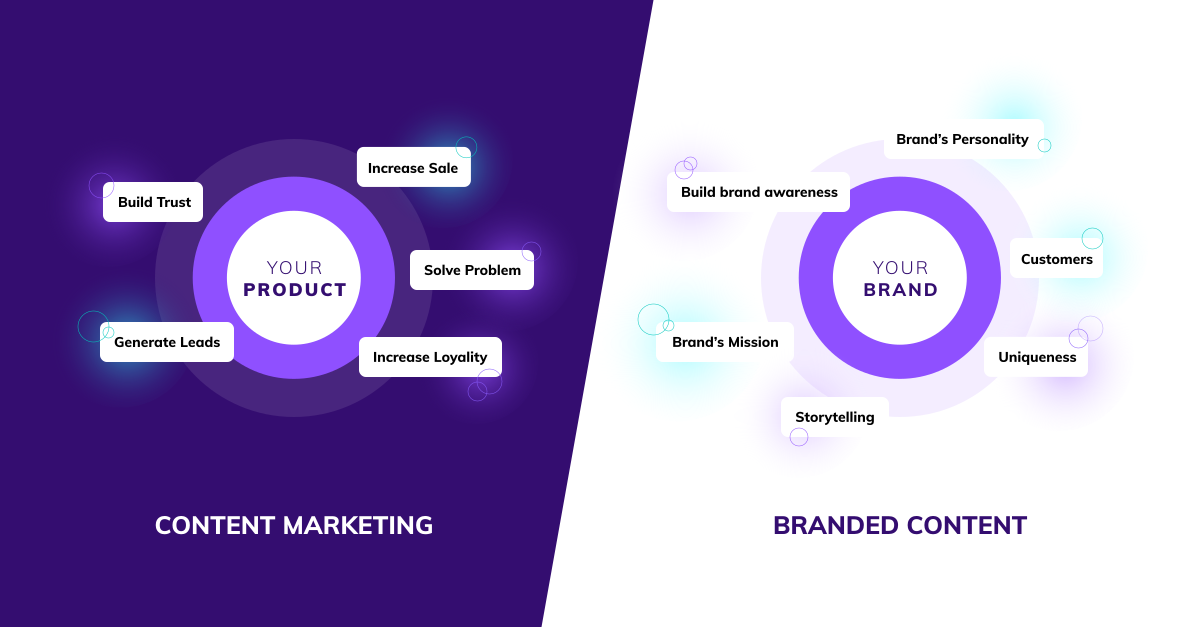\n\nNot knowing the difference between content brand marketing and content marketing can lead to fatal errors. In fact, it can harm your strategy and [hurt your brand image](https://latana.com/post/improve-brand-image/). This is mainly because your content isn’t relevant and personalized to your audience if you use these two interchangeably.\n\nAnd they’ll get frustrated...\n\nIt will also make your efforts useless. Understandably, people who don’t know what a CRM platform is are not in the position to choose a solution right now. They're at the top of the funnel looking for more information.\n\nWhat you need to do at this stage is engage them with content *brand* marketing, where they can learn more about the CRM platform and your brand’s mission.\n\nDifferentiating between the two will lead to more personalized content and will drive the results you desire.\n\n---\n\nEssentially, content marketing has only one purpose - increase conversions and generate leads. \n\nThat’s far from content brand marketing, where the main goal is to [increase brand awareness](https://latana.com/post/6-ways-to-increase-and-improve-brand-awareness/) and build a rapport with your [target audience](https://latana.com/guides/ultimate-target-audience-guide/).\n\nUnderstandably, it can feel confusing when so many similar terms are thrown around: content marketing, branding, brand marketing, etc. So, let's take a look at how can you apply each one to your business, and which strategy is more suitable for you.\n\n### Content Marketing Is About Driving Leads & Sales\n\nContent marketing focuses on driving leads and conversions by strategically using a brand’s products to solve its customers’ problems.\n\nAn excellent example of that is Chill Reptile’s Blogging Bootcamp.\n\nThey have in-depth blog posts about blogging online and [producing engaging blogs](https://www.chillreptile.com/how-to-write-a-blog-post/). They show expertise, which promotes trust and helps customers solve their problems. They also advertise their products at the end of each post to generate more leads.\n\n\n\nIt’s somewhat subtle and non-disturbing, yet a very effective way to get more leads and sales. Did you learn more about their brand and what’s its mission is? Of course not. You don’t care. You just want to learn more information about the topic. Using content brand marketing in this instance would only bore the reader.\n\n### Content Brand Marketing Is A Storytelling Master\n\nContent brand marketing is about building rapport and conveying a brand’s values. The easiest (and the most fun) way to do that is to publish stories that will help you get closer to your customers and deepen your rapport with them. \n\nOne of the best examples of that is the Lego Movie.\n\n\n\nIn this example, it’s the combination of storytelling and [product placement](https://latana.com/post/does-brand-product-placement-in-films-work/) that works. \n\nThe story concentrates on the main character Emmet, which is “The Chosen One.” It’s a thrilling movie that keeps the watchers engaged all time. The whole world in the movie is built from LEGO, but you barely even realize that. It’s not solving any problems nor promoting LEGO as a product directly. Instead, it focuses on entertaining viewers and building an emotional attachment.\n\nAnd the results?\n\nIt’s considered the biggest, most high-profile content brand marketing created — and it supercharged Lego’s brand awareness which indirectly led to more sales.\n\nSo why not follow suit and create a short movie or a trailer about your brand?\n\n### Content Marketing Is Less Flexible\n\nContent brand marketing is mainly interested in [brand awareness](https://latana.com/topics-brand-awareness/). You can put it anywhere, whether it’s a big publication or a social media platform.\n\nHowever, content marketing is more about conversions, and that makes it a lot less flexible.\n\nFor instance, if you create a content marketing post about apps for freelancers, you won’t be able to target everyone as with content brand marketing. Instead, you’ll be targeting only a small segment of prospects that are within your niche. That makes it a lot more challenging to promote and less flexible.\n\nBut if you find the right place, it can do wonders for your brand, especially in terms of sales and conversions.\n\n### Content Brand Marketing Drives Fast Results\n\nIf you’re trying to build trust and rapport with your audience, it’ll take a lot of time. You need to convert strangers into leads, gain their trust, and start slowly promoting your products to them.\n\nThe whole sales cycle is a long and complex process that takes a lot of time.\n\nBut meeting the goal of content brand marketing is a much easier task to do. \nYou are only interested in brand awareness, which is at the top of the sales funnel. Plus, your prospects also don’t need to pull out their wallets and consider a purchase. Instead, all they need to do is sit down and enjoy the engaging content you provide. \n\nYou also don’t need to worry about following any SEO best practices, sales tactics, and staying on top of the digital marketing trends. You just publish content, share it online with everyone, and build better brand awareness.\n\n## Final Thoughts\n\nContent marketing and content brand marketing may seem similar. But there are major differences you should know about. On the one hand, content brand marketing focuses on building brand awareness and engaging customers. It focuses on creating an emotional attachment to the brand. \n\nOn the other hand, content marketing is about lead generation and conversions. It uses your product as a solution to your readers’ problems, which increases sales.\n\nThe four major differences we discussed in this article will help you choose the right type of content for your site that meets all your needs and drives better results."},"tags":["Brand Awareness","Brand Marketing"],"authorRef":{"slug":"colin","firstName":"Colin","lastName":"Shipp","title":"Writer & Marketer","picture":{"__typename":"ContentfulAsset","id":"bb56ceb9-a813-5edc-85a6-facde71b8efe","description":"","title":"Latana Logo Author Photo","file":{"contentType":"image/png","url":"//images.ctfassets.net/7so8go2zrvbw/7qeUdZpRNeFZFTo0zIasKz/8d00318fb2f317950a2a2d6912eb28bf/Author_Latana__1_.png","details":{"image":{"width":235,"height":235}}},"gatsbyImageData":{"images":{"sources":[{"srcSet":"//images.ctfassets.net/7so8go2zrvbw/7qeUdZpRNeFZFTo0zIasKz/8d00318fb2f317950a2a2d6912eb28bf/Author_Latana__1_.png?w=235&h=235&q=95&fm=webp 235w","sizes":"100vw","type":"image/webp"}],"fallback":{"src":"//images.ctfassets.net/7so8go2zrvbw/7qeUdZpRNeFZFTo0zIasKz/8d00318fb2f317950a2a2d6912eb28bf/Author_Latana__1_.png?w=235&h=235&q=95&fm=png","srcSet":"//images.ctfassets.net/7so8go2zrvbw/7qeUdZpRNeFZFTo0zIasKz/8d00318fb2f317950a2a2d6912eb28bf/Author_Latana__1_.png?w=235&h=235&q=95&fm=png 235w","sizes":"100vw"}},"layout":"fullWidth","backgroundColor":"#080808","width":1,"height":1}}}}},{"node":{"publishDate":"2019-06-20T00:00+02:00","slug":"discover-niche-audience","author":"Fiona Laughton","title":"How to Define Your Niche Audience — and Make it Work","seo":{"__typename":"ContentfulSeo","title":"How to Define Your Niche Audience & Make it Work","description":"Never underestimate the power of the niche audience. Discover how to define your niche audience and make it work in your brand's favor.","noIndex":null,"ogImage":{"fluid":{"src":"//images.ctfassets.net/7so8go2zrvbw/5RNzBnKSv1xZgkgvWjg7Uj/340beec2d7dfb4f8660eabe2d3292cb4/discover-niche-audience_1.jpg?w=1200&h=675&q=90&fm=jpg"},"file":{"url":"//images.ctfassets.net/7so8go2zrvbw/5RNzBnKSv1xZgkgvWjg7Uj/340beec2d7dfb4f8660eabe2d3292cb4/discover-niche-audience_1.jpg"}}},"heroImage":{"__typename":"ContentfulAsset","id":"4668abf5-29a5-5226-80b4-880cb562cf61","description":"","title":"Illustration with audience divided in categories","file":{"contentType":"image/svg+xml","url":"//images.ctfassets.net/7so8go2zrvbw/1rTuB6AcSoSbyH8qpqaEc1/58401cebb794132aa476168ea2be0692/Frame_1__2_.svg","details":{"image":{"width":632,"height":406}}},"gatsbyImageData":null},"coverImage":null,"description":{"description":"Never underestimate the power of the niche audience. Discover how to define your niche audience and make it work in your brand's favor."},"content":{"content":"Imagine you’re a marketing manager at a global sports shoe brand. Your latest product release is a pair of running shoes. You’ve already spent thousands bringing this design to market, not to mention the associated advertising creative costs (e.g. producing image and video content), all to be used in your digital marketing campaign. \n\nYou launch your social media campaign via Facebook ads. Casting the net wide, you decide to target “anybody who wears running shoes”. You wonder why traffic to your website isn’t converting. Does this all sound a little too familiar? Then you haven't defined your niche audience.\n\n[Catch-all marketing](https://latana.com/post/marketing-increase-brand-awareness/) just doesn't cut it anymore. What you need to take is the niche audience approach invest the time in strategizing, researching and defining your niche audience. \n\nAs your shoe design is unique, individual, and fully customizable, your niche audience must reflect this. After some research, your niche persona is created: a 20-something woman with pink hair. You can now set your [social media strategy](https://latana.com/post/social-media-trolls-protect-brand/) in accordance to your defined niche audience.\n\nSounds simple but there is a bit more to it. If you are having trouble defining your target audience, or are doubting the importance of doing so, this article has a lot to offer you.\n\n## What is a Niche Audience?\n\n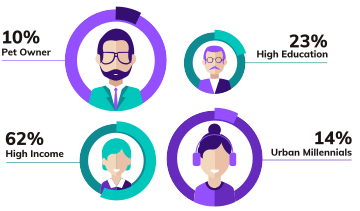\n\nFirst thing’s first, let’s define what a niche audience is:\n\n*A niche audience is a more focussed subgroup of the broader market’s target audience.*\n\nThe niche audience has a specific group of needs, which can be met by a targeted product or service. In this above example, the [target audience](https://latana.com/guides/level-up-refining-your-target-audience/) would be “anyone who wears running shoes” but the niche audience is “a 20-something woman with pink hair”.\n\n## What are the Benefits of Having a Niche Audience?\n\n### 1. Niche Audiences Are a Money Saver\n\nA niche audience is important because it makes your brand stand out from competitors, establishes a positive reputation and positions your business as an authority or expert in your field. \n\nIt will help your business save on costs too! Consider the sports shoe and Facebook example — instead of spending lots of money to reach a wider group of people and have fewer conversions, you can spend less money reaching a more specific group of people who want your product. \n\nThe right customers will often mean repeat business and it’s easier to engage with fewer people, meet their needs, maintain a good product combined with customer service, and making it difficult for them to go elsewhere.\n\n### 2. Crowd Out the Competition\n\nAnother advantage of a niche audience can often mean less competition (this may also depend on how specific your product is). The more specific your product or service is, the fewer companies there will be competing for your customers. \n\nOf course, the disadvantage to this means that you will be marketing to fewer customers than if you were to approach a wider target group. This is why it’s really important to get to know your niche audience on an intimate level, so you can strategize better ways to meet their needs and in turn, win their brand loyalty and therefore repeat business.\n\n### 3. Earn a Higher Profit\n\nYou’ve thoroughly researched your demographic and are ready to price your product. Here’s where things can get delicate regarding pricing! \n\nThe temptation to price high may backfire on some customers but there are also customers who will not mind paying a higher price for a product or service they feel they cannot get elsewhere. Researching both your niche audience demographic plus a competitor analysis is key here when it comes to pricing.\n\n### 4. Content Marketing is Better With Niche Audiences\n\nInvesting in [content marketing as part of your marketing strategy](https://latana.com/post/content-marketing-brand-identity/) is one of the best things a business can do to get those inbound marketing leads and resulting sales. With so much content available online, it’s easy for content to get lost in a sea of digital noise. \n\nThe solution? Invest in content creators who will create content that inspires, educates and provides value to the consumer. Consumers want content that is targeted to them. The bonus for marketers is that Google loves organic content, and will rank your pages higher. \n\nConsumers will feel more engaged with the brand, the relationship will grow stronger, you’ll get feedback directly from your consumers, which will only serve you well when it comes to understanding how they’re responding to your product or service.\n\n## **How Can I Find My Niche Audience?**\n\n\n\n### 1. Analyze Your Product\n\nTake a step back and look at your product again. Who is it for and why is it for them? It’s important that these two questions are answered correctly or else you might run into difficulties reaching your audience. Ultimately, these questions should also explain why your target audience should buy from you.\n\nFor instance, if your brand offers services within the financial industry, you need to consider who those services are going to benefit the most. Companies or individuals? If the former, B2B or B2C? You might even want to dig a little deeper to see the demographics of individuals who may be attracted to your services, such as age and gender. \n\nCombing through your services very finely will allow you to analyze and figure out your exact niche audience.\n\n### 2. Go Deep\n\nAnother way to define your audience is by digging for authentic customer feedback. Use the data analysis to compile demographics accordingly and ask important questions:\n\n- How old is your customer? \n- Where do they live? \n- How are they purchasing your product? What professions do they work in? \n- What are their hobbies or interests? \n- Are they single or partnered? \n- Do they have children? \n- Who do they live with? \n- What is their income? \n\nAll of these questions will help you identify who are the people most benefiting from your product or service and you, as a brand manager, can align your strategy accordingly.\n\nCheck out our [NET-A-PORTER Brand Bite](https://latana.com/brand-insights/brand-bites-net-a-porter/) for an example as to how.\n\n### 3. Ask: Is My Audience Easily Accessible?\n\nNow it’s time to see if your audience is easily accessible. Where will you place all your advertising and marketing so that it can target all of those potential customers?\n\nThankfully, most audiences will be accessible once you figure out where they usually “hang out” online. For instance, Millennials and Gen X can still be found on Facebook. \n\nHowever, [Gen Z doesn’t use the platform as much as others](https://www.businessinsider.com/top-social-media-platform-by-age-group-2018-8?r=US&IR=T), such as Snapchat. So, if you need to target teens with your marketing, it makes sense to largely ignore Facebook in favor of Snapchat branding and adverts.\n\nOnce you’ve figured out where your audience is online, you can then create clever marketing campaigns that put your brand message right in front of potential customers. \n\n### 4. Find Out What Your Audience Wants \n\nAre you giving your audience what they want? This is important besides simply finding them online.\n\nWhat kind of advertising will pique their interest? What features and benefits do they want from your products or services? Of course, you’ll need to speak to your audience directly to get any usable data to answer these questions. \n\nCarrying out customer surveys is one way to go about collecting this data. You’ll be able to put your burning questions directly to those who already use your brand. As well as this, you can also carry out research on social media. \n\nThe insights you’ll find on your Facebook page and Twitter account can be very useful and should show you which posts and tweets followers and fans react to the most positively. It’s also worth using Facebook and Twitter polls to see exactly what your followers think. These are completely anonymous so your customers shouldn’t be too cautious about holding anything from you!\n\n### 5. Check Out the Competition\n\nIt always makes sense to see what the competition is up to. Maybe their niche audience isn’t exactly the same as yours, but perhaps there is a crossover? \n\nIn what ways are they engaging them that may also work for your strategy? Maybe they are doing something completely wrong and will save you the trouble of making the same mistake? Learn how they are engaging their niche audience and analyze the ways they are targeting them, then, do it better!\n\n### 6. Embrace Change\n\nYour niche audience may change over time and that’s okay! Whether a new product or service has gone to market, or your niche audience has eyes for another brand, it happens. \n\nBy using [brand tracking software](https://latana.com/) to track your brand awareness, you can start to understand this change and seek out to explore this new audience who’ve entered the market. Give yourself full permission to adjust your strategy accordingly and focus your attention on attracting and nurturing this new niche audience.\n\n### 7. Evaluate Your Decision\n\nSo, you’ve made a decision on who makes up your target audience. But is it the right one? It’s important that you evaluate the outcome to make sure it’s correct.\n\nSometimes evaluating your own decisions isn’t that easy, so it might be worth getting your branding team on board to help give their objective opinions. \n\nThe first thing to look into is whether there are actually enough people who fit the criteria of your target audience. A niche audience is always good, but if the niche is particularly small, then you might not have enough people to target. And that means growing sales and revenues could prove to be very tricky indeed. \n\nAre you sure that your target audience will even benefit from your product or service in the first place? Just having a product or service that appeals to your niche isn’t enough—it needs to also have a defined benefit or else your customers will quickly lose interest.\n\nThese benefits need to be more than just the features of the product or service. One example is that a new cell phone might be advertised as having a fast Internet connection. That sounds like a benefit, but it’s actually only a feature. \n\nHowever, this does mean that users will experience faster load times for websites and apps, which is a big benefit. It’s this benefit—the consequence of the product feature—that needs to appeal to your target audience. Otherwise, they might not find a good enough reason to purchase from your brand.\n\n## Three Tools to Help Define Your Niche Audience\n\nDefining your niche audience shouldn’t be too difficult, especially when you have these tools on your side.\n\n### Google Analytics\n\nYou’ve probably already paired your website with Google Analytics. If you aren’t using the analytics provided by this tool, why ever not?!\n\nThere’s a wealth of information you’ll be able to glean from all this data, including the demographics of people who visit your site, the pages that they spend time on, and the search engine, social media platform, or another website that sent them to your site.\n\nOnce you collect this kind of data, you should have a very good picture of your niche audience. This can act as a great jumping-off point for defining your audience or something that you can build on with further research.\n\n### Latana Brand Tracking\n\nSo, now you’ve got some data on your target audience, it’s time to put some of that to work by helping with decision making. Latana’s AI-powered [brand monitoring software](https://www.latana.com/product/) can help with that. By tracking your brand over time, you’ll be able to use the tool’s scalable insights to see the changes in your brand performance. \n\nPart of the tracked data will be deep [audience segmentation](https://latana.com/audience-segmentation/) for target audiences, for a very precise audience definition. Using the tool’s interactive dashboard will also give you the chance to find new audience that are accelerating growth.\n\n\n\n### Social Listening\n\n[Social listening](https://latana.com/post/social-listening-brand/) is a fancy name for snooping on social media. All it involves is you taking to the likes of Facebook, Instagram, and Twitter to see what people are saying about your brand. \n\nThis is a great method of analyzing your niche audience’s perception of your brand. Perhaps they don’t have quite a positive view of you as you might have thought!\n\nSure, you could spend your time scrolling through Twitter and Facebook for every mention of your brand, but it would be much more efficient to use a dedicated social listening software or a custom tool for scraping Twitter. \n\nThe software monitors online conversations and will be able to provide you with an analysis of what’s been said after a specific period of time. Knowing what your niche audience is saying about you will help you understand them a bit more.\n\n## Examples of Real Brands and Their Target Audience\n\nSome brands get their target audience completely. They understand what their buyers want and expect, and so are able to create strong marketing that appeals to even the most niche of audiences. \n\nHere are just a few examples.\n\n### 1. Zipcar\n\nZipcar is a company that deals in car hire. Users sign up online and then can book a car by the hour or day. Cars are parked around major cities, so there’s no need to visit a Zipcar office for the keys; users simply unlock their chosen car through the app. Once they’re finished with it, they just park it where they picked it up.\n\n\n\nThe main user of Zipcar is the [urban-based millennial](https://latana.com/post/speaking-to-millennials/). Those who maybe can’t afford a car full-time and don’t need to use one on a regular basis. \n\nAs millennials are mainly found on social media, Zipcar has focused a lot of their branding efforts on Facebook and Twitter. From witty posts that engage and a responsive social media team across the two platforms, they’ve really nailed their engagement with millennial social media users.\n\n### 2. Chipotle\n\nAnother brand that does millennial marketing extremely well is [Chipotle](https://latana.com/post/chipotle-deep-dive/). Known for its use of fresh and sustainable ingredients in its Mexican food, Chipotle created a fictional web series called “Farmed and Dangerous.” \n\nFeaturing a Millennial farmer, Chip, who battles a corrupt food production company, the web series was more of an experience as the brand also created a dedicated website featuring trivia and behind-the-scenes clips.\n\nThe brand didn’t stop there. They even released an iPhone game that further helped pull millennials into this unique branding experience.\n\n\n\n### 3. Quaker Oats\n\nNow let’s take a look at a brand that has proven to be effective at targeting the older generation. Quaker Oats gets an 86% approval rating from baby boomers, which is a whole 10% more than from millennials. So, why do these porridge oats get so much love from older folk?\n\nOne of their secrets could be their branded events, such as the AARP Life@50+ event in Washington DC. Visitors could take dance lessons or enjoy free samples from Quakers, all in the name of promoting healthy living. \n\nThere was also the chance to win a $50,000 grand prize which visitors could enter by submitting videos of their dance moves. All those people who attended the event would have gone away associating Quaker products as being healthy choices in the grocery store.\n\n## Final Thoughts\n\nCongrats! You now kow how to take the first step toward [brand affinity](https://latana.com/post/guide-brand-affinity/).\n\nLearning why and how to define your niche audience is a great skill brand managers can utilize as part of their marketing campaigns. Saving money, maxing out the competition, turning a higher profit and using content marketing to inspire and educate your customers, and nurturing loyal and returning customers are all advantages of learning to define and market to your niche audience and make it work in your brand’s favor.\n\nNow it's time to put theory into action! Check out our [7-step plan](https://latana.com/post/7-steps-perfect-target-audience/) today."},"tags":["Brand Strategy"],"authorRef":{"slug":"fiona","firstName":"Fiona ","lastName":"Laughton","title":"Freelance Writer & Creative Consultant","picture":{"__typename":"ContentfulAsset","id":"bb56ceb9-a813-5edc-85a6-facde71b8efe","description":"","title":"Latana Logo Author Photo","file":{"contentType":"image/png","url":"//images.ctfassets.net/7so8go2zrvbw/7qeUdZpRNeFZFTo0zIasKz/8d00318fb2f317950a2a2d6912eb28bf/Author_Latana__1_.png","details":{"image":{"width":235,"height":235}}},"gatsbyImageData":{"images":{"sources":[{"srcSet":"//images.ctfassets.net/7so8go2zrvbw/7qeUdZpRNeFZFTo0zIasKz/8d00318fb2f317950a2a2d6912eb28bf/Author_Latana__1_.png?w=235&h=235&q=95&fm=webp 235w","sizes":"100vw","type":"image/webp"}],"fallback":{"src":"//images.ctfassets.net/7so8go2zrvbw/7qeUdZpRNeFZFTo0zIasKz/8d00318fb2f317950a2a2d6912eb28bf/Author_Latana__1_.png?w=235&h=235&q=95&fm=png","srcSet":"//images.ctfassets.net/7so8go2zrvbw/7qeUdZpRNeFZFTo0zIasKz/8d00318fb2f317950a2a2d6912eb28bf/Author_Latana__1_.png?w=235&h=235&q=95&fm=png 235w","sizes":"100vw"}},"layout":"fullWidth","backgroundColor":"#080808","width":1,"height":1}}}}},{"node":{"publishDate":"2021-05-27T08:50+02:00","slug":"consumer-research-brand-strategy","author":"Elena Prokopets","title":"Consumer Research: How to Find Insights for Your Brand Strategy","seo":{"__typename":"ContentfulSeo","title":"Consumer Research Process for Brand Strategy in 2022","description":"Your brand strategy should not be based on gut feeling but solid facts. Discover how you can implement consumer research into your 2022 brand strategy here.","noIndex":null,"ogImage":{"fluid":null,"file":{"url":"//images.ctfassets.net/7so8go2zrvbw/5sm6IX2BIKjtNYmr4Uqlnv/eaa93adfd33754af8b5595fa4708a498/Frame_1200x627__1_.svg"}}},"heroImage":{"__typename":"ContentfulAsset","id":"b34191b2-c249-5128-89c7-865a15dba9da","description":"Image of different charts and magnifying glass","title":"Image of different charts and magnifying glass","file":{"contentType":"image/svg+xml","url":"//images.ctfassets.net/7so8go2zrvbw/5sm6IX2BIKjtNYmr4Uqlnv/eaa93adfd33754af8b5595fa4708a498/Frame_1200x627__1_.svg","details":{"image":{"width":1200,"height":627}}},"gatsbyImageData":null},"coverImage":null,"description":{"description":"Your brand strategy should not be based on gut feeling but on solid facts. Discover how you can implement it into your 2022 brand strategy here."},"content":{"content":"Building a strong brand is hard — assessing customer perception, [increasing brand awareness](https://latana.com/post/6-ways-to-increase-and-improve-brand-awareness/), deciphering customer journeys and, then, putting an endless list of assumptions into practice. \n\nWhat makes all of the above so hard? Having too little data to lean upon. \n\nYour brand strategy should not be based on gut feeling but rather on solid facts. In order to grow as a brand, you need to know how your brand is performing with your [target audiences](https://latana.com/guides/ultimate-target-audience-guide/), how those audiences are responding to your campaigns, and how these audiences feel about your brand.\n\nConsumer research can provide you with that missing knowledge. \n\nIn this article, we'll to dive into the world of consumer research, explore what it is, the benefits, and how you can integrate reliable data into your brand strategy. \n\n## What is Consumer Research? \n\n\n\nConsumer research is the process of collecting information to first identify your target audiences and then zoom in on their preferences, perceptions, attitudes, and purchasing drivers for a product, service, or brand. \n\nData collection and analysis are key steps of consumer research. To ensure accurate and unbiased results, marketers must leverage an array of qualitative and quantitative research methods — alongside tools for interpreting the obtained input. \n\nThe main goals of consumer research: \n\n- Formalize ideal buyer personas \n- Refine [brand positioning](https://latana.com/post/brand-tracking-brand-positioning/)\n- Discover new or lookalike audiences\n- Collect feedback on existing offerings \n- Decipher consumer decision-making process \n\nUltimately, the goal of consumer research is to validate your branding and marketing assumptions — or discover new vectors for brand development among untapped audiences. And it works! Just ask Kiri Yanchecko, founder of Australian skincare brand [AMPERNA](https://amperna.com/blogs/news/the-inspiration-behind-amperna):\n\n\"*It was invaluable for me to do consumer research and purchase market research papers before I started work on my brand strategy. It enabled us to take this knowledge to people to help brand the business and know our target personas/consumers*.\"\n\n### What is the Scope of Consumer Research?\n\nThe scope of consumer research is limited by a research thesis — the main assumptions you’d want to test. \n\nA good thesis focuses on one specific area of research. For example, what are the most-recalled sustainable brands among Millennials, and what impacts their brand preferences? \n\nFocusing consumer research on specific audiences and scoped research questions allows you to gather more precise information. \n\n## Why Consumer Research is the Cornerstone of Brand Strategy \n\nAt any time, [3 in 4 consumers](https://www.thinkwithgoogle.com/consumer-insights/consumer-journey/discovery-ad-campaigns/) are on the lookout for new relevant brands and products, even if they don’t have a purchase agenda. \n\nBrands have many touchpoints to connect with prospective customers at any moment, in any place — on social media, via email, mobile, websites, or [offline brand marketing](https://latana.com/post/offline-marketing-increase-brand-awareness-2019/). \n\n\nSource: [Think with Google](https://www.thinkwithgoogle.com/consumer-insights/consumer-journey/discovery-ad-campaigns/) \n\nWhen brands can get onto the target customer’s radar, good things happen — interest piques, brand awareness improves, and conversions and sales follow. \n\nHowever, for such serendipitous “match-making” to take place, marketers need to know two things:\n\n- Who their target audiences are\n- What's relevant to them at the moment \n\n“*A true, deep knowledge of your target market, their lifestyle problems (and how your brand solves these problems), and what motivates them should be at the heart of any brand strategy*,” recommends Lauren Hamilton of [Digital Narrative](https://www.digitalnarrative.com.au/). \n\nIf a brand doesn’t know who its ideal buyer personas are and what matters to them the most, they are employing “*a scattergun approach which wastes valuable budget, leaves consumers cold, and fails to achieve the brand’s objectives*”, according to Hamilton. \n\nIndeed, brands should use consumers' constant background \"search mode\" as an opportunity to deliver relevant content at every touchpoint to help them take the next step. From ad campaigns to PR and paid [influencer marketing campaigns](https://latana.com/post/guide-to-influencer-marketing/), you have a lot of opportunities to show that your brand “gets what they need”. \n\nYet the above is challenging. \n\nThe expanded game field with blended offline and online interactions means you have more data than ever before. At the same time, consumers are more exposed than ever to different levers and pitches, which impacts their decision-making. \n\nIt follows that [71% of marketers](https://info.amplitude.com/product-intelligence-report) have no clue where to start when it comes to understanding consumer behaviors. Almost half (49%) also cannot decipher why users behave the way they do. \n\nConsumer research helps you fill in those gaps. \n\n## Two Approaches to Consumer Research\n\n\n\nNext, let's discuss the two main approaches one can take when conducting consumer research: primary and secondary.\n\n### Primary Consumer Research \n\nPrimary customer research means going directly to the sources of truth — the customer — for input to your strategy. [Brand monitoring software](https://latana.com/product/), focus groups, and user experience studies are common methods of primary consumer research. \n\nPrimary research can be exploratory and specific. First, because you are casting a wider net to understand the overall consumer sentiment and market trends. Exploratory research is useful for audience segmentation and buyer persona creation. \n\nSpecific consumer research puts the microscope on identified areas of interest such as brand preference, product usability, or response to different creative. In this case, it makes sense to work with a specific audience segment and pose questions related to a particular issue. \n\nIf you want to learn more about conducting consumer research in 2022, you can download our guide, [Level Up: Conducting Consumer Research](https://latana.com/guides/level-up-conducting-competitor-research/).\n\n### Secondary Consumer Research \n\nSecondary research assumes leveraging internal and external data to decode your audience behaviors. CRM or social media analytics, and other types of online research platforms and BI tools come to the fore here. \n\nUsing external data such as trend reports, market statistics, and public records can also help obtain a more wholesome picture of your target audiences. \n\nSecondary research is a solid way to assess the competition, understand your current positioning, and discover new secondary audiences. \n\n## How to Conduct Consumer Research (with Examples) \n\nCustomer research is a sequential process. It has to be well-structured, bounded by a method, and backed by supporting tools. Without the above, you risk spiraling into research chaos. \n\nThat’s why you need a framework for conducting consumer research. And we have one for you! \n\n### 1. Select Your Research Methods and Tools \n\nBefore you dive into the research part, you need to create a supporting “infrastructure”. That is to identify your key method for collecting data. \n\nConsumer data comes in two forms: \n\n1. __Quantitative__: information, recorded as counts and numbers \n2. __Qualitative__: non-numerical data that approximates and characterizes\n\n### What is Quantitative Customer Research? \n\nQuantitative customer research involves discerning facts and statistics from consumer opinions. By asking questions such as \"how many\", \"how often\", or \"how likely\", you can record consumer behaviors and preferences as specific numbers. \n\nUsing quantitative research, you can collect data around measures such as duration, price, amount, length, etc. You can then use these insights to shape up your [brand marketing](https://latana.com/post/long-term-brand-marketing/). \n\n“*The only way to craft a compelling brand strategy is to ensure that the brand team puts the consumer first and makes their voice heard. Consumer research can help in defining target consumers and their preferences towards — the offering, brand campaign, media habits, their usage and attitude towards a category*.” [Soudip Banerjee](https://www.linkedin.com/in/soudipbanerjee/), Senior Brand Manager at Preferred Consumer Products\n\n### Types of Quantitative Research\n\n- __[Customer surveys and questionnaires](https://latana.com/post/survey-tools-brand-tracking/)__: classic methods for producing statistical data for analysis. \n- __Cross-sectional surveys__: conducted with target audiences, rather than current customers to assess their preferences. \n- __Brand performance tracking__: modern brand analysis tools transform unstructured (spoken) data into numeric values, pegged to specific research questions. \n- __Marketing analytics and product intelligence__: an array of MarTech tools helps translate consumer actions into quantifiable parameters.\n- __Branding tests__: estimate how well target audiences respond to your visual identity and marketing collateral. \n- __Consumer sentiment research__: helps quantify how different audiences perceive your brand and competitors. \n- __Pricing research__: evaluate price sensitivity levels among your audiences and their response to different promotions. \n- __[Market segmentation](https://latana.com/post/market-segmentation/) research__: helps divide the total addressable market into niche audiences and segments with similar behaviors. \n\n### Quantitative Consumer Research Tools\n\n\n\n__[Latana](https://latana.com/)__: An AI-powered brand tracking tool that provides reliable data upon which marketing decisions can be based. Use it to gain intel on consumer awareness, brand consideration, preference, and usage, across an array of segments. Can be easily customized to track specific brand KPIs.\n\n__Typeform__. Simple survey form builder for data collection. Is a good beginners’ tool for collecting and pre-organizing data for subsequent analysis. \n\n__Google Analytics and HubSpot Analytics__. Both provide wide-angle views into online user behaviors but are not as telling when it comes to the “why” behind brand preference or [brand affinity](https://latana.com/post/guide-brand-affinity/). \n\n---\n\n### What is Qualitative Consumer Research? \n\nQualitative consumer research collects conversational voice of customer (VoC) data, explaining the motivators behind consumer behaviors. Open-ended questions, discussion, and observations can help us glean into the whats, whys, and hows of consumers’ actions. Plus, develop a better understanding of the audiences’ attitudes, beliefs, and values. \n\nAlso, “*qualitative research excels in hypothesis generation and is helpful in identifying risks with a concept under evaluation*,” [says Sara Belt](https://medium.com/spotify-insights/accelerating-user-research-how-we-structure-insights-for-speed-at-spotify-5f15ba4b32d9), Senior Director of Growth Insights at Spotify. For example, whether existing customers will respond well to a new product feature or price structure. \n\n### Types of Qualitative Consumer Research\n\n- __Customer interviews__: structured conversations with customers, well-representative of your ideal buyer personas. \n- __Focus groups__: facilitated meetings with representatives of target populations, aimed at collecting broad intel.\n- __UX research__: user interviews or observatory studies can help learn more about the target audiences’ behaviors online. \n- __Content analysis__: a secondary type of research that helps understand the sentiment expressed by consumers and competitors. \n- __Decision-making process investigation__: research into the thought process behind brand evaluation, aimed at understanding the drivers and blockers at different stages of the customer journeys. \n\n### Qualitative Consumer Research Tools\n\n- __Zoom and spreadsheets__: a well-proven combo for recording hosting customer interviews, collecting and organizing customer data. This setup is hard to scale but works when you need extra data quickly. \n- __Remesh.ai__: Offers a digital alternative to partnering with consumer research firms. This online focus group platform facilitates interviewing and data collection using AI algorithms. \n- __Lookback__: A video platform for conducting user research interviews in real-time. You can ask users to complete tasks on their own or host guided experiments. \n\n### 2. Formalize Your Research Personas\n\nYou have the means, now know you need to determine a target audience. \n\nA target audience represents the specific customer segments and ideal buyer personas you wish to analyze. \n\nBrand audiences can be primary and secondary. \n\n- __Primary target audience__: a consumer group, known to best respond to your brand messaging and offers. These are the decision-makers you want to engage the most. \n- __Secondary target audience__: other customer segments who may appear less likely candidates for using your brand, but are still strong contenders. For example, female beer drinkers are an [undermarketed audience for craft beer brands such as BrewDog](https://latana.com/post/insights-from-brewdog/). Secondary audiences may also impact primary audience decision-making e.g. Gen Z kids may respond better to [cause marketing](https://latana.com/post/cause-marketing/) — prompting their parents to prioritize sustainable brands. \n\nAfter you’ve identified your target audiences, go a level deeper and document them as buyer personas. A buyer persona is a generalized, data-backed, representation of an ideal brand user. \n\nGood buyer personas include: \n\n- __Demographics data__: factual information about a person such as age, gender, ethnicity, occupation, etc.\n- __[Psychographic data](https://latana.com/post/brands-psychographic-segmentation/)__: psychological information about the consumer’s beliefs, values, struggles, preferences, etc.\n\nFurther consumer research should help you fill some other knowledge gaps pertaining to: \n\n- Key pain points\n- Purchase drivers\n- Decision-making rationale \n- Preferences and attitudes \n- Attitude towards your brand\n\n__Mini Case Study: Barbie & Mattel__\n\nTake a lesson from Barbie. In the early 2000s, the iconic doll was losing its allure among consumers. Because of unrealistic body standards and outdated views on women's roles in society, Barbie was no longer the doll of choice among its primary audience. \n\nAmidst the praise and criticism, Mattel had little clue on what the target audiences expected. So the company hosted a series of focus groups with different target audiences. Some mothers expressed concerns over changes in the iconic Barbie looks. While others were very supportive of making the doll more diverse in terms of body shape, skin color, and age. \nEventually, the team decided to give Barbie many new looks as per the audience’s cue. \n\nAfter a 25% nosedive, Barbie sales started climbing up between 2012 and 2017. Last year, the company reported the [biggest increase in demand](https://www.wsj.com/articles/barbie-sales-take-off-as-parents-try-to-cut-down-on-screen-time-11603399290) for the doll in two decades. Today, [55%](https://www.bbc.com/news/business-50829046) of dolls sold globally are diverse in body type, skin, and hair color. Consumer sentiment around the brand also became less polarized. \n\n### 3. Develop a Research Hypothesis \n\nApart from knowing who to talk to, you also need to sharpen the main subject of discussion. \n\nA research hypothesis is a succinct summary of what you want to learn from the consumers. It includes a specific problem statement and supporting questions you plan to research and resolve. \n\nWhy is it important to ask precise questions for consumer research? Because the type of problem you are facing will dictate the means to solving it. \n\n“*Organizations with a track record of success using a specific insights methodology can easily fall into a pattern of applying a tried and true formula even when the research question is fundamentally different. This cognitive bias is known as Maslow’s Hammer — that is, when you have a hammer, every problem looks like a nail*\". [Sara Belt, Senior Director of Growth Insights at Spotify](https://medium.com/spotify-insights/accelerating-user-research-how-we-structure-insights-for-speed-at-spotify-5f15ba4b32d9).\n\nFor example, if you struggle to improve [brand awareness](https://latana.com/topics-brand-awareness/), your first cue might be to analyze your Google ads campaign numbers and double-up with ad targeting. You may, however, overlook the fact that you are pursuing the wrong brand audience or that your collateral just doesn't resonate with them.\n\nThat’s why a brand tracking tool can be useful as it also comes with an experienced team of researchers, data scientists, and project managers that supports you from the preparation of your survey right down to the delivery of your results.\n\n### 4. Analyze the Market Trends and Competition \n\n“*A good brand strategy tells a story and provides a specific value proposition for your customers. It also outlines what makes you different from the competition and gives them an idea of how you will solve their problems*,” says Abby Ha, Head of Marketing at [WellPCB](http://wellpcb.com/). \n\nSecondary research adds more context to your brand strategy. By knowing what your competitors do and what other factors affect the demand on the market, you can refine your brand differentiation and strategic development vector. \n\nThus, as part of consumer research, you should also size up the competition. In particular, collect data about: \n\n- Competition market positioning \n- Brand differentiators\n- Macro market trends \n- Niche/short-term market trends \n\nRemember: changes in consumer demand don't appear out of nowhere. They are a direct by-product of other events. These can inadvertently affect your brand, too. \n\nFew remember, but Instagram got started as a Foursquare competitor called Burbn. The first app version had many features such as check-in at a location, future check-ins (plans), earning points, photo sharing, etc. \n\nHowever, after receiving feedback on the MVP app, the team reevaluated its product strategy. Burbn was in no capacity to compete with the likes of Yelp and Foursquare. Consumers were not too keen on using yet another app for check-ins either. But around the same time, the first iPhone was released, featuring the best mobile camera.\n\nAfter re-analyzing the market and consumer feedback, Kevin Systrom and Mike Krieger [arrived at the conclusion that](https://techcrunch.com/2010/11/08/instagram-a-pivotal-pivot/) “*if we were going to build a company, we wanted to focus on being really good at one thing. We saw mobile photos as an awesome opportunity*.” \n\nThat early decision to rely on customer feedback and market research, resulted in Instagram as we know it today. \n\n### 5. Validate or Dispell Your Assumptions \n\nConsumer data doesn’t equal insights. After you've completed your research, you'll need to further evaluate the qualitative and quantitative data you've collected. \n\nData validation is an important step as it helps you ensure that you are using accurate, truthful, and representative information about your audience. \n\nAfter you’ve collected the inputs, you’ll need to:\n\n- Organize all the collected data in meaningful categories \n- Check for bias, inconsistencies, contradictions \n- Weed out irrelevant or questionable results \n- Apply extra analytics if needed to mine the intel \n\n### 6. Put Consumer Research to Action \n\nUltimately, the goal of consumer research is to inform your actions. There are many very good ways to use consumer research data: \n\n- Refine your brand positioning and [brand statement](https://latana.com/post/brand-statement/)\n- Create strategies for engaging with secondary audiences\n- Develop new creative and collateral for ad campaigns\n- Improve your ad targeting to reduce ad waste \n- Expand into new markets with greater confidence \n\nHere’s how [Armacost Lighting](https://www.armacostlighting.com), a manufacturer of LED accent lighting, translated their data into more website traffic and revenues. \n\nAd performance is one of the brand’s best sources for customer research. The team keeps close tabs on click-through rates on keywords and then uses attribution models to understand what happens next. \n\nThe data showed them that many consumers were eager to learn more about their products. But the team didn’t provide specific product information for decision-making. “*Our research helped us realize that we appeal to an underserved, yet well-educated market segment — consumers that are deploying our products in their campers and boats*,” said Jeremy Lippenholz, Director of Commercial Operations. Despite being aware of this secondary audience, the brand never targeted them directly. \n\nThey put this consumer knowledge to a test and built a multi-step digital marketing campaign. It featured content marketing assets, email marketing, organic social media promotion, and paid advertising campaigns. At every touchpoint, the company ensured they are providing the information this audience needs to make an informed decision. \n\nResults were fast to follow. In a month, the website visits increased by 17% and revenue from the marketed product categories jumped by 11%. “*We are now exploring more products to better serve the new-found market segments*,” the team says. \n\n## Final Thoughts \n\nConsumer research is a major undertaking, but the payoffs are worth it. Learning who your audiences are, how they think, and what prompts them to act is the key to improving your market presence, growing brand equity, and ultimately — revenue numbers. \n\nUsing the above six steps, you can learn how to coax clarity out of the chaotic stack of analytics data and spoken consumer insights. Remember: a clear research audience, succinct hypothesis, optimal research methods, and supporting tools are the infrastructure you need to run efficient consumer research. "},"tags":["Consumer Insights","Brand Strategy"],"authorRef":{"slug":"elena","firstName":"Elena","lastName":"Prokopets","title":"Freelance Writer & Content Strategist","picture":{"__typename":"ContentfulAsset","id":"3656f248-8cb2-5fce-8ae1-2ea977717e1f","description":"","title":"Elena Author Photo Framed","file":{"contentType":"image/png","url":"//images.ctfassets.net/7so8go2zrvbw/1rgsWp0ZBagiKqMSpw7MwV/0cb99f4e752141de6ac06e1e9990363f/Author_Elena.png","details":{"image":{"width":235,"height":235}}},"gatsbyImageData":{"images":{"sources":[{"srcSet":"//images.ctfassets.net/7so8go2zrvbw/1rgsWp0ZBagiKqMSpw7MwV/0cb99f4e752141de6ac06e1e9990363f/Author_Elena.png?w=235&h=235&q=95&fm=webp 235w","sizes":"100vw","type":"image/webp"}],"fallback":{"src":"//images.ctfassets.net/7so8go2zrvbw/1rgsWp0ZBagiKqMSpw7MwV/0cb99f4e752141de6ac06e1e9990363f/Author_Elena.png?w=235&h=235&q=95&fm=png","srcSet":"//images.ctfassets.net/7so8go2zrvbw/1rgsWp0ZBagiKqMSpw7MwV/0cb99f4e752141de6ac06e1e9990363f/Author_Elena.png?w=235&h=235&q=95&fm=png 235w","sizes":"100vw"}},"layout":"fullWidth","backgroundColor":"#080808","width":1,"height":1}}}}},{"node":{"publishDate":"2021-10-22T08:15+02:00","slug":"10-best-market-research-tools","author":"Michael Metcalf","title":"The 10 Best Market Research Tools of 2022","seo":{"__typename":"ContentfulSeo","title":"The 10 Best Market Research Tools of 2022","description":"Market research tools are your secret weapon for understanding customers in 2022. Here are 10 of the best market research tools available online today.","noIndex":null,"ogImage":{"fluid":{"src":"//images.ctfassets.net/7so8go2zrvbw/65mJl6GbMuDufAlTNgwELF/0ac60dcc9fea40a050ee8336a54b513b/Blog_SEO-Thumbnail_1000X709__7_.png?w=1200&h=675&q=90&fm=jpg"},"file":{"url":"//images.ctfassets.net/7so8go2zrvbw/65mJl6GbMuDufAlTNgwELF/0ac60dcc9fea40a050ee8336a54b513b/Blog_SEO-Thumbnail_1000X709__7_.png"}}},"heroImage":{"__typename":"ContentfulAsset","id":"54efced9-61aa-5b84-be31-fadf790fbbce","description":"Image showing man looking through telescope at market research brand logos","title":"Blog SEO-Thumbnail 1000X709 (7)","file":{"contentType":"image/png","url":"//images.ctfassets.net/7so8go2zrvbw/65mJl6GbMuDufAlTNgwELF/0ac60dcc9fea40a050ee8336a54b513b/Blog_SEO-Thumbnail_1000X709__7_.png","details":{"image":{"width":1000,"height":709}}},"gatsbyImageData":{"images":{"sources":[{"srcSet":"//images.ctfassets.net/7so8go2zrvbw/65mJl6GbMuDufAlTNgwELF/0ac60dcc9fea40a050ee8336a54b513b/Blog_SEO-Thumbnail_1000X709__7_.png?w=200&h=142&q=95&fm=webp 200w,\n//images.ctfassets.net/7so8go2zrvbw/65mJl6GbMuDufAlTNgwELF/0ac60dcc9fea40a050ee8336a54b513b/Blog_SEO-Thumbnail_1000X709__7_.png?w=400&h=284&q=95&fm=webp 400w,\n//images.ctfassets.net/7so8go2zrvbw/65mJl6GbMuDufAlTNgwELF/0ac60dcc9fea40a050ee8336a54b513b/Blog_SEO-Thumbnail_1000X709__7_.png?w=800&h=567&q=95&fm=webp 800w","sizes":"(min-width: 800px) 800px, 100vw","type":"image/webp"}],"fallback":{"src":"//images.ctfassets.net/7so8go2zrvbw/65mJl6GbMuDufAlTNgwELF/0ac60dcc9fea40a050ee8336a54b513b/Blog_SEO-Thumbnail_1000X709__7_.png?w=800&h=567&q=95&fm=png","srcSet":"//images.ctfassets.net/7so8go2zrvbw/65mJl6GbMuDufAlTNgwELF/0ac60dcc9fea40a050ee8336a54b513b/Blog_SEO-Thumbnail_1000X709__7_.png?w=200&h=142&q=95&fm=png 200w,\n//images.ctfassets.net/7so8go2zrvbw/65mJl6GbMuDufAlTNgwELF/0ac60dcc9fea40a050ee8336a54b513b/Blog_SEO-Thumbnail_1000X709__7_.png?w=400&h=284&q=95&fm=png 400w,\n//images.ctfassets.net/7so8go2zrvbw/65mJl6GbMuDufAlTNgwELF/0ac60dcc9fea40a050ee8336a54b513b/Blog_SEO-Thumbnail_1000X709__7_.png?w=800&h=567&q=95&fm=png 800w","sizes":"(min-width: 800px) 800px, 100vw"}},"layout":"constrained","backgroundColor":"#08c8b8","width":800,"height":567}},"coverImage":{"__typename":"ContentfulAsset","id":"5333d102-5dc2-5ed6-8c27-a7c042d004e0","description":"Image showing man looking through telescope at market research brand logos","title":"Blog Cover 1288X400 (6)","file":{"contentType":"image/png","url":"//images.ctfassets.net/7so8go2zrvbw/2fJ2kLkath8Y2IlZ6cz5Tm/c65af6ca9004e58ce3c15ccc7f6a92a9/Blog_Cover_1288X400__6_.png","details":{"image":{"width":1288,"height":400}}},"gatsbyImageData":{"images":{"sources":[{"srcSet":"//images.ctfassets.net/7so8go2zrvbw/2fJ2kLkath8Y2IlZ6cz5Tm/c65af6ca9004e58ce3c15ccc7f6a92a9/Blog_Cover_1288X400__6_.png?w=750&h=233&q=95&fm=webp 750w,\n//images.ctfassets.net/7so8go2zrvbw/2fJ2kLkath8Y2IlZ6cz5Tm/c65af6ca9004e58ce3c15ccc7f6a92a9/Blog_Cover_1288X400__6_.png?w=1080&h=335&q=95&fm=webp 1080w,\n//images.ctfassets.net/7so8go2zrvbw/2fJ2kLkath8Y2IlZ6cz5Tm/c65af6ca9004e58ce3c15ccc7f6a92a9/Blog_Cover_1288X400__6_.png?w=1288&h=400&q=95&fm=webp 1288w","sizes":"100vw","type":"image/webp"}],"fallback":{"src":"//images.ctfassets.net/7so8go2zrvbw/2fJ2kLkath8Y2IlZ6cz5Tm/c65af6ca9004e58ce3c15ccc7f6a92a9/Blog_Cover_1288X400__6_.png?w=1288&h=400&q=95&fm=png","srcSet":"//images.ctfassets.net/7so8go2zrvbw/2fJ2kLkath8Y2IlZ6cz5Tm/c65af6ca9004e58ce3c15ccc7f6a92a9/Blog_Cover_1288X400__6_.png?w=750&h=233&q=95&fm=png 750w,\n//images.ctfassets.net/7so8go2zrvbw/2fJ2kLkath8Y2IlZ6cz5Tm/c65af6ca9004e58ce3c15ccc7f6a92a9/Blog_Cover_1288X400__6_.png?w=1080&h=335&q=95&fm=png 1080w,\n//images.ctfassets.net/7so8go2zrvbw/2fJ2kLkath8Y2IlZ6cz5Tm/c65af6ca9004e58ce3c15ccc7f6a92a9/Blog_Cover_1288X400__6_.png?w=1288&h=400&q=95&fm=png 1288w","sizes":"100vw"}},"layout":"fullWidth","backgroundColor":"#08c8b8","width":1,"height":0.3105590062111801}},"description":{"description":"Market research tools are your secret weapon for understanding customers in 2022. Here are 10 of the best market research tools available online today."},"content":{"content":"Market and brand research tools are your secret weapon in the quest to understand your customers — and find new ones.\n\nYou may think you know everything about your target audiences already, but without the data to back it up, your hunch can send you down the wrong path.\n\nMarket research is all about figuring out who your potential customers are, how you can reach them, and what they need from you. Back in the day, tools to answer these questions might have consisted of a pen, clipboard, and phone. \n\nBut now, there's a whole array of smart data analysis and collection systems to choose from. So, where do you begin?\n\nIt starts with trying things out! Experimenting with the various options is the only way you'll know what works best for you and your company. And while some tools aim to serve all your needs, others are more specialized — so it might be best to have a few of the below-listed tools in your arsenal.\n\nThe tools we've looked at fall into three categories – online listening, broader market intelligence, and direct customer interaction. Pricing goes from free, to the tens of dollars, to enterprise-level commitments in the thousands. \n\nWhether you're part of a small business, startup, or large corporation – you can gain valuable insight from each of these services. So, let's take a look at the ten best creative market research tools we've come across so far – and discuss why you should give them a try.\n\n## 1. Answer the Public\n\n[Answer The Public](https://answerthepublic.com/) is a free market research tool that helps you figure out what questions people are asking online. Entering your topic on the search page brings up a list of questions, topics, common search terms, and related subjects.\n\nLet's look at \"oat milk\" as an example. Amongst the numerous results for this topic, you'll find:\n\n- \"where to use oat milk\"\n- \"which oat milk is best for toddlers\"\n- \"will oat milk curdle\"\n- \"can you recycle oat milk cartons\"\n\nThese may not necessarily be the topics you'd *think* people want answers to, but this is the information customers are actually looking for. And if you aren't answering their questions, rest assured, someone else definitely is.\n\nThe insights you find with this tool can inform the development of new products or services, and if [content marketing](https://latana.com/post/content-marketing-benefits/) is a channel you invest in, it's even better. \n\nIf you create content that addresses the topics your customers are searching for, you'll attract more easily them via search engines. Once on your site, you then have a chance to bring them into your marketing funnel in whichever way you prefer. \n\nThis is, of course, the foundation of good SEO.\n\n## 2. Think With Google\n\n\nSource: Think With Google\n\nWhile Google's other services are widely known, this one isn't as famous outside [data-driven marketing](https://latana.com/guides/a-guide-to-data-driven-marketing-for-beginners/) circles. \n\nBut [Think With Google](https://www.thinkwithgoogle.com/) is a different way of looking at data that'll help any marketer looking for stats, trends, and insights.\n\nThink With Google is different from the real-time data you'd get from Google Analytics — which many marketers swear by. And it's a bit more focused than its sibling, [Google Trends](https://trends.google.com/trends/?geo=US).\n\nIt's actually a free-to-use, curated resource library of facts and figures. It uses Google's vast array of analytics data — along with human wisdom — to provide information you might not find from other sources. \n\nFeatures like [consumer insights](https://latana.com/post/customer-insights-brand-marketing/) highlight what's going on in the world of commerce, and while you can perform specific searches — they might be better for creative inspiration, rather than answering focused queries. \n\nFor example, the YouTube *Find My Audience* tool can provide interesting profiles on customer searches in different target markets. \n\nYou can see both \"affinity audiences\" (buyer personas with habits and interests similar to your offering) and \"in-market audiences\" (people searching for information about your offering or its competitors).\n\nEssentially, Think With Google is a suite of different market research tools built into one platform — have a dig around and see what works best for you. \n\n## 3. Spyfu\n\n[Spyfu](https://www.spyfu.com/) is a search engine analytics platform that allows users to see how their competitors are attracting traffic.\n\nWhen you visit the homepage, you'll be asked to enter your competitor's website address. Spyfu then provides general information about their traffic metrics, where they're getting traffic from, and what people are searching to find them. \n\nIt's also really useful for [finding competitors](https://latana.com/post/competitor-analysis-for-brands/) you didn't know you had, based on the overlaps in traffic.\n\nThere are also paid options with extra features, but the free service still provides some valuable intel. There's keyword research, backlink checkers, and other useful SEO tools to inform your online marketing strategy. \n\nDespite the name, it's not designed to encourage you to plagiarize in any way — it's more about [competitor research](https://latana.com/guides/level-up-conducting-competitor-research/). And if you want to serve your target audience best, you need to know how well they're already *being* served. \n\nKnowing this allows you to find gaps in the market and spot opportunities to expand or improve your offering. It's definitely worth a shot.\n\n## 4. Latana \n\n\n\nIf you're looking for high-quality insights based on reliable data and a more streamlined, automated survey tool for your market research — our very own platform is the one for you. Latana is [brand monitoring software](https://latana.com/product/) that's simple to use, but surprisingly powerful under the hood. \n\nThe special ingredient to Latana is its ability to understand consumer perception about your brand and how it changes over time — even for niche audiences. \n\nThe [audience segmentation](https://latana.com/audience-segmentation/) feature enables brands to:\n\n- Zoom in on the niche customer groups that your brand values\n- Analyze which audiences work best for competitors - and where your brand can fill the gap\n- Focus campaigns only on the audiences that are helping your brand grow\n\nThese insights are powered by [mobile-optimized brand surveys](https://latana.com/whitepapers/mobile-optimized-surveys/) that create a smooth mobile user experience for survey respondents that ensures valid and reliable results. With them, you can [reach 4 billion mobile users in over 100 countries](https://latana.com/data-confidence/). \n\nThe result: maximum consumer information capture. Understanding the impact of your brand marketing — once thought of as fuzzy and mysterious — is now easy, clear, and precise. It's the kind of market research you can seriously enjoy doing. \n\nWhy not [give it a try](https://latana.com/book-demo/)?\n\n## 5. BuzzSumo\n\n[Buzzsumo](https://buzzsumo.com/) is a market research tool that's all about content marketing and social media. It's used to generate insight from what people are posting, engaging with, sharing, and blogging about — and can teach you a lot about what your target audience cares about.\n\nBuzzSumo is focused on the performance metrics of content — like how many shares a post has or how many backlinks a page has. As a way to find the most popular content in your industry or niche, it's second to none. \n\nBy analyzing the data it provides, you'll be able to create your own high-performing content in the hopes of going viral with your [target audience](https://latana.com/guides/ultimate-target-audience-guide/) or getting excellent press coverage.\n\nYou can use BuzzSumo to monitor the [social mentions](https://latana.com/post/social-listening-brand/) on a certain topic and set up alerts for certain keywords or comments. So, if you care about what people are saying and want to provide information and content they'll really appreciate, this tool can be a lifesaver.\n\n## 6. Statista \n\nStatista is a market and consumer data portal that covers a huge range of industries around the world.\n\nIt's easy to get started with Statista — just head to their website and [try a search](https://www.statista.com/). Queries will return hundreds of market research reports, data visualizations, and statistical dashboards created from a variety of sources.\n\nTry \"gluten free goods\" for example — it returns a wealth of reports on consumer activity in that product category over recent years. Clicking into the results gives you analytical dashboards, survey sources, and links to similar topics and studies.\n\nIt's a great way to find intel on things like [consumer behavior](https://latana.com/post/branding-affects-consumer-behavior/), market trends, demographics, and consumer opinions. \n\nHowever, if you'd like access to more detailed data, you'll need to set up a paid account. Still, the free tier is useful as a starting point.\n\n## 7. Typeform\n\n[Typeform](https://www.typeform.com/forms/) is a well-known primary research tool that offers a simple platform for making interactive forms and online surveys. \n\nIts main selling point is a design-led aesthetic that creates a nice user journey as they answer questions. Users are typically shown a single question and answer at a time — which can be less intimidating than a full-blown survey shown all in one go. \n\nPlus, the included templates are easy to set up. \n\nTypeform can play a big role in collecting customer feedback — whether that's ideas for new offerings or opinions about their current experience. If you're collecting a large volume of customer data, it also gives you the option to view the analytics of the qualitative responses you collect.\n\n## 8. Otter.ai \n\n\nSource: [Otter.ai](https://otter.ai/media-kit)\n\nIt's not what you'd traditionally call a market research tool, but [Otter.ai](https://otter.ai/) should be a part of any marketer's arsenal.\n\nIt's an AI-powered transcription software for interviews and meetings. It sits in the background listening to you talk and transcribes your words into plain text — whether you're talking in-person or remotely.\n\nThis means you get a digitized conversation that can be searched, stored in a database, and scored on [positive or negative sentiment](https://latana.com/post/sentiment-analysis/).\n\nIf you're not talking directly to your customers, you're missing out. Interviewing them is one of the most valuable ways to learn about your product — with questions like: *How do your users feel? What features do they want added? What would convince them to tell their friends about you?*\n\nSometimes, these answers don't come out in surveys or social media engagement. So, add interviewing to your market research toolkit and you'll get that human insight that broader demographic research can't always hit.\n\n## 9. Dimensions.ai \n\nHere's a secret weapon for anyone wanting scientific research to understand consumers and to provide proper sourcing for their claims: Dimensions.ai\n\n[Dimensions](https://app.dimensions.ai/discover/publication) is a search engine for academic publications. So searching for \"productivity in the pandemic\" or \"vegan food sales\" will return studies, papers, and journals from universities and research institutions around the world.\n\nIt's an amazing resource for discovering new findings in mass psychology, micro- and macro-economic trends, and trending topics. Pro Tip: Make sure to filter your search to \"All OA\" which will give you Open Access research – this is free to view, rather than paywalled.\n\nIt's free to use in your web browser. Play around with search queries related to your industry, and filter results to the last few years. Soon enough, you'll find a study that proves a hunch you may have had, or gives depth to a trend you've noticed.\n\nWhen you find a result, click on it, and then \"View PDF\" to be taken straight to the file. Or you can click the \"doi.org\" link to go to the publisher's page if you want to reference it in your marketing campaigns.\n\n## 10. Yelp \n\nWhile [Yelp](https://yelp.com/) isn't necessarily designed for businesses that conduct market research, it's a goldmine to gather information and figure out what customers expect when they spend their money.\n\nIt's a search engine and review platform for local businesses — mainly for food & drink, but also for local trade services like electricians and plumbers. With a huge archive of customer reviews, it's one of the best sources of opinion out there. \n\nIf you're a brick-and-mortar business, it can be an invaluable way to find out what your competitors are doing right and wrong.\n\nOther review sites you can discover useful insights from are TripAdvisor (for destinations), Google Reviews (also for destinations), Steam (for video games), Metacritic (for media), and Amazon (for consumer goods).\n\nYou can take this tactic even further by digging through Reddit, Quora, and other online forums dedicated to your industry. They're a great way to speak to potential customers directly without having to do online surveys. \n\nWith the intelligence you gather from review sites alone, you can have a real advantage in creating your next marketing campaign or upgrading your customer experience. \n\n## Final Thoughts\n\nThese marketing research tools will provide a big upgrade to your daily toolkit.\n\nWhether you're looking for metrics, trends, conversations, or valuable insights, you've got plenty of tools to choose from. If you want to excel as a marketer and reach a wide pool of potential customers, you need to know where to find them. \n\nNow that you've got an arsenal of solutions to deploy, you're on your way to becoming a market research expert.\n\n---\n\nUpdated by: [Cory Schröder](https://latana.com/author/cory-schroder/) on 02.08.22"},"tags":["Brand Tracking","Brand Strategy"],"authorRef":{"slug":"michael","firstName":"Michael","lastName":"Metcalf","title":"Content Strategist & Freelance Writer","picture":{"__typename":"ContentfulAsset","id":"3f6adeeb-dc2e-5436-a714-6ae63189be0c","description":"","title":"Michael Metcalf Photo","file":{"contentType":"image/png","url":"//images.ctfassets.net/7so8go2zrvbw/6yX4zD1C6Ubd02p1rJh3NZ/863cebf6906275bfe571d516ef46a2e3/Author_Michael.png","details":{"image":{"width":235,"height":235}}},"gatsbyImageData":{"images":{"sources":[{"srcSet":"//images.ctfassets.net/7so8go2zrvbw/6yX4zD1C6Ubd02p1rJh3NZ/863cebf6906275bfe571d516ef46a2e3/Author_Michael.png?w=235&h=235&q=95&fm=webp 235w","sizes":"100vw","type":"image/webp"}],"fallback":{"src":"//images.ctfassets.net/7so8go2zrvbw/6yX4zD1C6Ubd02p1rJh3NZ/863cebf6906275bfe571d516ef46a2e3/Author_Michael.png?w=235&h=235&q=95&fm=png","srcSet":"//images.ctfassets.net/7so8go2zrvbw/6yX4zD1C6Ubd02p1rJh3NZ/863cebf6906275bfe571d516ef46a2e3/Author_Michael.png?w=235&h=235&q=95&fm=png 235w","sizes":"100vw"}},"layout":"fullWidth","backgroundColor":"#080808","width":1,"height":1}}}}},{"node":{"publishDate":"2021-09-23T08:00+02:00","slug":"how-to-build-a-marketing-team","author":"Nicholas Samuel","title":"How to Build a Successful Marketing Team","seo":{"__typename":"ContentfulSeo","title":"How To Build A Successful Marketing Team in 2022","description":"Building a successful marketing team isn’t an easy task. From content to paid advertising, there’s much to consider in 2022. This article will walk you through the process step by step.","noIndex":null,"ogImage":{"fluid":{"src":"//images.ctfassets.net/7so8go2zrvbw/45lki9iTISzbBbnZwyPfag/1b048288156ad0ccdf600ba495d17041/Thumbnail_1000X709.png?w=1200&h=675&q=90&fm=jpg"},"file":{"url":"//images.ctfassets.net/7so8go2zrvbw/45lki9iTISzbBbnZwyPfag/1b048288156ad0ccdf600ba495d17041/Thumbnail_1000X709.png"}}},"heroImage":{"__typename":"ContentfulAsset","id":"b90fa280-04d2-5264-b621-a24f19066542","description":"","title":"Illustration of four people on a Marketing Team (Thumbnail)","file":{"contentType":"image/png","url":"//images.ctfassets.net/7so8go2zrvbw/45lki9iTISzbBbnZwyPfag/1b048288156ad0ccdf600ba495d17041/Thumbnail_1000X709.png","details":{"image":{"width":1000,"height":709}}},"gatsbyImageData":{"images":{"sources":[{"srcSet":"//images.ctfassets.net/7so8go2zrvbw/45lki9iTISzbBbnZwyPfag/1b048288156ad0ccdf600ba495d17041/Thumbnail_1000X709.png?w=200&h=142&q=95&fm=webp 200w,\n//images.ctfassets.net/7so8go2zrvbw/45lki9iTISzbBbnZwyPfag/1b048288156ad0ccdf600ba495d17041/Thumbnail_1000X709.png?w=400&h=284&q=95&fm=webp 400w,\n//images.ctfassets.net/7so8go2zrvbw/45lki9iTISzbBbnZwyPfag/1b048288156ad0ccdf600ba495d17041/Thumbnail_1000X709.png?w=800&h=567&q=95&fm=webp 800w","sizes":"(min-width: 800px) 800px, 100vw","type":"image/webp"}],"fallback":{"src":"//images.ctfassets.net/7so8go2zrvbw/45lki9iTISzbBbnZwyPfag/1b048288156ad0ccdf600ba495d17041/Thumbnail_1000X709.png?w=800&h=567&q=95&fm=png","srcSet":"//images.ctfassets.net/7so8go2zrvbw/45lki9iTISzbBbnZwyPfag/1b048288156ad0ccdf600ba495d17041/Thumbnail_1000X709.png?w=200&h=142&q=95&fm=png 200w,\n//images.ctfassets.net/7so8go2zrvbw/45lki9iTISzbBbnZwyPfag/1b048288156ad0ccdf600ba495d17041/Thumbnail_1000X709.png?w=400&h=284&q=95&fm=png 400w,\n//images.ctfassets.net/7so8go2zrvbw/45lki9iTISzbBbnZwyPfag/1b048288156ad0ccdf600ba495d17041/Thumbnail_1000X709.png?w=800&h=567&q=95&fm=png 800w","sizes":"(min-width: 800px) 800px, 100vw"}},"layout":"constrained","backgroundColor":"#380868","width":800,"height":567}},"coverImage":{"__typename":"ContentfulAsset","id":"723fc789-b8ac-55bf-9615-b4ca38a3a706","description":"","title":"Illustration of four people on a Marketing Team (Cover Image)","file":{"contentType":"image/png","url":"//images.ctfassets.net/7so8go2zrvbw/30Tkx1iQGiKyXVdbYciJRN/082a85a6286024c4c446aea2986530d1/Blog_Cover_1288X400__35_.png","details":{"image":{"width":1288,"height":400}}},"gatsbyImageData":{"images":{"sources":[{"srcSet":"//images.ctfassets.net/7so8go2zrvbw/30Tkx1iQGiKyXVdbYciJRN/082a85a6286024c4c446aea2986530d1/Blog_Cover_1288X400__35_.png?w=750&h=233&q=95&fm=webp 750w,\n//images.ctfassets.net/7so8go2zrvbw/30Tkx1iQGiKyXVdbYciJRN/082a85a6286024c4c446aea2986530d1/Blog_Cover_1288X400__35_.png?w=1080&h=335&q=95&fm=webp 1080w,\n//images.ctfassets.net/7so8go2zrvbw/30Tkx1iQGiKyXVdbYciJRN/082a85a6286024c4c446aea2986530d1/Blog_Cover_1288X400__35_.png?w=1288&h=400&q=95&fm=webp 1288w","sizes":"100vw","type":"image/webp"}],"fallback":{"src":"//images.ctfassets.net/7so8go2zrvbw/30Tkx1iQGiKyXVdbYciJRN/082a85a6286024c4c446aea2986530d1/Blog_Cover_1288X400__35_.png?w=1288&h=400&q=95&fm=png","srcSet":"//images.ctfassets.net/7so8go2zrvbw/30Tkx1iQGiKyXVdbYciJRN/082a85a6286024c4c446aea2986530d1/Blog_Cover_1288X400__35_.png?w=750&h=233&q=95&fm=png 750w,\n//images.ctfassets.net/7so8go2zrvbw/30Tkx1iQGiKyXVdbYciJRN/082a85a6286024c4c446aea2986530d1/Blog_Cover_1288X400__35_.png?w=1080&h=335&q=95&fm=png 1080w,\n//images.ctfassets.net/7so8go2zrvbw/30Tkx1iQGiKyXVdbYciJRN/082a85a6286024c4c446aea2986530d1/Blog_Cover_1288X400__35_.png?w=1288&h=400&q=95&fm=png 1288w","sizes":"100vw"}},"layout":"fullWidth","backgroundColor":"#380868","width":1,"height":0.3105590062111801}},"description":{"description":"Building a successful marketing team isn’t an easy task. From content to paid advertising, there’s much to consider in 2022. This article will walk you through the process step by step."},"content":{"content":"What does it take to build a truly successful marketing team? Not just one that moves with the times, but one that’s always a step ahead.\n\nIt’s a question every brand should ponder from time to time — even if their marketing department is *technically* already full. Why is that?\n\nQuite simply, the marketing landscape is changing and brands need to be ready. By 2026 — in the US alone — [hiring for marketing jobs is expected to increase by 10%](https://www.tuw.edu/business/marketing-managers-fastest-growing-careers/). And with most marketing channels getting more and more popular by the day, markets have quickly become oversaturated. \n\nTo cope with these coming changes, brands will need to place more importance than ever on the *quality* of their marketing team hires. Success in marketing will require hiring individuals with a combination of experience, creativity, and a willingness to try new things — as well as a talent for working well with others. \n\nStephanie Scheller, Founder of [Grow Disrupt](https://www.growdisrupt.com/), is a big advocate of creativity in a marketing team:\n\n*\"Creativity is key to building a marketing team in my mind! I tried to do it alone for so long but when I brought on team members and had the opportunity to exchange ideas and have fun with designing our marketing, it blew up!* \n\n*\"Of course, there is always a balance of having people who are solid with execution and can read and understand reports, but I find that creativity is the crux for building a solid marketing team. That and balancing skill sets*.\"*\n\nOf course, with such intense competition to find and keep top talent, brands will need to figure out what it is they offer that sets them apart — and how each role will fit together to build an unrivaled team.\n\nIn this article, we’ll discuss exactly what you need to do to build a strong marketing team — with insights from marketing professionals worldwide and tips on how to get ahead. \n\n## 6 Key Marketing Team Roles\n\n\n\nWhat does an effective marketing team look like? Ideally, it should consist of individuals with diverse — yet complementary — skill sets. \n\nHarrison Sharrett, a Digital Marketing and Content Manager at [Offices.co](https://offices.co/), had the following insights about building a successful marketing team:\n\n*“My number one tip for building a successful marketing team would be to diversify and look to hire professionals outside the traditional marketing sphere. In my experience, I've found that effective marketing teams are often made up of a mix of analytical and creative-minded people, each capitalizing on their own strengths to prop up the team as a whole.*\n\n*“This philosophy is particularly important in digital marketing, where rock-solid analytical processes are often finely balanced with great copywriting skills. I would suggest that marketing managers look to hire employees that display an aptitude and interest in both of these areas. *\n\n*“I would also suggest that marketing managers look to build a reliable group of freelancers to complete time-consuming tasks in order to free up time for your in-house employees and increase overall productivity.”*\n\nBy looking for hires with different, perhaps even non-traditional backgrounds, you can diversify your marketing team — leading to more creative, successful output.\n\nBut which roles, exactly, do you need to fill? The following six roles are those that make for a successful team in today’s marketing landscape.\n\n### 1. Team Leader\n\nThis role can have many different titles — Chief Marketing Officer, Director of Online Marketing, Vice President of Marketing, and more. \n\nHowever, the goal of this role remains the same: To bring together a varied group of individuals in order to combine their skills and align their work to, ultimately, meet company goals. \n\nWhile the rest of the team will focus primarily on their individual tasks, a good team leader needs to have a clear vision and a comprehensive overview of everyone’s work in order to be successful.\n\nAdditionally, a team leader must be an experienced strategist and marketer — as they’ll be responsible for planning, creating, implementing, and monitoring the overall business marketing strategy. Some of the duties this role requires include (but are not limited to) market research, product marketing, pricing, advertising, marketing communications, and public relations. \n\nA CMO is also responsible for:\n\n- Setting marketing goals and objectives\n- Contributing to the overall growth of the enterprise\n- Reviewing and managing the content marketing strategy\n- Determining KPIs for the marketing department\n- Tracking KPIs regularly and presenting reports \n- Monitoring the marketing budget regularly\n- Using reports to make data-driven decisions\n\nIn addition to all the duties listed above, perhaps a marketing team leader’s most important task is to set expectations for the marketing team. This means that they must be able to guide, lead, and coach others towards success. \n\nQuincy Smith, Marketing VP and Manager at [Mira](https://www.miracare.com/), had the following to say as far hiring a marketing team leader is concerned:\n\n*“Hire someone with in-house experience for the position of team leader or manager. Agencies are ubiquitous and you will get a lot of applicants with agency-only experience. For internal teams, it will be easier if your manager has experience working in-house as most agency applicants won't.*\n\n*“Having someone who knows how to oversee projects, juggle stakeholders, and manage budgets from an internal perspective will be invaluable.”*\n\n### 2. Data Analyst\n\nAny marketing team worth its salt has a dedicated data analyst — someone who devotes their days to interpreting and translating numbers into real insights.\n\nAs left-brain thinkers, data analysts are usually quite analytical and logical in their interpretation of information — playing an essential role on every marketing team. In terms of their main tasks, data analysts collect data, identify trends/patterns in datasets, and interpret the results into meaningful action points. \n\nBut why is this role so incredibly important? Because other members of their team rely on their provided data analysis to make important decisions — like which marketing campaigns are performing well and which products consumers are responding to.\n\nData is a rich source of information and it’s absolutely imperative that you have a talented data analyst on your team who can identify strategies for improving overall marketing effectiveness. \n\n### 3. Content Managers\n\nContent Managers are the bread and butter of any good marketing team, as they’re responsible for creating eye-catching, high-quality content for various types of websites and media platforms. \n\nThey produce copy for guides, blog posts, reports, emails, newsletters, social media posts, whitepapers, and more. Often, they also create scripts for videos and podcasts. \n\nIn the digital marketing world, the kind of content that you create is very important — as it helps position your brand within its market and communicates your brand image. \n\nThus, any Content Manager hired should boast powerful, persuasive writing skills — as well as a deep understanding of grammar and syntax. They should help craft your company’s brand voice to create relevant, reliable, and informative content that sparks the interest of your target audience.\n\nAnd because most marketing teams need to produce a high volume of quality content, you’ll likely need more than one Content Manager on your team. It’s always a good idea to look for content creators whose skills complement one another — that way, you can have one who’s great at writing e-books and another that excels at email marketing strategy. \n\n### 4. SEO Manager\n\nAn SEO Manager plays an important role in every marketing team — after all, nobody will be able to visit your beautifully designed website or read your engaging content if it can’t be easily found online. \n\nAccording to Martech Zone, [39% of the total global traffic came from search](https://martech.zone/seo-statistics/) — of which 35% was organic and 4% was paid. That’s a huge chunk of potential traffic you could miss out on if your website isn’t kept up to code with the latest SEO best practices. \n\nHiring an experienced SEO Manager is vital, as they’ll play an essential role in your marketing strategy’s success. The work of an SEO Manager is to [push your content to increase visibility](https://latana.com/post/seo-increase-brand-awareness/), optimize content for search engines, and provide content creators with the best strategies to boost organic traffic. \n\nIdeally, an SEO Manager should have experience in website development, understand broader audience trends, and be an expert in developing links and conducting keyword research. They should keep their finger on the pulse of any new SEO updates or changes and be ready to enact those changes when necessary. \n\n### 5. PR Manager\n\nAlthough it’s the job of your SEO Manager to ensure your content is visible, it’s a PR Manager’s responsibility to take your content to the next level. \n\nRemember, [47% of online users are opting to bypass or block online ads](https://www.forbes.com/sites/tjmccue/2019/03/19/47-percent-of-consumers-are-blocking-ads/?sh=10ab349b2037). This means that marketers need to consider other avenues if they want to be able to reach new audiences. That’s where a PR Manager comes in. \n\nIt’s a PR Manager’s job to get your website, products, or services mentioned in news articles, online blogs, or guest posts. Whether it’s setting up interviews for the CMO or serving as a spokesperson for your company, a PR Manager needs to be one step ahead of public sentiment at all times.\n\nAdditionally, they’ll need to work hand-in-hand with the SEO Manager to come up with a strategy to acquire backlinks from high-ranking sites. With the right approach, they’ll be able to bring new visitors to your site and boost its ranking.\n\n### 6. Social Media Manager\n\nIt’s not easy to succeed in the world of social media — millions of brands are trying to make their mark every day. And though your Content Managers can create all sorts of online content, social media requires a different approach and a special skill set. \n\nThese days, sharing updates on social media platforms is not enough to acquire the online traction you need to succeed. Instead, you need to develop creative and relevant content that allows your brand to stand out from the crowd — establishing a trendy and informed online presence that consumers connect with.\n\nA Social Media Manager should be able to handle content on various social media platforms — such as Facebook, [TikTok](https://latana.com/post/tik-tok-brand-building/), Instagram, LinkedIn, Twitter, Pinterest, and more. In addition to writing meaningful and engaging captions, they must create [attention-grabbing photo and video content that intrigues potential customers](https://latana.com/post/social-media-brand-engagement/). \n\nAdditionally, a Social Media Marketer should take responsibility for scheduling social media posts and maintaining your online presence. This also includes managing paid ads on platforms like Facebook, LinkedIn, and Instagram — which require a good deal of knowledge about social media analytics. \n\nA good Social Media Manager combines creativity and a forward-thinking approach with a real interest in data and analytics.\n\n## How Big Should A Successful Marketing Team Be?\n\n\nEvery marketer is faced with the question: How big should their team be?\n\nUnfortunately, there’s no one-size-fits-all strategy when deciding how large your marketing team should be. Instead, you need to consider a number of factors when determining the right size. \n\nLet’s discuss two of the most important factors.\n\n### 1. Your Business Status\n\nAre you trying to build a completely new brand? Are you in an established or a new industry? What kind of capital do you have available?\n\nQuestions like these will help you to establish the right size for your marketing team. \n\nIf your brand is new to the market or is part of a new industry, you may need to consider assembling a larger marketing team to get things rolling. This may mean that you hire more than one individual to fill certain roles — like two or three Content Managers and a few Data Analysts. \n\nOn the other hand, if your brand has been operating in your market for some time, you should consider a small or average-sized marketing team. Why? If your brand is already semi-well-known, the amount of work needed to take it to new levels won’t be as much as to build it from scratch.\n\nWhen asked about building a successful marketing team, Kenny Soto — the Content Marketing Lead at [Finch](https://finchmoney.com/) — explains:\n\n*“Building a successful marketing team (even if it just consists of 2-3 team members) begins with understanding what marketing skills you don't have. Marketing can be broken down into roughly three overarching practices: Demand Generation, Product Marketing, and Communications. *\n\n*“Most marketers who find themselves in a managerial role have skills in 2/3 of these practices. So their first new hire should be someone who can fill up that 3rd slot.*\n\n*“After the first hire, the next step as you scale the team is to figure out how each new role ties back to the underlying business goals for that year. If you need to ramp up your SEO efforts, yes you can hire an SEO specialist—just make sure they have some other tangential skills.*\n\n*“All in all, with each new hire, consider the following questions:*\n\n*1. What areas of marketing are you and the current team weakest at?*\n*2. How will a new hire impact your overall business goals (not just the marketing ones)?*\n*3. Is this new hire s a T-shaped marketer (a marketer who can dabble with multiple skills and also has a specialty)?”*\n\n### 2. Your Revenue & Profit Calculation\n\nFor some companies, the size of their marketing team is somewhat dependent on revenue and/or profitability. \n\nFor example, perhaps a pre-revenue company has a team of four marketers. Alternatively, maybe a company with a revenue of $300 million has a marketing team of thirteen. The size of your marketing team is dependent on your brand’s needs and goals — don’t just hire more people for the sake of growing your team. Make sure their role is really necessary.\n\nAlthough there is no general rule of thumb when determining the marketing team size based on revenue and profit calculation, SiriusDecisions has suggested what marketing spend should ideally look like: \n\n| Marketing as % of Revenue | Percentage |\n| ---------- | ---------- |\n| SaaS | 10-20% |\n| Software | 7-14% |\n| Non-Software | 2-10% |\n\nThe above table can help you to determine the amount of budget to allocate to your marketing team, which will in turn help determine the size of your marketing team. Many companies have failed by over- or underinvesting in their marketing team. Thus, it helps to use a calculation like the one above to help determine team size. \n\nOn choosing the right size of a marketing team, Janina Moza, the Chief Marketing Officer of [Flipsnack](https://www.flipsnack.com/), shares:\n\n*“Our marketing team consists of 17 people, now in 2021, but when I was assigned the role of marketing manager in 2018, we were only 6. Since then, the team has grown in many ways, not just in numbers. I would advise any marketing manager to not be afraid to hire experts or people who know more than them about certain areas of marketing.*\n\n*“Other things I would recommend:*\n\n*“Encourage the team to grow. It’s not enough to recommend webinars, courses, articles, and books. Challenge your teammates to take ownership of different tasks and projects, which will force them out of their comfort zone. After all — a great way to learn is by teaching someone else.*\n\n*“In order to be successful, the team needs to know what their marketing goals are. They also need to know exactly how they can contribute to said goals in their day-to-day activities. They should know which KPIs are important, how they can measure success, and where they can find answers regarding the performance of a campaign or specific marketing activity.\"*\n\n## How Do I Know When to Hire More People?\n\nThere are no hard and fast rules concerning the number of people your marketing team should include. However, as we previously discussed, the number that you start with should depend on factors like your business needs, available budget, and marketing strategy. \n\nFor example, if your brand is a young startup and you don’t yet have a full marketing team, your goal should be to hire enough team members to look after marketing’s core responsibilities. With that in mind, some roles are more vital than others during the very beginning — a bare-bones marketing team should include a Team Leader, Content Manager, and SEO Manager. \n\nBy hiring for these roles, you can ensure that the most important tasks are taken care of — someone to lead, someone to create content, and someone to ensure your website is in tip-top shape. Odds are, your Content Manager can help set up social media accounts and your SEO manager can do some lite PR work.\n\nBut, as you grow and more advanced skills are needed, you’ll need to add new members to lighten the load — like Data Analysts and Social Media Managers.\n\nHowever, no matter how skilled or hard-working an individual may be, they won’t have enough hours in a day to do more than one job. So, when you have the budget, consider scaling up your marketing team — thus making it easier for team members who were taking care of more than one role.\n\nQuincy Smith, the Marketing VP and Manager at Mira, explained:\n\n*“Don’t be afraid to outsource for specialties — in the beginning, you might not have enough work for a full-time paid ads, person, or email marketer. Instead of trying to hire a jack of all trades, consider a part-time contractor to fill in when you need them — you get to take advantage of their expertise without hiring them full time.”*\n\nIf you’re lucky enough to have the financial capabilities, it’s advisable to hire more than one individual for labor-intensive roles like Content Managers or Data Analysts. This way, you can ensure adequate, high-quality content and analysis to grow your brand.\n\nFinally, before hiring new members of your marketing team, take a deep dive into your available budget. Remember — adding in the salaries of new team members can have an effect on your customer acquisition. \n\nThus, you’ll need to strike a balance between hiring more members for your marketing team and managing important costs. \n\n## Why is Collaboration So Vital?\n\n\n\nNow that we’ve discussed the size and individual roles of a successful marketing team, let’s move on to another important aspect: collaboration.\n\nMarketing plays an integral role in overall brand success, but no team should work in isolation. You’ll gather many insights by collaborating with other teams, which will, in turn, help you to improve your marketing strategy. \n\nSome of these insights include:\n\n### 1. Increased Customer Knowledge\n\nSince most marketing teams don’t deal directly with customers, their knowledge about what consumers need and want is somewhat limited. However, this knowledge can be increased by [collaborating closely with the Customer Service team](https://latana.com/post/importance-of-customer-service/).\n\nBy regularly speaking to and sharing information with customer service representatives, marketing team members will learn about important areas, such as brand perception and brand associations. \n\nWhile marketing teams may have some experience with customer service, they don’t engage in as many one-on-one customer interactions. Thus, this kind of collaboration will help direct content, communication, and messaging — as feedback from customers should play an integral role in future strategy.\n\n### 2. Increased Product Knowledge\n\nAs the brains behind the products and services your brand offers, nobody knows the pros and cons like the Product team. \n\nBy [collaborating with the Product team](https://latana.com/guides/branding-for-product-teams/), Marketing can gather expert product knowledge — which will help them develop more engaging content, answer consumer queries more effectively, and come up with ideas to attract new audiences.\n\n### 3. Increased Sales Knowledge\n\nAnother important team to collaborate with is Sales. As far as customers are concerned, Marketing and Sales are two peas in a pod.\n\nWhile the marketing team drives leads, the sales team converts them. But if these two teams are not well aligned in terms of their processes and communication, it may cause a bottleneck in the funnel.\n\nTherefore, by [collaborating regularly with Sales](https://latana.com/guides/branding-for-outbound-sales-teams/), they’ll be able to maximize sales — converting more leads into customers and providing the best experience possible. \n\n---\n\nAnd in this day and age, more and more companies are working with a fully remote or hybrid remote setup — meaning collaboration has to be more intentional than ever before. Planning video chats to align and share information is going to be a major factor in remote teams’ success.\n\nErin Calugay, the Digital Marketing Team Manager at [Tomedes Translation Services](https://www.tomedes.com/), has the following advice for marketing teams who work remotely:\n\n*“Tomedes is special as our company structure is based on a remote work model. We’re structured this way because we believe in the ‘follow-the-sun’ model — no matter where our clients are located, we will always have someone from their region to provide customer service. *\n\n*“Because of this, my team and I work remotely, even before the pandemic. With this set up, we had to develop ways to ensure that our marketing team can reach our target. With a remote work set up, isolation and lack of unity can quickly occur — which can lead to lackluster communication. *\n\n*“We came up with a clear set of weekly tasks to accomplish. After that, we made it a habit to constantly communicate with each other — regardless of how small the concern may be. We at Tomedes have a culture of transparent communication. We don’t sugarcoat a situation, but we remain respectful towards each other.” *\n\n## Which KPIs Are Best for Measuring Marketing Team Success?\n\nImagine the following scenario: The Senior Leadership Team schedules an impromptu meeting for tomorrow and asks for a report on recent marketing activities and results. \n\nWhat data will you show them? Which KPIs will you use? How can you show them your efforts have been successful?\n\nWhile this may feel like a high-pressure situation, it doesn’t have to be — if you learn how to set the right goals and [measure with the correct KPIs](https://latana.com/post/brand-kpis-mid-sized-companies/) to prove how effective your marketing campaigns have been. \n\nThe following KPIs are ones that every marketer should be tracking:\n\n### 1. Cost Per Lead \n\nHow much does it cost you to acquire each lead? How many leads does each of your marketing channels generate, and what is the value of those leads? \n\nThese kinds of questions will help you to determine the efficacy of your marketing campaigns when it comes to generating new leads. It’s a great way to analyze the effectiveness of online advertising channels, such as Google Ads, paid social, and Display ads.\n\nBy knowing how much it costs to acquire a new lead, you can plan for future growth that’s ambitious yet realistic.\n\n### 2. Cost Per Acquisition\n\nLike the previous KPI, this one has to do with how much spend is required to attain a certain goal. However, cost per acquisition is usually higher than cost per lead, as it is based on the cost of acquiring a new customer — not just a potential lead.\n\nKnowing this value is extremely important, as it provides a more realistic view of how much your marketing team can spend on acquiring new customers without going over budget. \n\nAt the end of the day, leads don’t bring in revenue — customers do.\n\n### 3. The Ratio of Site Traffic to Leads\n\nWhile increasing traffic to your website is always a good thing, it’s also important that you measure the ratio of site traffic to leads. After all, if most users are bouncing from your site without becoming leads, you may need to make changes.\n\nHowever, there’s no one measurement that works perfectly here — there are actually a few metrics to consider when measuring your site traffic to lead ratio. Examples include:\n\n- __Unique Site Visits:__ An increased number of unique visits to your site will be a clear indication that your marketing campaigns have been effective in creating brand awareness. After all, a unique visitor is a new visitor — meaning you’re getting your brand in front of new eyes.\n\n- __Conversion Per Visit:__ You should also consider measuring the number of users who make purchases after visiting your site. This metric will indicate whether your marketing efforts are working to convert consumers into real customers. \n\n__Pro Tip:__ Drill down to a more granular level by looking at individual campaigns. This way, you’ll determine which campaigns are the most effective and which ones you should improve or cut.\n\n## Why Do You Need to Document the Processes of Employee Turnover?\n\nMost people don’t want to spend time thinking about employee turnover, but it’s an unfortunate reality for every organization — especially for marketing teams given the high demand for talent and job stress. \n\nAccording to [Gallup’s 2015 Workforce Panel Study](https://www.zenefits.com/workest/what-is-employee-turnover-and-why-it-matters/), 51% of workers are actively looking for a new job at any particular time. Thus, a strong marketing team should always be ready to adapt to changes that may occur due to updates in employee structure. \n\nIf you’re a marketing team leader, you should ask yourself the following question:\n\n*If a member leaves my team, will the remaining team members fill the gap they leave behind quickly and efficiently? *\n\nIf the answer is no, you need to put necessary measures into place to ensure a smooth flow of operations. In this case, detailed documentation is the easiest way to manage such transitions.\n\nDocumentation acts as a transfer of knowledge from one employee to the next — explaining what they did and why. Having detailed documentation on hand will save time and keep things running smoothly, despite any extenuating circumstances. \n\nDetailed documentation will also make it easier for your marketing team to onboard new members and reduce the potential for errors. Thus, making the transition smoother and less prone to mistakes.\n\n## Why Is Data-Driven Marketing Important?\n\n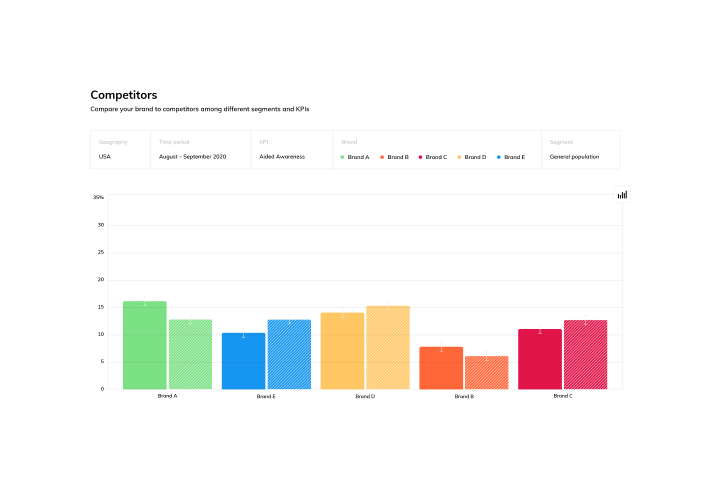\n\nFinally, we’ll discuss the importance of data-driven marketing to overall marketing team success. \n\nBased on consumer insights, data-driven marketing combines psychological and sociological theory with data to create marketing campaigns and techniques that are based on facts, not gut feeling. \n\nBy collecting data about consumers, marketing teams can know more about what’s expected from them and segment their target audience based on such insights. But where can you acquire such important data? With [brand monitoring](https://latana.com/product/) — which provides access to the data you need to make smarter marketing decisions. \n\nBrand tracking software provides access to world-class, scalable insights that brands can use to segment their target audiences and create customized marketing content for each. After all, [74% of consumers report feeling annoyed](https://www.marketingevolution.com/marketing-essentials/data-driven-marketing) when they see irrelevant ads from brands — meaning your team should work hard to create customized content for different audiences. \n\nAt the end of the day, data-driven marketing makes it possible for marketing teams to offer personalized experiences to consumers. This, in turn, improves the customer experience — with McKinsey reporting that personalized customer experiences can [increase ROI](https://latana.com/post/measure-offline-advertising-roi/) by 5 to 8 times. \n\n## Final Thoughts\n\nA good marketing strategy alone is not enough for a brand to succeed in this competitive world. That strategy needs to be executed by the right mix of people — those that are equipped to turn strategy into reality. \n\nFor a marketing team to be successful, it must consist of individuals with diverse skill sets and backgrounds. After all, the best ideas often come from unexpected places. And most importantly, a successful marketing team takes a data-driven approach — using a [brand tracking](https://latana.com/) tool like Latana to inform smarter marketing strategies.\n\nFrom content to SEO to PR to social media, a successful marketing team will include a wide range of roles — and, ideally, should be led by someone with strong leadership skills who can bring the team together and facilitate smooth-running operations. "},"tags":["Brand Marketing","Brand Strategy"],"authorRef":{"slug":"nicholas-samuel","firstName":"Nicholas","lastName":"Samuel ","title":"Brand Marketing Expert","picture":{"__typename":"ContentfulAsset","id":"bb56ceb9-a813-5edc-85a6-facde71b8efe","description":"","title":"Latana Logo Author Photo","file":{"contentType":"image/png","url":"//images.ctfassets.net/7so8go2zrvbw/7qeUdZpRNeFZFTo0zIasKz/8d00318fb2f317950a2a2d6912eb28bf/Author_Latana__1_.png","details":{"image":{"width":235,"height":235}}},"gatsbyImageData":{"images":{"sources":[{"srcSet":"//images.ctfassets.net/7so8go2zrvbw/7qeUdZpRNeFZFTo0zIasKz/8d00318fb2f317950a2a2d6912eb28bf/Author_Latana__1_.png?w=235&h=235&q=95&fm=webp 235w","sizes":"100vw","type":"image/webp"}],"fallback":{"src":"//images.ctfassets.net/7so8go2zrvbw/7qeUdZpRNeFZFTo0zIasKz/8d00318fb2f317950a2a2d6912eb28bf/Author_Latana__1_.png?w=235&h=235&q=95&fm=png","srcSet":"//images.ctfassets.net/7so8go2zrvbw/7qeUdZpRNeFZFTo0zIasKz/8d00318fb2f317950a2a2d6912eb28bf/Author_Latana__1_.png?w=235&h=235&q=95&fm=png 235w","sizes":"100vw"}},"layout":"fullWidth","backgroundColor":"#080808","width":1,"height":1}}}}},{"node":{"publishDate":"2022-08-30T07:00+02:00","slug":"lure-life-deep-dive","author":"Elena Prokopets","title":"How Strong Brand Positioning Is Helping Lure Life Grow ","seo":{"__typename":"ContentfulSeo","title":"How Strong Brand Positioning Helps Lure Life Grow","description":"Beauty & skincare brand Lure Life has a special ingredient: CBD. And while its therapeutic properties are proven, it still faces skepticism. Find out more here. ","noIndex":null,"ogImage":{"fluid":{"src":"//images.ctfassets.net/7so8go2zrvbw/2t40W7LIBvTtk5A3otdnOO/480c329c12c1ae10221eb36d32a16760/Blog_SEO-Thumbnail_1000X709_-_2022-08-19T152211.853.png?w=1200&h=675&q=90&fm=jpg"},"file":{"url":"//images.ctfassets.net/7so8go2zrvbw/2t40W7LIBvTtk5A3otdnOO/480c329c12c1ae10221eb36d32a16760/Blog_SEO-Thumbnail_1000X709_-_2022-08-19T152211.853.png"}}},"heroImage":{"__typename":"ContentfulAsset","id":"45f2ff67-f29a-5576-9798-3f3b2ff665a5","description":"","title":"Latana x Lure Life logos [Thumbnail]","file":{"contentType":"image/png","url":"//images.ctfassets.net/7so8go2zrvbw/2t40W7LIBvTtk5A3otdnOO/480c329c12c1ae10221eb36d32a16760/Blog_SEO-Thumbnail_1000X709_-_2022-08-19T152211.853.png","details":{"image":{"width":1000,"height":709}}},"gatsbyImageData":{"images":{"sources":[{"srcSet":"//images.ctfassets.net/7so8go2zrvbw/2t40W7LIBvTtk5A3otdnOO/480c329c12c1ae10221eb36d32a16760/Blog_SEO-Thumbnail_1000X709_-_2022-08-19T152211.853.png?w=200&h=142&q=95&fm=webp 200w,\n//images.ctfassets.net/7so8go2zrvbw/2t40W7LIBvTtk5A3otdnOO/480c329c12c1ae10221eb36d32a16760/Blog_SEO-Thumbnail_1000X709_-_2022-08-19T152211.853.png?w=400&h=284&q=95&fm=webp 400w,\n//images.ctfassets.net/7so8go2zrvbw/2t40W7LIBvTtk5A3otdnOO/480c329c12c1ae10221eb36d32a16760/Blog_SEO-Thumbnail_1000X709_-_2022-08-19T152211.853.png?w=800&h=567&q=95&fm=webp 800w","sizes":"(min-width: 800px) 800px, 100vw","type":"image/webp"}],"fallback":{"src":"//images.ctfassets.net/7so8go2zrvbw/2t40W7LIBvTtk5A3otdnOO/480c329c12c1ae10221eb36d32a16760/Blog_SEO-Thumbnail_1000X709_-_2022-08-19T152211.853.png?w=800&h=567&q=95&fm=png","srcSet":"//images.ctfassets.net/7so8go2zrvbw/2t40W7LIBvTtk5A3otdnOO/480c329c12c1ae10221eb36d32a16760/Blog_SEO-Thumbnail_1000X709_-_2022-08-19T152211.853.png?w=200&h=142&q=95&fm=png 200w,\n//images.ctfassets.net/7so8go2zrvbw/2t40W7LIBvTtk5A3otdnOO/480c329c12c1ae10221eb36d32a16760/Blog_SEO-Thumbnail_1000X709_-_2022-08-19T152211.853.png?w=400&h=284&q=95&fm=png 400w,\n//images.ctfassets.net/7so8go2zrvbw/2t40W7LIBvTtk5A3otdnOO/480c329c12c1ae10221eb36d32a16760/Blog_SEO-Thumbnail_1000X709_-_2022-08-19T152211.853.png?w=800&h=567&q=95&fm=png 800w","sizes":"(min-width: 800px) 800px, 100vw"}},"layout":"constrained","backgroundColor":"#f8f8f8","width":800,"height":567}},"coverImage":{"__typename":"ContentfulAsset","id":"4b16f5d0-7c35-5dd8-884c-ce97c907afbb","description":"","title":"Latana x Lure Life logos [Cover Image]","file":{"contentType":"image/png","url":"//images.ctfassets.net/7so8go2zrvbw/5pvKog5ZFexRJjAmhtxwLp/1d13165be295f8115110148846f3bcfa/Blog_Cover_1288X400_-_2022-08-19T152216.379.png","details":{"image":{"width":1288,"height":400}}},"gatsbyImageData":{"images":{"sources":[{"srcSet":"//images.ctfassets.net/7so8go2zrvbw/5pvKog5ZFexRJjAmhtxwLp/1d13165be295f8115110148846f3bcfa/Blog_Cover_1288X400_-_2022-08-19T152216.379.png?w=750&h=233&q=95&fm=webp 750w,\n//images.ctfassets.net/7so8go2zrvbw/5pvKog5ZFexRJjAmhtxwLp/1d13165be295f8115110148846f3bcfa/Blog_Cover_1288X400_-_2022-08-19T152216.379.png?w=1080&h=335&q=95&fm=webp 1080w,\n//images.ctfassets.net/7so8go2zrvbw/5pvKog5ZFexRJjAmhtxwLp/1d13165be295f8115110148846f3bcfa/Blog_Cover_1288X400_-_2022-08-19T152216.379.png?w=1288&h=400&q=95&fm=webp 1288w","sizes":"100vw","type":"image/webp"}],"fallback":{"src":"//images.ctfassets.net/7so8go2zrvbw/5pvKog5ZFexRJjAmhtxwLp/1d13165be295f8115110148846f3bcfa/Blog_Cover_1288X400_-_2022-08-19T152216.379.png?w=1288&h=400&q=95&fm=png","srcSet":"//images.ctfassets.net/7so8go2zrvbw/5pvKog5ZFexRJjAmhtxwLp/1d13165be295f8115110148846f3bcfa/Blog_Cover_1288X400_-_2022-08-19T152216.379.png?w=750&h=233&q=95&fm=png 750w,\n//images.ctfassets.net/7so8go2zrvbw/5pvKog5ZFexRJjAmhtxwLp/1d13165be295f8115110148846f3bcfa/Blog_Cover_1288X400_-_2022-08-19T152216.379.png?w=1080&h=335&q=95&fm=png 1080w,\n//images.ctfassets.net/7so8go2zrvbw/5pvKog5ZFexRJjAmhtxwLp/1d13165be295f8115110148846f3bcfa/Blog_Cover_1288X400_-_2022-08-19T152216.379.png?w=1288&h=400&q=95&fm=png 1288w","sizes":"100vw"}},"layout":"fullWidth","backgroundColor":"#f8f8f8","width":1,"height":0.3105590062111801}},"description":{"description":"Beauty & skincare brand Lure Life has a special ingredient: CBD. And while its therapeutic properties are proven, it still faces skepticism. Find out more here. "},"content":{"content":"Many topics in our society were (and often remain) taboos. Products for menstruation, male fertility, mental health, or sexual wellness were hardly discussed in the media — let alone vocally advertised. \n\nHowever, a new cohort of bolder and louder brands are actively breaking those stigmas. [Hims](https://latana.com/post/hims-deep-dive/) brings important discussions about male health to the forefront. [Period brands like Mooncup](https://latana.com/post/building-a-period-brand/) are using guerrilla marketing tactics to start conversations about menstruation — and Lure Life is sitting at the nexus of sexual wellness and skincare.\n\nThe sexual wellness market in the US is coming of age. Already valued at $10.3 billion in 2021, it’s set to keep [growing at a 7.67% CAGR until 2030](https://www.grandviewresearch.com/industry-analysis/us-sexual-wellness-market). Much of this growth comes from [emerging sexual wellness digital startups](https://www.cbinsights.com/research/sexual-wellness-vc-investment-holistic-care/) and [D2C specialty brands](https://latana.com/post/d2c-revolution-helped-grow-specialty-brands/) selling curated product lines. \n\nThis deep dive will take a look at Lure Life, one of the newer market entrants with a strong value proposition and huge growth potential. Let’s dig in!\n\n## Lure Life Brand Story: Female-Founded, Female-Serving \n\n![Image of Lure Life Founders [Article Image]](//images.ctfassets.net/7so8go2zrvbw/7bAQDJSbBSdn1Fnm8m81GQ/1dc845055000d45fb59015e39999be84/1_7qaEeGYP66bP1lSe_O_u7w.jpeg)\nSource: [Authority Magazine/Medium ](https://medium.com/authority-magazine/wisdom-from-the-women-leading-the-cannabis-industry-with-kara-kelly-summer-rice-monica-reese-of-443ebf719eff)\n\nLure Life was founded in 2020 by a powerful trio of women: Kara Kelly, Monica Reese, and Summer Rice. Together, they make a textbook-perfect team for launching a startup — a Designer, a Hustler, and a Marketer. \n\n- Monica Reese has some 20+ years in design and production. She’s a natural problem-solver and a hands-on executioner. \n\n- Kara Kelly is a former Accenture executive with in-depth knowledge of strategy, finance, and operations for consumer goods brands. \n\n- Summer Rice is a brand marketing pro, recognized as a top 4% achiever for billion-dollar female-focused product marketing.\n\nTogether, they make up the team behind Lure Life — one of the few majority Black-owned and female-led CDB businesses. For reference, [only 10% of US cannabis business founders](https://fortune.com/2022/04/26/black-cannabis-entrepreneurs-marijuana-businesses-marijuana-laws/) identified as Hispanic/Latino or Black in 2017. \n\nThe idea for launching Lure Life came from personal experience. Independently, the trio discovered the therapeutic benefits of CBD oil. CBD (Cannabidiol) is a non-psychoactive chemical present in marijuana plants. It has tremendously helped them address stress, mental issues, body aches, and loss of libido.\n\nBecause CBD has proven to be so transformative for them, the ladies decided to introduce it to more people. So, they founded Lure Life — a brand that sells a small stock of organically-grown, hemp-based products designed for women.\n\nIn [the “The Story of a Brand” podcast](https://podcasts.apple.com/us/podcast/lure-the-inner-beauty-brand/id1435740265?i=1000575047858), the Lure Life team describes their early journey as a “Wild West” experience: \n\n*“Monica and Kara got in a car together in North Carolina. We had zero expectations. We didn't know the challenges that we were gonna have down the road with marketing or with our payment processor. So we went in cowboy style, hard and heavy. If one thing didn't feel like the right fit, then we would try something else.”*\n\n…and sure some challenges were soon to follow. \n\nOn the online store launch day, the team realized that Shopify didn’t process payments for CBD businesses. So, they had to switch up their payment processor at the last moment and reschedule all launch-day marketing activities. Separately, product sourcing and supply chain management were major challenges as the brand was founded amidst the pandemic. \n\nYet, the Lure Life team was determined and remained steadfast — and, the trio has clearly stated that it will never compromise on three things:\n\n- The right organic ingredients from an FDA-certified facility\n\n- The right packaging to create the right brand perception \n\n- The best distribution to ensure fast arrival of goods \n\nSelecting the right hemp farm and manufacturer was especially crucial for Lure. CBD as a substance still has a “mixed” reputation — and other industry players often make it worse. [A recent analysis](https://jamanetwork.com/journals/jamanetworkopen/fullarticle/2794440) found that many retail CBD products don’t contain the amount of cannabidiol that’s listed on the label. Some may also have traces of THC — an active ingredient of the cannabis plant that causes a “high” feeling. \n\nLure Life wanted to establish strong credibility from the beginning. That’s why they went on a lengthy journey to find an FDA-approved CBD grower in North Carolina and an ethical manufacturer for their product line. \n\nSince the company is primarily led by women of color, they felt extra pressure. Kara Kelly admitted in the aforementioned podcast: \n\n*“We want it to be twice as good because we know we have to do that. We've felt it through the fundraising efforts. We've felt it through the packaging, the design, the distribution channels, everything. We just feel like we have to be superior to hit the mark”.*\n\nUnfortunately, the sentiment of “needing to work twice as hard” resonates with many people of color — from [Silicon Valley entrepreneurs](https://www.cnbc.com/2020/09/02/black-founder-in-silicon-valley-we-need-to-work-twice-as-hard-to-win.html) to [students at higher educational institutions](https://dailytrojan.com/2020/11/03/black-students-and-employees-must-work-twice-as-hard-for-half-the-credit/). Apart from building a holistic brand, the Lure Life team also attempts to prove by example that more BIPOC people should be in the CBD space to clear historic racial inequities in ownership in the cannabis business. \n\nIn January 2022, [Lure raised $750,000 in a seed round](https://mbemag.com/articles/female-and-bipoc-founded-lure-life-inc-closes-seed-round-for-expansion-of-the-luxury-clean-cbd-brand/) to accelerate market expansion, company growth, marketing, and product development — and we’re excited to see what this bold brand does next.\n\n## 3 Brand Lessons from Lure Life\n\nLure Life is a new brand, but it has a special allure (pun intended) that attracts customers. In less than two years, Lure has experienced 95% sales growth and increased conversions by 30%, as [WWT reported](https://wwd.com/beauty-industry-news/beauty-features/wellness-power-players-1234830365/). \n\nSo, how did a new brand in a competitive industry get such incredible traction? Here are three brand growth lessons from the Lure Life team that other marketers could borrow.\n\n### 1. Select Your Target Audiences Strategically \n\nLure Life launched with a clear understanding of its primary [target audience](https://latana.com/post/target-audience-improve-brand-awareness/): women aged 40+. \n\nMost new skincare brands choose to focus on Millennials and Gen Z. [Glossier](https://latana.com/post/glossier-deep-dive/), [The Honest Company](https://latana.com/post/honest-company-deep-dive/), [The Ordinary](https://latana.com/brand-insights/brand-bites-ordinary/), and many more skincare brands entered the market with cute, affordable, acne-fighting products anyone in the 16-35 age bracket would find satisfying. \n\nThe brand experiences — from packaging and pricing to brand tone and prioritized marketing channels style — are largely focused on appealing to younger women.\n\nLure Life decided to go with another audience segment — Gen X women, whose unique needs the founders understand first-hand. That’s an untapped, yet profitable, audience. According to recent research, since the pandemic began, some [46% of women over 40 have started to spend more on their skincare](https://professionalbeauty.co.uk/site/newsdetails/women-over-forty-investing-more-in-skincare). However, 38% of the served group also admitted to a lack of confidence when buying cosmetics online — and when they do, 58% research information much more carefully.\n\nOne of the reasons behind this wariness is that [Gen X women are grossly under-represented in the beauty space](https://www.beautyheaven.com.au/skin-care/ageism-beauty-industry/). Sure, there are brands like Gwyneth Paltrow's Goop, but its New Age vibe (and pricing) doesn’t appeal to all women. \n\nLure Life has managed to occupy a comfortable brand niche where the audience interest is high but the brand competition is still low. \n\n__The Takeaway:__ When researching your total addressable market (TAM), look into its various segments. Instead of designing your brand experience for the dominant audience, consider pursuing smaller, secondary audiences. \n\n[Brand monitoring software](https://latana.com/product/) like Latana have robust segmentation features that allow you to identify profitable audiences your competition has overlooked. \n\nRemember, building a loyal customer base early in your brand development process can help you build critical [brand equity](https://latana.com/post/building-measuring-brand-equity-value/). With initial traction secured, you can then market your brand to new audiences. \n\n### 2. Ensure Proper Positioning \n\nLure Life chose CBD as its core product component. Yet, CBD still has a somewhat dual reputation with consumers. \n\nSome swear by its therapeutic benefits, most of which are [clinically proven](https://www.ncbi.nlm.nih.gov/pmc/articles/PMC8223341/). Others are suspicious of CBD, either due to generally negative attitudes towards marijuana usage or because of a lack of awareness of CBD qualities as a substance. \n\nIn [an interview with *Authority Magazine*](https://medium.com/authority-magazine/wisdom-from-the-women-leading-the-cannabis-industry-with-kara-kelly-summer-rice-monica-reese-of-443ebf719eff), Summer Rice mentioned that strong opinions will follow any CBD brand: \n\n*“My harshest response came from my sister. She flat out said, “I will never try CBD,” fearing that it was potentially addictive and that it would actually impact my social life. Even after I educated her on all of the health benefits and quelled any fears of addiction she was still a hard “no.” It goes to show that the long-standing anti-cannabis messaging that was programmed into previous generations still takes a lot to dismantle.”*\n\nSo, Lure Life had to proactively address the stigma around CBD. Their approach — clear, compelling product copy crafted to fully explain the therapeutic benefits their products offer, as seen below. \n\n\nSource: [Lure Life](https://thelurelife.com/products/lure-pain-relief-stick) \n\nThe team also meticulously works on each product formulation to ensure that women actually experience those “acclaimed benefits”. Given their [nearly 200% customer return rate](https://wwd.com/beauty-industry-news/beauty-features/wellness-power-players-1234830365/), the product quality is definitely present. \n\n__The Takeaway:__ CBD isn’t the easiest industry to work in — mostly due to rampant misconceptions, negativity, and biases harbored by consumers. To grow, new CBD brands must carefully monitor how they are perceived. Branding yourself as a “hemp oil” seller and alluding to marijuana can give you a spike in traffic (but hardly the right type of consumer attention you need). \n\nLure Life is transparent about its products’ purpose — to address various women's ailments. They explain in plain terms why Lure CBD products work and what effects you should expect. Cultivating the right [brand associations](https://latana.com/post/brand-association/) is crucial to developing the right brand positioning and building a strong rapport with your ideal targets. \n\n### 3. Invest In Fine Details To Make an Exquisite Brand Experience \n\nWhen launching a new brand it’s easy to get caught up in “big” decisions — ingredients sourcing, manufacturing, eCommerce store setup, marketing strategy, and so on. \n\nHowever, an amazing brand experience is a grand sum of all (micro)experiences a customer has with your product, especially in the privacy of their homes. Lure Life recognizes that. \n\nAs Monica Reese explained in \"The Story of a Brand\" podcast interview: \n\n*“(With our products) it's not just the look, it's the way it feels in your hand. So when you hold our bottle, it's a little heavier, that's intentional. It shows that it's luxury. I don't have to do that thick chunk of glass at the bottom. That's about 10 millimeters, but that adds weight to the glass. The dropper is white because that kind of symbolizes purity, and the collar is gold. That's the luxury”.*\n\nThe team meticulously designed a sensory experience for consumers interacting with their products. That’s an important factor for the beauty industry. Most women treat skincare not just as a routine, but as a self-care “ritual” — important for one’s mental health and self-confidence levels. \n\nAt the same time, the rise of the [#shelfie](https://www.nylon.com/articles/why-the-skincare-shelfie-matters) also prompted skincare brands to rethink their product aesthetics. Snapshots of bathroom shelves with carefully curated products serve as “word-of-mouth in photo form” — and can organically amplify brand awareness and consideration numbers. \n\n
\n\nThe Takeaway: Treat your product packaging and unboxing experience as another opportunity to delight, retain, and entertain the consumer. [Brand packaging matters](https://latana.com/post/why-brand-packaging-matters/) more than you think. In fact, [95% of new products fail](https://www.inc.com/joshua-conran/why-your-product-s-packaging-is-as-important-as-the-product-itself.html) because most consumers judge them based on first impressions alone. \n\nYour product packaging shouldn’t just serve the purpose of containing your goodies, but also be creative, functional, and sustainable to amplify your brand experience. \n\n## Final Thoughts \n\nLaunching and growing a new brand is challenging. Launching a CBD brand as a BIPOC team is twice as hard. Yet, thanks to a combination of business acumen, determination, meticulous attention to detail, and clear brand vision, Lure Life is quickly becoming a new wellness “power player”.\n\nWith its latest investment round secured, we’re thrilled to see how Lure Life’s brand identity will evolve — and which brand marketing strategies they’ll choose to pursue next! \n"},"tags":["Brand Deep Dives"],"authorRef":{"slug":"elena","firstName":"Elena","lastName":"Prokopets","title":"Freelance Writer & Content Strategist","picture":{"__typename":"ContentfulAsset","id":"3656f248-8cb2-5fce-8ae1-2ea977717e1f","description":"","title":"Elena Author Photo Framed","file":{"contentType":"image/png","url":"//images.ctfassets.net/7so8go2zrvbw/1rgsWp0ZBagiKqMSpw7MwV/0cb99f4e752141de6ac06e1e9990363f/Author_Elena.png","details":{"image":{"width":235,"height":235}}},"gatsbyImageData":{"images":{"sources":[{"srcSet":"//images.ctfassets.net/7so8go2zrvbw/1rgsWp0ZBagiKqMSpw7MwV/0cb99f4e752141de6ac06e1e9990363f/Author_Elena.png?w=235&h=235&q=95&fm=webp 235w","sizes":"100vw","type":"image/webp"}],"fallback":{"src":"//images.ctfassets.net/7so8go2zrvbw/1rgsWp0ZBagiKqMSpw7MwV/0cb99f4e752141de6ac06e1e9990363f/Author_Elena.png?w=235&h=235&q=95&fm=png","srcSet":"//images.ctfassets.net/7so8go2zrvbw/1rgsWp0ZBagiKqMSpw7MwV/0cb99f4e752141de6ac06e1e9990363f/Author_Elena.png?w=235&h=235&q=95&fm=png 235w","sizes":"100vw"}},"layout":"fullWidth","backgroundColor":"#080808","width":1,"height":1}}}}},{"node":{"publishDate":"2022-03-15T08:00+01:00","slug":"lululemon-deep-dive","author":"Elena Prokopets","title":"How Lululemon Dominated the Athleisure Brand Category ","seo":{"__typename":"ContentfulSeo","title":"How Lululemon Dominated the Athleisure Category","description":"Lululemon, a brand that embodies the athleisure trend, has somehow managed to stick around for more than a decade. How did they do it? Find out here.","noIndex":null,"ogImage":{"fluid":{"src":"//images.ctfassets.net/7so8go2zrvbw/4j4lwmmOheBKTpyQZXytRJ/613642f042e23d4a0063430e608b7dc6/Blog_SEO-Thumbnail_1000X709_-_2022-03-07T121018.891.png?w=1200&h=675&q=90&fm=jpg"},"file":{"url":"//images.ctfassets.net/7so8go2zrvbw/4j4lwmmOheBKTpyQZXytRJ/613642f042e23d4a0063430e608b7dc6/Blog_SEO-Thumbnail_1000X709_-_2022-03-07T121018.891.png"}}},"heroImage":{"__typename":"ContentfulAsset","id":"23d3156a-ea1b-5097-8aca-9c6cce4cc98e","description":"","title":"Latana x Lululemon logos with woman in leggings (thumbnail)","file":{"contentType":"image/png","url":"//images.ctfassets.net/7so8go2zrvbw/4j4lwmmOheBKTpyQZXytRJ/613642f042e23d4a0063430e608b7dc6/Blog_SEO-Thumbnail_1000X709_-_2022-03-07T121018.891.png","details":{"image":{"width":1000,"height":709}}},"gatsbyImageData":{"images":{"sources":[{"srcSet":"//images.ctfassets.net/7so8go2zrvbw/4j4lwmmOheBKTpyQZXytRJ/613642f042e23d4a0063430e608b7dc6/Blog_SEO-Thumbnail_1000X709_-_2022-03-07T121018.891.png?w=200&h=142&q=95&fm=webp 200w,\n//images.ctfassets.net/7so8go2zrvbw/4j4lwmmOheBKTpyQZXytRJ/613642f042e23d4a0063430e608b7dc6/Blog_SEO-Thumbnail_1000X709_-_2022-03-07T121018.891.png?w=400&h=284&q=95&fm=webp 400w,\n//images.ctfassets.net/7so8go2zrvbw/4j4lwmmOheBKTpyQZXytRJ/613642f042e23d4a0063430e608b7dc6/Blog_SEO-Thumbnail_1000X709_-_2022-03-07T121018.891.png?w=800&h=567&q=95&fm=webp 800w","sizes":"(min-width: 800px) 800px, 100vw","type":"image/webp"}],"fallback":{"src":"//images.ctfassets.net/7so8go2zrvbw/4j4lwmmOheBKTpyQZXytRJ/613642f042e23d4a0063430e608b7dc6/Blog_SEO-Thumbnail_1000X709_-_2022-03-07T121018.891.png?w=800&h=567&q=95&fm=png","srcSet":"//images.ctfassets.net/7so8go2zrvbw/4j4lwmmOheBKTpyQZXytRJ/613642f042e23d4a0063430e608b7dc6/Blog_SEO-Thumbnail_1000X709_-_2022-03-07T121018.891.png?w=200&h=142&q=95&fm=png 200w,\n//images.ctfassets.net/7so8go2zrvbw/4j4lwmmOheBKTpyQZXytRJ/613642f042e23d4a0063430e608b7dc6/Blog_SEO-Thumbnail_1000X709_-_2022-03-07T121018.891.png?w=400&h=284&q=95&fm=png 400w,\n//images.ctfassets.net/7so8go2zrvbw/4j4lwmmOheBKTpyQZXytRJ/613642f042e23d4a0063430e608b7dc6/Blog_SEO-Thumbnail_1000X709_-_2022-03-07T121018.891.png?w=800&h=567&q=95&fm=png 800w","sizes":"(min-width: 800px) 800px, 100vw"}},"layout":"constrained","backgroundColor":"#481828","width":800,"height":567}},"coverImage":{"__typename":"ContentfulAsset","id":"203fad88-0f5c-5962-ae68-6ef02585d485","description":"","title":"Latana x Lululemon logos with woman in leggings (Cover image)","file":{"contentType":"image/png","url":"//images.ctfassets.net/7so8go2zrvbw/4wbhB2dxnoofaOh14l0lDZ/a16255a28fcf49a261653f8e6c9ec8b0/Blog_Cover_1288X400_-_2022-03-07T121021.194.png","details":{"image":{"width":1288,"height":400}}},"gatsbyImageData":{"images":{"sources":[{"srcSet":"//images.ctfassets.net/7so8go2zrvbw/4wbhB2dxnoofaOh14l0lDZ/a16255a28fcf49a261653f8e6c9ec8b0/Blog_Cover_1288X400_-_2022-03-07T121021.194.png?w=750&h=233&q=95&fm=webp 750w,\n//images.ctfassets.net/7so8go2zrvbw/4wbhB2dxnoofaOh14l0lDZ/a16255a28fcf49a261653f8e6c9ec8b0/Blog_Cover_1288X400_-_2022-03-07T121021.194.png?w=1080&h=335&q=95&fm=webp 1080w,\n//images.ctfassets.net/7so8go2zrvbw/4wbhB2dxnoofaOh14l0lDZ/a16255a28fcf49a261653f8e6c9ec8b0/Blog_Cover_1288X400_-_2022-03-07T121021.194.png?w=1288&h=400&q=95&fm=webp 1288w","sizes":"100vw","type":"image/webp"}],"fallback":{"src":"//images.ctfassets.net/7so8go2zrvbw/4wbhB2dxnoofaOh14l0lDZ/a16255a28fcf49a261653f8e6c9ec8b0/Blog_Cover_1288X400_-_2022-03-07T121021.194.png?w=1288&h=400&q=95&fm=png","srcSet":"//images.ctfassets.net/7so8go2zrvbw/4wbhB2dxnoofaOh14l0lDZ/a16255a28fcf49a261653f8e6c9ec8b0/Blog_Cover_1288X400_-_2022-03-07T121021.194.png?w=750&h=233&q=95&fm=png 750w,\n//images.ctfassets.net/7so8go2zrvbw/4wbhB2dxnoofaOh14l0lDZ/a16255a28fcf49a261653f8e6c9ec8b0/Blog_Cover_1288X400_-_2022-03-07T121021.194.png?w=1080&h=335&q=95&fm=png 1080w,\n//images.ctfassets.net/7so8go2zrvbw/4wbhB2dxnoofaOh14l0lDZ/a16255a28fcf49a261653f8e6c9ec8b0/Blog_Cover_1288X400_-_2022-03-07T121021.194.png?w=1288&h=400&q=95&fm=png 1288w","sizes":"100vw"}},"layout":"fullWidth","backgroundColor":"#481828","width":1,"height":0.3105590062111801}},"description":{"description":"Lululemon, a brand that embodies the athleisure trend, has somehow managed to stick around for more than a decade. How did they do it? Find out here."},"content":{"content":"By many accounts, athleisure is the signature fashion trend of the 21st century. From your corner store to the Met Gala runway, average folks and celebrities alike have donned this relaxed aesthetic from head to toe. \n\nSteadily growing year-on-year, the athletic apparel sector is expected to [reach $257 billion in value by 2026](https://www.alliedmarketresearch.com/athleisure-market). So, it's not surprising that many apparel brands have ventured into this vertical. \n\nOne of the pioneering companies behind this trend is Lululemon — a yoga-inspired activewear brand that rapidly became a staple in every Millennial woman’s wardrobe. \n\nBut, similar to some other lifestyle brands — like the equally beloved and criticized [Goop](https://latana.com/post/goop-deep-dive/) or scandal-prone [Honest Company](https://latana.com/post/honest-company-deep-dive/) — Lululemon’s brand story is riddled with a lot of controversies, much because of its eccentric founder.\n\nIn this Brand Deep Dive, we break down how Lululemon’s brand marketing evolved over two decades and what they’ve been doing to cement their leadership position. \n\n## Lululemon Success Story \n\n\nSource: [Business in Vancouver](https://biv.com/article/2020/01/lululemon-founder-chip-wilsons-next-apparel-play) \n\nLululemon is the brainchild of Dennis J. Wilson, better known as Chip Wilson. Vancouver-born, California-bred, and well-traveled, Chip Wilson has always been a sports buff. Swimming, college football, and triathlons were part of his personality — and so were entrepreneurial cravings.\n\nAfter completing business school, Wilson was hired as a manager by a Calgary oil and gas company. The corporate career never felt inspiring, but Wilson needed cash for his other pursuits — such as a small booth selling sportswear, operated jointly with his then-girlfriend. \n\nFor a couple of years, the apparel business was mildly successful. During some seasons, the duo struggled with cash flow — but the fabric-obsessed Wilson would then come up with a new sporty item design, and it would fly off the shelves. Wilson’s first apparel business, Westbeach, went through several iterations. They designed and sold BBQ shorts, sweatpants, skating wrap shorts, and, afterward, snowboarding and surfing items. \n\nIn every case, Wilson was fixated on creating better, more convenient cuts to make truly comfortable and high-performing clothes. As an avid sportsman, he personally knew the shortcomings of other items on the market and kept inventing new ways to make the items’ fit less constrictive and more flattering. \n\nWestbeach did well throughout the 80s and 90s but started to collapse under supply chain and distribution issues in 1995. After 18 years of running this business, Wilson had to admit the hard truth: Westbeach was not profitable. \n\nThe company had two retail stores, [earning over $1 million per year](https://chipwilson.com/chapter/from-california-to-calgary/), but the flawed international wholesale distribution model cost them over $1 million at the same time. Wilson proceeded to sell Westbeach and returned to Vancouver.\n\n---\n\nThe money from his first business allowed Wilson to lead a comfortable life. He wasn’t worried about getting another job and was considering different opportunities. \n\nDuring this transit “soul-searching” period, Wilson also started practicing yoga. Bothered by his back pain and old sports injuries, he found great relief at a local studio. However, instead of mindful meditations, his brain kept spinning in the new creative direction. \n\nWhen observing fellow yogis, especially women, Wilson realized that available apparel had many flaws. Some items didn’t fit right and lacked technical performance characteristics. Many fabrics weren’t sweatproof. \n\nAs Wilson writes in this memoir, “[The Little Black Stretchy Pants](https://chipwilson.com/chapter/the-genesis-of-lululemon/)”: \n\n*“From my first yoga class, I knew exactly the fabric I wanted to use to make my yoga apparel. I had used a version of my dream fabric as the first layer under snowboard clothing for the emerging fourteen- to eighteen-year-old female snowboard market.”*\n\nSo once again, Chip Wilson decided to get back into the technical apparel business. Yet, this time around he had:\n\n- A clear-cut, non-crowded apparel niche \n- A better understanding of target audiences \n- Knowledge of different retail models \n- A powerful brand story in the making \n\nWilson spent a lot of time bouncing ideas off his then-yoga instructor and other attendees. Bit by bit, he constructed his future brand vision and the ideal customer personas to pursue — “Power Women and Super Girls”.\n\nWhat Wilson did right was pinning down a viable target audience segment. But his definition of it was cringy at times. By Wilson’s accounts, the [ideal brand fans](https://chipwilson.com/chapter/the-world-in-1998/) would have money, devotion to health, organic food, athletics, and fashion — but also “independence and emancipation, obtained due to the advent of birth control and causing high divorce rates”. \n\n---\n\nLululemon, an apparel store by day and yoga studio by night, opened its doors in 1998. From there on out, the business took off. \n\nWilson came up with the now-iconic Lululemon yoga leggings. He also put a ton of time and thought into the technical characteristics of other garments his company produced. Cuts, fabrics, flaps, zippers — the attention to detail was meticulous.\n\nDespite making some impressive innovations in apparel design, Wilson’s approach to decision-making and brand development, in particular, was ambiguous. \n\nHe settled for the name “Lululemon” because it was hard for the Japanese people to pronounce. Based on his past experience at Westbeach, he believed that Asian consumers found brands with the letter “l” were more exclusive, luxurious, and appealing. Later, Wilson was heavily criticized for his racially offensive remarks. \n\nIn the early days, Wilson also forced all Lululemon staff to attend “Landmark Forum” – a notorious personal development program, which many deemed a scam, but Wilson personally found very inspiring. \n\nThen in 2007, the company [took a major PR hit](https://www.reuters.com/article/us-lululemon-stock-idUSN1531911220071116) when independent testing done by journalists confirmed that Lululemon’s Vitasea line fabric was not made out of seaweed. Those were just false marketing claims. \n\n---\n\nStill, despite media scrutiny, Lululemon’s business kept booming. Much of the credit for that success should go to Wilson. \n\nThe Vancouver location wasn’t just a storefront — it was a place where you could sign up for yoga, talk about healthy living, buy organic snacks, and receive shopping advice from the in-store “Educator”. \n\n\nSource: [Retail in Asia](https://retailinasia.com/in-shops/lululemon-opens-hong-kong-flagship/)\n\nWilson practiced the philosophy of “personal selling”. He trained the sales staff (rigorously hired to represent the Super Girl persona) to [follow this script](https://chipwilson.com/chapter/goals-culture-and-people-development/): \n\n*“If a Guest was looking at a product for six seconds, an Educator had a thirteen-second window to educate them about the item. Barring any follow-up questions, the Educator would then leave them alone until they looked at another item for around six seconds.”*\n\nThis strategy, paired with strategic in-store layout design, helped Lululemon [reach the same volumes of sales per square foot as Apple and Tiffany & Co. stores](https://www.cnbc.com/2017/07/29/here-are-the-retailers-that-make-the-most-money-per-square-foot-on-their-real-estate.html) had.\n\nIn the brand marketing department, Wilson was priming Lululemon to become a “Church of Athletics” — an awe-inspiring, aspirational, and soulful hotspot all the cool girls go to. Wilson was building the perfect world for his Super Girl and Super Girl wannabes. \n\n---\n\nHowever, Lululemon’s vibe wasn’t for everyone. The in-store brand experience progressively morphed into what the [New York Times journalist Rob Walker](https://www.nytimes.com/2009/07/26/magazine/26FOB-consumed-t.html) described as an “annoying phony-baloney status symbol” in 2009: \n\n*“Lululemon is peddling ‘props’ that may offer a sense of community to some but alienate others who might benefit from yoga but don’t fit what she calls the chain’s ‘yoga chick’ image and attitude.”*\n\nWilson was unphased by the “loss of touch” with the original yoga community. On the contrary, as Lululemon sales volumes grew, as did the number of stores. Thanks to a booming business and successful IPO, Wilson found more confidence to express his “philosophical” views on modern womanhood. \n\nThe news pages circa 2008-2013 have collections of Wilson’s most off-color quotes or actions plastered front and center. From [Wilson's suggestion](https://www.theatlantic.com/business/archive/2013/11/lululemon-founder-knows-liberated-women-caused-breast-cancer/354916/) that “career obsession leads to breast cancer” to [off-hand remark](http://thetyee.ca/News/2005/02/17/LuluCritics/)s about “acceptable usage of child labor in developing countries” and fat-shaming comments, Wilson exercised no discretion when talking to the media. And, to top it all off, lacked a sense of self-awareness and humility to understand his mistakes. \n\nBy 2013, other company stakeholders were fed up with Wilson’s antics. Every new comment from him caused the corporate shares to plummet, and he was asked to leave the CEO position. By 2015, Wilson was also removed from the board of directors. \n\n---\n\nAfter a decade of peak growth, Lululemon entered a financial downturn. In 2013, the [company shares declined by 11%](https://money.cnn.com/2013/12/12/investing/lululemon-earnings/) as did the revenue. This downward trend continued until 2017 as new leadership struggled with finding a new footing for the brand.\n\nIn 2018, Lululemon finally managed to shake off the negative associations left by the polarizing founder. They scrapped most of the mentions about Wilson from the brand website and accelerated its transition to eCommerce. \n\n\nSource: [Nolan Dueck](https://www.nolandueck.com/lululemon)\n\nBy 2019, Lululemon was back on track with stronger financial results and a [new brand marketing strategy](https://corporate.lululemon.com/media/press-releases/2019/04-24-2019-090026432), called “Power of Three”.Their three new verticals for growth were: \n\n- __Product innovation:__ Apart from launching new product lines for women, Lululemon also wants to double the size of its men’s revenues by 2023. \n\n- __Omni guest experience:__ Lululemon stores will no longer be the focal point for brand marketing. Instead, the team wants to diversify the range of experience it provides across channels, try out new store and event formats. \n\n- __Market expansion:__ Lululemon also wants to be present in more markets and plans to quadruple its international revenues by 2023. \n\nThe team also polished their [brand mission statement](https://latana.com/post/brand-statement/) and soft-launched an improved version of the website. None of the new branding initiatives directly referenced “Wilson-era” brand pillars. \n\n## 3 Lessons from Lululemon’s New Brand Marketing Strategy \n\nLululemon always had a distinct “brand” element to it. After all, their core product is a pair of leggings — a “commodity” product, sold by hundreds of other retailers at a much lower price. Without strategic investments in [brand equity](https://latana.com/post/building-measuring-brand-equity-value/), Lululemon apparel wouldn’t have flown off the shelves at the speed they do. \n\nDespite several challenging years, the company managed to turn the odds in its favor once again — primarily by nurturing new [brand associations](https://latana.com/post/brand-association/) and changing the customer sentiment towards it. The efforts paid off. In 2020, Lululemon became one of the fastest-growing retail brands, touting [a 40% increase in brand value](https://www.visualcapitalist.com/fastest-growing-and-declining-retail-brands-2020/).\n\nHere are three “recovery” lessons other brand marketers can borrow from Lululemon.\n\n### 1. Activate Your Digital Communities \n\nA large physical retail footprint and distinctive in-store brand experience were two pillars of Lululemon's success in the 2000s. But in the 2010s, consumer attending and spending started shifting online. When the pandemic hit, a compelling online selling experience became a given.\n\nLululemon stayed on top of these changes and acted on them fast — unlike other store-dependent brands like [Pandora](https://latana.com/post/pandora-deep-dive/). \n\nAs Nikki Neuburger, Lululemon’s Chief Brand Officer, [explained in an interview](https://strategyonline.ca/2020/11/19/2020-brand-of-the-year-lululemon-keeps-calm-as-shoppers-carry-on/): \n\n*“We were already in the (process) of elevating our digital offerings to create more guest-centric omni-experiences, but the pandemic increased and accelerated digital engagement across the board.” *\n\nAfter the first wave of “stay at home” orders and store closures, Lululemon rapidly launched [Community Carries On](https://shop.lululemon.com/story/community-carries-on) — an online hub featuring free ambassador-led workouts and mindfulness practices. Video content was also distributed over YouTube and IGTV. \n\n\n\nRapidly amassing millions of views, the workout sessions, paired with other promotional social media content, gave Lululemon a significant boost in brand awareness numbers and subsequently [a 94% growth in digital sales volumes](https://www.cnbc.com/2020/12/15/lululemon-ceo-expects-digital-growth-momentum-to-continue-post-pandemic.html).\n\n__The Takeaway__: Brands with a strong physical footprint and long-term record of successes with [out-of-home advertising](https://latana.com/post/out-of-home-advertising/) are often reluctant to transition to digital marketing and sales. But online attention is the new equivalent of foot traffic. \n\nEngaging your audiences online is key to growing important [brand KPIs like brand consideration and preference](https://latana.com/post/brand-kpis-mid-sized-companies/).\n\n### 2. Evolve Your Brand Narrative \n\nLululemon did a great job of building a community of superfans, eager to pay a higher price for becoming part of the #sweatlife community of athletes. But as their product portfolio expanded, the team was also looking for a change in [brand positioning](https://latana.com/post/brand-tracking-brand-positioning/). They wanted to associate themselves with “wellness”, rather than “workouts” alone. \n\n[Artistic brand storytelling](https://latana.com/post/same-brand-story-new-way/) is their way of making that change. Instead of continuing the narrative around “convenient, high-performing, sustainably-made, and innovative workout gear”, Lululemon spins the story of how different sports practices — be it yoga, meditation, or running — help you “feel better”. Plus, suggest to shoppers that you can feel like your best self in Lululemon clothing.\n\nThe [2020 multichannel “Mindful Run” campaign](https://www.thedrum.com/creative-works/project/lululemon-mindful-run) oozed mental, emotional, and spiritual rejuvenation in every frame — while only subtly spotlighting the Lululemon brand. \n\n\nSource: [The Drum](https://www.thedrum.com/creative-works/project/lululemon-mindful-run) \n\nThe 2021 global “Feel Charge” campaign had a similar ring to it. It used electrifying sounds, textures, and close-up shots to show what you feel in the moment, wearing Lululemon’s gear. \n\n__The Takeaway__: Traditional marketing wisdom says that you need to “sell benefits, over features”. But when consumers already know your products are good, you need to get more creative with your messaging.\n\nLululemon chose “feeling” as a focal part of their new brand narrative — an element that well-aligns with their experience-driven branding. That’s a strong move since [62% of consumers say they have a relationship with a brand](https://www.deloittedigital.com/content/dam/deloittedigital/us/documents/offerings/offerings-20190521-exploring-the-value-of-emotion-driven-engagement-2.pdf) — something you can’t cultivate without emotion. \n\n### 3. Know When It’s Time To Expand \n\nLululemon has long thrived as a female-oriented brand, but that’s just one, very competitive niche. \n\nAfter Wilson’s departure in 2015, Lululemon began the gradual cross-category expansion to male products. They had some good successes with the “anti-ball crushing” trousers and yoga pants for men — progressively building another die-hard community of fans. Still, [women's product sales remain 3X higher than men’s](https://www.statista.com/statistics/1265392/net-revenue-of-lululemon-worldwide-by-category/). \n\nAs CEO Calvin McDonald mentioned in [a 2019 interview with CNBC](https://www.cnbc.com/2019/10/29/lululemons-calvin-mcdonald-menswear-line-will-grow-with-awareness.html): \n\n*“We know our awareness and consideration within the men’s category is still low, and that is where the opportunity lies”.*\n\nSo, the team doubled down on developing new male apparel models and getting more active with their marketing. In 2021, they launched their biggest-ever man-oriented campaign, narrated with an Oscar Wilde “Selfish Giant” verse. \n\n\nSource: [Droga5](https://droga5.com/work/lululemon-feel-aoy-microsite/)\n\nThe two-minute video shows the life of a depressed man, obsessed with his rigid, daily routine. Until one day, he once again starts feeling alive again — thanks to the support of the community around him. While the hero wears Lululemon apparel, the brand is only mentioned at the very end of the story.\n\nLululemon also [recruited more male brand ambassadors](https://shop.lululemon.com/ambassadors) with the likes of Mark Healey, Kyle O’Quinn, and Charlie Dark in their ranks. Still, among the [brand’s top 50 Earned Media Value (EMV) drivers](https://www.tribedynamics.com/blog/influencer-marketing-spotlight-lululemon) from April 2019 to March 2020, just one online influencer was male. \n\nClearly, Lululemon will need to put in more work to reach its goal of 2X more men’s apparel sales by 2023. \n\n__The Takeaways__: Transforming a [brand narrative](https://latana.com/post/are-brand-stories-necessary/) from a female-led brand story to a gender-neutral or male-oriented one isn’t easy, especially in a competitive market with established category leaders. \n\nWhile Lululemon did have some early successes with attracting male audiences, they are still far from dominating the center of the brand funnel. It takes more than one artistic campaign and several influencers to change the consumer’s perception of your brand. So set realistic timelines.\n\n## Final Thoughts \n\nLululemon had a strong head start by putting [customer insights](https://latana.com/researcher/) in the center of everything they did — from product design to branding and selling experience. They’ve inspired shoppers through [brand advocacy](https://latana.com/post/brand-advocacy-next-level/) and built a cult-like following over several short years. \n\nBut as cultural contexts evolved in the 2010s, Lululemon struggled to stay relevant — and this was reflected in their sales. Thankfully, the team managed to change their brand narrative and brought in a newer version of Lululemon many OG and new fans adore. \n\nNow, the brand is relentlessly working on new, ambitious targets and it will be interesting to see whether they’ll succeed with building an international, omnichannel, gender-neutral brand experience. \n"},"tags":["Brand Deep Dives"],"authorRef":{"slug":"elena","firstName":"Elena","lastName":"Prokopets","title":"Freelance Writer & Content Strategist","picture":{"__typename":"ContentfulAsset","id":"3656f248-8cb2-5fce-8ae1-2ea977717e1f","description":"","title":"Elena Author Photo Framed","file":{"contentType":"image/png","url":"//images.ctfassets.net/7so8go2zrvbw/1rgsWp0ZBagiKqMSpw7MwV/0cb99f4e752141de6ac06e1e9990363f/Author_Elena.png","details":{"image":{"width":235,"height":235}}},"gatsbyImageData":{"images":{"sources":[{"srcSet":"//images.ctfassets.net/7so8go2zrvbw/1rgsWp0ZBagiKqMSpw7MwV/0cb99f4e752141de6ac06e1e9990363f/Author_Elena.png?w=235&h=235&q=95&fm=webp 235w","sizes":"100vw","type":"image/webp"}],"fallback":{"src":"//images.ctfassets.net/7so8go2zrvbw/1rgsWp0ZBagiKqMSpw7MwV/0cb99f4e752141de6ac06e1e9990363f/Author_Elena.png?w=235&h=235&q=95&fm=png","srcSet":"//images.ctfassets.net/7so8go2zrvbw/1rgsWp0ZBagiKqMSpw7MwV/0cb99f4e752141de6ac06e1e9990363f/Author_Elena.png?w=235&h=235&q=95&fm=png 235w","sizes":"100vw"}},"layout":"fullWidth","backgroundColor":"#080808","width":1,"height":1}}}}},{"node":{"publishDate":"2022-08-25T07:00+02:00","slug":"how-to-do-branded-entertainment-right","author":"Marilyn Wilkinson","title":"How to Do Branded Entertainment Right","seo":{"__typename":"ContentfulSeo","title":"How to Do Branded Entertainment Right","description":"If done correctly, branded entertainment is a great way to reach new audiences and increase brand awareness. But what is “right”? Find out here.","noIndex":null,"ogImage":{"fluid":{"src":"//images.ctfassets.net/7so8go2zrvbw/2PvqpZ8uSZxMS0sKR9s2tw/2ea497a65052b40be049dc5e93b966c1/Blog_SEO-Thumbnail_1000X709_-_2022-08-22T095356.440.png?w=1200&h=675&q=90&fm=jpg"},"file":{"url":"//images.ctfassets.net/7so8go2zrvbw/2PvqpZ8uSZxMS0sKR9s2tw/2ea497a65052b40be049dc5e93b966c1/Blog_SEO-Thumbnail_1000X709_-_2022-08-22T095356.440.png"}}},"heroImage":{"__typename":"ContentfulAsset","id":"3b79e068-1c78-578e-a972-45b422164d85","description":"","title":"Illustration of two people looking at a car, tv, and Lego house [Thumbnail]","file":{"contentType":"image/png","url":"//images.ctfassets.net/7so8go2zrvbw/2PvqpZ8uSZxMS0sKR9s2tw/2ea497a65052b40be049dc5e93b966c1/Blog_SEO-Thumbnail_1000X709_-_2022-08-22T095356.440.png","details":{"image":{"width":1000,"height":709}}},"gatsbyImageData":{"images":{"sources":[{"srcSet":"//images.ctfassets.net/7so8go2zrvbw/2PvqpZ8uSZxMS0sKR9s2tw/2ea497a65052b40be049dc5e93b966c1/Blog_SEO-Thumbnail_1000X709_-_2022-08-22T095356.440.png?w=200&h=142&q=95&fm=webp 200w,\n//images.ctfassets.net/7so8go2zrvbw/2PvqpZ8uSZxMS0sKR9s2tw/2ea497a65052b40be049dc5e93b966c1/Blog_SEO-Thumbnail_1000X709_-_2022-08-22T095356.440.png?w=400&h=284&q=95&fm=webp 400w,\n//images.ctfassets.net/7so8go2zrvbw/2PvqpZ8uSZxMS0sKR9s2tw/2ea497a65052b40be049dc5e93b966c1/Blog_SEO-Thumbnail_1000X709_-_2022-08-22T095356.440.png?w=800&h=567&q=95&fm=webp 800w","sizes":"(min-width: 800px) 800px, 100vw","type":"image/webp"}],"fallback":{"src":"//images.ctfassets.net/7so8go2zrvbw/2PvqpZ8uSZxMS0sKR9s2tw/2ea497a65052b40be049dc5e93b966c1/Blog_SEO-Thumbnail_1000X709_-_2022-08-22T095356.440.png?w=800&h=567&q=95&fm=png","srcSet":"//images.ctfassets.net/7so8go2zrvbw/2PvqpZ8uSZxMS0sKR9s2tw/2ea497a65052b40be049dc5e93b966c1/Blog_SEO-Thumbnail_1000X709_-_2022-08-22T095356.440.png?w=200&h=142&q=95&fm=png 200w,\n//images.ctfassets.net/7so8go2zrvbw/2PvqpZ8uSZxMS0sKR9s2tw/2ea497a65052b40be049dc5e93b966c1/Blog_SEO-Thumbnail_1000X709_-_2022-08-22T095356.440.png?w=400&h=284&q=95&fm=png 400w,\n//images.ctfassets.net/7so8go2zrvbw/2PvqpZ8uSZxMS0sKR9s2tw/2ea497a65052b40be049dc5e93b966c1/Blog_SEO-Thumbnail_1000X709_-_2022-08-22T095356.440.png?w=800&h=567&q=95&fm=png 800w","sizes":"(min-width: 800px) 800px, 100vw"}},"layout":"constrained","backgroundColor":"#f8e8a8","width":800,"height":567}},"coverImage":{"__typename":"ContentfulAsset","id":"a4b0d9b1-820c-5491-84d2-64d143f9c1d6","description":"","title":"Illustration of two people looking at a car, tv, and Lego house [Cover Image]","file":{"contentType":"image/png","url":"//images.ctfassets.net/7so8go2zrvbw/2afJVFJAO4ixd8dmFhDQbS/4e5f9ecc63b6a7c49e929ecb7f00419b/Blog_Cover_1288X400_-_2022-08-22T095359.325.png","details":{"image":{"width":1288,"height":400}}},"gatsbyImageData":{"images":{"sources":[{"srcSet":"//images.ctfassets.net/7so8go2zrvbw/2afJVFJAO4ixd8dmFhDQbS/4e5f9ecc63b6a7c49e929ecb7f00419b/Blog_Cover_1288X400_-_2022-08-22T095359.325.png?w=750&h=233&q=95&fm=webp 750w,\n//images.ctfassets.net/7so8go2zrvbw/2afJVFJAO4ixd8dmFhDQbS/4e5f9ecc63b6a7c49e929ecb7f00419b/Blog_Cover_1288X400_-_2022-08-22T095359.325.png?w=1080&h=335&q=95&fm=webp 1080w,\n//images.ctfassets.net/7so8go2zrvbw/2afJVFJAO4ixd8dmFhDQbS/4e5f9ecc63b6a7c49e929ecb7f00419b/Blog_Cover_1288X400_-_2022-08-22T095359.325.png?w=1288&h=400&q=95&fm=webp 1288w","sizes":"100vw","type":"image/webp"}],"fallback":{"src":"//images.ctfassets.net/7so8go2zrvbw/2afJVFJAO4ixd8dmFhDQbS/4e5f9ecc63b6a7c49e929ecb7f00419b/Blog_Cover_1288X400_-_2022-08-22T095359.325.png?w=1288&h=400&q=95&fm=png","srcSet":"//images.ctfassets.net/7so8go2zrvbw/2afJVFJAO4ixd8dmFhDQbS/4e5f9ecc63b6a7c49e929ecb7f00419b/Blog_Cover_1288X400_-_2022-08-22T095359.325.png?w=750&h=233&q=95&fm=png 750w,\n//images.ctfassets.net/7so8go2zrvbw/2afJVFJAO4ixd8dmFhDQbS/4e5f9ecc63b6a7c49e929ecb7f00419b/Blog_Cover_1288X400_-_2022-08-22T095359.325.png?w=1080&h=335&q=95&fm=png 1080w,\n//images.ctfassets.net/7so8go2zrvbw/2afJVFJAO4ixd8dmFhDQbS/4e5f9ecc63b6a7c49e929ecb7f00419b/Blog_Cover_1288X400_-_2022-08-22T095359.325.png?w=1288&h=400&q=95&fm=png 1288w","sizes":"100vw"}},"layout":"fullWidth","backgroundColor":"#f8e8a8","width":1,"height":0.3105590062111801}},"description":{"description":"If done correctly, branded entertainment is a great way to reach new audiences and increase brand awareness. But what is “right”? Find out here."},"content":{"content":"Have you noticed how many people block ads but pay to stream their favorite shows? Consumers today are more selective than ever about who they pay attention to, what content they consume, and which channels they engage with. \n\nThat’s why iconic brands like Lego and BMW adopt a storytelling approach and weave their products into the storyline of TV shows and movies — rather than simply relying on traditional forms of marketing. \n\nKeep reading to learn why branded entertainment is an exciting opportunity to cut through the noise, and how top brands use it to engage with their target audiences in a memorable and authentic way.\n\n## What Is Branded Entertainment?\n\nBranded entertainment is where a brand creates a TV show or movie and subtly integrates its product or service into the story to increase brand awareness and improve brand perception. Branded entertainment, which can also take the form of online content, video games, and events, feels more authentic and offers a higher-quality user experience than typical commercials and online advertising. \n\nAlso known as “advertainment”, branded entertainment is different from content marketing, which brands usually create in-house and promote via their own channels like social media and email. Creating the next Netflix hit or Disney+ classic usually involves partnering up with a media production company or streaming service.\n\nBranded entertainment is similar to [product placement in movies](https://latana.com/post/does-brand-product-placement-in-films-work/), where you might see the wannabe detective tapping away on a MacBook, or the heroine puffing away on Marlboro Lights (at least until Carrie Bradshaw gave up smoking). The purpose is basically the same — it creates a positive connection between a product and a popular character, with the likeability or “coolness” of the person rubbing off onto the brand. The brand benefits from the popularity of the show and gets attention from people who wouldn’t normally hesitate to skip an ad. \n\nBranded entertainment takes the product placement strategy one step further. With product placement, companies pay to have their brand name mentioned or products shown, but with branded entertainment, they are actively involved throughout the creative development process. \n\n## Why Is Branded Entertainment a Good Opportunity?\n\nBranded entertainment is an exciting way to cut through the noise and engage with your target audience — especially if that includes hard-to-reach audiences that have installed an adblocker on their desktop, don’t watch cable, and maybe don’t even like ads at all. \n\nGen Z, in particular, is notoriously skeptical of ads — with [69% of them complaining ads are disruptive](https://www.forbes.com/sites/blakemorgan/2020/02/28/50-stats-all-marketers-must-know-about-gen-z). Yet, they will binge-watch their favorite shows for hours, as [78% of Gen Zers have a Netflix subscription](https://review42.com/resources/gen-z-statistics/). \n\nBranded entertainment appeals to consumers in a way that traditional marketing doesn’t — mainly because it doesn’t feel like marketing. Instead of interrupting the user experience, it is the experience.\n\nLet’s dive into how top brands like Lego and BMW take storytelling to the next level with branded entertainment and find out what you can learn from it.\n\n### 1. Lego Masters\n\n\n\nThe international reality television show Lego Masters is one of the most successful examples of branded entertainment of all time. In a ruthless elimination competition, teams complete a series of Lego-building challenges in the hope of winning a cash prize of $100,000, a Lego Masters trophy, and the title of Lego Master.\n\nThe popularity of the original British version of the show, which premiered in 2017, prompted other countries to follow suit, and there are now 18 international versions. In the US, the show enjoys a primetime slot on Fox hosted by actor Will Arnett. The show is jointly owned by production outfit Tuesday’s Child and The Lego Group and is represented by international distributor Banijay.\n\nWhat makes Lego’s branded entertainment so successful? Firstly, the format. Reality TV is exciting to watch. Just like The Great British Bakeoff, Project Runway, Top Model, or Strictly Come Dancing, there is something awe-inspiring about watching contestants feverishly attempt to accomplish a task against the clock to win a big prize. \n\nSecondly, as the show is genuinely entertaining, it’s the perfect way to showcase the Lego product without actively selling it. \n\nLucas Green, global head of content operations at Banijay [told *The Drum* magazine](https://www.thedrum.com/news/2022/07/11/hit-show-lego-masters-shares-the-building-blocks-branded-entertainment), “All the creative beats of the show, the tone of the show and the sense of humor and playfulness, it’s all Lego. It’s about driving home those core principles of Lego, even if it’s not just a matter of how many seconds you can get a Lego on the screen.” \n\n### 2. BMW\n\n\n\nBMW knows a thing or two about branding, and the luxury car manufacturer recently collaborated with Marvel Studios to produce the spy movie “Black Widow”. The action-packed thriller starring Scarlett Johansson and Florence Pugh features plenty of fast-paced driving scenes designed to showcase the BMW’s X3 and 2 Series Gran Coupé in action.\n\nThe exciting storyline and famous actors gripped viewers. Dark widow Natasha Romanoff — played by Scarlett Johansson — is forced to confront the secrets of her past when a dangerous conspiracy arises. Hunted by a mysterious force determined to bring her down, Natasha must deal with her history as a spy and broken relationships from before she became an Avenger. And what better way to do that than in a BMW? \n\nJens Thiemer, Senior Vice President of Customer and Brand at BMW said in [a recent press release](https://www.press.bmwgroup.com/usa/article/detail/T0337449EN_US/bmw-teams-up-with-marvel-studios%E2%80%99-black-widow-for-a-spectacular-cinema-experience?language=en_US), “Having the BMW X3 and the 2 Series Gran Coupé playing key roles in ‘Black Widow’ is part of our marketing strategy, adding strong emotional value to the communication of these models. As emotional and thrilling stories play an increasing role in our brand communication, we are definitely looking forward to continue working with Marvel Studios.”\n\n### 3. Proctor & Gamble\n\nProctor & Gamble — which owns a huge portfolio of brands including Always hygiene products, Ariel laundry detergent, Gillette razors, Pampers diapers, and many, many more — has a long history of branded entertainment.\n\nProcter & Gamble created the first radio serial dramas in the 1930s, which is how the term \"soap operas\" was born. Then, they changed the face of daytime TV with soap operas like \"As The World Turns\" and \"Guiding Light\", which ran for 72 years. The brand has produced [more than 50 made-for-television movies and mini-series](https://nicthic.fandom.com/wiki/Procter_%26_Gamble_Entertainment), as well as beauty pageants and variety shows.\n\n\"As the creator of radio soap operas back in the 1930s, P&G has always recognized the importance of the right content and the right context to reach consumers,\" Marc Pritchard, P&G's Global Marketing and Brand Building Officer, [told Forbes](https://www.forbes.com/sites/avidan/2011/07/13/how-pg-uses-branded-entertainment-as-a-strategic-tool/?sh=5e934c9637c1). \"The world has changed a lot since the days of Ma Perkins, but the one thing that hasn’t changed is P&G’s belief in the power of entertainment to make people’s lives better. \n\n## Final Thoughts\n\nBranded entertainment is a fresh approach that enables brands to connect with consumers and share their brand message in a way that adds real value. Brands can put themselves front and center of the user experience without being intrusive. \n\nWhile not every brand will have the budget for a Hollywood movie, smaller brands can also benefit from [taking a storytelling approach](https://latana.com/post/data-driven-brand-storytelling/). But keep in mind, if you do want to explore branded entertainment, you’ll need a partnership deal, a killer story, and absolute clarity on your brand values.\n"},"tags":["Brand Strategy","Brand Marketing"],"authorRef":{"slug":"marilyn","firstName":"Marilyn","lastName":"Wilkinson","title":"Digital Marketing Expert","picture":{"__typename":"ContentfulAsset","id":"e78d550e-a31a-5186-820d-9513596e92d2","description":"","title":"Marilyn Wilkinson Prof Pic","file":{"contentType":"image/png","url":"//images.ctfassets.net/7so8go2zrvbw/1oCRDVeLkqM1iEpuSKa6YK/1ba47f67261d9419b9df6600b8a09c1e/Author_Marilyn.png","details":{"image":{"width":235,"height":235}}},"gatsbyImageData":{"images":{"sources":[{"srcSet":"//images.ctfassets.net/7so8go2zrvbw/1oCRDVeLkqM1iEpuSKa6YK/1ba47f67261d9419b9df6600b8a09c1e/Author_Marilyn.png?w=235&h=235&q=95&fm=webp 235w","sizes":"100vw","type":"image/webp"}],"fallback":{"src":"//images.ctfassets.net/7so8go2zrvbw/1oCRDVeLkqM1iEpuSKa6YK/1ba47f67261d9419b9df6600b8a09c1e/Author_Marilyn.png?w=235&h=235&q=95&fm=png","srcSet":"//images.ctfassets.net/7so8go2zrvbw/1oCRDVeLkqM1iEpuSKa6YK/1ba47f67261d9419b9df6600b8a09c1e/Author_Marilyn.png?w=235&h=235&q=95&fm=png 235w","sizes":"100vw"}},"layout":"fullWidth","backgroundColor":"#080808","width":1,"height":1}}}}},{"node":{"publishDate":"2021-06-17T08:00+02:00","slug":"brands-psychographic-segmentation","author":"Maddie Duke","title":"How Brands Can Benefit From Psychographic Segmentation in 2022","seo":{"__typename":"ContentfulSeo","title":"How to Benefit From Psychographic Segmentation in 2022","description":"Psychographic segmentation is the key to gaining clarity about your audience and business goals. Discover how you can use it to grow your brand in 2022 and beyond!","noIndex":null,"ogImage":{"fluid":{"src":"//images.ctfassets.net/7so8go2zrvbw/7kWc8QsDzXSbmpppJFsSp1/11f74cf009d634f292c85305b6104fe3/Blog_SEO-Thumbnail_1000X709_-_2022-08-24T133013.581.png?w=1200&h=675&q=90&fm=jpg"},"file":{"url":"//images.ctfassets.net/7so8go2zrvbw/7kWc8QsDzXSbmpppJFsSp1/11f74cf009d634f292c85305b6104fe3/Blog_SEO-Thumbnail_1000X709_-_2022-08-24T133013.581.png"}}},"heroImage":{"__typename":"ContentfulAsset","id":"e1dd0b36-e193-5ff7-9ba7-67c505be8672","description":"","title":"Illustration of a person watering flowers with a brain [Thumbnail]","file":{"contentType":"image/png","url":"//images.ctfassets.net/7so8go2zrvbw/7kWc8QsDzXSbmpppJFsSp1/11f74cf009d634f292c85305b6104fe3/Blog_SEO-Thumbnail_1000X709_-_2022-08-24T133013.581.png","details":{"image":{"width":1000,"height":709}}},"gatsbyImageData":{"images":{"sources":[{"srcSet":"//images.ctfassets.net/7so8go2zrvbw/7kWc8QsDzXSbmpppJFsSp1/11f74cf009d634f292c85305b6104fe3/Blog_SEO-Thumbnail_1000X709_-_2022-08-24T133013.581.png?w=200&h=142&q=95&fm=webp 200w,\n//images.ctfassets.net/7so8go2zrvbw/7kWc8QsDzXSbmpppJFsSp1/11f74cf009d634f292c85305b6104fe3/Blog_SEO-Thumbnail_1000X709_-_2022-08-24T133013.581.png?w=400&h=284&q=95&fm=webp 400w,\n//images.ctfassets.net/7so8go2zrvbw/7kWc8QsDzXSbmpppJFsSp1/11f74cf009d634f292c85305b6104fe3/Blog_SEO-Thumbnail_1000X709_-_2022-08-24T133013.581.png?w=800&h=567&q=95&fm=webp 800w","sizes":"(min-width: 800px) 800px, 100vw","type":"image/webp"}],"fallback":{"src":"//images.ctfassets.net/7so8go2zrvbw/7kWc8QsDzXSbmpppJFsSp1/11f74cf009d634f292c85305b6104fe3/Blog_SEO-Thumbnail_1000X709_-_2022-08-24T133013.581.png?w=800&h=567&q=95&fm=png","srcSet":"//images.ctfassets.net/7so8go2zrvbw/7kWc8QsDzXSbmpppJFsSp1/11f74cf009d634f292c85305b6104fe3/Blog_SEO-Thumbnail_1000X709_-_2022-08-24T133013.581.png?w=200&h=142&q=95&fm=png 200w,\n//images.ctfassets.net/7so8go2zrvbw/7kWc8QsDzXSbmpppJFsSp1/11f74cf009d634f292c85305b6104fe3/Blog_SEO-Thumbnail_1000X709_-_2022-08-24T133013.581.png?w=400&h=284&q=95&fm=png 400w,\n//images.ctfassets.net/7so8go2zrvbw/7kWc8QsDzXSbmpppJFsSp1/11f74cf009d634f292c85305b6104fe3/Blog_SEO-Thumbnail_1000X709_-_2022-08-24T133013.581.png?w=800&h=567&q=95&fm=png 800w","sizes":"(min-width: 800px) 800px, 100vw"}},"layout":"constrained","backgroundColor":"#f8e8d8","width":800,"height":567}},"coverImage":{"__typename":"ContentfulAsset","id":"df687eac-d87c-58e5-998d-4fd56c343d27","description":"","title":"Illustration of a person watering flowers with a brain [cover image]","file":{"contentType":"image/png","url":"//images.ctfassets.net/7so8go2zrvbw/6TRIIPslohizyIy2Uom5Z2/c1aed8509ac592af91b65dfc3f2632c1/Blog_Cover_1288X400_-_2022-08-24T133018.350.png","details":{"image":{"width":1288,"height":400}}},"gatsbyImageData":{"images":{"sources":[{"srcSet":"//images.ctfassets.net/7so8go2zrvbw/6TRIIPslohizyIy2Uom5Z2/c1aed8509ac592af91b65dfc3f2632c1/Blog_Cover_1288X400_-_2022-08-24T133018.350.png?w=750&h=233&q=95&fm=webp 750w,\n//images.ctfassets.net/7so8go2zrvbw/6TRIIPslohizyIy2Uom5Z2/c1aed8509ac592af91b65dfc3f2632c1/Blog_Cover_1288X400_-_2022-08-24T133018.350.png?w=1080&h=335&q=95&fm=webp 1080w,\n//images.ctfassets.net/7so8go2zrvbw/6TRIIPslohizyIy2Uom5Z2/c1aed8509ac592af91b65dfc3f2632c1/Blog_Cover_1288X400_-_2022-08-24T133018.350.png?w=1288&h=400&q=95&fm=webp 1288w","sizes":"100vw","type":"image/webp"}],"fallback":{"src":"//images.ctfassets.net/7so8go2zrvbw/6TRIIPslohizyIy2Uom5Z2/c1aed8509ac592af91b65dfc3f2632c1/Blog_Cover_1288X400_-_2022-08-24T133018.350.png?w=1288&h=400&q=95&fm=png","srcSet":"//images.ctfassets.net/7so8go2zrvbw/6TRIIPslohizyIy2Uom5Z2/c1aed8509ac592af91b65dfc3f2632c1/Blog_Cover_1288X400_-_2022-08-24T133018.350.png?w=750&h=233&q=95&fm=png 750w,\n//images.ctfassets.net/7so8go2zrvbw/6TRIIPslohizyIy2Uom5Z2/c1aed8509ac592af91b65dfc3f2632c1/Blog_Cover_1288X400_-_2022-08-24T133018.350.png?w=1080&h=335&q=95&fm=png 1080w,\n//images.ctfassets.net/7so8go2zrvbw/6TRIIPslohizyIy2Uom5Z2/c1aed8509ac592af91b65dfc3f2632c1/Blog_Cover_1288X400_-_2022-08-24T133018.350.png?w=1288&h=400&q=95&fm=png 1288w","sizes":"100vw"}},"layout":"fullWidth","backgroundColor":"#f8e8d8","width":1,"height":0.3105590062111801}},"description":{"description":"Psychographic segmentation is the key to gaining clarity about your audience and business goals. Discover how you can use it to grow your brand in 2022 and beyond!"},"content":{"content":"Strategically using [audience segmentation](https://latana.com/audience-segmentation/) allows you to create stronger, more targeted brand campaigns, attract more qualified leads, and identify unique new opportunities within existing markets. \n\nWhile you may be familiar with — or even already using — basic forms of segmentation to better [understand your target audience](https://latana.com/guides/ultimate-target-audience-guide/), psychographic segmentation goes deeper to deliver even more links between consumers’ personalities and beliefs and how they interact with brands.\n\nThis deeper understanding enables you to deliver personalized brand experiences by tailoring your marketing efforts — not just to who your audience is or where they are, but also what they think, believe, and value. Personalized brand experiences can strengthen [brand affinity](https://latana.com/post/guide-brand-affinity/), improve customer loyalty, and increase ROI on your marketing campaigns.\n\nWant to learn more? This article explains what psychographic segmentation is, how it differs from other types of audience segmentation, and how you can use it to benefit your brand.\n\n## What is Audience Segmentation?\n\n\n\nFirst, let’s take a look at market segmentation as a basic concept. Segmentation is the process of dividing a target audience into smaller sub-groups of consumers according to shared characteristics. These characteristics are often based on demographic, behavioral, or geographic information. \n\n- __Demographic segmentation__ includes such factors and statistics as age, gender, and income.\n- __Geographic segmentation__ divides people based on their location or other geographic borders. \n- __Behavioral segmentation__ focuses on things such as purchasing or spending habits. \n\nSegmentation can help a business create more personalized and relevant brand experiences.\n\nMost consumers also have some awareness of segmentation in its basic form. We’ve all seen advertising campaigns and products that are using demographic segmentation — just think of Gillette and its personal razors designed specifically to target men or women. \n\nGeographic segmentation is also fairly straightforward. For instance, a many micro-mobility brands limit their advertisements to urban consumers, as their e-scooters and bikes are best utilized in cities with better infrastructure.\n\nOr, for example, behavioral segmentation could mean dividing consumers into those who have purchased a new washing machine in the past 3 years, people who drink coffee, or those who ride the subway.\n\nHowever, a fourth way of dividing consumers and audiences into smaller groups is through psychographic segmentation.\n\n## What is Psychographic Segmentation?\n\n![Illustration of a brain with cogs surrounding [Article Image]](//images.ctfassets.net/7so8go2zrvbw/5ybNYgHR7M2EauunmdGHSF/6f8f010c6329cd3d53498287db10b20f/Blog_Cover_1288X400_-_2022-08-24T133030.971.png)\n\nPsychographics is the study of psychological attributes, such as personality, attitudes, beliefs, opinions, and lifestyles. Psychographic segmentation is when those audience sub-groups we spoke about are defined by these psychological characteristics. \n\nSo, instead of categorizing people based on gender or income, psychographic segmentation groups people based on the way they feel and think, as well as the attitudes and values they have about the world around them. \n\nPsychographic segmentation can be based on both conscious or subconscious beliefs, motivations, and priorities, and can be used to predict how consumers will respond to certain messages and how they’ll behave towards certain brands.\n\n### Examples of Psychographic Segmentation\n\n- __Values__: A person who values the environment above their perceived social status\n- __Attitudes__: A person who thinks that smoking is disgusting\n- __Interests__: A person who enjoys playing and watching tennis\n- __Motivations__: A person who likes their buying decisions to reflect a certain social status\n- __Beliefs__: A person who believes that drinking alcohol is unhealthy\n- __Desires__: A person who longs to retire early\n\nSince it concerns the way people think and feel, psychographic segmentation is more subjective than segmentation characteristics such as purchase decisions and demographics. \n\nYet, we don’t need to choose one or the other. Different methods of audience segmentation can intersect to combine a more holistic understanding of customers.\n\n## How Does Psychographic Segmentation Fit With Other Methods Of Segmentation?\n\n\nThe goal of audience segmentation is not to divide your target audience into mutually exclusive groups that have nothing to do with each other. Rather, it's to form a realistic and meaningful overview of who your audience is and how your brand might solve their problems or fulfill their wants and needs. \n\nSo, there’s no reason why you shouldn’t combine multiple approaches and try to understand the psychographic segments within different age or income groups, for example.\n\nGeographic, behavioral, and demographic segmentation are the easiest ways to divide an audience, as the characteristics are measurable and typically easier to research. However, these factors are somewhat limited in their ability to predict future behavior.\n\nThis is where psychographic segmentation comes into play as a valuable component of audience segmentation. While it’s traditionally much more difficult to measure people’s attitudes and beliefs, they can provide key insights into how someone is likely to respond to a specific situation. \n\nFor example, if you know that somebody values the environment above having the latest technology — regardless of their age, gender, or location — you could draw a number of conclusions about their buying behavior, preferences, and how they might respond to various advertising messages.\n\n## 8 Benefits of Psychographic Segmentation\n\nCollecting and analyzing data on the personalities, attitudes, and beliefs of consumers allows brands to draw insights into their needs, wants, and motivations, which is key to providing a brand experience that consumers perceive to be valuable, relevant, and exciting. \n\nSome advantages of incorporating psychographic segmentation into your marketing strategy:\n\n1. __Understanding the “why” behind consumer behavior__. Not just what consumers do, but why they do it, through analyzing their personalities, beliefs, and motivations. \n2. __Improved potential for customization__. Psychographic segmentation provides insights that allow for better and more relevant customization, not only of products and services, but of communication and targeted brand campaigns.\n3. __More efficient use of resources__. When consumer preferences and desires can be more accurately understood and predicted, many resources can be saved thanks to more accurate development of new products. The same applies to advertising and brand campaign efforts. If you discover through segmentation that a certain proportion of your audience likes watching sports, while another prefers watching stand-up comedy, you can tailor specific marketing activities to cater to those preferences.\n4. __Better understanding of competitor audiences__. Using similar variables to evaluate your competitors’ target markets allow you to better strategize branding activities\n5. __More accurate segmentation overall__. By incorporating psychographic segmentation into your overall market segmentation activities, you can identify much more accurate and meaningful opportunities and trends, driving new marketing tactics or product offerings.\n6. __Improved customer loyalty__. Giving a consumer the feeling that your brand truly understands them and addresses their needs improves [brand loyalty](https://latana.com/post/european-brands-brand-loyalty/).\n7. __More compelling communications__. By targeting your communications and content to appeal to people’s personality traits and interests, you can make your campaigns much more interesting to the right audience.\n9. __Increased brand affinity__. When customers feel like your brand knows them, they’ll want to spend much more time with your brand and its products.\n\n## How You Can Use Psychographic Segmentation in Your Branding\n\n![Illustration of plants and a man [Article Image]](//images.ctfassets.net/7so8go2zrvbw/3UhBvPag0ugzO7atQym06u/aca2b0b0f455708339d75b77a6e1d640/Blog_Cover_1288X400_-_2022-08-24T133023.648.png)\n\nBy collecting and analyzing psychographic data, you can develop a deeper understanding of the personalities, interests, and values of your audiences. \n\nWith this more multi-dimensional view of who your customers or clients are, you’ll be able to see them as unique people with individual needs and desires and things that make them tick, and categorize them in more meaningful ways. \n\nThis is the magic behind psychographic segmentation and the key to providing optimized brand experiences that truly resonate.\n\n### 5 Methods For Collecting Psychographic Data\n\n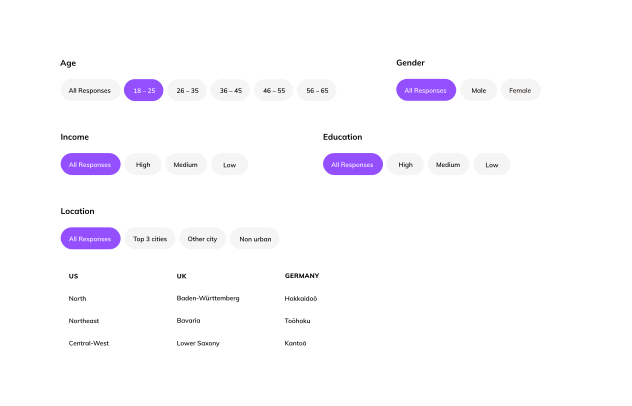\n\nPsychographic data can be gathered from focus groups, interviews, and [brand tracking](https://latana.com/) software. Below are some examples of how your brand could collect psychographic data.\n\n1. __Interview your customers__: Ask your existing, past, and ideal customers about their attitudes and beliefs. By going right to the source, you can begin to understand. \n2. __Interview your sales managers__: An organization’s sales team often holds a wealth of detailed knowledge about the beliefs and attitudes of their customers. Conduct interviews with your sales team to find shared attributes and qualities in your customers.\n3. __Utilize your CRM system__: A sophisticated CRM such as Hubspot or Salesforce can maintain detailed data about the businesses or people that make up your customer base. Utilize your CRM tool to find trends and consistencies between.. (more relevant to demographics/behavioral segmentation).\n4. __Utilize web analytics and social media__: Your website, landing pages, and social media channels have the potential to provide valuable data about your customers. By using various tracking tools to measure behavior and perception, you gain insights into the psychographics of your audiences. \n5. __Use brand tracking software__: A good brand tracking tool can hep you understand what your target audience feels about your brand and how they are reacting to your campaigns. [Brand tracking software](https://latana.com/product/) like Latana can drill down into the niche audiences important for your brand, providing accurate insights that you can base data-driven decisions on.\n\n## Analyzing Psychographic Data\n\nWhen putting psychographic segmentation into use, you must ensure that the data is not misinterpreted, and is used accurately and ethically — in a way that's GDPR-compliant. \n\nWith this in mind, draw meaningful insights from the psychographic data you’ve gathered. Consider the following questions.\n\n- __Identify trends__: What trends or segments stand out from the data? Are there any commonly held beliefs about your brand that you hadn’t identified before?\n- __Identify opportunities__: What can the data reveal about your audience that you hadn’t considered before? What segments are currently not being served? How can your brand begin to serve those segments? Can you see new ways to connect with audiences that have been difficult to reach?\n- __Supplement other segmentation data__: How does the psychographic data correlate to existing behavioral, demographic, or geographic data? Do you now see opportunities to subdivide existing demographic groups? Are there new patterns of behavior that you can link to smaller groups?\n\nThe rich, psychological information you gather can help you to develop more holistic buyer personas and informed marketing campaigns. By appealing to psychographic factors that you now know exist, you show a deeper understanding of your audiences and their needs and wants.\n\n## Brands Using Psychographic Segmentation\n\nIt’s safe to assume that most big brands are using some form of psychographic segmentation to reach the right audience with targeted campaigns, products, and experiences. Let’s take a look at a few examples.\n\n### 1. Spotify\n\nWith [over 155 million paying subscribers worldwide](https://www.statista.com/statistics/244995/number-of-paying-spotify-subscribers/), Spotify is the market leader in [music streaming services](https://latana.com/post/brand-awareness-important-music-streaming-brands/). How did they manage to get ahead of competitors and grow so quickly? They used market segmentation to reach the right audiences. \n\nSimply by signing up, searching for and listening to music, free and paid Spotify users willingly give valuable data, not just about the way they consume music, but how they categorize it into themed playlists, and what moods they’re in when they listen to different artists or genres. \n\nSpotify can then focus on smaller groups of relatively similar customers and attract them to the brand, advertising partners, or to specific artists or labels with [content and offers that are relevant and relatable](https://ads.spotify.com/en-US/audience-targeting/). \n\n\n\nSpotify is also planning to use detailed consumer psychographic insights to provide different ads to people who may be [listening to the exact same music or podcast](https://www.theverge.com/2020/1/8/21056336/spotify-streaming-ad-insertion-technology-ces-launch).\n\n### 2. IKEA\n\nAnother brand that skillfully appeals to different consumers through psychographic segmentation is the Swedish furniture brand we all know and love, [IKEA](https://latana.com/post/ikea-deep-dive). \n\nBy understanding that people often use interior styling to express their personalities and values, IKEA creates various lines of products that [appeal to different people accordingly](https://research-methodology.net/ikea-segmentation-targeting-positioning-targeting-cost-conscious-customers/). \n\nIn a new collaboration project [with an entire city](https://www.forbes.com/sites/emanuelabarbiroglio/2021/03/11/ikea-is-assembling-the-sustainable-city-of-the-future/?sh=49fe05de783b), IKEA is using data insights around customers' different reasons and motivations for recycling textiles to increase convenience of recycling disposal options.\n\n## Final Thoughts\n\nFor years now, psychographic data has been crucial in supporting the movement towards increased personalization and targeted marketing. Modern consumers not only want but expect brands and their campaigns to relate to their personal needs and demands.\n\nUsing psychographic segmentation along with their usual segmentation methods, brands can expect to see:\n- a boost in ROI\n- an increase in brand affinity\n- strengthened customer loyalty. \n\nJust make sure your data is being used with consent and [in compliance with GDPR and other regulations](https://latana.com/post/dawn-of-data-deprecation/)!\n\n---\n\nUpdated by: [Cory Schröder](https://latana.com/author/cory-schroder/) on 24.08.22"},"tags":["Brand Strategy","Brand Insights"],"authorRef":{"slug":"maddie-duke","firstName":"Maddie","lastName":"Duke","title":"Freelance Marketer","picture":{"__typename":"ContentfulAsset","id":"65901de7-355f-5f2e-9afc-385164b94bae","description":"","title":"Maddie Duke","file":{"contentType":"image/png","url":"//images.ctfassets.net/7so8go2zrvbw/1qNUFRwb4TLmuiGH10JDui/9824682cacd443a03bc5e15e39fe2582/Author_Maddie.png","details":{"image":{"width":235,"height":235}}},"gatsbyImageData":{"images":{"sources":[{"srcSet":"//images.ctfassets.net/7so8go2zrvbw/1qNUFRwb4TLmuiGH10JDui/9824682cacd443a03bc5e15e39fe2582/Author_Maddie.png?w=235&h=235&q=95&fm=webp 235w","sizes":"100vw","type":"image/webp"}],"fallback":{"src":"//images.ctfassets.net/7so8go2zrvbw/1qNUFRwb4TLmuiGH10JDui/9824682cacd443a03bc5e15e39fe2582/Author_Maddie.png?w=235&h=235&q=95&fm=png","srcSet":"//images.ctfassets.net/7so8go2zrvbw/1qNUFRwb4TLmuiGH10JDui/9824682cacd443a03bc5e15e39fe2582/Author_Maddie.png?w=235&h=235&q=95&fm=png 235w","sizes":"100vw"}},"layout":"fullWidth","backgroundColor":"#080808","width":1,"height":1}}}}},{"node":{"publishDate":"2021-05-25T08:50+02:00","slug":"emotional-connections-to-create-stronger-customer-bonds","author":"Helen Jackson","title":"How Brands Are Using Emotional Connections to Create Stronger Customer Bonds in 2022","seo":{"__typename":"ContentfulSeo","title":"How Brands Can Emotionally Connect With Customers in 2022","description":"Humans crave emotional connections, and brands can tap into this to create meaningful relationships and increase customer retention. Find out how here!","noIndex":null,"ogImage":{"fluid":{"src":"//images.ctfassets.net/7so8go2zrvbw/2aVgTlh4IXVDvURKsbUWaE/c4be35a016a6afb6985c17a72619c454/Blog_SEO-Thumbnail_1000X709_-_2022-08-24T115037.560.png?w=1200&h=675&q=90&fm=jpg"},"file":{"url":"//images.ctfassets.net/7so8go2zrvbw/2aVgTlh4IXVDvURKsbUWaE/c4be35a016a6afb6985c17a72619c454/Blog_SEO-Thumbnail_1000X709_-_2022-08-24T115037.560.png"}}},"heroImage":{"__typename":"ContentfulAsset","id":"90a16de0-1eda-58d6-819e-5adf6f5a006c","description":"","title":"Illustration of two puzzle pieces in the shape of a heart [Thumbnail]","file":{"contentType":"image/png","url":"//images.ctfassets.net/7so8go2zrvbw/2aVgTlh4IXVDvURKsbUWaE/c4be35a016a6afb6985c17a72619c454/Blog_SEO-Thumbnail_1000X709_-_2022-08-24T115037.560.png","details":{"image":{"width":1001,"height":709}}},"gatsbyImageData":{"images":{"sources":[{"srcSet":"//images.ctfassets.net/7so8go2zrvbw/2aVgTlh4IXVDvURKsbUWaE/c4be35a016a6afb6985c17a72619c454/Blog_SEO-Thumbnail_1000X709_-_2022-08-24T115037.560.png?w=200&h=142&q=95&fm=webp 200w,\n//images.ctfassets.net/7so8go2zrvbw/2aVgTlh4IXVDvURKsbUWaE/c4be35a016a6afb6985c17a72619c454/Blog_SEO-Thumbnail_1000X709_-_2022-08-24T115037.560.png?w=400&h=284&q=95&fm=webp 400w,\n//images.ctfassets.net/7so8go2zrvbw/2aVgTlh4IXVDvURKsbUWaE/c4be35a016a6afb6985c17a72619c454/Blog_SEO-Thumbnail_1000X709_-_2022-08-24T115037.560.png?w=800&h=567&q=95&fm=webp 800w","sizes":"(min-width: 800px) 800px, 100vw","type":"image/webp"}],"fallback":{"src":"//images.ctfassets.net/7so8go2zrvbw/2aVgTlh4IXVDvURKsbUWaE/c4be35a016a6afb6985c17a72619c454/Blog_SEO-Thumbnail_1000X709_-_2022-08-24T115037.560.png?w=800&h=567&q=95&fm=png","srcSet":"//images.ctfassets.net/7so8go2zrvbw/2aVgTlh4IXVDvURKsbUWaE/c4be35a016a6afb6985c17a72619c454/Blog_SEO-Thumbnail_1000X709_-_2022-08-24T115037.560.png?w=200&h=142&q=95&fm=png 200w,\n//images.ctfassets.net/7so8go2zrvbw/2aVgTlh4IXVDvURKsbUWaE/c4be35a016a6afb6985c17a72619c454/Blog_SEO-Thumbnail_1000X709_-_2022-08-24T115037.560.png?w=400&h=284&q=95&fm=png 400w,\n//images.ctfassets.net/7so8go2zrvbw/2aVgTlh4IXVDvURKsbUWaE/c4be35a016a6afb6985c17a72619c454/Blog_SEO-Thumbnail_1000X709_-_2022-08-24T115037.560.png?w=800&h=567&q=95&fm=png 800w","sizes":"(min-width: 800px) 800px, 100vw"}},"layout":"constrained","backgroundColor":"#f8d878","width":800,"height":567}},"coverImage":{"__typename":"ContentfulAsset","id":"a3251e96-f7af-53a9-b580-63c29cb635a5","description":"","title":"Illustration of two puzzle pieces in the shape of a heart [Cover Image]","file":{"contentType":"image/png","url":"//images.ctfassets.net/7so8go2zrvbw/GV8c8WYXJ6bpvQI5AzhfG/77a7bfbd7cfa86ac44b15b19dd1a7068/Blog_Cover_1288X400_-_2022-08-24T115559.832.png","details":{"image":{"width":1288,"height":400}}},"gatsbyImageData":{"images":{"sources":[{"srcSet":"//images.ctfassets.net/7so8go2zrvbw/GV8c8WYXJ6bpvQI5AzhfG/77a7bfbd7cfa86ac44b15b19dd1a7068/Blog_Cover_1288X400_-_2022-08-24T115559.832.png?w=750&h=233&q=95&fm=webp 750w,\n//images.ctfassets.net/7so8go2zrvbw/GV8c8WYXJ6bpvQI5AzhfG/77a7bfbd7cfa86ac44b15b19dd1a7068/Blog_Cover_1288X400_-_2022-08-24T115559.832.png?w=1080&h=335&q=95&fm=webp 1080w,\n//images.ctfassets.net/7so8go2zrvbw/GV8c8WYXJ6bpvQI5AzhfG/77a7bfbd7cfa86ac44b15b19dd1a7068/Blog_Cover_1288X400_-_2022-08-24T115559.832.png?w=1288&h=400&q=95&fm=webp 1288w","sizes":"100vw","type":"image/webp"}],"fallback":{"src":"//images.ctfassets.net/7so8go2zrvbw/GV8c8WYXJ6bpvQI5AzhfG/77a7bfbd7cfa86ac44b15b19dd1a7068/Blog_Cover_1288X400_-_2022-08-24T115559.832.png?w=1288&h=400&q=95&fm=png","srcSet":"//images.ctfassets.net/7so8go2zrvbw/GV8c8WYXJ6bpvQI5AzhfG/77a7bfbd7cfa86ac44b15b19dd1a7068/Blog_Cover_1288X400_-_2022-08-24T115559.832.png?w=750&h=233&q=95&fm=png 750w,\n//images.ctfassets.net/7so8go2zrvbw/GV8c8WYXJ6bpvQI5AzhfG/77a7bfbd7cfa86ac44b15b19dd1a7068/Blog_Cover_1288X400_-_2022-08-24T115559.832.png?w=1080&h=335&q=95&fm=png 1080w,\n//images.ctfassets.net/7so8go2zrvbw/GV8c8WYXJ6bpvQI5AzhfG/77a7bfbd7cfa86ac44b15b19dd1a7068/Blog_Cover_1288X400_-_2022-08-24T115559.832.png?w=1288&h=400&q=95&fm=png 1288w","sizes":"100vw"}},"layout":"fullWidth","backgroundColor":"#f8d878","width":1,"height":0.3105590062111801}},"description":{"description":"Humans crave emotional connections, and brands can tap into this to create meaningful relationships and increase customer retention. Find out how here!"},"content":{"content":"Brands have the power to inspire, build confidence, and make customers feel free or nostalgic — but only if they can build sustainable, genuine connections. A brand that pops up once or twice, pushing only its agenda without considering customer needs, isn’t going to have the same impact as a brand that consistently delivers authentic content and understands what its audience wants and needs.\n\nCustomers want to engage with brands who do good and make them feel good — brands that make them feel heard and seen. When customers are emotionally invested in a brand, they’re less likely to jump ship for a competing brand. If you can forge genuine emotional connections, you’ll [earn their loyalty](https://latana.com/post/brand-loyalty-content/) and be rewarded with better customer retention.\n\nDon’t believe us? [A 2019 study by Deloitte Digital](https://www.deloittedigital.com/content/dam/deloittedigital/us/documents/offerings/offerings-20190521-exploring-the-value-of-emotion-driven-engagement-2.pdf) found that 76% of consumers who consider themselves \"brand loyal\" reported they’ve used the brand in question for more than four years because of the trust they have in it. \n\nSo, there you have it, investing in fostering long-term customer relationships is totally worth it. But the real question is, how are brands building these strong emotional connections? And what kind of emotional engagement strategies are they employing?\n\n## Discovering How Your Customers Feel in 2022\n\nJust as with anything brand-related, building emotional connections with customers can be challenging. Finding common ground with your audience and understanding their honest thoughts about your brand can feel overwhelming. \n\nWith so many brands vying for your customers’ attention, how can you ensure you’re able to pinpoint what’s really important to them and start building these bonds? \n\nBy actively listening.\n\nListening sounds simple, and it is — but there are a few different ways you’ll want to listen. \n\n### 1. Social Listening Tools\n\n\n\nIn 20220, many brands can employ [social media listening tools](https://latana.com/post/social-listening-brand/) to discover audience conversations. Listening to audience conversations and keeping tabs on keywords surrounding your brand and industry will help you pick up on any questions or issues your audience has around your product. \n\nSocial listening can also help brands refine their understanding of the language used by their audience. With this info, you can figure out how to better connect with them and solve these issues using their language to build a stronger bond.\n\nHowever, social listening is not the be-all0-end-all to understanding consumer thoughts — and that's thanks in large part to the 90-9-1 rule. The 90-9-1 rule means we don’t hear from everyone that uses an online platform: instead, 90% of online communities simply lurk and observe, 9% might comment from time to time, and just 1% actually engage. \n\nTherefore, the insights that social listening tools gather comes from just 1% of the total online users.\n\n### 2. Brand Tracking Software\n\n\n\nThe best way to understand how your target audience is reacting to your brand is by getting the answer straight from the horse’s mouth. [Brand tracking software](https://latana.com/) enables you to discover if your campaigns have positively or negatively impacted your target audience — and if their associations with your brand match what you're trying to portray. \n\nBrand tracking software provides the ability to zoom in on the audiences that drive your business — meaning you're getting more nuanced insights from more than just the general population. Additionally, you can analyze how your target audience is reacting to competing brands, so you can learn from what they are doing right — and wrong. \n\n### 3. Google Alerts\n\nAnother way to measure brand sentiment is by setting up Google Alerts. You can set up as many alerts as you like around your core product, service, and brand name. \n\nOnce activated, you’ll receive notifications every time someone writes content about you online. This is an easy way to keep on top of news articles written about your brand without scouring the web for results. \n\n## Why Do Consumers Crave This Emotional Bond?\n\nTo answer this question, we spoke with Dr. Gareth Harvey, an Associate Professor of Consumer Psychology at Haute École De Gestion De Genève, to get the answer to this question. Harvey explains that:\n\n*“There is an evolutionary argument as to why consumers want to form an emotional connection, even with a brand. Virtually every model of human motivation, ranging from Maslow’s Hierarchy of Needs to Self Determination Theory, highlights our need for human connection. This is because humans have evolved living in groups, or at least people who lived in a group or society had an evolutionary advantage when it comes to survival.* \n\n*\"This means that thousands of years later, we still have this innate need to belong to a group, and brands are able to exploit this.”*\n\nTherefore, when brands tap into this need, it's often successful because consumers actually want it. A study conducted by Forrester and reported by [The Drum](https://www.thedrum.com/news/2018/11/20/study-shows-consumers-value-human-communication-brands#:~:text=According%20to%20the%20report%2C%2060,money%20with%20a%20given%20brand.) found that human communication increases brand loyalty for 57% of consumers, and 58% of consumers said human communication would increase their likelihood of spending money with a given brand. \n\nSo, by using human-like communication, brands have an opportunity to share their personality and build genuine connections with their audience to increase engagement. \n\n## Build Bonds With Authenticity\n\nAuthenticity speaks volumes. Consumers are savvy — they can see straight through disingenuous campaigns. This means your values need to be aligned with theirs. They also have to run deep through your brand — meaning it's time to put surface values in the bin and dig deeper. \n\nYou can’t just roll out one campaign and expect emotional engagement for years to come. This is a \"long game strategy\" for sure. \n\nStaying true to your roots, relentlessly and repetitively, helps customers remember your brand and build a personal relationship with it. \n\n### Mini Case Study: Guinness\n\nFor example, Guinness has done this quite well. The brand's slogan is “good things come to those who wait”, and the brand’s strongest asset is the aesthetics of the Irish dry stout itself. It's recognizable from a mile away and their May 2021 ad really leaned into this.\n\n\n\nThe ad was in honor of the grand re-opening of pubs in the UK after the latest lockdown period. It's simple and true to the brand’s slogan — emotional, well-balanced, genuine, warm, and familiar, it's everything you’d want as a customer of a much-loved brand. \n\nThe track playing in the background is a modern take on the classic “Always On My Mind” and is a sheer joy to watch. It fills viewers with hope, excitement, and nostalgia. They round the ad off nicely with a hefty pledge of £30 million to give pubs a helping hand through the financial turmoil of the last 12 months. \n\nHats off to Guinness, who — in just 40 seconds — made an impactful, emotional return to our lives.\n\n## Tap Into Trust & Consistency\n\nThe same 2019 study by Deloitte Digital discovered that the foundation of emotional connection is trust, and the foundation of trust is consistency. The study states that if brands can remain consistently trusted, they stand a better chance of:\n\n- Deepening their connections\n- Gaining forgiveness when they do wrong\n- Build stronger loyalty\n\nLet’s look at an example of building trust through real-world issues to gain perspective. \n\n### Mini Case Study: Aldi\n\nAldi started out as a family-owned supermarket in Germany back in the 90s, and it's now a worldwide brand known for its bargain prices. However, it wants to become known for something else: sustainability. \n\nSustainability is something that Aldi hasn’t just claimed it will support — the brand has actively taken steps to eliminate plastic packaging. In April 2021, as part of their “greener Easter” campaign, [Aldi removed all plastic from their Easter eggs](https://www.thegrocer.co.uk/aldi/aldi-launches-flat-bottomed-easter-egg-in-plastic-reduction-push/653285.article) and other confectionery ranges. The plastic-free move saw two million pieces of plastic — or 29 tonnes — removed from the seasonal lines. \n\n
\n\nThey pledge to go further by reducing plastic packaging by 50% by 2025, and the supermarket has already removed plastic over lids from fresh cream, big pot yogurts, and ready-to-drink coffee — which has saved an incredible 34 million pieces of plastic.\n\nResearch conducted by [IBM and the National Retail Federation](https://www.ibm.com/downloads/cas/EXK4XKX8) found almost six in 10 consumers surveyed are willing to change their shopping habits to reduce environmental impact. The research also highlighted that most consumers fall into two categories: value-driven customers or purpose-driven. \n\nWith Aldi making a stance on sustainability, this brand falls into both consumer categories — so their sustainability focus is a winning strategy, helping them build cause-related and emotional connections to their audience.\n\nWant to learn about other sustainable brands? Download our [Sustainability Perception Index](https://www.latana.com/reports/sustainability-perception-index-2020/) to discover the brands consumers find most sustainable. \n\n## Final Thoughts\n\nHarvey says that for consumers to remember your brand, it needs to be woven into the most emotive part of your campaign or story – “otherwise, there is the risk that consumers might remember the advert and the story – but forget the brand.”\n\nIf you want a marketing strategy that builds on emotional connection, there are certain things you have to remember:\n\n- Focus on building authentic connections with your audience through your shared values\n- Take time to listen to your customers and let what they say inform future strategy\n- Don’t forget, this is a long-term strategy and should be consistent throughout your branding and marketing\n\nIn 2022, there’s no space in the marketplace for a mediocre, emotionless brand. Modern consumers want brands to empathize with them and tap into their emotions. And if you want to figure out what it is your target audience wants from you, we recommend trying out [brand monitoring software](https://latana.com/product/). It won't steer you wrong.\n"},"tags":["Brand Strategy","Brand Sustainability"],"authorRef":{"slug":"helen","firstName":"Helen","lastName":"Jackson","title":"Freelance Content Writer","picture":{"__typename":"ContentfulAsset","id":"94d6abfa-bfc3-5a6e-a835-be9b0126ec4d","description":"","title":"Helen Jackson Profile Pic","file":{"contentType":"image/png","url":"//images.ctfassets.net/7so8go2zrvbw/t3FrsVmYvMLU8o1Te7mXn/475f19bb2c5d838fd4a0f924346b0824/Author_Helen.png","details":{"image":{"width":235,"height":235}}},"gatsbyImageData":{"images":{"sources":[{"srcSet":"//images.ctfassets.net/7so8go2zrvbw/t3FrsVmYvMLU8o1Te7mXn/475f19bb2c5d838fd4a0f924346b0824/Author_Helen.png?w=235&h=235&q=95&fm=webp 235w","sizes":"100vw","type":"image/webp"}],"fallback":{"src":"//images.ctfassets.net/7so8go2zrvbw/t3FrsVmYvMLU8o1Te7mXn/475f19bb2c5d838fd4a0f924346b0824/Author_Helen.png?w=235&h=235&q=95&fm=png","srcSet":"//images.ctfassets.net/7so8go2zrvbw/t3FrsVmYvMLU8o1Te7mXn/475f19bb2c5d838fd4a0f924346b0824/Author_Helen.png?w=235&h=235&q=95&fm=png 235w","sizes":"100vw"}},"layout":"fullWidth","backgroundColor":"#080808","width":1,"height":1}}}}},{"node":{"publishDate":"2022-08-24T08:00+02:00","slug":"could-the-fall-of-cineworld-mark-the-end-of-cinema-as-we-know-it","author":"Ashley Lightfoot","title":"Could The Fall Of Cineworld Mark The End Of Cinema As We Know It?","seo":{"__typename":"ContentfulSeo","title":"Could The Fall Of Cineworld Mark The End Of Cinema As We Know It?","description":"With Cineworld considering bankruptcy as it struggles to survive in the new post-pandemic entertainment landscape, what does this mean for the future of cinema?","noIndex":null,"ogImage":{"fluid":{"src":"//images.ctfassets.net/7so8go2zrvbw/1j4x5XydfSmAXoEfO1Kccp/96ebd8b99e9cf69f72f959643a93d637/Blog_SEO-Thumbnail_1000X709__58_.png?w=1200&h=675&q=90&fm=jpg"},"file":{"url":"//images.ctfassets.net/7so8go2zrvbw/1j4x5XydfSmAXoEfO1Kccp/96ebd8b99e9cf69f72f959643a93d637/Blog_SEO-Thumbnail_1000X709__58_.png"}}},"heroImage":{"__typename":"ContentfulAsset","id":"2a90b183-f576-5ac2-80bf-2990f90cf8a3","description":"","title":"Latana Newsflash - What does Cineworld bankruptcy mean for the film industry?","file":{"contentType":"image/png","url":"//images.ctfassets.net/7so8go2zrvbw/1j4x5XydfSmAXoEfO1Kccp/96ebd8b99e9cf69f72f959643a93d637/Blog_SEO-Thumbnail_1000X709__58_.png","details":{"image":{"width":1008,"height":717}}},"gatsbyImageData":{"images":{"sources":[{"srcSet":"//images.ctfassets.net/7so8go2zrvbw/1j4x5XydfSmAXoEfO1Kccp/96ebd8b99e9cf69f72f959643a93d637/Blog_SEO-Thumbnail_1000X709__58_.png?w=200&h=142&q=95&fm=webp 200w,\n//images.ctfassets.net/7so8go2zrvbw/1j4x5XydfSmAXoEfO1Kccp/96ebd8b99e9cf69f72f959643a93d637/Blog_SEO-Thumbnail_1000X709__58_.png?w=400&h=285&q=95&fm=webp 400w,\n//images.ctfassets.net/7so8go2zrvbw/1j4x5XydfSmAXoEfO1Kccp/96ebd8b99e9cf69f72f959643a93d637/Blog_SEO-Thumbnail_1000X709__58_.png?w=800&h=569&q=95&fm=webp 800w","sizes":"(min-width: 800px) 800px, 100vw","type":"image/webp"}],"fallback":{"src":"//images.ctfassets.net/7so8go2zrvbw/1j4x5XydfSmAXoEfO1Kccp/96ebd8b99e9cf69f72f959643a93d637/Blog_SEO-Thumbnail_1000X709__58_.png?w=800&h=569&q=95&fm=png","srcSet":"//images.ctfassets.net/7so8go2zrvbw/1j4x5XydfSmAXoEfO1Kccp/96ebd8b99e9cf69f72f959643a93d637/Blog_SEO-Thumbnail_1000X709__58_.png?w=200&h=142&q=95&fm=png 200w,\n//images.ctfassets.net/7so8go2zrvbw/1j4x5XydfSmAXoEfO1Kccp/96ebd8b99e9cf69f72f959643a93d637/Blog_SEO-Thumbnail_1000X709__58_.png?w=400&h=285&q=95&fm=png 400w,\n//images.ctfassets.net/7so8go2zrvbw/1j4x5XydfSmAXoEfO1Kccp/96ebd8b99e9cf69f72f959643a93d637/Blog_SEO-Thumbnail_1000X709__58_.png?w=800&h=569&q=95&fm=png 800w","sizes":"(min-width: 800px) 800px, 100vw"}},"layout":"constrained","backgroundColor":"#080808","width":800,"height":569}},"coverImage":{"__typename":"ContentfulAsset","id":"025573a3-3b32-5c72-b57a-bf1262e547f2","description":"","title":"Latana Newsflash - Cineworld - Cover","file":{"contentType":"image/png","url":"//images.ctfassets.net/7so8go2zrvbw/10gqPcEvADNqEh9GR5ddf1/e0d60f25f84f787a920a25aef7436f72/Blog_Cover_1288X400__69_.png","details":{"image":{"width":1288,"height":400}}},"gatsbyImageData":{"images":{"sources":[{"srcSet":"//images.ctfassets.net/7so8go2zrvbw/10gqPcEvADNqEh9GR5ddf1/e0d60f25f84f787a920a25aef7436f72/Blog_Cover_1288X400__69_.png?w=750&h=233&q=95&fm=webp 750w,\n//images.ctfassets.net/7so8go2zrvbw/10gqPcEvADNqEh9GR5ddf1/e0d60f25f84f787a920a25aef7436f72/Blog_Cover_1288X400__69_.png?w=1080&h=335&q=95&fm=webp 1080w,\n//images.ctfassets.net/7so8go2zrvbw/10gqPcEvADNqEh9GR5ddf1/e0d60f25f84f787a920a25aef7436f72/Blog_Cover_1288X400__69_.png?w=1288&h=400&q=95&fm=webp 1288w","sizes":"100vw","type":"image/webp"}],"fallback":{"src":"//images.ctfassets.net/7so8go2zrvbw/10gqPcEvADNqEh9GR5ddf1/e0d60f25f84f787a920a25aef7436f72/Blog_Cover_1288X400__69_.png?w=1288&h=400&q=95&fm=png","srcSet":"//images.ctfassets.net/7so8go2zrvbw/10gqPcEvADNqEh9GR5ddf1/e0d60f25f84f787a920a25aef7436f72/Blog_Cover_1288X400__69_.png?w=750&h=233&q=95&fm=png 750w,\n//images.ctfassets.net/7so8go2zrvbw/10gqPcEvADNqEh9GR5ddf1/e0d60f25f84f787a920a25aef7436f72/Blog_Cover_1288X400__69_.png?w=1080&h=335&q=95&fm=png 1080w,\n//images.ctfassets.net/7so8go2zrvbw/10gqPcEvADNqEh9GR5ddf1/e0d60f25f84f787a920a25aef7436f72/Blog_Cover_1288X400__69_.png?w=1288&h=400&q=95&fm=png 1288w","sizes":"100vw"}},"layout":"fullWidth","backgroundColor":"#080808","width":1,"height":0.3105590062111801}},"description":{"description":"With Cineworld considering bankruptcy as it struggles to survive in the new post-pandemic entertainment landscape, what does this mean for the future of cinema?"},"content":{"content":"British cinema giant, Cineworld Group plc, is reportedly [preparing to file for bankruptcy](https://www.bbc.com/news/business-62629932) as it struggles to fully recover following forced closures and restructures during the COVID-19 pandemic — and the sluggish response from both consumers and film studios in getting things back to pre-pandemic normality.\n\nThe conglomerate — which owns Cineworld cinemas in the UK and Ireland, Cinema City in central and eastern Europe, and Regal Cinemas in the US — employs around 28,000 people globally, 4,600 of which are based in the UK.\n\nThe group has confirmed that it is looking at a number of available options to restructure its business, [which includes a Chapter 11 filling in the US](https://www.ft.com/content/47af5998-c4eb-4a62-8841-9d5b060f2a2b) — which would allow it to continue operating and screening films while negotiating with creditors, to whom it is around $5 billion in debt.\n\nAs the world’s second-largest cinema chain after AMC theatres, the collapse of Cineworld could have huge ramifications for the future of film exhibitions. Though bankruptcy doesn’t necessarily mean the end of the Cineworld brand, as with other businesses that have filed for bankruptcy, such as [Thomas Cook](https://latana.com/post/thomas-cook-deep-dive/), it could signal a reduction in its scope and reach — as well as a reevaluation of the type of service it offers.\n\nBut with the restrictions and closures of the pandemic no longer a factor in most markets, why is Cineworld struggling now?\n\nCineworld’s unfortunate situation is largely a hangover of the pandemic. Audiences have gradually started to return to cinemas and a spate of new releases in 2022 such as _No Time To Die_, _Top Gun: Maverick_ — which became one of the highest grossing films of all time — and _Thor: Love And Thunder_ have seen healthy attendance numbers that match pre-pandemic levels.\n\nBut since the pandemic, big film releases have simply been too few in number and many studios — particularly those with streaming platforms — are still hedging their bets by digitally releasing certain films either alongside their cinematic release or shortly afterward.\n\nUltimately what this all points to is an entertainment landscape that has fundamentally changed since the pandemic. Cinema closures during 2020 essentially sped up the adoption of streaming — both in regards to those final tranches of consumers who had yet to sign up and the studios who had yet to embrace this new mode of distribution. \n\nPandora's box has been opened and its contents can’t simply be stuffed back in. While big releases may still entice audiences back into the theatre, the allure of films that can be enjoyed at home — and multi-season epics like _Stranger Things_ — mean that, ultimately, [cinemas will need to adapt and find new ways to survive](https://fortune.com/2022/06/04/movie-theaters-streaming-cooperate-film-industry-comeback/).\n\n## **Does This Spell The End Of Cinema As We Know It?**\n\nNot exactly. As seen earlier in the year, streaming services are also facing their own post-pandemic turbulence, particularly [Netflix](https://staging.latana.com/brand-insights/brand-bites-netflix/), as consumers rebalance their expenditures following the lifting of lockdowns and restrictions. Indeed, with [a cost of living crisis](https://latana.com/post/superdrug-combats-cost-of-living-crisis/) raging across much of the world, consumers are cutting back — and while having a membership for every streaming service under the sun might have made sense when everything else was closed for business, it’s now an excess that few can afford.\n\nSo it’s likely that the next few years will see cinema brands re-evaluate where exactly they fit into the new media landscape, while the [streaming sector sees increased competition](https://latana.com/post/amazon-prime-hikes-prices-as-netflix-and-microsoft-partner-for-ad-supported/) that should drive its own changes and innovation and produces its own winners and losers.\n\nAnd while 2019 was a record year for film exhibition, with the global box office accruing a whopping $42.5 billion, it is important to remember that brands were already confronting the threat of streaming with new services that could give us a clue what the future of cinema might look like.\n\nIn the UK, brands like Everyman Cinemas were leading the charge with an upmarket offering that trumped the in-home film experience with large plush seats, waiter service, and alcoholic beverages. CEO Crispin Lilly explained that they “are targeting people who want a night out and want something more special and are prepared to pay a little bit more for extra experience.”\n\nMeanwhile, multiplexes were busy experimenting with all manner of novel formats such as 3D, IMAX, and 4DX. Perhaps this gives us some clue as to how cinemas could survive in the future.\n\n## Final Thoughts\n\nEver since the invention of the television, cinemas have been on the back foot, but they’ve always found a way to bounce back and make themselves relevant. With televisions becoming bigger, clearer, and cheaper than ever before and content instantly available at the click of a button, you’d be forgiven to think that [the industry faces an existential threat](https://latana.com/post/can-cinema-survive-streaming/). \n\nHowever, if cinema brands can still create unforgettable experiences that trump the one found at home, slumped on the sofa, then there’s still a strong chance they can survive."},"tags":["NewsFlash"],"authorRef":{"slug":"ashley-lightfoot","firstName":"Ashley","lastName":"Lightfoot","title":"Content Marketing Manager","picture":{"__typename":"ContentfulAsset","id":"1b1d3438-966f-59a7-a012-e0110ae96e36","description":"","title":"Ashley Lightfoot Photo","file":{"contentType":"image/png","url":"//images.ctfassets.net/7so8go2zrvbw/4O1r95Q8NMW84P7HtTzRxS/0dc53d7d762d5142d357e1ab71db8dc6/Author_Ashley.png","details":{"image":{"width":235,"height":235}}},"gatsbyImageData":{"images":{"sources":[{"srcSet":"//images.ctfassets.net/7so8go2zrvbw/4O1r95Q8NMW84P7HtTzRxS/0dc53d7d762d5142d357e1ab71db8dc6/Author_Ashley.png?w=235&h=235&q=95&fm=webp 235w","sizes":"100vw","type":"image/webp"}],"fallback":{"src":"//images.ctfassets.net/7so8go2zrvbw/4O1r95Q8NMW84P7HtTzRxS/0dc53d7d762d5142d357e1ab71db8dc6/Author_Ashley.png?w=235&h=235&q=95&fm=png","srcSet":"//images.ctfassets.net/7so8go2zrvbw/4O1r95Q8NMW84P7HtTzRxS/0dc53d7d762d5142d357e1ab71db8dc6/Author_Ashley.png?w=235&h=235&q=95&fm=png 235w","sizes":"100vw"}},"layout":"fullWidth","backgroundColor":"#080808","width":1,"height":1}}}}},{"node":{"publishDate":"2021-11-26T08:00+02:00","slug":"chose-brand-tracker-checklist","author":"Joy Corkery","title":"Checklist for Choosing the Right Brand Tracking Tool","seo":{"__typename":"ContentfulSeo","title":"Checklist for Choosing the Right Brand Tracking Tool","description":"Choosing a brand tracking tool can be a difficult decision — there's so much to consider. Check out our free checklist to make sure you tick all the boxes!","noIndex":null,"ogImage":{"fluid":{"src":"//images.ctfassets.net/7so8go2zrvbw/13KDBrdOdDO3GJqKxPH6v8/8a8347cb0e9e813923b4fb364cbafb6d/Blog_SEO-Thumbnail_1000X709__62_.png?w=1200&h=675&q=90&fm=jpg"},"file":{"url":"//images.ctfassets.net/7so8go2zrvbw/13KDBrdOdDO3GJqKxPH6v8/8a8347cb0e9e813923b4fb364cbafb6d/Blog_SEO-Thumbnail_1000X709__62_.png"}}},"heroImage":{"__typename":"ContentfulAsset","id":"68c12e95-b90b-54b7-a153-149a030dfdf1","description":"","title":"Illustration of a checklist with people (Thumbnail)","file":{"contentType":"image/png","url":"//images.ctfassets.net/7so8go2zrvbw/13KDBrdOdDO3GJqKxPH6v8/8a8347cb0e9e813923b4fb364cbafb6d/Blog_SEO-Thumbnail_1000X709__62_.png","details":{"image":{"width":1000,"height":709}}},"gatsbyImageData":{"images":{"sources":[{"srcSet":"//images.ctfassets.net/7so8go2zrvbw/13KDBrdOdDO3GJqKxPH6v8/8a8347cb0e9e813923b4fb364cbafb6d/Blog_SEO-Thumbnail_1000X709__62_.png?w=200&h=142&q=95&fm=webp 200w,\n//images.ctfassets.net/7so8go2zrvbw/13KDBrdOdDO3GJqKxPH6v8/8a8347cb0e9e813923b4fb364cbafb6d/Blog_SEO-Thumbnail_1000X709__62_.png?w=400&h=284&q=95&fm=webp 400w,\n//images.ctfassets.net/7so8go2zrvbw/13KDBrdOdDO3GJqKxPH6v8/8a8347cb0e9e813923b4fb364cbafb6d/Blog_SEO-Thumbnail_1000X709__62_.png?w=800&h=567&q=95&fm=webp 800w","sizes":"(min-width: 800px) 800px, 100vw","type":"image/webp"}],"fallback":{"src":"//images.ctfassets.net/7so8go2zrvbw/13KDBrdOdDO3GJqKxPH6v8/8a8347cb0e9e813923b4fb364cbafb6d/Blog_SEO-Thumbnail_1000X709__62_.png?w=800&h=567&q=95&fm=png","srcSet":"//images.ctfassets.net/7so8go2zrvbw/13KDBrdOdDO3GJqKxPH6v8/8a8347cb0e9e813923b4fb364cbafb6d/Blog_SEO-Thumbnail_1000X709__62_.png?w=200&h=142&q=95&fm=png 200w,\n//images.ctfassets.net/7so8go2zrvbw/13KDBrdOdDO3GJqKxPH6v8/8a8347cb0e9e813923b4fb364cbafb6d/Blog_SEO-Thumbnail_1000X709__62_.png?w=400&h=284&q=95&fm=png 400w,\n//images.ctfassets.net/7so8go2zrvbw/13KDBrdOdDO3GJqKxPH6v8/8a8347cb0e9e813923b4fb364cbafb6d/Blog_SEO-Thumbnail_1000X709__62_.png?w=800&h=567&q=95&fm=png 800w","sizes":"(min-width: 800px) 800px, 100vw"}},"layout":"constrained","backgroundColor":"#8848f8","width":800,"height":567}},"coverImage":{"__typename":"ContentfulAsset","id":"1e17ea0f-da5b-59b1-9c5b-71df3e8c9e1b","description":"","title":"Illustration of a checklist with people (Cover Image)","file":{"contentType":"image/png","url":"//images.ctfassets.net/7so8go2zrvbw/1FAQTivjR782mVHLBWxu9G/3f85973a14e9a6579fa46ee8fac1a4bd/Blog_Cover_1288X400__78_.png","details":{"image":{"width":1288,"height":400}}},"gatsbyImageData":{"images":{"sources":[{"srcSet":"//images.ctfassets.net/7so8go2zrvbw/1FAQTivjR782mVHLBWxu9G/3f85973a14e9a6579fa46ee8fac1a4bd/Blog_Cover_1288X400__78_.png?w=750&h=233&q=95&fm=webp 750w,\n//images.ctfassets.net/7so8go2zrvbw/1FAQTivjR782mVHLBWxu9G/3f85973a14e9a6579fa46ee8fac1a4bd/Blog_Cover_1288X400__78_.png?w=1080&h=335&q=95&fm=webp 1080w,\n//images.ctfassets.net/7so8go2zrvbw/1FAQTivjR782mVHLBWxu9G/3f85973a14e9a6579fa46ee8fac1a4bd/Blog_Cover_1288X400__78_.png?w=1288&h=400&q=95&fm=webp 1288w","sizes":"100vw","type":"image/webp"}],"fallback":{"src":"//images.ctfassets.net/7so8go2zrvbw/1FAQTivjR782mVHLBWxu9G/3f85973a14e9a6579fa46ee8fac1a4bd/Blog_Cover_1288X400__78_.png?w=1288&h=400&q=95&fm=png","srcSet":"//images.ctfassets.net/7so8go2zrvbw/1FAQTivjR782mVHLBWxu9G/3f85973a14e9a6579fa46ee8fac1a4bd/Blog_Cover_1288X400__78_.png?w=750&h=233&q=95&fm=png 750w,\n//images.ctfassets.net/7so8go2zrvbw/1FAQTivjR782mVHLBWxu9G/3f85973a14e9a6579fa46ee8fac1a4bd/Blog_Cover_1288X400__78_.png?w=1080&h=335&q=95&fm=png 1080w,\n//images.ctfassets.net/7so8go2zrvbw/1FAQTivjR782mVHLBWxu9G/3f85973a14e9a6579fa46ee8fac1a4bd/Blog_Cover_1288X400__78_.png?w=1288&h=400&q=95&fm=png 1288w","sizes":"100vw"}},"layout":"fullWidth","backgroundColor":"#8848f8","width":1,"height":0.3105590062111801}},"description":{"description":"Choosing a brand tracking tool can be a difficult decision — there's so much to consider. Check out our free checklist to make sure you tick all the boxes!"},"content":{"content":"It’s tough out there for brands, isn’t it? And it can be even tougher for those that don’t use brand tracking software to leverage accurate insights into their overall brand’s health, performance, and marketing strategies.\n\nHere you'll find our free brand tracking tool checklist — which touches on all the [most important areas high-quality software](https://latana.com/guides/the-top-10-questions-asked-about-brand-tracking/) should cover. Make sure you have it on-hand for your next call with a potential brand tracking software provider and ensure they tick all the boxes before signing a binding contract!\n\n## Why Use Brand Tracking Software?\n\nThe answer is easy: brand tracking software will help you grow your brand and lend insight into your performance and brand marketing campaigns.\n\nYou may ask: “How?” or \"Isn't the purpose of a brand monitoring tool just to tell me how my target audience feels about my brand?\"\n\nNope, there’s so much more. Using the data from a top-notch brand tracking tool, you can also:\n\n1. Find and define new target audiences, as well as [niche audiences](https://latana.com/post/discover-niche-audience/).\n2. [Avoid making the same mistakes](https://latana.com/post/use-brand-analytics-grow-brand/) as your competitors.\n3. [Increase your data reach](https://latana.com/data-confidence/) and confidence.\n4. Utilize [audience segmentation](https://latana.com/audience-segmentation/) to track the consumers who really matter to your brand\n\nBut before you can do any of these things, you need to find the right brand tracking tool for your company.\n\n## What to Ask When Looking for the Right Brand Tracking Solution\n\nTake your time when choosing a brand tracking tool. First, you need to ensure it offers access to your target markets, is within your budget, and has a good reputation. \n\nBut to be 100% sure it’s the right choice for your brand, you should also make sure that it ticks all the boxes in our below infographic. In it, we provide ten questions for you to ask potential software suppliers — as well as the ideal answers you should be looking for.\n\n\n\n[Download the Checklist (pdf)](https://assets.ctfassets.net/7so8go2zrvbw/5fw7qNtzWGf1hyjbzUcfOZ/d65704ac00b560be2e0efe8d34f48657/Latana_Checklist_How_to_Choose_the_Right_Brand_Tracker__1_.pdf)\n\n### Brand Logos\n\n__Question:__ Do your surveys allow for the inclusion of brand logos?\n\n__Correct Answer:__ Surveys that include brand logos enhance visualization for respondents, which leads to more accurate responses. While some brands can be easily recognized based on brand name alone, lesser-known brands require some visual aid to capture their recognition.\n\n### Audience\n\n__Question:__ How many audiences will I have access to?\n\n__Correct Answer:__ To outperform the competition, you need access to [reliable data](https://latana.com/data-confidence/) straight from the source: your target audience. For some brands, a more general population is best to assess wider awareness levels, while others may have a more focused or niche product and, therefore, require an audience to reflect this. Tailor your audience and segmentations to measure your brand most effectively.\n\n### Real-World Changes\n\n__Question:__ Can your software detect real-world changes?\n\n__Correct Answer:__ With a reliable tracking setup, your data should represent real-world changes in a brand's awareness levels and other KPI metrics. Reliability is based on the representativity of the audience you wish to measure, authentic responses in-survey, and a non-biased survey set up.\n\n### Sample Size\n\nQuestion: What is your standard sample size for a survey?\n\nCorrect Answer: As a general rule, the larger the sample size, the more reliable and precise the results will be. That being said, it's best to aim for at least 1,000 respondents per wave — with a 500 respondent minimum for core segmentations.\n\n### Data Accuracy\n\n__Question:__ How accurate is your data?\n\n__Correct Answer:__ Unfortunately, many brand tracking tools have large margins of error that go far beyond +/-10% — meaning they won't be able to provide you with reliable data. You need a tool that uses more accurate methods of data analysis, like [Multilevel Regression and Postratification](https://latana.com/mrp/), which boasts 90% lower margins of error.\n\n### Brand KPIs\n\n__Question:__ Which KPIs do you track?\n\n__Correct Answer:__ Different brand tracking tools will track different KPIs. Be sure your tool of choice tracks — at the very least — [brand awareness](https://latana.com/topics-brand-awareness/) and brand perception. Furthermore, it can also be useful to keep a measure on consumer consideration and preference for your brand\n\n### Competitor Brands\n\n__Question:__ How many competitor brands can I track?\n\n__Correct Answer:__ Only tracking your own brand provides a limited view of your market. Find a brand tracking tool that allows you to track your core competitors’ brand performance, as well to provide a benchmarking measurement. While there is no strict minimum or maximum number of competitors to choose from, you should consider your primary competition in the market to give the best overview of market share.\n\n### Mobile-Optimized Surveys\n\n__Question:__ Do you use mobile-optimized surveys?\n\n__Correct Answer:__ [Mobile-optimized brand surveys](https://latana.com/mobile-optimized-surveys/) provide a clear, intuitive, and engaging user experience — which, in turn, leads to more accurate responses and lessens users' confusion or fatigue.\n\n### Audience Segmentation\n\n__Question:__ Do you allow for advanced audience segmentation?\n\n__Correct Answer:__ Standard, pre-made audience segmentations won't provide the nuanced data most brands need to discover real insights. You need a tool that allows you to tailor your audience to your needs and build custom audience segmentations. This way, you can track the audiences that are actually important to your brand.\n\n### Respondent Sourcing\n\n__Question:__ How do you access respondents?\n\n__Correct Answer:__ We partner with publisher websites and apps, as well as DSPs, to invite opt-in, real-time respondents to our brand surveys. This ensures we gain insights from casual and non-professional survey takers for a more representative and authentic sample.\n\n---\n\nUpdated by: [Cory Schröder](https://latana.com/author/cory-schroder/) on 26.11.21\n"},"tags":["Brand Tracking"],"authorRef":{"slug":"joy","firstName":"Joy","lastName":"Corkery","title":"Head of Content Operations","picture":{"__typename":"ContentfulAsset","id":"ff88263c-7542-5e55-a02b-a2fe1c8aade4","description":"","title":"Joy Corkery Prof Pic","file":{"contentType":"image/png","url":"//images.ctfassets.net/7so8go2zrvbw/dBdnR37lTp2H5fzrmQrH4/b85552fa4e33c6f843f1385c20c18947/Author_Joy.png","details":{"image":{"width":235,"height":235}}},"gatsbyImageData":{"images":{"sources":[{"srcSet":"//images.ctfassets.net/7so8go2zrvbw/dBdnR37lTp2H5fzrmQrH4/b85552fa4e33c6f843f1385c20c18947/Author_Joy.png?w=235&h=235&q=95&fm=webp 235w","sizes":"100vw","type":"image/webp"}],"fallback":{"src":"//images.ctfassets.net/7so8go2zrvbw/dBdnR37lTp2H5fzrmQrH4/b85552fa4e33c6f843f1385c20c18947/Author_Joy.png?w=235&h=235&q=95&fm=png","srcSet":"//images.ctfassets.net/7so8go2zrvbw/dBdnR37lTp2H5fzrmQrH4/b85552fa4e33c6f843f1385c20c18947/Author_Joy.png?w=235&h=235&q=95&fm=png 235w","sizes":"100vw"}},"layout":"fullWidth","backgroundColor":"#080808","width":1,"height":1}}}}},{"node":{"publishDate":"2022-08-23T07:00+02:00","slug":"hinge-deep-dive","author":"Cory Schröder","title":"Designed To Be Deleted: What Sets Hinge Apart From the Crowd","seo":{"__typename":"ContentfulSeo","title":"Designed To Be Deleted: The Hinge Story","description":"Hinge differentiates itself from other dating apps through its ”Designed to be deleted” motto. But does it live up to this slogan? Let’s take a deep dive.","noIndex":null,"ogImage":{"fluid":{"src":"//images.ctfassets.net/7so8go2zrvbw/291fVpGfmgwROX4E33g9uV/d9c8ae72b5a57395661cec55fedbf884/Blog_SEO-Thumbnail_1000X709_-_2022-08-15T170035.426.png?w=1200&h=675&q=90&fm=jpg"},"file":{"url":"//images.ctfassets.net/7so8go2zrvbw/291fVpGfmgwROX4E33g9uV/d9c8ae72b5a57395661cec55fedbf884/Blog_SEO-Thumbnail_1000X709_-_2022-08-15T170035.426.png"}}},"heroImage":{"__typename":"ContentfulAsset","id":"f2050f98-544e-5a3c-890c-e847268f25e9","description":"","title":"Latana x Hinge logos [Thumbnail]","file":{"contentType":"image/png","url":"//images.ctfassets.net/7so8go2zrvbw/291fVpGfmgwROX4E33g9uV/d9c8ae72b5a57395661cec55fedbf884/Blog_SEO-Thumbnail_1000X709_-_2022-08-15T170035.426.png","details":{"image":{"width":1000,"height":709}}},"gatsbyImageData":{"images":{"sources":[{"srcSet":"//images.ctfassets.net/7so8go2zrvbw/291fVpGfmgwROX4E33g9uV/d9c8ae72b5a57395661cec55fedbf884/Blog_SEO-Thumbnail_1000X709_-_2022-08-15T170035.426.png?w=200&h=142&q=95&fm=webp 200w,\n//images.ctfassets.net/7so8go2zrvbw/291fVpGfmgwROX4E33g9uV/d9c8ae72b5a57395661cec55fedbf884/Blog_SEO-Thumbnail_1000X709_-_2022-08-15T170035.426.png?w=400&h=284&q=95&fm=webp 400w,\n//images.ctfassets.net/7so8go2zrvbw/291fVpGfmgwROX4E33g9uV/d9c8ae72b5a57395661cec55fedbf884/Blog_SEO-Thumbnail_1000X709_-_2022-08-15T170035.426.png?w=800&h=567&q=95&fm=webp 800w","sizes":"(min-width: 800px) 800px, 100vw","type":"image/webp"}],"fallback":{"src":"//images.ctfassets.net/7so8go2zrvbw/291fVpGfmgwROX4E33g9uV/d9c8ae72b5a57395661cec55fedbf884/Blog_SEO-Thumbnail_1000X709_-_2022-08-15T170035.426.png?w=800&h=567&q=95&fm=png","srcSet":"//images.ctfassets.net/7so8go2zrvbw/291fVpGfmgwROX4E33g9uV/d9c8ae72b5a57395661cec55fedbf884/Blog_SEO-Thumbnail_1000X709_-_2022-08-15T170035.426.png?w=200&h=142&q=95&fm=png 200w,\n//images.ctfassets.net/7so8go2zrvbw/291fVpGfmgwROX4E33g9uV/d9c8ae72b5a57395661cec55fedbf884/Blog_SEO-Thumbnail_1000X709_-_2022-08-15T170035.426.png?w=400&h=284&q=95&fm=png 400w,\n//images.ctfassets.net/7so8go2zrvbw/291fVpGfmgwROX4E33g9uV/d9c8ae72b5a57395661cec55fedbf884/Blog_SEO-Thumbnail_1000X709_-_2022-08-15T170035.426.png?w=800&h=567&q=95&fm=png 800w","sizes":"(min-width: 800px) 800px, 100vw"}},"layout":"constrained","backgroundColor":"#f8f8f8","width":800,"height":567}},"coverImage":{"__typename":"ContentfulAsset","id":"fe09072c-98ca-51c6-9d76-d026eab0e040","description":"","title":"Latana x Hinge logos [Cover Image]","file":{"contentType":"image/png","url":"//images.ctfassets.net/7so8go2zrvbw/1xNTUoxXXXt6AZ0yEnVGKj/94d6705e7a9eacbd489336c7862818dd/Blog_Cover_1288X400_-_2022-08-15T170026.600.png","details":{"image":{"width":1288,"height":400}}},"gatsbyImageData":{"images":{"sources":[{"srcSet":"//images.ctfassets.net/7so8go2zrvbw/1xNTUoxXXXt6AZ0yEnVGKj/94d6705e7a9eacbd489336c7862818dd/Blog_Cover_1288X400_-_2022-08-15T170026.600.png?w=750&h=233&q=95&fm=webp 750w,\n//images.ctfassets.net/7so8go2zrvbw/1xNTUoxXXXt6AZ0yEnVGKj/94d6705e7a9eacbd489336c7862818dd/Blog_Cover_1288X400_-_2022-08-15T170026.600.png?w=1080&h=335&q=95&fm=webp 1080w,\n//images.ctfassets.net/7so8go2zrvbw/1xNTUoxXXXt6AZ0yEnVGKj/94d6705e7a9eacbd489336c7862818dd/Blog_Cover_1288X400_-_2022-08-15T170026.600.png?w=1288&h=400&q=95&fm=webp 1288w","sizes":"100vw","type":"image/webp"}],"fallback":{"src":"//images.ctfassets.net/7so8go2zrvbw/1xNTUoxXXXt6AZ0yEnVGKj/94d6705e7a9eacbd489336c7862818dd/Blog_Cover_1288X400_-_2022-08-15T170026.600.png?w=1288&h=400&q=95&fm=png","srcSet":"//images.ctfassets.net/7so8go2zrvbw/1xNTUoxXXXt6AZ0yEnVGKj/94d6705e7a9eacbd489336c7862818dd/Blog_Cover_1288X400_-_2022-08-15T170026.600.png?w=750&h=233&q=95&fm=png 750w,\n//images.ctfassets.net/7so8go2zrvbw/1xNTUoxXXXt6AZ0yEnVGKj/94d6705e7a9eacbd489336c7862818dd/Blog_Cover_1288X400_-_2022-08-15T170026.600.png?w=1080&h=335&q=95&fm=png 1080w,\n//images.ctfassets.net/7so8go2zrvbw/1xNTUoxXXXt6AZ0yEnVGKj/94d6705e7a9eacbd489336c7862818dd/Blog_Cover_1288X400_-_2022-08-15T170026.600.png?w=1288&h=400&q=95&fm=png 1288w","sizes":"100vw"}},"layout":"fullWidth","backgroundColor":"#f8f8f8","width":1,"height":0.3105590062111801}},"description":{"description":"Hinge differentiates itself from other dating apps through its ”Designed to be deleted” motto. But does it live up to this slogan? Let’s take a deep dive."},"content":{"content":"Online dating is a minefield. Some people swear by it — lucky enough to have swiped right on their one true love. Others maintain it’s a disaster, backed up by hilariously awful dating horror stories.\n\nMany non-believers point to hook-up apps like Tinder, where appearance comes first and real relationships seem to be few and far between. But not every dating app is the same. With the tagline of being “designed to be deleted”, Hinge has been breaking the mold since 2013. \n\nWith users encouraged to focus on personality traits rather than solely on appearance when browsing potential matches, Hinge allows them to “like” specific photos or text prompts. Unlike the typical “double opt-in” matching system of other apps, Hinge users can reach out to other members without first matching — though no one is required to respond.\n\nHinge also allows users to filter matches based on certain traits or criteria, such as religion or family plans, in order to find matches that better fit their lifestyle. And over the years, Hinge has worked hard to improve its compatibility algorithm and live up to its tagline.\n\nSo, let’s take a deeper look into Hinge’s story to see what other brands can learn from the dating app’s successes, as well as missteps. \n\n## Hinge’s Growth Story\n![Photo of a women sitting at a table looking at her phone [Article Image]](//images.ctfassets.net/7so8go2zrvbw/5vewE2M0XBvrCCq2VSefdE/c11c069bff0c7db4e78345bb622497e0/Hinge-AssetLibrary-SceneQ-DoublePortrait1_109.jpg)\nSource: [Hinge Press Kit](https://hinge.co/press/)\n\nHinge was founded in 2013, but, technically, the brand’s first incarnation goes back to 2011 when [CEO Justin McLeod launched “Secret Agent Cupid”](https://www.smh.com.au/technology/tired-of-tinder-hinge-dating-app-founder-justin-mcleod-thinks-hes-discovered-a-new-formula-20150326-1m859m.html) — an app that allowed users to connect to Facebook and identify which of their friends they had crushes on.\n\nUnfortunately, this version didn’t really take off. So, with a bit of time and a total redesign, the Hinge app as we know it was launched in 2013. From the start, it differentiated itself by claiming to be less superficial than rivals like Tinder. But the company almost ran out of funding — as it hadn’t yet gained enough users to sustain the business. \n\nThankfully, a lavish launch party in Washington D.C. [allowed McLeod to obtain the next round of funding](https://www.inc.com/will-yakowicz/hinge-a-party-to-save-the-dating-world.html), thereby saving Hinge from insolvency.\n\nBy 2017, Hinge was really earning its title as “the relationship app”, [getting more mentions in the “Weddings” section of *The New York Times* than any other dating app](https://www.bustle.com/p/whats-the-best-dating-app-for-marriage-hinge-had-the-most-mentions-in-the-weddings-section-of-the-new-york-times-7633271). It got even more popular when presidential candidate Pete Buttigieg shared that he met his husband on Hinge.\n\n---\n\nIn 2018, Hinge [introduced a new feature called “We Met”](https://www.elitedaily.com/p/what-is-hinges-we-met-feature-its-designed-to-make-your-next-first-date-even-better-12257228), which allows users “to give feedback that the company will use in order to improve the potential matches they're shown in the future.” This information makes it possible for the Hinge algorithm to improve its future matches, and is “the first time a dating app has invited user data and applied it to its algorithm.”\n\nIn an interview with Elite Daily, CEO Justin McLeod explained:\n\n*\"What we're trying to do is bring the best dating experience possible to users. With dating apps, the whole point is to go out on great dates, but most don't really know what happens after matching. *\n\n*“We're trying to continually improve our service by making sure we're tracking who's going out on dates and if the dates are actually good.\"*\n\nAnd in July of the same year, [Hinge released its “Most Compatible” feature](https://techcrunch.com/2018/07/11/hinge-employs-new-algorithm-to-find-your-most-compatible-match-for-you/), which utilizes the Gale-Shipley algorithm “to identify the matches you’re most likely to hit it off with and put one at the top of your Discover each day.”\n\nHinge is able to create these potential pairings because “the app learns a user’s preferences through their liking and passing activity and uses that to pair them with a match whose preferences best align.” By using past data gathered from users’ activities on the app — in addition to the data they gather through the “We Met” feature — Hinge is able to deliver users increasingly better matches over time.\n\n---\n\nIn 2019, the company went even further into its data when it announced the “Hinge Lab”, which researches the app’s successful matches in order to fine-tune its compatibility algorithm. \n\nYet another sign to users that Hinge is serious about being “designed to be deleted” — [McLeod dubbed the Hinge Lab](https://www.fastcompany.com/90419971/hinges-founder-gets-vulnerable-about-data-addiction-and-modern-love) “a brand-new data department” which is comprised of “a data scientist, to extract the information from successful users, both scientific and anecdotal, and a research team, to pull valuable insights from the data to find out what’s working.”\n\nThis intense, data-driven approach is, perhaps, what really sets Hinge apart from the competition, showing a true dedication to helping users find love. The data that the Hinge Lab produces is used by the marketing team to craft articles and advice, as well as the product team to “fine-tune the algorithm and innovate features based on findings.” \n\nIn many ways, Hinge sees itself as the “personal trainer of the dating world” — using data, user feedback, and advanced algorithms to help users get the most out of online dating.\n\n### If It Looks Like A Monopoly And Quacks like a Monopoly…\n\n…it’s probably a monopoly? That’s how that saying goes, right?\n\nAs early as 2017, industry giant The Match Group — which also owns Match.com, Tinder, OkCupid, PlentyOfFish, and more — [made investments into Hinge](https://www.nasdaq.com/news-and-insights). By June 2018, Match Group had successfully [acquired 51% ownership of Hinge](https://www.theverge.com/tech/2018/6/20/17485750/match-group-acquire-hinge-deal-online-dating) — with the rights to acquire all remaining shares within a year.\n\nThus, Match Group became the parent company of Hinge in the first quarter of 2019, thereby adding it to its already overflowing portfolio of global dating companies.\n\nThe purchase wasn’t particularly surprising to anyone. This had been the Match Group’s strategy for years — identify an up-and-coming dating app, purchase stock, take it over, and add to its growing portfolio. However, it did [draw some criticism from antitrust advocates](https://www.vox.com/the-goods/2019/2/11/18220425/hinge-explained-match-group-tinder-dating-apps), who saw this purchase as “indicative of a larger trend toward monopolization in the technology industry”.\n\nFor many, this is rightly a troubling concept. In its most basic form, [a monopoly is the](https://bizfluent.com/info-8747790-dangers-monopoly.html) “control of a commodity or service in a particular market, making possible the manipulation of pricing”. In the case of the Match Group, the conglomerate currently owns 45 global dating companies, including a lot of big-name brands.\n\nAnd because the Match Group owns, and thus controls, some of the most popular dating apps in the world, it can exert a wider influence than any other individual dating brand and even manipulate pricing, should it wish to.\n\nNow, monopolies themselves aren’t illegal in the US. After all, it would be difficult to stop a brand from making strategic purchases while keeping to capitalistic morals. However, it is illegal to make it impossible for competitors to enter the marketplace — although this is tricky to prove.\n\nSo far, the Match Group hasn’t explicitly prohibited other companies from entering the dating app market. But, the consistent buying up of successful dating companies is a slightly worrying trend — one which Hinge fell prey to in 2019.\n\nBut one competitor that stood firm and turned down the Match Group’s offer of a buyout is [feminist dating app Bumble](https://latana.com/post/how-bumble-is-building-a-better-world-of-online-dating/) — which [rejected the Match Group’s $450 million acquisition offer in 2017](https://www.forbes.com/sites/clareoconnor/2017/08/23/women-first-app-bumble-turned-down-450-million-buyout-offer-from-dating-giant-match-group/). And a year later, the Match Group actually sued Bumble for “violating its patents and trademarks, and for misuse of trade secrets.”\n\nHowever, Bumble didn’t take this lying down and countered with a lawsuit of its own — accusing the Match Group of “asking Bumble to reveal confidential information under the guide that Match might purchase it”. Unsurprisingly, the Match Group was not successful in its attempt to purchase Bumble. \n\n## 3 Lessons to Learn From Hinge\n![two people hugging [Article Image]](//images.ctfassets.net/7so8go2zrvbw/3HH2dqg41bC3dfofmk9BHD/8a5a6b7094dcc8b966ff45e49b47a5cf/Hinge-AssetLibrary-SceneO-SinglePortrait1_168.jpg)\nSource: [Hinge Press Kit](https://www.forbes.com/sites/clareoconnor/2017/08/23/women-first-app-bumble-turned-down-450-million-buyout-offer-from-dating-giant-match-group/)\n\nIn many ways, Hinge is breaking the dating app mold by introducing more complex data science and incorporating more detailed user feedback. Let’s take a look at three lessons other brands can learn from Hinge’s success.\n\n### 1. Data Science is Your Friend\n\nEvery dating app uses some sort of algorithm to enhance its service. But few go as deep as Hinge does — especially with the fascinating “Most Compatible” feature. Most dating apps learn what a user is interested in based on their likes and dislikes and then just gives them more of what they like. \n\nSo, let’s say you’re a heterosexual white man who swipes right on mostly white, blonde women. Chances are, you’ll start to see almost exclusively white, blonde women as time goes on — as the algorithm is learning your preferences and giving you what you say you want.\n\n[According to Cornell researchers](https://cis.cornell.edu/redesign-dating-apps-lessen-racial-bias-study-recommends), this is a fault in traditional algorithms, as “apps may also create biases (because) algorithms can introduce discrimination, intentionally or not.” \n\nThese researchers believe that “letting users search, sort and filter potential partners by race not only allows people to easily act on discriminatory preferences, it stops them from connecting with partners they may not have realized they’d like.”\n\nThankfully, Hinge takes a slightly different approach with the “Most Compatible” feature. Logan Ury, Hinge’s Director of Relationship Science, [told Vice](https://www.vice.com/en/article/z3e3bw/how-does-the-hinge-algorithm-work):\n\n*“It’s not just based on who you are likely to like, it’s also based on who is likely to like you back. It’s all about pairing people who are likely to mutually like one another. Over time, we see who do you like, who do you send comments to, who are you having conversations with. This gives us a clue to, not just to who you’re looking at, but who you are actually engaging with.”*\n\nHowever, Hinge still does allow users to filter by ethnicity — [in the app’s own words](https://hingeapp.zendesk.com/hc/en-us/articles/360049436394-Why-does-Hinge-have-an-ethnicity-preference-), they “created the ethnicity preference option to support people of color looking to find a partner with shared cultural experiences and background.”\n\nSo, while the ability to sort by ethnicity exists, it doesn’t play a monumental role in the app’s algorithm — which, instead, uses many different data points to try and identify not only a potential match you’d like but who would like you back. This approach allows users to consider people who they wouldn’t traditionally consider as “their type” — thereby branching out and potentially finding love in unexpected places.\n\n### 2. Go Beyond the Expected\n\nMost dating apps have no idea what happens after two matched people swap numbers and move their conversation off-app. Did they meet up? Fall in love and get married? Never speak to one another?\n\nHinge wanted to go beyond this normal dating app boundary — and did so with the “We Met” feature, which allows users to help correct this blind spot for the app by offering up feedback on matches.\n\nHinge found that, on average, matched meet up in the real world four days after swapping numbers. Therefore, four days after the app has detected that two users have exchanged numbers, it prompts them to answer a simple, two-question survey.\n\n![Screenshot of Hinge App [Article Image]](//images.ctfassets.net/7so8go2zrvbw/4H5FSqR9vWosbEVtOt4q9x/c52675a84e1301fd40006e7e792e888e/PressComms-WeMet_20210628Light.png)\nSource: [Hinge Press Kit](https://hinge.co/press/)\n\nIn the survey, “users can confirm if they actually met up with their match. If they did, they move to a second screen, where they can weigh in on whether their date is ‘the type of person (they'd) see again.’ (It's not an open-ended question; the options are \"no\" and \"yes.\") The feedback is private — their date will never see it.”\n\nAccording to McLeod, Hinge is trying to “bring the best dating experience possible to users”. He goes on to explain, stating: \n\n*“With dating apps, the whole point is to go out on great dates, but most don't really know what happens after matching. We're trying to continually improve our service by making sure we're tracking who's going out on dates and if the dates are actually good.\"*\n\nHinge claims that this data will allow the app to be an even better dating coach in the future — figuring out if there are consistent reasons users don’t want second dates and suggesting ways members can improve their profiles to increase their chances of finding love.\n\n### 3. Keep Saftey At The Core of Your Offering\n\nOnline dating can be dangerous — especially for women, people of color, and queer folks. According to [a survey from Consumer Research](http://consumersresearch.org/consumer-survey-the-best-way-to-swipe-a-mate/), “57 percent of women and 21 percent of men report experiences of harassment in online dating”. \n\nWhile all people are at risk of sexual harassment on apps, [a study from Pew Research](https://www.pewresearch.org/internet/2014/10/22/online-harassment/) found that “found that young women, ages 18 to 24, experience certain severe types of harassment at disproportionately high levels; 26 percent say they have been stalked, and 25 percent say they have been sexually harassed online.”\n\n[Furthremore](https://www.pewresearch.org/fact-tank/2020/04/09/lesbian-gay-and-bisexual-online-daters-report-positive-experiences-but-also-harassment/), “more than half of LGB online daters (56%) say they have received a sexually explicit message or image they did not ask for, compared with 32% of straight online daters who say the same.”\n\nIn order to prioritize the safety of its users, Hinge offers a few important features to create a safe space for all members to get to know each other. First, all chats and video calls are fully encrypted — which provides users with a sense of security that their messages are safe.\n\nFurthermore, video chats are encouraged to be utilized as an additional safety measure — allowing Hinge members to confirm the identity of potential dates before meeting up in real life. \n\n![Screenshot of Hinge App Video Chat [Article Image]](//images.ctfassets.net/7so8go2zrvbw/5leFQUIGyzmzrLtMaAsudW/cf973755ccd995420979353111122708/PressComms-VideoChat_20210628Light.png)\nSource: [Hinge Press Kit](https://hinge.co/press/)\n\nHinge also uses a feature called Safe Message Filters, which employs “automated tools to scan interactions like messages solely for indications of harmful or illegal behavior” in order to protect users from harassment.\n\nFinally, Hinge has an entire section of its website dedicated to Safe Dating Advice, with tips on meeting in person, sexual health and consent, and a host of resources for those that need additional support. \n\n\nSource: [Hinge Safe Dating Advice](https://hingeapp.zendesk.com/hc/en-us/articles/360007194774-Safe-Dating-Advice/?pid=hinge.co&c=hinge.co%20website)\n\n## Final Thoughts \n\nNo dating app is perfect — there will always be people who love them and others that hate them. But forward-thinking apps like Hinge allow users to form more genuine connections with people they may never have previously considered.\n\nWhile Hinge is currently a jewel in the Match Group’s enormous (and ever-growing) crown, it still operates in the same lane as before — as an app meant to be deleted once users find real, long-lasting love. Through the use of advanced data science and intensive user feedback, Hinge will surely continue to improve upon its algorithm and user experience. \n\nAnd if you’re interested in gathering your own consumer insights & access to reliable, accurate data to improve your brand strategy, then we recommend trying out [brand monitoring software](https://latana.com/product/) sooner rather than later.\n"},"tags":["Brand Deep Dives"],"authorRef":{"slug":"cory-schroder","firstName":"Cory","lastName":"Schröder","title":"Senior Content Marketing Manager","picture":{"__typename":"ContentfulAsset","id":"31ab4d95-0f90-5835-a22f-4b7ff41fece2","description":"","title":"Cory Profile Picture","file":{"contentType":"image/png","url":"//images.ctfassets.net/7so8go2zrvbw/42rTfahl2m45FP1Fzo7B8n/52d40b8bd8af9ab559381bc0ab744cda/avatar.png","details":{"image":{"width":235,"height":235}}},"gatsbyImageData":{"images":{"sources":[{"srcSet":"//images.ctfassets.net/7so8go2zrvbw/42rTfahl2m45FP1Fzo7B8n/52d40b8bd8af9ab559381bc0ab744cda/avatar.png?w=235&h=235&q=95&fm=webp 235w","sizes":"100vw","type":"image/webp"}],"fallback":{"src":"//images.ctfassets.net/7so8go2zrvbw/42rTfahl2m45FP1Fzo7B8n/52d40b8bd8af9ab559381bc0ab744cda/avatar.png?w=235&h=235&q=95&fm=png","srcSet":"//images.ctfassets.net/7so8go2zrvbw/42rTfahl2m45FP1Fzo7B8n/52d40b8bd8af9ab559381bc0ab744cda/avatar.png?w=235&h=235&q=95&fm=png 235w","sizes":"100vw"}},"layout":"fullWidth","backgroundColor":"#080808","width":1,"height":1}}}}},{"node":{"publishDate":"2022-08-22T07:00+02:00","slug":"9-influencer-marketing-tactics-to-grow-your-business","author":"Shane Barker","title":"9 Influencer Marketing Tactics To Grow Your Business Rapidly","seo":{"__typename":"ContentfulSeo","title":"9 Influencer Marketing Tactics To Grow Your Business","description":"Consumers put a lot of faith in influencers and influencer marketing — that's why you need to find effective strategies if you want your brand to be successful. Find out more here!","noIndex":null,"ogImage":{"fluid":{"src":"//images.ctfassets.net/7so8go2zrvbw/28TbamIinzXXQuGuBev0mv/fbf8e88a2f079d1afb23092b0f5b61af/Blog_SEO-Thumbnail_1000X709_-_2022-08-18T135511.102.png?w=1200&h=675&q=90&fm=jpg"},"file":{"url":"//images.ctfassets.net/7so8go2zrvbw/28TbamIinzXXQuGuBev0mv/fbf8e88a2f079d1afb23092b0f5b61af/Blog_SEO-Thumbnail_1000X709_-_2022-08-18T135511.102.png"}}},"heroImage":{"__typename":"ContentfulAsset","id":"141fcc4b-faef-5b03-9aa5-04e858baeac6","description":"","title":"Illustration of a women standing in front of a phone with icons surrounding [Thumbnail]","file":{"contentType":"image/png","url":"//images.ctfassets.net/7so8go2zrvbw/28TbamIinzXXQuGuBev0mv/fbf8e88a2f079d1afb23092b0f5b61af/Blog_SEO-Thumbnail_1000X709_-_2022-08-18T135511.102.png","details":{"image":{"width":1000,"height":709}}},"gatsbyImageData":{"images":{"sources":[{"srcSet":"//images.ctfassets.net/7so8go2zrvbw/28TbamIinzXXQuGuBev0mv/fbf8e88a2f079d1afb23092b0f5b61af/Blog_SEO-Thumbnail_1000X709_-_2022-08-18T135511.102.png?w=200&h=142&q=95&fm=webp 200w,\n//images.ctfassets.net/7so8go2zrvbw/28TbamIinzXXQuGuBev0mv/fbf8e88a2f079d1afb23092b0f5b61af/Blog_SEO-Thumbnail_1000X709_-_2022-08-18T135511.102.png?w=400&h=284&q=95&fm=webp 400w,\n//images.ctfassets.net/7so8go2zrvbw/28TbamIinzXXQuGuBev0mv/fbf8e88a2f079d1afb23092b0f5b61af/Blog_SEO-Thumbnail_1000X709_-_2022-08-18T135511.102.png?w=800&h=567&q=95&fm=webp 800w","sizes":"(min-width: 800px) 800px, 100vw","type":"image/webp"}],"fallback":{"src":"//images.ctfassets.net/7so8go2zrvbw/28TbamIinzXXQuGuBev0mv/fbf8e88a2f079d1afb23092b0f5b61af/Blog_SEO-Thumbnail_1000X709_-_2022-08-18T135511.102.png?w=800&h=567&q=95&fm=png","srcSet":"//images.ctfassets.net/7so8go2zrvbw/28TbamIinzXXQuGuBev0mv/fbf8e88a2f079d1afb23092b0f5b61af/Blog_SEO-Thumbnail_1000X709_-_2022-08-18T135511.102.png?w=200&h=142&q=95&fm=png 200w,\n//images.ctfassets.net/7so8go2zrvbw/28TbamIinzXXQuGuBev0mv/fbf8e88a2f079d1afb23092b0f5b61af/Blog_SEO-Thumbnail_1000X709_-_2022-08-18T135511.102.png?w=400&h=284&q=95&fm=png 400w,\n//images.ctfassets.net/7so8go2zrvbw/28TbamIinzXXQuGuBev0mv/fbf8e88a2f079d1afb23092b0f5b61af/Blog_SEO-Thumbnail_1000X709_-_2022-08-18T135511.102.png?w=800&h=567&q=95&fm=png 800w","sizes":"(min-width: 800px) 800px, 100vw"}},"layout":"constrained","backgroundColor":"#f8f8f8","width":800,"height":567}},"coverImage":{"__typename":"ContentfulAsset","id":"8a278bfb-e026-52b6-84d4-0172de453796","description":"","title":"Illustration of a women standing in front of a phone with icons surrounding [cover image]","file":{"contentType":"image/png","url":"//images.ctfassets.net/7so8go2zrvbw/2rqEern3lEtat6B4yEWQY5/db6a9aa30c0c1a5b682f78e537d5e5ca/Blog_Cover_1288X400_-_2022-08-18T135516.233.png","details":{"image":{"width":1288,"height":400}}},"gatsbyImageData":{"images":{"sources":[{"srcSet":"//images.ctfassets.net/7so8go2zrvbw/2rqEern3lEtat6B4yEWQY5/db6a9aa30c0c1a5b682f78e537d5e5ca/Blog_Cover_1288X400_-_2022-08-18T135516.233.png?w=750&h=233&q=95&fm=webp 750w,\n//images.ctfassets.net/7so8go2zrvbw/2rqEern3lEtat6B4yEWQY5/db6a9aa30c0c1a5b682f78e537d5e5ca/Blog_Cover_1288X400_-_2022-08-18T135516.233.png?w=1080&h=335&q=95&fm=webp 1080w,\n//images.ctfassets.net/7so8go2zrvbw/2rqEern3lEtat6B4yEWQY5/db6a9aa30c0c1a5b682f78e537d5e5ca/Blog_Cover_1288X400_-_2022-08-18T135516.233.png?w=1288&h=400&q=95&fm=webp 1288w","sizes":"100vw","type":"image/webp"}],"fallback":{"src":"//images.ctfassets.net/7so8go2zrvbw/2rqEern3lEtat6B4yEWQY5/db6a9aa30c0c1a5b682f78e537d5e5ca/Blog_Cover_1288X400_-_2022-08-18T135516.233.png?w=1288&h=400&q=95&fm=png","srcSet":"//images.ctfassets.net/7so8go2zrvbw/2rqEern3lEtat6B4yEWQY5/db6a9aa30c0c1a5b682f78e537d5e5ca/Blog_Cover_1288X400_-_2022-08-18T135516.233.png?w=750&h=233&q=95&fm=png 750w,\n//images.ctfassets.net/7so8go2zrvbw/2rqEern3lEtat6B4yEWQY5/db6a9aa30c0c1a5b682f78e537d5e5ca/Blog_Cover_1288X400_-_2022-08-18T135516.233.png?w=1080&h=335&q=95&fm=png 1080w,\n//images.ctfassets.net/7so8go2zrvbw/2rqEern3lEtat6B4yEWQY5/db6a9aa30c0c1a5b682f78e537d5e5ca/Blog_Cover_1288X400_-_2022-08-18T135516.233.png?w=1288&h=400&q=95&fm=png 1288w","sizes":"100vw"}},"layout":"fullWidth","backgroundColor":"#7868f8","width":1,"height":0.3105590062111801}},"description":{"description":"Consumers put a lot of faith in influencers and influencer marketing — that's why you need to find effective strategies if you want your brand to be successful. Find out more here!"},"content":{"content":"You have high-quality products in your online store, but do you find it difficult to get your customers to keep coming back? Managing an online store is not a cakewalk. You never know when your customers will switch over to one of your competitors.\n\n*What can you do?*\n\nYou can leverage the advanced evolution of traditional endorsement and testimonial advertising practices to grow your business fast. Customers usually opt for brands that are recommended by celebrities or influential people they relate to. \n\nYes, you've got it right: Consumers have a lot of belief in influencers and influencer marketing. Spending your time attempting to use every new marketing fad you can will ultimately backfire. You need to find effective strategies and follow them consistently if you want your store to be successful. That’s exactly what we are going to cover in this post!\n\nFirst, let's go through the fundamentals. What exactly is influencer marketing?\n\n## What is Influencer Marketing?\n\n[Influencer marketing](https://latana.com/post/guide-to-influencer-marketing/) is a marketing approach that makes use of influencers' ability to increase brand recognition, product sales, and client loyalty. These influencers are frequently social media stars and bloggers who, thanks to their sizable fan bases, excellent content, authenticity, and audience credibility, can have an impact on purchasing decisions. \n\nIndeed, influencer marketing has helped countless brands make [a smooth transition from challenger brands to industry leaders](https://latana.com/post/how-to-transition-from-challenger-to-industry-leader/). By the end of 2022, it is anticipated that [the influencer industry will grow to $15 billion](https://www.globenewswire.com/news-release/2021/12/07/2347692/0/en/Collabstr-Releases-2022-Influencer-Marketing-Report-With-Key-Sector-Data.html#:~:text=The%20report%20underlines%20that%20the,by%20the%20end%20of%202022.). \n\nFor instance, MVMT Watches works with influencers from all walks of life. They partnered with a beauty and travel influencer, Stephanie Danielle, on Instagram. To promote their watches through influencer marketing on Twitter, they collaborated with fitness influencer, Tim Rodriguez, and micro-influencer, SimplyLaura. \n\nFor Easter 2021, we're removing 18.3 tonnes of plastic from our Easter range with the launch of six plastic-free products in stores nationwide.
— Aldi Stores UK (@AldiUK) March 26, 2021
Learn more about the ways we are committed to being #BetterEveryday here: https://t.co/pD3IpXT5Uc pic.twitter.com/uwUnQiThGa
\n\nBefore you try your hands at influencer marketing, let’s go over some tactics which will help you to grow your business rapidly. Read on!\n\n### 1. Choose a platform that fits with your brand.\n\nWhat are the expectations of your target audience from each social media platform? What platform best meets their requirements?\n\nThe most well-known influencers combine content from many platforms including Instagram, YouTube, TikTok, Twitter, and others. Different formats, strategies, objectives, and target audiences are best served by different platforms.\n\nAccording to Mediakix's survey, Instagram is the best platform to perform strategically. A whopping [83% of consumers say](https://www.facebook.com/business/news/insights/how-instagram-boosts-brands-and-drives-sales) they use Instagram to find new goods or services.\n\nFor instance, with their cheery green box, lovely pre-packaged components, and delectable finished meals, HelloFresh is a perfect pick for Instagram influencer marketing. Additionally, HelloFresh's influencer marketing strategy focuses mostly on Instagram micro-influencers from a variety of different industries.\n\n### 2. Be relevant.\n\nIt should go without saying that you should only approach influencers about endeavors that will have an impact on your audience. Irrelevant pitches are the primary cause of the majority of missed opportunities. Needless to say, a lot of us continue to misunderstand this.\n\nOnly when a relationship is mutually beneficial can influencer marketing work. Don’t contact someone just because they’re an influencer or because they create engaging content. Make sure they’re also in your niche and that they’ll be able to reach your target audience. \n\n*It’s okay – even encouraged – to be picky!*\n\n### 3. Use brand links to track performance.\n\nTracking links are a great way to precisely track how an influencer marketing campaign affects your conversion rates. You can track exactly how much traffic and how many conversions an influencer brings to your website by [adding UTM parameters](https://blog.rebrandly.com/utm-parameters-made-simple-guide-for-marketers/) to the links that they share.\n\nThis information is available in Google Analytics together with other campaign indicators, which will enable you to determine whether or not the investment was worthwhile.\n\n### 4. Decide on your content strategy.\n\nVideo is an incredibly effective and entertaining approach to sharing important information with users. You can use videos to convey your message in a skillful and captivating manner. \n\nIt wouldn't be very useful, though, to make a video that raves endlessly about how great your products or services are. To capture the interest of your target audience, you should instead create an intriguing story about your company by keeping a [customer-centric approach](https://latana.com/guides/ultimate-guide-to-customer-centricity/) during your content creation process.\n\nAXE, a men’s grooming, and lifestyle brand, partnered with 30 male influencers to promote their hair products. Each of the influencers created unique content in their own unique voice to maintain authenticity. Josh Elkin, a food influencer, created a video in which he spoke about how the product helps him keep his hair off his breakfast.\n\nCompared to brand messaging, [63% of customers trust influencer messages](https://www.convinceandconvert.com/influencer-marketing/influencer-marketing-statistics/) more. You can also choose some of the [best influencer agencies](https://shanebarker.com/blog/influencer-marketing-agencies/#5_Americanoize) for your campaign.\n\n### 5. Make a budget and management plan.\n\nTake into account how much time you'll need to create, implement, and assess your influencer strategy. \n\nA one-size-fits-all strategy cannot be used to build a successful influencer marketing campaign. It will require careful monitoring and follow-up instead. \nInfluencers frequently juggle multiple partnerships, so some can forget to post on time or use the wrong tags or CTAs that you requested. \n\nAdditionally, personalization will be required based on your target demographic and the influencer you are working with. \n\nFor instance, Chanel leveraged influencers to promote the launch of the Chanel No. 5 L’Eau perfume. They invited popular Instagram influencers to a retreat at their production facilities in France to give them a personalized experience. \n\nThere, they showcased how Chanel uses real flowers to manufacture their perfumes. And of course, to build awareness about the new product. \n\n
\n\nTheir strategy was successful when popular fashion influencers like Juliane Diesner posted about her personal experiences across various social media platforms.\n\nYou must focus on developing lasting relationships, and gradually modify your approach as you discover what works and what doesn't in your sector.\n\n### 6. Convert brand loyalists into influencers.\n\nThe ideal tactic for influencer marketing is thought to be capitalizing on current brand devotees. Your devoted clients are in the ideal position to advertise your products or services. Actual people are more credible than those who hold an influencer title. \n\nIf you already have a sizable following on social media, you may not need to recruit influencers. Your next brand ambassador may be right in front of you. Simply keep tabs on your social media posts and identify potential brand ambassadors' abilities through their actions to classify them as possible brand ambassadors.\n\nStart [a referral program](https://latana.com/post/how-to-build-a-successful-loyalty-program/) on social media or launch a review writing campaign among your current customers to optimize the benefits and streamline your search.\n\n### 7. Measure analytics.\n\nKeeping an eye on your analytics will put you in a better position to modify and improve your campaign based on what is and isn't working. You can steer your influencer towards the proper path during the campaign by being aware of the sources of traffic and the gaps you're still missing. \n\nYou can even agree on timeframes for when you will share and discuss the results with your influencer, such as 24 hours, 48 hours, and one week after your live date.\n\nFor example: If you and the influencer have agreed that they will share a number of posts about your product, you should check the platform's analytics. Determine how many people have seen the relevant posts and whether they have converted into customers within 24 hours of the post going live.\n\nIf the influencer shares a coupon code for one of your products or a special discount, you want to have goals to meet over the course of a predetermined time period. Metrics should be measured based on data and outcomes that are significant to your campaign and approved by your influencer.\n\n### 8. Analyze your competitors.\n\nKnowing what your rivals are doing will help you develop an effective influencer marketing plan. Consider which types of content are the most engaging to them on the platforms where they are active.\n\nIdentify whether or not the audience responds and if the feedback they receive from their social media influencer marketing efforts is adequate. Take notes on the errors they are making so you can avoid them with your future content strategy. \nIt's important to remember that you won't always achieve the same outcomes when you try to mimic another brand's influencer marketing strategy. \n\n### 9. Don’t make a decision too quickly.\n\nI’ve already mentioned that you need to keep track of everything. And, although I really believe in that advice, I also think it would be premature to draw conclusions about the success of any influencer marketing effort based solely on the initial analytics of your campaign.\n\nInfluencer marketing is different from paid search, where you can quickly calculate the ROI of a campaign or advertisement. Influencer marketing resembles SEO a little more because it takes longer to see results and is more difficult to link one to the other.\n\nIf you're employing the aforementioned tactics, you ought to be working to establish lasting bonds with influential people. Assuming you are, you should wait before judging whether or not a campaign is effective. \n\nIf you believe things aren't going in the right direction, speak with the influencer before pulling the plug. They might be able to alter their strategy or provide you with assurances about when to start expecting results.\n\n## Ready to start your influencer campaign?\n\nFor small brands, collaborating with influencers has been shown to be a beneficial marketing technique. It's absolutely worth a try, given that [48% of consumers turn to influencers for shopping advice](https://www.curemedia.com/influencer-marketing-statistics/). It's up to you how you collaborate with your influencers effectively. You determine their level of involvement.\n\nNow that you're prepared to include influencer marketing in your marketing plan, it's time to start with a strategy. Like any effective marketing technique, developing a strategy can guarantee that you're being methodical and comprehensive. Influencer marketing can help you achieve specific goals, and you'll have a system in place for monitoring your success along the way.\n"},"tags":["Brand Strategy"],"authorRef":{"slug":"shane","firstName":"Shane","lastName":"Barker","title":"Digital Marketing Consultant","picture":{"__typename":"ContentfulAsset","id":"564ab9a3-275d-5c4d-b972-656d3feccb47","description":"","title":"Author Image Shane Barker","file":{"contentType":"image/png","url":"//images.ctfassets.net/7so8go2zrvbw/38pKaWj3GdDpvfYxoZOMtk/789e919301fa29b65bde0dd5630d57cf/Author_Shane.png","details":{"image":{"width":235,"height":235}}},"gatsbyImageData":{"images":{"sources":[{"srcSet":"//images.ctfassets.net/7so8go2zrvbw/38pKaWj3GdDpvfYxoZOMtk/789e919301fa29b65bde0dd5630d57cf/Author_Shane.png?w=235&h=235&q=95&fm=webp 235w","sizes":"100vw","type":"image/webp"}],"fallback":{"src":"//images.ctfassets.net/7so8go2zrvbw/38pKaWj3GdDpvfYxoZOMtk/789e919301fa29b65bde0dd5630d57cf/Author_Shane.png?w=235&h=235&q=95&fm=png","srcSet":"//images.ctfassets.net/7so8go2zrvbw/38pKaWj3GdDpvfYxoZOMtk/789e919301fa29b65bde0dd5630d57cf/Author_Shane.png?w=235&h=235&q=95&fm=png 235w","sizes":"100vw"}},"layout":"fullWidth","backgroundColor":"#080808","width":1,"height":1}}}}},{"node":{"publishDate":"2020-02-27T00:00+02:00","slug":"brand-performance-marketing","author":"Ani Dimitrova","title":"How Brand & Performance Marketing Can Work Together","seo":{"__typename":"ContentfulSeo","title":"How Brand & Performance Marketing Can Work Together","description":"Shift away from the mentality of “brand” vs “performance marketing”. Here's how the two working together will bring the most benefits to your company.","noIndex":null,"ogImage":{"fluid":null,"file":{"url":"//images.ctfassets.net/7so8go2zrvbw/7awJl9iW8kBsn5wtmvbOtp/8d0bea9ff43b8497e5b5a2f11e2e3ec5/Social_Media___Brand_Engagement.svg"}}},"heroImage":{"__typename":"ContentfulAsset","id":"68184626-4a8f-54e9-b57c-b61a08b6072b","description":"Social Media & Brand Engagement","title":"Social Media & Brand Engagement","file":{"contentType":"image/svg+xml","url":"//images.ctfassets.net/7so8go2zrvbw/7awJl9iW8kBsn5wtmvbOtp/8d0bea9ff43b8497e5b5a2f11e2e3ec5/Social_Media___Brand_Engagement.svg","details":{"image":{"width":1200,"height":627}}},"gatsbyImageData":null},"coverImage":null,"description":{"description":"Shift away from the mentality of “brand” vs “performance marketing”. Here's how the two working together will bring the most benefits to your company."},"content":{"content":"Traditionally, companies are split between performance and brand marketing teams. These teams usually work independently from one another with little knowledge — or even understanding — of what exactly happens in the other camp. But digital advertising is changing at a fast pace, and businesses and organizations will need to change with it.\n\nBrand and performance marketing are coming closer together, and — in many ways — are becoming more collaborative and codependent with time. A company can’t focus or spend too much on brand marketing only, as it will reflect on the ability to scale the business. \n\nOn the other side, using performance marketing to only drive short-term conversions, without fueling the [funnel](https://latana.com/post/brand-funnel-brand-analytics/) at the top, will impact the ability to grow the company over time. The smart marketing approach is to build [brand awareness](https://latana.com/topics-brand-awareness/) with brand marketing *alongside* performance marketing for short-term acquisition.\n\n## What Is Brand Marketing?\n\n\n\nEverything around us is a brand — our clothes, our phones, the cars we drive, the food we eat. In the era of the social media influencer, even people became brands.\n\nIt’s not easy to define what a brand is — but to avoid over-complications, let’s simply say that it’s about how people feel about and describe a company. This means that [brands are about consumers' emotions and perceptions](https://latana.com/post/emotional-connections-to-create-stronger-customer-bonds/).\n\nBrand *marketing* a long-term strategy that includes one’s “brand” in every aspect, and [can be achieved through](https://www.bynder.com/en/glossary/brand-marketing/) “continually and consistently communicating (a) brand's identity and values in meaningful and engaging ways.”\n\nHowever, performance marketing also makes up part of a brand — although it has little to do with emotions and lives on the other side of the marketing spectrum.\n\nPerformance marketing is, just as the name suggests, strictly focused on performance and short-term results — like leads, conversions, and sales. It is data-driven and strives to deliver a higher short-term return on investment. \n\nIf branding and brand marketing ensures the company's longevity over time, performance marketing is the best tool to drive business growth now. Well, that’s what it used to be.\n\n## How Is Performance Marketing Changing?\n\nIf you’ve been working in performance marketing for the last decade or so, you know that the game has changed tremendously. Due to constant digital innovation and machine learning algorithms taking over, we are up against a new challenge — shifting our performance marketing mindset. \n\nHow we used to do things will no longer work in the programmatic future of performance marketing.\n\nDigital has changed our lives completely — how we think, interact, and make choices. [Over half of the world’s population is now online](https://www.axios.com/more-than-half-of-world-population-on-the-internet-mary-meeker-c4d623d6-32c1-47c0-b30e-5f934af88744.html) and [over 5 billion people own mobile devices](https://www.pewresearch.org/global/2019/02/05/smartphone-ownership-is-growing-rapidly-around-the-world-but-not-always-equally/). Consumer behavior is getting more sophisticated, mobile is taking over and, with the rise of paid social, performance marketing is becoming more and more visual.\n\n## It’s No Longer Brand vs. Performance Marketing\n\nIt’s brand and performance marketing working *together* in synergy — or even becoming nearly the same thing.\n\nEverything you do to acquire customers is representing and building your brand. With [paid social marketing becoming stronger than ever](https://www.smartinsights.com/social-media-marketing/social-media-strategy/social-media-marketing-trends-2020/), we're now able to target a great number of prospective customers at a healthy return on ad spend (ROAS), using advanced algorithms to reach the right people at the right time. \n\nUnless you're an established and well-known brand, it's unlikely that many consumers know about your business — so this will be their first interaction with your brand. That’s why it's so important that your creative efforts, your ad copies, and your landing pages are all brand-aligned.\n\nPerformance marketers might have skipped the brand part of the equation in the past and made decisions strictly on KPIs — but this is no longer the case. Raise your hand if you’ve been hesitant to switch off an ad that “has been working so well”, even if it’s off the brand image — and later got in trouble with the branding team because of it.\n\nUsers move fast between channels and devices — and they expect to see a consistent message across all. Today, [consumers use an average of almost six touch-points](https://v12data.com/blog/25-amazing-omnichannel-statistics-every-marketer-should-know/) compared to two to three in the past. According to [Zendesk](http://d16cvnquvjw7pr.cloudfront.net/resources/whitepapers/Omnichannel-Customer-Service-Gap.pdf), 87% of customers think brands need to put more effort into providing a seamless experience, but [55% of companies have no cross-channel strategy in place](https://www.cmocouncil.org/insight-center). This is a big gap between customers’ expectations and companies’ efforts trying to keep up.\n\n\n\nThe numbers show that using an omnichannel approach with a consistent message across all touchpoints cannot be neglected and all performance marketing activities should be advocating for the brand as well. \n\nAs a payoff, along with short-term acquisition, you’ll help build your brand and raise awareness. Look at the impressions of brand search campaigns, for example — or organic visits around the same time you pushed a Facebook prospecting campaign. If you see an uplift, that shows how your performance marketing efforts boosted brand awareness.\n\nAnd vice versa — having a strong brand will result in higher click-through-rates and lower CPAs for performance marketing campaigns. No wonder established brands, such as Nike, invest in brand-boosting campaigns revolving around beautiful and motivational stories — without even caring about a call-to-action feature.\n\nIn return, KPIs on all other channels improve. Of course, not everyone has the budget or the history of Nike. For start-ups where customer acquisition and company growth are crucial for staying in business, investing a great chunk of the budget in just brand marketing can be dangerous. It's even more crucial for these companies to find a balance between the brand and performance marketing messages — but, keep in mind, they'll only get ahead by mixing both.\n\n## Paid Social Is Taking Over\n\n\n\nTraditionally, brand and performance marketing lived on their own planets because they had their own advertising channels and metrics. \n\nTelevision and offline marketing activities were associated with branding and performance marketing was stricly digital — using search, shopping, or display channels. \n\nWhen social media advertising took over, the lines between brand and performance marketing became blurred — as social media belongs to both brand awareness and acquisition channels. According to a [Deloitte](https://www2.deloitte.com/au/en/pages/economics/articles/building-brands-digital-age.html) report for Facebook Australia:\n\n*\"two in three marketing managers believe that digital and social media are the best channels for building a brand and almost two in five marketing managers think that social media is the most effective medium for building customer engagement.\"*\n\nAdvertising on paid social is very different than advertising on paid search and so is the experience of the user. Social media is all about content — which is how performance marketing became more visually appealing and interactive. \n\nWith new ad formats — such as video, social stories, and instant experience ads — the need to tell a story rather than just “promote” moved brand and performance marketing even closer together. Now, performance marketers focus on the creative side more than ever. \n\nSince algorithms basically “run” performance marketing campaigns and will do even more so in the future, the creatives remains the strongest asset we have to optimize KPIs and move the needle. And speaking of creatives, we mean...\n\n## **Video, Video, and More Video**\n\n\n\nVideo marketing or performance video is booming, and most marketers believe that video content is the most important marketing tool right now. According to [Search Engine Journal](https://www.searchenginejournal.com/youtube-shopping-influence/323503/#close):\n\n*“55% of consumers watch videos before making purchase decisions”.*\n\nIn short, video is now a compulsory marketing tool to get more exposure and better performance. Video ads have higher CTR than image ads and can say quite a lot in a short amount of time. \n\nVideos are compelling, engaging, and memorable. It’s a competitive advantage to use a mix of brand and performance marketing messages in videos in order to increase awareness and acquisition at the same time.\n\n## Brand & Performance: Better Together\n\nYou should now be fully convinced that performance and brand marketing go hand in hand. It’s time for both teams to start working together as one and partner closely when planning, executing, and reporting on results.\n\nWhen it comes to producing and testing creatives, there is an absolute need to establish a close collaboration in order to ensure brand consistency over all channels. Plus, as both team members traditionally come from quite different backgrounds, they can benefit from each other's perspective. \n\nA brand marketer can add compelling and engaging elements to strictly performance-oriented copy and performance marketers can help with valuable knowledge on audience targeting, audience insights, ad engagement, and more. You need brand marketing to fuel the top of the funnel and you need performance marketing to make your audience go all the way through it.\n\n\n\n---\n\nPerformance marketing provides great value for brands. Here are just some of the pros:\n\n* Now, brands can share the risk and have higher returns on spend by using performance marketing techniques.\n* Brand marketing has its own channels as well, but measuring the results is often hard or even “vague”. By using the advancement of performance tracking and [brand tracking data](https://latana.com/data-confidence/), brands can now analyze better and minimize the risks.\n* Programmatic advertising makes it far more efficient to target and engage millions of prospective customers across different channels and devices. Now brands are given the opportunity to diversify and broaden their reach while managing and measuring the engagement better.\n* Companies can align the message across channels and use an omnichannel holistic approach\n* Brands are able to easily test different messages, get fast and measurable results on how users respond and engage with their content.\n\nOf course, there are cons as well: performance marketing, although highly data-driven, is not risk-free. CPAs on prospective customers are still quite high on certain industries, there is fierce competition on main performance channels such as Google and Facebook — and costs are substantially increasing over time.\n\n## Final Thoughts\n\nHowever, factoring in the risks, the advantages are still tremendous and the direction is clear. Businesses can only benefit from using performance marketing if they also work towards building brand awareness. The two teams need to work on the creative strategy closely together. \n\nThey should use performance marketing copy techniques, such as “free delivery” or “discounts” as the main acquisition driver, but mix it with a video as well that tells the brand story. \n\nPrioritizing engaging ad formats, creating consolidated reports on main KPIs, and building a data-driven attribution model to measure the impact of each channel are just some of the tips on how to use performance marketing and brand in synergy.\n\nIt’s time for a shift in the industry from the mentality of “brand” vs “performance marketing”. When we talk about marketing, it’s all performance *and* it’s all brand."},"tags":["Brand Marketing"],"authorRef":{"slug":"ani","firstName":"Ani","lastName":"Dimitrova","title":"Performance Marketing Consultant","picture":{"__typename":"ContentfulAsset","id":"bb56ceb9-a813-5edc-85a6-facde71b8efe","description":"","title":"Latana Logo Author Photo","file":{"contentType":"image/png","url":"//images.ctfassets.net/7so8go2zrvbw/7qeUdZpRNeFZFTo0zIasKz/8d00318fb2f317950a2a2d6912eb28bf/Author_Latana__1_.png","details":{"image":{"width":235,"height":235}}},"gatsbyImageData":{"images":{"sources":[{"srcSet":"//images.ctfassets.net/7so8go2zrvbw/7qeUdZpRNeFZFTo0zIasKz/8d00318fb2f317950a2a2d6912eb28bf/Author_Latana__1_.png?w=235&h=235&q=95&fm=webp 235w","sizes":"100vw","type":"image/webp"}],"fallback":{"src":"//images.ctfassets.net/7so8go2zrvbw/7qeUdZpRNeFZFTo0zIasKz/8d00318fb2f317950a2a2d6912eb28bf/Author_Latana__1_.png?w=235&h=235&q=95&fm=png","srcSet":"//images.ctfassets.net/7so8go2zrvbw/7qeUdZpRNeFZFTo0zIasKz/8d00318fb2f317950a2a2d6912eb28bf/Author_Latana__1_.png?w=235&h=235&q=95&fm=png 235w","sizes":"100vw"}},"layout":"fullWidth","backgroundColor":"#080808","width":1,"height":1}}}}},{"node":{"publishDate":"2022-07-22T07:00+02:00","slug":"how-bumble-is-building-a-better-world-of-online-dating","author":"Elena Prokopets","title":"How Bumble Is Building a Better World of Online Dating ","seo":{"__typename":"ContentfulSeo","title":"Bumble Is Building a Better World of Online Dating","description":"Bumble breaks the mold of a typical dating app thanks to its positioning as a “feminist dating app”, made for women and by women. Want to know more? Read on. ","noIndex":null,"ogImage":{"fluid":{"src":"//images.ctfassets.net/7so8go2zrvbw/3vttYmsEeXJNe1tRChT0Kd/cf5e168c9feca5cb25c84f8285537588/Blog_SEO-Thumbnail_1000X709_-_2022-07-04T091323.064.png?w=1200&h=675&q=90&fm=jpg"},"file":{"url":"//images.ctfassets.net/7so8go2zrvbw/3vttYmsEeXJNe1tRChT0Kd/cf5e168c9feca5cb25c84f8285537588/Blog_SEO-Thumbnail_1000X709_-_2022-07-04T091323.064.png"}}},"heroImage":{"__typename":"ContentfulAsset","id":"76e3b2d2-978a-5998-b022-ef8494a21611","description":"","title":"Bumble and Latana Logos (thumbnail)","file":{"contentType":"image/png","url":"//images.ctfassets.net/7so8go2zrvbw/3vttYmsEeXJNe1tRChT0Kd/cf5e168c9feca5cb25c84f8285537588/Blog_SEO-Thumbnail_1000X709_-_2022-07-04T091323.064.png","details":{"image":{"width":1000,"height":709}}},"gatsbyImageData":{"images":{"sources":[{"srcSet":"//images.ctfassets.net/7so8go2zrvbw/3vttYmsEeXJNe1tRChT0Kd/cf5e168c9feca5cb25c84f8285537588/Blog_SEO-Thumbnail_1000X709_-_2022-07-04T091323.064.png?w=200&h=142&q=95&fm=webp 200w,\n//images.ctfassets.net/7so8go2zrvbw/3vttYmsEeXJNe1tRChT0Kd/cf5e168c9feca5cb25c84f8285537588/Blog_SEO-Thumbnail_1000X709_-_2022-07-04T091323.064.png?w=400&h=284&q=95&fm=webp 400w,\n//images.ctfassets.net/7so8go2zrvbw/3vttYmsEeXJNe1tRChT0Kd/cf5e168c9feca5cb25c84f8285537588/Blog_SEO-Thumbnail_1000X709_-_2022-07-04T091323.064.png?w=800&h=567&q=95&fm=webp 800w","sizes":"(min-width: 800px) 800px, 100vw","type":"image/webp"}],"fallback":{"src":"//images.ctfassets.net/7so8go2zrvbw/3vttYmsEeXJNe1tRChT0Kd/cf5e168c9feca5cb25c84f8285537588/Blog_SEO-Thumbnail_1000X709_-_2022-07-04T091323.064.png?w=800&h=567&q=95&fm=png","srcSet":"//images.ctfassets.net/7so8go2zrvbw/3vttYmsEeXJNe1tRChT0Kd/cf5e168c9feca5cb25c84f8285537588/Blog_SEO-Thumbnail_1000X709_-_2022-07-04T091323.064.png?w=200&h=142&q=95&fm=png 200w,\n//images.ctfassets.net/7so8go2zrvbw/3vttYmsEeXJNe1tRChT0Kd/cf5e168c9feca5cb25c84f8285537588/Blog_SEO-Thumbnail_1000X709_-_2022-07-04T091323.064.png?w=400&h=284&q=95&fm=png 400w,\n//images.ctfassets.net/7so8go2zrvbw/3vttYmsEeXJNe1tRChT0Kd/cf5e168c9feca5cb25c84f8285537588/Blog_SEO-Thumbnail_1000X709_-_2022-07-04T091323.064.png?w=800&h=567&q=95&fm=png 800w","sizes":"(min-width: 800px) 800px, 100vw"}},"layout":"constrained","backgroundColor":"#f8f8d8","width":800,"height":567}},"coverImage":{"__typename":"ContentfulAsset","id":"7fb58786-b642-5b23-887f-fa3046d226a5","description":"","title":"Bumble and Latana Logos (cover image)","file":{"contentType":"image/png","url":"//images.ctfassets.net/7so8go2zrvbw/1ZfXHk52Gd1Ec64RG8BtEA/8e8c25cb5299a0f217f79ae117d06000/Blog_Cover_1288X400_-_2022-07-04T091325.518.png","details":{"image":{"width":1288,"height":400}}},"gatsbyImageData":{"images":{"sources":[{"srcSet":"//images.ctfassets.net/7so8go2zrvbw/1ZfXHk52Gd1Ec64RG8BtEA/8e8c25cb5299a0f217f79ae117d06000/Blog_Cover_1288X400_-_2022-07-04T091325.518.png?w=750&h=233&q=95&fm=webp 750w,\n//images.ctfassets.net/7so8go2zrvbw/1ZfXHk52Gd1Ec64RG8BtEA/8e8c25cb5299a0f217f79ae117d06000/Blog_Cover_1288X400_-_2022-07-04T091325.518.png?w=1080&h=335&q=95&fm=webp 1080w,\n//images.ctfassets.net/7so8go2zrvbw/1ZfXHk52Gd1Ec64RG8BtEA/8e8c25cb5299a0f217f79ae117d06000/Blog_Cover_1288X400_-_2022-07-04T091325.518.png?w=1288&h=400&q=95&fm=webp 1288w","sizes":"100vw","type":"image/webp"}],"fallback":{"src":"//images.ctfassets.net/7so8go2zrvbw/1ZfXHk52Gd1Ec64RG8BtEA/8e8c25cb5299a0f217f79ae117d06000/Blog_Cover_1288X400_-_2022-07-04T091325.518.png?w=1288&h=400&q=95&fm=png","srcSet":"//images.ctfassets.net/7so8go2zrvbw/1ZfXHk52Gd1Ec64RG8BtEA/8e8c25cb5299a0f217f79ae117d06000/Blog_Cover_1288X400_-_2022-07-04T091325.518.png?w=750&h=233&q=95&fm=png 750w,\n//images.ctfassets.net/7so8go2zrvbw/1ZfXHk52Gd1Ec64RG8BtEA/8e8c25cb5299a0f217f79ae117d06000/Blog_Cover_1288X400_-_2022-07-04T091325.518.png?w=1080&h=335&q=95&fm=png 1080w,\n//images.ctfassets.net/7so8go2zrvbw/1ZfXHk52Gd1Ec64RG8BtEA/8e8c25cb5299a0f217f79ae117d06000/Blog_Cover_1288X400_-_2022-07-04T091325.518.png?w=1288&h=400&q=95&fm=png 1288w","sizes":"100vw"}},"layout":"fullWidth","backgroundColor":"#f8f8d8","width":1,"height":0.3105590062111801}},"description":{"description":"Bumble breaks the mold of a typical dating app thanks to its positioning as a “feminist dating app”, made for women and by women. Want to know more? Read on."},"content":{"content":"The online dating market is competitive. You have “legacy” players like eHarmony and household digital names like Tinder — plus a ton of “shady” dating websites, set up for debatably nefarious purposes.\n\nProfitability drives the proliferation of online dating platforms. By the end of 2022, the global online [will hit $3.97 billion](https://www.grandviewresearch.com/industry-analysis/online-dating-market-report#:~:text=The%20global%20online%20dating%20market%20size%20was%20estimated%20at%20USD,USD%203.97%20billion%20in%202022.). Its growth is unlikely to stall, much as people’s eternal search for love. \n\nBumble – a newer market entrant – immediately stood out among other brands thanks to its fresh positioning as a “feminist dating app”, made for women and by women. It’s the only online dating app where women must make the first move to start a conversation. \n\nThis novel idea struck a chord with both users and investors.\n\nAs of 2020, Bumble amassed [12.3 million monthly active users](https://www.forbes.com/sites/angelauyeung/2021/01/15/bumble-the-online-dating-app-where-women-make-the-first-move-files-to-go-public/?sh=7e6256fa4b13). By the end of 2021, the app broke the 10% paying users mark and hit $150.5 million in revenue. \n\nBumble went public the same year, making its founder, Whitney Wolfe Herd, the world's youngest, female, self-made billionaire and the youngest woman to ever take a company public by the age of 31. \n\nAs of May 2022, Bumble [reported a further increase in paying users by 7.2% to 3 million](https://www.reuters.com/technology/bumble-beats-quarterly-revenue-estimates-2022-05-11/). The team projects to close the year with $211.2 million in revenues. \n\nBut Whitney Wolfe Herd and Bumble brand have hit some bumps on the road too. Here’s the brand story, plus lessons other brand marketers can apply. \n\n## Bumble’s Breakneck Success Story \n\n\nWhitney Wolfe Herd, CEO of Bumble. Source: [Refinery29](https://www.refinery29.com/en-gb/2018/04/196094/whitney-wolfe-herd-equal-pay-day)\n\nWhitney Wolfe Herd, Bumble founder and CEO, had personal experiences with toxic masculinity and misogyny. \n\nIn 2012, she became the VP of Marketing at Tinder. Yet, the tenure wasn’t long. By 2014, Wolfe Herd not only resigned from Tinder but also pressed sexual harassment charges against the company.\n\nThe matter was eventually settled in a hush-hush manner. Wolfe Herd is said to have [received over $1 million in a settlement](https://www.businessinsider.com/whitney-wolfe-settles-sexual-harassment-tinder-lawsuit-1-million-2014-11) in exchange for not airing things publicly any further. \n\nBut Wolfe Herd didn’t stay unemployed for too long. She used the acquired acumen to launch a competing online dating app, Bumble, with the help of Andrey Andreev — a Russian billionaire and founder of Badoo, another popular dating platform. \n\nIn exchange for [an initial $10 million investment](https://www.forbes.com/sites/clareoconnor/2017/11/14/billion-dollar-bumble-how-whitney-wolfe-herd-built-americas-fastest-growing-dating-app/?sh=363ab7f6248b), Andreev received a 79% stake in Bumble. Wolfe Herd took the CEO role and retained a 20% stake. As part of the deal, Bumble also agreed to use Badoo's tech infrastructure and Andreev's product consulting. \n\nJust like that, at 28, Wolfe Herd got at the helm of her own online dating company. \n\n---\n\nThe concept of Bumble came from Wolfe Herd’s own history of problematic relationships. As she admitted [in an interview with *The Times*](https://time.com/5947727/whitney-wolfe-herd-bumble/):\n\n*“My ambition comes from an abusive relationship. I never had this healthy male relationship until I created it. I engineered an ecosystem of healthy male relationships in my life.”*\n\nFrom the get-go, she envisioned Bumble as a means to shape how people behave online. Her goal was to cultivate a space where women are empowered to “make the first move”. \nAfter being matched, male users can’t immediately message female users. They have to wait for a gal to start the conversation. \n\nThis mechanism helps to minimize the number of harassing messages or unsolicited nude images female users overwhelmingly receive on other dating platforms. \n\nBumble also has many by-design user safety and privacy features like “hide first name”, “photo verification”, or rapid reporting. All complaints are taken seriously and bans get dished out fast. \n\nThe team later added other features for moderating user behaviors. For example, Bumble banned shirtless male mirror selfies photos. They also added [a feature to auto-blur nude images](https://bumble.com/en/the-buzz/privatedetector), sent in chats — and continue tweaking the platform’s AI algorithms to minimize cases of online harassment, body shaming, and hate speech, among other misbehaviors. \n\nUsers immediately loved Bumble’s concept. \n\nBy the end of 2016, [Bumble amassed 11.5 million users](https://thebeehive.bumble.com/bumbleblog/cheersto2016), facilitated 800 million matches, and processed over 1.7 billion messages. \n\nThe app also attracted a highly-educated user base from major cities (NYC, LA, London, Toronto) with the most common job titles of “attorney”, “investment banker” “doctor” and “real estate broker”. That’s a good target audience to monetize. \n\n\n2016 data on Bumble users’ “most liked brands”. Source: [Bumble](https://thebeehive.bumble.com/bumbleblog/cheersto2016) \n\n---\n\nIn addition, Bumble found that many women joined the network for more than just love. Bumble’s brand audiences also cared about friendship and careers.\n\nIn 2016, Bumble added [a BFF feature](https://techcrunch.com/2016/03/04/bumble-launches-bff-a-feature-to-find-new-friends/), which allows you to swipe right and left in search of new friends. A year later, they also [launched a Bizz app](https://www.theverge.com/2017/10/2/16396502/bumble-bizz-networking-mentoring-dating-app) — an offshoot project, for professional match-making. Despite being a standalone app, Bumble Bizz retained most of the familiar interfaces. The spin-offs have been less successful than OG Bumble but helped garner a positive brand sentiment. \n\nUsers viewed Bumble as something “better, more controlled than Tinder” — a walled “safe space” to meet genuine people online and have civilized conversations. \n\nThey were also ready to pay for such an experience. By the end of 2017, [Bumble crossed the $100 million in revenue mark](https://www.forbes.com/sites/clareoconnor/2017/11/14/billion-dollar-bumble-how-whitney-wolfe-herd-built-americas-fastest-growing-dating-app/?sh=363ab7f6248b) after it began monetizing via in-app purchases in August 2016. \n\nBumble's success wasn't just due to a cool product idea. Andrey Andreev had been running another dating app for almost a decade. He had troves of user behavior data and market-tested monetization strategies. From day one, Bumble had access to data and technology for implementing paid in-app perks, thanks to Badoo. \n\n---\n\nAfter the initial spell of success, Bumble hit a bit of a rough patch. \n\nIn 2017, Wolfe Herd received a [$450 million acquisition offer](https://www.forbes.com/sites/clareoconnor/2017/08/23/women-first-app-bumble-turned-down-450-million-buyout-offer-from-dating-giant-match-group/) from Match Group (owner of Tinder), which she turned down. \n\nBut some egos got bruised — and a year later the [Match Group sued Bumble](http://www.ipwatchdog.com/2018/03/27/match-group-sues-bumble-former-tinder-employees-misappropriated-trade-secrets/id=95003/) for violating its patents and trademarks, and for misuse of trade secrets.\n\nIn response, Bumble lawyered up and [released a cheeky statement](https://bumble.com/the-buzz/match-group-response):\n\n*“We swipe left on you (Match Group). We swipe left on your multiple attempts to buy us, copy us, and, now, intimidate us. We’ll never be yours. No matter the price tag, we’ll never compromise our values. We — a woman-founded, women-led company — aren’t scared of the aggressive corporate culture. That’s what we call bullying, and we swipe left on bullies.”*\n\nBumble also [countered with its own lawsuit](https://www.nytimes.com/2018/04/04/style/tinder-bumble-lawsuit-explainer.html), accusing Match of asking the Bumble team to reveal proprietary information under the pretense of M&A negotiations. The conflict was eventually settled outside of the court. \n\n---\n\nAfterward, Bumble returned to its crusade against sexist, lewd, and misogynistic behaviors. In 2019, the team released [a brilliant open letter to \"toxic Connor\"](https://bumble.com/the-buzz/an-open-letter-to-connor), where they promised to: \n\n*“Expand our reach and make sure women everywhere receive the message that they’re just as empowered in their personal lives as they are in the workplace. We’re going to continue to build a world that makes small-minded, misogynist boys like you outdated”.*\n\nBut it turned out that such “Connors” weren’t just pestering Bumble app users. They were also working at Badoo, Bumble’s parent company — and Andrey Andreev might as well be one of them.\n\nIn 2019, Forbes [released an exclusive investigation](https://www.forbes.com/sites/angelauyeung/2019/07/08/exclusive-investigation-sex-drugs-misogyny-and-sleaze-at-the-hq-of-bumbles-owner/?sh=737730296308) into the toxic, misogynistic culture pervading Badoo’s London office. It listed accounts of lavish, inappropriate, drug-infused off-site parties — captured in photos and videos, then shared via internal email lists by participating employees. All of these were likely happening with Andreev’s knowledge. \n\nFemale Badoo’s staffers were also tired of ongoing bigotry, misogyny, racism, and sexism happening at every level of the company. Andreev was also accused of tax avoidance.\n\nFour months after the Forbes story broke, [Blackstone Group acquired Andreev’s majority stake](https://www.reuters.com/article/us-bumble-ipo-idUSKBN2AB1Y6) in MagicLab (the parent company of Bumble and Badoo). Wolfe Herd was appointed as the CEO of both Bumble and Badoo. Andreev, in turn, was largely erased from public company history. \n\n---\n\nCut to 2020, Bumble has just [recovered from an earlier scandal](https://latana.com/post/how-brands-recover-post-scandal/), but then the pandemic has begun. Though in-person dating was out of the picture for many, casual online chats were still a thigh. \n\nDespite all the calamities, Bumble ended 2020 with some [upward growth trends](https://ir.bumble.com/news-releases/news-release-details/bumble-inc-announces-fourth-quarter-and-full-year-2020-results): \n\n- Bumble app revenue increased by 46.6% to $105.8 million \n- Total paying users increased by 32.5% to 2.7 million\n\nThen came 2021 — the glorious year of Bumble’s IPO — making Wolfe Herd the youngest woman to ever take a company public. \n\nIn 2022, Bumble remains on a growth streak. The app now has 3 million paying users and expects to end the year with $218 million to $221 million in revenue. \n\n## 3 Brand Lessons From Bumble \n\n\nWolfe Herd had a strong vision for Bumble. Its name encapsulated the brand identity of “a queen bee, the woman is in charge, and it's a really respectful community. It's all about the queen bee and everyone working together”, [Wolfe Herd told *Esquire*](https://www.esquire.com/lifestyle/sex/interviews/a39872/whitney-wolfe-bumble-2015-breakouts/). \n\nMost of Bumble’s subsequent brand marketing has been rooted in this “community” element, which (mostly) served the brand well. \n\n### 1. Activate Communities to Do Your Marketing \n\nWolfe Herd applied the same strategy that worked for Tinder: marketing the app on college campuses. \n\nFrom day one and till the present, Bumble engages sororities (which Wolfe Herd was part of) to join their very successful [Ambassadorship Program](https://bumble.com/en/the-buzz/bumble-honey-queen-bee):\n\n- Each of the partnering campuses has a Campus Director in charge of all marketing and multiple Campus Ambassadors. Campus Ambassadors are the “worker bees”, implementing all marketing initiatives.\n\n- Bumble also has a Queen Bee program for non-college students. This program has different part-time roles for prospective brand ambassadors. \n\nCurrently, Bumble has over [420 brand ambassadors across more than 100 college campuses](https://time.com/5947727/whitney-wolfe-herd-bumble/), who relentlessly market their product. \n\nThanks to a strong “feminist” vibe and memorable visual branding, recruiting young women to cheerlead Bumble is easy. Plus, “influencing” is a trendy thing to do — and the Bumble team gives support to its ambassadors, which allows many to create cool clout around them.\n\nSeparately, Bumble enlists established college-aged [social media influencers to amplify their messaging](https://latana.com/post/guide-to-influencer-marketing/).\n\nAs [Power Agency reports](https://www.poweragcy.com/bumble-case-study), Bumble managed to generate over 2 million social media impressions from a recent influencer campaign, which drove over 4,000 attributed new app installs. \n\n__The Takeaway:__ Online ads, out-of-home advertising (OOH), and event marketing make a powerful combo for user acquisition. [Don’t settle for one marketing channel](https://latana.com/post/best-marketing-channels-2021-22-online-offline/) — test multiple combinations. \n\nTo keep your costs low, focus your efforts on marketing to your [best-performing target audience](https://latana.com/post/how-targeting-specific-audiences-can-benefit-your-brand/), such as female college students for Bumble. \n\n### 2. Amplify Your Core Brand Message Through Multiple Touchpoints \n\nEarly on Wolfe Herd selected “empowering women” as a turf she wanted to defend. She then chose to amplify this brand value through different channels: \n\n- By improving the product experience to make it even safer, more fun, and more attractive to women. \n\n- Through her own actions — public appearances, partnerships, and even legislative efforts. \n\n- Via strategic partnerships with select-few celebrity brand ambassadors. \n\nBumble enlisted actress Priyanka Chopra as a brand ambassador (and an investor) when \nthey began operating in India. \n\nIn 2018, Bumble also [started a Bumble Fund](https://bumble.com/en/the-buzz/bumble-fund) — a startup accelerator program for companies led by women of color. Apart from having some big-name institutional investors like Cleo Capital and Female Founders Fund, Bumble also persuaded tennis superstar Serena Williams to join as an investor in 2019. Prior to that, Williams already acted as the app ambassador, [starring in its 2019 Super Bowl commercial](https://www.youtube.com/watch?v=3P6h5W4w5Mo&ab_channel=rudireifenstecher). \n\nIn 2019, Wolfe Herd also [succeeded in lobbying the state of Texas](https://www.refinery29.com/en-gb/2019/08/241660/bumble-ceo-sexual-harassment-law) to pass a law banning the sending of lewd photos. She continued to bring her concerns around online harassment legislation (or lack thereof) to other public officials. \n\nThough there were some mishaps in Wolfe Herd's journey (namely the Andreev scandal), she remained firm in her beliefs, actions, and mission behind Bumble. \n\n__The Takeaway:__ Mission-driven brand marketing can help cultivate a strong brand. However, it’s somewhat of a double-edged sword. Any misstep from your mission can lead to rapid loss of brand equity and public bashing of your brand (as it once happened to [Tony Chocolonley](https://latana.com/post/tonys-chocolonely-brand/)). \n\nIf you want to succeed with mission-driven brand marketing, you need to stay consistent with your messaging and action at every level. Cultivate strong brand knowledge among your employees, business partners, and suppliers – and don’t let any issues get swept under the rug. \n\n### 3. Don’t Let Bold Branding Hide Underlying Flaws \n\nBumble’s pineapple yellow brand color is on everything the company does — its app, website, ads, merch, corporate swag, etc. During the IPO, Wolfe Herd even showed up at Nasdaq wearing a pineapple-colored suit from Stella McCartney and yellow Manolo Blahniks. \n\n
\n\nBumble’s Austin HQ, called The Hive, is also bright yellow with loads of other brandable elements (honeycombs, queen bee references, “Make the First Move” slogans). \n\nThe borderline obsessive branding is hardly a happenstance. Wolfe Herd has modeled her brand after sororities, which she and Bumble’s former chief brand officer, Alex Williamson, have been part of at Southern Methodist University. \n\nAs such, Bumble developed its world of rules and expectations for brand ambassadors, employees, and ideal Bumble users (to an extent). \n\nBumble’s brand marketing sometimes leans into dictating how your world should look if you want to be this cool “Bumble-using” person. This degree of “control” has proven to work against Bumble when it comes to their workplace practices. \n\nA [Bloomberg investigation found](https://www.bloomberg.com/news/features/2020-01-17/for-bumble-the-future-isn-t-female-it-s-female-marketing) that: \n\n*“Former employees said the company’s internal culture is the opposite of the values of kindness and respect it preaches”.*\n\nSome proceeded to describe it as a Mean Girl vibe, where popular cliques and Queen Bee behaviors were all-too-common among mid- and senior-level staff. \n\nA former intern was sent to replant pots at her boss’s home. An employee of color asked why Bumble prefers to use white, blond models in its ads. To which Bumble’s chief creative marketing officer (a blond woman) replied that this was her preferred type. \n\nOther employees mentioned the frequent practice of excluding some team members from after-work gatherings or gifting sprees for no obvious reason. The articles also mentioned that many people fear retaliation if they speak out about their work experience at Bumble.\n\nHowever, if more accounts of problematic workplace practices were to emerge, they would break Bumble’s brand positioning of a “safe place where women could be in control of their connections” beyond recovery. \n\n__The Takeaways:__ You can’t build a strong consumer-facing brand presence without addressing internal operational and cultural issues. A strong brand goes beyond using corporate colors in the office or dressing up everyone in cute swag. \n\nYou need a strong internal “buy-in” from all your people — and, more importantly, their full commitment to practicing the set corporate values. If your leadership isn’t on-board, you won’t secure grassroots support either. \n\n## Final Thoughts \n\nFrom the get-go, Bumble challenged multiple dating tropes and annoyances users had with other dating apps. It won over targets with a vibrant, bubbly brand personality and brand values that really resonated with users. \n\nHowever, brand catchphrases, mascots, and visual identity are just the tip of the brand-building iceberg. Bumble has a fierce and fabulous female leader — who’s also an inspiring role model for many young women. But it appears that Bumble is struggling with some “back office” cultural issues — first in the Badoo office, and now in Bumble HQ. \n\nWe hope that Bumble manages to resolve them sooner than later. Because as an earlier [brand story of WeWork](https://latana.com/post/wework-deep-dive/) told us: poor C-suite leadership can tank even the boldest brands. \n\n------------------------------------------------------------------------\n\nWant key insights into the dating app industry? Check out our [Dating Apps Brand Battle](https://latana.com/brand-insights/brand-battles-dating-apps/)."},"tags":["Brand Deep Dives"],"authorRef":{"slug":"elena","firstName":"Elena","lastName":"Prokopets","title":"Freelance Writer & Content Strategist","picture":{"__typename":"ContentfulAsset","id":"3656f248-8cb2-5fce-8ae1-2ea977717e1f","description":"","title":"Elena Author Photo Framed","file":{"contentType":"image/png","url":"//images.ctfassets.net/7so8go2zrvbw/1rgsWp0ZBagiKqMSpw7MwV/0cb99f4e752141de6ac06e1e9990363f/Author_Elena.png","details":{"image":{"width":235,"height":235}}},"gatsbyImageData":{"images":{"sources":[{"srcSet":"//images.ctfassets.net/7so8go2zrvbw/1rgsWp0ZBagiKqMSpw7MwV/0cb99f4e752141de6ac06e1e9990363f/Author_Elena.png?w=235&h=235&q=95&fm=webp 235w","sizes":"100vw","type":"image/webp"}],"fallback":{"src":"//images.ctfassets.net/7so8go2zrvbw/1rgsWp0ZBagiKqMSpw7MwV/0cb99f4e752141de6ac06e1e9990363f/Author_Elena.png?w=235&h=235&q=95&fm=png","srcSet":"//images.ctfassets.net/7so8go2zrvbw/1rgsWp0ZBagiKqMSpw7MwV/0cb99f4e752141de6ac06e1e9990363f/Author_Elena.png?w=235&h=235&q=95&fm=png 235w","sizes":"100vw"}},"layout":"fullWidth","backgroundColor":"#080808","width":1,"height":1}}}}},{"node":{"publishDate":"2022-01-19T08:00+01:00","slug":"ryanair-deep-dive","author":"Cory Schröder","title":"Why Ryanair Changed Its Approach To Marketing (A Bit)","seo":{"__typename":"ContentfulSeo","title":"Why Ryanair Changed Its Approach To Marketing (A Bit)","description":"Though infamous for poor customer service and delayed flights, Ryanair still remains a top brand in the aviation industry. What is their secret? Find out here.","noIndex":null,"ogImage":{"fluid":{"src":"//images.ctfassets.net/7so8go2zrvbw/16cX5ev20xGTQQfZh98ddA/dd9a29bc8152dbf68f69ff581d40d70a/Blog_SEO-Thumbnail_1000X709__91_.png?w=1200&h=675&q=90&fm=jpg"},"file":{"url":"//images.ctfassets.net/7so8go2zrvbw/16cX5ev20xGTQQfZh98ddA/dd9a29bc8152dbf68f69ff581d40d70a/Blog_SEO-Thumbnail_1000X709__91_.png"}}},"heroImage":{"__typename":"ContentfulAsset","id":"522dbb48-05f5-5bee-9df8-11ce9fa1c31e","description":"","title":"Latana x Ryanair logos with plane in background (Thumbnail)","file":{"contentType":"image/png","url":"//images.ctfassets.net/7so8go2zrvbw/16cX5ev20xGTQQfZh98ddA/dd9a29bc8152dbf68f69ff581d40d70a/Blog_SEO-Thumbnail_1000X709__91_.png","details":{"image":{"width":1000,"height":709}}},"gatsbyImageData":{"images":{"sources":[{"srcSet":"//images.ctfassets.net/7so8go2zrvbw/16cX5ev20xGTQQfZh98ddA/dd9a29bc8152dbf68f69ff581d40d70a/Blog_SEO-Thumbnail_1000X709__91_.png?w=200&h=142&q=95&fm=webp 200w,\n//images.ctfassets.net/7so8go2zrvbw/16cX5ev20xGTQQfZh98ddA/dd9a29bc8152dbf68f69ff581d40d70a/Blog_SEO-Thumbnail_1000X709__91_.png?w=400&h=284&q=95&fm=webp 400w,\n//images.ctfassets.net/7so8go2zrvbw/16cX5ev20xGTQQfZh98ddA/dd9a29bc8152dbf68f69ff581d40d70a/Blog_SEO-Thumbnail_1000X709__91_.png?w=800&h=567&q=95&fm=webp 800w","sizes":"(min-width: 800px) 800px, 100vw","type":"image/webp"}],"fallback":{"src":"//images.ctfassets.net/7so8go2zrvbw/16cX5ev20xGTQQfZh98ddA/dd9a29bc8152dbf68f69ff581d40d70a/Blog_SEO-Thumbnail_1000X709__91_.png?w=800&h=567&q=95&fm=png","srcSet":"//images.ctfassets.net/7so8go2zrvbw/16cX5ev20xGTQQfZh98ddA/dd9a29bc8152dbf68f69ff581d40d70a/Blog_SEO-Thumbnail_1000X709__91_.png?w=200&h=142&q=95&fm=png 200w,\n//images.ctfassets.net/7so8go2zrvbw/16cX5ev20xGTQQfZh98ddA/dd9a29bc8152dbf68f69ff581d40d70a/Blog_SEO-Thumbnail_1000X709__91_.png?w=400&h=284&q=95&fm=png 400w,\n//images.ctfassets.net/7so8go2zrvbw/16cX5ev20xGTQQfZh98ddA/dd9a29bc8152dbf68f69ff581d40d70a/Blog_SEO-Thumbnail_1000X709__91_.png?w=800&h=567&q=95&fm=png 800w","sizes":"(min-width: 800px) 800px, 100vw"}},"layout":"constrained","backgroundColor":"#0888f8","width":800,"height":567}},"coverImage":{"__typename":"ContentfulAsset","id":"c0893ea9-2e15-5621-ba6e-403aa19eefd6","description":"","title":"Latana x Ryanair logos with plane in background (cover image)","file":{"contentType":"image/png","url":"//images.ctfassets.net/7so8go2zrvbw/77tsUewVF6hSfC7wdZXGlC/971356d4a39ee34e47f9faeea5933418/Blog_Cover_1288X400__101_.png","details":{"image":{"width":1288,"height":400}}},"gatsbyImageData":{"images":{"sources":[{"srcSet":"//images.ctfassets.net/7so8go2zrvbw/77tsUewVF6hSfC7wdZXGlC/971356d4a39ee34e47f9faeea5933418/Blog_Cover_1288X400__101_.png?w=750&h=233&q=95&fm=webp 750w,\n//images.ctfassets.net/7so8go2zrvbw/77tsUewVF6hSfC7wdZXGlC/971356d4a39ee34e47f9faeea5933418/Blog_Cover_1288X400__101_.png?w=1080&h=335&q=95&fm=webp 1080w,\n//images.ctfassets.net/7so8go2zrvbw/77tsUewVF6hSfC7wdZXGlC/971356d4a39ee34e47f9faeea5933418/Blog_Cover_1288X400__101_.png?w=1288&h=400&q=95&fm=webp 1288w","sizes":"100vw","type":"image/webp"}],"fallback":{"src":"//images.ctfassets.net/7so8go2zrvbw/77tsUewVF6hSfC7wdZXGlC/971356d4a39ee34e47f9faeea5933418/Blog_Cover_1288X400__101_.png?w=1288&h=400&q=95&fm=png","srcSet":"//images.ctfassets.net/7so8go2zrvbw/77tsUewVF6hSfC7wdZXGlC/971356d4a39ee34e47f9faeea5933418/Blog_Cover_1288X400__101_.png?w=750&h=233&q=95&fm=png 750w,\n//images.ctfassets.net/7so8go2zrvbw/77tsUewVF6hSfC7wdZXGlC/971356d4a39ee34e47f9faeea5933418/Blog_Cover_1288X400__101_.png?w=1080&h=335&q=95&fm=png 1080w,\n//images.ctfassets.net/7so8go2zrvbw/77tsUewVF6hSfC7wdZXGlC/971356d4a39ee34e47f9faeea5933418/Blog_Cover_1288X400__101_.png?w=1288&h=400&q=95&fm=png 1288w","sizes":"100vw"}},"layout":"fullWidth","backgroundColor":"#0888f8","width":1,"height":0.3105590062111801}},"description":{"description":"Though infamous for poor customer service and delayed flights, Ryanair still remains a top brand in the aviation industry. What is their secret? Find out here."},"content":{"content":"If you live in — or have ever visited — Europe, there’s a chance you’ve flown with Ryanair at one point or another. Known for its ultra-low-cost flights, this Dublin-based brand is no stranger to controversy and critique — yet somehow, they still manage to remain afloat.\n\nFrom poor working conditions to cringe-worthy customer service — not the mention what some might call “heavy-handed” extra costs — Ryanair doesn’t have the best reputation in the aviation industry. \n\nHowever, despite the aforementioned issues, Ryanair has persevered. And in 2021, the brand made some steps towards improving its reputation. Partnering with Trinity College Dublin, [Ryanair has launched a sustainable aviation research center](https://www.cnbc.com/2021/10/21/ryanair-ceo-worried-about-sustainable-aviation-fuel-and-food-prices-.html) — with the goal of powering 12.5% of flights with sustainable aviation fuel (SAF) by 2030.\n\nBut will a focus on sustainability improve Ryanair’s somewhere dubious international reputation? And how has the brand managed to survive so many scandals? This deep dive will provide the answers.\n\n## Ryanair’s Growth & Survival\n\n\nSource: [European CEO](https://www.europeanceo.com/profiles/michael-oleary/)\n\nFounded in 1984 by Christopher Ryan, Liam Lonergan, and Tony Ryan, Ryanair’s started small with only one flight route. Over the next few years, the airline steadily grew — adding more routes and aircrafts.\n\nIn 1988, Michael O’Leary joined as Chief Financial Officer (CFO) but profits were decreasing. In an effort to turn things around, O’Leary led a company restructuring — [modeling their new low fares on the American company Southwest Airlines](https://www.bbc.com/news/business-46364169).\n\nOver the next decade, Ryanair launched services in a variety of new cities and made it onto the NASDAQ stock exchange — which brought in an influx of capital and allowed the company to further expand its fleet by 45 new Boeing 737-900 series aircraft. \n\nIn 2000, Ryanair launched its first website — opening floodgates for online booking. Selling flights directly to consumers meant doing away with the necessity of travel agents’ fees — therefore making it possible for the airline to further cut flight prices. Within the year, the Ryanair website was [taking 50,000 bookings a week](https://simpleflying.com/ryanair-history-34-years/).\n\nOver the next few years, Ryanair expanded rapidly — adding new routes, bases, and aircrafts as quickly as possible. By 2005, the airline was one of the largest carriers on European routes — and claimed to have served “more passengers in August than British Airways on their entire worldwide network”. \n\nIn the last quarter of 2005, Ryanair saw even more growth — claiming to have carried [8.6 million passengers and revenues rising to €370.7m](https://www.ryanair.com/doc/investor/2006/q3_2006_doc.pdf). They were on the up and up.\n\nHowever, in 2006, Ryanair dealt with its first highly-publicized criticism. As part of its “Dispatches” series, the UK’s Channel 4 released a documentary that called to attention some worrying practices on Ryanair’s part. From lackluster security procedures to disappointing aircraft hygiene — Channel 4 made some serious allegations.\n\n\n\nHowever, Ryanair denied the claims and quickly moved on… to charging passengers to check-in at the airport. Though the goal was to reduce overhead costs, this move was not well-received by consumers — with a passenger going as far as to [sue Ryanair over this exact policy in 2011](https://www.theguardian.com/business/2011/jan/14/ryanair-spanish-court-boarding-pass).\n\n---\n\nIn late 2006, the airline made its first bid on a rival: [€1.48 billion to buy rival Aer Lingus](https://www.rte.ie/news/business/2006/1005/81071-ryanair/). An offer which Aer Lingus promptly rejected. But Ryanair was determined and made yet another bid in 2008, this time for €748 million, all cash.\n\nUnsurprisingly, this bid was rejected by the Irish government — as they stated that the offer undervalued Aer Lingus and it would ultimately harm competition. After that, Ryanair refocused its energy on expanding its fleet.\n\nUp until 2009, Ryanair had exclusively purchased all its aircrafts from Boeing. However, O’Leary — now Ryanair’s Chief Executive — made the claim that the brand would also be open to buying from Airbus should they be offered a better deal.\n\nHowever, shortly thereafter, Airbus COO John Leahy denied that any negotiations were taking place between the two companies. This well-timed possible competition for Ryanair’s business sadly didn’t work out for the airline or improve the relationship with Boeing. \n\nBy the end of 2009, [Ryanair and Boeing’s negotiations had failed](https://centreforaviation.com/analysis/reports/ryanairs-negotiations-with-boeing-break-down-16843). \n\n---\n\nStarting in 2010, Ryanair struggled with flight disruptions, failed fee-lowering negotiations with a handful of airports, and weak economic conditions. This all led to the company making a [€10.9 million loss in the last three months of 2010](https://www.theguardian.com/business/2011/jan/31/ryanair-blames-snow-strikes-loss).\n\nCome 2011, Ryanair shifted gears and joined forces with COMAC, a Chinese state-owned aerospace manufacturer, to cooperate on the development of the C-919 — a direct competitor to the Boeing 737. Clearly, fences weren’t yet mended with their former aircraft supplier.\n\nIn 2013, the company made a surprising announcement — they were working on a handful of “customer service improvements” based on customer feedback: free changes of minor errors on bookings (within 24 hours), lower fees for reprinting boarding passes, and free second small carry-on bags.\n\n2016 saw the launch of Ryanair’s corporate jet charter service and “Ryanair Holidays”, a [holiday package service that included flights, accommodation, and transfers](https://www.mirror.co.uk/money/ryanair-launch-new-package-holiday-9373075). And by 2017, the company had once again set its sights on expansion, with the goal of having 160 million passengers by the early 2020s.\n\n\nSource: [PhocusWire](https://www.phocuswire.com/Ryanair-closes-Holidays-operation)\n\nWhile 2018 saw the addition of both Ryanair Sun in Poland and Lauda in Austria, it was a year of internal struggle for the brand. In September, pilots, cabin crew, and other [Ryanair employees banded together and called for a strike](https://www.independent.co.uk/travel/news-and-advice/ryanair-strike-2018-latest-friday-september-live-cabin-crew-pilots-news-a8555561.html). A result of the transition from being employed on Irish contracts to contracts from their home countries, this strike forced Ryanair to cancel 250 flights — angering many customers.\n\nCut to 2020 and the beginning of the Covid-19 pandemic and Ryanair was again in some hot water. At the A4E Aviation Summit in March 2020, [O’Leary made the comment that consumers would get “bored” of the pandemic](https://www.aeronewsx.com/post/ryanair-ceo-people-will-get-bored-of-the-coronavirus) and be back to traveling by summer 2020.\n\nObviously, this proved to be false and Ryanair had to release a statement saying that they expected demand to return by summer 2022. \n\nFurthermore, Covid-19 hit the budget airline quite hard — which [led to the loss of 3000 jobs](https://www.aeronewsx.com/post/ryanair-announces-3000-job-cuts-on-labour-day) and a net loss of €185 million from April to June 2020. And in June 2020, CEO O’Leary even threatened that the airline would leave Ireland due to the Covid-19 restrictions in place. \n\nFrom November 2020 to March 2021, Ryanair operated at 40% and is now expecting [losses between €800 to €850 million](https://www.independent.ie/business/irish/ryanair-reduces-loss-expectations-for-2021-40283389.html) from 2021. \n\n---\n\nWhile things don’t look too bright for Ryanair currently, they’ve managed to stay afloat during a tremendously difficult time in their industry. Where other brands have had to close up shop, Ryanair just keeps on going.\n\nSo what is it about Ryanair— even through all the drama, scandals, and complaints — that keeps consumers coming back? And what can you learn from this spirited brand? Let’s discuss.\n\n## What Other Brands Can Learn From Ryanair\n\n\nSource: [Ryanair Corporate](https://corporate.ryanair.com/news/ryanair-full-year-profit-down-29-to-e1-02bn-on-lower-fares-guiding-flat-group-profits-for-the-coming-year-board-approves-e700m-share-buyback/)\n\nAs a brand, Ryanair is by no means afraid of controversy. In fact, they seem to welcome it.\n\nWhere most brands would steer clear of making inflammatory statements and drawing negative attention from the public, Ryanair stands by the “all press is good press” approach. \n\nAnd while that exact approach might not work for your own brand, there are still some things you can learn from this shameless airline — even if it’s what to steer clear of. \n\n### 1. Do: Stand By Your Marketing Strategies (Sometimes)\n\nRyanair has been criticized multiple times for engaging in false and misleading advertising — with some campaigns even resulting in legal action and official censures from the Advertising Standards Authority (ASA).\n\nFirst, there was the marketing stunt in 2009 where [O’Leary claimed that they were considering charging passengers £1 to use the toilet in flight](https://www.irishtimes.com/news/charging-for-toilets-pr-stunt-says-ryanair-boss-1.716921). Understandably, this caused outrage among consumers and generated a good bit of publicity for the brand. \n\nA few days later, O’Leary admitted it was just a publicity stunt. However, it drew attention to Ryanair’s recent (real) announcement that they’d be removing check-in desks and only accepting online check-ins. Of the situation, O’Leary commented that it made for “interesting and very cheap PR.” \n\nAfter all, why pay for official announcements to inform consumers about an important change in your service when you can get it for free with a well-timed stunt? That’s the Ryanair way.\n\nAs recently as 2020, the brand was again [criticized for its “jab and go” campaign](https://www.theguardian.com/business/2021/feb/03/ryanair-jab-and-go-ad-banned-covid-summer-holidays-complaints) — which was banned by the ASA for encouraging the public to “act irresponsibly”. \n\nThe ads, which depicted groups of travelers engaging in close-quarters activities sans face masks or social distancing, “struck a nerve with the public, prompting 2,370 complaints to the ASA.”\n\nWhile Ryanair complied with the ASA’s orders, it still stood by the ad — claiming that it “showed people ‘holidaying in their social bubble’ and that there were ‘no requirements that holidaymakers be shown wearing face masks or social distancing’”.\n\nThe brand also stated that it believed the ASA’s ruling to be “at odds with the success of the government’s vaccination programme” — further strengthening its position.\n\n__The Takeaway:__ We certainly aren’t recommending that your brand starts making outlandish and unverifiable claims just to garner media attention. However, unless you’ve made a clear faux pas, it’s sometimes a good idea to stand by your [marketing strategies](https://latana.com/post/brand-analytics-build-better-brand-strategy/).\n\nNot every campaign you roll out will be a winner, but that doesn’t mean you have to do a 180 on your entire strategy. Consider why a campaign didn’t garner the reaction from consumers that you planned on — then readjust going forward. \n\n### 2. Do: Admit When You’re Wrong\n\nSometimes it’s an ad that falls flat. Other times it’s a [target audience](https://latana.com/guides/ultimate-target-audience-guide/) you just don’t connect with.\n\nAnd sometimes, it’s your entire brand and marketing strategy that’s the problem. For Ryanair, this became evident around 2013 when the brand was hemorrhaging customers due to its poor treatment of… well, everyone.\n\nIn a London press conference where the company introduced its new and improved [eight-point Customer Charter](https://www.cityam.com/ryanair-charm-offensive-continues-launch-eight-point-customer-charter/), O’Leary was surprisingly honest. Going as far as “admitting that Ryanair’s philosophy of treating customers who dared to complain with disdain had finally backfired” — Ryanair made it clear that they were making some big changes going forward.\n\nIn fact, [O’Leary is even quoted saying](https://engagecustomer.com/lessons-we-can-all-learn-from-the-chief-executive-of-ryanair/) “If I’d known being nicer to customers was going to work so well I’d have done it years ago” — which is nothing if not exceedingly forthright. \n\nWhether or not Ryanair made good on all of its promises to improve its service is not completely clear. But the brand was bold and plain-spoken enough to admit when it needed to make a change.\n\n__The Takeaway:__ Hopefully, it wouldn’t take years of complaints and ever-worsening customer numbers to inspire your brand to [take customer feedback on board](https://latana.com/post/customer-insights-brand-marketing/). But should you find yourself in a situation where you’ve made the wrong decision — it’s best to be upfront and admit your mistake.\n\nModern consumers aren’t looking for perfection, they’re looking for honesty and a commitment to growth. When you’re transparent with them, it fosters an increased sense of trust. \n\n### 3. Don’t: Make Light of Serious Matters for Publicity’s Sake\n\nSometimes, it seems that Ryanair forgets it’s an international company with a reputation to uphold. Sure, that reputation isn’t the shiniest — but they don’t do themselves any favors by making light of serious situations.\n\nIn a recent tweet, the Ryanair Twitter account made an attempt at humor by posting a divisive chart entitled “Coronavirus alert levels in UK”.\n\n\nSource: [Twitter](https://twitter.com/ryanair/status/1470347823933755392?s=21)\n\nThe chart, which pokes fun at the recent controversy surrounding Downing Street’s illegal pandemic parties, is meant to be of the moment and sarcastic. However, it fails to hit the mark and has rubbed many consumers the wrong way.\n\nBy making light of a situation as deadly and devastating as [Covid-19](https://latana.com/post/brand-marketing-post-covid/), Ryanair once again took on a somewhat tone-deaf, unsavory tone. To be fair, their goal may have been to push the envelope, anger users, and gather some more free PR.\n\nBut as we’ve seen in the past, this approach hasn’t always worked out well for Ryanair. And by poking fun at something like Covid-19, they will likely alienate a large number of potential customers.\n\n__The Takeaway:__ While it’s fine to cultivate a witty, somewhat facetious sense of humor in your brand communications, you need to be careful how far you take it.\n\nSome topics will never land well with the general public and you’ll risk upsetting consumers, losing their loyalty, and hurting your brand image.\n\n## Final Thoughts\n\nRyanair does nothing without intention. And while we may not agree with or condone all of its marketing tactics and company policies, we can’t deny that consumers keep on coming back for more.\n\nAccording to the [NATS Aviation Index](https://www.nats.aero/news/aviation-index/aviation-index-2019/), this is because — at 79% — price continues to be the most important factor when choosing an airline. And Ryanair works hard to keep their prices as low as possible — even if that means treating employees questionably or [allegedly putting customers at risk](https://www.eurocockpit.be/news/mayday-mayday-wins-over-ryanair-defamation-allegations).\n\nHowever, 71% of those surveyed stated that they’d “never choose an airline with a bad reputation.” Clearly, Ryanair will need to consider their brand marketing approach and reputation going forward if they want to bounce back post-Covid.\n\nAnd if they want to figure out what it is consumers really want from them? We recommend trying out our [brand tracking](https://latana.com/) software. After all, 32% of consumers value airline reputation — what’s yours, Ryanair?\n"},"tags":["Brand Deep Dives","Brand Marketing"],"authorRef":{"slug":"cory-schroder","firstName":"Cory","lastName":"Schröder","title":"Senior Content Marketing Manager","picture":{"__typename":"ContentfulAsset","id":"31ab4d95-0f90-5835-a22f-4b7ff41fece2","description":"","title":"Cory Profile Picture","file":{"contentType":"image/png","url":"//images.ctfassets.net/7so8go2zrvbw/42rTfahl2m45FP1Fzo7B8n/52d40b8bd8af9ab559381bc0ab744cda/avatar.png","details":{"image":{"width":235,"height":235}}},"gatsbyImageData":{"images":{"sources":[{"srcSet":"//images.ctfassets.net/7so8go2zrvbw/42rTfahl2m45FP1Fzo7B8n/52d40b8bd8af9ab559381bc0ab744cda/avatar.png?w=235&h=235&q=95&fm=webp 235w","sizes":"100vw","type":"image/webp"}],"fallback":{"src":"//images.ctfassets.net/7so8go2zrvbw/42rTfahl2m45FP1Fzo7B8n/52d40b8bd8af9ab559381bc0ab744cda/avatar.png?w=235&h=235&q=95&fm=png","srcSet":"//images.ctfassets.net/7so8go2zrvbw/42rTfahl2m45FP1Fzo7B8n/52d40b8bd8af9ab559381bc0ab744cda/avatar.png?w=235&h=235&q=95&fm=png 235w","sizes":"100vw"}},"layout":"fullWidth","backgroundColor":"#080808","width":1,"height":1}}}}},{"node":{"publishDate":"2021-08-13T08:30+02:00","slug":"are-brand-stories-necessary","author":"Cory Schröder","title":"Brand Stories — Do You Need One to Succeed?","seo":{"__typename":"ContentfulSeo","title":"Brand Stories: Do You Need One to Succeed?","description":"Truth, vision, purpose, values — so many phrases exist in reference to “brand”. But have you heard of “brand stories”? We explain why you need one to succeed!","noIndex":null,"ogImage":{"fluid":{"src":"//images.ctfassets.net/7so8go2zrvbw/kBrXtabC3NSJBwzhjWoam/27a389ca77e2f5d06bf1ffa50434796f/Thumbnail_1000X709.png?w=1200&h=675&q=90&fm=jpg"},"file":{"url":"//images.ctfassets.net/7so8go2zrvbw/kBrXtabC3NSJBwzhjWoam/27a389ca77e2f5d06bf1ffa50434796f/Thumbnail_1000X709.png"}}},"heroImage":{"__typename":"ContentfulAsset","id":"2eda7dde-5a3a-5739-9067-1e5e4a1517e5","description":"","title":"Illustration of three people holding up a flag (Thumbnail)","file":{"contentType":"image/png","url":"//images.ctfassets.net/7so8go2zrvbw/4yhe0JtyErrUWxVVDQYQHT/bff2533ea2ab29cde9c22eab220acedc/Thumbnail_1000X709__1_.png","details":{"image":{"width":1001,"height":709}}},"gatsbyImageData":{"images":{"sources":[{"srcSet":"//images.ctfassets.net/7so8go2zrvbw/4yhe0JtyErrUWxVVDQYQHT/bff2533ea2ab29cde9c22eab220acedc/Thumbnail_1000X709__1_.png?w=200&h=142&q=95&fm=webp 200w,\n//images.ctfassets.net/7so8go2zrvbw/4yhe0JtyErrUWxVVDQYQHT/bff2533ea2ab29cde9c22eab220acedc/Thumbnail_1000X709__1_.png?w=400&h=284&q=95&fm=webp 400w,\n//images.ctfassets.net/7so8go2zrvbw/4yhe0JtyErrUWxVVDQYQHT/bff2533ea2ab29cde9c22eab220acedc/Thumbnail_1000X709__1_.png?w=800&h=567&q=95&fm=webp 800w","sizes":"(min-width: 800px) 800px, 100vw","type":"image/webp"}],"fallback":{"src":"//images.ctfassets.net/7so8go2zrvbw/4yhe0JtyErrUWxVVDQYQHT/bff2533ea2ab29cde9c22eab220acedc/Thumbnail_1000X709__1_.png?w=800&h=567&q=95&fm=png","srcSet":"//images.ctfassets.net/7so8go2zrvbw/4yhe0JtyErrUWxVVDQYQHT/bff2533ea2ab29cde9c22eab220acedc/Thumbnail_1000X709__1_.png?w=200&h=142&q=95&fm=png 200w,\n//images.ctfassets.net/7so8go2zrvbw/4yhe0JtyErrUWxVVDQYQHT/bff2533ea2ab29cde9c22eab220acedc/Thumbnail_1000X709__1_.png?w=400&h=284&q=95&fm=png 400w,\n//images.ctfassets.net/7so8go2zrvbw/4yhe0JtyErrUWxVVDQYQHT/bff2533ea2ab29cde9c22eab220acedc/Thumbnail_1000X709__1_.png?w=800&h=567&q=95&fm=png 800w","sizes":"(min-width: 800px) 800px, 100vw"}},"layout":"constrained","backgroundColor":"#1898e8","width":800,"height":567}},"coverImage":{"__typename":"ContentfulAsset","id":"dd803714-0186-59f6-9957-5f3d2adc75f4","description":"","title":"Illustration of three people holding up a flag (Cover image)","file":{"contentType":"image/png","url":"//images.ctfassets.net/7so8go2zrvbw/5HWBC9eMEMk3hx65jpRBJC/68f056b5a235fb753e6b0b03769e738f/Blog_Cover_1288X400__2_.png","details":{"image":{"width":1288,"height":400}}},"gatsbyImageData":{"images":{"sources":[{"srcSet":"//images.ctfassets.net/7so8go2zrvbw/5HWBC9eMEMk3hx65jpRBJC/68f056b5a235fb753e6b0b03769e738f/Blog_Cover_1288X400__2_.png?w=750&h=233&q=95&fm=webp 750w,\n//images.ctfassets.net/7so8go2zrvbw/5HWBC9eMEMk3hx65jpRBJC/68f056b5a235fb753e6b0b03769e738f/Blog_Cover_1288X400__2_.png?w=1080&h=335&q=95&fm=webp 1080w,\n//images.ctfassets.net/7so8go2zrvbw/5HWBC9eMEMk3hx65jpRBJC/68f056b5a235fb753e6b0b03769e738f/Blog_Cover_1288X400__2_.png?w=1288&h=400&q=95&fm=webp 1288w","sizes":"100vw","type":"image/webp"}],"fallback":{"src":"//images.ctfassets.net/7so8go2zrvbw/5HWBC9eMEMk3hx65jpRBJC/68f056b5a235fb753e6b0b03769e738f/Blog_Cover_1288X400__2_.png?w=1288&h=400&q=95&fm=png","srcSet":"//images.ctfassets.net/7so8go2zrvbw/5HWBC9eMEMk3hx65jpRBJC/68f056b5a235fb753e6b0b03769e738f/Blog_Cover_1288X400__2_.png?w=750&h=233&q=95&fm=png 750w,\n//images.ctfassets.net/7so8go2zrvbw/5HWBC9eMEMk3hx65jpRBJC/68f056b5a235fb753e6b0b03769e738f/Blog_Cover_1288X400__2_.png?w=1080&h=335&q=95&fm=png 1080w,\n//images.ctfassets.net/7so8go2zrvbw/5HWBC9eMEMk3hx65jpRBJC/68f056b5a235fb753e6b0b03769e738f/Blog_Cover_1288X400__2_.png?w=1288&h=400&q=95&fm=png 1288w","sizes":"100vw"}},"layout":"fullWidth","backgroundColor":"#1898e8","width":1,"height":0.3105590062111801}},"description":{"description":"Truth, vision, purpose, values — so many phrases exist in reference to “brand”. But have you heard of “brand stories”? This article will explain why you need one to succeed!"},"content":{"content":"What is a brand story? Is it the tale that chronicles your brand’s journey to success? A narrative that highlights your brand values and stellar employees?\n\nWell… yes — but it’s so much more than that. \n\n[According to Bernadette Jiwa](https://thestoryoftelling.com/what-is-a-brand-story/), author of *The Fortune Cookie Principle*, a brand story is more than a simple narrative:\n\n*“The story goes beyond the copy on your website, the text in a brochure, or the presentation used to pitch to investors. Your story isn’t just what you tell people. It’s what they believe about you based on the signals your brand sends. The story is a complete picture made up of facts, feelings, and interpretations, which means that part of your story isn’t even told by you.”*\n\nKeeping this definition in mind, it’s clear that your brand story is an integral part of your brand’s success — and it’s not totally under your control. Why is that? Because part of your story is based on consumer perceptions. \n\nSo you need to work on expressing your brand story via avenues you can control. Jiwa expands, saying:\n\n*“(e)verything you do, from the colours and texture of your packaging to the staff you hire, is part of your brand story, and every element of it should reflect the truth about your brand back to your audience.”*\n\nWhile you can do your very best to create the most on-brand packaging and hire top-quality employees, you can’t control everything. And if part of your brand story is dependent on consumers’ interpretations — you need to make sure you’re able to accurately track such thoughts and feelings.\n\nTherefore, as Jiwa so eloquently states, if *“you want to build a successful, sustainable business, a brand that will garner loyalty, and, if you’re lucky, become loved, you have to start with your story.”*\n\nThis article will take a look at what elements are key to building your brand story and provide some examples of companies that are already succeeding in this realm. Finally, we’ll explore how brand tracking software plays an integral role in creating and supporting a successful brand story. \n\n## What Are the Most Important Elements of a Strong Brand Story?\n\nSource: [Unsplash](https://unsplash.com/photos/TamMbr4okv4)\n\nGone are the days of creating a catchy tagline or logo and calling it a day. Modern consumers require much more from brands if they are expected to give them their money, trust, and loyalty.\n\nTherefore, as a [brand manager](https://latana.com/brand-manager/) and the keeper of your brand story, you’re the person responsible for creating, sharing, and pushing it towards consumers. \n\nWhile many elements can be helpful when defining a brand story, we’re going to focus on the top five most important ones here. \n\n### 1. Truth & Purpose\n\nAt the core of your brand story, there needs to be truth and purpose. Without either of these elements, your story will be hollow and meaningless. \n\nFirst, truth. You have to be honest with your customers about the core of your brand — why you exist, what you hope to accomplish, and who you are. Modern-day consumers can sniff out insincerity in a heartbeat, so make sure that your brand story is truthful. \n\nSecond, purpose. Your brand needs to have a purpose. That’s not to say that every brand needs to be dedicated to eradicating world hunger or saving the planet. But, you need to be clear about what it is your brand hopes to achieve — your purpose for existing. \n\nOnce you’re clear on your purpose and the truth surrounding your existence as a brand, you can move on to the next elements. \n\n### 2. Vision & Values\n\nVision goes hand in hand with purpose. In essence, your vision is your purpose expanded into the future. When you define your brand’s vision, you’re taking your purpose and giving it wings. \n\nIdeally, your vision should be unique to your brand and explain to consumers what you want to accomplish — your road map for the future. It should be guided by the ideas that inspire you and should provide a clear direction.\n\nNext, you have your brand values, which, in many ways, support your vision. Many brands choose a handful of values that they feel best encapsulate their company’s culture and goals. For example, some common brand values are authenticity, reliability, community, innovation, or simplicity. \n\nYour brand values will depend heavily on your products and/or services, as well as your purpose and vision.\n\n### 3. Consistent Brand Image: Design, Content, Logo, etc. \n\nThe next piece of your brand story has to be a consistent [brand image](https://latana.com/post/improve-brand-image/). While you’ve laid the foundation of your brand story by defining your purpose, vision, and values, it’s all for naught if your brand isn’t easily recognizable across touchpoints.\n\nTherefore, you need to come up with detailed brand image guidelines — from your logo to your tone of voice to your design aesthetic, it all needs to be consistent. \n\nYour brand image plays a huge role in your brand story, as it’s one of the first things consumers see when they encounter your brand. So, make sure your brand image matches up with your values and vision, otherwise, you’re likely to confuse potential customers. \n\n### 4. Value of Products & Services \n\nOnce you’ve established the previous aspects of your brand story, you need to turn to the value that your products and services provide. \n\nYou can have a groundbreaking brand vision with true purpose and an amazing brand image, but if your products or services are lacking in real value, you’re not going to make it. \n\nTake some time to define what kind of value you want customers to get from your product or service, and then make sure your company architecture is set up to support said values. \n\nLet’s say you want customers to view your brand as an expert in your industry — even before they purchase your products or services. In this case, you’ll need to invest in a great deal of [content creation and marketing](https://latana.com/post/content-marketing-brand-identity/), meaning you’ll need to hire an extensive Content Marketing team. \n\nWhatever value your brand wants to provide customers with, you need to make sure you’re set up to be successful.\n\n### 5. Reputation & Customer Experience\n\nThe final piece of your brand story that we’ll discuss is your reputation, which you gain from customer experience. \n\nYou can have the best intentions — a stirring vision, amazing values, and phenomenal designs — and still fail if you’re unaware of your brand’s reputation. How your customers perceive you is incredibly important to your brand story’s overall success. \n\nTherefore, you need to be able to keep track of how consumers perceive your brand. What’s your reputation like? Does it mesh with the brand story you’ve been building?\n\nAs a brand manager, there’s only so much you can do on your own to ensure consumers are interpreting your brand story the way you want. Thus, it can be incredibly helpful to use a tool like [brand monitoring](https://latana.com/product/) software to keep your finger on the pulse of your brand’s perception and performance.\n\n---\n\nTo be fair, there are other aspects of your brand story that you can focus on once you’ve got it off the ground — as there’s always room for improvement. \n\nFrom your locations to your reach to your prices, you can further refine your brand story as you grow. \n\n## What Are Some Companies With Strong Brand Stories?\n\nIn an effort to provide you with tangible examples, let’s take a look at two companies that have really nailed the whole “brand story” thing — along with some tips to help you master your own.\n\n### 1. Airbnb\n\nAirbnb is a great example of a brand that excels at storytelling. Their own brand story focuses almost exclusively on their customers — both hosts and guests. And their brand values put the emphasis on ensuring all customers and employees have a singularly great experience with Airbnb.\n\nAirbnb’s “Belong Anywhere” slogan is so much more than just a slogan — it embodies their brand story. From their purpose to their vision to their offered value, this goal rings true. Hosts, guests, and employees alike should feel like they belong with Airbnb.\n\n[According to Douglas John Atkin](https://medium.com/@douglas.atkin/how-airbnb-found-its-purpose-and-why-its-a-good-one-b5c987c0c216), the branding expert who helped Airbnb define its story, they approached this situation in a novel way. He remembers saying to Airbnb founder Brian Chesky:\n\n*“I think that instead of the Brand, we should figure out the Purpose of Airbnb and its community. There clearly is a huge and vital community of Hosts, Guests, and Employees. Let’s figure out what role Airbnb plays in their lives and why they are committed to it. If we can do that, then it will be much easier to figure out what Airbnb’s Brand is.”*\n\nWhen it came to finding Airbnb’s purpose, Atkin suggested they “ground the purpose in an experienced truth” of its users — a method that lines up well with our previously discussed brand story elements. \n\nAtkins expands, by saying:\n\n*“Airbnb’s Purpose, like any organizations’, must be grounded in something that’s universally experienced so that it’s recognized to be true. Done this way, it will resonate, be ‘bought’ into, and not rejected as corporate or brand overreach. And if the Purpose is derived from an experienced truth, then it increases the chances that you land on something that is yours and yours alone. It’s differentiating and true to you.”*\n\nIn many ways, that is what lies at the core of a good brand story — something unique and true that resonates with your audience. Airbnb knows its story and has done a phenomenal job of sharing that brand story with consumers.\n\n__The Takeaway? __\n\nFocus on your purpose before you define your vision or value, and make sure your purpose is grounded in experienced truth. While it’s okay to have some aspirational elements in your story, it still needs to ring true for consumers. \n\nFind what makes your story unique and hone in on it. The rest will follow.\n\n### 2. Toms\n\n\nSource: [All Sole](https://www.allsole.com/blog/style/introducing-toms-shoe-brand/)\n\nWhen you think of Toms, what comes to mind? A brand that cares, a brand that lives its values every day, a brand with [integrity](https://latana.com/post/guide-brand-integrity/)?\n\nYes to all of the above. But most importantly, it’s a brand with an incredibly strong story. \n\nEstablished in 2006, Toms was born out of a desire to make an impact. When founder Blake Mycoskie visited Argentina in the early 2000s, he was struck by the real and [dangerous shortage of shoes for children](https://www.cnbc.com/2018/10/04/blake-mycoskie-of-toms-shoes-set-out-to-do-good--and-made-millions.html). \n\nIn an effort to make a difference, Mycoskie created Toms — a company where for every pair of shoes sold, a pair was donated to a child in need. Their “one for one” model has seen them donate hundreds of thousands of shoes over the last decade and a half — and their brand story has evolved along the way. \n\nWhile this brand’s purpose, vision, and values have been consistent from day one — their focus on corporate social responsibility and philanthropy means their brand story has only gotten stronger. \n\nIn 2019, [Toms moved away from the “one for one” business model](https://fashionista.com/2019/11/toms-evolves-one-for-one-model) in favor of expansion into impact grants. This way, they would be able to “evolve a little bit” and “do more than just (their) one-for-one giving.” \n\nHowever, because Toms has such a strong brand story, this change in operations didn’t negatively impact the way customers see them. And how do they know that? \n\nWell, Toms used consumer insights to “ensure that the issues it focuse(d) on align(ed) with the ones its customers (were) passionate about”. They launched a “Pick your style, pick your stand” campaign, which asked customers to select a specific issue toward which a percentage of their purchase would go. \n\nAccording to Toms' Chief Giving Officer Amy Smith:\n\n*“All that information informed the three areas that we'll be focused on giving to going forward and that is: physical safety, mental health, and equal access to opportunity”.*\n\nBy communicating directly with their customers, Toms was able to maintain its brand story while evolving. \n\n__The Takeaway? __\n\nListen to your audience — their likes, dislikes, and the causes that matter most to them. And remember, their needs and wants change, so you need to keep up with these evolutions.\n\nBottom line? With this kind of data on [consumer insights](https://latana.com/post/consumer-research-brand-strategy/), you can make informed decisions about your brand story without losing their trust or going off-topic. \n\n## How Would Brand Tracking Software Improve My Brand Story?\n\nWhen it comes to your brand story, we’ve already established that there are a handful of crucial elements that you need to address to be successful. So, where does brand tracking software come in?\n\nLet’s say you’ve taken all the right steps — you’ve identified your purpose and honed in on your truth, you’ve defined your vision and values, you’ve established a consistent brand image, and you’ve identified the value of your products and services. What now?\n\nWell, the next step is to get a feel for your brand reputation and how customers perceive their experience with your brand. While you can use [DIY surveys](https://latana.com/post/survey-tools-brand-tracking/) or focus groups, brand tracking software provides the most accurate and reliable insights. \n\nWith the ability to track the perceptions and [brand associations](https://latana.com/post/brand-association/) that consumers have for your brand, you’ll be able to see if they match up with your brand story. If they do, that’s a great sign — it means your brand story is strong and resonates well with your audience. \n\nIf not, it means you need to brainstorm a bit more and see where your brand story is falling short. Do consumers enjoy your product’s value but disagree with your vision? So they feel that your brand image doesn’t mesh well with your purpose?\n\nThis kind of data is invaluable and will help you refine your brand story to ensure it’s as strong as possible. \n\n## Final Thoughts \n\nThough it requires a great deal more time, money, and effort from brands, establishing a strong, truthful brand story is a requirement to brand success in 2021. \n\nModern-day consumers want to be heard, understood, entertained, and informed. A large part of successfully checking all those boxes is to build, foster, and share your brand story. \n\nWe hope that this article has helped you understand not only how to build a brand story, but also why it’s so important. And if you already have a good brand story but want to take it to the next level, we suggest looking into [brand tracking](https://latana.com/) to access the consumer data you’ll need. \n"},"tags":["Brand Strategy","Brand Marketing"],"authorRef":{"slug":"cory-schroder","firstName":"Cory","lastName":"Schröder","title":"Senior Content Marketing Manager","picture":{"__typename":"ContentfulAsset","id":"31ab4d95-0f90-5835-a22f-4b7ff41fece2","description":"","title":"Cory Profile Picture","file":{"contentType":"image/png","url":"//images.ctfassets.net/7so8go2zrvbw/42rTfahl2m45FP1Fzo7B8n/52d40b8bd8af9ab559381bc0ab744cda/avatar.png","details":{"image":{"width":235,"height":235}}},"gatsbyImageData":{"images":{"sources":[{"srcSet":"//images.ctfassets.net/7so8go2zrvbw/42rTfahl2m45FP1Fzo7B8n/52d40b8bd8af9ab559381bc0ab744cda/avatar.png?w=235&h=235&q=95&fm=webp 235w","sizes":"100vw","type":"image/webp"}],"fallback":{"src":"//images.ctfassets.net/7so8go2zrvbw/42rTfahl2m45FP1Fzo7B8n/52d40b8bd8af9ab559381bc0ab744cda/avatar.png?w=235&h=235&q=95&fm=png","srcSet":"//images.ctfassets.net/7so8go2zrvbw/42rTfahl2m45FP1Fzo7B8n/52d40b8bd8af9ab559381bc0ab744cda/avatar.png?w=235&h=235&q=95&fm=png 235w","sizes":"100vw"}},"layout":"fullWidth","backgroundColor":"#080808","width":1,"height":1}}}}},{"node":{"publishDate":"2022-07-14T08:00+02:00","slug":"uefa-womens-euro-is-branding-the-key-to-growing-womens-soccer","author":"Ashley Lightfoot","title":"UEFA Women's EURO: Is Branding The Key To Growing Women's Soccer?","seo":{"__typename":"ContentfulSeo","title":"Is Brand Key To Growing Women’s Football?","description":"Women's Football is on the rise. But how did an underrepresented sport turn it into a winning brand? — And what's next for women's football? find out!","noIndex":null,"ogImage":{"fluid":{"src":"//images.ctfassets.net/7so8go2zrvbw/01tkIGNUrw6s8PB8zS5syp/114cb705f3205d9253942bad74a728e7/Blog_SEO-Thumbnail_1000X709.png?w=1200&h=675&q=90&fm=jpg"},"file":{"url":"//images.ctfassets.net/7so8go2zrvbw/01tkIGNUrw6s8PB8zS5syp/114cb705f3205d9253942bad74a728e7/Blog_SEO-Thumbnail_1000X709.png"}}},"heroImage":{"__typename":"ContentfulAsset","id":"f189b1a1-87ac-5b62-8b6c-eedc90d77e19","description":"","title":"UEFO Women's Football Thumbnail Image","file":{"contentType":"image/png","url":"//images.ctfassets.net/7so8go2zrvbw/01tkIGNUrw6s8PB8zS5syp/114cb705f3205d9253942bad74a728e7/Blog_SEO-Thumbnail_1000X709.png","details":{"image":{"width":1000,"height":709}}},"gatsbyImageData":{"images":{"sources":[{"srcSet":"//images.ctfassets.net/7so8go2zrvbw/01tkIGNUrw6s8PB8zS5syp/114cb705f3205d9253942bad74a728e7/Blog_SEO-Thumbnail_1000X709.png?w=200&h=142&q=95&fm=webp 200w,\n//images.ctfassets.net/7so8go2zrvbw/01tkIGNUrw6s8PB8zS5syp/114cb705f3205d9253942bad74a728e7/Blog_SEO-Thumbnail_1000X709.png?w=400&h=284&q=95&fm=webp 400w,\n//images.ctfassets.net/7so8go2zrvbw/01tkIGNUrw6s8PB8zS5syp/114cb705f3205d9253942bad74a728e7/Blog_SEO-Thumbnail_1000X709.png?w=800&h=567&q=95&fm=webp 800w","sizes":"(min-width: 800px) 800px, 100vw","type":"image/webp"}],"fallback":{"src":"//images.ctfassets.net/7so8go2zrvbw/01tkIGNUrw6s8PB8zS5syp/114cb705f3205d9253942bad74a728e7/Blog_SEO-Thumbnail_1000X709.png?w=800&h=567&q=95&fm=png","srcSet":"//images.ctfassets.net/7so8go2zrvbw/01tkIGNUrw6s8PB8zS5syp/114cb705f3205d9253942bad74a728e7/Blog_SEO-Thumbnail_1000X709.png?w=200&h=142&q=95&fm=png 200w,\n//images.ctfassets.net/7so8go2zrvbw/01tkIGNUrw6s8PB8zS5syp/114cb705f3205d9253942bad74a728e7/Blog_SEO-Thumbnail_1000X709.png?w=400&h=284&q=95&fm=png 400w,\n//images.ctfassets.net/7so8go2zrvbw/01tkIGNUrw6s8PB8zS5syp/114cb705f3205d9253942bad74a728e7/Blog_SEO-Thumbnail_1000X709.png?w=800&h=567&q=95&fm=png 800w","sizes":"(min-width: 800px) 800px, 100vw"}},"layout":"constrained","backgroundColor":"#080808","width":800,"height":567}},"coverImage":{"__typename":"ContentfulAsset","id":"0aae56da-4a5b-59c4-8f0a-4c25de9d1cc7","description":"","title":"UEFA Women's EURO - Cover Image","file":{"contentType":"image/png","url":"//images.ctfassets.net/7so8go2zrvbw/2K5vLQlAuKUAcJWlswD7H6/b0d722b817f75626e6e1953f1bc3715d/Blog_Cover_1288X400.png","details":{"image":{"width":2576,"height":800}}},"gatsbyImageData":{"images":{"sources":[{"srcSet":"//images.ctfassets.net/7so8go2zrvbw/2K5vLQlAuKUAcJWlswD7H6/b0d722b817f75626e6e1953f1bc3715d/Blog_Cover_1288X400.png?w=750&h=233&q=95&fm=webp 750w,\n//images.ctfassets.net/7so8go2zrvbw/2K5vLQlAuKUAcJWlswD7H6/b0d722b817f75626e6e1953f1bc3715d/Blog_Cover_1288X400.png?w=1080&h=335&q=95&fm=webp 1080w,\n//images.ctfassets.net/7so8go2zrvbw/2K5vLQlAuKUAcJWlswD7H6/b0d722b817f75626e6e1953f1bc3715d/Blog_Cover_1288X400.png?w=1366&h=424&q=95&fm=webp 1366w,\n//images.ctfassets.net/7so8go2zrvbw/2K5vLQlAuKUAcJWlswD7H6/b0d722b817f75626e6e1953f1bc3715d/Blog_Cover_1288X400.png?w=1920&h=596&q=95&fm=webp 1920w","sizes":"100vw","type":"image/webp"}],"fallback":{"src":"//images.ctfassets.net/7so8go2zrvbw/2K5vLQlAuKUAcJWlswD7H6/b0d722b817f75626e6e1953f1bc3715d/Blog_Cover_1288X400.png?w=750&h=233&q=95&fm=png","srcSet":"//images.ctfassets.net/7so8go2zrvbw/2K5vLQlAuKUAcJWlswD7H6/b0d722b817f75626e6e1953f1bc3715d/Blog_Cover_1288X400.png?w=750&h=233&q=95&fm=png 750w,\n//images.ctfassets.net/7so8go2zrvbw/2K5vLQlAuKUAcJWlswD7H6/b0d722b817f75626e6e1953f1bc3715d/Blog_Cover_1288X400.png?w=1080&h=335&q=95&fm=png 1080w,\n//images.ctfassets.net/7so8go2zrvbw/2K5vLQlAuKUAcJWlswD7H6/b0d722b817f75626e6e1953f1bc3715d/Blog_Cover_1288X400.png?w=1366&h=424&q=95&fm=png 1366w,\n//images.ctfassets.net/7so8go2zrvbw/2K5vLQlAuKUAcJWlswD7H6/b0d722b817f75626e6e1953f1bc3715d/Blog_Cover_1288X400.png?w=1920&h=596&q=95&fm=png 1920w","sizes":"100vw"}},"layout":"fullWidth","backgroundColor":"#d8d8c8","width":1,"height":0.3105590062111801}},"description":{"description":"Women's Football is on the rise. But how did an underrepresented sport turn it into a winning brand? — And what's next for women's football? find out!"},"content":{"content":"The UEFA Woman’s EURO has finally gotten underway with England beating Austria to the cheers of 69,000 fans at Manchester’s Old Trafford stadium, in what feels like a real turning point for women’s soccer and its brand. With 450,000 tickets purchased already, the tournament, which is being hosted across eight towns and cities in England, is on track to be Europe’s biggest ever women’s sporting event.\n\nAs with all large tournaments of this type, the Women’s EURO 2022 will be a showcase for all manner of brands — not just sponsors and partners — but also for women’s soccer and the various national teams participating. Indeed, the event is the culmination of a decade of effort to improve the sport’s status and grow audiences.\n\nBut exactly how did the various teams, broadcasters, sponsors, and sports organizations take an underrepresented sport — one that was often so readily dismissed — and turn it into a winning brand. And what more needs to be done to keep growing women’s soccer?\n\nLet’s find out.\n\n## **Why Women’s Soccer Is Underrepresented**\n\nDespite being the [world’s most popular sport](https://worldpopulationreview.com/country-rankings/most-popular-sport-by-country), soccer — or football as it’s known outside the US — has historically been dominated by males, with the female game largely overshadowed and underrepresented. \n\nAnd this disparity in popularity begs a puzzling question, why does women’s soccer receive so little attention compared to men’s? Is it something that the sport’s branding could fix?\n\nA common, and deeply flawed, answer to this question is that women’s soccer receives less attention simply because it isn’t as good — because the athletes involved are inferior to their male counterparts. But this just doesn’t add up, as sex-based categories exist in order to give female athletes the space to compete away from comparisons with male players.\n\nIn tennis, men’s and women’s games draw equal attention from audiences and the media alike — while champion’s prizes are often the same for both sexes. However, in Serena William’s own words, “If I were to play Andy Murray, I would lose 6-0, 6-0 in five to six minutes…the men are a lot faster and they serve harder, they hit harder, it’s just a different game.”\n\nIf comparative quality was the true cause of women’s soccer living in the shadow of the men’s game, we would surely also expect the same disparity to exist elsewhere. But athletes such as the Williams sisters, Jessica Ennis-Hill, Ronda Rousey, Paula Radcliffe, and countless more prove otherwise — having all garnered widespread support, media attention, and sponsorships deals across a range of sports.\n\nIndeed, some believe the disparity is an issue of sexism — that [female soccer is sold short by the media](https://www.theatlantic.com/entertainment/archive/2015/06/womens-soccer-is-a-feminist-issue/394865/), who invest less in the marketing and coverage of female games, with “fewer camera angles, fewer cuts to shot, fewer instant replays” and production values that simply don’t match men’s sports.\n\nWomen’s soccer also suffers from a historic disadvantage — at least in England — because the English Football Association essentially banned the female game, barring their matches on members’ grounds between 1921 and 1971. Prior to this, women’s soccer had actually been flying high, having taken off during the First World War as a [means of raising money for charity](https://www.fourfourtwo.com/features/womens-football-banned-england-50-years-fa-world-cup-history). \n\nIn fact, a 1920 match between Dick, Kerr Ladies and Saint Helens drew a record crowd of 53,000 spectators and raised huge sums of money for unemployed and disabled ex-servicemen. A year later the ban was imposed, citing that [“the game of football is quite unsuitable for females and should not be encouraged.”](https://www.theguardian.com/football/2022/jun/13/how-the-fa-banned-womens-football-in-1921-and-tried-to-justify-it)\n\n## **Scoring Goals**\n\nThe process of rebalancing the disparity of popularity, funding, and media coverage between male and female soccer is ongoing, but much has been done already to improve the women’s game over the last decade. \n\nIn England, the sport was essentially starting from scratch after its 50-year ban, so it’s no surprise that when women’s leagues were reestablished, the process of rebuilding was a slow one. The largest barriers to the sport’s growth were insufficient funding, which meant many players were only semi-professional.\n\nThe establishment of the Women’s Super League in 2010 and the [Gameplan for Growth](https://www.si.com/soccer/2019/04/10/gameplan-growth-look-fas-strategy-help-further-develop-womens-game) established in 2017 both helped pick up the pace of recovery. Indeed, the Gameplan’s targets of doubling participation by increasing the number of teams and doubling attendance for international and league games were met by 2020.\n\nIn 2018, the Women’s Super League went fully professional, allowing players to dedicate themselves completely to their sport. And, in 2019, Barclay’s Bank became a sponsor, investing £15 million into the sport — following up with an extra £30 million when the deal was extended for a further three years in 2021.\n\nThe 2019 FIFA Women’s World Cup is seen by many to be [an important turning point.](https://www.theguardian.com/commentisfree/2021/mar/23/the-guardian-view-on-womens-football-the-new-deal-is-a-gamechanger) A record-breaking 1.12 billion people tuned in to watch Megan Rapinoe lead the American national team to victory over the Netherlands. Following that, the BBC and Sky Television in the UK, both decided to boost their investment in the sport, in a new deal that has been “described as the biggest for any women’s football league in the world”. \n\nNot only will women’s football matches be much more prominent and accessible for viewers to watch but broadcasters have promised to invest more in marketing, promotion, and commentary to bring the sport’s production values in line with men’s soccer.\n\n## **The Role of Brand in Women’s Soccer**\n\nWomen’s sport is now on track to generate “more than £1 billion per year by 2030” and in many countries around the world, women’s soccer is the fastest growing sport. As well as increased investment, a key contributing factor to this growth has been the development of women’s soccer as a brand.\n\nIt’s no surprise that the biggest turning points for the sport have been international tournaments where the high-stakes drama of every game has been hyped up by broadcasters. It’s exactly this drama that Kathryn Swarbrick, commercial and marketing director at the English Football Association, [wants to infuse into the brand of women’s soccer](https://www.theguardian.com/football/2021/mar/22/a-huge-step-forward-wsl-announces-record-breaking-deal-with-bbc-and-sky). \n\nFor her, the Super League’s recent deal with Sky TV presents an opportunity to_:_\n\n_“monster this whole thing up, so really driving awareness of the WSL, building a profile of the players, of the clubs, and also creating the kind of content that will excite fans on the pre- and post-match commentary, and the story-telling around the WSL more broadly.”_\n\nThat this is the key to growing women’s soccer shouldn’t come as a surprise to brand managers — regardless of the product or service, the role of a brand is to provide the emotional foundation of a business. For consumer goods, this often means focusing on the dreams and ambitions that consumers can achieve with the product in question. For sports and their respective teams, leagues, players, and tournaments, it’s about building that sense of rivalry and pride, fostering communities, legacy, and belonging — and telling stories that make each match feel like much more than 11 people kicking a ball around a field.\n\nThis approach is perfectly summed up by the BBC’s trailer for the 2016 men’s Euros. With hardly a single football in sight, the trailer plays more like a stylized promotion for the next big prestige drama, showcasing the tournament's cast of iconic and legendary characters to a dramatic soundtrack from the French electronic duo Justice.\n\n\n\nBefore the final whistle is blown, let’s contrast this trailer with the BBC’s latest promo for the UEFA Women’s EURO 2022. Doing so allows two things to become instantly apparent. First, there is a huge difference in the level of detail, effort, storytelling, and production value — clearly, the men’s Euro is afforded a much bigger budget to pull off its ambitious concept.\n\n\n\nThe second factor is a marked difference in tone. While the men’s Euros exudes a sense of prestige and importance, builds the characters of its broadcasters and players, and plays up the tournament’s stakes — the promo for the women’s EURO is somewhat focused on justifying its existence, with its core “my place is doing what I do best” message.\n\nBut this shouldn’t be the case, contrary to the trolling naysayers who claim that nobody cares about women’s football, a 2021 survey of 5000 soccer fans found that if “women’s football is easily accessible on TV” then viewership could increase “by 300% - 350%”.\n\nObviously, the growth of women’s soccer is a story worth celebrating, and while the sport continues to find its footing, it's understandable that it confronts prejudices and addresses criticisms head-on. But for the women’s soccer brand to really step out of the shadow of men’s soccer, its marketing campaigns and the excitement-building content that Kathryn Swarbrick referenced would benefit from a focus on building its own sagas, legends, and — of course — heroines.\n\n## **Where Can Women’s Soccer Go Next?**\n\nThe future looks bright for women’s soccer — not least in England, where there is real optimism that the women’s national team can finally turn the page on the sport’s unequal treatment in the past and bring home a trophy — something the men’s team haven’t done since 1969!\n\nAnd while increased investment gives a good opportunity to improve participation and provide more opportunities for the sport to grow at the grassroots level, what can be done with the brand of women’s soccer to keep it growing?\n\nLet’s take a quick look at some essential next steps:\n\n### **1**. **Up the Ante**\n\nKathryn Swarbrick’s reference to “monstering” the whole thing up is the perfect summary of where the sport needs to go next. With new broadcasting deals, the Women’s Super League in England has an opportunity to build quality content that raises the emotional stakes of each game. \n\nThe importance of this step cannot be stressed enough. While purists may be satisfied with the on-pitch action alone, to attract a broad cross-section of the public, the league’s marketing campaigns need to up the ante and use storytelling to raise the stakes.\n\n### **2. Build Loyalty**\n\nIt’s no secret that sports teams rely on loyalty. What else would keep fans turning up, often in horrendous winter conditions, to watch their team lose time and time again, if not loyalty. For sports brands, however, it takes a lot more than a newsletter and a loyalty program to get fans to feel like their part of a community that they can’t turn their back on.\n\nWhile these tactics are still recommended, building loyalty within the Women’s Super League will likely be a gradual process, as teams earn victories that attract audiences and build emotional connections that last. To speed up the process, the Women’s Super League should use the power of its broadcasting deals to amplify the most emotional moments wherever they happen.\n\n### **3. Step Out of the Shadow of the Men’s Game**\n\nIn the future, women’s soccer needs to define itself on its own terms and move away from constant comparisons with the men’s game. This can be done by embracing the personalities of its star players and hyping up the game’s most nail-biting moments. \n\nBut there are other elements to celebrate that make the women’s game unique which could be brought to the fore. For example, the sport has a more family-friendly reputation, with the EURO tournament “proving a hit with women and children” — that quality football can be enjoyed without the intimidating and toxic behavior that sometimes plagues the men’s game could become a key USP for the brand to capitalize on.\n\n## **Final Thoughts**\n\nIt’s likely that the UEFA Women’s EURO 2022 will be another step forward for women’s football, but there are still improvements to be made. \n\nAccording to Siobhan Chamberlain, former England, and Manchester United goalie, [“the game’s at a turning point](https://www.theguardian.com/football/2022/jun/26/ten-years-that-changed-the-face-of-womens-football?amp)”. But, while the national team is adorning billboards and starring in commercials, she believes this attention also needs to turn into “can we get more bums on seats? Can we get more people in stadiums?”\n\nCreating unmissable live events is no easy feat, but with the backing of broadcasters, funding from sponsors, and this unique moment to shine in the public eye, women’s soccer has a firm foundation to pursue yet another decade of growth. And we’ll be watching closely to see the impact made by this year’s UEFA Women’s Euros."},"tags":["Brand Insights"],"authorRef":{"slug":"ashley-lightfoot","firstName":"Ashley","lastName":"Lightfoot","title":"Content Marketing Manager","picture":{"__typename":"ContentfulAsset","id":"1b1d3438-966f-59a7-a012-e0110ae96e36","description":"","title":"Ashley Lightfoot Photo","file":{"contentType":"image/png","url":"//images.ctfassets.net/7so8go2zrvbw/4O1r95Q8NMW84P7HtTzRxS/0dc53d7d762d5142d357e1ab71db8dc6/Author_Ashley.png","details":{"image":{"width":235,"height":235}}},"gatsbyImageData":{"images":{"sources":[{"srcSet":"//images.ctfassets.net/7so8go2zrvbw/4O1r95Q8NMW84P7HtTzRxS/0dc53d7d762d5142d357e1ab71db8dc6/Author_Ashley.png?w=235&h=235&q=95&fm=webp 235w","sizes":"100vw","type":"image/webp"}],"fallback":{"src":"//images.ctfassets.net/7so8go2zrvbw/4O1r95Q8NMW84P7HtTzRxS/0dc53d7d762d5142d357e1ab71db8dc6/Author_Ashley.png?w=235&h=235&q=95&fm=png","srcSet":"//images.ctfassets.net/7so8go2zrvbw/4O1r95Q8NMW84P7HtTzRxS/0dc53d7d762d5142d357e1ab71db8dc6/Author_Ashley.png?w=235&h=235&q=95&fm=png 235w","sizes":"100vw"}},"layout":"fullWidth","backgroundColor":"#080808","width":1,"height":1}}}}},{"node":{"publishDate":"2021-09-17T08:30+02:00","slug":"brand-tracking-data-spreadsheets-campaigns","author":"Laura Harker","title":"Why Spreadsheets Hurt Your Brand Campaigns [Updated]","seo":{"__typename":"ContentfulSeo","title":"Why Spreadsheets Hurt Your Brand Campaigns","description":"Are you still receiving brand tracking data in spreadsheets? If so, it’s hurting your campaigns & it’s time you learned about advanced brand tracking software.","noIndex":null,"ogImage":{"fluid":{"src":"//images.ctfassets.net/7so8go2zrvbw/18iKKAAgfHpBk8ibBSBn7m/534b2fcdbfe9f937258d7bb9c61ef0ee/Blog_SEO-Thumbnail_1000X709__18_.png?w=1200&h=675&q=90&fm=jpg"},"file":{"url":"//images.ctfassets.net/7so8go2zrvbw/18iKKAAgfHpBk8ibBSBn7m/534b2fcdbfe9f937258d7bb9c61ef0ee/Blog_SEO-Thumbnail_1000X709__18_.png"}}},"heroImage":{"__typename":"ContentfulAsset","id":"940b52f5-2d67-59fb-ab91-fbd440a3e5dc","description":"","title":"Illustration of a spreadsheet with a red line and a dashboard with a green circle (Thumbnail)","file":{"contentType":"image/png","url":"//images.ctfassets.net/7so8go2zrvbw/18iKKAAgfHpBk8ibBSBn7m/534b2fcdbfe9f937258d7bb9c61ef0ee/Blog_SEO-Thumbnail_1000X709__18_.png","details":{"image":{"width":1000,"height":709}}},"gatsbyImageData":{"images":{"sources":[{"srcSet":"//images.ctfassets.net/7so8go2zrvbw/18iKKAAgfHpBk8ibBSBn7m/534b2fcdbfe9f937258d7bb9c61ef0ee/Blog_SEO-Thumbnail_1000X709__18_.png?w=200&h=142&q=95&fm=webp 200w,\n//images.ctfassets.net/7so8go2zrvbw/18iKKAAgfHpBk8ibBSBn7m/534b2fcdbfe9f937258d7bb9c61ef0ee/Blog_SEO-Thumbnail_1000X709__18_.png?w=400&h=284&q=95&fm=webp 400w,\n//images.ctfassets.net/7so8go2zrvbw/18iKKAAgfHpBk8ibBSBn7m/534b2fcdbfe9f937258d7bb9c61ef0ee/Blog_SEO-Thumbnail_1000X709__18_.png?w=800&h=567&q=95&fm=webp 800w","sizes":"(min-width: 800px) 800px, 100vw","type":"image/webp"}],"fallback":{"src":"//images.ctfassets.net/7so8go2zrvbw/18iKKAAgfHpBk8ibBSBn7m/534b2fcdbfe9f937258d7bb9c61ef0ee/Blog_SEO-Thumbnail_1000X709__18_.png?w=800&h=567&q=95&fm=png","srcSet":"//images.ctfassets.net/7so8go2zrvbw/18iKKAAgfHpBk8ibBSBn7m/534b2fcdbfe9f937258d7bb9c61ef0ee/Blog_SEO-Thumbnail_1000X709__18_.png?w=200&h=142&q=95&fm=png 200w,\n//images.ctfassets.net/7so8go2zrvbw/18iKKAAgfHpBk8ibBSBn7m/534b2fcdbfe9f937258d7bb9c61ef0ee/Blog_SEO-Thumbnail_1000X709__18_.png?w=400&h=284&q=95&fm=png 400w,\n//images.ctfassets.net/7so8go2zrvbw/18iKKAAgfHpBk8ibBSBn7m/534b2fcdbfe9f937258d7bb9c61ef0ee/Blog_SEO-Thumbnail_1000X709__18_.png?w=800&h=567&q=95&fm=png 800w","sizes":"(min-width: 800px) 800px, 100vw"}},"layout":"constrained","backgroundColor":"#380868","width":800,"height":567}},"coverImage":{"__typename":"ContentfulAsset","id":"a88f7f91-1f7b-5a10-bdaa-36bb8239b264","description":"","title":"Illustration of a spreadsheet with a red line and a dashboard with a green circle (Cover Image)","file":{"contentType":"image/png","url":"//images.ctfassets.net/7so8go2zrvbw/6dcMGHtDhK4MGBdHM0S2M1/9f53a9a2d3f0cc46262a2ec8896865aa/Blog_Cover_1288X400__33_.png","details":{"image":{"width":1288,"height":400}}},"gatsbyImageData":{"images":{"sources":[{"srcSet":"//images.ctfassets.net/7so8go2zrvbw/6dcMGHtDhK4MGBdHM0S2M1/9f53a9a2d3f0cc46262a2ec8896865aa/Blog_Cover_1288X400__33_.png?w=750&h=233&q=95&fm=webp 750w,\n//images.ctfassets.net/7so8go2zrvbw/6dcMGHtDhK4MGBdHM0S2M1/9f53a9a2d3f0cc46262a2ec8896865aa/Blog_Cover_1288X400__33_.png?w=1080&h=335&q=95&fm=webp 1080w,\n//images.ctfassets.net/7so8go2zrvbw/6dcMGHtDhK4MGBdHM0S2M1/9f53a9a2d3f0cc46262a2ec8896865aa/Blog_Cover_1288X400__33_.png?w=1288&h=400&q=95&fm=webp 1288w","sizes":"100vw","type":"image/webp"}],"fallback":{"src":"//images.ctfassets.net/7so8go2zrvbw/6dcMGHtDhK4MGBdHM0S2M1/9f53a9a2d3f0cc46262a2ec8896865aa/Blog_Cover_1288X400__33_.png?w=1288&h=400&q=95&fm=png","srcSet":"//images.ctfassets.net/7so8go2zrvbw/6dcMGHtDhK4MGBdHM0S2M1/9f53a9a2d3f0cc46262a2ec8896865aa/Blog_Cover_1288X400__33_.png?w=750&h=233&q=95&fm=png 750w,\n//images.ctfassets.net/7so8go2zrvbw/6dcMGHtDhK4MGBdHM0S2M1/9f53a9a2d3f0cc46262a2ec8896865aa/Blog_Cover_1288X400__33_.png?w=1080&h=335&q=95&fm=png 1080w,\n//images.ctfassets.net/7so8go2zrvbw/6dcMGHtDhK4MGBdHM0S2M1/9f53a9a2d3f0cc46262a2ec8896865aa/Blog_Cover_1288X400__33_.png?w=1288&h=400&q=95&fm=png 1288w","sizes":"100vw"}},"layout":"fullWidth","backgroundColor":"#380868","width":1,"height":0.3105590062111801}},"description":{"description":"Are you still receiving brand tracking data in spreadsheets? If so, it’s hurting your campaigns & it’s time you learned about advanced brand tracking software."},"content":{"content":"Are you still receiving your [brand tracking](https://latana.com/) data via spreadsheets? Or even worse, a PDF document? Well, we don’t mean to sound alarmist, but those days are long gone.\n\nTo be fair — there was a time when Excel was seen as a magical tool that could do almost anything for anyone. And although there are still those who love a good spreadsheet — there’s no denying that they’ve become a bit dated. \n\nPlus, they can be over complicated for beginners — and even those with plenty of experience can still struggle with advanced features.\n\nSo, in an effort to move with the times and stay competitive, we recommend you start conducting your data analysis for brand campaigns via a dynamic brand tracking dashboard — which we’ll discuss in this article. \n\nFurthermore, we’ll touch on a few ways such outdated processes might actually be damaging your brand campaigns.\n\n## Why Spreadsheets Hurt Your Brand Campaigns\n\n\nSource: [Unsplash](https://unsplash.com/photos/Wpnoqo2plFA)\n\n### 1. They’re Outdated and Hard to Use \n\nWe think it’s fair to say that very few people actually enjoy working with spreadsheets.\n\nWhy? Usually, because they don’t really know how to use them. And when you attempt to use a spreadsheet incorrectly, it can very quickly devolve into a frustrating task — especially if you aren’t really a “numbers person”.\n\nFurthermore, when you try to share important data in spreadsheet form, you run the risk of alienating some coworkers, as many people will do all they can to avoid using spreadsheets. \n\nPlus, if a person or team comes up with a fantastic campaign idea that has the potential to drive growth for your [target audience](https://latana.com/post/target-audience-improve-brand-awareness/) and spreadsheets are their only option, their aversion might actually prevent it from being implemented.\n\nTherefore, in order to use brand tracking data to grow, you need to make sure your insights are up-to-date and accessible to everyone.\n\n### 2. You Risk Misinterpreting Brand Campaign Data \n\nLet’s say someone on your marketing team is completely new to spreadsheets. In this case, they might find your brand data fairly tricky to analyze. \n\nAnd even those who know a thing or two about spreadsheet data could still potentially misinterpret the results.\n\nAdditionally, there are no easy-to-use visualizations with spreadsheets — meaning you need to be eagle-eyed to spot important nuances in pages upon pages of raw data. \n\nFurthermore, spreadsheets make it difficult to determine what’s important data and what isn't. This means that important data can often remain undiscovered.\n\nIn the end, teams that use spreadsheets might wind up making poor choices or bad decisions because of a simple misinterpretation. Not only that, they run the risk of missing new opportunities for growth or wasting their budget on campaigns that aren’t performing.\n\n### 3. Spreadsheets Have Limited Comparative Capabilities\n\nEven spreadsheet geniuses can find it difficult to draw significant comparisons between different spreadsheets. Just imagine how hard it would be for beginners!\n\nMaking comparisons between your [target audience](https://latana.com/post/7-steps-perfect-target-audience/) and that of your competitors is hard enough as-is without having to flip back and forth between two spreadsheets. Furthermore, comparing data over time is much tougher — after all, spreadsheets don’t store historical data.\n\nNow, before you say it — creating a huge spreadsheet database isn't going to solve this issue. If you continually added every single piece of data that you ever received to a massive database, it would be extremely time-consuming. \n\nAnd it’s likely that your computer would crash. No one’s got time for that — especially not in today’s busy workplace! Plus, you’re very likely to lose historical data through the tedious copy/paste task that keeps your database up to date.\n\n### 4. Spreadsheet Data Quality Isn’t Always up to Scratch\n\nWhen you’re paying for a brand tracking service, you want to know that your money is being well-spent. Thus, it’d be a pretty bad sign if your supplier were entering data manually.\n\nIsn’t that the case with brand tracking data in spreadsheets?\n\nManually entered brand tracking data is likely to be littered with multiple errors, and we don’t even want to think about just how many could be hidden in a spreadsheet. \n\nWe especially don’t want to consider how such errors could negatively affect brand campaigns! But, if your current brand tracking software is still presenting your results via spreadsheets, maybe you should reconsider your provider. \n\n### 5. Spreadsheets Offer Limited Options for Advanced Analysis\n\nWhen you’re analyzing data in a spreadsheet, you’re restricted to looking at the categories and groups that are already chosen — there’s no opportunity to explore further.\n\nFor example, perhaps you initially set up your brand tracker to monitor men aged 18-25 who play PS4. But now, you also want to track men aged 26-35 who play PS4. While this data might be in your spreadsheet, good luck trying to narrow it down to find the answers you need.\n\nOn the other hand, if you use a dashboard to analyze your brand campaigns, you can easily take a deep dive into your data and find new insights. Plus, you’ll be able to easily segment [niche audiences](https://latana.com/post/discover-niche-audience/) — which is essential so that you don’t miss out on potential new audiences.\n\n### 6. Sharing Spreadsheets Isn’t Simple\n\nTo be fair, it’s not impossible to share spreadsheets with others. You are able to grant access to a select group, but, often, that’s not enough.\n\nEven with today’s advanced cloud computing solutions, how can you be sure that the data won’t accidentally get deleted or changed? As [transparency](https://latana.com/post/brand-transparency/) and trust are more important than ever when it comes to building a strong team, it’s best to ensure data is accessible to everyone — not just a small group.\n\nSticking with data presented in spreadsheet form could lead to some team members feeling out of the loop — especially considering spreadsheets don't provide real-time data. Just think about it: the data you receive once a week may already be outdated. \n\nEventually, this could lead to loss of motivation and feelings of frustration, which are never good for team morale.\n\n## Why Dynamic Dashboards Are the Future\n\n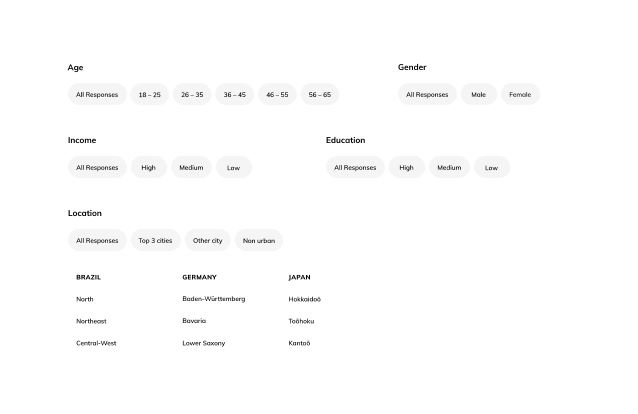\nBy now, we should all be on the same page about how spreadsheets hurt brand campaigns.\n\nSo, why are so many people still choosing brand tracking software that uses them?\n\nInstead, they should consider using reliable brand tracking software with modern data sharing functions so that their whole team can enjoy:\n\n### 1. An Intuitive Dashboard\n\nHigh-quality advanced brand tracking software will provide a [dynamic dashboard](https://latana.com/post/dynamic-dashboard-brand-insights/) that your whole team can log into and use to collaborate. \n\nMost importantly, a good dynamic dashboard should be intuitive — so intuitive that even a self-confessed “technophobe” would be able to use it. With dynamic dashboards, you can instantly see your brand tracking results, make comparisons, segment your data, and more. \n\nUltimately, this will allow team members who are normally wary when it comes to numbers to build confidence — which will be reflected in improved brand campaigns. \n\n### 2. Fast, Easy Comparisons\n\nWith a dynamic dashboard, all your data and insights can be accessed with just a click of a button. And because dynamic dashboards are easy to use, you’ll quickly spot any changes or anomalies that might crop up in specific data sets. \n\nWhy is this important? Because being able to identify changes is the entire point of brand tracking — to see how your latest campaigns have affected brand perception.\n\nMost importantly, your brand marketing campaigns will be of much higher quality when you have access to precise data. When you can see how your [brand health](https://latana.com/post/brand-health-metrics/) is changing over time as a result of brand campaigns, you compare across target audiences and your competition.\n\n### 3. Easily Segmented Data\n\nDynamic dashboards like ours allow you to segment and organize your data however you want. Why does this matter? Because [splitting your data up via different target audiences or demographics](https://latana.com/audience-segmentation/) makes it even easier to analyze.\n\nRemember, great marketing comes from the ability to connect with your target audience — and, these days, the most important target audiences are niche audiences. Therefore, knowing the perception these audiences have of your brand is vital. \n\nPlus, audiences change over time — nothing remains static. Therefore, you’ll need to segment your data in order to identify possible new target audiences who might be performing well.\n\n### 4. Shareability & Access to Historical Data\n\nOne of the most important aspects of any self-proclaimed dynamic dashboard is the ability for all team members to log in and have access to the exact same data. If one person creates a new chart or graph, everyone should be able to see it.\n\nAdditionally, you need to be able to share your data easily. Whether it’s a graph of your target audience’s brand awareness levels or a chart showing brand associations, you must be able to share them at the drop of a hat.\n\nFinally, with a dynamic dashboard, you aren’t limited by size and amount of data as you would be with a spreadsheet. Dashboards allow you to store large amounts of historical data, quickly sift through to find what you need, and segment to discover new insights — and each member of your team can do this easily and quickly.\n\n### 5. A Single Source of Truth\n\nOne of the biggest challenges those using spreadsheets for brand tracking data face is inconsistency. When multiple people have access to the same spreadsheet, it’s easy to accidentally (or willingly) alter data to show preferred outcomes. \n\nAnd without a single source of truth, how can you be sure all insights are accurate? That’s why using a dashboard makes such a big difference. Multiple users can access the tool — they can all make new charts and graphs to explore and examine the data. \n\nHowever, the data itself remains constant — a single source of truth. And because of this, you can place much greater faith in the insights you discover. \n\n## Final Thoughts\n\nAt this point, we hope we’re all on the same page about how and why spreadsheets can do more harm than good. Though they may mean well, they just can’t hold a candle to the usability of a dynamic dashboard.\n\nIf you’re in agreement, then we think it’s time you got your hands on some [brand tracking](https://latana.com/) software. We promise you won’t miss your spreadsheets. \n\n---\n\n__Updated by: [Cory Schröder](https://latana.com/author/cory-schroder/) on 01.10.21__"},"tags":["Brand Tracking"],"authorRef":{"slug":"laura","firstName":"Laura","lastName":"Harker","title":"Freelance Writer & Editor","picture":{"__typename":"ContentfulAsset","id":"bb56ceb9-a813-5edc-85a6-facde71b8efe","description":"","title":"Latana Logo Author Photo","file":{"contentType":"image/png","url":"//images.ctfassets.net/7so8go2zrvbw/7qeUdZpRNeFZFTo0zIasKz/8d00318fb2f317950a2a2d6912eb28bf/Author_Latana__1_.png","details":{"image":{"width":235,"height":235}}},"gatsbyImageData":{"images":{"sources":[{"srcSet":"//images.ctfassets.net/7so8go2zrvbw/7qeUdZpRNeFZFTo0zIasKz/8d00318fb2f317950a2a2d6912eb28bf/Author_Latana__1_.png?w=235&h=235&q=95&fm=webp 235w","sizes":"100vw","type":"image/webp"}],"fallback":{"src":"//images.ctfassets.net/7so8go2zrvbw/7qeUdZpRNeFZFTo0zIasKz/8d00318fb2f317950a2a2d6912eb28bf/Author_Latana__1_.png?w=235&h=235&q=95&fm=png","srcSet":"//images.ctfassets.net/7so8go2zrvbw/7qeUdZpRNeFZFTo0zIasKz/8d00318fb2f317950a2a2d6912eb28bf/Author_Latana__1_.png?w=235&h=235&q=95&fm=png 235w","sizes":"100vw"}},"layout":"fullWidth","backgroundColor":"#080808","width":1,"height":1}}}}},{"node":{"publishDate":"2022-05-17T08:00+02:00","slug":"how-to-build-a-successful-loyalty-program","author":"Ashley Lightfoot","title":"How To Build A Successful Loyalty Program","seo":{"__typename":"ContentfulSeo","title":"How To Build A Successful Loyalty Program","description":"Find out how to build a successful loyalty program and why it is more important than ever during times of waning consumer confidence and increased competition.","noIndex":null,"ogImage":{"fluid":{"src":"//images.ctfassets.net/7so8go2zrvbw/Hhj8u354XpFhds2MdpHr2/38d7069f45c01e891a60b4f1c21be178/Blog_SEO-Thumbnail_1000X709__32_.png?w=1200&h=675&q=90&fm=jpg"},"file":{"url":"//images.ctfassets.net/7so8go2zrvbw/Hhj8u354XpFhds2MdpHr2/38d7069f45c01e891a60b4f1c21be178/Blog_SEO-Thumbnail_1000X709__32_.png"}}},"heroImage":{"__typename":"ContentfulAsset","id":"2e8a054c-1db1-513a-88ce-73f24b17c48c","description":"","title":"How to build a successful loyalty program - image of loyalty card and rewards","file":{"contentType":"image/png","url":"//images.ctfassets.net/7so8go2zrvbw/Hhj8u354XpFhds2MdpHr2/38d7069f45c01e891a60b4f1c21be178/Blog_SEO-Thumbnail_1000X709__32_.png","details":{"image":{"width":1000,"height":709}}},"gatsbyImageData":{"images":{"sources":[{"srcSet":"//images.ctfassets.net/7so8go2zrvbw/Hhj8u354XpFhds2MdpHr2/38d7069f45c01e891a60b4f1c21be178/Blog_SEO-Thumbnail_1000X709__32_.png?w=200&h=142&q=95&fm=webp 200w,\n//images.ctfassets.net/7so8go2zrvbw/Hhj8u354XpFhds2MdpHr2/38d7069f45c01e891a60b4f1c21be178/Blog_SEO-Thumbnail_1000X709__32_.png?w=400&h=284&q=95&fm=webp 400w,\n//images.ctfassets.net/7so8go2zrvbw/Hhj8u354XpFhds2MdpHr2/38d7069f45c01e891a60b4f1c21be178/Blog_SEO-Thumbnail_1000X709__32_.png?w=800&h=567&q=95&fm=webp 800w","sizes":"(min-width: 800px) 800px, 100vw","type":"image/webp"}],"fallback":{"src":"//images.ctfassets.net/7so8go2zrvbw/Hhj8u354XpFhds2MdpHr2/38d7069f45c01e891a60b4f1c21be178/Blog_SEO-Thumbnail_1000X709__32_.png?w=800&h=567&q=95&fm=png","srcSet":"//images.ctfassets.net/7so8go2zrvbw/Hhj8u354XpFhds2MdpHr2/38d7069f45c01e891a60b4f1c21be178/Blog_SEO-Thumbnail_1000X709__32_.png?w=200&h=142&q=95&fm=png 200w,\n//images.ctfassets.net/7so8go2zrvbw/Hhj8u354XpFhds2MdpHr2/38d7069f45c01e891a60b4f1c21be178/Blog_SEO-Thumbnail_1000X709__32_.png?w=400&h=284&q=95&fm=png 400w,\n//images.ctfassets.net/7so8go2zrvbw/Hhj8u354XpFhds2MdpHr2/38d7069f45c01e891a60b4f1c21be178/Blog_SEO-Thumbnail_1000X709__32_.png?w=800&h=567&q=95&fm=png 800w","sizes":"(min-width: 800px) 800px, 100vw"}},"layout":"constrained","backgroundColor":"#580848","width":800,"height":567}},"coverImage":{"__typename":"ContentfulAsset","id":"4eef216c-8577-559b-80ad-a88be330b1d6","description":"","title":"How To build A Successful Loyalty Program - Cover image","file":{"contentType":"image/png","url":"//images.ctfassets.net/7so8go2zrvbw/50VyGQVM5ojAU6NM9iP92H/9816395da27754320d82592b262f5c86/Blog_Cover_1288X400__35_.png","details":{"image":{"width":1288,"height":400}}},"gatsbyImageData":{"images":{"sources":[{"srcSet":"//images.ctfassets.net/7so8go2zrvbw/50VyGQVM5ojAU6NM9iP92H/9816395da27754320d82592b262f5c86/Blog_Cover_1288X400__35_.png?w=750&h=233&q=95&fm=webp 750w,\n//images.ctfassets.net/7so8go2zrvbw/50VyGQVM5ojAU6NM9iP92H/9816395da27754320d82592b262f5c86/Blog_Cover_1288X400__35_.png?w=1080&h=335&q=95&fm=webp 1080w,\n//images.ctfassets.net/7so8go2zrvbw/50VyGQVM5ojAU6NM9iP92H/9816395da27754320d82592b262f5c86/Blog_Cover_1288X400__35_.png?w=1288&h=400&q=95&fm=webp 1288w","sizes":"100vw","type":"image/webp"}],"fallback":{"src":"//images.ctfassets.net/7so8go2zrvbw/50VyGQVM5ojAU6NM9iP92H/9816395da27754320d82592b262f5c86/Blog_Cover_1288X400__35_.png?w=1288&h=400&q=95&fm=png","srcSet":"//images.ctfassets.net/7so8go2zrvbw/50VyGQVM5ojAU6NM9iP92H/9816395da27754320d82592b262f5c86/Blog_Cover_1288X400__35_.png?w=750&h=233&q=95&fm=png 750w,\n//images.ctfassets.net/7so8go2zrvbw/50VyGQVM5ojAU6NM9iP92H/9816395da27754320d82592b262f5c86/Blog_Cover_1288X400__35_.png?w=1080&h=335&q=95&fm=png 1080w,\n//images.ctfassets.net/7so8go2zrvbw/50VyGQVM5ojAU6NM9iP92H/9816395da27754320d82592b262f5c86/Blog_Cover_1288X400__35_.png?w=1288&h=400&q=95&fm=png 1288w","sizes":"100vw"}},"layout":"fullWidth","backgroundColor":"#580848","width":1,"height":0.3105590062111801}},"description":{"description":"Find out how to build a successful loyalty program and why doing so is more important than ever during times of waning consumer confidence and increased competition."},"content":{"content":"Loyalty is a rare and valuable thing, and brands that can foster loyalty with their customers are setting themselves up for success. But to Fred Reichheld, the New York Times bestselling author of [The Loyalty Effect](https://www.latimes.com/archives/la-xpm-1997-02-24-fi-32028-story.html), “Loyalty is dead.” \n\n_“On average U.S. corporations now lose half their customers in five years, half their employees in four, and half their investors in less than one. We seem to face a future in which the only business relationships will be opportunistic transactions between virtual strangers.”_\n\nWhile this might be a bit pessimistic, fostering loyalty today is a steep hill to climb. We live in a time of waning consumer confidence and, with costs rising, many brands will see the bonds with their most loyal customers put to the test.\n\nMore than ever, it makes sense to invest in a loyalty program to build strong relationships with your customers and to let them know that they’re valued. But exactly how should you go about building one?\n\nIn this article, we’re going to outline the benefits of building a loyalty program, explore the various types that you can choose from, and provide a few tips and tricks to set you on the right path.\n\nSo, let’s dive in.\n\n## How A Strong Loyalty Program Can Benefit Your Business\n\nIt really should be instantly obvious how loyalty can chiefly benefit your business — loyal customers keep coming back! \n\nEven if rival brands offer them juicy deals and discounts, loyalty is what stops them from jumping ship. Even if they have a bad experience, loyalty is what makes them forgive and forget, when logic is telling them to shop around. Loyalty is telling them to stay true to your brand. This is why loyalty is so important.\n\nBut there are some other vital ways that loyalty can benefit your brand that might not be so obvious at first glance.\n\n1. __Referrals and Word-of-Mouth Marketing__\n\n Loyal customers will generally also be advocates of your brand. By building a strong emotional connection with consumers and fostering loyalty, you’re also creating opportunities to win new customers. \n\n Word-of-mouth marketing is the most trusted form of brand promotion, so those customers that tell their family, friends, and colleagues about your brand are helping you acquire new leads and generate more revenue. Whatsmore, [“customers referred by loyalty members have a 26% higher retention rate.”](https://blog.hubspot.com/service/customer-loyalty-program) \n\n2. __User-Generated Content and Promotion__\n\n Loyal customers won’t just tell their friends and families about your brand — if you incentivize them to do so with your loyalty program, they can also be relied upon to leave glowing reviews online or create other pieces of user-generated content on social media showering your brand with praise.\n\n3. __Cost Efficiency__\n\n Customer acquisition costs are rising, but the cost of retaining happy customers isn’t. Ultimately, those brands that are content with seeing customers churn and paying to acquire new ones are throwing money away. \n\n The cost of acquiring a new customer is [5 - 25 times more expensive](https://www.invespcro.com/blog/customer-acquisition-retention/) than the cost of retaining one.\n\n## What Type of Loyalty Program Is Right For Your Brand?\n\n\n\n### Loyalty Cards\n\nPerhaps the most well-known type of loyalty program is the humble loyalty card. Virtually any brand can set up this type of program because, in its most basic form, it simply requires the printing of a stack of cards that can then be used to keep track of customers’ purchases. \n\nFor example, a coffee shop might give customers a stamp every time they visit and on their tenth purchase offer them a free cup of coffee. It’s a simple yet elegant way to foster loyalty and, since the payout comes at the end, there’s virtually no risk involved for businesses. \n\nJust make sure to keep the stamp you use under lock and key.\n\n### A Points System\n\nAnother popular way of fostering customer loyalty is through a points system. This is similar in essence to a loyalty card, in that it allows your customers to accrue a reward for repeated purchases over time — the main difference here is that a points system offers greater flexibility in how they redeem that reward.\n\nPoints systems work best for products and services where consumers can make repeat purchases on a frequent basis, such as a grocery store where customers may visit more than once per week. This way, they are able to regularly accrue points and are reminded at each visit that their purchases are working towards a reward. \n\n### Exclusive Discounts\n\nOffering your most loyal customers exclusive discounts is an effective way of fostering and preserving loyalty. There are numerous ways that you can do this — you might create a paid membership that then unlocks lower prices across your entire product range, while online stores could identify those customer accounts that make regular purchases and offer exclusive discounts.\n\n### Partnerships\n\nIf you can, incorporating the products or services of another brand is a great way of rewarding those in your loyalty program. Choosing the right partner is important here — rather than offering a random freebie or discount from a completely unrelated business, try to partner up with brands that aren’t competitors but offer services that might complement your own. \n\nFor example, a [hotel brand would benefit from partnering with a taxi service company](https://help.lyft.com/hc/e/all/articles/360020588473-Hilton-Honors-Lyft-partnership).\n\n### Referral Programs\n\nA referral program can encourage both loyalty and advocacy. Offering your customers discounts or deals when they bring new customers to your brand gives them a great incentive to promote your offering within their personal network. And as previously mentioned, their recommendations will likely result in more valuable new customers with higher retention rates.\n\n## 5 Tips For Building A Successful Customer Loyalty Program\n\n### 1. Use Emotions to Deepen Your Program’s Meaning\n\nLoyalty programs obviously serve a commercial function but, as demonstrated by the opening Fred Reichheld quote, they are based upon deeper human connections — when consumers are loyal to a particular brand, it’s probably because they’ve developed an [emotional connection](https://www.annexcloud.com/blog/the-importance-of-emotional-loyalty/).\n\nSo, use your loyalty program to help deepen that bond.\n\nOf course, the program’s main role will always be to keep your most loyal customers happy or to encourage them to keep spending, but don’t be afraid to make it feel like an exclusive club, a community, or even a family — try to think about your product and what it represents. \n\nWhat are you empowering your customers to do now they’re part of your loyalty program? For a fitness club, this might mean achieving goals or living a healthier lifestyle, for an airline it might mean celebrating the freedom to travel and the resulting memories or connections made.\n\n### 2. Reward Customers For More Than Just Purchases\n\nIt’s perhaps too easy to think of loyalty merely as a measure of the customers who spend the most with your brand — but this isn’t the only way they can engage.\n\nImagine a customer that makes relatively fewer purchases than average, but tells all their friends and family members about your brand, engages with (and shares) your content on social media, and subscribes to your email newsletter. Are these interactions not valuable to your brand? \n\nFinding a way to reward these types of customers helps drive engagement and though it might not affect it directly, this will eventually impact your bottom line.\n\n### 3. Reward Customers in Multiple Ways \n\nJust as there are different behaviors to reward, there’s also more than one way to reward those you classify as loyal customers. \n\nOffering points or discounts is the most common way but you could also offer exclusive features that are off-limits for regular customers, early access to sales, or work with partners to provide services from other brands that can improve their experience with yours.\n\n### 4. Find The Right Balance For The Value Of Loyalty Points\n\nBritish vacuum-cleaner manufacturer, Hoover, represents a classic cautionary tale for any brand that wants to offer incentives to boost sales. Their offer of a free transatlantic return flight with purchases of more than £100 was so heavily weighted in the customer’s favor that it ended up[ costing the company more than £70 million](https://thehustle.co/the-worst-sales-promotion-in-history/). \n\nSo first things first, make sure your points system is sustainable and ensure that there are no exploits or loopholes that crafty customers could exploit to get more than you’d planned.\n\nBut having said that, you should also make sure that you offer enough points so that the rewards customers accrue feel obtainable and valuable. Plenty of brands offer loyalty point schemes and if yours is not balanced right, you might discourage potential customers into giving it a miss.\n\n### 5. Promote Your Program to Encourage Loyalty\n\nOn top of rewarding loyalty, a good loyalty program should also inspire it in those who might not currently shop with your business frequently or consistently. So it’s vital that you make sure that your loyalty program is visible to everyone and not just those who go in search of it.\n\nThe best approach is to actively promote your loyalty program in a range of different ways to make sure you’re able to reach all your customers who could potentially be members. If you have brick-and-mortar retail locations, then make sure there’s an opportunity for consumers to find out about your program at the checkout, inform your newsletter subscribers about it on a regular basis, and make sure it’s visible from your homepage.\n\nIf your loyalty program is good enough, not just fans of your brand will sign up — but also customers looking to gain access to exclusive offers, deals, or discounts. However, once signed up, you can foster a closer relationship that should increase your chances of forming a longer, stronger bond.\n\n## Final Thoughts\n\nAs you can see, a loyalty program doesn’t need to be a blunt instrument, but one that you can finely tune to fit the preferences of your customers and the type of relationship that you want to foster.\n\nThere are long-term benefits to building loyalty — ones that could pay dividends years after you establish your program. So, try to look beyond the initial income it might generate and focus on building authentic bonds with customers who’ve already demonstrated a penchant for your brand.\n"},"tags":["Brand Marketing","Brand Strategy"],"authorRef":{"slug":"ashley-lightfoot","firstName":"Ashley","lastName":"Lightfoot","title":"Content Marketing Manager","picture":{"__typename":"ContentfulAsset","id":"1b1d3438-966f-59a7-a012-e0110ae96e36","description":"","title":"Ashley Lightfoot Photo","file":{"contentType":"image/png","url":"//images.ctfassets.net/7so8go2zrvbw/4O1r95Q8NMW84P7HtTzRxS/0dc53d7d762d5142d357e1ab71db8dc6/Author_Ashley.png","details":{"image":{"width":235,"height":235}}},"gatsbyImageData":{"images":{"sources":[{"srcSet":"//images.ctfassets.net/7so8go2zrvbw/4O1r95Q8NMW84P7HtTzRxS/0dc53d7d762d5142d357e1ab71db8dc6/Author_Ashley.png?w=235&h=235&q=95&fm=webp 235w","sizes":"100vw","type":"image/webp"}],"fallback":{"src":"//images.ctfassets.net/7so8go2zrvbw/4O1r95Q8NMW84P7HtTzRxS/0dc53d7d762d5142d357e1ab71db8dc6/Author_Ashley.png?w=235&h=235&q=95&fm=png","srcSet":"//images.ctfassets.net/7so8go2zrvbw/4O1r95Q8NMW84P7HtTzRxS/0dc53d7d762d5142d357e1ab71db8dc6/Author_Ashley.png?w=235&h=235&q=95&fm=png 235w","sizes":"100vw"}},"layout":"fullWidth","backgroundColor":"#080808","width":1,"height":1}}}}},{"node":{"publishDate":"2022-03-25T08:00+01:00","slug":"why-to-track-purchase-drivers","author":"Cory Schröder","title":"Why Growing Brands Need to be Tracking Purchase Drivers","seo":{"__typename":"ContentfulSeo","title":"Why Growing Brands Need to Track Purchase Drivers","description":"What are purchase drivers & how do they help brands grow strategically? This article will explain it all, plus provide 3 ways they can improve brand strategies.","noIndex":null,"ogImage":{"fluid":{"src":"//images.ctfassets.net/7so8go2zrvbw/1rE8WhYqq1pnmfdsM06BBP/d88603d7c7ef8acc6883373de6703df1/Blog_SEO-Thumbnail_1000X709_-_2022-03-18T152018.840.png?w=1200&h=675&q=90&fm=jpg"},"file":{"url":"//images.ctfassets.net/7so8go2zrvbw/1rE8WhYqq1pnmfdsM06BBP/d88603d7c7ef8acc6883373de6703df1/Blog_SEO-Thumbnail_1000X709_-_2022-03-18T152018.840.png"}}},"heroImage":{"__typename":"ContentfulAsset","id":"0ca2f4d6-b88a-52dd-9513-f4355cabc793","description":"","title":"Illustration of a man on a cliff with a telescope (Thumbnail)","file":{"contentType":"image/png","url":"//images.ctfassets.net/7so8go2zrvbw/1rE8WhYqq1pnmfdsM06BBP/d88603d7c7ef8acc6883373de6703df1/Blog_SEO-Thumbnail_1000X709_-_2022-03-18T152018.840.png","details":{"image":{"width":1000,"height":709}}},"gatsbyImageData":{"images":{"sources":[{"srcSet":"//images.ctfassets.net/7so8go2zrvbw/1rE8WhYqq1pnmfdsM06BBP/d88603d7c7ef8acc6883373de6703df1/Blog_SEO-Thumbnail_1000X709_-_2022-03-18T152018.840.png?w=200&h=142&q=95&fm=webp 200w,\n//images.ctfassets.net/7so8go2zrvbw/1rE8WhYqq1pnmfdsM06BBP/d88603d7c7ef8acc6883373de6703df1/Blog_SEO-Thumbnail_1000X709_-_2022-03-18T152018.840.png?w=400&h=284&q=95&fm=webp 400w,\n//images.ctfassets.net/7so8go2zrvbw/1rE8WhYqq1pnmfdsM06BBP/d88603d7c7ef8acc6883373de6703df1/Blog_SEO-Thumbnail_1000X709_-_2022-03-18T152018.840.png?w=800&h=567&q=95&fm=webp 800w","sizes":"(min-width: 800px) 800px, 100vw","type":"image/webp"}],"fallback":{"src":"//images.ctfassets.net/7so8go2zrvbw/1rE8WhYqq1pnmfdsM06BBP/d88603d7c7ef8acc6883373de6703df1/Blog_SEO-Thumbnail_1000X709_-_2022-03-18T152018.840.png?w=800&h=567&q=95&fm=png","srcSet":"//images.ctfassets.net/7so8go2zrvbw/1rE8WhYqq1pnmfdsM06BBP/d88603d7c7ef8acc6883373de6703df1/Blog_SEO-Thumbnail_1000X709_-_2022-03-18T152018.840.png?w=200&h=142&q=95&fm=png 200w,\n//images.ctfassets.net/7so8go2zrvbw/1rE8WhYqq1pnmfdsM06BBP/d88603d7c7ef8acc6883373de6703df1/Blog_SEO-Thumbnail_1000X709_-_2022-03-18T152018.840.png?w=400&h=284&q=95&fm=png 400w,\n//images.ctfassets.net/7so8go2zrvbw/1rE8WhYqq1pnmfdsM06BBP/d88603d7c7ef8acc6883373de6703df1/Blog_SEO-Thumbnail_1000X709_-_2022-03-18T152018.840.png?w=800&h=567&q=95&fm=png 800w","sizes":"(min-width: 800px) 800px, 100vw"}},"layout":"constrained","backgroundColor":"#c8d8e8","width":800,"height":567}},"coverImage":{"__typename":"ContentfulAsset","id":"97574a56-c593-5c1b-b09c-fcf5e7f8fa00","description":"","title":"Illustration of a man on a cliff with a telescope (cover image)","file":{"contentType":"image/png","url":"//images.ctfassets.net/7so8go2zrvbw/3SyFIneQ0CgLFRZ2gTrmmQ/cbd041d971ca8510759579bafbfff096/Blog_Cover_1288X400_-_2022-03-18T152009.890.png","details":{"image":{"width":1288,"height":400}}},"gatsbyImageData":{"images":{"sources":[{"srcSet":"//images.ctfassets.net/7so8go2zrvbw/3SyFIneQ0CgLFRZ2gTrmmQ/cbd041d971ca8510759579bafbfff096/Blog_Cover_1288X400_-_2022-03-18T152009.890.png?w=750&h=233&q=95&fm=webp 750w,\n//images.ctfassets.net/7so8go2zrvbw/3SyFIneQ0CgLFRZ2gTrmmQ/cbd041d971ca8510759579bafbfff096/Blog_Cover_1288X400_-_2022-03-18T152009.890.png?w=1080&h=335&q=95&fm=webp 1080w,\n//images.ctfassets.net/7so8go2zrvbw/3SyFIneQ0CgLFRZ2gTrmmQ/cbd041d971ca8510759579bafbfff096/Blog_Cover_1288X400_-_2022-03-18T152009.890.png?w=1288&h=400&q=95&fm=webp 1288w","sizes":"100vw","type":"image/webp"}],"fallback":{"src":"//images.ctfassets.net/7so8go2zrvbw/3SyFIneQ0CgLFRZ2gTrmmQ/cbd041d971ca8510759579bafbfff096/Blog_Cover_1288X400_-_2022-03-18T152009.890.png?w=1288&h=400&q=95&fm=png","srcSet":"//images.ctfassets.net/7so8go2zrvbw/3SyFIneQ0CgLFRZ2gTrmmQ/cbd041d971ca8510759579bafbfff096/Blog_Cover_1288X400_-_2022-03-18T152009.890.png?w=750&h=233&q=95&fm=png 750w,\n//images.ctfassets.net/7so8go2zrvbw/3SyFIneQ0CgLFRZ2gTrmmQ/cbd041d971ca8510759579bafbfff096/Blog_Cover_1288X400_-_2022-03-18T152009.890.png?w=1080&h=335&q=95&fm=png 1080w,\n//images.ctfassets.net/7so8go2zrvbw/3SyFIneQ0CgLFRZ2gTrmmQ/cbd041d971ca8510759579bafbfff096/Blog_Cover_1288X400_-_2022-03-18T152009.890.png?w=1288&h=400&q=95&fm=png 1288w","sizes":"100vw"}},"layout":"fullWidth","backgroundColor":"#c8d8e8","width":1,"height":0.3105590062111801}},"description":{"description":"What are purchase drivers, & how do they help brands grow strategically? This article will explain it all, plus provide 3 ways they can improve brand strategies."},"content":{"content":"With the amount of KPIs that brand managers are already expected to track in 2022 — from [brand awareness](https://latana.com/topics-brand-awareness/) to consideration to preference and associations — it may feel a bit overwhelming to add another to the list.\n\nBut, we promise — purchase drivers are worth it. Why is that? Well, gathering purchase driver data allows brands to gain a better understanding of what potential customers are looking for within a given category or industry. \n\nThis knowledge then makes it possible to tailor brand messaging, visuals, and marketing to tap into consumers’ purchasing priorities — thus, leading to higher conversion rates and greater [brand loyalty](https://latana.com/post/brand-loyalty-content/).\n\nSo, let’s take a deep dive into purchase drivers — discuss what they are, the types of brands that benefit from them the most, and how they can help improve marketing strategies going forward.\n\n## What is A Purchase Driver?\n\nA purchase driver is a key performance indicator (KPI) used to understand consumer purchasing or usage priorities in a given category, which is unrelated to brand specifics.\n\nFor example, a question designed to gather purchase driver data could look like the following:\n\n*“What is most important to you when deciding on {CATEGORY} brands?”*\n\n[According to SLD](https://www.sld.com/blog/brand-strategy/key-purchase-drivers-that-retailers-can-strategically-design/#:~:text=When%20habits%20have%20been%20formed,resulting%20in%20a%20purchase%20behavior.), purchase drivers can include things like “visibility, access, ease of purchase, communications, education, involvement, value/price, alignment and appeal, and personal values.”\n\nThus, knowing what drives consumers to make purchase or usage choices in your brand’s category will allow you to tailor your marketing strategy accordingly.\n\n---\n\nFor example, let’s say you’re the brand manager of a mid-sized boutique drink mixers company, called “Bevers”.\n\nYou’re working on improving your Q3-Q4 marketing strategy and you realize you’re missing some key data — *why* consumers choose one drink mixer over another. To remedy the situation, you request purchase driver data in your next data wave from your brand tracking software provider.\n\nA few weeks later, you’re able to take a deep dive into your brand tracking data and discover a few interesting insights specifically via purchase driver data. \n\nWhen purchasing from brands in the drink mixer category:\n\n- 45% of Target Audience A reported that they’re influenced by __visual appeal__, aka how eye-catching and pleasing your branded visuals are\n- 63% of Target Audience B reported that they’re influenced by __ease of purchase__, aka how easy it is to get ahold of your products\n- 22% of Target Audience A reported that they’re influenced by __price__, aka how much your mixers cost compared to the competition\n\nKeeping this data in mind, you set about planning your next big brand marketing campaign. Compared to previous campaigns, this one will have:\n\n- Bolder, more eye-catching on-brand graphics to up your visual appeal\n- Specific copy that mentions the number of physical stores that sell your mixers, plus a QR code that leads to all the online shops where it’s available\n- A CTA that specifically mentions your value for price compared to competitors\n\nThanks to the purchase driver insights you gleaned, you were able to make data-driven decisions that will improve your brand campaigns going forward.\n\n## Which Brands Benefit From Purchase Driver Data?\n\n\n\nIn short, all brands benefit from having purchase driver data — as being aware of what your target audiences are looking for in your category is imperative to correctly positioning your brand.\n\nHowever, purchase driver data is particularly important for growing, low-awareness brands who are still working to position themselves within their category. \n\nThese growing brands greatly benefit from understanding core consumer priorities and using them to direct their brand positioning and marketing strategies. Without this kind of knowledge, up-and-coming brands can easily choose the wrong positioning and messaging — wasting time, effort, and money. \n\nFor example, it could be problematic for a brand to position itself as exclusive and expensive if consumers in this category actually prioritize getting the best deal. Therefore, brands of all sizes that want to avoid making costly mistakes should consider tracking purchase drivers for their category.\n\n## How Does Purchase Driver Data Improve Brand’s Marketing Strategies?\n\nThere are many ways that purchase driver data can help brands improve their marketing strategies. However, we’ll focus on the top three benefits in this section.\n\n### 1. Helps Refine Brand Positioning\n\n[Brand positioning](https://latana.com/post/brand-tracking-brand-positioning/) is what allows brands to distinguish themselves from their competitors and find their brand’s ideal role in their market.\n\nPerhaps [best explained by Phillip Kotler](https://www.thebrandingjournal.com/2016/11/brand-positioning-definition/), brand positioning is “the act of designing the company’s offering and image to occupy a distinctive place in the mind of the target market.”\n\nEssentially, brand positioning allows you to figure out where you fit within your market and how you are different from the competition. But how do you decide on your brand positioning?\n\nPart of your brand positioning will be informed by your brand values — aka what your company stands for and believes in. Another part will need to be influenced by your [brand associations](https://latana.com/post/brand-association/) — aka the traits and characteristics that consumers associate specifically with your brand.\n\nHowever, to identify your ideal brand positioning, you need to take a step back and consider your purchase driver data — which answers questions like:\n\n- What is important to consumers when making a purchase from my category/industry?\n- What aspects influence consumers to choose one brand over another within my category/industry?\n\nWith this information at hand, you will be able to create a more refined brand positioning that takes into account a wider range of consumer data and desires.\n\n### 2. Allows Brands To Better Understand Consumer Desires\n\nWhen creating products and services, everything has to be informed by consumer desires. After all, you can produce amazing, high-quality products that you personally love — but if they don’t meet consumer needs, they’re not going to be successful.\n\nPurchase driver data provides a window into consumer desires. It tells brands what consumers are looking for when making purchase decisions within their category. Therefore, this data should be used at the beginning of product ideation, before you get too far into the specifics of it all.\n\nFor example, let’s say you work as a product manager for a new brand that will sell upcycled shoes, called “Upkick”.\n\nYou’re looking to start your product line with five different shoe models. Obviously, they will be made of upcycled materials, but you want to gather more intel on what consumers are looking for when buying from this category.\n\nShoes that are high-quality? Stylish? Environmentally-friendly? Priced competitively? This is the kind of data that purchase drivers provide. By including purchase drivers in your next wave of brand tracking data, you can better understand what consumers want from your category — and give it to them.\n\nThis makes product ideation, creation, and roll-out a much smoother process, as you already know what consumers want from brands that sell shoes.\n\n### 3. Drives Sales & New Customer Acquisition\n\nWhen you understand what drives consumers to make purchases, it’s within your power to use this knowledge to increase sales and attract new customers.\n\nFor example, does your purchase driver data indicate that consumers shopping in your category want personalized offers? Then it’s your job to ensure that your brand focuses the right amount of time and energy on upping personalization at all customer touchpoints — from email to social media posts to chatbots.\n\nOr, does your purchase driver data reveal that high-quality customer service in your category increases the likelihood they’ll spend more? \n\nThen it’s time to beef up your customer service team and focus on improving important customer experience KPIs — like response time and consistent brand communication.\n\nWhen you understand what your target audience is looking for in your category — what drives them to make a purchase — you can and should fully integrate your insights into your marketing strategy.\n\n## Final Thoughts\n\nUltimately, having access to purchase driver data will allow you to craft and execute more effective marketing campaigns and lead to a more successful overall brand.\n\nBut to be able to integrate such findings into your strategy, you first need the right data. That’s where [brand monitoring software](https://latana.com/product/) like Latana comes in. With the ability to track purchase drivers for the target audiences that matter, you’ll be able to make smarter, more data-driven decisions.\n"},"tags":["Brand Tracking"],"authorRef":{"slug":"cory-schroder","firstName":"Cory","lastName":"Schröder","title":"Senior Content Marketing Manager","picture":{"__typename":"ContentfulAsset","id":"31ab4d95-0f90-5835-a22f-4b7ff41fece2","description":"","title":"Cory Profile Picture","file":{"contentType":"image/png","url":"//images.ctfassets.net/7so8go2zrvbw/42rTfahl2m45FP1Fzo7B8n/52d40b8bd8af9ab559381bc0ab744cda/avatar.png","details":{"image":{"width":235,"height":235}}},"gatsbyImageData":{"images":{"sources":[{"srcSet":"//images.ctfassets.net/7so8go2zrvbw/42rTfahl2m45FP1Fzo7B8n/52d40b8bd8af9ab559381bc0ab744cda/avatar.png?w=235&h=235&q=95&fm=webp 235w","sizes":"100vw","type":"image/webp"}],"fallback":{"src":"//images.ctfassets.net/7so8go2zrvbw/42rTfahl2m45FP1Fzo7B8n/52d40b8bd8af9ab559381bc0ab744cda/avatar.png?w=235&h=235&q=95&fm=png","srcSet":"//images.ctfassets.net/7so8go2zrvbw/42rTfahl2m45FP1Fzo7B8n/52d40b8bd8af9ab559381bc0ab744cda/avatar.png?w=235&h=235&q=95&fm=png 235w","sizes":"100vw"}},"layout":"fullWidth","backgroundColor":"#080808","width":1,"height":1}}}}},{"node":{"publishDate":"2022-02-02T08:00+01:00","slug":"customer-centric-marketing","author":"Ashley Lightfoot","title":"Is A Customer Centric Approach The Future of Marketing?","seo":{"__typename":"ContentfulSeo","title":"Is Customer-Centricity Marketing The Future?","description":"With acquisition costs rising, customer-centric marketing is vital for building loyal customers. Find out how to ensure your brand is customer-centric.","noIndex":null,"ogImage":{"fluid":{"src":"//images.ctfassets.net/7so8go2zrvbw/6Kq9SJKItDNmDUjz3SmLYz/d311e4bf35e9a8a75c7b4c40dabb4bda/Blog_SEO-Thumbnail_1000X709__5_.png?w=1200&h=675&q=90&fm=jpg"},"file":{"url":"//images.ctfassets.net/7so8go2zrvbw/6Kq9SJKItDNmDUjz3SmLYz/d311e4bf35e9a8a75c7b4c40dabb4bda/Blog_SEO-Thumbnail_1000X709__5_.png"}}},"heroImage":{"__typename":"ContentfulAsset","id":"449a8575-32db-59bd-9e9b-92239f445ad6","description":"Customer centric approach to marketing graphic - featuring key steps in the customer journey visualized.","title":"Customer centric approach to marketing graphic","file":{"contentType":"image/png","url":"//images.ctfassets.net/7so8go2zrvbw/6Kq9SJKItDNmDUjz3SmLYz/d311e4bf35e9a8a75c7b4c40dabb4bda/Blog_SEO-Thumbnail_1000X709__5_.png","details":{"image":{"width":1000,"height":709}}},"gatsbyImageData":{"images":{"sources":[{"srcSet":"//images.ctfassets.net/7so8go2zrvbw/6Kq9SJKItDNmDUjz3SmLYz/d311e4bf35e9a8a75c7b4c40dabb4bda/Blog_SEO-Thumbnail_1000X709__5_.png?w=200&h=142&q=95&fm=webp 200w,\n//images.ctfassets.net/7so8go2zrvbw/6Kq9SJKItDNmDUjz3SmLYz/d311e4bf35e9a8a75c7b4c40dabb4bda/Blog_SEO-Thumbnail_1000X709__5_.png?w=400&h=284&q=95&fm=webp 400w,\n//images.ctfassets.net/7so8go2zrvbw/6Kq9SJKItDNmDUjz3SmLYz/d311e4bf35e9a8a75c7b4c40dabb4bda/Blog_SEO-Thumbnail_1000X709__5_.png?w=800&h=567&q=95&fm=webp 800w","sizes":"(min-width: 800px) 800px, 100vw","type":"image/webp"}],"fallback":{"src":"//images.ctfassets.net/7so8go2zrvbw/6Kq9SJKItDNmDUjz3SmLYz/d311e4bf35e9a8a75c7b4c40dabb4bda/Blog_SEO-Thumbnail_1000X709__5_.png?w=800&h=567&q=95&fm=png","srcSet":"//images.ctfassets.net/7so8go2zrvbw/6Kq9SJKItDNmDUjz3SmLYz/d311e4bf35e9a8a75c7b4c40dabb4bda/Blog_SEO-Thumbnail_1000X709__5_.png?w=200&h=142&q=95&fm=png 200w,\n//images.ctfassets.net/7so8go2zrvbw/6Kq9SJKItDNmDUjz3SmLYz/d311e4bf35e9a8a75c7b4c40dabb4bda/Blog_SEO-Thumbnail_1000X709__5_.png?w=400&h=284&q=95&fm=png 400w,\n//images.ctfassets.net/7so8go2zrvbw/6Kq9SJKItDNmDUjz3SmLYz/d311e4bf35e9a8a75c7b4c40dabb4bda/Blog_SEO-Thumbnail_1000X709__5_.png?w=800&h=567&q=95&fm=png 800w","sizes":"(min-width: 800px) 800px, 100vw"}},"layout":"constrained","backgroundColor":"#3818b8","width":800,"height":567}},"coverImage":{"__typename":"ContentfulAsset","id":"f49261ec-939a-555d-8fb9-a02f397748af","description":"Customer centric approach to marketing cover image - with customer journey steps visualized.","title":"Customer centric approach to marketing cover image","file":{"contentType":"image/png","url":"//images.ctfassets.net/7so8go2zrvbw/F1LoBEIDP1VAJdZ3HQZXi/79523a35ff3e154aa6c3b013a0cc82c2/Blog_Cover_1288X400__5_.png","details":{"image":{"width":1288,"height":400}}},"gatsbyImageData":{"images":{"sources":[{"srcSet":"//images.ctfassets.net/7so8go2zrvbw/F1LoBEIDP1VAJdZ3HQZXi/79523a35ff3e154aa6c3b013a0cc82c2/Blog_Cover_1288X400__5_.png?w=750&h=233&q=95&fm=webp 750w,\n//images.ctfassets.net/7so8go2zrvbw/F1LoBEIDP1VAJdZ3HQZXi/79523a35ff3e154aa6c3b013a0cc82c2/Blog_Cover_1288X400__5_.png?w=1080&h=335&q=95&fm=webp 1080w,\n//images.ctfassets.net/7so8go2zrvbw/F1LoBEIDP1VAJdZ3HQZXi/79523a35ff3e154aa6c3b013a0cc82c2/Blog_Cover_1288X400__5_.png?w=1288&h=400&q=95&fm=webp 1288w","sizes":"100vw","type":"image/webp"}],"fallback":{"src":"//images.ctfassets.net/7so8go2zrvbw/F1LoBEIDP1VAJdZ3HQZXi/79523a35ff3e154aa6c3b013a0cc82c2/Blog_Cover_1288X400__5_.png?w=1288&h=400&q=95&fm=png","srcSet":"//images.ctfassets.net/7so8go2zrvbw/F1LoBEIDP1VAJdZ3HQZXi/79523a35ff3e154aa6c3b013a0cc82c2/Blog_Cover_1288X400__5_.png?w=750&h=233&q=95&fm=png 750w,\n//images.ctfassets.net/7so8go2zrvbw/F1LoBEIDP1VAJdZ3HQZXi/79523a35ff3e154aa6c3b013a0cc82c2/Blog_Cover_1288X400__5_.png?w=1080&h=335&q=95&fm=png 1080w,\n//images.ctfassets.net/7so8go2zrvbw/F1LoBEIDP1VAJdZ3HQZXi/79523a35ff3e154aa6c3b013a0cc82c2/Blog_Cover_1288X400__5_.png?w=1288&h=400&q=95&fm=png 1288w","sizes":"100vw"}},"layout":"fullWidth","backgroundColor":"#3818b8","width":1,"height":0.3105590062111801}},"description":{"description":"With acquisition costs rising, customer-centric marketing is vital for building loyal customers. Find out how to ensure your brand is customer-centric."},"content":{"content":"In the world of marketing, being customer-centric doesn’t sound *that* revolutionary. For every campaign, success depends on how well it resonates with potential customers, so you’d be forgiven for assuming that all marketing is inherently customer-centric.\n\nBut it’s not that simple. Being truly customer-centric is about reverse-engineering your entire brand offering to fit the diverse needs of your customers. So it’s important to take a step back and look at the bigger picture by asking a few key questions:\n\n- *Does your brand tailor every part of its services to its customers?*\n\n- *Are your marketing campaigns personalized and set up to respond to different customer types?*\n\n- *Are your brand’s goals centered around customer success and satisfaction?*\n\n- *Is the relationship between your brand and its customers more than just a transactional one?*\n\nIf — and only if — you’re answering “yes” to all of these questions can you truly say that you’re practicing customer-centric marketing. \n\nAnd while there’s no quick fix, more and more brands are taking a closer look at their customers and redesigning their marketing strategy to fit more closely with their needs. It’s a move that all marketers should be considering. But before we continue, let’s spell out exactly what a customer-centric approach looks like.\n\n\n\n## What is Customer-Centric Marketing?\n\nCustomer-centric marketing is an overarching strategy that focuses on the needs of the customer and takes their experiences of the product, brand, and all promotional messages into account. \n\nThe goal of this strategy is to tailor every brand interaction to fit the customer’s needs or interests — to understand why your product or service is important to them and make sure it's fulfilling that purpose and fostering a healthy customer relationship.\n\n## Why is Customer-Centric Marketing Important?\n\nThis is a trend that moves away from the acquisition-focused approach that was largely driven by the expansion of internet use and alongside it, e-commerce. Now that growth has slowed, [acquisition costs are rising](https://exponea.com/blog/importance-of-customer-data-collection/#times-are-changing-loyalty-acquisition), and for many markets, the times of prioritizing new customers over existing ones are coming to an end. \n\nIt now pays to foster loyalty, as repeat customers are [67% more likely to spend more](https://blog.hubspot.com/service/importance-customer-service) — and the best way to do this is to put your customer at the heart of everything you do.\n\nAs technology continues to improve, the scope of what a customer-centric approach can achieve increases. Marketers can track a range of different data points and build increasingly granular segments that offer more relevant marketing content — while also relying on automation and AI to deliver highly personalized customer journeys. \n\nIt’s now entirely possible for two different customers to have vastly different experiences with the same brand, each tailored to fit their needs, interests, and buying habits. Whatsmore, the technology that enables this keeps improving.\n\nSo, it’s no surprise that customer-centricity is poised to be an important pillar for all marketing teams in the near future. Therefore, it makes sense to get ahead of the competition and get started now. But, how do you build a customer-centric marketing strategy from the ground up?\n\n## 4 Steps for Building a Customer-Centric Marketing Strategy \n\nBuilding a customer-centric marketing strategy can be a tall order. Unlike a purely acquisition-focused approach, all customer touchpoints are important, even those that come after transactions. \n\nThe goal is to build loyalty and, in order to do that, you need to reassess how your brand fits into your customers’ lives and then rebuild your offering around that. The rewards though can be huge, and companies that have a “customer-centric, data-driven marketing and sales platform [improve marketing ROI by 15-20% or more](https://www.mckinsey.com/~/media/McKinsey/Business%20Functions/Marketing%20and%20Sales/Our%20Insights/EBook%20Big%20data%20analytics%20and%20the%20future%20of%20marketing%20sales/Big-Data-eBook.ashx).”\n\nSo here are 4 steps to building your customer-centric marketing strategy.\n\n## 1. **Get to Know Your Customers**\n\nIt might seem obvious, but the single most important thing to focus on when building a customer-centric marketing strategy is understanding who your customers are, and how you can cater to their needs.\n\nThis is more than just understanding broad demographic characteristics and segmenting your customers accordingly (though this is important!) — it’s also about figuring out where your brand fits into your customers’ lives and what purpose your product or service fulfills? If you understand this, then you can work to improve your offering in the future.\n\nBut what’s the best method for finding out more about your customers? [There’s a range of options available](https://latana.com/post/customer-insights-brand-marketing/) and sometimes it’s better to mix and match. \n\nHere are the most important methods that you can use to learn more about your customers:\n\n__Talk directly with your customers:__\n\nConducting focus groups, setting up one-on-one interviews with your customers, or simply asking for feedback after a purchase — these are all straightforward ways to learn more about the people who use your product or services. \n\nFurthermore, these methods will give you direct insights into the reasons your customers choose your brand over others and how it integrates into their lives. Speak to enough customers and you might get a picture of how interactions with your brand can vary for different groups. \n\nHowever, while interviews allow you to glean specific insights that you might otherwise miss, it’s important to remember that anything you discover only represents a tiny fraction of your total audience — and while anecdotal feedback like this can be useful, it’s better if your process is backed up by data.\n\n__Use Brand Tracking Software:__\n\nLatana’s [brand tracking](https://latana.com/) software allows you to see how your brand is perceived by both the general population and your target audiences. It’s a great tool for measuring the health of your brand and gathering a range of insights across larger groups, including those that don’t necessarily interact much with your brand at the moment.\n\nThe insights you can gain from brand tracking include what [positive or negative associations your brand has](https://latana.com/post/brand-association), whether consumers have a preference for your brand or another, or simply how aware they are of your offering. \n\nBy tracking your performance over time, you can see whether you’re heading in the right direction as you make changes to your marketing strategy. \n\n__Check-in with your customer support or sales teams:__\n\nThe experiences of those in customer-facing roles [can be vital in learning more about your customers](https://latana.com/post/importance-of-customer-service/) and figuring out the changes you need to make in order to better cater to them. \n\nYour customer support and sales teams likely deal with hundreds of inquiries a day, so it’s no surprise that they’ll be one of the best-placed teams for spotting patterns and identifying common questions or pain points. On top of this, they may also have an awareness of the things you’re already doing that help achieve customer satisfaction. \n\n**Utilize your own data:**\n\nYour own data will likely host a wealth of valuable insights about buying habits and customer behavior that can be used to improve your customer experience.\nFor a long time now, Amazon has utilized its data to offer personalized recommendations based on the buying habits of all its customers, a feature that many e-commerce companies have since adopted. When it was first implemented for its bookstore, Amazon noticed an immediate “[uptick in sales”](https://exponea.com/blog/importance-of-customer-data-collection/#times-are-changing-loyalty-acquisition) as customers were directed towards “books that they might not otherwise have found.”\n\nIt’s not just about upselling though. The goal here is to spot habits and trends that can then inform you on the best ways to add value to your offering. Recommending relevant products or bundling items together might bring in extra revenue, but it also makes a more efficient shopping experience — allowing the customer to get everything they need in one easy purchase.\n\n\n\n## ** 2. Invest in Customer-Centric Infrastructure**\n\nRegardless of what you discovered in your research, you’ll know that your customers are not a homogeneous group but a diverse and sometimes disparate bunch. Investing in a platform that allows you to deliver different types of content to all of them, depending on where they are at in their customer journey, is vital.\n\nAn important part of setting up this infrastructure is [figuring out exactly how to segment your user base](https://latana.com/post/market-segmentation). Not all characteristics are important to all brands, so while some may find it useful to segment their customers based on geographic location for example, for others this won’t be important at all. However, the more precise your segmentation, the more options you have to cater to a wider range of customer types.\n\nEstablishing customer personas is also a tried and tested method of making sense of the different data sets you have on your customers. Personas are useful because they force you to join the dots between demographic characteristics, user behavior, and the insights gleaned from your customer research. \n\nThe result is a hypothetical model customer who personifies a specific set of needs, interests, and behaviors that you can then use to inform your marketing activities.\n\n## 3. Optimize Every Customer Touchpoint\n\n Once you have identified your customers’ key characteristics, figured out what their needs are, and set yourself up to process this data — your next step is to map out all the different types of customer journeys that exist for your brand and consider all the possible interactions each of your different segments might need.\n\nOnce you’ve done this, you can begin to re-design those touchpoints around the insights you gained from your research. \n\nFor example, perhaps you’ve discovered that new customers need better onboarding to keep them from churning after their first purchase or trial period — or maybe a segment simply wants to book quickly from their phones but your website isn’t optimized for mobile devices. \n\nPerhaps some of your email newsletter subscribers are more interested in [blogs and engaging content](https://latana.com/post/content-marketing-benefits) while others simply want news on the latest offers. There are myriad ways to re-design each touchpoint so that it adds to an overall positive customer experience.\n\nThe most important thing to remember is that your brand is represented by all of your company’s different parts and your marketing strategy should join them all up to make a consistent whole. This includes everything from paid ads to your social media presence to the product itself to [customer support](https://latana.com/guides/branding-for-customer-service-teams/). \n\nThe best method is to review the entire customer journey and make sure every touchpoint is tailored to your customers’ needs.\n\n\n\n## 4. Review the Data and Iterate\n\nAs with any marketing strategy, this entire process should form a feedback loop. Once you’ve made changes to your customer touchpoints and implemented a customer-centric approach, it’s vital that you continue to collect feedback so that you can gauge whether your changes have been successful or not.\n\nWhen Coca-Cola released “new coke’” in 1985, the new formula was one selected from preferred taste tests of nearly 200,000 consumers. But these tests overlooked the [“bond consumers felt with their Coca-Cola”](https://www.coca-colacompany.com/company/history/the-story-of-one-of-the-most-memorable-marketing-blunders-ever) and after a very vocal backlash, the company decided to re-release the original. \n\nBut not all consumers are as vocal as soda fans and, while you might make changes with the best of intentions, it’s best to review the data to see if you're heading in the right direction. Brands that regularly check in with their customers will always be the first to detect changes in consumer behavior and adapt their services — ensuring that they stay ahead of the competition.\n\n## Final Thoughts\n\nAs marketers’ ability to segment their audiences becomes ever more granular, the real arms race between brands will revolve around just how customer-centric their services can be. \n\nBy ensuring that you’re listening to your customers, figuring out how your brand fits into their life, and tailoring your offering around that, your brand can gain an edge over the competition.\n\n------------------------------------------------------------------------\n\nWant more on customer centricity? Check out [The Ultimate Guide to Customer Centricity](https://latana.com/guides/ultimate-guide-to-customer-centricity/)."},"tags":["Brand Marketing","Brand Strategy"],"authorRef":{"slug":"ashley-lightfoot","firstName":"Ashley","lastName":"Lightfoot","title":"Content Marketing Manager","picture":{"__typename":"ContentfulAsset","id":"1b1d3438-966f-59a7-a012-e0110ae96e36","description":"","title":"Ashley Lightfoot Photo","file":{"contentType":"image/png","url":"//images.ctfassets.net/7so8go2zrvbw/4O1r95Q8NMW84P7HtTzRxS/0dc53d7d762d5142d357e1ab71db8dc6/Author_Ashley.png","details":{"image":{"width":235,"height":235}}},"gatsbyImageData":{"images":{"sources":[{"srcSet":"//images.ctfassets.net/7so8go2zrvbw/4O1r95Q8NMW84P7HtTzRxS/0dc53d7d762d5142d357e1ab71db8dc6/Author_Ashley.png?w=235&h=235&q=95&fm=webp 235w","sizes":"100vw","type":"image/webp"}],"fallback":{"src":"//images.ctfassets.net/7so8go2zrvbw/4O1r95Q8NMW84P7HtTzRxS/0dc53d7d762d5142d357e1ab71db8dc6/Author_Ashley.png?w=235&h=235&q=95&fm=png","srcSet":"//images.ctfassets.net/7so8go2zrvbw/4O1r95Q8NMW84P7HtTzRxS/0dc53d7d762d5142d357e1ab71db8dc6/Author_Ashley.png?w=235&h=235&q=95&fm=png 235w","sizes":"100vw"}},"layout":"fullWidth","backgroundColor":"#080808","width":1,"height":1}}}}},{"node":{"publishDate":"2021-07-15T08:00+02:00","slug":"brand-awareness-software-improve-marketing","author":"Helen Jackson","title":"How Brand Awareness Software Can Improve Your Marketing","seo":{"__typename":"ContentfulSeo","title":"How Brand Software Improves Marketing Strategies","description":"Brand awareness software. Let’s discuss what it is, how to use it, and how it can change your marketing strategy for the better.","noIndex":null,"ogImage":{"fluid":{"src":"//images.ctfassets.net/7so8go2zrvbw/22OagKfJWRV6PxIl3UnCyr/a4183b614d58ac6ecaa2110448eada1d/Hero_1000X709.png?w=1200&h=675&q=90&fm=jpg"},"file":{"url":"//images.ctfassets.net/7so8go2zrvbw/22OagKfJWRV6PxIl3UnCyr/a4183b614d58ac6ecaa2110448eada1d/Hero_1000X709.png"}}},"heroImage":{"__typename":"ContentfulAsset","id":"0b6f3411-ee65-52cd-8b92-9b9d146db95a","description":"","title":"Hero image with multiple KPIs","file":{"contentType":"image/png","url":"//images.ctfassets.net/7so8go2zrvbw/22OagKfJWRV6PxIl3UnCyr/a4183b614d58ac6ecaa2110448eada1d/Hero_1000X709.png","details":{"image":{"width":3000,"height":2128}}},"gatsbyImageData":{"images":{"sources":[{"srcSet":"//images.ctfassets.net/7so8go2zrvbw/22OagKfJWRV6PxIl3UnCyr/a4183b614d58ac6ecaa2110448eada1d/Hero_1000X709.png?w=200&h=142&q=95&fm=webp 200w,\n//images.ctfassets.net/7so8go2zrvbw/22OagKfJWRV6PxIl3UnCyr/a4183b614d58ac6ecaa2110448eada1d/Hero_1000X709.png?w=400&h=284&q=95&fm=webp 400w,\n//images.ctfassets.net/7so8go2zrvbw/22OagKfJWRV6PxIl3UnCyr/a4183b614d58ac6ecaa2110448eada1d/Hero_1000X709.png?w=800&h=567&q=95&fm=webp 800w,\n//images.ctfassets.net/7so8go2zrvbw/22OagKfJWRV6PxIl3UnCyr/a4183b614d58ac6ecaa2110448eada1d/Hero_1000X709.png?w=1600&h=1134&q=95&fm=webp 1600w","sizes":"(min-width: 800px) 800px, 100vw","type":"image/webp"}],"fallback":{"src":"//images.ctfassets.net/7so8go2zrvbw/22OagKfJWRV6PxIl3UnCyr/a4183b614d58ac6ecaa2110448eada1d/Hero_1000X709.png?w=800&h=567&q=95&fm=png","srcSet":"//images.ctfassets.net/7so8go2zrvbw/22OagKfJWRV6PxIl3UnCyr/a4183b614d58ac6ecaa2110448eada1d/Hero_1000X709.png?w=200&h=142&q=95&fm=png 200w,\n//images.ctfassets.net/7so8go2zrvbw/22OagKfJWRV6PxIl3UnCyr/a4183b614d58ac6ecaa2110448eada1d/Hero_1000X709.png?w=400&h=284&q=95&fm=png 400w,\n//images.ctfassets.net/7so8go2zrvbw/22OagKfJWRV6PxIl3UnCyr/a4183b614d58ac6ecaa2110448eada1d/Hero_1000X709.png?w=800&h=567&q=95&fm=png 800w,\n//images.ctfassets.net/7so8go2zrvbw/22OagKfJWRV6PxIl3UnCyr/a4183b614d58ac6ecaa2110448eada1d/Hero_1000X709.png?w=1600&h=1134&q=95&fm=png 1600w","sizes":"(min-width: 800px) 800px, 100vw"}},"layout":"constrained","backgroundColor":"#380868","width":800,"height":567}},"coverImage":null,"description":{"description":"Brand awareness software. Let’s discuss what it is, how to use it, and how it can change your marketing strategy for the better.\n"},"content":{"content":"Do you think branding is critical to growth? If you do, you’re in good company. [According to Circle Research](https://www.smallbizgenius.net/by-the-numbers/branding-statistics/#gref), 77% of marketing leaders think the same thing.\n\nIf you don't, you are probably wondering why branding is so important to all these people. The answer? Because it’s what customers connect with. Your product might be great, but what draws customers in and keeps them there is how you communicate that product through your branding.\n\nBut having a great brand is not enough; people need to know about it too.\n\n[Brand awareness](https://latana.com/topics-brand-awareness/) is the first step in the [brand funnel](https://latana.com/post/brand-funnel-brand-analytics/). It’s the initial stage where you work to get your brand top of consumers’ minds. That’s the easy part. What is more difficult is knowing whether or not your strategy worked. \n\nThat’s where brand awareness software comes in. In this article, we’re discussing what brand awareness software is, how to use it, and how it can change your marketing strategy for the better.\n\nLet’s dive in.\n\n## What is Brand Awareness Software and Why Is It So Important?\n\n[Brand awareness software](https://latana.com/product/) is designed to help you keep track of your brand is performing amongst your [target audience](https://latana.com/guides/ultimate-target-audience-guide/). It enables you to understand your different [audience segmentations](https://latana.com/audience-segmentation/) better, ultimately allowing you to make more informed marketing decisions.\n\n\n\nBrand awareness software is built on data. It can unlock and track deep customer insights, so you know where your brand really stands.\n\nBrands need to know if the campaigns they are spending big dollars on are actually having a positive impact. In addition, they need a reliable way to measure impact. That's where brand awareness software is needed: to give brand managers impactful insights that help them track and [improve brand awareness over time](https://latana.com/post/6-ways-to-increase-and-improve-brand-awareness/).\n\nArmed with this information, you can create campaigns that speak directly to your audience, address any barriers to purchase, and start building long-lasting relationships with them. \n\n## How Brand Awareness Software Benefits Your Marketing\n\nOK, reliable brand insights. Great. But what can you do with these insights that will benefit your brand? \n\n### 1. Track competitor performance with precision\n\nBrand awareness software can help you understand how you fare against brands competing for the same target audience. Visualising this data gives you an immediate sense of where your brand could compete to win the battle of the brands. This information will help you position yourself in the marketplace and dominate any gaps left by the competition. \n\n\n\n### 2. Pinpoint the audience segments driving your business\n\nBrand awareness software allows you to segment into the various target audiences that are important for your brand. By tracking brand awareness levels for these audiences over time, you can easily see who is driving your business, and the audiences not worth spending your budget on.\n\nWith this knowledge, you can build strategies to engage specific audiences, appealing to their values and forging that sought after [emotional connection](https://latana.com/post/emotional-connections-to-create-stronger-customer-bonds/).\n\n\n\n### 3. Tap into new audiences and further drive business growth\n\nNot only can brand awareness software help you understand your current audiences, but it can also help you discover new ones. Brand awareness software includes various audience characteristics and you can use these characteristics to build new audiences to those you are already tracking and see if they are worthy of marketing directly too. \n\n\n\n### 4. Monitor and measure brand performance over time\n\nBuilding a brand and forging connections with your audience is a process that takes time, so you’re going to want to track it continuously. \n\nConsistent monitoring will mean you keep your marketing goals in focus and on track to achieve your overall business objectives — namely, to grab more market share and increase revenue.\n\n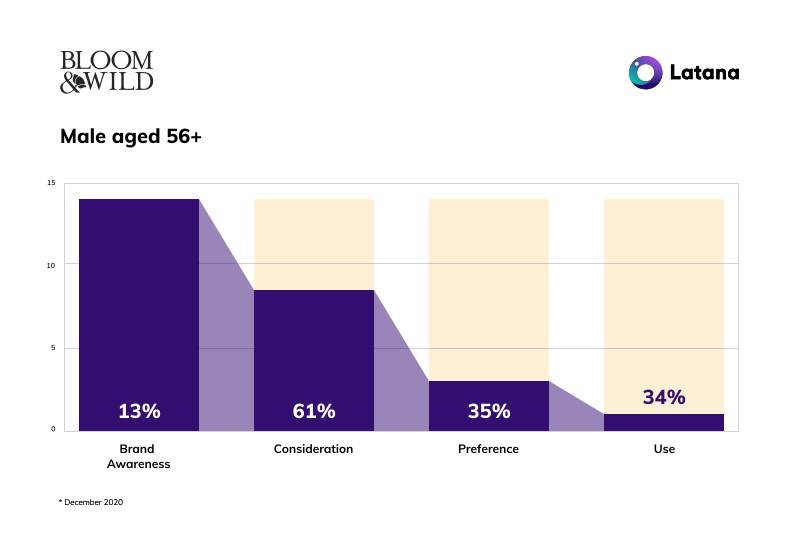\n\n## Different Brand Awareness Software to Consider\n\nFinding the best brand awareness software for your organization might seem like a minefield; with so much choice, how do you decipher differences?\n\nWe’ve made things easier by including three tools that can help you achieve different results.\n\n### Critical Mention\n\nOne way to track brand awareness is by tracking who is talking about you. Earned media is media that’s been created by others outside of your organization, think customer reviews, social mentions, and blog posts (not written by you!). Basically, content that’s about you that you haven’t created yourself. \n\n[Critical Mention](https://www.criticalmention.com/) can help you navigate and analyze all your earned media. It provides notifications when your brand is mentioned on social media, so you can proactively respond. It also helps you effortlessly track news coverage across global online publications, meaning you never miss a brand mention or an opportunity to become part of an active conversation about your brand.\n\nCritical Mention also helps you monitor offline mentions via radio, TV, and podcasts. They also have a sentiment analysis tool to help you understand in which context your brand name was mentioned. \n\nCritical Mention frees up some much-needed time for any brand marketer. However, keep in mind that the tool does not allow you to segment audiences so you have no idea if the people who are reacting to your brand are the people you want/need as customers. \n\n### Latana\n\nThe best information is the information that comes straight from the source. In that case, it is your target audience. As a marketer, you seek [reliable data](https://latana.com/data-confidence/) that will help you analyze audience behaviour, understand your place in the market, and uncover new and exciting audience opportunities.\n\nLatana Brand Tracking provides just that. \n\nWith the ability to reach up to 500 million people through custom surveys, you can easily measure brand awareness, position yourself against the competition, segment data to track the audiences most important for your brand, and ultimately focus on the audiences positively impacted by your marketing campaigns. \n\nLatana has a team of experienced researchers providing end-to-end support, using tried and tested methodologies to ensure data you can trust. Throw in an intuitive dashboard and you don’t need to be a data analyst to understand your brand awareness data.\n\n\n\n### Google \n\nNot all brand awareness software has to cost money. Google Analytics and Google Search Console software are still the tools of choice for many marketers - and it's easy to see why.\n\nTracking website traffic and brand name searches are both key components of any brand awareness campaign. You can use Google Analytics to filter your web data by source to learn where your users are coming from. If you can track your website visitors back to a piece of earned media on a third party site, you know your strategy is working, and more users are aware of your brand. \n\nOn the other hand, Google Search Console is a straightforward way for marketers to understand what keywords users are searching to find you. \n\nNavigate to the ‘performance’ menu to analyse a breakdown of top user search queries. It shows you the keyword phrase searched, including branded searches, how many impressions and clicks each received — it even represents it nicely on a graph to see instantly whether your brand awareness is gathering speed.\n\nAlso, if your brand name is getting picked up more by online users, this pattern will show itself in Google Search Console.\n\n## Key Takeaways\n\nBrand awareness is a huge topic, with so many factors influencing it, but at the core of any successful brand is an organization that understands its target audience.\n\nThink of your target audience as both the foundations and the cement of any marketing project. Therefore, you should be investing time understanding how they are reacting to your brand, the audience segmentations fuelling your brand funnel, and how they are reacting to your competitors.\n\nIf you take only three things away from this article, let them be:\n\n- Brand awareness software makes all marketing actions deliberate, no guesswork involved.\n- Understanding your audience is crucial to improving your brand awareness.\n- Reliable data is everything. It gives you powerful marketplace insights, unlocks new audience segments, drives business growth and gives you a route to the top."},"tags":["Brand Strategy","Brand Awareness"],"authorRef":{"slug":"helen","firstName":"Helen","lastName":"Jackson","title":"Freelance Content Writer","picture":{"__typename":"ContentfulAsset","id":"94d6abfa-bfc3-5a6e-a835-be9b0126ec4d","description":"","title":"Helen Jackson Profile Pic","file":{"contentType":"image/png","url":"//images.ctfassets.net/7so8go2zrvbw/t3FrsVmYvMLU8o1Te7mXn/475f19bb2c5d838fd4a0f924346b0824/Author_Helen.png","details":{"image":{"width":235,"height":235}}},"gatsbyImageData":{"images":{"sources":[{"srcSet":"//images.ctfassets.net/7so8go2zrvbw/t3FrsVmYvMLU8o1Te7mXn/475f19bb2c5d838fd4a0f924346b0824/Author_Helen.png?w=235&h=235&q=95&fm=webp 235w","sizes":"100vw","type":"image/webp"}],"fallback":{"src":"//images.ctfassets.net/7so8go2zrvbw/t3FrsVmYvMLU8o1Te7mXn/475f19bb2c5d838fd4a0f924346b0824/Author_Helen.png?w=235&h=235&q=95&fm=png","srcSet":"//images.ctfassets.net/7so8go2zrvbw/t3FrsVmYvMLU8o1Te7mXn/475f19bb2c5d838fd4a0f924346b0824/Author_Helen.png?w=235&h=235&q=95&fm=png 235w","sizes":"100vw"}},"layout":"fullWidth","backgroundColor":"#080808","width":1,"height":1}}}}},{"node":{"publishDate":"2021-09-07T08:30+02:00","slug":"customer-lifetime-value-is-important","author":"Cory Schröder","title":"Customer Lifetime Value: What is it, and Why Is It Important in 2022?","seo":{"__typename":"ContentfulSeo","title":"A Concrete Guide to Customer Lifetime Value in 2022","description":"As a brand manager, customer lifetime value is one of the most important metrics you can track. Why is that? This article breaks it all down.","noIndex":null,"ogImage":{"fluid":{"src":"//images.ctfassets.net/7so8go2zrvbw/4aLx7h4vuQgNslBHohASgM/d795f755fb4763410697a9beacfa234c/Blog_SEO-Thumbnail_1000X709__13_.png?w=1200&h=675&q=90&fm=jpg"},"file":{"url":"//images.ctfassets.net/7so8go2zrvbw/4aLx7h4vuQgNslBHohASgM/d795f755fb4763410697a9beacfa234c/Blog_SEO-Thumbnail_1000X709__13_.png"}}},"heroImage":{"__typename":"ContentfulAsset","id":"bf707d10-d145-56c4-b76b-bf59a7a87518","description":"","title":"Illustration of four people shopping with coins floating (Thumbnail)","file":{"contentType":"image/png","url":"//images.ctfassets.net/7so8go2zrvbw/4aLx7h4vuQgNslBHohASgM/d795f755fb4763410697a9beacfa234c/Blog_SEO-Thumbnail_1000X709__13_.png","details":{"image":{"width":1000,"height":709}}},"gatsbyImageData":{"images":{"sources":[{"srcSet":"//images.ctfassets.net/7so8go2zrvbw/4aLx7h4vuQgNslBHohASgM/d795f755fb4763410697a9beacfa234c/Blog_SEO-Thumbnail_1000X709__13_.png?w=200&h=142&q=95&fm=webp 200w,\n//images.ctfassets.net/7so8go2zrvbw/4aLx7h4vuQgNslBHohASgM/d795f755fb4763410697a9beacfa234c/Blog_SEO-Thumbnail_1000X709__13_.png?w=400&h=284&q=95&fm=webp 400w,\n//images.ctfassets.net/7so8go2zrvbw/4aLx7h4vuQgNslBHohASgM/d795f755fb4763410697a9beacfa234c/Blog_SEO-Thumbnail_1000X709__13_.png?w=800&h=567&q=95&fm=webp 800w","sizes":"(min-width: 800px) 800px, 100vw","type":"image/webp"}],"fallback":{"src":"//images.ctfassets.net/7so8go2zrvbw/4aLx7h4vuQgNslBHohASgM/d795f755fb4763410697a9beacfa234c/Blog_SEO-Thumbnail_1000X709__13_.png?w=800&h=567&q=95&fm=png","srcSet":"//images.ctfassets.net/7so8go2zrvbw/4aLx7h4vuQgNslBHohASgM/d795f755fb4763410697a9beacfa234c/Blog_SEO-Thumbnail_1000X709__13_.png?w=200&h=142&q=95&fm=png 200w,\n//images.ctfassets.net/7so8go2zrvbw/4aLx7h4vuQgNslBHohASgM/d795f755fb4763410697a9beacfa234c/Blog_SEO-Thumbnail_1000X709__13_.png?w=400&h=284&q=95&fm=png 400w,\n//images.ctfassets.net/7so8go2zrvbw/4aLx7h4vuQgNslBHohASgM/d795f755fb4763410697a9beacfa234c/Blog_SEO-Thumbnail_1000X709__13_.png?w=800&h=567&q=95&fm=png 800w","sizes":"(min-width: 800px) 800px, 100vw"}},"layout":"constrained","backgroundColor":"#3858f8","width":800,"height":567}},"coverImage":{"__typename":"ContentfulAsset","id":"47e18bb8-a35c-5102-ba21-d3cbdf01218a","description":"","title":"Illustration of four people shopping with coins floating (Cover Image)","file":{"contentType":"image/png","url":"//images.ctfassets.net/7so8go2zrvbw/7CBBsrKBCSLybdlrDimbf9/0dcb7215e41d9e9cc54cae69e3f2198c/Blog_Cover_1288X400__19_.png","details":{"image":{"width":1288,"height":400}}},"gatsbyImageData":{"images":{"sources":[{"srcSet":"//images.ctfassets.net/7so8go2zrvbw/7CBBsrKBCSLybdlrDimbf9/0dcb7215e41d9e9cc54cae69e3f2198c/Blog_Cover_1288X400__19_.png?w=750&h=233&q=95&fm=webp 750w,\n//images.ctfassets.net/7so8go2zrvbw/7CBBsrKBCSLybdlrDimbf9/0dcb7215e41d9e9cc54cae69e3f2198c/Blog_Cover_1288X400__19_.png?w=1080&h=335&q=95&fm=webp 1080w,\n//images.ctfassets.net/7so8go2zrvbw/7CBBsrKBCSLybdlrDimbf9/0dcb7215e41d9e9cc54cae69e3f2198c/Blog_Cover_1288X400__19_.png?w=1288&h=400&q=95&fm=webp 1288w","sizes":"100vw","type":"image/webp"}],"fallback":{"src":"//images.ctfassets.net/7so8go2zrvbw/7CBBsrKBCSLybdlrDimbf9/0dcb7215e41d9e9cc54cae69e3f2198c/Blog_Cover_1288X400__19_.png?w=1288&h=400&q=95&fm=png","srcSet":"//images.ctfassets.net/7so8go2zrvbw/7CBBsrKBCSLybdlrDimbf9/0dcb7215e41d9e9cc54cae69e3f2198c/Blog_Cover_1288X400__19_.png?w=750&h=233&q=95&fm=png 750w,\n//images.ctfassets.net/7so8go2zrvbw/7CBBsrKBCSLybdlrDimbf9/0dcb7215e41d9e9cc54cae69e3f2198c/Blog_Cover_1288X400__19_.png?w=1080&h=335&q=95&fm=png 1080w,\n//images.ctfassets.net/7so8go2zrvbw/7CBBsrKBCSLybdlrDimbf9/0dcb7215e41d9e9cc54cae69e3f2198c/Blog_Cover_1288X400__19_.png?w=1288&h=400&q=95&fm=png 1288w","sizes":"100vw"}},"layout":"fullWidth","backgroundColor":"#3858f8","width":1,"height":0.3105590062111801}},"description":{"description":"As a brand manager, customer lifetime value is one of the most important metrics you can track. Why is that? This article breaks it all down."},"content":{"content":"Does it ever feel like too much focus is placed on customer quantity and not enough on quality?\n\nThink about it: What’s the point of having thousands of low-quality customers who make one purchase and churn? You’re wasting time, money, and resources — which is why you need to be tracking your CLV.\n\n[Customer Lifetime Value](https://www.shopify.com/encyclopedia/customer-lifetime-value-clv), or CLV, is the “total amount of money a customer is expected to spend in your business, or on your products, during their lifetime.” Keeping this definition in mind, it follows that some customers will be more profitable than others.\n\nWhile [CLV](https://piwik.pro/blog/customer-lifetime-value-important-for-your-business/) is only a “prediction of the value your relationship with a customer can bring to your business” — it can still be used to figure out which personas and target audiences are likely to be the most valuable.\n\nWhen you’re able to focus campaigns and marketing efforts on consumers that will likely bring in higher profits, you’ll see a real change in your campaigns’ success.\n\nTherefore, this article will discuss what CLV is, as well as why it’s so important for a healthy marketing strategy. \n\n## What is CLV, and How is It Calculated?\n\n\nAs we’ve already established, CLV is the total amount of money a customer is expected to spend on your brand over the length of your mutual relationship. Let’s look at a very basic CLV calculation:\n\nCLV = the average value of a purchase X the number of times the customer will purchase each year X the average length of this customer’s relationship (in years).*\n\n**While some CLV calculations also include average gross margin, the above option is a great place to start.*\n\nFor example, say you’re the brand manager of a company that sells candles — scented, unscented, in jars, etc. — called “HeavenScent”.\n\nLet’s look at a target audience with an excellent CLV: Spa managers. Buying on average around 50 scented candles each month, spa managers are a goldmine for a brand like yours. To calculate their CLV:\n\n- $25 per candle X 600 candles per year X 5 years = $75,000\n\nObviously, targeting spa managers is a top priority for your brand — even if they aren’t a huge target audience. \n\nNow, let’s consider a more frequent but less profitable target audience: employed women aged 25-45 living alone.\n\n- $25 per candle X 24 candles per year X 3 years = $1800\n\nWhile this is also a solid target audience, they are clearly less profitable than spa managers. Therefore, while both should be advertised to, as a brand manager, you know which audience should get a bit more attention.\n\nKeep in mind: calculating the CLV for a new target audience is tricky, as you likely won’t have enough data until a few weeks or months have passed (depending on the size of your customer base). \n\nHowever, when you have amassed enough data on your target audiences, it’s a very good idea to calculate each one’s CLV. Why? Let’s dig in.\n\n## Why is CLV So Imporatant in 2022?\n\nNow that you know how to calculate CLV, let’s discuss why it’s important for a healthy marketing strategy. Consider a quote from Custora’s Guide to CLV: \n\n*“Rather than thinking about how you can acquire a lot of customers and how cheaply you can do so, CLV helps you think about how to optimize your acquisition spending for maximum value rather than minimum cost.”*\n\nUsing CLV to inform your marketing strategy allows you to be more efficient in your budget planning because you know which audiences you should focus on first. By investing in stronger audiences first, you more easily set your brand up for success.\n\nHowever, keep in mind that CLV is an estimate and one of the key values used — the length of the customer relationship — cannot be guaranteed. \n\nTherefore, make sure everyone understands that CLV is a periodic value and is usually only fixed for a 12 or 24-month period, depending on your industry. It also follows that you’ll need to recalculate CLV regularly and reevaluate your target audience importance in order to use this metric effectively. \n\n---\n\nNow, let’s look at some of the main benefits of calculating CLV for your brand. \n\nKnowing the CLV of different customer personas and target audiences can help you figure out: \n\n- Who your most profitable customers and target audiences are\n- How much you should spend on acquiring lookalike customers while retaining profitability\n- How much you should spend to retain or win back customers\n- Which products and services customers with high CLV prefer/provide the highest profitability\n- How to improve customer retention \n\nLet’s break down each of these points. First, knowing your CLV will help you figure out who your most valuable customers are — and that doesn’t mean it’s automatically the customer with the highest CLV. You need to take other factors into account, such as acquisition and maintenance costs.\n\nWhile a certain group of customers might have the highest CLV at face value, they might also be the most expensive to acquire and retain — meaning they may move down on your list.\n\nNext, CLV lets you know how much money you should spend on acquiring lookalike customers while retaining profitability. If you know the CLV of a certain target audience, you then know how much you can realistically spend to acquire new members and remain in the green. This helps brand managers plan more realistic budgets.\n\nCLV also helps you figure out how much you can spend to retain or win back certain customers. Remember — while the [probability of selling to a new customer is between 5%-20%](https://www.forbes.com/sites/patrickhull/2013/12/06/tools-for-entrepreneurs-to-retain-clients/?sh=1d359e912443), the probability of selling to an existing customer is between 60%-70%. \n\nWhat does this translate to? Selling your products and services to existing customers will generate a good deal more profits than selling to new customers. Therefore, knowing your CLV will help you see where you need to allocate more budget and resources to encourage those with high CLVs to increase the length of their relationship with your brand. \n\nAnother thing knowing CLV can help? Figuring out which of your products and/or services are preferred by customers with high CLVs and which are the most profitable. Consider our earlier example of the candle company, “HeavenScent”. While, overall, they sell more unscented candlesticks to their entire customer base, those with high CLVs prefer the scented candles in jars — plus, they turn a higher profit.\n\nSo while HeavenScent’s brand manager should still push ads for unscented candlesticks to certain target audiences, they would be smart to spend more time and resources advertising their scented candles in jars to their top target audiences. \n\nFinally, knowing CLV helps improve customer retention and provides a more comprehensive look at your brand’s health. By taking a longer time frame into consideration, brands can see with “greater precision to determine whether (their) current acquisition and retention strategy is designed for scoring quick wins or supports steady and sustained growth.”\n\nKeeping this idea in mind, it’s also good to calculate both historical and predictive CLV — where historic CLV is the sum of the overall profit of a customer’s previous purchases and predictive CLV models the transactional behavior of a customer to predict future purchase behavior. \n\nAs the behavior of customers and target audiences change over time, having both calculations on hand can help provide a better understanding of overall CLV.\n\n## How Will Tracking CLV Improve My Brand Strategy?\n\n\n\nThere are many ways that tracking CLV will improve your overall brand strategy, but let’s look at the most important ones:\n\n1. __Improve Brand Communication:__ With the data that CLV provides, you’ll be able to tailor brand communication for individual target audiences. For example, now that you know that customers with a higher CLV prefer scented candles in jars, you can create customized offers for them to increase sales and drive profits.\n\n2. __Optimized Customer Acquisition:__ Knowing CLV will also allow you to optimize your acquisition strategy, as you can target potential customers with higher predictive CLV — which is also likely to lead to higher overall profits. \n\n3. __Identify Customers to Win Back:__ Calculating CLV also makes it clear which churned customers should be targeted for win-back campaigns. If you’re aware of which groups had the highest CLVs, you’ll know who to focus your efforts on when crafting this aspect of your brand strategy. \n\nOverall, knowing the CLV of your top target audiences and customer personas will allow you, as a brand manager, to make more informed marketing decisions. \n\n## Final Thoughts\n\nThere are many ways that knowing CLV will make your job as a brand manager a whole lot easier — after all, having more data and a deeper understanding of customer behavior never hurt anyone. \n\nHowever, keep in mind that CLV is a predictive calculation and, therefore, not a guarantee. Furthermore, CLV is bound to change, as consumers’ needs and wants shift over time. Remember to recalculate CLV regularly to make sure your data-driven decisions are up-to-date.\n\nAnd if you want to back up your CLV calculations with even more consumer insights and data, consider using [brand monitoring software](https://latana.com/product/) to monitor your target audiences’ brand associations, ad awareness, and funnel KPIs. \n"},"tags":["Brand Strategy","Brand Marketing"],"authorRef":{"slug":"cory-schroder","firstName":"Cory","lastName":"Schröder","title":"Senior Content Marketing Manager","picture":{"__typename":"ContentfulAsset","id":"31ab4d95-0f90-5835-a22f-4b7ff41fece2","description":"","title":"Cory Profile Picture","file":{"contentType":"image/png","url":"//images.ctfassets.net/7so8go2zrvbw/42rTfahl2m45FP1Fzo7B8n/52d40b8bd8af9ab559381bc0ab744cda/avatar.png","details":{"image":{"width":235,"height":235}}},"gatsbyImageData":{"images":{"sources":[{"srcSet":"//images.ctfassets.net/7so8go2zrvbw/42rTfahl2m45FP1Fzo7B8n/52d40b8bd8af9ab559381bc0ab744cda/avatar.png?w=235&h=235&q=95&fm=webp 235w","sizes":"100vw","type":"image/webp"}],"fallback":{"src":"//images.ctfassets.net/7so8go2zrvbw/42rTfahl2m45FP1Fzo7B8n/52d40b8bd8af9ab559381bc0ab744cda/avatar.png?w=235&h=235&q=95&fm=png","srcSet":"//images.ctfassets.net/7so8go2zrvbw/42rTfahl2m45FP1Fzo7B8n/52d40b8bd8af9ab559381bc0ab744cda/avatar.png?w=235&h=235&q=95&fm=png 235w","sizes":"100vw"}},"layout":"fullWidth","backgroundColor":"#080808","width":1,"height":1}}}}},{"node":{"publishDate":"2022-08-18T07:00+02:00","slug":"2019-insights-electric-scooters-brand-awareness","author":"Laura Harker","title":"Key Insights Into the US & Norwegian E-Scooter Industry","seo":{"__typename":"ContentfulSeo","title":"Key Insights Into the US & Norwegian E-Scooter Industry","description":"E-scooters are everywhere, or so it feels. But how many people in the US & Norway are aware of the brands leading this new trend? Let's take a look.","noIndex":null,"ogImage":{"fluid":{"src":"//images.ctfassets.net/7so8go2zrvbw/2WbjzkvgJI5DYk5HNYxnui/82a72a373ed92504b12a83152e1401ea/Blog_SEO-Thumbnail_1000X709_-_2022-08-11T140449.624.png?w=1200&h=675&q=90&fm=jpg"},"file":{"url":"//images.ctfassets.net/7so8go2zrvbw/2WbjzkvgJI5DYk5HNYxnui/82a72a373ed92504b12a83152e1401ea/Blog_SEO-Thumbnail_1000X709_-_2022-08-11T140449.624.png"}}},"heroImage":{"__typename":"ContentfulAsset","id":"acff9f99-f861-5a62-ab78-260c2e1c1617","description":"","title":"Illustration of multi-colored e-scooters (thumbnail)","file":{"contentType":"image/png","url":"//images.ctfassets.net/7so8go2zrvbw/2WbjzkvgJI5DYk5HNYxnui/82a72a373ed92504b12a83152e1401ea/Blog_SEO-Thumbnail_1000X709_-_2022-08-11T140449.624.png","details":{"image":{"width":1000,"height":709}}},"gatsbyImageData":{"images":{"sources":[{"srcSet":"//images.ctfassets.net/7so8go2zrvbw/2WbjzkvgJI5DYk5HNYxnui/82a72a373ed92504b12a83152e1401ea/Blog_SEO-Thumbnail_1000X709_-_2022-08-11T140449.624.png?w=200&h=142&q=95&fm=webp 200w,\n//images.ctfassets.net/7so8go2zrvbw/2WbjzkvgJI5DYk5HNYxnui/82a72a373ed92504b12a83152e1401ea/Blog_SEO-Thumbnail_1000X709_-_2022-08-11T140449.624.png?w=400&h=284&q=95&fm=webp 400w,\n//images.ctfassets.net/7so8go2zrvbw/2WbjzkvgJI5DYk5HNYxnui/82a72a373ed92504b12a83152e1401ea/Blog_SEO-Thumbnail_1000X709_-_2022-08-11T140449.624.png?w=800&h=567&q=95&fm=webp 800w","sizes":"(min-width: 800px) 800px, 100vw","type":"image/webp"}],"fallback":{"src":"//images.ctfassets.net/7so8go2zrvbw/2WbjzkvgJI5DYk5HNYxnui/82a72a373ed92504b12a83152e1401ea/Blog_SEO-Thumbnail_1000X709_-_2022-08-11T140449.624.png?w=800&h=567&q=95&fm=png","srcSet":"//images.ctfassets.net/7so8go2zrvbw/2WbjzkvgJI5DYk5HNYxnui/82a72a373ed92504b12a83152e1401ea/Blog_SEO-Thumbnail_1000X709_-_2022-08-11T140449.624.png?w=200&h=142&q=95&fm=png 200w,\n//images.ctfassets.net/7so8go2zrvbw/2WbjzkvgJI5DYk5HNYxnui/82a72a373ed92504b12a83152e1401ea/Blog_SEO-Thumbnail_1000X709_-_2022-08-11T140449.624.png?w=400&h=284&q=95&fm=png 400w,\n//images.ctfassets.net/7so8go2zrvbw/2WbjzkvgJI5DYk5HNYxnui/82a72a373ed92504b12a83152e1401ea/Blog_SEO-Thumbnail_1000X709_-_2022-08-11T140449.624.png?w=800&h=567&q=95&fm=png 800w","sizes":"(min-width: 800px) 800px, 100vw"}},"layout":"constrained","backgroundColor":"#b8f8b8","width":800,"height":567}},"coverImage":{"__typename":"ContentfulAsset","id":"8b349739-a423-59d9-8141-006a764222ae","description":"","title":"Illustration of multi-colored e-scooters (cover image)","file":{"contentType":"image/png","url":"//images.ctfassets.net/7so8go2zrvbw/zgans8u0mAg4E2yDmHBLo/0bff19bac8f82dbc39ee50ea56dc9f8b/Blog_Cover_1288X400_-_2022-08-11T140453.118.png","details":{"image":{"width":1288,"height":400}}},"gatsbyImageData":{"images":{"sources":[{"srcSet":"//images.ctfassets.net/7so8go2zrvbw/zgans8u0mAg4E2yDmHBLo/0bff19bac8f82dbc39ee50ea56dc9f8b/Blog_Cover_1288X400_-_2022-08-11T140453.118.png?w=750&h=233&q=95&fm=webp 750w,\n//images.ctfassets.net/7so8go2zrvbw/zgans8u0mAg4E2yDmHBLo/0bff19bac8f82dbc39ee50ea56dc9f8b/Blog_Cover_1288X400_-_2022-08-11T140453.118.png?w=1080&h=335&q=95&fm=webp 1080w,\n//images.ctfassets.net/7so8go2zrvbw/zgans8u0mAg4E2yDmHBLo/0bff19bac8f82dbc39ee50ea56dc9f8b/Blog_Cover_1288X400_-_2022-08-11T140453.118.png?w=1288&h=400&q=95&fm=webp 1288w","sizes":"100vw","type":"image/webp"}],"fallback":{"src":"//images.ctfassets.net/7so8go2zrvbw/zgans8u0mAg4E2yDmHBLo/0bff19bac8f82dbc39ee50ea56dc9f8b/Blog_Cover_1288X400_-_2022-08-11T140453.118.png?w=1288&h=400&q=95&fm=png","srcSet":"//images.ctfassets.net/7so8go2zrvbw/zgans8u0mAg4E2yDmHBLo/0bff19bac8f82dbc39ee50ea56dc9f8b/Blog_Cover_1288X400_-_2022-08-11T140453.118.png?w=750&h=233&q=95&fm=png 750w,\n//images.ctfassets.net/7so8go2zrvbw/zgans8u0mAg4E2yDmHBLo/0bff19bac8f82dbc39ee50ea56dc9f8b/Blog_Cover_1288X400_-_2022-08-11T140453.118.png?w=1080&h=335&q=95&fm=png 1080w,\n//images.ctfassets.net/7so8go2zrvbw/zgans8u0mAg4E2yDmHBLo/0bff19bac8f82dbc39ee50ea56dc9f8b/Blog_Cover_1288X400_-_2022-08-11T140453.118.png?w=1288&h=400&q=95&fm=png 1288w","sizes":"100vw"}},"layout":"fullWidth","backgroundColor":"#b8f8b8","width":1,"height":0.3105590062111801}},"description":{"description":"E-scooters are everywhere, or so it feels. But how many people in the US & Norway are aware of the brands leading this new trend? Let's take a look."},"content":{"content":"Electric scooters are an increasingly common sight on the sidewalks of many city centers these days — and it’s not surprising in the least. A subsection of the micromobility industry, electric scooters provide commuters with a fast and eco-friendly way to get around, which translates to many people not being quite as reliant on cars or public transport.\n\nOver the last few years, the demand for electric scooters has seen a steep increase — and demand will continue to grow over the next decade. When the global electric scooter market was valued in 2021, the valuation came in at a healthy $20.78 billion. What’s more, this is forecast to see a [compound annual growth rate (CAGR) of around 7.8%](https://www.grandviewresearch.com/industry-analysis/electric-scooters-market) between now and 2030.\n\nTo be fair, the general public is a lot more concerned with sustainability than they were over the past few decades, so this growth isn’t all that surprising. Many modern consumers are happy to make changes to their lifestyle to help the planet — and if that means whizzing around using electric scooter sharing services, then so be it! \n\nIt also helps that many consumers’ living spaces are becoming quite cramped. As cities increase in population and living spaces become smaller, a compact scooter that requires much less storage space than a car (and even a bike) could easily become a commuter’s best friend.\n\nOf course, we’re aware these aren’t necessarily new concepts for most marketing managers. In fact, most electric scooter users are probably well aware of them, as well. But we do have one trick up our sleeve — we know exactly how top brands in the market are performing in the US and Germany. \n\nIn order to take a deeper look into [brand awareness](https://latana.com/topics-brand-awareness/), we asked consumers in the US how aware they are of some top electric scooter brands and if they would consider using them. We also conducted similar research in Norway to see how top European scooter brands are faring.\n\nHere’s what we found.\n\n## The Results Are In: US\n![Illustration of scooters on a black background [Article Image]](//images.ctfassets.net/7so8go2zrvbw/3mry3hC9VJqZasXdoZYOQd/fa6d7fcab4dc85ecdc8b3d56069e7597/Blog_Cover_1288X400_-_2022-08-11T140456.570.png)\n\nFirst, let’s take a look at the results from the US. We’ll start with brand awareness for some of the market's major players.\n\n### Brand Awareness\n\nThe brands we used for the US survey were Spin, [Bird](https://latana.com/post/bird-mobility-brand-deep-dive/), Lime, Lyft, Scoot, and Skip. We began by asking the following brand awareness question: “Of the following brands, which ones have you heard of?” \nThe results can be seen in the chart below.\n\n![Chart of brand awareness US gen pop for e-scooters [Article Image]](//images.ctfassets.net/7so8go2zrvbw/3AxzhjjauY4wJ9SVKKdQvl/23fc7cfaa71d18b476a0d311bff903a0/Graph_1__3_.png)\n\nLooking at the above data, the majority (68%) of consumers have heard of Lyft, while Lime took second place with 24%. 17% of respondents knew of Bird and 16% were aware of Scoot. Trailing at the bottom of the pack, Spin and Skip came in at 8% and 6%, respectively.\n\nInterestingly, we saw increases in brand awareness as income increased for participants — information that should be very interesting for brands when defining their target audience. So, let's explore the income demographic to see how different audiences feel about the chosen scooter brands.\n\nWhen we take a closer look at whether an individual’s income had any influence over their awareness of electric scooter brands, we found that those with higher incomes had slightly different results than the general population, as seen below.\n\n![Chart of brand awareness US high income for e-scooters [Article Image]](//images.ctfassets.net/7so8go2zrvbw/2LyoyOS25Kke4wUdX9SoJb/01a613c518f8ba34c7908387bb95a100/Graph_2__3_.png)\n\nWith this audience, most of the brands saw an increase in their awareness, but Lyft still stormed ahead with 77%. Lime saw a 2% increase to 26%, Bird remained at 17%, and 18% of higher-earning respondents had heard of Scoot — which is a 1% increase. However, Spin and Skip saw no change in their awareness levels with this audience.\n\nHowever, when we look at the results of those with low-income levels, Lyft takes a bit of a tumble to 58%, as seen in the below chart. Comparatively, only 21% knew about Lime and 17% had heard of both Scoot and Bird. Once again taking the bottom positions, Spin and Skip still came in with 8% and 6%, respectively.\n\n![Chart of brand awareness US low income for e-scooters [Article Image]](//images.ctfassets.net/7so8go2zrvbw/S1kNs6K1PEI9Q2knlaD2s/8082f662ef1a6fbd073a649618744b30/Graph_3__1_.png)\n\nAn important insight to take from these results? Apart from Lyft and Lime, most of the brands remain at the same level of awareness. We can thus ascertain that Lyft and Lime are more well-known by respondents with higher incomes. \n\nA possible reason for this could be the kinds of publications the brands are using for press releases. Both Lift and Lime have earned press coverage from publications such as *The Standard* and the *Daily Mail* — both of which are known to middle-class audiences, which usually indicates higher earners. \n\nIf any of the remaining brands wanted to try out this strategy, they could focus their PR strategies on getting into publications that are read by middle-class audiences with high incomes.\n\n### Brand Consideration\n\nJust because someone is aware of a brand, doesn’t necessarily mean that they’d consider using it. That’s why brand consideration is such an important KPI to track — it reveals what percentage of your aware audience is actually interested in your product and/or services.\n\nWe were interested to see if brand consideration levels differed greatly from brand awareness levels — so, we delved into the brands’ consideration results from our survey, which can be seen in the chart below. \n\n![Chart of brand consideration US gen pop for e-scooters [Article Image]](//images.ctfassets.net/7so8go2zrvbw/20DJXL6JmHcQITfy0LcSJF/cf34d6a4e251341ef1c12407b2448ae5/Graph_4__1_.png)\n\nWhen asked if they would consider using any of the chosen brands, 48.3% reported consideration for Lyft and 13.9% for Lime. Next came Bird with 11.7% consideration, followed by Scoot with 9.9%. Both Spin and Skip remained at the bottom of the pack with 4% and 3% consideration, respectively.\n\nThis data continues to show how much Lyft is dominating the market in the US — with no other brand really coming close to its consideration levels. Lime and Bird did earn lower consideration when compared to Lyft but did quite well overall.\n\n---\n\nOnce again, we broke down the results by respondents’ income levels. Of the higher earners, 79% said they’d consider Lyft, and Bird still took second place with 68%. Scoot was only just behind at 62%. When it comes to the final three, 58% would opt for Lime, and half of the respondents answered with Spin and Skip.\n\n![Chart of brand consideration US high income for e-scooters [Article Image]](//images.ctfassets.net/7so8go2zrvbw/56HWXbtwu9ydvi1GYjPPdL/ca4b47bee33072c316538f9c0aef5114/Graph_5__1_.png)\n\nAs with the brand awareness results, at 60.8%, Lyft is very much the brand of choice for consumers with high incomes. When it comes to the other brands, their consideration levels were almost exactly the same as the results from the general population — with small increases for Lime and Scoot.\n\nTo give a bit of context to these results, before branching out into electric scooters, Lyft was a well-established ride-share app in the US. As individuals with high incomes tend to travel more than those with lower incomes, there’s a chance that they were already aware of the brand from their previous travels. If so, this could have reinforced Lyft as a brand that could be trusted and relied on.\n\nFinally, it’s time to take a look at the results from the low-income respondents, as seen below.\n\n![Chart of brand consideration US low income for e-scooters [Article Image]](//images.ctfassets.net/7so8go2zrvbw/3M59AqEMuBJNGHL3b0x7eg/b70f6bbeb258e3fa34359363b7cebfd0/Graph_6__1_.png)\n\nWhen asked if they would consider using any of the chosen brands, Lyft remains in first place with 37.7%. A good deal behind our top brand, Lime comes in with brand consideration of 12.2%, while Bird earned 11.7%. Finally, Spin and Skip remained at 4% and 3%, respectively.\n\nConsidering all our results, it seems that there is only ever a significant shift in the results and it’s in the high-income demographic. With the general public and low-income respondents, there isn’t much change.\n\n## The Results Are In: Oslo, Norway\n![Illustration of scooters on a green background [Article Image]](//images.ctfassets.net/7so8go2zrvbw/3N5dvlVqitZ29aMLlczVSj/04e768814385c3ee44500be2d529fea7/Blog_Cover_1288X400_-_2022-08-11T140523.927.png)\n\nIn this section, we’ll take a look at a handful of electric scooter brands that are making their mark in the European market — specifically in Oslo, Norway. We’ll start with brand awareness for the general population.\n\n### Brand Awareness\n\nFor Norway, we gathered data on the following e-scooter brands: Bird, Bolt, Lime, and dott. Below you will see our findings for brand awareness in the general population.\n\n![Chart of brand awareness Norway gen pop for e-scooters [Article Image]](//images.ctfassets.net/7so8go2zrvbw/3NCEzJW50EO9n13XDcdZhk/9973149e3ca5578c2cef93d186516f85/Graph_7__2_.png)\n\nAs we can see, American brand Lime comes in first at 16.5% brand awareness — followed by Bolt at 14.8%. Bird and dott bring up the rear at 10.1% and 9.8%, respectively.\n\nIt’s quite impressive that, as an American brand, Lime comes in first — beating out the likes of Estonian brand Bolt and Dutch brand dott.\n\nAs with the data from the US, we wanted to see if an important demographic like income level made a difference in consumers’ awareness levels of the chosen brands. Below, you’ll see the data for high-income Norwegian consumers.\n\n![Chart of brand awareness Norway high income for e-scooters [Article Image]](//images.ctfassets.net/7so8go2zrvbw/52SGw3r4cM5xYDD0Aqr1hG/c012655905f9085f7b89fb6995a718fc/Graph_8__2_.png)\n\nAs we can see, each brand saw an increase in brand awareness for high-income consumers — with Bolt showing a 43% increase. While Bolt takes first place with this audience, it does seem to have stronger competition to deal with.\n\nBut does this change when we consider the brand awareness levels for low-income Norwegian consumers? Let’s see.\n\n![Chart of brand awareness Norway low income for e-scooters [Article Image]](//images.ctfassets.net/7so8go2zrvbw/4QoQW1GxTpF5Q7FfnoIXVD/789ddad2f9a117eadb6815625e0eb3eb/Graph_9__2_.png)\n\nConsidering the above data, most brands saw a small decrease in awareness. However, both Bird and dott saw an increase. Compared to high-income consumers, low-income consumers are 6.8% more aware of Bird. Similarly, low-income consumers are 13% more aware of dott.\n\nPerhaps the marketing materials of Bird and dott resonate better with low-income consumers. Or maybe the places that Bird and dott choose to advertise are seen by more low-income consumers? It’s hard to say exactly why the level of awareness are what they are, but there’s sure to be a reason.\n\n### Brand Consideration\n\nNext, let’s look at brand consideration for the chosen brands in Norway. Let’s begin with the general population.\n\n![Chart of brand consideration Norway gen pop for e-scooters [Article Image]](//images.ctfassets.net/7so8go2zrvbw/1sfoj0S0z618bDhqdb7h7d/5c879b9f18e4edc51b00be7bb3e9d491/Graph_10__2_.png)\n\nConsidering the above chart, Lime still holds onto the top spot quite soundly. \n\nThe remaining brands all report similar consideration levels, meaning that there’s room to grow. Next, let’s take a look at the data with regard to income levels.\n\n![Chart of brand awareness Norway high income for e-scooters [Article Image]](//images.ctfassets.net/7so8go2zrvbw/3hSDZP5P1FpkMWv7xXPR3g/bd0c52924f6d9cfb1792a94182d9ebee/Graph_11__2_.png)\n\nFor consumers with high incomes, Lime remains in the first position, followed by Bolt and then Bird. Of all the brands, Bolt actually saw the biggest increase at 51% — meaning other brands should keep an eye out for this competitor, as it has the potential to knock them off their pedestals.\n\nInterestingly, when compared to the population, each brand saw an increase in brand consideration with one exception: dott. Perhaps dott’s branding and marketing efforts aren’t connecting as well with high-income consumers in Norway?\n\nFinally, we’ll take a look at the brand consideration levels for low-income consumers in Norway.\n\n![Chart of brand awareness Norway low income for e-scooters [Article Image]](//images.ctfassets.net/7so8go2zrvbw/CmCtsi9RYLBGmuZCMnFzJ/358887e260bd4c65c5ef29d3c2a060fa/Graph_12__1_.png)\n\nWhile Lime and Bolt remain in the top two spots, a trend from earlier reemerges: Bird and dott not only hold higher brand awareness with low-income consumers but also higher brand consideration levels.\n\nClearly, Bird and dott are connecting well with this demographic. Now, whether that is their target demographic or not, we can’t say. But the brands would be smart to keep this data in mind when moving forward.\n\n## Final Thoughts\n\nE-scooter brands may be popping up left and right these days, but our data proves that there are some clear frontrunners in big markets like the US and Norway. While they aren’t the same country to country, some brands have been able to establish fairly strong international presences — like [Lime](https://latana.com/post/lime-deep-dive/).\n\nStill, the e-scooter market is relatively new, and there’s a great deal of room for these brands to grow and expand over time. Just because a brand is a frontrunner today doesn’t guarantee its success tomorrow. \n\nThat’s why brands such as these should use [brand monitoring software](https://latana.com/product/). With access to reliable, up-to-date insights on their own brand and that of the competition, a brand tracking tool like Latana allows marketing managers to make smarter, data-driven decisions.\n\n---\n\nUpdated by: [Cory Schröder](https://latana.com/author/cory-schroder/) on 19.08.22"},"tags":["Brand Awareness","Consumer Insights"],"authorRef":{"slug":"laura","firstName":"Laura","lastName":"Harker","title":"Freelance Writer & Editor","picture":{"__typename":"ContentfulAsset","id":"bb56ceb9-a813-5edc-85a6-facde71b8efe","description":"","title":"Latana Logo Author Photo","file":{"contentType":"image/png","url":"//images.ctfassets.net/7so8go2zrvbw/7qeUdZpRNeFZFTo0zIasKz/8d00318fb2f317950a2a2d6912eb28bf/Author_Latana__1_.png","details":{"image":{"width":235,"height":235}}},"gatsbyImageData":{"images":{"sources":[{"srcSet":"//images.ctfassets.net/7so8go2zrvbw/7qeUdZpRNeFZFTo0zIasKz/8d00318fb2f317950a2a2d6912eb28bf/Author_Latana__1_.png?w=235&h=235&q=95&fm=webp 235w","sizes":"100vw","type":"image/webp"}],"fallback":{"src":"//images.ctfassets.net/7so8go2zrvbw/7qeUdZpRNeFZFTo0zIasKz/8d00318fb2f317950a2a2d6912eb28bf/Author_Latana__1_.png?w=235&h=235&q=95&fm=png","srcSet":"//images.ctfassets.net/7so8go2zrvbw/7qeUdZpRNeFZFTo0zIasKz/8d00318fb2f317950a2a2d6912eb28bf/Author_Latana__1_.png?w=235&h=235&q=95&fm=png 235w","sizes":"100vw"}},"layout":"fullWidth","backgroundColor":"#080808","width":1,"height":1}}}}},{"node":{"publishDate":"2022-07-12T07:00+02:00","slug":"avocados-from-mexico-deep-dive","author":"Cory Schröder","title":"Diversity & Innovation: Avocados From Mexico’s Winning Recipe","seo":{"__typename":"ContentfulSeo","title":"Avocados From Mexico’s Innovative Recipe For Success","description":"Only a decade old, Avocados From Mexico has already made a huge splash in its industry. What can you learn from this creative brand? Let’s see. ","noIndex":null,"ogImage":{"fluid":{"src":"//images.ctfassets.net/7so8go2zrvbw/1iE0Q9oFFum8XTJwBvrQIu/d2b9ee07006cb655e32071e621319ab8/Blog_SEO-Thumbnail_1000X709_-_2022-07-04T083415.504.png?w=1200&h=675&q=90&fm=jpg"},"file":{"url":"//images.ctfassets.net/7so8go2zrvbw/1iE0Q9oFFum8XTJwBvrQIu/d2b9ee07006cb655e32071e621319ab8/Blog_SEO-Thumbnail_1000X709_-_2022-07-04T083415.504.png"}}},"heroImage":{"__typename":"ContentfulAsset","id":"ab40d9d8-b181-5d0b-8694-9c6e8d5bf17c","description":"","title":"Latana x Avocados from Mexico logos (thumbnail)","file":{"contentType":"image/png","url":"//images.ctfassets.net/7so8go2zrvbw/1iE0Q9oFFum8XTJwBvrQIu/d2b9ee07006cb655e32071e621319ab8/Blog_SEO-Thumbnail_1000X709_-_2022-07-04T083415.504.png","details":{"image":{"width":1000,"height":709}}},"gatsbyImageData":{"images":{"sources":[{"srcSet":"//images.ctfassets.net/7so8go2zrvbw/1iE0Q9oFFum8XTJwBvrQIu/d2b9ee07006cb655e32071e621319ab8/Blog_SEO-Thumbnail_1000X709_-_2022-07-04T083415.504.png?w=200&h=142&q=95&fm=webp 200w,\n//images.ctfassets.net/7so8go2zrvbw/1iE0Q9oFFum8XTJwBvrQIu/d2b9ee07006cb655e32071e621319ab8/Blog_SEO-Thumbnail_1000X709_-_2022-07-04T083415.504.png?w=400&h=284&q=95&fm=webp 400w,\n//images.ctfassets.net/7so8go2zrvbw/1iE0Q9oFFum8XTJwBvrQIu/d2b9ee07006cb655e32071e621319ab8/Blog_SEO-Thumbnail_1000X709_-_2022-07-04T083415.504.png?w=800&h=567&q=95&fm=webp 800w","sizes":"(min-width: 800px) 800px, 100vw","type":"image/webp"}],"fallback":{"src":"//images.ctfassets.net/7so8go2zrvbw/1iE0Q9oFFum8XTJwBvrQIu/d2b9ee07006cb655e32071e621319ab8/Blog_SEO-Thumbnail_1000X709_-_2022-07-04T083415.504.png?w=800&h=567&q=95&fm=png","srcSet":"//images.ctfassets.net/7so8go2zrvbw/1iE0Q9oFFum8XTJwBvrQIu/d2b9ee07006cb655e32071e621319ab8/Blog_SEO-Thumbnail_1000X709_-_2022-07-04T083415.504.png?w=200&h=142&q=95&fm=png 200w,\n//images.ctfassets.net/7so8go2zrvbw/1iE0Q9oFFum8XTJwBvrQIu/d2b9ee07006cb655e32071e621319ab8/Blog_SEO-Thumbnail_1000X709_-_2022-07-04T083415.504.png?w=400&h=284&q=95&fm=png 400w,\n//images.ctfassets.net/7so8go2zrvbw/1iE0Q9oFFum8XTJwBvrQIu/d2b9ee07006cb655e32071e621319ab8/Blog_SEO-Thumbnail_1000X709_-_2022-07-04T083415.504.png?w=800&h=567&q=95&fm=png 800w","sizes":"(min-width: 800px) 800px, 100vw"}},"layout":"constrained","backgroundColor":"#084828","width":800,"height":567}},"coverImage":{"__typename":"ContentfulAsset","id":"3b604689-b8c7-5e7d-9d73-cd50f9eacc4f","description":"","title":"Latana x Avocados from Mexico logos (cover image)","file":{"contentType":"image/png","url":"//images.ctfassets.net/7so8go2zrvbw/4YHW2Pi9Ac0l0UzlJebwEN/c6fc44f77a0587c9654110ef31a0d434/Blog_Cover_1288X400_-_2022-07-04T083422.625.png","details":{"image":{"width":1288,"height":400}}},"gatsbyImageData":{"images":{"sources":[{"srcSet":"//images.ctfassets.net/7so8go2zrvbw/4YHW2Pi9Ac0l0UzlJebwEN/c6fc44f77a0587c9654110ef31a0d434/Blog_Cover_1288X400_-_2022-07-04T083422.625.png?w=750&h=233&q=95&fm=webp 750w,\n//images.ctfassets.net/7so8go2zrvbw/4YHW2Pi9Ac0l0UzlJebwEN/c6fc44f77a0587c9654110ef31a0d434/Blog_Cover_1288X400_-_2022-07-04T083422.625.png?w=1080&h=335&q=95&fm=webp 1080w,\n//images.ctfassets.net/7so8go2zrvbw/4YHW2Pi9Ac0l0UzlJebwEN/c6fc44f77a0587c9654110ef31a0d434/Blog_Cover_1288X400_-_2022-07-04T083422.625.png?w=1288&h=400&q=95&fm=webp 1288w","sizes":"100vw","type":"image/webp"}],"fallback":{"src":"//images.ctfassets.net/7so8go2zrvbw/4YHW2Pi9Ac0l0UzlJebwEN/c6fc44f77a0587c9654110ef31a0d434/Blog_Cover_1288X400_-_2022-07-04T083422.625.png?w=1288&h=400&q=95&fm=png","srcSet":"//images.ctfassets.net/7so8go2zrvbw/4YHW2Pi9Ac0l0UzlJebwEN/c6fc44f77a0587c9654110ef31a0d434/Blog_Cover_1288X400_-_2022-07-04T083422.625.png?w=750&h=233&q=95&fm=png 750w,\n//images.ctfassets.net/7so8go2zrvbw/4YHW2Pi9Ac0l0UzlJebwEN/c6fc44f77a0587c9654110ef31a0d434/Blog_Cover_1288X400_-_2022-07-04T083422.625.png?w=1080&h=335&q=95&fm=png 1080w,\n//images.ctfassets.net/7so8go2zrvbw/4YHW2Pi9Ac0l0UzlJebwEN/c6fc44f77a0587c9654110ef31a0d434/Blog_Cover_1288X400_-_2022-07-04T083422.625.png?w=1288&h=400&q=95&fm=png 1288w","sizes":"100vw"}},"layout":"fullWidth","backgroundColor":"#084828","width":1,"height":0.3105590062111801}},"description":{"description":"Only a decade old, Avocados From Mexico has already made a huge splash in its industry. What can you learn from this creative brand? Let’s see. "},"content":{"content":"Raise your hand if you know a weird myth about avocados. Maybe you’ve heard that they’re the reason Millennials can’t buy houses. Or perhaps you’ve been told they’re fattening and bad for you. Or maybe you believe you shouldn’t give them to babies?\n\nTo be fair, all of these claims are false — but, they speak to the high level of interest and vice-like grip this versatile green fruit has on the world. Over the past twenty years, avocados have had a meteoric rise in popularity — going from a weird, bumpy fruit we weren’t sure what to do with to a superfood used in everything from smoothies to cakes to party dips.\n\nAnd a key player in the avocado’s success story is none other than [Avocados From Mexico](https://avocadosfrommexico.com/about/), the Texas-based non-profit organization that “spreads the good news about avocados from Mexico”. The brand’s goals are clear: it wants to deliver “creative ways to not only fuel America’s appetite for healthy eating” and contribute “to the economy through thousands of newly created jobs and billions of dollars in economic output”.\n\nAvocados From Mexico (AFM) has taken an innovative approach to its [brand management](https://latana.com/topics-brand-management/) strategy, which has allowed the brand to gain traction in the U.S. market — with 8 in 10 avocados in the U.S. today coming directly from Mexico.\n\nBut how did AFM find become so successful after just a decade in the business? And what can other brands learn from its growth story? This brand deep dive will explore — but first, let’s take a look into the history of the avocado industry.\n\n## A Brief History of Avocados\n\n\nSource: [Pexels](https://www.pexels.com/photo/avocado-fruits-hanging-on-tree-3687927/)\n\nIf someone offered you an “alligator pear”, would you take it? Some might say “yes” out of sheer curiosity, but most consumers would pass. While “alligator pear” may be an interesting name — let’s be honest, it sounds neither appetizing nor inviting. \n\nBack in the early 1900s, that was actually [one of the proposed names for the almighty avocado](https://javelina.co/avocados-became-popular/#:~:text=So%20in%201915%2C%20a%20group,blow%20to%20the%20avocado%20industry.) — with the other being “ahuacate”, aka the Spanish name for the fruit. While the first was scrapped for being “half-unappealing and half-misleading”, the latter was deemed too difficult for early 20th century U.S. consumers to pronounce. \n\nAnd that’s where the modern name, avocado, came from. \n\nOf course, avocados have been around for thousands of years — but, they didn’t become mega-popular in the U.S. until the 1990s. You see, from the early 1900s to the 1990s, U.S. “avocado producers never educated the public about how to eat an avocado” and they “also never promoted it in the context of Latin American cuisine.”\n\nThus, for almost an entire century — with the exception of Californians — U.S. consumers had no idea what an avocado really was, and they definitely didn’t know what to do with it. \n\nHowever, in the late ’90s, [the U.S. government](https://www.theatlantic.com/health/archive/2015/01/the-selling-of-the-avocado/385047/) “lifted a ban on avocado imports from Mexico, the world’s largest producer” — meaning there was about to be more competition for the California growers. \n\nTherefore, in 1998, the California Avocado Commission hired a public relations firm, called Hill and Knowlton, to help get the word out. With the introduction of a mascot, “Mr. Ripe Guy”, the brand began to “rebrand, promote and educate the public about avocados”. \n\nAnd the fruit gained even more recognition when Hill and Knowlton thought up the “Guacamole Bowl” — an ad campaign that went live during Super Bowl XXXVI in 2022 and solicited “chip dip recipes from NFL players and their families”.\n\nThanks to this campaign, avocados reached a wider audience than ever before — and interest in the fruit began to grow. Thus, in 2013, with the avocado’s rising popularity and imports from Mexico no longer being banned — a new competitor arrived in town: Avocados From Mexico. \n\n## Avocados From Mexico’s Growth Story\n\n\nSource: [Behance](https://www.behance.net/gallery/28225305/AVOCADOS-FROM-MEXICO)\n\nForged through “a historic partnership” between importers and distributors in the U.S. and avocado farmers from Mexico in 2013, AFM “created a unique company charged with the dual responsibility of promoting a brand for Mexican avocados and growing the demand of the precious fruit throughout the U.S.”\n\nThe company thus has two parent organizations: \n\n- __The Association of Avocado Exporting Producers and Packers of Mexico (APEAM):__ this organization represents more than 30,000 Mexican avocado farmers from more than 40,000 orchards, as well as 74 packing houses in Mexico\n- __The Mexican Hass Avocado Importers Association (MHAIA):__ this organization represents hundreds of importers and distributors in the U.S.\n\nThe two organizations work together through Avocados From Mexico and have already managed to double the volume of Mexican avocados imported to the U.S. since the brand’s founding.\n\nThe brand prides itself on taking “a unique and innovative approach” to marketing and branding. Combining a consumer packaged goods (CPG) mentality to a package-free fruit and a “novel approach to corporate culture”, AFM makes sure that it always leans into “the vibrant magic of [its] essence” — Mexicanity. \n\nIn [the words of AFM’s CEO, Alvaro Luque](https://bestworkplacesforinnovators.com/wp-content/uploads/2020/07/Fast-Company-DigiBooklet.pdf?1*vqefvu*_ga*NDY0MTMxMjYwLjE2NTQ4NjUxNTg.*_gid*NjE2NDMzNzYyLjE2NTUyMTIxMzY.):\n\n*“We are living in unprecedented times that require brands and companies to step out of their comfort zone, stretch their imagination, enlarge their creative thinking and strengthen their power to reinvent and push the boundaries of our industries. *\n\n*“To create the new realities that propel us towards a bigger and better future, we must constantly challenge the status quo with boldness and courage.”*\n\nIn essence, this is what has made AFM so successful — a focus on innovation, bold creative thinking, and a drive to keep growing. So, let’s take a look at a few of the reasons AFM has managed to become a giant in its industry.\n\n### 1. A Democratized Tech Landscape + Creativity \n\nDubbed “a great equalizer due to its transformative capacity” that allows AFM to “Increase the power of good ideas exponentially” by Luque, a democratized tech landscape has played a large role in AFM’s success.\n\nWith equal access to said tech landscape, AFM has been able to “compete on the highest marketing stages with multi-billion dollar companies and excel” — something that may not have been possible pre-internet.\n\nHowever, Luque also identified “people’s creative capacity and their ability to turn ideas into successful business innovations” as another driving factor in the brand’s success. After all, a democratized tech landscape is only a point of access — brands still need innovation and creativity to make their mark.\n\n### 2. An Innovative Approach to Consumer Education\n\nFor a long time, the avocado industry’s largest challenge was a lack of consumer knowledge. People in the U.S. didn’t know what avocados were — therefore, the demand for them was low.\n\nTo increase demand and production, AFM know that education had to be at the forefront of its brand strategy. With that in mind, the AFM website has [an entire section dedicated to educating consumers on avocados](https://avocadosfrommexico.com/how-to/).\n\n\nSource: AFM\n\nThe brand’s Education landing page offers the following:\n\n- __How-To Simulator:__ this online simulator teaches consumers how to handle avocados the correct way, with interactive simulations for:\n - Storing avocados\n - Washing avocados\n - Slowing down the ripening process\n - Ripening avocados\n - Telling ripeness\n - Saving half of an avocado\n - Slicing and dicing avocados\n\n- __How-To Glossary:__ an FAQ section that answers all consumers’ questions on avocado preservation, preparation, versatility, recipes, and more.\n\n- __How-To Videos:__ a section with helpful videos that share avocado prep and care tips\n\n- __How-To Blog:__ a section that offers educational guides, recipes, and tips — covering topics like “Avocado Benefits for Infants and Toddlers” and “Avocado Arts & Crafts for All Ages”\n\nBut it doesn’t end there — AFM also launched the “Selma Avocado” chatbot via a partnership with Walmart, and it was the first of its kind in the produce category. The goal of Selma was to “remove the main avocado consumption barrier, which is the lack of avocado education, and to drive more avocado purchases.”\n\n\n\nFor years, other industries have used chatbots as an accessible, low-effort way to provide consumers with information. Selma allowed consumers to interact with the brand and access educational materials at the point of sale — an approach that’s worked well for the brand.\n\nClearly, the AFM marketing team understands that, in order to increase the demand for avocados, they first need to educate the public. And they’re found inventive, innovative ways to do so — methods that draw consumers in and make learning about this versatile fruit fun.\n\n### 3. A Marketing Team That Thinks Outside the Box\n\nSimilar to the way the AFM marketing team has approached education, they’ve been smashing it out of the park with out-of-the-box marketing campaigns over the past few years.\n\nThe first example is the brand’s 2015 “First Draft Ever” commercial, which premiered during the Super Bowl XLIX and garnered 845,105,686 impressions.\n\n\n\nHumorous, witty, and on-topic, the ad became an instant hit and the brand launched six future Big Game campaigns, which delivered more than 41 billion impressions — and, more importantly, resulted in a “growing demand for avocados” which “led to an annual consumption of 2.5 billion pounds of avocados in the U.S. alone.”\n\nThe next example that highlights AFM’s innovative approach is its self-proclaimed “unusual marketing initiative”, the AvoEatery. Launched in 2020, it’s “the first ever polished-casual avocado centric restaurant in the world.”\n\n\nSource: AFM\n\nThe goal of the restaurant is twofold. First, it’s aimed to promote the AFM brand to reach a wider audience. Second, it’s supposed to serve as an “avocado innovation lab”, where the brand can test recipes that they can then promote to food operators and increase menu penetration.\n\nThe final example we’ll discuss is the brand’s Avocado University, which has similar goals to the AvoEatery. Offering custom-designed courses “built to educate food operators on all things avocado and spark innovation across the Food Service industry”, AFM hopes to have an impact on the ways that restaurant patrons consume avocados. \n\nBy providing instructional classes to food operators, AFM is able to market its products in an effective, memorable way — which is a running theme in this brand’s marketing campaigns. \n\n## 3 Lessons To Learn From Avocados From Mexico\n\nThere’s no denying Avocados From Mexico is a successful, innovative brand. In fact, it even made it onto Fast Company’s 2021 list of Most Innovative Companies in the World and earned the No. 1 spot in the Branding category. \n\nSo what makes AFM so successful? Let’s take a look at three lessons we can all learn from this groundbreaking brand.\n\n### 1. Invest In Your Employees\n\n\nSource: AFM\n\nWhile having access to a large budget and endless resources is always great, truly successful companies understand that sustainable growth and continued innovation mostly come down to one essential ingredient: creative, highly-valued employees.\n\nYou can have all the money in the world, but without dedicated employees that are supported and valued, you won’t have access to the creativity you need to make it big.\n\n\n\nOne of the things that sets AFM apart is its dedication to Talent Development:\n\n*“One of the top priorities of the organization is to develop top-notch talent across the board. The small company of fewer than 50 people invests over $200K each year to provide world-class training to 100% of its employees in the areas of leadership, soft-skills, professional knowledge and hard-skills in the most prestigious institutions in the world including innovation workshops.”*\n\nIn 2020, AFM invested in an exclusive innovation workshop, which was developed by Yale University and customized for Avocados From Mexico employees at the Sr. Manager level and up. The participants worked in tandem with advertising partners to develop and execute their brand marketing programs.\n\n__The Takeaway:__ This opportunity showed AFM employees that the brand is truly invested in their personal growth and success — which, in turn, inspired them to become more invested in the brand’s success. \n\nInvesting time and money into your employees is a fantastic way to improve their experience and knowledge, as well as increase their dedication to your brand. It’s a win-win.\n\n### 2. Use Research to Steer Your Brand Strategy \n\nAnother reason AFM has been so successful has to do with its investment in research. In the brand’s own words:\n\n*“We leverage research to identify future opportunities and potential threats way ahead of time. From the data obtained, we focus on discovering and analyzing the trends and insights that help us predict potential future outcomes. *\n\n*“That approach enables us to craft and execute the right strategies to seize those opportunities and to neutralize those threats even before they are obvious, which has been one of the cornerstones of our success.”*\n\nSince AFM only has one product, it allocates over $3 million per year to research alone — as, in its case, development “is applicable to marketing innovations that represent new and different approaches to accomplish (its) two main objectives: Increase the demand of Avocados From Mexico in the U.S. and build the Avocados From Mexico brand.”\n\nAFM has even contracted the Cambridge Group to help develop a demand-driven strategy to maximize its growth and profitability. As a Performance Driven Company, AFM created a tech platform called AMBO (Avocados Management by Objectives), which tracks the brand’s business and marketing goals by groups and individual goals.\n\n__The Takeaway:__ If you want to grow your business in a sustainable way, you’ll need to rely on reliable research. Be it market research or consumer research — access to accurate data makes all the difference when building a performance-driven marketing strategy.\n\nIf you’re interested in gaining access to high-quality, reliable consumer research, then we suggest giving [brand monitoring software](https://latana.com/product/) a try.\n\n### 3. Prioritize Diversity & Inclusivity\n\n\nSource: AFM\n\nThe final lesson to learn from AFM is to prioritize diversity and inclusion within your workforce. For AFM, this means a couple of things.\n\nFirst, the brand has highlighted two catalysts to drive innovation and progress: empowerment initiatives and gender equality. In this vein, AFM launched the Female Leadership Initiative in 2020, which “encompasses a series of actions to develop female leadership to harness female leadership style characteristics to strengthen the organization as a whole.”\n\nThis organization’s initial actions include a paid membership in the She Runs It organization, as well as participation costs and travel expenses to attend one of the organization’s events.\n\nNext, the brand is the first produce sponsor of the #SeeHer movement, which allows AFM to take its commitment to gender equality outside its organization and all the way to its customers. With funding from the Association of National Advertisers (ANA), the #SeeHer movement works to ensure that all advertising messages are “constructive and positive for the current and future generations of female consumers.”\n\nFinally, in the words of AFM’s Sr. Manager for People & Culture, Michael Lemos, “Avocados From Mexico is a true melting pot, culturally rich and diverse” — which allows the company to embrace its “Mexicanity” and encourage true innovation.\n\n__The Takeaway:__ True creativity takes place when a diverse group of employees all feel supported, valued, and encouraged to be their authentic selves. The more diverse your employees are, the more likely they are to bring varied perspectives and use different experiences to fuel their creativity.\n\nSo, if you want to encourage a culture of innovation and ingenuity, prioritize diversity and inclusion at all levels.\n\n## Final Thoughts\n\nUnlike many other CPG brands, Avocados From Mexico is a non-profit organization — which means it has no internal sales goals. Instead, the brand focuses on growing the awareness levels of the avocado, improving the brand equity of its company, and increasing the demand for its product in the U.S.\n\nIt has achieved these goals so far through a focus on fun, entertaining educational materials, out-of-the-box marketing campaigns, and detailed market research. We’re excited to see what this unconventional brand will come up with next!\n"},"tags":["Brand Deep Dives"],"authorRef":{"slug":"cory-schroder","firstName":"Cory","lastName":"Schröder","title":"Senior Content Marketing Manager","picture":{"__typename":"ContentfulAsset","id":"31ab4d95-0f90-5835-a22f-4b7ff41fece2","description":"","title":"Cory Profile Picture","file":{"contentType":"image/png","url":"//images.ctfassets.net/7so8go2zrvbw/42rTfahl2m45FP1Fzo7B8n/52d40b8bd8af9ab559381bc0ab744cda/avatar.png","details":{"image":{"width":235,"height":235}}},"gatsbyImageData":{"images":{"sources":[{"srcSet":"//images.ctfassets.net/7so8go2zrvbw/42rTfahl2m45FP1Fzo7B8n/52d40b8bd8af9ab559381bc0ab744cda/avatar.png?w=235&h=235&q=95&fm=webp 235w","sizes":"100vw","type":"image/webp"}],"fallback":{"src":"//images.ctfassets.net/7so8go2zrvbw/42rTfahl2m45FP1Fzo7B8n/52d40b8bd8af9ab559381bc0ab744cda/avatar.png?w=235&h=235&q=95&fm=png","srcSet":"//images.ctfassets.net/7so8go2zrvbw/42rTfahl2m45FP1Fzo7B8n/52d40b8bd8af9ab559381bc0ab744cda/avatar.png?w=235&h=235&q=95&fm=png 235w","sizes":"100vw"}},"layout":"fullWidth","backgroundColor":"#080808","width":1,"height":1}}}}},{"node":{"publishDate":"2022-03-10T08:00+01:00","slug":"top-lessons-comeback-brands","author":"Cory Schröder","title":"The Top Lessons To Learn from \"Retro\" Comeback Brands","seo":{"__typename":"ContentfulSeo","title":"Top Lessons To Learn from \"Retro\" Comeback Brands","description":"Making a real comeback is harder than it looks. Let’s take a look at two brands that did just that and the lessons we can learn from their success.","noIndex":null,"ogImage":{"fluid":{"src":"//images.ctfassets.net/7so8go2zrvbw/1BjoB99rXqXxxz33YFN6zS/6cc98256495c3aff99e34598d66dbe8d/Blog_SEO-Thumbnail_1000X709_-_2022-03-07T100730.663.png?w=1200&h=675&q=90&fm=jpg"},"file":{"url":"//images.ctfassets.net/7so8go2zrvbw/1BjoB99rXqXxxz33YFN6zS/6cc98256495c3aff99e34598d66dbe8d/Blog_SEO-Thumbnail_1000X709_-_2022-03-07T100730.663.png"}}},"heroImage":{"__typename":"ContentfulAsset","id":"a4638147-c1be-5fbd-bd33-043164fc18f3","description":"","title":"Illustration of a tape with \"brands\" written on it (Thumbnail)","file":{"contentType":"image/png","url":"//images.ctfassets.net/7so8go2zrvbw/1BjoB99rXqXxxz33YFN6zS/6cc98256495c3aff99e34598d66dbe8d/Blog_SEO-Thumbnail_1000X709_-_2022-03-07T100730.663.png","details":{"image":{"width":1000,"height":709}}},"gatsbyImageData":{"images":{"sources":[{"srcSet":"//images.ctfassets.net/7so8go2zrvbw/1BjoB99rXqXxxz33YFN6zS/6cc98256495c3aff99e34598d66dbe8d/Blog_SEO-Thumbnail_1000X709_-_2022-03-07T100730.663.png?w=200&h=142&q=95&fm=webp 200w,\n//images.ctfassets.net/7so8go2zrvbw/1BjoB99rXqXxxz33YFN6zS/6cc98256495c3aff99e34598d66dbe8d/Blog_SEO-Thumbnail_1000X709_-_2022-03-07T100730.663.png?w=400&h=284&q=95&fm=webp 400w,\n//images.ctfassets.net/7so8go2zrvbw/1BjoB99rXqXxxz33YFN6zS/6cc98256495c3aff99e34598d66dbe8d/Blog_SEO-Thumbnail_1000X709_-_2022-03-07T100730.663.png?w=800&h=567&q=95&fm=webp 800w","sizes":"(min-width: 800px) 800px, 100vw","type":"image/webp"}],"fallback":{"src":"//images.ctfassets.net/7so8go2zrvbw/1BjoB99rXqXxxz33YFN6zS/6cc98256495c3aff99e34598d66dbe8d/Blog_SEO-Thumbnail_1000X709_-_2022-03-07T100730.663.png?w=800&h=567&q=95&fm=png","srcSet":"//images.ctfassets.net/7so8go2zrvbw/1BjoB99rXqXxxz33YFN6zS/6cc98256495c3aff99e34598d66dbe8d/Blog_SEO-Thumbnail_1000X709_-_2022-03-07T100730.663.png?w=200&h=142&q=95&fm=png 200w,\n//images.ctfassets.net/7so8go2zrvbw/1BjoB99rXqXxxz33YFN6zS/6cc98256495c3aff99e34598d66dbe8d/Blog_SEO-Thumbnail_1000X709_-_2022-03-07T100730.663.png?w=400&h=284&q=95&fm=png 400w,\n//images.ctfassets.net/7so8go2zrvbw/1BjoB99rXqXxxz33YFN6zS/6cc98256495c3aff99e34598d66dbe8d/Blog_SEO-Thumbnail_1000X709_-_2022-03-07T100730.663.png?w=800&h=567&q=95&fm=png 800w","sizes":"(min-width: 800px) 800px, 100vw"}},"layout":"constrained","backgroundColor":"#d8d8b8","width":800,"height":567}},"coverImage":{"__typename":"ContentfulAsset","id":"e2973b76-9bc8-5c48-910d-3f706dfe70ed","description":"","title":"Illustration of a tape with \"brands\" written on it (cover image)","file":{"contentType":"image/png","url":"//images.ctfassets.net/7so8go2zrvbw/4MH0BWUULzFDkAaCFpCnk9/8290a01cf65d2fbd3c46fd873fe7fe0d/Blog_Cover_1288X400_-_2022-03-07T100734.808.png","details":{"image":{"width":1288,"height":400}}},"gatsbyImageData":{"images":{"sources":[{"srcSet":"//images.ctfassets.net/7so8go2zrvbw/4MH0BWUULzFDkAaCFpCnk9/8290a01cf65d2fbd3c46fd873fe7fe0d/Blog_Cover_1288X400_-_2022-03-07T100734.808.png?w=750&h=233&q=95&fm=webp 750w,\n//images.ctfassets.net/7so8go2zrvbw/4MH0BWUULzFDkAaCFpCnk9/8290a01cf65d2fbd3c46fd873fe7fe0d/Blog_Cover_1288X400_-_2022-03-07T100734.808.png?w=1080&h=335&q=95&fm=webp 1080w,\n//images.ctfassets.net/7so8go2zrvbw/4MH0BWUULzFDkAaCFpCnk9/8290a01cf65d2fbd3c46fd873fe7fe0d/Blog_Cover_1288X400_-_2022-03-07T100734.808.png?w=1288&h=400&q=95&fm=webp 1288w","sizes":"100vw","type":"image/webp"}],"fallback":{"src":"//images.ctfassets.net/7so8go2zrvbw/4MH0BWUULzFDkAaCFpCnk9/8290a01cf65d2fbd3c46fd873fe7fe0d/Blog_Cover_1288X400_-_2022-03-07T100734.808.png?w=1288&h=400&q=95&fm=png","srcSet":"//images.ctfassets.net/7so8go2zrvbw/4MH0BWUULzFDkAaCFpCnk9/8290a01cf65d2fbd3c46fd873fe7fe0d/Blog_Cover_1288X400_-_2022-03-07T100734.808.png?w=750&h=233&q=95&fm=png 750w,\n//images.ctfassets.net/7so8go2zrvbw/4MH0BWUULzFDkAaCFpCnk9/8290a01cf65d2fbd3c46fd873fe7fe0d/Blog_Cover_1288X400_-_2022-03-07T100734.808.png?w=1080&h=335&q=95&fm=png 1080w,\n//images.ctfassets.net/7so8go2zrvbw/4MH0BWUULzFDkAaCFpCnk9/8290a01cf65d2fbd3c46fd873fe7fe0d/Blog_Cover_1288X400_-_2022-03-07T100734.808.png?w=1288&h=400&q=95&fm=png 1288w","sizes":"100vw"}},"layout":"fullWidth","backgroundColor":"#d8d8b8","width":1,"height":0.3105590062111801}},"description":{"description":"Making a real comeback is harder than it looks. Let’s take a look at two brands that did just that and the lessons we can learn from their success."},"content":{"content":"If you’re a [Millennial](https://latana.com/guides/speaking-to-millennials/) or older, there’s a good chance you’ll remember the brands that dominated the late 90s and early 2000s. Juicy Couture, Nokia, Hollister & Co., Blockbuster, Von Dutch, Limited Too... need we continue?\n\nWhether these brands hold positive or negative memories for you, it can’t be denied — while they absolutely ruled the turn of the century — longevity wasn’t on their side.\n\nHowever, over the last year or so, younger consumers have actually embraced a number of lucky “retro” brands — which has led to a few making miraculous comebacks.\n\nSo, which brands were fortunate enough to be resurrected in 2021? And how did they use [brand management](https://latana.com/topics-brand-management/) strategies to catch the eye of modern consumers? This article will discuss two such brands — and provide tips that other forgotten brands should keep in mind if they, too, want to make a comeback in 2022.\n\n## What Does it Mean To “Make a Comeback”?\n\nTo be fair, many a “retro” brand has had its 15 minutes of fame over the last year or so. And with Y2K aesthetics being the latest 2021 [Gen Z](https://latana.com/guides/speaking-to-gen-z/) trend, we saw the brief reemergence of the likes of both Von Dutch trucker hats and low-rise jeans. Unfortunate.\n\nHowever, to make a real, lasting comeback, a brand needs to be in control of the narrative — they must play an active role in their revival, it can’t be happenstance.\n\n## The Top 2 “Comeback” Brands of 2021 + Lessons\n\n\n\nIn 2021, there were two brands that made real comebacks: Polaroid and Crocs.\n\nSo, let’s take a look at how they both managed to reemerge from the shadows in their own ways — and identify the lessons other brands can learn from their success.\n\nLet's get into it.\n\n### 1. Polaroid\n\n\nSource: [TechCrunch](https://techcrunch.com/2021/04/21/polaroid-go-very-tiny-indeed/)\n\nOriginally founded in 1937, Polaroid has been a part of the cultural lexicon for over 85 years. Whether or not you’ve ever used one, most everyone knows what a polaroid picture is — and not to shake it, no matter what Outkast tells you.\n\nThe brand hit its [peak employment in 1978 with 21,000 employees](https://news.google.com/newspapers?nid=1914&dat=20080209&id=eT8pAAAAIBAJ&pg=1544,1304295) and peak revenue in 1991 at $3 billion. But, the original Polaroid Corporation declared bankruptcy in 2001, with the brand and assets sold off shortly thereafter.\n\nAfterward, “new” Polaroid was [formed to focus on digital film](https://techcrunch.com/2020/03/27/weve-come-full-rectangle-polaroid-is-reborn-out-of-the-impossible-project/), but this didn’t hit the mark the brand ended up filing for bankruptcy again in 2008. Cut to 2017, and both the brand and intellectual property of the Polaroid Corporation was [acquired by the Impossible Project](https://petapixel.com/2017/05/12/polaroid-acquired-impossible-projects-largest-shareholder/), a Dutch photography company that manufactures instant film.\n\nRenamed Polaroid Originals in September 2017 and then just Polaroid in 2020 — with the support of an enterprising start-up — this iconic brand made an impressive comeback in 2020-21.\n\nHaving risen from the ashes of not one but two bankruptcies, it took a full rebrand, new management, and the support of the Impossible Project to get Polaroid back on its feet. \n\nBut simply injecting money into a floundering brand isn’t enough to save it. So, why is Polaroid back and what can you learn from it?\n\n### Brand Comeback Lesson: Be Patient & Find Your Brand Differentiator\n\nPolaroid tried to make a comeback in 2001 by turning its focus to digital film, an area that was already ruled by big-hitters like Kodak and Fujifilm. \n\nIt didn’t work for a myriad of reasons, but, most importantly, by trying to break into the digital scene, Polaroid lost its main brand differentiator: instant polaroid film.\n\nIt seems Polaroid learned its lesson the hard way, and after its failure to make a comeback in 2008, the brand laid low for a while. That patience was rewarded when the Impossible Project stepped onto the scene.\n\nAccording to [photography expert Lee Bud](https://thephotographyprofessor.com/15-reasons-polaroids-are-making-a-comeback/#8_The_Company_Was_Recently_Revamped), when the Impossible Project — “a group of avid Polaroid enthusiasts” — purchased the last Polaroid film factory in 2018, they “upped production to start putting new film on the market.”\n\nHe goes on to explain that:\n\n*“Under the name Polaroid Originals, a lot of the film can be used in both new and vintage cameras. *\n\n*“Because of their efforts, Polaroid photos are becoming accessible and relatively inexpensive again. Gone are the days of buying overpriced old-stock film from eBay. Now, Polaroid photographers can get fresh film that helps support the company and keep it going for a new generation.”*\n\nBy sticking with its roots and returning to the original Polaroid products, the brand was able to once again lean on its brand differentiator to attract new customers. While many brands need to evolve with the times to survive, other must understand the power that their “retro” products hold.\n\nWith a distinct style and classic look, revamped Polaroid cameras once again claimed their place in the photography industry in 2021. So, for older brands looking to make a comeback, never underestimate the power of a good brand differentiator. \n\n### 2. Crocs\n\n\nSource: Nammfood\n\nThe world’s most iconically polarizing shoes? This title likely goes to Crocs, whose infamous foam clogs have been around since 2002. \n\nIn the early to late 2000s, [Crocs](https://latana.com/brand-insights/brand-bites-crocs/) were all the rage. Comfortable, ergonomic, and practical — everyone from your baby cousin to your podiatrist had a pair. Sure, they weren’t the most aesthetically pleasing shoes around, but they were functional and pragmatic.\n\nStill, Crocs fell out of favor in the early 2010s and sales declined, and, in the words of [L’Officiel writer Greta Jelen](https://www.lofficielusa.com/fashion/crocs-comeback-justin-bieber-celebrity-collaborations), “it seemed for a while that the world was done with them. But alas, the Crocs PR team was not done with the world.”\n\n### Brand Comeback Lesson: Change Your Brand Strategy, Not Your Product\n\nIn 2018, Crocs crashed back into the scene with — for all intents and purposes — the exact same product that fell out of favor years before. But instead of relying solely on the cyclical nature of fashion trends, the brand took control of its fate and altered its marketing strategy.\n\nWith a series of ingenious [influencer partnerships](https://latana.com/post/celebrity-brand-ambassadors/) with big-names like Post Malone, KFC, Justin Bieber, and Balenciaga, Crocs found a way to reposition itself for the 2018 audience and beyond. \n\nUsing humor and the power of its celeb partners, Crocs were embraced by many a Gen Z fashionista — coming back with a vengeance.\n\nLet’s take a look at an influencer partnership that paved the way.\n\n---\n\nIn 2018, Crocs launched a celebrity collab with Post Malone — whose bright yellow clogs sported on-brand barbed wire imagery and “Posty inspired Jibbitz”.\n\n\nSource: L’Officiel\n\nThey’re fun, a bit over the top, and — most importantly — they don’t take themselves too seriously. Crocs are in on the joke.\n\nThis successful [brand positioning](https://latana.com/post/brand-tracking-brand-positioning/) is then effectively transferred to Crocs-wearers themselves — allowing them to express their devil-may-care attitude through a pair of customizable foam clogs.\n\nAt the end of the day, Crocs are the same as they’ve always been — but the brand’s marketing team took a “go big or go home risk” and spent the big bucks to partner up with big-name celebrities and companies that had clout to share. \n\nThanks to this bold move, Crocs’ ugly-chic shoes regained popularity in 2018, and will likely continue to remain so in 2022.\n\n## Final Thoughts\n\nMaking a true, lasting comeback is an incredibly difficult feat. Both Polaroid and Crocs made some very smart moves — but each brand also experienced years of rejection by consumers.\n\nWhile the brands both took a different path back to the spotlight, they do have one thing in common: they learned from their mistakes. Polaroid tried to break into an oversaturated industry with no brand differentiator and Crocs leaned too hard into its practicality angle.\n\nBut, both brands took their missteps to heart and used them to craft truly impressive comeback stories. So, if you’re looking to breathe some life back into your brand, take a look at what went wrong and see how you can use this information to alter and refine your brand strategy going forward.\n\nAnd remember, it never hurts to have access to reliable consumer insights, which are most easily acquired with advanced [brand monitoring software](https://latana.com/product/). With the ability to understand what it is your target audiences like and dislike about your brand, you’ll make more informed, data-driven decisions.\n"},"tags":["Brand Marketing","Brand Strategy"],"authorRef":{"slug":"cory-schroder","firstName":"Cory","lastName":"Schröder","title":"Senior Content Marketing Manager","picture":{"__typename":"ContentfulAsset","id":"31ab4d95-0f90-5835-a22f-4b7ff41fece2","description":"","title":"Cory Profile Picture","file":{"contentType":"image/png","url":"//images.ctfassets.net/7so8go2zrvbw/42rTfahl2m45FP1Fzo7B8n/52d40b8bd8af9ab559381bc0ab744cda/avatar.png","details":{"image":{"width":235,"height":235}}},"gatsbyImageData":{"images":{"sources":[{"srcSet":"//images.ctfassets.net/7so8go2zrvbw/42rTfahl2m45FP1Fzo7B8n/52d40b8bd8af9ab559381bc0ab744cda/avatar.png?w=235&h=235&q=95&fm=webp 235w","sizes":"100vw","type":"image/webp"}],"fallback":{"src":"//images.ctfassets.net/7so8go2zrvbw/42rTfahl2m45FP1Fzo7B8n/52d40b8bd8af9ab559381bc0ab744cda/avatar.png?w=235&h=235&q=95&fm=png","srcSet":"//images.ctfassets.net/7so8go2zrvbw/42rTfahl2m45FP1Fzo7B8n/52d40b8bd8af9ab559381bc0ab744cda/avatar.png?w=235&h=235&q=95&fm=png 235w","sizes":"100vw"}},"layout":"fullWidth","backgroundColor":"#080808","width":1,"height":1}}}}},{"node":{"publishDate":"2021-11-24T08:00+01:00","slug":"square-deep-dive","author":"Elena Prokopets","title":"Square: Distinctive Brand Through Customer Voices","seo":{"__typename":"ContentfulSeo","title":"Square: Distinctive Brand Through Customer Voices","description":"10 years ago it was hard to imagine billing customers using a tiny hardware device connected to a smartphone. Square changed the payment processing forever.","noIndex":null,"ogImage":{"fluid":{"src":"//images.ctfassets.net/7so8go2zrvbw/2hTgHg2e7s9BCeUe5Q18DB/24d7522e1f8441f25d372ca67c5d45ee/Blog_SEO-Thumbnail_1000X709__49_.png?w=1200&h=675&q=90&fm=jpg"},"file":{"url":"//images.ctfassets.net/7so8go2zrvbw/2hTgHg2e7s9BCeUe5Q18DB/24d7522e1f8441f25d372ca67c5d45ee/Blog_SEO-Thumbnail_1000X709__49_.png"}}},"heroImage":{"__typename":"ContentfulAsset","id":"a94ae464-61e4-5f6d-bd5c-ba97fc9f30c1","description":"","title":"Latana x Square logos showing hand using Square tech (Thumbnail)","file":{"contentType":"image/png","url":"//images.ctfassets.net/7so8go2zrvbw/2hTgHg2e7s9BCeUe5Q18DB/24d7522e1f8441f25d372ca67c5d45ee/Blog_SEO-Thumbnail_1000X709__49_.png","details":{"image":{"width":1000,"height":709}}},"gatsbyImageData":{"images":{"sources":[{"srcSet":"//images.ctfassets.net/7so8go2zrvbw/2hTgHg2e7s9BCeUe5Q18DB/24d7522e1f8441f25d372ca67c5d45ee/Blog_SEO-Thumbnail_1000X709__49_.png?w=200&h=142&q=95&fm=webp 200w,\n//images.ctfassets.net/7so8go2zrvbw/2hTgHg2e7s9BCeUe5Q18DB/24d7522e1f8441f25d372ca67c5d45ee/Blog_SEO-Thumbnail_1000X709__49_.png?w=400&h=284&q=95&fm=webp 400w,\n//images.ctfassets.net/7so8go2zrvbw/2hTgHg2e7s9BCeUe5Q18DB/24d7522e1f8441f25d372ca67c5d45ee/Blog_SEO-Thumbnail_1000X709__49_.png?w=800&h=567&q=95&fm=webp 800w","sizes":"(min-width: 800px) 800px, 100vw","type":"image/webp"}],"fallback":{"src":"//images.ctfassets.net/7so8go2zrvbw/2hTgHg2e7s9BCeUe5Q18DB/24d7522e1f8441f25d372ca67c5d45ee/Blog_SEO-Thumbnail_1000X709__49_.png?w=800&h=567&q=95&fm=png","srcSet":"//images.ctfassets.net/7so8go2zrvbw/2hTgHg2e7s9BCeUe5Q18DB/24d7522e1f8441f25d372ca67c5d45ee/Blog_SEO-Thumbnail_1000X709__49_.png?w=200&h=142&q=95&fm=png 200w,\n//images.ctfassets.net/7so8go2zrvbw/2hTgHg2e7s9BCeUe5Q18DB/24d7522e1f8441f25d372ca67c5d45ee/Blog_SEO-Thumbnail_1000X709__49_.png?w=400&h=284&q=95&fm=png 400w,\n//images.ctfassets.net/7so8go2zrvbw/2hTgHg2e7s9BCeUe5Q18DB/24d7522e1f8441f25d372ca67c5d45ee/Blog_SEO-Thumbnail_1000X709__49_.png?w=800&h=567&q=95&fm=png 800w","sizes":"(min-width: 800px) 800px, 100vw"}},"layout":"constrained","backgroundColor":"#d8d8d8","width":800,"height":567}},"coverImage":{"__typename":"ContentfulAsset","id":"3c4517da-1409-533e-8466-8e7caf245a06","description":"","title":"Latana x Square logos showing hand using Square tech (Cover Image)","file":{"contentType":"image/png","url":"//images.ctfassets.net/7so8go2zrvbw/7lNvCZpCVBkILr2v8WMmN7/340c37f1f9e9b30305d84be78fe7ba8e/Blog_Cover_1288X400__68_.png","details":{"image":{"width":1288,"height":400}}},"gatsbyImageData":{"images":{"sources":[{"srcSet":"//images.ctfassets.net/7so8go2zrvbw/7lNvCZpCVBkILr2v8WMmN7/340c37f1f9e9b30305d84be78fe7ba8e/Blog_Cover_1288X400__68_.png?w=750&h=233&q=95&fm=webp 750w,\n//images.ctfassets.net/7so8go2zrvbw/7lNvCZpCVBkILr2v8WMmN7/340c37f1f9e9b30305d84be78fe7ba8e/Blog_Cover_1288X400__68_.png?w=1080&h=335&q=95&fm=webp 1080w,\n//images.ctfassets.net/7so8go2zrvbw/7lNvCZpCVBkILr2v8WMmN7/340c37f1f9e9b30305d84be78fe7ba8e/Blog_Cover_1288X400__68_.png?w=1288&h=400&q=95&fm=webp 1288w","sizes":"100vw","type":"image/webp"}],"fallback":{"src":"//images.ctfassets.net/7so8go2zrvbw/7lNvCZpCVBkILr2v8WMmN7/340c37f1f9e9b30305d84be78fe7ba8e/Blog_Cover_1288X400__68_.png?w=1288&h=400&q=95&fm=png","srcSet":"//images.ctfassets.net/7so8go2zrvbw/7lNvCZpCVBkILr2v8WMmN7/340c37f1f9e9b30305d84be78fe7ba8e/Blog_Cover_1288X400__68_.png?w=750&h=233&q=95&fm=png 750w,\n//images.ctfassets.net/7so8go2zrvbw/7lNvCZpCVBkILr2v8WMmN7/340c37f1f9e9b30305d84be78fe7ba8e/Blog_Cover_1288X400__68_.png?w=1080&h=335&q=95&fm=png 1080w,\n//images.ctfassets.net/7so8go2zrvbw/7lNvCZpCVBkILr2v8WMmN7/340c37f1f9e9b30305d84be78fe7ba8e/Blog_Cover_1288X400__68_.png?w=1288&h=400&q=95&fm=png 1288w","sizes":"100vw"}},"layout":"fullWidth","backgroundColor":"#d8d8d8","width":1,"height":0.3105590062111801}},"description":{"description":"Ten years ago it was hard to imagine billing customers using a tiny hardware device connected to your smartphone. But Square changed the payment processing experience forever — learn how here. "},"content":{"content":"Ten years ago it was hard to imagine that you could bill a customer using a tiny hardware device connected to your smartphone. But Square — [who recently rebranded to \"Block\"](https://www.bbc.com/news/technology-59505516) — changed the payment processing experience for small businesses and contractors forever. \n\nPioneering a signature cubic payment terminal and intuitive POS app in early 2013, Square continues to chip away profits from bigger incumbent companies, one exciting product launch at a time.\n\nSo what made Square one of the hottest payment startups of the decade? And how did they manage to maintain sky-high [brand equity](https://latana.com/post/building-measuring-brand-equity-value/) when their target audiences were going through a turbulent time? \n\nWe’ve got the story — and [brand management](https://latana.com/topics-brand-management/) lessons other brands can apply in the deep dive.\n\n## Square’s Success Story \n\n\nSource: [BTC-Echo ](https://www.btc-echo.de/news/twitter-square-ceo-jack-dorsey-bitcoin-koennte-gemeinsame-internetwaehrung-werden-46141/)\n\nLaunched by Twitter co-founder Jack Dorsey, Square was well-primed for success. Dorsey was already well-known in Silicon Valley, and he brought talent and investors with him to his new venture. \n\nThe market timing was also right. The creator economy was bubbling, the ecommerce market was sizzling, and traditional POS systems providers were driving away smaller brands with high pricing and complex setups. \n\nWhen [Dorsey voiced his brand vision](https://slate.com/technology/2012/09/square-jack-dorseys-payments-firm-is-silicon-valleys-next-great-company.html) of *“making accepting payments a breeze for businesses and (…) and making payments invisible — for everyone, across the entire economy, for all types of goods and services”*, it was well-received by prospects. \n\nWhat’s more, Square promised to make that seamless payment experience cheaper than other processors and hardware companies. In the early days, they pitched a flat monthly processing fee of $275 — an offer more competitive than anyone else could muster. Then, they launched their simple and sleek chip reader, selling at $29 a pop. \n\nA strategic operational and [brand partnership](https://latana.com/post/co-branding/) with Starbucks also turned the tide. In exchange for investing in his idea, Dorsey hooked up 7,000 Starbucks coffee stores with a Square reader. Thanks to this collaboration, [brand awareness](https://latana.com/topics-brand-awareness/) numbers went up significantly.\n\nOver the next decade, Square released several new versions of payment terminals, a series of POS hardware kits for larger businesses, and an ever-growing collection of complimentary online tools and financial services. \n\nOh, and they also launched a standalone financial product: Cash App. Plus, they acquired several side businesses such as the website builder Weebly and TIDAL — a music streaming service, backed by Jay Z. \n\n\nSource: [Square Investor Update](https://assets.ctfassets.net/2d5q1td6cyxq/5OGeVzoqFhPGvkLNAUukJ9/1602ef542e4e7e6acfb721d668e36401/Investor-Update-March-2020.pdf)\n\nDespite huge product expansion, the underlying vision for Square stayed close to the original idea. In 2021, the [company still lives by the mission ](https://squareup.com/us/en/about) of *“building easy tools to empower and enrich people. Tools that shorten the distance between having an idea and making a living from it—because we believe in fair and square”*.\n\nSuch relatable [brand values](https://latana.com/post/brand-value-worth/), paired with razor-sharp product development efforts landed Square atop the payment industry. \n\nBetween 2020 and 2021, market circumstances further propelled Square’s financial growth, as contactless payment adoption was accelerated by the pandemic. Customers were done with cash, and even the most “committed” societies like Germany and Japan ditches the banknotes for debit and credit card taps. \n\nA large chunk of people also (re-)discovered the weird and wonderful world of online shopping. \n\nBusiness was booming for Square. As of [Q2 2021](https://s27.q4cdn.com/311240100/files/doc_financials/2021/q2/2Q21-Square-Second-Quarter-Shareholder-Letter.pdf), the company reported a 91% YoY increase in gross profits. Software and integrated payments were the fastest-growing products in their Seller Ecosystem.\n\nWhat made this success somewhat bittersweet is that new Square users (and loyal fans) weren’t necessarily adopting their products out of the goodness of their own hearts — they did so out of necessity. The pandemic forced many SMEs to pivot to online selling and launch new types of products and services to stay afloat. Cash flow felt tight and the dreadful feeling of uncertainty prevailed for months on end.\n\nDuring such challenging times, Square managed to not just grow its profits, but also maintain high [brand affinity](https://latana.com/post/guide-brand-affinity/). We analyzed their latest marketing campaigns and identified several inspiring lessons that we're excited to share with you. \n\n## Square Brand Lessons: Learn from Your Audiences \n\nTo recap, Square runs an ecosystem of business products including: \n\n- Payment hardware: credit card readers and connected POS systems \n- Online POS software and card payment tools\n- Business banking products and services\n- Payroll services and employee management tools\n- Basic marketing tools \n- Simple online store builder, Weebly \n- Cash App, a Venmo competitor \n- Music streaming service, TIDAL \n\nEverything but Cash App, Weebly, and TIDAL are marketed under the Square brand and positioned within the Seller Ecosystem of tools. \n\nWe're going to focus specifically on how Square successfully markets all of these products and maintains consistency in branding experience across the product portfolio. \n\n### 1. Experiment with Customer-Centric Marketing \n\nFrom day one, Square cultivated an approachable brand personality — the complete opposite of the “stiff and high-brow” financial institutions. The team made abundantly clear: They're here to help ordinary folks get paid for the amazing things they're doing. \n\nThis mission-driven positioning reflects strongly in their marketing. \n\nSince 2017, Square has been shooting an ongoing mini-film series [“For Every Dream”](https://squareup.com/us/en/dreams). It’s a collection of cinematic videos telling heart-warming stories of their customers. \n\nFor example, a Syrian refugee who opened a falafel restaurant. Or a group of volunteers reviewing the economy and heritage in a struggling Native American reservation. They are a prime example of [brand storytelling](https://latana.com/post/are-brand-stories-necessary/) done right. \n\n\nSource: [Square](https://squareup.com/us/en/dreams) \n\nFeaturing real characters, the stories from Square are inclusive, relatable, and inspiring. They tell the story of the business owner, not the brand. \n\n*“This series is about what’s possible when people with small business dreams are really empowered to reach for them. Square plays only a small part in these people’s success — which is why we hardly show our product, and never mention Square by name,”* Sean Conroy, [Square’s creative director explained](https://vimeo.com/blog/post/how-square-transformed-their-brand/). \n\nSquare also continued this theme of empowerment in 2020. They were among the first brands to wield their influence for a good cause by asking followers to come and support some of their clients by purchasing gift cards or placing online orders. \n\nTheir marketing team also launched the podcast “Talking Squarely”, where they checked in with independent business owners across the country and asked how they were doing. Everyone was welcome to submit a personal or anonymous voicemail to share their highs and lows. \n\nSquare later used some of the submitted [audio stories](https://www.youtube.com/watch?v=7YwpjaY4DwU&ab_channel=Square) to create an emotional national TV and radio ad campaign. \n\n__The Takeaway:__ User-generated content (UGC) is a well-known marketing trick. But referring back to the voice of customer data isn’t old-fashioned — it’s essential for staying abreast of customer sentiment and finding the right words to resonate with them. \n\nYou can collect customer ideas directly as Square does for personal highlights. Or use [brand monitoring](https://latana.com/product/) to listen in on the collective conversations happening in your industry, your current or targeted market.\n\n### 2. Maintain Consistency in Your Creativity \n\nSquare has the tough job of marketing a lot of products to different types of businesses — from local restaurants and heritage family businesses to digitally-born direct-to-consumer (D2C) brands and mid-market retailers. They are actively marketing across [online and offline channels](https://latana.com/post/best-marketing-channels-2021-22-online-offline/). And their brand story has to remain consistent across all of these touchpoints. \n\nLast year, Square faced yet another challenge: adjusting its brand marketing to resonate with both struggling small businesses and those living through a boom in online sales. Not every [target audience](https://latana.com/post/7-steps-perfect-target-audience/) was performing equally well. \n\nLauren Weinberg, Global Head of Marketing and Communications at Square, shared that their [main mission during the pandemic](https://martechseries.com/mts-insights/interviews/martech-interview-with-lauren-weinberg-global-head-of-marketing-and-comms-at-square/) was to *“share information about the products and services that could offer immediate help, while also connecting our customers to other businesses experiencing the effects of COVID to create a sense of community”*.\n\nBefore the worst of the pandemic hit the US, Square was about to launch a global brand marketing campaign. But they had to scrap the creative entirely since it was completely out of place. \n\n*“We went around the country and filmed all of these businesses that were real Square merchants, but none of the footage could be used because nobody was wearing masks — especially with restaurants and service industries. That message would have fallen incredibly short had we run with it,”* [Lauren said](https://www.brand-innovators.com/news/cmo-of-the-week-squares-lauren-weinberg). \n\nSo they pivoted to a completely new idea and presented [*The Shape of All Things to Come*](https://design.squareup.com/us/en/articles/shape-of-things-to-come) campaign in early 2021. Shot entirely remotely at people’s homes and via video conferencing apps, the campaign celebrated the resilience, creativity, and stamina of relentless SMEs — powering through the storm and looking into the bright future to come. \n\n\nSource: [Neil Maclean](http://www.neilmaclean.com/square-the-shape-of-things-to-come/)\n\nUnlike many brands who were still sharing “we are in this together” [pandemic-marketing creative](https://latana.com/post/brand-marketing-post-covid/), Square went with a different storyline. Yet, it was still on-brand and consistent with all the other messages the team dispersed. \n\nFinding the right creative messaging to resonate with people across cultures is no small task. But Square delivered. They once again reminded us that there’s always a way forward and good times are ahead. \n\n__The Takeaway:__ Maintaining a clear and coherent point of view as a brand is essential for cultivating the right brand associations. \n\nYou can’t suddenly come and stand up for a bunch of cultural issues like Gillette did in a [flopped marketing campaign about toxic masculinity](https://latana.com/post/dollar-shave-club-marketing/) and expect your audiences to unanimously agree with you. \n\nConsistency doesn’t constrain creativity — it takes your ideas in the right direction and helps you pick the right messaging and narrative vector.\n\n### 3. Cultivate and Refine Your Brand Voice\n\nA major part of Square's appeal over the competition is their low-key vibe and distinctive tone of voice. Accounting, cash flow, lending, capital management — all these things make non-financial folks wince. Few people love doing their finances. But without sufficient financial literacy, few businesses can stay afloat for the long term.\n\nSo Square took on the mission to educate people about all things finance and provide them with UX-friendly tools to do so. When explaining their products, Square breaks down all the information without over-explaining. \n\n*“Our goal is not just to make people interested in learning more about our product offerings, but also get them to be more comfortable making financial decisions. (Thus), we avoid having fine print everywhere and use interesting type treatment to make our terms a part of our contents, and make paragraphs more conversational and digestible”*, the [Square team explains about their new copy](https://design.squareup.com/us/en/articles/launching-square-banking) for Square Banking. \n\nTo “de-mystify” business banking, Square also cast real users in their [latest promo video](https://www.youtube.com/watch?v=KReNUqEQ648&ab_channel=Square). In it, Square products are “just an example” of how others are managing the money in their business. \n\n\n\n__The Takeaway:__ B2B products and services are complex in nature. But your marketing doesn’t have to reinforce this idea. On the contrary, spell out all the intricacies, explain the terms and make the “small print” bigger. \n\nPeople will buy from you more when they fully understand what you are selling. \n\n## Final Thoughts: Square Operates with Care \n\nDespite being a majorly successful business with huge profits, Square does not accentuate its size or status. They aren’t a “trusted institution” or “global multinational” — Square is a “friendly business owner from next door”, popping in to ask how you're doing. \n\nTheir brand is helpful, humble, and honest — a solid triumvirate of qualities they've cultivated within their community. \n"},"tags":["Brand Deep Dives","Brand Strategy"],"authorRef":{"slug":"elena","firstName":"Elena","lastName":"Prokopets","title":"Freelance Writer & Content Strategist","picture":{"__typename":"ContentfulAsset","id":"3656f248-8cb2-5fce-8ae1-2ea977717e1f","description":"","title":"Elena Author Photo Framed","file":{"contentType":"image/png","url":"//images.ctfassets.net/7so8go2zrvbw/1rgsWp0ZBagiKqMSpw7MwV/0cb99f4e752141de6ac06e1e9990363f/Author_Elena.png","details":{"image":{"width":235,"height":235}}},"gatsbyImageData":{"images":{"sources":[{"srcSet":"//images.ctfassets.net/7so8go2zrvbw/1rgsWp0ZBagiKqMSpw7MwV/0cb99f4e752141de6ac06e1e9990363f/Author_Elena.png?w=235&h=235&q=95&fm=webp 235w","sizes":"100vw","type":"image/webp"}],"fallback":{"src":"//images.ctfassets.net/7so8go2zrvbw/1rgsWp0ZBagiKqMSpw7MwV/0cb99f4e752141de6ac06e1e9990363f/Author_Elena.png?w=235&h=235&q=95&fm=png","srcSet":"//images.ctfassets.net/7so8go2zrvbw/1rgsWp0ZBagiKqMSpw7MwV/0cb99f4e752141de6ac06e1e9990363f/Author_Elena.png?w=235&h=235&q=95&fm=png 235w","sizes":"100vw"}},"layout":"fullWidth","backgroundColor":"#080808","width":1,"height":1}}}}},{"node":{"publishDate":"2021-02-08T00:00+02:00","slug":"brand-perception-2020","author":"Ana Mayer","title":"Why We Need to Rethink Brand Perception in 2021 [UPDATED]","seo":{"__typename":"ContentfulSeo","title":"Why We Need to Rethink Brand Perception in 2021","description":"Positive brand perception is no longer guaranteed as companies fight to survive in 2021. Discover what you need to do to veer away from the negative.","noIndex":null,"ogImage":{"fluid":{"src":"//images.ctfassets.net/7so8go2zrvbw/6wZrwfN6YZQvAWftVRRijM/54cec1389d3ae3ebf9172f78b3f32a28/brand-perception-2020_1.jpg?w=1200&h=675&q=90&fm=jpg"},"file":{"url":"//images.ctfassets.net/7so8go2zrvbw/6wZrwfN6YZQvAWftVRRijM/54cec1389d3ae3ebf9172f78b3f32a28/brand-perception-2020_1.jpg"}}},"heroImage":{"__typename":"ContentfulAsset","id":"0e11957c-e147-562c-9c17-647ff9dce832","description":"Why We Need to Rethink Brand Perception in 2020","title":"Why We Need to Rethink Brand Perception in 2020","file":{"contentType":"image/jpeg","url":"//images.ctfassets.net/7so8go2zrvbw/6wZrwfN6YZQvAWftVRRijM/54cec1389d3ae3ebf9172f78b3f32a28/brand-perception-2020_1.jpg","details":{"image":{"width":1320,"height":955}}},"gatsbyImageData":{"images":{"sources":[{"srcSet":"//images.ctfassets.net/7so8go2zrvbw/6wZrwfN6YZQvAWftVRRijM/54cec1389d3ae3ebf9172f78b3f32a28/brand-perception-2020_1.jpg?w=200&h=145&q=95&fm=webp 200w,\n//images.ctfassets.net/7so8go2zrvbw/6wZrwfN6YZQvAWftVRRijM/54cec1389d3ae3ebf9172f78b3f32a28/brand-perception-2020_1.jpg?w=400&h=290&q=95&fm=webp 400w,\n//images.ctfassets.net/7so8go2zrvbw/6wZrwfN6YZQvAWftVRRijM/54cec1389d3ae3ebf9172f78b3f32a28/brand-perception-2020_1.jpg?w=800&h=579&q=95&fm=webp 800w","sizes":"(min-width: 800px) 800px, 100vw","type":"image/webp"}],"fallback":{"src":"//images.ctfassets.net/7so8go2zrvbw/6wZrwfN6YZQvAWftVRRijM/54cec1389d3ae3ebf9172f78b3f32a28/brand-perception-2020_1.jpg?w=800&h=579&fl=progressive&q=95&fm=jpg","srcSet":"//images.ctfassets.net/7so8go2zrvbw/6wZrwfN6YZQvAWftVRRijM/54cec1389d3ae3ebf9172f78b3f32a28/brand-perception-2020_1.jpg?w=200&h=145&fl=progressive&q=95&fm=jpg 200w,\n//images.ctfassets.net/7so8go2zrvbw/6wZrwfN6YZQvAWftVRRijM/54cec1389d3ae3ebf9172f78b3f32a28/brand-perception-2020_1.jpg?w=400&h=290&fl=progressive&q=95&fm=jpg 400w,\n//images.ctfassets.net/7so8go2zrvbw/6wZrwfN6YZQvAWftVRRijM/54cec1389d3ae3ebf9172f78b3f32a28/brand-perception-2020_1.jpg?w=800&h=579&fl=progressive&q=95&fm=jpg 800w","sizes":"(min-width: 800px) 800px, 100vw"}},"layout":"constrained","backgroundColor":"#f84838","width":800,"height":579}},"coverImage":null,"description":{"description":"Positive brand perception is no longer guaranteed as companies fight to survive in 2021. Discover what you need to do to veer away from the negative."},"content":{"content":"2021 has been a year of unprecedented change in many aspects, branding and marketing included. 2021 will no doubt follow the same path. With such a sudden shift toward digital services, social distancing, and [online shopping](https://letstalkaboutmoney.com/blog/sell-stuff-online/), companies need to rethink their brand perception strategies.\n\nAccording to [Small Biz Genius](https://www.smallbizgenius.net/by-the-numbers/branding-statistics/#gref) 89% of customers stay loyal to brands that share their values, with 73% loving brands that provide helpful servicing. Likewise, [Finances Online](https://financesonline.com/branding-statistics/) reported that 66% of customers are willing to pay more for products from socially responsible companies.\n\nBut where does brand perception fit in?\n\nBrand perception is in a unique position of public advertisement which can help companies solidify their stand on the market despite current COVID-19 related changes. In practice, brand perception revolves around the customer base’s literal “perception” of what your company stands for.\n\nFor example, as reported by [BBC](https://www.bbc.com/news/world-europe-53775597), Nestle is currently facing a major negative brand perception hit due to its contamination of river fauna in France. This type of behavior is contrary to their mission statements which paints the company as hypocritical and revenue-oriented. Such a public display caused a negative uproar from customers and NGOs alike, affecting their brand perception.\n\nNaturally, companies will want to steer away from such negative press and instead build strong brand perception with their target audience. But how can you shift your company’s brand perception to a more efficient [brand management](https://latana.com/topics-brand-management/) strategy in 2021, and what are the benefits of doing so? The answers are here.\n\n## Reevaluation of Safety & Reliability\n\nWhat was once considered safe and reliable by consumers has been turned on its head by the COVID-19 global pandemic. Even brands with the most loyal customer base can no longer take sales for granted and need to work on easing the fears of people.\n\nControl of personal finance and budget is an area that has raised the concern of many in regards to the safety of their funds and wellbeing. Simple, an online digital banking service, has seen the positive in this turn of perception. It has made it its mission to establish itself as the most trustworthy brand amongst the competition.\n\nIts mission is to provide its clients with a safe, reliable, and around-the-clock banking service, distancing itself from traditional banks and financial institutions. Taking such a bold stance can be seen as brave and pro-consumer in 2021 given that we face a shift in traditional values. As such, an emphasis on cooperation, teamwork, family values, and trust can be extremely helpful for your brand perception strategy.\n\n\n\n## Personalization of Pricing Structures\n\nAlthough brand is extremely important, at the end of the day, companies need to generate revenue in order to remain viable on the market. But what happens if your brand value and perception is being questioned?\n\nRecent changes in employment rates and income have raised concerns over many subscription-based services and their necessity for everyday living. However, that doesn’t mean impending doom if you can manage to change perception.\n\nAn example of a brand actively working to change how people think is Stichfix, a clothing company with an emphasis on personalized “loot box” shopping. What separates Stichfix from traditional apparel brands is their reliance on personalized services.\n\nEach customer begins their journey by filling out a survey about their wants and needs in regards to clothing. The company curates which items it will ship and offers money-back guarantees and free shipping or exchanges to sweeten the pot. While such a business model may not be sustainable for many industries, it can apply to a majority of retail-based services. Plus, such branding will paint a [brand image](https://latana.com/post/improve-brand-image/) of a trustworthy, friendly, and personalized company for customers on a tight budget.\n\n## Emphasis on Contactless Servicing\n\nNow more than ever, emphasizing that your brand is socially responsible can be extremely beneficial. This is especially true if your company relies on any form of retail model, be it grocery shopping or food delivery. The implementation of contactless servicing can build a caring, safety-first image of your brand.\n\nA great example of contactless customer servicing can be found in [Dominos](https://www.nrn.com/delivery-takeout-solutions/domino-s-launches-custom-contactless-delivery-during-coronavirus-crisis), a fast-food chain that showcases responsibility and trust in these strange times. Dominos offers total contactless delivery to any of its customers given the COVID-19 situation. As such, it has garnered public praise and improved its brand perception to a pro-consumer company.\n\nPlacing an emphasis on social responsibility and health safety is an extremely important part of brand marketing in 2021. Failing to provide customers with a sense of security will quickly result in a dip of public trust, which is what happened with [Gamestop](https://www.forbes.com/sites/paultassi/2020/03/20/what-gamestop-is-doing-in-the-coronavirus-pandemic-is-inexcusable/#2b4ddf97036a). The company failed to respond to the crisis fast enough to make a difference to its brand perception, losing what trust they garnered so far.\n\n\n\nPhoto by Vishu Gowda on [Unsplash](https://unsplash.com/s/photos/dominos?utm_source=unsplash&utm_medium=referral&utm_content=creditCopyText)\n\n## Building Your Own Audience\n\nIt’s very difficult to cater to everyone when it comes to branding and customer expectations. Some would say that such a task is impossible, even if companies such as [Coca-Cola](https://ibrandstudio.com/articles/coca-cola-timeless-brand-identity) have done their best to disprove them. However, given the increased emphasis on building trust between brands and customers, it’s pivotal that you settle for your target demographic quickly.\n\nBuilding brand perception based on who you target with content, style guide, and PR will make or break your company in these strange times. The [Fox](https://www.underconsideration.com/brandnew/archives/new_logo_identity_and_on-air_look_for_fox_by_trollback_company.php) brand is a good example of the old guard coming to terms with new audiences. The company recently started building a brand perception of a trustworthy news source in line with modern times and contemporary viewer expectations. Taking such an approach to branding and settling for who you talk to with your brand will do wonders for your company’s performance in 2021.\n\n## Value of User-Generated Content\n\nWith social distancing in effect, many customers might feel cut off from their friends and colleagues. However, given that they can engage their favorite brands online, it’s time to reevaluate your user-generated content strategy. Companies such as [Adobe](https://idgadvertising.com/effectively-utilizing-user-generated-content-in-marketing/) have a long-standing practice of showcasing the works of their customers to global audiences. Given that the Adobe software suite is based on visual content creation, it’s a win-win for the company to implement UGC into its brand marketing.\n\nSuch a strategy can be used regardless of what niche you belong to. Get in touch with your customers via email or social media posts and ask for UGC submissions. Showcase representative work, comment on it, and even go as far as to offer small gifts to the best pieces. Make the most of the situation we find ourselves in to boost your brand perception for the foreseeable future.\n\n## Community-Based Brand Development\n\nLastly, you can take full advantage of these strange times by introducing a community-led development pipeline into your business model. Your customer base might be the best place to look when it comes to ideas about your brand perception. Create surveys which you will distribute to your mailing list and publish on web platforms such as your site and social media pages. Announce an initiative to involve your customers in the process of developing new features for your product or platform to engage the audience.\n\nThis is the strategy used by [Slack](https://slack.com/intl/en-rs/blog/collaboration/slack-on-slack-how-we-use-our-software-to-support-our-customers?eu_nc=1), a cloud-based project management provider whose ideology revolves around community engagement. They frequently and efficiently communicate with their users on new features, bug fixes, and quality of life improvements for anyone who might use the platform. This is an extremely pro-consumer move that can have significant results on your brand perception in 2021 and beyond.\n\n\n\nPhoto by [Morning Brew](https://unsplash.com/@morningbrew?utm_source=unsplash&utm_medium=referral&utm_content=creditCopyText) on [Unsplash](https://unsplash.com/s/photos/slack?utm_source=unsplash&utm_medium=referral&utm_content=creditCopyText)\n\n## Benefits of Positive Brand Perception\n\nNow that we have a grasp at how you can take advantage of a planned brand perception strategy, what are the benefits of doing so? Smart branding can effectively transform the way people perceive your company, seemingly overnight. You should [measure your brand awareness](https://latana.com/post/brand-awareness-measure/) prior to any attempt to change your brand’s perception.\n\nA great example of measuring brand awareness prior to making changes to marketing or servicing can be found in [Airbnb](https://news.airbnb.com/new-data-the-airbnb-advantage/) and their survey system. Airbnb publishes its brand survey findings in the form of a blog post and uses the opportunity to announce upcoming changes based on gathered feedback.\n\nWhether you rely on user-generated content or outsource blog writing to professional services, make sure that you have a plan. Doing so will help you make an informed decision on how to proceed. To summarize, some of the most beneficial outcomes of planning your brand perception strategy in 2020 and beyond include:\n\n* Organic attraction of new B2C and B2B clients without aggressive marketing\n* Ability to affect your business model and pricing structure due to high reputation\n* Customers’ benefit of the doubt to control your public relations (PR) in case of negative publiity or [fake news](https://latana.com/post/fake-news-brands/)\n* Easier introduction of new products and services to the market due to established trust\n* High return on the initial investment in the form of positive brand perception on the market\n\n## Final Thoughts\n\nWhether you have an established stake on the market or are about to launch a new company, brand perception should be taken into account. While we do live in strange times, it’s still quite possible to create a pro-consumer brand image with your audience.\n\n[Audit your brand](https://latana.com/post/perform-brand-audit/), gather your content creation stack, and flex your creative muscles. Establish a brand perception that coincides with your company culture, values, and long-term goals to attract the right customers more quickly. Before you know it, the perception of your brand will shift to a more positive, noteworthy image."},"tags":["Brand Marketing","Brand Strategy"],"authorRef":null}},{"node":{"publishDate":"2020-04-02T00:00+02:00","slug":"startup-brand-operating-system","author":"Laura Harker","title":"How Startups Can Use The Brand Operating System to Build Their Brand","seo":{"__typename":"ContentfulSeo","title":"How the Brand Operating System to Builds Startups","description":"Branding expert, Sean Ironside, provides insight into his Brand Operating System, the challenges of being a brand marketer and how to utilise branding.","noIndex":null,"ogImage":{"fluid":{"src":"//images.ctfassets.net/7so8go2zrvbw/1qCLoC78bPWhWE8NOMhPyg/124448d397f2b70c87540d3f2c23f3af/startup-brand-operating-system_1.jpg?w=1200&h=675&q=90&fm=jpg"},"file":{"url":"//images.ctfassets.net/7so8go2zrvbw/1qCLoC78bPWhWE8NOMhPyg/124448d397f2b70c87540d3f2c23f3af/startup-brand-operating-system_1.jpg"}}},"heroImage":null,"coverImage":null,"description":{"description":"Branding expert, Sean Ironside, provides insight into his Brand Operating System, the challenges of being a brand marketer and how to utilise branding."},"content":{"content":"When it’s time to learn more about [brand management](https://latana.com/topics-brand-management/), we know who to turn to. [Sean Ironside](https://www.seanironside.com/), a branding expert with experience in various verticals, from fintech to ‘apptech’, has a lot of knowledge and wisdom to share. He has extensive experience working with brands, especially young startups that need to take their very first steps into the world of branding.\n\nAnyone working in brand marketing would kill to pick Sean’s brain. So, we thought we’d do it for you: we recently sat down together to have a chat about his work, especially his very own branding strategy, which is extremely beneficial to startups. This is what we learned.\n\n\n\n## Branding: Overcoming The Big Challenge\n\nAny [brand manager](https://latana.com/brand-manager/) will know that there are a lot of challenges to overcome. What’s the main one Sean has identified in his work? It has to be trying to get startup bosses and CEOs to agree to allocate budget to branding.\n\nMost startups will have very tight budgets and need to justify every single dollar that they spend. This poses a problem when brand and marketing managers try to pitch the importance of branding to their bosses, as not many CEOs and startup founders know and understand the value and importance of brand, and how to measure its ROI.\n\n### The Solution: Sean’s Brand Operating System\n\nSean knew that many organizations struggled to justify investing money in branding. To help overcome this, he developed his [Brand Operating System](https://www.seanironside.com/work/brandos), a framework that encourages startups to build, implement, and operationalize their brand. He explained how the idea for this came about while working at Liqid just a few years ago:\n\n_“I started thinking about this during my time with Liqid in Berlin about 4 years ago. Liqid is a digital wealth manager and has a very complex subject matter, and a very brand-heavy component to it because we helped investors from €100,00 and up to invest their money, globally diversified across all the markets. A conversion where you ask someone to give you €100,000 is a very hard one and so trust played a really big factor, and that’s something that we tried to tackle through brand.”_\n\nBy following three steps - [brand strategy](https://referralrock.com/blog/proven-ways-developing-new-brand-strategy/), building assets, and working on the brand OS - he found that trust quickly followed.\n\nIt’s not just about trust, though, as there are many other notable benefits for brands. One of which is creating a minimum viable brand. You won’t be left with just a simple logo. After using the framework, you’ll have the complete 3D brand that will help to shape and define your organization better.\n\nAs well as that, the brand becomes operational across the whole organization, not just the marketing department. It will support several departments. This means that no one in the entire company will be left in the dark over branding. Whether you speak to someone in accounting, HR, or sales, they will all have a clear idea of what the company style, tone of voice, and color pallet should be. The whole team will be on the same page, so there’s no risk of the brand message getting lost or ignored.\n\n## How Brand Managers Can Use Sean’s Framework\n\nThe issue is that there is often no immediate return as there would be with performance marketing, so organization leaders can often shy away from allocating any of their budgets to branding efforts. How can you overcome this?\n\nFor Sean, it’s all about using the storytelling funnel; specifically, these four steps:\n\n* Awareness\n* Need\n* Trust\n* Act\n\n_“[Brand awareness](https://latana.com/topics-brand-awareness/) is knowing that something is out there; need is proving relevance to the person who is supposed to buy from you; trust is conveying to that person that your company is the best to deliver that specific product, service, or solution; and act is the ability to then persuade that person to pull the trigger.”_\n\nWith [performance marketing](https://latana.com/post/brand-performance-marketing/), we see the first and last steps taking place. An audience is made aware of a brand and is then prompted to act straight away. **Branding, however, fills the gap.** That’s because your brand will answer the following questions that many consumers have: “Why is the product relevant?” and “Why should I trust you?”\n\n\n\nBrand is, ultimately, an outcome. It’s not something that you “do”. In order for a brand to be successful, you need to build it up and then market it. Through his work with his branding framework, Sean tries to bring about the final outcome at an earlier stage than most startups would be able to on their own. To do this, he helps CEOs and bosses understand the impact of a brand and convinces them to continue down the path of brand building.\n\n_“Often there’s a buzz, people want to do something around the brand topic, they invest something but there’s not an immediate, measurable ROI. And then they move away from it or reprioritize other items in the context of their budget. This is where the Brand OS idea comes in.”_\n\nOne of the big problems that Sean has come across is that people invest in a brand but get disheartened when they don’t see any immediate ROIs. They move away from funding the branding efforts and reprioritize their budget.\n\nSo, what are the steps a brand manager needs to take to persuade their boss that branding is worth the investment?\n\n**It’s all about providing a clear definition of the brand as well as taking a strategic approach to building brand assets.** Sean knows this work and has even developed workshops to help marketers and startups get to grips with this.\n\n_“But essentially, it’s up to any brand leader to come up with a sequence of exercises that pulls in cross-functional leaders across the company to work on defining: What were the biggest challenges we overcame in the past? Where are we at today? Where are we going tomorrow? And then articulating around that: Who are our customers? What are the things that drive our customers in their personal lives and careers? And then developing what I would call ‘triggers’ or ‘hooks’ that we can use to create relevance within those specific people. That is basically the first large deliverable.”_\n\nNext, brand leaders need to move on to create a statement regarding what the brand is, what it does, and what it can offer. This is step two. There are three teams that can help here: product marketing, content, and design. The product marketing team can decide how to articulate the positioning of products within the brand product architecture in light of what came out during step one.\n\nThe content team can create an appropriate tone of voice and can help decide who the brand is when speaking to customers. As for the design team, they can explore corporate identity, e.g. the color pallet and font.\n\nFinally, step three is all about the Operating System. Now, the organization should have tangible deliverables and assets. These can be used to “codify” how we make brand decisions across the entire strategy and organization. It should also help with goal setting.\n\nOn top of regular operational objectives, it’s also beneficial to create brand objectives for each department. For instance, defining a value system based around brand values can help with recruitment as it ensures you find the right people who are culturally a good fit for the organization.\n\nEvery unit within the organization needs to make measurable goals that pay into an overall brand objective. Sean created a metric to help measure this: brand life score. It measures how on-brand different parts of the organization are. This helps the brand become a decision-making framework that guides how the organization makes decisions based on brand identity, as well as overall identity.\n\n## How Much Time Should Be Spent on the Brand OS?\n\nThe length of step one depends entirely on the organization. If the organization already has a brand or marketing team that has a good understanding of target markets, etc, then this step can usually be completed in 30 days. However, if there isn’t an experienced branding team on board, then it could take anywhere between 30 and 90 days.\n\n“_So now we’re within a quarter. At the end of that quarter, you should be able to go into the different parts of your organization and start to discuss what some of those brand objectives could look like as you look to codify the brand across the organization.”_\n\nPreparation should take you up to a quarter if needed. Then the next quarter can be dedicated to getting the minimum viable brand in front of your customers and rolling out the brand life goals to the different departments in the organization. Finally, you’ll be able to test. All in all, this should be an agile process. For startups, the 90 days that all this could take may seem like a very long time indeed. But there’s no need to feel under pressure, especially when working on rapid-fire campaigns and trying to prove that brand is important to bosses, as shown above.\n\n“_I think it’s all about articulating those deliverables and what value they have. So, you start to make it tangible. You’re not going to say, ‘well, we’re going to start thinking about strategy and then come up with some messaging.’ You really want to say ‘this is where we are going to be in 30 days; this is where we’re going to be in 60 days, and this is how we’re going to apply what we’re learning and what we are building to those rapid-fire campaigns. Then you are tying deliverables and learnings of insights from your progress on the brand project and tying them to some of the marketing performance objectives.”_\n\nHaving a clear message and articulating in a consistent and catchy way can really connect with a brand’s target audience. Following Sean’s strategy with this should help to improve the performance side of marketing as well.\n\n\n\nOne other question we put to Sean was whether telling bosses that there will be proof of these efforts’s effect could give brand managers more time to work on things. Does the promise of data and numbers help bosses buy into branding?\n\nAgain, Sean reiterated that brand is an outcome. To get to it, there are other metrics that need to be observed. Think keywords, organic traffic, social media performance. By looking at these metrics, you can see if the brand is performing well enough to achieve the final outcome. You need these short term performances to create a stage on which the brand can operate. Another way of thinking about it is this: if we want our brand to achieve X, we need our marketing, content, etc, to do Y.\n\nUltimately, this makes the brand more of a DNA. **Brand is no longer isolated on its own and becomes impossible to detach and throw away.**\n\n## Starting Out with Branding: Sean’s Recommendations\n\nWhen it comes to starting out with branding, we wanted to know whether Sean could recommend any channels or campaigns. He replied that it entirely depends on the type of service being offered by the brand.\n\nOne tip he did have, though, was that a squad or [cross-functional team](https://latana.com/guides/branding-for-product-teams/) should be created. They can meet and spend a couple of hours setting expectations for the brand. This should always be a shared task between departments.\n\nAnother benefit, if the startup has the budget, is to bring in a consulting agency. However, if an organization goes down this route, it’s important to be prepared. Make sure you understand who you are and what you are trying to achieve, otherwise it could end up being a waste of money. It will also help to come up with a narrow brief and scope, so they know exactly what you want to achieve.\n\n### Taking a Closer Look at the Liqid Example\n\nWe then asked Sean if he could give us a more specific example of using his brand operating system. He reminded us of Liqid, the digital wealth manager, where the main issue was building trust. While working with the team, he focused on creating an in-depth magazine that offered fresh perspectives on investments.\n\nTo help with this, he made use of various content metrics. By looking at metrics like newsletter opens and click-through rates, the brand found it easier to expose people to their content. They even surveyed people who were exposed to the content to make sure the message was getting through and resonating with them.\n\nDid Sean ever struggle to implement any of his branding ideas at Liqid?\n\nNo, as the Head of Branding he was largely free to do what he thought best, although he did have to justify his spending to the executive leadership. He was able to do this by having clear deliverables. Showing them something that was tangible put them at ease when committing to it.\n\nWe were also intrigued to hear whether Sean could pinpoint any good successes as a result of his work at Liqid. Was there something that would have otherwise been unachievable had he not had his system in place?\n\nOne clear success for Sean was the magazine, through which they articulated the brand’s message and expertise. Before they started with the magazine, 30% of Liqid users said they had no previous experience of wealth management. At the end of the 12-month campaign, this had increased to 50%. More people with no experience had joined Liqid. This is all thanks to the brand creating trust associated with the magazine and newsletter. What’s more, this success was easy to prove because they could see exactly where a customer had come into the [brand funnel](https://latana.com/post/brand-funnel-brand-analytics/). The campaign Sean created ticked all the right boxes: firstly, it had multiple touchpoints, including a digital presence, magazine and print campaigns, and relevant landing pages.\n\nBut you want to know the fun part? The overall hook was a goldfish!\n\nThe goldfish swimming in its bowl was used in the materials as a representation of the investors’ money. The fish was often shown looking lost and swimming in circles, and it would also be portrayed in different scenarios. One showed the bowl on a psychiatrist’s couch, with the tagline “Is your money stressed?”\n\nThis image was used to catch consumers’ attention. However, it also immediately took them straight to the “need” part of Sean’s storytelling funnel which he previously explained: the problem that Liqid solves for its customers.\n\nThis was just one of the touchpoints in print that then pulled people to Liqid’s digital campaign and newsletter. Once subscribed to the newsletter, they were nurtured with further information on the benefits of joining the platform. The message was constantly driven home - Liqid gives fresh perspectives on how to manage my money. Once nurtured, investors felt a lot more comfortable with giving financial information over to Liqid, and telling the platform what they wanted from investments.\n\nRight now, Sean works for a B2B2C company, eGym. The company sells gym equipment to gym owners, but it’s the public who eventually train on it. This means that Sean is now tasked with marketing a product that will be bought by a buyer who needs to present it to someone else and persuade them to use it.\n\nSo, it’s not just Sean who needs to understand the brand’s story: so do the gym owners so they can, in turn, sell and promote to the final user. And the Brand OS system helps everyone involved correctly market and publicize the products.\n\nLet’s have a quick recap of Sean’s branding system:\n\n* **Step one is to create a defined strategy and deliverables. This helps to make a roadmap that you can use to show branding efforts are bringing outcomes.**\n* **Step two involves getting as many people in the organization involved in the topic as possible.**\n* **Step three is to create measurable goals and define key results across various parts of the organization that pay into the overall brand outcome.**\n\nSean’s way with branding is certainly successful and we’re sure that many other brand managers can use his methods within their own organization."},"tags":["Brand Strategy"],"authorRef":{"slug":"laura","firstName":"Laura","lastName":"Harker","title":"Freelance Writer & Editor","picture":{"__typename":"ContentfulAsset","id":"bb56ceb9-a813-5edc-85a6-facde71b8efe","description":"","title":"Latana Logo Author Photo","file":{"contentType":"image/png","url":"//images.ctfassets.net/7so8go2zrvbw/7qeUdZpRNeFZFTo0zIasKz/8d00318fb2f317950a2a2d6912eb28bf/Author_Latana__1_.png","details":{"image":{"width":235,"height":235}}},"gatsbyImageData":{"images":{"sources":[{"srcSet":"//images.ctfassets.net/7so8go2zrvbw/7qeUdZpRNeFZFTo0zIasKz/8d00318fb2f317950a2a2d6912eb28bf/Author_Latana__1_.png?w=235&h=235&q=95&fm=webp 235w","sizes":"100vw","type":"image/webp"}],"fallback":{"src":"//images.ctfassets.net/7so8go2zrvbw/7qeUdZpRNeFZFTo0zIasKz/8d00318fb2f317950a2a2d6912eb28bf/Author_Latana__1_.png?w=235&h=235&q=95&fm=png","srcSet":"//images.ctfassets.net/7so8go2zrvbw/7qeUdZpRNeFZFTo0zIasKz/8d00318fb2f317950a2a2d6912eb28bf/Author_Latana__1_.png?w=235&h=235&q=95&fm=png 235w","sizes":"100vw"}},"layout":"fullWidth","backgroundColor":"#080808","width":1,"height":1}}}}},{"node":{"publishDate":"2022-01-07T09:00+02:00","slug":"use-brand-analytics-grow-brand","author":"Joy Corkery","title":"How to Use Brand Tracking Software to Grow Your Brand [Updated]","seo":{"__typename":"ContentfulSeo","title":"How Brand Tracking Software Can Grow Your Brand","description":"Ready to explore the wild and wonderful world of brand tracking? Let's dive right in to see how it can help you grow your brand!","noIndex":null,"ogImage":{"fluid":{"src":"//images.ctfassets.net/7so8go2zrvbw/4G8QhyDMuRB38Jn5e93hEj/7d0daf1b905f24a605c3deb3006e29cb/Blog_SEO-Thumbnail_1000X709__73_.png?w=1200&h=675&q=90&fm=jpg"},"file":{"url":"//images.ctfassets.net/7so8go2zrvbw/4G8QhyDMuRB38Jn5e93hEj/7d0daf1b905f24a605c3deb3006e29cb/Blog_SEO-Thumbnail_1000X709__73_.png"}}},"heroImage":{"__typename":"ContentfulAsset","id":"da1f84be-c3c9-57cf-82f2-ca71f190bc40","description":"","title":"Illustration of a man standing on a graph and watering it (Thumbnail)","file":{"contentType":"image/png","url":"//images.ctfassets.net/7so8go2zrvbw/4G8QhyDMuRB38Jn5e93hEj/7d0daf1b905f24a605c3deb3006e29cb/Blog_SEO-Thumbnail_1000X709__73_.png","details":{"image":{"width":1000,"height":709}}},"gatsbyImageData":{"images":{"sources":[{"srcSet":"//images.ctfassets.net/7so8go2zrvbw/4G8QhyDMuRB38Jn5e93hEj/7d0daf1b905f24a605c3deb3006e29cb/Blog_SEO-Thumbnail_1000X709__73_.png?w=200&h=142&q=95&fm=webp 200w,\n//images.ctfassets.net/7so8go2zrvbw/4G8QhyDMuRB38Jn5e93hEj/7d0daf1b905f24a605c3deb3006e29cb/Blog_SEO-Thumbnail_1000X709__73_.png?w=400&h=284&q=95&fm=webp 400w,\n//images.ctfassets.net/7so8go2zrvbw/4G8QhyDMuRB38Jn5e93hEj/7d0daf1b905f24a605c3deb3006e29cb/Blog_SEO-Thumbnail_1000X709__73_.png?w=800&h=567&q=95&fm=webp 800w","sizes":"(min-width: 800px) 800px, 100vw","type":"image/webp"}],"fallback":{"src":"//images.ctfassets.net/7so8go2zrvbw/4G8QhyDMuRB38Jn5e93hEj/7d0daf1b905f24a605c3deb3006e29cb/Blog_SEO-Thumbnail_1000X709__73_.png?w=800&h=567&q=95&fm=png","srcSet":"//images.ctfassets.net/7so8go2zrvbw/4G8QhyDMuRB38Jn5e93hEj/7d0daf1b905f24a605c3deb3006e29cb/Blog_SEO-Thumbnail_1000X709__73_.png?w=200&h=142&q=95&fm=png 200w,\n//images.ctfassets.net/7so8go2zrvbw/4G8QhyDMuRB38Jn5e93hEj/7d0daf1b905f24a605c3deb3006e29cb/Blog_SEO-Thumbnail_1000X709__73_.png?w=400&h=284&q=95&fm=png 400w,\n//images.ctfassets.net/7so8go2zrvbw/4G8QhyDMuRB38Jn5e93hEj/7d0daf1b905f24a605c3deb3006e29cb/Blog_SEO-Thumbnail_1000X709__73_.png?w=800&h=567&q=95&fm=png 800w","sizes":"(min-width: 800px) 800px, 100vw"}},"layout":"constrained","backgroundColor":"#08c8b8","width":800,"height":567}},"coverImage":{"__typename":"ContentfulAsset","id":"b5f2f47e-5eec-52b1-9820-d0d435a9bea8","description":"","title":"Illustration of a man standing on a graph and watering it (Cover image)","file":{"contentType":"image/png","url":"//images.ctfassets.net/7so8go2zrvbw/68hodD31kicGqzWhZTg3on/1cb3d7c352b55ee061e893cdc1138399/Blog_Cover_1288X400__91_.png","details":{"image":{"width":1288,"height":400}}},"gatsbyImageData":{"images":{"sources":[{"srcSet":"//images.ctfassets.net/7so8go2zrvbw/68hodD31kicGqzWhZTg3on/1cb3d7c352b55ee061e893cdc1138399/Blog_Cover_1288X400__91_.png?w=750&h=233&q=95&fm=webp 750w,\n//images.ctfassets.net/7so8go2zrvbw/68hodD31kicGqzWhZTg3on/1cb3d7c352b55ee061e893cdc1138399/Blog_Cover_1288X400__91_.png?w=1080&h=335&q=95&fm=webp 1080w,\n//images.ctfassets.net/7so8go2zrvbw/68hodD31kicGqzWhZTg3on/1cb3d7c352b55ee061e893cdc1138399/Blog_Cover_1288X400__91_.png?w=1288&h=400&q=95&fm=webp 1288w","sizes":"100vw","type":"image/webp"}],"fallback":{"src":"//images.ctfassets.net/7so8go2zrvbw/68hodD31kicGqzWhZTg3on/1cb3d7c352b55ee061e893cdc1138399/Blog_Cover_1288X400__91_.png?w=1288&h=400&q=95&fm=png","srcSet":"//images.ctfassets.net/7so8go2zrvbw/68hodD31kicGqzWhZTg3on/1cb3d7c352b55ee061e893cdc1138399/Blog_Cover_1288X400__91_.png?w=750&h=233&q=95&fm=png 750w,\n//images.ctfassets.net/7so8go2zrvbw/68hodD31kicGqzWhZTg3on/1cb3d7c352b55ee061e893cdc1138399/Blog_Cover_1288X400__91_.png?w=1080&h=335&q=95&fm=png 1080w,\n//images.ctfassets.net/7so8go2zrvbw/68hodD31kicGqzWhZTg3on/1cb3d7c352b55ee061e893cdc1138399/Blog_Cover_1288X400__91_.png?w=1288&h=400&q=95&fm=png 1288w","sizes":"100vw"}},"layout":"fullWidth","backgroundColor":"#08c8b8","width":1,"height":0.3105590062111801}},"description":{"description":"Ready to explore the wild and wonderful world of brand tracking? Let's dive right in to see how it can help you grow your brand!"},"content":{"content":"We get it — Latana’s somewhat newer to the brand tracking world and, right now, you may not be 100% sold on all its purported benefits. \n\nMaybe you googled “[brand tracking software](https://latana.com/)” and landed on our website or, perhaps, you heard about us from a colleague? Either way, we understand if spouting on about complicated data science and revolutionizing the world of brand sounds a bit far-fetched — at least at first. \n\nHowever, we’re aware that — if you’re here — you’re either new to the brand tracking universe or you’re dissatisfied with your current brand tracking solution. Be it unreliable data and scandalously large margins of error or a disappointing lack of audience segmentation capabilities — we understand your complaints, and we want you to know that Latana is different.\n\nThus, we decided to create this article to fully explain the accurate and actionable data brand tracking software like Latana can provide — and explore how it can help support your brand’s growth. \n\nSo, if you’re ready to enter the wild and wonderful world of brand tracking, then read on. Your [brand management](https://latana.com/topics-brand-management/) is about to get a whole lot better.\n\n## How Brand Tracking Software Can Support Your Brand’s Growth #LatanaStyle\n\nWe’ve found it’s always best to begin with the basics, aka a definition or two. So, let’s start things off with brand tracking — what is it, exactly?\n\n*Brand tracking is a means of continuously and precisely measuring [brand health](https://latana.com/post/brand-health-metrics/) via audience brand metrics by using advanced data science and large data sets.*\n\nOkay, lovely — but what can you do with it? And how can it support your brand’s growth? Here are our four top reasons brand tracking software will help you improve your brand marketing strategy.\n\n### 1. Brand tracking software can help you see the true impact of your brand campaigns\n\n\n\nWe’ve got two unbelievably alluring words for you: high… accuracy. \nAnd, yes — we are referring to [brand data you can actually trust](https://latana.com/data-confidence/). See, we have a special ingredient and an irritating (or charming, depending on your viewpoint) habit of wanting to tell everybody about it. \n\nIt’s called [Multilevel Regression and Poststratification](https://latana.com/mrp/). But seeing as that’s quite a mouthful, we just called it MRP.\n\nNow, MRP isn’t the easiest concept to explain in just a line or two. For those who aren’t as interested in learning all the ins and outs of this more scientific topic, just know this: MRP provides unmatched, high-precision data. \n\nNow, we’re assuming your jaws just (metaphorically) dropped to the ground — and before you have time to pick them up again, be aware that this precision also applies to niche audiences. \n\nWe’ll give you a minute to recover.\n\n---\n\nAnd we’re back — let’s continue.\n\nWith Latana's software, you can accurately track important KPIs like brand awareness and brand perception, and rest assured knowing that any changes you see are due to real-world influences — and not some random happenings. \n\nTranslation? If you see an increase in brand awareness from 3% to 8% between data waves, this increase is significant. Unfortunately, this’s not always the case with many other brand tracking software. \n\nFurthermore, you’ll be able to see both growth and decline. And while seeing growth is always a reason to celebrate, seeing decline — while a sad loss — means you’re aware of the work you need to do to gain back previous levels.\n\nBut it doesn’t end here. There’s so much you can do with brand tracking data that will help you grow. Please enjoy this list of some of our favorites:\n\n- Accurately [measure brand awareness](https://latana.com/post/brand-awareness-measure/)\n- Base future decisions on the insights provided knowing that the data is accurate\n- Discover which of your brand activities work and which don’t\n- Understand how target audiences perceive your brand \n- Concentrate on what actually works for your brand\n\nNow, that’s what we call brand tracking!\n\n### 2. Brand tracking software can reveal how your target audiences react to your brand\n\nLet’s dig a bit deeper into how you can monitor your target audiences with brand tracking software — and what that means for your brand growth.\n\nLatana's brand tracking software allows you to figure out how your [target audiences](https://latana.com/guides/ultimate-target-audience-guide/) perceive your brand via [brand associations](https://latana.com/post/brand-association/) — aka the traits and characteristics that consumers associate with your brand and products. \n\nBy tracking this KPI, you can identify any changes in terms of key associations, e.g. “innovative”, “trustworthy” and “inspiring”. And if those changes are not the outcome you planned, you know when to switch gears.\n\nAgain, this brings those real-world changes into play. But most importantly, it helps you get inside consumers’ minds by asking (and answering) questions like: \n\n*Are they picking up on the trust signals you feel are readily apparent on your website? Did your latest marketing campaign lead them to believe your brand is inspiring?* \n\nYou can use these insights to ensure that your target audience’s associations are in line with your goals and communication. After all, it's easy to grow when you understand how your audience really thinks!\n\n---\n\n__Let’s consider the following example:__ you’re the brand manager of a mid-sized tech company that’s recently undergone a pretty extensive [rebranding](https://latana.com/guides/ultimate-guide-to-rebranding/). Management felt that your old brand image wasn’t keeping up with your reputation as an innovative, fast-paced brand and ordered a change.\n\nIt’s now been about 2 months since your rebrand and you’re interested to see if your revamped brand image and communication has had an impact on your target audience’s perception of you — specifically, your brand associations.\n\nWhereas before your associations were “friendly” and “accessible”, your rebranded version is shooting more for associations like “sleek”, “innovative”, and “cutting-edge”. Using brand tracking software, you’re able to figure out exactly what your target audience thinks.\n\nTo your delight, your main target audience reported 49% for “sleek” and 58% for “innovative” — not too bad! However, you’re falling short for “cutting-edge” at only 21%. With this brand reputation data on hand, you can now use it to inform future brand campaigns and communication. Hurray!\n\n### 3. Brand tracking software can help you discover new audiences\n\n\n\nWith our brand tracking software, you have access to 1000s of different audiences — which can be built using standard characteristics like age and gender, much like other traditional brand trackers. \n\nHowever, that’s not all. One of the things that truly sets Latana apart from the competition is our [audience segmentation](https://latana.com/audience-segmentation/) capabilities. From income to education to specific geography — it’s all up for grabs. \n\nNot impressed yet? What if we were to mention that you can also include custom characteristics of your own choosing. For instance — parents, students, video game players, Londoners, dog lovers, gin drinkers… the list goes on. Now, that makes things more exciting, does it not?\n\nThis capability is what makes it possible for us to accurately track [niche audiences](https://latana.com/post/discover-niche-audience/), such as:\n\n- Low-income students in Berlin\n- Women aged 18-25 with a cat\n- Guitar-playing males\n- High-income male car owners\n\nBut that’s not all. With this data on hand, you can then draw comparisons between audiences and conduct in-depth analyses to see which ones perform best for your brand. Pretty neat, huh? \n\nWith this new, detailed data, you’re bound to discover ways to grow and improve.\n\n---\n\n__Let’s consider the following scenario:__ you’re the new brand manager of an up-and-coming start-up in the vegan food industry. Your predecessor left a thorough handover where they laid out your top 3 personas — aka your ideal customers.\n\nWhile these 3 target audiences are spot on, you have a hunch that there may be some untapped audiences out there. After all, the interest in [veganism](https://latana.com/post/vegan-food-brands/) is growing every year.\n\nThus, when gathering your next wave of brand tracking data, you add in a few extra custom audiences:\n\n- Women aged 25-45 with an interest in sustainability\n- Men aged 35-55 who like outdoor sports\n- Men & women aged 55-65 with an interest in healthy living\n\nWhen you receive your data shortly thereafter, you compare your preexisting target audiences with your newly added ones and find some interesting insights. While none of these new niche audiences outperform your 3 main personas, one shows real promise — older adults.\n\nWith this information in mind, you decide to test out a brand awareness campaign to nurture and inform older adults with an interest in healthy living. That’s brand data in action!\n\n### 4. Brand tracking software can help you avoid common industry mistakes\n\nTo be fair, there’s a decent way to avoid industry mistakes available to absolutely everyone — it’s called using Google.\n\nHave a browse through the web and take advice from various websites speculating about [what your competitors are doing](https://latana.com/post/competitor-analysis-for-brands/). Or, hope your competitors are transparent enough to fully disclose their campaign details online, however unlikely that may be. (Very unlikely.)\n\nHowever, there is a better (and easier) way, of course. You guessed it — using brand tracking software. \n\nHow? Well, in the same way that you can track brand awareness, brand associations, brand preference, and brand consideration for your own brand — you can do the same for your competition! \n\nWith Latana, you have access to accurate data, the ability to discover real-world changes and to locate spikes related to competitor campaigns. You can then use this information to avoid making the same mistakes as your competitors. Likewise, you can also use said information to build upon what they’ve done right. \n\nBut above all, this information will help you to leave your competitors in the dust. And what does all that help you to achieve? You guessed it — growth!\n\n---\n\n__Let’s consider the following example:__ you’re the [Consumer Insights Manager](https://latana.com/researcher/) at a mid-sized apparel brand. One of your top brand values is sustainability — and your brand has many policies in place that support it. \n\nRecently, your colleagues in Product came to you to express their interest in testing out a new line of upcycled clothing, which would use unsold stock from previous years as its foundation. However, before getting too deep into the idea, they want to know how your brand’s target audiences would respond to such an idea.\n\nThankfully, you know exactly where to look for this answer. For the past two years, you’ve been not only tracking your own performance via brand tracking software — but also that of your competitors. You also know that in Q1 of this year, Competitor B released a similar line.\n\nLooking back through your data, you find that after their upcycled line was released and they launched brand campaigns to promote it, their brand awareness within a top shared target audience (eco-conscious women aged 18-35) increased by 2.5% and their brand association of “[sustainable](https://latana.com/reports/sustainability-perception-index-2020/)” jumped from 42% to 53%.\n\nWith this data in mind, you are able to give Product the go-ahead, as you know that a similar move had a very positive effect on an important target audience.\n\n## Final Thoughts\n\nThis is perhaps the easiest article that we’ve ever had the pleasure of summarizing because it all comes down to one simple sentence: brand tracking software provides the insights your brand needs to thrive. \n\nThe right [brand tracking](https://latana.com/) software provides trustworthy and actionable information about the impact of your campaigns — and those of your competitors. It gives insight into how your target audiences perceive your brand and if they would consider buying from you. It also provides access to yet-to-be-discovered consumer groups — such as niche audiences. \n\nAll in all, brand tracking software supports brand growth like no other tool can — it’s hard to find a better deal than that anywhere. But if you believe you’ve found a better platform, do let us know. We’ll use our technology to track them and, then, beat them at their own game.\n\n---\n\nUpdated by: [Cory Schröder](https://latana.com/author/cory-schroder/), 07.01.22\n"},"tags":["Brand Tracking","Brand Awareness"],"authorRef":{"slug":"joy","firstName":"Joy","lastName":"Corkery","title":"Head of Content Operations","picture":{"__typename":"ContentfulAsset","id":"ff88263c-7542-5e55-a02b-a2fe1c8aade4","description":"","title":"Joy Corkery Prof Pic","file":{"contentType":"image/png","url":"//images.ctfassets.net/7so8go2zrvbw/dBdnR37lTp2H5fzrmQrH4/b85552fa4e33c6f843f1385c20c18947/Author_Joy.png","details":{"image":{"width":235,"height":235}}},"gatsbyImageData":{"images":{"sources":[{"srcSet":"//images.ctfassets.net/7so8go2zrvbw/dBdnR37lTp2H5fzrmQrH4/b85552fa4e33c6f843f1385c20c18947/Author_Joy.png?w=235&h=235&q=95&fm=webp 235w","sizes":"100vw","type":"image/webp"}],"fallback":{"src":"//images.ctfassets.net/7so8go2zrvbw/dBdnR37lTp2H5fzrmQrH4/b85552fa4e33c6f843f1385c20c18947/Author_Joy.png?w=235&h=235&q=95&fm=png","srcSet":"//images.ctfassets.net/7so8go2zrvbw/dBdnR37lTp2H5fzrmQrH4/b85552fa4e33c6f843f1385c20c18947/Author_Joy.png?w=235&h=235&q=95&fm=png 235w","sizes":"100vw"}},"layout":"fullWidth","backgroundColor":"#080808","width":1,"height":1}}}}},{"node":{"publishDate":"2021-12-10T08:00+02:00","slug":"increase-brand-awareness-brand-tracking","author":"Fiona Laughton","title":"Brand Tracking Software for Increased Brand Awareness","seo":{"__typename":"ContentfulSeo","title":"Brand Tracking Software for Increased Brand Awareness","description":"If you want to increase brand awareness, you need data. Click here to learn about brand tracking software and how it will help you increase brand awareness.","noIndex":null,"ogImage":{"fluid":{"src":"//images.ctfassets.net/7so8go2zrvbw/7cITNTjyoXzPLTYnjdB6sy/9eba2720d94a89313dfcf7db02fd0f4c/Blog_SEO-Thumbnail_1000X709__61_.png?w=1200&h=675&q=90&fm=jpg"},"file":{"url":"//images.ctfassets.net/7so8go2zrvbw/7cITNTjyoXzPLTYnjdB6sy/9eba2720d94a89313dfcf7db02fd0f4c/Blog_SEO-Thumbnail_1000X709__61_.png"}}},"heroImage":{"__typename":"ContentfulAsset","id":"f6d0c56d-45f8-5056-b775-273efb36c209","description":"","title":"Illustration of a figure in front of a desktop (Thumbnail)","file":{"contentType":"image/png","url":"//images.ctfassets.net/7so8go2zrvbw/7cITNTjyoXzPLTYnjdB6sy/9eba2720d94a89313dfcf7db02fd0f4c/Blog_SEO-Thumbnail_1000X709__61_.png","details":{"image":{"width":1000,"height":709}}},"gatsbyImageData":{"images":{"sources":[{"srcSet":"//images.ctfassets.net/7so8go2zrvbw/7cITNTjyoXzPLTYnjdB6sy/9eba2720d94a89313dfcf7db02fd0f4c/Blog_SEO-Thumbnail_1000X709__61_.png?w=200&h=142&q=95&fm=webp 200w,\n//images.ctfassets.net/7so8go2zrvbw/7cITNTjyoXzPLTYnjdB6sy/9eba2720d94a89313dfcf7db02fd0f4c/Blog_SEO-Thumbnail_1000X709__61_.png?w=400&h=284&q=95&fm=webp 400w,\n//images.ctfassets.net/7so8go2zrvbw/7cITNTjyoXzPLTYnjdB6sy/9eba2720d94a89313dfcf7db02fd0f4c/Blog_SEO-Thumbnail_1000X709__61_.png?w=800&h=567&q=95&fm=webp 800w","sizes":"(min-width: 800px) 800px, 100vw","type":"image/webp"}],"fallback":{"src":"//images.ctfassets.net/7so8go2zrvbw/7cITNTjyoXzPLTYnjdB6sy/9eba2720d94a89313dfcf7db02fd0f4c/Blog_SEO-Thumbnail_1000X709__61_.png?w=800&h=567&q=95&fm=png","srcSet":"//images.ctfassets.net/7so8go2zrvbw/7cITNTjyoXzPLTYnjdB6sy/9eba2720d94a89313dfcf7db02fd0f4c/Blog_SEO-Thumbnail_1000X709__61_.png?w=200&h=142&q=95&fm=png 200w,\n//images.ctfassets.net/7so8go2zrvbw/7cITNTjyoXzPLTYnjdB6sy/9eba2720d94a89313dfcf7db02fd0f4c/Blog_SEO-Thumbnail_1000X709__61_.png?w=400&h=284&q=95&fm=png 400w,\n//images.ctfassets.net/7so8go2zrvbw/7cITNTjyoXzPLTYnjdB6sy/9eba2720d94a89313dfcf7db02fd0f4c/Blog_SEO-Thumbnail_1000X709__61_.png?w=800&h=567&q=95&fm=png 800w","sizes":"(min-width: 800px) 800px, 100vw"}},"layout":"constrained","backgroundColor":"#380868","width":800,"height":567}},"coverImage":{"__typename":"ContentfulAsset","id":"1ebf487d-f768-517a-9e4f-426331ce9cc3","description":"","title":"Illustration of a figure in front of a desktop (Cover Image)","file":{"contentType":"image/png","url":"//images.ctfassets.net/7so8go2zrvbw/4m3FOHKFUma3aYzSM7o3Qt/59ef3acae5792075e9a96b7047209345/Blog_Cover_1288X400__77_.png","details":{"image":{"width":1288,"height":400}}},"gatsbyImageData":{"images":{"sources":[{"srcSet":"//images.ctfassets.net/7so8go2zrvbw/4m3FOHKFUma3aYzSM7o3Qt/59ef3acae5792075e9a96b7047209345/Blog_Cover_1288X400__77_.png?w=750&h=233&q=95&fm=webp 750w,\n//images.ctfassets.net/7so8go2zrvbw/4m3FOHKFUma3aYzSM7o3Qt/59ef3acae5792075e9a96b7047209345/Blog_Cover_1288X400__77_.png?w=1080&h=335&q=95&fm=webp 1080w,\n//images.ctfassets.net/7so8go2zrvbw/4m3FOHKFUma3aYzSM7o3Qt/59ef3acae5792075e9a96b7047209345/Blog_Cover_1288X400__77_.png?w=1288&h=400&q=95&fm=webp 1288w","sizes":"100vw","type":"image/webp"}],"fallback":{"src":"//images.ctfassets.net/7so8go2zrvbw/4m3FOHKFUma3aYzSM7o3Qt/59ef3acae5792075e9a96b7047209345/Blog_Cover_1288X400__77_.png?w=1288&h=400&q=95&fm=png","srcSet":"//images.ctfassets.net/7so8go2zrvbw/4m3FOHKFUma3aYzSM7o3Qt/59ef3acae5792075e9a96b7047209345/Blog_Cover_1288X400__77_.png?w=750&h=233&q=95&fm=png 750w,\n//images.ctfassets.net/7so8go2zrvbw/4m3FOHKFUma3aYzSM7o3Qt/59ef3acae5792075e9a96b7047209345/Blog_Cover_1288X400__77_.png?w=1080&h=335&q=95&fm=png 1080w,\n//images.ctfassets.net/7so8go2zrvbw/4m3FOHKFUma3aYzSM7o3Qt/59ef3acae5792075e9a96b7047209345/Blog_Cover_1288X400__77_.png?w=1288&h=400&q=95&fm=png 1288w","sizes":"100vw"}},"layout":"fullWidth","backgroundColor":"#380868","width":1,"height":0.3105590062111801}},"description":{"description":"If you want to increase brand awareness, you need data. Click here to learn about brand tracking software and how it will help you increase brand awareness."},"content":{"content":"A question — Would you like your target audience to be more aware of your brand? \n\nThe (correct) answer: A resounding “Yes!” \n\nBut why? Well, because the more people know about your brand, the higher the chances are they’ll become (and remain) customers. But you can’t just sit back and hope that your brand awareness is increasing — you have to find a way to measure it.\n\nWhile good intuition is always beneficial, it won’t allow you to accurately [brand awareness](https://latana.com/topics-brand-management/) levels. Plus, key stakeholders often require more quantitative results to keep an eye on the important metrics like CAC and ROI. \n\nThus, to track a brand’s awareness and prove results to supervisors, you need [reliable data](https://latana.com/data-confidence/) from a high-quality, state-of-the-art brand tracker. This article will take a look at a few ways brand tracking software can help increase brand awareness and bring better [brand management](https://latana.com/topics-brand-management/), as well as provide a mini case study on e-learning platforms.\n\n## How Does Brand Tracking Software Increase Brand Awareness?\n\n\n\nFirst, let’s begin with a definition. Simply defined, brand awareness is how familiar consumers are with your brand. Essentially, it answers the question: How many people recognize your brand name and/or logo?\n\nBrand awareness is incredibly important because it’s the first stage in your brand funnel and your target audiences’ first step towards becoming loyal customers. When a consumer recognizes your brand, they’re far more likely to convert into a customer. High brand awareness also helps consumers narrow their choices — as they’re less likely to use a brand they’ve never heard of. \n\nOther benefits of improved brand awareness include increased customer loyalty, stronger word-of-mouth marketing, and better top-of-mind retention.\n\n---\n\nUnless your brand is incredibly young, it’s likely you’ve already gained a certain level of brand awareness. But every brand marketer shares a goal: [increase brand awareness](https://latana.com/post/brand-awareness-measure/). That’s where brand tracking software comes in.\n\nBrand tracking data will reveal your brand health and awareness levels within your target audience(s) and show you how your brand is performing in comparison to the competition. But that’s not all, there are plenty of other benefits of brand tracking, which we will cover here.\n\nFirst, brand tracking software allows you to monitor your brand’s perception and identify any weaknesses. While it’s never fun to see where you’re lacking, such weaknesses reveal exactly where you need to focus your time and effort to improve your brand awareness.\n\nSecond, many key stakeholders will require a deeper and more quantitative overview of brand awareness — meaning they want nuanced data on your brand awareness campaigns. To meet these needs, more and more marketing teams are turning to brand tracking tools. \n\nThird, brand tracking software like Latana allows you to define and target [niche audiences](https://latana.com/post/discover-niche-audience/) — i.e. more focused subgroups of the brand’s target audience. By taking a more niche focus, brands can tailor their marketing strategies to show specific consumers the content with which they will best resonate — and precisely how they’ll solve consumers’ problems. \n\nSo, to better explain the value of measuring brand awareness via a brand tracking tool — as well as how such data will help increase brand awareness — we used our own software to track seven US-based e-learning brands. Here's what we found:\n\n### Mini Case Study: Brand Awareness Across E-learning Brands\n\nLet’s start with the basics. Below you will find a chart showing the US general population’s brand awareness for seven e-learning brands in 2019: Khan Academy, Udemy, Brainly, Skillshare, Coursera, General Assembly, and Udacity.\n\n\n\nClearly, Khan Academy boasts the highest brand awareness levels of all the brands, and, interestingly enough, there's a significant gap between 1st and 2nd place. However, second-place winner Udemy and the remaining brands all rank very closely for gen pop brand awareness — ranging from 17% to 8%.\n\nSo, what does this brand tracking data tell us? Other than our clear front-runner, the remaining brands have a lot of work to do if they’re going to increase their own brand awareness. But before they can pull ahead, each brand should examine where they currently rank in comparison to their closest competitors — this should help them make important changes to their brand strategies. \n\nOf course, each brand should take a deep dive into Khan Academy’s brand strategy to see how they’ve been so successful in building brand awareness. And with that information on hand, they should then integrate Khan Academy’s most successful ideas into their own strategies. \n\nHowever, each brand would also benefit from setting a goal to increase brand awareness above that of their closest competition. For example, Brainly’s goal could be to outrank Udemy before the end of Q4. And with the ability to monitor brand awareness using brand tracking software, Brainly would be able to measure their progress over time.\n\nBy utilizing brand tracking software, brands have access to long-term data — which allows them to identify their closest competitors over a longer time period. Just because another brand is your biggest competition today doesn’t mean they hold the title over a 6 month period. Long-term data provides more oversight, which leads to smarter brand management.\n\nAdditionally, brand managers can use brand tracking data to see what’s working and what isn’t — for both themselves and their rivals. This information can help brands by revealing when it’s perhaps time to try out a new channel or revamp their brand strategy altogether.\n\n__Does Focusing on Niche Audiences Help?__\n\nEarlier, we touched on niche audiences — a very important part of many brands’ marketing strategies. Niche audiences allow brands to speak to more customized portions of their target audiences, making it easier to connect with them.\n\nIn an effort to show how brand awareness can be affected by niche audiences, we once again turned to data about our seven e-learning platforms. The niche audience we chose to examine is the Coursera Persona — aka men and women aged 26-45, with high and medium-income, high and medium education level, career-oriented, and employed full-time.\n\n\n\nCompared to the general population, we can see that most of the brands have seen increased awareness levels. While Khan Academy is still leading the pack at 49%, Udemy’s brand awareness went from 17% to 23%, General Assembly from 9% to 15%, and Coursera from 10% to 13%. That’s not too bad!\n\nWith this data on hand, these brands now know exactly how they’re performing with an important niche audience — which could potentially result in increased profits.\n\nNext, let’s look at another important audience, the Urban Millennials Persona — aka men and women aged 18-35, located in US Cities.\n\n\n\nWithin the Urban [Millennials target audience](https://latana.com/post/speaking-to-millennials/), we can see that brand awareness leader Khan Academy saw a drop in their performance. Instead of remaining at the level of the Coursera niche audience (49%), they’re back down to their general population level (42%). Clearly, they perform better with a more focused, niche audience.\n\nAdditionally, all remaining brands saw a decrease in comparison to their performance with the Coursera niche audience. Information like this shows brands two things. First, it identifies the target audiences that they’re failing to connect with — which might encourage them to re-strategize and run new campaigns aimed at the younger market. \n\nSecond, it shows them how important it is to create strategies while keeping niche audiences in mind, as they obviously perform better. \n\nHowever, it's also important to remember that — when tracking brand awareness — you won’t always see a large difference in performance between the general population and your target or niche audiences. But when you do, it’s a great sign and should be used strategically.\n\n## Final Thoughts\n\nJust as professionals turn to e-learning companies to improve particular skill sets, brands should turn to advanced brand tracking software to learn more about and boost brand awareness. \n\nBy tracking brand performance and using your data in a strategic manner, you’ll be rewarded with insights into what your team should focus on. This means less time wasted and more resources saved — plus, the data-driven results you need to continually improve your brand awareness. \n\n---\n\nUpdated by: [Cory Schröder](https://latana.com/author/cory-schroder/) on 10.12.21"},"tags":["Brand Awareness","Brand Tracking"],"authorRef":{"slug":"fiona","firstName":"Fiona ","lastName":"Laughton","title":"Freelance Writer & Creative Consultant","picture":{"__typename":"ContentfulAsset","id":"bb56ceb9-a813-5edc-85a6-facde71b8efe","description":"","title":"Latana Logo Author Photo","file":{"contentType":"image/png","url":"//images.ctfassets.net/7so8go2zrvbw/7qeUdZpRNeFZFTo0zIasKz/8d00318fb2f317950a2a2d6912eb28bf/Author_Latana__1_.png","details":{"image":{"width":235,"height":235}}},"gatsbyImageData":{"images":{"sources":[{"srcSet":"//images.ctfassets.net/7so8go2zrvbw/7qeUdZpRNeFZFTo0zIasKz/8d00318fb2f317950a2a2d6912eb28bf/Author_Latana__1_.png?w=235&h=235&q=95&fm=webp 235w","sizes":"100vw","type":"image/webp"}],"fallback":{"src":"//images.ctfassets.net/7so8go2zrvbw/7qeUdZpRNeFZFTo0zIasKz/8d00318fb2f317950a2a2d6912eb28bf/Author_Latana__1_.png?w=235&h=235&q=95&fm=png","srcSet":"//images.ctfassets.net/7so8go2zrvbw/7qeUdZpRNeFZFTo0zIasKz/8d00318fb2f317950a2a2d6912eb28bf/Author_Latana__1_.png?w=235&h=235&q=95&fm=png 235w","sizes":"100vw"}},"layout":"fullWidth","backgroundColor":"#080808","width":1,"height":1}}}}},{"node":{"publishDate":"2022-04-27T07:00+02:00","slug":"treatwell-deep-dive","author":"Elena Prokopets","title":"How Treatwell Became Europe’s Biggest Beauty Booking Website","seo":{"__typename":"ContentfulSeo","title":"Treatwell: Europe’s Top Beauty Booking Website","description":"In just over ten years, Treatwell become the biggest beauty booking platform in Europe. How did it happen, and what can other brands learn? Find out here.","noIndex":null,"ogImage":{"fluid":{"src":"//images.ctfassets.net/7so8go2zrvbw/2A8YKFeAAQFzRyNuNNJJhc/914cae4073c7ce7561fa4e1dd2f0d0f4/Blog_SEO-Thumbnail_1000X709_-_2022-04-21T084223.152.png?w=1200&h=675&q=90&fm=jpg"},"file":{"url":"//images.ctfassets.net/7so8go2zrvbw/2A8YKFeAAQFzRyNuNNJJhc/914cae4073c7ce7561fa4e1dd2f0d0f4/Blog_SEO-Thumbnail_1000X709_-_2022-04-21T084223.152.png"}}},"heroImage":{"__typename":"ContentfulAsset","id":"ed0ac468-e07e-5d8c-861f-27902c1fbd90","description":"","title":"Latana x Treatwell logos (thumbnail)","file":{"contentType":"image/png","url":"//images.ctfassets.net/7so8go2zrvbw/2A8YKFeAAQFzRyNuNNJJhc/914cae4073c7ce7561fa4e1dd2f0d0f4/Blog_SEO-Thumbnail_1000X709_-_2022-04-21T084223.152.png","details":{"image":{"width":1000,"height":709}}},"gatsbyImageData":{"images":{"sources":[{"srcSet":"//images.ctfassets.net/7so8go2zrvbw/2A8YKFeAAQFzRyNuNNJJhc/914cae4073c7ce7561fa4e1dd2f0d0f4/Blog_SEO-Thumbnail_1000X709_-_2022-04-21T084223.152.png?w=200&h=142&q=95&fm=webp 200w,\n//images.ctfassets.net/7so8go2zrvbw/2A8YKFeAAQFzRyNuNNJJhc/914cae4073c7ce7561fa4e1dd2f0d0f4/Blog_SEO-Thumbnail_1000X709_-_2022-04-21T084223.152.png?w=400&h=284&q=95&fm=webp 400w,\n//images.ctfassets.net/7so8go2zrvbw/2A8YKFeAAQFzRyNuNNJJhc/914cae4073c7ce7561fa4e1dd2f0d0f4/Blog_SEO-Thumbnail_1000X709_-_2022-04-21T084223.152.png?w=800&h=567&q=95&fm=webp 800w","sizes":"(min-width: 800px) 800px, 100vw","type":"image/webp"}],"fallback":{"src":"//images.ctfassets.net/7so8go2zrvbw/2A8YKFeAAQFzRyNuNNJJhc/914cae4073c7ce7561fa4e1dd2f0d0f4/Blog_SEO-Thumbnail_1000X709_-_2022-04-21T084223.152.png?w=800&h=567&q=95&fm=png","srcSet":"//images.ctfassets.net/7so8go2zrvbw/2A8YKFeAAQFzRyNuNNJJhc/914cae4073c7ce7561fa4e1dd2f0d0f4/Blog_SEO-Thumbnail_1000X709_-_2022-04-21T084223.152.png?w=200&h=142&q=95&fm=png 200w,\n//images.ctfassets.net/7so8go2zrvbw/2A8YKFeAAQFzRyNuNNJJhc/914cae4073c7ce7561fa4e1dd2f0d0f4/Blog_SEO-Thumbnail_1000X709_-_2022-04-21T084223.152.png?w=400&h=284&q=95&fm=png 400w,\n//images.ctfassets.net/7so8go2zrvbw/2A8YKFeAAQFzRyNuNNJJhc/914cae4073c7ce7561fa4e1dd2f0d0f4/Blog_SEO-Thumbnail_1000X709_-_2022-04-21T084223.152.png?w=800&h=567&q=95&fm=png 800w","sizes":"(min-width: 800px) 800px, 100vw"}},"layout":"constrained","backgroundColor":"#f87888","width":800,"height":567}},"coverImage":{"__typename":"ContentfulAsset","id":"9e69aaa6-2cab-57ff-84df-a15c90d56c4b","description":"","title":"Latana x Treatwell logos (cover image)","file":{"contentType":"image/png","url":"//images.ctfassets.net/7so8go2zrvbw/5AHFqg292S8HlkFcls7aqw/2b6183eaa902dedd8af3d31d98bcaf9d/Blog_Cover_1288X400_-_2022-04-21T084226.795.png","details":{"image":{"width":1288,"height":400}}},"gatsbyImageData":{"images":{"sources":[{"srcSet":"//images.ctfassets.net/7so8go2zrvbw/5AHFqg292S8HlkFcls7aqw/2b6183eaa902dedd8af3d31d98bcaf9d/Blog_Cover_1288X400_-_2022-04-21T084226.795.png?w=750&h=233&q=95&fm=webp 750w,\n//images.ctfassets.net/7so8go2zrvbw/5AHFqg292S8HlkFcls7aqw/2b6183eaa902dedd8af3d31d98bcaf9d/Blog_Cover_1288X400_-_2022-04-21T084226.795.png?w=1080&h=335&q=95&fm=webp 1080w,\n//images.ctfassets.net/7so8go2zrvbw/5AHFqg292S8HlkFcls7aqw/2b6183eaa902dedd8af3d31d98bcaf9d/Blog_Cover_1288X400_-_2022-04-21T084226.795.png?w=1288&h=400&q=95&fm=webp 1288w","sizes":"100vw","type":"image/webp"}],"fallback":{"src":"//images.ctfassets.net/7so8go2zrvbw/5AHFqg292S8HlkFcls7aqw/2b6183eaa902dedd8af3d31d98bcaf9d/Blog_Cover_1288X400_-_2022-04-21T084226.795.png?w=1288&h=400&q=95&fm=png","srcSet":"//images.ctfassets.net/7so8go2zrvbw/5AHFqg292S8HlkFcls7aqw/2b6183eaa902dedd8af3d31d98bcaf9d/Blog_Cover_1288X400_-_2022-04-21T084226.795.png?w=750&h=233&q=95&fm=png 750w,\n//images.ctfassets.net/7so8go2zrvbw/5AHFqg292S8HlkFcls7aqw/2b6183eaa902dedd8af3d31d98bcaf9d/Blog_Cover_1288X400_-_2022-04-21T084226.795.png?w=1080&h=335&q=95&fm=png 1080w,\n//images.ctfassets.net/7so8go2zrvbw/5AHFqg292S8HlkFcls7aqw/2b6183eaa902dedd8af3d31d98bcaf9d/Blog_Cover_1288X400_-_2022-04-21T084226.795.png?w=1288&h=400&q=95&fm=png 1288w","sizes":"100vw"}},"layout":"fullWidth","backgroundColor":"#f87888","width":1,"height":0.3105590062111801}},"description":{"description":"In just over ten years, Treatwell become the biggest beauty booking platform in Europe. How did it happen, and what can other brands learn? Find out here."},"content":{"content":"The history of beauty procedures goes a long way back. In 40 BCE, Cleopatra was said to have an elaborate beauty routine featuring milk baths and honey masks. While male and female European monarchs — from Spain to Prussia — had their wigs regularly coffered and powdered by a special entourage of royal hairdressers. \n\nToday, beauty services may be a bit different in nature, but they’ve become more popular and accessible than ever before. From a mustache trim to a 12-step skin rejuvenation ritual, online platforms like Treatwell connect consumers to local providers in one tap. \n\nTreatwell (former Wahanda) is the biggest online booking platform for hair and beauty services in Europe. Their business model borrows from other “marketplace” startups like [Airbnb](https://latana.com/post/airbnb-uk-brand/), [DoorDash](https://latana.com/post/doordash-success-story/), and [Vinted](https://latana.com/post/vinted-deep-dive/) — among others. However, Treatwell only connects business owners with beauty buffs, rather than delivering tangible services. \n\nThis business model made market expansion easy for Treatwell. Within 11 years, the company expanded to 11 European markets, and its [estimated revenue is over $70.9 million per year](https://growjo.com/company/Treatwell). That’s an impressive result, but it still represents only a fraction of the total addressable market size in Europe. In the UK alone, the hairdressing and beauty treatment market is projected to hit $2.8bn by the end of 2022. \n\nSo what has Treatwell done right to grow using effective [brand management](https://latana.com/topics-brand-management/) and how is it navigating the pandemic-prompted market slump? We break down its story of success and the main elements of brand growth in this brand deep dive. \n\n## Treatwell’s Success Story \n\n\nSource: [Verlinvest](https://www.verlinvest.com/team/lopo-champalimaud/) \n\nAs the story goes, the concept for Treatwell was conceived during a dinner conversation back in 2008. Yet, the [official story stalls just there](https://www.treatwell.co.uk/info/about-us/) — the Treatwell team is surprisingly hush-hush about its brand origin story. Though as marketers, we know that [a strong brand identity is crucial for growth](https://latana.com/post/brand-identity-branding-essential-growing-company/). \n\nWhat Treatwell doesn’t lack is a charismatic founder, Lopo Champalimaud. Champalimaud is Lisbon-born and Montreal-raised. Yet, his entrepreneurial spirit took him all over the world. In 1994, Champalimaud co-founded one of the world’s first online market research companies in New York, USA. Then, he had launched the first online CRM product before he joined UK-based Lastminute.com in the early 2000s. \n\nHowever, Champalimaud’s corporate tenure wasn’t long. In 2008, he decided to get back to his entrepreneurial roots and launched Wahanda together with several other seasoned executives including Salim Mitha of Yahoo! and Julian North of Lastminute.com and Travelocity.\n\nThe project was also backed by an equally high-profile roster of investors: Brent Hoberman, co-founder of Lastminute.com, Stefan Glaenzer, former executive chairman of Last.fm, and Ambient Sound Investments — a venture fund, launched by former Skype engineers.\n\nIn those early days, [Champalimaud described his brand vision](https://www.campaignlive.co.uk/article/wellbeing-website-wahanda-launches-backing-internet-pioneers/832133): \n\n*“Wahanda provides an exciting and unique way for wellness businesses and professionals to reach consumers. Its honest and user-friendly approach will allow visitors to search by criteria such as location, treatment or price when looking to make a booking or buy a gift voucher.”*\n\nThe value proposition was simple and brilliant, as it tapped into the economies of scale. Wahanda enticed consumers with an easy way to research different service providers, compare treatments, and book an appointment in several clicks. \n\nAt the same time, salon owners — who had a little-to-no online presence at that time — could easily attract new clients without heavy marketing. \n\nA lot of Wahanda’s early-day success came from the “Daily Deals” section — a Groupon-style website area with discounted beauty deals. This strategy allowed Wahanda to garner some decent traffic and users — but they struggled with retention. Both salon owners and their clients frequented multiple deals websites, so competing for their attention was hard. Deal-seeking customers weren’t bringing much revenue either. \n\nSeveral years into the venture, [Champalimaud decided to pivot](https://www.linkedin.com/pulse/five-half-things-we-learned-starting-up-from-wahandas-dominic-pride/). He admitted to “killing 80% of our business and doing a wholesale revamp of management and operations”. Champalimaud decided to focus more on generating new bookings for salons — and extending the scope of software tools for them. Eight months in, the revenue numbers were back to where they were — and then started climbing. \n\n---\n\nThe series of operational changes got Wahanda close to its ultimate [brand positioning](https://latana.com/post/brand-tracking-brand-positioning/) of “Amazon for wellness” — the go-to destination all Europeans would use to book beauty services. By 2010, [Wahanda had 10,000 venues listed globally](https://techcrunch.com/2010/01/18/wahanda-yelp-groupon-health/#!) (with 4,600 in the UK alone), ahead of US-based SpaFinder with just 6,000 venues at that time. \n\nTheir next stage of growth was acquisition led. Flush with cash, Wahanda acquired several regional competitors — with its two biggest buys being DACH-popular Salonmeister and Dutch Treatwell. Active M&A allowed the team to rapidly capture new markets — but it also left them with a branding dilemma. In the UK, customers knew them as Wahanda. Dutch folks were used to Treatwell, and in other markets, the team had local brand names too. \n\nIn 2016, Wahanda decided to rebrand as Treatwell — the name it goes by today. According to Champalimaud, [Treatwell had already reached 10 million users](https://www.businessinsider.com/treatwell-ceo-lopo-champalimaud-transforming-beauty-industry-2017-5?r=US&IR=T) by then, with an average of 20% of all bookings coming to the salons via their platform. \n\nThe team also worked hard to lure in more salon owners to the platform. They expanded their software toolkit with new attractive tools for appointment management, marketing, customer retention, and payments — a revenue stream they still rely on. \n\n---\n\nDespite some major successes, business growth was tough going at times. The team didn’t always have a perfect understanding of its main [target audiences](https://latana.com/guides/level-up-refining-your-target-audience/). \n\nWhile women were its main targets, the management team was male. What’s worse — their decision-making was prone to gender stereotypes and misconceptions. \"One (man) asked me how women would pay for their services online with credit cards because their husbands might find out what they're spending money on,\" Champalimaud recounted to Business Insider. Unsurprisingly, they [failed to connect with women well](https://latana.com/post/brand-women-fail/). \n\nSo, eight years into the making, Treatwell decided to hire Inés Ures as the company’s CMO. An experienced brand marketer and product owner, Ures helped crystallize Treatwell’s new brand identity and market positioning. \n\nIn 2016, Treatwell unveiled its new brand image —- much of which is still part of its current identity. The team went for a vibrant ethos that is relatable across multiple countries. They also chose a somewhat gender-neutral brand tagline of “Book yourself fabulous” as another attempt to expand their inclusivity. \n\n\nSource: Design Studio\n\nTreatwell was growing steadily through the later 2010s by expertly building out an in-house marketing department — with a primary focus on digital marketing. Unlike other brands, Treatwell handles design, creative, programmatic ads, and performance marketing in-house.\n\nThe team only [went for an external agency in 2018](https://www.thedrum.com/news/2018/06/05/treatwell-breaks-with-house-model-nail-tv-and-target-the-male-market) when they wanted to launch an integrated TV, OOH, and online global marketing campaign. Still, most of Treatwell’s brand marketing efforts stayed concentrated in the digital lane.\n\n---\n\nThen rocky 2020 rolled in — salons had to close up shop and consumer spending on beauty services plummeted. Treatwell, too, fell short on cash as they mostly generated revenue from new client bookings and salon software subscriptions. \n\nYet, Treatwelll exhibited great perseverance. In 2020, they quickly released new tools for business owners — from a digital gift card generator to a series of finance help packages for salon owners. Similar to other brands like [Square](https://latana.com/post/square-deep-dive/), they also focused on actively supporting their affected cohort of users through informational campaigns. \n\nIn mid-2020, Treatwell released some reassuring survey data stating that 74% of clients plan to return to their usual salon for their beauty treatments post-lockdown. Hair and beauty spending was also expected to remain the same or increase. To some extent, that was true — the beauty industry progressively bounced back in 2021. Though, some salon owners are still in recovery mode in 2022. \n\nFrom a brand marketing perspective, Treatwell stayed quieter throughout 2021 (for understandable reasons). Their bright OOH advertising disappeared from high-traffic locations in London, Berlin, and Paris — and there were no new TV campaigns. \n\nSo, what’s next for Treatwell? How do they plan to get their game back in 2022? We’ve got some ideas and brand lessons to borrow.\n\n## 3 Brand Lessons from Treatwell \n\nTreatwell developed a memorable and vibrant customer-facing [brand identity](https://latana.com/post/guide-brand-integrity/). And at the “backend”, they also have strong relationships and sleek tech for salon owners. What seems to be a major issue for Treatwell is competitive pressure. \n\nTheir profit margins are rather low (as is the case with other “marketplace” startups) — and profit erosion comes from different angles. Treatwell’s main value proposition of a more convenient salon booking experience still holds true. But today, many consumers are keen on doing their own online research —- while salons offer easy ways to book with them directly. \n\nThis has put Treatwell in a tough position. They need to work hard to entice and retain salon owners — plus maintain high brand awareness numbers among target audiences — to ensure a steady supply of new bookings. \n\nHere’s how Treatwell has been maintaining this balancing act before and during the pandemic with takeaways other brands can apply, too. \n\n### 1. Focus on Performance Marketing \n\nTreatwell has spent a decade building out its in-house marketing department. Their main area of excellence is high-precision marketing campaigns. As one of the [team members recounted in an interview](https://www.marketingweek.com/treatwell-most-effective-spend/), the team always placed a strong emphasis on data collection, analysis, and marketing attribution.\n\nIn 2018, they set out to create a unified attribution model that would allow them to monitor ad performance across every touchpoint and channel. This was no small task. Bit by bit, the team managed to piece together scattered data into a holistic picture of their brand marketing funnel. \n\nWith a clear view, Treatwell doubled down on digital ad spending across channels — and in-app marketing, in particular, using owned media assets. \n\nUsing AppsFlyer technology, Treatwell managed to ensure that all in-app activities driven by owned media were properly measured, tagged, and attributed to the right owned media channels and campaigns. They achieved impressive results: \n\n- Reduced user acquisition costs by 33%\n- Increased repeat customer revenue by 50%\n- Improved ROI of user acquisition by 30%\n\n__The Takeaways:__ [High-quality marketing data is everything](https://latana.com/post/why-data-quality-is-make-or-break-for-growing-brands/) — and proper attribution goes a long way. Today, there are no shortage of tools to track different marketing KPIs, even those related to your brand funnel. \n\nUsing [brand monitoring software](https://latana.com/product/) like Latana can help you capture precise customer data on brand awareness, consideration, and preference — among other metrics — to further evaluate the effectiveness of your offline and online marketing campaigns. \n\n### 2. Balance Profits vs Branding \n\nTreatwell makes most of its revenue from transaction fees, charged to salon owners. To make that “cut” less painful for owners, the team [developed a so-called smart pricing model](https://www.treatwell.co.uk/partners/pricing/) with: \n\n- 35% commission for new client bookings only\n- 0% processing fee for any repeat or widget bookings for in-salon payments\n- 2% processing fee for any repeat or widget bookings when they pre-pay online\n\nThey also charge monthly subscription fees for accessing their salon management and marketing tools. In particular, Treatwell’s tech toolkit lets salon owners set dynamic prices — issue special rates during off-peak hours and give discounts for last-minute bookings. \n\nHowever, unlike other marketplaces, Treatwell left the power to control prices with the owners. They don’t auto-surcharge users as Uber does. It’s a smart move for building loyalty with salon owners. After all, dynamic price surging can damage the brand image of higher-end salons who would then complain to Treatwell (and stop using their services). \n\n__The Takeaway:__ Building [brand equity](https://latana.com/post/building-measuring-brand-equity-value/) is difficult for marketplace brands, as they need to strike a balance between profit generation, user satisfaction, and service providers retention. \n\nBy suggesting, rather than imposing, different pricing strategies, Treatwell lets business owners stay in control of their brands — and they also stave off negative [brand associations](https://latana.com/post/brand-association/) some platform users would have developed if they aggressively surcharged.\n\n### 3. Look Into Adjacent Target Audiences\n\nWomen are the primary target audience for beauty brands like Treatwell. But men have also been spending more on beauty products and services. \n\nThere are far fewer male “regulars” in beauty parlors — but those who do come regularly tend to spend more money. For instance, in the UK, [men spend £3,366.35 on beauty treatments per year on average](https://www.hji.co.uk/latest/men-beauty-treatments-spending/) vs £3,059.91 among women. \n\nTreatwell’s internal research also addressed this trend. In 2020, they found that the demand for: \n\n- Men’s haircuts were up +47% YoY \n- Men’s facials — +10% YoY\n- Men’s hair coloring — +81% YoY\n- Men’s Brazilian blow drys — +287% YoY\n\nAs a target audience, men also spend less time perusing salon reviews and don’t bother to wait months for a coveted appointment slot. So Treatwell, smartly, started marketing to men, too. \n\nAs [the team says](https://www.thedrum.com/news/2018/06/05/treatwell-breaks-with-house-model-nail-tv-and-target-the-male-market):\n\n*“Our core audience is women between 28 and 45 who can afford to pay for regular treatments to beautify themselves – but it took us two years to get that right, to get the messaging right, to get the creative right. Now we think that the male audience is something we understand a bit better.”*\n\nAt the beginning of 2018, the brand released its biggest-ever integrated marketing campaign (TV, OOH, and socials), which also targeted the male grooming market. This campaign was a “light” foray into male-oriented marketing. Treatwell’s marketing creatives are still largely female-oriented. Thus, there’s still work for them to do.\n\n__The Takeaway:__ Engaging new target audiences seems like a leap of faith for many brands since they lack audience knowledge and frameworks for changing their brand narrative. \n\nFirst-hand brand perception data is one solid way to do the initial “reconnaissance”. In-depth target audience research is the next step to build our new brand marketing vectors. \n\n## Final Thoughts \n\nIt took several years for Treatwell to figure out its main value proposition and reconcile its branding across different markets. But once they had found a solid footing, the platform started gaining strong traction and grew fast. \n\nPrecise performance marketing and compelling in-house creatives played a key part in that. The past two years, however, have been tough for Treatwell — as well as the beauty services industry at large. \n\nYet, the Treatwell team continues to relentlessly grow its brand and, hopefully, will soon delight us with even more exciting global advertising campaigns! We’ll keep our eye out.\n"},"tags":["Brand Deep Dives","Brand Strategy"],"authorRef":{"slug":"elena","firstName":"Elena","lastName":"Prokopets","title":"Freelance Writer & Content Strategist","picture":{"__typename":"ContentfulAsset","id":"3656f248-8cb2-5fce-8ae1-2ea977717e1f","description":"","title":"Elena Author Photo Framed","file":{"contentType":"image/png","url":"//images.ctfassets.net/7so8go2zrvbw/1rgsWp0ZBagiKqMSpw7MwV/0cb99f4e752141de6ac06e1e9990363f/Author_Elena.png","details":{"image":{"width":235,"height":235}}},"gatsbyImageData":{"images":{"sources":[{"srcSet":"//images.ctfassets.net/7so8go2zrvbw/1rgsWp0ZBagiKqMSpw7MwV/0cb99f4e752141de6ac06e1e9990363f/Author_Elena.png?w=235&h=235&q=95&fm=webp 235w","sizes":"100vw","type":"image/webp"}],"fallback":{"src":"//images.ctfassets.net/7so8go2zrvbw/1rgsWp0ZBagiKqMSpw7MwV/0cb99f4e752141de6ac06e1e9990363f/Author_Elena.png?w=235&h=235&q=95&fm=png","srcSet":"//images.ctfassets.net/7so8go2zrvbw/1rgsWp0ZBagiKqMSpw7MwV/0cb99f4e752141de6ac06e1e9990363f/Author_Elena.png?w=235&h=235&q=95&fm=png 235w","sizes":"100vw"}},"layout":"fullWidth","backgroundColor":"#080808","width":1,"height":1}}}}},{"node":{"publishDate":"2022-01-06T08:00+01:00","slug":"wellness-brand-impact-2022","author":"Cory Schröder","title":"How \"Wellness\" Will Impact Brands in 2022","seo":{"__typename":"ContentfulSeo","title":"How \"Wellness\" Will Impact Brands in 2022","description":"The hottest topic of 2021, wellness will continue to dominate 2022. Have you integrated wellness into your brand strategy yet? If not, this article is for you.","noIndex":null,"ogImage":{"fluid":{"src":"//images.ctfassets.net/7so8go2zrvbw/669rbliZMB3lUHjJa3Iz7U/47393514527803f3fddff65a04e9388a/Blog_SEO-Thumbnail_1000X709__77_.png?w=1200&h=675&q=90&fm=jpg"},"file":{"url":"//images.ctfassets.net/7so8go2zrvbw/669rbliZMB3lUHjJa3Iz7U/47393514527803f3fddff65a04e9388a/Blog_SEO-Thumbnail_1000X709__77_.png"}}},"heroImage":{"__typename":"ContentfulAsset","id":"226263fd-e3a5-5472-a691-e92459550771","description":"","title":"Illustration of a woman sitting in a yoga pose (Thumbnail)","file":{"contentType":"image/png","url":"//images.ctfassets.net/7so8go2zrvbw/669rbliZMB3lUHjJa3Iz7U/47393514527803f3fddff65a04e9388a/Blog_SEO-Thumbnail_1000X709__77_.png","details":{"image":{"width":1000,"height":709}}},"gatsbyImageData":{"images":{"sources":[{"srcSet":"//images.ctfassets.net/7so8go2zrvbw/669rbliZMB3lUHjJa3Iz7U/47393514527803f3fddff65a04e9388a/Blog_SEO-Thumbnail_1000X709__77_.png?w=200&h=142&q=95&fm=webp 200w,\n//images.ctfassets.net/7so8go2zrvbw/669rbliZMB3lUHjJa3Iz7U/47393514527803f3fddff65a04e9388a/Blog_SEO-Thumbnail_1000X709__77_.png?w=400&h=284&q=95&fm=webp 400w,\n//images.ctfassets.net/7so8go2zrvbw/669rbliZMB3lUHjJa3Iz7U/47393514527803f3fddff65a04e9388a/Blog_SEO-Thumbnail_1000X709__77_.png?w=800&h=567&q=95&fm=webp 800w","sizes":"(min-width: 800px) 800px, 100vw","type":"image/webp"}],"fallback":{"src":"//images.ctfassets.net/7so8go2zrvbw/669rbliZMB3lUHjJa3Iz7U/47393514527803f3fddff65a04e9388a/Blog_SEO-Thumbnail_1000X709__77_.png?w=800&h=567&q=95&fm=png","srcSet":"//images.ctfassets.net/7so8go2zrvbw/669rbliZMB3lUHjJa3Iz7U/47393514527803f3fddff65a04e9388a/Blog_SEO-Thumbnail_1000X709__77_.png?w=200&h=142&q=95&fm=png 200w,\n//images.ctfassets.net/7so8go2zrvbw/669rbliZMB3lUHjJa3Iz7U/47393514527803f3fddff65a04e9388a/Blog_SEO-Thumbnail_1000X709__77_.png?w=400&h=284&q=95&fm=png 400w,\n//images.ctfassets.net/7so8go2zrvbw/669rbliZMB3lUHjJa3Iz7U/47393514527803f3fddff65a04e9388a/Blog_SEO-Thumbnail_1000X709__77_.png?w=800&h=567&q=95&fm=png 800w","sizes":"(min-width: 800px) 800px, 100vw"}},"layout":"constrained","backgroundColor":"#f86858","width":800,"height":567}},"coverImage":{"__typename":"ContentfulAsset","id":"94e50245-cdce-542b-bf44-311e6745fb9b","description":"","title":"Illustration of a woman sitting in a yoga pose (Cover Image)","file":{"contentType":"image/png","url":"//images.ctfassets.net/7so8go2zrvbw/68j3RJ980f8do8tsxZhPGU/a26100f85e46264ce33d1ed103fd0f27/Blog_Cover_1288X400__96_.png","details":{"image":{"width":1288,"height":400}}},"gatsbyImageData":{"images":{"sources":[{"srcSet":"//images.ctfassets.net/7so8go2zrvbw/68j3RJ980f8do8tsxZhPGU/a26100f85e46264ce33d1ed103fd0f27/Blog_Cover_1288X400__96_.png?w=750&h=233&q=95&fm=webp 750w,\n//images.ctfassets.net/7so8go2zrvbw/68j3RJ980f8do8tsxZhPGU/a26100f85e46264ce33d1ed103fd0f27/Blog_Cover_1288X400__96_.png?w=1080&h=335&q=95&fm=webp 1080w,\n//images.ctfassets.net/7so8go2zrvbw/68j3RJ980f8do8tsxZhPGU/a26100f85e46264ce33d1ed103fd0f27/Blog_Cover_1288X400__96_.png?w=1288&h=400&q=95&fm=webp 1288w","sizes":"100vw","type":"image/webp"}],"fallback":{"src":"//images.ctfassets.net/7so8go2zrvbw/68j3RJ980f8do8tsxZhPGU/a26100f85e46264ce33d1ed103fd0f27/Blog_Cover_1288X400__96_.png?w=1288&h=400&q=95&fm=png","srcSet":"//images.ctfassets.net/7so8go2zrvbw/68j3RJ980f8do8tsxZhPGU/a26100f85e46264ce33d1ed103fd0f27/Blog_Cover_1288X400__96_.png?w=750&h=233&q=95&fm=png 750w,\n//images.ctfassets.net/7so8go2zrvbw/68j3RJ980f8do8tsxZhPGU/a26100f85e46264ce33d1ed103fd0f27/Blog_Cover_1288X400__96_.png?w=1080&h=335&q=95&fm=png 1080w,\n//images.ctfassets.net/7so8go2zrvbw/68j3RJ980f8do8tsxZhPGU/a26100f85e46264ce33d1ed103fd0f27/Blog_Cover_1288X400__96_.png?w=1288&h=400&q=95&fm=png 1288w","sizes":"100vw"}},"layout":"fullWidth","backgroundColor":"#f86858","width":1,"height":0.3105590062111801}},"description":{"description":"The hottest topic of 2021, wellness will continue to dominate 2022. Have you integrated wellness into your brand strategy yet? If not, this article is for you."},"content":{"content":"If you ask the average person how much they’ve enjoyed 2021, it’s likely their answer won’t be overly positive. Another year embroiled in a global pandemic all but flew by — and it hasn’t been easy for brands or consumers.\n\nHowever, if there is something positive that we’ve gotten out of the past year or so, it’s the increased focus on wellness. A topic of much interest in 2021, “wellness” was added to our shared vocabulary and quickly became a must for modern [brand management](https://latana.com/topics-brand-management/).\n\n[Pfizer defines the term](https://www.pfizer.com/health-wellness/wellness/what-is-wellness) as “the act of practicing healthy habits on a daily basis to attain better physical and mental health outcomes so that instead of just surviving, you’re thriving.” \n\nNow, for many people around the world, surviving the pandemic has felt hard enough. And now to achieve true “wellness”, we have to thrive? More or less — yes. \n\nHowever, the onus to achieve wellness goals doesn’t fall on individuals’ shoulders alone. Brands — as both employers and suppliers of goods and services — also have a responsibility to help employees and consumers achieve said goals. \n\nSo, how will wellness impact brands in 2022? And how can they ensure they’re doing enough to help employees and customers improve their overall wellness? Let’s take a look. \n\n## What Areas of Life Does “Wellness” Affect?\n\nTo be fair, the term wellness is a bit vague — and perhaps intentionally so, as everyone’s definition of health and happiness isn’t necessarily the same.\n\nBut as an overall concept, it can be split into two key areas:\n\n- __Physical Wellness:__ Exercise, nutrition, and sleep\n- __Mental & Emotional Wellness:__ social connectedness, mindfulness, stress management \n\nIn 2021, [US employees were surveyed](https://www.statista.com/statistics/859599/specific-wellbeing-activities-importance-to-personal-lives-in-us/) to better understand their wellness goals. The results were very telling, with some examples as follows:\n\n- 81% wanted to eat healthily\n- 79% wanted to effectively manage or balance work or personal commitments\n- 75% wanted to reduce or manage their stress\n- 73% want to grow and maintain relationships\n\nClearly, peoples’ wellness goals include both physical and emotional/mental issues — as one cannot be achieved without the other.\n\nSo, to achieve true success, both areas need to be taken into consideration. Thus, it’s important that brands find ways to support both the physical *and* [mental wellness](https://latana.com/post/brands-mental-health-campaigns/) of their employees and consumers. \n\n## Brands Have Aced Wellness in 2021\n\nLet’s take a look at some examples of brands that succeeded in prioritizing wellness in 2021 — both internally and externally.\n\n### 1. Accenture (Employee Wellness)\n\n\nSource: [Accenture](https://www.accenture.com/us-en/services/talent-organization/healthy-resilient-workforce)\n\nThis international consulting and IT company is a stand-out when it comes to supporting employees via the “Accenture Wellness Program”. Offering extensive employee assistance programs to support mental and emotional wellness, Accenture provides employees with confidential support for issues such as depression, stress, substance abuse, and anxiety.\n\nIn 2020 alone, the brand “launched a mental health ally network and hosted a session where colleagues shared their stories and provided support for one another.” Of Accenture’s approach, HR lead Kristin Long said:\n\n*“We are committed to helping our people thrive by meeting them where they are on their wellness journey – not just for physical health, but also mental, emotional, spiritual, social, and financial well-being”.*\n\nTo support all areas of wellness, Accenture offers virtual support networks to its employees — such as those for people with a loved one on the autism spectrum and parents of transgender children.\n\nIn [an article for The Business Journals](https://www.bizjournals.com/southflorida/news/2020/08/14/2020-healthiest-employers-accenture.html), they also reveal that the company “offers in-person and online learning sessions on topics as varied as financial coaching and elder care, and free coaching and counseling sessions so each person can focus on their well-being on their own or with a support system.”\n\nIn terms of physical wellness, the company provides employees with access to Teladoc services, where they can speak with a doctor to address health-related issues 24/7. Employees who are new moms also receive free memberships to MommaStrong, an online fitness program that “teaches mothers about their bodies, and how to gain strength from the inside out.”\n\nAdditionally, Accenture’s program allows employees to set personal health goals with the “Accenture Active” app and offers rewards for those who complete healthy activities — going as far as to provide discounts for gym memberships. \n\nClearly, Accenture understands how important wellness is to its employees’ lives and to its own success — which is [supported by Harris Poll’s 2019 study](https://www.statista.com/statistics/731721/impact-on-workers-from-company-offered-wellness-programs-in-us/), which found that 84% of employers noted a positive impact on productivity and performance thanks to company wellness programs. \n\n### 2. Nike (Consumer Wellness)\n\n\nSource: [The Drum](https://www.thedrum.com/creative-works/project/analogfolk-nike-nike-mind-sets)\n\nWhen it comes to putting wellness first for consumers, look no further than Nike. While not a health or wellness brand per se, Nike has earned its reputation as a brand that truly cares about consumers’ health — both mental and physical.\n\nJust last month, [the brand launched its new “Mind Sets” program](https://frontofficesports.com/nike-doubles-down-on-mental-health/), which is meant to help users prioritize their mental health. With the goals of getting consumers moving in “any way that feels good for their mental well-being” — Mind Sets promises to “deliver custom movement programs and mental health content across the Nike App, Nike Run Club, and social channels.”\n\nAnd this isn’t Nike’s first foray into promoting wellness among its customers. In response to the Covid-19 pandemic — which the brand knows has and will continue to affect its consumers — Nike has [pledged more than $30 million](https://purpose.nike.com/covid-19-response-efforts) in response efforts all over the world. \n\nThe brand has also been providing a two-to-one match for all employee donations to support community organizations all around the globe — a move that shows the brand’s commitment to consumers. \n\nFinally, through its digital ecosystem (the Nike app, Nike Running Club app, Nike Training Club app, social channels, and Nike.com), the brand is providing “athletes around the world with tools, motivation, and affirmation to help fuel physical and mental health.”\n\nAccording to a [2020 McKinsey study](https://www.statista.com/statistics/1258587/wellness-prioritization-usa/), 48% of respondents stated that there was an increase in their prioritization of wellness compared to 2-3 years ago. Obviously, Nike understands that supporting consumer wellness is pivotal to remaining a top brand in 2021 and beyond.\n\nOther brands should look to Nike’s example of how to support consumers should they want to succeed in their own endeavors. \n\n## How Can Your Brand Integrate “Wellness”?\n\nWe all agree — to succeed in 2022, brands will need to prioritize wellness internally and externally. While there are plenty of different ways this can be accomplished, we’re going to focus on two options below.\n\n### 1. Employee Wellness Policies + Employer Branding Campaigns\n\nWhen it comes to integrating wellness into your brand, it’s best to start internally. After all, if you roll out a great campaign to support consumers but people find out you haven’t done the same for your employees, it won’t reflect nicely on your [brand image](https://latana.com/post/improve-brand-image/).\n\nThis approach to integrating wellness will require marketing and HR to combine forces. First, HR should create an appropriate and feasible employee wellness program — one that supports mental, emotional, and physical health. \n\nFrom subsidized gym memberships to [free therapy sessions](https://www.spill.chat/) to weekly mindfulness sessions, there are plenty of ways brands can support employees’ holistic health.\n\nAfter HR has finalized and implemented your new program, it’s marketing’s job to create an eye-catching employer branding campaign. This kind of campaign will showcase all the benefits and perks your brand offers employees — proving to consumers and potential employees alike that your brand cares and follows through.\n\nTo make it in 2022 and beyond, smart brands will integrate extensive internal wellness programs and prioritize health — or risk losing both employees and [consumer trust](https://latana.com/post/building-trusted-brand/). \n\n### 2. Consumer Wellness Initiatives + Brand Communication\n\nAfter you’ve rolled out your internal wellness program, you can turn your focus to providing support to your customers. \n\nKeep in mind, you don’t need to be a wellness brand to promote it among your customers. In fact, using our own software, we ran a survey in the United States and discovered that 64% of consumers believe all brands should discuss mental health. \n\nAccording to our data, 39% of consumers want brands to provide directions on where to access help — meaning they want brands to support them in their wellness journey, even if it’s just pointing them in the right direction.\n\nBefore rolling out consumer wellness support, consider what you can reasonably offer. Not all brands can (or need to) go as far as big names like Nike. For most consumers, it’s about believing that brands genuinely care about their wellbeing — even if it’s just a small change.\n\nA great example of prioritizing wellness for customers? [Bloom & Wild’s opt-out option](https://latana.com/post/bloom-and-wild-brand-marketing/) from their promo mailing list for customers who may be sensitive about certain holidays. At first glance, this may not seem related — but it made a real and lasting impact on customers. \n\nThough this move cost the brand over 18,000 email subscribers, customer feedback volume increased by 5X and contact on Twitter skyrocketed from 5% to 20%. Bloom & Wild’s audience was incredibly grateful to the brand for prioritizing their emotional wellness — as holidays like Mother’s or Father’s Day can be painful for some.\n\nAs you can see, there are many ways to integrate consumer wellness into your brand strategy. From large campaigns to small tweaks to your customer journey — what’s most important is to show consumers that you care.\n\n## Final Thoughts\n\nWellness isn’t a passing trend — it’s here to stay, and will only become more important as time goes on. Brands that want to grow and excel in 2022 will need to figure out how to integrate it into their [brand strategies](https://latana.com/post/brand-analytics-build-better-brand-strategy/) — both internally and externally. \n\nWhile there are plenty of ways brands can integrate wellness, make sure any new initiatives remain aligned with your brand values and mission. Authenticity and honesty are integral — so invest the proper time and resources to ensure your choices make a positive impact."},"tags":["Brand Marketing","Brand Strategy"],"authorRef":{"slug":"cory-schroder","firstName":"Cory","lastName":"Schröder","title":"Senior Content Marketing Manager","picture":{"__typename":"ContentfulAsset","id":"31ab4d95-0f90-5835-a22f-4b7ff41fece2","description":"","title":"Cory Profile Picture","file":{"contentType":"image/png","url":"//images.ctfassets.net/7so8go2zrvbw/42rTfahl2m45FP1Fzo7B8n/52d40b8bd8af9ab559381bc0ab744cda/avatar.png","details":{"image":{"width":235,"height":235}}},"gatsbyImageData":{"images":{"sources":[{"srcSet":"//images.ctfassets.net/7so8go2zrvbw/42rTfahl2m45FP1Fzo7B8n/52d40b8bd8af9ab559381bc0ab744cda/avatar.png?w=235&h=235&q=95&fm=webp 235w","sizes":"100vw","type":"image/webp"}],"fallback":{"src":"//images.ctfassets.net/7so8go2zrvbw/42rTfahl2m45FP1Fzo7B8n/52d40b8bd8af9ab559381bc0ab744cda/avatar.png?w=235&h=235&q=95&fm=png","srcSet":"//images.ctfassets.net/7so8go2zrvbw/42rTfahl2m45FP1Fzo7B8n/52d40b8bd8af9ab559381bc0ab744cda/avatar.png?w=235&h=235&q=95&fm=png 235w","sizes":"100vw"}},"layout":"fullWidth","backgroundColor":"#080808","width":1,"height":1}}}}},{"node":{"publishDate":"2021-12-08T08:00+01:00","slug":"chipotle-deep-dive","author":"Michael Metcalf","title":"Stay Hungry: How Chipotle Became a Global Burrito Brand","seo":{"__typename":"ContentfulSeo","title":"Stay Hungry: How Chipotle Became a Global Burrito Brand","description":"Chipotle's fast-casual dining experience features a simple menu and fresh ingredients — drawing in customers by the millions. What can you learn from its strategy?","noIndex":null,"ogImage":{"fluid":{"src":"//images.ctfassets.net/7so8go2zrvbw/4cTDzmApvXOalm30LlrttP/8491a066b1e7f092d31b0036a89541be/Blog_SEO-Thumbnail_1000X709__64_.png?w=1200&h=675&q=90&fm=jpg"},"file":{"url":"//images.ctfassets.net/7so8go2zrvbw/4cTDzmApvXOalm30LlrttP/8491a066b1e7f092d31b0036a89541be/Blog_SEO-Thumbnail_1000X709__64_.png"}}},"heroImage":{"__typename":"ContentfulAsset","id":"16b67ee8-4595-55cc-965f-373e1bdfb324","description":"","title":"Latana x Chipotle logos with burrito (Thumbnail)","file":{"contentType":"image/png","url":"//images.ctfassets.net/7so8go2zrvbw/4cTDzmApvXOalm30LlrttP/8491a066b1e7f092d31b0036a89541be/Blog_SEO-Thumbnail_1000X709__64_.png","details":{"image":{"width":1000,"height":709}}},"gatsbyImageData":{"images":{"sources":[{"srcSet":"//images.ctfassets.net/7so8go2zrvbw/4cTDzmApvXOalm30LlrttP/8491a066b1e7f092d31b0036a89541be/Blog_SEO-Thumbnail_1000X709__64_.png?w=200&h=142&q=95&fm=webp 200w,\n//images.ctfassets.net/7so8go2zrvbw/4cTDzmApvXOalm30LlrttP/8491a066b1e7f092d31b0036a89541be/Blog_SEO-Thumbnail_1000X709__64_.png?w=400&h=284&q=95&fm=webp 400w,\n//images.ctfassets.net/7so8go2zrvbw/4cTDzmApvXOalm30LlrttP/8491a066b1e7f092d31b0036a89541be/Blog_SEO-Thumbnail_1000X709__64_.png?w=800&h=567&q=95&fm=webp 800w","sizes":"(min-width: 800px) 800px, 100vw","type":"image/webp"}],"fallback":{"src":"//images.ctfassets.net/7so8go2zrvbw/4cTDzmApvXOalm30LlrttP/8491a066b1e7f092d31b0036a89541be/Blog_SEO-Thumbnail_1000X709__64_.png?w=800&h=567&q=95&fm=png","srcSet":"//images.ctfassets.net/7so8go2zrvbw/4cTDzmApvXOalm30LlrttP/8491a066b1e7f092d31b0036a89541be/Blog_SEO-Thumbnail_1000X709__64_.png?w=200&h=142&q=95&fm=png 200w,\n//images.ctfassets.net/7so8go2zrvbw/4cTDzmApvXOalm30LlrttP/8491a066b1e7f092d31b0036a89541be/Blog_SEO-Thumbnail_1000X709__64_.png?w=400&h=284&q=95&fm=png 400w,\n//images.ctfassets.net/7so8go2zrvbw/4cTDzmApvXOalm30LlrttP/8491a066b1e7f092d31b0036a89541be/Blog_SEO-Thumbnail_1000X709__64_.png?w=800&h=567&q=95&fm=png 800w","sizes":"(min-width: 800px) 800px, 100vw"}},"layout":"constrained","backgroundColor":"#481808","width":800,"height":567}},"coverImage":{"__typename":"ContentfulAsset","id":"4e119313-1a5c-5e16-a8a6-f4c5cee06e37","description":"","title":"Latana x Chipotle logos with burrito (Cover Image)","file":{"contentType":"image/png","url":"//images.ctfassets.net/7so8go2zrvbw/4GvY2YCknuo6UmqkjSumD4/c1db22b70bfe58f1a9fd58746beb0a78/Blog_Cover_1288X400__79_.png","details":{"image":{"width":1288,"height":400}}},"gatsbyImageData":{"images":{"sources":[{"srcSet":"//images.ctfassets.net/7so8go2zrvbw/4GvY2YCknuo6UmqkjSumD4/c1db22b70bfe58f1a9fd58746beb0a78/Blog_Cover_1288X400__79_.png?w=750&h=233&q=95&fm=webp 750w,\n//images.ctfassets.net/7so8go2zrvbw/4GvY2YCknuo6UmqkjSumD4/c1db22b70bfe58f1a9fd58746beb0a78/Blog_Cover_1288X400__79_.png?w=1080&h=335&q=95&fm=webp 1080w,\n//images.ctfassets.net/7so8go2zrvbw/4GvY2YCknuo6UmqkjSumD4/c1db22b70bfe58f1a9fd58746beb0a78/Blog_Cover_1288X400__79_.png?w=1288&h=400&q=95&fm=webp 1288w","sizes":"100vw","type":"image/webp"}],"fallback":{"src":"//images.ctfassets.net/7so8go2zrvbw/4GvY2YCknuo6UmqkjSumD4/c1db22b70bfe58f1a9fd58746beb0a78/Blog_Cover_1288X400__79_.png?w=1288&h=400&q=95&fm=png","srcSet":"//images.ctfassets.net/7so8go2zrvbw/4GvY2YCknuo6UmqkjSumD4/c1db22b70bfe58f1a9fd58746beb0a78/Blog_Cover_1288X400__79_.png?w=750&h=233&q=95&fm=png 750w,\n//images.ctfassets.net/7so8go2zrvbw/4GvY2YCknuo6UmqkjSumD4/c1db22b70bfe58f1a9fd58746beb0a78/Blog_Cover_1288X400__79_.png?w=1080&h=335&q=95&fm=png 1080w,\n//images.ctfassets.net/7so8go2zrvbw/4GvY2YCknuo6UmqkjSumD4/c1db22b70bfe58f1a9fd58746beb0a78/Blog_Cover_1288X400__79_.png?w=1288&h=400&q=95&fm=png 1288w","sizes":"100vw"}},"layout":"fullWidth","backgroundColor":"#481808","width":1,"height":0.3105590062111801}},"description":{"description":"Chipotle's fast-casual dining experience features a simple menu and fresh ingredients — drawing in customers by the millions. What can you learn from its strategy?"},"content":{"content":"Chipotle Mexican Grill, also known simply as “Chipotle”, has come a long way since founder Steve Ells opened the first restaurant in Denver, Colorado nearly 30 years ago. \n\nA near-instant success, Ells’ fast-casual dining experience features a simple menu and fresh ingredients — which has drawn in customers by the millions. \n\nBut what exactly did Chipotle do differently when it comes to [brand management](https://latana.com/topics-brand-management/), and what can we learn from its success? Let’s take a deep dive into one of America’s most popular fast-food chains to see if we can discover its secret.\n\n## Going Extra Large\n\n\nSource: Market Watch\n\nDid you know that Chipotle was only ever meant to exist as a stepping stone to opening a fine-dining restaurant? However, following its huge success, Ells decided to ditch his original plan and look for more investment opportunities. This led to him opening several more stores throughout Colorado over the following years.\n\nBy 1998, Chipotle was operating in more than 16 locations throughout the Centennial State. That’s when it caught the eye of McDonald’s executives who decided to invest in the company — helping it achieve tremendous growth. \n\nBy 2005, the number of Chipotle restaurants operating all over the US had risen to an astonishing 500. And in January 2006, Chipotle made its Initial Public Offering with its share price set at $22. Although already inflated due to high demand, the share’s value doubled by the end of the first day.\n\nBut it wasn’t all sunshine and roses for Chipotle. In 2015, the company received negative PR when several restaurants were linked to E. coli outbreaks. However, Chipotle counted its losses, made changes, and quickly bounced back. \n\nToday, Chipotle operates 2,900 restaurants in the United States, Canada, UK, France, and Germany. And things are still on the up-and-up for this well-loved brand, as its share price peaked at $1,944 in September 2021 — up almost 50% in less than a year.\n\n## The Recipe for Success\n\nChipotle didn’t just rise through the ranks of fast-food chains by chance — there’s a reason it’s still considered a long-term investment opportunity by experts, even though its stock price has almost reached $2,000.\n\nMany factors have contributed to its success. Let’s explore some of them in more detail.\n\n### 1. Quality Above All Else\n\nSteve Ells’ original vision was to provide customers with fresh food made from high-quality ingredients. According to the company’s website:\n\n*“Chipotle was born of the radical belief that there is a connection between how food is raised and prepared. It may be the hard way to do things, but it’s the right way.”*\n\nServing food sourced and produced ethically and naturally has been a key brand value for Chipotle since day one. While the company has grown tremendously since the early 90s, its food has remained fresh and organic. Artificial flavors, colors, and preservatives aren’t part of the equation.\n\nWith more and more consumers both aware and wary of the adverse effects of fast-food consumption, [customers appreciated and supported](https://latana.com/post/branding-affects-consumer-behavior/) Chipotle’s initiative — opting for its healthy organic menu items over other cheaper alternatives.\n\n### 2. Customization is Key\n\nOne-size-fits-all approaches to business don’t always lead to ideal customer experiences. Although Chipotle’s menu is small, customers can choose each and every ingredient that goes into their meal.\n\nHaving a small menu and allowing maximum customization is a great business model for many different reasons, including:\n\n- __A limited menu translates to lower costs, quicker delivery, and increased profit margins.__ Chipotle purchases a smaller variety of supplies in bulk at lower prices by striking better deals with suppliers. \n- __Having fewer ingredients to work with makes quality control much easier. __ Because Chipotle only stocks fresh ingredients that customers quickly consume, the risks of food spoilage are minimized.\n- __A smaller menu also means better and quicker service.__ Introducing too many items to a menu is a recipe for disaster — orders get mixed up and employees make mistakes. Chipotle has none of that since everything that goes into your burrito, bowl, taco, or salad is right there in front of you. You pick your ingredients, you oversee the filling process, and off you go.\n- __Consistency is also great for business.__ Chipotle’s ingredients menu doesn’t change much, which means that customers know what to expect. There’s no need to design clever and flashy advertisements to promote new items, trials, or promotions.\n\nWith Chipotle, what you see is what you get. The menu might be small, but the different possible combinations of meals you can assemble are practically endless.\n\n### 3. No Franchises\n\nIt’s difficult to believe that Chipotle has grown this much without taking advantage of a franchise model. Even today, all of the company’s stores are corporate-owned, which means better management, higher food quality, and more efficient supplier deals.\n\nSure, franchising might help Chipotle grow faster, but that would make it harder to maintain the brand’s unique culture. The company wouldn’t be able to oversee the hiring process, quality control would suffer, and the Chipotle experience just wouldn’t be the same anymore.\n\n### 4. Minimalistic and To-The-Point\n\nYou know what minimalism is if you’ve ever walked into a Chipotle restaurant. The brand’s signature [visual identity](https://latana.com/post/brand-identity-branding-essential-growing-company/) blends industrial materials (e.g. stainless steel, exposed piping) with warm natural colors and ample use of plywood. \n\nEverything is stripped down to the basics, aligning perfectly with Chipotle’s culture and philosophy.\n\nUnlike other major players in the fast-food industry, you’re not constantly bombarded by distracting clutter. There are no huge signs begging you to come inside and try x value meal or y limited discount. This toned-down attitude proves that Chipotle is confident in its offerings — it doesn’t need to grab the customer’s attention with gimmicks, bright colors, and in-your-face advertising.\n\nChipotle doesn’t spend too much on traditional advertising either. They relied on word-of-mouth advertising for many years, using their fresh, great-tasting products as their primary marketing tool. Nowadays, the company’s advertising strategy [leverages social media platforms like TikTok](https://latana.com/post/surprising-cobranding-that-succeeded/) — since many of its consumers are Millennials and Gen-Z. \n\n## How to Elevate Your Brand the Chipotle Way\n\n\nSource: Contagious Magazine\n\nAlthough unexpected, Chipotle’s rise to glory shouldn’t be attributed to chance. It all boils down to some really great [brand management](https://latana.com/brand-manager/), and there are quite a few things we can learn from its success story.\n\n### 1. Be authentic and have a clear message\n\nIf you want to create a brand that customers trust and respect, you need to have a [clear brand message](https://latana.com/post/brand-identity-branding-essential-growing-company/) ready to ship from day one. \n\nChipotle took many of the elements that defined fast-food chains and elevated them by carving its own path. Where McDonald’s, Burger King, and other established giants promised quick, easy food at the lowest possible prices, Chipotle stood out by focusing on the use of fresh, responsibly-sourced ingredients.\n\nYes, Chipotle, too, aims to serve food quickly and at reasonable prices, but ensuring everything is as fresh and tasty as possible is the number one priority. The message aligned perfectly with Ells’ vision, and Chipotle stuck to it.\n\n### 2. Stand for something\n\nChipotle isn’t the only fast-casual chain that’s serving great food. Although dedication to fresh produce forms an essential part of the brand’s message, the company’s ethos goes way beyond that.\n\nChipotle’s goal is to completely change the way people eat and think about fast food. Just because your burrito was made in two minutes and cost $6 doesn’t mean it can’t be healthy — as well as hormone and GMO-free. \n\nThe mission is to cultivate a community of consumers who care about their health, are environmentally conscious, and are aware of Chipotle’s sustainability initiatives.\n\nHaving good intentions just won’t cut it. If you want to attract loyal followers, you’ll have to find ways to prove you stand by your company’s core values. \n\n### 3. Build trust\n\nYou can’t build a successful brand if you’re not honest and [transparent with your customers](https://latana.com/post/brand-transparency/). By visiting Chipotle’s website, you can quickly learn everything you need to know about what goes into your food: how and where it’s produced, why it’s good for you, as well as complete nutritional information about every last ingredient. \n\nAnd when it’s time to order, everything is prepared in front of you. \n\nChipotle knows how to play to its strengths. They have a clear picture of their [target audience](https://latana.com/guides/level-up-refining-your-target-audience/), and all their marketing efforts are designed to build trust.\n\nSince they do target a wide range of people, they are, for example, active on a variety of social media platforms. They run frequent events, and there’s even a loyalty club that leverages personalized marketing, increasing engagement with the brand as a result. Any fan can join and unlock access to unique and specialized offers.\n\n### 4. Learn to adapt\n\nWhile you want to be consistent with your core message and values, you should be willing to adapt your strategy during turbulent times. A good example is Chipotle’s quick recovery from its food-safety crisis in 2015, as described by CMO Chris Brandt. \n\nInstead of cleaning house by firing all of its agencies and sticking to the original “reliably-sourced” message (which was already being picked up by other fast-food chains), Chipotle decided to follow a slightly different path. \n\nBy drawing inspiration from its core values, the message shifted to “food that you can feel good about eating.” This small — yet significant — change in direction resonated with fans, contributing to Chipotle’s strong comeback.\n\n## Final Thoughts\n\nChipotle's focus on simplicity and clarity has really paid off. It's made a big impact on US pop culture over the last decade and has become one of the first things people think of when they're in the mood for Mexican food. And their financial results speak for themselves.\n\nWhile it's not particularly flashy, Chipotle’s expert brand-building has done exactly what it needed to: build trust with customers and help the business to grow. There's a lot to learn from this burrito behemoth — what lessons will you apply to your own brand?"},"tags":["Brand Deep Dives","Brand Strategy"],"authorRef":{"slug":"michael","firstName":"Michael","lastName":"Metcalf","title":"Content Strategist & Freelance Writer","picture":{"__typename":"ContentfulAsset","id":"3f6adeeb-dc2e-5436-a714-6ae63189be0c","description":"","title":"Michael Metcalf Photo","file":{"contentType":"image/png","url":"//images.ctfassets.net/7so8go2zrvbw/6yX4zD1C6Ubd02p1rJh3NZ/863cebf6906275bfe571d516ef46a2e3/Author_Michael.png","details":{"image":{"width":235,"height":235}}},"gatsbyImageData":{"images":{"sources":[{"srcSet":"//images.ctfassets.net/7so8go2zrvbw/6yX4zD1C6Ubd02p1rJh3NZ/863cebf6906275bfe571d516ef46a2e3/Author_Michael.png?w=235&h=235&q=95&fm=webp 235w","sizes":"100vw","type":"image/webp"}],"fallback":{"src":"//images.ctfassets.net/7so8go2zrvbw/6yX4zD1C6Ubd02p1rJh3NZ/863cebf6906275bfe571d516ef46a2e3/Author_Michael.png?w=235&h=235&q=95&fm=png","srcSet":"//images.ctfassets.net/7so8go2zrvbw/6yX4zD1C6Ubd02p1rJh3NZ/863cebf6906275bfe571d516ef46a2e3/Author_Michael.png?w=235&h=235&q=95&fm=png 235w","sizes":"100vw"}},"layout":"fullWidth","backgroundColor":"#080808","width":1,"height":1}}}}},{"node":{"publishDate":"2019-11-01T00:00+02:00","slug":"brand-marketing-tools","author":"Joy Corkery","title":"The Ultimate List of Brand Marketing Tools","seo":{"__typename":"ContentfulSeo","title":"The Ultimate List of Brand Marketing Tools","description":"They don't provide for brand marketers as they do for other marketers. That's where you are wrong! Check out this ultimate list of brand marketing tools.","noIndex":null,"ogImage":{"fluid":{"src":"//images.ctfassets.net/7so8go2zrvbw/3EMXdmhpVBDRoF0e3LDHr6/23acddb9f4dd63c2e84b336ac73bb844/brand-marketing-tools_1.jpg?w=1200&h=675&q=90&fm=jpg"},"file":{"url":"//images.ctfassets.net/7so8go2zrvbw/3EMXdmhpVBDRoF0e3LDHr6/23acddb9f4dd63c2e84b336ac73bb844/brand-marketing-tools_1.jpg"}}},"heroImage":{"__typename":"ContentfulAsset","id":"b22ca2ad-75d0-5ee6-af5b-7a713ed72b79","description":"","title":"Illustration of two women in front of dashboard elements","file":{"contentType":"image/svg+xml","url":"//images.ctfassets.net/7so8go2zrvbw/76S7d4f2KYkExg5yANltO1/c4c443bb9b350cfb160a16ea05f489a3/Frame_1__5_.svg","details":{"image":{"width":819,"height":475}}},"gatsbyImageData":null},"coverImage":null,"description":{"description":"They don't provide for brand marketers as they do for other marketers. That's where you are wrong! Check out this ultimate list of brand marketing tools."},"content":{"content":"Imagine having a vision but not being able to realise it. To have the perfect brand image in mind but no idea how to bring it to life. Or maybe you are at a stage where you have the brand but are at a standstill when it comes to making it grow. All equally frustrating problems. That’s where branding tools come in.\n> \nLuckily for all us brand marketers out there, some extremely smart people devised branding tools which will erase many of our miseries. However, good [market research tools](https://www.softwareworld.co/best-market-research-software/), especially for brand marketing, can be hard to find. That’s why one of our extremely smart people decided to list them all in one place for you to find. Find everything you need for [brand management](https://latana.com/topics-brand-management/) from brand tracking to offlline marketing to [social media scheduling](https://postoplan.app/social-media-scheduling) tools. Happy reading, happy tool using, and, most importantly, happy branding.\n\n## The Ultimate List of Branding Tools\n\n### Analytics Tools\n\n\n\n### [**Sprout Social**](https://sproutsocial.com/)\n\n_Social Media Analytics Tool_\n\nSprout Social’s aim is to help its clients understand and reach their audience with ease. As well as that, it’s easier to engage the community and to measure all performance. What’s more, the tool also comes with a complete social media management platform so all interactions with the target audience are effortless.\n\n### Pricing\n\nIf you aren’t sure whether Sprout Social is for you, you can always give their free trial a whirl. When you are ready to sign up for the full package, there are different pricing plans available, so it’s ideal for all kinds of budgets. The basic Standard plan is just $99/month. Upgrading to the Professional plan costs $149 a month, and there is even the Advanced plan for $249 each month.\n\nMost brands opt for the Professional plan, which gives them the chance to manage up to 10 social media profiles and create reports for them. You can also carry out analysis for Twitter keywords and hashtag trends as well as use the handy Helpdesk integration.\n\nSprout Social is certainly a useful all-in-one tool that many brand marketers use for its convenience.\n\n### [**Latana**](https://latana.com/)\n\n_Brand Tracking Tool_\n\nLatana’s AI-powered brand tracking software help brands make better marketing decisions by delivering world-class, scalable insights.\n\nTheir machine learning technology accurately tracks not only your brand but your competitors' too, and provides deep audience segmentation for target audiences via [brand monitoring](https://latana.com/product/).\n\nLatana's insights are generated from 500 million people living in 100+ countries worldwide, and the software has a intuitive dashboard that ca be customized to suit the individuall needs of brands.\n\n### Pricing\n\nYou can book an intro that can give you a taster of the tool in action. There are also plenty of free resources worth checking out on the site too, including an eBook and whitepapers. Pricing plans are flexible so get in touch with the sales team to build the best package for you.\n\n### [**TapInfluencer**](https://www.tapinfluence.com/)\n\n_Influencer Marketing Analytics Tool_\n\nIf you have been tempted to dip your toes into the world of influencer marketing, TapInfluencer is a great place to get started. This new branch of marketing is known to engage audiences thanks to authentic content that consumers actually want to see. As many consumers trust the influencers they follow, they view the brands associated with them just as trustworthy.\n\nIf you want to find out more about how the TapInfluencer’s marketing platform works, you can take their self-guided product tour. To find out the pricing, you’ll have to contact the team directly.\n\nThis is a great tool for any brand just starting out in influencer marketing. TapInfluence can match you with the suitable influencers who can then get to work on promoting your campaign. There’ll be no need to try hard to build relationships with influencers from scratch, which is something that many brands struggle with.\n\n### [**Snaplytics**](https://www.snaplytics.io/)\n\n_Social Media Analytics Tool_\n\nFor brands whose primary social media presence is on Instagram and Snapchat, Snaplytics has everything needed to create engaging stories. Once the stories are out in the public, the tool provides data on their impact and plenty of other insights.\n\nA lot of Snaplytics users enjoy the actionable insights that allow them to improve and alter their social media stories for the better. What’s more, the dashboard is easy to use, and users can also make use of the entire Snalpytics’ library of past content. By viewing these previous stories, you can see what worked well for various audiences.\n\n### Pricing\n\nThere’s a free trial available on the website so you can take Snaplytics for a spin to see how it suits you. Depending on the type of account you want with them, the price can be between $100-300 per month and there are discounts available for universities and non-profit organizations.\n\n### [**Google Analytics**](https://analytics.google.com)\n\n_Data Analytics Tool_\n\nBrought to you by search-behemoth Google, Google Analytics is a free-to-use online tool that gives you a complete overview of your website’s traffic.\n\nIn order to get started with this tool, you just need to enter a few lines of extra code into your site. This clever code will then track and record the activities of web users who visit your site. Thanks to this, you’ll gain access to notable attributes of web traffic, such as age and geographical location. You’ll also be shown what users are actually doing on your website, including the pages they click onto and their total time on site.\n\n### Pricing\n\nFor those looking for a free trial, Google has set up a demo account that you can use. There’s no charge for setting up an account when you decide you’re ready to use Google Analytics for real. Most brands will find that this provides them with ample insights, but if you want even more, you can sign up to Google Analytics 360, which is the premium platform. Prices start at $150,000 per year.\n\nThe standard version of Google Analytics is a great tool for start-ups that are on a limited budget. The data gained from it can boost SEO strategies as well as highlighting ways a site’s design can be improved.\n\n### [**Mention**](https://mention.com/en/)\n\n_Tracking Tool_\n\nAnother popular social-media tracking tool, Mention makes it simple for brands to manage their online presence and various social media profiles. From listening to social media conversations to responding and interacting with an audience, Mention is there every step of the way. This means that brands are never missing out on any valuable information and will be able to move discussions in their preferred direction.\n\nMention provides brands an easy way to track and monitor competitors on social media. It’s also a useful tool for seeing exactly what consumers think about a brand as well as you’ll gain insights into brand awareness and consideration.\n\n### Pricing\n\nTo try Mention out for size, you can enjoy a month of limited features for free. Paid plans start at $25 per month.\n\n### [**Unfollower Stats**](https://unfollowerstats.com/)\n\n_Twitter Tracking Tool_\n\nWouldn’t it be great if you could find out who has unfollowed you on Twitter? Well, now you can. You just need to start using Unfollower Stats. You’ll get data on all followers and unfollowers, all of which will be presented in a very easy to digest way.\n\nTracking who follows and unfollows your brand’s Twitter can be useful as it should show you whether your target audience are actually loyal to you or not. Plus, you should see which of your tweets are causing more people to hit that Unfollow button, so you will know not to repeat them in the future.\n\n### Pricing\n\nTo see just how this online tool can help you, you might want to try out their free trial. If you want to continue, you don’t even have to pay any extra as the basic plan is free to use. If you want to track a higher number of followers or access even more features and stats, the Premium and Pro accounts are just $2.99 and $4.99 a month respectively.\n\n### [**Hootsuite**](https://hootsuite.com/)\n\n_Social Media Management Tool_\n\nHootsuite knows that managing various social media can be very time-consuming, and it’s not something that all brands have time for. This tool helps with that as it assists with scheduling, managing, and reporting across different social media platforms.\n\nWhen you do decide to sign up to Hootsuite, there is plenty of training available so that you can instantly make the most out of the tool. Many busy clients love the fact they can bulk-upload Tweets and other social media content so that they can manage a week or more of content in just one go.\n\n### Pricing\n\nThe free trial available should give you a great taster to see how Hootsuite could help your brand. There are then different monthly plans available that range from £25 to £520. Customizable plans are also available.\n\n### Offline Brand Marketing Tools\n\n\n\n### [**Vector Magic**](https://vectormagic.com/)\n\n_Offline Printing Tool_\n\nPosters, flyers, and brochures are some of the more traditional forms of offline marketing. To catch the eye of your target audience, you will need some expertly printed materials, which is where Vector Magic can help.\n\nOn the website, you’ll be able to upload your images in various file formats and can then edit them to get them exactly how you want. Before you know it, your images will be ready to send to print.\n\n### Pricing\n\nThe online tool is very easy to use, and you won’t need any photo or image editing experience to make the most of Vector Magic. It’s also reasonably priced as well, and the online edition that can be used on their website is just $9.95 per month. If you want to use their advanced desktop edition, that can be used as its own application, then it’s a one-time charge of $295.\n\n### [**Business Card Maker**](https://www.bizcardmaker.com)\n\n_Offline Design Tool_\n\nEven though most people think that a lot of business is carried out online these days, business cards are still an essential tool for the majority of entrepreneurs and industry professionals. For a card that stands out from the crowd, you might want to use Business Card Maker to design it.\n\n### Pricing\n\nAnother online tool that doesn’t require users to have extensive image editing experience, this site breaks down designing a business card into simple steps. What’s more, creating your bespoke design is completely free. Once you’ve designed a card, you can then take the design to your chosen printing service. Alternatively, you can also get Business Card Maker to print your cards for you—prices start at $9.99.\n\n### [**Crello**](https://crello.com/create/business-cards)\n\n_Offline Design Tool_\n\nAnother option for seriously good design is Crello, an online tool that helps with the creation of animations and graphics. It doesn’t matter if you don’t come from a design background—the tool has everything that you could require to make your design ideas a reality.\n\nLots of marketers love how simple the tool is to use. There are also so many useful templates so you can create some really snazzy Facebook headers or Twitter profile pictures.\n\n### Pricing\n\nCrello is completely free to use, however your designs and animations would be marked with the brand’s label. If you want to remove these watermarks, then you just need to pay $7.99 per month for their Pro plan.\n\n### Online Brand Marketing Tools\n\n\n\n### [**Rebrandly**](https://rebrandly.com/)\n\n_Online branding tool_\n\nLinks are incredibly important when it comes to content. You need to ensure that you are adding plenty of backlinks to your own content on your website and need to bag as many links on external sites as well. Have you lost count of all your online links? If so, then you need Rebrandly.\n\nRebrandly gives you the chance to track all links that are present online, whether that’s on social media or websites. The tool also gives you the chance to scale your linking efforts and offers the ability to grow and target specific audiences with shortened links.\n\n### Pricing\n\nThere’s a free plan that you can take advantage of if you want to test the basic features on Rebrandly. Slightly more advanced plans start from $29 per month.\n\n### [**Balsamiq**](https://balsamiq.com/)\n\n_Software Tool_\n\nThere are so many companies that are now looking to create their very own apps and bespoke on-site UI. That’s so they can create the perfect user experience for their audience, and one that doesn’t risk them losing any loyal customers. However, apps, software, and UI are notoriously difficult to create.\n\nThat’s not the case if you start using Balsamiq. This online tool endeavors to make UI design a lot more accessible, so that business owners, marketers, and other entrepreneurs who don’t have any design experience can create stylish sites and apps.\n\n### Pricing\n\nYou can take a tutorial of the tool online and its monthly plans start off at just $9 per month. When you do sign up for a plan, you will be able to enjoy a 30-day free trial to make sure that this design tool is the right one for you and your brand.\n\n### [**Name Check**](https://www.namecheck.com/)\n\n_Website Domain Checker_\n\nWhat happens if you have a brilliant idea for a company or brand but don’t have a clue what to name it? You can head over to the Name Check site. Simply enter in any ideas that you have into their checker and they will bring up which potential URLs are available. Whether you are starting from scratch or undergoing a complete rebrand, it’s a great way to see which name is the best to take you further.\n\nYou can check everything from domain names to social media handles to names for new mobile apps. Lots of brand marketers like to enter in their name, even if they are completely dead set on it, just to make sure that it will be the best reflection of their brand.\n\n### Pricing\n\nOne of the main advantages of this tool is that it is completely free to use, making it a cost-effective way to find some detailed results on your potential names.\n\n### [**Hippo Video**](https://www.hippovideo.io/)\n\n_Video Branding_\n\nVideo content has been growing in popularity over the past few years, especially when it comes to online marketing materials. To make sure your videos always hit the spot, it’s worth taking a look at Hippo Video.\n\nThe site offers video hosting, tools for creating video email campaigns, resources to help with selling videos, as well as plenty of support along the way. Many marketing managers note that using Hippo Video increases their marketing potential as it really opens them up to creating and utilizing engaging content.\n\n### Pricing\n\nYou can sign up to Hippo Video for free to get started with creating unlimited videos. For even more features, including GIF creation, custom video branding, and to be placed with a dedicated account manager, their more advanced plans range between $15-49 per month.\n\n### [**Brosix**](https://www.brosix.com/)\n\n_Instant Messaging Tool_\n\nMany company teams find that instant messenger apps and software allow them to communicate efficiently and effectively, which can really help them with time management. Brosix is one of these instant-messaging resources and promises secure and private chats that are perfect for transferring sensitive files and data.\n\nBrosix offers an all-in-one package that allows you to set up a private team network and have full control over your users. There’s also minimum configuration, so set up is easy and you’ll be able to get on with more important aspects of business in no time at all.\n\n### Pricing\n\nYou can sign up to Brosix for free, and you’ll be able to test out the tool for 30 days. After that, you will need to upgrade to one of its plans if you wish to continue. The basic Business plan is $4 per month if paid annually, while their advanced Premium account is $6/month.\n\n### [**Typeform**](https://www.typeform.com/)\n\nAre you struggling to get plenty of signups for your regular email newsletter? The answer could be to use Typeform. It’s a customizable form builder that is incredibly easy to use, even complete newbies won’t struggle with it. As well as being a simple tool, it’s also a very popular one: over 650,000 are completed every day.\n\nThe big USP of Typeform is that it creates visual forms, which are a whole lot more appealing to audiences. The overall user experience is often exceptional, and consumers will want to fill everything in rather than clicking elsewhere.\n\nThere are over 150 templates that you can use to create your form, and once yours is all ready, Typeform takes all the hassle out of integration. Don’t worry if you can’t find a suitable template; Typeform take requests and will be able to create one that is perfect for your brand.\n\n### **Pricing**\n\nThe Typeform Essentials package is just €30/month and comes with 1,000 responses/month, 3 Logic Jumps per form, a custom thank-you screen, and a calculator for quizzes and payment.\n\nFor all these plus more features, including conversion tracking and HubSpot integration, the Professional package starts at €40/month. However, if you pay for a year in advance, you’ll get it at the same monthly price as the essentials.\n\nFinally, there’s the Premium package. You’ll benefit from up to 10,000 responses per month, can lose the Typeform branding, and can also add priority support and live chat. This comes in at €70/month.\n\n### Visual Creation Tools\n\n\n\n### [**Giphy**](https://giphy.com/)\n\n_GIF Creation Tool_\n\nWant to get your message across in as short a time as possible? This is where GIFs will help you. These very short animations can convey a feeling or emotion in just a few seconds, so they are really handy tools to add to tweets or other social media posts. If your target audience is made up of Millennials or Gen Z, then GIFs are a no-brainer.\n\nThere are plenty of premade GIFs that you could use, but why not start making your own with Giphy? You just need to upload the video or images that you want turning into a GIF and can then add text to make it unique to you.\n\n### Pricing\n\nIt’s completely free to use and is one of the easiest sites for making for GIF-making.\n\n### [**BrandCrowd**](https://www.brandcrowd.com/)\n\n_Logo Maker_\n\nA great option for any brand marketer looking to create a killer logo is BrandCrowd. BrandCrowd differentiates itself from other online logo makers by leveraging professionally designed logos from real designers - unlike other logo generators which rely on free icon libraries. They've got the tech to enable you to edit colors, fonts and layouts of these logos to make them uniquely yours.\n\nOnce you're done with the creative part of editing your logo - you can download the files instantly. You get all the files you need - including vector files for print, png/jpg for web and other variations of the logo. BrandCrowd also offers a suite of online design makers enabling you to create social media posts, business cards, flyers, posters and more from a library of templates. The designs are automatically customized with your brand colors to make sure you've got brand consistency. A great tool also for exisiting [companies looking to rebrand](https://latana.com/guides/ultimate-guide-to-rebranding/).\n\n### Pricing\n\nA one-time purchase (Standard Logo Pack) starts at $45 - however this can be as low as $20 with discounts. If you want to download your logo and get access to BrandCrowd's suite of design makers, then access starts at $15/month. There's a yearly option for $60 (only $5/month).\n\n### [**Abode Spark Post**](https://spark.adobe.com/)\n\n_Design Mobile App_\n\nAdobe Spark Post is a design app that can be used on mobile. Whether you want graphics for a social media post or web page, you can now do it all on your cell phone or tablet device. Adobe also gives you the chance to create videos in just minutes, too.\n\nThanks to designing on mobile, you’ll now be able to create on the go no matter where you are. You can also browse through the site’s bank of inspirational posts, so you won’t have to worry about any creative blocks for too long.\n\n### Pricing\n\nThe Starter plan for Adobe Spark Post is completely free, but you can upgrade to their Individual ($12.29/month) or Business ($24.50) plans.\n\n### [**JOTURL**](https://www.joturl.com/branded-links/)\n\n_Link Branding Tool_\n\nAnother tool that is invaluable when it comes to building and managing links, JOTURL can help boost inbound marketing results and all resulting conversions. The tool gives you the chance to create branded links and also advises on call-to-actions. Deep linking and remarketing are also made easy using JOTURL as well.\n\n### Pricing\n\nYou can try JOTURL for size using the 14-day trial of their premium features. When you are ready to sign up, you can choose from 3 different plans. The most basic, the Growth plan, is just €7/month, while the Pro and Business are €55/month and €135/month respectively.\n\n### Design Tools[****](https://www.favicon-generator.org/)\n\n\n\n### [**Favicon Generator**](https://www.favicon-generator.org/)\n\n_Design Tool_\n\nYou know the little image that appears next to the URL of some sites up in the address bar? Well, that’s called a Favicon and it can really help you boost the legitimacy of your website. These days, when there are so many sites online competing for consumers’ attention, having a little favicon could really make a big difference to your online marketing—lots of consumers think that sites on which these small images appear are secure and trustworthy.\n\nMaking your own favicon with Favicon Generator is incredibly easy. You just need to upload your chosen image or logo to their online tool, and it will do the rest. You’ll then be able to use this tiny image as an app icon as well.\n\n### Pricing\n\nThe tool is completely free to use, so there’s no need to worry about the cost of creating these small but handy icons!\n\n### [**Abode Color Wheel**](https://color.adobe.com/explore/?filter=most-popular&time=month)\n\n_Design Tool_\n\nPart of getting a brand just right is creating an effective logo and color scheme. Knowing which colors work well together can really enhance a design and ensure that it’s eye-catching to your target audience.\n\nYou can experiment with the color wheel to see which colors and shades complement each other. You’ll also find groups of images that correspond to different color schemes, if you need a little inspiration. As well as all this, you can take a peek at color trends that are currently doing well in various artistic industries.\n\n### Pricing\n\nThe site is completely free to use.\n\n### [**Coolors**](https://coolors.co/)\n\n_Design Tool_\n\nIf you really don’t know where to start with creating a color scheme for your brand, Coolers can do it for you. You just need to upload a few images that inspire you or what you are a good representation of your future brand. The Coolors tool will then turn these ideas into your very own color scheme.\n\nLots of marketers turn to Coolors when they simply want some color inspiration. Even if you don’t upload any images for the tool to use, you can still browse through its thousands of premade color schemes that are on its Explore page.\n\n### Pricing\n\nThe majority of Coolors is free to use, but there are a few freemium features that you will have to pay to use.\n\n### [**Font Pair**](https://fontpair.co/)\n\n_Design Tool_\n\nAs well as a fantastic color scheme, your brand will also need an attractive and suitable font. No Comic Sans, please!\n\nThis is where Font Pair comes in. The website is a great resource as it features hundreds of different Google fonts for you to browse. Even better, the site is updated on a weekly basis so there are always new fonts and pairings for you to consider.\n\n### Pricing\n\nYou don’t need to pay to use Font Pair—it’s free to access the site and start searching for some really cool typography!\n\n### [**Canva**](https://www.canva.com/)\n\n_Design Tool_\n\nAnother useful design resource for all the non-designers out there, Canva offers plenty of features that make it easy to create some fantastic logos, graphs, and print designs. Whether you want to design a flyer, business card, or new resume, you will be able to thanks to all the various templates.\n\n### Pricing\n\nIf you simply want to design something new, then Canva is completely free. However, it might be worth upgrading to their Canva Pro option for just $9.99 a month. This provides you with 1000+ fonts, the ability to resize to any formats, and features to make animations and GIFs. What’s more, you’ll also benefit from priority support.\n\n### [**Brandmark**](https://brandmark.io/)\n\n_Design Tool_\n\nIf you still don’t have a logo for your brand, then you might want to use the tools available on Brandmark. This site is known for its high-quality logos as well as its other features for complete branding strategies.\n\nIt’s not just logos, as there are also assets that can assist with designing social media profile images, business cards, animations, and letterhead templates. The design tools are easy to make and once complete, you can instantly export.\n\n### Pricing\n\nEven though there is no free trial available, the one-time Brandmark prices are very reasonable. For just $25, you can create a simple logo in PNG format. For $65, you can also create a brand style guide, Facebook cover, and other icons for profiles and apps. For a more complete service, the Enterprise plan is a one-time cost of $175 and will provide you with all of the tools in the Brandmark designer packet.\n\n### [**Looka**](https://looka.com/)\n\n_Design Tool_\n\nAnother option for any brand marketer looking to design a logo is Looka. Using the step-by-step process, you can have your new logo in no time at all. There’s even the chance to overhaul and redesign your website as well on the site.\n\nMarketers love the social media kit that comes with Looka logos. When you finalize your logo design, you can then download the kit so that you can easily implement your new logo on social media profiles, business cards, and letterheads. Spoiled for choice? The site also has a range of big-brand logos if you want to browse through some inspiration.\n\n### Pricing\n\nA one-time purchase on the site is just £15. For multiple files across different channels, it’s £50 while their Enterprise plan comes with everything needed to build a brand for £65.\n\n### [**SlidesCarnival**](https://www.slidescarnival.com/)\n\n_Design Tool_\n\nOnce you’ve got your new branding off the ground, it’s time to start pitching to potential clients and investors. That’s where SlidesCarnival can help you out. The site’s templates cover various presentation programs and software, such as Google Slides and PowerPoint.\n\nThe templates are very intuitive to customize and come ready to use, so they can help you save a lot of time. After using SlidesCarnival, you’ll have created an engaging presentation that makes your message clearer and impactful.\n\n### Pricing\n\nSlidesCarnival is completely free, whether you’re using it for personal or commercial reasons.\n\n### [**WiseStamp**](https://www.wisestamp.com/)\n\n_Design Tool_\n\nHow are your emails looking? If your signature is bland or too busy, then your recipients might not be taking away the essential information. You want to create an email signature that is easy to read and to-the-point with just your essential contact information. WiseStamp can help with this.\n\nIn just 30 seconds, WiseStamp can create a professional signature using its award-winning generator. You’ll even be able to make a team signature that all of your colleagues can customize for themselves.\n\n### Pricing\n\nWiseStamp costs just $6/month, and you can add on $2.25 to take advantage of their design tools for websites and business cards.\n\n### Personal Branding Tools\n\n\n\n### [**BrandYourself**](https://brandyourself.com/)\n\n_Personal Branding Tool_\n\nIt’s always worth reviewing your online reputation as any negativity could have consequences for your professional brand. The tool’s software will Google you to see if there are any bad results. If there are, then BrandYourself will get rid of them for you.\n\nThat’s not all. You can also clean up social media and report any unprofessional posts that might be linked to you. You’ll also have the chance to remove all of your sensitive data from the web, including home address and date of birth.\n\nOnce you’ve removed all of the negativity from the internet, you can then use BrandYourself’s tools and resources to start building your own personal brand.\n\n### Pricing\n\nIt’s free to take the site’s scan, which will provide you with a complete report on your online reputation. Some of their DIY tools are free, but their standard managed service starts at $399.99/month.\n\n### Social Media Branding Tools\n\n\n\n### [**Red Cactus**](https://www.redcactus.co.za/)\n\n_Social Media Tool_\n\nRed Cactus is a full-service design agency that can help brands and business with all of their creative needs. They’ve worked with some big names, including Danone, Ford, and the University of Johannesburg, so you can have peace of mind knowing that they are experts in their field.\n\nFrom designing websites and images for social media to hosting services and website maintenance, there is nothing that these guys can’t do. As they are a full-service agency, you can hand everything over to them in complete confidence so you can continue with more important aspects of your brand.\n\n### Pricing\n\nContact Red Cactus through their site to request a free quote.\n\n### [**Pablo**](https://pablo.buffer.com/)\n\n_Social Media Tool_\n\nPablo’s main aim is to help brands increase their social media engagement thanks to their appealing image designs. By leveraging the power of images on social media, you can grab your target audience’s attention and get more retweets, shares, and new followers.\n\nThe Pablo database features hundreds of royalty free images that brand managers can use, as well as some thought-provoking quotes and proverbs. The text editing feature on the tool is also very easy. When used alongside the intuitive design resources, it certainly won’t take long to create some attention-grabbing images.\n\n### Pricing\n\nIt’s free to use, so why not see exactly what Pablo can offer you?\n\n### Email Branding Tools\n\n\n\n### [**MailChimp**](https://mailchimp.com/)\n\n_Email Marketing Tool_\n\nMailChimp has to be the king of email marketing tools. It’s very well-known, and that’s largely thanks to its effectiveness for when it comes to building brand awareness. The site’s brilliant templates help non-designers create excellent email campaigns that can really help to spread a brand.\n\nThere are also great tools that allow you to measure the effectiveness of your campaigns and all the results that they bring. You’ll see which ones are helping your brand grow, so you can build on these positive campaigns. MailChimp also offers a lot of useful guides and tutorials that cover all things email marketing.\n\n### Pricing\n\nThere’s no free trial, but the basics are completely free to use. The other monthly plans range from $9.99-299/month.\n\n### [**Omnisend**](https://www.omnisend.com/about/)\n\n_Email Marketing Tool_\n\nMany marketers end up with very complicated email marketing campaigns on the go, but it really doesn’t have to end up that way. Omnisend’s aim is to simplify this branch of marketing and to ensure that a brand’s campaign is forging strong connections to their customers.\n\nTo do this, Omnisend focuses on customer-centric strategies that always put consumers first. To make it simple for users, they can even incorporate other channels to utilize in campaigns, including Facebook and Google. By bringing together these platforms, most Omnisend users find they get successful results from their emailing campaigns each and every time.\n\n### Pricing\n\nTo find out more, you can try the free trial. The price of using the full Omnisend service will depend on how many subscribers you have, but monthly subscriptions start at $16/month.\n\n### [**Newoldstamp**](https://newoldstamp.com/)\n\n_Email Marketing Tool_\n\nNewoldstamp is an email signature marketing tool with a central management feature. You can create multiple signatures for your whole team based on a master template. You can add your photo or logo, contact information, social icons, CTA buttons, and banners to your signature. The tool also allows scheduling email signature banner campaigns and tracking click-through rates for them. With available G Suite, Exchange, and Microsoft 365 integrations, there’s an ability to bulk upload big directories of employees’ data to create signatures for all of them in one click.\n\n### Pricing\n\n$4.50 per month per signature. Bigger packages have considerable discounts though. If you need 100+ signatures, you’ll have to contact support. You can try creating a basic signature for free.\n\n### [AVADA](https://avada.io/)\n\n_Email Marketing Tool_\n\nWith AVADA, you can automatically send SMS and email marketing to your customers. That way you can maintain contact with them, increase their loyalty, raise brand awareness, and deliver a better service.\n\n### Pricing\n\nAVADA Email Marketing has 24/7/365 customer service that is available to help you with any questions or problems. They have Small Business, Enterprise, and Reseller plans. AVADA is a valuable tool for any business because it’s so easy to use, even for those who aren’t technically savvy. AVADA Email Marketing has packages for both small and large businesses. The free package includes 1,000 contacts and 15,000 emails per month, while the premium package starts at $9/month. AVADA Email Marketing is perfect for small businesses and new Shopify eCommerce stores.\n\n### Brand Survey Tools\n\n\n\n### [**SurveyMonkey**](https://de.surveymonkey.com/)\n\n_Survey Tool_\n\nSending out surveys to customers is a great way to get an instant picture of how your brand is currently being perceived. SurveyMonkey makes it easy to create surveys that enable you to get the information you need from customers.\n\nThe survey design tool allows you to create bespoke surveys that your customers will actually want to fill out. There’s also the chance to send out surveys in various ways, such as through emails, chats, social media, and other methods. Once the responses start coming in, you can then extract important data and insights for an up-to-date view of your brand’s perception.\n\n### Pricing\n\nThere’s no free trial and prices start at £25 per user per month for businesses.\n\n### [JotForm Survey Maker](https://www.jotform.com/surveys/)\n*Survey Tool*\n\nIf you are looking to get your business to a high level of productivity and efficiency, JotForm is the solution for you with its many use cases. JotForm is already is at the top of the online form builder space but it is much more than an online form, it is an all-around productivity tool with many offerings it has in store. JotForm has over 8 million users and counting, it also offers an enormous collection of form/survey templates with 10,000+ ready-to-use options for various industries.\n\nJotForm can be used as an excellent survey maker, online form builder, database/spreadsheet hybrid workspace, and more! JotForm is a no-code platform meaning that you need zero coding skills to create the most complex forms with conditional logic, electronic signature, and payment collection options.\n\n### Pricing\n\nYou can use JotForm for FREE forever! If you are looking for higher limits, JotForm’s Bronze plan comes with 1,000 monthly submissions, 10 GB available space, 10,000 monthly form views, and 100 payment submissions. Its Silver plan comes with HIPAA compliance, 10,000 monthly submissions, 100 GB available space, Unlimited monthly form views, and 1,000 payment submissions. The Gold plan comes with HIPAA compliance, 100,000 monthly submissions, 1 TB available space, Unlimited monthly form views, and Unlimited payment submissions. \n\n### Brand Strategy Tools\n\n\n\n### [**Coach.me**](https://www.coach.me/)\n\n_Strategy Tool_\n\nNot sure where to take your brand or how you can get there? Take a look at Coach.me for some insightful ideas and tips. The site builds a path for your brand, track habits, and even learn new skills.\n\n### Pricing\n\nThe free app will allow you to track your own habits to see which might be in the way of you taking your brand to the next step. For just $20 a week, you can have access to one of their professional habit coaches who can help you break free from any disruptive behaviors. To solve any issues within your workplace, you can use their leadership coaching program for $249 per month.\n\nTo see whether Coach.me is a good fit for you and your brand, you can get started with their free trial."},"tags":["Brand Marketing"],"authorRef":{"slug":"joy","firstName":"Joy","lastName":"Corkery","title":"Head of Content Operations","picture":{"__typename":"ContentfulAsset","id":"ff88263c-7542-5e55-a02b-a2fe1c8aade4","description":"","title":"Joy Corkery Prof Pic","file":{"contentType":"image/png","url":"//images.ctfassets.net/7so8go2zrvbw/dBdnR37lTp2H5fzrmQrH4/b85552fa4e33c6f843f1385c20c18947/Author_Joy.png","details":{"image":{"width":235,"height":235}}},"gatsbyImageData":{"images":{"sources":[{"srcSet":"//images.ctfassets.net/7so8go2zrvbw/dBdnR37lTp2H5fzrmQrH4/b85552fa4e33c6f843f1385c20c18947/Author_Joy.png?w=235&h=235&q=95&fm=webp 235w","sizes":"100vw","type":"image/webp"}],"fallback":{"src":"//images.ctfassets.net/7so8go2zrvbw/dBdnR37lTp2H5fzrmQrH4/b85552fa4e33c6f843f1385c20c18947/Author_Joy.png?w=235&h=235&q=95&fm=png","srcSet":"//images.ctfassets.net/7so8go2zrvbw/dBdnR37lTp2H5fzrmQrH4/b85552fa4e33c6f843f1385c20c18947/Author_Joy.png?w=235&h=235&q=95&fm=png 235w","sizes":"100vw"}},"layout":"fullWidth","backgroundColor":"#080808","width":1,"height":1}}}}},{"node":{"publishDate":"2021-10-13T08:00+02:00","slug":"zero-party-data-benefit-brand-strategy","author":"Maddie Duke","title":"Zero Party Data: How Can It Benefit Your Brand Strategy?","seo":{"__typename":"ContentfulSeo","title":"How Zero Party Data Can Benefit Your Brand","description":"Is zero party data the answer to third party data deprecation? Get up to speed and learn how to collect and integrate zero party data into your brand strategy.","noIndex":null,"ogImage":{"fluid":{"src":"//images.ctfassets.net/7so8go2zrvbw/5DRFuUhk0JAXm5HNACzPE/cc7f8c5ac4a3ee72eb64d7844e7fed7e/Blog_SEO-Thumbnail_1000X709__29_.png?w=1200&h=675&q=90&fm=jpg"},"file":{"url":"//images.ctfassets.net/7so8go2zrvbw/5DRFuUhk0JAXm5HNACzPE/cc7f8c5ac4a3ee72eb64d7844e7fed7e/Blog_SEO-Thumbnail_1000X709__29_.png"}}},"heroImage":{"__typename":"ContentfulAsset","id":"905ef296-bb57-52d9-922d-9da7c1081a8d","description":"Image showing people looking at zero party data","title":"Image showing people looking at zero party data","file":{"contentType":"image/png","url":"//images.ctfassets.net/7so8go2zrvbw/5DRFuUhk0JAXm5HNACzPE/cc7f8c5ac4a3ee72eb64d7844e7fed7e/Blog_SEO-Thumbnail_1000X709__29_.png","details":{"image":{"width":1000,"height":709}}},"gatsbyImageData":{"images":{"sources":[{"srcSet":"//images.ctfassets.net/7so8go2zrvbw/5DRFuUhk0JAXm5HNACzPE/cc7f8c5ac4a3ee72eb64d7844e7fed7e/Blog_SEO-Thumbnail_1000X709__29_.png?w=200&h=142&q=95&fm=webp 200w,\n//images.ctfassets.net/7so8go2zrvbw/5DRFuUhk0JAXm5HNACzPE/cc7f8c5ac4a3ee72eb64d7844e7fed7e/Blog_SEO-Thumbnail_1000X709__29_.png?w=400&h=284&q=95&fm=webp 400w,\n//images.ctfassets.net/7so8go2zrvbw/5DRFuUhk0JAXm5HNACzPE/cc7f8c5ac4a3ee72eb64d7844e7fed7e/Blog_SEO-Thumbnail_1000X709__29_.png?w=800&h=567&q=95&fm=webp 800w","sizes":"(min-width: 800px) 800px, 100vw","type":"image/webp"}],"fallback":{"src":"//images.ctfassets.net/7so8go2zrvbw/5DRFuUhk0JAXm5HNACzPE/cc7f8c5ac4a3ee72eb64d7844e7fed7e/Blog_SEO-Thumbnail_1000X709__29_.png?w=800&h=567&q=95&fm=png","srcSet":"//images.ctfassets.net/7so8go2zrvbw/5DRFuUhk0JAXm5HNACzPE/cc7f8c5ac4a3ee72eb64d7844e7fed7e/Blog_SEO-Thumbnail_1000X709__29_.png?w=200&h=142&q=95&fm=png 200w,\n//images.ctfassets.net/7so8go2zrvbw/5DRFuUhk0JAXm5HNACzPE/cc7f8c5ac4a3ee72eb64d7844e7fed7e/Blog_SEO-Thumbnail_1000X709__29_.png?w=400&h=284&q=95&fm=png 400w,\n//images.ctfassets.net/7so8go2zrvbw/5DRFuUhk0JAXm5HNACzPE/cc7f8c5ac4a3ee72eb64d7844e7fed7e/Blog_SEO-Thumbnail_1000X709__29_.png?w=800&h=567&q=95&fm=png 800w","sizes":"(min-width: 800px) 800px, 100vw"}},"layout":"constrained","backgroundColor":"#8848f8","width":800,"height":567}},"coverImage":{"__typename":"ContentfulAsset","id":"f27a7b95-4695-5ffb-a4fc-407d61aa8106","description":"Image showing people looking at zero party data","title":"Image showing people looking at zero party data","file":{"contentType":"image/png","url":"//images.ctfassets.net/7so8go2zrvbw/1FBzyqacirIUCfj2LFnxQf/b5cee0157d10d0f14850e1ba6a73df47/Blog_Cover_1288X400__48_.png","details":{"image":{"width":1288,"height":400}}},"gatsbyImageData":{"images":{"sources":[{"srcSet":"//images.ctfassets.net/7so8go2zrvbw/1FBzyqacirIUCfj2LFnxQf/b5cee0157d10d0f14850e1ba6a73df47/Blog_Cover_1288X400__48_.png?w=750&h=233&q=95&fm=webp 750w,\n//images.ctfassets.net/7so8go2zrvbw/1FBzyqacirIUCfj2LFnxQf/b5cee0157d10d0f14850e1ba6a73df47/Blog_Cover_1288X400__48_.png?w=1080&h=335&q=95&fm=webp 1080w,\n//images.ctfassets.net/7so8go2zrvbw/1FBzyqacirIUCfj2LFnxQf/b5cee0157d10d0f14850e1ba6a73df47/Blog_Cover_1288X400__48_.png?w=1288&h=400&q=95&fm=webp 1288w","sizes":"100vw","type":"image/webp"}],"fallback":{"src":"//images.ctfassets.net/7so8go2zrvbw/1FBzyqacirIUCfj2LFnxQf/b5cee0157d10d0f14850e1ba6a73df47/Blog_Cover_1288X400__48_.png?w=1288&h=400&q=95&fm=png","srcSet":"//images.ctfassets.net/7so8go2zrvbw/1FBzyqacirIUCfj2LFnxQf/b5cee0157d10d0f14850e1ba6a73df47/Blog_Cover_1288X400__48_.png?w=750&h=233&q=95&fm=png 750w,\n//images.ctfassets.net/7so8go2zrvbw/1FBzyqacirIUCfj2LFnxQf/b5cee0157d10d0f14850e1ba6a73df47/Blog_Cover_1288X400__48_.png?w=1080&h=335&q=95&fm=png 1080w,\n//images.ctfassets.net/7so8go2zrvbw/1FBzyqacirIUCfj2LFnxQf/b5cee0157d10d0f14850e1ba6a73df47/Blog_Cover_1288X400__48_.png?w=1288&h=400&q=95&fm=png 1288w","sizes":"100vw"}},"layout":"fullWidth","backgroundColor":"#8848f8","width":1,"height":0.3105590062111801}},"description":{"description":"Is zero party data the answer to third party data deprecation? Get up to speed and learn how to collect and integrate zero party data into your brand strategy."},"content":{"content":"[B2C marketers](https://latana.com/brand-manager/) want to deliver personalized brand experiences, but are often stuck using incomplete or inaccurate data to infer what consumers want or need. And with new regulations such as the [CCPA](https://oag.ca.gov/privacy/ccpa) and [GDPR](https://gdpr-info.eu) giving consumers more control over their personal data, the challenge for brand marketers is to find a way to provide accurate and relevant personalization, while protecting and respecting a customer’s right to data privacy.\n\nThis is where zero party data comes into play.\n\nWith zero party data, it’s possible for marketers to capture data that’s shared willingly and intentionally by consumers. By collecting and using this data in intelligent ways, you can provide rich and memorable, tailored interactions for your consumers.\n\nIn this article, we explain what zero-party data is, why it’s important, and how it can be collected and used by brands to provide memorable and accurate personalized [brand management](https://latana.com/topics-brand-management/).\n\n## What Is Zero Party Data?\n\n\n\nFirst coined by [Forrester Research](https://www.forrester.com/report/QA-What-Marketers-Need-To-Know-About-ZeroParty-Data/RES145095), zero party data refers to “*data that a customer intentionally and proactively shares with a brand, which can include preference center data, purchase intentions, personal context, and how the individual wants the brand to recognize her*”.\n\nZero party data is perhaps best understood in comparison to its siblings — first, second, and third party data.\n\n### First Party Data\nFirst party data is information collected directly from customers via their behaviors, actions, and interests, as demonstrated across your app or website, as well as via subscriptions and lead capture forms. Transactional data, such as purchases or downloads, as well as things like how long someone spends hovering over a certain image or viewing a particular product are all considered first-party data.\n\nPrivacy concerns surrounding first party data are minimal, as you know where it came from, when it was gathered, how it is stored, and you’re in control of how it’s used. The challenge with first party data is that we have to make inferences about customers based on their behavior, so we’re not getting a complete picture of what a customer’s true intentions are.\n\n### Second Party Data\nSecond party data is essentially another company’s first party data that they share with you. You may purchase access to second party data sets that represent similar groups of people as your audience segments and use that to inform your marketing activities.\n\n### Third Party Data\nThird party data is information that’s pulled from various platforms and sources, then aggregated and sold on to other companies. Third party data providers do not have a direct relationship with your customers. You can’t really know where third party data has come from, or when, where, or how it was collected.\n\nGovernments and tech companies, such as Apple and Google, have begun to regulate and limit the way customer data is collected, stored, and used, which presents a [substantial threat to third party data](https://latana.com/post/dawn-of-data-deprecation/). By 2022, more than [85 percent of internet browsers](https://www.mckinsey.com/business-functions/marketing-and-sales/our-insights/the-demise-of-third-party-cookies-and-identifiers) will block third-party cookies. \n\nWith marketers increasingly unable to access third party data, and only one third of customers believing that companies are [using their data responsibly](https://www.mckinsey.com/business-functions/marketing-and-sales/our-insights/a-customer-centric-approach-to-marketing-in-a-privacy-first-world), brands must find new ways to gather valuable information about audiences in order to stay competitive and continue to create, segment, and target audiences with personalized brand experiences. \n\n## The Benefits Of Zero Party Data\n\nSince zero party data is shared proactively with you by your audience, it’s more compelling both in terms of privacy and accuracy, but it has other benefits too. \n\n### 1. Increased Trust \nPrivacy and trust concerns are minimal, since the customer explicitly consents to providing their information and you’re forced to ask permission and always be transparent about why you collect data.\n\n### 2. No More Guesswork \nInsights gleaned from zero party data are more accurate, as the customer is giving you self-reported information, rather than you making inferences based on their on-page or in-app behavior. \n\n### 3. The Data is Unique\nThe second and third party data you access is likely being accessed by your competitors, too. Shifting your focus to zero party data means that you’re working with unique data captured directly from your customers.\n\nSo, how can we collect and use zero party data in our [marketing strategies](https://latana.com/post/why-brand-marketing-is-a-must/) to create better brand experiences?\n\n## Integrating Zero Party Data Into Your Brand Marketing Strategy\n\n### Collecting Zero Party Data\nMarketers can create interactive experiences across brand channels to collect zero party data quickly and at scale. Here are some popular methods for collecting zero party data below.\n\n### Polls and surveys: \nPlaced in strategic locations [across your app](https://latana.com/post/brand-survey-questions-mobile/) or website, a simple poll or survey allows you to ask information directly from a customer at a relevant point in the customer journey. \n\nTake the example of when a customer fills and abandons a shopping cart. With first party data, you could make an assumption that they’re interested but not yet ready to buy. By polling them, asking what stopped them from completing the transaction, you obtain zero party data that tells you whether a customer found a better solution elsewhere, whether they were just browsing, or whether the price was too high. \n\n### Preference centers: \nBrand communications preference centers can be a great way for customers to share with you their specific interests, providing you with an opportunity to better understand their needs through zero party data. \n\nIf a customer of a sports retailer specifies they’d like to hear about football and roller skating but not about swimming, that retailer gains zero party data on that customer’s interests and needs.\n\n### Quizzes and personality tests: \nZero party data containing complex information can be collected via a more comprehensive quiz or test relevant to your audience and your industry. A mattress and bedding retailer might ask a series of questions around comfort preferences and sleep habits to determine what kind of products would be most relevant to them. \n\n### Seeking help from experts: \nZero party data can be collected on your behalf via companies that have perfected the art of creating engaging customer quizzes, polls, and surveys. By integrating and working with a product such as EnquireLabs or Prehook, you can make sure your zero party data collection is engaging, relevant, and effective.\n\nWith an AI-powered [brand tracking](https://latana.com/) tool like Latana, you can view your brand’s data from numerous target audiences and segments in one intuitive and customizable dashboard. This makes reporting and ad hoc research much easier. You define what matters most and gain full flexibility in your ability to explore the data and insights gathered for you.\n\n\n\nWhichever methods you use, be sure to clearly state the purpose so the customer understands why the data is being collected. [Two-thirds of customers would be happy to share their data](https://www.mckinsey.com/business-functions/marketing-and-sales/our-insights/a-customer-centric-approach-to-marketing-in-a-privacy-first-world), or would consider sharing data, if they got something of value in return. A customer should be able to easily see a potential benefit in return for providing their data, such as a more personalized brand experience.\n\nConsider how you would use zero party data to create a valuable experience for your customers.\n\n## Creating Better Brand Experiences With Zero Party Data\n\nZero party data is only as valuable as you make it. It’s an opportunity to use what you learn to provide extra value through modifying and tailoring the brand experience. \n\nBelow are some clever ways in which zero party data can be integrated into your brand marketing strategy to create better, more personalized experiences.\n\n### 1. Use Onboarding Surveys To Customize Experiences\nYou can collect and apply zero party data and immediately put it into action by modifying an app or website according to the choices your customer makes during an onboarding process.\n\nDiet and weight management app, Noom, polls new users on several topics during the onboarding process, gathering information about their goals, challenges, lifestyle, and preferences and tailors their calorie plan accordingly, and setting them up with either a group chat or a personal coach. Users are asked if, how, and when they’d like to be nudged if they stop following the program, allowing them to categorize progress and success with the app in their own way. The way the app behaves is influenced by preferences customers provide via onboarding polls, and this is evident right away.\n\nWhat questions could you ask your customers during the onboarding phase in order to present them with a relevant product experience?\n\n### 2. Use A Quiz To Create Unique Shopping Experiences\nLet’s return to the example of a quiz by a mattress and bedding retailer. A quiz asking visitors to the website to “discover your sleeping style” is one way to create a more unique shopping experience. Once a person fills out the quiz, you can present the most relevant products to them. “You mentioned you like a firm mattress with plenty of lower back support, these mattresses are great options for you!”.\n\nOne brand that does a fantastic job of creating a unique shopping experience through a quiz is bra retailer ThirdLove. A virtual fitting room takes customers through a series of questions and polls, inviting them to share their measurements, their unique features, and their preferences for style and fit. They can choose to keep shopping after they’ve found their size — which is a clever way to allow for survey fatigue — or keep going for a more comprehensive quiz. At the end, they’re presented with a selection of bras recommended for them, with their size and color preferences pre-selected. What a brilliant way to improve an often frustrating shopping experience!\n\nCould you optimize the shopping experience for your customers with a quiz that saves them from sifting through products to find what they’re looking for? \n\n### 3. Combine Lead Capturing To Engage In Personalized Communications (Without Sounding Creepy!)\nBy combining zero party data collection with lead capturing, you can start and continue a unique two-way relationship with your audience in a way that respects their privacy. \n\nOne issue with focusing on first party data is that when we make assumptions about a customer based on website behavior, it can come across as invasive — even if our assumptions are correct. \n\nIf you’ve viewed a pair of roller skates a few times but you’re not quite ready to buy, and you get an email or a message along the lines of “We saw you checking out those roller skates and thought you’d like to know they’re on sale”, it can feel a bit icky. \n\nBut if you’ve proactively told a retailer you like a product, you’ve intentionally shared that information with an expectation that it will come with some kind of benefit. That email suddenly becomes “We remember you told us you like these roller skates — they’re on sale!” It feels a lot more like a trusted, two-way conversation. \n\nAnd it doesn’t only need to be about discounts or sales. If a customer was interested but not ready to buy, you can also ask a few more questions. Would you be interested in more affordable options? Better quality options? Different variations? You can let them know when a new model is released, and even invite them to a launch event. \n\nWe know that wherever a customer is in the [brand funnel](https://latana.com/post/brand-consideration-preference-center-of-brand-funnel/) or buyer journey, they are of value to a brand. Finding ways to engage and delight them even before they’ve made a transaction helps to build a two-way relationship and increase [brand affinity](https://latana.com/post/guide-brand-affinity/).\n\nCould you use zero party data to change the way you communicate with your customers? \n\n## Final Thoughts\n\nZero party data is here to stay. With the deprecation of third party data on the horizon and increasing concerns for data privacy, understanding how to collect and use zero party data is the key to reducing your brand’s reliance on first and third party data. \n\nBy capturing consumer motivations, intentions, interests, and preferences in a way that respects their privacy and rights, and by applying it intelligently, you can build direct relationships with your audience and drive impactful personalized experiences across all channels."},"tags":["Brand Strategy"],"authorRef":{"slug":"maddie-duke","firstName":"Maddie","lastName":"Duke","title":"Freelance Marketer","picture":{"__typename":"ContentfulAsset","id":"65901de7-355f-5f2e-9afc-385164b94bae","description":"","title":"Maddie Duke","file":{"contentType":"image/png","url":"//images.ctfassets.net/7so8go2zrvbw/1qNUFRwb4TLmuiGH10JDui/9824682cacd443a03bc5e15e39fe2582/Author_Maddie.png","details":{"image":{"width":235,"height":235}}},"gatsbyImageData":{"images":{"sources":[{"srcSet":"//images.ctfassets.net/7so8go2zrvbw/1qNUFRwb4TLmuiGH10JDui/9824682cacd443a03bc5e15e39fe2582/Author_Maddie.png?w=235&h=235&q=95&fm=webp 235w","sizes":"100vw","type":"image/webp"}],"fallback":{"src":"//images.ctfassets.net/7so8go2zrvbw/1qNUFRwb4TLmuiGH10JDui/9824682cacd443a03bc5e15e39fe2582/Author_Maddie.png?w=235&h=235&q=95&fm=png","srcSet":"//images.ctfassets.net/7so8go2zrvbw/1qNUFRwb4TLmuiGH10JDui/9824682cacd443a03bc5e15e39fe2582/Author_Maddie.png?w=235&h=235&q=95&fm=png 235w","sizes":"100vw"}},"layout":"fullWidth","backgroundColor":"#080808","width":1,"height":1}}}}},{"node":{"publishDate":"2020-04-30T00:00+02:00","slug":"covid-19-impacting-small-brands","author":"Joy Corkery","title":"How COVID-19 is Impacting Small Brands","seo":{"__typename":"ContentfulSeo","title":"How COVID-19 is Impacting Small Brands","description":"Small brands are on the edge due to the devastating effects of COVID-19. Discover how they are seeing the light at the end of the tunnel with brand marketing.","noIndex":null,"ogImage":{"fluid":{"src":"//images.ctfassets.net/7so8go2zrvbw/4mTj20FwjbxdmclWfVn5QN/cbd17785beacd33096bb2f817b420d60/covid-19-impacting-small-brands_1.jpg?w=1200&h=675&q=90&fm=jpg"},"file":{"url":"//images.ctfassets.net/7so8go2zrvbw/4mTj20FwjbxdmclWfVn5QN/cbd17785beacd33096bb2f817b420d60/covid-19-impacting-small-brands_1.jpg"}}},"heroImage":{"__typename":"ContentfulAsset","id":"692dbfe1-3c08-5241-92f3-9c4b795cea9f","description":"How COVID-19 is Impacting Small Brands","title":"How COVID-19 is Impacting Small Brands","file":{"contentType":"image/jpeg","url":"//images.ctfassets.net/7so8go2zrvbw/4mTj20FwjbxdmclWfVn5QN/cbd17785beacd33096bb2f817b420d60/covid-19-impacting-small-brands_1.jpg","details":{"image":{"width":1320,"height":678}}},"gatsbyImageData":{"images":{"sources":[{"srcSet":"//images.ctfassets.net/7so8go2zrvbw/4mTj20FwjbxdmclWfVn5QN/cbd17785beacd33096bb2f817b420d60/covid-19-impacting-small-brands_1.jpg?w=200&h=103&q=95&fm=webp 200w,\n//images.ctfassets.net/7so8go2zrvbw/4mTj20FwjbxdmclWfVn5QN/cbd17785beacd33096bb2f817b420d60/covid-19-impacting-small-brands_1.jpg?w=400&h=206&q=95&fm=webp 400w,\n//images.ctfassets.net/7so8go2zrvbw/4mTj20FwjbxdmclWfVn5QN/cbd17785beacd33096bb2f817b420d60/covid-19-impacting-small-brands_1.jpg?w=800&h=411&q=95&fm=webp 800w","sizes":"(min-width: 800px) 800px, 100vw","type":"image/webp"}],"fallback":{"src":"//images.ctfassets.net/7so8go2zrvbw/4mTj20FwjbxdmclWfVn5QN/cbd17785beacd33096bb2f817b420d60/covid-19-impacting-small-brands_1.jpg?w=800&h=411&fl=progressive&q=95&fm=jpg","srcSet":"//images.ctfassets.net/7so8go2zrvbw/4mTj20FwjbxdmclWfVn5QN/cbd17785beacd33096bb2f817b420d60/covid-19-impacting-small-brands_1.jpg?w=200&h=103&fl=progressive&q=95&fm=jpg 200w,\n//images.ctfassets.net/7so8go2zrvbw/4mTj20FwjbxdmclWfVn5QN/cbd17785beacd33096bb2f817b420d60/covid-19-impacting-small-brands_1.jpg?w=400&h=206&fl=progressive&q=95&fm=jpg 400w,\n//images.ctfassets.net/7so8go2zrvbw/4mTj20FwjbxdmclWfVn5QN/cbd17785beacd33096bb2f817b420d60/covid-19-impacting-small-brands_1.jpg?w=800&h=411&fl=progressive&q=95&fm=jpg 800w","sizes":"(min-width: 800px) 800px, 100vw"}},"layout":"constrained","backgroundColor":"#f8f8f8","width":800,"height":411}},"coverImage":null,"description":{"description":"Small brands are on the edge due to the devastating effects of COVID-19. Discover how they are seeing the light at the end of the tunnel with brand marketing."},"content":{"content":"A [$109.5M loss](https://www.cnbc.com/2020/03/11/business-travel-sector-to-lose-820-billion-in-revenue-on-coronavirus-hit-industry-group.html) in the business travel industry is expected in Europe as a result of COVID-19. The general [travel industry in the US](https://www.forbes.com/sites/tamarathiessen/2020/04/01/us-travel-industry-warns-of-910b-coronavirus-losses/#13f222fd6c9d) is expected to lose $910B. That is beside the [$225B loss in the restaurant industry](https://thehill.com/business-a-lobbying/business-a-lobbying/488223-restaurant-industry-estimates-225b-in-losses-from) in the US, the huge losses from the [automotive industry in Europe](https://www.acea.be/press-releases/article/coronavirus-eu-auto-industry-faces-unprecedented-crisis), and all the other major hits industries are expected to take worldwide as the pandemic continues.\n\nWe can speculate when all this will come to an end, but, essentially, brands are in limbo when it comes to knowing when business will pick up again. While this uncertainty may be difficult but not detrimental for the Nikes and Apples of the world, unfortunately, some smaller businesses are hanging on the edge and [crisis communication plans](https://venngage.com/blog/crisis-communication-plan-templates-for-leaders/) are coming into play.\n\nHowever, there is light at the end of the tunnel and it’s called [brand management](https://latana.com/topics-brand-management/). Now, more than ever, brands need to think long-term. While a cut in branding and an increase in performance marketing may have cut it in the last recession, what brands need to do to survive 2020 is stay present. As group sales and marketing manager at hospitality company Moriarty Group, [Helen O’Dowda](https://www.marketingweek.com/coronavirus-long-term-brand-building/), put it:\n\n“_Now is the time to think outside the box, of ways we can remain human with our audience in a bid to help where help is needed, in a bid to be the voice of reason and consistency in a time of uncertainty, and in a behind-the-scenes bid to come out on top when this crisis subsides and we are all functionally back in business_.”\n\nThis article is to help small brands think outside of the box and see that light at the end of the tunnel. How? By going straight to those who are shining that light. The first half of this article will focus on a survey we ran asking consumers where they are most likely to return their spending. It will then continue by offering advice from the small brands who are currently focusing on their long-term goals and making things work.\n\n## Expected Consumer Spend in the Aftermath of COVID-19\n\nWe asked 1100 respondents across the United States, the United Kingdom, Australia and Canada\n\n> “Think about when COVID-19 is over. Which of the following areas are you most likely to return your spending towards?”.\n\nThe results across the four countries flip-flopped between two main industries: travel and restaurants. Most people in Canada and the United States will spend on restaurants, with results of 33% and 55% respectively. Travel was not far behind for 25% of respondents in Canada, while the US saw a bigger gap with 22%.\n\n\n\nRespondents in Australia and the United Kingdom are setting their sights on travel once restrictions are lifted, with numbers at 27% for both countries. Restaurants sat at a comfortable second place for both at 20% and 25% respectively.\n\n\n\nWe also provided the following options to respondents: Sporting Events, Cars, Cosmetics, Furniture/Interiors and Museums. Here is how these categories performed for each country.\n\n\n\nIt is clear from the results in the charts above that some industries don’t hold as much importance as others. However, that is not to say that brands operating in these industries should give up. Instead, what these results indicate is that brand marketing should be of the uttermost importance to them in the weeks/months to come. With [studies](https://www.marketingdive.com/news/4as-56-of-consumers-interested-in-brands-covid-19-initiatives/574728/) showing that 43% of consumers find it reassuring to hear from brands they know and trust during these uncertain times, brands need to stay relevant and in the public eye if they want to succeed in the aftermath.\n\nOur survey did not include all industries likely to see an increase in spending in the aftermath of COVID-19. Our respondents were aware of this and, what we didn’t disclose earlier is that one of the most popular results in our survey was the option “None of these”. 22% of Australians choose this option, 20% of Canadians and British respondents, and 20% of those surveyed in the United States. If you were becoming destitute that your industry was not sitting high in our charts, this result shows that it is an open game for brands to regain custom - if they play their cards right now.\n\nContinue reading to discover how small brands are working their way through this COVID-19 induced recession to come out thriving on the other side. Plus find out which are the industries surprisingly growing and why.\n\n## How Small Brands Are Using Long-Term Strategies to Win\n\n### Brands Are Switching Their Content Marketing Focus\n\n[Content marketing helps build a brand identity](https://latana.com/post/content-marketing-brand-identity/) in the best of times, but it is an essential tool when it comes to readapting an entire strategy in times of crisis. Before COVID-19 became a pandemic, employee time-tracking software brand, Time Doctor, was creating content about co-working spaces. But with the social distancing mandate, co-working spaces or traditional office working spaces became impractical and unreasonable. In the spirit of staying safe, the content creation team began creating content around remote work strategies and best practices.\n\n“_This switch has helped us build brand awareness and trust,”_ said Content Marketing Analyst, Chioma Iwunze_. “Even during this tough time, the company has seen an increase in sales and subscriptions thanks to the team working tirelessly to support their prospective and existing customers_. _The observation of social distancing has brought about a rise in the demand for time tracking and employee monitoring software so we also saw this as the best time to up our quality assurance game. The goal is to ensure that employers can keep track of how much time employees spend at work and how productive remote employees are. In other words, the company wants to_ [_simplify employee management_](https://biz30.timedoctor.com/employee-management/) _for managers, especially while COVID-19 is transforming the nature of work. So far, the sales team has helped dozens of businesses make the difficult transition from traditional office setups to remote workspaces._”\n\nContent marketing can create a brand identity that defines your value. Time Doctor has done well in showing value to its customers beyond its traditional uses. Take the time to consider how your product can still provide value to your customers during this turbulent time.\n\n### Sell Your Value Long-Term\n\nBusiness and education app downloads have surged since COVID-19 hit. During the first half of February, these apps saw the biggest surge of downloads ever. Something similar happened in Italy. During the first week of March, 761,000 downloads of business apps occurred across iOS and Google Play in Italy — marking it the biggest week ever for the category. These increases don’t come as a surprise. People are scrambling to find ways to entertain themselves as more and more countries go into lockdown across the world. However, an increase in turmeric-based products was probably not expected.\n\n[TurmeriX](https://buyturmerix.com/) is a 100% Australian owned company that makes a range of turmeric-based products including plant protein, chai, hand cream, and soap. They have had to cancel the events and expo component of the business, which have been a vital part of their sales efforts since the company’s launch four years ago. However, sales have significantly increased as customers turn to natural healthcare remedies to boost immunity during these times. TurmeriX founder, Errol McClelland, told us that in the last six weeks, the company has had a 30% increase in online sales.\n\nPure Synergy, which sells organic supplements that boost immunity, have had a [300% increase in sales](https://www.forbes.com/sites/joanverdon/2020/03/10/small-brands-seeing-rewards-and-risks-of-coronavirus-related-demand-surge/#488c50b4699d) since COVID-19 hit while the usual cold and flu season only brings a 20% increase in sales.\n\nNo doubt this surge has brought many first time buyers to TumeriX and Pure Synergy. While naturally, companies will want to focus on producing more of their product to meet the demand, this is also the perfect time for them to work on their brand. Right now, buyers of natural products are seeing just the short-term value - getting them through the COVID-19 pandemic. Smart marketers will start convincing these new customers of the long-term value of natural products after the crisis has ended, turning them into loyal customers by providing support and essential information during these difficult times.\n\n### No Budget? No Problem! Use Social Media\n\nWhen we think of brands that will be impacted by COVID-19, we often think of consumer brands selling cosmetics, advertising space, etc. But there are other types of consumer brands that are also negatively affected.\n\n[Musculoskeletal Australia](https://www.msk.org.au/) is a consumer not-for-profit who have had to cancel their fundraising initiatives for the year. They have also experienced an increase in calls to their helpline, which supports people living with a condition who are in fear of the virus and suffering from, sometimes, severe anxiety.\n\n\n\nSocial media is an easy tool to keep the interest in your brand alive\n\nThe reality is that COVID-19 is going to push most non-profits to the very edge. Some are already reporting possibly detrimental losses. Having to reschedule the second week of its program to August has already meant that the Cinequest film festival would take a [financial hit](https://www.mercurynews.com/2020/03/14/coronavirus-pushing-arts-and-nonprofit-groups-to-the-edge-pizarro/) of between $750,000 to $1 million. Likewise, the Hammer Theatre Center in San Jose has already lost $45,000. That number will rise to $75,000 if all of its programming through early April is canceled.\n\nWill people still want to attend rescheduled programs? Not-for-profits who have already suffered should work on keeping brand awareness and interest alive over the coming weeks so they can work to regain losses when things recover. Creating content about their shows on social media is an easy, and free way for them to do so.\n\n### Staying in the Mind of Your Target Audience\n\nIf your brand sells clothing or is a travel brand, things will likely pick up again quickly once COVID-19 is contained, to some extent, at least. But what happens when your company/brand is just one person and depends on one-off events?\n\n[Chris Longhurst](http://www.civilcelebrations.com.au) is an Australian civil celebrant and the bulk of his business and revenues come from officiating weddings and funerals. His business is being impacted by the limit on numbers of people attending public gatherings in enclosed spaces which currently stands at 100; and in all likelihood, will drop to 50 quite soon.\n\n“_The concern for me and other service providers in the wedding industry,”_ says Chris_, “*is what to do with gatherings of more than 100. On average, the size of weddings guest lists is around 80 - but that is an 'average'. What I am finding is that couples who have weddings set for April are, where needed, culling the list or postponing the wedding. How am I keeping afloat? I have maintained my advertising schedule. This is expensive in scale of current business revenue, but it will pay off when the market recovers. Basically, I will have to 'ride it out'*._”\n\nOli is the wedding photographer behind the brand [Briars Atlas](https://briarsatlas.com/about). He is maintaining his brand by being an educator in his space: “_I'm giving free online workshops to photographers globally, to make the best use of their downtime, and further support their couples._”\n\nNo matter if your brand is run by one person or 100, the steps Chris and Oli are taking are the right ones: maintain in the public eye and continue to offer value. Just be sure that your marketing is sensitive to what is going on and you [communicate with clients/potential future clients in the right way](https://venngage.com/blog/crisis-communication-plan-templates-for-leaders/).\n\n### Small Brands Are Not Pushing Sales\n\nLarge clothing brands are expecting a [10-15% drop in sales](https://www.egi.co.uk/news/next-warns-on-coronavirus-sales-drop/), while, in February, [sales for Chinese Starbucks stores dropped by 78%](https://edition.cnn.com/2020/03/05/business/starbucks-coronavirus-update/index.html) in comparison to the previous year. If smaller brands are to experience the same losses, the end result could be detrimental. So, what are they doing to fight this?\n\nThey aren’t pushing sales.\n\nKas Andz, Director of [Kas Andz Marketing Group](https://www.kasandz.com/), believes this is the right thing to do for the brand in the long run.\n\n_\"We've tailed off spending on paid traffic,”_ says Kas, _‘as we feel we aren't going to generate a lot of inbound leads this way. We also use cold email for client acquisition (which is expected as our specialty is email marketing!), but we're being a bit more tentative with our approach. We are acknowledging that we're in uncertain times, and not pushing for a sale as much as we normally would. We may not make a sale right now, but confident we can turn some of those businesses into paying clients later down the road since we have been a bit more sensitive.\"_\n\nDon’t be the pushy company. This is especially important for B2B companies where contracts of thousands of dollars are at stake. Be the company that is sympathetic toward the current plight of potential customers. Support them as best you can without charging a fee, but, of course, without putting your own company at stake. Now is the perfect time to build relationships that will pay off further down the line.\n\n\n\nBrands are helping the community with free online tools\n\nORIGO Education is another company shifting its focus to building strong relationships. The team at ORIGO is focused on ensuring their brand remains healthy by showing the world that it is genuinely helping the community it serves. With over 70 countries around the world closing their schools due to the Novel Coronavirus, ORIGO Education has decided to step up and do what it can to help the community, especially mums and dads at home with kids needing to continue their education. As such ORIGO Education is set to launch a free online resource aligned with the primary school curriculum.\n\nThe online resource will contain daily activities designed for use by a caregiver or remote teacher who is away from their school. It will also be particularly helpful for those in communities and schools that may not have the infrastructure to support digital classrooms.\n\n### Brands Are Switching Up Their Strategies\n\nIf small businesses go under, the effect on the economy will be much bigger than we think. A [recent article by the BBC](https://www.bbc.com/news/business-51916177) stated that there were 5.8 million small businesses in the UK at the start of 2019. These businesses employ 16.6 million people, have a 50% of the turnover in the private sector, and have a £2.2 trillion estimated turnover.\n\nSo, what are these businesses doing to avoid crashing?\n\nKrista Neher, CEO of [Boot Camp Digital](http://www.bootcampdigital.com) is a digital marketing training company, where most of their revenue and business comes from in-person speaking and training workshops. They had to cancel their San Francisco workshop and all corporate clients for the next 3 months were postponed.\n\nBut, as CEO, Krista Neher, says: “you can't wait for a silver lining, you have to create one.”\n\n“_We've shifted our focus and all of our marketing efforts,_” says Krista. “_We are now focusing on online training and increasing our marketing efforts across every aspect of our virtual services. We've already seen growth in our online sales (after 2 weeks) but it wasn't just a tactical effort of sending an email or a few social media posts. We looked at our marketing plan and made changes at every single touch-point strategically. We will likely replace the revenue loss within 1.5 months by quickly shifting and taking action. We also used this as an opportunity to help others. We made use of our experience of running virtual events for 12 years and participating in over 1,000. We offered advice, tips and even use of our platforms to people needing help in quickly shifting their events. While it doesn't generate revenue, it does create some good in the community_.”\n\nOnline selling seems to be the best bet for smaller brands right now. Like Boot Camp Digital, [crowdy.ai](https://www.crowdy.ai/), also don’t seem to be taking much of a hit right now. Carsten Schaefer, Founder and CEO, told us:\n\n“_So far, we haven’t been affected much by the coronavirus. I would say that there is about a 10-15% drop in new app signups and revenue. Most of the companies that use our product use their websites to sell products and services. They have taken a hit but not as much as those with brick and mortar stores, so we haven’t felt a significant decrease either. I have a feeling that we won’t get affected so much since we work online and deal with a software product_.”\n\nNow is the time for your brand/marketing team to do what they do best - get creative. In most cases, there is an “outside the box” solution. What might be a means of survival for your brand now, could be an entirely new business line in the near future.\n\n### Brands Are Diverting Budgets\n\nHundreds of thousands of staff have already been laid off as a direct impact of COVID-19 - and that’s [just in Ireland](https://www.irishtimes.com/life-and-style/people/coronavirus-lay-offs-myself-and-my-husband-were-laid-off-within-hours-of-each-other-1.4206925). The loss of employees by many companies will be a big loss as they continue to build strong brands. A similar loss is the new employees companies were planning on hiring in the coming months. If you are a brand that has to make these terrible decisions, try to divert budget and resources into something that will be worthwhile in the end.\n\nMaksym Babych, CEO at [SpdLoad](https://spdload.com/), told us: “_At the moment, we are shifting investment from recruiting into marketing. We are currently investing in the marketing strategy that was approved in September 2019, without changing focus or adding new directions_. No matter if the reason for doing so is completely valid or not, news of a big employee cull will have a negative impact on brand perception. See if it is possible to cut costs elsewhere first.\"\n\n\"_We are also engaged in optimizing operating costs_,” says Maksym, “_and are negotiating with our suppliers on the mutual sharing of losses caused by the coronavirus_.”\n\nCompanies changing how they spend their money can have an impact on other brands, especially in the B2B sector. Like at [_Tidio_](https://www.tidio.com/live-chat/), where many of their users use dropshipping as their business model and Shopify as their platform.\n\n“_Right now they are cutting down on their expenses so we are losing some business_,’ says Head of Growth, Pawel Lawrowski. “_But there is also the other side of the coin - an influx of users of a completely new kind. Because of the coronavirus lockdown, schools, restaurants, and government institutions use our app. This is very refreshing and positive. They are all figuring out completely new and wonderful ways of using it.\"_\n\n> _For example, here's how one of the local universities had decided to use it to answer future students' questions as they had to cancel their open days_.\n\n\n\nWhen there is a chance that big companies like Canon and Nixon can [go under due to the impact of COVID-19](https://fstoppers.com/originals/if-covid-19-causes-company-canon-nikon-or-sony-go-bust-how-will-you-react-468548), what hope is there for small brands?\n\nThe answer is that small brands stand the same fighting chance as the Apples and the Nikes of the world. Our survey provided some insight into the industries that are set to experience increased spend once the pandemic has calmed. However, what is most beneficial is to see how small companies are working on long-term brand building to come out strong at the other end. Take their advice and you will be sure to see more positive results than initially expected."},"tags":["Brand Strategy"],"authorRef":{"slug":"joy","firstName":"Joy","lastName":"Corkery","title":"Head of Content Operations","picture":{"__typename":"ContentfulAsset","id":"ff88263c-7542-5e55-a02b-a2fe1c8aade4","description":"","title":"Joy Corkery Prof Pic","file":{"contentType":"image/png","url":"//images.ctfassets.net/7so8go2zrvbw/dBdnR37lTp2H5fzrmQrH4/b85552fa4e33c6f843f1385c20c18947/Author_Joy.png","details":{"image":{"width":235,"height":235}}},"gatsbyImageData":{"images":{"sources":[{"srcSet":"//images.ctfassets.net/7so8go2zrvbw/dBdnR37lTp2H5fzrmQrH4/b85552fa4e33c6f843f1385c20c18947/Author_Joy.png?w=235&h=235&q=95&fm=webp 235w","sizes":"100vw","type":"image/webp"}],"fallback":{"src":"//images.ctfassets.net/7so8go2zrvbw/dBdnR37lTp2H5fzrmQrH4/b85552fa4e33c6f843f1385c20c18947/Author_Joy.png?w=235&h=235&q=95&fm=png","srcSet":"//images.ctfassets.net/7so8go2zrvbw/dBdnR37lTp2H5fzrmQrH4/b85552fa4e33c6f843f1385c20c18947/Author_Joy.png?w=235&h=235&q=95&fm=png 235w","sizes":"100vw"}},"layout":"fullWidth","backgroundColor":"#080808","width":1,"height":1}}}}},{"node":{"publishDate":"2021-09-08T08:00+02:00","slug":"free-marketing-tools-list","author":"Nina Rübsteck","title":"13 Free (Or Inexpensive) Marketing Tools to Grow your Business","seo":{"__typename":"ContentfulSeo","title":"13 Free Marketing Tools to Grow your Business","description":"Finding the right tools to support marketing activities can be tough. That's why we put together this list for you — 10 free tools to try out!","noIndex":null,"ogImage":{"fluid":{"src":"//images.ctfassets.net/7so8go2zrvbw/QcFHrVRpE9WpYP4TwLCTz/863c15fd04817301ac6e651113d0c9d1/Thumbnail_1000X709.png?w=1200&h=675&q=90&fm=jpg"},"file":{"url":"//images.ctfassets.net/7so8go2zrvbw/QcFHrVRpE9WpYP4TwLCTz/863c15fd04817301ac6e651113d0c9d1/Thumbnail_1000X709.png"}}},"heroImage":{"__typename":"ContentfulAsset","id":"056a71e8-07e1-58bc-bfdd-40ce0ff79488","description":"","title":"13 Free Marketing Tools Hero/Thumbnail","file":{"contentType":"image/png","url":"//images.ctfassets.net/7so8go2zrvbw/QcFHrVRpE9WpYP4TwLCTz/863c15fd04817301ac6e651113d0c9d1/Thumbnail_1000X709.png","details":{"image":{"width":1000,"height":709}}},"gatsbyImageData":{"images":{"sources":[{"srcSet":"//images.ctfassets.net/7so8go2zrvbw/QcFHrVRpE9WpYP4TwLCTz/863c15fd04817301ac6e651113d0c9d1/Thumbnail_1000X709.png?w=200&h=142&q=95&fm=webp 200w,\n//images.ctfassets.net/7so8go2zrvbw/QcFHrVRpE9WpYP4TwLCTz/863c15fd04817301ac6e651113d0c9d1/Thumbnail_1000X709.png?w=400&h=284&q=95&fm=webp 400w,\n//images.ctfassets.net/7so8go2zrvbw/QcFHrVRpE9WpYP4TwLCTz/863c15fd04817301ac6e651113d0c9d1/Thumbnail_1000X709.png?w=800&h=567&q=95&fm=webp 800w","sizes":"(min-width: 800px) 800px, 100vw","type":"image/webp"}],"fallback":{"src":"//images.ctfassets.net/7so8go2zrvbw/QcFHrVRpE9WpYP4TwLCTz/863c15fd04817301ac6e651113d0c9d1/Thumbnail_1000X709.png?w=800&h=567&q=95&fm=png","srcSet":"//images.ctfassets.net/7so8go2zrvbw/QcFHrVRpE9WpYP4TwLCTz/863c15fd04817301ac6e651113d0c9d1/Thumbnail_1000X709.png?w=200&h=142&q=95&fm=png 200w,\n//images.ctfassets.net/7so8go2zrvbw/QcFHrVRpE9WpYP4TwLCTz/863c15fd04817301ac6e651113d0c9d1/Thumbnail_1000X709.png?w=400&h=284&q=95&fm=png 400w,\n//images.ctfassets.net/7so8go2zrvbw/QcFHrVRpE9WpYP4TwLCTz/863c15fd04817301ac6e651113d0c9d1/Thumbnail_1000X709.png?w=800&h=567&q=95&fm=png 800w","sizes":"(min-width: 800px) 800px, 100vw"}},"layout":"constrained","backgroundColor":"#380868","width":800,"height":567}},"coverImage":{"__typename":"ContentfulAsset","id":"e58b6bce-2844-5828-a780-f05af37564d2","description":"","title":"13 Free Marketing Tools Cover Image","file":{"contentType":"image/png","url":"//images.ctfassets.net/7so8go2zrvbw/RyKhOXooVsZJN5DbkTycr/cec75db33ab0678eb986aaf15fab132c/download__5_.png","details":{"image":{"width":1288,"height":400}}},"gatsbyImageData":{"images":{"sources":[{"srcSet":"//images.ctfassets.net/7so8go2zrvbw/RyKhOXooVsZJN5DbkTycr/cec75db33ab0678eb986aaf15fab132c/download__5_.png?w=750&h=233&q=95&fm=webp 750w,\n//images.ctfassets.net/7so8go2zrvbw/RyKhOXooVsZJN5DbkTycr/cec75db33ab0678eb986aaf15fab132c/download__5_.png?w=1080&h=335&q=95&fm=webp 1080w,\n//images.ctfassets.net/7so8go2zrvbw/RyKhOXooVsZJN5DbkTycr/cec75db33ab0678eb986aaf15fab132c/download__5_.png?w=1288&h=400&q=95&fm=webp 1288w","sizes":"100vw","type":"image/webp"}],"fallback":{"src":"//images.ctfassets.net/7so8go2zrvbw/RyKhOXooVsZJN5DbkTycr/cec75db33ab0678eb986aaf15fab132c/download__5_.png?w=1288&h=400&q=95&fm=png","srcSet":"//images.ctfassets.net/7so8go2zrvbw/RyKhOXooVsZJN5DbkTycr/cec75db33ab0678eb986aaf15fab132c/download__5_.png?w=750&h=233&q=95&fm=png 750w,\n//images.ctfassets.net/7so8go2zrvbw/RyKhOXooVsZJN5DbkTycr/cec75db33ab0678eb986aaf15fab132c/download__5_.png?w=1080&h=335&q=95&fm=png 1080w,\n//images.ctfassets.net/7so8go2zrvbw/RyKhOXooVsZJN5DbkTycr/cec75db33ab0678eb986aaf15fab132c/download__5_.png?w=1288&h=400&q=95&fm=png 1288w","sizes":"100vw"}},"layout":"fullWidth","backgroundColor":"#380868","width":1,"height":0.3105590062111801}},"description":{"description":"Finding the right tools to support marketing activities can be tough. That's why we put together this list for you — 10 free tools to try out!"},"content":{"content":"To be successful in marketing and [brand management](https://latana.com/topics-brand-management/), companies need to rely on appropriate tools to support them in their daily work and activities.\n\nHowever, as these tools are often designed for large companies and are, therefore, quite expensive, small to medium-sized companies are often faced with the challenge of how they can afford such enormous costs.\n\nWell, we have good news for you: There are great, free marketing tools with which you can control and organize your marketing activities — all without overburdening your finance department. \n\nWe've put together an overview of our favorite tools, most of which are free (at least for the basic version). Hopefully, these tools will help you take your marketing strategy — from data analysis to project management to design — to the next level.\n\nLet's go!\n\n## Track & Analyze Campaign Performance\n\n\nAnalytics tools help you target your audience more efficiently, improve your content, and measure the success of your marketing and SEO campaigns — which all leads to better conversion rates. \n\nLet's discuss our first tool.\n\n### 1. Google Analytics\n\nGoogle Analytics allows you to perform continuous analysis and statistical evaluation of your website by including a tracking code in the code of your page. \n\nThe basic version of this analysis tool is free and it's one of the most used web analysis tools in the world. With Google Analytics, you can collect the following important data: \n\n- __Session duration:__ How long do users spend on your website?\n- __Bounce rate:__ How many users come to your website and leave without interacting?\n- __Behavioral flow:__ How do visitors navigate your website?\n- __Target group:__ What region do your visitors come from, what gender are they, or what is their age?\n\nOf course, there is plenty more data that GA provides — all of which can help you better analyze your brand campaign performance.\n\n## Manage & Organize Projects\n\nThe success of many projects is determined in the planning phase, but can also be influenced by monitoring your progress on the way to meeting your goals. \n\nTherefore, it makes sense for freelancers and larger teams to use high-quality software solutions in order to maintain a good overview of their work. \n\nLet's consider the following cost-effective options:\n\n### 2. Asana\n\nAsana is a comprehensive project management tool with a pleasing user interface. However, Asana isn't only pretty to look at — it provides a wide range of functionality: project lists, kanban boards (great for editorial planning), calendar view, team communication, overviews of task progress, and more. \n\nTasks can be assigned to team members, as well as given a due date, description, tags, and subtasks. Asana is free for up to 15 team members, making it a great choice for mid-sized teams. However, certain functionalities are limited in the free version, such as task dependencies and advanced search functions. \n\n### 3. Monday.com\n\nMonday.com is a project management tool that is particularly useful for more complex team projects. \n\nWith this tool, users can create projects with tasks, assign them to team members, create deadlines and reminders, sort tasks by labels, and assign priorities. \n\nIt also allows users to display tasks in a list and sort them according to various criteria — such as deadlines. Additionally, users can check the calendar to see which tasks are due next. Monday.com offers a free 14-day trial version, so teams can test it out to see if it's the right fit.\n\n## Try Out Email Marketing\n\n\nEmail marketing is a great way to remain in regular contact with prospects, website visitors, and potential customers. \n\nA [2020 survey by MarketingSherpa](https://optinmonster.com/email-marketing-statistics/) found that around 91% of respondents would like to receive promotional emails at least occasionally. And for the majority of Millennials, email is the preferred channel for communicating with brands.\n\n68% of respondents confirm that they have already made purchase decisions based on promotional emails. If that doesn't convince you, we don't know what will! \n\nSo, here are some cost-effective and recommended email marketing tools:\n\n### 4. rapidmail\n\nrapidmail is an inexpensive and easy-to-use tool for small brands who don't want to be distracted by too many options. \"Select, edit, send\" — that's how this tool advertizes on its homepage — and that's exactly how its newsletter tool works. \n\nSome templates are responsive and available for free — though this mainly covers seasonal emails. In some areas, such as segmentation, the newsletter tool is a little clunky. Plus, there are other limitations you have to live with. However, the low price does make up for this.\n\n### 5. CleverReach\n\nWant to stay in touch with your customers? Then try setting up a newsletter that leaves a positive impression through smart frequency and a personal approach with CleverReach. \n\nThis tool is easy to use, and you'll be off to a good start with the free 250 recipients and 1000 monthly emails it offers. If you need more recipients or emails in the future, the prices for an extension are reasonable.\n\n## Optimize Website SEO\n\nConscientiously conducted keyword research forms the basis for all successful content. Keeping this fact in mind, there are numerous free tools that make it easier for you to work with the right search terms. \n\nHere are some good options:\n\n### 6. Google Trends\n\nGoogle Trends is a free online marketing tool that allows you to discover which search terms have been used — both how often and over what period of time. \n\nIt's also possible to compare several terms and observe trends over time. For example, if you want to create a blog post, social media post, or newsletter and are looking for suitable keywords — Google Trends can help. \n\n### 7. Ubersuggest\n\nUbersuggset is a free keyword tool that allows you to make full use of all the Google Suggest functions. \n\nOnce you've entered the desired search term, this tool determines all the keyword suggestions created by Google. Additionally, Ubersuggest expands the entered search term using numbers and letters in order to generate further possible suggestions.\n\nThis tool is especially helpful if you want to gain a quick overview of a topic. However, information such as search volume, trends, etc. is missing. You'll be more likely to find this kind of data with paid SEO tools, where keyword research is usually only part of the more extensive toolbox.\n\n## Enhance Social Media Marketing\n\n\nBrands these days know that [social media marketing](https://latana.com/post/social-media-brand-engagement/) means work. Keeping up with Facebook, Instagram, and Twitter is not something you just do on the side. \n\nYou need to create content and conduct research. Without the right tools to support you in the daily madness of social media, you can quickly become overwhelmed. \n\nLet's discuss some free or inexpensive social media tools that can help you succeed:\n\n### 8. Hootsuite\n\nHootsuite is one of the most popular social media management tools around — and rightly so. In the free version, you can create up to 3 social media profiles, with optimal posting times already preset. \n\nAdditionally, there are dozens of apps that you can integrate with to make Hootsuite even more useful — for example, you can also schedule Pinterest pins with the Tailwind plugin.\n\n### 9. Buffer\n\nBuffer tracks follower activity and recommends when it's best to post. This tool offers a free image editor and a user-friendly interface, which makes it easy for you to publish your content. \n\nEven in the free \"Basic\" version, Buffer provides a user-friendly dashboard through which users can schedule and post content. In addition, Buffer provides users with a far better overview of social channel statistics than Facebook or Twitter do themselves.\n\n### 10. Buzzsumo\n\nBuzzsumo is ideal for keeping up with all the hot trends on social media. Wnt to know which topics are currently abuzz in your industry? Buzzsumo provides everything you need to know, so you don't miss a beat. \n\nThis tool allows you to discover the most popular content in your niche and identify who's sharing it. You can also search for influencers using keywords or hashtags and filter the results by type — such as bloggers, journalists, or companies. \n\nBuzzsumo also provides you with statistics on posts and supports you with regular webinars on its functions. Its free test account runs for 14 days, and paid packages start at $79.\n\n## Level Up Your Images & Graphics\n\nThere are a surprisingly large number of very good free online services in the field of graphics and image processing — which often save you from having to install software on your computer. \n\nAnd of course, they run independently of your computer and operating system, so you can work with the same software everywhere. \n\nLet's dig into a few.\n\n### 11. Canva\n\nYou've probably been confronted with the need to design images for social media, blog graphics, newsletters, or cards for your next customer event. \n\nWhether you just want to place text on an image or design an elaborate invitation card — the free online marketing tool Canva makes this possible with their simple interface.\n\n[Canva](https://latana.com/post/canva-deep-dive/) offers a very large number of templates, images, stickers, and shapes to help you design whatever content you need. \n\n### 12. Pixabay \n\nPixabay provides free stock photos that you can also use for advertising purposes. \n\nTruth be told, there are quite a few of these free image platforms you can choose from. Pixabay is included in this list because it not only offers a large selection, but also a great search function.\n\n### 13. Piktochart\n\nWith Piktochart, you can create infographics online quickly and easily — which is especially useful if you have little experience with graphic design. \n\nIn the free version, users have access to many templates, but higher-quality templates are only available in the paid \"Pro\" version.\n\n## Final Thoughts\n\nIn this day and age, there are many useful marketing tools to choose from.\n\nAs you can see, most options can be accessed for free or for a low cost to support brand managers of all business size in [consumer insights](https://latana.com/brand-manager/).\n\nWe hope this article has served as an introduction to some useful new marketing tools. And, in the best case scenario, you've found a tool that will support your marketing activities and future growth.\n\n#AskLatana"},"tags":["Brand Marketing","Brand Strategy"],"authorRef":{"slug":"nina","firstName":"Nina","lastName":"Rübsteck","title":"Freelance Brand Content Strategist","picture":{"__typename":"ContentfulAsset","id":"bb56ceb9-a813-5edc-85a6-facde71b8efe","description":"","title":"Latana Logo Author Photo","file":{"contentType":"image/png","url":"//images.ctfassets.net/7so8go2zrvbw/7qeUdZpRNeFZFTo0zIasKz/8d00318fb2f317950a2a2d6912eb28bf/Author_Latana__1_.png","details":{"image":{"width":235,"height":235}}},"gatsbyImageData":{"images":{"sources":[{"srcSet":"//images.ctfassets.net/7so8go2zrvbw/7qeUdZpRNeFZFTo0zIasKz/8d00318fb2f317950a2a2d6912eb28bf/Author_Latana__1_.png?w=235&h=235&q=95&fm=webp 235w","sizes":"100vw","type":"image/webp"}],"fallback":{"src":"//images.ctfassets.net/7so8go2zrvbw/7qeUdZpRNeFZFTo0zIasKz/8d00318fb2f317950a2a2d6912eb28bf/Author_Latana__1_.png?w=235&h=235&q=95&fm=png","srcSet":"//images.ctfassets.net/7so8go2zrvbw/7qeUdZpRNeFZFTo0zIasKz/8d00318fb2f317950a2a2d6912eb28bf/Author_Latana__1_.png?w=235&h=235&q=95&fm=png 235w","sizes":"100vw"}},"layout":"fullWidth","backgroundColor":"#080808","width":1,"height":1}}}}},{"node":{"publishDate":"2021-07-23T08:30+02:00","slug":"wework-deep-dive","author":"Cory Schröder","title":"From Unicorn to Fiasco: How WeWork Crashed & Burned","seo":{"__typename":"ContentfulSeo","title":"From Unicorn to Fiasco: How WeWork Crashed & Burned","description":"For years, WeWork could do no wrong. But after a spectacular fall from grace, the brand is struggling to rebuild. What can you learn from WeWork’s journey?","noIndex":null,"ogImage":{"fluid":{"src":"//images.ctfassets.net/7so8go2zrvbw/39QhPSy6yl2alaxe2EUkq/b9208a8a657c91adcad182e80d08a63f/Hero_1000X709__15_.png?w=1200&h=675&q=90&fm=jpg"},"file":{"url":"//images.ctfassets.net/7so8go2zrvbw/39QhPSy6yl2alaxe2EUkq/b9208a8a657c91adcad182e80d08a63f/Hero_1000X709__15_.png"}}},"heroImage":{"__typename":"ContentfulAsset","id":"caff496b-f3bf-5874-b488-9a2798afda95","description":"","title":"Latana x WeWork logos with room model (Thumbnail)","file":{"contentType":"image/png","url":"//images.ctfassets.net/7so8go2zrvbw/39QhPSy6yl2alaxe2EUkq/b9208a8a657c91adcad182e80d08a63f/Hero_1000X709__15_.png","details":{"image":{"width":1000,"height":709}}},"gatsbyImageData":{"images":{"sources":[{"srcSet":"//images.ctfassets.net/7so8go2zrvbw/39QhPSy6yl2alaxe2EUkq/b9208a8a657c91adcad182e80d08a63f/Hero_1000X709__15_.png?w=200&h=142&q=95&fm=webp 200w,\n//images.ctfassets.net/7so8go2zrvbw/39QhPSy6yl2alaxe2EUkq/b9208a8a657c91adcad182e80d08a63f/Hero_1000X709__15_.png?w=400&h=284&q=95&fm=webp 400w,\n//images.ctfassets.net/7so8go2zrvbw/39QhPSy6yl2alaxe2EUkq/b9208a8a657c91adcad182e80d08a63f/Hero_1000X709__15_.png?w=800&h=567&q=95&fm=webp 800w","sizes":"(min-width: 800px) 800px, 100vw","type":"image/webp"}],"fallback":{"src":"//images.ctfassets.net/7so8go2zrvbw/39QhPSy6yl2alaxe2EUkq/b9208a8a657c91adcad182e80d08a63f/Hero_1000X709__15_.png?w=800&h=567&q=95&fm=png","srcSet":"//images.ctfassets.net/7so8go2zrvbw/39QhPSy6yl2alaxe2EUkq/b9208a8a657c91adcad182e80d08a63f/Hero_1000X709__15_.png?w=200&h=142&q=95&fm=png 200w,\n//images.ctfassets.net/7so8go2zrvbw/39QhPSy6yl2alaxe2EUkq/b9208a8a657c91adcad182e80d08a63f/Hero_1000X709__15_.png?w=400&h=284&q=95&fm=png 400w,\n//images.ctfassets.net/7so8go2zrvbw/39QhPSy6yl2alaxe2EUkq/b9208a8a657c91adcad182e80d08a63f/Hero_1000X709__15_.png?w=800&h=567&q=95&fm=png 800w","sizes":"(min-width: 800px) 800px, 100vw"}},"layout":"constrained","backgroundColor":"#f8f8f8","width":800,"height":567}},"coverImage":null,"description":{"description":"For years, WeWork could do no wrong. But after a spectacular fall from grace, the brand is struggling to rebuild. What can you learn from WeWork’s journey? Find out here."},"content":{"content":"Modern, sleek offices scattered across cities like London, New York, and San Francisco. Flexible, shared spaces where people could work, collaborate, and relax — creating a community of sorts.\n\nIn many ways, this sounds too good to be true — and that’s because it kind of is. Although WeWork started out strong in the early 2010s, over the past ten years, the company seems to have lost its way (and a majority of its valuation).\n\nWhile WeWork still had 828 offices spread out over 120 cities in 2020, co-founder and then-CEO Adam Neumann was asked to step down from his position, and the brand suffered an unsuccessful IPO in late 2019. \n\nThe New York Times [called the whole fiasco](https://www.nytimes.com/2019/11/02/business/adam-neumann-wework-exit-package.html) “an implosion unlike any other in the history of start-ups”, and WeWork struggled through the pandemic — with its valuation having fallen 89% since its failed IPO. \n\nAs of 2021, the WeWork board is looking to go public via a special purpose acquisition company (SPAC) with a valuation of $9 billion. Although the brand [admitted to a $2.1 billion quarterly loss in May 2021](https://www.reuters.com/business/wework-reports-quarterly-loss-nearly-21-bln-ahead-public-listing-2021-05-20/), they have reached 70% of March 2020’s pre-Covid-19 membership levels. \n\nSo, where did this previously successful brand go wrong, and what can you learn from their mistakes? This article will take a look at their growth, hardships, and close with some helpful tips you can apply to your own brand journey. \n\n## WeWork: The Early Days\n\nWow, the outpouring of love and support for @Bumble, our team, and our IPO is so overwhelming and appreciated. I can’t wait to tell my son one day. Hopefully by the time he can understand, women and mothers leading public companies will be the norm, not the exception. #BumbleIPO pic.twitter.com/M5EVEqqaXL
— Whitney Wolfe Herd (@WhitWolfeHerd) February 12, 2021
\n\nCo-founders Adam Neumann and Miguel McKelvey started their journey in Brooklyn back in 2008 when they established GreenDesk, an eco-friendly co-working space. By 2010, they’d sold the company and set up WeWork’s first location in the SoHo district of New York City. \n\nBy April 2011, the first WeWork Labs was officially opened, which functioned as an incubator for start-ups. In 2014, WeWork was [dubbed by Forbes](https://www.forbes.com/sites/alexkonrad/2014/11/05/the-rise-of-wework/?sh=4ef247f16f8b) “the fastest-growing lessee of office space in New York” and was set to become “the fastest-growing lessee of new space in America.”\n\nWith investors like J.P. Morgan Chase & Co, Goldman Sachs Group, and Wellington Management, by 2015 WeWork had doubled the number of working spaces — with 51 locations across the U.S., Europe, and Israel. They even had plans to expand to every continent by 2017 (sans Antarctica).\n\n2015 also saw the addition of former CFO of Time Warner Cable, Artie Minson, as WeWork’s new COO, and the brand was named one of Fast Magazine’s “most innovative companies”. Everything was looking up — the concept was solid, the timing was ideal, and the investors were flocking. \n\nWeWork was off to a phenomenal start. \n\n---\n\nBy January 2016, WeWork was chosen as [one of Fortune magazine’s three unicorns to bet on](https://fortune.com/2016/01/21/unicorns-hype-valuations/) and boasted a valuation of $10 billion. Throughout the rest of the year, the company raised [$430 million in funding](https://www.wsj.com/articles/wework-raises-260-million-capping-off-690-million-funding-round-1476284233) and $1.7 billion in private capital, as well as opened up new spaces in Boston.\n\nAround 2017, WeWork started to attract the attention of some big-name investors, namely SoftBank Group Corp., who was [considering investing over $1 billion](https://www.wsj.com/articles/softbank-mulls-investment-of-over-1-billion-in-wework-1485814702) into the company. The same year, WeWork expanded into India, China, and Southeast Asia and reached a valuation of $20 billion. \n\nSome WeWork locations also began offering fitness classes for members and they even opened a gym in their New York location. Taking a Google-style approach, WeWork had its sights set on meeting all the needs of its members.\n\nBy 2018, WeWork began expanding onto college campuses, raised an [additional $900 million in funding](https://news.crunchbase.com/news/per-sec-filings-wework-raised-400-million-buy-properties/), and secured a further $3 billion from SoftBank. Very much enjoying the high-rolling lifestyle, around this time CEO Adam Neumann reportedly [purchased a $60 million private jet](https://www.wsj.com/articles/this-is-not-the-way-everybody-behaves-how-adam-neumanns-over-the-top-style-built-wework-11568823827) to be able to hop from location to location with friends and family. \n\nWhen the company legally changed its name from WeWork to We Company in January 2019, it had to first pay Neumann a reported $5.9 million to license the trademark. However, Neumann returned the large payout after facing backlash from critics for this “‘most egregious’ example of the co-working company’s mismanagement.”\n\nLater in the year, WeWork [secured another $2 billion from SoftBank](https://www.wsj.com/articles/wework-raises-additional-capital-from-softbank-11546967337?mod=searchresults&page=1&pos=2) — though they considered investing as much as $16 billion. However, due to some opposition from investment partners and the general turbulence of financial markets, it was brought down substantially.\n\n## IPO? More like IP-NO\n\n\n\nRiding the high of its success, in 2019 [WeWork filed for an initial public offering](https://www.businesswire.com/news/home/20190429005696/en/Company-Announces-Confidential-Submission-Draft-Registration-Statement) (IPO) — which was the beginning of its downfall.\n\nWeWork was hoping to make upwards of $3.5 billion from the IPO to continue funding its uninhibited growth. Continuing his streak of questionable moves, before the IPO was supposed to go live, Neumann liquidated $700 million in stock.\n\nHowever, when the We Company filed S-1 paperwork to go public, their [heavy losses were revealed](https://asia.nikkei.com/Business/Companies/WeWork-s-IPO-filing-reveals-heavy-losses-in-Asia). Many analysts subsequently shared their deep-seated misgivings over WeWork’s future ability to be profitable and declared they didn’t expect the brand’s valuation to exceed $20 billion.\n\nIn September 2019, the IPO was postponed, as the company was “besieged with criticism over its governance, business model and ability to turn a profit.” From here on out, things were in a downward spiral.\n\nThey had to sell the private jet and three acquired businesses, lay off around 3000 employees, and remove over 2000 phone booths in North American locations that were [tainted with formaldehyde](https://www.cnbc.com/2019/10/14/wework-office-phone-booths-formaldehyde.html). \n\nShortly thereafter, SoftBank reported a $9.2 million write-down on its investments in WeWork and *The Guardian* published a piece on the brand's unfortunate fall from grace. [Reporter Matthew Zeitlin](https://www.theguardian.com/business/2019/dec/20/why-wework-went-wrong) pointed to the company’s expensive, unprofitable business model, as well as unethical and questionable behavior by CEO Neumann, as the main reasons the brand was failing.\n\nFollowing these issues, WeWork had a big change in management — due to backlash from the failed IPO and an alleged loss in confidence by SoftBank, Neumann was asked to step down as CEO.\n\nCut to the last two years — which have been tumultuous, to say the least. Further changes in management, heavy losses due to Covid-19, and a [merger with BowX Acquisition Corp later](https://www.businessinsider.com/wework-spac-bowx-merger-public-2021-3#), WeWork posted another $2.1 billion loss.\n\nHowever, the brand claims they currently have 490,000 members, which is 70% of March 2020’s pre-Covid-19 levels. With a new strategy to take it slow and focus more on the product, WeWork is doing its best to grow again.\n\nSo, what can you learn from this brand’s rollercoaster of a growth journey? Let’s take a look. \n\n## What You Can Learn From Their Mistakes\n\nOur Co-founder and CEO, Adam Neumann, spoke to @TIME about the future of work and spaces: https://t.co/Hz2qdpMxzW #wework pic.twitter.com/q48JGBNxyZ
— WeWork (@WeWork) December 18, 2017
\n\nFrom spending money on frivolous things to engaging in heavy nepotism to expanding at an unsustainable rate, WeWork made its fair share of mistakes along the way — mistakes that harmed the company’s brand image and created negative perceptions with its target audience.\n\nLet’s take a look at some of the biggest ones and discuss how you can avoid repeating them in your own growth journey. \n\n### __1. Don’t Get Ahead of Yourself__\nIn the early days of a successful brand, it’s very tempting to get a bit ahead of yourself. The funding is rolling in, consumers are loving your product, and everything is going well — it’s easy to overstep and let greed drive you.\n\nWeWork did just that. Constantly adding new investors, rapidly expanding to new cities, countries, and continents, and buying up other businesses left and right — all before they themselves were anywhere close to being profitable. \n\nNow, we’re not saying you have to wait until your brand is fully profitable before making some bold moves. However, you do need to have rock-solid short-term and long-term plans set up to make sure that your bold moves won’t sink you.\n\nYou also need to understand how consumers, and more importantly your [target audience](https://latana.com/post/target-audience-improve-brand-awareness/), perceive your brand. Are they on board with your latest changes? Do they [associate your brand](https://latana.com/post/brand-association/) with being bold or foolhardy? These are important questions you need answered to ensure your brand strategy is on-point.\n\nFurthermore, you need fall-back plans. What if your investors pull out? What if a global pandemic hits? What if your CEO ends up being a slightly unhinged megalomaniac? All these things and more need to be addressed if you want to guarantee your best shot at success. \n\nSo what can you take away from this point? Take your time. Test your product and see how consumers react before you go international. Gather funding responsibly and sustainably, and don’t spend everything at once.\n\nWhile it may not be as fun, it’s definitely the smarter move for your overall [brand strategy](https://latana.com/post/brand-analytics-build-better-brand-strategy/). \n\n### __2. Don’t Overpromise and Underdeliver__\nAnother one of WeWork’s biggest mistakes was to overpromise and underdeliver — especially with their employees. Not only is this unfair to your employees, but it can [harm your overall brand image](https://latana.com/post/improve-brand-image/) if consumers see you going back on promises.\n\nIn September 2019, Neumann was forced to sell the Gulfstream G650 — not only because of the failed IPO but also because it created problems with employees who were promised bonuses and raises and didn’t receive them. \n\nFurthermore, three former executives at WeWork have sued the company for a wide variety of reasons — from pregnancy discrimination to race discrimination to a gender pay gap to sexual harassment. \n\nMost notably for this point, former Director of Employee Relations, [Ayesha Whyte, sued WeWork](https://www.bisnow.com/new-york/news/coworking/wework-hit-with-sex-and-race-discrimination-lawsuit-103193) claiming she “was promised a well-paying job that never materialized”. Clearly, WeWork was in the habit of making promises they couldn’t keep to their employees. \n\nWhat can you learn from this? Always do your best to make good on promises and consider how they will reflect on your brand image. And if you don’t think you can fulfill said promises, don’t make them to begin with. \n\nUnless you’re confident that you can provide your employees with the raises, bonuses, or promotions you’ve promised, find another way to reward them. \n\nThat doesn’t mean you shouldn't promote or give raises to deserving employees, but don’t make a habit of going back on offers — as this will lower [trust in your management skills](https://latana.com/post/building-trusted-brand/) and harm the way consumers perceive your brand. \n\n### __3. Don’t Keep C-Levels That Are Sinking Your Ship__\nNow, this may seem a bit harsh and, depending on how much stock they own, some C-level executives have more actual power than others. \n\nHowever, when you have a CEO like Adam Neumann — who’s jet-setting around the world in a $60 million plane, carrying marijuana across international borders, and letting his wife “fire employees for their bad vibes” — it may be time to consider new management. \n\nIn the case of WeWork, they probably should have considered side-lining Neumann much earlier than 2019. His erratic behavior and shady dealings were red flags for years before and led the company into some truly hot waters — not to mention drastically affected its brand image and decreased [brand value](https://latana.com/post/brand-value-worth/). \n\nWhile it can seem harsh to fire a C-level executive for brand failure, if it’s their vision and strategic choices that have landed your brand in a heap of trouble, they can’t realistically be the one to get you out again.\n\nWhat can you take away from this point? Remember that C-level executives are not above reproach. They, too, can mismanage companies, harm [brand perception](https://latana.com/post/brand-perception-2020/), and need to be let go. If things go wrong, keep an eye on who steps up to take the blame and make changes and who ignores the issues and continues on their course. \n\nEveryone is allowed to make mistakes, but it’s those who refuse to learn from them and change who will lead your brand astray. Good C-level executives are open to new ideas and [innovative tools that will help them improve brand performance.](https://latana.com/post/why-invest-in-brand-tracking/)\n\n## Final Thoughts\nFor its first five years, WeWork had a meteoric rise to fame and success. Billions in funding, locations all over the globe, and executives that lived a high-rolling lifestyle.\n\nBut sooner or later, all mismanaged companies will see their downfall. From getting ahead of itself to overpromising to keeping a CEO that was clearly more of a risk than an asset, WeWork came crashing down. \n\nHowever, with a new [brand strategy](https://latana.com/post/improve-brand-strategy-limited-budget/) of slowing down and focusing more on their product, WeWork’s new management hopes to turn things around in the coming years. We hope that this brand can learn from its mistakes and make a full recovery.\n\nAnd it wouldn’t hurt for them to invest in some [brand monitoring](https://latana.com/product/) software to gain a better understanding of how their target audience perceives them — something they sorely neglected in the past.\n\nUntil then, we’re looking forward to Apple TV+’s new show, *WeCrashed*, which documents the rise and fall of WeWork."},"tags":["Brand Deep Dives"],"authorRef":{"slug":"cory-schroder","firstName":"Cory","lastName":"Schröder","title":"Senior Content Marketing Manager","picture":{"__typename":"ContentfulAsset","id":"31ab4d95-0f90-5835-a22f-4b7ff41fece2","description":"","title":"Cory Profile Picture","file":{"contentType":"image/png","url":"//images.ctfassets.net/7so8go2zrvbw/42rTfahl2m45FP1Fzo7B8n/52d40b8bd8af9ab559381bc0ab744cda/avatar.png","details":{"image":{"width":235,"height":235}}},"gatsbyImageData":{"images":{"sources":[{"srcSet":"//images.ctfassets.net/7so8go2zrvbw/42rTfahl2m45FP1Fzo7B8n/52d40b8bd8af9ab559381bc0ab744cda/avatar.png?w=235&h=235&q=95&fm=webp 235w","sizes":"100vw","type":"image/webp"}],"fallback":{"src":"//images.ctfassets.net/7so8go2zrvbw/42rTfahl2m45FP1Fzo7B8n/52d40b8bd8af9ab559381bc0ab744cda/avatar.png?w=235&h=235&q=95&fm=png","srcSet":"//images.ctfassets.net/7so8go2zrvbw/42rTfahl2m45FP1Fzo7B8n/52d40b8bd8af9ab559381bc0ab744cda/avatar.png?w=235&h=235&q=95&fm=png 235w","sizes":"100vw"}},"layout":"fullWidth","backgroundColor":"#080808","width":1,"height":1}}}}},{"node":{"publishDate":"2022-08-17T07:00+02:00","slug":"heinz-machine-learning-ad","author":"Cory Schröder","title":"“Heinz A.I. Ketchup” Attempts to Prove Industry Dominance With Machine Learning","seo":{"__typename":"ContentfulSeo","title":"Heinz Uses A.I. To Prove Industry Dominance in 2022","description":"In its latest ad campaign, Heinz combines the latest tech with human creativity. But was it a success? Find out here.","noIndex":null,"ogImage":{"fluid":{"src":"//images.ctfassets.net/7so8go2zrvbw/27E7Lg97uLXyFhx02u9Q2v/30596843f56a3aea6fa75e01ccd6602f/Blog_SEO-Thumbnail_1000X709_-_2022-08-12T102724.471.png?w=1200&h=675&q=90&fm=jpg"},"file":{"url":"//images.ctfassets.net/7so8go2zrvbw/27E7Lg97uLXyFhx02u9Q2v/30596843f56a3aea6fa75e01ccd6602f/Blog_SEO-Thumbnail_1000X709_-_2022-08-12T102724.471.png"}}},"heroImage":{"__typename":"ContentfulAsset","id":"8a380d48-75dd-58b9-acbd-a8cca65de2bb","description":"","title":"Image of Heinz bottle [thumbnail]","file":{"contentType":"image/png","url":"//images.ctfassets.net/7so8go2zrvbw/27E7Lg97uLXyFhx02u9Q2v/30596843f56a3aea6fa75e01ccd6602f/Blog_SEO-Thumbnail_1000X709_-_2022-08-12T102724.471.png","details":{"image":{"width":1000,"height":709}}},"gatsbyImageData":{"images":{"sources":[{"srcSet":"//images.ctfassets.net/7so8go2zrvbw/27E7Lg97uLXyFhx02u9Q2v/30596843f56a3aea6fa75e01ccd6602f/Blog_SEO-Thumbnail_1000X709_-_2022-08-12T102724.471.png?w=200&h=142&q=95&fm=webp 200w,\n//images.ctfassets.net/7so8go2zrvbw/27E7Lg97uLXyFhx02u9Q2v/30596843f56a3aea6fa75e01ccd6602f/Blog_SEO-Thumbnail_1000X709_-_2022-08-12T102724.471.png?w=400&h=284&q=95&fm=webp 400w,\n//images.ctfassets.net/7so8go2zrvbw/27E7Lg97uLXyFhx02u9Q2v/30596843f56a3aea6fa75e01ccd6602f/Blog_SEO-Thumbnail_1000X709_-_2022-08-12T102724.471.png?w=800&h=567&q=95&fm=webp 800w","sizes":"(min-width: 800px) 800px, 100vw","type":"image/webp"}],"fallback":{"src":"//images.ctfassets.net/7so8go2zrvbw/27E7Lg97uLXyFhx02u9Q2v/30596843f56a3aea6fa75e01ccd6602f/Blog_SEO-Thumbnail_1000X709_-_2022-08-12T102724.471.png?w=800&h=567&q=95&fm=png","srcSet":"//images.ctfassets.net/7so8go2zrvbw/27E7Lg97uLXyFhx02u9Q2v/30596843f56a3aea6fa75e01ccd6602f/Blog_SEO-Thumbnail_1000X709_-_2022-08-12T102724.471.png?w=200&h=142&q=95&fm=png 200w,\n//images.ctfassets.net/7so8go2zrvbw/27E7Lg97uLXyFhx02u9Q2v/30596843f56a3aea6fa75e01ccd6602f/Blog_SEO-Thumbnail_1000X709_-_2022-08-12T102724.471.png?w=400&h=284&q=95&fm=png 400w,\n//images.ctfassets.net/7so8go2zrvbw/27E7Lg97uLXyFhx02u9Q2v/30596843f56a3aea6fa75e01ccd6602f/Blog_SEO-Thumbnail_1000X709_-_2022-08-12T102724.471.png?w=800&h=567&q=95&fm=png 800w","sizes":"(min-width: 800px) 800px, 100vw"}},"layout":"constrained","backgroundColor":"#e8e8e8","width":800,"height":567}},"coverImage":{"__typename":"ContentfulAsset","id":"98298271-6435-5019-8534-8aedda48016e","description":"","title":"Image of Heinz bottle [cover image]","file":{"contentType":"image/png","url":"//images.ctfassets.net/7so8go2zrvbw/3CrZ9LHhtDwptgNERkSfjq/41d8f6dd78efff5db7cac285a871c066/Blog_Cover_1288X400_-_2022-08-12T102709.340.png","details":{"image":{"width":1288,"height":400}}},"gatsbyImageData":{"images":{"sources":[{"srcSet":"//images.ctfassets.net/7so8go2zrvbw/3CrZ9LHhtDwptgNERkSfjq/41d8f6dd78efff5db7cac285a871c066/Blog_Cover_1288X400_-_2022-08-12T102709.340.png?w=750&h=233&q=95&fm=webp 750w,\n//images.ctfassets.net/7so8go2zrvbw/3CrZ9LHhtDwptgNERkSfjq/41d8f6dd78efff5db7cac285a871c066/Blog_Cover_1288X400_-_2022-08-12T102709.340.png?w=1080&h=335&q=95&fm=webp 1080w,\n//images.ctfassets.net/7so8go2zrvbw/3CrZ9LHhtDwptgNERkSfjq/41d8f6dd78efff5db7cac285a871c066/Blog_Cover_1288X400_-_2022-08-12T102709.340.png?w=1288&h=400&q=95&fm=webp 1288w","sizes":"100vw","type":"image/webp"}],"fallback":{"src":"//images.ctfassets.net/7so8go2zrvbw/3CrZ9LHhtDwptgNERkSfjq/41d8f6dd78efff5db7cac285a871c066/Blog_Cover_1288X400_-_2022-08-12T102709.340.png?w=1288&h=400&q=95&fm=png","srcSet":"//images.ctfassets.net/7so8go2zrvbw/3CrZ9LHhtDwptgNERkSfjq/41d8f6dd78efff5db7cac285a871c066/Blog_Cover_1288X400_-_2022-08-12T102709.340.png?w=750&h=233&q=95&fm=png 750w,\n//images.ctfassets.net/7so8go2zrvbw/3CrZ9LHhtDwptgNERkSfjq/41d8f6dd78efff5db7cac285a871c066/Blog_Cover_1288X400_-_2022-08-12T102709.340.png?w=1080&h=335&q=95&fm=png 1080w,\n//images.ctfassets.net/7so8go2zrvbw/3CrZ9LHhtDwptgNERkSfjq/41d8f6dd78efff5db7cac285a871c066/Blog_Cover_1288X400_-_2022-08-12T102709.340.png?w=1288&h=400&q=95&fm=png 1288w","sizes":"100vw"}},"layout":"fullWidth","backgroundColor":"#181818","width":1,"height":0.3105590062111801}},"description":{"description":"In its latest ad campaign, Heinz combines the latest tech with human creativity. But was it a success? Find out here."},"content":{"content":"When you think A.I., you think ketchup, right? Well, maybe not — but that hasn’t stopped world-famous American condiment brand Heinz from making the connection in its latest ad campaign.\n\nText-to-image machine learning programs are sweeping the internet, and people all over the world are having fun testing out the A.I.’s capabilities. The creations are often a bit off and surreal, but continuously fascinating.\n\nIndustry leader Heinz clearly saw this as an opportunity to prove its market dominance — after all, if you ask an A.I. program a question, its only option is to produce factually correct, unbiased answers. That’s where “Heinz A.I. Ketchup” comes in.\n\n\n\nIn [an interview with The Drum](https://www.thedrum.com/news/2022/08/12/how-heinz-s-agency-used-machine-learning-prove-its-ketchup-the-dominant-condiment?utm_source=dlvr.it&utm_medium=twitter), Mike Dubrick, the executive creative director at creative agency Rethink, explained the goal behind Heinz’s latest campaign, saying:\n\n*“Heinz is an icon, but we don’t want it to be a heritage brand. (And) like many of our briefs, the task was to demonstrate Heinz’s iconic role in today’s pop culture.”*\n\nLast year, Heinz released a similarly-themed campaign — but instead of tapping into machine learning, it used real consumers — it was a kind of “a social experiment asking people across five continents to draw the red condiment”.\n\n\n\nAccording to the brand’s campaign video, all the participants were asked to “draw ketchup” and — believe it or not — they drew Heinz bottles. Now, this campaign was charming and fairly believable. Heinz is one of the largest, most well-known ketchup brands in the world, so it makes sense that your average consumer would think of it when prompted with “draw ketchup”.\n\nMore recently, the Rethink team decided to take this concept a step further and jump on the “text-to-image” bandwagon using [DALL·E 2](https://openai.com/dall-e-2/) — which is “a new AI system that can create realistic images and art from a text description.” The creative agency’s goal was then to figure out how to use this machine learning algorithm “to demonstrate that Heinz is ketchup”. And, in Dubrick’s own words “the AI gave us a completely unbiased opinion on the subject.”\n\nThe outcome is a wild and wacky minute-long video of all the various creations from DALL·E 2. They started by prompting the A.I. with “ketchup” — only to get more imaginative as the video progressed, using “ketchup renaissance”, “ketchup impressionism”, and “ketchup street art”. According to the ad, all A.I. roads led to Heinz.\n\nThe campaign is fun, creative, on-trend, and effective. It attempts to prove that even machine learning technology recognizes the market dominance of the Heinz ketchup brand. However, skeptical consumers have been hesitant to take the brand at its word — with some actually testing out the DALL·E 2 tool themselves with similar prompts.\n\nOn the ad’s YouTube page, comments are rolling in — while many are praising the ad’s creativity, others are saying they tried the DALL·E 2 tool and got… something different. \n\n\nSource: Heinz YouTube\n\nBut this was a risk the brand and creative agency took when using an open-source tool like DALL·E 2 — there will always be skeptical consumers that want to fact-check brands’ claims.\n\n---\n\nAs outsiders, we have no idea if the creative team behind the “Heinz A.I. Ketchup” ad really only got Heinz-related A.I. artwork when plugging in their search terms — but it makes for a compelling ad campaign.\n\nAs Dubrick told The Drum, he believes tech “enhances the human element. It allows the wildest, most imaginative creative thoughts that pop into people’s heads to be transformed into vivid illustrations”. And that’s really where this ad campaign shines — it combines the latest in technological advancements with human creativity. \n\nSo, 100% real or not, this ad is a winner in our eyes.\n"},"tags":["NewsFlash"],"authorRef":{"slug":"cory-schroder","firstName":"Cory","lastName":"Schröder","title":"Senior Content Marketing Manager","picture":{"__typename":"ContentfulAsset","id":"31ab4d95-0f90-5835-a22f-4b7ff41fece2","description":"","title":"Cory Profile Picture","file":{"contentType":"image/png","url":"//images.ctfassets.net/7so8go2zrvbw/42rTfahl2m45FP1Fzo7B8n/52d40b8bd8af9ab559381bc0ab744cda/avatar.png","details":{"image":{"width":235,"height":235}}},"gatsbyImageData":{"images":{"sources":[{"srcSet":"//images.ctfassets.net/7so8go2zrvbw/42rTfahl2m45FP1Fzo7B8n/52d40b8bd8af9ab559381bc0ab744cda/avatar.png?w=235&h=235&q=95&fm=webp 235w","sizes":"100vw","type":"image/webp"}],"fallback":{"src":"//images.ctfassets.net/7so8go2zrvbw/42rTfahl2m45FP1Fzo7B8n/52d40b8bd8af9ab559381bc0ab744cda/avatar.png?w=235&h=235&q=95&fm=png","srcSet":"//images.ctfassets.net/7so8go2zrvbw/42rTfahl2m45FP1Fzo7B8n/52d40b8bd8af9ab559381bc0ab744cda/avatar.png?w=235&h=235&q=95&fm=png 235w","sizes":"100vw"}},"layout":"fullWidth","backgroundColor":"#080808","width":1,"height":1}}}}},{"node":{"publishDate":"2022-02-04T08:00+02:00","slug":"mrp-faq","author":"Korbinian Oswald","title":"What is MRP? And More FAQs [Updated]","seo":{"__typename":"ContentfulSeo","title":"What is MRP? And More FAQs [Updated]","description":"Besides an exciting new way to get reliable brand tracking data, what is MRP? Find the answer, plus answers to 6 more FAQs, here!","noIndex":null,"ogImage":{"fluid":{"src":"//images.ctfassets.net/7so8go2zrvbw/JTXs3LLhz0iVinsBBWP2T/b9e7b6d914341b204bd03c718c6c98cc/Blog_SEO-Thumbnail_1000X709_-_2022-01-31T083312.925.png?w=1200&h=675&q=90&fm=jpg"},"file":{"url":"//images.ctfassets.net/7so8go2zrvbw/JTXs3LLhz0iVinsBBWP2T/b9e7b6d914341b204bd03c718c6c98cc/Blog_SEO-Thumbnail_1000X709_-_2022-01-31T083312.925.png"}}},"heroImage":{"__typename":"ContentfulAsset","id":"40901b23-773a-5bd8-925e-819bbe4be761","description":"","title":"Illustration of a tablet with MRP data next to a notepad (Thumbnail)","file":{"contentType":"image/png","url":"//images.ctfassets.net/7so8go2zrvbw/JTXs3LLhz0iVinsBBWP2T/b9e7b6d914341b204bd03c718c6c98cc/Blog_SEO-Thumbnail_1000X709_-_2022-01-31T083312.925.png","details":{"image":{"width":1000,"height":709}}},"gatsbyImageData":{"images":{"sources":[{"srcSet":"//images.ctfassets.net/7so8go2zrvbw/JTXs3LLhz0iVinsBBWP2T/b9e7b6d914341b204bd03c718c6c98cc/Blog_SEO-Thumbnail_1000X709_-_2022-01-31T083312.925.png?w=200&h=142&q=95&fm=webp 200w,\n//images.ctfassets.net/7so8go2zrvbw/JTXs3LLhz0iVinsBBWP2T/b9e7b6d914341b204bd03c718c6c98cc/Blog_SEO-Thumbnail_1000X709_-_2022-01-31T083312.925.png?w=400&h=284&q=95&fm=webp 400w,\n//images.ctfassets.net/7so8go2zrvbw/JTXs3LLhz0iVinsBBWP2T/b9e7b6d914341b204bd03c718c6c98cc/Blog_SEO-Thumbnail_1000X709_-_2022-01-31T083312.925.png?w=800&h=567&q=95&fm=webp 800w","sizes":"(min-width: 800px) 800px, 100vw","type":"image/webp"}],"fallback":{"src":"//images.ctfassets.net/7so8go2zrvbw/JTXs3LLhz0iVinsBBWP2T/b9e7b6d914341b204bd03c718c6c98cc/Blog_SEO-Thumbnail_1000X709_-_2022-01-31T083312.925.png?w=800&h=567&q=95&fm=png","srcSet":"//images.ctfassets.net/7so8go2zrvbw/JTXs3LLhz0iVinsBBWP2T/b9e7b6d914341b204bd03c718c6c98cc/Blog_SEO-Thumbnail_1000X709_-_2022-01-31T083312.925.png?w=200&h=142&q=95&fm=png 200w,\n//images.ctfassets.net/7so8go2zrvbw/JTXs3LLhz0iVinsBBWP2T/b9e7b6d914341b204bd03c718c6c98cc/Blog_SEO-Thumbnail_1000X709_-_2022-01-31T083312.925.png?w=400&h=284&q=95&fm=png 400w,\n//images.ctfassets.net/7so8go2zrvbw/JTXs3LLhz0iVinsBBWP2T/b9e7b6d914341b204bd03c718c6c98cc/Blog_SEO-Thumbnail_1000X709_-_2022-01-31T083312.925.png?w=800&h=567&q=95&fm=png 800w","sizes":"(min-width: 800px) 800px, 100vw"}},"layout":"constrained","backgroundColor":"#78f898","width":800,"height":567}},"coverImage":{"__typename":"ContentfulAsset","id":"18b3750d-9af6-5387-a855-9684b611570d","description":"","title":"Illustration of a tablet with MRP data next to a notepad (cover image)","file":{"contentType":"image/png","url":"//images.ctfassets.net/7so8go2zrvbw/112BAkD9y73ggktKLdhfWu/8ebb55d1cd6d3915d12aa23914a7475c/Blog_Cover_1288X400_-_2022-01-31T083316.065.png","details":{"image":{"width":1288,"height":400}}},"gatsbyImageData":{"images":{"sources":[{"srcSet":"//images.ctfassets.net/7so8go2zrvbw/112BAkD9y73ggktKLdhfWu/8ebb55d1cd6d3915d12aa23914a7475c/Blog_Cover_1288X400_-_2022-01-31T083316.065.png?w=750&h=233&q=95&fm=webp 750w,\n//images.ctfassets.net/7so8go2zrvbw/112BAkD9y73ggktKLdhfWu/8ebb55d1cd6d3915d12aa23914a7475c/Blog_Cover_1288X400_-_2022-01-31T083316.065.png?w=1080&h=335&q=95&fm=webp 1080w,\n//images.ctfassets.net/7so8go2zrvbw/112BAkD9y73ggktKLdhfWu/8ebb55d1cd6d3915d12aa23914a7475c/Blog_Cover_1288X400_-_2022-01-31T083316.065.png?w=1288&h=400&q=95&fm=webp 1288w","sizes":"100vw","type":"image/webp"}],"fallback":{"src":"//images.ctfassets.net/7so8go2zrvbw/112BAkD9y73ggktKLdhfWu/8ebb55d1cd6d3915d12aa23914a7475c/Blog_Cover_1288X400_-_2022-01-31T083316.065.png?w=1288&h=400&q=95&fm=png","srcSet":"//images.ctfassets.net/7so8go2zrvbw/112BAkD9y73ggktKLdhfWu/8ebb55d1cd6d3915d12aa23914a7475c/Blog_Cover_1288X400_-_2022-01-31T083316.065.png?w=750&h=233&q=95&fm=png 750w,\n//images.ctfassets.net/7so8go2zrvbw/112BAkD9y73ggktKLdhfWu/8ebb55d1cd6d3915d12aa23914a7475c/Blog_Cover_1288X400_-_2022-01-31T083316.065.png?w=1080&h=335&q=95&fm=png 1080w,\n//images.ctfassets.net/7so8go2zrvbw/112BAkD9y73ggktKLdhfWu/8ebb55d1cd6d3915d12aa23914a7475c/Blog_Cover_1288X400_-_2022-01-31T083316.065.png?w=1288&h=400&q=95&fm=png 1288w","sizes":"100vw"}},"layout":"fullWidth","backgroundColor":"#78f898","width":1,"height":0.3105590062111801}},"description":{"description":"Besides an exciting new way to get reliable brand tracking data, what is MRP? Find the answer, plus answers to 6 more FAQs, here!"},"content":{"content":"Brands can’t get enough of MRP — and we don’t blame them! Understandably, they’re overjoyed to *finally* have access to reliable and accurate brand insights. However, many still find the concept a bit tricky to fully grasp.\n\nA frequently asked question we deal with often is \"What is MRP?\". A top-level answer is that MRP is advanced data science. However — to be fair — we don’t know too many marketers who double as data scientists.\n\nTherefore, we’ve written a [comprehensive guide to MRP-powered brand tracking](https://latana.com/post/mrp-latana-valuable-brand-tracking/). However, we thought it would also be useful to provide you with a shorter, explanatory article focused on answering the most popular questions we receive.\n\nWe hope you find the answers you’re looking for here. If not, please don’t hesitate to [send your question to us](https://latana.com/contact-us/). We’d be happy to provide you with an answer!\n\n## 1. What is MRP?\n\nMRP, or [Multilevel Regression and Poststratification](https://latana.com/mrp/), is a form of advanced statistical modeling that was made popular by Professor Andrew Gelman. Based upon the Bayes’ theorem — which was formulated by English statistician and philosopher Thomas Bayes in the 18th century — MRP takes into account prior data to determine probability. \n\nFirst used as a means of forecasting election results, at Latana we use MRP for brand tracking purposes.\n\nIn essence, MRP uses data to create a model and then uses said model to generate estimates for responses in a survey. So, when given a set of respondent characteristics, the model can produce an estimate for how a certain respondent would answer a particular survey question.\n\nMRP then organizes respondents’ characteristics into groups — which allows it to better understand and capture how variables interact in real life. Essentially, using MRP enables Latana to make accurate predictions by assuming that certain audience segmentations have similar preferences to other segmentations in different areas. \n\nIn the last step, this method takes weighted averages of all the predictions to ensure that the model has a fair sample of respondents. \n\n\n\n## 2. How is MRP different from traditional quota sampling?\n\nOne of the biggest [differences between MRP and the quota sampling](https://latana.com/whitepapers/mrp-vs-traditional-quota-sampling-brand-tracking/) used by traditional brand trackers is that traditional methods are unable to accurately measure opinion within small target audiences. \n\nWhy? Well, because traditional quota sampling narrows in on specific respondents within a target audience — which, often results in very low sample sizes that drive up a much higher margin or error on the data. Furthermore, traditional quota sampling delivers raw data with very limited processing. This means the accuracy is limited and brands won’t be able to identify as reliable insights. \n\n\n\nMRP, on the other hand, does the opposite by not restricting itself to the small number of respondents and taking into consideration surrounding and past data patterns. This, in turn, allows MRP to achieve much higher precision — [even for niche audiences](https://latana.com/whitepapers/mrp-uncovering-insights-in-niche-audiences/).\n\nEssentially, MRP uses information from the entire sample to create a model that can predict a KPI output such as brand awareness based on respondents’ characteristics. MRP also has the ability to recognize real-world changes and deal more effectively with outliers.\n\nThe outcome? MRP can provide more reliable insights with higher precision and a smaller margin of error.\n\n## 3. What is the role of sample size in MRP?\n\nThis is another nice thing about MRP — it provides direct information regarding the number of respondents needed in a sample to achieve good, representative estimates. \n\nSample size, among other factors, is directly linked to the accuracy of a result. This accuracy is represented by margins of error. \n\nThe margins of error produced during MRP imputations can give direct feedback as to the sample size requirements of an audience, based on the scope of brand data we require. Therefore, at Latana we adjust sample sizes accordingly to ensure we always provide reliable insights, no matter what the audience or brand size may be.\n\nSo, where traditional quota sampling may need 3000 respondents or more to achieve something close to representative data for a singular niche audience, MRP works dynamically to reduce this requirement to 1000 or fewer. \n\n## 4. How is significance measured in MRP?\n\nMRP uses a Bayesian model to predict [brand awareness](https://latana.com/topics-brand-awareness/), which is based on respondents’ characteristics. This Bayesian framework provides us with an advantage, as we’re able to figure out the measure of the uncertainty within our estimate for free. \n\nCalled “error bounds”, with MRP, the margin of error gets smaller the more information we feed to our model — e.g. by including prior information from the past or larger sample sizes. Thus, MRP can achieve statistical significance with less data input when compared to traditional quota sampling.\n\n\n\n## 5. Why are some KPIs (e.g. the brand associations) the same for a variety of audiences for any given brand?\n\nTo accurately identify the effects of characteristics in a population, an MRP model needs a certain amount of information. \n\nFor hard-to-reach audiences — e.g. consumers who are aware of a very new brand or 75+ females with a pet — it can be very difficult to access enough information during the first sampling waves. \n\nHowever, our MRP model will accumulate information over time and, after a couple of months, it should have enough information to tell us the difference in brand associations for different audiences — even for small brands.\n\n## 6. Why is MRP particularly good at detecting changes over time?\n\nAs previously mentioned, MRP is a Bayesian framework that always comes with an estimate of uncertainty in its prediction. Why is that? It’s because MRP uses current and past data to correct for fundamental skews within a sample — thus allowing it to better detect real-world changes over time. \n\nThis estimate of uncertainty also helps with detecting changes over time since it allows us to make statements such as: “With a probability of 83%, there was a change in brand awareness between March and April within X audience”.\n\nEssentially, knowing the estimate of uncertainty provides our clients with a more accurate picture of the reliability of their data.\n\n## 7. Do my brand tracking insights get better over time?\n\nThey most certainly do! Since an MRP model learns over time, brand KPIs which only have a little information at the beginning will improve significantly over time as more data is collected.\n\nThis means that every wave of data you receive from Latana is better than the last — making it easier and easier to roll out successful brand marketing campaigns using your brand tracking data. \n\n## Final Thoughts\n\nTo be fair, there’s much more we could discuss concerning MRP. It’s a complicated, fascinating process that creates amazing results. As the first brand tracking software to use MRP, we’re excited to be at the forefront of the brand tracking world.\n\nIf you’re interested in learning more about MRP, feel free to [check out our in-depth whitepapers](https://latana.com/whitepapers/), which provide more detailed information and examples. And if you think it’s time your brand had access to reliable, highly-accurate consumer insights, [set up a demo with our Sales team](https://latana.com/book-demo/) to see if Latana is the right solution for you.\n\n---\n\nUpdated by: [Cory Schröder](https://latana.com/author/cory-schroder/) on 04.02.22"},"tags":["Brand Tracking"],"authorRef":{"slug":"korbinian","firstName":"Korbinian","lastName":"Oswald","title":"Data Scientist","picture":{"__typename":"ContentfulAsset","id":"bb56ceb9-a813-5edc-85a6-facde71b8efe","description":"","title":"Latana Logo Author Photo","file":{"contentType":"image/png","url":"//images.ctfassets.net/7so8go2zrvbw/7qeUdZpRNeFZFTo0zIasKz/8d00318fb2f317950a2a2d6912eb28bf/Author_Latana__1_.png","details":{"image":{"width":235,"height":235}}},"gatsbyImageData":{"images":{"sources":[{"srcSet":"//images.ctfassets.net/7so8go2zrvbw/7qeUdZpRNeFZFTo0zIasKz/8d00318fb2f317950a2a2d6912eb28bf/Author_Latana__1_.png?w=235&h=235&q=95&fm=webp 235w","sizes":"100vw","type":"image/webp"}],"fallback":{"src":"//images.ctfassets.net/7so8go2zrvbw/7qeUdZpRNeFZFTo0zIasKz/8d00318fb2f317950a2a2d6912eb28bf/Author_Latana__1_.png?w=235&h=235&q=95&fm=png","srcSet":"//images.ctfassets.net/7so8go2zrvbw/7qeUdZpRNeFZFTo0zIasKz/8d00318fb2f317950a2a2d6912eb28bf/Author_Latana__1_.png?w=235&h=235&q=95&fm=png 235w","sizes":"100vw"}},"layout":"fullWidth","backgroundColor":"#080808","width":1,"height":1}}}}},{"node":{"publishDate":"2022-02-01T08:00+01:00","slug":"lush-deep-dive","author":"Cory Schröder","title":"How An Ethical Approach Helped Lush Make It Big","seo":{"__typename":"ContentfulSeo","title":"How An Ethical Approach Helped Lush Branding Make It Big","description":"A brand known internationally, Lush has always taken a bold approach to branding. But what can you learn from this innovative company? Find out here.","noIndex":null,"ogImage":{"fluid":{"src":"//images.ctfassets.net/7so8go2zrvbw/4IgIERE4LNSyOfZ7wi1oeH/2a9d72d11dd0162b812bec2af1f6513b/Blog_SEO-Thumbnail_1000X709_-_2022-01-31T082248.003.png?w=1200&h=675&q=90&fm=jpg"},"file":{"url":"//images.ctfassets.net/7so8go2zrvbw/4IgIERE4LNSyOfZ7wi1oeH/2a9d72d11dd0162b812bec2af1f6513b/Blog_SEO-Thumbnail_1000X709_-_2022-01-31T082248.003.png"}}},"heroImage":{"__typename":"ContentfulAsset","id":"b19be0a5-be41-5b49-b46e-0ccfc89eb93a","description":"","title":"Latana x Lush logos and bath bombs (Thumbnail)","file":{"contentType":"image/png","url":"//images.ctfassets.net/7so8go2zrvbw/4IgIERE4LNSyOfZ7wi1oeH/2a9d72d11dd0162b812bec2af1f6513b/Blog_SEO-Thumbnail_1000X709_-_2022-01-31T082248.003.png","details":{"image":{"width":1000,"height":709}}},"gatsbyImageData":{"images":{"sources":[{"srcSet":"//images.ctfassets.net/7so8go2zrvbw/4IgIERE4LNSyOfZ7wi1oeH/2a9d72d11dd0162b812bec2af1f6513b/Blog_SEO-Thumbnail_1000X709_-_2022-01-31T082248.003.png?w=200&h=142&q=95&fm=webp 200w,\n//images.ctfassets.net/7so8go2zrvbw/4IgIERE4LNSyOfZ7wi1oeH/2a9d72d11dd0162b812bec2af1f6513b/Blog_SEO-Thumbnail_1000X709_-_2022-01-31T082248.003.png?w=400&h=284&q=95&fm=webp 400w,\n//images.ctfassets.net/7so8go2zrvbw/4IgIERE4LNSyOfZ7wi1oeH/2a9d72d11dd0162b812bec2af1f6513b/Blog_SEO-Thumbnail_1000X709_-_2022-01-31T082248.003.png?w=800&h=567&q=95&fm=webp 800w","sizes":"(min-width: 800px) 800px, 100vw","type":"image/webp"}],"fallback":{"src":"//images.ctfassets.net/7so8go2zrvbw/4IgIERE4LNSyOfZ7wi1oeH/2a9d72d11dd0162b812bec2af1f6513b/Blog_SEO-Thumbnail_1000X709_-_2022-01-31T082248.003.png?w=800&h=567&q=95&fm=png","srcSet":"//images.ctfassets.net/7so8go2zrvbw/4IgIERE4LNSyOfZ7wi1oeH/2a9d72d11dd0162b812bec2af1f6513b/Blog_SEO-Thumbnail_1000X709_-_2022-01-31T082248.003.png?w=200&h=142&q=95&fm=png 200w,\n//images.ctfassets.net/7so8go2zrvbw/4IgIERE4LNSyOfZ7wi1oeH/2a9d72d11dd0162b812bec2af1f6513b/Blog_SEO-Thumbnail_1000X709_-_2022-01-31T082248.003.png?w=400&h=284&q=95&fm=png 400w,\n//images.ctfassets.net/7so8go2zrvbw/4IgIERE4LNSyOfZ7wi1oeH/2a9d72d11dd0162b812bec2af1f6513b/Blog_SEO-Thumbnail_1000X709_-_2022-01-31T082248.003.png?w=800&h=567&q=95&fm=png 800w","sizes":"(min-width: 800px) 800px, 100vw"}},"layout":"constrained","backgroundColor":"#d8d8d8","width":800,"height":567}},"coverImage":{"__typename":"ContentfulAsset","id":"b0d7492c-881e-5349-8eda-19b5bb47d975","description":"","title":"Latana x Lush logos and bath bombs (Cover Image)","file":{"contentType":"image/png","url":"//images.ctfassets.net/7so8go2zrvbw/65dbe43Pbev20VlRT5PY7s/0343872c85e0b8fb1040fc608ee749ec/Blog_Cover_1288X400_-_2022-01-31T082251.140.png","details":{"image":{"width":1288,"height":400}}},"gatsbyImageData":{"images":{"sources":[{"srcSet":"//images.ctfassets.net/7so8go2zrvbw/65dbe43Pbev20VlRT5PY7s/0343872c85e0b8fb1040fc608ee749ec/Blog_Cover_1288X400_-_2022-01-31T082251.140.png?w=750&h=233&q=95&fm=webp 750w,\n//images.ctfassets.net/7so8go2zrvbw/65dbe43Pbev20VlRT5PY7s/0343872c85e0b8fb1040fc608ee749ec/Blog_Cover_1288X400_-_2022-01-31T082251.140.png?w=1080&h=335&q=95&fm=webp 1080w,\n//images.ctfassets.net/7so8go2zrvbw/65dbe43Pbev20VlRT5PY7s/0343872c85e0b8fb1040fc608ee749ec/Blog_Cover_1288X400_-_2022-01-31T082251.140.png?w=1288&h=400&q=95&fm=webp 1288w","sizes":"100vw","type":"image/webp"}],"fallback":{"src":"//images.ctfassets.net/7so8go2zrvbw/65dbe43Pbev20VlRT5PY7s/0343872c85e0b8fb1040fc608ee749ec/Blog_Cover_1288X400_-_2022-01-31T082251.140.png?w=1288&h=400&q=95&fm=png","srcSet":"//images.ctfassets.net/7so8go2zrvbw/65dbe43Pbev20VlRT5PY7s/0343872c85e0b8fb1040fc608ee749ec/Blog_Cover_1288X400_-_2022-01-31T082251.140.png?w=750&h=233&q=95&fm=png 750w,\n//images.ctfassets.net/7so8go2zrvbw/65dbe43Pbev20VlRT5PY7s/0343872c85e0b8fb1040fc608ee749ec/Blog_Cover_1288X400_-_2022-01-31T082251.140.png?w=1080&h=335&q=95&fm=png 1080w,\n//images.ctfassets.net/7so8go2zrvbw/65dbe43Pbev20VlRT5PY7s/0343872c85e0b8fb1040fc608ee749ec/Blog_Cover_1288X400_-_2022-01-31T082251.140.png?w=1288&h=400&q=95&fm=png 1288w","sizes":"100vw"}},"layout":"fullWidth","backgroundColor":"#f8f8f8","width":1,"height":0.3105590062111801}},"description":{"description":"A brand known internationally, Lush has always taken a bold approach to branding. But what can you learn from this innovative company? Find out here."},"content":{"content":"Bath bombs, shower jellies, and bubble bars… oh my! To some, these may sound like complete gibberish — that is, unless you’re a fan of Lush!\n\nSelling vegan and vegetarian shampoos, soaps, lotions, creams, and more — British skincare and cosmetics retailer Lush has been a staple of the beauty industry for more than 25 years. \n\nOperating in 49 countries around the world, Lush makes use of its platform often and doesn’t shy away from taking bold stands on societal and political issues — which has earned the brand both praise and censure over the years.\n\nMost recently, [Lush stopped posting to many of its social media accounts](https://weare.lush.com/press-releases/lush-is-becoming-anti-social/) and won’t return until the platforms in question (Facebook, Instagram, TikTok, and Snapchat) “take action to provide a safer environment for users”. Instead, the brand will be investing in “new ways to connect and build better communication channels elsewhere.”\n\nHow this innovative “Anti-Social Media Policy” will affect the brand has yet to be seen. However, for now, Lush will remain on platforms like Twitter, YouTube, and Pinterest — where it feels that users’ rights are better protected. Clearly, this is a brand that sticks by its [ethics in marketing](https://latana.com/reports/the-ethics-in-marketing-report/).\n\nBut, how did Lush go from a small shop on the High Street in Poole to an international brand boycotting the negative impact of social media? This brand deep dive will explore its journey — plus provide three tips other brands can use for their own growth plans. \n\n## Lush’s Journey to the Top\n\n\nSource: [Lush](https://www.lushusa.com/stories/article_our-fresh-handmade-story.html)\n\nFounded in 1995 by a team of six friends and creative confidants — Mark & Mo Constantine, Rowena Bird, Helen Ambrose, Liz Bennett (née Weir), and Paul Greeves — Lush has always been a passion project. \n\nInterestingly enough, Lush is actually the group’s second venture together — having [previously founded Cosmetics To Go](https://weare.lush.com/lush-life/our-company/who-we-are/), which was a “massive success that collapsed through a combination of over-trading and flooding.” \n\nBut after the fall of Cosmetics To Go, the group moved on to their next dream: founding a natural cosmetics company. \n\nMark Constantine and Liz Bennett met in the 1970s when [Constantine worked as a hairdresser for Elizabeth Arden](https://podcasts.google.com/feed/aHR0cHM6Ly9mZWVkcy5ucHIub3JnLzUxMDMxMy9wb2RjYXN0LnhtbA/episode/YWFiOGFjYWMtODUwZi00YWRhLTk5OGUtOTBmOGQxNjc4ZTMz?hl=en-GB&ved=2ahUKEwjwm8WT4pzsAhXEsHEKHdDHDA4QieUEegQIIBAH&ep=6) and Bennett was freelancing as a beauty therapist. A few years after meeting, the pair decided to join forces, and in 1977, they began supplying big-time brand the Body Shop with natural hair and beauty products. \n\nBy the 1990s, Constantine and Bennett were the Body Shop’s biggest suppliers. But when the retailer became uncomfortable with the fact that it didn’t own the formulas for most of its products, the Body Shop bought out the duo — [paying £6 million for the manufacturing rights](https://www.theguardian.com/business/2007/apr/13/retail2).\n\nConstantine and Bennett had to wait a few years before launching Lush's cosmetics, as the pair signed a non-competitive agreement that was effective through the end of 1994. Thus, Lush was born in 1995, with its first location popping up on High Street in Poole. \n\nShortly thereafter, Lush opened two new London locations — one in Covent Garden and another on Kings Road. And by 1997, this natural cosmetics brand had gone international with stores in Australia, followed by Brazil in 1999 and Ireland in 2000. \n\nBy 2003, [Lush had 205 stores overseas](https://www.theguardian.com/business/2004/dec/05/highstreetretailers.observerbusiness) — an impressive number for the then eight-year-old company. Clearly, consumers were loving the colorful products and high-quality services that Lush offered — as well as its values.\n\nCut to December 2018 and Lush was finally able to fulfill a dream many years in the making — to [launch its Naked skincare range](https://www.manchestereveningnews.co.uk/whats-on/shopping/lush-opens-packaging-free-naked-15698338). This range includes solid facial cleansers and oils, a seaweed gel eye mask, and much more — and the first Naked shops were opened in Milan, Berlin, and Manchester. \n\nWhen the Covid-19 pandemic began, Lush made the bold choice to [offer free handwashing in all its stores](https://www.theguardian.com/world/2020/feb/27/lush-offers-public-free-hand-washes-to-halt-coronavirus-spread) — a move that was meant to slow the spread of the virus and keep consumers as safe as possible. However, as the numbers went up worldwide, Lush made the difficult decision to close all North American, Australian, and UK stores — though they continued to pay staffs’ salaries. \n\nIn March 2020, the brand announced that it would be [laying off some staff from Canadian stores](https://globalnews.ca/news/6746871/coronavirus-lush-cosmetics-layoffs/) due to the impact of the pandemic, and would subsequently face a future with “a much smaller business”.\n\nAs of late 2021, Lush stores reopened for consumers — but with a few caveats. In US locations, customers were required to adhere to local mask mandates, all samples were removed from the floor, and only a limited number of people were allowed inside at the same time.\n\nLush also asked that all visitors [wash their hands upon entering and exiting the store](https://www.lushusa.com/stores-reopening.html) and keep “at least a bathtub’s distance” between themselves and other customers. Hey, at least they’re trying to keep the situation as light as possible.\n\n---\n\nFrom the start, Lush’s main goals have been to create products using vegetarian and vegan ingredients, to take a strong and unwavering stand against animal testing, to fight overpackaging, and to never stop innovating. \n\nImpressively, Lush has met these goals and more over the last 25 years. But how so? And what can you learn from this outspoken, activist brand? Let’s dig in.\n\n## What Can You Learn From Lush?\n\n\nSource: [Global Cosmetics News](https://www.globalcosmeticsnews.com/lush-to-deactivate-global-social-media-accounts/)\n\nArguably, there’s much to be learned from a brand as successful as Lush — with 937 stores located in 47 countries around the world. And although its revenue did decrease compared to previous years, Lush even [managed to remain profitable during the pandemic](https://www.independent.ie/business/irish/lush-to-remain-in-profit-despite-49pc-covid-revenue-hit-40758895.html).\n\nSo, we’ll identify and discuss the top three lessons other brands can learn from this peddler of natural cosmetics when growing their own brands.\n\n### 1. Stick to Your Guns\n\nSince its founding, Lush has made its brand values a central part of everything it does. Every product and service Lush offers [honors the brand’s ethical code](https://weare.lush.com/lush-life/our-ethics/) — something that consumers respect and are drawn to.\n\nIn 2022, consumers are more concerned than ever about brands’ values, the social causes they support, and the movements they stand behind. Modern customers want to see their own priorities reflected in the brands they choose to patronize.\n\nIn this area, Lush excels. Just take a look at the brand’s “Who We Are” landing page, and you’ll see how serious they are about certain issues. From fighting animal testing to decreasing product packaging and waste to promoting natural ingredients — Lush has been all about its mission, values, and goals from day one.\n\n__The Takeaway?__ When it comes to defining your brand values and overall mission, make sure it’s one you can stick to and build upon for years to come. There’s nothing less trustworthy than a brand that flip-flops on values left and right.\n\nHaving well-defined and adhered to values is a huge trust signal for consumers. It shows them that you can stick to your guns and make good on promises — something all consumers are looking for when shopping around. \n\nThe [mission-driven brand Tony’s Chocolonely](https://latana.com/post/tonys-chocolonely-brand/) is a prime example of this concept.\n\n### 2. Don’t Be Afraid to Push the Envelope\n\nWhen Lush first started out 25 years ago, its unequivocal “no” to animal testing made them pioneers in the cosmetics industry. \n\n\nSource: [EcoFriend](https://ecofriend.com/lush-humane-society-international-stage-thought-provoking-campaign-against-animal-testing.html)\n\nFrom the get-go, the brand’s founders saw animal testing as an “unscientific and cruel practice” that needed to be outlawed — and they didn’t shy away from the challenges this position threw their way.\n\nIn the words of Mark Constantine: \n\n*“We have fought for an end to animal testing for years, from trying to deposit two tonnes of animal manure on the doorstep of the EU to losing our Regent Street shop expressly because the landlords didn’t like three million viewers watching the people-testing video filmed in that shop window.”*\n\nAnd today, Lush remains resolute on its stance, as seen on its “Our Ethics” landing page:\n\n*“it is safe to say that Fighting Animal Testing is not just a Lush position and policy, but is a lifetime goal and the core value of our company. Lush will continue to fight animal testing worldwide – to speak out against it, to join with animal campaign groups to publicise it, to lobby against it and to educate around the issues – until animal testing is a thing of the past.”*\n\nFrom its strict “[Lush Ingredients Buying Policy](https://weare.lush.com/lush-life/our-policies/non-animal-testing/)” to the prize it offers scientists and educators fighting animal testing via the Ethical Consumer Organization, Lush has found new and exciting ways to push the envelope for decades. \n\n__The Takeaway:__ This is a brand that puts its money where its mouth is and never backs down when it comes to the values it champions — Lush products never utilize animal testing.\n\nWhen fighting for the values your own brand stands for, take inspiration from the policies and organizations a brand like Lush makes use of. Set up charters to define your ethical stance, fund organizations that further your values, and use social media platforms to be vocal about your policies.\n\nWhile your values won't resonate with all consumers, if you do your research, they should endear you to your most important customers, aka your [target audiences](https://latana.com/guides/ultimate-target-audience-guide/).\n\n### 3. Be Your Own Biggest Fan\n\nWhile this may seem like an obvious tip, it can be very easy to feel intimidated by the competition or disheartened by a failed brand campaign — especially as a brand manager. \n\nThis is where you should look at Lush's approach, as it’s clear the brand is its own biggest fan. Though some may see it as a bit egotistic, [Lush clearly states](https://weare.lush.com/lush-life/our-company/who-we-are/):\n\n*“For 25 years, we have made great products, with beautiful ingredients, we’re transparent with our customers and we don’t sell them fake benefits. It’s a real puzzler why we’re not the number one cosmetics company. For the sake of the environment, we NEED to be number one.”*\n\nThey go even further, saying:\n\n*“We should be the gleaming example that every other cosmetics company wants to be, it shouldn’t be Proctor and Gamble or L’Oréal, because Lush is doing the right things over and over again. Fiercely, bravely, sometimes foolishly, and with courage.”*\n\nObviously, Lush stans Lush. The founders think they deserve to be the #1 cosmetics company in the world. This may seem delusional to some, but it’s part of what keeps them going — why this brand keeps fighting, innovating, and working hard.\n\n__The Takeaway:__ Don’t let bumps in the road get you down. In some ways, you really do need to believe that your brand is the absolute best at what it does. \n\nNow, that doesn’t mean you should overlook glaring issues or avoid making necessary improvements — you can never stop innovating. But, you do need to believe in the core mission and worth of your brand. Otherwise, you’ll have a hard time pushing it forward year after year.\n\n## Final Thoughts\n\nLush’s founders had a clear vision in 1995, and 25 years later, many of their goals have been met. They’ve helped ban animal testing in 40 countries, lowered their use of parabens from 11.7 tons to 7.7 tons between 2015 and 2017, and now boast that 67% of their supply chain is from direct relationships with manufacturers and growers. \n\nBut that doesn’t mean Lush is done growing. The brand has bold plans and goals for 2022, having most recently taken a daring stand against social media platforms they find to be toxic and detrimental to consumers’ health.\n\nSo, if you’re looking to follow in Lush’s footsteps, you’d be smart to consider our tips above. But you’d also benefit from access to advanced consumer insights, which you can only get from [brand monitoring software](https://latana.com/product/).\n\nWant to know what values your consumers hold dear? How do your target audiences perceive your brand? That’s where a tool like Latana comes in handy. With reliable data and [audience segmentation](https://latana.com/audience-segmentation/), there’s no better way to understand your consumers’ needs and opinions in 2022.\n"},"tags":["Brand Deep Dives","Brand Strategy"],"authorRef":{"slug":"cory-schroder","firstName":"Cory","lastName":"Schröder","title":"Senior Content Marketing Manager","picture":{"__typename":"ContentfulAsset","id":"31ab4d95-0f90-5835-a22f-4b7ff41fece2","description":"","title":"Cory Profile Picture","file":{"contentType":"image/png","url":"//images.ctfassets.net/7so8go2zrvbw/42rTfahl2m45FP1Fzo7B8n/52d40b8bd8af9ab559381bc0ab744cda/avatar.png","details":{"image":{"width":235,"height":235}}},"gatsbyImageData":{"images":{"sources":[{"srcSet":"//images.ctfassets.net/7so8go2zrvbw/42rTfahl2m45FP1Fzo7B8n/52d40b8bd8af9ab559381bc0ab744cda/avatar.png?w=235&h=235&q=95&fm=webp 235w","sizes":"100vw","type":"image/webp"}],"fallback":{"src":"//images.ctfassets.net/7so8go2zrvbw/42rTfahl2m45FP1Fzo7B8n/52d40b8bd8af9ab559381bc0ab744cda/avatar.png?w=235&h=235&q=95&fm=png","srcSet":"//images.ctfassets.net/7so8go2zrvbw/42rTfahl2m45FP1Fzo7B8n/52d40b8bd8af9ab559381bc0ab744cda/avatar.png?w=235&h=235&q=95&fm=png 235w","sizes":"100vw"}},"layout":"fullWidth","backgroundColor":"#080808","width":1,"height":1}}}}},{"node":{"publishDate":"2022-01-28T08:00+01:00","slug":"chief-sustainability-officer-c-suite","author":"Cory Schröder","title":"Will Chief Sustainability Officers Join the C-Suite in 2022?","seo":{"__typename":"ContentfulSeo","title":"Will Chief Sustainability Officers Join the C-Suite in 2022?","description":"What is a Chief Sustainability Officer, and does your brand need one? This article will explain it all — plus give 3 reasons to hire one in 2022.","noIndex":null,"ogImage":{"fluid":{"src":"//images.ctfassets.net/7so8go2zrvbw/4yLz1fwU7oE9wjKIyhpN6W/a6de375dd9d73d14576f5a65e08e7b35/Blog_SEO-Thumbnail_1000X709_-_2022-01-21T102733.001.png?w=1200&h=675&q=90&fm=jpg"},"file":{"url":"//images.ctfassets.net/7so8go2zrvbw/4yLz1fwU7oE9wjKIyhpN6W/a6de375dd9d73d14576f5a65e08e7b35/Blog_SEO-Thumbnail_1000X709_-_2022-01-21T102733.001.png"}}},"heroImage":{"__typename":"ContentfulAsset","id":"f25a5e27-2db4-56d6-90b3-f8c75240af55","description":"","title":"Illustration of four people and a recycling sign (Thumbnail)","file":{"contentType":"image/png","url":"//images.ctfassets.net/7so8go2zrvbw/4yLz1fwU7oE9wjKIyhpN6W/a6de375dd9d73d14576f5a65e08e7b35/Blog_SEO-Thumbnail_1000X709_-_2022-01-21T102733.001.png","details":{"image":{"width":1000,"height":709}}},"gatsbyImageData":{"images":{"sources":[{"srcSet":"//images.ctfassets.net/7so8go2zrvbw/4yLz1fwU7oE9wjKIyhpN6W/a6de375dd9d73d14576f5a65e08e7b35/Blog_SEO-Thumbnail_1000X709_-_2022-01-21T102733.001.png?w=200&h=142&q=95&fm=webp 200w,\n//images.ctfassets.net/7so8go2zrvbw/4yLz1fwU7oE9wjKIyhpN6W/a6de375dd9d73d14576f5a65e08e7b35/Blog_SEO-Thumbnail_1000X709_-_2022-01-21T102733.001.png?w=400&h=284&q=95&fm=webp 400w,\n//images.ctfassets.net/7so8go2zrvbw/4yLz1fwU7oE9wjKIyhpN6W/a6de375dd9d73d14576f5a65e08e7b35/Blog_SEO-Thumbnail_1000X709_-_2022-01-21T102733.001.png?w=800&h=567&q=95&fm=webp 800w","sizes":"(min-width: 800px) 800px, 100vw","type":"image/webp"}],"fallback":{"src":"//images.ctfassets.net/7so8go2zrvbw/4yLz1fwU7oE9wjKIyhpN6W/a6de375dd9d73d14576f5a65e08e7b35/Blog_SEO-Thumbnail_1000X709_-_2022-01-21T102733.001.png?w=800&h=567&q=95&fm=png","srcSet":"//images.ctfassets.net/7so8go2zrvbw/4yLz1fwU7oE9wjKIyhpN6W/a6de375dd9d73d14576f5a65e08e7b35/Blog_SEO-Thumbnail_1000X709_-_2022-01-21T102733.001.png?w=200&h=142&q=95&fm=png 200w,\n//images.ctfassets.net/7so8go2zrvbw/4yLz1fwU7oE9wjKIyhpN6W/a6de375dd9d73d14576f5a65e08e7b35/Blog_SEO-Thumbnail_1000X709_-_2022-01-21T102733.001.png?w=400&h=284&q=95&fm=png 400w,\n//images.ctfassets.net/7so8go2zrvbw/4yLz1fwU7oE9wjKIyhpN6W/a6de375dd9d73d14576f5a65e08e7b35/Blog_SEO-Thumbnail_1000X709_-_2022-01-21T102733.001.png?w=800&h=567&q=95&fm=png 800w","sizes":"(min-width: 800px) 800px, 100vw"}},"layout":"constrained","backgroundColor":"#38d898","width":800,"height":567}},"coverImage":{"__typename":"ContentfulAsset","id":"0ead5540-0de5-57ea-b13f-139bc22a79f0","description":"","title":" Illustration of four people and a recycling sign (Cover Image)","file":{"contentType":"image/png","url":"//images.ctfassets.net/7so8go2zrvbw/3z9oc6Aru8qg8zo3wvvV0K/66b81b711bf091588c1a4b5a608922eb/Blog_Cover_1288X400_-_2022-01-21T102728.798.png","details":{"image":{"width":1288,"height":400}}},"gatsbyImageData":{"images":{"sources":[{"srcSet":"//images.ctfassets.net/7so8go2zrvbw/3z9oc6Aru8qg8zo3wvvV0K/66b81b711bf091588c1a4b5a608922eb/Blog_Cover_1288X400_-_2022-01-21T102728.798.png?w=750&h=233&q=95&fm=webp 750w,\n//images.ctfassets.net/7so8go2zrvbw/3z9oc6Aru8qg8zo3wvvV0K/66b81b711bf091588c1a4b5a608922eb/Blog_Cover_1288X400_-_2022-01-21T102728.798.png?w=1080&h=335&q=95&fm=webp 1080w,\n//images.ctfassets.net/7so8go2zrvbw/3z9oc6Aru8qg8zo3wvvV0K/66b81b711bf091588c1a4b5a608922eb/Blog_Cover_1288X400_-_2022-01-21T102728.798.png?w=1288&h=400&q=95&fm=webp 1288w","sizes":"100vw","type":"image/webp"}],"fallback":{"src":"//images.ctfassets.net/7so8go2zrvbw/3z9oc6Aru8qg8zo3wvvV0K/66b81b711bf091588c1a4b5a608922eb/Blog_Cover_1288X400_-_2022-01-21T102728.798.png?w=1288&h=400&q=95&fm=png","srcSet":"//images.ctfassets.net/7so8go2zrvbw/3z9oc6Aru8qg8zo3wvvV0K/66b81b711bf091588c1a4b5a608922eb/Blog_Cover_1288X400_-_2022-01-21T102728.798.png?w=750&h=233&q=95&fm=png 750w,\n//images.ctfassets.net/7so8go2zrvbw/3z9oc6Aru8qg8zo3wvvV0K/66b81b711bf091588c1a4b5a608922eb/Blog_Cover_1288X400_-_2022-01-21T102728.798.png?w=1080&h=335&q=95&fm=png 1080w,\n//images.ctfassets.net/7so8go2zrvbw/3z9oc6Aru8qg8zo3wvvV0K/66b81b711bf091588c1a4b5a608922eb/Blog_Cover_1288X400_-_2022-01-21T102728.798.png?w=1288&h=400&q=95&fm=png 1288w","sizes":"100vw"}},"layout":"fullWidth","backgroundColor":"#38d898","width":1,"height":0.3105590062111801}},"description":{"description":"What is a Chief Sustainability Officer, and does your brand need one? This article will explain it all — plus give 3 reasons to hire one in 2022."},"content":{"content":"You’ve heard of CEOs and CMOs, but have you ever encountered a CSO? A bit newer to the C-Suite line-up, Chief Sustainability Officers (CSO) will be integral to the future of companies worldwide.\n\nAlso known as the “sense-maker in chief” — a term coined by Deloitte and the Institute of International Finance in their 2021 “[The future of the Chief Sustainability Officer](https://www2.deloitte.com/global/en/pages/financial-services/articles/the-future-of-the-chief-sustainability-officer.html)” report — CSOs are here to not only manage risks associated with economic, social, and environmental changes but also to spot and act on exciting opportunities.\n\nAs explained perfectly in the report’s forward, the position of CSO will play a huge role in moving brands forward:\n\n*“In a world where the speed, volume and complexity of change can threaten to throw organisations off their stride, there is a pressing need for strategic thinkers who can clarify the issues at stake, mobilise their colleagues and orchestrate purposeful change.”*\n\nBut what exactly falls under the job description of a CSO? How does it fit with corporate sustainability? And how do you know if your brand should hire a CSO in 2022? Let’s explore.\n\n## What’s The Origin of The Chief Sustainability Officer?\n\n\nSource: [Unsplash](https://unsplash.com/photos/WYGhTLym344)\n\nWhile the role of CSO may seem quite new, the [first known CSO appointments were actually back in 2004 at Nike and DuPont](https://www.odgersberndtson.com/de-de/insights/the-rapid-rise-of-the-chief-sustainability-officer). And by 2019, big-name brands like Mastercard, P&G, and Nissan had made room for CSOs within their C-Suites. \n\nBut where did the CSO come from, and what influenced the rapid growth of this role over the last 18 years? Well, it all comes down to the importance of corporate social responsibility and evolving consumer expectations.\n\nEach year, sustainability has become a more vital and urgent issue, and many companies have felt the pressure to keep up with public opinion and ever-evolving official guidelines.\n\nIn the words of Annemarie Meisling, the Head of Sustainability at Danish bioscience corporation Chr. Hansen, “the biggest change evident to me in the last five years is the increasing business relevance accorded to sustainability.” \n\nTranslation? [Sustainability](https://latana.com/post/brands-and-sustainability/) is no longer a niche interest, but something that consumers from all walks of life prioritize and have come to expect from brands. And over the years, many companies have been accused of “[greenwashing](https://latana.com/post/greenwashing-sustainable-brand/)” — aka when brands invest more time and money in marketing themselves as sustainable than in actual corporate environmental efforts.\n\nHowever, many brands have gotten it right and become real champions for sustainability — like [Patagonia](https://latana.com/post/patagonia-deep-dive/) and Ben & Jerry’s. So, what comprises the role of a CSO? Let’s take a look.\n\n## What Is The Role Of A Chief Sustainability Officer?\n\nTo be fair, there is no singular CSO job description that would adequately cover the myriad responsibilities they can have. \n\nAs seen in the IIF/Deloitte report, the CSOs surveyed listed a wide range of responsibilities and tasks that fall under their purview depending on their industry and the individual needs of their company. From making sense of external environmental, social, and governance (ESG) requirements to helping reconfigure internal strategies, CSOs have a lot on their plates. \n\nBut, [Alison Doyle of The Balance Careers](https://www.thebalancecareers.com/what-is-a-chief-sustainability-officer-5180093) does an excellent job of summarizing a CSO’s main tasks, stating:\n\n*“Sustainability professionals develop, manage, and monitor a company’s sustainability strategy, and are responsible for improving the organization’s environmental, social, and economic impact.”*\n\nAnd when it comes to the skills needed to excel, the ITT/Deloitte report suggests that “CSOs see their skill set as primarily linked to strategy, influencing, raising awareness, and making the repercussions of ESG concerns tangible for the people in their business.”\n\nThis means that they have to fulfill four main roles: agitator, facilitator, executor, and steward — which are each expanded upon in the chart below. \n\n\nSource: IIF/Deloitte CSO Report\n\nAs we can see, a great deal is expected of CSOs and they need to know how to adapt each of these roles so as not to upset or alienate their colleagues. There needs to be a balance between the roles — often with just the right mix of facilitator, executor, and steward, and a nice dash of agitator. \n\nUnderstanding the balance each individual company will need between these four roles will be the real test of success among CSOs in 2022. Every brand is different and each member of the executive team will have different priorities and stakeholders to please. \n\nStriking the right note will be key.\n\n---\n\nIt’s also important to understand which people, teams, and departments the CSO will be interacting with. For most, the list is long.\n\nEven if a CSO reports directly to a CEO and works closely with other members of the C-Suite, they’ll still need to interact regularly with teams like Finance, Product, Human Resources, and Tech — just to name a few.\n\nAgain, the IIT/Deloitte report provides a handy chart to show the typical interactions a CSO will be expected to have regarding sustainability efforts and initiatives.\n\n\nSource: IIT/Deloitte The Future of the CSO Report\n\nThis chart clearly shows the wide range of responsibilities that are expected of a CSO. From assessing environmental impact to incorporating climate-related risks into pricing to communicating sustainability initiatives with consumers — a high-quality CSO should be able to do it all. \n\nThus, it makes sense that many of the CSOs surveyed in the ITT/Deloitte report came from backgrounds in public relations and policy or high-level operations and management — where their years of experience and acquired skill sets were easily transferable to a CSO’s responsibilities.\n\nSo, now that we all understand what role CSOs are supposed to play, the real question is: does your company need one? \n\n## 3 Signs Your Company May Need A CSO\n\nKeeping up with evolving sustainability requirements and best practices is a tough job but most modern companies need to do so in order to maintain a good [brand image](https://latana.com/post/improve-brand-image/) and reputation with consumers in the long term.\n\nOf course, not all companies are in dire need of a CSO — it’s dependent on your industry, products and services, the size of your company, and brand goals. So, let’s take a look at a few reasons a brand should consider hiring a CSO.\n\n### 1. No One Is Currently Managing Sustainability Initiatives\n\nFirst, it’s important to note that your company may already have someone who fulfills the CSO role — just with a different title. \n\nWhether it’s a Head of Sustainability, ESG Advisor, or Sustainability Manager — if you have someone who already looks after sustainability initiatives, you may not yet need to hire a CSO.\n\nHowever, if you conduct thorough research into all your current employees’ responsibilities and no one is currently responsible for managing, organizing, and advocating for sustainability initiatives — it may be time to make a change.\n\nAnd while you may think something along the lines of “My brand isn’t affected by sustainability issues”, think again. From banks to apparel brands to retail companies — [sustainability affects every industry in one way or another](https://latana.com/post/top-global-brands-environment/). \n\nSo before you dismiss the possibility of hiring a CSO, take the time to consider how sustainability initiatives could affect your brand now and in the future — especially when it comes to [target audience expectations](https://latana.com/post/top-global-brands-environment/).\n\nHowever, keep in mind that not every company may need a full-time CSO. If you’re a smaller brand or a start-up, it may be enough to hire someone in an advisory capacity until you’ve grown enough to warrant someone full-time. \n\n### 2. Your ESG Risks Will Become More Immediate in 2022\n\nTo understand whether or not your company should hire a CSO, you need to assess your exposure to ESG risks — aka environmental, social, and governance risks. \n\nFrom “biodiversity and financial inclusion to modern slavery and the future of work”, there are many ESG risks that brands will need to take into consideration. And if those risks are deemed important enough to merit action, then you’ll need someone to take over this role.\n\nAgain, a company’s size will have an impact on how pressing certain ESG risks are viewed. Smaller companies may consider their ESG impact as “relatively modest, their product suite comparatively simple, and their stakeholders content for them to follow the pack and not lead.”\n\nHowever, larger companies don’t have as much choice in the matter. As the IIT/Deloitte report points out, for larger firms, *“sustainability is a challenge that is simply too big to ignore. Reimagining the firm’s business model—and with it the wide value chain— is an exacting task that involves dozens of functional areas.”*\n\nSo, if you find that your brand is vulnerable to current ESG risks, it may be time to hire your “sense-maker in chief” to “translate strategy into practice and bring coordination where there would otherwise be chaos.” \n\n### 3. Pressure From Consumers And/Or Stakeholders\n\nOf course, we would never recommend blindly bending to pressure from consumers or stakeholders without doing your due diligence. Before deciding to appoint a CSO, you need to figure out if they’re necessary to your brand’s mission and if they will contribute to your success.\n\nHowever, when it comes to sustainability, it does make sense to give more weight than normal to consumer and stakeholder opinions and pressure. Unlike fads or trends that come and go, sustainability is not going to fade away any time soon. It will only grow in importance and influence as time goes on.\n\nSo, if your brand is experiencing pressure from consumers or important stakeholders to prioritize sustainability and address environmental concerns, it may be time to consider hiring a CSO (or someone with a different title but equivalent duties).\n\nSometimes, a bit of pressure can be a good thing.\n\n## Final Thoughts\n\nAs previously stated, not every brand is in dire need of a CSO in 2022. It’s down to a number of factors, such as company size, values, mission, and goals. \n\nHowever, if you’re a mid-sized or large company that’s looking to connect with consumers, there’s a large chance that many of [your target audience members care about sustainability](https://latana.com/post/audience-sustainable-brands/). And if it matters to them, it should matter to you.\n\nUnsure of how your target audiences feel about sustainability? We recommend using [brand monitoring](https://latana.com/product/), which provides access to nuanced consumer insights and will let you know exactly how your customers feel about specific issues. \n"},"tags":["Brand Sustainability","Brand Strategy"],"authorRef":{"slug":"cory-schroder","firstName":"Cory","lastName":"Schröder","title":"Senior Content Marketing Manager","picture":{"__typename":"ContentfulAsset","id":"31ab4d95-0f90-5835-a22f-4b7ff41fece2","description":"","title":"Cory Profile Picture","file":{"contentType":"image/png","url":"//images.ctfassets.net/7so8go2zrvbw/42rTfahl2m45FP1Fzo7B8n/52d40b8bd8af9ab559381bc0ab744cda/avatar.png","details":{"image":{"width":235,"height":235}}},"gatsbyImageData":{"images":{"sources":[{"srcSet":"//images.ctfassets.net/7so8go2zrvbw/42rTfahl2m45FP1Fzo7B8n/52d40b8bd8af9ab559381bc0ab744cda/avatar.png?w=235&h=235&q=95&fm=webp 235w","sizes":"100vw","type":"image/webp"}],"fallback":{"src":"//images.ctfassets.net/7so8go2zrvbw/42rTfahl2m45FP1Fzo7B8n/52d40b8bd8af9ab559381bc0ab744cda/avatar.png?w=235&h=235&q=95&fm=png","srcSet":"//images.ctfassets.net/7so8go2zrvbw/42rTfahl2m45FP1Fzo7B8n/52d40b8bd8af9ab559381bc0ab744cda/avatar.png?w=235&h=235&q=95&fm=png 235w","sizes":"100vw"}},"layout":"fullWidth","backgroundColor":"#080808","width":1,"height":1}}}}},{"node":{"publishDate":"2022-01-25T08:00+01:00","slug":"top-three-marketing-trends-2022","author":"Marilyn Wilkinson","title":"The Top 3 2022 Marketing Trends For Brands","seo":{"__typename":"ContentfulSeo","title":"The Top 3 2022 Marketing Trends For Brands","description":"The world is changing fast. 2022 will bring new developments that will transform the way we build brands, market products, and engage with customers.","noIndex":null,"ogImage":{"fluid":{"src":"//images.ctfassets.net/7so8go2zrvbw/2kyFjPwyv2Yi2cJl2uCGuR/5fa4370065616d7b008862f9223bb7c6/Blog_SEO-Thumbnail_1000X709.png?w=1200&h=675&q=90&fm=jpg"},"file":{"url":"//images.ctfassets.net/7so8go2zrvbw/2kyFjPwyv2Yi2cJl2uCGuR/5fa4370065616d7b008862f9223bb7c6/Blog_SEO-Thumbnail_1000X709.png"}}},"heroImage":{"__typename":"ContentfulAsset","id":"25ac53b4-0d62-5890-9f3c-a8edef788118","description":"","title":"Collage of a person sitting with a laptop and a smiley face (Thumbnail)","file":{"contentType":"image/png","url":"//images.ctfassets.net/7so8go2zrvbw/2kyFjPwyv2Yi2cJl2uCGuR/5fa4370065616d7b008862f9223bb7c6/Blog_SEO-Thumbnail_1000X709.png","details":{"image":{"width":1000,"height":709}}},"gatsbyImageData":{"images":{"sources":[{"srcSet":"//images.ctfassets.net/7so8go2zrvbw/2kyFjPwyv2Yi2cJl2uCGuR/5fa4370065616d7b008862f9223bb7c6/Blog_SEO-Thumbnail_1000X709.png?w=200&h=142&q=95&fm=webp 200w,\n//images.ctfassets.net/7so8go2zrvbw/2kyFjPwyv2Yi2cJl2uCGuR/5fa4370065616d7b008862f9223bb7c6/Blog_SEO-Thumbnail_1000X709.png?w=400&h=284&q=95&fm=webp 400w,\n//images.ctfassets.net/7so8go2zrvbw/2kyFjPwyv2Yi2cJl2uCGuR/5fa4370065616d7b008862f9223bb7c6/Blog_SEO-Thumbnail_1000X709.png?w=800&h=567&q=95&fm=webp 800w","sizes":"(min-width: 800px) 800px, 100vw","type":"image/webp"}],"fallback":{"src":"//images.ctfassets.net/7so8go2zrvbw/2kyFjPwyv2Yi2cJl2uCGuR/5fa4370065616d7b008862f9223bb7c6/Blog_SEO-Thumbnail_1000X709.png?w=800&h=567&q=95&fm=png","srcSet":"//images.ctfassets.net/7so8go2zrvbw/2kyFjPwyv2Yi2cJl2uCGuR/5fa4370065616d7b008862f9223bb7c6/Blog_SEO-Thumbnail_1000X709.png?w=200&h=142&q=95&fm=png 200w,\n//images.ctfassets.net/7so8go2zrvbw/2kyFjPwyv2Yi2cJl2uCGuR/5fa4370065616d7b008862f9223bb7c6/Blog_SEO-Thumbnail_1000X709.png?w=400&h=284&q=95&fm=png 400w,\n//images.ctfassets.net/7so8go2zrvbw/2kyFjPwyv2Yi2cJl2uCGuR/5fa4370065616d7b008862f9223bb7c6/Blog_SEO-Thumbnail_1000X709.png?w=800&h=567&q=95&fm=png 800w","sizes":"(min-width: 800px) 800px, 100vw"}},"layout":"constrained","backgroundColor":"#78a8f8","width":800,"height":567}},"coverImage":{"__typename":"ContentfulAsset","id":"d621cf0c-aba0-5eb6-9e8c-a6dfe446466a","description":"","title":"Collage of a person sitting with a laptop and a smiley face (Cover Image)","file":{"contentType":"image/png","url":"//images.ctfassets.net/7so8go2zrvbw/69Q44DWDoriQy7wv672Rsi/02fed819ca2a0746b14fda425ed7e192/Blog_Cover_1288X400.png","details":{"image":{"width":1288,"height":400}}},"gatsbyImageData":{"images":{"sources":[{"srcSet":"//images.ctfassets.net/7so8go2zrvbw/69Q44DWDoriQy7wv672Rsi/02fed819ca2a0746b14fda425ed7e192/Blog_Cover_1288X400.png?w=750&h=233&q=95&fm=webp 750w,\n//images.ctfassets.net/7so8go2zrvbw/69Q44DWDoriQy7wv672Rsi/02fed819ca2a0746b14fda425ed7e192/Blog_Cover_1288X400.png?w=1080&h=335&q=95&fm=webp 1080w,\n//images.ctfassets.net/7so8go2zrvbw/69Q44DWDoriQy7wv672Rsi/02fed819ca2a0746b14fda425ed7e192/Blog_Cover_1288X400.png?w=1288&h=400&q=95&fm=webp 1288w","sizes":"100vw","type":"image/webp"}],"fallback":{"src":"//images.ctfassets.net/7so8go2zrvbw/69Q44DWDoriQy7wv672Rsi/02fed819ca2a0746b14fda425ed7e192/Blog_Cover_1288X400.png?w=1288&h=400&q=95&fm=png","srcSet":"//images.ctfassets.net/7so8go2zrvbw/69Q44DWDoriQy7wv672Rsi/02fed819ca2a0746b14fda425ed7e192/Blog_Cover_1288X400.png?w=750&h=233&q=95&fm=png 750w,\n//images.ctfassets.net/7so8go2zrvbw/69Q44DWDoriQy7wv672Rsi/02fed819ca2a0746b14fda425ed7e192/Blog_Cover_1288X400.png?w=1080&h=335&q=95&fm=png 1080w,\n//images.ctfassets.net/7so8go2zrvbw/69Q44DWDoriQy7wv672Rsi/02fed819ca2a0746b14fda425ed7e192/Blog_Cover_1288X400.png?w=1288&h=400&q=95&fm=png 1288w","sizes":"100vw"}},"layout":"fullWidth","backgroundColor":"#78a8f8","width":1,"height":0.3105590062111801}},"description":{"description":"The world is changing fast. 2022 will bring new developments that will transform the way we build brands, market products, and engage with customers."},"content":{"content":"The world is changing fast. 2021 saw marketers scrambling to tackle multiple lockdowns, regulatory and privacy changes, as well as fundamental shifts in consumer behavior. \n\n2022 is set to bring in new developments which will affect the way we build our brands, market our products, and engage with our customers. \nTo help prepare you for what’s to come, here’s our list of the top three brand marketing trends to look out for in 2022. \n\n\n\n## 1. Purpose and Values Will Become Even More Essential\n\nOver the past few years, there has been a shift towards brands becoming more purpose-driven. Brand purpose is not just nice to have, it is essential for growth — as 77% of customers buy from brands who share their values.\n\nSustainability has gone from green to mainstream, with sustainable products generating more sales than ones that are perceived as non-sustainable. [66% of people say that sustainability is important](https://latana.com/reports/sustainability-perception-index-2020/) when buying products, and younger generations especially will not hesitate to boycott brands whose practices they disagree with.\n\nBrands are – finally – starting to become more inclusive and feature more diverse models in their campaigns and creative content. With the COVID-19 pandemic #blacklivesmatter and #metoo movements, calls for social justice have become louder. \n\nConsumers have started holding brands even more accountable, and the shift towards ethical consumption and more mindful purchasing habits shows no signs of slowing down. \n\nIn 2022, brands will need to embrace corporate social responsibility to build and retain consumer trust or risk [falling victim to cancel culture](https://latana.com/post/brands-cancel-culture/). This includes sustainability, diversity, and ethical supply chain practices — as well as pursuing a clear brand mission that reflects a higher purpose than simply selling products that people use.\n\nPurpose and values need to be on your radar when crafting your marketing strategy and messaging for 2022. In fact, 45% of marketers plan to increase their investment in corporate social responsibility next year.\n\n\n\n## 2. Content is Still King\n\nContent will continue to be a powerful way for marketers to engage with their audiences and [improve brand awareness](https://latana.com/post/6-ways-to-increase-and-improve-brand-awareness/), trust, and affinity in 2022. Next year will see an emergence of new formats and creative tactics. \n\nHere are some key changes to be aware of when using content in your brand marketing in 2022: \n\n### Online and offline content will blend and merge\n\nThe boundaries between [online and offline content](https://latana.com/reports/online-offline-integrated-the-state-of-marketing-in-2021/) are blurring and next year will become almost seamless. \n\nAlready in 2021, brands like Nespresso are putting social media influencers on billboards, while others are sharing photos of their print catalog in their Instagram story. Is that digital or offline content? Technically, it’s both — and so long as it’s engaging, it doesn’t really matter.\n\nBrands who want to win at content in 2022 will be those who leverage synergies across channels to engage and inspire consumers in new, creative ways.\n\nFurthermore, going forward, there will be an even greater focus on providing consumers with authentic, meaningful content that enriches their lives and demonstrates the values behind your brand. Translation? Create content that truly connects with your target audience.\n\n### Video isn’t going anywhere\n\nBy 2022, online videos will make up more than 82% of all consumer internet traffic — 15 times higher than in 2017.\n\nVideo has experienced tremendous growth over the past few years. With the massive shift to digital during the pandemic, video uploads increased 80% year-over-year in 2020.\n\nWhile video has always been popular with consumers, marketers were slower to adapt and find the resources. Now, though, marketers have fully leaned into leveraging video across the entire marketing funnel, from awareness to conversion.\n\nAccording to Hubspot, video has been the number one content type for two years in a row, ahead of blogs and infographics. Going forward, the focus will be on snackable, bite-size video content.\n\nTikTok brought short-form video to fame and, now, this uniquely compelling format is booming in popularity across Instagram Reels and YouTube Shorts. From big-time celebrities to micro-influencers, video has become a force to be reckoned with.\n\nThis is good news for marketers, as short-form video trend content offered the second-highest ROI in 2021. Brands will want to make sure that short-duration, high-impact videos are part of their content calendar in 2022.\n\n### Shoppable content will change how brands use social media.\n\nOn social media, shoppable content will be a key opportunity for marketers to offer better purchasing experiences and make the customer journey more seamless. 43% of Gen Z and 49% of Millennials have purchased products or services directly from social media platforms — the age of social commerce has arrived.\n\nShoppable content includes posts, images, videos, and ads on social media platforms like Facebook, Instagram, or TikTok. Consumers click on the shoppable content and can make a purchase almost instantly — without leaving the app.\n\nTurning social posts into shoppable content streamlines the path to purchase and enables users to purchase from your brand at the moment when they are most inspired to do so — which is often helped by utilizing influencer marketing. In the US, social commerce sales are set to top $100 million by 2023.\n\n\n\n## 3. Hybrid Experiences Enable Brands to Engage and Delight Consumers \n\nThink experiential marketing online and offline — or omnichannel marketing on steroids.\n\nThe pandemic left its mark on almost every industry. Marketing teams were forced to find online alternatives to in-person events, store openings, and trade shows. \n\nWhile some places around the world are almost back to normal, others still face very strict regulations and social distancing requirements. Even when businesses do finally open up, the world has fundamentally changed. \n\nSome people are longing for the return of big gatherings and can’t wait for the next after-work networking event. Others have found that they prefer to take part in these activities from the comfort of their own home — at least, some of the time.\n\nBrands will need to balance different consumer needs and offer high-quality brand experiences both virtually and in person. \n\nSo-called “hybrid events” take place in-person and are accessible virtually for those who cannot or do not wish to attend physically. Hybrid events will mean investing in tech and other digital platforms to ensure that virtual attendees feel involved.\n\nFor an even more immersive experience, leading brands will be looking into technologies like Augmented Reality (AR) and Virtual Reality (VR) to take online customer experiences to the next level.\n\nTechnologies like AR and VR have been around for a while, but adoption has been slow. With Facebook’s announcement of the Metaverse in October 2021, these immersive technologies are expected to finally become more mainstream. \n\nAccording to Facebook, 3D spaces in the Metaverse will allow users to “socialize, learn, collaborate and play in ways that go beyond what we can imagine”.\n\nWhether your brand is ready for the Metaverse or not, one thing is for sure: some of your customers will be willing and able to engage with you in person, and others will not. To win over consumers and boost brand loyalty, businesses will need to find data-driven ways to cater to both.\n\n## Final Thoughts\n\nThe way we live, work, socialize, and make purchasing decisions has changed and will continue to evolve. There’s still a great deal of uncertainty, and international markets are emerging from the pandemic at different rates.\n\nIn 2022 and beyond, brand marketers will need to show empathy and flexibility in order to meet evolving consumer needs with their marketing efforts. \n\nIn a world where trends are constantly in flux, customers are our north star. Putting them first — whether that’s by creating engaging video content for social media marketing, putting on hybrid events, or educating them on how your brand upholds its values in blog posts — is the way to succeed at brand marketing in 2022."},"tags":["Brand Marketing","Brand Insights"],"authorRef":{"slug":"marilyn","firstName":"Marilyn","lastName":"Wilkinson","title":"Digital Marketing Expert","picture":{"__typename":"ContentfulAsset","id":"e78d550e-a31a-5186-820d-9513596e92d2","description":"","title":"Marilyn Wilkinson Prof Pic","file":{"contentType":"image/png","url":"//images.ctfassets.net/7so8go2zrvbw/1oCRDVeLkqM1iEpuSKa6YK/1ba47f67261d9419b9df6600b8a09c1e/Author_Marilyn.png","details":{"image":{"width":235,"height":235}}},"gatsbyImageData":{"images":{"sources":[{"srcSet":"//images.ctfassets.net/7so8go2zrvbw/1oCRDVeLkqM1iEpuSKa6YK/1ba47f67261d9419b9df6600b8a09c1e/Author_Marilyn.png?w=235&h=235&q=95&fm=webp 235w","sizes":"100vw","type":"image/webp"}],"fallback":{"src":"//images.ctfassets.net/7so8go2zrvbw/1oCRDVeLkqM1iEpuSKa6YK/1ba47f67261d9419b9df6600b8a09c1e/Author_Marilyn.png?w=235&h=235&q=95&fm=png","srcSet":"//images.ctfassets.net/7so8go2zrvbw/1oCRDVeLkqM1iEpuSKa6YK/1ba47f67261d9419b9df6600b8a09c1e/Author_Marilyn.png?w=235&h=235&q=95&fm=png 235w","sizes":"100vw"}},"layout":"fullWidth","backgroundColor":"#080808","width":1,"height":1}}}}},{"node":{"publishDate":"2022-08-16T08:00+01:00","slug":"javy-brand-deep-dive","author":"Ashley Lightfoot","title":"How To Grow A New Brand: Javy Coffee","seo":{"__typename":"ContentfulSeo","title":"How To Grow A New Brand: Javy Coffee","description":"How can coffee concentrate brand, Javy, grow to become a household brand? We took a closer look at this new brand to review its brand performance.","noIndex":null,"ogImage":{"fluid":{"src":"//images.ctfassets.net/7so8go2zrvbw/5qEu47jvzy08TSqbtqa63m/796b017743306c2daa5e929192266f05/Blog_SEO-Thumbnail_1000X709__56_.png?w=1200&h=675&q=90&fm=jpg"},"file":{"url":"//images.ctfassets.net/7so8go2zrvbw/5qEu47jvzy08TSqbtqa63m/796b017743306c2daa5e929192266f05/Blog_SEO-Thumbnail_1000X709__56_.png"}}},"heroImage":{"__typename":"ContentfulAsset","id":"069718d9-b520-5c7f-89e5-dfe87609c840","description":"Article Image","title":"Latana x Javy logos with image of coffee beans (thumbnail)","file":{"contentType":"image/png","url":"//images.ctfassets.net/7so8go2zrvbw/5qEu47jvzy08TSqbtqa63m/796b017743306c2daa5e929192266f05/Blog_SEO-Thumbnail_1000X709__56_.png","details":{"image":{"width":1000,"height":709}}},"gatsbyImageData":{"images":{"sources":[{"srcSet":"//images.ctfassets.net/7so8go2zrvbw/5qEu47jvzy08TSqbtqa63m/796b017743306c2daa5e929192266f05/Blog_SEO-Thumbnail_1000X709__56_.png?w=200&h=142&q=95&fm=webp 200w,\n//images.ctfassets.net/7so8go2zrvbw/5qEu47jvzy08TSqbtqa63m/796b017743306c2daa5e929192266f05/Blog_SEO-Thumbnail_1000X709__56_.png?w=400&h=284&q=95&fm=webp 400w,\n//images.ctfassets.net/7so8go2zrvbw/5qEu47jvzy08TSqbtqa63m/796b017743306c2daa5e929192266f05/Blog_SEO-Thumbnail_1000X709__56_.png?w=800&h=567&q=95&fm=webp 800w","sizes":"(min-width: 800px) 800px, 100vw","type":"image/webp"}],"fallback":{"src":"//images.ctfassets.net/7so8go2zrvbw/5qEu47jvzy08TSqbtqa63m/796b017743306c2daa5e929192266f05/Blog_SEO-Thumbnail_1000X709__56_.png?w=800&h=567&q=95&fm=png","srcSet":"//images.ctfassets.net/7so8go2zrvbw/5qEu47jvzy08TSqbtqa63m/796b017743306c2daa5e929192266f05/Blog_SEO-Thumbnail_1000X709__56_.png?w=200&h=142&q=95&fm=png 200w,\n//images.ctfassets.net/7so8go2zrvbw/5qEu47jvzy08TSqbtqa63m/796b017743306c2daa5e929192266f05/Blog_SEO-Thumbnail_1000X709__56_.png?w=400&h=284&q=95&fm=png 400w,\n//images.ctfassets.net/7so8go2zrvbw/5qEu47jvzy08TSqbtqa63m/796b017743306c2daa5e929192266f05/Blog_SEO-Thumbnail_1000X709__56_.png?w=800&h=567&q=95&fm=png 800w","sizes":"(min-width: 800px) 800px, 100vw"}},"layout":"constrained","backgroundColor":"#f8f8f8","width":800,"height":567}},"coverImage":{"__typename":"ContentfulAsset","id":"1a424e86-d41e-5758-8a8a-46766dfc783b","description":"","title":"Latana x Javy logos with image of coffee beans (Cover Image)","file":{"contentType":"image/png","url":"//images.ctfassets.net/7so8go2zrvbw/3M29fCO5N2y73cQE9ZIi3K/41d4acce03769745fb425db230cff054/Blog_Cover_1288X400__64_.png","details":{"image":{"width":1288,"height":400}}},"gatsbyImageData":{"images":{"sources":[{"srcSet":"//images.ctfassets.net/7so8go2zrvbw/3M29fCO5N2y73cQE9ZIi3K/41d4acce03769745fb425db230cff054/Blog_Cover_1288X400__64_.png?w=750&h=233&q=95&fm=webp 750w,\n//images.ctfassets.net/7so8go2zrvbw/3M29fCO5N2y73cQE9ZIi3K/41d4acce03769745fb425db230cff054/Blog_Cover_1288X400__64_.png?w=1080&h=335&q=95&fm=webp 1080w,\n//images.ctfassets.net/7so8go2zrvbw/3M29fCO5N2y73cQE9ZIi3K/41d4acce03769745fb425db230cff054/Blog_Cover_1288X400__64_.png?w=1288&h=400&q=95&fm=webp 1288w","sizes":"100vw","type":"image/webp"}],"fallback":{"src":"//images.ctfassets.net/7so8go2zrvbw/3M29fCO5N2y73cQE9ZIi3K/41d4acce03769745fb425db230cff054/Blog_Cover_1288X400__64_.png?w=1288&h=400&q=95&fm=png","srcSet":"//images.ctfassets.net/7so8go2zrvbw/3M29fCO5N2y73cQE9ZIi3K/41d4acce03769745fb425db230cff054/Blog_Cover_1288X400__64_.png?w=750&h=233&q=95&fm=png 750w,\n//images.ctfassets.net/7so8go2zrvbw/3M29fCO5N2y73cQE9ZIi3K/41d4acce03769745fb425db230cff054/Blog_Cover_1288X400__64_.png?w=1080&h=335&q=95&fm=png 1080w,\n//images.ctfassets.net/7so8go2zrvbw/3M29fCO5N2y73cQE9ZIi3K/41d4acce03769745fb425db230cff054/Blog_Cover_1288X400__64_.png?w=1288&h=400&q=95&fm=png 1288w","sizes":"100vw"}},"layout":"fullWidth","backgroundColor":"#f8f8f8","width":1,"height":0.3105590062111801}},"description":{"description":"How can coffee concentrate brand, Javy, grow to become a household name? We took a closer look at this novel take on a traditional product to review its brand performance."},"content":{"content":"While our brand deep dives typically showcase some of the world’s most recognizable brands and pull out the most important lessons that brand managers and marketers can take from them — that’s not the case for everyone. We recognize that, for many of you out there, your brand may still be in its infancy and the kinds of campaigns that a brand like [IKEA](https://latana.com/post/ikea-deep-dive/), [Bumble](https://latana.com/post/how-bumble-is-building-a-better-world-of-online-dating/), or [Roblox](https://latana.com/post/roblox-deep-dive/) can put together may not be something you’re focusing on just yet.\n\nSo instead, we want to take a look at a brand that’s much younger, still unproven but striving to mark out its slice of a growing sector. We’ll highlight what it’s doing right, what it could improve upon, and how brand tracking tools like Latana’s could help it develop its brand along the right path.\n\nThe brand in question is specialty coffee supplier Javy. It's an interesting case study because, as an eCommerce D2C brand, it’s part of a growing movement of businesses that have used the internet and online marketplaces to circumvent the traditional gatekeepers — you know, the ones that decide which brands get placed on shelves and which don’t. And in doing so, they’ve shaken up their category. For example, consider brands like [Just Spices](https://latana.com/post/brand-deep-dive-just-spices/), [Dollar Shave Club](https://latana.com/post/dollar-shave-club-marketing/), and [Huel](https://latana.com/post/huel-deep-dive/), to name just a few. \n\nSecondly, they’re more than just a brand with a relatively novel business model — they have a unique take on a traditional product, too. In this case, it’s coffee.\n\nSo without further ado, let’s dive in.\n\n## **Taking The Grind Out Of Coffee**\n\n
\n\nJavy was founded in late 2020 by entrepreneurs Justin Kemperman and Brandon Monaghan. Kemperman, who’s only in his early 20s — a rare example of a Gen Z founder — had been interested in managing his own business since he was a teenager. When he was young, he’d ask his dad to [“drop him off at a nearby second-hand store” ](https://www.ypo.org/2022/01/the-evolution-of-a-gen-z-entrepreneur-justin-kemperman/)where he’d use the Amazon app on his phone to scan the value of the items in the board game aisle, looking for opportunities to make a profit.\n\nHis first venture, Shine Armor, an auto detailing and car care product line, was self-funded with just $60 thousand — and reached revenues of $10 million per year by the time Kemperman sold and exited the business in 2021. With his eyes set firmly on his next challenge, Kemperman teamed up with Brandon Monaghan to take on the world of coffee. In his own words: “We wanted to be in a category that’s really impactful; products that people use frequently and continue to buy.” \n\nBut in order to shoulder their way into the coffee industry, they would need something to set them apart from the existing offerings on the market. They’d need a novel idea that might just change the industry — an idea like coffee concentrate. \n\nThis new approach to coffee was positioned as an alternative to instant coffee brands and a more suitable way for consumers to prepare iced coffee. Interestingly, iced coffee has actually grown to rival its warmer progenitor in terms of popularity — especially in the US and particularly during the summer months.\n\nWe’ll go into more detail about their unique brand proposition later, but first, let’s take a quick tour of the coffee and specialty coffee category to introduce the challenges and opportunities this brand faces.\n\n## **How The Coffee Category Shapes Up Today**\n\nIt should come as no surprise to anyone who doesn’t feel human until they’ve had their morning cup o’ joe that the coffee industry is worth billions. It’s “among the most consumed beverages worldwide”, with approximately 42.6 liters consumed per person, per year — of which 12.6 liters are roast coffee and 30 liters are instant coffee. \n\nRevenue in this sector amounted to approximately[ $433 billion in 2022](https://www.statista.com/outlook/cmo/hot-drinks/coffee/worldwide) alone, with the US being the world’s largest market. \n\nZooming in on instant coffee reveals that it’s an extremely valuable sub-industry in its own right, comprising [$116.5 billion](https://www.statista.com/outlook/cmo/hot-drinks/coffee/instant-coffee/worldwide) of the wider-cofee industry’s total revenue — with its largest market being Japan.\n\nBut it goes without saying that it's a crowded industry with a lot of players vying for consumers’ attention. Starbucks, Dunkin’, Caffe Nero, Costa, and Tim Hortons rule the roost when it comes to coffeehouses — though many have their own at-home products, too, which are sold through retailers both online and offline.\n\nLavazza, Taylors of Harrogate, and Illy are a few of the big players that command a strong presence providing their own roasted beans and ground coffee products — both to small businesses as well as individual consumers.\n\nCoffee pods represent their own vibrant market with brands like the George Clooney-fronted Nespresso — while the instant coffee industry has a host of offerings, with Nescafe, Douwe Egberts, and Folgers being notable names.\n\nThat’s not to mention the range of brands offering novel approaches to coffee — coffee bags (in the same vain as tea bags) and, of course, coffee concentrate. That brings us back to Javy.\n\n---\n\nAll of this just goes to say that people really love coffee — making it a market with plenty of opportunities. But, in order to make an impact, new brands face an uphill struggle differentiating themselves from competitors. \n\nWhat’smore, coffee drinkers are typically loyal to the brand that works for them. A 2017 survey found that 92% of consumers either [mostly or always bought the same brand of coffee](https://www.statista.com/statistics/680152/coffee-brand-loyalty-us-consumers/) — with only 8% saying that they regularly shopped around. This makes sense — morning coffee is often a ritual, made in a specific way unique to every consumer, likely a cog in a larger morning routine.\n\nHowever, that’s not to say that the industry is impenetrable for new brands. Another 2017 survey found that the prime reason consumers switched coffee brands was to “try something new” — with [39% of consumers choosing this option](https://www.statista.com/statistics/680171/consumers-reasons-for-switching-coffee-brands/). 33% said they were swayed by deals on other brands, while 25% said that recommendations from friends or acquaintances could sway them to give other brands a try. \n\nSo while there’s no denying that conquering the coffee market is a herculean task, if Javy can catch consumers’ attention, entice shoppers with offers, and build up buzz through word of mouth — then maybe, just maybe, they can grow their brand to rival established offerings.\n\nBut by relying on the power of their brand and using a brand tracking platform like Latana, they could give themselves the edge.\n\n## **What Does Javy Get Right?**\n\nThe most important function that Javy’s brand needs to serve at this moment in its development is to break through customers’ unfamiliarity with the product by offering a strong brand proposition. \n\nEssentially, Javy needs to give loyal coffee drinkers a good reason to abandon their traditional brew and opt for concentrate instead. As such, its brand needs to represent the products’ benefits and package them up in a memorable way that resonates with consumers.\n\nThis is a strategy that other brands with novel products have executed with great success — most notably Huel. Their offering, a meal replacement product aimed at fitness enthusiasts and time-poor consumers, had the potential to be offputting or alienating. But it caught on with a strong brand proposition — with messaging across campaigns, on its website, and through its customer journey that educates consumers on the product’s benefits. \n\nJavy also leads with this strong brand proposition. Outlining what its product is and overcoming unfamiliarity by highlighting why this novel approach to drinking coffee trumps the established offerings on the market.\n\n\n\nSource: [https://milled.com/javycoffee](https://milled.com/javycoffee) \n\nTheir [website’s main page](https://www.javycoffee.com/) clarifies further that Javy is “**Faster** than instant coffee, **easier** than a k-cup, and **tastier** than your favorite coffee shop.” Javy’s brand messaging also touches on a few key points that often elicit a strong response from consumers — namely that their product is sustainable and environmentally friendly in comparison to their competitors. But, we’ll come back to this point later.\n\nLike Huel, Javy also understands that unfamiliar products need to establish trust with customers, so reviews and media mentions are given pride of place on the brand’s website — while supporting content such as recipes and other coffee-related articles give customers a place to understand how the product might fit into their lifestyle.\n\nA quick look on social media also reveals that Javy is using similar content based on recipes, tips, and tricks to build a community online around their product, in much the same way that Huel did.\n\n## **How Could Javy’s Brand Be Improved?**\n\nThough Javy has built on a strong foundation, there are a few areas that could be improved upon and that provide interesting lessons for other brands looking to grow. While it’s nailed the proposition of its main product offering and wrapped its selling points up in a bold and vibrant way, it could do more to build trust and grow stronger bonds with consumers.\n\nA key improvement could be to improve its transparency around the coffee it uses and back up its claims that it presents a sustainable and environmentally friendly alternative to the competition.\n\nAccording to research, coffee drinkers aged 25-49 [“are influenced by ethical certificates showing producers have complied with sustainable criteria monitored by such organizations as the Rainforest Alliance.”](https://www.ft.com/content/a3f69e50-51c8-11e7-a1f2-db19572361bb) The websites of industry leaders such as Lavazza and Illy, or even smaller brands like Cafe Direct, all feature dedicated pages that detail the brand’s relationship to growers and farmers and their commitments to sustainability. This creates a level of trust, especially when done in partnership with 3rd party organizations like the Fair Trade Foundation.\n\nConsumers are quick to catch on when a brand is attempting to [greenwash their business ](https://latana.com/post/greenwashing-sustainable-brand/)— and with no accreditation whatsoever to back up their claims, Javy lacks a level of transparency that many of its competitors command. With the topic being one that really sways purchasing decisions, it could be a potential roadblock to future growth if it isn’t fixed.\n\n## **How Javy Could Use Brand Tracking To Grow Its Brand**\n\nFor new brands that are still in the process of establishing their brand identity and introducing their offering to consumers, the most important KPIs of brand performance that they need to track are [brand awareness](https://latana.com/topics-brand-awareness/) and [brand understanding](https://latana.com/post/how-to-track-brand-understanding/). \n\nFurther growth, especially at the expense of established industry leaders, could require a deeper understanding of brand preference and the types of associations consumers hold about your offering — so you can gauge whether these align with your brand’s core values and selling points. \n\nBut this information is only useful once you have an established presence with your target audience.\n\nSo, at this stage in its development, Javy could really benefit from using [brand monitoring software](https://latana.com/product/) to track which consumers recognize its brand (brand awareness) and whether they correctly understand that it is a coffee brand (brand understanding). \n\nWith this information, Javy could track how well its campaigns are working and how effectively they’re introducing its novel approach to coffee to consumers — zooming in on specific target audiences to see with which groups its messages have resonated the most.\n\n## **Final Thoughts**\n\nNew brands often face an uphill struggle when it comes to breaking through the noise and introducing their offering to consumers. Just getting your target audience to acknowledge and remember your brand can sometimes seem like an impossible task! \n\nWhile brands with novel offerings like Javy’s concentrate coffee can use their uniqueness to their advantage, it comes with a significant drawback — while they might have won consumers’ attention, they need to do more to win their trust.\n\nIn this regard, Javy still has a way to go in order to rival more established coffee brands, especially those that cater to consumers’ increasing preference for sustainable and ethically sourced products. However, while a lack of transparency means consumers may not be quite sure _“who Javy is”_ and what this brand stands for — its vibrant, punchy brand messaging does a great job of establishing _“what Javy is_” and how it fits into consumers’ lives."},"tags":["Brand Deep Dives"],"authorRef":{"slug":"ashley-lightfoot","firstName":"Ashley","lastName":"Lightfoot","title":"Content Marketing Manager","picture":{"__typename":"ContentfulAsset","id":"1b1d3438-966f-59a7-a012-e0110ae96e36","description":"","title":"Ashley Lightfoot Photo","file":{"contentType":"image/png","url":"//images.ctfassets.net/7so8go2zrvbw/4O1r95Q8NMW84P7HtTzRxS/0dc53d7d762d5142d357e1ab71db8dc6/Author_Ashley.png","details":{"image":{"width":235,"height":235}}},"gatsbyImageData":{"images":{"sources":[{"srcSet":"//images.ctfassets.net/7so8go2zrvbw/4O1r95Q8NMW84P7HtTzRxS/0dc53d7d762d5142d357e1ab71db8dc6/Author_Ashley.png?w=235&h=235&q=95&fm=webp 235w","sizes":"100vw","type":"image/webp"}],"fallback":{"src":"//images.ctfassets.net/7so8go2zrvbw/4O1r95Q8NMW84P7HtTzRxS/0dc53d7d762d5142d357e1ab71db8dc6/Author_Ashley.png?w=235&h=235&q=95&fm=png","srcSet":"//images.ctfassets.net/7so8go2zrvbw/4O1r95Q8NMW84P7HtTzRxS/0dc53d7d762d5142d357e1ab71db8dc6/Author_Ashley.png?w=235&h=235&q=95&fm=png 235w","sizes":"100vw"}},"layout":"fullWidth","backgroundColor":"#080808","width":1,"height":1}}}}},{"node":{"publishDate":"2021-07-01T08:00+02:00","slug":"how-veganz-hooked-german-consumers-on-greens","author":"Elena Prokopets","title":"Veggie-Mania: How Veganz Hooked German Consumers on Greens","seo":{"__typename":"ContentfulSeo","title":"How Veganz Hooked German Consumers on Greens","description":"What’s fueling Veganz regional success? How can other vegan-friendly FMCG brands connect with new target audiences? Here’s our strategic brief. ","noIndex":null,"ogImage":{"fluid":{"src":"//images.ctfassets.net/7so8go2zrvbw/2Do8Rtt597iWhgsUmia0t9/c59e7f50e34ec229e7931f3bce74c457/Hero_1000X709.png?w=1200&h=675&q=90&fm=jpg"},"file":{"url":"//images.ctfassets.net/7so8go2zrvbw/2Do8Rtt597iWhgsUmia0t9/c59e7f50e34ec229e7931f3bce74c457/Hero_1000X709.png"}}},"heroImage":{"__typename":"ContentfulAsset","id":"f0ea2816-fdbc-5f68-8efa-ba339ffcf1dc","description":"Image of Veganz bar","title":"Image of Veganz bar","file":{"contentType":"image/png","url":"//images.ctfassets.net/7so8go2zrvbw/2Do8Rtt597iWhgsUmia0t9/c59e7f50e34ec229e7931f3bce74c457/Hero_1000X709.png","details":{"image":{"width":1000,"height":709}}},"gatsbyImageData":{"images":{"sources":[{"srcSet":"//images.ctfassets.net/7so8go2zrvbw/2Do8Rtt597iWhgsUmia0t9/c59e7f50e34ec229e7931f3bce74c457/Hero_1000X709.png?w=200&h=142&q=95&fm=webp 200w,\n//images.ctfassets.net/7so8go2zrvbw/2Do8Rtt597iWhgsUmia0t9/c59e7f50e34ec229e7931f3bce74c457/Hero_1000X709.png?w=400&h=284&q=95&fm=webp 400w,\n//images.ctfassets.net/7so8go2zrvbw/2Do8Rtt597iWhgsUmia0t9/c59e7f50e34ec229e7931f3bce74c457/Hero_1000X709.png?w=800&h=567&q=95&fm=webp 800w","sizes":"(min-width: 800px) 800px, 100vw","type":"image/webp"}],"fallback":{"src":"//images.ctfassets.net/7so8go2zrvbw/2Do8Rtt597iWhgsUmia0t9/c59e7f50e34ec229e7931f3bce74c457/Hero_1000X709.png?w=800&h=567&q=95&fm=png","srcSet":"//images.ctfassets.net/7so8go2zrvbw/2Do8Rtt597iWhgsUmia0t9/c59e7f50e34ec229e7931f3bce74c457/Hero_1000X709.png?w=200&h=142&q=95&fm=png 200w,\n//images.ctfassets.net/7so8go2zrvbw/2Do8Rtt597iWhgsUmia0t9/c59e7f50e34ec229e7931f3bce74c457/Hero_1000X709.png?w=400&h=284&q=95&fm=png 400w,\n//images.ctfassets.net/7so8go2zrvbw/2Do8Rtt597iWhgsUmia0t9/c59e7f50e34ec229e7931f3bce74c457/Hero_1000X709.png?w=800&h=567&q=95&fm=png 800w","sizes":"(min-width: 800px) 800px, 100vw"}},"layout":"constrained","backgroundColor":"#f8e8e8","width":800,"height":567}},"coverImage":null,"description":{"description":"What’s fueling Veganz regional success? How can other vegan-friendly or vegan-curious FMCG brands connect with new target audiences? Here’s our strategic brief. \n"},"content":{"content":"Schnitzels, currywurst, bratwurst, and cold cuts — traditional German cuisine has a lot of meaty staples. But nowadays, consumers are shifting to more diverse diets, many of which include vegan and vegetarian foods.\n\nBerlin-born Veganz has over 470 products in its portfolio and sales operations in 26 countries across some 22,000 salespoints - winning over the veggie-loving crowd, one mouthful of vegan pizza at a time. In the first half of 2020, the company’s revenues swelled by [35%](https://vegconomist.com/companies-and-portraits/veganz-financial-report-shows-increased-revenues-of-35/) (to €13.1 million), despite a global pandemic. \n\nSuch staunch numbers for a very young and niche brand made us wonder about the vegan market in Europe. What’s fueling Veganz regional success? How can other vegan-friendly or vegan-curious FMCG brands [connect with new target audiences](https://latana.com/guides/ultimate-target-audience-guide/)? Here’s our strategic brief. \n\n## The State of the Vegan Market in Europe: Key Trends \n\nDespite being compact, Europe has historically been responsible for [16% of the world’s total meat consumption](http://www.fao.org/3/i9166e/i9166e_Chapter6_Meat.pdf). Yet, for health, eco, or socially conscious reasons, many consumers are saying “no, I’m good” to another serving of knackwurst. \n\n\nSource: [European Veg Union](https://www.euroveg.eu/relevance)\n\nWhile meat consumption and sales decline, the appetite for vegan products is getting hard to contain. Over the past two years, the European vegan market [grew by 49%](https://smartproteinproject.eu/plant-based-food-sector-report/), reaching a sales volume of €3.6 billion. \n\nThe market growth is only to reach its peak as EU consumers want even more veggie/vegan product alternatives for: \n\n- 45.5% — cold cuts and cheese\n- 38.6% — baked goods\n- 36.4% — milk and dairy products \n- 32.9% — sweets and snacks\n- 22.2% — beverages \n\nThe German vegan market, in particular, has accelerated. Last year, German food producers increased their production of vegetarian and vegan meat substitutes [by 39% to 83.7 million kilograms](https://www.dw.com/en/germany-produced-less-meat-more-vegan-alternatives-in-2020/a-57527678), worth €374.9 million in total. Whereas conventional meat production in the country declined by 4%. \n\nAs of 2018, Germany and the UK lead the way in global vegan product launches to contain consumers growing appetite: \n\n\n\nSource: [European Data Journalism](https://www.europeandatajournalism.eu/eng/News/Data-news/Europe-is-going-veg) \n\n## Three Target Audiences for Vegetarian Brands \n\nThe demand is clearly there. But who are the [primary brand audiences](https://latana.com/post/target-audience-improve-brand-awareness/) behind the insatiable appetite? \n\n__Vegans__. Between [2% and 10% of European adults](http://www.foeeurope.org/sites/default/files/news/foee_hbf_meatatlas_jan2014.pdf) are vegan and don’t consume any products of animal origin. \n\n__Vegetarians.__ About [5% of German consumers](https://www.statista.com/statistics/1064077/share-of-people-following-a-vegetarian-diet-in-europe-by-country/#:~:text=According%20to%20a%202018%20survey,this%20was%20only%20two%20percent.) follow a variation of a vegetarian diet. As do 6% of Britons, 6% of Italians, 5% of Dutch, Polish, Spanish, and French folk. \n\n__Flexitarians__. These are people who chose to reduce meat consumption and dine on it only occasionally. Around 22% of Europeansare flexitarians as of 2020. \n\nBrands like Veganz have learned to connect with these target groups as evident from their revenue growth numbers. What’s more, the innovative food producer also engages well with secondary audiences such as [customer personas with an interest in sustainability](https://latana.com/post/audience-sustainable-brands/) or healthy eating. \n\nUsing our [brand tracker](https://latana.com/), we analyzed how the Veganz brand performs among consumers in German’s two popular retail chains — dm and REWE — from October 2020 to April 2021. So that we could learn what’s driving Veganz success in the region. \n\nHere’s some actionable intel showing how being present in these shops can help brands like Veganz grow and scale. \n\n## Offline Campaigns Still Drive a Brand Awareness Lift \n\nLately, there was much discussion about whether [offline marketing](https://latana.com/guides/the-ultimate-guide-to-outdoor-advertising/) still makes sense, given the mass adoption of digital channels. The opposing camp says that [tracking offline ad impact](https://latana.com/post/measure-offline-advertising-roi/) is hard (but not impossible with the right tools!). Brands like Veganz clearly saw a strong impact from a series of TV commercials they did last year. \n\nLet’s take a look at the brand analytics numbers first. \n\n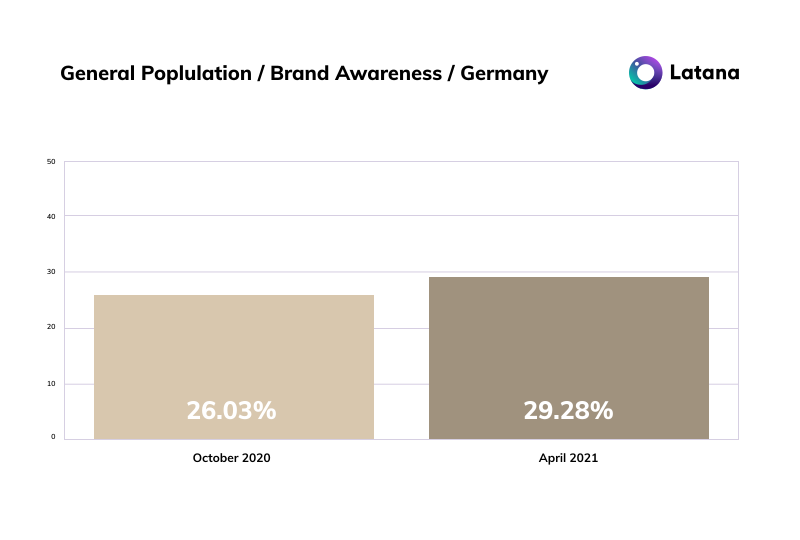\n\n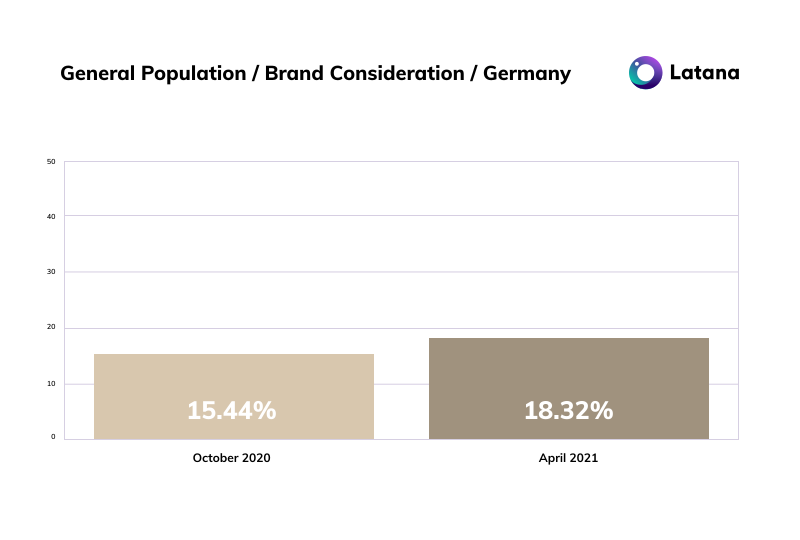\n\n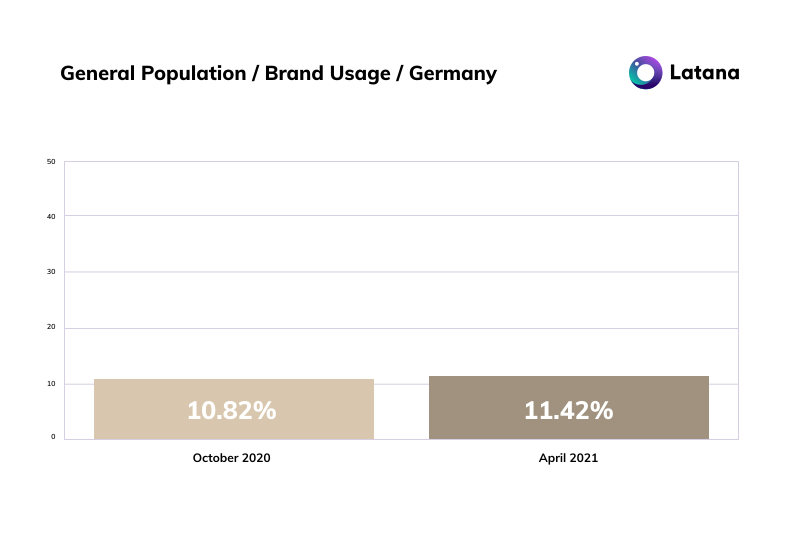\n\nIn October 2020, 26% of the general German population were aware of Veganz. Among them, 15.44% were considering the brand. And almost 11% used it. \n\nHowever, by April 2021 brand awareness increased to 29.28% — a sizable spike. Numbers lower in the sales funnel climbed up too. 18% of aware consumers are considering Veganz goodies, whereas 11.4% among them are using the brand. \n\nSo what’s behind the lift? In 2020, the company underwent a [rebranding](https://latana.com/guides/ultimate-guide-to-rebranding/) and chose 5 new brand value criteria as the strategic axis for their marketing:\n\n1. Clear targets \n2. Credibility \n3. Impact on consumer behavior\n4. Attention-grabbing communication\n5. Direct measurability\n\nBased on the above, Vegan launched a TV media campaign, called “Iss Mal Was Furs Klima!” (“Eat something for the climate!”). In a series of under 10-second videos, the campaign educated the general public in DACH about sustainable lifestyle.\n\nThe key message of the campaign was simple — be mindful of what you eat because your food choices affect the climate. Then Veganz explained what they do to offset the impact. Straightforward, catchy, and credible, the TV campaign resonated well with the audiences as the lift in general brand awareness denotes. Moreover, it landed Veganz the prestigious “Marketing for Future Award” and further positive media buzz. \n\n## Secondary Audiences Help Accelerate Brand Growth \n\nWhen you market meat and dairy substitutes, it's easy to assume that vegans and vegetarians are the people you should target. But there’s also a lot of veggie-interested consumers and flexitarians — the secondary audience, crucial for securing higher [brand equity](https://latana.com/post/building-measuring-brand-equity-value/). \n\nAccording to a [Vegan Nutrition Study 2020](https://veganz.com/blog/veganz-nutrition-study-2020/), 29% of German consumers are flexitarian, whereas only 3.2% are vegan. However, 57.1% of European flexitarians say they may switch to a vegetarian or vegan diet in the future. Reaching out to them today means securing their brand consideration and usage in the future. \n\nFlexitarian and veggie-curios don’t frequent vegan shops such as Veganz’s own chain. But they frequent popular national chains such as dm, Lidl, and REWE, amongst others. Interestingly, 30% of German flexitarians and even 35.5% of vegans regularly shop for groceries in drug store chains such as dm versus 25% of general populations. So being present across different sales points, definitely makes sense for vegetarian-oriented brands. \n\nBased on our data, Veganz connects with different audiences well at retailer locations. \n\n- In October 2020, 27.5% of dm shoppers were aware of Veganz. By April 2021, the number increased to almost 32% — that’s 3 percentage points higher than among general populations. \n\n- The growth numbers are similar for REWE shoppers. The brand awareness numbers increased from 27% in October 2020 to 30.3% in April 2021. \n\n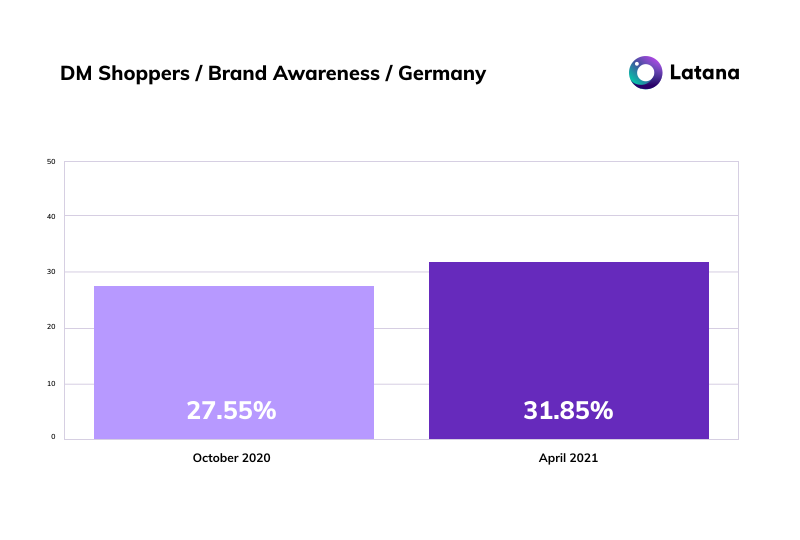\n\n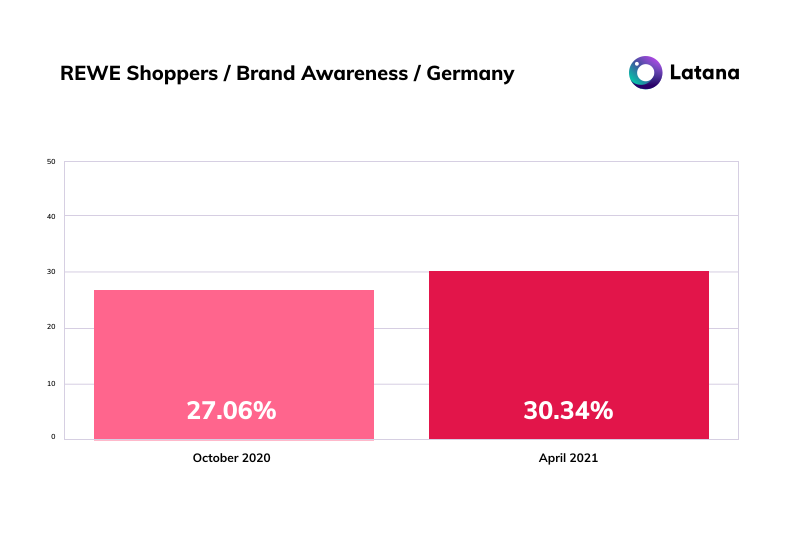\n\nTV commercial campaigns, aired during this period, obviously had an impact on the numbers. Moreover, Veganz remained very active with online advertising, targeting consumers with announcements about limited-time product arrivals in the chains:\n\n\n\n[Co-branding campaigns](https://latana.com/post/co-branding/) could further lift Veganz’s brand performance across chains. For example, we noticed that Lidl Deutschland often curates vegan recipes on social media, which are popular among its audience. Veganz also shares recipes on their accounts. Creating co-branded content — food prep videos, meal how-tos, etc. — with partnering distributors could help vegan brands reach and engage new audiences too. \n\n## Educate to Win Over Consumers at Later Stages of the Funnel \n\nVeganz may not have to convince the prime audience that much about the benefits of eating sustainable foods and curtailing meat consumption. However, educating eco-mindful and sustainably-oriented shoppers in mass retail chains could really help more vegan brands slip into consumers’ baskets. \n\nVeganz expertly uses packaging to spread its “eco” philosophy. The company forged ahead with its [own nutrition label](https://veganz.com/blog/all-the-facts-on-the-table-the-eco-balance-of-our-products/), featuring an eco-balance score, while other brands hesitate to adopt Nutriscore grade. In fact, Veganz launched the world’s first pizza with a sustainability score. \n\n\n\nThis push for [brand transparency](https://latana.com/post/brand-transparency/) seems to work well, given the brand consideration data we collected: \n\n- Between October 2020 and April 2021, brand consideration among dm shoppers increased by almost 5% — from 16.60% to 20.25%. The lift in brand usage is more moderate, yet still staunch — from 11.60% to 13.08%. \n\n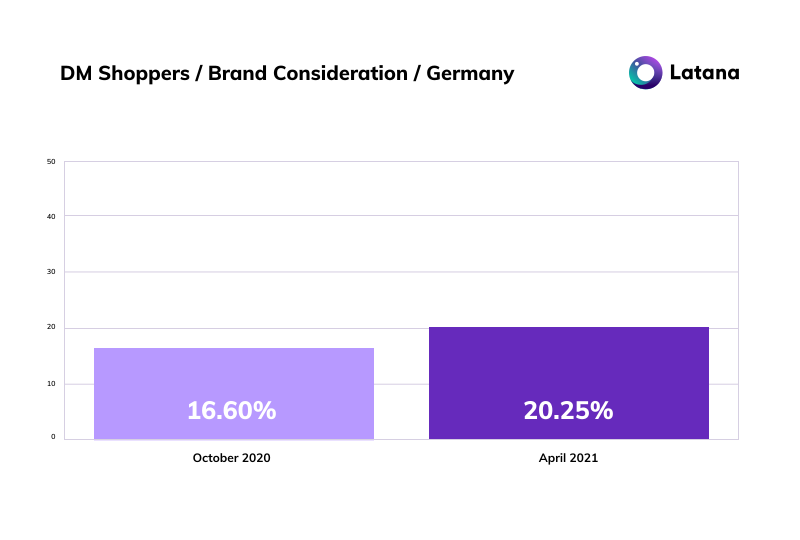\n\n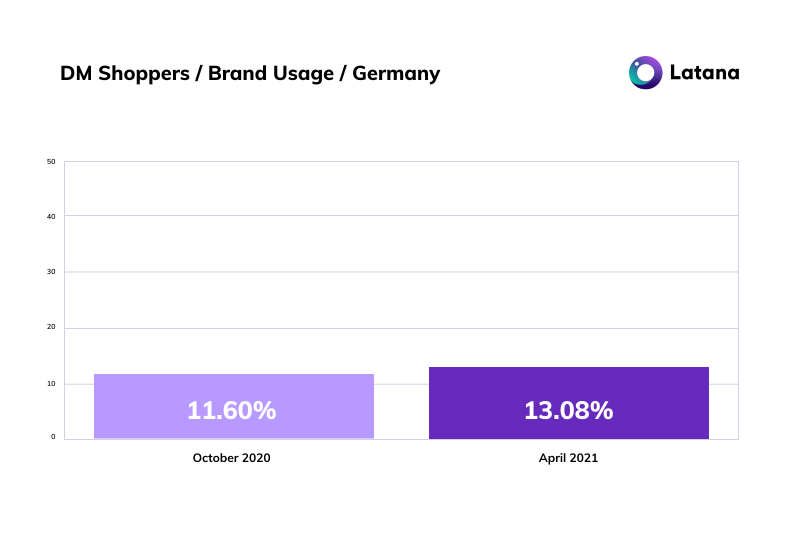\n\n- Among REWE shoppers brand consideration increased to 18.91% from 15.94% in October 2020. Whereas, brand usage improved from 11.35% to 12.02%. \n\n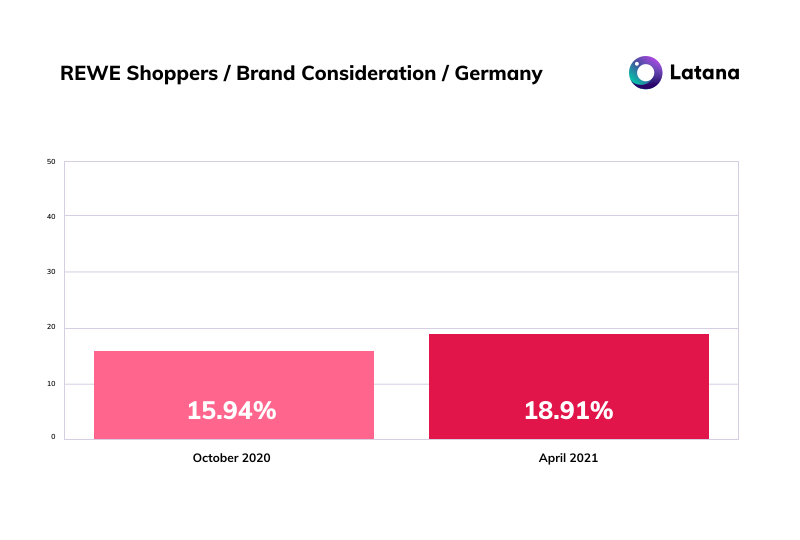\n\n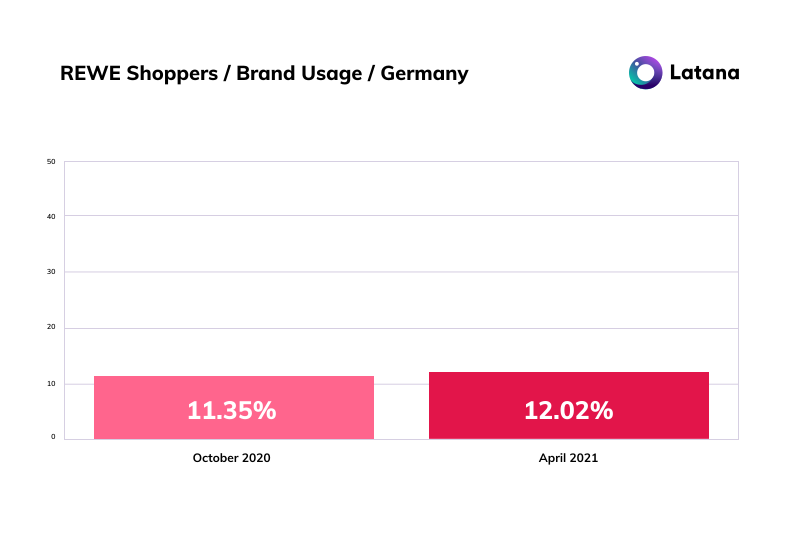\n\nVeganz opted for eye-catchy packaging to stand among other “green” products on the shelves. But they also use the wrappers to educate the casual browsers and potential brand adopters. This approach is similar to another eco-conscious brand we analyzed — [Tony's Chocolonely](https://latana.com/post/tonys-chocolonely-brand/). \n\nHowever, unlike Chocolonely whose bold campaigning is very blunt, activist, and sometimes controversial, Veganz chose a “soft power” approach of gently planting their ideas of good nutrition into shoppers’ heads. \n\n## Final Thoughts \n\nThe timing for healthy eating brands such as Veganz can’t be any better. As more and more Europeans are discovering new cuisines and healthy eating practices, sales volumes for alternative and vegan foods skyrocket. \n\nThe best part? It’s no longer an animal rights activist or healthy eating enthusiasts who are eager to discover new munches. Regular shoppers in retail chains are intrigued to try sustainable produce and explore emerging meat substitutes to diversify their weekly meal prep. \n\nSo if you are eager to market anew, [engage in consumer research](https://latana.com/post/consumer-research-brand-strategy/) to zoom in on new target audiences and use [audience segmentation](https://latana.com/audience-segmentation/) for razor-sharp precision in targeting! "},"tags":["Brand Deep Dives"],"authorRef":{"slug":"elena","firstName":"Elena","lastName":"Prokopets","title":"Freelance Writer & Content Strategist","picture":{"__typename":"ContentfulAsset","id":"3656f248-8cb2-5fce-8ae1-2ea977717e1f","description":"","title":"Elena Author Photo Framed","file":{"contentType":"image/png","url":"//images.ctfassets.net/7so8go2zrvbw/1rgsWp0ZBagiKqMSpw7MwV/0cb99f4e752141de6ac06e1e9990363f/Author_Elena.png","details":{"image":{"width":235,"height":235}}},"gatsbyImageData":{"images":{"sources":[{"srcSet":"//images.ctfassets.net/7so8go2zrvbw/1rgsWp0ZBagiKqMSpw7MwV/0cb99f4e752141de6ac06e1e9990363f/Author_Elena.png?w=235&h=235&q=95&fm=webp 235w","sizes":"100vw","type":"image/webp"}],"fallback":{"src":"//images.ctfassets.net/7so8go2zrvbw/1rgsWp0ZBagiKqMSpw7MwV/0cb99f4e752141de6ac06e1e9990363f/Author_Elena.png?w=235&h=235&q=95&fm=png","srcSet":"//images.ctfassets.net/7so8go2zrvbw/1rgsWp0ZBagiKqMSpw7MwV/0cb99f4e752141de6ac06e1e9990363f/Author_Elena.png?w=235&h=235&q=95&fm=png 235w","sizes":"100vw"}},"layout":"fullWidth","backgroundColor":"#080808","width":1,"height":1}}}}},{"node":{"publishDate":"2020-01-27T00:00+02:00","slug":"6-ways-to-increase-and-improve-brand-awareness","author":"Omar Benseddik","title":"6 Easy Ways to Increase Brand Awareness in 2022","seo":{"__typename":"ContentfulSeo","title":"6 Easy Ways to Increase Brand Awareness in 2022","description":"89% of marketers claim brand awareness is their top goal. Here are some strategies you can implement to build brand awareness and grow your brand in 2022.","noIndex":null,"ogImage":{"fluid":{"src":"//images.ctfassets.net/7so8go2zrvbw/1WX6B9Cn6MvFUBJiQmBEJ5/9c70d977c63448fa97392aac58fe0ef3/Blog_SEO-Thumbnail_1000X709__2_.png?w=1200&h=675&q=90&fm=jpg"},"file":{"url":"//images.ctfassets.net/7so8go2zrvbw/1WX6B9Cn6MvFUBJiQmBEJ5/9c70d977c63448fa97392aac58fe0ef3/Blog_SEO-Thumbnail_1000X709__2_.png"}}},"heroImage":{"__typename":"ContentfulAsset","id":"eb9c1744-5000-5e01-bda6-c4f4c95cb2d3","description":"Measuring Brand Awareness - As Told by Marketing Experts","title":"Measuring Brand Awareness - As Told by Marketing Experts","file":{"contentType":"image/png","url":"//images.ctfassets.net/7so8go2zrvbw/5vmUZenTm7GX40DrOZHtvS/8c1e7b2748f8b1c400a9ac4dd77b1992/Frame_1000x709.png","details":{"image":{"width":2000,"height":1418}}},"gatsbyImageData":{"images":{"sources":[{"srcSet":"//images.ctfassets.net/7so8go2zrvbw/5vmUZenTm7GX40DrOZHtvS/8c1e7b2748f8b1c400a9ac4dd77b1992/Frame_1000x709.png?w=200&h=142&q=95&fm=webp 200w,\n//images.ctfassets.net/7so8go2zrvbw/5vmUZenTm7GX40DrOZHtvS/8c1e7b2748f8b1c400a9ac4dd77b1992/Frame_1000x709.png?w=400&h=284&q=95&fm=webp 400w,\n//images.ctfassets.net/7so8go2zrvbw/5vmUZenTm7GX40DrOZHtvS/8c1e7b2748f8b1c400a9ac4dd77b1992/Frame_1000x709.png?w=800&h=567&q=95&fm=webp 800w,\n//images.ctfassets.net/7so8go2zrvbw/5vmUZenTm7GX40DrOZHtvS/8c1e7b2748f8b1c400a9ac4dd77b1992/Frame_1000x709.png?w=1600&h=1134&q=95&fm=webp 1600w","sizes":"(min-width: 800px) 800px, 100vw","type":"image/webp"}],"fallback":{"src":"//images.ctfassets.net/7so8go2zrvbw/5vmUZenTm7GX40DrOZHtvS/8c1e7b2748f8b1c400a9ac4dd77b1992/Frame_1000x709.png?w=800&h=567&q=95&fm=png","srcSet":"//images.ctfassets.net/7so8go2zrvbw/5vmUZenTm7GX40DrOZHtvS/8c1e7b2748f8b1c400a9ac4dd77b1992/Frame_1000x709.png?w=200&h=142&q=95&fm=png 200w,\n//images.ctfassets.net/7so8go2zrvbw/5vmUZenTm7GX40DrOZHtvS/8c1e7b2748f8b1c400a9ac4dd77b1992/Frame_1000x709.png?w=400&h=284&q=95&fm=png 400w,\n//images.ctfassets.net/7so8go2zrvbw/5vmUZenTm7GX40DrOZHtvS/8c1e7b2748f8b1c400a9ac4dd77b1992/Frame_1000x709.png?w=800&h=567&q=95&fm=png 800w,\n//images.ctfassets.net/7so8go2zrvbw/5vmUZenTm7GX40DrOZHtvS/8c1e7b2748f8b1c400a9ac4dd77b1992/Frame_1000x709.png?w=1600&h=1134&q=95&fm=png 1600w","sizes":"(min-width: 800px) 800px, 100vw"}},"layout":"constrained","backgroundColor":"#180838","width":800,"height":567}},"coverImage":{"__typename":"ContentfulAsset","id":"9568d8a8-209f-5bee-9fc7-d84e03577a8b","description":"Measuring Brand Awareness - As Told by Marketing Experts","title":"Measuring Brand Awareness - As Told by Marketing Experts - cover","file":{"contentType":"image/png","url":"//images.ctfassets.net/7so8go2zrvbw/M3achg3RSPAe1utfb5CSh/e5fec7a16616fcb6d8b0605e36b46d54/Blog_Cover_1288X400.png","details":{"image":{"width":1288,"height":400}}},"gatsbyImageData":{"images":{"sources":[{"srcSet":"//images.ctfassets.net/7so8go2zrvbw/M3achg3RSPAe1utfb5CSh/e5fec7a16616fcb6d8b0605e36b46d54/Blog_Cover_1288X400.png?w=750&h=233&q=95&fm=webp 750w,\n//images.ctfassets.net/7so8go2zrvbw/M3achg3RSPAe1utfb5CSh/e5fec7a16616fcb6d8b0605e36b46d54/Blog_Cover_1288X400.png?w=1080&h=335&q=95&fm=webp 1080w,\n//images.ctfassets.net/7so8go2zrvbw/M3achg3RSPAe1utfb5CSh/e5fec7a16616fcb6d8b0605e36b46d54/Blog_Cover_1288X400.png?w=1288&h=400&q=95&fm=webp 1288w","sizes":"100vw","type":"image/webp"}],"fallback":{"src":"//images.ctfassets.net/7so8go2zrvbw/M3achg3RSPAe1utfb5CSh/e5fec7a16616fcb6d8b0605e36b46d54/Blog_Cover_1288X400.png?w=1288&h=400&q=95&fm=png","srcSet":"//images.ctfassets.net/7so8go2zrvbw/M3achg3RSPAe1utfb5CSh/e5fec7a16616fcb6d8b0605e36b46d54/Blog_Cover_1288X400.png?w=750&h=233&q=95&fm=png 750w,\n//images.ctfassets.net/7so8go2zrvbw/M3achg3RSPAe1utfb5CSh/e5fec7a16616fcb6d8b0605e36b46d54/Blog_Cover_1288X400.png?w=1080&h=335&q=95&fm=png 1080w,\n//images.ctfassets.net/7so8go2zrvbw/M3achg3RSPAe1utfb5CSh/e5fec7a16616fcb6d8b0605e36b46d54/Blog_Cover_1288X400.png?w=1288&h=400&q=95&fm=png 1288w","sizes":"100vw"}},"layout":"fullWidth","backgroundColor":"#180838","width":1,"height":0.3105590062111801}},"description":{"description":"89% of marketers claim brand awareness is their top goal. Here are some strategies you can implement to build brand awareness and grow your brand in 2022."},"content":{"content":"We don’t need to tell you that increasing [brand awareness](https://latana.com/topics-brand-awareness/) is a tough undertaking. After all, [89% of marketers claim brand awareness is their number one goal](https://venngage.com/blog/branding-statistics/). But we can tell you something you might not know: there are some realistic strategies you can implement to build brand awareness. \n\nThese strategies have not only been tried and tested by companies worldwide, but they’re surprisingly easy to implement. Keep reading to learn our top six tips to help you reach your brand awareness goals. \n\n## 6 Ways to Increase Brand Awareness in 2022\n\n\n## 1. Partner With Companies That Emit Strong Trust Signals\n\nBig-name brands have worked incredibly hard to have achieved the level of loyalty and trust that makes them successful. Think of brands like Toyota, Apple, or Nivea — most everyone knows these brands and [finds them trustworthy](https://latana.com/post/building-trusted-brand/). Why not partner up to leverage their strong trust signals for your own brand?\n\nTo demonstrate, let’s look at an example. *Claudi & Fin* is a food company that sells Greek-style frozen yogurt lollies. A [small business on a budget](https://latana.com/post/budget-increase-brand-awareness/), they decided to try out brand collaborations on various social media channels. One of their most successful means of collaboration has been Facebook competitions — as they find them “an inexpensive way to reach lots of people, build great relationships with other brands and they are also very targeted.”\n\nUsing this tactic, *Claudi & Fin* have increased their brand awareness, which can be seen clearly in their recent brand campaigns. \n\nFor instance, the brand teamed up with fellow food company *Little Dish* to give away a package filled with goodies from each brand. Only nine hours after the competition was launched, the post had a reach of 3,630 impressions, roughly 100 likes, and 50 shares — meaning this post performed 95% better than any other post on their page.\n\n__The Takeaway?__ If your brand has the opportunity to work with a well-known and trusted brand, go for it. This way, consumers will start to associate your brand with a well-known one. And, if they find this brand trustworthy, they’ll be more likely to view your brand in a favorable light.\n\nFor instance, if a consumer sees your brand in partnership with Apple, they will feel more at ease buying from you. Why? Because your association with a big name like Apple means you are now “validated”. The end goal being: when they think of Apple, something in their brain will spark and they’ll think of your brand, too. This association will then help increase your brand awareness.\n\nAdditionally, big companies like Apple have thousands of employees — all people who are now aware of your brand (and perhaps potential clients?). Double win!\n\n---\n\nHowever, don’t restrict your brand to partnerships with big companies alone, as they can be hard to get. Keep in mind, smaller brands will also have access to consumers who aren’t currently aware of your brand. \n\nThe most important part of any brand partnership is to ensure you chose the right counterpart: a brand that offers a product or service complementary to your own or one that offers something that you don’t. \n\nBack in 2006, J.C. Penny Co. began opening [Sephora](https://latana.com/brand-bites/how-sephora-investigated-their-target-audience/) concessions in their department stores to attract younger consumers. By 2016, there was a [Sephora in more than 1,000 locations nationwide](https://www.retaildive.com/news/jc-penney-adding-60-new-sephora-concessions-nationwide/418279/). Other department stores then followed suit, including Manor in Switzerland and Galeria Kaufhof in Germany. \n\nBy collaborating with Sephora, these department stores opened themselves up to a clientele who may not have been previously aware of them.\n\n## 2. Build Awareness With Influencer Marketing\n\nLove it or hate it, [influencer marketing](https://latana.com/post/guide-to-influencer-marketing/) is a necessity — especially if your brand is targeting younger consumers. \n\nA [2020 study by Econsultancy on influencer marketing](https://econsultancy.com/reports/influencer-marketing-2020/) reported that “61% of consumers, aged 18 to 34, have at some point been swayed in their decision-making by digital influencers.” Now, influencer marketing does suffer from a bit of a catch-22. Naturally, if you want to increase brand awareness, you’ll try to partner with the influencers who have very large followings. \n\nHowever, that approach won’t necessarily bring you the most value. In an age where authenticity is valued most in retail, micro-influencers are the way to go. They may have a more limited reach but, according to that same Econsultancy post, “micro-influencers overtake top-tier talent, and 61% of consumers say they produce the most relatable content”. \n\nTherefore, if you want to improve your brand awareness, focus on increasing positive brand awareness.\n\n### Mini Case Study: Zara\n\n
\n\nIn 2019, Zara experienced the benefits of using micro-influencers. The fashion brand launched a #DearSouthAfrica campaign to coincide with the official opening of their online store in South Africa. \n\nThe day before the big launch, Zara was the top trending name globally, thanks to the highly engaged audiences of their chosen micro-influencers. The hashtag, which was trending at number six, reached [6.25 million people worldwide](https://www.bizcommunity.com/Article/196/179/195782.html) — climbing to 7.88 million by the time of the store launch.\n\nNow that’s what we call a strong brand campaign!\n\n## 3. Harness the Power of Content Marketing\n\n[Content marketing](https://latana.com/post/content-marketing-benefits/) is not just about keyword rankings and backlinks — it’s also an amazing way to tell a story. And if you can tell your story well, it will not only resonate with your [target audience](https://latana.com/post/7-steps-perfect-target-audience/) but will also result in increased brand awareness.\n\nJoyce Ang of Instasize agrees with us, saying:\n\n*\"People love to connect with brands on a more personal level so, by telling them your story, you have increased your chances of being remembered.*\n\n*Another way of achieving recall with your audience is to release [consistent campaign imagery](https://instasize.com/blog/the-importance-of-establishing-an-instagram-theme). Whenever you post something on social media, you can repeatedly use visual elements like a certain color palette, a border style or pattern, or even a particular font to increase familiarization with potential customers. This is one way of strengthening brand awareness through content marketing.\"*\n\nWhile other marketing methods like paid ads can tell consumers who your brand is and what you’re selling, content marketing can showcase what your brand represents and the qualities that make it unique. \n\nOne way to do this is by telling your story online. Provide people with information on how your brand started, what you believe in, what your brand values are, and how you’ve succeeded to date. As Joyce explained, consumers love to connect with brands on a more personal level — which can be achieved through artful storytelling. \n\n---\n\nAnother example comes from Nick Greene, Co-Founder and Creative Lead at Apollo Digital, who incorporated content marketing into the company's brand strategy. Subsequently, brand awareness rose significantly for the relatively new company. \n\nHowever, Nick took a more generalized approach — focusing less on the brand story and more on providing useful information on a topic important to his target audience.\n\n*“We used this one piece of content to make sure most people in our target audience had heard about us. Here is what we did:*\n\n*1. Created EPIC content. We wrote a [mega-guide to SaaS marketing](https://apollodigital.io/blog/saas-marketing). 14k words, 41+ strategies, 50+ case-studies. The key here is to create really, really good content that people will care about.*\n*2. Promoted the hell out of it*\n\n*This resulted in (so far - we're still promoting it):*\n\n- *5,000 traffic in 2 days*\n- *3 leads*\n- *Hundreds of upvotes on HackerNews*\n- *TONS of love all over the internet / in Facebook groups.”*\n\nOne important thing to remember from Nick’s story is that content marketing is not just about publishing an article and leaving it online for people to find. With more than 2 million blog posts published daily, it’s very unlikely that your article will be found on its own. \n\nWhat Nick did to expedite brand awareness was to share his guide online. With an estimated [3.02 billion social media users by 2021](https://www.business2community.com/social-media/how-social-media-increases-brand-awareness-02165638), it can be one of the easiest ways to share your brand with a vast amount of people in a short period of time.\n\nBut is promoting your content on social media enough to increase brand awareness? Sadly not. Take a look at the next point for an extra bump.\n\n## 4. Utilize SEO for Brand Awareness\n\nThe inclusion of SEO in this article should come as no surprise, as there are many ways in which [SEO can increase brand awareness](https://latana.com/post/seo-increase-brand-awareness/). However, in this instance, we’ll focus specifically on targeting long-tail keywords.\n\nIt’s as simple as this: high search engine rankings will do wonders for your brand awareness. Not only will your brand be easier to find, but the higher you rank, the more credible your brand will be in the eyes of your audience. \n\nBear in mind, however, that this really is a long-term strategy — especially for those coveted first-page spots. Still, it’s worth it. And the key to success? Using the right keywords in your campaigns.\n\nAnd if you really want to get the most out of search engines, choosing long-tail keywords that are relevant for your industry, are good for local search, and fit with your brand is vital. This is what will happen over time: your target audience will search for a product or service in your business category and will be exposed to your website and brand if they are well-positioned.\n\n---\n\nLet’s consider an example. Say that your target audience is athletes in the United States. These athletes are looking for a running backpack and type “backpack” in the search bar. \n\nAccording to Ahrefs, this search term has a difficulty level of 42, putting it in the “hard to rank for” range. However, “running backpack water” has a much lower ranking difficulty score. \n\nBrands such as Salomon, Ultimate Direction, Kalenji, Adidas, and Asics have already taken advantage of this keyword gap and created useful content. Therefore, when it’s typed into Google’s search bar, this is what appears:\n\n\n\nUsing this tactic, when athletes search for another running item, there’s a higher chance they’ll remember Salomon or Kalenji. The takeaway? Don’t underestimate the power of search engines and the visibility you get from rich snippets and featured snippets — be it Google, Bing, or anything with a search bar, such as Amazon. \n\nAmazon is another great example of a company that makes the most out of long-tail keywords. In fact, they [generate 57% of book sales due to long-tail product descriptions](https://neilpatel.com/blog/7-brilliant-examples-of-brands-driving-long-tail-organic-traffic/), meaning they’re catching consumers who are highly motivated to purchase a certain product.\n\n---\n\nFurthermore, SEO is good for more than just appearing in search results for long-tail keywords — you can also use reviews to increase your appearance in search results and improve brand awareness. And that’s precisely what [ReputationManagement.com](https://www.reputationmanagement.com/) did for a former client.\n\nThe brand’s SEO Manager, Jonas Sickler, told us:\n\n*“We focused on [improving sentiment](https://latana.com/post/sentiment-analysis/) in the search results for the brand name as well as on ‘reviews’ of the brand.*\n\n*We wire-framed a new customer reviews page on our client's website and provided all technical and content guidance to execute the project. We also helped the company establish a process to earn more reviews across a variety of online review platforms.*\n\n*We also provided guidance to address inaccuracies and violations on community web pages that mentioned the brand. As one result, the company achieved a more accurate and sustainable Wikipedia entry that also facilitated a more accurate Google Knowledge Panel.*\n\n*Here are the results of our engagement with the customer:*\n\n- *They recovered $32 million in monthly revenue after we flipped their search results from negative to positive.*\n- *We established a customer review program that took them from 3 negative reviews to 12,000 five-star 'Excellent' reviews.*\n- *We increased the Google click-through rate by 456% on positive branded 'review' content.”*\n\n## 5. Be Aware of What is Going On Around You\n\nAll the tips we’ve provided up to this point need one additional ingredient to succeed: awareness. \n\nNow, we don’t mean the brand awareness we’ve been discussing — we’re referring to your marketing team’s awareness of what’s happening in their industry. What does your target audience want? How can you help them?\n\nTeodora Lozan, a SaaS Marketer at [Socialinsider](https://www.socialinsider.io/), did just that and earned great results.\n\n*“We saw a lot of people worrying about Instagram removing the ability to view posts' likes, which for social media managers makes it harder to understand the value of external experts or influencers they hired. So we created a free chrome extension that shows this information. We sent the news to a few key publications and the news was quickly picked up by big publications from around the world.*\n\n*The result? Major publishers published articles in 5+ languages including Techcrunch. Forbes and Esquire Russia. This, in turn, resulted in over 2,400 downloads.\"*\n\nRemaining aware of what’s going on around you should not only apply to your target audience — although they are most important — but also to marketing trends. \n\nTake video content, for example. Online video consumption has been rising globally over the last few years, with an expected [100 minutes watch time per day by 2021](https://www.marketingcharts.com/digital/video-110520). Considering [83% of marketers already believe that video](https://www.smartinsights.com/digital-marketing-platforms/video-marketing/video-marketing-statistics-to-know/) is becoming increasingly important, it’s not a trend you want to ignore.\n\nAs an example, let’s take a look at how one brand has used video marketing on Facebook to increase brand awareness.\n\n### Mini Case Study: Visit Trentino\n\nWe are officially shopping 🛍 online with @ZARA.......#DearSouthAfrica 💁🏽♂️ pic.twitter.com/3mAkvupnqc
— IG: @sinawoh (@sinawohali101) September 18, 2019
\n\nTrentino is an Italian holiday region that, after noticing a fall in visitor numbers, wanted to reconnect with two primary tourism markets: the Czech Republic and Poland.\n\nIn order to achieve this goal, the Visit Trentino campaign needed to generate effective ads in a short period of time. Therefore, they decided to transform existing ads into a video for Facebook.\n\nThe video included branded templates in each scene, a motivational message midway through, and a strong call-to-action (CTA) at the end. The ads were shown over a three-week period in June-July of 2019 to a broad audience. \n\nVisit Trentino achieved the following results:\n\n- An 8.3 point lift in brand awareness amongst consumers aged 55–64 in the Czech Republic\n- A 5.6 point lift in brand awareness amongst consumers aged 25–34 in Poland\n\n## 6. Go Offline\n\nWith so many brand marketing techniques revolving around the digital world these days, we often forget the value of going offline.\n\nVaishali Badgujar, a Content Marketing Specialist at Time Doctor, found conferences to be of great value when increasing brand awareness.\n\n*\"We run a conference called [Running Remote](https://runningremote.com). It has become the world's largest ever in-person conference focused on building and scaling remote teams. We started it in 2018 and it took place in Bali. It was the first year and we didn't have a big community or partnerships to promote our event.*\n\n*Then our co-founder, CMO and co-organizer, Liam Martin decided to appear on as many podcasts as he could to connect with link-minded people and spread the word about Running Remote.*\n\n*We discovered that out of all other forms of advertising, podcasts were more effective. Here's Liam's video explaining how we executed this approach:*\n\n\n\n*\"Liam appeared on 59 podcasts in 90 days and it resulted in 30 tickets sold for the conference (earned $400 per podcast) and more indirect benefits - built good connections, ended up in getting good partnerships, many podcasters promoted our event on their social media.\"*\n\n---\n\nTo close out this point, here’s a bonus tip from Kas Szatylowicz, Content Manager at [Digital Olympus](https://digitalolympus.net/).\n\n*\"Out of numerous ways to bring the world's attention to your company, the 'offline' methods are probably most underrated, especially in B2B. Increasing your brand awareness using social media or PPC can work well, but here, at Digital Olympus we chose to try the alternatives. What works best for us are industry events. *\n\n*We run a huge conference for digital marketers every year, as well as sponsor and attend others. We also heavily focus on developing our personal brands (e.g. Alex Tachalova the CEO does a lot of public speaking) and connecting that with the company brand. Real-life promotion during the events works extremely well in the B2B world where connections are sometimes everything. *\n\n*We not only increase the overall brand awareness but also [gain trust](https://latana.com/post/building-trusted-brand/) and reach a very specific audience that we are interested in marketing to.\"*\n\n## Bonus Tip: Brand Your Materials\n\nHere’s one for the offline marketing lovers among you: use [branded packaging](https://latana.com/post/why-brand-packaging-matters/). \n\nAccording to Packaging Digest, “studies show that [74% of young adults](http://www.marketingprofs.com/chirp/2014/25957/how-product-packaging-affects-buying-decisions-infographic) are more likely to share a photo of their product packaging online and almost 40% of overall consumers share packaging on social media that has an interesting gift-like design.”\n\nThe All England Club took advantage of this during the 2018 Summer Olympics. Riding their success at both the Olympic and Paralympic games, the organization [created a carrier bag](https://keenpac.com/packaging-brand-awareness) that — thanks to its association with a popular event — would become an object of desire and a means to increase their brand awareness. Two for one!\n\n## Final Thoughts\n\nUnderstandably, many brand marketers struggle to effectively and accurately measure their brand metrics. But you don’t have to be one of them!\n\nKeep in mind, it’s crucial that you [measure your brand awareness](https://latana.com/brand-awareness/) at all levels — not just at the general population level but also at your target audience level. And don’t forget to measure the brand awareness of your competitors!\n\nOf course, just tracking your brand awareness won’t make it grow. However, it will help you figure out which direction to go. For example, if you see that your brand awareness is at 6%, but your main competitor stands at 12%, you have now a benchmark and a goal to strive for.\n\nA quick tip: think wisely about the target audience you want to track and the competitors you want to keep an eye on. If you constantly change your setup for your [brand monitoring](https://latana.com/product/), you’ll miss out on insightful data changes.\n\nThis is, of course, not a complete list. There are dozens more ways to build brand awareness — both good and bad. However, these six points are a great place to start.\n\nIn closing, don’t depend on quick fixes to increase brand awareness, and certainly don’t take paths that could eventually cause harm. Take your time and think long-term and you’ll be able to increase brand awareness the right way with the right people."},"tags":["Brand Awareness","Brand Strategy"],"authorRef":{"slug":"omar","firstName":"Omar","lastName":"Benseddik","title":"Founder & SaaS Sales Manager","picture":{"__typename":"ContentfulAsset","id":"bb56ceb9-a813-5edc-85a6-facde71b8efe","description":"","title":"Latana Logo Author Photo","file":{"contentType":"image/png","url":"//images.ctfassets.net/7so8go2zrvbw/7qeUdZpRNeFZFTo0zIasKz/8d00318fb2f317950a2a2d6912eb28bf/Author_Latana__1_.png","details":{"image":{"width":235,"height":235}}},"gatsbyImageData":{"images":{"sources":[{"srcSet":"//images.ctfassets.net/7so8go2zrvbw/7qeUdZpRNeFZFTo0zIasKz/8d00318fb2f317950a2a2d6912eb28bf/Author_Latana__1_.png?w=235&h=235&q=95&fm=webp 235w","sizes":"100vw","type":"image/webp"}],"fallback":{"src":"//images.ctfassets.net/7so8go2zrvbw/7qeUdZpRNeFZFTo0zIasKz/8d00318fb2f317950a2a2d6912eb28bf/Author_Latana__1_.png?w=235&h=235&q=95&fm=png","srcSet":"//images.ctfassets.net/7so8go2zrvbw/7qeUdZpRNeFZFTo0zIasKz/8d00318fb2f317950a2a2d6912eb28bf/Author_Latana__1_.png?w=235&h=235&q=95&fm=png 235w","sizes":"100vw"}},"layout":"fullWidth","backgroundColor":"#080808","width":1,"height":1}}}}},{"node":{"publishDate":"2022-01-17T08:00+01:00","slug":"what-are-nfts","author":"Michael Metcalf","title":"NFTs: What Are They & How Can Marketers Use Them in 2022?","seo":{"__typename":"ContentfulSeo","title":"NFTs: What Are They & How Can Marketers Use Them in 2022?","description":"NFTs, or non-fungible tokens, have been around since 2017. But they're gaining traction in global brand campaigns — are they right for your brand in 2022? Find out here.","noIndex":null,"ogImage":{"fluid":{"src":"//images.ctfassets.net/7so8go2zrvbw/7qG1b9jRbey35KueRHAulw/c5f146da519ecbaf58b2a2d24912acd3/Blog_SEO-Thumbnail_1000X709__78_.png?w=1200&h=675&q=90&fm=jpg"},"file":{"url":"//images.ctfassets.net/7so8go2zrvbw/7qG1b9jRbey35KueRHAulw/c5f146da519ecbaf58b2a2d24912acd3/Blog_SEO-Thumbnail_1000X709__78_.png"}}},"heroImage":{"__typename":"ContentfulAsset","id":"1b7474b1-72e4-5b52-a7a6-39f70e77a803","description":"","title":"Illustration of NFTs on web pages (Thumbnail)","file":{"contentType":"image/png","url":"//images.ctfassets.net/7so8go2zrvbw/7qG1b9jRbey35KueRHAulw/c5f146da519ecbaf58b2a2d24912acd3/Blog_SEO-Thumbnail_1000X709__78_.png","details":{"image":{"width":1000,"height":709}}},"gatsbyImageData":{"images":{"sources":[{"srcSet":"//images.ctfassets.net/7so8go2zrvbw/7qG1b9jRbey35KueRHAulw/c5f146da519ecbaf58b2a2d24912acd3/Blog_SEO-Thumbnail_1000X709__78_.png?w=200&h=142&q=95&fm=webp 200w,\n//images.ctfassets.net/7so8go2zrvbw/7qG1b9jRbey35KueRHAulw/c5f146da519ecbaf58b2a2d24912acd3/Blog_SEO-Thumbnail_1000X709__78_.png?w=400&h=284&q=95&fm=webp 400w,\n//images.ctfassets.net/7so8go2zrvbw/7qG1b9jRbey35KueRHAulw/c5f146da519ecbaf58b2a2d24912acd3/Blog_SEO-Thumbnail_1000X709__78_.png?w=800&h=567&q=95&fm=webp 800w","sizes":"(min-width: 800px) 800px, 100vw","type":"image/webp"}],"fallback":{"src":"//images.ctfassets.net/7so8go2zrvbw/7qG1b9jRbey35KueRHAulw/c5f146da519ecbaf58b2a2d24912acd3/Blog_SEO-Thumbnail_1000X709__78_.png?w=800&h=567&q=95&fm=png","srcSet":"//images.ctfassets.net/7so8go2zrvbw/7qG1b9jRbey35KueRHAulw/c5f146da519ecbaf58b2a2d24912acd3/Blog_SEO-Thumbnail_1000X709__78_.png?w=200&h=142&q=95&fm=png 200w,\n//images.ctfassets.net/7so8go2zrvbw/7qG1b9jRbey35KueRHAulw/c5f146da519ecbaf58b2a2d24912acd3/Blog_SEO-Thumbnail_1000X709__78_.png?w=400&h=284&q=95&fm=png 400w,\n//images.ctfassets.net/7so8go2zrvbw/7qG1b9jRbey35KueRHAulw/c5f146da519ecbaf58b2a2d24912acd3/Blog_SEO-Thumbnail_1000X709__78_.png?w=800&h=567&q=95&fm=png 800w","sizes":"(min-width: 800px) 800px, 100vw"}},"layout":"constrained","backgroundColor":"#3858f8","width":800,"height":567}},"coverImage":{"__typename":"ContentfulAsset","id":"bb0216f4-afd7-5940-955b-93b1ebaa580b","description":"","title":"Illustration of NFTs on web pages (Cover Image)","file":{"contentType":"image/png","url":"//images.ctfassets.net/7so8go2zrvbw/68fB43LsOo66HHfl1KOgVs/1a53b1da030c07741be77e9a31076a5c/Blog_Cover_1288X400__97_.png","details":{"image":{"width":1288,"height":400}}},"gatsbyImageData":{"images":{"sources":[{"srcSet":"//images.ctfassets.net/7so8go2zrvbw/68fB43LsOo66HHfl1KOgVs/1a53b1da030c07741be77e9a31076a5c/Blog_Cover_1288X400__97_.png?w=750&h=233&q=95&fm=webp 750w,\n//images.ctfassets.net/7so8go2zrvbw/68fB43LsOo66HHfl1KOgVs/1a53b1da030c07741be77e9a31076a5c/Blog_Cover_1288X400__97_.png?w=1080&h=335&q=95&fm=webp 1080w,\n//images.ctfassets.net/7so8go2zrvbw/68fB43LsOo66HHfl1KOgVs/1a53b1da030c07741be77e9a31076a5c/Blog_Cover_1288X400__97_.png?w=1288&h=400&q=95&fm=webp 1288w","sizes":"100vw","type":"image/webp"}],"fallback":{"src":"//images.ctfassets.net/7so8go2zrvbw/68fB43LsOo66HHfl1KOgVs/1a53b1da030c07741be77e9a31076a5c/Blog_Cover_1288X400__97_.png?w=1288&h=400&q=95&fm=png","srcSet":"//images.ctfassets.net/7so8go2zrvbw/68fB43LsOo66HHfl1KOgVs/1a53b1da030c07741be77e9a31076a5c/Blog_Cover_1288X400__97_.png?w=750&h=233&q=95&fm=png 750w,\n//images.ctfassets.net/7so8go2zrvbw/68fB43LsOo66HHfl1KOgVs/1a53b1da030c07741be77e9a31076a5c/Blog_Cover_1288X400__97_.png?w=1080&h=335&q=95&fm=png 1080w,\n//images.ctfassets.net/7so8go2zrvbw/68fB43LsOo66HHfl1KOgVs/1a53b1da030c07741be77e9a31076a5c/Blog_Cover_1288X400__97_.png?w=1288&h=400&q=95&fm=png 1288w","sizes":"100vw"}},"layout":"fullWidth","backgroundColor":"#3858f8","width":1,"height":0.3105590062111801}},"description":{"description":"NFTs, or non-fungible tokens, have been around since 2017. But they're gaining traction in global brand campaigns — are they right for your brand in 2022? Find out here."},"content":{"content":"It seems like cartoon cats and apes are suddenly ruling the digital world. Wondering what it’s all about? It’s time to dive into the rise of NFTs.\n\nBefore you stop us to ask \"what the heck are NFTs,\" you should know that crypto economies have been using these non-fungible tokens since 2017, back when CryptoPunks launched their unique digital art marketplace — the first of its kind.\n\nMarketers who are also enthusiasts of blockchain technology and [cryptocurrency](https://latana.com/post/how-can-crypto-brands-regain-public-trust/) will already know about these digital assets, but back then they had very little name recognition in the wider world.\n\n[Market capitalization for NFTs grew nearly tenfold](https://www.statista.com/statistics/1221742/nft-market-capitalization-worldwide/) between 2018-2020 — a seriously rapid upswing. Every week, between 30,000 and 80,000 NFTs change ownership — so it’s certainly a trend worth paying attention to.\n\nBut it was in 2021 that NFTs really made their mark on the world stage.\n\nAn auction house named Christie's sold a single NFT worth $69 million USD in March 2021, from artist Beeple. It was the third most expensive work of art ever sold by a living artist. Moreover, [NBA Top Shot](https://www.theverge.com/22348858/nba-nft-top-shot-dapper-labs) is one of the biggest NFT series out there — allowing fans to “own” classic moments in basketball history.\n\nBecause of examples like these, marketers are quickly realizing that NFT marketing is an effective tool for enhancing their relationships with their audiences, boosting customer engagement, and creating [brand awareness](https://latana.com/topics-brand-awareness/).\n\nBelow, we’ll explain what NFTs are and how marketers can make use of them (with examples).\n\n## What Are NFTs? And Why Are They So Popular in 2022?\n\nNon-fungible tokens (popularly known as NFTs) are unique and non-interchangeable chunks of data stored on a digital ledger.\n\nNFTs are a unique type of crypto asset, similar to Bitcoin and Dogecoin, in that they convey a virtual value you \"own\" that can be sold or traded to others. Most buying and selling of NFTs has so far been done on the Ethereum blockchain.\n\nThese “digital certificates” serve as proof of ownership — and have so far been applied to digital assets such as artwork, memes, GIFs, and even tweets!\n\nJust like other concepts from the [world of crypto](https://latana.com/post/branding-cryptocurrency/), some people seem to get it, and some don’t. So it’s worth listening to those that do, to understand where the value lies. \n\nAdam Hollander is an NFT “HODLer” (long-term investor), Pack Leader for [@hungrywolvesnft](https://twitter.com/hungrywolvesnft), and owner of a coveted [Bored Ape Yacht Club NFT](https://twitter.com/BoredApeYC).\n\nIn [a recent news interview](https://twitter.com/HollanderAdam/status/1465180680418205697), Hollander compared NFTs to a beautiful portrait hanging in a museum, saying that even if you take a photo of it or buy a print from a gift shop, it will not be the same value as the original.\n\nThere is no way to distinguish the original from the copy of digital assets — whether it's a photo, an image, a video, or a music file — since when you copy a digital file, it is the same as the original.\n\nBut an NFT enables you to provide infallible proof of ownership of the originals of these digital assets, which has implications for a variety of markets.\n\nHollander responded to a question about what makes NFTs valuable, saying:\n\n*“People are starting to care just as much about their digital persona as they do about their physical self. And so, just like in the real world, how you might buy a Rolex watch or a really nice car to flex your status, people are starting to do that with their digital profile.* \n\n(Remember those cartoon cats and apes we mentioned? This is what we're talking about!)\n\n*“And today that's taking the form of your “pfp” (profile picture) or the image you use on Twitter or Instagram.*\n\n*“But as we move to a world where we have a truly interactive metaverse - where there's a place where people can go to play, learn, interact, conduct commerce and more - you're gonna have an avatar.*\n\n*“And inside those digital spaces, that avatar represents an opportunity for you to again flex your status.”*\n\n---\n\nHollander goes on to say it’s not surprising that celebrities and influencers like Jimmy Fallon, Post Malone, Steph Curry, Mark Cuban, Snoop Dogg, and others are snatching up the expensive, prestigious NFTs they can use to represent themselves in the digital world. It's art collecting in the digital age!\n\nYou can start searching through collections in an NFT marketplace like OpenSea, which is essentially the eBay of NFTs. About 400k people are currently active on Opensea — showing just how many people are currently engaged with NFTs in 2022. \n\n## So, Why Should Brand Marketers Be Interested in NFTs?\n\nNFTs in marketing are becoming more popular as headlines driven by NFT deals have grown in popularity. Case in point: A few months ago, we saw the news about [Jack Dorsey’s first tweet selling for $2.9 million](https://www.bbc.com/news/business-56492358)!\n\nAnd you can't forget the sale of the [Nyan Cat meme by Chris Torres](https://www.coindesk.com/markets/2021/02/19/nyan-cat-nft-sells-for-300-eth-opening-door-to-the-meme-economy/) in February 2021 for $580,000.\n\nNonfungible.com, a market tracker, estimates that NFT sales in the first half of 2021 [reached an impressive $2.5 billion](https://www.reuters.com/technology/nft-sales-volume-surges-25-bln-2021-first-half-2021-07-05/).\n\nThe ability of NFTs to represent items such as art, audio, and video is one of their defining characteristics. A variety of types of creative works can be represented using NFTs — including virtual real estate, virtual worlds, digital artwork, fashion, and much more. \n\nWith these NFTs, marketers can create tokens that are tailored to specific audiences to target specific messages for specific groups.\n\nThe strategy of using NFT marketing to increase brand loyalty is that it allows their followers to own unique, branded digital items — a sure way to cement a place in their fans' hearts. Essentially, NFTs are given value by hype, and when there’s a particularly massive launch, the hype cycle gets even stronger.\n\n## Brands Using NFTs in their Marketing\n\nAs the NFT market grows, many brands are now changing their [marketing approaches](https://latana.com/post/branding-vs-marketing-difference/), driven mainly by FOMO (Fear of Missing Out). While you’ll likely know these brands, you may not have realized that they’re creating huge amounts of press by launching innovative, branded NFTs. \n\nHere are some of the most notable examples.\n\n### 1. Budweiser\n\n\nSource: [Budweiser](https://us.budweiser.com/NFT)\n\nBudweiser, Anheuser-Busch’s American-style pale lager, announced on November 30, 2021 that [1,936 collectible non-fungible tokens (NFTs) would be released](https://twitter.com/budweiserusa/status/1465380114477289472?ref_src=twsrc%5Etfw).\n\nBudweiser introduced their first NFT collection called the “Budverse Cans Heritage Edition”. The set contains 1,936 unique digital cans — each representing the year when Budweiser issued its first can.\n\nEach NFT is one-of-a-kind and is created with historic photos, ads, and artwork from Budweiser's rich history. As a result, each NFT will act as a key to the Budverse, providing access to exclusive rewards and surprises. \n\nAs of December 4, 2021, [Budweiser posted on Twitter](https://twitter.com/budweiserusa/status/1466822749662363657/photo/1) saying that their first NFT was sold out on Monday — hence asking their fans to retweet and share their post using #BudverseNFTGiveaway for them to earn a shot at taking home a virtual cold beer.\n\n### 2. Macy’s\n\n\nSource: [Sweet.io](https://sweet.io/macys)\n\nEarlier this year, department store Macy's [released its 95th Thanksgiving Parade collection](https://www.macys.com/social/macys-parade-nft/) — which includes 9,510 non-fungible tokens.\n\nThis is a traditional US parade that takes place in New York City — famed throughout the world for its giant balloons, which rise above parade-goers and cheering crowds. These balloons, having lit up the streets of New York once a year for 95 years, are now NFTs.\n\nFrom the late 1920s to the present, Macy's creative and archival content has been used to create the artworks. One could say that they've taken an intriguing approach to explore digital art with these designs.\n\nCustomers were welcomed to bid for and buy their NFTs tokens starting from Thanksgiving 2021, and a 10% commission on every resale in the secondary market is guaranteed by the smart contracts blockchain system. \n\nMacy’s has chosen the Make-A-Wish Foundation as its beneficiary for all proceeds.\n\n### 3. Taco Bell\n\n\nSource: [Rarible](https://rarible.com/tacobell?tab=created)\n\n*“Our Spicy Potato Soft Tacos can now live in your hearts, stomachs and digital wallets.”*\n\nImagine trying to explain that to someone 5 years ago. [Taco Bell's tweet introducing](https://twitter.com/tacobell/status/1368807880434982912) their new NFT range really got people talking. \n\nYes, that's right! As they launched five versions of digital art, Taco Bell has become one of the first fast-food chains to get on board with NFT art.\n\nMost of these have a connection to Taco Bell's menu, and within 30 minutes, [Taco Bell sold 25 pieces of crypto-art for $1 each on Rarible](https://www.businessinsider.in/retail/news/taco-bell-celebrated-the-return-of-potatoes-to-its-menu-with-taco-nfts-that-sold-out-in-minutes-now-theyre-reselling-for-thousands-of-dollars-/articleshow/81421567.cms). Trading on the secondary market meant their value rose almost instantly.\n\nAll profits from subsequent sales will go to the [Live Más Scholarship](https://www.tacobellfoundation.org/live-mas-scholarship/), because Taco Bell gets 0.01% of each future transaction.\n\n## Final Thoughts\n\nMajor brands, like those listed above, are undertaking NFT marketing in new, creative ways. According to Adam Hollander, it’s a terrific time for brands and marketers to join in — after all, NFTs are only in their infancy and show no signs of disappearing any time soon.\n\nPlus — the hype is catching on with consumers, and they’re eager to spend their cash on assets they find valuable. And if that value is linked to your brand, it will only make you stronger.\n\nRemember: [83% of Millennials report](https://www.prdaily.com/report-83-of-millennials-want-brands-to-align-with-them-on-values/#:~:text=For%20audiences%20in%20the%20millennial,5WPR's%202020%20Consumer%20Culture%20Report.) that they're more likely to conduct business with those who share their beliefs – so if you’re not a believer yet, you’re missing out on an opportunity to connect with potential brand evangelists.\n\nNFTs are capable of generating a lot of attention and creating memorable experiences for audiences around the world. Would your next campaign benefit from this exciting new trend? You won’t know till you try."},"tags":["Brand Marketing","Brand Insights"],"authorRef":{"slug":"michael","firstName":"Michael","lastName":"Metcalf","title":"Content Strategist & Freelance Writer","picture":{"__typename":"ContentfulAsset","id":"3f6adeeb-dc2e-5436-a714-6ae63189be0c","description":"","title":"Michael Metcalf Photo","file":{"contentType":"image/png","url":"//images.ctfassets.net/7so8go2zrvbw/6yX4zD1C6Ubd02p1rJh3NZ/863cebf6906275bfe571d516ef46a2e3/Author_Michael.png","details":{"image":{"width":235,"height":235}}},"gatsbyImageData":{"images":{"sources":[{"srcSet":"//images.ctfassets.net/7so8go2zrvbw/6yX4zD1C6Ubd02p1rJh3NZ/863cebf6906275bfe571d516ef46a2e3/Author_Michael.png?w=235&h=235&q=95&fm=webp 235w","sizes":"100vw","type":"image/webp"}],"fallback":{"src":"//images.ctfassets.net/7so8go2zrvbw/6yX4zD1C6Ubd02p1rJh3NZ/863cebf6906275bfe571d516ef46a2e3/Author_Michael.png?w=235&h=235&q=95&fm=png","srcSet":"//images.ctfassets.net/7so8go2zrvbw/6yX4zD1C6Ubd02p1rJh3NZ/863cebf6906275bfe571d516ef46a2e3/Author_Michael.png?w=235&h=235&q=95&fm=png 235w","sizes":"100vw"}},"layout":"fullWidth","backgroundColor":"#080808","width":1,"height":1}}}}},{"node":{"publishDate":"2021-05-06T09:00+01:00","slug":"co-branding","author":"Maddie Duke","title":"4 Companies That Benefit From Co-Branding Partnerships","seo":{"__typename":"ContentfulSeo","title":"How Your Company Can Benefit from a Co-Branding","description":"Successful co-branding has helped boost these brands. Could a strategic brand partnership be right for your business in 2022?","noIndex":null,"ogImage":{"fluid":null,"file":{"url":"//images.ctfassets.net/7so8go2zrvbw/28tPU5qeJLLjeN0p36hnzn/33661269b9da8f69a13421873b9506be/Co-branding_partnerships.svg"}}},"heroImage":{"__typename":"ContentfulAsset","id":"f53c77aa-339c-54b4-8ca5-93b4c6b51ce1","description":"Co-branding","title":"Co-branding","file":{"contentType":"image/svg+xml","url":"//images.ctfassets.net/7so8go2zrvbw/6UwSyd1NJvaUg4VNuTVfTs/9579cddf3b29f895dd8ecd947abba770/Co-branding.svg","details":{"image":{"width":1200,"height":627}}},"gatsbyImageData":null},"coverImage":null,"description":{"description":"Successful co-branding has helped boost these brands. Could a strategic brand partnership be right for your business in 2022?"},"content":{"content":"Co-branding can be a very powerful way for companies to spur growth and build brand awareness by pairing strategically with other brands. Truth be told, we all develop loyalties to different brands — and a willingness to pay more to get the brands we love comes with it. \n\nBy forming strategic partnerships, brands can capitalize on that loyalty in order to convince consumers to buy, try, and form new opinions of other brands that they may not have previously consider.\n\nThis article will explore the concept of co-branding and illustrate how some of the world’s biggest brands have formed successful co-branding partnerships to capture new markets and grow their businesses.\n\n## What is Co-Branding?\n\nCo-branding is a branding & marketing strategy that utilizes two or more brands to promote or produce a shared product or service. \n\nAlso known as a brand partnership, co-branding can involve a number of different kinds of strategic collaborations — with each brand contributing its own [brand identity](https://latana.com/post/brand-identity-branding-essential-growing-company/) to create a blended product or service, with a unique or combined name, logo, color scheme, and message.\n\nThe purpose of co-branding is to combine and leverage the strength, awareness, and positive associations of multiple brands. By transferring certain qualities between brands, each participant in the co-branded campaign benefits from the others. \n\nCo-branding can involve the creation of a new and specialized product, range, or product variant — which can involve the sharing of manufacturing resources, technologies, and expertise. Alternatively, brand can partner up for a co-branded event or campaign. \n\nFinally, co-branding can be undertaken due to the merger or acquisition of a company, or simply due to a project that makes sense to all parties. \n\nIn theory, the copmanies taking part in a co-branded partnership could have almost nothing to do with each other. However, the most successful co-branding partnerships have some kind of shared valuse or attributes that tie them together.\n\n## How is Co-Branding Beneficial to Brands?\n\nA well-chosen co-branding initiative can have a wide range of benefits for each of the brands involved. By teaming up, brands can leverage each other’s strengths and successes and grow their business by accessing each other’s markets and audiences. \n\nTransference of [positive brand associations](https://latana.com/post/brand-association/) from one brand to another can have a lasting impact even beyond the co-branding partnership itself. \n\n### 1. Reach New Markets\n\nA multi- or co-branded product or campaign increases exposure for your brand to the [target audiences](https://latana.com/post/7-steps-perfect-target-audience/) of your co-branding partner due to audience overlap. \n\nLoyal consumers of one brand may be willing to try the new co-branded product or service, even if they never would have considered the second brand on its own. This allows the second brand to leverage the value of the first brand to reach new markets.\n\nCo-branding also has the potential to cause a buzz that extends beyond existing audiences — generating publicity and allowing brands to get in front of audiences that are new to all the brands involved in the campaign. \n\n### 2. Utilize One Brand’s Strength to Overcome Another’s Weakness\n\nWhen planned and executed well, a good co-branding exercise has the potential to help each brand overcome a weakness by leveraging the other’s strengths. \n\nFor example, if one brand is known for technical know-how but lacks a sense of fun or creativity and another brand has oodles of creativity but serious tech limitations — a collaboration can work to overcome the weaknesses of each brand and allow the other’s strength to transfer across. \n\nThis can be particularly handy for companies who’ve been through a recent [rebranding](https://latana.com/guides/ultimate-guide-to-rebranding/). For example, a brand trying to shake an old-fashioned or traditional brand identity might try partnering with a more youthful and daring brand to help reinforce the message that things have changed.\n\n### 3. Reduce Risk and Cost\n\nReleasing a new product, entering a new market, or taking on a new category can be a big risk for a brand. By partnering with a brand that’s already established in your desired new market or category, you can minimize the risk and test the waters without putting too much on the line.\n\nPiggy-backing off another brand’s existing and established associations, values, and ideals can also be a cost-effective and convincing way to communicate a change within your own brand. \n\nPowerful [brand campaigns](https://latana.com/post/brand-building-campaigns/) don’t come cheap, and it can be even more effective to show a change by association rather than spelling it out to people. Instead of telling people “we’re more family friendly now!”, a brand might look to engage in co-branding partnership with a brand whose core identity is centred around family values. \n\n## 4 Brands That Have Benefited From Co-Branding\n\nThere are plenty of examples of great co-branding partnerships that can illustrate how useful an endeavour it can be. Below, we'll take a look at four different brands and some of the ways they have created successful co-branding partnershpis with other brands.\n\n### 1. Nike\n\nOne of the biggest and most-recognizable footwear and athliesure brands around, Nike is famous for its successful, well-aligned co-branding partnerships. Let's take a look at a couple.\n\n### Nike x Apple\n\nTech giant Apple and athletics brand Nike boast a longstanding co-branding partnership, having first worked together in the early 2000s with the launch of the Apple iPod for the Nike+iPod co-brand. \n\nHaving now evolved into Nike+, a partnership that was initially centered around helping people listen to music while working out now also focuses on using the latest tech to track activity through fashionable — yet functional — wearable tech, clothing, and exercise gear. \n\nNike+ products feature built-in tracking transmitters, allowing them to sync automatically with Apple products and giving consumers the ability to instantly check things like heart rate, steps, distance, and calories burned.\n\n\n\nA match made in heaven, the two brands each benefit from the partnership. Both parties can provide an improved experience to their customers — as Nike gains an association with one of the world’s largest tech brands and Apple benefits from being associated with one of the top sports brands. \n\nThe partnership makes sense, as each company has a brand image and set of values that complements the other. \n\n### Nike x Michael Jordan\n\nNo strangers to striking gold with a strategic co-branding partnership, Nike have also benefited in the past from an extremely lucrative partnership with Michael Jordan. \n\n\n\nInitially having favored Adidas, Jordan was reluctant to sign on with Nike — as, back then, it was just an up-and-coming sports brand. However, the legendary Air Jordan line of basketball shoes have been a monumental success, with sales smashing the initial goal of [$3 million over 3 years](https://www.afr.com/companies/sport/michael-jordan-s-2b-nike-deal-happened-only-thanks-to-his-parents-20200508-p54r0r) and achieving $126 million in the first year alone. \n\nThe partnership quickly helped transformed Nike from an underdog to one of the most sought-after brands around, and, over time, has earned Michael Jordan [$1.3 billion](https://www.insider.com/michael-jordan-nike-billions-wanted-adidas-deal-2020-5). \n\nThe power of Jordan’s brand helps Nike even now, as the two brands retain strong associations with one another. Nike projected $3 million in sales of the Air Jordan in the first four years of the deal — but ended up selling $126 million of the shoes in the first year alone. Now that's what we call a lucrative partnership.\n\n### 2. Adidas\n\nPartnering with celebrities can result in cult-like followings for brands, allowing them to develop a sense of exclusivity and build loyalty through the association. \n\nJust take a look at what strategic brand partnering has done for German sports brand Adidas. Having partnered with some of the world’s most powerful celebrity brands, Adidas’ net income increased [19.5% to $1.7 billion in 2019](https://footwearnews.com/2019/business/financial-news/adidas-kanye-west-yeezy-sneakers-sales-2018-1202760278/).\n\n### Adidas x Kanye \n\nAdidas first collaborated with Grammy award winning rapper, producer, and personality Kanye West with the launch of the co-branded Adidas x Yeezy range in 2015. \n\nProducing sneakers and other fashion leisure wear, the combination of Kanye’s personal brand & celebrity appeal with Adidas' street and leisurewear segment has garnered strong brand growth since it was introduced. \n\n\n\nBuzz and excitement was created through a sense of exclusivity — with each new line priced strategically higher with limited production runs. Even consumers who couldn’t afford these co-branded products found them aspirational, and the impact and brand associations still resonate strongly — with regular Adidas products suddenly cooler to fans of Kanye West.\n\n### Adidas x Ivy Park\n\nAnother instance of Adidas leveraging celebrity power to enhance its own brand appeal is its co-branded line of athleisure products in collaboration with Beyoncé’s own brand, Ivy Park. \n\nFirst launched in 2016, the Ivy Park brand is associated with pushing the boundaries of athletic wear, supporting and inspiring women, and the belief that beauty goes beyond physical appearance. These are all notions and associations with which Adidas strategically chose to align its brand — not to mention the immense power of Beyoncé’s personal brand in and of itself. \n\n\n\nIn turn, Ivy Park benefited from the association with Adidas, with [Beyoncé stating](https://www.cnbc.com/2019/04/04/adidas-is-teaming-up-with-beyonce-on-sneakers-relaunch-of-ivy-park.html) that the brand “has tremendous success in pushing creative boundaries” and that the two brands “share a philosophy that puts creativity, growth, and social responsibility at the forefront of business”. \n\nThe Ivy Park x Adidas range sold out within minutes of its launch in January 2020. \n\n### 3. Milka\n\nChocolate brand Milka is one of the world’s leading chocolate brands and has graced shelves since 1901. Famous for its wide variety of flavor combinations, the brand boasts some expert co-branded products with companies from within its parent company, Mondelēz International.\n\n### Milka Oreos, Daim, & Philadelphia\n\nWhat does an American cookie, a Swiss chocolate bar, and a cream cheese spread have in common? They’re all owned by the umbrella company, Mondelēz International — which also happens to own the Milka chocolate brand. Thus, we have the co-branded Milka Oreos and Milka Daim varieties of chocolate. \n\nWhile cream cheese flavored chocolate doesn’t sound too appealing, chocolate flavored cream cheese certainly does — and, thus, we now have Philadelphia Milka Cream Cheese. Whether these products were created to drive sales, expand the range, or bring one or more of the brands into new markets, these in-house partnerships have succeeded and stuck around. \n\nPhiladelphia Milka capitalized on a [significant growth opportunity](https://www.thegrocer.co.uk/new-product-development/mondelez-launches-philadelphia-variant-with-milka-chocolate-/592820.article) by combining two of the most consumed snacks in the UK and saw great success across most European markets. \n\n![Milka x Philadelphia cream cheese [Article Image]](//images.ctfassets.net/7so8go2zrvbw/3jJdOinof8VWseQR1eZSgP/dc541591d0bafc6fd3514b5e30aed051/81369.png)\nSource: [Milka.de](https://www.philadelphia.de/produkte/philadelphia-suess/philadelphia-mit-milka?p=1400&provider=%7BD193998A-4A6D-4EA5-BAA8-209357B27A09%7D&categoryId=18738)\n\nIt’s not unusual for parent companies and their subsidiaries to engage in strategic co-branding collaborations to produce new and different varieties of products, lines, and flavors. With shared resources and an existing alignment thanks to their shared parent company, it’s a straightforward way for companies to test brands in new markets and retain full control should anything go awry. \n\nInterestingly, [Philadelphia Milka did not succeed in Italy](https://www.marketresearch.com/MarketLine-v3883/Philadelphia-Milka-Chocolate-Failing-account-9901725/) and was withdrawn after a few years — which just goes to show that even within European markets, diversity of cultural preferences needs to be taken into account.\n\nChocolate, potato chips, and other snack foods are frequently updated with flavors that involve co-branding, often with polarizing or controversial reception. When the Mondelēz International launched a co-branded line of Vegemite flavored Cadbury chocolate in Australia, the product itself didn’t last long — but the co-branding exercise certainly achieved its [purpose of creating buzz](https://www.adnews.com.au/news/mondelez-marketing-boss-comes-clean-on-cadbury-vegemite) for both brands.\n\n### 4. GoPro \n\nOne of the most renowned co-branding partnerships is that between GoPro and Red Bull — both incredibly strong, well-established brands that align with each other in many ways. \n\nAfter having worked with Red Bull on co-branded events and promotions, [GoPro announced](https://gopro.com/en/au/news/gopro-and-red-bull-form-exclusive-global-partnership) in 2016 that the two brands would form a strategic multi-year, global partnership that includes content production, distribution, cross-promotion, and product innovation.\n\n### GoPro x Red Bull\n\nWhile portable cameras and caffeinated drinks couldn’t be more different, both brands are about high energy action and adventure, fearless fun, and daring risk-taking. So, when it comes to the brands partnering in co-branded collaboration, it requires no stretch of the imagination to see the fit. It just makes sense.\n\n\n\nAs part of their co-branding agreement, Red Bull received equity in GoPro and GoPro became Red Bull’s exclusive provider of point-of-view immersive footage for Red Bull’s media productions and events. \n\nPerhaps the most famous co-branding event was the 2012 stunt dubbed “Red Bull Stratos”, involving Felix Baumgartner. Pushing limits and breaking records, the co-branded stunt involved Baumgartner jumping from a space pod more than 24 miles above Earth. \n\nWith GoPro cameras strapped to his space suit, Baumgartner’s 4 minute freefall and parachute landing were filmed and livestreamed to a record-breaking audience of 8 million people. The stunt easily fits both brand slogans of “Be a hero” and “Red Bull gives you wings”. \n\nIn the six months following the stunt, sales of Red Bull rose [7% to $1.6bn](https://econsultancy.com/red-bull-vs-gopro-taking-content-marketing-to-the-extreme/) in the US, while GoPro credits the partnership with its ability to [scale content its strategy](https://www.fastcompany.com/3060159/why-gopro-just-signed-a-new-exclusive-content-partnership-with-red-bull) and distribute across individual networks in new ways.\n\n## Should You Consider A Co-Branding Opportunity in 2022?\n\nCo-branding is a useful strategy for businesses looking to increase their brand awareness, boost their reputation and brand image, or increase sales and market share — and you don’t need to be Nike or Beyoncé to find co-branding success. \n\nA co-branded partnership needs to be strategic and logical. Both brands or businesses need to have shared values or some similarity to their brand image or identity, otherwise you risk eroding [brand integrity](https://latana.com/post/guide-brand-integrity/).\n\nIf you’re considering a co-branding opportunity for your own brand, make sure that you have a full understanding of the values and image of the other brand. Identify what makes the two compatible and evaluate any potential risks. Understand what benefit the partnership brings to the other brand, and make sure it aligns with your own strategic goals and campaigns. With the right match you can make a big splash — just like some of [these wacky co-branding partnerships](https://latana.com/post/surprising-cobranding-that-succeeded/) did."},"tags":["Brand Marketing","Brand Strategy"],"authorRef":{"slug":"maddie-duke","firstName":"Maddie","lastName":"Duke","title":"Freelance Marketer","picture":{"__typename":"ContentfulAsset","id":"65901de7-355f-5f2e-9afc-385164b94bae","description":"","title":"Maddie Duke","file":{"contentType":"image/png","url":"//images.ctfassets.net/7so8go2zrvbw/1qNUFRwb4TLmuiGH10JDui/9824682cacd443a03bc5e15e39fe2582/Author_Maddie.png","details":{"image":{"width":235,"height":235}}},"gatsbyImageData":{"images":{"sources":[{"srcSet":"//images.ctfassets.net/7so8go2zrvbw/1qNUFRwb4TLmuiGH10JDui/9824682cacd443a03bc5e15e39fe2582/Author_Maddie.png?w=235&h=235&q=95&fm=webp 235w","sizes":"100vw","type":"image/webp"}],"fallback":{"src":"//images.ctfassets.net/7so8go2zrvbw/1qNUFRwb4TLmuiGH10JDui/9824682cacd443a03bc5e15e39fe2582/Author_Maddie.png?w=235&h=235&q=95&fm=png","srcSet":"//images.ctfassets.net/7so8go2zrvbw/1qNUFRwb4TLmuiGH10JDui/9824682cacd443a03bc5e15e39fe2582/Author_Maddie.png?w=235&h=235&q=95&fm=png 235w","sizes":"100vw"}},"layout":"fullWidth","backgroundColor":"#080808","width":1,"height":1}}}}},{"node":{"publishDate":"2022-08-12T08:00+01:00","slug":"how-to-fix-impersonal-corporate-branding","author":"Ashley Lightfoot","title":"How To Fix \"Impersonal\" Corporate Branding","seo":{"__typename":"ContentfulSeo","title":"How To Fix Impersonal “Corporate” Branding","description":"A cold, corporate brand arises when there is no consistency, character and interest in its community. Find out how to build a more authentic brand.","noIndex":null,"ogImage":{"fluid":{"src":"//images.ctfassets.net/7so8go2zrvbw/538Uajjlsgl9xmzcENwTeM/8dd583632d65e3ba8142716e2cd3e42f/Blog_SEO-Thumbnail_1000X709_-_2022-08-09T123328.940.png?w=1200&h=675&q=90&fm=jpg"},"file":{"url":"//images.ctfassets.net/7so8go2zrvbw/538Uajjlsgl9xmzcENwTeM/8dd583632d65e3ba8142716e2cd3e42f/Blog_SEO-Thumbnail_1000X709_-_2022-08-09T123328.940.png"}}},"heroImage":{"__typename":"ContentfulAsset","id":"1855ebc4-5087-5dc6-bf0e-e5349ca5d28f","description":"","title":"Illustration of skyscrapers with hearts floating behind (thumbnail)","file":{"contentType":"image/png","url":"//images.ctfassets.net/7so8go2zrvbw/538Uajjlsgl9xmzcENwTeM/8dd583632d65e3ba8142716e2cd3e42f/Blog_SEO-Thumbnail_1000X709_-_2022-08-09T123328.940.png","details":{"image":{"width":1000,"height":709}}},"gatsbyImageData":{"images":{"sources":[{"srcSet":"//images.ctfassets.net/7so8go2zrvbw/538Uajjlsgl9xmzcENwTeM/8dd583632d65e3ba8142716e2cd3e42f/Blog_SEO-Thumbnail_1000X709_-_2022-08-09T123328.940.png?w=200&h=142&q=95&fm=webp 200w,\n//images.ctfassets.net/7so8go2zrvbw/538Uajjlsgl9xmzcENwTeM/8dd583632d65e3ba8142716e2cd3e42f/Blog_SEO-Thumbnail_1000X709_-_2022-08-09T123328.940.png?w=400&h=284&q=95&fm=webp 400w,\n//images.ctfassets.net/7so8go2zrvbw/538Uajjlsgl9xmzcENwTeM/8dd583632d65e3ba8142716e2cd3e42f/Blog_SEO-Thumbnail_1000X709_-_2022-08-09T123328.940.png?w=800&h=567&q=95&fm=webp 800w","sizes":"(min-width: 800px) 800px, 100vw","type":"image/webp"}],"fallback":{"src":"//images.ctfassets.net/7so8go2zrvbw/538Uajjlsgl9xmzcENwTeM/8dd583632d65e3ba8142716e2cd3e42f/Blog_SEO-Thumbnail_1000X709_-_2022-08-09T123328.940.png?w=800&h=567&q=95&fm=png","srcSet":"//images.ctfassets.net/7so8go2zrvbw/538Uajjlsgl9xmzcENwTeM/8dd583632d65e3ba8142716e2cd3e42f/Blog_SEO-Thumbnail_1000X709_-_2022-08-09T123328.940.png?w=200&h=142&q=95&fm=png 200w,\n//images.ctfassets.net/7so8go2zrvbw/538Uajjlsgl9xmzcENwTeM/8dd583632d65e3ba8142716e2cd3e42f/Blog_SEO-Thumbnail_1000X709_-_2022-08-09T123328.940.png?w=400&h=284&q=95&fm=png 400w,\n//images.ctfassets.net/7so8go2zrvbw/538Uajjlsgl9xmzcENwTeM/8dd583632d65e3ba8142716e2cd3e42f/Blog_SEO-Thumbnail_1000X709_-_2022-08-09T123328.940.png?w=800&h=567&q=95&fm=png 800w","sizes":"(min-width: 800px) 800px, 100vw"}},"layout":"constrained","backgroundColor":"#180848","width":800,"height":567}},"coverImage":{"__typename":"ContentfulAsset","id":"4d74d416-bf1f-53ac-82cb-94217ced5a0d","description":"","title":"Illustration of skyscrapers with hearts floating behind (cover Image)","file":{"contentType":"image/png","url":"//images.ctfassets.net/7so8go2zrvbw/2HZUj38kji3LS5npd1HwUR/2d3dce691fde14fc1f762e770e1bd37e/Blog_Cover_1288X400_-_2022-08-09T123331.631.png","details":{"image":{"width":1288,"height":400}}},"gatsbyImageData":{"images":{"sources":[{"srcSet":"//images.ctfassets.net/7so8go2zrvbw/2HZUj38kji3LS5npd1HwUR/2d3dce691fde14fc1f762e770e1bd37e/Blog_Cover_1288X400_-_2022-08-09T123331.631.png?w=750&h=233&q=95&fm=webp 750w,\n//images.ctfassets.net/7so8go2zrvbw/2HZUj38kji3LS5npd1HwUR/2d3dce691fde14fc1f762e770e1bd37e/Blog_Cover_1288X400_-_2022-08-09T123331.631.png?w=1080&h=335&q=95&fm=webp 1080w,\n//images.ctfassets.net/7so8go2zrvbw/2HZUj38kji3LS5npd1HwUR/2d3dce691fde14fc1f762e770e1bd37e/Blog_Cover_1288X400_-_2022-08-09T123331.631.png?w=1288&h=400&q=95&fm=webp 1288w","sizes":"100vw","type":"image/webp"}],"fallback":{"src":"//images.ctfassets.net/7so8go2zrvbw/2HZUj38kji3LS5npd1HwUR/2d3dce691fde14fc1f762e770e1bd37e/Blog_Cover_1288X400_-_2022-08-09T123331.631.png?w=1288&h=400&q=95&fm=png","srcSet":"//images.ctfassets.net/7so8go2zrvbw/2HZUj38kji3LS5npd1HwUR/2d3dce691fde14fc1f762e770e1bd37e/Blog_Cover_1288X400_-_2022-08-09T123331.631.png?w=750&h=233&q=95&fm=png 750w,\n//images.ctfassets.net/7so8go2zrvbw/2HZUj38kji3LS5npd1HwUR/2d3dce691fde14fc1f762e770e1bd37e/Blog_Cover_1288X400_-_2022-08-09T123331.631.png?w=1080&h=335&q=95&fm=png 1080w,\n//images.ctfassets.net/7so8go2zrvbw/2HZUj38kji3LS5npd1HwUR/2d3dce691fde14fc1f762e770e1bd37e/Blog_Cover_1288X400_-_2022-08-09T123331.631.png?w=1288&h=400&q=95&fm=png 1288w","sizes":"100vw"}},"layout":"fullWidth","backgroundColor":"#180848","width":1,"height":0.3105590062111801}},"description":{"description":"A cold and corporate brand can arise when a business isn't consistent, has little character and does not listen to its community. Find out how to build a more authentic brand."},"content":{"content":"For medium-sized and large businesses, maneuvering a brand can be a difficult task. With more teams and stakeholders to align with, sometimes in different markets with their own local challenges, marketers and brand managers can get stuck with a brand that feels impersonal, cold, and corporate — a blunt instrument designed for mass-appealability rather than creating strong bonds with target audiences. \n\nWhile this approach isn’t an objectively bad strategy, these types of brands can only achieve so much and their limitations arguably outweigh their benefits. Nowadays, consumers are seeking more meaning from brands and value the ones [“that are super authentic, consistent from inside out, and have a meaningful, profound role in their lives.” ](https://businessesgrow.com/2019/04/19/connect-to-the-marketing-rebellion/)\n\nThis presents a challenge for those companies whose brand is decidedly corporate. No doubt many have struggled to keep pace with smaller brands that can stay agile and quickly adapt to the latest consumer trends, while easily assuming a more human, personable touch that creates stronger bonds with consumers.\n\nBut it doesn’t have to be this way. \n\nWhile larger businesses will always struggle to match the agility of smaller ones, their increased resources can be put to good use to hack their brands and infuse them with a more down-to-earth, relatable identity. There are a number of key ways that you can de-corporatize your brand without completely reinventing it or engaging the entirety of your corporation’s disparate and slow-moving parts. \n\nHow, you ask? Let’s find out.\n\n## **What is Corporate Branding?**\n\nIn order to de-corporatize your branding, we first need to have a solid idea of what comprises such as an identity. The best way to do this is to take a look at some serial offenders — those brands that have impersonal identities and struggle to use the same tools and messages that other brands utilize to build relationships with consumers.\n\nFacebook (and parent company, Meta) is a good example to start with. Despite being a brand that is all about building relationships, fostering friendship, and making connections, there’s something decidedly cold and corporate about its identity. The shortcomings of the brand’s primary spokesperson, founder Mark Zuckerberg, are probably a key reason for this.\n\nBut another is a lack of consistency.\n\nDespite numerous campaigns that position the brand as a welcoming and inclusive platform that celebrates diversity — Facebook’s history of moving fast and breaking things (their motto until 2014) and the platform’s role in spreading misinformation and providing a megaphone for hate speech, is something that clashes with the benevolent tone of their branding campaigns.\n\nAnother example of a brand with a corporate identity that fails to connect with consumers is games publisher Electronic Arts. Criticism of this brand is so intense that it actually has its own [Wikipedia page](https://en.wikipedia.org/wiki/Criticism_of_Electronic_Arts) — but the brand’s negative reputation boils down to the fact that many believe it turned its back on the gaming community and prioritized profit over quality.\n\nSo, when they try and pull off tweets like the one pictured below, rather than triggering a fun and good-humored discussion with their community, they simply draw ire from consumers who feel neglected.\n\n\n\nFinally, let’s take a look at the branding for US internet provider AT&T Internet. Everything from the cool blue aesthetic of its logo to the tone of voice used across its comms and marketing feels quintessentially corporate. As we’ve already mentioned, this isn’t necessarily a bad thing, but there’s a significant lack of character in its brand identity.\n\nConsider this commercial for AT&T…\n\n\n\nAnd compare it with that of UK internet provider Plusnet:\n\n\n\nBoth have very similar messages, but the Plusnet ad uses a strong sense of character to convey the values that underpin its business, what’s more, the use of location helps its offering stand out from the crowd.\n\nSo, from these examples, we can see that a corporate brand is one that lacks character, neglects community, and is not consistent in everything it does.\n\nLet’s look at how you can use character, community, and consistency in tandem with each other to give your brand a more human touch.\n\n## **How To Give Your Corporate Brand Character**\n\nIt’s an easy thing to conflate brand identity and character, but they are in fact [two separate things](https://www.adweek.com/brand-marketing/why-your-brand-needs-to-identify-a-brand-character/). Developing a character for your brand can be a great way to establish, exaggerate, and personify the values that sit at the center of your brand identity — and there are numerous ways to build one.\n\n1. **Use A Spokesperson To Make Your Brand Relatable:** Finding the right person to become the embodiment of your brand can help imbue it with some of their qualities and make your brand feel more human. It might be a charismatic actor, celebrity, or public figure that lends your brand a sense of trustworthiness. They don’t always have to be famous to work, what matters is that they give your brand a human face.\n\n Just remember, there’s also risk involved. Consider the case of [Jared Fogle](https://www.nytimes.com/2015/11/20/business/jared-fogle-former-subway-pitchman-gets-15-year-prison-term.html), Subway’s former spokesperson, as an extreme example — but remember that the actions of your spokesperson, even outside of official campaigns, could reflect on your brand for better or worse. \n\n2. **Start Conversations On Social Media:** While brand Twitter might have peaked, brands like Wendy’s and Steak-umms have proved that developing a strong social media character can be a useful way of [humanizing your brand](https://latana.com/post/how-to-humanize-your-brand/) and developing a character that embodies your core values. \n\n Though suddenly becoming chummy with consumers isn’t recommended — as the above tweet from Electronic Arts helps demonstrated, unlikeable brands will get called out when trying to mimic how popular ones communicate with their audiences. \n\n Your social media team should be briefed to drive discussion in a way that aligns with your brand’s values. And if they want to engage in parasocial interactions, not only do they need to be genuine, but they need to be backed up by community and consistency (more on this later).\n\n3. **Build A Mascot:** If you can’t find that perfect spokesperson then why not create one from scratch? Primarily associated with cereal brands and sports teams, [brand mascots](https://latana.com/post/social-media-home-of-brand-mascot/) can lend a corporate brand an instantly-recognizable character that can be used across markets.\n\n This is something that real human spokespersons can rarely achieve. And while they’re typically child-friendly, this isn’t an essential trait.\n\n## **How Community Can De-Corporatize Your Brand**\n\nNearly every type of brand can create a community around its product or service or engage with existing communities that they’re able to serve. You don’t even need to have a particularly exciting offering. \n\nFor example meal replacement brand, [Huel](https://latana.com/post/huel-deep-dive/), has a strong presence amongst fitness enthusiasts and has even nicknamed its converts “hueligans”. It’s fostered a healthy online community where its customers share recipes, experiences, and hacks.\n\nBuilding a community around your brand helps drive connections not just between your consumers and your business, but between individual consumers. Your brand then becomes more than just a product or service but a central part of a lifestyle — facilitating connections between like-minded people. \n\nAs such, engaging with these groups, listening to them, and catering your services to them can help your brand shed any negative perceptions of being overly cold or corporate. Rather than using social media to simply share your own take on the latest salty memes, by building a community you can humanize your brand while allowing real customers to be its standard bearers — rather than spokespersons, mascots, or even your own social media team. \n\nGo a step further and encourage your audience to make User Generated Content (UGC), and you’ll have access to some of the most authentic content types possible — which can increase user engagement while also inspiring greater consumer trust in your brand, as audiences see that real people are interacting with your brand. \n\nWith word of mouth being far the [most trusted source of marketing](https://review42.com/resources/word-of-mouth-marketing-statistics/#:~:text=Word%2Dof%2Dmouth%20promotion%20is,of%2Dmouth%20reviews%20and%20recommendations.&text=The%20latest%20research%20reveals%20that,ads%2C%20and%20even%20social%20media.), this approach can help build a strong reputation for your brand while also helping to shed “corporate” associations. \n\n## **Why Consistency is Essential for Creating A Likeable Brand**\n\n\n\nWe already mentioned how Facebook’s lack of consistency creates a dissonance between its messaging and its actions, which undermines its attempts to be a relatable, personable brand. What this highlights is that consumers are not easily tricked — indeed, with [only one-third of consumers trusting most of the brands they buy from](https://www.edelman.com/news-awards/only-one-third-of-consumers-trust-most-of-the-brands-they-buy), it's safe to say that most are already suspicious of businesses’ intentions. \n\nTactics such as greenwashing and [rainbow-washing](https://latana.com/post/why-rainbow-washing-is-bad/) represent some of the most egregious forms of inconsistency, where brands paint an illusionary identity that simply isn’t representative of their actions. But giving your brand a warm, human face can only go so far if it isn’t representative of reality. \n\nWhen a message feels like a carefully-crafted campaign designed to manipulate consumers rather than an authentic reflection of what your business and brand actually represents, there’s a good chance it’ll fall flat.\n\nWith a whole brand approach, every aspect of your business plays a role in shaping your brand’s identity. So rather than trying to repair your brand by improving perceptions — it might be more effective to take on criticism and achieve the types of positive changes that could boost perceptions of your brand — and then shout about it.\n\n## **Final Thoughts**\n\nEven if your brand does represent a large corporation, there’s no reason its identity needs to be cold and impersonal. With character, community, and consistency, virtually any business can build an authentic, relatable brand.\n\nBut working out how to leverage these three Cs for the good of your brand relies on an essential tool — [brand monitoring software](https://latana.com/product/). With a brand tracking platform like Latana’s, you can understand how consumers perceive your brand and gain a clearer picture of the obstacles that stand in its path. \n\nWith insights into consumers’ levels of awareness, preferences, and perceptions, you can recalibrate your brand identity to find a balance that’s tailor-made to fit your business."},"tags":["Brand Strategy"],"authorRef":{"slug":"ashley-lightfoot","firstName":"Ashley","lastName":"Lightfoot","title":"Content Marketing Manager","picture":{"__typename":"ContentfulAsset","id":"1b1d3438-966f-59a7-a012-e0110ae96e36","description":"","title":"Ashley Lightfoot Photo","file":{"contentType":"image/png","url":"//images.ctfassets.net/7so8go2zrvbw/4O1r95Q8NMW84P7HtTzRxS/0dc53d7d762d5142d357e1ab71db8dc6/Author_Ashley.png","details":{"image":{"width":235,"height":235}}},"gatsbyImageData":{"images":{"sources":[{"srcSet":"//images.ctfassets.net/7so8go2zrvbw/4O1r95Q8NMW84P7HtTzRxS/0dc53d7d762d5142d357e1ab71db8dc6/Author_Ashley.png?w=235&h=235&q=95&fm=webp 235w","sizes":"100vw","type":"image/webp"}],"fallback":{"src":"//images.ctfassets.net/7so8go2zrvbw/4O1r95Q8NMW84P7HtTzRxS/0dc53d7d762d5142d357e1ab71db8dc6/Author_Ashley.png?w=235&h=235&q=95&fm=png","srcSet":"//images.ctfassets.net/7so8go2zrvbw/4O1r95Q8NMW84P7HtTzRxS/0dc53d7d762d5142d357e1ab71db8dc6/Author_Ashley.png?w=235&h=235&q=95&fm=png 235w","sizes":"100vw"}},"layout":"fullWidth","backgroundColor":"#080808","width":1,"height":1}}}}},{"node":{"publishDate":"2022-08-11T07:00+02:00","slug":"back-to-school-marketing-tips","author":"Cory Schröder","title":"How Brands Can Ace \"Back-To-School\" Marketing in 2022","seo":{"__typename":"ContentfulSeo","title":"How To Ace \"Back-To-School\" Marketing in 2022","description":"School’s right around the corner — which means it’s almost back-to-school shopping season. Click here for 3 tips to capture more consumer attention in 2022.","noIndex":null,"ogImage":{"fluid":{"src":"//images.ctfassets.net/7so8go2zrvbw/1wjPjz6skt5V55JYlvn8XP/5a8e6686aafae899f651e9805b1f107b/Blog_SEO-Thumbnail_1000X709_-_2022-08-02T153541.952.png?w=1200&h=675&q=90&fm=jpg"},"file":{"url":"//images.ctfassets.net/7so8go2zrvbw/1wjPjz6skt5V55JYlvn8XP/5a8e6686aafae899f651e9805b1f107b/Blog_SEO-Thumbnail_1000X709_-_2022-08-02T153541.952.png"}}},"heroImage":{"__typename":"ContentfulAsset","id":"9a2b2880-6f4a-56b4-8bf6-7d405e9584f6","description":"","title":"Illustration of a trophy on a chair with floating items surrounding (thumbnail)","file":{"contentType":"image/png","url":"//images.ctfassets.net/7so8go2zrvbw/1wjPjz6skt5V55JYlvn8XP/5a8e6686aafae899f651e9805b1f107b/Blog_SEO-Thumbnail_1000X709_-_2022-08-02T153541.952.png","details":{"image":{"width":1000,"height":709}}},"gatsbyImageData":{"images":{"sources":[{"srcSet":"//images.ctfassets.net/7so8go2zrvbw/1wjPjz6skt5V55JYlvn8XP/5a8e6686aafae899f651e9805b1f107b/Blog_SEO-Thumbnail_1000X709_-_2022-08-02T153541.952.png?w=200&h=142&q=95&fm=webp 200w,\n//images.ctfassets.net/7so8go2zrvbw/1wjPjz6skt5V55JYlvn8XP/5a8e6686aafae899f651e9805b1f107b/Blog_SEO-Thumbnail_1000X709_-_2022-08-02T153541.952.png?w=400&h=284&q=95&fm=webp 400w,\n//images.ctfassets.net/7so8go2zrvbw/1wjPjz6skt5V55JYlvn8XP/5a8e6686aafae899f651e9805b1f107b/Blog_SEO-Thumbnail_1000X709_-_2022-08-02T153541.952.png?w=800&h=567&q=95&fm=webp 800w","sizes":"(min-width: 800px) 800px, 100vw","type":"image/webp"}],"fallback":{"src":"//images.ctfassets.net/7so8go2zrvbw/1wjPjz6skt5V55JYlvn8XP/5a8e6686aafae899f651e9805b1f107b/Blog_SEO-Thumbnail_1000X709_-_2022-08-02T153541.952.png?w=800&h=567&q=95&fm=png","srcSet":"//images.ctfassets.net/7so8go2zrvbw/1wjPjz6skt5V55JYlvn8XP/5a8e6686aafae899f651e9805b1f107b/Blog_SEO-Thumbnail_1000X709_-_2022-08-02T153541.952.png?w=200&h=142&q=95&fm=png 200w,\n//images.ctfassets.net/7so8go2zrvbw/1wjPjz6skt5V55JYlvn8XP/5a8e6686aafae899f651e9805b1f107b/Blog_SEO-Thumbnail_1000X709_-_2022-08-02T153541.952.png?w=400&h=284&q=95&fm=png 400w,\n//images.ctfassets.net/7so8go2zrvbw/1wjPjz6skt5V55JYlvn8XP/5a8e6686aafae899f651e9805b1f107b/Blog_SEO-Thumbnail_1000X709_-_2022-08-02T153541.952.png?w=800&h=567&q=95&fm=png 800w","sizes":"(min-width: 800px) 800px, 100vw"}},"layout":"constrained","backgroundColor":"#084828","width":800,"height":567}},"coverImage":{"__typename":"ContentfulAsset","id":"63073642-7d60-555a-931f-396daa19133f","description":"","title":"Illustration of a trophy on a chair with floating items surrounding (cover image)","file":{"contentType":"image/png","url":"//images.ctfassets.net/7so8go2zrvbw/3nCGh3q1nrTlrultBaxFfe/13e201c30aac203c720e6ad4f32ce633/Blog_Cover_1288X400_-_2022-08-02T150654.421.png","details":{"image":{"width":1288,"height":400}}},"gatsbyImageData":{"images":{"sources":[{"srcSet":"//images.ctfassets.net/7so8go2zrvbw/3nCGh3q1nrTlrultBaxFfe/13e201c30aac203c720e6ad4f32ce633/Blog_Cover_1288X400_-_2022-08-02T150654.421.png?w=750&h=233&q=95&fm=webp 750w,\n//images.ctfassets.net/7so8go2zrvbw/3nCGh3q1nrTlrultBaxFfe/13e201c30aac203c720e6ad4f32ce633/Blog_Cover_1288X400_-_2022-08-02T150654.421.png?w=1080&h=335&q=95&fm=webp 1080w,\n//images.ctfassets.net/7so8go2zrvbw/3nCGh3q1nrTlrultBaxFfe/13e201c30aac203c720e6ad4f32ce633/Blog_Cover_1288X400_-_2022-08-02T150654.421.png?w=1288&h=400&q=95&fm=webp 1288w","sizes":"100vw","type":"image/webp"}],"fallback":{"src":"//images.ctfassets.net/7so8go2zrvbw/3nCGh3q1nrTlrultBaxFfe/13e201c30aac203c720e6ad4f32ce633/Blog_Cover_1288X400_-_2022-08-02T150654.421.png?w=1288&h=400&q=95&fm=png","srcSet":"//images.ctfassets.net/7so8go2zrvbw/3nCGh3q1nrTlrultBaxFfe/13e201c30aac203c720e6ad4f32ce633/Blog_Cover_1288X400_-_2022-08-02T150654.421.png?w=750&h=233&q=95&fm=png 750w,\n//images.ctfassets.net/7so8go2zrvbw/3nCGh3q1nrTlrultBaxFfe/13e201c30aac203c720e6ad4f32ce633/Blog_Cover_1288X400_-_2022-08-02T150654.421.png?w=1080&h=335&q=95&fm=png 1080w,\n//images.ctfassets.net/7so8go2zrvbw/3nCGh3q1nrTlrultBaxFfe/13e201c30aac203c720e6ad4f32ce633/Blog_Cover_1288X400_-_2022-08-02T150654.421.png?w=1288&h=400&q=95&fm=png 1288w","sizes":"100vw"}},"layout":"fullWidth","backgroundColor":"#084828","width":1,"height":0.3105590062111801}},"description":{"description":"School’s right around the corner — which means it’s almost back-to-school shopping season. Click here for 3 tips to capture more consumer attention in 2022."},"content":{"content":"Behind big-hitters like Christmas and Black Friday, back-to-school represents the largest shopping season for both consumers and brands alike. From purchasing the latest clothing and school supplies for elementary school students to grabbing the trendiest electronics and dorm furnishings for college students — there are plenty of markets that benefit from the back-to-school boom.\n\n[According to Printful](https://www.printful.com/blog/back-to-school-marketing-ideas/), $19.5 billion is what’s expected to be spent on apparel for students of all ages this year, and 48% of back-to-school shoppers plan on making online purchases. Whatsmore, the average back-to-school spending per household in the US has been increasing over the last two years — just last year, it hit $848.90.\n\nAnd based on [research from the National Retail Federation](https://www.statista.com/statistics/732221/average-per-shopper-expenditure-by-us-teens-on-back-to-school-supplies/), it’s not just parents that are spending money, but students themselves. In 2021, the average US teenager planned to spend $46.46 of their own money on back-to-school supplies.\n\nClearly, the back-to-school shopping season provides a big opportunity for brands — but to catch this back-to-school wave, brands need to be ready to meet consumers’ needs and get the word out about their products and services. \n\nThis article will provide a few tips that brands can take on board when planning and rolling out their back-to-school campaigns in 2022.\n\n## What is “Back-to-School” Shopping, & Which Industries Benefit Most?\n\n\nFor most people, “back-to-school shopping” brings to mind pencil pouches, colorful binders, and backpacks — the staples of any student’s school supply list. But these days, back-to-school shopping encompasses so much more.\n\nFrom dorm furnishings to electronics to sports apparel, it’s more than office supply stores that can benefit from back-to-school shopping in 2022. But in order to catch the back-to-school wave, brands need to be prepared.\n\nThe first question to ask yourself is: when is the back-to-school shopping season strongest in the country or countries where my brand sells its products? This will vary slightly from region to region, as different areas have different school schedules.\n\nFor example, most school districts in the US start the new school year around late August to early September — whereas the Australia and New Zealand school year begins in January or February. Therefore, it’s imperative that you know when you’ll need to roll out your campaigns to catch the pre-school shopping wave, which usually peaks in the weeks leading up to the school year’s beginning.\n\n---\n\nNext, you need to understand if the products your brand sells will be in demand. \n\nWhile back-to-school shopping may primarily conjure up images of multi-packs of pencils and rubber erasers, according to [data from Deloitte](https://www.statista.com/statistics/896649/share-of-back-to-school-spending-by-product-category-us/), the largest share of back-to-school spending in the US in 2021 went to clothing and accessories at 37.84%. \n\n\nSource: [Pexels](https://www.pexels.com/photo/teacher-asking-a-question-to-the-class-5212345/)\n\nThis was followed by electronic gadgets at 18.15%, computers, and hardware at 18.15%, school supplies at 16.92%, and — the newest slice of the pie chart — Covid-19-related items at 8.92%.\n\nThus, everything from fashion labels to tech brands can, and should, get in on the back-to-school craze — be it for in-person shopping or online sales. According to [another study by Deloitte](https://www.statista.com/statistics/1037200/share-of-back-to-school-shopper-expenditure-by-retail-format-us/), in 2022, 49% of US consumers plan to shop in-store, while another 35% prefer online, and the remaining 16% are undecided.\n\nThis spells out opportunities for traditional brick-and-mortar brands as well as online-only brands — and both types would be smart to do research into predicted shopping behaviors for this year’s back-to-school shopping season. \n\n---\n\nFinally, you should conduct research to figure out how consumers plan on shopping this year. \n\nAccording to [a survey from the National Retail Federation](https://www.statista.com/statistics/1320905/shoppers-trying-to-save-while-buying-back-to-school-supplies/), in 2022, 43% of US shoppers plan on “doing more comparative shopping online”, 42% will be “shopping for sales more often”, 35% will be “buying more store brand/generic products”, and 24% will be “using coupons more”. \n\nClearly, the last few years of the pandemic have brought about some real changes in the way consumers are shopping. Between 2019 and 2022, the percentage of respondents who chose “buying more store brand/generic products” rose by 46%, and those that chose “doing more comparative shopping online” increased by 54%. \n\nCompared to previous back-to-school shopping seasons, this year, brands will have to work even harder than usual to win consumer attention and loyalty. Those that may have purchased brand-name products for years are now considering generic alternatives and consumers who used the “one and done” approach are now shopping around for the best deals. \n\nTimes have changed, and in order to keep business flowing, brands will need to step it up this year.\n\nUltimately, the most successful brands will be those that meet the changing needs of consumers, get creative with their promotions, and turn to consumer data to inform their product choices. \n\n## 3 Tips To Ride the “Back-to-School” Wave in 2022\n\n\nSource: [Pexels](https://www.pexels.com/photo/pencils-in-stainless-steel-bucket-159644/)\n\nThe pandemic changed so much about the way we live — from where we work to how kids learn. Smart brands know that, in order to not only survive but thrive, they need to move with the times.\n\nBelow, we’ll cover three tips brands of all industries can utilize in order to ride the 2022 back-to-school wave as successfully as possible. \n\n### 1. Use Consumer Data To Identify The Products In Demand\n\nThe world is always evolving — and that’s definitely true when considering the last few years. What students wanted and needed previously won’t be exactly the same as what they’ll be looking for this year. \n\nIn order to have a successful back-to-school season, your brands need to know what consumers want. This is where consumer data from [brand monitoring software](https://latana.com/product/) or market research tools come in handy. \n\nWhile it’s always a good idea to look to previous years’ data to identify which products sold well and which struggled, it’s not a fool-proof way to predict this year’s demands. In 2021, many students were still attending classes virtually, so certain back-to-school essentials like backpacks weren’t as high in demand.\n\nHowever, with more and more schools starting back up with in-person classes, brands would be smart to dig deep into consumer data to identify which products students really want this year.\n\nAnd yes, we did say which products students want — not parents. For decades, it was parents who called the shots as to what back-to-school supplies children were allowed to buy. But, according to data from [Deloitte’s Back-to-School Survey from 2021](https://www.statista.com/statistics/732160/back-to-school-spending-influenced-by-children-of-us-consumers/), children are exerting a great deal of influence over parents’ back-to-school expenditure. \n\nIn fact, survey respondents admitted the following:\n\n- __80%__ reported that their children have a moderate to high influence on their clothing and accessories purchases\n- __75%__ reported that their children have a moderate to high influence on their electronic gadgets and digital subscriptions purchases\n- __71%__ reported that their children have a moderate to high influence on their school supplies purchases\n- __74%__ reported that their children have a moderate to high influence on their computers and hardware purchases \n\nClearly, it’s not just parents that brands should be targeting with back-to-school campaigns and ads — but also the students themselves. \n\nHowever, brands should continue to advertise in ethical, appropriate ways — keeping in mind that while children do exert a good deal of influence over the back-to-school purchases their parents make, they are perhaps more susceptible to advertising than adults. It’s best to keep it all above board.\n\n### 2. Keep Your Finger On The Pulse of New Trends\n\nLike it or not, most students going back to school want to get their hands on the coolest, trendiest products. But just because you know what kinds of products they want doesn’t mean you know how to position said products.\n\nWhat was in last year may not be in this year — so your brand needs to keep its finger on the pulse of what’s on-trend if it wants to rake in the profits.\n\nFor example, many consumers — especially older, Gen Z students — aren’t as invested in heavily gendered products. Blue for boys and pink for girls feels old-fashioned and behind the times. Thus, when many high school and college students are shopping for clothing, school supplies, or dorm furnishings this year, they may be on the lookout for more [gender-neutral products](https://latana.com/post/three-brands-gender-neutral/).\n\nOr, consider the fact that an issue like [sustainability](https://latana.com/reports/sustainability-perception-index-2020/) is of ever-growing importance to many Millennials and Gen X parents. This means that, in 2022, they may be considering more than just price when making purchases for their children. \n\nIt’s no secret that the pandemic led many consumers to reassess their priorities — and according to Deloitte’s Back-to-School survey, “sustainability and mental wellness are a focus for parents, giving retailers an opportunity to address new needs.” Furthermore, “sustainable shoppers spend 22% more than the average, and parents who are concerned about their child’s mental wellness spend 8% more than the average.”\n\nStatistics like these are a perfect example of why brands need to keep up with consumer trends in order to be successful this back-to-school season — by giving consumers what they want and keeping up with trends, brands can put themselves in a position to generate more profit. \n\n### 3. Don’t Underestimate Existing Customers\n\nIt’s a well-known fact that selling products and services to existing customers is a lot easier and less expensive than reeling in new customers. Did you know that [existing customers are actually](https://www.semrush.com/blog/customer-retention-stats/) “31% more likely to spend more on their average order value with your business” than new customers?\n\nBack-to-school campaigns are a great way to engage with existing customers and increase brand loyalty by offering them valuable bundles, discounts, and exclusive promotions. Sure, you can run back-to-school campaigns geared at capturing new customers — but never underestimate the power of your existing customers.\n\nFor example, a great idea for a back-to-school campaign would be to offer existing customers a special discount if they successfully refer a friend to your brand. This type of marketing, which is technically word-of-mouth marketing, is a great method of [social proof](https://latana.com/post/importance-of-social-proof/) — which increases brand awareness with new audiences.\n\nWhy? Well, it’s often more effective than other forms of marketing, as consumers trust their friends and family more than brands. In fact, [according to SEMRush](https://www.semrush.com/blog/word-of-mouth-stats/), “word-of-mouth is even more effective than paid ads, resulting in five times more sales.”\n\nSo, when rolling out your 2022 back-to-school campaigns which feature all of this year’s most sought-after products and hottest trends, make sure you dedicate a large portion of your attention to your existing customers. After all, they’ll likely be the ones bringing in the most business.\n\n## Final Thoughts\n\n\nThis year, back-to-school campaigns will (and should) look different than previous years have. After two-plus years of virtual learning, many students are excited to be back in the classroom — but that means their needs won’t look the same as they did in 2020 & 2021.\n\nTo have a successful back-to-school season, brands need to utilize fresh consumer data, keep up with trends, and create campaigns that cater to both new and existing customers. Whether your brand sells clothing, laptops, furniture, or writing utensils — we hope this article has provided you with some helpful tips to craft your own back-to-school campaigns.\n"},"tags":["Brand Marketing"],"authorRef":{"slug":"cory-schroder","firstName":"Cory","lastName":"Schröder","title":"Senior Content Marketing Manager","picture":{"__typename":"ContentfulAsset","id":"31ab4d95-0f90-5835-a22f-4b7ff41fece2","description":"","title":"Cory Profile Picture","file":{"contentType":"image/png","url":"//images.ctfassets.net/7so8go2zrvbw/42rTfahl2m45FP1Fzo7B8n/52d40b8bd8af9ab559381bc0ab744cda/avatar.png","details":{"image":{"width":235,"height":235}}},"gatsbyImageData":{"images":{"sources":[{"srcSet":"//images.ctfassets.net/7so8go2zrvbw/42rTfahl2m45FP1Fzo7B8n/52d40b8bd8af9ab559381bc0ab744cda/avatar.png?w=235&h=235&q=95&fm=webp 235w","sizes":"100vw","type":"image/webp"}],"fallback":{"src":"//images.ctfassets.net/7so8go2zrvbw/42rTfahl2m45FP1Fzo7B8n/52d40b8bd8af9ab559381bc0ab744cda/avatar.png?w=235&h=235&q=95&fm=png","srcSet":"//images.ctfassets.net/7so8go2zrvbw/42rTfahl2m45FP1Fzo7B8n/52d40b8bd8af9ab559381bc0ab744cda/avatar.png?w=235&h=235&q=95&fm=png 235w","sizes":"100vw"}},"layout":"fullWidth","backgroundColor":"#080808","width":1,"height":1}}}}},{"node":{"publishDate":"2021-12-07T08:00+01:00","slug":"marketing-around-the-world","author":"Maddie Duke","title":"Marketing Around the World: What Works in Other Countries in 2022","seo":{"__typename":"ContentfulSeo","title":"Marketing Around the World: What Works in Other Countries in 2022","description":"When it comes to marketing best practices, what works in one country might be a total bust in another. We look at marketing practices around the world in 2022!","noIndex":null,"ogImage":{"fluid":{"src":"//images.ctfassets.net/7so8go2zrvbw/502H5btqRFCQFcczI78Osn/8cb23a795d6b931fe18fe474fcd868a6/Blog_SEO-Thumbnail_1000X709__65_.png?w=1200&h=675&q=90&fm=jpg"},"file":{"url":"//images.ctfassets.net/7so8go2zrvbw/502H5btqRFCQFcczI78Osn/8cb23a795d6b931fe18fe474fcd868a6/Blog_SEO-Thumbnail_1000X709__65_.png"}}},"heroImage":{"__typename":"ContentfulAsset","id":"5034fc60-d905-50cf-804d-19bbda534317","description":"","title":"Illustration of a huge screen with #AskLatana (Thumbnail)","file":{"contentType":"image/png","url":"//images.ctfassets.net/7so8go2zrvbw/502H5btqRFCQFcczI78Osn/8cb23a795d6b931fe18fe474fcd868a6/Blog_SEO-Thumbnail_1000X709__65_.png","details":{"image":{"width":1000,"height":709}}},"gatsbyImageData":{"images":{"sources":[{"srcSet":"//images.ctfassets.net/7so8go2zrvbw/502H5btqRFCQFcczI78Osn/8cb23a795d6b931fe18fe474fcd868a6/Blog_SEO-Thumbnail_1000X709__65_.png?w=200&h=142&q=95&fm=webp 200w,\n//images.ctfassets.net/7so8go2zrvbw/502H5btqRFCQFcczI78Osn/8cb23a795d6b931fe18fe474fcd868a6/Blog_SEO-Thumbnail_1000X709__65_.png?w=400&h=284&q=95&fm=webp 400w,\n//images.ctfassets.net/7so8go2zrvbw/502H5btqRFCQFcczI78Osn/8cb23a795d6b931fe18fe474fcd868a6/Blog_SEO-Thumbnail_1000X709__65_.png?w=800&h=567&q=95&fm=webp 800w","sizes":"(min-width: 800px) 800px, 100vw","type":"image/webp"}],"fallback":{"src":"//images.ctfassets.net/7so8go2zrvbw/502H5btqRFCQFcczI78Osn/8cb23a795d6b931fe18fe474fcd868a6/Blog_SEO-Thumbnail_1000X709__65_.png?w=800&h=567&q=95&fm=png","srcSet":"//images.ctfassets.net/7so8go2zrvbw/502H5btqRFCQFcczI78Osn/8cb23a795d6b931fe18fe474fcd868a6/Blog_SEO-Thumbnail_1000X709__65_.png?w=200&h=142&q=95&fm=png 200w,\n//images.ctfassets.net/7so8go2zrvbw/502H5btqRFCQFcczI78Osn/8cb23a795d6b931fe18fe474fcd868a6/Blog_SEO-Thumbnail_1000X709__65_.png?w=400&h=284&q=95&fm=png 400w,\n//images.ctfassets.net/7so8go2zrvbw/502H5btqRFCQFcczI78Osn/8cb23a795d6b931fe18fe474fcd868a6/Blog_SEO-Thumbnail_1000X709__65_.png?w=800&h=567&q=95&fm=png 800w","sizes":"(min-width: 800px) 800px, 100vw"}},"layout":"constrained","backgroundColor":"#380868","width":800,"height":567}},"coverImage":{"__typename":"ContentfulAsset","id":"b0b0287b-aa1b-53c9-a520-227b9cc3ece2","description":"","title":"Illustration of people in front of a huge screen (Cover Image)","file":{"contentType":"image/png","url":"//images.ctfassets.net/7so8go2zrvbw/2WITeycSDkLUHlOojGqVPL/3a9c77797c278f95dc5c6235401817e6/Blog_Cover_1288X400__5___1_.png","details":{"image":{"width":1288,"height":400}}},"gatsbyImageData":{"images":{"sources":[{"srcSet":"//images.ctfassets.net/7so8go2zrvbw/2WITeycSDkLUHlOojGqVPL/3a9c77797c278f95dc5c6235401817e6/Blog_Cover_1288X400__5___1_.png?w=750&h=233&q=95&fm=webp 750w,\n//images.ctfassets.net/7so8go2zrvbw/2WITeycSDkLUHlOojGqVPL/3a9c77797c278f95dc5c6235401817e6/Blog_Cover_1288X400__5___1_.png?w=1080&h=335&q=95&fm=webp 1080w,\n//images.ctfassets.net/7so8go2zrvbw/2WITeycSDkLUHlOojGqVPL/3a9c77797c278f95dc5c6235401817e6/Blog_Cover_1288X400__5___1_.png?w=1288&h=400&q=95&fm=webp 1288w","sizes":"100vw","type":"image/webp"}],"fallback":{"src":"//images.ctfassets.net/7so8go2zrvbw/2WITeycSDkLUHlOojGqVPL/3a9c77797c278f95dc5c6235401817e6/Blog_Cover_1288X400__5___1_.png?w=1288&h=400&q=95&fm=png","srcSet":"//images.ctfassets.net/7so8go2zrvbw/2WITeycSDkLUHlOojGqVPL/3a9c77797c278f95dc5c6235401817e6/Blog_Cover_1288X400__5___1_.png?w=750&h=233&q=95&fm=png 750w,\n//images.ctfassets.net/7so8go2zrvbw/2WITeycSDkLUHlOojGqVPL/3a9c77797c278f95dc5c6235401817e6/Blog_Cover_1288X400__5___1_.png?w=1080&h=335&q=95&fm=png 1080w,\n//images.ctfassets.net/7so8go2zrvbw/2WITeycSDkLUHlOojGqVPL/3a9c77797c278f95dc5c6235401817e6/Blog_Cover_1288X400__5___1_.png?w=1288&h=400&q=95&fm=png 1288w","sizes":"100vw"}},"layout":"fullWidth","backgroundColor":"#380868","width":1,"height":0.3105590062111801}},"description":{"description":"When it comes to marketing best practices, what works smashingly in one country might be a total bust in another. Let's take a look at marketing practices around the world in 2022!"},"content":{"content":"What is the best way to market your brand around the world? Well, there’s no one-size-fits-all solution. As marketers, we're always looking for new ways to keep up with trends and reach our audiences. \n\nBut when launching into new, overseas markets, it's crucial to consider what will specifically engage audiences in each individual country or culture — and whether your existing marketing activities will resonate with international audiences.\n\nTo provide examples and (hopefully) inspire you, we've gathered some of our [favorite localized campaigns](https://latana.com/post/3-ways-you-can-localize-your-next-ooh-campaign/) from [international brands](https://latana.com/post/wolt-deep-dive/). We hope that they’ll be of assistance in your discovery of how to market your own brand and products successfully across international borders.\n\n## The Influence Of National Culture On Consumer Behavior\n\nWhile it can be harmful to make sweeping generalizations or focus on stereotypes, there’s always something to be learned when considering a country's national cultural identity — made up of countless subcultural and individual identities.\n\nA collective national culture can influence how consumers in a specific country or region tend to behave, engage with brands, and make purchase decisions. Still, we know that to avoid the risk of offending or causing confusion, we need to pay attention to [cultural differences](https://latana.com/post/cultural-differences-brand-campaign/). \n\nYet, as brand managers, we should go a step further to understand important underlying cultural traits and how they might inform the way we approach new markets.\n\n### Individualism vs. Collectivism\n\nSome national cultures, such as the US, tend to be more individualist — while others are more collectivist.\n\nIn individualist cultures, people tend to pursue a unique identity and strive towards achieving their own goals. In collectivist societies, there is a stronger emphasis on the group or community rather than an individual's personal aspirations. LATAM countries, for example, tend to be more collectivist — valuing the shared knowledge of the community around them and striving for belonging over standing out from the crowd.\n\nThis can affect consumer behavior. Individualists tend to chase trends and are attracted to customized products that suit their unique tastes. In contrast, collectivists prefer a longer product lifecycle and value a brand's long-term reputation.\n\nIn collectivist societies, which are common in countries such as China, Costa Rica, and Korea, consumers can feel a stronger sense of pride in their country's heritage that leads them to favor national brands over foreign ones. \n\nIn this case, marketers may want to invest in a thorough [localization program](https://latana.com/post/is-localization-right-for-your-brand/), ensuring they get to know the unique heritage and cultural nuances — and perhaps working with local agencies to develop a brand identity that demonstrates respect for these attributes.\n\n### Brand Loyalty\n\nNational culture and identity can also influence the degree to which a consumer is [brand loyal](https://latana.com/post/european-brands-brand-loyalty/), with [collectivist cultures tending to form brand loyal consumers](https://www.researchgate.net/publication/233142382_Cultural_Influence_on_Proneness_to_Brand_Loyalty).\n\nHowever, brand loyalty can also come down to cultural tradition. Take Italy and the San Marzano tomato, for example. This legendary tomato is grown in the volcanic soil around Mount Vesuvius and its supporters claim it boasts a far superior taste and consistency to fellow contenders.\n\n\nSource: [Taste of Home](https://www.tasteofhome.com/article/best-san-marzano-tomatoes/) \n\nBut not just any tomato can call itself a “San Marzano” tomato. To earn the “San Marzano” label, it must adhere to strict DOP guidelines. This refers to the Italian protected designation of origin, and it governs where the tomatoes are grown and how they’re processed. \n\nRestaurants and chefs all over Italy, and the wider world, will categorically refuse to use any other tomato in their dishes — and they often have a favorite brand supplier to whom they give their life-long loyalty.\n\nIn fact, [according to Mari Uyehara’s account for *Taste Cooking*](https://tastecooking.com/fake-rolex-canned-tomatoes/), “the tomatoes are so revered in Italy that to make true Neapolitan pizza, according to the Associazione Verace Pizza Napoletana, you must use San Marzano tomatoes. Anything else will not do.” That’s some (officially mandated) loyalty if you ask us! \n\nNow — while there is no singular brand that claims full ownership of the San Marzano tomato — big-name brands like Cento and Mutti spring to mind. Clearly, brand and product loyalty can be influenced by many different factors — cultural tradition and local tastes being among them.\n\n---\n\nHowever, when the tendency to be loyal to specific brands is low, a person’s perceived cost of switching to another brand is also low — and vice versa. \n\nFor example, consider if you were buying ramen noodles and you always buy the same brand. What would it take for you to consider buying a different brand? How much cheaper or more appealing would the other brand have to be? \n\nNow consider you aren’t loyal to any particular brand. You’re likely to mix it up depending on which brand is more convenient, affordable, or better promoted.\n\nWhere brand loyalty is low, people are more sensitive to price increases, and generally more open to trying new products. On the other hand, when brand and product loyalty is high — like in the case of Cento’s San Marzano tomatoes — consumers are less affected by price changes and less willing to try other brands.\n\nTo counteract the risk of low brand loyalty, brands would be wise to allocate resources to establishing multiple purchase channels to increase accessibility and meet demand — as well as hold off on creating brand loyalty or rewards programs until overall customer loyalty rates increase.\n\n### Willingness To Embrace New Technologies\n\nAnother factor that can affect global marketing practices is the willingness to embrace new technologies. After all, consumers in some countries are more hesitant than others when it comes to adopting new technologies.\n\nTake Iceland, for example, where 99% of all households are connected to the internet, and 86% of adults in Iceland have a smartphone — which is the highest rate in the world. When new tech is released to Icelandic consumers, brands don’t have to focus too much on convincing as much as outshining their many competitors.\n\nIn contrast, countries such as Ethiopia and Kosovo are typically slower to embrace consumer technology — though it’s worth noting that this tends to be a result of barriers that lie beyond the individual consumer’s behavioral choices. Translation? It’s not so much a lack of interest in new tech but a lack of access. \n\nTherefore, when marketing tech brands in countries where the willingness to embrace or access to new technology is lower, you should adapt your campaign accordingly — whether that means making an emotional appeal or using uncomplicated, accessible language.\n\n## Localized Marketing Campaigns From International Brands\n\nNow that we’ve established some of the main factors that should influence international marketing strategies, let’s take a look at a few examples.\n\n### 1. Meeting Consumers Where They’re At — Oatly in China\n\n[Oatly](https://latana.com/brand-insights/brand-bites-oatly/) — a brand known for its off-the-wall marketing techniques — took a novel approach to advertising its products in China: it [created an entirely new Chinese character](https://www.marketing-interactive.com/oatly-creates-chinese-character-to-promote-plant-based-milk).\n\n\nSource: [Plant Based News](https://plantbasednews.org/lifestyle/oatly-creates-chinese-word-vegan-milk-hong-kong/)\n\nIn an effort to promote its plant-based milk on the Chinese market, [Oatly](https://latana.com/post/oatly-deep-dive/) combined the element of “plant” and the Chinese character of “milk” to create a completely new character that hopes to “spark a conversation about plant-based milk and help consumers rethink their milk consumption choices.”\n\nThis was a clever choice. As a Swedish-based company, Oatly knew that it would need to adapt its marketing strategy in a market as vastly different as China — which they did with their new Chinese character.\n\nBut that’s not all Oatly had up its sleeve. The vegan brand also unveiled a study on Hong Kong citizens’ milk consumption — which found that “96% of respondents said they associated cow’s milk with the word ‘milk’ at first sight. However, on the contrary, only 2% of them thought of plant-based milk.”\n\nFurthermore, 51% of respondents stated that there were no viable milk alternatives on the market and 73% said they would “consider switching from cow’s milk to plant-based milk if they knew more about the benefits of plant-based milk to the human body and the environment.”\n\nClearly, Oatly has found a very open and willing audience. Now, it’s up to the brand to meet consumers where they currently are — as [explained by CEO Toni Petersson](https://plantbasednews.org/lifestyle/oatly-creates-chinese-word-vegan-milk-hong-kong/):\n\n*“Hong Kong people say they want more information and education about plant-based milk. We’re here to help and tell people where to find the right products. We are not just doing this for our business, we’re doing this for the whole plant-based milk category.” *\n\nBy providing educational materials, increasing brand awareness, and nurturing interest in the entire plant-based industry — Oatly has put itself in a favorable position to conquer the Chinese market. \n\nNeedless to say, we’re interested to see how Oatly’s popularity develops in China in the coming years. \n\n### 2. Leaning Into Local Nuances — McDonald's and Alexa in Australia\n\nBrands with a securely established, successful global presence like McDonald’s have no excuse not to have their finger on the pulse when it comes to understanding the uniqueness of local market identities, trends, and preferences. \n\nSo, it’s no surprise that the heartwarming campaign, *50 Years of Macca's*, struck the right tone with the Australian audience.\n\n\n\nWhen a brand is given a nickname locally, it can either fall on deaf ears or be rejected by the brand. By embracing the Australian nickname of “Macca’s”, McDonald’s has further cemented itself among Aussie audiences — allowing them to have a sense of ownership of a localized version of this global brand. \n\n---\n\nWith its [*Aussies get Alexa*](https://www.youtube.com/watch?v=2QPEdMnI7KE) campaign, Alexa’s approach to engaging the Australian market is particularly clever. Addressing a common concern for consumers when it comes to voice recognition technology, the campaign uses humor and taps into the national identity by using excessive Australian slang.\n\n\n\nWe think it’s pretty safe to say that this campaign wouldn’t work anywhere else in the world!\n\n### 3. Adapt A Winning Concept — Haribo in the United Kingdom and Japan\n\nWhile it’s generally not wise for global companies to roll out one uniform campaign across multiple markets or regions, there are times when a campaign that works in one country will translate perfectly into another — just with a bit of tweaking.\n\nHaribo’s kids’ voices campaign was initially rolled out in the UK in 2014 and was the [most impactful FMCG advertising of 2015](http://quietstorm.co.uk/portfolio_page/haribo/) according to Nielsen. \n\n\n\nCreated by Quiet Storm, it’s a delightfully entertaining integrated brand and product campaign that features adults in serious or \"grown-up\" situations — such as business meetings or on a train — but with their voices dubbed with those of children. \n\nThe innocent and playful comedy perfectly fits the brand and its products, and the concept was used as a template that has since been successfully adapted to many other markets worldwide — such as Japan.\n\n\n\nWhat makes this campaign so widely relatable? Its simplicity and adaptability — and perhaps the authenticity of applying real kids’ voices speaking spontaneously about Haribo. \n\nSince the core concept involves capturing real, childlike enthusiasm that makes “boring” adult settings seem more fun, there are endless possible scenarios, cultures, and languages that it can be applied to, as seen in the campaign’s success in two vastly different markets, the UK and Japan. \n\nAt its core, it’s a concept that allows people all around the world to bring out their inner child and have a giggle with Haribo. That’s most definitely universal.\n\n## Final Thoughts\n\nYour brand can be successful in foreign markets if you take the time to conduct market research, test, and consider how your branding or marketing strategy may need to be adapted. \n\nWhile some campaigns will have the potential for global appeal, with the ability to be adjusted and localized to new markets — you’ll still need to have a sound understanding of the new target market in order to determine whether or not your campaign will translate. So, either way, you need to do your research.\n\nHowever, more often than not, brand campaigns need to be rethought and re-executed when launched in new markets. To give your brand the best chance for success in 2022, [perform low-risk testing](https://latana.com/post/test-brand-marketing/) and use [brand monitoring software](https://latana.com/product/) to measure how your brand is perceived in its new home.\n"},"tags":["Brand Marketing","Brand Strategy"],"authorRef":{"slug":"maddie-duke","firstName":"Maddie","lastName":"Duke","title":"Freelance Marketer","picture":{"__typename":"ContentfulAsset","id":"65901de7-355f-5f2e-9afc-385164b94bae","description":"","title":"Maddie Duke","file":{"contentType":"image/png","url":"//images.ctfassets.net/7so8go2zrvbw/1qNUFRwb4TLmuiGH10JDui/9824682cacd443a03bc5e15e39fe2582/Author_Maddie.png","details":{"image":{"width":235,"height":235}}},"gatsbyImageData":{"images":{"sources":[{"srcSet":"//images.ctfassets.net/7so8go2zrvbw/1qNUFRwb4TLmuiGH10JDui/9824682cacd443a03bc5e15e39fe2582/Author_Maddie.png?w=235&h=235&q=95&fm=webp 235w","sizes":"100vw","type":"image/webp"}],"fallback":{"src":"//images.ctfassets.net/7so8go2zrvbw/1qNUFRwb4TLmuiGH10JDui/9824682cacd443a03bc5e15e39fe2582/Author_Maddie.png?w=235&h=235&q=95&fm=png","srcSet":"//images.ctfassets.net/7so8go2zrvbw/1qNUFRwb4TLmuiGH10JDui/9824682cacd443a03bc5e15e39fe2582/Author_Maddie.png?w=235&h=235&q=95&fm=png 235w","sizes":"100vw"}},"layout":"fullWidth","backgroundColor":"#080808","width":1,"height":1}}}}},{"node":{"publishDate":"2022-05-24T07:00+02:00","slug":"online-brand-communities-help-brands-grow","author":"Cory Schröder","title":"How Online Brand Communities Help Brands Grow Efficiently","seo":{"__typename":"ContentfulSeo","title":"Online Brand Communities Grow Brands Efficiently","description":"Online brand communities are one of the most effective ways to establish lasting connections with consumers. Is your brand ready to give it a go? Find out here. ","noIndex":null,"ogImage":{"fluid":{"src":"//images.ctfassets.net/7so8go2zrvbw/2FnDhOsiBqGfajFaYRguaK/43791f8f2aee93cea2ceb367a1c88e3b/Blog_SEO-Thumbnail_1000X709_-_2022-05-12T145412.998.png?w=1200&h=675&q=90&fm=jpg"},"file":{"url":"//images.ctfassets.net/7so8go2zrvbw/2FnDhOsiBqGfajFaYRguaK/43791f8f2aee93cea2ceb367a1c88e3b/Blog_SEO-Thumbnail_1000X709_-_2022-05-12T145412.998.png"}}},"heroImage":{"__typename":"ContentfulAsset","id":"49d06be0-deae-5a97-a8a5-5aee6cef8e9e","description":"","title":"Illustration of many people on their computers interconnected (thumbnail)","file":{"contentType":"image/png","url":"//images.ctfassets.net/7so8go2zrvbw/2FnDhOsiBqGfajFaYRguaK/43791f8f2aee93cea2ceb367a1c88e3b/Blog_SEO-Thumbnail_1000X709_-_2022-05-12T145412.998.png","details":{"image":{"width":1000,"height":709}}},"gatsbyImageData":{"images":{"sources":[{"srcSet":"//images.ctfassets.net/7so8go2zrvbw/2FnDhOsiBqGfajFaYRguaK/43791f8f2aee93cea2ceb367a1c88e3b/Blog_SEO-Thumbnail_1000X709_-_2022-05-12T145412.998.png?w=200&h=142&q=95&fm=webp 200w,\n//images.ctfassets.net/7so8go2zrvbw/2FnDhOsiBqGfajFaYRguaK/43791f8f2aee93cea2ceb367a1c88e3b/Blog_SEO-Thumbnail_1000X709_-_2022-05-12T145412.998.png?w=400&h=284&q=95&fm=webp 400w,\n//images.ctfassets.net/7so8go2zrvbw/2FnDhOsiBqGfajFaYRguaK/43791f8f2aee93cea2ceb367a1c88e3b/Blog_SEO-Thumbnail_1000X709_-_2022-05-12T145412.998.png?w=800&h=567&q=95&fm=webp 800w","sizes":"(min-width: 800px) 800px, 100vw","type":"image/webp"}],"fallback":{"src":"//images.ctfassets.net/7so8go2zrvbw/2FnDhOsiBqGfajFaYRguaK/43791f8f2aee93cea2ceb367a1c88e3b/Blog_SEO-Thumbnail_1000X709_-_2022-05-12T145412.998.png?w=800&h=567&q=95&fm=png","srcSet":"//images.ctfassets.net/7so8go2zrvbw/2FnDhOsiBqGfajFaYRguaK/43791f8f2aee93cea2ceb367a1c88e3b/Blog_SEO-Thumbnail_1000X709_-_2022-05-12T145412.998.png?w=200&h=142&q=95&fm=png 200w,\n//images.ctfassets.net/7so8go2zrvbw/2FnDhOsiBqGfajFaYRguaK/43791f8f2aee93cea2ceb367a1c88e3b/Blog_SEO-Thumbnail_1000X709_-_2022-05-12T145412.998.png?w=400&h=284&q=95&fm=png 400w,\n//images.ctfassets.net/7so8go2zrvbw/2FnDhOsiBqGfajFaYRguaK/43791f8f2aee93cea2ceb367a1c88e3b/Blog_SEO-Thumbnail_1000X709_-_2022-05-12T145412.998.png?w=800&h=567&q=95&fm=png 800w","sizes":"(min-width: 800px) 800px, 100vw"}},"layout":"constrained","backgroundColor":"#381888","width":800,"height":567}},"coverImage":{"__typename":"ContentfulAsset","id":"0ce1db57-5719-5759-afde-ce0f3f8a3a2b","description":"","title":"Illustration of many people on their computers interconnected (cover image)","file":{"contentType":"image/png","url":"//images.ctfassets.net/7so8go2zrvbw/6QnxBLLLjxJneCIE2urRWP/8e8d93d26d302f355c40a3c367bf28f5/Blog_Cover_1288X400_-_2022-05-12T145417.374.png","details":{"image":{"width":1288,"height":400}}},"gatsbyImageData":{"images":{"sources":[{"srcSet":"//images.ctfassets.net/7so8go2zrvbw/6QnxBLLLjxJneCIE2urRWP/8e8d93d26d302f355c40a3c367bf28f5/Blog_Cover_1288X400_-_2022-05-12T145417.374.png?w=750&h=233&q=95&fm=webp 750w,\n//images.ctfassets.net/7so8go2zrvbw/6QnxBLLLjxJneCIE2urRWP/8e8d93d26d302f355c40a3c367bf28f5/Blog_Cover_1288X400_-_2022-05-12T145417.374.png?w=1080&h=335&q=95&fm=webp 1080w,\n//images.ctfassets.net/7so8go2zrvbw/6QnxBLLLjxJneCIE2urRWP/8e8d93d26d302f355c40a3c367bf28f5/Blog_Cover_1288X400_-_2022-05-12T145417.374.png?w=1288&h=400&q=95&fm=webp 1288w","sizes":"100vw","type":"image/webp"}],"fallback":{"src":"//images.ctfassets.net/7so8go2zrvbw/6QnxBLLLjxJneCIE2urRWP/8e8d93d26d302f355c40a3c367bf28f5/Blog_Cover_1288X400_-_2022-05-12T145417.374.png?w=1288&h=400&q=95&fm=png","srcSet":"//images.ctfassets.net/7so8go2zrvbw/6QnxBLLLjxJneCIE2urRWP/8e8d93d26d302f355c40a3c367bf28f5/Blog_Cover_1288X400_-_2022-05-12T145417.374.png?w=750&h=233&q=95&fm=png 750w,\n//images.ctfassets.net/7so8go2zrvbw/6QnxBLLLjxJneCIE2urRWP/8e8d93d26d302f355c40a3c367bf28f5/Blog_Cover_1288X400_-_2022-05-12T145417.374.png?w=1080&h=335&q=95&fm=png 1080w,\n//images.ctfassets.net/7so8go2zrvbw/6QnxBLLLjxJneCIE2urRWP/8e8d93d26d302f355c40a3c367bf28f5/Blog_Cover_1288X400_-_2022-05-12T145417.374.png?w=1288&h=400&q=95&fm=png 1288w","sizes":"100vw"}},"layout":"fullWidth","backgroundColor":"#381888","width":1,"height":0.3105590062111801}},"description":{"description":"Online brand communities are one of the most effective ways to establish lasting connections with consumers. Is your brand ready to give it a go? Find out here. "},"content":{"content":"As a brand manager, you’re inundated with hundreds of “quick tips” and exciting new ideas that promise to help you grow your brand and increase [brand awareness](https://latana.com/topics-brand-awareness/) within your target audience.\n\nBut, if you’ve learned anything over the course of your career, it’s that not every “fun” new idea is worth your time and effort. And if you tried each one, your marketing strategy would be all over the map — which is the last thing a smart marketer wants.\n\nHowever, that’s where online brand communities stand apart. For pretty much any and every brand out there, creating a successful online brand community will only benefit your business.\n\nFrom helping foster stronger [emotional connections](https://latana.com/post/emotional-connections-to-create-stronger-customer-bonds/) to converting customers into brand advocates, there are plenty of solid reasons to set up an online brand community in 2022. This article will take a look at what they are, as well as the ways in which they benefit brands.\n\n## What Is An Online Brand Community?\n\n\nSource: [Pexels](https://www.pexels.com/photo/woman-in-yellow-vest-using-silver-macbook-9052189/)\n\nOnline brand communities are exactly what they sound like — an online hub where consumers can connect & discuss your brand. According to Vesta’s expanded definition:\n\n*“an online brand community is an online destination where people can come together with a shared interest in a product or service. This is a space connected to your website where your consumers can join and interact with both your brand and other like-minded people. Beyond that, an online brand community is also about your audience sharing the lifestyle and purpose of your brand.”*\n\nClearly, online brand communities are not just a place for customers to discuss your products and services — they’re a place for consumers of all kinds to connect with one another, discover new information, and learn about your brand in an organic, unforced manner.\n\nCreating an emotional connection with consumers is a tall order in 2022, when most people are somewhat immune to 21st-century marketing tactics. In [a recent article for *The New York Times*](https://www.nytimes.com/2019/10/28/business/media/advertising-industry-research.html), Joanna Coles, the former Chief Content Officer of Hearst Magazines, said “People hate advertising. And it’s all advertisers’ fault.”\n\nThe article extrapolates, quoting Marc Pritchard, the Chief Brand Officer at P&G, as saying that ads are often “irrelevant” and sometimes “just silly, ridiculous or stupid.” While a somewhat harsh statement, it does make sense. \n\nAccording to the article’s author, Tiffany Hsu, as “advertisers bombard consumers across platforms like Twitch, Facebook, television, billboards and more, consumers are trying to get away, signing up for ad blockers and subscription services.” Clearly, traditional forms of advertising are losing their effectiveness — so what’s a brand to do?\n\nInvest in other, more compelling methods of connecting with and educating consumers.\n\n## How Do Online Brand Communities Benefit Companies?\n\n\nSource: [Pexels](https://www.pexels.com/photo/happy-multiracial-friends-having-fun-together-in-cafe-4350223/)\n\nThere are myriad ways that online brand communities can benefit businesses, which we’ll discuss at length in this section — but it’s not as easy as setting up a dedicated community space on your website and calling it a day.\n\nCreating, maintaining, and growing a successful online brand community requires a great deal of research, effort, and continual upkeep. If you want consumers to experience a more natural, [humanized version of your brand](https://latana.com/post/how-to-humanize-your-brand/) — one that they can forge an emotional connection with — you need to put in the work.\n\nFrom responding to questions to adding comments to conversation threads to keeping an eye out for inappropriate content — brand and social media managers (or whichever marketing team member runs your online brand community) need to remain vigilant and fully tapped into community content.\n\nSo, now that we’re all aware of the work that goes into creating and nurturing an online brand community, let’s discuss some of the benefits.\n\n### 1. They’re a Goldmine for Authentic, User-Generated Content\n\nIf you’re trying to grow your brand in an authentic, scalable manner, tapping into user-generated content (UGC) is a great tactic. Not only does UGC increase user engagement, but it also inspires greater consumer trust in your brand — as consumers see that real people are interacting with your brand.\n\nIn the age of the internet and social media, positive social proof is the pinnacle of success. According to [research from Nielsen](https://www.nielsen.com/us/en/insights/report/2012/global-trust-in-advertising-and-brand-messages-2/), “92% of consumers around the world said they trust word-of-mouth, or recommendations from friends and family, above all other forms of advertising.”\n\nSo when it comes to marketing to savvy, modern consumers — traditional methods will no longer cut it. Brand managers need to find more effective, sustainable ways to garner consumer attention — and transform it into real interest.\n\nThat’s where USG really shines. By providing consumers with authentic content from real people, you can grab their attention more easily. And because modern consumers place so much trust in others’ opinions, it’s also a great way to educate and influence potential customers.\n\nFinally, UGC gleaned from a strong online brand community is a breeding ground for [brand advocates](https://latana.com/post/brand-advocacy-next-level/). When a company can make people feel heard, respected, and part of a community, they’re far more likely to reward said brand with their trust and loyalty.\n\nAnd when you really like a brand, you tell other people about it. Therefore, through a domino effect, online brand communities help create user-generated content, which, in turn, helps turn regular customers into brand advocates.\n\n### 2. They Foster Greater Emotional Connections With & Between Consumers\n\nDon’t get us wrong — a well-made video ad can certainly tug at consumers’ heartstrings, just like a clever billboard campaign can make them laugh. But to [foster genuine emotional connections with consumers](https://latana.com/post/emotional-connections-to-create-stronger-customer-bonds/), brands have to be willing to go the extra mile.\n\nOnline brand communities offer companies the unique opportunity to not only connect with consumers but to allow like-minded consumers to connect with one another. This is what “community” really means in this sense. Consumers are able to see your brand as more than just a business that sells them products — but as a facilitator of meaningful connections.\n\nTherefore, a well-run online brand community is about more than just selling services or products — it creates a lifestyle and hub where like-minded people can connect — therefore increasing their loyalty.\n\n### 3. They Allow for Organic Brand Education\n\nEducating consumers on what your brand is, what it stands for, what it sells, etc. isn’t as easy as it looks. And with so many brands vying for consumers' attention these days, forcing brand education on people just doesn’t work.\n\nThat’s where online brand communities really take center stage — they allow consumers to be introduced to your brand in a natural, organic way. Within your online brand community, they can discover everything from top FAQs to user reviews to conversation threads between real customers.\n\nAnd because they’re taking the initiative to explore your online brand community, learning about your brand won’t feel forced or unwanted. Instead, it will be a welcome adventure that they’re choosing to embark on.\n\nIn 2022, the importance of brand education cannot be underestimated. After all, brand education directly impacts [brand understanding](https://latana.com/post/how-to-track-brand-understanding/) — which is a brand KPI that allows you to measure how well your target audience actually understands what your brand does.\n\nWhile it’s great to make consumers aware of your brand, if they don’t understand what it is your brand does or sells, their awareness isn’t as valuable. Online brand communities allow companies the opportunity to educate users in an organic fashion, which will, in turn, improve their brand understanding. It’s a win-win.\n\n### 4. They Are a Hub of Insights for Brand Managers\n\n[Gathering consumer feedback](https://latana.com/guides/level-up-gathering-consumer-insights/) is a complex process — and one that many brand managers don’t have time for themselves. Therefore, using information and feedback offered up within your online brand community is a great way to learn more about how your customers are feeling — as well as how they perceive your brand, products, and services.\n\nMaybe you stumble on a conversation thread where a large number of customers are expressing their confusion over a recent update to your service. With this knowledge at hand, you decide to publish a detailed blog post addressing their main questions, as well as providing links to similar FAQs. \n\nThe outcome? Your customers feel heard and valued — and future users won’t struggle with the same confusion. \n\nHowever, keep in mind that while these kinds of ad-hoc insights can be helpful, they do not replace the need for your brand to collect regular brand tracking data — which allows you to get a much more consistent, accurate overview of your most important brand KPIs. \n\nUsing [brand monitoring software](https://latana.com/product/), you can rest assured that your data is reliable, accurate, and statistically significant — the same of which can’t be said about ad-hoc insights from your online brand community.\n\n## Case Study: Sephora\n\n\nSource: [Allure](https://www.allure.com/story/sephora-beauty-insider-spring-savings-event-2020)\n\nNow that we all understand what an online brand community is and the many ways in which it can benefit a brand, let’s take a look at a great example.\n\n[Sephora](https://latana.com/brand-insights/brand-bites-sephora/) launched its online brand community, called Sephora Beauty Insider, a few years back — and it’s been a stunning success. The program is multifunctional — part loyalty program, part online community.\n\nFor the loyalty program side, Beauty Insider members earn points for all of their purchases, which then be redeemed via the Beauty Insider rewards program. The “rewards” in question range from access to free beauty classes to custom makeovers to invitations to exclusive events. It incentivizes customers to spend more and allows Sephora to show its appreciation for consumers’ continued brand loyalty.\n\nThe other half, dubbed the Beauty Insider Community, allows members to get recommendations, join challenges, ask and answer questions, and generally just connect with fellow beauty buffs. \n\nThe community homepage recommends trending groups, with topics like “Dry Skin” and “Skincare Aware”, and features real users’ photos — easily drawing in consumers with its authentic look and feel.\n\n\nSource: [Sephora](https://community.sephora.com/)\n\nWith more than five million members, Sephora has proved how successful and instrumental a strong online brand community can be. [According to Mike Harrower of *Disciple*](https://www.disciplemedia.com/engaging-your-community/8-brand-communities-examples/) — from the Beauty Board to Beauty Talk to Ratings and Reviews — with the Beauty Insider Community, Sephora managed to “create a community experience that’s cohesive, immersive, and fuels conversational shopping.”\n\nBrands that are considering creating their own online brand communities should look to examples like Sephora — a brand that managed to conceive and maintain an incredibly successful digital community for its users.\n\n## Final Thoughts\n\nWhile hosting an online brand community can benefit your brand in a multitude of ways, before you add one to your brand strategy, make sure you have enough personnel, budget, and bandwidth to make it a success.\n\nWhile consumers may be somewhat disappointed to learn that your company doesn’t have an online brand community to join, they’d be even less impressed to stumble upon a disorganized, neglected one.\n\nTherefore, if you decide to establish an online brand community in order to grow your brand more efficiently and sustainably, make sure you have a realistic idea of how much time, money, and effort will need to be put aside to make it a success.\n"},"tags":["Brand Strategy","Brand Marketing"],"authorRef":{"slug":"cory-schroder","firstName":"Cory","lastName":"Schröder","title":"Senior Content Marketing Manager","picture":{"__typename":"ContentfulAsset","id":"31ab4d95-0f90-5835-a22f-4b7ff41fece2","description":"","title":"Cory Profile Picture","file":{"contentType":"image/png","url":"//images.ctfassets.net/7so8go2zrvbw/42rTfahl2m45FP1Fzo7B8n/52d40b8bd8af9ab559381bc0ab744cda/avatar.png","details":{"image":{"width":235,"height":235}}},"gatsbyImageData":{"images":{"sources":[{"srcSet":"//images.ctfassets.net/7so8go2zrvbw/42rTfahl2m45FP1Fzo7B8n/52d40b8bd8af9ab559381bc0ab744cda/avatar.png?w=235&h=235&q=95&fm=webp 235w","sizes":"100vw","type":"image/webp"}],"fallback":{"src":"//images.ctfassets.net/7so8go2zrvbw/42rTfahl2m45FP1Fzo7B8n/52d40b8bd8af9ab559381bc0ab744cda/avatar.png?w=235&h=235&q=95&fm=png","srcSet":"//images.ctfassets.net/7so8go2zrvbw/42rTfahl2m45FP1Fzo7B8n/52d40b8bd8af9ab559381bc0ab744cda/avatar.png?w=235&h=235&q=95&fm=png 235w","sizes":"100vw"}},"layout":"fullWidth","backgroundColor":"#080808","width":1,"height":1}}}}},{"node":{"publishDate":"2022-03-17T08:00+01:00","slug":"is-employer-branding-worth-it","author":"Cory Schröder","title":"Employer Branding: Is It Worth the Work?","seo":{"__typename":"ContentfulSeo","title":"Employer Branding: Is It Worth the Work?","description":"There’s a lot of hype around employer branding, but is it worth the work? Short answer: yes. Long answer: read this article to find out why.","noIndex":null,"ogImage":{"fluid":{"src":"//images.ctfassets.net/7so8go2zrvbw/6qjEyvjBm5JHDA6rdCEeVi/2dcfa9087276ee291f227931beac8ecb/Blog_SEO-Thumbnail_1000X709_-_2022-03-09T115859.509.png?w=1200&h=675&q=90&fm=jpg"},"file":{"url":"//images.ctfassets.net/7so8go2zrvbw/6qjEyvjBm5JHDA6rdCEeVi/2dcfa9087276ee291f227931beac8ecb/Blog_SEO-Thumbnail_1000X709_-_2022-03-09T115859.509.png"}}},"heroImage":{"__typename":"ContentfulAsset","id":"fa770322-3585-5d91-93f0-d2006937190b","description":"","title":"Illustration of a woman on a screen surrounded by people (Thumbnail)","file":{"contentType":"image/png","url":"//images.ctfassets.net/7so8go2zrvbw/6qjEyvjBm5JHDA6rdCEeVi/2dcfa9087276ee291f227931beac8ecb/Blog_SEO-Thumbnail_1000X709_-_2022-03-09T115859.509.png","details":{"image":{"width":1000,"height":709}}},"gatsbyImageData":{"images":{"sources":[{"srcSet":"//images.ctfassets.net/7so8go2zrvbw/6qjEyvjBm5JHDA6rdCEeVi/2dcfa9087276ee291f227931beac8ecb/Blog_SEO-Thumbnail_1000X709_-_2022-03-09T115859.509.png?w=200&h=142&q=95&fm=webp 200w,\n//images.ctfassets.net/7so8go2zrvbw/6qjEyvjBm5JHDA6rdCEeVi/2dcfa9087276ee291f227931beac8ecb/Blog_SEO-Thumbnail_1000X709_-_2022-03-09T115859.509.png?w=400&h=284&q=95&fm=webp 400w,\n//images.ctfassets.net/7so8go2zrvbw/6qjEyvjBm5JHDA6rdCEeVi/2dcfa9087276ee291f227931beac8ecb/Blog_SEO-Thumbnail_1000X709_-_2022-03-09T115859.509.png?w=800&h=567&q=95&fm=webp 800w","sizes":"(min-width: 800px) 800px, 100vw","type":"image/webp"}],"fallback":{"src":"//images.ctfassets.net/7so8go2zrvbw/6qjEyvjBm5JHDA6rdCEeVi/2dcfa9087276ee291f227931beac8ecb/Blog_SEO-Thumbnail_1000X709_-_2022-03-09T115859.509.png?w=800&h=567&q=95&fm=png","srcSet":"//images.ctfassets.net/7so8go2zrvbw/6qjEyvjBm5JHDA6rdCEeVi/2dcfa9087276ee291f227931beac8ecb/Blog_SEO-Thumbnail_1000X709_-_2022-03-09T115859.509.png?w=200&h=142&q=95&fm=png 200w,\n//images.ctfassets.net/7so8go2zrvbw/6qjEyvjBm5JHDA6rdCEeVi/2dcfa9087276ee291f227931beac8ecb/Blog_SEO-Thumbnail_1000X709_-_2022-03-09T115859.509.png?w=400&h=284&q=95&fm=png 400w,\n//images.ctfassets.net/7so8go2zrvbw/6qjEyvjBm5JHDA6rdCEeVi/2dcfa9087276ee291f227931beac8ecb/Blog_SEO-Thumbnail_1000X709_-_2022-03-09T115859.509.png?w=800&h=567&q=95&fm=png 800w","sizes":"(min-width: 800px) 800px, 100vw"}},"layout":"constrained","backgroundColor":"#c8c8f8","width":800,"height":567}},"coverImage":{"__typename":"ContentfulAsset","id":"5fb828de-c758-5bca-a9fa-248b056db891","description":"","title":"Illustration of a woman on a screen surrounded by people (cover image)","file":{"contentType":"image/png","url":"//images.ctfassets.net/7so8go2zrvbw/5yGD5SUKoW32cGL4Nliib4/89fae741e54dfee7c17d5a0cff8a1687/Blog_Cover_1288X400_-_2022-03-09T115902.990.png","details":{"image":{"width":1288,"height":400}}},"gatsbyImageData":{"images":{"sources":[{"srcSet":"//images.ctfassets.net/7so8go2zrvbw/5yGD5SUKoW32cGL4Nliib4/89fae741e54dfee7c17d5a0cff8a1687/Blog_Cover_1288X400_-_2022-03-09T115902.990.png?w=750&h=233&q=95&fm=webp 750w,\n//images.ctfassets.net/7so8go2zrvbw/5yGD5SUKoW32cGL4Nliib4/89fae741e54dfee7c17d5a0cff8a1687/Blog_Cover_1288X400_-_2022-03-09T115902.990.png?w=1080&h=335&q=95&fm=webp 1080w,\n//images.ctfassets.net/7so8go2zrvbw/5yGD5SUKoW32cGL4Nliib4/89fae741e54dfee7c17d5a0cff8a1687/Blog_Cover_1288X400_-_2022-03-09T115902.990.png?w=1288&h=400&q=95&fm=webp 1288w","sizes":"100vw","type":"image/webp"}],"fallback":{"src":"//images.ctfassets.net/7so8go2zrvbw/5yGD5SUKoW32cGL4Nliib4/89fae741e54dfee7c17d5a0cff8a1687/Blog_Cover_1288X400_-_2022-03-09T115902.990.png?w=1288&h=400&q=95&fm=png","srcSet":"//images.ctfassets.net/7so8go2zrvbw/5yGD5SUKoW32cGL4Nliib4/89fae741e54dfee7c17d5a0cff8a1687/Blog_Cover_1288X400_-_2022-03-09T115902.990.png?w=750&h=233&q=95&fm=png 750w,\n//images.ctfassets.net/7so8go2zrvbw/5yGD5SUKoW32cGL4Nliib4/89fae741e54dfee7c17d5a0cff8a1687/Blog_Cover_1288X400_-_2022-03-09T115902.990.png?w=1080&h=335&q=95&fm=png 1080w,\n//images.ctfassets.net/7so8go2zrvbw/5yGD5SUKoW32cGL4Nliib4/89fae741e54dfee7c17d5a0cff8a1687/Blog_Cover_1288X400_-_2022-03-09T115902.990.png?w=1288&h=400&q=95&fm=png 1288w","sizes":"100vw"}},"layout":"fullWidth","backgroundColor":"#c8c8f8","width":1,"height":0.3105590062111801}},"description":{"description":"There’s a lot of hype around employer branding, but is it worth the work? Short answer: yes. Long answer: read this article to find out why."},"content":{"content":"Building a strong employer branding program takes time and effort — and it’s not something that becomes a smash hit overnight. \n\nFor most companies, the benefits that an effective employer branding program brings about make the effort worthwhile. From attracting top talent to boosting employee morale to building trust and credibility with consumers, employee branding definitely has its perks.\n\nBut, for it to be truly effective, you need to be willing and able to put the required time, energy, and resources into it. And some companies, unfortunately, won’t be able to do so.\n\nSo, how do you know if setting up an employer branding program is the right move for your company? This article will explain the importance of employer branding, plus provide three tips to help ensure your employer branding program is a success.\n\n## What is An Employer Branding Program?\n\nFirst, let’s start with [employer branding](https://blog.hubspot.com/marketing/employer-branding) itself, which is “how you market your company to job seekers and internal employees” — essentially, it’s a combination of your reputation with outside parties and your employees’ perception of you as an employer.\n\nThus, employer branding is how you not only attract talented, experienced new employees, but also how you retain your top-performing existing employees. So, if done right, an employer branding program allows you to nurture both existing and future talent.\n\nBut what does a good employer branding program look like? Ideally, it should be run by a cross-functional team, with members from HR, Content, and Social Media departments. \n\nIt’s up to the HR members to set the tone for the program — lay out the goals, identify who they want to reach, and decide what they want the impact to be. Furthermore, as the department with the best understanding of each employee’s interests and background, they should conduct the internal outreach to identify willing participants.\n\nAfter that, content and social media managers should work together closely to:\n\n- choose appropriate topics\n- schedule posting times/dates\n- create content\n- share the content with participants\n- gather & analyze data on the program’s progress\n\nIn most employer branding programs, employees share content related to their company on their personal social media profiles — most frequently on LinkedIn. Typical content includes blog posts, videos, personal testimonials, links to gated content, and more.\n\n---\n\nHowever, there’s no one “right” way to set up an employer branding program. For it to be effective, it needs to be true to your company ethos. Does it feel more natural to have each participant write their own posts and have them checked by the content manager? That works, too! \n\nIt’s up to each company to decide how they want to organize their employer branding program. However, there needs to be support and guidance from a core team in order for the program to be successful.\n\n## How Does Employer Branding Benefit A Company?\n\n\n\nAs previously mentioned, employer branding benefits companies in a few important ways.\n\nFirst, it allows you to __attract the interest of top talent__ by showcasing your company as a dynamic, exciting, enjoyable place to work. When choosing to apply for a role at a company, almost everyone investigates their website and social media profiles.\n\nAnd what they find can have a huge impact on whether or not they actually apply. Let’s say they find a website full of heartfelt employee testimonials, an entire landing page dedicated to company culture and diversity & inclusion, and handfuls of employee advocacy LinkedIn posts promoting your brand’s content. That’s a huge green light for most people.\n\nOn the other hand, let’s say a potential employee searches your brand on LinkedIn and finds nothing but occasional posts about new product releases? Nothing positive from employees, nothing on your website about brand values. Do you think they’ll be overly eager to apply? \n\nAdditionally, when your employees are willing to act as ambassadors and post about your company for free — gaining attention from potentially important people within their networks — you __don’t have to spend as much on marketing__. Whether you’re saving money on paid job postings or social ads — you’re getting free traffic. That’s a win-win.\n\nAnother huge benefit of employer branding is that it __helps foster a strong company culture__. People want to work for brands that have a positive, motivating work environment. By setting up a program that gives your employees agency and makes them feel like part of a team, you create a warmer working environment.\n\nPlus, when employees feel included and appreciated, they’re more likely to share their positive experiences with their networks.\n\n__Pro Tip__: Make sure you take a good look at your company culture before rolling out an employer branding program. If you find discontentment or negative feelings, you make want to address them before you ask employees to promote you on their personal profiles.\n\n---\n\nFinally, employer branding plays an important role in how consumers view your company. These days, potential customers are looking at more than just your prices and products — they’re also considering your brand values, the way you treat your employees, and how well you present to the world.\n\nCreating a strong employer branding program — one that highlights your top qualities as a company — is a great way to __show consumers that you’re a brand that cares__ about more than just profits.\n\nIn fact, according to the [2020 Consumer Culture Report](https://smallbiztrends.com/2020/02/brand-values-alignment.html#:~:text=71%25%20of%20Consumers%20Prefer%20Buying%20from%20Companies%20Aligned%20with%20Their%20Values&text=Seventy%20one%20percent%20of%20consumers,Relations'%202020%20Consumer%20Culture%20Report.), 71% of consumers actually prefer buying from brands that align with their values. So, let’s say one of your brand values is fostering a healthy environment. This is a stellar value — and one that many modern consumers will connect with.\n\nBut how do you show this to consumers in a way that is genuine and believable? That’s where your employer branding program comes in. By having your employees willingly post about how great their work/life balance is, all the initiatives your company offers, and more — you can show consumers that your brand stands behind its values in a tangible way.\n\nThis, in turn, leads to stronger brand trust — which also supports greater brand loyalty.\n\n## How To Know If An Employer Branding Program Is Right For Your Company\n\nNow that you’re aware of what it entails to run a successful employer branding program and the benefits it can provide, you’re ready to set one up, right?\n\nWell, before you do, ask yourself the following questions:\n\n- Do we have enough personnel to run this program effectively? This includes:\n - 1-2 HR employees\n - 1-3 Content Managers\n - 1-2 Social Media Managers\n- Does the chosen personnel have enough time to organize, create, and manage a full-time employer branding program?\n- Do we have enough employees with social media presence who’d be willing to participate?\n\nIf you didn’t answer with a confident “yes” to each of these questions, it may not be the right time to launch your employer branding program. That doesn’t mean it’s completely off the table, just that you should spend some time gathering the necessary resources before you begin in earnest.\n\nAn employer branding program can have incredible benefits if run correctly — don’t lose your chance to reap the rewards because you dove in unprepared. \n\n## 3 Tips To Run A More Successful Employer Branding Program\n\n\n\nTo set up a successful employer branding strategy, you need to be willing to invest the time and energy necessary to define realistic goals, nurture your participants, and ensure that all content aligns with your employer value proposition.\n\nWe'll break down each of these tips below.\n\n### 1. Set Realistic Goals\n\nThe quickest way to tank your employer branding program? Setting lofty, unrealistic goals that make it look ineffective.\n\nLike any other new program or campaign, you have to be willing to set realistic goals in order to grow. If your Q2 goals are to reduce recruitment costs by 25% & assist in the hiring of 5 new employees, increase website traffic by 30%, and increase your employee engagement by 20%... you might want to take a step back and rethink your approach.\n\nThere’s a chance that a well-planned, strong employer branding program could do all of those things. Just, maybe not at the same time. For your employer branding program to be effective and long-lasting, you need to set your priorities early on.\n\nLet’s say, to begin with, you want to increase employee engagement by 10% because you know that increased employee engagement can lead to more website traffic and the identification of possible new talent in the long run.\n\nAs time goes on and your program proves successful, then you can start adding on more complex goals. But steer clear of going over the top at the very beginning, as you’ll just set yourself up for failure.\n\n### 2. Recruit Willing Participants\n\nThis may seem like a given, but you’d be surprised how difficult it can be for some companies to find willing participants. Everything from a reluctance to post on their personal profiles to a lack of social media altogether can impact employees’ willingness to take part.\n\nThis can be quite frustrating for those running the employer branding program, but it’s just part of the challenge. Ultimately, forcing employees to be part of your employer branding program is not the way to go. For a program like this to be successful, you need willing (and excited) participants.\n\nTo find the right participants for your program, make sure you fully explain what’s required of them — regular posting to their own accounts and possible further engagement with comments/shares.\n\nBut don’t forget to also share all the ways that being part of your employer branding program will benefit them. From growing their following via regular posting of high-quality content to becoming a thought-leader in their network, there are plenty of ways that participants can benefit.\n\n### 3. Define Your Employer Value Proposition (And Stand By It)\n\nYour employer value proposition, or EVP, can be defined as the core benefits that your company offers to its employees. As [Personio explains](https://www.personio.com/hr-lexicon/employer-value-proposition/): \n\n*“Think of it as a promise between an employer and a potential applicant. What can your company and culture offer them, in exchange for their talent, skills, and experience? An EVP is where you can explain and build the case for top talent.”*\n\nIn 2022, top candidates are “spoiled for choice when it comes to new roles”. They need to know what makes your company unique — why they should choose it over the myriad others they’re being courted by.\n\nThat’s where your EVP comes in. You can, and should, include information about your EVP on your website and within any job descriptions. But for more potential employees, those are just words — they want to see your EVP in action.\n\nTherefore, by incorporating your EVP into your employer branding program, you can show top talent that your brand makes good on its promises in a natural way — through the words of your own employees.\n\nHowever, for this to be successful, you do actually have to stand by the promises you made in your EVP. It’s then the job of the HR portion of your employer branding coordinators to ensure your brand is living up to its EVP goals.\n\n## Final Thoughts\n\nSetting up and running an effective employer branding program is a lot of work. It’s not a one-time task that self-sustains — it requires consistent work, energy, and time from all those involved.\n\nSo, make sure you’re regularly showing appreciation for all the employees involved in its running — which, coincidentally, is another smart way to prove to potential employees that you’re a great company to work for.\n"},"tags":["Brand Strategy"],"authorRef":{"slug":"cory-schroder","firstName":"Cory","lastName":"Schröder","title":"Senior Content Marketing Manager","picture":{"__typename":"ContentfulAsset","id":"31ab4d95-0f90-5835-a22f-4b7ff41fece2","description":"","title":"Cory Profile Picture","file":{"contentType":"image/png","url":"//images.ctfassets.net/7so8go2zrvbw/42rTfahl2m45FP1Fzo7B8n/52d40b8bd8af9ab559381bc0ab744cda/avatar.png","details":{"image":{"width":235,"height":235}}},"gatsbyImageData":{"images":{"sources":[{"srcSet":"//images.ctfassets.net/7so8go2zrvbw/42rTfahl2m45FP1Fzo7B8n/52d40b8bd8af9ab559381bc0ab744cda/avatar.png?w=235&h=235&q=95&fm=webp 235w","sizes":"100vw","type":"image/webp"}],"fallback":{"src":"//images.ctfassets.net/7so8go2zrvbw/42rTfahl2m45FP1Fzo7B8n/52d40b8bd8af9ab559381bc0ab744cda/avatar.png?w=235&h=235&q=95&fm=png","srcSet":"//images.ctfassets.net/7so8go2zrvbw/42rTfahl2m45FP1Fzo7B8n/52d40b8bd8af9ab559381bc0ab744cda/avatar.png?w=235&h=235&q=95&fm=png 235w","sizes":"100vw"}},"layout":"fullWidth","backgroundColor":"#080808","width":1,"height":1}}}}},{"node":{"publishDate":"2021-11-23T08:00+01:00","slug":"why-accessibility-matters","author":"Cory Schröder","title":"How Modern Brands Need To Prioritize Accessibility","seo":{"__typename":"ContentfulSeo","title":"How Modern Brands Need To Prioritize Accessibility","description":"Modern brands need to be accessible — but this means more than responding to emails. Learn about the official guidelines and how to meet the standards!","noIndex":null,"ogImage":{"fluid":{"src":"//images.ctfassets.net/7so8go2zrvbw/P3tgsOqcg6wJ6N701iNR4/78653426a3d2cf56f015a78f5da5d3c3/Blog_SEO-Thumbnail_1000X709__6_.png?w=1200&h=675&q=90&fm=jpg"},"file":{"url":"//images.ctfassets.net/7so8go2zrvbw/P3tgsOqcg6wJ6N701iNR4/78653426a3d2cf56f015a78f5da5d3c3/Blog_SEO-Thumbnail_1000X709__6_.png"}}},"heroImage":{"__typename":"ContentfulAsset","id":"b2f8e5a5-a29c-5065-b109-de0df6c0c7ca","description":"","title":"Illustration showing people painting a screen (Thumbnail)","file":{"contentType":"image/png","url":"//images.ctfassets.net/7so8go2zrvbw/P3tgsOqcg6wJ6N701iNR4/78653426a3d2cf56f015a78f5da5d3c3/Blog_SEO-Thumbnail_1000X709__6_.png","details":{"image":{"width":1000,"height":709}}},"gatsbyImageData":{"images":{"sources":[{"srcSet":"//images.ctfassets.net/7so8go2zrvbw/P3tgsOqcg6wJ6N701iNR4/78653426a3d2cf56f015a78f5da5d3c3/Blog_SEO-Thumbnail_1000X709__6_.png?w=200&h=142&q=95&fm=webp 200w,\n//images.ctfassets.net/7so8go2zrvbw/P3tgsOqcg6wJ6N701iNR4/78653426a3d2cf56f015a78f5da5d3c3/Blog_SEO-Thumbnail_1000X709__6_.png?w=400&h=284&q=95&fm=webp 400w,\n//images.ctfassets.net/7so8go2zrvbw/P3tgsOqcg6wJ6N701iNR4/78653426a3d2cf56f015a78f5da5d3c3/Blog_SEO-Thumbnail_1000X709__6_.png?w=800&h=567&q=95&fm=webp 800w","sizes":"(min-width: 800px) 800px, 100vw","type":"image/webp"}],"fallback":{"src":"//images.ctfassets.net/7so8go2zrvbw/P3tgsOqcg6wJ6N701iNR4/78653426a3d2cf56f015a78f5da5d3c3/Blog_SEO-Thumbnail_1000X709__6_.png?w=800&h=567&q=95&fm=png","srcSet":"//images.ctfassets.net/7so8go2zrvbw/P3tgsOqcg6wJ6N701iNR4/78653426a3d2cf56f015a78f5da5d3c3/Blog_SEO-Thumbnail_1000X709__6_.png?w=200&h=142&q=95&fm=png 200w,\n//images.ctfassets.net/7so8go2zrvbw/P3tgsOqcg6wJ6N701iNR4/78653426a3d2cf56f015a78f5da5d3c3/Blog_SEO-Thumbnail_1000X709__6_.png?w=400&h=284&q=95&fm=png 400w,\n//images.ctfassets.net/7so8go2zrvbw/P3tgsOqcg6wJ6N701iNR4/78653426a3d2cf56f015a78f5da5d3c3/Blog_SEO-Thumbnail_1000X709__6_.png?w=800&h=567&q=95&fm=png 800w","sizes":"(min-width: 800px) 800px, 100vw"}},"layout":"constrained","backgroundColor":"#3888f8","width":800,"height":567}},"coverImage":{"__typename":"ContentfulAsset","id":"d56e829b-b567-5f86-8ada-efa93063c778","description":"","title":"Illustration showing people painting a screen (Cover Image)","file":{"contentType":"image/png","url":"//images.ctfassets.net/7so8go2zrvbw/4sCDX5fWhsQakfuiuAOug8/09db49e0a0f2d5685218cbc66934ca3d/Blog_Cover_1288X400__4_.png","details":{"image":{"width":1288,"height":400}}},"gatsbyImageData":{"images":{"sources":[{"srcSet":"//images.ctfassets.net/7so8go2zrvbw/4sCDX5fWhsQakfuiuAOug8/09db49e0a0f2d5685218cbc66934ca3d/Blog_Cover_1288X400__4_.png?w=750&h=233&q=95&fm=webp 750w,\n//images.ctfassets.net/7so8go2zrvbw/4sCDX5fWhsQakfuiuAOug8/09db49e0a0f2d5685218cbc66934ca3d/Blog_Cover_1288X400__4_.png?w=1080&h=335&q=95&fm=webp 1080w,\n//images.ctfassets.net/7so8go2zrvbw/4sCDX5fWhsQakfuiuAOug8/09db49e0a0f2d5685218cbc66934ca3d/Blog_Cover_1288X400__4_.png?w=1288&h=400&q=95&fm=webp 1288w","sizes":"100vw","type":"image/webp"}],"fallback":{"src":"//images.ctfassets.net/7so8go2zrvbw/4sCDX5fWhsQakfuiuAOug8/09db49e0a0f2d5685218cbc66934ca3d/Blog_Cover_1288X400__4_.png?w=1288&h=400&q=95&fm=png","srcSet":"//images.ctfassets.net/7so8go2zrvbw/4sCDX5fWhsQakfuiuAOug8/09db49e0a0f2d5685218cbc66934ca3d/Blog_Cover_1288X400__4_.png?w=750&h=233&q=95&fm=png 750w,\n//images.ctfassets.net/7so8go2zrvbw/4sCDX5fWhsQakfuiuAOug8/09db49e0a0f2d5685218cbc66934ca3d/Blog_Cover_1288X400__4_.png?w=1080&h=335&q=95&fm=png 1080w,\n//images.ctfassets.net/7so8go2zrvbw/4sCDX5fWhsQakfuiuAOug8/09db49e0a0f2d5685218cbc66934ca3d/Blog_Cover_1288X400__4_.png?w=1288&h=400&q=95&fm=png 1288w","sizes":"100vw"}},"layout":"fullWidth","backgroundColor":"#3888f8","width":1,"height":0.3105590062111801}},"description":{"description":"Modern brands need to be accessible — but this means more than responding to emails. Learn about the official Web Content Accessibility Guidelines here — with tips to meet the standards!"},"content":{"content":"Is there anything more irritating than trying to get in touch with a brand and not being able to? You scour their website for an email address or phone number only to come up empty-handed.\n\nThis lack of accessibility and transparency will quickly lead to distrust in consumers. After all, if they can’t rely on you to answer a simple question pre-purchase, why should they trust that you’ll take care of their interests as a full-blown customer?\n\nBut accessibility is about more than just making your brand readily contactable by potential customers, it’s about ensuring that your website is fully accessible to all consumers — taking disabilities and differences into account. \n\nIn a day and age where it’s more than possible to ensure your brand is accessible in both of the ways discussed above, not doing so will lower your [brand equity](https://latana.com/post/brand-equity-brand-awareness-guide/), decrease brand trust, and reflect negatively on your [brand image](https://latana.com/post/improve-brand-image/). \n\nThis article will take a look at some of the ways that brands can be accessible to all users in 2021 and beyond. Let’s dive in.\n\n## Two Kinds of Accessibility \n\nAs previously mentioned, there are two main types of accessibility. While one refers to the ability of consumers to contact a brand, the other has to do with how a brand’s web content is set up.\n\nWe will take a look at both below.\n\n### Accessibility of Contact\n\n\nThe first is the most commonly understood definition of the term, and it refers to consumers’ ability to reach your brand via various channels of communication.\n\nIn this case, it’s important that your brand provides up-to-date information consumers can use to contact you. Ideally, you should provide a phone number, email address, chat service, and links to all your social media profiles. This way, you can cover your bases by allowing for multiple avenues of contact. \n\nRemember — not everyone has the same level of comfort with technology. Typically, older consumers are more familiar with using a phone number or email address, while younger consumers are likely to contact you via your chat service or social media profile.\n\nHowever, simply *providing* contact information is not enough, your brand actually needs to respond to consumers via these channels of communication. For example, if you list a phone number as a contact point on search engines, make sure that all calls are answered — preferably by someone who can answer common customer questions.\n\nRemember, listing contact information alone is not enough to win the trust of modern consumers, you need to ensure each channel of communication is responsive and provides accurate information. If a consumer sends your brand an email and only receives an automated response that does not address their issue, their perception of your brand will not be favorable. \n\nTherefore, it’s vital that your brand is consistently accessible and makes communication easy and barrier-free. \n\n### Accessibility of Web Content\n\n\nThe second meaning that accessibility can take on when referring to brands is in how inclusive and accessible they are to people with disabilities or differences. \n\nWebsites need to meet digital accessibility standards — which have been codified in the [Web Content Accessibility Guidelines (WCAG)](https://www.w3.org/WAI/standards-guidelines/wcag/). The goal of this set of guidelines is to ensure a “single shared standard for web content accessibility that meets the needs of individuals, organizations, and governments internationally.”\n\nBy explaining how to make web content more accessible to individuals with disabilities and differences, the WCAG documents deal with both natural information (images, texts, sounds) and code or markup, which defines presentation and structure. \n\nThe main tenets of the WCAG are to ensure that web content is perceivable, operable, understandable, and robust. When launching or updating your brand’s website, it’s vital that you keep these standards in mind for desktops, mobile devices, and tablets — as not adhering to them can result in accessibility problems for many consumers.\n\n## The 4 Pillars of the Web Content Accessibility Guidelines\n\nIn order to better understand how these four main pillars of web accessibility can be implemented, let’s take a deep look at each one.\n\n### Principle 1: Perceivable\n\nThe first pillar of web content accessibility is that it must be perceivable — which means all “information and user interface components must be presentable to users in ways they can perceive.”\n\nFrom text alternatives for non-text content to ensuring that color, contrast, and text size are distinguishable — there’s a great deal that brands need to keep in mind in order to meet perceivability standards. \n\n__1. Provide Text Alternative for Non-Text Content__\n\nAll non-text content — such as images, buttons, or videos — needs text alternatives (or alt text) so that it can be converted into other forms. For example, into audio, braille, large print, or simpler language. \n\nDoing so ensures that your website is equally accessible to all consumers and does not discriminate against those without the ability to see, hear, or compute in the same way as others.\n\n__2. Provide Alternatives for Time-Based Media__\n\nWhether it’s an audio or video recording, it’s important to provide an alternative means of understanding. \n\nFrom captions to audio description to sign language, there are many different ways your brand can ensure that its time-based media is understood by a wider audience.\n\n__3. Create Adaptable Content__\n\nIn this case, the WCAG is referring to creating content that can be “presented in different ways (for example simpler layout) without losing information or structure.”\n\nThis can apply to sensory characteristics, orientation, and the meaningful sequence of content. The goal of creating an adaptive website is to ensure that the meaning of your content can either be programmatically determined or is available in a text alternative. \n\nTake, for example, sensory characteristics. If the understanding of your content relies solely on the shape, color, orientation, sound, or size of a component, it’s not truly accessible. \n\n__4. Ensure Content Is Distinguishable__\n\nTo meet this requirement, brands need to ensure their users can see and hear their content in a way that separates the foreground from the background, aka accessible design. \n\nFor example, color can’t be used as the only visual means of conveying information and there’s a contrast minimum that all websites must adhere to. Visual presentations of images and text require a contrast ratio of at least 4.5:1 — which ensures that all users are able to fully experience your website.\n\nThis section also requires that text is resizable, contrast can be enhanced, there’s low or no background audio, and there’s correct text spacing.\n\n### Principle 2: Operable\n\nThe second pillar of these accessibility guidelines is that all user interface components and navigation must be operable. \n\nFrom keyboard functionality and shortcuts to the number of flashes allowed, this principle ensures that all users are able to properly navigate your brand’s website.\n\n__1. Ensure Keyboard Accessibility __\n\nTo meet this standard, brands need to ensure that all functionality is available from a keyboard — without requiring specific timings for individual keystrokes. \n\nThere are many consumers that use a keyboard as their primary means of navigation on the web, and it’s imperative that they’re able to move around your site without issue. \n\n__2. Allow for Enough Time__\n\nThis principle is set up to ensure that all users have enough time to read and comprehend a brand’s content. When correctly implemented, timing is not an essential part of an activity — or if it is, it can be adjusted.\n\nSome consumers require more time or the ability to pause time-based content in order to grasp its meaning. It’s your job as an accessible brand to ensure they’re able to do so successfully.\n\n__3. Ensure Content Will Not Cause Seizures__\n\nWhen designing content for your website, it’s imperative that you don’t do so in a manner that could cause seizures or physical reactions. \n\nSpecifically, to meet this standard, none of your brand’s landing pages can contain anything that flashes more than three times in a one-second period. Additionally, all motion animation triggered by interaction can be disabled — unless the animation is essential to the functionality of the content. \n\n__4. Ensure Your Website is Navigable & Functional__\n\nTo meet this standard, you need to ensure that users can navigate your website, find the content they’re looking for, and easily determine where they are.\n\nFor example, all pages need to have appropriately descriptive titles, all links must have descriptive anchor texts, and each web page must have the appropriate headings and labels. Different sections require headings and users should have access to information about their location within your website. A navigation bar is great here.\n\nAdditionally, your website needs to be keyboard operable and your user interface must have a mode of operation where the keyboard focus indicator is visible. \n\nFinally, you need to make sure that users can “operate functionality through various inputs beyond the keyboard.” Essentially, your website also needs to be navigable for users who do not operate with a keyboard.\n\n### Principle 3: Understandable\n\nThe third principle of the WCAG is that all information “and the operation of the user interface must be understandable” to all users.\n\nThis pillar takes into account things like abbreviations, reading levels, and consistent identification.\n\n__1. Ensure Content is Readable__\n\nTo meet this standard, you have to ensure that all your content is both readable and understandable. Make sure to set the language of the page and different sections, that way it can be programmatically determined. \n\nFurthermore, you need to provide a mechanism that allows users to “identify definitions of words or phrases used in an unusual or restricted way, including idioms and jargon”, as well as one for the pronunciation of words. \n\nWhen it comes to abbreviations, you are required to identify the expanded form when it is first used. This ensures that a certain knowledge level isn’t required to understand your content.\n\nFinally, if your content requires a reading ability more advanced than lower secondary education, you need to provide a simpler version. \n\n__2. Make Sure Landing Pages Operate in a Predictable Way__\n\nThe goal of this standard is to ensure that your brand’s landing pages appear and operate in predictable ways, making it easier for all users to navigate your website.\n\nFor example, your navigation bar needs to be the same on every landing page to ensure consistency and predictability. Furthermore, changes of context should be initiated only by user request. And if they are automatic, there should be an option to turn off such changes.\n\n__3. Provide Input Assistance to Avoid Mistakes__\n\nThis section covers the ways that brands need to help users avoid and correct mistakes made when using their website. \n\nFor example, if an error is made, that error needs to be identified and described in text form to the user. And if content requires user input, labels or instructions must be provided.\n\nFinally, context-sensitive help must be available — such as providing a link to an appropriate help page or spell-checking services. \n\n### Principle 4: Robust\n\nThe final principle of the WCAG is that all content must be “robust enough that it can be interpreted by a wide variety of user agents, including assistive technologies.”\n\nTo be successful here, brands need to maximize compatibility with “current and future user agents, including assistive technologies.”\n\n__1. Ensure Content is Compatible__\n\nIn order to meet this standard, brands need to ensure that their content is intelligible — specifically pertaining to any markup languages and interface components used. \n\nAll names, roles, values, and status messages need to be programmatically determinable. This means that assistive technologies — such as screen readers — can be used to understand a website’s content. \n\n## 3 Tips To Meet WCAG Standards\n\n\nAs you can see, there are a great number of requirements modern brands need to meet to be considered truly accessible. \n\nLet’s take a look at three tips you can use to make sure your own brand is as accessible as possible.\n\n### 1. Use A Website Accessibility Checker\n\nNot everyone has the skills and knowledge necessary to be able to determine if their brand’s website meets current accessibility standards. Many of the requirements are quite technical in nature, and, therefore, require help from developers.\n\nHowever, if you want to get an overview of your current accessibility status, it’s a good idea to run your website through an online accessibility checker — like [Siteimprove](https://siteimprove.com/en/accessibility/). \n\nWith the data such a tool provides, you’ll be able to improve your user experience, protect your brand from legal troubles, and reach a wider audience. You’ll also be able to provide more detailed information of any issues to developers — thus lessening the input needed from their side.\n\n### 2. Create An Improvement Plan With A Web Developer’s Help\n\nOnce you’re aware of any issues your website may have, it’s important to work with a developer or other member of your tech team to set up a plan for improvement. \n\nWhile you may have a prioritized list of improvements, someone with more technical knowledge will be able to provide realistic suggestions and recommendations. \n\nAdditionally, it’s always a good idea to institute cross-team collaboration when possible. This encourages more investment in projects and ensures they feel less like a chore.\n\n### 3. Set Up Reminders To Check for Changes\n\nAs technology changes, accessibility requirements will as well. It’s your responsibility to ensure that your website stays up-to-date and meets the latest standards.\n\nHowever, this is not something that comes naturally to many brand and consumer insight managers. So, it makes sense to set up a reminder in your calendar every few months — something that will let you know when it’s time to check for updates or changes.\n\nBy staying on top of guidelines like the WCAG, you’ll ensure that your brand is accessible to all — something that’s important to modern consumers.\n\n## Final Thoughts\n\nThere are many steps you can take to ensure your brand is accessible in all meanings of the word. From providing up-to-date contact information to working with developers to make sure your website meets WCAG standards, you’ll be able to reach a wider audience and relate to more consumers.\n\nCreating an accessible website and brand is vital in 2021 and beyond. It’s part of your brand image and instrumental in building brand trust. Modern brands should make accessibility a top priority if they want to connect with their [target audiences](https://latana.com/guides/ultimate-target-audience-guide/) and win customer loyalty in the long run."},"tags":["Brand Strategy","Brand Marketing"],"authorRef":{"slug":"cory-schroder","firstName":"Cory","lastName":"Schröder","title":"Senior Content Marketing Manager","picture":{"__typename":"ContentfulAsset","id":"31ab4d95-0f90-5835-a22f-4b7ff41fece2","description":"","title":"Cory Profile Picture","file":{"contentType":"image/png","url":"//images.ctfassets.net/7so8go2zrvbw/42rTfahl2m45FP1Fzo7B8n/52d40b8bd8af9ab559381bc0ab744cda/avatar.png","details":{"image":{"width":235,"height":235}}},"gatsbyImageData":{"images":{"sources":[{"srcSet":"//images.ctfassets.net/7so8go2zrvbw/42rTfahl2m45FP1Fzo7B8n/52d40b8bd8af9ab559381bc0ab744cda/avatar.png?w=235&h=235&q=95&fm=webp 235w","sizes":"100vw","type":"image/webp"}],"fallback":{"src":"//images.ctfassets.net/7so8go2zrvbw/42rTfahl2m45FP1Fzo7B8n/52d40b8bd8af9ab559381bc0ab744cda/avatar.png?w=235&h=235&q=95&fm=png","srcSet":"//images.ctfassets.net/7so8go2zrvbw/42rTfahl2m45FP1Fzo7B8n/52d40b8bd8af9ab559381bc0ab744cda/avatar.png?w=235&h=235&q=95&fm=png 235w","sizes":"100vw"}},"layout":"fullWidth","backgroundColor":"#080808","width":1,"height":1}}}}},{"node":{"publishDate":"2021-11-18T08:00+01:00","slug":"successful-meeting-c-suite","author":"Maddie Duke","title":"Successful Brand Strategy Meetings With the C-suite","seo":{"__typename":"ContentfulSeo","title":"Successful Brand Strategy Meetings with the C-suite","description":"Getting buy-in from C-suite executives is one of the biggest tasks a brand manager has. Read these tips to ensure your next C-suite meeting is a success.","noIndex":null,"ogImage":{"fluid":{"src":"//images.ctfassets.net/7so8go2zrvbw/3kSclq7qGxLOUUFS1dMtq0/cdbfd0efb0b0e2e3ebadb2a625b7c140/Blog_SEO-Thumbnail_1000X709__10_.png?w=1200&h=675&q=90&fm=jpg"},"file":{"url":"//images.ctfassets.net/7so8go2zrvbw/3kSclq7qGxLOUUFS1dMtq0/cdbfd0efb0b0e2e3ebadb2a625b7c140/Blog_SEO-Thumbnail_1000X709__10_.png"}}},"heroImage":{"__typename":"ContentfulAsset","id":"fe83bfd7-17b8-5b42-946c-c084c2203d11","description":"","title":"Illustration showing a person presenting to a group of people (Thumbnail)","file":{"contentType":"image/png","url":"//images.ctfassets.net/7so8go2zrvbw/3kSclq7qGxLOUUFS1dMtq0/cdbfd0efb0b0e2e3ebadb2a625b7c140/Blog_SEO-Thumbnail_1000X709__10_.png","details":{"image":{"width":1000,"height":709}}},"gatsbyImageData":{"images":{"sources":[{"srcSet":"//images.ctfassets.net/7so8go2zrvbw/3kSclq7qGxLOUUFS1dMtq0/cdbfd0efb0b0e2e3ebadb2a625b7c140/Blog_SEO-Thumbnail_1000X709__10_.png?w=200&h=142&q=95&fm=webp 200w,\n//images.ctfassets.net/7so8go2zrvbw/3kSclq7qGxLOUUFS1dMtq0/cdbfd0efb0b0e2e3ebadb2a625b7c140/Blog_SEO-Thumbnail_1000X709__10_.png?w=400&h=284&q=95&fm=webp 400w,\n//images.ctfassets.net/7so8go2zrvbw/3kSclq7qGxLOUUFS1dMtq0/cdbfd0efb0b0e2e3ebadb2a625b7c140/Blog_SEO-Thumbnail_1000X709__10_.png?w=800&h=567&q=95&fm=webp 800w","sizes":"(min-width: 800px) 800px, 100vw","type":"image/webp"}],"fallback":{"src":"//images.ctfassets.net/7so8go2zrvbw/3kSclq7qGxLOUUFS1dMtq0/cdbfd0efb0b0e2e3ebadb2a625b7c140/Blog_SEO-Thumbnail_1000X709__10_.png?w=800&h=567&q=95&fm=png","srcSet":"//images.ctfassets.net/7so8go2zrvbw/3kSclq7qGxLOUUFS1dMtq0/cdbfd0efb0b0e2e3ebadb2a625b7c140/Blog_SEO-Thumbnail_1000X709__10_.png?w=200&h=142&q=95&fm=png 200w,\n//images.ctfassets.net/7so8go2zrvbw/3kSclq7qGxLOUUFS1dMtq0/cdbfd0efb0b0e2e3ebadb2a625b7c140/Blog_SEO-Thumbnail_1000X709__10_.png?w=400&h=284&q=95&fm=png 400w,\n//images.ctfassets.net/7so8go2zrvbw/3kSclq7qGxLOUUFS1dMtq0/cdbfd0efb0b0e2e3ebadb2a625b7c140/Blog_SEO-Thumbnail_1000X709__10_.png?w=800&h=567&q=95&fm=png 800w","sizes":"(min-width: 800px) 800px, 100vw"}},"layout":"constrained","backgroundColor":"#380868","width":800,"height":567}},"coverImage":{"__typename":"ContentfulAsset","id":"770809b0-75c4-5ce8-8743-ed59c1765ff9","description":"","title":"Illustration showing a person presenting to a group of people (Cover Image)","file":{"contentType":"image/png","url":"//images.ctfassets.net/7so8go2zrvbw/5BjV8hNtdMXIj81gV6Mwov/558375067c20c1142f886d92df14abb6/Blog_Cover_1288X400__9_.png","details":{"image":{"width":1288,"height":400}}},"gatsbyImageData":{"images":{"sources":[{"srcSet":"//images.ctfassets.net/7so8go2zrvbw/5BjV8hNtdMXIj81gV6Mwov/558375067c20c1142f886d92df14abb6/Blog_Cover_1288X400__9_.png?w=750&h=233&q=95&fm=webp 750w,\n//images.ctfassets.net/7so8go2zrvbw/5BjV8hNtdMXIj81gV6Mwov/558375067c20c1142f886d92df14abb6/Blog_Cover_1288X400__9_.png?w=1080&h=335&q=95&fm=webp 1080w,\n//images.ctfassets.net/7so8go2zrvbw/5BjV8hNtdMXIj81gV6Mwov/558375067c20c1142f886d92df14abb6/Blog_Cover_1288X400__9_.png?w=1288&h=400&q=95&fm=webp 1288w","sizes":"100vw","type":"image/webp"}],"fallback":{"src":"//images.ctfassets.net/7so8go2zrvbw/5BjV8hNtdMXIj81gV6Mwov/558375067c20c1142f886d92df14abb6/Blog_Cover_1288X400__9_.png?w=1288&h=400&q=95&fm=png","srcSet":"//images.ctfassets.net/7so8go2zrvbw/5BjV8hNtdMXIj81gV6Mwov/558375067c20c1142f886d92df14abb6/Blog_Cover_1288X400__9_.png?w=750&h=233&q=95&fm=png 750w,\n//images.ctfassets.net/7so8go2zrvbw/5BjV8hNtdMXIj81gV6Mwov/558375067c20c1142f886d92df14abb6/Blog_Cover_1288X400__9_.png?w=1080&h=335&q=95&fm=png 1080w,\n//images.ctfassets.net/7so8go2zrvbw/5BjV8hNtdMXIj81gV6Mwov/558375067c20c1142f886d92df14abb6/Blog_Cover_1288X400__9_.png?w=1288&h=400&q=95&fm=png 1288w","sizes":"100vw"}},"layout":"fullWidth","backgroundColor":"#380868","width":1,"height":0.3105590062111801}},"description":{"description":"Getting buy-in from C-suite executives is one of the biggest tasks a brand manager has. Read these tips to ensure your next C-suite meeting is a success."},"content":{"content":"One of the biggest challenges for a brand marketing manager, outside developing [winning brand marketing activities](https://latana.com/post/test-brand-marketing/), is managing up — that is, engaging with your company’s leaders to acquire the budget and support your [marketing team](https://latana.com/post/how-to-build-a-marketing-team/) needs in order to execute your strategy. \n\nTo be successful, you need to manage expectations, align with company goals, [deal with feedback](https://latana.com/post/negative-feedback-brand-manager/), explain poor results, and field critical questions. \n\nWhen you’re first tasked with presenting your brand marketing strategy to your company’s high-ranking executives, you’d be forgiven for feeling a little stressed, or even a bit nervous. However, to succeed in your role long-term, you need to level up in this area. \n\nNot to worry, we've got your back, as this article will help you prepare for a successful brand strategy meeting with C-suite.\n\n## Who are the C-Suite Executives You Need to Impress?\n\nAn organization's senior leadership team consists of several high-ranking executives, often referred to as C-Suite or C-Level. These terms come from the “C” in the job titles, which stands for Chief — e.g. Chief Executive Officer, Chief Marketing Officer, Chief Technology Officer, and so on. \n\nC-Suite executives are generally considered the highest-ranking and most influential members of a business. These executives set the company’s growth strategy, make high-stakes decisions, and generally ensure that the way the business runs aligns with the strategic goals.\n\nThese senior executives are usually the company’s highest earners, but they also take on the most risk. So, when gathering information from various heads of department or strategists within the company, they’re looking to gain an understanding of how the various business operations will affect their area of responsibility, what kind of risk or cost they’re facing, and what sort of impact various decisions will have. \n\nIn order to succeed in presenting to or meeting with C-suite, you’ll want to keep this in mind.\n\n## Your Toolkit For A Successful Brand Marketing Meeting With the C-Suite\n\n\nWhen it comes to ensuring a successful brand strategy meeting with your C-level colleagues, these are the top skills and tips to keep in your back pocket.\n\n### 1. Understand Their Needs\n\nTo have a meaningful and effective conversation with anyone, you first need to understand their perspective and needs. There’s often a big difference between how you conduct yourself when you’re presenting a branding strategy to [another marketing colleague](https://latana.com/post/hand-in-hand-marketing-and-sales/) compared to when you’re in front of your company’s most influential team and high level executives — some of whom may secretly think brand marketing is a futile expense.\n\nExecutives have insight across the whole organization, so you need to focus on how your project and priorities fit into their overarching view. Ask yourself, what does the C-Suite want to know about this comprehensive brand strategy? Do they need to know the ins and outs of who is responsible for what on your team? Do they need to know a breakdown of weekly ad spend?\n\nNo. They need to know — on a high level — what problems you’re solving, how it all fits into the broader company strategy, and what return they can expect to see on the investment your project requires. C-Suite executives generally want to gather only the information that they see as relevant to their decision-making process — things that affect brand equity and long term goals.\n\n__Pro Tip:__ Anything you can learn about the people you’ll be meeting with and how your work will influence their department is beneficial. Challenge their goals and draw on their resources to better prepare for your meeting and the questions they might fire at you.\n\n### 2. Be Prepared\n\nWith a sound understanding of who you’re meeting with, what their needs are, and what expectations they’ll have of you, the next thing you can do is prepare, prepare, prepare. Know your strategy inside out and be ready to discuss any aspect of it — including any anticipated criticism of brand messaging or brand identity.\n\nThis doesn’t mean you should bombard meeting attendees with data, graphs, and charts galore. And please — for your own sake — avoid subjecting your colleagues to “death by PowerPoint”! Instead, coming prepared means being equipped to answer any difficult questions that may come your way. \n\nBut unless you’re asked to provide specific detail, you should plan to keep things high-level. Focus on the big picture and on the stats and insights that will be most meaningful to your audience.\n\n### 3. Sell Your Strategy\n\nOf course, the purpose of a brand strategy meeting is not just to please your superiors, it’s to convince them that what you’re doing is important enough to warrant their support. That means convincing them it’s taking the brand in the right direction and is in alignment with the company goals, mission, and values.\n\nYou must be able to sell your strategy and argue your case. Tell the story — why are you taking the brand in this direction? What is it going to achieve? Why is it the best way? \n\nBe ready to explain the relevance of your brand KPIs and to fight for the importance of things like strong brand awareness to the company’s wider goals. \n\n### 4. Back It Up With Numbers\n\nAlthough they should be used selectively, numerical data and insights will certainly have their moment in any C-Suite meeting. Backing your strategy up with reliable stats is a key way to engage your executive leadership team and can help to put things into perspective for them.\n\n[Brand monitoring](https://latana.com/product/) can help ensure your data is reliable and accurate — and saves you time pulling numbers together to help build your case. Using brand tracking software, you can build and track custom target audiences and segmentations — allowing you to quickly illustrate the impact your brand marketing has on the audiences that are most important to your brand.\n\nThere’s often that one exec who fixates on conversions and struggles to see the value of brand metrics like awareness, consideration, or association. Use your insights to illustrate why conversions aren’t the only indicator of performance, and how things like [brand integrity](https://latana.com/post/guide-brand-integrity/) and general [brand health](https://latana.com/post/brand-health-metrics/)can influence overall company performance.\n\n### 5. Breathe\n\nIt’s easy to be intimidated by people who seem to wield so much power within a business. However, it’s important to keep in mind that C-Suite executives are people too, each with their own lives, priorities, and insecurities. \n\nTake it back to the basics and remember that, at its core, a meeting is a shared conversation. The purpose of your brand strategy meeting is to demonstrate the importance and impact of your work, but if you run into any tough questions or concerns, take a breath and allow yourself space to think. \n\nIf you don’t have an answer, don’t panic. Let them know that you’d need to take a closer look at the numbers, and offer to follow up with an answer via email.\n\n## Final Thoughts\n\nInfluencing the decision-makers and stakeholders within a business is one of the most important challenges brand marketing teams face. \n\nBy learning about your audience, knowing your strategy, and coming prepared with relevant data, you’ll be able to relax and focus on what’s really important — persuading them to support your brand campaigns and provide the budget you need to succeed.\n"},"tags":["Brand Strategy"],"authorRef":{"slug":"maddie-duke","firstName":"Maddie","lastName":"Duke","title":"Freelance Marketer","picture":{"__typename":"ContentfulAsset","id":"65901de7-355f-5f2e-9afc-385164b94bae","description":"","title":"Maddie Duke","file":{"contentType":"image/png","url":"//images.ctfassets.net/7so8go2zrvbw/1qNUFRwb4TLmuiGH10JDui/9824682cacd443a03bc5e15e39fe2582/Author_Maddie.png","details":{"image":{"width":235,"height":235}}},"gatsbyImageData":{"images":{"sources":[{"srcSet":"//images.ctfassets.net/7so8go2zrvbw/1qNUFRwb4TLmuiGH10JDui/9824682cacd443a03bc5e15e39fe2582/Author_Maddie.png?w=235&h=235&q=95&fm=webp 235w","sizes":"100vw","type":"image/webp"}],"fallback":{"src":"//images.ctfassets.net/7so8go2zrvbw/1qNUFRwb4TLmuiGH10JDui/9824682cacd443a03bc5e15e39fe2582/Author_Maddie.png?w=235&h=235&q=95&fm=png","srcSet":"//images.ctfassets.net/7so8go2zrvbw/1qNUFRwb4TLmuiGH10JDui/9824682cacd443a03bc5e15e39fe2582/Author_Maddie.png?w=235&h=235&q=95&fm=png 235w","sizes":"100vw"}},"layout":"fullWidth","backgroundColor":"#080808","width":1,"height":1}}}}},{"node":{"publishDate":"2021-11-17T08:00+02:00","slug":"branding-vs-marketing-difference","author":"Cory Schröder","title":"Branding vs. Marketing: What’s the Difference?","seo":{"__typename":"ContentfulSeo","title":"Branding vs. Marketing: What’s the Difference?","description":"Many use branding and marketing interchangeably, but they are two different concepts. We take a deep dive into each one, with a case study of Amazon Kindle.","noIndex":null,"ogImage":{"fluid":{"src":"//images.ctfassets.net/7so8go2zrvbw/4geh8RKNSzDlS71hsEpPmP/88f36a71cd52f88c6e47266df063b4fb/Blog_SEO-Thumbnail_1000X709__45_.png?w=1200&h=675&q=90&fm=jpg"},"file":{"url":"//images.ctfassets.net/7so8go2zrvbw/4geh8RKNSzDlS71hsEpPmP/88f36a71cd52f88c6e47266df063b4fb/Blog_SEO-Thumbnail_1000X709__45_.png"}}},"heroImage":{"__typename":"ContentfulAsset","id":"f0411ffe-4462-5acc-ad42-4c2d0e8424f4","description":"","title":"Illustration of a women with a megaphone in an Instagram frame (Thumbnail)","file":{"contentType":"image/png","url":"//images.ctfassets.net/7so8go2zrvbw/4geh8RKNSzDlS71hsEpPmP/88f36a71cd52f88c6e47266df063b4fb/Blog_SEO-Thumbnail_1000X709__45_.png","details":{"image":{"width":1000,"height":709}}},"gatsbyImageData":{"images":{"sources":[{"srcSet":"//images.ctfassets.net/7so8go2zrvbw/4geh8RKNSzDlS71hsEpPmP/88f36a71cd52f88c6e47266df063b4fb/Blog_SEO-Thumbnail_1000X709__45_.png?w=200&h=142&q=95&fm=webp 200w,\n//images.ctfassets.net/7so8go2zrvbw/4geh8RKNSzDlS71hsEpPmP/88f36a71cd52f88c6e47266df063b4fb/Blog_SEO-Thumbnail_1000X709__45_.png?w=400&h=284&q=95&fm=webp 400w,\n//images.ctfassets.net/7so8go2zrvbw/4geh8RKNSzDlS71hsEpPmP/88f36a71cd52f88c6e47266df063b4fb/Blog_SEO-Thumbnail_1000X709__45_.png?w=800&h=567&q=95&fm=webp 800w","sizes":"(min-width: 800px) 800px, 100vw","type":"image/webp"}],"fallback":{"src":"//images.ctfassets.net/7so8go2zrvbw/4geh8RKNSzDlS71hsEpPmP/88f36a71cd52f88c6e47266df063b4fb/Blog_SEO-Thumbnail_1000X709__45_.png?w=800&h=567&q=95&fm=png","srcSet":"//images.ctfassets.net/7so8go2zrvbw/4geh8RKNSzDlS71hsEpPmP/88f36a71cd52f88c6e47266df063b4fb/Blog_SEO-Thumbnail_1000X709__45_.png?w=200&h=142&q=95&fm=png 200w,\n//images.ctfassets.net/7so8go2zrvbw/4geh8RKNSzDlS71hsEpPmP/88f36a71cd52f88c6e47266df063b4fb/Blog_SEO-Thumbnail_1000X709__45_.png?w=400&h=284&q=95&fm=png 400w,\n//images.ctfassets.net/7so8go2zrvbw/4geh8RKNSzDlS71hsEpPmP/88f36a71cd52f88c6e47266df063b4fb/Blog_SEO-Thumbnail_1000X709__45_.png?w=800&h=567&q=95&fm=png 800w","sizes":"(min-width: 800px) 800px, 100vw"}},"layout":"constrained","backgroundColor":"#4888d8","width":800,"height":567}},"coverImage":{"__typename":"ContentfulAsset","id":"ae5cdee7-21e8-5db3-a4f4-18dbb056b2eb","description":"","title":"Illustration of a women with a megaphone in an Instagram frame (Cover Image)","file":{"contentType":"image/png","url":"//images.ctfassets.net/7so8go2zrvbw/26SnPPNqGH62C5ScQjT8xk/f55702dc3a9158ad9accdbc6bb610536/Blog_Cover_1288X400__63_.png","details":{"image":{"width":1288,"height":400}}},"gatsbyImageData":{"images":{"sources":[{"srcSet":"//images.ctfassets.net/7so8go2zrvbw/26SnPPNqGH62C5ScQjT8xk/f55702dc3a9158ad9accdbc6bb610536/Blog_Cover_1288X400__63_.png?w=750&h=233&q=95&fm=webp 750w,\n//images.ctfassets.net/7so8go2zrvbw/26SnPPNqGH62C5ScQjT8xk/f55702dc3a9158ad9accdbc6bb610536/Blog_Cover_1288X400__63_.png?w=1080&h=335&q=95&fm=webp 1080w,\n//images.ctfassets.net/7so8go2zrvbw/26SnPPNqGH62C5ScQjT8xk/f55702dc3a9158ad9accdbc6bb610536/Blog_Cover_1288X400__63_.png?w=1288&h=400&q=95&fm=webp 1288w","sizes":"100vw","type":"image/webp"}],"fallback":{"src":"//images.ctfassets.net/7so8go2zrvbw/26SnPPNqGH62C5ScQjT8xk/f55702dc3a9158ad9accdbc6bb610536/Blog_Cover_1288X400__63_.png?w=1288&h=400&q=95&fm=png","srcSet":"//images.ctfassets.net/7so8go2zrvbw/26SnPPNqGH62C5ScQjT8xk/f55702dc3a9158ad9accdbc6bb610536/Blog_Cover_1288X400__63_.png?w=750&h=233&q=95&fm=png 750w,\n//images.ctfassets.net/7so8go2zrvbw/26SnPPNqGH62C5ScQjT8xk/f55702dc3a9158ad9accdbc6bb610536/Blog_Cover_1288X400__63_.png?w=1080&h=335&q=95&fm=png 1080w,\n//images.ctfassets.net/7so8go2zrvbw/26SnPPNqGH62C5ScQjT8xk/f55702dc3a9158ad9accdbc6bb610536/Blog_Cover_1288X400__63_.png?w=1288&h=400&q=95&fm=png 1288w","sizes":"100vw"}},"layout":"fullWidth","backgroundColor":"#4888d8","width":1,"height":0.3105590062111801}},"description":{"description":"While some people use branding and marketing interchangeably, they are two different concepts. This article will take a deep dive into each one and consider a case study of the Amazon Kindle."},"content":{"content":"Have you ever spoken with someone who uses “branding” and “marketing” interchangeably? For whatever reason, they don’t seem to understand that these are two different concepts?\n\nIt can be frustrating — especially because each term is unique and important in its own way. And for a company to be successful, they need to utilize both branding and marketing techniques. One without the other just doesn’t make sense!\n\nWhile marketing refers to the strategies, campaigns, and processes that you use to promote your business to consumers, branding is the process of defining your brand — what your mission is, what your values are, and what makes you stand out.\n\nBut which one comes first, and how do they build off of one another? This article will take a look at the differences and similarities between branding and marketing — as well as provide an example for better comprehension.\n\n## Branding vs. Marketing: The Main Differences\n\nAs previously mentioned, branding and marketing have a good deal of overlap, but, ultimately, they are two different concepts. \n\nOf the two, [branding](https://latana.com/post/test-brand-marketing/) has to come first — after all, how can you promote your business if you don’t know who you are? Thus, it's the process of defining and building your brand. Everything from your logo to your brand mission to your chosen colors — they are all integral components. \n\nAt the end of the day, branding is what makes your company unique, it’s how you stand out from the crowd. It’s also what allows consumers to recognize and remember your company. Therefore, it makes complete sense that branding comes first when dealing with these two important concepts. \n\nNext, let's define marketing. Similar to branding, marketing is a process used to connect with consumers. However, it’s far more focused on promoting your products and services, aka driving sales. And while branding generally remains consistent, marketing techniques can (and should) change over time.\n\nYou should always be looking for new, cutting-edge ways to promote your brand and gain consumers’ attention via marketing research. So while branding and marketing exist in a highly symbiotic relationship, they are not one and the same.\n\n## How Do Branding and Marketing Build Upon One Another?\n\n\n\nNow that we are all on the same page concerning each term’s definition, let’s discuss how they build upon one another and work together toward a brand’s success.\n\nWhile branding takes precedence when create a brand, it’s usually your marketing materials that consumers notice first. A great brand identity is one thing, but if you aren’t able to attract consumers’ attention via marketing campaigns, then what’s the point?\n\nIn an ideal setup, your marketing materials set the stage and introduce consumers to your company — piquing their interest and inviting them to learn more. However, it’s your branding that maintains their focus and encourages their [loyalty](https://latana.com/post/brand-loyalty-content/). \n\nAfter all, an eye-catching ad is just the first step — you need to convince consumers that your brand is special and worth their investment. And it’s also branding that drives retention and keeps customers coming back for more. From positive [brand associations](https://latana.com/post/brand-association/) to high levels of brand preference and trust, strong branding is what makes for happy, loyal customers.\n\nAll in all, it’s vital that your branding and marketing strategies go hand-in-hand — where one feeds into the other and vice versa. Marketing should draw consumers in, good branding should keep them coming back. Marketing should be flexible and adaptable, branding should be consistent and reliable. \n\nWhere one may falter, the other should excel. Of course, it’s not always easy to find the perfect recipe for both strong marketing and excellent branding. But many companies have — and to elucidate this point, let’s consider the following example.\n\n## Case Study: Amazon Kindle\n\n\nSource: [Business Wire](https://www.businesswire.com/news/home/20210921005774/en/Amazon-Unveils-the-Next-Generation-Kindle-Paperwhite-and-New-Kindle-Paperwhite-Signature-Edition)\n\nAmazon is a behemoth of the industry. Selling everything from electronics to books to groceries, this brand has its hands in many markets. It’s also the world’s largest e-commerce platform, meaning it has a bit of an unfair advantage over its competitors.\n\nRepresenting a sub-brand of the Amazon monopoly is the Amazon Kindle — which offers both a physical e-reader and an app. \n\nThe Kindle e-reader allows users to buy, download, and read eBooks instantly from Amazon’s marketplace. Whereas the Kindle app can be downloaded onto many different devices and provides access to the same Amazon library. \n\nFor the purposes of this case study, we will be focusing on the Kindle e-reader. \n\n### Kindle’s Branding\n\nFirst, let’s discuss the Kindle’s branding — aka what makes it unique among the competition. As part of the Amazon brand, it positions itself as easy-to-use, cost-effective, and accessible. \n\nWhile those brand associations are accurate and beneficial to the Kindle’s success, that’s not really what makes it stand out. Compared to other digital eBook experiences, the Kindle has some special USPs.\n\nFirst, the Kindle offers an e-ink display, which looks almost exactly like a real book. To be fair, Amazon did not invent e-ink technology — that honor goes to MIT’s Media Lab. But of all the available e-readers on the market, the Kindle has been the most successful with it. \n\nTo simplify a somewhat complicated process, e-ink uses microcapsules filled with white positive particles and black negative particles, which are manipulated by electrical fields. To produce its monochromatic text, the e-reader applies differently charged fields to different parts of the screen — and *voilá*, a page from a book.\n\nAgain, the e-ink display is not unique to the Kindle itself. But as the most well-known e-reader that uses this technology, for many consumers, the e-ink display is unique to Kindle.\n\nNext, there’s the fact that because an e-ink display is used, the Kindle doesn’t strain readers’ eyes or emit any harmful light. Reading eBooks on your phone or iPad is convenient, but it can quickly tire users and even damage eyesight over time. Thus, the Kindle is better for users’ long-term health — something other digital eBook mediums cannot boast.\n\nAdditionally, because the Kindle does not refresh its screen as a typical phone or iPad does, it has a particularly long battery life — meaning users only have to recharge it every few days or weeks, depending on the frequency of use. Compared to devices with LED screens, this is a huge advantage.\n\nFinally, and perhaps most importantly, the Kindle exists within the Amazon ecosystem. As USPs go, that means it’s able to offer consumers a flawless end-to-end experience. With ties to authors, publishers, reviewers, and other book retailers, the Amazon Kindle had its hands in almost every area related to ebooks.\n\nBut what does that mean in practice? As [Dheeraj Nanduri points out in his article “The Kindle Success Story”](https://medium.com/throughdesign/the-kindle-success-story-2a8090ac4e65), being a part of the Amazon empire comes with some huge advantages. He explains, saying: \n\n*“Kindle didn’t stop with just the physical e-reader but also had apps for all the common mobile operating systems. So, Amazon was making Ebooks accessible to all.* \n\n*\"An avid reader would purchase a Kindle physical e-reader. And, people who didn’t buy the Kindle e-reader could always download books on their phones through the app. Amazon was involved in the Ebook market in every way.”*\n\nKindle has branded itself as the go-to e-reader for anyone who loves the look of a real book, but hates the bulk and inconvenience of carrying them around. It’s easy to use, convenient, and long-lasting — making it stand out in its market.\n\n### Kindle’s Marketing\n\nTo be fair, Kindle doesn’t need to do too much marketing to remain competitive — as it’s pretty much dominated the e-reader market. However, the Kindle has been advertised in some fun, creative ways over the years.\n\nLet’s take a look at some of the most memorable ads.\n\n \nSource: [Flikr](https://www.flickr.com/photos/tebates/4579069138) & [Flikr](https://www.flickr.com/photos/tebates/4578441187)\n\nBack in 2010, Kindle released a marketing campaign that included a series of ads about recognizing the signs that it’s time to get a Kindle. From eyestrain to the discomfort of heavy books, Kindle focused on its main USPs and brand differentiators to grab the attention of consumers.\n\nIn terms of branding, each ad includes Kindle’s logo at the bottom, but, otherwise, the campaign was more focused on piquing the interest of potential customers by lauding Kindle’s unique highlights. \n\n---\n\n\nSource: [Alex Smith Design](http://www.alex-smith.design/kindle-1)\n\nIn 2017, Kindle launched a new ad campaign that focused on the “All-New Kindle”. With a smaller, lighter design, more storage, and 3G capabilities, the revamped Kindle was marketed heavily on many channels. \n\n \nSource: Alex Smith Design\n\nFrom tube ads to billboards, this marketing campaign was wide-reaching. Clearly, Kindle wanted to speak to their target audience at various stages of their daily commute and in their regular routine. \n\nThus, this campaign also was featured in newspapers and magazines — reaching avid readers in their natural environment. \n\nInterestingly, these ads feature Kindle’s branding a good bit more. With the logo omnipresent and the brand's color palette of black, white, and yellow used almost exclusively, it seems that Kindle was testing a more integrated approach to its branding and marketing.\n\nNow that they were more of a household name with higher brand awareness than in 2010, they could lean into their branding more to inspire trust and recognition in consumers.\n\n---\n\n \nSource: [Ads of the World](https://www.adsoftheworld.com/media/print/kindle_every_book_everywhere)\n\nIn 2019, Kindle released a series of sleek, minimalistic ads, seen above. These ads provided a whimsical, visual representation of one of Kindle’s main USPs — convenience. After all, a Kindle user has access to hundreds of books without having to lug them all around.\n\nOnce again, Kindle’s branding is minimal, with its logo design present in the bottom right corner. However, the inclusion of a slogan is helpful and leans more towards their branding. And when this phrase becomes associated with Kindle, seeing it on ads will increase [brand recognition](https://latana.com/post/brand-recognition/). \n\n### Bonus Insights from Latana\n\n\nBased on survey data collected with our [brand tracking](https://latana.com/), software we were able to identify what consumers considered to be Amazon Kindle’s top brand values and associations in 2020. \n\nIn terms of said values, we found that 34% of respondents aged 16-25 said that the Kindle gave them “a sense of comfort” and 24% of those aged 26-40 said it’s “a place for people like me”. Clearly, Kindle has done a good job of creating a product that feeds into their overall branding — comfort, belonging, and ease of use.\n\nConsidering Kindle’s brand associations, 49% of all respondents said that the Kindle provided “good value” and 36% said it’s “trustworthy”. Again, it’s clear that Kindle’s branding efforts have not been in vain, as their top associations match up well with their own USPs. \n\n## Final Thoughts\n\nSince its arrival on the market, the Kindle has evolved a good bit. With different editions available — some of which are on their 10th or 11th generation — Kindle positions itself as a solid choice for a wide range of consumers.\n\nIt’s also a great example of how a wildly successful company uses both branding and marketing to move its products and services forward. While branding strategies establish the “who, what, and why” to improve brand recognition and consideration, the marketing plan grabs consumers’ attention and drives leads. \n\nNo company can be successful without utilizing both branding and marketing. Each one should support the other, creating a well-rounded [brand marketing strategy](https://latana.com/post/why-brand-marketing-is-a-must/) that not only attracts the attention of new consumers but keeps them coming back for more. \n"},"tags":["Brand Marketing","Brand Strategy"],"authorRef":{"slug":"cory-schroder","firstName":"Cory","lastName":"Schröder","title":"Senior Content Marketing Manager","picture":{"__typename":"ContentfulAsset","id":"31ab4d95-0f90-5835-a22f-4b7ff41fece2","description":"","title":"Cory Profile Picture","file":{"contentType":"image/png","url":"//images.ctfassets.net/7so8go2zrvbw/42rTfahl2m45FP1Fzo7B8n/52d40b8bd8af9ab559381bc0ab744cda/avatar.png","details":{"image":{"width":235,"height":235}}},"gatsbyImageData":{"images":{"sources":[{"srcSet":"//images.ctfassets.net/7so8go2zrvbw/42rTfahl2m45FP1Fzo7B8n/52d40b8bd8af9ab559381bc0ab744cda/avatar.png?w=235&h=235&q=95&fm=webp 235w","sizes":"100vw","type":"image/webp"}],"fallback":{"src":"//images.ctfassets.net/7so8go2zrvbw/42rTfahl2m45FP1Fzo7B8n/52d40b8bd8af9ab559381bc0ab744cda/avatar.png?w=235&h=235&q=95&fm=png","srcSet":"//images.ctfassets.net/7so8go2zrvbw/42rTfahl2m45FP1Fzo7B8n/52d40b8bd8af9ab559381bc0ab744cda/avatar.png?w=235&h=235&q=95&fm=png 235w","sizes":"100vw"}},"layout":"fullWidth","backgroundColor":"#080808","width":1,"height":1}}}}},{"node":{"publishDate":"2021-11-03T08:00+02:00","slug":"how-brand-managers-can-deal-with-unrealistic-requests","author":"Nina Rübsteck","title":"How Brand Managers Can Deal With Unrealistic Requests","seo":{"__typename":"ContentfulSeo","title":"How Brand Managers Deal With Unrealistic Requests","description":"Learn how to comprehensively reject unrealistic requests without alienating colleagues, which battles to fight, and how data and research can help. ","noIndex":null,"ogImage":{"fluid":{"src":"//images.ctfassets.net/7so8go2zrvbw/2KoyhMk0k9cuPt77goLJxJ/3c826c06922fd67aca48bd960c4ae654/Blog_SEO-Thumbnail_1000X709.png?w=1200&h=675&q=90&fm=jpg"},"file":{"url":"//images.ctfassets.net/7so8go2zrvbw/2KoyhMk0k9cuPt77goLJxJ/3c826c06922fd67aca48bd960c4ae654/Blog_SEO-Thumbnail_1000X709.png"}}},"heroImage":{"__typename":"ContentfulAsset","id":"fa642e32-16ee-5b1f-9d1c-023b2c47e19c","description":"","title":"Deal with unrealistic requests thumbnail","file":{"contentType":"image/png","url":"//images.ctfassets.net/7so8go2zrvbw/4udnH8tefm7aK8fk0CBqTQ/983fa3d0edc84cb528d528255846e614/Blog_SEO-Thumbnail_1000X709.png","details":{"image":{"width":1000,"height":709}}},"gatsbyImageData":{"images":{"sources":[{"srcSet":"//images.ctfassets.net/7so8go2zrvbw/4udnH8tefm7aK8fk0CBqTQ/983fa3d0edc84cb528d528255846e614/Blog_SEO-Thumbnail_1000X709.png?w=200&h=142&q=95&fm=webp 200w,\n//images.ctfassets.net/7so8go2zrvbw/4udnH8tefm7aK8fk0CBqTQ/983fa3d0edc84cb528d528255846e614/Blog_SEO-Thumbnail_1000X709.png?w=400&h=284&q=95&fm=webp 400w,\n//images.ctfassets.net/7so8go2zrvbw/4udnH8tefm7aK8fk0CBqTQ/983fa3d0edc84cb528d528255846e614/Blog_SEO-Thumbnail_1000X709.png?w=800&h=567&q=95&fm=webp 800w","sizes":"(min-width: 800px) 800px, 100vw","type":"image/webp"}],"fallback":{"src":"//images.ctfassets.net/7so8go2zrvbw/4udnH8tefm7aK8fk0CBqTQ/983fa3d0edc84cb528d528255846e614/Blog_SEO-Thumbnail_1000X709.png?w=800&h=567&q=95&fm=png","srcSet":"//images.ctfassets.net/7so8go2zrvbw/4udnH8tefm7aK8fk0CBqTQ/983fa3d0edc84cb528d528255846e614/Blog_SEO-Thumbnail_1000X709.png?w=200&h=142&q=95&fm=png 200w,\n//images.ctfassets.net/7so8go2zrvbw/4udnH8tefm7aK8fk0CBqTQ/983fa3d0edc84cb528d528255846e614/Blog_SEO-Thumbnail_1000X709.png?w=400&h=284&q=95&fm=png 400w,\n//images.ctfassets.net/7so8go2zrvbw/4udnH8tefm7aK8fk0CBqTQ/983fa3d0edc84cb528d528255846e614/Blog_SEO-Thumbnail_1000X709.png?w=800&h=567&q=95&fm=png 800w","sizes":"(min-width: 800px) 800px, 100vw"}},"layout":"constrained","backgroundColor":"#f8c868","width":800,"height":567}},"coverImage":{"__typename":"ContentfulAsset","id":"305e694c-2960-529b-9556-d1ff741312d9","description":"Image showing stressed brand manager and #workplaceadvice","title":"Blog Cover 1288X400 (5)","file":{"contentType":"image/png","url":"//images.ctfassets.net/7so8go2zrvbw/1cN5bvHqwN5pCe1KcPtqQD/5c73ef4ad4ee72ad3d8b6b19d04af67b/Blog_Cover_1288X400.png","details":{"image":{"width":1288,"height":400}}},"gatsbyImageData":{"images":{"sources":[{"srcSet":"//images.ctfassets.net/7so8go2zrvbw/1cN5bvHqwN5pCe1KcPtqQD/5c73ef4ad4ee72ad3d8b6b19d04af67b/Blog_Cover_1288X400.png?w=750&h=233&q=95&fm=webp 750w,\n//images.ctfassets.net/7so8go2zrvbw/1cN5bvHqwN5pCe1KcPtqQD/5c73ef4ad4ee72ad3d8b6b19d04af67b/Blog_Cover_1288X400.png?w=1080&h=335&q=95&fm=webp 1080w,\n//images.ctfassets.net/7so8go2zrvbw/1cN5bvHqwN5pCe1KcPtqQD/5c73ef4ad4ee72ad3d8b6b19d04af67b/Blog_Cover_1288X400.png?w=1288&h=400&q=95&fm=webp 1288w","sizes":"100vw","type":"image/webp"}],"fallback":{"src":"//images.ctfassets.net/7so8go2zrvbw/1cN5bvHqwN5pCe1KcPtqQD/5c73ef4ad4ee72ad3d8b6b19d04af67b/Blog_Cover_1288X400.png?w=1288&h=400&q=95&fm=png","srcSet":"//images.ctfassets.net/7so8go2zrvbw/1cN5bvHqwN5pCe1KcPtqQD/5c73ef4ad4ee72ad3d8b6b19d04af67b/Blog_Cover_1288X400.png?w=750&h=233&q=95&fm=png 750w,\n//images.ctfassets.net/7so8go2zrvbw/1cN5bvHqwN5pCe1KcPtqQD/5c73ef4ad4ee72ad3d8b6b19d04af67b/Blog_Cover_1288X400.png?w=1080&h=335&q=95&fm=png 1080w,\n//images.ctfassets.net/7so8go2zrvbw/1cN5bvHqwN5pCe1KcPtqQD/5c73ef4ad4ee72ad3d8b6b19d04af67b/Blog_Cover_1288X400.png?w=1288&h=400&q=95&fm=png 1288w","sizes":"100vw"}},"layout":"fullWidth","backgroundColor":"#f8c868","width":1,"height":0.3105590062111801}},"description":{"description":"Learn how to comprehensively reject unrealistic requests without alienating colleagues, which battles to fight, and how data and research can help. \n"},"content":{"content":"*\"When can the blog post go live?\"... \"Will you have the e-book finished tomorrow?\"... \"We should try out Pinterest ads, everyone's doing it right now.\" *\n\nSometimes, it feels like your head might explode when considering all the requests received on a daily basis — from colleagues, superiors, other departments, and more. \n\nOf course, to be successful, your work in marketing must always multi-layered, complex, and agile — which is why it's incredibly important to learn to say \"no\" to unrealistic expectations or unnecessary requests. However, many brand managers find this difficult, as they don't want to offend or upset their colleagues or senior management.\n\nStill — taking a [clear position](https://latana.com/post/brand-tracking-brand-positioning/) and setting realistic boundaries is not only more effective, but it also ensures that you're taken seriously in the long run. \n\nIn this latest #WorkAdvice article, you'll learn how to comprehensively reject unrealistic requests without alienating colleagues, how to pick your battles, and how data and research can help support you along the way.\n\n## Why It's a Bad Idea to Accept All Requests Unconditionally\n\nConsider the following scenarios: \n\n- __Scenario 1:__ Your boss suddenly wants to integrate influencer marketing campaigns into your department, even though you're already working at full capacity. Of course, you want to say: \"We don't have the resources or experience for that.\" Instead, you dutifully start researching influencer marketing strategies. \n\n- __Scenario 2:__ Your marketing manager asks you to create and [launch a corporate podcast](https://latana.com/post/podcast-sponsorship-brand-awareness/) for an upcoming campaign that's just a few weeks away. Of course, you've already done enough research on podcasts to know that the market is saturated — plus, the topic is too complex for such a last-minute request. Still, you find yourself developing a podcast editorial plan.\n\nDo these scenarios feel familiar, or have you been able to refuse requests that you feel don't make sense? Minor spoiler alert: very few people manage that. \n\nThere are many reasons why most people can't say \"no\" in both their personal and professional lives. Perhaps the most common reason people fail to do so is for fear of the consequences a refusal would bring about. Especially when one's boss makes the request — your immediate reflex is to always say \"yes\". Why? Because, as we all know, superiors don't promote employees who refuse to comply with their requests. \n\nHowever, working overtime during the week or on the weekends in order to cope with unnecessary, non-goal-oriented tasks isn't in your job description and is only possible for a limited time. And superiors have to recognize the limits of their employees — or risk losing them.\n\n---\n\nBut it doesn't end here — there are plenty more reasons why you should learn to refuse pointless requests. If you never take a stand, implement everything without questioning, and can't manage to say \"no\" once in a while — a \"favor trap\" quickly turns into a vicious circle with negative consequences:\n\nYou lose the ability to assert yourself, which is essential for your career path and a job in a leadership position.\n\nBy saying \"yes\" to meaningless requests, you have much less time for meaningful and productive tasks — resulting in too much work and unnecessary errors. This approach means you don't end up pleasing anyone — least of all yourself.\n\nIf you aren't able to refuse requests once in a while, you'll miss the opportunity to set strategic and process-related goals in your department. Plus, you'll end up completely overexerting and overloading yourself, which can even have negative health consequences. \n\n## The Solution? Communication and Facts Galore\n\n\n\nAs previously stated, there are many reasons why you should learn to say \"no\" now and again. \n\nTo be fair, it's not about refusing every content request and saying no all the time. Instead, it's about self-preservation and learning how to listen to your own needs. \n\nWith the right explanation, your colleagues and superiors will be able to understand — on a rational level — why their request may be met with a \"no\". \n\n## How Can I Explain My Refusal?\n\nSaying \"no\" outright is hard and is outside many peoples' comfort zones — so here are a few techniques you can use to soften the blow.\n\n### 1. __Make an Alternative Suggestion__ \n\nInstead of just saying \"no\", try something like: \"I can't put the brand marketing concept together for you by tomorrow, but I'd be happy to outline the rough points for the marketing team meeting.\" \n\nWhen you offer reasonable and purposeful alternatives that you believe are more realistic and resource-efficient, you show others that you're taking their request seriously and you're not indifferent to their needs.\n\nNevertheless, you protect yourself and your team from spending valuable time on meaningless tasks.\n\n### 2. __Create a Time Cushion if You're Unsure__ \n\nIf someone approaches you with a request and you're unsure whether or not it makes sense or can be successfully implemented — don't commit immediately. \n\nInstead, give yourself a cushion of time to weigh KPIs, do your research, and prepare an answer as best you can. The time buffer also gives you the opportunity to prepare your colleague for a \"no\" if it turns out the request isn't feasible. \n\nAnother positive side effect of not announcing your decision right away is that your \"yes\" suddenly becomes much more valuable and your colleague appreciates your commitment more.\n\nAfter all, brand managers are responsible for so much — brand experience, brand identity, brand strategy, and more. Over-exerting yourself will only make those areas suffer.\n\n### 3. __Say \"No\", but Back It Up With Facts__\n\nWhat do you do if a content request makes absolutely no sense and, as an expert in your field, you want to make your answer crystal clear? Make your point and then justify it with facts. \n\nAt the end of the day, you [know your target audience](https://latana.com/guides/ultimate-target-audience-guide/) and your market best. You know which campaigns have worked in the past, you know the marketing department, and you know how much time and professional capacity you possess. \n\nTherefore, stand by your opinion and justify it sensibly with [data and facts](https://latana.com/data-confidence/) that will convince your counterpart. Bonus points if you can present studies that show which content and channels are most relevant for your target audience — your colleague will surely understand *that*. \n\n### 4. __Deliver a Better Idea When Responsibilities are Unclear__ \n\nMarketing is often met with unclear, nearly impossible requests from other departments — with the expectation that you'll just do it. \n\nIn order to show assertiveness and maintain boundaries, it's very important to make responsibilities clear in order to protect yourself and your team from requests that would be better handled by another department. \n\nSome great career advice? Answer in a friendly, yet firm, manner: \"Actually, I'm not the right person for this task, and I'm sure you'll find someone better suited in another department. If there's anything else I can do to help, feel free to let me know.\"\n\n### 5. __Remain Empathetic and Professional__\n\nMaybe it's a Friday afternoon, and you're already swamped. Or perhaps it's the 6th request of the day, and it's only 9:30. Whatever the reason, multiple requests from colleagues can put you under a great deal of stress.\n\nHowever, it's important to take a deep breath and remain professional when dealing with these kinds of situations — even in the face of wildly unrealistic requests. \n\nCalmly and objectively explain to your colleague why, from your point of view, the request doesn't make sense — and then ask for feedback. With this approach, you should both be able to express your opinions and have open discourse. \n\n## Final Thoughts\n\nA working environment that's characterized by helpfulness, openness, and understanding is important for any company. However, it's just as important to know your own limits, value your opinion, and prioritize your own well-being — something many (young) brand managers need to learn.\n\nBy learning to clearly, empathically, and factually say \"no\" to requests that don't make sense, you'll be far more successful in the long run — not only in your professional life but also in your personal life. \n\nAnd remember, this approach to setting boundaries and learning to say \"no\" applies to all departments and roles, not just marketing and brand managers. We hope you take our work advice on board!"},"tags":["Brand Marketing","Work Advice"],"authorRef":{"slug":"nina","firstName":"Nina","lastName":"Rübsteck","title":"Freelance Brand Content Strategist","picture":{"__typename":"ContentfulAsset","id":"bb56ceb9-a813-5edc-85a6-facde71b8efe","description":"","title":"Latana Logo Author Photo","file":{"contentType":"image/png","url":"//images.ctfassets.net/7so8go2zrvbw/7qeUdZpRNeFZFTo0zIasKz/8d00318fb2f317950a2a2d6912eb28bf/Author_Latana__1_.png","details":{"image":{"width":235,"height":235}}},"gatsbyImageData":{"images":{"sources":[{"srcSet":"//images.ctfassets.net/7so8go2zrvbw/7qeUdZpRNeFZFTo0zIasKz/8d00318fb2f317950a2a2d6912eb28bf/Author_Latana__1_.png?w=235&h=235&q=95&fm=webp 235w","sizes":"100vw","type":"image/webp"}],"fallback":{"src":"//images.ctfassets.net/7so8go2zrvbw/7qeUdZpRNeFZFTo0zIasKz/8d00318fb2f317950a2a2d6912eb28bf/Author_Latana__1_.png?w=235&h=235&q=95&fm=png","srcSet":"//images.ctfassets.net/7so8go2zrvbw/7qeUdZpRNeFZFTo0zIasKz/8d00318fb2f317950a2a2d6912eb28bf/Author_Latana__1_.png?w=235&h=235&q=95&fm=png 235w","sizes":"100vw"}},"layout":"fullWidth","backgroundColor":"#080808","width":1,"height":1}}}}},{"node":{"publishDate":"2021-10-21T08:00+02:00","slug":"intro-to-design-brand-managers","author":"Cory Schröder","title":"An Intro To Design Best Practices For Brand Managers","seo":{"__typename":"ContentfulSeo","title":"An Intro To Design Best Practices For Brand Managers","description":"Marketing and design work together closely — so why do they often misunderstand one another? We provide an intro to design best practices for brand managers.","noIndex":null,"ogImage":{"fluid":{"src":"//images.ctfassets.net/7so8go2zrvbw/5k4rVpR97N8HXz9Day9kfu/84f0347c1271a3c6e4458c1ebbcc1def/Blog_SEO-Thumbnail_1000X709__30_.png?w=1200&h=675&q=90&fm=jpg"},"file":{"url":"//images.ctfassets.net/7so8go2zrvbw/5k4rVpR97N8HXz9Day9kfu/84f0347c1271a3c6e4458c1ebbcc1def/Blog_SEO-Thumbnail_1000X709__30_.png"}}},"heroImage":{"__typename":"ContentfulAsset","id":"5fc9aacf-b977-5dcc-9bff-5abb7c492c27","description":"","title":"Intro to Design Thumbnail","file":{"contentType":"image/png","url":"//images.ctfassets.net/7so8go2zrvbw/5k4rVpR97N8HXz9Day9kfu/84f0347c1271a3c6e4458c1ebbcc1def/Blog_SEO-Thumbnail_1000X709__30_.png","details":{"image":{"width":1000,"height":709}}},"gatsbyImageData":{"images":{"sources":[{"srcSet":"//images.ctfassets.net/7so8go2zrvbw/5k4rVpR97N8HXz9Day9kfu/84f0347c1271a3c6e4458c1ebbcc1def/Blog_SEO-Thumbnail_1000X709__30_.png?w=200&h=142&q=95&fm=webp 200w,\n//images.ctfassets.net/7so8go2zrvbw/5k4rVpR97N8HXz9Day9kfu/84f0347c1271a3c6e4458c1ebbcc1def/Blog_SEO-Thumbnail_1000X709__30_.png?w=400&h=284&q=95&fm=webp 400w,\n//images.ctfassets.net/7so8go2zrvbw/5k4rVpR97N8HXz9Day9kfu/84f0347c1271a3c6e4458c1ebbcc1def/Blog_SEO-Thumbnail_1000X709__30_.png?w=800&h=567&q=95&fm=webp 800w","sizes":"(min-width: 800px) 800px, 100vw","type":"image/webp"}],"fallback":{"src":"//images.ctfassets.net/7so8go2zrvbw/5k4rVpR97N8HXz9Day9kfu/84f0347c1271a3c6e4458c1ebbcc1def/Blog_SEO-Thumbnail_1000X709__30_.png?w=800&h=567&q=95&fm=png","srcSet":"//images.ctfassets.net/7so8go2zrvbw/5k4rVpR97N8HXz9Day9kfu/84f0347c1271a3c6e4458c1ebbcc1def/Blog_SEO-Thumbnail_1000X709__30_.png?w=200&h=142&q=95&fm=png 200w,\n//images.ctfassets.net/7so8go2zrvbw/5k4rVpR97N8HXz9Day9kfu/84f0347c1271a3c6e4458c1ebbcc1def/Blog_SEO-Thumbnail_1000X709__30_.png?w=400&h=284&q=95&fm=png 400w,\n//images.ctfassets.net/7so8go2zrvbw/5k4rVpR97N8HXz9Day9kfu/84f0347c1271a3c6e4458c1ebbcc1def/Blog_SEO-Thumbnail_1000X709__30_.png?w=800&h=567&q=95&fm=png 800w","sizes":"(min-width: 800px) 800px, 100vw"}},"layout":"constrained","backgroundColor":"#380868","width":800,"height":567}},"coverImage":{"__typename":"ContentfulAsset","id":"9fe81ba4-c6f3-5939-8faa-33a1166ae39c","description":"","title":"Intro to Design Cover Image","file":{"contentType":"image/png","url":"//images.ctfassets.net/7so8go2zrvbw/4Ntpc2dSdh5clanVkyrTfv/b0a04aba6906128bfa0d03ae1dbaed89/Blog_Cover_1288X400__49_.png","details":{"image":{"width":1288,"height":400}}},"gatsbyImageData":{"images":{"sources":[{"srcSet":"//images.ctfassets.net/7so8go2zrvbw/4Ntpc2dSdh5clanVkyrTfv/b0a04aba6906128bfa0d03ae1dbaed89/Blog_Cover_1288X400__49_.png?w=750&h=233&q=95&fm=webp 750w,\n//images.ctfassets.net/7so8go2zrvbw/4Ntpc2dSdh5clanVkyrTfv/b0a04aba6906128bfa0d03ae1dbaed89/Blog_Cover_1288X400__49_.png?w=1080&h=335&q=95&fm=webp 1080w,\n//images.ctfassets.net/7so8go2zrvbw/4Ntpc2dSdh5clanVkyrTfv/b0a04aba6906128bfa0d03ae1dbaed89/Blog_Cover_1288X400__49_.png?w=1288&h=400&q=95&fm=webp 1288w","sizes":"100vw","type":"image/webp"}],"fallback":{"src":"//images.ctfassets.net/7so8go2zrvbw/4Ntpc2dSdh5clanVkyrTfv/b0a04aba6906128bfa0d03ae1dbaed89/Blog_Cover_1288X400__49_.png?w=1288&h=400&q=95&fm=png","srcSet":"//images.ctfassets.net/7so8go2zrvbw/4Ntpc2dSdh5clanVkyrTfv/b0a04aba6906128bfa0d03ae1dbaed89/Blog_Cover_1288X400__49_.png?w=750&h=233&q=95&fm=png 750w,\n//images.ctfassets.net/7so8go2zrvbw/4Ntpc2dSdh5clanVkyrTfv/b0a04aba6906128bfa0d03ae1dbaed89/Blog_Cover_1288X400__49_.png?w=1080&h=335&q=95&fm=png 1080w,\n//images.ctfassets.net/7so8go2zrvbw/4Ntpc2dSdh5clanVkyrTfv/b0a04aba6906128bfa0d03ae1dbaed89/Blog_Cover_1288X400__49_.png?w=1288&h=400&q=95&fm=png 1288w","sizes":"100vw"}},"layout":"fullWidth","backgroundColor":"#380868","width":1,"height":0.3105590062111801}},"description":{"description":"Marketing and design work together closely — so why do they often misunderstand one another? This article provides an intro to design best practices for interested brand managers."},"content":{"content":"Sometimes it feels like brand managers and designers speak two completely different languages. While one is focused on content and overall strategy, the other is trying to satisfy highly specialized ad requirements while delivering exciting, innovative designs.\n\nThis tension can often lead to frustrating misunderstandings — especially when neither party really understands the others’ needs and requirements. From DPI to PNG to CMYK, there are plenty of technical terms it’s important brand managers learn if they want to be able to effectively and efficiently communicate with designers. \n\nBut why is it so important for brand managers and designers to understand one another? Because design plays a huge role in the marketing team’s overall success. While an ad needs great copy to convert new customers, it also requires eye-catching, on-brand design to be noticed.\n\nTherefore, in order to grow and succeed as a team, brand managers need to take the time to learn the ins and outs of designing for marketing content. From ideal ad design for print and online to tips on balancing branding with innovation — this #AskLatana article will provide you with a crash course in design know-how.\n\nLet’s dive in!\n\n## Design 101: Best Practices\n\n\n\nWhile there are numerous topics that brand managers should learn about to become more familiar with design, here are a few of the most important ones — as outlined by Latana’s very own designers.\n\n### 1. Logos & Images\n\nAdding a [brand logo](https://latana.com/post/survey-design-why-logos-are-better-than-text-in-brand-surveys/) or image to a design — seems easy, right? Wrong. There are so many small factors to take into account in a task like this, it’s important brand managers are aware of the time and effort required.\n\nFirst, there are two important acronyms to learn: RGB and CMYK. RGB, which stands for Red Green Blue, is an additive color model used to display images on digital screens. Therefore, when designing for digital, the RGB color code is utilized.\n\nOn the other hand, CMYK, which stands for Cyan Magenta Yellow and Key (black), is a subtractive color model used for print. It refers to the four ink plates used in color printing and is the color code of choice when designing printed materials.\n\nSecondly, when adding a logo or image, there are two main formats designers use: vector or bitmap. To give some background, let’s start with definitions. \n\nAs a general rule, bitmap graphics are created from rows of different colored pixels that come together to form an image. Because they’re very pixel-heavy, bitmap graphics take up more storage space and are less flexible in their application.\n\nBitmap graphics are often used to depict lifelike imagery on websites and in ads — like when you need to add high-quality photographs. Common bitmap formats include GIF, TIFF, JPEG, PNG, and more. \n\nOn the other hand, vector graphics are more like mathematical formulas — consisting of a combination of curves, shapes, lines, and text which, all together, define an image. Many designers use vector graphics to create logos, illustrations, animations, and infographics. \n\nVector is often used for digital designs, as they take up less storage space and are easy to edit. Additionally, they load faster due to the fact that they’re made up of lines of code rather than pixels. Common vector formats include SVG, EPS, PICT, and more. \n\nIt’s also important to note that only vector graphics can be enlarged without losing resolution. Therefore — whether it’s for digital or print — when using or sending a logo or illustration, make sure to choose a vector format, as it’s possible to enlarge this version safely.\n\nHowever, for any bitmap graphic that is used in printed materials, the image has to be at least 300 Dots Per Inch (DPI) or it may end up looking grainy. And for digital bitmap images, 150 DPI is recommended — while the lowest advised resolution is 72 DPI. \n\n__Pro Tip:__ Keep in mind, when bitmap graphics are used digitally, many designers go for a lower DPI, as it means faster loading times on landing pages. \n\n### 2. Margins\n\nIn the grand scheme of things, margins may seem rather insignificant. But, any designer worth their salt will tell you otherwise. \n\nWhy? Because, whether you’re designing for print or digital, every design has pre-set margins. For print, the margin is usually around 5mm, and for digital, it’s usually 10 pixels. So, if a bit of text or an image goes over the margin — you risk the integrity of your entire design. \n\nFor printed materials, it’s even more complicated — as there’s the bleed (the outer edge of the margin that you definitely cannot touch) in addition to the margin itself. Anything in the “bleed” area risks getting cut off when printed, which is a huge design faux pas.\n\nWhile you can let some small elements enter the margin, as a general rule, designs look better when the margins are respected. Essentially, margins are a tool that designers use to organize their composition, as well as make it readable and aesthetically pleasing.\n\nWhen it comes to content designed for marketing, it’s helpful to be aware of these kinds of small rules. That way, designers don’t have to waste their time or yours explaining why there’s “empty white space” leftover. \n\n### 3. Buttons & CTAs\n\nWhen it comes to call-to-actions (CTAs) and buttons, some less experienced marketers may go straight to: “the bolder, the better!” Red, flashing GIFs! All caps and three exclamation points!\n\nTherefore, it might be slightly confusing for them when a designer nixes their request for a neon green “Sign Up Now!” CTA button. \n\nWhile we all want buttons and CTAs to be bold and eye-catching, they also need to be on-brand. Ideally, there will be one or two brighter brand colors you can use to highlight your print and digital CTAs.\n\nIt’s also important to consider the punctuation and length of text used. While it can be tempting to throw in one too many exclamation points or use a longer phrase, CTAs should be short, sweet, and to the point. One exclamation point will do just fine. \n\n__Pro Tip:__ Make sure a CTA button’s text is of a contrasting color to the background. That way, users can easily read it and it doesn’t mar the overall user experience.\n\n### 4. Devices\n\n\n\nOne of the most important things brand managers need to understand about [web design](https://latana.com/post/web-design-branding/) is that there really isn’t a one-size-fits-all approach — especially when designing for digital.\n\nDesktops, mobile phones, tablets — consumers use all kinds of devices to view your ads, blog posts, and landing pages. Therefore, when creating digital ads or landing pages, designers use something called “responsive design”.\n\nResponsive design is an approach to web design that allows landing pages to render well on a variety of devices — adjusting to the various screen sizes and layouts. For example, when designing a new landing page, designers need to keep in mind the different formats and the modular systems underneath. \n\nThey have to adapt their designs to fit each format, meaning ads and landing pages for desktops won’t look identical to those on phones or tablets — they need to be mobile-friendly.\n\n__Pro Tip:__ When creating a new design, most website designers usually start with mobile — as mobile designs have more limitations. By taking a [mobile-first approach](https://latana.com/post/mobile-optimization-brand-success/), designers save time and don’t have to make too many changes when adapting later on.\n\n## 3 Tips From Designers For Brand Managers\n\nFrom varying color codes to formats to sizes, there’s lots brand managers need to learn to keep up with design best practices.\n\nAfter all, when brand managers and designers have a shared vocabulary, collaboration is much easier and more effective.\n\nSo, here are some tips from Latana’s designers for every brand manager to learn from:\n\n### 1. Always Test Print to Avoid Costly Mistakes\n\nWhile designing for print is rather straightforward, it also carries a great deal more risk. For example, say you find a spelling error in a digital ad — with help from a designer, it can be quickly remedied and a new version shared.\n\nHowever, for printed materials, one small grammatical error can turn into a thousand errors once it’s sent to print. Therefore, brand managers and designers should support one another and work very closely during the proofreading process for printed materials. \n\nAnd before finalizing an order, take the time to order a test print. While it allows you to do a final error check, it also allows the designer to see how their designs are rendered on paper. \n\nPerhaps the colors chosen looked better on the screen than on the printed material? Or maybe an illustration was cut off by the margin? By ordering a test print, both parties are able to see if it meets their standards.\n\n### 2. Test Digital Designs on Multiple Devices\n\nWhen creating a new design — be it a new landing page or an ad — getting it right is more complicated than it seems. \n\nNot only do designers have to consider how their designs will look on multiple different screen sizes, but they also have to bear in mind the different software used by each device.\n\niOS devices don’t have the same setup as Android devices, and when designing for both, it’s imperative that designers are able to test their creations on multiple mobile devices.\n\nIt’s one thing to have the correct dimensions when creating a design and another to see how it actually shows up on different screens and devices. What looks great on an iOS device might be a bit underwhelming for an Android. \n\nTherefore, when working with a designer to bring marketing designs to fruition, make sure you take the time to view their compositions on the actual device it will be shown on.\n\n### 3. Ensure There’s Potential for Innovation in Brand Guidelines\n\nOne of the hardest tasks designers deal with is balancing established branding with innovation. While it’s important to keep to brand guidelines to ensure a consistent user experience, designers also need room to innovate and develop.\n\nOf course, no two brand guidelines are the same. While some are rigid and hyper-specific, others allow for more wiggle room. For example, strict brand guidelines may allow the use of only three branded colors and two variations of the logo — whereas more lenient guidelines may a offer wider color scheme, such as three main branded colors and five to ten additional secondary colors. \n\nOur designers’ advice for this issue? Keep innovation in mind at the very beginning. When creating brand guidelines, remember that there needs to be potential for evolution. Otherwise, you’re locked into a style that may not age well or you’re stuck frequently [rebranding](https://latana.com/guides/ultimate-guide-to-rebranding/).\n\nNeither option is ideal for the consumer experience. Thus, when creating brand guidelines, try to think ahead and consider your future needs. \n\n## Final Thoughts\n\nOf course, this article by no means covers everything brand managers should learn about design best practices. However, it provides a good jumping-off point for those who are interested in improving interdepartmental relationships.\n\nInstead of approaching your design colleagues with zero knowledge, you can show them you’ve taken the time to learn some of the basics. This will lead to a much more open and communicative relationship going forward.\n\nRemember, a brand’s success depends on every team’s input — not just your own. The more you’re able to integrate with other teams and departments, the greater your chances of overall success.\n"},"tags":["Brand Strategy"],"authorRef":{"slug":"cory-schroder","firstName":"Cory","lastName":"Schröder","title":"Senior Content Marketing Manager","picture":{"__typename":"ContentfulAsset","id":"31ab4d95-0f90-5835-a22f-4b7ff41fece2","description":"","title":"Cory Profile Picture","file":{"contentType":"image/png","url":"//images.ctfassets.net/7so8go2zrvbw/42rTfahl2m45FP1Fzo7B8n/52d40b8bd8af9ab559381bc0ab744cda/avatar.png","details":{"image":{"width":235,"height":235}}},"gatsbyImageData":{"images":{"sources":[{"srcSet":"//images.ctfassets.net/7so8go2zrvbw/42rTfahl2m45FP1Fzo7B8n/52d40b8bd8af9ab559381bc0ab744cda/avatar.png?w=235&h=235&q=95&fm=webp 235w","sizes":"100vw","type":"image/webp"}],"fallback":{"src":"//images.ctfassets.net/7so8go2zrvbw/42rTfahl2m45FP1Fzo7B8n/52d40b8bd8af9ab559381bc0ab744cda/avatar.png?w=235&h=235&q=95&fm=png","srcSet":"//images.ctfassets.net/7so8go2zrvbw/42rTfahl2m45FP1Fzo7B8n/52d40b8bd8af9ab559381bc0ab744cda/avatar.png?w=235&h=235&q=95&fm=png 235w","sizes":"100vw"}},"layout":"fullWidth","backgroundColor":"#080808","width":1,"height":1}}}}},{"node":{"publishDate":"2021-09-22T08:00+02:00","slug":"negative-feedback-brand-manager","author":"Cory Schröder","title":"Dealing With Negative Feedback as a Brand Manager","seo":{"__typename":"ContentfulSeo","title":"Dealing With Negative Feedback as a Brand Manager","description":"Negative feedback is never fun — especially as a brand manager. So why not turn those negatives into positives? This article will show you how.","noIndex":null,"ogImage":{"fluid":{"src":"//images.ctfassets.net/7so8go2zrvbw/6JZnYeyHYZRUmMZILE32Iu/671fc005cdc5735e7243b971563fd5fd/Blog_SEO-Thumbnail_1000X709__69_.png?w=1200&h=675&q=90&fm=jpg"},"file":{"url":"//images.ctfassets.net/7so8go2zrvbw/6JZnYeyHYZRUmMZILE32Iu/671fc005cdc5735e7243b971563fd5fd/Blog_SEO-Thumbnail_1000X709__69_.png"}}},"heroImage":{"__typename":"ContentfulAsset","id":"30b9b5b0-be9d-5aeb-a2d9-cf2311217ee5","description":"","title":"Woman looking at a computer with #WorkAdvice (Thumbnail)","file":{"contentType":"image/png","url":"//images.ctfassets.net/7so8go2zrvbw/6JZnYeyHYZRUmMZILE32Iu/671fc005cdc5735e7243b971563fd5fd/Blog_SEO-Thumbnail_1000X709__69_.png","details":{"image":{"width":1000,"height":709}}},"gatsbyImageData":{"images":{"sources":[{"srcSet":"//images.ctfassets.net/7so8go2zrvbw/6JZnYeyHYZRUmMZILE32Iu/671fc005cdc5735e7243b971563fd5fd/Blog_SEO-Thumbnail_1000X709__69_.png?w=200&h=142&q=95&fm=webp 200w,\n//images.ctfassets.net/7so8go2zrvbw/6JZnYeyHYZRUmMZILE32Iu/671fc005cdc5735e7243b971563fd5fd/Blog_SEO-Thumbnail_1000X709__69_.png?w=400&h=284&q=95&fm=webp 400w,\n//images.ctfassets.net/7so8go2zrvbw/6JZnYeyHYZRUmMZILE32Iu/671fc005cdc5735e7243b971563fd5fd/Blog_SEO-Thumbnail_1000X709__69_.png?w=800&h=567&q=95&fm=webp 800w","sizes":"(min-width: 800px) 800px, 100vw","type":"image/webp"}],"fallback":{"src":"//images.ctfassets.net/7so8go2zrvbw/6JZnYeyHYZRUmMZILE32Iu/671fc005cdc5735e7243b971563fd5fd/Blog_SEO-Thumbnail_1000X709__69_.png?w=800&h=567&q=95&fm=png","srcSet":"//images.ctfassets.net/7so8go2zrvbw/6JZnYeyHYZRUmMZILE32Iu/671fc005cdc5735e7243b971563fd5fd/Blog_SEO-Thumbnail_1000X709__69_.png?w=200&h=142&q=95&fm=png 200w,\n//images.ctfassets.net/7so8go2zrvbw/6JZnYeyHYZRUmMZILE32Iu/671fc005cdc5735e7243b971563fd5fd/Blog_SEO-Thumbnail_1000X709__69_.png?w=400&h=284&q=95&fm=png 400w,\n//images.ctfassets.net/7so8go2zrvbw/6JZnYeyHYZRUmMZILE32Iu/671fc005cdc5735e7243b971563fd5fd/Blog_SEO-Thumbnail_1000X709__69_.png?w=800&h=567&q=95&fm=png 800w","sizes":"(min-width: 800px) 800px, 100vw"}},"layout":"constrained","backgroundColor":"#1898f8","width":800,"height":567}},"coverImage":{"__typename":"ContentfulAsset","id":"d36634b3-80ef-5405-bf19-1796d3ae1ae2","description":"","title":"Woman with laptop and #WorkAdvice (Cover Image)","file":{"contentType":"image/png","url":"//images.ctfassets.net/7so8go2zrvbw/3BfaXvMhF62JJGWGXuhJhD/e7f1f16cbea6b3e6798abe13885fb716/Blog_Cover_1288X400__87_.png","details":{"image":{"width":1288,"height":400}}},"gatsbyImageData":{"images":{"sources":[{"srcSet":"//images.ctfassets.net/7so8go2zrvbw/3BfaXvMhF62JJGWGXuhJhD/e7f1f16cbea6b3e6798abe13885fb716/Blog_Cover_1288X400__87_.png?w=750&h=233&q=95&fm=webp 750w,\n//images.ctfassets.net/7so8go2zrvbw/3BfaXvMhF62JJGWGXuhJhD/e7f1f16cbea6b3e6798abe13885fb716/Blog_Cover_1288X400__87_.png?w=1080&h=335&q=95&fm=webp 1080w,\n//images.ctfassets.net/7so8go2zrvbw/3BfaXvMhF62JJGWGXuhJhD/e7f1f16cbea6b3e6798abe13885fb716/Blog_Cover_1288X400__87_.png?w=1288&h=400&q=95&fm=webp 1288w","sizes":"100vw","type":"image/webp"}],"fallback":{"src":"//images.ctfassets.net/7so8go2zrvbw/3BfaXvMhF62JJGWGXuhJhD/e7f1f16cbea6b3e6798abe13885fb716/Blog_Cover_1288X400__87_.png?w=1288&h=400&q=95&fm=png","srcSet":"//images.ctfassets.net/7so8go2zrvbw/3BfaXvMhF62JJGWGXuhJhD/e7f1f16cbea6b3e6798abe13885fb716/Blog_Cover_1288X400__87_.png?w=750&h=233&q=95&fm=png 750w,\n//images.ctfassets.net/7so8go2zrvbw/3BfaXvMhF62JJGWGXuhJhD/e7f1f16cbea6b3e6798abe13885fb716/Blog_Cover_1288X400__87_.png?w=1080&h=335&q=95&fm=png 1080w,\n//images.ctfassets.net/7so8go2zrvbw/3BfaXvMhF62JJGWGXuhJhD/e7f1f16cbea6b3e6798abe13885fb716/Blog_Cover_1288X400__87_.png?w=1288&h=400&q=95&fm=png 1288w","sizes":"100vw"}},"layout":"fullWidth","backgroundColor":"#1898f8","width":1,"height":0.3105590062111801}},"description":{"description":"Negative feedback is never fun — especially as a brand manager. So why not turn those negatives into positives? This article will show you how."},"content":{"content":"There’s no point in denying the obvious, being a brand manager is difficult. You’re either trying to convince people why your initiatives are working or defending the very existence of your job — and, over time, it can become hard to deal with the negative feedback. \n\nOf course, every role has its fair share of negative feedback to work through. However, brand managers do seem to get a bit more than their colleagues. When’s the last time someone told the Head of Finance their job was useless? \n\nFor this first edition of our #WorkAdvice series, we'll take a look at how brand managers can constructively and proactively deal with negative feedback — whether it’s from closed-minded colleagues or supervisors who won’t allow you to grow.\n\nPlus, we’ll provide some tips on how you can turn negative feedback into positive outcomes for everyone. Let’s dive in!\n\n## The Different Kinds of Negative Feedback You’ll Encounter\n\nWhen it comes to getting negative feedback as a brand manager, there are three distinct types you’ll usually have to deal with.\n\nUsually, you’ll encounter:\n\n### 1. The Colleague Who “Just Doesn’t Get It”\n\nEvery brand manager has at least one colleague who will openly tell them they don’t understand the importance of branding — or, even worse, they think branding is a waste of time and money.\n\nNow, everyone is entitled to their opinion. However, when their opinion starts to erode confidence in your job and campaigns, you need to do something about it. We’ll cover how to deal with this kind of colleague later on. \n\n### 2. The Boss Who Only Wants to See Conversions \n\nAs a brand manager, it’s basically your number one job to explain [brand awareness](https://latana.com/topics-brand-awareness/) to others — what it is, why it matters, and how difficult it can be to measure.\n\nFor many people, it can be a hard concept to fully grasp — especially if they come from a conversion-focused background. It’s then your duty to educate them on why branding (in all its forms) matters.\n\n__Pro Tip:__ Dealing with this type of negative feedback can usually be solved with some good, ol’ brand tracking data. \n\n### 3. The Colleague Who Won’t Stick to Brand Guidelines\n\nCreating brand guidelines is a labor of love — you put so much time, effort, and creativity into making your guidelines perfect, it can be quite upsetting when someone continuously disregards them.\n\nBe it via social media, chats with customers, or outreach emails — sticking to brand guidelines is vital. One of the most important aspects of maintaining a strong brand is to provide consistency at all touchpoints. \n\nTherefore, you’ll need to find a way to express the importance of this concept to your colleagues and make sure they’re on board. \n\n---\n\nYou will, of course, deal with other kinds of colleagues and types of negative feedback. However, as the three most common, we’ll discuss below how to deal with each one in a mature, professional manner.\n\n## Methods for Dealing With Each Type of Negative Feedback\n\n\n\nIt’s no secret that dealing with negative feedback isn’t a walk in the park. It stings — often on a professional and personal level. But you can’t let it get the best of you.\n\nHere, we’ll discuss some situations where, as a brand manager, you’ve received negative feedback from one of the above personas. We’ll then cover how to deal with it and turn it into a positive.\n\n### Situation 1: “Branding Is A Waste of Time”\n\nLet’s consider the following scenario: You’re the brand manager of a mid-sized start-up that sells pre-potted plants, called “Botanica”. \n\nYour position is relatively new, as Botanica only recently became big enough to hire you as a full-time brand manager. Therefore, you’re at a bit of a disadvantage, as no one has yet focused solely on branding and brand campaigns.\n\nBecause of this, you’ve already had a few colleagues express their skepticism about whether or not branding is even important. After all, they’ve made it this far without “worrying about all that fluff”.\n\nWhile you could and should sit down individually with any colleague who needs to learn more about the importance of branding, another great idea to combat any future issues and turn this experience into a positive for everyone would be to set up a company-wide “Branding Workshop”.\n\nIn this workshop, you can educate your coworkers on the basics of branding, why it’s necessary to grow a company, and the ways in which it will benefit every department. \n\nYou can also take the negative feedback that you’ve already received and address it directly. While you may not have the stats you need to prove your role’s importance from this job yet, feel free to use examples from previous jobs.\n\nAt the end of the day, people don’t value what they don’t understand. By educating your coworkers on why branding matters, you open the door to more people becoming invested in promoting your brand. After all, when people feel heard and that their opinions matter, they’re far more likely to be on board. \n\n### Situation 2: “Show Me the Conversions”\n\nWhile many would think that those in positions of power would understand how branding works, it’s not always the case.\n\nSome supervisors come from more old-school backgrounds or have only ever worked in performance marketing. If that’s the case, it may be difficult for them to pivot their focus.\n\nLet’s consider the following scenario: You’re the brand manager at a company that sells high-end light fixtures, called “Refract”. \n\nLast month, your boss of two years left and was replaced by an old-school performance marketing-focused type. In an effort to familiarize himself with each team member and their role, he has asked everyone to prepare a presentation about their channel’s performance over the last four quarters.\n\nAfter you finish up your presentation, where you highlight some impressively successful brand awareness campaigns and social media growth, your new boss says: “That’s all well and good, but where are the conversions?”\n\nIn this situation, it can be difficult not to get too frustrated — as you spent the last 30 minutes explaining why your latest campaigns were geared toward [important KPIs](https://latana.com/post/brand-kpis-mid-sized-companies/) like [brand awareness](https://latana.com/topics-brand-awareness/) and not brand usage. However, all you can do is remain calm and provide data. \n\nAnd, as brand managers often struggle to show the effectiveness of their methods, here’s where your brand tracking data will come in very handy. \n\nWith the ability to show your new boss the data he needs to see — from stats on brand performance to [brand associations](https://latana.com/post/brand-association/) — you can prove that while you may not be raking in conversions, you’re doing important work for the overall brand funnel.\n\nAfter all, before you can become a high-converting machine, you have to become a trusted household name. That’s where branding comes in. \n\nAnd the positive spin you can take? Whether they end up supporting you or not, you’ve shared important, cutting-edge methods with your supervisor — and for that, you should feel good.\n\n### Situation Three: “That’s Now How I Talk”\n\nTo illustrate how this issue might play out, let’s pretend you’re the brand manager of a company that sells custom-made cabinets, called “MyCabinet”.\n\nIn an effort to improve your brand image and bring consistency to your brand perception, you’ve undergone the hard work of creating detailed brand guidelines. Most everyone who you’ve spoken to has been excited to use them — however, after a few weeks, you get a message from the Head of [Customer Success](https://latana.com/post/importance-of-customer-service/).\n\nShe has noticed that one of her Customer Success Representatives hasn’t been sticking to the guidelines. While the rep is a good employee and a hard worker, she’s been using the wrong tone and diction in her communications — generally, giving the wrong impression to customers. \n\nWhen asked why this is, the rep responded: “These guidelines suppress my creativity and make it hard to connect with customers. I just want to talk like me.”\n\nWhile you understand her situation and you are willing to take this negative feedback on board, you have to make it known that — whether or not your brand guidelines feel “natural” to them — they need to give them a real chance. \n\nOf course, there may be aspects of your guidelines that could use refinement, and you’ll keep their feedback in mind when the time comes. But that doesn’t mean colleagues can disregard the brand guidelines because they don’t like them.\n\nStill — it’s good to try and find the positive in all this. Because of this negative feedback, you were able to foster a closer relationship with the Head of Customer Success and had the chance to explain why your brand guidelines will make a positive change.\n\n## Our Top Tips for Brand Managers\n\n\n\nAs you can see, dealing with situations that involve negative feedback are often quite tricky. While you want to make sure everyone feels comfortable and heard, you need to know where the line is — after all, you were hired for a reason: you know your stuff. \n\nSo, when dealing with similar situations as previously discussed, keep these tips in mind.\n\n### 1. Be Open-Minded, Yet Confident\n\nOf course, you don’t want to be so confident that you’re unwilling to listen to anyone else’s opinion. Oftentimes, great ideas come from unexpected places. \n\nHowever, you do want to maintain a certain level of confidence in your role and your plan. If you took every bit of negative feedback on board, your [brand strategy](https://latana.com/post/brand-analytics-build-better-brand-strategy/) would become unrecognizable quite quickly.\n\nTherefore, you need to strike the right balance between being open to new ideas and feeling steadfast in your own.\n\n### 2. Use Data Wisely\n\nAs a brand manager, data is your best friend. For so long, tracking KPIs like brand awareness and consideration was nearly impossible — meaning proving campaign success was a giant headache.\n\nBut with the age of [brand tracking](https://latana.com/) upon us, brand managers can now turn to data to refute negative feedback. A colleague says you’re wasting money on a brand awareness campaign? Show them the uplift in brand awareness and consideration over the last few months. \n\nAt the end of the day, having accurate data on how consumers are responding to your brand will provide you with the fuel you need to keep growing.\n\n### 3. Collaborate Whenever Possible\n\nThough it may not be second nature or easy for a brand manager to collaborate with a coworker from, say, the Product or Finance team, it’s always a good idea to build relationships with different departments.\n\nPlus, the more you work with your colleagues and they become privy to what you do, the more support and buy-in you’ll receive across the company. People want to feel included, and when you take the time to speak with them one-on-one, you can do a lot for branding relations.\n\n## Final Thoughts\n\nWhile dealing with negative feedback is never fun or easy, it does help us to become better at our jobs. By searching for the positive takeaways in every situation, we can use what once brought us down to lift us up.\n\nAnd if you want to make your job a whole lot easier, we recommend using [brand monitoring](https://latana.com/product/) to back you up. With heaps of data and insights at your fingertips, you’ll be far more prepared to deal with any negative feedback that comes your way."},"tags":["Brand Strategy","Work Advice"],"authorRef":{"slug":"cory-schroder","firstName":"Cory","lastName":"Schröder","title":"Senior Content Marketing Manager","picture":{"__typename":"ContentfulAsset","id":"31ab4d95-0f90-5835-a22f-4b7ff41fece2","description":"","title":"Cory Profile Picture","file":{"contentType":"image/png","url":"//images.ctfassets.net/7so8go2zrvbw/42rTfahl2m45FP1Fzo7B8n/52d40b8bd8af9ab559381bc0ab744cda/avatar.png","details":{"image":{"width":235,"height":235}}},"gatsbyImageData":{"images":{"sources":[{"srcSet":"//images.ctfassets.net/7so8go2zrvbw/42rTfahl2m45FP1Fzo7B8n/52d40b8bd8af9ab559381bc0ab744cda/avatar.png?w=235&h=235&q=95&fm=webp 235w","sizes":"100vw","type":"image/webp"}],"fallback":{"src":"//images.ctfassets.net/7so8go2zrvbw/42rTfahl2m45FP1Fzo7B8n/52d40b8bd8af9ab559381bc0ab744cda/avatar.png?w=235&h=235&q=95&fm=png","srcSet":"//images.ctfassets.net/7so8go2zrvbw/42rTfahl2m45FP1Fzo7B8n/52d40b8bd8af9ab559381bc0ab744cda/avatar.png?w=235&h=235&q=95&fm=png 235w","sizes":"100vw"}},"layout":"fullWidth","backgroundColor":"#080808","width":1,"height":1}}}}},{"node":{"publishDate":"2021-06-28T08:00+02:00","slug":"womens-sports-brand-sponsors","author":"Marilyn Wilkinson","title":"Why Sponsoring Women's Sports Is A Huge Opportunity for Brands like Mastercard","seo":{"__typename":"ContentfulSeo","title":"Sponsoring Women's Sports & Opportunities for Brands","description":"Women’s sports represent a missed opportunity for brands, with only 0.4% of sponsorship dollars going to women’s sports and female athletes.","noIndex":null,"ogImage":{"fluid":{"src":"//images.ctfassets.net/7so8go2zrvbw/4Q8NOzc1BMCbjkL2Mprhsa/099d347c93d881ef6f6733ff64b51018/1000X709.png?w=1200&h=675&q=90&fm=jpg"},"file":{"url":"//images.ctfassets.net/7so8go2zrvbw/4Q8NOzc1BMCbjkL2Mprhsa/099d347c93d881ef6f6733ff64b51018/1000X709.png"}}},"heroImage":{"__typename":"ContentfulAsset","id":"67d82c89-3186-53bb-a518-9317bf188f64","description":"a woman in uniform with mastercard logo ","title":"sports partnership","file":{"contentType":"image/png","url":"//images.ctfassets.net/7so8go2zrvbw/4Q8NOzc1BMCbjkL2Mprhsa/099d347c93d881ef6f6733ff64b51018/1000X709.png","details":{"image":{"width":3000,"height":2127}}},"gatsbyImageData":{"images":{"sources":[{"srcSet":"//images.ctfassets.net/7so8go2zrvbw/4Q8NOzc1BMCbjkL2Mprhsa/099d347c93d881ef6f6733ff64b51018/1000X709.png?w=200&h=142&q=95&fm=webp 200w,\n//images.ctfassets.net/7so8go2zrvbw/4Q8NOzc1BMCbjkL2Mprhsa/099d347c93d881ef6f6733ff64b51018/1000X709.png?w=400&h=284&q=95&fm=webp 400w,\n//images.ctfassets.net/7so8go2zrvbw/4Q8NOzc1BMCbjkL2Mprhsa/099d347c93d881ef6f6733ff64b51018/1000X709.png?w=800&h=567&q=95&fm=webp 800w,\n//images.ctfassets.net/7so8go2zrvbw/4Q8NOzc1BMCbjkL2Mprhsa/099d347c93d881ef6f6733ff64b51018/1000X709.png?w=1600&h=1134&q=95&fm=webp 1600w","sizes":"(min-width: 800px) 800px, 100vw","type":"image/webp"}],"fallback":{"src":"//images.ctfassets.net/7so8go2zrvbw/4Q8NOzc1BMCbjkL2Mprhsa/099d347c93d881ef6f6733ff64b51018/1000X709.png?w=800&h=567&q=95&fm=png","srcSet":"//images.ctfassets.net/7so8go2zrvbw/4Q8NOzc1BMCbjkL2Mprhsa/099d347c93d881ef6f6733ff64b51018/1000X709.png?w=200&h=142&q=95&fm=png 200w,\n//images.ctfassets.net/7so8go2zrvbw/4Q8NOzc1BMCbjkL2Mprhsa/099d347c93d881ef6f6733ff64b51018/1000X709.png?w=400&h=284&q=95&fm=png 400w,\n//images.ctfassets.net/7so8go2zrvbw/4Q8NOzc1BMCbjkL2Mprhsa/099d347c93d881ef6f6733ff64b51018/1000X709.png?w=800&h=567&q=95&fm=png 800w,\n//images.ctfassets.net/7so8go2zrvbw/4Q8NOzc1BMCbjkL2Mprhsa/099d347c93d881ef6f6733ff64b51018/1000X709.png?w=1600&h=1134&q=95&fm=png 1600w","sizes":"(min-width: 800px) 800px, 100vw"}},"layout":"constrained","backgroundColor":"#380868","width":800,"height":567}},"coverImage":null,"description":{"description":"Women’s sports represent a missed opportunity for brands, with only 0.4% of sponsorship dollars going to women’s sports and female athletes."},"content":{"content":"Women’s sports represent a missed opportunity for brands, with only [0.4% of sponsorship dollars going to women’s sports](https://www.womeninsport.org/about-us/sponsorship-media/) and female athletes. Mastercard announcing a landmark partnership with Women in Rugby earlier this month shows that attitudes are starting to change. Is it time for brands to invest in women’s sports? \n\n## The Rise of Women’s Sport \n\nWomen’s sport is set to generate more than £1bn per year by 2030 and women’s football is the fastest growing sport in many countries. Viewership has been growing for years, with record numbers of people tuning in to watch women’s sport.\n\nIn 2017, Broadcaster Sky reported a peak audience of [1.1 million for the Women’s World Cup cricket final](https://www.mirror.co.uk/sport/cricket/more-people-watched-womens-cricket-10868351), won by England — more than men’s Premier League matches draw on average.\n\nIn 2019, FIFA stated that more than [1 billion people watched the FIFA Women’s World Cup](https://www.fifa.com/womensworldcup/news/fifa-women-s-world-cup-2019tm-watched-by-more-than-1-billion), making it the second most watched soccer match in U.S. history.\n\nDespite dramatic growth in viewership, businesses have been slow to support women’s sport. Sports brands like Nike and Adidas have a long history of supporting female athletes, but mainstream brands have traditionally put their sponsorship dollars behind male teams and athletes. \nFast forward to 2021, and brands are finally wising up to the value of women’s sports.\n\n## Why Should Brands Care About Women’s Sport?\n\nSponsoring female competitions, teams and athletes offers several unique advantages for brands.\n\nFirst, women’s sports are seen as more progressive. Sponsoring a women’s team stands out more and can [improve brand perception](https://latana.com/post/brand-perception-2020/) in a way that sponsoring a men’s premier league team can’t. \n\nSecond, women’s sports enable brands to tap into new audiences. Sponsoring, say, a women’s cricket team will get your brand in front of new eyeballs that might not be watching the men’s cricket game or other men’s sports. \n\nThe other argument is the price point. Sponsoring a men’s premier league football team often costs 7 figures or more, so if you’re not Coca-Cola, you might have a problem. Women’s teams are often more accessible to smaller brands. \n\nLet’s explore why Mastercard, PepsiCo and HelloFresh chose to support women’s sports and how the partnerships are benefiting their brand.\n\n## 1. Mastercard: Rugby\n\n\n\nMastercard has entered a game-changing five-year partnership with World Rugby, becoming the founding global member of Women in Rugby. \n\nThe global payment brand has been a long-time supporter of the sport, sponsoring the Men’s Rugby World Cup since 2008, and the Women’s Rugby World Cup since 2017. \n\nWith more than [2.7 million women and girls playing the sport around the world](https://www.mastercard.com/news/press/2021/june/world-rugby-welcomes-mastercard-as-founding-global-partner-of-women-in-rugby/), it’s the perfect time for Mastercard to extend its longstanding commitment to rugby to include the women’s game. \n\nAs part of the deal, Mastercard will become the first global partner for the Rugby World Cup 2021, Rugby World Cup 2025, and the all-new WXV kicking off in 2023 - the first 15s women’s tournament in the history of rugby.\n\nMastercard will be championing World Rugby’s global digital marketing campaign “Team Powered” to inspire more women and girls to participate in and watch the sport. \n\nThe brand will be using its Priceless platform and brand ambassadors to share content connected with World Rugby, available on Priceless.com/rugby. The payment brand will also create rugby-specific underpinning the company’s commitment to gender equality and women in science, as part of the ongoing campaign ‘Girls4Tech’.\n\nMastercard Chief Marketing Officer Raja Rajamannar stated, “*We are honored to support a sport as inclusive as women’s rugby that has seen unprecedented growth in recent years. Together with World Rugby, we look forward to creating programs and experiences that get people closer to the game they love.*”\n\n## 2. PepsiCo: Football\n\n\n\nLast August, PepsiCo signed a landmark five-year partnership, making its brands Pepsi, Lay’s and Gatorade the main official sponsors of UEFA women’s football.\n\nPepsiCo has been supporting the men’s Champions League for years and the new deal will see the global beverages company support women’s football at all levels. The brand will be the main partner of the UEFA Women’s Champions League and UEFA Women’s EURO, as well as Under-19 and Under-17 tournaments.\n\n
\n\nPepsiCo will also be supporting UEFA’s ongoing campaign #WePlayStrong, inspiring women and girls to play and watch football. The upbeat video, “Welcome to the squad, PepsiCo! | #WePlayStrong” on UEFA’s YouTube channel promises to be just the start.\n\nGuy-Laurent Epstein, Marketing Director of UEFA Events SA, said, “*Over the last five years, PepsiCo has been an innovative and influential partner of the UEFA Champions League and we are looking to draw on this energy and experience in order to take the women’s game to new heights*.”\n\n## 3. Hello Fresh: Basketball\n\nDelivery app HelloFresh has signed a multi-year partnership with women’s basketball teams the Los Angeles Sparks and New York Liberty. It’s the first-ever sports sponsorship in the ten year history of the company.\n\nThe partnership will be officially announced this weekend, when a significant game is taking place to commemorate the first-ever women’s national basketball association game played on June 21, 1997 at The Forum in Los Angeles.\n\nWhile the full details of the partnership haven’t been revealed yet, we do know that HelloFresh will provide both teams with meal kits and provide active support in digital marketing, arena promotions, and special deals and giveaways for fans.\n\nJens Reich, Managing Director and CMO, HelloFresh US, stated, “*As the WNBA celebrates its 25th anniversary this year, we’re excited to fuel the increasing popularity of women's basketball while showcasing the many benefits of at-home cooking with HelloFresh among NY Liberty and LA Sparks fans*.”\n\n## Final Thoughts\n\nWomen’s sport is one of the biggest opportunities for brands right now. Why? It enables brands to position themselves as modern and progressive, while engaging new audiences. \n\nIt speaks volumes that a brand like HelloFresh, that has not previously been involved in sport at all, is now sponsoring two women’s basketball teams.\n\nPartnerships with women’s sports teams and female athletes are highly likely to grow in value. [Data from Deloitte](https://www2.deloitte.com/xe/en/insights/industry/technology/technology-media-and-telecom-predictions/2021/womens-sports-revenue.html) showed that as more people than ever are tuning in to watch women’s sports, TV coverage of women’s sports is growing and TV rights for women’s sports are rising in value worldwide.\n\nFrom rugby to wrestling, women’s sports are skyrocketing in popularity and smart brands are getting in the game now."},"tags":["Brand Marketing","Brand Strategy"],"authorRef":{"slug":"marilyn","firstName":"Marilyn","lastName":"Wilkinson","title":"Digital Marketing Expert","picture":{"__typename":"ContentfulAsset","id":"e78d550e-a31a-5186-820d-9513596e92d2","description":"","title":"Marilyn Wilkinson Prof Pic","file":{"contentType":"image/png","url":"//images.ctfassets.net/7so8go2zrvbw/1oCRDVeLkqM1iEpuSKa6YK/1ba47f67261d9419b9df6600b8a09c1e/Author_Marilyn.png","details":{"image":{"width":235,"height":235}}},"gatsbyImageData":{"images":{"sources":[{"srcSet":"//images.ctfassets.net/7so8go2zrvbw/1oCRDVeLkqM1iEpuSKa6YK/1ba47f67261d9419b9df6600b8a09c1e/Author_Marilyn.png?w=235&h=235&q=95&fm=webp 235w","sizes":"100vw","type":"image/webp"}],"fallback":{"src":"//images.ctfassets.net/7so8go2zrvbw/1oCRDVeLkqM1iEpuSKa6YK/1ba47f67261d9419b9df6600b8a09c1e/Author_Marilyn.png?w=235&h=235&q=95&fm=png","srcSet":"//images.ctfassets.net/7so8go2zrvbw/1oCRDVeLkqM1iEpuSKa6YK/1ba47f67261d9419b9df6600b8a09c1e/Author_Marilyn.png?w=235&h=235&q=95&fm=png 235w","sizes":"100vw"}},"layout":"fullWidth","backgroundColor":"#080808","width":1,"height":1}}}}},{"node":{"publishDate":"2021-06-15T08:30+02:00","slug":"why-rainbow-washing-is-bad","author":"Cory Schröder","title":"Why Rainbow-Washing Is Disingenuous & Bad for Your Brand","seo":{"__typename":"ContentfulSeo","title":"Why Rainbow-Washing Is Bad for Your Brand","description":"A rainbow-themed logo is nice, but if that’s where it ends, you need to read this article. Here we take a look at why rainbow-washing is a no-go.","noIndex":null,"ogImage":{"fluid":{"src":"//images.ctfassets.net/7so8go2zrvbw/3nW3Cwn1yHqxRGubFOYK8k/5d2834c5f5f1aa1dee1cac32f6654671/Thumbnail_1000X709__5_.png?w=1200&h=675&q=90&fm=jpg"},"file":{"url":"//images.ctfassets.net/7so8go2zrvbw/3nW3Cwn1yHqxRGubFOYK8k/5d2834c5f5f1aa1dee1cac32f6654671/Thumbnail_1000X709__5_.png"}}},"heroImage":{"__typename":"ContentfulAsset","id":"a0c5b07d-695d-5721-a589-1ed076f7a031","description":"","title":"Illustration of a man kneeling next to a washing machine with rainbow spilling out (Hero Image)","file":{"contentType":"image/png","url":"//images.ctfassets.net/7so8go2zrvbw/3nW3Cwn1yHqxRGubFOYK8k/5d2834c5f5f1aa1dee1cac32f6654671/Thumbnail_1000X709__5_.png","details":{"image":{"width":2000,"height":1418}}},"gatsbyImageData":{"images":{"sources":[{"srcSet":"//images.ctfassets.net/7so8go2zrvbw/3nW3Cwn1yHqxRGubFOYK8k/5d2834c5f5f1aa1dee1cac32f6654671/Thumbnail_1000X709__5_.png?w=200&h=142&q=95&fm=webp 200w,\n//images.ctfassets.net/7so8go2zrvbw/3nW3Cwn1yHqxRGubFOYK8k/5d2834c5f5f1aa1dee1cac32f6654671/Thumbnail_1000X709__5_.png?w=400&h=284&q=95&fm=webp 400w,\n//images.ctfassets.net/7so8go2zrvbw/3nW3Cwn1yHqxRGubFOYK8k/5d2834c5f5f1aa1dee1cac32f6654671/Thumbnail_1000X709__5_.png?w=800&h=567&q=95&fm=webp 800w,\n//images.ctfassets.net/7so8go2zrvbw/3nW3Cwn1yHqxRGubFOYK8k/5d2834c5f5f1aa1dee1cac32f6654671/Thumbnail_1000X709__5_.png?w=1600&h=1134&q=95&fm=webp 1600w","sizes":"(min-width: 800px) 800px, 100vw","type":"image/webp"}],"fallback":{"src":"//images.ctfassets.net/7so8go2zrvbw/3nW3Cwn1yHqxRGubFOYK8k/5d2834c5f5f1aa1dee1cac32f6654671/Thumbnail_1000X709__5_.png?w=800&h=567&q=95&fm=png","srcSet":"//images.ctfassets.net/7so8go2zrvbw/3nW3Cwn1yHqxRGubFOYK8k/5d2834c5f5f1aa1dee1cac32f6654671/Thumbnail_1000X709__5_.png?w=200&h=142&q=95&fm=png 200w,\n//images.ctfassets.net/7so8go2zrvbw/3nW3Cwn1yHqxRGubFOYK8k/5d2834c5f5f1aa1dee1cac32f6654671/Thumbnail_1000X709__5_.png?w=400&h=284&q=95&fm=png 400w,\n//images.ctfassets.net/7so8go2zrvbw/3nW3Cwn1yHqxRGubFOYK8k/5d2834c5f5f1aa1dee1cac32f6654671/Thumbnail_1000X709__5_.png?w=800&h=567&q=95&fm=png 800w,\n//images.ctfassets.net/7so8go2zrvbw/3nW3Cwn1yHqxRGubFOYK8k/5d2834c5f5f1aa1dee1cac32f6654671/Thumbnail_1000X709__5_.png?w=1600&h=1134&q=95&fm=png 1600w","sizes":"(min-width: 800px) 800px, 100vw"}},"layout":"constrained","backgroundColor":"#381888","width":800,"height":567}},"coverImage":{"__typename":"ContentfulAsset","id":"ab629597-bef1-5c62-8c48-714650084755","description":"","title":"Illustration of a man kneeling next to a washing machine with rainbow spilling out (Cover Image)","file":{"contentType":"image/png","url":"//images.ctfassets.net/7so8go2zrvbw/47iwpOvkcutrdRqOyRH4qs/085b5261f03b80ab7627b8747b356b5f/output-onlinepngtools__6_.png","details":{"image":{"width":1288,"height":400}}},"gatsbyImageData":{"images":{"sources":[{"srcSet":"//images.ctfassets.net/7so8go2zrvbw/47iwpOvkcutrdRqOyRH4qs/085b5261f03b80ab7627b8747b356b5f/output-onlinepngtools__6_.png?w=750&h=233&q=95&fm=webp 750w,\n//images.ctfassets.net/7so8go2zrvbw/47iwpOvkcutrdRqOyRH4qs/085b5261f03b80ab7627b8747b356b5f/output-onlinepngtools__6_.png?w=1080&h=335&q=95&fm=webp 1080w,\n//images.ctfassets.net/7so8go2zrvbw/47iwpOvkcutrdRqOyRH4qs/085b5261f03b80ab7627b8747b356b5f/output-onlinepngtools__6_.png?w=1288&h=400&q=95&fm=webp 1288w","sizes":"100vw","type":"image/webp"}],"fallback":{"src":"//images.ctfassets.net/7so8go2zrvbw/47iwpOvkcutrdRqOyRH4qs/085b5261f03b80ab7627b8747b356b5f/output-onlinepngtools__6_.png?w=1288&h=400&q=95&fm=png","srcSet":"//images.ctfassets.net/7so8go2zrvbw/47iwpOvkcutrdRqOyRH4qs/085b5261f03b80ab7627b8747b356b5f/output-onlinepngtools__6_.png?w=750&h=233&q=95&fm=png 750w,\n//images.ctfassets.net/7so8go2zrvbw/47iwpOvkcutrdRqOyRH4qs/085b5261f03b80ab7627b8747b356b5f/output-onlinepngtools__6_.png?w=1080&h=335&q=95&fm=png 1080w,\n//images.ctfassets.net/7so8go2zrvbw/47iwpOvkcutrdRqOyRH4qs/085b5261f03b80ab7627b8747b356b5f/output-onlinepngtools__6_.png?w=1288&h=400&q=95&fm=png 1288w","sizes":"100vw"}},"layout":"fullWidth","backgroundColor":"#381888","width":1,"height":0.3105590062111801}},"description":{"description":"A rainbow-themed logo is nice, but if that’s where it ends, you need to read this article. Here we take a look at why rainbow-washing is a no-go."},"content":{"content":"Pride month is upon us, so first let’s start this out right by wishing the entire LGBTQIA+ community a joyous, safe, and reaffirming Pride.\n\nBut, for those of you who aren’t as familiar with Pride month, or the term “rainbow-washing”, let’s start with the basics. \n\nPride traditionally falls in the month of June and commemorates [the Stonewall uprising](https://www.history.com/topics/gay-rights/the-stonewall-riots), which occurred in 1969 in Greenwich Village. The goal of Pride is to celebrate the LGBTQIA+ community and their massive impact on the world — culturally, politically, and environmentally.\n\n[The term “rainbow-washing”](https://www.wired.com/story/lgbtq-pride-consumerism/) popped up more recently and refers to the act of brands slapping a rainbow flag sticker on their products in hopes of increasing June sales without putting any real effort in.\n\nWhat’s wrong with that situation? While it’s nice to see brands visibly supporting the LGBTQIA+ community, if it’s the only time in the entire year they’re somewhat vocal about queer issues or supportive of LGBTQIA+ rights, then we’re not impressed.\n\nSo, what can you do to make sure you’re not “rainbow-washing” your own brand this year? \n\nKeep reading for some insight and tips.\n\n## What is “Rainbow-Washing”?\n\nWhile we’ve already touched on the [general definition of “rainbow-washing”](https://blog.hslu.ch/majorobm/2020/04/01/odv-rainbow-washing-explained/), we’ve found that offering a tangible example does wonders.\n\n\nSource: [Techpost](https://techpost.io/companies-sporting-a-rainbow-version-of-their-logo-for-pride-month/rainbow-att/)\n\nSo, let’s talk about AT&T. \n\nBack in June 2018, they showed off a lovely rainbow version of their logo and donated $1 million to [The Trevor Project](https://www.thetrevorproject.org/), an organization that works to prevent suicide in LGBTQIA+ youth. \n\nAt first glance, this looks awesome. A huge, multi-million dollar company is vocally supporting LGBTQIA+ rights and donating a good chunk of change to a great organization. \n\nHowever, upon deeper investigation, we’ve learned that between 2017-2018 alone, [AT&T donated $2,755,000 to 193 different anti-gay politicians](https://www.forbes.com/sites/dawnstaceyennis/2019/06/24/dont-let-that-rainbow-logo-fool-you-these-corporations-donated-millions-to-anti-gay-politicians/?sh=70a66c9d14a6).\n\nSo while their colorful logo and hefty donation are nice, their commitment to the LGBTQIA+ community is quite obviously situational, temporary, and inauthentic. This, my friends, is what we call “rainbow-washing”.\n\nAs [LGBTQIA+ writer Audrey Hickey](https://medium.com/@audreyhickey/have-you-been-tricked-by-rainbow-washing-920b5f91377f) so succinctly puts it: “Using the rainbow colors to cover up hypocrisy is shameful, pure and simple.”\n\n---\n\nInstead of just uploading a temporary rainbow logo this Pride, think about real, actionable ways your brand can support and uplift the LGBTQIA+ community. \n\nPerhaps you want to release a limited edition version of your product? Donate the profits to a verified LGBTQIA+ charity. \n\nOr maybe you are proud of your inclusive, diverse workplace and want to spotlight some of your LGBTQIA+ colleagues on social media? As long as you have their permission, go for it!\n\nAs [AdWeek journalist Rigel Cable](https://www.adweek.com/brand-marketing/brands-need-to-show-up-for-the-fight-for-lgbtq-rights-and-inclusion-not-just-the-party/?) so eloquently points out, you have to show up for the fight, not just the party. Cable goes on to say that when there is major queer news, brands that claim to support LGBTQIA+ rights need to take a public stand. \n\nBut how? He continues, saying: \n\n*“Brands could publicly give a gift to the individuals when they are targeted by hate crimes, fund public gathering spaces for groups that organize and take political action, stand against unfair laws and political changes that hurt our community or donate to a civil rights museum outside of a month of observance.\"*\n\nCable’s message is simple and to the point: don’t just show up when it’s convenient and profitable for you. Be there when it’s messy and difficult. \n\nAnd if you’re now realizing you’ve been doing it wrong for years, it’s not too late to apologize and pledge to do better in the future.\n\n## How Can You Avoid “Rainbow-Washing” Your Brand?\n\nWhile your brand may be an honest supporter of LGBTQIA+ rights, there’s still a chance you aren’t approaching the situation correctly — especially if you yourself aren’t a member of the LGBTQIA+ community. \n\nSo, what steps can you take?\n\n### 1. Make a real, long-lasting commitment to supporting LGBTQIA+ rights\n\nWe’re incredibly excited to announce our new partnership with @UEFA Women’s Football! ⚽ Our new partnership will support women’s football at all levels through summer 2025, and include engaging brand experiences from @LAYS, @pepsi, @Gatorade and more! pic.twitter.com/KprtyGdrXk
— PepsiCo (@PepsiCo) August 26, 2020
\n\nWhether this is a financial commitment or one of time and resources, do your research first. \n\nMost importantly, make sure that you’re making an authentic commitment — one that lasts more than a month. \n\nWhen issues come up that affect the LGBTQIA+ community, make your position clear and, if possible, put your money where your mouth is by supporting organizations and charities that uplift the LGBTQIA+ community.\n\nFurthermore, take a look at your [brand’s own Diversity, Equity, and Inclusion (DEI) efforts](https://www.forbes.com/sites/davidhessekiel/2019/07/25/should-corporations-participate-loudly-in-pride/?sh=131d7e353244) to ensure that you’re treating your LGBTQIA+ employees with the respect and care that they deserve.\n\nDoes your brand have a [diversity policy when hiring](https://www.linkedin.com/jobs/view/2493178287/?refId=%2FSf%2FW4t%2BJkAKI59ZWFTsSg%3D%3D&trackingId=e0C1jepyyYOwhDdjRHemGQ%3D%3D)? Have you set up diversity training for your employees? Every effort counts. \n\nFor example, at Latana, we’re dedicated to creating a diverse, inclusive environment for everyone:\n\n\n\nSource: [Latana LinkedIn](https://www.linkedin.com/jobs/view/2493178287/?refId=%2FSf%2FW4t%2BJkAKI59ZWFTsSg%3D%3D&trackingId=e0C1jepyyYOwhDdjRHemGQ%3D%3D)\n\n### 2. Reconsider releasing limited-edition merchandise\nBTW just to clarify, because this has come up in my mentions a few times:
— 🏳️🌈Claire Willett🏳️🌈 (@clairewillett) June 3, 2019
selling Pride merch doesn't automatically make a brand an ally to our community. to determine that, look at where their charitable funds are going and how they treat their LGBTQ employees.
\n\nUnless you are a huge brand that knows they’ll sell out all their Pride-themed merch (and then donate all or a portion of those proceeds to an appropriate charity), it’s a good idea to steer clear.\n\nBest case scenario, you sell out most of your rainbow merchandise and are left with a few stragglers. Worst case scenario, you [barely sell any of it and end up with a huge surplus](https://www.vox.com/the-goods/2019/7/2/20678957/pride-merch-june-target-nike) and no donations.\n\nInstead, think of ways that you can make your support of the LGBTQIA+ community apparent that don’t require a temporary (and often nonsensical) product line — as your support shouldn’t be temporary if you want to avoid rainbow-washing.\n\n### 3. Collaborate with members of the LGBTQIA+ community\n\n\nSource: [Mr Mag](https://mr-mag.com/todd-snyder-and-champion-team-on-pride-collection/)\n\nBe it your own employees or well-known LGBTQIA+ influencers and celebrities, including members of the queer community in your Pride celebration is a great way to increase visibility.\n\nJust saying your brand supports LGBTQIA+ rights without including any LGBTQIA+ people in your Pride activities doesn’t make sense. \n\nTo celebrate Pride authentically, you need to center LGBTQIA+ voices and experiences. Now, that doesn’t mean you can’t include your brand. A great example is the [“Todd Snyder x Champion” campaign from H&M](https://mr-mag.com/todd-snyder-and-champion-team-on-pride-collection/) back in 2019.\n\nYes, Champion sold brand merchandise. But, they did so by collaborating with an LGBTQIA+ designer and hiring LGBTQIA+ models and influencers to showcase the products. \n\nFrom actress Dominique Jackson to drag artist Milk, the collaboration celebrated the LGBTQIA+ community and centered trans visibility. \n\n### 4. Include LGBTQIA+ people in the decision-making process\n\nBefore you release your limited-edition rainbow phone covers or beer koozies, make sure you’ve included an LGBTQIA+ person in the ideation, planning, and execution processes.\n\nDon’t wait until you’ve put together an entire concept before getting input and ideas from an LGBTQIA+ colleague or advisor — include them from the very beginning. \n\nNot only will you avoid making mistakes early on, but you’ll also be able to create a more authentic, meaningful campaign. \n\nAnd if you don’t have any openly LGBTQIA+ colleagues who are willing or able to assist, it’s your responsibility to hire an outside advisor. \n\nAlso — side note— if you truly don’t have any LGBTQIA+ colleagues, you should probably consider rethinking your hiring processes and company culture.\n\n---\n\n## Who’s Getting It Right?\n\nTo close, let’s take a quick look at a couple of brands that are doing Pride right. \n\n### ASOS\n\n\nSource: [ASOS](https://www.asos.com/de/damen/mode-updates/2019_05_07-tues/asos-design-x-glaad-collaboration-new-drop/)\n\nFor the past few years, [ASOS has been joining forces with GLAAD](https://www.asos.com/men/fashion-feed/2019_05_06-mon/asos-design-x-glaad-collaboration/), an organization that advocates for LGBTQIA+ rights. In celebration of Pride Month, they’ve created an inclusive fashion line that donates all proceeds to GLAAD.\n\nBy putting their money where their mouth is, ASOS is making a real commitment to supporting the LGBTQIA+ community. \n\nAdditionally, just last year they also took part in a [social media campaign called #ProudTogether](https://www.thethings.com/asos-amplifies-the-voices-of-lgbtq-icons-to-support-proudtogether/), which featured the voices of LGBTQIA+ icons — both past and present. By using their brand reach and visibility as a platform to spotlight LGBTQIA+ voices, ASOS allowed those that really mattered to take center stage.\n\n### 2. Fluide\n\n\nSource: [USA Today](https://eu.usatoday.com/story/tech/reviewedcom/2020/06/22/pride-month-2020-25-brands-giving-back-lgbtq-community/3234046001/)\n\nFounded in 2018 by Isabella Giancarlo and Laura Kraber, Fluide is a queer-owned, inclusive makeup company that aims to create high-quality products for queer folx.\n\nLast year, they [launched their own “Proud Together” Set](https://www.fluide.us/blogs/futurefluide/a-look-behind-our-proud-together-collection) and collaborated with LGBTQIA+ digital illustrator, Thaddeus Coates — aka Hippy Potter. The goal of their collection was “to create something that truly went beyond rainbow capitalism” and celebrated the LGBTQIA+ community authentically.\n\nAdditionally, 10% of the sales of the limited-edition Proud Together Set and t-shirt that Coates designed were donated to the Marsha P. Johnson Institute an organization that protects and elevates black trans people. \n\nMost importantly, Fluide supports LGBTQIA+ rights year-round and has a [truly inclusive and representative company culture](https://www.fluide.us/pages/about-us) — with its collections covering all gender expressions, skin tones, and identities.\n\n### 3. Clue\n\n\nSource: [Clue Blog](https://helloclue.com/articles/lgbtqia/how-is-the-lgbtqia-community-using-clue)\n\nClue, a period tracking app, is another great example of a brand that is dedicated to the LGBTQIA+ community year-round. They [describe their product](https://helloclue.com/articles/lgbtqia/how-is-the-lgbtqia-community-using-clue) as one “designed for everyone who menstruates”.\n\nUsing gender-neutral language and colors in their design, Clue offers flexibility in tracking different symptoms — like opting out of tracking fertility or pregnancy — which helps some non-binary users better deal with gender dysphoria. \n\nDuring Pride month, they’ve [tweeted in support of #peoplewithperiods](https://twitter.com/clue/status/1399752766696968193) and are providing information on how to further customize the Clue app — from tracking the intake of hormones to logging partners to practice safer sex. Clue is more than just a period tracker, it’s an inclusive app for anyone who wants to use it.\n\nFurthermore, Clue is always open to feedback from their LGBTQIA+ employees and users to understand how they can make the app more inclusive and supportive of everyone. \n\n## Final Thoughts\n\nPride is an incredibly important month for people all over the world. It’s a chance to celebrate LGBTQIA+ culture and the queer community openly and joyously.\n\nSo before you decide to throw together a last-minute Pride-themed landing page for your website, consider whether or not you’re using Pride for your own financial gain or reputation.\n\nAs Cable said, you have to show up for the fight, not just the party. And all things considered, this is a party you definitely don’t want to miss.\n"},"tags":["Brand Marketing"],"authorRef":{"slug":"cory-schroder","firstName":"Cory","lastName":"Schröder","title":"Senior Content Marketing Manager","picture":{"__typename":"ContentfulAsset","id":"31ab4d95-0f90-5835-a22f-4b7ff41fece2","description":"","title":"Cory Profile Picture","file":{"contentType":"image/png","url":"//images.ctfassets.net/7so8go2zrvbw/42rTfahl2m45FP1Fzo7B8n/52d40b8bd8af9ab559381bc0ab744cda/avatar.png","details":{"image":{"width":235,"height":235}}},"gatsbyImageData":{"images":{"sources":[{"srcSet":"//images.ctfassets.net/7so8go2zrvbw/42rTfahl2m45FP1Fzo7B8n/52d40b8bd8af9ab559381bc0ab744cda/avatar.png?w=235&h=235&q=95&fm=webp 235w","sizes":"100vw","type":"image/webp"}],"fallback":{"src":"//images.ctfassets.net/7so8go2zrvbw/42rTfahl2m45FP1Fzo7B8n/52d40b8bd8af9ab559381bc0ab744cda/avatar.png?w=235&h=235&q=95&fm=png","srcSet":"//images.ctfassets.net/7so8go2zrvbw/42rTfahl2m45FP1Fzo7B8n/52d40b8bd8af9ab559381bc0ab744cda/avatar.png?w=235&h=235&q=95&fm=png 235w","sizes":"100vw"}},"layout":"fullWidth","backgroundColor":"#080808","width":1,"height":1}}}}},{"node":{"publishDate":"2020-10-15T09:00+02:00","slug":"social-media-trolls-protect-brand","author":"Hanson Cheng","title":"How to Deal With Social Media Trolls and Protect Your Brand","seo":{"__typename":"ContentfulSeo","title":"How to Protect Your Brand From Social Media Trolls","description":"Social media trolls are as part of today’s world as social media is itself, and you need to protect your brand against them. Here’s how.","noIndex":null,"ogImage":{"fluid":{"src":"//images.ctfassets.net/7so8go2zrvbw/41iqwR7rZcQvHyVwLAyoD4/dceb30e53e9fa27f9183d69828e68d93/Thumbnail_1000X709__2_.png?w=1200&h=675&q=90&fm=jpg"},"file":{"url":"//images.ctfassets.net/7so8go2zrvbw/41iqwR7rZcQvHyVwLAyoD4/dceb30e53e9fa27f9183d69828e68d93/Thumbnail_1000X709__2_.png"}}},"heroImage":{"__typename":"ContentfulAsset","id":"66f6240d-2c06-5f14-b8ac-12fe3eef3284","description":"protect your brand from social media trolls","title":"protect your brand from social media trolls","file":{"contentType":"image/png","url":"//images.ctfassets.net/7so8go2zrvbw/41iqwR7rZcQvHyVwLAyoD4/dceb30e53e9fa27f9183d69828e68d93/Thumbnail_1000X709__2_.png","details":{"image":{"width":2000,"height":1418}}},"gatsbyImageData":{"images":{"sources":[{"srcSet":"//images.ctfassets.net/7so8go2zrvbw/41iqwR7rZcQvHyVwLAyoD4/dceb30e53e9fa27f9183d69828e68d93/Thumbnail_1000X709__2_.png?w=200&h=142&q=95&fm=webp 200w,\n//images.ctfassets.net/7so8go2zrvbw/41iqwR7rZcQvHyVwLAyoD4/dceb30e53e9fa27f9183d69828e68d93/Thumbnail_1000X709__2_.png?w=400&h=284&q=95&fm=webp 400w,\n//images.ctfassets.net/7so8go2zrvbw/41iqwR7rZcQvHyVwLAyoD4/dceb30e53e9fa27f9183d69828e68d93/Thumbnail_1000X709__2_.png?w=800&h=567&q=95&fm=webp 800w,\n//images.ctfassets.net/7so8go2zrvbw/41iqwR7rZcQvHyVwLAyoD4/dceb30e53e9fa27f9183d69828e68d93/Thumbnail_1000X709__2_.png?w=1600&h=1134&q=95&fm=webp 1600w","sizes":"(min-width: 800px) 800px, 100vw","type":"image/webp"}],"fallback":{"src":"//images.ctfassets.net/7so8go2zrvbw/41iqwR7rZcQvHyVwLAyoD4/dceb30e53e9fa27f9183d69828e68d93/Thumbnail_1000X709__2_.png?w=800&h=567&q=95&fm=png","srcSet":"//images.ctfassets.net/7so8go2zrvbw/41iqwR7rZcQvHyVwLAyoD4/dceb30e53e9fa27f9183d69828e68d93/Thumbnail_1000X709__2_.png?w=200&h=142&q=95&fm=png 200w,\n//images.ctfassets.net/7so8go2zrvbw/41iqwR7rZcQvHyVwLAyoD4/dceb30e53e9fa27f9183d69828e68d93/Thumbnail_1000X709__2_.png?w=400&h=284&q=95&fm=png 400w,\n//images.ctfassets.net/7so8go2zrvbw/41iqwR7rZcQvHyVwLAyoD4/dceb30e53e9fa27f9183d69828e68d93/Thumbnail_1000X709__2_.png?w=800&h=567&q=95&fm=png 800w,\n//images.ctfassets.net/7so8go2zrvbw/41iqwR7rZcQvHyVwLAyoD4/dceb30e53e9fa27f9183d69828e68d93/Thumbnail_1000X709__2_.png?w=1600&h=1134&q=95&fm=png 1600w","sizes":"(min-width: 800px) 800px, 100vw"}},"layout":"constrained","backgroundColor":"#3858f8","width":800,"height":567}},"coverImage":{"__typename":"ContentfulAsset","id":"500eb927-4c92-5b47-842c-29224e76decf","description":"","title":"Cover Image for Social Media Trolls Blogpost","file":{"contentType":"image/png","url":"//images.ctfassets.net/7so8go2zrvbw/2kZXGPh3R6sl0bu5mdSp3Y/b663d03c973677c74ca450bcbf2e3bbf/output-onlinepngtools__3_.png","details":{"image":{"width":1288,"height":400}}},"gatsbyImageData":{"images":{"sources":[{"srcSet":"//images.ctfassets.net/7so8go2zrvbw/2kZXGPh3R6sl0bu5mdSp3Y/b663d03c973677c74ca450bcbf2e3bbf/output-onlinepngtools__3_.png?w=750&h=233&q=95&fm=webp 750w,\n//images.ctfassets.net/7so8go2zrvbw/2kZXGPh3R6sl0bu5mdSp3Y/b663d03c973677c74ca450bcbf2e3bbf/output-onlinepngtools__3_.png?w=1080&h=335&q=95&fm=webp 1080w,\n//images.ctfassets.net/7so8go2zrvbw/2kZXGPh3R6sl0bu5mdSp3Y/b663d03c973677c74ca450bcbf2e3bbf/output-onlinepngtools__3_.png?w=1288&h=400&q=95&fm=webp 1288w","sizes":"100vw","type":"image/webp"}],"fallback":{"src":"//images.ctfassets.net/7so8go2zrvbw/2kZXGPh3R6sl0bu5mdSp3Y/b663d03c973677c74ca450bcbf2e3bbf/output-onlinepngtools__3_.png?w=1288&h=400&q=95&fm=png","srcSet":"//images.ctfassets.net/7so8go2zrvbw/2kZXGPh3R6sl0bu5mdSp3Y/b663d03c973677c74ca450bcbf2e3bbf/output-onlinepngtools__3_.png?w=750&h=233&q=95&fm=png 750w,\n//images.ctfassets.net/7so8go2zrvbw/2kZXGPh3R6sl0bu5mdSp3Y/b663d03c973677c74ca450bcbf2e3bbf/output-onlinepngtools__3_.png?w=1080&h=335&q=95&fm=png 1080w,\n//images.ctfassets.net/7so8go2zrvbw/2kZXGPh3R6sl0bu5mdSp3Y/b663d03c973677c74ca450bcbf2e3bbf/output-onlinepngtools__3_.png?w=1288&h=400&q=95&fm=png 1288w","sizes":"100vw"}},"layout":"fullWidth","backgroundColor":"#3858f8","width":1,"height":0.3105590062111801}},"description":{"description":"Social media trolls are as part of today’s world as social media is itself, and you need to protect your brand against them. Here’s how."},"content":{"content":"Social media platforms have grown to become a must-have in advertising and promotional activities - especially with the rise of [social commerce](https://latana.com/reports/social-commerce-report-2022/). Besides, they are also an avenue to engage with your customers on a one-on-one basis.\n\nAs an unwritten law, it is expected that the audience is ethical and polite when engaging with the brand or other users on social media. Unfortunately, this is not always the case as there are individuals who find pleasure in cultivating controversy, starting conflicts, and engaging in personal attacks to provoke other users. \n\nMeet social media trolls. \n\nTrolls have been in existence even before the internet, holding on to the same tactics and strategies to fulfill their aim of damaging a brand’s or individual’s reputation with negative comments that intend to sway the audience’s view on a topic. \n\nBut with the rise of the Internet, trolls and trolling activities have skyrocketed, hence every brand on social media should be on the lookout. As a brand, you do not want to be censured by trolls, and here’s why.\n\n\n\n## How Social Media Trolls Affect Your Brand Image\n\nNow more than ever, social media trolls have become more harmful not only to a brand’s image and its customer relations. Trolls exist with the intention of:\n\n__1. Tarnishing Your Reputation__\n\nA troll’s primary aim is to go against the brand’s vision, principles, and relationships with real customers. They make you look bad, either by intimidating customers, spreading [fake news](https://latana.com/post/fake-news-brands/), exaggerating errors in communication or advertisement, or advocating for a competitor.\n\n__2. Twisting Marketing Campaigns__\n\nSocial media trolls will go out of their way to twist your marketing campaigns and harm your message. This happened to [Popular Science](https://www.popsci.com/science/article/2013-09/why-were-shutting-our-comments/) who had to turn off their blog comments when trolls overwhelmed their ability to foster lively and intellectual debate. Uncivil comments from trolls made their story lose meaning, angering, and polarizing readers.\n\n## How to Deal With Social Media Trolls\n\nWhile it might be very tempting to give as good as you get to the trolls damaging your brand, this will do more harm than good. Instead, you need to keep this professional: assess the situation and determine the best steps to take next. Let’s take a look at five ways in which you can deal with social media trolls in a professional manner. \n\n### 1. Use Social Proof to Tackle Harmful Reviews\n\nLet’s face it, not every person will like your company. Some will even hate your brand just for the sake of it. To feed their ego, they start a conversation that will make your brand look inferior in the eyes of your customers and in comparison to competitors, to create disconnect and discomfort, especially with customers looking for help. \n\nIf you are under attack by trolls, the best armor you can use is your customers. [Convince your target audience](https://latana.com/guides/level-up-refining-your-target-audience/) that your brand is reliable, trustworthy, valuable - whatever you want your USP to be - by highlighting reviews from loyal customers. Be proactive in this area by using a [social media management tool](http://adamenfroy.com/best-social-media-management-tools) to monitor online comments and proactively engage with the positive ones. \n\nIf you want to monitor overall brand perception in the long term, consider using a [brand tracking](https://www.latana.com/)tool. \n\n### 2. Create a Unified Community\n\nSocial media trolls can take things too far sometimes: threats, hate speech, spam, and competitor promotion. If these things are happening on your [social media](https://www.velocenetwork.com/social-media/key-elements-to-spice-up-strategy/) accounts, you are in grave danger of losing the relationships you have worked hard to build.\n\n\n\nTo keep the flow of negative information under control, you need to create a unified community, including only people who like your brand - or at least those who don’t have a motive to harm it. \n\n[Burger King Norway](https://www.fastcompany.com/3023025/should-you-be-ditching-a-ton-of-your-facebook-fans-heres-why-burger-king-did-just-that) did this by carrying out a purge of their followers’ list. \n\nThey realized that many of its 38,000 Facebook followers on Facebook were fickle, not engaging positively with the brand. To filter out those who might be harmful to their brand later down the line they offered people the choice of joining their new community or a free burger. \n\nSurprisingly, 30,000 followers chose the burger. It may have led to a massive drop in their follower count, but the 8,000 strong followers who remained would engage with the brand as needed to help create a strong image.\n\nGone are the days where brands should chase after a large fan or follower count. A big audience does not translate to high engagement - but may be an avenue for chaos. Fan purge is a way to deal with abuse against your brand and customers, leaving just people who will contribute to a unified community.\n\n### 3. Use a Reward System\n\nAnother method of determining whether you have real followers or social media trolls is by using a reward system. \n\nThe reward method uses past audience engagement to give priority to a commenter’s visibility. Giving more votes to engaged participants and downvotes to trolls will build strong brand advocates. \n\nReddit is an outstanding example of a social media platform that uses the reward system to attract loyal readers and not just average passerby. Reddit Coins is a virtual rewards system that allows users to award somebody for their exceptional contribution to the site. The coins are built up into awards, such as free Reddit Premium membership, and encourages users to continue building a positive platform. \n\nSince most trolls are people who have no interest in engaging with the brand, they will get discouraged when they see they have to gain some mileage before their comments can be viewed with other members. \n\n### 4. Introduce Paid Membership or Gated Content\n\nEven after purging fans and separating fact from fiction, some social media trolls will still find a way to cause havoc in your group. What should you do? \n\nLeverage gated communities. \n\nSocial media platforms like Facebook provide you the option to start a [paid membership group](https://www.facebook.com/facebookmedia/blog/subscription-groups-on-facebook). Again, as trolls are more interested in attention and instant reactions and not actually engaging with your brand, they won’t pay a fee to enter your community. \n\nIf you don’t want your audience to pay to be part of the community, then gate your content so trolls have to fill out a form to register as members, thus forfeiting their anonymity.\n\nMost news sites, like the [BBC](https://www.bbc.co.uk/contact/questions/getting-in-touch/comment-news), now require that anyone wishing to comment on a post must sign up to their site. Trolls prefer to remain anonymous, but when the secrecy of their identity is under threat, they will eventually leave.\n\n### 5. Archive a Chat or Group When Absent\n\nTo avoid unnecessary escalation of any biased or hateful messages on Facebook, especially when you are not around to moderate the community, you can archive a group. \n\n\n\nArchiving a group does not prevent it from being visible, but it does prevent anyone from posting anything hateful when moderators are not available. Negative comments in online communities can spread like wildfire, and as a community manager, you do not want to be caught off guard.\n\nFor any brand working on environmental issues, feminism, human rights, theology, and academics, where hostility and a war of words against your workforce can show up unexpectedly, turning off commenting when out of the office is another way to safeguard your social community and brand. \n\n## Conclusion\n\nSadly, social media trolls are as part of today’s world as social media itself is. You need to take the professional high road to protect your brand from PR nightmares. As this article has shown, it can be quite easy to get your own back on social media trolls while being professional. Take on board some of these actions today to proactively protect your brand image. \n\n--\n\nAuthor bio:\n\n*Hanson Cheng is the founder of [Freedom to Ascend](https://www.freedomtoascend.com). He empowers online entrepreneurs and business owners to 10x their business and become financially independent.*"},"tags":["Brand Strategy","Brand Marketing"],"authorRef":{"slug":"hansen","firstName":"Hanson","lastName":"Cheng","title":"Founder & Entrepreneur","picture":{"__typename":"ContentfulAsset","id":"bb56ceb9-a813-5edc-85a6-facde71b8efe","description":"","title":"Latana Logo Author Photo","file":{"contentType":"image/png","url":"//images.ctfassets.net/7so8go2zrvbw/7qeUdZpRNeFZFTo0zIasKz/8d00318fb2f317950a2a2d6912eb28bf/Author_Latana__1_.png","details":{"image":{"width":235,"height":235}}},"gatsbyImageData":{"images":{"sources":[{"srcSet":"//images.ctfassets.net/7so8go2zrvbw/7qeUdZpRNeFZFTo0zIasKz/8d00318fb2f317950a2a2d6912eb28bf/Author_Latana__1_.png?w=235&h=235&q=95&fm=webp 235w","sizes":"100vw","type":"image/webp"}],"fallback":{"src":"//images.ctfassets.net/7so8go2zrvbw/7qeUdZpRNeFZFTo0zIasKz/8d00318fb2f317950a2a2d6912eb28bf/Author_Latana__1_.png?w=235&h=235&q=95&fm=png","srcSet":"//images.ctfassets.net/7so8go2zrvbw/7qeUdZpRNeFZFTo0zIasKz/8d00318fb2f317950a2a2d6912eb28bf/Author_Latana__1_.png?w=235&h=235&q=95&fm=png 235w","sizes":"100vw"}},"layout":"fullWidth","backgroundColor":"#080808","width":1,"height":1}}}}},{"node":{"publishDate":"2020-06-25T00:00+02:00","slug":"fake-news-brands","author":"Adela Belin","title":"How to Protect and Defend your Brand from Fake News","seo":{"__typename":"ContentfulSeo","title":"How to Protect and Defend your Brand from Fake News","description":"Fake news is everywhere. While sometimes it can raise a giggle, it can be extremely harmful to a brand. Here’s how your brand can protect itself.","noIndex":null,"ogImage":{"fluid":{"src":"//images.ctfassets.net/7so8go2zrvbw/6SViZy6D63PgY6yjJDpdbq/662bac73f3dc38339ddd714a0f3d7c9e/Thumbnail_1000X709__1_.png?w=1200&h=675&q=90&fm=jpg"},"file":{"url":"//images.ctfassets.net/7so8go2zrvbw/6SViZy6D63PgY6yjJDpdbq/662bac73f3dc38339ddd714a0f3d7c9e/Thumbnail_1000X709__1_.png"}}},"heroImage":{"__typename":"ContentfulAsset","id":"2153a530-74af-5563-8845-637fd824090f","description":"How to Protect and Defend your Brand from Fake News","title":"How to Protect and Defend your Brand from Fake News","file":{"contentType":"image/png","url":"//images.ctfassets.net/7so8go2zrvbw/6SViZy6D63PgY6yjJDpdbq/662bac73f3dc38339ddd714a0f3d7c9e/Thumbnail_1000X709__1_.png","details":{"image":{"width":1000,"height":709}}},"gatsbyImageData":{"images":{"sources":[{"srcSet":"//images.ctfassets.net/7so8go2zrvbw/6SViZy6D63PgY6yjJDpdbq/662bac73f3dc38339ddd714a0f3d7c9e/Thumbnail_1000X709__1_.png?w=200&h=142&q=95&fm=webp 200w,\n//images.ctfassets.net/7so8go2zrvbw/6SViZy6D63PgY6yjJDpdbq/662bac73f3dc38339ddd714a0f3d7c9e/Thumbnail_1000X709__1_.png?w=400&h=284&q=95&fm=webp 400w,\n//images.ctfassets.net/7so8go2zrvbw/6SViZy6D63PgY6yjJDpdbq/662bac73f3dc38339ddd714a0f3d7c9e/Thumbnail_1000X709__1_.png?w=800&h=567&q=95&fm=webp 800w","sizes":"(min-width: 800px) 800px, 100vw","type":"image/webp"}],"fallback":{"src":"//images.ctfassets.net/7so8go2zrvbw/6SViZy6D63PgY6yjJDpdbq/662bac73f3dc38339ddd714a0f3d7c9e/Thumbnail_1000X709__1_.png?w=800&h=567&q=95&fm=png","srcSet":"//images.ctfassets.net/7so8go2zrvbw/6SViZy6D63PgY6yjJDpdbq/662bac73f3dc38339ddd714a0f3d7c9e/Thumbnail_1000X709__1_.png?w=200&h=142&q=95&fm=png 200w,\n//images.ctfassets.net/7so8go2zrvbw/6SViZy6D63PgY6yjJDpdbq/662bac73f3dc38339ddd714a0f3d7c9e/Thumbnail_1000X709__1_.png?w=400&h=284&q=95&fm=png 400w,\n//images.ctfassets.net/7so8go2zrvbw/6SViZy6D63PgY6yjJDpdbq/662bac73f3dc38339ddd714a0f3d7c9e/Thumbnail_1000X709__1_.png?w=800&h=567&q=95&fm=png 800w","sizes":"(min-width: 800px) 800px, 100vw"}},"layout":"constrained","backgroundColor":"#080808","width":800,"height":567}},"coverImage":{"__typename":"ContentfulAsset","id":"158a0cb1-3a34-511b-aead-28de31f7338d","description":"","title":"Fake news - Cover photo","file":{"contentType":"image/png","url":"//images.ctfassets.net/7so8go2zrvbw/24jLDa1lecZqbDowGIgDtc/3bc4f053d449a6c480e611af997c73de/Blog_Cover_1288X400.png","details":{"image":{"width":1288,"height":400}}},"gatsbyImageData":{"images":{"sources":[{"srcSet":"//images.ctfassets.net/7so8go2zrvbw/24jLDa1lecZqbDowGIgDtc/3bc4f053d449a6c480e611af997c73de/Blog_Cover_1288X400.png?w=750&h=233&q=95&fm=webp 750w,\n//images.ctfassets.net/7so8go2zrvbw/24jLDa1lecZqbDowGIgDtc/3bc4f053d449a6c480e611af997c73de/Blog_Cover_1288X400.png?w=1080&h=335&q=95&fm=webp 1080w,\n//images.ctfassets.net/7so8go2zrvbw/24jLDa1lecZqbDowGIgDtc/3bc4f053d449a6c480e611af997c73de/Blog_Cover_1288X400.png?w=1288&h=400&q=95&fm=webp 1288w","sizes":"100vw","type":"image/webp"}],"fallback":{"src":"//images.ctfassets.net/7so8go2zrvbw/24jLDa1lecZqbDowGIgDtc/3bc4f053d449a6c480e611af997c73de/Blog_Cover_1288X400.png?w=1288&h=400&q=95&fm=png","srcSet":"//images.ctfassets.net/7so8go2zrvbw/24jLDa1lecZqbDowGIgDtc/3bc4f053d449a6c480e611af997c73de/Blog_Cover_1288X400.png?w=750&h=233&q=95&fm=png 750w,\n//images.ctfassets.net/7so8go2zrvbw/24jLDa1lecZqbDowGIgDtc/3bc4f053d449a6c480e611af997c73de/Blog_Cover_1288X400.png?w=1080&h=335&q=95&fm=png 1080w,\n//images.ctfassets.net/7so8go2zrvbw/24jLDa1lecZqbDowGIgDtc/3bc4f053d449a6c480e611af997c73de/Blog_Cover_1288X400.png?w=1288&h=400&q=95&fm=png 1288w","sizes":"100vw"}},"layout":"fullWidth","backgroundColor":"#080808","width":1,"height":0.3105590062111801}},"description":{"description":"Fake news is everywhere. While sometimes it can raise a giggle, it can be extremely harmful to a brand. Here’s how your brand can protect itself."},"content":{"content":"Fake news has been in the media outlook for years. However, in recent times, its proliferation is not only affecting traditional media but digital platforms as well. A study on the [perception of fake news](https://www.statista.com/statistics/657061/fake-news-confusion-level-by-age/) revealed that roughly 80% of Americans aged 18-to-29 years believe fake news is a major problem. Similarly, 75% of Americans aged 30-to-49 and 73% of those aged 50-to-64 hold a similar perception. This implies that the content people consume today has a substantial level of misinformation.\n\nAs brand leaders focus on [increasing brand awareness](https://latana.com/post/6-ways-to-increase-and-improve-brand-awareness/), they should also protect their brands against fake news spreading on social networks and traditional media. Fake news as a result of communication errors, editorial errors, or poor internal decisions has a detrimental effect on a brand.\n\nThis is because it can tarnish a brand’s reputation and ruin consumer trust. In fact, most people consider terminating their relationship with a company that spreads false content or runs ads on a deceptive site.\n\nTo win the fight against fake news, brands should learn how to monitor, respond, and successfully mitigate the damages done by fake news. In this article, we’ve put together 6 actionable tips that brand leaders can implement to protect and defend their brands against fake news.\n\n## 1\\. Monitor social platforms proactively\n\nSocial platforms are the biggest resource for public reviews on brands and products. This is where customers provide positive feedback or rant about a company.\n\nIn some cases, you might encounter fake accounts pretending to be affiliated with your brand. Such fake accounts are often used to spread fake news or to extort your audience. To prevent such crises, every brand should put social monitoring technologies in place.\n\nBy actively monitoring your brand's social media accounts, and those of the key stakeholders, you can catch relevant information for PR crisis management. A good social monitoring tool helps by providing information on brand mentions, tracking relevant hashtags, analyzing keywords, and discovering trending topics related to your brand.\n\nWhen a brand is aware of what is happening online in real-time, the communication team can identify potential crisis scenarios on time. This way, brands can proactively control what happens as opposed to reacting after a PR crisis strikes.\n\nStarbucks fell prey to fake news when a [Starbucks Dreamer Day](https://www.businessinsider.com/fake-news-starbucks-free-coffee-to-undocumented-immigrants-2017-8) ad started doing the rounds on social media which promised a 40% off to all “undocumented Americans”. The brand had to quickly respond by releasing a tweet saying, “We're sorry but you've been misinformed. Starbucks is not sponsoring any such event.\"\n\n\n\n## 2\\. Build a rapid response team\n\nWhen an online PR crisis occurs, timing is everything. In a world filled with fake news, you need to act fast by responding as soon as a negative conversation around your brand surfaces. The best approach here would be creating a company culture that allows you to respond immediately and detect fake news involving your brand.\n\nIdeally, every brand should enlist several employees, who as part of the PR team, will be actively involved in monitoring and responding to fake news.\n\nA well trained and informed response team can quickly jump on crucial conversations affecting the brand before they go viral. By doing so, they help tame the spread of misinformation and disinformation that can damage the brand’s image.\n\n## 3\\. Create a crisis communication protocol\n\nEvery [brand strategy](https://latana.com/post/improve-brand-strategy-limited-budget/) requires a clear action plan for managing PR disasters such as fake news.\n\nIn the face of fake news that poses a threat to your brand, you cannot wait to gather all stakeholders to identify an appropriate course of action. It will be too late and your efforts might not pay off. Instead, brands should set clear communication protocols and guidelines for responding to such events. The most important thing is to identify what should be done and who should do it when a fake news situation arises.\n\nAdditionally, focus on how you should respond and which platform to use. The response message is only as good as how it is delivered. For this reason, focus on choosing the most appropriate platform. For instance, engaging the source of fake news directly is generally not a good idea. Brands should instead consider using communication platforms where they have established a strong following.\n\nIf the news is spreading on multiple platforms, release a statement disavowing the fake news at the earliest convenience. At this time, your brand is under intense scrutiny; so, you must defend it with facts and question the legitimacy of all deceiving claims. A PR crisis communication plan should help you with this. Besides staying factually accurate, ensure your response respects confidentiality, does not contain offensive content, and are thoughtful.\n\n\n\n## 4\\. Investigate and share your side of the story\n\nIf you realize that your brand is responsible for an incident that led to the fake news, owning up is a great way to manage the crisis. If your brand is not directly liable to the news, do not remain silent.\n\nLeaving people in the dark does more harm than good. Keep your internal team, clients, prospects, and the larger community informed by letting them know what steps your brand is taking to manage the situation. The most important thing at this point is being transparent by explaining what happened, what led to the event, and the actions you’re taking to fix the situation.\n\nUpon finalizing your investigation, update all stakeholders with a clear answer regarding the news. If the fake news got out of hand and spread beyond your control, make a public statement so that the online community can understand everything that happened.\n\nCoca-Cola was quick to address their side of the story when a [fake news story](https://wwjnewsradio.radio.com/articles/hoax-alert-no-clear-parasite-found-dasani-bottled-water) about them shutting down a Dasani plant after discovering a parasite in the water started doing the rounds. The brand’s statement read, “The source of this false and inflammatory information about our brand is a hoax news website. There is no recall of Dasani being conducted in the U.S.”\n\n## 5\\. Establish an employee advocacy program\n\nEmployees are the most valuable resources for any brand that wants to amplify its online presence and protect its image. A [report on employee advocacy](https://www.edelman.com/sites/g/files/aatuss191/files/2019-02/2019_Edelman_Trust_Barometer_Global_Report.pdf) shows that most people trust regular employees (53%) as compared to a company’s CEO (47%). Additionally, more people (65%) have even greater trust in the company’s technical experts. These statistics are a clear indication that a brand’s internal team is best placed to become its most trusted advocate.\n\nInvesting in the right employee advocacy program positions your brand as an authoritative thought leader. However, not every employee can become an active influencer, so start by identifying potential brand ambassadors and provide them with the necessary training and resources.\n\n\n\nHold training programs to motivate all team members to ramp up your brand’s online presence by providing value to the public. This does not mean employees should be talking about your brand every time- it might sound like you’re indirectly sharing constant sales pitches. Instead, ask them to use social media to share their expertise. Enriching the online community is great for building their credibility and enhancing overall brand image.\n\nAlthough developing an efficient employee advocacy program takes time, its long-term benefits are well worth the wait. A good advocacy program increases the influence of employees. When they debunk lies promoted by misinformed parties or fake profiles using real, verified information, people are more likely to believe them. This not only protects your brand against misinformation but also increases the level of consumer trust.\n\n## 6\\. Create an online reputation\n\nThe best way to protect your brand is by maintaining a positive online reputation. When you have a community of loyal followers that trust your brand, it becomes easier to keep your brand intact even when misrepresented or misquoted in the media.\n\nIf fake news about your brand starts spreading, your loyal base of customers will cast doubt because they know your brand. In a controversy, a dedicated community of loyal followers will step in to protect and defend your brand.\n\nSome effective ways of earning a positive online reputation include:\n\n[\\- Use authentic content](https://adelabelin.com/2020/03/06/how-to-create-engaging-content-6-tips-to-captivate-your-readers/) to tell your brand’s story\n\n\\- Always perform a fact-check before publishing any story\n\n\\- Identify data sources and cite appropriately before publishing content\n\n\\- Asking customers to provide honest reviews on social media\n\nIn a world with over [4.57 billion active internet users](https://www.statista.com/statistics/617136/digital-population-worldwide/), loyal fans are incredibly important for protecting your brand’s health on the internet. So, make sure you focus on building a solid reputation across all platforms on the web.\n\nGiven the outbreak of the COVID-19 pandemic, Changi Airport proactively took to social media, educating people on the precautions they’re taking to keep the airport safe.\n\n\n\n## Final Thoughts\n\nAs the online community grows, misinformation and disinformation are increasingly becoming part of online life. Unfortunately, it is difficult to regulate the kind of content that people share online, so the problem of fake news is here to stay. For this reason, brands must ensure all stakeholders are well prepared to combat fake news before it tarnishes their reputation. It should be within the company’s best interests to proactively defend the brand image by dealing with fake news aggressively and timely.\n\nBy protecting your brand against fake news, you will be protecting your future earning potential. So, use the above tips to [increase consumer trust](https://latana.com/post/building-trusted-brand/) and protect your brand before things spin out of control.\n\n\\_\\_\\_\\_\\_\\_\\_\\_\\_\\_\\_\\_\\_\\_\\_\\_\\_\\_\\_\\_\\_\\_\\_\\_\\_\\_\\_\\_\\_\\_\\_\\_\\_\\_\\_\\_\\_\\_\\_\\_\\_\\_\\_\\_\\_\\_\\_\\_\\_\\_\\_\\_\\_\\_\\_\\_\\_\\_\\_\\_\\_\\_\\_\\_\\_\\_\\_\\_\\_\\_\\_\\_\\_\\_\\_\n\n_Adela Belin is a content marketer and blogger. She is passionate about sharing stories with the hope to make a difference in people's lives and contribute to their personal and professional growth. Find her on_ [_Twitter_](https://twitter.com/AdelaBelin) _and_ [_LinkedIn_](https://www.linkedin.com/in/adelabelin)_._"},"tags":["Brand Strategy","Brand Marketing"],"authorRef":{"slug":"adela","firstName":"Adela","lastName":"Belin","title":"Content Marketing Lead & Blogger","picture":{"__typename":"ContentfulAsset","id":"bb56ceb9-a813-5edc-85a6-facde71b8efe","description":"","title":"Latana Logo Author Photo","file":{"contentType":"image/png","url":"//images.ctfassets.net/7so8go2zrvbw/7qeUdZpRNeFZFTo0zIasKz/8d00318fb2f317950a2a2d6912eb28bf/Author_Latana__1_.png","details":{"image":{"width":235,"height":235}}},"gatsbyImageData":{"images":{"sources":[{"srcSet":"//images.ctfassets.net/7so8go2zrvbw/7qeUdZpRNeFZFTo0zIasKz/8d00318fb2f317950a2a2d6912eb28bf/Author_Latana__1_.png?w=235&h=235&q=95&fm=webp 235w","sizes":"100vw","type":"image/webp"}],"fallback":{"src":"//images.ctfassets.net/7so8go2zrvbw/7qeUdZpRNeFZFTo0zIasKz/8d00318fb2f317950a2a2d6912eb28bf/Author_Latana__1_.png?w=235&h=235&q=95&fm=png","srcSet":"//images.ctfassets.net/7so8go2zrvbw/7qeUdZpRNeFZFTo0zIasKz/8d00318fb2f317950a2a2d6912eb28bf/Author_Latana__1_.png?w=235&h=235&q=95&fm=png 235w","sizes":"100vw"}},"layout":"fullWidth","backgroundColor":"#080808","width":1,"height":1}}}}},{"node":{"publishDate":"2020-07-09T00:00+02:00","slug":"perform-brand-audit","author":"Gion Bundi","title":"4 Important Steps Your Brand Audit Must Include","seo":{"__typename":"ContentfulSeo","title":"4 Important Steps Your Brand Audit Must Include","description":"A brand audit can be a pain but even the biggest companies do them regularly. Make them easier by following the expert advice this article provides.","noIndex":null,"ogImage":{"fluid":{"src":"//images.ctfassets.net/7so8go2zrvbw/7AxhMVX3IhdOmrDvxjfAJT/1ea132746e0f5e2f7c89df4885159873/Hero_1000X709__5_.png?w=1200&h=675&q=90&fm=jpg"},"file":{"url":"//images.ctfassets.net/7so8go2zrvbw/7AxhMVX3IhdOmrDvxjfAJT/1ea132746e0f5e2f7c89df4885159873/Hero_1000X709__5_.png"}}},"heroImage":{"__typename":"ContentfulAsset","id":"f2d1185b-3386-50e7-8e04-4e356f7f6dec","description":"","title":"5 Ways Customer Insights Hero Image","file":{"contentType":"image/png","url":"//images.ctfassets.net/7so8go2zrvbw/7AxhMVX3IhdOmrDvxjfAJT/1ea132746e0f5e2f7c89df4885159873/Hero_1000X709__5_.png","details":{"image":{"width":3000,"height":2127}}},"gatsbyImageData":{"images":{"sources":[{"srcSet":"//images.ctfassets.net/7so8go2zrvbw/7AxhMVX3IhdOmrDvxjfAJT/1ea132746e0f5e2f7c89df4885159873/Hero_1000X709__5_.png?w=200&h=142&q=95&fm=webp 200w,\n//images.ctfassets.net/7so8go2zrvbw/7AxhMVX3IhdOmrDvxjfAJT/1ea132746e0f5e2f7c89df4885159873/Hero_1000X709__5_.png?w=400&h=284&q=95&fm=webp 400w,\n//images.ctfassets.net/7so8go2zrvbw/7AxhMVX3IhdOmrDvxjfAJT/1ea132746e0f5e2f7c89df4885159873/Hero_1000X709__5_.png?w=800&h=567&q=95&fm=webp 800w,\n//images.ctfassets.net/7so8go2zrvbw/7AxhMVX3IhdOmrDvxjfAJT/1ea132746e0f5e2f7c89df4885159873/Hero_1000X709__5_.png?w=1600&h=1134&q=95&fm=webp 1600w","sizes":"(min-width: 800px) 800px, 100vw","type":"image/webp"}],"fallback":{"src":"//images.ctfassets.net/7so8go2zrvbw/7AxhMVX3IhdOmrDvxjfAJT/1ea132746e0f5e2f7c89df4885159873/Hero_1000X709__5_.png?w=800&h=567&q=95&fm=png","srcSet":"//images.ctfassets.net/7so8go2zrvbw/7AxhMVX3IhdOmrDvxjfAJT/1ea132746e0f5e2f7c89df4885159873/Hero_1000X709__5_.png?w=200&h=142&q=95&fm=png 200w,\n//images.ctfassets.net/7so8go2zrvbw/7AxhMVX3IhdOmrDvxjfAJT/1ea132746e0f5e2f7c89df4885159873/Hero_1000X709__5_.png?w=400&h=284&q=95&fm=png 400w,\n//images.ctfassets.net/7so8go2zrvbw/7AxhMVX3IhdOmrDvxjfAJT/1ea132746e0f5e2f7c89df4885159873/Hero_1000X709__5_.png?w=800&h=567&q=95&fm=png 800w,\n//images.ctfassets.net/7so8go2zrvbw/7AxhMVX3IhdOmrDvxjfAJT/1ea132746e0f5e2f7c89df4885159873/Hero_1000X709__5_.png?w=1600&h=1134&q=95&fm=png 1600w","sizes":"(min-width: 800px) 800px, 100vw"}},"layout":"constrained","backgroundColor":"#6808a8","width":800,"height":567}},"coverImage":null,"description":{"description":"A brand audit can be a pain but even the biggest companies do them regularly. Make them easier by following the expert advice this article provides."},"content":{"content":"What’s the difference between a Huawei P30 and an iPhone 11? If you’re looking strictly at components and functions, the answer is a surprising “not much”. \n\nIn fact, some smartphone connoisseurs even [deem the P30 to be superior](https://www.stuff.tv/news/apple-iphone-11-pro-vs-huawei-p30-pro-which-best) by most objective measures. Why, then, is the iPhone [30% more expensive](https://phonesdata.com/en/compare/5458276/5740/)? \n\nThe answer, my friends, is blowing in the ever-changing winds of branding.\n\n---\n\nIn many ways, doesn’t it feel like Apple breezed onto the scene with their new technology and an exciting brand, won over consumers, and that was that? \n\nYou might be surprised to learn that’s not entirely the case. Even the biggest brands in the world have to go back to the drawing board time and time again to carry out probably one of their most important (and least favorite) tasks — a brand audit.\n\nIndeed, every player in a competitive, price-elastic market should constantly be aware of [how their brand is performing](https://latana.com/case-studies/holvi/). Many companies set their brand goals, values, and positioning in stone during their formative phase. Lamentably few, however, revisit them to assess whether these brand components are measuring up to the lofty objectives they set in the early days or how they are faring in a dynamic landscape dotted with innovative competitors.\n\nReluctance to perform brand audits is understandable — a full-scale audit can indeed seem daunting. But it need not be. \n\nWe spoke to marketing and branding experts to uncover some guiding principles and steps you can follow to ensure your brand audit is thorough and, ultimately, a boon for your company’s bottom line.\n\n\n\nSo, what should your brand audit include?\n\n## 1. Clearly define your brand archetype\n\nIt’s tough to audit current brand performance without a well-defined benchmark to measure against. Indeed, a preliminary step you should take before embarking on your brand audit journey is to articulate a brand archetype. \n\nAccording to brand expert Roger Roeser from [Eisen Agency](https://theeisenagency.com/):\n\n_“One of the most important steps is discovering what your brand archetype is (or, more importantly, what you want it to be). Once you have an understanding of the brand archetype, it's much easier to decide on such things as brand pillars (what do you stand for) and_ [_target audience messaging_](https://latana.com/case-studies/blinkist/) _based on the brand because you have a direction and a framework.”_\n\n\n\nYour brand archetype serves as a lighthouse. To construct this shining brand beacon, you need to ask yourself some fundamental questions: what _should_ your brand stand for? Who are your customers and competitors? Which message or perception are you trying to send with your current branding? \n\nPro tip: most companies can dust off their go-to-market strategies to find the answers to a majority of these questions. Ultimately, this exercise should leave you with a clear set of objectives you can assess your brand against, as [Quo Leady](https://www.quoleady.com/)’s Ivan Kriuchkov’s emphasized:\n\n_“One of the first things to consider is your objectives – what you want to achieve for your [website design](https://latana.com/post/web-design-branding/) or brand. You have to be sure you know your niche and target market, as well as who your major competitors are.”_\n\n## 2. Look beyond the logo — think holistically!\n\nTo assess your brand’s performance, you’ll need a 360° view of everything that falls under the ethereal umbrella of “brand”. Don’t focus solely on visuals — a brand audit shouldn’t just be about tweaking your logo.\n\nIn the words of branding expert Nikki Hamilton from [Seedling Digital:](https://seedlingdigital.com.au/)\n\n_“When auditing a brand, you're looking at how all of the aspects that make up a brand represent the company and connect with their dream client. This manifests through their logo suite, colors, fonts, tone of voice, and design treatments. It goes far beyond just the logo itself!”_\n\n\n\nIt follows that before any [brand analysis](https://latana.com/post/what-is-brand-analysis/) of performance can take place (and long before you decide whether it needs adjustment), you need to take inventory of all online and offline manifestations of your brand. \n\nBrand consultant Matthew Crouch emphasizes that this should be a fundamental part of an audit:\n\n_“Compile a complete catalog of instances of brand use (as part of your asset library) –whether it is an email signature, a pull-up banner or set of PowerPoint slides – you need to consider the full picture.”_\n\nUltimately, your brand inventory should include the tangible external and internal branding materials, but also less tangible elements like tone of voice, brand values, product positioning, and more. \n\nThe goal of an audit is to check for consistencies within this inventory across all assets, as well as consistency between the current inventory and your “ideal” brand archetype and objectives.\n\n## 3. Reacquaint yourself with your target audience\n\nBranding, in the words of [Jungle Studios](https://jungledesignstudios.com/)’ Steph Zahalka, ”_is all about perception_”. Getting familiar with the thinking, feeling people on the perceiving end of the branding equation is therefore essential. \n\nA brand audit provides a unique opportunity to get back in touch with your [target audience](https://latana.com/guides/ultimate-target-audience-guide/). In doing so, you should be checking whether your message is coming across as intended. This can save you a lot of time and effort in the long run, as Jane from Better Proposals explains:\n\n_“Dig deep and find out what your target audience is, how they perceive you, what you promise them, what your unique selling proposition is, and all of the relevant bits and pieces that comprise your brand. Once you analyze all of this, you may even realize that a full brand audit is completely unnecessary.”_\n\n\n\nFor brick and mortar businesses, it’s easy enough to gauge customer sentiment since you can meet them in the flesh and simply have a conversation. For purveyors of virtual goods, on the other hand, Ivan from QuoLeady has some practical advice:\n\n_“I like to ask \\[our customers\\] for feedback about our brand. We do this by coming up with an online poll or an online survey among customers. This really helps us understand our customers better, which is important for proper brand auditing.”_\n\nOnce you’ve got their attention, what should you aim to get out of the conversation? Try to keep it simple, according to Matthew Crouch:\n\n_“Ask your customers what they think of your brand – are they happy? Impressed? Loyal? If you can, you want to try and understand if your brand drives a connection that is deeper than merely a transaction.”_\n\n## 4. Diversify your sources of feedback\n\nIt’s difficult to stay objective when auditing your brand — especially if you’re the person who crafted it in the first place. \n\nNo one’s faulting you for trying to protect your baby, but it’s likely that this parental instinct will make you resistant to the changes your fledgling brand needs in order to take flight. A potential solution: involve stakeholders from outside the immediate brand or marketing family. \n\nMatthew Crouch recommends starting with colleagues from inside your organization:\n\n_“Engage internal stakeholders – ask them all to complete a quick survey of what they like / don’t like about your brand, and most importantly how they think your customers see your brand.”_\n\n\n\nIf you’ve got the budget, you can take this a step further by bringing in external branding experts, and combine their feedback with insights from colleagues and customers. This triumvirate of feedback is recommended by Nikki Hamilton too:\n\n_“I recommend brand audits to be a collaborative effort. To get the best result you need to bring in three types of experts; branding experts, expert voices from within the company itself, and, where possible, customers. In my experience, companies have great insights into their areas of expertise, clients have great insights into gaps the company can improve on, and branding experts can bring all of these aspects together to determine how well the brand messaging is being applied and perceived.”_\n\nA final tip on feedback sources: wherever possible, base your audit on hard data. Use [brand tracking](https://latana.com/), check your website traffic, social media analytics, competitor data, and other sources that enable you to objectively gauge whether your branding is pulling in the customers you’re actually targeting.\n\n## Now start your brand audit!\n\nIt’s easy to get overwhelmed by the prospect of a brand audit. Ideally, this article has convinced you that investing time in assessing your brand is crucial to staying competitive and profitable in these turbulent times. Additionally, the tips shared by experts offer reassurance that if you stick to some basic principles and know where to start, you’ll be on sure footing.\n\nWant more information? Check out our complete guide on creating a [digital brand audit](https://latana.com/post/digital-brand-audit/)."},"tags":["Brand Strategy"],"authorRef":{"slug":"gion","firstName":"Gion","lastName":"Bundi","title":"Freelance Content Creator","picture":{"__typename":"ContentfulAsset","id":"bb56ceb9-a813-5edc-85a6-facde71b8efe","description":"","title":"Latana Logo Author Photo","file":{"contentType":"image/png","url":"//images.ctfassets.net/7so8go2zrvbw/7qeUdZpRNeFZFTo0zIasKz/8d00318fb2f317950a2a2d6912eb28bf/Author_Latana__1_.png","details":{"image":{"width":235,"height":235}}},"gatsbyImageData":{"images":{"sources":[{"srcSet":"//images.ctfassets.net/7so8go2zrvbw/7qeUdZpRNeFZFTo0zIasKz/8d00318fb2f317950a2a2d6912eb28bf/Author_Latana__1_.png?w=235&h=235&q=95&fm=webp 235w","sizes":"100vw","type":"image/webp"}],"fallback":{"src":"//images.ctfassets.net/7so8go2zrvbw/7qeUdZpRNeFZFTo0zIasKz/8d00318fb2f317950a2a2d6912eb28bf/Author_Latana__1_.png?w=235&h=235&q=95&fm=png","srcSet":"//images.ctfassets.net/7so8go2zrvbw/7qeUdZpRNeFZFTo0zIasKz/8d00318fb2f317950a2a2d6912eb28bf/Author_Latana__1_.png?w=235&h=235&q=95&fm=png 235w","sizes":"100vw"}},"layout":"fullWidth","backgroundColor":"#080808","width":1,"height":1}}}}},{"node":{"publishDate":"2019-06-06T00:00+02:00","slug":"tips-brand-managers","author":"Fiona Laughton","title":"7 Highly Effective Branding Tips for Brand Managers","seo":{"__typename":"ContentfulSeo","title":"7 Highly Effective Branding Tips for Brand Managers","description":"We've brought in the gurus — the brand professionals — and they've shared their top advice. Discover 7 highly effective branding tips every brand manager needs.","noIndex":null,"ogImage":{"fluid":{"src":"//images.ctfassets.net/7so8go2zrvbw/2CxSM2TrzBHCdbOeWKN0nO/91665ee94a86c7137b00f324909b15b3/Thumbnail_1000X709.png?w=1200&h=675&q=90&fm=jpg"},"file":{"url":"//images.ctfassets.net/7so8go2zrvbw/2CxSM2TrzBHCdbOeWKN0nO/91665ee94a86c7137b00f324909b15b3/Thumbnail_1000X709.png"}}},"heroImage":{"__typename":"ContentfulAsset","id":"a1b1b759-8a54-5e85-bc0d-844c82111a8b","description":"Brand Management - Women manager in a Presentation","title":"Brand Management - Women manager in a Presentation","file":{"contentType":"image/png","url":"//images.ctfassets.net/7so8go2zrvbw/5SWjpECKRrqb7LoN4KdCKt/1fa237b6baea8085ac9cab2d30d6baee/Thumbnail_1000X709.png","details":{"image":{"width":1001,"height":709}}},"gatsbyImageData":{"images":{"sources":[{"srcSet":"//images.ctfassets.net/7so8go2zrvbw/5SWjpECKRrqb7LoN4KdCKt/1fa237b6baea8085ac9cab2d30d6baee/Thumbnail_1000X709.png?w=200&h=142&q=95&fm=webp 200w,\n//images.ctfassets.net/7so8go2zrvbw/5SWjpECKRrqb7LoN4KdCKt/1fa237b6baea8085ac9cab2d30d6baee/Thumbnail_1000X709.png?w=400&h=284&q=95&fm=webp 400w,\n//images.ctfassets.net/7so8go2zrvbw/5SWjpECKRrqb7LoN4KdCKt/1fa237b6baea8085ac9cab2d30d6baee/Thumbnail_1000X709.png?w=800&h=567&q=95&fm=webp 800w","sizes":"(min-width: 800px) 800px, 100vw","type":"image/webp"}],"fallback":{"src":"//images.ctfassets.net/7so8go2zrvbw/5SWjpECKRrqb7LoN4KdCKt/1fa237b6baea8085ac9cab2d30d6baee/Thumbnail_1000X709.png?w=800&h=567&q=95&fm=png","srcSet":"//images.ctfassets.net/7so8go2zrvbw/5SWjpECKRrqb7LoN4KdCKt/1fa237b6baea8085ac9cab2d30d6baee/Thumbnail_1000X709.png?w=200&h=142&q=95&fm=png 200w,\n//images.ctfassets.net/7so8go2zrvbw/5SWjpECKRrqb7LoN4KdCKt/1fa237b6baea8085ac9cab2d30d6baee/Thumbnail_1000X709.png?w=400&h=284&q=95&fm=png 400w,\n//images.ctfassets.net/7so8go2zrvbw/5SWjpECKRrqb7LoN4KdCKt/1fa237b6baea8085ac9cab2d30d6baee/Thumbnail_1000X709.png?w=800&h=567&q=95&fm=png 800w","sizes":"(min-width: 800px) 800px, 100vw"}},"layout":"constrained","backgroundColor":"#e8e8e8","width":800,"height":567}},"coverImage":null,"description":{"description":"We've brought in the gurus — the brand professionals — and they've shared their top advice. Take a look to discover 7 highly effective branding tips every brand manager needs."},"content":{"content":"As a professional [brand manager](https://latana.com/brand-manager/), you already understand the importance of developing a strong relationship with your audience. \n\nBut, in addition to planning, managing, executing, and analyzing your brand within its market, the journey of brand management is a constantly evolving one. \n\nTherefore, we’ve asked some branding professionals to share their tips on some of the key skills they believe every brand manager needs to have.\n\n## 7 Expert Branding Tips for Brand Managers\n\n### 1. Start In-house\n\n\nSometimes the best brand resources are directly in front of you. Empowering and educating your team members to be your top brand advocates is a key part of being an effective brand manager. \n\nAs Director of Brand Marketing at Blinkist, [Sarah Moriarty](https://www.linkedin.com/in/sarahpmoriarty/) is a firm believer in getting team members to champion the brand.\n\n*\"The key to building a cohesive brand is starting with your own team! If you can get every team member in your company on the same page when it comes to what your brand is, how it feels & sounds, and why they should believe in it, then this understanding will trickle into every project that's built and developed.* \n\n*You can achieve this through clear brand guidelines, interactive brand workshop sessions, and practical toolkits that speak to real tensions and challenges. This is the fundamental first step in translating your brand vision to all customer touchpoints.”* \n\n— Sarah Moriarty, Director of Brand Marketing at Blinkist.\n\n### 2. Embrace Your Inner Project Manager\n\n\nAs an experienced freelance communication consultant, Rose McCullough knows what it takes to wear multiple hats and draws upon project management principles — such as planning and working collaboratively in order to bring products into line with one’s brand promise. \n\nThis means engaging multiple stakeholders, thinking quickly and creatively, and using her external consulting experience to cast fresh eyes over the brand for her clients.\n\n*\"In FMCG, working on brand fundamentality means aligning product with promise. This means that you are often in a Project Manager position, working with a variety of departments in the company to adjust the voice, design, or strategy for the customers' needs. Here are my three pieces of advice to become a successful brand professional in this space:*\n\n*Apply limitless creative thinking - There are ways things have been done and there are ways things could be done. Don't be limited by the 'norm'.*\n\n*Plan meticulously - Kick-off meetings, project timelines, meeting minutes, and regular check-ins should all be part-and-parcel of your project management to ensure timely execution and smooth coordination.*\n\n*Create a collaborative work environment - Working across departments requires diplomacy, compromise, and transparent communication. Be the voice of the customer within the business and foster strong relationships with colleagues to filter that through to all aspects of it.\" *\n\n— Rose McCullough, [Freelance Communication Consultant](http://rosemcculloughpr.com/)\n\n### 3. Develop a Thoughtful Brand Strategy\n\nSource: [Pexels](https://www.pexels.com/photo/photo-of-people-doing-handshakes-3183197/)\n\nInvesting time to really [develop your brand strategy](https://latana.com/post/improve-brand-strategy-limited-budget/) is key to building a successful brand. A successful brand strategy encompasses the long-term plan for the brand and defines the how, where, what, when, and to whom you are communicating your brand message. \n\nSimply put, it’s the foundation on which you build upon the brand.\n\nJust take a look at what Tom Livingstone of Talentful has to say:\n\n*“Understanding what makes good brand strategy is key. A lot of people go wrong by going straight into execution/creative - always start off with the basics like WHO you appeal to, WHY you exist as a brand, WHERE your brand might get traction, before jumping into picking the perfect color or writing the perfect tagline.”*\n\n — [Tom Livingstone](https://www.linkedin.com/in/tom-livingstone/), Head of Marketing, Talentful\n\n### 4. Deep Dive into the Customer Experience\n\n\nAs marketing manager at travel company AirHelp, Felix Ecke spends a lot of time thinking about the ideal customer experience. \n\nAirHelp helps millions of customers obtain compensation for delayed or canceled flights, so understanding their customers’ behavior and needs is critical for AirHelp brand management.\n\n*“When building a brand, analyze everything around your customer and the customer journey. Find out when they would buy and/or use your product, why they do it, and how your brand can fulfill those needs. Designing a nice logo is easy, but working out the basics is the hardest part.”*\n\n— Felix Ecke, Marketing Manager Germany, AirHelp\n\n### 5. Sustain a Solid Core\n\nSource: [Pexels](https://www.pexels.com/photo/photo-of-people-looking-on-laptop-3183181/)\n\nWith so many markets available across the globe, brands have a multitude of choices regarding where to make their mark. \n\nHowever, Marius Holletzek, Senior Brand Strategist at Nio, believes that brands must do all they can to sustain a strong, clear, and solid customer core.\n\n*“Today, great global brands need to be able to sustain a strong, clear, solid core, while activating their brand in all those multiple different contexts their micro-audiences live in. Those contexts are faster changing and more fluid than ever before. There cannot be one fits all solutions anymore and thus it is not about being omnipresent, but omni-relevant with the messaging and offering.*\n\n*This requires constant monitoring of the world around: new brands, technologies, and behavioral patterns arise on a global level. Due to globalization, geographies matter less and less, while brands, sub-culture, and shared similar interests become more and more important. It’s also important to look beyond traditional same-industry benchmark sets and observe the trendsetting brands in any market. It’s about having always a finger on the pulse of the micro-audiences the brand is trying to create a meaningful, value-adding (for both sides) relationship with.*\n\n*My top 5 principles in a nutshell:*\n\n*1. Know who you are.*\n\n*2. Be different or better (or both).*\n\n*3. Tell an authentic story.*\n\n*4. Be always contextually relevant.*\n\n*5. And execute consistently.\" *\n\n— Marius Holletzek, Senior Brand Strategist, Global Brand Design, Nio GmbH\n\n### 6. Establish a Style Guide\n\n\nWith so much content being published internally and externally, it’s important to have one unified brand style guide. This guide will not only encourage consistency across your brand but will also define your brand’s unique tone of voice. \n\nInvesting in high-quality content marketers, UX Writers, and documentation experts also builds trust with your target audience, as they will naturally engage with clear and concise copy.\n\n*“A style guide is a powerful tool for your brand. It helps you write clear, consistent content for your organization across teams and channels. This way, marketers, web developers, and community managers all stay on the same page, and present a unified vision of the brand to the public.”*\n\n— [Teresa Sousa](https://www.linkedin.com/in/tagsousa/), Founder, TAGS-Language Solutions\n\n### 7. Quit Trying to be Everything to Everyone\n\nBrands can polarize, and that’s okay! Not everyone is going to like or engage with your brand — it’s a waste of time and energy to try and be all things to all people. \n\nInstead, focus on finding the best consumers to amplify and engage with your brand. What are their needs and can your brand solve them? Freelance Brand Strategist, [Ruth Chadwick](https://www.linkedin.com/in/ruth-chadwick-833a1412/) shares her branding tips:\n\n*\"If some people don't like you it's a good thing. You can't be for everyone. Find your people, work out what they want or need, and then only talk to them.* \n\n*Forget everyone else. You will be a more powerful brand with the love of a few than you will be with the mild indifference of everyone.”*\n\n— Ruth Chadwick, Freelance Brand Strategist\n\n## Final Thoughts\n\nWhen it comes to brand management, there’s always room to think outside the box.\n\nWe hope you’ve enjoyed these insightful branding tips from our expert brand managers. \n\nFor more tips and advice on all things brand, check out our articles on [building a trusted brand](https://latana.com/post/building-trusted-brand) and improving [brand awareness](https://latana.com/topics-brand-awareness/)."},"tags":["Brand Marketing"],"authorRef":{"slug":"fiona","firstName":"Fiona ","lastName":"Laughton","title":"Freelance Writer & Creative Consultant","picture":{"__typename":"ContentfulAsset","id":"bb56ceb9-a813-5edc-85a6-facde71b8efe","description":"","title":"Latana Logo Author Photo","file":{"contentType":"image/png","url":"//images.ctfassets.net/7so8go2zrvbw/7qeUdZpRNeFZFTo0zIasKz/8d00318fb2f317950a2a2d6912eb28bf/Author_Latana__1_.png","details":{"image":{"width":235,"height":235}}},"gatsbyImageData":{"images":{"sources":[{"srcSet":"//images.ctfassets.net/7so8go2zrvbw/7qeUdZpRNeFZFTo0zIasKz/8d00318fb2f317950a2a2d6912eb28bf/Author_Latana__1_.png?w=235&h=235&q=95&fm=webp 235w","sizes":"100vw","type":"image/webp"}],"fallback":{"src":"//images.ctfassets.net/7so8go2zrvbw/7qeUdZpRNeFZFTo0zIasKz/8d00318fb2f317950a2a2d6912eb28bf/Author_Latana__1_.png?w=235&h=235&q=95&fm=png","srcSet":"//images.ctfassets.net/7so8go2zrvbw/7qeUdZpRNeFZFTo0zIasKz/8d00318fb2f317950a2a2d6912eb28bf/Author_Latana__1_.png?w=235&h=235&q=95&fm=png 235w","sizes":"100vw"}},"layout":"fullWidth","backgroundColor":"#080808","width":1,"height":1}}}}},{"node":{"publishDate":"2021-05-04T08:50+02:00","slug":"what-is-brand-tracking-and-why-do-you-need-it","author":"Cory Schröder","title":"What is Brand Tracking, and Why Do You Need It in 2022?","seo":{"__typename":"ContentfulSeo","title":"What is Brand Tracking & Why Do You Need It in 2022?","description":"Many brand managers struggle to accurately measure their brand health in 2022, but advanced brand tracking software provides an easy, reliable solution.","noIndex":null,"ogImage":{"fluid":{"src":"//images.ctfassets.net/7so8go2zrvbw/3KtoNcPQjxdS6QHYNXa6Dr/4add58eddf13bb26e69a569cb53a2a3d/Thumbnail_1000X709__4_.png?w=1200&h=675&q=90&fm=jpg"},"file":{"url":"//images.ctfassets.net/7so8go2zrvbw/3KtoNcPQjxdS6QHYNXa6Dr/4add58eddf13bb26e69a569cb53a2a3d/Thumbnail_1000X709__4_.png"}}},"heroImage":{"__typename":"ContentfulAsset","id":"5a965294-434c-5107-ae35-c8f5a77cca93","description":"","title":"Illustration of a man with a large magnifying glass following a trail (Hero Image)","file":{"contentType":"image/png","url":"//images.ctfassets.net/7so8go2zrvbw/3KtoNcPQjxdS6QHYNXa6Dr/4add58eddf13bb26e69a569cb53a2a3d/Thumbnail_1000X709__4_.png","details":{"image":{"width":2000,"height":1418}}},"gatsbyImageData":{"images":{"sources":[{"srcSet":"//images.ctfassets.net/7so8go2zrvbw/3KtoNcPQjxdS6QHYNXa6Dr/4add58eddf13bb26e69a569cb53a2a3d/Thumbnail_1000X709__4_.png?w=200&h=142&q=95&fm=webp 200w,\n//images.ctfassets.net/7so8go2zrvbw/3KtoNcPQjxdS6QHYNXa6Dr/4add58eddf13bb26e69a569cb53a2a3d/Thumbnail_1000X709__4_.png?w=400&h=284&q=95&fm=webp 400w,\n//images.ctfassets.net/7so8go2zrvbw/3KtoNcPQjxdS6QHYNXa6Dr/4add58eddf13bb26e69a569cb53a2a3d/Thumbnail_1000X709__4_.png?w=800&h=567&q=95&fm=webp 800w,\n//images.ctfassets.net/7so8go2zrvbw/3KtoNcPQjxdS6QHYNXa6Dr/4add58eddf13bb26e69a569cb53a2a3d/Thumbnail_1000X709__4_.png?w=1600&h=1134&q=95&fm=webp 1600w","sizes":"(min-width: 800px) 800px, 100vw","type":"image/webp"}],"fallback":{"src":"//images.ctfassets.net/7so8go2zrvbw/3KtoNcPQjxdS6QHYNXa6Dr/4add58eddf13bb26e69a569cb53a2a3d/Thumbnail_1000X709__4_.png?w=800&h=567&q=95&fm=png","srcSet":"//images.ctfassets.net/7so8go2zrvbw/3KtoNcPQjxdS6QHYNXa6Dr/4add58eddf13bb26e69a569cb53a2a3d/Thumbnail_1000X709__4_.png?w=200&h=142&q=95&fm=png 200w,\n//images.ctfassets.net/7so8go2zrvbw/3KtoNcPQjxdS6QHYNXa6Dr/4add58eddf13bb26e69a569cb53a2a3d/Thumbnail_1000X709__4_.png?w=400&h=284&q=95&fm=png 400w,\n//images.ctfassets.net/7so8go2zrvbw/3KtoNcPQjxdS6QHYNXa6Dr/4add58eddf13bb26e69a569cb53a2a3d/Thumbnail_1000X709__4_.png?w=800&h=567&q=95&fm=png 800w,\n//images.ctfassets.net/7so8go2zrvbw/3KtoNcPQjxdS6QHYNXa6Dr/4add58eddf13bb26e69a569cb53a2a3d/Thumbnail_1000X709__4_.png?w=1600&h=1134&q=95&fm=png 1600w","sizes":"(min-width: 800px) 800px, 100vw"}},"layout":"constrained","backgroundColor":"#381888","width":800,"height":567}},"coverImage":{"__typename":"ContentfulAsset","id":"8316089c-dc9b-5a04-b2b5-6e0ebf801326","description":"","title":"What is Brand Tracking Blogpost Cover Image","file":{"contentType":"image/png","url":"//images.ctfassets.net/7so8go2zrvbw/3X69E1sLM0oi35Y7ZUjtuu/a3580ae7f9a57713cd6293b4c2a97ab1/output-onlinepngtools__5_.png","details":{"image":{"width":1288,"height":400}}},"gatsbyImageData":{"images":{"sources":[{"srcSet":"//images.ctfassets.net/7so8go2zrvbw/3X69E1sLM0oi35Y7ZUjtuu/a3580ae7f9a57713cd6293b4c2a97ab1/output-onlinepngtools__5_.png?w=750&h=233&q=95&fm=webp 750w,\n//images.ctfassets.net/7so8go2zrvbw/3X69E1sLM0oi35Y7ZUjtuu/a3580ae7f9a57713cd6293b4c2a97ab1/output-onlinepngtools__5_.png?w=1080&h=335&q=95&fm=webp 1080w,\n//images.ctfassets.net/7so8go2zrvbw/3X69E1sLM0oi35Y7ZUjtuu/a3580ae7f9a57713cd6293b4c2a97ab1/output-onlinepngtools__5_.png?w=1288&h=400&q=95&fm=webp 1288w","sizes":"100vw","type":"image/webp"}],"fallback":{"src":"//images.ctfassets.net/7so8go2zrvbw/3X69E1sLM0oi35Y7ZUjtuu/a3580ae7f9a57713cd6293b4c2a97ab1/output-onlinepngtools__5_.png?w=1288&h=400&q=95&fm=png","srcSet":"//images.ctfassets.net/7so8go2zrvbw/3X69E1sLM0oi35Y7ZUjtuu/a3580ae7f9a57713cd6293b4c2a97ab1/output-onlinepngtools__5_.png?w=750&h=233&q=95&fm=png 750w,\n//images.ctfassets.net/7so8go2zrvbw/3X69E1sLM0oi35Y7ZUjtuu/a3580ae7f9a57713cd6293b4c2a97ab1/output-onlinepngtools__5_.png?w=1080&h=335&q=95&fm=png 1080w,\n//images.ctfassets.net/7so8go2zrvbw/3X69E1sLM0oi35Y7ZUjtuu/a3580ae7f9a57713cd6293b4c2a97ab1/output-onlinepngtools__5_.png?w=1288&h=400&q=95&fm=png 1288w","sizes":"100vw"}},"layout":"fullWidth","backgroundColor":"#381888","width":1,"height":0.3105590062111801}},"description":{"description":"Many brand managers struggle to accurately measure their brand health in 2022, but advanced brand tracking software provides an easy, reliable solution."},"content":{"content":"When you hear the phrase “brand tracking,” what comes to mind — A vital piece of your marketing strategy? A useless and expensive endeavor? A gigantic headache?\n\nMany [brand managers](https://latana.com/brand-manager/) struggle with accurately tracking their brand activity — having previously used subpar tools or gut feelings alone to decide how well a brand campaign performs. And with ever-increasing importance placed on data-driven marketing decisions, it can be all too easy to fall behind.\n\nBut that doesn’t have to be the case in 2022. Modern, easy-to-use brand tracking tools that present a [realistic solution to your brand performance nightmare](https://latana.com/post/trust-brand-tracking-software/) are emerging onto the scene. And we’ll explore them thoroughly in this article.\n\nNo matter where you currently stand on the importance or viability of brand tracking — we’re confident that when you’re done reading, you’ll better grasp not only the concept of brand tracking but also how important it is to your overall marketing strategy. \n\nSo, without further ado, let’s dive into all things brand tracking!\n\n## What is Brand Tracking?\n\n\n\nBrand tracking is the continuous monitoring of your brand’s health over a period of time. It provides a means to understand what your [target audiences](https://latana.com/guides/ultimate-target-audience-guide/) think of your brand and how they respond to your brand messaging. \n\nBut brand tracking provides more than just data on consumer response to your brand — it allows you to track competitor brands, compare your brand performance across markets, identify new audiences or areas to focus on, and even pinpoint ones that aren’t working out. \n\nIn the past, brand performance has been somewhat tricky to accurately quantify. However, with the right tools and KPIs now available, it’s 100% possible (and highly advised) to easily track your brand health and performance.\n\n## What are Your Brand Tracking Options?\n\nThough brand tracking software definitely provides the most reliable and comprehensive data, there are other options to consider, such as DIY surveys and social listening.\n\n### 1. DIY Surveys\n\n\n\n[Setting up DIY surveys](https://latana.com/post/survey-tools-brand-tracking/) with software like SurveyMonkey or Google Surveys is an easy, low-cost way to track general brand performance. \n\nDIY surveys are more labor-intensive for brand managers, as they have to [set up and write the survey themselves](https://www.hanoverresearch.com/insights-blog/10-things-need-to-know-brand-tracking/) — but, they can gather relatively insightful data with the right questions and a large enough sample size. \n\nHowever, many brand managers aren’t 100% equipped to translate brand goals into insightful survey questions that will elicit the right kind of response. Plus, with arguably less control over question customization and how segmented your audiences can be, the data may not be as helpful as you’d like.\n\nBrands that need more precise, reliable data that provides better quality insights should consider advanced brand tracking software.\n\n### 2. Social Listening\n\n\n\n[Social listening](https://latana.com/post/social-listening-brand/) allows brands to track online mentions, analyze consumers’ perceptions, and even respond to conversations. When fed with relevant brand keywords identified via keyword research, social listening software will monitor and analyze online discussions that mention your brand and sort all data into three categories: positive, negative, and neutral sentiments. \n\nThough using social listening software is straightforward and provides loads of data, it’s important to note that what’s gathered only represents a tiny portion of the population. The Nielsen Norman Group reports that [only 1% of online users actively contribute](https://www.nngroup.com/articles/participation-inequality/), with a staggering 90% simply lurking and the remaining 9% contributing a little to online communities. Therefore, market research indicates that the insights obtained from social listening tools cannot be relied upon for a high level of accuracy. \n\nHowever, for smaller brands that cannot spend the time and money on more advanced brand tracking software, social listening tools can serve as an excellent in-between solution.\n\n### 3. Advanced Brand Tracking Software\n\n\n\nThe data that advanced [brand monitoring software](https://latana.com/product/) supplies is invaluable to building a solid brand marketing strategy and uniquely equips brand managers to succeed. \n\nWhen looking for the correct brand tracking tool, consider your short-term and long-term branding goals, available budget, and overall needs to pinpoint which option makes the most sense for your brand. Different brand tracking solutions offer varied usability and features, so make sure you explore every facet of each tools’ offerings. \n\nThere are a few great solutions available on the market for brands that desire reliable, accurate brand tracking data. Download our [comprehensive brand tracking ebook](https://latana.com/guides/ultimate-brand-tracking-guide/) to gain a more detailed overview of our brand tracking solution and see if it’s the right option for you and your team. \n\n## Why is Brand Tracking So Important?\n\n\n\nNow that we’re all on the same page about what brand tracking is, let’s jump into why it’s so essential for a robust marketing strategy. \n\nOther marketing managers have access to a plethora of tools within your average marketing team — such as Google Analytics, Ahrefs, or SEMRush — which they use to precisely quantify their marketing efforts. Such software allows them to accurately plan, analyze, and justify their marketing campaigns, leaving little room for guesswork. \n\nOn the other hand, brand managers are often left with little more than gut feelings and crossed fingers when it comes to tracking their brand campaign efforts, making it increasingly difficult to justify budgets and time spent on brand marketing. \n\nThat’s where brand tracking tools come in handy. In addition to helping you learn about your overall brand health, brand tracking tools also:\n\n### 1. Provide Solid Data for an Abstract Activity\n\nAs many brand managers will tell you, accurately tracking brand campaigns and brand marketing efforts can be a study in frustration. Unlike other marketing campaigns, branding efforts can prove challenging to quantify.\n\nHowever, when you use a tool designed to track your brand’s overall health and performance, you’ll be able to better understand your brand equity and performance through the [use of reliable data](https://latana.com/data-confidence/). \n\n### 2. Allow You To Track Target Audiences\n\nWhen creating brand messaging and campaigns, it’s essential to identify, define, and craft communication for your specific target audiences. Why waste money trying to advertise to the general population when you can speak directly to the consumers who are most interested in your brand?\n\nBrand tracking software allows you to not only [define your niche target audiences](https://latana.com/post/discover-niche-audience/) but also collect data on how they’re responding to your brand messaging. This data can be further segmented by audience attributes to generate more nuanced insights, helping brand managers refine future brand marketing communications. \n\n### 3. Prove Brand Activities are Worth their Budget\n\nWith actual data that allows you to quantify Return on Investment (ROI), you’ll be able to prove that the brand marketing budget is going to a worthy cause. \n\nInstead of guessing if the latest uptick in traffic can be attributed to your most recent brand campaign, brand tracking allows you to accurately measure your brand campaign performance and overall success. \n\n### 4. Allow You to Track Vital KPIs\n\nBrand tracking makes it easy to track core KPIs such as [brand awareness](https://latana.com/topics-brand-awareness/), brand perception, [brand consideration](https://latana.com/post/brand-consideration-preference-center-of-brand-funnel/), [brand associations](https://latana.com/post/brand-association/), brand usage, and more. This data allows brand managers to understand how target audiences feel about their brand — their general knowledge, preferences, and use habits. \n\nSome brand tracking tools also allow for KPI tracking customization, making it possible for brands to monitor the key metrics that actually matter to their marketing strategy. With this kind of data on hand, brand managers can derive meaningful insights that make it easier to efficiently communicate with target audiences and prove brand campaign effectiveness to management. \n\n### 5. Allow You to Track Your Competitors\n\nMany brand tracking tools also allow you to monitor the performance of your top competitors, making it easier to see where you’re over- or underperforming. \n\nWith reliable data on how well the competition is appealing to your target audiences, you can plan better, more effective brand campaigns and work on increasing brand loyalty.\n\n## What Can You Do With Your Brand Tracking Data?\n\n\n\nNow that you understand the “why” and “what” of brand tracking, it begs the question: What should I do with my shiny, new brand tracking data?\n\nFirst, you’ll want to spend some time analyzing your data and identifying critical insights. To do this, you can ask yourself the following types of questions:\n\n__Is there anything new or unexpected within the data that you didn't know about your brand?__\n\nFor example, when we surveyed the US general population, it became clear that although [beauty brand Sephora](https://latana.com/brand-bites/how-sephora-investigated-their-target-audience/) boasts high brand usage from female millennials (41.47%), a surprising 24% of men reported usage as well.\n\nAs Sephora sells a wide variety of makeup, haircare, and skincare products, for years, many traditionally considered it a “women’s brand.” However, as times change and gender norms evolve, more men have become comfortable using products from stores like Sephora. \n\nWith this kind of data at hand, it’s clear that Sephora brand managers were able to spot opportunities for growth into new target audiences, with [holiday campaigns back in 2017](https://www.glamour.com/story/sephora-holiday-ad-diversity) that starred both men and women. \n\n\nSource: [Glamour Magazine](https://www.glamour.com/story/sephora-holiday-ad-diversity)\n\n__Which audiences are the most aware of my brand and would consider using my brand over the competition?__\n\nWhen considering the general population in the US, we found that the apparel company Free People has its highest level of brand consideration with rural-based females aged 26-35. This means that they are most likely to consider purchasing from this brand compared to all other age groups and genders surveyed. \n\nOn the other hand, urban-based men aged 56-65 have the lowest brand consideration for Free People. Based on their advertising visuals and offered products, it’s quite clear that Free People knows precisely who their strongest target audience is.\n\n\nSource: [Free People](https://www.freepeople.com/)\n\n__What are the strong audiences for your brand? What are the weak ones?__\n\nWhen looking at the online marketplace Etsy, we found that — while it generally performs well with women of all education levels and locations — their strongest audience is females aged 36-45, living in rural areas with a high education level. \n\nAlternatively, Etsy’s weakest audience is urban males aged 18-35 with a low level of education. With this knowledge, a company like Etsy is aware of who will be most receptive to their branding efforts and where their trouble areas are. Depending on their overall marketing strategy, brand campaigns can be targeted to traditionally strong audiences or tested on weaker ones to see if they could gain a foothold.\n\nat last i can wash my gay hair and rinse my gay mouth while feeling truly seen pic.twitter.com/QhQuwiaf7c
— David Mack (@davidmackau) May 20, 2019
\n\nAsking yourself these types of questions makes it possible to better analyze and interpret your data — which will, in turn, allow you to identify important brand insights and make a plan for actionable steps to grow your brand. \n\n## Final Thoughts\n\nWhile brand tracking may seem tricky, we hope you’ll agree that with the correct tools and a better understanding of how it fits into your overall marketing strategy, brand tracking is easy to set up and well worth the effort. \n\nWhile methods such as DIY surveys and social listening tools can be somewhat helpful, companies that require detailed, nuanced insights into their brand performance need to invest in an advanced brand tracking solution. And remember — with more reliable data, you’re sure to make better marketing decisions."},"tags":["Brand Tracking","Brand Marketing"],"authorRef":{"slug":"cory-schroder","firstName":"Cory","lastName":"Schröder","title":"Senior Content Marketing Manager","picture":{"__typename":"ContentfulAsset","id":"31ab4d95-0f90-5835-a22f-4b7ff41fece2","description":"","title":"Cory Profile Picture","file":{"contentType":"image/png","url":"//images.ctfassets.net/7so8go2zrvbw/42rTfahl2m45FP1Fzo7B8n/52d40b8bd8af9ab559381bc0ab744cda/avatar.png","details":{"image":{"width":235,"height":235}}},"gatsbyImageData":{"images":{"sources":[{"srcSet":"//images.ctfassets.net/7so8go2zrvbw/42rTfahl2m45FP1Fzo7B8n/52d40b8bd8af9ab559381bc0ab744cda/avatar.png?w=235&h=235&q=95&fm=webp 235w","sizes":"100vw","type":"image/webp"}],"fallback":{"src":"//images.ctfassets.net/7so8go2zrvbw/42rTfahl2m45FP1Fzo7B8n/52d40b8bd8af9ab559381bc0ab744cda/avatar.png?w=235&h=235&q=95&fm=png","srcSet":"//images.ctfassets.net/7so8go2zrvbw/42rTfahl2m45FP1Fzo7B8n/52d40b8bd8af9ab559381bc0ab744cda/avatar.png?w=235&h=235&q=95&fm=png 235w","sizes":"100vw"}},"layout":"fullWidth","backgroundColor":"#080808","width":1,"height":1}}}}},{"node":{"publishDate":"2022-08-09T07:00+02:00","slug":"lime-deep-dive","author":"Michael Metcalf","title":"How Moving Quickly Helped Lime Become A Micro-Mobility Giant","seo":{"__typename":"ContentfulSeo","title":"How Moving Quickly Made Lime A Micro-Mobility Giant","description":"Like so many other micro-mobility brands, Lime’s had its share of wins and losses. But with 2021 investment round success, Lime keeps growing. But how?","noIndex":null,"ogImage":{"fluid":{"src":"//images.ctfassets.net/7so8go2zrvbw/6ZsiZyLueuvkR6LYBmAbrb/b2d4ce6fb1e4676fbb2f0d468da5af6a/Blog_SEO-Thumbnail_1000X709_-_2022-07-22T135123.821.png?w=1200&h=675&q=90&fm=jpg"},"file":{"url":"//images.ctfassets.net/7so8go2zrvbw/6ZsiZyLueuvkR6LYBmAbrb/b2d4ce6fb1e4676fbb2f0d468da5af6a/Blog_SEO-Thumbnail_1000X709_-_2022-07-22T135123.821.png"}}},"heroImage":{"__typename":"ContentfulAsset","id":"cc890a78-ee86-5ba7-91d6-9040339ef634","description":"","title":"Latana x Lime logos with person on a bike (thumbnail)","file":{"contentType":"image/png","url":"//images.ctfassets.net/7so8go2zrvbw/6ZsiZyLueuvkR6LYBmAbrb/b2d4ce6fb1e4676fbb2f0d468da5af6a/Blog_SEO-Thumbnail_1000X709_-_2022-07-22T135123.821.png","details":{"image":{"width":1000,"height":709}}},"gatsbyImageData":{"images":{"sources":[{"srcSet":"//images.ctfassets.net/7so8go2zrvbw/6ZsiZyLueuvkR6LYBmAbrb/b2d4ce6fb1e4676fbb2f0d468da5af6a/Blog_SEO-Thumbnail_1000X709_-_2022-07-22T135123.821.png?w=200&h=142&q=95&fm=webp 200w,\n//images.ctfassets.net/7so8go2zrvbw/6ZsiZyLueuvkR6LYBmAbrb/b2d4ce6fb1e4676fbb2f0d468da5af6a/Blog_SEO-Thumbnail_1000X709_-_2022-07-22T135123.821.png?w=400&h=284&q=95&fm=webp 400w,\n//images.ctfassets.net/7so8go2zrvbw/6ZsiZyLueuvkR6LYBmAbrb/b2d4ce6fb1e4676fbb2f0d468da5af6a/Blog_SEO-Thumbnail_1000X709_-_2022-07-22T135123.821.png?w=800&h=567&q=95&fm=webp 800w","sizes":"(min-width: 800px) 800px, 100vw","type":"image/webp"}],"fallback":{"src":"//images.ctfassets.net/7so8go2zrvbw/6ZsiZyLueuvkR6LYBmAbrb/b2d4ce6fb1e4676fbb2f0d468da5af6a/Blog_SEO-Thumbnail_1000X709_-_2022-07-22T135123.821.png?w=800&h=567&q=95&fm=png","srcSet":"//images.ctfassets.net/7so8go2zrvbw/6ZsiZyLueuvkR6LYBmAbrb/b2d4ce6fb1e4676fbb2f0d468da5af6a/Blog_SEO-Thumbnail_1000X709_-_2022-07-22T135123.821.png?w=200&h=142&q=95&fm=png 200w,\n//images.ctfassets.net/7so8go2zrvbw/6ZsiZyLueuvkR6LYBmAbrb/b2d4ce6fb1e4676fbb2f0d468da5af6a/Blog_SEO-Thumbnail_1000X709_-_2022-07-22T135123.821.png?w=400&h=284&q=95&fm=png 400w,\n//images.ctfassets.net/7so8go2zrvbw/6ZsiZyLueuvkR6LYBmAbrb/b2d4ce6fb1e4676fbb2f0d468da5af6a/Blog_SEO-Thumbnail_1000X709_-_2022-07-22T135123.821.png?w=800&h=567&q=95&fm=png 800w","sizes":"(min-width: 800px) 800px, 100vw"}},"layout":"constrained","backgroundColor":"#181818","width":800,"height":567}},"coverImage":{"__typename":"ContentfulAsset","id":"7417d633-2df8-553e-9d99-3a31d72128e4","description":"","title":"Latana x Lime logos with person on a bike (cover image)","file":{"contentType":"image/png","url":"//images.ctfassets.net/7so8go2zrvbw/2kInpwt8LmiX4zCz7pK55y/05bbebf8d7976d6ec01e3dec48f11ecf/Blog_Cover_1288X400_-_2022-07-22T135128.662.png","details":{"image":{"width":1288,"height":400}}},"gatsbyImageData":{"images":{"sources":[{"srcSet":"//images.ctfassets.net/7so8go2zrvbw/2kInpwt8LmiX4zCz7pK55y/05bbebf8d7976d6ec01e3dec48f11ecf/Blog_Cover_1288X400_-_2022-07-22T135128.662.png?w=750&h=233&q=95&fm=webp 750w,\n//images.ctfassets.net/7so8go2zrvbw/2kInpwt8LmiX4zCz7pK55y/05bbebf8d7976d6ec01e3dec48f11ecf/Blog_Cover_1288X400_-_2022-07-22T135128.662.png?w=1080&h=335&q=95&fm=webp 1080w,\n//images.ctfassets.net/7so8go2zrvbw/2kInpwt8LmiX4zCz7pK55y/05bbebf8d7976d6ec01e3dec48f11ecf/Blog_Cover_1288X400_-_2022-07-22T135128.662.png?w=1288&h=400&q=95&fm=webp 1288w","sizes":"100vw","type":"image/webp"}],"fallback":{"src":"//images.ctfassets.net/7so8go2zrvbw/2kInpwt8LmiX4zCz7pK55y/05bbebf8d7976d6ec01e3dec48f11ecf/Blog_Cover_1288X400_-_2022-07-22T135128.662.png?w=1288&h=400&q=95&fm=png","srcSet":"//images.ctfassets.net/7so8go2zrvbw/2kInpwt8LmiX4zCz7pK55y/05bbebf8d7976d6ec01e3dec48f11ecf/Blog_Cover_1288X400_-_2022-07-22T135128.662.png?w=750&h=233&q=95&fm=png 750w,\n//images.ctfassets.net/7so8go2zrvbw/2kInpwt8LmiX4zCz7pK55y/05bbebf8d7976d6ec01e3dec48f11ecf/Blog_Cover_1288X400_-_2022-07-22T135128.662.png?w=1080&h=335&q=95&fm=png 1080w,\n//images.ctfassets.net/7so8go2zrvbw/2kInpwt8LmiX4zCz7pK55y/05bbebf8d7976d6ec01e3dec48f11ecf/Blog_Cover_1288X400_-_2022-07-22T135128.662.png?w=1288&h=400&q=95&fm=png 1288w","sizes":"100vw"}},"layout":"fullWidth","backgroundColor":"#181818","width":1,"height":0.3105590062111801}},"description":{"description":"Like so many other micro-mobility brands, Lime’s had its share of wins and losses. But with 2021 investment round success, Lime keeps growing. But how?"},"content":{"content":"They're everywhere these days. Take a walk through any major global city and you’ll be looking over your shoulder more than usual to avoid many a passing e-scooter.\n\nThey're loved by many and derided by some — but you can't deny they've made a big impact on the way people get around town.\n\nMicro-mobility brand Lime is known for its white and green e-scooters and bikes that you can rent for short trips around cities. By many metrics, they're one of the biggest brands in the personal transport space, at one point reaching a $2 billion valuation.\n\nTheir rise hasn't been without controversy, though.\n\nLime's story can prompt lots of discussions — sustainable transportation, personal freedom, and private companies' rights to use the public commons, for a start. Like any “disruptive” brand, Lime provides some serious benefits to its users while causing a few headaches to others caught up in its path.\n\nBut so far, this mobility company has managed to swerve its way around most major roadblocks — including that couple of years where everyone stayed at home.\n\nSo what can we learn from Lime? How did they build such a huge brand, and do they have a sustainable future? Let's take a look.\n\n## A Fruitful Start in the Valley\n\nLime is, in many ways, a traditional Silicon Valley success story.\n\nLime didn't invent scooters — but Apple didn't invent computers, either. The consumer market for e-scooters was already growing when Lime arrived, and they weren't the first to develop an app-based scooter rental scheme.\n\nBut a combination of maturing technology, consumer appetite, and a thriving venture capital scene meant that Lime was in the right position to make moves when it was founded in 2017. Brad Bao and Toby Sun, executives at Fosun International's VC division, initially started the company as LimeBike — [raising a $12m investment](https://techcrunch.com/2017/03/15/limebike-raises-12-million-to-roll-out-bike-sharing-without-kiosks-in-the-us/) to provide dockless pedal bike sharing in various cities throughout the United States.\n\nJust over a year later, Lime started offering electric bikes, and shortly afterward, electric scooters. Since then, e-scooters have been their main focus, and they've continually refined each model to make it more comfortable and efficient to ride.\n\n## Tasty Growth, Juicy Challenges\n\nSanta Monica Beach, California was the focal point of many e-scooter companies during their 2018 boom, and Lime was one of the major players in the scene. Since then, the concept has gone truly global (while e-scooters are now in fact [banned from Santa Monica beach](https://www.santamonica.gov/places/parks/santa-monica-state-beach)).\n\nAround four years after its inception, having gone through various pivots and partnerships — and having acquired other electric mobility companies along the way — Lime has reached a strong position. By the end of 2021, its riders had taken over [250 million trips](https://web.archive.org/web/20220119213940/https://v1.li.me/second-street/2021_year_in_review), more than any other shared micro-mobility operator.\n\nGetting to this point has involved multiple challenges and controversies, though. One of the main hurdles facing Lime has been negative reactions from everyday citizens that encounter them in public spaces.\n\n*Ordinary Things*' “E-Scooter Apocalypse” documentary shows footage of disgruntled citizens destroying e-scooters (Lime and otherwise), throwing them off buildings, dumping them in rivers, and so on. \"They're definitely a menace,\" says one interview guest, along with a stream of citizens at a town council meeting sharing their experiences of getting hit, and sometimes injured, by e-scooter riders.\n\n\n\nWhat this shows is that the challenges Lime has faced are the same as those for many other e-scooter brands. In fact, if you read our [deep dive into Bird](https://latana.com/post/bird-mobility-brand-deep-dive/) — Lime's major US competitor, also founded in 2017 — you'll see a litany of similar issues that came up.\n\nAs one of the biggest brands, they're one of the most visible — which means it's easy to think of some problems as *Lime* problems, when they're actually *general e-scooter* problems. And they simply can't be ignored.\n\nThe site of cities littered with thousands of scooters from multiple brands seems to be rarer than it was a few years back during “Peak Scooter”, just before the pandemic.\n\nThis indicates that the craze might have cooled down — not just because of the public nuisance they sometimes cause, but because cities don't need them as much as initially thought. As [Crunchbase reports](https://news.crunchbase.com/transportation/scooter-startups-vc-public-market-lime-brds/):\n\n*\"Today, a scooter rental ride hardly seems like a bargain. At typical rates, which include an upfront and per-minute fee, a 20-minute ride would cost about $6. That’s more than a quick bus or subway ride in places that offer those options.\"*\n\nSome municipal governments are much more progressive than others when it comes to transit innovation, and their competitive power is shifting. It's not that they can just ban companies like Lime — it's that in some cases, they can provide better options than them.\n\n## Testing Times for Lime\n\nIn November 2021, Lime closed [a funding round of $523 million](https://www.bloomberg.com/news/articles/2021-11-05/lime-raises-523-million-in-debt-plans-to-go-public-next-year), taking on debt to finance growth in preparation for a public listing on the stock market. Its aims included expanding its fleet of e-bikes and e-scooters and developing more sustainable hardware while lowering the carbon footprint of its supply chain.\n\nThese seem like sensible goals. Countless cities around the world would benefit from a more efficient, human-centric transport network — and the post-pandemic conversation around commuting vs. remote work is still very much underway. Sustainability is also a hotter topic than ever, and it's a core part of Lime's business.\n\nStrange things happened in November 2021, of course: tech stocks were at an all-time high, and eye-watering funding rounds were an everyday sight in financial news. Nine months later, the global economic situation is in a much less optimistic place.\n\nIt's worth looking over to Bird, Lime's biggest competitor. Since its November 2021 valuation of $2.3 billion, the point at which its shares went public, Bird's stock price has tumbled 90%, instigating a big round of layoffs with no signs of revival.\n\nWould Lime be able to raise the same amount of debt in late 2022? Probably not. While there are a lot of factors that go into stock price — and it's certainly not the only success metric for brands — it's difficult to see Lime getting through the current economic difficulties unscathed.\n\nStill, $523 million makes for some serious financial backing, and if their funds are deployed sensibly, Lime could cement its place as the world's number one micro-mobility brand. \n\nDespite its never-ending stream of [brand scandals](https://latana.com/post/how-brands-recover-post-scandal/), Uber has survived and bounced back relatively well after the mobility industry's pandemic shock. Can Lime do the same? In time, we’ll find out.\n\n## 3 Branding Lessons from Lime\n\nSource: [Lime Press Kit](https://www.li.me/en-de/about/newsroom)\n\nThe way mobility brands grow and operate has a lot of specifics. They're a unique mix of physical products, software logistics, and public-private partnerships. Some of these don't translate too well to other industries, but there are some general lessons that any brand manager can implement in their own company.\n\n### 1. Don’t Interfere With Public Space Too Much\n\n*“Stay in your lane”* is great advice for riding a scooter through busy city streets. But it also applies to any brand that relies on public infrastructure to do business.\n\nJust like Uber and Airbnb, Lime has spent plenty of time fighting legal battles for their rights to operate while making a big impact on the physical world. City councils, regional cultures, and the public themselves will all have a say if you get on their bad side — and it can be an uphill journey you're not guaranteed to ever complete.\n\nYou might not be running a transport company, but the same message applies to brand activations, advertising, and retail operations — being in a public space comes with responsibilities.\n\n### 2. Your Brand Can Always Be More Sustainable\n\nOperating sustainably is super important in today's consumer landscape — but it's not a unique selling point.\n\nLime isn’t the only micro-mobility brand to have strong environmental credentials. The simple fact of being electric, rather than fossil-fuel-based, is core to their existence as an alternative to cars or motorbikes.\n\nSo, for brands like these that already exist in a sustainability space, they have to continue innovating. They need to treat environmental improvement as a continuous cycle, just like product development.\n\nWhatever industry you're in, remember that making the leap into ecological responsibility is a worthy move, but it’s not just a single event. Lime knows this and remains committed to funding this side of its business, at the potential expense of short-term profit. But in the long run, they (and their investors) are confident it'll pay off.\n\nOne way of following their lead as a smaller brand might be to gain [accreditation as a B Corp](https://www.bcorporation.net/en-us/certification/), which involves transparently meeting standards of social and environmental responsibility. To remain certified, you'll have to continue to meet its standards on an ongoing basis.\n\n### 3. Pivot, Pivot… and Pivot Again\n\nIt's not just their scooters that move fast — the company does, too.\n\nIf LimeBike had stayed as LimeBike, they probably wouldn't have pedaled their way to a multi-billion dollar valuation. Battery technology went through some huge advancements in the late 2010s, and when it was clear that consumers wanted to go further, faster, with less effort — e-bikes and e-scooters made much more sense than bicycles. It would have been silly to ignore this seismic shift in personal transportation. \n\nSo is your brand riding with the times? Or are you stuck at walking speed?\n\nIf you want to grow, you're going to have to [listen to your customers](https://latana.com/post/consumer-research-brand-strategy/) and try new things. Experiments won't always work out; LimePod, Lime's car-sharing service, lasted less than a year. But you won't know if things work unless you try.\n\n## Final Thoughts\n\nLime has an interesting few years ahead.\n\n2022's economic turbulence threatens to stretch over the next few years at least, according to many predictions. The Silicon Valley growth-at-all-costs venture funding model will really be tested during this time. So, Lime's going to have to figure out how to make its business more profitable, efficient, and popular if they want to stick around for the long run.\n\nThey'll have to remain strong while facing up to competitor brands, including public transit systems, and stay on the good side of consumers and governments. But in an era where more sustainable travel is sorely needed, Lime has an opportunity to make a positive difference.\n\nStill, Lime really has its work cut out to remain a financially sustainable brand, not just environmental.\n"},"tags":["Brand Deep Dives"],"authorRef":{"slug":"michael","firstName":"Michael","lastName":"Metcalf","title":"Content Strategist & Freelance Writer","picture":{"__typename":"ContentfulAsset","id":"3f6adeeb-dc2e-5436-a714-6ae63189be0c","description":"","title":"Michael Metcalf Photo","file":{"contentType":"image/png","url":"//images.ctfassets.net/7so8go2zrvbw/6yX4zD1C6Ubd02p1rJh3NZ/863cebf6906275bfe571d516ef46a2e3/Author_Michael.png","details":{"image":{"width":235,"height":235}}},"gatsbyImageData":{"images":{"sources":[{"srcSet":"//images.ctfassets.net/7so8go2zrvbw/6yX4zD1C6Ubd02p1rJh3NZ/863cebf6906275bfe571d516ef46a2e3/Author_Michael.png?w=235&h=235&q=95&fm=webp 235w","sizes":"100vw","type":"image/webp"}],"fallback":{"src":"//images.ctfassets.net/7so8go2zrvbw/6yX4zD1C6Ubd02p1rJh3NZ/863cebf6906275bfe571d516ef46a2e3/Author_Michael.png?w=235&h=235&q=95&fm=png","srcSet":"//images.ctfassets.net/7so8go2zrvbw/6yX4zD1C6Ubd02p1rJh3NZ/863cebf6906275bfe571d516ef46a2e3/Author_Michael.png?w=235&h=235&q=95&fm=png 235w","sizes":"100vw"}},"layout":"fullWidth","backgroundColor":"#080808","width":1,"height":1}}}}},{"node":{"publishDate":"2021-02-04T09:00+01:00","slug":"5-major-reasons-rebranding-fails","author":"Lavender Nguyen","title":"5 Major Reasons Why Rebranding Often Fails in 2022","seo":{"__typename":"ContentfulSeo","title":"5 Major Reasons Why Rebranding Often Fails in 2022","description":"Rebranding can be great, but you have to be careful. Discover how you can avoid making mistakes in 2022, using examples of rebranding gone wrong. ","noIndex":null,"ogImage":{"fluid":{"src":"//images.ctfassets.net/7so8go2zrvbw/1getgFLqVNo5UwmVwQgbXK/91ccb4a5ad58e5d70c77e4ff417d658b/Blog_SEO-Thumbnail_1000X709_-_2022-03-22T110022.655.png?w=1200&h=675&q=90&fm=jpg"},"file":{"url":"//images.ctfassets.net/7so8go2zrvbw/1getgFLqVNo5UwmVwQgbXK/91ccb4a5ad58e5d70c77e4ff417d658b/Blog_SEO-Thumbnail_1000X709_-_2022-03-22T110022.655.png"}}},"heroImage":{"__typename":"ContentfulAsset","id":"783ab88e-4193-577b-855d-6b38e4476b5f","description":"","title":"Illustration of a women with a megaphone (thumbnail)","file":{"contentType":"image/png","url":"//images.ctfassets.net/7so8go2zrvbw/1getgFLqVNo5UwmVwQgbXK/91ccb4a5ad58e5d70c77e4ff417d658b/Blog_SEO-Thumbnail_1000X709_-_2022-03-22T110022.655.png","details":{"image":{"width":1000,"height":709}}},"gatsbyImageData":{"images":{"sources":[{"srcSet":"//images.ctfassets.net/7so8go2zrvbw/1getgFLqVNo5UwmVwQgbXK/91ccb4a5ad58e5d70c77e4ff417d658b/Blog_SEO-Thumbnail_1000X709_-_2022-03-22T110022.655.png?w=200&h=142&q=95&fm=webp 200w,\n//images.ctfassets.net/7so8go2zrvbw/1getgFLqVNo5UwmVwQgbXK/91ccb4a5ad58e5d70c77e4ff417d658b/Blog_SEO-Thumbnail_1000X709_-_2022-03-22T110022.655.png?w=400&h=284&q=95&fm=webp 400w,\n//images.ctfassets.net/7so8go2zrvbw/1getgFLqVNo5UwmVwQgbXK/91ccb4a5ad58e5d70c77e4ff417d658b/Blog_SEO-Thumbnail_1000X709_-_2022-03-22T110022.655.png?w=800&h=567&q=95&fm=webp 800w","sizes":"(min-width: 800px) 800px, 100vw","type":"image/webp"}],"fallback":{"src":"//images.ctfassets.net/7so8go2zrvbw/1getgFLqVNo5UwmVwQgbXK/91ccb4a5ad58e5d70c77e4ff417d658b/Blog_SEO-Thumbnail_1000X709_-_2022-03-22T110022.655.png?w=800&h=567&q=95&fm=png","srcSet":"//images.ctfassets.net/7so8go2zrvbw/1getgFLqVNo5UwmVwQgbXK/91ccb4a5ad58e5d70c77e4ff417d658b/Blog_SEO-Thumbnail_1000X709_-_2022-03-22T110022.655.png?w=200&h=142&q=95&fm=png 200w,\n//images.ctfassets.net/7so8go2zrvbw/1getgFLqVNo5UwmVwQgbXK/91ccb4a5ad58e5d70c77e4ff417d658b/Blog_SEO-Thumbnail_1000X709_-_2022-03-22T110022.655.png?w=400&h=284&q=95&fm=png 400w,\n//images.ctfassets.net/7so8go2zrvbw/1getgFLqVNo5UwmVwQgbXK/91ccb4a5ad58e5d70c77e4ff417d658b/Blog_SEO-Thumbnail_1000X709_-_2022-03-22T110022.655.png?w=800&h=567&q=95&fm=png 800w","sizes":"(min-width: 800px) 800px, 100vw"}},"layout":"constrained","backgroundColor":"#8848f8","width":800,"height":567}},"coverImage":{"__typename":"ContentfulAsset","id":"c8384853-7475-5931-8f76-526525c6f76d","description":"","title":"Illustration of a women with a megaphone (cover image)","file":{"contentType":"image/png","url":"//images.ctfassets.net/7so8go2zrvbw/6FGFLKoAcFwX19XCTxPtj3/5531f550e493733fcfad84cbb9a7ca1b/Blog_Cover_1288X400__104_.png","details":{"image":{"width":1288,"height":400}}},"gatsbyImageData":{"images":{"sources":[{"srcSet":"//images.ctfassets.net/7so8go2zrvbw/6FGFLKoAcFwX19XCTxPtj3/5531f550e493733fcfad84cbb9a7ca1b/Blog_Cover_1288X400__104_.png?w=750&h=233&q=95&fm=webp 750w,\n//images.ctfassets.net/7so8go2zrvbw/6FGFLKoAcFwX19XCTxPtj3/5531f550e493733fcfad84cbb9a7ca1b/Blog_Cover_1288X400__104_.png?w=1080&h=335&q=95&fm=webp 1080w,\n//images.ctfassets.net/7so8go2zrvbw/6FGFLKoAcFwX19XCTxPtj3/5531f550e493733fcfad84cbb9a7ca1b/Blog_Cover_1288X400__104_.png?w=1288&h=400&q=95&fm=webp 1288w","sizes":"100vw","type":"image/webp"}],"fallback":{"src":"//images.ctfassets.net/7so8go2zrvbw/6FGFLKoAcFwX19XCTxPtj3/5531f550e493733fcfad84cbb9a7ca1b/Blog_Cover_1288X400__104_.png?w=1288&h=400&q=95&fm=png","srcSet":"//images.ctfassets.net/7so8go2zrvbw/6FGFLKoAcFwX19XCTxPtj3/5531f550e493733fcfad84cbb9a7ca1b/Blog_Cover_1288X400__104_.png?w=750&h=233&q=95&fm=png 750w,\n//images.ctfassets.net/7so8go2zrvbw/6FGFLKoAcFwX19XCTxPtj3/5531f550e493733fcfad84cbb9a7ca1b/Blog_Cover_1288X400__104_.png?w=1080&h=335&q=95&fm=png 1080w,\n//images.ctfassets.net/7so8go2zrvbw/6FGFLKoAcFwX19XCTxPtj3/5531f550e493733fcfad84cbb9a7ca1b/Blog_Cover_1288X400__104_.png?w=1288&h=400&q=95&fm=png 1288w","sizes":"100vw"}},"layout":"fullWidth","backgroundColor":"#8848f8","width":1,"height":0.3105590062111801}},"description":{"description":"Rebranding can be great, but you have to be careful. Discover how you can avoid making mistakes in 2022, using examples of rebranding gone wrong. "},"content":{"content":"Numerous factors can cause rebranding to fail. But far and away the biggest problem we’ve identified is not doing enough research. Companies are so focused on planning the design and promotion of their new brand that they cut corners and neglect market research. \n\nHowever, poor or inadequate market research isn’t the only thing you have to watch out for when planning your rebrand. There are five fatal flaws that can sabotage your rebrand:\n\n1. Failing to conduct adequate research\n2. Underestimating the role of [brand packaging](https://latana.com/post/why-brand-packaging-matters/)\n3. Rebranding just to get attention\n4. Focusing too much on the logo\n5. A name change when it isn’t needed \n\nTo keep your brand out of harm's way when carrying out a rebrand, we’ll explain how you can avoid making these mistakes — as well as provide examples of rebranding gone wrong to show you what *not* to do in 2022. \n\n## 5 Major Reasons Why Rebranding Often Fails in 2022\n\n\n\n### Flaw 1: Failing to conduct adequate research \n\nBefore changing anything about your brand, you must carry out extensive research on what might and might not work for you. \n\nThink of it this way: done right, a rebrand can breathe new life into a business — sparking growth and a wave of consumer enthusiasm. But if poorly executed and not in line with consumers’ view of the brand, such changes can also have a detrimental effect and put your brand at a huge risk. \n\nDo your research, and do it well.\n\nAnalyze your industry, target market, and competitors. Run focus groups or use [brand monitoring software](https://latana.com/product/) to measure current brand perception and the impact of a rebrand on customers’ existing attitudes and feelings. This is especially useful for established or well-known brands, as people already have an emotional set of associations for them. \n\nExtensive research will also ensure that you don’t make any cultural *faux pas*. Let’s take a look at the Convertkit rebranding case to understand why doing thorough research is so much more important than one could ever imagine.\n\n### Mini Case Study: Convertkit \n\n\nSource: [Covertkit Press Kit](https://convertkit.com/brand)\n\nIn July 2018, [Convertkit announced its rebrand to “Seva”](https://nathanbarry.com/rename/), as a result of “behind-the-scenes work for two years”. This included purchasing the domain seva.com for $310,000.\n\nConvertKit's decision to rebrand was made with good intentions. The name “Seva” was inspired by the Sanskrit word meaning “selfless service” — a core value within the business and company culture. \n\nNathan Barry, the Founder of ConvertKit, explained:\n\n“*ConvertKit doesn’t capture the mission we’re on to serve you. We needed a new name. Something that captures how much we care about you and how much you care about surviving your audience.*\n\n*\"Seva is the future of how we’re building this company.\"*\n\nBut what they didn’t know at that time was that Seva doesn’t just mean “selfless service.” It is also a holy and sacred practice that involves giving generously to others out of love — tied so deeply to spirituality that it cannot be separated from spirituality itself. \n\nSo, while some users were supportive of the rebrand, many others felt hurt by ConvertKit’s use of the word Seva. \n\nConvertKit reacted by speaking with someone who had practiced Seva as part of their religion their entire life. Initially, the company wanted to find a way to proceed with the name — but eventually decided to stop, as they realized the change would ultimately be more [harmful to their brand image](https://latana.com/post/improve-brand-image/).\n\nBarry went on to explain:\n\n“*I loved the name because it meant selfless service. Putting others' needs ahead of your own. Giving without the expectation of anything in return.* \n\n*\"I believe businesses can be a force for good and felt Seva represented that. But in that moment I realized that if we wanted to live out even the smallest amount of what Seva means, we would give back the name and become ConvertKit again.\"*\n\n### Flaw 2: Underestimating the role of packaging in branding\n\nYour packaging plays an important role in telling customers what your product is, what your brand stands for, and why you’re different. It may be the most impactful touchpoint in your marketing arsenal because customers can develop an emotional bond with it. \n\n[In a study from the National Library of Medicine](https://www.ncbi.nlm.nih.gov/pmc/articles/PMC6556827/#bib14), researchers found a positive correlation between liking towards both taste and packaging. Every element of packaging aroused different emotions in participants’ minds and how they perceived products’ taste were based on those feelings. \n\nAccording to an [Ipsos poll](https://www.ipsos.com/en-us/news-polls/Most-Americans-Say-That-the-Design-of-a-Products-Packaging-Often-Influences-Their-Purchase-Decisions), 72% of Americans agree that the design of a product’s packaging influences their product selection. \n\n[Many feel excited and pleased](https://www.gcimagazine.com/business/manufacturing/packaging/Emotional-Connections-with-Brand-Packaging-190073481.html) by items that have elegant and beautiful packaging. Remember, when the shelf is overflowing with similar products from different brands, eye-catching packaging can be crucial when making a purchase decision. \n\nIf you forget to consider what customers feel about your current product packaging and change everything at once, you may create confusion. They may not recognize your product with new packaging and, eventually, may switch to your competitors to get what they want.\n\n### Mini Case Study: Tropicana\n\n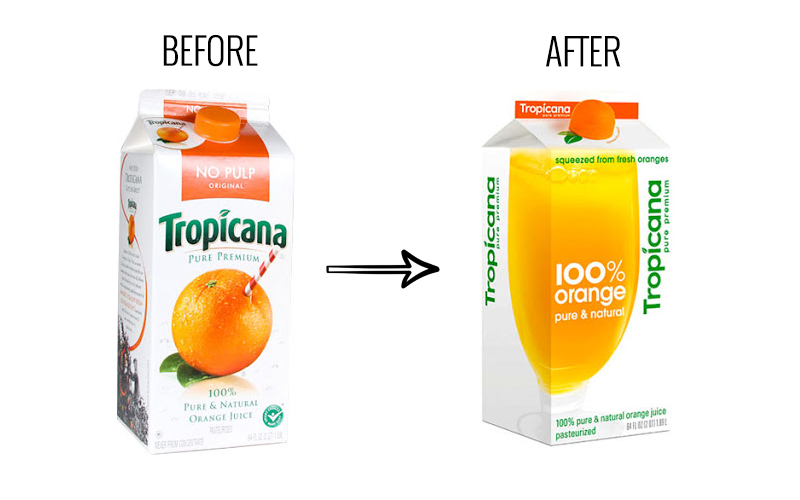\nSource: [The Branding Journal](https://www.thebrandingjournal.com/2015/05/what-to-learn-from-tropicanas-packaging-redesign-failure/)\n\nIn 2009, Tropicana decided to rebrand all elements of its well-known orange juice. Its rebranding strategy included simpler packaging for the product, logo design, and a new color pallet. Tropicana invested $35 million in an advertising campaign to promote the new packaging. \n\nHowever, Tropicana’s new packaging received a lot of criticism from customers, especially on social networks. They complained the new packaging looked too much like a cheap imitation or a generic store brand — not the product they regularly bought. \n\nTwo months after launching the new design, [Tropicana’s sales dropped by 20%](https://www.thebrandingjournal.com/2015/05/what-to-learn-from-tropicanas-packaging-redesign-failure/), representing a loss of $30 million. The brand eventually had to restore its original version of the packaging. \n\n[Neil Campbell](https://www.nytimes.com/2009/02/23/business/media/23adcol.html?pagewanted=all), president at Tropicana North America in Chicago, explained their rebranding failure by saying:\n\n“*We underestimated the deep emotional bond (they had with the original packaging). Those consumers are very important to us, so we responded. (...) What we didn’t get was the passion this very loyal small group of consumers has. That wasn’t something that came out in the research*.”\n\n### Flaw 3: Rebranding for the sake of getting attention \n\nLet’s say you release a new design, let people stew for a few days, generate a ton of publicity, and then announce: “Just kidding, we’re not changing our brand.” \n\nIn theory, it could be a good marketing stunt. There’s no such thing as bad publicity, right? But the trade-off is that people — especially those who haven’t used your products — may ultimately harbor negativity toward your brand. This is more likely to happen if your new brand is totally different from your current market position. No one may believe your rebrand, which potentially also makes you lose their trust. \n\nPaul Sears, the Executive Vice President of Integrated Marketing at Allison+Partners, [told PRWeek](https://www.prweek.com/article/1485211/outstanding-overdone-marketers-split-ihop-rebranding-stunt):\n\n\"*It is so easy for marketers to forget how serious people take their brands, and so using a fake rebrand as a short-term promotion, while not without upside in getting attention, really undermines the brand’s long-term value.\"*\n\nThere are many ways to make your business go viral. Rebranding just isn’t one of them. To illustrate, let’s look at the International House of Pancakes (IHOP)’s rebranding.\n\n### Mini Case Study: IHOP\n\n
\n\nFor over 60 years, IHOP has positioned itself as a breakfast destination for pancakes. In 2018, IHOP teased a name change from IHOP to IHOb — including a dramatic flipping of the “p” in its logo to a “b,” opening the doors to the lunch and dinner markets. However, the rebrand didn’t include changing its logo, colors, or much of its visual identity. \n\nIHOP’s tweet caused a viral discussion on social media, drawing both praise for what many saw as a strategic move and criticism for what others saw as a flop or a failed rebrand. \n\nJason Riis, a marketing lecturer at the University of Wharton, [explained at the time](https://knowledge.wharton.upenn.edu/article/ihop-to-ihob-will-the-new-marketing-strategy-work/): \n\n“*People are talking about it, and social media accounts of competitors are weighing in, so there is a lot of earned media for IHOP. The question is: Will all this hype trigger people wanting to try the IHOP burger offering that would not otherwise do so?*”\n\nHenry C. Boyd, a Clinical Professor of Marketing at the University of Maryland, [added his input, stating](https://knowledge.wharton.upenn.edu/article/ihop-to-ihob-will-the-new-marketing-strategy-work/): \n\n“*It becomes a bit of a risky campaign where you’re saying, ‘We’re willing to change our name from pancakes to burgers, and yet we didn’t live up to expectations”*.\n\nDespite all the buzz around the IHOb tweet, IHOP later reverted to its long-standing name on its 60th birthday. The company confirmed that it faked its name change to IHOb as a publicity stunt to promote its burgers. However, the rebranding effort [didn’t significantly increase its burger sales](https://www.usatoday.com/story/money/2018/06/20/ihop-temporary-name-change-fails-drive-customers-report/718462002/) and, instead, brought on mixed reactions and confusion. \n\n### Flaw 4: Focus too much on the logo and story behind it \n\nEveryone knows [logos](https://latana.com/post/survey-design-why-logos-are-better-than-text-in-brand-surveys/) are an essential part of a brand's identity — but a successful rebrand is about more than just the logo. When you put all of your rebranding efforts into just the logo, you’re missing the mark. \n\nA rebrand should represent a fundamental shift in how you position your business and how you’re different than before. Sure, the logo design will be a part of this. But the rationale behind the initiative and the outcome you’re hoping to achieve should be the most important.\n\nUber’s failure in logo redesign in 2016 left the world with some crucial lessons. \n\n### Mini Case Study: Uber\n\n\nSource: [Fortune](https://fortune.com/2016/02/11/uber-new-logo-jpmorgan/)\n\nIn February 2016, Uber unveiled a new logo featuring an image that is called the “atom and bit.” The [company argued](https://www.uber.com/newsroom/celebrating-cities-a-new-look-and-feel-for-uber-7) that its new look would “provide consistency, highlight information, and make our brand easy to recognize.” \n\nBut according to Alexander Chernev, a professor at the Kellogg School of Management at Northwestern University, [Uber’s logo was a mistake](https://fortune.com/2016/02/11/uber-new-logo-jpmorgan/). The story of \"bits and atoms\" might be true in theory, but it’s “just too abstract for customers who know Uber for its primary function: efficient and reliable transportation.”\n\nChernev also added: \n\n“*the new Uber icon falls short on all these criteria. Unlike the original logo, the new logo is not instantly identifiable with Uber; it could as well be a logo of a computer, communication, chemical, or biotech company.* \n\n*\"Furthermore, its overall design—a square inside of a circle/hexagon — is not distinct, resembling many other logos and app icons. Then, there’s the issue of whether the new logo creates meaningful associations in the minds of Uber’s customers*.”\n\nPeople didn’t like this new Uber logo — many didn’t even understand the story behind it. Peter Markatos), the Former Director of Brand at Uber, [admitted that](https://officechai.com/startups/uber-new-logo-2018/) they weren’t achieving their goal with their current system, stating: \"It doesn’t make sense to build more equity into something that people don’t understand.” \n\nHowever, it wasn’t until two years later that Uber changed this logo to its latest version, seen below. \n\n\nSource: [Uber Press Kit](https://www.uber.com/en-DE/newsroom/media-assets/)\n\n### Flaw 5: Name change when it's not needed\n\nA rebrand often comes with a renaming — which can cost you brand recognition and branded search traffic if done incorrectly.\n\n[Naming a brand](https://latana.com/post/come-up-with-great-brand-name/) is an art form. Your new name should tell an important story about your company, why you want to change, how it benefits your target audiences, and where the change leads you.\n\nSo, if you want to rename your company or a product, ensure you have both solid reasoning and a plan for recovery as part of your post-rebrand strategy. Otherwise, you may face a lot of trouble.\n\n### Mini Case Study: Pizza Hut\n\nIn 2009, Pizza Hut planned to expand its online and mobile businesses. In support of this change, the company introduced a new logo, “The Hut,” which it called “the perfect icon for our mobile generation.” \n\nBrian Niccol, the Former CMO at Pizza Hut, told [Brandweek](https://nancyfriedman.typepad.com/away_with_words/2009/06/however-you-s.html#:~:text=Niccol%20also%20said%3A,%2C%20which%20is%20'The%20Hut.&text=Red%20is%20our%20mark%20and,icon%20for%20our%20mobile%20generation.):\n\n“*We're also introducing another vocabulary word with Pizza Hut, which is 'The Hut.' That ties in nicely with today's texting generation. We wanted to make sure that Pizza Hut and 'The Hut' become common vernacular for our brand. Red is our mark and when you see that red roof, people will refer to it as 'The Hut' or 'Pizza Hut*.”\n\nPause to think about “The Hut”. Pizza Hut dropped the most important part of its brand identity (a.k.a “Pizza”), turning the rest of its brand into a question mark. \n\nWhat exactly should customers expect from \"The Hut?” This unnecessary move generated [laughter from the media](https://www.cbsnews.com/news/pizza-hut-plan-to-change-name-to-the-hut-meets-with-ridicule/) and scorn from the public — forcing the company to revert to its original name. \n\nHowever, the brand seems to still be using the phrase \"No One OutPizzas The Hut\" in 2022, as evidenced in the February ad seen below:\n\n\n\n## Final Thoughts\n\nIt can be challenging to roll out a successful rebrand. You might need to spend years and millions of dollars conducting research and devising a sure-fire rebranding strategy. But in the end, putting in the necessary time and effort is worth it — because you’ll avoid all the mistakes we covered in this article.\n\nSolving the first problem, i.e. conducting extensive market research, is the most important factor in any good rebrand. Other flaws are largely matters of understanding brand identity: If Tropicana, Uber, Pizza Hut, and IHOP were aware of the emotional bond that their customers had with their original design, they might not have changed their packaging, logo, or name. \n\nCompanies need to be aware of their current market position, [brand loyalty](https://latana.com/post/brand-loyalty-content/), and customer perception early on — thus, gaining invaluable insights that can help steer a rebrand or, if necessary, abort it. Hearing opposing opinions can be painful — but not as painful as rebranding that confused loyal customers or doesn't create any positive outcomes. \n"},"tags":["Brand Marketing","Brand Strategy"],"authorRef":{"slug":"lavender","firstName":"Lavender","lastName":"Nguyen","title":"Marketing Content Creator","picture":{"__typename":"ContentfulAsset","id":"bb56ceb9-a813-5edc-85a6-facde71b8efe","description":"","title":"Latana Logo Author Photo","file":{"contentType":"image/png","url":"//images.ctfassets.net/7so8go2zrvbw/7qeUdZpRNeFZFTo0zIasKz/8d00318fb2f317950a2a2d6912eb28bf/Author_Latana__1_.png","details":{"image":{"width":235,"height":235}}},"gatsbyImageData":{"images":{"sources":[{"srcSet":"//images.ctfassets.net/7so8go2zrvbw/7qeUdZpRNeFZFTo0zIasKz/8d00318fb2f317950a2a2d6912eb28bf/Author_Latana__1_.png?w=235&h=235&q=95&fm=webp 235w","sizes":"100vw","type":"image/webp"}],"fallback":{"src":"//images.ctfassets.net/7so8go2zrvbw/7qeUdZpRNeFZFTo0zIasKz/8d00318fb2f317950a2a2d6912eb28bf/Author_Latana__1_.png?w=235&h=235&q=95&fm=png","srcSet":"//images.ctfassets.net/7so8go2zrvbw/7qeUdZpRNeFZFTo0zIasKz/8d00318fb2f317950a2a2d6912eb28bf/Author_Latana__1_.png?w=235&h=235&q=95&fm=png 235w","sizes":"100vw"}},"layout":"fullWidth","backgroundColor":"#080808","width":1,"height":1}}}}},{"node":{"publishDate":"2019-07-16T00:00+02:00","slug":"mattress-brands-us","author":"Stephanie Siwiec","title":"A Guide to Mattress Brand Awareness and Consideration in the US","seo":{"__typename":"ContentfulSeo","title":"A Guide to Mattress Brand Awareness in the US","description":"The mattress. One of the most important pieces of furniture we own. But just how do these brands fare when it comes to brand awareness and consideration.","noIndex":null,"ogImage":{"fluid":{"src":"//images.ctfassets.net/7so8go2zrvbw/2lWSBpyLH7NunUwSL8a0cj/c62a0a0c5611b20ead891b06ee3a2afb/mattress-brands-us_1.jpg?w=1200&h=675&q=90&fm=jpg"},"file":{"url":"//images.ctfassets.net/7so8go2zrvbw/2lWSBpyLH7NunUwSL8a0cj/c62a0a0c5611b20ead891b06ee3a2afb/mattress-brands-us_1.jpg"}}},"heroImage":{"__typename":"ContentfulAsset","id":"423c7641-61dc-5da2-bc4b-1c7989d8d20e","description":"A Guide to Mattress Brand Awareness and Consideration in the US","title":"A Guide to Mattress Brand Awareness and Consideration in the US","file":{"contentType":"image/jpeg","url":"//images.ctfassets.net/7so8go2zrvbw/2lWSBpyLH7NunUwSL8a0cj/c62a0a0c5611b20ead891b06ee3a2afb/mattress-brands-us_1.jpg","details":{"image":{"width":940,"height":788}}},"gatsbyImageData":{"images":{"sources":[{"srcSet":"//images.ctfassets.net/7so8go2zrvbw/2lWSBpyLH7NunUwSL8a0cj/c62a0a0c5611b20ead891b06ee3a2afb/mattress-brands-us_1.jpg?w=200&h=168&q=95&fm=webp 200w,\n//images.ctfassets.net/7so8go2zrvbw/2lWSBpyLH7NunUwSL8a0cj/c62a0a0c5611b20ead891b06ee3a2afb/mattress-brands-us_1.jpg?w=400&h=336&q=95&fm=webp 400w,\n//images.ctfassets.net/7so8go2zrvbw/2lWSBpyLH7NunUwSL8a0cj/c62a0a0c5611b20ead891b06ee3a2afb/mattress-brands-us_1.jpg?w=800&h=671&q=95&fm=webp 800w","sizes":"(min-width: 800px) 800px, 100vw","type":"image/webp"}],"fallback":{"src":"//images.ctfassets.net/7so8go2zrvbw/2lWSBpyLH7NunUwSL8a0cj/c62a0a0c5611b20ead891b06ee3a2afb/mattress-brands-us_1.jpg?w=800&h=671&fl=progressive&q=95&fm=jpg","srcSet":"//images.ctfassets.net/7so8go2zrvbw/2lWSBpyLH7NunUwSL8a0cj/c62a0a0c5611b20ead891b06ee3a2afb/mattress-brands-us_1.jpg?w=200&h=168&fl=progressive&q=95&fm=jpg 200w,\n//images.ctfassets.net/7so8go2zrvbw/2lWSBpyLH7NunUwSL8a0cj/c62a0a0c5611b20ead891b06ee3a2afb/mattress-brands-us_1.jpg?w=400&h=336&fl=progressive&q=95&fm=jpg 400w,\n//images.ctfassets.net/7so8go2zrvbw/2lWSBpyLH7NunUwSL8a0cj/c62a0a0c5611b20ead891b06ee3a2afb/mattress-brands-us_1.jpg?w=800&h=671&fl=progressive&q=95&fm=jpg 800w","sizes":"(min-width: 800px) 800px, 100vw"}},"layout":"constrained","backgroundColor":"#f8e828","width":800,"height":671}},"coverImage":null,"description":{"description":"The mattress. One of the most important pieces of furniture we own. But just how do these brands fare when it comes to brand awareness and consideration."},"content":{"content":"**Do you know how much time you actually spend in bed? Your mattress gets a lot of action and mattress brands have an in when it comes to offering a useful product people want and need. Whether or not people actually know the brand of their mattress is up for debate, but it’s certainly an industry that should take full advantage of brand awareness and brand consideration. Read more to see what our data has to say about [brand awareness](https://latana.com/topics-brand-awareness/) and [brand consideration](https://latana.com/post/brand-consideration-preference-center-of-brand-funnel/) in the mattress world.**\n\nWhen it comes to the simple things in life, there isn’t much better than a good night’s sleep. Unfortunately getting a good night’s sleep is contingent on a lot of factors. Whether it’s having the time to sleep a full night, being able to actually fall asleep despite the stress of the many responsibilities we all carry, or just being comfortable. Fortunately, there is something you can do to make sure to have a good night’s, or at least better night’s sleep.\n\nThat something you can do to rest better is making sure you have a good mattress. Your mattress is one of the most important pieces of furniture you could own. Think about moving into a new apartment or house, one of the first purchases you’ll probably make is a mattress. A mattress isn’t just a place where you sleep. Actually, you spend way more time on a mattress than you think.\n\nIn fact, the average American spends 36 years in bed. That’s almost half a lifetime. Between sleeping, relaxing, reading a book, binge watching a TV show, having breakfast in bed, among other things, we spend a lot of time on a mattress. Meaning we should really know more about the thing we’re spending so much time on and make some serious considerations if planning to purchase a new mattress.\n\n## Measuring Brand Awareness and Brand Consideration\n\nThe mattress business has it pretty easy when it comes to convincing people the utility of a mattress. As you’d suspect, there are quite a few mattress brands out there. All of which rely on [brand awareness](https://latana.com/topics-brand-awareness/) and then the brand consideration of customers to pick their mattress brand over others.\n\nBrand awareness is how familiar a customer is with a brand. Whether it’s a brand’s logo or its reputation, having strong brand awareness is important to the success of any business. That said, customers don’t purchase all of the brands they’re aware of them. They might actually try and avoid them. A customer needs to think about the brand they want to purchase.\n\n## Factors and Categories of Measurement\n\nBack to those 36 years we spend in bed. We wanted to find out the brand awareness and consideration of seven different mattress brands: Purple, Casper, Leesa, Nectar, Saatva, Ghostbed, and Tuft & Needle. For each mattress brand, there were three categories in which we broke down the percentages. Each category also has a specific question in which participates had to answer.\n\nThe first category was “[Unaided Brand Awareness](https://latana.com/post/unaided-brand-awareness/),” which is a measurement of people who know about a brand without prompting or brand recall. This category is guided by the question, “When you think of mattress providers, which brands come to mind?” Based on our data, this first category was a bit of a moot point with 0% of our participants from all age groups unable to recognize a mattress brand without aid.\n\nThe second category was “Aided Brand Awareness,” which you can assume is the opposite of unaided brand awareness; a measurement of people who know a brand when promoted, also known as brand recognition. The question answered here was, “Which of the following brands have you heard of?”\n\nAnd the third category was “Brand Consideration” with the question, “Which of the following brands would you consider using?” The last two categories were the juiciest part of our data and also indicates something aided brand awareness and brand consideration. Marketing helps people find and recognize your brand, which can lead them to select your brand over others.\n\n## So, What Does the Data Say?\n\n### **Tuft & Needle**\n\nTuft & Needle is American direct to budget consumer mattress company with the backing of a much larger corporation, Serta. Interestingly enough, they were recently [voted the best value mattress](https://disturbmenot.co/hi-tech-sleep-mattresses-technology-infographic/). When asked about the provider, 0% of participants recognized the brand when given unaided brand awareness.\n\nEven with aided brand awareness only 9% of those surveyed recognized the brand. Our youngest age group of 18 – 25 had an even lower percentage of 7%.\n\n\n\nWhen it came to brand consideration, 51% of all age groups considered using the mattress.\n\n\n\n### **Casper**\n\n[D2C brand](https://latana.com/reports/d2c-brand-awareness-report-2019/) Casper sells mattresses and all things sleep-related and has built a cult following as a premier mattress. Here we saw again that with unaided brand awareness 0% of all age groups thought of Casper as a mattress provider. However, in stark contrast to Tuft & Needle, over 43% of the general population recognized the company with aided awareness. The age group 18 – 25 years came in at 32%.\n\n\n\nWhen it comes to brand consideration Casper outshined Tuft and Needle, with over 64% of participants saying they would consider Casper. The 18 - 25 age group surveyed lower at 52%.\n\n\n\n### **Ghostbed**\n\nPopular for their cooling mattresses, Ghostbed ranked low with aided brand awareness and unsurprisingly 0% of participants thought of Ghostbed in unaided brand awareness. Only 10% of people recognized the brand.\n\n\n\nDespite lack of recognition, Ghostbed was able to come in with 50% in all age groups in brand consideration.\n\n\n\n### **Leesa**\n\nLeesa is one of Casper’s top competitors when it comes to luxury mattresses, but they don’t share the same numbers in aided brand awareness. Like Casper and the other mattress brands, 0% of participants thought of Leesa as a mattress provider in unaided brand awareness. In the aided brand awareness category, 19% of the general population had heard of the brand.\n\n\n\nUnlike Tuft & Needle or Ghostbed, Leesa was able to move past that 50% threshold in brand consideration, ranging from 56 - 58% between the ages of 26 - 65. The age group 18 – 25 sat behind at 52%.\n\n\n\n### **Nectar**\n\nNot even 5 years old, Nectar has collaborated with celebrities in promoting its brand and was listed as one of the fasted growing e-commerce companies in 2018. Despite this, Nectar’s aided branded awareness found itself at 14% across all age groups.\n\n\n\nThe company’s brand consideration sits at 51%, similar to other less popular mattress from this study.\n\n\n\nNectar also comes in at 0% with unaided brand awareness.\n\n### **Purple**\n\nAnother mattress brand with a cult following, reviews and comparison videos of Purple mattress are ubiquitous. The percentage of people who recognized the brand came at 48%, beating out Casper as the top contender.\n\n\n\nBrand consideration came in at a whopping 83%. This is despite its unaided brand awareness coming in at 0%.\n\n\n\n### **Saatva**\n\nOur last mattress brand surveyed, Saatva, specialized in luxury mattresses. As a luxury mattress company, their audience was probably tighter than other companies, which is reflected in their aided brand awareness. Only 5% of 18 - 25-year-olds recognized the brand and with the general population coming in at 10%.\n\n\n\nAll age groups came in at 51% in brand consideration.\n\n\n\nLike all mattress brands part of this study, 0% of participants thought of Saatva as a mattress provider with unaided brand awareness.\n\n## Final Thoughts\n\nThe findings in our data showed that there are some differences in terms of aided brand awareness and brand consideration for the general population. As mentioned before, none of the brands came up for unaided brand awareness.\n\nThe fact that all mattress companies had 0% of participants who recognized them with unaided brand awareness is further emphasis on just how important branding is for a product. It’s the brand, rather than the actual product that’s reviewed first and makes that initial impact for a future transaction.\n\nIn all age groups, there was a particular brand that was recognized the most with aided brand awareness and that was Purple.\n\nThe same brand, Purple, also led in brand consideration with a high percentage of 83%.\n\n## Applying Our Mattress Brand Study to Your Brand\n\nIn general, collecting brand awareness and consideration statistics is helpful for making more strategic decisions. It can help you figure out where you should be investing in marketing, [discover who your audience is or could be](https://latana.com/post/7-steps-perfect-target-audience/), figure out how you compare to your competitors or even change your product to meet demand. There is absolutely no doubt that having [strong brand awareness](https://latana.com/post/6-ways-to-increase-and-improve-brand-awareness/) is crucial to the next step in a customer’s mind, brand consideration. You want the customer to recognize your brand, but you also want them to choose it. This can be difficult with more challenge brands, like [Eve Sleep](https://latana.com/brand-insights/brand-bite-eve-sleep/), entering the industry.\n\n__________________________________________________________________________\n\nInterested in growing your brand in the mattress industry? Learn how you can get [mattress industry insights](https://latana.com/industry-insights/mattress-industry-insights/) for your brand."},"tags":["Brand Insights","Consumer Insights"],"authorRef":{"slug":"stephanie","firstName":"Stephanie","lastName":"Siwiec","title":"Freelance Writer & Editor","picture":{"__typename":"ContentfulAsset","id":"bb56ceb9-a813-5edc-85a6-facde71b8efe","description":"","title":"Latana Logo Author Photo","file":{"contentType":"image/png","url":"//images.ctfassets.net/7so8go2zrvbw/7qeUdZpRNeFZFTo0zIasKz/8d00318fb2f317950a2a2d6912eb28bf/Author_Latana__1_.png","details":{"image":{"width":235,"height":235}}},"gatsbyImageData":{"images":{"sources":[{"srcSet":"//images.ctfassets.net/7so8go2zrvbw/7qeUdZpRNeFZFTo0zIasKz/8d00318fb2f317950a2a2d6912eb28bf/Author_Latana__1_.png?w=235&h=235&q=95&fm=webp 235w","sizes":"100vw","type":"image/webp"}],"fallback":{"src":"//images.ctfassets.net/7so8go2zrvbw/7qeUdZpRNeFZFTo0zIasKz/8d00318fb2f317950a2a2d6912eb28bf/Author_Latana__1_.png?w=235&h=235&q=95&fm=png","srcSet":"//images.ctfassets.net/7so8go2zrvbw/7qeUdZpRNeFZFTo0zIasKz/8d00318fb2f317950a2a2d6912eb28bf/Author_Latana__1_.png?w=235&h=235&q=95&fm=png 235w","sizes":"100vw"}},"layout":"fullWidth","backgroundColor":"#080808","width":1,"height":1}}}}},{"node":{"publishDate":"2021-07-13T08:30+02:00","slug":"speaking-to-millennials","author":"Cory Schröder","title":"Speaking to Millennials: How Can Brands Connect with the Most Insecure Generation?","seo":{"__typename":"ContentfulSeo","title":"How Brands Can Connect with Millennials","description":"Dubbed “the most insecure generation”, Millennials often get a bad rap. Warranted or not, as a brand manager, you need to know how to speak to them. ","noIndex":null,"ogImage":{"fluid":{"src":"//images.ctfassets.net/7so8go2zrvbw/Y36Up0eBChyniH2bP8uCx/c8b8d3c4dedc45aeb76ada69a0aa0bba/Hero_1200x627.png?w=1200&h=675&q=90&fm=jpg"},"file":{"url":"//images.ctfassets.net/7so8go2zrvbw/Y36Up0eBChyniH2bP8uCx/c8b8d3c4dedc45aeb76ada69a0aa0bba/Hero_1200x627.png"}}},"heroImage":{"__typename":"ContentfulAsset","id":"62fa8a09-f59b-57c6-9a2c-c7cc31985937","description":"","title":"Illustration of four Millennials chatting in a speech bubble (Thumbnai)l","file":{"contentType":"image/png","url":"//images.ctfassets.net/7so8go2zrvbw/7lk66EuntFfw5oZuKl6550/f7861ca7bb1344347743be39854de1a0/Hero_1000X709.png","details":{"image":{"width":3000,"height":2127}}},"gatsbyImageData":{"images":{"sources":[{"srcSet":"//images.ctfassets.net/7so8go2zrvbw/7lk66EuntFfw5oZuKl6550/f7861ca7bb1344347743be39854de1a0/Hero_1000X709.png?w=200&h=142&q=95&fm=webp 200w,\n//images.ctfassets.net/7so8go2zrvbw/7lk66EuntFfw5oZuKl6550/f7861ca7bb1344347743be39854de1a0/Hero_1000X709.png?w=400&h=284&q=95&fm=webp 400w,\n//images.ctfassets.net/7so8go2zrvbw/7lk66EuntFfw5oZuKl6550/f7861ca7bb1344347743be39854de1a0/Hero_1000X709.png?w=800&h=567&q=95&fm=webp 800w,\n//images.ctfassets.net/7so8go2zrvbw/7lk66EuntFfw5oZuKl6550/f7861ca7bb1344347743be39854de1a0/Hero_1000X709.png?w=1600&h=1134&q=95&fm=webp 1600w","sizes":"(min-width: 800px) 800px, 100vw","type":"image/webp"}],"fallback":{"src":"//images.ctfassets.net/7so8go2zrvbw/7lk66EuntFfw5oZuKl6550/f7861ca7bb1344347743be39854de1a0/Hero_1000X709.png?w=800&h=567&q=95&fm=png","srcSet":"//images.ctfassets.net/7so8go2zrvbw/7lk66EuntFfw5oZuKl6550/f7861ca7bb1344347743be39854de1a0/Hero_1000X709.png?w=200&h=142&q=95&fm=png 200w,\n//images.ctfassets.net/7so8go2zrvbw/7lk66EuntFfw5oZuKl6550/f7861ca7bb1344347743be39854de1a0/Hero_1000X709.png?w=400&h=284&q=95&fm=png 400w,\n//images.ctfassets.net/7so8go2zrvbw/7lk66EuntFfw5oZuKl6550/f7861ca7bb1344347743be39854de1a0/Hero_1000X709.png?w=800&h=567&q=95&fm=png 800w,\n//images.ctfassets.net/7so8go2zrvbw/7lk66EuntFfw5oZuKl6550/f7861ca7bb1344347743be39854de1a0/Hero_1000X709.png?w=1600&h=1134&q=95&fm=png 1600w","sizes":"(min-width: 800px) 800px, 100vw"}},"layout":"constrained","backgroundColor":"#1898e8","width":800,"height":567}},"coverImage":null,"description":{"description":"Dubbed “the most insecure generation”, Millennials often get a bad rap. Warranted or not, as a brand manager, you need to know how to speak to them. So, find out here!"},"content":{"content":"There’s been some disagreement about which age groups are actually considered “real” Millennials. Some argue the range should start in 1982, others say it should extend to 2000. \n\nBut we can put that issue to rest [thanks to the Pew Research Center](https://www.pewresearch.org/fact-tank/2019/01/17/where-millennials-end-and-generation-z-begins/), which stated: the Millennial generation encompasses those born between 1981-1996. Meaning, those currently aged 25-40 are the “real” Millennials.\n\nAs the first generation to reach adulthood in the new millennium, Millennials grew up in an increasingly interconnected, tech-focused world. And while these advances proved exciting in many ways, they also created a generation lacking in interpersonal skills and overrun with anxiety and depression.\n\nAdd in a culture of constant comparison fostered by the internet and extreme pressure to be successful, and, understandably, Millennials have fallen prey to a high level of insecurity — personally, socially, and financially. \n\nThings that were once routine, such as buying a house, holding down a well-paid job, or supporting children, aren’t as easy as they once were. \n\nThis generation is defined by a contradictory combination of confidence and insecurity — where one ends and the other begins is hard to accurately measure. So, how do you speak to such a confused audience?\n\n---\n\nAs a [brand manager](https://latana.com/post/tips-brand-managers/), you know how vital it is to possess a deep knowledge of your [target audience](https://latana.com/post/7-steps-perfect-target-audience/) — their likes and dislikes. And if Millennials make up a part of that audience — whether a small section or pretty much the whole thing — you need to know how to speak to them.\n\nWhile some brands have previously preyed on that insecurity to sell products or services, going forward, a generation as “woke” as Millennials will see right through this kind of brand messaging. \n\nInstead, you need to figure out [how to connect emotionally](https://latana.com/post/emotional-connections-to-create-stronger-customer-bonds/), show empathy, and make Millennials see that you understand their struggles in your me. \n\nThis article will take a look at some of the ways brands can better communicate with Millennials to establish [greater brand loyalty](https://www.latana.com/post/brand-loyalty-content/) and overall connection.\n\n## What Sets Millennials Apart?\n\nSource: [Pexels](https://www.pexels.com/photo/group-of-people-watching-on-laptop-1595385/)\n\nEach generation has its defining characteristics. \n\nFor the Baby Boomers, it’s living the 9-to-5 lifestyle with a house, a minivan, and 2.5 children. Having grown up without technology, they value in-person relationships and love to give advice to younger generations.\n\nGeneration X, or “the lost generation”, was deeply impacted by their parents’ workaholism and, consequently, focused more on maintaining a good work-life balance and waited longer to marry and have kids.\n\nThen we come to the Millennials. Dubbed “The Me Me Me Generation” by Time magazine and “confident, entitled, and depressed” by [Psychology Today](https://www.psychologytoday.com/us/blog/the-truisms-wellness/201602/baby-boomers-generation-z), Millennials don’t exactly have the best reputation. But how much of it is really their fault?\n\nAs Harvard Medical School professor Ralph Ryback explains, many “stressors and mental illnesses are probably multi-factorial, driven by the hardships of society, the obsession with technology,” and the lack of well-developed interpersonal skills.\n\nFrom [multiple economic crises](https://www.europeanceo.com/finance/millennials-have-been-hit-by-successive-economic-crises-as-they-entered-the-workforce/) to vastly increased reported mental health issues, Millennials have had a tough go of it so far — their insecurity is warranted and understandable. But at the end of the day, they want what most everyone wants: to be seen, heard, understood, and appreciated. \n\nTherefore, when marketing to Millennials, there are a few golden rules you should follow. \n\n## Marketing to Millennials: The Do’s And Don’ts\n\nFor decades, marketers have used consumers’ insecurities to sell them things they probably don’t need. From cars to diet pills to luxury fashion, brands have focused on making consumers feel inadequate — unless they buy their products, of course.\n\n\nSource: [MentalFloss](https://www.mentalfloss.com/article/67885/selling-shame-40-outrageous-vintage-ads-any-woman-would-find-offensive)\n\nBut, as a generation raised on technology and the internet, Millennials aren’t easily fooled by these cheap attempts to play on their insecurities. (And the same goes for Gen Z).\n\nWhich brings us to our first rule.\n\n### __1. Do: Show Empathy and Be Honest (Don’t: Prey on Consumers’ Insecurities)__\n\nWhile they struggle with certain types of insecurity, Millennials are also a generation that have been encouraged to be more accepting of themselves and others. Loving yourself and your flaws is in. \n\nWhat once worked faultlessly to rope in new customers is now seen for what is it — underhanded attempts to play on people’s insecurities and make an easy profit. \n\nSo, as a brand manager, if you want to connect with Millennials, start by being honest. Pull back the curtain and let them authentically explore your brand. \n\nInstead of saying “Buy this product because it will make you prettier/happier/more popular”, show them that [what’s important to them is important to you](https://latana.com/post/cause-marketing/).\n\n---\n\nA great example of this principle can be found in Lush’s “How It’s Made” video series. In a time when [brand authenticity is more important than ever](https://route.com/blog/11-ecommerce-brands-rocking-empathetic-marketing/), it’s vital that you work on building brand empathy with your target audience. \n\n\n\nLush knows that its customers value ethically sourced, sustainable products. So, in an effort to show transparency and solidarity, Lush created this video series — which features the actual people who make their products. \n\nThe video’s stars are real people — obviously not paid actors. And because of this, customers get an authentic, empathetic look into the brand. By focusing on what their customers really care about, Lush is able to connect with them. \n\nAnd how do we know that Lush is targeting Millennials? \n\nBased on research we conducted with our own advanced brand tracking software, we found that female Millennials represent one of Lush’s most aware and engaged audiences, reporting 39% brand awareness. \n\nClearly, Lush’s brand manager understands this concept and has done a great job of changing up its brand messaging to better connect with its Millennial audience.\n\n### __2. Do: Make Your Brand Accessible (Don’t: Overcomplicate Your Message)__\n\nThese days, young people want to understand the world around them. This desire has been cultivated by the internet — all the knowledge you could want at the tip of your fingers. \n\nWant to learn how to make a table? YouTube has a video for that. Interested in mastering a new language? There are apps galore. \n\nHowever, some brands still don’t hit the mark. For example, mattress brand Purple [launched a bizarre web series called “Purple Boys”](https://blog.hubspot.com/marketing/unusual-ways-brands-promoted), where they hired two comedians to conduct trippy, off-topic interviews. \n\nInstead of providing consumers with an honest look into the company, Purple’s brand manager chose to create something nonsensical that pulled focus away from its products. As a brand that targets Millennials, they should have known better than to release something so overly complicated. \n\nAs a brand manager, how can you speak to Millennials’ shared desire for knowledge without overcomplicating your brand messaging?\n\nBy making your brand accessible and focusing on sharing your knowledge in a straightforward manner. \n\nMillennials want to understand what it is you do, how you do it, and why they should trust you. Choices are endless these days, so you have to learn how to stand out from the crowd. \n\n---\n\nA brand that is excelling in this area is [Robinhood](https://latana.com/post/robinhood-deep-dive/). The up-and-coming financial app focuses a great deal on making finance accessible to everyone. \n\n\nSource: [Robinhood Blog](https://learn.robinhood.com/library/)\n\nWith an entire digital library of resources — teaching users about everything from capital gain taxes to the Dow — Robinhood has done an outstanding job of keeping its brand messaging simple and accessible. \n\nBy serving as not only an app for trading and investing but also an educational hub for Millennials to learn the basics of financial literacy, they are meeting the needs of an entire generation. Well done, Robinhood.\n\n### __3. Do: Strive to Form Real Emotional Connections (Don’t: Hijack Important Issues to Further Your Brand)__\n\nLet’s be honest, Millennials know when you’re only talking the talk (and not walking the walk).\n\nPretty much everything can be found out on the internet. It’s a huge mistake to try and hijack an important issue — be it social, political, or environmental — for your own gain.\n\nFrom [rainbow-washing](https://latana.com/post/why-rainbow-washing-is-bad/) to [greenwashing](https://latana.com/post/greenwashing-sustainable-brand/), there are many pitfalls you need to avoid as a brand manager.\n\nSo, how do you forge deeper emotional connections with Millennials? Be authentically invested in the issue at hand and ready to show vulnerability and openness. \n\nAs a generation, Millennials are far more open about discussing their struggles with mental health than previous generations. From destigmatizing therapy to changing the perspective about what’s appropriate to discuss publically, Millennials are open to connecting with brands that truly care. \n\n---\n\nBack in March 2021, British chocolate brand Maltesers launched a fantastic campaign, called #TheMassiveOvershare, which focused on destigmatizing post-partum depression and encouraging mothers to be more open about the highs and lows of motherhood. \n\nFor 60 pancakin’ years, we’ve been IHOP. Now, we’re flippin’ our name to IHOb. Find out what it could b on 6.11.18. #IHOb pic.twitter.com/evSxKV3QmT
— IHOP (@IHOP) June 4, 2018
\n\nYes, they are a chocolate brand and that doesn’t have too much to do with mental health. However, Maltesers knows what its target audience values and delivered. \n\nFirst, they [commissioned a study](https://www.mars.com/news-and-stories/articles/maltesers-shines-light-maternal-mental-health) to take a deep dive into life after baby, which showed that moms are really struggling and often don’t feel comfortable asking for help. Secondly, they released the campaign in March — which coincided with Mother’s Day in the UK and International Women’s Day. \n\nFinally, Maltesers put its money where its mouth was. Teaming up with Comic Relief, they [donated £225,000 to support maternal mental health](https://www.comicrelief.com/partners/maltesers/). Plus, this isn’t the first time the brand has put the spotlight on tough emotional issues or donated money to a worthy cause. It’s a habit for this brand. \n\nBy tapping into a real issue that many Millennials are facing and approaching it respectfully and empathetically, Maltesers was able to forge an incredibly strong emotional connection with its Millennial audience. \n\nMost importantly, they didn’t hijack an emotionally charged issue solely for their own benefit. They were respectful, open, supportive, and empathetic — everything a Millennial needs to begin trusting a brand.\n\n## Final Thoughts\n\nThere’s no magic formula that will help you win the hearts (and brand loyalty) of every Millennial out there. We’d be remiss to suggest all Millennials think the same way or want the same things. \n\nHowever, as a generation, there are certain general rules that can be applied to your communications with them, which we’ve outlined above.\n\nWant to take it a step further? Really get into the minds of your Millennial customers? Use [brand tracking](https://latana.com/) to gather reliable consumer insights that will help you make smarter decisions going forward."},"tags":["Brand Strategy","Brand Marketing"],"authorRef":{"slug":"cory-schroder","firstName":"Cory","lastName":"Schröder","title":"Senior Content Marketing Manager","picture":{"__typename":"ContentfulAsset","id":"31ab4d95-0f90-5835-a22f-4b7ff41fece2","description":"","title":"Cory Profile Picture","file":{"contentType":"image/png","url":"//images.ctfassets.net/7so8go2zrvbw/42rTfahl2m45FP1Fzo7B8n/52d40b8bd8af9ab559381bc0ab744cda/avatar.png","details":{"image":{"width":235,"height":235}}},"gatsbyImageData":{"images":{"sources":[{"srcSet":"//images.ctfassets.net/7so8go2zrvbw/42rTfahl2m45FP1Fzo7B8n/52d40b8bd8af9ab559381bc0ab744cda/avatar.png?w=235&h=235&q=95&fm=webp 235w","sizes":"100vw","type":"image/webp"}],"fallback":{"src":"//images.ctfassets.net/7so8go2zrvbw/42rTfahl2m45FP1Fzo7B8n/52d40b8bd8af9ab559381bc0ab744cda/avatar.png?w=235&h=235&q=95&fm=png","srcSet":"//images.ctfassets.net/7so8go2zrvbw/42rTfahl2m45FP1Fzo7B8n/52d40b8bd8af9ab559381bc0ab744cda/avatar.png?w=235&h=235&q=95&fm=png 235w","sizes":"100vw"}},"layout":"fullWidth","backgroundColor":"#080808","width":1,"height":1}}}}},{"node":{"publishDate":"2022-08-05T10:00+02:00","slug":"brand-manager-insights-sneaker-brands","author":"Fiona Laughton","title":"Key Insights on Top Sneaker Brands in 2022","seo":{"__typename":"ContentfulSeo","title":"Key Insights From Top Sneaker Brands","description":"Are Nike and Adidas really the top sneaker brands? How do some of the other sneaker brands perform? We have the brand insights that will provide answers.","noIndex":null,"ogImage":{"fluid":{"src":"//images.ctfassets.net/7so8go2zrvbw/4ajoP21jLyJ4XZ43aOFzu5/e168fa5bcf0753c7a1fef19f2c85ae18/Blog_SEO-Thumbnail_1000X709__54_.png?w=1200&h=675&q=90&fm=jpg"},"file":{"url":"//images.ctfassets.net/7so8go2zrvbw/4ajoP21jLyJ4XZ43aOFzu5/e168fa5bcf0753c7a1fef19f2c85ae18/Blog_SEO-Thumbnail_1000X709__54_.png"}}},"heroImage":{"__typename":"ContentfulAsset","id":"80b12b26-551f-597d-bf1d-c4153199f4cf","description":"Article Image","title":"Which sneaker brands are the most popular with consumers.","file":{"contentType":"image/png","url":"//images.ctfassets.net/7so8go2zrvbw/4ajoP21jLyJ4XZ43aOFzu5/e168fa5bcf0753c7a1fef19f2c85ae18/Blog_SEO-Thumbnail_1000X709__54_.png","details":{"image":{"width":1000,"height":709}}},"gatsbyImageData":{"images":{"sources":[{"srcSet":"//images.ctfassets.net/7so8go2zrvbw/4ajoP21jLyJ4XZ43aOFzu5/e168fa5bcf0753c7a1fef19f2c85ae18/Blog_SEO-Thumbnail_1000X709__54_.png?w=200&h=142&q=95&fm=webp 200w,\n//images.ctfassets.net/7so8go2zrvbw/4ajoP21jLyJ4XZ43aOFzu5/e168fa5bcf0753c7a1fef19f2c85ae18/Blog_SEO-Thumbnail_1000X709__54_.png?w=400&h=284&q=95&fm=webp 400w,\n//images.ctfassets.net/7so8go2zrvbw/4ajoP21jLyJ4XZ43aOFzu5/e168fa5bcf0753c7a1fef19f2c85ae18/Blog_SEO-Thumbnail_1000X709__54_.png?w=800&h=567&q=95&fm=webp 800w","sizes":"(min-width: 800px) 800px, 100vw","type":"image/webp"}],"fallback":{"src":"//images.ctfassets.net/7so8go2zrvbw/4ajoP21jLyJ4XZ43aOFzu5/e168fa5bcf0753c7a1fef19f2c85ae18/Blog_SEO-Thumbnail_1000X709__54_.png?w=800&h=567&q=95&fm=png","srcSet":"//images.ctfassets.net/7so8go2zrvbw/4ajoP21jLyJ4XZ43aOFzu5/e168fa5bcf0753c7a1fef19f2c85ae18/Blog_SEO-Thumbnail_1000X709__54_.png?w=200&h=142&q=95&fm=png 200w,\n//images.ctfassets.net/7so8go2zrvbw/4ajoP21jLyJ4XZ43aOFzu5/e168fa5bcf0753c7a1fef19f2c85ae18/Blog_SEO-Thumbnail_1000X709__54_.png?w=400&h=284&q=95&fm=png 400w,\n//images.ctfassets.net/7so8go2zrvbw/4ajoP21jLyJ4XZ43aOFzu5/e168fa5bcf0753c7a1fef19f2c85ae18/Blog_SEO-Thumbnail_1000X709__54_.png?w=800&h=567&q=95&fm=png 800w","sizes":"(min-width: 800px) 800px, 100vw"}},"layout":"constrained","backgroundColor":"#082848","width":800,"height":567}},"coverImage":{"__typename":"ContentfulAsset","id":"05b61d49-b005-57a4-8e35-612b494505ac","description":"","title":"Which sneaker brand is most popular with consumers cover image","file":{"contentType":"image/png","url":"//images.ctfassets.net/7so8go2zrvbw/1ZRc3fm5CiuyZP9wVEwArV/ec94d4acb03a0af890801459a0d5e271/Blog_Cover_1288X400__63_.png","details":{"image":{"width":1288,"height":400}}},"gatsbyImageData":{"images":{"sources":[{"srcSet":"//images.ctfassets.net/7so8go2zrvbw/1ZRc3fm5CiuyZP9wVEwArV/ec94d4acb03a0af890801459a0d5e271/Blog_Cover_1288X400__63_.png?w=750&h=233&q=95&fm=webp 750w,\n//images.ctfassets.net/7so8go2zrvbw/1ZRc3fm5CiuyZP9wVEwArV/ec94d4acb03a0af890801459a0d5e271/Blog_Cover_1288X400__63_.png?w=1080&h=335&q=95&fm=webp 1080w,\n//images.ctfassets.net/7so8go2zrvbw/1ZRc3fm5CiuyZP9wVEwArV/ec94d4acb03a0af890801459a0d5e271/Blog_Cover_1288X400__63_.png?w=1288&h=400&q=95&fm=webp 1288w","sizes":"100vw","type":"image/webp"}],"fallback":{"src":"//images.ctfassets.net/7so8go2zrvbw/1ZRc3fm5CiuyZP9wVEwArV/ec94d4acb03a0af890801459a0d5e271/Blog_Cover_1288X400__63_.png?w=1288&h=400&q=95&fm=png","srcSet":"//images.ctfassets.net/7so8go2zrvbw/1ZRc3fm5CiuyZP9wVEwArV/ec94d4acb03a0af890801459a0d5e271/Blog_Cover_1288X400__63_.png?w=750&h=233&q=95&fm=png 750w,\n//images.ctfassets.net/7so8go2zrvbw/1ZRc3fm5CiuyZP9wVEwArV/ec94d4acb03a0af890801459a0d5e271/Blog_Cover_1288X400__63_.png?w=1080&h=335&q=95&fm=png 1080w,\n//images.ctfassets.net/7so8go2zrvbw/1ZRc3fm5CiuyZP9wVEwArV/ec94d4acb03a0af890801459a0d5e271/Blog_Cover_1288X400__63_.png?w=1288&h=400&q=95&fm=png 1288w","sizes":"100vw"}},"layout":"fullWidth","backgroundColor":"#082848","width":1,"height":0.3105590062111801}},"description":{"description":"Are Nike and Adidas really the top sneaker brands? We have consumer data to prove it, as well as measuring up how other sneaker brands perform too. See the brand insights here."},"content":{"content":"Some of the world’s most iconic and best-known brands are sneaker brands. Adidas, Nike, and New Balance, to name but a few, are all household names. Typically promoted by pro-athletes and celebrities and often positioned as both sportswear and streetwear, many sneaker brands are [increasingly becoming associated with high fashion, too](https://www.theguardian.com/fashion/2022/may/22/high-fashion-collabs-new-chapter-rivalry-nike-adidas-jacquemus-gucci).\n\nIn short, these brands are extremely successful.\n\nIn 2021, the Nike brand was [valued at approximately 30.44 billion U.S. dollars](https://www.statista.com/statistics/632210/nike-brand-value/). With its sneakers worn by some of the world’s most famous sportspeople and pop stars, its brand has evolved from a specialist shoemaker to a sports retailer to the giant within the fashion and apparel industry that it is today.\n\nOf course, we’re well aware of the top sneaker brands — but what about those that are less well-known? How do they measure up against the industry leaders, brand performance-wise?\n\nIn this article, we’ll take a closer look at how these lesser-known brands are stacking up against the top sneaker brands using [brand awareness](https://latana.com/topics-brand-awareness/) and [brand consideration](https://latana.com/post/brand-consideration-preference-center-of-brand-funnel/) — as well as how these brands are performing between males and females and how income level affects the brand’s perception.\n\n## **Top Sneaker Brands and the General Population**\n\n### **Brand Awareness**\n\nFirst, let's examine aided brand awareness and take a look at how the top 6 global sneaker brands are being perceived across the general population.\n\n\n\nNike dominates the aided brand awareness results with a clean 100% recognizing this brand, followed closely by Adidas at 99%. Then comes Puma at 96%, New Balance and Vans at 88%, followed by Asics at 51%. K Swiss comes in at 41% and Saucony lands at the bottom, with only 25% reporting brand awareness.\n\nThe remaining top sneaker brands included Mizuno (16%), Allbirds (5%), On Running (3%), Atoms (3%), Arkk (2%), and Greats (2%).\n\n### **Brand Consideration**\n\nBut how well do these levels of awareness translate into consideration? How many consumers would consider purchasing a product from one of these brands? At the top again is Nike, with a score of 70 %, followed closely by Adidas at 52%.\n\n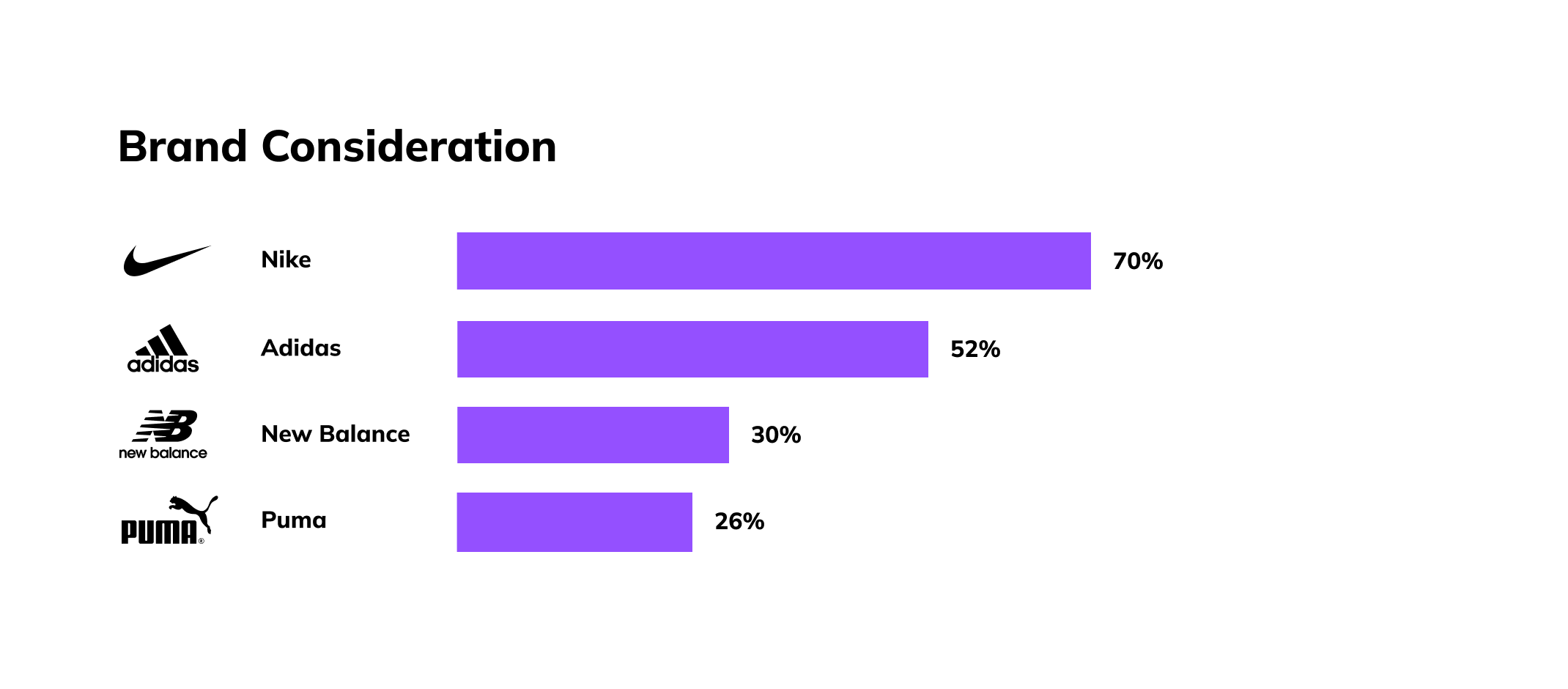\n\nNew Balance ranks third with 30%, followed by Puma, which 26% of consumers would consider purchasing from.\n\n## **Sneaker Brands and Gender**\n\nUnderstanding your target audience and how they perceive your brand is key to unlocking its true potential. So, while looking at awareness levels for the general population can be useful to see how successfully your brand is breaking through the noise and making an impact on consumers when tracking your brand’s performance, it’s essential to look at target groups that are important to your business and measure how your brand is resonating with them.\n\nWhile it's possible to go much deeper than gender, this can be a useful way of quickly segmenting your target audience — especially if your brand has product ranges aimed exclusively at men or women. So with the next round of data, let’s discuss how the top sneaker brands perform among male and female consumers.\n\n### **Men’s Brand Awareness**\n\n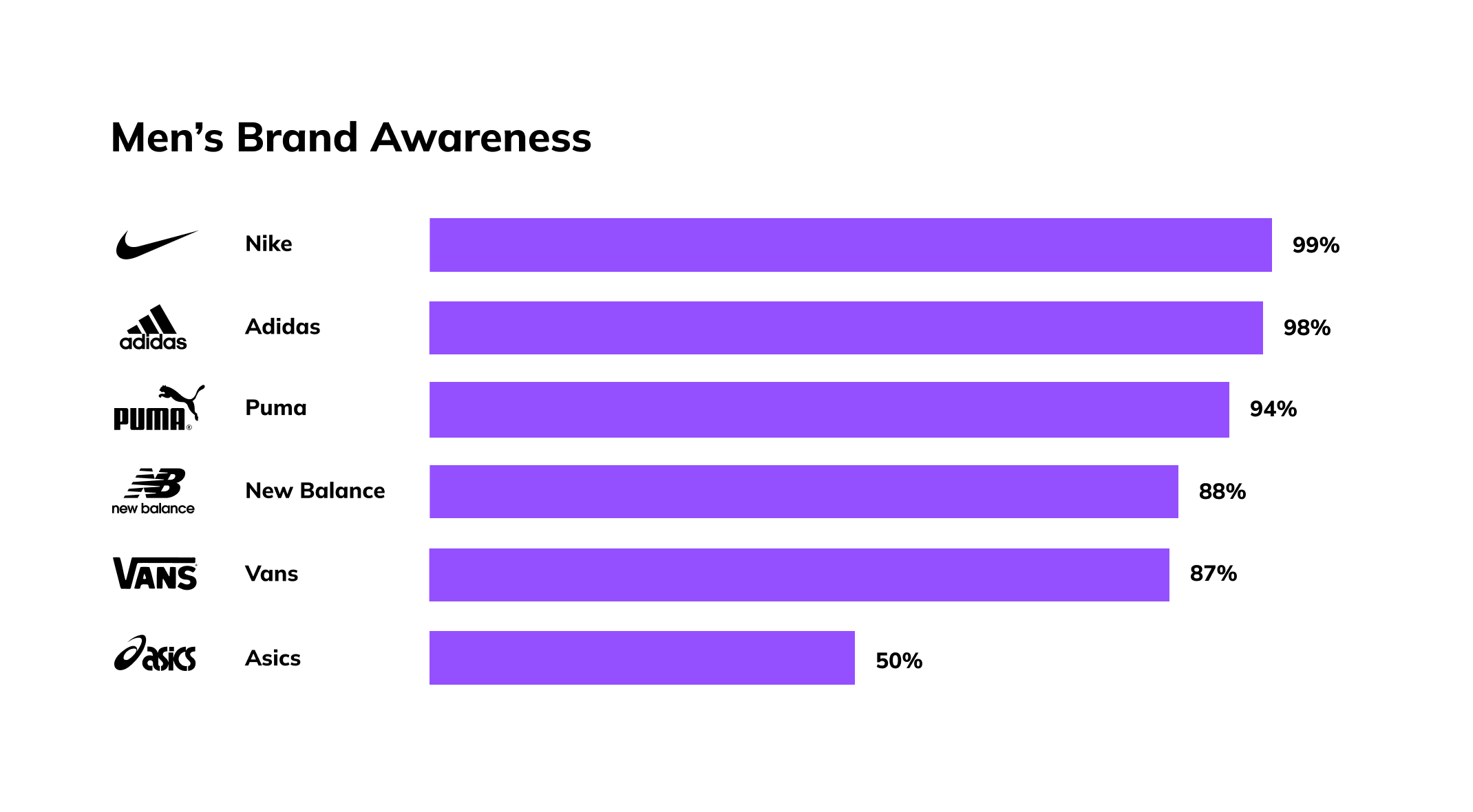\n\nFor consumers who identify as men, Nike tops the aided brand awareness ranking at 99%, followed closely by Adidas at 98%, Puma at 94%, New Balance in fourth place at 88%, followed by Vans at 87%, and then Asics at 50%.\n\n### **Men’s Brand Consideration**\n\nLet’s take a look at how sneaker brands perform among male consumers regarding brand consideration. Our data does show some significant differences:\n\n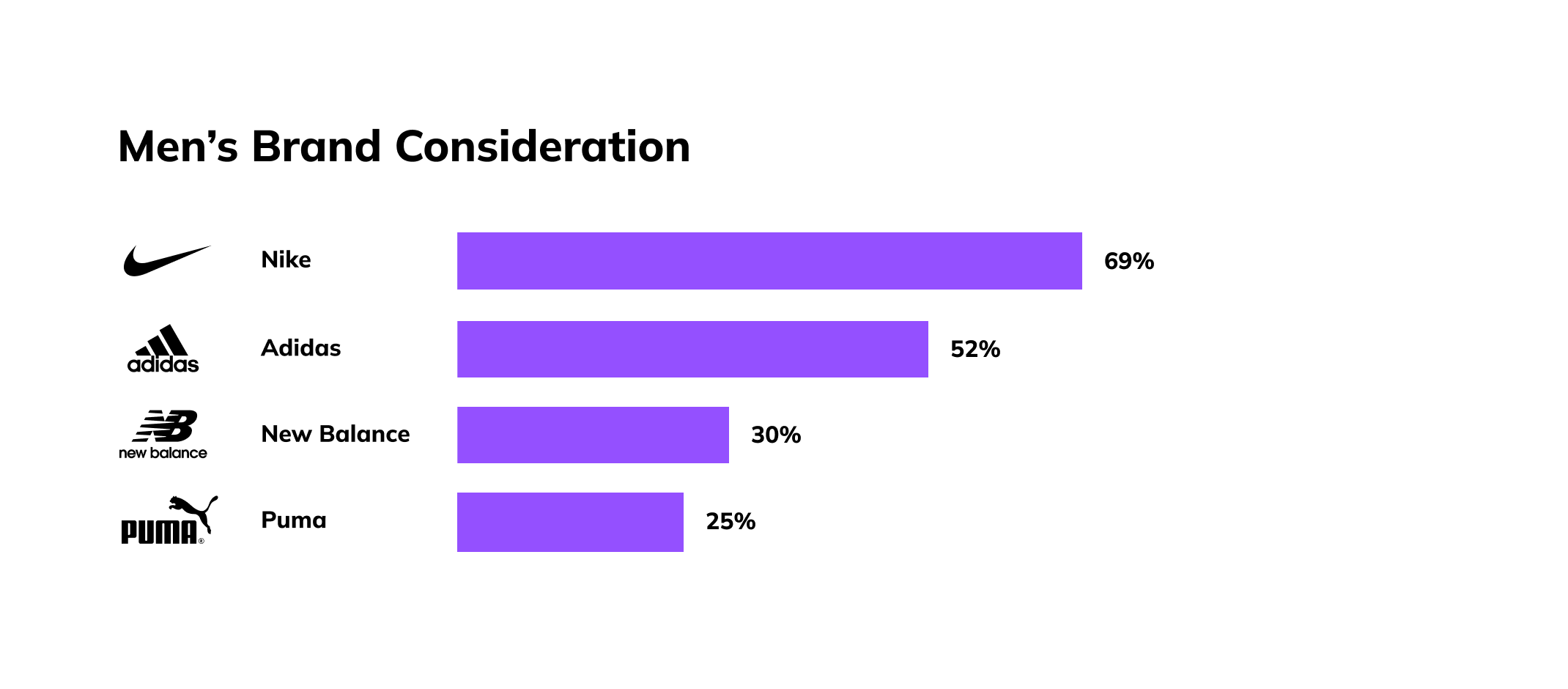\n\nHere Nike and Adidas again take the top two positions (at 69% and 52%, respectively) with New Balance behind at 30% and Puma in fourth place with 25%.\n\n### **Women’s Brand Awareness**\n\nNike has made substantial investments to conquer the sportswear market for both men and women. In fact, some of the brand’s most memorable campaigns have been created specifically to target women — with examples like their “Dream Crazier” campaign, a Nike film narrated by legendary tennis star and brand ambassador Serena Williams, as well as their successful “She Runs The Night” series of global running events aimed at women.\n\nIt’s, therefore, no surprise that Nike dominates when it comes to aided brand awareness among female consumers, with 100% of respondents able to recognize their brand.\n\n\n\nAdidas also scores a perfect 100% in brand awareness among women, while Puma scores a strong 99%. Vans comes in fourth place with 89% recognizing the brand, while New Balance achieves 88%. Beyond these front runners came Asics (78%), K-Swiss (50%), and Saucony (35%).\n\n### **Women’s Brand Consideration**\n\nLet’s take a look at how these levels of brand awareness translate into brand consideration for consumers who identify as women.\n\n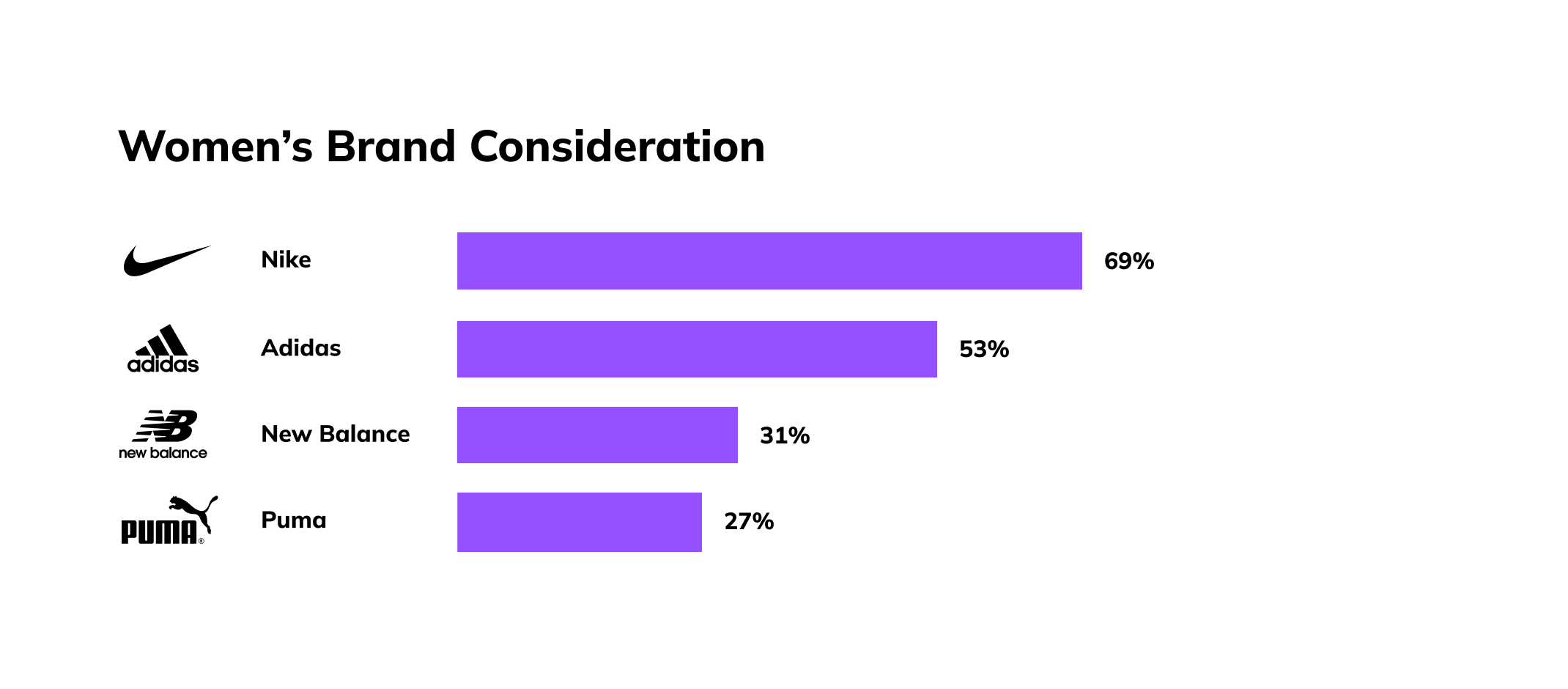\n\nNike once again topped out at 69%, with Adidas not far behind with 53% — and despite lower overall awareness, New Balance overtakes Puma with a consideration score of 31% behind Puma’s 27%.\n\nFor both men and women, it’s pretty clear that sneaker brands are able to command extremely high levels of awareness and strong levels of purchase consideration. In particular, brands like Nike and Adidas can be regarded as some of the strongest around — even outside of their category — simply because they have a broad appeal across age groups and demographics.\n\n## **Sneaker Brands and Income**\n\nLet’s take a look at how sneaker brands perform when taking income into consideration. Understanding your consumer’s level of income can give you valuable insights into how to position your sneaker brand in the market. And alongside gender, is a useful segment type that can provide interesting insights on the best ways to grow your brand.\n\nLooking at the results, we’d expect to see significant changes in the aided brand awareness and brand consideration as we compared high-, medium- and low-income levels of data — particularly considering the pricing point of the top sneaker brands.\n\n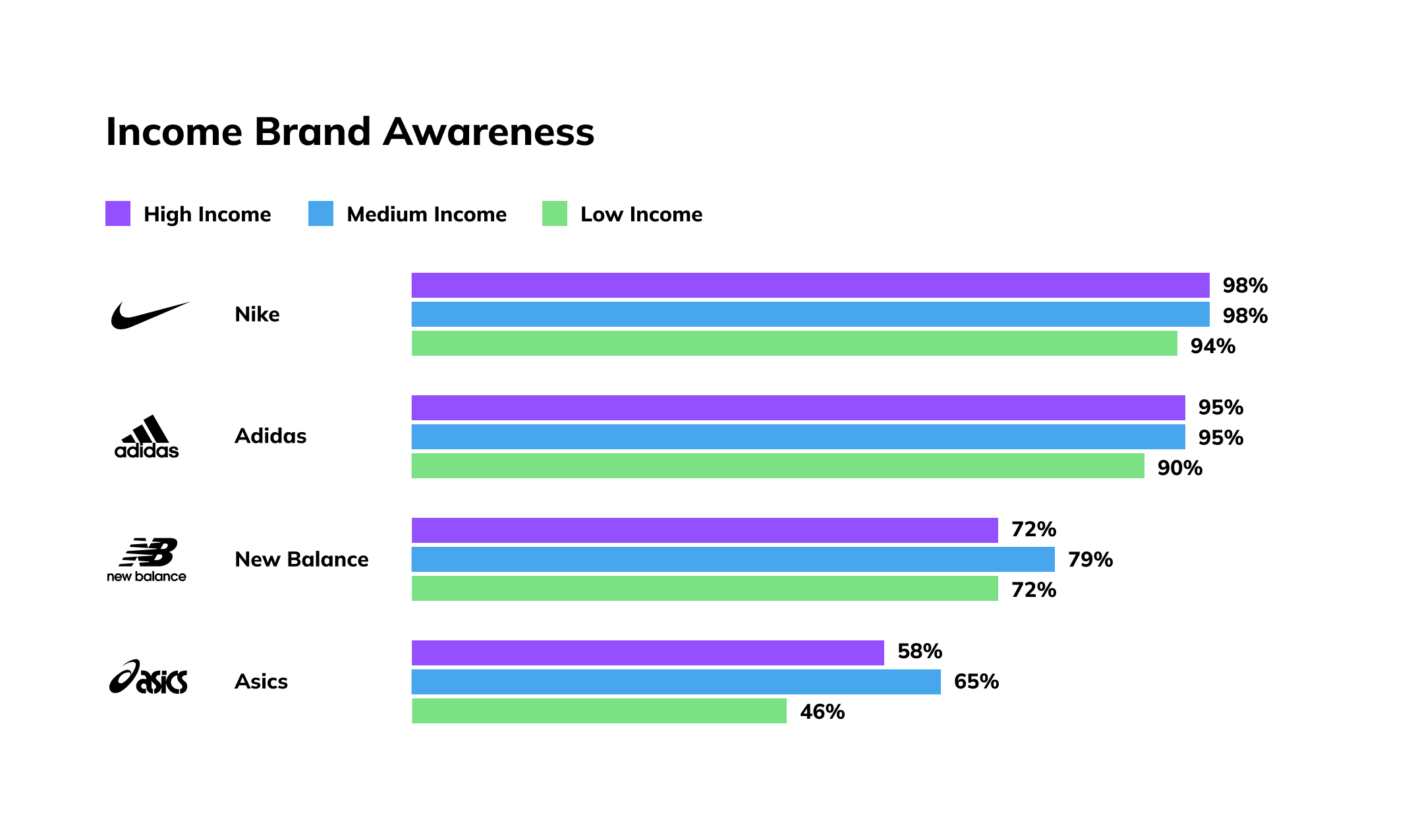\n\nAgain, Nike performed strongly across all income levels. It ranked 98% across both high and medium incomes and dropped only to 94% in the low-income category. Nike, therefore, topped the aided brand awareness data across all three income cohorts! \n\nAdidas followed a similar trend, ranking second (and closely behind Nike) across all three income levels.\n\n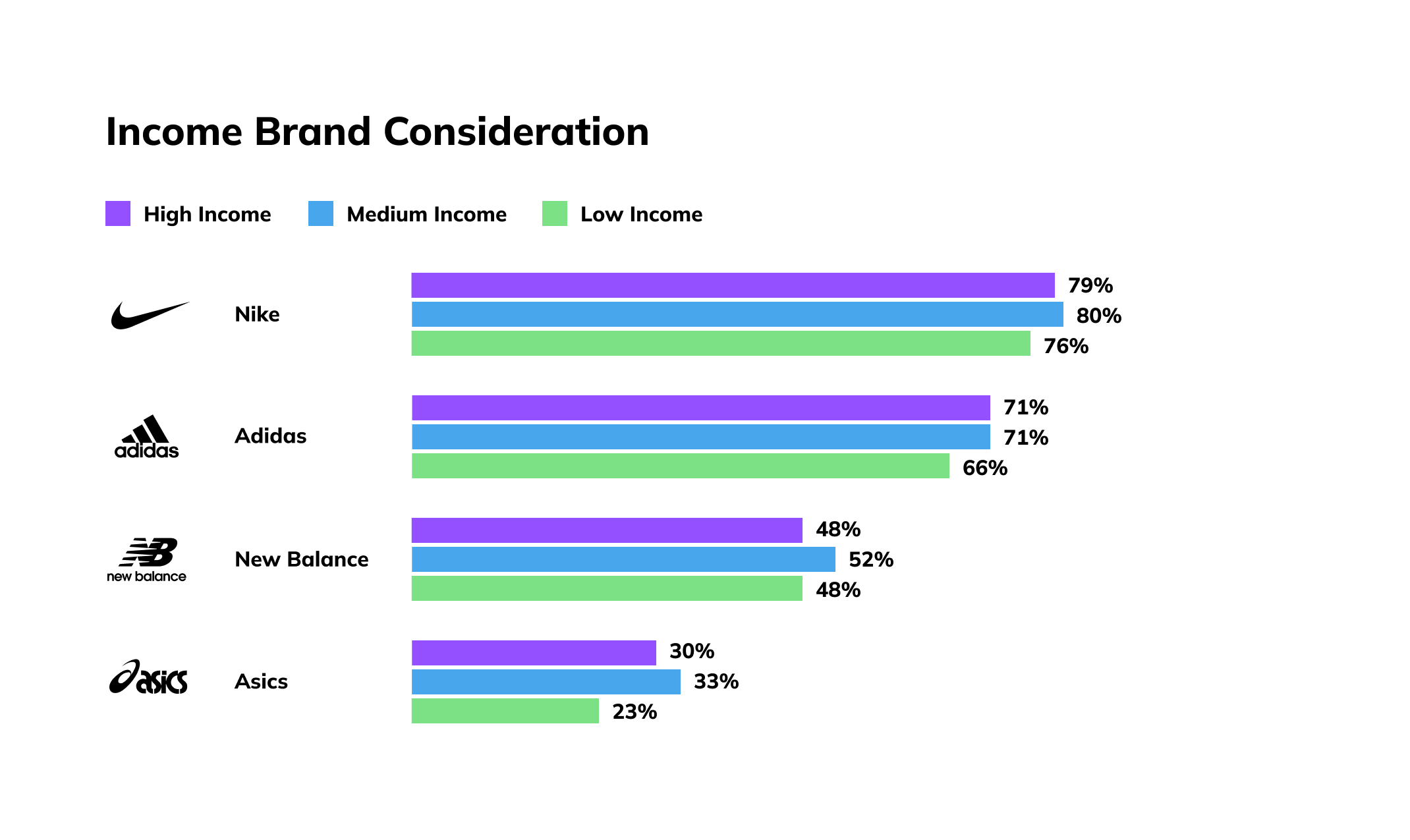\n\nFor the chosen brands’ consideration levels, it also followed a similar pattern across all three income levels. Again Nike ranked top, followed closely by Adidas and New Balance. Greats, Asics, and Arkk ranked in the same order to round off the top six. \n\nOverall, the data we’ve gathered indicates there was only a small difference in ranking across all income levels.\n\nIt’s a result that suggests that, across the general population, these brands are important to consumers — and that a good pair of sneakers are likely to appear on the shopping lists of a majority of consumers. \n\nThis should come as no surprise, given the cultural dominance of these types of brands. Nike and Adidas, in particular, have helped to influence culture through a mixture of ad campaigns, sports sponsorships, and brand collaborations to make their products essential to consumers.\n\n## **Final Thoughts**\n\nThe sneaker category, and the larger apparel and fashion industry, is a dynamic sector that demands brands constantly keep on top of new trends. While it’s dominated by stalwarts like Nike and Adidas, it’s also a competitive market that can offer surprising opportunities to new challengers.\n\nAnd while it may not be possible right now to topple the combined power of the Swoosh and the 3 Stripes, there’s plenty of room to grow a successful sneaker brand. All it takes is a strong understanding of your target audience.\n\n---\n\nUpdated by: [Ash Lightfoot](https://latana.com/author/ashley-lightfoot/) on 05.08.22"},"tags":["Brand Insights","Consumer Insights"],"authorRef":{"slug":"fiona","firstName":"Fiona ","lastName":"Laughton","title":"Freelance Writer & Creative Consultant","picture":{"__typename":"ContentfulAsset","id":"bb56ceb9-a813-5edc-85a6-facde71b8efe","description":"","title":"Latana Logo Author Photo","file":{"contentType":"image/png","url":"//images.ctfassets.net/7so8go2zrvbw/7qeUdZpRNeFZFTo0zIasKz/8d00318fb2f317950a2a2d6912eb28bf/Author_Latana__1_.png","details":{"image":{"width":235,"height":235}}},"gatsbyImageData":{"images":{"sources":[{"srcSet":"//images.ctfassets.net/7so8go2zrvbw/7qeUdZpRNeFZFTo0zIasKz/8d00318fb2f317950a2a2d6912eb28bf/Author_Latana__1_.png?w=235&h=235&q=95&fm=webp 235w","sizes":"100vw","type":"image/webp"}],"fallback":{"src":"//images.ctfassets.net/7so8go2zrvbw/7qeUdZpRNeFZFTo0zIasKz/8d00318fb2f317950a2a2d6912eb28bf/Author_Latana__1_.png?w=235&h=235&q=95&fm=png","srcSet":"//images.ctfassets.net/7so8go2zrvbw/7qeUdZpRNeFZFTo0zIasKz/8d00318fb2f317950a2a2d6912eb28bf/Author_Latana__1_.png?w=235&h=235&q=95&fm=png 235w","sizes":"100vw"}},"layout":"fullWidth","backgroundColor":"#080808","width":1,"height":1}}}}},{"node":{"publishDate":"2021-03-26T00:00+01:00","slug":"brands-mental-health-campaigns","author":"Marilyn Wilkinson","title":"Brands Kick Off 2021 With Mental Health Campaigns","seo":{"__typename":"ContentfulSeo","title":"Brands Kick Off 2021 With Mental Health Campaigns","description":"With 42% of US adults experiencing anxiety or depression, brands have chosen to address mental health in their latest campaigns. But what do consumers think?","noIndex":null,"ogImage":{"fluid":{"src":"//images.ctfassets.net/7so8go2zrvbw/5ZTTO44z7skvP6XagbyIkn/d5f44b10691005241076c91ec7a8431e/Frame_1.png?w=1200&h=675&q=90&fm=jpg"},"file":{"url":"//images.ctfassets.net/7so8go2zrvbw/5ZTTO44z7skvP6XagbyIkn/d5f44b10691005241076c91ec7a8431e/Frame_1.png"}}},"heroImage":{"__typename":"ContentfulAsset","id":"41bb3a7a-414c-5c4f-b9f5-83e9d87fe24f","description":"Brand Mental Health","title":"Brand Mental Health","file":{"contentType":"image/png","url":"//images.ctfassets.net/7so8go2zrvbw/5ZTTO44z7skvP6XagbyIkn/d5f44b10691005241076c91ec7a8431e/Frame_1.png","details":{"image":{"width":1200,"height":628}}},"gatsbyImageData":{"images":{"sources":[{"srcSet":"//images.ctfassets.net/7so8go2zrvbw/5ZTTO44z7skvP6XagbyIkn/d5f44b10691005241076c91ec7a8431e/Frame_1.png?w=200&h=105&q=95&fm=webp 200w,\n//images.ctfassets.net/7so8go2zrvbw/5ZTTO44z7skvP6XagbyIkn/d5f44b10691005241076c91ec7a8431e/Frame_1.png?w=400&h=210&q=95&fm=webp 400w,\n//images.ctfassets.net/7so8go2zrvbw/5ZTTO44z7skvP6XagbyIkn/d5f44b10691005241076c91ec7a8431e/Frame_1.png?w=800&h=419&q=95&fm=webp 800w","sizes":"(min-width: 800px) 800px, 100vw","type":"image/webp"}],"fallback":{"src":"//images.ctfassets.net/7so8go2zrvbw/5ZTTO44z7skvP6XagbyIkn/d5f44b10691005241076c91ec7a8431e/Frame_1.png?w=800&h=419&q=95&fm=png","srcSet":"//images.ctfassets.net/7so8go2zrvbw/5ZTTO44z7skvP6XagbyIkn/d5f44b10691005241076c91ec7a8431e/Frame_1.png?w=200&h=105&q=95&fm=png 200w,\n//images.ctfassets.net/7so8go2zrvbw/5ZTTO44z7skvP6XagbyIkn/d5f44b10691005241076c91ec7a8431e/Frame_1.png?w=400&h=210&q=95&fm=png 400w,\n//images.ctfassets.net/7so8go2zrvbw/5ZTTO44z7skvP6XagbyIkn/d5f44b10691005241076c91ec7a8431e/Frame_1.png?w=800&h=419&q=95&fm=png 800w","sizes":"(min-width: 800px) 800px, 100vw"}},"layout":"constrained","backgroundColor":"#f8f8f8","width":800,"height":419}},"coverImage":null,"description":{"description":"With 42% of US adults experiencing symptoms of anxiety or depression, brands like Maybelline and Maltesers have chosen to address mental health in their latest campaigns. But what do consumers think?"},"content":{"content":"The pandemic – accompanied by social isolation, uncertain futures and, in some cases, financial hardship – has taken its toll on our psychological well-being. With Maybelline signing mental health advocate Storm Reid last week and Maltesers talking openly about post-partum depression, mental health is currently a huge focus for brands. \n\n[Mental health marketing](https://latana.com/reports/mental-health-marketing-report/) can be a tricky topic to get right. You might remember the widely-criticized Burger King campaign from 2018, which was accused of capitalizing on mental illness to sell burgers.\n\nThe world has changed since then, and consumers seem more receptive to brands speaking out about a once-taboo topic. In this article, we explore how three leading brands kicked off 2021 with powerful campaigns promoting mental wellbeing.\n\n## Top Three Mental Health Marketing Campaigns \n\nMaltesers, Maybelline and JanSport have put mental health awareness at the core of their campaign messaging. Let’s dive into the strategy behind these powerful campaigns.\n\n### 1. Maltesers #TheMassiveOvershare\n\n
\n\n### Key Message\n\nMaltesers launched its campaign, #TheMassiveOvershare to promote maternal mental health and encourage mothers to be open about the highs and lows of motherhood and get the support they need.\n\nA study commissioned by Maltesers showed that mums are seriously struggling, and they don’t feel able to ask for help. One in six mums often feels overwhelmed, a quarter said they didn’t want to burden others and over a third reported trying not to overshare. \n\nBeing a mum comes with a rollercoaster of highs and lows. While motherhood has never been easy, mums have been exposed to whole new challenges over the last 12 months of lockdown and home-schooling.\n\n### Target Audience\n\nThis campaign is focused on women and mums. While lots of people enjoy chocolate, the marketing team at Maltesers is savvy enough to know that it needs to focus on a specific audience to be truly impactful. \n\n### Why It Works\n\n
\n\n> We know how important it is to talk about the fact that motherhood and parenting can be tough. Maltesers aims to help women build resilience by laughing together through the tough stuff. It’s what we’ve always done and what we will continue to do, now and for years to come.\nLeah Dyckes, Brand Director, Maltesers\n\nThe Mars-owned brand got a lot right here. Firstly, their timing was spot on. The campaign coincided with Mother’s Day in the UK and International Women’s Day. However, the timing doesn’t feel opportunistic because the campaign is part of Maltesers ongoing narrative around mental well-being. \n\nThe brand has a history of daring to speak out on tough emotional issues, winning awards back in 2016 for its campaign featuring disabled actors. \nAnd it’s not just an empty narrative – Maltesers has donated hundreds of thousands this year alone to support mental health causes.\n\nThe Overshare campaign works because it builds on the brand’s long-standing purpose of uniting people through the power of laughter.\n\n### 2. Maybelline \"Brave Together\" \n\n\n\n### Key Message \n\nMaybelline New York launched “Brave Together”, which their brand team describes as “a long-term program to support anxiety and depression worldwide”.\n\nBrave Together aims to destigmatize anxiety and depression, provide one-on-one support, and let those who are struggling and their loved ones know that they are not alone. \n\n### Target Audience \n\n\n\nWomen aged 14-24 are the main consumers of Maybelline products, so the initiative is focused on the challenges young women face and how to help them. \n\nThe [Brave Together website](https://www.maybelline.com/bravetogether) features real stories from young women on their mental health journey. The brand also recently signed Storm Reid, a 17-year-old actress who is known for being vocal on issues surrounding racial equality, mental health, and inclusivity. \n\n[Amy Whang, Senior Vice President of US Marketing at Maybelline](https://wwd.com/beauty-industry-news/beauty-features/exclusive-maybelline-taps-storm-reid-as-new-spokesperson-1234780369/), explained, “*We have traditionally used models, but […] we wanted to align ourselves with a spokesperson that really resonated with the Generation Z consumer*.”\n\n### Why It Works\n\n> As someone who has lived with depression, building this program for Maybelline took on more meaning for me and it was important to provide resources that would truly make a difference for those who need it most.\nKristen Tully, AVP Global Brand Communications, Maybelline New York\n\nOver the past two years, Maybelline has worked with universities and charities to conduct extensive research into mental health issues. \nThe brand is in the process of training all employees in mental health first aid. \n\nThrough their partnership with Crisis Text Line, they provide access to free, confidential counseling 24/7 via SMS. \n\nAnd that’s just the beginning. Maybelline is committed to investing $10M over the next five years to mental health organizations worldwide.\n\nIn other words, it’s much more than a campaign. Maybelline lives and breathes their mission to have a tangible impact on people living with anxiety and depression. This level of commitment to the cause gives the brand a high level of credibility and trust.\n\n### 3. Jan Sport #LightenTheLoad\n\n\n\n### Key Message \n\nJanSport’s #LightenTheLoad campaign aims to connect Generation Z with resources to help them tackle mental health challenges. The brand wants young people to know that mental health doesn't have to be a taboo topic, and they are not alone in their struggles.\n\nSeven out of ten young people admit mental health issues get them down, and three in ten young people say they feel anxious or nervous almost every day.\n\nGrowing up has always been a stressful time. With the ongoing pandemic, Gen Z is facing unprecedented challenges, including social isolation, canceled exams, virtual graduations, uncertain job prospects and not knowing if their college will be open in the fall.\n\n### Target audience \n\nThe [target audience](https://latana.com/post/7-steps-perfect-target-audience/) is clearly Generation Z, which is reflected in the content JanSport creates, the platforms the brand is present on and the influencers amplifying the campaign message. \n\nThe brand hosts regular Instagram Live sessions where young people can join in to have an open conversation with mental health experts, or watch later on Instagram TV. They are also collaborating with five high school podcasters to create an exclusive series on the mental health challenges facing teenagers in 2021. \n\nMonica Rigali, Senior Director of Marketing at JanSport, explains, \"*JanSport has been a trusted brand for young people for decades and we understand our consumers are going through unprecedented and uncertain times*.”\n\n### Why It Works\n\n> The purpose of the Lighten The Load campaign is to drive conversations around mental health and demonstrate to Gen Z that we understand the anxiety, isolation and stress they are feeling, and we're here to help.\nMonica Rigali, Senior Director of Marketing, JanSport\n\nIn the brand’s own words, the campaign has generated “unprecedented engagement between Gen Z and the JanSport brand.”\n\nGeneration Z can be skeptical of brands, celebrities and being “sold to”. JanSport is very smart in how it engages with this “difficult” audience.\nJanSport’s #LightenTheLoad campaign shows brands can achieve great results when they put their audience first and address important issues in a way that seems authentic and engaging. \n\n## Final Thoughts\n\nWhoever your target audience is, they are likely to be going through a hard time right now. If their mental health is suffering, they are unlikely to be receptive to your usual marketing messaging. \n\nCampaigns promoting psychological well-being can help brands to foster a deeper connection with their audience, improving [brand perception](https://latana.com/post/brand-perception-2020/) and [brand affinity](https://latana.com/post/guide-brand-affinity/). \n\nHave you tried to incorporate mental health into your marketing? We would love to hear about it!"},"tags":["Brand Marketing"],"authorRef":{"slug":"marilyn","firstName":"Marilyn","lastName":"Wilkinson","title":"Digital Marketing Expert","picture":{"__typename":"ContentfulAsset","id":"e78d550e-a31a-5186-820d-9513596e92d2","description":"","title":"Marilyn Wilkinson Prof Pic","file":{"contentType":"image/png","url":"//images.ctfassets.net/7so8go2zrvbw/1oCRDVeLkqM1iEpuSKa6YK/1ba47f67261d9419b9df6600b8a09c1e/Author_Marilyn.png","details":{"image":{"width":235,"height":235}}},"gatsbyImageData":{"images":{"sources":[{"srcSet":"//images.ctfassets.net/7so8go2zrvbw/1oCRDVeLkqM1iEpuSKa6YK/1ba47f67261d9419b9df6600b8a09c1e/Author_Marilyn.png?w=235&h=235&q=95&fm=webp 235w","sizes":"100vw","type":"image/webp"}],"fallback":{"src":"//images.ctfassets.net/7so8go2zrvbw/1oCRDVeLkqM1iEpuSKa6YK/1ba47f67261d9419b9df6600b8a09c1e/Author_Marilyn.png?w=235&h=235&q=95&fm=png","srcSet":"//images.ctfassets.net/7so8go2zrvbw/1oCRDVeLkqM1iEpuSKa6YK/1ba47f67261d9419b9df6600b8a09c1e/Author_Marilyn.png?w=235&h=235&q=95&fm=png 235w","sizes":"100vw"}},"layout":"fullWidth","backgroundColor":"#080808","width":1,"height":1}}}}},{"node":{"publishDate":"2022-04-29T07:00+02:00","slug":"how-to-ride-revenge-travel-wave","author":"Cory Schröder","title":"How Brands Can Ride the “Revenge Travel” Wave in 2022","seo":{"__typename":"ContentfulSeo","title":"How Brands Can Ride the “Revenge Travel” Wave","description":"What is “revenge travel”, and how can your brand take advantage of this 2022 trend? We provide the low-down, plus three tips to attract consumers.","noIndex":null,"ogImage":{"fluid":{"src":"//images.ctfassets.net/7so8go2zrvbw/74anSWDEbBIbZVpoYE6wtt/e1d1a3b208a1523bce7d0d6442f86080/Blog_SEO-Thumbnail_1000X709_-_2022-04-21T144012.247.png?w=1200&h=675&q=90&fm=jpg"},"file":{"url":"//images.ctfassets.net/7so8go2zrvbw/74anSWDEbBIbZVpoYE6wtt/e1d1a3b208a1523bce7d0d6442f86080/Blog_SEO-Thumbnail_1000X709_-_2022-04-21T144012.247.png"}}},"heroImage":{"__typename":"ContentfulAsset","id":"58f563a4-35b7-5da2-b132-9f00ed873a10","description":"","title":"Illustration of two suitcases and map (thumbnail)","file":{"contentType":"image/png","url":"//images.ctfassets.net/7so8go2zrvbw/74anSWDEbBIbZVpoYE6wtt/e1d1a3b208a1523bce7d0d6442f86080/Blog_SEO-Thumbnail_1000X709_-_2022-04-21T144012.247.png","details":{"image":{"width":1000,"height":709}}},"gatsbyImageData":{"images":{"sources":[{"srcSet":"//images.ctfassets.net/7so8go2zrvbw/74anSWDEbBIbZVpoYE6wtt/e1d1a3b208a1523bce7d0d6442f86080/Blog_SEO-Thumbnail_1000X709_-_2022-04-21T144012.247.png?w=200&h=142&q=95&fm=webp 200w,\n//images.ctfassets.net/7so8go2zrvbw/74anSWDEbBIbZVpoYE6wtt/e1d1a3b208a1523bce7d0d6442f86080/Blog_SEO-Thumbnail_1000X709_-_2022-04-21T144012.247.png?w=400&h=284&q=95&fm=webp 400w,\n//images.ctfassets.net/7so8go2zrvbw/74anSWDEbBIbZVpoYE6wtt/e1d1a3b208a1523bce7d0d6442f86080/Blog_SEO-Thumbnail_1000X709_-_2022-04-21T144012.247.png?w=800&h=567&q=95&fm=webp 800w","sizes":"(min-width: 800px) 800px, 100vw","type":"image/webp"}],"fallback":{"src":"//images.ctfassets.net/7so8go2zrvbw/74anSWDEbBIbZVpoYE6wtt/e1d1a3b208a1523bce7d0d6442f86080/Blog_SEO-Thumbnail_1000X709_-_2022-04-21T144012.247.png?w=800&h=567&q=95&fm=png","srcSet":"//images.ctfassets.net/7so8go2zrvbw/74anSWDEbBIbZVpoYE6wtt/e1d1a3b208a1523bce7d0d6442f86080/Blog_SEO-Thumbnail_1000X709_-_2022-04-21T144012.247.png?w=200&h=142&q=95&fm=png 200w,\n//images.ctfassets.net/7so8go2zrvbw/74anSWDEbBIbZVpoYE6wtt/e1d1a3b208a1523bce7d0d6442f86080/Blog_SEO-Thumbnail_1000X709_-_2022-04-21T144012.247.png?w=400&h=284&q=95&fm=png 400w,\n//images.ctfassets.net/7so8go2zrvbw/74anSWDEbBIbZVpoYE6wtt/e1d1a3b208a1523bce7d0d6442f86080/Blog_SEO-Thumbnail_1000X709_-_2022-04-21T144012.247.png?w=800&h=567&q=95&fm=png 800w","sizes":"(min-width: 800px) 800px, 100vw"}},"layout":"constrained","backgroundColor":"#a8c8d8","width":800,"height":567}},"coverImage":{"__typename":"ContentfulAsset","id":"fbe4312a-9c84-515c-9ee4-84ca2a64e5b5","description":"","title":"Illustration of two suitcases and map (cover image)","file":{"contentType":"image/png","url":"//images.ctfassets.net/7so8go2zrvbw/5khAYG7vcU6xX2evmJZsmw/3d2c04118ce2aeb91869d5f7d7c01b26/Blog_Cover_1288X400_-_2022-04-21T144014.360.png","details":{"image":{"width":1288,"height":400}}},"gatsbyImageData":{"images":{"sources":[{"srcSet":"//images.ctfassets.net/7so8go2zrvbw/5khAYG7vcU6xX2evmJZsmw/3d2c04118ce2aeb91869d5f7d7c01b26/Blog_Cover_1288X400_-_2022-04-21T144014.360.png?w=750&h=233&q=95&fm=webp 750w,\n//images.ctfassets.net/7so8go2zrvbw/5khAYG7vcU6xX2evmJZsmw/3d2c04118ce2aeb91869d5f7d7c01b26/Blog_Cover_1288X400_-_2022-04-21T144014.360.png?w=1080&h=335&q=95&fm=webp 1080w,\n//images.ctfassets.net/7so8go2zrvbw/5khAYG7vcU6xX2evmJZsmw/3d2c04118ce2aeb91869d5f7d7c01b26/Blog_Cover_1288X400_-_2022-04-21T144014.360.png?w=1288&h=400&q=95&fm=webp 1288w","sizes":"100vw","type":"image/webp"}],"fallback":{"src":"//images.ctfassets.net/7so8go2zrvbw/5khAYG7vcU6xX2evmJZsmw/3d2c04118ce2aeb91869d5f7d7c01b26/Blog_Cover_1288X400_-_2022-04-21T144014.360.png?w=1288&h=400&q=95&fm=png","srcSet":"//images.ctfassets.net/7so8go2zrvbw/5khAYG7vcU6xX2evmJZsmw/3d2c04118ce2aeb91869d5f7d7c01b26/Blog_Cover_1288X400_-_2022-04-21T144014.360.png?w=750&h=233&q=95&fm=png 750w,\n//images.ctfassets.net/7so8go2zrvbw/5khAYG7vcU6xX2evmJZsmw/3d2c04118ce2aeb91869d5f7d7c01b26/Blog_Cover_1288X400_-_2022-04-21T144014.360.png?w=1080&h=335&q=95&fm=png 1080w,\n//images.ctfassets.net/7so8go2zrvbw/5khAYG7vcU6xX2evmJZsmw/3d2c04118ce2aeb91869d5f7d7c01b26/Blog_Cover_1288X400_-_2022-04-21T144014.360.png?w=1288&h=400&q=95&fm=png 1288w","sizes":"100vw"}},"layout":"fullWidth","backgroundColor":"#a8c8d8","width":1,"height":0.3105590062111801}},"description":{"description":"What is “revenge travel”, and how can your brand take advantage of this 2022 trend? We provide the low-down, plus three tips to attract consumers."},"content":{"content":"Like the rest of the world, you’ve likely spent the last two years dreaming about travel — maybe a small weekend getaway in [travel accommodation](https://latana.com/reports/travel-accommodation-consumer-insights/) in a charming city nearby or a month-long tour around Europe. Whatever the trip you had in mind, it doesn’t matter — because travel has been on hold since the Covid-19 pandemic began in 2020.\n\nWith lockdown measures in place and new rules that made international travel all but impossible, many industries around the world suffered greatly. Hotels, air transportation, travel agencies, amusement parks, and more felt the impact. \n\nBut with vaccination rates on the rise and the severity of reported cases on the decline, many consumers are getting excited to travel again. And you know what? They’re going to travel even harder than they did before — [longer, more frequent, more *expensive* trips are in the cards](https://www.cnbc.com/2022/01/21/the-biggest-2022-travel-trend-go-big-spend-big-on-bucket-list-trips.html). \n\nAnd many have dubbed this phenomenon “Covid-19 revenge travel” — in an effort to make up for precious time lost and get revenge on the pandemic, consumers are expressing their desires and plan to travel more than they previously had.\n\nBut is “revenge travel” an anecdotal whim buzzing around social media or a real trend backed up by data? Let’s take a deeper look and discuss three ways your brand can attract so-called “revenge travelers” in 2022 and beyond.\n\n## What is “Revenge Travel”?\n\n\nSource: [Pexels](https://www.pexels.com/photo/canal-beside-houses-2901209/)\n\nAs explained above, “revenge travel” is the act of traveling more frequently than before in an effort to make up for lost time. Essentially, to somehow get revenge on the Covid-19 pandemic that forced us all to stay home for more than two years, consumers plan to go on more trips and spend more money ([they were saving it up, after all](https://www.ecb.europa.eu/pub/economic-bulletin/focus/2021/html/ecb.ebbox202105_04~d8787003f8.en.html)).\n\nWhile it may sound like a somewhat humorous concept, the industries and brands that were negatively impacted by the stand-still in travel take it very seriously — as it means the chance for these struggling companies to finally bounce back.\n\nBut which industries were most affected by the pandemic travel restrictions and, subsequently, will benefit from the “revenge travel” trend? Let’s take a look.\n\n## Which Industries Will Feel Revenge Travel’s Impact The Most?\n\n\nUnsurprisingly, the lack of travel over the past two years affected some industries more than others. While digital, tech-focused brands — like Zoom or [DoorDash](https://latana.com/post/doordash-success-story/) — flourished, brands with a significant offline angle got the short end of the stick.\n\nHotels, motels, air transport, campgrounds, theme parks, movie theaters, live sports, cruises… the list goes on. And what do many of these aforementioned industries have in common? They’re quite dependent on travel.\n\nIf no one is able to travel — nationally or internationally — who’s staying in hotels, motels, or campgrounds? Who’s visiting theme parks, movie theatres, or live sporting events? Who’s going on a cruise? \n\nThe answer shouldn’t be surprising — it’s no one. \n\nBut, with restrictions being lifted all over the world, consumers are sharing their plans to travel again — which means these same industries are in for a boom. According to data from the U.S. Bureau of Economic Analysis, travel spending saw a huge dip in recent years — but is coming “roaring” back post-pandemic.\n\n\nSource: The Washington Post\n\nJay Shapiro, the owner of a high-end U.S. travel agency, [told The Washington Post](https://www.washingtonpost.com/business/2022/02/17/travel-vacations-economy-omicron/) that:\n\n*“Customers are also spending considerably more after having been cooped up for the winter, (...) And for the wealthiest, couples who may have budgeted $25,000 on a luxury vacation before the pandemic are suddenly willing to spend three or four times that, he said. A $150,000 family vacation to South Africa is no longer out of the question for some. And many summer cruises to Europe are already sold out.”*\n\nBut according to Aneta Markowska, the Chief Economist at Jefferies, it’s “not just the wealthy” that have the cash to spend on “revenge travel” in 2022 — “it’s 80% of the population.” Furthermore, Wells Fargo reported that American consumers “set aside roughly $4.2 trillion in extra savings during the pandemic” — that’s quite a bit of money.\n\nClearly, consumers around the world have cash to burn and they’re hoping to spend a good chunk of it on travel. This will impact industries traditionally associated with travel — hotels, air transport, and more — but will also impact other sectors, such as restaurants, entertainment spots, transportation, etc.\n\nBut how can your brand attract these “revenge travelers”? Let’s discuss.\n\n## How Can Your Brand Attract Revenge Travelers?\n\n\nSource: [Pexels](https://www.pexels.com/photo/a-woman-posing-at-the-camera-6181092/)\n\nWhile consumers may now have a healthy appetite for travel, that doesn’t mean they’ve completely forgotten about the past two years. \n\nJobs were lost, people’s physical and mental health suffered, and many even lost family or friends. Therefore, if you want to attract consumers to your brand, you need to understand where their priorities lie in 2022 — and trust us, they’re not the same as they were in 2019.\n\nWith consumers now taking a [more intentional approach to making purchase decisions](https://latana.com/post/intentionalism-affects-brands/), here are a few tips you should consider when looking to draw them in effectively and responsibly. \n\n### 1. Make Your Health & Safety Plan Well-Known\n\nMany countries have lifted their more stringent Covid restrictions — which means individual brands now have a chance to step up and show consumers that their health & safety is a top priority, not just a requirement.\n\nTo do so, make sure you:\n\n1. Have an extensive health & safety plan\n2. Share out said plan wherever you can\n\nPost about it on social media, create a landing page on your website dedicated to it, and add a footer to all your emails that outlines its main points and links to a downloadable PDF pamphlet. There are plenty of ways you can let consumers know that you’re taking care of them when they choose your brand.\n\nAlthough the desire to travel is there, understandably, many consumers are still a bit nervous about it. Your job is to show them that your values align and that their comfort, safety, and health are at the top of your list.\n\n### 2. Consider Supporting Sustainable Travel Initiatives\n\n\nSource: [Pexels](https://www.pexels.com/photo/sea-beach-vacation-relaxation-8241135/)\n\nAs we mentioned earlier, consumers’ priorities are not static. Many people spent the last two years assessing their lives, values, and beliefs — and with that reassessment came a growing interest in [sustainable travel](https://latana.com/post/the-rise-of-sustainability-in-the-travel-industry/).\n\nWhile travel is beneficial in many ways, it also has its drawbacks. For example, consider Ko Phi Phi in Thailand — which became “an infamous symbol of the negative effects of unsustainable travel.” Tourists damaged local wildlife and plants, destroyed coral, and left behind huge amounts of plastic and waste.\n\nWhile the tourists probably had a great time, the locals were left to deal with the consequences of this irresponsible and unsustainable travel. But over the last two years, many consumers have changed their tune.\n\n[According to research from Expedia](https://welcome.expediagroup.com/en/research-and-insights/the-traveler-value-index), “nearly three in five travelers are willing to pay more fees to make a trip sustainable. And about half will choose a less crowded destination to reduce effects of overtourism.”\n\nWith 60% of travelers now willing to spend more to make trips sustainable, your brand would be smart to get on board with this growing trend sooner rather than later. Whether you’re a hotel, airline, travel agency, or restaurant — there are plenty of ways that you can support sustainable travel initiatives.\n\nBy showing consumers that your values align with theirs, you’ll be able to connect on a deep level with this important, growing target audience: sustainably-minded consumers. \n\n### 3. Use Consumer Insight Data To Meet Your Target Audiences’ Needs\n\nAt the end of the day, you won’t know what it is your target audience wants without asking them. Sure, you can look to overall trends and market research — but to understand what your specific audiences are looking for in 2022 and beyond, you need access to consumer insight data.\n\nThat’s where [brand monitoring software](https://latana.com/product/) comes in. With the ability to track standard KPIs like brand awareness, consideration, and preference, you’ll know how your target audience feels about your brand — Do they know who you are? Would they consider using your brand? Do they prefer your brand to the competition?\n\nBut, add in KPIs like [brand understanding](https://latana.com/post/how-to-track-brand-understanding/), [brand associations](https://latana.com/post/brand-association/), or [purchase drivers](https://latana.com/post/why-to-track-purchase-drivers/) and you’ll have access to data that will allow you to truly understand what your target audience is looking for — what drives them to make a purchase in your category, what characteristics they associate your brand with, and more.\n\nTo gain new customers, increase revenue, and connect on a deeper level with your target audience in 2022, you’ll need to know what they want — what they like, dislike, and need. With brand tracking data on hand, you’ll be much better prepared to attract the coming wave of “revenge travelers”.\n\n## Final Thoughts\n\nWhether consumers are specifically “revenge traveling” or not, travel and tourism overall have been gradually increasing over the past year — and is forecast by the World Travel & Tourism Council to reach pre-pandemic levels in 2022. \n\nSo, if you believe your brand could benefit from “revenge travel” in any way, consider our above tips and make sure to keep your finger on the pulse of travel trends. Things change quickly in this industry, so to be successful, you’ll need to stay alert and use consumer data wisely.\n"},"tags":["Brand Marketing","Brand Strategy"],"authorRef":{"slug":"cory-schroder","firstName":"Cory","lastName":"Schröder","title":"Senior Content Marketing Manager","picture":{"__typename":"ContentfulAsset","id":"31ab4d95-0f90-5835-a22f-4b7ff41fece2","description":"","title":"Cory Profile Picture","file":{"contentType":"image/png","url":"//images.ctfassets.net/7so8go2zrvbw/42rTfahl2m45FP1Fzo7B8n/52d40b8bd8af9ab559381bc0ab744cda/avatar.png","details":{"image":{"width":235,"height":235}}},"gatsbyImageData":{"images":{"sources":[{"srcSet":"//images.ctfassets.net/7so8go2zrvbw/42rTfahl2m45FP1Fzo7B8n/52d40b8bd8af9ab559381bc0ab744cda/avatar.png?w=235&h=235&q=95&fm=webp 235w","sizes":"100vw","type":"image/webp"}],"fallback":{"src":"//images.ctfassets.net/7so8go2zrvbw/42rTfahl2m45FP1Fzo7B8n/52d40b8bd8af9ab559381bc0ab744cda/avatar.png?w=235&h=235&q=95&fm=png","srcSet":"//images.ctfassets.net/7so8go2zrvbw/42rTfahl2m45FP1Fzo7B8n/52d40b8bd8af9ab559381bc0ab744cda/avatar.png?w=235&h=235&q=95&fm=png 235w","sizes":"100vw"}},"layout":"fullWidth","backgroundColor":"#080808","width":1,"height":1}}}}},{"node":{"publishDate":"2022-02-25T08:00+01:00","slug":"the-rise-of-sustainability-in-the-travel-industry","author":"Ashley","title":"The Rise Of Sustainability In The Travel Industry","seo":{"__typename":"ContentfulSeo","title":"The Rise of Sustainability In The Travel Industry","description":"Understand why consumers have growing concerns about the impact of their trips and why all travel brands must address sustainability if they are to thrive.","noIndex":null,"ogImage":{"fluid":{"src":"//images.ctfassets.net/7so8go2zrvbw/1RFci45He5TILD1JP01Xoc/e3d02759c0a2add58bd94e04b2e484a6/Blog_SEO-Thumbnail_1000X709__9_.png?w=1200&h=675&q=90&fm=jpg"},"file":{"url":"//images.ctfassets.net/7so8go2zrvbw/1RFci45He5TILD1JP01Xoc/e3d02759c0a2add58bd94e04b2e484a6/Blog_SEO-Thumbnail_1000X709__9_.png"}}},"heroImage":{"__typename":"ContentfulAsset","id":"5b3c3d2d-77f6-5f6f-af5b-ba626505fda0","description":"","title":"The Rise of Sustainability in Travel - image of suitcase and camera","file":{"contentType":"image/png","url":"//images.ctfassets.net/7so8go2zrvbw/1RFci45He5TILD1JP01Xoc/e3d02759c0a2add58bd94e04b2e484a6/Blog_SEO-Thumbnail_1000X709__9_.png","details":{"image":{"width":1000,"height":709}}},"gatsbyImageData":{"images":{"sources":[{"srcSet":"//images.ctfassets.net/7so8go2zrvbw/1RFci45He5TILD1JP01Xoc/e3d02759c0a2add58bd94e04b2e484a6/Blog_SEO-Thumbnail_1000X709__9_.png?w=200&h=142&q=95&fm=webp 200w,\n//images.ctfassets.net/7so8go2zrvbw/1RFci45He5TILD1JP01Xoc/e3d02759c0a2add58bd94e04b2e484a6/Blog_SEO-Thumbnail_1000X709__9_.png?w=400&h=284&q=95&fm=webp 400w,\n//images.ctfassets.net/7so8go2zrvbw/1RFci45He5TILD1JP01Xoc/e3d02759c0a2add58bd94e04b2e484a6/Blog_SEO-Thumbnail_1000X709__9_.png?w=800&h=567&q=95&fm=webp 800w","sizes":"(min-width: 800px) 800px, 100vw","type":"image/webp"}],"fallback":{"src":"//images.ctfassets.net/7so8go2zrvbw/1RFci45He5TILD1JP01Xoc/e3d02759c0a2add58bd94e04b2e484a6/Blog_SEO-Thumbnail_1000X709__9_.png?w=800&h=567&q=95&fm=png","srcSet":"//images.ctfassets.net/7so8go2zrvbw/1RFci45He5TILD1JP01Xoc/e3d02759c0a2add58bd94e04b2e484a6/Blog_SEO-Thumbnail_1000X709__9_.png?w=200&h=142&q=95&fm=png 200w,\n//images.ctfassets.net/7so8go2zrvbw/1RFci45He5TILD1JP01Xoc/e3d02759c0a2add58bd94e04b2e484a6/Blog_SEO-Thumbnail_1000X709__9_.png?w=400&h=284&q=95&fm=png 400w,\n//images.ctfassets.net/7so8go2zrvbw/1RFci45He5TILD1JP01Xoc/e3d02759c0a2add58bd94e04b2e484a6/Blog_SEO-Thumbnail_1000X709__9_.png?w=800&h=567&q=95&fm=png 800w","sizes":"(min-width: 800px) 800px, 100vw"}},"layout":"constrained","backgroundColor":"#58a858","width":800,"height":567}},"coverImage":{"__typename":"ContentfulAsset","id":"839c22ca-4fb8-5037-8e04-33e36dfc323b","description":"","title":"The Rise of Sustainability in Travel - cover image of suitcase and camera","file":{"contentType":"image/png","url":"//images.ctfassets.net/7so8go2zrvbw/1ve5bhSZ1T8rI8nlFn8kSu/5036ccd55f74fa737616b2a6d8e58dcd/Blog_Cover_1288X400__8_.png","details":{"image":{"width":1288,"height":400}}},"gatsbyImageData":{"images":{"sources":[{"srcSet":"//images.ctfassets.net/7so8go2zrvbw/1ve5bhSZ1T8rI8nlFn8kSu/5036ccd55f74fa737616b2a6d8e58dcd/Blog_Cover_1288X400__8_.png?w=750&h=233&q=95&fm=webp 750w,\n//images.ctfassets.net/7so8go2zrvbw/1ve5bhSZ1T8rI8nlFn8kSu/5036ccd55f74fa737616b2a6d8e58dcd/Blog_Cover_1288X400__8_.png?w=1080&h=335&q=95&fm=webp 1080w,\n//images.ctfassets.net/7so8go2zrvbw/1ve5bhSZ1T8rI8nlFn8kSu/5036ccd55f74fa737616b2a6d8e58dcd/Blog_Cover_1288X400__8_.png?w=1288&h=400&q=95&fm=webp 1288w","sizes":"100vw","type":"image/webp"}],"fallback":{"src":"//images.ctfassets.net/7so8go2zrvbw/1ve5bhSZ1T8rI8nlFn8kSu/5036ccd55f74fa737616b2a6d8e58dcd/Blog_Cover_1288X400__8_.png?w=1288&h=400&q=95&fm=png","srcSet":"//images.ctfassets.net/7so8go2zrvbw/1ve5bhSZ1T8rI8nlFn8kSu/5036ccd55f74fa737616b2a6d8e58dcd/Blog_Cover_1288X400__8_.png?w=750&h=233&q=95&fm=png 750w,\n//images.ctfassets.net/7so8go2zrvbw/1ve5bhSZ1T8rI8nlFn8kSu/5036ccd55f74fa737616b2a6d8e58dcd/Blog_Cover_1288X400__8_.png?w=1080&h=335&q=95&fm=png 1080w,\n//images.ctfassets.net/7so8go2zrvbw/1ve5bhSZ1T8rI8nlFn8kSu/5036ccd55f74fa737616b2a6d8e58dcd/Blog_Cover_1288X400__8_.png?w=1288&h=400&q=95&fm=png 1288w","sizes":"100vw"}},"layout":"fullWidth","backgroundColor":"#58a858","width":1,"height":0.3105590062111801}},"description":{"description":"Understand why consumers have growing concerns about the impact of their trips and why all travel brands must address sustainability if they are to thrive."},"content":{"content":"Sustainability is an increasing concern for consumers, and a growing number are voting with their wallets by choosing brands that provide sustainable or environmentally-friendly options. The travel sector is no exception.\n\n[One of the world’s biggest employers](https://news.gtp.gr/2015/06/02/report-travel-and-tourism-sector-is-third-biggest-employer-in-the-world/), travel & tourism can provide huge benefits for host nations and for the communities that live in and around tourist destinations when it is managed sustainably, but all too often locals are excluded from the biggest opportunities that tourism brings. \n\nThe negative impact of the sector is something consumers are increasingly concerned about. Awareness has grown around the huge emissions from air travel, the social harm caused by over-tourism, and the environmental destruction that can be caused by the development of tourist infrastructure — especially in ecologically sensitive areas.\n\nAs travelers have become more aware of these issues, it has influenced their purchasing decisions to a greater extent. While the age of budget airlines or package holidays has not come to a close, sustainability is a factor that all travel brands will have to contend with — those that embrace it may even find themselves with a healthy share of a burgeoning new market.\n\n## How Sustainability Became One of Travel’s Biggest Issues\n\nIn 2019, before the pandemic shuttered much of the tourism industry, there were a record [1.4 billion international tourist arrivals](https://www.statista.com/statistics/209334/total-number-of-international-tourist-arrivals/) across the globe. The impact of all these travelers was felt in numerous ways in different places. \n\nIn European cities like [Barcelona](https://storymaps.arcgis.com/stories/9dc1028eacc1452fb44402a2c5313205) and [Amsterdam](https://www.dw.com/en/how-amsterdam-is-fighting-mass-tourism/a-47806959), the sheer number of visitors negatively impacted the lives of locals. Overcrowded streets, anti-social behavior, and rising living costs (inclduing because of [travel accommodation](https://latana.com/reports/travel-accommodation-consumer-insights/) sites like Airbnb) forced many destinations to enact measures designed to reduce tourism.\n\nIn other places, the natural environment has suffered. For example, [Ko Phi Phi in Thailand has become an infamous symbol of the negative effects of unsustainable tourism](https://www.euronews.com/travel/2022/01/06/thailand-leo-s-beach-paradise-has-reopened-after-4-years-but-tourists-can-t-swim). On top of destroying coral, visitors damaged local plants and wildlife and left huge amounts of plastic litter in their wake. In Venice, the impact of huge cruise ships in the Venitian lagoon was so harmful that it has now been [banned by the Italian government](https://www.theguardian.com/world/2021/jul/13/italy-bans-cruise-ships-from-venice-lagoon-after-unesco-threat#:~:text=Spurred%20to%20act%20quickly%20after,the%20lagoon%20from%201%20August.).\n\nWhile social media has [definitely contributed to surges in tourists](https://abcnews.go.com/Lifestyle/instagram-tourism-booms-horseshoe-bend-national-parks-officials/story?id=64638198) to a few popular destinations, trends like “[Instagram vs reality](https://www.buzzfeed.com/hannahloewentheil/tourist-attractions-instagram-vs-reality)” have also helped to slowly raise awareness at the stark contrast between the idealized version of a destination and the crowded, littered, and over-developed reality. \n\nThe negative impact of travel is now something that a majority of consumers appear to be aware of and concerned about. [A study from travel site The Vacationer](https://thevacationer.com/sustainable-travel-survey-2021/) revealed that 83% of respondents felt sustainability was somewhat or very important to them. Another [study by Expedia](https://welcome.expediagroup.com/en/research-and-insights/the-traveler-value-index) found that “three in five travelers are willing to pay more fees to make a trip sustainable” and “about half will choose a less crowded destination to reduce the effects of over-tourism”.\n\nUltimately though, cost is still the [primary consideration for travelers](https://www.cnbc.com/2021/06/18/sustainable-travel-travelers-care-but-few-want-to-pay-for-it-.html) when choosing their next trip. In another study by The Vacationer, 71% of survey respondents said they would be willing to pay more to lower their carbon footprint, but only 33% were willing to contribute between $50 to $250 to do so.\n\nIn response, many travel brands have begun to confront the issue and a growing niche industry has emerged that prioritizes sustainability.\n\n## How Brands Are Tackling Sustainability\n\nJust as the negative effects of unsustainable travel have taken different forms in different places, so too has the reaction from the travel industry; with established brands making pledges to reduce emissions and offer sustainable packages and new players striding into the market with sustainability at the heart of their offering.\n\nThe guided tour sector of the travel industry has perhaps been best placed to take on the issue of sustainability. These brands aren’t usually aimed at budget travelers and have the ability to adapt their core products to make them more sustainable — steering tourists off the beaten path, away from harmful developments and into attractions owned and operated by local communities.\n\n[Intrepid](https://www.intrepidtravel.com/eu/purpose) is one of the best-known travel brands to fuse sustainability into its identity. It’s the world’s largest travel company with B Corporation certification, joining other activist brands such as [Patagonia](https://latana.com/brand-insights/brand-bites-patagonia/) and Ben & Jerry’s which all _“meet the highest standards of verified social and environmental performance, public transparency, and legal accountability to balance profit and purpose.”_\n\nCarbon neutral since 2010, [the brand announced in 2021](https://www.aerospace-technology.com/comment/intrepid-decarbonisation-responsible-travel/) that it planned to “remove flights of under 90 minutes on its top 50 itineraries by 2022 – if there is a viable land or rail alternative.” On top of this, Intrepid’s messaging highlights how sustainability can actually add to the customer experience, allowing travelers to experience greater authenticity and interact with host communities.\n\n[Responsible Travel](https://www.responsibletravel.com/) is another example of a tour operator that is placing sustainability at the heart of its brand and product. Founded in 2001 by Justin Francis, the self-proclaimed activist company sells trips and tours that “support communities and preserve nature” — every tour page has a “responsible travel” section where customers can review the company’s own self-assessment of the tour and its sustainability.\n\nLike Intrepid, environmentalism is only one strand of the company’s sustainability goals, with equal focus given to ensuring that their tours have a positive effect on host communities, with profits shared locally and equitably, too.\n\nTheir [over-tourism map ](https://www.responsibletravel.com/copy/overtourism-map)highlights the areas that suffer most and directs customers to take action with tips for visiting a well-known destination responsibly or going completely off the beaten track and picking a less popular location.\n\nOther categories are also developing sustainable options to meet consumer demand. Online travel agents such as [bookdifferent.com](https://www.bookdifferent.com/en/) have designed their booking process to make it easier for customers to find the most sustainable options. \n\n\n\nTheir “staygreencheck” allows bookers to see how their prospective hotel scores on five key categories: management, fair & local, culture friendly, and nature & environment. The website “automatically shows the most sustainable hotels at the top of the search results for any destination”.\n\nIt’s not just new brands that have been taking on the challenge of sustainability, established brands have also been making changes to their product and marketing campaigns to meet the demands of sustainability-concerned consumers.\n\nAmerican airline giant, Delta, announced in 2020 that it would commit $1billion to become the first carbon-neutral airline globally — pledging funds to use less fuel and offset its carbon emissions by “[investing in forestry, wetland restoration, grassland conservation, marine and soil capture, and other negative emissions technologies](https://www.theguardian.com/business/2020/feb/14/delta-carbon-neutral-airline-plan)”. \n\nClimate activists, however, have cautioned that there are few low carbon options “available at scale for airline companies” and that it will be “critical that the offsets they purchase are credible and real”.\n\nBoth [Thomas Cook](https://travelweekly.co.uk/articles/299165/thomas-cook-launches-new-sustainability-strategy) and [Airbnb](https://news.airbnb.com/serving-all-stakeholders/) have also made new sustainability goals and standards and [Kayak has added a “Least CO₂ sorter](https://www.kayak.co.uk/c/sustainability/)” for travelers looking for the most environmentally-friendly flights available. But unlike Intrepid or Responsible Travel, sustainability is not especially central to the core messaging of many established brands. \n\nFollowing the pandemic, Expedia, Booking.com, and TripAdvisor have all launched new ad campaigns but instead of sustainability, the focus has been on reigniting consumers’ desire to travel after two years of cancellations and uncertainty.\n\n\n\nWith consumers more concerned about sustainability than ever, many established brands are quietly making changes that only those researching into the topic might discover — but engaging with unconcerned travelers using more traditional messaging. \n\nMeanwhile, specialist brands and new players in the industry are filling the gaps by placing sustainability front and center to cater to a new niche audience of sustainable travelers.\n\n## What This Means For Your Brand\n\nSustainability is not a challenge that travel brands can simply brush under the rug. When it comes to your own brand, making some important changes could help you gain the edge over your competition and increase the quality of your service. Here are some important considerations to remember when thinking about improving your brand’s sustainability:\n\n### 1. Sustainability Can Improve your Customers’ Experience\n\nAt the moment, most consumers are not prepared to pay more than $50 to make their trip more sustainable, but brands need to realize that cost is just one factor.\n\nSustainability [can improve the overall experience of the service in question](https://www.linkedin.com/pulse/why-travel-companies-need-sustainable-tourism-marketing-oliver-munro/), whether that means travelers have more authentic interactions with host cultures or visit locales that are free of litter, eye-sore developments, or mismanaged crowds — and by improving customer experience, brands can grow loyal customers that book with them for every trip.\n\n### 2. Responsible Tourism Helps Protect Your investments\n\nTravel companies also have a vested interest in protecting the destinations in which they are invested. Travel trends come and go as many consumers search for undiscovered gems, pristine beaches, and authentic experiences —over-development and over-tourism can swiftly spoil the very thing that drew travelers in the first place. By investing in sustainability, brands are also protecting their investments and ensuring that visitors continue returning for years to come.\n\n### 3. Take Action, Don’t Greenwash\n\nIt’s also vital to remember that actions speak louder than words and that concerned consumers will often do their research. It isn’t enough to just say that your brand is sustainable and doing so might damage your reputation. \n\nInstead, find a solution that fits your offering and take action. That might mean making pledges and investments, changing your core service to meet new standards, or just making the booking process more transparent to meet the demands of environmentally-conscious consumers. \n\nYou’ll need to make sure you are demonstrating how you’re making an impact and provide updates on the actions you’ve made to address concerns on sustainability. It’s important to be transparent with consumers, [who are increasingly aware of greenwashing](https://shift-insight.co.uk/wp-content/uploads/2020/07/Shift-Sustainability-GreenLies-whitepaper-July2020.pdf) and are more likely to have negative views of companies that practice it. \n\n## Final Thoughts\n\nWhile the pandemic may have taken the spotlight off the travel industry’s worst excesses, many consumers have emerged from lockdowns and travel bans with an increased awareness of sustainability.\n\nNow more than ever it is vital for brands to check in with their target audience and gauge how important these issues are to them. With [brand monitoring software](https://latana.com/product/), you can examine whether consumers already view your brand as a sustainable option or if you’ve got more work to do and measure which changes are the most effective at winning over your audience.\n\nAs travel slowly begins to return to pre-pandemic levels, there’s an opportunity for brands to re-evaluate their offering, looking at sustainability as an opportunity to be embraced and not a challenge to be overcome. By doing so, they can not only future-proof their investments and give customers more fulfilling experiences but also do something good for the planet.\n"},"tags":["Consumer Insights","Brand Strategy"],"authorRef":{"slug":"ashley-lightfoot","firstName":"Ashley","lastName":"Lightfoot","title":"Content Marketing Manager","picture":{"__typename":"ContentfulAsset","id":"1b1d3438-966f-59a7-a012-e0110ae96e36","description":"","title":"Ashley Lightfoot Photo","file":{"contentType":"image/png","url":"//images.ctfassets.net/7so8go2zrvbw/4O1r95Q8NMW84P7HtTzRxS/0dc53d7d762d5142d357e1ab71db8dc6/Author_Ashley.png","details":{"image":{"width":235,"height":235}}},"gatsbyImageData":{"images":{"sources":[{"srcSet":"//images.ctfassets.net/7so8go2zrvbw/4O1r95Q8NMW84P7HtTzRxS/0dc53d7d762d5142d357e1ab71db8dc6/Author_Ashley.png?w=235&h=235&q=95&fm=webp 235w","sizes":"100vw","type":"image/webp"}],"fallback":{"src":"//images.ctfassets.net/7so8go2zrvbw/4O1r95Q8NMW84P7HtTzRxS/0dc53d7d762d5142d357e1ab71db8dc6/Author_Ashley.png?w=235&h=235&q=95&fm=png","srcSet":"//images.ctfassets.net/7so8go2zrvbw/4O1r95Q8NMW84P7HtTzRxS/0dc53d7d762d5142d357e1ab71db8dc6/Author_Ashley.png?w=235&h=235&q=95&fm=png 235w","sizes":"100vw"}},"layout":"fullWidth","backgroundColor":"#080808","width":1,"height":1}}}}},{"node":{"publishDate":"2022-08-04T07:00+02:00","slug":"dinnerly-deep-dive","author":"Cory Schröder","title":"Cutting Costs, Not Corners: Dinnerly’s Tale of Triumph","seo":{"__typename":"ContentfulSeo","title":"Dinnerly’s Tale: Cutting Costs, Not Corners","description":"The self-proclaimed “affordable meal kit”, Dinnerly has been successfully targeting an underserved market since 2017. So what can you learn? Find out here. ","noIndex":null,"ogImage":{"fluid":{"src":"//images.ctfassets.net/7so8go2zrvbw/fz1mhCSdSrVusH8uS3YP1/70ed64a917860c0a74cfb3a6569f9898/Blog_SEO-Thumbnail_1000X709_-_2022-07-22T123412.433.png?w=1200&h=675&q=90&fm=jpg"},"file":{"url":"//images.ctfassets.net/7so8go2zrvbw/fz1mhCSdSrVusH8uS3YP1/70ed64a917860c0a74cfb3a6569f9898/Blog_SEO-Thumbnail_1000X709_-_2022-07-22T123412.433.png"}}},"heroImage":{"__typename":"ContentfulAsset","id":"1a8e2f77-ae7f-50f3-9100-5f471cc7f8a2","description":"","title":"Latana and Dinnerly logos (thumbnail)","file":{"contentType":"image/png","url":"//images.ctfassets.net/7so8go2zrvbw/fz1mhCSdSrVusH8uS3YP1/70ed64a917860c0a74cfb3a6569f9898/Blog_SEO-Thumbnail_1000X709_-_2022-07-22T123412.433.png","details":{"image":{"width":1000,"height":709}}},"gatsbyImageData":{"images":{"sources":[{"srcSet":"//images.ctfassets.net/7so8go2zrvbw/fz1mhCSdSrVusH8uS3YP1/70ed64a917860c0a74cfb3a6569f9898/Blog_SEO-Thumbnail_1000X709_-_2022-07-22T123412.433.png?w=200&h=142&q=95&fm=webp 200w,\n//images.ctfassets.net/7so8go2zrvbw/fz1mhCSdSrVusH8uS3YP1/70ed64a917860c0a74cfb3a6569f9898/Blog_SEO-Thumbnail_1000X709_-_2022-07-22T123412.433.png?w=400&h=284&q=95&fm=webp 400w,\n//images.ctfassets.net/7so8go2zrvbw/fz1mhCSdSrVusH8uS3YP1/70ed64a917860c0a74cfb3a6569f9898/Blog_SEO-Thumbnail_1000X709_-_2022-07-22T123412.433.png?w=800&h=567&q=95&fm=webp 800w","sizes":"(min-width: 800px) 800px, 100vw","type":"image/webp"}],"fallback":{"src":"//images.ctfassets.net/7so8go2zrvbw/fz1mhCSdSrVusH8uS3YP1/70ed64a917860c0a74cfb3a6569f9898/Blog_SEO-Thumbnail_1000X709_-_2022-07-22T123412.433.png?w=800&h=567&q=95&fm=png","srcSet":"//images.ctfassets.net/7so8go2zrvbw/fz1mhCSdSrVusH8uS3YP1/70ed64a917860c0a74cfb3a6569f9898/Blog_SEO-Thumbnail_1000X709_-_2022-07-22T123412.433.png?w=200&h=142&q=95&fm=png 200w,\n//images.ctfassets.net/7so8go2zrvbw/fz1mhCSdSrVusH8uS3YP1/70ed64a917860c0a74cfb3a6569f9898/Blog_SEO-Thumbnail_1000X709_-_2022-07-22T123412.433.png?w=400&h=284&q=95&fm=png 400w,\n//images.ctfassets.net/7so8go2zrvbw/fz1mhCSdSrVusH8uS3YP1/70ed64a917860c0a74cfb3a6569f9898/Blog_SEO-Thumbnail_1000X709_-_2022-07-22T123412.433.png?w=800&h=567&q=95&fm=png 800w","sizes":"(min-width: 800px) 800px, 100vw"}},"layout":"constrained","backgroundColor":"#e8d8f8","width":800,"height":567}},"coverImage":{"__typename":"ContentfulAsset","id":"c0c20ad8-6c34-5cfb-aa4e-55ab29c7fdee","description":"","title":"Latana and Dinnerly logos (cover image)","file":{"contentType":"image/png","url":"//images.ctfassets.net/7so8go2zrvbw/74wnnbyeHdae8dsEqtyZi2/a88d76ed2da6b94b3715aedcd5543f47/Blog_Cover_1288X400_-_2022-07-22T123242.965.png","details":{"image":{"width":1288,"height":400}}},"gatsbyImageData":{"images":{"sources":[{"srcSet":"//images.ctfassets.net/7so8go2zrvbw/74wnnbyeHdae8dsEqtyZi2/a88d76ed2da6b94b3715aedcd5543f47/Blog_Cover_1288X400_-_2022-07-22T123242.965.png?w=750&h=233&q=95&fm=webp 750w,\n//images.ctfassets.net/7so8go2zrvbw/74wnnbyeHdae8dsEqtyZi2/a88d76ed2da6b94b3715aedcd5543f47/Blog_Cover_1288X400_-_2022-07-22T123242.965.png?w=1080&h=335&q=95&fm=webp 1080w,\n//images.ctfassets.net/7so8go2zrvbw/74wnnbyeHdae8dsEqtyZi2/a88d76ed2da6b94b3715aedcd5543f47/Blog_Cover_1288X400_-_2022-07-22T123242.965.png?w=1288&h=400&q=95&fm=webp 1288w","sizes":"100vw","type":"image/webp"}],"fallback":{"src":"//images.ctfassets.net/7so8go2zrvbw/74wnnbyeHdae8dsEqtyZi2/a88d76ed2da6b94b3715aedcd5543f47/Blog_Cover_1288X400_-_2022-07-22T123242.965.png?w=1288&h=400&q=95&fm=png","srcSet":"//images.ctfassets.net/7so8go2zrvbw/74wnnbyeHdae8dsEqtyZi2/a88d76ed2da6b94b3715aedcd5543f47/Blog_Cover_1288X400_-_2022-07-22T123242.965.png?w=750&h=233&q=95&fm=png 750w,\n//images.ctfassets.net/7so8go2zrvbw/74wnnbyeHdae8dsEqtyZi2/a88d76ed2da6b94b3715aedcd5543f47/Blog_Cover_1288X400_-_2022-07-22T123242.965.png?w=1080&h=335&q=95&fm=png 1080w,\n//images.ctfassets.net/7so8go2zrvbw/74wnnbyeHdae8dsEqtyZi2/a88d76ed2da6b94b3715aedcd5543f47/Blog_Cover_1288X400_-_2022-07-22T123242.965.png?w=1288&h=400&q=95&fm=png 1288w","sizes":"100vw"}},"layout":"fullWidth","backgroundColor":"#e8d8f8","width":1,"height":0.3105590062111801}},"description":{"description":"The self-proclaimed “affordable meal kit”, Dinnerly has been successfully targeting an underserved market since 2017. So what can you learn? Find out here. "},"content":{"content":"The meal kit industry was one of the few that saw growth and success during the early days of the Covid-19 pandemic — which makes sense, as consumers needed to find alternative ways to enjoy high-quality meals without access to restaurants.\n\nPeople who hadn’t ever considered using a meal kit service pre-pandemic were suddenly far more interested in the prospect, which — in some ways — spelled out the downfall of many a meal kit brand. [Laura Reiley of *The Washington Post*](https://www.washingtonpost.com/business/2022/03/13/meal-kit-delivery-companies/) captures the sentiment perfectly, stating: \n\n*“It’s a twist on the adage: Give a man a fish and you feed him for a day. Teach a man to cook a fish, you feed him for a lifetime — and he probably doesn’t need step-by-step instructions on laminated cards anymore.”*\n\nAnd though the meal kit delivery service market still [predicts an increase in value of up to $10 billion by 2024](https://www.statista.com/statistics/761621/meal-kit-delivery-service-market-value/), this doesn’t guarantee the success of every meal kit delivery brand around — especially those that serve niche markets with high price tags.\n\nInstead, we could see the ascendency of “affordable” meal kit brands — ones that provide high-quality food at a much lower price than the competition. Brands like Dinnerly.\n\nAt $4.99 a serving, Dinnerly positions itself as “the first affordable meal kit” offering. And it’s not an exaggerated claim — [Dinnerly is around half the price of big-name meal delivery kits](https://www.statista.com/statistics/655087/average-price-per-meal-kit-us-by-company/) like [Blue Apron](https://latana.com/brand-insights/brand-bites-blue-apron/), HelloFresh, and [Freshly](https://latana.com/post/freshly-deep-dive/). So, where did Dinnerly come from, and how did it manage to maintain its “affordable” brand association over the past five years?\n\nThis deep dive will provide all the answers — plus, three lessons other brands can learn from Dinnerly’s success.\n\n## Dinnerly’s Road to Success\n\n\nSource: [Unsplash](https://unsplash.com/photos/uQs1802D0CQ)\n\nDinnerly is a US-based meal kit service founded in 2017 by Fabian Siegel — and if that name sounds vaguely familiar, it’s because you may have heard it before, albeit attached to another meal kit delivery service, [Marley Spoon](https://latana.com/post/marley-spoon-deep-dive/).\n\nHowever, Dinnerly is an entirely separate business — which, instead of catering to a more niche target audience looking for premium meals, is aimed at a much larger market: those looking for easy, affordable meals.\n\nDubbed the “budget-conscious spinoff of Marley Spoon”, [Dinnerly's goal since its founding](https://www.forbes.com/sites/melissakravitz/2017/09/18/dinnerly-nationwide-cheap-meal-kit-martha-stewart-cooking/) has been to “make regularly cooking with meal kits more affordable, without any cuts to ingredient quality or quantity.” So, how did Dinnerly manage to cut costs without sacrificing quality? Let’s discuss.\n\n## How & Why Dinnerly Cut Costs\n\nAccording to Siegel, Marley Spoon’s top reason for losing customers was simple — the cost. In an interview with Forbes, Siegel explained that:\n\n*“Most customers left because they couldn’t afford the product. People love the idea of not having to go to the supermarket for weeknight cooking, but we couldn’t serve the majority.\"*\n\nAnd on top of the cost being higher than many consumers could maintain, they also still had to cook their own meals — which took away from the appeal. Therefore, Siegel knew that something had to give. Dinnerly had to be different if it was going to serve this particular market and be a success.\n\nSo, they made some changes. First, Dinnerly sticks to fixed weekly menus, which allows the brand to buy in bulk and save money. Furthermore, Dinnerly only repeats recipes once a month per season and each recipe uses fewer ingredients than traditional meal kits — which allows the brand to operate more efficiently.\n\n\nSource: [Dinnerly's Press Kit](https://www.dropbox.com/sh/3xmj2tix233kqyf/AABEmcBDhXDBbbZb8eyROSO1a?dl=0)\n\nSecond, the packaging and informational inserts are kept to a bare minimum. Instead of adding printed-out recipes and ingredient lists like many other brands, Dinnerly got creative and used the resources it had at its disposal. So, ingredient lists are printed directly on the box, and recipes are emailed to customers — which they can then view on their phone or tablet.\n\nFinally, for its first few years of growth, Dinnerly had a firm “no fancy marketing campaigns” policy — meaning the brand didn’t drop hundreds of thousands of dollars trying to increase brand awareness or brand consideration. Instead, it relied on word-of-mouth promotion and its refer-a-friend program.\n\nHowever, starting in 2020, Dinnerly did expand its online performance marketing strategy with digital and social media ads, as well as TV spots, in its newest market: Australia. \n\n\n\nAccording to [Ashleigh Becker, the head of acquisition at both Dinnerly and Marley Spoon](https://www.adnews.com.au/campaigns/dinnerly-presents-the-future-of-meal-kit-cooking-in-first-tvc), Dinnerly was able to utilize its “deep level of customer insights and data derived from (...) online marketing efforts” and “take these learnings to broadcast media and continue to introduce the Dinnerly brand to more Australians.”\n\nHowever, though Dinnerly has deviated a bit from its original “no fancy marketing campaigns” rule, it has stayed true to its roots. And it’s clear from the commercial above that Dinnerly has maintained its unique brand personality and tone of voice — more laid-back, colloquial, and accessible than that of Marley Spoon, for instance.\n\n---\n\nWhile these may seem like small, insignificant changes, they allowed Dinnerly to cut back on production costs — which, in turn, allows the brand to maintain its low, affordable prices. \n\nThis “minimalist approach” serves as a reliable, easy jumping-off point for the brand’s customers. With quality ingredients and easy-to-follow recipes, clients can always enhance a meal’s flavor with the addition of ingredients they have on hand.\n\nSo, what can other brands learn from Dinnerly’s success? Let’s discuss.\n\n## 3 Lessons To Learn From Dinnerly\n\n\nSource: [Dinnerly's Press Kit](https://www.dropbox.com/sh/3xmj2tix233kqyf/AABEmcBDhXDBbbZb8eyROSO1a?dl=0)\n\nOne of the main reasons that Dinnerly’s been successful has been that it started out with (and stuck to) a clear plan: offer high-quality meals at a lower price. Since its founding in the US, Dinnerly has also launched in a few international markets — such as Australia and Germany. \n\nSo, let’s take a look at three lessons others can learn from Dinnerly.\n\n### 1. Simplicity Is Key\n\nWhen launching or expanding your brand, one of the biggest mistakes you can make is to overly complicate things. In order to find success, you need to keep things simple.\n\nHowever, simple doesn’t mean boring. For Dinnerly, simple meant straightforward, easy to understand, and accessible. The brand’s simplicity was one of its most attractive features for consumers because it got right to the heart of what they were looking for.\n\nWhen you overcomplicate things — be it your marketing strategy or your brand goals — you make sustainable growth increasingly difficult to achieve. Everyone, both internally and externally, needs to understand what it is your brand stands for and what it hopes to achieve.\n\nTo be fair, it's tempting to get lost in the details — but this usually results in you losing sight of the forest for the tress. Therefore, in order to get your brand off the ground, you need to keep it simple.\n\n### 2. Get Creative To Save On Costs\n\nOne of the main reasons Dinnerly is so successful? It’s consistently low cost. However, just because Dinnerly’s meals cost less doesn’t mean they’re of a lower quality than those of Marley Spoon.\n\nInstead, Dinnerly got creative and found inventive ways to save money — fixed menus, digital recipe cards, fewer ingredients, and more. They’re the perfect example of a brand that found a way to offer a low-cost service without sacrificing quality.\n\nSo, if you’re looking to cut costs but maintain quality for your own brand, then perhaps it's time you follow in Dinnerly’s footsteps and get creative. Consider every step of your brand’s process — from where you source your materials to [how you package your products](https://latana.com/post/why-brand-packaging-matters/). \n\nThere are plenty of innovative ways you can cut costs that don’t have to impact the quality of your product or service.\n\n### 3. Consumer Feedback Is Your Guiding Light\n\nDinnerly came about because Fabien Siegel and the Marley Spoon team listened to their customers and actually made use of the data they had collected. From this data, they discovered that most customers were leaving Marley Spoon because they couldn’t afford the product — not because they didn’t want to use it.\n\nThis revealed a huge potential target audience to Siegel — one that wanted access to the convenience that Marley Spoon offered, just at a lower price point. And, with Dinnerly, Siegel was able to deliver.\n\nOften, we think we know what our target audience wants — or even who our target audience is — based on gut feeling or our past experience. And while both can steer you in the right direction, reliable, accurate consumer data will always be a superior resource.\n\nWithout access to such customer data, Siegel may never have known why Marley Spoon was losing customers — or what it was they wanted that the brand wasn’t offering. \n\nSo, if you’re interested in gathering high-quality consumer data for your own brand, then we suggest trying out [brand monitoring software](https://latana.com/product/). Remember, the more accurate and trustworthy your data is, the better overall marketing decision you’ll make.\n\n## Final Thoughts\n\nDinnerly is a testament to the importance of listening to customer feedback and gathering consumer data. It’s taught us the value of simplicity and that creativity is often your greatest asset.\n\nIn an industry bursting with competition, Dinnerly found a way to differentiate itself from the pack and meet the needs of an underserved market — which has allowed the brand to thrive where others are struggling.\n\nWe’ll be keeping an eye on this visionary budget brand to see what it comes up with next.\n"},"tags":["Brand Deep Dives"],"authorRef":{"slug":"cory-schroder","firstName":"Cory","lastName":"Schröder","title":"Senior Content Marketing Manager","picture":{"__typename":"ContentfulAsset","id":"31ab4d95-0f90-5835-a22f-4b7ff41fece2","description":"","title":"Cory Profile Picture","file":{"contentType":"image/png","url":"//images.ctfassets.net/7so8go2zrvbw/42rTfahl2m45FP1Fzo7B8n/52d40b8bd8af9ab559381bc0ab744cda/avatar.png","details":{"image":{"width":235,"height":235}}},"gatsbyImageData":{"images":{"sources":[{"srcSet":"//images.ctfassets.net/7so8go2zrvbw/42rTfahl2m45FP1Fzo7B8n/52d40b8bd8af9ab559381bc0ab744cda/avatar.png?w=235&h=235&q=95&fm=webp 235w","sizes":"100vw","type":"image/webp"}],"fallback":{"src":"//images.ctfassets.net/7so8go2zrvbw/42rTfahl2m45FP1Fzo7B8n/52d40b8bd8af9ab559381bc0ab744cda/avatar.png?w=235&h=235&q=95&fm=png","srcSet":"//images.ctfassets.net/7so8go2zrvbw/42rTfahl2m45FP1Fzo7B8n/52d40b8bd8af9ab559381bc0ab744cda/avatar.png?w=235&h=235&q=95&fm=png 235w","sizes":"100vw"}},"layout":"fullWidth","backgroundColor":"#080808","width":1,"height":1}}}}},{"node":{"publishDate":"2019-06-13T00:00+02:00","slug":"overcome-challenges-brand-building","author":"Laura Harker","title":"How to Overcome 6 Brand Building Challenges in 2022","seo":{"__typename":"ContentfulSeo","title":"How to Overcome 6 Brand Building Challenges in 2022","description":"Discover how to overcome six of the biggest challenges when building a brand in 2022 — with tips and insights from our many years of experience.","noIndex":null,"ogImage":{"fluid":{"src":"//images.ctfassets.net/7so8go2zrvbw/1xzRLTfLSd8PvXLHwDGbBV/3aef4a94e9c9abbd14c19047a3f794b6/Blog_SEO-Thumbnail_1000X709_-_2022-08-03T151011.811.png?w=1200&h=675&q=90&fm=jpg"},"file":{"url":"//images.ctfassets.net/7so8go2zrvbw/1xzRLTfLSd8PvXLHwDGbBV/3aef4a94e9c9abbd14c19047a3f794b6/Blog_SEO-Thumbnail_1000X709_-_2022-08-03T151011.811.png"}}},"heroImage":{"__typename":"ContentfulAsset","id":"dafef1d9-4599-56fe-b26b-7dbe1cef47a9","description":"","title":"Illustration of two people walking up blocks (Thumbnail)","file":{"contentType":"image/png","url":"//images.ctfassets.net/7so8go2zrvbw/1xzRLTfLSd8PvXLHwDGbBV/3aef4a94e9c9abbd14c19047a3f794b6/Blog_SEO-Thumbnail_1000X709_-_2022-08-03T151011.811.png","details":{"image":{"width":1000,"height":709}}},"gatsbyImageData":{"images":{"sources":[{"srcSet":"//images.ctfassets.net/7so8go2zrvbw/1xzRLTfLSd8PvXLHwDGbBV/3aef4a94e9c9abbd14c19047a3f794b6/Blog_SEO-Thumbnail_1000X709_-_2022-08-03T151011.811.png?w=200&h=142&q=95&fm=webp 200w,\n//images.ctfassets.net/7so8go2zrvbw/1xzRLTfLSd8PvXLHwDGbBV/3aef4a94e9c9abbd14c19047a3f794b6/Blog_SEO-Thumbnail_1000X709_-_2022-08-03T151011.811.png?w=400&h=284&q=95&fm=webp 400w,\n//images.ctfassets.net/7so8go2zrvbw/1xzRLTfLSd8PvXLHwDGbBV/3aef4a94e9c9abbd14c19047a3f794b6/Blog_SEO-Thumbnail_1000X709_-_2022-08-03T151011.811.png?w=800&h=567&q=95&fm=webp 800w","sizes":"(min-width: 800px) 800px, 100vw","type":"image/webp"}],"fallback":{"src":"//images.ctfassets.net/7so8go2zrvbw/1xzRLTfLSd8PvXLHwDGbBV/3aef4a94e9c9abbd14c19047a3f794b6/Blog_SEO-Thumbnail_1000X709_-_2022-08-03T151011.811.png?w=800&h=567&q=95&fm=png","srcSet":"//images.ctfassets.net/7so8go2zrvbw/1xzRLTfLSd8PvXLHwDGbBV/3aef4a94e9c9abbd14c19047a3f794b6/Blog_SEO-Thumbnail_1000X709_-_2022-08-03T151011.811.png?w=200&h=142&q=95&fm=png 200w,\n//images.ctfassets.net/7so8go2zrvbw/1xzRLTfLSd8PvXLHwDGbBV/3aef4a94e9c9abbd14c19047a3f794b6/Blog_SEO-Thumbnail_1000X709_-_2022-08-03T151011.811.png?w=400&h=284&q=95&fm=png 400w,\n//images.ctfassets.net/7so8go2zrvbw/1xzRLTfLSd8PvXLHwDGbBV/3aef4a94e9c9abbd14c19047a3f794b6/Blog_SEO-Thumbnail_1000X709_-_2022-08-03T151011.811.png?w=800&h=567&q=95&fm=png 800w","sizes":"(min-width: 800px) 800px, 100vw"}},"layout":"constrained","backgroundColor":"#58d8d8","width":800,"height":567}},"coverImage":{"__typename":"ContentfulAsset","id":"6d291a0a-560e-5d20-9fff-65a92864dfee","description":"","title":"Illustration of two people walking up blocks (cover image)","file":{"contentType":"image/png","url":"//images.ctfassets.net/7so8go2zrvbw/6Tcy9j4sH258iXtoRU8BD4/8270645e18479d1bcfdb6cc5161c8d52/Blog_Cover_1288X400_-_2022-08-03T151014.551.png","details":{"image":{"width":1288,"height":400}}},"gatsbyImageData":{"images":{"sources":[{"srcSet":"//images.ctfassets.net/7so8go2zrvbw/6Tcy9j4sH258iXtoRU8BD4/8270645e18479d1bcfdb6cc5161c8d52/Blog_Cover_1288X400_-_2022-08-03T151014.551.png?w=750&h=233&q=95&fm=webp 750w,\n//images.ctfassets.net/7so8go2zrvbw/6Tcy9j4sH258iXtoRU8BD4/8270645e18479d1bcfdb6cc5161c8d52/Blog_Cover_1288X400_-_2022-08-03T151014.551.png?w=1080&h=335&q=95&fm=webp 1080w,\n//images.ctfassets.net/7so8go2zrvbw/6Tcy9j4sH258iXtoRU8BD4/8270645e18479d1bcfdb6cc5161c8d52/Blog_Cover_1288X400_-_2022-08-03T151014.551.png?w=1288&h=400&q=95&fm=webp 1288w","sizes":"100vw","type":"image/webp"}],"fallback":{"src":"//images.ctfassets.net/7so8go2zrvbw/6Tcy9j4sH258iXtoRU8BD4/8270645e18479d1bcfdb6cc5161c8d52/Blog_Cover_1288X400_-_2022-08-03T151014.551.png?w=1288&h=400&q=95&fm=png","srcSet":"//images.ctfassets.net/7so8go2zrvbw/6Tcy9j4sH258iXtoRU8BD4/8270645e18479d1bcfdb6cc5161c8d52/Blog_Cover_1288X400_-_2022-08-03T151014.551.png?w=750&h=233&q=95&fm=png 750w,\n//images.ctfassets.net/7so8go2zrvbw/6Tcy9j4sH258iXtoRU8BD4/8270645e18479d1bcfdb6cc5161c8d52/Blog_Cover_1288X400_-_2022-08-03T151014.551.png?w=1080&h=335&q=95&fm=png 1080w,\n//images.ctfassets.net/7so8go2zrvbw/6Tcy9j4sH258iXtoRU8BD4/8270645e18479d1bcfdb6cc5161c8d52/Blog_Cover_1288X400_-_2022-08-03T151014.551.png?w=1288&h=400&q=95&fm=png 1288w","sizes":"100vw"}},"layout":"fullWidth","backgroundColor":"#58d8d8","width":1,"height":0.3105590062111801}},"description":{"description":"Discover how to overcome six of the biggest challenges when building a brand in 2022 — with tips and insights from our many years of experience."},"content":{"content":"Building things is fairly straightforward, right? You start with a solid foundation and go from there. For example, when building a new house, it’s just a case of using the right combination of materials to construct something sturdy. But can you do the same when building a brand?\n\nAs simple as it may seem, building a brand isn't easy. You see, while there are identifiable steps one needs to take when building a brand, it's not as clear-cut as pouring a foundation or adding a roof.\n\nIn fact, most brand managers will tell you that building a brand is one of the hardest aspects of their job. Why? Because there are several things you need to juggle at the same time — and you might find it increasingly difficult to balance it all.\n\nTo be successful, you need a consistent brand that stands out from the crowd, accurately reflects your brand's message, reaches the right [target audience](https://latana.com/guides/ultimate-target-audience-guide/), and resonates with people. When you add all of that together, it can turn into a pretty big ask!\n\nHowever, that doesn’t mean that building a brand is impossible. Sure, it’s challenging — but all of those challenges have solutions. In this article, we'll discuss a few ways to resolve some common issues that can crop up when you're building your brand.\n\n## 6 of The Biggest Brand Building Challenges in 2022\n\n\n\n### Challenge 1: You’re Not Relevant\n\nYour brand should *always* be relevant. It may sound like an impossible task, but the job of a marketer is clear: you're forever chasing the latest trends and consumer desires to keep your brand on the map.\n\nBut, if you ever find that you’re suddenly out of the loop — whether that’s regarding new technologies or emerging trends — you're at risk of losing valuable customers. \n\nThese days, consumers expect companies to meet their evolving expectations and be ahead of the curve. If you’re not, you’ll find that your level of customer engagement may start to drop.\n\n**The Solution: Increase Audience Engagement** \n\nYou need to engage with your audience more! It really is as simple as that. But how do you engage with them more? First, you need to find out who your [target audience](https://latana.com/post/7-steps-perfect-target-audience/) is. It's vital that you know exactly who you're trying to connect with — their thoughts, opinions, need, and desires.\n\nOnce you understand your audience, know their communication preference, and figure out exactly what it is that they want, you'll produce content, products, and services that are a lot more relevant to them. \n\n__Pro Tip:__ Don’t forget that your target audience isn't frozen in time — their wants and needs will change over time. But, as long as you think outside the box and adapt to these changes, you won’t lose your relevance.\n\n### Challenge 2: You Don’t Have a Brand Story\n\n\n\nAre you ever worried that your target audience might not understand or is confused by your company’s message? That they don’t really *get* what it is you do? That may be because you haven’t shared your brand story yet.\n\nBut before we dive in, a definition: your [brand story](https://latana.com/post/same-brand-story-new-way/) is the narrative behind your brand. It's the story you tell when you introduce who you are and includes your reasons for existing, how you started, and what you're helping people with.\n\nEssentially, it's a method for connecting with consumers more effectively. Keep in mind — a good brand story should help forge an emotional bond between your company and consumers by allowing them to discover the more human side of your brand.\n\n**The Solution: Create & Share A Brand Story** \n\nIt's time to sit down and get to work crafting your brand story. Remember, not sharing your story with consumers can make it more difficult to create a brand that's trustworthy — it’s the story that adds the [human side to your brand](https://latana.com/post/how-to-humanize-your-brand/) and makes you relatable.\n\n### Challenge 3: Lack of Brand Awareness\n\n\n\nBrand awareness is the first stage in every company's brand funnel. Think about it — if a target audience isn’t aware of a brand, then how can they become its customers? \n\nNot fostering brand awareness is like leaving your brand in a dark room and not telling anyone it’s there. It's hardly the way to win new customers! But never dear, there are many different ways that brands of all sizes can work to grow their brand awareness levels — it just takes a bit of time and dedication.\n\n**The Solution: Use New Methods to Increase Brand Awareness** \n\nWorking to increase your [brand awareness](https://latana.com/topics-brand-awareness/) is the simplest solution to overcome this brand building challenge. Here are just a few methods you can try out:\n\n- jump onto the [influencer marketing](https://latana.com/post/guide-to-influencer-marketing/) bandwagon to reach new audiences\n\n- generate new, engaging [social media content](https://latana.com/post/social-media-content-fatigue/) that resonates with users \n\n- test out new forms of brand marketing, like [podcast advertising](https://latana.com/post/podcast-sponsorship-brand-awareness/) or [in-game advertising](https://latana.com/post/in-game-advertising-2022/)\n\n- ensure that your [brand packaging](https://latana.com/post/why-brand-packaging-matters/) stands out and aligns with your brand values\n\n- start [creating content](https://latana.com/post/content-marketing-benefits/) your target audience actually wants to see\n\nTo start out, choose just one or two — and make sure to measure the impact over time with pre-chosen growth KPIs.\n\n### Challenge 4: Lack of Brand Understanding\n\n\n\nLet's say you have an audience who you're constantly communicating with, but here's the catch — they still don’t really *understand* what it is your brand does.\n\nThis is where [brand understanding](https://latana.com/post/how-to-track-brand-understanding/) comes in. A trackable KPI that allows you to measure how well your target audience actually understands what your brand does, brand understanding provides vital information for growing brands.\n\nBy tracking brand understanding, you can move one step beyond simple recognition. You can find out what percentage of the consumers who recognized your brand can also correctly identify the industry or sector your brand operates in.\n\nEssentially, they not only know your brand name, they know what it is your brand does.\n\n**The Solution: Increase & Track Brand Understanding** \n\nIn order to fix this issue, you need to start tracking your brand understanding levels. After all, you won't know how much work needs to be done if you don't know where you're starting from. So, in order to foster greater brand understanding, look no further than [content marketing](https://latana.com/post/content-marketing-brand-identity/).\n\nIt’s been said for years but it still rings true — content is king (or queen). And to make it work for you, you'll need to identify which kinds of content will best resonate with your audience and allow you to share more about what your brand does. \n\nBe it blog posts, infographics, videos, webinars, podcasts… the list goes on. If a piece of content has the potential to educate and inform your target audience, don’t be afraid to give it a go!\n\nAnd in order to increase the reach of your wonderful content, make sure you tap into SEO best-practice, social media, and marketing newsletters, as well. \n\n### Challenge 5: You Don’t Utilize Data Correctly\n\n\n\nWhether you realize it or not, your brand is always producing data. From tracking website visits to orders to customer service emails — all brand touchpoints create some sort of data that you can (and should) be using to improve. \n\nNot using this data is a huge mistake, as continually analyzing it can help you discover important insights — such as which campaigns are bringing the results you need or which products are your best-sellers.\n\nBut remember, there's more data out there for you to explore, you just have to be willing to collect it. \n\n**The Solution: Use The Right Tools** \n\nDon’t worry if you find it difficult to make time to collect and review your data. We get it — there's a lot already on your plate as a brand manager. The good news is that there are plenty of resources that do the hard work for you, like tracking important KPIs to ensure that your campaigns are working.\n\nSo, why not start using [brand monitoring software](https://latana.com/product/)? It allows you to gather reliable data which provides invaluable consumer insights and is one of the most effective ways to build a brand.\n\nOnce you do, you'll have a good overview of important KPIs like brand awareness, [brand consideration](https://latana.com/post/brand-consideration-preference-center-of-brand-funnel/), and [brand associations](https://latana.com/post/brand-association/). You’ll also be able to track your competitors’ performance.\n\nAnd remember, not all data is created equal. You need to ensure you're using [high-quality data](https://latana.com/post/why-data-quality-is-make-or-break-for-growing-brands/) to make important decisions — otherwise, you're at risk of steering your brand in the wrong direction.\n\n### Challenge 6: There’s No Consistency\n\n\n\nDo you find that there's a struggle to use your brand identity correctly throughout your organization? That some colleagues are still using your old brand logo or never use the correct brand colors? Are they using American grammar when your brand is located in the UK?\n\nThese may seem like small issues, but when added together, they can spell out trouble for your brand's identity.\n\nIf this is the case, you'd be smart to introduce more consistency — so that all of your touchpoints fit into the same brand identity.\n\n**The Solution: Create Brand Guidelines** \n\nIn order to overcome this challenge, you'll need to take the time to create brand guidelines — and then make sure everyone has a copy. This way, no one has an excuse when they diverge from your established brand identity.\n\nThese brand guidelines should outline how your brand logo should be used, the exact tone applied to all content, and the grammar style you favor. Also, it's a great idea to [work with other important stakeholders, such as designers](https://latana.com/post/intro-to-design-brand-managers/), when creating brand guidelines like these.\n\nOf course, it’s perfectly fine for tone to change depending on the channel, but you need to make sure everyone is aware of these nuances.\n\nA great way to ensure all teams are up to speed is to set up a brand identity workshop — this way, you can spend some time training your team on everything from the correct logo and brand colors to the tone and diction used in brand communications.\n\n__Pro Tip:__ Another great tip to improve brand consistency is to create a centralized content calendar. This way, everyone then knows which topics have been covered when — and the ones that need to be worked on.\n\n## Final Thoughts\n\nYou might be thinking that building a strong brand sounds like *a whole lot* of extra work for you — and we won't lie, it is a lot of work. But, trust us when we say: it's worth it. \n\nEven if you take it slow — solving just one challenge at a time — you'll still be making your brand stronger bit by bit. And keep in mind that you're not alone. Plenty of other teams and colleagues can and should help you overcome these brand building challenges. \n\nAfter all, companies with teams and departments that support one another and work well together are often far more successful in building strong, long-lasting brands.\n\n---\n\n__Updated By:__ Cory Schröder, 03.08.22\n"},"tags":["Brand Strategy"],"authorRef":{"slug":"laura","firstName":"Laura","lastName":"Harker","title":"Freelance Writer & Editor","picture":{"__typename":"ContentfulAsset","id":"bb56ceb9-a813-5edc-85a6-facde71b8efe","description":"","title":"Latana Logo Author Photo","file":{"contentType":"image/png","url":"//images.ctfassets.net/7so8go2zrvbw/7qeUdZpRNeFZFTo0zIasKz/8d00318fb2f317950a2a2d6912eb28bf/Author_Latana__1_.png","details":{"image":{"width":235,"height":235}}},"gatsbyImageData":{"images":{"sources":[{"srcSet":"//images.ctfassets.net/7so8go2zrvbw/7qeUdZpRNeFZFTo0zIasKz/8d00318fb2f317950a2a2d6912eb28bf/Author_Latana__1_.png?w=235&h=235&q=95&fm=webp 235w","sizes":"100vw","type":"image/webp"}],"fallback":{"src":"//images.ctfassets.net/7so8go2zrvbw/7qeUdZpRNeFZFTo0zIasKz/8d00318fb2f317950a2a2d6912eb28bf/Author_Latana__1_.png?w=235&h=235&q=95&fm=png","srcSet":"//images.ctfassets.net/7so8go2zrvbw/7qeUdZpRNeFZFTo0zIasKz/8d00318fb2f317950a2a2d6912eb28bf/Author_Latana__1_.png?w=235&h=235&q=95&fm=png 235w","sizes":"100vw"}},"layout":"fullWidth","backgroundColor":"#080808","width":1,"height":1}}}}},{"node":{"publishDate":"2021-09-17T08:00+02:00","slug":"beyond-meat-deep-dive","author":"Cory Schröder","title":"How Beyond Meat’s Branding Helped Take Plant-Based Mainstream","seo":{"__typename":"ContentfulSeo","title":"Beyond Meat’s Branding Helped Take Plant-Based Mainstream","description":"Plant-based meat alternatives have been on the rise for years, but Beyond Meat really put them on the map. Read our 3 tips for your own brand journey in 2022.","noIndex":null,"ogImage":{"fluid":{"src":"//images.ctfassets.net/7so8go2zrvbw/2bO5YaiUwEgcPEC6Zykl4m/5d1b19e22cf5447cdc096b1182b0915a/Blog_SEO-Thumbnail_1000X709__80_.png?w=1200&h=675&q=90&fm=jpg"},"file":{"url":"//images.ctfassets.net/7so8go2zrvbw/2bO5YaiUwEgcPEC6Zykl4m/5d1b19e22cf5447cdc096b1182b0915a/Blog_SEO-Thumbnail_1000X709__80_.png"}}},"heroImage":{"__typename":"ContentfulAsset","id":"08395648-2283-5fae-86f3-42673d2a9efd","description":"","title":"Latana x Beyond Meat logos with burger (Thumbnail)","file":{"contentType":"image/png","url":"//images.ctfassets.net/7so8go2zrvbw/2bO5YaiUwEgcPEC6Zykl4m/5d1b19e22cf5447cdc096b1182b0915a/Blog_SEO-Thumbnail_1000X709__80_.png","details":{"image":{"width":1000,"height":709}}},"gatsbyImageData":{"images":{"sources":[{"srcSet":"//images.ctfassets.net/7so8go2zrvbw/2bO5YaiUwEgcPEC6Zykl4m/5d1b19e22cf5447cdc096b1182b0915a/Blog_SEO-Thumbnail_1000X709__80_.png?w=200&h=142&q=95&fm=webp 200w,\n//images.ctfassets.net/7so8go2zrvbw/2bO5YaiUwEgcPEC6Zykl4m/5d1b19e22cf5447cdc096b1182b0915a/Blog_SEO-Thumbnail_1000X709__80_.png?w=400&h=284&q=95&fm=webp 400w,\n//images.ctfassets.net/7so8go2zrvbw/2bO5YaiUwEgcPEC6Zykl4m/5d1b19e22cf5447cdc096b1182b0915a/Blog_SEO-Thumbnail_1000X709__80_.png?w=800&h=567&q=95&fm=webp 800w","sizes":"(min-width: 800px) 800px, 100vw","type":"image/webp"}],"fallback":{"src":"//images.ctfassets.net/7so8go2zrvbw/2bO5YaiUwEgcPEC6Zykl4m/5d1b19e22cf5447cdc096b1182b0915a/Blog_SEO-Thumbnail_1000X709__80_.png?w=800&h=567&q=95&fm=png","srcSet":"//images.ctfassets.net/7so8go2zrvbw/2bO5YaiUwEgcPEC6Zykl4m/5d1b19e22cf5447cdc096b1182b0915a/Blog_SEO-Thumbnail_1000X709__80_.png?w=200&h=142&q=95&fm=png 200w,\n//images.ctfassets.net/7so8go2zrvbw/2bO5YaiUwEgcPEC6Zykl4m/5d1b19e22cf5447cdc096b1182b0915a/Blog_SEO-Thumbnail_1000X709__80_.png?w=400&h=284&q=95&fm=png 400w,\n//images.ctfassets.net/7so8go2zrvbw/2bO5YaiUwEgcPEC6Zykl4m/5d1b19e22cf5447cdc096b1182b0915a/Blog_SEO-Thumbnail_1000X709__80_.png?w=800&h=567&q=95&fm=png 800w","sizes":"(min-width: 800px) 800px, 100vw"}},"layout":"constrained","backgroundColor":"#186818","width":800,"height":567}},"coverImage":{"__typename":"ContentfulAsset","id":"5a064783-dd0e-581b-b1d7-6e22072308c3","description":"","title":"Beyond Meat logo & Latana logo on green background with image of a burger (Cover Image)","file":{"contentType":"image/png","url":"//images.ctfassets.net/7so8go2zrvbw/DAJ5GuL4AFYiaz5z7eN0z/c424d6772484912c80adf9838a48b63b/Blog_Cover_1288X400__28_.png","details":{"image":{"width":1288,"height":400}}},"gatsbyImageData":{"images":{"sources":[{"srcSet":"//images.ctfassets.net/7so8go2zrvbw/DAJ5GuL4AFYiaz5z7eN0z/c424d6772484912c80adf9838a48b63b/Blog_Cover_1288X400__28_.png?w=750&h=233&q=95&fm=webp 750w,\n//images.ctfassets.net/7so8go2zrvbw/DAJ5GuL4AFYiaz5z7eN0z/c424d6772484912c80adf9838a48b63b/Blog_Cover_1288X400__28_.png?w=1080&h=335&q=95&fm=webp 1080w,\n//images.ctfassets.net/7so8go2zrvbw/DAJ5GuL4AFYiaz5z7eN0z/c424d6772484912c80adf9838a48b63b/Blog_Cover_1288X400__28_.png?w=1288&h=400&q=95&fm=webp 1288w","sizes":"100vw","type":"image/webp"}],"fallback":{"src":"//images.ctfassets.net/7so8go2zrvbw/DAJ5GuL4AFYiaz5z7eN0z/c424d6772484912c80adf9838a48b63b/Blog_Cover_1288X400__28_.png?w=1288&h=400&q=95&fm=png","srcSet":"//images.ctfassets.net/7so8go2zrvbw/DAJ5GuL4AFYiaz5z7eN0z/c424d6772484912c80adf9838a48b63b/Blog_Cover_1288X400__28_.png?w=750&h=233&q=95&fm=png 750w,\n//images.ctfassets.net/7so8go2zrvbw/DAJ5GuL4AFYiaz5z7eN0z/c424d6772484912c80adf9838a48b63b/Blog_Cover_1288X400__28_.png?w=1080&h=335&q=95&fm=png 1080w,\n//images.ctfassets.net/7so8go2zrvbw/DAJ5GuL4AFYiaz5z7eN0z/c424d6772484912c80adf9838a48b63b/Blog_Cover_1288X400__28_.png?w=1288&h=400&q=95&fm=png 1288w","sizes":"100vw"}},"layout":"fullWidth","backgroundColor":"#186818","width":1,"height":0.3105590062111801}},"description":{"description":"Plant-based meat alternatives have been on the rise for years, but Beyond Meat is a brand that’s really put them on the map. Read about our 3 tips you can use for your own brand journey in 2022."},"content":{"content":"It looks like meat, tastes like meat, and even *feels* like meat...but it’s made entirely of plants. Sounds too good to be true, right? Nope, it’s just Beyond Meat.\n\nWhen [vegan](https://latana.com/post/vegan-food-brands/) meat alternatives first started to appear on the market, many people saw them as a fad. After all, nothing could replace a real burger, could it?\n\nHowever, by now it’s clear that plant-based meat alternatives are here to stay — and they’re gaining traction every year. \n\nWhile there are numerous brands that have popped up over the years who’ve thrown their metaphorical hats into the meat alternatives ring — such as [Impossible Foods](https://latana.com/post/impossible-foods-deep-dive/) and [Quorn](https://latana.com/post/quorn-brand-awareness/) — Beyond Meat is still one of the most successful and well-known. \n\nThis article will take a deep dive into Beyond Meat’s journey to success and provide some tips other brands can use to fuel their own growth stories.\n\n## Beyond Meat’s Journey to Success\n\n\nSource: [Business Insider](https://www.businessinsider.de/gruenderszene/food/beyond-meat-wiesenhof-phw-deutschland/)\n\nBeyond Meat was originally [founded in 2009 by Ethan Brown](https://www.entrepreneur.com/article/307715), who worked with two University of Missouri professors, Fu-hung Hsieh and Harold Huff, to develop meatless, plant-based protein\n\nThe professors had been working on perfecting their formula for years, and the first Beyond Meat product launched in 2012 was their “Chicken-Free Strips”. Made from \"soy powder, gluten-free flour, carrot fiber and other ingredients\", they used a [“food extrusion” machine](https://www.wired.com/2013/09/fakemeat/) to create a “chicken-like texture”.\n\nThough their first product received positive reviews from some celebrities and PETA named Beyond Meat their 2013 “Company of the Year”, [journalists who actually tasted the chicken reported](https://www.cnbc.com/2019/07/29/beyond-meats-chicken-came-first-and-it-was-a-failure.html) that the \"likeness to real chicken was tolerable, at best\". \n\nAnd while their “Chicken-Free Strips” were sold at big-name stores like Whole Foods all across the US, they were later discontinued in 2019. \n\nHowever, the lack of fervor for their first product did nothing to stop Beyond Meat from trudging forward. In 2014 they developed their first simulated beef product and expanded their presence from 1,500 to 6,000 stores in the US. \n\nBy 2015, even Walmart was selling Beyond Meat’s plant-based products! Clearly, vegan meat alternatives were no longer a “fad”. Between 2013-2016, Beyond Meat was funded by the likes of Tyson Foods, Bill Gates, and the Humane Society — and by 2018, they’d raised [$72 million in venture financing](https://www.entrepreneur.com/article/307715).\n\nIn order to increase its manufacturing capacity, in June 2018, Beyond Meat opened a second production facility in Columbia, Missouri and a third in El Segundo, California. \n\nThis year also saw Beyond Meat break into the international market — partnering with the likes of Tesco in the UK to A&W in Canada). In 2020, they even signed a deal to open another production facility in Shanghai!\n\nBy July 2019, Beyond Meat could claim a [market value of $11.7 billion](https://finance.yahoo.com/quote/BYND?p=BYND&.tsrc=fin-srch) — which was a huge increase from its [pre-IPO valuation of $3.8 billion](https://fortune.com/2019/05/02/beyond-meat-ipo-stock-price/).\n\n---\n\nHowever, it hasn’t always been smooth sailing for Beyond Meat — in March 2019, [Don Lee Farms filed a civil suit](https://www.specialtyfood.com/news/article/beyond-meat-sued-former-partner-don-lee-farms/) against its former business partner. Why? Well, when Beyond Meat chose to switch suppliers, they allegedly shared details of Don Lee’s manufacturing process — which Don Lee saw as a breach of contract. \n\nFurthermore, Don Lee alleged “significant concerns” about food safety protocols concerning the raw materials that Beyond Meat sent. \n\nHowever, Beyond Meat staunchly defended itself and its food safety protocols, turning the tables on Don Lee and saying: “We simply couldn’t get Don Lee Farms to meet our standards.” Even in 2021, the dispute is still going on, though [both sides seem to have claimed victory](https://www.foodnavigator-usa.com/Article/2021/05/11/Both-sides-claim-victory-in-latest-installment-of-bitter-legal-dispute-between-Beyond-Meat-and-former-co-manufacturer-Don-Lee-Farms). \n\nStill, disputes aside, Beyond Meat has been doing very well these past few years. In 2019, they partnered up with Dunkin’ Donuts to supply their Meatless Sausage for the breakfast chain’s sandwiches nationwide.\n\nAnd by 2020, Beyond Meat had [launched an e-commerce site](https://www.theverge.com/2020/8/27/21400792/beyond-meat-website-direct-consumers) that served as a direct-to-consumers portal, allowing customers to purchase their products individually. This year also saw Beyond Meat join forces with Mcdonald’s to develop their McPlant option. \n\nFinally, in 2021, Beyond Meat began supplying Taco Bell with plant-based meat products and partnered with PepsiCo to develop and market plant-based drinks and snacks. \n\nFrom the Beyond Burger to Beyond Sausage, and their latest — Beyond Meatballs — this brand is really on a roll. But what has allowed them to be so successful despite their setbacks?\n\nLet’s discuss.\n\n## What Can You Learn From Beyond Meat in 2022?\n\n\nSource: [Beyond Meat Media Kit](https://www.beyondmeat.com/en-US/newsroom/images/)\n\nAs we touched on earlier, not everything was easy for Beyond Meat — they made their fair share of mistakes along the way. But how they handled it is what makes them a successful brand. \n\nSo, what can you learn from Beyond Meat's marketing strategy?\n\n### 1. Never Stop Innovating\n\nWhen Beyond Meat was met with the failure of their “Chicken-Free Strips” — their first real product — they didn’t fold. Instead, they persevered. And this failure didn’t break them for a few reasons — most importantly, because they already had new products in the works.\n\nAdditionally, when their “Chicken-Free Strips” were finally taken off the market in 2019, they did so quietly. Instead of drawing attention to a product that consumers didn’t love, they simply discontinued it and slowly fazed it out of supermarkets. \n\n__What can you learn from this?__ In order to get ahead of the competition, never stop innovating. It doesn’t matter what industry your brand is in — there’s always a chance consumers won’t take to your product or service. \n\nAnd if this happens, you need to have others you can roll out. Moral of the story? If you’re always innovating and looking towards the future, you’ll rarely be caught off guard. \n\n### 2. Be Willing To Pivot\n\nWhen the “Chicken-Free Strips” failed, it wasn’t only about the taste — something was just “off”. \n\nBut instead of doubling down and spending millions of dollars more to try and fix a product receiving a lukewarm response at best — Beyond Meat chose to pivot. \n\nBy [focusing on their fresh foods](https://www.cnbc.com/2019/07/29/beyond-meats-chicken-came-first-and-it-was-a-failure.html), like their Beyond Burger patties — which “many agreed pulled off the ‘meatless meat’ trick more convincingly” — they were able to put their time and effort into a product that was going to make them more successful in the long run. \n\n__What can you learn from this?__ It’s difficult to imagine the product or service that got your brand on the map might not be the one that helps you achieve further growth. Letting go of your vision and plans is hard, but if it’s the right thing to do, you have to be willing to pivot.\n\nDon’t become so attached to a product that you aren’t willing to see when it no longer serves you.\n\n### 3. Pay Attention to the Details\n\nA vegan burger that “bleeds”. It sounds crazy, we know — but it’s one of the reasons Beyond Meat's plant-based burgers have been so widely successful: they emulate real meat right down to the irresistible juiciness.\n\nWhile this may seem like a minor detail — using beetroot juice to mimic blood — it helped the Beyond Burger get one step close to winning over non-vegans. How? While vegans and vegetarians are less picky when it comes to whether or not meat substitutes really taste and feel like meat, regular meat-eaters are much more tricky to convince.\n\nBy paying attention to all the details of a real burger — the taste, texture, smell, feel, and consistency — Beyond Meat has been able to break into a [target audience](https://latana.com/guides/ultimate-target-audience-guide/) that [had yet to be cracked](https://www.cnbc.com/2019/01/21/how-bill-gates-backed-vegan-beyond-meat-is-winning-over-meat-eaters.html): “mainstream consumers interested in healthier forms of meat”. \n\n__What can you learn from this?__ Don’t be afraid to really [study the competition](https://latana.com/post/competitor-analysis-for-brands/) and pay attention to all the little details that have made them successful. But keep in mind — to do this, you’ll need data on how consumers are responding to your competitors.\n\nAnd while there are a few ways to do this, [brand monitoring software](https://latana.com/product/) is your best bet, as it allows you to track your chosen brand KPIs for the target audiences that matter. \n\n## Final Thoughts\n\nPlant-based meat alternatives are on the rise — and not just with vegans. More and more meat-eaters and “flexitarians” are looking to plant-based products to offset their carbon footprints and help them live a more [sustainable lifestyle](https://latana.com/post/audience-sustainable-brands/). \n\nBy constantly innovating, pivoting when necessary, and having a real eye for detail, in just under 10 years, Beyond Meat has become one of the biggest names in a previously unheard-of industry.\n\nAnd if you’re looking to follow in this impressive brand’s footsteps, keep our above tips in mind and consider adding brand tracking software to your lineup — because, without insight into how consumers feel about your brand, you won’t know where to grow next. \n"},"tags":["Consumer Insights","Brand Deep Dives"],"authorRef":{"slug":"cory-schroder","firstName":"Cory","lastName":"Schröder","title":"Senior Content Marketing Manager","picture":{"__typename":"ContentfulAsset","id":"31ab4d95-0f90-5835-a22f-4b7ff41fece2","description":"","title":"Cory Profile Picture","file":{"contentType":"image/png","url":"//images.ctfassets.net/7so8go2zrvbw/42rTfahl2m45FP1Fzo7B8n/52d40b8bd8af9ab559381bc0ab744cda/avatar.png","details":{"image":{"width":235,"height":235}}},"gatsbyImageData":{"images":{"sources":[{"srcSet":"//images.ctfassets.net/7so8go2zrvbw/42rTfahl2m45FP1Fzo7B8n/52d40b8bd8af9ab559381bc0ab744cda/avatar.png?w=235&h=235&q=95&fm=webp 235w","sizes":"100vw","type":"image/webp"}],"fallback":{"src":"//images.ctfassets.net/7so8go2zrvbw/42rTfahl2m45FP1Fzo7B8n/52d40b8bd8af9ab559381bc0ab744cda/avatar.png?w=235&h=235&q=95&fm=png","srcSet":"//images.ctfassets.net/7so8go2zrvbw/42rTfahl2m45FP1Fzo7B8n/52d40b8bd8af9ab559381bc0ab744cda/avatar.png?w=235&h=235&q=95&fm=png 235w","sizes":"100vw"}},"layout":"fullWidth","backgroundColor":"#080808","width":1,"height":1}}}}},{"node":{"publishDate":"2022-02-18T08:00+02:00","slug":"track-brand-perception","author":"Laura Harker","title":"Why It's Important to Track Brand Perception in 2022 [Updated]","seo":{"__typename":"ContentfulSeo","title":"Why It's Important to Track Brand Perception in 2022","description":"Not tracking brand perception yet? That's okay, it’s never too late to start. Click here to discover how tracking brand perception will benefit your brand.","noIndex":null,"ogImage":{"fluid":{"src":"//images.ctfassets.net/7so8go2zrvbw/5BhvUGXuedIcuMIT3Ejaqk/68d91cea05956faa4da86c6d169e48aa/Blog_SEO-Thumbnail_1000X709_-_2022-02-16T143455.229.png?w=1200&h=675&q=90&fm=jpg"},"file":{"url":"//images.ctfassets.net/7so8go2zrvbw/5BhvUGXuedIcuMIT3Ejaqk/68d91cea05956faa4da86c6d169e48aa/Blog_SEO-Thumbnail_1000X709_-_2022-02-16T143455.229.png"}}},"heroImage":{"__typename":"ContentfulAsset","id":"932b7bdb-92f9-53f3-beca-d94a4ff50260","description":"","title":"Illustration of a man surrounded by brand perception (Thumbnail)","file":{"contentType":"image/png","url":"//images.ctfassets.net/7so8go2zrvbw/5BhvUGXuedIcuMIT3Ejaqk/68d91cea05956faa4da86c6d169e48aa/Blog_SEO-Thumbnail_1000X709_-_2022-02-16T143455.229.png","details":{"image":{"width":1000,"height":709}}},"gatsbyImageData":{"images":{"sources":[{"srcSet":"//images.ctfassets.net/7so8go2zrvbw/5BhvUGXuedIcuMIT3Ejaqk/68d91cea05956faa4da86c6d169e48aa/Blog_SEO-Thumbnail_1000X709_-_2022-02-16T143455.229.png?w=200&h=142&q=95&fm=webp 200w,\n//images.ctfassets.net/7so8go2zrvbw/5BhvUGXuedIcuMIT3Ejaqk/68d91cea05956faa4da86c6d169e48aa/Blog_SEO-Thumbnail_1000X709_-_2022-02-16T143455.229.png?w=400&h=284&q=95&fm=webp 400w,\n//images.ctfassets.net/7so8go2zrvbw/5BhvUGXuedIcuMIT3Ejaqk/68d91cea05956faa4da86c6d169e48aa/Blog_SEO-Thumbnail_1000X709_-_2022-02-16T143455.229.png?w=800&h=567&q=95&fm=webp 800w","sizes":"(min-width: 800px) 800px, 100vw","type":"image/webp"}],"fallback":{"src":"//images.ctfassets.net/7so8go2zrvbw/5BhvUGXuedIcuMIT3Ejaqk/68d91cea05956faa4da86c6d169e48aa/Blog_SEO-Thumbnail_1000X709_-_2022-02-16T143455.229.png?w=800&h=567&q=95&fm=png","srcSet":"//images.ctfassets.net/7so8go2zrvbw/5BhvUGXuedIcuMIT3Ejaqk/68d91cea05956faa4da86c6d169e48aa/Blog_SEO-Thumbnail_1000X709_-_2022-02-16T143455.229.png?w=200&h=142&q=95&fm=png 200w,\n//images.ctfassets.net/7so8go2zrvbw/5BhvUGXuedIcuMIT3Ejaqk/68d91cea05956faa4da86c6d169e48aa/Blog_SEO-Thumbnail_1000X709_-_2022-02-16T143455.229.png?w=400&h=284&q=95&fm=png 400w,\n//images.ctfassets.net/7so8go2zrvbw/5BhvUGXuedIcuMIT3Ejaqk/68d91cea05956faa4da86c6d169e48aa/Blog_SEO-Thumbnail_1000X709_-_2022-02-16T143455.229.png?w=800&h=567&q=95&fm=png 800w","sizes":"(min-width: 800px) 800px, 100vw"}},"layout":"constrained","backgroundColor":"#3888f8","width":800,"height":567}},"coverImage":{"__typename":"ContentfulAsset","id":"150d2218-1972-54d4-8e1e-62870d892dc3","description":"","title":"Illustration of a man surrounded by brand perception (cover image)","file":{"contentType":"image/png","url":"//images.ctfassets.net/7so8go2zrvbw/6icQeop5wPikCfuaqQpO0E/0bb3eda0f2d6ad0d3cd6fe190f45edba/Blog_Cover_1288X400_-_2022-02-16T143458.447.png","details":{"image":{"width":1288,"height":400}}},"gatsbyImageData":{"images":{"sources":[{"srcSet":"//images.ctfassets.net/7so8go2zrvbw/6icQeop5wPikCfuaqQpO0E/0bb3eda0f2d6ad0d3cd6fe190f45edba/Blog_Cover_1288X400_-_2022-02-16T143458.447.png?w=750&h=233&q=95&fm=webp 750w,\n//images.ctfassets.net/7so8go2zrvbw/6icQeop5wPikCfuaqQpO0E/0bb3eda0f2d6ad0d3cd6fe190f45edba/Blog_Cover_1288X400_-_2022-02-16T143458.447.png?w=1080&h=335&q=95&fm=webp 1080w,\n//images.ctfassets.net/7so8go2zrvbw/6icQeop5wPikCfuaqQpO0E/0bb3eda0f2d6ad0d3cd6fe190f45edba/Blog_Cover_1288X400_-_2022-02-16T143458.447.png?w=1288&h=400&q=95&fm=webp 1288w","sizes":"100vw","type":"image/webp"}],"fallback":{"src":"//images.ctfassets.net/7so8go2zrvbw/6icQeop5wPikCfuaqQpO0E/0bb3eda0f2d6ad0d3cd6fe190f45edba/Blog_Cover_1288X400_-_2022-02-16T143458.447.png?w=1288&h=400&q=95&fm=png","srcSet":"//images.ctfassets.net/7so8go2zrvbw/6icQeop5wPikCfuaqQpO0E/0bb3eda0f2d6ad0d3cd6fe190f45edba/Blog_Cover_1288X400_-_2022-02-16T143458.447.png?w=750&h=233&q=95&fm=png 750w,\n//images.ctfassets.net/7so8go2zrvbw/6icQeop5wPikCfuaqQpO0E/0bb3eda0f2d6ad0d3cd6fe190f45edba/Blog_Cover_1288X400_-_2022-02-16T143458.447.png?w=1080&h=335&q=95&fm=png 1080w,\n//images.ctfassets.net/7so8go2zrvbw/6icQeop5wPikCfuaqQpO0E/0bb3eda0f2d6ad0d3cd6fe190f45edba/Blog_Cover_1288X400_-_2022-02-16T143458.447.png?w=1288&h=400&q=95&fm=png 1288w","sizes":"100vw"}},"layout":"fullWidth","backgroundColor":"#3888f8","width":1,"height":0.3105590062111801}},"description":{"description":"Not tracking brand perception yet? That's okay, it’s never too late to start. Click here to discover how tracking brand perception will benefit your brand."},"content":{"content":"Have you ever experienced that sinking feeling that you’ve forgotten to do something really important? Like perhaps you left your oven on or forgot to lock your front door…\n\nNot to worry, we’re fairly sure you locked your door this morning — but did you remember to track brand perception? No? That’s okay, we’re here to help.\n\nTo be fair, brand perception is something a lot of brand managers forget about — but, it can lead to quite a few problems. After all, if you’re not tracking brand perception, how can you be sure that your target audiences are viewing your brand the way you want them to?\n\nWell, we’ve got all the answers you’ll need here. So, keep reading to better understand what brand perception is and how tracking it will bring value to your company.\n\n## What Exactly Is Brand Perception?\n\nBefore we get into the nitty-gritty of tracking and measuring brand perception, let’s discuss the basics of what it is. \n\nEssentially, brand perception is the way in which your target audience views and thinks of your brand. This includes everything from how aware they are of your brand to the kinds of associations they have.\n\nRemember, consumers’ image of your company will consist of a few different factors — which include (but are not limited to) their first-hand experiences with your brand, opinions from other consumers, and your overall brand’s reputation.\n\nIt’s this perception that makes your brand more than just a company — it’s what can turn it into something that consumers want to actively engage with. And the more positive this perception is, the more likely it is that consumers will interact with your brand.\n\nTo get the full picture of your brand’s perception, there are a few important KPIs to track:\n\n- __[Brand Awareness](https://latana.com/topics-brand-awareness/):__ This KPI measures what share of consumers are aware of your brand. Brand awareness is important because it’s the first step in one’s customer journey. After all, if consumers don’t know your brand, how can they be expected to perceive it one way or another?\n- __[Brand Associations](https://latana.com/post/brand-association/):__ This KPI measures the characteristics and traits that consumers associate with your brand — like whether your brand is perceived as affordable, innovative, or sustainable. By helping customers remember your brand, brand association have a major influence on brand perception.\n- __[Brand Consideration](https://latana.com/post/brand-consideration-preference-center-of-brand-funnel/):__ This KPI examines whether consumers would consider purchasing from a brand they’re aware of. While a high degree of awareness and desirable associations are great, they don’t necessarily mean consumers will make a purchase. It’s brand consideration that indicates how many potential customers you actually have. Thus, positive brand perception often goes hand-in-hand with higher brand consideration.\n- __Brand Preference:__ This KPI reflects consumers' desire to use a particular company's products or services — regardless of equally priced and/or equally-available alternatives. Brand preference is an important metric because it provides an indicator of your customers' loyalty, the success of your marketing tactics, and the strength of your brand. Plus, it’s another important piece of your brand perception — consumers tend to prefer brands that they perceive more favorably.\n\n## The Best Ways to Track Brand Perception\n\n\n\nWhen it comes to tracking brand perception, there are a handful of methods you can try, but it’s up to you to choose the approach that best fits your brand’s current and developing needs.\n\nWe’ll discuss the top four here.\n\n1. __[DIY Customer Surveys](https://latana.com/post/survey-tools-brand-tracking/):__ This method is a straightforward, low-cost way to track general brand performance via customer feedback. With the right questions and a large enough sample size, DIY brand perception surveys allow brand managers to gather relatively insightful data. However, keep in mind that many brand managers aren’t fully equipped to translate brand goals into insightful survey questions. Plus, with arguably less control over audience segmentation and question customization, the data may not be as nuanced as one would like.\n\n2. __Social Media:__ This is another simple way to see what consumers are saying about your brand on social media platforms. Have a look around the likes of Twitter, Instagram, and Facebook by searching for your brand name or use a free [social listening tool](https://latana.com/post/social-listening-brand/) to track online mentions, analyze consumer perception, and even respond to conversations. Who knows what you might uncover!\n\n3. __Website Traffic:__ This method is fairly basic, but it never hurts to take a deep dive into your website traffic to help monitor your brand perception. For example, if there’s a sudden dip in traffic, it could be a sign that your brand reputation has taken a hit. You’d be smart to investigate.\n\n4. __[Brand Tracking Software](https://latana.com/):__ When looking to track brand perception, the data that advanced brand tracking software supplies is invaluable. Why? Because it allows you to provide solid data for an abstract activity, track specific target audiences and vital KPIs, and monitor your competitors' brand perception. After all — it’s great to know how consumers perceive your brand alone, but it’s even better to know how they perceive it alongside your top rivals.\n\n## Why Does Brand Perception Matter in 2022?\n\nThere are many ways in which positive brand perception can improve your overall brand performance and help your company grow. \nLet’s take a look at some of the areas where brand perception can have the biggest impact.\n\n### 1. An Improved Customer Experience\n\nTo build a positive customer experience, you need to first understand how customers perceive your brand. That’s where brand perception data comes in.\nWhen it comes to setting the tone of your relationship with consumers, brand perception data is incredibly helpful. Because once you’re aware of how they think of your brand, you can work on actively improving said relationships to provide an even better customer experience going forward.\n\nAnd by improving your customer experience, you’ll also impact the bottom line. [According to TechJury](https://techjury.net/blog/customer-experience-statistics/#gref), there is an “80% increase in revenue for businesses that focus on improving customer experience.” That’s pretty major.\n\nOnce you start to track your brand perception — via important KPIs like brand associations and consideration — you’ll understand exactly what customers want from you. Whether it’s [improved UX on your website](https://latana.com/post/web-design-branding/), a more streamlined customer journey, or increased [B2B content](https://latana.com/post/content-marketing-brand-identity/), you’ll be able to meet — or even exceed — their expectations.\n\nAfter all, customer satisfaction plays a huge role in long-term brand success.\n\n### 2. An Increase in Brand Loyalty\n\nDid you know that [60% of customers will refer a friend or family member to brands they love](https://www.yotpo.com/blog/customers-brands-love/)? It may sound too good to be true, but it’s a cold, hard fact. \n\nAnd do you know what leads to increased brand loyalty? Brand strategies that take into account consumers’ perception and use it to improve upon the brand experience.\n\nRemember, when you’re aware of how your target audiences perceive your brand — what they like or dislike about it, what they want and need from it — you’re in a much better position to enact campaigns and strategies that will bolster brand loyalty. Double down on aspects they like and eliminate those they don’t — you’re sure to see a positive impact.\n\n__Pro Tip:__ Positive that happy customers are using word of mouth to tell others about your brand? Make it even easier for them by setting up a referral program. Such programs are a brilliant way to make customers feel appreciated and encourage even more to try your brand — especially if there’s a reward element included.\n\nHowever, if you discover that your brand perception is largely negative, you’ll need to take a slightly different approach. Instead of encouraging referrals straight away, it’s far more important that you address any issues and work on changing consumers’ perceptions.\n\n### 3. Reduced Assumptions\n\nIt’s human nature to make assumptions — and we’ve all been guilty of it now and again.\n\nBut in this case, brand managers often just assume that they already know how consumers perceive their brand. However, just because it’s easy to assume, it doesn’t mean you should.\n\nMore often than not, you’ll be slightly off the mark — which could cost you big in the long run. Because when setting up brand and marketing strategies, we’ve found that it’s best to rely on data, not gut feelings.\n\nOne way to combat assumptions is to [use a brand tracking tool that guarantees accuracy](https://latana.com/data-confidence/) and allows access to consumers’ thoughts and opinions. When you have real customer data at your fingertips — everything from brand consideration to preference — you won’t need to make assumptions ever again. \nInstead, you’ll be able to utilize reliable, nuanced data to make smarter, more informed marketing decisions.\n\n### 4. Increased Target Audience Knowledge\n\nIt’s one thing to know what consumers are saying about your brand, but it’s another to really understand your target audiences.\n\nBy analyzing and delving deeply into your brand perception data, you’ll get a much better idea of why they think about your brand a certain way — be it positive or negative.\n\nWith brand tracking software, you can set up customized [audience segmentation](https://latana.com/audience-segmentation/) — which allows you to track specific characteristics for different target audiences. You can then use your brand perception data to fine-tune your campaigns and improve your customer journey.\n\nAfter all, when you know what consumers' expectations and perceptions are, you can more easily tailor your brand experience to their exact specifications.\n\n## Final Thoughts\n\nNow that you’re aware of why it’s important to track your brand’s perception — as well as a handful of methods to do so — it’s time to hop to it!\n\nRemember, with the knowledge that brand perception data provides, you’ll be able to better communicate with your target audience, improve [brand equity](https://latana.com/post/brand-equity-brand-awareness-guide/), and [bolster brand loyalty](https://latana.com/post/brand-loyalty-content/). That sounds like a pretty sweet deal to us. \n\n---\n\nUpdated by: [Cory Schröder](https://latana.com/author/cory-schroder/) on 18.02.22\n"},"tags":["Brand Tracking"],"authorRef":{"slug":"laura","firstName":"Laura","lastName":"Harker","title":"Freelance Writer & Editor","picture":{"__typename":"ContentfulAsset","id":"bb56ceb9-a813-5edc-85a6-facde71b8efe","description":"","title":"Latana Logo Author Photo","file":{"contentType":"image/png","url":"//images.ctfassets.net/7so8go2zrvbw/7qeUdZpRNeFZFTo0zIasKz/8d00318fb2f317950a2a2d6912eb28bf/Author_Latana__1_.png","details":{"image":{"width":235,"height":235}}},"gatsbyImageData":{"images":{"sources":[{"srcSet":"//images.ctfassets.net/7so8go2zrvbw/7qeUdZpRNeFZFTo0zIasKz/8d00318fb2f317950a2a2d6912eb28bf/Author_Latana__1_.png?w=235&h=235&q=95&fm=webp 235w","sizes":"100vw","type":"image/webp"}],"fallback":{"src":"//images.ctfassets.net/7so8go2zrvbw/7qeUdZpRNeFZFTo0zIasKz/8d00318fb2f317950a2a2d6912eb28bf/Author_Latana__1_.png?w=235&h=235&q=95&fm=png","srcSet":"//images.ctfassets.net/7so8go2zrvbw/7qeUdZpRNeFZFTo0zIasKz/8d00318fb2f317950a2a2d6912eb28bf/Author_Latana__1_.png?w=235&h=235&q=95&fm=png 235w","sizes":"100vw"}},"layout":"fullWidth","backgroundColor":"#080808","width":1,"height":1}}}}},{"node":{"publishDate":"2022-01-26T08:00+01:00","slug":"betterhelp-deep-dive","author":"Cory Schröder","title":"Why BetterHelp Needs To Reassess Its Brand Strategy","seo":{"__typename":"ContentfulSeo","title":"Why BetterHelp Needs To Reassess Its Brand Strategy","description":"Online therapy may be all the rage — but it comes with its fair share of risks. Did BetterHelp learn from its 2018 mistakes and bounce back? Find out here","noIndex":null,"ogImage":{"fluid":{"src":"//images.ctfassets.net/7so8go2zrvbw/5tjZOkRJcg78U778keaIG0/4adf11431a06a9ed5a1e902c16e8683c/Blog_SEO-Thumbnail_1000X709__99_.png?w=1200&h=675&q=90&fm=jpg"},"file":{"url":"//images.ctfassets.net/7so8go2zrvbw/5tjZOkRJcg78U778keaIG0/4adf11431a06a9ed5a1e902c16e8683c/Blog_SEO-Thumbnail_1000X709__99_.png"}}},"heroImage":{"__typename":"ContentfulAsset","id":"f1d9c2bc-b43c-564b-87d2-4e6d424fe7d0","description":"","title":"Latana x Betterhelp logos with woman in background (Thumbnail)","file":{"contentType":"image/png","url":"//images.ctfassets.net/7so8go2zrvbw/5tjZOkRJcg78U778keaIG0/4adf11431a06a9ed5a1e902c16e8683c/Blog_SEO-Thumbnail_1000X709__99_.png","details":{"image":{"width":1000,"height":709}}},"gatsbyImageData":{"images":{"sources":[{"srcSet":"//images.ctfassets.net/7so8go2zrvbw/5tjZOkRJcg78U778keaIG0/4adf11431a06a9ed5a1e902c16e8683c/Blog_SEO-Thumbnail_1000X709__99_.png?w=200&h=142&q=95&fm=webp 200w,\n//images.ctfassets.net/7so8go2zrvbw/5tjZOkRJcg78U778keaIG0/4adf11431a06a9ed5a1e902c16e8683c/Blog_SEO-Thumbnail_1000X709__99_.png?w=400&h=284&q=95&fm=webp 400w,\n//images.ctfassets.net/7so8go2zrvbw/5tjZOkRJcg78U778keaIG0/4adf11431a06a9ed5a1e902c16e8683c/Blog_SEO-Thumbnail_1000X709__99_.png?w=800&h=567&q=95&fm=webp 800w","sizes":"(min-width: 800px) 800px, 100vw","type":"image/webp"}],"fallback":{"src":"//images.ctfassets.net/7so8go2zrvbw/5tjZOkRJcg78U778keaIG0/4adf11431a06a9ed5a1e902c16e8683c/Blog_SEO-Thumbnail_1000X709__99_.png?w=800&h=567&q=95&fm=png","srcSet":"//images.ctfassets.net/7so8go2zrvbw/5tjZOkRJcg78U778keaIG0/4adf11431a06a9ed5a1e902c16e8683c/Blog_SEO-Thumbnail_1000X709__99_.png?w=200&h=142&q=95&fm=png 200w,\n//images.ctfassets.net/7so8go2zrvbw/5tjZOkRJcg78U778keaIG0/4adf11431a06a9ed5a1e902c16e8683c/Blog_SEO-Thumbnail_1000X709__99_.png?w=400&h=284&q=95&fm=png 400w,\n//images.ctfassets.net/7so8go2zrvbw/5tjZOkRJcg78U778keaIG0/4adf11431a06a9ed5a1e902c16e8683c/Blog_SEO-Thumbnail_1000X709__99_.png?w=800&h=567&q=95&fm=png 800w","sizes":"(min-width: 800px) 800px, 100vw"}},"layout":"constrained","backgroundColor":"#f8f8f8","width":800,"height":567}},"coverImage":{"__typename":"ContentfulAsset","id":"fab5affa-5a6c-5b8e-b89b-68347796c5d7","description":"","title":"Latana x Betterhelp logos with woman i background (Cover Image)","file":{"contentType":"image/png","url":"//images.ctfassets.net/7so8go2zrvbw/4J7Ufl8ExaNPutkZ67eqXM/15450cc20d558f5085e2034034a2589f/Blog_Cover_1288X400__102_.png","details":{"image":{"width":1288,"height":400}}},"gatsbyImageData":{"images":{"sources":[{"srcSet":"//images.ctfassets.net/7so8go2zrvbw/4J7Ufl8ExaNPutkZ67eqXM/15450cc20d558f5085e2034034a2589f/Blog_Cover_1288X400__102_.png?w=750&h=233&q=95&fm=webp 750w,\n//images.ctfassets.net/7so8go2zrvbw/4J7Ufl8ExaNPutkZ67eqXM/15450cc20d558f5085e2034034a2589f/Blog_Cover_1288X400__102_.png?w=1080&h=335&q=95&fm=webp 1080w,\n//images.ctfassets.net/7so8go2zrvbw/4J7Ufl8ExaNPutkZ67eqXM/15450cc20d558f5085e2034034a2589f/Blog_Cover_1288X400__102_.png?w=1288&h=400&q=95&fm=webp 1288w","sizes":"100vw","type":"image/webp"}],"fallback":{"src":"//images.ctfassets.net/7so8go2zrvbw/4J7Ufl8ExaNPutkZ67eqXM/15450cc20d558f5085e2034034a2589f/Blog_Cover_1288X400__102_.png?w=1288&h=400&q=95&fm=png","srcSet":"//images.ctfassets.net/7so8go2zrvbw/4J7Ufl8ExaNPutkZ67eqXM/15450cc20d558f5085e2034034a2589f/Blog_Cover_1288X400__102_.png?w=750&h=233&q=95&fm=png 750w,\n//images.ctfassets.net/7so8go2zrvbw/4J7Ufl8ExaNPutkZ67eqXM/15450cc20d558f5085e2034034a2589f/Blog_Cover_1288X400__102_.png?w=1080&h=335&q=95&fm=png 1080w,\n//images.ctfassets.net/7so8go2zrvbw/4J7Ufl8ExaNPutkZ67eqXM/15450cc20d558f5085e2034034a2589f/Blog_Cover_1288X400__102_.png?w=1288&h=400&q=95&fm=png 1288w","sizes":"100vw"}},"layout":"fullWidth","backgroundColor":"#f8f8f8","width":1,"height":0.3105590062111801}},"description":{"description":"Online therapy may be all the rage — but it comes with its fair share of risks. Did BetterHelp learn from its 2018 mistakes and bounce back? Find out here"},"content":{"content":"When most people think about direct-to-consumer (D2C) brands, their minds don’t go directly to therapy or [mental health services](https://latana.com/post/brands-mental-health-campaigns/).\n\nBut that’s just what BetterHelp offers. As an online portal, BetterHelp connects individual consumers with online counseling and therapy services. Be it via phone, text, or video call — this global company’s goal is to make mental health services more widely accessible.\n\nHowever, in 2018 — around five years after the brand was founded — it received a slew of negative publicity, stemming mostly from YouTube. Users made allegations of false advertising, unqualified counselors, murky Terms & Conditions, and paid positive reviews. \n\nAnd while BetterHelp never admitted to most of the allegations, they did make some changes post-controversy to inspire more consumer trust. However, a [recent brand partnership with rapper Travis Scott](https://jacobinmag.com/2021/11/astroworld-travis-scott-betterhelp-partnership-exploitation-therapy) in the wake of the Astroworld tragedy again has consumers questioning the brand’s intentions.\n\nSo, how did BetterHelp grow into the largest online therapy platform in the world? And what can you learn from BetterHelp’s journey? This deep dive will discuss. \n\n## BetterHelp’s Road to Success\n\n\nSource: [SQD Info](https://www.sdqinfo.com/betterhelp-review/)\n\nBetterHelp was founded in 2013 by Alon Matas and Danny Bragonier in Mountain View, California. \n\nAfter facing some real challenges finding professional reliable counseling services that fit with his schedule, Matas was struck with an idea — *what if therapy could be made more accessible by taking it online?*\n\nTeaming up with Bragonier, the duo established BetterHelp with the goal of assisting those facing similar challenges in life. As a web-based therapy and counseling portal, BetterHelp allows users to interact with licensed counselors and therapists in a multitude of ways — which is one of the reasons it’s deemed more accessible than traditional therapy.\n\nFrom the private online message board to live chat to phone and video calls, BetterHelp is available 24/7. And [the official BetterHelp mission](https://www.betterhelp.com/about/)? \n\n*“Making professional therapy accessible, affordable, and convenient — so anyone who struggles with life’s challenges can get help, anytime and anywhere.”*\n\n---\n\nIn 2015, BetterHelp was acquired by Teledoc Health Inc., an international telemedicine and virtual healthcare company. However, the brand maintained its name post-acquisition and did not make major changes to its offerings — which is not something you see every day. \n\nTo be fair, BetterHelp seemed to have found a winning formula. According to a [2021 article from Maastricht University](https://www.maastrichtuniversity.nl/blog/2021/02/how-betterhelp-scandal-changed-our-perspective-influencer-responsibility), there are many reasons for this, as “online mental health services have, undoubtedly, some convenient advantages over traditional therapy.” The article expands on this point, stating:\n\n*“First, it is much easier for many people, especially in rural areas, to access online services than to contact a licensed therapist. Additionally, such services are often more affordable and can be quickly cancelled at any time.* \n\n*“Lastly, as mental health issues, to some extent, remain to be stigmatised in some parts of society, some patients might feel more comfortable to communicate anonymously with a therapist over the internet than talk to a licensed therapist in person.”*\n\nHowever, this winning formula does have some weak spots — though they’re not unique to BetterHelp, per se, but to online therapy in general. First, there’s the fact that many insurance companies won’t cover online therapy, leaving users to foot the bill themselves. \n\nNext, there are extensive privacy issues to contend with — as the internet isn’t always the easiest place to maintain confidentiality, a staple of quality therapy. And finally, many have pointed to online therapy’s inability to treat more serious mental health issues. \n\nWhile [BetterHelp does state in the T&Cs](https://www.betterhelp.com/terms/) that the “platform is not designed for use” in cases concerning suicidal thoughts, self-harm, or the harm of others — this doesn’t necessarily stop individuals with serious problems from trying to use the platform as their main treatment option.\n\nAdditionally, it’s important to note the nuance of what BetterHelp offers. As the Maastricht University article points out, the company itself is not directly providing users with therapy, but connecting users with “trained psychologists, therapists, or clinical workers with at least three years of experience.” \n\nThey are, in essence, just a portal — facilitating connections between private individuals and independent therapy providers. They aren’t responsible for the actual services provided by each therapist or counselor — which is where things get a little tricky.\n\n---\n\nAround 2018, BetterHelp ran into some trouble thanks to an extensive influencer campaign run mostly on YouTube. \n\nThe brand [teamed up with popular YouTube creators like Philip DeFranco](https://www.polygon.com/2018/10/15/17967362/philip-defranco-betterhelp-scam-drama-youtube), Elle Mills, and Heath Hussar to run promotions for their service. These influencers often spoke of their personal experience with BetterHelp and lauded the brand’s offerings. \n\nHowever, their recommendations were deemed misleading by many viewers — not to mention financially incentivized. The influencers in question made reference to the “professional” experts available on the platform — without touching on the nuance earlier discussed.\n\nThis resulted in many people feeling duped by the partnership’s promotions, which then led to a lack of [consumer trust](https://latana.com/post/building-trusted-brand/) in the brand itself.\n\nIn [an article for Polygon](https://www.polygon.com/2018/10/4/17932862/betterhelp-app-youtube-sponsorship-controversy-explained), journalist Julia Alexander reached out directly to Matas for a statement to address these issues — in which the BetterHelp founder shared:\n\n*“We have a whole team that makes sure every provider we bring to the platform is fully licensed and in good standing. Providers who apply are required to provide proper licensure documentation, proof of identity, and references from other licensed practitioners who have worked with them.”*\n\nMatas further explained that they *“show the full licensing information for each provider to make it easy for users to do their own due diligence on their counselor. The Terms and Conditions document typically provides the legalese that defines the extent of liability and mitigates legal risks associated with such platforms.”*\n\nSince this issue was brought to light, BetterHelp has changed the wording of their T&Cs to “more closely (match) the vetting process” they now conduct. And as Maastricht University points out, this issue was mostly “an indicator of a wider issue: influencers promoting goods or services for their own financial prospects.”\n\nGoing forward, BetterHelp has a responsibility to its customers and consumers everywhere to properly vet any influencer partnerships and ensure that the promotion falls in line with their offerings — both legally and ethically.\n\n---\n\nIn the process of recovering from its somewhat tarnished reputation, BetterHelp made some smart moves. In 2019, the brand funded an extensive study by the Berkeley Well-Being Institute — which found BetterHelp to be “as effective as face-to-face therapy.”\n\n\nSource: BetterHelp\n\nOne of the issues raised by skeptics of the service was whether or not “multimodal digital therapy” could be truly effective. By partnering with a respected institute like the Berkeley Well-Being Institute, BetterHelp was able to restore some of its lost credibility — even if they were footing the bill. \n\nMore recently, BetterHelp entered into a [high-profile brand partnership with none other than international pop star Ariana Grande](https://www.polygon.com/2018/10/4/17932862/betterhelp-app-youtube-sponsorship-controversy-explained). In June 2021, the singer announced that she would be sponsoring up to $1 million in free therapy for her fans. And in support of World Mental Health Day, Grande teamed up with BetterHelp again in October to give away another $5 million of free therapy.\n\nIn this case, it seems that BetterHelp learned from its previous mistakes, and instead of portraying the therapy platform as a cure-all, [Grande’s promotion was thoughtful and well-worded](https://www.teenvogue.com/story/ariana-grande-is-giving-away-dollar1-million-in-free-therapy-with-betterhelp):\n\n*“While acknowledging that therapy should not be for a privileged few but something everyone has access to, and acknowledging that this doesn’t fix that issue in the long run, I really wanted to do this anyway in hopes of inspiring you to dip a toe in, to feel okay asking for help, and to hopefully rid your minds of any sort of self judgment in doing so!”*\n\nHere, BetterHelp is framed as a way for those interested in therapy to try it out and break stigmas — not as the fix for serious mental health issues. In this instance, BetterHelp seemed to have taken its previous missteps into account and worked to more accurately present its offerings to consumers.\n\n---\n\nHowever, most recently, BetterHelp teamed up with Travis Scott in response to the Astroworld disaster. Via the partnership, Scott is offering his fans a one-month-free promo to try out BetterHelp’s services. \n\nWhile this may have seemed like a good idea at first glance — once again — BetterHelp may be repeating past blunders. True, Scott has made a public apology for the accident. \n\nHowever, [he failed to impress many people with the apology’s sincerity](https://www.hot97.com/hip-hop-news/hot-news/online-critics-question-travis-scotts-apology-video-see-reactions/) and faced further backlash.\n\nDuring the YouTube issue in 2018, one of consumers’ main complaints was that the influencers chosen to promote BetterHelp were not being genuine and were profiting off of their followers’ mental health struggles. \n\nWhile BetterHelp has confirmed that [Scott is not profiting off of this partnership](https://www.inputmag.com/culture/travis-scott-betterhelp-astroworld-therapy-app-controversy), we again have a situation with a celebrity that isn’t seen as genuine — which has a real impact on BetterHelp’s overall brand image.\n\nStill, there’s much to be learned from this online therapy platform. Let’s dig in.\n\n## 3 Lessons You Can Learn From BetterHelp\n\n\nSource: [BetterHelp](https://www.betterhelp.com/advice/)\n\n### 1. Take Your Time & Choose Brand Partnerships Wisely\n\nIn an effort to increase [brand awareness](https://latana.com/topics-brand-awareness/) and drive engagement, BetterHelp has partnered with some high-profile, influential people over the years. \n\nNow, these partnerships could have been a great part of their strategy if executed properly — but, unfortunately, they often weren’t.\n\nChosen influencers ended up misrepresenting BetterHelp’s services and capabilities. And while that may have been a mistake on the part of the influencers — at the end of the day, it was up to BetterHelp to ensure that their brand was being correctly represented.\n\nAfter all, it wasn’t the reputation of the influencers that ended up suffering, was it?\n\n__The Takeaway:__ When setting up a brand partnership, make sure to do your due diligence. Putting your [brand image](https://latana.com/post/improve-brand-image/) and reputation in the hands of another party is always risky — you have to make sure that they’re up to the task.\n\nBrand partners need to be thoroughly vetted and you need to ensure that their values align with that of your brand. The last thing you want is for consumers to feel that the partnership is disingenuous or purely for profit — as may have been the case in 2018.\n\n### 2. Don’t Misrepresent Your Products or Services\n\nAs touched upon in the previous point, it’s incredibly important that — as a brand — you don’t misrepresent your products or services. While it may be tempting to play up your USPs and really highlight all the good your brand can do, you also have to be realistic.\n\nIn the case of BetterHelp, they ended up misrepresenting their services via multiple different brand partnerships, and it did a number on consumer trust. Instead of seeing the online therapy portal as a reliable, reputable option, many consumers viewed it with hesitancy and skepticism.\n\n__The Takeaway:__ At the end of the day, you’re responsible for how your brand is presented to the public — no matter who is doing the talking. Make sure that, regardless of the medium, you’re in control of how your brand’s being portrayed.\n\nIf you purposely or inadvertently build up expectations too much, you can end up with disappointed, disillusioned customers. This is bad for important [brand KPIs like brand consideration and preference](https://latana.com/post/brand-kpis-mid-sized-companies/). \n\n### 3. Infuse Your Brand With Passion\n\nIn [an interview with The Good Men Project,](https://goodmenproject.com/featured-content/virtual-therapy-is-the-new-now-an-interview-with-alon-matas-founder-of-betterhelp/) it’s clear that Matas is incredibly passionate about what he does. Making therapy accessible and more readily accepted in the public eye is personal to him — and that enthusiasm makes for a strong brand mission.\n\nWhen asked how he came up with the idea for BetterHelp, Matas explained: \n\n*“Many people don’t like the way therapy is delivered, and when you add the challenges of cost, stigma, and convenience, they stay away from traditional face-to-face counseling even when they can definitely use professional help. *\n\n*“Therapy can be life-changing and therapists can be extremely helpful but this resource is extremely unutilized. So I started to explore how technology may solve this problem.”*\n\nMatas isn’t alone in seeing an opportunity to solve human problems with technology, and his clear passion for helping people does lend some credibility to the brand. \n\n__The Takeaway:__ Consumers are looking to [make emotional connections](https://latana.com/post/emotional-connections-to-create-stronger-customer-bonds/) with brands. They’re searching for companies that share their values and understand their problems. \n\nWhen you’re able to infuse your brand with passion, you’ll have a much easier time making those all-important connections.\n\n## Final Thoughts\n\nWhile BetterHelp hasn’t had a pristine journey to its current success, it has been one filled with invaluable brand growth lessons. And to its credit, the brand seems to have learned from some of its past mistakes. \n\nUltimately, what is most important for any growing brand is to listen to consumers’ needs, wants, and opinions. Because when you know how your [target audiences](https://latana.com/guides/ultimate-target-audience-guide/) perceive your brand, you can make much smarter marketing decisions.\n\nThat’s where [brand monitoring](https://latana.com/product/) comes in — with access to reliable, accurate consumer data, you can refine your marketing strategy and get ahead of the competition. \n\n--------------------------------------------------------------------------\n\nInterested in growing your brand in the health & wellness industry? Learn how you can get [health & wellness industry insights](https://latana.com/industry-insights/health-and-wellness-industry-insights/).\n"},"tags":["Brand Deep Dives","Brand Strategy"],"authorRef":{"slug":"cory-schroder","firstName":"Cory","lastName":"Schröder","title":"Senior Content Marketing Manager","picture":{"__typename":"ContentfulAsset","id":"31ab4d95-0f90-5835-a22f-4b7ff41fece2","description":"","title":"Cory Profile Picture","file":{"contentType":"image/png","url":"//images.ctfassets.net/7so8go2zrvbw/42rTfahl2m45FP1Fzo7B8n/52d40b8bd8af9ab559381bc0ab744cda/avatar.png","details":{"image":{"width":235,"height":235}}},"gatsbyImageData":{"images":{"sources":[{"srcSet":"//images.ctfassets.net/7so8go2zrvbw/42rTfahl2m45FP1Fzo7B8n/52d40b8bd8af9ab559381bc0ab744cda/avatar.png?w=235&h=235&q=95&fm=webp 235w","sizes":"100vw","type":"image/webp"}],"fallback":{"src":"//images.ctfassets.net/7so8go2zrvbw/42rTfahl2m45FP1Fzo7B8n/52d40b8bd8af9ab559381bc0ab744cda/avatar.png?w=235&h=235&q=95&fm=png","srcSet":"//images.ctfassets.net/7so8go2zrvbw/42rTfahl2m45FP1Fzo7B8n/52d40b8bd8af9ab559381bc0ab744cda/avatar.png?w=235&h=235&q=95&fm=png 235w","sizes":"100vw"}},"layout":"fullWidth","backgroundColor":"#080808","width":1,"height":1}}}}},{"node":{"publishDate":"2022-02-09T08:00+01:00","slug":"huel-deep-dive","author":"Ashley Lightfoot","title":"How Huel Grew Its Global Brand, Despite An Unfamiliar Product","seo":{"__typename":"ContentfulSeo","title":"How Huel Grew Its Brand — Despite An Unfamiliar Product","description":"Huel is one of the biggest players in the burgeoning meal replacement industry. Find out how it grew its brand so quickly despite a new and unfamiliar product.","noIndex":null,"ogImage":{"fluid":{"src":"//images.ctfassets.net/7so8go2zrvbw/2oWD2tmbAu8CCln7Nnov07/7dffdb440b1e59ef28d15110ca479d01/Blog_SEO-Thumbnail_1000X709__6_.png?w=1200&h=675&q=90&fm=jpg"},"file":{"url":"//images.ctfassets.net/7so8go2zrvbw/2oWD2tmbAu8CCln7Nnov07/7dffdb440b1e59ef28d15110ca479d01/Blog_SEO-Thumbnail_1000X709__6_.png"}}},"heroImage":{"__typename":"ContentfulAsset","id":"faa168c7-2455-56be-91cc-03539031f638","description":"Huel x Latana Brand Bite Image","title":"Huel x Latana Brand Bite Image","file":{"contentType":"image/png","url":"//images.ctfassets.net/7so8go2zrvbw/2oWD2tmbAu8CCln7Nnov07/7dffdb440b1e59ef28d15110ca479d01/Blog_SEO-Thumbnail_1000X709__6_.png","details":{"image":{"width":1000,"height":709}}},"gatsbyImageData":{"images":{"sources":[{"srcSet":"//images.ctfassets.net/7so8go2zrvbw/2oWD2tmbAu8CCln7Nnov07/7dffdb440b1e59ef28d15110ca479d01/Blog_SEO-Thumbnail_1000X709__6_.png?w=200&h=142&q=95&fm=webp 200w,\n//images.ctfassets.net/7so8go2zrvbw/2oWD2tmbAu8CCln7Nnov07/7dffdb440b1e59ef28d15110ca479d01/Blog_SEO-Thumbnail_1000X709__6_.png?w=400&h=284&q=95&fm=webp 400w,\n//images.ctfassets.net/7so8go2zrvbw/2oWD2tmbAu8CCln7Nnov07/7dffdb440b1e59ef28d15110ca479d01/Blog_SEO-Thumbnail_1000X709__6_.png?w=800&h=567&q=95&fm=webp 800w","sizes":"(min-width: 800px) 800px, 100vw","type":"image/webp"}],"fallback":{"src":"//images.ctfassets.net/7so8go2zrvbw/2oWD2tmbAu8CCln7Nnov07/7dffdb440b1e59ef28d15110ca479d01/Blog_SEO-Thumbnail_1000X709__6_.png?w=800&h=567&q=95&fm=png","srcSet":"//images.ctfassets.net/7so8go2zrvbw/2oWD2tmbAu8CCln7Nnov07/7dffdb440b1e59ef28d15110ca479d01/Blog_SEO-Thumbnail_1000X709__6_.png?w=200&h=142&q=95&fm=png 200w,\n//images.ctfassets.net/7so8go2zrvbw/2oWD2tmbAu8CCln7Nnov07/7dffdb440b1e59ef28d15110ca479d01/Blog_SEO-Thumbnail_1000X709__6_.png?w=400&h=284&q=95&fm=png 400w,\n//images.ctfassets.net/7so8go2zrvbw/2oWD2tmbAu8CCln7Nnov07/7dffdb440b1e59ef28d15110ca479d01/Blog_SEO-Thumbnail_1000X709__6_.png?w=800&h=567&q=95&fm=png 800w","sizes":"(min-width: 800px) 800px, 100vw"}},"layout":"constrained","backgroundColor":"#080808","width":800,"height":567}},"coverImage":{"__typename":"ContentfulAsset","id":"3f285fec-b8e1-569d-9f0f-214e8c6dbfb5","description":"Huel x Latana Brand Bite Cover","title":"Huel x Latana Brand Bite Cover ","file":{"contentType":"image/png","url":"//images.ctfassets.net/7so8go2zrvbw/622YSPptyQrJF3D2a6tmwZ/cfda94b6bf7754a0bdf8c582106544f7/Blog_Cover_1288X400__6_.png","details":{"image":{"width":1288,"height":400}}},"gatsbyImageData":{"images":{"sources":[{"srcSet":"//images.ctfassets.net/7so8go2zrvbw/622YSPptyQrJF3D2a6tmwZ/cfda94b6bf7754a0bdf8c582106544f7/Blog_Cover_1288X400__6_.png?w=750&h=233&q=95&fm=webp 750w,\n//images.ctfassets.net/7so8go2zrvbw/622YSPptyQrJF3D2a6tmwZ/cfda94b6bf7754a0bdf8c582106544f7/Blog_Cover_1288X400__6_.png?w=1080&h=335&q=95&fm=webp 1080w,\n//images.ctfassets.net/7so8go2zrvbw/622YSPptyQrJF3D2a6tmwZ/cfda94b6bf7754a0bdf8c582106544f7/Blog_Cover_1288X400__6_.png?w=1288&h=400&q=95&fm=webp 1288w","sizes":"100vw","type":"image/webp"}],"fallback":{"src":"//images.ctfassets.net/7so8go2zrvbw/622YSPptyQrJF3D2a6tmwZ/cfda94b6bf7754a0bdf8c582106544f7/Blog_Cover_1288X400__6_.png?w=1288&h=400&q=95&fm=png","srcSet":"//images.ctfassets.net/7so8go2zrvbw/622YSPptyQrJF3D2a6tmwZ/cfda94b6bf7754a0bdf8c582106544f7/Blog_Cover_1288X400__6_.png?w=750&h=233&q=95&fm=png 750w,\n//images.ctfassets.net/7so8go2zrvbw/622YSPptyQrJF3D2a6tmwZ/cfda94b6bf7754a0bdf8c582106544f7/Blog_Cover_1288X400__6_.png?w=1080&h=335&q=95&fm=png 1080w,\n//images.ctfassets.net/7so8go2zrvbw/622YSPptyQrJF3D2a6tmwZ/cfda94b6bf7754a0bdf8c582106544f7/Blog_Cover_1288X400__6_.png?w=1288&h=400&q=95&fm=png 1288w","sizes":"100vw"}},"layout":"fullWidth","backgroundColor":"#080808","width":1,"height":0.3105590062111801}},"description":{"description":"Huel is one of the biggest players in the burgeoning meal replacement industry. Find out how it grew its brand so quickly despite a new and unfamiliar product."},"content":{"content":"The idea that we might one day replace breakfast, lunch, and dinner with a pill or powder that provides the same amount of nutrients used to sound like something out of science fiction — but in 2021, the global meal-replacement industry was [estimated to be worth 11.9 billion US dollars](https://www.globenewswire.com/news-release/2021/12/24/2357664/28124/en/Global-Meal-Replacement-Market-Growth-Opportunities-to-2026-Growth-of-the-Meal-Replacement-Market-from-Emerging-Economies.html#:~:text=The%20global%20meal%20replacement%20market,period%20in%20terms%20of%20value.). \n\nHuel is one of this industry’s leading brands ([although they reject the term “meal-replacement”](https://uk.huel.com/pages/why-huel-is-not-a-meal-replacement?countryIso=GB&langIso=en&_rdr=false)), boasting a product that offers busy consumers vegan-friendly powders, protein bars, and instant meals — all of which have a low carbon footprint.\n\nWhile real food probably isn’t going to fall out of fashion any time soon, for many consumers there’s a definite appetite for a quick, easy, and environmentally friendly solution to the stress that cooking and grocery shopping often presents — and Huel has quickly filled this gap in the market.\n\nSince its founding in 2015, the company has experienced phenomenal growth. By 2021, it had sold over 150 million meals and was [the seventh fastest-growing private company in the UK](https://bdaily.co.uk/articles/2021/05/18/huel-eyes-global-growth-with-new-commercial-director-hits-milestone-of-150m-meals-sold). With its products available in a range of markets across the globe, the company [expects to be valued at $1.25 billion by the end of 2022](https://www.fooddive.com/news/with-50m-meals-sold-worldwide-huel-shakes-up-the-meal-replacement-market/558787/).\n\nBut how did Huel manage to achieve such rapid growth in such a short time, with a new and unfamiliar product that [has some critics](https://www.theguardian.com/science/2016/jul/31/huel-human-fuel-hi-tech-food-powder) unconvinced that it’s the future of food? What can other brands learn from their stratospheric rise and the strategy they employed? \n\nIn this Brand Deep Dive, we take a closer look at Huel.\n\n## **How Huel Fuelled its Global Takeover**\n\nFounded by Julian Hearn in the UK, Huel (a combination of “Human” and “Fuel”) is a market leader in meal replacements. Their flagship product, Huel Powder is, in the [company’s own words](https://uk.huel.com/pages/the-huel-powder-formula-explained):\n\n*“a nutritionally complete powdered food that is high in protein and fibre, low in sugar and salt, rich in phytonutrients, and contains a balanced macro split of 37:30:30:3 (carbohydrate, protein, fat, fibre) and all 26 essential vitamins and minerals.”*\n\nThe product was formulated by nutritionist and dietitian James Collier, and the company is very vocal about the benefits of Huel powder — what it is, and who it’s for. As previously mentioned, they’ve resisted any association with the larger meal-replacement industry, as they’ve tried to position the product as a new type of food that has a place in everyone’s diet, rather than a substitute for the real thing. \n\nThe brand’s main target audience is those consumers who are time-poor — too rushed to source and shop for ingredients or cook healthy meals regularly, especially during the working week.\n\nHuel is envisioned as a solution for these people and an alternative to unhealthy fast foods, ideal for times when consumers are “on the go, in a rush, and away from the kitchen.” It isn’t envisioned as a complete replacement for freshly prepared meals, and Huel specifies this as part of its brand messaging. \n\nHuel CEO [James McMaster explains ](https://www.nutritioninsight.com/news/why-overcomplicate-nutrition-huel-co-founders-on-market-potential-for-complete-meal-replacements.html)that “Huel is about tackling your most inconvenient meal of the day” — for most this is breakfast or lunch, leaving room to “enjoy a more ‘traditional’ meal with family and friends in the evening or at the weekend.”\n\nThe brand’s rapid growth suggests that many consumers fit Huel’s target audience and share a distaste for inconvenient meals. But the company’s marketing strategy has also been a key factor in its success. \n\nWhile Huel products are now increasingly available in supermarkets, the company’s core D2C business model, with subscription packages for customers, has allowed them to cut out the middlemen and supercharge their brand growth. Huel paired this with a digital-first approach to their marketing strategy and backed this up even further with a strong social media presence. \n\nIts core product lies at the intersection of a range of sub-cultures, from tech-industry influencers to vegans and those concerned about the carbon footprint of their diet.\nHowever, Huel’s similar taste and function to protein shakes has enabled it to resonate most effectively — especially on social media — with fitness enthusiasts.\n\nTo that end, the brand has created an inclusive community around the product on social media, with consumers who have integrated Huel into their diet endearingly known as “Hueligans”. A quick look at the brand’s Instagram account [proudly shows off its lively community](https://www.instagram.com/huel/?hl=en).\n\n\n\nEven before the COVID-19 pandemic, Huel’s growth was strong, but many consumers [changed their behavior during the subsequent lockdowns of 2020](https://www.statista.com/statistics/1219870/changed-behavior-due-to-covid-19-worldwide-by-gender/). Thus, many were open to experimenting with new products like Huel. The company’s D2C focused business model allowed it to continue trading throughout the pandemic — and with restaurants shut and many consumers vowing to prioritize health and fitness, the brand found itself [growing at an unprecedented rate.](https://www.ft.com/content/bc4693be-8de3-4759-8bf0-81d53ea1a24b)\n\nHowever, not everyone is convinced that Huel is the food of the future.\n\nCritics and columnists have been quick to point out that Huel’s taste isn’t something that everybody will enjoy. Indeed, the powder’s lingering aftertaste, porridge-like consistency, and intense sweetness (at least in the flavored varieties) had many reviewers [looking for ways to cater the product to their own tastebuds.](https://www.wired.co.uk/article/huel-soylent-meal-replacement-drinks)\n\nWhatsmore, many consumers have struggled with the product’s inherent lack of variety and the resulting “taste fatigue”. Online reviews and forums discussing Huel and its main competitor Soylent are dotted with customers [complaining that the product doesn’t hold up](https://discuss.huel.com/t/no-one-finding-huel-boring/1144)when consumed as a regular part of someone’s diet.\n\nDespite the brand’s vocal messaging about the nutritionally complete nature of its offering, not all dietitians and nutritionists are convinced either. And for many, Huel’s long list of highly processed or technologically altered ingredients makes them dubious that it could replace real, fresh whole foods.\n\nBut despite these concerns, many consumers have been open-minded enough to try Huel, and — evidenced by their booming sales and rocketing growth — many customers _can_ fit Huel into their diets and lifestyles.\n\nLet’s take a closer look at the techniques Huel employed to fuel its growth to see what you can learn in an effort to improve your own campaigns.\n\n## What Can You Learn From Huel?\n\n### 1. Don’t just promote your product, promote a lifestyle\n\nHuel’s social media strategy has successfully created a community around their brand, and they’ve done this by playing to the channel’s inherent strengths. Rather than just rigidly promoting their core product, Huel engages with their followers and loyal customers (Hueligans) to promote an aspirational lifestyle.\n\n \n\nThe stories they are telling on social media draw from the brand’s main selling points but they elaborate and personify these paint-points and ambitions, showing real people happily incorporating Huel into their diets and healthy lifestyles. \n\nOn Instagram, their posts include recipes, workout tips, stories on environmental activism, and messages of positivity that are designed to resonate with consumers looking to get fit, live more sustainably, or use their time more efficiently.\n\nThis ethos is present in Huel’s only TV ad to date, in which a narrator speaks over a series of clips showing first-person viewpoints of a range of activities such as cycling, bouldering, and surfing.\n\n\n\n**What can you learn from this?** There’s no such thing as a boring product, and there’s no reason your brand needs to feel boring. Huel’s core offering is a powdered food comprising oats, pea-proteins, and a range of other processed ingredients — but their brand feels like so much more because it focuses on the types of lifestyles that Huel can help customers’ achieve. \n\nWhen thinking about your brand strategy, try to personify your most satisfied customer. Ask yourself: what has your product allowed that person to achieve? Using this to flesh out your brand identity can [resonate with consumers on an emotional level](https://latana.com/post/emotional-connections-to-create-stronger-customer-bonds/), especially on social media.\n\n### 2. Address consumer concerns in your brand messaging\n\nAs mentioned earlier, consumers do have concerns and misgivings surrounding Huel’s core product. From the divisive taste likened to cold runny porridge to the highly processed nature of the ingredients, Huel certainly hasn’t won over everyone. \n\nWhile some brands choose to sweep negative reviews or consumer concerns under the rug, it’s only possible to hold back the tide for so long — and with Huel powder representing an entirely new type of product, consumers are more likely to do their own research before making a purchase.\n\nAs a result, Huel chooses to meet these concerns head-on, and as a D2C brand, its website is perfectly placed to address any misgivings or misconceptions at the point of purchase. \n\nFostering a sense of trust is given pride of place across the brand’s homepage, which features its Trustpilot score, logos from publications that have given it coverage, and testimonials from dietitians and nutritionists.\n\n\n\nThe brand clearly understands that consumers may have their own misconceptions about what Huel is and seeks to confront this, with messaging that defines exactly what Huel is and, more importantly, what Huel isn’t. \n\n\n\nBy being straightforward and open in this way, the brand has quickly built trust and been able to remedy the slow and cautious takeup that can often plague unfamiliar products or services.\n\n**What can you learn from this?** Put simply, it is best to be open with your customers and even better to have an answer at the ready for their most pressing concerns.\n\nTo do this, it’s really important to know what your customers think of your brand and what perceptions they might have. By measuring [brand associations](https://latana.com/post/brand-association/), you can get a clear idea of both the positive and negative things consumers relate to your brand — which you can then remedy in your next marketing campaigns or build into your core-brand messaging.\n\n### 3. Your customer’s success is your success\n\nWith [acquisition costs rising](https://www.retailtouchpoints.com/blog/brands-must-become-more-strategic-in-times-of-rising-customer-acquisition-costs#:~:text=The%20dominance%20of%20online%20shopping,spending%20grew%2012.2%25%20in%202020.), it’s more important than ever to put customer experience at the forefront of your marketing and branding efforts so that customers keep coming back for more.\n\nIn order to grow its loyal base of Hueligans, Huel has created a wealth of content that supports customers beyond the point of purchase, to ensure that their lifestyle goals can be reached and that the product can be integrated into their daily life. \n\nA big thank you to @maltesersuk who have donated £225,000. We've loved working together to help shine a light on maternal mental health. #RedNoseDay pic.twitter.com/PgsAP5kUk0
— Comic Relief (@comicrelief) March 19, 2021
\n\nWhether a customer wishes to lose weight, gain muscle or simply save time, the brand offers content that can help them achieve these goals, including a [quiz found on the brand’s homepage](https://huel-research.typeform.com/to/SkGKGIUg?typeform-source=uk.huel.com) that helps customers find the Huel product that is right for them.\n\nIt doesn’t just stop at content. One of Huel’s main selling points is how easily it can fit into the busiest of schedules. Increasingly aware that their D2C model might not fit into everyone’s busy schedule, the brand has expanded into supermarkets and airport vending machines to support its less organized customers and those who want to make impulse purchases “on the go.”\n\n**What can you learn from this:** By putting customer success at the heart of everything your brand does, you can ensure that your product or service finds a place in your customers’ lives and stays there. Again, think about your ideal customer and everything they can achieve with your product — now take a step back. \n\n _What help might they need to get there? Are people using your product correctly? What other services might support your customer in their goals?_ \n\nRemember that your customer's success is your company’s success, so do everything in your power to help them succeed and you’ll build a loyal customer base for your brand.\n\n## Final Thoughts\n\nHuel has demonstrated that, when it comes to new and unfamiliar products or services, it is important to build a sense of trust and community, especially if you want your brand to grow quickly. \n\nWith a clear understanding of who their target audiences are, they’ve masterfully crafted messaging that addresses concerns or misgivings while promoting the types of lifestyles that their customers aspire to — and that has been a recipe for success.\n\n--------------------------------------------------------------------------\n\nInterested in growing your brand in the health & wellness industry? Learn how you can get [health & wellness industry insights](https://latana.com/industry-insights/health-and-wellness-industry-insights/)."},"tags":["Brand Strategy","Brand Deep Dives"],"authorRef":{"slug":"ashley-lightfoot","firstName":"Ashley","lastName":"Lightfoot","title":"Content Marketing Manager","picture":{"__typename":"ContentfulAsset","id":"1b1d3438-966f-59a7-a012-e0110ae96e36","description":"","title":"Ashley Lightfoot Photo","file":{"contentType":"image/png","url":"//images.ctfassets.net/7so8go2zrvbw/4O1r95Q8NMW84P7HtTzRxS/0dc53d7d762d5142d357e1ab71db8dc6/Author_Ashley.png","details":{"image":{"width":235,"height":235}}},"gatsbyImageData":{"images":{"sources":[{"srcSet":"//images.ctfassets.net/7so8go2zrvbw/4O1r95Q8NMW84P7HtTzRxS/0dc53d7d762d5142d357e1ab71db8dc6/Author_Ashley.png?w=235&h=235&q=95&fm=webp 235w","sizes":"100vw","type":"image/webp"}],"fallback":{"src":"//images.ctfassets.net/7so8go2zrvbw/4O1r95Q8NMW84P7HtTzRxS/0dc53d7d762d5142d357e1ab71db8dc6/Author_Ashley.png?w=235&h=235&q=95&fm=png","srcSet":"//images.ctfassets.net/7so8go2zrvbw/4O1r95Q8NMW84P7HtTzRxS/0dc53d7d762d5142d357e1ab71db8dc6/Author_Ashley.png?w=235&h=235&q=95&fm=png 235w","sizes":"100vw"}},"layout":"fullWidth","backgroundColor":"#080808","width":1,"height":1}}}}},{"node":{"publishDate":"2022-06-17T08:00+02:00","slug":"strava-deep-dive","author":"Ashley Lightfoot","title":"How Community And Gamification Made Strava A Billion-Dollar Brand","seo":{"__typename":"ContentfulSeo","title":"How Community & Gamification Made Strava A Billion Dollar Brand","description":"Find out how Strava achieved 100 million users, and how it leveraged a deep understanding of its target audience to fuel its growth strategy","noIndex":null,"ogImage":{"fluid":{"src":"//images.ctfassets.net/7so8go2zrvbw/ci6ks4dzM8V810MaVzlxJ/9ae4fbe5e25f240be6399b24b7880662/Blog_SEO-Thumbnail_1000X709__42_.png?w=1200&h=675&q=90&fm=jpg"},"file":{"url":"//images.ctfassets.net/7so8go2zrvbw/ci6ks4dzM8V810MaVzlxJ/9ae4fbe5e25f240be6399b24b7880662/Blog_SEO-Thumbnail_1000X709__42_.png"}}},"heroImage":{"__typename":"ContentfulAsset","id":"7b4a55c4-327c-551a-bd89-ac48cac6cb96","description":"","title":"Strava Brand Deep Dive Image","file":{"contentType":"image/png","url":"//images.ctfassets.net/7so8go2zrvbw/ci6ks4dzM8V810MaVzlxJ/9ae4fbe5e25f240be6399b24b7880662/Blog_SEO-Thumbnail_1000X709__42_.png","details":{"image":{"width":1000,"height":709}}},"gatsbyImageData":{"images":{"sources":[{"srcSet":"//images.ctfassets.net/7so8go2zrvbw/ci6ks4dzM8V810MaVzlxJ/9ae4fbe5e25f240be6399b24b7880662/Blog_SEO-Thumbnail_1000X709__42_.png?w=200&h=142&q=95&fm=webp 200w,\n//images.ctfassets.net/7so8go2zrvbw/ci6ks4dzM8V810MaVzlxJ/9ae4fbe5e25f240be6399b24b7880662/Blog_SEO-Thumbnail_1000X709__42_.png?w=400&h=284&q=95&fm=webp 400w,\n//images.ctfassets.net/7so8go2zrvbw/ci6ks4dzM8V810MaVzlxJ/9ae4fbe5e25f240be6399b24b7880662/Blog_SEO-Thumbnail_1000X709__42_.png?w=800&h=567&q=95&fm=webp 800w","sizes":"(min-width: 800px) 800px, 100vw","type":"image/webp"}],"fallback":{"src":"//images.ctfassets.net/7so8go2zrvbw/ci6ks4dzM8V810MaVzlxJ/9ae4fbe5e25f240be6399b24b7880662/Blog_SEO-Thumbnail_1000X709__42_.png?w=800&h=567&q=95&fm=png","srcSet":"//images.ctfassets.net/7so8go2zrvbw/ci6ks4dzM8V810MaVzlxJ/9ae4fbe5e25f240be6399b24b7880662/Blog_SEO-Thumbnail_1000X709__42_.png?w=200&h=142&q=95&fm=png 200w,\n//images.ctfassets.net/7so8go2zrvbw/ci6ks4dzM8V810MaVzlxJ/9ae4fbe5e25f240be6399b24b7880662/Blog_SEO-Thumbnail_1000X709__42_.png?w=400&h=284&q=95&fm=png 400w,\n//images.ctfassets.net/7so8go2zrvbw/ci6ks4dzM8V810MaVzlxJ/9ae4fbe5e25f240be6399b24b7880662/Blog_SEO-Thumbnail_1000X709__42_.png?w=800&h=567&q=95&fm=png 800w","sizes":"(min-width: 800px) 800px, 100vw"}},"layout":"constrained","backgroundColor":"#080808","width":800,"height":567}},"coverImage":{"__typename":"ContentfulAsset","id":"ec3e6909-e1f5-5a6a-896b-9e87f86212b9","description":"","title":"Strava Brand Deep Dive Cover Image","file":{"contentType":"image/png","url":"//images.ctfassets.net/7so8go2zrvbw/7ww6i4ArPqW1si1fPYQKEp/586a7c2b71722e75a405399c332a95cf/Blog_Cover_1288X400__46_.png","details":{"image":{"width":1288,"height":400}}},"gatsbyImageData":{"images":{"sources":[{"srcSet":"//images.ctfassets.net/7so8go2zrvbw/7ww6i4ArPqW1si1fPYQKEp/586a7c2b71722e75a405399c332a95cf/Blog_Cover_1288X400__46_.png?w=750&h=233&q=95&fm=webp 750w,\n//images.ctfassets.net/7so8go2zrvbw/7ww6i4ArPqW1si1fPYQKEp/586a7c2b71722e75a405399c332a95cf/Blog_Cover_1288X400__46_.png?w=1080&h=335&q=95&fm=webp 1080w,\n//images.ctfassets.net/7so8go2zrvbw/7ww6i4ArPqW1si1fPYQKEp/586a7c2b71722e75a405399c332a95cf/Blog_Cover_1288X400__46_.png?w=1288&h=400&q=95&fm=webp 1288w","sizes":"100vw","type":"image/webp"}],"fallback":{"src":"//images.ctfassets.net/7so8go2zrvbw/7ww6i4ArPqW1si1fPYQKEp/586a7c2b71722e75a405399c332a95cf/Blog_Cover_1288X400__46_.png?w=1288&h=400&q=95&fm=png","srcSet":"//images.ctfassets.net/7so8go2zrvbw/7ww6i4ArPqW1si1fPYQKEp/586a7c2b71722e75a405399c332a95cf/Blog_Cover_1288X400__46_.png?w=750&h=233&q=95&fm=png 750w,\n//images.ctfassets.net/7so8go2zrvbw/7ww6i4ArPqW1si1fPYQKEp/586a7c2b71722e75a405399c332a95cf/Blog_Cover_1288X400__46_.png?w=1080&h=335&q=95&fm=png 1080w,\n//images.ctfassets.net/7so8go2zrvbw/7ww6i4ArPqW1si1fPYQKEp/586a7c2b71722e75a405399c332a95cf/Blog_Cover_1288X400__46_.png?w=1288&h=400&q=95&fm=png 1288w","sizes":"100vw"}},"layout":"fullWidth","backgroundColor":"#080808","width":1,"height":0.3105590062111801}},"description":{"description":"Find out how Strava achieved 100 million users, and how it leveraged a deep understanding of its target audience to fuel its growth strategy"},"content":{"content":"In the last few miles of a marathon, it gets tough. Real tough. But through the aching muscles, the sore feet, and the overwhelming urge to just stop running, one thing cuts through it all and keeps you moving one foot in front of the other — the spectators.\n\nWhether they’re cheering your name, shouting “you got this!”, or simply applauding you as you pass — it creates an encouraging, inspiring atmosphere that keeps you going. \n\nThat sense of support and community is an important factor, it makes you want to go quicker, further, or more frequently — it motivates you to not give up. \n\nIt’s this idea of support and community that fitness-focused social network Strava has managed to capture in its service — a mobile app and online platform for athletes which was valued at $1.5 billion as of 2020.\n\nBut tracking workouts is something countless other brands offer — [MyFitnessPal](https://latana.com/brand-insights/brand-bites-myfitnesspal/), Adidas Runtastic, MapMyFitness, Nike’s Training, and Run Club apps all offer similar services. Consumers have heaps of choices, so what makes Strava so special?\n\nIn this brand deep dive, we’re going to explore the story behind Strava and how an app that began catering only to enthusiastic cyclists managed to create a fitness-focused social network that now boasts 100 million registered users across the globe.\n\nOn your marks, get set, go!\n\n## **Getting The Wheels Turning**\n\nSource: [Business Insider](https://www.businessinsider.com/interview-strava-ceo-james-quarles-social-network-2017-12)\n\nStrava was founded in 2009 by Michael Horvath and Mark Gainey — but the idea for it emerged as far back as 1996.\n\n“You have to go all the way back to my college days when I was rowing on the crew team” [explains Horvath](https://cyclingtips.com/2012/02/strava-from-the-beginning/). “What motivates you are your teammates and the people around you which drives you to push your limits. When I left that environment I thought ‘oh no, I don’t have my team anymore!’”\n\nBefore social networks, apps, or affordable GPS tracking had taken root, before they were even invented, the founders had an idea that was too ahead of its time to be implemented — a [“virtual locker room”](https://www.theguardian.com/business/2022/apr/30/michael-horvath-strava-co-founder-profile) that could “recreate that feeling of being on a team even though we couldn’t physically train with our friends anymore. The impetus was trying to recreate that feeling of training with your friends to motivate you to new heights.”\n\nThe idea was shelved and Horvath and Gainey went on to found Kana, a consumer service software company that had its own successes during the late 90s and early 00s dot-com bubble. Both exited the company and, with the advent of GPS-enabled phones and tracking technology from brands like Garmin, they began to look at their old idea with a fresh new perspective.\n\n_“We now figured that the time was right to build Strava. We saw what Nike Plus was doing and that was good, but we saw a gap in the market. We wanted something that was aimed at the top third of athletes as opposed to the bottom third.”_\n\nHorvath and Gainey hired a small team of six to bring their old idea to life and Strava — which is Swedish for “strive”, in case you were wondering — was born.\n\n## **Gaining Speed**\n\n\n\nIn the beginning, Strava targeted cyclists. With the earliest version, users had to record their rides on a GPS-enabled device, like a Garmin watch, and then upload it to the Strava website. In 2011, they condensed their service into an app, which could circumvent the need for a sports watch by using a phone’s tracking capabilities. This was when Strava really started to switch gears and pick up speed.\n\nGainey explained, saying “Frankly, once you were downloading an app, your entire experience was going to be there—we had many members who weren’t even going to our website.” \n\nFrom this point onwards, Strava focused on mobile.\n\nIn 2012, the brand introduced a separate app for runners. However, in 2014, the company backtracked and merged them back into the [“single multi-sport system”](https://www.mensjournal.com/health-fitness/how-strava-became-the-only-fitness-app-that-matters-w501209/#:~:text=In%202012%2C%20Strava%20introduced%20a,%2Dclimbing%20to%20wind%2Dsurfing.) that consumers use today — where any workouts can be logged from “canoeing to Crossfit to rock-climbing to wind-surfing.”\n\nIn these early days, the brand relied heavily on word-of-mouth in order to grow its membership base. Unlike other social networks, Strava was dealing with a much narrower audience at a time when mobile-first was still a risky and unproven proposition.\n\nTheir members were consumers who needed to be “pretty passionate about running or cycling” if they were willing to track their training. By creating a platform to facilitate “social interaction with like-minded people”, they were able to rely on the power of word of mouth, which could spread effectively across communities of runners and cyclists.\n\nStrava offered an array of interesting features to those who were regularly clipping into their pedals or donning a pair of running shoes — the ability to simply map your run or ride, track your movement time, average pace, splits and elevation was supplemented by gamified elements like segments. These provide leaderboards on user-created routes (anything from a single hill climb to a whole marathon route) and award the fastest athletes digital cups and crowns as a reward.\n\nSegments were the brainchild of co-founder Davis Kitchel, who “got tired of carrying sweat-soaked note cards in his jersey pockets.” Indeed, now runners and cyclists had proof of their achievements — [“if it wasn't recorded, it didn't happen.”](https://www.strava.com/clubs/231407/posts/16264807) So, captivated by its multiple utilities and the prospect of verifiable bragging rights, athletes began to flock to Strava.\n\n## **King Of The Mountain**\n\nAs Strava grew in popularity it embraced the numerous ways that the community used the platform — allowing more and more activities to be tracked and adding in features, such as [challenges](https://support.strava.com/hc/en-us/articles/216919177-Strava-Challenges), which are used to motivate users through milestones that fit their level of fitness and experience.\n\nThere is even a vibrant community of runners who use the platform as a canvas to create [GPS art](https://www.theguardian.com/technology/2021/jan/15/human-etch-a-sketch-gps-art-burbing-and-my-attempt-to-recreate-the-guardian-masthead). \n\nIn 2020, Strava recalibrated its business model — switching to a freemium model where users could access a basic version of the app for free but needed to pay a monthly subscription in order to access the bulk of its tracking and analytical tools. This included the brand’s highly popular segment leaderboards, a key part of the app’s gamified user experience.\n\nAt the same time, Strava implemented a number of new safety and privacy features to protect runners with “automatic privacy zones around the start and finish of journeys” — a very controversial subject for the brand since its use of geo-data had been infamously thrown into the limelight when “exercise routes shared online by soldiers” were used to [pinpoint the location of secret military bases.](https://www.theguardian.com/world/2018/jan/28/fitness-tracking-app-gives-away-location-of-secret-us-army-bases)\n\n------\n\nLike many other mobile-first brands, Strava experienced an explosion of interest during the COVID-19 pandemic as restrictions on many activities lead to a sporting revolution. In April and May 2020, “the app saw 3 million people a month joining” and by 2021 revenues had increased by 70%.\n\nThough the hyper-growth that rippled across the mobile economy led to a number of brands overreaching and [needing to downsize by mid-2022](https://siliconcanals.com/news/startups/e-commerce/unicorn-layoffs-gorillas-and-klarna/) — Strava has held on to its gains and, with an ongoing fuel crisis, the brand may continue to see cyclists and athletes signing up.\n\nHorvath believes that within a decade the platform could reach “1 billion users” and the brand is leveraging this latest surge of momentum by drawing up plans to eventually go public.\n\nBut what can you learn from this fitness tracking front runner? Let’s find out.\n\n## What Can Your Brand Learn From Strava?\n\nSource: [Strava](https://blog.strava.com/de/routes/)\n\n### 1. Your Brand’s Community Is An Asset\n\nStrava understood that runners and cyclists were already active in offline communities. Athletes of all stripes eagerly talked about their runs and rides, shared tips and tricks, and would heartily recommend new products or services that could help them train. \n\nAs such they built their strategy with this in mind, understanding that they would “need to grow more slowly than something that goes viral like Twitter.” But they were running a marathon, not a sprint and by building tools that allowed the multitudes of talkative, competitive communities of athletes to take their activities online they were able to rely on that steady growth.\n\nAs any social network grows, it is eventually able to leverage a factor called [“the network effect”](https://www.theguardian.com/commentisfree/2022/feb/24/ive-been-waiting-15-years-for-facebook-to-die-im-more-hopeful-than-ever) — this is the term that economists use to describe “a product that gets better when more people use it.” Think about any social media network and the reasons why you joined and there’s a strong chance you signed up because your friends, family, or colleagues were on there. \n\nThe effect, like a snowball rolling down a hill and picking up more snow as its surface area grows, is self-perpetuating — you joined because your friends joined and now your other friends are joining because you’re on it, and eventually your grandparents are signing up and sharing Minion memes.\n\nAs Strava grew, athletes could be relied upon to switch from competitors like Nike Run Clun or MyFitnessPal simply because more and more of the runners and cyclists in their social circle were on Strava. \n\nBy creating a platform that fostered community and gave athletes ample tools to measure their activities and share them with friends, Strava was able to rely on word-of-mouth marketing until it reached a tipping point where its own popularity was enough to draw in more and more users.\n\n**Takeaway:** A brand’s community is an extremely valuable asset and can [help grow your business](https://latana.com/post/online-brand-communities-help-brands-grow/). By creating an environment where your most loyal and enthusiastic customers are encouraged to become brand advocates, you can leverage one [of the most effective and trustworthy marketing methods](https://blog.hubspot.com/blog/tabid/6307/bid/30239/71-More-Likely-to-Purchase-Based-on-Social-Media-Referrals-Infographic.aspx?__hstc=191390709.165e1233ccf84a76bed5ee580ab9fc7d.1512999645742.1512999645742.1512999645742.1&__hssc=191390709.2.1512999645743&__hsfp=1162531128) — word of mouth. \n\nIf your brand is a social network or community hub, then the network effect is a powerful force to take into consideration, but remember it’s a double-edged sword. As your users are peeled away by competitors or loss of interest, there’s a chance they might influence their friends to do the same.\n\n### 2. Embrace Gamification \n\nStrava isn’t the first mobile brand to weaponize gamification in order to create what is known in the industry as [“stickiness”](https://www.appsflyer.com/glossary/app-stickiness/#:~:text=What%20is%20app%20stickiness%3F,and%20relevant%20to%20their%20lives.) — which is when an app has “a loyal audience, low churn, and high engagement.” \n\nStrava, like Duolingo and Forest, has a multitude of features from personal best medals and segment crowns to challenges and progress bars for weekly, monthly, or annual mileage goals. It all contributes to a user experience that amplifies progress when it is made and motivates the user to come back for more.\n\nBy embracing gamification, Strava has been able to expand the ways in which consumers can apply its services to their needs. For beginners, these features help to motivate and track progress. For more experienced athletes, they create a platform for competition with other users. \n\nThese can all contribute to creating what in the video game industry is known as a [compulsion loop](https://en.wikipedia.org/wiki/Compulsion_loop) — a chain of activities that feed into one another, where the final step creates a sense of reward or achievement that then encourages repetition of the loop.\n\n**Takeaway:** For Strava, gamification is a natural fit because the app involves many activities that can already be performed competitively. However, with a little creativity, gamification can be applied to many brands, regardless of what their core service is.\n\nIndeed, it can pop up in places where you might not even recognize it as gaming. Charlie Brooker, the creator of Black Mirror, describes Twitter as “a massively multiplayer online RPG, in which you choose an avatar and act out a persona loosely based on your own, in order to gain followers. It’s a video game.”\n\nThink about McDonald’s [highly successful and controversial](https://www.theguardian.com/business/2019/mar/17/tom-watson-urges-mcdonalds-cancel-unhealthy-campaign-promotion?CMP=fb_gu) Monopoly partnership, where customers can collect tokens or win rewards when purchasing their meals. This alone turns each trip to the fast-food giant into a game of roulette and, just like real gambling, it creates that compulsion loop to have just one more spin.\n\nWhile we don’t recommend exploiting consumers, gamification can be leveraged to make your brand more engaging and fun, make the customer experience more rewarding, and help retain your customers or users. \n\n### 3. Address Data and Privacy Concerns\n\nIt should really go without saying but all services that handle their users’ data have a duty to keep it safe and secure — and to only use it in ways that have been consented to. Many big brands that have made their millions by leveraging user data are now perceived as [untrustworthy by consumers](https://www.businessinsider.com/facebook-is-consumers-least-trusted-social-media-platform-2020-9) and lawmakers across the globe are creating legislation and regulation that gives more power to individuals in how their data is used.\n\nAside from accidentally revealing the location of secret US military basis in active conflict zones, Strava has managed to avoid too much negative press in how it handles user data and user privacy, but concerns do still exist.\n\nIndeed, all of the activities that you share on Strava are public by default and the process required to make your account completely private is an arduous one. Regular and routine runners or cyclists may not realize that anyone can peruse their activities to see where they’re going and at what times. \n\nRightly so, some users are concerned, and while Strava offers a suite of privacy controls, many believe they do not go far enough in [protecting its members](https://qz.com/1042852/using-a-fitness-app-taught-me-the-scary-truth-about-why-privacy-settings-are-a-feminist-issue/).\n\n**Takeaway:** Mishandling user data is a huge breach of trust that can fundamentally damage your relationship with consumers — making your privacy controls and data policy as transparent as possible is the best way of making sure you avoid trouble. \n\nFor Strava there’s a tricky balance between privacy and the motivational community that they’re trying to foster on their platform, so while locking everything down might not always be the solution, it’s vital that you give consumers control and make the process of changing privacy settings clear and easy to do.\n\nProactivity is important here — making changes only once a problem has been brought to your attention by consumers when potential future customers could be reading about your mistakes in the news is something you want to avoid.\n\n## **Final Thoughts**\n\nStrava demonstrates just how powerful communities can be when building a brand. Indeed, their marketing campaigns are decidedly low-key for a social media platform that boasts 100 million users — with a market valuation in the billions. This is because they can rely on the communities they’ve fostered to do most of the heavy lifting for them.\n\nThis approach was drawn from an in-depth understanding of their target audience — Strava’s founders knew that dedicated athletes would promote their service if they made it fit their needs and address their concerns.\n\nWhile not all brands can rely on their own customers being such powerful advocates, their story highlights the importance of knowing your target audience, understanding how they’ll react to your brand, and building a strategy based on those insights.\n\n--------------------------------------------------------------------------\n\nInterested in growing your brand in the health & wellness industry? Learn how you can get [health & wellness industry insights](https://latana.com/industry-insights/health-and-wellness-industry-insights/)."},"tags":["Brand Deep Dives"],"authorRef":{"slug":"ashley-lightfoot","firstName":"Ashley","lastName":"Lightfoot","title":"Content Marketing Manager","picture":{"__typename":"ContentfulAsset","id":"1b1d3438-966f-59a7-a012-e0110ae96e36","description":"","title":"Ashley Lightfoot Photo","file":{"contentType":"image/png","url":"//images.ctfassets.net/7so8go2zrvbw/4O1r95Q8NMW84P7HtTzRxS/0dc53d7d762d5142d357e1ab71db8dc6/Author_Ashley.png","details":{"image":{"width":235,"height":235}}},"gatsbyImageData":{"images":{"sources":[{"srcSet":"//images.ctfassets.net/7so8go2zrvbw/4O1r95Q8NMW84P7HtTzRxS/0dc53d7d762d5142d357e1ab71db8dc6/Author_Ashley.png?w=235&h=235&q=95&fm=webp 235w","sizes":"100vw","type":"image/webp"}],"fallback":{"src":"//images.ctfassets.net/7so8go2zrvbw/4O1r95Q8NMW84P7HtTzRxS/0dc53d7d762d5142d357e1ab71db8dc6/Author_Ashley.png?w=235&h=235&q=95&fm=png","srcSet":"//images.ctfassets.net/7so8go2zrvbw/4O1r95Q8NMW84P7HtTzRxS/0dc53d7d762d5142d357e1ab71db8dc6/Author_Ashley.png?w=235&h=235&q=95&fm=png 235w","sizes":"100vw"}},"layout":"fullWidth","backgroundColor":"#080808","width":1,"height":1}}}}},{"node":{"publishDate":"2021-10-01T08:00+02:00","slug":"patagonia-deep-dive","author":"Cory Schröder","title":"How Patagonia Created the Blueprint for Sustainable Brands","seo":{"__typename":"ContentfulSeo","title":"How Patagonia Led the Way","description":"Patagonia has been a champion of sustainability for decades. Learn how this brand succeeded while sticking to its values, plus tips to use for your own brand!","noIndex":null,"ogImage":{"fluid":{"src":"//images.ctfassets.net/7so8go2zrvbw/3RW09jz5rQl6aQoEinDjR0/bfe82e0a92fd27d7dff84f92cd49f9d8/Blog_SEO-Thumbnail_1000X709__21_.png?w=1200&h=675&q=90&fm=jpg"},"file":{"url":"//images.ctfassets.net/7so8go2zrvbw/3RW09jz5rQl6aQoEinDjR0/bfe82e0a92fd27d7dff84f92cd49f9d8/Blog_SEO-Thumbnail_1000X709__21_.png"}}},"heroImage":{"__typename":"ContentfulAsset","id":"e6f27b5e-0319-5ab5-839b-07dbae27325e","description":"","title":"Patagonia & Latana logos on a blue background with photo of a woman and dog (Thumbnail)","file":{"contentType":"image/png","url":"//images.ctfassets.net/7so8go2zrvbw/3RW09jz5rQl6aQoEinDjR0/bfe82e0a92fd27d7dff84f92cd49f9d8/Blog_SEO-Thumbnail_1000X709__21_.png","details":{"image":{"width":1000,"height":709}}},"gatsbyImageData":{"images":{"sources":[{"srcSet":"//images.ctfassets.net/7so8go2zrvbw/3RW09jz5rQl6aQoEinDjR0/bfe82e0a92fd27d7dff84f92cd49f9d8/Blog_SEO-Thumbnail_1000X709__21_.png?w=200&h=142&q=95&fm=webp 200w,\n//images.ctfassets.net/7so8go2zrvbw/3RW09jz5rQl6aQoEinDjR0/bfe82e0a92fd27d7dff84f92cd49f9d8/Blog_SEO-Thumbnail_1000X709__21_.png?w=400&h=284&q=95&fm=webp 400w,\n//images.ctfassets.net/7so8go2zrvbw/3RW09jz5rQl6aQoEinDjR0/bfe82e0a92fd27d7dff84f92cd49f9d8/Blog_SEO-Thumbnail_1000X709__21_.png?w=800&h=567&q=95&fm=webp 800w","sizes":"(min-width: 800px) 800px, 100vw","type":"image/webp"}],"fallback":{"src":"//images.ctfassets.net/7so8go2zrvbw/3RW09jz5rQl6aQoEinDjR0/bfe82e0a92fd27d7dff84f92cd49f9d8/Blog_SEO-Thumbnail_1000X709__21_.png?w=800&h=567&q=95&fm=png","srcSet":"//images.ctfassets.net/7so8go2zrvbw/3RW09jz5rQl6aQoEinDjR0/bfe82e0a92fd27d7dff84f92cd49f9d8/Blog_SEO-Thumbnail_1000X709__21_.png?w=200&h=142&q=95&fm=png 200w,\n//images.ctfassets.net/7so8go2zrvbw/3RW09jz5rQl6aQoEinDjR0/bfe82e0a92fd27d7dff84f92cd49f9d8/Blog_SEO-Thumbnail_1000X709__21_.png?w=400&h=284&q=95&fm=png 400w,\n//images.ctfassets.net/7so8go2zrvbw/3RW09jz5rQl6aQoEinDjR0/bfe82e0a92fd27d7dff84f92cd49f9d8/Blog_SEO-Thumbnail_1000X709__21_.png?w=800&h=567&q=95&fm=png 800w","sizes":"(min-width: 800px) 800px, 100vw"}},"layout":"constrained","backgroundColor":"#4818c8","width":800,"height":567}},"coverImage":{"__typename":"ContentfulAsset","id":"c0ed5a20-8131-58df-871d-7706e72c55fc","description":"","title":"Patagonia & Latana logos on a blue background with photo of a woman and dog (Cover Image)","file":{"contentType":"image/png","url":"//images.ctfassets.net/7so8go2zrvbw/1jTf9MFE1sgRvbyTsDu6nc/ea31b3672fbf1761ffcc1082493008d5/Blog_Cover_1288X400__40_.png","details":{"image":{"width":1288,"height":400}}},"gatsbyImageData":{"images":{"sources":[{"srcSet":"//images.ctfassets.net/7so8go2zrvbw/1jTf9MFE1sgRvbyTsDu6nc/ea31b3672fbf1761ffcc1082493008d5/Blog_Cover_1288X400__40_.png?w=750&h=233&q=95&fm=webp 750w,\n//images.ctfassets.net/7so8go2zrvbw/1jTf9MFE1sgRvbyTsDu6nc/ea31b3672fbf1761ffcc1082493008d5/Blog_Cover_1288X400__40_.png?w=1080&h=335&q=95&fm=webp 1080w,\n//images.ctfassets.net/7so8go2zrvbw/1jTf9MFE1sgRvbyTsDu6nc/ea31b3672fbf1761ffcc1082493008d5/Blog_Cover_1288X400__40_.png?w=1288&h=400&q=95&fm=webp 1288w","sizes":"100vw","type":"image/webp"}],"fallback":{"src":"//images.ctfassets.net/7so8go2zrvbw/1jTf9MFE1sgRvbyTsDu6nc/ea31b3672fbf1761ffcc1082493008d5/Blog_Cover_1288X400__40_.png?w=1288&h=400&q=95&fm=png","srcSet":"//images.ctfassets.net/7so8go2zrvbw/1jTf9MFE1sgRvbyTsDu6nc/ea31b3672fbf1761ffcc1082493008d5/Blog_Cover_1288X400__40_.png?w=750&h=233&q=95&fm=png 750w,\n//images.ctfassets.net/7so8go2zrvbw/1jTf9MFE1sgRvbyTsDu6nc/ea31b3672fbf1761ffcc1082493008d5/Blog_Cover_1288X400__40_.png?w=1080&h=335&q=95&fm=png 1080w,\n//images.ctfassets.net/7so8go2zrvbw/1jTf9MFE1sgRvbyTsDu6nc/ea31b3672fbf1761ffcc1082493008d5/Blog_Cover_1288X400__40_.png?w=1288&h=400&q=95&fm=png 1288w","sizes":"100vw"}},"layout":"fullWidth","backgroundColor":"#4818c8","width":1,"height":0.3105590062111801}},"description":{"description":"Patagonia has been a champion of sustainability for decades. Click here to learn more about how this brand succeeded while sticking to its values, plus tips to use for your own brand!"},"content":{"content":"It’s rare to see a brand as outspoken and dedicated to living its brand values as Patagonia. \n\nFrom fighting the US Government for land preservation to boycotting giants like Facebook for violating U.S. civil rights, Patagonia means business when it comes to standing up for what it believes in. \n\nAnd while some brands engage in activism for show or to superficially improve brand image, [Patagonia considers itself an “activist company”](https://time.com/5684011/patagonia/) — giving substantial time, money, and energy to figure out how to “sell products in a way that (doesn’t) kill the planet.” \n\nAs more and more consumers are looking to support brands that align with their personal values — [sustainable, ethical brands](https://latana.com/post/brands-and-sustainability/) like Patagonia are leading the way. And leaving behind a trail for other brands to follow.\n\nSo how did Patagonia go from a small company interested in environmental causes to a trailblazing giant of the industry, changing the face of modern consumerism? And what can other brands learn from their journey and success?\n\nLet’s take a deep dive and find out.\n\n## Patagonia’s Journey to Success\n\nPhoto Source: [The Guardian](https://www.theguardian.com/world/2019/may/10/yvon-chouinard-patagonia-founder-denying-climate-change-is-evil)\n\nIn the late 1950s, Yvon Chouinard was a young, avid rock climber who taught himself how to blacksmith — making hand-forged climbing gear that quickly became a must-have for other climbers in the area.\n\nBefore he know it, he’s started a business selling his gear up and down the coast of California. In 1965, Chouinard teamed up with friend and fellow climber Tom Frost and founded Chouinard Equipment — spending the next nine years redesigning and improving their climbing gear. \n\nBy 1970, [they were the “largest supplier of climbing hardware](https://www.patagonia.com/company-history/) in the United States”, but dealt with some warranted backlash, as the pitons they sold were damaging the rocks they so loved. Because of this, they began to minimize the pitons sold — taking their first real step towards protecting the environment.\n\nBy 1972, they replaced pitons with chocks — small aluminum wedges that were inserted into cracks by hand instead of hammers. Within a few months, chocks were flying off the shelves and the partners expanded their offerings — rugby shirts, bivouac sacks, gloves, beanies, and more hit the market. \n\nChouinard and Frost spent the next few years developing new fabrics for outdoor wear — to keep warmth in or wick moisture away from the skin depending on the use.\n\nIn the early 1980s, Patagonia made an important decision for their products going forward — one that helped define their [brand image](https://latana.com/post/improve-brand-image/). Instead of sticking to traditional tans and greens, they released a new line of vividly colorful coats, which were immediately identifiable as “Patagonia”.\n\nOver the following two decades, Patagonia [expanded its product line](https://www.businessinsider.com/camping-essentials-list) to include backpacks, camping gear, athletic equipment for sports other than climbing, and even camping food. With hundreds of stores spread over ten countries and five continents, Patagonia is a now globally recognized brand. \n\n---\n\nThroughout the years, as they developed new products and expanded their reach, Patagonia stayed true to its roots: to make the earth a better place for everyone.\n\nSince 1985, the company has contributed 1% of its total sales to environmental groups through *One Percent for the Planet* — an organization that Chouinard helped found. In 2015, [Patagonia launched](https://www.washingtonpost.com/gdpr-consent/?next_url=https%3a%2f%2fwww.washingtonpost.com%2fbusiness%2fcase-in-point-patagonia-urged-buyers-to-pick-used-items-over-new-it-was-a-success%2f2015%2f02%2f04%2f09ce0220-abc4-11e4-ad71-7b9eba0f87d6_story.html) an “auction-style platform that facilitated direct sales of used Patagonia clothing”, called the “Common Threads Partnership”.\n\nInstead of constantly encouraging consumers to buy new products from them, the brand chose a much more sustainable approach — giving pre-used clothing the chance for further use, thereby eliminating unnecessary waste. \n\nAnd Patagonia really does mean business when it comes to eliminating waste and frivolous purchases. In 2016, the brand [donated 100% of its Black Friday sales to grassroots environmental organizations](https://money.cnn.com/2016/11/29/technology/patagonia-black-friday-donation-10-million/index.html) — a whopping $10 million.\n\nUsing the proceeds from the Trump administration’s 2017 tax cuts, [Patagonia donated another $10 million](https://eu.usatoday.com/story/money/2018/11/28/patagonia-money-saved-trump-tax-cut-environmental-cause/2143733002/) to “groups committed to protecting air, land and water and finding solutions to the climate crisis.” A big payout that most brands would have gladly accepted — but not Patagonia. Not when it goes against their brand values. \n\nIn April 2017, Patagonia launched their “Worn Wear” website, which allows customers to return merchandise in good condition for new merchandise credits. The used merchandise is then cleaned and repaired by Patagonia before it’s sold at a discount. \n\nAs of April 2020, Worn Wear had [sold more than 120,000 items](https://www.themanual.com/outdoors/oatagonia-worn-wear-collection-recycled-recommerce/) — doing its part to “upend the fast-fashion industry that is filling up landfills, leaching chemicals into the ground, and contributing heavily to carbon emissions.”\n\nIn 2019, the brand also launched a program called “ReCrafted”, which creates and sells clothing that’s made from left-over scraps of used Patagonia gear. An [ingenious way to upcycle and create one-of-a-kind items](https://www.fastcompany.com/90592541/patagonia-has-had-enormous-success-with-upcycled-clothing-could-other-brands-follow), this program has been incredibly successful — often selling these pieces for more than new versions cost. \n\nThrough donations, boycotts, sustainable practices, and sheer willpower, Patagonia has become one of the most successful and well-known “activist companies” around. Other brands would be wise to follow suit, as this savvy company proves that sticking to your guns and caring about more than just profits pays off. \n\n## What Can You Learn From Patagonia?\n\nPhoto Source: [Marmind](https://www.marmind.com/blog/patagonia-marketing/)\n\nEvery brand can do its part to be more sustainable — especially ones that contribute to the fast-fashion industry. \n\nA [recent study by McKinsey](https://www.statista.com/statistics/1262955/intent-to-buy-secondhand-clothing-by-generation-post-pandemic/) revealed that 48% of both Gen Z and Millennial respondents expressed an intent to purchase more second-hand clothing after the Covid-19 pandemic. That’s a large chunk of the population with a growing interest in sustainable fashion.\n\nBetween 2013 and 2018, the [share of consumers who prefer apparel from environmentally-friendly brands](https://www.statista.com/statistics/1008404/share-of-consumers-who-prefer-apparel-from-environmentally-friendly-brands-worldwide/) grew by 26%. And with interest in sustainability growing for all industries, consumers want to know that brands’ values align with their own. \n\nWhile sustainability isn’t the only value that’s trending up for global consumers, it’s one of the most popular. So, let’s discuss a few tips that other brands can learn from Patagonia’s actions over the last few decades. \n\n### 1. Admit to Mistakes & Make Real Change\n\nWhile Patagonia may serve as a shining example for brands worldwide, it doesn’t mean they haven’t made their fair share of mistakes along the way. But it’s how the brand dealt with their mistakes that sets them apart.\n\nBack in the early 70s when the company realized that their products were damaging the environment, they didn’t just turn a blind eye. They fazed the offending pitons off the market and came up with an alternative solution. While it would have been easier to stick with the easy-to-produce, cheap pitons, they made a decision to stay true to their brand values. \n\nIn the mid to late 2010s, the brand also dealt with backlash from animal activist groups. Accused of using live-plucked down feathers and force-fed geese in 2012 and animal cruelty towards sheep in 2015, Patagonia dealt with each crisis thoughtfully and appropriately.\n\nWhile the brand denied the accusations of live-plucking, they still made changes to show consumers that the issue mattered to them. In 2014, [Patagonia announced that it was using 100% traceable down](https://www.patagonia.com/our-footprint/traceable-down-standard.html). \n\nAdditionally, after PETA released footage of cruel treatment of sheep by Patagonia’s wool supplier, Ovis 21, they cut ties with the company. In 2016, the brand [released the Patagonia Wool Standard](https://www.outsideonline.com/outdoor-gear/gear-news/want-ethically-sourced-wool-buy-patagonia/), a new set of “principles guiding the animal treatment, land-use practices, and sustainability of the wool in its products.”\n\n__The Takeaway:__ Every successful brand will experience a [brand crisis](https://latana.com/guides/how-to-handle-a-brand-crisis/) of some degree at one point or another. It’s how you deal with it that makes or breaks your business. \n\nBy admitting to its mistakes and making real, tangible changes, Patagonia earned back the trust and loyalty of its customers.\n\n### 2. Money Is Great, But Action is Better\n\nOf course, it’s wonderful when brands donate money to causes that they believe in. Donations from big brands are what help keep many important nonprofit organizations afloat.\n\nBut in this day and age, money isn’t enough. If you want to make a real difference — a statement to your [target audience](https://latana.com/post/target-audience-improve-brand-awareness/) — you need to take action. And few brands have done more than Patagonia to stand up for their values. \n\nIn February 2017, Patagonia led a boycott of the Outdoor Retailer trade show — which usually took place in Salt Lake City, Utah. However, Utah’s state legislature has recently introduced legislation that would transfer federally-held lands to state control.\n\nShortly thereafter, several other companies joined Patagonia’s boycott, forcing the event organizer to reject Utah’s proposal to host the trade show. \n\nIn the same year, the Utah Governor requested that the Trump administration dissolve the recently designated Bear Ears National Monument — a roughly 200,000-acre area in southern Utah — which they did in December 2017. Having [reduced the monument by 85%](https://www.nytimes.com/2017/12/05/business/patagonia-trump-utah.html), this was the “largest elimination of protected land in American history.”\n\nIn response, [Patagonia sued both Donald Trump and the United States Government](https://time.com/5052617/patagonia-ceo-suing-donald-trump/), claiming that the Antiquities Act of 1906 does not give presidents the power to reverse prior president’s monumental designations. \n\nThis move not only made a statement about where Patagonia stood politically and environmentally, but how far it was willing to go to live out its values. Suing the United States Government isn’t cheap — but it’s the perfect example of Patagonia going the extra mile. \n\n__The Takeaway:__ By donating money and taking action, Patagonia sets the standard for brands that proclaim to care about the environment. However, that doesn’t mean smaller brands without the same funds need to fret.\n\nTake steps that make sense for your current situation — donate what you can afford, take action where it matters, and keep your customers in the loop. You don’t have to make grand gestures, you just have to show consumers that you care.\n\n### 3. Chose Brand Values You Can Follow Through On\n\nWhile it’s tempting to share an idealized list of brand values with consumers, you should be circumspect and thoughtful when making this important decision.\n\nYou need to choose brand values that actually matter to you and your fellow colleagues. Consumers can tell if your heart isn’t in it — and inauthenticity is a major turn-off.\n\nPatagonia has four driving brands values: build the best product, cause no unnecessary harm, use business to protect nature, and not be bound by convention.\n\nEach of these values is lived out in the brand’s every move. They’re constantly innovating to produce more durable, lasting products, identifying unsustainable business practices and slowly fazing them out, and using their influence and success to protect the planet and its inhabitants.\n\nJust this year, Patagonia pledged $1 million to activist groups working to challenge recent laws passed in the state of Georgia and support voter registration efforts. While this move falls a bit outside the realm of their usual activism, it shows that the brand is invested in not only protecting nature but society as a whole.\n\n[In their own words](https://www.patagonia.com/core-values/), they “embrace risk and act to protect and restore the stability, integrity and beauty of the web of life.” And what better way to live out their brand values than by actively protecting national parks, voter rights, and civil liberties?\n\n__The Takeaway:__ So, when choosing your own brand values, make sure they are ones that you and the rest of your company truly believe in and will work hard to support. \n\nBe it innovation, equal rights, or sustainability — find values that work for you.\n\n## Final Thoughts\n\nSustainability and environmentally-friendly business practices won’t be “make or break” for every consumer — there are still audiences that aren’t incredibly invested in these values. \n\nBut times are changing and as interest in such values increases, newer brands should look to companies like Patagonia for ways to grow and find success while staying true to their values.\n\nAnd if you want to learn more about the kinds of sustainable audiences that exist and how to communicate with them successfully, check out our article “[The Audiences Sustainable Brands Should Be Targeting](https://latana.com/post/audience-sustainable-brands/)”.\n\n---------------------------------------------------------------------------\n\nInterested in growing your brand in the men's apparrel industry? Learn how you can get [men's apparel industry insights](https://latana.com/industry-insights/men-apparel-industry-insights/)."},"tags":["Brand Deep Dives"],"authorRef":{"slug":"cory-schroder","firstName":"Cory","lastName":"Schröder","title":"Senior Content Marketing Manager","picture":{"__typename":"ContentfulAsset","id":"31ab4d95-0f90-5835-a22f-4b7ff41fece2","description":"","title":"Cory Profile Picture","file":{"contentType":"image/png","url":"//images.ctfassets.net/7so8go2zrvbw/42rTfahl2m45FP1Fzo7B8n/52d40b8bd8af9ab559381bc0ab744cda/avatar.png","details":{"image":{"width":235,"height":235}}},"gatsbyImageData":{"images":{"sources":[{"srcSet":"//images.ctfassets.net/7so8go2zrvbw/42rTfahl2m45FP1Fzo7B8n/52d40b8bd8af9ab559381bc0ab744cda/avatar.png?w=235&h=235&q=95&fm=webp 235w","sizes":"100vw","type":"image/webp"}],"fallback":{"src":"//images.ctfassets.net/7so8go2zrvbw/42rTfahl2m45FP1Fzo7B8n/52d40b8bd8af9ab559381bc0ab744cda/avatar.png?w=235&h=235&q=95&fm=png","srcSet":"//images.ctfassets.net/7so8go2zrvbw/42rTfahl2m45FP1Fzo7B8n/52d40b8bd8af9ab559381bc0ab744cda/avatar.png?w=235&h=235&q=95&fm=png 235w","sizes":"100vw"}},"layout":"fullWidth","backgroundColor":"#080808","width":1,"height":1}}}}},{"node":{"publishDate":"2021-10-27T08:00+02:00","slug":"how-nest-bedding-built-a-competitive-brand","author":"Elena Prokopets","title":"Strength Over Size: How Nest Bedding Built a Competitive Brand ","seo":{"__typename":"ContentfulSeo","title":"How Nest Bedding Built a Competitive Brand","description":"So how can small businesses achieve brand growth when they are up against VC-backed startups? Privately-owned and family-run Nest Bedding may be onto something. ","noIndex":null,"ogImage":{"fluid":{"src":"//images.ctfassets.net/7so8go2zrvbw/6NolmzGkv1DeX7uvO2Wsy2/7b27d4bc1c51198eddcecf10e58805b6/Blog_SEO-Thumbnail_1000X709__8_.png?w=1200&h=675&q=90&fm=jpg"},"file":{"url":"//images.ctfassets.net/7so8go2zrvbw/6NolmzGkv1DeX7uvO2Wsy2/7b27d4bc1c51198eddcecf10e58805b6/Blog_SEO-Thumbnail_1000X709__8_.png"}}},"heroImage":{"__typename":"ContentfulAsset","id":"8bdf9bf6-17d0-52db-a4f8-da30eeda449f","description":"","title":"Image showing a woman lying on Nest Bedding","file":{"contentType":"image/png","url":"//images.ctfassets.net/7so8go2zrvbw/7AajB1CIS5h3JCSxabEQ0e/95e3d8705d34a85db5718e7888667fee/Blog_SEO-Thumbnail_1000X709.png","details":{"image":{"width":1000,"height":709}}},"gatsbyImageData":{"images":{"sources":[{"srcSet":"//images.ctfassets.net/7so8go2zrvbw/7AajB1CIS5h3JCSxabEQ0e/95e3d8705d34a85db5718e7888667fee/Blog_SEO-Thumbnail_1000X709.png?w=200&h=142&q=95&fm=webp 200w,\n//images.ctfassets.net/7so8go2zrvbw/7AajB1CIS5h3JCSxabEQ0e/95e3d8705d34a85db5718e7888667fee/Blog_SEO-Thumbnail_1000X709.png?w=400&h=284&q=95&fm=webp 400w,\n//images.ctfassets.net/7so8go2zrvbw/7AajB1CIS5h3JCSxabEQ0e/95e3d8705d34a85db5718e7888667fee/Blog_SEO-Thumbnail_1000X709.png?w=800&h=567&q=95&fm=webp 800w","sizes":"(min-width: 800px) 800px, 100vw","type":"image/webp"}],"fallback":{"src":"//images.ctfassets.net/7so8go2zrvbw/7AajB1CIS5h3JCSxabEQ0e/95e3d8705d34a85db5718e7888667fee/Blog_SEO-Thumbnail_1000X709.png?w=800&h=567&q=95&fm=png","srcSet":"//images.ctfassets.net/7so8go2zrvbw/7AajB1CIS5h3JCSxabEQ0e/95e3d8705d34a85db5718e7888667fee/Blog_SEO-Thumbnail_1000X709.png?w=200&h=142&q=95&fm=png 200w,\n//images.ctfassets.net/7so8go2zrvbw/7AajB1CIS5h3JCSxabEQ0e/95e3d8705d34a85db5718e7888667fee/Blog_SEO-Thumbnail_1000X709.png?w=400&h=284&q=95&fm=png 400w,\n//images.ctfassets.net/7so8go2zrvbw/7AajB1CIS5h3JCSxabEQ0e/95e3d8705d34a85db5718e7888667fee/Blog_SEO-Thumbnail_1000X709.png?w=800&h=567&q=95&fm=png 800w","sizes":"(min-width: 800px) 800px, 100vw"}},"layout":"constrained","backgroundColor":"#b8a898","width":800,"height":567}},"coverImage":{"__typename":"ContentfulAsset","id":"fd879571-a5e9-5ad5-bb31-8e50d33366e2","description":"","title":"Image showing a woman lying on Nest Bedding","file":{"contentType":"image/png","url":"//images.ctfassets.net/7so8go2zrvbw/5FBdAbq0PUPYNOF112iROr/02375add83e77e80fed7653705cf8663/Blog_Cover_1288X400.png","details":{"image":{"width":1288,"height":400}}},"gatsbyImageData":{"images":{"sources":[{"srcSet":"//images.ctfassets.net/7so8go2zrvbw/5FBdAbq0PUPYNOF112iROr/02375add83e77e80fed7653705cf8663/Blog_Cover_1288X400.png?w=750&h=233&q=95&fm=webp 750w,\n//images.ctfassets.net/7so8go2zrvbw/5FBdAbq0PUPYNOF112iROr/02375add83e77e80fed7653705cf8663/Blog_Cover_1288X400.png?w=1080&h=335&q=95&fm=webp 1080w,\n//images.ctfassets.net/7so8go2zrvbw/5FBdAbq0PUPYNOF112iROr/02375add83e77e80fed7653705cf8663/Blog_Cover_1288X400.png?w=1288&h=400&q=95&fm=webp 1288w","sizes":"100vw","type":"image/webp"}],"fallback":{"src":"//images.ctfassets.net/7so8go2zrvbw/5FBdAbq0PUPYNOF112iROr/02375add83e77e80fed7653705cf8663/Blog_Cover_1288X400.png?w=1288&h=400&q=95&fm=png","srcSet":"//images.ctfassets.net/7so8go2zrvbw/5FBdAbq0PUPYNOF112iROr/02375add83e77e80fed7653705cf8663/Blog_Cover_1288X400.png?w=750&h=233&q=95&fm=png 750w,\n//images.ctfassets.net/7so8go2zrvbw/5FBdAbq0PUPYNOF112iROr/02375add83e77e80fed7653705cf8663/Blog_Cover_1288X400.png?w=1080&h=335&q=95&fm=png 1080w,\n//images.ctfassets.net/7so8go2zrvbw/5FBdAbq0PUPYNOF112iROr/02375add83e77e80fed7653705cf8663/Blog_Cover_1288X400.png?w=1288&h=400&q=95&fm=png 1288w","sizes":"100vw"}},"layout":"fullWidth","backgroundColor":"#b8a898","width":1,"height":0.3105590062111801}},"description":{"description":"So how can small businesses achieve brand growth when they are up against VC-backed startups? Privately-owned and family-run Nest Bedding may be onto something. "},"content":{"content":"We spend over a third of our lives in a horizontal position, catching some Zzzs. So good sleep is something we’re all eager to invest in. \n\nUp until recently, shopping for a mattress and other “snooze” accessories felt daunting. You had to spend several weeks researching models, ignoring sales pitches, and visiting endless showrooms. And then you also had to figure out how to transport your pricey possession home. \n\nBut when there’s a hurdle, savvy startups will inevitably show up. The sleep economy is no exception. Since the early 2010s, bed-in-box companies have been emerging one after another. [Brands like Casper, Tuft & Needle, and Purple](https://latana.com/post/mattress-brands-us/) set new standards for convenient digitally-enabled mattress shopping experiences. Not to mention that bigger furniture retailers like Ikea, Wayfair, and others also transitioned to online mattress sales. \n\nSuch an influx of new entrants made the market more challenging for heritage mattress brands and family-run retailers. So how can small businesses achieve brand growth when they are up against VC-backed startups? Privately-owned and family-run Nest Bedding may be onto something — and we'll discuss it all in this deep dive.\n\n## From Beats to Beds: Nest Bedding’s Journey to Success \n\nJoe Alexander started working as a mattress salesperson in 1999 after his career in the music industry stalled. He was first hired by a Californian family-owned mattress manufacturer. Then moved on to another one. At every company, he quickly grew to one of the top sellers thanks to his personal interest in a healthy lifestyle and strong interpersonal skills.\n\n\nSource: [Forbes](https://www.forbes.com/sites/elizabethmacbride/2017/12/31/a-big-wave-surfer-takes-to-entrepreneurship-building-a-20-million-mattress-company/?sh=3f3593be43e5)\n\nBut at the age of 45, Alexander was once again forced to change gears. His employer had to let him go. Yet, Alexander wasn’t ready to bid farewell to the mattress industry. On the contrary, he felt ready to devote even more time to it. Using his $50,000 severance check, Alexander launched his own mattress company, Nest Bedding, in 2012. \n\nJust a few months later, Nest Bedding became profitable, thanks to Alexander’s deep knowledge of the industry, top-notch sales skills, and a unique take on the sales experience.\n\n“*Unlike many of my competitors […] I never understood the philosophy of trying to shoehorn people into one bed, one sheet, one pillow. We want to give people an immersive experience, allow them to account for comfort from what they wear to bed, their bedding, the bed and their furnishings*.” — Joe Alexander [shares](https://sleepopolis.com/blog/nest-bedding-interview-founder-joe-alexander/). \n\nTo build that holistic brand experience, Alexander selected the omnichannel retail route. From his experience, he learned that people want to touch a mattress before they buy it. Many are not ready to blindly order online. \n\nIndeed, 85% of consumers had a preference for purchasing mattresses at brick and mortar locations in 2016, according to the [Better Sleep Council research](https://bedtimesmagazine.com/2021/01/bsc-research-more-consumers-moving-online/). Interestingly, in 2020, the preference for offline purchases is somewhat higher (87%). Though the affinity towards online mattress shopping also grew from 27% in 2016 to 47% in 2020. \n\nAlexander was well aware of such dynamics. Thus, he was focused on leveraging both [offline and online marketing channels](https://latana.com/post/online-vs-offline-brand-marketing/). First, Nest Bedding uses social media and a companion [Nap App](https://play.google.com/store/apps/details?id=com.nestbedding.android&hl=en_AU&gl=US) to improve brand awareness and engage prospects at the top of the brand funnel. Then, they direct them to a retail location where most sales occur. \n\nThe above strategy worked like a charm. By 2017, Nest Bedding opened 12 showrooms across the country and pocketed [$20 million in revenue](https://www.forbes.com/sites/elizabethmacbride/2017/12/31/a-big-wave-surfer-takes-to-entrepreneurship-building-a-20-million-mattress-company/?sh=3f3593be43e5).\n\nBut the market got more heated afterward as direct-to-consumer (D2C) mattress brands entered the game. Prior to 2017, Nest Bedding’s average customer check was $3,000 per mattress. But profits started to dip under competitive pressure. So, Alexander decided to explore new product development vectors in the sleep economy. \n\nIn 2018, Nest Bedding launched a bed furniture line — a product category, with over [$106 billion](https://www.statista.com/statistics/1119487/size-of-the-sleep-economy-worldwide-by-product-category/) in global market value. They also doubled down on expanding their bedding line and added more luxury products to the mix. \n\nAs of 2021, Nest Bedding keeps effectively operating in an omnichannel mode and experimenting with new product launches. \n\n## Brand Lessons from Nest Bedding \n\nNest Bedding remains a smaller brand when compared to venture-backed bed-in-box companies — but that hasn’t stopped them. \n\nIn 2019, [we measured brand awareness among US mattress companies](https://latana.com/post/mattress-brands-us/). Nest Bedding’s competition performed high in terms of aided brand awareness: \n\n- 43% of general populations heard of Casper\n- 48% of general populations heard of Purple \n- 14% of general populations heard of Nectar \n\n- However, unlike D2C brands, Nest Bedding was performing better in terms of overall profitability. The company was making money despite being much smaller, whereas Casper still struggles to get a [net positive revenue even post-IPO](https://www.businesswire.com/news/home/20210224005538/en/Casper-Reports-Fourth-Quarter-2020-Results). \n\nNest Bedding chose not to engage in aggressive online customer acquisition through overheated (and expensive) marketing channels. Instead, they stuck with their core strength — building intimate relationships with a [selected cohort of target audiences](https://latana.com/post/target-audience-improve-brand-awareness/). \n\nAnd being a small, but different brand worked for them. Here’s how and why.\n\n### 1. Consistent Offline-to-Online Brand Experience \nFrom the beginning, Nest Bedding was focused on converting clicks to bricks. [Their brand funnel](https://latana.com/post/brand-funnel-brand-analytics/) is designed to entice shoppers to visit a physical location so that they could develop a preference for the brand in-store. This likely reduces the duration of the [brand consideration](https://latana.com/post/brand-consideration-preference-center-of-brand-funnel/) stage, too. \n\nHowever, building a continuous and coherent online-to-offline experience (and vice versa) isn’t an easy task. But Nest Bedding took some very cool steps to make this transition silky smooth.\n\nIn 2018, the team redesigned its LA location to fully match the style and experience of the website. Through interacting with customers, Joe Alexander learned that many were hesitant to visit a mattress store. Some disliked the pushy sellers. Others couldn’t figure out the real product value due to endless promotions and discounting of brand-name products. \n\nAlexander’s rationale for making a showroom look like their website was simple. Adding more familiar elements from the website would help consumers feel as if they are still leisurely browsing and picturing themselves in a cozy sleep pod. \n\nThe dreamy theme of a starry night sky and other decor elements such as a street light and a window above the bed, all used in the online promo materials at that time, conveyed a tranquil mood and cozy ambiance — the perfect state for discovering sleep accessories. \n\n“*What we wanted to do was convey emotion and not a commodity*,” [said](https://digiday.com/marketing/nest-bedding-redesigned-store-mimic-website/) Alexander. “*We want people to think that they can see themselves here instead of thinking, oh, they sell beds*.” \n\nOther Nest Bedding showrooms were also designed to provide a pressure-free, in-store experience. You can casually browse without being bothered, easily get extra product information online, or chat up with a friendly assistant. \n\nInterestingly, the Nest Bedding team is also very deliberate about selecting its staff. Alexander prefers hiring younger, enthusiastic Millennials who don’t have any experience in the bedding industry, rather than veteran mattress sellers. \n\nHe then trains the new recruits to be friendly and genuinely helpful, instead of following a “winning script” or coercing people into purchasing more expensive models and unnecessary upsells. Judging by their sales numbers, this approach works well for them. \n\n__The Takeaway__: Brand experience is more than a convenient website or a certain in-store vibe. It’s the compounding effect your company produces through different touchpoints with the customers — be it in-store sales, customer service, or marketing. \n\nTo make it coherent and effective, all teams should be on board with your branding basics — core [brand values](https://latana.com/post/brand-value-worth/), [brand story](https://latana.com/post/are-brand-stories-necessary/), and [brand integrity](https://latana.com/post/guide-brand-integrity/).\n\n### 2. Deliberate Customer Listening \nUnderstanding human behavior is the fundamental principle of [effective brand marketing](https://latana.com/post/why-brand-marketing-is-a-must/). But oftentimes, many marketers operate on hunches and assumptions, instead of going to the source of truth — customers themselves. \n\nAlexander trained Nest Bedding sales associates to be attentive listeners, capable of understanding customers’ needs and preferences. Some people may be looking for a new mattress because they don’t sleep well. Others just want a new bed because the old one is falling apart. \n\nNest Bedding requires their sales associates to listen carefully and then ask insightful questions to make personalized recommendations. \n\nLikewise, every product page on the Nest website provides quick pointers and suggestions about different mattress types, firmness levels, and comfort levels.\n\n\n\nAnd if you’re still not sure, the company prompts you to dial up a “Nestologist” — an expert available over the phone during business hours to advise you on different products. \n\nSuch meticulous attention to detail — paired with expert online and in-store customer guidance — helped Nest Bedding maintain very low product return rates. As per their own reports, Nest Bedding’s product return rate is [7%-8%](https://sleepsavvymagazine.com/nest-bedding-finds-success/) on average for both in-store and online purchases. And that’s despite having a [100-Night Trial program](https://www.nestbedding.com/pages/tell-me-more-about-the-100night-trial)! For comparison, Casper mattress return rates are pegged at [12%-14%](https://www.goodbed.com/insights/casper-online-mattress-return-rates/). \n\n__The Takeaway__: Strong customer acumen drives both direct (higher customer satisfaction) and indirect gains (reduced operational costs). Apart from training your employees to listen to the consumers in person, you can also extend your listening abilities to prospects by using [brand monitoring](https://latana.com/product/). \n\n### 3. Focus on Transparency \nMattress quality is one of the key influential factors for consumers. That’s understandable, as many view mattresses as an investment — a guarantee of good sleep and a safeguard against back pain and other health issues. \n\nWhat’s more, mattress materials and production principles directly affect users' safety and health. Many affordable mattress brands prefer to not disclose the exact materials they use. Instead, they hide behind marketing terms such as “cool gel” or “memory foam”. \n\nBut the problem is that many of such mattresses end up emitting volatile organic compounds (VOCs) — cue an oddly specific smell. Even [short-term exposure to VOCs](https://www.epa.gov/indoor-air-quality-iaq/volatile-organic-compounds-impact-indoor-air-quality#Health_Effects) can lead to irritation, headaches, nausea, and breathing problems. Long-term exposure has even more severe health consequences. \n\nUnfortunately, not all D2C brands are open to discussing this aspect of their products. For instance, Casper states that they use “planet-friendly” materials, but then only [briefly cautions](https://casper.com/blog/what-is-memory-foam/) that their memory foam models can temporarily leak off VOCs without further elaborating for how long. \n\nOther brands prefer to “gloss up” the product origins and don’t disclose where their mattresses are produced. Or even make false “Made in the USA” claims and then [receive regulatory warnings](https://www.ftc.gov/news-events/press-releases/2018/03/nectar-brand-llc-agrees-settle-ftc-charges-companys-claims-about) as Nectar had in 2018.\n\nWhy so much secrecy? For one, many D2C mattresses use the same manufacturers as their competitors as [CNBC reported](https://www.cnbc.com/2019/08/18/there-are-now-175-online-mattress-companiesand-you-cant-tell-them-apart.html). For instance, Carpenter, a US-based manufacturer, says that they make products for some 14 bed-in-a-box brands as well as traditional mattress companies. In terms of product quality, this makes differentiation difficult. \n\nSome growth-driven players also wholly import products from abroad to reduce product development costs. But with similar product quality and low [brand equity](https://latana.com/post/brand-equity-brand-awareness-guide/), it is hard for them to justify higher prices. Especially when the competition is as tough as it is now. \n\nOn the contrary, Nest Bedding made a commitment to transparency early on. Since 2016, they’ve been manufacturing their mattress on a specification-built production line at a Brooklyn Bedding USA facility in Phoenix, Arizona. \n\nThe team also talks quite openly about [their factory](https://www.nestbedding.com/blogs/news/meet-our-nest-bedding-factory) and proactively explains how each mattress is made and what materials they use. Clearly, there’s no ambiguity with customers.\n\n__The Takeaway__: [Sustainability-minded consumers](https://latana.com/post/audience-sustainable-brands/) smell “greenwashing” from a mile away. In the mattress industry, this can be quite literal. If your goal is to develop brand trust — which it should be — think about addressing and acknowledging problematic issues within your operations. \n\nYou may not be able to solve them in a day. But “coming clean” and “promising to do better” lends better with consumers than glossed up marketing claims. \n\n## Final Thoughts \n\nMany markets today are dominated by bigger — by size or operating capital — competitors. \n\nBut as a smaller brand you can compete and often outmaneuver those hulks by betting on your unique expertise. Nest Bedding chose to go against the grain and invest heavily in brick and mortar operations while others сrowded the online turf. \n\nNot-so-coincidentally, their preferred operating model was soon adopted by the online-only brands with Casper, Purple, and others opening offline showrooms, too. \n\nStill, it doesn’t look like Nest Bedding will be phased out by this trend. They’ll just keep improving on their competitive strengths and excelling in their omnichannel brand experience. \n\n__________________________________________________________________________\n\nInterested in growing your brand in the mattress industry? Learn how you can get [mattress industry insights](https://latana.com/industry-insights/mattress-industry-insights/) for your brand."},"tags":["Brand Deep Dives"],"authorRef":{"slug":"elena","firstName":"Elena","lastName":"Prokopets","title":"Freelance Writer & Content Strategist","picture":{"__typename":"ContentfulAsset","id":"3656f248-8cb2-5fce-8ae1-2ea977717e1f","description":"","title":"Elena Author Photo Framed","file":{"contentType":"image/png","url":"//images.ctfassets.net/7so8go2zrvbw/1rgsWp0ZBagiKqMSpw7MwV/0cb99f4e752141de6ac06e1e9990363f/Author_Elena.png","details":{"image":{"width":235,"height":235}}},"gatsbyImageData":{"images":{"sources":[{"srcSet":"//images.ctfassets.net/7so8go2zrvbw/1rgsWp0ZBagiKqMSpw7MwV/0cb99f4e752141de6ac06e1e9990363f/Author_Elena.png?w=235&h=235&q=95&fm=webp 235w","sizes":"100vw","type":"image/webp"}],"fallback":{"src":"//images.ctfassets.net/7so8go2zrvbw/1rgsWp0ZBagiKqMSpw7MwV/0cb99f4e752141de6ac06e1e9990363f/Author_Elena.png?w=235&h=235&q=95&fm=png","srcSet":"//images.ctfassets.net/7so8go2zrvbw/1rgsWp0ZBagiKqMSpw7MwV/0cb99f4e752141de6ac06e1e9990363f/Author_Elena.png?w=235&h=235&q=95&fm=png 235w","sizes":"100vw"}},"layout":"fullWidth","backgroundColor":"#080808","width":1,"height":1}}}}},{"node":{"publishDate":"2022-04-07T08:00+02:00","slug":"lingoda-deep-dive","author":"Elena Prokopets","title":"How Lingoda Talked Consumers into Loving their Brand","seo":{"__typename":"ContentfulSeo","title":"How Lingoda Made Consumers Love Its Brand","description":"For years, the number of people learning new languages has been increasing. Online language brand Lingoda is taking full advantage of this boom. Find out more here!","noIndex":null,"ogImage":{"fluid":{"src":"//images.ctfassets.net/7so8go2zrvbw/4o4pxlFndMTMoIISp4KAJm/94e9c190930922131f3e0165cd44d5c8/Blog_SEO-Thumbnail_1000X709_-_2022-03-28T170008.563.png?w=1200&h=675&q=90&fm=jpg"},"file":{"url":"//images.ctfassets.net/7so8go2zrvbw/4o4pxlFndMTMoIISp4KAJm/94e9c190930922131f3e0165cd44d5c8/Blog_SEO-Thumbnail_1000X709_-_2022-03-28T170008.563.png"}}},"heroImage":{"__typename":"ContentfulAsset","id":"02de95ae-0d6e-5a90-ba9b-2454eb1d996e","description":"","title":"Latana x Lingoda logos (Thumbnail)","file":{"contentType":"image/png","url":"//images.ctfassets.net/7so8go2zrvbw/4o4pxlFndMTMoIISp4KAJm/94e9c190930922131f3e0165cd44d5c8/Blog_SEO-Thumbnail_1000X709_-_2022-03-28T170008.563.png","details":{"image":{"width":1000,"height":709}}},"gatsbyImageData":{"images":{"sources":[{"srcSet":"//images.ctfassets.net/7so8go2zrvbw/4o4pxlFndMTMoIISp4KAJm/94e9c190930922131f3e0165cd44d5c8/Blog_SEO-Thumbnail_1000X709_-_2022-03-28T170008.563.png?w=200&h=142&q=95&fm=webp 200w,\n//images.ctfassets.net/7so8go2zrvbw/4o4pxlFndMTMoIISp4KAJm/94e9c190930922131f3e0165cd44d5c8/Blog_SEO-Thumbnail_1000X709_-_2022-03-28T170008.563.png?w=400&h=284&q=95&fm=webp 400w,\n//images.ctfassets.net/7so8go2zrvbw/4o4pxlFndMTMoIISp4KAJm/94e9c190930922131f3e0165cd44d5c8/Blog_SEO-Thumbnail_1000X709_-_2022-03-28T170008.563.png?w=800&h=567&q=95&fm=webp 800w","sizes":"(min-width: 800px) 800px, 100vw","type":"image/webp"}],"fallback":{"src":"//images.ctfassets.net/7so8go2zrvbw/4o4pxlFndMTMoIISp4KAJm/94e9c190930922131f3e0165cd44d5c8/Blog_SEO-Thumbnail_1000X709_-_2022-03-28T170008.563.png?w=800&h=567&q=95&fm=png","srcSet":"//images.ctfassets.net/7so8go2zrvbw/4o4pxlFndMTMoIISp4KAJm/94e9c190930922131f3e0165cd44d5c8/Blog_SEO-Thumbnail_1000X709_-_2022-03-28T170008.563.png?w=200&h=142&q=95&fm=png 200w,\n//images.ctfassets.net/7so8go2zrvbw/4o4pxlFndMTMoIISp4KAJm/94e9c190930922131f3e0165cd44d5c8/Blog_SEO-Thumbnail_1000X709_-_2022-03-28T170008.563.png?w=400&h=284&q=95&fm=png 400w,\n//images.ctfassets.net/7so8go2zrvbw/4o4pxlFndMTMoIISp4KAJm/94e9c190930922131f3e0165cd44d5c8/Blog_SEO-Thumbnail_1000X709_-_2022-03-28T170008.563.png?w=800&h=567&q=95&fm=png 800w","sizes":"(min-width: 800px) 800px, 100vw"}},"layout":"constrained","backgroundColor":"#d8d8d8","width":800,"height":567}},"coverImage":{"__typename":"ContentfulAsset","id":"464f486b-198a-582d-91a5-98387735a654","description":"","title":"Latana x Lingoda logos (Cover Image)","file":{"contentType":"image/png","url":"//images.ctfassets.net/7so8go2zrvbw/4gurgkUzmMBWr74ISfTVY9/6141d2d1e2673dd21aead3b3cb048209/Blog_Cover_1288X400_-_2022-03-28T170015.044.png","details":{"image":{"width":1288,"height":400}}},"gatsbyImageData":{"images":{"sources":[{"srcSet":"//images.ctfassets.net/7so8go2zrvbw/4gurgkUzmMBWr74ISfTVY9/6141d2d1e2673dd21aead3b3cb048209/Blog_Cover_1288X400_-_2022-03-28T170015.044.png?w=750&h=233&q=95&fm=webp 750w,\n//images.ctfassets.net/7so8go2zrvbw/4gurgkUzmMBWr74ISfTVY9/6141d2d1e2673dd21aead3b3cb048209/Blog_Cover_1288X400_-_2022-03-28T170015.044.png?w=1080&h=335&q=95&fm=webp 1080w,\n//images.ctfassets.net/7so8go2zrvbw/4gurgkUzmMBWr74ISfTVY9/6141d2d1e2673dd21aead3b3cb048209/Blog_Cover_1288X400_-_2022-03-28T170015.044.png?w=1288&h=400&q=95&fm=webp 1288w","sizes":"100vw","type":"image/webp"}],"fallback":{"src":"//images.ctfassets.net/7so8go2zrvbw/4gurgkUzmMBWr74ISfTVY9/6141d2d1e2673dd21aead3b3cb048209/Blog_Cover_1288X400_-_2022-03-28T170015.044.png?w=1288&h=400&q=95&fm=png","srcSet":"//images.ctfassets.net/7so8go2zrvbw/4gurgkUzmMBWr74ISfTVY9/6141d2d1e2673dd21aead3b3cb048209/Blog_Cover_1288X400_-_2022-03-28T170015.044.png?w=750&h=233&q=95&fm=png 750w,\n//images.ctfassets.net/7so8go2zrvbw/4gurgkUzmMBWr74ISfTVY9/6141d2d1e2673dd21aead3b3cb048209/Blog_Cover_1288X400_-_2022-03-28T170015.044.png?w=1080&h=335&q=95&fm=png 1080w,\n//images.ctfassets.net/7so8go2zrvbw/4gurgkUzmMBWr74ISfTVY9/6141d2d1e2673dd21aead3b3cb048209/Blog_Cover_1288X400_-_2022-03-28T170015.044.png?w=1288&h=400&q=95&fm=png 1288w","sizes":"100vw"}},"layout":"fullWidth","backgroundColor":"#d8d8d8","width":1,"height":0.3105590062111801}},"description":{"description":"For years, the number of people learning new languages has been increasing. Online language brand Lingoda is taking full advantage of this boom. Find out more here!"},"content":{"content":"If we had a dollar for every time we met someone who wanted to learn or already spoke some foreign language, we‘d have quite the lump sum in our bank account.\n\nAnd industry data proves the above hunch. The global language training market is [set to reach $115 billion by 2025](https://www.holoniq.com/notes/60b-d2c-language-learning-market-to-double-by-2025-led-by-digital-delivering-3x-growth) — up from $61 billion in 2019. Much of this growth will come from online language learning products like [Babbel](https://latana.com/post/babbels-target-audiences-brand-associations/), Duolingo, Rosetta Stone, and Lingoda. \n\nLingoda may sound like a less familiar name in this line-up — but it won’t be for long. This Berlin-born startup is a serious competitor. The company recently closed a new $68 million funding round and plans to spend the cash on internal product improvements and active brand marketing in the US. \n\nWhat separates Lingoda from the pack is its core brand offering — 24/7 teacher-led language classes, rather than language learning software. They originally launched with a vision to disrupt in-person language schools and now seem to be eroding profits of more established digital-native competitors. \n\nSince its conception, Lingoda has amassed over 70,000 students across 200 countries. In 2021 alone, their revenue increased by [10X YoY and the customer base grew by 200%](https://www.lingoda.com/wp-content/uploads/2021/04/Funding-Round-Announcement_EN.docx.pdf). \n\nHow did Lingoda achieve such impressive results, and what are they planning to do to beat the tough competition with stronger brand awareness numbers? We’ll unpack their brand growth strategy in the Brand Deep Dive. \n\n## Lingoda’s Success Story \n\n\n\n*Left to right: Felix Wunderlich, Co-Founder and Managing Director, Michael Shangkuan, CEO, and Fabian Wunderlich, Co-Founder and Managing Director. *\n\nSource: [Business Insider](https://www.businessinsider.de/gruenderszene/business/lingoda-sammelt-57-millionen-euro-ein/) \n\nLingoda is the brainchild of two brothers — Fabian and Felix Wunderlich. Both went to study and work abroad for a couple of years, before returning back to Berlin in 2013. At that time, the city was rising up as the new startup capital of Europe — and this attracted a lot of new transplants. \n\nThe duo noticed that many expats, hired by local companies, struggled to combine work and language learning. Their demanding work schedules deterred them from joining in-person classes, offered by local schools. So, Fabian and Felix decided to test an alternative — on-demand 1:1 German learning sessions via Skype (led by certified teachers). \n\nThe Wunderlichs soon realized that online language learning is a huge and profitable niche. After raising [a seed funding round of $1.5 million](https://techcrunch.com/2013/08/29/global-founders-capital-reveals-first-three-investments-including-lingoda-girlmeetsdress-and-videdressing/), they officially branded their venture as Lingoda and got down to work. The team launched a convenient website for marketing to students, recruited more tutors, and developed extra training materials. \n\nUnlike other language learning startups, Lingoda chose not to build its online language learning platform. Instead, they kept using Zoom for hosting classes to save on operational costs — while these saved costs went into improving the quality of tutoring. \n\n---\n\nBy 2016, Lingoda scaled to offering classes in 4 languages — German, English, French, and Spanish — and intends to keep it this way. But why don’t they add more languages? \n\nBecause the Lingoda team has a “quality over quantity” philosophy. The Wunderlichs envisioned Lingoda as a service offering the same high academic teaching standards as traditional language learning schools but more flexibility in terms of scheduling. \n\nThe brand’s main [target audience](https://latana.com/guides/level-up-refining-your-target-audience/) is busy working professionals, looking for an effective, yet accessible, language learning experience. To meet their needs Lingoda recruited over 1,500 certified native-speaking teachers, who can lead language classes 24/7. They also spent a great deal of time on improving the training materials and teaching tools. \n\nAs [Fabian Wunderlich shared in an interview](https://www.starterstory.com/stories/on-starting-an-online-language-courses-with-doubled-revenue-in-three-years): \n\n*“CEFR-based learning materials are designed by linguistic experts and include over 2,000 fully digital lessons, focused on speaking practice and filled with action-oriented topics and easy-to-learn examples from real-life situations”.*\n\nSuperior teaching standards and unmatched flexibility made Lingoda a threat to both traditional language learning schools and online language apps. \n\n---\n\nTo keep the growth momentum going, Lingoda welcomed Michael Shangkuan at the end of 2017. A Harvard Business school graduate and EdTech entrepreneur, Shangkuan has a diverse background. He dabbled in investment banking at Goldman Sachs, led brand management activities at Procter & Gamble, and successfully scaled another educational company, Terra Education. \n\nShangkuan originally joined Lingoda as a Managing Director, in charge of Marketing and Finance. But his on-point advice and strategic thinking eventually landed him in the CEO position. In this role, Shangkuan is determined to turn Lingoda’s original brand vision into long-term, cross-market growth. \n\n[In Shangkuan words](https://www.adammendler.com/blog/michael-shangkuan), some of the first things he did to scale Lingoda were:\n\n- Hire the right talents for key roles and build extra teams \n- Refocus on operational priorities, while leaving room for ideas and innovation\n- Create better processes, without killing the entrepreneurial / innovation spirit\n\nThrough a series of methodical structural changes, process optimizations, and proactive customer listening, [Shangkuan managed to increase Lingoda’s sales by 10 times](https://www.flex.capital/en/knowledge/the-abc-of-being-and-hiring-a-successful-external-ceo/) without burning virtually any cash by 2020.\n\nThen the pandemic hit — but Lingoda was well-positioned to profit from the new wave of online education fans. Lingoda’s [internal survey suggests that 60% of users started learning a language during the pandemic](https://www.lingoda.com/en/p/research/almost-90-of-language-learners-want-to-continue-after-the-pandemic/). So they doubled down on marketing to people who previously dismissed online courses in favor of in-personal training and won over this [market segment](https://latana.com/post/market-segmentation/).\n\nAnother smart (and generous) move they made during those challenging times? They extended support to offline language schools. Instead of tanking their direct competition, Lingoda extended a helping hand via the [#StayHomeKeepLearning initiative](https://www.fenews.co.uk/skills/lingoda-supports-offline-schools-worldwide-during-current-crisis-stayhomekeeplearning/).\n\nAny language learning school could page Lingoda to get:\n\n- Free access to all its language learning materials\n- Assistance with setting up online classes (including setup done by Lingoda) \n- Guides and training on remote teaching \n\nThat was a great gesture from Lingoda that didn’t go unnoticed by both students’ and teachers’ communities — and likely led to more positive [brand associations](https://latana.com/post/brand-association/). \n\n---\n\nLingoda, now heavy with some extra cash, is bullish about growing its global brand awareness and getting more users to try its product. The strong growth numbers from 2021 have set a high bar for this year. \n\nHow are they planning to keep growing their [brand value](https://latana.com/post/brand-value-worth/) and user bases? We’ve got some ideas. \n\n## 3 Lingoda Brand Lessons to Borrow \n\nFrom the onset, Lingoda was careful with picking its battles. They avoided [positioning their brand](https://latana.com/post/brand-tracking-brand-positioning/) as a direct competition to language learning apps. Instead, their unique sales proposition (USP) was perfectly tailored to one receptive and profitable target audience — the busy working professionals, serious about mastering a new language fast. \n\nTheir main brand differentiators reflect that. Lingoda is the only language school [offering 450,000 live classes per year](https://medium.com/authority-magazine/meet-the-disruptors-michael-shangkuan-of-lingoda-gmbh-on-the-three-things-you-need-to-shake-up-5c0aaf74a0c) at any time of the day (or night). \n\nAlso, by choosing to segment their [brand marketing](https://latana.com/post/why-brand-marketing-is-a-must/), the team avoided costly competition for other demographics such as college students or hobby learners — already bombarded with pitches from other language learning apps. \n\nBy choosing to focus on one major customer segment, Lingoda managed to ensure steady growth numbers, thanks to a solid performance at the lower stages of the [brand funnel](https://latana.com/post/brand-funnel-brand-analytics/) — brand consideration and brand preference. \n\nAt the same time, they are very lean in their process and creative with their marketing. So there are several lessons other brands could borrow from them. \n\n### 1. Use Gamification for Customer Retention \n\nUsage of language learning apps increased during the pandemic. According to Duolingo, [some 30 million people attempted to learn a new language on their app in 2020](https://www.travelandleisure.com/travel-tips/mobile-apps/duolingo-most-popular-languages). \n\nBut how many people maintained their learning streak for 6+ months and turned into paying customers? As [one informal survey of Duolingo users found](https://forum.duolingo.com/comment/39925566/Percentage-of-people-who-finished-a-course), the overall completion rate for Spanish courses was less than 0.01%. \n\nNew customer acquisition can leave a big dent in your marketing budget. A lot of language students get disengaged midway and drop their studies. That’s why Lingoda goes at length to retain as many people as they can — and they worked out a very cool, gamified strategy for that. It includes: \n\n- __Marathon courses__ — special 3, 6, or 12-month learning courses with a cashback reward of €50 to €1000 if the student attends 90% of classes. \n\n- __Language Sprint__ — a quarterly promotion event, based on the “challenge” concept. If you take a 3-month Language Sprint learning challenge, you can get up to 100% of the course cost refunded to you. \n\nLingoda heavily promotes both reward schemes via influencers marketing — one of their pillar activities — mainly via expat and travel bloggers/vloggers. \n\n\n\n__The Takeaway:__ For many language learning products, user retention is a problem as people lose motivation halfway through. You may try to win people back with repeating email nudges or small time-sensitive discounts — but that’s what every product does. \n\nLingoda, however, decided to try a more daring strategy. Their rewards system bolsters our natural competitiveness and then slaps an attractive cash reward on top — and this approach works for them. \n\n### 2. Build Your Marketing Based on Customer Knowledge \n\nLingoda was [founded with a clear brand mission](https://www.starterstory.com/stories/on-starting-an-online-language-courses-with-doubled-revenue-in-three-years): \n\n*“We aim to empower even the busiest people to master a language anywhere, anytime.”*\n\nBy “the busiest people” Lingoda assumes two types of targets: \n\n- Adult professionals (over college students or leisure learners), who want to achieve specific professional goals.\n\n- Expats who want to feel more integrated within a host country, move abroad, or gain more self-confidence at work.\n\nIt follows that most of their brand marketing is centered on increasing brand awareness among these targets and communicating the main brand advantages to them. \n\n[Influencer marketing](https://latana.com/post/guide-to-influencer-marketing/) is their go-to strategy for that. If you follow any expat YouTubers, you’ve probably seen a Lingoda ad insert more than once. \n\n\n\nMartina Lovrinov, Global Influencer Marketing Manager for Lingoda, mentioned that Lingoda manages over 100 YouTube partners, completely in-house. They are selective with whom they work with in terms of brand fit and audience segmentation, but not necessarily audience numbers. \n\n[As Lovrinov says](https://blog.lingoda.com/en/meet-martina-lingoda-senior-digital-marketing-manager/), they often choose to work with micro-influencers, over big-name YouTube stars: \n\n*“In the past, we hired many very small channels which became medium/big sized channels in a few years. I am happy that we gave them the chance. English with Lucy now has over 4.5 million subscribers on her channel and we started our partnership when she had barely 200K.\"*\n\nMost of the brand’s influencer marketing campaigns are aligned with general marketing campaigns and synched in execution to amplify the reach and performance. \n\n__The Takeaways:__ All successful marketing campaigns have two major components — deep target audience knowledge and proper segmentation. By going after specific segments (rather than just about anyone), you can get better returns on ad spend and lower customer acquisition costs. \n\nHowever, the above numbers can be hard to track for non-performance-based ad campaigns such as influencer partnerships, [co-branding](https://latana.com/post/co-branding/) deals, or out-of-home advertising. \n\nIf you struggle with impact assessments, try using [brand monitoring software](https://latana.com/product/) like Latana, which supplies you with actual consumer data on your brand performance at different stages of customer journeys. \n\n### 3. Focus on Your Brand Differences \n\nThe language learning market is a crowded one — and freemium language learning products are particularly tough competition. To ensure that their targets develop the right brand associations, Lingoda constantly emphasizes its main differentiators. \n\nLingoda isn’t there to help you “quickly build up a vocabulary for your next trip” or “remember more words about food”. They promise to help you get fluent via systematic learning with professional tutors. \n\nThis sharp differentiator, cultivated from the get-go, speaks straight to the shortcomings and frustrations dedicated language learners face with apps. A [New York Times correspondent nicely summarized his sentiment](https://www.nytimes.com/2019/05/04/smarter-living/500-days-of-duolingo-what-you-can-and-cant-learn-from-a-language-app.html) towards apps: \n\n*“There simply aren’t lessons to teach you, for example, how to have a complex conversation about banking regulations or astrophysics or whatever your field of expertise. It also means that if you stick solely to the lesson plans in each app, you won’t communicate with another person. By definition, these two limitations would rule out reaching even level B2.”*\n\nAt the same time, [97% of Lingoda users agree that the platform is more effective than using language apps alone](https://www.lingoda.com/wp-content/uploads/2021/04/Funding-Round-Announcement_EN.docx.pdf). So they do operate by the principles they market.\n\nTo better articulate the differences between Lingoda and other apps, the team recently launched a creative set of TV ads. In each episode, you get to see how sloppy word choices can get you a wrong haircut, [bad tattoo](https://www.youtube.com/watch?v=h2B6RXgqpNE), or [awkward stares at the office](https://www.youtube.com/watch?v=IFXfL3ibZVw&ab_channel=Lingoda). \n\n\n\n__The Takeaways:__ In crowded markets, the role of brand differentiation is paramount. You need to set yourself apart from other players to improve performance at the mid-of-the-funnel. Consumers may be aware of your brand, but if they struggle to place your offer on the right “mental shelf”, you’ll struggle to translate your popularity into profits. \n\nTracking customer brand associations and overall sentiment around your brand, its key strengths, and unique advantages, can help you shape better-performing campaign creatives.\n\n## Final Thoughts \n\nLingoda might still lack the global recognition its close competitors have, but the brand has been making strides in the European markets and beyond. \n\nThanks to a well-honed brand value proposition, deep customer knowledge, and high commitment to service quality, Lingoda has talked many consumers into trying and loving their brand. \n\nAs the team gears up to make their mark in new markets, namely the US, it will be interesting to see how they’ll keep distinguishing their brand from others and what marketing tactics they’ll use! \n\nInterested in growing your brand in the e-learning industry? Learn how you can get [e-learning industry insights](https://latana.com/industry-insights/elearning-industry-insights/) for your brand.\n"},"tags":["Brand Deep Dives"],"authorRef":{"slug":"elena","firstName":"Elena","lastName":"Prokopets","title":"Freelance Writer & Content Strategist","picture":{"__typename":"ContentfulAsset","id":"3656f248-8cb2-5fce-8ae1-2ea977717e1f","description":"","title":"Elena Author Photo Framed","file":{"contentType":"image/png","url":"//images.ctfassets.net/7so8go2zrvbw/1rgsWp0ZBagiKqMSpw7MwV/0cb99f4e752141de6ac06e1e9990363f/Author_Elena.png","details":{"image":{"width":235,"height":235}}},"gatsbyImageData":{"images":{"sources":[{"srcSet":"//images.ctfassets.net/7so8go2zrvbw/1rgsWp0ZBagiKqMSpw7MwV/0cb99f4e752141de6ac06e1e9990363f/Author_Elena.png?w=235&h=235&q=95&fm=webp 235w","sizes":"100vw","type":"image/webp"}],"fallback":{"src":"//images.ctfassets.net/7so8go2zrvbw/1rgsWp0ZBagiKqMSpw7MwV/0cb99f4e752141de6ac06e1e9990363f/Author_Elena.png?w=235&h=235&q=95&fm=png","srcSet":"//images.ctfassets.net/7so8go2zrvbw/1rgsWp0ZBagiKqMSpw7MwV/0cb99f4e752141de6ac06e1e9990363f/Author_Elena.png?w=235&h=235&q=95&fm=png 235w","sizes":"100vw"}},"layout":"fullWidth","backgroundColor":"#080808","width":1,"height":1}}}}},{"node":{"publishDate":"2022-08-03T07:00+02:00","slug":"instagram-backtracks-amid-influencer-backlash","author":"Cory Schröder","title":"Instagram Walks Back Product Overhaul Amid Celebrity & Influencer Backlash","seo":{"__typename":"ContentfulSeo","title":"Instagram Walks Back Changes Amid Influencer Backlash","description":"Instagram has reversed some of its latest poorly-received updates, and it’s all thanks to… influencers? Find out how here.","noIndex":null,"ogImage":{"fluid":{"src":"//images.ctfassets.net/7so8go2zrvbw/2CDLymRti1IQFDZ8GlazMg/5a796bec000fdee49cc8f2a066e8f9eb/Blog_SEO-Thumbnail_1000X709_-_2022-07-29T140338.287.png?w=1200&h=675&q=90&fm=jpg"},"file":{"url":"//images.ctfassets.net/7so8go2zrvbw/2CDLymRti1IQFDZ8GlazMg/5a796bec000fdee49cc8f2a066e8f9eb/Blog_SEO-Thumbnail_1000X709_-_2022-07-29T140338.287.png"}}},"heroImage":{"__typename":"ContentfulAsset","id":"22480650-7bc4-50a8-a081-5cd2461dcb50","description":"","title":"Image of a hand over a phone with Instagram (thumbnail)","file":{"contentType":"image/png","url":"//images.ctfassets.net/7so8go2zrvbw/2CDLymRti1IQFDZ8GlazMg/5a796bec000fdee49cc8f2a066e8f9eb/Blog_SEO-Thumbnail_1000X709_-_2022-07-29T140338.287.png","details":{"image":{"width":1000,"height":709}}},"gatsbyImageData":{"images":{"sources":[{"srcSet":"//images.ctfassets.net/7so8go2zrvbw/2CDLymRti1IQFDZ8GlazMg/5a796bec000fdee49cc8f2a066e8f9eb/Blog_SEO-Thumbnail_1000X709_-_2022-07-29T140338.287.png?w=200&h=142&q=95&fm=webp 200w,\n//images.ctfassets.net/7so8go2zrvbw/2CDLymRti1IQFDZ8GlazMg/5a796bec000fdee49cc8f2a066e8f9eb/Blog_SEO-Thumbnail_1000X709_-_2022-07-29T140338.287.png?w=400&h=284&q=95&fm=webp 400w,\n//images.ctfassets.net/7so8go2zrvbw/2CDLymRti1IQFDZ8GlazMg/5a796bec000fdee49cc8f2a066e8f9eb/Blog_SEO-Thumbnail_1000X709_-_2022-07-29T140338.287.png?w=800&h=567&q=95&fm=webp 800w","sizes":"(min-width: 800px) 800px, 100vw","type":"image/webp"}],"fallback":{"src":"//images.ctfassets.net/7so8go2zrvbw/2CDLymRti1IQFDZ8GlazMg/5a796bec000fdee49cc8f2a066e8f9eb/Blog_SEO-Thumbnail_1000X709_-_2022-07-29T140338.287.png?w=800&h=567&q=95&fm=png","srcSet":"//images.ctfassets.net/7so8go2zrvbw/2CDLymRti1IQFDZ8GlazMg/5a796bec000fdee49cc8f2a066e8f9eb/Blog_SEO-Thumbnail_1000X709_-_2022-07-29T140338.287.png?w=200&h=142&q=95&fm=png 200w,\n//images.ctfassets.net/7so8go2zrvbw/2CDLymRti1IQFDZ8GlazMg/5a796bec000fdee49cc8f2a066e8f9eb/Blog_SEO-Thumbnail_1000X709_-_2022-07-29T140338.287.png?w=400&h=284&q=95&fm=png 400w,\n//images.ctfassets.net/7so8go2zrvbw/2CDLymRti1IQFDZ8GlazMg/5a796bec000fdee49cc8f2a066e8f9eb/Blog_SEO-Thumbnail_1000X709_-_2022-07-29T140338.287.png?w=800&h=567&q=95&fm=png 800w","sizes":"(min-width: 800px) 800px, 100vw"}},"layout":"constrained","backgroundColor":"#c8c8c8","width":800,"height":567}},"coverImage":{"__typename":"ContentfulAsset","id":"bd44e2e4-8fd3-5a50-a856-0ba882d63e37","description":"","title":"Image of a hand over a phone with Instagram (cover image)","file":{"contentType":"image/png","url":"//images.ctfassets.net/7so8go2zrvbw/55w7ZBY5G1J1sS4UjsODTx/7c00ad695b66a6f83b9809e43c9354f4/Blog_Cover_1288X400_-_2022-07-29T123847.395.png","details":{"image":{"width":1288,"height":400}}},"gatsbyImageData":{"images":{"sources":[{"srcSet":"//images.ctfassets.net/7so8go2zrvbw/55w7ZBY5G1J1sS4UjsODTx/7c00ad695b66a6f83b9809e43c9354f4/Blog_Cover_1288X400_-_2022-07-29T123847.395.png?w=750&h=233&q=95&fm=webp 750w,\n//images.ctfassets.net/7so8go2zrvbw/55w7ZBY5G1J1sS4UjsODTx/7c00ad695b66a6f83b9809e43c9354f4/Blog_Cover_1288X400_-_2022-07-29T123847.395.png?w=1080&h=335&q=95&fm=webp 1080w,\n//images.ctfassets.net/7so8go2zrvbw/55w7ZBY5G1J1sS4UjsODTx/7c00ad695b66a6f83b9809e43c9354f4/Blog_Cover_1288X400_-_2022-07-29T123847.395.png?w=1288&h=400&q=95&fm=webp 1288w","sizes":"100vw","type":"image/webp"}],"fallback":{"src":"//images.ctfassets.net/7so8go2zrvbw/55w7ZBY5G1J1sS4UjsODTx/7c00ad695b66a6f83b9809e43c9354f4/Blog_Cover_1288X400_-_2022-07-29T123847.395.png?w=1288&h=400&q=95&fm=png","srcSet":"//images.ctfassets.net/7so8go2zrvbw/55w7ZBY5G1J1sS4UjsODTx/7c00ad695b66a6f83b9809e43c9354f4/Blog_Cover_1288X400_-_2022-07-29T123847.395.png?w=750&h=233&q=95&fm=png 750w,\n//images.ctfassets.net/7so8go2zrvbw/55w7ZBY5G1J1sS4UjsODTx/7c00ad695b66a6f83b9809e43c9354f4/Blog_Cover_1288X400_-_2022-07-29T123847.395.png?w=1080&h=335&q=95&fm=png 1080w,\n//images.ctfassets.net/7so8go2zrvbw/55w7ZBY5G1J1sS4UjsODTx/7c00ad695b66a6f83b9809e43c9354f4/Blog_Cover_1288X400_-_2022-07-29T123847.395.png?w=1288&h=400&q=95&fm=png 1288w","sizes":"100vw"}},"layout":"fullWidth","backgroundColor":"#e8e8e8","width":1,"height":0.3105590062111801}},"description":{"description":"Instagram has reversed some of its latest poorly-received updates, and it’s all thanks to… influencers? Find out how here."},"content":{"content":"For weeks, Instagram has been testing out new changes and features — such as a full-screen version of the app — which have left many users upset. In an effort to compete with rival [TikTok](https://latana.com/post/tik-tok-brand-building/), Meta-owned Instagram began releasing updates they thought would keep the platform relevant and cutting-edge. \n\nInstead, it led to backlash from celebrities, high-profile influencers, and regular users, alike.\n\nOn Monday, July 25th, two of Instagram’s most powerful users — Kylie Jenner and Kim Kardashian — called upon the app to “make Instagram Instagram again”. Jenner posted the plea to her Story alongside a linked petition, with text that read: \n\n“Stop trying to be tiktok i just want to see cute photos of my friends.) SINCERELY, EVERYONE [sic]”.\n\nThis sentiment resonated with millions of users who are tired of the fact that a majority of the content they see on their feed is coming from accounts they don’t follow — which was further underscored by the fact that [the Change.org petition currently has 232,803 signatures](https://www.change.org/p/make-instagram-instagram-again-saveinstagram). \n\nFor weeks, Instagram was trialing the concept of increasing the number of “recommended posts” in users’ main feed — aka Reels from accounts a user doesn’t follow. This rubbed users the wrong way, with many pointing out that the “Search” section already fulfills this purpose — recommending posts, videos, and Reels from accounts not followed using the app’s algorithm. \n\n---\n\nClearly, having this random content infiltrate their main feed wasn’t appreciated by a majority of users. But for a while, this didn’t seem to sway Instagram in the least. In a video statement, Adam Mosseri, the head of Instagram, [responded to criticism by saying](https://theprint.in/features/kim-kardashian-kylie-jenner-urge-instagram-to-stop-trying-to-be-tiktok/1056755/):\n\n*“I’m hearing a lot of concerns about right now about photos and how we’re shifting to video. Now, I want to be clear, we’re gonna continue to support photos. It’s part of our heritage.”*\n\n*“That said, I need to be honest: I do believe that more and more of Instagram is going to become video over time. We see this even if we do nothing… So we’re gonna have to lean into that shift.”*\n\nHowever, the pressure didn’t let up — and, to the relief of millions of Instagram users worldwide, it didn’t take too long for the platform to walk back some of its more dramatic changes. This was in large part thanks to the immediate backlash it experienced from big-name celebrities like Jenner and Kardashian. \n\nOn Tuesday, July 26th, Mosseri, [announced that the app will](https://www.rollingstone.com/culture/culture-news/kim-kardashian-kylie-jenner-want-instagram-to-stop-copying-tiktok-1388110/) “eliminate full-screen photos and videos and reduce the number of recommended posts in users’ feeds.” While this may feel like a victory for the 200,000+ signees of the petition and regular users everywhere, in actuality, it’s just proof of the power of influence.\n\nHaving everyday users complain about the proposed updates was never going to change Instagram’s mind. As long as it’s making money and not seeing a huge drop in users, it will do as it pleases. But, social media platforms like Instagram are very much beholden to their biggest stars — and the app couldn’t afford to lose the likes of Kylie Jenner or Kim Kardashian.\n\nJust look at the impact Jenner had on Snapchat back in 2018 when she tweeted: \n\n
\n\nAlmost immediately, [Snapchat saw its stock drop in value](https://www.vox.com/culture/2018/2/23/17044428/kylie-jenner-snapchat-tweet) — by 6%, to be exact. This created “an estimated loss of between $1.3 billion and $1.6 billion in market value”. It’s the perfect example of the power of celebrity influencers like Jenner. They’re trendsetters who wield an enormous amount of power — where they go, others follow.\n\nIn the case of the latest drama with Instagram, it’s very likely due to the pushback from the app’s top account holders that they took a step back and reassessed. Like many regular users, Jenner and Kardashian want Instagram to retain many of the features that differentiate it from apps like TikTok.\n\nTo us, the message is clear: if Instagram thinks it can overtake TikTok by transforming its own platform and keep users happy, they’re sorely mistaken. \n\nAt the end of the day, this is a story about the power of influence… or, more specifically, influencers. In 2022, influencers hold tremendous power, and brands would be smart to find ways to effectively tap into that power. \n\nSo, if you want to learn more about how to best leverage the power of influencer marketing, then [check out our guide](https://latana.com/post/guide-to-influencer-marketing/).\n"},"tags":["NewsFlash"],"authorRef":{"slug":"cory-schroder","firstName":"Cory","lastName":"Schröder","title":"Senior Content Marketing Manager","picture":{"__typename":"ContentfulAsset","id":"31ab4d95-0f90-5835-a22f-4b7ff41fece2","description":"","title":"Cory Profile Picture","file":{"contentType":"image/png","url":"//images.ctfassets.net/7so8go2zrvbw/42rTfahl2m45FP1Fzo7B8n/52d40b8bd8af9ab559381bc0ab744cda/avatar.png","details":{"image":{"width":235,"height":235}}},"gatsbyImageData":{"images":{"sources":[{"srcSet":"//images.ctfassets.net/7so8go2zrvbw/42rTfahl2m45FP1Fzo7B8n/52d40b8bd8af9ab559381bc0ab744cda/avatar.png?w=235&h=235&q=95&fm=webp 235w","sizes":"100vw","type":"image/webp"}],"fallback":{"src":"//images.ctfassets.net/7so8go2zrvbw/42rTfahl2m45FP1Fzo7B8n/52d40b8bd8af9ab559381bc0ab744cda/avatar.png?w=235&h=235&q=95&fm=png","srcSet":"//images.ctfassets.net/7so8go2zrvbw/42rTfahl2m45FP1Fzo7B8n/52d40b8bd8af9ab559381bc0ab744cda/avatar.png?w=235&h=235&q=95&fm=png 235w","sizes":"100vw"}},"layout":"fullWidth","backgroundColor":"#080808","width":1,"height":1}}}}},{"node":{"publishDate":"2022-01-14T08:00+01:00","slug":"brands-need-to-care-food-waste","author":"Cory Schröder","title":"Why Brands Need To Care About Food Waste","seo":{"__typename":"ContentfulSeo","title":"Why Brands Need To Care About Food Waste","description":"Food waste has been an issue for decades, but it’s only recently become a topic of global concern. Is your brand doing its part to reduce food waste? Find out here.","noIndex":null,"ogImage":{"fluid":{"src":"//images.ctfassets.net/7so8go2zrvbw/73ADnlnTJDDoEZiqp0TMrN/b318f6ce77146309e87c0eaefc8560f0/Blog_SEO-Thumbnail_1000X709__94_.png?w=1200&h=675&q=90&fm=jpg"},"file":{"url":"//images.ctfassets.net/7so8go2zrvbw/73ADnlnTJDDoEZiqp0TMrN/b318f6ce77146309e87c0eaefc8560f0/Blog_SEO-Thumbnail_1000X709__94_.png"}}},"heroImage":{"__typename":"ContentfulAsset","id":"1bc863c9-1d42-5f42-bc69-679453d4bd04","description":"","title":"Image of a person carrying fruit in a bag on a green background (Thumbnail)","file":{"contentType":"image/png","url":"//images.ctfassets.net/7so8go2zrvbw/73ADnlnTJDDoEZiqp0TMrN/b318f6ce77146309e87c0eaefc8560f0/Blog_SEO-Thumbnail_1000X709__94_.png","details":{"image":{"width":1000,"height":709}}},"gatsbyImageData":{"images":{"sources":[{"srcSet":"//images.ctfassets.net/7so8go2zrvbw/73ADnlnTJDDoEZiqp0TMrN/b318f6ce77146309e87c0eaefc8560f0/Blog_SEO-Thumbnail_1000X709__94_.png?w=200&h=142&q=95&fm=webp 200w,\n//images.ctfassets.net/7so8go2zrvbw/73ADnlnTJDDoEZiqp0TMrN/b318f6ce77146309e87c0eaefc8560f0/Blog_SEO-Thumbnail_1000X709__94_.png?w=400&h=284&q=95&fm=webp 400w,\n//images.ctfassets.net/7so8go2zrvbw/73ADnlnTJDDoEZiqp0TMrN/b318f6ce77146309e87c0eaefc8560f0/Blog_SEO-Thumbnail_1000X709__94_.png?w=800&h=567&q=95&fm=webp 800w","sizes":"(min-width: 800px) 800px, 100vw","type":"image/webp"}],"fallback":{"src":"//images.ctfassets.net/7so8go2zrvbw/73ADnlnTJDDoEZiqp0TMrN/b318f6ce77146309e87c0eaefc8560f0/Blog_SEO-Thumbnail_1000X709__94_.png?w=800&h=567&q=95&fm=png","srcSet":"//images.ctfassets.net/7so8go2zrvbw/73ADnlnTJDDoEZiqp0TMrN/b318f6ce77146309e87c0eaefc8560f0/Blog_SEO-Thumbnail_1000X709__94_.png?w=200&h=142&q=95&fm=png 200w,\n//images.ctfassets.net/7so8go2zrvbw/73ADnlnTJDDoEZiqp0TMrN/b318f6ce77146309e87c0eaefc8560f0/Blog_SEO-Thumbnail_1000X709__94_.png?w=400&h=284&q=95&fm=png 400w,\n//images.ctfassets.net/7so8go2zrvbw/73ADnlnTJDDoEZiqp0TMrN/b318f6ce77146309e87c0eaefc8560f0/Blog_SEO-Thumbnail_1000X709__94_.png?w=800&h=567&q=95&fm=png 800w","sizes":"(min-width: 800px) 800px, 100vw"}},"layout":"constrained","backgroundColor":"#b8e838","width":800,"height":567}},"coverImage":{"__typename":"ContentfulAsset","id":"5f6b0747-4c26-520a-a034-4b2723de51da","description":"","title":"Image of a person carrying fruit in a bag on a green background (Cover Image)","file":{"contentType":"image/png","url":"//images.ctfassets.net/7so8go2zrvbw/jpdbfPOXp1IGOZrq3sBPp/e85a2a8ee54a149525a0eb3d51e47335/Blog_Cover_1288X400_-_2022-01-11T094315.790.png","details":{"image":{"width":1288,"height":400}}},"gatsbyImageData":{"images":{"sources":[{"srcSet":"//images.ctfassets.net/7so8go2zrvbw/jpdbfPOXp1IGOZrq3sBPp/e85a2a8ee54a149525a0eb3d51e47335/Blog_Cover_1288X400_-_2022-01-11T094315.790.png?w=750&h=233&q=95&fm=webp 750w,\n//images.ctfassets.net/7so8go2zrvbw/jpdbfPOXp1IGOZrq3sBPp/e85a2a8ee54a149525a0eb3d51e47335/Blog_Cover_1288X400_-_2022-01-11T094315.790.png?w=1080&h=335&q=95&fm=webp 1080w,\n//images.ctfassets.net/7so8go2zrvbw/jpdbfPOXp1IGOZrq3sBPp/e85a2a8ee54a149525a0eb3d51e47335/Blog_Cover_1288X400_-_2022-01-11T094315.790.png?w=1288&h=400&q=95&fm=webp 1288w","sizes":"100vw","type":"image/webp"}],"fallback":{"src":"//images.ctfassets.net/7so8go2zrvbw/jpdbfPOXp1IGOZrq3sBPp/e85a2a8ee54a149525a0eb3d51e47335/Blog_Cover_1288X400_-_2022-01-11T094315.790.png?w=1288&h=400&q=95&fm=png","srcSet":"//images.ctfassets.net/7so8go2zrvbw/jpdbfPOXp1IGOZrq3sBPp/e85a2a8ee54a149525a0eb3d51e47335/Blog_Cover_1288X400_-_2022-01-11T094315.790.png?w=750&h=233&q=95&fm=png 750w,\n//images.ctfassets.net/7so8go2zrvbw/jpdbfPOXp1IGOZrq3sBPp/e85a2a8ee54a149525a0eb3d51e47335/Blog_Cover_1288X400_-_2022-01-11T094315.790.png?w=1080&h=335&q=95&fm=png 1080w,\n//images.ctfassets.net/7so8go2zrvbw/jpdbfPOXp1IGOZrq3sBPp/e85a2a8ee54a149525a0eb3d51e47335/Blog_Cover_1288X400_-_2022-01-11T094315.790.png?w=1288&h=400&q=95&fm=png 1288w","sizes":"100vw"}},"layout":"fullWidth","backgroundColor":"#78c868","width":1,"height":0.3105590062111801}},"description":{"description":"Food waste has been an issue for decades, but it’s only recently become a topic of global concern. Is your brand doing its part to reduce food waste? Find out here."},"content":{"content":"Did you know that 8-10% of greenhouse gas emissions are associated with food that is not even consumed? According to the United Nations Environment Program (UNEP), that means if food waste were its own country, it would be the third-largest source of greenhouse gas emissions.\n\nWhich, quite frankly, is staggering. And we haven’t even begun to cover the myriad other issues food waste contributes to — such as climate change, pollution and waste, food insecurity, nature and biodiversity loss, and so much more.\n\nThe [UNEP’s Food Waste Index Report 2021](https://www.unep.org/resources/report/unep-food-waste-index-report-2021) “estimates that food waste from households, retail establishments and the food service industry totals 931 million tonnes each year” — with 26% coming from food service and 13% from retail.\n\nWhile these two contributors pale in comparison to the biggest offender — households at 61% — that doesn’t mean that brands can’t play an important role in reducing how much food is thrown away going forward. \n\nAs a whole, the world’s population is “throwing away 17% of food available at retail, food service and consumer level” — meaning there’s a good deal of room for improvement. And, thus, signals a major opportunity for brands to step up. \n\nYes, consumers represent the largest contributors to food waste on a global level. But what they need are education and resources. That’s where brands can make their mark in 2022 and beyond — by providing the knowledge and support consumers need to help combat food waste.\n\nThis article will take a closer look at the current state of global food waste, as well as provide a few tips for brands who want to enter the food waste conversation and make a difference. Additionally, we’ll look at three brands that are combating food waste in their own ways!\n\n## What Are the Latest Stats on Global Food Waste?\n\n\nSource: [Unsplash](https://unsplash.com/photos/ui-Bh1eegzQ)\n\nWhen looking to better understand the current food waste situation, look no further than the March 2021 UNEP “Food Waste Index Report 2021”.\n\nThis report provides the first truly comprehensive and statistically significant data on global food waste — and reveals that previous measures and guesstimates have been severely lacking. In fact, the Food Waste Index’s global estimates suggest that “global consumer food waste could be approximately twice the size of previous estimates.”\n\nAnd as mentioned earlier, households and consumers are the top offenders. However, contrary to what was previously believed — it’s not just high-income households and upper-income countries that are guilty of wasting food. \n\nThe Food Waste Index discovered that “levels of household food waste (the total of edible and inedible parts) are similar for high‑income, upper middle-income and lower middle-income countries” — meaning the issue is not unique to any one group of people.\n\nFood waste is a predicament that requires everyone’s concern and consideration on a global level.\n\n---\n\nAs best summarized in the UNEP report:\n\n*“Food waste means all of the environmental impacts of food production without any of the benefits of people being fed. With widespread food insecurity for many hundreds of millions around the globe, addressing food waste is a critical issue to creating low-impact, healthy and resilient food systems.”*\n\nClearly, food loss and waste is a problem that requires our immediate attention and action. But what can be done? And how can brands help turn the tide in 2022? \n\nLet’s take a look at a few ways brands can step up to help combat this issue. But first, we’ll address why brands should even care about food waste to begin with.\n\n## Why Should Brands Care About Food Waste?\n\nAs nice as it would be for brands to care about food waste for purely altruistic reasons — at the end of the day, it comes down to how consumer opinions will impact revenue.\n\nBut in this case, that’s not a bad thing. According to [Food Insight](https://foodinsight.org/consumers-perception-food-waste/), food waste is top-of-mind for younger generations, with those “45 years and younger (being) more likely to think about food waste while grocery shopping, eating out and eating at home.”\n\nAnd with increased interest in [sustainability](https://latana.com/post/audience-sustainable-brands/) and environmental protection also growing among younger audiences, brands would be smart to do their part in fighting food waste in order to better connect with this group of consumers.\n\nBut it’s not just Millennials and Gen Z consumers who care about food waste. According to the [Michigan State University Food Literacy and Engagement Poll](https://www.consumeraffairs.com/news/consumers-are-focusing-on-reducing-food-waste-new-study-finds-021519.html), respondents “from all age groups are concerned about reducing food waste, but none more so than the oldest demographic.”\n\nThis poll also discovered that “nearly 95% of respondents aged 55 and older reported reducing food waste at home, while 81% of those aged 30 and under did the same.” Clearly, this epidemic is important to a wide range of consumers — meaning it should also be important to brands.\n\n---\n\nFurthermore, brands would be smart to step into the role of educators. [According to Frontiers](https://www.frontiersin.org/articles/10.3389/fsufs.2021.734785/full), 61% of consumers reported that “they did not seek out information about strategies to reduce household food waste”, and the level of knowledge also varied greatly among generational groups.\n\nAgain, it was younger consumers who reported more interest in food waste — with 51% of Millennials reporting that they do actively seek information on reducing housed food waste. Below, you can see a breakdown of the motivating factors consumers report for reducing food waste.\n\n\nSource: Frontiers\n\nAs we can see, the biggest reasons spurring on food waste reduction are “wanting to set an example for my children and/or others” and “feeling guilty about waste in general”. We should also note that 65% of respondents cited “thinking about greenhouse gases, energy and water resources it took to get the food on my plate”.\n\nClearly, consumers are interested in combating food waste, and brands who want to connect with a wide range of consumers would be wise to start doing their part sooner rather than later.\n\n## How Can Brands Help Combat Food Waste?\n\nWhile not the biggest problem when it comes to creating food waste, brands are in a unique position to educate consumers on the obstacles and challenges we all face.\n\nTo turn the tide and reduce food waste in the coming years, we need to better understand its current state and identify actionable steps we can all take to reduce food waste.\n\nIn order to provide some helpful tips brands can use in 2022, we’re going to look at three brands that have been successfully combating food waste over the past few years.\n\n### 1. Too Good To Go — Educate Consumers & Provide Actionable Steps\n\n\nSource: [Kiekmo](https://kiekmo.hamburg/artikel/essen-trinken/too-good-to-go-hamburg)\n\n[Too Good To Go](https://latana.com/post/too-good-to-go-brand-deep-dive/) (TGTG), an app that connects consumers to stores and restaurants with unsold food surplus, has been going strong since 2015. Founded in Denmark, the app quickly made its way to many major European cities and even launched in North America in 2020.\n\nThe brand’s entire purpose is to fight and reduce food waste. And the most important weapon in their arsenal? Educating consumers. When you land on the TGTG homepage, you’re immediately hit with a cold, hard fact: “More than ⅓ of food is wasted.”\n\nWhile TGTG’s approach may be shocking to visitors, it’s for a good reason. You can’t work to improve an issue you’re unaware of. By providing consumers with educational materials that allow them to better understand the current state of food waste and its implications — TGTG is doing its part to combat food waste every day via its [extensive Knowledge Hub](https://toogoodtogo.org/en/movement/knowledge).\n\nRealistically, just using TGTG’s services counts as an actionable step towards reducing food waste. But that’s not all TGTG is doing to fight this growing issue. The brand has taken it a step further and launched its global “Movement Against Food Waste”.\n\nThe movement’s ambition?\n\n*“To inspire and empower everyone to take action against food waste. We know that to live and breathe this every day, we need to turn our words into actions. With this in mind we have set out a new ambition - to contribute in every way we can to building the global food waste movement. It's only when we all come together to fight food waste, that we'll be able to generate a positive change in society.”*\n\nThis movement also has four main pillars and areas of impact:\n\n- Households: Inspire 50 million people\n- Businesses: Work with 75,000 businesses\n- School: Inspire 500 schools\n- Public Affairs: Impact regulation in 5 countries\n\n__The Takeaway:__ By working to educate a myriad of different people — from private citizens to school leaders to public officials, TGTG is dedicated to its brand mission and stands staunchly behind its brand values.\n\nIf you’re looking for ways your brand can fight food waste in 2022, start with educating consumers. After all, we can’t fight a problem we don’t understand. Then, follow up with some actionable steps consumers can take to help reduce food waste — big or small.\n\n### 2. UpCircle — Give Food By-Products A New Life\n\n\nSource: [Setting Mind](https://kiekmo.hamburg/artikel/essen-trinken/too-good-to-go-hamburg)\n\nThere’s more than one way to combat food waste — proven by organic, zero waste skincare line UpCircle. \n\nFounded in 2016, UpCircle is a perfect example of a brand one wouldn’t immediately associate with the concept of food waste. However, they prove that you don’t need to necessarily be a food brand to fight food waste.\n\nUpCircle’s first foray into zero waste products was its coffee-based scrubs, which gave “used coffee ground a new lease on life.” Since then, the brand has discovered myriad other food by-products to reuse. From residual chai tea spices to leftover fruit pits to used flower petals from florists and wedding venues — anything can be “UpCircled”.\n\nThis [innovative brand’s ultimate goal](https://upcirclebeauty.com/pages/our-values) is to “provide competitively priced, high performing products from upcycled ingredients” to demonstrate “that the beauty industry can become a lot less wasteful.”\n\nCombine this with their mission — “to leave the world better than we found it by transforming ingredients that would otherwise be discarded into natural, organic beauty products” — and you can see why UpCircle is a stellar example of a brand that fights food waste in a unique manner.\n\n__The Takeaway:__ You don’t need to be a food or beverage brand to join the fight against food waste. There are plenty of other ways that brands can get involved — like using food by-products that would have otherwise been thrown away.\n\nSo, check to see if your brand’s products could be made with cast-off food by-products. Even if it’s only one of two ingredients, everything counts. \n\n### 3. Uglies Potato Chips — Refuse to Follow Outdated Rules\n\n\nSource: Uglies Snacks\n\n[Uglies Potato Chips](https://www.ugliessnacks.com/#what-are-uglies) is another brand that’s tackling food waste head-on by making their main product — kettle-cooked potato chips — using “failed” or “rejected” produce.\n\nBut why is certain produce rejected for use? Well, in 1945, the USDA Grades and Standards for Fruits and Vegetables defined what “perfect produce” was: unblemished, symmetrical, and perfectly round. Anything less than ideal was thrown away. \n\nOver time, such “expectations have driven up the costs of produce and created the problem of food waste.” \n\nAccording to Uglies, “6 billion pounds of produce goes unharvested or unsold for aesthetic reasons” every year” — meaning 26% of all produce gets rejected for cosmetic reasons alone. \n\nThose imperfect, orphaned potatoes are the very ones that Uglies use. Too big, too small, the wrong color, blemished — Uglies take them all. Since 2017, this sustainable brand has helped reduce food waste in America by saving over 4,200,000 pounds of potatoes. \n\nBut for Uglies, it doesn’t end with providing love to the unwanted produce of the world. They’re also working to educate consumers about food waste in the US by explaining that “controlling our food waste is the first step in creating a sustainable food system”. \n\nAs upsetting as it is, 40% of food produced in the US goes uneaten — that’s astronomical. And according to Uglies, if consumers reduced their food waste by just 15%, we would be able to feed 25 million Americans. \n\n__The Takeaway:__ When it comes to sourcing ingredients and materials for your brand’s products, take a step back and reconsider the currently accepted rules. \n\nRefusing to use a potato or tomato because it isn’t aesthetically perfect? That’s some drivel from days gone by. And there are plenty of other situations where ingredients and materials go unused thanks to antiquated standards.\n\nThe short of it? Find alternative uses for neglected resources and food scraps. Turn overripe fruit into fruit jerky, like [Snact](https://www.ecoandbeyond.co/articles/snact-use-surplus-food-make-fruit-jerky/), or make gin out of surplus apples, plums, and apricots, like [Reliquum](https://www.ecoandbeyond.co/inspiration/product/reliquum-bringing-sustainability-to-spirits/). Or maybe even used leftover bread to make beer, like [Toast Ale](https://www.toastale.com/)! \n\nThere are so many opportunities to combat foods waste, and every brand can do its part.\n\n## Final Thoughts\n\nMinimizing food waste will have positive effects on almost every aspect of modern life. From improving global food security to reducing the effects of climate change — there are plenty of humanitarian reasons for brands to get involved.\n\nOn a more practical level, consumers are increasingly demanding that brands do their part to combat food waste — and will award their purchases and loyalty to those that keep up with the times and align with their values. \n\nWant to know how your target audiences feel about food waste? We recommend using [brand monitoring](https://latana.com/product/), which provides reliable, accurate consumer data — allowing you to gain insight into consumer behavior and make better marketing decisions.\n"},"tags":["Brand Marketing","Brand Sustainability"],"authorRef":{"slug":"cory-schroder","firstName":"Cory","lastName":"Schröder","title":"Senior Content Marketing Manager","picture":{"__typename":"ContentfulAsset","id":"31ab4d95-0f90-5835-a22f-4b7ff41fece2","description":"","title":"Cory Profile Picture","file":{"contentType":"image/png","url":"//images.ctfassets.net/7so8go2zrvbw/42rTfahl2m45FP1Fzo7B8n/52d40b8bd8af9ab559381bc0ab744cda/avatar.png","details":{"image":{"width":235,"height":235}}},"gatsbyImageData":{"images":{"sources":[{"srcSet":"//images.ctfassets.net/7so8go2zrvbw/42rTfahl2m45FP1Fzo7B8n/52d40b8bd8af9ab559381bc0ab744cda/avatar.png?w=235&h=235&q=95&fm=webp 235w","sizes":"100vw","type":"image/webp"}],"fallback":{"src":"//images.ctfassets.net/7so8go2zrvbw/42rTfahl2m45FP1Fzo7B8n/52d40b8bd8af9ab559381bc0ab744cda/avatar.png?w=235&h=235&q=95&fm=png","srcSet":"//images.ctfassets.net/7so8go2zrvbw/42rTfahl2m45FP1Fzo7B8n/52d40b8bd8af9ab559381bc0ab744cda/avatar.png?w=235&h=235&q=95&fm=png 235w","sizes":"100vw"}},"layout":"fullWidth","backgroundColor":"#080808","width":1,"height":1}}}}},{"node":{"publishDate":"2021-08-31T08:30+02:00","slug":"why-brand-marketing-is-a-must","author":"Cory Schröder","title":"Why Brand Marketing is a Must in 2022","seo":{"__typename":"ContentfulSeo","title":"Why Brand Marketing is a Must in 2022","description":"While some consider spending time & money on branding a waste, we can assure you that brand marketing is essential to achieving success. Click here to see why!","noIndex":null,"ogImage":{"fluid":{"src":"//images.ctfassets.net/7so8go2zrvbw/5z5Wii1dkpg57cCmdnSaul/3704a54553daa4a408c9bc98666bdec1/Blog_SEO-Thumbnail_1000X709__12_.png?w=1200&h=675&q=90&fm=jpg"},"file":{"url":"//images.ctfassets.net/7so8go2zrvbw/5z5Wii1dkpg57cCmdnSaul/3704a54553daa4a408c9bc98666bdec1/Blog_SEO-Thumbnail_1000X709__12_.png"}}},"heroImage":{"__typename":"ContentfulAsset","id":"67281d13-a278-5ec6-98b7-c1ffb577d1fd","description":"","title":"Why Brand Marketing is a Must in 2021 Thumbnail/Hero","file":{"contentType":"image/png","url":"//images.ctfassets.net/7so8go2zrvbw/5z5Wii1dkpg57cCmdnSaul/3704a54553daa4a408c9bc98666bdec1/Blog_SEO-Thumbnail_1000X709__12_.png","details":{"image":{"width":1000,"height":709}}},"gatsbyImageData":{"images":{"sources":[{"srcSet":"//images.ctfassets.net/7so8go2zrvbw/5z5Wii1dkpg57cCmdnSaul/3704a54553daa4a408c9bc98666bdec1/Blog_SEO-Thumbnail_1000X709__12_.png?w=200&h=142&q=95&fm=webp 200w,\n//images.ctfassets.net/7so8go2zrvbw/5z5Wii1dkpg57cCmdnSaul/3704a54553daa4a408c9bc98666bdec1/Blog_SEO-Thumbnail_1000X709__12_.png?w=400&h=284&q=95&fm=webp 400w,\n//images.ctfassets.net/7so8go2zrvbw/5z5Wii1dkpg57cCmdnSaul/3704a54553daa4a408c9bc98666bdec1/Blog_SEO-Thumbnail_1000X709__12_.png?w=800&h=567&q=95&fm=webp 800w","sizes":"(min-width: 800px) 800px, 100vw","type":"image/webp"}],"fallback":{"src":"//images.ctfassets.net/7so8go2zrvbw/5z5Wii1dkpg57cCmdnSaul/3704a54553daa4a408c9bc98666bdec1/Blog_SEO-Thumbnail_1000X709__12_.png?w=800&h=567&q=95&fm=png","srcSet":"//images.ctfassets.net/7so8go2zrvbw/5z5Wii1dkpg57cCmdnSaul/3704a54553daa4a408c9bc98666bdec1/Blog_SEO-Thumbnail_1000X709__12_.png?w=200&h=142&q=95&fm=png 200w,\n//images.ctfassets.net/7so8go2zrvbw/5z5Wii1dkpg57cCmdnSaul/3704a54553daa4a408c9bc98666bdec1/Blog_SEO-Thumbnail_1000X709__12_.png?w=400&h=284&q=95&fm=png 400w,\n//images.ctfassets.net/7so8go2zrvbw/5z5Wii1dkpg57cCmdnSaul/3704a54553daa4a408c9bc98666bdec1/Blog_SEO-Thumbnail_1000X709__12_.png?w=800&h=567&q=95&fm=png 800w","sizes":"(min-width: 800px) 800px, 100vw"}},"layout":"constrained","backgroundColor":"#8808f8","width":800,"height":567}},"coverImage":{"__typename":"ContentfulAsset","id":"74b58903-12c2-59b3-b756-91b9dcdba7f8","description":"","title":"Why Brand Marketing is a Must in 2021 Cover Image","file":{"contentType":"image/png","url":"//images.ctfassets.net/7so8go2zrvbw/5B9LWimkoogxXcKTB55HNk/081ac864f8e77652601fa2b944e7d215/Blog_Cover_1288X400__17_.png","details":{"image":{"width":1288,"height":400}}},"gatsbyImageData":{"images":{"sources":[{"srcSet":"//images.ctfassets.net/7so8go2zrvbw/5B9LWimkoogxXcKTB55HNk/081ac864f8e77652601fa2b944e7d215/Blog_Cover_1288X400__17_.png?w=750&h=233&q=95&fm=webp 750w,\n//images.ctfassets.net/7so8go2zrvbw/5B9LWimkoogxXcKTB55HNk/081ac864f8e77652601fa2b944e7d215/Blog_Cover_1288X400__17_.png?w=1080&h=335&q=95&fm=webp 1080w,\n//images.ctfassets.net/7so8go2zrvbw/5B9LWimkoogxXcKTB55HNk/081ac864f8e77652601fa2b944e7d215/Blog_Cover_1288X400__17_.png?w=1288&h=400&q=95&fm=webp 1288w","sizes":"100vw","type":"image/webp"}],"fallback":{"src":"//images.ctfassets.net/7so8go2zrvbw/5B9LWimkoogxXcKTB55HNk/081ac864f8e77652601fa2b944e7d215/Blog_Cover_1288X400__17_.png?w=1288&h=400&q=95&fm=png","srcSet":"//images.ctfassets.net/7so8go2zrvbw/5B9LWimkoogxXcKTB55HNk/081ac864f8e77652601fa2b944e7d215/Blog_Cover_1288X400__17_.png?w=750&h=233&q=95&fm=png 750w,\n//images.ctfassets.net/7so8go2zrvbw/5B9LWimkoogxXcKTB55HNk/081ac864f8e77652601fa2b944e7d215/Blog_Cover_1288X400__17_.png?w=1080&h=335&q=95&fm=png 1080w,\n//images.ctfassets.net/7so8go2zrvbw/5B9LWimkoogxXcKTB55HNk/081ac864f8e77652601fa2b944e7d215/Blog_Cover_1288X400__17_.png?w=1288&h=400&q=95&fm=png 1288w","sizes":"100vw"}},"layout":"fullWidth","backgroundColor":"#8848f8","width":1,"height":0.3105590062111801}},"description":{"description":"While some consider spending time & money on branding a waste, we can assure you that brand marketing is essential to achieving success in 2022. Click here to see why!"},"content":{"content":"At this point in time, we’re fairly confident that most everyone understands why marketing is important for businesses to succeed. After all, you can offer a truly fantastic product or service — but if you don’t get the word out, how can you expect to grow?\n\nHowever — believe it or not — the concept of “brand marketing” is still met with some resistance and skepticism. Many consider spending time and money promoting your *brand* a bit of a waste and prefer to stick to straight product marketing.\n\nBut in the age of social media and the internet, your brand is an integral part of your success — good products and services alone won’t sustain you these days.\n\nThat’s why brand marketing is an absolute must for companies and brand managers that want to outshine the competition in 2022. \n\nThis article will take a look at what brand marketing is, provide some stellar examples, and give a few tips on how you can integrate it into your own marketing strategy. \n\nReady? Let’s go!\n\n## What Is Brand Marketing?\n\n\nWhile marketing is the growth and promotion of a company’s products and services, brand marketing is a bit different.\n\nBrand marketing is a long-term strategy that includes one’s “brand” in every aspect — essentially, it tells consumers who you are. Its goal is to strategically improve brand recognition, awareness, consideration, and value through the growth of a loyal customer base. \n\nThis can [be achieved through](https://www.bynder.com/en/glossary/brand-marketing/) “continually and consistently communicating (a) brand's identity and values in meaningful and engaging ways”. For example, when you think of a brand like Coca-Cola — which [came in first for “Strongest U.S. brands in 2020”](https://www.statista.com/statistics/242495/most-valuable-corporations-in-the-us/) — what comes to mind? \n\nHappiness? Great taste? Comfort? All of the above? \n\nConsumers know Coca-Cola’s brand because it’s integrated into everything it does in a meaningful, engaging way — which is the ultimate goal for all brands. \n\nThere are many facets of good brand marketing — such as brand personality, brand image, brand communication, brand values, and [brand associations](https://latana.com/post/brand-association/). All of these smaller parts add up to define a company’s overall brand marketing approach — with the number one goal being to increase brand awareness. \n\nTo better understand this concept, let’s discuss five of the most important aspects of a strong brand marketing strategy.\n\n### 1. Brand Identity\n\nBrand identity is how a company decides to portray itself and has to do with the visible elements of the brand. From brand names to logos to colors to design styles — everything that visually represents your brand is a part of your brand identity.\n\nBuilding a positive [brand identity](https://latana.com/post/content-marketing-brand-identity/) is crucial for a company’s success — as it makes selling your products and services much easier. It’s also important that your brand identity is consistent across all touchpoints. It needs to support your brand’s overall image and objectives.\n\nThe goal of brand identity? Consumers are able to quickly and easily recognize your brand in any location. From your logo to your brand colors, your brand identity needs to be unique to stand out. \n\n### 2. Brand Values\n\nBrand values are another essential element to any successful brand marketing strategy. Brand values are the beliefs and principles that define what your company stands for. \n\nThey should also exemplify your brand’s goals and serve as a roadmap to guide other important, brand-related aspects — such as your [brand story](https://latana.com/post/same-brand-story-new-way/), communication, and image. \n\nBrand values help steer your brand marketing strategy, as they serve as constant reminders of what’s truly important to your company. \n\nIn a day and age where [43% of consumers will trust a brand whose values align with their own](https://www.statista.com/statistics/823891/consumers-reason-brand-trustworthiness-online-usa/), make sure your brand values are visible and well-integrated into your brand communication. \n\n### 3. Brand Communication\n\nYour [brand communication](https://latana.com/post/change-up-brand-communication/) will cover a wide range of activities — from your ads to your social media posts to conversations between consumers and Customer Service agents. \n\nEssentially, brand communication occurs any time a customer interacts with your brand. Therefore, as part of your brand marketing strategy, you need to have clear guidelines for how your brand will communicate with consumers.\n\nWhen creating brand communication guidelines, consider what kind of brand personality fits best. Then, mull over the following:\n\n- __Diction:__ What kind of vocabulary will you use when speaking with customers — formal or informal?\n- __Tone:__ What tone will you use during customer interactions? Playful? Serious? Make sure it matches up with your brand identity.\n\nThe most important thing is that your brand communication is consistent across all channels. Though it may be tempting to use a different tone depending on the channel, it’s crucial that — no matter what the touchpoint — your brand communication sticks to your preset guidelines.\n\nWhy? Because presenting a consistent brand image at all times increases customer trust. But what is brand image? Let’s discuss.\n\n### 4. Brand Image\n\nWhile it sounds similar to brand identity, brand image has more to do with consumer perceptions.\n\nBrand image is how customers perceive a brand — which is created based on consumers’ interactions with a brand. Therefore, everything from your social media posts to your website copy helps create your brand image. \n\nHowever, as a brand manager, you don’t have control over how every consumer will perceive your brand — this is why creating a consistent brand image is both important and incredibly difficult. \n\nOverall, brand image has to do with consumers’ experiences with your brand — not so much your own idea of your brand or your visual representations. Therefore, brand image is an ever-evolving concept and it’s vital that you’re able to track it.\n\nFor this, we recommend using [brand monitoring software](https://latana.com/product/), which allows you to consistently track how consumers perceive your brand. This data then makes it possible for you, as a brand manager, to refine your brand marketing strategy.\n\n### 5. Brand Associations\n\nFinally, there are [brand associations](https://latana.com/guides/ultimate-guide-to-brand-associations/). These are the characteristics and qualities that consumers associate with your brand. In this way, they’re closely related to brand image.\n\nYour unique brand associations are what allow you to differentiate your brand from the competition. Ideally, you’ll want to foster positive brand associations that align well with your company’s values and image.\n\nHowever, negative brand associations do exist and you need to be vigilant so they don’t slip by unnoticed and [harm your brand image](https://latana.com/post/improve-brand-image/).\n\nAgain, a great, hassle-free way to track brand associations is through the use of brand tracking software. It allows you to choose the associations you want to explore, that way you can get the reliable consumer feedback you need. \n\n## Who Excels at Brand Marketing in 2022?\n\nWhile there are thousands of brands that excel at brand marketing, we’re going to discuss two today. \n\nEach example will focus on a brand that really shines in one or more of the aforementioned categories of brand marketing.\n\n### 1. Sephora: Brand Communication & Brand Identity\n\n\nSource: [Nedap Retail](https://www.nedap-retail.com/case-study-sephora/)\n\nWhen it comes to a company with strong brand communication, Sephora definitely stands out. \n\nFirst, Sephora is fully aware of who comprises its target audience — mainly younger women. Based on our own brand tracking survey data, we found that [42% of female Millennials](https://latana.com/brand-bites/how-sephora-investigated-their-target-audience/) have already purchased from Sephora. Impressive!\n\nAnd because this brand knows who its audience is, it knows how to effectively speak to them. Using more informal diction and a relaxed tone of voice, Sephora positions itself as a reliable, yet down-to-earth brand that’s here to help you succeed. This fits in seamlessly with their brand identity. \n\nConsidering how Sephora communicates, they’ve [done an excellent job](https://marketsplash.com/brand-marketing/) of “merging the digital experience with offline retail and personalizing customers’ beauty experiences” by using customer data to inform brand marketing decisions.\n\nOn social media, Sephora excels at driving engagement and maintaining a consistent tone of voice no matter the situation. Offering hundreds of tutorials and beauty videos both here and on its mobile app, Sephora understands (and provides) what its target audiences want — to check out products before making purchases. \n\nFinally, Sephora’s [email marketing strategy](https://latana.com/post/build-brand-identity-email-marketing/) integrates flawlessly with its overall brand communication approach. With every email tailored to each individual customers’ preferences, its informal, personalized approach fits well with their brand identity: experts in beauty who are here to help you be your best. \n\nMost importantly, Sephora maintains a consistent brand voice across all channels — making for a reliable customer experience at every turn.\n\n__The takeaway?__ Utilize research on your [target audience](https://latana.com/guides/ultimate-target-audience-guide/) to influence your brand communication and make sure your brand voice and personality match up with your chose brand identity. \n\nWhen it comes to creating a strong brand marketing strategy, consistency is key.\n\n### 2. Dollar Shave Club: Brand Values & Brand Associations\n\n\nSource: [MarketingWeek](https://www.marketingweek.com/dollar-shave-club-unilever/)\n\n[Dollar Shave Club](https://latana.com/post/dollar-shave-club-marketing/), a company that delivers razors and personal grooming products via mail, is a brand that excels at highlighting its brand values and building positive brand associations in communication.\n\nTo flesh this concept out, let’s examine this brand’s main USPs: inexpensive, risk-free, easy to use, and convenient. All of these characteristics are highlighted in DSC’s brand communication — with a fun, witty approach being taken, DSC uses humor to keep its diction informal and its visuals interesting. \n\nIn an interview with Brandfolder, [DSC explained](https://brandfolder.com/blog/dollar-shave-club-from-everyday-product-to-extraordinary-brand): “from our packaging to our digital presence to our media strategy, the DSC brand identity informs everything we do.” Translation? DSC’s brand identity is reflected everywhere — especially in its brand values and positive brand associations.\n\nWhen it comes to DSC’s brand values, they aim to be innovative, inclusive, curious, and disruptive. In many ways, this company’s brand values are reflected in its USPs — they want to disrupt the shaving industry by providing products that are innovative, less expensive, and more inclusive.\n\nBy aligning their brand values with their USPs and maintaining consistent brand communication at all touchpoints, DSC has also been able to build positive brand associations — such as reasonably priced, high-quality products, and a superior experience. \n\nMost importantly, Dollar Shave Club’s brand is part of every aspect of its marketing strategy. From their communication to their image, the DSC brand identity is incredibly strong — which is what makes this brand stand out from the competition.\n\n__The takeaway?__ Use your brand USPs to support your brand values. This way, you can build positive brand associations that align with your brand identity and help you gain and maintain [customer loyalty](https://latana.com/post/brand-loyalty-content/) and advocacy. \n\n## Final Thoughts\n\nIf you have not yet integrated your brand into all aspects of your marketing strategy, now is the time to start. It’s never too late to start pushing your brand.\n\nAnd remember — while having high-quality products and services is important, without a strong brand marketing strategy, you’re bound to fade from consumers’ minds. And that just won’t do!\n\nTo take your brand marketing strategy to the next level, check out our [brand tracking](https://latana.com/) software — which will allow you to refine your brand communication and image, as well as track brand associations."},"tags":["Brand Marketing"],"authorRef":{"slug":"cory-schroder","firstName":"Cory","lastName":"Schröder","title":"Senior Content Marketing Manager","picture":{"__typename":"ContentfulAsset","id":"31ab4d95-0f90-5835-a22f-4b7ff41fece2","description":"","title":"Cory Profile Picture","file":{"contentType":"image/png","url":"//images.ctfassets.net/7so8go2zrvbw/42rTfahl2m45FP1Fzo7B8n/52d40b8bd8af9ab559381bc0ab744cda/avatar.png","details":{"image":{"width":235,"height":235}}},"gatsbyImageData":{"images":{"sources":[{"srcSet":"//images.ctfassets.net/7so8go2zrvbw/42rTfahl2m45FP1Fzo7B8n/52d40b8bd8af9ab559381bc0ab744cda/avatar.png?w=235&h=235&q=95&fm=webp 235w","sizes":"100vw","type":"image/webp"}],"fallback":{"src":"//images.ctfassets.net/7so8go2zrvbw/42rTfahl2m45FP1Fzo7B8n/52d40b8bd8af9ab559381bc0ab744cda/avatar.png?w=235&h=235&q=95&fm=png","srcSet":"//images.ctfassets.net/7so8go2zrvbw/42rTfahl2m45FP1Fzo7B8n/52d40b8bd8af9ab559381bc0ab744cda/avatar.png?w=235&h=235&q=95&fm=png 235w","sizes":"100vw"}},"layout":"fullWidth","backgroundColor":"#080808","width":1,"height":1}}}}},{"node":{"publishDate":"2022-08-02T08:00+02:00","slug":"how-challenger-brands-can-take-on-an-industry-champion-and-win","author":"Ashley Lightfoot","title":"How Challenger Brands Can Take On An Industry Champion (And Win)","seo":{"__typename":"ContentfulSeo","title":"How Challenger Brands Can Win Against Industry Leaders","description":"To grow, challenger brands must take on the established industry leaders, but how can they win? Find out the best strategy for challenger brands.","noIndex":null,"ogImage":{"fluid":{"src":"//images.ctfassets.net/7so8go2zrvbw/17YgmPAnlRdorILyjgQ8hw/b21ba75a2b61f6723005e340f1be430e/Blog_SEO-Thumbnail_1000X709__51_.png?w=1200&h=675&q=90&fm=jpg"},"file":{"url":"//images.ctfassets.net/7so8go2zrvbw/17YgmPAnlRdorILyjgQ8hw/b21ba75a2b61f6723005e340f1be430e/Blog_SEO-Thumbnail_1000X709__51_.png"}}},"heroImage":{"__typename":"ContentfulAsset","id":"2b90a5fd-a2c6-5733-b4ec-22b571646403","description":"","title":"Strategies for challenger brands to beat industry leaders. Image of a small character taking on a much larger one.","file":{"contentType":"image/png","url":"//images.ctfassets.net/7so8go2zrvbw/17YgmPAnlRdorILyjgQ8hw/b21ba75a2b61f6723005e340f1be430e/Blog_SEO-Thumbnail_1000X709__51_.png","details":{"image":{"width":1000,"height":709}}},"gatsbyImageData":{"images":{"sources":[{"srcSet":"//images.ctfassets.net/7so8go2zrvbw/17YgmPAnlRdorILyjgQ8hw/b21ba75a2b61f6723005e340f1be430e/Blog_SEO-Thumbnail_1000X709__51_.png?w=200&h=142&q=95&fm=webp 200w,\n//images.ctfassets.net/7so8go2zrvbw/17YgmPAnlRdorILyjgQ8hw/b21ba75a2b61f6723005e340f1be430e/Blog_SEO-Thumbnail_1000X709__51_.png?w=400&h=284&q=95&fm=webp 400w,\n//images.ctfassets.net/7so8go2zrvbw/17YgmPAnlRdorILyjgQ8hw/b21ba75a2b61f6723005e340f1be430e/Blog_SEO-Thumbnail_1000X709__51_.png?w=800&h=567&q=95&fm=webp 800w","sizes":"(min-width: 800px) 800px, 100vw","type":"image/webp"}],"fallback":{"src":"//images.ctfassets.net/7so8go2zrvbw/17YgmPAnlRdorILyjgQ8hw/b21ba75a2b61f6723005e340f1be430e/Blog_SEO-Thumbnail_1000X709__51_.png?w=800&h=567&q=95&fm=png","srcSet":"//images.ctfassets.net/7so8go2zrvbw/17YgmPAnlRdorILyjgQ8hw/b21ba75a2b61f6723005e340f1be430e/Blog_SEO-Thumbnail_1000X709__51_.png?w=200&h=142&q=95&fm=png 200w,\n//images.ctfassets.net/7so8go2zrvbw/17YgmPAnlRdorILyjgQ8hw/b21ba75a2b61f6723005e340f1be430e/Blog_SEO-Thumbnail_1000X709__51_.png?w=400&h=284&q=95&fm=png 400w,\n//images.ctfassets.net/7so8go2zrvbw/17YgmPAnlRdorILyjgQ8hw/b21ba75a2b61f6723005e340f1be430e/Blog_SEO-Thumbnail_1000X709__51_.png?w=800&h=567&q=95&fm=png 800w","sizes":"(min-width: 800px) 800px, 100vw"}},"layout":"constrained","backgroundColor":"#080808","width":800,"height":567}},"coverImage":{"__typename":"ContentfulAsset","id":"3783b05a-ae67-5010-9e6d-ea5c3f705367","description":"","title":"How to take on an industry leader and win cover image","file":{"contentType":"image/png","url":"//images.ctfassets.net/7so8go2zrvbw/3A9KwsntxFLjSFTy3TxzMf/d174e78283b170dcc9001409937e7c0d/Blog_Cover_1288X400__60_.png","details":{"image":{"width":1288,"height":400}}},"gatsbyImageData":{"images":{"sources":[{"srcSet":"//images.ctfassets.net/7so8go2zrvbw/3A9KwsntxFLjSFTy3TxzMf/d174e78283b170dcc9001409937e7c0d/Blog_Cover_1288X400__60_.png?w=750&h=233&q=95&fm=webp 750w,\n//images.ctfassets.net/7so8go2zrvbw/3A9KwsntxFLjSFTy3TxzMf/d174e78283b170dcc9001409937e7c0d/Blog_Cover_1288X400__60_.png?w=1080&h=335&q=95&fm=webp 1080w,\n//images.ctfassets.net/7so8go2zrvbw/3A9KwsntxFLjSFTy3TxzMf/d174e78283b170dcc9001409937e7c0d/Blog_Cover_1288X400__60_.png?w=1288&h=400&q=95&fm=webp 1288w","sizes":"100vw","type":"image/webp"}],"fallback":{"src":"//images.ctfassets.net/7so8go2zrvbw/3A9KwsntxFLjSFTy3TxzMf/d174e78283b170dcc9001409937e7c0d/Blog_Cover_1288X400__60_.png?w=1288&h=400&q=95&fm=png","srcSet":"//images.ctfassets.net/7so8go2zrvbw/3A9KwsntxFLjSFTy3TxzMf/d174e78283b170dcc9001409937e7c0d/Blog_Cover_1288X400__60_.png?w=750&h=233&q=95&fm=png 750w,\n//images.ctfassets.net/7so8go2zrvbw/3A9KwsntxFLjSFTy3TxzMf/d174e78283b170dcc9001409937e7c0d/Blog_Cover_1288X400__60_.png?w=1080&h=335&q=95&fm=png 1080w,\n//images.ctfassets.net/7so8go2zrvbw/3A9KwsntxFLjSFTy3TxzMf/d174e78283b170dcc9001409937e7c0d/Blog_Cover_1288X400__60_.png?w=1288&h=400&q=95&fm=png 1288w","sizes":"100vw"}},"layout":"fullWidth","backgroundColor":"#084868","width":1,"height":0.3105590062111801}},"description":{"description":"To grow, challenger brands must take on the established industry leaders, but how can they hope to win? Find out the best strategy for challenger brands in this article!"},"content":{"content":"Every industry has its champion — the leader that commands the largest share of the market, dictates the latest trends, and boasts the most well-known, well-respected brand. \n\nFor every other player, particularly those that are relatively new on the scene, the task that faces them can be a daunting one — even if their aspiration is simply to carve out a valuable niche in the shadow of a leading brand, doing so means going toe to toe with a champion. And for those looking to take on the industry leader and usurp the throne, an even greater challenge awaits.\n\nBut as the story of David and Goliath teaches us, it doesn’t matter how big your rival is, if you’re smarter and braver than them, then the market is yours for the taking.\n\nThis article is for the marketers and brand managers working with a challenger brand — those who face the seemingly impossible task of taking on an industry leader. We’ll cover the main strategies that can help grow your brand at their expense and highlight the most helpful tools available to you that can help tip the scales in your favor.\n\nLet’s begin.\n\n## **Heavy Is The Head That Wears The Crown**\n\nFirst, let’s identify what you’re up against. The market leader in your category will be the [brand with the greatest share of the market](https://kleberandassociates.com/how-to-win-as-a-challenger-brand/) — a quality that will probably mean they also have access to a large marketing and advertising budget, giving them the ability to reach a broader range of consumers with a wider variety of campaigns. \n\nOn top of this, their dominance will also likely afford them the breathing space to invest in improving their product or services, which could give them the edge over competitors and a level of adaptability that means any advantage you gain, may not last long.\n\nAs the dominant force in your category, these brands will also likely call the shots when it comes to the main trends that permeate your industry. The look and feel of their identity, their customer experience, and the style of advertising they favor will be regarded as the industry standard by the average consumer.\n\nBut being on top can have its downsides, and challenger brands need to know what these vulnerabilities are in order to get on top.\n\nAccording to [research by professors at the University of Alberta](https://phys.org/news/2012-05-downside-dominating.html), brands that dominate an industry with little or no natural competitors are at a real risk should one enter the market with an alternative that rivals their own. At this point, “consumers will now feel they have a choice and may flood to the new product or service simply for that reason.”\n\nAs one of the paper’s authors put it:\n\n_“Even though we still get really good at shopping at that store or using that interface or website, we never formed that loyalty and we want to assert our freedom to choose… Eventually, when a new competitor enters the stage, we are inclined to try that and actually switch away from that incumbent.”_\n\nFinally, being the biggest brand in any given category and coming to represent that industry in the minds of consumers means it also has to shoulder the misgivings about the industry as a whole. This can make them vulnerable to direct attacks and comparisons from smaller competitors (more on this later) — especially when these challenger brands are able to solve customers' problems with new and innovative solutions.\n\nBefore we move on, it’s also worth saying that all of these vulnerabilities could be inherited by your brand, should it be successful in usurping the top spot in your industry. An unrelenting pursuit for greater market share shouldn’t be the main metric of your brand’s success — indeed, many brands find a more comfortable spot in 2nd or 3rd place where they can still thrive while catering to slightly more nuanced tastes. \n\nA good example of this is Nintendo, which typically lags behind Xbox and Playstation in the ongoing console wars, but has “differentiated itself by focusing on less powerful gaming platforms that are fun, unique, family-friendly, and based on group play.”\n\n## **Going On the Offensive**\n\nThere’s no better way to get attention than to call out market leaders in your campaigns and directly compare your services to theirs.\n\nEvery brand has its weak spot — and if that weakness is your brand’s strength then shout about it. Going on the offensive this way is a great tactic because it allows your brand to piggyback on the strength of your competitors. By making them the focal point of your campaign, you can rely on their stronger brand awareness and higher levels of brand understanding to do the heavy lifting when introducing your brand proposition to audiences. \n\nRather than explaining what your brand is and what product or service you’re selling, a direct comparison allows you to efficiently communicate that you operate in the same industry, offer the same service, and outperform the more recognized industry leader.\n\nA great example of this type of offensive brand campaign is Apple’s comparative ad series that personified their offering as a simple, more stylish, and more consumer-friendly alternative to Windows. Mac may still not be quite as ubiquitous as PCs but these campaigns were certainly effective in ending Window’s once unquestioned dominance of the computing market — while also handing them a whole host of negative brand associations that they’ve struggled to shake off ever since.\n\n**Mac vs PC**\n\n\n\nJust remember the famous saying that people in glass houses shouldn’t throw stones — an attack on a competitor might earn you a place in their next campaign. Another important consideration to make is that your campaign doesn’t break any copyright laws and that your comparisons can be backed up. Also, try to keep things civil — a vicious attack on a competitor isn’t a good look.\n\n## **A Short Note on Brand Tracking**\n\nFraming your challenger brand in the right way requires a strong understanding of the market. Being able to see which groups are aware of your competitors and how strong their preferences are for them will allow you to see which audience types have the strongest bonds to the industry leader — and which ones might be dissatisfied or uncatered to. \n\nGoing one step deeper and tracking how consumers perceive the various brands within a certain category can help highlight where weaknesses lie — if a large number of consumers perceive the industry leader to be unsustainable or too expensive, for example, you can confidently make this a central theme to your challenger brand identity.\n\n[Brand monitoring software](https://latana.com/product/) like Latana’s is perfect for this job, allowing you to delve into [brand associations](https://latana.com/post/brand-association/) while also tracking your own brand awareness, understanding, consideration, and preference over time — seeing whether you’re activities are shifting the needle in the right direction.\n\n\n\n## **10 Brand Identities That Can Be Leveraged By Challenger Brands**\n\nWhether your brand represents the next big thing or is content to remain a plucky underdog simply trying to carve out a niche within the market, leveraging your status as a challenger and turning this into a core part of your brand’s identity is a great strategy to shoulder your way into a competitive category.\n\nFocusing on the aspect of your offering that makes you a challenger to the status quo can be a great way of building out your brand and helping consumers understand what sets you apart from your more mainstream rivals — which, in turn, can help drive their purchasing decisions and brand preferences.\n\nBut there are myriad different ways that brands can present themselves as challengers. In their book, “Overthrow II – 10 Strategies from the New Wave of Challengers,” Adam Morgan and Malcolm Devoy identify [10 different types of challenger brands](https://kleberandassociates.com/how-to-win-as-a-challenger-brand/) that embody the variety of ways this status can be used to attract new customers and foster loyalty — at the expense of the industry’s current champion.\n\nLet’s take a look at those 10 strategies.\n\n1. **Missionary:** Essentially an activist brand, these brands put a “strong sense of purpose” at the core of their identity — good examples include [Tony’s Chocolonely](https://latana.com/post/tonys-chocolonely-brand/) or [Patagonia](https://latana.com/post/patagonia-deep-dive/).\n2. **Real and Human:** A smaller-scale operation fueled by passion and run by real people rather than corporate drones. [Lush,](https://latana.com/post/lush-deep-dive/) which labels its products with the names of the employees who created them, is a strong example of this type of brand.\n3. **Next Generation:** These brands call out the status quo and often provide a complete alternative to a whole category, asking whether traditional brands are appropriate, sustainable, or even relevant anymore. Brands like [Impossible Foods](https://latana.com/post/impossible-foods-deep-dive/) and Micromobility provider [Bird](https://latana.com/post/bird-mobility-brand-deep-dive/) certainly fit this description.\n4. **People’s Champion**: By portraying themselves as advocates of consumer rights, People’s Champions highlight their own fairer alternative to industry leaders that have taken advantage of their dominant position for too long; A lot of Neo-banks brand themselves this way.\n5. **Enlightened Zagger:** These brands purposefully resist current trends or technological advancements in favor of stripped-back, simplified offerings. They’re the branding equivalent of choosing a record player over a music streaming service. A good example is the _Slow Journalism Magazine_.\n6. **Democratizer:** In industries that were formerly closed off and inaccessible to most, Democratizers portray themselves as brands that are breaking down barriers and inviting more consumers to take part. [Fenty](https://latana.com/post/build-brand-awareness-fenty/), which offers a more inclusive range of cosmetics for people with a wider variety of skin tones, is a prime example.\n7. **Irreverent Maverick:** Plucky underdogs through and through, Irreverent Mavericks use their smaller profile to be provocative and playful and challenge the corporate blandness of industry leaders. Think [BrewDog](https://latana.com/post/insights-from-brewdog/) or [Dollar Shave Club](https://latana.com/post/dollar-shave-club-marketing/).\n8. **Feisty Underdog:** These are brands that define themselves mainly as the main binary alternative to a market leader. Examples include Pepsi, [Bumble](https://latana.com/post/how-bumble-is-building-a-better-world-of-online-dating/), and Under Armour.\n9. **Dramatic Disruptor:** Similar to Next Generation challengers — these brands aren’t trying to undermine their entire category but represent a significant leap forward. At the core of these brands’ identities, is an offering that is superior to the current market leaders. \n10. **Local Hero: **These brands have a deep sense of place at the core of their brand, and champion the needs of the community around which they are based — and which they serve. Usually, this is portrayed in direct opposition to the international character of market leaders. \n\nThese identity types offer brands numerous ways to build out a brand story and mission that can then effectively draw consumers away from the competition. But remember that even those brands that portray themselves as challengers can still end up dominating their category — Oatly, BrewDog, Tesla, and Apple are all great examples. \n\nOnce this happens, brands might [need to reassess whether their challenger identity is still suitable](https://latana.com/post/how-to-transition-from-challenger-to-industry-leader/). \n\n## **Final Thoughts**\n\nChallenger brands may have the disadvantage of fewer resources, smaller budgets, and a shorter reach when it comes to marketing campaigns, but they can leverage their status in numerous ways to persuade discontented consumers to try something new. \n\nThat many of yesterday’s most famous challenger brands are now industry leaders in their own right demonstrates that it’s certainly a viable route to upending the status quo of an industry and rising to the top. But, ultimately, success relies on a strong understanding of the marketplace and knowing exactly how to frame your brand to encourage consumers to give it a try.\n\nIf brand managers and marketers have an in-depth knowledge of the consumer landscape and understand how their target audience perceives the competition, they can exploit that dissatisfaction for their own gain and build their own stronger, better brand.\n"},"tags":["Brand Strategy"],"authorRef":{"slug":"ashley-lightfoot","firstName":"Ashley","lastName":"Lightfoot","title":"Content Marketing Manager","picture":{"__typename":"ContentfulAsset","id":"1b1d3438-966f-59a7-a012-e0110ae96e36","description":"","title":"Ashley Lightfoot Photo","file":{"contentType":"image/png","url":"//images.ctfassets.net/7so8go2zrvbw/4O1r95Q8NMW84P7HtTzRxS/0dc53d7d762d5142d357e1ab71db8dc6/Author_Ashley.png","details":{"image":{"width":235,"height":235}}},"gatsbyImageData":{"images":{"sources":[{"srcSet":"//images.ctfassets.net/7so8go2zrvbw/4O1r95Q8NMW84P7HtTzRxS/0dc53d7d762d5142d357e1ab71db8dc6/Author_Ashley.png?w=235&h=235&q=95&fm=webp 235w","sizes":"100vw","type":"image/webp"}],"fallback":{"src":"//images.ctfassets.net/7so8go2zrvbw/4O1r95Q8NMW84P7HtTzRxS/0dc53d7d762d5142d357e1ab71db8dc6/Author_Ashley.png?w=235&h=235&q=95&fm=png","srcSet":"//images.ctfassets.net/7so8go2zrvbw/4O1r95Q8NMW84P7HtTzRxS/0dc53d7d762d5142d357e1ab71db8dc6/Author_Ashley.png?w=235&h=235&q=95&fm=png 235w","sizes":"100vw"}},"layout":"fullWidth","backgroundColor":"#080808","width":1,"height":1}}}}},{"node":{"publishDate":"2022-08-01T07:00+02:00","slug":"video-game-streaming-next-frontier-branding-partnerships","author":"Michael Metcalf","title":"Is Video Game Streaming The Next Frontier for Branding Partnerships?","seo":{"__typename":"ContentfulSeo","title":"Video Game Streaming & Branding Partnerships","description":"It may sound odd to some, but video game streamers are hugely popular and foster strong communities. So how can brands get in on the action? Find out here.","noIndex":null,"ogImage":{"fluid":{"src":"//images.ctfassets.net/7so8go2zrvbw/2MfER6yhtstiavAIPzk0Xo/bbb7c96a7f24cc7b059382fbaf034d49/Blog_SEO-Thumbnail_1000X709_-_2022-07-22T114322.794.png?w=1200&h=675&q=90&fm=jpg"},"file":{"url":"//images.ctfassets.net/7so8go2zrvbw/2MfER6yhtstiavAIPzk0Xo/bbb7c96a7f24cc7b059382fbaf034d49/Blog_SEO-Thumbnail_1000X709_-_2022-07-22T114322.794.png"}}},"heroImage":{"__typename":"ContentfulAsset","id":"f5e8094b-c1c1-5bc2-bc05-a7190c722307","description":"","title":"Illustration of a man sitting at a desk streaming video games (thumbnail)","file":{"contentType":"image/png","url":"//images.ctfassets.net/7so8go2zrvbw/2MfER6yhtstiavAIPzk0Xo/bbb7c96a7f24cc7b059382fbaf034d49/Blog_SEO-Thumbnail_1000X709_-_2022-07-22T114322.794.png","details":{"image":{"width":1000,"height":709}}},"gatsbyImageData":{"images":{"sources":[{"srcSet":"//images.ctfassets.net/7so8go2zrvbw/2MfER6yhtstiavAIPzk0Xo/bbb7c96a7f24cc7b059382fbaf034d49/Blog_SEO-Thumbnail_1000X709_-_2022-07-22T114322.794.png?w=200&h=142&q=95&fm=webp 200w,\n//images.ctfassets.net/7so8go2zrvbw/2MfER6yhtstiavAIPzk0Xo/bbb7c96a7f24cc7b059382fbaf034d49/Blog_SEO-Thumbnail_1000X709_-_2022-07-22T114322.794.png?w=400&h=284&q=95&fm=webp 400w,\n//images.ctfassets.net/7so8go2zrvbw/2MfER6yhtstiavAIPzk0Xo/bbb7c96a7f24cc7b059382fbaf034d49/Blog_SEO-Thumbnail_1000X709_-_2022-07-22T114322.794.png?w=800&h=567&q=95&fm=webp 800w","sizes":"(min-width: 800px) 800px, 100vw","type":"image/webp"}],"fallback":{"src":"//images.ctfassets.net/7so8go2zrvbw/2MfER6yhtstiavAIPzk0Xo/bbb7c96a7f24cc7b059382fbaf034d49/Blog_SEO-Thumbnail_1000X709_-_2022-07-22T114322.794.png?w=800&h=567&q=95&fm=png","srcSet":"//images.ctfassets.net/7so8go2zrvbw/2MfER6yhtstiavAIPzk0Xo/bbb7c96a7f24cc7b059382fbaf034d49/Blog_SEO-Thumbnail_1000X709_-_2022-07-22T114322.794.png?w=200&h=142&q=95&fm=png 200w,\n//images.ctfassets.net/7so8go2zrvbw/2MfER6yhtstiavAIPzk0Xo/bbb7c96a7f24cc7b059382fbaf034d49/Blog_SEO-Thumbnail_1000X709_-_2022-07-22T114322.794.png?w=400&h=284&q=95&fm=png 400w,\n//images.ctfassets.net/7so8go2zrvbw/2MfER6yhtstiavAIPzk0Xo/bbb7c96a7f24cc7b059382fbaf034d49/Blog_SEO-Thumbnail_1000X709_-_2022-07-22T114322.794.png?w=800&h=567&q=95&fm=png 800w","sizes":"(min-width: 800px) 800px, 100vw"}},"layout":"constrained","backgroundColor":"#383878","width":800,"height":567}},"coverImage":{"__typename":"ContentfulAsset","id":"87a2dcea-1535-57f4-a816-b70654f0f058","description":"","title":"Illustration of a man sitting at a desk streaming video games (cover image)","file":{"contentType":"image/png","url":"//images.ctfassets.net/7so8go2zrvbw/1wGNNjsYEb9Y1Pap5vWE1y/9c7020f103ae0038fc8895f5c721597d/Blog_Cover_1288X400_-_2022-07-22T114326.303.png","details":{"image":{"width":1288,"height":400}}},"gatsbyImageData":{"images":{"sources":[{"srcSet":"//images.ctfassets.net/7so8go2zrvbw/1wGNNjsYEb9Y1Pap5vWE1y/9c7020f103ae0038fc8895f5c721597d/Blog_Cover_1288X400_-_2022-07-22T114326.303.png?w=750&h=233&q=95&fm=webp 750w,\n//images.ctfassets.net/7so8go2zrvbw/1wGNNjsYEb9Y1Pap5vWE1y/9c7020f103ae0038fc8895f5c721597d/Blog_Cover_1288X400_-_2022-07-22T114326.303.png?w=1080&h=335&q=95&fm=webp 1080w,\n//images.ctfassets.net/7so8go2zrvbw/1wGNNjsYEb9Y1Pap5vWE1y/9c7020f103ae0038fc8895f5c721597d/Blog_Cover_1288X400_-_2022-07-22T114326.303.png?w=1288&h=400&q=95&fm=webp 1288w","sizes":"100vw","type":"image/webp"}],"fallback":{"src":"//images.ctfassets.net/7so8go2zrvbw/1wGNNjsYEb9Y1Pap5vWE1y/9c7020f103ae0038fc8895f5c721597d/Blog_Cover_1288X400_-_2022-07-22T114326.303.png?w=1288&h=400&q=95&fm=png","srcSet":"//images.ctfassets.net/7so8go2zrvbw/1wGNNjsYEb9Y1Pap5vWE1y/9c7020f103ae0038fc8895f5c721597d/Blog_Cover_1288X400_-_2022-07-22T114326.303.png?w=750&h=233&q=95&fm=png 750w,\n//images.ctfassets.net/7so8go2zrvbw/1wGNNjsYEb9Y1Pap5vWE1y/9c7020f103ae0038fc8895f5c721597d/Blog_Cover_1288X400_-_2022-07-22T114326.303.png?w=1080&h=335&q=95&fm=png 1080w,\n//images.ctfassets.net/7so8go2zrvbw/1wGNNjsYEb9Y1Pap5vWE1y/9c7020f103ae0038fc8895f5c721597d/Blog_Cover_1288X400_-_2022-07-22T114326.303.png?w=1288&h=400&q=95&fm=png 1288w","sizes":"100vw"}},"layout":"fullWidth","backgroundColor":"#383878","width":1,"height":0.3105590062111801}},"description":{"description":"It may sound odd to some, but video game streamers are hugely popular and foster strong communities. So how can brands get in on the action? Find out here."},"content":{"content":"\"You *watch* people play video games? Seriously?\"\n\nSome people still can't believe it. Yep — people like watching others play games. And millions of them pay money while they watch, too.\n\nWhile this brave new world doesn't make sense to some folks, it's a completely normal activity for countless others around the globe. Video game streaming — just like the games industry itself — is huge.\n\nIn the first quarter of 2022, [6.1 billion hours of watch-time were racked up on Twitch](https://www.statista.com/statistics/1030852/hours-watched-twitch/), the biggest game streaming platform. That's triple the amount it had four years previously.\n\nBrand marketers, take note — that's a lot of attentive eyeballs and a lot of open wallets.\n\nBut what exactly is game streaming, and how can you use it to promote your brand? And is it a worthy investment? We'll go through these questions, and more, below.\n\n## What Exactly is Video Game Streaming?\n\nIn short, it's the act of broadcasting yourself playing video games online. Usually, a streamer's broadcast shows the full-screen feed of the game they're playing, with a camera feed of their face overlaid in a corner. This video is streamed live to an audience who can participate through communal chat and other interactive features.\n\n(There's occasionally a little confusion with the word streamer; in media, it can be used to refer to streaming services/platforms like Netflix, but here, it refers to a single person or brand broadcasting live content themselves.)\n\nThe most popular platform is [Twitch.tv](http://twitch.tv/), which is owned by Amazon, followed by YouTube Gaming and Facebook Gaming. There's also a range of smaller platforms that cater to more niche interest groups.\n\nWhy do people tune in to watch game streamers? The main reasons tend to be:\n\n- To watch highly skilled players demonstrate their prowess\n- To enjoy games they don't own themselves\n- Entertainment value from the streamers' commentary\n- The feeling of connection with the streamer and others participating in the chat community\n\nWhat's in it for the streamers themselves? It's all about:\n\n- The joy of having an audience\n- Social connection with a wider community\n- The opportunity to make money\n\nLet's explore that last part a little. Streaming is fertile ground for commerce, and brand marketers would do well to know how it all works.\n\n## The Business of Streaming — How Everyone Makes Money\n\n\nFor many streamers, it's just a hobby. The fun of connecting with like-minded gamers and sharing their experience is simply an enjoyable thing to do. Logging on for a few hours each evening, hanging out, and playing games with their community — it's a great way to relax.\n\nFor others, especially those who've attracted a larger audience (averaging a few hundred concurrent viewers or more), the business opportunities can't be ignored.\n\nHere's how a streamer makes money:\n\n- Viewers can give tips and donations directly to the streamer as a “thank you” for the entertainment.\n- Viewers can “subscribe” — set up recurring payments to the streamer in exchange for access to interactive digital items (e.g. emotes or having their messages read aloud on screen)\n- They collect ad revenue directly from the streaming platform which overlays display ads or plays short video ads at certain intervals (subscribers often get the ad-free experience)\n- Selling merchandise\n- Direct monetization through other channels; providing links that direct fans towards other platforms e.g. a Discord community or Patreon membership\n- Brand sponsorship deals\n\nThat last point is the most interesting for brand managers — let's dive in a bit deeper to see how it all works.\n\n## How Streamer Brand Sponsorships Work\n\nBranded content and sponsorships are a familiar sight to anyone watching streamers.\n\nIt makes perfect sense for brands that align with a streamer's output; an engaged audience that regularly returns to the same channel, involved in an activity that relies on having the latest, greatest equipment to participate.\n\nAs an advertiser, your brand can take pride of place on the screen for hours at a time alongside a figure that viewers really trust and want to emulate. If they're a superior e-sports player, what aspiring competitive gamer wouldn't want the same equipment as them?\n\nScreen time is important, of course — for example, gaming chair companies benefit from having their logo displayed just above the streamer's shoulders. Gaming PCs, with their neon lights and transparent cases, are often the showpiece of the streamer's broadcast space, and usually have a prominent sponsor logo attached.\n\nThere's a huge amount of brands, products, and services that can benefit from streaming partnerships. Here's a brief selection:\n\n- Gaming computers\n- Gaming chairs\n- Game subscriptions\n- Peripherals (mice, keyboards, etc.)\n- Streaming devices (microphones, cameras, etc.)\n- Gaming room decorations (lights and fittings)\n- Energy drinks\n- Clothing and fashion accessories\n\nYou'll also increasingly find lifestyle brands that aren't gaming-specific taking part in streamer sponsorships, which is where even more opportunities start to arise. Brands like these are regular sights on stream sponsorships:\n\n- Education (e.g. Skillshare memberships)\n- Fitness supplements\n- Food and meal kit subscriptions (like HelloFresh)\n- Computer software (e.g. VPN services)\n- Personal grooming (i.e. beard care products)\n\nBut it's not just building [brand awareness](https://latana.com/brand-awareness/) by having a product on show that's a benefit for brands. Many streaming partnerships involve affiliate deals, where the streamer can give an exclusive discount code to their viewing community.\n\nUsually, they'll periodically shout out the deal on stream, while having a clickable link to use it on their profile page. This means transactions can be tracked, helping brands understand the value of the partnership over time.\n\n## Why (and How) Brand Managers Should Sponsor Streamers\n\n\nIf you sponsor a streamer, you're getting access to a public figure that people connect with to advertise your product throughout each broadcast. Viewers can ask questions about your product and see it in use — which is great for building trust.\n\nIf you're a brand with even a tangential link to gaming, there are plenty of opportunities. But streamers are people who mostly sit at home and work at a computer — so if you're running a B2C brand, it's hard not to find at least some relevance. This is especially true for non-gaming and [IRL (“in real life”) streamers](https://www.creatorhandbook.net/what-is-irl-streaming/) — those that produce entertainment or commentary outside the realms of gaming, but share the same platform.\n\nSo, how do you get started? You could simply __reach out to the streamer__ you're interested in. If they've already got an audience and previous brand deals, they might have set prices for certain activities, or you can make a proposal and start from there.\n\nAnother route is through __gaming sponsorship agencies__. Top streamers are represented by agencies that match them with the most appropriate brands for their content. Deals are brokered with the agency acting as a middleman, and while they will take a cut and negotiate as high a price as possible, they should also be able to give you useful figures about the potential ROI of a sponsorship.\n\nOtherwise, you could seek the services of a __gaming sponsorship campaign platform__. One such platform is [inSTREAMLY](https://instreamly.com/brands/), which helps brands scale campaigns across multiple streamers — potentially hundreds at a time. These might be micro-influencers with view counts on the smaller side — but their communities are still loyal and engaged, and across a campaign, that could make for some serious numbers.\n\n## Streaming Partnerships — Your Next Big Growth Opportunity?\n\nThere's not too much data on the direct ROI of streaming partnerships, partly because there are so many variables, and most brands prefer to keep their numbers to themselves. It's also a market that hasn't reached maturity, yet, as the WSJ notes in their article on [Esports streaming partnerships](https://deloitte.wsj.com/articles/esports-on-the-rise-evaluating-brand-roi-01588705331):\n\n*\"Brands entering the [[streaming]] advertising ecosystem may face an unfamiliar landscape—one in which they can’t rely on traditional strategies, models, and metrics... Metrics can also be inconsistent and difficult for brands to interpret and trust when compared with those long used for traditional media. Apples-to-apples comparisons to traditional media metrics do not exist.\"*\n\nBut it's hard to ignore the wave of household brands getting into the streaming partnership scene. Brands like Coca-Cola, Mercedes-Benz, and T-Mobile have all run streaming-based campaigns, and growth brands like GFuel and LoveHemp have also taken part.\n\nThe size of streaming audiences is undeniable. Why not give it a go, and see how your campaigns perform?\n\n## Final Thoughts\n\nWhile we are in exciting times for the streaming landscape, nothing's set in stone. Wider economic conditions will undoubtedly have an impact; the wider games industry is [not as recession-proof](https://www.gamesindustry.biz/articles/2022-06-24-the-coming-recession-will-hit-the-industry-hard-opinion) as once thought.\n\nBut it's an industry that doesn't seem to stop. [In-game advertising](https://latana.com/post/in-game-advertising-2022/) is a growing segment, and Apple is rumored to make waves in the industry over the next few years with their upcoming VR/Mixed Reality product. Could this be the general public's main entry point to [the metaverse](https://latana.com/post/branding-in-the-metaverse/)? Which metaverse streaming influencers are going to blow up in the next few years?\n\nStreaming sponsorship might not be the ideal solution for every brand, but it's certainly worth looking into for many.\n\nIf you're considering it, it's probably wise to experiment with some smaller-scale streaming partnerships first, before allocating too much of your budget to it. If you look at streamers as a single advertising channel that fits into your broader [brand strategy](https://latana.com/post/brand-analytics-build-better-brand-strategy/), it should be a safer bet. And it could be a bet that pays off big. \n"},"tags":["Brand Marketing"],"authorRef":{"slug":"michael","firstName":"Michael","lastName":"Metcalf","title":"Content Strategist & Freelance Writer","picture":{"__typename":"ContentfulAsset","id":"3f6adeeb-dc2e-5436-a714-6ae63189be0c","description":"","title":"Michael Metcalf Photo","file":{"contentType":"image/png","url":"//images.ctfassets.net/7so8go2zrvbw/6yX4zD1C6Ubd02p1rJh3NZ/863cebf6906275bfe571d516ef46a2e3/Author_Michael.png","details":{"image":{"width":235,"height":235}}},"gatsbyImageData":{"images":{"sources":[{"srcSet":"//images.ctfassets.net/7so8go2zrvbw/6yX4zD1C6Ubd02p1rJh3NZ/863cebf6906275bfe571d516ef46a2e3/Author_Michael.png?w=235&h=235&q=95&fm=webp 235w","sizes":"100vw","type":"image/webp"}],"fallback":{"src":"//images.ctfassets.net/7so8go2zrvbw/6yX4zD1C6Ubd02p1rJh3NZ/863cebf6906275bfe571d516ef46a2e3/Author_Michael.png?w=235&h=235&q=95&fm=png","srcSet":"//images.ctfassets.net/7so8go2zrvbw/6yX4zD1C6Ubd02p1rJh3NZ/863cebf6906275bfe571d516ef46a2e3/Author_Michael.png?w=235&h=235&q=95&fm=png 235w","sizes":"100vw"}},"layout":"fullWidth","backgroundColor":"#080808","width":1,"height":1}}}}},{"node":{"publishDate":"2022-07-29T08:00+02:00","slug":"ikea-deep-dive","author":"Ashley Lightfoot","title":"How IKEA Leveraged Brand To Become A Global Behemoth","seo":{"__typename":"ContentfulSeo","title":"How IKEA Leveraged Brand to Become a Global Behemoth","description":"Discover the brand story of the Swedish furniture giant and learn how it conquered the world by creating a unique customer experience.","noIndex":null,"ogImage":{"fluid":{"src":"//images.ctfassets.net/7so8go2zrvbw/1P3e8MV5Au99qcUQRSmiNw/5467f7fdc7da8cbfe7cc974d808da60e/Blog_SEO-Thumbnail_1000X709__53_.png?w=1200&h=675&q=90&fm=jpg"},"file":{"url":"//images.ctfassets.net/7so8go2zrvbw/1P3e8MV5Au99qcUQRSmiNw/5467f7fdc7da8cbfe7cc974d808da60e/Blog_SEO-Thumbnail_1000X709__53_.png"}}},"heroImage":{"__typename":"ContentfulAsset","id":"388dc171-d765-5bb2-8f0b-e098b721a946","description":"","title":"Why is IKEA so successful | Brand Deep Dive IKEA","file":{"contentType":"image/png","url":"//images.ctfassets.net/7so8go2zrvbw/1P3e8MV5Au99qcUQRSmiNw/5467f7fdc7da8cbfe7cc974d808da60e/Blog_SEO-Thumbnail_1000X709__53_.png","details":{"image":{"width":2000,"height":1418}}},"gatsbyImageData":{"images":{"sources":[{"srcSet":"//images.ctfassets.net/7so8go2zrvbw/1P3e8MV5Au99qcUQRSmiNw/5467f7fdc7da8cbfe7cc974d808da60e/Blog_SEO-Thumbnail_1000X709__53_.png?w=200&h=142&q=95&fm=webp 200w,\n//images.ctfassets.net/7so8go2zrvbw/1P3e8MV5Au99qcUQRSmiNw/5467f7fdc7da8cbfe7cc974d808da60e/Blog_SEO-Thumbnail_1000X709__53_.png?w=400&h=284&q=95&fm=webp 400w,\n//images.ctfassets.net/7so8go2zrvbw/1P3e8MV5Au99qcUQRSmiNw/5467f7fdc7da8cbfe7cc974d808da60e/Blog_SEO-Thumbnail_1000X709__53_.png?w=800&h=567&q=95&fm=webp 800w,\n//images.ctfassets.net/7so8go2zrvbw/1P3e8MV5Au99qcUQRSmiNw/5467f7fdc7da8cbfe7cc974d808da60e/Blog_SEO-Thumbnail_1000X709__53_.png?w=1600&h=1134&q=95&fm=webp 1600w","sizes":"(min-width: 800px) 800px, 100vw","type":"image/webp"}],"fallback":{"src":"//images.ctfassets.net/7so8go2zrvbw/1P3e8MV5Au99qcUQRSmiNw/5467f7fdc7da8cbfe7cc974d808da60e/Blog_SEO-Thumbnail_1000X709__53_.png?w=800&h=567&q=95&fm=png","srcSet":"//images.ctfassets.net/7so8go2zrvbw/1P3e8MV5Au99qcUQRSmiNw/5467f7fdc7da8cbfe7cc974d808da60e/Blog_SEO-Thumbnail_1000X709__53_.png?w=200&h=142&q=95&fm=png 200w,\n//images.ctfassets.net/7so8go2zrvbw/1P3e8MV5Au99qcUQRSmiNw/5467f7fdc7da8cbfe7cc974d808da60e/Blog_SEO-Thumbnail_1000X709__53_.png?w=400&h=284&q=95&fm=png 400w,\n//images.ctfassets.net/7so8go2zrvbw/1P3e8MV5Au99qcUQRSmiNw/5467f7fdc7da8cbfe7cc974d808da60e/Blog_SEO-Thumbnail_1000X709__53_.png?w=800&h=567&q=95&fm=png 800w,\n//images.ctfassets.net/7so8go2zrvbw/1P3e8MV5Au99qcUQRSmiNw/5467f7fdc7da8cbfe7cc974d808da60e/Blog_SEO-Thumbnail_1000X709__53_.png?w=1600&h=1134&q=95&fm=png 1600w","sizes":"(min-width: 800px) 800px, 100vw"}},"layout":"constrained","backgroundColor":"#f8f8f8","width":800,"height":567}},"coverImage":{"__typename":"ContentfulAsset","id":"883fc333-8a9f-5a33-810f-7b4a60b92d12","description":"","title":"Why is IKEA so successful? IKEA brand deep dive cover image","file":{"contentType":"image/png","url":"//images.ctfassets.net/7so8go2zrvbw/3xLtLZU9WbaH5ESyGBta7P/33da85b4c1e36f8ef40a3d914835208a/IKEA_Cover.png","details":{"image":{"width":1288,"height":400}}},"gatsbyImageData":{"images":{"sources":[{"srcSet":"//images.ctfassets.net/7so8go2zrvbw/3xLtLZU9WbaH5ESyGBta7P/33da85b4c1e36f8ef40a3d914835208a/IKEA_Cover.png?w=750&h=233&q=95&fm=webp 750w,\n//images.ctfassets.net/7so8go2zrvbw/3xLtLZU9WbaH5ESyGBta7P/33da85b4c1e36f8ef40a3d914835208a/IKEA_Cover.png?w=1080&h=335&q=95&fm=webp 1080w,\n//images.ctfassets.net/7so8go2zrvbw/3xLtLZU9WbaH5ESyGBta7P/33da85b4c1e36f8ef40a3d914835208a/IKEA_Cover.png?w=1288&h=400&q=95&fm=webp 1288w","sizes":"100vw","type":"image/webp"}],"fallback":{"src":"//images.ctfassets.net/7so8go2zrvbw/3xLtLZU9WbaH5ESyGBta7P/33da85b4c1e36f8ef40a3d914835208a/IKEA_Cover.png?w=1288&h=400&q=95&fm=png","srcSet":"//images.ctfassets.net/7so8go2zrvbw/3xLtLZU9WbaH5ESyGBta7P/33da85b4c1e36f8ef40a3d914835208a/IKEA_Cover.png?w=750&h=233&q=95&fm=png 750w,\n//images.ctfassets.net/7so8go2zrvbw/3xLtLZU9WbaH5ESyGBta7P/33da85b4c1e36f8ef40a3d914835208a/IKEA_Cover.png?w=1080&h=335&q=95&fm=png 1080w,\n//images.ctfassets.net/7so8go2zrvbw/3xLtLZU9WbaH5ESyGBta7P/33da85b4c1e36f8ef40a3d914835208a/IKEA_Cover.png?w=1288&h=400&q=95&fm=png 1288w","sizes":"100vw"}},"layout":"fullWidth","backgroundColor":"#f8f8f8","width":1,"height":0.3105590062111801}},"description":{"description":"Why is IKEA so successful? Discover the brand story of the Swedish furniture giant and learn how it conquered the world by creating a unique customer experience."},"content":{"content":"The IKEA experience is, for many consumers, a rite of passage. For those who’ve just bought a home or have relocated, a trip to one of its gigantic blue stores can feel like an essential part of “moving in” — and it's something consumers have in common from Burbank to Bangkok, Columbus to Cairo.\n\nIt’s no secret that IKEA is a successful brand — no other supplier of furniture or household essentials even comes close to commanding the type of influence that it does. Referenced in films like Fight Club and 500 Days of Summer, American consumers, in particular, have openly embraced this unique Swedish import.\n\nAnd so much is unique about this brand — particularly its customer experience. Weaving through its labyrinthine aisles or walking through its film-set showrooms, filling the shopping cart with products that have unpronounceable names, ordering a plate of Swedish meatballs, and then assembling the flat-packed furniture at home in a mess of screws and hinges.\n\nIKEA has used its colossal cultural footprint to slowly conquer the market in household essentials, branching out from flat-packed furniture to become a one-stop shop for everything a house needs — from home goods such as fridges and dishwashers to mattresses.\n\nBut how did a plucky Swedish furniture company pull off such a startling feat of market domination? \n\nIn this brand deep dive, we’ll take a look at the story behind IKEA and discover how it leveraged its unique brand and customer experience to win over consumers in diverse markets and establish itself as _the_ name in furniture and household goods.\n\n## **Humble Beginnings**\n\nIt all begins with Ingvar Kamprad — raised on a farm called Elmtaryd near the town of Agunnaryd in Sweden (**I**ngvar, **K**amprad, **E**lmtaryd, **A**gunnaryd). An entrepreneur at a young age, Kamprad sold whatever he could get his hands on, such as matches, pens, wallets, and belts. As a graduation present, his father paid the registration fees for his fledgling business, a mail order service selling general goods to the surrounding rural areas. \n\nIndeed, IKEA had humble beginnings, far removed from its current size and stature — [Kamprad even had to hire a milk van in order to make those first deliveries](https://coolmaterial.com/feature/history-of-ikea/). Five years on from the official registration of IKEA, Kamprad added furniture to his brochure as an experiment, to gauge whether there was any demand for such products from his clientele. It was so successful that, by 1951, it was the focus of IKEA’s business.\n\nThe low prices at which IKEA was selling its goods made many consumers dubious. Kamprad felt that they needed a way of seeing the goods in order to see that the low price did not come at the cost of quality. Thus, a showroom was opened in 1953 and seemed to do the trick — so successfully, in fact, that by 1958 it made sense to open a store, which Kamprad did in the town of Älmhult.\n\n## **A Self-Assembled Revolution**\n\nOne by one the hallmarks of the IKEA brand were born out of the ingenuity and adaptability of Kamprad and IKEA’s other employees. Flatpack furniture began with the leaf-shaped [Lövet table](https://www.dezeen.com/2013/07/22/ikea-revives-three-legged-diy-side-table/) in 1956 but came about simply as a solution to shipping bulky items that wouldn’t always fit in customers’ cars. Soon after, the company added a dining option when “Kamprad noticed customers would leave the Älmhult location empty-handed if they were hungry.”\n\nA fire at the brand’s flagship store in 1970 actually provided an opportunity to rebuild better and improve on a number of issues that had been dragging down the customer experience. One key change was to allow customers into the warehouse to pick out their own items, “streamlining the selection, delivery, and checkout process”.\n\nThe 1970s marked the beginning of the brand’s expansion, which has only intensified over time. This growth was so frantic that executives in Germany [accidentally opened a store in the wrong town](https://www.newyorker.com/magazine/2011/10/03/house-perfect) — Konstanz, rather than Koblenz as intended. This continued into the 80s — when the brand adopted its now iconic blue and yellow colors — through to the 90s and beyond. \n\n\n\nAs it grew, more and more consumers filled their homes with IKEA products and the brand began to worm its way into popular culture. The “IKEA effect” probably played a part in helping the brand form this oversized relationship with consumers. \n\nPut simply [“people tend to value an object more if they make (or assemble) it themselves](https://thedecisionlab.com/biases/ikea-effect).” That cheap new coffee table made of recycled wood chips squished into boards isn’t just an IKEA table, it’s _your _table. This, paired with the brand’s unique Swedishness, helped it grow from a furniture supplier to a whole brand experience.\n\n## **Embracing The Future**\n\nWhile IKEA’s strength certainly lies in its in-person experience, the brand has only slowly embraced the possibility of selling its products online. Though doing so might risk diluting its famous brand experience, it also represents a huge opportunity to reach more consumers and provide increased flexibility.\n\nIKEA held out until 2018 before it appointed its first-ever chief digital officer, Barbara Martin Coppola — by this point, IKEA’s leadership was eager to speed up the pace of change and Coppola was given a mandate by CEO Jesper Brodin to “change almost everything”.\n\nOver the last few years, more and more of its product range has been available online in selected markets — as a result, online shopping has jumped up to now comprise 26% of IKEA’s total revenue.\n\nWhile this jump can likely be attributed to the effects of the COVID-19 pandemic, which forced IKEA to close its brick-and-mortar stores and rely solely on its online operation, the brand’s ability to so quickly pivot from a strictly offline business model was due to prior investment in diversifying its offering.\n\nBeyond this, the brand plans set to keep on adapting with a slew of policies aimed at future-proofing its business. Not only has the brand pledged to be climate positive by 2030, but it’s also testing the plausibility of rental programs and researching “how to make their wood products’ life cycles circular”. This would allow old products that might otherwise be thrown away to be repurposed into new pieces of furniture — two initiatives that could lower the impact of the brand’s products on the environment.\n\nWith IKEA expanding its services into all manner of household goods, to become a true one-stop shop for new homeowners, movers, landlords, and fans of meatballs — it looks that the future, for the time being, is sure to stay flat-packed and distinctively Swedish.\n\nBut what lessons can you learn from IKEA’s quirky brand? Let’s find out.\n\n## **1. Leverage The Diderot Effect**\n\nHave you ever bought a new item of clothing and suddenly find that all of your old clothes now seem old and boring by comparison? This is exactly what happened to French philosopher Denis Diderot when he was gifted a luxurious new dressing gown — so much so, in fact, that he put himself into debt by splurging on products that matched the elegance and style of his new possession. \n\nThis is the eponymous Diderot Effect in action and it’s something that IKEA’s matching product ranges perfectly leverage to encourage consumers to fill their shopping carts.\n\nWhile it’s easy to view this in a cynical way, as an example of consumerism running out of control — for IKEA, it represents the success of its brand in becoming a truly one-stop-shop destination with an exhaustive range of products and, despite its low price points, fostering an aspirational element in its identity.\n\nThis has allowed the brand to become a dominant force in household goods. If a consumer is outfitting their kitchen, they can choose from a series of unified looks and buy as many items from that collection as they want — including items originally reserved for specialist brands, such as washing machines and dishwashers.\n\nThe weaponization of this effect is clear as day in IKEA’s “Silence The Critics” campaign, which demonstrates the transformative power of a whole range of products on a tired-looking living room.\n\n\n\nAn expansive product range is the first step to achieving this — if your main product or service is used in tandem with another, it makes perfect business sense to allow consumers to buy the whole package at your store. But then your marketing and brand need to make this clear. \n\nLeveraging the Diderot Effect means upselling customers to “complete the look” while using your campaigns to flesh out your entire range to represent an idealized lifestyle. \n\n## **2. Weird is Wonderful**\n\nA huge part of IKEA’s success comes from its unique and somewhat idiosyncratic customer experience and brand identity. In embracing its Swedish roots proudly and celebrating that it offers a unique way of purchasing items for the home, IKEA has created an iconic brand that has wormed its way into the popular culture of many of the markets it has expanded into — particularly the US, UK, and Germany (its biggest market).\n\nA similar effect has happened with the expansion of German budget “supermarket” Aldi into the US. While its key selling point is its low price points, the fact that Aldi does things differently has gained it something of a cult following.\n\n\n\nIndeed, as a [CNN report put ](https://edition.cnn.com/interactive/2019/05/business/aldi-walmart-low-food-prices/index.html)it, _“New customers may be jolted at first by the experience of shopping at an Aldi… Shoppers need a quarter to rent a shopping cart. Plastic and paper bags are available only for a fee. And at checkout, cashiers hurry shoppers away, expecting them to bag their own groceries in a separate location away from the cash register.”_\n\nBy importing an unconventional customer experience, Aldi, just like IKEA before it, has managed to make an oversized impact on consumers, and is now on track to become “America’s third largest supermarket chain”\n\nLeveraging the unique identity of your hometown or country of origin is a great way of creating a brand that is distinct from the competition and is something that IKEA does with aplomb. You can read more about other brands that do this to spectacular effect [here](https://latana.com/post/how-emerging-brands-can-stick-to-their-roots-as-they-grow/).\n\nFor your own brand, daring to be a little peculiar — at least in comparison to the competition — can sometimes pay dividends. Use your brand identity as a means of celebrating your product’s idiosyncrasies and you’ll not only stand out from the crowd but you’ll stand a real chance of forming stronger bonds with consumers.\n\n## **3. Take Extra Care When Expanding**\n\nAlthough IKEA's expansion has, at times, been dizzying and chaotic, the brand has worked hard to earn its reputation as a place where consumers can purchase everything for their home under a single roof.\n\nBeing a one-stop shop might offer more convenience, but consumers still understand that it can often come at the expense of quality and expertise. A specialist brand that deals only in a particular product, such as mattresses, will likely command a greater level of trust from consumers. \n\nIKEA, which already has a somewhat muddled reputation when it comes to the quality of its products, has had to take extra care to convince its customers to abandon the specialists and purchase with them.\n\nWhile the aforementioned Diderot Effect might play a part in this, generally, IKEA works hard to match the level of expertise that a consumer might expect from a specialist provider. Sticking with mattresses, the IKEA webpage covers a wide range of topics relating to this product — addressing all the concerns, questions, and considerations that consumers might have when purchasing such a specialist product.\n\n\n\nExpanding the impact of your brand, growing it into new markets, or trying to reach new types of consumers will usually mean stepping on the toes of a brand that has already planted its flag in this territory. In these cases, remember that, as a new player, you need to build consumer trust — but with an in-depth content strategy, like that displayed by IKEA, you can easily put your consumers’ misgivings to rest.\n\n## **Final Thoughts**\n\nIKEA offers a range of interesting lessons that demonstrate the importance of building a strong, distinctive brand. In managing to be both affordable and aspirational, while also taking ownership of its shortcomings and turning them into something that it openly celebrates, it has managed to capture a huge slice of the furniture and home essentials market. And it has done this while being wonderfully weird.\n\nIndeed, IKEA also offers a masterclass in how to take an idiosyncratic import and make it something that consumers can relate to whether they’re American, African, European, or Asian. And while it might have its critics, the expansion of IKEA into every room of the house represents a brand success that is definitely worth unpacking."},"tags":["Brand Deep Dives"],"authorRef":{"slug":"ashley-lightfoot","firstName":"Ashley","lastName":"Lightfoot","title":"Content Marketing Manager","picture":{"__typename":"ContentfulAsset","id":"1b1d3438-966f-59a7-a012-e0110ae96e36","description":"","title":"Ashley Lightfoot Photo","file":{"contentType":"image/png","url":"//images.ctfassets.net/7so8go2zrvbw/4O1r95Q8NMW84P7HtTzRxS/0dc53d7d762d5142d357e1ab71db8dc6/Author_Ashley.png","details":{"image":{"width":235,"height":235}}},"gatsbyImageData":{"images":{"sources":[{"srcSet":"//images.ctfassets.net/7so8go2zrvbw/4O1r95Q8NMW84P7HtTzRxS/0dc53d7d762d5142d357e1ab71db8dc6/Author_Ashley.png?w=235&h=235&q=95&fm=webp 235w","sizes":"100vw","type":"image/webp"}],"fallback":{"src":"//images.ctfassets.net/7so8go2zrvbw/4O1r95Q8NMW84P7HtTzRxS/0dc53d7d762d5142d357e1ab71db8dc6/Author_Ashley.png?w=235&h=235&q=95&fm=png","srcSet":"//images.ctfassets.net/7so8go2zrvbw/4O1r95Q8NMW84P7HtTzRxS/0dc53d7d762d5142d357e1ab71db8dc6/Author_Ashley.png?w=235&h=235&q=95&fm=png 235w","sizes":"100vw"}},"layout":"fullWidth","backgroundColor":"#080808","width":1,"height":1}}}}},{"node":{"publishDate":"2022-07-28T07:00+02:00","slug":"brands-embrace-the-tour-de-france-femmes","author":"Marilyn Wilkinson","title":"Brands Embrace the Tour de France Femmes","seo":{"__typename":"ContentfulSeo","title":"Brands Embrace the Tour de France Femmes","description":"This year, the Tour de France Femmes is bigger than ever — and plenty of brands are getting behind the event. Click here to learn more about 2022’s top sponsors.","noIndex":null,"ogImage":{"fluid":{"src":"//images.ctfassets.net/7so8go2zrvbw/4ZXsoHUArYIO9KKd0mmcLo/f5d0dc06e29135109471a07cbc76e559/Blog_SEO-Thumbnail_1000X709_-_2022-07-19T105918.953.png?w=1200&h=675&q=90&fm=jpg"},"file":{"url":"//images.ctfassets.net/7so8go2zrvbw/4ZXsoHUArYIO9KKd0mmcLo/f5d0dc06e29135109471a07cbc76e559/Blog_SEO-Thumbnail_1000X709_-_2022-07-19T105918.953.png"}}},"heroImage":{"__typename":"ContentfulAsset","id":"70838c87-0651-5cd1-a9fd-df60170a59d7","description":"","title":"Illustration of a women on a bike with Tour de France Femmes (thumbnail)","file":{"contentType":"image/png","url":"//images.ctfassets.net/7so8go2zrvbw/4ZXsoHUArYIO9KKd0mmcLo/f5d0dc06e29135109471a07cbc76e559/Blog_SEO-Thumbnail_1000X709_-_2022-07-19T105918.953.png","details":{"image":{"width":1000,"height":709}}},"gatsbyImageData":{"images":{"sources":[{"srcSet":"//images.ctfassets.net/7so8go2zrvbw/4ZXsoHUArYIO9KKd0mmcLo/f5d0dc06e29135109471a07cbc76e559/Blog_SEO-Thumbnail_1000X709_-_2022-07-19T105918.953.png?w=200&h=142&q=95&fm=webp 200w,\n//images.ctfassets.net/7so8go2zrvbw/4ZXsoHUArYIO9KKd0mmcLo/f5d0dc06e29135109471a07cbc76e559/Blog_SEO-Thumbnail_1000X709_-_2022-07-19T105918.953.png?w=400&h=284&q=95&fm=webp 400w,\n//images.ctfassets.net/7so8go2zrvbw/4ZXsoHUArYIO9KKd0mmcLo/f5d0dc06e29135109471a07cbc76e559/Blog_SEO-Thumbnail_1000X709_-_2022-07-19T105918.953.png?w=800&h=567&q=95&fm=webp 800w","sizes":"(min-width: 800px) 800px, 100vw","type":"image/webp"}],"fallback":{"src":"//images.ctfassets.net/7so8go2zrvbw/4ZXsoHUArYIO9KKd0mmcLo/f5d0dc06e29135109471a07cbc76e559/Blog_SEO-Thumbnail_1000X709_-_2022-07-19T105918.953.png?w=800&h=567&q=95&fm=png","srcSet":"//images.ctfassets.net/7so8go2zrvbw/4ZXsoHUArYIO9KKd0mmcLo/f5d0dc06e29135109471a07cbc76e559/Blog_SEO-Thumbnail_1000X709_-_2022-07-19T105918.953.png?w=200&h=142&q=95&fm=png 200w,\n//images.ctfassets.net/7so8go2zrvbw/4ZXsoHUArYIO9KKd0mmcLo/f5d0dc06e29135109471a07cbc76e559/Blog_SEO-Thumbnail_1000X709_-_2022-07-19T105918.953.png?w=400&h=284&q=95&fm=png 400w,\n//images.ctfassets.net/7so8go2zrvbw/4ZXsoHUArYIO9KKd0mmcLo/f5d0dc06e29135109471a07cbc76e559/Blog_SEO-Thumbnail_1000X709_-_2022-07-19T105918.953.png?w=800&h=567&q=95&fm=png 800w","sizes":"(min-width: 800px) 800px, 100vw"}},"layout":"constrained","backgroundColor":"#f8f8d8","width":800,"height":567}},"coverImage":{"__typename":"ContentfulAsset","id":"358ea170-16cc-5aed-8ac4-aac3a5e89f91","description":"","title":"Illustration of a women on a bike with Tour de France Femmes (cover image)","file":{"contentType":"image/png","url":"//images.ctfassets.net/7so8go2zrvbw/4rKg93dIsAiUMiLtR3Chk8/9593756116dda35a8e36d8a558a8c4a6/Blog_Cover_1288X400_-_2022-07-19T105921.837.png","details":{"image":{"width":1288,"height":400}}},"gatsbyImageData":{"images":{"sources":[{"srcSet":"//images.ctfassets.net/7so8go2zrvbw/4rKg93dIsAiUMiLtR3Chk8/9593756116dda35a8e36d8a558a8c4a6/Blog_Cover_1288X400_-_2022-07-19T105921.837.png?w=750&h=233&q=95&fm=webp 750w,\n//images.ctfassets.net/7so8go2zrvbw/4rKg93dIsAiUMiLtR3Chk8/9593756116dda35a8e36d8a558a8c4a6/Blog_Cover_1288X400_-_2022-07-19T105921.837.png?w=1080&h=335&q=95&fm=webp 1080w,\n//images.ctfassets.net/7so8go2zrvbw/4rKg93dIsAiUMiLtR3Chk8/9593756116dda35a8e36d8a558a8c4a6/Blog_Cover_1288X400_-_2022-07-19T105921.837.png?w=1288&h=400&q=95&fm=webp 1288w","sizes":"100vw","type":"image/webp"}],"fallback":{"src":"//images.ctfassets.net/7so8go2zrvbw/4rKg93dIsAiUMiLtR3Chk8/9593756116dda35a8e36d8a558a8c4a6/Blog_Cover_1288X400_-_2022-07-19T105921.837.png?w=1288&h=400&q=95&fm=png","srcSet":"//images.ctfassets.net/7so8go2zrvbw/4rKg93dIsAiUMiLtR3Chk8/9593756116dda35a8e36d8a558a8c4a6/Blog_Cover_1288X400_-_2022-07-19T105921.837.png?w=750&h=233&q=95&fm=png 750w,\n//images.ctfassets.net/7so8go2zrvbw/4rKg93dIsAiUMiLtR3Chk8/9593756116dda35a8e36d8a558a8c4a6/Blog_Cover_1288X400_-_2022-07-19T105921.837.png?w=1080&h=335&q=95&fm=png 1080w,\n//images.ctfassets.net/7so8go2zrvbw/4rKg93dIsAiUMiLtR3Chk8/9593756116dda35a8e36d8a558a8c4a6/Blog_Cover_1288X400_-_2022-07-19T105921.837.png?w=1288&h=400&q=95&fm=png 1288w","sizes":"100vw"}},"layout":"fullWidth","backgroundColor":"#f8f8d8","width":1,"height":0.3105590062111801}},"description":{"description":"This year, the Tour de France Femmes is bigger than ever — and plenty of brands are getting behind the event. Click here to learn more about 2022’s top sponsors."},"content":{"content":"The biggest race in the history of women’s cycling, The Tour de France Femmes avec Zwift began in Paris on this past Sunday, the 24th of July 2022. For eight days, top female cycling athletes from all over the world ride over the stunning streets of France, taking on eight stages of increasing difficulty. \n\nThe Tour de France is the most prestigious cycling event in the world and attracts the attention of top brands and media outlets. Now, the Tour de France Femmes will be a moment for the history books, as well, and brands have been keen to get in on the action.\n\nBut which brands? Let’s take a look.\n\n## Why Are Brands Interested in the Tour de France Femmes?\n\nSource: [Pexels](https://www.pexels.com/photo/young-cyclist-riding-bicycle-during-competition-5687432/)\n\nWe reported last year on how [women’s sports represent an exciting new opportunity for brands](https://latana.com/post/womens-sports-brand-sponsors/). Women’s sport is set to [generate more than £1bn per year by 2030](https://www.theguardian.com/football/2021/apr/20/womens-sport-1-billion-per-year-by-2030-study-finds), but brands have been slow to recognize the potential — with [only 0.4% of sponsorship dollars going to women’s sports](https://www.womeninsport.org/about-us/sponsorship-media/) and female athletes.\n\nIn fact, [an official women’s Tour de France was launched in 1984](https://www.cyclingweekly.com/racing/tour-de-france-femmes-2022-everything-you-need-to-know) but after two years it was scrapped, with the organizers citing a lack of commercial and media interest. Luckily, this seems to be turning around and [female athletes are now finally starting to get the recognition they deserve](https://latana.com/post/uefa-womens-euro-is-branding-the-key-to-growing-womens-soccer/).\n\nSponsoring women’s sporting events, teams, and individual athletes is beneficial for brands for several reasons. Firstly, there’s the newsworthiness factor. Previously, women only had the one-day La Course by Le Tour de France. Stepping up to an 8-day race is new, exciting, and sure to drive buzz among media outlets and the general public.\n\nSupporting women’s sports shows that a brand is diverse and forward-thinking. Sponsoring or even talking about the event on social media is a good way to start a dialog and [improve brand perception](https://latana.com/post/brand-perception-2020/). Customers today, especially Millennials and Gen Zers, prefer to buy from businesses that share their values — and are quick to shun brands that don’t meet their moral standards. Brands need to make it clear where they stand on key issues. Supporting women’s sports is an ideal way to demonstrate their commitment to female empowerment and women’s rights. \n\nLastly, brands are probably hoping that supporting the Tour de France will enable them to tap into new audiences. The Tour de France already attracts [millions of spectators and billions of TV viewers](https://www.thesportsman.com/features/10-tour-de-france-facts-you-probably-didn-t-know-that-will-send-you-into-a-spin), but the women’s version is likely to attract new viewers with different demographics — most likely younger, educated, urban, and slanting female.\n\nLet’s explore how brands are supporting the Tour de France Femmes and how the partnership is benefiting their brand.\n\n### Zwift\n\nIndoor-training app Zwift is the title sponsor, so the official name of the event is Tour de France Femmes avec Zwift. This gives the company a significant boost in terms of [brand awareness](https://latana.com/topics-brand-awareness/) because their company name is mentioned every time the event is talked about.\n\nAs part of a four-year deal with ASO, Zwift is the presenting partner of the Tour de France Femmes avec Zwift. This gives the “fitness company born from gaming” exclusive rights to create insider content around the event under the hashtag #NEWRULES. The collaboration seems to be a perfect fit for the brand, considering Zwift’s history of championing women’s racing. \n\nThe new campaign depicts strong female cyclists in their element — which is a source of inspiration for young women and girls and sends a clear message to the whole world: Women are strong, successful, and can do anything.\n\nZwift is a longtime supporter of the Tour de France, helping to set up the pandemic-induced Virtual Tour de France in 2020, where male and female cyclists competed across equal distances. The success of the Virtual Tour de France 2020 inspired the brand to support the Tour de France Femmes — with Kate Veronneau, Zwift’s director of content and women’s strategy, saying:\n\n*“What we saw with that was that people were just as excited to watch women’s cycling, that sponsors were just as excited to get behind it, and that the women were incredibly appreciative and really took advantage of the opportunity.”*\n\nASO and Zwift clearly have high hopes for their partnership and the future of the race, and it’s an exciting opportunity for Zwift to use its platform to create compelling content about special moments of the races and the women involved — while also growing its own subscriber base. \n\nsooo does anyone else not open Snapchat anymore? Or is it just me... ugh this is so sad.
— Kylie Jenner (@KylieJenner) February 21, 2018
\n\n### Liv\n\nWomen’s cycling brand Liv is one of the event’s main sponsors. Liv creates bicycles and gear for women to perform at the highest level and claims to be the only comprehensive cycling brand in the world dedicated solely to women. Founded in 2008, Liv aims to empower all cyclists from beginners to star athletes. \n\nLiv is focused on building a strong online presence and community, aiming to be the number one resource for female cyclists around the world. On their website, they regularly share resources about improving riding skills, bike maintenance, nutrition, travel, and other cycling-related topics.\n\n\nSource: [Liv](https://www.liv-cycling.com/global)\n\nBonnie Tu, Liv founder and Giant Group chairperson, said:\n\n*\"Since Liv was founded, our goal has always been to help advance women's participation in cycling, so sponsoring the inaugural Tour de France Femmes avec Zwift was a natural extension of our mission. Giving women the chance to compete in the most prestigious race in road cycling shows young girls they too can achieve their dreams and aspire to compete at cycling's highest level—something Liv has been committed to since day one.\"*\n\nBonnie Tu is a global pioneer in women's cycling and will be on stage to help present the award to the best young rider at the end of the first stage, and she will even participate in the ProAm event on July 27th.\n\n### Skoda\n\nCar brand Skoda is an official sponsor of the Tour de France for the [19th year in a row](https://www.skoda.co.uk/news/details/skoda-auto-official-main-partner-of-the-tour-de-france-for-19th-time) and has long been a proponent of women’s participation. \n\nAs early as 2017, [Skoda was looking for a way to prove its long-term commitment to cycling](https://www.lauralsclark.com/tour-des-femmes) and began to campaign for women to be able to take part, even supporting the 13 women who unofficially took part in the Tour de France in 2018, riding the same courses one day before the men.\n\n\nSource: [Prince & Sesh](https://www.princesesh.com/tour-des-femmes)\n\nThe Skoda brand is a big part of the competition and plays a key role in ensuring the security of the races, such as carrying out breakdown assistance. This year, Skoda has provided 250 support and service vehicles — including the electric model ŠKODA ENYAQ iV for Tour Director Christian Prudhomme to use as a command vehicle (‘Red Car’) on 16 of the 21 stages.\n\nThis is a great opportunity for Skoda to generate visibility for its vehicles — while also aligning its brand with positive brand values such as diversity and inclusivity.\n\n## Final Thoughts\n\nWill your brand be supporting the Tour de France Femmes? Not every brand has the opportunity, or the advertising dollars, to become an official sponsor, but the event has many unofficial supporters in the form of smaller yet diverse and forward-thinking brands. \n\nDuolingo, Mapbox, and Thomson Biketours, just to name a few, posted about it on Instagram. While this won’t be as impactful as being, say, the title sponsor who is directly associated with the event, it is an effective and affordable way to show your target audience that you support female empowerment. \n"},"tags":["Brand Marketing"],"authorRef":{"slug":"marilyn","firstName":"Marilyn","lastName":"Wilkinson","title":"Digital Marketing Expert","picture":{"__typename":"ContentfulAsset","id":"e78d550e-a31a-5186-820d-9513596e92d2","description":"","title":"Marilyn Wilkinson Prof Pic","file":{"contentType":"image/png","url":"//images.ctfassets.net/7so8go2zrvbw/1oCRDVeLkqM1iEpuSKa6YK/1ba47f67261d9419b9df6600b8a09c1e/Author_Marilyn.png","details":{"image":{"width":235,"height":235}}},"gatsbyImageData":{"images":{"sources":[{"srcSet":"//images.ctfassets.net/7so8go2zrvbw/1oCRDVeLkqM1iEpuSKa6YK/1ba47f67261d9419b9df6600b8a09c1e/Author_Marilyn.png?w=235&h=235&q=95&fm=webp 235w","sizes":"100vw","type":"image/webp"}],"fallback":{"src":"//images.ctfassets.net/7so8go2zrvbw/1oCRDVeLkqM1iEpuSKa6YK/1ba47f67261d9419b9df6600b8a09c1e/Author_Marilyn.png?w=235&h=235&q=95&fm=png","srcSet":"//images.ctfassets.net/7so8go2zrvbw/1oCRDVeLkqM1iEpuSKa6YK/1ba47f67261d9419b9df6600b8a09c1e/Author_Marilyn.png?w=235&h=235&q=95&fm=png 235w","sizes":"100vw"}},"layout":"fullWidth","backgroundColor":"#080808","width":1,"height":1}}}}},{"node":{"publishDate":"2022-07-20T07:00+02:00","slug":"christoper-meloni-shines-in-pelotons-latest-ad","author":"Cory Schröder","title":"Actor Christopher Meloni Shines in Peloton’s Latest Bare All Ad","seo":{"__typename":"ContentfulSeo","title":"Christopher Meloni Shines in Peloton’s Bare All Ad","description":"SVU-alum Christopher Meloni joins forces with Peloton to promote the brand’s latest 30-day free trial in a bare-all ad that’s breaking the internet.","noIndex":null,"ogImage":{"fluid":{"src":"//images.ctfassets.net/7so8go2zrvbw/7rsFGbYhSQb5U9g6WVoOCa/b6177ddc8247e9ef754640b418b1e2b1/Blog_SEO-Thumbnail_1000X709_-_2022-07-18T115621.383.png?w=1200&h=675&q=90&fm=jpg"},"file":{"url":"//images.ctfassets.net/7so8go2zrvbw/7rsFGbYhSQb5U9g6WVoOCa/b6177ddc8247e9ef754640b418b1e2b1/Blog_SEO-Thumbnail_1000X709_-_2022-07-18T115621.383.png"}}},"heroImage":{"__typename":"ContentfulAsset","id":"586b703e-6e4f-5a90-8781-f584a2f987ef","description":"","title":"Christopher Meloni in Peloton's ad (thumbnail)","file":{"contentType":"image/png","url":"//images.ctfassets.net/7so8go2zrvbw/7rsFGbYhSQb5U9g6WVoOCa/b6177ddc8247e9ef754640b418b1e2b1/Blog_SEO-Thumbnail_1000X709_-_2022-07-18T115621.383.png","details":{"image":{"width":1000,"height":709}}},"gatsbyImageData":{"images":{"sources":[{"srcSet":"//images.ctfassets.net/7so8go2zrvbw/7rsFGbYhSQb5U9g6WVoOCa/b6177ddc8247e9ef754640b418b1e2b1/Blog_SEO-Thumbnail_1000X709_-_2022-07-18T115621.383.png?w=200&h=142&q=95&fm=webp 200w,\n//images.ctfassets.net/7so8go2zrvbw/7rsFGbYhSQb5U9g6WVoOCa/b6177ddc8247e9ef754640b418b1e2b1/Blog_SEO-Thumbnail_1000X709_-_2022-07-18T115621.383.png?w=400&h=284&q=95&fm=webp 400w,\n//images.ctfassets.net/7so8go2zrvbw/7rsFGbYhSQb5U9g6WVoOCa/b6177ddc8247e9ef754640b418b1e2b1/Blog_SEO-Thumbnail_1000X709_-_2022-07-18T115621.383.png?w=800&h=567&q=95&fm=webp 800w","sizes":"(min-width: 800px) 800px, 100vw","type":"image/webp"}],"fallback":{"src":"//images.ctfassets.net/7so8go2zrvbw/7rsFGbYhSQb5U9g6WVoOCa/b6177ddc8247e9ef754640b418b1e2b1/Blog_SEO-Thumbnail_1000X709_-_2022-07-18T115621.383.png?w=800&h=567&q=95&fm=png","srcSet":"//images.ctfassets.net/7so8go2zrvbw/7rsFGbYhSQb5U9g6WVoOCa/b6177ddc8247e9ef754640b418b1e2b1/Blog_SEO-Thumbnail_1000X709_-_2022-07-18T115621.383.png?w=200&h=142&q=95&fm=png 200w,\n//images.ctfassets.net/7so8go2zrvbw/7rsFGbYhSQb5U9g6WVoOCa/b6177ddc8247e9ef754640b418b1e2b1/Blog_SEO-Thumbnail_1000X709_-_2022-07-18T115621.383.png?w=400&h=284&q=95&fm=png 400w,\n//images.ctfassets.net/7so8go2zrvbw/7rsFGbYhSQb5U9g6WVoOCa/b6177ddc8247e9ef754640b418b1e2b1/Blog_SEO-Thumbnail_1000X709_-_2022-07-18T115621.383.png?w=800&h=567&q=95&fm=png 800w","sizes":"(min-width: 800px) 800px, 100vw"}},"layout":"constrained","backgroundColor":"#383838","width":800,"height":567}},"coverImage":{"__typename":"ContentfulAsset","id":"7f1d7d60-069b-579c-a02e-88175fa56934","description":"","title":"Christopher Meloni in Peloton's ad (cover image)","file":{"contentType":"image/png","url":"//images.ctfassets.net/7so8go2zrvbw/3mN5M8OD2WfGeSijHqvauz/46c7f8e7f67146b7657a72ed6464986f/Blog_Cover_1288X400_-_2022-07-15T170546.368.png","details":{"image":{"width":1288,"height":400}}},"gatsbyImageData":{"images":{"sources":[{"srcSet":"//images.ctfassets.net/7so8go2zrvbw/3mN5M8OD2WfGeSijHqvauz/46c7f8e7f67146b7657a72ed6464986f/Blog_Cover_1288X400_-_2022-07-15T170546.368.png?w=750&h=233&q=95&fm=webp 750w,\n//images.ctfassets.net/7so8go2zrvbw/3mN5M8OD2WfGeSijHqvauz/46c7f8e7f67146b7657a72ed6464986f/Blog_Cover_1288X400_-_2022-07-15T170546.368.png?w=1080&h=335&q=95&fm=webp 1080w,\n//images.ctfassets.net/7so8go2zrvbw/3mN5M8OD2WfGeSijHqvauz/46c7f8e7f67146b7657a72ed6464986f/Blog_Cover_1288X400_-_2022-07-15T170546.368.png?w=1288&h=400&q=95&fm=webp 1288w","sizes":"100vw","type":"image/webp"}],"fallback":{"src":"//images.ctfassets.net/7so8go2zrvbw/3mN5M8OD2WfGeSijHqvauz/46c7f8e7f67146b7657a72ed6464986f/Blog_Cover_1288X400_-_2022-07-15T170546.368.png?w=1288&h=400&q=95&fm=png","srcSet":"//images.ctfassets.net/7so8go2zrvbw/3mN5M8OD2WfGeSijHqvauz/46c7f8e7f67146b7657a72ed6464986f/Blog_Cover_1288X400_-_2022-07-15T170546.368.png?w=750&h=233&q=95&fm=png 750w,\n//images.ctfassets.net/7so8go2zrvbw/3mN5M8OD2WfGeSijHqvauz/46c7f8e7f67146b7657a72ed6464986f/Blog_Cover_1288X400_-_2022-07-15T170546.368.png?w=1080&h=335&q=95&fm=png 1080w,\n//images.ctfassets.net/7so8go2zrvbw/3mN5M8OD2WfGeSijHqvauz/46c7f8e7f67146b7657a72ed6464986f/Blog_Cover_1288X400_-_2022-07-15T170546.368.png?w=1288&h=400&q=95&fm=png 1288w","sizes":"100vw"}},"layout":"fullWidth","backgroundColor":"#383838","width":1,"height":0.3105590062111801}},"description":{"description":"SVU-alum Christopher Meloni joins forces with Peloton to promote the brand’s latest 30-day free trial in a bare-all ad that’s breaking the internet."},"content":{"content":"In honor of National Nude Day, high-end workout brand [Peloton](https://latana.com/post/peloton-deep-dive/) has joined forces with actor and SVU alumni Christopher Meloni to roll out a cheeky, bare-all commercial. The ad features the well-muscled actor using the Peloton app to work out in various ways — from yoga to cardio to meditation. \n\nBut the catch is… it’s all completely nude.\n\n\n\nIt’s a brazen, amusing approach to promoting the brand’s app and, thankfully, works — in a large part due to Meloni’s natural charisma and comfort in front of the camera. In the caption for the brand’s Instagram post debuting the ad, they wrote: “We love all our Members…even those who observe interesting holidays”.\n\nThe purpose of the ad is to promote and drive [brand awareness](https://latana.com/topics-brand-awareness/) for the company’s new 30-day trial for new users — with which they’ll have access to all the workout videos Meloni is sampling. And Meloni was the perfect choice for a number of reasons — his fame, talent, and magnetism, to name a few. \n\nBut, most importantly, it’s a well-known fact that Meloni does indeed work out in the nude and has for years.\n\nAs [he told NBCUniversal in May](https://www.today.com/popculture/popculture/hoda-jenna-react-christopher-meloni-saying-works-naked-rcna29419), “I work out naked. It’s my gym. I don’t black out the window, and I’m okay with that.” This fun tidbit actually lends a great deal of authenticity to Peloton’s latest ad — and while it’s still supposed to shock the viewer a bit, knowing Meloni has been a nude exerciser for years makes the ad more believable.\n\n---\n\nIn the past, Peloton has been very hit-or-miss with its ad reception. Who can forget the incredibly awkward, viral 2019 commercial where a husband gifted his (already thin) wife a Peloton for Christmas?\n\n\n\nWhile the brand claimed that the ad was meant to spotlight and celebrate a “fitness and wellness journey” — consumers saw it as both “sexist” and “dystopian”. [Critics also pointed out](https://www.theguardian.com/media/2019/dec/04/peloton-backlash-sexist-dystopian-exercise-bike-christmas-advert) that “the woman was already slim at the start and the implication that her partner thinks she needs to get fitter and lose weight was patronising and damaging.” It’s safe to say that consumers didn’t love this ad.\n\nClearly, Peloton has struggled in the past with finding ways to connect with audiences and promote its products successfully through its ad campaigns. Being a high-end, expensive brand, finding the right balance between accessibility and exclusivity is a tough job.\n\nBut, that’s where this recent ad with Meloni really shines. Not only is the commercial genuinely funny — tapping into the charm and appeal of its star — while the viewer is watching Meloni jump all over the screen in the buff, they’re also taking in important information about the brand’s latest offer.\n\nA 30-day free trial will allow more consumers to test out Peloton’s services and see if the higher price tag is something they'd be willing to pay — thus balancing newfound accessibility with the brand’s traditional exclusivity.\n\nIt’s yet to be seen if Meloni’s ad increases Peloton’s subscriber numbers for the brand’s 30-day free trial — but it’s definitely a good start.\n"},"tags":["NewsFlash"],"authorRef":{"slug":"cory-schroder","firstName":"Cory","lastName":"Schröder","title":"Senior Content Marketing Manager","picture":{"__typename":"ContentfulAsset","id":"31ab4d95-0f90-5835-a22f-4b7ff41fece2","description":"","title":"Cory Profile Picture","file":{"contentType":"image/png","url":"//images.ctfassets.net/7so8go2zrvbw/42rTfahl2m45FP1Fzo7B8n/52d40b8bd8af9ab559381bc0ab744cda/avatar.png","details":{"image":{"width":235,"height":235}}},"gatsbyImageData":{"images":{"sources":[{"srcSet":"//images.ctfassets.net/7so8go2zrvbw/42rTfahl2m45FP1Fzo7B8n/52d40b8bd8af9ab559381bc0ab744cda/avatar.png?w=235&h=235&q=95&fm=webp 235w","sizes":"100vw","type":"image/webp"}],"fallback":{"src":"//images.ctfassets.net/7so8go2zrvbw/42rTfahl2m45FP1Fzo7B8n/52d40b8bd8af9ab559381bc0ab744cda/avatar.png?w=235&h=235&q=95&fm=png","srcSet":"//images.ctfassets.net/7so8go2zrvbw/42rTfahl2m45FP1Fzo7B8n/52d40b8bd8af9ab559381bc0ab744cda/avatar.png?w=235&h=235&q=95&fm=png 235w","sizes":"100vw"}},"layout":"fullWidth","backgroundColor":"#080808","width":1,"height":1}}}}},{"node":{"publishDate":"2022-07-18T08:00+02:00","slug":"how-to-shake-off-unwanted-brand-associations","author":"Ashley Lightfoot","title":"How To Shake Off Unwanted Brand Associations","seo":{"__typename":"ContentfulSeo","title":"How To Shake Off Unwanted Brand Associations","description":"What can brand managers and marketers do when their brand's reputation takes a turn for the worse. From subtle changes to a complete rebrand, here's how to shake off unwanted associations.","noIndex":null,"ogImage":{"fluid":{"src":"//images.ctfassets.net/7so8go2zrvbw/3xa98sdsYW4ypsWea5V3bq/648e0b613f5bf8532383afe8f5449016/Blog_SEO-Thumbnail_1000X709__49_.png?w=1200&h=675&q=90&fm=jpg"},"file":{"url":"//images.ctfassets.net/7so8go2zrvbw/3xa98sdsYW4ypsWea5V3bq/648e0b613f5bf8532383afe8f5449016/Blog_SEO-Thumbnail_1000X709__49_.png"}}},"heroImage":{"__typename":"ContentfulAsset","id":"04747e6b-741b-5a1a-ad14-cf7900b4ed59","description":"","title":"Brand shaking off unwanted associations.","file":{"contentType":"image/png","url":"//images.ctfassets.net/7so8go2zrvbw/3xa98sdsYW4ypsWea5V3bq/648e0b613f5bf8532383afe8f5449016/Blog_SEO-Thumbnail_1000X709__49_.png","details":{"image":{"width":1000,"height":709}}},"gatsbyImageData":{"images":{"sources":[{"srcSet":"//images.ctfassets.net/7so8go2zrvbw/3xa98sdsYW4ypsWea5V3bq/648e0b613f5bf8532383afe8f5449016/Blog_SEO-Thumbnail_1000X709__49_.png?w=200&h=142&q=95&fm=webp 200w,\n//images.ctfassets.net/7so8go2zrvbw/3xa98sdsYW4ypsWea5V3bq/648e0b613f5bf8532383afe8f5449016/Blog_SEO-Thumbnail_1000X709__49_.png?w=400&h=284&q=95&fm=webp 400w,\n//images.ctfassets.net/7so8go2zrvbw/3xa98sdsYW4ypsWea5V3bq/648e0b613f5bf8532383afe8f5449016/Blog_SEO-Thumbnail_1000X709__49_.png?w=800&h=567&q=95&fm=webp 800w","sizes":"(min-width: 800px) 800px, 100vw","type":"image/webp"}],"fallback":{"src":"//images.ctfassets.net/7so8go2zrvbw/3xa98sdsYW4ypsWea5V3bq/648e0b613f5bf8532383afe8f5449016/Blog_SEO-Thumbnail_1000X709__49_.png?w=800&h=567&q=95&fm=png","srcSet":"//images.ctfassets.net/7so8go2zrvbw/3xa98sdsYW4ypsWea5V3bq/648e0b613f5bf8532383afe8f5449016/Blog_SEO-Thumbnail_1000X709__49_.png?w=200&h=142&q=95&fm=png 200w,\n//images.ctfassets.net/7so8go2zrvbw/3xa98sdsYW4ypsWea5V3bq/648e0b613f5bf8532383afe8f5449016/Blog_SEO-Thumbnail_1000X709__49_.png?w=400&h=284&q=95&fm=png 400w,\n//images.ctfassets.net/7so8go2zrvbw/3xa98sdsYW4ypsWea5V3bq/648e0b613f5bf8532383afe8f5449016/Blog_SEO-Thumbnail_1000X709__49_.png?w=800&h=567&q=95&fm=png 800w","sizes":"(min-width: 800px) 800px, 100vw"}},"layout":"constrained","backgroundColor":"#9848f8","width":800,"height":567}},"coverImage":{"__typename":"ContentfulAsset","id":"38128da5-0b5b-575d-b9ca-2ab5f92abd7a","description":"","title":"Shaking off unwanted brand associations","file":{"contentType":"image/png","url":"//images.ctfassets.net/7so8go2zrvbw/1suInYymyCg7WT2lLhCKhu/2fdb5be77daff12d78c71d0f242ce209/Blog_Cover_1288X400__57_.png","details":{"image":{"width":1288,"height":400}}},"gatsbyImageData":{"images":{"sources":[{"srcSet":"//images.ctfassets.net/7so8go2zrvbw/1suInYymyCg7WT2lLhCKhu/2fdb5be77daff12d78c71d0f242ce209/Blog_Cover_1288X400__57_.png?w=750&h=233&q=95&fm=webp 750w,\n//images.ctfassets.net/7so8go2zrvbw/1suInYymyCg7WT2lLhCKhu/2fdb5be77daff12d78c71d0f242ce209/Blog_Cover_1288X400__57_.png?w=1080&h=335&q=95&fm=webp 1080w,\n//images.ctfassets.net/7so8go2zrvbw/1suInYymyCg7WT2lLhCKhu/2fdb5be77daff12d78c71d0f242ce209/Blog_Cover_1288X400__57_.png?w=1288&h=400&q=95&fm=webp 1288w","sizes":"100vw","type":"image/webp"}],"fallback":{"src":"//images.ctfassets.net/7so8go2zrvbw/1suInYymyCg7WT2lLhCKhu/2fdb5be77daff12d78c71d0f242ce209/Blog_Cover_1288X400__57_.png?w=1288&h=400&q=95&fm=png","srcSet":"//images.ctfassets.net/7so8go2zrvbw/1suInYymyCg7WT2lLhCKhu/2fdb5be77daff12d78c71d0f242ce209/Blog_Cover_1288X400__57_.png?w=750&h=233&q=95&fm=png 750w,\n//images.ctfassets.net/7so8go2zrvbw/1suInYymyCg7WT2lLhCKhu/2fdb5be77daff12d78c71d0f242ce209/Blog_Cover_1288X400__57_.png?w=1080&h=335&q=95&fm=png 1080w,\n//images.ctfassets.net/7so8go2zrvbw/1suInYymyCg7WT2lLhCKhu/2fdb5be77daff12d78c71d0f242ce209/Blog_Cover_1288X400__57_.png?w=1288&h=400&q=95&fm=png 1288w","sizes":"100vw"}},"layout":"fullWidth","backgroundColor":"#780858","width":1,"height":0.3105590062111801}},"description":{"description":"What can brand managers and marketers do when their brand's reputation takes a turn for the worse. From subtle changes to a complete rebrand, here's how to shake off unwanted associations."},"content":{"content":"Our perceptions of brands are always changing. Even the most well-known ones don’t exist in a vacuum; consumer trends, the actions of competitors, and your own new product releases can all influence consumers’ constantly shifting perceptions — tipping the scale in either direction.\n\nOne moment your brand can be the talk of the town and loved by its target audience — but then a new trend becomes popularized by a [celebrity influencer](https://latana.com/post/celebrity-brand-ambassadors/) or a competitor releases a new product that makes yours look tired and old-fashioned by comparison. In a flash, that popularity has been replaced by negative brand associations — what was once cool, affordable, stylish, and convenient might now be considered outdated, of low quality, unfashionable, or even bad for the environment.\n\nThe tasks of brand managers and marketers is to identify what perceptions are holding a brand back and then work to dispel them, replacing them with ones that entice new customers or build lasting relationships with existing ones. But what happens when your brand picks up a truly unsavory association? Or if it outgrows associations that once made sense for its business model but no longer work for the present? \n\nWhat must brand managers and marketers do to shake their brand free of unwanted associations?\n\nIt’s no easy task, but there are some tried and tested brand maneuvers that can be undertaken to get your brand back on track — each one more vigorous than the last — depending on how severe your negative associations are. We’ll explore exactly how each process works, what their strengths are, and include examples of how famous brands managed to shed their unwanted associations.\n\nBut first…\n\n## **A Note On Brand Tracking**\n\n\n\nBefore we go over the processes for removing unwanted brand associations, we need to cover how these insights can be accessed in the first place. In order to reposition your brand and pursue positive associations that will help grow your business in the right direction, you need to listen to consumers. \n\nAll of the “maneuvers” below demand that you have a means of finding out how consumers perceive you and your competitors — nothing should be left up to chance. This way, you can clearly understand what changes need to be made to your brand identity to help unstick it from negative associations.\n\nThere are numerous ways to track a brand’s health and performance, from social listening to tracking brand mentions, but we believe that the best way is to use a [brand monitoring software](https://latana.com/product/) like Latana’s.\n\nWith Latana, you can delve into the perceptions of different demographics, while also tracking [brand awareness](https://latana.com/topics-brand-awareness/), understanding, consideration, and preference over time — seeing whether you’re activities are shifting the needle in the right direction.\n\nWith a tool like Latana’s, you can find out which demographics hold those unwanted associations of your brand and see how they feel about your competition, too — providing a clearer picture of what needs to be done to set things right.\n\nSo, with that taken care of, let’s begin.\n\n## **1. Listen & Learn**\n\nUnwanted associations don’t always appear overnight. While scandals do happen for many brands, improving associations will likely be part of a regular brand housecleaning regime rather than a response to your brand’s darkest secrets being made public.\n\nBy constantly keeping tabs on your target consumers, you can gauge when perceptions are changing and figure out ways to make improvements. You can achieve this through the use of brand tracking software, your own customer satisfaction surveys, or a combination of both in order to capture the most detailed understanding of how your brand is being perceived. \n\nA competitor releasing an exciting new product is a great example of where this type of strategy could work. Your brand is untarnished and is working pretty well, but the market has presented new challenges that need to be addressed. Research will allow you to gauge how consumers have reacted to the changes and should point you in the direction of the best response.\n\nYou might have a new product in the pipeline to smash the competition or just want to remind your target audience that your tried and tested solutions can sometimes trump showy new features. \n\n### **Case Study: Microsoft vs Apple**\n\n\n\nMicrosoft and Apple ads demonstrate this dynamic perfectly. As the evolution of Apple into a computing superpower redefined how consumers thought about their devices, Microsoft was forced to speak differently about its brand in order to remove negative associations. Now, consumers were treating computers like fashion accessories, and put plainly, [Microsoft had a deeply uncool brand](https://www.vox.com/new-money/2017/5/3/15517222/microsoft-successful-not-cool).\n\nThe company has worked long and hard to remove this association. Still, as its ad for Surface Pro 4 demonstrates, it has also worked to bolster other associations with the brand to offset the negative ones that came from comparisons with Apple’s sleek, modern, and trendy products. In this case, it highlights its increased processing power and wider range of features.\n\n## **2.** **Refresh Your Brand**\n\nEven the best brands can sometimes find themselves cornered. This might happen quickly because of a scandal — or slowly, as the result of several failed attempts to turn the tide. Negative associations may be causing some real damage and putting consumers off your brand and, in these cases, a [brand refresh](https://latana.com/post/what-is-a-brand-refresh-and-do-you-need-one/) can be the perfect remedy.\n\nIt might be tempting to completely reinvent your brand, but this should only really be done as a last resort. Not only are rebrands expensive, but they’re also risky for the consumers who’re still engaged with your brand — such big changes could break down their emotional connections too, leaving you in a worse position than before.\n\nSo don’t throw the baby out with the bathwater. Mixing things up to dispel negative brand associations can be a great way of showing consumers that you have listened and that you’re addressing their concerns.\n\n### **Case Study: McDonald’s**\n\nA great example of this is McDonald’s, a company that has consistently refreshed its brand, again and again, to neutralize threats against its dominance of the market. In 2004, with the release of Super Size Me, the brand was forced to address some very existential concerns.\n\nThe Morgan Spurlock-directed documentary shined a light on McDonald’s role in America’s health crisis and, as a result, the fast-food giant found itself attached to some really unwanted associations. \n\nIt wasn’t just that the brand’s unhealthiness was front of mind for consumers but that the burger chain actively encouraged customers to go larger, offered poor alternatives, and seemed to do little to protect consumers from the effects that overconsumption of its products could cause.\n\nThese negative associations had a direct impact on sales and forced the company to address things quickly. Their brand refresh was used to quietly retire supersized portions and introduce a wider range of menu items such as salads and fruit bags. [Campaigns were launched with a question mark](https://www.theguardian.com/media/2004/oct/12/advertising.uknews) in the place of the famous golden arches logo to suggest that they were breaking the mold and reinventing themselves.\n\nA key part of this process for McDonald’s was to make sure their reinvention stayed true to what their brand already meant to loyal customers and understand what needed to change to help remove negative associations — while also making sure positive ones were not stripped away in the process.\n\nUK Cheif Executive of McDonald’s at the time, [Jill McDonald, described how the brand sought to navigate its way out of the mess](https://www.independent.ie/business/world/supersize-me-how-mcdonalds-turned-itself-around-in-the-uk-31258771.html) it had found itself in.\n\n_“Absolutely number one is get closer to your customers and get superior insight, that's a real competitive advantage. Then, invest in what is going to make the difference to them and what is going to drive additional visits”_\n\n## 3.** Fix Major Issues With A Rebrand**\n\nThough rebrands shouldn’t be undertaken lightly, there are some good reasons for giving your brand a complete makeover. Sometimes a scandal can prove so damaging to a brand that there really isn’t any choice but to go back to the drawing board and create a new identity.\n\nIn 2019, Volkswagen rebranded itself creating a new look and feel, alongside [“a range of models intended to usher in a “new era of climate-friendly mobility”](https://www.designweek.co.uk/issues/9-15-september-2019/new-volkswagen-logo/). Though this is partly a reaction to changes in the automotive industry, it can also be read as a means of addressing the damaging [emissions scandal that rocked the company in 2015](https://www.bbc.com/news/business-34324772).\n\nBut there’s another scenario when rebranding makes sense, too, and that’s when a brand grows out of its old identity — such as a startup or a c[hallenger brand finding itself as an industry leader](https://latana.com/post/how-to-transition-from-challenger-to-industry-leader/) with a global audience. For these, the character of their original branding may feel too independent, alternative, or unprofessional and no longer matches the ambitions of the brand’s next steps.\n\n### **Case Study: Airbnb**\n\nAn example of this scenario is Airbnb, which rebranded in 2014 to reflect its newfound position as a mainstream travel brand rather than a plucky startup. Before this point, they’d been relying on an image that had been somewhat cobbled together as the brand developed — and though it had served them well, it lacked the holistic conceptual completeness that many large scale brands possess. \n\nIndeed, [as co-founder Joe Gebbia puts it](https://www.fastcompany.com/3033130/airbnb-unveils-a-major-rebranding-effort-that-paves-the-way-for-sh), the puffy white letters that represented the brand’s early years “were created in a matter of hours, for a short deadline, and only for temporary use.”\n\nAirbnb enlisted the assistance of DesignStudio to help them redefine their mission and take the brand to the next level — ditching the old look for one that helped set their service apart from the rest of the travel industry while creating a sense of professionalism and trustworthiness. \n\nExecutive creative director at DesignStudio, James Greenfield, [outlined the philosophy of the rebrand](https://www.theguardian.com/media-network/media-network-blog/2014/sep/10/airbnb-logo-rebrand-travel-marketing). From his point of view, until that point “the brand had been focusing on the practical of ‘what’ the company did, but the ‘why’ needed to be part of the story and to give reasons for people to believe in it”.\n\n\n\nThis resulted in a new, sleek user experience that focused on the possibilities that Airbnb offered, a new font, and even a new symbol that summarized the lofty ambitions of the brand. Representing “people”, “places”, “love” and, of course, Airbnb — the bélo helps guide consumers to a range of associations that resonate with the brand and its mission.\n\n## **Final Thoughts**\n\nPicking up unwanted associations with certain segments of consumers is inevitable — you can’t please everybody. But, brand managers and marketers need to know how their brand is being perceived by all manner of audiences to decide whether changes in perception need to be addressed or not.\n\nThe difference between good and bad brand associations isn’t always black and white, either. In many cases, it can be more about what fits than a simple question of positive or negative — what has worked for your brand in the past might just no longer be suitable. \n\nThink about [BrewDog](https://latana.com/post/insights-from-brewdog/), which embraced a punk image in the past, but has now attempted to distance itself from such associations after allegations of toxic work practices and the brand’s growth to an industry leader. No one is saying that a punk brand is an objectively bad idea — indeed, for BrewDog, it played an essential role in differentiating its products from the competition. \n\nBy listening constantly to consumers, brand managers can learn when associations are starting to lose their positive effect and find effective methods to help their brand to ditch the old and embrace the new.\n"},"tags":["Brand Strategy","Brand Tracking"],"authorRef":{"slug":"ashley-lightfoot","firstName":"Ashley","lastName":"Lightfoot","title":"Content Marketing Manager","picture":{"__typename":"ContentfulAsset","id":"1b1d3438-966f-59a7-a012-e0110ae96e36","description":"","title":"Ashley Lightfoot Photo","file":{"contentType":"image/png","url":"//images.ctfassets.net/7so8go2zrvbw/4O1r95Q8NMW84P7HtTzRxS/0dc53d7d762d5142d357e1ab71db8dc6/Author_Ashley.png","details":{"image":{"width":235,"height":235}}},"gatsbyImageData":{"images":{"sources":[{"srcSet":"//images.ctfassets.net/7so8go2zrvbw/4O1r95Q8NMW84P7HtTzRxS/0dc53d7d762d5142d357e1ab71db8dc6/Author_Ashley.png?w=235&h=235&q=95&fm=webp 235w","sizes":"100vw","type":"image/webp"}],"fallback":{"src":"//images.ctfassets.net/7so8go2zrvbw/4O1r95Q8NMW84P7HtTzRxS/0dc53d7d762d5142d357e1ab71db8dc6/Author_Ashley.png?w=235&h=235&q=95&fm=png","srcSet":"//images.ctfassets.net/7so8go2zrvbw/4O1r95Q8NMW84P7HtTzRxS/0dc53d7d762d5142d357e1ab71db8dc6/Author_Ashley.png?w=235&h=235&q=95&fm=png 235w","sizes":"100vw"}},"layout":"fullWidth","backgroundColor":"#080808","width":1,"height":1}}}}},{"node":{"publishDate":"2022-07-15T07:00+02:00","slug":"why-whimsical-branding-works-for-some-but-not-others","author":"Elena Prokopets","title":"Why Whimsical Branding Works For Some Companies… But Not Others","seo":{"__typename":"ContentfulSeo","title":"Whimsical Branding: Why It Only Works For Some","description":"Whimsical branding is a difficult approach to pull off — and not every brand will be able to do so successfully. But when it works, it really works. Find out why here!","noIndex":null,"ogImage":{"fluid":{"src":"//images.ctfassets.net/7so8go2zrvbw/6nMmCpJLG7SnANcjiUDxT8/ea6d7597dbcfc31aa653db7dde20ee78/Blog_SEO-Thumbnail_1000X709_-_2022-07-05T111454.796.png?w=1200&h=675&q=90&fm=jpg"},"file":{"url":"//images.ctfassets.net/7so8go2zrvbw/6nMmCpJLG7SnANcjiUDxT8/ea6d7597dbcfc31aa653db7dde20ee78/Blog_SEO-Thumbnail_1000X709_-_2022-07-05T111454.796.png"}}},"heroImage":{"__typename":"ContentfulAsset","id":"ed7adfad-080b-5905-aafe-528f26c4e513","description":"","title":"Image of Taco Bell's Mexican Pizza Playbill (thumbnail)","file":{"contentType":"image/png","url":"//images.ctfassets.net/7so8go2zrvbw/6nMmCpJLG7SnANcjiUDxT8/ea6d7597dbcfc31aa653db7dde20ee78/Blog_SEO-Thumbnail_1000X709_-_2022-07-05T111454.796.png","details":{"image":{"width":1000,"height":709}}},"gatsbyImageData":{"images":{"sources":[{"srcSet":"//images.ctfassets.net/7so8go2zrvbw/6nMmCpJLG7SnANcjiUDxT8/ea6d7597dbcfc31aa653db7dde20ee78/Blog_SEO-Thumbnail_1000X709_-_2022-07-05T111454.796.png?w=200&h=142&q=95&fm=webp 200w,\n//images.ctfassets.net/7so8go2zrvbw/6nMmCpJLG7SnANcjiUDxT8/ea6d7597dbcfc31aa653db7dde20ee78/Blog_SEO-Thumbnail_1000X709_-_2022-07-05T111454.796.png?w=400&h=284&q=95&fm=webp 400w,\n//images.ctfassets.net/7so8go2zrvbw/6nMmCpJLG7SnANcjiUDxT8/ea6d7597dbcfc31aa653db7dde20ee78/Blog_SEO-Thumbnail_1000X709_-_2022-07-05T111454.796.png?w=800&h=567&q=95&fm=webp 800w","sizes":"(min-width: 800px) 800px, 100vw","type":"image/webp"}],"fallback":{"src":"//images.ctfassets.net/7so8go2zrvbw/6nMmCpJLG7SnANcjiUDxT8/ea6d7597dbcfc31aa653db7dde20ee78/Blog_SEO-Thumbnail_1000X709_-_2022-07-05T111454.796.png?w=800&h=567&q=95&fm=png","srcSet":"//images.ctfassets.net/7so8go2zrvbw/6nMmCpJLG7SnANcjiUDxT8/ea6d7597dbcfc31aa653db7dde20ee78/Blog_SEO-Thumbnail_1000X709_-_2022-07-05T111454.796.png?w=200&h=142&q=95&fm=png 200w,\n//images.ctfassets.net/7so8go2zrvbw/6nMmCpJLG7SnANcjiUDxT8/ea6d7597dbcfc31aa653db7dde20ee78/Blog_SEO-Thumbnail_1000X709_-_2022-07-05T111454.796.png?w=400&h=284&q=95&fm=png 400w,\n//images.ctfassets.net/7so8go2zrvbw/6nMmCpJLG7SnANcjiUDxT8/ea6d7597dbcfc31aa653db7dde20ee78/Blog_SEO-Thumbnail_1000X709_-_2022-07-05T111454.796.png?w=800&h=567&q=95&fm=png 800w","sizes":"(min-width: 800px) 800px, 100vw"}},"layout":"constrained","backgroundColor":"#4818c8","width":800,"height":567}},"coverImage":{"__typename":"ContentfulAsset","id":"c2da5482-6e0f-5ee8-8e3d-5aa45b6c92b2","description":"","title":"Image of Taco Bell's Mexican Pizza Playbill (cover image)","file":{"contentType":"image/png","url":"//images.ctfassets.net/7so8go2zrvbw/4ENrj9mDc9tVqrxPQ67fPs/c2e5a70b711646e5c50c0fae86797aae/Blog_Cover_1288X400_-_2022-07-05T111458.426.png","details":{"image":{"width":1288,"height":400}}},"gatsbyImageData":{"images":{"sources":[{"srcSet":"//images.ctfassets.net/7so8go2zrvbw/4ENrj9mDc9tVqrxPQ67fPs/c2e5a70b711646e5c50c0fae86797aae/Blog_Cover_1288X400_-_2022-07-05T111458.426.png?w=750&h=233&q=95&fm=webp 750w,\n//images.ctfassets.net/7so8go2zrvbw/4ENrj9mDc9tVqrxPQ67fPs/c2e5a70b711646e5c50c0fae86797aae/Blog_Cover_1288X400_-_2022-07-05T111458.426.png?w=1080&h=335&q=95&fm=webp 1080w,\n//images.ctfassets.net/7so8go2zrvbw/4ENrj9mDc9tVqrxPQ67fPs/c2e5a70b711646e5c50c0fae86797aae/Blog_Cover_1288X400_-_2022-07-05T111458.426.png?w=1288&h=400&q=95&fm=webp 1288w","sizes":"100vw","type":"image/webp"}],"fallback":{"src":"//images.ctfassets.net/7so8go2zrvbw/4ENrj9mDc9tVqrxPQ67fPs/c2e5a70b711646e5c50c0fae86797aae/Blog_Cover_1288X400_-_2022-07-05T111458.426.png?w=1288&h=400&q=95&fm=png","srcSet":"//images.ctfassets.net/7so8go2zrvbw/4ENrj9mDc9tVqrxPQ67fPs/c2e5a70b711646e5c50c0fae86797aae/Blog_Cover_1288X400_-_2022-07-05T111458.426.png?w=750&h=233&q=95&fm=png 750w,\n//images.ctfassets.net/7so8go2zrvbw/4ENrj9mDc9tVqrxPQ67fPs/c2e5a70b711646e5c50c0fae86797aae/Blog_Cover_1288X400_-_2022-07-05T111458.426.png?w=1080&h=335&q=95&fm=png 1080w,\n//images.ctfassets.net/7so8go2zrvbw/4ENrj9mDc9tVqrxPQ67fPs/c2e5a70b711646e5c50c0fae86797aae/Blog_Cover_1288X400_-_2022-07-05T111458.426.png?w=1288&h=400&q=95&fm=png 1288w","sizes":"100vw"}},"layout":"fullWidth","backgroundColor":"#4818c8","width":1,"height":0.3105590062111801}},"description":{"description":"Whimsical branding is a difficult approach to pull off — and not every brand will be able to do so successfully. But when it works, it really works. Find out why here!"},"content":{"content":"Over the years, the world of advertising gave us such weird masterpieces, such as “*Taste the Rainbow*” commercials by Skittles (who knew a giraffe can be milked?), “*Wassup*” by Budweiser (need we remind you?), or “*The Man Your Man Could Smell Like*” by Old Spice (Back to me, back to your man, now back to me).\n\nAbsurd, audacious, and stupid-funny — these ads rocked the boat back in their day. But should all brands channel their “weird”? \n\nIn this article, we take a look at some recent examples of whimsical branding that worked and whimsical branding that flopped — with takeaways for other companies. \n\n## Toot: Klarna “The Four Quarter-Sized Cowboys” 2021 Super Bowl Ad \n\n \n\n[Klarna](https://latana.com/post/klarna-deep-dive/), a popular buy-now-pay-later (BNPL) app, already had a strong brand presence in the European markets. But its brand consideration and usage trailed behind in the more competitive US market. \n\nTo engage American consumers, Klarna went with the biggest advertising opportunity available — Super Bowl. \n\nTogether with LA-based creative agency, Mirimar, Klarna developed a 30-second glimpse into a whimsical Western-inspired world — where four tiny Maya Rudolphs miraculously buy a pair of the perfect pink boots “made for walkin’”. \n\n“The campaign reflects Klarna’s brand philosophy of combining quirky wit and humor with a stylized aesthetic to create immersive new experiences to engage consumers,” [said David Sandstrom](https://tearsheet.co/marketing/klarna-debuts-its-first-big-game-commercial-the-four-quarter-sized-cowboys/), chief marketing officer at Klarna.\n\n### Why This Campaign Worked\n\n__Local cultural references.__ Klarna is a foreign brand. To show proximity to the local audiences, they leveraged wholesome all-American references — Western movies, cowboy boots, and thick Southern accents. \n\nThe ad features a song from iconic American actress Nancy Sinatra (daughter of Frank Sinatra) and modern American sweetheart — singer, actress, and comedian Maya Rudolph. Their fictional world feels familiar, but not cliche. All of these elements made Klarna's ad fun, relatable, and memorable. \n\nBy the way, it’s not Klarna’s first time artfully playing the “cultural card”. For a 2020 US “[*Swedish for smoother shopping*](https://www.mirimarus.com/klarna-smooothershopping)” campaign, the brand introduced Americans to classic Swedish movies with original subtitles, featuring funny brand inserts.\n\n\n*New dubbing for a classic Swedish movie.* Source: [Mirimar](https://www.mirimarus.com/klarna-smooothershopping) \n\n__Strong brand connotations.__ Despite being heavily oriented towards local audiences, the ad is distinctively Klarna. Pink boots are a nod to Klarna’s signature Millennial pink color they’ve been using since 2017. Then, the ad also takes a funny approach to the “Pay in Four'' slogan with a quick punchline — which makes it even more memorable. \n\n__The Takeaways:__ Align your campaign to the occasion. The Super Bowl is a major event and can generate huge exposure for new brands. Yet, [78% of consumers](https://www.marketingcharts.com/featured-82221) look at Super Bowl ads as a source of entertainment. Only 10% admit that Super Bowl ads influence their buying behaviors. \n\nKlarna cleverly choose to keep its ad short and snappy. It was designed for the [top of the brand funnel](https://latana.com/post/brand-funnel-brand-analytics/) — building brand recall and improving brand awareness and consideration. And it does so in a quirky, funny way. \n\n## Soft Toot: Postmates: “Don't Cookbook'\n\n\nSource: [Working Not Working ](https://workingnotworking.com/projects/255892-postmates-don-t-cook-book)\n\nPostmates had a rough year after the pandemic. To “celebrate” restaurant reopenings and cheer up kitchen-fatigued people, the brand came up with an absolutely useless, but irresistibly attractive, “[Don’t Cookbook](https://dontcookbook.com/)”.\n\nThe artfully designed cookbook features snarky anti-recipes about popular munchies. Such as a “bratwurst that doesn’t judge your cooking skills” or “tips for riding a big Taco”. Instead of cooking the dish, you are gently prompted to order it from Postmates using a QR code at the bottom of the page. \n\n\n\nAs the [Postmate team explains](https://postmates.com/blog/the-best-dont-cookbook-quick-easy/):\n\n*\"The Don’t Cookbook is the easiest cookbook ever because, well, it involves no cooking. If you’re looking for an easy cookbook, this might honestly be too easy. Close the pantry, turn off the oven, put away the plates. Because tonight, you’re not cooking. And tomorrow, you’re not cooking. And next month? Well, you get the idea.\"*\n\nThe test run of [200 copies sold out in an hour](https://motherla.com/work/dont-cookbook/) with some 1,000 people joining the waitlist in the next few days. \n\n### Why This Campaign (Mostly) Worked\n\n__Artfully executed.__ Zany but artful illustrations, paired with a sarcastic copy, made this pointless book a page-turner. It could have ended up looking like your average marketing brochure people throw away. Instead, Postmates' creative team turned standard collateral into an iconic coffee table book your hipster buds will be proud to show you.\n\nCreating a physical branded asset is also an interesting idea for a digital-only brand with no tangible product. It’s original, but also savvy. The “Don’t Cookbook” remains in people’s homes and silently reminds them of Postmate the same way OOH or digital retargeting ads do, but at no extra cost. \n\n__Supporting a great cause.__ During the 2021 launch, Postmates promised to donate a percentage of all profits from the book sale to charities — and mostly those helping affected restaurant workers. The campaign also raised awareness around the issues at hand and prompted more people to support their local eateries by ordering take-out. \n\nNevertheless, Postmate also retained some profits — plus, it gained indirect branding benefits in form of higher [brand awareness](https://latana.com/topics-brand-awareness/) and more favorable [brand associations](https://latana.com/post/brand-association/). \n\nSomewhat poor timing. The “Don’t Cookbook” pokes fun at pandemic-prompted kitchen fatigue and lack of outdoor dining options. But at the time of release, a lot of people were still coping with more gruesome issues — loss of income, loss of family members, increased social isolation, etc. \n\nFor some, kitchen burnout just didn’t feel like a matter to moan over. Likewise, not everyone was ready for cheeky humor. The initial book release might have been a bit too soon. Still, it did generate a ton of positive buzz at that time. \n\n__The Takeaways__: Bold branding decisions pay off. Postmates came up with a fresh marketing idea in the digital-first world — launching physical stuff. That’s something competing brands like [DoorDash](https://latana.com/post/doordash-success-story/) or Deliveroo never did. Also, the campaign had a social component to it, which further amplified its initial reach.\n\n## Boot: Taco Bell: “The Grande Escape” 2022 Super Bowl Ad \n\n\n\nTaco Bell has “whimsical” wired into its DNA. The brand is the proud creator of numerous wacky rap songs about Chicken Burrito, Enchirito, and [Mexican Pizza](https://www.youtube.com/watch?v=uHFIZdTX-40&ab_channel=MASSHENDRIX) among other menu items. Mexican Pizza was even extended into a [Broadway musical production with Dolly Parton and Doja Cat](https://www.today.com/food/news/taco-bell-mexican-pizza-musical-dolly-parton-doja-cat-rcna27926) (which has been postponed several times already).\n\nThe [Taco Bell Twitter account](https://www.today.com/food/news/taco-bell-mexican-pizza-musical-dolly-parton-doja-cat-rcna27926) is an industry-standard in “humor” and “personality” done right. And the team is known for its memorable, mind-boggling, and hilarious commercials launched in the past. \n\nBut for this year's Super Bowl ad, Taco Bell’s creative genius was largely misunderstood. “The Grande Escape\" landed at the bottom of this year’s list of Super Bowl ads — with [a 1.5 stars rating from the Ad Age critics](https://adage.com/SuperBowl2022Reviews). \n\n### Why This Campaign Didn’t Work \n\n__Bashing the competition.__ The ad opens with some sad clowns and an evil Ronald McDonald in a school canteen. It felt like a nod to Mcdonald's, but not a graceful one. Their message (if there was one) felt like a cryptic dig at the competitor, which doesn’t sit well with most people. \n\nIf Taco Bell wanted to engage in some good brand rivalry, they should have made the reference more obvious and good-naturedly funny. The long-standing [Burger King vs Mcdonald's marketing rivalry](https://themarketingbirds.com/the-best-burger-king-vs-mcdonalds-ads-war-you-should-see/) is a great example of how brands can exchange friendly gibes. \n\n__Lacks a clear brand narrative.__ Doja Cat — the star of the ad — zooms around a town in an SUV, turning into a cabriolet. Then ends up in the drive-through with her friends. The ad’s aesthetic appeal doesn’t compensate for a missing narrative. \n\nThe “escapist” theme of driving away into a fantastic world of wonder felt trite this year. A ton of pandemic-era marketing carried a ton of “escaping the gloomy reality” and “looking to the bright future” narratives. \n\nTaco Bell’s 2022 Super Bowl ad also felt similar to [the 2021 Mountain Dew Super Bowl commercial](https://www.youtube.com/watch?v=sjMalUSxBvs&t=7s&ab_channel=FunnyCommercials), which also featured a fantasy world and a pointless road trip. But while Mountain Dew’s had a stronger psychedelic, trippy art vibe, Taco Bell’s ad flickered from whimsical to normal to a “cool normal” vibe just too many times. \n\n__Too long.__ [30 seconds is the go-to length](https://www.statista.com/statistics/964588/super-bowl-tv-ad-share-by-length/) for Super Bowl commercials. Taco Bell’s 2022 ad runs a whole minute. In the absence of a narrative and a few punchlines, it felt dragged out. And, unfortunately, Doja Cat's makeup close-ups and flying clothes don’t make up for it.\n\n__The Takeaways:__ Jab, jab, hook — Super Bowl commercials have to be punchy. You need to get the ball rolling fast and deliver a homerun message. Remember, you’re also competing with viewers’ urge to grab more snacks or take a bathroom break. This year, Taco Bell didn’t win that battle. \n\n## Toot: US Consumer Product Safety Commission Social Media Accounts\n\nZwift is committed to Democratizing Cycling and Inclusiveness, especially for those who have been made to feel less than. Cheers to 4 years with Tour de France Femmes https://t.co/tc7I2oHj33 #TourdeFrance #zwift #USWNT #TourdeFranceFemmes #tourdefrance2022 @k_armstrong
— yuchiang cheng (@YuChiang) October 14, 2021
\n\nUS Consumer Product Safety Commission (USCPSC) is a small government agency on a big mission. They inform the public about product safety precautions and day-to-day dangers. \n\nIt’s hardly a glamorous job — most people are numb to safety warnings and “boring”, but often life-saving, safety instructions. \n\nSo, Joseph Galbo, a former advertising executive, decided to try a new approach: add a sprinkle of “insane” into “safety”. USCPSC social media accounts became home to stories about “[evil blenders](https://twitter.com/USCPSC/status/1546159790459592707/photo/1)”, “[suspiciously large sheep](https://twitter.com/USCPSC/status/1545762214967230464/photo/1)”, and “[angry roasted turkeys](https://www.instagram.com/p/CWeFOqoFQeH/)” among other critters. \n\nJoseph Galbo [explained his creative choices to the Verge:](https://www.theverge.com/2018/10/29/18029280/consumer-product-safety-commission-twitter-memes-social-media-barks-mcwoofins-injuries) \n\n*“I came up with a two-pronged approach. There was going to be serious messaging for our recalls and our press releases. Any of the regulatory work we do was going to have that professional government flavor to it. But then for the safety messaging, we were going to go totally bold. *\n\n*“We were going to go super off-the-wall surrealist, whatever it takes to get this message out there. Bare-knuckle marketing, I guess you’d call it. I said, ‘Let’s do an experiment. Let’s test this out.’”*\n\nHis test turned into a new, winning social media strategy for the brand — harnessing a ton of publicity and sky-high engagement rates. \n\n### Why This Campaign Works \n\n__So bad, it’s good.__ The campaign visuals have a brutal 90s Internet vibe. Aesthetically, they sit somewhere in between 9GAG memes and low-budget PSA commercials. The contents and texts are mostly ridiculous. Yet, they do the job — draw the audience’s attention to “boring” safety announcements. \n\nThough sometimes the team takes too far on absurdity — case in point, the flying toasters image and messaging are a bit too bizarre to be taken seriously. \n\n#LesbianVisibilityDay pic.twitter.com/61CXEtrmhn
— US Consumer Product Safety Commission (@USCPSC) April 26, 2022
\n\n__Embedded virality.__ Because this type of content isn’t something you’d expect from a government bureau, it took off fast. People liked, reposted, and commented on their posts like never before. \n\nUSCPSC content has two components of viral memes — absurdity and inside-joke quality. People related to the cultural references wired into the visuals. The team also reinforces the reliability factor by tying the memes to different holidays — the 4th of July, Father’s Day, Thanksgiving, or even National Piña Colada day. This further improves shareability. \n\n__The Takeaways:__ There’s no such thing as a boring product industry. There’s just boring copywriting and advertising. If all your competitors sound formal and act corporate, it doesn’t mean your brand personality has to be the same. \n\nWhen done right, going against the grain often pays off and helps with brand differentiation. \n\n## Soft Boot: BMW USA 2022: Zeus & Hera Super Bowl Ads \n\n\n\nAfter several years of skipping out, BMW USA decided to return to the Super Bowl this year. For its comeback, the brand choose to go with a celebrity-led, humorous ad. \n\nYou have Zeus (played by Arnold Schwarzenegger) and Hera (played by Salma Hayek) acting like an average, empty-nester couple. They move to Palm Springs, get a fancy house, mingle with the neighbors, and chill by the pool. \n\nThe punchline is that Zeus is always bothered by people asking him to light things up with his magical lightning-throwing fingers. As he grows more annoyed with that, Hera buys him a new electric BMW and they happily drive around town. \n\nThe ad was a step away from BMW’s previous largely inspirational, emotion-driven campaigns like the BMW M promo, released later in 2022. The brand tried to be “fun”, which was a step away from the usual. Though BMW’s ad squeezed some giggles out of viewers, it could have done more. \n\n### Why This Campaign (Mostly) Didn’t Work \n\n__An original spin on the standard “happy family” idea.__ Most car makers market to families with kids or two young single high-earning adults. BMW engaged a secondary profitable target audience — older couples without kids and with extra disposable income. They also made the “happy family” trope less obvious by making Greek Gods the protagonists.\n\nStill, the ad felt somewhat banal. Zeus acts like a retired executive who no longer knows what to do with his life (apart from buying a fancy car). Also, “moving to Palm Springs” itself is a cliche — BMW could have taken creativity a notch further. \n\n__Confusing value proposition.__ The main messaging boils down to this: Zeus is tired of charging things for others and messing up electricity all the time. That’s why he’s so excited to drive an electric BMW. But can’t he just as easily fire up his car and end up in an accident because of his “electricity” issues? \n\nIt’s not quite obvious where the team was going with their pitch and how the on-screen action illustrates the greatness of an e-vehicle. Given that this is a Super Bowl ad, you can’t leave viewers wondering. \n\n__The Takeaways:__ Successful marketing is constant experimentation. BMW admirably tried something new in their brand marketing this year, but their idea wasn’t fully “baked”. They selected a promising and under-marketed secondary audience but failed to articulate a clear value proposition. \n\nOur advice? Conduct in-depth audience research before releasing major campaigns and A/B test your creative pitches to understand which options perform better. \n\n## Final Thoughts\n\nCreativity is a complex matter. Some wild and wacky ideas turn into celebrated ad campaigns — while others make consumers wonder if your brand went cray cray. \n\nBold brand marketing requires meticulous preparation. So, before you put forward your quirkiness, soft-test the idea with your target audiences. Do they relate to the humor? Do they like the aesthetics? Do they get where you are going with this? \n\nThe “crazy part” should never overshadow your brand’s overall ethos. Use the whimsy to amplify your brand differentiation and existing associations, rather than cultivate new values. \n"},"tags":["Brand Marketing","Brand Strategy"],"authorRef":{"slug":"elena","firstName":"Elena","lastName":"Prokopets","title":"Freelance Writer & Content Strategist","picture":{"__typename":"ContentfulAsset","id":"3656f248-8cb2-5fce-8ae1-2ea977717e1f","description":"","title":"Elena Author Photo Framed","file":{"contentType":"image/png","url":"//images.ctfassets.net/7so8go2zrvbw/1rgsWp0ZBagiKqMSpw7MwV/0cb99f4e752141de6ac06e1e9990363f/Author_Elena.png","details":{"image":{"width":235,"height":235}}},"gatsbyImageData":{"images":{"sources":[{"srcSet":"//images.ctfassets.net/7so8go2zrvbw/1rgsWp0ZBagiKqMSpw7MwV/0cb99f4e752141de6ac06e1e9990363f/Author_Elena.png?w=235&h=235&q=95&fm=webp 235w","sizes":"100vw","type":"image/webp"}],"fallback":{"src":"//images.ctfassets.net/7so8go2zrvbw/1rgsWp0ZBagiKqMSpw7MwV/0cb99f4e752141de6ac06e1e9990363f/Author_Elena.png?w=235&h=235&q=95&fm=png","srcSet":"//images.ctfassets.net/7so8go2zrvbw/1rgsWp0ZBagiKqMSpw7MwV/0cb99f4e752141de6ac06e1e9990363f/Author_Elena.png?w=235&h=235&q=95&fm=png 235w","sizes":"100vw"}},"layout":"fullWidth","backgroundColor":"#080808","width":1,"height":1}}}}},{"node":{"publishDate":"2022-07-13T08:00+02:00","slug":"how-brands-reacted-to-boris-johnsons-resignation","author":"Ashley Lightfoot","title":"How Brands Reacted To Boris Johnson's Resignation","seo":{"__typename":"ContentfulSeo","title":"How Brands Reacted To Boris Johnson's Resignation","description":"The British Prime Minister Boris Johnson has resigned, offering up a free-for-all for brands looking to engage with consumers on the biggest news of the day!","noIndex":null,"ogImage":{"fluid":{"src":"//images.ctfassets.net/7so8go2zrvbw/3h4P0xxTkHrB0ysHj4ByMN/61b799bc93adff54400fb2e6bd2fc617/Blog_SEO-Thumbnail_1000X709__47_.png?w=1200&h=675&q=90&fm=jpg"},"file":{"url":"//images.ctfassets.net/7so8go2zrvbw/3h4P0xxTkHrB0ysHj4ByMN/61b799bc93adff54400fb2e6bd2fc617/Blog_SEO-Thumbnail_1000X709__47_.png"}}},"heroImage":{"__typename":"ContentfulAsset","id":"e6ddd4fa-2d71-519b-ac2d-bc8edea82cee","description":"","title":"Boris Johnson Sticker Image","file":{"contentType":"image/png","url":"//images.ctfassets.net/7so8go2zrvbw/3h4P0xxTkHrB0ysHj4ByMN/61b799bc93adff54400fb2e6bd2fc617/Blog_SEO-Thumbnail_1000X709__47_.png","details":{"image":{"width":1000,"height":709}}},"gatsbyImageData":{"images":{"sources":[{"srcSet":"//images.ctfassets.net/7so8go2zrvbw/3h4P0xxTkHrB0ysHj4ByMN/61b799bc93adff54400fb2e6bd2fc617/Blog_SEO-Thumbnail_1000X709__47_.png?w=200&h=142&q=95&fm=webp 200w,\n//images.ctfassets.net/7so8go2zrvbw/3h4P0xxTkHrB0ysHj4ByMN/61b799bc93adff54400fb2e6bd2fc617/Blog_SEO-Thumbnail_1000X709__47_.png?w=400&h=284&q=95&fm=webp 400w,\n//images.ctfassets.net/7so8go2zrvbw/3h4P0xxTkHrB0ysHj4ByMN/61b799bc93adff54400fb2e6bd2fc617/Blog_SEO-Thumbnail_1000X709__47_.png?w=800&h=567&q=95&fm=webp 800w","sizes":"(min-width: 800px) 800px, 100vw","type":"image/webp"}],"fallback":{"src":"//images.ctfassets.net/7so8go2zrvbw/3h4P0xxTkHrB0ysHj4ByMN/61b799bc93adff54400fb2e6bd2fc617/Blog_SEO-Thumbnail_1000X709__47_.png?w=800&h=567&q=95&fm=png","srcSet":"//images.ctfassets.net/7so8go2zrvbw/3h4P0xxTkHrB0ysHj4ByMN/61b799bc93adff54400fb2e6bd2fc617/Blog_SEO-Thumbnail_1000X709__47_.png?w=200&h=142&q=95&fm=png 200w,\n//images.ctfassets.net/7so8go2zrvbw/3h4P0xxTkHrB0ysHj4ByMN/61b799bc93adff54400fb2e6bd2fc617/Blog_SEO-Thumbnail_1000X709__47_.png?w=400&h=284&q=95&fm=png 400w,\n//images.ctfassets.net/7so8go2zrvbw/3h4P0xxTkHrB0ysHj4ByMN/61b799bc93adff54400fb2e6bd2fc617/Blog_SEO-Thumbnail_1000X709__47_.png?w=800&h=567&q=95&fm=png 800w","sizes":"(min-width: 800px) 800px, 100vw"}},"layout":"constrained","backgroundColor":"#181818","width":800,"height":567}},"coverImage":{"__typename":"ContentfulAsset","id":"af6db3f4-7795-5b85-9a9b-3689752f6669","description":"","title":"Boris Johnson Cover Image","file":{"contentType":"image/png","url":"//images.ctfassets.net/7so8go2zrvbw/1t7GrwTTsErTjHzW9jIaFt/3410fc02696d7a26408a51ec57439e30/Blog_Cover_1288X400__54_.png","details":{"image":{"width":1288,"height":400}}},"gatsbyImageData":{"images":{"sources":[{"srcSet":"//images.ctfassets.net/7so8go2zrvbw/1t7GrwTTsErTjHzW9jIaFt/3410fc02696d7a26408a51ec57439e30/Blog_Cover_1288X400__54_.png?w=750&h=233&q=95&fm=webp 750w,\n//images.ctfassets.net/7so8go2zrvbw/1t7GrwTTsErTjHzW9jIaFt/3410fc02696d7a26408a51ec57439e30/Blog_Cover_1288X400__54_.png?w=1080&h=335&q=95&fm=webp 1080w,\n//images.ctfassets.net/7so8go2zrvbw/1t7GrwTTsErTjHzW9jIaFt/3410fc02696d7a26408a51ec57439e30/Blog_Cover_1288X400__54_.png?w=1288&h=400&q=95&fm=webp 1288w","sizes":"100vw","type":"image/webp"}],"fallback":{"src":"//images.ctfassets.net/7so8go2zrvbw/1t7GrwTTsErTjHzW9jIaFt/3410fc02696d7a26408a51ec57439e30/Blog_Cover_1288X400__54_.png?w=1288&h=400&q=95&fm=png","srcSet":"//images.ctfassets.net/7so8go2zrvbw/1t7GrwTTsErTjHzW9jIaFt/3410fc02696d7a26408a51ec57439e30/Blog_Cover_1288X400__54_.png?w=750&h=233&q=95&fm=png 750w,\n//images.ctfassets.net/7so8go2zrvbw/1t7GrwTTsErTjHzW9jIaFt/3410fc02696d7a26408a51ec57439e30/Blog_Cover_1288X400__54_.png?w=1080&h=335&q=95&fm=png 1080w,\n//images.ctfassets.net/7so8go2zrvbw/1t7GrwTTsErTjHzW9jIaFt/3410fc02696d7a26408a51ec57439e30/Blog_Cover_1288X400__54_.png?w=1288&h=400&q=95&fm=png 1288w","sizes":"100vw"}},"layout":"fullWidth","backgroundColor":"#181818","width":1,"height":0.3105590062111801}},"description":{"description":"With the UK Prime Minister Boris Johnson finally stepping down, brands were offered an easy opportunity to react in creative ways to the breaking news."},"content":{"content":"The British Prime Minister, Boris Johnson, has resigned, ending his somewhat scandal-ridden tenure in the top post of UK politics. From lockdown parties to accusations of corruption, it’s safe to say that Johnson’s time at Number 10 Downing Street was divisive.\n\nIt is therefore unsurprising that many brands lept on his departure as an opportunity to engage with consumers around the day's top news while having a bit of fun at the soon-to-be-ex-Prime Minister’s expense. Given that many of the Conservative Party’s own supporters were calling for him to step down, this was also a relatively safe opportunity for brands to comment on politics without really alienating any of their target audience.\n\nSave for his most fervent supporters, it’s safe to say that consumers on the political right, as well as left, were happy to see BoJo go.\n\nSo without further ado, let’s round up the best brand reactions to Boris Johnson’s resignation.\n\n### 1. Iceland\n\nBritish frozen-food specialists, Iceland, were quick to the draw — actually tweeting their response to the Prime Minister’s downfall a day before his actual resignation. As such, the joke focuses on the resignation of Johnson’s cabinet members that took place on July 6, and the clearly impossible task that he faced in finding loyal MPs to fill key government posts.\n\n\n\n### 2. Zoopla\n\nReal-estate brand Zoopla saw Number 10’s sudden vacancy as an opportunity to promote their own services with a wry ad that appeared in The Sun newspaper. \n\n\n\nThe fact that this ad appeared in a conservative-leaning publication demonstrates just what a safe target Boris Johnson was for brands to lampoon.\n\n### 3. Thortful\n\nGift card brand Thortful jumped onto the news of BoJo’s resignation with an aptly timed offer on leaving cards — backed up by a genuine offer code: BIGDOG. Clever!\n\n\n\n### 4. BrewDog\n\nScottish craft beer brand, [BrewDog](https://latana.com/post/insights-from-brewdog/) — no stranger to limited edition beers with topical names — decided to brew a commemorative brew in honor of the exiting Prime Minister. \n\nThey held a poll to decide the best name and “Lie-PA” (a play on the beer style, IPA — and a nod to the Prime Minister’s shaky relationship with the truth) won.\n\n\n\nDespite a recent scandal that saw allegations of toxic behavior leveled at its own leadership, the Scottish punk-styled brand didn’t mince words — resulting in one of the most partisan reactions to the resignation. Though it bears repeating that an anti-establishment streak has been a core part of BrewDog’s brand identity since its conception.\n\nAvailable to pre-order, the [beer’s product page](https://www.brewdog.com/uk/boris-lie-pa) on the BrewDog website reads:\n\n_“A beer fit for a work party. Boris Lie-PA is a resignation hazy IPA brewed to celebrate the next chapter. Soft, fruity, fresh and beautifully balanced, Boris Lie-PA is here for a limited time, so don’t expect this beer to outstay its welcome.”_\n\n### 5. Burger King\n\nNot content in keeping their commentary confined to Twitter, beef sovereigns Burger King worked with ad agency BHH to send a digital billboard van to tour Westminster. Arriving just hours after the Prime Minister’s resignation, the billboard bore the following message for all to see: “Turns out there is such a thing as too many whoppers”.\n\n\n\n### 6. KFC\n\nNot wanting to be outdone by fast-food rivals Burger King, KFC also got in on the action — using the breaking news story to carry out a little employer branding and promote their latest hiring round.\n\n\n\nA bespoke website offering roles in and around Westminster with copy such as:\n\n_“Are you a former Trade Envoy or Secretary of State? Looking for a new challenge? One with long-term prospects? We'd love to have you on the team at any of our restaurants. Apply here.”\n\nAnd while the site does have a clear tongue-in-cheek tone, it genuinely links to the brand’s careers page and cleverly uses Johnson’s scandal-ridden government as a great way of highlighting the perks of working at KFC.\n\n## **Final Thoughts**\n\nBy reacting to big news events like this, brands are not only able to generate publicity but can help build closer bonds with consumers by reflecting their values. [With 60% of consumers in the UK more likely to purchase from a brand that does so](https://www.weforum.org/agenda/2021/12/people-prefer-brands-with-aligned-corporate-purpose-and-values/), it's easy to see why brands were so quick to jump on Boris Johnson’s resignation. \n\nWithout having to commit too much to a particular political message, or really pick a side, brands were able to create content that resonated with a broad mix of conservative and progressive consumers alike. "},"tags":["NewsFlash"],"authorRef":{"slug":"ashley-lightfoot","firstName":"Ashley","lastName":"Lightfoot","title":"Content Marketing Manager","picture":{"__typename":"ContentfulAsset","id":"1b1d3438-966f-59a7-a012-e0110ae96e36","description":"","title":"Ashley Lightfoot Photo","file":{"contentType":"image/png","url":"//images.ctfassets.net/7so8go2zrvbw/4O1r95Q8NMW84P7HtTzRxS/0dc53d7d762d5142d357e1ab71db8dc6/Author_Ashley.png","details":{"image":{"width":235,"height":235}}},"gatsbyImageData":{"images":{"sources":[{"srcSet":"//images.ctfassets.net/7so8go2zrvbw/4O1r95Q8NMW84P7HtTzRxS/0dc53d7d762d5142d357e1ab71db8dc6/Author_Ashley.png?w=235&h=235&q=95&fm=webp 235w","sizes":"100vw","type":"image/webp"}],"fallback":{"src":"//images.ctfassets.net/7so8go2zrvbw/4O1r95Q8NMW84P7HtTzRxS/0dc53d7d762d5142d357e1ab71db8dc6/Author_Ashley.png?w=235&h=235&q=95&fm=png","srcSet":"//images.ctfassets.net/7so8go2zrvbw/4O1r95Q8NMW84P7HtTzRxS/0dc53d7d762d5142d357e1ab71db8dc6/Author_Ashley.png?w=235&h=235&q=95&fm=png 235w","sizes":"100vw"}},"layout":"fullWidth","backgroundColor":"#080808","width":1,"height":1}}}}},{"node":{"publishDate":"2022-07-08T07:00+02:00","slug":"how-to-transition-from-challenger-to-industry-leader","author":"Cory Schröder","title":"How To Make A Smooth Transition From Challenger Brand to Industry Leader","seo":{"__typename":"ContentfulSeo","title":"3 Tips To Go From Challenger Brand to Industry Leader","description":"Making the transition from challenger brand to industry leader is never easy. How do you know when it’s happened, and how can brands evolve successfully?","noIndex":null,"ogImage":{"fluid":{"src":"//images.ctfassets.net/7so8go2zrvbw/6ilUEtKfOmeikHQse0X8Al/dd08ce653c1e6f39fcae92ab0d038c31/Blog_SEO-Thumbnail_1000X709_-_2022-07-01T111844.719.png?w=1200&h=675&q=90&fm=jpg"},"file":{"url":"//images.ctfassets.net/7so8go2zrvbw/6ilUEtKfOmeikHQse0X8Al/dd08ce653c1e6f39fcae92ab0d038c31/Blog_SEO-Thumbnail_1000X709_-_2022-07-01T111844.719.png"}}},"heroImage":{"__typename":"ContentfulAsset","id":"f6c772e2-bdc8-5c81-a549-012e4cb92452","description":"","title":"Image of three Oatly containers (thumbnail)","file":{"contentType":"image/png","url":"//images.ctfassets.net/7so8go2zrvbw/6ilUEtKfOmeikHQse0X8Al/dd08ce653c1e6f39fcae92ab0d038c31/Blog_SEO-Thumbnail_1000X709_-_2022-07-01T111844.719.png","details":{"image":{"width":1000,"height":709}}},"gatsbyImageData":{"images":{"sources":[{"srcSet":"//images.ctfassets.net/7so8go2zrvbw/6ilUEtKfOmeikHQse0X8Al/dd08ce653c1e6f39fcae92ab0d038c31/Blog_SEO-Thumbnail_1000X709_-_2022-07-01T111844.719.png?w=200&h=142&q=95&fm=webp 200w,\n//images.ctfassets.net/7so8go2zrvbw/6ilUEtKfOmeikHQse0X8Al/dd08ce653c1e6f39fcae92ab0d038c31/Blog_SEO-Thumbnail_1000X709_-_2022-07-01T111844.719.png?w=400&h=284&q=95&fm=webp 400w,\n//images.ctfassets.net/7so8go2zrvbw/6ilUEtKfOmeikHQse0X8Al/dd08ce653c1e6f39fcae92ab0d038c31/Blog_SEO-Thumbnail_1000X709_-_2022-07-01T111844.719.png?w=800&h=567&q=95&fm=webp 800w","sizes":"(min-width: 800px) 800px, 100vw","type":"image/webp"}],"fallback":{"src":"//images.ctfassets.net/7so8go2zrvbw/6ilUEtKfOmeikHQse0X8Al/dd08ce653c1e6f39fcae92ab0d038c31/Blog_SEO-Thumbnail_1000X709_-_2022-07-01T111844.719.png?w=800&h=567&q=95&fm=png","srcSet":"//images.ctfassets.net/7so8go2zrvbw/6ilUEtKfOmeikHQse0X8Al/dd08ce653c1e6f39fcae92ab0d038c31/Blog_SEO-Thumbnail_1000X709_-_2022-07-01T111844.719.png?w=200&h=142&q=95&fm=png 200w,\n//images.ctfassets.net/7so8go2zrvbw/6ilUEtKfOmeikHQse0X8Al/dd08ce653c1e6f39fcae92ab0d038c31/Blog_SEO-Thumbnail_1000X709_-_2022-07-01T111844.719.png?w=400&h=284&q=95&fm=png 400w,\n//images.ctfassets.net/7so8go2zrvbw/6ilUEtKfOmeikHQse0X8Al/dd08ce653c1e6f39fcae92ab0d038c31/Blog_SEO-Thumbnail_1000X709_-_2022-07-01T111844.719.png?w=800&h=567&q=95&fm=png 800w","sizes":"(min-width: 800px) 800px, 100vw"}},"layout":"constrained","backgroundColor":"#c8e8f8","width":800,"height":567}},"coverImage":{"__typename":"ContentfulAsset","id":"381017f8-e74d-5e4c-9b5b-cab1bb23aad4","description":"","title":"Three images of Oatly packages (cover image)","file":{"contentType":"image/png","url":"//images.ctfassets.net/7so8go2zrvbw/7KgNZB54AwdX0ihU0VXb3B/3180fbb6dc23416b324dc6ffcffac50c/Blog_Cover_1288X400_-_2022-07-01T111918.969.png","details":{"image":{"width":1288,"height":400}}},"gatsbyImageData":{"images":{"sources":[{"srcSet":"//images.ctfassets.net/7so8go2zrvbw/7KgNZB54AwdX0ihU0VXb3B/3180fbb6dc23416b324dc6ffcffac50c/Blog_Cover_1288X400_-_2022-07-01T111918.969.png?w=750&h=233&q=95&fm=webp 750w,\n//images.ctfassets.net/7so8go2zrvbw/7KgNZB54AwdX0ihU0VXb3B/3180fbb6dc23416b324dc6ffcffac50c/Blog_Cover_1288X400_-_2022-07-01T111918.969.png?w=1080&h=335&q=95&fm=webp 1080w,\n//images.ctfassets.net/7so8go2zrvbw/7KgNZB54AwdX0ihU0VXb3B/3180fbb6dc23416b324dc6ffcffac50c/Blog_Cover_1288X400_-_2022-07-01T111918.969.png?w=1288&h=400&q=95&fm=webp 1288w","sizes":"100vw","type":"image/webp"}],"fallback":{"src":"//images.ctfassets.net/7so8go2zrvbw/7KgNZB54AwdX0ihU0VXb3B/3180fbb6dc23416b324dc6ffcffac50c/Blog_Cover_1288X400_-_2022-07-01T111918.969.png?w=1288&h=400&q=95&fm=png","srcSet":"//images.ctfassets.net/7so8go2zrvbw/7KgNZB54AwdX0ihU0VXb3B/3180fbb6dc23416b324dc6ffcffac50c/Blog_Cover_1288X400_-_2022-07-01T111918.969.png?w=750&h=233&q=95&fm=png 750w,\n//images.ctfassets.net/7so8go2zrvbw/7KgNZB54AwdX0ihU0VXb3B/3180fbb6dc23416b324dc6ffcffac50c/Blog_Cover_1288X400_-_2022-07-01T111918.969.png?w=1080&h=335&q=95&fm=png 1080w,\n//images.ctfassets.net/7so8go2zrvbw/7KgNZB54AwdX0ihU0VXb3B/3180fbb6dc23416b324dc6ffcffac50c/Blog_Cover_1288X400_-_2022-07-01T111918.969.png?w=1288&h=400&q=95&fm=png 1288w","sizes":"100vw"}},"layout":"fullWidth","backgroundColor":"#f8f8f8","width":1,"height":0.3105590062111801}},"description":{"description":"Making the transition from challenger brand to industry leader is never easy. How do you know when it’s happened, and how can brands evolve successfully?"},"content":{"content":"There’s something to be said for existing in the “challenger brand” realm. Not yet a market leader, but no longer an unknown, niche company — being a challenger brand in 2022 is “all about being nimble and quick and taking risks”, [according to Talk Talk founder Charles Dunstone](https://www.theguardian.com/media/2004/sep/13/marketingandpr).\n\nIt’s a scrappy, exciting, and often confusing stage of growth for many brands. In the words of The Guardian’s Emma Hall, “When you can't compete with the spending power of the big fish, you have to use other tactics to get yourself noticed. “ In essence, you have to be prepared to do something bold at all times and flout existing conventions.\n\nAnd that’s just what many a challenger brand has done — relied on creativity, public stunts, guerilla marketing techniques, and more to get their foot in the door of their industry. Think Uber, [Airbnb](https://latana.com/post/airbnb-uk-brand/), Innocent, or [Robinhood](https://latana.com/post/robinhood-deep-dive/) — exciting challenger brands exist in every industry. They take risks, do things differently, and are permitted to act in ways that established brands wouldn’t be able to get away with.\n\nBut what happens when a successful challenger brand… isn’t really a challenger anymore? When do they become a market leader and lose their quirky underdog status in the eyes of consumers? And how do they adapt to this new stage of growth successfully?\n\nThis article will explore this concept in detail through a case study on none other than everyone’s favorite milk alternative brand, Oatly. We’ll discuss how this scrappy, brash fighter made its way up the ranks — but now teeters at the edge of the “challenger” category and will likely need to reassess its brand strategy.\n\nSo, let’s dive in. \n\n## Case Study: Oatly\n\n\nSource: [Labbrand](https://www.labbrand.com/brandsource/going-deeper-than-the-buzz-how-oatly-became-the-trendiest-plant-milk)\n\nBack in 2014, challenger brand [Oatly](https://latana.com/post/oatly-deep-dive/) managed a miraculous rebirth from the ashes of obscurity. While the brand had been around since 1994, it wasn’t until 20 years later that it made its way onto the international scene — thanks in great measure to its new CEO, Toni Petersson.\n\nInstead of sticking with an approach that hadn’t proven supremely successful, Petersson pivoted. Under his vision, the brand began to find success by:\n\n- launching bold, guerilla-style marketing campaigns\n- taking on bigger industry players in a David & Goliath-type legal situations\n- switching to clever, yer informational [packaging](https://latana.com/post/why-brand-packaging-matters/)\n- doubling down on its focus on [sustainability](https://latana.com/post/brands-and-sustainability/)\n\nLet’s look at a few examples of how Oatly used the above techniques. \n\n### A True Challenger\n\nFirst, instead of launching traditional OOH ads, Oatly chose to take a more informal, guerilla approach. Consider the below image:\n\n\nSource: [Medium](https://medium.com/the-mission/oatlymarketingadcampaign-eeae9250c018)\n\nWhen Oatly was ready to unveil its new look and products in Germany, it began in Berlin. The above OOH ads, which were placed in Berlin Mitte, aren’t what one might call traditional. They’re amusing and irreverent — leaning into a certain type of humor that shows the brand to be both modern and trendy.\n\nOr, consider another of Oatly’s OOH campaigns:\n\n\nSource: [Posterscope](https://posterscope.com/content/oatly-pushes-coffee-drinkers-away-from-dairy-with-ditch-milk-creative/)\n\nAgain, it’s sassy, bold, and alternative — it positions Oatly as a non-traditional brand willing to take risks and fight the status quo in order to get its name out there. And it worked.\n\nNext, let’s consider the ways in which Oatly used its “David” status to take on industry “Goliaths”. In 2014, Oatly debuted its tagline “It’s like milk but made for humans” and was [quickly sued by the Swedish Dairy Association](https://plantbasednews.org/culture/media/oatly-denied-trademark-like-milk-but-for-humans/#:~:text='Misleading%20people'&text=Oatly%20first%20used%20the%20logline,its%20use%20of%20this%20line.) for “misleading people” and “scaring them into thinking cow’s milk is dangerous”.\n\nThe Swedish Dairy Association actually won this case, as the European Trademark Office (EUIPO) ruled that the average person in an English-speaking EU market “understands milk is, in fact, intended for calves”. However, Oatly wasn’t convinced — they believed that the average person in an English-speaking EU country was, in fact, not aware of their belief: that cow’s milk is not good for their body.\n\nIn response to this ruling, Oatly published the actual text of the lawsuit in its ads — a bold move that consumers loved. \n\nFinally, let’s consider Oatly’s fun brand packaging — which also lends itself to a discussion of its unique brand personality. Silly and visually appealing — yet still highly informational — Oatly’s packaging was yet another way for the challenger brand to show consumers how it was different from its competitors.\n\n\nSource: [Fonts In Use](https://fontsinuse.com/uses/37736/oatly-packaging-2015)\n\nInstead of relying on cold hard facts, Oatly leaned into its goofier side and created packaging that entertained, as well as informed. \n\nAll of this, and more, allowed Oatly to carve out its space in the plant-based industry, as well as the larger dairy industry. However, in 2022, Oatly is now a well-known, highly successful brand with a global presence — and it’s reached the very edge of the “challenger” growth stage.\n\nWith this approach toward industry leader status, Oatly will have to start changing its approach to marketing and branding — or risk losing the trust of its loyal customers.\n\n### The Tipping Point\n\nThe most convincing example that Oatly is nearing the edge of the challenger brand category? Its recent lawsuit with family-owned oat milk company, Glebe Farms — and the way the public has reacted to the situation.\n\nBut first, a bit of background. In 2021, Oatly sued Cambridge-based Glebe Farms for using the phrase “PureOaty” on its packaging. \n\n\nSource: [The Vegan Review](https://theveganreview.com/oatly-glebe-farm-pureoaty-lawsuit-trademark-infringement/)\n\nThe [suit claimed brand and trademark infringement](https://www.thedrum.com/news/2022/05/09/help-us-pay-our-lawyers-asks-glebe-farm-ad-after-winning-oatly-lawsuit) and challenged that “Glebe’s PureOaty product ‘took unfair advantage’ of its brand positioning and accused it of trying to ‘pass off’ its product as Oatly’s.”\n\nIn August of 2021, the judge rejected Oatly’s allegations and Glebe Farms won. And in May 2022, Glebe Farms took a page right out of Oatly’s book and launched a bold, cheeky DOOH campaign in London’s Victoria Station.\n\n\nSource: The Drum\n\nThis ad, which was joined by many others in a day-long takeover of the station, made its position quite clear: Oatly is no longer the scrappy underdog, we are.\n\nBy telling the world that successful milk alternative brand Oatly sued them, a small, family-owned business, Glebe secured its role as the David of the situation — effectively transforming Oatly into its very own Goliath.\n\nAnd consumers agreed. [The Drum reported](https://www.thedrum.com/news/2022/05/09/help-us-pay-our-lawyers-asks-glebe-farm-ad-after-winning-oatly-lawsuit) that social listening data from Synthesio found that in August 2021, “39% of the social conversations linked to Oatly following the judgment were negative. In the three months before the lawsuit, just 13% of conversations about the brand were negative.”\n\nIn response to the situation, Lucy Hopkins-Parkinson, a spokesperson for Oatly, said (in true Oatly-fashion): \n\n*\"Nice job on the billboards! We’re flattered by the shout-out. We can’t wait to open our UK factory in Peterborough next year where we’ll also be buying oats from British farmers, and creating around 200 new jobs. We wish our future neighbors well as we all work towards our shared goal of a more sustainable food system. See you in 2023!\"*\n\nHowever, what once might have been viewed as an edgy and humorous response now sounds a bit… well, disingenuous? In this situation, Oatly ends up looking like a sore loser, picking on smaller brands.\n\nWhat Oatly needs to understand is that it’s pretty much reached the end of its run as a challenger brand and is now inching into a role as an industry leader. With that being said, Oatly will need to reassess its brand marketing strategy — and make some real changes to the way it speaks to and connects with consumers going forward.\n\nSo, let’s discuss three tips brands like Oatly can take under consideration as they transition from challenger brands to industry leaders.\n\n## 3 Tips For Brands Moving From Challenger to Industry Leader\n\n## 1. Gather Up-to-Date Consumer Data\n\nIn order to make as smooth a transition as possible from scrappy challenger to established industry leader, you absolutely must have up-to-date consumer data from a reliable source. \n\nKeep in mind, the way that consumers perceived your brand, as well as its products and services, in the past will not be the same as how they perceive you now — especially if you've grown a great deal.\n\nTherefore, the data you may have collected over the previous years or even months won’t be effective when it comes to building your brand strategy going forward. Instead, you need to-the-minute data on how your target audience views you now — ideally from advanced [brand monitoring software](https://latana.com/product/). \n\nWith this data, you can answer questions like:\n\n- Have your target audience’s brand associations changed?\n- Have brand consideration or preference levels increased or decreased?\n- Are your top purchase drivers still the same?\n- And more…\n\nWith this updated data, you can build out a strategy that fits better with your emerging industry leader image — as consumers will now view your brand in a different light.\n\n### 2. Reassess Your Brand Messaging\n\nIn the case of Oatly, they really took the irreverent, underdog image and ran with it. Everything about their brand messaging was brash, humorous, and just a bit too much — but it worked.\n\nNow that they’re nearing the end of its challenger phase, Oatly will need to reassess its brand messaging — aka how it speaks to consumers. From tone to diction to syntax, Oatly will need to ensure that the way it communicates with consumers going forward fits with its evolving industry leader brand image.\n\nNow, this doesn’t mean Oatly should do a full 180 and abandon the brand identity that’s allowed it to become so successful. But it would be prudent to reevaluate the finer points of its brand messaging to ensure it’s ready for its next growth stage. \n\n### 3. Refine Your Brand Personality\n\nSimilarly to the above point, when a brand transitions from a challenger to an industry leader, not everything that’s made it successful can or should remain. In the case of Oatly, its brash, devil-may-care attitude is what made it such a stand out in the plant-based industry. \n\nIts brand personality was outspoken, witty, and borderline insolent, and people loved it! As a challenger brand, it felt fresh and revolutionary — like they were there to take on the industry without apologies.\n\nBut as an emerging industry leader… Oatly is becoming the big-name brand it was once grappling with. With this transformation in mind, brands like Oatly will need to take the time to refine their brand personality.\n\nAgain, we’re not recommending a brand loses all of the unique qualities that made it successful — just that it smooths out some of the edges that may no longer seem as charming as they once were.\n\nCase in point, Oatly’s response to the loss of the Glebe Farms lawsuit. A few years ago, their response may have been just the right amount of plucky and smart-alecky. But today, it feels a bit like they’re punching down — and consumers aren’t seeing Oatly in the same light as they previously have.\n\nSo, when making the transition from a challenger brand to an industry leader, make sure your marketing team takes the necessary steps to refine your brand personality — before it gets you in a spot of trouble.\n\n## Final Thoughts\n\nReaching the end of the challenger phase of one’s growth is an exciting time for a brand — signaling both new opportunities and new challenges.\n\nHowever, there’s no perfect way to shift from a challenger to an industry leader. There will always be bumps in the road and smart brand managers will learn from their mistakes and adapt. But they’ll also have to accept that the strategic approach that allowed them to reach their current heights may no longer propel them further.\n\nIn this case, the best approach is to gather the latest consumer data and insights and conduct internal reassessments of important brand attributes — such as messaging, personality, and more.\n"},"tags":["Brand Strategy","Brand Sustainability"],"authorRef":{"slug":"cory-schroder","firstName":"Cory","lastName":"Schröder","title":"Senior Content Marketing Manager","picture":{"__typename":"ContentfulAsset","id":"31ab4d95-0f90-5835-a22f-4b7ff41fece2","description":"","title":"Cory Profile Picture","file":{"contentType":"image/png","url":"//images.ctfassets.net/7so8go2zrvbw/42rTfahl2m45FP1Fzo7B8n/52d40b8bd8af9ab559381bc0ab744cda/avatar.png","details":{"image":{"width":235,"height":235}}},"gatsbyImageData":{"images":{"sources":[{"srcSet":"//images.ctfassets.net/7so8go2zrvbw/42rTfahl2m45FP1Fzo7B8n/52d40b8bd8af9ab559381bc0ab744cda/avatar.png?w=235&h=235&q=95&fm=webp 235w","sizes":"100vw","type":"image/webp"}],"fallback":{"src":"//images.ctfassets.net/7so8go2zrvbw/42rTfahl2m45FP1Fzo7B8n/52d40b8bd8af9ab559381bc0ab744cda/avatar.png?w=235&h=235&q=95&fm=png","srcSet":"//images.ctfassets.net/7so8go2zrvbw/42rTfahl2m45FP1Fzo7B8n/52d40b8bd8af9ab559381bc0ab744cda/avatar.png?w=235&h=235&q=95&fm=png 235w","sizes":"100vw"}},"layout":"fullWidth","backgroundColor":"#080808","width":1,"height":1}}}}},{"node":{"publishDate":"2022-07-06T07:00+02:00","slug":"dole-ananas-anam-win-grand-prix","author":"Cory Schröder","title":"Dole + Ananas Anam Win Grand Prix at Cannes Lions Awards for Piñatex","seo":{"__typename":"ContentfulSeo","title":"Dole + Ananas Anam Win Grand Prix for Piñatex","description":"Winning a Grand Prix award from the Cannes Lions is a big deal — and, this year, Dole + Ananas Anam earned that privilege. But what is Piñatex? Find out here.","noIndex":null,"ogImage":{"fluid":{"src":"//images.ctfassets.net/7so8go2zrvbw/5nJ2V9dLNXXUkMZsU8a1ff/4e41e5f292c2df05242cf1aeafbbd329/Blog_SEO-Thumbnail_1000X709_-_2022-07-04T171628.927.png?w=1200&h=675&q=90&fm=jpg"},"file":{"url":"//images.ctfassets.net/7so8go2zrvbw/5nJ2V9dLNXXUkMZsU8a1ff/4e41e5f292c2df05242cf1aeafbbd329/Blog_SEO-Thumbnail_1000X709_-_2022-07-04T171628.927.png"}}},"heroImage":{"__typename":"ContentfulAsset","id":"603df155-2768-579f-a40d-a0045db64bec","description":"","title":"Image of a pineapple with leather goods (thumbnail) ","file":{"contentType":"image/png","url":"//images.ctfassets.net/7so8go2zrvbw/5nJ2V9dLNXXUkMZsU8a1ff/4e41e5f292c2df05242cf1aeafbbd329/Blog_SEO-Thumbnail_1000X709_-_2022-07-04T171628.927.png","details":{"image":{"width":1000,"height":709}}},"gatsbyImageData":{"images":{"sources":[{"srcSet":"//images.ctfassets.net/7so8go2zrvbw/5nJ2V9dLNXXUkMZsU8a1ff/4e41e5f292c2df05242cf1aeafbbd329/Blog_SEO-Thumbnail_1000X709_-_2022-07-04T171628.927.png?w=200&h=142&q=95&fm=webp 200w,\n//images.ctfassets.net/7so8go2zrvbw/5nJ2V9dLNXXUkMZsU8a1ff/4e41e5f292c2df05242cf1aeafbbd329/Blog_SEO-Thumbnail_1000X709_-_2022-07-04T171628.927.png?w=400&h=284&q=95&fm=webp 400w,\n//images.ctfassets.net/7so8go2zrvbw/5nJ2V9dLNXXUkMZsU8a1ff/4e41e5f292c2df05242cf1aeafbbd329/Blog_SEO-Thumbnail_1000X709_-_2022-07-04T171628.927.png?w=800&h=567&q=95&fm=webp 800w","sizes":"(min-width: 800px) 800px, 100vw","type":"image/webp"}],"fallback":{"src":"//images.ctfassets.net/7so8go2zrvbw/5nJ2V9dLNXXUkMZsU8a1ff/4e41e5f292c2df05242cf1aeafbbd329/Blog_SEO-Thumbnail_1000X709_-_2022-07-04T171628.927.png?w=800&h=567&q=95&fm=png","srcSet":"//images.ctfassets.net/7so8go2zrvbw/5nJ2V9dLNXXUkMZsU8a1ff/4e41e5f292c2df05242cf1aeafbbd329/Blog_SEO-Thumbnail_1000X709_-_2022-07-04T171628.927.png?w=200&h=142&q=95&fm=png 200w,\n//images.ctfassets.net/7so8go2zrvbw/5nJ2V9dLNXXUkMZsU8a1ff/4e41e5f292c2df05242cf1aeafbbd329/Blog_SEO-Thumbnail_1000X709_-_2022-07-04T171628.927.png?w=400&h=284&q=95&fm=png 400w,\n//images.ctfassets.net/7so8go2zrvbw/5nJ2V9dLNXXUkMZsU8a1ff/4e41e5f292c2df05242cf1aeafbbd329/Blog_SEO-Thumbnail_1000X709_-_2022-07-04T171628.927.png?w=800&h=567&q=95&fm=png 800w","sizes":"(min-width: 800px) 800px, 100vw"}},"layout":"constrained","backgroundColor":"#e8e8e8","width":800,"height":567}},"coverImage":{"__typename":"ContentfulAsset","id":"a28e098a-12c6-5ce9-a13e-ec783f8f17a1","description":"","title":"Image of a pineapple with leather goods (cover image)","file":{"contentType":"image/png","url":"//images.ctfassets.net/7so8go2zrvbw/TIvxmwO79K8UfSF19G6jm/854dec3865756925941f4473199c1789/Blog_Cover_1288X400_-_2022-07-04T171633.069.png","details":{"image":{"width":1288,"height":400}}},"gatsbyImageData":{"images":{"sources":[{"srcSet":"//images.ctfassets.net/7so8go2zrvbw/TIvxmwO79K8UfSF19G6jm/854dec3865756925941f4473199c1789/Blog_Cover_1288X400_-_2022-07-04T171633.069.png?w=750&h=233&q=95&fm=webp 750w,\n//images.ctfassets.net/7so8go2zrvbw/TIvxmwO79K8UfSF19G6jm/854dec3865756925941f4473199c1789/Blog_Cover_1288X400_-_2022-07-04T171633.069.png?w=1080&h=335&q=95&fm=webp 1080w,\n//images.ctfassets.net/7so8go2zrvbw/TIvxmwO79K8UfSF19G6jm/854dec3865756925941f4473199c1789/Blog_Cover_1288X400_-_2022-07-04T171633.069.png?w=1288&h=400&q=95&fm=webp 1288w","sizes":"100vw","type":"image/webp"}],"fallback":{"src":"//images.ctfassets.net/7so8go2zrvbw/TIvxmwO79K8UfSF19G6jm/854dec3865756925941f4473199c1789/Blog_Cover_1288X400_-_2022-07-04T171633.069.png?w=1288&h=400&q=95&fm=png","srcSet":"//images.ctfassets.net/7so8go2zrvbw/TIvxmwO79K8UfSF19G6jm/854dec3865756925941f4473199c1789/Blog_Cover_1288X400_-_2022-07-04T171633.069.png?w=750&h=233&q=95&fm=png 750w,\n//images.ctfassets.net/7so8go2zrvbw/TIvxmwO79K8UfSF19G6jm/854dec3865756925941f4473199c1789/Blog_Cover_1288X400_-_2022-07-04T171633.069.png?w=1080&h=335&q=95&fm=png 1080w,\n//images.ctfassets.net/7so8go2zrvbw/TIvxmwO79K8UfSF19G6jm/854dec3865756925941f4473199c1789/Blog_Cover_1288X400_-_2022-07-04T171633.069.png?w=1288&h=400&q=95&fm=png 1288w","sizes":"100vw"}},"layout":"fullWidth","backgroundColor":"#e8e8e8","width":1,"height":0.3105590062111801}},"description":{"description":"Winning a Grand Prix award from the Cannes Lions is a big deal — and, this year, Dole + Ananas Anam earned that privilege. But what is Piñatex? Find out here."},"content":{"content":"The self-proclaimed “global benchmark for creative excellence”, the Cannes Lions Awards are conferred to those excelling in creative fields like communication, advertising, branding, innovation, and more. Given out at the Cannes Lions International Festival of Creativity each year, there are nine categories with encompass 28 specialist awards.\n\nFrom awards for film craft to brand experience & activation, a wide variety of people and brands are spotlighted and up for the win each year. And with this win comes enhanced [brand awareness](https://latana.com/topics-brand-awareness/) and a fair amount of prestige — as being recognized within the creative community with a Cannes Lions award is quite impressive.\n\nThis year, there were a few notable winners — with one of the most exciting being the win by the Dole Sunshine Company + Ananas Anam for Piñatex, a pineapple leather substitute. It earned the Grand Prix award in the Creative Business Transformation category — beating out the likes of Deloitte, Budweiser, Unilever, and Proctor & Gamble, just to name a few.\n\nLet’s take a look at what Piñatex is and why it is indeed an invention worthy of the honor bestowed upon it.\n\n## What is Piñatex, and Why Does It Matter?\n\n\nSource: Ananas Anam\n\nAs one of the largest producers of pineapples in the world, [the Dole Sunshine Company is quite well known globally](https://adage.com/creativity/work/doles-pineapple-leather-substitute-takes-creative-business-transformation-grand-prix/2421426). In fact, you’ve probably enjoyed one of their fruit cups at one point or another. \n\nThe company grows over 2.5 million tons of pineapple each year on its farms in the Philippines. And while most of the fruit itself is processed, packaged, and distributed to consumers all over the globe, the leaves have traditionally been left behind. \n\n\n\nAccording to Dole, for every ton of pineapples the brand harvests, three tones of leaves are left behind. While some are used to regenerate the soil as organic fertilizer, what isn’t composted ends up decaying and releasing carbon dioxide back into the atmosphere — which ends up having a negative impact on the environment.\n\nAnd Dole has pretty impressive goals in mind — for example, it wants to achieve zero waste from its farms by 2025. While this may sound like a rather out-of-reach goal, the brand has already taken some important steps toward achieving it.\n\nCase in point, Dole has partnered up with [Ananas Anam](https://www.ananas-anam.com/about-us/), an organization founded by Dr. Carmen Hijosa, to produce help in the production of Piñatex — a leather substitute made from pineapple leaf fiber. As a byproduct of an existing agricultural process, Piñatex is “a natural, sustainably-sourced, cruelty free material” that “creates an additional income stream for farming communities” and allows them to “build a scalable commercial industry [...] with minimal environmental impact.”\n\nSo, what makes Piñatex special enough to have won the prestigious Grand Prix for Creative Business Transformation? Well, the creation of Piñatex doesn’t impact the planet — something other producers of genuine and alternative leathers cannot say. In fact, many leather “vegan” alternatives are plastic-based and “ecologically toxic”.\n\nPiñatex, on the other hand, needs “no additional land, water, pesticides, or fertilizers” — as the pineapple leaves used in its creation already exist. It’s sustainably sourced with a “closed-loop” production, with the leftovers from making Piñatex being turned into natural fertilizer.\n\nFor these reasons and more, Piñatex impressed the Cannes Lions enough to win the Grand Prix award for Creative Business Transformation in 2022.\n\n## Will Piñatex Grow In Popularity?\n\n\nSource: [Sneaker Jagers](https://www.sneakerjagers.com/de/n/newsfeed-der-nike-air-force-1-happy-pineapple-kommt-in-zwei-colorways/134298)\n\nPiñatex itself has already been adopted by more than 200 global lifestyle brands as a more sustainable alternative to traditional leather in categories such as clothing, furniture, accessories, shoes, and more.\n\nFrom big names like [Hugo Boss](https://www.hugoboss.com/men-vegan-shoes/) and [Nike](https://www.nike.com/my/launch/t/air-force-1-pineapple-cork) to smaller companies like [Votch](https://www.votch.co.uk/collections/pinatex-collection-16mm), Piñatex has been increasing in popularity and will continue to do so over the next few years thanks to consumers’ growing interest in the topics of sustainability and eco-consciousness.\n\nWhile this interest has been growing across audiences, it’s most prominent in younger generations — with our own research finding that 18% of Gen Z wants brands to establish internal procedures to support sustainability and environmentalism, the highest of all generations.\n\nTherefore, brands that have historically used traditional leather or even plastic-based leather alternatives would be wise to consider using a product like Piñatex in order to better appeal to younger consumers with increasing economic power.\n"},"tags":["NewsFlash"],"authorRef":{"slug":"cory-schroder","firstName":"Cory","lastName":"Schröder","title":"Senior Content Marketing Manager","picture":{"__typename":"ContentfulAsset","id":"31ab4d95-0f90-5835-a22f-4b7ff41fece2","description":"","title":"Cory Profile Picture","file":{"contentType":"image/png","url":"//images.ctfassets.net/7so8go2zrvbw/42rTfahl2m45FP1Fzo7B8n/52d40b8bd8af9ab559381bc0ab744cda/avatar.png","details":{"image":{"width":235,"height":235}}},"gatsbyImageData":{"images":{"sources":[{"srcSet":"//images.ctfassets.net/7so8go2zrvbw/42rTfahl2m45FP1Fzo7B8n/52d40b8bd8af9ab559381bc0ab744cda/avatar.png?w=235&h=235&q=95&fm=webp 235w","sizes":"100vw","type":"image/webp"}],"fallback":{"src":"//images.ctfassets.net/7so8go2zrvbw/42rTfahl2m45FP1Fzo7B8n/52d40b8bd8af9ab559381bc0ab744cda/avatar.png?w=235&h=235&q=95&fm=png","srcSet":"//images.ctfassets.net/7so8go2zrvbw/42rTfahl2m45FP1Fzo7B8n/52d40b8bd8af9ab559381bc0ab744cda/avatar.png?w=235&h=235&q=95&fm=png 235w","sizes":"100vw"}},"layout":"fullWidth","backgroundColor":"#080808","width":1,"height":1}}}}},{"node":{"publishDate":"2022-07-01T08:00+02:00","slug":"how-brands-leverage-wimbledon-mania","author":"Ashley Lightfoot","title":"How Brands Leverage Wimbledon-Mania","seo":{"__typename":"ContentfulSeo","title":"How Brands Leverage Wimbledon-Mania","description":"Like all major sporting events, Wimbledon is a great opportunity for brands. But how does the event and its official partners leverage Wimbledon-mania?","noIndex":null,"ogImage":{"fluid":{"src":"//images.ctfassets.net/7so8go2zrvbw/8frjqBTn7vMuB5vHvWAPJ/9740b4eeaa5cbf9408f78fbafd6e7663/Blog_SEO-Thumbnail_1000X709__45_.png?w=1200&h=675&q=90&fm=jpg"},"file":{"url":"//images.ctfassets.net/7so8go2zrvbw/8frjqBTn7vMuB5vHvWAPJ/9740b4eeaa5cbf9408f78fbafd6e7663/Blog_SEO-Thumbnail_1000X709__45_.png"}}},"heroImage":{"__typename":"ContentfulAsset","id":"d93e8ea3-0d5b-5809-9608-349cbbad277d","description":"","title":"Wimbledon-mania cover image featuring many screens showing tennis games","file":{"contentType":"image/png","url":"//images.ctfassets.net/7so8go2zrvbw/8frjqBTn7vMuB5vHvWAPJ/9740b4eeaa5cbf9408f78fbafd6e7663/Blog_SEO-Thumbnail_1000X709__45_.png","details":{"image":{"width":1000,"height":709}}},"gatsbyImageData":{"images":{"sources":[{"srcSet":"//images.ctfassets.net/7so8go2zrvbw/8frjqBTn7vMuB5vHvWAPJ/9740b4eeaa5cbf9408f78fbafd6e7663/Blog_SEO-Thumbnail_1000X709__45_.png?w=200&h=142&q=95&fm=webp 200w,\n//images.ctfassets.net/7so8go2zrvbw/8frjqBTn7vMuB5vHvWAPJ/9740b4eeaa5cbf9408f78fbafd6e7663/Blog_SEO-Thumbnail_1000X709__45_.png?w=400&h=284&q=95&fm=webp 400w,\n//images.ctfassets.net/7so8go2zrvbw/8frjqBTn7vMuB5vHvWAPJ/9740b4eeaa5cbf9408f78fbafd6e7663/Blog_SEO-Thumbnail_1000X709__45_.png?w=800&h=567&q=95&fm=webp 800w","sizes":"(min-width: 800px) 800px, 100vw","type":"image/webp"}],"fallback":{"src":"//images.ctfassets.net/7so8go2zrvbw/8frjqBTn7vMuB5vHvWAPJ/9740b4eeaa5cbf9408f78fbafd6e7663/Blog_SEO-Thumbnail_1000X709__45_.png?w=800&h=567&q=95&fm=png","srcSet":"//images.ctfassets.net/7so8go2zrvbw/8frjqBTn7vMuB5vHvWAPJ/9740b4eeaa5cbf9408f78fbafd6e7663/Blog_SEO-Thumbnail_1000X709__45_.png?w=200&h=142&q=95&fm=png 200w,\n//images.ctfassets.net/7so8go2zrvbw/8frjqBTn7vMuB5vHvWAPJ/9740b4eeaa5cbf9408f78fbafd6e7663/Blog_SEO-Thumbnail_1000X709__45_.png?w=400&h=284&q=95&fm=png 400w,\n//images.ctfassets.net/7so8go2zrvbw/8frjqBTn7vMuB5vHvWAPJ/9740b4eeaa5cbf9408f78fbafd6e7663/Blog_SEO-Thumbnail_1000X709__45_.png?w=800&h=567&q=95&fm=png 800w","sizes":"(min-width: 800px) 800px, 100vw"}},"layout":"constrained","backgroundColor":"#085828","width":800,"height":567}},"coverImage":{"__typename":"ContentfulAsset","id":"34a17bce-3511-524d-9de3-a0891df64dc5","description":"","title":"Wimbledon-mania cover image","file":{"contentType":"image/png","url":"//images.ctfassets.net/7so8go2zrvbw/4mlgxQlyw4GuDvXHJC7JYJ/ac09d48c6eda97d284a5ccd9f5cbea2f/Blog_Cover_1288X400__49_.png","details":{"image":{"width":1288,"height":400}}},"gatsbyImageData":{"images":{"sources":[{"srcSet":"//images.ctfassets.net/7so8go2zrvbw/4mlgxQlyw4GuDvXHJC7JYJ/ac09d48c6eda97d284a5ccd9f5cbea2f/Blog_Cover_1288X400__49_.png?w=750&h=233&q=95&fm=webp 750w,\n//images.ctfassets.net/7so8go2zrvbw/4mlgxQlyw4GuDvXHJC7JYJ/ac09d48c6eda97d284a5ccd9f5cbea2f/Blog_Cover_1288X400__49_.png?w=1080&h=335&q=95&fm=webp 1080w,\n//images.ctfassets.net/7so8go2zrvbw/4mlgxQlyw4GuDvXHJC7JYJ/ac09d48c6eda97d284a5ccd9f5cbea2f/Blog_Cover_1288X400__49_.png?w=1288&h=400&q=95&fm=webp 1288w","sizes":"100vw","type":"image/webp"}],"fallback":{"src":"//images.ctfassets.net/7so8go2zrvbw/4mlgxQlyw4GuDvXHJC7JYJ/ac09d48c6eda97d284a5ccd9f5cbea2f/Blog_Cover_1288X400__49_.png?w=1288&h=400&q=95&fm=png","srcSet":"//images.ctfassets.net/7so8go2zrvbw/4mlgxQlyw4GuDvXHJC7JYJ/ac09d48c6eda97d284a5ccd9f5cbea2f/Blog_Cover_1288X400__49_.png?w=750&h=233&q=95&fm=png 750w,\n//images.ctfassets.net/7so8go2zrvbw/4mlgxQlyw4GuDvXHJC7JYJ/ac09d48c6eda97d284a5ccd9f5cbea2f/Blog_Cover_1288X400__49_.png?w=1080&h=335&q=95&fm=png 1080w,\n//images.ctfassets.net/7so8go2zrvbw/4mlgxQlyw4GuDvXHJC7JYJ/ac09d48c6eda97d284a5ccd9f5cbea2f/Blog_Cover_1288X400__49_.png?w=1288&h=400&q=95&fm=png 1288w","sizes":"100vw"}},"layout":"fullWidth","backgroundColor":"#98a828","width":1,"height":0.3105590062111801}},"description":{"description":"Like all major sporting events, Wimbledon is a great opportunity for brands. But how does the event and its official partners leverage Wimbledon-mania?"},"content":{"content":"Major sporting events like Wimbledon have a unique ability to drive us, collectively, to a kind of fever pitch. Spectators will gather in city squares or parks to watch on huge screens, cram into whichever bars are playing the latest games, or just squeeze onto the sofa to watch at home. \n\nThis short-lived obsession that becomes the topic of every discussion and commands the attention of millions of consumers is a massive opportunity for brands — and brands of every variety at that.\n\nEvents of this caliber are an opportunity for host nations to fly their flags and attract tourism — while attendant celebrities want to ensure they’re snapped in [the spectator seats looking their best](https://www.marieclaire.co.uk/news/celebrity-news/gerard-butler-on-bradley-cooper-s-matching-wimbledon-suit-it-was-embarrassing-117430). The organizations that regulate each sport are eager for a climactic face-off that will add to its year-round devotees, while the athletes themselves — whether individuals or teams — also have a chance to earn new fans. \n\nAnd then there are the types of brands we’re more familiar with, the suppliers of kits, uniforms, equipment, the sponsors, advertisers, and, of course, the official partners. In short, an event like Wimbledon is a crucible for brands.\n\nAnd while the Olympics and assorted world cups roam around the world, Wimbledon is a uniquely English affair — with a legacy and heritage that is all its own. So brands looking to win at Wimbledon have a number of other expectations to contend with, while they try to leverage “Wimbledon-mania” for their own gain.\n\nIn this article, we’re going to explore exactly how these various brands interact with the phenomena that is Wimbledon, how its unique identity is leveraged by the tournament itself and its official partners, and how its reverence for history and heritage is both a blessing and a curse.\n\n## **Heritage and Official Partners**\n\nBrands can collaborate closely with sporting events by becoming official suppliers of equipment or services. For example, Slazenger has been providing Wimbledon with tennis balls since 1902. \n\nHowever, such partnerships don’t necessarily have to be closely related to the sport in question. Just think back to 1896 when the first modern Olympic Games in Athens made [Thomas Cook](https://latana.com/post/thomas-cook-deep-dive/) its “official travel agent”.\n\nHowever these days, any brand looking to get in on the action at Wimbledon’s Centre Court faces an uphill struggle, as official partnerships aren’t just handed out freely. While clinching one can be an extremely lucrative move that allows brands to draw from Wimbledon's deep sense of heritage — a quick look at the official partners list suggests that brands may already require a particular heritage of their own if they're going to grace the lawns of Centre Court. \n\nJust consider some of Wimbledon’s current partners — there’s Lanson (official champagne), Ralph Lauren (official outfitter), Jaguar (official car), Sipsmith (official Gin), and, of course, Pimms (no official designation provided). \n\nIf this all sounds very elitist, that’s because it is, and, though there’s HSBC, Vodaphone, and Oppo to balance things out a little — the sponsors ultimately appear to be handpicked to help cultivate Wimbledon’s own heritage-driven, aspirational brand identity. It’s clear that these brands are all precision-targeted at the sport’s traditionally “[white, affluent”](https://edition.cnn.com/2012/06/25/sport/tennis/tennis-wimbledon-preview-york-olympics-identity/index.html) audience that is “still centered around London and the southeast of England”.\n\nIn 2022, the English squash brand, Robinson’s [ended its 86 year partnership with Wimbledon](https://london.eater.com/23181458/wimbledon-tennis-robinsons-sponsorship), citing a desire to broaden its “summertime reach beyond the Wimbledon fortnight”. This may be a veiled reference to the narrow audience that Wimbledon appears to base its branding around is unclear or simply a case of the brands moving in separate directions with new priorities to consider.\n\n### **A Quick Note On Ambush Marketing** \n\nJust because you’re not an official sponsor for an event, it doesn’t mean that you can’t jump onto the bandwagon and leverage it for your own brand’s gain. Ambush marketing is the art of (legally) stealing the spotlight from those brands that paid for the privilege, and there are some very clever ways to do it.\n\nThe most brazen examples can sometimes look like outright provocations — as in the below-pictured example from the London 2012 Olympics, where Irish bookmaker brand [Paddy Power proudly proclaimed its status](https://www.theguardian.com/media/2012/jul/25/london-2012-paddy-power) as an official sponsor of the largest athletic event in London (not the UK capital but a town in central France).\n\n\n\nTypically, ambush marketing campaigns use OOH creatives placed near sporting events or freebies given to spectators before they enter the ground to sneak their brands into exclusive areas.\n\nIn 2016, pork jerky brand [Peperami attempted to leverage Wimbledon-mania](https://www.standard.co.uk/news/london/wimbledon-2016-peperamis-seized-over-fears-of-ambush-marketing-a3289481.html) by handing out freebies to spectators as they queued to enter. However security staff, sensing an ambush, began confiscating them in alignment with rules that state “officials can confiscate objects or clothing which they believe to be part of a political message or ambush marketing.”\n\nIndeed, Wimbledon has extremely strict rules designed to clamp down on these types of marketing campaigns and to project its inner circle of partnered brands. In 2014, [colored sports bras and underwear were outlawed](https://www.attractionsmanagement.com/index.cfm?subID=0&pagetype=news&codeID=310067&dom=n&email=web&pub=AMe&date=) from the competition for this very purpose — though star-player Venus Williams tweeted her intent to disobey the rule and wear brightly colored items [from her own Eleven collection](https://www.leisureopportunities.co.uk/news/Wimbledons-anti-ambush-marketing-outlaws-coloured-bras/310067).\n\n## **Serving Up Starpower**\n\nThe idea that sporting events offer unique branding opportunities isn’t new. While it might not have looked quite the same as modern sponsorship deals, it’s believed that even famous Roman gladiators could supplement their income by [endorsing a particular supplier of wine or olive oil](https://www.history.com/news/10-things-you-may-not-know-about-roman-gladiators#:~:text=Their%20portraits%20graced%20the%20walls,to%20make%20Roman%20women%20swoon.).\n\nStar players can provide some of the biggest emotional hooks for sporting events, pulling in spectators who aren’t usually interested and, just as with Rome’s most famous gladiators, they present great opportunities for brands. This is demonstrated best by the overnight success of Emma Raducanu and the host of brands eager to showcase their partnership with her in the run-up to Wimbledon. \n\n\n\nWhile the idea that anyone has cherished memories of walking into a branch of a bank sounds a little bit fanciful, ultimately, these campaigns work [because they add credibility](https://baerpm.com/2018/01/02/pros-cons-celebrity-endorsements/) and can help clean up a brand’s image. \n\nHSBC is a brand with a bit of an image problem after numerous scandals relating to money laundering and tax avoidance made headlines over the last few years. By focusing on Raducanu, HSBC not only shifts attention to one of the UK’s rising sports stars but also draws attention to their own support for nurturing talent and helping grassroots players rise up in the world of tennis with the [HSBC Road To Wimbledon ](https://roadtowimbledon.wordpress.com/about-us/)tournament.\n\n## **Wimbledon’s Branding Issues**\n\nWimbledon’s heritage as the oldest Tennis tournament in the world — and the most prestigious — is one of its brand's greatest assets. In the runup to the 2022 Wimbledon tournament, the competition celebrated 100 years since it moved to its current location (the actual club was founded in 1868) and made this a focal point of its marketing campaign.\n\n\n\nWe’ve already touched upon Wimbledon’s very exclusive inner circle of official partners and how this helps support the competition’s own heritage-focused brand — while also limiting its appeal to a very narrow segment of consumers. \n\nHowever, it’s worth diving a little deeper into Wimbledon’s brand, because it commands a level of influence that other sporting competitions could only dream of. While its identity is unique with lots of positive elements to boast about, there’s an argument to be had that embracing heritage too heartily — as Wimbledon perhaps does — can also result in some serious problems for a brand.\n\nFirst and foremost, Wimbledon — and by extension, tennis — [lags far behind other sporting events when it comes to diversity](https://www.theguardian.com/sport/2020/jun/26/wimbledon-changing-of-the-guard-a-chance-to-speed-up-diversity-drive). The body that owns and administers the Wimbledon grounds and competition, the AELTC has “no one from an ethnic minority on its board”.\n\nThe CEO of the AELTC, Sally Bolton, commented that “in line with many 100s of other organisations and other sporting organisations, whilst we have had done a lot of good work in this area already, we know there is a lot more we can do. And we will. We are very committed to that.”\n\nThe Wimbledon brand embraces its Victorian roots and celebrates the traditions that have made it stand out from other tournaments. But the sport’s [overwhelming whiteness](https://www.bbc.com/sport/tennis/57163219) and [the struggles that players from non-white backgrounds](https://www.tennismajors.com/wimbledon-news/26-june-1951-the-day-althea-gibson-became-the-first-black-player-to-compete-at-wimbledon-421114.html) have faced in the past just to play in the competition also create an uneasy identity that is quite easy to criticize — especially when other sports are doing so much more to reflect modern Britain’s diverse population.\n\nThe problems that arise from the brand’s obsession with tradition don’t end there.\n\nIn particular, the all-white dress code isn’t just an issue for celebrity athletes wanting their endorsements to _pop_ on the court. For female players, [menstruation](https://latana.com/post/menstruation-in-advertising/) can be a huge concern, with the all-white dress code adding another layer of anxiety on top of its existing effects on performance.\n\n[Puerto Rican tennis champion Monica Puig highlighted how stressful it can b](https://www.bbc.com/sport/tennis/61785521)e for female players to contend with the effects of periods when competing at Wimbledon, and while the tournament has adjusted its dress code in recent years to allow for \"approved leggings and mid-thigh compression shorts”, with clothing of any color permissible as long as it is worn underneath the traditional whites — this doesn’t solve the issue that “leakages” still have the potential to be highly visible.\n\n[With one in four girls dropping out of sports in adolescence due to fear of period leakage](https://www.adidas.com/us/blog/700981-stay-in-play-period-lesson-plan), Wimbledon’s famously strict all-whites policy could be seen as yet another barrier between the brand and improved diversity and inclusion.\n\n## **Final Thoughts**\n\nWimbledon’s prestige, history, and heritage make it unique among global sporting events — it’s one that commands a powerful influence over consumers, even if it is currently limited to a narrow audience.\n\nLike many other sports, efforts are being made to make Wimbledon and tennis more inclusive, but the brand’s emphasis on tradition may be standing in the way of progress here. While Wimbledon is right to be protective over its own brand, a more inclusive list of official partners could help it reflect the makeup of modern Britain and attract more diverse audiences to the sport. Indeed, the impact of Wimbledon-mania could be even greater if it appealed to everyone."},"tags":["Brand Strategy"],"authorRef":{"slug":"ashley-lightfoot","firstName":"Ashley","lastName":"Lightfoot","title":"Content Marketing Manager","picture":{"__typename":"ContentfulAsset","id":"1b1d3438-966f-59a7-a012-e0110ae96e36","description":"","title":"Ashley Lightfoot Photo","file":{"contentType":"image/png","url":"//images.ctfassets.net/7so8go2zrvbw/4O1r95Q8NMW84P7HtTzRxS/0dc53d7d762d5142d357e1ab71db8dc6/Author_Ashley.png","details":{"image":{"width":235,"height":235}}},"gatsbyImageData":{"images":{"sources":[{"srcSet":"//images.ctfassets.net/7so8go2zrvbw/4O1r95Q8NMW84P7HtTzRxS/0dc53d7d762d5142d357e1ab71db8dc6/Author_Ashley.png?w=235&h=235&q=95&fm=webp 235w","sizes":"100vw","type":"image/webp"}],"fallback":{"src":"//images.ctfassets.net/7so8go2zrvbw/4O1r95Q8NMW84P7HtTzRxS/0dc53d7d762d5142d357e1ab71db8dc6/Author_Ashley.png?w=235&h=235&q=95&fm=png","srcSet":"//images.ctfassets.net/7so8go2zrvbw/4O1r95Q8NMW84P7HtTzRxS/0dc53d7d762d5142d357e1ab71db8dc6/Author_Ashley.png?w=235&h=235&q=95&fm=png 235w","sizes":"100vw"}},"layout":"fullWidth","backgroundColor":"#080808","width":1,"height":1}}}}},{"node":{"publishDate":"2022-06-28T07:00+02:00","slug":"three-guerilla-marketing-methods-to-try","author":"Cory Schröder","title":"3 Guerrilla Marketing Methods to Try in 2022","seo":{"__typename":"ContentfulSeo","title":"Guerrilla Marketing Best Practices 2022","description":"Interested to figure out what the best guerrilla marketing method is for your brand? This article breaks it down and provides examples.","noIndex":null,"ogImage":{"fluid":{"src":"//images.ctfassets.net/7so8go2zrvbw/2Z0eEV7zBF3EgGW6EOyQhl/b9fc9c30c2b51cbbb3fbaae118e14686/Blog_SEO-Thumbnail_1000X709_-_2022-06-21T115845.814.png?w=1200&h=675&q=90&fm=jpg"},"file":{"url":"//images.ctfassets.net/7so8go2zrvbw/2Z0eEV7zBF3EgGW6EOyQhl/b9fc9c30c2b51cbbb3fbaae118e14686/Blog_SEO-Thumbnail_1000X709_-_2022-06-21T115845.814.png"}}},"heroImage":{"__typename":"ContentfulAsset","id":"512c4adb-934c-5307-b646-a2599c4cb9da","description":"","title":"Illustration with three images of guerrilla marketing (thumbnail)","file":{"contentType":"image/png","url":"//images.ctfassets.net/7so8go2zrvbw/2Z0eEV7zBF3EgGW6EOyQhl/b9fc9c30c2b51cbbb3fbaae118e14686/Blog_SEO-Thumbnail_1000X709_-_2022-06-21T115845.814.png","details":{"image":{"width":1000,"height":709}}},"gatsbyImageData":{"images":{"sources":[{"srcSet":"//images.ctfassets.net/7so8go2zrvbw/2Z0eEV7zBF3EgGW6EOyQhl/b9fc9c30c2b51cbbb3fbaae118e14686/Blog_SEO-Thumbnail_1000X709_-_2022-06-21T115845.814.png?w=200&h=142&q=95&fm=webp 200w,\n//images.ctfassets.net/7so8go2zrvbw/2Z0eEV7zBF3EgGW6EOyQhl/b9fc9c30c2b51cbbb3fbaae118e14686/Blog_SEO-Thumbnail_1000X709_-_2022-06-21T115845.814.png?w=400&h=284&q=95&fm=webp 400w,\n//images.ctfassets.net/7so8go2zrvbw/2Z0eEV7zBF3EgGW6EOyQhl/b9fc9c30c2b51cbbb3fbaae118e14686/Blog_SEO-Thumbnail_1000X709_-_2022-06-21T115845.814.png?w=800&h=567&q=95&fm=webp 800w","sizes":"(min-width: 800px) 800px, 100vw","type":"image/webp"}],"fallback":{"src":"//images.ctfassets.net/7so8go2zrvbw/2Z0eEV7zBF3EgGW6EOyQhl/b9fc9c30c2b51cbbb3fbaae118e14686/Blog_SEO-Thumbnail_1000X709_-_2022-06-21T115845.814.png?w=800&h=567&q=95&fm=png","srcSet":"//images.ctfassets.net/7so8go2zrvbw/2Z0eEV7zBF3EgGW6EOyQhl/b9fc9c30c2b51cbbb3fbaae118e14686/Blog_SEO-Thumbnail_1000X709_-_2022-06-21T115845.814.png?w=200&h=142&q=95&fm=png 200w,\n//images.ctfassets.net/7so8go2zrvbw/2Z0eEV7zBF3EgGW6EOyQhl/b9fc9c30c2b51cbbb3fbaae118e14686/Blog_SEO-Thumbnail_1000X709_-_2022-06-21T115845.814.png?w=400&h=284&q=95&fm=png 400w,\n//images.ctfassets.net/7so8go2zrvbw/2Z0eEV7zBF3EgGW6EOyQhl/b9fc9c30c2b51cbbb3fbaae118e14686/Blog_SEO-Thumbnail_1000X709_-_2022-06-21T115845.814.png?w=800&h=567&q=95&fm=png 800w","sizes":"(min-width: 800px) 800px, 100vw"}},"layout":"constrained","backgroundColor":"#380868","width":800,"height":567}},"coverImage":{"__typename":"ContentfulAsset","id":"eca0b590-442d-5fc0-8cf3-dc465153e735","description":"","title":"Illustration with three images of guerrilla marketing (cover image)","file":{"contentType":"image/png","url":"//images.ctfassets.net/7so8go2zrvbw/3dxfL765fbrEnqPCLrEFG3/a6ca5b3452369be501fcf8f24a174ca8/Blog_Cover_1288X400_-_2022-06-21T115849.833.png","details":{"image":{"width":1288,"height":400}}},"gatsbyImageData":{"images":{"sources":[{"srcSet":"//images.ctfassets.net/7so8go2zrvbw/3dxfL765fbrEnqPCLrEFG3/a6ca5b3452369be501fcf8f24a174ca8/Blog_Cover_1288X400_-_2022-06-21T115849.833.png?w=750&h=233&q=95&fm=webp 750w,\n//images.ctfassets.net/7so8go2zrvbw/3dxfL765fbrEnqPCLrEFG3/a6ca5b3452369be501fcf8f24a174ca8/Blog_Cover_1288X400_-_2022-06-21T115849.833.png?w=1080&h=335&q=95&fm=webp 1080w,\n//images.ctfassets.net/7so8go2zrvbw/3dxfL765fbrEnqPCLrEFG3/a6ca5b3452369be501fcf8f24a174ca8/Blog_Cover_1288X400_-_2022-06-21T115849.833.png?w=1288&h=400&q=95&fm=webp 1288w","sizes":"100vw","type":"image/webp"}],"fallback":{"src":"//images.ctfassets.net/7so8go2zrvbw/3dxfL765fbrEnqPCLrEFG3/a6ca5b3452369be501fcf8f24a174ca8/Blog_Cover_1288X400_-_2022-06-21T115849.833.png?w=1288&h=400&q=95&fm=png","srcSet":"//images.ctfassets.net/7so8go2zrvbw/3dxfL765fbrEnqPCLrEFG3/a6ca5b3452369be501fcf8f24a174ca8/Blog_Cover_1288X400_-_2022-06-21T115849.833.png?w=750&h=233&q=95&fm=png 750w,\n//images.ctfassets.net/7so8go2zrvbw/3dxfL765fbrEnqPCLrEFG3/a6ca5b3452369be501fcf8f24a174ca8/Blog_Cover_1288X400_-_2022-06-21T115849.833.png?w=1080&h=335&q=95&fm=png 1080w,\n//images.ctfassets.net/7so8go2zrvbw/3dxfL765fbrEnqPCLrEFG3/a6ca5b3452369be501fcf8f24a174ca8/Blog_Cover_1288X400_-_2022-06-21T115849.833.png?w=1288&h=400&q=95&fm=png 1288w","sizes":"100vw"}},"layout":"fullWidth","backgroundColor":"#380868","width":1,"height":0.3105590062111801}},"description":{"description":"Interested to figure out what the best guerrilla marketing method is for your brand? This article breaks it down and provides examples."},"content":{"content":"At first glance, “guerrilla marketing” sounds quite extreme — after all, it is named after a violent, ancient war tactic. But, when you consider its actual definition, it makes much more sense why so many brands have integrated it into their marketing strategies.\n\n[According to HubSpot](https://blog.hubspot.com/marketing/guerilla-marketing-examples), guerrilla marketing is “a way to drive publicity and, as a result, brand awareness by promoting using unconventional methods designed to evoke surprise, wonder, or shock.” \n\nWhile some brands opt for downtown flash mobs to promote their new product, others turn to well-placed graffiti or customized stickers to increase brand awareness. But no matter what method a brand chooses, the goal is to grab consumers' attention with something out of the ordinary and memorable. \n\nAs a general rule, the best examples of guerrilla marketing integrate themselves into their surroundings in clever and playful ways — but don’t interrupt people’s days too aggressively. Remember, guerrilla marketing doesn’t have to be illegal or borderline insane to be successful — it just has to be fun, surprising, or shocking enough to be remembered. \n\nSo, let’s take a look at some of the most exciting types of guerrilla marketing you can try in 2022 and discuss the pros and cons. \n\n## Why Is Guerrilla Marketing Effective?\n\nThe end goal of all marketing is to turn unaware consumers into loyal customers. Of course, there are many stages in between — very few people go from not knowing about a brand one day to becoming a lifetime brand advocate the next.\n\nIt takes time, effort, and a whole lot of budget to nurture consumers through the brand funnel — from increasing [brand awareness](https://latana.com/topics-brand-awareness/) to improving consideration to maintaining loyalty, the goal of every marketing manager is the same: acquire and maintain customers.\n\nSo, where does guerrilla marketing fit in? Well, consumer attention has become a precious commodity over the last few decades. Almost constantly surrounded by ads, consumers have become increasingly numb to ad forms that used to work wonders.\n\nFor example, back in the 1950s, a colorful billboard ad was all the rage. Large, eye-catching, and novel, consumers noticed them immediately and remembered the brands that were featured. \n\n
\n\nFast forward to 2022 and most consumers don’t give a billboard more than a passing glance. They’ve become so common that they almost fade into the background. Therefore, brand and marketing managers have had to come up with increasingly creative ways to grab consumer attention. \n\nAnd *that* is where guerrilla marketing fits in.\n\nA type of marketing that relies heavily on the element of surprise and creativity, in many cases, guerrilla marketing is an inexpensive, effective method to increase brand awareness. All it takes is a heavy dose of imagination and the willingness to try something new — oh, and a lot of detailed planning. \n\nIn 2022, guerrilla marketing has been around for a while and, thus, there are many different methods that you can try out. So, let’s discuss a few different types of guerrilla marketing, as well as a handful of examples of successful guerrilla marketing campaigns.\n\n## 3 Guerrilla Marketing Methods To Try in 2022\n\nThere’s no one way to launch a guerrilla marketing campaign, and that’s part of its appeal. It can be surprising, shocking, and even downright crazy — as long as it fits with your brand identity.\n\nSo, let’s take a look at some examples of great guerrilla marketing from the past to see if they could work for your brand in the future. \n\n### 1. Reverse Graffiti: Most Environmentally-Friendly\n\n\nSource: [Stephan Giannini](https://stephangiannini.com/2013/09/24/reverse-graffiti/)\n\nMost examples of guerrilla marketing fall into the “outdoor” category, as grabbing the attention of consumers is often easier accomplished in public areas. Like other forms of guerrilla marketing, outdoor options often integrate existing structures into their overall design. One such method is reverse graffiti. \n\nNow, everyone knows what graffiti is — and more often than not, it resides in a legal grey area. While putting graffiti on private property is surely illegal, many show more tolerance when it’s added to public space — especially when it’s a beautiful mural that visually enhances its surface.\n\nBut fewer people may have heard of reverse graffiti, or “clean” graffiti, which requires a stencil, a power washer, and a bit of time. This technique has been around for about a decade and has been used by the likes of big-name brands such as Dominos, Starbucks, Ajax, and more. \n\nUnlike traditional graffiti, reverse graffiti “operates in a more legally ambiguous area.” If you think about it, [it’s technically cleaning the sidewalk](http://www.creativeguerrillamarketing.com/street-art/clean-graffiti-new-innovative-way-marketing/) — which is nearly impossible to prosecute.\n\nIt’s also one of the most environmentally-conscious methods of guerrilla marketing, as it requires no paper, ink, paint, or other materials to set up. Therefore, it’s a great choice for [sustainable brands](https://latana.com/post/audience-sustainable-brands/) that want to grab consumers’ attention but also stay true to their values. \n\n---\n\nReverse graffiti campaigns can also be made interactive, which is likely to increase their effectiveness. For example, consider Dominos’ “American Legends” reverse graffiti campaign. Instead of just adding the reverse graffiti and calling it a day, Dominos turned it into a treasure hunt. \n\n\nSource: [Multiraedt](https://www.multiraedt.nl/2015/12/02/reverse-graffiti-outdoor-advertising-made-water/)\n\nThe brand “invited people to find the ads, take a selfie and upload them to the internet for the chance to win a slice of pizza.” With the help of a PR push, this campaign “produced 25 million online impressions in the first 3 months.” That’s some impressive reach!\n\n__The Takeaway:__ At the end of the day, a reverse graffiti guerrilla marketing campaign can be incredibly versatile — and is entirely dependent on the creative limitations of your marketing team. \n\nSo, if you’re looking for an eco-friendly way to make a splash and amplify your brand in 2022 with guerrilla marketing, reverse graffiti is a great option.\n\n### 2. Customized Stickers: Most Versatile\n\n\nSource: [WordStream](https://www.wordstream.com/blog/ws/2014/09/22/guerrilla-marketing-examples)\n\nLike many other methods of guerilla marketing, adding stickers to public or private spaces can be hit or miss. While technically illegal, many brands have been able to get away with it — or they went ahead and secured the permission of the property owner beforehand. \n\nEither way, adding customized stickers to existing infrastructure is a creative, fun way to increase your brand awareness — and has been used by the likes of Axe, Pedigree, and Frontline.\n\nAs seen above, Axe created custom stickers to add to the right of the popular “Exit this way” signs. The sticker matches the existing signs’ style, color scheme, and size — and shows four female stick figures chasing the man running towards the exit.\n\nA popular tenant of Axe’s marketing is that women find men who wear Axe body spray to be irresistible. This sticker campaign captures that idea perfectly, and it does so in a way that’s clever, subtle, and memorable. \n\n---\n\nAnother example of a great use of stickers in guerrilla marketing is by the Polish beer brand Tyskie, which created customized stickers that fit around existing door handles. \n\n\nSource: [Ads of the World](https://www.adsoftheworld.com/campaigns/stickers-72500e52-e3c8-489b-8ff6-33c5650a7622)\n\nWhen added to the doors, it looked as though the handle or the door was actually the handle of the beer glass. Furthermore, when a consumer opens the door using the handle, it looks as though they’re holding the mug of beer — making it easier for them to imagine themselves drinking Tyskie. \n\nInnovative and amusing, the brand partnered with restaurants, shops, and pubs in the area to promote Tyskie’s products and increase brand awareness within its target audience.\n\n---\n\nFinally, another fantastic example of sticker guerrilla marketing can be found in Frontline’s well-known “Get them off your dog” floor graphic — which was located in Jakarta’s pet emporium, JAKPETZ. \n\n\nSource: [Capital Wraps](https://www.capitalwraps.com/frontline-defense-crawls-into-floor-graphics-to-deliver-their-message/)\n\nThe floor graphic, which is quite large and covers the entire lobby, is best viewed from above — where it looks as though the people walking around are actually fleas on the larger-than-life dog. \n\nThis form of sticker guerrilla marketing is dependent on consumer interaction — after all, if no one was walking in the lobby below, the message would be lost in translation. However, because Frontline chose a busy area frequented by its target audience, this was a successful campaign that gained a good deal of attention. \n\n__The Takeaway:__ Using stickers as a form of guerilla marketing is versatile, clever, and — when executed well — quite memorable. However, the stickers’ location, size, and intricacy will all have an impact on their price. So, keep in mind that guerrilla marketing with customized stickers can be more expensive.\n\nHowever, it’s a great way to get your brand in front of new eyes in a fun, inventive way.\n\n### 3. Experiential Events: Most Impactful\n\nAnother effective form of guerilla marketing can be found in experiential events. Think flash mob or impromptu live performances — experiential guerrilla marketing is a live event that interrupts consumers’ daily routines, captures their attention, and sometimes even involves them.\n\nFor example, [consider the promotion of 20th Century Fox’s 2018 movie](https://www.valens-research.com/dynamic-marketing-communique/a-mysterious-red-headed-woman-hands-you-a-card-would-you-take-it-how-consumer-curiosity-can-make-you-millions-gorillas-of-guerilla-marketing/), *Red Sparrow*. The company worked with Zenith Media and Eat It Up Media to orchestrate an experiential guerrilla marketing campaign in Toronto, Canada to promote the film’s upcoming release where 20 models were hired to dress up as Jennifer Lawrence’s character and walk around the city handing out mysterious business cards.\n\n\nSource: Valens Research\n\nEach card had a kiss mark on one side and a bit of text on the other side, which read: “Red Sparrow Movie Premiere, All the showtimes in the nearest movie theatre”. The models walked around Yonge-Dundas Square handing them out to passers-by — with the goal to “promote the movie and appeal to a wide target market of heavy movie-goers (demographic: 18 to 49 years old for both genders).”\n\nAccording to the VP of Marketing at Twentieth Century Fox Canada, this guerrilla marketing stunt was “the cherry on top” of their overall PR strategy and helped “make it a little more slick, a little more interesting to the general public.” \n\nWhile many consumers may have seen a traditional billboard or heard a radio ad promoting the film, this bit of experiential guerilla marketing is what stood out the most in the end.\n\n---\n\nAnother example of successful experiential guerrilla marketing is [Volkswagen’s “Speed up your life - Take the slide!”](https://learn.g2.com/guerrilla-marketing) campaign from back in 2010. The brand installed a large, playground-style slide in the Alexanderplatz train station, located in Berlin, Germany. \n\n\n\nThe goal of the campaign was such that “instead of taking the stairs or escalator down to the train, commuters could take what Volkswagen labeled as, ‘the fast lane’ by hopping on the slide and zooming down to the train level.”\n\nThe key to this campaign’s success was the surprise factor — as well as its fun, whimsical approach. Consumers shared their experience with friends and family and it “certainly made an impression on all involved and had them wondering about the occasion.”\n\nOf course, Volkswagen made a video of commuters of all ages joyfully using the slide — which helped the campaign go viral. It now has over 8 million views on YouTube and was a success all around.\n\n__The Takeaway:__ Planning and executing an experiential guerrilla marketing campaign is no mean feat — it requires a great deal of time, money, and organization. That being said, it’s one of the most effective and impactful forms of guerrilla marketing — as it’s usually impossible to ignore. \n\nAnd in today’s digital age, a clever experiential guerrilla marketing campaign can also have an online impact — as it may go viral and gain the attention of even more consumers. \n\n## The Pros & Cons of Guerrilla Marketing\n\nBefore you decide that your next team project will 100% be a guerrilla marketing campaign, it’s best to consider the pros and cons. While fun and potentially effective, guerrilla marketing isn’t the right approach for every brand.\n\nSo, before you start planning, consider the following:\n\n__Pros:__\n\n- Can be cost-effective (although this is dependent on the method you choose)\n- Allows for more creative freedom & is highly customizable\n- Can have a big emotional impact\n- Can go viral & amplify your brand awareness \n\n__Cons:__\n\n- Can get your brand in trouble with the authorities (i.e. fines, legal action)\n- Can cause controversy & backlash if misunderstood\n- No guarantee of success\n\nKeeping these benefits and risks in mind, you’ll then need to ask yourself questions like: \n\n- “Does my team possess the creativity to launch a successful guerrilla campaign?”\n- “Is my brand ready to deal with any public backlash this might produce?”\n- “Do we have a full understanding of the legality of our chosen guerrilla marketing method?”\n\nIf you hesitated to answer any of those questions with an easy yes, then you may want to take a step back and do more research before entering the planning phase. A successful guerrilla marketing campaign is heavily dependent on having a rock-solid concept, as well as a detailed fall-out plan.\n\n## Final Thoughts\n\nGuerrilla marketing can be bold, compelling, and unforgettable — and brands that manage to roll out a successful guerrilla marketing campaign will reap the rewards. But they’re not as easy as they look. A great deal of creativity and organizational skill is required to craft a successful campaign.\n\nPlus, they’re also not the right fit for every brand. But, if a wacky, whimsical approach to marketing and branding fits your brand image and identity, then we say go for it! \n\nAnd if you want to learn how your guerrilla marketing campaign may have impacted your target audience’s perception of your brand, then we recommend using [brand monitoring software](https://latana.com/product/) — which provides accurate, reliable insights into consumers’ thoughts and opinions. \n"},"tags":["Brand Marketing"],"authorRef":{"slug":"cory-schroder","firstName":"Cory","lastName":"Schröder","title":"Senior Content Marketing Manager","picture":{"__typename":"ContentfulAsset","id":"31ab4d95-0f90-5835-a22f-4b7ff41fece2","description":"","title":"Cory Profile Picture","file":{"contentType":"image/png","url":"//images.ctfassets.net/7so8go2zrvbw/42rTfahl2m45FP1Fzo7B8n/52d40b8bd8af9ab559381bc0ab744cda/avatar.png","details":{"image":{"width":235,"height":235}}},"gatsbyImageData":{"images":{"sources":[{"srcSet":"//images.ctfassets.net/7so8go2zrvbw/42rTfahl2m45FP1Fzo7B8n/52d40b8bd8af9ab559381bc0ab744cda/avatar.png?w=235&h=235&q=95&fm=webp 235w","sizes":"100vw","type":"image/webp"}],"fallback":{"src":"//images.ctfassets.net/7so8go2zrvbw/42rTfahl2m45FP1Fzo7B8n/52d40b8bd8af9ab559381bc0ab744cda/avatar.png?w=235&h=235&q=95&fm=png","srcSet":"//images.ctfassets.net/7so8go2zrvbw/42rTfahl2m45FP1Fzo7B8n/52d40b8bd8af9ab559381bc0ab744cda/avatar.png?w=235&h=235&q=95&fm=png 235w","sizes":"100vw"}},"layout":"fullWidth","backgroundColor":"#080808","width":1,"height":1}}}}},{"node":{"publishDate":"2022-06-23T07:00+02:00","slug":"festival-brand-building-how-to","author":"Marilyn Wilkinson","title":"How Do Big Festivals Like Coachella Build a Brand?","seo":{"__typename":"ContentfulSeo","title":"How Do Big Festivals Like Coachella Build a Brand?","description":"Discover the branding strategies of well-known festivals like Coachella and Glastonbury — how they have changed and what we can learn from them.","noIndex":null,"ogImage":{"fluid":{"src":"//images.ctfassets.net/7so8go2zrvbw/7xtoiB4afIMQxnjeOFCzt1/406bb6fdf5c0167c74867b92a4cd5a7f/Blog_SEO-Thumbnail_1000X709_-_2022-06-16T105617.576.png?w=1200&h=675&q=90&fm=jpg"},"file":{"url":"//images.ctfassets.net/7so8go2zrvbw/7xtoiB4afIMQxnjeOFCzt1/406bb6fdf5c0167c74867b92a4cd5a7f/Blog_SEO-Thumbnail_1000X709_-_2022-06-16T105617.576.png"}}},"heroImage":{"__typename":"ContentfulAsset","id":"e00c7fe1-72f2-5849-9fff-20b4ef2be9b9","description":"","title":"Illustration of a festival (thumbnail)","file":{"contentType":"image/png","url":"//images.ctfassets.net/7so8go2zrvbw/7xtoiB4afIMQxnjeOFCzt1/406bb6fdf5c0167c74867b92a4cd5a7f/Blog_SEO-Thumbnail_1000X709_-_2022-06-16T105617.576.png","details":{"image":{"width":1000,"height":709}}},"gatsbyImageData":{"images":{"sources":[{"srcSet":"//images.ctfassets.net/7so8go2zrvbw/7xtoiB4afIMQxnjeOFCzt1/406bb6fdf5c0167c74867b92a4cd5a7f/Blog_SEO-Thumbnail_1000X709_-_2022-06-16T105617.576.png?w=200&h=142&q=95&fm=webp 200w,\n//images.ctfassets.net/7so8go2zrvbw/7xtoiB4afIMQxnjeOFCzt1/406bb6fdf5c0167c74867b92a4cd5a7f/Blog_SEO-Thumbnail_1000X709_-_2022-06-16T105617.576.png?w=400&h=284&q=95&fm=webp 400w,\n//images.ctfassets.net/7so8go2zrvbw/7xtoiB4afIMQxnjeOFCzt1/406bb6fdf5c0167c74867b92a4cd5a7f/Blog_SEO-Thumbnail_1000X709_-_2022-06-16T105617.576.png?w=800&h=567&q=95&fm=webp 800w","sizes":"(min-width: 800px) 800px, 100vw","type":"image/webp"}],"fallback":{"src":"//images.ctfassets.net/7so8go2zrvbw/7xtoiB4afIMQxnjeOFCzt1/406bb6fdf5c0167c74867b92a4cd5a7f/Blog_SEO-Thumbnail_1000X709_-_2022-06-16T105617.576.png?w=800&h=567&q=95&fm=png","srcSet":"//images.ctfassets.net/7so8go2zrvbw/7xtoiB4afIMQxnjeOFCzt1/406bb6fdf5c0167c74867b92a4cd5a7f/Blog_SEO-Thumbnail_1000X709_-_2022-06-16T105617.576.png?w=200&h=142&q=95&fm=png 200w,\n//images.ctfassets.net/7so8go2zrvbw/7xtoiB4afIMQxnjeOFCzt1/406bb6fdf5c0167c74867b92a4cd5a7f/Blog_SEO-Thumbnail_1000X709_-_2022-06-16T105617.576.png?w=400&h=284&q=95&fm=png 400w,\n//images.ctfassets.net/7so8go2zrvbw/7xtoiB4afIMQxnjeOFCzt1/406bb6fdf5c0167c74867b92a4cd5a7f/Blog_SEO-Thumbnail_1000X709_-_2022-06-16T105617.576.png?w=800&h=567&q=95&fm=png 800w","sizes":"(min-width: 800px) 800px, 100vw"}},"layout":"constrained","backgroundColor":"#380868","width":800,"height":567}},"coverImage":{"__typename":"ContentfulAsset","id":"6653c408-22bd-53a2-aa6c-57ff3d14c317","description":"","title":"Illustration of a festival (cover image)","file":{"contentType":"image/png","url":"//images.ctfassets.net/7so8go2zrvbw/4Ivqwe6xxJTA9OOhDqV7li/ca3f7b43302f073606aeb49777f92ecf/Blog_Cover_1288X400_-_2022-06-16T105621.469.png","details":{"image":{"width":1288,"height":400}}},"gatsbyImageData":{"images":{"sources":[{"srcSet":"//images.ctfassets.net/7so8go2zrvbw/4Ivqwe6xxJTA9OOhDqV7li/ca3f7b43302f073606aeb49777f92ecf/Blog_Cover_1288X400_-_2022-06-16T105621.469.png?w=750&h=233&q=95&fm=webp 750w,\n//images.ctfassets.net/7so8go2zrvbw/4Ivqwe6xxJTA9OOhDqV7li/ca3f7b43302f073606aeb49777f92ecf/Blog_Cover_1288X400_-_2022-06-16T105621.469.png?w=1080&h=335&q=95&fm=webp 1080w,\n//images.ctfassets.net/7so8go2zrvbw/4Ivqwe6xxJTA9OOhDqV7li/ca3f7b43302f073606aeb49777f92ecf/Blog_Cover_1288X400_-_2022-06-16T105621.469.png?w=1288&h=400&q=95&fm=webp 1288w","sizes":"100vw","type":"image/webp"}],"fallback":{"src":"//images.ctfassets.net/7so8go2zrvbw/4Ivqwe6xxJTA9OOhDqV7li/ca3f7b43302f073606aeb49777f92ecf/Blog_Cover_1288X400_-_2022-06-16T105621.469.png?w=1288&h=400&q=95&fm=png","srcSet":"//images.ctfassets.net/7so8go2zrvbw/4Ivqwe6xxJTA9OOhDqV7li/ca3f7b43302f073606aeb49777f92ecf/Blog_Cover_1288X400_-_2022-06-16T105621.469.png?w=750&h=233&q=95&fm=png 750w,\n//images.ctfassets.net/7so8go2zrvbw/4Ivqwe6xxJTA9OOhDqV7li/ca3f7b43302f073606aeb49777f92ecf/Blog_Cover_1288X400_-_2022-06-16T105621.469.png?w=1080&h=335&q=95&fm=png 1080w,\n//images.ctfassets.net/7so8go2zrvbw/4Ivqwe6xxJTA9OOhDqV7li/ca3f7b43302f073606aeb49777f92ecf/Blog_Cover_1288X400_-_2022-06-16T105621.469.png?w=1288&h=400&q=95&fm=png 1288w","sizes":"100vw"}},"layout":"fullWidth","backgroundColor":"#6808f8","width":1,"height":0.3105590062111801}},"description":{"description":"Discover the branding strategies of well-known festivals such as Coachella and Glastonbury — how they have changed and what we can learn from them in a post-covid world."},"content":{"content":"Festivals are back and more popular than ever after people missed out on their favorite events for years due to the global pandemic. With Coachella and Glastonbury selling out within minutes, the appeal of an immersive experience in a unique atmosphere with live music, good company, and (hopefully) sunny weather remains unwavering. \n\nThat said, the post-pandemic world is a very different place, which means festival organizers need to navigate promoting their event in the new normal — all while facing increased competition from rival events. Read on to discover the branding strategies of well-known festivals like Coachella, how they have changed, and what we can learn from them.\n\n## What Is Festival Branding, and Why Is It Important?\n\nA brand is much more than just a logo, it’s everything — the very spirit of the festival, where every detail counts. Festival organizers need to ensure that every element of the festival experience — from the lineup to the location, price, food options, entertainment, and overall experience — reflects their brand identity and values. This will enable them to build and uphold a good reputation so that guests keep returning year after year. \n\nWith a wide range of choices for every demographic, festivals need to clearly position themselves and convey their brand identity and the experience they offer in an authentic way that their audience relates to. Visitors these days truly are spoilt for choice. \n\nDo they want to go camping, glamping, or stay in a 5-star hotel? Would they prefer a field, the beach, or even a tropical island? Abroad or at home? Are they interested in headbanging to heavy metal, singing along to chart music, experiencing art and street food, or do they want the whole package? Ultimately, people choose to go to festivals for the experience they will have there, which is a lot more than just the music.\n\nBefore the event, festivals can use branding to differentiate themselves from competitors, connect with their target audience, and build excitement for the event. Marketing materials should speak to the audience — so it’s crucial that the website, logo, social media posts, posters, and merchandise reflect the festival’s brand identity and appeal to the target audience. This is important, because, if people don’t understand what your festival is about and what makes it special, they won’t bother to buy tickets.\n\n## Branding Strategies of Major Festivals\n\nA strong brand is important for every business in any industry, but especially for festivals. \n\nLet’s consider the fact that people buy Glastonbury tickets before the lineup has even been fully announced. The level of [brand loyalty](https://latana.com/post/brand-loyalty-content/) is so high that people trust the organizers to put on a fabulous event, totally convinced they will have an amazing time there, rain or shine, no matter what. \n\nHow many people would buy a laptop without knowing the features or splurge on a new handbag without seeing it first? Yet Glastonbury and Coachella tickets sell out within minutes. That’s how strong their brand is. \nLet’s take a deep dive into the branding strategies of the major festivals Coachella and Glastonbury — how they have evolved and what makes them so successful.\n\n### Coachella \n\nSource: [Festicket](https://www.festicket.com/de/magazine/news/coachella-to-return-in-april-2022/)\n\nCoachella is arguably the most famous music festival in the U.S. Taking place in California, the festival is famous for its star-studded lineups including the likes of Beyonce and Radiohead, as well as the carefree vibe and sunny weather.\n\nAfter a three-year break following unsuccessful attempts to reschedule during the pandemic, Coachella made a massive comeback in April 2022. [Passes for Coachella 2022 sold out within 75 minutes](https://www.bloomberg.com/news/articles/2022-01-14/coachella-sells-out-its-festival-despite-omicron-surge) of going on sale. But what makes Coachella so popular?\n\nThe Coachella brand has always been “cool”. Celebrity sightings are a regular thing at Coachella, which ensures a big media presence as well as excitement from fans keen to spot their favorite stars. This is partly a deliberate play by the festival organizers — who invite celebs like Kendall Jenner, Paris Hilton, Cindy Crawford, Gigi Hadid, and more to join in. Many celebrities are LA residents, so it’s easy for them to get on the guest list and spend the weekend at Coachella. \n\nFurthermore, the Coachella brand stands for authenticity and sends a clear message that says “be yourself”. This can be seen in their social media presence, as they encourage people to stand out and be authentic.\n\n\n\nCoachella further builds its brand with merch that reflects its brand values, which also tie in with the values of its audience. Coachella has always done this, but in recent years, there has been a bigger focus on supporting good causes and a move towards purpose-based marketing — such as supporting the #metoo and #blacklivesmatter movements, as can be seen in the “Love black people like you love black music” hoodie.\n\nAn @Oreo billboard ad from the 1950s: "Switch to #Oreo" (today, a @MDLZ brand) #branding pic.twitter.com/K3nTZLAsQP
— Vintage ads (@vintadz) May 18, 2015
\n\nSince the pandemic, Coachella has doubled down on its use of digital technology to offer fans new experiences. Coachella was one of the first brands to adopt [NFTs](https://latana.com/post/what-are-nfts/) (non-fungible tokens) — granting free access to pass holders who download the [“In Bloom” NFT](https://www.theverge.com/2022/2/1/22912255/coachella-lifetime-passes-nfts), a psychedelic flower seed that blossoms every Friday morning of the festival.\n\nThe NFT collection also gave the holders access to other benefits, such as faster entry lanes, limited-edition merchandise, and food and beverage vouchers, to elevate their festival experiences. The initiative worked, with the hashtag #coachellaNFT trending on Twitter.\n\n### Glastonbury\n\nSource: [Groove](https://www.google.com/url?sa=i&url=https%3A%2F%2Fgroove.de%2F2021%2F01%2F21%2Fglastonbury-festival-erneut-abgesagt%2F&psig=AOvVaw0XE1E30kHH9Ou0GWorDo6D&ust=1655540314559000&source=images&cd=vfe&ved=0CAwQjRxqFwoTCODDk7WGtPgCFQAAAAAdAAAAABAD)\n\nGlastonbury is the most popular festival in the UK, welcoming around 200,000 people each year. \n\nSo what makes Glastonbury so popular? As well as impressive acts, Glastonbury is famous for its amazing atmosphere — in all weather conditions. In some respects, Glastonbury is like many different festivals coming together on one weekend in the British countryside. Each area of the festival, like Silver Hayes, Cineramageddon, Arcadia, The Common, has its own distinct character, fans, and branding — even the style and colors of the lineup sheet are different.\n\nIn recent years, Glastonbury has increased its focus on digital experiences. Using the Glastonbury App, fans can create a personalized lineup and share it with friends and fellow festival-goers.\n\nGlastonbury has also made [sustainability](https://latana.com/post/audience-sustainable-brands/) a key priority, encouraging attendees to become a “worthy warrior” in collaboration with Greenpeace. The festival also hosts a flag-making workshop to highlight the work of Oxfam, Greenpeace, and WaterAid in fighting climate change.\n\nLimited quantities of Coachella 2022 festival merch are available now online. Shop now and always be reminded of the best weekend of your life 🌵 https://t.co/dNGjiXzSKA pic.twitter.com/zEKohXd6rN
— Coachella (@coachella) May 18, 2022
\n\nWhile many people are excited to get back to some sense of normality after many lockdowns and enjoy the festival atmosphere, others are not used to big crowds and may feel nervous about being surrounded by so many people. \n\nThe organizers of Glastonbury have shown empathy and offered support to attendees, posting on their blog and on social media with tips on how to handle the crowds. \n\nThe @GreenpeaceUK line-up poster is here! Visit the #GreenpeaceField to help inspire change through music, dance, protest, activism and people power! #Glastonbury2022 pic.twitter.com/9Kew80ynNF
— Glastonbury Festival (@glastonbury) June 8, 2022
\n\n## 5 Tips for Branding a Big Event in a Post-Covid World\n\nAt Latana, we know a thing or two about branding. So, here are our top tips on how festivals and big events can build a strong brand in a post-covid world.\n\n### 1. Identify Your Brand Values\n\nWith so many events competing for people’s attention and attendance, festivals need to be clear on what makes them unique. What are your key values? What is your brand’s “personality”? \n\nYour brand’s unique voice should shine through in all elements of branding — on social media, your website, merch, and, of course, during the event.\n\n### 2. Make the World a Better Place\n\nIn recent years, consumers expect brands to act ethically. In the context of a festival, that means working to reduce your carbon footprint and environmental impact, raising awareness for sustainability and other worthwhile causes — and offering ample opportunities for guests to recycle and dispose of their waste properly. \n\nSociety takes a dim view of festivals that leave a huge mess behind and fail to recycle the plastic bottles and other items consumed during the festival. You don’t want your festival to be splashed all over social media for the wrong reasons — which in times of [cancel culture](https://latana.com/post/brands-cancel-culture/) could easily happen — so make sustainability and ethical business practices a key priority. \n\n### 3. Know Your Audience\n\nThere is no “average festival-goer”. The types of festival-goers are as varied as the events themselves, so think carefully about who your audience is, as well as who you would like to attract. \n\nAre they into rock music, indie, or do they prefer dance music that’s in the charts? Are they teenagers, older Millennials, or maybe even Gen X? Do they live locally, or will they travel from the other side of the country, or perhaps even from abroad? \n\nFor more information about how to understand your customers and their needs, check out our [Ultimate Guide to Target Audiences](https://latana.com/guides/ultimate-target-audience-guide/).\n\n### 4. Be Consistent…\n\nConsistency is key for building a strong, recognizable brand that your target audience relates to. So, from your social media posts to your wristbands and signage at the event, the look and feel need to be consistent. \n\nIt’s recommended to put together clear brand guidelines setting out your brand colors, visuals, and brand voice.\n\n### 5. …But Have Some Surprises in Store\n\nThe biggest festivals know people love surprises. Well… good ones, at least! [Coachella famously enabled Justin Bieber to make his comeback](https://metro.co.uk/2022/04/16/coachella-2022-justin-bieber-stuns-fans-with-surprise-performance-16478547/) during Ariana Grande’s performance, and Glastonbury purposely makes parts of its lineup a secret which they reveal in surprise locations, such as charity shops. \n\n“Surprise and delight” is a powerful marketing tactic — so, try to amaze your audience with an experience that goes beyond their expectations. \n\n## Final Thoughts\n\nCreating a unique brand identity with clear core values is the most important first step when it comes to marketing a festival. A strong brand is what makes a festival sell out within minutes — it’s even more important than the lineup! \n\nBrand managers from other industries can learn a lot from festivals, as big events are under a lot of pressure to deliver on their brand promise. Ideally, the festival experience should thrill guests and leave them raving about the experience and coming back year after year. \n"},"tags":["Brand Strategy","Brand Marketing"],"authorRef":{"slug":"marilyn","firstName":"Marilyn","lastName":"Wilkinson","title":"Digital Marketing Expert","picture":{"__typename":"ContentfulAsset","id":"e78d550e-a31a-5186-820d-9513596e92d2","description":"","title":"Marilyn Wilkinson Prof Pic","file":{"contentType":"image/png","url":"//images.ctfassets.net/7so8go2zrvbw/1oCRDVeLkqM1iEpuSKa6YK/1ba47f67261d9419b9df6600b8a09c1e/Author_Marilyn.png","details":{"image":{"width":235,"height":235}}},"gatsbyImageData":{"images":{"sources":[{"srcSet":"//images.ctfassets.net/7so8go2zrvbw/1oCRDVeLkqM1iEpuSKa6YK/1ba47f67261d9419b9df6600b8a09c1e/Author_Marilyn.png?w=235&h=235&q=95&fm=webp 235w","sizes":"100vw","type":"image/webp"}],"fallback":{"src":"//images.ctfassets.net/7so8go2zrvbw/1oCRDVeLkqM1iEpuSKa6YK/1ba47f67261d9419b9df6600b8a09c1e/Author_Marilyn.png?w=235&h=235&q=95&fm=png","srcSet":"//images.ctfassets.net/7so8go2zrvbw/1oCRDVeLkqM1iEpuSKa6YK/1ba47f67261d9419b9df6600b8a09c1e/Author_Marilyn.png?w=235&h=235&q=95&fm=png 235w","sizes":"100vw"}},"layout":"fullWidth","backgroundColor":"#080808","width":1,"height":1}}}}},{"node":{"publishDate":"2022-06-10T07:00+02:00","slug":"how-travel-brand-can-combat-rising-oil-prices","author":"Cory Schröder","title":"How Travel Brands Can Combat Rising Oil Prices To Attract Summer Travelers","seo":{"__typename":"ContentfulSeo","title":"Will Rising Oil Prices Impact Travel This Summer?","description":"Rising oil prices have impacted many industries — but the travel industry was hit especially hard. How can brands keep travelers happy? Find out here.","noIndex":null,"ogImage":{"fluid":{"src":"//images.ctfassets.net/7so8go2zrvbw/5Rv2jHUh0cHyAauZ1evjsg/cdaad4184727ee196a4d164d2a153d0b/Blog_SEO-Thumbnail_1000X709_-_2022-05-31T115157.440.png?w=1200&h=675&q=90&fm=jpg"},"file":{"url":"//images.ctfassets.net/7so8go2zrvbw/5Rv2jHUh0cHyAauZ1evjsg/cdaad4184727ee196a4d164d2a153d0b/Blog_SEO-Thumbnail_1000X709_-_2022-05-31T115157.440.png"}}},"heroImage":{"__typename":"ContentfulAsset","id":"09589bee-2c1c-5ce1-8dda-40c5f6ea2b14","description":"","title":"Illustration of globe and oil vats (thumbnail)","file":{"contentType":"image/png","url":"//images.ctfassets.net/7so8go2zrvbw/5Rv2jHUh0cHyAauZ1evjsg/cdaad4184727ee196a4d164d2a153d0b/Blog_SEO-Thumbnail_1000X709_-_2022-05-31T115157.440.png","details":{"image":{"width":1000,"height":709}}},"gatsbyImageData":{"images":{"sources":[{"srcSet":"//images.ctfassets.net/7so8go2zrvbw/5Rv2jHUh0cHyAauZ1evjsg/cdaad4184727ee196a4d164d2a153d0b/Blog_SEO-Thumbnail_1000X709_-_2022-05-31T115157.440.png?w=200&h=142&q=95&fm=webp 200w,\n//images.ctfassets.net/7so8go2zrvbw/5Rv2jHUh0cHyAauZ1evjsg/cdaad4184727ee196a4d164d2a153d0b/Blog_SEO-Thumbnail_1000X709_-_2022-05-31T115157.440.png?w=400&h=284&q=95&fm=webp 400w,\n//images.ctfassets.net/7so8go2zrvbw/5Rv2jHUh0cHyAauZ1evjsg/cdaad4184727ee196a4d164d2a153d0b/Blog_SEO-Thumbnail_1000X709_-_2022-05-31T115157.440.png?w=800&h=567&q=95&fm=webp 800w","sizes":"(min-width: 800px) 800px, 100vw","type":"image/webp"}],"fallback":{"src":"//images.ctfassets.net/7so8go2zrvbw/5Rv2jHUh0cHyAauZ1evjsg/cdaad4184727ee196a4d164d2a153d0b/Blog_SEO-Thumbnail_1000X709_-_2022-05-31T115157.440.png?w=800&h=567&q=95&fm=png","srcSet":"//images.ctfassets.net/7so8go2zrvbw/5Rv2jHUh0cHyAauZ1evjsg/cdaad4184727ee196a4d164d2a153d0b/Blog_SEO-Thumbnail_1000X709_-_2022-05-31T115157.440.png?w=200&h=142&q=95&fm=png 200w,\n//images.ctfassets.net/7so8go2zrvbw/5Rv2jHUh0cHyAauZ1evjsg/cdaad4184727ee196a4d164d2a153d0b/Blog_SEO-Thumbnail_1000X709_-_2022-05-31T115157.440.png?w=400&h=284&q=95&fm=png 400w,\n//images.ctfassets.net/7so8go2zrvbw/5Rv2jHUh0cHyAauZ1evjsg/cdaad4184727ee196a4d164d2a153d0b/Blog_SEO-Thumbnail_1000X709_-_2022-05-31T115157.440.png?w=800&h=567&q=95&fm=png 800w","sizes":"(min-width: 800px) 800px, 100vw"}},"layout":"constrained","backgroundColor":"#f8b828","width":800,"height":567}},"coverImage":{"__typename":"ContentfulAsset","id":"f2ec6e30-af0c-5769-ad03-c81bb9750994","description":"","title":"Illustration of globe and oil vats (cover image)","file":{"contentType":"image/png","url":"//images.ctfassets.net/7so8go2zrvbw/7jIq1b4Am5rLFeyo8K962W/401af4a80fe6e12a1e078d8f749087cd/Blog_Cover_1288X400_-_2022-05-31T115200.877.png","details":{"image":{"width":1288,"height":400}}},"gatsbyImageData":{"images":{"sources":[{"srcSet":"//images.ctfassets.net/7so8go2zrvbw/7jIq1b4Am5rLFeyo8K962W/401af4a80fe6e12a1e078d8f749087cd/Blog_Cover_1288X400_-_2022-05-31T115200.877.png?w=750&h=233&q=95&fm=webp 750w,\n//images.ctfassets.net/7so8go2zrvbw/7jIq1b4Am5rLFeyo8K962W/401af4a80fe6e12a1e078d8f749087cd/Blog_Cover_1288X400_-_2022-05-31T115200.877.png?w=1080&h=335&q=95&fm=webp 1080w,\n//images.ctfassets.net/7so8go2zrvbw/7jIq1b4Am5rLFeyo8K962W/401af4a80fe6e12a1e078d8f749087cd/Blog_Cover_1288X400_-_2022-05-31T115200.877.png?w=1288&h=400&q=95&fm=webp 1288w","sizes":"100vw","type":"image/webp"}],"fallback":{"src":"//images.ctfassets.net/7so8go2zrvbw/7jIq1b4Am5rLFeyo8K962W/401af4a80fe6e12a1e078d8f749087cd/Blog_Cover_1288X400_-_2022-05-31T115200.877.png?w=1288&h=400&q=95&fm=png","srcSet":"//images.ctfassets.net/7so8go2zrvbw/7jIq1b4Am5rLFeyo8K962W/401af4a80fe6e12a1e078d8f749087cd/Blog_Cover_1288X400_-_2022-05-31T115200.877.png?w=750&h=233&q=95&fm=png 750w,\n//images.ctfassets.net/7so8go2zrvbw/7jIq1b4Am5rLFeyo8K962W/401af4a80fe6e12a1e078d8f749087cd/Blog_Cover_1288X400_-_2022-05-31T115200.877.png?w=1080&h=335&q=95&fm=png 1080w,\n//images.ctfassets.net/7so8go2zrvbw/7jIq1b4Am5rLFeyo8K962W/401af4a80fe6e12a1e078d8f749087cd/Blog_Cover_1288X400_-_2022-05-31T115200.877.png?w=1288&h=400&q=95&fm=png 1288w","sizes":"100vw"}},"layout":"fullWidth","backgroundColor":"#f8b828","width":1,"height":0.3105590062111801}},"description":{"description":"Rising oil prices have impacted many industries — but the travel industry was hit especially hard. How can brands keep travelers happy? Find out here."},"content":{"content":"Over the last two months, a great deal has changed in the world — and these changes have had a major impact on the global economy.\n\nAccording to [a recent article from *Commodity Markets Outlook*](https://openknowledge.worldbank.org/handle/10986/37223), the war in Ukraine has “caused major supply disruptions and led to historically higher prices for a number of commodities.” From wheat to nickel to oil, resources that traditionally come from Eastern Europe have lessened considerably — which has led to worldwide shortages.\n\nPerhaps most significantly, in early March, oil prices reached their highest rates since 2014 — coming in at $104.97 a barrel. This represented a 7.1% increase, signaling trouble for countries around the world that rely heavily on oil in daily life. \n\nAnd over the past two months, disruptions have grown. In late April, [Reuters reported](https://www.reuters.com/business/energy/oil-prices-extend-gains-after-news-china-stimulus-2022-04-27/) that “energy markets worldwide are dealing with massive disruptions to supply” — which will impact many different brands and industries.\n\nHowever, the travel sector will likely be hit particularly hard — as consumers may have to bear the brunt of the rising oil prices in the form of higher airfares, more expensive rental cars, and more. And seeing as the travel sector is just starting to bounce back post-Covid, many brands are understandably worried.\n\nSo, how will rising oil prices impact travel this summer? And what can travel brands do to keep their customers happy? Let’s take a look.\n\n## How Will Brands in the Travel Sector Feel The Impact?\n\n\nWhen most people go on vacation, their trip involves a clear budget — which has to cover their transportation, accommodation, food, and activities. According to data gathered by our own brand tracking software, before the pandemic, 49% of UK consumers took 1-2 trips per year. This means they likely budgeted enough to holiday no more than twice in a calendar year.\n\nWe also found that 28% reported that they’re likely to travel again within the next year, which means they’re already saving up. \n\nHowever, with the recent world events, one particular area of travel has become far more expensive: transportation.\n\nUnfortunately, transportation has been — and will continue to be — heavily impacted by rising oil prices. This means it will be more expensive to book a flight, rent a car, and purchase gas.\n\nAnd consumers will factor all of these increased costs into their decision of whether or not to book a vacation this summer — as they have to ensure their budget can cover all aspects of their travel plans. \n\nFor example, according to our own research, 34% of UK consumers are willing to pay $51-100 per night for accommodation — followed by 19% who are only willing to pay under $50 per night.\n\nBased on this data, 53% of the general population has a fairly set ceiling when it comes to what they’re willing to shell out on travel accommodation — which indicates that, overall, consumers are looking to stick to their budgets. \n\nTherefore, it’s fairly unlikely that they’ll start spending a great deal more for transportation, either. Perhaps “[revenge travel](https://latana.com/post/how-to-ride-revenge-travel-wave/)” will have to wait for 2023?\n\n## 3 Tips To Keep Travelers Happy This Summer\n\n\nEncouraging consumers to book services or buy products from your travel brand might be a tall order this summer. While some consumers are still hesitant to travel due to the pandemic, others may not be willing to go over budget to meet increased costs.\n\nHowever, there are still a few things your brand can do to try and keep travelers happy this summer — and, hopefully, bring in business. \n\n### 1. Be Transparent To Retain Trust\n\nLook, if you have to raise your prices just to stay afloat, consumers will understand. That’s not to say you’ll win their business, necessarily — but, if you’re open and transparent about *why* you need to raise your prices, they’re more likely to be more forgiving.\n\n[According to Sprout Social](https://sproutsocial.com/insights/data/social-media-transparency/), 86% “of Americans believe transparency from businesses is more important than ever before.” At the heart of it, consumers are looking for brands that aren’t afraid to be honest — plus, it’s one of the best ways to foster emotional connections.\n\nFurthermore, Sprout Social found that:\n\n*“When brands are transparent and develop a history of transparency, nearly nine in 10 people are more likely to give them second chances after bad experiences and 85% are more likely to stick with them during crises.”*\n\nNow, increased costs due to rising oil prices might not count as a “crisis” per se — but it does put many travel brands in a tough position, as brands need to find selling points other than low prices to attract customers.\n\nBut perhaps more importantly, being honest with consumers fosters trust. So, even if a customer isn’t thrilled by increased prices, if they understand the reason behind it because your company chose to be transparent with its reasoning — your brand is far more likely to retain consumers' trust.\n\n### 2. Consider Brand Partnerships With Public Transport & Bikes\n\nIf you’ve ever booked a flight or a hotel, you’ll be familiar with the deluge of discounted offers for rental cars which you’re typically presented with. \n\nThis is due to the fact that many airlines have long-term brand partnerships set up — where they are rewarded to promote certain rental car companies’ services to their customer base.\n\nAlthough this has been a lucrative setup for many years, it may not be the ticket for summer 2022. While the discounted partnership rates were definitely a draw before, they might actually serve as a barrier to booking, thanks to the current uber-high prices.\n\nInstead, airline and hotel brands should consider setting up additional partnerships with local public transport companies or bike brands. First, both of these options are far less expensive than rental cars — and by showing consumers how they can save money, they might be more willing to book a trip.\n\nSecond, they also represent more eco-friendly options. This is a huge draw for modern, sustainably-minded consumers — which is a fast-a growing cohort. [According to data from Booking.com](https://www.statista.com/statistics/1126996/traveler-attitudes-sustainability/#:~:text=With%20a%20growing%20awareness%20of,that%20sustainable%20travel%20is%20important.), in 2021, 83% of travelers “believe sustainable travel is important worldwide.”\n\nAnd this number will only continue to grow as younger generations become more financially independent. So, if you want to attract travelers this summer, consider setting up brand partnerships with less expensive, more eco-friendly transportation options to show your support for [sustainable travel](https://latana.com/post/the-rise-of-sustainability-in-the-travel-industry/).\n\n### 3. Focus on Fostering Strong Brand Relationships\n\nThe last two years have been extremely tough on all sorts of brands — but the travel industry was hit particularly hard. From stay-at-home requirements to travel bans, not many people were jet-setting around the world between 2020 and 2021.\n\nAs an industry, travel brands have historically put a great deal of stock in offering “the best deal” — luring consumers in with low prices and all-inclusive deals. But no matter how highly-discounted flights were or how many crazy deals hotels offered — it wasn’t enough to make a real difference during the pandemic. \n\nSo, how were travel brands able to maintain a connection with consumers? Through fostering strong consumer-brand relationships. \n\nAnd, once again, travel brands have been met with a challenge — how to convince hesitant consumers to use their services in spite of rising costs. While a good deal might help, it will take more than saving money to win over travelers this summer.\n\nThis is where [fostering a strong brand relationship](https://latana.com/post/emotional-connections-to-create-stronger-customer-bonds/) will come back into play. Instead of sending a barrage of emails with “one-time special deals”, consider how your company can improve its brand experience.\n\nTake a deep dive into what your target audience is looking for — what their likes, dislike, painpoints, and needs are. From this information, you can tailor your brand experience to meet — if not exceed — their expectations. \n\nAnd the brand experience starts from the moment they discover your company. From their first time on your website to their fourth visit to your hotel, you need to use consumer data and insights to provide them with the best experience possible. \n\nOnly when consumers feel as though your brand understands their needs and delivers on their expectations can a truly strong brand-consumer relationship emerge.\n\nSo, this summer, instead of trying to lure consumers in with low fares, consider how you can improve your brand-consumer relationship.\n\n## Final Thoughts\n\nWe’re not going to lie — this isn’t going to be a fun summer to be a travel brand. On top of recovering from the major hit dealt by Covid-19, the travel industry is also contending with record-high oil prices.\n\nSo while this summer may not be the comeback many travel brands were hoping for, there are still ways to appeal to travelers and improve your brand experience. And if you want to know exactly what it is your target audience wants from your brand, then we’d suggest setting up [brand monitoring software](https://latana.com/product/).\n\nOffering access to accurate, reliable consumer data, [brand tracking](https://latana.com/) makes it possible for companies to tailor their offerings and brand experiences to what consumers actually want. Now that’s a game-changer.\n"},"tags":["Brand Sustainability","Brand Strategy"],"authorRef":{"slug":"cory-schroder","firstName":"Cory","lastName":"Schröder","title":"Senior Content Marketing Manager","picture":{"__typename":"ContentfulAsset","id":"31ab4d95-0f90-5835-a22f-4b7ff41fece2","description":"","title":"Cory Profile Picture","file":{"contentType":"image/png","url":"//images.ctfassets.net/7so8go2zrvbw/42rTfahl2m45FP1Fzo7B8n/52d40b8bd8af9ab559381bc0ab744cda/avatar.png","details":{"image":{"width":235,"height":235}}},"gatsbyImageData":{"images":{"sources":[{"srcSet":"//images.ctfassets.net/7so8go2zrvbw/42rTfahl2m45FP1Fzo7B8n/52d40b8bd8af9ab559381bc0ab744cda/avatar.png?w=235&h=235&q=95&fm=webp 235w","sizes":"100vw","type":"image/webp"}],"fallback":{"src":"//images.ctfassets.net/7so8go2zrvbw/42rTfahl2m45FP1Fzo7B8n/52d40b8bd8af9ab559381bc0ab744cda/avatar.png?w=235&h=235&q=95&fm=png","srcSet":"//images.ctfassets.net/7so8go2zrvbw/42rTfahl2m45FP1Fzo7B8n/52d40b8bd8af9ab559381bc0ab744cda/avatar.png?w=235&h=235&q=95&fm=png 235w","sizes":"100vw"}},"layout":"fullWidth","backgroundColor":"#080808","width":1,"height":1}}}}},{"node":{"publishDate":"2022-06-03T07:00+02:00","slug":"reband-or-rehabilitation-abercrombie-fitch","author":"Marilyn Wilkinson","title":"Rebrand or Rehabilitation? The Abercrombie & Fitch Story","seo":{"__typename":"ContentfulSeo","title":"Rebrand or Rehabilitation? The A&F Story","description":"Abercrombie & Fitch was perhaps the most popular clothing brand of the 90s — but it took a tumble in the 2010s when consumer values changed. What can you learn?","noIndex":null,"ogImage":{"fluid":{"src":"//images.ctfassets.net/7so8go2zrvbw/5PwG4YCG01gPYWemzAFDxx/9011e879641749a67825f8046ec59f78/Blog_SEO-Thumbnail_1000X709_-_2022-05-19T100822.898.png?w=1200&h=675&q=90&fm=jpg"},"file":{"url":"//images.ctfassets.net/7so8go2zrvbw/5PwG4YCG01gPYWemzAFDxx/9011e879641749a67825f8046ec59f78/Blog_SEO-Thumbnail_1000X709_-_2022-05-19T100822.898.png"}}},"heroImage":{"__typename":"ContentfulAsset","id":"ba8eacd5-ae31-5bbb-810e-037b9fa27b6b","description":"","title":"Abercrombie & Fitch logo with fire behind (thumbnail)","file":{"contentType":"image/png","url":"//images.ctfassets.net/7so8go2zrvbw/5PwG4YCG01gPYWemzAFDxx/9011e879641749a67825f8046ec59f78/Blog_SEO-Thumbnail_1000X709_-_2022-05-19T100822.898.png","details":{"image":{"width":1000,"height":709}}},"gatsbyImageData":{"images":{"sources":[{"srcSet":"//images.ctfassets.net/7so8go2zrvbw/5PwG4YCG01gPYWemzAFDxx/9011e879641749a67825f8046ec59f78/Blog_SEO-Thumbnail_1000X709_-_2022-05-19T100822.898.png?w=200&h=142&q=95&fm=webp 200w,\n//images.ctfassets.net/7so8go2zrvbw/5PwG4YCG01gPYWemzAFDxx/9011e879641749a67825f8046ec59f78/Blog_SEO-Thumbnail_1000X709_-_2022-05-19T100822.898.png?w=400&h=284&q=95&fm=webp 400w,\n//images.ctfassets.net/7so8go2zrvbw/5PwG4YCG01gPYWemzAFDxx/9011e879641749a67825f8046ec59f78/Blog_SEO-Thumbnail_1000X709_-_2022-05-19T100822.898.png?w=800&h=567&q=95&fm=webp 800w","sizes":"(min-width: 800px) 800px, 100vw","type":"image/webp"}],"fallback":{"src":"//images.ctfassets.net/7so8go2zrvbw/5PwG4YCG01gPYWemzAFDxx/9011e879641749a67825f8046ec59f78/Blog_SEO-Thumbnail_1000X709_-_2022-05-19T100822.898.png?w=800&h=567&q=95&fm=png","srcSet":"//images.ctfassets.net/7so8go2zrvbw/5PwG4YCG01gPYWemzAFDxx/9011e879641749a67825f8046ec59f78/Blog_SEO-Thumbnail_1000X709_-_2022-05-19T100822.898.png?w=200&h=142&q=95&fm=png 200w,\n//images.ctfassets.net/7so8go2zrvbw/5PwG4YCG01gPYWemzAFDxx/9011e879641749a67825f8046ec59f78/Blog_SEO-Thumbnail_1000X709_-_2022-05-19T100822.898.png?w=400&h=284&q=95&fm=png 400w,\n//images.ctfassets.net/7so8go2zrvbw/5PwG4YCG01gPYWemzAFDxx/9011e879641749a67825f8046ec59f78/Blog_SEO-Thumbnail_1000X709_-_2022-05-19T100822.898.png?w=800&h=567&q=95&fm=png 800w","sizes":"(min-width: 800px) 800px, 100vw"}},"layout":"constrained","backgroundColor":"#783808","width":800,"height":567}},"coverImage":{"__typename":"ContentfulAsset","id":"ce588427-be2c-5d74-a1d5-9dfd24849d20","description":"","title":"Abercrombie & Fitch logo with fire behind (cover image)","file":{"contentType":"image/png","url":"//images.ctfassets.net/7so8go2zrvbw/4mRfPPubKUR1NamHVFhy4n/242abefd5259f7fb74fc3b69f1a7abba/Blog_Cover_1288X400_-_2022-05-19T100827.607.png","details":{"image":{"width":1288,"height":400}}},"gatsbyImageData":{"images":{"sources":[{"srcSet":"//images.ctfassets.net/7so8go2zrvbw/4mRfPPubKUR1NamHVFhy4n/242abefd5259f7fb74fc3b69f1a7abba/Blog_Cover_1288X400_-_2022-05-19T100827.607.png?w=750&h=233&q=95&fm=webp 750w,\n//images.ctfassets.net/7so8go2zrvbw/4mRfPPubKUR1NamHVFhy4n/242abefd5259f7fb74fc3b69f1a7abba/Blog_Cover_1288X400_-_2022-05-19T100827.607.png?w=1080&h=335&q=95&fm=webp 1080w,\n//images.ctfassets.net/7so8go2zrvbw/4mRfPPubKUR1NamHVFhy4n/242abefd5259f7fb74fc3b69f1a7abba/Blog_Cover_1288X400_-_2022-05-19T100827.607.png?w=1288&h=400&q=95&fm=webp 1288w","sizes":"100vw","type":"image/webp"}],"fallback":{"src":"//images.ctfassets.net/7so8go2zrvbw/4mRfPPubKUR1NamHVFhy4n/242abefd5259f7fb74fc3b69f1a7abba/Blog_Cover_1288X400_-_2022-05-19T100827.607.png?w=1288&h=400&q=95&fm=png","srcSet":"//images.ctfassets.net/7so8go2zrvbw/4mRfPPubKUR1NamHVFhy4n/242abefd5259f7fb74fc3b69f1a7abba/Blog_Cover_1288X400_-_2022-05-19T100827.607.png?w=750&h=233&q=95&fm=png 750w,\n//images.ctfassets.net/7so8go2zrvbw/4mRfPPubKUR1NamHVFhy4n/242abefd5259f7fb74fc3b69f1a7abba/Blog_Cover_1288X400_-_2022-05-19T100827.607.png?w=1080&h=335&q=95&fm=png 1080w,\n//images.ctfassets.net/7so8go2zrvbw/4mRfPPubKUR1NamHVFhy4n/242abefd5259f7fb74fc3b69f1a7abba/Blog_Cover_1288X400_-_2022-05-19T100827.607.png?w=1288&h=400&q=95&fm=png 1288w","sizes":"100vw"}},"layout":"fullWidth","backgroundColor":"#382818","width":1,"height":0.3105590062111801}},"description":{"description":"Abercrombie & Fitch was perhaps the most popular clothing brand of the 90s — but it took a tumble in the 2010s when consumer values changed. What can you learn?"},"content":{"content":"Founded in 1892, Abercrombie & Fitch is one of the most iconic American clothing brands of all time. The brand once oozed coolness and was nothing short of a teen icon — reaching its \"cultural zenith\" in 1999 when pop band LFO released their hit “Summer girls”, with the infamous line “I like girls who wear Abercrombie & Fitch”. \n\nHowever, the brand’s popularity has been overshadowed by various scandals over the years, including [racist T-shirts](https://www.netflix.com/tudum/articles/the-story-behind-abercrombie-and-fitchs-anti-asian-t-shirts), illegal hiring (and firing) practices, and discriminatory comments by the brand’s then-CEO. Now, Abercrombie is trying to put all that behind them and market itself as an inclusive, authentic brand for modern Millennial consumers. \n\nBut has it worked? Read on to learn about the rise, fall, and rehabilitation of the iconic Abercrombie brand.\n\n## The Beginnings of the Abercrombie Brand\n\nSource: [Flickr](https://www.flickr.com/photos/46953122@N08/4403600327/)\n\nAbercrombie & Fitch started off as an outdoor equipment store in New York City, founded by David T. Abercrombie, serving elite sportsmen and celebrities like Teddy Roosevelt and Ernest Hemingway. \n\nIn 1904, lawyer Ezra Fitch purchased a large share of the company and became a co-founder. A few years later, David Abercrombie left, and the company opened the first Abercrombie & Fitch clothing store.\n\nThe company had various financial ups and downs over the years, making a record $6.3 million in sales in 1929, slumping in the 1960s, and filing for bankruptcy in 1977. In the 1990s, a blonde, good-looking man from California named Mike Jeffries became CEO — which was a pivotal turning point for the brand in its journey to becoming a teen icon.\n\n### A Controversial Brand Strategy Based on “Coolness”\n\nCEO Mike Jeffries was obsessively focused on appealing to teens. And not just any teens — the cool ones, exclusively.\n\nIn [an interview from 2006](https://www.salon.com/2006/01/24/jeffries/), Mike Jeffries actually said: \n\n*\"In every school, there are the cool and popular kids, and then there are the not-so-cool kids. Candidly, we go after the cool kids. We go after the attractive all-American kid with a great attitude and a lot of friends. A lot of people don't belong, and they can't belong. Are we exclusionary? Absolutely.”*\n\nThe CEO went on to explain that the Abercrombie & Fitch brand was based on coolness, sex appeal, and excluding those who don’t fit their ideal. This even extended to their hiring practices, with the brand only allowing young, beautiful models to work in their stores, and refusing to hire anyone deemed not attractive enough. \n\n\nSource: [Vogue](https://www.vogue.fr/vogue-hommes/fashion/diaporama/flashback-bruce-webers-1990s-campaigns-for-abercrombie-fitch/36436)\n\nIt also [refused to stock any items larger than a US size 10](https://www.businessinsider.com/abercrombie-wants-thin-customers-2013-5) (UK size 14).\n\nTheir marketing strategy was purely based on idealizing people considered attractive while excluding those who didn’t meet these standards. Mike Jeffries explained, “Good-looking people attract other good-looking people, and we want to market to cool, good-looking people. We don’t market to anyone other than that.” \n\nThe Abercrombie logo and iconic moose were absolutely everywhere — adorning all of the brand’s sweaters, T-shirts, jeans, and tote bags. Visiting the store was a unique yet intimidating experience — the dimmed lighting and loud music were more reminiscent of a nightclub than a store, and every employee looked like (or actually was) a model.\n\nAbercrombie’s strategy worked when the vision of a white, thin, all-American teen was the dominant image of culture. But the brand ran into trouble when it failed to evolve with the times and appeal to a modern, diverse customer base. \n\n### From Hero to Zero — and Maybe Back Again?\n\nShortly thereafter, the brand’s strategy completely unraveled and Abercrombie was [named America's most hated retailer](https://fortune.com/2016/02/25/this-is-the-most-hated-retailer-in-the-u-s/). The brand faced various scandals and lawsuits as its illegal and discriminatory practices came to light, and people began to ditch the brand in favor of fast-fashion rivals like H&M and Forever 21. \n\nJeffries retired as CEO in 2014, and the moose was removed from Abercrombie’s branding in the same year. Needless to say, it wasn’t enough to simply get rid of the moose and revamp the dark, nightclub-esque stores — the company needed to rethink its entire system of morals and values. \n\nWith the rise of the body-positivity movement and Gen-Z's preference for authenticity, the brand was suddenly no longer cool and was famously ripped apart in [the devastating 2022 Netflix documentary](https://www.netflix.com/tudum/articles/abercrombie-and-fitch-netflix-documentary-trailer), titled \"White Hot: The Rise & Fall of Abercrombie & Fitch\".\n\n\n\nThe brand has [apologized for its actions](https://www.marketing-interactive.com/a-f-problematic-netflix-documentary#:~:text=A%26F's%20statement%20came%20as%20Netflix,synopsis%20on%20Netflix's%20YouTube%20channel.), stating:\n\n*\"While the problematic elements of that era have already been subject to wide and valid criticism over the years, we want to be clear that they are actions, behaviors and decisions that would not be permitted or tolerated at the company now.”*\n\nWhile it might have seemed impossible, and it didn’t happen overnight, Abercrombie has managed to become “cool again”. Under the leadership of Fran Horowitz, who became CEO in 2017, Abercrombie’s sales and stark market value started to recover. \n\nShe brought in a more conscious approach to marketing which appealed to a more diverse group of consumers. In 2018, [Business Insider called it](https://www.businessinsider.com/abercrombie-retail-biggest-comeback-year-2018-12) the \"biggest retail comeback of the year.\"\n\n### Meet #abercrombietoday\n\nSource: [ModernRetail](https://www.modernretail.co/retailers/how-abercrombie-is-reinventing-itself-to-become-a-digital-retail-leader-in-2022/)\n\nAbercrombie today is very different from how the brand used to be. The company needed to transform essentially every element of its branding — from its product range to the in-store experience to its marketing content. And, perhaps more importantly, its core values. \n\nAbercrombie clothes now have a much more understated, looser-fitting look — without loud logos. The stores are bright and airy — with quiet music and without obscene amounts of fragrance spritzed around the store. Furthermore, the gratuitous posters of shirtless models are gone, and now, tasteful images of their clothing are displayed around the stores. \n\nThe brand also focuses on social media and works with diverse influencers of all backgrounds and sizes, fully embracing inclusion and diversity. \n\n## Lessons Learned from Abercrombie & Fitch\n\nAbercrombie’s brand journey is essentially a masterclass in reinvention. Here are the key lessons for marketers.\n\n### 1. Embrace inclusivity and diversity\n\nModern society is proudly diverse, and these days, customers care about accurate representation. A study by Deloitte showed that [57% of consumers are more loyal to brands that commit to addressing social inequality](https://www2.deloitte.com/us/en/insights/topics/marketing-and-sales-operations/global-marketing-trends/2022/diversity-and-inclusion-in-marketing.html) in their actions and those aged 18 to 25 years old took greater notice of inclusive advertising when making purchase decisions. \n\nAbercrombie now understands the need for inclusive advertising campaigns and content. On their website, the brand says, “Abercrombie isn't a brand where you need to fit in—it's one where everyone truly belongs.” \n\nThe brand uses the hashtag #abercrombietoday to highlight that they are a modern, inclusive brand that welcomes diversity. A quick glimpse at the brand’s Instagram page shows that the brand collaborates with influencers of all shapes, sizes, and backgrounds to ensure all customers feel welcome.\n\nAs Glastonbury could be the biggest crowd you’ve been in since 2019, it’s important to take it slow. Read our tips on dealing with busy crowds and ways to help you enjoy your time at the Festival.
— Glastonbury Festival (@glastonbury) June 6, 2022
➡️ https://t.co/SGmykGhJSV pic.twitter.com/4nZ7Ktt4eN
\n\nThe brand’s fresh new approach to diversity has resonated with customers, with one Instagram user commenting, “It’s so incredible to see this brand change. I remember buying Abercrombie and NEVER seeing representation, many years later finally!”\n\n
\n\n### 2. Be honest if you mess up\n\nIf you make a mistake or your company messes up, it’s best to just be honest, come clean, and take thoughtful actions to move forward with purpose. In today’s [cancel culture](https://latana.com/post/brands-cancel-culture/), there’s no point trying to cover up or talk your way out of unsustainable, unethical, or unlawful business practices. \n\nAbercrombie has been honest about the journey it’s made. They admit that how they acted in the past does not reflect their current brand identity. In a statement on Instagram, the brand shared the actions it has taken to put things right and thanked its customers for their loyalty and support over the years as the brand has evolved. \n\nMillennials and Gen Z place a high value on authenticity, and customers of all ages appreciate honesty — so this approach makes sense.\n\n
\n\n### 3. Adapt with the times\n\nAbercrombie has been around since 1892. You only need to watch a TV series from the 90s to realize how significantly culture has changed over the past few decades. A joke that was funny then is suddenly not so amusing — and may actually be considered offensive now. So for marketers, it’s crucial to review your brand message and value proposition regularly.\n\nThe brands with the best longevity tend to reinvent themselves every few years. This isn’t restricted to fashion brands — [tech giant IBM has also drastically reinvented itself](https://www.npr.org/2011/06/16/137203529/ibm-turns-100-the-company-that-reinvented-itself?t=1652964511902) every few years.\n\nRemember: People’s needs and interests develop, so your brand and product need to keep up — or risk becoming the next Nokia.\n\n### 4. Be crystal clear on your brand values\n\nAbercrombie shows how important it is to know who you are as a brand and what you stand for. \n\nTheir strong brand identity was how they made a name for themselves in the first place. Now, the brand has chosen a much different route to find success. It’s still aspirational — but in a more authentic way, which resonates more so with modern Millennials.\n\nAt the end of the day, every action your brand takes has to fall in line with its core values. To stray from them is to invite criticism and risk consumer trust. \n\n## Final Thoughts\n\nAbercrombie & Fitch has a truly unique brand heritage. Few companies have undergone so many transformations and are still standing today: from its origins as an outdoor and hunting story in 1892, to one of the most iconic teen brands of the 1990s and early 2000s, to a modern, authentic apparel brand in 2022. \n\nAbercrombie provides a valuable lesson for marketers on the importance of authenticity and diversity — and how integral both of these concepts are for brands’ success in 2022 and beyond. \n"},"tags":["Brand Strategy","Brand Marketing"],"authorRef":{"slug":"marilyn","firstName":"Marilyn","lastName":"Wilkinson","title":"Digital Marketing Expert","picture":{"__typename":"ContentfulAsset","id":"e78d550e-a31a-5186-820d-9513596e92d2","description":"","title":"Marilyn Wilkinson Prof Pic","file":{"contentType":"image/png","url":"//images.ctfassets.net/7so8go2zrvbw/1oCRDVeLkqM1iEpuSKa6YK/1ba47f67261d9419b9df6600b8a09c1e/Author_Marilyn.png","details":{"image":{"width":235,"height":235}}},"gatsbyImageData":{"images":{"sources":[{"srcSet":"//images.ctfassets.net/7so8go2zrvbw/1oCRDVeLkqM1iEpuSKa6YK/1ba47f67261d9419b9df6600b8a09c1e/Author_Marilyn.png?w=235&h=235&q=95&fm=webp 235w","sizes":"100vw","type":"image/webp"}],"fallback":{"src":"//images.ctfassets.net/7so8go2zrvbw/1oCRDVeLkqM1iEpuSKa6YK/1ba47f67261d9419b9df6600b8a09c1e/Author_Marilyn.png?w=235&h=235&q=95&fm=png","srcSet":"//images.ctfassets.net/7so8go2zrvbw/1oCRDVeLkqM1iEpuSKa6YK/1ba47f67261d9419b9df6600b8a09c1e/Author_Marilyn.png?w=235&h=235&q=95&fm=png 235w","sizes":"100vw"}},"layout":"fullWidth","backgroundColor":"#080808","width":1,"height":1}}}}},{"node":{"publishDate":"2022-05-25T08:00+02:00","slug":"Reality-TV-hit-Love-Island-rethinks-its-brand-partnerships","author":"Ashley Lightfoot","title":"Reality-TV Hit Love Island Rethinks Its Brand Partnership","seo":{"__typename":"ContentfulSeo","title":"Love Island Partners With eBay","description":"The British reality TV phenomena Love Island has moved away from its fast fashion brand partnerships to work with eBay for its latest season starting in June 2022.","noIndex":null,"ogImage":{"fluid":{"src":"//images.ctfassets.net/7so8go2zrvbw/4V7D1XF2YpSGqzshNne6ac/4dc4958b19e961c1d430ce4379ebb3d9/Blog_SEO-Thumbnail_1000X709__36_.png?w=1200&h=675&q=90&fm=jpg"},"file":{"url":"//images.ctfassets.net/7so8go2zrvbw/4V7D1XF2YpSGqzshNne6ac/4dc4958b19e961c1d430ce4379ebb3d9/Blog_SEO-Thumbnail_1000X709__36_.png"}}},"heroImage":{"__typename":"ContentfulAsset","id":"245766f6-c62d-5c66-ba2d-0ca6cdfb5435","description":"","title":"Image from Love Island with logo + eBay logo","file":{"contentType":"image/png","url":"//images.ctfassets.net/7so8go2zrvbw/4V7D1XF2YpSGqzshNne6ac/4dc4958b19e961c1d430ce4379ebb3d9/Blog_SEO-Thumbnail_1000X709__36_.png","details":{"image":{"width":1000,"height":709}}},"gatsbyImageData":{"images":{"sources":[{"srcSet":"//images.ctfassets.net/7so8go2zrvbw/4V7D1XF2YpSGqzshNne6ac/4dc4958b19e961c1d430ce4379ebb3d9/Blog_SEO-Thumbnail_1000X709__36_.png?w=200&h=142&q=95&fm=webp 200w,\n//images.ctfassets.net/7so8go2zrvbw/4V7D1XF2YpSGqzshNne6ac/4dc4958b19e961c1d430ce4379ebb3d9/Blog_SEO-Thumbnail_1000X709__36_.png?w=400&h=284&q=95&fm=webp 400w,\n//images.ctfassets.net/7so8go2zrvbw/4V7D1XF2YpSGqzshNne6ac/4dc4958b19e961c1d430ce4379ebb3d9/Blog_SEO-Thumbnail_1000X709__36_.png?w=800&h=567&q=95&fm=webp 800w","sizes":"(min-width: 800px) 800px, 100vw","type":"image/webp"}],"fallback":{"src":"//images.ctfassets.net/7so8go2zrvbw/4V7D1XF2YpSGqzshNne6ac/4dc4958b19e961c1d430ce4379ebb3d9/Blog_SEO-Thumbnail_1000X709__36_.png?w=800&h=567&q=95&fm=png","srcSet":"//images.ctfassets.net/7so8go2zrvbw/4V7D1XF2YpSGqzshNne6ac/4dc4958b19e961c1d430ce4379ebb3d9/Blog_SEO-Thumbnail_1000X709__36_.png?w=200&h=142&q=95&fm=png 200w,\n//images.ctfassets.net/7so8go2zrvbw/4V7D1XF2YpSGqzshNne6ac/4dc4958b19e961c1d430ce4379ebb3d9/Blog_SEO-Thumbnail_1000X709__36_.png?w=400&h=284&q=95&fm=png 400w,\n//images.ctfassets.net/7so8go2zrvbw/4V7D1XF2YpSGqzshNne6ac/4dc4958b19e961c1d430ce4379ebb3d9/Blog_SEO-Thumbnail_1000X709__36_.png?w=800&h=567&q=95&fm=png 800w","sizes":"(min-width: 800px) 800px, 100vw"}},"layout":"constrained","backgroundColor":"#585858","width":800,"height":567}},"coverImage":{"__typename":"ContentfulAsset","id":"9311695c-f4c4-59d6-b64d-d34cefc01893","description":"","title":"Cover image featuring a scene from Love Island.","file":{"contentType":"image/png","url":"//images.ctfassets.net/7so8go2zrvbw/ofK9urI5q9fUTWpMERN6w/006ef43d06211af88a8fd4c57a964a64/Blog_Cover_1288X400__39_.png","details":{"image":{"width":1288,"height":400}}},"gatsbyImageData":{"images":{"sources":[{"srcSet":"//images.ctfassets.net/7so8go2zrvbw/ofK9urI5q9fUTWpMERN6w/006ef43d06211af88a8fd4c57a964a64/Blog_Cover_1288X400__39_.png?w=750&h=233&q=95&fm=webp 750w,\n//images.ctfassets.net/7so8go2zrvbw/ofK9urI5q9fUTWpMERN6w/006ef43d06211af88a8fd4c57a964a64/Blog_Cover_1288X400__39_.png?w=1080&h=335&q=95&fm=webp 1080w,\n//images.ctfassets.net/7so8go2zrvbw/ofK9urI5q9fUTWpMERN6w/006ef43d06211af88a8fd4c57a964a64/Blog_Cover_1288X400__39_.png?w=1288&h=400&q=95&fm=webp 1288w","sizes":"100vw","type":"image/webp"}],"fallback":{"src":"//images.ctfassets.net/7so8go2zrvbw/ofK9urI5q9fUTWpMERN6w/006ef43d06211af88a8fd4c57a964a64/Blog_Cover_1288X400__39_.png?w=1288&h=400&q=95&fm=png","srcSet":"//images.ctfassets.net/7so8go2zrvbw/ofK9urI5q9fUTWpMERN6w/006ef43d06211af88a8fd4c57a964a64/Blog_Cover_1288X400__39_.png?w=750&h=233&q=95&fm=png 750w,\n//images.ctfassets.net/7so8go2zrvbw/ofK9urI5q9fUTWpMERN6w/006ef43d06211af88a8fd4c57a964a64/Blog_Cover_1288X400__39_.png?w=1080&h=335&q=95&fm=png 1080w,\n//images.ctfassets.net/7so8go2zrvbw/ofK9urI5q9fUTWpMERN6w/006ef43d06211af88a8fd4c57a964a64/Blog_Cover_1288X400__39_.png?w=1288&h=400&q=95&fm=png 1288w","sizes":"100vw"}},"layout":"fullWidth","backgroundColor":"#e8e8e8","width":1,"height":0.3105590062111801}},"description":{"description":"The British reality TV phenomena Love Island has moved away from its fast fashion brand partnerships to work with eBay for its latest season starting in June 2022."},"content":{"content":"Love Island is back. The hit UK reality show returns on 6th June 2022 and, if past seasons are anything to go by, you’ll be hearing about the trysts and travails of its contestants nonestop over the summer.\n\nFor those unfamiliar with the show’s format, a group of contestants (all of whom typically adhere to conventional beauty standards) live together in isolation in a villa on the Spanish island of Majorca. The contestants must couple up with one another or risk eviction — while the public can also regularly vote on their favourite couples to save them from removal, too.\n\nThe show has spawned countless spin offs in other countries, while at home in the UK, it's a cultural phenomenon and one of broadcaster ITV’s most popular creations. With new episodes daily and contestants who eagerly romance and recouple with one another, Love Island is crafted to create a constant buzz — [particularly on social media.](https://theconversation.com/love-island-what-makes-the-show-so-successful-163385#:~:text=Love%20Island%20has%20achieved%20the,and%20vibrant%20online%20fan%20communities.)\n\nIts popularity also means that the show is an ideal vehicle for brands looking to promote themselves to a large and engaged audience — and this year is no exception. The show’s brand partnerships are a big deal but, for the latest season, we're seeing a fundamental shift in its approach.\n\n## **Fast Fashion Brand Partnerships Dumped**\n\nThe big news here is that Love Island’s official fashion partner for the series — the supplier of the wardrobe that the contestants have access to during their time on the island — will be eBay!\nIn a clear [“statement against fast fashion”](https://www.theindustry.fashion/love-island-names-ebay-as-official-fashion-partner-for-2022-series/), the show’s Islanders will “wear pre-loved items this season, with a shared wardrobe situated in the new villa.”\n\nIn prior seasons, Love Island has partnered with fast fashion brands such as Missguided and I Saw It First — and items worn by contestants [“could sell out in minutes”](https://www.bbc.com/news/business-61478777) on retailers websites. \n\nThis latest announcement represents a big shift in the show’s image as it strives to be [\"a more eco-friendly production.\"](https://www.bbc.com/news/business-61478777) Although eBay isn’t exclusively a marketplace for second-hand clothing, the brand confirmed that “anything sourced from eBay for the purpose of the campaign will be second hand.” Consumers inspired by the show can “shop the look” either through the Love Island app or on eBay’s website in order to purchase “simliar items to those seen on screen.”\n\nThough a recent [report from second-hand fashion retailer ThredUP](https://www.adweek.com/brand-marketing/gen-z-contradiction-fast-fashion-thredup-report/) threw cold water on the notion that Gen Z are abandoning fast fashion en-masse, the move by Love Island comes as a greater share of consumers are considering the environmental impact of their purchases. Indeed, ThredUP’s research did reveal that 43% of those who bought fast fashion items felt guilty afterwards and 65% aspired to buy more second hand clothing in the future.\n\nFashion commentators are predicting that the move could bring the notion of second-hand fashion to a mainstream audience and perhaps even [“signals the beginning of the end for our fast-fashion obsession” ](https://theface.com/style/will-love-island-ebay-partnership-end-fast-fashion-reality-tv-pretty-little-thing-boohoo-missguided-molly-mae-climate-crisis-the-environment)\n\n## **The Risks and Rewards of Love Island**\n\neBay joins a host of brands that have partnered up with the reality TV hit — from UberEats, Superdrug, Ministry Of Sound, VO5, and Reddit, which now hosts the official fan community page as of 2022.\n\nAs the most tweeted about show of 2018 and 2019, it’s no surprise that brands have clamored to be associated with it in any way or form possible. However, with increased popularity, it has also come under increased scrutiny — particularly for it’s approach to the mental health of the contestants and the issue of body diversity.\n\n[“Following the tragic suicides of two former contestants](https://www.marketingweek.com/love-island-sponsorship-risk/) – Sophie Gradon and Mike Thalassitis – within just nine months of each other”, the show’s original host, TV presenter Caroline Flack, also tragically took her own life in 2020.\n\nIn order to address crticisms that were subsequently leveled at the show, Love Island’s producers “implemented enhanced psychological support for the fifth series” that included “'bespoke training’ on social media and financial management, as well as discussions on how the islanders can manage their expectations of the process”.\n\nBrands that partner with Love Island are taking a calculated risk as they attempt to ride the wave of popularity surrounding it. Indeed, as a reality TV show, anything could happen, especially once the cameras stop rolling and there’s a real possibility the show could lose the good faith of its audience if more controversies follow.\n\nWhile the show’s decision to wave the flag for second-hand fashion signals a step in a more contemplative direction, by the end of the summer there’s still a real possibility brands could have their name attached to a controversial show with negative [brand associations](https://latana.com/post/brand-association/)."},"tags":["Brand Marketing","NewsFlash"],"authorRef":{"slug":"ashley-lightfoot","firstName":"Ashley","lastName":"Lightfoot","title":"Content Marketing Manager","picture":{"__typename":"ContentfulAsset","id":"1b1d3438-966f-59a7-a012-e0110ae96e36","description":"","title":"Ashley Lightfoot Photo","file":{"contentType":"image/png","url":"//images.ctfassets.net/7so8go2zrvbw/4O1r95Q8NMW84P7HtTzRxS/0dc53d7d762d5142d357e1ab71db8dc6/Author_Ashley.png","details":{"image":{"width":235,"height":235}}},"gatsbyImageData":{"images":{"sources":[{"srcSet":"//images.ctfassets.net/7so8go2zrvbw/4O1r95Q8NMW84P7HtTzRxS/0dc53d7d762d5142d357e1ab71db8dc6/Author_Ashley.png?w=235&h=235&q=95&fm=webp 235w","sizes":"100vw","type":"image/webp"}],"fallback":{"src":"//images.ctfassets.net/7so8go2zrvbw/4O1r95Q8NMW84P7HtTzRxS/0dc53d7d762d5142d357e1ab71db8dc6/Author_Ashley.png?w=235&h=235&q=95&fm=png","srcSet":"//images.ctfassets.net/7so8go2zrvbw/4O1r95Q8NMW84P7HtTzRxS/0dc53d7d762d5142d357e1ab71db8dc6/Author_Ashley.png?w=235&h=235&q=95&fm=png 235w","sizes":"100vw"}},"layout":"fullWidth","backgroundColor":"#080808","width":1,"height":1}}}}},{"node":{"publishDate":"2022-05-23T08:00+02:00","slug":"how-should-different-sized-brands-set-up-brand-awareness-measures","author":"Ashley Lightfoot","title":"How Should Different Sized Brands Set Up Brand Awareness Measures","seo":{"__typename":"ContentfulSeo","title":"How Should Different Sized Brands Set Up Brand Awareness Measures","description":"Depending on the size of your brand, different brand health KPIs will be important when tracking brand performance. In this article find out how to track brand awareness.","noIndex":null,"ogImage":{"fluid":{"src":"//images.ctfassets.net/7so8go2zrvbw/2AuqLiRNILiDggq8Q7ir0j/cfb02c25f88b47c319d476e5c313a7df/Blog_SEO-Thumbnail_1000X709__34_.png?w=1200&h=675&q=90&fm=jpg"},"file":{"url":"//images.ctfassets.net/7so8go2zrvbw/2AuqLiRNILiDggq8Q7ir0j/cfb02c25f88b47c319d476e5c313a7df/Blog_SEO-Thumbnail_1000X709__34_.png"}}},"heroImage":{"__typename":"ContentfulAsset","id":"7b20b0c9-05a1-5051-9bb2-7a8f46f99336","description":"","title":"How should brands of different sizes measure brand awareness","file":{"contentType":"image/png","url":"//images.ctfassets.net/7so8go2zrvbw/2AuqLiRNILiDggq8Q7ir0j/cfb02c25f88b47c319d476e5c313a7df/Blog_SEO-Thumbnail_1000X709__34_.png","details":{"image":{"width":1000,"height":709}}},"gatsbyImageData":{"images":{"sources":[{"srcSet":"//images.ctfassets.net/7so8go2zrvbw/2AuqLiRNILiDggq8Q7ir0j/cfb02c25f88b47c319d476e5c313a7df/Blog_SEO-Thumbnail_1000X709__34_.png?w=200&h=142&q=95&fm=webp 200w,\n//images.ctfassets.net/7so8go2zrvbw/2AuqLiRNILiDggq8Q7ir0j/cfb02c25f88b47c319d476e5c313a7df/Blog_SEO-Thumbnail_1000X709__34_.png?w=400&h=284&q=95&fm=webp 400w,\n//images.ctfassets.net/7so8go2zrvbw/2AuqLiRNILiDggq8Q7ir0j/cfb02c25f88b47c319d476e5c313a7df/Blog_SEO-Thumbnail_1000X709__34_.png?w=800&h=567&q=95&fm=webp 800w","sizes":"(min-width: 800px) 800px, 100vw","type":"image/webp"}],"fallback":{"src":"//images.ctfassets.net/7so8go2zrvbw/2AuqLiRNILiDggq8Q7ir0j/cfb02c25f88b47c319d476e5c313a7df/Blog_SEO-Thumbnail_1000X709__34_.png?w=800&h=567&q=95&fm=png","srcSet":"//images.ctfassets.net/7so8go2zrvbw/2AuqLiRNILiDggq8Q7ir0j/cfb02c25f88b47c319d476e5c313a7df/Blog_SEO-Thumbnail_1000X709__34_.png?w=200&h=142&q=95&fm=png 200w,\n//images.ctfassets.net/7so8go2zrvbw/2AuqLiRNILiDggq8Q7ir0j/cfb02c25f88b47c319d476e5c313a7df/Blog_SEO-Thumbnail_1000X709__34_.png?w=400&h=284&q=95&fm=png 400w,\n//images.ctfassets.net/7so8go2zrvbw/2AuqLiRNILiDggq8Q7ir0j/cfb02c25f88b47c319d476e5c313a7df/Blog_SEO-Thumbnail_1000X709__34_.png?w=800&h=567&q=95&fm=png 800w","sizes":"(min-width: 800px) 800px, 100vw"}},"layout":"constrained","backgroundColor":"#3818a8","width":800,"height":567}},"coverImage":{"__typename":"ContentfulAsset","id":"7d60e679-4f3b-58a4-ae26-adb8ed22ba72","description":"","title":"Cover image for Article on Brand Awareness for business of different sizes","file":{"contentType":"image/png","url":"//images.ctfassets.net/7so8go2zrvbw/7HyDGfckd9AUVqc5ZFfcOR/8139bdb814a0cb7738592124faceb0b3/Blog_Cover_1288X400__37_.png","details":{"image":{"width":1288,"height":400}}},"gatsbyImageData":{"images":{"sources":[{"srcSet":"//images.ctfassets.net/7so8go2zrvbw/7HyDGfckd9AUVqc5ZFfcOR/8139bdb814a0cb7738592124faceb0b3/Blog_Cover_1288X400__37_.png?w=750&h=233&q=95&fm=webp 750w,\n//images.ctfassets.net/7so8go2zrvbw/7HyDGfckd9AUVqc5ZFfcOR/8139bdb814a0cb7738592124faceb0b3/Blog_Cover_1288X400__37_.png?w=1080&h=335&q=95&fm=webp 1080w,\n//images.ctfassets.net/7so8go2zrvbw/7HyDGfckd9AUVqc5ZFfcOR/8139bdb814a0cb7738592124faceb0b3/Blog_Cover_1288X400__37_.png?w=1288&h=400&q=95&fm=webp 1288w","sizes":"100vw","type":"image/webp"}],"fallback":{"src":"//images.ctfassets.net/7so8go2zrvbw/7HyDGfckd9AUVqc5ZFfcOR/8139bdb814a0cb7738592124faceb0b3/Blog_Cover_1288X400__37_.png?w=1288&h=400&q=95&fm=png","srcSet":"//images.ctfassets.net/7so8go2zrvbw/7HyDGfckd9AUVqc5ZFfcOR/8139bdb814a0cb7738592124faceb0b3/Blog_Cover_1288X400__37_.png?w=750&h=233&q=95&fm=png 750w,\n//images.ctfassets.net/7so8go2zrvbw/7HyDGfckd9AUVqc5ZFfcOR/8139bdb814a0cb7738592124faceb0b3/Blog_Cover_1288X400__37_.png?w=1080&h=335&q=95&fm=png 1080w,\n//images.ctfassets.net/7so8go2zrvbw/7HyDGfckd9AUVqc5ZFfcOR/8139bdb814a0cb7738592124faceb0b3/Blog_Cover_1288X400__37_.png?w=1288&h=400&q=95&fm=png 1288w","sizes":"100vw"}},"layout":"fullWidth","backgroundColor":"#3818a8","width":1,"height":0.3105590062111801}},"description":{"description":"Depending on the size of your brand, different brand health KPIs will be important when tracking brand performance. In this article find out how to track your brand awareness."},"content":{"content":"No two brands are alike. Even those that are often grouped together — McDonald’s and Burger King, Nike and Adidas, Coke and Pepsi. Despite their similarities, they all have different identities and brand strategies — and their relationships with consumers can look and feel different, too.\n\nSo it follows that when tracking a brand’s performance, the importance of each KPI will differ from brand to brand. One vital factor that can influence which KPIs you’ll want to focus on is the size of your brand.\n\nThis is certainly true for [brand awareness](https://latana.com/topics-brand-awareness/).\n\nThough it’s still important for highly developed, mainstream brands to track, this KPI is most crucial for small or growing brands that are still trying to gain recognition. Indeed, before they can run, brands must learn to walk — so while you might be itching to find out whether a target audience prefers your offering over the competition, this data is only useful once your awareness has reached a certain level.\n\nSo in this article, we’re going to take a closer look at brand awareness and break down how this data can be used and implemented by brands of different sizes — from those that are just starting out to household names with awareness levels above 70%.\n\n## How Should Startups and Small Brands Measure Brand Awareness?\n\n\nFor startups and small brands that are still in their infancy, brand awareness is one of the most important KPIs that brand tracking allows you to measure. Simply put, it allows you to gauge how effective your branding campaigns are in establishing your brand with selected targeted audiences.\n\nThe most important point to note here is that your brand awareness numbers will start off very low and your efforts might only increase them in exceptionally small increments at first.\n\nInterpreting the data at this stage requires another important consideration — margin of error. For more established brands, it’s acceptable for this to range between +1 - 3% while still accurately giving insights into their brand’s health. However, for brands with low awareness, it’s imperative to survey a greater number of consumers in order to reduce the margin of error to a level that enables tracking of smaller changes in the data to provide more reliable insights.\n\nWhile all these figures may seem low at first, remember that they represent huge numbers of people who can now identify and recognize your brand. For example, if 10% of respondents are aware of your brand in the United States, in real numbers that’s nearly 33 million people. A real-life jump (i.e one that is validated by the confidence levels of the data) of just 0.1% represents more than 300,000 new consumers now aware of your brand.\n\nWith Latana’s [brand tracking](https://latana.com/) software, you can focus on the levels of awareness within your target audiences, rather than simply looking across the general population — and for startups and small brands, this is vital. Before finding mainstream success, the growth of your brand will be fueled by smaller segments that have a natural predisposition to your product offering. \n\nFor a new app or gadget, this might be early tech adopters, or for a new dating service this might be singles of a certain age — while a new alcoholic beverage brand might want to court young people living in cities. \n\nFinding valuable groups that can help fuel your growth is a vital step in building your brand from the ground up and, with Latana, you can track brand awareness within each target segment to see which ones are responding positively to your branding campaigns. With these groups, you should expect to see a greater share of awareness of your brand compared to the general population — and your [awareness campaigns](https://latana.com/post/increase-brand-awareness-brand-tracking/) should result in greater shifts, too.\n\n## How Should Growing Brands Measure Brand Awareness?\n\n\nOnce your brand [begins to grow](https://latana.com/post/use-brand-analytics-grow-brand/), brand awareness will become even more important — as this is the primary KPI for tracking the progress of your growth. \n\nAgain, when it comes to the general population, don’t expect huge shifts in awareness in a short space of time. However, if your goal is to move beyond the initial early adopters of your product and reach new audiences, looking at your awareness within the general population is a great way of gauging how close you are to mainstream appeal.\n\nBut for many growing brands, expansion will mean new markets and new audiences — so, once again, you’ll be focusing on target segments and measuring brand awareness to track whether your message is cutting through the noise and resonating with them.\n\n[City-level brand tracking](https://latana.com/post/city-level-tracking/) is an important tool for those looking to break into new markets and expand by running a targeted launch in strategically important cities or regions. \nFor example, if you want to break into the United Kingdom, a targeted approach in London may be just as effective as targeting the whole nation. City-level brand tracking then gives you the tools to track how these campaigns are impacting awareness levels.\n\nNot only can you measure your brand awareness within a single urban area, but you can focus on target groups across a single city, allowing you to measure your hyper-focused campaigns aimed at influential urbanites.\n\nOf course, as your brand grows, other KPIs will begin to shed more light on the value of that growth and offer insights into the quality of the relationships you’ve built with audiences. \n\nOne vital KPI that works in lockstep with brand awareness is [brand understanding](https://latana.com/post/how-to-track-brand-understanding/). Essentially, this measures how many consumers correctly identify the industry or category that your brand operates in — if this KPI is in sync with your brand awareness, you can feel confident that your branding campaigns are not only getting your name out there but also accurately presenting who you are and what you do. \n\nHowever, if your brand understanding lags behind your brand awareness, then something isn’t working — take another look at your identity, your communication, and your creatives and make sure you’re being clear about exactly what your product or service is.\n\nBeyond that, your focus will eventually shift from awareness to KPIs like [consideration](https://latana.com/post/brand-consideration-preference-center-of-brand-funnel/) — this is whether consumers consider the brand when making purchasing decisions — and preference — whether they actively choose your brand over the competition. These will give a clearer picture of the form your brand’s relationship with consumers has taken and provide useful guidance on improving performance further down the sales funnel.\n\n## How Should Leading Brands Measure Brand Awareness?\n\n\n\nWhen a brand reaches a certain size, awareness becomes a foregone conclusion. Think about Coca-Cola — consumers aren’t just going to forget that it exists en-masse overnight. So while brand awareness isn’t as important for big brands, there are still some contexts where measuring it is important.\n\nFirst and foremost, this KPI is useful when mainstream brands are breaking into or expanding their operations in new markets. An American restaurant chain, such as Arby’s or Little Caesar’s, might have widespread recognition in the USA but only limited awareness in the United Kingdom. If these brands decided to expand operations into that market, then brand awareness would become an important KPI in tracking their progress and providing insight into the performance of their campaigns.\n\nAnother way that this KPI is useful to large brands is its ability to give some clue as to a brand’s relevance — especially with younger age cohorts who are entering the valuable 18 - 24 demographic. Indeed, for a brand to remain well-known, it needs to routinely introduce itself and its offering to the youngest tranche of consumers — otherwise, over time it will lose its high levels of awareness.\n\nHowever, for those biggest brands, this KPI is unlikely to experience large shifts in either direction once it has reached levels higher than 70%. Instead, these types of brands will be focusing on consideration, preference, and [brand associations](https://latana.com/post/brand-association/), which allow them to track how their core brand values resonate with audiences.\n\n## Final Thoughts\n\nTracking your brand’s health is a vital practice for businesses of all sizes, allowing you to establish a baseline of growth for your brand, uncover target audiences and track their reaction to your campaigns, and understand how your brand fits into the marketplace in relation to your competitors.\n\nWhen it comes to brand tracking, different KPIs will give you insight into the different aspects of your brand’s health — and for different brands, each KPI will have its own importance depending on your size, business model, and target audiences.\n\nThough it might be tempting to jump straight into how your brand is being perceived and whether it is preferred over the competition, for many small brands these KPIs can actually be damaging to your brand health tracking insights — if few consumers have heard of you, then tracking anything deeper will only provide small and unreliable data points that simply can’t be trusted as a foundation for strategic decisions.\n\nUltimately, brand awareness is a measure of all the consumers your brand has resonated with and is, therefore, a great metric to chart your growth. But, eventually, you’ll need to dig deeper and look into the quality of those relationships and focus on other KPIs in order to strengthen the bonds between consumers and your brand."},"tags":["Brand Tracking","Brand Awareness"],"authorRef":{"slug":"ashley-lightfoot","firstName":"Ashley","lastName":"Lightfoot","title":"Content Marketing Manager","picture":{"__typename":"ContentfulAsset","id":"1b1d3438-966f-59a7-a012-e0110ae96e36","description":"","title":"Ashley Lightfoot Photo","file":{"contentType":"image/png","url":"//images.ctfassets.net/7so8go2zrvbw/4O1r95Q8NMW84P7HtTzRxS/0dc53d7d762d5142d357e1ab71db8dc6/Author_Ashley.png","details":{"image":{"width":235,"height":235}}},"gatsbyImageData":{"images":{"sources":[{"srcSet":"//images.ctfassets.net/7so8go2zrvbw/4O1r95Q8NMW84P7HtTzRxS/0dc53d7d762d5142d357e1ab71db8dc6/Author_Ashley.png?w=235&h=235&q=95&fm=webp 235w","sizes":"100vw","type":"image/webp"}],"fallback":{"src":"//images.ctfassets.net/7so8go2zrvbw/4O1r95Q8NMW84P7HtTzRxS/0dc53d7d762d5142d357e1ab71db8dc6/Author_Ashley.png?w=235&h=235&q=95&fm=png","srcSet":"//images.ctfassets.net/7so8go2zrvbw/4O1r95Q8NMW84P7HtTzRxS/0dc53d7d762d5142d357e1ab71db8dc6/Author_Ashley.png?w=235&h=235&q=95&fm=png 235w","sizes":"100vw"}},"layout":"fullWidth","backgroundColor":"#080808","width":1,"height":1}}}}},{"node":{"publishDate":"2022-05-18T07:00+02:00","slug":"dior-jisoo-whatsapp-campaign","author":"Cory Schröder","title":"Dior Taps K-Pop Star Jisoo To Star in Mega-Successful WhatsApp Campaign ","seo":{"__typename":"ContentfulSeo","title":"WhatsApp & Jisoo Tapped For Successful Dior Campaign","description":"Luxury brand Dior is tapping into the star power of K-Pop idol Jisoo to connect with younger consumers— and using WhatsApp to do it. Find out how here.","noIndex":null,"ogImage":{"fluid":{"src":"//images.ctfassets.net/7so8go2zrvbw/16KmUB1I90oKgvxvofB3QE/37ba5fa551c3752be383b8a41a8f960c/Blog_SEO-Thumbnail_1000X709__102_.png?w=1200&h=675&q=90&fm=jpg"},"file":{"url":"//images.ctfassets.net/7so8go2zrvbw/16KmUB1I90oKgvxvofB3QE/37ba5fa551c3752be383b8a41a8f960c/Blog_SEO-Thumbnail_1000X709__102_.png"}}},"heroImage":{"__typename":"ContentfulAsset","id":"9d643716-93ea-57e2-8655-221ea57bd2e8","description":"","title":"Photo of Jisoo in front of Dior logo (Thumbnail)","file":{"contentType":"image/png","url":"//images.ctfassets.net/7so8go2zrvbw/16KmUB1I90oKgvxvofB3QE/37ba5fa551c3752be383b8a41a8f960c/Blog_SEO-Thumbnail_1000X709__102_.png","details":{"image":{"width":1000,"height":709}}},"gatsbyImageData":{"images":{"sources":[{"srcSet":"//images.ctfassets.net/7so8go2zrvbw/16KmUB1I90oKgvxvofB3QE/37ba5fa551c3752be383b8a41a8f960c/Blog_SEO-Thumbnail_1000X709__102_.png?w=200&h=142&q=95&fm=webp 200w,\n//images.ctfassets.net/7so8go2zrvbw/16KmUB1I90oKgvxvofB3QE/37ba5fa551c3752be383b8a41a8f960c/Blog_SEO-Thumbnail_1000X709__102_.png?w=400&h=284&q=95&fm=webp 400w,\n//images.ctfassets.net/7so8go2zrvbw/16KmUB1I90oKgvxvofB3QE/37ba5fa551c3752be383b8a41a8f960c/Blog_SEO-Thumbnail_1000X709__102_.png?w=800&h=567&q=95&fm=webp 800w","sizes":"(min-width: 800px) 800px, 100vw","type":"image/webp"}],"fallback":{"src":"//images.ctfassets.net/7so8go2zrvbw/16KmUB1I90oKgvxvofB3QE/37ba5fa551c3752be383b8a41a8f960c/Blog_SEO-Thumbnail_1000X709__102_.png?w=800&h=567&q=95&fm=png","srcSet":"//images.ctfassets.net/7so8go2zrvbw/16KmUB1I90oKgvxvofB3QE/37ba5fa551c3752be383b8a41a8f960c/Blog_SEO-Thumbnail_1000X709__102_.png?w=200&h=142&q=95&fm=png 200w,\n//images.ctfassets.net/7so8go2zrvbw/16KmUB1I90oKgvxvofB3QE/37ba5fa551c3752be383b8a41a8f960c/Blog_SEO-Thumbnail_1000X709__102_.png?w=400&h=284&q=95&fm=png 400w,\n//images.ctfassets.net/7so8go2zrvbw/16KmUB1I90oKgvxvofB3QE/37ba5fa551c3752be383b8a41a8f960c/Blog_SEO-Thumbnail_1000X709__102_.png?w=800&h=567&q=95&fm=png 800w","sizes":"(min-width: 800px) 800px, 100vw"}},"layout":"constrained","backgroundColor":"#080808","width":800,"height":567}},"coverImage":{"__typename":"ContentfulAsset","id":"b9eeb233-fbf8-51e0-b88a-cfb4e9378a56","description":"","title":"Photo of Jisoo in front of Dior logo (cover image)","file":{"contentType":"image/png","url":"//images.ctfassets.net/7so8go2zrvbw/2l1pPeYV7yk4AhvwpQdt2O/f53a65a7052c785ce8e08e7f56cec958/Blog_Cover_1288X400_-_2022-05-18T135431.260.png","details":{"image":{"width":1288,"height":400}}},"gatsbyImageData":{"images":{"sources":[{"srcSet":"//images.ctfassets.net/7so8go2zrvbw/2l1pPeYV7yk4AhvwpQdt2O/f53a65a7052c785ce8e08e7f56cec958/Blog_Cover_1288X400_-_2022-05-18T135431.260.png?w=750&h=233&q=95&fm=webp 750w,\n//images.ctfassets.net/7so8go2zrvbw/2l1pPeYV7yk4AhvwpQdt2O/f53a65a7052c785ce8e08e7f56cec958/Blog_Cover_1288X400_-_2022-05-18T135431.260.png?w=1080&h=335&q=95&fm=webp 1080w,\n//images.ctfassets.net/7so8go2zrvbw/2l1pPeYV7yk4AhvwpQdt2O/f53a65a7052c785ce8e08e7f56cec958/Blog_Cover_1288X400_-_2022-05-18T135431.260.png?w=1288&h=400&q=95&fm=webp 1288w","sizes":"100vw","type":"image/webp"}],"fallback":{"src":"//images.ctfassets.net/7so8go2zrvbw/2l1pPeYV7yk4AhvwpQdt2O/f53a65a7052c785ce8e08e7f56cec958/Blog_Cover_1288X400_-_2022-05-18T135431.260.png?w=1288&h=400&q=95&fm=png","srcSet":"//images.ctfassets.net/7so8go2zrvbw/2l1pPeYV7yk4AhvwpQdt2O/f53a65a7052c785ce8e08e7f56cec958/Blog_Cover_1288X400_-_2022-05-18T135431.260.png?w=750&h=233&q=95&fm=png 750w,\n//images.ctfassets.net/7so8go2zrvbw/2l1pPeYV7yk4AhvwpQdt2O/f53a65a7052c785ce8e08e7f56cec958/Blog_Cover_1288X400_-_2022-05-18T135431.260.png?w=1080&h=335&q=95&fm=png 1080w,\n//images.ctfassets.net/7so8go2zrvbw/2l1pPeYV7yk4AhvwpQdt2O/f53a65a7052c785ce8e08e7f56cec958/Blog_Cover_1288X400_-_2022-05-18T135431.260.png?w=1288&h=400&q=95&fm=png 1288w","sizes":"100vw"}},"layout":"fullWidth","backgroundColor":"#080808","width":1,"height":0.3105590062111801}},"description":{"description":"Luxury brand Dior is tapping into the star power of K-Pop idol Jisoo to connect with younger consumers— and using WhatsApp to do it. Find out how here."},"content":{"content":"Meta-owned Whatsapp has been a staple of communication for years. In 2020 alone, [78% of Americans were using Whatsapp on a weekly basis](https://backlinko.com/whatsapp-users) to chat with friends, family, and acquaintances alike.\n\nBut luxury brand Dior saw Whatsapp’s potential beyond simple person-to-person communication — and went all-in for its latest brand campaign. \n\nIn early May, the brand launched its first Whatsapp-focused campaign featuring one of K-Pop’s brightest stars: Jisoo. A member of the ultra-popular South Korean girl group Blackpink, Jisoo is incredibly popular with younger consumers. The band itself even has a self-professed (borderline obsessive) fandom, called the “Blinks”. \n\n\nSource: [Ad Age](https://adage.com/article/marketing-news-strategy/dior-used-k-pop-star-jisoo-and-whatsapp-promote-new-lipstick/2416811?utm_medium=social&utm_source=twitter&utm_term=adage&utm_content=f0af7f78-bb83-482c-96b0-ec351d6d7a78)\n\nNeedless to say, Jisoo is well-loved by Kpop fans in particular and by younger consumers on a larger scale. Thus, she represented a smart choice for Dior — who, like other luxury brands, is trying to find effective ways to connect with younger target audiences.\n\nUsing a link posted to the brand’s Instagram story, followers were sent to [a specially-created Whatsapp group](https://adage.com/article/marketing-news-strategy/dior-used-k-pop-star-jisoo-and-whatsapp-promote-new-lipstick/2416811?utm_medium=social&utm_source=twitter&utm_term=adage&utm_content=f0af7f78-bb83-482c-96b0-ec351d6d7a78) — which, in turn, directed them to “a website where they could sign up to communicate with a Jisoo chatbot.”\n\nOnce on the website, consumers could “then choose the type of content they would like to view, including themed videos or behind-the-scenes clips of Jisoo working as a brand ambassador for Dior.” On average, users interacted with the Jisoo-bot 18 times a day — which is an incredible engagement rate.\n\nAnd while the consumers were chatting with the Jisoo-bot, they were also sent links for content on Dior’s news product — Dior Addict shine lipstick. As it was balanced out with high-quality content, this integration of product promotion into the campaign was well-executed.\n\nIn fact, on the day of its launch, the Whatapps Jisoo chat actually reached full capacity — having drawn in a few hundred thousand views from a singular story post on Dior Beauty’s Instagram account.\n\nAdd in the fact that Whatsapp is also likely looking to find [ways to increase awareness and usage with younger, Gen Z consumers](https://www.statista.com/statistics/814649/whatsapp-users-in-the-united-states-by-age/) — who often prefer platforms like TikTok and Instagram — and you’ll see why this campaign was a win for both partners. \n\nUltimately, this impressive response to the brand’s inventive Whatsapp campaign signals a window of opportunity for other brands — perhaps using a different approach is the way to go with younger consumers. \n\n## The Future of Advertising for Luxury Brands? Influencers & User-Generated Content\n\n\nSource: [VERB Brands](https://verbbrands.com/news/insight/luxury-brands-entering-the-world-of-tiktok/)\n\nLuxury goods and services aren’t cheap — but then, that’s the whole point. They’re supposed to be exclusive, high-end, and hard to acquire. And, therefore, they’re often more popular with older audiences that have the income or personal wealth to afford such products.\n\nHowever, times are changing. According to [a recent study from Bain & Company](https://www.vogue.fr/fashion/fashion-inspiration/story/millenials-are-now-couture-best-client-chanel-dior/2938), “along with Gen Z, Millennial spending power will account for 45 per cent of the global personal luxury goods market by 2025”. This means that luxury brands like Dior, Gucci, and Louis Vuitton have been turning their attention to more inventive campaigns — featuring influencer partnerships and heaps of user-generated content (UGC).\n\nFor example, [Gucci was one of the first luxury brands to break into the world of TikTok](https://fanbytes.co.uk/luxury-brands-on-tiktok/) and has been incredibly successful on the platform. Always keeping their eye on organic trends and content, they spotted the organic [#guccimodelchallenge](https://www.tiktok.com/tag/guccimodelchallange?referer_url=https%3A%2F%2Fwww.wmagazine.com%2Fstory%2Fgucci-model-tik-tok-challenge&referer_video_id=6870262967485664514&refer=embed), where TikTok users were dressing in the brand’s style using items they already owned and taking videos.\n\n\nSource: [Gucci TikTok](https://www.tiktok.com/@gucci/video/6870262967485664514)\n\nAccording to Fanbytes:\n\n*“When this ‘Gucci model’ meme started growing on TikTok, Gucci tapped into it early on, creating their own version of the funny challenge. The result? The video was received so well, its viral success was covered by British Vogue.”*\n\nBut that’s not all — “Gucci also reposted the user-generated content from the trend onto their official TikTok profile [and] mentioned in their captions that some of these users would be part of an upcoming project with Gucci.” Now that’s some high-quality marketing.\n\n---\n\nLuxury brands like Dior and Gucci know that, in order to remain successful and relevant, they’ll need to win over younger consumers. \n\nWhile [Gen Zers](https://latana.com/guides/speaking-to-gen-z/) and [Millennials](https://latana.com/guides/speaking-to-millennials/) may not be the top spenders right now, they will become so over the next few years — and smart brands know they need to get ahead of the curve to beat out the competition.\n\nHowever, brands looking to tap into this strategy should keep in mind that — as mentioned earlier — Whatsapp is Meta-owned, and, for many consumers, this isn’t a plus. With [Meta’s many scandals over the past few years](https://www.businessinsider.com/mark-zuckerberg-scandals-last-decade-while-running-facebook-2019-12#4-then-came-2018-when-news-of-the-cambridge-analytica-scandal-broke-and-revealed-that-the-data-analytics-firm-improperly-harvested-data-from-tens-of-millions-of-facebook-users-for-ad-targeting-during-the-2016-election-4) — from conducting psychological tests on users without consent to improper data harvesting practices — not all consumers are happy to use its service (Whatsapp included). \n\nSo, before launching a campaign like this, make sure you’re aware which communication platform your target audience prefers. And if you want to take it a step further and figure out how certain target audiences view your brand, we recommend using [brand monitoring software](https://latana.com/product/) to get access to accurate, reliable consumer insights. \n"},"tags":["Brand Strategy","NewsFlash"],"authorRef":{"slug":"cory-schroder","firstName":"Cory","lastName":"Schröder","title":"Senior Content Marketing Manager","picture":{"__typename":"ContentfulAsset","id":"31ab4d95-0f90-5835-a22f-4b7ff41fece2","description":"","title":"Cory Profile Picture","file":{"contentType":"image/png","url":"//images.ctfassets.net/7so8go2zrvbw/42rTfahl2m45FP1Fzo7B8n/52d40b8bd8af9ab559381bc0ab744cda/avatar.png","details":{"image":{"width":235,"height":235}}},"gatsbyImageData":{"images":{"sources":[{"srcSet":"//images.ctfassets.net/7so8go2zrvbw/42rTfahl2m45FP1Fzo7B8n/52d40b8bd8af9ab559381bc0ab744cda/avatar.png?w=235&h=235&q=95&fm=webp 235w","sizes":"100vw","type":"image/webp"}],"fallback":{"src":"//images.ctfassets.net/7so8go2zrvbw/42rTfahl2m45FP1Fzo7B8n/52d40b8bd8af9ab559381bc0ab744cda/avatar.png?w=235&h=235&q=95&fm=png","srcSet":"//images.ctfassets.net/7so8go2zrvbw/42rTfahl2m45FP1Fzo7B8n/52d40b8bd8af9ab559381bc0ab744cda/avatar.png?w=235&h=235&q=95&fm=png 235w","sizes":"100vw"}},"layout":"fullWidth","backgroundColor":"#080808","width":1,"height":1}}}}},{"node":{"publishDate":"2022-05-16T07:00+02:00","slug":"3-brand-customer-data-ads","author":"Cory Schröder","title":"3 Brands That Used Customer Data To Create Amazing Ad Campaigns","seo":{"__typename":"ContentfulSeo","title":"Using Customer Data To Create Top Ad Campaigns","description":"Creating effective ad campaigns is every marketer’s struggle — but that’s where customer data comes in. Find out how 3 brands use customer data to find success!","noIndex":null,"ogImage":{"fluid":{"src":"//images.ctfassets.net/7so8go2zrvbw/7HI0uuVHZXrKH1s9jesDbo/77379e1a313a247a341656d5188248d9/Blog_SEO-Thumbnail_1000X709_-_2022-05-10T111856.511.png?w=1200&h=675&q=90&fm=jpg"},"file":{"url":"//images.ctfassets.net/7so8go2zrvbw/7HI0uuVHZXrKH1s9jesDbo/77379e1a313a247a341656d5188248d9/Blog_SEO-Thumbnail_1000X709_-_2022-05-10T111856.511.png"}}},"heroImage":{"__typename":"ContentfulAsset","id":"f18dade8-cb24-5126-991f-e09bacd2f7b9","description":"","title":"Illustration of three billboards with brand names (Thumbnail)","file":{"contentType":"image/png","url":"//images.ctfassets.net/7so8go2zrvbw/7HI0uuVHZXrKH1s9jesDbo/77379e1a313a247a341656d5188248d9/Blog_SEO-Thumbnail_1000X709_-_2022-05-10T111856.511.png","details":{"image":{"width":1000,"height":709}}},"gatsbyImageData":{"images":{"sources":[{"srcSet":"//images.ctfassets.net/7so8go2zrvbw/7HI0uuVHZXrKH1s9jesDbo/77379e1a313a247a341656d5188248d9/Blog_SEO-Thumbnail_1000X709_-_2022-05-10T111856.511.png?w=200&h=142&q=95&fm=webp 200w,\n//images.ctfassets.net/7so8go2zrvbw/7HI0uuVHZXrKH1s9jesDbo/77379e1a313a247a341656d5188248d9/Blog_SEO-Thumbnail_1000X709_-_2022-05-10T111856.511.png?w=400&h=284&q=95&fm=webp 400w,\n//images.ctfassets.net/7so8go2zrvbw/7HI0uuVHZXrKH1s9jesDbo/77379e1a313a247a341656d5188248d9/Blog_SEO-Thumbnail_1000X709_-_2022-05-10T111856.511.png?w=800&h=567&q=95&fm=webp 800w","sizes":"(min-width: 800px) 800px, 100vw","type":"image/webp"}],"fallback":{"src":"//images.ctfassets.net/7so8go2zrvbw/7HI0uuVHZXrKH1s9jesDbo/77379e1a313a247a341656d5188248d9/Blog_SEO-Thumbnail_1000X709_-_2022-05-10T111856.511.png?w=800&h=567&q=95&fm=png","srcSet":"//images.ctfassets.net/7so8go2zrvbw/7HI0uuVHZXrKH1s9jesDbo/77379e1a313a247a341656d5188248d9/Blog_SEO-Thumbnail_1000X709_-_2022-05-10T111856.511.png?w=200&h=142&q=95&fm=png 200w,\n//images.ctfassets.net/7so8go2zrvbw/7HI0uuVHZXrKH1s9jesDbo/77379e1a313a247a341656d5188248d9/Blog_SEO-Thumbnail_1000X709_-_2022-05-10T111856.511.png?w=400&h=284&q=95&fm=png 400w,\n//images.ctfassets.net/7so8go2zrvbw/7HI0uuVHZXrKH1s9jesDbo/77379e1a313a247a341656d5188248d9/Blog_SEO-Thumbnail_1000X709_-_2022-05-10T111856.511.png?w=800&h=567&q=95&fm=png 800w","sizes":"(min-width: 800px) 800px, 100vw"}},"layout":"constrained","backgroundColor":"#3818a8","width":800,"height":567}},"coverImage":{"__typename":"ContentfulAsset","id":"975a6495-2e82-5ecd-aa31-04a9b9a84690","description":"","title":"Illustration of three billboards with brand names (cover image)","file":{"contentType":"image/png","url":"//images.ctfassets.net/7so8go2zrvbw/3FXGZqMgStMF07j2TZKvHr/68af091692e8b9092f2ff73c779ec316/Blog_Cover_1288X400_-_2022-05-10T111901.581.png","details":{"image":{"width":1288,"height":400}}},"gatsbyImageData":{"images":{"sources":[{"srcSet":"//images.ctfassets.net/7so8go2zrvbw/3FXGZqMgStMF07j2TZKvHr/68af091692e8b9092f2ff73c779ec316/Blog_Cover_1288X400_-_2022-05-10T111901.581.png?w=750&h=233&q=95&fm=webp 750w,\n//images.ctfassets.net/7so8go2zrvbw/3FXGZqMgStMF07j2TZKvHr/68af091692e8b9092f2ff73c779ec316/Blog_Cover_1288X400_-_2022-05-10T111901.581.png?w=1080&h=335&q=95&fm=webp 1080w,\n//images.ctfassets.net/7so8go2zrvbw/3FXGZqMgStMF07j2TZKvHr/68af091692e8b9092f2ff73c779ec316/Blog_Cover_1288X400_-_2022-05-10T111901.581.png?w=1288&h=400&q=95&fm=webp 1288w","sizes":"100vw","type":"image/webp"}],"fallback":{"src":"//images.ctfassets.net/7so8go2zrvbw/3FXGZqMgStMF07j2TZKvHr/68af091692e8b9092f2ff73c779ec316/Blog_Cover_1288X400_-_2022-05-10T111901.581.png?w=1288&h=400&q=95&fm=png","srcSet":"//images.ctfassets.net/7so8go2zrvbw/3FXGZqMgStMF07j2TZKvHr/68af091692e8b9092f2ff73c779ec316/Blog_Cover_1288X400_-_2022-05-10T111901.581.png?w=750&h=233&q=95&fm=png 750w,\n//images.ctfassets.net/7so8go2zrvbw/3FXGZqMgStMF07j2TZKvHr/68af091692e8b9092f2ff73c779ec316/Blog_Cover_1288X400_-_2022-05-10T111901.581.png?w=1080&h=335&q=95&fm=png 1080w,\n//images.ctfassets.net/7so8go2zrvbw/3FXGZqMgStMF07j2TZKvHr/68af091692e8b9092f2ff73c779ec316/Blog_Cover_1288X400_-_2022-05-10T111901.581.png?w=1288&h=400&q=95&fm=png 1288w","sizes":"100vw"}},"layout":"fullWidth","backgroundColor":"#3818a8","width":1,"height":0.3105590062111801}},"description":{"description":"Creating effective ad campaigns is every marketer’s struggle — but that’s where customer data comes in. Find out how 3 brands use customer data to find success!"},"content":{"content":"These days, successful ad campaigns need to be more than just eye-catching — they need to [connect with consumers on an emotional level](https://latana.com/post/emotional-connections-to-create-stronger-customer-bonds/). \n\nYes, it’s great to be funny, colorful, or edgy — but if the entertainment factor of your ad campaign isn’t backed up with a narrative that really resonates with your target audience, then it will never be as effective as you’d like.\n\nThat’s where customer data comes in, as it allows brands to stitch together collected data in compelling, interesting ways to tell a story that consumers are excited to hear. After all, you have the data on hand and (hopefully) already use it to improve your products and services — why not also make use of it for advertising purposes?\n\nSo, let’s take a look at three brands that have used customer data recently to create incredible ad campaigns to see what we can learn from their success. \n\n## 3 Brands That Aced Ad Campaigns Using Customer Data\n\n[Using customer insights](https://latana.com/post/customer-insights-brand-marketing/) to create an advertising campaign of any kind is harder than it seems — turning data into an engaging story is a real skill that takes time and experience to fully master.\n\nBut, brands also need to be careful about how they use customer data. From regional data protection policies to cultural norms, there are many factors that brand managers should consider when transforming insightful customer data into a successful advertising campaign.\n\nSo, let’s take a look at three examples of brands that managed to knock it out of the park.\n\n### 1. Gorillas\n\nThe on-demand grocery delivery app, Gorillas, was founded in Berlin, Germany in May 2020. Known for delivering groceries within 10 minutes from its own distribution hubs, Gorillas has taken the European market by storm. \n\nAs of 2021, it was already in 55 cities — and has continued to expand in 2022. Having launched in London in March 2021, Gorillas has had the last year or so to fastidiously gather data about their UK customers. And just this month, they [joined forces with *The Or London* to launch their debut ad campaign](https://www.thedrum.com/news/2022/04/12/islington-loves-getting-smashed-food-delivery-app-gorillas-highlights-ordering), “Whatever London Wants”.\n\n\n\nThe campaign uses the last 12 month’s worth of data — that’s data on 8 million products — to create a humorous, fun narrative about London’s ordering habits. Using “a series of double-entendres that highlight the products people typically order through the app” — the campaign provides insights into different boroughs’ preferences and habits. \n\nFrom revealing London’s love for acid (lemons), pints (of ice cream), and poppers (champagne bottles) to the city’s inexplicable obsession with bananas, the video ad mixes bold visuals and a roguish voice-over with the brand’s customer data — and the end-product, a “playful and provocative campaign”, is a definite winner.\n\nBut the campaign doesn’t end there. Gorillas and The Or also used the customer insights to create OOH posters and murals — which, according to The Drum, “aim to enlighten Londoners about their own habits by further revealing interesting insights about how different boroughs behave in relation to one another.”\n\n\nSource: The Drum\n\nThe “Whatever London Wants” campaign also has digital and social media coverage, as well as radio coverage — meaning Gorillas has managed to create a truly well-rounded brand campaign. \n\n__The Takeaway:__ There are plenty of ways you can use customer data to create effective, fun brand campaigns. Consumers are entertained by the fact that others have ordered everything from “late-night tea bags to 32 chocolate bars in a single order.” It’s silly and real — and it makes consumers feel connected with one another and your brand.\n\nSo, if there’s a fun, clever (and legal) way for you to use your customer data to improve your ad campaigns in 2022, go for it. It adds a layer of personalization and authenticity that is otherwise hard to achieve.\n\n### 2. KFC\n\nKentucky Fried Chicken is a brand most every consumer knows, as it’s the second-largest fast-food chain in the world. Delighting consumers in 150 countries with various fried delicacies since 1952, KFC sells everything from burgers to hot wings buckets to chicken tenders.\n\nThe brand’s recent ad campaign, “First Bite”, was launched in April 2022 for UK audiences and was created in collaboration with Mother London. In [a recent Adweek article](https://www.adweek.com/brand-marketing/kfc-wants-fans-to-anticipate-and-savor-their-first-bite/), Leo Sloley, the Marketing Lead at KFC UK&I, explained: \n\n*“Through extensive research we found that the anticipation of the first bite of our famous fried chicken is a real peak moment in the KFC eating experience. People really do take their time to search out the crispiest, juiciest spot to take their precious first bite from. This whole campaign speaks directly to that relatable truth of how people savor our food.”*\n\n\n\nAs opposed to the Gorillas ad, which used individual customer data to stitch together a narrative, KFC used [extensive customer research](https://latana.com/post/consumer-research-brand-strategy/) to pinpoint the moment consumers most anticipate and look forward to when eating KFC’s offerings: the first bite.\n\nWith this knowledge at hand, KFC did everything it could to play up that crucial moment. According to James Ross-Edwards, the Creative Director at Mother London:\n\n*“from the casting of director and photographers, to lighting, music, sound design and titles—every choice we made was about dialing-up the anticipation we all feel for that delicious, mouthwatering first bite of chicken.”*\n\nThe result was a video ad that consumers can easily emotionally connect with — even if they’ve never had KFC chicken, they know the feeling of anticipating the first bite of a delicious meal.\n\nAnd, like Gorillas, this ad campaign will extend beyond the TV spot — there will be OOH billboards, digital, and press releases to be seen over the next few months.\n\n\nSource: [The Drum](https://www.thedrum.com/news/2022/04/07/kfc-ad-celebrates-love-first-bite)\n\n__The Takeaway:__ When it comes to using customer data to inform an ad campaign, there’s no one right way to go about it. While some brands like Gorillas chose to dive deeply into the details, KFC went for a more general approach — though, one still heavily informed by customer data and feedback.\n\nSo, if you’re looking for a way to integrate customer data into your next ad campaign, consider KFC’s approach to see if it would fit your brand strategy better. \n\n### 3. Hinge\n\nThough not as recent as the previous two examples, Hinge’s 2016 “Let's Be Real” campaign is still a standout. An OOH campaign that was launched across NYC, the “Let’s Be Real” campaign used real Hinge customer data and experiences to tell stories inspired by their users. \n\nThese “long, winding stories” were transformed into eye-catching billboards placed all over the city. [According to GWI’s interview](https://blog.gwi.com/campaign-of-the-month/hinge/) with Molly Wilkof, Copywriter, and Zoe Kessler, Art Director, Hinge:\n\n*“The first rule of OOH is ‘8 words or less’, but we wanted this campaign to show everyone that Hinge is different. This dating app has serious depth. So we decided to break the rules to prove it. (...) OOH also meant we could write these stories around their specific locations, which was important to us.”*\n\n\nSource: GWI\n\nBut why did this campaign work so well? Because Hinge leveraged customer data to tell interesting stories that would connect with consumers — aka the brand “used what they found out about their consumers’ likes, dislikes, personality types and quirks to tell tales they knew would strike a chord.”\n\nAfter all, most people have one or two hilarious, quirky, or horrifying dating experiences in their lifetime — and it feels good to see a campaign like this, which lets people know that they’re not alone in the insane world of modern dating.\n\n__The Takeaway:__ The goal of all ad campaigns is to connect with consumers. You want people not just to notice your [OOH billboards](https://latana.com/post/three-creative-outdoor-campaigns/) or TV ads, but to connect with and remember them (and your brand).\n\nBy using real customer data to craft ad creatives, you run a much greater chance of tapping into consumers’ emotional responses — which will lead to a far more successful overall campaign.\n\n## Things To Consider: Data Protection & Customer Privacy \n\nNow, before taking a deep dive into your customer data and launching a new campaign, you need to consider two very important factors: [data protection regulations](https://latana.com/post/dawn-of-data-deprecation/) and customer privacy requirements.\n\nCampaigns that are informed by customer data are fun, inventive, and often quite successful — but, to go live, they have to meet important legal requirements. So, before you go ham with your customer data, take some time to research the [data protection rules](https://latana.com/post/zero-party-data-benefit-brand-strategy/) in your country. Not every region or country has the same regulations when it comes to how customer data can be used — and the last thing you want to do is get yourself into a legal mess or upset consumers.\n\nSecond, make sure you consider the privacy of your customers. For example, while Spotify’s data-driven ad campaigns were generally hailed as both successful and innovative, they did use very specific user data for highly-visible digital billboards, as seen below.\n\n\nSource: [SocialMediaWeek](https://socialmediaweek.org/blog/2016/12/data-driven-campaign-spotify-weird-time/)\n\nIs it funny? Yes. Does it allow for other consumers to connect emotionally with Spotify? Sure. But, keep in mind that there’s a real person behind this piece of data, and in the age of social media, they might not be incredibly happy to have their (somewhat embarrassing) personal usage habits displayed for all to see.\n\nOf course, all this data is anonymous — and when you sign up for a service like Spotify, you agree to allow the brand to collect your data and use it how they see fit. But just because something is *legal* doesn’t mean it won’t come back to bite you.\n\nTherefore, it may help to go the route that Hinge chose and get in touch with the customers whose personal data and experiences you’d like to use. That way, they’re on board with the campaign and you don’t risk the negative press of being called out on social media.\n\n## Final Thoughts\n\nCustomer data is a goldmine for crafting inventive, entertaining ad creatives. It allows brands to show consumers how genuine and personalized they can be — making it possible to [forge deeper, more meaningful connections](https://latana.com/post/emotional-connections-to-create-stronger-customer-bonds/).\n\nCompanies like Gorillas, KFC, and Hinge all provide terrific, diverse examples of how customer data can be used to inform successful ad campaigns. So, where are you getting your customer data?\n\nIf you don’t have an answer to that question, then we would recommend checking out Latana’s [brand monitoring software](https://latana.com/product/). With easy-to-access, reliable consumer insights and flexible audience segmentation, you’ll have all the data you need to concoct your next great ad campaign.\n"},"tags":["Brand Marketing","Consumer Insights"],"authorRef":{"slug":"cory-schroder","firstName":"Cory","lastName":"Schröder","title":"Senior Content Marketing Manager","picture":{"__typename":"ContentfulAsset","id":"31ab4d95-0f90-5835-a22f-4b7ff41fece2","description":"","title":"Cory Profile Picture","file":{"contentType":"image/png","url":"//images.ctfassets.net/7so8go2zrvbw/42rTfahl2m45FP1Fzo7B8n/52d40b8bd8af9ab559381bc0ab744cda/avatar.png","details":{"image":{"width":235,"height":235}}},"gatsbyImageData":{"images":{"sources":[{"srcSet":"//images.ctfassets.net/7so8go2zrvbw/42rTfahl2m45FP1Fzo7B8n/52d40b8bd8af9ab559381bc0ab744cda/avatar.png?w=235&h=235&q=95&fm=webp 235w","sizes":"100vw","type":"image/webp"}],"fallback":{"src":"//images.ctfassets.net/7so8go2zrvbw/42rTfahl2m45FP1Fzo7B8n/52d40b8bd8af9ab559381bc0ab744cda/avatar.png?w=235&h=235&q=95&fm=png","srcSet":"//images.ctfassets.net/7so8go2zrvbw/42rTfahl2m45FP1Fzo7B8n/52d40b8bd8af9ab559381bc0ab744cda/avatar.png?w=235&h=235&q=95&fm=png 235w","sizes":"100vw"}},"layout":"fullWidth","backgroundColor":"#080808","width":1,"height":1}}}}},{"node":{"publishDate":"2022-05-12T08:00+02:00","slug":"3-ways-you-can-localize-your-next-ooh-campaign","author":"Ashley Lightfoot","title":"3 Ways You Can Localize Your Next OOH Campaign","seo":{"__typename":"ContentfulSeo","title":"3 Ways You Can Localize Your OOH Campaigns","description":"What makes a successful OOH campaign? One key factor is localization — Find out how fitting your OOH creative to a specific location can deliver better results.","noIndex":null,"ogImage":{"fluid":{"src":"//images.ctfassets.net/7so8go2zrvbw/1XJE3oU8HpbyORdyUefYai/a847edad14c6a243c6d270791bcee4c7/Blog_SEO-Thumbnail_1000X709__28_.png?w=1200&h=675&q=90&fm=jpg"},"file":{"url":"//images.ctfassets.net/7so8go2zrvbw/1XJE3oU8HpbyORdyUefYai/a847edad14c6a243c6d270791bcee4c7/Blog_SEO-Thumbnail_1000X709__28_.png"}}},"heroImage":{"__typename":"ContentfulAsset","id":"c1f74213-fab6-59a0-9443-803f1c0fa9f5","description":"","title":"Illustration of OOH campaign outside of a city","file":{"contentType":"image/png","url":"//images.ctfassets.net/7so8go2zrvbw/1XJE3oU8HpbyORdyUefYai/a847edad14c6a243c6d270791bcee4c7/Blog_SEO-Thumbnail_1000X709__28_.png","details":{"image":{"width":1000,"height":709}}},"gatsbyImageData":{"images":{"sources":[{"srcSet":"//images.ctfassets.net/7so8go2zrvbw/1XJE3oU8HpbyORdyUefYai/a847edad14c6a243c6d270791bcee4c7/Blog_SEO-Thumbnail_1000X709__28_.png?w=200&h=142&q=95&fm=webp 200w,\n//images.ctfassets.net/7so8go2zrvbw/1XJE3oU8HpbyORdyUefYai/a847edad14c6a243c6d270791bcee4c7/Blog_SEO-Thumbnail_1000X709__28_.png?w=400&h=284&q=95&fm=webp 400w,\n//images.ctfassets.net/7so8go2zrvbw/1XJE3oU8HpbyORdyUefYai/a847edad14c6a243c6d270791bcee4c7/Blog_SEO-Thumbnail_1000X709__28_.png?w=800&h=567&q=95&fm=webp 800w","sizes":"(min-width: 800px) 800px, 100vw","type":"image/webp"}],"fallback":{"src":"//images.ctfassets.net/7so8go2zrvbw/1XJE3oU8HpbyORdyUefYai/a847edad14c6a243c6d270791bcee4c7/Blog_SEO-Thumbnail_1000X709__28_.png?w=800&h=567&q=95&fm=png","srcSet":"//images.ctfassets.net/7so8go2zrvbw/1XJE3oU8HpbyORdyUefYai/a847edad14c6a243c6d270791bcee4c7/Blog_SEO-Thumbnail_1000X709__28_.png?w=200&h=142&q=95&fm=png 200w,\n//images.ctfassets.net/7so8go2zrvbw/1XJE3oU8HpbyORdyUefYai/a847edad14c6a243c6d270791bcee4c7/Blog_SEO-Thumbnail_1000X709__28_.png?w=400&h=284&q=95&fm=png 400w,\n//images.ctfassets.net/7so8go2zrvbw/1XJE3oU8HpbyORdyUefYai/a847edad14c6a243c6d270791bcee4c7/Blog_SEO-Thumbnail_1000X709__28_.png?w=800&h=567&q=95&fm=png 800w","sizes":"(min-width: 800px) 800px, 100vw"}},"layout":"constrained","backgroundColor":"#c8e8e8","width":800,"height":567}},"coverImage":{"__typename":"ContentfulAsset","id":"8efea934-75f2-504e-be35-9281dd1e6ae3","description":"","title":"Cover version of illustration of OOH outside of a city","file":{"contentType":"image/png","url":"//images.ctfassets.net/7so8go2zrvbw/1rhvn0c6wUPmcUJtUEaiqo/f4ad35556eb338e961c19819cf63a59e/Blog_Cover_1288X400__31_.png","details":{"image":{"width":1288,"height":400}}},"gatsbyImageData":{"images":{"sources":[{"srcSet":"//images.ctfassets.net/7so8go2zrvbw/1rhvn0c6wUPmcUJtUEaiqo/f4ad35556eb338e961c19819cf63a59e/Blog_Cover_1288X400__31_.png?w=750&h=233&q=95&fm=webp 750w,\n//images.ctfassets.net/7so8go2zrvbw/1rhvn0c6wUPmcUJtUEaiqo/f4ad35556eb338e961c19819cf63a59e/Blog_Cover_1288X400__31_.png?w=1080&h=335&q=95&fm=webp 1080w,\n//images.ctfassets.net/7so8go2zrvbw/1rhvn0c6wUPmcUJtUEaiqo/f4ad35556eb338e961c19819cf63a59e/Blog_Cover_1288X400__31_.png?w=1288&h=400&q=95&fm=webp 1288w","sizes":"100vw","type":"image/webp"}],"fallback":{"src":"//images.ctfassets.net/7so8go2zrvbw/1rhvn0c6wUPmcUJtUEaiqo/f4ad35556eb338e961c19819cf63a59e/Blog_Cover_1288X400__31_.png?w=1288&h=400&q=95&fm=png","srcSet":"//images.ctfassets.net/7so8go2zrvbw/1rhvn0c6wUPmcUJtUEaiqo/f4ad35556eb338e961c19819cf63a59e/Blog_Cover_1288X400__31_.png?w=750&h=233&q=95&fm=png 750w,\n//images.ctfassets.net/7so8go2zrvbw/1rhvn0c6wUPmcUJtUEaiqo/f4ad35556eb338e961c19819cf63a59e/Blog_Cover_1288X400__31_.png?w=1080&h=335&q=95&fm=png 1080w,\n//images.ctfassets.net/7so8go2zrvbw/1rhvn0c6wUPmcUJtUEaiqo/f4ad35556eb338e961c19819cf63a59e/Blog_Cover_1288X400__31_.png?w=1288&h=400&q=95&fm=png 1288w","sizes":"100vw"}},"layout":"fullWidth","backgroundColor":"#f8f8c8","width":1,"height":0.3105590062111801}},"description":{"description":"What makes a successful OOH campaign? One key factor is localization — Find out how fitting your OOH creative to a specific location can deliver better results."},"content":{"content":"Out-of-home (OOH) advertising is a great way to establish your brand’s presence in a certain area, whether that be the center of a city or a sprawling suburban neighborhood. And while the options for personalization are essentially non-existent, this doesn’t mean you need to find a one-size-fits-all approach. \n\nIndeed, OOH campaigns work best when they’re localized to reflect the lives of those consumers who cross its path on a daily basis.\n\nThere are numerous ways that brands can localize their OOH campaigns to improve the chances of their message resonating with local consumers and, in this article, we’re going to take a deep dive into the various ways this can be done — and the importance of doing your research in order to do it right.\n\n## 3 Ways You Can Localize OOH Campaigns\n\nIf you want your OOH campaigns to be effective, then it needs to grab the attention of consumers — and with various channels constantly fighting for their engagement, this task has become more difficult than ever. \n\nBy localizing your OOH campaigns, you’re ensuring that your message not only stands out from the crowd but has a better chance of resonating with your target audience. So, let’s take a closer look at the various ways you can tailor your campaigns to their surroundings.\n\n### 1. Reference Local Culture\n\nWhether it's a city, a region, or a whole country, by showing off your brand’s awareness of local culture you can build closer emotional bonds with consumers — this is especially true if you’re trying to break into a new market. \n\nGenerally speaking, people are proud of where they come from and they like to see the small details that make up their everyday experiences reflected in the world around them. When a brand references local culture, it can demonstrate authenticity and relatability — both of which can be powerful factors when establishing a relationship with consumers.\n\nHere, it really pays to do your homework — especially because getting it wrong can have the opposite effect and actually alienate target consumers.\n\nHSBC’s “Not An Island” campaign is a prime example of a successful OOH campaign that referenced local cultural touchpoints to great success. Situated in major cities across the UK with distinct copy that celebrated the cultural heritage of each, these campaigns demonstrated an in-depth knowledge that would be difficult to achieve without local input — or at least very thorough research.\n\n\n\nThe creatives not only referenced each city’s history but the names and song titles of their biggest bands, sports rivalries, local delicacies, landmarks, and other shared sources of pride.\n\nThe subtle way in which this was done also helped push the notion that HSBC really was familiar with each city’s local culture. For example, in its campaigns for Bristol, rather than simply stating that the city is home to acclaimed animation studio Aardman Animations, they included the line _“Even in the wrong trousers you still have the marks of a kingdom.”_ — a veiled reference to the studio’s most iconic characters, Wallace and Gromit.\n\n### 2. Take Advantage Of The Space Your Campaign Appears In\n\nAnother effective way of localizing your OOH campaign is to make your campaign site-specific, meaning that the copy and creatives are tailored specifically to an individual piece of advertising space.\n\nThis might be achieved by speaking to the types of people who frequent that space — commuters in train stations, shoppers in city squares, or tourists at popular attractions. Or it would be done by making references within the actual creative to the surrounding location.\n\nA great example of this is Mcdonald’s billboard advertising overlooking the streets of Toronto — which used sections of its iconic golden arches logo to [provide drivers with minimalist directions to the nearest Mcdonald's restaurant](https://www.famouscampaigns.com/2018/03/mcdonalds-turns-its-logo-into-directional-billboards/).\n\n\n\nWhile you can do much more than just direct consumers to the nearest place they can find your brand, the more detail you include, the more research you’ll need to conduct in order to make sure your creative works in the target location. \n\nConsumers will be quick to notice if your attempts at fitting in are insincere. Case in point — Magnum, whose site-specific OOH campaign in Manchester, England was met with ridicule from local observers.\n\n\n\nWhile someone unfamiliar with Manchester might not instantly recognize the problem, to locals [it was clear as day](https://www.manchestereveningnews.co.uk/news/greater-manchester-news/tell-youve-never-been-manchester-23669082). See, the “_gardens”_ in Piccadilly Gardens are a bit of a misnomer. In actuality, the square is actually “notorious for drug use, crime and anti-social behaviour” — and comprises mostly concrete and a busy bus depot. Locals aren’t typically found sunbathing in Piccadilly Gardens.\n\nMancunians responded on Twitter by ridiculing the campaign, with many claiming that it was a “good way for Magnum’s marketing department to reveal they’ve never been to or indeed, spoken to anyone from Manchester.\" \n\nNot exactly the impression they were hoping to make.\n\nOn the other hand, chocolate brand Snickers demonstrated in Ireland that getting it intentionally wrong can be a clever way of promoting your brand. By placing an ad in support of Dundalk FC outside the stadium of rival team, Cork FC, they were able to [drum up local publicity](https://bbdo.ie/project/snickers-nuts-tactical/). Furthermore, other creatives with names spelled incorrectly were clever nods to the brand’s tagline — “You’re not you when you’re hungry”.\n\n### 3. Use Live Data\n\nOOH advertising has come a long way in recent years and, in many locations, there are possibilities to combine live data with a visual creative that can really help your brand grab the attention of passersby.\n\nThis can be done in myriad inventive ways — as demonstrated by British Airways' [“Magic of Flying”](https://www.campaignasia.com/article/my-campaign-the-making-of-british-airways-the-magic-of-flying/468941) campaign. Inspired by “his little daughter pointing up at planes flying overhead”, Jon Andrews, a creative technologist at ad agency OgilvyOne, had the idea for a digital billboard ad. On it, a small child points up at visible British Airways planes in the sky, notifying people on the street where the flight was going.\n\n\n\nThe ad also demonstrates another important point about using live data to localize your OOH campaigns — while the possibilities are endless, pulling it off can require heaps of technical prowess. \n\nIn order to realize the British Airways campaign, the team at OgilvyOne had to “build a virtual trigger zone in the sky using ADS-B antennas on the roofs of tall buildings within the flight path” to read each aircraft’s transponder. \n\nThen, they used a custom-built app to sift through them and pull out only British Airways planes, cross-referencing the flight data with Heathrow air traffic control to determine the destination. “At the same time, a meteorological data feed” was used to determine “whether the cloud height allowed the plane to be clearly seen from the ground.”\n\nOn top of this, they had to figure out a completely new type of digital ad type — interruptive media — which would allow the ad to display when triggered by a British Airways flight and “interrupt” whatever ad was currently playing on the billboard at that moment. The ad went on to win numerous awards across a range of categories from “OOH, technology, media, direct, UX and more.”\n\nBut your own digital OOH campaign needn’t be so complex to work. In fact, sometimes a single data set is all it takes to place your brand in a new and engaging context. For example, let’s return to McDonald’s, which utilized simple temperature data [to promote their latest iced drinks](https://grandvisual.com/mcdonalds-weather-reactive-dooh-summer/).\n\n\n\nThe ad was triggered by temperatures rising above 22 degrees celsius — and if temperatures rose even higher (above 25 degrees celsius) then the creative was updated to include the live temperature and the city name. By using a simple data set like temperature, the campaign allowed Mcdonald’s to promote a relevant product when local conditions were likely to create more demand for it.\n\n## **Final Thoughts**\n\nThe advent of digital billboards has created limitless possibilities when it comes to localizing your OOH campaigns, although simple ideas are often the most effective and still possible to achieve using traditional billboards.\n\nRegardless of complexity, when localizing your campaigns, the most important step to undertake is research. As with Magnum, the effect of getting it wrong could be damaging to your brand — so if you want to reference a particular part of a city, use local slang, or say something about the space around your ad creative, make sure you understand how locals perceive that space too.\n\nBy using [brand monitoring software](https://latana.com/product/), you can also track the effectiveness of your OOH campaigns and measure how [brand awareness](https://latana.com/topics-brand-awareness/) is changing across target cities — and whether new brand associations are being formed from your campaigns. With these tools, your OOH branding campaigns no longer need to be based on gut instinct but can be iterated and optimized to help grow your brand.\n"},"tags":["Brand Strategy"],"authorRef":{"slug":"ashley-lightfoot","firstName":"Ashley","lastName":"Lightfoot","title":"Content Marketing Manager","picture":{"__typename":"ContentfulAsset","id":"1b1d3438-966f-59a7-a012-e0110ae96e36","description":"","title":"Ashley Lightfoot Photo","file":{"contentType":"image/png","url":"//images.ctfassets.net/7so8go2zrvbw/4O1r95Q8NMW84P7HtTzRxS/0dc53d7d762d5142d357e1ab71db8dc6/Author_Ashley.png","details":{"image":{"width":235,"height":235}}},"gatsbyImageData":{"images":{"sources":[{"srcSet":"//images.ctfassets.net/7so8go2zrvbw/4O1r95Q8NMW84P7HtTzRxS/0dc53d7d762d5142d357e1ab71db8dc6/Author_Ashley.png?w=235&h=235&q=95&fm=webp 235w","sizes":"100vw","type":"image/webp"}],"fallback":{"src":"//images.ctfassets.net/7so8go2zrvbw/4O1r95Q8NMW84P7HtTzRxS/0dc53d7d762d5142d357e1ab71db8dc6/Author_Ashley.png?w=235&h=235&q=95&fm=png","srcSet":"//images.ctfassets.net/7so8go2zrvbw/4O1r95Q8NMW84P7HtTzRxS/0dc53d7d762d5142d357e1ab71db8dc6/Author_Ashley.png?w=235&h=235&q=95&fm=png 235w","sizes":"100vw"}},"layout":"fullWidth","backgroundColor":"#080808","width":1,"height":1}}}}},{"node":{"publishDate":"2022-05-06T07:00+02:00","slug":"brand-donations-transparency","author":"Cory Schröder","title":"Brand Donations: How Transparent Should You Be?","seo":{"__typename":"ContentfulSeo","title":"Brand Donations: How Transparent Should You Be?","description":"Making a transparent brand donation may seem straightforward, but there are always pros and cons to be considered. Click here to read on & learn more.","noIndex":null,"ogImage":{"fluid":{"src":"//images.ctfassets.net/7so8go2zrvbw/1bixpy3ED8shpzMNXl4NMk/facf228c765f695e992b542bc822097d/Blog_SEO-Thumbnail_1000X709_-_2022-05-06T145421.590.png?w=1200&h=675&q=90&fm=jpg"},"file":{"url":"//images.ctfassets.net/7so8go2zrvbw/1bixpy3ED8shpzMNXl4NMk/facf228c765f695e992b542bc822097d/Blog_SEO-Thumbnail_1000X709_-_2022-05-06T145421.590.png"}}},"heroImage":{"__typename":"ContentfulAsset","id":"c9307021-66b7-59d6-a2c1-f26cce29b097","description":"","title":"Illustration of two people with coins and a lightbulb (thumbnail)","file":{"contentType":"image/png","url":"//images.ctfassets.net/7so8go2zrvbw/1bixpy3ED8shpzMNXl4NMk/facf228c765f695e992b542bc822097d/Blog_SEO-Thumbnail_1000X709_-_2022-05-06T145421.590.png","details":{"image":{"width":1000,"height":709}}},"gatsbyImageData":{"images":{"sources":[{"srcSet":"//images.ctfassets.net/7so8go2zrvbw/1bixpy3ED8shpzMNXl4NMk/facf228c765f695e992b542bc822097d/Blog_SEO-Thumbnail_1000X709_-_2022-05-06T145421.590.png?w=200&h=142&q=95&fm=webp 200w,\n//images.ctfassets.net/7so8go2zrvbw/1bixpy3ED8shpzMNXl4NMk/facf228c765f695e992b542bc822097d/Blog_SEO-Thumbnail_1000X709_-_2022-05-06T145421.590.png?w=400&h=284&q=95&fm=webp 400w,\n//images.ctfassets.net/7so8go2zrvbw/1bixpy3ED8shpzMNXl4NMk/facf228c765f695e992b542bc822097d/Blog_SEO-Thumbnail_1000X709_-_2022-05-06T145421.590.png?w=800&h=567&q=95&fm=webp 800w","sizes":"(min-width: 800px) 800px, 100vw","type":"image/webp"}],"fallback":{"src":"//images.ctfassets.net/7so8go2zrvbw/1bixpy3ED8shpzMNXl4NMk/facf228c765f695e992b542bc822097d/Blog_SEO-Thumbnail_1000X709_-_2022-05-06T145421.590.png?w=800&h=567&q=95&fm=png","srcSet":"//images.ctfassets.net/7so8go2zrvbw/1bixpy3ED8shpzMNXl4NMk/facf228c765f695e992b542bc822097d/Blog_SEO-Thumbnail_1000X709_-_2022-05-06T145421.590.png?w=200&h=142&q=95&fm=png 200w,\n//images.ctfassets.net/7so8go2zrvbw/1bixpy3ED8shpzMNXl4NMk/facf228c765f695e992b542bc822097d/Blog_SEO-Thumbnail_1000X709_-_2022-05-06T145421.590.png?w=400&h=284&q=95&fm=png 400w,\n//images.ctfassets.net/7so8go2zrvbw/1bixpy3ED8shpzMNXl4NMk/facf228c765f695e992b542bc822097d/Blog_SEO-Thumbnail_1000X709_-_2022-05-06T145421.590.png?w=800&h=567&q=95&fm=png 800w","sizes":"(min-width: 800px) 800px, 100vw"}},"layout":"constrained","backgroundColor":"#c8c8f8","width":800,"height":567}},"coverImage":{"__typename":"ContentfulAsset","id":"fb60d4f7-e19d-5ab6-954e-25a8d40ea346","description":"","title":"Illustration of two people with coins and a lightbulb (cover image)","file":{"contentType":"image/png","url":"//images.ctfassets.net/7so8go2zrvbw/8SCN2WmxM7P7ngfpneZ9j/f928dacd725b7997f6d09b5c6ebf54ba/Blog_Cover_1288X400_-_2022-05-06T150027.685.png","details":{"image":{"width":1288,"height":400}}},"gatsbyImageData":{"images":{"sources":[{"srcSet":"//images.ctfassets.net/7so8go2zrvbw/8SCN2WmxM7P7ngfpneZ9j/f928dacd725b7997f6d09b5c6ebf54ba/Blog_Cover_1288X400_-_2022-05-06T150027.685.png?w=750&h=233&q=95&fm=webp 750w,\n//images.ctfassets.net/7so8go2zrvbw/8SCN2WmxM7P7ngfpneZ9j/f928dacd725b7997f6d09b5c6ebf54ba/Blog_Cover_1288X400_-_2022-05-06T150027.685.png?w=1080&h=335&q=95&fm=webp 1080w,\n//images.ctfassets.net/7so8go2zrvbw/8SCN2WmxM7P7ngfpneZ9j/f928dacd725b7997f6d09b5c6ebf54ba/Blog_Cover_1288X400_-_2022-05-06T150027.685.png?w=1288&h=400&q=95&fm=webp 1288w","sizes":"100vw","type":"image/webp"}],"fallback":{"src":"//images.ctfassets.net/7so8go2zrvbw/8SCN2WmxM7P7ngfpneZ9j/f928dacd725b7997f6d09b5c6ebf54ba/Blog_Cover_1288X400_-_2022-05-06T150027.685.png?w=1288&h=400&q=95&fm=png","srcSet":"//images.ctfassets.net/7so8go2zrvbw/8SCN2WmxM7P7ngfpneZ9j/f928dacd725b7997f6d09b5c6ebf54ba/Blog_Cover_1288X400_-_2022-05-06T150027.685.png?w=750&h=233&q=95&fm=png 750w,\n//images.ctfassets.net/7so8go2zrvbw/8SCN2WmxM7P7ngfpneZ9j/f928dacd725b7997f6d09b5c6ebf54ba/Blog_Cover_1288X400_-_2022-05-06T150027.685.png?w=1080&h=335&q=95&fm=png 1080w,\n//images.ctfassets.net/7so8go2zrvbw/8SCN2WmxM7P7ngfpneZ9j/f928dacd725b7997f6d09b5c6ebf54ba/Blog_Cover_1288X400_-_2022-05-06T150027.685.png?w=1288&h=400&q=95&fm=png 1288w","sizes":"100vw"}},"layout":"fullWidth","backgroundColor":"#c8c8f8","width":1,"height":0.3105590062111801}},"description":{"description":"Making a transparent brand donation may seem straightforward, but there are always pros and cons to be considered. Click here to read on & learn more."},"content":{"content":"So, your brand has decided to donate a certain amount of money, goods, or services to a worthy cause. Fantastic! More often than not, that cause aligns closely with your brand’s values and reinforces its mission statement.\n\nAfter all, you wouldn’t waste money or resources on a cause or idea that your brand disagrees with, would you?\n\nFor example, consider TOMS’ 2020 [donation of one-third of its net profits to its Global Giving Fund](https://www.toms.com/uk/impact-emea.html). This donation fell in line perfectly with the brand’s professed values and allowed TOMS to show support to its customers during a hard time in a public way.\n\nOr, think about [Sephora’s participation in the 15% Pledge](https://www.forbes.com/sites/jemimamcevoy/2020/06/10/sephora-first-to-accept-15-pledge-dedicating-shelf-space-to-black-owned-businesses/?sh=2a08da374b02), which dedicated 15% of its inventory & shelf space to Black-owned businesses. The brand’s Chief Merchandising Officer, Artemis Patrick, stated that the donation was about:\n\n*“diversifying (their) supply chain and building a system that creates a better platform for Black-owned brands to grow while ensuring Black voices help shape our industry.\"*\n\nThe goal of this donation fell in line with one of Sephora’s overarching brand values: empowerment. Sephora strives to [empower its customers and impact their lives](https://www.linkedin.com/company/sephora/about/) “through the unlimited power of beauty” — and was able to uphold that value through its involvement in the 15% Pledge, a real social investment.\n\nSo, if your brand is looking to engage in corporate philanthropy by donating money, time, goods, or services in 2022 and beyond, what are your options? And how transparent should you be? Do you shout it from the rooftops for all to hear or do you donate quietly and privately? \n\nThere are pros and cons to each option to be sure, and we’ll break them all down here.\n\n## What is A Brand Donation?\n\n\nSource: [Pexels](https://www.pexels.com/photo/people-sorting-donations-6994965/)\n\nFirst, let’s start with a simple definition. A brand donation can be defined as any instance in which a company donates money, time, goods, or services in support of a cause, charity, or movement. \n\nMost commonly, brands donate money to charities that align with their values or provide non-profit organizations with free contributions of the brand’s products or services. \n\nNo matter how your brand decides to donate, there are a few different ways that you can go about doing it. We’ll outline the top three options next.\n\n## What Options Do Brands Have When Donating?\n\nWhen making a donation to a cause, brands have to carefully consider the “how”. After all, it’s much more complicated for a brand to make a donation than for an individual to do so. \n\nBrands need to consider their values, mission statement, and goals — as well as how consumers will perceive said donation.\n\nKeeping all these factors in mind, let’s discuss the three top options.\n\n### 1. Donate Publically & Share Amount\n\nThe first option is the most transparent — as it means a brand publicly announces both the charity or nonprofit organization it’s donating to, as well as the amount of money, goods, or services it’s donating.\n\nWhile this is a common option for many brands, it does have both pros and cons to consider.\n\n__Pros:__\n- Free publicity & increased [brand awareness](https://latana.com/topics-brand-awareness/)\n- Increased trust with customers\n- Positive consumer perception\n- Improved employee morale\n- Tax deductions\n\n__Cons:__\n- Open to public scrutiny \n- Can alienate some consumers\n- Diverts resources\n\nShould your brand decide to go with this option — making both the donation and the amount publicly known — there are plenty of reasons why it could benefit your company. \n\nFrom increased marketing opportunities to improved employee morale and engagement, it makes sense that many brands choose option 1. But, keep in mind that, as the most transparent option, this method can leave a brand open to a great deal of public scrutiny and may even alienate some consumers.\n\nIf you choose to go with this approach, be ready to deal with a certain amount of backlash — as you’ll never be able to please everyone. But, if the benefits outweigh the risks for you, then being as transparent as possible is the way to go. \n\n### 2. Donate Publically, But Do Not Share Amount\n\nAs the second option for a brand donation, this approach allows for a company to show their support for a cause or organization, but to remove some of the candor — which some view as a safer route.\n\nWhile you can make the act of donating known, option 2 is a less transparent version of public donation and leaves a brand open to less intense scrutiny.\n\nOf course, there are (very similar) pros and cons to this version, as well:\n\n__Pros:__\n- Free publicity & increased brand awareness\n- Increased trust with customers (less so)\n- Positive consumer perception\n- Improved employee morale\n- Tax deductions\n- Less opportunity for scrutiny\n\n__Cons:__\n- Some public scrutiny \n- Can alienate some consumers\n- Diverts resources\n- Less transparent (can decrease levels of trust)\n\nMany brands choose to go with this approach, as it’s a more conservative strategy that leaves them less open to the court of public opinion. Plus, instead of consumers hearing about a brand’s donation and focusing solely on the amount given, they can focus more so on the act itself.\n\n### 3. Donate Privately\n\nFor brands that want to show support for causes or movements they agree with without drawing attention, the final option is to donate privately. In this instance, there are levels of privacy that one can choose from.\n\nPerhaps only the C-level leaders are aware of the donation? Or maybe all employees are aware, but only the C-levels know the exact amount? \n\nIf your company chooses to donate privately, you have to do so in the manner that best suits your individual needs.\n\nFor this option, the pros and cons are:\n\n__Pros:__\n- Support a cause that matters to your brand\n- Avoid offending consumers who disagree with your chosen cause\n- Increase employee morale (depending on who knows)\n\n__Cons:__\n- No improvement of brand awareness\n- No impact on brand image/consumer perception\n- No impact on consumer trust\n\nBy far the most conservative and safest option, this approach allows a brand to give to a cause they feel is worthy — without having to deal with the PR angle. After all, for some brands, donations are given simply for the impact they’ll have on the cause or organization chosen.\n\n## Which Style of Donation Fits Your Brand?\n\n\nSource: [Pexels](https://www.pexels.com/photo/man-carrying-a-box-6647121/)\n\nNever forget — modern consumers have strong opinions and they’re not afraid to share them. And it’s a well-known fact that you’ll never be able to please everyone. While making a donation to a cause may improve your [brand perception](https://latana.com/post/track-brand-perception/) among some consumers, it could damage it with others.\n\nOf course, the thoughts and opinions of your target audience always matter the most — but amplified by [modern cancel culture](https://latana.com/post/brands-cancel-culture/) and social media, sometimes a few angry voices do end up being the loudest. \n\nTherefore, you have to consider some important factors when deciding which donation style would be the best option. To do so, ask yourself questions like:\n\n- Are we ready to deal with possible backlash from angry consumers?\n- Do our target audience’s values align with this cause/movement?\n- Does the benefit of publicity/positive consumer perception outweigh the possibility of backlash?\n\nThese questions and more should be seriously considered — with input from a myriad of sources, such as HR, Marketing, Sales, Finance, and Product. Make sure to get perspective from multiple teams, as each department will bring a unique perspective.\n\nHowever, at the end of the day, only you and your colleagues know what’s best for your brand — and no one else can make the decision for you. But, if you do end up making a blunder, fear not — there are concrete ways to [recover from a brand scandal](https://latana.com/post/how-brands-recover-post-scandal/).\n\n## How Would Donation Transparency Benefit A Brand?\n\nThere are many ways that making a transparent brand donation can benefit a company — and we’ve covered most of them already. Still, it doesn’t hurt to briefly discuss the overall concept of [transparency](https://latana.com/post/brand-transparency/) and the impact it has on modern consumers.\n\nAccording to [data from The Light Digital](https://thelightdigital.com/consumers-want-transparency-heres-how-to-give-it-to-them/#:~:text=Benefits%20of%20Transparency,a%20brand%20that%20offers%20transparency.), 86% of people reported that “transparency is more important than before” and 94% of consumers said, “they are more likely to be loyal to a brand that offers transparency.”\n\nNow, brands can show transparency in many different ways — from being open about where they source their products to how they treat their employees to their pricing. Having “transparency” as a brand value means that a company does its utmost to be honest, open, and candid with consumers wherever possible.\n\nAnd for many consumers, this extends to brand donations. So, if one of your brand values is transparency, then you should consider being as truthful and open as possible when making donations.\n\n## Final Thoughts\n\nUltimately, there are compelling pros and cons to both public and private brand donation strategies — it’s all down to your existing brand values, your target audiences’ preferences, and your company’s goals.\n\nKeep in mind, full transparency might not always be possible when dealing with more sensitive issues. You have to be realistic and weigh all the possible outcomes before deciding on an option. But no matter what you choose, what’s most important is that you support a cause your brand believes in.\n"},"tags":["Brand Strategy"],"authorRef":{"slug":"cory-schroder","firstName":"Cory","lastName":"Schröder","title":"Senior Content Marketing Manager","picture":{"__typename":"ContentfulAsset","id":"31ab4d95-0f90-5835-a22f-4b7ff41fece2","description":"","title":"Cory Profile Picture","file":{"contentType":"image/png","url":"//images.ctfassets.net/7so8go2zrvbw/42rTfahl2m45FP1Fzo7B8n/52d40b8bd8af9ab559381bc0ab744cda/avatar.png","details":{"image":{"width":235,"height":235}}},"gatsbyImageData":{"images":{"sources":[{"srcSet":"//images.ctfassets.net/7so8go2zrvbw/42rTfahl2m45FP1Fzo7B8n/52d40b8bd8af9ab559381bc0ab744cda/avatar.png?w=235&h=235&q=95&fm=webp 235w","sizes":"100vw","type":"image/webp"}],"fallback":{"src":"//images.ctfassets.net/7so8go2zrvbw/42rTfahl2m45FP1Fzo7B8n/52d40b8bd8af9ab559381bc0ab744cda/avatar.png?w=235&h=235&q=95&fm=png","srcSet":"//images.ctfassets.net/7so8go2zrvbw/42rTfahl2m45FP1Fzo7B8n/52d40b8bd8af9ab559381bc0ab744cda/avatar.png?w=235&h=235&q=95&fm=png 235w","sizes":"100vw"}},"layout":"fullWidth","backgroundColor":"#080808","width":1,"height":1}}}}},{"node":{"publishDate":"2022-04-26T07:00+02:00","slug":"unincentivized-surveys-better-data","author":"Cory Schröder","title":"Why Unincentivized Surveys Lead to Better Brand Tracking Data","seo":{"__typename":"ContentfulSeo","title":"Unincentivized Surveys & Better Brand Tracking Data","description":"Incentivized vs. unincentivized surveys — each option has its pros and cons. But at Latana, we prefer unincentivized surveys. Find out why here.","noIndex":null,"ogImage":{"fluid":{"src":"//images.ctfassets.net/7so8go2zrvbw/7J1H1zhmejDQhIDtDcJJ6d/67c8e06dc73dbfe90f10b241df2f4781/Blog_SEO-Thumbnail_1000X709_-_2022-04-21T083910.494.png?w=1200&h=675&q=90&fm=jpg"},"file":{"url":"//images.ctfassets.net/7so8go2zrvbw/7J1H1zhmejDQhIDtDcJJ6d/67c8e06dc73dbfe90f10b241df2f4781/Blog_SEO-Thumbnail_1000X709_-_2022-04-21T083910.494.png"}}},"heroImage":{"__typename":"ContentfulAsset","id":"e9750baa-aa05-53c8-ae77-f9c0c359a1e5","description":"","title":"Illustration of a clipboard with a list and pencil (thumbnail)","file":{"contentType":"image/png","url":"//images.ctfassets.net/7so8go2zrvbw/7J1H1zhmejDQhIDtDcJJ6d/67c8e06dc73dbfe90f10b241df2f4781/Blog_SEO-Thumbnail_1000X709_-_2022-04-21T083910.494.png","details":{"image":{"width":1000,"height":709}}},"gatsbyImageData":{"images":{"sources":[{"srcSet":"//images.ctfassets.net/7so8go2zrvbw/7J1H1zhmejDQhIDtDcJJ6d/67c8e06dc73dbfe90f10b241df2f4781/Blog_SEO-Thumbnail_1000X709_-_2022-04-21T083910.494.png?w=200&h=142&q=95&fm=webp 200w,\n//images.ctfassets.net/7so8go2zrvbw/7J1H1zhmejDQhIDtDcJJ6d/67c8e06dc73dbfe90f10b241df2f4781/Blog_SEO-Thumbnail_1000X709_-_2022-04-21T083910.494.png?w=400&h=284&q=95&fm=webp 400w,\n//images.ctfassets.net/7so8go2zrvbw/7J1H1zhmejDQhIDtDcJJ6d/67c8e06dc73dbfe90f10b241df2f4781/Blog_SEO-Thumbnail_1000X709_-_2022-04-21T083910.494.png?w=800&h=567&q=95&fm=webp 800w","sizes":"(min-width: 800px) 800px, 100vw","type":"image/webp"}],"fallback":{"src":"//images.ctfassets.net/7so8go2zrvbw/7J1H1zhmejDQhIDtDcJJ6d/67c8e06dc73dbfe90f10b241df2f4781/Blog_SEO-Thumbnail_1000X709_-_2022-04-21T083910.494.png?w=800&h=567&q=95&fm=png","srcSet":"//images.ctfassets.net/7so8go2zrvbw/7J1H1zhmejDQhIDtDcJJ6d/67c8e06dc73dbfe90f10b241df2f4781/Blog_SEO-Thumbnail_1000X709_-_2022-04-21T083910.494.png?w=200&h=142&q=95&fm=png 200w,\n//images.ctfassets.net/7so8go2zrvbw/7J1H1zhmejDQhIDtDcJJ6d/67c8e06dc73dbfe90f10b241df2f4781/Blog_SEO-Thumbnail_1000X709_-_2022-04-21T083910.494.png?w=400&h=284&q=95&fm=png 400w,\n//images.ctfassets.net/7so8go2zrvbw/7J1H1zhmejDQhIDtDcJJ6d/67c8e06dc73dbfe90f10b241df2f4781/Blog_SEO-Thumbnail_1000X709_-_2022-04-21T083910.494.png?w=800&h=567&q=95&fm=png 800w","sizes":"(min-width: 800px) 800px, 100vw"}},"layout":"constrained","backgroundColor":"#7808d8","width":800,"height":567}},"coverImage":{"__typename":"ContentfulAsset","id":"8d08d270-9474-5eb9-a1be-c0daa37aa207","description":"","title":"Illustration of a clipboard with a list and pencil (cover image)","file":{"contentType":"image/png","url":"//images.ctfassets.net/7so8go2zrvbw/68vJqgB7wAhI3lt2DMc9VM/b350b3757fcd1a4a2c2f524dd96511f4/Blog_Cover_1288X400_-_2022-04-21T083915.081.png","details":{"image":{"width":1288,"height":400}}},"gatsbyImageData":{"images":{"sources":[{"srcSet":"//images.ctfassets.net/7so8go2zrvbw/68vJqgB7wAhI3lt2DMc9VM/b350b3757fcd1a4a2c2f524dd96511f4/Blog_Cover_1288X400_-_2022-04-21T083915.081.png?w=750&h=233&q=95&fm=webp 750w,\n//images.ctfassets.net/7so8go2zrvbw/68vJqgB7wAhI3lt2DMc9VM/b350b3757fcd1a4a2c2f524dd96511f4/Blog_Cover_1288X400_-_2022-04-21T083915.081.png?w=1080&h=335&q=95&fm=webp 1080w,\n//images.ctfassets.net/7so8go2zrvbw/68vJqgB7wAhI3lt2DMc9VM/b350b3757fcd1a4a2c2f524dd96511f4/Blog_Cover_1288X400_-_2022-04-21T083915.081.png?w=1288&h=400&q=95&fm=webp 1288w","sizes":"100vw","type":"image/webp"}],"fallback":{"src":"//images.ctfassets.net/7so8go2zrvbw/68vJqgB7wAhI3lt2DMc9VM/b350b3757fcd1a4a2c2f524dd96511f4/Blog_Cover_1288X400_-_2022-04-21T083915.081.png?w=1288&h=400&q=95&fm=png","srcSet":"//images.ctfassets.net/7so8go2zrvbw/68vJqgB7wAhI3lt2DMc9VM/b350b3757fcd1a4a2c2f524dd96511f4/Blog_Cover_1288X400_-_2022-04-21T083915.081.png?w=750&h=233&q=95&fm=png 750w,\n//images.ctfassets.net/7so8go2zrvbw/68vJqgB7wAhI3lt2DMc9VM/b350b3757fcd1a4a2c2f524dd96511f4/Blog_Cover_1288X400_-_2022-04-21T083915.081.png?w=1080&h=335&q=95&fm=png 1080w,\n//images.ctfassets.net/7so8go2zrvbw/68vJqgB7wAhI3lt2DMc9VM/b350b3757fcd1a4a2c2f524dd96511f4/Blog_Cover_1288X400_-_2022-04-21T083915.081.png?w=1288&h=400&q=95&fm=png 1288w","sizes":"100vw"}},"layout":"fullWidth","backgroundColor":"#7808d8","width":1,"height":0.3105590062111801}},"description":{"description":"Incentivized vs. unincentivized surveys — each option has its pros and cons. But at Latana, we prefer unincentivized surveys. Find out why here."},"content":{"content":"Gathering feedback from consumers sounds pretty simple, right? You find a group of people who fit your target audience parameters, ask them some questions, and, then, analyze the results. Easy peasy.\n\nWell, we hate to burst your bubble, but if you want access to accurate, reliable consumer insights — ones you’ll feel confident basing your marketing decisions on — it’s a whole lot more complicated than that. \n\nFrom ensuring correct sample sizes to testing incidence rates to properly treating the data, there are many important steps that cannot be left out. After all, what’s the point of having brand tracking data if it’s not as precise as possible?\n\nPlus — when gathering consumer data using surveys, you’ll also need to consider whether you’ll go the incentivized or unincentivized survey route. While both are legitimate choices, from our experience, unincentivized surveys lead to higher quality results.\n\nBut why? This article will explain what incentivized and unincentivized surveys are — along with why we believe unincentivized surveys yield better brand tracking data in 2022.\n\n## What Is An Incentivized Survey?\n\nWhen it comes to collecting consumer feedback, there are two main ways you can set up surveys: incentivized and unincentivized. Let’s start with the incentivized option.\n\nAn incentivized survey, also known as incentivized sampling, is a survey that functions with a reward-based system. When a consumer completes the survey in question, they receive some sort of reward — be it money, points, or tokens. \n\nIncentivized surveys function via opt-in respondents, which means they must work with traditional panels and invitational APIs. Many brands that run surveys to capture consumer insights choose to go with the incentivized option for a few reasons, such as:\n\n- Longer surveys \n- Deeper profiling\n- A wider range of question formats\n\nFurthermore, panel and exchange pre-profiling questions make it possible to target directly to compatible audiences with an incentivized survey — which can make the sample targeting process a bit easier.\n\nHowever, incentivized surveys also deal with some serious issues, such as questionable data quality and fraud. When you consider the fact that consumers are rewarded for participating in the survey, you have to take into account that their answers might not be 100% honest. \n\nIncentivized surveys can attract the wrong kind of respondents, aka those just looking for a reward. [According to SurveyMonkey](https://www.surveymonkey.com/mp/survey-prizes-pros-and-cons/), incentives can actually prove counterproductive:\n\n*“Psychology researchers have shown that incentives, and cash especially, can demotivate people instead of incentivizing them to do something. Getting responses from people who are really not that interested could hurt the quality of your data.”*\n\nUltimately, incentivized or reward-based surveys could introduce bias into your results — which is something most [brand tracking](https://latana.com/) tools work hard to avoid. For this reason and more, many companies choose to go with unincentivized surveys.\n\n## What Is An Unincentivized Survey?\n\nAn unincentivized survey gathers consumer data in a way that respondents are not rewarded for their participation — they take the survey voluntarily to share their opinion. \n\nMost unincentivized surveys use open ad networks to find participants — which means they allow for more granular targeting and a wider reach/scale. However, this option also requires a larger sample size to start off, as you need to begin by targeting everyone and then narrow down to your target audience over time. \n\nFurthermore, unincentivized surveys allow for increased data accuracy and improved privacy measures. After all, when your participants aren’t being rewarded for their answers, they’re [more likely to respond honestly](https://www.surveylegend.com/customer-insight/survey-incentives/) instead of providing “inaccurate information because their only goal is a financial one”.\n\nHowever, unincentivized surveys do have some limitations, as well. First, they have a limit in length — which means that longer surveys will be quite difficult to gather enough data for. To deal with this issue at Latana, we modularize our surveys and then make use of advanced data processing techniques, such as [MRP](https://latana.com/post/mrp-faq/), to stitch datasets back together.\n\nThe result is data with increased accuracy and reliability — something most brands are keen to get their hands on.\n\n## Why Unincentivized Surveys Provide Better Quality Brand Tracking Data\n\n\n\nAs you can see, there are pros and cons to both survey options. Incentivized surveys allow brands to boost response rates, run longer surveys, and target deeper profiles. But they also can attract the wrong types of respondents, leading to low-quality data and fraud.\n\nUnincentivized surveys boast more accurate data, wider reach, and more granular targeting. And because no reward is involved to possibly complicate matters or bias the results, they’re able to deliver more reliable brand tracking data. \n\nStill, taking the pros and cons of both options into account, we believe that unincentivized surveys provide better brand tracking data overall. While they can’t be quite as long and you can be more limited in your question formats, ultimately, unincentivized surveys’ pros win out.\n\nYes, it can be nice to have respondents answer long, complicated surveys — but if you can’t rely on their responses being wholly accurate and must contend with issues of fraud, is it really worth it?\n\nUnincentivized surveys may require larger sample sizes, which can lead to higher initial sampling costs — but, in the end, you’re gifted with far more viable data. And when you’re using your brand tracking data to make important, influential marketing decisions, accurate data is an absolute must.\n\n---\n\nConsider the following example: You’re the brand manager of a mid-sized company that sells kitchenware, called Kitching. You’re just now setting up brand tracking, as you expanded to new markets in Q3 of last year, and want to see how you’re faring.\n\nTherefore, you choose to track [brand awareness](https://latana.com/topics-brand-awareness/](https://latana.com/post/how-to-track-brand-understanding/), brand consideration, and [brand associations](https://latana.com/post/brand-association/). But before your surveys can be rolled out, you have to make a choice: incentivized or unincentivized. \n\nYou’ve been given the full run-down of both options. You know that while an incentivized survey would allow for a longer survey with deeper profiling, it could also produce biased, less reliable results.\n\nYou also know that — while an unincentivized survey may need to be shorter and require a larger sample size — it will provide more accurate results and allow for improved consumer privacy.\n\nSeeing as you’ll be using your brand tracking data to make important decisions about product expansion in your newer markets, the most important factor for Kitching is accuracy. Therefore, you choose to go with the unincentivized survey.\n\n## Final Thoughts\n\nIncentivized or unincentivized — ultimately, the choice is up to each individual brand. After all, no one knows the inner workings of your company better than you.\n\nHowever, if accuracy, reliability, and authenticity are factors your brand considers to be important when using data to make business decisions, then we would recommend going with the unincentivized option.\n\nAnd if you’d like to learn more about Latana’s processes — from mobile-optimized surveys to what MRP is — then feel free to [check out our Whitepapers](https://latana.com/whitepapers/). \n"},"tags":["Brand Tracking"],"authorRef":{"slug":"cory-schroder","firstName":"Cory","lastName":"Schröder","title":"Senior Content Marketing Manager","picture":{"__typename":"ContentfulAsset","id":"31ab4d95-0f90-5835-a22f-4b7ff41fece2","description":"","title":"Cory Profile Picture","file":{"contentType":"image/png","url":"//images.ctfassets.net/7so8go2zrvbw/42rTfahl2m45FP1Fzo7B8n/52d40b8bd8af9ab559381bc0ab744cda/avatar.png","details":{"image":{"width":235,"height":235}}},"gatsbyImageData":{"images":{"sources":[{"srcSet":"//images.ctfassets.net/7so8go2zrvbw/42rTfahl2m45FP1Fzo7B8n/52d40b8bd8af9ab559381bc0ab744cda/avatar.png?w=235&h=235&q=95&fm=webp 235w","sizes":"100vw","type":"image/webp"}],"fallback":{"src":"//images.ctfassets.net/7so8go2zrvbw/42rTfahl2m45FP1Fzo7B8n/52d40b8bd8af9ab559381bc0ab744cda/avatar.png?w=235&h=235&q=95&fm=png","srcSet":"//images.ctfassets.net/7so8go2zrvbw/42rTfahl2m45FP1Fzo7B8n/52d40b8bd8af9ab559381bc0ab744cda/avatar.png?w=235&h=235&q=95&fm=png 235w","sizes":"100vw"}},"layout":"fullWidth","backgroundColor":"#080808","width":1,"height":1}}}}},{"node":{"publishDate":"2022-04-21T08:00+02:00","slug":"in-car-marketing-retail-unit","author":"Cory Schröder","title":"In-Car Marketing: The Retail Unit of the Future?","seo":{"__typename":"ContentfulSeo","title":"In-Car Marketing: The Retail Unit of the Future?","description":"In-car marketing and commerce may seem far-fetched to some consumers, but it’s definitely on the horizon. But is it right for your brand? Find out here.","noIndex":null,"ogImage":{"fluid":{"src":"//images.ctfassets.net/7so8go2zrvbw/3Lwatvmi89H4zUjjWEDedC/283198a11b7abc6d77988f58411ad3c9/Blog_SEO-Thumbnail_1000X709_-_2022-04-19T094624.705.png?w=1200&h=675&q=90&fm=jpg"},"file":{"url":"//images.ctfassets.net/7so8go2zrvbw/3Lwatvmi89H4zUjjWEDedC/283198a11b7abc6d77988f58411ad3c9/Blog_SEO-Thumbnail_1000X709_-_2022-04-19T094624.705.png"}}},"heroImage":{"__typename":"ContentfulAsset","id":"41f2ae8a-51fc-5db3-b928-72d7db6e544f","description":"","title":"Illustration of a car dashboard interior (Thumbnail)","file":{"contentType":"image/png","url":"//images.ctfassets.net/7so8go2zrvbw/3Lwatvmi89H4zUjjWEDedC/283198a11b7abc6d77988f58411ad3c9/Blog_SEO-Thumbnail_1000X709_-_2022-04-19T094624.705.png","details":{"image":{"width":1000,"height":709}}},"gatsbyImageData":{"images":{"sources":[{"srcSet":"//images.ctfassets.net/7so8go2zrvbw/3Lwatvmi89H4zUjjWEDedC/283198a11b7abc6d77988f58411ad3c9/Blog_SEO-Thumbnail_1000X709_-_2022-04-19T094624.705.png?w=200&h=142&q=95&fm=webp 200w,\n//images.ctfassets.net/7so8go2zrvbw/3Lwatvmi89H4zUjjWEDedC/283198a11b7abc6d77988f58411ad3c9/Blog_SEO-Thumbnail_1000X709_-_2022-04-19T094624.705.png?w=400&h=284&q=95&fm=webp 400w,\n//images.ctfassets.net/7so8go2zrvbw/3Lwatvmi89H4zUjjWEDedC/283198a11b7abc6d77988f58411ad3c9/Blog_SEO-Thumbnail_1000X709_-_2022-04-19T094624.705.png?w=800&h=567&q=95&fm=webp 800w","sizes":"(min-width: 800px) 800px, 100vw","type":"image/webp"}],"fallback":{"src":"//images.ctfassets.net/7so8go2zrvbw/3Lwatvmi89H4zUjjWEDedC/283198a11b7abc6d77988f58411ad3c9/Blog_SEO-Thumbnail_1000X709_-_2022-04-19T094624.705.png?w=800&h=567&q=95&fm=png","srcSet":"//images.ctfassets.net/7so8go2zrvbw/3Lwatvmi89H4zUjjWEDedC/283198a11b7abc6d77988f58411ad3c9/Blog_SEO-Thumbnail_1000X709_-_2022-04-19T094624.705.png?w=200&h=142&q=95&fm=png 200w,\n//images.ctfassets.net/7so8go2zrvbw/3Lwatvmi89H4zUjjWEDedC/283198a11b7abc6d77988f58411ad3c9/Blog_SEO-Thumbnail_1000X709_-_2022-04-19T094624.705.png?w=400&h=284&q=95&fm=png 400w,\n//images.ctfassets.net/7so8go2zrvbw/3Lwatvmi89H4zUjjWEDedC/283198a11b7abc6d77988f58411ad3c9/Blog_SEO-Thumbnail_1000X709_-_2022-04-19T094624.705.png?w=800&h=567&q=95&fm=png 800w","sizes":"(min-width: 800px) 800px, 100vw"}},"layout":"constrained","backgroundColor":"#080878","width":800,"height":567}},"coverImage":{"__typename":"ContentfulAsset","id":"586ffed6-5dc1-5040-82ea-68d4555b7eb8","description":"","title":"Illustration of a car dashboard interior (cover image)","file":{"contentType":"image/png","url":"//images.ctfassets.net/7so8go2zrvbw/g8d3PcuREv6cuVEhNKMwE/f1fb5692d5c0d9335c2487c486b70694/Blog_Cover_1288X400_-_2022-04-19T094627.302.png","details":{"image":{"width":1288,"height":400}}},"gatsbyImageData":{"images":{"sources":[{"srcSet":"//images.ctfassets.net/7so8go2zrvbw/g8d3PcuREv6cuVEhNKMwE/f1fb5692d5c0d9335c2487c486b70694/Blog_Cover_1288X400_-_2022-04-19T094627.302.png?w=750&h=233&q=95&fm=webp 750w,\n//images.ctfassets.net/7so8go2zrvbw/g8d3PcuREv6cuVEhNKMwE/f1fb5692d5c0d9335c2487c486b70694/Blog_Cover_1288X400_-_2022-04-19T094627.302.png?w=1080&h=335&q=95&fm=webp 1080w,\n//images.ctfassets.net/7so8go2zrvbw/g8d3PcuREv6cuVEhNKMwE/f1fb5692d5c0d9335c2487c486b70694/Blog_Cover_1288X400_-_2022-04-19T094627.302.png?w=1288&h=400&q=95&fm=webp 1288w","sizes":"100vw","type":"image/webp"}],"fallback":{"src":"//images.ctfassets.net/7so8go2zrvbw/g8d3PcuREv6cuVEhNKMwE/f1fb5692d5c0d9335c2487c486b70694/Blog_Cover_1288X400_-_2022-04-19T094627.302.png?w=1288&h=400&q=95&fm=png","srcSet":"//images.ctfassets.net/7so8go2zrvbw/g8d3PcuREv6cuVEhNKMwE/f1fb5692d5c0d9335c2487c486b70694/Blog_Cover_1288X400_-_2022-04-19T094627.302.png?w=750&h=233&q=95&fm=png 750w,\n//images.ctfassets.net/7so8go2zrvbw/g8d3PcuREv6cuVEhNKMwE/f1fb5692d5c0d9335c2487c486b70694/Blog_Cover_1288X400_-_2022-04-19T094627.302.png?w=1080&h=335&q=95&fm=png 1080w,\n//images.ctfassets.net/7so8go2zrvbw/g8d3PcuREv6cuVEhNKMwE/f1fb5692d5c0d9335c2487c486b70694/Blog_Cover_1288X400_-_2022-04-19T094627.302.png?w=1288&h=400&q=95&fm=png 1288w","sizes":"100vw"}},"layout":"fullWidth","backgroundColor":"#080878","width":1,"height":0.3105590062111801}},"description":{"description":"In-car marketing and commerce may seem far-fetched to some consumers, but it’s definitely on the horizon. But is it right for your brand? Find out here."},"content":{"content":"As modern consumers, we’ve come to accept that certain spaces will never be ad-free. It’s a price we (somewhat) willingly pay for access to entertainment, news, and information.\n\nWant to scroll through social media to pass the time? Ads. Need to look up the closest dry cleaner in your area? Ads. Driving to work in your fancy new car…. Ads?\n\nThe last example may not have resonated as much as the first two, but give it a year or two and that will all change. [According to Accenture](https://www.thedrum.com/opinion/2022/02/17/media-innovation-round-up-car-commerce-avatar-evolution-livestreaming-matures), “cars no longer just get us from point A to B” — they’re evolving into something more than a means of transportation. \n\n“The time is right to upscale ambitions for what the future in-car experience can and should be”, continues Accenture — going as far as to say cars will become “experience platforms”. Add in the fact that Gartner has predicted that [cars will represent 53% of the 5G internet of things (IoT) by 2023](https://www.gartner.com/en/newsroom/press-releases/2019-10-17-gartner-predicts-outdoor-surveillance-cameras-will-be), and you’ll understand why many see cars as potential retail units of the future.\n\nSo, what is in-car marketing, how might it evolve, and what are some ways that brands can tap into it in coming years? Let’s take a look.\n\n## What Is In-Car Marketing?\n\n\nSource: [Pexels](https://www.pexels.com/search/inside%20a%20car/)\n\nIn-car marketing is any form of advertisement that can be found within a car — ranging from pop-up ads on in-car displays to sponsored suggestions on digital maps to radio ads. \n\nSome methods of in-car marketing are newer than others and dependent on emerging technology — which is why this concept has been catching brands' eyes as of late. \n\nSo-called “connected cars” offer embedded modules that tap into 5G, allowing consumers to access the internet via their in-car display. From looking up directions to streaming music to making purchases via apps — in-car marketing, or in-car commerce, provides new ways for brands to creatively connect with consumers.\n\nBut is in-car marketing as groundbreaking as it sounds?\n\n## Is In-Car Marketing A New Concept?\n\nWell… yes and no.\n\nIn-car marketing and advertising isn’t a totally new concept. On a very basic level, radio ads have counted as a form of in-car marketing for decades. Additionally, companies exist that have sold ad space in taxis and ride-shares via in-car displays for years.\n\nTake [Display Science](https://displayscience.com/), a brand that’s been selling ad space via in-car displays since 2016. Established to “disrupt” traditional OOH advertising, Display Science’s ads are shown on in-car displays and placed in the back seats of taxis and rideshares as a form of digital marketing. \n\nThough not every passenger may love sitting face to face with an ad-filled screen for the duration of their trip, they’re not the ones driving and they don’t have to look at it — so this doesn’t present any real safety or ethical issues. \n\n---\n\nWhat is newer is the ability for brands to advertise directly to car owners via emerging technologies — for example, the “massive screens that new cars are being equipped with (such as the 31-inch screen announced by BMW), app ecosystems, virtual reality (VR) entertainment platforms similar to the Audi and Disney partnership, digital radios and voice technology.”\n\n\nSource: [SlashGear](https://www.slashgear.com/bmw-theatre-screen-is-a-wild-31-inch-8k-display-for-the-car-05705691)\n\nWhile it may not be totally new, in-car marketing is evolving and the options are increasing — meaning cars will become more attractive to brands as “experience platforms” in 2022 and beyond.\n\nHowever, just because a technology exists doesn’t mean you need to jump on the bandwagon. Before deciding whether or not new forms of in-car marketing are up your alley, let’s consider any ethical dilemmas they may present.\n\n## Does In-Car Marketing Present Any Ethical Dilemmas?\n\nOf course, one of the biggest issues surrounding in-car marketing is safety. Many people wonder — “Will seeing static or video ads on my in-car display distract me or other drivers from safely operating a vehicle?”\n\nTelenav, an in-car advertising proponent and provider of connected car and location-based services, says definitely not. According to their website, [safety was a top priority when they created their In-Car Advertising Platform](https://www.telenav.com/blog/why-in-car-advertising-works), stating:\n\n*“Drivers will never see an ad while their vehicles are in motion. Ads automatically disappear whenever the car is moving or when users interact with other in-dash functions. For example, when a driver starts her vehicle, a relevant ad will appear on her dashboard. The moment the driver shifts into reverse to back out the driveway, the ad automatically disappears.”*\n\nSo, according to Telenav, in-car advertisements will be perfectly safe. And while we’d love to believe that, all technology has the potential to malfunction — meaning no in-car advertising provider could say with 100% certainty that their ads would never pop up at an inopportune time and distract a driver. \n\nThough the chances are low, it is still something for brands to consider when deciding whether or not to try out in-car advertising.\n\n---\n\nAnother potential ethical dilemma centers around what some consumers may see as being coerced into watching advertisements in order to use their car’s features. The way Telenav has set up their in-car ads, watching ads allows consumers to access “valued-added services”, like GPS navigation, remote access, emergency assist, and enhanced security. \n\nPulling data from [a 2016 McKinsey Report](https://www.mckinsey.com/industries/automotive-and-assembly/our-insights/monetizing-car-data), Telenav states that “67% of those surveyed prefer free in-car services through targeted ads while only 33% opted to pay for a subscription for the same connected car service.”\n\nBased on this survey, it would seem that consumers overwhelmingly side with the “show me ads for free services” option. But, keep in mind that this survey is now over eight years old and only had a sample size of 593. It also only included respondents from the US, Germany, and China — which isn’t representative of the entire world’s population.\n\nThere’s a chance that a more recent survey with a much larger sample size might produce different results — so we can’t say for certain that 67% of all consumers would be happy to have in-car advertising in exchange for in-car services.\n\nTherein lies the potential ethical dilemma — do consumers really think viewing ads in exchange for access to important car services like emergency assistance is fair in 2022? Only time (and more research) will tell.\n\n## How Can Brands Take Advantage of In-Car Marketing?\n\n\nSource: [Pexels](https://www.pexels.com/photo/person-driving-bmw-car-13781/)\n\nAs cars become more automated and technologically advanced, it’s only natural that there will be more opportunities for brands to capitalize on drivers’ attention. That’s where in-car commerce fits in.\n\nAccording to recent research, [in-car payments represent](https://medium.com/predict/1-click-in-car-commerce-the-next-big-frontier-for-the-automotive-industry-6df80769119d) “a potential $212 billion business opportunity” for brands to take advantage of. For some [types of brands, partnerships with car brands to support in-car payments just make sense. \n\nConsider the [2017 collaboration between Jaguar and Shell](https://media.jaguar.com/news/2017/02/jaguar-and-shell-launch-worlds-first-car-payment-system-just-fill-and-go-your-car-pays), which allowed drivers to download a new Shell app on their Jaguar’s in-car display and pay for gas via the cashless app — pretty neat.\n\nFurthermore, according to [PYMNTS & Visa’s Digital Drive Report](https://www.pymnts.com/intelligence-of-things/2018/digital-drive-report-connected-cars-commerce-order-ahead-visa/), 66% of “commuters who make mobile order-ahead purchases today would do so more often if in-vehicle commerce was available in their vehicles” and 82% “of millennials would shop more during their commute if voice-activated technology was available.”\n\nClearly, consumers are interested in the concept of in-car commerce. And if your target audience includes consumers who drive cars, then perhaps it’s time to consider how your brand can take advantage of current and upcoming in-car commerce features.\n\n### 1. Create An In-Car App With Voice Assist Technology\n\nOne of the easiest ways to take advantage of in-car commerce going forward will be to hop on the app bandwagon. \n\nBy creating a user-friendly in-car app where consumers can browse your products/services and make voice-assisted orders, you can capture an entirely new stream of revenue.\n\nOf course, this option will work better for some brands than others. Think ordering a Starbucks on your daily commute or picking up groceries on your way home — it’s more conducive to some categories than others.\n\nHowever, as technology advances, in-car apps will become relevant for a wider array of brand categories. According to the above-mentioned Digital Drive Report, 83.2% of all commuters would engage in-car commerce. \n\nAdditionally, if cars drove themselves, 30% would shop online and 28% would play games — meaning brands in both eCommerce and gaming industries would benefit big-time.\n\n### 2. Sponsor In-Car Services\n\nDo you like the idea of your brand name being associated with an important in-car service, but are wary of forcing consumers to watch your ads to access said service? Then you could consider sponsoring in-car services.\n\nFor example, let’s say you’re the brand manager of an insurance company, called Resurance, and you want to get in at the ground level of in-car marketing. However, you’re not comfortable with the standard option of showing users your ads to access a service.\n\nSo, why not sponsor in-car emergency assistance? Aka “Resurance Emergency Assistance”. With this option, you’re allowing consumers to access this vital service at no cost to them — but also reminding them of your brand name every time they see the service name or hear it spoken.\n\nWith this setup, you’d increase [brand awareness](https://latana.com/topics-brand-awareness/) and position your brand as one that cares about consumers’ welfare first and foremost — therefore endearing yourself to an important target audience.\n\n### 3. Launch A Partnership With An Automotive Brand\n\nLike Jaguar and Shell, there are plenty of opportunities for brands from almost any industry to team up with automotive brands to form exclusive partnerships. \n\nConsider Audi and Disney. In 2018, they started hinting at a partnership in the works — one that would include VR headsets in the backseat. At the Consumer Electronics Show (CES) in 2019, they revealed more details about their in-car content partnership.\n\n\nSource: [Audi](https://www.audi-mediacenter.com/en/press-releases/virtual-reality-entertainment-holoride-on-the-road-to-series-maturity-14209)\n\n[According to Insider](https://www.businessinsider.com/audi-disney-ces-new-partnership-details-2019-1), the brands are “collaborating on a new, in-car virtual reality (VR) experience for ride-hailing passengers via a new consortium between themselves, entertainment giant Marvel, and Holoride, a VR startup.” The collab would feature:\n\n*“a system that allows a passenger to don a standalone VR headset and experience a journey through outer space in a ship that mimics the movements of the vehicle. For instance, when the demo car stopped, so did the spaceship.”*\n\nWhile this is an early-stage experience, for partners Audi and Disney, “this early demo of their VR offering is just an early milestone in the years-long journey to reimagine the inside of the car.”\n\nSo, if you feel there’s an opportunity for your brand to forge a mutually beneficial partnership with an automotive brand that would tap into the future of in-car commerce, give it some real thought. \n\n## Final Thoughts\n\nAs technology advances, so will the opportunities for brands to make their mark using in-car marketing and commerce. While there are still some potential ethical issues to navigate, brands that take a thoughtful, conscientious approach to the opportunity could reap the rewards.\n\nAnd if you’re interested in how your target audience feels about in-car marketing — if they’d use it, if they believe it fits your brand, and more — then consider using [brand monitoring software](https://latana.com/product/) to keep a finger on the pulse of their thoughts and feelings. \n"},"tags":["Brand Marketing","Brand Strategy"],"authorRef":{"slug":"cory-schroder","firstName":"Cory","lastName":"Schröder","title":"Senior Content Marketing Manager","picture":{"__typename":"ContentfulAsset","id":"31ab4d95-0f90-5835-a22f-4b7ff41fece2","description":"","title":"Cory Profile Picture","file":{"contentType":"image/png","url":"//images.ctfassets.net/7so8go2zrvbw/42rTfahl2m45FP1Fzo7B8n/52d40b8bd8af9ab559381bc0ab744cda/avatar.png","details":{"image":{"width":235,"height":235}}},"gatsbyImageData":{"images":{"sources":[{"srcSet":"//images.ctfassets.net/7so8go2zrvbw/42rTfahl2m45FP1Fzo7B8n/52d40b8bd8af9ab559381bc0ab744cda/avatar.png?w=235&h=235&q=95&fm=webp 235w","sizes":"100vw","type":"image/webp"}],"fallback":{"src":"//images.ctfassets.net/7so8go2zrvbw/42rTfahl2m45FP1Fzo7B8n/52d40b8bd8af9ab559381bc0ab744cda/avatar.png?w=235&h=235&q=95&fm=png","srcSet":"//images.ctfassets.net/7so8go2zrvbw/42rTfahl2m45FP1Fzo7B8n/52d40b8bd8af9ab559381bc0ab744cda/avatar.png?w=235&h=235&q=95&fm=png 235w","sizes":"100vw"}},"layout":"fullWidth","backgroundColor":"#080808","width":1,"height":1}}}}},{"node":{"publishDate":"2022-04-20T08:00+02:00","slug":"data-driven-brand-storytelling","author":"Marilyn Wilkinson","title":"How to Tap Into the Power of Data-Driven Brand Storytelling","seo":{"__typename":"ContentfulSeo","title":"How to Use the Power of Data-Driven Storytelling","description":"People love stories, and numbers have an important story to tell. We explore what data-driven brand storytelling is and how to use it to drive brand awareness. ","noIndex":null,"ogImage":{"fluid":{"src":"//images.ctfassets.net/7so8go2zrvbw/5tb5MgfLwxntuqQCgjKpvr/e6878cee0e887a0500cc67516874296b/Blog_SEO-Thumbnail_1000X709_-_2022-04-12T155740.550.png?w=1200&h=675&q=90&fm=jpg"},"file":{"url":"//images.ctfassets.net/7so8go2zrvbw/5tb5MgfLwxntuqQCgjKpvr/e6878cee0e887a0500cc67516874296b/Blog_SEO-Thumbnail_1000X709_-_2022-04-12T155740.550.png"}}},"heroImage":{"__typename":"ContentfulAsset","id":"67041a48-3a9d-5979-b974-b31f2cbb0465","description":"","title":"Illustration of two people looking at a large dashboard (thumbnail)","file":{"contentType":"image/png","url":"//images.ctfassets.net/7so8go2zrvbw/5tb5MgfLwxntuqQCgjKpvr/e6878cee0e887a0500cc67516874296b/Blog_SEO-Thumbnail_1000X709_-_2022-04-12T155740.550.png","details":{"image":{"width":1000,"height":709}}},"gatsbyImageData":{"images":{"sources":[{"srcSet":"//images.ctfassets.net/7so8go2zrvbw/5tb5MgfLwxntuqQCgjKpvr/e6878cee0e887a0500cc67516874296b/Blog_SEO-Thumbnail_1000X709_-_2022-04-12T155740.550.png?w=200&h=142&q=95&fm=webp 200w,\n//images.ctfassets.net/7so8go2zrvbw/5tb5MgfLwxntuqQCgjKpvr/e6878cee0e887a0500cc67516874296b/Blog_SEO-Thumbnail_1000X709_-_2022-04-12T155740.550.png?w=400&h=284&q=95&fm=webp 400w,\n//images.ctfassets.net/7so8go2zrvbw/5tb5MgfLwxntuqQCgjKpvr/e6878cee0e887a0500cc67516874296b/Blog_SEO-Thumbnail_1000X709_-_2022-04-12T155740.550.png?w=800&h=567&q=95&fm=webp 800w","sizes":"(min-width: 800px) 800px, 100vw","type":"image/webp"}],"fallback":{"src":"//images.ctfassets.net/7so8go2zrvbw/5tb5MgfLwxntuqQCgjKpvr/e6878cee0e887a0500cc67516874296b/Blog_SEO-Thumbnail_1000X709_-_2022-04-12T155740.550.png?w=800&h=567&q=95&fm=png","srcSet":"//images.ctfassets.net/7so8go2zrvbw/5tb5MgfLwxntuqQCgjKpvr/e6878cee0e887a0500cc67516874296b/Blog_SEO-Thumbnail_1000X709_-_2022-04-12T155740.550.png?w=200&h=142&q=95&fm=png 200w,\n//images.ctfassets.net/7so8go2zrvbw/5tb5MgfLwxntuqQCgjKpvr/e6878cee0e887a0500cc67516874296b/Blog_SEO-Thumbnail_1000X709_-_2022-04-12T155740.550.png?w=400&h=284&q=95&fm=png 400w,\n//images.ctfassets.net/7so8go2zrvbw/5tb5MgfLwxntuqQCgjKpvr/e6878cee0e887a0500cc67516874296b/Blog_SEO-Thumbnail_1000X709_-_2022-04-12T155740.550.png?w=800&h=567&q=95&fm=png 800w","sizes":"(min-width: 800px) 800px, 100vw"}},"layout":"constrained","backgroundColor":"#f8f8e8","width":800,"height":567}},"coverImage":{"__typename":"ContentfulAsset","id":"34960e0a-48c9-561c-a7af-3fdfdd6799d1","description":"","title":"Illustration of two people looking at a large dashboard (cover image)","file":{"contentType":"image/png","url":"//images.ctfassets.net/7so8go2zrvbw/6GFrXJtaLUVfRVpEBQRvNX/2a7d8377a1638c8228fa4e36bcb8f221/Blog_Cover_1288X400_-_2022-04-12T155743.289.png","details":{"image":{"width":1288,"height":400}}},"gatsbyImageData":{"images":{"sources":[{"srcSet":"//images.ctfassets.net/7so8go2zrvbw/6GFrXJtaLUVfRVpEBQRvNX/2a7d8377a1638c8228fa4e36bcb8f221/Blog_Cover_1288X400_-_2022-04-12T155743.289.png?w=750&h=233&q=95&fm=webp 750w,\n//images.ctfassets.net/7so8go2zrvbw/6GFrXJtaLUVfRVpEBQRvNX/2a7d8377a1638c8228fa4e36bcb8f221/Blog_Cover_1288X400_-_2022-04-12T155743.289.png?w=1080&h=335&q=95&fm=webp 1080w,\n//images.ctfassets.net/7so8go2zrvbw/6GFrXJtaLUVfRVpEBQRvNX/2a7d8377a1638c8228fa4e36bcb8f221/Blog_Cover_1288X400_-_2022-04-12T155743.289.png?w=1288&h=400&q=95&fm=webp 1288w","sizes":"100vw","type":"image/webp"}],"fallback":{"src":"//images.ctfassets.net/7so8go2zrvbw/6GFrXJtaLUVfRVpEBQRvNX/2a7d8377a1638c8228fa4e36bcb8f221/Blog_Cover_1288X400_-_2022-04-12T155743.289.png?w=1288&h=400&q=95&fm=png","srcSet":"//images.ctfassets.net/7so8go2zrvbw/6GFrXJtaLUVfRVpEBQRvNX/2a7d8377a1638c8228fa4e36bcb8f221/Blog_Cover_1288X400_-_2022-04-12T155743.289.png?w=750&h=233&q=95&fm=png 750w,\n//images.ctfassets.net/7so8go2zrvbw/6GFrXJtaLUVfRVpEBQRvNX/2a7d8377a1638c8228fa4e36bcb8f221/Blog_Cover_1288X400_-_2022-04-12T155743.289.png?w=1080&h=335&q=95&fm=png 1080w,\n//images.ctfassets.net/7so8go2zrvbw/6GFrXJtaLUVfRVpEBQRvNX/2a7d8377a1638c8228fa4e36bcb8f221/Blog_Cover_1288X400_-_2022-04-12T155743.289.png?w=1288&h=400&q=95&fm=png 1288w","sizes":"100vw"}},"layout":"fullWidth","backgroundColor":"#f8f8e8","width":1,"height":0.3105590062111801}},"description":{"description":"People love stories, and numbers have an important story to tell. Let's explore what data-driven brand storytelling is and how to use it to drive brand awareness. "},"content":{"content":"You might think that “data” and “storytelling” are two words you don’t often see together. But if you’re only using your brand’s data for reports and spreadsheets, then you’re missing out. \n\nIt’s no secret that people love stories, and numbers have an important story to tell. In this article, we’ll dive into what data-driven brand storytelling is, what makes it so powerful, and how you can use it to drive [brand awareness](https://latana.com/topics-brand-awareness/).\n\n## What is Data-Driven Brand Storytelling?\n\nData-driven brand storytelling is when a company uses its own data, such as from research or studies, to share information about its brand, products, or the industry it’s in — all in a creative and compelling way. \n\nIt involves turning large, complex data sets into insightful stories that are easy to visualize, understand, and remember. \n\nStories are more tangible than rows of data, which is why storytelling is such a powerful technique because it helps people understand the meaning behind the numbers. This is particularly important — as data is useless if no one understands it well enough to act on its insights. \n\nData-driven brand storytelling can take many forms — it might be an infographic, a video, a series of social media posts, or even a billboard. The idea is to convey the data in an engaging and visual way in order to provide value to new and existing customers.\n\n## How Can Data-Driven Storytelling Help Your Brand?\n\nTelling stories with data is a great way for brands to connect with consumers and win over new customers. What makes it so effective? Well, for starters, data-driven storytelling uses visual imagery, which our brains love.\n\nOur brains [process images 60,000 times faster than words](https://www.t-sciences.com/news/humans-process-visual-data-better), 90% of information transmitted to the brain is visual, and we are [65% more likely to retain information if it includes an image](http://brainrules.net/vision/). \n\nThis is what makes data visualization methods — like infographics, charts, and images — so useful. \n\nMarketers and journalists often use data in a visual format to tell new stories or convey a concept from a different perspective. They know that we are wired to prefer visual stories over statistics.\n\n\n
\n\nBy creating a Twitter account ostensibly run by their well-loved mascot, P&G has succeeded at solidifying its brand personality and connecting emotionally with consumers.\n\n__Our Tip:__ If your brand has a mascot that’s been even moderately successful with consumers, consider the ways that you can incorporate it into your social media strategy.\n\nWell-executed brand mascots add personality to companies and give them a distinguishable voice and face — which allow them to stand out among the competition. \n\n### 2. Travelocity’s Roaming Gnome\n\nTravelocity’s “Roaming Gnome” first appeared in the brand’s 2004 viral ad, appropriately called “Where’s My Gnome?” \n\nDue to the popularity of the ad campaign and consumers’ instant love of said gnome, the Roaming Gnome become the de facto brand mascot of Travelocity shortly thereafter.\n\nInterestingly, Travelocity hopped on the “give the brand mascot their own social media profile” bandwagon quite early. In 2007, the Roaming Gnome got his own MySpace account — later [followed by a Foursquare account in 2010](https://mashable.com/archive/travelocity-gnome-foursquare). Facebook, Twitter, and Instagram accounts came next. \n\nAlways classy, always crunchy, always cleaned up nicely. We'll miss him! #RIPeanut pic.twitter.com/wtNQrFerBF
— Mr. Clean (@RealMrClean) January 22, 2020
\n\nIn 2022, the Roaming Gnome has [196.4k followers on Twitter](https://twitter.com/RoamingGnome) and [33.9k followers on Instagram](https://www.instagram.com/roaminggnome/). On both platforms, the Travelocity gnome posts fun, inventive images and captions, showing him traveling the world in style and luxury.\n\nWith these accounts, Travelocity is able to promote its services while connecting with consumers on a more personal level. Clearly, the Roaming Gnome is an evergreen brand mascot that has been a huge asset to his brand and a defining part of the company’s overall identity.\n\n__Our Tip:__ Sometimes, the best ideas come from unexpected places. Travelocity didn’t set out to invent a brand mascot. But when they saw how popular the Roaming Gnome was with consumers, he was quickly adopted as such.\n\nTake a look at some of your brand’s most successful campaigns and see if there’s anything you overlooked that could lend itself to becoming your own brand mascot. Keep in mind, a brand mascot can really be anything — like an anthropomorphized paper clip or Koolaid jug — as long as it resonates with consumers.\n\n### 3. Geico’s Gecko\n\nThe Geico Gecko’s roots also go back quite a few years, to when he first made his debut in a 2000 TV commercial. A fast fan favorite, the Gecko quickly become an advertising icon, going on to star in countless other commercials, print ads, and more.\n\nThe Gecko [joined Twitter back in 2009](https://twitter.com/TheGEICOGecko), where he’s amassed an impressive following of 34K. More recently, he also [joined Instagram in 2020](https://www.instagram.com/thegeicogecko/) and has 28k followers. The Gecko uses both platforms to post memes, promote his merch, and even share Valentines with his followers.\n\n
\n\nOn social media, the Geico Gecko is funny, engaging, on-trend, and creative. He has a distinct voice and personality, which lend the brand authenticity in the eyes of consumers. \n\nAnd people *love* this Gecko — his posts and tweets get hundred of likes and replies. When looking at the types of content the Gecko posts on his social accounts, it’s a good mix of fun, silly content and that which directly promotes Geico.\n\nClearly, people follow the Gecko on social media because he’s entertaining, fun, and relatable — all qualities which consumers then associate with Geico the company as well.\n\n__Our Tip:__ If you’re going to use your brand mascot to drum up [brand awareness](https://latana.com/topics-brand-awareness/) and interest on social media, consider playing the long game. Don’t hop straight into posting a majority of promotional content.\n\nInstead, build out your mascot’s personality, profile, and voice — give consumers a reason to follow its accounts and connect with it. That’s how you slowly but surely nurture potential customers.\n\n## Final Thoughts\n\nNot every brand needs a mascot. There are definitely industries and companies where having a fun, quirky mascot would be deemed odd or inappropriate. \n\nBut for the brands that want to add humor and approachability to their list of brand associations, it may be time to come up with a brand mascot of their own. \n\nRemember, a well-thought-out mascot bolsters brand personality, refines brand voice, and serves as a method to connect with consumers. So, keep in mind our tips and look to the successful examples we discussed as a jumping-off point.\n"},"tags":["Brand Strategy"],"authorRef":{"slug":"cory-schroder","firstName":"Cory","lastName":"Schröder","title":"Senior Content Marketing Manager","picture":{"__typename":"ContentfulAsset","id":"31ab4d95-0f90-5835-a22f-4b7ff41fece2","description":"","title":"Cory Profile Picture","file":{"contentType":"image/png","url":"//images.ctfassets.net/7so8go2zrvbw/42rTfahl2m45FP1Fzo7B8n/52d40b8bd8af9ab559381bc0ab744cda/avatar.png","details":{"image":{"width":235,"height":235}}},"gatsbyImageData":{"images":{"sources":[{"srcSet":"//images.ctfassets.net/7so8go2zrvbw/42rTfahl2m45FP1Fzo7B8n/52d40b8bd8af9ab559381bc0ab744cda/avatar.png?w=235&h=235&q=95&fm=webp 235w","sizes":"100vw","type":"image/webp"}],"fallback":{"src":"//images.ctfassets.net/7so8go2zrvbw/42rTfahl2m45FP1Fzo7B8n/52d40b8bd8af9ab559381bc0ab744cda/avatar.png?w=235&h=235&q=95&fm=png","srcSet":"//images.ctfassets.net/7so8go2zrvbw/42rTfahl2m45FP1Fzo7B8n/52d40b8bd8af9ab559381bc0ab744cda/avatar.png?w=235&h=235&q=95&fm=png 235w","sizes":"100vw"}},"layout":"fullWidth","backgroundColor":"#080808","width":1,"height":1}}}}},{"node":{"publishDate":"2022-03-24T08:00+01:00","slug":"how-brands-recover-post-scandal","author":"Michael Metcalf","title":"How Brands Can Recover Post-Scandal","seo":{"__typename":"ContentfulSeo","title":"How Brands Can Recover Post-Scandal","description":"Everyone loves a good scandal, but do you know how to deal with one when it affects your own brand? This article provides all the answers.","noIndex":null,"ogImage":{"fluid":{"src":"//images.ctfassets.net/7so8go2zrvbw/1DO7TwjOG0XXajM4MvZlCD/5e4f1d9ce49584f87d0fa4ddacc4c01c/Blog_SEO-Thumbnail_1000X709_-_2022-03-16T122637.362.png?w=1200&h=675&q=90&fm=jpg"},"file":{"url":"//images.ctfassets.net/7so8go2zrvbw/1DO7TwjOG0XXajM4MvZlCD/5e4f1d9ce49584f87d0fa4ddacc4c01c/Blog_SEO-Thumbnail_1000X709_-_2022-03-16T122637.362.png"}}},"heroImage":{"__typename":"ContentfulAsset","id":"3230609e-aafc-59d5-b082-e485002b47a6","description":"","title":"Illustration of a firefighter putting out a fire (Thumbnail)","file":{"contentType":"image/png","url":"//images.ctfassets.net/7so8go2zrvbw/1DO7TwjOG0XXajM4MvZlCD/5e4f1d9ce49584f87d0fa4ddacc4c01c/Blog_SEO-Thumbnail_1000X709_-_2022-03-16T122637.362.png","details":{"image":{"width":1000,"height":709}}},"gatsbyImageData":{"images":{"sources":[{"srcSet":"//images.ctfassets.net/7so8go2zrvbw/1DO7TwjOG0XXajM4MvZlCD/5e4f1d9ce49584f87d0fa4ddacc4c01c/Blog_SEO-Thumbnail_1000X709_-_2022-03-16T122637.362.png?w=200&h=142&q=95&fm=webp 200w,\n//images.ctfassets.net/7so8go2zrvbw/1DO7TwjOG0XXajM4MvZlCD/5e4f1d9ce49584f87d0fa4ddacc4c01c/Blog_SEO-Thumbnail_1000X709_-_2022-03-16T122637.362.png?w=400&h=284&q=95&fm=webp 400w,\n//images.ctfassets.net/7so8go2zrvbw/1DO7TwjOG0XXajM4MvZlCD/5e4f1d9ce49584f87d0fa4ddacc4c01c/Blog_SEO-Thumbnail_1000X709_-_2022-03-16T122637.362.png?w=800&h=567&q=95&fm=webp 800w","sizes":"(min-width: 800px) 800px, 100vw","type":"image/webp"}],"fallback":{"src":"//images.ctfassets.net/7so8go2zrvbw/1DO7TwjOG0XXajM4MvZlCD/5e4f1d9ce49584f87d0fa4ddacc4c01c/Blog_SEO-Thumbnail_1000X709_-_2022-03-16T122637.362.png?w=800&h=567&q=95&fm=png","srcSet":"//images.ctfassets.net/7so8go2zrvbw/1DO7TwjOG0XXajM4MvZlCD/5e4f1d9ce49584f87d0fa4ddacc4c01c/Blog_SEO-Thumbnail_1000X709_-_2022-03-16T122637.362.png?w=200&h=142&q=95&fm=png 200w,\n//images.ctfassets.net/7so8go2zrvbw/1DO7TwjOG0XXajM4MvZlCD/5e4f1d9ce49584f87d0fa4ddacc4c01c/Blog_SEO-Thumbnail_1000X709_-_2022-03-16T122637.362.png?w=400&h=284&q=95&fm=png 400w,\n//images.ctfassets.net/7so8go2zrvbw/1DO7TwjOG0XXajM4MvZlCD/5e4f1d9ce49584f87d0fa4ddacc4c01c/Blog_SEO-Thumbnail_1000X709_-_2022-03-16T122637.362.png?w=800&h=567&q=95&fm=png 800w","sizes":"(min-width: 800px) 800px, 100vw"}},"layout":"constrained","backgroundColor":"#f8e8a8","width":800,"height":567}},"coverImage":{"__typename":"ContentfulAsset","id":"68bd0ecb-b9bd-5746-a8e9-9f8acfdcf781","description":"","title":"Illustration of a firefighter putting out a fire (Cover Image)","file":{"contentType":"image/png","url":"//images.ctfassets.net/7so8go2zrvbw/TnTj1LE4Tz1zxHOVHOaK5/27d6faf648464b4e9dde46ddc31f42d6/Blog_Cover_1288X400_-_2022-03-16T122703.737.png","details":{"image":{"width":1288,"height":400}}},"gatsbyImageData":{"images":{"sources":[{"srcSet":"//images.ctfassets.net/7so8go2zrvbw/TnTj1LE4Tz1zxHOVHOaK5/27d6faf648464b4e9dde46ddc31f42d6/Blog_Cover_1288X400_-_2022-03-16T122703.737.png?w=750&h=233&q=95&fm=webp 750w,\n//images.ctfassets.net/7so8go2zrvbw/TnTj1LE4Tz1zxHOVHOaK5/27d6faf648464b4e9dde46ddc31f42d6/Blog_Cover_1288X400_-_2022-03-16T122703.737.png?w=1080&h=335&q=95&fm=webp 1080w,\n//images.ctfassets.net/7so8go2zrvbw/TnTj1LE4Tz1zxHOVHOaK5/27d6faf648464b4e9dde46ddc31f42d6/Blog_Cover_1288X400_-_2022-03-16T122703.737.png?w=1288&h=400&q=95&fm=webp 1288w","sizes":"100vw","type":"image/webp"}],"fallback":{"src":"//images.ctfassets.net/7so8go2zrvbw/TnTj1LE4Tz1zxHOVHOaK5/27d6faf648464b4e9dde46ddc31f42d6/Blog_Cover_1288X400_-_2022-03-16T122703.737.png?w=1288&h=400&q=95&fm=png","srcSet":"//images.ctfassets.net/7so8go2zrvbw/TnTj1LE4Tz1zxHOVHOaK5/27d6faf648464b4e9dde46ddc31f42d6/Blog_Cover_1288X400_-_2022-03-16T122703.737.png?w=750&h=233&q=95&fm=png 750w,\n//images.ctfassets.net/7so8go2zrvbw/TnTj1LE4Tz1zxHOVHOaK5/27d6faf648464b4e9dde46ddc31f42d6/Blog_Cover_1288X400_-_2022-03-16T122703.737.png?w=1080&h=335&q=95&fm=png 1080w,\n//images.ctfassets.net/7so8go2zrvbw/TnTj1LE4Tz1zxHOVHOaK5/27d6faf648464b4e9dde46ddc31f42d6/Blog_Cover_1288X400_-_2022-03-16T122703.737.png?w=1288&h=400&q=95&fm=png 1288w","sizes":"100vw"}},"layout":"fullWidth","backgroundColor":"#780808","width":1,"height":0.3105590062111801}},"description":{"description":"Everyone loves a good scandal, but do you know how to deal with one when it affects your own brand? This article provides all the answers."},"content":{"content":"Even if they won’t admit it, people *love* scandals. Drama is entertaining, and there are plenty of folks out there that love nothing more than piling on criticism when a person or brand is caught doing something they shouldn’t. \n\nWhether it’s an eco-friendly brand committing crimes against the environment, immoral behavior from an executive, or a deceitful marketing practice being unearthed by a whistleblower, perceived misconduct can sink a brand in days — even if it took years to build. \n\nCustomers, legacy media outlets, and social media users can all jump on a brand scandal as soon as it appears, and quickly turn it into a PR nightmare. Once the cat’s out of the bag, it’s almost impossible to put it back in — especially online, where the internet never forgets.\n\nOutrage causes clicks, and money talks, so there’s always an appetite for it. Unfortunately for [brand managers](https://latana.com/post/what-brand-managers-like-about-job/), it means that if something goes wrong, you have to act quickly, decisively, and honestly if you want to salvage your reputation alongside the goodwill you’ve worked so hard to build. \n\nThat said, before you learn how to deal with one, it’s important to know what makes a scandal. What better way to understand them than taking a walk down the hall of fame of past brand scandals? \n\n## What is Considered a Brand Scandal?\n\nA brand scandal is any event that can cause significant long-term damage to the public perception of a company. \n\nIt’s all about how people see the brand. Perceived wrongdoings can lead to an unfavorable view from the public, threatening your brand's current strength, and jeopardizing its future — if you don’t have a good crisis management plan.\n\nMost of the biggest global brands have dealt with public relations crises at one point or another. The bigger the brand, the bigger the financial effect of a scandal can be. That said, some brands are big and powerful enough to take a hit and shrug off all but the most serious of PR disasters — while smaller firms in a growth stage can sink before hitting the critical mass they need to survive scandals.\n\nIf any brand is synonymous with “brand scandal”, it's Uber. \n\n\nSource: [LTO](https://www.lto.de/themen/recht/u/uber/)\n\nIn recent years, Uber has been plagued by a steady stream of scandals and negative publicity, including revelations of questionable spy programs, a high-stakes technology lawsuit, sexual harassment and discrimination claims, and embarrassing leaks about executive conduct. \n\nBusiness Insider published a stunning list of [Uber’s 49 biggest scandals](https://www.businessinsider.com/uber-company-scandals-and-controversies-2017-11?op=1&r=US&IR=T) (the title implying that there are more than 49!) just after their IPO in 2019, and it’s a heck of a read.\n\nThis, of course, is a company that has [a market cap of $73 billion](https://uk.finance.yahoo.com/quote/UBER?p=UBER&.tsrc=fin-srch), which shows it’s going to take something almighty to bring them down. \n\nBut giant brands aren’t always safe from the sheer power of negative publicity. When Kendall Jenner appeared in a controversial Pepsi ad in 2017, it caused a scandal that took months to recover from. \n\nIn the commercial, Kendall handed a can of Pepsi to a police officer in an attempt to end a protest. Many fans slammed the ad for seemingly making light of the Black Lives Matter movement. Commentators on social media also accused Pepsi of appropriating imagery from serious protests to sell its product, while minimizing the danger that protesters encounter. \n\nWhile the drinks brand certainly didn’t disappear, it did suffer nine months of its [lowest brand perception levels seen in almost a decade](https://astute.co/pepsi-kendall-jenner-commercial/), having a clear negative effect on sales of its drink. \n\nDespite this, Uber, Pepsi, and other giant brands have survived such PR crises and still thrive today. But big brands and start-ups alike can face a scandal, and if you’re at the helm of a brand that’s going through some negative press, it’s crucial that you act quickly and appropriately. Otherwise, the flames might reach a tipping point and burn down everything you’ve built so far. \n\n## How Your Brand Can Recover After a Scandal\n\nBranding and marketing teams are mainly responsible for driving the public perception of brands. But despite their efforts, processes, and structures, a scandal can erupt unexpectedly; during a product launch, a tweet taken out of context, a failure in internal processes, an employee's misconduct. \n\nThe list of things that can go wrong is pretty long, and you won’t be able to make a concrete plan for every single one of them. \n\nThe recovery journey from a brand scandal isn’t linear, either — there’s no definitive playbook as no two brands are the same or share the same circumstances. But although the dynamics and approach may be different, the overarching strategies for dealing with a brand scandal can be applied in different situations. \n\nHere are some of the actions that can be taken to help your brand get back on its feet.\n\n### 1. Identify the hot zones first\n\nA brand scandal is similar to the breakout of a fire. When a fire breaks out, firefighters get on the scene immediately and identify what needs to be dealt with first. \n\nDespite the flames of tension, it’s the job of the brand or marketing manager to assess the situation and act swiftly. Can the situation be resolved with a public statement? Will it need an investigation? Does an employee need to be suspended?\n\nJust like wildfire, scandals spread quickly, and the quicker you get to it, the quicker it can be controlled. The job of the chief firefighter — in this case, the branding or marketing manager — is to ensure that the flames don’t become unmanageable. \n\nSometimes, this involves making recommendations to other company executives on what to do internally. Either way, do what you can now, and set things in motion that address the root cause of what’s happened.\n\n### 2. Tell people what you’re doing about it\n\nNothing looks worse than a prolonged period of silence following a scandal. Some brands do choose this, but what firefighter just sits around waiting for the fire to go out? Rightly or wrongly, the public can link this refusal to comment with a guilty conscience — so it’s rarely a smart play.\n\nA communication gap can be filled with misinterpretation, fear, and dread. The first step should be a public statement. You need to let the public know you’re looking into what happened to show you care, even if it’s going to take a while to resolve.\n\nClear and robust communication across various platforms for as long as the fire lasts is better than keeping quiet. Addressing the crisis promptly shows both the public and your employees that the company takes the issue seriously, and is committed to resolving the crisis. This is the foundation for rebuilding the reputation of your brand.\n\n### 3. Focus on rebuilding trust\n\nWhoever heard of a firefighter that keeps apologizing about the fire damage without actually putting it out?\n\nAfter a brand scandal, you can divide your audience into three buckets:\n\n- People who are still loyal to the brand \n- People who will never patronize the brand's products or services again\n- People who are open to changing their minds about the brand. \n\nAs a brand or marketing manager, you should nurture the first group, accept the second, and focus efforts on the third.\n\nVisible commitment to transparency and the rebuilding of trust among the first and third groups can incite positive, long-term changes in public perception and outlook of your brand — and might even earn the forgiveness of the second group.\n\nYour brand’s ability to move on from a scandal is critical to it achieving renewed traction in the market. This is by deliberate action — as we can see in the example of Samsung. While the global recall of the dangerously defective Note 7 device is said to have [cost the Samsung brand the better part of $6 billion](https://hbr.org/2016/10/why-samsungs-note-7-crisis-wont-hurt-its-brand-long-term), the company rebounded quickly with the significant success of its Galaxy S8 and S8 Plus.\n\nIn a world where consumers always want to know what’s next, the brands that can bounce back from adversity and present new, exciting and popular follow-ups will quickly win back the confidence and interest of consumers.\n\n### 4. Put structures in place\n\nOnce you go through a brand crisis once, you won’t want to have to do it again. But it is a possibility, so it’s time to learn from the experience and put processes in place — both short-term and long-term. \n\nThis has to include listening to what people are saying about the brand online (social listening) and using [brand tracking](https://latana.com/) to get direct, measurable insights into people’s perception of your brand. \n\nIt’s also wise to [make a crisis playbook for your company](https://latana.com/guides/how-to-handle-a-brand-crisis/) to deal with issues like this, addressing questions like: \n\n- Who has final sign-off on public statements addressing a crisis?\n- Do we have a PR agency ready to help at short notice?\n- Are we documenting issues as they happen, or sweeping them under the rug?\n- How do we deal internally with scandals involving misconduct?\n- Who do we consult for legal advice when it’s necessary?\n\nSystems and structures will help your brand cope with the difficulties of a scandal, and stop you from running around like headless chickens when things go wrong.\n\n## Final Thoughts \n\nFor your brand to make a comeback from a scandal, it must admit its mistake openly with concern for those affected. A crisis plan that puts reputation as a priority must be in place and enforced efficiently. All “firefighters” must be on standby to listen to media coverage and customer perception and respond appropriately.\n\nWhile it might initially seem like all hell has broken loose, remember that other brands have walked this difficult road and survived. Use the incident as an opportunity to grow and learn.\n\nSetbacks from brand scandals can be turned into stepping stones to make the company behind the brand more robust in the long term. It’s an opportunity to grow, get better, root out the problematic parts of your business — and rebound with a better sense of [ethics and responsibility](https://latana.com/post/lush-deep-dive/).\n\nHowever strict the court of public opinion is, most people love a good comeback and will often root for a fallen brand that is making an honest attempt at earning the public’s trust again. \nA successful comeback can turn a scandal into a memory. It won't happen overnight, but with consistent messaging and deliberate action, any brand can make a successful comeback.\n"},"tags":["Brand Strategy"],"authorRef":{"slug":"michael","firstName":"Michael","lastName":"Metcalf","title":"Content Strategist & Freelance Writer","picture":{"__typename":"ContentfulAsset","id":"3f6adeeb-dc2e-5436-a714-6ae63189be0c","description":"","title":"Michael Metcalf Photo","file":{"contentType":"image/png","url":"//images.ctfassets.net/7so8go2zrvbw/6yX4zD1C6Ubd02p1rJh3NZ/863cebf6906275bfe571d516ef46a2e3/Author_Michael.png","details":{"image":{"width":235,"height":235}}},"gatsbyImageData":{"images":{"sources":[{"srcSet":"//images.ctfassets.net/7so8go2zrvbw/6yX4zD1C6Ubd02p1rJh3NZ/863cebf6906275bfe571d516ef46a2e3/Author_Michael.png?w=235&h=235&q=95&fm=webp 235w","sizes":"100vw","type":"image/webp"}],"fallback":{"src":"//images.ctfassets.net/7so8go2zrvbw/6yX4zD1C6Ubd02p1rJh3NZ/863cebf6906275bfe571d516ef46a2e3/Author_Michael.png?w=235&h=235&q=95&fm=png","srcSet":"//images.ctfassets.net/7so8go2zrvbw/6yX4zD1C6Ubd02p1rJh3NZ/863cebf6906275bfe571d516ef46a2e3/Author_Michael.png?w=235&h=235&q=95&fm=png 235w","sizes":"100vw"}},"layout":"fullWidth","backgroundColor":"#080808","width":1,"height":1}}}}},{"node":{"publishDate":"2022-03-22T08:00+01:00","slug":"api-powered-sampling","author":"Cory Schröder","title":"What are API-Powered Sampling & Ad-Tech Infrastructure?","seo":{"__typename":"ContentfulSeo","title":"What are API-Powered Sampling & Ad-Tech Infrastructure?","description":"Ever wonder what API means? Or Ad-tech? This article breaks it all down & takes a look into how Latana uses both to provide more accurate brand tracking data.","noIndex":null,"ogImage":{"fluid":{"src":"//images.ctfassets.net/7so8go2zrvbw/7DuIcRfxxBJVSTdHIV4cDD/99f75064b73f5a1706e12f4a25907456/Blog_SEO-Thumbnail_1000X709_-_2022-03-11T133846.427.png?w=1200&h=675&q=90&fm=jpg"},"file":{"url":"//images.ctfassets.net/7so8go2zrvbw/7DuIcRfxxBJVSTdHIV4cDD/99f75064b73f5a1706e12f4a25907456/Blog_SEO-Thumbnail_1000X709_-_2022-03-11T133846.427.png"}}},"heroImage":{"__typename":"ContentfulAsset","id":"d997ae10-0e0e-52f3-9fac-23ffc747db67","description":"","title":"Illustration of a computer and phone (thumbnail)","file":{"contentType":"image/png","url":"//images.ctfassets.net/7so8go2zrvbw/7DuIcRfxxBJVSTdHIV4cDD/99f75064b73f5a1706e12f4a25907456/Blog_SEO-Thumbnail_1000X709_-_2022-03-11T133846.427.png","details":{"image":{"width":1000,"height":709}}},"gatsbyImageData":{"images":{"sources":[{"srcSet":"//images.ctfassets.net/7so8go2zrvbw/7DuIcRfxxBJVSTdHIV4cDD/99f75064b73f5a1706e12f4a25907456/Blog_SEO-Thumbnail_1000X709_-_2022-03-11T133846.427.png?w=200&h=142&q=95&fm=webp 200w,\n//images.ctfassets.net/7so8go2zrvbw/7DuIcRfxxBJVSTdHIV4cDD/99f75064b73f5a1706e12f4a25907456/Blog_SEO-Thumbnail_1000X709_-_2022-03-11T133846.427.png?w=400&h=284&q=95&fm=webp 400w,\n//images.ctfassets.net/7so8go2zrvbw/7DuIcRfxxBJVSTdHIV4cDD/99f75064b73f5a1706e12f4a25907456/Blog_SEO-Thumbnail_1000X709_-_2022-03-11T133846.427.png?w=800&h=567&q=95&fm=webp 800w","sizes":"(min-width: 800px) 800px, 100vw","type":"image/webp"}],"fallback":{"src":"//images.ctfassets.net/7so8go2zrvbw/7DuIcRfxxBJVSTdHIV4cDD/99f75064b73f5a1706e12f4a25907456/Blog_SEO-Thumbnail_1000X709_-_2022-03-11T133846.427.png?w=800&h=567&q=95&fm=png","srcSet":"//images.ctfassets.net/7so8go2zrvbw/7DuIcRfxxBJVSTdHIV4cDD/99f75064b73f5a1706e12f4a25907456/Blog_SEO-Thumbnail_1000X709_-_2022-03-11T133846.427.png?w=200&h=142&q=95&fm=png 200w,\n//images.ctfassets.net/7so8go2zrvbw/7DuIcRfxxBJVSTdHIV4cDD/99f75064b73f5a1706e12f4a25907456/Blog_SEO-Thumbnail_1000X709_-_2022-03-11T133846.427.png?w=400&h=284&q=95&fm=png 400w,\n//images.ctfassets.net/7so8go2zrvbw/7DuIcRfxxBJVSTdHIV4cDD/99f75064b73f5a1706e12f4a25907456/Blog_SEO-Thumbnail_1000X709_-_2022-03-11T133846.427.png?w=800&h=567&q=95&fm=png 800w","sizes":"(min-width: 800px) 800px, 100vw"}},"layout":"constrained","backgroundColor":"#380898","width":800,"height":567}},"coverImage":{"__typename":"ContentfulAsset","id":"5cbda988-3108-5786-b871-f9869ace189d","description":"","title":"Illustration of a computer and phone (cover image)","file":{"contentType":"image/png","url":"//images.ctfassets.net/7so8go2zrvbw/4COUcdXtlND7gptV5BESgQ/96ba283a21e9b04d08bfeb232b688093/Blog_Cover_1288X400_-_2022-03-11T133849.031.png","details":{"image":{"width":1288,"height":400}}},"gatsbyImageData":{"images":{"sources":[{"srcSet":"//images.ctfassets.net/7so8go2zrvbw/4COUcdXtlND7gptV5BESgQ/96ba283a21e9b04d08bfeb232b688093/Blog_Cover_1288X400_-_2022-03-11T133849.031.png?w=750&h=233&q=95&fm=webp 750w,\n//images.ctfassets.net/7so8go2zrvbw/4COUcdXtlND7gptV5BESgQ/96ba283a21e9b04d08bfeb232b688093/Blog_Cover_1288X400_-_2022-03-11T133849.031.png?w=1080&h=335&q=95&fm=webp 1080w,\n//images.ctfassets.net/7so8go2zrvbw/4COUcdXtlND7gptV5BESgQ/96ba283a21e9b04d08bfeb232b688093/Blog_Cover_1288X400_-_2022-03-11T133849.031.png?w=1288&h=400&q=95&fm=webp 1288w","sizes":"100vw","type":"image/webp"}],"fallback":{"src":"//images.ctfassets.net/7so8go2zrvbw/4COUcdXtlND7gptV5BESgQ/96ba283a21e9b04d08bfeb232b688093/Blog_Cover_1288X400_-_2022-03-11T133849.031.png?w=1288&h=400&q=95&fm=png","srcSet":"//images.ctfassets.net/7so8go2zrvbw/4COUcdXtlND7gptV5BESgQ/96ba283a21e9b04d08bfeb232b688093/Blog_Cover_1288X400_-_2022-03-11T133849.031.png?w=750&h=233&q=95&fm=png 750w,\n//images.ctfassets.net/7so8go2zrvbw/4COUcdXtlND7gptV5BESgQ/96ba283a21e9b04d08bfeb232b688093/Blog_Cover_1288X400_-_2022-03-11T133849.031.png?w=1080&h=335&q=95&fm=png 1080w,\n//images.ctfassets.net/7so8go2zrvbw/4COUcdXtlND7gptV5BESgQ/96ba283a21e9b04d08bfeb232b688093/Blog_Cover_1288X400_-_2022-03-11T133849.031.png?w=1288&h=400&q=95&fm=png 1288w","sizes":"100vw"}},"layout":"fullWidth","backgroundColor":"#380898","width":1,"height":0.3105590062111801}},"description":{"description":"Ever wonder what “API” means? Or “Ad-tech”? This article breaks it all down & takes a look into how Latana uses both to provide more accurate brand tracking data."},"content":{"content":"Don’t worry, you aren’t the only person who’s heard phrases like “API-powered sampling” or “ad-tech infrastructure” and felt a bit confused. There was a time when these were new concepts to us, as well.\n\nBut fear not — we’ll break it all down in this article, and you’ll walk away with a working knowledge of both topics, as well as why they’re both beneficial when using [brand tracking](https://latana.com/) software. \n\nSo, without further ado, let’s get started.\n\n## What is API-Powered Sampling?\n\nLet’s start with the basics — what does API mean? API actually stands for “application programming interface”, which basically refers to the connection between computers or between computer programs. \n\nIn simpler terms, API is a software go-between that allows two applications to talk to one another. In our case, it allows our data pipeline to communicate with exchanges and partners providing access to survey respondents.\n\nTo be fair, “API-powered sampling” is a term that we at Latana made up. A more commonly-used version would be programmatic sampling. API-powered sampling — like programmatic sampling — is, in essence, a form of optimized sampling. \n\nAt Latana, API-powered sampling refers to the exchanges that happen automatically between our system and the different sample providers that we work with, such as traditional panels or ad space managers. \n\nThus, we work with both incentivized and non-incentivized sampling as a means of data collection. Let’s break down each option.\n\n### What Is Incentivized Sampling?\n\nIncentivized sampling, aka surveys with a reward-based system, requires us to work with traditional panels and invitational APIs. \n\nThese function via opt-in respondents who are rewarded for taking our surveys — which is why it’s referred to as “incentivized” sampling. \n\nMany brands that run surveys to capture consumer insights use incentivized sampling because it allows for longer surveys, deeper profiling, and a wider range of question formats.\n\nHowever, incentivized surveys can also run into issues — usually surrounding data quality and fraud. For this reason, some companies choose to work with non-incentivized sampling.\n\n### What is Non-Incentivized Sampling?\n\nComparatively, non-incentivized sampling is a form of gathering consumer survey data where respondents are not rewarded for their participation. However, as this option uses an open ad network to find participants, it allows for a wider reach and more granular targeting.\n\nAdditionally, non-incentivized sampling allows for improved privacy measures and increased data accuracy. However, non-incentivized sampling does have a limit to survey length, which means longer surveys won’t be viable. To tackle this issue we modularize our surveys and use advanced data processing techniques to stitch datasets back together.\n\nAt Latana, we use an API approach for both incentivized and non-incentivized sampling. \n\nFor non-incentivized sampling, we work with a demand-side platform (essentially a go-between) — that makes it possible for our adverts to be seen by respondents. In this case, the API portion of the setup works as a means to optimize and automate bidding for ad spaces. \n\nWhen it comes to optimized, automated bidding, a great deal depends on how competitive the market is and how much a buyer is willing to pay. For example, sometimes non-incentivized surveys receive far more Android users than iPhone users. Why? Because it’s more expensive to get an advert into an iPhone space than an Android one. \n\nOn the other hand, Android has a lot more (albeit low-quality) apps, meaning it’s easier to reach Android users with optimized ads than it is to reach iPhone users. Therefore, to ensure an even sampling of both groups, buyers sometimes have to pay more for iPhone ad space.\n\n---\n\nUltimately, API-powered refers to the algorithm that works in the background to ensure we win ad space and are able to reach respondents. This setup allows us to ensure we have a continuous flow of high-quality data. For incentivized sampling, API is used to manage sampling sources. And for non-incentivized sampling, the API aspect is used for optimizing bidding to earn ad space. \n\nAt Latana, we use API-powered sampling to connect with real-time online respondents to generate authentic opinions and avoid the learned respondent behavior of traditional panels. Thus, we are able to provide more accurate, representative data.\n\n## What is Ad-Tech Infrastructure?\n\n\n\nFirst, let’s start with “ad-tech”. [According to Gartner](https://www.gartner.com/en/information-technology/glossary/ad-tech), ad-tech is “a set of technologies used for managing advertisements across channels, including search, display, video, mobile and social, with functions for targeting, design, bid management, analytics, optimization and automation of digital advertising.”\n\nThe “infrastructure” part is a bit easier to understand, as it refers more loosely to the set of systems that operate and manage our ad-tech requirements.\n\nFor Latana, we use ad-tech infrastructure to publish both incentivized and non-incentivized surveys. Thus, it functions as an opt-in infrastructure. \n\nFor example, instead of actively emailing respondents to gather survey data, we partner with apps and websites that published our surveys for potential respondents to choose to participate in. This means that respondents are mostly new to our surveys, and, therefore, we do not have a high level of repeat participants. This approach allows us to ensure we have a fresh sample, which provides more accurate data. \n\nEssentially, ad-tech infrastructure makes it possible for us to publicly display our surveys on partner apps and websites in an opt-in format that respects consumer privacy and provides more reliable data. \n\n## How Can Both Techniques Benefit Your Brand?\n\nThere are many ways that both API-powered sampling and ad-tech infrastructure can benefit your company when it comes to gathering brand tracking data.\n\nAccording to [an article for GreenBook by JD Deitch](https://www.greenbook.org/mr/market-research-methodology/programmatic-sampling-the-basics/), the COO of Cint:\n\n*“One of the central benefits of programmatic sampling, as the name would imply, is the replacement of manual processes by computer programming. With machines doing the routine work of data retrieval and transmission, companies benefit from lower costs, greater efficiency, and reduced error rates.”*\n\nThus, API-powered sampling automates a great deal of work that was previously done manually — leading to more efficient processes overall.\n\nAnother main benefit of using API-powered sampling? It’s less error-prone, because:\n\n*“a computer program that is properly ‘specific’ and targeted is going to make fewer mistakes. In fact, it will actually expose weaknesses elsewhere in the process that are human-driven or less precise, e.g., errors in quota specifications or questionnaire programming.”*\n\nAdditionally, we’re able to generate more samples by using automated processes — which is far easier and more efficient than manually emailing participants.\n\nClearly, API-powered sampling boasts a host of benefits when used to gather brand tracking data. By making certain that each survey has fresh, new respondents, we at Latana can ensure that our brand perception data is realistic. \n\n## Final Thoughts\n\nWe hope you now possess a better understanding of both API-powered sampling and ad-tech infrastructure and agree that — once explained — they’re not so confusing after all.\n\nIf you’d like to learn more about Latana’s processes, such as the use of Multi-Level Regression & Poststratification (MRP) or why we use mobile-optimized surveys, you can [check out our whitepapers](https://latana.com/whitepapers/).\n"},"tags":["Brand Tracking"],"authorRef":{"slug":"cory-schroder","firstName":"Cory","lastName":"Schröder","title":"Senior Content Marketing Manager","picture":{"__typename":"ContentfulAsset","id":"31ab4d95-0f90-5835-a22f-4b7ff41fece2","description":"","title":"Cory Profile Picture","file":{"contentType":"image/png","url":"//images.ctfassets.net/7so8go2zrvbw/42rTfahl2m45FP1Fzo7B8n/52d40b8bd8af9ab559381bc0ab744cda/avatar.png","details":{"image":{"width":235,"height":235}}},"gatsbyImageData":{"images":{"sources":[{"srcSet":"//images.ctfassets.net/7so8go2zrvbw/42rTfahl2m45FP1Fzo7B8n/52d40b8bd8af9ab559381bc0ab744cda/avatar.png?w=235&h=235&q=95&fm=webp 235w","sizes":"100vw","type":"image/webp"}],"fallback":{"src":"//images.ctfassets.net/7so8go2zrvbw/42rTfahl2m45FP1Fzo7B8n/52d40b8bd8af9ab559381bc0ab744cda/avatar.png?w=235&h=235&q=95&fm=png","srcSet":"//images.ctfassets.net/7so8go2zrvbw/42rTfahl2m45FP1Fzo7B8n/52d40b8bd8af9ab559381bc0ab744cda/avatar.png?w=235&h=235&q=95&fm=png 235w","sizes":"100vw"}},"layout":"fullWidth","backgroundColor":"#080808","width":1,"height":1}}}}},{"node":{"publishDate":"2022-03-22T07:30+01:00","slug":"is-feel-good-marketing-right-for-your-brand","author":"Ashley Lightfoot","title":"Is Feel-Good Marketing Right For Your Brand?","seo":{"__typename":"ContentfulSeo","title":"Is Feel-Good Marketing Right For Your Brand?","description":"Feel-good marketing can be a great way of creating positive emotional connections with consumers. Find out how they work with examples from popular brands.","noIndex":null,"ogImage":{"fluid":{"src":"//images.ctfassets.net/7so8go2zrvbw/6BagWZ9C7bZa8YTutuuz9F/bac72ed330497b75b93c5d1f1ce29ed5/Blog_SEO-Thumbnail_1000X709__18_.png?w=1200&h=675&q=90&fm=jpg"},"file":{"url":"//images.ctfassets.net/7so8go2zrvbw/6BagWZ9C7bZa8YTutuuz9F/bac72ed330497b75b93c5d1f1ce29ed5/Blog_SEO-Thumbnail_1000X709__18_.png"}}},"heroImage":{"__typename":"ContentfulAsset","id":"53e2ea5a-8348-5cb8-883e-fb37b331680b","description":"","title":"Feel Good Marketing illustration with happy cartoons","file":{"contentType":"image/png","url":"//images.ctfassets.net/7so8go2zrvbw/6BagWZ9C7bZa8YTutuuz9F/bac72ed330497b75b93c5d1f1ce29ed5/Blog_SEO-Thumbnail_1000X709__18_.png","details":{"image":{"width":1000,"height":709}}},"gatsbyImageData":{"images":{"sources":[{"srcSet":"//images.ctfassets.net/7so8go2zrvbw/6BagWZ9C7bZa8YTutuuz9F/bac72ed330497b75b93c5d1f1ce29ed5/Blog_SEO-Thumbnail_1000X709__18_.png?w=200&h=142&q=95&fm=webp 200w,\n//images.ctfassets.net/7so8go2zrvbw/6BagWZ9C7bZa8YTutuuz9F/bac72ed330497b75b93c5d1f1ce29ed5/Blog_SEO-Thumbnail_1000X709__18_.png?w=400&h=284&q=95&fm=webp 400w,\n//images.ctfassets.net/7so8go2zrvbw/6BagWZ9C7bZa8YTutuuz9F/bac72ed330497b75b93c5d1f1ce29ed5/Blog_SEO-Thumbnail_1000X709__18_.png?w=800&h=567&q=95&fm=webp 800w","sizes":"(min-width: 800px) 800px, 100vw","type":"image/webp"}],"fallback":{"src":"//images.ctfassets.net/7so8go2zrvbw/6BagWZ9C7bZa8YTutuuz9F/bac72ed330497b75b93c5d1f1ce29ed5/Blog_SEO-Thumbnail_1000X709__18_.png?w=800&h=567&q=95&fm=png","srcSet":"//images.ctfassets.net/7so8go2zrvbw/6BagWZ9C7bZa8YTutuuz9F/bac72ed330497b75b93c5d1f1ce29ed5/Blog_SEO-Thumbnail_1000X709__18_.png?w=200&h=142&q=95&fm=png 200w,\n//images.ctfassets.net/7so8go2zrvbw/6BagWZ9C7bZa8YTutuuz9F/bac72ed330497b75b93c5d1f1ce29ed5/Blog_SEO-Thumbnail_1000X709__18_.png?w=400&h=284&q=95&fm=png 400w,\n//images.ctfassets.net/7so8go2zrvbw/6BagWZ9C7bZa8YTutuuz9F/bac72ed330497b75b93c5d1f1ce29ed5/Blog_SEO-Thumbnail_1000X709__18_.png?w=800&h=567&q=95&fm=png 800w","sizes":"(min-width: 800px) 800px, 100vw"}},"layout":"constrained","backgroundColor":"#08c8b8","width":800,"height":567}},"coverImage":{"__typename":"ContentfulAsset","id":"ab63d7f2-76f3-558f-aae7-4b26534e374a","description":"","title":"Feel Good Marketing Banner Image with illustrations of happy cartoons","file":{"contentType":"image/png","url":"//images.ctfassets.net/7so8go2zrvbw/47OmwUY5f6bUOGmsMY4ZRr/6b584d419032da741be1997baa5078a0/Blog_Cover_1288X400__17_.png","details":{"image":{"width":1288,"height":400}}},"gatsbyImageData":{"images":{"sources":[{"srcSet":"//images.ctfassets.net/7so8go2zrvbw/47OmwUY5f6bUOGmsMY4ZRr/6b584d419032da741be1997baa5078a0/Blog_Cover_1288X400__17_.png?w=750&h=233&q=95&fm=webp 750w,\n//images.ctfassets.net/7so8go2zrvbw/47OmwUY5f6bUOGmsMY4ZRr/6b584d419032da741be1997baa5078a0/Blog_Cover_1288X400__17_.png?w=1080&h=335&q=95&fm=webp 1080w,\n//images.ctfassets.net/7so8go2zrvbw/47OmwUY5f6bUOGmsMY4ZRr/6b584d419032da741be1997baa5078a0/Blog_Cover_1288X400__17_.png?w=1288&h=400&q=95&fm=webp 1288w","sizes":"100vw","type":"image/webp"}],"fallback":{"src":"//images.ctfassets.net/7so8go2zrvbw/47OmwUY5f6bUOGmsMY4ZRr/6b584d419032da741be1997baa5078a0/Blog_Cover_1288X400__17_.png?w=1288&h=400&q=95&fm=png","srcSet":"//images.ctfassets.net/7so8go2zrvbw/47OmwUY5f6bUOGmsMY4ZRr/6b584d419032da741be1997baa5078a0/Blog_Cover_1288X400__17_.png?w=750&h=233&q=95&fm=png 750w,\n//images.ctfassets.net/7so8go2zrvbw/47OmwUY5f6bUOGmsMY4ZRr/6b584d419032da741be1997baa5078a0/Blog_Cover_1288X400__17_.png?w=1080&h=335&q=95&fm=png 1080w,\n//images.ctfassets.net/7so8go2zrvbw/47OmwUY5f6bUOGmsMY4ZRr/6b584d419032da741be1997baa5078a0/Blog_Cover_1288X400__17_.png?w=1288&h=400&q=95&fm=png 1288w","sizes":"100vw"}},"layout":"fullWidth","backgroundColor":"#08c8b8","width":1,"height":0.3105590062111801}},"description":{"description":"Feel-good marketing can be a great way of creating positive emotional connections with consumers. Find out how they work with examples from popular brands."},"content":{"content":"Building a brand can be complex, with so many different factors to consider. Even once you have an idea of what your brand identity is, you have to weigh up the best way to communicate this through marketing campaigns and messaging. Depending on your brand, you’ll need to work out a tone of voice and approach that fits this desired identity, and doing this is no simple task.\n\nSome brands opt for a technical approach that seeks to reassure consumers, others opt for edgy humor or a sense of heritage and legacy. One approach that is increasingly popular is feel-good marketing, but just as social media clap-backs or big-budget Superbowl commercials aren’t the right fit for every brand — reaching for a feel-good campaign isn’t always the right thing to do. It all depends on your brand, your goals, and of course, your target audience.\n\nIn this article, we’ll explore what feel-good marketing is, how you can build a feel-good campaign, what the benefits of this approach are and how you can decide if it is right for your brand.\n\n## What Is Feel-Good Marketing?\n\nFeel-good marketing, sometimes also known as [joy marketing](https://blog.hubspot.com/marketing/joy-marketing-campaigns), is the term used to describe campaigns that are designed to fill consumers with positive vibes. The aim of these campaigns is to create a positive emotional experience that forges a deeper bond between the target audience and the brand.\n\nIt’s arguably a sub-category of [emotional marketing](https://latana.com/post/emotional-connections-to-create-stronger-customer-bonds/), but by focusing on the positive, these types of campaigns can provide a route for brands to not just promote themselves but also contribute to ongoing conversations about health and wellbeing — and whether brands can contribute more to society than simply being focused on profit and growth.\n\n### 3 Examples Of Feel-Good Marketing Campaigns\n\nThere’s no set blueprint for how a feel-good campaign should look, and different brands have used different methods to get the dopamine flowing. To help demonstrate exactly how they work, here are three feel-good marketing campaigns from well-known brands.\n\n**McDonald’s**\n\nOne brand that definitely understands the power of feel-good marketing is the fast-food giant McDonald’s. It’s a tool they have used liberally over the years to recentre the brand’s identity and help it move past the negative associations and concerns about the healthiness of their offering — which peaked in the early 2000s with the release of the documentary Super Size Me.\n\nMcDonald’s latest campaign exerts pure positive energy (is there anything more feel-good than simply watching people giggle and laugh?). The 60-second ad was devised for British and Irish markets by the ad agency, Leo Burnett. Their executive [creative director Mark Elwood described the concept](https://www.thedrum.com/news/2021/07/05/ad-the-day-mcdonald-s-having-laugh-with-latest-campaign-leo-burnett) behind the latest campaign:\n\n_“When someone says ‘Fancy a McDonald’s?’ it’s rarely an invitation you turn down. In this beautifully simple film, we show what taking a moment to let go of life’s pressures feels like through the simple joy of laughter. A McDonald’s can nourish the soul as well as the body.”_\n\n\n\nThis campaign is just one of many that are part of the brand’s renewed focus on building positive emotional relationships with consumers. McDonald’s director of global brand, Colin Mitchell, [elaborated on their approach](https://www.warc.com/newsandopinion/news/mcdonalds-marketing-provides-emotional-free-sample/en-gb/41933):\n\n_“Our idea is that every point of interaction around the brand, however mundane … can be a moment of delight – and, in doing that, can kind of become the equivalent for the brand and the product itself.”_\n\n**Nike**\n\nSportswear’s biggest brand is also a master of feel-good marketing. From its positivity-infused swoosh-symbol logo (which is basically a tick **✔**) to its empowering slogan “Just Do It”, Nike understands that making consumers feel good is a vital part of its brand identity. \n\nBeing so closely related to the world of sports means the brand can (and so often does) piggyback on the emotional feel-good resonance of finally achieving a sporting goal, playing as part of a team, or cheering on your favorite athletes in a packed stadium.\n\nThe brand’s 2020 campaign, _You Can’t Stop Us_, was primarily a response to the COVID-19 pandemic. It was one of many feel-good campaigns that year, but through the creative use of stock footage, it delivered an impactful message of unity and perseverance through difficult times.\n\n\n\n **BrewDog**\n\nMore known for its risky publicity stunts and most recently for controversies around alleged toxic work practices, [BrewDog](https://latana.com/post/insights-from-brewdog/) is another brand that has reached for feel-good marketing in response to the global pandemic. \n\nIt may have an ulterior motive, [as it tries to repair its damaged brand ](https://www.thedrum.com/news/2021/06/11/its-proud-rule-breaker-will-brewdog-s-toxic-culture-crisis-threaten-the-brand)but giving away your product for free is surely the very definition of positivity. BrewDog’s free beer campaign is not the first time it has given its brews away for free, indeed it had already utilized its distillery to make free hand sanitizer during the first waves of the pandemic in 2020. \n\n\n\nAlongside its message of free beer, the brand was eager to promote green credentials of their latest brew as part of their campaign to pivot the BrewDog brand to one associated with inclusivity and sustainability. However, the craft-beer brand is no stranger to creative, headline-grabbing campaigns and [has come under criticism in the past](https://www.marketingweek.com/brewdog-shock-tactics/) for the disconnect between what it says and how it acts.\n\n## The Benefits Of Feel-Good Marketing\n\nLooking at the examples above, it's plain to see that brands reach for a feel-good marketing campaign when they really want to connect with consumers on an emotional level. The reasons for appealing to consumers’ emotions are plentiful — these campaigns can be memorable, they can inspire consumers to take action immediately or they can just foster a deeper relationship that gives your brand the edge over the competition. \n\nA feel-good campaign can also be a great way of overriding negative associations acquired from a recent controversy, as McDonald’s or BrewDog demonstrated (though we’ll discuss later why this might be a risky move!)\n\nA feel-good campaign doesn’t just have to be about growing your brand or driving profit though. B Lab’s [B Corporation certification](https://www.bcorporation.net/en-us/) is part of a growing movement of businesses that are considering their place in society and prioritizing other functions such as how a business affects local communities and the environment, or whether it is accountable to a broad array of stakeholders rather than just shareholders.\n\nIn this regard, a feel-good campaign could, as part of a [whole-brand strategy](https://www.barkleyus.com/wholebrand/), just be part of your brand’s efforts to give back and be a responsible organization. It could just be the right thing to do, and when businesses and corporations do the right thing — support their communities and work in sustainable ways — the feel-good marketing campaigns might just create themselves.\n\n## How To Decide If Feel-Good Marketing Is Right For Your Brand\n\nA feel-good campaign isn’t right for every brand. Of course, fast food, sportswear, and beer all lend themselves well to a campaign brimming with positivity. But for brands in sectors where consumers expect a serious approach to business, it might be best to stay straight-laced and focused on the details, rather than emotions.\n\nThis is certainly the case for brands related to people’s health and wellbeing, security, and safety, or brands that must win consumer trust, such as those in the financial sector.\n\nThat’s not to say that it shouldn’t be done at all, rather it should just be approached with more caution.\n\nHSBC’s _Not An Island_ campaign was [intended as a celebration of global Britain](https://www.thedrum.com/news/2019/01/07/hsbc-says-we-are-not-island-campaign-isnt-about-brexit-amid-twitter-criticism) with a “focus on the importance of being open and connected to the world”. But the campaign backfired and unintentionally drew the brand into the heated culture wars that surround Brexit.\n\n\n\nSo when thinking about whether a feel-good campaign is right for your brand, here are some important questions to consider first.\n\n### 1. Is It Relevant To Your Target Audience?\n\nFor your feel-good campaign to be successful, you first need to make sure it will resonate with your target audience. Do they already [associate your brand with positivity](https://latana.com/post/brand-association/) and is this something they expect? \n\nBy looking at your target audiences and assessing their current relationship with your brand, you’ll have a better idea of the best way to create a stronger emotional connection with them moving forward.\n\n### 2. Could Your Campaign Feel Insincere?\n\nA feel-good campaign isn’t the solution to bad publicity. Consumers increasingly expect brands to be honest and transparent. \n\nIf you’ve done something that has made your target audience unhappy, the best way to confront this is with sincerity. Using a feel-good campaign to paper over the cracks of your brand image may just make things worse!\n\n### 3. Does A Feel-Good Approach Line Up With My Brand Messaging?\n\nRegardless of the type of campaign you’re planning, consistency is always important. McDonald’s feel-good tv ads work so well because positivity is baked into its brand, from its bright golden arches logo to its slogan “I’m lovin’ it”. If your brand is known for being cynical, serious, prestigious, or technical, any campaign that suddenly pivots to a different tone may just confuse your audience. \n\nWhile feel-good campaigns are a proven way of building emotional connections, they don’t work for every brand and, if this is the case for your brand, try to find a message that fits with your current approach, so you can build emotional connections with consumers whilst remaining consistent.\n\nLloyds Bank’s 2017 TV spot “By Your Side” is a good example of how a brand can create a strong emotional message while retaining a more somber or serious mood, with the brand’s sense of heritage taking precedence here.\n\n\n\n## Final Thoughts\n\nA feel-good campaign is a great way to emotionally connect with your audience, but they’re not suited to all brands and all situations. As with any campaign type, they have both strengths and weaknesses, and figuring out whether they can work for your brand will ultimately come down to the results of [audience analysis and brand tracking](https://latana.com/researcher/). \n\nBut if you make sure your positivity is genuine, consistent with your brand, and relevant to your target audience, then feel-good campaigns can present an opportunity to really connect with consumers — whether it's to overcome troubling world events as with the COVID 19 pandemic or just to share some love."},"tags":["Brand Marketing"],"authorRef":{"slug":"ashley-lightfoot","firstName":"Ashley","lastName":"Lightfoot","title":"Content Marketing Manager","picture":{"__typename":"ContentfulAsset","id":"1b1d3438-966f-59a7-a012-e0110ae96e36","description":"","title":"Ashley Lightfoot Photo","file":{"contentType":"image/png","url":"//images.ctfassets.net/7so8go2zrvbw/4O1r95Q8NMW84P7HtTzRxS/0dc53d7d762d5142d357e1ab71db8dc6/Author_Ashley.png","details":{"image":{"width":235,"height":235}}},"gatsbyImageData":{"images":{"sources":[{"srcSet":"//images.ctfassets.net/7so8go2zrvbw/4O1r95Q8NMW84P7HtTzRxS/0dc53d7d762d5142d357e1ab71db8dc6/Author_Ashley.png?w=235&h=235&q=95&fm=webp 235w","sizes":"100vw","type":"image/webp"}],"fallback":{"src":"//images.ctfassets.net/7so8go2zrvbw/4O1r95Q8NMW84P7HtTzRxS/0dc53d7d762d5142d357e1ab71db8dc6/Author_Ashley.png?w=235&h=235&q=95&fm=png","srcSet":"//images.ctfassets.net/7so8go2zrvbw/4O1r95Q8NMW84P7HtTzRxS/0dc53d7d762d5142d357e1ab71db8dc6/Author_Ashley.png?w=235&h=235&q=95&fm=png 235w","sizes":"100vw"}},"layout":"fullWidth","backgroundColor":"#080808","width":1,"height":1}}}}},{"node":{"publishDate":"2022-03-16T08:00+01:00","slug":"immersive-brand-experiences","author":"Ashley Lightfoot","title":"The Benefits Of Immersive Brand Experiences","seo":{"__typename":"ContentfulSeo","title":"The Benefit of Immersive Brand Experiences","description":" Learn what an Immersive brand experience is and how they can be used as an inventive way of making an emotional connection with your target audience.","noIndex":null,"ogImage":{"fluid":{"src":"//images.ctfassets.net/7so8go2zrvbw/3b2SAWQGOguglUYWQ7ieZf/bb30a2939b295974a9e925280a347c92/Blog_SEO-Thumbnail_1000X709__17_.png?w=1200&h=675&q=90&fm=jpg"},"file":{"url":"//images.ctfassets.net/7so8go2zrvbw/3b2SAWQGOguglUYWQ7ieZf/bb30a2939b295974a9e925280a347c92/Blog_SEO-Thumbnail_1000X709__17_.png"}}},"heroImage":{"__typename":"ContentfulAsset","id":"3c192eec-f85c-56db-a54e-a5a93ee6ba93","description":"Image of person using VR technology to experience a spectacular alternative world.","title":"Immersive Brand Experience Thumbnail","file":{"contentType":"image/png","url":"//images.ctfassets.net/7so8go2zrvbw/3b2SAWQGOguglUYWQ7ieZf/bb30a2939b295974a9e925280a347c92/Blog_SEO-Thumbnail_1000X709__17_.png","details":{"image":{"width":1000,"height":709}}},"gatsbyImageData":{"images":{"sources":[{"srcSet":"//images.ctfassets.net/7so8go2zrvbw/3b2SAWQGOguglUYWQ7ieZf/bb30a2939b295974a9e925280a347c92/Blog_SEO-Thumbnail_1000X709__17_.png?w=200&h=142&q=95&fm=webp 200w,\n//images.ctfassets.net/7so8go2zrvbw/3b2SAWQGOguglUYWQ7ieZf/bb30a2939b295974a9e925280a347c92/Blog_SEO-Thumbnail_1000X709__17_.png?w=400&h=284&q=95&fm=webp 400w,\n//images.ctfassets.net/7so8go2zrvbw/3b2SAWQGOguglUYWQ7ieZf/bb30a2939b295974a9e925280a347c92/Blog_SEO-Thumbnail_1000X709__17_.png?w=800&h=567&q=95&fm=webp 800w","sizes":"(min-width: 800px) 800px, 100vw","type":"image/webp"}],"fallback":{"src":"//images.ctfassets.net/7so8go2zrvbw/3b2SAWQGOguglUYWQ7ieZf/bb30a2939b295974a9e925280a347c92/Blog_SEO-Thumbnail_1000X709__17_.png?w=800&h=567&q=95&fm=png","srcSet":"//images.ctfassets.net/7so8go2zrvbw/3b2SAWQGOguglUYWQ7ieZf/bb30a2939b295974a9e925280a347c92/Blog_SEO-Thumbnail_1000X709__17_.png?w=200&h=142&q=95&fm=png 200w,\n//images.ctfassets.net/7so8go2zrvbw/3b2SAWQGOguglUYWQ7ieZf/bb30a2939b295974a9e925280a347c92/Blog_SEO-Thumbnail_1000X709__17_.png?w=400&h=284&q=95&fm=png 400w,\n//images.ctfassets.net/7so8go2zrvbw/3b2SAWQGOguglUYWQ7ieZf/bb30a2939b295974a9e925280a347c92/Blog_SEO-Thumbnail_1000X709__17_.png?w=800&h=567&q=95&fm=png 800w","sizes":"(min-width: 800px) 800px, 100vw"}},"layout":"constrained","backgroundColor":"#081838","width":800,"height":567}},"coverImage":{"__typename":"ContentfulAsset","id":"99816458-faf9-5d99-b8d6-c45a045d9298","description":"illustration of a person having an immersive brand experience using VR technology","title":"Immersive Brand Experiences Banner Image","file":{"contentType":"image/png","url":"//images.ctfassets.net/7so8go2zrvbw/3vcmhRfcX9FncLLN1tOmcP/27b27e5d2643b8b3b06b1db2685e2dd2/Blog_Cover_1288X400__15_.png","details":{"image":{"width":1288,"height":400}}},"gatsbyImageData":{"images":{"sources":[{"srcSet":"//images.ctfassets.net/7so8go2zrvbw/3vcmhRfcX9FncLLN1tOmcP/27b27e5d2643b8b3b06b1db2685e2dd2/Blog_Cover_1288X400__15_.png?w=750&h=233&q=95&fm=webp 750w,\n//images.ctfassets.net/7so8go2zrvbw/3vcmhRfcX9FncLLN1tOmcP/27b27e5d2643b8b3b06b1db2685e2dd2/Blog_Cover_1288X400__15_.png?w=1080&h=335&q=95&fm=webp 1080w,\n//images.ctfassets.net/7so8go2zrvbw/3vcmhRfcX9FncLLN1tOmcP/27b27e5d2643b8b3b06b1db2685e2dd2/Blog_Cover_1288X400__15_.png?w=1288&h=400&q=95&fm=webp 1288w","sizes":"100vw","type":"image/webp"}],"fallback":{"src":"//images.ctfassets.net/7so8go2zrvbw/3vcmhRfcX9FncLLN1tOmcP/27b27e5d2643b8b3b06b1db2685e2dd2/Blog_Cover_1288X400__15_.png?w=1288&h=400&q=95&fm=png","srcSet":"//images.ctfassets.net/7so8go2zrvbw/3vcmhRfcX9FncLLN1tOmcP/27b27e5d2643b8b3b06b1db2685e2dd2/Blog_Cover_1288X400__15_.png?w=750&h=233&q=95&fm=png 750w,\n//images.ctfassets.net/7so8go2zrvbw/3vcmhRfcX9FncLLN1tOmcP/27b27e5d2643b8b3b06b1db2685e2dd2/Blog_Cover_1288X400__15_.png?w=1080&h=335&q=95&fm=png 1080w,\n//images.ctfassets.net/7so8go2zrvbw/3vcmhRfcX9FncLLN1tOmcP/27b27e5d2643b8b3b06b1db2685e2dd2/Blog_Cover_1288X400__15_.png?w=1288&h=400&q=95&fm=png 1288w","sizes":"100vw"}},"layout":"fullWidth","backgroundColor":"#081838","width":1,"height":0.3105590062111801}},"description":{"description":"Learn what an Immersive brand experience is and how it can be used as an inventive way of making an emotional connection with your target audience.\n"},"content":{"content":"For most of us, our connection with our favorite brands is not always rational or logical but often driven by emotions. We can’t really explain why we might favor Pepsi over Coke, Adidas over Nike, Apple over Samsung — and brands work tirelessly to foster this emotional response because it allows their products to be so much more than the sum of their parts. \n\nIncreasingly, immersive brand experiences are becoming an important step in fostering these relationships, and a growing number of brands in a diverse range of industries are using them effectively.\n\nThe most successful brands use immersive experiences as part of a broader strategy to connect with consumers in deeper, more meaningful ways. As such, these brands can provide a touchpoint for shared experiences and become an important part of how customers define themselves.\n\nEmotional connections like these are vital building blocks to building a community around your brand because they bring together people who don’t just passively consume your product or service. Those that can successfully build a community can then grow their pool of brand advocates and strengthen their brand by deepening its links to popular culture and people’s identities.\n\n### What Is An Immersive Brand Experience?\n\nWhile we’re used to films, TV shows, and video games boasting of immersive experiences, for brands, this is a relatively new term. Its use in entertainment is broadly used to describe those moments that truly transport the viewer (or player) to the world on screen — think films like 1917 with its unbroken single-take or the intricate production design of a series like Wolf Hall. \n\nFor brands, however, the term “immersive” can mean different things, depending on how it is applied and where.\n\nBroadly speaking though, [an immersive brand experience is any campaign](https://rockcontent.com/blog/immersive-experience/#:~:text=The%20immersive%20experience%20represents%20any,explore%20it%20with%20their%20sense.) that aims “to create a new, illusory environment for its audience” and makes “the participant feel part of what is being presented to them, pushing them to explore it with their senses.” \n\nThis can take the form of a real physical space that people can explore, virtual space or experience that utilizes augmented reality, or something more abstracted —including any brand experience that makes use of multiple senses or mediums to connect with the audience on a deeper, more emotional level.\n\n\n\n## 3 Ways To Use Immersive Brand Experiences\n\nImmersive brand experiences can come in many shapes and sizes and be utilized in different ways. So to help demonstrate just how diverse they can be and how broad the scope of their application is, here are some examples of their effective use from some recognizable brands.\n\n### 1. Using Physical Spaces To Create Immersive Experiences\n\nThis is, perhaps, the most straightforward way that brands can create immersive experiences. TV shows and films (usually those with richly realized fictional worlds) rely on this method to further immerse audiences in the stories on screen and build buzz around new season launches. \n\nNetflix has promoted a number of shows by bringing them to life and allowing audiences to experience them as interactive, physical spaces. Examples include a paid _[Stranger Things Experience in New York and San Francisco](https://variety.com/shop/stranger-things-immersive-experience-buy-tickets-1235075611/)_, a pop-up experience [in a mall in Istanbul](https://www.dailysabah.com/arts-culture/2019/07/11/last-day-to-experience-dark-platform) for the German-language series _Dark,_ and [an installation in Seoul ](https://jingculturecommerce.com/netflix-squid-game-installation-seoul/)to promote its [hit-show Squid Game](https://latana.com/post/squid-game-effect/).\n\nWhile this type of promotion is perfectly suited to TV, film, and gaming brands — they’re not the only ones who can get in on the fun of building real sensory experiences. Alcoholic beverage brands have been leveraging the physical spaces that comprise their breweries or distilleries for years to create immersive brand experiences that build closer connections with their consumers. \n\nFor example, [The Guinness Storehouse](https://www.guinnessopengate.com/) at St James Gate in Dublin is actually more of a museum dedicated to the brand’s heritage and history —and is Ireland's[ most visited attraction](https://www.theguardian.com/artanddesign/architecture-design-blog/2014/oct/07/-sp-thomas-heatherwick-bombay-sapphire-distillery-laverstoke-mill). [Bombay Sapphire’s distillery ](https://www.bombaysapphire.com/distillery/)in Laverstoke, England resides on the site of a former paper mill and creates a sensory experience that helps maintain the brand’s illusory sense of Victorian heritage (it was actually founded in 1987).\n\nFinally, the immersive brand experience is something that has been well utilized by fashion brands, as the rise of e-commerce has forced a re-think of what bricks-and-mortar locations are really there to achieve. Nike’s high-tech “Rise” store in Seoul, South Korea, where a three-story screen [“displays real-time running stats from the local community”](https://www.inputmag.com/style/nike-rise-seoul-concept-store-technology-recycling-apparel-move-to-zero-sustainability), is a great example of how brands are creating more immersive retail experiences to pull consumers into their physical stores.\n\nAnother great example can be seen in street-wear brand Supreme, which has mastered the art of using new releases of limited clothing, available only at select stores, to create an experience that encourages consumers to interact with the brand in [a deeper, more emotional way](https://www.highsnobiety.com/p/supreme-clothing-all-you-need-to-know/).\n\n_“Much like obsessive fans of a sports team that ritually unite to support on match day, Supreme loyalists line up at its stores on ‘drop day.’ Each and every week, the brand will launch a limited-run of new products that are all guaranteed to sell out.”_ \n\nComing full circle back to the world of TV and film, Amazon Prime opened a pop-up store for the fictional brand _Latrine _(a parody of Supreme) in Los Angeles to promote its animated comedy show Fairfax, [where customers could buy apparel and accessories related to the show](https://www.inputmag.com/style/amazon-fairfax-review-supreme-latrine-store-tour-los-angeles).\n\n### 2. Using Virtual Spaces To Create Immersive Experiences\n\nAn ever-wider array of brands have found effective ways to use apps, games, an emerging technologies such as virtual or augmented reality to create immersive experiences. \n\nThis is, of course, the natural home for brands already operating in this space, so it's unsurprising that [the world’s most valuable media franchise](https://www.statista.com/statistics/1257650/media-franchises-revenue/), Pokemon, was one of the first to realize its potential. Though the franchise has diversified its offering to include toys, trading cards, theme parks, and TV shows — its original product offering was video games, which are a naturally immersive experience simply because they are interactive. \n\nHowever, this didn’t stop the brand from innovating and becoming one of the first to utilize augmented reality in a way that not only caught on but [became a global phenomenon](https://www.bbc.com/news/technology-59953330). By allowing players to catch Pokemon out and about in parks, cities, and suburbs, players enjoyed a more immersive version of the gameplay mechanics found in its 1996 Gameboy classic. \n\n*Pokemon Go* arguably revitalized the brand and propelled it back into the mainstream across the globe, demonstrating that immersive experiences aren’t just for those already interested and engaged with a particular Intellectual Property (IP), but also new audiences eager to get involved in the fun.\n\nFortnite is another big gaming brand that has utilized immersive brand experiences but is noteworthy because of the way that non-gaming brands have collaborated with it to achieve a presence in its virtual playgrounds. From Balenciaga to countless film IPs such as Dune and Star Wars to the NFL, [these collaborations](https://fortnite.fandom.com/wiki/Collaborations) allow brands to piggyback on the immersive experience of the game and become a part of it. \n\nIn 2020, Epic Games arranged a groundbreaking in-game Travis Scott concert that allegedly [earned the rapper $20 million](https://www.nme.com/news/gaming-news/travis-scott-earned-20million-fortnite-concert-event-2829792). Head of brand at Epic Games, Phil Rampulla believed that the event’s success showcased _“the viability of digital performances”_ adding _that “the landscape is changing…You’ve got to bring something that’s awesome. Otherwise it’s ‘That’s just an ad.’ And those things are just getting glossed over.”_\n\nBack in the world of beer, Scottish brewer Innis & Gunn proved to be well ahead of current trends, demonstrating back in 2016 how immersive experiences can help fuel connections with brands. Their *Immersive & Gunn* experience allowed customers in selected venues to view [a short film via a VR headset while they drank](https://dramscotland.co.uk/2016/08/15/immersive-gunn-virtual-reality/). By doing so they hoped to enhance the taste and create a more personal and unique experience that really drew on all the senses. \n\n\n\n### 3. Using Emotional Experiences To Immerse Consumers In Your Brand\n\nCreating an immersive brand experience is not just about realizing a physical or virtual space that audiences can explore or interact with, though these are often the most common. It’s arguable that any format that connects with us via our emotions helps to immerse us in brands, and does so in ways that go beyond our typical transactions with them. \n\n[Spotify Wrapped](https://www.vox.com/culture/22814121/spotify-wrapped-2021-algorithm-data-privacy), the music streaming service’s hugely successful personalized rundown of every users’ top songs and artists, has become a viral sensation. Simply by revealing its data in an engaging and highly sharable way, Spotify creates an immersive experience beyond its usual service that increases the value of its brand.\n\n\nSource: [Spotify](https://newsroom.spotify.com/2019-12-05/spotify-wrapped-2019-reveals-your-streaming-trends-from-2010-to-now/)\n\nEven celebrity *“collabs”* could be defined as immersive experiences because they expand the emotional impact of the product and force customers to confront it in a new way. By teaming up with contemporary stars such as Saweetie, BTS, and Travis Scott to create Celebrity Meals, McDonald’s enhances the emotional experience of their products, allowing customers to connect with their favorite artists in a new way, while simultaneously showcasing the universality of the McDonald’s brand.\n\nThese campaigns delivered an impressive surge of 10 million downloads for the McDonald’s app since they began and helped the brand get the attention of digital natives on platforms such as Instagram and TikTok, where the bulk of their promotion took place. \n\n[Lauren Hockenson, product marketing manager at Sensor Tower](https://www.nytimes.com/2021/12/08/style/celebrity-fast-food-partnerships.html#:~:text=McDonald's%20has%20created%20meals%20with,2020%2C%20according%20to%20the%20company.) — a tool that tracks app downloads and ad spend — outlined that *“it’s very clear that McDonald’s is using celebrities to drive the younger generation to its app as a great touchpoint for engagement.”*\n\n## The Benefits Of Immersive Brand Experiences\n\nAs previously mentioned there are numerous benefits to creating an immersive experience for your brand — they allow you to build emotional connections with consumers, can help your brand adoptnew positive [brand associations](https://latana.com/post/brand-association/), and can allow you to access new audiences who might not have considered your offering before. \n\nThere are also some cold, hard numbers that support their importance too. [61% of surveyed consumers said they would](https://www.marketingdive.com/news/with-real-world-experiences-scarce-consumers-warm-to-immersive-tech-accen/585750/#:~:text=Brands%20such%20as%20Wayfair%2C%20Pepsi,better%2C%20immersive%20online%20shopping%20experiences.) “be more likely to buy from a brand that uses immersive technology” while 47% said “immersive technologies make them feel more connected to brands and products.\n\nFinally, it is vital to remember that anything that gets your brand seen and heard is an invaluable tool. [Consumers’ attention is more divided than ever](https://latana.com/post/social-media-content-fatigue) and, while there is a wealth of different platforms available that can serve them ads, the chances of your brand cutting through the noise and being remembered are slim — unless you do something different, engaging, and fun. \n\nTo that effect, immersive brand experiences are essential simply because they’re different and, when done right, consumers won’t feel like they’re being advertised to or even that they’re engaging with a brand, but that they’re just enjoying a unique experience.\n\n## Final Thoughts\n\nCreating an immersive brand experience is a chance to really let the creative juices flow and to think outside the box. Though it might seem like you have a truly blank slate to start with, you can approach it like any other campaign — which means analyzing your audience and building something that’s tailor-made to resonate with them. \n\n[Brand monitoring software](https://latana.com/product/) can act as your compass here, giving you a more detailed picture of what excites consumers and what they’re already engaging with — and how you can utilize this to deliver an immersive experience that builds a stronger relationship between them and your brand."},"tags":["Brand Strategy","Brand Marketing"],"authorRef":{"slug":"ashley-lightfoot","firstName":"Ashley","lastName":"Lightfoot","title":"Content Marketing Manager","picture":{"__typename":"ContentfulAsset","id":"1b1d3438-966f-59a7-a012-e0110ae96e36","description":"","title":"Ashley Lightfoot Photo","file":{"contentType":"image/png","url":"//images.ctfassets.net/7so8go2zrvbw/4O1r95Q8NMW84P7HtTzRxS/0dc53d7d762d5142d357e1ab71db8dc6/Author_Ashley.png","details":{"image":{"width":235,"height":235}}},"gatsbyImageData":{"images":{"sources":[{"srcSet":"//images.ctfassets.net/7so8go2zrvbw/4O1r95Q8NMW84P7HtTzRxS/0dc53d7d762d5142d357e1ab71db8dc6/Author_Ashley.png?w=235&h=235&q=95&fm=webp 235w","sizes":"100vw","type":"image/webp"}],"fallback":{"src":"//images.ctfassets.net/7so8go2zrvbw/4O1r95Q8NMW84P7HtTzRxS/0dc53d7d762d5142d357e1ab71db8dc6/Author_Ashley.png?w=235&h=235&q=95&fm=png","srcSet":"//images.ctfassets.net/7so8go2zrvbw/4O1r95Q8NMW84P7HtTzRxS/0dc53d7d762d5142d357e1ab71db8dc6/Author_Ashley.png?w=235&h=235&q=95&fm=png 235w","sizes":"100vw"}},"layout":"fullWidth","backgroundColor":"#080808","width":1,"height":1}}}}},{"node":{"publishDate":"2022-03-14T08:00+01:00","slug":"can-cinema-survive-streaming","author":"Michael Metcalf","title":"Can Cinemas Survive The Rise of Streaming Services?","seo":{"__typename":"ContentfulSeo","title":"Can Cinemas Survive The Rise of Streaming Services?","description":"The future of cinemas didn’t look good in 2020, but 2021 saw a bit of a resurgence. What does 2022 hold for cinemas and streaming services alike? Let’s see.","noIndex":null,"ogImage":{"fluid":{"src":"//images.ctfassets.net/7so8go2zrvbw/2m97b5BMESioxpvnOtaPKX/2c53df005f421f270532626834899218/Blog_SEO-Thumbnail_1000X709_-_2022-03-03T170706.397.png?w=1200&h=675&q=90&fm=jpg"},"file":{"url":"//images.ctfassets.net/7so8go2zrvbw/2m97b5BMESioxpvnOtaPKX/2c53df005f421f270532626834899218/Blog_SEO-Thumbnail_1000X709_-_2022-03-03T170706.397.png"}}},"heroImage":{"__typename":"ContentfulAsset","id":"eca1de6a-1e13-598f-97df-3cb7e3d01972","description":"","title":"Illustration of people in a cinema with masks on (Thumbnail)","file":{"contentType":"image/png","url":"//images.ctfassets.net/7so8go2zrvbw/2m97b5BMESioxpvnOtaPKX/2c53df005f421f270532626834899218/Blog_SEO-Thumbnail_1000X709_-_2022-03-03T170706.397.png","details":{"image":{"width":1000,"height":709}}},"gatsbyImageData":{"images":{"sources":[{"srcSet":"//images.ctfassets.net/7so8go2zrvbw/2m97b5BMESioxpvnOtaPKX/2c53df005f421f270532626834899218/Blog_SEO-Thumbnail_1000X709_-_2022-03-03T170706.397.png?w=200&h=142&q=95&fm=webp 200w,\n//images.ctfassets.net/7so8go2zrvbw/2m97b5BMESioxpvnOtaPKX/2c53df005f421f270532626834899218/Blog_SEO-Thumbnail_1000X709_-_2022-03-03T170706.397.png?w=400&h=284&q=95&fm=webp 400w,\n//images.ctfassets.net/7so8go2zrvbw/2m97b5BMESioxpvnOtaPKX/2c53df005f421f270532626834899218/Blog_SEO-Thumbnail_1000X709_-_2022-03-03T170706.397.png?w=800&h=567&q=95&fm=webp 800w","sizes":"(min-width: 800px) 800px, 100vw","type":"image/webp"}],"fallback":{"src":"//images.ctfassets.net/7so8go2zrvbw/2m97b5BMESioxpvnOtaPKX/2c53df005f421f270532626834899218/Blog_SEO-Thumbnail_1000X709_-_2022-03-03T170706.397.png?w=800&h=567&q=95&fm=png","srcSet":"//images.ctfassets.net/7so8go2zrvbw/2m97b5BMESioxpvnOtaPKX/2c53df005f421f270532626834899218/Blog_SEO-Thumbnail_1000X709_-_2022-03-03T170706.397.png?w=200&h=142&q=95&fm=png 200w,\n//images.ctfassets.net/7so8go2zrvbw/2m97b5BMESioxpvnOtaPKX/2c53df005f421f270532626834899218/Blog_SEO-Thumbnail_1000X709_-_2022-03-03T170706.397.png?w=400&h=284&q=95&fm=png 400w,\n//images.ctfassets.net/7so8go2zrvbw/2m97b5BMESioxpvnOtaPKX/2c53df005f421f270532626834899218/Blog_SEO-Thumbnail_1000X709_-_2022-03-03T170706.397.png?w=800&h=567&q=95&fm=png 800w","sizes":"(min-width: 800px) 800px, 100vw"}},"layout":"constrained","backgroundColor":"#080818","width":800,"height":567}},"coverImage":{"__typename":"ContentfulAsset","id":"069e7562-1034-5c06-9128-d5c8f24f3b44","description":"","title":"Illustration of people in a cinema with masks on (Cover Image)","file":{"contentType":"image/png","url":"//images.ctfassets.net/7so8go2zrvbw/4VEZMi9gzWVTJFgWYAJzWp/329dddfccf97a30363b191ed4942f4b1/Blog_Cover_1288X400_-_2022-03-03T170708.517.png","details":{"image":{"width":1288,"height":400}}},"gatsbyImageData":{"images":{"sources":[{"srcSet":"//images.ctfassets.net/7so8go2zrvbw/4VEZMi9gzWVTJFgWYAJzWp/329dddfccf97a30363b191ed4942f4b1/Blog_Cover_1288X400_-_2022-03-03T170708.517.png?w=750&h=233&q=95&fm=webp 750w,\n//images.ctfassets.net/7so8go2zrvbw/4VEZMi9gzWVTJFgWYAJzWp/329dddfccf97a30363b191ed4942f4b1/Blog_Cover_1288X400_-_2022-03-03T170708.517.png?w=1080&h=335&q=95&fm=webp 1080w,\n//images.ctfassets.net/7so8go2zrvbw/4VEZMi9gzWVTJFgWYAJzWp/329dddfccf97a30363b191ed4942f4b1/Blog_Cover_1288X400_-_2022-03-03T170708.517.png?w=1288&h=400&q=95&fm=webp 1288w","sizes":"100vw","type":"image/webp"}],"fallback":{"src":"//images.ctfassets.net/7so8go2zrvbw/4VEZMi9gzWVTJFgWYAJzWp/329dddfccf97a30363b191ed4942f4b1/Blog_Cover_1288X400_-_2022-03-03T170708.517.png?w=1288&h=400&q=95&fm=png","srcSet":"//images.ctfassets.net/7so8go2zrvbw/4VEZMi9gzWVTJFgWYAJzWp/329dddfccf97a30363b191ed4942f4b1/Blog_Cover_1288X400_-_2022-03-03T170708.517.png?w=750&h=233&q=95&fm=png 750w,\n//images.ctfassets.net/7so8go2zrvbw/4VEZMi9gzWVTJFgWYAJzWp/329dddfccf97a30363b191ed4942f4b1/Blog_Cover_1288X400_-_2022-03-03T170708.517.png?w=1080&h=335&q=95&fm=png 1080w,\n//images.ctfassets.net/7so8go2zrvbw/4VEZMi9gzWVTJFgWYAJzWp/329dddfccf97a30363b191ed4942f4b1/Blog_Cover_1288X400_-_2022-03-03T170708.517.png?w=1288&h=400&q=95&fm=png 1288w","sizes":"100vw"}},"layout":"fullWidth","backgroundColor":"#385888","width":1,"height":0.3105590062111801}},"description":{"description":"The future of cinemas didn’t look good in 2020, but 2021 saw a bit of a resurgence. What does 2022 hold for cinemas and streaming services alike? Let’s see."},"content":{"content":"Remember going to the movies? Sitting in a crowded theater with a few hundred eager viewers, $12 popcorn in hand, ready to be blown away by the latest Marvel blockbuster?\n\nWe do, and it was always great fun.\n\nHere's the thing: we're two years into the pandemic, and we can't pretend things are the same as they were at the beginning. The release of *Spider-Man: No Way Home* in late 2021 saw countless sell-out cinema showings around the world. It broke box office records and became the highest-grossing film of 2021 and the eighth-highest grossing film of all time.\n\nSo, are cinemas dead? Clearly not. Are they under threat? Maybe. What we do know is that the future is uncertain, and the blows that theater chains suffered during the worst of the pandemic have caused some major changes in the way consumers pay to watch films.\n\nLet's look at what the future may hold for this exciting industry — which brands will likely grow and which will struggle — and dig into the past for an idea of what's to come.\n\n## The Box Office Strikes Back\n\n\nSource: [Pexels](https://www.pexels.com/search/movie%20theatre/)\n\nThe future of cinema looked absolutely dismal in 2020. In March, it was [predicted that the worldwide box office would lose $5 billion](https://qz.com/1813387/a-vulnerable-film-industry-feels-the-impact-from-coronavirus/) as a result of the pandemic.\n\n*No Time To Die*, the final outing for Daniel Craig as James Bond, was a hotly-anticipated release for both super-fans and casual viewers alike. Scheduled to premiere in March 2020, its release was postponed initially to November 2020, then again to April 2021 — until finally happening in late September 2021.\n\nGrossing $774 million with a budget of $250 million, it was clearly a big success, and cinemas around the world will have loved seeing the ticket sales roll in. The first major release of the mid-covid era, *No Time To Die* restored faith for cinema aficionados that the blockbuster movie event hadn't disappeared for good.\n\nIt wasn't a one-off, either. 2021 saw some big releases, including *Spider-Man*, *Dune*, and *F9* (Fast & Furious 9) taking in hundreds of millions of dollars in box office receipts. There were also some huge non-English releases in China such as *The Battle at Lake Changjin* ($900m) and *Hi, Mom* ($848m).\n\nIn fact, towards the end of the year, there was an increase in searches for “movie tickets” and [Google Trends shows a big spike in mid-December for cinema interest](https://trends.google.com/trends/explore?q=movie%20tickets) — which was particularly concentrated in India and Australia. \"Movie tickets\" showed a more gradual increase through 2021, but also peaked during December.\n\nThese trends — along with massive box office receipts — are a healthy indicator for cinemas and a reminder that [consumer behavior](https://latana.com/post/branding-affects-consumer-behavior/) is one of the most important brand metrics to look at, even if fears to the contrary persist.\n\n## The Rise of Streaming\n\nPeople don't want to stop watching movies. So, if they can't go to the cinema, they'll watch streaming services instead — right?\n\nAt least, that's the conventional viewpoint — but the reality is a lot more complicated.\n\nSearch trends offer a bit of insight. Interestingly enough, streaming services didn't record any huge spikes in interest in the same way theaters did. Compared to levels seen pre-pandemic, their activity is consistently high through the year.\n\nIn absolute terms, there are *way* more daily searches for “Netflix” than there are for cinema tickets, but this isn't a particularly accurate comparison. Many people just turn up at the theater without booking tickets online or they use an app to make bookings rather than Google search.\n\nInstead, we have to consider usage figures.\n\nStreaming services certainly have [power in numbers](https://www.businessofapps.com/data/video-streaming-app-market/). In the US, revenue from video streaming is predicted to hit $42billion by 2025. Netflix leads the way with 75 million US subscribers and more than [23% of the entire country's population using the service every day](https://financesonline.com/streaming-statistics/).\n\nIn China, the raw numbers are smaller but are following the same upward trend — going from total revenues of $7b in 2015 to $18b in 2020.\n\nIt's clear that there doesn't seem to be an end in sight to streaming growth.\n\nBut if you're imagining a future where films skip the box office and go straight to the stream, it doesn't look likely. In April 2020, Universal Pictures decided to release *Trolls World Tour* on streaming services Fandango Now and Amazon Prime Video for $19.99, instead of releasing in cinemas.\n\nThe animated feature seemed to pay off — estimates suggest it took in over $100m in revenue. And while theaters usually take about 50% of the proceeds, streaming platforms only take around 20%. \n\nThus, it was quite a profitable endeavor for Universal – but not a popular one. The [backlash from the cinema industry was immediate](https://seat42f.com/movie-theaters-rally-against-universal/), with accusations of “breaking the business model” and threats of future films being boycotted by leading cinema chains. They've not repeated this strategy since.\n\nIn 2021, it seems like a hybrid model started to gain traction. Let's have a look at how and why this hybrid model might work in the future.\n\n## A New Hope for Movie Fans\n\n\nSource: [Pexels](https://www.pexels.com/photo/grayscale-photo-of-a-man-watching-a-movie-7234381/)\n\nThe hybrid model looks like the most likely outcome in the short- to medium-term.\n\nIn this model, studios can start with a standard cinema release and then choose to either release the film on streaming sites in the weeks following or release it on streaming sites concurrently — aka while it's still in theaters.\n\nWhile this seems a bit unusual, early trials are looking quite positive.\n\nFor example, say you’d love to discuss No Time To Die with your friend, but they haven't seen it yet, and you don't want to spoil it for them. The theatrical release has come to an end, so they can't see it in the cinema.\n\nIn previous years, I'd have to wait 4-6 months for it to show up on DVD, and even longer to reach streaming services — that's a lot of time to keep my mouth shut about what happens in the film.\n\nBut No Time To Die appeared on streaming services mere weeks after finishing its cinema run, with a rental price similar to that of a physical ticket. This means the film is still [top-of-mind](https://latana.com/post/unaided-brand-awareness/) for moviegoers — and it's easier to persuade your friend to see it while it's still a hot topic.\n\nBefore streaming services, the only way to see a film at home was to wait for it to come out on TV or DVD, and that could take a number of years before licensing agreements would allow it.\n\nNow, you're able to see the latest blockbusters on Netflix, Prime Video, Disney+, Apple+, HBO Max, or a number of other sites within just a few weeks post-release.\n\n## The At-Home Menace\n\nWith both streaming platforms and movie theaters enjoying huge popularity even with the pandemic still ongoing, is there something that could possibly shutter the big screens for good?\n\nTo be fair, there are plenty of [new innovations in screen & audio technology every year](https://www.theverge.com/2022/1/3/22856102/lg-97-42-inch-oled-4k-8k-qned-tvs-announced-features), making the home movie-watching experience more and more dazzling as time goes on.\n\nBut screen resolutions are now so high that it's getting harder to wow consumers with crystal-clear visuals. Thus, innovation will need to focus more on new experiences and fresh ways of viewing.\n\n[Watching films on a VR headset](https://smartglasseshub.com/vr-movie-apps/) is an obvious next step, but it cuts out the social aspect of shared viewing to an even bigger degree. It's fun when you first try it, but unlikely to become consumers’ main viewing experience.\n\nHow about 3D films instead? Well, nope – we tried that already, and it didn't take off.\n\nIn fact, if you search the help section on Netflix for 3D information, it says they [no longer produce 3D content](https://help.netflix.com/en/node/64067):\n\n*\"...despite early enthusiasm, 3D viewing at home failed to captivate consumers. In recent years, many major TV manufacturers have announced that they will phase out 3D TV production. Many studios have also announced their move away from 3D production. Due to these factors, we no longer offer 3D streaming.\"*\n\nIt seems that even the fanciest technological revelations can't keep viewers away from the big screen (and the regular small screen).\n\nAnecdotally, a certain revelation in the latest Spider-Man film was greeted by fans with thunderous whoops, hollers, and applause. Can you really enjoy that kind of shared experience at home — even on an expensive home theater setup?\n\nIt's difficult to imagine the feeling of watching a movie with a theatre full of people being replicated at home. Think of it this way — it's the difference between [seeing a sports match on your TV screen](https://latana.com/post/DAZN-brand-analysis/) and being there in the stadium, enjoying a thrilling shared experience with your fellow humans. \n\nSure, you won’t go out there every day, and watching on TV can be great – but when you do go out, it’s unforgettable. \n\nMaybe it's time to book another ticket.\n\n## Final Thoughts\n\nSo, will streaming services kill the cinema experience for good? It remains to be seen. But it doesn't look like a swift death will happen any time soon.\n\nWhile PWC predicts that [it'll take 5 years for box office revenue to return to pre-pandemic levels](https://www.pwc.com/us/en/industries/tmt/library/global-entertainment-media-outlook.html) — if there's anything we learned from the last couple of years, it's that nothing is certain. The desire for an in-cinema experience may be so strong that we see that figure reached in less than half the time.\n\nPlus, there are many industries out there that stand to gain from a healthy cinema industry. After all, in the creative and technology industries — innovation never sleeps. New ideas, fresh brand messaging, gadgets, social trends, and economic conditions will all have different influences on the media landscape.\n\n---\n\nIf the first two years of Covid-19 didn't kill movie theatres, what will? It's hard to imagine a home viewing experience so immersive, entertaining, and socially satisfying that it destroys the desire for the big-screen experience for good. \n\nHopefully, there's a bright future for both streaming services and cinemas post-pandemic — but entertainment brands who want to survive will need to get creative to thrive. And their creativity should be heavily informed by consumer insights — which is why we suggest cinemas start investing in [brand tracking](https://latana.com/) ASAP. \n\nWith the data on hand that reveals what consumers like and dislike about their brand experience — as well as the brand associations they hold — cinemas can move into 2022 with more confidence in their brand marketing strategies. \n"},"tags":["Brand Insights","Brand Strategy"],"authorRef":{"slug":"michael","firstName":"Michael","lastName":"Metcalf","title":"Content Strategist & Freelance Writer","picture":{"__typename":"ContentfulAsset","id":"3f6adeeb-dc2e-5436-a714-6ae63189be0c","description":"","title":"Michael Metcalf Photo","file":{"contentType":"image/png","url":"//images.ctfassets.net/7so8go2zrvbw/6yX4zD1C6Ubd02p1rJh3NZ/863cebf6906275bfe571d516ef46a2e3/Author_Michael.png","details":{"image":{"width":235,"height":235}}},"gatsbyImageData":{"images":{"sources":[{"srcSet":"//images.ctfassets.net/7so8go2zrvbw/6yX4zD1C6Ubd02p1rJh3NZ/863cebf6906275bfe571d516ef46a2e3/Author_Michael.png?w=235&h=235&q=95&fm=webp 235w","sizes":"100vw","type":"image/webp"}],"fallback":{"src":"//images.ctfassets.net/7so8go2zrvbw/6yX4zD1C6Ubd02p1rJh3NZ/863cebf6906275bfe571d516ef46a2e3/Author_Michael.png?w=235&h=235&q=95&fm=png","srcSet":"//images.ctfassets.net/7so8go2zrvbw/6yX4zD1C6Ubd02p1rJh3NZ/863cebf6906275bfe571d516ef46a2e3/Author_Michael.png?w=235&h=235&q=95&fm=png 235w","sizes":"100vw"}},"layout":"fullWidth","backgroundColor":"#080808","width":1,"height":1}}}}},{"node":{"publishDate":"2022-03-10T08:00+01:00","slug":"thomas-cook-deep-dive","author":"Ashley Lightfoot","title":"What Thomas Cook’s Return Tells Us About The Power of Brands","seo":{"__typename":"ContentfulSeo","title":"Thomas Cook’s Return & The Power of Brands","description":"In this brand deep dive, we look at Thomas Cook, once the world's biggest travel agent, whose collapse came after new players transformed the tourism industry.","noIndex":null,"ogImage":{"fluid":{"src":"//images.ctfassets.net/7so8go2zrvbw/5BXTMcuW7J72Zaq1ahKGeM/b7087e00abf93796758eac109ec8ff99/Blog_SEO-Thumbnail_1000X709__14_.png?w=1200&h=675&q=90&fm=jpg"},"file":{"url":"//images.ctfassets.net/7so8go2zrvbw/5BXTMcuW7J72Zaq1ahKGeM/b7087e00abf93796758eac109ec8ff99/Blog_SEO-Thumbnail_1000X709__14_.png"}}},"heroImage":{"__typename":"ContentfulAsset","id":"dafcfef2-b697-5750-aabc-2856053e80e9","description":"","title":"Thomas Cook Brand Deep Dive Article Image","file":{"contentType":"image/png","url":"//images.ctfassets.net/7so8go2zrvbw/5BXTMcuW7J72Zaq1ahKGeM/b7087e00abf93796758eac109ec8ff99/Blog_SEO-Thumbnail_1000X709__14_.png","details":{"image":{"width":1000,"height":709}}},"gatsbyImageData":{"images":{"sources":[{"srcSet":"//images.ctfassets.net/7so8go2zrvbw/5BXTMcuW7J72Zaq1ahKGeM/b7087e00abf93796758eac109ec8ff99/Blog_SEO-Thumbnail_1000X709__14_.png?w=200&h=142&q=95&fm=webp 200w,\n//images.ctfassets.net/7so8go2zrvbw/5BXTMcuW7J72Zaq1ahKGeM/b7087e00abf93796758eac109ec8ff99/Blog_SEO-Thumbnail_1000X709__14_.png?w=400&h=284&q=95&fm=webp 400w,\n//images.ctfassets.net/7so8go2zrvbw/5BXTMcuW7J72Zaq1ahKGeM/b7087e00abf93796758eac109ec8ff99/Blog_SEO-Thumbnail_1000X709__14_.png?w=800&h=567&q=95&fm=webp 800w","sizes":"(min-width: 800px) 800px, 100vw","type":"image/webp"}],"fallback":{"src":"//images.ctfassets.net/7so8go2zrvbw/5BXTMcuW7J72Zaq1ahKGeM/b7087e00abf93796758eac109ec8ff99/Blog_SEO-Thumbnail_1000X709__14_.png?w=800&h=567&q=95&fm=png","srcSet":"//images.ctfassets.net/7so8go2zrvbw/5BXTMcuW7J72Zaq1ahKGeM/b7087e00abf93796758eac109ec8ff99/Blog_SEO-Thumbnail_1000X709__14_.png?w=200&h=142&q=95&fm=png 200w,\n//images.ctfassets.net/7so8go2zrvbw/5BXTMcuW7J72Zaq1ahKGeM/b7087e00abf93796758eac109ec8ff99/Blog_SEO-Thumbnail_1000X709__14_.png?w=400&h=284&q=95&fm=png 400w,\n//images.ctfassets.net/7so8go2zrvbw/5BXTMcuW7J72Zaq1ahKGeM/b7087e00abf93796758eac109ec8ff99/Blog_SEO-Thumbnail_1000X709__14_.png?w=800&h=567&q=95&fm=png 800w","sizes":"(min-width: 800px) 800px, 100vw"}},"layout":"constrained","backgroundColor":"#f8f8e8","width":800,"height":567}},"coverImage":{"__typename":"ContentfulAsset","id":"776379bd-877f-54ea-a4f5-476d7d834349","description":"","title":"Thomas Cook Brand Deep Dive Banner Image","file":{"contentType":"image/png","url":"//images.ctfassets.net/7so8go2zrvbw/5OYxvaFyxkf8lGQYaIN1ax/a45217f50110dc6a223aa6b570961309/Blog_Cover_1288X400__13_.png","details":{"image":{"width":1288,"height":400}}},"gatsbyImageData":{"images":{"sources":[{"srcSet":"//images.ctfassets.net/7so8go2zrvbw/5OYxvaFyxkf8lGQYaIN1ax/a45217f50110dc6a223aa6b570961309/Blog_Cover_1288X400__13_.png?w=750&h=233&q=95&fm=webp 750w,\n//images.ctfassets.net/7so8go2zrvbw/5OYxvaFyxkf8lGQYaIN1ax/a45217f50110dc6a223aa6b570961309/Blog_Cover_1288X400__13_.png?w=1080&h=335&q=95&fm=webp 1080w,\n//images.ctfassets.net/7so8go2zrvbw/5OYxvaFyxkf8lGQYaIN1ax/a45217f50110dc6a223aa6b570961309/Blog_Cover_1288X400__13_.png?w=1288&h=400&q=95&fm=webp 1288w","sizes":"100vw","type":"image/webp"}],"fallback":{"src":"//images.ctfassets.net/7so8go2zrvbw/5OYxvaFyxkf8lGQYaIN1ax/a45217f50110dc6a223aa6b570961309/Blog_Cover_1288X400__13_.png?w=1288&h=400&q=95&fm=png","srcSet":"//images.ctfassets.net/7so8go2zrvbw/5OYxvaFyxkf8lGQYaIN1ax/a45217f50110dc6a223aa6b570961309/Blog_Cover_1288X400__13_.png?w=750&h=233&q=95&fm=png 750w,\n//images.ctfassets.net/7so8go2zrvbw/5OYxvaFyxkf8lGQYaIN1ax/a45217f50110dc6a223aa6b570961309/Blog_Cover_1288X400__13_.png?w=1080&h=335&q=95&fm=png 1080w,\n//images.ctfassets.net/7so8go2zrvbw/5OYxvaFyxkf8lGQYaIN1ax/a45217f50110dc6a223aa6b570961309/Blog_Cover_1288X400__13_.png?w=1288&h=400&q=95&fm=png 1288w","sizes":"100vw"}},"layout":"fullWidth","backgroundColor":"#f8f8e8","width":1,"height":0.3105590062111801}},"description":{"description":"In this brand deep dive, we look at Thomas Cook, once the world's biggest travel agent, whose collapse came after new players transformed the tourism industry."},"content":{"content":"Since the beginning of the COVID 19 pandemic, the travel industry has faced immense challenges. Though 2019 saw [a record number of international tourist arrivals](https://www.statista.com/statistics/209334/total-number-of-international-tourist-arrivals/), the following year saw that number fall to its lowest level since 1988 — as hotels and tourist attractions were forced to close their doors. Flights, holidays, and cruises were all canceled, which affected millions of consumers.\n\nBut during this tumultuous period, Thomas Cook was going through an altogether different type of struggle. The previous September, it had completely collapsed — unable to finance its massive debts after years of floundering in an industry going through sweeping changes. \n\nThroughout 2020, rather than weathering the pandemic, the various assets that comprised the company, from its fleet of planes to its various subsidiaries across the globe, were picked apart and sold off. \n\nBut roughly a year since it went into administration, the brand came back from the dead (with the pandemic still raging) — returning to the fray as an online-only travel company. Now [owned by Fosun International](https://www.ft.com/content/25f25a44-fc07-11e9-98fd-4d6c20050229), who bought the _“Thomas Cook name, related operations… and other intellectual property such as domain names, apps, social media, and IP addresses”_ for £11 million, the brand was in for a major overhaul.\n\nThe story of Thomas Cook’s brand is an important one — inextricably entwined with the evolution of the travel industry. Over its 181 year history, it has faced many challenges and there’s a certain irony that it was toppled not by the pandemic — which struck 5 months after its collapse — but by its inability to stay competitive in a changing marketplace. \n\nThere are also vital insights into the power of brand here, demonstrated by its resurrection and the price tag attached just to its recognizable name. So without further ado, let’s take a deep dive into the story of Thomas Cook.\n\n## The Invention of Modern Tourism\n\nBorn in 1808, the eponymous Thomas Cook was a cabinet maker from Derbyshire in Great Britain. A member of the temperance movement, he believed that alcohol was the source of society’s ills, and in 1841, [he organized a 12 mile trip by train from Leicester to Loughborough ](https://www.theguardian.com/business/2019/sep/21/thomas-cook-company-history-temperance)for 570 like-minded individuals to attend a temperance meeting there. \n\nThis set him on the path to organizing tours professionally and, by expanding his enterprise with more rail journeys, he unwittingly became [the father of modern tourism](https://www.theguardian.com/travel/2018/nov/22/thomas-cook-the-father-of-modern-tourism-archive-1958).\n\nThe tours on offer steadily became more ambitious, as rail networks spread out and connected more destinations. By the mid-1850s, Thomas Cook was organizing tours as far as Calais, for those wanting to attend the Paris Exhibition. The following year, he pushed even further, advertising a grand circular tour of the continent — covering “Antwerp, Brussels, Cologne, Frankfurt, Heidelberg, Baden-Baden, Strasbourg, and Paris”. \n\nAfter this came tours to Switzerland and Italy, then to America, and around the round world trips by 1873. When the first modern Olympic games were held in Athens in 1896, Thomas Cook was appointed the official travel agent.\n\nFrom here on, Thomas Cook grew to become the world’s largest travel agency, and by 1984 when the brand’s famous slogan — “Don’t just book it… Thomas Cook it” — came into use, it was something of an institution. In 1997, the company launched Thomas Cook On-Line, the first UK retail travel agency to embrace the internet as a means for customers to book their holidays.\n\nBut after more than a hundred years of success, the arrival of the internet was set to fundamentally change the travel industry and it would take more than a website to overcome these challenges.\n\n## **Don’t Thomas Cook It… Just Book It.**\n\nAround the start of the new millennium, changing consumer attitudes to travel began to alter the industry, spurred by new ways of planning and booking holidays that the internet now made possible. \n\nThis, coupled with deregulation of the air industry, allowed budget airlines like Jet2, Ryanair, and Easyjet to shoulder their way into the market, offering a build-it-yourself alternative to package holidays.\n\nIndeed, when Ryanair launched its website in 2000, most bookings were still made through travel agents — but within a single year, three-quarters of the airline’s bookings were now made online, and travel agents were increasingly cut from the equation altogether.\n\nAs well as competing with budget airlines, the 2000s saw new online-only players enter the market, providing consumers with the tools to search through thousands of options, and find flights, hotels, or tour packages themselves. \n\nThese travel-fare aggregator sites such as Expedia, Skyscanner, and Kayak made booking a holiday without a travel agent easier than ever. With the arrival of Airbnb in 2008, the travel industry was set to only keep on evolving along this path and, with Thomas Cook facing competition from so many angles, the future looked uncertain.\n\nWith all this choice, consumers began to [move away from package holidays](https://internationalbanker.com/brokerage/the-collapse-of-thomas-cook-what-happened-and-why/#:~:text=But%20it%20was%20insurmountable%20debt,destroyed%20it%20back%20in%202011) and became “accustomed to devising their own holidays rather than using travel agents.” This was especially true for younger generations. [By 2019, just one in seven people booked via a travel agent](https://www.theguardian.com/business/2019/sep/23/thomas-cook-as-the-world-turned-the-sun-ceased-to-shine-on-venerable-tour-operator), and those who did tended to be “over 65, and in lower socio-economic groups, with less money to spend.”\n\nA 2016 survey revealed that “Millennials would rather take more short trips — at least seven — throughout the year rather than one vacation package”. Alongside this, the growth of [social media led to consumers priotizing new factors when booking their holidays](https://www.theguardian.com/travel/shortcuts/2018/may/14/ego-travel-your-guide-to-the-narcissistic-heart-of-modern-holidaying), with destinations that offered unique “[experiences and culture](https://www.condorferries.co.uk/millennials-travel-statistics-trends)” coming out on top. \n\nWhile sun-seekers certainly hadn’t disappeared completely, their budget was now split across several trips including city breaks, leaving less for the traditional 2-week beach holidays that Thomas Cook was famous for.\n\n## **The Fall and Resurrection of Thomas Cook**\n\nThe travel giant’s first brush with the threat of collapse came in 2011. With debts piling up to a whopping £1.1 billion, the company just managed to secure funds that would allow it to continue trading. \n\nBut paying the interest on these debts became an unsustainable burden. From 2011 until its collapse, the [company paid £1.2 billion in interest](https://www.theguardian.com/business/2019/sep/23/thomas-cook-as-the-world-turned-the-sun-ceased-to-shine-on-venerable-tour-operator) — meaning “that more than a quarter of the money it charged for the 11 million holidays it sold every year went into the pockets of lenders.”\n\nIn 2019, the specter of debt reared its head again. This time, the struggling company’s plight had been compounded by Brexit, which had complicated travel regulations and made consumers more cautious about making bookings.\n\nThough the company [was close to securing a rescue deal](https://time.com/5683934/thomas-cook-travel-collapse/), the negotiations ultimately failed when the company’s banks demanded a further $250 million. On September 23, 2019, Thomas Cook collapsed.\n\nThe company’s demise had immediate knock-on effects, with over 150,000 passengers stranded abroad, forcing the UK Civil Aviation Authority to organize 700 flights as part of [“Operation Matterhorn”](https://www.bbc.com/news/business-49951408) — the largest peacetime repatriation ever undertaken. As well as stranded passengers, there was an [estimated 1 million customers](https://www.livemint.com/news/world/vacations-upended-jobs-lost-as-uk-s-thomas-cook-collapses-1569257740054.html) who found their “bookings for upcoming holidays canceled”.\n\nBut despite all of this, Thomas Cook was not done yet. Two months later, Fosun Tourism Group “bought the Thomas Cook brand along with the inimitable Sunny Heart logo” and revived it as an online-only travel agency.\n\nCentral to Thomas Cook’s refreshed identity is a new app and a focus on younger audiences. Purposefully adopting a start-up mentality, the brand’s chief digital and marketing officer [Jo Migom explained](https://www.marketingweek.com/thomas-cook-reviving-brand/) that:\n\n*“we consider Thomas Cook to now be a startup and we want to operate with those principles. I think customer-centricity is a core difference between big corporates and startups.”*\n\nThe Thomas Cook app, therefore, is built with customer-centricity at its heart, integrating inspirational travel content with the capability to book a holiday in one-click, in order to appeal to younger audiences more accustomed to buying online.\n\n\n\nThe brand’s iconic slogan also survived the collapse of 2019, but like everything else has been given a slight twist to reflect the new approach the company is taking to the travel industry. \n\n_“Love it, Book it, Thomas Cook it” _\n\nWhile still summoning fond memories from a bygone era of travel and referencing the heritage of the brand, the new focus on simplicity and _bookability_ is clear to see.\n\nThough the future of the travel industry is uncertain, the Thomas Cook brand seems to have finally shed much of the baggage it had accumulated over its 181 year history and, with a leaner business model and a new proposition, could be set to bring package holidays into a brand new era. Only time will tell.\n\n## What Can You Learn From Thomas Cook’s Rise, Fall and Resurrection?\n\nThere’s a lot to unpack here — 181 years of trials and tribulations, in fact. \n\nBut the biggest lessons concerning brand come from the last decade, as Thomas Cook struggled to stay relevant in a changing market and find its audience. There’s also a useful takeaway from the brand’s improbable return that defines just how important brands are to modern consumers.\n\n### 1. If You Don’t Evolve, You’ll Get Left Behind.\n\nThe most pressing lesson from the story of Thomas Cook is that your past successes don’t guarantee your future survival — almost all industries are constantly changing as new technologies or consumer demands arise and if you don’t evolve alongside it, you’ll get left behind.\n\nThomas Cook’s gravest mistake was to allow its brand to stagnate and its offering to stall as consumers developed preferences for alternative options.\n\nThe industry had moved to a position where consumers had more choice, more control over their final vacation, and more power to voice their complaints — with services like TripAdvisor, if the product didn’t meet their standards. As technology evolved, many travel brands moved to offer greater levels of customer centricity but, here, Thomas Cook struggled and was rated [one of the worse package holiday brands in 2019](https://www.which.co.uk/news/2019/07/thomas-cook-and-tui-rated-worst-for-package-holidays/).\n\n**The Takeaway:** To combat this, brands need to examine both the competition and the priorities of their target audiences to build a deep understanding of how the marketplace is evolving and [build a customer-centric approach](https://latana.com/post/customer-centric-marketing/) that meets the needs of consumers.\n\n\n\n### 2. Your brand should shape perceptions of your product, not the other way around.\n\nCommentators have been declaring [the death of the package holiday](https://www.theguardian.com/commentisfree/2018/dec/07/package-holidays-fun-foreign-instagram-weather) for years now. Though there will probably always be an audience that wants all-inclusive hotels and flights bundled together and arranged for them by a travel agent, [negative associations](https://www.theguardian.com/commentisfree/2017/jul/28/end-of-tits-and-tequila-culture-18-to-30-package-holidays-malia-crete) — particularly in the UK — have pushed consumers to try alternative options. \n\nThomas Cook was synonymous with the ideal of the package holiday, so it's hardly surprising that their downfalls came at the same time.\n\nBut a strong brand should have the power to shape consumers’ perceptions, regardless of the product on offer. It was completely in Thomas Cook’s power to refashion and redefine what a package holiday could be — shaping it to fit the aspirational tastes of modern consumers. \n\nIn order to make sure your brand is successful, it's vital that you listen to your customersand understand how they perceive your brand, and what [brand associations](https://latana.com/post/brand-association/) your offering has — if these are negative, you need to work to change their minds.\n\nIn fact, before Thomas Cook’s collapse,[it was actually beginning to lead the way in redefining how the sector sells itself](https://www.theguardian.com/travel/2018/aug/14/why-package-holiday-is-back-thomas-cook-tui-thomson-love-island) and bookings were back on the rise. In 2016, 55% of 18-24-year-olds booked a package holiday, as brands branched out to include “boutique package, with well-design hotels, healthy food, and interesting excursions”. \n\n**The Takeaway: **The internet has given numerous niche companies a way of finding their audience, meaning that the mass-market appeal of the package holiday may never return. \n\nHowever, if Thomas Cook had not been saddled with so much debt, perhaps it may have been able to transform perceptions of its core product and ride the wave of a rebounding market. Keep this mistake in mind when growing your own products and services and remember that consumer needs always take priority.\n\n### 3. Your brand is an invaluable asset\n\nDespite everything that has happened to it, the Thomas Cook brand lives on. It does so because Fosun International paid £11 million to continue using it. \n\nAn important step in convincing the Chinese conglomerate to invest in Thomas Cook was showcasing how the brand [“still had salience with British public and had the potential to return to what it was.”](https://www.marketingweek.com/thomas-cook-reviving-brand/) Even after everything that it had been through, consumer feedback still held that Thomas cook “was a household brand” with “empathy for its situation.”\n\n**The Takeaway: **This demonstrates that investment in your brand is essential. By building a recognizable identity, you can [foster an emotional connection](https://latana.com/post/emotional-connections-to-create-stronger-customer-bonds/) with your customers, which can pay dividends in the future.\n\nAs the fate of Thomas Cook demonstrates, a strong brand identity won’t save you from poor business decisions and mounting debt, but it might just give you a second chance and buy you more time while you adapt to changes in the marketplace.\n\n\n\n## **Final Thoughts**\n\nThomas Cook has been on quite a journey and, while it is now a much smaller company than it was before the collapse of 2019, it lives on to fight another day. \n\nHad the brand utilized consumer insights earlier on, it may have been able to reinvent the package holiday sector, influencing new perceptions of its product to fit the tastes of modern consumers. \n\nThis is the most important lesson to take away from the story of Thomas Cook — and to avoid the same mistakes, brands should invest in [brand tracking](https://latana.com/) tools that allow them to understand what consumers want and whether their current marketing strategy aligns with these demands. \n\nLooking forward into the future, if Thomas Cook can finally succeed in redefining the sector or pivot into a new niche, then maybe, just maybe, it could live to see another 181 years."},"tags":["Brand Deep Dives"],"authorRef":{"slug":"ashley-lightfoot","firstName":"Ashley","lastName":"Lightfoot","title":"Content Marketing Manager","picture":{"__typename":"ContentfulAsset","id":"1b1d3438-966f-59a7-a012-e0110ae96e36","description":"","title":"Ashley Lightfoot Photo","file":{"contentType":"image/png","url":"//images.ctfassets.net/7so8go2zrvbw/4O1r95Q8NMW84P7HtTzRxS/0dc53d7d762d5142d357e1ab71db8dc6/Author_Ashley.png","details":{"image":{"width":235,"height":235}}},"gatsbyImageData":{"images":{"sources":[{"srcSet":"//images.ctfassets.net/7so8go2zrvbw/4O1r95Q8NMW84P7HtTzRxS/0dc53d7d762d5142d357e1ab71db8dc6/Author_Ashley.png?w=235&h=235&q=95&fm=webp 235w","sizes":"100vw","type":"image/webp"}],"fallback":{"src":"//images.ctfassets.net/7so8go2zrvbw/4O1r95Q8NMW84P7HtTzRxS/0dc53d7d762d5142d357e1ab71db8dc6/Author_Ashley.png?w=235&h=235&q=95&fm=png","srcSet":"//images.ctfassets.net/7so8go2zrvbw/4O1r95Q8NMW84P7HtTzRxS/0dc53d7d762d5142d357e1ab71db8dc6/Author_Ashley.png?w=235&h=235&q=95&fm=png 235w","sizes":"100vw"}},"layout":"fullWidth","backgroundColor":"#080808","width":1,"height":1}}}}},{"node":{"publishDate":"2022-03-08T08:00+01:00","slug":"why-data-quality-is-make-or-break-for-growing-brands","author":"Ashley Lightfoot","title":"Why Data Quality Is Make Or Break For Growing Brands","seo":{"__typename":"ContentfulSeo","title":"Why High Quality Data Is Make Or Break For Growing Brands","description":"Learn why high quality data is a vital ingredient for finding your brand's target audience, defining your KPIs and growing your brand in a sustainable way.","noIndex":null,"ogImage":{"fluid":{"src":"//images.ctfassets.net/7so8go2zrvbw/03MYLHXF8HJBugX8nMFac/e8c605991c9878f561a7b89b07b83f13/Blog_SEO-Thumbnail_1000X709__11_.png?w=1200&h=675&q=90&fm=jpg"},"file":{"url":"//images.ctfassets.net/7so8go2zrvbw/03MYLHXF8HJBugX8nMFac/e8c605991c9878f561a7b89b07b83f13/Blog_SEO-Thumbnail_1000X709__11_.png"}}},"heroImage":{"__typename":"ContentfulAsset","id":"ea8b3d72-05bd-5d18-8657-13490bc4c358","description":"","title":"High Quality Data: image with marketers analysing data","file":{"contentType":"image/png","url":"//images.ctfassets.net/7so8go2zrvbw/03MYLHXF8HJBugX8nMFac/e8c605991c9878f561a7b89b07b83f13/Blog_SEO-Thumbnail_1000X709__11_.png","details":{"image":{"width":1000,"height":709}}},"gatsbyImageData":{"images":{"sources":[{"srcSet":"//images.ctfassets.net/7so8go2zrvbw/03MYLHXF8HJBugX8nMFac/e8c605991c9878f561a7b89b07b83f13/Blog_SEO-Thumbnail_1000X709__11_.png?w=200&h=142&q=95&fm=webp 200w,\n//images.ctfassets.net/7so8go2zrvbw/03MYLHXF8HJBugX8nMFac/e8c605991c9878f561a7b89b07b83f13/Blog_SEO-Thumbnail_1000X709__11_.png?w=400&h=284&q=95&fm=webp 400w,\n//images.ctfassets.net/7so8go2zrvbw/03MYLHXF8HJBugX8nMFac/e8c605991c9878f561a7b89b07b83f13/Blog_SEO-Thumbnail_1000X709__11_.png?w=800&h=567&q=95&fm=webp 800w","sizes":"(min-width: 800px) 800px, 100vw","type":"image/webp"}],"fallback":{"src":"//images.ctfassets.net/7so8go2zrvbw/03MYLHXF8HJBugX8nMFac/e8c605991c9878f561a7b89b07b83f13/Blog_SEO-Thumbnail_1000X709__11_.png?w=800&h=567&q=95&fm=png","srcSet":"//images.ctfassets.net/7so8go2zrvbw/03MYLHXF8HJBugX8nMFac/e8c605991c9878f561a7b89b07b83f13/Blog_SEO-Thumbnail_1000X709__11_.png?w=200&h=142&q=95&fm=png 200w,\n//images.ctfassets.net/7so8go2zrvbw/03MYLHXF8HJBugX8nMFac/e8c605991c9878f561a7b89b07b83f13/Blog_SEO-Thumbnail_1000X709__11_.png?w=400&h=284&q=95&fm=png 400w,\n//images.ctfassets.net/7so8go2zrvbw/03MYLHXF8HJBugX8nMFac/e8c605991c9878f561a7b89b07b83f13/Blog_SEO-Thumbnail_1000X709__11_.png?w=800&h=567&q=95&fm=png 800w","sizes":"(min-width: 800px) 800px, 100vw"}},"layout":"constrained","backgroundColor":"#d8f8e8","width":800,"height":567}},"coverImage":{"__typename":"ContentfulAsset","id":"961a0248-cb17-55c5-a497-b51cfc6ed8fd","description":"","title":"High Quality Data Banner: Image with marketers studying data charts","file":{"contentType":"image/png","url":"//images.ctfassets.net/7so8go2zrvbw/2QpYr3wBIGBnSLM65cJ2tO/6805bb99ef1ecefca47cbd00c0d83895/Blog_Cover_1288X400__10_.png","details":{"image":{"width":1288,"height":400}}},"gatsbyImageData":{"images":{"sources":[{"srcSet":"//images.ctfassets.net/7so8go2zrvbw/2QpYr3wBIGBnSLM65cJ2tO/6805bb99ef1ecefca47cbd00c0d83895/Blog_Cover_1288X400__10_.png?w=750&h=233&q=95&fm=webp 750w,\n//images.ctfassets.net/7so8go2zrvbw/2QpYr3wBIGBnSLM65cJ2tO/6805bb99ef1ecefca47cbd00c0d83895/Blog_Cover_1288X400__10_.png?w=1080&h=335&q=95&fm=webp 1080w,\n//images.ctfassets.net/7so8go2zrvbw/2QpYr3wBIGBnSLM65cJ2tO/6805bb99ef1ecefca47cbd00c0d83895/Blog_Cover_1288X400__10_.png?w=1288&h=400&q=95&fm=webp 1288w","sizes":"100vw","type":"image/webp"}],"fallback":{"src":"//images.ctfassets.net/7so8go2zrvbw/2QpYr3wBIGBnSLM65cJ2tO/6805bb99ef1ecefca47cbd00c0d83895/Blog_Cover_1288X400__10_.png?w=1288&h=400&q=95&fm=png","srcSet":"//images.ctfassets.net/7so8go2zrvbw/2QpYr3wBIGBnSLM65cJ2tO/6805bb99ef1ecefca47cbd00c0d83895/Blog_Cover_1288X400__10_.png?w=750&h=233&q=95&fm=png 750w,\n//images.ctfassets.net/7so8go2zrvbw/2QpYr3wBIGBnSLM65cJ2tO/6805bb99ef1ecefca47cbd00c0d83895/Blog_Cover_1288X400__10_.png?w=1080&h=335&q=95&fm=png 1080w,\n//images.ctfassets.net/7so8go2zrvbw/2QpYr3wBIGBnSLM65cJ2tO/6805bb99ef1ecefca47cbd00c0d83895/Blog_Cover_1288X400__10_.png?w=1288&h=400&q=95&fm=png 1288w","sizes":"100vw"}},"layout":"fullWidth","backgroundColor":"#d8f8e8","width":1,"height":0.3105590062111801}},"description":{"description":"Learn why high quality data is a vital ingredient for finding your brand's target audience, defining your KPIs and growing your brand in a sustainable way."},"content":{"content":"In order to grow, all businesses must analyze the market, understand their target audience, and scrutinize their own performance. Gathering and analyzing data is essential for these tasks. Without business intelligence, you’re just shooting in the dark, with no real way of even knowing if you’re hitting your target or not.\n\nBut for growing brands that’ve yet to gain mass-market appeal, having in-depth and reliable data can be pivotal. Indeed, it can be the difference between success and failure.\n\nIn this article, we’ll dive into the importance of data quality for growing brands, how it can unlock growth, and how its absence can lead to ineffective strategies that may harm your business.\n\n## All Brands Benefit From Good Quality Data\n\nThe first thing to establish is that, even if you are investing your resources into analytics and research, your data must be accurate if it is to provide valuable insights. Low-quality data can be just as damaging as having none at all and, in some cases, more so if it leads you to fundamentally misunderstand how your business is performing.\n\nSo, what separates good data from bad data?\n\nThere are five pillars of good quality data, and ensuring that you meet [these five criteria](https://latana.com/post/marketers-guide-data-quality/) is the best place to start:\n\n1. **Completeness** – does your data show the full picture?\n2. **Reliablility** – is the source of the data reliable?\n3. **Consistency** – are you being consistent in your use of data types, sources, and metrics?\n4. **Timeliness** – is the information up-to-date?\n5. **Accuracy** – are the numbers and values correct? \n\nReliability and accuracy are two criteria that can sometimes be difficult to define, as different types of data collection have distinct methods to ensure that they are met. \n\nUltimately, the goal is to ensure that your data represents reality and is not skewed by errors or biases. At Latana, we employ a number of techniques when gathering and processing data to ensure that it is both highly accurate and reliable.\n\nFrom [Multilevel Regression and Poststratification](https://latana.com/mrp/) (MRP), which uses machine learning to provide accurate insights, to techniques like [randomization](https://latana.com/post/why-brand-randomization-in-surveys-is-so-important/) that removes order bias, our team of data scientists and engineers work hard to ensure that the data from our surveys meet the five criteria listed above.\n\nOn top of this, If you’re conducting a survey, there are other factors that you should bear in mind when reading and interpreting the results — such as statistical significance, the margin of error, and confidence level. You can read more about these, [here](https://latana.com/post/understanding-data-margin-of-error-confidence-level-and-statistical/).\n\nAll brands, regardless of their size or degree of success, can benefit from good quality data. Whether it’s the result of a survey or analysis of your web traffic, your data can provide a detailed picture of how you’re growing, what you're doing well at, and where your main obstacles lie. \n\nGood data should provide the backbone for your strategic decision-making, but in order to perform this role, it needs to be reliable. \n\n## Why Data Quality Is So Important For Growing Brands\n\n\n\nFor brands on the rise, the factors that make data quality a valuable investment become pivotal. This is because they are the essential ingredients in creating the foundation of a healthy brand — using inaccurate data at this stage in your business’s development is like building a house on sand.\n\nHere are some of the biggest reasons why insights based on high-quality data are essential to make sure your brand grows.\n\n### 1. Scaling your campaigns requires a solid understanding of what has and hasn’t worked\n\nA campaign isn’t really complete until you’ve analyzed its performance and can understand what worked and what didn’t. By doing this, you can continually course-correct as your brand grows and gain in-depth knowledge of how your target audience responds to a range of different campaign types and messages.\n\nFor brands on the rise, especially those competing against established names, being able to identify which channels and campaign types bring in the highest value customers is the key to super-charging growth. The tried and tested method is to start off small, iterate with different creatives, optimize based on the results of your tests, and scale up to wider audiences.\n\nHere it is essential that your data is accurate so that you don’t waste money on campaigns that are ineffective or scale up a creative that isn’t actually performing as well as you think.\n\nFor branding campaigns, you can use brand tracking software to see if your efforts have raised awareness, consideration, or preference for your brand in a specific target area, such as a single city, before scaling to a wider market.\n\n### 2. Knowing your target audience is essential if you want to grow\n\nIt goes without saying that you’ll struggle to grow in a sustainable way if you have no idea who your target audience is. Understanding what motivates your customers or clients is one of the most essential things marketers must grasp, because this will help to build a more customer-centric business — which in turn [will increase the lifetime value of your customers](https://latana.com/post/customer-centric-marketing/).\n\nIt’s not enough to just define your own target audience without research. In fact, doing this means you might actually miss opportunities or fail to understand how your product fits into the lives of your customers. \n\nKnowing your target audience can allow you to [focus your marketing efforts on a smaller, more specific group of people](https://latana.com/post/target-audience-improve-brand-awareness/) that are more likely to convert. This focused approach can be paired with special messaging that resonates with a specific demographic, such as [Gen Z](https://latana.com/guides/speaking-to-gen-z/) and [Millennials](https://latana.com/guides/speaking-to-millennials/), to increase the effectiveness of your campaigns. \n\nFor example, you might think your target audience is urban Millennials but, through research, could discover that older audiences in rural areas are actually more engaged with your brand and show a greater preference for it than their younger, city-dwelling counterparts. With this information, you could then shape your offering to fit their needs, too, and provide a strong framework for future growth.\n\nBecause your target audience defines so much about how your brand communicates and what values it embraces, you need to be certain that the data used to ascertain who they are is accurate and up-to-date. \n\nIndeed, it’s worth remembering that your audience can evolve over time as your brand grows and as demographics age. For example, an [increasing number of Millennials are now homeowners](https://www.businessinsider.com/millennial-homeownership-driving-housing-shortage-prices-new-builds-2021-4#:~:text=Indeed%2C%20millennials%20led%20all%20generations,ago%2C%20according%20to%20the%20report.), so old assumptions about this generation need to be reassessed. By tracking the evolution of your target audience over time you can ensure you’re always speaking to them in the most effective way.\n\nWhile you’re still free to target audiences that you believe will benefit from your product or service, high-quality data can give you reliable insights on how well you’re doing and what steps you might need to take to break through with specific target audiences.\n\nUltimately, the more you know about your target audience, the more you can cater your message to them and target it more accurately.\n\n### 3. Defining bespoke KPIs requires quality data\n\nKey performance indicators, or KPIs, are used by many companies to measure the success of their activities, keeping track of the company’s health and its progress towards pre-defined targets. \n\nMany companies track the same KPIs but not all companies are on the same growth trajectory, so it makes much more sense to [create KPIs that are tailored to the unique challenges](https://www.entrepreneur.com/article/341966) that your brand faces. This way, you can define your success in a way that fits your offering, industry, or the type of business your brand represents.\n\nFor growing brands, some KPIs will be more important than others. Keeping track of your brand associations and brand experience as you grow is important to make sure you’re perceived in a positive way while measuring brand engagement will give you an idea of the type of relationships consumers have with your brand.\n\nIn order to define KPIs that will help you establish relevant goals for your brand, you need to have reliable data that you can track over time. Without this, you’ll struggle to know whether you’re succeeding or not.\n\n### 4. Understanding the current state of the market will help define your strategy\n\nYou cannot build your business strategy in a vacuum. The wider ecosystem of the industry in question and your competitors need to be taken into account. Here, awareness isn’t enough to get ahead of them. To gain the edge, [you’ll need to figure out what they’re doing and how they’re doing it.](https://latana.com/post/competitor-analysis-for-brands/) \n\nAnalyzing your competitors can give you powerful insights into how consumers view them and whether their brand has any weaknesses that you can then exploit with your own product offering or with new brand messaging. Ultimately, [competitor analysis](https://latana.com/post/competitor-analysis-for-brands/) helps you strengthen and clarify your own value proposition.\n\nOn top of this, performing market research can provide insights on the size of the overall market and what opportunities there are for growth within it. Perhaps consumers are willing to spend more money than in previous years or are increasingly concerned about topics like sustainability. Growing brands can undermine the dominance of more established players in the same industry by listening to consumers and growing the market in a new direction.\n\n\n\n## Final Thoughts\n\nBrands that have access to high-quality data and know how to use it have the keys to unlocking growth. HelloFresh is a great example of a brand that used data to take it from one of many growing brand names in the meal kit sector to the dominant player in the industry. \n\nIn an [interview with Inc.](https://www.inc.com/magazine/201808/burt-helm/hellofresh.html), the company’s co-founder Dominic Richter explained that: \n\n_“his team finds the target customer, busy families (by examining data); fine-tunes the efficiency of the marketing efforts (by collecting lots of data); improves the quality of the recipes (using insights drawn from, yep more data); expands the range of offering to cater to even more customer segments (thanks again to even more insights and even more data).”_\n\nFor growing brands, [data quality](https://latana.com/data-confidence/) can be the difference between being just another player within a crowded category or the household name that rules the roost. By capitalizing on insights powered by data, your brand can set tailored goals, understand its target audience, repeat tried and tested successes, and maneuver around the weaknesses of the competition. \n\nBut to do this all effectively, those insights _must_ be accurate, reliable, complete, consistent, and up-to-date."},"tags":["Brand Tracking"],"authorRef":{"slug":"ashley-lightfoot","firstName":"Ashley","lastName":"Lightfoot","title":"Content Marketing Manager","picture":{"__typename":"ContentfulAsset","id":"1b1d3438-966f-59a7-a012-e0110ae96e36","description":"","title":"Ashley Lightfoot Photo","file":{"contentType":"image/png","url":"//images.ctfassets.net/7so8go2zrvbw/4O1r95Q8NMW84P7HtTzRxS/0dc53d7d762d5142d357e1ab71db8dc6/Author_Ashley.png","details":{"image":{"width":235,"height":235}}},"gatsbyImageData":{"images":{"sources":[{"srcSet":"//images.ctfassets.net/7so8go2zrvbw/4O1r95Q8NMW84P7HtTzRxS/0dc53d7d762d5142d357e1ab71db8dc6/Author_Ashley.png?w=235&h=235&q=95&fm=webp 235w","sizes":"100vw","type":"image/webp"}],"fallback":{"src":"//images.ctfassets.net/7so8go2zrvbw/4O1r95Q8NMW84P7HtTzRxS/0dc53d7d762d5142d357e1ab71db8dc6/Author_Ashley.png?w=235&h=235&q=95&fm=png","srcSet":"//images.ctfassets.net/7so8go2zrvbw/4O1r95Q8NMW84P7HtTzRxS/0dc53d7d762d5142d357e1ab71db8dc6/Author_Ashley.png?w=235&h=235&q=95&fm=png 235w","sizes":"100vw"}},"layout":"fullWidth","backgroundColor":"#080808","width":1,"height":1}}}}},{"node":{"publishDate":"2022-02-28T00:00+01:00","slug":"3-lessons-to-learn-from-failed-branding-campaigns","author":"Ashley Lightfoot","title":"3 Lessons To Learn From Failed Branding Campaigns","seo":{"__typename":"ContentfulSeo","title":"3 Lessons To Be Learned From Failed Branding Campaigns","description":"Learn exactly what went wrong for some of the most infamous failed branding campaigns and what you can do to ensure your brand doesn't suffer the same failures.","noIndex":null,"ogImage":{"fluid":{"src":"//images.ctfassets.net/7so8go2zrvbw/7ngej5SOoqLlrr6d3Srk37/90a22c5b6fe9f1df73e5b32e79a40711/Blog_SEO-Thumbnail_1000X709__10_.png?w=1200&h=675&q=90&fm=jpg"},"file":{"url":"//images.ctfassets.net/7so8go2zrvbw/7ngej5SOoqLlrr6d3Srk37/90a22c5b6fe9f1df73e5b32e79a40711/Blog_SEO-Thumbnail_1000X709__10_.png"}}},"heroImage":{"__typename":"ContentfulAsset","id":"2378d93c-138e-5ddb-b785-0d0e234f478c","description":"","title":"3 Lessons From Failed Branding Campaigns - image of PC with notifications","file":{"contentType":"image/png","url":"//images.ctfassets.net/7so8go2zrvbw/7ngej5SOoqLlrr6d3Srk37/90a22c5b6fe9f1df73e5b32e79a40711/Blog_SEO-Thumbnail_1000X709__10_.png","details":{"image":{"width":1000,"height":709}}},"gatsbyImageData":{"images":{"sources":[{"srcSet":"//images.ctfassets.net/7so8go2zrvbw/7ngej5SOoqLlrr6d3Srk37/90a22c5b6fe9f1df73e5b32e79a40711/Blog_SEO-Thumbnail_1000X709__10_.png?w=200&h=142&q=95&fm=webp 200w,\n//images.ctfassets.net/7so8go2zrvbw/7ngej5SOoqLlrr6d3Srk37/90a22c5b6fe9f1df73e5b32e79a40711/Blog_SEO-Thumbnail_1000X709__10_.png?w=400&h=284&q=95&fm=webp 400w,\n//images.ctfassets.net/7so8go2zrvbw/7ngej5SOoqLlrr6d3Srk37/90a22c5b6fe9f1df73e5b32e79a40711/Blog_SEO-Thumbnail_1000X709__10_.png?w=800&h=567&q=95&fm=webp 800w","sizes":"(min-width: 800px) 800px, 100vw","type":"image/webp"}],"fallback":{"src":"//images.ctfassets.net/7so8go2zrvbw/7ngej5SOoqLlrr6d3Srk37/90a22c5b6fe9f1df73e5b32e79a40711/Blog_SEO-Thumbnail_1000X709__10_.png?w=800&h=567&q=95&fm=png","srcSet":"//images.ctfassets.net/7so8go2zrvbw/7ngej5SOoqLlrr6d3Srk37/90a22c5b6fe9f1df73e5b32e79a40711/Blog_SEO-Thumbnail_1000X709__10_.png?w=200&h=142&q=95&fm=png 200w,\n//images.ctfassets.net/7so8go2zrvbw/7ngej5SOoqLlrr6d3Srk37/90a22c5b6fe9f1df73e5b32e79a40711/Blog_SEO-Thumbnail_1000X709__10_.png?w=400&h=284&q=95&fm=png 400w,\n//images.ctfassets.net/7so8go2zrvbw/7ngej5SOoqLlrr6d3Srk37/90a22c5b6fe9f1df73e5b32e79a40711/Blog_SEO-Thumbnail_1000X709__10_.png?w=800&h=567&q=95&fm=png 800w","sizes":"(min-width: 800px) 800px, 100vw"}},"layout":"constrained","backgroundColor":"#48b8e8","width":800,"height":567}},"coverImage":{"__typename":"ContentfulAsset","id":"90522670-076f-5dff-a54d-5003fa9ed179","description":"","title":"3 Lessons From Failed Branding Campaigns - cover image of PC with notifications","file":{"contentType":"image/png","url":"//images.ctfassets.net/7so8go2zrvbw/QPLJJNHNmmk6nQPvxaykE/9e519f2e7fc4a567334b2037283fd3f4/Blog_Cover_1288X400__9_.png","details":{"image":{"width":1288,"height":400}}},"gatsbyImageData":{"images":{"sources":[{"srcSet":"//images.ctfassets.net/7so8go2zrvbw/QPLJJNHNmmk6nQPvxaykE/9e519f2e7fc4a567334b2037283fd3f4/Blog_Cover_1288X400__9_.png?w=750&h=233&q=95&fm=webp 750w,\n//images.ctfassets.net/7so8go2zrvbw/QPLJJNHNmmk6nQPvxaykE/9e519f2e7fc4a567334b2037283fd3f4/Blog_Cover_1288X400__9_.png?w=1080&h=335&q=95&fm=webp 1080w,\n//images.ctfassets.net/7so8go2zrvbw/QPLJJNHNmmk6nQPvxaykE/9e519f2e7fc4a567334b2037283fd3f4/Blog_Cover_1288X400__9_.png?w=1288&h=400&q=95&fm=webp 1288w","sizes":"100vw","type":"image/webp"}],"fallback":{"src":"//images.ctfassets.net/7so8go2zrvbw/QPLJJNHNmmk6nQPvxaykE/9e519f2e7fc4a567334b2037283fd3f4/Blog_Cover_1288X400__9_.png?w=1288&h=400&q=95&fm=png","srcSet":"//images.ctfassets.net/7so8go2zrvbw/QPLJJNHNmmk6nQPvxaykE/9e519f2e7fc4a567334b2037283fd3f4/Blog_Cover_1288X400__9_.png?w=750&h=233&q=95&fm=png 750w,\n//images.ctfassets.net/7so8go2zrvbw/QPLJJNHNmmk6nQPvxaykE/9e519f2e7fc4a567334b2037283fd3f4/Blog_Cover_1288X400__9_.png?w=1080&h=335&q=95&fm=png 1080w,\n//images.ctfassets.net/7so8go2zrvbw/QPLJJNHNmmk6nQPvxaykE/9e519f2e7fc4a567334b2037283fd3f4/Blog_Cover_1288X400__9_.png?w=1288&h=400&q=95&fm=png 1288w","sizes":"100vw"}},"layout":"fullWidth","backgroundColor":"#48b8e8","width":1,"height":0.3105590062111801}},"description":{"description":"Learn exactly what went wrong for some of the most infamous failed branding campaigns and what you can do to ensure your brand doesn't suffer the same failures."},"content":{"content":"We all know a healthy brand when we see one. They’re the big names that are always top of mind, always running killer campaigns, always being talked about for the right reasons. \n\nBut when it comes to unhealthy brands — the ones that are really struggling to connect, can’t find their audience, or can’t shake a bad reputation — they can sometimes be a little harder to spot. When a brand fails monumentally, it can get a lot of attention, but many other floundering brands just slip uneventfully into the background. \n\nWhile there is much to learn from those top-performing brands that always seem to be ahead of the game, there are also useful lessons to be had from those that are making mistakes — whether it’s a single catastrophic campaign or long-term issues leading to a slow decline. \n\nIn this article, we shine a light on those brands that are failing (or have already failed) and pull out three important lessons that you can learn from them. Without further ado:\n\n## 1. Change Your Brand’s Visual Identity With Caution\n\nYour brand’s visual identity, including its logo, is [one of the most important tools](https://www.tailorbrands.com/logo-maker/why-a-logo-is-important) for building relationships with consumers. A good logo is an efficient and quick way to communicate your brand’s identity and build familiarity — and it should [act as the foundation of your brand](https://designbro.com/blog/small-business/logo-design-foundation-company-branding/).\n\nSo it’s no surprise that when companies refresh their brands, redesigning the logo — alongside other visual elements —is one of the most important steps, and also one of the biggest challenges. \n\nFor established brands, this can be an excruciatingly tricky tightrope to walk, because consumers will have their own emotional attachment to a brand’s original look and feel. But even new players can get called out. Airbnb was only 6 years old when it updated its logo to the current design and, yet, it [received a backlash](https://www.bbc.com/news/technology-28343130#:~:text=Airbnb%20calls%20its%20new%20logo,the%20universal%20symbol%20of%20belonging%22.&text=%22It's%20a%20symbol%20for%20people,make%20your%20own%20unique%20symbol%22.) all the same.\n\nHere are some of the most infamous logo changes of recent years:\n\n### Gap\n\nIn 2010, clothing brand Gap decided to freshen up its brand following [years of declining sales](https://www.cbsnews.com/news/did-sales-decline-trigger-the-gaps-disastrous-new-logo/). At the time, Marka Hansen, then President of Gap North America, said the new look was [“more contemporary and current, honoring the heritage through the blue box while still taking [the brand] forward”](https://www.bbc.com/news/magazine-11517129#:~:text=Gap%20clothing%20company%20has%20ditched,due%20to%20an%20online%20backlash.&text=The%20clean%20font%2C%20with%20a,public%20in%20rethinking%20the%20design.).\n\n\n\nConsumers disagreed. Described as “cheap, tacky” and “ordinary”, the general public was [extremely vocal about their distaste for the logo’s new look](https://www.theguardian.com/media/2010/oct/12/gap-logo-redesign). Within days, Gap had reverted to their classic, original logo.\n\n### Amazon’s App Icon\n\nIn 2021, Amazon changed the look of their app’s icon to embrace the smiling arrow (that cleverly links A and Z in their full logo) and took inspiration from the cardboard boxes that their products are delivered in. \n\nThe company [explained the logo change as a way to](https://www.nytimes.com/2021/03/03/business/amazon-logo-hitler-mustache.html) _“spark anticipation, excitement, and joy when customers start their shopping journey on their phone, just as they do when they see our boxes on their doorstep”.\n\n\n\nWhile it makes sense to replace the anachronistic shopping cart image and put the smile front and center, Amazon failed to spot that their new logo had an uncanny resemblance to the infamous German dictator Adolf Hitler.\n\nReactions to the new logo were played out in typical fashion on social media, with commentators both ridiculing and condemning the brand’s shortsightedness. \n\nNeedless to say, a few months later Amazon updated the app icon to make the blue tape less evocative of a toothbrush mustache.\n\n### Tropicana\n\nThey don’t get much more infamous than Tropicana’s disastrous 2009 rebrand. [For a cost of $35 million](https://bootcamp.uxdesign.cc/how-did-tropicana-lose-30-million-in-a-packaging-redesign-53d30a1e2b3a), PepsiCo updated the orange juice brand’s visual identity with new packaging that made the brand name hard to find and difficult to read while removing the industry-standard image of an orange. \n\n\n\nThe result was a flatter, more generic look that completely abandoned the brand’s visual identity, making it almost unrecognizable.\n\n[After losing $20 million in sales during the first month alone](https://cremedemint.com/blog/industry/food-beverage-industry/the-worst-rebrand-in-history-how-to-avoid-tropicanas-famous-failure/#:~:text=Tropicana%20hired%20ad%20agency%20Arnell,the%20worst%20rebrands%20in%20history.), Pepsico reverted to the original design.\n\n### What Can You Learn From This?\n\nMixing up your brand’s visual identity is not something you should do lightly. Not only do you risk upsetting those loyal customers with a nostalgic attachment to your original look and feel, but you could lose the very thing that made your brand stand out in the first place. \n\n[Make sure any changes are rooted in a strong sense of purpose](https://www.designhill.com/design-blog/redesign-your-logo-with-a-purpose/) — think about what your new look is supposed to convey and don’t deviate from that. Most importantly, once you have a design in mind, check in with your customers and gauge their reaction — see how it makes them feel and what associations it drives, and utilize their feedback. \n\nFinally, think about any cultural sensitivities you might have overlooked, especially if you have a global brand. Images are loaded with meaning and different readings are possible in different parts of the world. Make sure to test your new look in each market to be certain that it translates well wherever you're using it.\n\n## 2. Getting Political Can Backfire\n\nIn the last decade or so, the mass adoption of social media has [allowed political causes to gain momentum with extreme speed](https://www.grin.com/document/972752), and as a result, consumers have become increasingly concerned with a range of issues. \n\nOn top of that, in this age of polarized politics our views on the environment, social justice, race, class, gender, and sexuality are now much more important to how we define ourselves than in the past.\n\nSo, it’s no surprise that brands have wanted to tap into this as a means of carving out their own identities and building stronger relationships with their target audiences. And while it’s easy to be cynical about brands taking part in our political discourse, they can play a vital role in how the discussion takes shape, acting as a force for positive change.\n\nBut it’s vital that brands get involved for the right reasons. Consumers expect brands to walk the walk as well as talk the talk. They have, and will, call out brands that don’t follow up with real action on campaigns relating to political causes.\n\nAnd even if you’re leaping into a hot topic with good intentions, there are still plenty of ways it could backfire. Here are two brands that came under fire for political brand campaigns that didn’t resonate exactly how they expected.\n\n### Pepsi\n\nLaunched in 2017, the “Live for Now – Moments” campaign, aimed squarely at a politically active Millennial audience was met with criticism from the moment of its release. Critics described the campaign as [“a tone-deaf attempt to co-opt a movement of political resistance” to increase sales”](https://astute.co/pepsi-kendall-jenner-commercial/)\n\n\n\nThe ad was pulled after just one day, with Pepsi releasing a statement of apology. \n\n*“Pepsi was trying to project a global message of unity, peace, and understanding. Clearly, we missed the mark, and apologize. We did not intend to make light of any serious issue. We are pulling the content and halting any further rollout.”*\n\n### Burger King\n\nReleased on International Women’s Day 2021, Burger King’s “Women belong in the kitchen” campaign was intended to raise awareness about gender disparity in the restaurant industry. \n\n\n\nTaking the form of a series of tweets, the brand’s choice to lead with a provocative message — that when taken out of context is deeply misogynistic — on International Women’s Day 2021, was something that many people took issue with. \n\nFollowing the controversial opening tweet, the burger brand expanded on its initial message: \n\n_\"...If they want to, of course, Yet only 20% of chefs are women. We're on a mission to change the gender ratio in the restaurant industry by empowering female employees with the opportunity to pursue a culinary career.\"_\n\nDespite having a good cause to promote, Burger King came under fire for using sexism as a way of creating clickbait. They eventually issued an apology and, as with Pepsi, clarified what their original intentions had been.\n\n\n\n### What can you learn from this?\n\nIt's vital that brands engage with political causes for genuine reasons — selling more of your product isn’t one of them, unfortunately. But brands needn’t be excluded altogether as they can contribute positively to many discussions, especially when they’re direct stakeholders in the issue at hand.\n\n[Remember that consumers value authenticity](https://www.agilitypr.com/pr-news/public-relations/2021-consumers-value-authenticity-loyalty-and-personalization-if-your-brand-listening/), so make sure your campaigns are backed up with real-world action and you’ll be rewarded for jumping into the fray. Finally, don’t let poor delivery stand in the way of a good message. If you’re showing support for a particular cause or movement, make sure the people involved in it are part of your process and let them help you shape your campaign to avoid unnecessary backlash.\n\n## 3. Know The Right Time To Rethink Your Brand\n\nAt one point or another, many brands find themselves unwittingly isolated and forgotten about — their identity increasingly irrelevant and their product or service decreasing in popularity.\n\nFor many, this comes about not because of some huge mistake or misstep but simply because over time consumer trends change — what was all the rage yesterday may well be completely out of fashion tomorrow. When this happens brands need to have their ear to the ground to find out why consumers are no longer interested in their offering so that they can address their biggest problems before it’s too late.\n\nWithout further ado, here are two brands whose strategy just wasn’t working anymore and, to their credit, both are now in the process of fixing things.\n\n### Subway\n\nWith 42,000 restaurants in over 100 countries, Subway is still one of the largest fast-food chains in the world. However, since 2012, it [suffered a slow decline](https://www.businessinsider.com/subway-fast-food-chain-locations-franchise-rise-fall-2019-8), and in 2021 its share of the limited-service sandwich market [had dropped to just 28% from 41% in 2013](https://www.restaurantbusinessonline.com/financing/subway-loses-its-sandwich-dominance). \n\n[Following the conviction of their chief spokesperson](https://www.nbcnews.com/business/business-news/subways-challenge-how-erase-jared-fogle-its-brand-n412531) Jared Fogle, [discord between the company and its franchisees](https://www.eatthis.com/news-subway-ignores-franchisees-open-letter/), and changing attitudes to healthy foods biting into their sales, the brand has struggled to define itself in an increasingly competitive and evolving fast food market.\n\nIn 2021, the brand started to address some key issues consumers had, particularly with the in-restaurant experience. With more than 20 changes across the menu and a new ad campaign to promote it, Subway’s CMO [Carrie Walsh explained](https://www.marketingdive.com/news/subways-cmo-on-why-the-brands-transformation-is-just-beginning/604792/) that:\n\n_“The creative idea was that it wasn't about any one individual change that we were making, but rather, it was about the sum of all of the different changes that added up to a better sandwich experience for our guests.”_\n\n### Forever 21\n\nAmerican fast-fashion giant Forever 21 is a ubiquitous presence in many a shopping center across the USA and internationally. Despite this, in 2019 the company filed for bankruptcy as it [struggled to adapt to a changing market](https://www.cbsnews.com/news/forever-21-bankruptcy-3-reasons-it-went-bust/) where online competition and changing consumer attitudes to fast fashion ate into its profits.\n\nLike Subway, change is already happening, with the company [partnering with performance-driven branding agency WITHIN](https://www.morningbrew.com/marketing/stories/2020/07/01/forever-21-refashions) to refresh its brand identity and help it resonate better with socially-conscious Generation Z-ers.\n\n### What Can You Learn From This?\n\nConsumers’ tastes are always changing, so it’s essential for you to keep to track of how your brand is being perceived and whether any negative associations are building up around it and your product that could harm your business. \n\nBoth Subway and Forever 21 could have benefited from taking action earlier, addressing negative brand associations with new campaigns, and refreshing their identity to fit changing tastes.\n\n## Final Thoughts\n\nSteering a brand through times of change can be a difficult task — but sometimes brands have to evolve, whether that’s with changing taste, changes to politics, or simply to keep up with the latest trends. \n\nHowever, brand managers shouldn’t get caught up in their own world — a strong brand identity is essential to connect with consumers, so it’s always vital that audiences are part of that discussion if they want to avoid a catastrophic campaign or fading into obscurity.\n\nIndeed, listening to consumers’ opinions is vital and one of the best ways to set up a two-way conversation between your brand and them is to use [brand monitoring software](https://latana.com/product/). With this set up, you can gauge your target audience’s reaction, check in on how they perceive your brand, and whether a recent campaign has influenced them in a positive way.\n\nHaving a strong understanding of your target [audience segmentation](https://latana.com/audience-segmentation/) is the often overlooked vital ingredient to a strong branding campaign — it’s what makes a logo change go down well, what makes a political message feel authentic, and it allows you to preemptively alter your approach if the market is changing underneath your feet.\n"},"tags":["Brand Awareness"],"authorRef":{"slug":"ashley-lightfoot","firstName":"Ashley","lastName":"Lightfoot","title":"Content Marketing Manager","picture":{"__typename":"ContentfulAsset","id":"1b1d3438-966f-59a7-a012-e0110ae96e36","description":"","title":"Ashley Lightfoot Photo","file":{"contentType":"image/png","url":"//images.ctfassets.net/7so8go2zrvbw/4O1r95Q8NMW84P7HtTzRxS/0dc53d7d762d5142d357e1ab71db8dc6/Author_Ashley.png","details":{"image":{"width":235,"height":235}}},"gatsbyImageData":{"images":{"sources":[{"srcSet":"//images.ctfassets.net/7so8go2zrvbw/4O1r95Q8NMW84P7HtTzRxS/0dc53d7d762d5142d357e1ab71db8dc6/Author_Ashley.png?w=235&h=235&q=95&fm=webp 235w","sizes":"100vw","type":"image/webp"}],"fallback":{"src":"//images.ctfassets.net/7so8go2zrvbw/4O1r95Q8NMW84P7HtTzRxS/0dc53d7d762d5142d357e1ab71db8dc6/Author_Ashley.png?w=235&h=235&q=95&fm=png","srcSet":"//images.ctfassets.net/7so8go2zrvbw/4O1r95Q8NMW84P7HtTzRxS/0dc53d7d762d5142d357e1ab71db8dc6/Author_Ashley.png?w=235&h=235&q=95&fm=png 235w","sizes":"100vw"}},"layout":"fullWidth","backgroundColor":"#080808","width":1,"height":1}}}}},{"node":{"publishDate":"2022-02-18T08:00+01:00","slug":"why-brand-randomization-in-surveys-is-so-important","author":"Ashley Lightfoot","title":"Why Brand Randomization In Surveys Is Vital","seo":{"__typename":"ContentfulSeo","title":"Why Brand Randomization In Surveys Is Vital","description":"The order of questions in a survey can influence how respondents answer. If you want reliable results from your market research, randomization is an essential","noIndex":null,"ogImage":{"fluid":{"src":"//images.ctfassets.net/7so8go2zrvbw/1MAn177aH651yihx8rLUNU/3f0313e72d060bd9a9428825f7ef0df6/Blog_SEO-Thumbnail_1000X709__8_.png?w=1200&h=675&q=90&fm=jpg"},"file":{"url":"//images.ctfassets.net/7so8go2zrvbw/1MAn177aH651yihx8rLUNU/3f0313e72d060bd9a9428825f7ef0df6/Blog_SEO-Thumbnail_1000X709__8_.png"}}},"heroImage":{"__typename":"ContentfulAsset","id":"56788548-7946-58ef-835a-40d2e9dc1fd6","description":"","title":"Brand Randomization image of survey questions being assembled","file":{"contentType":"image/png","url":"//images.ctfassets.net/7so8go2zrvbw/1MAn177aH651yihx8rLUNU/3f0313e72d060bd9a9428825f7ef0df6/Blog_SEO-Thumbnail_1000X709__8_.png","details":{"image":{"width":1000,"height":709}}},"gatsbyImageData":{"images":{"sources":[{"srcSet":"//images.ctfassets.net/7so8go2zrvbw/1MAn177aH651yihx8rLUNU/3f0313e72d060bd9a9428825f7ef0df6/Blog_SEO-Thumbnail_1000X709__8_.png?w=200&h=142&q=95&fm=webp 200w,\n//images.ctfassets.net/7so8go2zrvbw/1MAn177aH651yihx8rLUNU/3f0313e72d060bd9a9428825f7ef0df6/Blog_SEO-Thumbnail_1000X709__8_.png?w=400&h=284&q=95&fm=webp 400w,\n//images.ctfassets.net/7so8go2zrvbw/1MAn177aH651yihx8rLUNU/3f0313e72d060bd9a9428825f7ef0df6/Blog_SEO-Thumbnail_1000X709__8_.png?w=800&h=567&q=95&fm=webp 800w","sizes":"(min-width: 800px) 800px, 100vw","type":"image/webp"}],"fallback":{"src":"//images.ctfassets.net/7so8go2zrvbw/1MAn177aH651yihx8rLUNU/3f0313e72d060bd9a9428825f7ef0df6/Blog_SEO-Thumbnail_1000X709__8_.png?w=800&h=567&q=95&fm=png","srcSet":"//images.ctfassets.net/7so8go2zrvbw/1MAn177aH651yihx8rLUNU/3f0313e72d060bd9a9428825f7ef0df6/Blog_SEO-Thumbnail_1000X709__8_.png?w=200&h=142&q=95&fm=png 200w,\n//images.ctfassets.net/7so8go2zrvbw/1MAn177aH651yihx8rLUNU/3f0313e72d060bd9a9428825f7ef0df6/Blog_SEO-Thumbnail_1000X709__8_.png?w=400&h=284&q=95&fm=png 400w,\n//images.ctfassets.net/7so8go2zrvbw/1MAn177aH651yihx8rLUNU/3f0313e72d060bd9a9428825f7ef0df6/Blog_SEO-Thumbnail_1000X709__8_.png?w=800&h=567&q=95&fm=png 800w","sizes":"(min-width: 800px) 800px, 100vw"}},"layout":"constrained","backgroundColor":"#f87828","width":800,"height":567}},"coverImage":{"__typename":"ContentfulAsset","id":"3d3448d8-7c25-5c5d-b2ee-d1d6626d1267","description":"","title":"Brand Randomization image of survey questions being assembled","file":{"contentType":"image/png","url":"//images.ctfassets.net/7so8go2zrvbw/6TCunYPeiN08rdZdc1cjon/ccd792278b428c9cc28a9b4b84f66057/Blog_Cover_1288X400__7_.png","details":{"image":{"width":1288,"height":400}}},"gatsbyImageData":{"images":{"sources":[{"srcSet":"//images.ctfassets.net/7so8go2zrvbw/6TCunYPeiN08rdZdc1cjon/ccd792278b428c9cc28a9b4b84f66057/Blog_Cover_1288X400__7_.png?w=750&h=233&q=95&fm=webp 750w,\n//images.ctfassets.net/7so8go2zrvbw/6TCunYPeiN08rdZdc1cjon/ccd792278b428c9cc28a9b4b84f66057/Blog_Cover_1288X400__7_.png?w=1080&h=335&q=95&fm=webp 1080w,\n//images.ctfassets.net/7so8go2zrvbw/6TCunYPeiN08rdZdc1cjon/ccd792278b428c9cc28a9b4b84f66057/Blog_Cover_1288X400__7_.png?w=1288&h=400&q=95&fm=webp 1288w","sizes":"100vw","type":"image/webp"}],"fallback":{"src":"//images.ctfassets.net/7so8go2zrvbw/6TCunYPeiN08rdZdc1cjon/ccd792278b428c9cc28a9b4b84f66057/Blog_Cover_1288X400__7_.png?w=1288&h=400&q=95&fm=png","srcSet":"//images.ctfassets.net/7so8go2zrvbw/6TCunYPeiN08rdZdc1cjon/ccd792278b428c9cc28a9b4b84f66057/Blog_Cover_1288X400__7_.png?w=750&h=233&q=95&fm=png 750w,\n//images.ctfassets.net/7so8go2zrvbw/6TCunYPeiN08rdZdc1cjon/ccd792278b428c9cc28a9b4b84f66057/Blog_Cover_1288X400__7_.png?w=1080&h=335&q=95&fm=png 1080w,\n//images.ctfassets.net/7so8go2zrvbw/6TCunYPeiN08rdZdc1cjon/ccd792278b428c9cc28a9b4b84f66057/Blog_Cover_1288X400__7_.png?w=1288&h=400&q=95&fm=png 1288w","sizes":"100vw"}},"layout":"fullWidth","backgroundColor":"#f87828","width":1,"height":0.3105590062111801}},"description":{"description":"The order of questions in a survey can influence how respondents answer. If you want reliable results from your market research, randomization is an essential."},"content":{"content":"Picture this. You run a survey to gauge your [brand awareness](https://latana.com/topics-brand-awareness/). When the results come in, the data appears to show that your branding campaigns have broken through the noise and a large proportion of your target audience recognizes your brand. \n\nBecause of this data, a new campaign strategy is agreed upon with a focus on capitalizing on your strong awareness and converting it into paying customers. But the campaign falls flat.\n\nWhat went wrong?\n\nIt could be possible that something as simple as question order in your survey has influenced how people respond, leading to certain answers being overstated. In this scenario, perhaps brand awareness wasn’t actually as high as reported.\n\nInaccurate data results in unreliable insights which in turn lead to ineffective strategies. While this is a worst-case scenario, it’s a useful way of demonstrating how small factors in your survey can influence respondents and how, over thousands of surveys, these inaccuracies can be massively amplified.\n\n\n\nWhen it comes to conducting a survey, it is really important that it’s implemented in a way that ensures all the results are an accurate reflection of the real world. To that effect, survey design has to take into account a number of different factors so that researchers can be certain that the right people answer all the questions posed truthfully, and without being influenced by any external factors or inherent biases.\n\nBrand randomization is one of the key techniques in removing bias from surveys and, in this article, we’re going to look at why it’s such an important step when building surveys. Plus, how it can increase the accuracy of the collected data, with an example from our own study on the topic.\n\n## What Are Biases?\n\nThere are lots of different definitions for different types of biases, but in the context of surveys, questionnaires, and even interviews, a response bias is an error that is incorporated into your data by unintentionally encouraging one answer over the rest. As we are not always aware of biases, they can often be hard to spot. \n\nOrder bias is where survey respondents often favor and thus select the first options presented to them, or conversely, skip over options that appear last. Essentially, a question’s place in a survey can unintentionally influence how respondents answer them — and over hundreds or thousands of surveys responses — this bias could skew your data.\n\n\n\nDifferent factors can influence why a respondent might unconsciously change their answers as a result of the question’s order. Often, it can simply be that respondents are rushing in order to complete the survey, selecting the first answers that make sense to them and moving on quickly. \n\nOn top of that, [respondents have a tendency to be influenced by the questions they have already answered](https://www.qualtrics.com/blog/biased-data-is-bad-data-how-to-think-about-question-order/), often in an attempt to maintain consistency. Specific questions about certain aspects of a particular brand, such as affordability, sustainability, or the quality of their customer service, for example, might then influence a later broader question that asks users to score their overall impression of a brand.\n\nIt may be surprising that something as simple as question order can have such a huge impact and many researchers may not have considered its effect — but through A/B testing, it has been proven that order can impact the results of your survey.\n\n## Why is Randomization Important in Surveys?\n\nRandomization is a solution to order bias, that works simply by mixing up the order of the questions randomly. Individual respondents may still be influenced by the order of questions, but because every survey is randomized, there’s no way that this bias will skew your data and lead to unreliable insights.\n\n## How Randomization Can Make your Survey Results More Accurate\n\nLet’s take a look at how this works in practice, using a Latana study on the effect of randomization as an example. We’ve anonymized the names of the brands from this survey to protect our partner’s data.\n\n\n\nFor this study, we ran a survey where we asked respondents to select which brands they were aware of out of a group of 10. Each brand was presented one at a time to respondents, who were split into two groups. \n\nGroup A was presented with the brands in a fixed order (reflected in the order of the brands in the table below) and Group B was presented with the same brands but in a randomized order, removing any chance of bias.\n\nFrom this study, we can see a pronounced difference between Group A and Group B in reported awareness, which is most exaggerated for the brands that came at the start and at the end of the fixed order (brands 1, 2, and 10). For Brands A and B, the difference is as much as 10%.\n\nAs demonstrated by Brand 3 (which was a well-known brand), the order won’t completely skew your results, but it has the potential to over or understate certain answers and to such a degree that it may then affect the decisions you make. \n\nWhile in Group A we can see the effect of order bias in practice, Group B demonstrates that if a fixed order is removed, we can get achieve more accurate results. The better-known Brand 3 still gets a strong score reflecting its higher brand awareness, while Brands 1, 2, and 10 no longer receive an advantage or disadvantage based on their place in the survey.\n\nBy implementing this simple randomization, the threat of order bias is removed and the data from your survey is more accurate. All of Latana’s surveys feature randomization as part of their methodology to ensure more accurate results, including all statement-based segmentation questions, demographic questions, and multiple-choice questions. \n\n## Final Thoughts\n\nAs demonstrated earlier, when it comes to audience research, it is easy to overlook small factors that could skew your data. Order Bias is just one of many biases that can influence respondents and lead to inaccurate answers.\n\nLatana’s [brand tracking](https://latana.com/) software allows marketers and researchers to [have confidence in their data](https://latana.com/data-confidence/). Our team of data scientists and researchers have worked to ensure that the whole data collection process is streamlined to ensure that your brand insights represent the real sentiments, opinions, and preferences of the general population or your target audience. \n\nNot only are surveys designed to achieve the most accurate results but our MRP algorithm draws on audience characteristics to make informed predictions that are more accurate than the outcomes you can expect from [quota sampling](https://latana.com/whitepapers/mrp-vs-traditional-quota-sampling-brand-tracking/).\n\nAll of this is to ensure that our clients can easily access reliable insights into their brand health, which can then be used to inform effective strategies that power marketing campaigns and grow brands."},"tags":["Brand Tracking"],"authorRef":{"slug":"ashley-lightfoot","firstName":"Ashley","lastName":"Lightfoot","title":"Content Marketing Manager","picture":{"__typename":"ContentfulAsset","id":"1b1d3438-966f-59a7-a012-e0110ae96e36","description":"","title":"Ashley Lightfoot Photo","file":{"contentType":"image/png","url":"//images.ctfassets.net/7so8go2zrvbw/4O1r95Q8NMW84P7HtTzRxS/0dc53d7d762d5142d357e1ab71db8dc6/Author_Ashley.png","details":{"image":{"width":235,"height":235}}},"gatsbyImageData":{"images":{"sources":[{"srcSet":"//images.ctfassets.net/7so8go2zrvbw/4O1r95Q8NMW84P7HtTzRxS/0dc53d7d762d5142d357e1ab71db8dc6/Author_Ashley.png?w=235&h=235&q=95&fm=webp 235w","sizes":"100vw","type":"image/webp"}],"fallback":{"src":"//images.ctfassets.net/7so8go2zrvbw/4O1r95Q8NMW84P7HtTzRxS/0dc53d7d762d5142d357e1ab71db8dc6/Author_Ashley.png?w=235&h=235&q=95&fm=png","srcSet":"//images.ctfassets.net/7so8go2zrvbw/4O1r95Q8NMW84P7HtTzRxS/0dc53d7d762d5142d357e1ab71db8dc6/Author_Ashley.png?w=235&h=235&q=95&fm=png 235w","sizes":"100vw"}},"layout":"fullWidth","backgroundColor":"#080808","width":1,"height":1}}}}},{"node":{"publishDate":"2022-07-27T08:00+02:00","slug":"amazon-prime-hikes-prices-as-netflix-and-microsoft-partner-for-ad-supported","author":"Ashley Lightfoot","title":"Amazon Prime Hikes Prices As Netflix & Microsoft Partner For Ad-Supported Tier","seo":{"__typename":"ContentfulSeo","title":"Amazon Prime Increases Price, Netflix Works on Ad-Supported Tier","description":"The streaming wars have hearted up with Amazon increasing its prices in response to soaring coasts, while Netflix have teamed will deliver ads on its platform.","noIndex":null,"ogImage":{"fluid":{"src":"//images.ctfassets.net/7so8go2zrvbw/yx4HTlKytMktc3At4QDxP/d8a7aa249dbc154fbed36be03c48fca0/Blog_SEO-Thumbnail_1000X709__52_.png?w=1200&h=675&q=90&fm=jpg"},"file":{"url":"//images.ctfassets.net/7so8go2zrvbw/yx4HTlKytMktc3At4QDxP/d8a7aa249dbc154fbed36be03c48fca0/Blog_SEO-Thumbnail_1000X709__52_.png"}}},"heroImage":{"__typename":"ContentfulAsset","id":"63fe0b33-2014-5abd-ac65-6234ed3210dd","description":"","title":"Netflix vs Amazon Prime NewsFlash Image","file":{"contentType":"image/png","url":"//images.ctfassets.net/7so8go2zrvbw/yx4HTlKytMktc3At4QDxP/d8a7aa249dbc154fbed36be03c48fca0/Blog_SEO-Thumbnail_1000X709__52_.png","details":{"image":{"width":1000,"height":709}}},"gatsbyImageData":{"images":{"sources":[{"srcSet":"//images.ctfassets.net/7so8go2zrvbw/yx4HTlKytMktc3At4QDxP/d8a7aa249dbc154fbed36be03c48fca0/Blog_SEO-Thumbnail_1000X709__52_.png?w=200&h=142&q=95&fm=webp 200w,\n//images.ctfassets.net/7so8go2zrvbw/yx4HTlKytMktc3At4QDxP/d8a7aa249dbc154fbed36be03c48fca0/Blog_SEO-Thumbnail_1000X709__52_.png?w=400&h=284&q=95&fm=webp 400w,\n//images.ctfassets.net/7so8go2zrvbw/yx4HTlKytMktc3At4QDxP/d8a7aa249dbc154fbed36be03c48fca0/Blog_SEO-Thumbnail_1000X709__52_.png?w=800&h=567&q=95&fm=webp 800w","sizes":"(min-width: 800px) 800px, 100vw","type":"image/webp"}],"fallback":{"src":"//images.ctfassets.net/7so8go2zrvbw/yx4HTlKytMktc3At4QDxP/d8a7aa249dbc154fbed36be03c48fca0/Blog_SEO-Thumbnail_1000X709__52_.png?w=800&h=567&q=95&fm=png","srcSet":"//images.ctfassets.net/7so8go2zrvbw/yx4HTlKytMktc3At4QDxP/d8a7aa249dbc154fbed36be03c48fca0/Blog_SEO-Thumbnail_1000X709__52_.png?w=200&h=142&q=95&fm=png 200w,\n//images.ctfassets.net/7so8go2zrvbw/yx4HTlKytMktc3At4QDxP/d8a7aa249dbc154fbed36be03c48fca0/Blog_SEO-Thumbnail_1000X709__52_.png?w=400&h=284&q=95&fm=png 400w,\n//images.ctfassets.net/7so8go2zrvbw/yx4HTlKytMktc3At4QDxP/d8a7aa249dbc154fbed36be03c48fca0/Blog_SEO-Thumbnail_1000X709__52_.png?w=800&h=567&q=95&fm=png 800w","sizes":"(min-width: 800px) 800px, 100vw"}},"layout":"constrained","backgroundColor":"#080808","width":800,"height":567}},"coverImage":{"__typename":"ContentfulAsset","id":"8dab6ed3-9532-55c9-ae6d-12ac43018290","description":"","title":"Amazon vs Netflix Streaming Wars Image","file":{"contentType":"image/png","url":"//images.ctfassets.net/7so8go2zrvbw/UM4GBK4lumDtMQtlWpUrv/50a56f971ad593c9c4d714542c50bc5f/Blog_Cover_1288X400__61_.png","details":{"image":{"width":1288,"height":400}}},"gatsbyImageData":{"images":{"sources":[{"srcSet":"//images.ctfassets.net/7so8go2zrvbw/UM4GBK4lumDtMQtlWpUrv/50a56f971ad593c9c4d714542c50bc5f/Blog_Cover_1288X400__61_.png?w=750&h=233&q=95&fm=webp 750w,\n//images.ctfassets.net/7so8go2zrvbw/UM4GBK4lumDtMQtlWpUrv/50a56f971ad593c9c4d714542c50bc5f/Blog_Cover_1288X400__61_.png?w=1080&h=335&q=95&fm=webp 1080w,\n//images.ctfassets.net/7so8go2zrvbw/UM4GBK4lumDtMQtlWpUrv/50a56f971ad593c9c4d714542c50bc5f/Blog_Cover_1288X400__61_.png?w=1288&h=400&q=95&fm=webp 1288w","sizes":"100vw","type":"image/webp"}],"fallback":{"src":"//images.ctfassets.net/7so8go2zrvbw/UM4GBK4lumDtMQtlWpUrv/50a56f971ad593c9c4d714542c50bc5f/Blog_Cover_1288X400__61_.png?w=1288&h=400&q=95&fm=png","srcSet":"//images.ctfassets.net/7so8go2zrvbw/UM4GBK4lumDtMQtlWpUrv/50a56f971ad593c9c4d714542c50bc5f/Blog_Cover_1288X400__61_.png?w=750&h=233&q=95&fm=png 750w,\n//images.ctfassets.net/7so8go2zrvbw/UM4GBK4lumDtMQtlWpUrv/50a56f971ad593c9c4d714542c50bc5f/Blog_Cover_1288X400__61_.png?w=1080&h=335&q=95&fm=png 1080w,\n//images.ctfassets.net/7so8go2zrvbw/UM4GBK4lumDtMQtlWpUrv/50a56f971ad593c9c4d714542c50bc5f/Blog_Cover_1288X400__61_.png?w=1288&h=400&q=95&fm=png 1288w","sizes":"100vw"}},"layout":"fullWidth","backgroundColor":"#080808","width":1,"height":0.3105590062111801}},"description":{"description":"Amazon Prime has increased prices in response to rising operational costs while Netflix has announced that Microsoft will assist them in delivering an ad-supported tier."},"content":{"content":"The streaming wars are heating up as the industry’s biggest players attempt to finely balance the cost of delivering their services while contending with increased competitiveness in the category. \n\nFor Amazon Prime, which bundles its streaming platform with live sports and free express delivery options from its online store, fine-tuning this balance has resulted in a price hike across Europe, just months after increasing prices in the US.\n\nIn Germany, which is Amazon’s biggest market outside of the US, the cost of Prime membership will increase by 30%, in France by 43%, and in the UK by 20%. Conversely, consumers in the US saw their membership costs increase by just 17%.\n\nThe price hike is the first to be made by the retail giant since 2014 and is, [according to a spokesperson from Amazon](https://www.ft.com/content/18a5c0df-cd83-449f-a5aa-95c434641a09), a direct response to rising inflation and increased operational costs.\n\n---\n\nLike many brands, Amazon has expanded at a stupifying speed over the last few years, especially during the pandemic, when restrictions forced consumers online and stimulus measures led to a surge in demand. But with costs rising and consumer confidence at an all-time low, Amazon now finds itself vulnerably overextended. \n\nThe rocketing fuel prices that are driving up the cost of the Prime Membership’s free delivery, coupled with the huge investments in content production for Prime Video have, it appears, finally pushed the retailer to increase prices.\n\nIndeed, the cost of Amazon’s attempts to dethrone Netflix and win the streaming wars have punched huge holes in its balance sheet. Earlier this year, the online retailer closed its purchase of MGM studios at a cost of $8.5 billion — while the first season of its new Lord of The Rings series alone is said to have cost around half a billion dollars, making it one of the most expensive TV shows in history.\n\n\n\nAmazon’s price hike comes just months after [Netflix](https://latana.com/brand-insights/brand-bites-netflix/) announced its own increases, alongside the implementation of an ad-supported tier to increase revenue while keeping costs for the consumer low.\n\nNetflix announced that this ad-supported tier would be developed with the support of a new technology partner, Microsoft. \n\nCOO of Netflix, Greg Peters, clarified in a statement that _“Microsoft has the proven ability to support all our needs as we together build a new ad supported offering. More importantly, Microsoft offered the flexibility to innovate over time on both the technology and sales side, as well as strong privacy protections for our members.” _\n\nWhile no official release date has been confirmed yet, the ad-supported tier is rumored to drop towards the end of 2022 or the start of 2023. Netflix joins a number of rivals such as Disney+ and HBO Max who’ve also drawn up plans to implement commercials into their services. \n\nFor Netflix, however, the scheme is being watched much more closely, as the once undisputed industry leader tries to limit an exodus of consumers from its platform. The beginning of the year saw the streaming giant report a loss of 200,000 subscribers while forecasting that more than 2 million could follow in the next quarter — leading to a huge drop in the company’s share price.\n\nIn mid-July, Netflix revealed a somewhat rosier picture, with less than a million jumping ship in Q2. This, alongside the critical success of Stranger Thing’s fourth season, caused Netflix stocks to [jump up by as much as 8%](https://edition.cnn.com/2022/07/19/media/netflix-earnings/index.html).\n\nUltimately, the streaming industry has changed a lot in the last ten years and both Netflix and Amazon now have to contend with many more players who have their own enticing offerings. Many of these new services launched in and around the years of the pandemic (and grew significantly during this period) when consumers were happy to splash out on multiple subscriptions. But a contraction of the market was always inevitable.\n\nThe brands that are now mixing up and re-balancing their offerings demonstrate how the industry is recalibrating around the changing preferences of consumers — many of whom have spent the last few years experimenting with different services and finding what’s right for them.\n\nWe can surely expect in the years to come for the Streaming Wars to continue heating up. Whether this will come exclusively at expense of the industry champion, Netflix, is still yet to be seen."},"tags":["NewsFlash"],"authorRef":{"slug":"ashley-lightfoot","firstName":"Ashley","lastName":"Lightfoot","title":"Content Marketing Manager","picture":{"__typename":"ContentfulAsset","id":"1b1d3438-966f-59a7-a012-e0110ae96e36","description":"","title":"Ashley Lightfoot Photo","file":{"contentType":"image/png","url":"//images.ctfassets.net/7so8go2zrvbw/4O1r95Q8NMW84P7HtTzRxS/0dc53d7d762d5142d357e1ab71db8dc6/Author_Ashley.png","details":{"image":{"width":235,"height":235}}},"gatsbyImageData":{"images":{"sources":[{"srcSet":"//images.ctfassets.net/7so8go2zrvbw/4O1r95Q8NMW84P7HtTzRxS/0dc53d7d762d5142d357e1ab71db8dc6/Author_Ashley.png?w=235&h=235&q=95&fm=webp 235w","sizes":"100vw","type":"image/webp"}],"fallback":{"src":"//images.ctfassets.net/7so8go2zrvbw/4O1r95Q8NMW84P7HtTzRxS/0dc53d7d762d5142d357e1ab71db8dc6/Author_Ashley.png?w=235&h=235&q=95&fm=png","srcSet":"//images.ctfassets.net/7so8go2zrvbw/4O1r95Q8NMW84P7HtTzRxS/0dc53d7d762d5142d357e1ab71db8dc6/Author_Ashley.png?w=235&h=235&q=95&fm=png 235w","sizes":"100vw"}},"layout":"fullWidth","backgroundColor":"#080808","width":1,"height":1}}}}},{"node":{"publishDate":"2022-07-26T07:00+02:00","slug":"how-the-right-celebrity-brand-advocate-is-make-or-break","author":"Cory Schröder","title":"How The Right Celebrity Brand Advocate Is Make or Break","seo":{"__typename":"ContentfulSeo","title":"How The Right Celeb Brand Advocate Is Make or Break","description":"Finding the right celebrity brand advocate is tough — but some brands are more successful than others. Here, we’ll discuss examples from Beyond Meat & Pepsi. ","noIndex":null,"ogImage":{"fluid":{"src":"//images.ctfassets.net/7so8go2zrvbw/3g6tHwadYEhXHOIYqBCwdp/b2088200728397cbb44a5b5ae16e7d2d/Blog_SEO-Thumbnail_1000X709_-_2022-07-21T103825.361.png?w=1200&h=675&q=90&fm=jpg"},"file":{"url":"//images.ctfassets.net/7so8go2zrvbw/3g6tHwadYEhXHOIYqBCwdp/b2088200728397cbb44a5b5ae16e7d2d/Blog_SEO-Thumbnail_1000X709_-_2022-07-21T103825.361.png"}}},"heroImage":{"__typename":"ContentfulAsset","id":"1795abc6-55bc-5051-b8c8-ec836edfcb15","description":"","title":"Images of Beyond Meat & Pepsi ambassadors (thumbnail)","file":{"contentType":"image/png","url":"//images.ctfassets.net/7so8go2zrvbw/3g6tHwadYEhXHOIYqBCwdp/b2088200728397cbb44a5b5ae16e7d2d/Blog_SEO-Thumbnail_1000X709_-_2022-07-21T103825.361.png","details":{"image":{"width":1000,"height":709}}},"gatsbyImageData":{"images":{"sources":[{"srcSet":"//images.ctfassets.net/7so8go2zrvbw/3g6tHwadYEhXHOIYqBCwdp/b2088200728397cbb44a5b5ae16e7d2d/Blog_SEO-Thumbnail_1000X709_-_2022-07-21T103825.361.png?w=200&h=142&q=95&fm=webp 200w,\n//images.ctfassets.net/7so8go2zrvbw/3g6tHwadYEhXHOIYqBCwdp/b2088200728397cbb44a5b5ae16e7d2d/Blog_SEO-Thumbnail_1000X709_-_2022-07-21T103825.361.png?w=400&h=284&q=95&fm=webp 400w,\n//images.ctfassets.net/7so8go2zrvbw/3g6tHwadYEhXHOIYqBCwdp/b2088200728397cbb44a5b5ae16e7d2d/Blog_SEO-Thumbnail_1000X709_-_2022-07-21T103825.361.png?w=800&h=567&q=95&fm=webp 800w","sizes":"(min-width: 800px) 800px, 100vw","type":"image/webp"}],"fallback":{"src":"//images.ctfassets.net/7so8go2zrvbw/3g6tHwadYEhXHOIYqBCwdp/b2088200728397cbb44a5b5ae16e7d2d/Blog_SEO-Thumbnail_1000X709_-_2022-07-21T103825.361.png?w=800&h=567&q=95&fm=png","srcSet":"//images.ctfassets.net/7so8go2zrvbw/3g6tHwadYEhXHOIYqBCwdp/b2088200728397cbb44a5b5ae16e7d2d/Blog_SEO-Thumbnail_1000X709_-_2022-07-21T103825.361.png?w=200&h=142&q=95&fm=png 200w,\n//images.ctfassets.net/7so8go2zrvbw/3g6tHwadYEhXHOIYqBCwdp/b2088200728397cbb44a5b5ae16e7d2d/Blog_SEO-Thumbnail_1000X709_-_2022-07-21T103825.361.png?w=400&h=284&q=95&fm=png 400w,\n//images.ctfassets.net/7so8go2zrvbw/3g6tHwadYEhXHOIYqBCwdp/b2088200728397cbb44a5b5ae16e7d2d/Blog_SEO-Thumbnail_1000X709_-_2022-07-21T103825.361.png?w=800&h=567&q=95&fm=png 800w","sizes":"(min-width: 800px) 800px, 100vw"}},"layout":"constrained","backgroundColor":"#28c868","width":800,"height":567}},"coverImage":{"__typename":"ContentfulAsset","id":"53a9c62c-170c-55b8-bded-d60ec0c4245d","description":"","title":"Images of Beyond Meat & Pepsi ambassadors (cover image)","file":{"contentType":"image/png","url":"//images.ctfassets.net/7so8go2zrvbw/1sQYUk35JIrJeka3XpwnNV/a3bfeb2d848bcac7aa52e50a54e04881/Blog_Cover_1288X400_-_2022-07-21T103828.387.png","details":{"image":{"width":1288,"height":400}}},"gatsbyImageData":{"images":{"sources":[{"srcSet":"//images.ctfassets.net/7so8go2zrvbw/1sQYUk35JIrJeka3XpwnNV/a3bfeb2d848bcac7aa52e50a54e04881/Blog_Cover_1288X400_-_2022-07-21T103828.387.png?w=750&h=233&q=95&fm=webp 750w,\n//images.ctfassets.net/7so8go2zrvbw/1sQYUk35JIrJeka3XpwnNV/a3bfeb2d848bcac7aa52e50a54e04881/Blog_Cover_1288X400_-_2022-07-21T103828.387.png?w=1080&h=335&q=95&fm=webp 1080w,\n//images.ctfassets.net/7so8go2zrvbw/1sQYUk35JIrJeka3XpwnNV/a3bfeb2d848bcac7aa52e50a54e04881/Blog_Cover_1288X400_-_2022-07-21T103828.387.png?w=1288&h=400&q=95&fm=webp 1288w","sizes":"100vw","type":"image/webp"}],"fallback":{"src":"//images.ctfassets.net/7so8go2zrvbw/1sQYUk35JIrJeka3XpwnNV/a3bfeb2d848bcac7aa52e50a54e04881/Blog_Cover_1288X400_-_2022-07-21T103828.387.png?w=1288&h=400&q=95&fm=png","srcSet":"//images.ctfassets.net/7so8go2zrvbw/1sQYUk35JIrJeka3XpwnNV/a3bfeb2d848bcac7aa52e50a54e04881/Blog_Cover_1288X400_-_2022-07-21T103828.387.png?w=750&h=233&q=95&fm=png 750w,\n//images.ctfassets.net/7so8go2zrvbw/1sQYUk35JIrJeka3XpwnNV/a3bfeb2d848bcac7aa52e50a54e04881/Blog_Cover_1288X400_-_2022-07-21T103828.387.png?w=1080&h=335&q=95&fm=png 1080w,\n//images.ctfassets.net/7so8go2zrvbw/1sQYUk35JIrJeka3XpwnNV/a3bfeb2d848bcac7aa52e50a54e04881/Blog_Cover_1288X400_-_2022-07-21T103828.387.png?w=1288&h=400&q=95&fm=png 1288w","sizes":"100vw"}},"layout":"fullWidth","backgroundColor":"#28c868","width":1,"height":0.3105590062111801}},"description":{"description":"Finding the right celebrity brand advocate is tough — but some brands are more successful than others. Here, we’ll discuss examples from Beyond Meat & Pepsi. "},"content":{"content":"Most brand managers know that, in 2022, one of the most effective ways to increase [brand awareness](https://latana.com/topics-brand-awareness/) and earn consumer trust is by partnering with a celebrity brand advocate. Think about it — the right celebrity partner brings attention, prestige, and their own personal flair to your brand image.\n\nBut finding the right fit isn’t always easy. Just because a celebrity is popular and influential doesn’t necessarily mean they’ll be a good fit for your brand. For your partnership to be successful and effective, your chosen celebrity advocate needs to fulfill a few important requirements. They need to:\n\n- Share your brand values\n- Actually like/use your brand’s products and/or services\n- And (in an ideal world) avoid scandals\n\nWhen you find the right partner, it opens up a whole new world for your brand — increasing your reach to new audiences and perhaps even making hesitant consumers reconsider your products. \n\nIn this article, we’re going to take a look at the example of the plant-based company Beyond Meat and compare the public reception and success of two of the brand’s celebrity advocates: Kim Kardashian and Kevin Hart. Plus, two examples of what not to do courtesy of Pepsi. Let’s dive in.\n\n## What Is A Celebrity Brand Advocate?\n\nA celebrity brand advocate, also known as a celebrity brand ambassador, is someone well-known and influential who is hired by a brand to portray them in a positive light, help increase brand awareness, and work towards achieving company goals.\n\nIf you want to learn more about the basics of what a celebrity brand ambassador is, you can [check out our deep dive](https://latana.com/post/celebrity-brand-ambassadors/) into what they are and if they’re effective. In a nutshell, working with a celebrity brand advocate is a form of influencer marketing — just on a grander scale.\n\nThe goal of working with a big-name celebrity is to reach a larger audience with the help of that celebrity’s existing fanbase, as well as transfer the celebrity advocate’s positive associations over to your brand.\n\n---\n\nSo, for example, let’s pretend that your brand, which sells sustainable workout clothing, just signed a contract with Chris Hemsworth to serve as your celebrity brand advocate. First of all, pretend congratulations — that’s a big win! Now, let’s list all the reasons why Hemsworth would be a great fit for your particular brand.\n\n- He’s a huge, well-known movie star with fans all over the world\n- He’s known for being healthy and fit and shares his workout routines on his social media often\n- He’s launched his own fitness app, [Centr](https://centr.com/join-us), which focuses on nutrition, wellness, and exercise\n- He’s well-liked by the public, having won a People’s Choice Award for Favorite Action Move Star in 2016\n- He has a history of supporting sustainability initiatives, as seen in [his work with Corona x Parley](https://www.parley.tv/updates/2017/5/5/corona-x-parley-100-islands-2020), an initiative that is working to reduce plastic waste in the oceans \n\nBased on this info, you know that Hemsworth checks all the most important boxes: he’s popular and well-liked, he has an organic interest in your products, he shares your brand values, and he’s scandal-free.\n\nFor these reasons and more, he’s a great celebrity brand advocate for your brand and will likely allow you to grow and increase your reach. Now, let’s take a look at some real-world examples to break down what when right and what went not so right in each.\n\n## Case Study: Beyond Meat\n\nIn 2022, plant-based meat alternatives are no longer seen as a fad — they’re part of a huge, powerful market that will only continue to grow. [Beyond Meat](https://latana.com/post/beyond-meat-deep-dive/), which was founded in 2009, is one of the industry’s most popular brands.\n\nOver the years, Beyond Meat has rolled out many different marketing campaigns — but it’s always [understood the importance of having a celebrity voice on your side](https://www.indigo9digital.com/blog/beyondmeatmarketingstrategy). In the past, ”the brand has partnered with NBA players like Kyrie Irving and Chris Paul” — who were “not only brand ambassadors but are also investors in the company.” \n\nPart of Beyond Meat’s strategy has always been not to call attention to the brand’s vegan, plant-based status. Instead, it chose to position its products as just another protein option — asking grocery stores to place Beyond Meat products in their regular meat sections. Ethan Brown, the brand’s founder, clarified this approach by explaining:\n\n*“We are providing energy for the body and we can pull it from a lot of different places. It represents what we feel is the first product that mainstream omnivores are willing to seek out and put at the center of their plate.”*\n\nFurthermore, Brown explained that Beyond Meat’s “marketing speaks very much to the ability for the highest-performing people in our society to perform not just as good, but better as result of the consumption of plant-based meat, particularly, our plant-based meat.”\n\nTherefore, when looking for celebrity endorsements and big-name influencers to partner with, Beyond Meat has always looked for people who didn’t necessarily fit the typical plant-based advocate mold. \n\nTo be fair, not every celebrity advocate that Beyond Meat has worked with over the years has been a huge success — some have been more popular than others. But, they have all had one thing in common: they brought in publicity. Let’s take a look at two of the brand’s most recent celebrity advocate partnerships and how consumers responded.\n\n### Celebrity Advocate 1: Kim Kardashian\n\nIn May 2022, Beyond Meat released a commercial introducing Kim Kardashian as the brand's Chief Taste Consultant. The ad is humorous and plays into Kardashian’s image and reputation — saying that she “has stepped in to help Beyond Meat with her greatest asset: her taste.”\n\n\n\nThe commercial places Kardashian in a test kitchen, surrounded by Beyond Meat representatives in white chef’s coats, where she’s presented with a smattering of the brand’s products.\n\nIn a voice-over, Kardashian explains that “plant-based meat is not only amazingly delicious, but it’s also better for you, and better for the planet.” It continues with Kardashian trying and visibly enjoying a variety of Beyond Meat products and closing with the brand’s slogan: “There’s never been a better time to go beyond.”\n\nTo be fair, the ad is funny. At this point, Kardashian knows not to take herself too seriously — and this ad walks the thin line between outright humor and true advocacy. To be fair, Kardashian has been a Beyond Meat fan for years and [explained in a statement](https://www.beyondmeat.com/en-US/press/kim-kardashian-is-featured-in-a-new-campaign-by-beyond-meat-as-the-company-s-first-chief-taste-consultant-press-release) that her fridge has been stocked with the brand’s products for years. Thus, her interest in the brand goes beyond a paycheck for starring in the campaign.\n\nBut, most importantly, Kardashian was chosen for her influence.\n\nNo, she’s not known for being vegan or heavily promoting plant-based diets. And, for some consumers, this made her a bad fit as a celebrity ambassador, claiming that only real vegans should be hired for these kinds of ads. However, this suits Beyond Meat’s overall strategy very well — [partner with influential people who can get your brand in front of new audiences](https://techcrunch.com/2022/05/24/kim-kardashian-lends-her-taste-buds-to-beyond-meat-as-first-chief-taste-consultant/).\n\nAnd thanks to the viral nature of this ad, it did just that. Millions of people — some who may have never heard of Beyond Meat or considered plant-based meat — saw the ad and are now aware of the brand and the movement.\n\n__Why It Works:__ When you’re as big a celebrity as Kim Kardashian, you’re going to rub some people the wrong way. As much as some consumers love the reality star turned entrepreneur, just as many really don’t like her. Choosing a controversial celebrity as an advocate is a bold move, as it can generate negative publicity for your brand. However, in this case, Beyond Meat weighed the potential backlash against the access to new audiences… and the new audiences won.\n\nLike her or not, Kardashian delivered an effective ad campaign for Beyond Meat. She’s (more or less) aligned with the brand’s goals and values and has actively used the brand’s products for years. Now, no one would claim she’s scandal-free, but that’s part of the Kardashian appeal — the drama never ends.\n\nOverall, this campaign generated buzz for Beyond Meat and allows the company to increase its brand awareness.\n\n### Celebrity Advocate 2: Kevin Hart\n\nIn May 2022, [Beyond Meat released a commercial](https://www.adweek.com/brand-marketing/kevin-hart-time-travels-to-hype-beyond-meat-for-every-eras-backyard-barbecue/) featuring comedians Kevin Hart and Spank Horton, which was made via Hart’s own company, Heartbeat. In the ad, Hart is seen grilling at a backyard barbeque when he offers Horton a plant-based burger.\n\nHorton asks “When did we start eating plant-based foods at our cookout?” — to which Hart responds “Don’t tell me you’re afraid to try something new, Spank.” This playful back and forth highlights one of plant-based brands’ biggest issues: many meat-eating consumers are unwilling to try alternatives.\n\n\n\nHart points out that “change is good” and, [to illustrate this concept](https://www.thedrum.com/news/2022/05/09/kevin-hart-beyond-meat-roast-climate-change), takes viewers “on a montage-style retrospective of cookouts of yore” — from “70s-style afros alongside bell-bottomed friends” to “denim overalls and flattop haircuts” of the 90s. \n\nIt’s whimsical and a bit goofy — but the core message still resonates: although “change can feel uncomfortable because we feel connected to tradition”, it's still “important to make forward-looking changes that are better for both us and our planet.” However, this isn’t Hart’s first connection with Beyond Meat.\n\nHart has actually been involved with Beyond Meat for a while now, having invested in the company back in 2019. Furthermore, he adheres primarily to a plant-based diet, meaning he used Beyond Meat’s products regularly. But most importantly, Hart is passionate about “helping people live better lives” and wanted to ensure that the commercial was authentic to his personality and beliefs. \n\n__Why It Works:__ Kevin Hart is a well-known celebrity — with 147 million Instagram followers and plenty of blockbuster movies under his belt, his influence reaches far. Add in the fact that he has a personal connection to the brand and wants to spread its message of using plant-based products to help fight climate change — and you have a well-thought-out, successful celebrity-led campaign. \n\nOnce again, though Hart is generally well-liked by the public, he doesn’t have a perfectly spotless record. In 2018, the comedian [was asked to step down from hosting the Oscars](https://www.hollywoodreporter.com/news/general-news/kevin-hart-steps-down-as-oscars-host-1167336/) after old tweets, which “expressed anti-gay sentiments and used homophobic terminology and slurs”, resurfaced.\n\nIn response to the situation, Hart shared on Twitter:\n\n*“I have made the choice to step down from hosting this year’s Oscar’s….this is because I do not want to be a distraction on a night that should be celebrated by so many amazing talented artists. I sincerely apologize to the LGBTQ community for my insensitive words from my past.*\n\n*“I’m sorry that I hurt people. I am evolving and want to continue to do so. My goal is to bring people together not tear us apart. Much love & appreciation to the Academy. I hope we can meet again.”*\n\nFor some consumers, this wasn’t enough. The fact that Hart used homophobic terminology was enough to cancel him outright. However, others accepted the fact that people make mistakes — and if they’re willing to sincerely apologize, learn, and do the work to improve, then it’s better to help them along the way.\n\nSo, while Hart made his fair share of mistakes and blunders, he’s made many public statements since then that indicate he’s been learning and evolving — which, if anything, makes him a realistic spokesperson for a brand that’s working to help people change their antiquated views on eating meat alternatives. \n\n## What *Not* To Do: Learn From Pepsi\n\nNot every brand has been as successful as Beyond Meat when it comes to choosing celebrity brand advocates. There are plenty of examples of cases where brands end up choosing the wrong celebrity advocate for one reason or another — and suffering the consequences. \n\nLet’s look at two such examples from Pepsi and discuss what went wrong.\n\n### 1. Pepsi + Kendall Jenner\n\nFirst, let’s consider [Kendall Jenner’s fateful 2017 ad with Pepsi](https://www.bbc.com/news/newsbeat-41465222) — all in all, it did not generate positive attention for the brand. When Jenner signed on as a celebrity brand advocate for Pepsi, she likely wasn’t aware of the intricacies of the planned commercial.\n\nIn said commercial, Jenner is seen leaving a photo shoot to join a group of protesters “calling for love and peace”. Jenner moves through the crowd with a Pepsi and hands it to a police officer as a peace offering of sorts. The officer then smiles and the crowd cheers…\n\n\n\nShortly after it went live, anger was already spilling over online. The ad was “criticised for painting a ‘privileged, white’ model as a peacemaker between civil rights activists and police” — and many felt that it undermined the Black Lives Matter movement.\n\nWhile the overall idea wasn’t great — Pepsi definitely didn’t do itself any favors in its choice of celebrity advocate. Jenner is not known for her political affiliations or support of civil rights organizations. Perhaps the commercial would have been received differently if the brand had chosen a celebrity advocate whose personal values and image aligned better with supporting civil rights.\n\nBut then again, the concept of any celebrity brokering peace between protesters and the police is fairly far-fetched.\n\n### 2. Pepsi + Beyoncé\n\nAt first glance, there was nothing wrong with this celebrity endorsement. Beyoncé is a well-loved, powerhouse of a celebrity — who wields a significant amount of influence. Thus, being [chosen as a celebrity brand advocate for Pepsi makes sense](https://www.zilliondesigns.com/blog/5-celebrity-brand-endorsements-made-in-hell/), and the brand’s “Live for Now” campaign started out strong.\n\n\n\nHowever, it didn’t take fans long to realize Pepsi’s blunder. According to Zillion Designs, “the marketing team failed to realize that Beyoncé was also supporting Michelle Obama’s “Let’s Move” campaign” — which championed exercise and healthy living. Thus, “social media comments were progressively harsh about (Beyoncé’s) blatant hypocrisy. Pepsi and fitness, who was she trying to fool?”\n\nIn this case, the chosen celebrity advocate didn’t create any scandals — the Pepsi team didn’t conduct the proper research to see if her values matched up to their own. Again, Pepsi ended up upsetting consumers and using the wrong celebrity to try and appeal to the masses.\n\n## Final Thoughts\n\nAt the end of the day, whether the issue is a bad value match-up, a scandal-prone celebrity, or something else unforeseen — there’s no guarantee that your celebrity brand advocate will “make” your brand. \n\nBut, if you do your homework and find someone with real influence who agrees with your values and maybe even uses your products — then they may just be the “break” that your brand needs to reach new audiences.\n"},"tags":["Brand Marketing","Brand Strategy"],"authorRef":{"slug":"cory-schroder","firstName":"Cory","lastName":"Schröder","title":"Senior Content Marketing Manager","picture":{"__typename":"ContentfulAsset","id":"31ab4d95-0f90-5835-a22f-4b7ff41fece2","description":"","title":"Cory Profile Picture","file":{"contentType":"image/png","url":"//images.ctfassets.net/7so8go2zrvbw/42rTfahl2m45FP1Fzo7B8n/52d40b8bd8af9ab559381bc0ab744cda/avatar.png","details":{"image":{"width":235,"height":235}}},"gatsbyImageData":{"images":{"sources":[{"srcSet":"//images.ctfassets.net/7so8go2zrvbw/42rTfahl2m45FP1Fzo7B8n/52d40b8bd8af9ab559381bc0ab744cda/avatar.png?w=235&h=235&q=95&fm=webp 235w","sizes":"100vw","type":"image/webp"}],"fallback":{"src":"//images.ctfassets.net/7so8go2zrvbw/42rTfahl2m45FP1Fzo7B8n/52d40b8bd8af9ab559381bc0ab744cda/avatar.png?w=235&h=235&q=95&fm=png","srcSet":"//images.ctfassets.net/7so8go2zrvbw/42rTfahl2m45FP1Fzo7B8n/52d40b8bd8af9ab559381bc0ab744cda/avatar.png?w=235&h=235&q=95&fm=png 235w","sizes":"100vw"}},"layout":"fullWidth","backgroundColor":"#080808","width":1,"height":1}}}}},{"node":{"publishDate":"2022-02-11T08:00+01:00","slug":"three-mistakes-post-pandemic","author":"Cory Schröder","title":"3 Marketing Mistakes To Avoid Post-Pandemic","seo":{"__typename":"ContentfulSeo","title":"3 Marketing Mistakes To Avoid Post-Pandemic","description":"The pandemic has already been tough on brands — why make life harder by falling prey to these top 3 marketing mistakes? Read more here.","noIndex":null,"ogImage":{"fluid":{"src":"//images.ctfassets.net/7so8go2zrvbw/1HzIpdU98H8J7gPJ4Bxxm5/a46be6c204724df7c856a4a1c4f3b1cf/Blog_SEO-Thumbnail_1000X709_-_2022-02-07T114007.865.png?w=1200&h=675&q=90&fm=jpg"},"file":{"url":"//images.ctfassets.net/7so8go2zrvbw/1HzIpdU98H8J7gPJ4Bxxm5/a46be6c204724df7c856a4a1c4f3b1cf/Blog_SEO-Thumbnail_1000X709_-_2022-02-07T114007.865.png"}}},"heroImage":{"__typename":"ContentfulAsset","id":"9eb1dd8e-6f66-577c-ba43-612dc678c734","description":"","title":"Illustration of people in a crowd with masks on (Thumbnail)","file":{"contentType":"image/png","url":"//images.ctfassets.net/7so8go2zrvbw/1HzIpdU98H8J7gPJ4Bxxm5/a46be6c204724df7c856a4a1c4f3b1cf/Blog_SEO-Thumbnail_1000X709_-_2022-02-07T114007.865.png","details":{"image":{"width":1000,"height":709}}},"gatsbyImageData":{"images":{"sources":[{"srcSet":"//images.ctfassets.net/7so8go2zrvbw/1HzIpdU98H8J7gPJ4Bxxm5/a46be6c204724df7c856a4a1c4f3b1cf/Blog_SEO-Thumbnail_1000X709_-_2022-02-07T114007.865.png?w=200&h=142&q=95&fm=webp 200w,\n//images.ctfassets.net/7so8go2zrvbw/1HzIpdU98H8J7gPJ4Bxxm5/a46be6c204724df7c856a4a1c4f3b1cf/Blog_SEO-Thumbnail_1000X709_-_2022-02-07T114007.865.png?w=400&h=284&q=95&fm=webp 400w,\n//images.ctfassets.net/7so8go2zrvbw/1HzIpdU98H8J7gPJ4Bxxm5/a46be6c204724df7c856a4a1c4f3b1cf/Blog_SEO-Thumbnail_1000X709_-_2022-02-07T114007.865.png?w=800&h=567&q=95&fm=webp 800w","sizes":"(min-width: 800px) 800px, 100vw","type":"image/webp"}],"fallback":{"src":"//images.ctfassets.net/7so8go2zrvbw/1HzIpdU98H8J7gPJ4Bxxm5/a46be6c204724df7c856a4a1c4f3b1cf/Blog_SEO-Thumbnail_1000X709_-_2022-02-07T114007.865.png?w=800&h=567&q=95&fm=png","srcSet":"//images.ctfassets.net/7so8go2zrvbw/1HzIpdU98H8J7gPJ4Bxxm5/a46be6c204724df7c856a4a1c4f3b1cf/Blog_SEO-Thumbnail_1000X709_-_2022-02-07T114007.865.png?w=200&h=142&q=95&fm=png 200w,\n//images.ctfassets.net/7so8go2zrvbw/1HzIpdU98H8J7gPJ4Bxxm5/a46be6c204724df7c856a4a1c4f3b1cf/Blog_SEO-Thumbnail_1000X709_-_2022-02-07T114007.865.png?w=400&h=284&q=95&fm=png 400w,\n//images.ctfassets.net/7so8go2zrvbw/1HzIpdU98H8J7gPJ4Bxxm5/a46be6c204724df7c856a4a1c4f3b1cf/Blog_SEO-Thumbnail_1000X709_-_2022-02-07T114007.865.png?w=800&h=567&q=95&fm=png 800w","sizes":"(min-width: 800px) 800px, 100vw"}},"layout":"constrained","backgroundColor":"#f8f8f8","width":800,"height":567}},"coverImage":{"__typename":"ContentfulAsset","id":"17cd2c74-543a-53c7-b1b0-eef43702c09d","description":"","title":"Illustration of people in a crowd with masks on (Cover Image)","file":{"contentType":"image/png","url":"//images.ctfassets.net/7so8go2zrvbw/6UW1MPt2tjmA52LSiNi1h0/ef7ef62376402272b3e6eeacf971600e/Blog_Cover_1288X400_-_2022-02-07T114010.656.png","details":{"image":{"width":1288,"height":400}}},"gatsbyImageData":{"images":{"sources":[{"srcSet":"//images.ctfassets.net/7so8go2zrvbw/6UW1MPt2tjmA52LSiNi1h0/ef7ef62376402272b3e6eeacf971600e/Blog_Cover_1288X400_-_2022-02-07T114010.656.png?w=750&h=233&q=95&fm=webp 750w,\n//images.ctfassets.net/7so8go2zrvbw/6UW1MPt2tjmA52LSiNi1h0/ef7ef62376402272b3e6eeacf971600e/Blog_Cover_1288X400_-_2022-02-07T114010.656.png?w=1080&h=335&q=95&fm=webp 1080w,\n//images.ctfassets.net/7so8go2zrvbw/6UW1MPt2tjmA52LSiNi1h0/ef7ef62376402272b3e6eeacf971600e/Blog_Cover_1288X400_-_2022-02-07T114010.656.png?w=1288&h=400&q=95&fm=webp 1288w","sizes":"100vw","type":"image/webp"}],"fallback":{"src":"//images.ctfassets.net/7so8go2zrvbw/6UW1MPt2tjmA52LSiNi1h0/ef7ef62376402272b3e6eeacf971600e/Blog_Cover_1288X400_-_2022-02-07T114010.656.png?w=1288&h=400&q=95&fm=png","srcSet":"//images.ctfassets.net/7so8go2zrvbw/6UW1MPt2tjmA52LSiNi1h0/ef7ef62376402272b3e6eeacf971600e/Blog_Cover_1288X400_-_2022-02-07T114010.656.png?w=750&h=233&q=95&fm=png 750w,\n//images.ctfassets.net/7so8go2zrvbw/6UW1MPt2tjmA52LSiNi1h0/ef7ef62376402272b3e6eeacf971600e/Blog_Cover_1288X400_-_2022-02-07T114010.656.png?w=1080&h=335&q=95&fm=png 1080w,\n//images.ctfassets.net/7so8go2zrvbw/6UW1MPt2tjmA52LSiNi1h0/ef7ef62376402272b3e6eeacf971600e/Blog_Cover_1288X400_-_2022-02-07T114010.656.png?w=1288&h=400&q=95&fm=png 1288w","sizes":"100vw"}},"layout":"fullWidth","backgroundColor":"#78c8e8","width":1,"height":0.3105590062111801}},"description":{"description":"The pandemic has already been tough on brands — why make life harder by falling prey to these top 3 marketing mistakes? Read more here."},"content":{"content":"We're sure you’re as sick of hearing it as we are, but so much has changed over the last two years as a result of the pandemic. Where people work, where they spend their free time, how much social media they consume, and more.\n\nAnd all those changes have had a huge impact on the way brands can — and should — communicate with consumers. To remain successful and grow in 2022 and beyond, brands need to make sure they’re responding to these changes — not ignoring them and hoping for the best.\n\nWhile some things may revert back when the pandemic becomes endemic (aka when the rate of infections stabilizes), [others are here to stay](https://latana.com/post/impact-covid-OOH/). \n\nThus, brand and marketing managers who want to help their companies remain relevant and profitable should continue reading — as this article will discuss the top three marketing mistakes to avoid. \n\n## The Top 3 Marketing Mistakes to Avoid Post-Pandemic\n\n\n\nWhen something as life-altering as a global pandemic occurs, it’s fair to assume that it will affect almost every aspect of our world — including marketing communication. To be successful during and post-pandemic, you’ll need to be aware of and respect the changes that have taken place.\n\nHere, we’ll discuss the top three mistakes you should avoid if you’re looking to have successful marketing campaigns and grow your business. \n\n### 1. Don’t: Leave Your Audience Segmentations As-Is\n\nAs someone who works in marketing, there’s a good chance you know what [audience segmentation](https://latana.com/audience-segmentation/) is. But just to be safe, let’s agree on a definition:\n\n*Audience segmentation is the act of dividing your customers into groups based on certain characteristics and demographics, allowing you to better connect with and understand them.*\n\nClearly, audience segmentation is an important part of any marketing strategy — you can’t pretend that your [target audience](https://latana.com/guides/ultimate-target-audience-guide/) is the entire general population. Obviously, there are certain customer segments that you know are most interested in your brand. \n\nBut the question is: have these audience segments changed in the past two years? Any brand or marketing manager worth their salt knows that it’s a good idea to regularly check and update your audience segmentation.\n\nBut this is especially important when there has been a world-altering event like a pandemic to contend with. Many customers’ priorities, demographics, and interests will have, quite understandably, shifted. \n\n---\n\nFor example, let’s say you’re the brand manager of a luxury clothing company, “Deluxury”, that’s been tasked with checking up on your audience segmentation. To do so, you use the data pulled from your brand tracking software.\n\nBefore the pandemic, Target Audience A was full of men aged 35-45, living in urban areas with an interest in high fashion. When looking at your brand data over the last few quarters and considering all the changes that the pandemic has brought about, you make a few observations:\n\n- [Brand awareness](https://latana.com/topics-brand-awareness/) has remained somewhat steady, with a small 1.5% increase thanks to an extensive OOH campaign in Q2-Q3\n- [Brand consideration](https://latana.com/post/brand-consideration-preference-center-of-brand-funnel/) has seen a slight decrease of 0.6%\n- Brand preference has also seen a decrease of 1.2%\n- Your top [brand associations](https://latana.com/post/brand-association/) (“luxurious”, “sleek”, “exclusive”, “necessary”) have seen some changes.\n - While “luxurious” and “sleek” have remained consistent, “exclusive” has gone from 42% to 46%, and “necessary” has gone from 24% to 18%.\n\nSo, what does this data tell you? First, you’re doing okay in terms of brand awareness with Target Audience A — however, consideration and preference have seen small dips, meaning this target audience may not be the perfect fit for your product right now. \n\nAdditionally, the slight increase in “exclusive” and the decrease in “necessary” for your brand associations also provide a hint that this group may no longer see your product as attainable and as important as they did before.\n\nWith these findings in mind, you can decide whether or not Target Audience A needs some adjustments made. Should you extend the age range? Add in an income bracket? Consider targeting rural demographics? \n\nIt’s up to you to use your brand data to determine which tweaks need to be made to find success post-pandemic. \n\n__The Takeaway:__ There’s no way that you can leave your audience segmentation as-is in 2022 and trust that it will bring in the best results. The world has changed, consumers have changed, and your strategy needs to follow suit.\n\nIf you haven’t done so already, revisit your audience segmentation and target groups and see if they’re still serving you as well as they did two years ago. If not, it’s time to start making changes.\n\n### 2. Don’t: Focus Solely on Products (And Forget Brand Experience)\n\nTo succeed, it is necessary to have great products and/or services. That’s indisputable. But there is always the risk that you get so caught up in pushing your products that you forget to spend time on improving your brand experience.\n\nThese days, a brand is far more than the products it sells. It’s a holistic experience — from its social media accounts to its blog to its customer service chat. Every touchpoint matters and has an effect on overall customer satisfaction and retention.\n\n[According to Think with Google](https://www.thinkwithgoogle.com/future-of-marketing/creativity/personalized-brand-experience-statistics/), “90% of leading marketers say personalization significantly contributes to business profitability” and another 60% of consumers “expect brands to tailor experiences to their preferences.” Clearly, brand experience is an important part of a company’s success in 2022.\n\nWhat’s more — in the Covid-19 era, when so many consumers are reevaluating their priorities and [making more intentional purchase decisions](https://latana.com/post/intentionalism-affects-brands/), brands can’t afford to have a lackluster brand experience.\n\n---\n\nConsider the following scenario: Imagine you’re the product marketing manager of a mid-sized brand that sells prescription eyeglasses, called “Realeyes”.\n\nYour job’s core goal is to push your product forward — to get the word out on why “Realeyes” glasses are the best in the game. And you’re doing great. In your one-year tenure, you’ve already helped improve the quality of your glasses and refined your brand and product positioning.\n\nBut during a meeting with your colleague, a brand manager, they bring to your attention that some recent reviews have been complaining about your customer service response time and your website’s navigability. \n\nYour first thought may be “Why does this concern me?” — after all, these two issues aren’t in your jurisdiction. But, your colleague wants your help coming up with a plan to improve the overall brand experience. \n\nAs the product marketing manager, you’re one of the best-placed people to help other teams understand the importance of product branding and how to integrate your product naturally.\n\nTogether, you come up with a 3-step plan to improve brand experience over the next two quarters by ensuring that all touchpoints are high-quality and everyone is on the same page concerning your products and branding. \n\n__The Takeaway:__ It’s easy to laser-focus in on your job and your job alone. And we won’t argue — having a high-quality product is paramount. But, when you spend so much time [obsessing over product quality](https://latana.com/guides/branding-for-product-teams/) that you forget about how it fits into the overall brand experience, you can lose customers’ loyalty.\n\nA great product is part of a great brand experience. So make sure you zoom out and try to see the bigger picture.\n\n### 3. Don’t: Forget About Nurturing Existing Customers\n\nAs a brand or performance marketing manager, one of your top KPIs is new customer acquisition. And it makes sense — to grow, you need a constant influx of new customers.\n\nBut thanks to Covid-19, business has been harder than ever for many companies, and attracting new customers has been a tall order. \n\nHowever, you cannot (and should not) drive new customer acquisition at the expense of retaining current customers. To understand why this is, just [consider the following numbers](https://www.semrush.com/blog/customer-retention-stats/):\n\n- The profitability of selling to a new customer is between 5%-20%.\n- The profitability of selling to an existing customer is between 60%-70%. \n\nClearly, spending time and money on nurturing existing customers is a solid strategy that brings in far more revenue. So why isn’t it more of a priority? Many brands are too focused on vanity KPIs.\n\nGaining 1539 new customers in a month is great — but how much did they spend? What was the revenue? The CAC? \n\nMost importantly: Did it cost more to acquire them than they spent? If so, this leaves you in the red. That’s why it’s so important to nurture existing customers. You spend less money convincing them to make purchases, as they’re an established level of trust and loyalty. \n\n---\n\nFor example, imagine you’re the brand manager of a mid-sized snack delivery service, called “Sweette”. You offer one-off and subscription snack and goodie boxes delivered to customers’ homes.\n\nEvery quarter, you’re given goal KPIs to hit. Everything from website visitors to bounce rate to content downloads. One of the KPIs that gets the most attention is always new customers. And you understand why — you need to grow your customer base and it looks great on quarterly reports.\n\nHowever, after analyzing the last two years of data, you’ve surmised that it’s your existing customers that are bringing in a majority of your revenue. After all, existing customers are “31% more likely to spend more on their average order value with your business.”\n\nAnd while you do have a section of your marketing strategy dedicated to nurturing existing customers, you feel that it deserves far more attention and budget.\n\nAfter compiling a report of your findings, you ask the CMO for a short meeting to present your idea. Thankfully, the CMO was interested and agreed to increase the marketing budget next quarter to test out your idea.\n\nThis means you’ll be working closely with your email marketing manager and the [customer service team](https://latana.com/post/importance-of-customer-service/) to come up with amazing campaigns to enhance your existing customers’ experiences. \n\n## Final Thoughts\n\nTo grow your business and succeed in 2022 and beyond, you need to ensure that you’re meeting consumers’ expectations and providing them with the experience, products, and attention they need to remain loyal. \n\nUpdated audience segments, a focus on brand experience, and more nurturing of existing customers will all help you get ahead of the competition. And if you want to know what’s important to your target audiences and how they perceive your brand, look no further than [brand monitoring](https://latana.com/product/) software.\n\nWith the ability to provide nuanced, detailed insights into consumer behavior, brand tracking software is the secret weapon you need to make better, smarter marketing decisions.\n"},"tags":["Brand Marketing","Brand Strategy"],"authorRef":{"slug":"cory-schroder","firstName":"Cory","lastName":"Schröder","title":"Senior Content Marketing Manager","picture":{"__typename":"ContentfulAsset","id":"31ab4d95-0f90-5835-a22f-4b7ff41fece2","description":"","title":"Cory Profile Picture","file":{"contentType":"image/png","url":"//images.ctfassets.net/7so8go2zrvbw/42rTfahl2m45FP1Fzo7B8n/52d40b8bd8af9ab559381bc0ab744cda/avatar.png","details":{"image":{"width":235,"height":235}}},"gatsbyImageData":{"images":{"sources":[{"srcSet":"//images.ctfassets.net/7so8go2zrvbw/42rTfahl2m45FP1Fzo7B8n/52d40b8bd8af9ab559381bc0ab744cda/avatar.png?w=235&h=235&q=95&fm=webp 235w","sizes":"100vw","type":"image/webp"}],"fallback":{"src":"//images.ctfassets.net/7so8go2zrvbw/42rTfahl2m45FP1Fzo7B8n/52d40b8bd8af9ab559381bc0ab744cda/avatar.png?w=235&h=235&q=95&fm=png","srcSet":"//images.ctfassets.net/7so8go2zrvbw/42rTfahl2m45FP1Fzo7B8n/52d40b8bd8af9ab559381bc0ab744cda/avatar.png?w=235&h=235&q=95&fm=png 235w","sizes":"100vw"}},"layout":"fullWidth","backgroundColor":"#080808","width":1,"height":1}}}}},{"node":{"publishDate":"2022-01-11T08:00+01:00","slug":"what-brand-managers-like-about-job","author":"Nina Rübsteck","title":"What Brand Managers Like About Their Job","seo":{"__typename":"ContentfulSeo","title":"What Brand Managers Like About Their Job","description":"Marketing can be a tough industry — so it’s important to remind ourselves of what we love about it! 10 marketing professionals share their favorite parts here.","noIndex":null,"ogImage":{"fluid":{"src":"//images.ctfassets.net/7so8go2zrvbw/77b12KHFM9h9JoGkn2RoU3/7be5b4a01cd7be098e763ac1c2944911/Blog_SEO-Thumbnail_1000X709__75_.png?w=1200&h=675&q=90&fm=jpg"},"file":{"url":"//images.ctfassets.net/7so8go2zrvbw/77b12KHFM9h9JoGkn2RoU3/7be5b4a01cd7be098e763ac1c2944911/Blog_SEO-Thumbnail_1000X709__75_.png"}}},"heroImage":{"__typename":"ContentfulAsset","id":"65ac3967-6279-5151-b381-703ccde4ee0a","description":"","title":"Woman smiling in front of her computer #WorkAdvice (Thumbnail)","file":{"contentType":"image/png","url":"//images.ctfassets.net/7so8go2zrvbw/77b12KHFM9h9JoGkn2RoU3/7be5b4a01cd7be098e763ac1c2944911/Blog_SEO-Thumbnail_1000X709__75_.png","details":{"image":{"width":1000,"height":709}}},"gatsbyImageData":{"images":{"sources":[{"srcSet":"//images.ctfassets.net/7so8go2zrvbw/77b12KHFM9h9JoGkn2RoU3/7be5b4a01cd7be098e763ac1c2944911/Blog_SEO-Thumbnail_1000X709__75_.png?w=200&h=142&q=95&fm=webp 200w,\n//images.ctfassets.net/7so8go2zrvbw/77b12KHFM9h9JoGkn2RoU3/7be5b4a01cd7be098e763ac1c2944911/Blog_SEO-Thumbnail_1000X709__75_.png?w=400&h=284&q=95&fm=webp 400w,\n//images.ctfassets.net/7so8go2zrvbw/77b12KHFM9h9JoGkn2RoU3/7be5b4a01cd7be098e763ac1c2944911/Blog_SEO-Thumbnail_1000X709__75_.png?w=800&h=567&q=95&fm=webp 800w","sizes":"(min-width: 800px) 800px, 100vw","type":"image/webp"}],"fallback":{"src":"//images.ctfassets.net/7so8go2zrvbw/77b12KHFM9h9JoGkn2RoU3/7be5b4a01cd7be098e763ac1c2944911/Blog_SEO-Thumbnail_1000X709__75_.png?w=800&h=567&q=95&fm=png","srcSet":"//images.ctfassets.net/7so8go2zrvbw/77b12KHFM9h9JoGkn2RoU3/7be5b4a01cd7be098e763ac1c2944911/Blog_SEO-Thumbnail_1000X709__75_.png?w=200&h=142&q=95&fm=png 200w,\n//images.ctfassets.net/7so8go2zrvbw/77b12KHFM9h9JoGkn2RoU3/7be5b4a01cd7be098e763ac1c2944911/Blog_SEO-Thumbnail_1000X709__75_.png?w=400&h=284&q=95&fm=png 400w,\n//images.ctfassets.net/7so8go2zrvbw/77b12KHFM9h9JoGkn2RoU3/7be5b4a01cd7be098e763ac1c2944911/Blog_SEO-Thumbnail_1000X709__75_.png?w=800&h=567&q=95&fm=png 800w","sizes":"(min-width: 800px) 800px, 100vw"}},"layout":"constrained","backgroundColor":"#f8c868","width":800,"height":567}},"coverImage":{"__typename":"ContentfulAsset","id":"4e487300-5e61-5b93-8c1c-110a21dc76f3","description":"","title":"Woman smiling in front of her computer #WorkAdvice (Cover Image)","file":{"contentType":"image/png","url":"//images.ctfassets.net/7so8go2zrvbw/6XNDBkg98DXUhiKVayKoVQ/d8442c2953f2d801b1613097acc41ef0/Blog_Cover_1288X400__94_.png","details":{"image":{"width":1288,"height":400}}},"gatsbyImageData":{"images":{"sources":[{"srcSet":"//images.ctfassets.net/7so8go2zrvbw/6XNDBkg98DXUhiKVayKoVQ/d8442c2953f2d801b1613097acc41ef0/Blog_Cover_1288X400__94_.png?w=750&h=233&q=95&fm=webp 750w,\n//images.ctfassets.net/7so8go2zrvbw/6XNDBkg98DXUhiKVayKoVQ/d8442c2953f2d801b1613097acc41ef0/Blog_Cover_1288X400__94_.png?w=1080&h=335&q=95&fm=webp 1080w,\n//images.ctfassets.net/7so8go2zrvbw/6XNDBkg98DXUhiKVayKoVQ/d8442c2953f2d801b1613097acc41ef0/Blog_Cover_1288X400__94_.png?w=1288&h=400&q=95&fm=webp 1288w","sizes":"100vw","type":"image/webp"}],"fallback":{"src":"//images.ctfassets.net/7so8go2zrvbw/6XNDBkg98DXUhiKVayKoVQ/d8442c2953f2d801b1613097acc41ef0/Blog_Cover_1288X400__94_.png?w=1288&h=400&q=95&fm=png","srcSet":"//images.ctfassets.net/7so8go2zrvbw/6XNDBkg98DXUhiKVayKoVQ/d8442c2953f2d801b1613097acc41ef0/Blog_Cover_1288X400__94_.png?w=750&h=233&q=95&fm=png 750w,\n//images.ctfassets.net/7so8go2zrvbw/6XNDBkg98DXUhiKVayKoVQ/d8442c2953f2d801b1613097acc41ef0/Blog_Cover_1288X400__94_.png?w=1080&h=335&q=95&fm=png 1080w,\n//images.ctfassets.net/7so8go2zrvbw/6XNDBkg98DXUhiKVayKoVQ/d8442c2953f2d801b1613097acc41ef0/Blog_Cover_1288X400__94_.png?w=1288&h=400&q=95&fm=png 1288w","sizes":"100vw"}},"layout":"fullWidth","backgroundColor":"#f8c868","width":1,"height":0.3105590062111801}},"description":{"description":"Marketing can be a tough industry — so it’s important to remind ourselves of what we love about it! 10 marketing professionals share their favorite parts here."},"content":{"content":"*\"What do you want to be when you grow up?\"* It’s a question we ask children, and — more often than not — we get answers like firefighter, doctor, or police officer.\n\nWhy? Because children choose jobs they think are important and exciting — jobs they believe will make a real difference. \n\nBut as we get older, we begin to reconsider our childhood career aspirations. While being an astronaut, firebreather, or wild horse tamer are all exciting options, with age comes perspective.\n\nSo where does that leave many people? Well, for those who enjoy creativity, have a flair for brands, people, products, and communication — a decent answer to the above question might be: \"I want to work in marketing.\"\n\n---\n\nMany of us will remember the moment we first decided to work in marketing. And at the beginning of our careers, we may have even harbored some of the same thoughts and dreams — visions of great success, creativity, and exciting challenges. \n\nBut after a few years of hands-on experience, what’s left of a young professional's (somewhat) naïve ideas of what working on a marketing team would be like? One thing’s for certain — marketing has delivered on many of the dreams we had for ourselves back then. \n\nAnd we’d be willing to go a step further by saying it's actually getting better over time. If you enjoy consistently developing your skills and if you’re open to new technologies, markets, and challenges — you're sure to have found your place in the marketing world.\n\nSince we love connecting with fellow [brand managers](https://latana.com/post/tips-brand-managers/) and marketers, we thought it would be nice to share some of their thoughts and experiences with you. So, we asked: “What do you love about your job in marketing?”\n\nIn this edition of our #WorkAdvice series, ten industry professionals accepted our challenge and shared their reasons why they would choose a [job in marketing](https://ca.jooble.org/emploi-stage-marketing/Montr%C3%A9al%2C-QC) over and over again. \n\nTheir inspiring answers are a small tribute to our line of work — after all, brand managers are responsible for a great deal of marketing's success! We hope they resonate with you as well!\n\n## Reason 1: \"The variety of tasks is unique — and it’s always evolving.\"\n\n\n\n__Elijah Sekulov, Head of Marketing, Gripeo:__\n\n*“I’m a marketing manager with 7+ years of experience. I like the diversity of tasks and areas in which you can choose to develop yourself. For example, you can focus on a more communicational part related to brand promotion or a more commercial side related to sales and customer relations. In addition, there are different branches within the discipline — such as International, Social, or Institutional Marketing.*\n\n*\"Why? The study of marketing implies opening up to new views and perspectives on the world since it requires getting involved and understanding different types of audiences and consumers. In addition, it promotes creativity, and due to constant innovations in its field, it forces professionals to always remain informed and updated.”*\n\n__Jordan McSweeney, Marketing Manager, Excellence Property Management:__ \n\n*“Some of my responsibilities include posting on social media, working on blogs, creating ads for Facebook, working on the newsletter, and helping in the creation of various projects. The number one thing I love about these tasks is the creativity, freedom, and autonomy involved. What I mean by this is I can create and write about whatever I deem appropriate as there's no overly strict template for me to follow.*\n\n*\"This is because my boss trusts me to make the right decision, so there's a lot of self-governing on my behalf. She doesn't watch over my shoulder as I write every single word because she knows that I understand our audience. I'm someone who works at my very best without a person breathing down my neck, so a business relationship that's built on faith in my abilities is absolutely perfect.”*\n\n## Reason 2: \"If you like working with and for people, this is the place to be.\"\n\n__Genevieve, Marketing Manager, Talk Agency:__ \n\n*“It's a bit of a love/hate relationship, but the changing digital landscape is always so fascinating. What new platform is coming out to shake up the old tried and tested ways? *\n\n*\"Working in marketing always keeps you on your toes. When you break it down, marketing is all about people and what drives and motivates them. So while there is a misconception that marketing is completely driven by analytics and data, there is a human element that a lot of people underestimate which brings out a diverse and creative side to the role which I love.”*\n\n__Inna Ptitsyna, PR Manager, Lawrina:__\n\n*“I chose to work in marketing because it benefits customers by helping them deal with their problems in a smarter way and brands by [creating stronger connections with customers](https://latana.com/post/emotional-connections-to-create-stronger-customer-bonds/). * \n\n*\"Before I started to work in marketing, I worked in PR because I liked to dive deep into problems and discuss high values. Marketing lured me in when I saw that it helps people understand how to cope with problems.* \n\n*\"Previously, marketing was emotional, like Kotler preaches in his works, so a marketer could attract a person using knowledge of his/her emotions. Now the global trend in marketing is educating this person to make him/her smarter. And that is an idea I love. You give your customer all the necessary information to make a decision on his/her own.”*\n\n## Reason 3: \"I love the challenge and enjoy the open competition between brands.\"\n\n\n\n__Suzie Vee, Otway Brewing Group:__ \n\n*“Why do I love my job? First of all, I love the brands I work for. I believe this is important to truly succeed in marketing. You have to promote a brand, and if you fully love and live the brand, it's much easier to transmit these feelings to potential customers through various marketing channels.*\n\n*\"But besides my love for brands, I also love marketing. I'm a competitive person, and I see marketing as a big game that I have to win. How can I get more followers, better rankings, more website visitors, and of course, more sales, than my competition?* \n\n*\"I love doing [in-depth competitor research](https://latana.com/post/competitor-analysis-for-brands/) to analyze our current strategies and improve if needed. It's all one big game between you and the competitors, and the one with the most customers wins! I love a good game with a great prize, and that's why I love marketing.”*\n\n__Matt Bassos, SEO & Marketing Manager, The Canvas Art Factory:__\n\n*“Working in SEO marketing & branding, there is nothing I enjoy more than building up a brand’s presence in Google search. Watching the monthly search volume of a unique company name increase as we run marketing initiatives (both traditional and digitally) offers a real sense of accomplishment.*\n\n*\"I feel achievement in taking the unknown and making it heard throughout the web. The marketing campaigns based on this allow me to mix my own creativity, with a healthy dose of data and research. There’s really nothing quite like anticipating results and then discovering that your hard work has paid off!”*\n\n## Reason 4: \"With the right marketing strategy, I create real ‘wow’ moments for my customers.\"\n\n__Kann Huang, Director & Head of Marketing Strategy, Social Wave:__ \n\n*“It’s the challenge and fulfillment of seeing a company grow and be recognized in their own industry. Say in the case of brand strategy, we help with the research and ideation to carefully craft topics and messages for our client’s industry to grow their audience.* \n\n*\"We’ll take care of creating the best content mediums to maximize and amplify their brand message. I believe that a holistic approach to a business’s digital marketing strategy is integral to creating an ecosystem of content to drive [brand awareness](https://latana.com/topics-brand-awareness/) and sales and realizing that our campaigns brought success to their businesses is unmatched.”*\n\n__Michelle Fragar, Founder and Director, Brandit Marketing: __\n\n*“What I love the most about working in branding and marketing is when we educate clients on branding and marketing being more than a visual medium, and you have that exciting light bulb moment with them.* \n\n*\"Your brand isn’t just a logo and pretty graphics, there is a whole strategy that sits behind creating a brand and that extends to workplace culture, knowing your customer persona and finding your unique place in the market.”*\n\n## Reason 5: \"There are always new tools and technologies being developed that help me optimize my work even more.\"\n\n\n\n__Quincy Smith, Marketing Manager, Miracare:__\n\n*“I personally love learning more about the buying habits of our customers and using that data to increase conversions.* \n\n*\"For example, our products are impacted by seasonality and certain months do perform better than others — I enjoy figuring out how best to use that data to not only increase sales during the good months but also reduce the dip during slower periods.”*\n\n__Teresha Aird, Chief Marketing Officer, Offices.net: __\n\n*“As a veteran marketing professional with over 20 years of experience in the digital sphere, I have seen the role of marketing manager evolve drastically — something which has been both exciting and challenging.* \n\n*\"I find that the best thing about being a marketing manager is that no two days are the same, with some focused on crafting unique content or engaging copy and others centering around optimizing our website for search engines.*\n\n*\"Having started in the marketing space prior to the rise of Google, I was lucky enough to have gotten in on the ground floor of numerous innovations in the marketing space. I fully expect this to continue throughout my career, with new and exciting technologies related to AI and machine learning poised to once again change the face of marketing.”*\n\n## Your turn! What do you love about your job?\n\nIn an industry as stressful and pressure-filled as marketing, it’s important to take a step back from your everyday work and try to remember what motivates you. Ask yourself:* What do you love about your job? What excites you?*\n\nOften, it’s difficult to maintain a fully positive outlook and we can take little things for granted. Whether you're senior management or an entry-level member of your marketing department, we hope this article helps you put some of your problems into perspective and remember what it is you love about marketing.\n\nSo, now it's your turn: Take some time to write down 2-3 reasons that you enjoy your job in marketing — be it mastering product marketing, improving the relationship between sales and marketing, or relishing in your creativity, the results might surprise you!\n\nOnce you’re done, place the note next to your computer and when you’re [met with a stressful day](https://latana.com/post/how-brand-managers-can-deal-with-unrealistic-requests/) or [trouble with a colleague](https://latana.com/post/negative-feedback-brand-manager/) — let your note serve as a reminder of all the positive aspects of your job.\n\nBecause working in marketing *is* awesome, I think we can all agree on that! And if you want to share your thoughts, feel free to [do so here](https://forms.gle/1b311GuRgcPoEbSg7) — we'd love to hear from you!"},"tags":["Brand Marketing","Work Advice"],"authorRef":{"slug":"nina","firstName":"Nina","lastName":"Rübsteck","title":"Freelance Brand Content Strategist","picture":{"__typename":"ContentfulAsset","id":"bb56ceb9-a813-5edc-85a6-facde71b8efe","description":"","title":"Latana Logo Author Photo","file":{"contentType":"image/png","url":"//images.ctfassets.net/7so8go2zrvbw/7qeUdZpRNeFZFTo0zIasKz/8d00318fb2f317950a2a2d6912eb28bf/Author_Latana__1_.png","details":{"image":{"width":235,"height":235}}},"gatsbyImageData":{"images":{"sources":[{"srcSet":"//images.ctfassets.net/7so8go2zrvbw/7qeUdZpRNeFZFTo0zIasKz/8d00318fb2f317950a2a2d6912eb28bf/Author_Latana__1_.png?w=235&h=235&q=95&fm=webp 235w","sizes":"100vw","type":"image/webp"}],"fallback":{"src":"//images.ctfassets.net/7so8go2zrvbw/7qeUdZpRNeFZFTo0zIasKz/8d00318fb2f317950a2a2d6912eb28bf/Author_Latana__1_.png?w=235&h=235&q=95&fm=png","srcSet":"//images.ctfassets.net/7so8go2zrvbw/7qeUdZpRNeFZFTo0zIasKz/8d00318fb2f317950a2a2d6912eb28bf/Author_Latana__1_.png?w=235&h=235&q=95&fm=png 235w","sizes":"100vw"}},"layout":"fullWidth","backgroundColor":"#080808","width":1,"height":1}}}}},{"node":{"publishDate":"2022-01-04T08:00+01:00","slug":"thred-up-deep-dive","author":"Elena Prokopets","title":"How thredUP Unravelled The Pride and Profit in Thrifting","seo":{"__typename":"ContentfulSeo","title":"How thredUP Unravelled The Pride and Profit in Thrifting","description":"One thought of as lame, second-hand shopping has seen a boom via brands like thredUP. But how did this company help make thrifting cool again? Find out here.","noIndex":null,"ogImage":{"fluid":{"src":"//images.ctfassets.net/7so8go2zrvbw/15P9NJZ0dyqGRCCqNwo0I6/4b026b8ef7b9434336a840c6da6a454b/Blog_SEO-Thumbnail_1000X709__71_.png?w=1200&h=675&q=90&fm=jpg"},"file":{"url":"//images.ctfassets.net/7so8go2zrvbw/15P9NJZ0dyqGRCCqNwo0I6/4b026b8ef7b9434336a840c6da6a454b/Blog_SEO-Thumbnail_1000X709__71_.png"}}},"heroImage":{"__typename":"ContentfulAsset","id":"d8e3422c-025b-5696-b996-00bf92aa1d04","description":"","title":"Latana x tredUP logos (Thumbnail)","file":{"contentType":"image/png","url":"//images.ctfassets.net/7so8go2zrvbw/15P9NJZ0dyqGRCCqNwo0I6/4b026b8ef7b9434336a840c6da6a454b/Blog_SEO-Thumbnail_1000X709__71_.png","details":{"image":{"width":1000,"height":709}}},"gatsbyImageData":{"images":{"sources":[{"srcSet":"//images.ctfassets.net/7so8go2zrvbw/15P9NJZ0dyqGRCCqNwo0I6/4b026b8ef7b9434336a840c6da6a454b/Blog_SEO-Thumbnail_1000X709__71_.png?w=200&h=142&q=95&fm=webp 200w,\n//images.ctfassets.net/7so8go2zrvbw/15P9NJZ0dyqGRCCqNwo0I6/4b026b8ef7b9434336a840c6da6a454b/Blog_SEO-Thumbnail_1000X709__71_.png?w=400&h=284&q=95&fm=webp 400w,\n//images.ctfassets.net/7so8go2zrvbw/15P9NJZ0dyqGRCCqNwo0I6/4b026b8ef7b9434336a840c6da6a454b/Blog_SEO-Thumbnail_1000X709__71_.png?w=800&h=567&q=95&fm=webp 800w","sizes":"(min-width: 800px) 800px, 100vw","type":"image/webp"}],"fallback":{"src":"//images.ctfassets.net/7so8go2zrvbw/15P9NJZ0dyqGRCCqNwo0I6/4b026b8ef7b9434336a840c6da6a454b/Blog_SEO-Thumbnail_1000X709__71_.png?w=800&h=567&q=95&fm=png","srcSet":"//images.ctfassets.net/7so8go2zrvbw/15P9NJZ0dyqGRCCqNwo0I6/4b026b8ef7b9434336a840c6da6a454b/Blog_SEO-Thumbnail_1000X709__71_.png?w=200&h=142&q=95&fm=png 200w,\n//images.ctfassets.net/7so8go2zrvbw/15P9NJZ0dyqGRCCqNwo0I6/4b026b8ef7b9434336a840c6da6a454b/Blog_SEO-Thumbnail_1000X709__71_.png?w=400&h=284&q=95&fm=png 400w,\n//images.ctfassets.net/7so8go2zrvbw/15P9NJZ0dyqGRCCqNwo0I6/4b026b8ef7b9434336a840c6da6a454b/Blog_SEO-Thumbnail_1000X709__71_.png?w=800&h=567&q=95&fm=png 800w","sizes":"(min-width: 800px) 800px, 100vw"}},"layout":"constrained","backgroundColor":"#28d8a8","width":800,"height":567}},"coverImage":{"__typename":"ContentfulAsset","id":"66b9ede8-7245-5a99-8676-65a1022b12d5","description":"","title":"Latana x tredUP logos (Cover Image)","file":{"contentType":"image/png","url":"//images.ctfassets.net/7so8go2zrvbw/4yJhSP86qRCHtIYVNnFE5Y/9a3af5318f4bd3fefb89c3a6a954acde/Blog_Cover_1288X400__89_.png","details":{"image":{"width":1288,"height":400}}},"gatsbyImageData":{"images":{"sources":[{"srcSet":"//images.ctfassets.net/7so8go2zrvbw/4yJhSP86qRCHtIYVNnFE5Y/9a3af5318f4bd3fefb89c3a6a954acde/Blog_Cover_1288X400__89_.png?w=750&h=233&q=95&fm=webp 750w,\n//images.ctfassets.net/7so8go2zrvbw/4yJhSP86qRCHtIYVNnFE5Y/9a3af5318f4bd3fefb89c3a6a954acde/Blog_Cover_1288X400__89_.png?w=1080&h=335&q=95&fm=webp 1080w,\n//images.ctfassets.net/7so8go2zrvbw/4yJhSP86qRCHtIYVNnFE5Y/9a3af5318f4bd3fefb89c3a6a954acde/Blog_Cover_1288X400__89_.png?w=1288&h=400&q=95&fm=webp 1288w","sizes":"100vw","type":"image/webp"}],"fallback":{"src":"//images.ctfassets.net/7so8go2zrvbw/4yJhSP86qRCHtIYVNnFE5Y/9a3af5318f4bd3fefb89c3a6a954acde/Blog_Cover_1288X400__89_.png?w=1288&h=400&q=95&fm=png","srcSet":"//images.ctfassets.net/7so8go2zrvbw/4yJhSP86qRCHtIYVNnFE5Y/9a3af5318f4bd3fefb89c3a6a954acde/Blog_Cover_1288X400__89_.png?w=750&h=233&q=95&fm=png 750w,\n//images.ctfassets.net/7so8go2zrvbw/4yJhSP86qRCHtIYVNnFE5Y/9a3af5318f4bd3fefb89c3a6a954acde/Blog_Cover_1288X400__89_.png?w=1080&h=335&q=95&fm=png 1080w,\n//images.ctfassets.net/7so8go2zrvbw/4yJhSP86qRCHtIYVNnFE5Y/9a3af5318f4bd3fefb89c3a6a954acde/Blog_Cover_1288X400__89_.png?w=1288&h=400&q=95&fm=png 1288w","sizes":"100vw"}},"layout":"fullWidth","backgroundColor":"#28d8a8","width":1,"height":0.3105590062111801}},"description":{"description":"One thought of as lame, second-hand shopping has seen a boom via brands like thredUP. But how did this company help make thrifting cool again? Find out here."},"content":{"content":"Shopping second-hand was once labeled as lame — but not anymore. From fashion editors and style influencers to kids next door, shopping preloved and vintage items is now viewed as responsible, ethical, and cool. \n\nSo it follows that the second-hand market is booming. By 2029, it’s projected to hit [$80 billion in value](https://www.thredup.com/resale/) — that’s twice the size of fast fashion retail. \n\nThis data comes directly from thredUP — one of the many newly emerging online consignment marketplaces. Co-founded in 2009 by James Reinhart, Chris Homer, and Oliver Lubin, thredUP grew from a self-funded project to a unicorn startup within a decade. \n\nIn 2021, thredUP IPO-ed with a [valuation of $1.3 billion](https://wwd.com/business-news/financial/thredup-pricing-ipo-james-reinhart-shares-secondhand-1234788243/). Since then, company [share prices soared by a further 43%](https://www.fastcompany.com/90619485/how-a-used-clothing-site-became-a-184-million-tech-giant). But investors aren't the only ones who value thredUp — consumers are hooked too. As of Q2 2021, the platform has over [1.34 million active buyers](https://ir.thredup.com/news-releases/news-release-details/thredup-announces-second-quarter-2021-results) and processes some 1.22 monthly orders. \n\nSo how did thredUp change both consumers’ and investors’ sentiment towards preloved garments? And how are they managing to successfully compete with fast-fashion brands and a flurry of other resale marketplaces? \n\nWe'll tug at some strings and unravel the story in this brand deep dive. \n\n## The thredUp Success Story\n\n\nSource: [WWD](https://wwd.com/business-news/financial/thredup-james-reinhart-ipo-first-quarter-revenue-profit-1234822503/)\n\nIn 2009, James Reinhart was a regular business student in Cambridge, MA. And like many other students, he wanted to make some spare cash. After eying up a closet full of lightly worn shirts, James decided to sell some items at the local thrift store. But one store after another refused to take mass-market stuff. \n\nAfter venting his frustration to a friend group, he realized that many other people struggled to get rid of gently used clothes. So the friends decided to create a peer-to-peer marketplace for giving those garments a new life. \n\nFirst, thredUp traded male attire only. A year later they decided to re-focus on kid's clothes since the demand was bigger. That’s when they unlocked the floodgate. People had tons of clothes they wanted to get rid of, but it took too much time and effort to sort through everything and list it for sale. \n\nSo thredUp introduced the now-iconic [Clean Out Kit](https://www.thredup.com/cleanout) (which, then, was just a huge, white plastic bag). Customers could fill up the bag and then send it in to be assessed, processed, and sold by thredUP. In exchange, early users received cash. However, now they get platform credit — a smart move for [increasing customer lifetime value](https://latana.com/post/customer-lifetime-value-is-important/).\n\n\nSource: [thredUP](https://www.thredup.com/cleanout)\n\nThe volume of incoming clothes was eye-opening for the team, and millions of high-quality, almost new items were streaming into the thredUP warehouse each month. As a business owner, this prompted Reinhart to think more about the bigger picture — the impacts of conspicuous clothes consumption on the planet such as pollution, overproduction, deadstock disposal, wasteful production practices. \n\nChoosing to shop second-hand wasn’t just about saving money — it also became a statement for boycotting fast-fashion brands, unfair and unsustainable garment manufacturing practices, and overhyped consumption. \n\nA [broader brand vision for thredUP](https://thecenter.nasdaq.org/faces-of-entrepreneurship-james-reinhart-thredup/) progressively came to life:\n\n*“thredUP’s mission is to inspire a new generation to think secondhand first. My dream is a Clean Out bag in every closet, and thredUP as a household name across America — the first place people look when they want an amazing outfit for a great price.”*\n\nBut to pursue that vision, Reinhart needed extra funding. thredUp was largely self-financed through personal savings, angel investments, and cash from friends — but to further grow the operational side, the team needed more capital. \n\nSo Reinhart went pitching the VCs his vision and mission for thredUP… and [was rejected 27 times](https://www.businessinsider.com/this-startup-ceo-was-rejected-27-times-by-venture-capitalists-now-has-more-than-131-million-in-funding-2015-10?IR=T). But he remained relentless and finally persuaded Goldman Sachs to invest in his project in 2015. \n\nThe extra cash didn’t stay idle for long. It went straight towards expanding thredUP’s warehousing capabilities, establishing new brand partnerships, and rolling out product launches. The reseller even [struck a partnership deal with Target](https://www.pymnts.com/news/2015/target-wants-to-buy-consumers-unwanted-clothes/) — allowing customers to trade-in in their old clothes for store credit. This alone massively improved [brand awareness](https://latana.com/topics-brand-awareness/).\n\nThen thredUp also partnered with celebrities to launch “Shop Her Closet” — a pop-up online shopping experience, allowing users to buy preloved garments from the likes of Cheryl Burke and the Real Housewives of New York. \n\nPlus, they introduced “Goody Boxes” — a curated $10 box of 10 preloved items you can keep or send back, available as a subscription. This product was meant to entice secondhand clothes skeptics, and it did the trick. In 2018, thredUP [earned $129.6 million in 2018 revenue](https://techcrunch.com/2021/03/04/unraveling-thredups-ipo-filing-slow-growth-but-a-shifting-business-model/) and then increased their numbers to $163.8 million in 2019. \n\nThe team also set up a new tech office to improve their online thrift store shopping experience. After all, a big part of their [brand identity](https://latana.com/post/brand-identity-branding-essential-growing-company/) was built on the premise that shopping second-hand can be as easy as ordering an item from a regular retailer. Since fashion is built upon meticulous creation, thredUp doubled down on creating a streamlined experience of discovering cute garments and modern styles for a fraction of retail price. \n\nAnd just like that, thredUP reported their [all-time-high revenue of $63.3 million in Q3 2021](https://ir.thredup.com/news-releases/news-release-details/thredup-announces-third-quarter-2021-results) from over 1.4 million happy thrifters who used the platform. \n\n## Brand Lessons from ThredUp \n\nDespite being a raging success, threadUP still has modest brand awareness numbers. Per Statista, [60% of US females have never heard of it](https://www.statista.com/statistics/1104727/united-states-online-users-used-thredup/). And among those who did, 26% are not interested in using this service. \n\nAs a comparison, close competitor Poshmark does marginally better. 50% of American women have never heard about it., but among the 50% of those who did, only 37% are not interested in trying it. \n\nWhile thrifting definitely has become more popular, it’s still not mainstream. Brands in this vertical still have a lot to do to engage and persuade new target audiences. \n\nHere’s what thredUp has been doing right so far — plus, takeaways that will help other companies develop their own marketing campaigns.\n\n### 1. Focus on Building a Unique Brand Experience\n\nIt's time-consuming to shop secondhand. You’re either visiting too many stores to find a gem — or at least something in your size. Or you’re spending hours placing and tracking bids on eBay. Neither is a great option. \n\nAdditionally, many people choose to throw away or stockpile clothing because they don’t have time to prepare it for sale on a marketplace. \n\nSo threadUP had to solve two connected problems:\n\n1. Build an effective process for curating and marketing the obtained stock \n2. Entice more users to shop second-hand on their platform \n\nSupply wasn’t really an issue — from Gap to Gucci, customers bombarded thredUP with requests to “send things over so you could deal with them”. But the high volume of incoming clothes required better capabilities to deal with incoming stock. Essentially, thredUP was doing two businesses at a time — eCommerce and the logistics of moving goods. \n\nSo, they invested early on to improve their distribution capacity. Using the secured funding, thredUP built several highly automated warehouses where they can now [process 100K unique items per day](https://www.thredup.com/impact#recirculate). \n\nThe team now relies on computer vision algorithms to rapidly assess the type, condition, and characteristics of every garment. Then, the software either marks it as “for sale” or informs the customer who mailed it in about alternative options — donating the items to charity, recycling, or returning them. \n\nAfter the product is listed, AI algorithms analyze the historical trends and programmatically set pricing. This way, thredUP manages to maintain a good selection of brands, sizes, and garment types. Plus, deliver a delightful browsing experience for users — which is sure to drive customer retention.\n\nTo add even more delight, thredUP introduced other engagement mechanisms — such as [a pop-up quiz](https://www.thredup.com/women) users can complete to receive a host of personalized recommendations. The platform’s algorithms also monitor user behaviors’ to figure out their preferences and make more relevant suggestions. \n\nAdditionally, to prevent inventory accumulation and cut the carbon footprint, the algorithms also direct shoppers towards clothing items that are located in the warehouse closest to them. \n\nMore recently, thredUP [launched the “Thrift the Look” feature](https://www.thredup.com/looks). Users can now browse outfits options, put together by influencers and the thredUP editorial team and find similar items in just a few clicks. Another cool feature, this helps thredUP move stock and cement the perception that “shopping second-hand is fashionable”. \n\n\nSource: [thredUP](https://www.thredup.com/looks/winter-styles/227?department_tags=women&key=tops)\n\n__The Takeaway:__ Stellar CX and UX are major selling points for consumers. In industries like online retail, a more convenient and engaging experience can be a huge differentiator compared to the competition. \n\nWhether you’re investing in back-office process upgrades or customer-facing solutions, always keep your brand experience at the back of your mind. \n\n### 2. Evolve Your Brand In Line with Audience Perceptions\n\nWhen thredUP launched, second-hand clothing was still looked down upon by many consumers. So, the team played it safe with their [brand positioning](https://latana.com/post/brand-tracking-brand-positioning/) — speaking about “saving money”, “being eco-friendly”, and “reducing waste”. \n\n“In the early days of thredUP, our goal was to convert skeptics. Our brand was designed to shake up preconceptions about secondhand and build trust,” said [Anthony Marino, thredUP’s President](https://newsroom.thredup.com/news/2020/10/08/thredup-unveils-a-rebrand-that-reflects-consumers-newfound-pride-in-wearing-used-clothes). “Today we have less convincing to do. Skeptics have become fans and advocates. Stigma has been replaced by pride”. \n\nDonning preloved items is a statement people are eager to share. Even [Paris Hilton now “confesses” that she thrifts](https://www.instagram.com/p/CN-LubUBd8d/?hl=en):\n\n\nSource: [Instagram](https://www.instagram.com/p/CN-LubUBd8d/?hl=en) \n\nWith such a major shift in its target audience’s perceptions of the market, thredUP felt the need to catch up. In late 2020, they [presented a full rebrand](https://thredupnews.medium.com/thredup-unveils-a-rebrand-that-reflects-consumers-newfound-pride-in-wearing-used-clothes-11023e60ff3d), with its new creative direction having been inspired by its customers who shop with intention and seek to influence others. \n\nTheir brand strategy is now focused on making the thrifting movement even bigger, bolder, and prouder with a new slogan of #THRIFTLOUDER. By putting forth up the narrative that they are the “advocates for meaningful change”, thredUP stands for something bigger than just selling second-hand clothes — a call to action for consumers everywhere to stand up for their beliefs. \n\n\nSource: [thredUP](https://thredupnews.medium.com/thredup-unveils-a-rebrand-that-reflects-consumers-newfound-pride-in-wearing-used-clothes-11023e60ff3d)\n\nAnd that sentiment should resonate well with their core target audiences — [sustainably-minded consumers](https://latana.com/post/audience-sustainable-brands/), fashion-driven, but [eco-conscious Gen Z shoppers and Millennials](https://latana.com/post/brand-sustainability-perception/). In fact, nearly half of Gen Y and Z consumers say that they [want brands to make them feel like part of a larger cause](https://www.accenture.com/_acnmedia/PDF-117/Accenture-Generation-P-urpose-PoV.pdf#zoom=40) and connected to other like-minded folks, sharing their beliefs. \n\nthredUP accomplishes the above by enlisting all sorts of advocates. Over the years, celebrities like Olivia Wilde, Lena Dunham, and Aimee Song among others teamed up with thredUP for different brand campaigns. \n\nThe team also does [co-branding partnerships](https://latana.com/post/co-branding/) and has engaged the likes of Walmart, Adidas, and, most recently, Madewell into their circular fashion economy. All of these campaigns further chipped away at the stigma around second-hand shopping and helped thredUP develop positive [brand associations](https://latana.com/post/brand-association/) among different target audiences. \n\n__The Takeaway:__ When it comes to branding, don’t confuse consistency with permanence. To stay relevant, brand marketing has to evolve in line with the changes in your industry, your target markets, and your target audiences. \n\nFailure to recognize and act on those at the onset can lead to losses in brand equity — as can be seen in [what happened to Pandora](https://latana.com/post/pandora-deep-dive/). \n\nTo stay up to date, we recommend using [brand monitoring](https://latana.com/product/) to assess wider consumer sentiment. Also, it’s a good idea to run internal customer analytics and sentiment analysis to identify how the narrative around your brand changes. \n\n### 3. Educate Your Audiences — But Also Learn From Them \n\nThough the perception of thrifting has changed dramatically, there are still more audiences left to persuade. threadUP has chosen “education” as a means for swaying their opinions, but they’re also keeping their marketing fun. \n\nTo a large extent, they’re still engrossed in educating the public on how their shopping decisions affect the world around them — without sounding like an overzealous activist (sorry, Gretta). Instead, they focus on keeping those big conversations both fun and substantial. \n\nSince 2013, thredUP has been publishing an [annual resale market report](https://www.thredup.com/resale/#size-and-impact). On one hand, that’s a cool marketing vehicle for securing extra media coverage for the brand. On the other — the data they choose to highlight also forces more people to think about the “darker” issues of the fashion industry. \n\n\nSource: [thredUP](https://www.thredup.com/resale/#size-and-impact)\n\nAt the same time, thredUP’s [brand narrative](https://latana.com/post/are-brand-stories-necessary/) isn’t exclusively focused on “sustainability”. They also discuss other, albeit smaller, issues that their customers face. For example, the 2019 ad “The Cure for Common Closet” is a light, funny, and relatable story of “nothing to wear and no money to spend”, but told from a sustainable perspective. \n\n\n\nOverall, their brand marketing is carefully balanced to prevent any perception that they are pushing people to buy more clothes than they actually need. Because having too much second-hand clothing stockpiled (and discarded) isn’t any good either.\n\nMost importantly, they are receptive to customer feedback and recognize when it’s time to abandon a failed idea. In 2018, thredUP launched a branded collection, [Remade](https://fortune.com/2018/10/30/thredup-remade-resale-collection/). \n\nAll the items were made from recycled or upcycled materials. “The line had a modest success,” the [team later admitted](https://fashionunited.com/news/retail/fashion-resale-a-booming-market-interview-with-anthony-marino-president-of-thredup/2019100130195). “But one of the most important lessons we’ve learned while rolling out that program is that, when people come to ThredUp, they come to buy used things!”. \n\nInformed by their audiences, thredUP decided to focus on expanding their inventory size and adding new product categories instead. And that seems to be working for them. \n\n__The Takeaway:__ Marketing is a two-way street. You have to both contribute and listen to the discussions happening around your product. \n\nThe best marketing happens when your target audiences communicate their needs and wants using the ideas you’ve planted in their heads. But to find the concepts that resonate, you need to peek into your audiences’ minds. \n\n## Final Thoughts\n\nthredUP managed to breathe a second life not just into clothing, but into the concept of thrifting as a whole. It made the shopping experience more accessible and attractive to the average buyer and seller. \n\nThe experiential factor, combined with the progressive transition to conscious consumption, has put thredUP in the front row of the industry. With the extra money from its recent IPO and rising consumer interest, we’re interested to see what move thredUP will pull off next! And in the meantime, happy thrifting!\n"},"tags":["Brand Deep Dives","Brand Marketing"],"authorRef":{"slug":"elena","firstName":"Elena","lastName":"Prokopets","title":"Freelance Writer & Content Strategist","picture":{"__typename":"ContentfulAsset","id":"3656f248-8cb2-5fce-8ae1-2ea977717e1f","description":"","title":"Elena Author Photo Framed","file":{"contentType":"image/png","url":"//images.ctfassets.net/7so8go2zrvbw/1rgsWp0ZBagiKqMSpw7MwV/0cb99f4e752141de6ac06e1e9990363f/Author_Elena.png","details":{"image":{"width":235,"height":235}}},"gatsbyImageData":{"images":{"sources":[{"srcSet":"//images.ctfassets.net/7so8go2zrvbw/1rgsWp0ZBagiKqMSpw7MwV/0cb99f4e752141de6ac06e1e9990363f/Author_Elena.png?w=235&h=235&q=95&fm=webp 235w","sizes":"100vw","type":"image/webp"}],"fallback":{"src":"//images.ctfassets.net/7so8go2zrvbw/1rgsWp0ZBagiKqMSpw7MwV/0cb99f4e752141de6ac06e1e9990363f/Author_Elena.png?w=235&h=235&q=95&fm=png","srcSet":"//images.ctfassets.net/7so8go2zrvbw/1rgsWp0ZBagiKqMSpw7MwV/0cb99f4e752141de6ac06e1e9990363f/Author_Elena.png?w=235&h=235&q=95&fm=png 235w","sizes":"100vw"}},"layout":"fullWidth","backgroundColor":"#080808","width":1,"height":1}}}}},{"node":{"publishDate":"2021-12-03T08:00+01:00","slug":"too-faced-deep-dive","author":"Cory Schröder","title":"Too Faced & Freedom Of Expression: Make or Break?","seo":{"__typename":"ContentfulSeo","title":"Too Faced Freedom Of Expression: Make & Break?","description":"Too Faced is an expressive, loud brand — which contributed to both their successes and failures. Find out more by reading our latest Brand Deep Dive here.","noIndex":null,"ogImage":{"fluid":{"src":"//images.ctfassets.net/7so8go2zrvbw/6svM6GMDmDFQIQZDxvyvGc/01bbddae5234afb242f2673f187bfc1f/Blog_SEO-Thumbnail_1000X709.png?w=1200&h=675&q=90&fm=jpg"},"file":{"url":"//images.ctfassets.net/7so8go2zrvbw/6svM6GMDmDFQIQZDxvyvGc/01bbddae5234afb242f2673f187bfc1f/Blog_SEO-Thumbnail_1000X709.png"}}},"heroImage":{"__typename":"ContentfulAsset","id":"de1a2a7a-3977-5be2-be0a-74d01d7fe03b","description":"","title":"Latana x Too Faced Logos with makeup (Thumbnail)","file":{"contentType":"image/png","url":"//images.ctfassets.net/7so8go2zrvbw/6svM6GMDmDFQIQZDxvyvGc/01bbddae5234afb242f2673f187bfc1f/Blog_SEO-Thumbnail_1000X709.png","details":{"image":{"width":1000,"height":709}}},"gatsbyImageData":{"images":{"sources":[{"srcSet":"//images.ctfassets.net/7so8go2zrvbw/6svM6GMDmDFQIQZDxvyvGc/01bbddae5234afb242f2673f187bfc1f/Blog_SEO-Thumbnail_1000X709.png?w=200&h=142&q=95&fm=webp 200w,\n//images.ctfassets.net/7so8go2zrvbw/6svM6GMDmDFQIQZDxvyvGc/01bbddae5234afb242f2673f187bfc1f/Blog_SEO-Thumbnail_1000X709.png?w=400&h=284&q=95&fm=webp 400w,\n//images.ctfassets.net/7so8go2zrvbw/6svM6GMDmDFQIQZDxvyvGc/01bbddae5234afb242f2673f187bfc1f/Blog_SEO-Thumbnail_1000X709.png?w=800&h=567&q=95&fm=webp 800w","sizes":"(min-width: 800px) 800px, 100vw","type":"image/webp"}],"fallback":{"src":"//images.ctfassets.net/7so8go2zrvbw/6svM6GMDmDFQIQZDxvyvGc/01bbddae5234afb242f2673f187bfc1f/Blog_SEO-Thumbnail_1000X709.png?w=800&h=567&q=95&fm=png","srcSet":"//images.ctfassets.net/7so8go2zrvbw/6svM6GMDmDFQIQZDxvyvGc/01bbddae5234afb242f2673f187bfc1f/Blog_SEO-Thumbnail_1000X709.png?w=200&h=142&q=95&fm=png 200w,\n//images.ctfassets.net/7so8go2zrvbw/6svM6GMDmDFQIQZDxvyvGc/01bbddae5234afb242f2673f187bfc1f/Blog_SEO-Thumbnail_1000X709.png?w=400&h=284&q=95&fm=png 400w,\n//images.ctfassets.net/7so8go2zrvbw/6svM6GMDmDFQIQZDxvyvGc/01bbddae5234afb242f2673f187bfc1f/Blog_SEO-Thumbnail_1000X709.png?w=800&h=567&q=95&fm=png 800w","sizes":"(min-width: 800px) 800px, 100vw"}},"layout":"constrained","backgroundColor":"#f8e8f8","width":800,"height":567}},"coverImage":{"__typename":"ContentfulAsset","id":"f0d638c5-6cc5-5e12-b21a-bc505d1b9a42","description":"","title":"Latana x Too Faced Logos with makeup (Cover Image)","file":{"contentType":"image/png","url":"//images.ctfassets.net/7so8go2zrvbw/4JZjRYPpHCGUfoYi7mCuPb/3d6e22208d7d4499cd018b9e5631d7a7/Blog_Cover_1288X400.png","details":{"image":{"width":1288,"height":400}}},"gatsbyImageData":{"images":{"sources":[{"srcSet":"//images.ctfassets.net/7so8go2zrvbw/4JZjRYPpHCGUfoYi7mCuPb/3d6e22208d7d4499cd018b9e5631d7a7/Blog_Cover_1288X400.png?w=750&h=233&q=95&fm=webp 750w,\n//images.ctfassets.net/7so8go2zrvbw/4JZjRYPpHCGUfoYi7mCuPb/3d6e22208d7d4499cd018b9e5631d7a7/Blog_Cover_1288X400.png?w=1080&h=335&q=95&fm=webp 1080w,\n//images.ctfassets.net/7so8go2zrvbw/4JZjRYPpHCGUfoYi7mCuPb/3d6e22208d7d4499cd018b9e5631d7a7/Blog_Cover_1288X400.png?w=1288&h=400&q=95&fm=webp 1288w","sizes":"100vw","type":"image/webp"}],"fallback":{"src":"//images.ctfassets.net/7so8go2zrvbw/4JZjRYPpHCGUfoYi7mCuPb/3d6e22208d7d4499cd018b9e5631d7a7/Blog_Cover_1288X400.png?w=1288&h=400&q=95&fm=png","srcSet":"//images.ctfassets.net/7so8go2zrvbw/4JZjRYPpHCGUfoYi7mCuPb/3d6e22208d7d4499cd018b9e5631d7a7/Blog_Cover_1288X400.png?w=750&h=233&q=95&fm=png 750w,\n//images.ctfassets.net/7so8go2zrvbw/4JZjRYPpHCGUfoYi7mCuPb/3d6e22208d7d4499cd018b9e5631d7a7/Blog_Cover_1288X400.png?w=1080&h=335&q=95&fm=png 1080w,\n//images.ctfassets.net/7so8go2zrvbw/4JZjRYPpHCGUfoYi7mCuPb/3d6e22208d7d4499cd018b9e5631d7a7/Blog_Cover_1288X400.png?w=1288&h=400&q=95&fm=png 1288w","sizes":"100vw"}},"layout":"fullWidth","backgroundColor":"#f8e8f8","width":1,"height":0.3105590062111801}},"description":{"description":"Too Faced is an expressive, loud brand — which contributed to both their successes and failures. Find out more by reading our latest Brand Deep Dive here."},"content":{"content":"Founded in 1998 by partners Jerrod Blandino and Jeremy Johnson, Too Faced states that its main goal has always been to inject joy back into the beauty industry. From glitter eyeshadow to plumping lip injection gloss — Too Faced is known for its fun, exuberant approach to branding and product creation.\n\nWith memorable (and often hyperbolic) product names, Too Faced has spent the last 20+ years on the cutting-edge of makeup and beauty trends. A favorite among beauty influencers and everyday consumers alike, as of 2021, Too Faced is sold in more than 30 countries around the world.\n\nHowever, it hasn’t all been smooth-sailing for this [beauty brand](https://latana.com/post/build-brand-awareness-fenty/). From disagreements with collaborators and tone-deaf social media posts to more serious PR scandals, Too Faced hasn’t always lived up to its own brand values. Still, the founders have made an effort to make amends and move the brand in a better direction going forward — the success of which only time will tell.\n\nSo, how did this brand go from a small, two-person business to a somewhat contentious, yet incredibly successful international powerhouse? This article will take a deep dive into Too Faced’s growth, as well as provide a few tips that other brands can use on their journey to success.\n\n## Too Faced’s Journey To Success\n\n\nSource: [TODAYonline](https://www.todayonline.com/lifestyle/beauty/why-too-faceds-jerrod-blandino-wants-you-own-your-look)\n\nBefore launching their own beauty brand, Blandino and Johnson spent many years working at high-end makeup counters in the 1990s. A customer favorite at Estée Lauder on Saks Fifth Avenue, Blandino hated the “boring and beige” world of makeup and, instead, worked his creative magic using free samples.\n\nIn an article for Allure, Blandino explained, saying:\n\n*\"I decided to create my own items. So I would run over to Chanel and crush up a blush and mix it with an Estée Lauder lip gloss. I just created these crazy-cool things that I thought we needed. Unfortunately, Saks frowned upon the fact that I was taking your purchase of five products home, melting them in my microwave, and bringing them back in little tupperware containers.\"*\n\nUnderstandably, Blandino’s employer wasn’t all too pleased with his creative ventures — even if their customers were. However, by leaning into his visionary ideas and artistic tendencies, Blandino was able to start making and selling his own products while still working at the Estée Lauder counter.\n\nDisenchanted by the rigid rules and lack of individuality plaguing the beauty scene, Blandino and Johnson took a chance and officially launched Too Faced in 1998. In the brand’s first year alone, it released a stunning glitter eye shadow and launched in Sephora — some pretty big steps for such a young brand.\n\nBy 2000, the co founders moved out of their dining room and into their first real office — the Too Faced headquarters. For years, Blandino had been told his ideas were too revolutionary, but he wanted to have fun and share his enthusiasm with consumers. And over the next decade, the brand launched a handful of mega-successful products thanks to his revolutionary ideas.\n\nFirst, there was “Lip Injection” — the brand’s plumping lip gloss launched in 2005. Inspired by a late-night infomercial, Lip Injection was an almost immediate success, with the brand even claiming it started “a plumping revolution”. \n\n\n\nOver the years, Too Faced has released many subsequent versions of the Lip Injection gloss — from colored glosses to the “Lip Injection Maximum Plump”. It’s continued to sell very well despite the passage of time.\n\nThe brand’s next big hit came only a year later in the form of their “Quickie Chronicles”. One of the first paper eye shadow palettes, this product quickly took the beauty industry by storm — not just for the quality of the makeup, but for the branding as well. \n\nYou see, each “Quickie” palette featured artwork based on sensational novel covers from the 1940s and 50s, which lent each one a decidedly sexy, vintage quality. From “The Hopeless Romantic” to “The Starlette”, Too Faced’s “Quickie Chronicles” were quite the hit!\n\n\nSource: [Makeup Museum](https://www.makeupmuseum.org/home/2014/11/friday-fun-too-faced-quickie-chronicles-artwork-solved-part-4.html)\n\nCut to 2009 and the brand launched its next big-seller: Chocolate Soleil Matte Bronzer. Inspired by a facial Blandino received in Hawaii, Chocolate Soleil includes real cocoa powder — which is supposed to be a great source of antioxidants and a natural mood booster.\n\nThe bronzer itself smells like chocolate and has remained one of the brand’s best sellers for years. Whimsical and purpose-driven, Too Faced sells eight additional bronzers, all for a “very important reason”, as explained in Allure:\n\n*“When Blandino's sister was diagnosed with stage 4 melanoma, he set out to create beautiful, high-quality bronzers so that women would have ways to achieve a sun-kissed glow without sacrificing their health and baking in the sun.”*\n\nWhen it comes to their products, Blandino has done an incredible job of leveraging his own creativity and exuberant nature while maintaining the brand’s mission — encouraging customers to embrace individuality, have fun, do no harm (all cruelty-free products), and “own your pretty”.\n\n---\n\nIn the 2010s, Too Faced cranked out hit after hit. From “It’s Better Than Sex!” mascara to “Born This Way” foundation to the “Sweet Peach” palette — Too Faced repeatedly wowed the world, and even “broke the internet” with consumer demand.\n\nBy 2018, the brand had expanded overseas with their first dedicated store in London on Carnaby Street, and 2019 saw the launch of Too Faced’s first skincare line, dubbed “Hangover Skincare”. The brand even grew its line of plumping glosses and added face plumper to the mix.\n\nFrom expanding regionally to expanding their product offerings, Too Faced has been growing steadily and won’t be slowing down anytime soon. \n\nHowever, Too Faced’s journey to success hasn’t been without its fair share of challenges and mistakes. Like many other players in the beauty industry, Too Faced is no stranger to feuds and small scandals. After all — all press is good press, right? (Wrong.)\n\nHowever, it got more serious in 2020 when the brand came under fire for comments made by Blandino’s sister, Lisa Blandino, about beauty blogger Nikkie De Jager. On her YouTube channel, NikkieTutorials, De Jager came out as transgender in a touching video. Shortly thereafter, Lisa Blandino saw fit to make some off-color comments about De Jager’s statement, calling her a liar.\n\nAmid the backlash, Jerrod Blandino fired his sister from the company and made an official statement apologizing for her words and voicing his support for De Jager. While this wasn’t the first time Too Faced & De Jager clashed — there was an issue with a collaboration a few years back — Blandino made the right decision in distancing his brand from transphobic hate speech.\n\nThough the brand and its founder have dealt with other blunders and contentious issues over the last 20 years, they have generally come out on the other side fairly unscathed. That’s not to say this brand and its founders haven’t made real mistakes— just that they’re human. \n\nHowever, as long as they’re actively working to improve and live up to their brand values, there’s room for understanding and hope.\n\n## 3 Lessons You Can Learn From Too Faced\n\n\nSource: [Fashion Magazine](https://fashionmagazine.com/beauty-grooming/too-faced-20th-anniversary-collection/)\n\nAlthough Too Faced has been quite successful, they’ve also made their fair share of blunders. \n\nBelow, we will list three lessons this beauty brand has provided — so you can learn from both their successes and failures.\n\n### 1. Your Employees Are *Always* Representing Your Brand\n\nThis first lesson comes from one of Too Faced’s biggest controversies — the situation with Lisa Blandino and her comments about Nikkie De Jager. They were cruel and petty and very much so not in line with the brand values Too Faced claims to have.\n\nWhile freedom of expression is important, as a brand, you cannot tolerate employees who spout hateful comments while representing you. After all, brand values are not suggestions that only apply Monday - Friday from 9-5. They are the principles that guide your brand and your employees at all times — even in their personal lives on social media. Though it may not be fair to expect employees to be on their best behavior at all times, their actions in their personal lives can and will affect your brand. \n\n__The Takeaway:__ While you cannot control what your employees post and share on their personal social media accounts, you need to make it clear that they’re always representing your brand — especially if they have a rather important position, as in the case with Lisa Blandino.\n\nBlandino and Johnson made the right call by firing Lisa and distancing themselves and their brand from her actions. It was also a good move to issue a statement in support of De Jager that reaffirmed their brand values and aligned themselves with a more inclusive worldview.\n\n### 2. Don’t Be Afraid To Break Boundaries\n\nA great deal of Too Faced’s success comes from Blandino’s disregard for boundaries and dedication to his own creative vision. In an interview with Sephora, Blandino explained what inspired him to launch Too Faced:\n\n*“I first started in the industry working behind the makeup counter and at the time in the 90’s (when) everything was so boring and beige. My biggest challenges were being told no (Which I’ve always refused to accept)! ‘No, glitter in eyeshadow won’t work’ — I pushed the limits at the lab and created the world’s first-ever glitter eyeshadow. ‘No, Better Than Sex is not an appropriate product name’ — It is the number 1 selling prestige mascara in America.”*\n\nAs we can see, Blandino was used to being told his ideas were too revolutionary or too inappropriate. But he didn’t give in to his critics and continued on with his own vision. This lack of fear surrounding conventions and boundaries is one of the things that helped make Too Faced so successful.\n\n__The Takeaway:__ When building your own brand, don’t be afraid to follow your own vision and break necessary boundaries. No truly revolutionary brand played it safe — they stayed true to their vision and didn’t let other peoples’ fears sway them.\n\n### 3. Your Brand Image Is *Everything*\n\n[Brand image](https://latana.com/post/improve-brand-image/) — aka consumers’ general perception of a brand and its products — is incredibly important. \n\nHow consumers perceive your brand dictates how successful you will be. And while you can (and should) work hard to create, shape, and control your brand image, it’s not always that easy.\n\nYou see, brand image is a combination of your own brand strategy/actions and how consumers feel about your brand. And because you can only control one part of that equation, brand image can make or break a company. \n\nThe brand image that Too Faced has cultivated is fun, sassy, joyful, and unapologetic. From its product designs and names to its whimsical website, Too Faced presents a consistent, well-integrated brand image. \n\nBased on data from [brand tracking](https://latana.com/) software, we found that Too Faced boasts some impressive [brand awareness](https://latana.com/topics-brand-awareness/) with key target audiences — 27% with women and 32% with female Millennials.\n\nFurthermore, the brand also claims brand consideration of 18% for women and 21% for female Millennials. Clearly, consumers are connecting with Too Faced and its brand image — which is a big part of its success.\n\n__The Takeaway:__ Never underestimate the power of brand image. It’s one of the main factors that sets you apart from your competitors and helps consumers identify you immediately. \n\nBy creating a brand image that is consistent and strong across all consumer touchpoints, you will increase your brand’s overall awareness and [equity](https://latana.com/post/brand-equity-brand-awareness-guide/).\n\n## Final Thoughts\n\nToo Faced hasn’t always been a model brand — they’ve made mistakes, seen the error of their ways, and dealt with the fallout. Keep in mind: no brand will reach such a level of success without a mistake or two of its own.\n\nHowever, Too Faced has also been incredibly successful and, under the brand vision of Blandino and Johnson, will continue to break boundaries in the beauty industry for years to come.\n\nTo learn how other successful beauty brands have made it big, check out our deep dives on household names like [Pantene](https://latana.com/post/pantene-deep-dive/), [Glossier](https://latana.com/post/glossier-deep-dive/), and [Benefit Cosmetics](https://latana.com/post/benefit-cosmetics-deep-dive/).\n\nAnd if you’re looking to build your own brand, keep our above lessons in mind. And if you want access to nuanced consumer insights like we provided above, consider adding [brand monitoring](https://latana.com/product/) to your portfolio — it will make all the difference. \n"},"tags":["Brand Strategy","Brand Deep Dives"],"authorRef":{"slug":"cory-schroder","firstName":"Cory","lastName":"Schröder","title":"Senior Content Marketing Manager","picture":{"__typename":"ContentfulAsset","id":"31ab4d95-0f90-5835-a22f-4b7ff41fece2","description":"","title":"Cory Profile Picture","file":{"contentType":"image/png","url":"//images.ctfassets.net/7so8go2zrvbw/42rTfahl2m45FP1Fzo7B8n/52d40b8bd8af9ab559381bc0ab744cda/avatar.png","details":{"image":{"width":235,"height":235}}},"gatsbyImageData":{"images":{"sources":[{"srcSet":"//images.ctfassets.net/7so8go2zrvbw/42rTfahl2m45FP1Fzo7B8n/52d40b8bd8af9ab559381bc0ab744cda/avatar.png?w=235&h=235&q=95&fm=webp 235w","sizes":"100vw","type":"image/webp"}],"fallback":{"src":"//images.ctfassets.net/7so8go2zrvbw/42rTfahl2m45FP1Fzo7B8n/52d40b8bd8af9ab559381bc0ab744cda/avatar.png?w=235&h=235&q=95&fm=png","srcSet":"//images.ctfassets.net/7so8go2zrvbw/42rTfahl2m45FP1Fzo7B8n/52d40b8bd8af9ab559381bc0ab744cda/avatar.png?w=235&h=235&q=95&fm=png 235w","sizes":"100vw"}},"layout":"fullWidth","backgroundColor":"#080808","width":1,"height":1}}}}},{"node":{"publishDate":"2021-05-07T08:50+02:00","slug":"how-netflix-thrives-on-controversy","author":"Cory Schröder","title":"What's the Hype? How the Netflix Brand Thrives on Controversy","seo":{"__typename":"ContentfulSeo","title":"How the Netflix Brand Thrives on Controversy","description":"While some brands try to actively avoid controversy, others like Netflix seem to thrive on it. How is controversy part of the Netflix brand? Find out here.","noIndex":null,"ogImage":{"fluid":{"src":"//images.ctfassets.net/7so8go2zrvbw/2cPBaJIBwmXKiPFmORaRlw/1288322d48e889c11a40b615899230ee/0af6ce3e-b27a-4722-a5f0-e32af4df3045_what_is_netflix_5_en.png?w=1200&h=675&q=90&fm=jpg"},"file":{"url":"//images.ctfassets.net/7so8go2zrvbw/2cPBaJIBwmXKiPFmORaRlw/1288322d48e889c11a40b615899230ee/0af6ce3e-b27a-4722-a5f0-e32af4df3045_what_is_netflix_5_en.png"}}},"heroImage":{"__typename":"ContentfulAsset","id":"5734c113-18df-5aae-86e0-9d84c28a3793","description":"","title":"Image showing Netflix Original Shows and Films ","file":{"contentType":"image/png","url":"//images.ctfassets.net/7so8go2zrvbw/2cPBaJIBwmXKiPFmORaRlw/1288322d48e889c11a40b615899230ee/0af6ce3e-b27a-4722-a5f0-e32af4df3045_what_is_netflix_5_en.png","details":{"image":{"width":1920,"height":1080}}},"gatsbyImageData":{"images":{"sources":[{"srcSet":"//images.ctfassets.net/7so8go2zrvbw/2cPBaJIBwmXKiPFmORaRlw/1288322d48e889c11a40b615899230ee/0af6ce3e-b27a-4722-a5f0-e32af4df3045_what_is_netflix_5_en.png?w=200&h=113&q=95&fm=webp 200w,\n//images.ctfassets.net/7so8go2zrvbw/2cPBaJIBwmXKiPFmORaRlw/1288322d48e889c11a40b615899230ee/0af6ce3e-b27a-4722-a5f0-e32af4df3045_what_is_netflix_5_en.png?w=400&h=225&q=95&fm=webp 400w,\n//images.ctfassets.net/7so8go2zrvbw/2cPBaJIBwmXKiPFmORaRlw/1288322d48e889c11a40b615899230ee/0af6ce3e-b27a-4722-a5f0-e32af4df3045_what_is_netflix_5_en.png?w=800&h=450&q=95&fm=webp 800w,\n//images.ctfassets.net/7so8go2zrvbw/2cPBaJIBwmXKiPFmORaRlw/1288322d48e889c11a40b615899230ee/0af6ce3e-b27a-4722-a5f0-e32af4df3045_what_is_netflix_5_en.png?w=1600&h=900&q=95&fm=webp 1600w","sizes":"(min-width: 800px) 800px, 100vw","type":"image/webp"}],"fallback":{"src":"//images.ctfassets.net/7so8go2zrvbw/2cPBaJIBwmXKiPFmORaRlw/1288322d48e889c11a40b615899230ee/0af6ce3e-b27a-4722-a5f0-e32af4df3045_what_is_netflix_5_en.png?w=800&h=450&q=95&fm=png","srcSet":"//images.ctfassets.net/7so8go2zrvbw/2cPBaJIBwmXKiPFmORaRlw/1288322d48e889c11a40b615899230ee/0af6ce3e-b27a-4722-a5f0-e32af4df3045_what_is_netflix_5_en.png?w=200&h=113&q=95&fm=png 200w,\n//images.ctfassets.net/7so8go2zrvbw/2cPBaJIBwmXKiPFmORaRlw/1288322d48e889c11a40b615899230ee/0af6ce3e-b27a-4722-a5f0-e32af4df3045_what_is_netflix_5_en.png?w=400&h=225&q=95&fm=png 400w,\n//images.ctfassets.net/7so8go2zrvbw/2cPBaJIBwmXKiPFmORaRlw/1288322d48e889c11a40b615899230ee/0af6ce3e-b27a-4722-a5f0-e32af4df3045_what_is_netflix_5_en.png?w=800&h=450&q=95&fm=png 800w,\n//images.ctfassets.net/7so8go2zrvbw/2cPBaJIBwmXKiPFmORaRlw/1288322d48e889c11a40b615899230ee/0af6ce3e-b27a-4722-a5f0-e32af4df3045_what_is_netflix_5_en.png?w=1600&h=900&q=95&fm=png 1600w","sizes":"(min-width: 800px) 800px, 100vw"}},"layout":"constrained","backgroundColor":"#080808","width":800,"height":450}},"coverImage":null,"description":{"description":"While some brands try to actively avoid controversy, others like Netflix seem to thrive on it. How is controversy part of the Netflix brand? Find out here."},"content":{"content":"Netflix — a brand so widely successful that it’s become a verb: “I’ll Netflix that later.”\n\nIn many ways, it seems as though no matter what kinds of content Netflix puts out, its popularity and value continue to rise. Sure, they’ve made some mistakes in the past. From cancellations of well-loved series to the “Qwickster” fiasco, there have been plenty of situations met with disapproval from critics and the public.\n\nThey’re by no means immune to controversy.\n\nBut, contrary to traditional belief, stirring up trouble might *actually* be helping them instead of hurting them. You see, a certain kind of controversy is part of the Netflix [brand strategy](https://latana.com/post/brand-analytics-build-better-brand-strategy/). \n\nSo, how has Netflix used specialized controversy to solidify its brand image and increase [brand awareness](https://latana.com/topics-brand-awareness/)? This article will take a deep dive into their winning formula.\n\n## Stirring the Pot Since 1997\n\n\n\nSource: [Inc.](https://www.inc.com/ilan-mochari/netflix-history.html)\n\nAs you might remember, Netflix started out with a pay-per-rent model — shipping individual DVDs to their customers in the mail. Offering low price points and a simple set-up, Netflix discovered its early brand image: easy-to-use, affordable, and low-maintenance. \n\nBy 2000, Netflix dropped the single-rental model in favor of a monthly subscription concept — emphasizing its unlimited rentals and flat fee. Users welcomed this new set-up, and by early 2002, they saw a marked uptick in their subscriber numbers.\n\nHowever, around 2010, Netflix made what might be its biggest mistake to date: trying to separate its streaming subscription from its DVD rentals, also known as the “Qwikster” debacle. This proposed change was met with massive backlash — thousands of angry customers posted negative comments on the company’s Facebook wall, and more than 25 million accounts were canceled. \n\nOh, and Netflix stock lost almost two-thirds of its value. \n\nUnderstandably, [Netflix walked back the decision by October 2011](https://mediadecoder.blogs.nytimes.com/2011/10/10/netflix-abandons-plan-to-rent-dvds-on-qwikster/#), stating that they grossly underestimated the appeal of a single service. While many praised Netflix for listening to their customers, others drew attention to the tumultuous chain of events and wishy-washy decision making. \n\nNevertheless, Netflix learned an important lesson: there are certain decisions that should not be made rashly — namely those concerning prices and subscription plans. So, if they were to be successful moving forward, public outrage and controversy need only apply to their content, not their business model. \n\nSince then, Netflix has moved from strength to strength, becoming one of the most successful and profitable online streaming companies in the world. And their [brand image](https://latana.com/post/brand-image-caterpillar-cake/) has evolved as well, with an increased focus on a variety of choices and original content.\n\nFrom peddling mail-order DVDs to producing their own content, Netflix has grown enormously. And along the way, they’ve figured out how to work the system: give the people what they want, but, every once in a while, throw in a nice, juicy (content-related) controversy.\n\n## A (Controversial) Formula for Success\n\nWhen Netflix goes viral for releasing controversial content, as they did in [summer 2020 with the hotly-contested Polish film *365 Days*](https://www.washingtonpost.com/arts-entertainment/2020/07/09/365-days-netflix-controversy/) or French movie *Cuties*, they often deal with backlash. Activist groups organize petitions online and social justice warriors cancel their subscriptions in protest.\n\n\n\nSource: [USA Today](https://eu.usatoday.com/story/entertainment/movies/2020/10/15/netflix-cuties-controversy-texas-indictment-what-happens-now/3645613001/)\n\nHowever, thanks to the outraged coverage, films like [*365 Days* often become even more successful than before](https://www.nytimes.com/2020/07/02/movies/365-days-netflix.html). While some criticized the aforementioned film’s themes of sexual violence and the romanticization of abusive relationships, it quickly became the most-watched movie in territories like the US, Germany, and the UK.\n\nThe viral nature of a good scandal cannot be denied — *365 Days* made $9.5 million in the box office and boasted one of the longest periods as a “most-watched” item in the US in Netflix’s history. \n\nWhile they may have upset certain demographics by standing by *365 Days*, they gained far more than they lost. After all, whether or not one agreed with the film’s themes, many curious Netflix users just *had* to see what all the fuss was about. \n\nAnd up, up, up went the numbers.\n\n---\n\nFrom questionable films such as *Cuties* to shows like *13 Reasons Why*, it’s clear that Netflix stands by their decisions to release controversial content — their reasoning being that they support viewer choice. \n\nA [Netflix spokesperson explained](https://www.theguardian.com/media/2020/jul/04/netflix-stands-by-hit-film-365-days-despite-duffys-sex-trafficking-criticism), saying: *“We believe strongly in giving our members around the world more choice and control over their Netflix viewing experience.”* \n\nBased on this logic, should users not want such contentious content to remain accessible on their account, it’s up to them to choose maturity settings for each profile.\n\nThe baton has been successfully passed.\n\nHowever, this technique pretty much defines Netflix’s *modus operandi* and is a key part of their formula for success. Positioning themselves as a company that prioritizes freedom of choice, Netflix isn’t aligning themselves directly with their controversial content. \n\nThey’re just giving the people what they want — should you choose to watch it, that’s on you.\n\n## What’s the Hype?\n\nRecently, Netflix announced a new reality showfeaturing the “Hype House” of Tik Tok fame. While some reacted positively to the news, the backlash from a vocal portion of the online community was immediate. \n\n\nSource: [Variety](https://variety.com/2021/tv/news/netflix-hype-house-unscripted-series-1234957879/)\n\nMany took to social media to express their disappointment and anger, with others going as far as to [cancel their Netflix subscription](https://www.papermag.com/netflix-cancel-hype-house-2652760912.html?rebelltitem=6#rebelltitem6). What’s more — Netflix stock seems to have taken a bit of a dip following the April 22 announcement, [showing a 7% decrease](https://finance.yahoo.com/chart/NFLX#eyJpbnRlcnZhbCI6ImRheSIsInBlcmlvZGljaXR5IjoxLCJ0aW1lVW5pdCI6bnVsbCwiY2FuZGxlV2lkdGgiOjgsImZsaXBwZWQiOmZhbHNlLCJ2b2x1bWVVbmRlcmxheSI6dHJ1ZSwiYWRqIjp0cnVlLCJjcm9zc2hhaXIiOnRydWUsImNoYXJ0VHlwZSI6ImxpbmUiLCJleHRlbmRlZCI6ZmFsc2UsIm1hcmtldFNlc3Npb25zIjp7fSwiYWdncmVnYXRpb25UeXBlIjoib2hsYyIsImNoYXJ0U2NhbGUiOiJsaW5lYXIiLCJzdHVkaWVzIjp7IuKAjHZvbCB1bmRy4oCMIjp7InR5cGUiOiJ2b2wgdW5kciIsImlucHV0cyI6eyJpZCI6IuKAjHZvbCB1bmRy4oCMIiwiZGlzcGxheSI6IuKAjHZvbCB1bmRy4oCMIn0sIm91dHB1dHMiOnsiVXAgVm9sdW1lIjoiIzAwYjA2MSIsIkRvd24gVm9sdW1lIjoiI2ZmMzMzYSJ9LCJwYW5lbCI6ImNoYXJ0IiwicGFyYW1ldGVycyI6eyJ3aWR0aEZhY3RvciI6MC40NSwiY2hhcnROYW1lIjoiY2hhcnQifX19LCJwYW5lbHMiOnsiY2hhcnQiOnsicGVyY2VudCI6MSwiZGlzcGxheSI6Ik5GTFgiLCJjaGFydE5hbWUiOiJjaGFydCIsImluZGV4IjowLCJ5QXhpcyI6eyJuYW1lIjoiY2hhcnQiLCJwb3NpdGlvbiI6bnVsbH0sInlheGlzTEhTIjpbXSwieWF4aXNSSFMiOlsiY2hhcnQiLCLigIx2b2wgdW5kcuKAjCJdfX0sInNldFNwYW4iOnt9LCJsaW5lV2lkdGgiOjIsInN0cmlwZWRCYWNrZ3JvdW5kIjp0cnVlLCJldmVudHMiOnRydWUsImNvbG9yIjoiIzAwODFmMiIsInN0cmlwZWRCYWNrZ3JvdWQiOnRydWUsImV2ZW50TWFwIjp7ImNvcnBvcmF0ZSI6eyJkaXZzIjp0cnVlLCJzcGxpdHMiOnRydWV9LCJzaWdEZXYiOnt9fSwic3ltYm9scyI6W3sic3ltYm9sIjoiTkZMWCIsInN5bWJvbE9iamVjdCI6eyJzeW1ib2wiOiJORkxYIiwicXVvdGVUeXBlIjoiRVFVSVRZIiwiZXhjaGFuZ2VUaW1lWm9uZSI6IkFtZXJpY2EvTmV3X1lvcmsifSwicGVyaW9kaWNpdHkiOjEsImludGVydmFsIjoiZGF5IiwidGltZVVuaXQiOm51bGwsInNldFNwYW4iOnt9fV19) in the following days. \n\nNow, there’s no way to prove whether or not the change is directly related to the announcement, but it’s a pretty interesting coincidence. \n\nSo, why are people upset? Many of the “Hype House” members don’t boast the best of reputations. From [“blackfishing” accusations of member Nikita Dragun](https://www.insider.com/nikita-dragun-race-blackfishing-influencer-asks-what-she-should-be-2020-10) to controversial [tweets concerning sexual assault](https://www.dexerto.com/entertainment/tiktok-star-larray-apologizes-after-offensive-tweets-resurface-1406603/) by Larray, the “Hype House” members aren’t what many would consider great role models.\n\nThrow in the [numerous parties they’ve hosted during a global pandemic](https://www.insider.com/la-influencers-coronavirus-party-jake-paul-youtube-tiktok-nikita-tana-2020-7), and it’s understandable why many people aren’t jazzed that Netflix is giving this group an even larger platform. \n\nFor a brand that often aligns itself with progressive social and political views, but still thrives on controversial shows such as Hype House, what does this recent situation say about Netflix’s brand image and values? \n\n## Brand Values vs. Brand Image: Are They in Opposition?\n\nTo be safe, let’s start with a few definitions. Brand values are the tenants that drive your business. They help define what your company stands for and embodies. \n\nFor example, Netflix lists some of its brand values as courage, inclusion, integrity, and impact. They strive to create a company culture that prizes innovation and responsibility and encourages employees to take informed risks. \n\nOn the other hand, brand image is your customer’s perception of your brand based on their experiences and interactions. Brand image consists of a company’s brand personality, positioning, and voice — essentially how they want to be viewed by the public. \n\nRecently, Pulsar used the Social Brand Personality Index to [analyze the public perceptions around Netflix](https://www.pulsarplatform.com/blog/2020/how-have-perceptions-of-netflix-amazon-prime-video-and-disney-changed/), and they found that people view it as a “platform for light entertainment, self-care, and discovering new things.” \n\nNetflix is also seen as the market leader for online streaming, with a reputation for competence. Sounds about right.\n\nWhile many of these perceptions line up with the brand values Netflix has claimed, the question remains: does siding with freedom of choice release Netflix of any social or moral repercussions their content brings about? \n\nIs Netflix not at all responsible for the issues their content can create? Is publishing questionable films like *365 Days* or providing an enormous platform to problematic influencers a blameless activity? Does it promote integrity or consider impact?\n\nThere are no perfect answers to these questions, but one thing is clear: business-wise, it’s a great move. Controversy generates conversation which, in turn, leads to financial success. \n\nWhy change a winning strategy?\n\n## Ads & Live Sports? Netflix Backtracks in 2022\n\nAnd as of 2022, Netflix has made a few more questionable decisions. From the beginning, the streaming platform has had two stances it claimed it wouldn't budge on: no ads and no live sports. \n\nWell, earlier in the year, Netflix announced that it will be rolling out a less expensive streaming plan that includes ads. *Gasp* This is largely due to the fact that the brand [lost subscribers in the first and second quarters of 2022](https://www.techhive.com/article/815640/netflix-ad-supported-plan-price-release-date.html) — \"ending a decade of growth and sending Netflix's stock price into a tailspin.\"\n\nBut that's not all — the brand is also struggling to gain traction outside of the US, where it's dealing with more competition, such as HBO Max, Disney+, Hulu, and more. All the aforementioned streaming platforms offer less-expensive ad-supported plans. And though Netflix claimed it would never turn to ads, this year it \"abruptly changed course once it became clear that its once seemingly unstoppable growth had stalled.\"\n\nAnd even more recently, Netflix went back on its second claim of steering clear of live sports when it made a bid for Formula 1 broadcast rights in the US. Though the platform [lost the bid to Disney's ESPN](https://www.whats-on-netflix.com/news/netflix-reportedly-bids-and-loses-f1-bidding-to-disney/), it still proves that times really have changed for this streaming giant — and it's worried enough that it's starting to backtrack on its long-held brand values.\n\nWe'll wait to see how this impacts consumer perception of the brand, but we won't hold our breath.\n\n## Final Thoughts\n\n\nSource: [Pexels](https://www.pexels.com/photo/netflix-on-an-imac-5082566/)\n\nWhether or not Netflix is at least partially responsible for the repercussions their content brings about is a philosophical debate that we, unfortunately, don’t have time for.\n\nApproval of Netflix’s path to success aside, you can’t argue that it’s worked for them so far. By stirring up controversy with questionable films and unexpected cancelations, they’ve been able to keep the public eye on their brand for years. \n\nAnd if Netflix keeps to this well-honed brand image — continuing to champion freedom of choice and provide diverse content — it’ll most likely continue to be wildly successful. \n\nNow, that doesn’t mean there won’t be a scandal or two every few months. As a matter of fact, we’re counting on it. "},"tags":["Brand Strategy","Brand Awareness"],"authorRef":{"slug":"cory-schroder","firstName":"Cory","lastName":"Schröder","title":"Senior Content Marketing Manager","picture":{"__typename":"ContentfulAsset","id":"31ab4d95-0f90-5835-a22f-4b7ff41fece2","description":"","title":"Cory Profile Picture","file":{"contentType":"image/png","url":"//images.ctfassets.net/7so8go2zrvbw/42rTfahl2m45FP1Fzo7B8n/52d40b8bd8af9ab559381bc0ab744cda/avatar.png","details":{"image":{"width":235,"height":235}}},"gatsbyImageData":{"images":{"sources":[{"srcSet":"//images.ctfassets.net/7so8go2zrvbw/42rTfahl2m45FP1Fzo7B8n/52d40b8bd8af9ab559381bc0ab744cda/avatar.png?w=235&h=235&q=95&fm=webp 235w","sizes":"100vw","type":"image/webp"}],"fallback":{"src":"//images.ctfassets.net/7so8go2zrvbw/42rTfahl2m45FP1Fzo7B8n/52d40b8bd8af9ab559381bc0ab744cda/avatar.png?w=235&h=235&q=95&fm=png","srcSet":"//images.ctfassets.net/7so8go2zrvbw/42rTfahl2m45FP1Fzo7B8n/52d40b8bd8af9ab559381bc0ab744cda/avatar.png?w=235&h=235&q=95&fm=png 235w","sizes":"100vw"}},"layout":"fullWidth","backgroundColor":"#080808","width":1,"height":1}}}}},{"node":{"publishDate":"2021-10-28T08:00+02:00","slug":"best-marketing-channels-2021-22-online-offline","author":"Elena Prokopets","title":"The Best Marketing Channels for 2021-22: Online and Offline","seo":{"__typename":"ContentfulSeo","title":"The Best Marketing Channels for 2021-22","description":"We shuffled some data and observed other brands to come up with seven strong contenders for the best marketing channels for 2021-22. ","noIndex":null,"ogImage":{"fluid":{"src":"//images.ctfassets.net/7so8go2zrvbw/7oV6tD1F0nTN4uJTzSTuQz/9383fa2adb3ae35fa065298bf03c2064/Blog_SEO-Thumbnail_1000X709__32_.png?w=1200&h=675&q=90&fm=jpg"},"file":{"url":"//images.ctfassets.net/7so8go2zrvbw/7oV6tD1F0nTN4uJTzSTuQz/9383fa2adb3ae35fa065298bf03c2064/Blog_SEO-Thumbnail_1000X709__32_.png"}}},"heroImage":{"__typename":"ContentfulAsset","id":"b17f809c-9017-559d-98c6-a9415d2f5c4a","description":"Imaging showing women looking at marketing channels on mobile phone","title":"Imaging showing women looking at marketing channels on mobile phone","file":{"contentType":"image/png","url":"//images.ctfassets.net/7so8go2zrvbw/7oV6tD1F0nTN4uJTzSTuQz/9383fa2adb3ae35fa065298bf03c2064/Blog_SEO-Thumbnail_1000X709__32_.png","details":{"image":{"width":1000,"height":709}}},"gatsbyImageData":{"images":{"sources":[{"srcSet":"//images.ctfassets.net/7so8go2zrvbw/7oV6tD1F0nTN4uJTzSTuQz/9383fa2adb3ae35fa065298bf03c2064/Blog_SEO-Thumbnail_1000X709__32_.png?w=200&h=142&q=95&fm=webp 200w,\n//images.ctfassets.net/7so8go2zrvbw/7oV6tD1F0nTN4uJTzSTuQz/9383fa2adb3ae35fa065298bf03c2064/Blog_SEO-Thumbnail_1000X709__32_.png?w=400&h=284&q=95&fm=webp 400w,\n//images.ctfassets.net/7so8go2zrvbw/7oV6tD1F0nTN4uJTzSTuQz/9383fa2adb3ae35fa065298bf03c2064/Blog_SEO-Thumbnail_1000X709__32_.png?w=800&h=567&q=95&fm=webp 800w","sizes":"(min-width: 800px) 800px, 100vw","type":"image/webp"}],"fallback":{"src":"//images.ctfassets.net/7so8go2zrvbw/7oV6tD1F0nTN4uJTzSTuQz/9383fa2adb3ae35fa065298bf03c2064/Blog_SEO-Thumbnail_1000X709__32_.png?w=800&h=567&q=95&fm=png","srcSet":"//images.ctfassets.net/7so8go2zrvbw/7oV6tD1F0nTN4uJTzSTuQz/9383fa2adb3ae35fa065298bf03c2064/Blog_SEO-Thumbnail_1000X709__32_.png?w=200&h=142&q=95&fm=png 200w,\n//images.ctfassets.net/7so8go2zrvbw/7oV6tD1F0nTN4uJTzSTuQz/9383fa2adb3ae35fa065298bf03c2064/Blog_SEO-Thumbnail_1000X709__32_.png?w=400&h=284&q=95&fm=png 400w,\n//images.ctfassets.net/7so8go2zrvbw/7oV6tD1F0nTN4uJTzSTuQz/9383fa2adb3ae35fa065298bf03c2064/Blog_SEO-Thumbnail_1000X709__32_.png?w=800&h=567&q=95&fm=png 800w","sizes":"(min-width: 800px) 800px, 100vw"}},"layout":"constrained","backgroundColor":"#380868","width":800,"height":567}},"coverImage":{"__typename":"ContentfulAsset","id":"a697b158-b435-5c6f-8b6c-afec0873d80d","description":"Image showing women looking at marketing channels on mobile phone","title":"Image showing women looking at marketing channels on mobile phone","file":{"contentType":"image/png","url":"//images.ctfassets.net/7so8go2zrvbw/0UXHrQkmn3qQrfwCNl4xt/a052f8e5090f11307b8025f353eaa704/Blog_Cover_1288X400__53_.png","details":{"image":{"width":1288,"height":400}}},"gatsbyImageData":{"images":{"sources":[{"srcSet":"//images.ctfassets.net/7so8go2zrvbw/0UXHrQkmn3qQrfwCNl4xt/a052f8e5090f11307b8025f353eaa704/Blog_Cover_1288X400__53_.png?w=750&h=233&q=95&fm=webp 750w,\n//images.ctfassets.net/7so8go2zrvbw/0UXHrQkmn3qQrfwCNl4xt/a052f8e5090f11307b8025f353eaa704/Blog_Cover_1288X400__53_.png?w=1080&h=335&q=95&fm=webp 1080w,\n//images.ctfassets.net/7so8go2zrvbw/0UXHrQkmn3qQrfwCNl4xt/a052f8e5090f11307b8025f353eaa704/Blog_Cover_1288X400__53_.png?w=1288&h=400&q=95&fm=webp 1288w","sizes":"100vw","type":"image/webp"}],"fallback":{"src":"//images.ctfassets.net/7so8go2zrvbw/0UXHrQkmn3qQrfwCNl4xt/a052f8e5090f11307b8025f353eaa704/Blog_Cover_1288X400__53_.png?w=1288&h=400&q=95&fm=png","srcSet":"//images.ctfassets.net/7so8go2zrvbw/0UXHrQkmn3qQrfwCNl4xt/a052f8e5090f11307b8025f353eaa704/Blog_Cover_1288X400__53_.png?w=750&h=233&q=95&fm=png 750w,\n//images.ctfassets.net/7so8go2zrvbw/0UXHrQkmn3qQrfwCNl4xt/a052f8e5090f11307b8025f353eaa704/Blog_Cover_1288X400__53_.png?w=1080&h=335&q=95&fm=png 1080w,\n//images.ctfassets.net/7so8go2zrvbw/0UXHrQkmn3qQrfwCNl4xt/a052f8e5090f11307b8025f353eaa704/Blog_Cover_1288X400__53_.png?w=1288&h=400&q=95&fm=png 1288w","sizes":"100vw"}},"layout":"fullWidth","backgroundColor":"#380868","width":1,"height":0.3105590062111801}},"description":{"description":"We shuffled some data and observed other brands to come up with seven strong contenders for the best marketing channels for 2021-22. "},"content":{"content":"Every marketer loves a growth hack. \n\nA neat trick for confidently raising [brand awareness](https://latana.com/topics-brand-awareness/) and attracting new prospects by the hundreds from a tested marketing channel. \n\nBut then other people figure out your game and a growth hack becomes an industry best practice. Eventually, those best practices, used by every other brand out there, lose effectiveness. \n\nSo what do you do then? You move on to looking for the next-best marketing channel to cultivate. We shuffled some data and observed other brands to come up with seven strong contenders for 2021-22. \n\n## The Best Online Marketing Channels for 2021-22 \n\nMany [brand managers](https://latana.com/brand-manager/) really found their digital marketing groove in 2020. But as every marketer doubled down on digital spending, the seemingly infinite Internet space started to feel crowded. \n\nAmazon ads rates jumped by 50% between [May 2020-21](https://www.marketplacepulse.com/articles/amazon-ads-are-getting-more-expensive) in some categories. Social media ad costs are [reported](https://www.forbes.com/sites/walterloeb/2021/08/04/rising-costs-of-digital-advertising-will-force-spending-shifts/?sh=64c0566f5a7c) to have jumped by +68% in March 2021 and then by +89% in April 2021 for DTC eCommerce brands. \n\nIf channel saturation and rising ad inventory prices at popular marketing channels deter you, here are several worthwhile alternatives to consider for your 2022 marketing strategy. \n\n### 1. TikTok \nVideo and social media are two powerful content marketing mediums. [TikTok](https://latana.com/post/tik-tok-brand-building/) packs a dual punch in this department. Meshing video discovery and the ability to follow selected hashtags and creators, TikTok still offers the ability to organically reach new audiences unlike more saturated platforms like Instagram and YouTube. \n\nSo if you are a brand mostly targeting Gen-Z and younger Millennials, TikTok is a promising channel to direct your budgets for [brand awareness campaigns](https://latana.com/post/brand-awareness-campaigns-vs-lead-generation-campaigns/) via influencer marketing.\n\nTake it from ASOS — a popular online fashion marketplace — that ran an [#AySauceChallenge branded campaign](https://www.tiktokforbusinesseurope.com/inspiration/asos) last year. The team enlisted several TikTok creators to help promote a fun challenge, sharing several ASOS fashion looks, using the platform’s filters and custom music. \n\n#HappyValentinesDay pic.twitter.com/OgMWPvi99v
— The GEICO Gecko (@TheGEICOGecko) February 15, 2022
\n\nIn 6 days, TikTok users produced over 488K videos, viewed over 1.2 billion times. The average engagement rate was 15.79% versus [0.55%](https://wearesocial.com/digital-2021) average video post engagement rate on Instagram. The team also reported a 25% lift in brand awareness on the platform. \n\n__Why Consider TikTok in 2021 and Onward:__\n\n- __Access and activation of younger demographics:__ TikTok’s user base skews young. But it’s loyal and highly active. In the US and UK, [TikTok overtook YouTube](https://www.bbc.com/news/technology-58464745) for average video watch time and engagement. This means, as a distribution channel, you have a higher chance of getting your brand content seen by target audiences. Plus, engage ad-resistant Gen Zs. \n\n- __Lower competition and ad budgets:__ Despite its growing popularity, TikTok is still an underdog. So audience and brand building still comes easy to newcomers. Ads and sponsored content costs err on the lower side. And organic reach is still a thing. [Check our separate guide to using TikTok for brand building. ](https://latana.com/post/tik-tok-brand-building/)\n\n- __High natural virality effect for the right content:__ TikTok content personalized algorithms are attuned to suggest content, based on the user’s past actions, rather than account likes and follows. So if your content matches the creative trend “du jour'' or fits a specific TikTok aesthetics, you have a good chance of going viral without any paid amplification. \n\n### 2. Livestreaming \nBecause in-person gatherings weren’t a thing last year, live video gained serious momentum in 2020. No not, Zooms and endless webinars-cum-aggressive-sales-demos. But more entertaining alternatives such as: \n\n- __Virtual and video shopping__: Per the Arvato 2021 survey, 70% of European consumers are interested in live shopping events and shopper-tainment. \n- __Virtual conferences and live-streamed business events__: [57% of businesses](https://s3.amazonaws.com/media.mediapost.com/uploads/StateOfVirtualEvents2021.pdf) increased their budget for virtual events this year, based on the past year’s success. \n- __Live QA and chat sessions on social media__: [43% of consumers](https://blog.hubspot.com/marketing/content-trends-preferences) want to see more branded video content from businesses they like. \n\nThe data above clearly states that live video still remains a preferred online channel at different stages of the [brand funnel](https://latana.com/post/brand-funnel-brand-analytics/) — from consideration to conversion.\n\nFor example, a German beauty retailer Douglas, which now streams several shows per week, reports conversion rates of up to [40%](https://www.businessinsider.de/wirtschaft/handel/teleshopping-fuer-generation-smartphone-live-streams-zukunft-des-online-shoppings-sind-a/). \n\nGood luck? Hardly. Because another cosmetics brand, Lancome, also boasted a [39%](https://www.livescale.tv/lancome-live-shopping-success-story/) conversion rate during a 3-hour live shopping marathon among Chinese expats in Canada. \n\nAfter that roaring event, the company enlisted Chiara Ferragni to host a regular live brand show for Italian consumers. Other brands in the L’Oreal group such as Urban Decay, Kiehl’s, and NYX Cosmetics are dabbing into livestreaming for US brand audiences. \n\n@abbyroberts #ad here’s my 3 sauce looks, which is ur fav👀#aysaucechallenge #asos #ad ♬ Ay Sauce - Cashino
\n\n[Beauty and fashion brands](https://latana.com/brand-insights/) may have paved the way for live commerce. But other industries also have a high potential to connect, entertain, and retain their brand audiences via live-streamed shows and events. Especially, since these are easier to organize and cost less to run regularly than physical ones. \n\n__Why Pay Attention to Livestreaming in 2021 and Onward:__\n\n- __Triple-hit in marketing goals:__ Live streaming works like a charm at different stages of a consumer's journey. You can [increase brand awareness](https://latana.com/post/6-ways-to-increase-and-improve-brand-awareness/) and brand consideration, while also making direct sales. \n- __Rising accessibility:__ Technology-wise the entry barrier is low. You can go with a platform-based solution such as Amazon Live, Instagram Live, or Taobao Live to run your casts. Or turn live streaming into an owned marketing channel using video-on-demand and live streaming platforms such as Unscreen, Livescale, or EventMobi.\n\n### 3. Podcasts and Podcast Advertising\n\nAs we wrote before, [podcast sponsorships](https://latana.com/post/podcast-sponsorship-brand-awareness/) are a staunch avenue for increasing brand awareness. But [data from Sortlist](https://www.sortlist.com/blog/2021-audio-content-survey/#chapter_podcasts-are-a-clear-2nd-favourite-with-36-of-listeners_2_2) also suggests that podcast ads sway consumer decisions at later stages of the funnel too.\n\nAnd early movers are seeing great results from podcast advertising campaigns. Netflix, for instance, ran a pre-launch ad on Spotify for the “Stranger Things” series. The campaign reached over [9 million users](https://www.socialsamosa.com/2021/08/case-study-netflix-brand-affinity-audio-marketing-campaigns-on-spotify/) and drove an 80% increase in brand affinity. Impressive, right? But there’s more.\n\nPodcast listenership is growing across all markets. [76.2%](https://www.sortlist.com/blog/2021-audio-content-survey/) of European consumers on average have consumed more audio content since the start of the pandemic. And [60%](https://www.insiderintelligence.com/insights/the-podcast-industry-report-statistics/) of US adults between 18 and 34 listen to podcasts monthly. \n\nAnd when brands like Spotify and Amazon acquire popular independent shows and launch podcasting subscriptions in new markets, it is a sign of a channel’s high growth potential. \n\n__Why Pay Attention to Podcasts in 2021 and Onward:__\n\n- __Low competition-high impact:__ Online audio marketing is far less saturated than many others. This leads to higher effectiveness across an array of [brand metrics](https://latana.com/post/brand-health-metrics/) — awareness, recall, consideration, and associations. \n- __Alternative to the radio:__ As radio listenership gradually declines across demographic segments and countries, podcasts present an alternative path to connecting with people on the move — drivers, bikers, or remote workers, blasting their favorite series at the home office. \n\n### Bonus: Online Subscriptions \n\nNot an online marketing channel per se, subscriptions emerged as a complementary and competitive customer touchpoint. It’s also growing fiercely. \n\nPer [Mercator](https://www.mercatoradvisorygroup.com/Reports/Subscription-Economy-Accelerates-as-Stay-At-Home-Lifestyle-Spurs-Demand/), the subscription economy, featuring both physical and digital products, grew by 66% in one year in total. However, some verticals such as box-of-month subscription services boomed by 80%. \n\nBrands were quick to act on this cue. Nordstrom used subscriptions as an opportunity to revitalize the dwindling shoppers’ interest in new clothes, by re-launching “[Trunk Club](https://www.trunkclub.com/)”.\n\nFormerly, the service was tailored towards males. But in 2020 Trunk Club was re-position as a box of curated new garments for just about anyone, interested in buying anytime, no minimum commitment expected. To make the suggestions more personalized, Nordstorm also integrated Trunk Club with the Nordstrom Styling program, allowing users to connect with a virtual advisor and cross-apply their loyalty points.\n\n__Why Pay Attention to Subscriptions in 2021 and Onward:__\n\n- __Expanding market:__ Between services and products, the global subscription market is projected to reach [$1.3 trillion](https://www.ubs.com/global/en/wealth-management/our-approach/marketnews/article.1525238.html) by 2025, growing at 18% annually. This means there’s more room for new entrants. \n- __Bottomline growth:__ Customer acquisition costs erode profit margins. Subscription products [have proved](https://rechargepayments.com/downloads/state-of-subscription-commerce-report-2021.pdf) to drive a 6% average order value increase for merchants (and up to 20% in categories such as Beauty, Personal Care, Health & Wellness). And an LTV growth of 11%. \n- __Branding boost:__ Since subscription boxes arrive with a regular cadence, your brand remains top-of-mind with the customers’. So the likelihood to recommend and buy more from you increases. \n\n## The Best Offline Marketing Channels for 2021-22 \n\nFor several stay-at-home months of 2020, offline marketing channels felt like a country bar on Monday morning — with just a few regulars sticking around. Then was a period of “cautiously optimistic”, “we are in this together”, and “gratitude-geared” offline ad campaigns. \n\nFinally, in early 2021, the [post-pandemic direction of brand marketing](https://latana.com/post/brand-marketing-post-covid/) started to transpire at the junction of offline and online. \n\nIf you are into building an omnichannel presence for your brand, here are three blended offline-to-online (and vice versa) marketing channels worth keeping up with. \n\n### 1. Product Packaging and Unboxing Experience\nBrands always relied on packaging as a means of differentiation and positioning. But more recently, brand marketers also re-deployed product packaging as an avenue for storytelling. \n\n[Tony’s Chocolonely](https://latana.com/post/tonys-chocolonely-brand/), for example, uses its funky choco bars packaging to share the gist and the rationale behind its brand values. Plus invite consumers to join their mission online. \n\n\n\nLikewise, eCommerce-first [D2C brand](https://latana.com/reports/d2c-brand-awareness-report-2019/)s like Casper made their packaging and unboxing experience a signature brand staple. The company designed convenient boxes for easy mattress transportation. \n\nYou can fit your purchase in a trunk or get it delivered by a courier on a bike to your door. The box also comes with some printed instructions, showing that your mattress is immediately ready for use. \n\n
\n\nOthers such as Flavedo & Albedo, an Australian high-performance make-up brand, made packaging the focal point of their [brand story](https://latana.com/post/are-brand-stories-necessary/). \n\nAs the team writes [on the website](https://flavedoandalbedo.com/about):\n\n“*We’re here because we wanted to reconcile our love of makeup and our plastic landfill anxiety. Our quality formulations are packaged in aluminum, glass, and sustainable timber. With zero plastic, anywhere. No tubs, no lids, no seals, no nothing*.” \n\nAnd this narrative seems to land well with the [sustainably-minded target audiences](https://latana.com/post/audience-sustainable-brands/), who also grew more concerned with the “overboxing” problem — excessive usage of often unsustainable packaging for online deliveries, brands haphazardly adopted in 2020. \n\n__Why Pay Attention to Packaging and Unboxing: __\n\nPackaging is a 1:1 channel for talking to a newly acquired or returning customer. By making unboxing part of your brand experience, you get a chance to tell your brand story, improve brand affinity, plus secure some organic promotions on social media. “Unboxing” videos still remain a huge online trend. \n\n### 2. Self-Service Retail \n\nLast year, many of us had to ditch the friendly in-store chit chat and leisurely store browsing for rushed in-and-out, all-masked-up in-store or curbside pickups. Though most of these interactions were painfully devoid of the human and brand touch, 2021 presents a good opportunity to rectify that fact.\n\nLet’s be honest: self-service retail is convenient. Maybe it’s the introvert in me speaking, but you don’t always have the time and mood for guided brand discovery. Likewise, many prefer to do our browsing and research at a pace different than a sales consultant suggests. \n\nSo it makes perfect sense why unattended retail and click-and-collect channels are to remain prominent. Per [eMarketer](https://www.emarketer.com/content/click-collect-already-popular-option-finds-new-gear), click-and-collect sales in the US, which boomed by 106% in 2020, are to keep growing at double-digit rates until 2024. \n\nI hear your thoughts: “*But aren’t those self-service solutions a branding dead end?*”. Quite the opposite: unattended retail allows you to blend the best of digital and physical shopping. \n\nBorrow some inspiration from Flannels. The British multi-brand retailer opened a [flagship digital beauty hall](https://fashionunited.uk/news/retail/flannels-unveil-new-sheffield-flagship-with-beauty-hall/2021071956675) this summer in Sheffield. \n\nAs a customer, you can get yourself curtained from the busy shopping floor in a digitally connected beauty cocoon — a “safe harbor” to explore and test the latest beauty products both virtually and physically. Pretty much like browsing at home, but without the goofs of ordering the foundation five shades too dark. \n\n__Why Pay Attention to Self-Service Retail in 2021 and Onward:__ \n\nSelf-service retail offers a “middle-ground” between the frustrations of offline shopping (such as endless queuing) and online shopping mishaps (wrong sizing or delayed shipping). So it’s a good customer experience all alone. \n\nFrom a marketing perspective, when done right, this channel can perfectly capture offline buyers’ details for subsequent remarking and entice online shoppers to discover your brand in person. \n\nDue to the gradual commoditization of AR/VR technologies, brands can offer consumers unique blended experiences — which can be a strong competitive and brand-differentiating point on its own. \n\n### 3. Pop-up Marketing \n\nWhen a good chunk of spending shifts to online, maintaining physical storefronts and opening new locations becomes less appealing. Unless that is a temporary pop-up.\n\nPop-up events, retail locations, and even restaurants got a spur-of-circumstances revival last year. When foot traffic is down and most of your sales happen online, why keep an expensive lease, right? Especially, when even a giant like Saks Fifth Avenue is [selling off](https://www.businessoffashion.com/news/retail/wework-to-operate-co-working-spaces-in-some-saks-fifth-avenue-stores) some of the former sales floors to WeWork. \n\nBut cost containment is just one, and probably least significant benefit, of doing pop-up-anything. Here are others: \n\n- __A test lab for experimentation:__ Whether you are planning to launch a new product, change your [brand positioning](https://latana.com/post/brand-tracking-brand-positioning/), or expand into a new market, there’s a high degree of uncertainty. Thus, many use pop-up locations as a playground for testing new ideas and validating audience assumptions. For instance, Huda Beauty set up a [futuristic pop-up location](https://www.thestorefront.com/mag/huda-beauty-pop-up-covent-garden/) in London last year to promote the launch of a new makeup palette. Allegedly, the success of this location led to a subsequent distribution deal with Boots UK. \n\n- __More sustainable scaling, both operations- and environment-wise:__ Pop-up locations let you settle your operations in a new location with minimal environmental impact and fewer admin overheads. In fact, a pop-up event can be an excellent DNA match for some brands. This summer, a clothing rental brand By Rotation set up an [experiential corner at Westfield London](https://wwd.com/fashion-news/fashion-scoops/by-rotation-takes-on-westfield-london-with-rental-pop-up-1234870280/). Operating under the principles of “do good for your wardrobe, your wallet, and the planet at the same time”, the brand organized a curated space of upcycled sofas and other sustainable home furnishings you can now rent via their app. \n\n
\n\n- __Follow your brand audiences:__ When the online space gets too crowded for drawing the attention of your core audiences, why not meet them IRL? This seems to be a strategy luxury brands have deployed this summer by hosting [pop-ups in vacation destinations](https://www.townandcountrymag.com/style/fashion-trends/a36755083/shopping-pop-ups-summer-2021/), frequented by their clientele. Dior organized a stylish cabana at Miramar Beach, California for showcasing its 2021 capsule. Gucci, Manolo Blahnik, and Tod’s squatted in East Hamptons, while Channel ran a regular pop-up boutique in Capri. This option, however, isn’t reserved for the luxury segment only. Especially, if you strike a [co-branding partnership](https://latana.com/post/co-branding/) with another company. \n\n__Why Pay Attention to Pop-ups in 2021 and Onward: __\n\nPop-up retail and brand events are a stellar opportunity to (re-)introduce your products or services in key markets (sans the costly long-term commitment). \n\nFor online-only brands, it’s also a unique opportunity to lure in and persuade the doubters and raise brand awareness among local audiences. Plus, pop-ups always assume a “creative” element — a unique opportunity to put a new spin on your [brand identity](https://latana.com/post/brand-identity-online/), messaging, and overall experience. \n\n## Final Thoughts\n\nHalf of the year is already gone and this means two things from brand marketers:\n\n- You have some campaign data for benchmarking the efficacy of different online and offline marketing channels. (And some time to change your mix to drive better end-of-year results). \n- You’ll soon have to plan your marketing budgets for 2022, using the past results, trend shifts, and still incoming data. \n\nHopefully, this jumbo-sized post has helped you discover some new contenders. And if you still have doubts — get more insights from your audiences by tracking their perception and responsiveness to different marketing channels. "},"tags":["Brand Marketing"],"authorRef":{"slug":"elena","firstName":"Elena","lastName":"Prokopets","title":"Freelance Writer & Content Strategist","picture":{"__typename":"ContentfulAsset","id":"3656f248-8cb2-5fce-8ae1-2ea977717e1f","description":"","title":"Elena Author Photo Framed","file":{"contentType":"image/png","url":"//images.ctfassets.net/7so8go2zrvbw/1rgsWp0ZBagiKqMSpw7MwV/0cb99f4e752141de6ac06e1e9990363f/Author_Elena.png","details":{"image":{"width":235,"height":235}}},"gatsbyImageData":{"images":{"sources":[{"srcSet":"//images.ctfassets.net/7so8go2zrvbw/1rgsWp0ZBagiKqMSpw7MwV/0cb99f4e752141de6ac06e1e9990363f/Author_Elena.png?w=235&h=235&q=95&fm=webp 235w","sizes":"100vw","type":"image/webp"}],"fallback":{"src":"//images.ctfassets.net/7so8go2zrvbw/1rgsWp0ZBagiKqMSpw7MwV/0cb99f4e752141de6ac06e1e9990363f/Author_Elena.png?w=235&h=235&q=95&fm=png","srcSet":"//images.ctfassets.net/7so8go2zrvbw/1rgsWp0ZBagiKqMSpw7MwV/0cb99f4e752141de6ac06e1e9990363f/Author_Elena.png?w=235&h=235&q=95&fm=png 235w","sizes":"100vw"}},"layout":"fullWidth","backgroundColor":"#080808","width":1,"height":1}}}}},{"node":{"publishDate":"2021-10-08T08:00+02:00","slug":"supporting-animal-welfare","author":"Cory Schröder","title":"Why Supporting Animal Welfare Will Become A Must for Modern Brands","seo":{"__typename":"ContentfulSeo","title":"Why Supporting Animal Welfare is a Must for Brands","description":"With younger generations’ increasing interest in plant-based diets and transparency, brands must consider their approach to animal welfare.","noIndex":null,"ogImage":{"fluid":{"src":"//images.ctfassets.net/7so8go2zrvbw/3oxXeFVUAL5l9gi27yZ69i/908175f8aec1f3eaafa25e3142f94027/Blog_SEO-Thumbnail_1000X709__22_.png?w=1200&h=675&q=90&fm=jpg"},"file":{"url":"//images.ctfassets.net/7so8go2zrvbw/3oxXeFVUAL5l9gi27yZ69i/908175f8aec1f3eaafa25e3142f94027/Blog_SEO-Thumbnail_1000X709__22_.png"}}},"heroImage":{"__typename":"ContentfulAsset","id":"d080bb9d-f0de-59af-ab7c-e6aa794ab5be","description":"","title":"Illustration of a woman hugging the earth (Thumbnail)","file":{"contentType":"image/png","url":"//images.ctfassets.net/7so8go2zrvbw/3oxXeFVUAL5l9gi27yZ69i/908175f8aec1f3eaafa25e3142f94027/Blog_SEO-Thumbnail_1000X709__22_.png","details":{"image":{"width":1000,"height":709}}},"gatsbyImageData":{"images":{"sources":[{"srcSet":"//images.ctfassets.net/7so8go2zrvbw/3oxXeFVUAL5l9gi27yZ69i/908175f8aec1f3eaafa25e3142f94027/Blog_SEO-Thumbnail_1000X709__22_.png?w=200&h=142&q=95&fm=webp 200w,\n//images.ctfassets.net/7so8go2zrvbw/3oxXeFVUAL5l9gi27yZ69i/908175f8aec1f3eaafa25e3142f94027/Blog_SEO-Thumbnail_1000X709__22_.png?w=400&h=284&q=95&fm=webp 400w,\n//images.ctfassets.net/7so8go2zrvbw/3oxXeFVUAL5l9gi27yZ69i/908175f8aec1f3eaafa25e3142f94027/Blog_SEO-Thumbnail_1000X709__22_.png?w=800&h=567&q=95&fm=webp 800w","sizes":"(min-width: 800px) 800px, 100vw","type":"image/webp"}],"fallback":{"src":"//images.ctfassets.net/7so8go2zrvbw/3oxXeFVUAL5l9gi27yZ69i/908175f8aec1f3eaafa25e3142f94027/Blog_SEO-Thumbnail_1000X709__22_.png?w=800&h=567&q=95&fm=png","srcSet":"//images.ctfassets.net/7so8go2zrvbw/3oxXeFVUAL5l9gi27yZ69i/908175f8aec1f3eaafa25e3142f94027/Blog_SEO-Thumbnail_1000X709__22_.png?w=200&h=142&q=95&fm=png 200w,\n//images.ctfassets.net/7so8go2zrvbw/3oxXeFVUAL5l9gi27yZ69i/908175f8aec1f3eaafa25e3142f94027/Blog_SEO-Thumbnail_1000X709__22_.png?w=400&h=284&q=95&fm=png 400w,\n//images.ctfassets.net/7so8go2zrvbw/3oxXeFVUAL5l9gi27yZ69i/908175f8aec1f3eaafa25e3142f94027/Blog_SEO-Thumbnail_1000X709__22_.png?w=800&h=567&q=95&fm=png 800w","sizes":"(min-width: 800px) 800px, 100vw"}},"layout":"constrained","backgroundColor":"#68d868","width":800,"height":567}},"coverImage":{"__typename":"ContentfulAsset","id":"ba5add2f-498a-5809-9eff-61793335c4ad","description":"","title":"Illustration of a woman hugging the earth (Cover Image)","file":{"contentType":"image/png","url":"//images.ctfassets.net/7so8go2zrvbw/e2bBH1yWQ5YFc8CuiEUCt/0b926a41f781be84ee7ebc080a06c8fd/Blog_Cover_1288X400__41_.png","details":{"image":{"width":1288,"height":400}}},"gatsbyImageData":{"images":{"sources":[{"srcSet":"//images.ctfassets.net/7so8go2zrvbw/e2bBH1yWQ5YFc8CuiEUCt/0b926a41f781be84ee7ebc080a06c8fd/Blog_Cover_1288X400__41_.png?w=750&h=233&q=95&fm=webp 750w,\n//images.ctfassets.net/7so8go2zrvbw/e2bBH1yWQ5YFc8CuiEUCt/0b926a41f781be84ee7ebc080a06c8fd/Blog_Cover_1288X400__41_.png?w=1080&h=335&q=95&fm=webp 1080w,\n//images.ctfassets.net/7so8go2zrvbw/e2bBH1yWQ5YFc8CuiEUCt/0b926a41f781be84ee7ebc080a06c8fd/Blog_Cover_1288X400__41_.png?w=1288&h=400&q=95&fm=webp 1288w","sizes":"100vw","type":"image/webp"}],"fallback":{"src":"//images.ctfassets.net/7so8go2zrvbw/e2bBH1yWQ5YFc8CuiEUCt/0b926a41f781be84ee7ebc080a06c8fd/Blog_Cover_1288X400__41_.png?w=1288&h=400&q=95&fm=png","srcSet":"//images.ctfassets.net/7so8go2zrvbw/e2bBH1yWQ5YFc8CuiEUCt/0b926a41f781be84ee7ebc080a06c8fd/Blog_Cover_1288X400__41_.png?w=750&h=233&q=95&fm=png 750w,\n//images.ctfassets.net/7so8go2zrvbw/e2bBH1yWQ5YFc8CuiEUCt/0b926a41f781be84ee7ebc080a06c8fd/Blog_Cover_1288X400__41_.png?w=1080&h=335&q=95&fm=png 1080w,\n//images.ctfassets.net/7so8go2zrvbw/e2bBH1yWQ5YFc8CuiEUCt/0b926a41f781be84ee7ebc080a06c8fd/Blog_Cover_1288X400__41_.png?w=1288&h=400&q=95&fm=png 1288w","sizes":"100vw"}},"layout":"fullWidth","backgroundColor":"#68d868","width":1,"height":0.3105590062111801}},"description":{"description":"With younger generations’ increasing interest in plant-based diets and transparency, brands need to consider their approach to animal welfare. Click here for some tips!"},"content":{"content":"What does caring about animals and supporting their welfare have to do with brand success in 2021? More than one might think.\n\nA [2019 study by Nielsen](https://www.statista.com/statistics/899465/food-and-beverage-product-claim-sales-value-growth/) found that food and beverages in the US that were labeled as “cruelty-free” saw year-on-year growth of 28.7% — beating out the likes of “grass-fed” and “grain-free”.\n\nAnd as the numbers of vegans and vegetarians grow worldwide, it’s the younger audiences who are the driving force behind it. A [2018 study by Acosta](https://www.statista.com/statistics/875526/share-alternative-diet-us-generation/) found that — of all generations surveyed — Millennials showed the highest rates of interest in veganism (38%), vegetarianism (50%), and flexitarianism (63%).\n\nWhile these kinds of diets are often adopted to support [sustainability](https://latana.com/post/brands-and-sustainability/) and the environment, they also have a great deal to do with an increasing interest in animal welfare. And even people who still eat meat are becoming more invested in the quality of animals’ lives — seen in the push toward stricter life-quality requirements. \n\nHowever, it’s not just food and beverage brands that need to consider their stance on animal welfare. A [recent study by GlobalData](https://www.statista.com/statistics/1133244/important-product-claims-when-buying-beauty-products-global/) found that 44% of consumers look for a “cruelty-free” label when shopping for beauty and personal care products.\n\nClearly, animal welfare affects more industries than one might assume — from clothing to tobacco to cosmetics companies. And as consumers continue to push for more [brand transparency](https://latana.com/post/brand-transparency/) and activism from brands, they’ll need to start considering animal welfare if they want to succeed with certain target audiences.\n\nFrom cruelty-free testing to the use of vegan materials, there’s a lot that brands can (and should) be doing if they want to keep up with the times. Let’s discuss in more depth why animal welfare will be important for brands going forward — as well as some tips on how to incorporate it into your own brand marketing strategy.\n\n## What is Animal Welfare, and Which Audiences Care About It?\n\n\n\nWhen considering what animal welfare is, a widely agreed-upon definition is hard to come by — as formal standards vary based on the context and location. \n\nAs a general rule, animal welfare is the well-being of non-human animals and has to do with the belief that non-human animals are sentient beings and should be treated as such.\n\nAs the top-ranking member of the food chain, humans are in many ways responsible for the wellbeing of all other animals. This includes, but is not limited to, how animals are used in scientific research, slaughtered for food, and cared for in zoos, on farms, or as pets. \n\nFurthermore, animal welfare has to do with how human choices and activities affect the welfare and survival of wild animals — something brands should definitely consider as well. \n\nWhile some people believe that humans are not in any way responsible for the wellbeing of animals, others believe that animals should have the same rights as humans and should not be used in any way. While these two opposing views represent the extremes on both sides, most consumers fall somewhere in between.\n\n---\n\nSo, what does animal welfare mean for modern brands? Well, it depends on a company’s products, services, location, and goals. Some brands may not need to consider animal welfare overly much to be successful. However, most brands do.\n\nA [recent study by the ASPCA ](https://www.grocerydive.com/news/grocery--consumers-are-willing-to-pay-a-premium-for-animal-welfare-certifications/533852/)in the US found that 77% of consumers are concerned about animal welfare as it applies to their food — and are willing to pay a premium for animal welfare certifications. \n\nYounger generations are even more concerned about this issue than older generations, with [Millennials](https://latana.com/post/speaking-to-millennials/) and Gen Z’ers driving a worldwide shift towards plant-based diets. And with increasing spending power over the next few years, these up-and-coming consumers are willing to pay more money to brands who prioritize animal welfare.\n\nSo, if your target audiences include Millennials, Gen Z’ers, those interested in sustainability and the environment, [vegans/vegetarians](https://latana.com/post/vegan-food-brands/), or so many others — you should consider how your brand approaches animal welfare.\n\nModern consumers are doing their due diligence when it comes to holding brands to higher standards than ever before. So, if you want to [improve brand trust and perception](https://latana.com/post/building-trusted-brand/), consider the following tips. \n\n## What Can Brands Do to Support Animal Welfare & Show Consumers They Care?\n\n\n\nThere are many ways that brands can show consumers they care about animal welfare. \n\nFrom donating money to animal welfare foundations to ensuring all their products have reputable certifications — making real changes will show consumers that you’re a trustworthy brand that lives up to its values. \n\nSo, let’s discuss a few steps brands can take.\n\n### 1. Add Certification Labels from Independent, Third-Party Sources\n\nAccording to Alicia Kelso of GroceryDive, “nearly 90% of consumers want an independent, third party certifying animal products for humane treatment.” Plus, [67% of consumers state](https://www.aspca.org/sites/default/files/frm-wlfr-cert-guide-feb2017.pdf) that they would purchase welfare-certified products even if it means a rise in price. \n\nClearly, consumers are invested in animal welfare. But it’s important to note that not all labels added to products that make animal welfare claims are reputable. For example, there’s no legal definition of “humane” or “free-range”. \n\nTherefore, if brands want to show consumers that they are dedicated to animal welfare, they should put in the time and effort to get certification labels from verified, third-party sources. \n\nFrom the Global Animal Partnership (GAP) to Certified Humane® (CH) to V-Label®, there are plenty of verified certificates to choose from. \n\nAnd that doesn’t just apply to food and beverage brands. Any brand that uses animal or vegan products should consider the above-mentioned certifications to show consumers that they share their values.\n\n### 2. Increase Transparency Concerning Ingredients & Materials Used\n\nGone are the days when consumers trust brands implicitly. Thanks to the internet, we have access to all the information one could ever need. In keeping with this shift, consumers are also demanding more transparency from brands than ever before.\n\nThis is especially true when it comes to the ingredients, materials, and practices used by today’s brands. A [2018 study found that in the US](https://www.statista.com/statistics/1021232/transparency-factors-affecting-consumer-trust-loyalty-us/), 86% of consumers have more trust for brands that provide ingredient definitions beyond the label and 80% are more loyal to brands that provide in-depth product info. \n\nAnd — perhaps most importantly — 54% of consumers are willing to pay more for products with in-depth product info. As we can see, consumers want to know what brands are putting into their goods — and they’re willing to go the extra mile to find out. \n\nSmart brands will move with this trend, allowing consumers a real glimpse behind the scenes. As Millennials and Gen Z’ers become the main buying force in years to come, brands can satisfy their interest in animal welfare with heightened transparency about the ingredients, materials, and practices used.\n\n### 3. Be Vocal About Their Position on Animal Welfare & Take Action\n\nFor brands that want to take it a step further and really show consumers that animal welfare is an important issue for them, they should find ways to be vocal about their position and take action.\n\nA great example of brands doing just that? Dove and The Body Shop. Though the brands are rivals in the beauty industry, they have recently joined forces to raise awareness about the EU rolling back promises to stop animal testing in cosmetics.\n\nBoth committed to transparency and animal welfare, these brands are helping animal rights activists like PETA and Humane Society International garner signatures for a petition to fight the recent test requirements from the European Chemicals Agency (ECHA).\n\nBoth Dove and The Body Shop see this as an opportunity to be honest with consumers and to stand up for what their brands value. They also made it clear in [an interview with MarketingWeek](https://www.marketingweek.com/dove-the-body-shop-join-forces/) that this collaboration wasn’t just a marketing play, stating:\n\n*“any purpose-driven marketing without meaningful, tangible targets to help the planet or drive societal change should be shredded and drawn up again.”*\n\nBy taking action and making their position on animal testing and welfare very clear, Dove and The Body Shop showed consumers what matters to them, matters to the brands as well. \n\nAudiences interested in animal welfare are sure to flock to these kinds of brands — those who aren’t afraid to help bring about meaningful change and support causes that they find important.\n\n## Final Thoughts\n\nThere are many different ways that brands can show consumers that they support animal welfare — from making donations to charities to acquiring the right accreditation to taking a vocal stand.\n\nThough supporting animal welfare may not be a top-tier priority for all brands, it’s still important that companies take a deep dive into the interests of their target audience. \n\nAnd if they should find a consistent interest in issues like animal welfare, sustainability, and transparency, we recommend trying out our above-mentioned tips.\n\nNot sure how to figure out what values are important to your target audience? That’s where [brand monitoring](https://latana.com/product/) comes in. From tracking standard KPIs like brand awareness and consideration to customized brand associations, you can figure out how consumers perceive your brand.\n\nAnd should that perception not align with your goals, you’ll know it’s time to make some changes. "},"tags":["Brand Marketing","Brand Strategy"],"authorRef":{"slug":"cory-schroder","firstName":"Cory","lastName":"Schröder","title":"Senior Content Marketing Manager","picture":{"__typename":"ContentfulAsset","id":"31ab4d95-0f90-5835-a22f-4b7ff41fece2","description":"","title":"Cory Profile Picture","file":{"contentType":"image/png","url":"//images.ctfassets.net/7so8go2zrvbw/42rTfahl2m45FP1Fzo7B8n/52d40b8bd8af9ab559381bc0ab744cda/avatar.png","details":{"image":{"width":235,"height":235}}},"gatsbyImageData":{"images":{"sources":[{"srcSet":"//images.ctfassets.net/7so8go2zrvbw/42rTfahl2m45FP1Fzo7B8n/52d40b8bd8af9ab559381bc0ab744cda/avatar.png?w=235&h=235&q=95&fm=webp 235w","sizes":"100vw","type":"image/webp"}],"fallback":{"src":"//images.ctfassets.net/7so8go2zrvbw/42rTfahl2m45FP1Fzo7B8n/52d40b8bd8af9ab559381bc0ab744cda/avatar.png?w=235&h=235&q=95&fm=png","srcSet":"//images.ctfassets.net/7so8go2zrvbw/42rTfahl2m45FP1Fzo7B8n/52d40b8bd8af9ab559381bc0ab744cda/avatar.png?w=235&h=235&q=95&fm=png 235w","sizes":"100vw"}},"layout":"fullWidth","backgroundColor":"#080808","width":1,"height":1}}}}},{"node":{"publishDate":"2021-09-28T08:00+02:00","slug":"why-brand-marketing-fails","author":"Cory Schröder","title":"5 Reasons Your Last Brand Marketing Campaign Failed","seo":{"__typename":"ContentfulSeo","title":"5 Reasons Your Last Brand Marketing Campaign Failed","description":"A failed brand campaign can be discouraging — but it doesn’t have to be if you’re willing to learn from your mistakes. Explore the 5 most common mistakes here!","noIndex":null,"ogImage":{"fluid":{"src":"//images.ctfassets.net/7so8go2zrvbw/5IsXQiFO3sVK9uXTiZooC1/cbee0206cd35fd4842e6b6eaa2c06395/Thumbnail_1000X709.png?w=1200&h=675&q=90&fm=jpg"},"file":{"url":"//images.ctfassets.net/7so8go2zrvbw/5IsXQiFO3sVK9uXTiZooC1/cbee0206cd35fd4842e6b6eaa2c06395/Thumbnail_1000X709.png"}}},"heroImage":{"__typename":"ContentfulAsset","id":"43ea66c3-fd0b-596a-af19-026e2c1470a1","description":"","title":"Illustration of a woman looking dejected at her computer (Thumbnail)","file":{"contentType":"image/png","url":"//images.ctfassets.net/7so8go2zrvbw/5IsXQiFO3sVK9uXTiZooC1/cbee0206cd35fd4842e6b6eaa2c06395/Thumbnail_1000X709.png","details":{"image":{"width":1000,"height":709}}},"gatsbyImageData":{"images":{"sources":[{"srcSet":"//images.ctfassets.net/7so8go2zrvbw/5IsXQiFO3sVK9uXTiZooC1/cbee0206cd35fd4842e6b6eaa2c06395/Thumbnail_1000X709.png?w=200&h=142&q=95&fm=webp 200w,\n//images.ctfassets.net/7so8go2zrvbw/5IsXQiFO3sVK9uXTiZooC1/cbee0206cd35fd4842e6b6eaa2c06395/Thumbnail_1000X709.png?w=400&h=284&q=95&fm=webp 400w,\n//images.ctfassets.net/7so8go2zrvbw/5IsXQiFO3sVK9uXTiZooC1/cbee0206cd35fd4842e6b6eaa2c06395/Thumbnail_1000X709.png?w=800&h=567&q=95&fm=webp 800w","sizes":"(min-width: 800px) 800px, 100vw","type":"image/webp"}],"fallback":{"src":"//images.ctfassets.net/7so8go2zrvbw/5IsXQiFO3sVK9uXTiZooC1/cbee0206cd35fd4842e6b6eaa2c06395/Thumbnail_1000X709.png?w=800&h=567&q=95&fm=png","srcSet":"//images.ctfassets.net/7so8go2zrvbw/5IsXQiFO3sVK9uXTiZooC1/cbee0206cd35fd4842e6b6eaa2c06395/Thumbnail_1000X709.png?w=200&h=142&q=95&fm=png 200w,\n//images.ctfassets.net/7so8go2zrvbw/5IsXQiFO3sVK9uXTiZooC1/cbee0206cd35fd4842e6b6eaa2c06395/Thumbnail_1000X709.png?w=400&h=284&q=95&fm=png 400w,\n//images.ctfassets.net/7so8go2zrvbw/5IsXQiFO3sVK9uXTiZooC1/cbee0206cd35fd4842e6b6eaa2c06395/Thumbnail_1000X709.png?w=800&h=567&q=95&fm=png 800w","sizes":"(min-width: 800px) 800px, 100vw"}},"layout":"constrained","backgroundColor":"#380868","width":800,"height":567}},"coverImage":{"__typename":"ContentfulAsset","id":"6119dafd-5976-5126-84a8-be5c3c8f0e4f","description":"","title":"Illustration of a woman looking dejected at her computer (Cover Image)","file":{"contentType":"image/png","url":"//images.ctfassets.net/7so8go2zrvbw/7hWJWQOPpG3F8RaeNyoHnB/26a64e096ba1863eb0ebb40406b7c130/Blog_Cover_1288X400__29_.png","details":{"image":{"width":1288,"height":400}}},"gatsbyImageData":{"images":{"sources":[{"srcSet":"//images.ctfassets.net/7so8go2zrvbw/7hWJWQOPpG3F8RaeNyoHnB/26a64e096ba1863eb0ebb40406b7c130/Blog_Cover_1288X400__29_.png?w=750&h=233&q=95&fm=webp 750w,\n//images.ctfassets.net/7so8go2zrvbw/7hWJWQOPpG3F8RaeNyoHnB/26a64e096ba1863eb0ebb40406b7c130/Blog_Cover_1288X400__29_.png?w=1080&h=335&q=95&fm=webp 1080w,\n//images.ctfassets.net/7so8go2zrvbw/7hWJWQOPpG3F8RaeNyoHnB/26a64e096ba1863eb0ebb40406b7c130/Blog_Cover_1288X400__29_.png?w=1288&h=400&q=95&fm=webp 1288w","sizes":"100vw","type":"image/webp"}],"fallback":{"src":"//images.ctfassets.net/7so8go2zrvbw/7hWJWQOPpG3F8RaeNyoHnB/26a64e096ba1863eb0ebb40406b7c130/Blog_Cover_1288X400__29_.png?w=1288&h=400&q=95&fm=png","srcSet":"//images.ctfassets.net/7so8go2zrvbw/7hWJWQOPpG3F8RaeNyoHnB/26a64e096ba1863eb0ebb40406b7c130/Blog_Cover_1288X400__29_.png?w=750&h=233&q=95&fm=png 750w,\n//images.ctfassets.net/7so8go2zrvbw/7hWJWQOPpG3F8RaeNyoHnB/26a64e096ba1863eb0ebb40406b7c130/Blog_Cover_1288X400__29_.png?w=1080&h=335&q=95&fm=png 1080w,\n//images.ctfassets.net/7so8go2zrvbw/7hWJWQOPpG3F8RaeNyoHnB/26a64e096ba1863eb0ebb40406b7c130/Blog_Cover_1288X400__29_.png?w=1288&h=400&q=95&fm=png 1288w","sizes":"100vw"}},"layout":"fullWidth","backgroundColor":"#380868","width":1,"height":0.3105590062111801}},"description":{"description":"A failed brand campaign can be discouraging — but it doesn’t have to be if you’re willing to learn from your mistakes. Explore the 5 most common mistakes here!"},"content":{"content":"A failed brand campaign is a tough pill to swallow — and with so many people already skeptical of the importance of branding, it can feel even more difficult.\n\nHowever, these things happen. Not every [brand marketing campaign](https://latana.com/post/brand-managers-campaigns/) you roll out will be a success. That doesn’t mean you aren’t a success — just that you need to take a look at your failed campaign, identify the issue, and correct it next time.\n\nWhile there are many reasons that brand marketing campaigns don’t succeed, we’ll cover the five most common in this #AskLatana article.\n\nWe’ll also provide some tips on how to avoid these pitfalls the next time around. Ready? Let’s get into it.\n\n## 5 Common Reasons Your Last Brand Campaign Wasn’t a Success\n\nFrom timing to messaging to a lack of research, there are many *faux pas* that you need to avoid when creating your next brand campaign.\n\nLet’s discuss.\n\n\n\n### 1. You Didn’t Let It Run Long Enough\n\nWhen a brand marketing campaign isn’t performing well, the instinct is often to pull the plug. After all, you don’t want to waste [your precious budget](https://latana.com/post/budget-increase-brand-awareness/) on something that isn’t working.\n\nHowever, stopping a brand marketing campaign prematurely can actually be one of the main reasons it didn’t succeed — [you didn’t give it a chance](https://www.workfront.com/blog/8-reasons-why-your-marketing-campaign-failed). Not every campaign will be a hit the moment it’s released. Some need more time to gain attention from your audiences and drive awareness.\n\nIf you put the breaks on too early, you could lose all the traction you’d been building — essentially guaranteeing wasted funds. Plus, if you haven’t set up benchmarks and goals to define success for this campaign, how will you know if it’s truly bombing?\n\n__The Fix__\n\nNever cancel a brand campaign out of fear or as a knee-jerk reaction due to poor performance. Instead, for your next brand marketing campaign, you need to [define your timeline](https://www.workfront.com/project-management/knowledge-areas/time-management/project-timeline) and aligned goals before the campaign launches — that way you have something to measure success by. \n\nDecide on how long it will run, set up pre-defined goals to measure performance, and then launch the campaign. With this approach, you’ll know without a doubt whether or not a campaign needs to be paused or stopped early — saving time, worry, and money.\n\n### 2. You Didn’t Use the Correct Metric to Measure Success\n\nIn today’s performance-focused marketing world, there’s a great deal of importance placed on conversions (and conversions alone). If a campaign doesn’t lead to tangible sales, it’s a failure.\n\nAs any [good brand manager](https://latana.com/post/tips-brand-managers/) can tell you, brand marketing campaigns are about more than increasing conversions. While that’s a nice indication of success, it can’t be the only thing you measure it by.\n\nYou need to consider all the ways that this campaign could affect your brand. Will it increase website traffic? Improve [brand awareness](https://latana.com/topics-brand-awareness/) within your target audience? Strengthen positive [brand associations](https://latana.com/post/brand-association/)?\n\nThere’s [more than one way to define a brand marketing campaign’s success](https://www.workfront.com/project-management/metrics), and you need to have a blueprint before you launch.\n\n__The Fix__\n\nWhile colleagues and supervisors might push for “increased conversions” as the main measure of success, that’s not always the most realistic measurement. \n\nInstead, you need to take the time before launching to define exactly what you want this campaign to accomplish. And you need to make sure your goals are realistic. While there’s nothing wrong with shooting for the stars, if you assign unattainable goals, you can’t be surprised if your campaign falls short by these standards.\n\nSo ask yourself: Do you want to [increase brand recognition](https://latana.com/post/brand-recognition/) within key target audiences? Improve consumer trust in your brand? Whatever your goals, make sure you have a reliable way to measure any changes post-campaign. \n\nAnd most importantly, diversify your definition of success. If “success” is narrowly focused on one metric only, you might label successful campaigns as failures. \n\nFor example, a brand campaign you launched failed in increasing sales but succeeded in [improving website traffic & time on-site](https://www.businessaustralia.com/how-we-help/grow-your-business/promoting-your-business/how-to-measure-the-success-of-your-brand-campaign) — depending on your chosen success metrics, this could be a hit or miss.\n\nWhile we can’t tell you what success means to your brand, it’s important that you’re open to more than one definition.\n\n\n\n### 3. You Didn’t Target the Correct Stage of the Buyer Journey for Your Audience\n\nThis is just a long-winded way of saying that you chose the wrong message at the wrong time for your audience.\n\nIt’s a common mistake to make, as it’s easy to [lose sight of the buyer’s journey](https://blog.spitfireinbound.com/12-reasons-why-your-marketing-campaign-flopped) when caught up in the process of creativity. So often, we come up with exciting, eye-catching designs, slogans, and visuals — convinced they’re going to connect with our desired audience.\n\nBut we forget to ask ourselves: Is this campaign offering my audience a solution for the right stage of their buyer journey?\n\nFor example, if you’re running a brand awareness campaign but your ads immediately push consumers to book a demo call with your sales team, you shouldn’t be surprised if the campaign flops.\n\n__The Fix__\n\nBefore launching a new brand marketing campaign, ask yourself: *Does my ad fit the goals of this campaign and meet the needs of my [target audience](https://latana.com/post/7-steps-perfect-target-audience/)?*\n\nIf you’re hesitant to answer a resounding “yes” to either of these questions, you need to rethink your campaign — either adjust your campaign goals or change up your messaging/visuals.\n\nFor example, let’s say you want to run a brand marketing campaign with the goal of increasing brand consideration for a [target audience](https://latana.com/guides/ultimate-target-audience-guide/) that is already aware of your brand. \n\nTo ensure that this campaign meets their needs, you need to focus on further education about your brand. If these consumers are aware of your brand, now is the time to convince them they need to try it out. \n\nIf the goal is to increase their levels of [brand consideration](https://latana.com/post/brand-consideration-preference-center-of-brand-funnel/), you don’t need to waste time educating them on who your brand is (they already know this) — you need to educate them on what your brand can do for them.\n\nBy providing them with the right information at the right stage in their journey, you’ll be more likely to have a successful brand marketing campaign on your hands.\n\n### 4. You Didn’t Have Enough Data\n\nWe’ll admit, [conducting consumer research](https://latana.com/guides/level-up-gathering-consumer-insights/) and gathering the data needed to launch a brand campaign is by no means as fun as coming up with the creatives.\n\nBut it’s absolutely essential to a campaign’s success. Why? Because if you don’t really, really know who you’re talking to, you’re bound to miss the mark — whether it be the wrong messaging, visuals, or location.\n\nIn order to give your brand marketing campaign its best shot at success, you need to [conduct extensive market and target audience research](https://www.relevance.com/5-common-reasons-why-marketing-campaigns-fail/) beforehand. \n\nWhile your market research can be done online, target audience research needs a more dedicated tool. After all, you need accurate, statistically significant data on your customers if you want to craft brand campaigns that will resonate.\n\nAdditionally, you need to have well-defined, detailed customer personas, and — most importantly — you need to have accurate, up-to-date data on customer perceptions of your brand. If you haven’t laid the correct foundation for your brand marketing campaign, don’t be surprised when it fails. \n\n__The Fix__\n\nGathering advanced consumer data and insights is vital to the success of any marketing campaign and shouldn’t be reserved for brand marketing campaigns only.\n\nBefore you start brainstorming the creatives for a new campaign, make sure you’ve done your research. Look to your internal customer databases, external resources, customer surveys, and more to gather the data you need.\n\nIf you don’t understand how consumers perceive your brand, you won’t be able to come up with messaging and visuals that resonate with them. The best way to access this data? [Brand tracking](https://latana.com/). \n\nBrand tracking tools provide you with the accurate, reliable consumer data and insights you need to craft more effective brand messaging. Instead of relying on gut feelings or social listening tools, you have access to the relevant, up-to-date information you need. \n\nDon’t skimp on the research phase. It’s not the most fun or exciting, but it’s just as important to a brand marketing campaign’s success.\n\n\n\n### 5. Your Visuals/Messaging Wasn’t 100% On-Brand\n\nWhen it comes to brand marketing campaigns, thinking outside the box is great. It allows you to come up with unique ideas and capture the attention of your audience.\n\nHowever, there is such a thing as going too far outside the box — like if you divert too far from your brand guidelines.\n\nBe it your visuals, messaging, or color scheme, if you stray too far from your established branding, it won’t matter how great your campaign creatives are — consumers won’t recognize your brand.\n\nAnd if they don’t associate this great ad with your brand, what’s the point? A brand manager’s top long-term goals are to [increase brand awareness](https://latana.com/post/6-ways-to-increase-and-improve-brand-awareness/) and recognition. You want consumers to not only be aware of your brand but to recognize your brand.\n\nIt’s the difference between asking someone “Have you heard of Airbnb?” and showing them an Airbnb ad and asking if they can tell you who the brand is. The second option is, obviously, more desirable.\n\n__The Fix__\n\nBefore launching a new brand marketing campaign, run it by the most important stakeholders: fellow marketing colleagues, designers, or customer service reps.\n\nWhen creating a new campaign concept, it’s easy to get too deep into the idea and lose sight of how it would look to an outsider. \n\nOnce you’ve come up with a great idea, make sure your [designers okay it for brand visuals](https://latana.com/post/web-design-branding/), your marketing colleagues agree the brand messaging is on point, and check with a customer service coworker to ensure your customers will understand the concept. \n\nIt’s always a great idea to gather outside feedback, as some of the greatest ideas come from unexpected places. \n\n## Final Thoughts\n\nAfter a failed brand marketing campaign, the most important thing you can do is deep dive into the “why”. After all, it’s not really a mistake if you learn from it.\n\nWe hope these pointers will help you identify why past brand campaigns haven’t been as successful as you’d hoped and set you up for future success.\n\nAnd if you want to ensure you have all the consumer research you need to succeed, consider using [brand monitoring](https://latana.com/product/). It does all the heavy lifting for you, providing reliable, insightful data to help you better understand your target audiences.\n"},"tags":["Brand Marketing","Brand Strategy"],"authorRef":{"slug":"cory-schroder","firstName":"Cory","lastName":"Schröder","title":"Senior Content Marketing Manager","picture":{"__typename":"ContentfulAsset","id":"31ab4d95-0f90-5835-a22f-4b7ff41fece2","description":"","title":"Cory Profile Picture","file":{"contentType":"image/png","url":"//images.ctfassets.net/7so8go2zrvbw/42rTfahl2m45FP1Fzo7B8n/52d40b8bd8af9ab559381bc0ab744cda/avatar.png","details":{"image":{"width":235,"height":235}}},"gatsbyImageData":{"images":{"sources":[{"srcSet":"//images.ctfassets.net/7so8go2zrvbw/42rTfahl2m45FP1Fzo7B8n/52d40b8bd8af9ab559381bc0ab744cda/avatar.png?w=235&h=235&q=95&fm=webp 235w","sizes":"100vw","type":"image/webp"}],"fallback":{"src":"//images.ctfassets.net/7so8go2zrvbw/42rTfahl2m45FP1Fzo7B8n/52d40b8bd8af9ab559381bc0ab744cda/avatar.png?w=235&h=235&q=95&fm=png","srcSet":"//images.ctfassets.net/7so8go2zrvbw/42rTfahl2m45FP1Fzo7B8n/52d40b8bd8af9ab559381bc0ab744cda/avatar.png?w=235&h=235&q=95&fm=png 235w","sizes":"100vw"}},"layout":"fullWidth","backgroundColor":"#080808","width":1,"height":1}}}}},{"node":{"publishDate":"2021-09-16T08:00+02:00","slug":"content-marketing-benefits","author":"Cory Schröder","title":"How Content Marketing Will Benefit Your Brand","seo":{"__typename":"ContentfulSeo","title":"How Content Marketing Will Benefit Your Brand","description":"Some still question the importance of content marketing. From increasing visibility to building relationships with consumers, content marketing is vital.","noIndex":null,"ogImage":{"fluid":{"src":"//images.ctfassets.net/7so8go2zrvbw/1ph93NhXLBofUokKQlekiI/6f80e2d9c283413adf6fee8e9c0b166c/Thumbnail_1000X709__3_.png?w=1200&h=675&q=90&fm=jpg"},"file":{"url":"//images.ctfassets.net/7so8go2zrvbw/1ph93NhXLBofUokKQlekiI/6f80e2d9c283413adf6fee8e9c0b166c/Thumbnail_1000X709__3_.png"}}},"heroImage":{"__typename":"ContentfulAsset","id":"0a7b57f2-6f88-58c2-9f08-d54cf345bb42","description":"","title":"Content Marketing Benefits Thumbnail","file":{"contentType":"image/png","url":"//images.ctfassets.net/7so8go2zrvbw/1ph93NhXLBofUokKQlekiI/6f80e2d9c283413adf6fee8e9c0b166c/Thumbnail_1000X709__3_.png","details":{"image":{"width":1000,"height":709}}},"gatsbyImageData":{"images":{"sources":[{"srcSet":"//images.ctfassets.net/7so8go2zrvbw/1ph93NhXLBofUokKQlekiI/6f80e2d9c283413adf6fee8e9c0b166c/Thumbnail_1000X709__3_.png?w=200&h=142&q=95&fm=webp 200w,\n//images.ctfassets.net/7so8go2zrvbw/1ph93NhXLBofUokKQlekiI/6f80e2d9c283413adf6fee8e9c0b166c/Thumbnail_1000X709__3_.png?w=400&h=284&q=95&fm=webp 400w,\n//images.ctfassets.net/7so8go2zrvbw/1ph93NhXLBofUokKQlekiI/6f80e2d9c283413adf6fee8e9c0b166c/Thumbnail_1000X709__3_.png?w=800&h=567&q=95&fm=webp 800w","sizes":"(min-width: 800px) 800px, 100vw","type":"image/webp"}],"fallback":{"src":"//images.ctfassets.net/7so8go2zrvbw/1ph93NhXLBofUokKQlekiI/6f80e2d9c283413adf6fee8e9c0b166c/Thumbnail_1000X709__3_.png?w=800&h=567&q=95&fm=png","srcSet":"//images.ctfassets.net/7so8go2zrvbw/1ph93NhXLBofUokKQlekiI/6f80e2d9c283413adf6fee8e9c0b166c/Thumbnail_1000X709__3_.png?w=200&h=142&q=95&fm=png 200w,\n//images.ctfassets.net/7so8go2zrvbw/1ph93NhXLBofUokKQlekiI/6f80e2d9c283413adf6fee8e9c0b166c/Thumbnail_1000X709__3_.png?w=400&h=284&q=95&fm=png 400w,\n//images.ctfassets.net/7so8go2zrvbw/1ph93NhXLBofUokKQlekiI/6f80e2d9c283413adf6fee8e9c0b166c/Thumbnail_1000X709__3_.png?w=800&h=567&q=95&fm=png 800w","sizes":"(min-width: 800px) 800px, 100vw"}},"layout":"constrained","backgroundColor":"#380868","width":800,"height":567}},"coverImage":{"__typename":"ContentfulAsset","id":"4b0ebcb9-c57c-5240-8e15-f00eae5ef816","description":"","title":"Content Marketing Cover Image","file":{"contentType":"image/png","url":"//images.ctfassets.net/7so8go2zrvbw/2fHCH8LQDcU7aQHTwmc5c3/bf411537f477c3eb36243103a588d9ca/Blog_Cover_1288X400__30_.png","details":{"image":{"width":1288,"height":400}}},"gatsbyImageData":{"images":{"sources":[{"srcSet":"//images.ctfassets.net/7so8go2zrvbw/2fHCH8LQDcU7aQHTwmc5c3/bf411537f477c3eb36243103a588d9ca/Blog_Cover_1288X400__30_.png?w=750&h=233&q=95&fm=webp 750w,\n//images.ctfassets.net/7so8go2zrvbw/2fHCH8LQDcU7aQHTwmc5c3/bf411537f477c3eb36243103a588d9ca/Blog_Cover_1288X400__30_.png?w=1080&h=335&q=95&fm=webp 1080w,\n//images.ctfassets.net/7so8go2zrvbw/2fHCH8LQDcU7aQHTwmc5c3/bf411537f477c3eb36243103a588d9ca/Blog_Cover_1288X400__30_.png?w=1288&h=400&q=95&fm=webp 1288w","sizes":"100vw","type":"image/webp"}],"fallback":{"src":"//images.ctfassets.net/7so8go2zrvbw/2fHCH8LQDcU7aQHTwmc5c3/bf411537f477c3eb36243103a588d9ca/Blog_Cover_1288X400__30_.png?w=1288&h=400&q=95&fm=png","srcSet":"//images.ctfassets.net/7so8go2zrvbw/2fHCH8LQDcU7aQHTwmc5c3/bf411537f477c3eb36243103a588d9ca/Blog_Cover_1288X400__30_.png?w=750&h=233&q=95&fm=png 750w,\n//images.ctfassets.net/7so8go2zrvbw/2fHCH8LQDcU7aQHTwmc5c3/bf411537f477c3eb36243103a588d9ca/Blog_Cover_1288X400__30_.png?w=1080&h=335&q=95&fm=png 1080w,\n//images.ctfassets.net/7so8go2zrvbw/2fHCH8LQDcU7aQHTwmc5c3/bf411537f477c3eb36243103a588d9ca/Blog_Cover_1288X400__30_.png?w=1288&h=400&q=95&fm=png 1288w","sizes":"100vw"}},"layout":"fullWidth","backgroundColor":"#380868","width":1,"height":0.3105590062111801}},"description":{"description":"Amazingly, some still question the importance of content marketing in 2021. From increasing visibility to building relationships with consumers, content marketing is vital."},"content":{"content":"Content marketing can mean different things to different people, but in order to constructively discuss its benefits and importance, let’s agree on the following definition. \n\nAccording to the Content Marketing Institute:\n\n*\"Content marketing is a strategic marketing approach focused on creating and distributing valuable, relevant, and consistent content to attract, acquire, and engage a clearly defined and understood target audience – to drive profitable customer action.”*\n\nWith this definition in mind, it’s clear that you need to create content that reflects your marketing goals and is customized to help further customers along your sales funnel. \n\nFor example, customers new to your brand need content that builds awareness of your product and company. In contrast, customers further along on their journey, e.g. who have made a purchase, need content geared towards increasing the efficiency of future purchases. \n\nBut what makes content marketing so important, and how will it benefit your brand? This article will break it all down, as well as provide insight into what’s most important to a strong content marketing strategy.\n\n## Why is Content Marketing Important, and What Are the Most Popular Types?\n\n\nThe idea of content marketing has been around for hundreds of years. One of the earliest recognized forms of content marketing was started in 1895 by John Deere — a magazine called *The Furrow*. \n\nThis magazine offered readers helpful information on farming and built a worldwide community for the brand — which is still going strong today. \n\nThe main goal of any type of content marketing is to build trust with consumers by creating content that solves their problems, as well as captures and sustains their attention. \n\nIn many cases, your content should not directly promote your brand. Instead, you should create content that offers value to readers — be it through solving an issue, providing education, or delivering entertainment. If executed well, over time, your customers will [become brand advocates](https://latana.com/post/brand-advocacy-next-level/) for your business. \n\nMost importantly, content marketing is a long-term endeavor. Some of the most successful brands had to create content for months or even years before they started to gain real traction — which is quite normal, as trust can't be earned overnight.\n\n---\n\nAs content marketing is a broad term that describes how businesses choose to connect to their audience, let’s touch on some of the most important types.\n\n### 1. Social Media \n\nWell-known social media platforms like Facebook, Instagram, Pinterest, LinkedIn, and Snapchat are excellent venues for brands to connect with their [target audiences](https://latana.com/guides/ultimate-target-audience-guide/). \n\nAnd with over [3.6 billion global social media users](https://www.statista.com/statistics/278414/number-of-worldwide-social-network-users/#:~:text=Social%20media%20usage%20is%20one,almost%204.41%20billion%20in%202025.&text=Social%20network%20penetration%20is%20constantly,2020%20stood%20at%2049%20percent.), businesses need to be consistently evolving and improving their social content in order to keep up with trends. Everything from photos to live videos to stories to written posts needs to be on-point.\n\nThe goal of social media is to [build connections using social interaction](https://latana.com/post/social-media-brand-engagement/) by involving consumers in more informal communication with brands. If you can achieve this while still remaining true to your brand personality and identity, then social media will be a great venue for your content marketing efforts.\n\n### 2. Infographics\n\nScientists believe that the [average person living today processes 74 GB of information](https://kids.frontiersin.org/articles/10.3389/frym.2017.00023) on a daily basis — that’s the equivalent of watching 16 movies. Of the information processed, [90% is visual](https://www.searchenginejournal.com/visual-content-types-links-shares/223277/) because our brains actually prefer visual imagery — like photos, graphics, and scenery — to text.\n\nThus, it follows that presenting your content in a visual format is a great way to encourage consumers to connect with your brand.\n\nAs a general rule, infographics are visual presentations of knowledge aimed to deliver your content in a concise, visually-pleasing format. The graphics used help readers understand complicated processes and, by displaying information in an interesting manner, you’re able to attract and sustain users’ attention. \n\nSince our brains capture and process visuals and images more quickly than text, infographics are an effective way to educate consumers and build brand awareness.\n\n[According to Pearson](https://blog.hubspot.com/marketing/infographic-stats), “65% of buyers are visual learners — meaning they absorb the most information when they look at an image, graphic, or video”. That being said, infographics are “30 times more likely to be read in their entirety than blog posts or news articles”, making them an effective tool in a good brand manager’s arsenal. \n\n### 3. Blogs\n\nBlogs are a powerful venue for sharing content, as they allow for both purpose and topic creativity. With entries laid out in chronological order, blogs are a useful tool for online reflective learning. They also allow us to broadcast our content to a wider audience. \n\nBlogs allow you to promote other internal and external blog articles through links and social share buttons, making it possible to educate and inform consumers about your company's activities. Additionally, blogs have no time limitations — it belongs to you, and you’re not obliged to post according to anyone else’s rules.\n\nThrough frequent content refresh, SEO optimization, and social media sharing, your blog posts can earn you an impressive number of website visitors. The key to success is to create content based on user intent and at what point they are in your sales funnel.\n\n### 4. Podcasts\n\nA [2020 survey by Edison Research](http://www.edisonresearch.com/wp-content/uploads/2020/03/The-Infinite-Dial-2020-from-Edison-Research-and-Triton-Digital.pdf) discovered that 49% of 12 to 32-year-olds in the U.S. had listened to a podcast within the last month. That’s a lot of potential customers to capture.\n\nBeing an auditory medium, [podcasts are a great way to connect with consumers ](https://latana.com/post/podcast-sponsorship-brand-awareness/)on a wide array of topics. While there are no real rules on what kind of content podcasts needs to offer, many marketers use them to promote their products or services in fun, engaging ways.\n\nWhile a podcast itself is made up of a series of episodes, the average episode lasts from 10 minutes to more than two hours — depending on the topic and speaker's format. Though many people prefer to release new episodes on a weekly basis, others release daily or monthly episodes.\n\nIdeally, a podcast should entertain as well as educate. Even when discussing serious topics, hosts should aim to engage their audience by adding humor and enthusiasm. \n\nA great podcast feature? Audience members who subscribe to your podcast are notified when new episodes come out. Straightforward and relatively inexpensive to produce, podcasts are a great option for content marketers who want to reach wider audiences. \n\nAdditionally, podcasts allow for independence and flexibility since you get to choose the topic, guests, and the number of episodes to record.\n\n### 5. Video Content \n\nVideo content marketing is a great choice for those that want to build and engage with a community that is less interested in reading blog posts or website copy.\n\n[Wyzowl’s research found](https://www.wyzowl.com/video-marketing-statistics/) that an incredible 69% of consumers say they prefer learning about a brand’s product or service through video format. Therefore, it makes sense that video marketing boosts conversions, improves ROI, and helps foster a relationship with target audiences. \n\nAdditionally, video is great for explaining complex processes in a simple manner, allowing for a wider array of potential customers to become familiar with your brand. \n\n__Pro Tip:__ Video content marketing best practice is storing all videos in an easily accessible, central location — but also distributing them across different channels.\n\n### 6. E-books\n\nE-books, or [brand guides](https://latana.com/guides/), are just like regular books but displayed in an electronic format. Most frequently containing text, e-books can also include images, audio, or videos. You can also choose from a variety of formats — such as a PDF, PDA, or epub — and users can download them for free or a fee. \n\nBecause e-books offer a thorough understanding of a topic without forcing users to seek information from multiple sources, they are a popular medium for content marketing. Additionally, they function well as lead magnets. \n\nMany brands choose to “gate” their e-books, meaning those who download them have to provide certain contact information — which will come in handy when retargeting with email marketing.\n\nFinally, e-books do a great job of establishing your brand as a thought-leader in your industry, providing valuable information and resources for free.\n\n### 7. Whitepapers \n\nA [brand whitepaper](https://latana.com/whitepapers/) is a type of content marketing that exists somethere between a brochure and a report. The goal of this type of content is to educate readers and promote a brand’s product or service. \n\nWhen it comes to topics, there really are no limitations for whitepapers, as long as it makes sense for your brand marketing strategy. Most brand managers love whitepapers, as they are often quite successful in creating leads and establishing dominance in your industry. \n\nMost importantly, effectively written whitepapers help readers better understand the topic at hand, learn about the benefits of purchasing a product/service, and solve problems. \n\nAgain, many brand managers choose to “gate” their whitepapers, requiring readers to provide their contact details. In the end, whitepapers are an effective way to educate consumers and drive sales.\n\n## How Content Marketing Drives Sales\n\n\nOver the past year and a half, the [Covid-19 pandemic has forced many brands to focus more heavily on content marketing](https://latana.com/post/brand-marketing-post-covid/) in order to drive sales. \n\nBy creating engaging, credible content that provides value to readers, content marketers can introduce more users to their sales funnel — which provides more prospects for the Sales team to convert.\n\nSo, how exactly does content marketing help drive sales?\n\n### It Attracts Website Traffic\n\nContent marketing increases website traffic by [increasing brand awareness](https://latana.com/post/6-ways-to-increase-and-improve-brand-awareness/). \n\nModern consumers have shied away from sales-oriented marketing messages almost completely. Instead of waiting for companies to reach them through advertisements, customers prefer to proactively search for the products and services they want. \n\nAlthough some users search for specific brands and products, many are researching more general phrases, like \"the best running shoes\" or \"the cost of content marketing\".\n\nIf you create content that speaks to your users’ intent and is optimized for the right keywords, you’re far more likely to be found by potential prospects. Content marketing not only increases traffic but also adds qualified leads and drives sales.\n\n### It Answers Potential Customers' Questions\n\nWhen a potential prospect discovers your brand online, they usually start by exploring your content. From your “About Us” page to your blog posts to your product video, it all [tells a story of who you are as a brand](https://latana.com/post/are-brand-stories-necessary/). \n\nOver time, high-quality content will answer potential customers’ questions and, if your answers fit their needs, you’ll be able to build trust. In short, your content should prime your prospects to make a purchase.\n\n### It Increases Conversion Rates\n\nThe final step of the buyer’s journey — the purchase — is hard to come by. Getting consumers to this stage requires nurturing. How do you do that? By creating content focused on each of the previous buyer stages. \n\nFrom awareness to consideration to usage, you have to have high-quality content for each stage. Most consumers don’t hear about a brand and make a big purchase on the same day. They need to be convinced that your brand offers them the solution they’re looking for at the best price and quality — that’s the job of content marketing.\n\nBy bringing in newsletter subscriptions and content downloads, content marketing does its part to drive sales and increase conversion rates.\n\n## How To Implement Content Marketing In Your Overall Strategy\n\nInstead of simply promoting your products or services to generate sales, a well-executed marketing strategy provides valuable content to customers — content they want to consume and share.\n\nThe core of your marketing strategy should be able to answer the following questions: Why are you creating content? Who is your audience? How will your product/service improve the quality of your customers’ lives?\n\nWhen you’re able to answer all of these questions with confidence, you’ll understand how content marketing fits. Still, it’s important to know what elements you need to include to integrate content marketing successfully.\n\n### 1. Set Content Goals \n\nWhile it’s always good to publish new content, you need to know what you want to achieve. To be fair, each piece of content can have a different goal. For instance, you might create some content to build [brand awareness](https://latana.com/topics-brand-awareness/) and other content to convert leads. Either way, you need to tailor your content to its goal.\n\nAdditionally, you must decide if you’ll go for the long-form or short-form content. Long-form content often garners more traction since it delves deeper to answer customer questions. \n\n__Pro Tip:__ It helps to outline the obstacles and opportunities you may encounter as you strive to reach your content goals. That way, when you hit a roadblock, you have already thought of some ways to overcome it. \n\n### 2. Conduct Keyword Research\n\nBefore you start to get into the nitty-gritty of your content marketing strategy, you need to conduct thorough keyword research.\n\nSearch all the important keywords related to your product, service, and brand using [Google Trend API](https://dataforseo.com/apis/google-trends-api) and make an extensive list of them. Decide which ones are top tier and which ones are second and third tier. The most important keywords should have more content right off the bat.\n\n__Pro Tip:__ Update your keywords lists regularly, as it’s important to include new keywords you discover. Plus, you can get ideas for new content to publish.\n\n### 3. Create Brand Guidelines\n\nIn order to ensure that your content marketing materials support your brand, you must create brand guidelines. This way, each and every piece of content you release will have a consistent voice, tone, and personality. \n\nIt’s important to be as detailed as possible, that way new colleagues can get on board with your branding quickly. Include details like the spelling and capitalization of your brand name, how many/what type of images are used, and how which colors should be used in branded materials. \n\n### 4. Hire High-Quality Content Creators\n\nIt’s very important that you don’t skimp on the talent. You need to hire professional content marketers to create quality content, as everything you publish reflects back on your brand. Top-notch content will attract higher-quality prospects and keep them coming back for more.\n\nPay close attention to your [target audience](https://latana.com/post/target-audience-improve-brand-awareness/) and create content maps. Every piece of content should be created with a specific target audience in mind. Then, create your content map — this is where you outline consumers’ needs and their content engagement cycle. \n\n__Pro Tip:__ You might also want to map out content to target them in later stages of their buyer’s journey.\n\n### 5. Make a Plan for Promotion\n\nBefore you release new content, you need to determine exactly how you will promote it. Paid ads? Partnerships with other brands? Newsletter blasts?\n\nA good promotion plan should include all the platforms you’ll use to tell your story, plus the processes, criteria, and objectives for each. Additionally, it should also touch on how you will align all promotions to ensure a uniform brand tone.\n\n## Final Thoughts\n\nAlthough driving sales is the ultimate goal of all marketing efforts, as a content marketer, your focus should be on creating valuable, engaging content for your customers. \n\nThus, you need to have an in-depth knowledge of your target audiences. Once you understand their wants and needs, you can create the kind of content that speaks to them. \n\nAnd if you’re looking for a reliable, low-effort way to learn more about your target audience, consider using [brand tracking](https://latana.com/) software to gather the data you need to succeed. "},"tags":["Brand Marketing"],"authorRef":{"slug":"cory-schroder","firstName":"Cory","lastName":"Schröder","title":"Senior Content Marketing Manager","picture":{"__typename":"ContentfulAsset","id":"31ab4d95-0f90-5835-a22f-4b7ff41fece2","description":"","title":"Cory Profile Picture","file":{"contentType":"image/png","url":"//images.ctfassets.net/7so8go2zrvbw/42rTfahl2m45FP1Fzo7B8n/52d40b8bd8af9ab559381bc0ab744cda/avatar.png","details":{"image":{"width":235,"height":235}}},"gatsbyImageData":{"images":{"sources":[{"srcSet":"//images.ctfassets.net/7so8go2zrvbw/42rTfahl2m45FP1Fzo7B8n/52d40b8bd8af9ab559381bc0ab744cda/avatar.png?w=235&h=235&q=95&fm=webp 235w","sizes":"100vw","type":"image/webp"}],"fallback":{"src":"//images.ctfassets.net/7so8go2zrvbw/42rTfahl2m45FP1Fzo7B8n/52d40b8bd8af9ab559381bc0ab744cda/avatar.png?w=235&h=235&q=95&fm=png","srcSet":"//images.ctfassets.net/7so8go2zrvbw/42rTfahl2m45FP1Fzo7B8n/52d40b8bd8af9ab559381bc0ab744cda/avatar.png?w=235&h=235&q=95&fm=png 235w","sizes":"100vw"}},"layout":"fullWidth","backgroundColor":"#080808","width":1,"height":1}}}}},{"node":{"publishDate":"2021-09-14T08:30+02:00","slug":"building-a-period-brand","author":"Cory Schröder","title":"Building a Period Brand: Fighting the Taboo","seo":{"__typename":"ContentfulSeo","title":"Building a Period Brand: Fighting the Taboo","description":"Building a brand is hard work — add in a taboo industry, and it’s nearly impossible. Explore how period brands are fighting taboos and read our tips.","noIndex":null,"ogImage":{"fluid":{"src":"//images.ctfassets.net/7so8go2zrvbw/21DyTUePYJWvzySfyjgRDp/cb9b7619a00d936fc5a4b1c865ef37f1/Blog_SEO-Thumbnail_1000X709__14_.png?w=1200&h=675&q=90&fm=jpg"},"file":{"url":"//images.ctfassets.net/7so8go2zrvbw/21DyTUePYJWvzySfyjgRDp/cb9b7619a00d936fc5a4b1c865ef37f1/Blog_SEO-Thumbnail_1000X709__14_.png"}}},"heroImage":{"__typename":"ContentfulAsset","id":"70256715-268a-58e8-bb9d-21c5dba96093","description":"","title":"Building a Period Brand: Fighting the Taboo Thumbnail/Hero","file":{"contentType":"image/png","url":"//images.ctfassets.net/7so8go2zrvbw/21DyTUePYJWvzySfyjgRDp/cb9b7619a00d936fc5a4b1c865ef37f1/Blog_SEO-Thumbnail_1000X709__14_.png","details":{"image":{"width":1000,"height":709}}},"gatsbyImageData":{"images":{"sources":[{"srcSet":"//images.ctfassets.net/7so8go2zrvbw/21DyTUePYJWvzySfyjgRDp/cb9b7619a00d936fc5a4b1c865ef37f1/Blog_SEO-Thumbnail_1000X709__14_.png?w=200&h=142&q=95&fm=webp 200w,\n//images.ctfassets.net/7so8go2zrvbw/21DyTUePYJWvzySfyjgRDp/cb9b7619a00d936fc5a4b1c865ef37f1/Blog_SEO-Thumbnail_1000X709__14_.png?w=400&h=284&q=95&fm=webp 400w,\n//images.ctfassets.net/7so8go2zrvbw/21DyTUePYJWvzySfyjgRDp/cb9b7619a00d936fc5a4b1c865ef37f1/Blog_SEO-Thumbnail_1000X709__14_.png?w=800&h=567&q=95&fm=webp 800w","sizes":"(min-width: 800px) 800px, 100vw","type":"image/webp"}],"fallback":{"src":"//images.ctfassets.net/7so8go2zrvbw/21DyTUePYJWvzySfyjgRDp/cb9b7619a00d936fc5a4b1c865ef37f1/Blog_SEO-Thumbnail_1000X709__14_.png?w=800&h=567&q=95&fm=png","srcSet":"//images.ctfassets.net/7so8go2zrvbw/21DyTUePYJWvzySfyjgRDp/cb9b7619a00d936fc5a4b1c865ef37f1/Blog_SEO-Thumbnail_1000X709__14_.png?w=200&h=142&q=95&fm=png 200w,\n//images.ctfassets.net/7so8go2zrvbw/21DyTUePYJWvzySfyjgRDp/cb9b7619a00d936fc5a4b1c865ef37f1/Blog_SEO-Thumbnail_1000X709__14_.png?w=400&h=284&q=95&fm=png 400w,\n//images.ctfassets.net/7so8go2zrvbw/21DyTUePYJWvzySfyjgRDp/cb9b7619a00d936fc5a4b1c865ef37f1/Blog_SEO-Thumbnail_1000X709__14_.png?w=800&h=567&q=95&fm=png 800w","sizes":"(min-width: 800px) 800px, 100vw"}},"layout":"constrained","backgroundColor":"#e81848","width":800,"height":567}},"coverImage":{"__typename":"ContentfulAsset","id":"289197dd-aff5-5cb6-b451-3bce67745d92","description":"","title":"Building a Period Brand: Fighting the Taboo Cover Image","file":{"contentType":"image/png","url":"//images.ctfassets.net/7so8go2zrvbw/2QtAK0HID1GKxCgLG9kgf5/450cbe485c0263f83ed4925f343af58d/Blog_Cover_1288X400__25_.png","details":{"image":{"width":1288,"height":400}}},"gatsbyImageData":{"images":{"sources":[{"srcSet":"//images.ctfassets.net/7so8go2zrvbw/2QtAK0HID1GKxCgLG9kgf5/450cbe485c0263f83ed4925f343af58d/Blog_Cover_1288X400__25_.png?w=750&h=233&q=95&fm=webp 750w,\n//images.ctfassets.net/7so8go2zrvbw/2QtAK0HID1GKxCgLG9kgf5/450cbe485c0263f83ed4925f343af58d/Blog_Cover_1288X400__25_.png?w=1080&h=335&q=95&fm=webp 1080w,\n//images.ctfassets.net/7so8go2zrvbw/2QtAK0HID1GKxCgLG9kgf5/450cbe485c0263f83ed4925f343af58d/Blog_Cover_1288X400__25_.png?w=1288&h=400&q=95&fm=webp 1288w","sizes":"100vw","type":"image/webp"}],"fallback":{"src":"//images.ctfassets.net/7so8go2zrvbw/2QtAK0HID1GKxCgLG9kgf5/450cbe485c0263f83ed4925f343af58d/Blog_Cover_1288X400__25_.png?w=1288&h=400&q=95&fm=png","srcSet":"//images.ctfassets.net/7so8go2zrvbw/2QtAK0HID1GKxCgLG9kgf5/450cbe485c0263f83ed4925f343af58d/Blog_Cover_1288X400__25_.png?w=750&h=233&q=95&fm=png 750w,\n//images.ctfassets.net/7so8go2zrvbw/2QtAK0HID1GKxCgLG9kgf5/450cbe485c0263f83ed4925f343af58d/Blog_Cover_1288X400__25_.png?w=1080&h=335&q=95&fm=png 1080w,\n//images.ctfassets.net/7so8go2zrvbw/2QtAK0HID1GKxCgLG9kgf5/450cbe485c0263f83ed4925f343af58d/Blog_Cover_1288X400__25_.png?w=1288&h=400&q=95&fm=png 1288w","sizes":"100vw"}},"layout":"fullWidth","backgroundColor":"#e81848","width":1,"height":0.3105590062111801}},"description":{"description":"Building a brand is hard work — add in a taboo industry, and it’s nearly impossible. Explore how period brands are fighting taboos and read our tips for brand managers."},"content":{"content":"A [2021 study conducted by Thinxs Inc.](https://www.statista.com/statistics/1243057/teens-lack-of-communication-and-education-on-periods/) found that 76% of teenage students in the US are “taught more about the biology of frogs than the human female body at school.\"\n\nLet that sink in for a moment... \n\nAnother study found that [76% of teenagers in the US feel that there’s a negative association](https://www.statista.com/statistics/1243012/us-period-negative-associations-teenage-students/) that periods are “gross and unsanitary” and another 65% say society teaches people to be ashamed of their periods. \n\nStats like these are discouraging, to say the very least. But when dealing with taboo subjects like menstruation and periods, they’re not surprising — we’re fighting an uphill battle.\n\nAnd the stigma, shame, and backlash that period brands often experience when trying to advertise and educate the population is a perfect example of how far we still need to go in terms of normalizing menstruation. \n\nThis article will take a look at how different societies have dealt with menstruation throughout history to see how attitudes have changed and explore how we’ve (hopefully) evolved. \n\nPlus, some unique insights from [Lena Koskela](https://www.linkedin.com/in/lena-koskela-21607b1/), the Marketing Manager at [Mooncup® menstrual cup](https://www.mooncup.co.uk/), on what it’s like working for a brand that’s breaking down important barriers for people who menstruate.\n\nFinally, we’ll close with a few tips on how you can grow your brand if your products or services are also part of a “taboo” industry. \n\n## Menstruation Through the Years\n\n\nSource: [leidenmedievalistsblog](https://www.leidenmedievalistsblog.nl/articles/female-friendly-early-medieval-english-remedies-for-managing-menstruation)\n\nAs far back as one can research, there’s shame and stigma surrounding menstruation. And because of this sad fact, there isn’t much documentation on how people dealt with their periods before the modern era.\n\nHowever, from what we can piece together, some of the earliest records related to menstruation suggest that Ancient Greeks used something akin to a tampon — a piece of wood wrapped in lint. \n\nLater records indicate that [women in Medieval times were actually denied herbal aids](https://www.totm.com/history-menstruation-5-interesting-facts/) to lessen period cramps due to religious shame — after all, cramps were “a reminder of Eve’s original sin.” And Ancient Romans even believed that menstrual blood had the power to destroy crops and sour wine. \n\nInterestingly, there’s a common thread: No matter the century or culture, menstruation has largely been considered a burden at best and a curse at worst. And for these reasons, no one talked openly about periods for most of history.\n\n---\n\nWhat many would consider traditional “feminine hygiene” products first popped up in the early 20th century — when combat nurses made the first sanitary napkins out of a highly absorbent fabric used in soldiers’ bandages.\n\nTampons became the norm in the 1930s and 40s, but it wasn’t until [1972 that a commercial for a tampon aired on TV](https://www.mentalfloss.com/article/24501/not-so-famous-firsts-ads-feminine-products). However, that didn’t mean that the language and visuals weren’t heavily restricted — do you remember ever seeing anything resembling actual blood used?\n\nIt’s clear that people who menstruate have dealt with shame and prejudice since the beginning of time — but shouldn’t we be past it by now? Unfortunately, the answer is no. \n\nPeople still respond negatively to [TV ads that dare to show a hanging tampon string](https://time.com/5706034/thinx-ad-tampon-rejected/) and social platforms like [Facebook ban ads that depict realistic period blood](https://www.thedrum.com/news/2020/10/02/facebook-backtracks-modibodi-ad-ban-after-claiming-period-blood-violated-rules).\n\nIn a 2021 study, 40% of teenagers who menstruate said they were confused and unprepared for their first period. Add in feelings of shame and you have a recipe for disaster — scared, uninformed, embarrassed youth without access to the tools and information they need.\n\nMore recently, it’s been period brands that champion sustainable products that have been receiving the heaviest criticism. From reusable cups to period underwear, brands like Mooncup and Primark have been doing the nitty-gritty work of educating the public about sustainable period alternatives. \n\nSo, how is the public responding in 2021 to a brand like Mooncup? Let’s take a look.\n\n## Breaking Down Barriers: An Interview With Mooncup®\n\n\nSource: [Mooncup](https://www.mooncup.co.uk/press-area/)\n\nIn an effort to gain insight into how a modern period brand deals with stigma and backlash, we spoke with Lena Koskela from Mooncup — a brand that’s been working to educate the public about sustainable period products since 2002. \n\nHere are her insightful answers to our questions:\n\n### 1. What have been the biggest hurdles you’ve dealt with as a company?\n\n__Lena:__ “When we first started, reusable period products were seriously niche. There was no category for sustainable period products on supermarket period aisles. People didn’t talk about periods and were revolted by what we were doing. \n\n“To bring reusable period products to the mainstream, we needed to bust some taboos. Our early work was all about chipping away at the taboo around periods, playfully challenging the ‘yuck’ factor, and raising awareness of the issues with disposables. We wanted people to make an informed choice about their period products. \n\n“Our ground-breaking advertising campaigns on the London Underground, guerrilla stickering of toilets around the country, and powerful word of mouth campaigns made the ‘Mooncup’ a household name (at least among menstruating folk) and paved the way for reusable period products around the world.”\n\n### 2. Do you think you’ve seen growth/a change in public reception over the last few years to reusable cups?\n\n__Lena:__ “Definitely. The shift to environmentally friendly period products has been particularly strong among younger people, aged 18-24. We have seen a 101% increase in online sales for this demographic in the UK since the start of the pandemic.\n\n“We’ve long been aware that Mooncup is the brand most people know when it comes to reusable period product options. It’s the result of nearly two decades of pioneering work to bring a third category to period aisles around the world.”\n\n### 3. What’s the most surprising thing that people complain about?\n\n__Lena:__ “There’s still stigma around periods! A couple of years back when we were casting for our Period Drama advert (which involved a horse in classic period drama style). \n\n“When the horse owner discovered the ‘kind of ad’ his proud steed was going to appear in, the owner pulled the horse – he didn’t want period products to sully his horse’s reputation! Luckily, we found a more open-minded horse to fill his hooves.”\n\n### 4. Why do you think having period-centric brands is important?\n\n__Lena:__ “Because every day, some 800 million people around the world menstruate. While periods are a natural process, poverty and stigma have a huge impact on young people’s education. \n\n“We passionately believe that everyone should have the basic right to menstruate without shame or stigma.”\n\n---\n\nAs sad as it looks, even well-known brands like Mooncup still deal with backlash from the public. However, their dedication to busting taboos and making sustainable period products mainstream is beyond admirable — and can teach us all a thing or two.\n\n## What Can You Learn?\n\nWhen it comes to operating in a taboo industry, brands have to be prepared for anything: public backlash, ads getting banned, boycotts, hateful comments, etc. \n\nBut that doesn’t mean that their products and services are less important than those in the mainstream, it just means they have to work harder. \n\nSo, what are the main takeaways from this article and our interview with Lena?\n\n### 1. Take It One Step At A Time\n\nThough it can be tempting to go “all-in”, when dealing with taboo industries and products, smart marketing and brand managers know that you need to take things one step at a time.\n\nRemember Lena’s words about Mooncup’s early work. It was centered around dispelling the taboo around periods by challenging the “yuck factor” and educating the public about the issues with disposable period products. \n\nBefore they could dive into making themselves a household name, they needed to get people talking about periods — from ads in the tube to “guerilla-style” stickering campaigns to [strong word-of-mouth](https://latana.com/post/importance-of-social-proof/). \n\nWhen looking to change a culture’s approach to or feelings about a taboo subject, education is the first step. You can’t expect people to go from step 1 to step 10 immediately. \n\nSo, when planning your own brand campaigns, create a plan that involves multiple stages — that way you can do the hard work of “busting taboos” in a smart, effective way. \n\n### 2. Focus on Your Target Audience, the Others Come Second \n\n\nAny brand manager worth their salt knows that [identifying your target audience](https://latana.com/post/target-audience-improve-brand-awareness/) is one of the first steps to building a strong brand strategy. \n\nFor those working in a taboo industry — such as period or sex education brands — this is more important than ever. Why? Because you’ll never be able to convince everyone of your products’ importance, and you’ll waste precious time and resources trying to do so. \n\nThankfully, speaking to your target audiences should be a bit easier. \n\nAt Mooncup, they found that the “shift to environmentally friendly period products (was) particularly strong among younger people, aged 18-24”. And while they’re sure to have more than one target audience, it makes sense to focus time and resources on the consumers who are most likely to be open to and use your products.\n\nWhile it’s always a good idea to break down barriers for consumers of all ages, genders, and locations — brands from taboo industries should start with their [target audiences](https://latana.com/guides/ultimate-target-audience-guide/) first. The others will come next. \n\n### 3. Always Remember the “Why”\n\n\nWhen you’re dealing with consistent hate and backlash day in and day out, it can become quite discouraging to push forward. And those who work in taboo industries deal with such backlash in spades. \n\nHowever, at the end of the day, you have to keep your vision and your values in mind. As Lena brings up in her final remarks, as a brand, Mooncup “passionately believe(s) that everyone should have the basic right to menstruate without shame or stigma.” \n\nWhen [70% of teenagers who menstruate report that they are especially self-conscious](https://www.statista.com/statistics/1243035/negative-impact-of-period-poverty-on-schooling/) of their periods in a school environment and 7 out of 10 have unanswered questions about their periods, it’s clear that the work Mooncup is doing is still vitally important.\n\nThis knowledge combined with their vision is what keeps brands like Mooncup going, and it’s why they continue to push and educate — to make the world a better place for everyone, but especially for people who menstruate.\n\n## Final Thoughts\n\nBuilding a brand from scratch is hard enough as it is — building a period brand is on another level. \n\nPeriod brands — and anyone who dares to discuss menstruation openly — deal with negative feedback, abusive language, and violent backlash on a daily basis.\n\nDon’t believe us? Just look at some of the comments we received when we recently posted an article entitled [“Menstruation In Advertising — Breaking the Ultimate Taboo”](https://latana.com/post/menstruation-in-advertising). \n\n\n\nWhile each message was unique, they all revolved around a similar theme: Periods are not taboo. \n\nOh, and also — stop talking about them because they’re gross.\n\nInterestingly enough, the irony seemed to be lost on these irate keyboard warriors — that by calling out and shaming this article as a “non-existent taboo”, they’re really just proving our point: You can’t speak openly about something like menstruation without really upsetting some people.\n\nIdeally, we’d love to live in a world where people feel comfortable and safe discussing historically taboo subjects like their periods. But until then, brands like Mooncup, Thinx, and Primark will continue to educate and push for the end of this particular taboo. \n\n---\n\nIf you’re looking to start your own period (or similarly taboo) brand — keep our and Lena’s tips in mind. \n\nAnd if you want to know how your target audience feels about your period brand, try using [brand tracking](https://latana.com/) software. It can help you determine your levels of brand awareness, consideration, and usage, as well as [different associations consumers have for your brand](https://latana.com/post/brand-association/).\n\nAfter all, knowledge is power. And knowing how consumers view your brand is vital to your overall success."},"tags":["Brand Strategy","Brand Awareness"],"authorRef":{"slug":"cory-schroder","firstName":"Cory","lastName":"Schröder","title":"Senior Content Marketing Manager","picture":{"__typename":"ContentfulAsset","id":"31ab4d95-0f90-5835-a22f-4b7ff41fece2","description":"","title":"Cory Profile Picture","file":{"contentType":"image/png","url":"//images.ctfassets.net/7so8go2zrvbw/42rTfahl2m45FP1Fzo7B8n/52d40b8bd8af9ab559381bc0ab744cda/avatar.png","details":{"image":{"width":235,"height":235}}},"gatsbyImageData":{"images":{"sources":[{"srcSet":"//images.ctfassets.net/7so8go2zrvbw/42rTfahl2m45FP1Fzo7B8n/52d40b8bd8af9ab559381bc0ab744cda/avatar.png?w=235&h=235&q=95&fm=webp 235w","sizes":"100vw","type":"image/webp"}],"fallback":{"src":"//images.ctfassets.net/7so8go2zrvbw/42rTfahl2m45FP1Fzo7B8n/52d40b8bd8af9ab559381bc0ab744cda/avatar.png?w=235&h=235&q=95&fm=png","srcSet":"//images.ctfassets.net/7so8go2zrvbw/42rTfahl2m45FP1Fzo7B8n/52d40b8bd8af9ab559381bc0ab744cda/avatar.png?w=235&h=235&q=95&fm=png 235w","sizes":"100vw"}},"layout":"fullWidth","backgroundColor":"#080808","width":1,"height":1}}}}},{"node":{"publishDate":"2021-09-10T08:30+02:00","slug":"brand-advocacy-next-level","author":"Cory Schröder","title":"How Brand Advocacy Will Take Your Brand To The Next Level","seo":{"__typename":"ContentfulSeo","title":"How Brand Advocacy Can Grow Your Brand","description":"Unsure of how to find your brand advocates or why they’re important? This article breaks it down for you — plus, provides some tips to encourage brand advocacy.","noIndex":null,"ogImage":{"fluid":{"src":"//images.ctfassets.net/7so8go2zrvbw/1rGXhy1mvaW3mIWCmwOEli/e3c226801866e7944f97f15d0cfd66da/download__6_.png?w=1200&h=675&q=90&fm=jpg"},"file":{"url":"//images.ctfassets.net/7so8go2zrvbw/1rGXhy1mvaW3mIWCmwOEli/e3c226801866e7944f97f15d0cfd66da/download__6_.png"}}},"heroImage":{"__typename":"ContentfulAsset","id":"beb1fa7d-10ce-5491-ba12-e8f7ff9e2cb4","description":"","title":"How Brand Advocacy Will Take Your Brand To The Next Level Thumbnail/Hero","file":{"contentType":"image/png","url":"//images.ctfassets.net/7so8go2zrvbw/1rGXhy1mvaW3mIWCmwOEli/e3c226801866e7944f97f15d0cfd66da/download__6_.png","details":{"image":{"width":1000,"height":709}}},"gatsbyImageData":{"images":{"sources":[{"srcSet":"//images.ctfassets.net/7so8go2zrvbw/1rGXhy1mvaW3mIWCmwOEli/e3c226801866e7944f97f15d0cfd66da/download__6_.png?w=200&h=142&q=95&fm=webp 200w,\n//images.ctfassets.net/7so8go2zrvbw/1rGXhy1mvaW3mIWCmwOEli/e3c226801866e7944f97f15d0cfd66da/download__6_.png?w=400&h=284&q=95&fm=webp 400w,\n//images.ctfassets.net/7so8go2zrvbw/1rGXhy1mvaW3mIWCmwOEli/e3c226801866e7944f97f15d0cfd66da/download__6_.png?w=800&h=567&q=95&fm=webp 800w","sizes":"(min-width: 800px) 800px, 100vw","type":"image/webp"}],"fallback":{"src":"//images.ctfassets.net/7so8go2zrvbw/1rGXhy1mvaW3mIWCmwOEli/e3c226801866e7944f97f15d0cfd66da/download__6_.png?w=800&h=567&q=95&fm=png","srcSet":"//images.ctfassets.net/7so8go2zrvbw/1rGXhy1mvaW3mIWCmwOEli/e3c226801866e7944f97f15d0cfd66da/download__6_.png?w=200&h=142&q=95&fm=png 200w,\n//images.ctfassets.net/7so8go2zrvbw/1rGXhy1mvaW3mIWCmwOEli/e3c226801866e7944f97f15d0cfd66da/download__6_.png?w=400&h=284&q=95&fm=png 400w,\n//images.ctfassets.net/7so8go2zrvbw/1rGXhy1mvaW3mIWCmwOEli/e3c226801866e7944f97f15d0cfd66da/download__6_.png?w=800&h=567&q=95&fm=png 800w","sizes":"(min-width: 800px) 800px, 100vw"}},"layout":"constrained","backgroundColor":"#f86838","width":800,"height":567}},"coverImage":{"__typename":"ContentfulAsset","id":"a58abe19-ec7b-5b3c-b8ab-8ffc65bfa2d7","description":"","title":"How Brand Advocacy Will Take Your Brand To The Next Level Cover Image","file":{"contentType":"image/png","url":"//images.ctfassets.net/7so8go2zrvbw/7Dad7YBW5aarVkLNv2TP5g/8f3ffcf923482a629a95cfa753ddb77d/Blog_Cover_1288X400__24_.png","details":{"image":{"width":1288,"height":400}}},"gatsbyImageData":{"images":{"sources":[{"srcSet":"//images.ctfassets.net/7so8go2zrvbw/7Dad7YBW5aarVkLNv2TP5g/8f3ffcf923482a629a95cfa753ddb77d/Blog_Cover_1288X400__24_.png?w=750&h=233&q=95&fm=webp 750w,\n//images.ctfassets.net/7so8go2zrvbw/7Dad7YBW5aarVkLNv2TP5g/8f3ffcf923482a629a95cfa753ddb77d/Blog_Cover_1288X400__24_.png?w=1080&h=335&q=95&fm=webp 1080w,\n//images.ctfassets.net/7so8go2zrvbw/7Dad7YBW5aarVkLNv2TP5g/8f3ffcf923482a629a95cfa753ddb77d/Blog_Cover_1288X400__24_.png?w=1288&h=400&q=95&fm=webp 1288w","sizes":"100vw","type":"image/webp"}],"fallback":{"src":"//images.ctfassets.net/7so8go2zrvbw/7Dad7YBW5aarVkLNv2TP5g/8f3ffcf923482a629a95cfa753ddb77d/Blog_Cover_1288X400__24_.png?w=1288&h=400&q=95&fm=png","srcSet":"//images.ctfassets.net/7so8go2zrvbw/7Dad7YBW5aarVkLNv2TP5g/8f3ffcf923482a629a95cfa753ddb77d/Blog_Cover_1288X400__24_.png?w=750&h=233&q=95&fm=png 750w,\n//images.ctfassets.net/7so8go2zrvbw/7Dad7YBW5aarVkLNv2TP5g/8f3ffcf923482a629a95cfa753ddb77d/Blog_Cover_1288X400__24_.png?w=1080&h=335&q=95&fm=png 1080w,\n//images.ctfassets.net/7so8go2zrvbw/7Dad7YBW5aarVkLNv2TP5g/8f3ffcf923482a629a95cfa753ddb77d/Blog_Cover_1288X400__24_.png?w=1288&h=400&q=95&fm=png 1288w","sizes":"100vw"}},"layout":"fullWidth","backgroundColor":"#f86838","width":1,"height":0.3105590062111801}},"description":{"description":"Unsure of how to find your brand advocates or why they’re important? This article breaks it down for you — plus, provides some tips to encourage brand advocacy."},"content":{"content":"What’s your top goal as a brand manager? [Increasing brand awareness](https://latana.com/post/6-ways-to-increase-and-improve-brand-awareness/)? Increasing brand usage? Maintaining a positive brand image?\n\nWhile all of these goals are excellent, there’s one additional goal — the final level in a typical brand funnel — that many people don’t talk about: brand advocacy.\n\nAs it’s a bit tricky to come by, not many brand managers see it as a top-tier goal. However, when [90% of consumers report that word-of-mouth recommendation](https://beaconbusinessmarketing.com/customers-are-great-advocates-are-better/) is the leading influence in their purchase decision, we think you might want to reconsider.\n\nBut what is brand advocacy, exactly? And how will it help take your brand to the next level? This article will address both questions, as well as provide some tips on how you can encourage loyal customers to become brand advocates.\n\n## What is Brand Advocacy?\n\nBrand advocacy is what happens when, of their own free will, happy customers promote your brand’s products and services to other consumers. \n\nBe it in person or via online reviews, brand advocates spread the word about how great your brand is to family, friends, and even strangers — which ends up making a big difference. \n\nWhy? Because brand advocates are 50% more likely than regular customers to influence other’s purchase decisions. Keeping that statistic in mind, it follows that having brand advocates will be a boon for business. \n\nHowever, make sure you don’t confuse brand advocates with brand ambassadors — while advocates are acquired organically and just genuinely love your brand, ambassadors are paid to promote and advertise for your brand. \n\n---\n\nFor example, say you’re the brand manager of a company that sells organic stuffed animals, called “EcoStuffies”. Over the last few weeks, you’ve noticed that you’re getting more online mentions from various “Mommy & Me”-type blogs. \n\nWhen you start to dig into it, you find that a respectable number of your newest customers have arrived on your website from said blogs. And when you compare these customers to your other target audiences, you find that, on average, they spend about $15 more per purchase.\n\nAs they’re still a newer audience, you can’t say for sure that their CLV will outperform your established audiences in the long run. However, you decide to test out a Brand Advocacy Program to nurture relationships with potential brand advocates and, subsequently, grow your new audience.\n\nYay for brand advocates!\n\n---\n\nNow that we’re all on the same page about what brand advocacy is, let’s discuss how having brand advocates will take your brand to the next level. \n\n## How Will Brand Advocacy Take You To the Next Level?\n\n\nWhen you really think about it, brand advocates essentially provide free marketing for your brand through the creation of user-generated content.\n\nBe it product reviews, blog articles, or social media posts — there are many ways that brand advocates can become an integral part of your brand strategy. \n\nIn a day and age when [only one-third of consumers say they trust the brands they use](https://www.edelman.com/research/trust-barometer-special-report-in-brands-we-trust), brands need to work harder than ever to earn the confidence of consumers. But what encourages consumers to trust brands?\n\nIn a recent 2021 study, [53% of respondents cited reviews and 43% cited brand values as reasons to trust brands](https://www.statista.com/statistics/823891/consumers-reason-brand-trustworthiness-online-usa/). While you can harp on about your brand values all day long, unless they are backed up by customer reviews, people aren’t likely to trust you. \n\nThat’s where your brand advocates come in. \n\nBut to gain brand advocates, first, you’ll have to nurture a loyal customer base. From top-notch products to consistently excellent customer service, there are many methods you can use to [encourage brand loyalty](https://latana.com/post/brand-loyalty-content/). \n\nAnd from your pool of loyal, well-nurtured customers will emerge some of your greatest assets: your brand advocates. \n\nBut how, exactly, do brand advocates level up your brand strategy? Working hand-in-hand with [brand awareness](https://latana.com/topics-brand-awareness/) campaigns, they play a pivotal role in making your brand a trusted household name. After all, it’s one thing to hear about a brand from an ad on TV, it’s another thing altogether to have a friend, family member, or trusted influencer sing a brand’s praises.\n\n## 3 Tips To Encourage Brand Advocacy\n\nNow that you understand why brand advocacy is such a vital part of a successful brand strategy, let’s discuss three ways you can encourage brand advocacy.\n\n### 1. Gather Regular Customer Feedback\n\n\nWhile this might seem like a given for any brand that wants to provide stellar customer service, asking for feedback from customers is an incredibly important step towards gaining brand advocates.\n\nBy asking for feedback, you show customers that their thoughts and opinions matter — bonus points if you turn feedback into action points to improve your user experience. \n\n[Research shows](https://sujanpatel.com/marketing/16-ways-to-turn-customers-into-brand-advocates/) that “simply asking customers for feedback is enough to encourage repeat business – whether or not the customer actually answers any questions.” And repeat business is what defines a loyal customer — they continually purchase products and services from your brand. \n\nWhether it’s through DIY surveys, calls with Customer Service representatives, or via brand tracking software, gathering regular feedback from customers is crucial if you want to encourage brand advocacy.\n\n__Pro Tip:__ Make sure to use customers’ names when asking for their feedback — be it over the phone or via an emailed survey, people respond more positively when their name is used.\n\n### 2. Create a Loyalty/Rewards Program\n\n\nDo you know what people love? Free things. And whether or not they have to spend money to get the free things… they still love them.\n\nAnother way to drive loyalty and increase your chances of earning brand advocates is to set up an easy-to-use rewards program. Whether it’s points-based or stamp-based, your program must be easy to understand and worth the effort.\n\nA [2020 survey revealed](https://www.statista.com/statistics/1239093/valuable-features-loyalty-programs-us/) that the top features considered “valuable” in loyalty programs by US consumers are discounts at 78%, followed by free shipping at 60%, and free products at 46%. \n\nOn the flip side, [a recent study by Merkle](https://www.statista.com/statistics/1238903/dislike-factors-loyalty-programs-us/) showed that the top reasons consumers in the US disliked a rewards program were it “takes too long to earn rewards” (45%), “it’s too difficult to earn rewards” (31%), and “rewards are not valuable “(27%).\n\nAs you can see, when it comes to rewards programs, consumers want to earn valuable rewards — like discounts or free products — in a reasonable time frame with reasonable effort. Truly, not too much to ask. \n\nThink of it this way: when you reward customers for repeat purchases, it makes sense that they’re more likely to remain loyal. And by providing a reward — be it cash-back, discounts on your products, or extra perks — you show your customers that their business is important and valuable to you. \n\nKeep in mind, [McKinsey reports](https://www.linkedin.com/pulse/20130604134550-284615-15-statistics-that-should-change-the-business-world-but-haven-t/) that “70% buying experiences are based on how the customer feels they are being treated”. When customers feel they’re valued, they’re far more likely to have a positive experience with your brand.\n\nTherefore, creating a loyalty/rewards program is a great way to show customers that they are valued and encourage them to become brand advocates. \n\n### 3. Set Up A Referral Program\n\n\nSetting up a referral program is a sure-fire way to convert some of your most loyal, valuable customers into brand advocates.\n\nWhy? Because you’re making it super simple for them to refer friends, family, and acquaintances to your brand and you’re rewarding them for their work.\n\nIn a [recent report from Forrester](https://www.forrester.com/How+Branded+Content+Will+Unlock+The+Key+To+Consumer+Trust/-/E-PRE4784), they found that “70% of US adults online trust recommendations from each far more than statements from brands.” So you can release the most creative, eye-catching ads that extoll your brand’s every virtue, and people will still trust an online review more.\n\nBut that doesn’t have to be a detriment to your brand! By setting up a referral program, you allow your most loyal customers to do the work for you. Plus, a study conducted by Christophe Van den Butle found that “referred customers had higher profit margins, stayed longer, and had an overall higher customer lifetime value (LTV).”\n\nSo, not only are you saving money on acquiring new customers, but you’re also acquiring more valuable customers than other channels can provide. It’s a win-win!\n\n__Pro Tips:__ Make sure your referral program benefits both the referrer and the referee, as this increases both party’s incentive to use your brand. Additionally, make sure to set a threshold for what is considered a “loyal customer”, that way you know they’re someone who’s pleased with your service and would likely bring in referrals. \n\n## Final Thoughts\n\nWhile finding and nurturing brand advocates isn’t a walk in the park, it will bring tangible value to your business and should never be overlooked as an avenue for higher profits.\n\nIf you’re looking to identify your own brand advocate, we suggest working with your CRM Manager or a Customer Service colleague. As both of these roles are far more familiar with your customer pool, they’ll likely be able to steer you in the right direction.\n\nAnd if you want to make sure you’re getting all the customer insights you need, consider using [brand monitoring](https://latana.com/product/) to gather data from more than just your current and churned customers."},"tags":["Brand Strategy","Brand Insights"],"authorRef":{"slug":"cory-schroder","firstName":"Cory","lastName":"Schröder","title":"Senior Content Marketing Manager","picture":{"__typename":"ContentfulAsset","id":"31ab4d95-0f90-5835-a22f-4b7ff41fece2","description":"","title":"Cory Profile Picture","file":{"contentType":"image/png","url":"//images.ctfassets.net/7so8go2zrvbw/42rTfahl2m45FP1Fzo7B8n/52d40b8bd8af9ab559381bc0ab744cda/avatar.png","details":{"image":{"width":235,"height":235}}},"gatsbyImageData":{"images":{"sources":[{"srcSet":"//images.ctfassets.net/7so8go2zrvbw/42rTfahl2m45FP1Fzo7B8n/52d40b8bd8af9ab559381bc0ab744cda/avatar.png?w=235&h=235&q=95&fm=webp 235w","sizes":"100vw","type":"image/webp"}],"fallback":{"src":"//images.ctfassets.net/7so8go2zrvbw/42rTfahl2m45FP1Fzo7B8n/52d40b8bd8af9ab559381bc0ab744cda/avatar.png?w=235&h=235&q=95&fm=png","srcSet":"//images.ctfassets.net/7so8go2zrvbw/42rTfahl2m45FP1Fzo7B8n/52d40b8bd8af9ab559381bc0ab744cda/avatar.png?w=235&h=235&q=95&fm=png 235w","sizes":"100vw"}},"layout":"fullWidth","backgroundColor":"#080808","width":1,"height":1}}}}},{"node":{"publishDate":"2021-08-10T08:30+02:00","slug":"surprising-cobranding-that-succeeded","author":"Cory Schröder","title":"5 of the Most Surprising Co-Branding Examples (and if They Succeeded)","seo":{"__typename":"ContentfulSeo","title":"5 of the Most Surprising Co-Branding Examples","description":"e.l.f. x Chipotle? Dr. Pepper x Bonne Bell? Co-branding collabs don’t always make sense at first glance. We discuss some surprising co-branding examples.","noIndex":null,"ogImage":{"fluid":{"src":"//images.ctfassets.net/7so8go2zrvbw/5GJQJNocymEkck0S2Ohbcj/cd2a14288dae91ea7b14a58253c93415/Thumbnail_1000X709.png?w=1200&h=675&q=90&fm=jpg"},"file":{"url":"//images.ctfassets.net/7so8go2zrvbw/5GJQJNocymEkck0S2Ohbcj/cd2a14288dae91ea7b14a58253c93415/Thumbnail_1000X709.png"}}},"heroImage":{"__typename":"ContentfulAsset","id":"ad81cbaf-1d37-5420-a4b7-3d15343f9d60","description":"","title":"Illustration of two people shaking hands in front of a luge briefcase surrounded by coins (Thumbnail)","file":{"contentType":"image/png","url":"//images.ctfassets.net/7so8go2zrvbw/5GJQJNocymEkck0S2Ohbcj/cd2a14288dae91ea7b14a58253c93415/Thumbnail_1000X709.png","details":{"image":{"width":2001,"height":1418}}},"gatsbyImageData":{"images":{"sources":[{"srcSet":"//images.ctfassets.net/7so8go2zrvbw/5GJQJNocymEkck0S2Ohbcj/cd2a14288dae91ea7b14a58253c93415/Thumbnail_1000X709.png?w=200&h=142&q=95&fm=webp 200w,\n//images.ctfassets.net/7so8go2zrvbw/5GJQJNocymEkck0S2Ohbcj/cd2a14288dae91ea7b14a58253c93415/Thumbnail_1000X709.png?w=400&h=284&q=95&fm=webp 400w,\n//images.ctfassets.net/7so8go2zrvbw/5GJQJNocymEkck0S2Ohbcj/cd2a14288dae91ea7b14a58253c93415/Thumbnail_1000X709.png?w=800&h=567&q=95&fm=webp 800w,\n//images.ctfassets.net/7so8go2zrvbw/5GJQJNocymEkck0S2Ohbcj/cd2a14288dae91ea7b14a58253c93415/Thumbnail_1000X709.png?w=1600&h=1134&q=95&fm=webp 1600w","sizes":"(min-width: 800px) 800px, 100vw","type":"image/webp"}],"fallback":{"src":"//images.ctfassets.net/7so8go2zrvbw/5GJQJNocymEkck0S2Ohbcj/cd2a14288dae91ea7b14a58253c93415/Thumbnail_1000X709.png?w=800&h=567&q=95&fm=png","srcSet":"//images.ctfassets.net/7so8go2zrvbw/5GJQJNocymEkck0S2Ohbcj/cd2a14288dae91ea7b14a58253c93415/Thumbnail_1000X709.png?w=200&h=142&q=95&fm=png 200w,\n//images.ctfassets.net/7so8go2zrvbw/5GJQJNocymEkck0S2Ohbcj/cd2a14288dae91ea7b14a58253c93415/Thumbnail_1000X709.png?w=400&h=284&q=95&fm=png 400w,\n//images.ctfassets.net/7so8go2zrvbw/5GJQJNocymEkck0S2Ohbcj/cd2a14288dae91ea7b14a58253c93415/Thumbnail_1000X709.png?w=800&h=567&q=95&fm=png 800w,\n//images.ctfassets.net/7so8go2zrvbw/5GJQJNocymEkck0S2Ohbcj/cd2a14288dae91ea7b14a58253c93415/Thumbnail_1000X709.png?w=1600&h=1134&q=95&fm=png 1600w","sizes":"(min-width: 800px) 800px, 100vw"}},"layout":"constrained","backgroundColor":"#68d868","width":800,"height":567}},"coverImage":{"__typename":"ContentfulAsset","id":"c1d6d0a0-ca85-508b-bc00-a99fd08c56e7","description":"","title":"Illustration of two people shaking hands in front of a luge briefcase surrounded by coins (Cover photo)","file":{"contentType":"image/png","url":"//images.ctfassets.net/7so8go2zrvbw/JDrFqk6w4Szt7c6WC0UT2/dfd9f863220dbdb18baa64bf9dcd62bb/Blog_Cover_1288X400.png","details":{"image":{"width":1288,"height":400}}},"gatsbyImageData":{"images":{"sources":[{"srcSet":"//images.ctfassets.net/7so8go2zrvbw/JDrFqk6w4Szt7c6WC0UT2/dfd9f863220dbdb18baa64bf9dcd62bb/Blog_Cover_1288X400.png?w=750&h=233&q=95&fm=webp 750w,\n//images.ctfassets.net/7so8go2zrvbw/JDrFqk6w4Szt7c6WC0UT2/dfd9f863220dbdb18baa64bf9dcd62bb/Blog_Cover_1288X400.png?w=1080&h=335&q=95&fm=webp 1080w,\n//images.ctfassets.net/7so8go2zrvbw/JDrFqk6w4Szt7c6WC0UT2/dfd9f863220dbdb18baa64bf9dcd62bb/Blog_Cover_1288X400.png?w=1288&h=400&q=95&fm=webp 1288w","sizes":"100vw","type":"image/webp"}],"fallback":{"src":"//images.ctfassets.net/7so8go2zrvbw/JDrFqk6w4Szt7c6WC0UT2/dfd9f863220dbdb18baa64bf9dcd62bb/Blog_Cover_1288X400.png?w=1288&h=400&q=95&fm=png","srcSet":"//images.ctfassets.net/7so8go2zrvbw/JDrFqk6w4Szt7c6WC0UT2/dfd9f863220dbdb18baa64bf9dcd62bb/Blog_Cover_1288X400.png?w=750&h=233&q=95&fm=png 750w,\n//images.ctfassets.net/7so8go2zrvbw/JDrFqk6w4Szt7c6WC0UT2/dfd9f863220dbdb18baa64bf9dcd62bb/Blog_Cover_1288X400.png?w=1080&h=335&q=95&fm=png 1080w,\n//images.ctfassets.net/7so8go2zrvbw/JDrFqk6w4Szt7c6WC0UT2/dfd9f863220dbdb18baa64bf9dcd62bb/Blog_Cover_1288X400.png?w=1288&h=400&q=95&fm=png 1288w","sizes":"100vw"}},"layout":"fullWidth","backgroundColor":"#68d868","width":1,"height":0.3105590062111801}},"description":{"description":"e.l.f. x Chipotle? Dr. Pepper x Bonne Bell? Co-branding collabs don’t always make sense at first glance. Read this article to learn about some surprising co-branding examples."},"content":{"content":"[Co-branding](https://latana.com/post/co-branding/) is a tricky strategy to get right — you have to find a brand that complements, but doesn’t overshadow, your own.\n\nIf you choose a brand that’s too similar to yours, the co-branded-ness can get lost in the noise. But partnering with a brand that’s too dissimilar? It can be a recipe for disaster.\n\nHowever, every once in a while, the odd “co-branding out of left field” actually works. And when it does, it can positively affect the [brand awareness](https://latana.com/topics-brand-awareness/) of both companies and even increase brand loyalty.\n\nThis article will take a look at five examples of surprising co-branding that actually worked and provide a few tips throughout that you can use when looking for a brand to partner up with.\n\n## 5 Surprising Co-branding Examples\n\nFrom makeup and Mexican restaurants to hand soap and birds in distress, the wacky co-branding examples we’ll explore cover a wide range of industries. \n\nSo pay close attention to see if any of these examples give you any good ideas for your own brand.\n\n### 1. e.l.f x Chipotle\n\n\nSource: [Forbes](https://www.forbes.com/sites/sboyd/2021/03/10/elf-cosmetics-and-chipotle-team-for-a-delicious-new-collaboration/?sh=7ee992a31130)\n\nThis surprising co-brand combines the well-known makeup brand e.l.f. with one of America’s favorite restaurants, Chipotle. Now, when most people think of makeup, their minds don’t jump straight to burritos, or vice versa. \n\nHowever, this creative co-branding collaboration did an amazing job of finding each products’ similarities and using them to their advantage — namely by creating an eyeshadow palette chock-full of Chipotle-inspired colors. \n\ne.l.f.’s “Chipotle Eyeshadow Palette”, used colors that represented Chipotle’s most well-known ingredients: green for guacamole, browns for beans, and meat, and golden yellows for cheeses. You get the picture.\n\nNot only was this an ingenious combination of both brands’ products, the palette created included a truly pleasing combination of colors. Plus, it even came with an avocado beauty blender and a hot-sauce-reminiscent plumping lipgloss!\n\nNow, when customers purchased the palette, they received a digital coupon for free Chipotle Chips & Guac — good for use at any Chipotle for delivery or pickup.\n\nUnexpected and delightful, this whimsical co-branding endeavor was a huge hit with consumers. But why? Let’s take a look.\n\n### Why Was This Partnership Successful?\n\nThis [co-branded deal](https://www.chipotle.com/elf) combined the power of two big-name brands to create something that benefited everyone. When e.l.f. released their first, smaller collaboration with Chipotle in May 2020, it sold out in four minutes.\n\nOf the fervor this collaboration inspired, e.l.f.’s Vice President of Brand, Gayatri Budhraja, said: *“There were consumers that were calling our customer service and crying when we sold out.” *\n\n\nSource: [Nylon](https://www.nylon.com/beauty/elf-cosmetics-chipotle-beauty-kit)\n\nFrom the product itself to the packaging, this collaboration was on-point. A “burrito-inspired” collection that used Chipotle-inspired hues, the kit came in a co-branded case that “mimicked a foil-wrapped burrito.” Genius.\n\nUnsurprisingly, this wacky collaboration was born on [TikTok](https://latana.com/post/tik-tok-brand-building/) — home to millions of Gen Z consumers and surprisingly few brands. According to Budhraja, e.l.f. has been using TikTok as a venue to launch marketing campaigns since 2019, and noticed that there weren’t many brands creating content on the app.\n\nOf the few brands on the platform, Chipotle was one of the only ones making waves. It was because of this similarity that Budhraja felt a collaboration would be only natural — taking into consideration both brands’ aligned values and goals.\n\nAs both brands are very Gen Z-focused with cult followings, Budhraja explained that her idea was to “figure out how to force multiply with another like-minded, spirited disrupter.”\n\nSo, in 2021 the brands collaborated again, this time creating a completely new eyeshadow palette with colors that mimicked Chipotle’s main ingredients. This second co-branded collab was an even larger success than the first — with e.l.f. generating $1.5 million in EMV in March 2021 alone.\n\nAs [Glossy writer Sara Spruch-Feiner points out](https://www.glossy.co/beauty/for-e-l-f-and-hipdot-food-driven-collaborations-prove-successful/), this kind of collaboration, which hinged “on a more playful side of beauty and makeup”, felt timely, “especially in a global moment when levity is appreciated wherever it can be found.”\n\n__Co-Branding Tips__\n\nSo, what can you learn from this surprisingly successful co-branding endeavor? \n\nWhen looking for another brand to partner up with, make sure they share some of your values and goals. You don’t need to sell the same products or services, but there does need to be a thread that genuinely connects you together. \n\nAdditionally, make sure you get the timing and the vibe right and don’t take yourself too seriously. \n\n__Pro Tip:__ With a combo as off-the-wall as e.l.f. x Chipotle, consumers and the media were quick to discuss it on social media and online platforms. When setting up your own co-branding, consider collaborating with a brand just nutty enough that it will get consumers talking online.\n\n### 2. Covergirl x Lucasfilm\n\n\nSource: [The Disney Blog](https://thedisneyblog.com/2015/09/30/covergirl-partners-with-lucasfilm-for-make-up-campaign-to-promote-star-wars-the-force-awakens/)\n\nNow, to be fair, there are a lot of Star Wars-themed products out there — Star Wars legos, Star Wars aquariums, and even Star Wars cookie cutters. And while some products seem like more natural collaborations than others, it’s understandable that brands want in on this [$37 billion franchise](https://digiday.com/marketing/may-brands-covergirl-reveals-new-star-wars-makeup-line/).\n\nSo, how did Covergirl approach this co-branding endeavor? By calling in the big guns. Designed by iconic makeup artist Pat McGrath, the Covergirl limited-edition Star Wars-inspired 19-piece collection featured 10 mascaras, six lipsticks, and three nail polishes.\n\n\nSource: [CosmeticsMag](http://cosmeticsmag.com/beauty-buzz/2015/8/covergirl-star-wars-makeup-collaboration)\n\nTo promote the collaboration, Covergirl used their collection to create three “Light Side” and three “Dark Side” themed makeup looks — the most popular being one golden-hued, drone-inspired look and one dark, stormtrooper-inspired look.\n\n
\n\nAlthough the Star Wars films, and many others in the science fiction genre, have traditionally been targeted to male viewers, LucasFilm was smart enough to see an opportunity: reaching female viewers.\n\nFemale viewership of the Star Wars franchise has increased over the past few decades, with [18% of women reporting they’re avid fans and 33% reporting themselves as casual fans](https://www.statista.com/statistics/725503/star-wars-favorability-gender/) in 2019. Therefore, collaborating with a more female-centric brand like Covergirl was a smart move to reach this audience.\n\n### Why Was This Partnership Successful?\n\nBy choosing to partner a brand with a traditionally male audience to another brand with a traditionally female audience, both companies benefited. \n\nOn one side, LucasFilm was able to better promote their newest film, “Star Wars: The Force Awakens” with their growing female audience by joining forces with a well-loved brand and creating high-quality products. \n\nOn the other side, Covergirl was able to leverage the power of the Star War franchise’s power and cult following to create a collection that might reach new audiences for them as well — men and women not as interested in makeup. \n\nFurthermore, by bringing in the [legendary makeup artist Pat McGrath](https://www.forbes.com/sites/celiashatzman/2015/09/08/the-force-is-strong-with-the-covergirl-star-wars-makeup-collection/?sh=24f1b5ae374f), they were able to lend a great deal of credibility and celebrity to the collection. \n\n__Co-Branding Tips__\n\nWhile one’s mind doesn’t immediately jump from science fiction films to [makeup brands](https://latana.com/post/brand-awareness-makeup-brands-uk/), however tenuous, the connection is there. \n\nThrough intelligent positioning, both brands were able to make the most out of this collaboration. So, when setting up your own co-branding collaboration, make sure you’re clear on how each partner will position the joint product.\n\nTo be successful, it’s integral that you’re both on the same page and present a united front about your co-branded image, communication, and personality.\n\n### 3. Dr. Pepper x Bonne Bell (Lip Smacker)\n\n\nSource: [Pinterest](https://www.pinterest.com/pin/137500594846756477/)\n\nAdmittedly a bit of a throw-back, this iconic co-branding set the stage for what a successful collaboration looked like years to come. \n\nWhen the Dr. Pepper branded lip gloss from Bonne Bell was released in 1975, people were obsessed. Not only did it smell like Dr. Pepper, but it also tasted like Dr. Pepper. What a dream!\n\nAnd as the years went by, its popularity only grew — becoming an iconic must-have item for lipgloss-loving 90s teenagers.\n\nAs [Jessica Bowers Hopson of Business 2 Community](https://www.business2community.com/strategy/5-partnerships-paid-off-companies-01666971) points out, this is “a great example of a partnership where the two companies on their own served wildly different clientele”, but by joining forces, they “created a whole new realm of possibilities”.\n\nIndeed this collaboration was so successful, Bonne Bell later went on to collaborate with the likes of Fanta, Coke, and Sprite. \n\n### Why Was This Partnership Successful?\n\nThis co-branded lip gloss quickly became an iconic must-have for teenagers everywhere — a collectible of sorts. \n\nAnd why did this “unexpected alliance” work so well? Even though each brand traditionally targeted very different audiences, they [had some important similarities](https://wodenworks.medium.com/you-are-the-company-you-keep-a19a657e203f): they “both understood their brand stories, and how they could work together.”\n\nThough Dr. Pepper and Bonne Bell existed in totally different markets, they each shared “a core sense of lightheartedness, play, and a sense of fun” — which the lipgloss embodied to a tee.\n\nBy playing to their similarities, each brand was able to benefit from this co-branding endeavor. And even 30 years later, this product is still on the market!\n\n
\n\n__Co-branding Tips__\n\nFor a co-branded product to be successful, both brands must align on their shared brand values. \n\nLet’s say you are the brand manager of a high-end jewelry company and you’re looking to set up a co-branded partnership. It’s vital that your potential partner shares similar brand values, image, and personality.\n\nThat being said, your first thought wouldn’t be “Let’s see if Burger King wants to collaborate on our next diamond necklace.” Instead, you’d look for a brand with a similar vibe — perhaps a luxury car brand or high-end designer.\n\n### 4. Dawn Soap x the International Bird Rescue\n\n\nSource: [Quora](https://www.quora.com/In-the-Dawn-dish-detergent-commercial-where-they-wash-oil-off-of-multiple-animals-did-they-cover-those-animals-in-oil-for-just-that-purpose)\n\nWe’ve all seen the heart-breaking Dawn ads — terrified, helpless animals covered in oil are lovingly washed clean using Procter & Gamble’s Dawn dish soap.\n\nThis co-branding is unique, as it was born out of necessity. Back in 1971, there was a massive oil spill in San Fransisco Bay. In an effort to help the wildlife affected, thousands of volunteers headed to the beach, bringing anything they could to try and help clean the birds.\n\nAfter this first spill, the International Bird Rescue began exploring many different ways to clean oil off aquatic birds — and by 1978, they had their answer: Dawn.\n\n[In their own words](https://www.birdrescue.org/16651/), Dawn is “inexpensive, effective, readily available”. And even more interesting — “Procter and Gamble was excited to learn about this somewhat unusual use of their product.” Through this unlikely pairing, a real, lasting partnership was born. \n\n
\n\nOver the past four decades, P&G has become one of the International Bird Rescue’s biggest supporters — “donating countless bottles of Dawn dish soap to (them), and committing hundreds of thousands of dollars to support (their) wildlife rehabilitation, research, and spill response work.” \n\nNow, when consumers think of Dawn, they think of a brand that cares about wildlife and saving the environment.\n\n### Why Was This Partnership Successful?\n\nWhat began as a practicality has turned into an extremely successful, mutually beneficial co-branding partnership.\n\nSo, what does the International Bird Rescue get from the relationship? Thousands upon thousands of free bottles of Dawn, financial support for the projects, and the backing of a major brand. \n\nInstead of having to spend their own marketing money on expensive advertising, they can rely on P&G to get the word out with the co-branded Dawn dish soap packaging and commercials. They save money, [increase brand awareness](https://latana.com/post/6-ways-to-increase-and-improve-brand-awareness/), and are able to help more aquatic animals — that’s a pretty good deal.\n\nSo, what does P&G get from this co-branding endeavor? Their benefit is less tangible — the International Bird Rescue doesn’t give them money or resources. Instead, it provides them with positive [brand associations](https://latana.com/post/brand-association/) and brand image, as well as support for their brand values.\n\nBy partnering with the International Bird Rescue and adding their logo and visuals to P&G’s own packaging, they leverage the charity’s credibility and influence with some important [target audiences](https://latana.com/guides/ultimate-target-audience-guide/) — younger generations, environmentalists, and animal lovers. \n\nAs a brand that is dedicated to making the world a better place through its *P&G Good Everyday* program, a co-branded partnership with an organization like the International Bird Rescue makes sense. \n\n__Co-Branding Tips__\n\nAs this example illustrates, sometimes great opportunities for co-branding fall into your lap. Neither P&G nor the International Bird Rescue were looking for a co-branding opportunity, but over time, they both saw the benefits that working together could create. \n\nSo keep in mind that you don’t always have to go actively searching for a co-branding partner — sometimes, it pays off to take a look at who is currently using your brand’s product and services.\n\n### 5. Taco Bell x T-Mobile (or T-MoBell)\n\n\nSource: [YouTube](https://www.youtube.com/watch?v=qhut1mlWj-U)\n\nThe power of Mexican food strikes again! But this time, free tacos are involved.\n\nBack in 2019, T-Mobile and TacoBell announced at the Super Bowl that they’d be teaming up to create “T-Mobile Tuesdays”. Essentially, all T-Mobile’s “Un-carrier” customers were eligible to receive a free taco every Tuesday from Taco Bell. Pretty simple.\n\nBut the idea really took off and was so successful that in 2019, the two brands solidified their partnership even further by opening three “T-MoBell” stores in New York, LA, and Chicago for three days. Each store offered free tacos along with [exclusive co-branded merchandise](https://www.forbes.com/sites/curtissilver/2019/07/16/t-mobile-and-taco-bell-t-mobell/?sh=2dbe6f667014) and celebrity meet-and-greets.\n\nT-Mobile’s CEO, John Legere, [expanded on the concept](https://www.t-mobile.com/news/press/t-mobell), saying: \n\n*“When we launched free tacos every week on T-Mobile Tuesdays, TacoBell.com had its highest online order day ever and T-Mobile Tuesdays was number one in the App Store. Since then, Un-carrier customers have snagged more than 14 million free tacos from the app!”*\n\n14 million tacos… is a lot of tacos. Touted as “the ultimate fusion” of people’s love of their phones and tacos, this co-branded experience won the hearts of consumers all over the US.\n\n### Why Was This Partnership Successful?\n\nAs Jeff Beer of *Fast Company* points out, “partnering up with another brand in order to combine respective audiences and fans and provide an unexpected halo to each other” is a pretty good idea in this brand-saturated world we live in.\n\nGetting your name out there and upping your brand awareness can be tough — even for huge, successful companies like T-Mobile or Taco Bell. After all, they’re still fighting to remain relevant and desired by their target audiences.\n\nPlaying into people’s almost obsessive love of tacos and free things, this co-branded partnership gave consumers exactly what they wanted — free food, limited-edition slushies, branded swag, and an event to get excited about. \n\n\nSource: [PRWeek](https://www.prweek.com/article/1593911/happened-when-t-mobile-taco-bell-birthed-t-mobell)\n\nPlus, though each brand operates in a very different market, their brand values and personalities mesh well together. Playful, fun, and light-hearted, this collaboration was a smashing success. \n\n__Co-Branding Tips__\n\nIf we can learn anything from the existence of “T-MoBell”, it’s that people are open to the slightly absurd — especially if there’s free food or merch involved. \n\nAdditionally, if you’re experiencing a good deal of success with your first round of co-branded products or services, ride the wave! Kick it up a notch and give your customers what they want. \n\nDon’t be afraid to go a little over the top, especially if it fits well with your [brand image](https://latana.com/post/improve-brand-image/).\n\n## Final Thoughts\n\nCo-branding can be tricky — find the right combination and you’ll increase your brand awareness, reach new audiences, and earn [increased brand recognition](https://latana.com/post/brand-recognition/).\n\nHowever, it’s not always as easy as it looks — think Kendall Jenner + Pepsi, Kraft + Starbucks, or even U2 + Apple. Co-branding can fall prey to bad communication, misaligned values, and poor execution. \n\nIn the worst cases, an unsuccessful co-brand doesn’t consider what it is consumers want. That’s why you need to [gather consumer insights](https://latana.com/guides/level-up-gathering-consumer-insights/) before launching something as potentially important and influential as a co-brand.\n\nBoth brands need to have a [deep understanding of their target audiences](https://latana.com/post/target-audience-improve-brand-awareness/) — what they like, dislike, and need. Only with this kind of information can you figure out whether or not a co-brand partnership is right for you."},"tags":["Brand Strategy","Brand Insights"],"authorRef":{"slug":"cory-schroder","firstName":"Cory","lastName":"Schröder","title":"Senior Content Marketing Manager","picture":{"__typename":"ContentfulAsset","id":"31ab4d95-0f90-5835-a22f-4b7ff41fece2","description":"","title":"Cory Profile Picture","file":{"contentType":"image/png","url":"//images.ctfassets.net/7so8go2zrvbw/42rTfahl2m45FP1Fzo7B8n/52d40b8bd8af9ab559381bc0ab744cda/avatar.png","details":{"image":{"width":235,"height":235}}},"gatsbyImageData":{"images":{"sources":[{"srcSet":"//images.ctfassets.net/7so8go2zrvbw/42rTfahl2m45FP1Fzo7B8n/52d40b8bd8af9ab559381bc0ab744cda/avatar.png?w=235&h=235&q=95&fm=webp 235w","sizes":"100vw","type":"image/webp"}],"fallback":{"src":"//images.ctfassets.net/7so8go2zrvbw/42rTfahl2m45FP1Fzo7B8n/52d40b8bd8af9ab559381bc0ab744cda/avatar.png?w=235&h=235&q=95&fm=png","srcSet":"//images.ctfassets.net/7so8go2zrvbw/42rTfahl2m45FP1Fzo7B8n/52d40b8bd8af9ab559381bc0ab744cda/avatar.png?w=235&h=235&q=95&fm=png 235w","sizes":"100vw"}},"layout":"fullWidth","backgroundColor":"#080808","width":1,"height":1}}}}},{"node":{"publishDate":"2021-08-04T08:00+02:00","slug":"midsized-companies-post-pandemic","author":"Rodney Laws","title":"What Does The Future Pose For Midsized Companies Post-Pandemic?","seo":{"__typename":"ContentfulSeo","title":"The Future For Midsized Companies Post-Pandemic","description":"With vaccines being rolled out and things starting to open up again, we take a look at what the future holds for mid-sized companies post-pandemic. ","noIndex":null,"ogImage":{"fluid":{"src":"//images.ctfassets.net/7so8go2zrvbw/G6ydqkhcqxliAEpoatSxD/5c9662fecc3624683de06fb30cf45a51/Thumbnail_1000X709.png?w=1200&h=675&q=90&fm=jpg"},"file":{"url":"//images.ctfassets.net/7so8go2zrvbw/G6ydqkhcqxliAEpoatSxD/5c9662fecc3624683de06fb30cf45a51/Thumbnail_1000X709.png"}}},"heroImage":{"__typename":"ContentfulAsset","id":"c8e94763-ba5d-51c7-b90e-2a9d4c440ba6","description":"Image of a bar chart and two men wearing masks ","title":"Image of a bar chart and two men wearing masks ","file":{"contentType":"image/png","url":"//images.ctfassets.net/7so8go2zrvbw/6yfPvkny9fmu8xtX3nQqGQ/e97bca2315999f3f389fb406da4b14ca/Blog_Hero_2127X709.png","details":{"image":{"width":2127,"height":710}}},"gatsbyImageData":{"images":{"sources":[{"srcSet":"//images.ctfassets.net/7so8go2zrvbw/6yfPvkny9fmu8xtX3nQqGQ/e97bca2315999f3f389fb406da4b14ca/Blog_Hero_2127X709.png?w=200&h=67&q=95&fm=webp 200w,\n//images.ctfassets.net/7so8go2zrvbw/6yfPvkny9fmu8xtX3nQqGQ/e97bca2315999f3f389fb406da4b14ca/Blog_Hero_2127X709.png?w=400&h=134&q=95&fm=webp 400w,\n//images.ctfassets.net/7so8go2zrvbw/6yfPvkny9fmu8xtX3nQqGQ/e97bca2315999f3f389fb406da4b14ca/Blog_Hero_2127X709.png?w=800&h=267&q=95&fm=webp 800w,\n//images.ctfassets.net/7so8go2zrvbw/6yfPvkny9fmu8xtX3nQqGQ/e97bca2315999f3f389fb406da4b14ca/Blog_Hero_2127X709.png?w=1600&h=534&q=95&fm=webp 1600w","sizes":"(min-width: 800px) 800px, 100vw","type":"image/webp"}],"fallback":{"src":"//images.ctfassets.net/7so8go2zrvbw/6yfPvkny9fmu8xtX3nQqGQ/e97bca2315999f3f389fb406da4b14ca/Blog_Hero_2127X709.png?w=800&h=267&q=95&fm=png","srcSet":"//images.ctfassets.net/7so8go2zrvbw/6yfPvkny9fmu8xtX3nQqGQ/e97bca2315999f3f389fb406da4b14ca/Blog_Hero_2127X709.png?w=200&h=67&q=95&fm=png 200w,\n//images.ctfassets.net/7so8go2zrvbw/6yfPvkny9fmu8xtX3nQqGQ/e97bca2315999f3f389fb406da4b14ca/Blog_Hero_2127X709.png?w=400&h=134&q=95&fm=png 400w,\n//images.ctfassets.net/7so8go2zrvbw/6yfPvkny9fmu8xtX3nQqGQ/e97bca2315999f3f389fb406da4b14ca/Blog_Hero_2127X709.png?w=800&h=267&q=95&fm=png 800w,\n//images.ctfassets.net/7so8go2zrvbw/6yfPvkny9fmu8xtX3nQqGQ/e97bca2315999f3f389fb406da4b14ca/Blog_Hero_2127X709.png?w=1600&h=534&q=95&fm=png 1600w","sizes":"(min-width: 800px) 800px, 100vw"}},"layout":"constrained","backgroundColor":"#3858f8","width":800,"height":267}},"coverImage":null,"description":{"description":"With vaccines being rolled out and things starting to open up again, we take a look at what the future holds for mid-sized companies post-pandemic. "},"content":{"content":"The COVID pandemic has caused huge disruption around the world, with quarantine measures and lockdowns in place and thousands of businesses forced to close. This has resulted in shifts in almost every market and industry, as people adjust to working remotely, prioritizing online aspects of business, and reacting to changes in demand. \n\nMany mid-sized companies have had to put growth plans on hold or pivot their operations, and work hard to stay afloat over the last year. For example, with travel and vacations disrupted the Red Roof hotel chain [offered their rooms to remote workers](https://www.forbes.com/sites/brittanyanas/2020/03/31/the-clever-way-this-hotel-chain-plans-to-stay-open-during-the-coronavirus-closures/amp/) to hire as a workspace on a daily basis. \n\nWith vaccines being rolled out and things starting to open up again, we take a look at what the future holds for mid-sized companies post-pandemic. \n\n## Post-pandemic Changes For Mid-Sized Companies\n\nWhile at last there seems to be some hope of an end to the pandemic in the near future, many of the changes we’ve seen as a result won’t be undone; it’s unlikely that everything will go back to how it was before COVID. \n\n\n\nBeing forced to move most of our everyday lives online has highlighted some ways in which professional and personal lives could be streamlined and improved. Many in-person meetings and appointments can be conducted just as well in a virtual setting and are often quicker. Many workers won’t return to the office full time, and virtual alternatives to shopping, banking, events, and even medical consultations are going to become normal parts of life. \n\nThe pandemic has also created a lot of financial problems for people, with many being more careful about what they spend and where. Expectations from consumers and other businesses are also increasingly high. [Company websites need to be well designed](https://latana.com/post/web-design-branding/) and easy to navigate, providing a seamless online experience. They need to offer quick delivery times and excellent customer service across multiple platforms. \n\nWith plenty of alternatives just a few clicks away, businesses that haven’t stayed on top of things are suffering.\n\n## Strong Branding is Essential For Growth\n\n\n\nBranding is always an important part of building a successful company. But with so much upheaval and uncertainty, it’s more important than ever for mid-sized companies to focus on strong branding. Why? Well, it’s one of the best ways to stand out in a crowded marketplace, [increase brand awareness](https://latana.com/post/6-ways-to-increase-and-improve-brand-awareness/), and [create a strong connection with your target audience](https://latana.com/post/emotional-connections-to-create-stronger-customer-bonds/). \n\nTo recover post-pandemic and get growth plans back on track, you need a brand that emotionally connects with your customers, clearly communicates your values and purpose, establishing long-term relationships, and sending a consistent message. \n\nTo do this you need an [in-depth understanding of your target audience](https://latana.com/post/target-audience-improve-brand-awareness/) and what they value and engage with. Plus, your branding needs to be cohesive across every platform and channel so that it’s instantly recognizable. \n\n### Mini Case Study: Apple\n\nOne of the best examples of strong branding is Apple. The tech giant focuses on the innovative and creative qualities of its products and the customers it’s targeting. It targets emotions and promotes its values and the ideals of the products that its customers aspire to. This is reflected in every aspect of the business from the marketing and to the product itself and even the packaging. \n\nStrong branding allows Apple to stand out in a crowded market and grow as a business - even though their products are often more expensive than their competitors.\n\nHigher Expectations of Brands \nSome businesses failed to make the right decisions quickly when the pandemic started. They didn’t react quickly enough or communicate well enough and it damaged their reputation and/or growth. \n\nFor example, car hire company Hertz was impacted by the shutdown of the travel industry and a huge drop in demand for used cars, which was key in keeping the business afloat. Having invested money in upgrading the business and struggling with long-term threats such as ride-share apps, Hertz was too slow to react to the change in demand and filed for bankruptcy. While the company is now on track to leave bankruptcy, they have a long road ahead to rebuild their brand and profit.\n\nDuring the pandemic, the businesses that handled things well were noticeable — adapting to drastic changes while still providing a great service to their customers, and looking after their staff. These businesses visibly demonstrated that they value people over profits. \n\nOne example of this is BrewDog, which reacted to the pandemic by using their factory to produce hand sanitizer for hospitals. This response demonstrated that they were thinking beyond how to make money, and promoted and strengthened their brand. \n\nPost-COVID consumers are going to have higher expectations of brands, with more interest in values and ethics. There’s more awareness of good and bad business practices, and consumers have enough choice that it’s not always going to come down to the best price.\n\nThis means that mid-sized companies looking to recover and grow need to take a look at their brand values and their business priorities.\n\nWhile it’s tempting to focus on driving sales, look at social responsibility and ways in which your brand can promote equality, sustainability, and other issues that are important to you and your target audience. This will build a stronger relationship with customers and potential customers - and steer them away fri the competition. \n\nIt's all very easy for businesses to review their values and set new goals that align with the causes their customers care about. But you need to do more than just talk, your business needs to be taking action. \n\n## Higher Expectations of Brands \n\nSome businesses failed to make the right decisions quickly when the pandemic started. They didn’t react quickly enough or communicate well enough and it damaged their reputation and/or growth. \n\nFor example, car hire company Hertz was impacted by the shutdown of the travel industry and a huge drop in demand for used cars, which was key in keeping the business afloat. Having invested money in upgrading the business and struggling with long-term threats such as ride-share apps, Hertz was too slow to react to the change in demand and filed for bankruptcy. While the company is now [on track to leave bankruptcy](https://www.nytimes.com/2021/06/30/business/hertz-bankrupcty.html), they have a long road ahead to rebuild their brand and profit.\n\nDuring the pandemic, the businesses that handled things well were noticeable — adapting to drastic changes while still providing a great service to their customers, and looking after their staff. These businesses visibly demonstrated that they value people over profits. \n\nOne example of this is [BrewDog](https://latana.com/post/insights-from-brewdog/), which reacted to the pandemic by using their factory to produce hand sanitizer for hospitals. This response demonstrated that they were thinking beyond how to make money, and promoted and strengthened their brand. \n\n\n\nPost-COVID consumers are going to have higher expectations of brands, with more interest in values and ethics. There’s more awareness of good and bad business practices, and consumers have enough choice that it’s not always going to come down to the best price.\n\nThis means that mid-sized companies looking to recover and grow need to take a look at their brand values and their business priorities.\n\nWhile it’s tempting to focus on driving sales, look at social responsibility and ways in which your brand can promote equality, [sustainability](https://latana.com/post/audience-sustainable-brands/), and other issues that are important to you and your target audience. This will build a stronger relationship with customers and potential customers - and steer them away from the competition. \n\nIt's all very easy for businesses to review their values and set new goals that align with [the causes their customers care about](https://latana.com/post/brands-embrace-good-causes/). But you need to do more than just talk, your business needs to be taking action. \n\n### Mini Case Study: Patagonia\n\nOne of the best examples of this is the clothing brand, Patagonia. They focus on sustainability within the business and their products, but also raise awareness by running campaigns and initiatives to tackle environmental issues. This is something that their target audience is going to connect with and makes their brand stronger and more unique. \n\nMake sure your brand values are clear and that they are reflected in all aspects of your business to connect with customers post-COVID. Set yourselves deadlines and targets that relate to your values, and share these with your customers. Talk about the steps you're taking towards your goals. Being able to show action and progress is going to connect more with your target market and your customers and make your business stand out. \n\n## Focus on Customer Loyalty \n\nEveryone is struggling post-COVID, but customers will connect more with the brands that are putting them first, rather than just boosting profits. \n\nCustomer loyalty is going to be essential post-pandemic. It’s important that your marketing and branding are focused on retaining the customers you already have, not just on attracting new customers.\n\nAn existing customer is [14x more likely to buy from you](https://www.forbes.com/sites/forbesagencycouncil/2020/01/29/the-value-of-investing-in-loyal-customers/?sh=c3011c521f6b) than a potential customer, so it’s important that you take time to connect and build relationships with customers.\n\nMake this work by thinking about what their customers want and need, and [improving the customer experience](https://latana.com/guides/branding-for-customer-service-teams/). Do this by: \n\n- Focusing on customer service — more contact options and quicker response times \n- Offering quicker delivery times and full tracking to keep customers up to date\n- Unique offers and discounts for loyal customers or a customer loyalty program\n- Content that’s specifically tailored to customers requirements \n\nIn addition, listen to customer feedback and act on it. If customers have a good experience and a strong connection with a brand, they will keep coming back and are less likely to look elsewhere. \n\nThey’ll also recommend your brand to other people: [word-of-mouth marketing drives $6 trillion in annual global spending](https://www.semrush.com/blog/word-of-mouth-stats/).\n\n## What Actions Do Mid-sized Companies Need to Take? \n\nTo recover and grow post-pandemic there are a few changes that mid-sized companies will need to make. \n\n### Conduct fresh market research \nThe pandemic has caused [major changes to consumer habits](https://www.mckinsey.com/industries/retail/our-insights/how-covid-19-is-changing-consumer-behavior-now-and-forever), and it’s likely that whatever industry you’re in, there will have been significant shifts when it comes to your target market. It’s important to redo your [brand research](https://latana.com/researcher/) so that you can understand how the pandemic has affected your customers and potential customers. \n\n\n\nLook at how their priorities, habits, and interests have changed during the pandemic, and what they’re likely to be post-pandemic. Talk to your current customers to find out what’s important to them now and what they think they’ll prioritize and engage with in the future.\n\nAssess your competitors as well to see how they've handled the pandemic, what changes they've made, and how you can improve what you're doing to stand out from them.\n\n### Review your data \nLook at the data you have to understand how people are interacting with your brand. These are a few key things to look at: \n\n- __Sales data__: What are people buying and how has that changed?\n- __Visitors to your website__: How do they find your website, who are they, and what do they do on your site? \n- __Social media__: What channels and posts get the most engagement? Which ones drive traffic to your website? Who’s talking about your brand? \n\nIt’s important to regularly review all the data you’re collecting so that you can monitor how well you’re doing and adapt or improve where necessary.\n\nRevise your marketing strategy\nYour market research is likely to identify ways in which you need to change or update your marketing strategy. With more things moving online, you might need to look at better ways to reach and connect with your target audience. \n\nBuilding up your online presence and driving traffic to your website is likely to be a priority: 74% have purchased a product online. You need to make sure that your target audience finds your company when they’re looking to buy. \n\nOne way to do this is to set up accounts on more social media platforms or focus on certain platforms to build up your following. Or you could try new forms of content to reach your audience.\n\nAlso, take a look at what your competitors and other companies your size are doing with their marketing. And keep up to date with the latest marketing and business trends and insights. Follow a marketing podcast like Marketing Speak for tips from marketing experts and business leaders for inspiration. Or, if you're thinking of trying out new marketing channels like YouTube, the Wistia blog is full of useful articles on how to create engaging video content.\n\n### Revise your marketing strategy\nYour market research is likely to identify ways in which you need to change or update your marketing strategy. With more things moving online, you might need to look at better ways to reach and connect with your target audience. \n\nBuilding up your online presence and driving traffic to your website is likely to be a priority: [74% have purchased a product online](https://www.smartinsights.com/search-engine-marketing/search-engine-statistics/). You need to make sure that your target audience finds your company when they’re looking to buy. \n\nOne way to do this is to set up accounts on more social media platforms or focus on certain platforms to build up your following. Or you could try new forms of content to reach your audience.\n\nAlso, take a look at what your competitors and other companies your size are doing with their marketing. And keep up to date with the latest marketing and business trends and insights. Follow a marketing podcast like Marketing Speak for tips from marketing experts and business leaders for inspiration. Or, if you're thinking of trying out new marketing channels like YouTube, the Wistia blog is full of useful articles on how to create engaging video content.\n\n### Audit your brand\nPerform a brand audit to make sure that your company reflects the changes of the last year, is still relevant and effectively connects with your audience. Review three key areas:\n\n- __Internal branding__: Your businesses goals, values, and mission, as well as the company culture\n- __External branding__: All of your branding assets such as logo, colors, graphics, and marketing materials. Review your website, your social media presence, blog content, and email marketing.\n- __Customer experience__: Review your branding across the sales process, post-sales follow-ups, and customer service.\n\nYou want to find out what's currently working, what isn't working, and how people are interacting with your brand. If you notice inconsistencies across different platforms, or it becomes obvious that your target audience isn’t connecting with your brand, you need to review your brand guidelines.\n\n## Final Thoughts\n\nSome mid-sized companies have been hit hard by the pandemic but it is possible to bounce back. The key to success now is to understand how the pandemic has affected your industry, target audience, and target market. \n\nBy taking the time to review your business and brand and adapt your strategies, you’ll be able to stay competitive, connect with customers, and grow your business. "},"tags":["Brand Strategy"],"authorRef":{"slug":"rodney","firstName":"Rodney","lastName":"Laws","title":"eCommerce Expert","picture":{"__typename":"ContentfulAsset","id":"bb56ceb9-a813-5edc-85a6-facde71b8efe","description":"","title":"Latana Logo Author Photo","file":{"contentType":"image/png","url":"//images.ctfassets.net/7so8go2zrvbw/7qeUdZpRNeFZFTo0zIasKz/8d00318fb2f317950a2a2d6912eb28bf/Author_Latana__1_.png","details":{"image":{"width":235,"height":235}}},"gatsbyImageData":{"images":{"sources":[{"srcSet":"//images.ctfassets.net/7so8go2zrvbw/7qeUdZpRNeFZFTo0zIasKz/8d00318fb2f317950a2a2d6912eb28bf/Author_Latana__1_.png?w=235&h=235&q=95&fm=webp 235w","sizes":"100vw","type":"image/webp"}],"fallback":{"src":"//images.ctfassets.net/7so8go2zrvbw/7qeUdZpRNeFZFTo0zIasKz/8d00318fb2f317950a2a2d6912eb28bf/Author_Latana__1_.png?w=235&h=235&q=95&fm=png","srcSet":"//images.ctfassets.net/7so8go2zrvbw/7qeUdZpRNeFZFTo0zIasKz/8d00318fb2f317950a2a2d6912eb28bf/Author_Latana__1_.png?w=235&h=235&q=95&fm=png 235w","sizes":"100vw"}},"layout":"fullWidth","backgroundColor":"#080808","width":1,"height":1}}}}},{"node":{"publishDate":"2021-08-03T08:30+02:00","slug":"dynamic-dashboard-brand-insights","author":"Cory Schröder","title":"How Dynamic Dashboards Enhance Brand Insights ","seo":{"__typename":"ContentfulSeo","title":"How Dynamic Dashboards Enhance Brand Insights","description":"Unsure of how dynamic dashboards enhance and improve brand insights? Check out this article to learn the top four reasons to use a dynamic dashboard. ","noIndex":null,"ogImage":{"fluid":{"src":"//images.ctfassets.net/7so8go2zrvbw/57DmrbTE2PdQL8Tukfa4Yv/cdd0a7beebc247b9813f622291de369d/Thumbnail_1000X709.png?w=1200&h=675&q=90&fm=jpg"},"file":{"url":"//images.ctfassets.net/7so8go2zrvbw/57DmrbTE2PdQL8Tukfa4Yv/cdd0a7beebc247b9813f622291de369d/Thumbnail_1000X709.png"}}},"heroImage":{"__typename":"ContentfulAsset","id":"bd5a8961-ad87-5083-8bb4-dead14226c11","description":"","title":"Illustration of a man standing in front of a dashboard (Thumbnail)","file":{"contentType":"image/png","url":"//images.ctfassets.net/7so8go2zrvbw/57DmrbTE2PdQL8Tukfa4Yv/cdd0a7beebc247b9813f622291de369d/Thumbnail_1000X709.png","details":{"image":{"width":2000,"height":1418}}},"gatsbyImageData":{"images":{"sources":[{"srcSet":"//images.ctfassets.net/7so8go2zrvbw/57DmrbTE2PdQL8Tukfa4Yv/cdd0a7beebc247b9813f622291de369d/Thumbnail_1000X709.png?w=200&h=142&q=95&fm=webp 200w,\n//images.ctfassets.net/7so8go2zrvbw/57DmrbTE2PdQL8Tukfa4Yv/cdd0a7beebc247b9813f622291de369d/Thumbnail_1000X709.png?w=400&h=284&q=95&fm=webp 400w,\n//images.ctfassets.net/7so8go2zrvbw/57DmrbTE2PdQL8Tukfa4Yv/cdd0a7beebc247b9813f622291de369d/Thumbnail_1000X709.png?w=800&h=567&q=95&fm=webp 800w,\n//images.ctfassets.net/7so8go2zrvbw/57DmrbTE2PdQL8Tukfa4Yv/cdd0a7beebc247b9813f622291de369d/Thumbnail_1000X709.png?w=1600&h=1134&q=95&fm=webp 1600w","sizes":"(min-width: 800px) 800px, 100vw","type":"image/webp"}],"fallback":{"src":"//images.ctfassets.net/7so8go2zrvbw/57DmrbTE2PdQL8Tukfa4Yv/cdd0a7beebc247b9813f622291de369d/Thumbnail_1000X709.png?w=800&h=567&q=95&fm=png","srcSet":"//images.ctfassets.net/7so8go2zrvbw/57DmrbTE2PdQL8Tukfa4Yv/cdd0a7beebc247b9813f622291de369d/Thumbnail_1000X709.png?w=200&h=142&q=95&fm=png 200w,\n//images.ctfassets.net/7so8go2zrvbw/57DmrbTE2PdQL8Tukfa4Yv/cdd0a7beebc247b9813f622291de369d/Thumbnail_1000X709.png?w=400&h=284&q=95&fm=png 400w,\n//images.ctfassets.net/7so8go2zrvbw/57DmrbTE2PdQL8Tukfa4Yv/cdd0a7beebc247b9813f622291de369d/Thumbnail_1000X709.png?w=800&h=567&q=95&fm=png 800w,\n//images.ctfassets.net/7so8go2zrvbw/57DmrbTE2PdQL8Tukfa4Yv/cdd0a7beebc247b9813f622291de369d/Thumbnail_1000X709.png?w=1600&h=1134&q=95&fm=png 1600w","sizes":"(min-width: 800px) 800px, 100vw"}},"layout":"constrained","backgroundColor":"#f8f8f8","width":800,"height":567}},"coverImage":null,"description":{"description":"Unsure of how dynamic dashboards enhance and improve brand insights? Check out this article to learn the top four reasons to use a dynamic dashboard. "},"content":{"content":"“Dynamic dashboard” — other than being fun and alliterative to say, what exactly does this term entail?\n\nWe’re glad you asked. A dynamic dashboard is one that allows multiple users to access the same data and updates all views automatically when edits are made. So, when a user makes a change — for example, adds a new chart or audience segment — this change is reflected in all versions of the dashboard. \n\nUnlike a static dashboard, which only provides users with one version of their data, a dynamic dashboard allows users to create charts, graphs, [audience segmentation](https://latana.com/audience-segmentation/), and more at will — making it possible to gather more nuanced insights.\n\nAt Latana, our intuitive, easy-to-use dashboard allows for the quick and easy creation of all the charts and graphs you could need. \n\nFrom comparison graphs to an analysis of brand performance against that of competitors’ to charts with data on [important KPIs](https://latana.com/post/brand-kpis-mid-sized-companies/) like [brand awareness](https://latana.com/topics-brand-awareness/), consideration, associations, and more — the Latana dashboard makes it easy to analyze your brand data and extract insights.\n\nThis article will take a look at why dynamic dashboards are the right choice for brands looking to grow and improve their strategies, and how Latana’s dashboard in particular supports brand growth. \n\n## Why Are Dynamic Dashboards Better for Brands?\n\n\nAs a [brand manager](https://latana.com/post/tips-brand-managers/), you’d probably already experienced what we like to call “spreadsheet disappointment”. \n\nWhat do we mean by this? Let’s say you’ve been working with an agency to gather data on your brand performance, and after weeks or even months of waiting, you finally receive all your lovely data… [in spreadsheet form](https://latana.com/post/brand-tracking-data-spreadsheets-campaigns/). Just sheets and sheets of numbers and percentages for you to sift through.\n\nAnd while it’s great to have your data to analyze, with this option, the responsibility of turning said data into comprehensible, easy-to-understand visualizations is completely up to you. Should you try a bar graph? Or maybe a line graph works better? It’s hard to say.\n\nEither way, when you finally receive your data, your work has *only* just begun. \n\nAlternatively, let’s say your agency provides you with an impressive PDF — chock-full of charts, graphs, and all the visualizations you could want. However, when you share this document with your supervisor, they ask to see a few of the graphs with different audience segments. \n\nWhat do you do now? You email your agency and ask them to create new graphs and send them over. With no control over how long this process will take, you’re left at the mercy of another company that isn’t nearly as invested in your success.\n\nAnd that, ladies & gentlemen, is why a dynamic dashboard is by far the superior option. \n\nInstead of wasting your time creating visualizations from scratch or relying on a third party to make updates, you can generate the visualizations you need quickly and easily. \n\nWant a new chart that compares your brand associations in Germany with your top two competitors for an audience of men aged 18-35? With a dynamic dashboard, you’re done in 5 clicks. \n\nNo matter what your needs are, using a dynamic dashboard is always a good idea. So, let’s take a look at four reasons why dynamic dashboards are the right choice for smart brand managers. \n\n## The Top Four Reasons to Use a Dynamic Dashboard\n\n\nAt this point, you should know (generally) why dynamic dashboards are more beneficial for brands looking to gain insights into their performance.\n\nStill, we think it’s helpful to discuss some of the more specific reasons why they’re the best choice for brands looking to grow. And as we can’t speak for software other than our own, we’ll look at Latana’s dashboard specifically.\n\n### 1. Intuitive & Easy-to-Use\n\n\n\nHigh-quality dynamic dashboards should be — above all else — intuitive. The goal is to make analyzing data more accessible. This way, you don’t need to be a brand manager and a data scientist to extract important insights from your brand tracking data. \n\nWhen creating the Latana dashboard, we wanted to ensure it was sleek, easy-to-use, and, most importantly, didn’t require too much explanation.\n\nAnyone who uses our dashboard should be able to create new visualizations with just a few clicks — making it simple and straightforward to generate the charts and graphs they need. \n\n---\n\nFor example, say you’re a brand manager whose company has just undergone a full rebrand. You want to gather insights from your [target audience](https://latana.com/post/target-audience-improve-brand-awareness/) about your brand and your top three competitors to present to your CMO. \n\nYou’ll be interested in answering questions like: How do they like the new logo and colors? Do they think the rebrand represents your brand’s values? What are their top associations with your shiny new brand?\n\nWhen using a [brand tracking](https://latana.com/) tool like Latana, you can ask your target audience these exact kinds of questions. With the ability to work with our expert researchers and project managers to define your survey questions, you’ll be able to gather the data you really need.\n\nAnd with all of your data in a dynamic dashboard, navigating our tool is intuitive and easy. Plus, learning to create high-quality visualizations is simple — whether you’re comparing your top brand associations to a competitor’s or analyzing target audience perceptions. \n\nIntuitive, user-friendly, and with a Customer Success team composed of project managers and data scientists on hand to answer any questions you may have, here at Latana, we pride ourselves on offering a truly accessible tool.\n\n### 2. Easy To Share, Automatically Updated Data\n\n\n\nWhat’s more annoying than creating an amazing graph or chart in Excel and then having to export and send it to your colleagues for feedback? Waiting for them to download it, make comments, and send it back.\n\nHonestly, the entire process is a giant headache. Just think of all the time wasted in that kind of back and forth.\n\nWith Latana’s dynamic dashboard, it’s never been easier to share your sleek, high-quality charts and graphs with colleagues — as all new visualizations are automatically available for any other verified users to see and analyze. \n\nJust created a new chart and want your supervisor’s thoughts? They can log in and check it out immediately. And since your dashboard is automatically updated after each wave of new data, you never have to worry about manually adding in new data. \n\n---\n\nLet’s consider the following scenario: you’re a brand manager of a mid-sized health food company and you have a huge presentation coming up. You’ll have to present brand performance to your entire C-Suite and you need to make sure everything is perfect. \n\nIf you’re using Latana to track your brand performance, you can rest assured that preparing for this presentation will be a piece of cake. Instead of fumbling around Excel to make a million charts from scratch and upload them to a PowerPoint presentation, you can use the Latana dashboard itself as part of your presentation.\n\nNeed to show charts comparing your [brand performance](https://latana.com/post/brand-consideration-preference-center-of-brand-funnel/) to your top competitor’s? Done. Want to share visualizations for KPIs like [brand associations](https://latana.com/post/brand-association/) to help your colleagues understand your market positions? Easy. \n\nAnd what if your CEO asks a question that can’t be answered by your current visualizations? You can create a new chart on the spot and analyze it together. Try doing that with Excel!\n\nNo matter what it is you need, Latana’s dynamic dashboard makes it simple. Not only are your visualizations quick and easy to share, but they’re also sleek and professional in appearance — meaning your work will be taken more seriously.\n\n### 3. Allows For More Nuanced Insights (Drill-Down)\n\n\n\nWhen you’re given a spreadsheet full of data, there seem to be endless possibilities of how you can analyze it. And while that may feel like a positive at first glance, it can be incredibly overwhelming to try and glean insights from such chaos.\n\nWhile many brand managers are assumed to be experts in a myriad of fields, we think being expected to interpret and analyze massive amounts of data is asking too much. That’s why we created a dashboard that’s easy to master, allowing even new users to discover brand insights in no time. \n\nPlus, by presenting all of your brand data in our dynamic dashboard, we’re able to show you the most important insights right off the bat. However, if you want to drill down further and find out more, you can. \n\nWhen creating a chart, you can [utilize your customizable KPIs](https://latana.com/post/brand-kpis-mid-sized-companies/) to build advanced audience segments, which allow you to explore [niches](https://latana.com/post/discover-niche-audience/) of your target audience. As long as the KPI you want to explore further was part of the data captured through your mobile-optimized survey, you’re good to go.\n\n---\n\nFor example, let’s say you’re a brand manager at an up-and-coming women’s fitness studio in the US. You’re looking to expand to more rural areas, but before you do, you’d like to know how your target audience perceives your brand.\n\nUsing Latana’s brand tracking software, after your mobile-optimized survey has been completed and your data has been processed, everything will be readily available in your dynamic dashboard. \n\nPerhaps you see an interesting trend within your main target audience and want to see if it increases when you cross your brand awareness KPI with one of your tracked brand associations — creating a more niche audience.\n\nSo, instead of looking at brand awareness for women aged 25-45 living in rural areas, you can deep dive into the same data but for women aged 25-45 living in rural areas who associate your brand with being “affordable”. \n\nWith the ability to drill down further into niche audience segments, you’ll gather more nuanced insights into your data which will inform better marketing decisions. \n\n### 4. Provides Consistency & A Single-Source of Truth\n\n\nWhen you have to export data from a tool to create your own dashboard in a spreadsheet, there are bound to be some errors made. Whether it’s incorrect copy-pasting or deliberate manipulation of data — whatever the issue, it’s likely to distort your results and lessen your [data confidence](https://latana.com/data-confidence/).\n\nOn the other hand, Latana’s dynamic dashboard provides one, consistent source of truth for all users to analyze. Filled with reliable, accurate brand insights, our dashboard gives all users access to the same underlying data. \n\nOf course, your supervisor may require different visualizations than you — meaning their charts won’t exactly match yours if they use different parameters. However, the data used remains the same. \n\nFurthermore, independent of who created it, this chart now lives in your dashboard — easily accessible by all interested parties. Such consistency across touchpoints is incredibly important, as it helps teams remain aligned. \n\n---\n\nFor example, let’s say you’re the CMO of a tech start-up and you’ve been working with your brand manager to assess brand performance in your [target audiences](https://latana.com/guides/ultimate-target-audience-guide/).\n\nWhile your brand manager uses Latana’s heatmap charts most often, you prefer the comparison charts, as you’re more interested in seeing how you’re faring in relation to the competition.\n\nWith Latana’s dynamic dashboard, just create the visualizations you need and don’t worry about actively sharing them, as any colleague who logs on to your dashboard will be able to see your helpful charts. \n\n## Final Thoughts\nSome people love a good spreadsheet — the freedom to create endless charts and graphs and manipulate the data to their heart’s content. \n\nHowever, most of us would rather have access to an intuitive, easy-to-use dashboard that provides pre-made visualizations and the ability to create new charts and graphs at the drop of a hat. Something that makes your lives easier, not more complicated — because, at the end of the day, we understand how incredibly busy you are. \n\nEvery minute lost waiting for Excel to load or trying to sift through a spreadsheet is a small piece of your market share lost. \n\nSo, if you’re interested in learning more about our dynamic dashboard and how it could help your brand grow, feel free to [book a demo with our sales team](https://latana.com/book-demo/)!"},"tags":["Brand Tracking"],"authorRef":{"slug":"cory-schroder","firstName":"Cory","lastName":"Schröder","title":"Senior Content Marketing Manager","picture":{"__typename":"ContentfulAsset","id":"31ab4d95-0f90-5835-a22f-4b7ff41fece2","description":"","title":"Cory Profile Picture","file":{"contentType":"image/png","url":"//images.ctfassets.net/7so8go2zrvbw/42rTfahl2m45FP1Fzo7B8n/52d40b8bd8af9ab559381bc0ab744cda/avatar.png","details":{"image":{"width":235,"height":235}}},"gatsbyImageData":{"images":{"sources":[{"srcSet":"//images.ctfassets.net/7so8go2zrvbw/42rTfahl2m45FP1Fzo7B8n/52d40b8bd8af9ab559381bc0ab744cda/avatar.png?w=235&h=235&q=95&fm=webp 235w","sizes":"100vw","type":"image/webp"}],"fallback":{"src":"//images.ctfassets.net/7so8go2zrvbw/42rTfahl2m45FP1Fzo7B8n/52d40b8bd8af9ab559381bc0ab744cda/avatar.png?w=235&h=235&q=95&fm=png","srcSet":"//images.ctfassets.net/7so8go2zrvbw/42rTfahl2m45FP1Fzo7B8n/52d40b8bd8af9ab559381bc0ab744cda/avatar.png?w=235&h=235&q=95&fm=png 235w","sizes":"100vw"}},"layout":"fullWidth","backgroundColor":"#080808","width":1,"height":1}}}}},{"node":{"publishDate":"2021-07-09T08:30+02:00","slug":"freshly-deep-dive","author":"Cory Schröder","title":"How Listening To Their Customers Helped Freshly Get Ahead","seo":{"__typename":"ContentfulSeo","title":"How Listening To Customers Helped Freshly Get Ahead","description":"How has Freshly become one of the biggest names in the meal kit delivery industry, and what can you learn from them? Find out here!","noIndex":null,"ogImage":{"fluid":{"src":"//images.ctfassets.net/7so8go2zrvbw/IXD6sSPrdtPowoD8IQ96V/e2f380f019c69072e56e8e9229614499/Hero_1000X709__17_.png?w=1200&h=675&q=90&fm=jpg"},"file":{"url":"//images.ctfassets.net/7so8go2zrvbw/IXD6sSPrdtPowoD8IQ96V/e2f380f019c69072e56e8e9229614499/Hero_1000X709__17_.png"}}},"heroImage":{"__typename":"ContentfulAsset","id":"236576ff-2bbd-5088-838a-586badf7c3b6","description":"","title":"Latana x Freshly logos with image of food (Thumbnail)","file":{"contentType":"image/png","url":"//images.ctfassets.net/7so8go2zrvbw/IXD6sSPrdtPowoD8IQ96V/e2f380f019c69072e56e8e9229614499/Hero_1000X709__17_.png","details":{"image":{"width":1000,"height":709}}},"gatsbyImageData":{"images":{"sources":[{"srcSet":"//images.ctfassets.net/7so8go2zrvbw/IXD6sSPrdtPowoD8IQ96V/e2f380f019c69072e56e8e9229614499/Hero_1000X709__17_.png?w=200&h=142&q=95&fm=webp 200w,\n//images.ctfassets.net/7so8go2zrvbw/IXD6sSPrdtPowoD8IQ96V/e2f380f019c69072e56e8e9229614499/Hero_1000X709__17_.png?w=400&h=284&q=95&fm=webp 400w,\n//images.ctfassets.net/7so8go2zrvbw/IXD6sSPrdtPowoD8IQ96V/e2f380f019c69072e56e8e9229614499/Hero_1000X709__17_.png?w=800&h=567&q=95&fm=webp 800w","sizes":"(min-width: 800px) 800px, 100vw","type":"image/webp"}],"fallback":{"src":"//images.ctfassets.net/7so8go2zrvbw/IXD6sSPrdtPowoD8IQ96V/e2f380f019c69072e56e8e9229614499/Hero_1000X709__17_.png?w=800&h=567&q=95&fm=png","srcSet":"//images.ctfassets.net/7so8go2zrvbw/IXD6sSPrdtPowoD8IQ96V/e2f380f019c69072e56e8e9229614499/Hero_1000X709__17_.png?w=200&h=142&q=95&fm=png 200w,\n//images.ctfassets.net/7so8go2zrvbw/IXD6sSPrdtPowoD8IQ96V/e2f380f019c69072e56e8e9229614499/Hero_1000X709__17_.png?w=400&h=284&q=95&fm=png 400w,\n//images.ctfassets.net/7so8go2zrvbw/IXD6sSPrdtPowoD8IQ96V/e2f380f019c69072e56e8e9229614499/Hero_1000X709__17_.png?w=800&h=567&q=95&fm=png 800w","sizes":"(min-width: 800px) 800px, 100vw"}},"layout":"constrained","backgroundColor":"#085848","width":800,"height":567}},"coverImage":null,"description":{"description":"How has Freshly become one of the biggest names in the meal kit delivery industry, and what can you learn from them? Find out here!"},"content":{"content":"Over the past year and a half, meal-kit services have understandably seen a huge surge in popularity all over the world. Without the ability to safely dine out, many people were in need of easy, realistic alternatives.\n\nEnter, [Freshly](https://latana.com/brand-insights/brand-bites-freshly/). With all the convenience of a food delivery service but the feeling of a home-cooked meal, this (relatively) new kid on the block has taken the US by storm.\n\nUnlike other meal-kit services, Freshly delivers meals that are precooked. Therefore, all customers need to do is heat their meal up in the microwave or oven. Focusing on fresh, healthy ingredients and minimal food waste, Freshly [reported sales up 50% year over year in 2020](https://www.foodnavigator-usa.com/Article/2020/09/14/Freshly-CEO-talks-food-e-commerce-I-think-we-ve-hit-a-tipping-point#) — a huge feat in such a difficult time.\n\nSo, what is Freshly’s secret to success? And who is driving their sales? This brand deep dive will take a look.\n\n## Freshly’s Path to Success\n\nSource: [TechCrunch](https://techcrunch.com/2016/07/12/freshly-series-b/)\n\nFounded in 2012 by Michael Wystrach and Carter Comstock, Freshly has been focused on healthy, sustainable food since the beginning. \n\nA few years before Freshly took off, Wystrach was an investment banker looking to lose weight and i[mprove his overall health](https://latana.com/brand-insights/brand-bites-myfitnesspal/). To do so, he and his family opened a restaurant called “The Steak Out” in Arizona.\n\nWorking with a family friend and emergency room doctor Frank Comstock, The Steak Out offered tasty, nutritious meals. By 2012, Wystrach had joined forces with Carter Comstock, Frank’s son, and Freshly was born. \n\nWith a policy of minimal food waste for all of their menus, Freshly also donates excess meals and leftover ingredients to local food banks as part of its partnership with Feeding America. \n\nUnderstandably, the new startup generated an impressive [$7 million during its Series A funding round](https://www.alleywatch.com/2015/08/this-nyc-startup-raised-7m-to-change-how-we-eat/) — followed by a second $21 million funding round spearheaded by Insight Venture Partners. \n\n---\n\nBy 2017, Freshly had been [acquired by Nestlé for $1.5 billion](https://techcrunch.com/2020/10/30/nestle-acquires-freshly/). With the help of their new parent company, they led another $77 million funding round, and by 2018, they’d opened an East Coast kitchen and distribution center.\n\nThroughout the Covid-19 pandemic, Freshly made some very generous (and smart) moves. They [donated $500 thousand in prepared foods to Meals on Wheels](https://www.cnbc.com/video/2020/03/20/freshly-and-nestle-team-up-to-donate-500-million-to-meals-on-wheels.html), an organization that provides free meals to people who are unable to purchase or prepare their own food. \n\nFreshly also expanded its offerings in 2020, launching a B2B food delivery service for hospitals and essential workers and FreshlyFit — which is meant for people living active lifestyles and consuming low-carb, high-protein diets. \n\nMost recently, Freshly opened a new production facility in Austell, Georgia, which will allow them to increase their production and distribution even further.\n\nWith the meal kit service market in North America currently worth around $5 billion, Freshly still has plenty of room for growth. \n\nSo, who’s currently using Freshly? Which target audiences are receiving their [one million meals shipped each week](https://chiefexecutive.net/special-delivery-freshly-aims-to-supply-boom-in-prepared-meals/) and fueling their growth?\n\nLet’s take a look!\n\n## Who’s Using Freshly?\n\n\n\nCurrently worth $5 billion, the meal-kit industry in the US is booming — there’s no doubt about it. \n\n[According to LinchpinSeo](https://linchpinseo.com/trends-shaping-the-meal-kit-industry/), 17% of consumers in the US have subscribed to a meal kit service at one point in their lives. And of those who have subscribed, an astonishing 90% have referred other people to the service. \n\nSo, how does Freshly fit into this industry?\n\n---\n\nUsing our advanced brand tracking software, we ran a [mobile-optimized brand survey](https://latana.com/mobile-optimized-surveys/) in the US to gather data on Freshly’s brand performance. Based on our results, we found that just 19% of the US general population is aware of Freshly. \n\nIf we look at the adult female population, that number jumps to 29%. Of the adult women who are aware of Freshly, 54% would consider using the brand. That’s pretty good!\n\nHowever, after this, Freshly’s brand funnel begins to falter. Of the adult female audience, only 1% reports current use of the brand. With this data, we can see that Freshly need to spend some time and money [focusing on the center of their brand funnel to increase sales](https://latana.com/post/brand-consideration-preference-center-of-brand-funnel/). \n\nAnother interesting audience for Freshly in terms of brand awareness is adults who eat out. Within this segment, 23% are aware of the brand and, of those aware, 55% would consider using it. \n\nConsidering that the pandemic has drastically changed the way we live — maybe ordering food at home is the new eating out? Either way, Freshly would be wise to hone in on this [target audience](https://latana.com/post/7-steps-perfect-target-audience/) to increase sales in 2021. \n\nFinally, to increase their [brand awareness](https://latana.com/topics-brand-awareness/), Freshly could look to meal kit rival Blue Apron for some tips. With 50% brand awareness among adults who eat out and 52% awareness among adult females, Blue Apron is obviously doing something right.\n\n## What Can You Learn from Their Strategy?\n\n\nSource: [TechCrunch](https://techcrunch.com/2016/07/12/freshly-series-b/)\n\nWhen competitors have struggled to stay afloat and generate revenue, Freshly has seen a good deal of success. In many ways, this is down to their business model.\n\nAs opposed to the competition, Freshly doesn’t charge extra fees for its weekly meal deliveries — which come in packages of either four, six, 10, or 12 meals. The more meals you order, the lower the cost of each individual meal — with 4 meals per week coming in at $11.49 per meal and 12 meals at $8.49 per meal.\n\nFurthermore, Freshly doesn’t require a delivery charge or a flat membership fee. Everything is included and customers don’t have to commit to a certain number of meals weeks in advance. If for any reason they need to skip or cancel a week, [Freshly allows customers to make changes to any upcoming deliveries](https://www.freshly.com/plans-and-menu) before their weekly deadline.\n\nAlongside healthy offerings and an easy-to-use interface, a high level of flexibility and accommodation are some of Freshly’s main USPs. \n\n---\n\nSo, what can you take away from Freshly’s business model? Listen to your customers.\n\nIf one thing’s clear here, Freshly knows their target audience — their wants, needs, likes, and dislikes. They did their research and discovered customers’ pain points with meal-kit services. \n\nWhat are some of these pain points, you ask?\n\n### __1. Flexibility: No More Rigid, Unchangeable Subscription Plans__\n\nBased on research, [68% of Americans are not interested in meal kits](https://fortune.com/2021/05/25/covid-lockdown-meal-kits/) because they don’t want to be tied down. And in a post-covid era, more and more people will want to return to a more spontaneous way of eating.\n\nKeeping this in mind, Freshly allows customers to make changes to upcoming deliveries 5-6 days in advance — which is a better time frame than many of their competitors who require 10 days or more. \n\nFreshly also allows customers to change delivery locations, times, days, and substitute out meals. This degree of flexibility is one of the main reasons why Freshly has been so successful.\n\n### __2. Transparency: No More Dancing Around Which Ingredients Are Used__\n\nThese days, most meal kit services are somewhat transparent with their ingredients. \n\nHowever, Freshly goes a step further and provides customers access to their “Wellness Experts”, who can answer specific questions about meals and help them make selections for upcoming orders. \n\nThey also allow customers to choose meals based on their dietary needs, making it easier for more people to use their service.\n\n### __3. Eco-conscious: No More Packaging that isn’t Recyclable__\n\nThe ability to recycle and reduce our environmental impact is a societal interest that won’t be fading away any time soon.\n\nFreshly knows this and is very invested in making sure their packaging is as recyclable as possible. From the boxes to the plastic meal containers to the cardboard sleeves — everything is recyclable. \n\n---\n\nFrom steep cancelation fees to rigid, unchangeable subscription plans, Freshly knew what to avoid when building its own brand. And because of this, they have been able to grow and expand consistently over the past few years.\n\nWhile these points may not apply directly to your own brand, the lesson remains consistent: [Do your research](https://latana.com/post/consumer-research-brand-strategy/) and listen to your target audience — they’ll tell you what they want.\n\n## Final Thoughts\n\nAlthough Freshly has already been incredibly successful, our brand tracking research shows that they have a good deal of room to grow. \n\nFrom increasing their brand awareness levels to improving their usage, Freshly can use such improvements to increase their success and gain more customers. \n\nWe’re excited to see how this forward-thinking brand grows and develops over the next few years!\n"},"tags":["Brand Deep Dives"],"authorRef":{"slug":"cory-schroder","firstName":"Cory","lastName":"Schröder","title":"Senior Content Marketing Manager","picture":{"__typename":"ContentfulAsset","id":"31ab4d95-0f90-5835-a22f-4b7ff41fece2","description":"","title":"Cory Profile Picture","file":{"contentType":"image/png","url":"//images.ctfassets.net/7so8go2zrvbw/42rTfahl2m45FP1Fzo7B8n/52d40b8bd8af9ab559381bc0ab744cda/avatar.png","details":{"image":{"width":235,"height":235}}},"gatsbyImageData":{"images":{"sources":[{"srcSet":"//images.ctfassets.net/7so8go2zrvbw/42rTfahl2m45FP1Fzo7B8n/52d40b8bd8af9ab559381bc0ab744cda/avatar.png?w=235&h=235&q=95&fm=webp 235w","sizes":"100vw","type":"image/webp"}],"fallback":{"src":"//images.ctfassets.net/7so8go2zrvbw/42rTfahl2m45FP1Fzo7B8n/52d40b8bd8af9ab559381bc0ab744cda/avatar.png?w=235&h=235&q=95&fm=png","srcSet":"//images.ctfassets.net/7so8go2zrvbw/42rTfahl2m45FP1Fzo7B8n/52d40b8bd8af9ab559381bc0ab744cda/avatar.png?w=235&h=235&q=95&fm=png 235w","sizes":"100vw"}},"layout":"fullWidth","backgroundColor":"#080808","width":1,"height":1}}}}},{"node":{"publishDate":"2021-07-06T08:30+02:00","slug":"why-invest-in-brand-tracking","author":"Cory Schröder","title":"Why You Should Invest Your Budget In Brand Tracking","seo":{"__typename":"ContentfulSeo","title":"Why You Should Invest Your Budget In Brand Tracking","description":"Not sure if brand tracking is worth investing your hard-earned budget in? We’re here to convince you it is! Read on to learn how brand tracking can help.","noIndex":null,"ogImage":{"fluid":{"src":"//images.ctfassets.net/7so8go2zrvbw/nae1DQ69cyC9fZuHqNVVE/1e0ebee89b2bb7628c2b9599bf348d18/Hero_1200x627__1_.png?w=1200&h=675&q=90&fm=jpg"},"file":{"url":"//images.ctfassets.net/7so8go2zrvbw/nae1DQ69cyC9fZuHqNVVE/1e0ebee89b2bb7628c2b9599bf348d18/Hero_1200x627__1_.png"}}},"heroImage":{"__typename":"ContentfulAsset","id":"6b7d833b-8a0e-5fc6-afbd-b6393331b65c","description":"","title":"Illustration of a piggy bank, charts, and gears (Thumbnail)","file":{"contentType":"image/png","url":"//images.ctfassets.net/7so8go2zrvbw/1E5hzow4ZpuM6LyK5uhAb2/5fcdb371f6185200f23e50d01d58c742/Hero_612x434__1_.png","details":{"image":{"width":1836,"height":1302}}},"gatsbyImageData":{"images":{"sources":[{"srcSet":"//images.ctfassets.net/7so8go2zrvbw/1E5hzow4ZpuM6LyK5uhAb2/5fcdb371f6185200f23e50d01d58c742/Hero_612x434__1_.png?w=200&h=142&q=95&fm=webp 200w,\n//images.ctfassets.net/7so8go2zrvbw/1E5hzow4ZpuM6LyK5uhAb2/5fcdb371f6185200f23e50d01d58c742/Hero_612x434__1_.png?w=400&h=284&q=95&fm=webp 400w,\n//images.ctfassets.net/7so8go2zrvbw/1E5hzow4ZpuM6LyK5uhAb2/5fcdb371f6185200f23e50d01d58c742/Hero_612x434__1_.png?w=800&h=567&q=95&fm=webp 800w,\n//images.ctfassets.net/7so8go2zrvbw/1E5hzow4ZpuM6LyK5uhAb2/5fcdb371f6185200f23e50d01d58c742/Hero_612x434__1_.png?w=1600&h=1134&q=95&fm=webp 1600w","sizes":"(min-width: 800px) 800px, 100vw","type":"image/webp"}],"fallback":{"src":"//images.ctfassets.net/7so8go2zrvbw/1E5hzow4ZpuM6LyK5uhAb2/5fcdb371f6185200f23e50d01d58c742/Hero_612x434__1_.png?w=800&h=567&q=95&fm=png","srcSet":"//images.ctfassets.net/7so8go2zrvbw/1E5hzow4ZpuM6LyK5uhAb2/5fcdb371f6185200f23e50d01d58c742/Hero_612x434__1_.png?w=200&h=142&q=95&fm=png 200w,\n//images.ctfassets.net/7so8go2zrvbw/1E5hzow4ZpuM6LyK5uhAb2/5fcdb371f6185200f23e50d01d58c742/Hero_612x434__1_.png?w=400&h=284&q=95&fm=png 400w,\n//images.ctfassets.net/7so8go2zrvbw/1E5hzow4ZpuM6LyK5uhAb2/5fcdb371f6185200f23e50d01d58c742/Hero_612x434__1_.png?w=800&h=567&q=95&fm=png 800w,\n//images.ctfassets.net/7so8go2zrvbw/1E5hzow4ZpuM6LyK5uhAb2/5fcdb371f6185200f23e50d01d58c742/Hero_612x434__1_.png?w=1600&h=1134&q=95&fm=png 1600w","sizes":"(min-width: 800px) 800px, 100vw"}},"layout":"constrained","backgroundColor":"#081848","width":800,"height":567}},"coverImage":null,"description":{"description":"Not sure if brand tracking is worth investing your hard-earned budget in? We’re here to convince you it is! Read on to learn how brand tracking can help."},"content":{"content":"To begin with, if you aren’t 100% sure what brand tracking is, we suggest taking five minutes to [read our previous article](https://latana.com/post/what-is-brand-tracking-and-why-do-you-need-it/) that outlines it all very clearly. Don’t worry, we’ll wait for you here.\n\nGreat, now that we’re all on the same page about what brand tracking is, let’s discuss why you should invest your hard-earned marketing budget into it. \n\nAs a brand manager, you know that getting a reasonable budget is already a huge feat. Everyone wants results, but no one wants to give you the funds you need to get them.\n\nSo, we understand why it might be a touchy subject to discuss further splitting up your marketing budget. But, we promise, brand tracking is worth it. \n\nTo get a better understanding of how brand tracking will take your marketing strategy to the next level, keep reading!\n\n## Why is Brand Tracking Worth the Spend?\n\n\nAccording to Gartner, [32% of marketers worldwide believe](https://www.statista.com/statistics/1232766/challenges-digital-marketing-world/) that managing budget and resources to meet digital marketing strategic priorities will be a big challenge in 2021.\n\nSo what does this translate to? As the digital ecosystem changes, priorities shift. Making strategic decisions to support brand growth is more important than ever before. Consequently, you need to make sure you’re getting the right bang for your buck.\n\nAnd while it’s a good idea to test out different channels and target audiences, it doesn’t hurt to have a sure thing. An ace in the hole.\n\nThat’s what brand tracking is, really. By constantly monitoring your [brand’s health](https://latana.com/post/brand-health-metrics/) — [your main KPIs](https://latana.com/post/brand-kpis-mid-sized-companies/), competitors’ performance, and [overall brand identity](https://latana.com/post/brand-identity-branding-essential-growing-company/) — you put yourself in a position to make smarter marketing decisions.\n\nBy basing your decisions on data and facts instead of relying on hunches and gut feelings, you’re sure to elevate your brand strategy. You’re also likely to save money in the long run — as there’s less of a chance you’ll spend huge amounts on campaigns that don’t convert.\n\nSo, what are some of the specific ways that brand tracking will improve your marketing strategy?\n\nLet’s dig in.\n\n## How Will Brand Tracking Improve My Marketing Strategy?\n\n\nTo be honest, there are many ways that brand tracking software will improve your marketing strategy. \n\nHowever, in the interest of time, we’ll discuss the top four.\n\n### 1. Audience Segmentation Allows for More Accurate Impact Measurement\n\nWhen you roll out a new brand campaign, one of the most important things to track is impact. Who is seeing your ads? Are they engaging with them? Are consumers converting into customers?\n\nAnd while it’s nice to know how the general population as a whole is responding to your campaigns, it’s even better to be able to segment your audiences and take a deep dive into [different niches.](https://latana.com/post/discover-niche-audience/)\n\nThere are very few brands in the world whose [target audience](https://latana.com/post/7-steps-perfect-target-audience/) is everyone. Most companies know that their products and services are more interesting to different subsections of the population.\n\n---\n\nFor example, a made-up company called “Momaste” that sells maternity yoga pants will be far more interested in how married women in their late twenties view their brand campaigns compared to single men in their 70s.\n\nSo, when this brand rolls out a new campaign to launch their maternity bike shorts, knowing how their target audience responds to their brand messaging is vital. \n\nAnd if they invest their budget in brand tracking software, they’ll not only be able to see this data — they’ll also be able to further segment their audiences with individual characteristics and demographics. \n\nMaybe they want to know specifically how young mothers aged 27-32 in the US responded in comparison to soon-to-be mothers aged 30-35 in the UK. Being able to segment this data and draw additional conclusions from it is invaluable. \n\nWith this knowledge, Momaste’s brand manager will be able to tweak future marketing campaigns to better suit each individual audience’s likes and dislikes.\n\n### 2. Increased Data Reach & Geographic Granularity Increases Scalability\n\nWant to know how your most recent brand campaign is performing in different countries or cities around the world? Some tools like Google Ad Manager or Google Analytics have the ability to show you location-based data. \n\nHowever, what if you want to know how consumers in Sydney feel about your campaign, but don’t have enough — or any — data available? That’s where brand tracking software comes in. \n\nInstead of hoping that you’ll see results from the various locations that are important to your brand, you’re in complete control. Many brand tracking tools will allow you to choose which countries and cities you want to gather data from. \n\nThis [geographic granularity](https://latana.com/data-confidence/) allows you to better understand how your brand is performing in different parts of the world — to identify where to scale and where to cut back. This knowledge is a sure-fire way to save money.\n\nFurthermore, a tool like [Latana utilizes mobile-optimized surveys](https://latana.com/mobile-optimized-surveys/), which encourage more respondents to complete the questionnaire thanks to the easy-to-use, familiar interface. \n\nHigh-quality surveys make for more engaged and truthful respondents — which provides you with the data you need to succeed. \n\n---\n\nFor example, the made-up brand called “Wood You Believe It” sells custom-made wooden furniture which is shipped all over the world. \n\nIn an effort to scale their business, they recently expanded into South America. However, they aren’t getting the traction they were hoping for and the data they’ve gathered from their regular analytics tools isn’t providing the insights they need.\n\nNow, if WYBI decided to use brand tracking software, they could choose to survey their target audience all throughout South America to gather data on their chosen KPIs — with data broken down into big cities or entire countries. They’d then have access to data on brand awareness, consideration, preference, and usage — as well as brand associations, values, and drivers. \n\nWith this data — which they know comes directly from the geographic location they’re interested in analyzing — they can more accurately track their performance in this new market. \n\n### 3. Accurate Insights from a Global Audience Leads to Higher-Quality Data\n\nMany analytics tools can provide you with insights into your brand campaign performance. They can even show you data from consumers around the world.\n\nBut the question is: Is this data that you can trust? Can you rely on it to be accurate?\n\nIf the answer is “no” or even a hesitant “maybe”, you need to consider alternatives. Brand managers use data from campaign performance to make important decisions — ones that often involve a hefty chunk of change.\n\nDo you want to be making such important decisions based on questionable data? We’re hoping you’re shaking your head no.\n\nIn an effort to ensure that all data is accurate and precise, brand tracking tools often run data through advanced algorithms. This ensures stability and accuracy for all audiences — which is especially important for niche audiences. \n\nBrand tracking tools also ensure that all [insights are generated from a representative global audience](https://latana.com/data-confidence/). There’s no point in making huge changes to your marketing strategy based on insights you know aren’t necessarily reliable or representative of your target audiences. \n\n---\n\nFor example, a made-up custom pool installation company called “Blue Lagoon” wants to compare their target audiences in different regions of the United States. They’re interested in seeing if location makes a difference in how consumers feel about their product and how much they’re willing to pay. \n\nNow, they could look at their Google Analytics data — as it’s possible to separate website visitors by region. However, Blue Lagoon’s brand manager has no way of knowing if the data in GA is representative of the different regions. \n\nTherefore, they have questionable confidence in the data and its ability to inform smart marketing decisions.\n\nBut, if they chose to use brand tracking software, there’d be no issue here. By entrusting expert data scientists, researchers, and project managers to do the dirty work, Blue Lagoon’s brand manager can rest assured knowing that the insights they base future decisions on are high-quality.\n\n### 4. Customizable KPIs Allow You to Track What Really Matters\n\nWhen it comes to tracking your brand campaign performance, there are certain KPIs that you need to keep an eye on.\n\nFrom brand awareness to brand usage, every stage of the brand funnel is important. But what really takes things to the next level are [customizable KPIs](https://latana.com/post/brand-kpis-mid-sized-companies/) — things that set your brand apart and are incredibly influential in future decisions.\n\nWhat matters to your brand is unique and you need to be able to track what’s important. Customization of your KPIs makes it possible to focus on what’s needed and ignore the noise. \n\n---\n\nFor example, a fake brand called “Jet Solo” provides boutique vacation experiences for solo travelers. Their brand manager is preparing for the annual marketing review and must present a growth forecast for the next four quarters. \n\nTo do this, she wants to start targeting more niche audiences. But first, she needs to know what these niches think about her brand. For instance, she’d like to know what brand associations women between the ages of 20-30 who are [frequent flyers and love luxury](https://latana.com/post/brands-psychographic-segmentation/) have for Jet Solo.\n\nDo they think it’s practical? Luxurious? Affordable? When using a brand tracking tool, you can choose customer KPIs like these in advance. Then, when respondents are surveyed, you’ll be able to see data on things like brand associations and values. \n\nAt the end of the day, the level of customization you require is dependent on your brand and marketing goals. But you can’t go wrong if you choose brand tracking software.\n\n## Who Has Brand Tracking Already Helped?\n\nWe’re positive there are thousands of brands out there that are already using (and loving) their brand tracking software. To be fair, many companies don’t talk about it publicly — but would you talk openly about one of your best-kept secrets to success?\n\nTherefore, we’ll touch on two companies that are using the Latana Brand Tracking software and how it has improved their marketing strategies. \n\n### 1. Headspace\n\nWith millions of customers spread throughout the globe, [Headspace](https://latana.com/case-studies/headspace/) is one of the world’s leading meditation and mindfulness apps. When they came to us, they wanted to transition from more performance-based marketing to brand-based marketing in order to get ahead of the competition.\n\nHowever, they had no way of measuring impact in their recently launched brand campaigns. For this reason, they decided to invest in a brand tracking tool and we joined forces. \n\nWith the data that our brand tracking software was able to provide, Headspace could see that their brand campaigns were indeed driving brand awareness. What’s more — they were able to compare performance across different markets to see how brand campaigns were impacting their target audiences.\n\nUsing Latana, Headspace was able to confirm that their brand marketing efforts in Germany were paying off and accelerating their growth. With this knowledge, they could replicate their efforts in other countries and further accelerate their growth. \n\nNow that’s what we call a successful partnership!\n\n### 2. Blinkist\n\n\nAs one of the world’s first brands to turn best-selling texts and audio into bite-sized, 15-minute pieces, [Blinkist](https://latana.com/case-studies/blinkist/) has been around since 2012. In an effort to increase their brand awareness, they started to run TV campaigns.\n\nHowever, they didn’t have any fool-proof ways to measure campaign impact. Without this information, they were at risk of wasting money and falling behind the competition. By using Latana, Blinkist was able to accurately measure the response of their target audiences to their brand campaigns. \n\nWith this data at hand, Blinkist was then able to confirm their results. They’d reached and increased awareness within the “ambitious Millennials” audience through their TV ad campaigns. \n\nAt the end of the day, Latana provided Blinkist with the data confidence they needed to measure the impact of their TV brand campaigns — and the knowledge that their money was well-spent.\n\n## Final Thoughts\n\nWhen it comes to whether or not brand tracking is worth investing your hard-earned budget in, we think the results speak for themselves.\n\nBrand tracking provides accurate data, reliable insights, increased confidence in campaign impact, and a better idea of how/where to spend your budget going forward.\n\nFor more examples of how brand tracking improved their marketing strategies, check out [the rest of our Case Studies](https://latana.com/case-studies/)."},"tags":["Brand Tracking"],"authorRef":{"slug":"cory-schroder","firstName":"Cory","lastName":"Schröder","title":"Senior Content Marketing Manager","picture":{"__typename":"ContentfulAsset","id":"31ab4d95-0f90-5835-a22f-4b7ff41fece2","description":"","title":"Cory Profile Picture","file":{"contentType":"image/png","url":"//images.ctfassets.net/7so8go2zrvbw/42rTfahl2m45FP1Fzo7B8n/52d40b8bd8af9ab559381bc0ab744cda/avatar.png","details":{"image":{"width":235,"height":235}}},"gatsbyImageData":{"images":{"sources":[{"srcSet":"//images.ctfassets.net/7so8go2zrvbw/42rTfahl2m45FP1Fzo7B8n/52d40b8bd8af9ab559381bc0ab744cda/avatar.png?w=235&h=235&q=95&fm=webp 235w","sizes":"100vw","type":"image/webp"}],"fallback":{"src":"//images.ctfassets.net/7so8go2zrvbw/42rTfahl2m45FP1Fzo7B8n/52d40b8bd8af9ab559381bc0ab744cda/avatar.png?w=235&h=235&q=95&fm=png","srcSet":"//images.ctfassets.net/7so8go2zrvbw/42rTfahl2m45FP1Fzo7B8n/52d40b8bd8af9ab559381bc0ab744cda/avatar.png?w=235&h=235&q=95&fm=png 235w","sizes":"100vw"}},"layout":"fullWidth","backgroundColor":"#080808","width":1,"height":1}}}}},{"node":{"publishDate":"2021-06-04T08:45+02:00","slug":"dawn-of-data-deprecation","author":"Cory Schröder","title":"The Dawn of Data Deprecation: Are You Prepared?","seo":{"__typename":"ContentfulSeo","title":"The Dawn of Data Deprecation: Are You Prepared? ","description":"With the era of data deprecation upon us, there are many important changes we need to be aware of. Are you ready for the death of third-party cookies?","noIndex":null,"ogImage":{"fluid":{"src":"//images.ctfassets.net/7so8go2zrvbw/29CtLZPp7b5kN3h3rkgrCl/f20919fb6b21a375c67de305ed78f37d/Frame_1200x627__1_.png?w=1200&h=675&q=90&fm=jpg"},"file":{"url":"//images.ctfassets.net/7so8go2zrvbw/29CtLZPp7b5kN3h3rkgrCl/f20919fb6b21a375c67de305ed78f37d/Frame_1200x627__1_.png"}}},"heroImage":{"__typename":"ContentfulAsset","id":"f51c5aa1-ceac-500b-bb4c-68a81b0988df","description":"","title":"Data Deprecation Hero Image","file":{"contentType":"image/png","url":"//images.ctfassets.net/7so8go2zrvbw/29CtLZPp7b5kN3h3rkgrCl/f20919fb6b21a375c67de305ed78f37d/Frame_1200x627__1_.png","details":{"image":{"width":3600,"height":1881}}},"gatsbyImageData":{"images":{"sources":[{"srcSet":"//images.ctfassets.net/7so8go2zrvbw/29CtLZPp7b5kN3h3rkgrCl/f20919fb6b21a375c67de305ed78f37d/Frame_1200x627__1_.png?w=200&h=105&q=95&fm=webp 200w,\n//images.ctfassets.net/7so8go2zrvbw/29CtLZPp7b5kN3h3rkgrCl/f20919fb6b21a375c67de305ed78f37d/Frame_1200x627__1_.png?w=400&h=209&q=95&fm=webp 400w,\n//images.ctfassets.net/7so8go2zrvbw/29CtLZPp7b5kN3h3rkgrCl/f20919fb6b21a375c67de305ed78f37d/Frame_1200x627__1_.png?w=800&h=418&q=95&fm=webp 800w,\n//images.ctfassets.net/7so8go2zrvbw/29CtLZPp7b5kN3h3rkgrCl/f20919fb6b21a375c67de305ed78f37d/Frame_1200x627__1_.png?w=1600&h=836&q=95&fm=webp 1600w","sizes":"(min-width: 800px) 800px, 100vw","type":"image/webp"}],"fallback":{"src":"//images.ctfassets.net/7so8go2zrvbw/29CtLZPp7b5kN3h3rkgrCl/f20919fb6b21a375c67de305ed78f37d/Frame_1200x627__1_.png?w=800&h=418&q=95&fm=png","srcSet":"//images.ctfassets.net/7so8go2zrvbw/29CtLZPp7b5kN3h3rkgrCl/f20919fb6b21a375c67de305ed78f37d/Frame_1200x627__1_.png?w=200&h=105&q=95&fm=png 200w,\n//images.ctfassets.net/7so8go2zrvbw/29CtLZPp7b5kN3h3rkgrCl/f20919fb6b21a375c67de305ed78f37d/Frame_1200x627__1_.png?w=400&h=209&q=95&fm=png 400w,\n//images.ctfassets.net/7so8go2zrvbw/29CtLZPp7b5kN3h3rkgrCl/f20919fb6b21a375c67de305ed78f37d/Frame_1200x627__1_.png?w=800&h=418&q=95&fm=png 800w,\n//images.ctfassets.net/7so8go2zrvbw/29CtLZPp7b5kN3h3rkgrCl/f20919fb6b21a375c67de305ed78f37d/Frame_1200x627__1_.png?w=1600&h=836&q=95&fm=png 1600w","sizes":"(min-width: 800px) 800px, 100vw"}},"layout":"constrained","backgroundColor":"#380868","width":800,"height":418}},"coverImage":{"__typename":"ContentfulAsset","id":"e86d539c-c1ff-5ddd-8bb8-8ecb3373b728","description":"","title":"Illustration of found graphs on purple background","file":{"contentType":"image/png","url":"//images.ctfassets.net/7so8go2zrvbw/7latxXznRNBGZNjncNMwF7/b82469b45dd981d2515b675d116ae493/Group_3961__2_.png","details":{"image":{"width":1288,"height":400}}},"gatsbyImageData":{"images":{"sources":[{"srcSet":"//images.ctfassets.net/7so8go2zrvbw/7latxXznRNBGZNjncNMwF7/b82469b45dd981d2515b675d116ae493/Group_3961__2_.png?w=750&h=233&q=95&fm=webp 750w,\n//images.ctfassets.net/7so8go2zrvbw/7latxXznRNBGZNjncNMwF7/b82469b45dd981d2515b675d116ae493/Group_3961__2_.png?w=1080&h=335&q=95&fm=webp 1080w,\n//images.ctfassets.net/7so8go2zrvbw/7latxXznRNBGZNjncNMwF7/b82469b45dd981d2515b675d116ae493/Group_3961__2_.png?w=1288&h=400&q=95&fm=webp 1288w","sizes":"100vw","type":"image/webp"}],"fallback":{"src":"//images.ctfassets.net/7so8go2zrvbw/7latxXznRNBGZNjncNMwF7/b82469b45dd981d2515b675d116ae493/Group_3961__2_.png?w=1288&h=400&q=95&fm=png","srcSet":"//images.ctfassets.net/7so8go2zrvbw/7latxXznRNBGZNjncNMwF7/b82469b45dd981d2515b675d116ae493/Group_3961__2_.png?w=750&h=233&q=95&fm=png 750w,\n//images.ctfassets.net/7so8go2zrvbw/7latxXznRNBGZNjncNMwF7/b82469b45dd981d2515b675d116ae493/Group_3961__2_.png?w=1080&h=335&q=95&fm=png 1080w,\n//images.ctfassets.net/7so8go2zrvbw/7latxXznRNBGZNjncNMwF7/b82469b45dd981d2515b675d116ae493/Group_3961__2_.png?w=1288&h=400&q=95&fm=png 1288w","sizes":"100vw"}},"layout":"fullWidth","backgroundColor":"#380868","width":1,"height":0.3105590062111801}},"description":{"description":"With the era of data deprecation upon us, there are many important changes we need to be aware of. Are you ready for the death of third-party cookies?"},"content":{"content":"The cookie apocalypse is upon us, and it’s not as delightful as it sounds. \n\nWhispers of data deprecation have become shouts, and, through the chaos, one thing is crystal clear: brands need to be prepared for the ways in which it will transform the digital marketing ecosystem. \n\nGone are the days of relying on third-party cookies to gain insight into user behavior. Instead, brands will have to invest in alternative data sets to provide a detailed, nuanced look into their customers’ journeys.\n\nMost importantly, to be successful in this new digital landscape, brands will need to rework their current marketing strategies to fully embrace and uplift customer consent. \n\nWithout it, they’re sure to be left in the dark.\n\n## What is Data Deprecation?\n\n\n\nSource: [Pexels](https://www.pexels.com/photo/time-lapse-photography-of-blue-lights-373543/)\n\nData deprecation, which is the process of [limiting advertisers’ use of data management platforms](https://www.forrester.com/report/How+Data+Deprecation+Diminishes+DMPs+And+What+To+Do+About+It/-/E-RES160077#) for advertising purposes, is most often associated with browser and operating system restrictions — such as changes to third-party cookies or mobile ad IDs.\n\nHowever, it encompasses a good deal more, from privacy actions taken by individual consumers to \"walled garden\" or closed data ecosystems such as Google or Amazon. \n\nIt also has to do with legal privacy regulations, such as GDPR and [ePrivacy](https://www.smashingmagazine.com/2021/03/state-gdpr-2021-cookie-consent-designers-developers/), which impact advertisers’ ability to track and store user data in different parts of the world. \n\nTo fully understand all the areas that data deprecation will affect, let’s look at them one by one.\n\n### Restrictions on Operating Systems & Browsers\n\nAs the most well-known aspect of data deprecation, the restrictions we’re seeing put into place concerning third-party cookie use and mobile ad IDs are up first for inspection.\n\nWhat is a third-party cookie, and how will they be restricted? Well, [a third-party cookie](https://whatis.techtarget.com/definition/third-party-cookie#:~:text=Blocking%20third%2Dparty%20cookies%20increases,third%2Dparty%20cookies%20are%20removed.) is a tracker placed on a website by someone other than the website owner with the goal of collecting data for the third party’s use.\n\nThey are used to help third parties, usually ad networks, gather information for later retargeting use in online advertisements. They’re essentially tags that track users cross site, monitoring and recording their actions. \n\nAccording to a 2020 study by Epsilon, [80% of US marketers report being very to moderately reliant](https://www.statista.com/statistics/1222230/reliance-cookie-advertising-usa/) on third-party cookies in digital advertising. However, the coming restrictions to their use will eliminate this method of data collection in favor of consent-based alternatives.\n\nMobile ad IDs will meet a similar fate, with the [Identifier for Advertisers (IDFA) also coming to an end](https://www.adexchanger.com/content-studio/idfa-is-going-away-so-what-should-mobile-app-publishers-do-to-prepare/) — meaning we’ll no longer have access to the IDFA data that has previously been used for granular attribution in the mobile advertising ecosystem.\n\nFinally, the [rise in popularity of privacy-first browsers](https://www.wired.co.uk/article/best-privacy-browsers-and-chrome-alternatives) will have a huge impact on identity-based marketing strategies going forward. With more and more online users choosing to block third party cookies and the collection of sensitive data, privacy is taking center stage. \n\n### Individual Consumer Privacy Actions\n\nBased on a January 2021 study, [66% of adults worldwide agree that tech companies have too much control](https://www.statista.com/statistics/1233743/global-consumers-opinion-tech-personal-data/) over their personal data. \n\nFrom installing ad blockers to regularly clearing your web browser history, privacy actions taken by individual consumers to negate tech and other businesses’ control of their data will also have an effect on overall deprecation. \n\nWith increased importance placed on customer consent and choice, users are opting out of third-party data storage and tracking at much higher rates than ever before. While [the massive amount of data generated by online users](https://www.mckinsey.com/business-functions/risk/our-insights/the-consumer-data-opportunity-and-the-privacy-imperative) is great for advertising purposes, it also requires a high level of responsibility from data managers. \n\nAnd one that they’ve failed to live up to time and time again.\n\nPersonally identifiable information is considered sensitive data — and for good reason. With the [thousands of consumer data breaches](https://www.identityforce.com/blog/2020-data-breaches) witnessed over the past few years and [43% of large enterprise businesses reporting cyber incidents as a major leading risk](https://www.statista.com/statistics/422207/leading-business-risks-by-company-size/), consumers are increasingly concerned with how their data is being stored, used, and shared. \n\nThis has all lead to the changes we’re about to see, with [increased importance placed on consent management](https://exponea.com/blog/consent-management/). Therefore, brands currently relying on third-party tracking data will need to find alternative solutions going forward if they want to survive in the post-cookie world. \n\n### Legal Privacy Regulations\n\nIn addition to individual users asserting their right to privacy, countries around the world have been passing data protection and privacy laws, such as the [General Data Protection Regulation](https://gdpr-info.eu/) (GDPR) and the [California Privacy Rights Act](https://privacyrights.org/resources/california-privacy-rights-act-overview#:~:text=The%20California%20Privacy%20Rights%20Act%20clarifies%20that%20people%20can%20opt,personal%20information%20to%20third%20parties.&text=The%20California%20Privacy%20Rights%20Act%20expands%20this%20to%20cover%20data,includes%20a%20username%20and%20password.) (CPRA).\n\nLaws like these require all companies to abide by their new restrictions, meaning businesses around the world need to make sure their data privacy is up to snuff to avoid large fines or legal repercussions.\n\nFor example, GDPR was implemented across the EU and EEA region in 2018 and allows for citizens to have [greater control over their personal data](https://www.superoffice.com/blog/gdpr/#:~:text=GDPR%20has%20changed%20a%20lot,and%20email%20marketing%20best%20practices.), as well are increased assurances of data protection. \n\nAn act like GDPR applies to all businesses in the EU, and affected businesses are encouraged to appoint a data protection officer to ensure they’re meeting the rigorous standards set.\n\nSimilar regulations have been passed around the world and brands need to make sure they’re abiding by the new data protection laws — even if they do severely limit access to all that fantastic online identity data. \n\nHowever, [Epsilon reports that 69% of US marketers believe](https://www.statista.com/statistics/1222265/impact-third-party-cookies-depreciation-usa/) that the elimination of third-party cookies and IDFA will have a greater impact than the likes of GDPR or CCPA. \n\nSo, what will this loss look like?\n\n## What Will the Loss of Third-Party Cookies Look Like?\n\nFor the past 25+ years, the entire online ecosystem has been built around the cookie.\n\nHow data deprecation and the end of third-party cookies will affect your brand is highly dependent on your industry and current methods of data collection. Surprisingly, as of September 2020, [50% of marketers in the US believed that privacy concerns will persist](https://www.statista.com/statistics/1222303/impact-third-party-cookies-depreciation-consumers-usa/) even with the loss of third-party cookies. \n\nNevertheless, it will definitely affect most [forms of online behavioral advertising](https://www.iab.com/wp-content/uploads/2015/06/OBA_OneSheet_Final.pdf), which is the practice of collecting data from a particular device regarding viewing behavior to deliver relevant, preference-based advertising. \n\nWithout the ability to track users’ behavior across most platforms, companies will have trouble utilizing this method of advertising to create audiences and target them.\n\nThe third-party cookie has been the foundation of the digital buying ecosystem for years, used to create and activate [niche target audiences](https://latana.com/post/discover-niche-audience/). With its coming disappearance, brands will need to [find an alternative method to capture and activate these audiences](https://blog.hubspot.com/marketing/third-party-cookie-phase-out). \n\nFurthermore, losing the third-party cookie will also have a large impact on many forms of digital measurement. Essentially, all the data you used to receive from third-party cookies or mobile ad IDs will be severely limited, and measuring marketing campaign efficacy going forward will be difficult. \n\nFinally, third-party cookies are what make [identity resolution](https://martech.org/what-is-identity-resolution-2/) — which is the process of tying a user’s online behavior to a unique identity — possible. Without the use of third-party cookies, marketers will have a hard time connecting behavior across different platforms to create an identifiable online identity. \n\nThird-party cookie data is also used to enhance online user identities with preferences, interests, and purchase-behavior patterns. With their elimination, we will also see the loss of these incredibly detailed user IDs. \n\nAs you can see, [the loss of third-party cookies will have a massive impact](https://www.lotame.com/what-the-third-party-cookie-phaseout-really-means/) on the way in which we collect, store, and use data in the future. \n\nIt’s incredibly important that brands as informed and prepared as possible, otherwise, they risk ending up in a difficult, data-less situation of their own making. \n\n## What Can Be Done to Offset this Loss of Data Access?\n\nWith digital advertising spend in the US [projected to reach upwards of $191 billion in 2021](https://www.statista.com/statistics/242552/digital-advertising-spending-in-the-us/), the loss of third-party cookies and the rise of customer consent will forever change the way brands interact with audiences in this highly lucrative digital environment. \n\nFrom targeting to retargeting, without the use of third-party cookies, marketers’ ability to leverage identity-based activation will have all but disappeared. \n\nHowever, this isn’t a death sentence for digital marketing. Instead, it’s forcing us to shift focus to a different, more consumer-based approach. \n\nWhen asked what measures they’ll undertake to counter the impact of data deprecation, [54% of US marketers claimed they’ll be moving to contextual targeting strategies](https://www.statista.com/statistics/1221696/measures-impact-third-part-cookie-depreciation-usa/), while 67% said they’ll be building a customer data platform. \n\nNo matter what method your brand chooses, going forward you’ll have to find inventive ways to enhance customer identification profiles with alternative data while simultaneously balancing the [increased call for customer privacy enhancements](https://www.ncsl.org/research/telecommunications-and-information-technology/2020-consumer-data-privacy-legislation637290470.aspx). \n\nBy shifting focus to permission-based data sets and increased privacy measures to protect consumer data in-house, marketers are being asked to place the rights of consumers at the forefront of their marketing efforts.\n\nWith that being said, there are a few options for acquiring data that may be the solutions marketers need in this post-cookies world.\n\nFrom alternative data sets to voluntarily-given brand tracking data, let’s discuss the options going forward.\n\n## Are Alternative Data Sets the Answer?\n\n\nSource: [Pexels](https://www.pexels.com/photo/black-amazon-echo-on-table-977296/)\n\nWhat is an alternative data source? It’s data that’s collected with express permission — such as that from the Internet of Things, sensor data, location data, or [transactional data](https://www.yodlee.com/data-analytics/what-is-transaction-data). \n\nNow, that’s not to say that third-party cookies were acting without consumer consent. To track users across the internet for weeks at a time, they did have permission. But it wasn’t what we would now [define as informed permission](https://techcrunch.com/2019/08/10/most-eu-cookie-consent-notices-are-meaningless-or-manipulative-study-finds/).\n\nThese new, alternative data sources act as signals for brand preferences, affinities, and considerations. \n\nThe concept of “data signals”, which come directly from first-party, consented data, will be crucial going forward — meaning marketers will have to try to gather insights and make inferences based on this freely given data. \n\nFurthermore, the contextual data that alternative data sets provide — like location and transactional data — might be more helpful than previously believed. Marketers will need to test and learn to identify which alternative data sources will work best for their goals and marketing campaigns, but [contextual targeting may be the way forward](https://www.thedrum.com/profile/clickthrough-marketing/news/the-cookieless-present-preparing-for-the-biggest-change-to-digital-that-too-few-people-are-talking-about). \n\nFor example, the data collected by the [Internet of Things](https://www.wired.co.uk/article/internet-of-things-what-is-explained-iot) (IoT), which encompasses everything connected to the internet that can “talk” to one another, might emerge as the next big thing. Think Amazon Alexa or your smartwatch. The IoT is made up of devices that gather, analyze and utilize information via audio, visual, and physical sensors. \n\nTo collect this data, an IoT device requires your consent. Once that consent is given, there’s a chance that this [data can be used to enhance user experience or for marketing purposes](https://www.analyticssteps.com/blogs/how-amazon-uses-big-data).\n\nOther marketers are hailing transactional data as the answer. From debit and credit card payments to hotel reservations, transactional data provides signals that marketers can use to better understand consumer preferences and behaviors. \n\nWhatever alternative data set you decide to test out, keep in mind that you are allowed to retain all previously collected customer data. A good strategy going forward is to combine your previously collected CRM data with your new alternative data sets to enhance your insights.\n\n## How Would Brand Tracking Help Bridge the Gap?\n\n\nWhen it comes to understanding your customers, it’s been all too easy to rely on the plethora of data third-party cookies and mobile ad IDs provided. \n\nWant to know how website visitors are interacting with your brand? Check Google Analytics. Interested in who is clicking on your mobile ads? Google Ads Manager is the way to go. \n\nBut in an era where data collection will require express consent, this kind of tracked data won’t exist in such abundance. Instead, marketers will need to turn to alternative solutions to succeed in this data-deprived world.\n\nThat’s where [brand monitoring](https://latana.com/product/) comes in. Without the ability to track potential and current customers’ every online move, we’ll need to find other ways to understand how they feel about brands.\n\nWhat are their associations, preferences, or usage habits? What values do they ascribe to your brand? How do they feel about your competitors?\n\nAll these questions and more can be addressed using brand tracking software. At Latana, we use [mobile-optimized brand surveys](https://latana.com/mobile-optimized-surveys/) to reach your [target audience,](https://latana.com/guides/ultimate-target-audience-guide/) allowing us to provide you with accurate, nuanced insights into your customer base.\n\nWith the ability to add custom demographics, gathering data via brand tracking software [ensures a lower margin of error](https://latana.com/data-confidence/), more applicability, and a wider reach. \n\nMost importantly, all data collected via our surveys is done with consumer consent. This means that the data collected is yours to use for whatever marketing purposes you deem necessary.\n\nSo, when considering what kind of alternative data sets you’ll be testing out in the months to come, take a deeper look at advanced brand tracking software if you want precise, accurate data at your disposal. \n\n## Final Thoughts\n\nTo many people, it may feel as though this enormous change has come out of left field. \n\nHowever, the deprecation of data through the loss of third-party cookies, the enactment of privacy regulations, and the growth of closed ecosystems have been sending us warning signals for years. \n\nFor one reason or another, many marketers have been hedging their bets and hoping that this day wouldn’t actually arrive. And now that it’s finally upon us, many feel unprepared.\n\nThough there will be a great deal of change ahead and many new rules and processes to familiarize ourselves with, bear in mind the tips we’ve shared on prioritizing consumer consent and investing in alternative data sets.\n\nWhile these solutions may not provide you the same level of granularity and detail you’re accustomed to in your customer data, they’re still your best bet going forward. \n\n---\n\nThere are some positive takeaways from this situation — especially for consumers. As time goes on, we’ll start to see how data deprecation will force marketers to consider how they want to use consumer data instead of collecting it blindly.\n\nAdditionally, with increased importance placed on choice and consent, [marketers will be made to reevaluate the utility of their already collected data](https://www.thedrum.com/industryinsights/2020/10/23/how-brands-can-turn-data-deprecation-pain-gain) and ensure they’re contacting customers via approved channels only.\n\nFor many people, this will be a welcome change.\n\nModern-day consumers are more informed than ever before. They want to know who has access to their data and how it’s being used. And, if their trust is broken, they won’t hesitate to call brands out publicly and switch to a competitor. \n\nFurthermore, customers want to know that the brands they use share their values and place a high level of importance on their rights. \n\nSo don’t delay your preparation any longer. Identify the alternative data sources that you think will work best for your company and start testing them out. The more variety and choices you have, the more prepared you will be. "},"tags":["Brand Tracking"],"authorRef":{"slug":"cory-schroder","firstName":"Cory","lastName":"Schröder","title":"Senior Content Marketing Manager","picture":{"__typename":"ContentfulAsset","id":"31ab4d95-0f90-5835-a22f-4b7ff41fece2","description":"","title":"Cory Profile Picture","file":{"contentType":"image/png","url":"//images.ctfassets.net/7so8go2zrvbw/42rTfahl2m45FP1Fzo7B8n/52d40b8bd8af9ab559381bc0ab744cda/avatar.png","details":{"image":{"width":235,"height":235}}},"gatsbyImageData":{"images":{"sources":[{"srcSet":"//images.ctfassets.net/7so8go2zrvbw/42rTfahl2m45FP1Fzo7B8n/52d40b8bd8af9ab559381bc0ab744cda/avatar.png?w=235&h=235&q=95&fm=webp 235w","sizes":"100vw","type":"image/webp"}],"fallback":{"src":"//images.ctfassets.net/7so8go2zrvbw/42rTfahl2m45FP1Fzo7B8n/52d40b8bd8af9ab559381bc0ab744cda/avatar.png?w=235&h=235&q=95&fm=png","srcSet":"//images.ctfassets.net/7so8go2zrvbw/42rTfahl2m45FP1Fzo7B8n/52d40b8bd8af9ab559381bc0ab744cda/avatar.png?w=235&h=235&q=95&fm=png 235w","sizes":"100vw"}},"layout":"fullWidth","backgroundColor":"#080808","width":1,"height":1}}}}},{"node":{"publishDate":"2021-06-01T08:45+02:00","slug":"what-is-brand-analysis","author":"Cory Schröder","title":"What is Brand Analysis, and How Can It Help You?","seo":{"__typename":"ContentfulSeo","title":"What is Brand Analysis, and How Can It Help You?","description":"Brand analyses can provide invaluable insights, but they can also be time-consuming and expensive. How do you know if it’s right for your brand? Find out here! ","noIndex":null,"ogImage":{"fluid":{"src":"//images.ctfassets.net/7so8go2zrvbw/qpkBWyQTqzkvjZBgwG30R/8304648558dc815b2aad1a8d500196b7/Frame_1200x627.png?w=1200&h=675&q=90&fm=jpg"},"file":{"url":"//images.ctfassets.net/7so8go2zrvbw/qpkBWyQTqzkvjZBgwG30R/8304648558dc815b2aad1a8d500196b7/Frame_1200x627.png"}}},"heroImage":{"__typename":"ContentfulAsset","id":"98c903ab-ce5f-50d3-b8ce-61294544249e","description":"","title":"Illustration showing the pyramid of Brand Analysis (Hero Image)","file":{"contentType":"image/png","url":"//images.ctfassets.net/7so8go2zrvbw/qpkBWyQTqzkvjZBgwG30R/8304648558dc815b2aad1a8d500196b7/Frame_1200x627.png","details":{"image":{"width":2400,"height":1254}}},"gatsbyImageData":{"images":{"sources":[{"srcSet":"//images.ctfassets.net/7so8go2zrvbw/qpkBWyQTqzkvjZBgwG30R/8304648558dc815b2aad1a8d500196b7/Frame_1200x627.png?w=200&h=105&q=95&fm=webp 200w,\n//images.ctfassets.net/7so8go2zrvbw/qpkBWyQTqzkvjZBgwG30R/8304648558dc815b2aad1a8d500196b7/Frame_1200x627.png?w=400&h=209&q=95&fm=webp 400w,\n//images.ctfassets.net/7so8go2zrvbw/qpkBWyQTqzkvjZBgwG30R/8304648558dc815b2aad1a8d500196b7/Frame_1200x627.png?w=800&h=418&q=95&fm=webp 800w,\n//images.ctfassets.net/7so8go2zrvbw/qpkBWyQTqzkvjZBgwG30R/8304648558dc815b2aad1a8d500196b7/Frame_1200x627.png?w=1600&h=836&q=95&fm=webp 1600w","sizes":"(min-width: 800px) 800px, 100vw","type":"image/webp"}],"fallback":{"src":"//images.ctfassets.net/7so8go2zrvbw/qpkBWyQTqzkvjZBgwG30R/8304648558dc815b2aad1a8d500196b7/Frame_1200x627.png?w=800&h=418&q=95&fm=png","srcSet":"//images.ctfassets.net/7so8go2zrvbw/qpkBWyQTqzkvjZBgwG30R/8304648558dc815b2aad1a8d500196b7/Frame_1200x627.png?w=200&h=105&q=95&fm=png 200w,\n//images.ctfassets.net/7so8go2zrvbw/qpkBWyQTqzkvjZBgwG30R/8304648558dc815b2aad1a8d500196b7/Frame_1200x627.png?w=400&h=209&q=95&fm=png 400w,\n//images.ctfassets.net/7so8go2zrvbw/qpkBWyQTqzkvjZBgwG30R/8304648558dc815b2aad1a8d500196b7/Frame_1200x627.png?w=800&h=418&q=95&fm=png 800w,\n//images.ctfassets.net/7so8go2zrvbw/qpkBWyQTqzkvjZBgwG30R/8304648558dc815b2aad1a8d500196b7/Frame_1200x627.png?w=1600&h=836&q=95&fm=png 1600w","sizes":"(min-width: 800px) 800px, 100vw"}},"layout":"constrained","backgroundColor":"#f8f8f8","width":800,"height":418}},"coverImage":null,"description":{"description":"Brand analyses can provide invaluable insights, but they can also be time-consuming and expensive. How do you know if it’s right for your brand? Find out here! "},"content":{"content":"With so many brand-based terms in use, it’s sometimes hard to keep them all straight. \n\nThankfully, brand analysis has a fairly clear, easy-to-remember definition: A brand analysis is a process used to identify how well your brand is performing, and it is usually conducted when working on a new [brand strategy](https://latana.com/post/improve-brand-strategy-limited-budget/).\n\nIs your brand supporting sales and marketing efforts? Who are your brand’s main customers and competitors? How well is your brand meeting the needs of its consumer base?\n\nA brand analysis asks all these questions and more — with the goal of looking at current and past brand content to identify your brand’s perceived style, image, and positioning to tell you where you are now. \n\nThe end goal of a well-run brand analysis is to find out if your brand accurately reflects your products, services, and brand mission. \n\nIf it does, wonderful. If it doesn’t, then the brand analysis should provide advice on how to rectify the situation.\n\nIn an effort to illustrate the full picture, this article will take a look at what you can expect from a brand analysis and some of the reasons it might be helpful.\n\n## What Does A Brand Analysis Cover?\n\nNot all brand analyses are created equal. The quality of your brand analysis is directly related to the person or persons conducting it. Oftentimes, brand analyses are conducted by a third party — such as an agency — to offset internal bias. \n\nOther times, they’re conducted in-house by a brand manager or a similar marketing teammate. It all depends on your goals, funds, and needs.\n\nA traditional brand analysis includes a deep dive into three main areas: customer analysis, competitor analysis, and an audit of the current brand. \n\nHowever, brand analyses can also include a market analysis, brand architecture analysis, brand risk analysis, or brand management analysis. All of these sub-analyses are part of the overarching “brand analysis” category.\n\n### Customer Analysis\n\nThe goal of the customer analysis is to figure out who your main [target audience](https://latana.com/guides/ultimate-target-audience-guide/) really is, spot forthcoming trends and needs, and define existing customer perceptions of your brand.\n\nEssentially, this analysis gathers information on how customers view your [brand identity](https://latana.com/post/brand-identity-branding-essential-growing-company/) — which can be broken down into your brand promise, positioning, and personality. \n\nDoes your target audience perceive your brand in the way you want them to? If not, how do they perceive your brand? Often, this portion of the brand analysis includes [identifying your brand’s top customer personas](https://econsultancy.com/customer-personas/) — which are fictional characters created to represent your main user types.\n\nThis analysis helps you to better understand how your brand is received by your chosen audiences and provides the information needed to make changes if necessary. \n\nIdeally, it should [analyze customer feedback at all touchpoints](https://www.blog.askwonder.com/blog/the-wonderful-guide-to-brand-analysis) — your website, social media, email communications, and reviews — to identify pain points and highlights. Once you know how your target audience is responding to your brand across the customer journey, you can pinpoint where you need to make improvements. \n\n### Competitor Analysis\n\nThe competitor analysis asks many of the same questions as above, but in relation to how you and your main competitors are perceived. \n\nWhat is your market position? Are your brand positioning, promise, and personality being translated accurately to your target market? What are your strengths and weaknesses in comparison to your competitors?\n\nTo make this comparison, those conducting the analysis will most likely [consider statistics about each companies’ revenue](https://blog.hubspot.com/marketing/competitive-analysis-kit), operational areas, products and services, number of customers, number of locations, and more. \n\nThey’ll find all the above mentioned data in your website content, emails, press releases, physical materials, social media, etc. \n\nThis portion of the brand analysis is extremely important in understanding where you stand in your market. While you may be doing well compared to previous years’ performance, if you’re lagging behind the competition, you need to know. \n\nAdditionally, a good competitor analysis should look at not only your direct competitors but also your indirect competitors. While indirect competitors may not offer the exact same products and services as your company, they could still be taking a portion of your business and need to be monitored. \n\n### Current Brand Audit\n\nThe audit of your current brand is usually quite extensive, as there is a lot to measure and consider. \n\nDoes your perceived brand identity and voice match what you’ve been aiming for? What are your current brand’s strengths and weaknesses? Are there any opportunities or threats you need to be aware of?\n\nThe brand audit aspect of a brand analysis helps you to understand the current state of your brand’s perception by stakeholders and consumers — the value your product and services provide or what they are lacking.\n\nThe current brand audit often compares your current perceptions and achievements to your company’s goals, allowing you to measure milestones and qualify results. It also helps you [align your offerings](https://neilpatel.com/blog/conducting-a-brand-audit/) more closely with customer expectations and plan corrective actions. \n\nWhile understanding how your customers view your brand is essential, it’s also important to know how important stakeholders and colleagues view your brand. Although they may not be your target audience, as the keepers of your brand, you need to ensure that their view and understanding of your brand is aligned correctly.\n\n---\n\nAs previously mentioned, there are many more areas that a brand analysis can touch on. What you have analyzed is highly dependent on your industry and product offerings. \n\nCompanies who want help creating or evaluating structures for multiple products located under one brand many consider a brand architecture analysis. Whereas a company that is interested in researching shifting demographics or customer values should consider including a market analysis.\n\nThe options are not necessarily endless, but numerous areas can be analyzed based on your individual needs. \n\nMake sure to discuss your business goals and risk areas with the person or persons conducting the analysis to ensure they’re gathering the right intel. \n\n## Who Needs a Brand Analysis?\n\nConducting a thorough brand analysis takes time and money — so it’s important to make sure your brand is in a position where an analysis is required. \n\nMany companies don’t necessarily need an extensive brand analysis. Why? Because a lot of the information and data a brand analysis gathers is already being monitored by various marketing team members. \n\nFor example, your Performance Marketing Manager should be keeping tabs on your competitors and [target audience](https://latana.com/post/target-audience-improve-brand-awareness/) performance, while your Brand Manager should be tracking customer response to brand identity. \n\nHowever, there are some situations where a brand analysis is recommended — such as after a merger or acquisition, a rebrand, or a scandal. \n\nIn these types of situations, it can be very helpful to have an outside party analyze your brand and come up with advice, solutions, and recommendations. \n\nAdditionally, some companies conduct a brand analysis to see if something as extensive and time-consuming as a [full rebrand](https://latana.com/guides/ultimate-guide-to-rebranding/) is necessary. A good brand analysis can [spot “brand drift”](https://pristinepr.com/971-2/#:~:text=According%20to%20Bennigan's%20president%20and,successful%20in%20the%20first%20place.), which is the process of a brand slowly changing over time due to small edits made by various stakeholders. \n\nIn this case, brand managers can use brand analyses to determine whether or not more drastic steps need to be taken, as rebranding requires a great deal of time and effort.\n\n## Why is a Brand Analysis Helpful? \n\nBrand identity is incredibly important. How customers perceive your [brand values](https://latana.com/post/building-measuring-brand-equity-value/), mission, and voice determines your market position and overall success.\n\nUnfortunately, you can’t always rely on every team member to understand the importance of maintaining a strong brand identity or how it affects your business success. \n\nA strong, consistent brand identity is what creates brand awareness, generates brand loyalty, and differentiates you from your competition. Forbes found that consistent brand presentation across all platforms [increases revenue by up to 23%](https://www.forbes.com/sites/gabrielshaoolian/2018/08/10/10-marketing-web-design-branding-statistics-to-help-you-prioritize-business-growth-initiatives/?sh=6e3673b6d708).\n\nTherefore, ensuring that your brand is being perceived in the way you’ve planned enhances your marketing efforts — meaning it’s vital to your overall marketing success.\n\nWhile a brand analysis helps companies see where they are currently, it’s usually a stepping stone to creating a new or realigned [brand strategy](https://latana.com/post/brand-analytics-build-better-brand-strategy/). \n\nIf you don’t know the current state of your brand’s perceived personality and positioning, it’s hard to create an effective new strategy. \n\n## Who is Using Brand Analysis?\n\nIt’s quite unusual for a company to publicly announce that they’re undergoing a brand analysis. \n\nOftentimes, this process is kept quiet as its outcome will be a determining factor in important decisions to come — Do they rebrand? Do they need a new brand strategy going forward?\n\nHowever, to illustrate the type of situation where a brand analysis would be helpful, let’s consider the following scenario:\n\n---\n\n*Tails & Co. is a made-up, mid-sized company that sells organic dog food in the US & the UK. They’ve been around for about 5 years and have experienced a great deal of growth within the last three quarters.* \n\n*The brand manager at Tails & Co. isn’t sure if their brand identity — in this case, their logo, brand voice, brand values — is keeping up with their growth. However, pitching a rebrand without any tangible evidence that their current branding is hurting their business goals is a no-go.*\n\n*In this situation, it makes complete sense that the brand manager would ask for a third party to conduct a brand analysis. To help figure out what kinds of changes are necessary, they’d likely need to run a customer analysis, competitor analysis, market analysis, and current brand audit.*\n\n*With the data the brand analysis provides, the Tails & Co. brand manager will be able to determine if a rebrand is necessary to drive marketing goals or if smaller changes can be made to help offset any identified pain points.*\n\n---\n\nSo, remember to ask yourself the following questions before conducting an extensive (and possibly expensive) brand analysis:\n\n- Do we need to revisit our brand identity and perception?\n- What specific areas of my brand do I need analyzed?\n- Will this brand analysis support my marketing efforts and goals?\n\nBy creating a framework of your goals, objectives, and focus areas before embarking on your brand analysis adventure, you’ll have better control over the results. \n\n## Final Thoughts\n\nTo be fair, “brand analysis” covers a wide range of smaller analyses. From analyzing market share and position to brand architecture, there are many ways a brand analysis can benefit your company. \n\nHowever, before deciding to set one up, make sure it’s necessary for your brand and marketing strategy going forward. Investing in a high-quality brand analysis isn’t cheap, so you need to be sure it will provide value to your marketing efforts. \n\nWe hope this article has given you a better idea of what “brand analyses” often entail and how they can be beneficial. \n\nAnd remember — while you can hire an agency to conduct a formal brand analysis, nothing is stopping you from regularly running your own brand audits to keep tabs on your [brand’s health](https://latana.com/post/brand-health-metrics/).\n"},"tags":["Brand Strategy","Brand Marketing"],"authorRef":{"slug":"cory-schroder","firstName":"Cory","lastName":"Schröder","title":"Senior Content Marketing Manager","picture":{"__typename":"ContentfulAsset","id":"31ab4d95-0f90-5835-a22f-4b7ff41fece2","description":"","title":"Cory Profile Picture","file":{"contentType":"image/png","url":"//images.ctfassets.net/7so8go2zrvbw/42rTfahl2m45FP1Fzo7B8n/52d40b8bd8af9ab559381bc0ab744cda/avatar.png","details":{"image":{"width":235,"height":235}}},"gatsbyImageData":{"images":{"sources":[{"srcSet":"//images.ctfassets.net/7so8go2zrvbw/42rTfahl2m45FP1Fzo7B8n/52d40b8bd8af9ab559381bc0ab744cda/avatar.png?w=235&h=235&q=95&fm=webp 235w","sizes":"100vw","type":"image/webp"}],"fallback":{"src":"//images.ctfassets.net/7so8go2zrvbw/42rTfahl2m45FP1Fzo7B8n/52d40b8bd8af9ab559381bc0ab744cda/avatar.png?w=235&h=235&q=95&fm=png","srcSet":"//images.ctfassets.net/7so8go2zrvbw/42rTfahl2m45FP1Fzo7B8n/52d40b8bd8af9ab559381bc0ab744cda/avatar.png?w=235&h=235&q=95&fm=png 235w","sizes":"100vw"}},"layout":"fullWidth","backgroundColor":"#080808","width":1,"height":1}}}}},{"node":{"publishDate":"2021-05-26T08:50+02:00","slug":"brand-kpis-mid-sized-companies","author":"Cory Schröder","title":"The Brand KPIs All Mid-Sized Companies Should Be Tracking","seo":{"__typename":"ContentfulSeo","title":"The Brand KPIs All Mid-Sized Companies Must Track","description":"Most brand managers know that tracking Brand KPIs is important. But do they know which KPIs will help their mid-sized business grow and develop? Find out here!","noIndex":null,"ogImage":{"fluid":{"src":"//images.ctfassets.net/7so8go2zrvbw/71fdGcrBoGMbUbTZb2DU5p/8f0efb39ae763bb1d637cb8de3e2d5f1/Frame_1200x627_2x__1_.png?w=1200&h=675&q=90&fm=jpg"},"file":{"url":"//images.ctfassets.net/7so8go2zrvbw/71fdGcrBoGMbUbTZb2DU5p/8f0efb39ae763bb1d637cb8de3e2d5f1/Frame_1200x627_2x__1_.png"}}},"heroImage":{"__typename":"ContentfulAsset","id":"dcb89cc0-fcb3-560f-865c-81c8d37d7d82","description":"","title":"Illustration of a shop with circle surrounding with KPIs (Hero Image)","file":{"contentType":"image/png","url":"//images.ctfassets.net/7so8go2zrvbw/71fdGcrBoGMbUbTZb2DU5p/8f0efb39ae763bb1d637cb8de3e2d5f1/Frame_1200x627_2x__1_.png","details":{"image":{"width":2400,"height":1254}}},"gatsbyImageData":{"images":{"sources":[{"srcSet":"//images.ctfassets.net/7so8go2zrvbw/71fdGcrBoGMbUbTZb2DU5p/8f0efb39ae763bb1d637cb8de3e2d5f1/Frame_1200x627_2x__1_.png?w=200&h=105&q=95&fm=webp 200w,\n//images.ctfassets.net/7so8go2zrvbw/71fdGcrBoGMbUbTZb2DU5p/8f0efb39ae763bb1d637cb8de3e2d5f1/Frame_1200x627_2x__1_.png?w=400&h=209&q=95&fm=webp 400w,\n//images.ctfassets.net/7so8go2zrvbw/71fdGcrBoGMbUbTZb2DU5p/8f0efb39ae763bb1d637cb8de3e2d5f1/Frame_1200x627_2x__1_.png?w=800&h=418&q=95&fm=webp 800w,\n//images.ctfassets.net/7so8go2zrvbw/71fdGcrBoGMbUbTZb2DU5p/8f0efb39ae763bb1d637cb8de3e2d5f1/Frame_1200x627_2x__1_.png?w=1600&h=836&q=95&fm=webp 1600w","sizes":"(min-width: 800px) 800px, 100vw","type":"image/webp"}],"fallback":{"src":"//images.ctfassets.net/7so8go2zrvbw/71fdGcrBoGMbUbTZb2DU5p/8f0efb39ae763bb1d637cb8de3e2d5f1/Frame_1200x627_2x__1_.png?w=800&h=418&q=95&fm=png","srcSet":"//images.ctfassets.net/7so8go2zrvbw/71fdGcrBoGMbUbTZb2DU5p/8f0efb39ae763bb1d637cb8de3e2d5f1/Frame_1200x627_2x__1_.png?w=200&h=105&q=95&fm=png 200w,\n//images.ctfassets.net/7so8go2zrvbw/71fdGcrBoGMbUbTZb2DU5p/8f0efb39ae763bb1d637cb8de3e2d5f1/Frame_1200x627_2x__1_.png?w=400&h=209&q=95&fm=png 400w,\n//images.ctfassets.net/7so8go2zrvbw/71fdGcrBoGMbUbTZb2DU5p/8f0efb39ae763bb1d637cb8de3e2d5f1/Frame_1200x627_2x__1_.png?w=800&h=418&q=95&fm=png 800w,\n//images.ctfassets.net/7so8go2zrvbw/71fdGcrBoGMbUbTZb2DU5p/8f0efb39ae763bb1d637cb8de3e2d5f1/Frame_1200x627_2x__1_.png?w=1600&h=836&q=95&fm=png 1600w","sizes":"(min-width: 800px) 800px, 100vw"}},"layout":"constrained","backgroundColor":"#580848","width":800,"height":418}},"coverImage":null,"description":{"description":"Most brand managers know that tracking Brand KPIs is important. But do they know which KPIs will help their mid-sized business grow and develop? Find out here!"},"content":{"content":"Experience, associations, share of voice, NPS, [Customer Lifetime Value](https://latana.com/post/customer-lifetime-value-is-important/)… is your head spinning yet?\n\nWe don’t blame you if it is — we did just throw a lot of (seemingly) random words and acronyms at you. But, as you’ve probably already guessed, they aren’t exactly random.\n\nThese are just some of the brand KPIs all mid-sized companies need to be tracking.\n\nEstablishing your key performance indicators (KPIs) is incredibly important for businesses of all sizes, but it’s especially vital for mid-sized companies who are looking to grow and expand. \n\nBy [identifying and tracking the KPIs](https://www.scale-marketing.com/10-tips-for-building-a-small-or-mid-sized-business-marketing-strategy/) that make sense for your business, product, and marketing strategy, you’ll be able to better understand and analyze your [brand performance](https://latana.com/brand-bites/how-pantene-pro-v-performs/) and [quantify brand campaign success](https://latana.com/post/measure-campaign-effectiveness/).\n\nThis article will walk you through some of the most important brand KPIs — both old and new — and explain why KPI customization will be what takes your brand to the next level. \n\nSo, without further ado, let’s get into it!\n\n## What is a Brand KPI?\n\n\nKPIs, or key performance indicators, are measurable values that indicate how effectively a company is achieving its goals and business objectives. \n\nNot to be confused with everyday business metrics, KPIs need to be defined according to your most important company objectives. For a Performance Marketing Manager, [important KPIs](https://www.scoro.com/blog/digital-marketing-metrics-kpis/) might be the cost per conversion of paid ads or the average time on page of website visitors. \n\nBrand KPIs are somewhat similar to regular marketing KPIs, just with more focus on [measuring brand health](https://latana.com/post/brand-health-metrics/) — both qualitatively and quantitatively. \n\n## Let’s Quickly Revisit Some Classic Brand KPIs\n\n\n\nIf you’ve made it to the “mid-sized businesses” range of success, we’re assuming that you already track the brand KPIs’ “greatest hits”: [brand awareness](https://latana.com/topics-brand-awareness/), consideration, preference, and usage.\n\nBrand awareness is the level of consciousness that consumers have for a company — essentially, how well consumers can recognize your brand. Some take brand awareness a bit further and [track additional aspects](https://www.customermonitor.com/blog/what-are-the-brand-tracking-kpis-for-a-brand-manager-to-monitor#:~:text=It%20includes%20consumers'%20ability%20to,unprompted%20top%20of%20mind%20awareness.), such as top-of-mind awareness, brand recognition, or advertising recall. \n\nBrand consideration has to do with how likely a consumer is to consider buying from your brand — basically knowing the percentage of potential customers who see your brand as an option to consider purchasing from. \n\nSimilar to brand consideration, brand preference is related to intent. However, it goes a step further and asks the question: “How likely are you to prefer this brand over the competition?” \n\nAs the final stage in the [classic brand funnel](https://latana.com/post/brand-funnel-brand-analytics/), brand usage is the percentage of people who report using your brand within a given audience. Knowing the percentage of consumers who have used your brand in the past can serve as a strong indicator of who will purchase from you again — that is if you provide a high-quality product.\n\n---\n\nThese classic brand KPIs shouldn’t be new to you — they’re what helped get your company off the ground and grow into a respectable, mid-sized business.\n\nHowever, to scale up and evolve, mid-sized company brand managers should consider tracking some of the following, less-known brand KPIs and diving head-first into KPI customization. \n\n## Let’s Talk About Some Not-So-Classic Brand KPIs\n\n\n\nOf course, it’s important to track the oldies-but-goodies we touched on in the previous section. Without tracking these fab four, the upcoming KPIs won’t make much sense. \n\nBut what are these exciting new KPIs we’re referring to? Let’s take a look.\n\n### 1. Brand Associations\nThough it may sound a bit “new-age” to ask consumers about the thoughts and feelings they have concerning your brand, [brand associations](https://latana.com/post/brand-association/) provide invaluable information.\n\nHowever, if you want to take it a step further, there are two main kinds of brand associations that you can track: functional and emotional.\n\nFunctional associations are those that have to do with the more your physical product or service. For example, you can ask consumers if they think your product is easy-to-use or provides good value for money.\n\nOn the other hand, emotional associations have more to do with the consumers’ feelings or sentiments about your product or service. Does it make them happy, frustrated, content? \n\nKnowing what kind of associations consumers have about your brand allows brand managers to see how successful their campaigns have been in communicating the company’s values and promises.\n\n__Customization__\n\nMost importantly, there isn’t really a limit to the types of brand associations you can track — they’re very customizable. While you can ask consumers simple questions about whether they “like” your brand, you can also be highly specific, which a question such as: \n\n*“Does brand X provide a positive community for women?”*\n\nWhen it comes to scaling up, customization plays a key role in acquiring the nuanced data you need to succeed. The larger your customer pool becomes, the more vital it is to gather specific information.\n\n---\n\n[Check out Rebuy](https://latana.com/case-studies/rebuy/), a brand that focused on tracking brand associations. \n\n### 2. Brand Experience\nThis KPI measures how much consumers like (or dislike) your brand, as well as how likely they’d be to recommend your brand to family or friends. \n\nWhile it may not seem fun to gather feedback on why consumers don’t like your brand, as a brand manager you can use this information to help refine your brand messaging and communication.\n\nMany brand managers will work with their company’s customer service team to gather a [weekly or monthly Net Promoter Score (NPS)](https://www.hotjar.com/net-promoter-score/). This is a survey sent out to your customers that asks them to rate your company between -100 and +100.\n\n__Customization__\n\nWhen gathering data about customers’ brand experience, the NPS allows you to compare your promoters to your detractors to get a better feel for your overall brand experience. \n\nHowever, many NPS surveys also allow you to add in customized questions. While a scaled rating can be great for charting overall customer satisfaction, the ability to ask questions specific to your product or service provides invaluable insight.\n\nFor example, say you’re the brand manager at a food delivery company. It’s nice to know if customers are satisfied with your service as a whole, but it’s even better to be able to ask customized questions like:\n\n*“Was your food packaged in a high-quality and visually pleasing manner?”*\n\nOr\n\n*“Did our delivery person greet you warmly and politely?”*\n\nAnd don’t forget to add a question asking if there are any additional comments or suggestions. You never know when a customer might be able to provide a million-dollar idea.\n\n---\n\n### 3. Brand Purchase Behavior\nThough not as snappy a name as the other brand KPIs, brand purchase behavior covers a few different brand KPIs — namely recency, frequency, value, and retention. \n\nThese KPIs help brand managers better understand customer purchase intent — essentially how they are interacting with their business, where they drop off in the conversion funnel, or how often they come back.\n\n__Recency__\n\nAs the name suggests, recency measures how recently a customer has purchased from your brand. \n\nThis KPI can be a helpful qualifier, as you sometimes need to weed out respondents who haven’t purchased from your brand in a while. Maybe your company underwent a rebrand and only wants to assess the behavior of those who have purchased afterward?\n\n__Frequency__\n\nWithin a given time period, frequency measures the average number of times a customer has purchased from your brand. \n\nPerhaps you’d like to compare frequent customers with one-time customers to discover new insights? Tracking this KPI makes that possible. \n\n__Value__\n\nThis KPI, often referred to as CLV, or [Customer Lifetime Value](https://latana.com/post/customer-lifetime-value-is-important/), is the average value of a customer’s purchases over a given period of time. \n\nThis metric essentially tells you how valuable a customer is to your company. Being able to analyze customers based on their CLV is a great way for brand managers to identify common traits or new target audiences.\n\n__Retention__\n\nRetention, which measures the number of customers that remain loyal to your product or service over a given period of time, essentially tells you how worthwhile your product is. \n\nBeing able to [track customer retention](https://databox.com/brand-marketing-kpis#retention) provides important insight into customer loyalty and brand success. Sure, many companies can get a consumer to purchase their product one time. But to earn their loyalty and repeat business is something else entirely. \n\n__Customization__\n\nWhen it comes to brand purchase behavior KPIs, customization has more to do with which ones you choose to track. \n\nBased on your product or service offered, certain brand purchase behavior KPIs make more sense than others. For example, a company like Zalando would be very interested in tracking customer frequency, retention, and value. \n\nThere are a (seemingly) unlimited number of products customers can purchase from this online clothing retailer. So, tracking how frequently people make purchases, how loyal they are to the brand, and how much they spend on average provides insightful data for Zalando.\n\nOn the other hand, the company Craftsman sells a tool kit with a lifetime warranty. When tracking brand purchase behavior, they won’t be as interested in stats about frequency or recency. For this kind of business, retention and value are far more interesting. \n\nTo know which brand purchase behavior KPIs make sense for your mid-sized business, think about the services and products you provide, and you’ll get a good idea of what to track.\n\n---\n\n### 4. Brand Engagement\nLast, but certainly not least, there’s brand engagement. This KPI measures how consumers interact with your brand — be it your website, ads, emails, or [social media accounts](https://latana.com/post/social-media-brand-engagement/). \n\nWhile one of your fellow marketing colleagues may already track general website activity, ad performance, and social media mentions, it’s your job as a brand manager to do the same for all brand campaigns. \n\nHave an email series dedicated to explaining your USPs and brand values? It’s vital that you’re able to collect data on each emails’ open rate and click-through rate (CTR) so you know how consumers are responding to your brand messaging. \n\nWorking with your SEA Manager to set up paid brand ads on Google or Bing? You’ll need data on impressions, clicks, CTR, conversion rate (CR), and more to assess the performance of your brand marketing campaigns.\n\nAnother helpful KPI to track for brand engagement is your Share of Voice, which tells you what percentage of organic search volume or paid advertising your brand owns compared to your competitors in a space like Google. \n\n__Customization__\n\nWhile there are lots of metrics that you can track to monitor brand engagement, customization opportunities are dependent on what kind of product or service your brand offers. \n\nTo measure engagement with your brand, you can ask customers customized questions such as:\n\n*“How often do you interact with brand X on social media?”*\n\nor\n\n*“Have you seen or heard any ads from brand X in the past 4 weeks?”*\n\nThere isn’t a hard limit to how specific your brand engagement questions can be. However, keep in mind that the more granular they become, the greater risk you run that the question might not apply to the majority of respondents.\n\n---\n\nIn order to grow and expand your mid-sized business, you need to understand how consumers view your brand, what kind of experiences they’ve had, and where their engagement touchpoints are.\n\nWhen you define and customize the brand KPIs that really matter for your business and growth strategy, you’ll open important doors for yourself and your brand.\n\n## So, Which Brand KPIs Should You Be Tracking?\n\n\n\nTo be fair, not every KPI we mentioned in this article will be equally important for your company — a lot is dependent on your product, service, and industry. \n\nCompanies that sell products with lifetime warranties won’t be as interested in tracking purchase frequency as a company that sells clothing or food. Service-based companies will want to ask different types of brand experience questions than those that sell physical products.\n\nHowever, there’s no doubt that KPI customization will be your best friend moving forward. Achieving the next level of success is not possible by following the same steps and procedures that go you here. \n\nYou’ll need to delve deeper into customer data, ask more nuanced questions, and choose your KPIs carefully in order to find the right brand strategy to grow.\n\n## Final Thoughts\n\nWhen it comes to tracking and assessing brand performance, it can sometimes feel like you’re fighting a losing battle. Sure, you can [set up DIY surveys to try](https://latana.com/post/survey-tools-brand-tracking/) and gather information or use social listening tools to keep your ear to the ground for social mentions. \n\nBut tracking more nuanced, less popular KPIs is a different challenge altogether — and one that requires [brand monitoring](https://latana.com/product/). \n\nTo accurately measure important brand KPIs like brand experience, brand associations, or brand engagement, you need to invest in a solution that meets your needs. Thankfully, there are some great brand tracking tools on the market.\n\nSo what are you waiting for? It’s time to supercharge your brand tracking with customized, more insightful KPIs.\n"},"tags":["Brand Tracking","Brand Strategy"],"authorRef":{"slug":"cory-schroder","firstName":"Cory","lastName":"Schröder","title":"Senior Content Marketing Manager","picture":{"__typename":"ContentfulAsset","id":"31ab4d95-0f90-5835-a22f-4b7ff41fece2","description":"","title":"Cory Profile Picture","file":{"contentType":"image/png","url":"//images.ctfassets.net/7so8go2zrvbw/42rTfahl2m45FP1Fzo7B8n/52d40b8bd8af9ab559381bc0ab744cda/avatar.png","details":{"image":{"width":235,"height":235}}},"gatsbyImageData":{"images":{"sources":[{"srcSet":"//images.ctfassets.net/7so8go2zrvbw/42rTfahl2m45FP1Fzo7B8n/52d40b8bd8af9ab559381bc0ab744cda/avatar.png?w=235&h=235&q=95&fm=webp 235w","sizes":"100vw","type":"image/webp"}],"fallback":{"src":"//images.ctfassets.net/7so8go2zrvbw/42rTfahl2m45FP1Fzo7B8n/52d40b8bd8af9ab559381bc0ab744cda/avatar.png?w=235&h=235&q=95&fm=png","srcSet":"//images.ctfassets.net/7so8go2zrvbw/42rTfahl2m45FP1Fzo7B8n/52d40b8bd8af9ab559381bc0ab744cda/avatar.png?w=235&h=235&q=95&fm=png 235w","sizes":"100vw"}},"layout":"fullWidth","backgroundColor":"#080808","width":1,"height":1}}}}},{"node":{"publishDate":"2021-05-10T09:36+02:00","slug":"brands-embrace-good-causes","author":"Marilyn Wilkinson","title":"Brands Embrace Good Causes – Do Consumers Really Care?","seo":{"__typename":"ContentfulSeo","title":"Brands Embrace Good Causes – Do Consumers Care?","description":"Brands like Cadbury and Asda are supporting small businesses and the planet to position themselves as sustainable, ethical choices. But do consumers care?","noIndex":null,"ogImage":{"fluid":{"src":"//images.ctfassets.net/7so8go2zrvbw/1vFJ9bPuqblQgvgIi7FJ1x/22e3c7373944bfad7b80b892dfb2196f/Cadbury_Instagram_2.JPG?w=1200&h=675&q=90&fm=jpg"},"file":{"url":"//images.ctfassets.net/7so8go2zrvbw/1vFJ9bPuqblQgvgIi7FJ1x/22e3c7373944bfad7b80b892dfb2196f/Cadbury_Instagram_2.JPG"}}},"heroImage":{"__typename":"ContentfulAsset","id":"a0fbb9cd-0f10-552e-9c9b-73fbb0312d52","description":"Asda Brand Campaign","title":"Asda","file":{"contentType":"image/png","url":"//images.ctfassets.net/7so8go2zrvbw/4XO7csteZC5DQqpn5zmuWz/db13c97b7890e849400a1d1af9c5cfd7/Asda.png","details":{"image":{"width":600,"height":565}}},"gatsbyImageData":{"images":{"sources":[{"srcSet":"//images.ctfassets.net/7so8go2zrvbw/4XO7csteZC5DQqpn5zmuWz/db13c97b7890e849400a1d1af9c5cfd7/Asda.png?w=150&h=141&q=95&fm=webp 150w,\n//images.ctfassets.net/7so8go2zrvbw/4XO7csteZC5DQqpn5zmuWz/db13c97b7890e849400a1d1af9c5cfd7/Asda.png?w=300&h=282&q=95&fm=webp 300w,\n//images.ctfassets.net/7so8go2zrvbw/4XO7csteZC5DQqpn5zmuWz/db13c97b7890e849400a1d1af9c5cfd7/Asda.png?w=600&h=565&q=95&fm=webp 600w","sizes":"(min-width: 600px) 600px, 100vw","type":"image/webp"}],"fallback":{"src":"//images.ctfassets.net/7so8go2zrvbw/4XO7csteZC5DQqpn5zmuWz/db13c97b7890e849400a1d1af9c5cfd7/Asda.png?w=600&h=565&q=95&fm=png","srcSet":"//images.ctfassets.net/7so8go2zrvbw/4XO7csteZC5DQqpn5zmuWz/db13c97b7890e849400a1d1af9c5cfd7/Asda.png?w=150&h=141&q=95&fm=png 150w,\n//images.ctfassets.net/7so8go2zrvbw/4XO7csteZC5DQqpn5zmuWz/db13c97b7890e849400a1d1af9c5cfd7/Asda.png?w=300&h=282&q=95&fm=png 300w,\n//images.ctfassets.net/7so8go2zrvbw/4XO7csteZC5DQqpn5zmuWz/db13c97b7890e849400a1d1af9c5cfd7/Asda.png?w=600&h=565&q=95&fm=png 600w","sizes":"(min-width: 600px) 600px, 100vw"}},"layout":"constrained","backgroundColor":"#080808","width":800,"height":753}},"coverImage":null,"description":{"description":"Brands like Cadbury and Asda are supporting small businesses and the planet to position themselves as sustainable, ethical choices. But do consumers care?"},"content":{"content":"Don’t buy from us, support a small business instead. That’s the message of Cadbury’s latest campaign - something relatively unheard of in marketing. Big brands are embracing worthy causes to position themselves as sustainable, ethical choices. But do consumers really care where their products come from and how ethical the brands behind them are?\n\n## The Rise in Ethical Purchasing \n\nOnly a few years ago, sustainable sourcing was a fairly niche trend, and talk of supporting the planet and small businesses was fairly half-hearted. Fast-forward to 2021, and all data points are showing that ethical purchasing decisions are becoming the norm.\n\n[Research from Salesforce](https://www.salesforce.com/blog/research-data-small-business-consumer-safety-digital/#:~:text=Sixty%2Dseven%20percent%20of%20consumers,for%20small%20businesses%20is%20real.) revealed that 67% of consumers — and 72% of millennials — are more committed to supporting small businesses than they were before the pandemic. \n\nAnd according to a [study by Deloitte](https://www.retailtimes.co.uk/deloitte-four-out-of-five-uk-consumers-adopt-more-sustainable-lifestyle-choices-during-covid-19-pandemic/), four out of five consumers adopted more sustainable lifestyle choices during the pandemic and almost half buy more locally-produced goods than they did before.\n\nConsumers are keenly aware that the planet won’t save itself, and that small, local businesses need help to stay afloat.\n\nIn other words, the severity of the pandemic has led consumers to reconsider their values and they are putting their money where their mouth is. \n\nCadbury and Asda are currently running major campaigns in the UK – Cadbury to support small businesses, and Asda to promote sustainable fashion. Let’s dive into their campaign strategy and take a look at consumer reactions. \n\n## #ForTheLoveOfChocolate by Cadbury\n\n\n\nCadbury has just launched a radical new campaign to support small businesses. #ForTheLoveOfChocolate encourages consumers to forego buying a bar of the brand’s famous Dairy Milk and instead support small shops and local chocolatiers. \n\nIn a sentimental video where a young girl tries to buy a bar of chocolate by offering the shopkeeper the toys in her pocket, Cadbury urges consumers to “help us help high street shops”.\n\n\n\nOn their [website](https://www.cadburygiftsdirect.co.uk/fortheloveofchocolate), Cadbury reminds people that Britain has a long tradition of small, independent, high street chocolate makers – which is exactly how Cadbury themselves started out back in 1824 when John Cadbury set up the first Cadbury shop in Birmingham.\n\nThe pandemic has been a struggle for us all and has hit small businesses especially hard. According to a recent [report from Simply Business](https://www.simplybusiness.co.uk/downloads/simply-business-report-covid-19-impact-on-small-business.pdf), small businesses in the UK stand to lose up to nearly £69 billion in lost revenues and 41% fear their business is at risk of permanently closing.\n\nCadbury aims to help raise awareness and support these small businesses, inviting consumers to try a small selection of chocolate brands for free. The brand has partnered with small local shops such as Melange in London, Coca Amore in Leicester and Cocoa Cabana in Manchester.\n\nThey wrote on their website, “Although you may have come here to buy some Cadbury chocolate, we were wondering if you’d also try an independent chocolate shop’s product, on us? That way we can all help thousands of independent chocolate makers everywhere.”\n\nThe reaction from users was extremely positive, with the selection of chocolate running out within one day. On social media, the brand received a flurry of encouraging comments and one Instagram user wrote “hats off to you Cadbury, this is brilliant”.\n\nColin O’Toole, Associate Director Marketing Cadbury UK & Ireland at Mondelez told [Express](https://www.express.co.uk/life-style/food/1429292/cadbury-chocolate-dairy-milk-support-local-businesses-free-bars-latest-news-uk): “At Cadbury, we of course understand what it’s like to start out as a small independent chocolate shop. So, we wanted to take the opportunity to support our fellow chocolatiers and ask the nation to do the same.”\n\n## Asda\n\n\n\nAsda, the UK's third-largest supermarket chain with over 600 stores, recently launched a vintage clothes range as part of their commitment to sustainable fashion. Initially trialed in Leeds, the scheme has now been rolled out in 50 stores across the UK. \n\nThe idea is to move away from wasteful “fast fashion” and enable customers to \"buy vintage, retro and second-hand branded pieces, preventing thousands of tonnes of garments going to landfill each year\".\n\nSelling secondhand clothes is part of Asda’s wider ‘George for Good’ initiative designed to reduce textile waste and promote sustainable sourcing. That includes Asda’s ‘Take Back’ scheme which encourages customers to return their unwanted clothes to the store, rewarding them with a 10% off George voucher and raising funds for breast cancer charities.\n\nMel Wilson, Global Professional Lead – Sustainable Sourcing and Quality at Asda, said: “We know that sustainable fashion is something that’s really important to our customers and colleagues. They’re passionate about us encouraging everyone in the UK to think about the issues of waste and how we can make fashion and textiles more circular, so that we really can reduce the number of garments that go into landfill.”\n\nSustainability is starting to become more mainstream, with companies like Primark and M&S allowing customers to return used items in stores. The trend isn’t restricted to fashion, either - furniture giant Ikea also announced plans to buy back and resell used furniture.\n\n## Final Thoughts\n\nThe shift in consumer ethics is an important trend for brands to be aware of. \n\nThe [Latana Sustainability Index](https://latana.com/reports/sustainability-perception-index-2020/) showed that sustainability is a trend that is here to stay, as 66% of consumers say sustainability is important when buying products. Particularly 18-39-year-olds, with slightly more rural background and medium or high education, are willing to do their research and will not hesitate to boycott unconvincing brands.\n\nIt has never been more important for brands to adopt ethical, sustainable practices, and ensure their customers are aware of them.\n\nIs your brand a sustainable choice for consumers? Has your positioning changed since the pandemic?"},"tags":["Brand Sustainability"],"authorRef":{"slug":"marilyn","firstName":"Marilyn","lastName":"Wilkinson","title":"Digital Marketing Expert","picture":{"__typename":"ContentfulAsset","id":"e78d550e-a31a-5186-820d-9513596e92d2","description":"","title":"Marilyn Wilkinson Prof Pic","file":{"contentType":"image/png","url":"//images.ctfassets.net/7so8go2zrvbw/1oCRDVeLkqM1iEpuSKa6YK/1ba47f67261d9419b9df6600b8a09c1e/Author_Marilyn.png","details":{"image":{"width":235,"height":235}}},"gatsbyImageData":{"images":{"sources":[{"srcSet":"//images.ctfassets.net/7so8go2zrvbw/1oCRDVeLkqM1iEpuSKa6YK/1ba47f67261d9419b9df6600b8a09c1e/Author_Marilyn.png?w=235&h=235&q=95&fm=webp 235w","sizes":"100vw","type":"image/webp"}],"fallback":{"src":"//images.ctfassets.net/7so8go2zrvbw/1oCRDVeLkqM1iEpuSKa6YK/1ba47f67261d9419b9df6600b8a09c1e/Author_Marilyn.png?w=235&h=235&q=95&fm=png","srcSet":"//images.ctfassets.net/7so8go2zrvbw/1oCRDVeLkqM1iEpuSKa6YK/1ba47f67261d9419b9df6600b8a09c1e/Author_Marilyn.png?w=235&h=235&q=95&fm=png 235w","sizes":"100vw"}},"layout":"fullWidth","backgroundColor":"#080808","width":1,"height":1}}}}},{"node":{"publishDate":"2021-04-22T08:50+02:00","slug":"bloom-and-wild-brand-marketing","author":"Elena Prokopets","title":"How Bloom & Wild Sow a Strong Online Flower Delivery Brand ","seo":{"__typename":"ContentfulSeo","title":"How Bloom & Wild is Winning with Target Audiences","description":"Discover via brand tracking data how one of the fastest growing online florists in the UK — Bloom & Wild - has driven success and connected with its audience.","noIndex":null,"ogImage":{"fluid":{"src":"//images.ctfassets.net/7so8go2zrvbw/5WO3Itzszrc6LuhnjIFm4w/37613322d104c051d24d93d41896daa7/Hero_1000X709__24_.png?w=1200&h=675&q=90&fm=jpg"},"file":{"url":"//images.ctfassets.net/7so8go2zrvbw/5WO3Itzszrc6LuhnjIFm4w/37613322d104c051d24d93d41896daa7/Hero_1000X709__24_.png"}}},"heroImage":{"__typename":"ContentfulAsset","id":"07c611de-a69a-575c-b280-1d9f246976ed","description":"","title":"Latana x Bloom & Wild logos with flowers (Thumbnail)","file":{"contentType":"image/png","url":"//images.ctfassets.net/7so8go2zrvbw/5WO3Itzszrc6LuhnjIFm4w/37613322d104c051d24d93d41896daa7/Hero_1000X709__24_.png","details":{"image":{"width":1000,"height":709}}},"gatsbyImageData":{"images":{"sources":[{"srcSet":"//images.ctfassets.net/7so8go2zrvbw/5WO3Itzszrc6LuhnjIFm4w/37613322d104c051d24d93d41896daa7/Hero_1000X709__24_.png?w=200&h=142&q=95&fm=webp 200w,\n//images.ctfassets.net/7so8go2zrvbw/5WO3Itzszrc6LuhnjIFm4w/37613322d104c051d24d93d41896daa7/Hero_1000X709__24_.png?w=400&h=284&q=95&fm=webp 400w,\n//images.ctfassets.net/7so8go2zrvbw/5WO3Itzszrc6LuhnjIFm4w/37613322d104c051d24d93d41896daa7/Hero_1000X709__24_.png?w=800&h=567&q=95&fm=webp 800w","sizes":"(min-width: 800px) 800px, 100vw","type":"image/webp"}],"fallback":{"src":"//images.ctfassets.net/7so8go2zrvbw/5WO3Itzszrc6LuhnjIFm4w/37613322d104c051d24d93d41896daa7/Hero_1000X709__24_.png?w=800&h=567&q=95&fm=png","srcSet":"//images.ctfassets.net/7so8go2zrvbw/5WO3Itzszrc6LuhnjIFm4w/37613322d104c051d24d93d41896daa7/Hero_1000X709__24_.png?w=200&h=142&q=95&fm=png 200w,\n//images.ctfassets.net/7so8go2zrvbw/5WO3Itzszrc6LuhnjIFm4w/37613322d104c051d24d93d41896daa7/Hero_1000X709__24_.png?w=400&h=284&q=95&fm=png 400w,\n//images.ctfassets.net/7so8go2zrvbw/5WO3Itzszrc6LuhnjIFm4w/37613322d104c051d24d93d41896daa7/Hero_1000X709__24_.png?w=800&h=567&q=95&fm=png 800w","sizes":"(min-width: 800px) 800px, 100vw"}},"layout":"constrained","backgroundColor":"#085838","width":800,"height":567}},"coverImage":{"__typename":"ContentfulAsset","id":"42e6bf47-5fde-571f-a918-2c27ac2d38b2","description":"","title":"Latana x Bloom & Wild with flowers (Cover Image)","file":{"contentType":"image/png","url":"//images.ctfassets.net/7so8go2zrvbw/5z7kKbiKxSijUBfvVDsIBl/d36c51c080da0c2bd3919e5a5bf4c323/Blog_Cover_1288X400_-_2021-12-21T104031.397.png","details":{"image":{"width":1288,"height":400}}},"gatsbyImageData":{"images":{"sources":[{"srcSet":"//images.ctfassets.net/7so8go2zrvbw/5z7kKbiKxSijUBfvVDsIBl/d36c51c080da0c2bd3919e5a5bf4c323/Blog_Cover_1288X400_-_2021-12-21T104031.397.png?w=750&h=233&q=95&fm=webp 750w,\n//images.ctfassets.net/7so8go2zrvbw/5z7kKbiKxSijUBfvVDsIBl/d36c51c080da0c2bd3919e5a5bf4c323/Blog_Cover_1288X400_-_2021-12-21T104031.397.png?w=1080&h=335&q=95&fm=webp 1080w,\n//images.ctfassets.net/7so8go2zrvbw/5z7kKbiKxSijUBfvVDsIBl/d36c51c080da0c2bd3919e5a5bf4c323/Blog_Cover_1288X400_-_2021-12-21T104031.397.png?w=1288&h=400&q=95&fm=webp 1288w","sizes":"100vw","type":"image/webp"}],"fallback":{"src":"//images.ctfassets.net/7so8go2zrvbw/5z7kKbiKxSijUBfvVDsIBl/d36c51c080da0c2bd3919e5a5bf4c323/Blog_Cover_1288X400_-_2021-12-21T104031.397.png?w=1288&h=400&q=95&fm=png","srcSet":"//images.ctfassets.net/7so8go2zrvbw/5z7kKbiKxSijUBfvVDsIBl/d36c51c080da0c2bd3919e5a5bf4c323/Blog_Cover_1288X400_-_2021-12-21T104031.397.png?w=750&h=233&q=95&fm=png 750w,\n//images.ctfassets.net/7so8go2zrvbw/5z7kKbiKxSijUBfvVDsIBl/d36c51c080da0c2bd3919e5a5bf4c323/Blog_Cover_1288X400_-_2021-12-21T104031.397.png?w=1080&h=335&q=95&fm=png 1080w,\n//images.ctfassets.net/7so8go2zrvbw/5z7kKbiKxSijUBfvVDsIBl/d36c51c080da0c2bd3919e5a5bf4c323/Blog_Cover_1288X400_-_2021-12-21T104031.397.png?w=1288&h=400&q=95&fm=png 1288w","sizes":"100vw"}},"layout":"fullWidth","backgroundColor":"#085838","width":1,"height":0.3105590062111801}},"description":{"description":"Discover via brand tracking data how one of the fastest growing online florists in the UK — Bloom & Wild - has driven success and connected with its audience."},"content":{"content":"*Roses are red*\n\n*Violets are blue*\n\n*Forgot about Mom’s birthday*\n\n*What should I do?!*\n\n...Order a bouquet from an online florist to be speed-delivered to her doorstep, of course! \n\nJokes and forgetfulness aside, the online florist industry keeps booming. Pre-pandemic, [30-35 cargo planes](https://atmos.earth/cut-flowers-environmental-carbon-cost-facts/) chock full of flowers arrived in Miami from Bogota every day to meet the consumer demand. Christmas, Mother’s, and Valentine’s Days were especially profitable — with daily revenues hitting [up to $1.9 billion](https://smartasset.com/insights/the-economics-of-flowers). \n\nWhen lockdowns began, florists had to close and supply was temporarily disrupted — but the demand for flowers persisted. [The Dutch Flower Group](https://www.floraldaily.com/article/9214686/flower-industry-is-picking-up-quite-quickly-with-peak-in-online-sales/) reported that in May 2020, physical storefronts were back at 80%-90% mass retail. Yet, online flower sales were 4X-5X higher than the year before. \n\nAs marketers, we know that consistent demand creates fertile soil for planting new campaign seeds and reaping the rewards. But what’s driving [brand awareness](https://latana.com/topics-brand-awareness/) among online floral shoppers? \n\nWe used our [brand tracking](https://latana.com/) platform to analyze the audiences of one of the fastest growing online florists in the UK — Bloom & Wild. What we found is that sometimes you need to venture into unexpected fields and take counterintuitive steps to better connect with ideal audience segments. \n\n## What’s Driving Bloom & Wild’s Success in 2021?\n\nBloom & Wild is a London-based online florist that offers cut-to-order subscription flowers, delivered from the farm to the mailbox.\n\nLaunched in 2013, the startup was among the first entrants in the D2C online floral sales. Strong positioning paired with a unique value proposition and creative ad campaigns earned Bloom & Wild the title of the [UK’s second-fastest-growing startup](https://www.deloitte.co.uk/fast50/winners/2017/winner-profiles/bloom-wild/) (after Deliveroo) in 2017. \n\n\n\nDuring the first weeks of 2021, Bloom & Wild [closed a $102 million funding round](https://techcrunch.com/2021/01/17/uks-bloom-wild-raises-102m-to-seed-its-flower-delivery-service-across-europe/). The new cash injection went towards expansion in new European markets, investment in technology, and bullish user acquisition. \n\nSo what stands behind Bloom & Wild’s success and how can other floral businesses can capitalize on the increasing consumer demand? Our data suggest there are three crucial factors for the UK market. \n\n\n\n### 1. Competitive Markets Demand Focus on Raising Brand Awareness \n\nThe flower delivery market in the UK is dominated by larger players, such as Interflora — as well as retail chains (e.g. Marks & Spencer) and high street boutiques. Gaining the initial momentum is arguably the most challenging stage for new market entrants. \n\nWe found that, among the general population, 20% of Britons know the Bloom & Wild brand. That's not bad considering it's only been on the market for eight years. Of those that are aware of the brand, 62% would consider using it, and 38% of those considering the brand prefer it over the competition. Clearly, Bloom and Wild has a [strong brand funnel](https://latana.com/post/brand-funnel-brand-analytics/) — but how are they achieving this?\n\n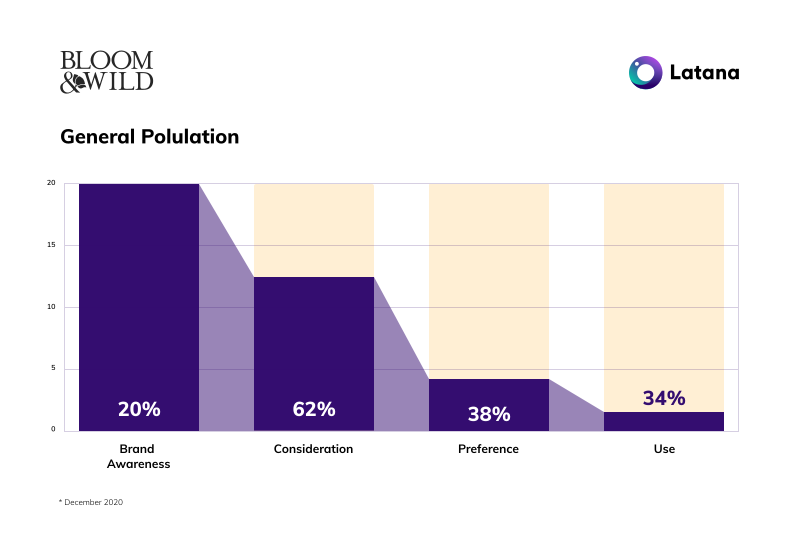\n\nFirst of all, Bloom & Wild has a good brand differentiator — its unique way of delivering flowers. The brand realized early on that people didn’t like ordering flowers because they had to be home to receive the bouquet. Also, delivery notifications and courier calls ruined the surprise of gifting flowers. So they came with a concept: flatpack bouquets. These bouquets are carefully packed in a box that then fits into the average letterbox — ingenious! \n\nOver the years, the product team also experimented with other “letterbox-appropriate” products — orchids, Christmas wreaths, and, finally, a mini Christmas tree. While the first two flopped, the doll-sized tree proved to be a hit in 2017. It went viral online, drawing more attention to the brand and organically boosting brand awareness. \n\nSince the mini-tree was so successful, so Bloom & Wild has relaunched it every year since. In 2020, they also hosted a creative “design your mini Christmas tree” competition where they asked their audience (both adults and children alike) to send in their designs for the Bloom & Wild team to visualize. \n\n\nSource: [Bloom and Wild](https://www.bloomandwild.com/design-your-own-christmas-tree) \n\nA mega-successful product, real problem-solving, creative marketing, and distinctive brand positioning has helped Bloom & Wild secure its audience’s attention — and, more importantly, influence consumers to choose Bloom & Wild over “household name” competition. \n\n### 2. Align Your Positioning and Communication with Customer Values \n\nWe found that Bloom & Wild hits the sweetest spot with Millennial women. 22% are aware of this brand and, among them, 64% would consider using it. Additionally, of those considering the brand, 41% prefer Bloom & Wild over the competition. At the bottom of the brand funnel, 33% of this audience are actually using the service. \n\n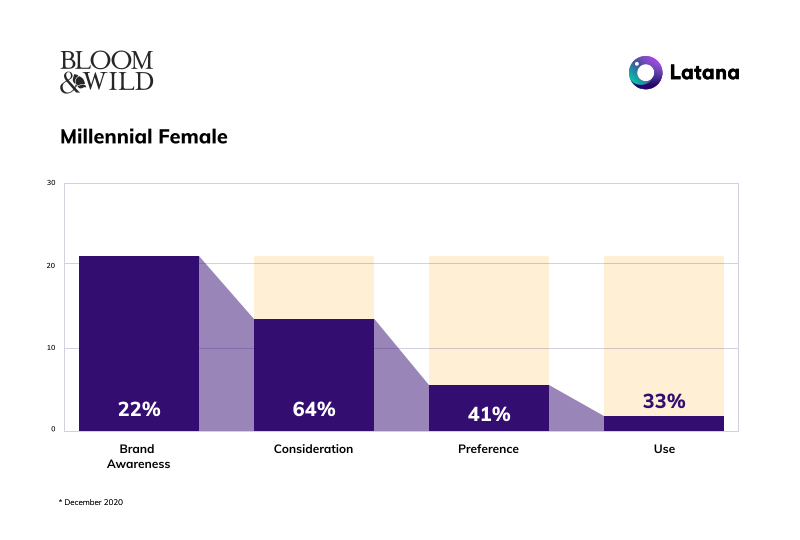\n\nSo why is Bloom & Wild such a “pleaser” for Millennial women? Because a lot of the company’s copy and collateral speaks to our newly found affinity for “treat-your-self-pick-me-ups\". \n\nPre-pandemic, Millennials already spent [twice as much money](https://www.npr.org/2017/06/04/531051473/the-millennial-obsession-with-self-care) on self-care than any other generation. In response to the uncertainty that the pandemic created, many dialed up their spending on therapeutic routines — be it [meditation](https://latana.com/post/calms-brand-success/), skincare, personal coaching, or regular flower deliveries. \n\nBloom & Wild caught wind of this trend early on. And given that most of its bouquets are for non-special occasions and more original than a dozen of red roses, the company’s product line was well-positioned to appeal to the self-care tribe. Stellar customer support, easy-to-setup and cancel subscription, and emotionally-charged language used in the copy also helped Bloom & Wild engage and retain Millennial women. \n\n\nSource: [Instagram ](https://www.instagram.com/p/CNaoFkuBUMH/)\n\nSecondly, Bloom & Wild also strategically encouraged its customers to gift flowers “just because”. Again, this pitch seems to land well with women, who were sending flowers to family and friends during the pandemic as a “substitute for hugs”. \n\nIn 2021, Bloom & Wild processed [over 780,000 non-special occasion orders](https://www.theguardian.com/business/2021/mar/22/bouquets-of-flowers-are-now-substitute-hugs-says-booming-florist). Among them, 162,000 contained the word “brighten” in the accompanying delivery message — further supporting the idea that people are ordering flowers to function as a “pick-me-up” or “small gesture” for others. \n\n### 3. Secondary Audiences Can Become a Competitive Advantage \n\nOn the other hand, Bloom & Wild hasn’t been doing enough to engage Millennial male consumers. Only 8% are familiar with the brand, but among those who are aware, 62% would consider using it. In addition, 35% of those considering Bloom & Wild have a preference for it over others. Curious!\n\n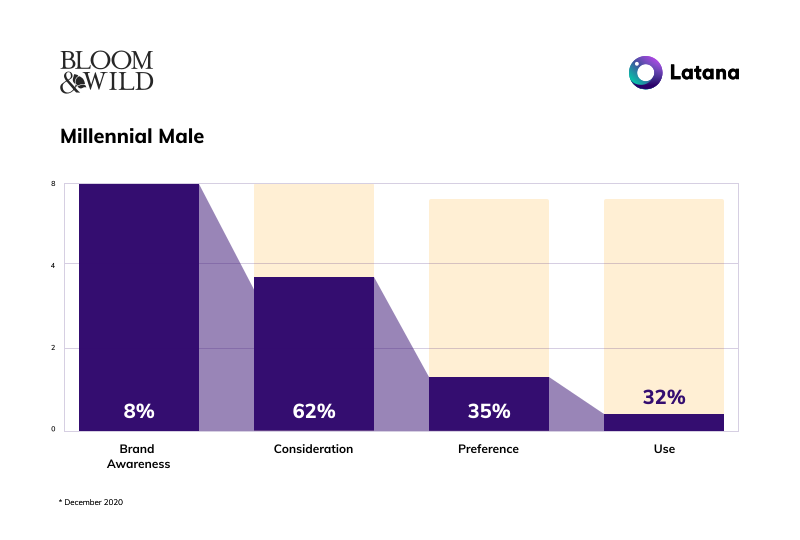\n\nIn-the-know male customers also developed a [strong brand affinity](https://latana.com/post/guide-brand-affinity/) for Bloom & Wild, but they were notoriously under-informed about the brand in the first place. \n\nTo some extent, such a lack of awareness can be explained by the company’s initial assumptions in regards to profitable target audiences. The [surface-level market data](https://www.mckinsey.com/industries/technology-media-and-telecommunications/our-insights/thinking-inside-the-subscription-box-new-research-on-ecommerce-consumers) indicated that 60% of e-commerce subscribers in the US are urban-dwelling, middle or upper-middle-class women. \n\nHence, it’s easy for new entrants to assume that they should target women too. But such lines of reasoning can lead to missed profits. Bloom & Wild, as well as other online florists, should spend more time looking into non-obvious audience segments if they want to grow their market presence. \n\nFor example, we found a very promising target audience using our brand tracking tool. Drum roll... it’s British men aged 56 and above. \n\nInterestingly, this cohort already has a higher brand awareness than the youngsters — 13% vs 8% among Millennial males. They're in the same bracket in terms of brand consideration (35%), brand preference (35%), and brand usage (34%), too. Clearly, increasing brand awareness among the male demographics can help online florist businesses acquire new loyal users.\n\n\n\nBut how come Boomer and older Gen X men have a higher awareness of Bloom & Wild than Millenials? We think several socioeconomic factors are at play.\n\nThis demographic is more likely to have a family — and respectively, giftees to delight with a surprise flower delivery. Plus, they have more means to afford such gestures. Also, their awareness may stem from the giftees — their spouses and family members who are using this brand to send “a token” while separated by distance and travel restrictions. \n\nLike other florists, Bloom & Wild rolls out holiday campaigns and promotes special deals for Mother’s, Father’s, and Grandparents’ days. What’s interesting is that they were among the first to offer their customers an “opt-out” from the promo mailing list if they felt too sensitive about any holiday. \n\nSuch an empathetic, yet bold, decision resulted in a major brand boost for the startup. While Bloom & Wild lost over [18,000 email subscribers](https://www.braze.com/customers/bloom-and-wild-case-study) after introducing the opt-in, their customer feedback volume increased by 5X and Twitter contact volume skyrocketed from 5% to 20%. Their appreciative audience was sending them words of gratitude for making such a considerate move. \n\n\nSource: [Twitter](https://twitter.com/gatewaywomen/status/1102226589348175872) \n\nThe positive sentiment on social media gave Bloom & Wild an organic positive brand lift. Furthermore, Bloom & Wild decided to further spread the idea of empathetic, human communications by starting a [Thoughtful Marketing Movement](https://www.bloomandwild.com/thoughtful-marketing-pledge) in 2020 — an organization now featuring over 100 brands who also commit to more ethical and considerate communication over aggressive sales-driven marketing. \n\n## Final Thoughts\n\nFor a long time, marketing in the flower industry was straightforward: schedule heavy-duty, [catch-all promotions](https://latana.com/post/marketing-increase-brand-awareness/) during every meaningful holiday — then reduce ad budgets during the “low tide”. \n\nBut savvier startups such as Bloom & Wild opted to take a different approach. And it looks like it's landing better in the current market conditions. \n\nConsumers today buy flowers “just because”. They also favor convenient subscriptions and pre-programmed deliveries over last-moment runs to the high street boutiques. Men are no longer ordering ordinary red rose bouquets on a special date — they're selecting more thoughtful gifts and unique flower arrangements. \n\nBloom & Wild has already proved their ability to recognize and capitalize on early shifts in consumer behaviors, and they're excelling in practicing [brand integrity](https://latana.com/post/guide-brand-integrity/). But as our data found, there’s still plenty of untapped audience segments and, hence, market opportunities for new movers and shakers to seize. "},"tags":["Brand Deep Dives","Brand Marketing"],"authorRef":{"slug":"elena","firstName":"Elena","lastName":"Prokopets","title":"Freelance Writer & Content Strategist","picture":{"__typename":"ContentfulAsset","id":"3656f248-8cb2-5fce-8ae1-2ea977717e1f","description":"","title":"Elena Author Photo Framed","file":{"contentType":"image/png","url":"//images.ctfassets.net/7so8go2zrvbw/1rgsWp0ZBagiKqMSpw7MwV/0cb99f4e752141de6ac06e1e9990363f/Author_Elena.png","details":{"image":{"width":235,"height":235}}},"gatsbyImageData":{"images":{"sources":[{"srcSet":"//images.ctfassets.net/7so8go2zrvbw/1rgsWp0ZBagiKqMSpw7MwV/0cb99f4e752141de6ac06e1e9990363f/Author_Elena.png?w=235&h=235&q=95&fm=webp 235w","sizes":"100vw","type":"image/webp"}],"fallback":{"src":"//images.ctfassets.net/7so8go2zrvbw/1rgsWp0ZBagiKqMSpw7MwV/0cb99f4e752141de6ac06e1e9990363f/Author_Elena.png?w=235&h=235&q=95&fm=png","srcSet":"//images.ctfassets.net/7so8go2zrvbw/1rgsWp0ZBagiKqMSpw7MwV/0cb99f4e752141de6ac06e1e9990363f/Author_Elena.png?w=235&h=235&q=95&fm=png 235w","sizes":"100vw"}},"layout":"fullWidth","backgroundColor":"#080808","width":1,"height":1}}}}},{"node":{"publishDate":"2021-04-01T09:00+01:00","slug":"brand-recognition","author":"Maddie Duke","title":"The World's Biggest Companies - and How They Achieved Brand Recognition","seo":{"__typename":"ContentfulSeo","title":"How The World's Biggest Brands Achieved Recognition","description":"Read on to discover how the world’s most biggest brands achieved brand recognition - and how you can learn from their success. ","noIndex":null,"ogImage":{"fluid":{"src":"//images.ctfassets.net/7so8go2zrvbw/2wNOmlgQ00wttg422ZRGbg/2f497148b6ce6de01f23b682a373c9c2/Frame_1000x709__5_.png?w=1200&h=675&q=90&fm=jpg"},"file":{"url":"//images.ctfassets.net/7so8go2zrvbw/2wNOmlgQ00wttg422ZRGbg/2f497148b6ce6de01f23b682a373c9c2/Frame_1000x709__5_.png"}}},"heroImage":{"__typename":"ContentfulAsset","id":"3d80e7a9-7d99-5451-bd26-32ee0c1d65c1","description":"Worlds Recognizable Brands","title":"Worlds Recognizable Brands","file":{"contentType":"image/png","url":"//images.ctfassets.net/7so8go2zrvbw/2wNOmlgQ00wttg422ZRGbg/2f497148b6ce6de01f23b682a373c9c2/Frame_1000x709__5_.png","details":{"image":{"width":2000,"height":1418}}},"gatsbyImageData":{"images":{"sources":[{"srcSet":"//images.ctfassets.net/7so8go2zrvbw/2wNOmlgQ00wttg422ZRGbg/2f497148b6ce6de01f23b682a373c9c2/Frame_1000x709__5_.png?w=200&h=142&q=95&fm=webp 200w,\n//images.ctfassets.net/7so8go2zrvbw/2wNOmlgQ00wttg422ZRGbg/2f497148b6ce6de01f23b682a373c9c2/Frame_1000x709__5_.png?w=400&h=284&q=95&fm=webp 400w,\n//images.ctfassets.net/7so8go2zrvbw/2wNOmlgQ00wttg422ZRGbg/2f497148b6ce6de01f23b682a373c9c2/Frame_1000x709__5_.png?w=800&h=567&q=95&fm=webp 800w,\n//images.ctfassets.net/7so8go2zrvbw/2wNOmlgQ00wttg422ZRGbg/2f497148b6ce6de01f23b682a373c9c2/Frame_1000x709__5_.png?w=1600&h=1134&q=95&fm=webp 1600w","sizes":"(min-width: 800px) 800px, 100vw","type":"image/webp"}],"fallback":{"src":"//images.ctfassets.net/7so8go2zrvbw/2wNOmlgQ00wttg422ZRGbg/2f497148b6ce6de01f23b682a373c9c2/Frame_1000x709__5_.png?w=800&h=567&q=95&fm=png","srcSet":"//images.ctfassets.net/7so8go2zrvbw/2wNOmlgQ00wttg422ZRGbg/2f497148b6ce6de01f23b682a373c9c2/Frame_1000x709__5_.png?w=200&h=142&q=95&fm=png 200w,\n//images.ctfassets.net/7so8go2zrvbw/2wNOmlgQ00wttg422ZRGbg/2f497148b6ce6de01f23b682a373c9c2/Frame_1000x709__5_.png?w=400&h=284&q=95&fm=png 400w,\n//images.ctfassets.net/7so8go2zrvbw/2wNOmlgQ00wttg422ZRGbg/2f497148b6ce6de01f23b682a373c9c2/Frame_1000x709__5_.png?w=800&h=567&q=95&fm=png 800w,\n//images.ctfassets.net/7so8go2zrvbw/2wNOmlgQ00wttg422ZRGbg/2f497148b6ce6de01f23b682a373c9c2/Frame_1000x709__5_.png?w=1600&h=1134&q=95&fm=png 1600w","sizes":"(min-width: 800px) 800px, 100vw"}},"layout":"constrained","backgroundColor":"#280868","width":800,"height":567}},"coverImage":{"__typename":"ContentfulAsset","id":"762daf02-a397-5984-8dcf-bc7ed2c8b02d","description":"Worlds Recognizable Brands","title":"Worlds Recognizable Brands - Cover","file":{"contentType":"image/png","url":"//images.ctfassets.net/7so8go2zrvbw/5WUQFWWDroFUFSGHD03QPd/48f64f782440ecf0afd341d63b49e6aa/Blog_Cover_1288X400__15_.png","details":{"image":{"width":1288,"height":400}}},"gatsbyImageData":{"images":{"sources":[{"srcSet":"//images.ctfassets.net/7so8go2zrvbw/5WUQFWWDroFUFSGHD03QPd/48f64f782440ecf0afd341d63b49e6aa/Blog_Cover_1288X400__15_.png?w=750&h=233&q=95&fm=webp 750w,\n//images.ctfassets.net/7so8go2zrvbw/5WUQFWWDroFUFSGHD03QPd/48f64f782440ecf0afd341d63b49e6aa/Blog_Cover_1288X400__15_.png?w=1080&h=335&q=95&fm=webp 1080w,\n//images.ctfassets.net/7so8go2zrvbw/5WUQFWWDroFUFSGHD03QPd/48f64f782440ecf0afd341d63b49e6aa/Blog_Cover_1288X400__15_.png?w=1288&h=400&q=95&fm=webp 1288w","sizes":"100vw","type":"image/webp"}],"fallback":{"src":"//images.ctfassets.net/7so8go2zrvbw/5WUQFWWDroFUFSGHD03QPd/48f64f782440ecf0afd341d63b49e6aa/Blog_Cover_1288X400__15_.png?w=1288&h=400&q=95&fm=png","srcSet":"//images.ctfassets.net/7so8go2zrvbw/5WUQFWWDroFUFSGHD03QPd/48f64f782440ecf0afd341d63b49e6aa/Blog_Cover_1288X400__15_.png?w=750&h=233&q=95&fm=png 750w,\n//images.ctfassets.net/7so8go2zrvbw/5WUQFWWDroFUFSGHD03QPd/48f64f782440ecf0afd341d63b49e6aa/Blog_Cover_1288X400__15_.png?w=1080&h=335&q=95&fm=png 1080w,\n//images.ctfassets.net/7so8go2zrvbw/5WUQFWWDroFUFSGHD03QPd/48f64f782440ecf0afd341d63b49e6aa/Blog_Cover_1288X400__15_.png?w=1288&h=400&q=95&fm=png 1288w","sizes":"100vw"}},"layout":"fullWidth","backgroundColor":"#280868","width":1,"height":0.3105590062111801}},"description":{"description":"Brand recognition is key to building a strong brand that influences purchase decisions and behavioral change. Read on to discover how the world’s most recognizable brands manage to stand out above the rest and how you can learn from their success. "},"content":{"content":"A brand is an intangible asset. The power and [value of a brand](https://latana.com/post/building-measuring-brand-equity-value/) lie within the sum of its parts, which can be made up of anything from a [logo](https://latana.com/post/survey-design-why-logos-are-better-than-text-in-brand-surveys/) to the way a website chatbot greets customers, culminating in the knowledge that when you choose a certain brand, you know exactly what sort of feeling and experience to expect. And while the power of brand recognition is incredibly [difficult to quantify](https://latana.com/post/brand-value-worth/), there’s no doubt that a strong brand has the potential to influence behavioral changes and purchase decisions.\n\nThat’s why building a brand that can be easily recognized is so crucial. Is your brand easily recognizable? Below, we look at some of the biggest brands in the world and what you can do to aid familiarity and boost recognition among your target audience.\n\n\n\n## What is Brand Recognition?\n\nBrand recognition refers to consumers’ ability to identify and distinguish your brand from another brand through sensory cues — such as visual, auditory, or even tactile — rather than by explicitly seeing or hearing the company or brand’s name. Logos, colors, slogans, packaging, jingles, and even such things as scent, taste, or the way a product feels or sounds, can all contribute to better brand recognition.\n\nThink of the McDonald’s golden arches. You only have to see one curve to know what you’re looking at and what it represents. Luxury car brands pay close attention to details such as the sound a door makes when it closes, all in the name of the brand experience and all contributing, if subtly, to the brand’s ability to be distinguished from its competitors.\n\n## Brand Recognition vs. Brand Awareness\n\nAlthough they’re related, brand recognition is not to be confused with [brand awareness](https://latana.com/topics-brand-awareness/). While brand awareness refers to a person’s knowledge that a brand exists, brand recognition is how well people can identify your brand via visual and audio cues. However, don’t choose one over another as brand awareness leads to brand recognition.\n\nThink of it this way: If you didn’t know that Amazon existed (brand awareness), you wouldn’t be able to identify the online retail giant by simply looking at that curved, right-pointing arrow (brand recognition).\n\n## How to Build Brand Recognition: Learning From The Best\n\nRecognition of brand doesn’t sprout from nowhere. It’s something you have to build and consistently work on. But how? Start with refining the key visual and audio elements of your brand, ensuring they represent your [brand identity](https://latana.com/post/brand-identity-branding-essential-growing-company/). Then focus on establishing these consistently and cohesively throughout all facets of your business.\n\n### Visual cues\n\n__Logo__\n\nA brand’s logo is arguably the most important element, and the two terms are often used interchangeably, as people struggle to distinguish a brand from its logo. To create a truly recognizable logo, consider the following:\n\n1. Uniqueness\n\nFor your logo to be recognizable, it should be unique. Avoid the risk of being mistaken for a competitor by ensuring your logo speaks specifically to your brand and what it represents. \n\nNo other computer brand has an apple for a logo besides Apple. If we weren’t already familiar with Apple products, we might think it bizarre to associate a piece of fruit with a tech giant, yet somehow, it works — because Apple made it work.\n\nAt a time when fussy tech logos were the norm, Apple chose a simple design, completely unique in its sector, that made it impossible for consumers to mistake it for another brand.\n\n\n\n2. Simplicity\n\nIt can be tempting to cram so many details into your logo, such that it represents all aspects of your brand personality and the promise it makes to customers. Yet some of the world’s most recognizable brands have succeeded with the most simple, minimal designs. Take the universally recognizable Nike “swoosh” for example. \n\nAn incredibly straightforward visual cue, yet so much meaning can be inferred from it. It resembles an upwards tick, almost saying “yes!”, while also representing acceleration, motion, power, and speed, and being different enough from a regular check mark that you’d never mistake it for anything but Nike.\n\n\n\n3. Wordmarks\n\nA wordmark or logotype refers to a logo that’s made up only of the letters of the brand name, without additional symbols or icons. This classic approach to visual branding aids recognition, as the brand name itself becomes a visual cue. The typeface of each letter becomes synonymous with the brand. Many of the world’s most recognizable brands use wordmarks, such as IBM, ebay, Disney, and FedEx. \n\nConsider one of the world’s biggest brands, Google. The Google brand is so well established in consumer minds that we can glance at almost any one of its [daily doodles](https://www.google.com/doodles#archive) and instantly recognize it as Google, despite the fact that the doodles are created by different artists and are often quite obscure. Were the logo not a wordmark, Google couldn’t have had as much fun over the years stretching the boundaries of what’s possible with the doodles.\n\n\n\n__Color__\n\nThe choice of colour in brand imagery is just as important as the logo itself. It can be treated as its own visual element, as a brand’s signature colors will appear in places where the logo may not always be, such as a [website background](https://latana.com/post/web-design-branding/), social media content, and in-store design elements such as wall paint or cash register panels. Color is such a powerful visual cue for brands, that there are some famous brands that can be recognized purely by its color scheme alone. \n\nIf you saw the signature blue and yellow of the IKEA brand, without seeing the logo, do you think you would recognize it? What about the red, orange and yellow of Mastercard? These iconic color combinations are powerful elements that have established these brands among some of the most recognizable in the world.\n\nDo you think you could tell the difference between Facebook blue, Twitter blue, and LinkedIn blue? You may surprise yourself! Without even being conscious of it, we learn these brand and color associations simply by being exposed to them so frequently.\n\nWhen choosing brand colors for your brand, make sure to do plenty of research into the psychology and perception behind colors and what we tend to associate with different hues, and try to choose something that hasn’t already been used in your industry or sector, particularly by one of your competitors.\n\n__Taglines and Slogans__\n\nAnother important visual and auditory brand element that helps establish brand recognition is the tagline. What do you think of when you read “Because you're worth it”? What about “Finger lickin’ good”? The taglines are world famous, and instantly recognizable as belonging to L’Oreal and KFC.\n\nA slogan is similar to a tagline, although typically more associated with advertising or product campaigns rather than company branding. Play around with some possible taglines and see what sticks. Even small businesses often have highly effective taglines that are recognizable within their industry or niche.\n\n### Auditory cues\n\n__Jingles__\n\nWhen you hear “Ba Da Ba Ba Bah”, you already know what’s coming. Not only do you know it’s McDonald’s, you may already be thinking about french fries. The “I’m lovin’ it” jingle has been incredibly successful in establishing auditory brand recognition for the global fast food giant. Jingles are powerful auditory cues when it comes to establishing and building brand recognition. \n\nEmbedded content: https://www.youtube.com/watch?v=dHOpsI2brHE\n\nA well written, catchy jingle has the potential to stick with people, and even become associated with fond childhood memories that last a lifetime. While TV advertisements are less popular for smaller brands, jingles can still be used in audio advertising and social media, so it’s definitely worth considering. \n\n__Music__\n\nSimilar to jingles, but not quite the same, associating your brand with original brand music or existing songs by famous artists is another way to create auditory cues that can contribute to brand recognition. When a brand incorporates one song across a range of branding campaign materials, the song often becomes synonymous with the brand in peoples' minds, so that when we hear that song on the radio or in other contexts, we can’t help but think of the brand.\n\nLevis is a brand that frequently licences music to accompany ad campaigns. Brands should be cautious about which songs they choose to work with and focus not just on impact but on uniqueness. Along with multiple TV shows, both Kia and Calvin Klein used Billie Eilish’s popular track “Bad Guy” in international branding campaigns, not to mention the number of brands who have licensed the track for domestic campaigns in various countries around the world.\n\n### Secondary Senses\n\nIn addition to visual and auditory cues, the world’s most recognized brands often combine other elements to appeal to and create associations and familiarity through multiple different senses, striving to establish an emotional connection.\n\n__Scent__\n\nYou know the smell that fills your nose as you walk past a Subway restaurant. While [Subway denies intentionally pumping the smell outside](https://www.foodrepublic.com/2011/12/07/whats-behind-the-subway-bread-smell/), it’s an extremely valuable and distinctive element of their overall brand, and many people can instantly recognize it as the smell of Subway. \n\nThe marketing team behind Abercrombie & Fitch, on the other hand, purposefully have the signature scent “Fierce” sprayed throughout their stores and on their clothing via fragrance distributors installed in the ceilings. The scent is a powerful olfactory cue that distinguishes the brand from competing brands and stores and would be instantly recognizable to those aware of the brand and the scent.\n\nWhile you may not be able to create a signature fragrance to purposefully pump throughout stores, it’s worth considering what unique scents people may associate with your brand. A company that produces leather goods, for example, may want to be aware that part of what customers love about their brand is the smell of the products or the store. Or, on a smaller scale, an independent yoga studio may find that if they usually burn a particular type of incense, their clients associate that smell with their experience at that particular studio. If the studio changes the incense, or the client goes to another studio, the experience is different. Even the most subtle changes can have an impact.\n\n__Haptics__\n\nWhere possible, companies are beginning to introduce haptics into their branding efforts. Smartphone brands have started to offer haptic feedback via the touchscreens. For example, when setting an alarm on an Apple iPhone, the phone mimics the feeling of a mechanical wheel clicking over. Considering smartphones have become essential products that are integrated into our daily lives, these subtle yet delightful details have a big impact on branding, and a user would be able to recognize instantly whether the haptic feedback they were receiving was that of an Apple product or another brand, such as a Samsung.\n\n## The World’s Most Recognizable Brands\n\nIn order for brand recognition to work, companies need to find ways to help people remember and recall their brand, and apply those across all facets of the business. Sometimes this goes beyond those sensory cues and into other areas that require something much, much bigger.\n\n### Apple: Products we can’t live without\n\nLooking again at Apple, the big tech innovator. Apple is a global branding success story, recognized all over the world. Apple has achieved this not only through a simple, unique logo and clever use of music and haptics. \n\nApple has also achieved an ecosystem of products that are integrated into daily life and make us feel more connected. That feeling of connectedness, of I-can’t-live-without-it necessity that we feel towards our iPhone, MacBook, iPad, and the seamless way these products integrate with one another, is something that establishes brand recognition through resonance. \n\n\n\nThe strong feelings people experience, the attachment they feel to their Apple products goes far beyond what other clever brand elements the company creates. While the branding itself is exceptionally well designed and thought through, it’s difficult to say whether it would have become so recognizable had it not been for the innovative products and the iconic leader of Steve Jobs — who was a brand in and of himself?\n\n### Coca-Cola: Consistency and tradition\n\nThe brilliant red logo of the Coca-Cola brand has hardly changed in the almost 130 years since it was created. Aside from a few minor tweaks and refinements here and there, Coca-Cola has retained the same colour, typography, and imagery throughout its lifetime as a brand. This long history of consistency in visual branding elements has contributed to how famously recognizable it still is today, as well as giving it a strong sense of stability and tradition. \n\n\n\nOnce you find a good thing, it’s okay to stick with it. You don’t always have to update and rebrand, in fact, [rebranding can often go wrong](https://latana.com/post/5-major-reasons-rebranding-fails/). Make sure to understand what your brand means to people, and if you want to build brand recognition, perhaps look to other areas before drastically changing the color or logo.\n\n## Final Thoughts\n\nYou can design the best logo, create the best jingle, and write the best tagline, but you must put them to work for you in every possible way if you want to establish brand recognition. These brand elements should be present at every touchpoint of your brand, from the website to the packaging. If your visual brand elements don’t align with your logo, it provides an inconsistent brand experience, weakening the brand and undermining its [brand integrity](https://latana.com/post/guide-brand-integrity/). \n\nTake clues from the most recognizable brands in the world and aim for a combination of sensory cues, to establish an emotional connection between your brand and the people it reaches, in order to build and maintain brand recognition that reinforces awareness and allows your brand to stand out above the rest."},"tags":["Brand Strategy"],"authorRef":{"slug":"maddie-duke","firstName":"Maddie","lastName":"Duke","title":"Freelance Marketer","picture":{"__typename":"ContentfulAsset","id":"65901de7-355f-5f2e-9afc-385164b94bae","description":"","title":"Maddie Duke","file":{"contentType":"image/png","url":"//images.ctfassets.net/7so8go2zrvbw/1qNUFRwb4TLmuiGH10JDui/9824682cacd443a03bc5e15e39fe2582/Author_Maddie.png","details":{"image":{"width":235,"height":235}}},"gatsbyImageData":{"images":{"sources":[{"srcSet":"//images.ctfassets.net/7so8go2zrvbw/1qNUFRwb4TLmuiGH10JDui/9824682cacd443a03bc5e15e39fe2582/Author_Maddie.png?w=235&h=235&q=95&fm=webp 235w","sizes":"100vw","type":"image/webp"}],"fallback":{"src":"//images.ctfassets.net/7so8go2zrvbw/1qNUFRwb4TLmuiGH10JDui/9824682cacd443a03bc5e15e39fe2582/Author_Maddie.png?w=235&h=235&q=95&fm=png","srcSet":"//images.ctfassets.net/7so8go2zrvbw/1qNUFRwb4TLmuiGH10JDui/9824682cacd443a03bc5e15e39fe2582/Author_Maddie.png?w=235&h=235&q=95&fm=png 235w","sizes":"100vw"}},"layout":"fullWidth","backgroundColor":"#080808","width":1,"height":1}}}}},{"node":{"publishDate":"2021-03-18T09:00+01:00","slug":"checklist-brand-customer-service","author":"Marilyn Wilkinson","title":"The Ultimate Checklist For Integrating Brand Into Customer Service","seo":{"__typename":"ContentfulSeo","title":"Integrating Brand Into Customer Service","description":"Does your customer service live up to your brand promise? A third of customers will walk away from a brand after a negative experience. Learn how to stop that.","noIndex":null,"ogImage":{"fluid":{"src":"//images.ctfassets.net/7so8go2zrvbw/3JLvlMWllsNWuKVCaPTlkm/fd4211eaa68f398cb38cd43f5d79a4d4/Checklist_Latana.png?w=1200&h=675&q=90&fm=jpg"},"file":{"url":"//images.ctfassets.net/7so8go2zrvbw/3JLvlMWllsNWuKVCaPTlkm/fd4211eaa68f398cb38cd43f5d79a4d4/Checklist_Latana.png"}}},"heroImage":{"__typename":"ContentfulAsset","id":"0d4348f8-903f-5d59-93bb-76ede618fb03","description":"","title":"Checklist Latana","file":{"contentType":"image/png","url":"//images.ctfassets.net/7so8go2zrvbw/3JLvlMWllsNWuKVCaPTlkm/fd4211eaa68f398cb38cd43f5d79a4d4/Checklist_Latana.png","details":{"image":{"width":518,"height":414}}},"gatsbyImageData":{"images":{"sources":[{"srcSet":"//images.ctfassets.net/7so8go2zrvbw/3JLvlMWllsNWuKVCaPTlkm/fd4211eaa68f398cb38cd43f5d79a4d4/Checklist_Latana.png?w=130&h=104&q=95&fm=webp 130w,\n//images.ctfassets.net/7so8go2zrvbw/3JLvlMWllsNWuKVCaPTlkm/fd4211eaa68f398cb38cd43f5d79a4d4/Checklist_Latana.png?w=259&h=207&q=95&fm=webp 259w,\n//images.ctfassets.net/7so8go2zrvbw/3JLvlMWllsNWuKVCaPTlkm/fd4211eaa68f398cb38cd43f5d79a4d4/Checklist_Latana.png?w=518&h=414&q=95&fm=webp 518w","sizes":"(min-width: 518px) 518px, 100vw","type":"image/webp"}],"fallback":{"src":"//images.ctfassets.net/7so8go2zrvbw/3JLvlMWllsNWuKVCaPTlkm/fd4211eaa68f398cb38cd43f5d79a4d4/Checklist_Latana.png?w=518&h=414&q=95&fm=png","srcSet":"//images.ctfassets.net/7so8go2zrvbw/3JLvlMWllsNWuKVCaPTlkm/fd4211eaa68f398cb38cd43f5d79a4d4/Checklist_Latana.png?w=130&h=104&q=95&fm=png 130w,\n//images.ctfassets.net/7so8go2zrvbw/3JLvlMWllsNWuKVCaPTlkm/fd4211eaa68f398cb38cd43f5d79a4d4/Checklist_Latana.png?w=259&h=207&q=95&fm=png 259w,\n//images.ctfassets.net/7so8go2zrvbw/3JLvlMWllsNWuKVCaPTlkm/fd4211eaa68f398cb38cd43f5d79a4d4/Checklist_Latana.png?w=518&h=414&q=95&fm=png 518w","sizes":"(min-width: 518px) 518px, 100vw"}},"layout":"constrained","backgroundColor":"#7808c8","width":800,"height":639}},"coverImage":null,"description":{"description":"Does your customer service live up to your brand promise? Nearly a third of customers will walk away from a brand they love after a negative experience. Learn how to stop that."},"content":{"content":"Does your customer service live up to your brand promise? Nearly [a third of customers](https://www.pwc.de/de/consulting/pwc-consumer-intelligence-series-customer-experience.pdf) will walk away from a brand they love after a single negative experience. That’s why it’s essential to make sure your customer service reflects your [brand image](https://latana.com/post/improve-brand-image/).\n\nYour brand is a lot more than marketing. It’s the sum of every touchpoint where customers interact with you. Every experience, whether positive or negative, can shape customer perception forever. As Jeff Bezos says, your brand is what people say about you when you’re not in the room. \n\nIt’s tempting to focus on exciting marketing initiatives, like [social media](https://latana.com/post/negative-comments-social-media/) posts, email campaigns, and events. But if the everyday experiences that customers have with your brand don’t meet or exceed their expectations, it will leave a sour taste in their mouth and damage your brand value. Here are our top tips and insights for integrating brand into customer service.\n\n## Why Does Customer Service Matter to Your Brand?\n\nPicture this. You’re the brand manager at a major airline. A customer is dissatisfied with the service they experienced on their flight, and they have taken to Twitter to vent. It looks like they have left some disparaging reviews on Google, too. Now, customers, investors, employees, and anyone else researching your brand online can find out what happened. In the age of social media, one-off incidents can easily be immortalized and have a detrimental impact on your brand-building efforts.\n\n## How to Integrate Brand and Customer Service\n\nCreating on-brand customer experiences requires marketing and customer service to work together. Each department sees only one piece of the puzzle, so close collaboration is key to understanding and optimizing the whole customer journey. \n\nPutting the customer first is a given. Great brands take customer service one step further with experiences that reflect the brand’s personality. For example, if you are a luxury brand that stands for good quality, customers will expect a particularly high level of attention to detail. If your brand image is fun and quirky, customers will want to see this in their interactions with you – whether in-store, online, or over the phone. \n\nIf the brand message and the customer experience don’t match up, your company might come across as inauthentic, or worse, irritate customers.\nRead our handy checklist to help you unify your brand marketing and messaging with the customer experience. \n\n\n\n\n\n## How Top Brands Integrate Brand and Customer Service\n\nThe world’s most successful brands put the customer experience at the heart of everything they do. In fact, going above and beyond for their customers is part of the reason why they are so successful in the first place. Read on to learn how top brands approach customer service.\n\n### Disney\n\nWhen it comes to creating a magical and unforgettable customer experience, all companies can learn from Disney. Disney theme parks welcome over 150 million guests every year, with an impressive 70% return rate for first-time guests. So, what’s their secret?\n\nDisney treats every guest, no matter if it’s their first visit or their hundredth, like a VIP. This level of customer service is made possible by Disney’s team of over 130,000 dedicated employees who receive extensive training. New staff members go through six weeks of training before they start serving customers, and on their very first day, they learn that their job, no matter their position, is to create happiness.\n\nDisney encourages its employees to show initiative and offer guests personalized experiences. If a customer asks a question, employees are taught to think on their feet and figure out a solution rather than simply saying, “I don’t know.” This customer-focused mindset is seen at every level of the company with the full support of the senior leadership team.\n\n\n\nFurthermore, Disney uses technology to reduce any friction which might detract from the Disney magic. Losing a paper ticket for a ride wouldn’t be much fun, so all guests get swipeable smart wristbands with their tickets and payment information. Guests can check ride wait times, park events, and hours anytime using the app. To avoid delays or errors, restaurants use RFID technology to bring guests’ meals straight to their table. In short, technology seamlessly enhances customer service efforts.\n\n### Mariott Hotel\n\nThe global hotel chain has a rich, international heritage and its loyalty program boasts over 110 million members. Mariott knows that to “wow” your guests, you need to offer an experience that goes beyond what they expect. That’s where their “surprise and delight” initiatives come in. For instance, if they notice on social media that a guest is celebrating an anniversary or engagement, they commemorate the special occasion with a cake or bottle of champagne.\n\nSo that their guests are fully satisfied, Mariott has developed global partnerships in entertainment, sports and culinary. By expanding their services beyond their core offering, they are able to offer customers a better service and leave no stone unturned in their quest to make their guests happy.\n\nAs you can see, the Mariott brand goes beyond marketing. Their customer services team brings the brand to life every time a guest checks in at the hotel. By offering their customers the best possible service, the luxury hotel chain has been able to drive loyalty and repeat stays, leading to business growth. \n\n### Apple\n\nFrom the Apple Watch to iPhones to MacBook Pros – Apple makes some of the most popular tech gadgets in the world. But in addition to much-loved, highly innovative products, the company also prides itself on all-star A-P-P-L-E customer service. The five customer service pillars happen to spell out the brand name:\nA: Approach customers with a personalized, warm welcome\nP: Probe politely to understand the customer’s needs\nP: Present a solution for the customer to take home today\nL: Listen for and resolve issues or concerns\nE: End with a fond farewell and an invitation to return\n\nApple makes a point of ensuring the customer experience lives up to the brand promise. But that wasn’t always the case. Before Steve Jobs took over in 1997, Apple computers were sold through chain stores and other authorized outlets. The company wanted to offer customers a more personalized experience and severed ties with over 10,000 third-party retailers. After that, the company opened the first Apple store and overhauled its entire website.\n\nMoving customer service in-house gave Apple full control over every aspect of the customer experience. The quirkiness of the Apple brand is at the heart of the customer experience, from referring to store employees as “geniuses”, to offering free tech support in-store at the “genius bar”.\n\n### Nespresso\n\nWhile some might associate Nespresso with the iconic George Clooney ads, the luxury coffee brand truly understands how to make customers feel special.\nEver wondered why Nespresso capsules are not available in your supermarket? That’s because a supermarket is not conducive to the kind of luxurious experience Nespresso aspires to offer. Instead, the coffee capsules are available in Nespresso stores, known as “boutiques”.\n\n\n\nUnlike a typical busy store with fully-stocked shelves, Nespresso boutiques are all about the atmosphere, and only select products are on display. After completing a purchase, customers are invited to stay longer and enjoy a free coffee in the tasting area.\n\nIf a customer can’t make it to the “boutique”, they can order their coffee via the Nespresso website or app, and Nespresso offers next-day delivery. In other words, the brand makes it very easy and pleasant for customers to buy from them. And that’s not all.\n\nThe “Nespresso and you” loyalty program offers a range of rewards, such as free machine repair, special offers and free coffee-tasting masterclasses. The loyalty program is split into three tiers: connoisseur, expert and ambassador, based on the level of coffee consumption. This not only rewards their most loyal customers, it also encourages customers to keep purchasing from them.\n\n## Key Takeaways\n\nYour brand is what you stand for and sets customer expectations for their interactions with you. Meeting and exceeding those expectations is the best way to keep customers happy and drive brand loyalty. Marketing and the customer service team need to work together to “wow” customers with on-brand experiences."},"tags":["Brand Strategy"],"authorRef":{"slug":"marilyn","firstName":"Marilyn","lastName":"Wilkinson","title":"Digital Marketing Expert","picture":{"__typename":"ContentfulAsset","id":"e78d550e-a31a-5186-820d-9513596e92d2","description":"","title":"Marilyn Wilkinson Prof Pic","file":{"contentType":"image/png","url":"//images.ctfassets.net/7so8go2zrvbw/1oCRDVeLkqM1iEpuSKa6YK/1ba47f67261d9419b9df6600b8a09c1e/Author_Marilyn.png","details":{"image":{"width":235,"height":235}}},"gatsbyImageData":{"images":{"sources":[{"srcSet":"//images.ctfassets.net/7so8go2zrvbw/1oCRDVeLkqM1iEpuSKa6YK/1ba47f67261d9419b9df6600b8a09c1e/Author_Marilyn.png?w=235&h=235&q=95&fm=webp 235w","sizes":"100vw","type":"image/webp"}],"fallback":{"src":"//images.ctfassets.net/7so8go2zrvbw/1oCRDVeLkqM1iEpuSKa6YK/1ba47f67261d9419b9df6600b8a09c1e/Author_Marilyn.png?w=235&h=235&q=95&fm=png","srcSet":"//images.ctfassets.net/7so8go2zrvbw/1oCRDVeLkqM1iEpuSKa6YK/1ba47f67261d9419b9df6600b8a09c1e/Author_Marilyn.png?w=235&h=235&q=95&fm=png 235w","sizes":"100vw"}},"layout":"fullWidth","backgroundColor":"#080808","width":1,"height":1}}}}},{"node":{"publishDate":"2021-02-18T09:00+01:00","slug":"marketers-guide-data-quality","author":"Marilyn Wilkinson","title":"The Marketer’s Guide to Data Quality","seo":{"__typename":"ContentfulSeo","title":"The Marketer’s Guide to Data Quality","description":"These days, marketing is data-driven. But what happens when the data you trust is inaccurate? And how do you know if your data is high quality or not? ","noIndex":null,"ogImage":{"fluid":null,"file":{"url":"//images.ctfassets.net/7so8go2zrvbw/1whpjjg19XjZxRfaaTPvch/d52f9aefc62075c59cb0deb579c90c05/Image_Quality_Data.svg"}}},"heroImage":{"__typename":"ContentfulAsset","id":"a71b7535-dea1-5d25-9074-af6416b73bcb","description":"","title":"Image Quality Data","file":{"contentType":"image/svg+xml","url":"//images.ctfassets.net/7so8go2zrvbw/1whpjjg19XjZxRfaaTPvch/d52f9aefc62075c59cb0deb579c90c05/Image_Quality_Data.svg","details":{"image":{"width":600,"height":600}}},"gatsbyImageData":null},"coverImage":null,"description":{"description":"These days, marketing is data-driven. But what happens when the data you trust is inaccurate? And how do you know if your data is high quality or not? "},"content":{"content":"These days, marketing is data-driven. Marketers rely on data to decide which audiences to target, what campaigns to run and where to invest their precious budget. But what happens when the data you trust is inaccurate? And how do you know if your data is high quality or not? \n\n## Why Data Quality Matters In Marketing\n\nUsing data to guide marketing decisions is a well-known best-practice. However, the effectiveness of your decision-making is highly reliant on the [quality of the data](https://latana.com/data-confidence/) you used to make that decision. \n\nData can be hugely helpful when it comes to strategic decision-making. For instance, understanding how different customer groups [perceive your brand](https://latana.com/post/brand-perception-2020/) can help you focus on relevant audiences using [audience segmentation](https://latana.com/audience-segmentation/), create relevant messaging, and tweak your product or service. This is all likely to result in increased ROI and higher overall customer satisfaction and retention. \n\nBad data could send you in entirely the wrong direction – which means, at best, ineffective campaigns and wasted budget, at worst, angry customers.\n\n## How Poor Data Quality Can Harm Your Brand\n\nHave you heard of the new Coke story? During the Coca-Cola-Pepsi wars of the eighties, blind taste tests indicated that people preferred the sweeter taste of rival Pepsi-Cola. So, Coca-Cola decided to reformulate its recipe to launch a new product called New Coke. \n\nThe result? Customers hated it. In fact, Coca-Cola received so many complaints that they were forced to bring back the old recipe in less than three months. Even the company itself even refers to the [failed rebrand](https://latana.com/guides/ultimate-guide-to-rebranding/) as “one of the most memorable marketing blunders ever.” \n\nSo what went wrong? Their decision seemed perfectly logical and backed up by data. After all, they had performed almost 200,000 blind taste tests on consumers. The problem was that the data was incomplete - customers don’t buy beverages based on taste alone. Coca Cola had failed to take into account consumers’ emotional attachment and [brand affinity](https://latana.com/post/guide-brand-affinity/).\n\nThe moral of the story? Check your data is reliable and that you are interpreting it correctly before making any big decisions. But how can you tell if your data is trustworthy or not?\n\n## Five Pillars of Data Quality\n\nGood quality data meets these five criteria:\n\n1. __Completeness__ – does your data show the full picture?\n2. __Reliable__ – is the source of the data reliable?\n3. __Consistency__ – are you being consistent in your use of data types, sources, and metrics?\n4. __Timeliness__ – is the information up-to-date?\n5. __Accuracy__ – are the numbers and values correct?\n\n\n\n## Which Marketing Tools Provide High-Quality Data?\n\nWhile there are several places marketers can look to gain a better understanding of their brand performance, not all data sources are created equal. Some are more reliable than others. Here is an overview of the tools you can trust and the tools you should take with a pinch of salt.\nLet’s take a look at four popular tools that marketers often use to try and [measure brand performance](https://latana.com/case-studies/holvi/) – which unfortunately is not very effective.\n\n### Social listening\n\n[Social listening](https://latana.com/post/social-listening-brand/) is a popular way of finding out what people are saying about your brand on social media. It allows you to track posts and comments where people have mentioned you, analyze user demographics and measure user sentiment.\n\nWhile some marketers feel social listening gives them access to valuable insights, it would be wise to treat the data with caution. Why?\n90% of online communities simply lurk and observe. Of the remaining 10%, 9% of these people might comment from time to time. That means the insights generated by social listening come from just 1% of the total online users.\n\n\n\nSo, while it’s interesting to know what users are saying about your brand online, social listening data does not provide the complete picture.\n\n### Google Trends\n\nGoogle Trends is based on data from the Google search engine and is meant to show you the level of interest in a topic and how it has developed over time.\n\nOne issue with Google trends data is that it’s normalized. Google adjusts the search volume data to account for other factors such as country size, so the numbers you see here are essentially a rating or score of how high the level of interest is. This is often open to misinterpretation as some people mistakenly think the numbers are referring to the search volume.\n\n\n\nFor instance, we can see here that the level of interest in Coca-Cola has remained relatively constant in the United States over the past five years and peaked in July 2020. Now, that’s interesting to know, but it doesn’t tell us anything about their target audience, how they feel about the Coca-Cola brand and how that perception has changed over time.\n\n### Google Search Console\n\nLet’s say you run a big TV campaign. If it’s effective, people are more likely to search for your brand name on Google to find out more about you. You can use the Google Search Console to measure impressions and clicks. If these metrics have gone up, it’s a sign that brand awareness has increased.\nThis method has limitations, though, since all you know is that more people are searching for you on Google. You don’t know who, or why, or anything about how they perceive your brand. \n\n### Traditional brand tracking software\n\nIf you use one of the more traditional brand tracking tools to measure your brand health, you might notice that they force you to focus on only 2-3 audience characteristics. For instance, you might be able to set age and gender, but not location as well. This means that you are not getting the full picture of your target audience and how they perceive your brand. To gain a deep understanding of your audience, you need to be able to consider all the complex, different characteristics which make your customers who they are.\n\nNow, let’s take a look at some marketing tools with data you can trust.\n\n### Google Analytics \n\nGoogle Analytics shows you a lot more than just how many users visited your site, which pages they viewed, which device they used, and where they jumped off. If you run an eCommerce store, Google Analytics can even tell you which items users have purchased and the transaction value, so you can calculate the ROI on your performance marketing campaigns.\n\nThe categories in the “audience” tab also reveal a lot about the people who visit your site. Under “demographics” you can find the age, gender, and location of your site visitors – at least, the ones who are logged into Google (the rest will show up as “unknown”). \n\nThe “Interests” category shows various affinity categories that your site visitors fall into, such as business travelers, movie lovers, and technophiles. You can directly use these audiences in your campaigns across other Google platforms, such as YouTube and Google Shopping. In addition, you can make a note of the characteristics your users commonly share to shape your targeting strategy on other platforms.\n\n### Latana Brand Tracking\n\nThis AI-powered tool allows businesses to track key brand KPIs, such as [brand awareness](https://latana.com/topics-brand-awareness/) and loyalty, among thousands of target audiences. \n\nWhile this area of marketing is often considered subjective compared to eCommerce and performance marketing, it is our mission to make your brand campaigns measurable. \n\nAll too often, brand marketers are unsure whether or not their campaigns are truly resonating with their target audience. They end up shaping their marketing strategy based on their gut feelings rather than data. Marketers can tap into Google Analytics to gain precise data on website performance. We aim to deliver the same level of precision and accuracy to brand managers.\n\n\n\nLatana prides itself on unmatchable data quality. Our machine learning technology accurately tracks all elements of your brand funnel and provides deep audience segmentation. Using [Multilevel Regression and Postratification](https://latana.com/mrp/), we are able to process large sample sizes and avoid bias or skewed results when analyzing niche audiences comprised of several different characteristics. Our data is also known for its high accuracy, as it can pick up changes of just 2-3% in segmented audiences.\n\n## 3 Ways to Use High-Quality Data to Power Your Brand Marketing\n\n## 1. Nail your brand message\n\nPowerful messaging comes from truly understanding your audience. Knowing who your audience is, what they care about, and what they think of your brand enables you to connect with your audience on an emotional level. If it’s not relevant to them, they will forget it instantly or may even have a more negative view of your brand.\n\n### 2. Drive next-level email campaigns\n\nEmail is one of the most effective marketing channels. It’s free, you own it, and you can easily reach your customers without spending a dollar on ads. But not all of your customers are the same. Understanding how different audiences perceive your brand helps you segment your customers into relevant target groups, and only send out relevant communication and promotions. Relevance is key to keeping your open-rate high and unsubscribe rate low.\n\n### 3. Run effective social media campaigns\n\nSocial media platforms such as [Facebook](https://latana.com/post/facebook-algorithm-brand/), LinkedIn, and Twitter are known for their highly precise targeting. If your target audience is 40-year-old women who adore their cat, you can reach them. However, if you set your ads to show to “everybody who likes cats”, then you will burn through your budget very quickly, without driving any meaningful results.\n\nSocial media can be a great way to build brand awareness and loyalty. But if you are not absolutely clear on who your audience is, and how to engage with them in a way that feels relevant and authentic, you will just be wasting your money.\n\n## Final Thoughts\n\n__Data is vital for brand managers today__. But as Coca-Cola found out in the eighties, if your data doesn’t tell you the whole story, then there is a high risk of making poor marketing decisions which can endanger your brand and anger customers. \n\n__Clean, reliable data should be the foundation of your brand strategy__. This will enable you to target relevant niche audiences, understand your consumers and invest in successful campaigns.\n\n__Advanced brand tracking is a key part of data hygiene__. While there are plenty of data sources marketers, only a brand tracking system can provide the high level of precision and accuracy needed to make serious decisions around your brand.\n\nKeen to learn more about brand tracking? Check out the [Ultimate Brand Tracking Guide](https://latana.com/guides/ultimate-brand-tracking-guide/)."},"tags":["Brand Strategy"],"authorRef":{"slug":"marilyn","firstName":"Marilyn","lastName":"Wilkinson","title":"Digital Marketing Expert","picture":{"__typename":"ContentfulAsset","id":"e78d550e-a31a-5186-820d-9513596e92d2","description":"","title":"Marilyn Wilkinson Prof Pic","file":{"contentType":"image/png","url":"//images.ctfassets.net/7so8go2zrvbw/1oCRDVeLkqM1iEpuSKa6YK/1ba47f67261d9419b9df6600b8a09c1e/Author_Marilyn.png","details":{"image":{"width":235,"height":235}}},"gatsbyImageData":{"images":{"sources":[{"srcSet":"//images.ctfassets.net/7so8go2zrvbw/1oCRDVeLkqM1iEpuSKa6YK/1ba47f67261d9419b9df6600b8a09c1e/Author_Marilyn.png?w=235&h=235&q=95&fm=webp 235w","sizes":"100vw","type":"image/webp"}],"fallback":{"src":"//images.ctfassets.net/7so8go2zrvbw/1oCRDVeLkqM1iEpuSKa6YK/1ba47f67261d9419b9df6600b8a09c1e/Author_Marilyn.png?w=235&h=235&q=95&fm=png","srcSet":"//images.ctfassets.net/7so8go2zrvbw/1oCRDVeLkqM1iEpuSKa6YK/1ba47f67261d9419b9df6600b8a09c1e/Author_Marilyn.png?w=235&h=235&q=95&fm=png 235w","sizes":"100vw"}},"layout":"fullWidth","backgroundColor":"#080808","width":1,"height":1}}}}},{"node":{"publishDate":"2021-02-11T09:00+01:00","slug":"how-to-build-your-brand-by-claiming-online-brand-mentions","author":"Jodie Manners","title":"How To Build Your Brand by Claiming Online Brand Mentions","seo":{"__typename":"ContentfulSeo","title":"How To Build Your Brand by Claiming Online Mentions","description":"Building a brand? Then you better be claiming those brand mentions! Learn how to take full advantage of one of your brand’s biggest untapped resources.","noIndex":null,"ogImage":{"fluid":{"src":"//images.ctfassets.net/7so8go2zrvbw/3KUtTTiZuAOS8gXsPhKUsG/539d1d72286726dae3bcbc8b2240a87c/christian-wiediger-70ku6P7kgmc-unsplash.jpg?w=1200&h=675&q=90&fm=jpg"},"file":{"url":"//images.ctfassets.net/7so8go2zrvbw/3KUtTTiZuAOS8gXsPhKUsG/539d1d72286726dae3bcbc8b2240a87c/christian-wiediger-70ku6P7kgmc-unsplash.jpg"}}},"heroImage":{"__typename":"ContentfulAsset","id":"d84a96a5-9d21-5d3d-9af6-dbbece1b53f6","description":"online brand mentions","title":"christian-wiediger-70ku6P7kgmc-unsplash","file":{"contentType":"image/jpeg","url":"//images.ctfassets.net/7so8go2zrvbw/3KUtTTiZuAOS8gXsPhKUsG/539d1d72286726dae3bcbc8b2240a87c/christian-wiediger-70ku6P7kgmc-unsplash.jpg","details":{"image":{"width":6000,"height":4000}}},"gatsbyImageData":{"images":{"sources":[{"srcSet":"//images.ctfassets.net/7so8go2zrvbw/3KUtTTiZuAOS8gXsPhKUsG/539d1d72286726dae3bcbc8b2240a87c/christian-wiediger-70ku6P7kgmc-unsplash.jpg?w=200&h=133&q=95&fm=webp 200w,\n//images.ctfassets.net/7so8go2zrvbw/3KUtTTiZuAOS8gXsPhKUsG/539d1d72286726dae3bcbc8b2240a87c/christian-wiediger-70ku6P7kgmc-unsplash.jpg?w=400&h=267&q=95&fm=webp 400w,\n//images.ctfassets.net/7so8go2zrvbw/3KUtTTiZuAOS8gXsPhKUsG/539d1d72286726dae3bcbc8b2240a87c/christian-wiediger-70ku6P7kgmc-unsplash.jpg?w=800&h=533&q=95&fm=webp 800w,\n//images.ctfassets.net/7so8go2zrvbw/3KUtTTiZuAOS8gXsPhKUsG/539d1d72286726dae3bcbc8b2240a87c/christian-wiediger-70ku6P7kgmc-unsplash.jpg?w=1600&h=1066&q=95&fm=webp 1600w","sizes":"(min-width: 800px) 800px, 100vw","type":"image/webp"}],"fallback":{"src":"//images.ctfassets.net/7so8go2zrvbw/3KUtTTiZuAOS8gXsPhKUsG/539d1d72286726dae3bcbc8b2240a87c/christian-wiediger-70ku6P7kgmc-unsplash.jpg?w=800&h=533&fl=progressive&q=95&fm=jpg","srcSet":"//images.ctfassets.net/7so8go2zrvbw/3KUtTTiZuAOS8gXsPhKUsG/539d1d72286726dae3bcbc8b2240a87c/christian-wiediger-70ku6P7kgmc-unsplash.jpg?w=200&h=133&fl=progressive&q=95&fm=jpg 200w,\n//images.ctfassets.net/7so8go2zrvbw/3KUtTTiZuAOS8gXsPhKUsG/539d1d72286726dae3bcbc8b2240a87c/christian-wiediger-70ku6P7kgmc-unsplash.jpg?w=400&h=267&fl=progressive&q=95&fm=jpg 400w,\n//images.ctfassets.net/7so8go2zrvbw/3KUtTTiZuAOS8gXsPhKUsG/539d1d72286726dae3bcbc8b2240a87c/christian-wiediger-70ku6P7kgmc-unsplash.jpg?w=800&h=533&fl=progressive&q=95&fm=jpg 800w,\n//images.ctfassets.net/7so8go2zrvbw/3KUtTTiZuAOS8gXsPhKUsG/539d1d72286726dae3bcbc8b2240a87c/christian-wiediger-70ku6P7kgmc-unsplash.jpg?w=1600&h=1066&fl=progressive&q=95&fm=jpg 1600w","sizes":"(min-width: 800px) 800px, 100vw"}},"layout":"constrained","backgroundColor":"#e8e8e8","width":800,"height":533}},"coverImage":null,"description":{"description":"Building a brand? Then you better be claiming those brand mentions! Learn how to take full advantage of one of your brand’s biggest untapped resources.\n"},"content":{"content":"When people talk about your brand online, you want to know about it… right? Because when you do, you can: \n\n1. Better understand your audience\n2. See where you stand with your competitors\n3. Hone your marketing strategy, and\n4. Build a hella-load of free backlinks\n\nBut while you’re probably on board with the first three – especially if you’re already using a [brand monitoring](https://latana.com/product/) tool – you might not be taking advantage of the fourth. And if that is the case, you are missing out on a crucial piece of the brand-building jigsaw - creating brand awareness and recognition.\n\nThankfully, it’s easier than ever to build backlinks for free by finding and claiming your online brand mentions. With some simple search engine tricks and a good paid tool, you can uncover lost mentions on public forums, directories, websites, and more and not only turn them into links, but use them to build a strong brand.\n\nIn this post, we’ll tell you exactly why you should claim online brand mentions as a way to build your brand, plus how you can do it. By the end, you’ll be able to take full advantage of one of your brand’s biggest untapped resources.\n\n## Why Claim Online Brand Mentions?\n\nBacklinks are hyperlinks hosted on third party domains that point back to yours. Every brand with a web presence needs to build these backlinks as one step in building a strong brand. A good backlink profile:\n\n- Drives traffic to your site\n- Builds authority for your brand online\n- Bumps your website up the SERPs (search engine results pages)\n\nLink building is an essential part of brand building because backlinks make your brand more visible and authoritative.\n\nThe most common backlink is a mention of your brand on another website’s blog. But a backlink might also be a linked mention in an online directory, Wiki-page, or forum comment. \n\nHowever, a significant proportion of your brand mentions will be unlinked – meaning someone has talked about your brand but not added a hyperlink to the text to point readers towards your site. \n\nClaiming these unlinked brand mentions is a much cheaper and more efficient way to build backlinks than the alternatives. Why pay hundreds of dollars for sponsored posts or pour all your energy into [content marketing](https://latana.com/post/content-marketing-brand-identity/) when you could claim backlinks for free?\n\nAll it takes is a little bit of know-how and some time. Which brings us to… \n\n### Find Brand Mentions With Google\n\nOne of the easiest and cheapest ways to find online brand mentions is to use Google. Whilst it’s not the most efficient route, it is free. Small businesses may find this method is enough to uncover their brand mentions. But larger businesses should use it to scope out the viability of a more extensive brand mention search. \n\nTo demonstrate this method, we’ll use the example of SiteGround, [one of the best-rated web hosts](https://webhostingprof.com/best-wordpress-hosting/). If the marketing folks at SiteGround were to use this method, they’d find the unlinked brand mention in my previous sentence.\n\nHere’s how to do the same for your business.\n\nRun the following search using Google, replacing Siteground with your business name… \n\n“intext:siteground -siteground.com -twitter.com -facebook.com -pinterest.com -youtube.com”.\n\nThis will run a search that picks up the keyword ‘Siteground’ but excludes the SiteGround website and popular social media platforms – for the purpose of building backlinks, social posts aren’t useful.\n\n\n\nThis search brings up over 2,860,000 results, which is why this method isn’t suitable for large businesses. It would take a very long time to sift through that many results to find unlinked brand mentions. Especially because you can’t narrow down your search based on the hosting website’s domain rating or monthly traffic volume. \n\nHowever, a search for the name of a smaller business would return fewer results and – with a sizable helping of manual work – could yield some valuable unlinked mentions. If you could turn just a fraction of those mentions into links, you’d be well on the way to building your brand.\n\n__Top tip__: Use Google Alerts to keep track of new brand mentions in real-time. Whenever your brand is mentioned in a post, Google will send you an email and you can check that content for a link. Create a simple spreadsheet to record unlinked mentions and use the method below to get them linked.\n\n### Get more specific results using ahrefs’ Content Explorer\n\nWith ahrefs’ [Content Explorer](https://ahrefs.com/content-explorer) you can search for brand mentions and, in a few clicks, find those mentions that would yield the most valuable backlinks – something you can’t do using Google search. Let’s take a look at how this works.\n\n\n\nUsing a different example to the one we used with Google’s advanced search, we’re now going to search for “ahrefs” via Content Explorer. When we omit the ahrefs website from the search results, we get over 380,000+ page results. \n\n\n\nBut by adding a filter to remove pages with a Domain Rating (DR) of less than 30, as well as pages with fewer than 100 organic visits per month we can reduce the results to just over 1,000. A little easier to sift through than the results we get from a Google search.\n\n\n\nYou can easily export your results from Content Explorer into a CSV, then pass this file to your VA to identify the unlinked mentions. \n\nYou can try Content Explorer for just $7 for a 7-day trial which is enough time to uncover and download the details of your current brand mentions. \n\n## How To Claim Your Online Brand Mentions\n\nNow you’ve found your unlinked brand mentions, it’s time to get them linked and start strengthening your brand. \n\nThis is an outreach technique but one of the positive ones. By linking brand mentions, the person who produced the content can add value for their reader. So, it’s not just you who gets something out of identifying unlinked mentions and requesting they be linked. \n\nAll you need to do is get in touch with the author of the content or the marketing manager of that website and request that they add a hyperlink to the mention. \n\nBefore we take a look at an example email, here are a few tips to consider:\n\n__Personalise__: Cold emails are often picked up as spam. To avoid spam filters, try to include in the email the position or name of the person your inquiry is directed at. You can use a tool like IsNotSpam to check how likely your email is to hit spam filters. \n\n__Be friendly__: This goes for all communication but it’s worth highlighting here. You are asking someone to take time out of their day to help you. So, make sure to address them in a friendly and respectful manner. \n\n__Don’t push__: Pushy emails are downright irritating and won’t work. If a website already links to your brand on other pages, is it really worth pursuing them to include a linked brand mention on another page, or do you risk losing them altogether? Choose your battles.\n\n__Add value__: You should only attempt to convert unlinked brand mentions if they really add value. If an article says “Why other tools are better than ahrefs”, you probably don’t want to link that brand mention. \n\n__Offer more__: Try to offer something of value in return for your link. For example, could you share on social media the content that contains your brand mention? Exposure is always appreciated and your offer will help tip the scales of the favour in the receiver’s favor. \n\nTaking these tips on board, here’s an example of a good brand mention outreach email.\n\n\n\n__Bonus tip__: Before you send a single email, make sure you have a professional email address with a personalized domain name, e.g. yourname@yourbusiness.com. With a business email address, you’re less likely to hit spam filters and more likely to get clicks. Most [good web hosting providers](https://webhostingprof.com/cheap-web-hosting/) offer a personalized email address for free.\n\n## That’s a wrap\n\nWhilst it may seem like a gruelling task, converting unlinked brand mentions into backlinks is a valuable exercise that will help build your brand. It takes time to uncover a backlog of links but, once you’ve caught up, you can set an Google Alert to be notified of new brand mentions in real-time.\n\nSo, put aside a bit of time and put this underestimated and underused technique into practice. You may just give your brand a boost in the SERPs, gain authority and exposure and drive a wave of new traffic to your site without spending a penny (over $7). Good luck!\n\nAuthor bio: *Jodie is a Conversion Copywriter and Content Strategist working with bold B2B SaaS and tech brands. Before founding *[This Copy Sticks](https://thiscopysticks.com/)*, she spent a decade selling the toughest value proposition around and raised £2 million for charities before her 25th birthday. After 10 years in fundraising, Jodie now helps tech-mad trailblazers grow their businesses.*"},"tags":["Brand Strategy"],"authorRef":{"slug":"jodie","firstName":"Jodie ","lastName":"Manners","title":"Conversion Copywriter","picture":{"__typename":"ContentfulAsset","id":"bb56ceb9-a813-5edc-85a6-facde71b8efe","description":"","title":"Latana Logo Author Photo","file":{"contentType":"image/png","url":"//images.ctfassets.net/7so8go2zrvbw/7qeUdZpRNeFZFTo0zIasKz/8d00318fb2f317950a2a2d6912eb28bf/Author_Latana__1_.png","details":{"image":{"width":235,"height":235}}},"gatsbyImageData":{"images":{"sources":[{"srcSet":"//images.ctfassets.net/7so8go2zrvbw/7qeUdZpRNeFZFTo0zIasKz/8d00318fb2f317950a2a2d6912eb28bf/Author_Latana__1_.png?w=235&h=235&q=95&fm=webp 235w","sizes":"100vw","type":"image/webp"}],"fallback":{"src":"//images.ctfassets.net/7so8go2zrvbw/7qeUdZpRNeFZFTo0zIasKz/8d00318fb2f317950a2a2d6912eb28bf/Author_Latana__1_.png?w=235&h=235&q=95&fm=png","srcSet":"//images.ctfassets.net/7so8go2zrvbw/7qeUdZpRNeFZFTo0zIasKz/8d00318fb2f317950a2a2d6912eb28bf/Author_Latana__1_.png?w=235&h=235&q=95&fm=png 235w","sizes":"100vw"}},"layout":"fullWidth","backgroundColor":"#080808","width":1,"height":1}}}}},{"node":{"publishDate":"2021-01-21T09:00+01:00","slug":"DAZN-brand-analysis","author":"Marilyn Wilkinson","title":"How DAZN Became the “Netflix For Sports”","seo":{"__typename":"ContentfulSeo","title":"How DAZN Became the “Netflix For Sports\"","description":"How did DAZN achieve market leader status so quickly? Learn how this challenger brand increased its value with the right marketing and growth strategy.","noIndex":null,"ogImage":{"fluid":{"src":"//images.ctfassets.net/7so8go2zrvbw/3Y8saqCqeb4VJK4KRuZvpq/3d9527ad89a6ec7548a9b080f0e1683b/Hero_1000X709__22_.png?w=1200&h=675&q=90&fm=jpg"},"file":{"url":"//images.ctfassets.net/7so8go2zrvbw/3Y8saqCqeb4VJK4KRuZvpq/3d9527ad89a6ec7548a9b080f0e1683b/Hero_1000X709__22_.png"}}},"heroImage":{"__typename":"ContentfulAsset","id":"f7a266ae-4b21-55b7-87fb-0c395c7e423a","description":"","title":"Latana x DAZN logos with photos of football (Thumbnail)","file":{"contentType":"image/png","url":"//images.ctfassets.net/7so8go2zrvbw/3Y8saqCqeb4VJK4KRuZvpq/3d9527ad89a6ec7548a9b080f0e1683b/Hero_1000X709__22_.png","details":{"image":{"width":1000,"height":709}}},"gatsbyImageData":{"images":{"sources":[{"srcSet":"//images.ctfassets.net/7so8go2zrvbw/3Y8saqCqeb4VJK4KRuZvpq/3d9527ad89a6ec7548a9b080f0e1683b/Hero_1000X709__22_.png?w=200&h=142&q=95&fm=webp 200w,\n//images.ctfassets.net/7so8go2zrvbw/3Y8saqCqeb4VJK4KRuZvpq/3d9527ad89a6ec7548a9b080f0e1683b/Hero_1000X709__22_.png?w=400&h=284&q=95&fm=webp 400w,\n//images.ctfassets.net/7so8go2zrvbw/3Y8saqCqeb4VJK4KRuZvpq/3d9527ad89a6ec7548a9b080f0e1683b/Hero_1000X709__22_.png?w=800&h=567&q=95&fm=webp 800w","sizes":"(min-width: 800px) 800px, 100vw","type":"image/webp"}],"fallback":{"src":"//images.ctfassets.net/7so8go2zrvbw/3Y8saqCqeb4VJK4KRuZvpq/3d9527ad89a6ec7548a9b080f0e1683b/Hero_1000X709__22_.png?w=800&h=567&q=95&fm=png","srcSet":"//images.ctfassets.net/7so8go2zrvbw/3Y8saqCqeb4VJK4KRuZvpq/3d9527ad89a6ec7548a9b080f0e1683b/Hero_1000X709__22_.png?w=200&h=142&q=95&fm=png 200w,\n//images.ctfassets.net/7so8go2zrvbw/3Y8saqCqeb4VJK4KRuZvpq/3d9527ad89a6ec7548a9b080f0e1683b/Hero_1000X709__22_.png?w=400&h=284&q=95&fm=png 400w,\n//images.ctfassets.net/7so8go2zrvbw/3Y8saqCqeb4VJK4KRuZvpq/3d9527ad89a6ec7548a9b080f0e1683b/Hero_1000X709__22_.png?w=800&h=567&q=95&fm=png 800w","sizes":"(min-width: 800px) 800px, 100vw"}},"layout":"constrained","backgroundColor":"#080808","width":800,"height":567}},"coverImage":{"__typename":"ContentfulAsset","id":"870b09cd-88a3-5b46-ba65-a9c7edce1ec1","description":"","title":"Latana x DAZN logos with images of football (Cover Image)","file":{"contentType":"image/png","url":"//images.ctfassets.net/7so8go2zrvbw/6wUVzQxUF5puMoHEVz5jNe/d22381e9d6fd5866b0fa3f1ab8c92838/Blog_Cover_1288X400__99_.png","details":{"image":{"width":1288,"height":400}}},"gatsbyImageData":{"images":{"sources":[{"srcSet":"//images.ctfassets.net/7so8go2zrvbw/6wUVzQxUF5puMoHEVz5jNe/d22381e9d6fd5866b0fa3f1ab8c92838/Blog_Cover_1288X400__99_.png?w=750&h=233&q=95&fm=webp 750w,\n//images.ctfassets.net/7so8go2zrvbw/6wUVzQxUF5puMoHEVz5jNe/d22381e9d6fd5866b0fa3f1ab8c92838/Blog_Cover_1288X400__99_.png?w=1080&h=335&q=95&fm=webp 1080w,\n//images.ctfassets.net/7so8go2zrvbw/6wUVzQxUF5puMoHEVz5jNe/d22381e9d6fd5866b0fa3f1ab8c92838/Blog_Cover_1288X400__99_.png?w=1288&h=400&q=95&fm=webp 1288w","sizes":"100vw","type":"image/webp"}],"fallback":{"src":"//images.ctfassets.net/7so8go2zrvbw/6wUVzQxUF5puMoHEVz5jNe/d22381e9d6fd5866b0fa3f1ab8c92838/Blog_Cover_1288X400__99_.png?w=1288&h=400&q=95&fm=png","srcSet":"//images.ctfassets.net/7so8go2zrvbw/6wUVzQxUF5puMoHEVz5jNe/d22381e9d6fd5866b0fa3f1ab8c92838/Blog_Cover_1288X400__99_.png?w=750&h=233&q=95&fm=png 750w,\n//images.ctfassets.net/7so8go2zrvbw/6wUVzQxUF5puMoHEVz5jNe/d22381e9d6fd5866b0fa3f1ab8c92838/Blog_Cover_1288X400__99_.png?w=1080&h=335&q=95&fm=png 1080w,\n//images.ctfassets.net/7so8go2zrvbw/6wUVzQxUF5puMoHEVz5jNe/d22381e9d6fd5866b0fa3f1ab8c92838/Blog_Cover_1288X400__99_.png?w=1288&h=400&q=95&fm=png 1288w","sizes":"100vw"}},"layout":"fullWidth","backgroundColor":"#080808","width":1,"height":0.3105590062111801}},"description":{"description":"How did DAZN achieve market leader status so quickly? Learn how this challenger brand increased its value with the right marketing and growth strategy."},"content":{"content":"DAZN, the world’s largest host broadcaster for sport, is often described as the “[Netflix](https://latana.com/post/how-netflix-thrives-on-controversy/) for sports”. For a business that’s less than five years old, that’s pretty impressive. \n\nSo how did DAZN achieve market leader status in a competitive industry so quickly? Well, we thought it would be fun to run the numbers. Using our AI-powered brand tracking technology, we surveyed 500 people in the UK to uncover DAZN’s brand performance and conduct an analysis of DAZN’s brand funnel. \n\nRead on to discover exclusive insights into one of the fastest-growing brands of all time, plus tips on how you can try to replicate its success. \n\n## Who is DAZN?\n\nDAZN is the world’s first global live and on-demand streaming service dedicated to sport. Their mission? Connect fans to the sports they love, their way.\n\n\n\nHeadquartered in London, DAZN initially launched in Germany, Austria, Switzerland and Japan in 2016, followed by the US, Canada, Brazil, Italy, and Spain. \n\nTheir plans to expand into 200 new markets and territories last year were thwarted by the ongoing Coronavirus pandemic, but they did manage to launch in the UK in December 2020. Let’s take a closer look at how their brand is doing in the UK so far.\n\n## What Does Latana Data Reveal About DAZN?\n\nUsing exclusive insights from our [brand monitoring](https://latana.com/product/) software, we measured DAZN’s [brand performance](https://latana.com/brand-insights/) at every stage of the [brand funnel](https://latana.com/post/brand-funnel-brand-analytics/) among different audiences in the UK. Here’s what we found.\n\n### DAZN Is Most Popular With Younger Audiences\n\nDAZN is most popular among 18-25-year-olds in terms of [brand awareness](https://latana.com/topics-brand-awareness/). Of the 8.98% that have heard of DAZN, over half would consider using the brand. Impressive results considering DAZN only launched in the UK very recently.\n\n\n\n7.30% of millennials in the UK have heard of DAZN, which is slightly lower than Generation Z. The values for brand consideration, preference, and usage are very similar. \n\n\n\nOnly 4.71% of the general population has heard of DAZN. The rest of their brand funnel looks very healthy, but to take their brand to the next level, we would recommend increasing awareness beyond their key target group, which appears to be younger males. \n\n\n\n### Female Users Are An Untapped Audience\n\nFemales are a largely untapped audience, with just 2.34% aware of the brand. This is not surprising. So far, DAZN has focused on male-dominated sports and their brand ambassadors are men. Exploring sports more popular with women and partnering with female sports stars could help elevate their brand awareness among a new group.\n\n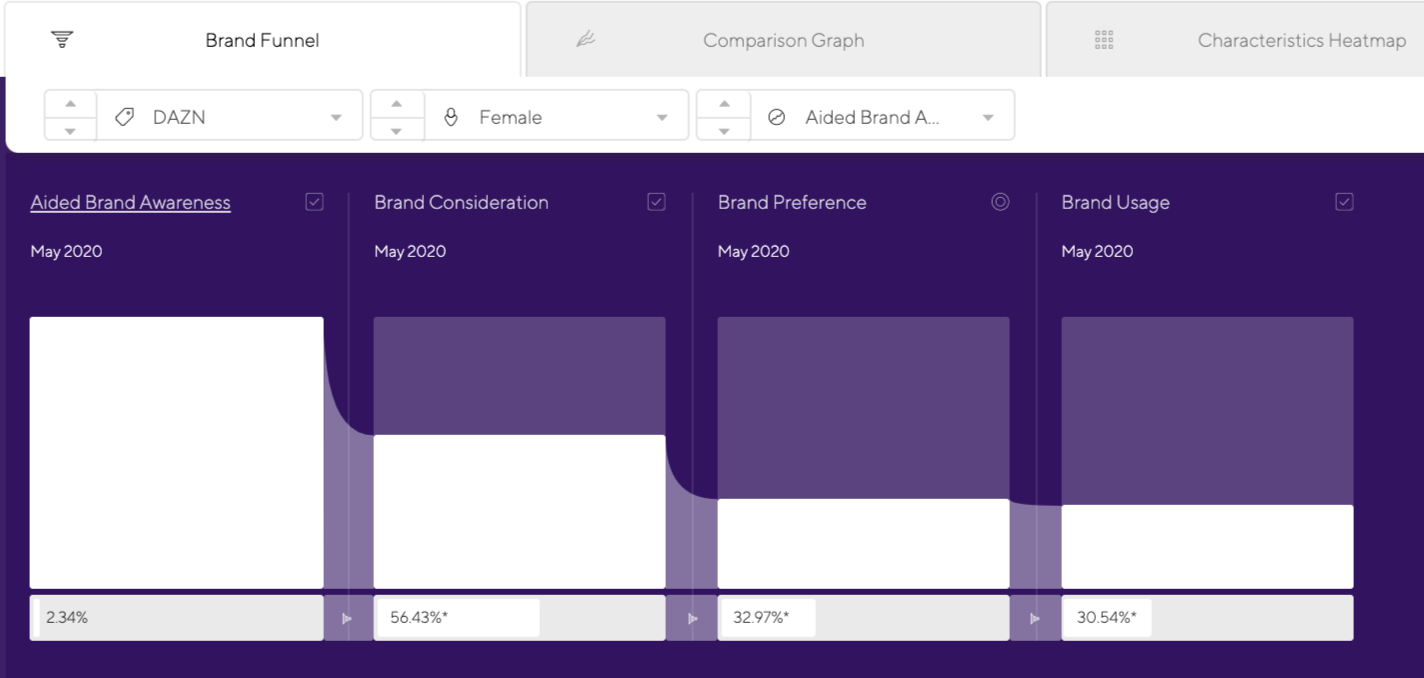\n\nDAZN already [purchased the rights to the English Women’s Super League in Germany and Italy](https://www.digitaltveurope.com/2020/09/03/fa-womens-super-league-lands-distribution-deals-in-us-germany-and-italy-with-nbc-and-dazn/). This is a smart move considering the dramatic increase in popularity of women’s football and suggests that DAZN is committed to [increasing brand awareness](https://latana.com/post/6-ways-to-increase-and-improve-brand-awareness/) and branching out into new customer cohorts.\n\nWhile brand awareness figures might be low, DAZN is performing well as a new brand in a recently launched market, especially in driving consumers down the brand funnel. Let’s take a look at how DAZN has achieved its successes in a market where they launched about a month ago, and how they can use strategies driving growth in other markets to drive sales in the UK. \n\n## What’s The Secret Behind DAZN’s Success?\n\nFrom the very beginning, DAZN had extremely ambitious plans for growth – an approach the company refers to as “[supersizing](https://www.cityam.com/supersizing-dazn-why-a-uk-launch-is-just-the-start-of-the-sport-streaming-services-global-ambitions/)”. \n\nPriced at an initial £1.99 a month, or a similar amount in other markets, DAZN is more cost-effective than a Sky subscription or the traditional pay-per-view model, where fans pay up to €25 to watch a single boxing match. This could partly explain the high levels of brand consideration and usage shown in our data.\n\nBut DAZN didn’t achieve record growth in other markets just by being a low-cost alternative. So, other than having the courage to think big and keeping their pricing realistic, what else did they get right?\n\n## Three Ways the DAZN Marketing Strategy Drives Growth\n\n### 1. Use Data to Understand Your Audience \n\nAs a digital-first broadcaster, DAZN tracks every stream and uses custom algorithms to evaluate their content. This gives them a deeper understanding of their [target audience](https://latana.com/post/7-steps-perfect-target-audience/) compared to traditional broadcasters. We know from the brand tracking data that around a third of consumers prefer DAZN over other brands in the same sector. Simply put, DAZN knows what people want and gives it to them.\n\nDAZN even uses data and insights to guide their overall business strategy – expansion into new markets and offering new content is all data-driven. Executive Vice President [Joe Markowski revealed in an interview](https://www.cityam.com/supersizing-dazn-why-a-uk-launch-is-just-the-start-of-the-sport-streaming-services-global-ambitions/) that if consumer demand meets content and distribution opportunities, DAZN will consider expanding into a market.\n\n### 2. Create Top-Quality Content\n\nUnlike traditional broadcasters with overheads and quotas to fill, DAZN prides itself on only showing what is valuable to their customers. Their main focus is on exclusive live rights, owning Serie A in Italy, the Bundesliga and Champions League football in Germany, and Formula 1 in Japan.\n\nThey are also busy building a portfolio of premium, high-end content, known as DAZN Originals, which aims to combine sports with storytelling. The first global DAZN Originals series was “The Making Of”, featuring intimate solo interviews of athletes. With no reporter or journalist present, sports stars simply told their own stories, in their own way. \n\nThis kind of highly-creative, original programming means DAZN provides additional value to their already [loyal customer base](https://latana.com/post/brand-loyalty-content/) as well as attracting new customers – which explains the high level of brand usage and preference we identified in the brand analysis.\n\n### 3. Leverage Partnerships and Influencers \n\nYou don’t have to do everything on your own. An African proverb says, “If you want to go fast, go alone. If you want to go far, go together.” \n\nDAZN has gone far and fast by building a network of global ambassadors, including Cristiano Ronaldo, Neymar, and José Mourinho. They all enjoy an unparalleled level of credibility and popularity among sports fans, especially younger audiences, who according to our data were most likely to have heard of DAZN.\n\nThat’s not all – DAZN nurtures relationships with platform operators, sports websites, and apps to increase reach beyond their own channels. They have even managed to keep traditional sports broadcasters such as Sky largely on their side.\n\n## How DAZN Uses Influencers to Build a Global Brand\n\nRonaldo became DAZN’s first global ambassador, making him the face of the brand in all its markets, [in a move described as a “no brainer”](https://www.thedrum.com/news/2018/08/22/dazn-signs-cristiano-ronaldo-brand-ambassador-it-was-no-brainer-says-cmo) by the Chief Marketing Officer at the time, Johnny Devitt. \n\nThe partnership developed when Ronaldo transferred from Real Madrid to Juventus of Italy, where DAZN launched their streaming services in the same month.\n\nWhy Ronaldo? Well, according to DAZN CEO [James Rushton told PrimeTime Sport](https://www.primetimesport.com/playersmarketing/?p=5798): “*Cristiano is undoubtedly a legend, fans love him and that’s why we wanted to work with him. He’s a big sports fan himself, so having him advocate the work we’re doing is perfect*.”\n\nSigning Ronaldo [wasn’t originally in DAZN’s marketing budget](https://www.thedrum.com/news/2018/08/22/dazn-signs-cristiano-ronaldo-brand-ambassador-it-was-no-brainer-says-cmo), but armed with a deep understanding of their target audience, DAZN saw the opportunity and took it. As a result, they were able to leverage the sporting superstar’s substantial social media presence. With 252 million Instagram followers, Ronaldo is one of the most popular celebrities on the platform.\n\n\n\nTraditionally, brands have used their celebrity ambassadors for product placements or [TV commercials](https://latana.com/case-studies/blinkist/). DAZN, however, announced the partnership with an exclusive video interview created by Matt Smith, the director behind the award-winning Rio Ferdinand film Being Mum and Dad and the David Beckham documentary.\n\nDAZN would probably just say they show fans what they want to see. As marketers, we understand that DAZN uses influencers to amplify its content strategy. \n\n## Final Thoughts\n\nDAZN uses a powerful combination of data, content, and partnerships to turn customers into fans – an approach that has been highly successful for their brand. That said, there is scope for further growth. Marketing to new audiences, particularly older and/or female viewers, would help increase their overall brand awareness.\n\nYou might not be in a position to sign Ronaldo, but if you would like to “supersize” your own brand, you can learn a lot from DAZN’s customer-centric growth strategy. \n"},"tags":["Brand Marketing","Brand Deep Dives"],"authorRef":{"slug":"marilyn","firstName":"Marilyn","lastName":"Wilkinson","title":"Digital Marketing Expert","picture":{"__typename":"ContentfulAsset","id":"e78d550e-a31a-5186-820d-9513596e92d2","description":"","title":"Marilyn Wilkinson Prof Pic","file":{"contentType":"image/png","url":"//images.ctfassets.net/7so8go2zrvbw/1oCRDVeLkqM1iEpuSKa6YK/1ba47f67261d9419b9df6600b8a09c1e/Author_Marilyn.png","details":{"image":{"width":235,"height":235}}},"gatsbyImageData":{"images":{"sources":[{"srcSet":"//images.ctfassets.net/7so8go2zrvbw/1oCRDVeLkqM1iEpuSKa6YK/1ba47f67261d9419b9df6600b8a09c1e/Author_Marilyn.png?w=235&h=235&q=95&fm=webp 235w","sizes":"100vw","type":"image/webp"}],"fallback":{"src":"//images.ctfassets.net/7so8go2zrvbw/1oCRDVeLkqM1iEpuSKa6YK/1ba47f67261d9419b9df6600b8a09c1e/Author_Marilyn.png?w=235&h=235&q=95&fm=png","srcSet":"//images.ctfassets.net/7so8go2zrvbw/1oCRDVeLkqM1iEpuSKa6YK/1ba47f67261d9419b9df6600b8a09c1e/Author_Marilyn.png?w=235&h=235&q=95&fm=png 235w","sizes":"100vw"}},"layout":"fullWidth","backgroundColor":"#080808","width":1,"height":1}}}}},{"node":{"publishDate":"2020-10-22T09:00+02:00","slug":"survey-tools-brand-tracking","author":"Joy Corkery","title":"Advanced Brand Tracking vs. DIY Survey Tools: The Lowdown","seo":{"__typename":"ContentfulSeo","title":"Advanced Brand Tracking vs. DIY Survey Tools","description":"If you want to grow your brand and take leadership in your industry, you need advanced brand tracking. Here's why you should upgrade and ditch DIY survey tools.","noIndex":null,"ogImage":{"fluid":null,"file":{"url":"//images.ctfassets.net/7so8go2zrvbw/01PGnTZxqZIpampvSWehBn/6fa1ded436f853326186c202d6ce3c19/Hero_Mobile_Surveys.svg"}}},"heroImage":{"__typename":"ContentfulAsset","id":"2d5429fd-e238-5b25-be0d-5e420422a5b0","description":"","title":"Mobile devices with post survey message on screen","file":{"contentType":"image/svg+xml","url":"//images.ctfassets.net/7so8go2zrvbw/62GI9t2fAlOZp1q6mVcGgh/d661b517f1ac3c43b4194bb352f827ad/Frame_1__2_.svg","details":{"image":{"width":565,"height":410}}},"gatsbyImageData":null},"coverImage":null,"description":{"description":"If you want to grow your brand and take leadership in your industry, you need advanced brand tracking. Here's why you should upgrade and ditch DIY survey tools."},"content":{"content":"There is one major problem that brand marketers face: they are operating based on guesswork. Brand is the most important asset for many companies, and yet only vaguely understood. Consumer firms spend more than one trillion dollars a year on marketing and advertising, yet build and [measure their campaigns](https://latana.com/post/measure-campaign-effectiveness/) based on gut feelings rather than a [data-driven approach](https://latana.com/guides/a-guide-to-data-driven-marketing-for-beginners/). Why? Because brand marketers don’t have their own [brand tracking](https://latana.com/) tool. \n\nIf you are a brand marketer reading this, you probably already realize that this is a problem and, hopefully, are trying to rectify this. And the best way to do so is by implementing a tool that will help you [measure the most important brand KPIs](https://latana.com/post/brand-health-metrics) across your target audience, and [use the insights gathered to drive future marketing campaigns](https://latana.com/guides/level-up-gathering-consumer-insights/). Good choice! But you are not out of the danger zone yet. What this article hopes to do today is avoid you solving one problem by creating another, and that is choosing an unreliable method of measurement.\n\nMany companies, especially those in the startup phase, are opting to use DIY survey tools to [measure the success of their brand performance](https://latana.com/post/prove-brand-performance/). That’s a good start but the insights derived from DIY survey tools are sadly not going to help you grow. Why? Because the data these tools provide is not accurate. That’s right, you will still be basing important marketing decisions on guesswork rather than fact.\n\nWhat you need is a tool stack that you can rely on - a fully-fledged brand tracker. Something that can help you dig down into the [most niche of audiences](https://latana.com/post/discover-niche-audience/) while still providing [accurate data](https://latana.com/data-confidence/), and also something that is optimized for use to make finding insights easier and faster. You probably aren’t convinced to invest in a brand tracker by just these few sentences but if you read on, by the end of this article it will certainly be a case of out with the old and in with the new. \n\nLearn how to interpret brand tracking data [here](https://latana.com/post/interpret-brand-tracking-data/).\n\n\n\n## Building Your Survey\n\nOne of the key things you will hear throughout this article is that many of the decisions brand managers are making are based on guesswork rather than fact. That’s because platforms like Google Analytics or [social listening tools](https://latana.com/post/social-listening-brand/) really aren’t equipped for measuring brand. Sure, the insights they provide can be helpful but the level of accuracy needed still isn’t there. \n\nYou probably began using DIY survey tools to get a sense of accuracy: you are directly asking your target audience, after all. However, a lot of the [quality of surveys](https://latana.com/whitepapers/mobile-optimized-surveys/) comes in the work before and after its release and doesn’t lie solely with the respondents.\n\nFor instance, if you don’t have somebody in-house who is competent in [writing surveys](https://latana.com/post/survey-design-why-logos-are-better-than-text-in-brand-surveys), responses will very often be given on the basis of misunderstanding. Having a person adequate in survey methodology write your questions instead will foster data quality.\n\n## Handling the Data\n\nFeel like you can write the surveys yourself? Ok, no problem. But how you work with the data collected afterward also plays a big part in achieving accurate insights. \n\nAdvanced brand tracking uses proprietary technology for automated data cleaning and improvement of data quality. That means you get higher accuracy in your results that reflect real world-changes instead of just noise in the sample. Simply, you are weeding out low-quality data that takes away from the actual viewpoint of your target audience.\n\n\n\nBut with advanced brand tracking, that step is not enough. It also incorporates manual data cleaning as an additional step to further foster data quality. Again, in order to get this level of accuracy and reliability, you will require a team of data scientists. Those people don’t come cheap, but neither does quality. Advanced brand tracking can be your middle ground between unreliable survey tools and hiring new team members. \n\n## Better Marketing Decisions\n\nBetter marketing decisions can only be made when you are basing them on insights you can rely upon. There is no doubt that DIY surveys can provide reliable insights - but only to an extent. \n\nDIY survey tools are good when you have a very general target audience, say all females or everybody aged 26-35 years. But what if your target audience is more complex than this (and it most likely is)? Most target audiences will have two-three characteristics in play, for example, men who live in cities and who play baseball on a regular basis. If you start digging down into data gathered by DIY survey tools you will probably see the number of people who fit this description is very few. \n\nData delivered to brands from DIY survey tools are raw data, with very limited processing. Sadly, this means that the data is less trustworthy due to limited accuracy. In addition, it provides limited [data reach](https://latana.com/data-confidence/), meaning brands can’t segment the data to gain insights regarding niche target audiences. So, you cannot say wholeheartedly that any decision you make is based on the opinion of your audience. \n\nBecause of the technology mentioned in the previous section, advanced brand tracking can eliminate this area of unknown. Not only does it enable you to benefit from [audience segmentation](https://latana.com/audience-segmentation/), it also provides up to 90% lower margins of error across the board. While no technology can read minds, this level of accuracy on audience opinion will sure help you create campaigns they are more likely to positively react to.\n\n## Time-Saving\n\nOne downside that people often overlook when it comes to DIY survey tools is the time involved to get from the start to the end of your project. Yes, you might initially be saving money in terms of the price of the tool but how much time and resource are you losing setting everything up, digging down into the data, and then presenting everything in an understandable manner for the other stakeholders. \n\n\n\nAdvanced brand tracking gives you back some of that precious time. With every good tracker, there will come somebody who will look after survey scripting, translations, fieldwork, and delivery. They will take everything gathered from the surveys and optimize them in an intuitive dashboard so you can easily see actionable brand insights. Plus, on a dashboard like this, it is also easy for you to explore the data and collaborate with your team either by providing them with login details or downloading the most interesting charts for them.\n\n## Final Thoughts\n\nBuy cheap and you buy twice. Or, in the case of brand managers, buy cheap and you end up spending double the amount intended on unsuccessful campaigns. \n\nDIY survey tools certainly have their perks: low-cost, easy to use, ability to run in-house. But they also come with a set of downfalls that can cost your brand a lot of money: unreliable data, time-consuming, ability to get accuracy for the target audience you want. If you are serious about growing a legendary brand and taking leadership in your industry, you have to solve these problems. Advanced brand tracking can do that for you. Making marketing decisions based on facts and creating campaigns that will have a positive impact on your target audience will benefit your company twofold. \n\nThrow unreliability and inaccuracy in the trash. It’s time to move onto the next stage of brand building."},"tags":["Brand Tracking","Brand Insights"],"authorRef":{"slug":"joy","firstName":"Joy","lastName":"Corkery","title":"Head of Content Operations","picture":{"__typename":"ContentfulAsset","id":"ff88263c-7542-5e55-a02b-a2fe1c8aade4","description":"","title":"Joy Corkery Prof Pic","file":{"contentType":"image/png","url":"//images.ctfassets.net/7so8go2zrvbw/dBdnR37lTp2H5fzrmQrH4/b85552fa4e33c6f843f1385c20c18947/Author_Joy.png","details":{"image":{"width":235,"height":235}}},"gatsbyImageData":{"images":{"sources":[{"srcSet":"//images.ctfassets.net/7so8go2zrvbw/dBdnR37lTp2H5fzrmQrH4/b85552fa4e33c6f843f1385c20c18947/Author_Joy.png?w=235&h=235&q=95&fm=webp 235w","sizes":"100vw","type":"image/webp"}],"fallback":{"src":"//images.ctfassets.net/7so8go2zrvbw/dBdnR37lTp2H5fzrmQrH4/b85552fa4e33c6f843f1385c20c18947/Author_Joy.png?w=235&h=235&q=95&fm=png","srcSet":"//images.ctfassets.net/7so8go2zrvbw/dBdnR37lTp2H5fzrmQrH4/b85552fa4e33c6f843f1385c20c18947/Author_Joy.png?w=235&h=235&q=95&fm=png 235w","sizes":"100vw"}},"layout":"fullWidth","backgroundColor":"#080808","width":1,"height":1}}}}},{"node":{"publishDate":"2021-08-24T09:00+02:00","slug":"audience-sustainable-brands","author":"Laura Harker","title":"The Audiences Sustainable Brands Should Be Targeting [Updated]","seo":{"__typename":"ContentfulSeo","title":"Who Sustainable Brands Should Target","description":"Incorporating sustainability into your brand matters. Our overview of sustainability-driven audiences will help you decide which one is right for you.","noIndex":null,"ogImage":{"fluid":{"src":"//images.ctfassets.net/7so8go2zrvbw/4QTNeDEVw7fm39SQDxHZV4/83660985dd70b34040922673dbe05109/Blog_SEO-Thumbnail_1000X709__9_.png?w=1200&h=675&q=90&fm=jpg"},"file":{"url":"//images.ctfassets.net/7so8go2zrvbw/4QTNeDEVw7fm39SQDxHZV4/83660985dd70b34040922673dbe05109/Blog_SEO-Thumbnail_1000X709__9_.png"}}},"heroImage":{"__typename":"ContentfulAsset","id":"14ea706a-9244-5228-b6e8-d066ebdf0d0a","description":"","title":"Illustration o Sustainable Audiences with a recycling bag surrounded by leaves (Thumbnail)","file":{"contentType":"image/png","url":"//images.ctfassets.net/7so8go2zrvbw/4QTNeDEVw7fm39SQDxHZV4/83660985dd70b34040922673dbe05109/Blog_SEO-Thumbnail_1000X709__9_.png","details":{"image":{"width":1000,"height":709}}},"gatsbyImageData":{"images":{"sources":[{"srcSet":"//images.ctfassets.net/7so8go2zrvbw/4QTNeDEVw7fm39SQDxHZV4/83660985dd70b34040922673dbe05109/Blog_SEO-Thumbnail_1000X709__9_.png?w=200&h=142&q=95&fm=webp 200w,\n//images.ctfassets.net/7so8go2zrvbw/4QTNeDEVw7fm39SQDxHZV4/83660985dd70b34040922673dbe05109/Blog_SEO-Thumbnail_1000X709__9_.png?w=400&h=284&q=95&fm=webp 400w,\n//images.ctfassets.net/7so8go2zrvbw/4QTNeDEVw7fm39SQDxHZV4/83660985dd70b34040922673dbe05109/Blog_SEO-Thumbnail_1000X709__9_.png?w=800&h=567&q=95&fm=webp 800w","sizes":"(min-width: 800px) 800px, 100vw","type":"image/webp"}],"fallback":{"src":"//images.ctfassets.net/7so8go2zrvbw/4QTNeDEVw7fm39SQDxHZV4/83660985dd70b34040922673dbe05109/Blog_SEO-Thumbnail_1000X709__9_.png?w=800&h=567&q=95&fm=png","srcSet":"//images.ctfassets.net/7so8go2zrvbw/4QTNeDEVw7fm39SQDxHZV4/83660985dd70b34040922673dbe05109/Blog_SEO-Thumbnail_1000X709__9_.png?w=200&h=142&q=95&fm=png 200w,\n//images.ctfassets.net/7so8go2zrvbw/4QTNeDEVw7fm39SQDxHZV4/83660985dd70b34040922673dbe05109/Blog_SEO-Thumbnail_1000X709__9_.png?w=400&h=284&q=95&fm=png 400w,\n//images.ctfassets.net/7so8go2zrvbw/4QTNeDEVw7fm39SQDxHZV4/83660985dd70b34040922673dbe05109/Blog_SEO-Thumbnail_1000X709__9_.png?w=800&h=567&q=95&fm=png 800w","sizes":"(min-width: 800px) 800px, 100vw"}},"layout":"constrained","backgroundColor":"#d8f8d8","width":800,"height":567}},"coverImage":{"__typename":"ContentfulAsset","id":"d53c02d1-3ca5-51be-b8b2-fbab13063a15","description":"","title":"Illustration o Sustainable Audiences with a recycling bag surrounded by leaves (Cover Image)","file":{"contentType":"image/png","url":"//images.ctfassets.net/7so8go2zrvbw/2PLK3NE9D0hhyp2pcbMdBn/f5b5ff974e643e0d207f1ee78c51a9ef/Blog_Cover_1288X400__12_.png","details":{"image":{"width":1288,"height":400}}},"gatsbyImageData":{"images":{"sources":[{"srcSet":"//images.ctfassets.net/7so8go2zrvbw/2PLK3NE9D0hhyp2pcbMdBn/f5b5ff974e643e0d207f1ee78c51a9ef/Blog_Cover_1288X400__12_.png?w=750&h=233&q=95&fm=webp 750w,\n//images.ctfassets.net/7so8go2zrvbw/2PLK3NE9D0hhyp2pcbMdBn/f5b5ff974e643e0d207f1ee78c51a9ef/Blog_Cover_1288X400__12_.png?w=1080&h=335&q=95&fm=webp 1080w,\n//images.ctfassets.net/7so8go2zrvbw/2PLK3NE9D0hhyp2pcbMdBn/f5b5ff974e643e0d207f1ee78c51a9ef/Blog_Cover_1288X400__12_.png?w=1288&h=400&q=95&fm=webp 1288w","sizes":"100vw","type":"image/webp"}],"fallback":{"src":"//images.ctfassets.net/7so8go2zrvbw/2PLK3NE9D0hhyp2pcbMdBn/f5b5ff974e643e0d207f1ee78c51a9ef/Blog_Cover_1288X400__12_.png?w=1288&h=400&q=95&fm=png","srcSet":"//images.ctfassets.net/7so8go2zrvbw/2PLK3NE9D0hhyp2pcbMdBn/f5b5ff974e643e0d207f1ee78c51a9ef/Blog_Cover_1288X400__12_.png?w=750&h=233&q=95&fm=png 750w,\n//images.ctfassets.net/7so8go2zrvbw/2PLK3NE9D0hhyp2pcbMdBn/f5b5ff974e643e0d207f1ee78c51a9ef/Blog_Cover_1288X400__12_.png?w=1080&h=335&q=95&fm=png 1080w,\n//images.ctfassets.net/7so8go2zrvbw/2PLK3NE9D0hhyp2pcbMdBn/f5b5ff974e643e0d207f1ee78c51a9ef/Blog_Cover_1288X400__12_.png?w=1288&h=400&q=95&fm=png 1288w","sizes":"100vw"}},"layout":"fullWidth","backgroundColor":"#d8f8d8","width":1,"height":0.3105590062111801}},"description":{"description":"Incorporating sustainability into your brand & choosing your target audience matters. Our overview of sustainability-driven audiences will help you decide which one is right for you."},"content":{"content":"Brands can’t ignore sustainability anymore — not when [88% of consumers want brands to help](https://www.forbes.com/sites/solitairetownsend/2018/11/21/consumers-want-you-to-help-them-make-a-difference/) them make a difference by being eco-friendly. \n\nAnd when it comes to the companies that are certified to a sustainability standard, while [37% of large firms boast certification](https://www.statista.com/statistics/1249933/share-of-firms-with-a-sustainability-standard-by-size/), only 13% of small firms can claim the same. In this area, it seems that large companies have a leg-up on the competition, out-performing both small and medium-sized brands.\n\nBut creating sustainable products and services isn’t enough, you also need to market them to the right audience. And what many companies don’t realize is that, just like there isn’t only one type of sustainable brand, there’s no one singular sustainable audience. \n\nTherefore, choosing which of these audiences to market to will make all the difference. In this article, we’ll take a deeper look into the various sustainability-driven audiences and help you choose which one best fits your brand’s needs.\n\n## The Key Sustainability Audiences That You Can Target\n\nUsing our own brand tracking software, we conducted research into audiences that are largely swayed by a brand’s environmentally friendly status. \n\nWe found four main audiences, which we will discuss below.\n\n### 1. The Enthusiastic Expert\n\n\nThe Enthusiastic Expert is a consumer who prioritizes whole-system sustainable thinking. More often than not, they’re between 35 to 45-year-old, live in rural areas, and have a medium to high level of education.\n\nThese are individuals who are dedicated to sustainable and eco-friendly living, so you’ll need to put in the work to convince them that your brand meets their high expectations. After all, these are the people who place a brand’s sustainability above all else when deciding where to purchase products and services.\n\nAs Enthusiastic Experts are so tuned in to sustainability, they believe that any brand committing environmental damage should pay higher taxes. They’re also very strict with themselves about avoiding brands that don’t act sustainably.\n\nIn terms of how this audience compares with their peers, Enthusiastic Experts are a lot more vocal about environmental matters and are usually more knowledgeable about sustainable brands, too.\n\n__Follow Their Lead: Boden__\n\n
\n\nOne brand well-equipped to convince the Enthusiastic Expert to hand over with their hard-earned cash is Boden, a clothing line targeted towards older fashion fans with children. \n\nBoden is well-known for its exceptional sustainability policies, which include supporting an ethical supply chain, reducing environmental impact, and supporting equally responsible and sustainable charities.\n\nBoden has begun using its sustainable profile as a way to penetrate a fledgling industry: children’s clothing. While this industry should be booming — after all, new customers are born every day — many big brands are closing down. Such as Mamas & Papas and Mothercare in the UK.\n\nFor other brands to avoid falling victim to the same fate, they need to create original, long-lasting, and affordable products for their customers. Boden did just that this year by launching new clothing made from Econyl, which is nylon sourced from discarded fishing nets.\n\nA brand that is so outspoken about sustainability and willing to move with the times is sure to catch the attention of Enthusiastic Experts — especially if they are parents.\n\nIn a recent survey conducted by [Impossible Foods](https://latana.com/brand-insights/brand-bites-impossible-foods/), they found that [72% of Millennial and 65% of Gen X parents](https://www.statista.com/statistics/1189164/parenting-habits-in-regard-to-environmental-sustainability/) try to teach their children about environmental sustainability. Therefore, shopping at Boden is a great way for this audience to put their money where their mouth is. \n\n### 2. The Inspired Innovator\n\n\nThe youngest of our sustainability audiences, Inspired Innovators are [Gen Z](https://latana.com/guides/speaking-to-gen-z/) and [Millennials](https://latana.com/guides/speaking-to-millennials/) who come from [urban](https://latana.com/guides/speaking-to-urban-consumers/) and [higher-education](https://latana.com/guides/speaking-to-highly-educated-consumers/) backgrounds. As a group, they prioritize innovation and forward-thinking policies.\n\nInspired Innovators are usually early adopters and are keen to try new ideas and products. On top of that, they’re the audience that tends to be the most proactive in seeking out sustainable brands and are willing to boycott brands that don’t fit this model. \n\nThey are somewhat vocal and knowledgeable about sustainability. However, the biggest difference that sets them apart from the Enthusiastic Experts is that they’re not in favor of higher taxes for unsustainable brands.\n\nThe best way for your brand to engage with Inspired Innovators? Prove to them that you’re at the forefront of sustainability. Thought-provoking messages alongside interesting products and innovative thinking will help to keep these young consumers on your side.\n\n__Follow their Lead: Lush__\n\n
\n\nOne such brand that has captured the hearts of Inspired Innovators is Lush. This beauty company is known for its quirky products, commitment to transparency, and [exceptional environmental policies](https://uk.lush.com/article/our-environmental-policy).\n\nThe brand is really pushing to capture the hearts of innovators by opening the very first plastic packaging-free beauty shop in Manchester. What’s more, Lush was able to innovate even in times of crisis. \n\nWhen the COVID pandemic hit and most Lush stores were closed worldwide, the brand saw its customers switching to online shopping. Such an instant high demand in products would see other brands bring in the technology to mass-produce However, Lush stayed true to their morals and continued producing handmade products only — made possible by innovative tools that increased efficiency.\n\nWhen it comes to who is leading the way in purchasing organic beauty products, [Gen Z comes in first at 73%, followed closely by Millennials at 70%](https://www.statista.com/statistics/1077900/natural-organic-beauty-product-consumers-by-generation-in-the-us/). As Inspired Innovators are mainly made up of these two generations, it makes sense that Lush’s policies and products would perform well with them. \n\n### 3. The Considerate Conventionalist\n\n\nNext, let’s take a look at the Considerate Conventionalists. This group is made up of slightly older consumers, usually aged 45-65 who [live in more rural areas](https://latana.com/guides/speaking-to-rural-consumers/). As a group, this audience appreciates transparency, knowledge, and empowerment.\n\nThese are a fairly mainstream bunch of consumers, as their views on sustainability are more middle-of-the-road compared to the previous two audiences. Therefore, their view on sustainable brands is that they are important but slightly less so.\n\nConsiderate Conventionalists tend to be somewhat knowledgeable about brands that offer sustainable goods, although they aren’t as clued-up on the subject in more technical terms. \n\nDespite that, they’re still open to paying more for products and services that are environmentally friendly. When it comes to boycotting and higher taxes for unsustainable brands, this group generally stands against both.\n\nHow to coax the Considerate Conventionalist over to your brand? You just need to highlight why the sustainable attributes of your products or services are important. Provide them with plenty of information and transparency to easily promote your brand to this mainstream group.\n\n__Follow their Lead: Bulb__\n\n
\n\nBulb, a UK green energy supplier, is tapping into the Considerate Conventionalist audience by providing information on sustainability in an accessible, easy-to-understand way. \n\nThis brand is aware that sustainable energy and utility companies are now moving into the mainstream in the UK. Furthermore, more consumers are aware of how these firms benefit both themselves and the environment. \n\nIn order to beat out the competition and attract this audience, Bulb is doing a good job promoting itself in simple terms — by telling consumers they’re simpler, cheaper, and greener than other energy brands.\n\nAcross the pond, sustainable energy is having a slightly harder time breaking into the mainstream. In a 2021 survey conducted by the National Association of Realtors, they found that only [8% of home realtors reported consumer interest in sustainability](https://www.statista.com/statistics/1239405/consumer-interest-in-home-sustainability-usa/) in the US. \n\nPerhaps a brand like Bulb would do well to spread its message further abroad, educating US consumers on the importance of sustainable energy? \n\n### 4. The Reserved Rationalist\n\n\nFinally, we have the Reserved Rationalists. This audience is made up of consumers who are on the lookout for value for themselves. They’re slightly older — usually falling in the 35-44, 45-55, and 55-65 age ranges and often live in urban areas with medium to high education levels.\n\nIf there’s an audience you’ll struggle to convince about the positives of sustainability, it’s this one. Even though these consumers do believe that sustainable products are a good thing, they adhere to the idea much less than all the other audiences. \n\nLaggards that are often unwilling to pay more for sustainable goods, Reserved Rationalists are neither knowledgeable nor vocal about sustainability.\n\nAs this group is not proactive in identifying sustainable brands, they aren’t aware which brands are actually acting sustainably. They also disagree with boycotting and higher taxes for companies that do not implement sustainable policies.\n\nIn order to appeal to the Reserved Rationalist, you’ll need to prove that your sustainable brand provides them with value. There’s not much point in trying to prove any positives of sustainability to them, as they’re likely to think that you’re selling them a fad. \n\nTo win them over, you need to show that sustainable products are value-driven.\n\n__Follow their Lead: Amazon__\n\n
\n\nBased on a 2019 survey by First Insight, [53% of Gen Z, 45% of Millennials, and 42% of Gen X consumers](https://www.statista.com/statistics/1100403/excess-packaging-amazon-shipments-generation/) in the US believe that Amazon shipments include excess packaging — which is quite damaging to the environment. \n\nEven 36% of [Baby Boomers](https://latana.com/guides/speaking-to-boomers/), more likely to fall into the “Reserved Rationalist” category, agree — meaning US consumers were not pleased with the way Amazon was approaching sustainability in their packaging.\n\nTo combat this, Amazon has been making a real effort to win over some of their customers lately, like the Reserved Rationalists. How? Well, one tactic they have successfully tried out is honesty. Amazon [acknowledged the part it played in damaging the environment](https://lifewithinmylens.com/2020/09/08/is-shopping-on-amazon-sustainable/) and now claims it will work to rectify the damage as much as possible.\n\nTo achieve this, Amazon has a number of [impressive policies](https://latana.com/post/top-global-brands-environment/) in place: the brand purchased 100,000 electric delivery vans and hopes to be completely emission-free by 2030. Additionally, Amazon has vowed it will become even easier to buy sustainable products from the site. \n\nAs convenience is one of this brand’s top USPs, this move is sure to draw the attention of some previously lost customers.\n\n## Final Thoughts\n\nMarketing isn’t just about attracting customers — it’s about attracting the right customers. This is true of any industry, including sustainability.\n\nRemember, there isn’t just one sustainable audience out there — we’ve been able to identify at least four: Enthusiastic Experts, Inspired Innovators, Considerate Conventionalists, and Reserved Rationalists. \n\nDepending on where your brand is right now in terms of sustainability perception, you need to make sure all your marketing engages with the right [target audience](https://latana.com/guides/ultimate-target-audience-guide/). \n\nSay you’re a newer brand that’s working to become more sustainable — try targeting the Considerate Conventionalists for now. When your policies are fully fledged and you feel confident in your brand’s sustainability, then you can go after the Enthusiastic Experts and Inspired Innovators. \n\nOf course, the journey to sustainability is a long road ahead, but it’s a road that every brand is going to have to take one way or another. So, we recommend starting your journey sooner rather than later and focusing on the right sustainability audience for your brand. This way, you’ll be able to create the foundations of a long-lasting brand.\n\n---\n\nUpdated by: [Cory Schröder](https://latana.com/author/cory-schroder/) on 24.08.21\n"},"tags":["Brand Sustainability","Brand Marketing"],"authorRef":{"slug":"laura","firstName":"Laura","lastName":"Harker","title":"Freelance Writer & Editor","picture":{"__typename":"ContentfulAsset","id":"bb56ceb9-a813-5edc-85a6-facde71b8efe","description":"","title":"Latana Logo Author Photo","file":{"contentType":"image/png","url":"//images.ctfassets.net/7so8go2zrvbw/7qeUdZpRNeFZFTo0zIasKz/8d00318fb2f317950a2a2d6912eb28bf/Author_Latana__1_.png","details":{"image":{"width":235,"height":235}}},"gatsbyImageData":{"images":{"sources":[{"srcSet":"//images.ctfassets.net/7so8go2zrvbw/7qeUdZpRNeFZFTo0zIasKz/8d00318fb2f317950a2a2d6912eb28bf/Author_Latana__1_.png?w=235&h=235&q=95&fm=webp 235w","sizes":"100vw","type":"image/webp"}],"fallback":{"src":"//images.ctfassets.net/7so8go2zrvbw/7qeUdZpRNeFZFTo0zIasKz/8d00318fb2f317950a2a2d6912eb28bf/Author_Latana__1_.png?w=235&h=235&q=95&fm=png","srcSet":"//images.ctfassets.net/7so8go2zrvbw/7qeUdZpRNeFZFTo0zIasKz/8d00318fb2f317950a2a2d6912eb28bf/Author_Latana__1_.png?w=235&h=235&q=95&fm=png 235w","sizes":"100vw"}},"layout":"fullWidth","backgroundColor":"#080808","width":1,"height":1}}}}},{"node":{"publishDate":"2020-09-30T14:00+01:00","slug":"latana-company-rebrand","author":"Joy Corkery","title":"Introducing the Latana Company Rebrand","seo":{"__typename":"ContentfulSeo","title":"Introducing the Latana Company Rebrand","description":"The world is changing - and brands must too if they want to keep up. Introducing the Latana company rebrand. Click through to see what's changed and why.","noIndex":null,"ogImage":{"fluid":{"src":"//images.ctfassets.net/7so8go2zrvbw/5vmUZenTm7GX40DrOZHtvS/8c1e7b2748f8b1c400a9ac4dd77b1992/Frame_1000x709.png?w=1200&h=675&q=90&fm=jpg"},"file":{"url":"//images.ctfassets.net/7so8go2zrvbw/5vmUZenTm7GX40DrOZHtvS/8c1e7b2748f8b1c400a9ac4dd77b1992/Frame_1000x709.png"}}},"heroImage":{"__typename":"ContentfulAsset","id":"03eabd5e-73ca-579c-b926-cbf5b76b0096","description":"","title":"We're hiring careers page","file":{"contentType":"image/png","url":"//images.ctfassets.net/7so8go2zrvbw/7t4VbjXPwiE967gU8heoBA/3bc39c76e80edc7fd4c430051e58f18b/Hiring_-_Careers.png","details":{"image":{"width":2002,"height":1418}}},"gatsbyImageData":{"images":{"sources":[{"srcSet":"//images.ctfassets.net/7so8go2zrvbw/7t4VbjXPwiE967gU8heoBA/3bc39c76e80edc7fd4c430051e58f18b/Hiring_-_Careers.png?w=200&h=142&q=95&fm=webp 200w,\n//images.ctfassets.net/7so8go2zrvbw/7t4VbjXPwiE967gU8heoBA/3bc39c76e80edc7fd4c430051e58f18b/Hiring_-_Careers.png?w=400&h=284&q=95&fm=webp 400w,\n//images.ctfassets.net/7so8go2zrvbw/7t4VbjXPwiE967gU8heoBA/3bc39c76e80edc7fd4c430051e58f18b/Hiring_-_Careers.png?w=800&h=567&q=95&fm=webp 800w,\n//images.ctfassets.net/7so8go2zrvbw/7t4VbjXPwiE967gU8heoBA/3bc39c76e80edc7fd4c430051e58f18b/Hiring_-_Careers.png?w=1600&h=1134&q=95&fm=webp 1600w","sizes":"(min-width: 800px) 800px, 100vw","type":"image/webp"}],"fallback":{"src":"//images.ctfassets.net/7so8go2zrvbw/7t4VbjXPwiE967gU8heoBA/3bc39c76e80edc7fd4c430051e58f18b/Hiring_-_Careers.png?w=800&h=567&q=95&fm=png","srcSet":"//images.ctfassets.net/7so8go2zrvbw/7t4VbjXPwiE967gU8heoBA/3bc39c76e80edc7fd4c430051e58f18b/Hiring_-_Careers.png?w=200&h=142&q=95&fm=png 200w,\n//images.ctfassets.net/7so8go2zrvbw/7t4VbjXPwiE967gU8heoBA/3bc39c76e80edc7fd4c430051e58f18b/Hiring_-_Careers.png?w=400&h=284&q=95&fm=png 400w,\n//images.ctfassets.net/7so8go2zrvbw/7t4VbjXPwiE967gU8heoBA/3bc39c76e80edc7fd4c430051e58f18b/Hiring_-_Careers.png?w=800&h=567&q=95&fm=png 800w,\n//images.ctfassets.net/7so8go2zrvbw/7t4VbjXPwiE967gU8heoBA/3bc39c76e80edc7fd4c430051e58f18b/Hiring_-_Careers.png?w=1600&h=1134&q=95&fm=png 1600w","sizes":"(min-width: 800px) 800px, 100vw"}},"layout":"constrained","backgroundColor":"#180848","width":800,"height":567}},"coverImage":null,"description":{"description":"Let us introduce you to the bold and beautiful new Latana brand. "},"content":{"content":"Our main priority is to help companies grow legendary brands. We help them gather the insights that allow them to make better marketing decisions and accelerate growth. These decisions come in the form of choosing the best advertising channels, [targeting the right audience](https://latana.com/guides/ultimate-target-audience-guide/), finding the most impactful message, and overall creating a brand that will resonate with consumers. Now it’s our turn to take that next step toward building a legendary brand.\n\nIntroducing the Latana [company rebrand](https://latana.com/guides/ultimate-guide-to-rebranding/).\n\nLet us walk you through what’s new for the Latana brand and why we made those decisions. Who knows, this article might just have the guidance you need for your own rebrand.\n\n## The Latana Company Rebrand\n\nLatana is the insights hub for brands across the world. We are here to help companies understand that brand is perception and that perception drives human behavior. If companies can understand human behavior, then they can predict [consumer behavior](https://latana.com/guides/level-up-gathering-consumer-insights/).\n\n## Every Brand Logo Has a Story\n\nAt Latana, we are on a quest to understand human perception. Our new logo represents the flame that can navigate the complexity of brand-driven insights. \n\n\n\nThe concept came from the story of Prometheus who stole fire and gave it to mankind. The wisest Titan, he was praised immensely for his intelligence. This intelligence is inherent in the meaning of his name - forethinker or foresight - the ability to predict the future. \n\nAt Latana, [Multilevel Regression and Postratification](https://latana.com/mrp/) gives us the ability to understand consumer perception, and thus predict consumer behavior, the cornerstone of brand value - intelligence and foresight.\n\n## New Colors for a New Era\n\nColor is where the first impression of a brand is based. A simple color can allow a brand to say something - without actually saying it. They help convey emotions, feelings, and experiences that are not easily put into words.\n\nWe thought long and hard about the color palette best suited to spread the Latana message. Here’s what we chose:\n\nPurple represents:\n\n* Our use of advanced technology\n* Our innovation in bringing companies a whole new level of brand tracking \n* Our ambition to be the best brand tracker on the market\n\nBut building a strong brand is not just about us, it is also about our customers.\n\nTurquoise represents:\n\n* Balance in what we do \n* The desire to build trustworthy relationships with brands\n* The curiosity to solve brands’ biggest problem - a lack of reliable data\n\n## Everything Brought Together on a New Website\n\nThe cherry on top of our company rebrand is our new website. Shaped by our company goals and market realities, there’s a new plethora of pages to discover and information to gain.\n\nWhy Latana? Because:\n\n#### [Multilevelregression and Postratification](https://latana.com/mrp/)\n\n\n### [Audience Segmentation](https://latana.com/audience-segmentation/)\n\n\n### [Data Quality](https://latana.com/data-confidence/)\n\n\nDiscover what advance brand tracking can offer for:\n\n### [Brand and Marketing Managers](https://latana.com/brand-manager/)\n\n### [Consumer Insights Managers and Researchers](https://latana.com/researcher/)\n\nAs you browse our website you will notice simple shapes and gradients, as well as our new illustration and animation principles. We wanted a cleaner, more professional look for our website that would also feel fun and engaging. To do this we started with a lot of white space, filled it with bold content, added gradients and contrasting modules to highlight the most important info with a pop of color, and created illustrations to support our messaging.\n\n## Iconography\n\nBased on our inverted logo, we have created a primary set of abstract shapes that can be used on their own for representing abstract things. They can also be developed into more complex and concrete icons that help us communicate with the customers.\n\n\n\n## Illustration\n\nVisually we are sticking to high contrast, simple shapes, both solid colors, and gradients are possible.\n\n\n\n## Photography\n\nOur visuals are professional and trustworthy yet brave and bold. The photos we use bring atmosphere to the subject we are talking about, not duplicate its meaning. They are:\n\nProfessional\nTrustworthy\nBrave\nBold\n\n# Final Thoughts\n\nOur [company rebrand](https://latana.com/guides/ultimate-guide-to-rebranding/) has been created and carried out based on the needs of our company right now. To successfully rebrand your own company, you need to base decisions on what is right for your audience. We’re happy to [discuss how we can help you gather consumers insights upon which you can base marketing decisions](https://latana.com/book-demo/). \n\n\n"},"tags":["Brand Strategy","Brand Marketing"],"authorRef":{"slug":"joy","firstName":"Joy","lastName":"Corkery","title":"Head of Content Operations","picture":{"__typename":"ContentfulAsset","id":"ff88263c-7542-5e55-a02b-a2fe1c8aade4","description":"","title":"Joy Corkery Prof Pic","file":{"contentType":"image/png","url":"//images.ctfassets.net/7so8go2zrvbw/dBdnR37lTp2H5fzrmQrH4/b85552fa4e33c6f843f1385c20c18947/Author_Joy.png","details":{"image":{"width":235,"height":235}}},"gatsbyImageData":{"images":{"sources":[{"srcSet":"//images.ctfassets.net/7so8go2zrvbw/dBdnR37lTp2H5fzrmQrH4/b85552fa4e33c6f843f1385c20c18947/Author_Joy.png?w=235&h=235&q=95&fm=webp 235w","sizes":"100vw","type":"image/webp"}],"fallback":{"src":"//images.ctfassets.net/7so8go2zrvbw/dBdnR37lTp2H5fzrmQrH4/b85552fa4e33c6f843f1385c20c18947/Author_Joy.png?w=235&h=235&q=95&fm=png","srcSet":"//images.ctfassets.net/7so8go2zrvbw/dBdnR37lTp2H5fzrmQrH4/b85552fa4e33c6f843f1385c20c18947/Author_Joy.png?w=235&h=235&q=95&fm=png 235w","sizes":"100vw"}},"layout":"fullWidth","backgroundColor":"#080808","width":1,"height":1}}}}},{"node":{"publishDate":"2020-09-24T00:00+02:00","slug":"brand-building-campaigns","author":"Charlie Svensson","title":"How to Create Campaigns That Build Brands","seo":{"__typename":"ContentfulSeo","title":"How to Create Campaigns That Build Brands","description":"Brand building campaigns should be a crucial part of any marketing strategy. Here's how you can build a positive brand image with the help of advertising.","noIndex":null,"ogImage":{"fluid":{"src":"//images.ctfassets.net/7so8go2zrvbw/3cSFEYcp7LqGSnrOB3QwPi/e11bb91ca377f85cfe900c806046a645/brand-building-campaigns_1.jpg?w=1200&h=675&q=90&fm=jpg"},"file":{"url":"//images.ctfassets.net/7so8go2zrvbw/3cSFEYcp7LqGSnrOB3QwPi/e11bb91ca377f85cfe900c806046a645/brand-building-campaigns_1.jpg"}}},"heroImage":{"__typename":"ContentfulAsset","id":"ae606f47-1031-5ac0-a310-ef7bcf8905f9","description":"How to Create Campaigns That Build Brands","title":"How to Create Campaigns That Build Brands","file":{"contentType":"image/jpeg","url":"//images.ctfassets.net/7so8go2zrvbw/3cSFEYcp7LqGSnrOB3QwPi/e11bb91ca377f85cfe900c806046a645/brand-building-campaigns_1.jpg","details":{"image":{"width":1280,"height":853}}},"gatsbyImageData":{"images":{"sources":[{"srcSet":"//images.ctfassets.net/7so8go2zrvbw/3cSFEYcp7LqGSnrOB3QwPi/e11bb91ca377f85cfe900c806046a645/brand-building-campaigns_1.jpg?w=200&h=133&q=95&fm=webp 200w,\n//images.ctfassets.net/7so8go2zrvbw/3cSFEYcp7LqGSnrOB3QwPi/e11bb91ca377f85cfe900c806046a645/brand-building-campaigns_1.jpg?w=400&h=267&q=95&fm=webp 400w,\n//images.ctfassets.net/7so8go2zrvbw/3cSFEYcp7LqGSnrOB3QwPi/e11bb91ca377f85cfe900c806046a645/brand-building-campaigns_1.jpg?w=800&h=533&q=95&fm=webp 800w","sizes":"(min-width: 800px) 800px, 100vw","type":"image/webp"}],"fallback":{"src":"//images.ctfassets.net/7so8go2zrvbw/3cSFEYcp7LqGSnrOB3QwPi/e11bb91ca377f85cfe900c806046a645/brand-building-campaigns_1.jpg?w=800&h=533&fl=progressive&q=95&fm=jpg","srcSet":"//images.ctfassets.net/7so8go2zrvbw/3cSFEYcp7LqGSnrOB3QwPi/e11bb91ca377f85cfe900c806046a645/brand-building-campaigns_1.jpg?w=200&h=133&fl=progressive&q=95&fm=jpg 200w,\n//images.ctfassets.net/7so8go2zrvbw/3cSFEYcp7LqGSnrOB3QwPi/e11bb91ca377f85cfe900c806046a645/brand-building-campaigns_1.jpg?w=400&h=267&fl=progressive&q=95&fm=jpg 400w,\n//images.ctfassets.net/7so8go2zrvbw/3cSFEYcp7LqGSnrOB3QwPi/e11bb91ca377f85cfe900c806046a645/brand-building-campaigns_1.jpg?w=800&h=533&fl=progressive&q=95&fm=jpg 800w","sizes":"(min-width: 800px) 800px, 100vw"}},"layout":"constrained","backgroundColor":"#282828","width":800,"height":533}},"coverImage":null,"description":{"description":"Brand building campaigns should be a crucial part of any marketing strategy. Here's how you can build a positive brand image with the help of advertising."},"content":{"content":"When trying to build a brand you need to run smart campaigns that build awareness, recognition, and, most importantly, a strong, authoritative voice. The thing is, brand-building campaigns are very different from advertisements directed for sales, and this is a common marketing gap many fail to understand. Of course, both types of campaigns share the purpose of generating revenue. However, they need to do so in different ways to stay effective, and not harm each other.\n\n[Brand managers](https://latana.com/brand-manager/) mostly face problems in the content-creation phase. Blurring the line between sales-centric and brand-building campaigns can hamper their objective. They are uncertain about what type of content is suitable for brand campaigns and subsequently create a negative brand image.\n\nAs we know, there should be no mention of pricing or any type of sales language in brand-building campaigns. What should they include then? Here’s a rundown on how to build [an online brand identity](https://latana.com/post/brand-identity-online/) using ad campaigns.\n\n## Use emotional branding in campaigns\n\n[Emotional branding](https://latana.com/post/emotional-connections-to-create-stronger-customer-bonds/) in your campaigns will firmly establish your brand as they appeal directly to a customer's emotions and aspirations.\n\nA lot of successful brands have used emotional branding in advertising. Think about the Nike [Just Do It campaigns](https://www.blinkist.com/magazine/posts/emotional-branding-secret-behind-nikes-just-campaign). None of the ads they created included hard-selling copy - in fact, they barely even mention their product. Instead, they used copy that inspires and touches emotions.\n\n\n\nThe stars of Nike’s campaigns vary between professional athletes and [everyday fitness enthusiasts](https://latana.com/brand-bites/brand-performance-insights-sweat/) but the ads all evoke the same emotion: you too can overcome adversity. Just Do It. This story immediately creates an emotional bond between the audience and the brand. No wonder why today, Nike owns [48% of the American athletic footwear market](http://www.highsnobiety.com/2015/11/11/nike-market-share/).\n\n### How can you do the same with your campaigns?\n\nIn order to build an emotional connection with your audience you need to lay the foundation of common ground first. Show off the values you share and how your product will complement the lifestyle they already lead instead of creating content that solely concentrates on your business.\n\nThis type of ad will help you achieve one of the major benefits of brand campaigns: building strong communities instead of transactional relationships. Community relationships are significantly more sustainable than the latter. It is based on coexistence because you help customers realize they are part of something bigger which also often comes with a more positive brand perception.\n\n## Convert influencers to brand ambassadors\n\nInfluencing your target audience is an invaluable currency when implementing brand-building campaigns. The way consumers view your brand is highly dependent on what the overall public perception is. That’s how the human brain is hard-wired; [we are driven by social influence](https://www.bynder.com/en/blog/psychology-behind-brands/). Thus, having the help of those with widespread influence can help boost brand-building ad campaigns and help captivate the attention of your audience.\n\nEnter influencer marketing.\n\nInfluencer marketing will not be news to brand managers but, as a recap, it is simply the act of using a strong voice of the specific industry to drive your brand’s message to your target audience. It works because influencers already have thousands, or even millions, of followers that trust their opinions. However, consumers are becoming more skeptical of influencer campaigns, and these days, it’s more beneficial to offer a more permanent partnership to influencers rather than paying for a few seconds of publicity.\n\nTake the collaboration between Serena Williams and Beats by Dre as an example. Instead of just being satisfied with asking Serena to talk about the products to her followers, they made this sportswoman the [face of their campaign](http://marcaenzona.com/en/post/the-ambassadors-of-beats-and-dre-present-the-new-model-of-the-brand). While a one-off ad with Serena Williams showing off the Powerbeats Pro earphones’ easy usability for athletes would have been cool, continually seeing Serena using the product will better convince consumers that this is the brand she actually uses and recommends.\n\n\n\n[Image source](https://www.campaignlive.co.uk/article/viral-review-beats-dres-serena-williams-ad-big-swagger-emotionally-light/1312462)\n\n### How can you do the same with your campaigns?\n\nUnfortunately, using a nameless face to promote your products is not particularly efficient. To assert brand dominance, work with a familiar face. Not every company can afford Serena Williams but you can run a good brand ambassador campaign on a budget you can afford. Consider a micro-influencer who has a similar target audience to yours.\n\nThe important thing to remember when featuring your brand ambassador in upcoming campaigns is that you also have to include a dollop of their brand. Create campaigns that resonate with your ambassador’s audience just as well as yours to create that bond with them too. If you are uncertain, ask your ambassador how they suggest tackling the ad. No one knows their audience better than themselves.\n\n## Master the art of video campaigns\n\nVideo is the future of brand building campaigns. Even now, [85% of U.S internet users](https://blog.hubspot.com/marketing/lovable-video-marketing-campaigns) enjoy video content and regularly engage with this type of media, while 54% reported that they wished brands shared more video content.\n\nVideo campaigns are ideal for emotional branding and brand storytelling. Reebok is an excellent example with its 25,915 days video campaign.\n\n\n\nNot one word was spoken in the video as it shows how consumers can use the days of their life better by being active. The ad used emotional branding to make people want to sit up and do something. The campaign linked to a webpage where consumers could calculate their potential number of remaining days to become active, based on averages of age, gender, and location.\n\nThat ad was distributed amongst various channels and connected Reebok with millions of individuals who became part of the brand community by sharing how they are planning to honor their bodies sharing personal accomplishments on social media using the hashtag #HonorYourDays.\n\n### How can you do the same with your campaigns?\n\nCreate videos that concentrate on storytelling over sales. To grow a loyal community akin to that of Reebok, tell your [target audience](https://latana.com/guides/level-up-refining-your-target-audience/) your story in a way that they can relate to and be part of. The voice you create in your initial video campaign can lead to a strong brand voice that can be easily recognized on any other platform - once you maintain consistency through all other brand-building efforts, of course.\n\n## Use product launches to gain traction\n\nProduct launches are the perfect opportunity to further your brand-building agenda and use their bigger platform to define your mission statement. Apple does this wonderfully.\n\n\n\n[Image source](https://www.gettyimages.de/)\n\nApple’s mission statement is about delivering the greatest user experience and innovative hardware. Before launching a product, the company creates campaigns that indicate how they followed through with their mission statement. They highlight their new product’s simplified usability and how it utilises cutting-edge hardware to build a very strong brand image.\n\n### How can you do the same with your campaigns?\n\nYes, these campaigns can veer on the side of a sales campaign so you need to be careful to stay on the path of traction via brand-building. Instead of simply showing off your product, discuss how you continue to live up to your promise to keep customers happy. Pre-launch, refrain from announcing the product's price but instead create campaigns highlighting features and customer value. With these types of campaigns, customers will be much more at ease continuing to be loyal followers.\n\n## Leverage your USP\n\nAll industries nowadays are competitive and to stand out with your target audience, you need to tell/show them what makes you different. Putting your USP (Unique Selling Point) at the forefront of campaigns will help define your brand voice and personality and, of course, stand out from the crowd.\n\nWhile many brands will have a USP from the conception of their company, it also possible to devise a USP based on current consumer perception. The example of Avis is an old one but a good one. Back in 1962, Avis turned the weigh of being considered being the second-largest car rental service to its advantage. They created campaigns focused on the USP “[We try harder](https://www.mumbrella.asia/2018/05/my-favourite-ad-campaign-of-all-time-the-avis-we-try-harder-print-series-of-1962)”. That USP was used across all their brand-building campaigns to show that while they might not be first, they try harder than anyone else to provide the best service.\n\n\n\n[Image source](https://www.campaignlive.co.uk/article/history-advertising-no-177-robert-townsends-all-staff-memo/1403089)\n\nAvis may not have knocked Hertz from the number one spot, but they sure set the foundations for a memorable brand.\n\n### How can you do the same with your campaigns?\n\nCommunicate the core USP (Unique Selling Point) that differentiates you from the competition and keep shouting about it. The key to promoting a USP that will build a loyal customer base is by listening to your target audience. You need to know and understand their struggles and figure out a way to help them in ways the competition cannot.\n\nOnce you have identified the best USP, you must determine how to leverage it in your campaigns that hit the right tone with your audience. For instance, if you are targeting budget seekers with your ads, you will create different content then if you were targeting luxury shoppers.\n\nWhen it comes to actually creating the content for your brand campaign, don’t forget the golden rule: don’t make it to sales-heavy. Instead, work your USP into the natural flow of the content using a strategy of “show not tell”.\n\n## Final Thoughts\n\nMarkets are becoming increasingly competitive and as a result, brand marketing is more important than ever. To become a legendary company you need to build a strong brand and promote it to your target audience. Brand campaigns should run as often as sales campaigns to truly make an impact on consumers.\n\nFollow these tips, and you'll soon be able to create efficient and impactful brand-building campaigns.\n\n**Author bio:**\n\n_Charlie Svensson is a_ [_seasoned academic writer_](https://dissertation-today.com) _with a scientific background including mathematics, engineering, and technology._"},"tags":["Brand Marketing"],"authorRef":{"slug":"charlie","firstName":"Charlie","lastName":"Svensson","title":"Academic Writer","picture":{"__typename":"ContentfulAsset","id":"bb56ceb9-a813-5edc-85a6-facde71b8efe","description":"","title":"Latana Logo Author Photo","file":{"contentType":"image/png","url":"//images.ctfassets.net/7so8go2zrvbw/7qeUdZpRNeFZFTo0zIasKz/8d00318fb2f317950a2a2d6912eb28bf/Author_Latana__1_.png","details":{"image":{"width":235,"height":235}}},"gatsbyImageData":{"images":{"sources":[{"srcSet":"//images.ctfassets.net/7so8go2zrvbw/7qeUdZpRNeFZFTo0zIasKz/8d00318fb2f317950a2a2d6912eb28bf/Author_Latana__1_.png?w=235&h=235&q=95&fm=webp 235w","sizes":"100vw","type":"image/webp"}],"fallback":{"src":"//images.ctfassets.net/7so8go2zrvbw/7qeUdZpRNeFZFTo0zIasKz/8d00318fb2f317950a2a2d6912eb28bf/Author_Latana__1_.png?w=235&h=235&q=95&fm=png","srcSet":"//images.ctfassets.net/7so8go2zrvbw/7qeUdZpRNeFZFTo0zIasKz/8d00318fb2f317950a2a2d6912eb28bf/Author_Latana__1_.png?w=235&h=235&q=95&fm=png 235w","sizes":"100vw"}},"layout":"fullWidth","backgroundColor":"#080808","width":1,"height":1}}}}},{"node":{"publishDate":"2020-06-06T00:00+02:00","slug":"niche-brand-tv-advertising","author":"Laura Harker","title":"How to Use Niche TV Advertising to Increase Brand Awareness","seo":{"__typename":"ContentfulSeo","title":"Use Niche TV Advertising to Increase Brand Awareness","description":"If you know what you’re doing, TV advertising on niche channels can expose a brand to new consumers within their target market. Read more to find out how.","noIndex":null,"ogImage":{"fluid":{"src":"//images.ctfassets.net/7so8go2zrvbw/5fUOJcwrn2TzEz3Mio27E9/78ec47162a1628b69254a24434173ae4/Frame_1000x709__3_.png?w=1200&h=675&q=90&fm=jpg"},"file":{"url":"//images.ctfassets.net/7so8go2zrvbw/5fUOJcwrn2TzEz3Mio27E9/78ec47162a1628b69254a24434173ae4/Frame_1000x709__3_.png"}}},"heroImage":{"__typename":"ContentfulAsset","id":"ca709ee1-2a4f-5185-b457-fbb177c38ec0","description":"","title":"Niche TV Advertising Hero Image","file":{"contentType":"image/png","url":"//images.ctfassets.net/7so8go2zrvbw/5fUOJcwrn2TzEz3Mio27E9/78ec47162a1628b69254a24434173ae4/Frame_1000x709__3_.png","details":{"image":{"width":2000,"height":1418}}},"gatsbyImageData":{"images":{"sources":[{"srcSet":"//images.ctfassets.net/7so8go2zrvbw/5fUOJcwrn2TzEz3Mio27E9/78ec47162a1628b69254a24434173ae4/Frame_1000x709__3_.png?w=200&h=142&q=95&fm=webp 200w,\n//images.ctfassets.net/7so8go2zrvbw/5fUOJcwrn2TzEz3Mio27E9/78ec47162a1628b69254a24434173ae4/Frame_1000x709__3_.png?w=400&h=284&q=95&fm=webp 400w,\n//images.ctfassets.net/7so8go2zrvbw/5fUOJcwrn2TzEz3Mio27E9/78ec47162a1628b69254a24434173ae4/Frame_1000x709__3_.png?w=800&h=567&q=95&fm=webp 800w,\n//images.ctfassets.net/7so8go2zrvbw/5fUOJcwrn2TzEz3Mio27E9/78ec47162a1628b69254a24434173ae4/Frame_1000x709__3_.png?w=1600&h=1134&q=95&fm=webp 1600w","sizes":"(min-width: 800px) 800px, 100vw","type":"image/webp"}],"fallback":{"src":"//images.ctfassets.net/7so8go2zrvbw/5fUOJcwrn2TzEz3Mio27E9/78ec47162a1628b69254a24434173ae4/Frame_1000x709__3_.png?w=800&h=567&q=95&fm=png","srcSet":"//images.ctfassets.net/7so8go2zrvbw/5fUOJcwrn2TzEz3Mio27E9/78ec47162a1628b69254a24434173ae4/Frame_1000x709__3_.png?w=200&h=142&q=95&fm=png 200w,\n//images.ctfassets.net/7so8go2zrvbw/5fUOJcwrn2TzEz3Mio27E9/78ec47162a1628b69254a24434173ae4/Frame_1000x709__3_.png?w=400&h=284&q=95&fm=png 400w,\n//images.ctfassets.net/7so8go2zrvbw/5fUOJcwrn2TzEz3Mio27E9/78ec47162a1628b69254a24434173ae4/Frame_1000x709__3_.png?w=800&h=567&q=95&fm=png 800w,\n//images.ctfassets.net/7so8go2zrvbw/5fUOJcwrn2TzEz3Mio27E9/78ec47162a1628b69254a24434173ae4/Frame_1000x709__3_.png?w=1600&h=1134&q=95&fm=png 1600w","sizes":"(min-width: 800px) 800px, 100vw"}},"layout":"constrained","backgroundColor":"#6828b8","width":800,"height":567}},"coverImage":{"__typename":"ContentfulAsset","id":"d7b436da-32a4-5ff9-9299-dfcde8365e7f","description":"Niche TV Advertising Cover Image","title":"Niche TV Advertising Cover Image","file":{"contentType":"image/png","url":"//images.ctfassets.net/7so8go2zrvbw/4cfNAxL4X8KBjTuI3EWTUm/65db41d67a5f50bfbe09f3a1e7ba27b2/Blog_Cover_1288X400__9_.png","details":{"image":{"width":1288,"height":400}}},"gatsbyImageData":{"images":{"sources":[{"srcSet":"//images.ctfassets.net/7so8go2zrvbw/4cfNAxL4X8KBjTuI3EWTUm/65db41d67a5f50bfbe09f3a1e7ba27b2/Blog_Cover_1288X400__9_.png?w=750&h=233&q=95&fm=webp 750w,\n//images.ctfassets.net/7so8go2zrvbw/4cfNAxL4X8KBjTuI3EWTUm/65db41d67a5f50bfbe09f3a1e7ba27b2/Blog_Cover_1288X400__9_.png?w=1080&h=335&q=95&fm=webp 1080w,\n//images.ctfassets.net/7so8go2zrvbw/4cfNAxL4X8KBjTuI3EWTUm/65db41d67a5f50bfbe09f3a1e7ba27b2/Blog_Cover_1288X400__9_.png?w=1288&h=400&q=95&fm=webp 1288w","sizes":"100vw","type":"image/webp"}],"fallback":{"src":"//images.ctfassets.net/7so8go2zrvbw/4cfNAxL4X8KBjTuI3EWTUm/65db41d67a5f50bfbe09f3a1e7ba27b2/Blog_Cover_1288X400__9_.png?w=1288&h=400&q=95&fm=png","srcSet":"//images.ctfassets.net/7so8go2zrvbw/4cfNAxL4X8KBjTuI3EWTUm/65db41d67a5f50bfbe09f3a1e7ba27b2/Blog_Cover_1288X400__9_.png?w=750&h=233&q=95&fm=png 750w,\n//images.ctfassets.net/7so8go2zrvbw/4cfNAxL4X8KBjTuI3EWTUm/65db41d67a5f50bfbe09f3a1e7ba27b2/Blog_Cover_1288X400__9_.png?w=1080&h=335&q=95&fm=png 1080w,\n//images.ctfassets.net/7so8go2zrvbw/4cfNAxL4X8KBjTuI3EWTUm/65db41d67a5f50bfbe09f3a1e7ba27b2/Blog_Cover_1288X400__9_.png?w=1288&h=400&q=95&fm=png 1288w","sizes":"100vw"}},"layout":"fullWidth","backgroundColor":"#6828b8","width":1,"height":0.3105590062111801}},"description":{"description":"If you know what you’re doing, TV advertising on niche channels can expose a brand to new consumers within their target market. Read more to find out how."},"content":{"content":"TV advertising seems like a good route for well-established brands that have big budgets and a product that appeals to large demographics. Understandably, many smaller brands and startups are hesitant to enter into this world.\n\nIf you were to ask Bobby Richardson, Offline Marketing Lead at [Blinkist](https://latana.com/case-studies/blinkist/), he’d say that moving into TV is actually a smart move for any brand, regardless of their size. And it's an especially good idea for those that inhabit a specific niche. \n\nIf these brands know [how to do TV advertising right](https://latana.com/guides/a-guide-to-tv-advertising-in-2021/), they can market on niche TV channels and gain expose with their target market.\n\nDo you know how to use TV advertising to improve your marketing efforts for your niche brand?\n\nDon't worry if the answer is no. We sat down with Bobby to find out more about [increasing brand awareness](https://latana.com/post/6-ways-to-increase-and-improve-brand-awareness/) on niche TV channels. We discussed the difference between direct response and brand TV, how to convince your boss to provide a budget for your TV ads, and how it will all look in five years’ time.\n\n\n\n## TV Marketing as Performance Marketing?\n\nIn Bobby’s own experience at Blinkist, TV is very much a performance marketing channel for a brand. However, the financial impact of TV marketing is still a gray area as it can be a lot more difficult to measure its impact. \n\nThe best way brand growth can be attributed to TV marketing is by asking “how did you hear about us?” when people sign up to the app.\n\n>*We’re trying to attribute every euro we spend. We know that TV has an impact on our brand, but ultimately the objective of TV’s impact on brand is to find out what the financial impact is on the company.*\n\nPlenty of startups are able to financially support making the move into TV advertising. Take Airbnb, for example. They launched their [first global advertising campaign in 2014](https://adage.com/article/digital/airbnb-launches-global-ad-campaign-markets/293108). \n\nBack then, it didn’t make financial sense to take the plunge into TV, but ever since this first campaign increased their brand awareness, they’ve been able to create [some very successful TV spots](https://econsultancy.com/10-examples-of-great-airbnb-marketing-creative/).\n\nJust Eat is another startup that managed to move into the mainstream using TV advertisements. [In 2019, the company launched its very first TV ad](https://www.thedrum.com/news/2019/05/08/just-eat-captures-the-joy-takeaway-first-global-campaign-mccann) featuring a true brand message. Before, Just Eat had been focused on the convenience it provides customers, but this ad focused on the simple joy of enjoying takeaway food.\n\n## Drawing the Line Between Direct Response TV and Brand TV\n\nBefore we get into the nitty-gritty of TV advertising to niche audiences, let’s touch on the type of advert to run. There are two distinctions for TV: DR (direct response) and brand.\n\n**DR adverts** are very specific in that they always include a call-to-action as their main purpose is to prompt viewers to do something, e.g. visit a website or register their interest. \n\n**Brand adverts** don’t have the call-to-action and instead focus on telling the brand’s story.\n\nWhile others see a stark difference between the two, Bobby does not differentiate between DR TV and brand TV:\n\n> *This whole idea that if you produce creative that doesn’t have a call-to-action, all of a sudden this is magically some kind of brand building exercise. And as soon as you put 'download today' it becomes a horrible DR TV ad. I’m just not convinced that that’s really the role or purpose of creative.*\n\nBobby believes that trying to automate customer acquisition through good advertising should be the ultimate goal — whether that’s through adverts that are perceived as brand or DR. Regardless of the genre you place different ads in, their main purpose is to drive people to your website.\n\nOne example of an advert that is DR masquerading as brand is the John Lewis’ Christmas TV campaign. This brand's ads often appear in the [most-watched lists for Christmas adverts](https://www.digital22.com/insights/most-viewed-christmas-adverts-of-all-time) and the launch has become one of the most anticipated Christmas events for British consumers. \n\nThe John Lewis adverts never feature a call-to-action and viewers are never persuaded to do anything in particular. They are just a heartwarming festive story — therefore, a very obvious brand advert. But the intention and purpose of the campaign are very clear — it’s to get people to buy from the John Lewis brand for Christmas. \n\nJohn Lewis has been able to expertly hide a DR TV ad within a brand ad; the company is using a brand story to drive people to its site and stores.\n\n## How to Reconcile a Niche Audience with TV Being a Mass-Market Channel\n\nThink your audience is too niche for TV? Bobby would tell you to think again.\n\n> *When we started at Blinkist, we had a slightly different strategy. We did TV more to make a splash and tried to push ourselves a bit more “mass-market.” So, we didn’t start from a niche, bottom-up approach. But absolutely, there’s loads of space for that in TV. It depends a little bit on the country and product but, for example in Canada, there are so many little TV stations that you pay about $5 for a TV spot. When you buy a bunch of those, if you’ve never done TV before, you’re absolutely hitting a new audience.*\n\n\n\nBut John Lewis is a big brand and it runs its adverts on mainstream television. What happens if your brand is niche? How can you reconcile this with mass-market TV?\n\nThere’s no reason why embracing TV advertising has to mean appealing to the mass market. Some country markets, especially in the UK and Germany, feature smaller, cheaper TV stations — some of which appeal to certain niches.\n\nThese markets are also moving more towards sponsorships — a brand can pay to sponsor a specific TV series and have their ads played just before it starts and at the start and end of each commercial break. Sponsoring shows and [investing in TV has shown to increase advertising effectiveness by 40%](https://www.smallbizgenius.net/by-the-numbers/advertising-statistics/#gref).\n\nJust because you are considered a niche brand now doesn’t mean you have to stay one forever. Bobby believes that TV is good for brands that are looking to move from being niche into the mainstream. It’s a great opportunity to put the brand in front of as many people and open it up to as wide an audience as possible.\n\nWant to remain niche for now? No problem; TV will also help with that as well. After all, not everyone in your niche might know about you yet. However, they do watch TV, so purchasing some advertising spots will be the best thing to appeal to them.\n\nFor instance, an Australian company that sells horse racing paraphernalia might want to look into buying spots on Sky Racing, a channel that specializes in thoroughbred, harness, and greyhound racing. \n\nMeanwhile, a brand that sells cookware could look into investing in adverts on the US Cooking Channel.\n\n## Niche TV in Different Countries\n\nHow you go about TV advertising foor a [niche audience](https://latana.com/post/7-steps-perfect-target-audience/) is going to be very dependent on your market countries and the particular product or service being advertised. It will also depend on where your product or market stands in the current market.\n\nBobby uses Blinkist as an example. Currently, the brand is targeting a higher-income audience. Two good markets for them to initially target were the UK and Australia. This is because the TV landscape in each country is extremely similar, with both mainstream \"Freeview\" channels and paid-for subscription ones.\n\nFoxtel is Australia’s subscription provider and its 35% penetration is a fair bit bigger than Sky, the UK’s main subscription service. Bobby and his team at Blinkist knew that these were the perfect markets to target. Not only are they cheaper to advertise on than the mainstream Freeview channels, but the fact that they are paid-for suggests that people with certain income sizes are watching them.\n\n\n\nWhen it comes to targeting other markets, the outlook is slightly different. In the French market, there isn’t the same kind of price increase when you try to go more mainstream. You also don’t need as much frequency build-up so you can spread your money more among different stations. Germany is somewhere in the middle. You max out the small stations a lot quicker.\n\nAnd as previously mentioned, Canada has hundreds of tiny stations that you can buy $5 and $10 dollar spots on.\n\n## How to Convince your CEO/CMO to Spend on TV Advertising\n\nIt’s easy to get excited about TV advertising and forget about one major blocker many brand managers have: persuading their CEO/CMO that a marketing channel other than digital is worth the budget. \n\nThis is often the case with TV advertising, as it can be very difficult to track and prove that it’s bringing results.\n\nPeople will be skeptical if you are in an industry that hasn’t done any “untrackable” marketing yet. There’s so much information in the world, it will be possible for a CEO to find something that tells them that there’s no point in doing TV if they want to.\n\nOne way to get a digital-focused CEO on board is by showing that there is going to be a point where the brand can no longer grow in digital channels. An example of this is the use of adverts on social media. \n\nSure, you target social media ads so that they are seen by specific demographics. That can be a great way to initially reach your audience. However, there are only so many times you can target an ad to consumers before they start to see it as spam. Once everyone in your audience on a social platform has seen the ad too many times, it will stop being as effective as it once was.\n\nFor someone who’s slightly more unsure—take a note of the fact that the TV industry is great at promoting itself and at showing why it’s a valuable marketing and growth tool. It’s also a good idea to point out a brand that the CEO aspires to that is doing TV well. \n\nIf your CEO has always wanted to contend with Nike or McDonald’s, why not make up a showreel of some of their top TV ads to give them a taster of the things your own brand could be doing?\n\n## Advertising on Streaming Services\n\nMore and more brands are moving toward advertising on streaming services as an alternative to TV. But is it really an alternative? \n\n\n\nBobby explains why advertising on streaming services—platforms such as Netflix, Hulu, and Amazon Prime Video is still very much different from advertising on traditional TV:\n\n> *Streaming still encompasses so many different things, which for us mostly sits within the more digital marketing channels. Certainly, ‘Over-the-Top’ TV is a very interesting field to enter into. The problem with video-on-demand and OTT TV is that it’s been seen as a way of delivering more targeted niches and audiences and the problem that it solves for the industry at the minute is that it provides media sellers with a way to target your customer better. So far, they’ve just seen the dollar signs.*\n\nSure, you can target your customer better, but the CPM is 10 to 15x the size of traditional TV.\n\nBlinkist isn’t so niche that they need to pay 10 to 15x the CPM to hit their audience. The media sellers seem to have got over-excited about what they can offer and, in Bobby’s opinion, they need to be more client-focused. \n\nFor the cost, it’s not bringing in the traffic you’d expect, and this way traditional TV advertising is a safer bet.\n\n## What Will TV Advertising Look Like in 5 Years’ Time?\n\nTV is definitely going to grow, and it’s not just Bobby who thinks so — many experts predict that [TV advertising spending will increase to $75 billion by 2022](https://www.smallbizgenius.net/by-the-numbers/advertising-statistics/#gref). So, it’s a market that isn’t slowing down just yet.\n\n\n\nApart from growth, OTT and traditional TV might converge. But, for the consumer, not much will change. We’ve already seen something like this in years past — back when analog became digital TV. \n\nWithout knowing it, we might watch linear TV along with streaming and OTT. This could provide advertisers with the holy grail as they will be able to target better. e.g. people might see different ad breaks in the same show.\n\nAnother shift could be the interconnection of different marketing channels, e.g. there has always been talk of billboards that will know you are near so will fire up their displays accordingly. This hasn’t happened yet, but perhaps it’s something we’ll see in the next five years?\n\nBobby believes that showing Facebook ads based on certain IP addresses or showing certain ads to people who share certain hashtags on Twitter could become commonplace too.\n\nBefore we left Bobby, we asked what his number-one piece of advice would be for anyone venturing into the world of TV advertising:\n\n> *Don’t use TV for your ego and don’t be too idealistic. Treat it as any other marketing channel.*\n\n---\n\nTo recap some of Bobby’s wisdom, it’s very much worth moving into niche TV advertising for smaller brands, something which can be done in an affordable way. For most brands, it’s all about starting small on a niche channel that appeals to your target audience or sponsoring a related TV series.\n\nSo, first things first if you are ready to take the plunge into TV: carefully develop a strategy and consider the best stations for your ad spots. Take time to review which ones your audience is watching and which of those will bring the most bang for your buck. Don’t forget to consider the specific geographic market you want to enter either.\n\nAnd when it comes to convincing CEOs that this is the best way to go? Sometimes, it’s as simple as showing them all the big brands that have managed to already make their name through TV advertising."},"tags":["Brand Marketing","Brand Awareness"],"authorRef":{"slug":"laura","firstName":"Laura","lastName":"Harker","title":"Freelance Writer & Editor","picture":{"__typename":"ContentfulAsset","id":"bb56ceb9-a813-5edc-85a6-facde71b8efe","description":"","title":"Latana Logo Author Photo","file":{"contentType":"image/png","url":"//images.ctfassets.net/7so8go2zrvbw/7qeUdZpRNeFZFTo0zIasKz/8d00318fb2f317950a2a2d6912eb28bf/Author_Latana__1_.png","details":{"image":{"width":235,"height":235}}},"gatsbyImageData":{"images":{"sources":[{"srcSet":"//images.ctfassets.net/7so8go2zrvbw/7qeUdZpRNeFZFTo0zIasKz/8d00318fb2f317950a2a2d6912eb28bf/Author_Latana__1_.png?w=235&h=235&q=95&fm=webp 235w","sizes":"100vw","type":"image/webp"}],"fallback":{"src":"//images.ctfassets.net/7so8go2zrvbw/7qeUdZpRNeFZFTo0zIasKz/8d00318fb2f317950a2a2d6912eb28bf/Author_Latana__1_.png?w=235&h=235&q=95&fm=png","srcSet":"//images.ctfassets.net/7so8go2zrvbw/7qeUdZpRNeFZFTo0zIasKz/8d00318fb2f317950a2a2d6912eb28bf/Author_Latana__1_.png?w=235&h=235&q=95&fm=png 235w","sizes":"100vw"}},"layout":"fullWidth","backgroundColor":"#080808","width":1,"height":1}}}}},{"node":{"publishDate":"2020-06-10T00:00+02:00","slug":"social-listening-brand","author":"Joy Corkery","title":"Why Social Listening is Not the Right Way to Measure Brand Awareness","seo":{"__typename":"ContentfulSeo","title":"Why Social Listening Doesn't Measure Brand Awareness","description":"Social listening is good but it’s not great. Discover a better way to measure your brand awareness and get those eyes on the prize.","noIndex":null,"ogImage":{"fluid":{"src":"//images.ctfassets.net/7so8go2zrvbw/3CZsjOUjUr8JFPuOFh6ZHd/a1c4cbf58c0356f52b78d55a3ba4e3fe/Frame_1000x709__7_.png?w=1200&h=675&q=90&fm=jpg"},"file":{"url":"//images.ctfassets.net/7so8go2zrvbw/3CZsjOUjUr8JFPuOFh6ZHd/a1c4cbf58c0356f52b78d55a3ba4e3fe/Frame_1000x709__7_.png"}}},"heroImage":{"__typename":"ContentfulAsset","id":"01d868d0-0635-500e-94e6-8c51edc2b5b3","description":"Why Social Listening is Not the Right Way to Measure Brand Awareness","title":"Why Social Listening is Not the Right Way to Measure Brand Awareness","file":{"contentType":"image/png","url":"//images.ctfassets.net/7so8go2zrvbw/3CZsjOUjUr8JFPuOFh6ZHd/a1c4cbf58c0356f52b78d55a3ba4e3fe/Frame_1000x709__7_.png","details":{"image":{"width":2000,"height":1418}}},"gatsbyImageData":{"images":{"sources":[{"srcSet":"//images.ctfassets.net/7so8go2zrvbw/3CZsjOUjUr8JFPuOFh6ZHd/a1c4cbf58c0356f52b78d55a3ba4e3fe/Frame_1000x709__7_.png?w=200&h=142&q=95&fm=webp 200w,\n//images.ctfassets.net/7so8go2zrvbw/3CZsjOUjUr8JFPuOFh6ZHd/a1c4cbf58c0356f52b78d55a3ba4e3fe/Frame_1000x709__7_.png?w=400&h=284&q=95&fm=webp 400w,\n//images.ctfassets.net/7so8go2zrvbw/3CZsjOUjUr8JFPuOFh6ZHd/a1c4cbf58c0356f52b78d55a3ba4e3fe/Frame_1000x709__7_.png?w=800&h=567&q=95&fm=webp 800w,\n//images.ctfassets.net/7so8go2zrvbw/3CZsjOUjUr8JFPuOFh6ZHd/a1c4cbf58c0356f52b78d55a3ba4e3fe/Frame_1000x709__7_.png?w=1600&h=1134&q=95&fm=webp 1600w","sizes":"(min-width: 800px) 800px, 100vw","type":"image/webp"}],"fallback":{"src":"//images.ctfassets.net/7so8go2zrvbw/3CZsjOUjUr8JFPuOFh6ZHd/a1c4cbf58c0356f52b78d55a3ba4e3fe/Frame_1000x709__7_.png?w=800&h=567&q=95&fm=png","srcSet":"//images.ctfassets.net/7so8go2zrvbw/3CZsjOUjUr8JFPuOFh6ZHd/a1c4cbf58c0356f52b78d55a3ba4e3fe/Frame_1000x709__7_.png?w=200&h=142&q=95&fm=png 200w,\n//images.ctfassets.net/7so8go2zrvbw/3CZsjOUjUr8JFPuOFh6ZHd/a1c4cbf58c0356f52b78d55a3ba4e3fe/Frame_1000x709__7_.png?w=400&h=284&q=95&fm=png 400w,\n//images.ctfassets.net/7so8go2zrvbw/3CZsjOUjUr8JFPuOFh6ZHd/a1c4cbf58c0356f52b78d55a3ba4e3fe/Frame_1000x709__7_.png?w=800&h=567&q=95&fm=png 800w,\n//images.ctfassets.net/7so8go2zrvbw/3CZsjOUjUr8JFPuOFh6ZHd/a1c4cbf58c0356f52b78d55a3ba4e3fe/Frame_1000x709__7_.png?w=1600&h=1134&q=95&fm=png 1600w","sizes":"(min-width: 800px) 800px, 100vw"}},"layout":"constrained","backgroundColor":"#48c8f8","width":800,"height":567}},"coverImage":{"__typename":"ContentfulAsset","id":"b3922c9e-07dc-5765-8ba9-0b822ed2ba03","description":"Why Social Listening is Not the Right Way to Measure Brand Awareness","title":"Why Social Listening is Not the Right Way to Measure Brand Awareness - Cover","file":{"contentType":"image/png","url":"//images.ctfassets.net/7so8go2zrvbw/3N28VDfs5PfbAQ2AkmWRdw/4fc551e62d7670d72a986be347c4e656/Blog_Cover_1288X400__7_.png","details":{"image":{"width":1288,"height":400}}},"gatsbyImageData":{"images":{"sources":[{"srcSet":"//images.ctfassets.net/7so8go2zrvbw/3N28VDfs5PfbAQ2AkmWRdw/4fc551e62d7670d72a986be347c4e656/Blog_Cover_1288X400__7_.png?w=750&h=233&q=95&fm=webp 750w,\n//images.ctfassets.net/7so8go2zrvbw/3N28VDfs5PfbAQ2AkmWRdw/4fc551e62d7670d72a986be347c4e656/Blog_Cover_1288X400__7_.png?w=1080&h=335&q=95&fm=webp 1080w,\n//images.ctfassets.net/7so8go2zrvbw/3N28VDfs5PfbAQ2AkmWRdw/4fc551e62d7670d72a986be347c4e656/Blog_Cover_1288X400__7_.png?w=1288&h=400&q=95&fm=webp 1288w","sizes":"100vw","type":"image/webp"}],"fallback":{"src":"//images.ctfassets.net/7so8go2zrvbw/3N28VDfs5PfbAQ2AkmWRdw/4fc551e62d7670d72a986be347c4e656/Blog_Cover_1288X400__7_.png?w=1288&h=400&q=95&fm=png","srcSet":"//images.ctfassets.net/7so8go2zrvbw/3N28VDfs5PfbAQ2AkmWRdw/4fc551e62d7670d72a986be347c4e656/Blog_Cover_1288X400__7_.png?w=750&h=233&q=95&fm=png 750w,\n//images.ctfassets.net/7so8go2zrvbw/3N28VDfs5PfbAQ2AkmWRdw/4fc551e62d7670d72a986be347c4e656/Blog_Cover_1288X400__7_.png?w=1080&h=335&q=95&fm=png 1080w,\n//images.ctfassets.net/7so8go2zrvbw/3N28VDfs5PfbAQ2AkmWRdw/4fc551e62d7670d72a986be347c4e656/Blog_Cover_1288X400__7_.png?w=1288&h=400&q=95&fm=png 1288w","sizes":"100vw"}},"layout":"fullWidth","backgroundColor":"#48c8f8","width":1,"height":0.3105590062111801}},"description":{"description":"Social listening is good but it’s not great. Discover a better way to measure your brand awareness and get those eyes on the prize."},"content":{"content":"Imagine you could be a fly on the wall during the conversations of your [target audience](https://latana.com/case-studies/blinkist/). Imagine being able to gather all these conversations in one place, analyze them, and then respond to your audience’s collective [perception of your brand](https://latana.com/post/track-brand-perception/) via your messaging. You can with social listening.\n\nSocial listening is a big buzz word in the marketing space right now with many brands using it to better communicate with their audience. They feel they are gathering lots of great insights by using social listening. But they are wrong, to an extent at least. They are gathering some interesting tidbits about their brand but they are certainly not getting the insights they really need to give their brand awareness a boost. Let us tell you why social listening is not the right way to [measure brand awareness](https://latana.com/post/brand-awareness-measure/) - and what you should use instead.\n\n## What is Social Listening?\n\nLet’s start at the very beginning.\n\n\n\nSocial listening is a more sophisticated way of snooping. Just kidding, but it does allow you to find out what people are saying about your brand. By using social listening, you can track commentary about your brand, analyze people’s perceptions, and respond to conversations. Having this information about your target audience is crucial to building a strong brand strategy.\n\n## How Does it Work?\n\nSocial listening is run via software that monitors and analyzes online conversations about your brand. It can also be used to do the same for your competition.\n\nSocial listening can run for any period of time, for any language you require, and in any market. For the software to work to the best of its ability, you need to feed it with the keywords that will help collect the relevant information you require. It is also possible to insert keywords that you have no interest in so that your analysis is not skewed.\n\nOnce the information has been collected, the software will aggregate it and divide everything into three groups: positive, neutral, and negative sentiment. This helps you understand the bigger picture of your brand.\n\n## Sounds Cool, What’s the Problem?\n\nAlthough it sounds as if social listening is gathering a wealth of data, it actually is only providing the perception of a teeny, tiny part of the population. The 90-9-1 rule explains why.\n\nWe don’t hear from everyone that uses an online platform. In fact, **90% of online communities simply lurk and observe**. Of the remaining 10%, **9% of these people might comment from time to time**. The insights that social listening gathers? That comes from just **1% of the total online users**.\n\n\n\nThese figures change, but not drastically when you zone in on [different pockets of the internet](https://www.nngroup.com/articles/participation-inequality/).\n\n\\- Blogs have awful inequality with a ratio of 95-5-0.1.\n\n\\- Wikipedia is even worse with 98-0.2-0.003.\n\n\\- Amazon also has a participation rate of less than 0.1.\n\nWhat does this tell us about social listening? **The overall system is not representative of web users**, let alone a brand’s target audience.\n\nThat’s not all. Social listening also isn’t accurate.\n\n### Social listening isn’t accurate\n\nKrista Neher, CEO of [Boot Camp Digital](http://www.bootcampdigital.com), told us about a time she used social listening, but sadly it didn’t work out.\n\n“_I recently consulted with a big global brand on a social listening project. The challenge with social listening is that it still isn't always accurate. Even when it is, the posts are usually tagged as positive or negative, which is helpful in [assessing overall sentiment](https://latana.com/post/sentiment-analysis/), but doesn't provide the detail of brand tracking, and certainly isn't a substitute._”\n\nKrista is a much bigger fan of using brand tracking for the same purposes: “_Brand tracking allows us to know exactly how people view our brand (beyond those who post opinions online) and is a [more accurate metric for brand health](https://latana.com/data-confidence/). While social listening is valuable, it isn't a substitute for brand health_.”\n\nMore on why brand tracking is the better option later.\n\n### Social listening cannot be used in isolation\n\nAnother issue that social listening has caused people is that it cannot be used in isolation from other assessment tools. Matthew Crouch, Brand Journey Consultant at [Soto Consulting](https://sotoconsulting.com.au), tells us why this has been a problem for him.\n\n“_Any marketing metrics are only as powerful as the context within which you consider them. This is as true for metrics relating to social listening as any other. [Brand awareness](https://latana.com/topics-brand-awareness/) as a broader concept is as much about how people perceive other people’s brands as your own. So solid quantitative data needs to back up your conclusions._\n\n_We apply the following caveats to how we assess validity in social listening as a brand assessment tool:_\n\n* **_How engaged is the audience for this product or brand?_** _Whilst most people are active on social media to some degree, many do not use it for any actions relating to purchasing/product and brand engagement_\n* **_How singularly is a brand based on social media?_** _From our experience, the only caveat to this is that the more singularly social media a business or brand is, the closer their social listening metrics will be to reality._\n\n_Social listening on its own only shows the potential for trends in brand awareness, and should only really be considered as the stimulus for a broader brand awareness testing exercise_.”\n\nMathew, we totally understand how you feel. It brings us neatly to our next point: why brand tracking is a better option for measuring brand awareness than social listening.\n\n## Why Brand Tracking is the Better Option\n\nMatthew and the rest of the team so Soto Consulting identifies the following flow-on effects from social listening to brand awareness and the steps required in between:\n\n**My social listening shows my engagement is dropping** – but why is this? How can it be turned around? Is there a better way?\n\n**My social listening indicates that my brand is unpopular** – is this specific to your brand or the industry? Is this just according to the social media audience and not the broader audience?\n\nTheir solution here is usually to deploy a survey, but there is an easier option at hand: [brand tracking](https://latana.com/).\n\nFor those not already familiar with brand tracking software, it is a tool that allows you to track overall brand health, including brand awareness, brand usage, brand consideration, brand perception, and brand associations. Good brand tracking software is also built with a brand funnel option so you can see how people are passing through the brand funnel, and a campaign tracker and track the direct effects your marketing efforts have on your brand health.\n\nThis already helps Matthew:\n\n\\- Track brand awareness\n\n\\- Tie specific campaigns to drops in engagement\n\n\\- Tie specific campaigns to people’s preference in choosing Soto Consulting over a competitor\n\nThen there is the issue of those who have a negative sentiment towards his brand.\n\nWith social listening, we already learned that the data gathered is not representative of the general population, let alone a brand’s target audience. With brand tracking, you can benefit from [audience segmentation](https://latana.com/audience-segmentation/). For instance, let’s say that Matthew’s target audience was men aged between 18-35 and living in London. Because brand tracking gathers its information via [mobile-optimized brand surveys](https://latana.com/mobile-optimized-surveys/) rather than a spur of the moment comments online, Matthew can feed his target audience into the software before launching and make sure that he is able to obtain information on the perception of a nationally representative target audience of his choice. That sure deletes a lot of the extra steps required after social listening, and it ensures he is hearing from the people that actually matter for his brand.\n\nAnd what about the inaccuracy of social listening that Krista Neher mentioned earlier? Can brand tracking resolve that too?\n\nYes and no. Brand tracking can have a very high level of accuracy (think a mere 1% margin of error) but, as a brand, you will only get this with [the right brand tracking software](https://latana.com/post/chose-brand-tracker-checklist/). This is especially important if you are curious about a specific target audience, which most brands are.\n\nThere are several good brand trackers on the market and they can be split into two different categories: those that use traditional quota sampling and those that use advanced data science. Quota sampling cannot zoom-in on niche audiences and measure their perception. If you try, you end up with data that you cannot trust.\n\n\n\nWhen you choose an AI-powered brand tracker, its innovative approach allows you to increase the precision of results dramatically, especially across niche audiences. Your brand insights are created by considering all the available information in the sample, which means you get better data.\n\nIf you are using social listening, you are already doing something good for your brand. But why do good when you can do great?\n\nMarkets are oversaturated, consumers have too much choice, and the mind can be very fickle. You need to stand out from the crowd for your brand to be seen. For something so important, why base your marketing strategy on just 1% of the crowd. Instead, choose brand tracking and get accurate insights from the people who matter - your target audience."},"tags":["Brand Strategy","Brand Awareness"],"authorRef":{"slug":"joy","firstName":"Joy","lastName":"Corkery","title":"Head of Content Operations","picture":{"__typename":"ContentfulAsset","id":"ff88263c-7542-5e55-a02b-a2fe1c8aade4","description":"","title":"Joy Corkery Prof Pic","file":{"contentType":"image/png","url":"//images.ctfassets.net/7so8go2zrvbw/dBdnR37lTp2H5fzrmQrH4/b85552fa4e33c6f843f1385c20c18947/Author_Joy.png","details":{"image":{"width":235,"height":235}}},"gatsbyImageData":{"images":{"sources":[{"srcSet":"//images.ctfassets.net/7so8go2zrvbw/dBdnR37lTp2H5fzrmQrH4/b85552fa4e33c6f843f1385c20c18947/Author_Joy.png?w=235&h=235&q=95&fm=webp 235w","sizes":"100vw","type":"image/webp"}],"fallback":{"src":"//images.ctfassets.net/7so8go2zrvbw/dBdnR37lTp2H5fzrmQrH4/b85552fa4e33c6f843f1385c20c18947/Author_Joy.png?w=235&h=235&q=95&fm=png","srcSet":"//images.ctfassets.net/7so8go2zrvbw/dBdnR37lTp2H5fzrmQrH4/b85552fa4e33c6f843f1385c20c18947/Author_Joy.png?w=235&h=235&q=95&fm=png 235w","sizes":"100vw"}},"layout":"fullWidth","backgroundColor":"#080808","width":1,"height":1}}}}},{"node":{"publishDate":"2020-06-04T00:00+02:00","slug":"guide-brand-affinity","author":"Laura Harker","title":"The Beginners’ Guide to Brand Affinity","seo":{"__typename":"ContentfulSeo","title":"The Beginners’ Guide to Brand Affinity","description":"Brand affinity can be of great value to your company — perhaps even more than brand loyalty. Find out how you can achieve it in our guide to brand affinity.","noIndex":null,"ogImage":{"fluid":{"src":"//images.ctfassets.net/7so8go2zrvbw/4SODZblToxLaSrH19N8SHh/c5295274b8fff42f84a16bed685ccd94/guide-brand-affinity_1.jpg?w=1200&h=675&q=90&fm=jpg"},"file":{"url":"//images.ctfassets.net/7so8go2zrvbw/4SODZblToxLaSrH19N8SHh/c5295274b8fff42f84a16bed685ccd94/guide-brand-affinity_1.jpg"}}},"heroImage":{"__typename":"ContentfulAsset","id":"b9b6e663-a895-590f-89e8-6b0d9e565e52","description":"The Beginners’ Guide to Brand Affinity","title":"The Beginners’ Guide to Brand Affinity","file":{"contentType":"image/jpeg","url":"//images.ctfassets.net/7so8go2zrvbw/4SODZblToxLaSrH19N8SHh/c5295274b8fff42f84a16bed685ccd94/guide-brand-affinity_1.jpg","details":{"image":{"width":1280,"height":853}}},"gatsbyImageData":{"images":{"sources":[{"srcSet":"//images.ctfassets.net/7so8go2zrvbw/4SODZblToxLaSrH19N8SHh/c5295274b8fff42f84a16bed685ccd94/guide-brand-affinity_1.jpg?w=200&h=133&q=95&fm=webp 200w,\n//images.ctfassets.net/7so8go2zrvbw/4SODZblToxLaSrH19N8SHh/c5295274b8fff42f84a16bed685ccd94/guide-brand-affinity_1.jpg?w=400&h=267&q=95&fm=webp 400w,\n//images.ctfassets.net/7so8go2zrvbw/4SODZblToxLaSrH19N8SHh/c5295274b8fff42f84a16bed685ccd94/guide-brand-affinity_1.jpg?w=800&h=533&q=95&fm=webp 800w","sizes":"(min-width: 800px) 800px, 100vw","type":"image/webp"}],"fallback":{"src":"//images.ctfassets.net/7so8go2zrvbw/4SODZblToxLaSrH19N8SHh/c5295274b8fff42f84a16bed685ccd94/guide-brand-affinity_1.jpg?w=800&h=533&fl=progressive&q=95&fm=jpg","srcSet":"//images.ctfassets.net/7so8go2zrvbw/4SODZblToxLaSrH19N8SHh/c5295274b8fff42f84a16bed685ccd94/guide-brand-affinity_1.jpg?w=200&h=133&fl=progressive&q=95&fm=jpg 200w,\n//images.ctfassets.net/7so8go2zrvbw/4SODZblToxLaSrH19N8SHh/c5295274b8fff42f84a16bed685ccd94/guide-brand-affinity_1.jpg?w=400&h=267&fl=progressive&q=95&fm=jpg 400w,\n//images.ctfassets.net/7so8go2zrvbw/4SODZblToxLaSrH19N8SHh/c5295274b8fff42f84a16bed685ccd94/guide-brand-affinity_1.jpg?w=800&h=533&fl=progressive&q=95&fm=jpg 800w","sizes":"(min-width: 800px) 800px, 100vw"}},"layout":"constrained","backgroundColor":"#c8c8b8","width":800,"height":533}},"coverImage":null,"description":{"description":"Brand affinity can be of great value to your company — perhaps even more than brand loyalty. Find out how you can achieve it in our guide to brand affinity."},"content":{"content":"The customer should always come first.\n\nMany brands are of the opinion that if you put your customers’ needs and wants center stage, then they’ll stick with you through thick and thin. But, it’s not as easy as that.\n\nYou need to give your customers reasons to stay, and one way to do this is by building brand affinity.\n\nThis means looking at customers as individuals and analyzing how close the connection between you actually is. Now, this all sounds good — but it’s quite difficult to achieve, with many companies only able to reach certain levels of brand loyalty.\n\nDon’t be like those other companies — reach for the stars! Plus, we’ll be here to help you along the way, starting with this beginner’s guide on building brand affinity.\n\n## What Is Brand Affinity?\n\nBrand affinity can be defined as what your individual customers think about your brand. It’s the connection between brand and consumer and encompasses everything that makes up this two-way relationship.\n\nUnlike brand equity — which relates to your brand as a whole — brand affinity is a concept that only concerns the individual consumer.\n\nLet’s put it this way — brand affinity is what’s making your customers want to spend time with your brand. This isn’t something that can be increased or improved by tweaking conversions or trying to increase online impressions. \n\nThe only real way to improve brand affinity is by spending time every day making each individual customer feel like they matter to your brand.\n\nAs Ben Arndt of [DUNK Basketball](https://www.dunk.com.au/) puts it:\n\n*“Brand affinity is an excellent foundation for [building a solid customer base](https://referralrock.com/blog/attracting-new-customers/) and genuinely costs little apart from personal effort from staff.”*\n\n## Brand Affinity Vs. Brand Loyalty\n\nBrand affinity is often compared to [brand loyalty](https://latana.com/post/brand-loyalty-content/). While they may seem similar at first glance, they are, in actuality, quite different.\n\nBrand loyalty is best explained as a customer repeatedly buying from a brand because it’s familiar to them and they trust its value: “I know it’s good, so I’ll buy it!”\n\nAffinity, however, goes a few steps further. To truly call something “brand affinity”, you need customers to be loyal because they have a *strong emotional connection* to the brand.\n\nTake the example of [Alaska Airlines](https://www.cision.com/us/2010/10/brand-loyalty-brand-affinity-social-media-world/). A travel magazine surveyed its readers to find out which airline they believed delivered the best customer service, and the majority said Alaska Airlines. However, the strange thing was that many of those surveyed had never actually flown with the airline.\n\nSo how did Alaska Airlines manage to build such a strong relationship with customers who had never used their service before?\n\nWell, through strong personal endorsements, the airline had been able to build a name for its excellent customer service. This led customers to become more than just loyal to the brand — they developed a strong, emotionally-based sense of affinity for it.\n\n## Why Is Brand Affinity Important?\n\n[90% of Americans use customer service](https://blog.hubspot.com/service/customer-service-stats) as a deciding factor when choosing to patronize a new business. So, if you’re working on your brand affinity, better customer service should be a natural byproduct.\n\nAs Ben Arndt previously mentioned, having your customer service team put more effort into personalized experiences can quickly improve your brand affinity. Customers will actively want to use your brand and they’ll have a solid reason why — your excellent customer service.\n\nWorking to improve brand affinity also encourages stronger content from your marketing team.\n\nIt’s no secret that to be successful in today’s market, brands need to create value. One way brand managers often choose to do this is by publishing high-quality content — which, in turn, benefits brand affinity. \n\n[72% of marketers agree](https://optinmonster.com/content-marketing-statistics/) that good content increases brand engagement — it helps people find your website and encourages them to remain on it longer. And the longer they’re on your website learning about your brand, the more time they’re spending with you. \n\nAs we’ve seen above, time spent with a brand is one of the main factors that lead to strong brand affinity. So, while it might not be obvious at first glance, improving brand affinity will inadvertently transform your content strategy as well.\n\nUltimately, great brand affinity will woo customers. Why? You’re giving them emotional reasons to like and use your brand — and because of this, they’ll be far less likely to try out the competition.\n\n## How to Measure Brand Affinity\n\nQuite often, when we analyze our brand metrics, we focus on what’s immediately measurable by looking to a specific target audience or consumers as one complete demographic. \n\nHowever, when it comes to brand affinity, we need to take a step back. Rather than looking at the bigger picture an entire audience creates, it’s necessary to hone in on the little guy and ask: \n\nWhat does the individual customer or consumer think of your brand? What values does a customer share with your brand? Do they prefer your brand over the competition? Will this customer stick with your brand in the long run? \n\nThe answers to these questions can provide a solid picture of your brand affinity.\n\nWe know what you might be thinking right now — that sure sounds a lot like brand loyalty. But think about it this way — a customer can be loyal to a brand but still have no affinity for it.\n\nThere doesn’t have to be a strong emotional connection between customer and brand if we only look at loyalty. A consumer might stick with a company because they believe they’re getting the best option for that price — regardless of whether or not they share any values or connection with that brand.\n\nWhen you can generate strong brand affinity, it lends itself to a solid and enduring relationship with customers. In this situation, there’s not much that could convince them to switch to your competitors.\n\n## The Benefits of Brand Affinity\n\nFrom encouraging deeper trust to building stronger relationships, brand affinity offers a variety of benefits.\n\n### 1. It Helps Build Relationships\n\nIn this day and age, many businesses inadvertently come across as more robotic than personal. For many consumers, this is quite off-putting — they would much rather deal with a brand that showcases a more human, personable side.\n\nWhen trying to build brand affinity, you can’t ignore the importance of relationships. Without building a customer’s relationship with a brand, there’s no way to encourage affinity.\n\n\n\nPhoto by [David Hurley](https://unsplash.com/@davidhurley?utm_source=unsplash&utm_medium=referral&utm_content=creditCopyText) on [Unsplash](https://unsplash.com/s/photos/brand-loyalty?utm_source=unsplash&utm_medium=referral&utm_content=creditCopyText)\n\n### 2. It Develops A Brand Personality\n\nNo one is going to patronize a boring brand. No distinctive features, design, or story? No thank you!\n\nTo help build brand affinity with customers, you need to spend time working on your brand’s personality. If the brand was an individual, what would they be like? What kind of goals and ambitions would they have?\n\nOnce you’ve decided on a brand personality, you then need to weave it into other parts of your brand marketing strategy. Use it to create engaging content that attracts your target audience or to help you figure out the new demographics for your audiences. \n\nPlus, a brand personality helps you master the tone of voice for all your content, as you’ll now have a clear idea of how your brand would speak.\n\n### 3. It Creates Trust\n\nWhen forging strong relationships with customers, there has to be a certain level of trust. And many of the reasons customers trust brands are also the reasons they have an affinity for them — it’s a symbiotic relationship. More trust equals more affinity and vice versa.\n\nFor instance, [39% of consumers around the world](https://www.marketingcharts.com/brand-related/brand-loyalty-109127) reported that they trust a brand if they know it treats its customers well. Additionally, many consumers point to societal reasons to encourage trust for brands. [Over a third of those surveyed ](https://www.marketingcharts.com/brand-related/brand-loyalty-109127)agreed that a brand that treats its employees fairly will gain their trust.\n\n### 4. It Improves Satisfaction Levels\n\nRemember the story about Alaska Airlines? In that example, you saw how brand affinity helped to boost the brand’s satisfaction levels — which was also the case for customers who had yet to fly with them.\n\nWhen people like what you do or have a strong emotional connection to your brand, they’ll want to talk about it. Hopefully, this message will then spread far and wide. \n\nThe more that consumers hear about the satisfaction your brand brings, the more they’ll believe that you’re a brand worth doing business with.\n\n## How to Build Brand Affinity\n\nSo, you now know what brand affinity is and why it’s worth your time. To move forward, you’ll need the right building blocks.\n\nThankfully, you probably have most of these tools in your arsenal already — including hard-working customer service and an engaged community.\n\n### 1. Improve Your Customer Service\n\nLet’s bring it back to Ben Arndt. He tells us that his brand, DUNK Basketball, does everything it can to improve its customer service:\n\n*“Providing excellent and responsive customer service is a means of setting ourselves apart from competitors. We understand our product is at the higher end of the cost scale but know that clients are willing to pay a premium if they're confident they'll receive a positive service experience and recognize we'll work the extra mile if needed to attain their satisfaction.”*\n\nRemember when we talked about building relationships? Well, you won’t have a great relationship with customers if the service you provide them with is subpar. And as [54% of customers expect better customer service](https://www.customerthermometer.com/customer-service/customer-service-and-satisfaction-statistics-for-2020/) today than they did a year ago, this is a part of your brand that requires constant improvement.\n\nAnd don’t think that you can hide poor customer service. [72% of customers won’t take any action](https://hostingtribunal.com/blog/online-review-statistics/) before reading reviews, so you better hope yours are good!\n\nIn closing, make sure your customer service is up to scratch in order to encourage a loyal customer base. What’s more — work on improving it consistently, as excellent customer service can really help to build a strong relationship.\n\n### 2. Don’t Ignore Other Metrics\n\nYou should still be tracking [brand awareness](https://latana.com/topics-brand-awareness/), consideration, preference, and equity. In fact, these combined metrics can give you an overall idea of your brand affinity, too.\n\nMatthew Crouch, a Brand Journey Consultant at [Soto Consulting](https://www.sotoconsulting.com.au) explains this point further:\n\n*“At Soto Consulting we work with a wide variety of businesses to learn how to identify brand affinity as a combination of metrics: brand awareness, brand engagement, and brand equity. You need to assess affinity according to these three layers in sequence as in a lot of ways stakeholders prefer to see improvement in each of these areas than a specific affinity metric.”*\n\nSo, not only will working on these other metrics help you build affinity, but it could even make it easier to explain to your boss or CFO why working on affinity is important.\n\nMatthew’s example can help demonstrate this clearly:\n\n*“In 2014 we worked with a client in the FMCG space to challenge the campaigning for one of their hero product brands. We helped them to develop a new brand archetype, that of the caregiver, threading a Corporate Social Responsibility through the brand in the form of an ‘Upstander to bullying’ message.*\n\n*This campaign engaged consumers on an emotional and ethical level (far beyond previous tactics) and resulted in a 400% lift in sales within one month, becoming the most visited product brand on the retailer’s website (within the category). But not only that, the brand’s social media sphere of influence grew by 300% in size and climbed in engagement levels by 800%.*\n\n*So, we successfully saw growth in all three layers of affinity because we tapped into a deeper connection with target consumers than previously. Do not underestimate the power of a non-transactional message and ethos within your brand messaging. We didn’t and the campaign in question won us the 2016 Marketer of the Year Award (Fresh Produce Industry).\"*\n\nIdeally, you should be monitoring your brand awareness, equity, and engagement already. These all benefit your brand and its health in various ways. But, as you can see, they are also key for building strong brand affinity.\n\n### 3. Create a Strong Customer Community\n\nAs you now know, brand affinity is all about focusing on individual customers. However, you still have to consider how your customers act and think on a community level.\n\nOne way to win over your target audience is to create a strong, supportive community for customers. This will provide each of them with a sense of worth and belonging. Additionally, it will help create the belief that your brand is adding value to their lives.\n\nWe asked Jesse Mullins, Director & Growth Specialist at [Ooze Studios](https://oozestudios.com.au), how brand managers can start to build a community:\n\n*“Give your community members a name. Having individuals say ‘I’m an x’, or ‘we are y’s’, is incredibly satisfying. Of their own free will, your community is calling themselves singularly or collectively a branded term. *\n\n*If done well and with good intentions, this goes viral. At Ooze, we call our community members Success Lovers; they are winners and strive for success. They like to win.”*\n\nBy doing something as simple as giving your customers a nickname, you end up turning them into something more than just customers — they’re now your fans.\n\nFurthermore, they’ll now be able to form connections with other customers, as they all have a shared interest and identity. This will then help to strengthen their bond with your brand as a whole — which should build a very strong brand affinity.\n\n### 4. Encourage Customer Engagement\n\nOnce you have a community set up, you need to give them a reason to continually return to your brand and interact with it. So, why not encourage engagement in the comment sections on all of your social media posts?\n\nThis is something that Jesse Mullins also encourages brand managers to do:\n\n*“Give your audience a ‘forum’ to interact with each other and your brand. The word forum has many interpretations, ultimately it’s an opportunity for your community to engage publicly. It’s important they know they aren't alone. If you just use emails to communicate with your audience you are limiting yourself.*\n\n*Socials are a good place to start as they have minimal barriers of entry to setup. Every community is different, figure out the optimum platform to create deep connections with your audience, and work your way towards it.”*\n\nAgain, this is something else you can do to help your customers feel a tighter connection to your brand, as they’ll feel very much involved in the conversation.\n\nOne way to increase engagement in the comments is to post content that followers want to engage with. [Photos get 53% more likes and 104% more comments](https://www.impactbnd.com/blog/facebook-engagement-how-to-get-more-likes-shares-and-clicks) compared to text-only posts, meaning adding photos to your social media feeds is a great option.\n\nWith this approach, you should start to see your brand affinity increase. Plus, you should keep an eye on any other brand metrics you’re tracking — like your [brand awareness or equity](https://latana.com/post/brand-equity-brand-awareness-guide/). \n\nThese should also benefit from increased engagement, as all those extra comments and likes will spread your post further in people’s newsfeeds. And you know what that means! Your brand name is being shown to a higher number of potential customers.\n\nAlthough brand affinity might seem too closely related to loyalty and equity to track, as you have seen in this article, it’s definitely a metric you need to watch. \n\n\n\n## What Should Your Next Steps Be?\n\nTo conquer brand affinity, start by working on your brand engagement, fostering a customer community, [encouraging better customer service](https://latana.com/guides/branding-for-customer-service-teams/), and tracking other key metrics. \n\nAs we’ve shown throughout this article, these are all tactics that can benefit and improve your brand affinity. \n\nOnce you have all of those aspects running smoothly, you’ll finally realize why you should have done it sooner: better relationships, stronger loyalty, and a well-developed brand affinity."},"tags":["Brand Marketing"],"authorRef":{"slug":"laura","firstName":"Laura","lastName":"Harker","title":"Freelance Writer & Editor","picture":{"__typename":"ContentfulAsset","id":"bb56ceb9-a813-5edc-85a6-facde71b8efe","description":"","title":"Latana Logo Author Photo","file":{"contentType":"image/png","url":"//images.ctfassets.net/7so8go2zrvbw/7qeUdZpRNeFZFTo0zIasKz/8d00318fb2f317950a2a2d6912eb28bf/Author_Latana__1_.png","details":{"image":{"width":235,"height":235}}},"gatsbyImageData":{"images":{"sources":[{"srcSet":"//images.ctfassets.net/7so8go2zrvbw/7qeUdZpRNeFZFTo0zIasKz/8d00318fb2f317950a2a2d6912eb28bf/Author_Latana__1_.png?w=235&h=235&q=95&fm=webp 235w","sizes":"100vw","type":"image/webp"}],"fallback":{"src":"//images.ctfassets.net/7so8go2zrvbw/7qeUdZpRNeFZFTo0zIasKz/8d00318fb2f317950a2a2d6912eb28bf/Author_Latana__1_.png?w=235&h=235&q=95&fm=png","srcSet":"//images.ctfassets.net/7so8go2zrvbw/7qeUdZpRNeFZFTo0zIasKz/8d00318fb2f317950a2a2d6912eb28bf/Author_Latana__1_.png?w=235&h=235&q=95&fm=png 235w","sizes":"100vw"}},"layout":"fullWidth","backgroundColor":"#080808","width":1,"height":1}}}}},{"node":{"publishDate":"2020-05-21T00:00+02:00","slug":"quorn-brand-awareness","author":"Joy Corkery","title":"What We Know About Brand Awareness for the Quorn Brand","seo":{"__typename":"ContentfulSeo","title":"What We Know About Brand Awareness for Quorn","description":"The Quorn brand is expected to become a billion-dollar business by 2027. But how is the company's brand awareness doing? Find out here.","noIndex":null,"ogImage":{"fluid":{"src":"//images.ctfassets.net/7so8go2zrvbw/2NVYlOTGoObIjdWzTj79H/aea269799c7b79c86bd788442e343f2b/Frame_1000x709__11_.png?w=1200&h=675&q=90&fm=jpg"},"file":{"url":"//images.ctfassets.net/7so8go2zrvbw/2NVYlOTGoObIjdWzTj79H/aea269799c7b79c86bd788442e343f2b/Frame_1000x709__11_.png"}}},"heroImage":{"__typename":"ContentfulAsset","id":"3dcff940-624b-5c04-8840-53a05e5d0706","description":"What We Know Brand Awareness for the Quorn Brand","title":"What We Know Brand Awareness for the Quorn Brand","file":{"contentType":"image/png","url":"//images.ctfassets.net/7so8go2zrvbw/2NVYlOTGoObIjdWzTj79H/aea269799c7b79c86bd788442e343f2b/Frame_1000x709__11_.png","details":{"image":{"width":2000,"height":1418}}},"gatsbyImageData":{"images":{"sources":[{"srcSet":"//images.ctfassets.net/7so8go2zrvbw/2NVYlOTGoObIjdWzTj79H/aea269799c7b79c86bd788442e343f2b/Frame_1000x709__11_.png?w=200&h=142&q=95&fm=webp 200w,\n//images.ctfassets.net/7so8go2zrvbw/2NVYlOTGoObIjdWzTj79H/aea269799c7b79c86bd788442e343f2b/Frame_1000x709__11_.png?w=400&h=284&q=95&fm=webp 400w,\n//images.ctfassets.net/7so8go2zrvbw/2NVYlOTGoObIjdWzTj79H/aea269799c7b79c86bd788442e343f2b/Frame_1000x709__11_.png?w=800&h=567&q=95&fm=webp 800w,\n//images.ctfassets.net/7so8go2zrvbw/2NVYlOTGoObIjdWzTj79H/aea269799c7b79c86bd788442e343f2b/Frame_1000x709__11_.png?w=1600&h=1134&q=95&fm=webp 1600w","sizes":"(min-width: 800px) 800px, 100vw","type":"image/webp"}],"fallback":{"src":"//images.ctfassets.net/7so8go2zrvbw/2NVYlOTGoObIjdWzTj79H/aea269799c7b79c86bd788442e343f2b/Frame_1000x709__11_.png?w=800&h=567&q=95&fm=png","srcSet":"//images.ctfassets.net/7so8go2zrvbw/2NVYlOTGoObIjdWzTj79H/aea269799c7b79c86bd788442e343f2b/Frame_1000x709__11_.png?w=200&h=142&q=95&fm=png 200w,\n//images.ctfassets.net/7so8go2zrvbw/2NVYlOTGoObIjdWzTj79H/aea269799c7b79c86bd788442e343f2b/Frame_1000x709__11_.png?w=400&h=284&q=95&fm=png 400w,\n//images.ctfassets.net/7so8go2zrvbw/2NVYlOTGoObIjdWzTj79H/aea269799c7b79c86bd788442e343f2b/Frame_1000x709__11_.png?w=800&h=567&q=95&fm=png 800w,\n//images.ctfassets.net/7so8go2zrvbw/2NVYlOTGoObIjdWzTj79H/aea269799c7b79c86bd788442e343f2b/Frame_1000x709__11_.png?w=1600&h=1134&q=95&fm=png 1600w","sizes":"(min-width: 800px) 800px, 100vw"}},"layout":"constrained","backgroundColor":"#080808","width":800,"height":567}},"coverImage":{"__typename":"ContentfulAsset","id":"87163c3c-2530-53a4-b3b3-8810f359a8fd","description":"What We Know Brand Awareness for the Quorn Brand - Cover","title":"What We Know Brand Awareness for the Quorn Brand - Cover","file":{"contentType":"image/png","url":"//images.ctfassets.net/7so8go2zrvbw/1tOleGq7FqoxZXlkbxqUNn/a0cc9592a8e8f153bc3b10d96ea2650e/Blog_Cover_1288X400__6___1_.png","details":{"image":{"width":1288,"height":400}}},"gatsbyImageData":{"images":{"sources":[{"srcSet":"//images.ctfassets.net/7so8go2zrvbw/1tOleGq7FqoxZXlkbxqUNn/a0cc9592a8e8f153bc3b10d96ea2650e/Blog_Cover_1288X400__6___1_.png?w=750&h=233&q=95&fm=webp 750w,\n//images.ctfassets.net/7so8go2zrvbw/1tOleGq7FqoxZXlkbxqUNn/a0cc9592a8e8f153bc3b10d96ea2650e/Blog_Cover_1288X400__6___1_.png?w=1080&h=335&q=95&fm=webp 1080w,\n//images.ctfassets.net/7so8go2zrvbw/1tOleGq7FqoxZXlkbxqUNn/a0cc9592a8e8f153bc3b10d96ea2650e/Blog_Cover_1288X400__6___1_.png?w=1288&h=400&q=95&fm=webp 1288w","sizes":"100vw","type":"image/webp"}],"fallback":{"src":"//images.ctfassets.net/7so8go2zrvbw/1tOleGq7FqoxZXlkbxqUNn/a0cc9592a8e8f153bc3b10d96ea2650e/Blog_Cover_1288X400__6___1_.png?w=1288&h=400&q=95&fm=png","srcSet":"//images.ctfassets.net/7so8go2zrvbw/1tOleGq7FqoxZXlkbxqUNn/a0cc9592a8e8f153bc3b10d96ea2650e/Blog_Cover_1288X400__6___1_.png?w=750&h=233&q=95&fm=png 750w,\n//images.ctfassets.net/7so8go2zrvbw/1tOleGq7FqoxZXlkbxqUNn/a0cc9592a8e8f153bc3b10d96ea2650e/Blog_Cover_1288X400__6___1_.png?w=1080&h=335&q=95&fm=png 1080w,\n//images.ctfassets.net/7so8go2zrvbw/1tOleGq7FqoxZXlkbxqUNn/a0cc9592a8e8f153bc3b10d96ea2650e/Blog_Cover_1288X400__6___1_.png?w=1288&h=400&q=95&fm=png 1288w","sizes":"100vw"}},"layout":"fullWidth","backgroundColor":"#080808","width":1,"height":0.3105590062111801}},"description":{"description":"The Quorn brand is expected to become a billion-dollar business by 2027. But how is the company's brand awareness doing? Find out here."},"content":{"content":"In a world where meat-free alternatives are becoming the norm, the Quorn brand is thriving. So much so that company bosses expect it to become a [billion-dollar business by 2027](https://www.theguardian.com/lifeandstyle/2018/feb/12/quorn-revolution-rise-ultra-processed-fake-meat). [Quorn](https://www.quorn.us/) has been present in the US since 2002 and, despite a shaky few years in the beginning, is going from strength to strength. Need an example? The [Vegconomist](https://vegconomist.com/companies-and-portraits/quorn-reports-7-rise-in-sales-to-220m-as-it-continues-to-profit-from-greggs-sausage-roll/) reported that “in a market where $2.3bn of chicken nuggets are sold every year, Quorn nuggets are the fastest-selling product within the meat-free category in Kroger”.\n\nBut these sales didn’t come out of nowhere. For each dollar spent on a Quorn product, there had to be a consumer aware of the brand behind it. So, while others report on how much money Quorn is making, we decided to research the driving force behind their success: [brand awareness](https://latana.com/topics-brand-awareness/).\n\nWe surveyed 1,600 people in the US to determine the demographics most aware of the meat-free brand. We then looked at Quorn’s recent marketing efforts to analyze the effect campaigns have had on brand awareness, and offer suggestions to the brand on how they can grow even further.\n\n
\n\nWith only 16% of men and 31% of women aware of the brand, the could probably do with a few brand awareness campaigns of their own to capture the interest of their target audiences.\n\nAs the saying goes, “out of sight, out of mind.” You need to first be in your audiences’ sight and mind — then you need to stay there. Keeping a close eye on your unaided brand awareness levels is the best way to remain relevant in an overcrowded market.\n\nRemember, to make a lasting impression on your customers, you need consistently great marketing. \n\nTo achieve better brand campaigns, we suggest [brand monitoring](https://latana.com/product/) to track unaided brand awareness. Once you start monitoring this metric, you’ll gain insights that can be used to help make more informed decisions.\n\nThis way, you’ll see what’s working for your marketing campaigns and what isn’t."},"tags":["Brand Awareness"],"authorRef":{"slug":"laura","firstName":"Laura","lastName":"Harker","title":"Freelance Writer & Editor","picture":{"__typename":"ContentfulAsset","id":"bb56ceb9-a813-5edc-85a6-facde71b8efe","description":"","title":"Latana Logo Author Photo","file":{"contentType":"image/png","url":"//images.ctfassets.net/7so8go2zrvbw/7qeUdZpRNeFZFTo0zIasKz/8d00318fb2f317950a2a2d6912eb28bf/Author_Latana__1_.png","details":{"image":{"width":235,"height":235}}},"gatsbyImageData":{"images":{"sources":[{"srcSet":"//images.ctfassets.net/7so8go2zrvbw/7qeUdZpRNeFZFTo0zIasKz/8d00318fb2f317950a2a2d6912eb28bf/Author_Latana__1_.png?w=235&h=235&q=95&fm=webp 235w","sizes":"100vw","type":"image/webp"}],"fallback":{"src":"//images.ctfassets.net/7so8go2zrvbw/7qeUdZpRNeFZFTo0zIasKz/8d00318fb2f317950a2a2d6912eb28bf/Author_Latana__1_.png?w=235&h=235&q=95&fm=png","srcSet":"//images.ctfassets.net/7so8go2zrvbw/7qeUdZpRNeFZFTo0zIasKz/8d00318fb2f317950a2a2d6912eb28bf/Author_Latana__1_.png?w=235&h=235&q=95&fm=png 235w","sizes":"100vw"}},"layout":"fullWidth","backgroundColor":"#080808","width":1,"height":1}}}}},{"node":{"publishDate":"2021-05-18T08:50+02:00","slug":"target-audience-improve-brand-awareness","author":"Sam Tetrault","title":"How Knowing Your Target Audience Can Improve Your Brand Awareness [UPDATED]","seo":{"__typename":"ContentfulSeo","title":"How Target Audiences Improves Brand Awareness","description":"There’s no magic trick to improve brand awareness, but knowing your target audience helps! Find out how defined target audiences can increase brand awareness.","noIndex":null,"ogImage":{"fluid":{"src":"//images.ctfassets.net/7so8go2zrvbw/4SkZbM9pVbhp1IMt3ZVfnK/89c2ed7cc21209691be2933b67148782/Frame_1200x627_2x.png?w=1200&h=675&q=90&fm=jpg"},"file":{"url":"//images.ctfassets.net/7so8go2zrvbw/4SkZbM9pVbhp1IMt3ZVfnK/89c2ed7cc21209691be2933b67148782/Frame_1200x627_2x.png"}}},"heroImage":{"__typename":"ContentfulAsset","id":"08107103-e00d-5156-9af3-137f1b89f969","description":"","title":"Illustration of four people in circles with percentages (Hero Image)","file":{"contentType":"image/png","url":"//images.ctfassets.net/7so8go2zrvbw/2geJNrrt5pMd1tx61jgKuZ/b6d795d6665abe4c4fb8263ff77a3af0/Frame_1000x709__4_.png","details":{"image":{"width":2000,"height":1418}}},"gatsbyImageData":{"images":{"sources":[{"srcSet":"//images.ctfassets.net/7so8go2zrvbw/2geJNrrt5pMd1tx61jgKuZ/b6d795d6665abe4c4fb8263ff77a3af0/Frame_1000x709__4_.png?w=200&h=142&q=95&fm=webp 200w,\n//images.ctfassets.net/7so8go2zrvbw/2geJNrrt5pMd1tx61jgKuZ/b6d795d6665abe4c4fb8263ff77a3af0/Frame_1000x709__4_.png?w=400&h=284&q=95&fm=webp 400w,\n//images.ctfassets.net/7so8go2zrvbw/2geJNrrt5pMd1tx61jgKuZ/b6d795d6665abe4c4fb8263ff77a3af0/Frame_1000x709__4_.png?w=800&h=567&q=95&fm=webp 800w,\n//images.ctfassets.net/7so8go2zrvbw/2geJNrrt5pMd1tx61jgKuZ/b6d795d6665abe4c4fb8263ff77a3af0/Frame_1000x709__4_.png?w=1600&h=1134&q=95&fm=webp 1600w","sizes":"(min-width: 800px) 800px, 100vw","type":"image/webp"}],"fallback":{"src":"//images.ctfassets.net/7so8go2zrvbw/2geJNrrt5pMd1tx61jgKuZ/b6d795d6665abe4c4fb8263ff77a3af0/Frame_1000x709__4_.png?w=800&h=567&q=95&fm=png","srcSet":"//images.ctfassets.net/7so8go2zrvbw/2geJNrrt5pMd1tx61jgKuZ/b6d795d6665abe4c4fb8263ff77a3af0/Frame_1000x709__4_.png?w=200&h=142&q=95&fm=png 200w,\n//images.ctfassets.net/7so8go2zrvbw/2geJNrrt5pMd1tx61jgKuZ/b6d795d6665abe4c4fb8263ff77a3af0/Frame_1000x709__4_.png?w=400&h=284&q=95&fm=png 400w,\n//images.ctfassets.net/7so8go2zrvbw/2geJNrrt5pMd1tx61jgKuZ/b6d795d6665abe4c4fb8263ff77a3af0/Frame_1000x709__4_.png?w=800&h=567&q=95&fm=png 800w,\n//images.ctfassets.net/7so8go2zrvbw/2geJNrrt5pMd1tx61jgKuZ/b6d795d6665abe4c4fb8263ff77a3af0/Frame_1000x709__4_.png?w=1600&h=1134&q=95&fm=png 1600w","sizes":"(min-width: 800px) 800px, 100vw"}},"layout":"constrained","backgroundColor":"#381858","width":800,"height":567}},"coverImage":{"__typename":"ContentfulAsset","id":"e0b2443a-dd16-5b5e-9c66-e4f72adba4e6","description":"Illustration of four people in circles with percentages (Cover Image)","title":"Illustration of four people in circles with percentages (Cover Image)","file":{"contentType":"image/png","url":"//images.ctfassets.net/7so8go2zrvbw/3hfgaNKE73iSjetEGJGjun/00b40a5b5739c257d5a07435b27774c3/Blog_Cover_1288X400__8_.png","details":{"image":{"width":1288,"height":400}}},"gatsbyImageData":{"images":{"sources":[{"srcSet":"//images.ctfassets.net/7so8go2zrvbw/3hfgaNKE73iSjetEGJGjun/00b40a5b5739c257d5a07435b27774c3/Blog_Cover_1288X400__8_.png?w=750&h=233&q=95&fm=webp 750w,\n//images.ctfassets.net/7so8go2zrvbw/3hfgaNKE73iSjetEGJGjun/00b40a5b5739c257d5a07435b27774c3/Blog_Cover_1288X400__8_.png?w=1080&h=335&q=95&fm=webp 1080w,\n//images.ctfassets.net/7so8go2zrvbw/3hfgaNKE73iSjetEGJGjun/00b40a5b5739c257d5a07435b27774c3/Blog_Cover_1288X400__8_.png?w=1288&h=400&q=95&fm=webp 1288w","sizes":"100vw","type":"image/webp"}],"fallback":{"src":"//images.ctfassets.net/7so8go2zrvbw/3hfgaNKE73iSjetEGJGjun/00b40a5b5739c257d5a07435b27774c3/Blog_Cover_1288X400__8_.png?w=1288&h=400&q=95&fm=png","srcSet":"//images.ctfassets.net/7so8go2zrvbw/3hfgaNKE73iSjetEGJGjun/00b40a5b5739c257d5a07435b27774c3/Blog_Cover_1288X400__8_.png?w=750&h=233&q=95&fm=png 750w,\n//images.ctfassets.net/7so8go2zrvbw/3hfgaNKE73iSjetEGJGjun/00b40a5b5739c257d5a07435b27774c3/Blog_Cover_1288X400__8_.png?w=1080&h=335&q=95&fm=png 1080w,\n//images.ctfassets.net/7so8go2zrvbw/3hfgaNKE73iSjetEGJGjun/00b40a5b5739c257d5a07435b27774c3/Blog_Cover_1288X400__8_.png?w=1288&h=400&q=95&fm=png 1288w","sizes":"100vw"}},"layout":"fullWidth","backgroundColor":"#381858","width":1,"height":0.3105590062111801}},"description":{"description":"There’s no magic trick to improve brand awareness, but knowing your target audience helps! Find out how defined target audiences can increase brand awareness."},"content":{"content":"With so many companies vying for consumer attention, brands need to get serious about increasing their [brand awareness](https://latana.com/topics-brand-awareness/). And while there’s no magic trick to do so, one way to improve this KPI is to utilize [target audiences](https://latana.com/guides/ultimate-target-audience-guide/).\n\nIt’s not always about *how* you’re marketing, it’s *who* you’re marketing *to*.\n\nIf your target audience isn’t responding to your brand campaigns, your brand awareness will suffer. Failing to address unsuccessful communication with your target audience could harm your profits long-term. \n\nToday, [56% of consumers](https://www.marketo.com/analyst-and-other-reports/the-state-of-engagement/) think brands should show a deeper understanding of their needs. Investing time and money into your target audience provides greater insights into how you can better serve your ideal user and market more effectively. \n\nTo provide context to our claim, we’ll be looking at a few British travel & lifestyle companies to explore their differences in brand awareness across audiences.\n\n## Why Knowing Your Target Audience is Important to Improving Brand Awareness\n\nFirst, let’s discuss why your target audience plays such an important role in overall brand awareness. For the purpose of this example, you’ll need to swap your brand manager hat for a consumer hat. \n\nNow, think back to a brand campaign that has shown up in your social media feed and left you wondering why you were seeing it. If you’re a runner, you’re probably not the best fit for a yoga product ad. If you hate wine, you’re not going to pay attention to a wine subscription service.\n\n\n\nWhile the examples are endless, the main takeaway is that your brand campaigns will go unnoticed if they are seen by the wrong people. This is something you cannot afford to let happen, especially as consumer mind space has become increasingly oversaturated. With ads from 1000s of different brands constantly vying for customer attention, it’s understandable that they want ads that actually speak to their needs. \n\nIf you want to increase brand awareness in an efficient and long-term way, take the time to [define your target audience](https://latana.com/post/7-steps-perfect-target-audience/) and then target them directly. To provide an example of a brand that really knows its target audience, let’s take a look at Cosmopolitan. \n\n### Cosmopolitan Target Audience\n\nCosmopolitan is a women's magazine that inspires readers to believe they can have it all: a hotshot career, a fashionable wardrobe, and a thriving relationship. [Considered a market leader](https://www.theguardian.com/media/2000/dec/18/mondaymediasection1), 18 to 34-year-olds are their [core target audience](https://latana.com/post/cosmopolitan-audience-brand-consideration). \n\nThough the magazine is appealing to all ages, when we look at the diverse marketing activities Cosmo undertakes, it’s pretty clear that they’re trying to appeal predominately to their target audience — showing various ads for jewelry, dresses, and handbags.\n\n\n\nPhoto Source: [Unsplash](https://unsplash.com/photos/7NSxZaQF7VQ)\n\n__To ensure you’re reaching your target audience successfully, take a page from Cosmo’s book and consider the following for each brand marketing campaign:__\n\n__Focus__\n\nIf you’re marketing to everyone, you might as well be marketing to no one — your marketing efforts need to be focused. When you know who your main target audience is, you can more easily tune in to their needs, desires, and interests.\n\n__Special messaging__\n\nBrands with a clear target audience know what their chosen demographics want and need. And when creating ads, they’re talking directly to this group. With a defined audience in mind, you can craft more effective messages.\n\n__Targeted spending__\n\nIf you’re running your brand campaigns as paid ads on Facebook or Instagram, you need to ensure your campaigns are being targeted to your defined audience. Don't let the platform choose for you — take the time to select the characteristics that truly match your target audience. What's the point in crafting special messages if they’re shown to the wrong people?\n\n---\n\nAs a brand manager, you’re working with limited resources, and you can’t afford to waste time and money talking to the wrong audience. However it becomes much easier to see a target audience’s potential when you track your brand awareness. \n\nFor example, it wouldn’t make sense for travel brands to focus their marketing efforts on homebodies. While most everyone occasionally travels, a travel brand’s marketing budget is better spent targeting consumers who will regularly use their products or services.\n\nPlus, even the biggest brands don’t market to everyone. You don’t see Coca-Cola advertising their soda to health enthusiasts, do you? Coca-Cola knows its audience, and it markets to these consumers efficiently. \n\nTo drive this point home, let’s take a closer look at a few travel brands in the UK to better understand how defining your target audience can improve brand awareness.\n\n## Brand Awareness & Niche Audiences: Travel Brands in the UK\n\n\n\nIf we disregard the individual results in the above infographic for a moment, we can focus on the main piece of information provided: not all audiences perform the same. \n\nLook at Kayak. If they decided to opt for catch-all marketing across the general population, they would have a brand awareness level of 59%. Now, that’s not bad at all — just 1% off Airbnb and high enough to very likely drive sales and profit.\n\nHowever, their brand awareness shoots to 73% amongst Millennials, overtaking Airbnb by 10%. It’s abundantly clear that by focusing on a more niche audience, Kayak has the potential to grow even further.\nLet's examine the remaining brand tracking data this infographic provides for more insights.\n\n### 1. Offer Value to Improve Your Relationship with Consumers \n\nYou can improve your relationship with consumers by offering the value that they’re looking for in a product. In the above infographic, we can see that Secret Escapes really knows how to reach the right customers.\n\nAmongst the general population in the UK, they’re lagging behind in third place with a brand awareness score of 54%. However, when it comes to Millennials, this increases to 67%. Considering Secret Escapes specializes in discount luxury travel, Millennials are the ones most likely to benefit from their offerings — as their product appeals to young, budget-savvy travelers looking to get more bang for their buck.\n\nIf Secret Escapes decided to utilize [brand monitoring](https://latana.com/product/), they may be able to gain further insights into their Millennial audience, allowing them to take over even more of this precious market space.\n\n### 2. Define Your Target Audience to Save Time and Money\n\nDefining your target audience makes it easier to track your brand awareness — plus it saves your company time and money. \n\nTargeting the general population with your brand campaigns is expensive and ineffective. If your product doesn't fit people's needs, they won't buy it regardless of how many of your ads they see. What’s the point in that?\n\nSo, how do you use your money and time to increase brand awareness effectively and efficiently? Track your target audience and your competitors. See if they’re outperforming you with key audiences. If they are, research their strategies and decide what you can feasibly implement into your own. \n\nWith just a bit of digging, it’s easy to find gaps to take advantage of in your competitors’ marketing campaigns. Kayak, in particular, doesn’t have a very impressive blog, publishing posts about once a month. If they put more time and effort into their blog content, they could take an even stronger lead in terms of their Millennial brand awareness. \n\nAdditionally, they could ensure Secret Escapes — who are not very far behind — don't catch up. Millennials love online content. Remember that.\n\nSimilarly, Airbnb’s blog focuses more so on hosts rather than travelers. While they provide great tips for improving your success as an Airbnb host, they’re not utilizing this medium to attract potential travelers. \n\nCompanies who publish blog content receive 97% more links to their website. This doesn’t only apply to blogging — while Secret Escapes has their own YouTube channel, they’re lacking in video content and haven’t published anything new in over a year. If they spent more time developing this area, they could gain more traction amongst their target audience.\n\nThese are just a few examples, but it’s clear there’s a large gap in blog and video content concerning travel brands. If a new travel service plans to enter the market, this is an area they could easily build upon to create a niche within the Millennial audience.\n\n### 3. Use Emotional Marketing to Connect with Your Target Audience\n\nWhen you focus on a target audience, you become an expert in this group. As previously mentioned, consumers want to feel like their favorite brands are listening to them. \n\nOne way to do this is by creating brand messages that will resonate emotionally with your target audience. As an example, let's look at Skyscanner. \n\nSkyscanner was lagging behind all other brands in all target audiences we tracked — including the general public. Could this be due to ineffective messaging? Back in September 2019, [Skyscanner admitted that they needed to make a change.](https://www.marketingweek.com/skyscanner-rebrand/) \n\nThey pointed to their lack of brand structure and clear target audience as the primary reason they struggled to gain a foothold in this competitive market. To address these issues, they decided to rebrand their marketing to cater more specifically to their target audience — hoping to strengthen their emotional ties to young, seasoned travelers.\n\n\n\nSource: [MarketingWeek](https://www.marketingweek.com/skyscanner-rebrand/)\n\nBased on feedback from Andrea Sipos, Skyscanner’s Principal Product Manager, it seems as though [Skyscanner’s rebrand was a success](https://medium.com/@Skyscanner/getting-the-brand-back-together-a-product-managers-perspective-62d8f66950ff). \n\nSo, what can we learn from this? A well-planned and well-executed rebrand is a technique that many a company could utilize to ensure their audience responds positively to what they’re communicating.\n\n### 4. Employ Brand Tracking to Overtake the Competition\n\nWhen you use brand tracking to focus on your target market, you can increase your overall brand awareness to beat out the competition. It isn’t only about how your audience responds to your brand — you also need to understand how they’re responding to your competitors. \n\nLet’s look at Airbnb. Many think of Airbnb as being extremely in-tune with youth travel — yet they’re still falling behind Kayak concerning younger audiences. How can they come out ahead?\n\nConsider Airbnb’s recent campaigns. Compared to those from the US or China, young people from the UK are [less likely to stay in a home ](https://www.airbnbcitizen.com/wp-content/uploads/2016/08/MillennialReport.pdf)when they travel. This could indicate that either Airbnb’s brand messaging isn’t effective in the UK or they’re focusing on the wrong things. Basically, Airbnb isn’t selling the travel experience young British people are looking for.\n\nBut, they have been working on this. Airbnb grew its “Experiences” category by [over 2500% in 2018 alone](https://news.airbnb.com/airbnb-doubles-down-on-experiences-expanding-to-1000-destinations-and-adding-new-categories-in-2018/). This means they’re focusing more on advertising their adventures and activities rather than homestays. \n\nAdditionally, in April 2020, they [launched their “Online Experiences”](https://news.airbnb.com/a-look-back-one-year-of-traveling-from-home-with-online-experiences/), allowing consumers to “travel from home” by engaging in their experiences online to help sustain hosts.\n\n\n\nSource: [Airbnb](https://news.airbnb.com/)\n\nFrom learning to make gnocchi to uncovering the secrets of magic, Airbnb made sure that their activities were appealing to a wide range of potential customers in an effort to out-perform their rivals. \n\n## Final Thoughts\n\nIs your target audience working for you? If you want to increase your brand awareness, you need to know exactly who your marketing materials are talking to. \n\nBrand awareness is not a static number — it’s constantly evolving with your audience. Which means there’s no room to coast. From becoming an expert in your audience to focusing on the right user demographics, you can take important steps to set your brand apart from the crowd. \n\nUsing a [brand tracker](https://latana.com/) to monitor your target audience will indicate how profitable and successful you’re likely to be — and, of course, if you’re increasing your brand awareness. Most importantly, brand tracking will show you if your precious budget is being used on the right audience — something that was previously been extremely difficult to discover.\n\nTarget audiences are important. As a brand manager, don’t ignore one of your most powerful tools for success — start tracking your target audiences today!\n\n---\n\n__Updated by: [Cory Schröder](https://latana.com/author/cory-schroder/) on May 2021__\n"},"tags":["Brand Marketing","Brand Awareness"],"authorRef":{"slug":"sam","firstName":"Sam","lastName":"Tetrault","title":"Content Marketer & Freelance Writer","picture":{"__typename":"ContentfulAsset","id":"bb56ceb9-a813-5edc-85a6-facde71b8efe","description":"","title":"Latana Logo Author Photo","file":{"contentType":"image/png","url":"//images.ctfassets.net/7so8go2zrvbw/7qeUdZpRNeFZFTo0zIasKz/8d00318fb2f317950a2a2d6912eb28bf/Author_Latana__1_.png","details":{"image":{"width":235,"height":235}}},"gatsbyImageData":{"images":{"sources":[{"srcSet":"//images.ctfassets.net/7so8go2zrvbw/7qeUdZpRNeFZFTo0zIasKz/8d00318fb2f317950a2a2d6912eb28bf/Author_Latana__1_.png?w=235&h=235&q=95&fm=webp 235w","sizes":"100vw","type":"image/webp"}],"fallback":{"src":"//images.ctfassets.net/7so8go2zrvbw/7qeUdZpRNeFZFTo0zIasKz/8d00318fb2f317950a2a2d6912eb28bf/Author_Latana__1_.png?w=235&h=235&q=95&fm=png","srcSet":"//images.ctfassets.net/7so8go2zrvbw/7qeUdZpRNeFZFTo0zIasKz/8d00318fb2f317950a2a2d6912eb28bf/Author_Latana__1_.png?w=235&h=235&q=95&fm=png 235w","sizes":"100vw"}},"layout":"fullWidth","backgroundColor":"#080808","width":1,"height":1}}}}},{"node":{"publishDate":"2019-11-21T00:00+02:00","slug":"increase-brand-awareness-b2b","author":"Fiona Laughton","title":"How to Increase Brand Awareness in B2B Companies","seo":{"__typename":"ContentfulSeo","title":"How to Increase Brand Awareness in B2B Companies","description":"Here are some practical and easy-to-implement ways you can overcome challenges and start to increase brand awareness for your B2B company today","noIndex":null,"ogImage":{"fluid":{"src":"//images.ctfassets.net/7so8go2zrvbw/2czrMhvElNvE6srFt9oe7Z/ffc8bc1b96baebee3be8adc667797dd2/increase-brand-awareness-b2b_1.jpg?w=1200&h=675&q=90&fm=jpg"},"file":{"url":"//images.ctfassets.net/7so8go2zrvbw/2czrMhvElNvE6srFt9oe7Z/ffc8bc1b96baebee3be8adc667797dd2/increase-brand-awareness-b2b_1.jpg"}}},"heroImage":{"__typename":"ContentfulAsset","id":"597f7586-b21e-5ee9-9366-db2efac7fe29","description":"How to Increase Brand Value to Get Ahead of Your Competitors","title":"How to Increase Brand Value to Get Ahead of Your Competitors","file":{"contentType":"image/svg+xml","url":"//images.ctfassets.net/7so8go2zrvbw/YyLgRYeLcPCwYA91F6EEF/7615c23f0b2b08735249c57035e94c24/Thumbnail_1000X709.svg","details":{"image":{"width":1000,"height":710}}},"gatsbyImageData":null},"coverImage":{"__typename":"ContentfulAsset","id":"11602d90-a1c9-53cf-8995-5c425ae96db9","description":"How to Increase Brand Value to Get Ahead of Your Competitors cover","title":"How to Increase Brand Value to Get Ahead of Your Competitors cover","file":{"contentType":"image/png","url":"//images.ctfassets.net/7so8go2zrvbw/64l5RboVYXf2WUHaApxnvF/9ba54f95e656b0e26bdd9dc519b3ab1a/Blog_Cover_1288X400__3_.png","details":{"image":{"width":1288,"height":400}}},"gatsbyImageData":{"images":{"sources":[{"srcSet":"//images.ctfassets.net/7so8go2zrvbw/64l5RboVYXf2WUHaApxnvF/9ba54f95e656b0e26bdd9dc519b3ab1a/Blog_Cover_1288X400__3_.png?w=750&h=233&q=95&fm=webp 750w,\n//images.ctfassets.net/7so8go2zrvbw/64l5RboVYXf2WUHaApxnvF/9ba54f95e656b0e26bdd9dc519b3ab1a/Blog_Cover_1288X400__3_.png?w=1080&h=335&q=95&fm=webp 1080w,\n//images.ctfassets.net/7so8go2zrvbw/64l5RboVYXf2WUHaApxnvF/9ba54f95e656b0e26bdd9dc519b3ab1a/Blog_Cover_1288X400__3_.png?w=1288&h=400&q=95&fm=webp 1288w","sizes":"100vw","type":"image/webp"}],"fallback":{"src":"//images.ctfassets.net/7so8go2zrvbw/64l5RboVYXf2WUHaApxnvF/9ba54f95e656b0e26bdd9dc519b3ab1a/Blog_Cover_1288X400__3_.png?w=1288&h=400&q=95&fm=png","srcSet":"//images.ctfassets.net/7so8go2zrvbw/64l5RboVYXf2WUHaApxnvF/9ba54f95e656b0e26bdd9dc519b3ab1a/Blog_Cover_1288X400__3_.png?w=750&h=233&q=95&fm=png 750w,\n//images.ctfassets.net/7so8go2zrvbw/64l5RboVYXf2WUHaApxnvF/9ba54f95e656b0e26bdd9dc519b3ab1a/Blog_Cover_1288X400__3_.png?w=1080&h=335&q=95&fm=png 1080w,\n//images.ctfassets.net/7so8go2zrvbw/64l5RboVYXf2WUHaApxnvF/9ba54f95e656b0e26bdd9dc519b3ab1a/Blog_Cover_1288X400__3_.png?w=1288&h=400&q=95&fm=png 1288w","sizes":"100vw"}},"layout":"fullWidth","backgroundColor":"#58d8d8","width":1,"height":0.3105590062111801}},"description":{"description":"Here are some practical and easy-to-implement ways you can overcome challenges and start to increase brand awareness for your B2B company today"},"content":{"content":"As [brand managers and marketers](https://latana.com/brand-manager/), you’ll know that is it hard to increase [brand awareness](https://latana.com/topics-brand-awareness/) in B2B companies. You might go as far as saying it is one of the most important yet challenging parts of your roles. Perhaps your content is low-ranking. Or it's not in front of the right audience. Or maybe you are having trouble making sure your brand is accurately perceived. Whatever the reason, this article will help you increase your brand awareness.\n\n## **Increase Brand Awareness in B2B Companies: The Unique Challenges**\n\nBrand managers and marketers working to increase brand awareness in B2B face more challenges than within the B2C market. The B2B buyer is more sophisticated and the stakes are often much higher. B2B decision-makers are paid high salaries to make said purchase decisions and the sales process can be long.\n\nBuilding and increasing brand awareness within B2B also requires more knowledge about your customers' problems, with marketing strategies that empathise and educate accordingly. And a more sophisticated marketing strategy must be supported by the right resources. This could include:\n\n* creating a marketing strategy\n* hiring a content writer\n* investing in product training\n* onboarding support\n* the right technical resources to support your team.\n\nOverall, increasing brand awareness in B2B comes with a price tag because it needs more consideration, involves more people and requiring more approval from key internal stakeholders.\n\n## **Why Should You Increase Brand Awareness?**\n\nIf it is so difficult, why should B2B-ers bother working to increase brand awareness? Well, brand awareness builds trust. Increased trust in a brand means more customer reach and staying on “top of mind” means increased brand loyalty. And what does this mean for the long term? Well as brands and marketers, it certainly means you can sell more and even charge higher prices if you feel inclined so.\n\nSo, it's hard work, but it's worth it. To get you started, check out our infographic for some practical ways that you can start to increase brand awareness in B2B today.\n\n\n\n### **Create Useful and Educational Content**\n\nCompelling [content marketing allows you to tell customers your brand’s story](https://latana.com/post/content-marketing-brand-identity/) and there are various ways to create content that is both findable and shareable. From blogging to various forms of social media, sharing your brand’s story has never been easier. With so much content being published on a daily basis, the challenge for content teams is how to cut through the digital noise. The solution? Create content that is both useful and educational. Take the collaboration and communication brand **Slack**. They have a blog called [‘Several People Are Typing](https://slackhq.com/)’ where they write blog posts containing lots of tips and tricks for users on how to use their platform effectively. They also write about events they’ve attended or hosted, share brand announcements (such as their new logo) and offer up a stack of productivity hacks (such as Slack and G Suite integration). This is a great example of useful and educational content which builds brand trust and increases brand awareness amongst both new and existing users.\n\nAnother great way to build trust amongst B2B customers is to do a [case study featuring one of your clients](https://latana.com/case-studies/blinkist/). Why not interview one of your existing clients to see how they best benefitted from your brand? Ask them about the challenges they faced and how they overcame them - it makes for educational and shareable content! Bonus tip: don’t forget to ask your clients to share it on their own social media.\n\nJust remember not to go too overboard on the sales content. According to [Marketing Charts](https://www.marketingcharts.com/industries/business-to-business-47310), \"93% of brands focus their content on marketing their own products and services, which doesn’t help the B2B buyer research new ideas.\"\n\n### **Bring in a Professional Content Writer**\n\nHiring a professional content writer will help to shape your brand’s narrative and they can write for a variety of niche audiences and personas. Good content marketing isn’t just about filling up the internet with filler content and putting any old vague hashtag on it - it must serve a strategic purpose. A content writer will work with or help to develop a content strategy, will have the skill to write persuasively or educationally in a tone of voice that is relatable to your audience. They can write white papers, case studies, landing pages, blogs, or social media content and refresh existing content and help brands to develop a set of guidelines that can be used for both external marketing and internal communications. Quality writing and content will help build brand trust from your audience.\n\n### **Establish an Original Brand Voice**\n\nWriters will also help a brand to have a unique and inspiring brand voice. This will set your brand’s story apart from your competitors and help you have a better relationship with your audience. It will also help to distinguish yourself from competitors, allowing for a less confusing brand message and allowing your customers to better understand what it is that your brand does or sells. Take for example sportswear brand Nike’s ‘Equality’ campaign which is based on the belief that sport is the great equalizer and brings people together and featured big names such as Lebron James, Serena Williams and Michael Jordan. Nike used its huge brand awareness to craft a different kind of brand narrative - that the power of sport stands together against inequality and prejudice. In the same year, Nike also donated 5 million dollars to communities across the US. How did this assist in increasing Nike’s brand awareness? By positioning Nike not just as a sportswear and streetwear brand, but as a force for positive social change.\n\n### **Network Like a Boss**\n\nHaving a business network such as LinkedIn is a great way to make connections but it’s also important to show up at networking events IRL too. Networking opportunities are everywhere. Why not join a local Meetup group, attend industry conferences, or join a local commerce group. Showing up and representing your brand builds serious industry credibility. Bonus tip: Along with your business cards, consider branded swag that is useful to prospects (no one needs another stress ball!)\n\n### **Engage in Strategic Event Marketing**\n\nIf you can’t find the event you want to attend, why not consider hosting your own? Taking charge of your community is more than just a branding opportunity. It creates a wonderful networking opportunity and facilitates a positive culture. Offering to host, manage or sponsor industry-specific workshops, talks and conferences is a great way to increase your brand awareness. Offer to sponsor a meetup or podcast or simply paying for catering, is a low investment way to increase brand awareness.\n\n### **Let Your Product Do the Talking**\n\nHave you had wonderful service lately or used an amazing new product? Did you tell people about it? Good products are talked about and will hopefully have a long life cycle. Lufthansa, Borsch, ADIDAS, Audi… what do these brands all have in common? They are all German brands known for their quality product. Globally, the Made in Germany brand is a brand within itself. It is a brand that is synonymous with quality, craftsmanship and pioneers in their respective industries. An example of a B2B product is enterprise software SAP, who have a brand value of 50 billion Euros, making it one of the most successful European brands.\n\nAs brand managers, how will you work to increase brand awareness and most importantly, how will you measure it? By using [brand tracking](https://latana.com/), you’ll not only be able to see if they are working but where and by who. Using content marketing, attending and hosting networking events, and building quality products and services are just some of the practical ways to build trust with your customers and increase brand awareness."},"tags":["Brand Awareness"],"authorRef":{"slug":"fiona","firstName":"Fiona ","lastName":"Laughton","title":"Freelance Writer & Creative Consultant","picture":{"__typename":"ContentfulAsset","id":"bb56ceb9-a813-5edc-85a6-facde71b8efe","description":"","title":"Latana Logo Author Photo","file":{"contentType":"image/png","url":"//images.ctfassets.net/7so8go2zrvbw/7qeUdZpRNeFZFTo0zIasKz/8d00318fb2f317950a2a2d6912eb28bf/Author_Latana__1_.png","details":{"image":{"width":235,"height":235}}},"gatsbyImageData":{"images":{"sources":[{"srcSet":"//images.ctfassets.net/7so8go2zrvbw/7qeUdZpRNeFZFTo0zIasKz/8d00318fb2f317950a2a2d6912eb28bf/Author_Latana__1_.png?w=235&h=235&q=95&fm=webp 235w","sizes":"100vw","type":"image/webp"}],"fallback":{"src":"//images.ctfassets.net/7so8go2zrvbw/7qeUdZpRNeFZFTo0zIasKz/8d00318fb2f317950a2a2d6912eb28bf/Author_Latana__1_.png?w=235&h=235&q=95&fm=png","srcSet":"//images.ctfassets.net/7so8go2zrvbw/7qeUdZpRNeFZFTo0zIasKz/8d00318fb2f317950a2a2d6912eb28bf/Author_Latana__1_.png?w=235&h=235&q=95&fm=png 235w","sizes":"100vw"}},"layout":"fullWidth","backgroundColor":"#080808","width":1,"height":1}}}}},{"node":{"publishDate":"2019-11-19T00:00+02:00","slug":"out-of-home-advertising","author":"Laura Harker","title":"The Savvy Marketer’s Guide to Out-of-Home Advertising","seo":{"__typename":"ContentfulSeo","title":"Savvy Marketer’s Guide to Out-of-Home Advertising","description":"The digital revolution is completely reinventing out-of-home advertising and how marketers are implementing their campaigns. Find out how you can benefit.","noIndex":null,"ogImage":{"fluid":{"src":"//images.ctfassets.net/7so8go2zrvbw/3HXnfHoUk2zLnVPD0Ov43G/0c6249249192d7c3cc77040b02ca2a2d/out-of-home-advertising_1.jpg?w=1200&h=675&q=90&fm=jpg"},"file":{"url":"//images.ctfassets.net/7so8go2zrvbw/3HXnfHoUk2zLnVPD0Ov43G/0c6249249192d7c3cc77040b02ca2a2d/out-of-home-advertising_1.jpg"}}},"heroImage":{"__typename":"ContentfulAsset","id":"f1d4d394-2a76-5ce9-916f-827bfb34a07e","description":"Measure Offline Marketing ROI","title":"Measure Offline Marketing ROI","file":{"contentType":"image/png","url":"//images.ctfassets.net/7so8go2zrvbw/1TJwrlnC7fIVc8gdrcbBiP/c27767528588e57cb7362b99ed05788b/Frame_1000x709__1_.png","details":{"image":{"width":2000,"height":1418}}},"gatsbyImageData":{"images":{"sources":[{"srcSet":"//images.ctfassets.net/7so8go2zrvbw/1TJwrlnC7fIVc8gdrcbBiP/c27767528588e57cb7362b99ed05788b/Frame_1000x709__1_.png?w=200&h=142&q=95&fm=webp 200w,\n//images.ctfassets.net/7so8go2zrvbw/1TJwrlnC7fIVc8gdrcbBiP/c27767528588e57cb7362b99ed05788b/Frame_1000x709__1_.png?w=400&h=284&q=95&fm=webp 400w,\n//images.ctfassets.net/7so8go2zrvbw/1TJwrlnC7fIVc8gdrcbBiP/c27767528588e57cb7362b99ed05788b/Frame_1000x709__1_.png?w=800&h=567&q=95&fm=webp 800w,\n//images.ctfassets.net/7so8go2zrvbw/1TJwrlnC7fIVc8gdrcbBiP/c27767528588e57cb7362b99ed05788b/Frame_1000x709__1_.png?w=1600&h=1134&q=95&fm=webp 1600w","sizes":"(min-width: 800px) 800px, 100vw","type":"image/webp"}],"fallback":{"src":"//images.ctfassets.net/7so8go2zrvbw/1TJwrlnC7fIVc8gdrcbBiP/c27767528588e57cb7362b99ed05788b/Frame_1000x709__1_.png?w=800&h=567&q=95&fm=png","srcSet":"//images.ctfassets.net/7so8go2zrvbw/1TJwrlnC7fIVc8gdrcbBiP/c27767528588e57cb7362b99ed05788b/Frame_1000x709__1_.png?w=200&h=142&q=95&fm=png 200w,\n//images.ctfassets.net/7so8go2zrvbw/1TJwrlnC7fIVc8gdrcbBiP/c27767528588e57cb7362b99ed05788b/Frame_1000x709__1_.png?w=400&h=284&q=95&fm=png 400w,\n//images.ctfassets.net/7so8go2zrvbw/1TJwrlnC7fIVc8gdrcbBiP/c27767528588e57cb7362b99ed05788b/Frame_1000x709__1_.png?w=800&h=567&q=95&fm=png 800w,\n//images.ctfassets.net/7so8go2zrvbw/1TJwrlnC7fIVc8gdrcbBiP/c27767528588e57cb7362b99ed05788b/Frame_1000x709__1_.png?w=1600&h=1134&q=95&fm=png 1600w","sizes":"(min-width: 800px) 800px, 100vw"}},"layout":"constrained","backgroundColor":"#7838f8","width":800,"height":567}},"coverImage":null,"description":{"description":"The digital revolution is completely reinventing out-of-home advertising and how marketers are implementing their campaigns. Find out how you can benefit."},"content":{"content":"Just take a minute to think about how many billboards and other large advertisements you pass on your daily commute. The answer is probably a lot, and you might not have considered just how many before now. There’s a whole load of out-of-home advertising out there that we are constantly consuming - and it’s something that you and your brand need to get involved with.\n\nIn this guide to out-of-home advertising, we’ll explain what it is, the different kinds you can do, and how you can make it work for you.\n\n## Out-of-Home Advertising Explained\n\nOut-of-home advertising basically does what it says on the tin: it is any visual advertising that is seen outside the home. Once you are aware of the concept, you’ll notice examples of it everywhere. From the bus stop ads that you pass by to huge billboards that demand your attention, this type of advertising really is very difficult to miss.\n\nOut-of-home advertising has always been popular with marketers. However, things really picked up in 2018 as [spending increased by 4.5%.](https://www.marketingdive.com/news/ooh-advertising-spend-jumps-45-in-2018-reaching-a-record-high/550034/) This isn’t just a one-off flux of new business either, as the industry has seen consecutive growth for an impressive 35 quarters.\n\nIt’s estimated that [68% of Britons](https://www.campaignlive.co.uk/article/uk-digital-out-of-home-impacts-jump-36-year/1587257) will see a digital screen outside of their home, and brands are now using these screens as a way of targeting their audience. Brits alone see 1.1 billion digital out-of-home adverts a week—and that doesn’t even include the none-digital ones! Imagine the figures for the entire world.\n\n## The Types of Out-of-Home Advertising Available\n\nThere are a ton of traditional forms of [out-of-home advertising](https://latana.com/guides/the-ultimate-guide-to-outdoor-advertising/). Brand marketers find that the following ones are the most effective:\n\n### **Billboards**\n\nEveryone will know about billboards—they are impossible to miss at times. In fact, [71% of consumers admit to looking](https://penji.co/types-of-outdoor-advertising/) at the messages on roadside billboards.\n\nA few great billboard campaigns have probably stuck in your mind, but our favorite has to be [this creative one by Formula Toothpaste](http://adsarchive.com/formula-toothpaste-billboard/) in Indonesia.\n\nThese large adverts aren’t all the same, though. Modern billboards can be digital, static, or even mobile. The choice is yours.\n\n\n\n### **Street Furniture**\n\nOur city centers can be very colorful places and this can be down to all the adverts that adorn street furniture. Bus shelters, kiosks, and benches make for great advertising spots as there are so many people walking past them day in, day out.\n\nAdvertising on street furniture tends to be fairly low-cost and isn’t seen as quite as intrusive as some other forms, so is often a no-brainer for marketers.\n\n### **Motor Vehicles**\n\nThere are so many different motor vehicles you’ll be able to use for adverts. The sides of buses and taxis are the most common places to spot ads, but it’s also possible to pay drivers to add logos and branding to cars as well.\n\nPlacing ads on vehicles has the obvious benefit that your marketing will go wherever the driver does. They’ll be extremely mobile, which guarantees them being seen by many people.\n\n### **Bridge Banners**\n\nAnother option that will be seen by a lot of passers-by is bridge banners. You can always guarantee high traffic and very high visibility as most of the banners will be stood between 30-100 meters high.\n\n### **Point of Sale Displays**\n\nPoint of sale displays are situated at the point in a retail store where the sales transaction is completed. In the majority of cases, this will be at the till in a store. These marketing materials might be branded display stands or adverts above products.\n\nA very common example of this is confectionary. You’ll often find that candies and other sweet treats are placed along where customers are expected to queue up. There’ll probably be even more right next to the till. These are difficult to resist, especially when there is some very persuasive marketing alongside them.\n\nIf you choose to create a point of sale display, you’ll be supplementing your product’s current packaging, making it even easier for customers to spot the brand. Plus, it’s a chance to target impulse buyers more effectively.\n\n### **Construction Advertising**\n\nConstruction advertising might not be a type of marketing that instantly springs to mind but placing adverts on scaffolding and building wraps is one further way of getting your brand out there.\n\nWhen placed in busy locations, these adverts will get a lot of footfall past them, and the images and branding will be very difficult for people to ignore. Industry relations can also be vastly improved, as you’ll be reaching a much more general audience as well as those who already know about you.\n\n### **Guerrilla Advertising**\n\nIf you want your brand to be as memorable as possible, then you might want to dabble in guerrilla advertising. It’s all about using low-cost marketing efforts being as surprising as possible.\n\nOne example is the [campaign that charity Feed SA](https://www.adsoftheworld.com/media/ambient/feed_sa_trolley) launched in 2008. They placed images of hungry street children in trolleys around South African supermarkets. This then encouraged shoppers to donate more food and supplies at till points and collection bins that were doted around stores.\n\nYour guerrilla marketing doesn’t have to be quite as ambitious, though. It counts as long as your adverts appear in places that consumers won’t expect to see them, such as on the side of tissue packets or graffitied onto walls.\n\n\n\n## Digital Out-of-Home Advertising Explained\n\nDigital out-of-home advertising? Yes, that’s another branch of this form of marketing.\n\nAgain, it covers forms of advertising that people will see when they are out of the house, but critically it only covers digital formats. Think of it as out-of-home advertising with AdTech. It’s rapidly growing—[some sources say at a rate of 16% a year](https://broadsign.com/blog/out-of-home-advertising/).\n\n## Different Methods of Digital Out-of-Home Advertising\n\nWant to consider some digital out-of-home adverts for your brand? If so, you could think about the following:\n\n### **Digital Billboards**\n\nDigital billboards display electronic images that can be a lot sharper than anything printed. They also usually rotate to show multiple brand adverts which adds a moving element to them. And moving images can instantly catch a passerby’s eye!\n\nMany big-name brands now opt for these digital options, including [Netflix and Nike](https://asus-business.co.uk/examples-digital-signage-advertising/). They get just as many people walking past as traditional billboards but are slightly more impressive which guarantees catching everyone’s attention.\n\n### **Jukeboxes in Bars**\n\nGone are the days of automatic jukeboxes selecting vinyl records—music’s been digital for a while.\n\nNow that there are digital jukeboxes, they provide an extra option for your adverts. Now, consumers won’t just hear their favorite tune when they put their change into a jukebox; they’ll also see a digital advert play as well.\n\nThese adverts capture everyone who uses the jukebox, so you have a very captivated audience for the ad even if they might not be your target audience.\n\n### **Screens in Shopping Malls**\n\nMalls have been hotspots for marketers for years, but they’ve recently had a modern overhaul. Most shopping centers offer large TV screens for companies to use as advertising.\n\nYou could simply use the same advert that appears on digital billboards, but there is the added bonus that these screens will also play short clips and videos too. Videos can be particularly compelling and, as there are an estimated [8-million shoppers walking through British malls every week](https://bubbleoutdoor.com/the-rise-of-digital-in-ooh-mall-advertising/), you stand to captivate a large number of consumers.\n\n\n\n### **Movie Theaters**\n\nAs adverts in cinemas are shown right before the movie, your marketing will be shown to everyone in the theater. No one will be able to escape! Some sources show that cinema adverts actually have the [highest engagement and lowest avoidance scores](http://www.onadvertising.co.uk/cinema-advertising.html).\n\nIf you run movie-theater ads alongside print and other formats in a much larger marketing campaign, you can expect to really boost the overall potential.\n\nYou might also find that audiences are quick to act after watching an ad before a movie. Theaters are located in urban areas, near multiple points of sale, so people can jump straight from the movie to a purchase.\n\n### **Airports**\n\nScreens in airports are another great chance to get your marketing out there. And that’s just what BVG did in Berlin. The city’s public transport company has targeted those just landing in the capital city with their extensive use of digital boards throughout the Berlin airports.\n\nAgain, this is a way to target a fairly easy-to-captivate audience that is made up of thousands of people each and every day.\n\n## Out-Of-Home: Why You Need to Use It\n\nDigital forms of out-of-home advertising might appear all shiny and snazzy, but you shouldn’t completely disregard the more traditional options. There are many different benefits that will be advantageous to your marketing campaign:\n\n### **Increase Brand Awareness**\n\nThere is no doubt that out-of-home advertising can go that extra mile in boosting your [brand awareness](https://latana.com/topics-brand-awareness/). When placed in urban areas and city centres, these forms of advertising can be seen by hundreds, if not thousands, of people walking by. The more these consumers see your ads, then the quicker your brand awareness will build up.\n\n### **Avoid Ad Blockers Online**\n\nAdverts online have developed a bad reputation and now many web users tend to block them using ad blockers. This is bad news for companies as it means their ads just aren’t being seen.\n\nThankfully, that isn’t the case with out-of-home advertising as many people will pass billboards, bridge banners, and various screens when they are out and about.\n\n### **Create a Multichannel Experience**\n\n[Research from Ocean NeuroScience](https://broadsign.com/blog/out-of-home-advertising/) shows that “consumers are 48% more likely to click on a mobile ad after being exposed to the same ad on an out-of-home ad first.”\n\nIt’s also possible to enable ads to be triggered on mobile devices near out-of-home formats. Thanks to this, consumers can be retargeted so that they won’t end up forgetting your brand too soon.\n\n### **Create a Bold and Instantly Recognizable Brand**\n\nIt always pays to be creative with any form of advertising, but that is especially the case for ads that are out-of-home. Make them bold, and they will stick in people’s heads. After repeat viewings, consumers should be unable to forget you.\n\n### **Encourage People to Make a Purchase Close to the Advertisement**\n\nMost out-of-home advertising takes place really close to shops, stores, and other points of sales. The adverts pique the interest of passers-by and the impulsive amongst them will be very likely to head to the nearest shop where they can buy your products.\n\n\n\n### **Increase the Presence of the Brand**\n\nOnce you place your adverts outside, the overall presence of your brand will increase remarkably. That will especially be the case if you place adverts on motor vehicles as they’ll be mobile and can be driven right around town.\n\n### **Promote a New Project to Create Excitement**\n\nIf you want to get people excited about a new project or product launch, then construction advertising is a fantastic place to start. You can spread a sneak peek of what’s coming across the side of some scaffolding—consumers should take note and might start counting down with you.\n\n## Digital Out-Of-Home: Why You Need to Use It\n\nNow let’s take a look at digital out-of-home advertising. Why use this when traditional formats are so effective? There are a few reasons why marketers need to start utilizing it:\n\n### **Quickly Implemented**\n\nImplementation of digital out-of-home advertising is often extremely quick. Once you’ve designed the ad, it can be up in your chosen location in very little time. It’s often just a case of hitting the send button, for the digital ad to be sent to a screen somewhere.\n\n### **Varied Content**\n\nDigital adverts aren’t just static images. Most digital out-of-home ads can change ever 10-15 seconds, so there is plenty of chance to show off varied content.\n\n### **Be More Creative**\n\nWith a lot more tech comes many more ways to be creative. From creating videos and changing images to unique guerrilla campaigns that can get consumers talking, this is the perfect form of marketing for those who want to let their creative side influence their campaign.\n\n### **Create Reactive Content**\n\nDigital content can be very spontaneous and it’s often possible to change an advert or marketing content with just a moment’s notice. That paves the way for reactive advertising campaigns that can fit in with the current hot topics of the moment.\n\n### **Save Money**\n\nYou won’t face any printing costs and there won’t be any extra expense due to adverse weather conditions or expensive installation methods. Many marketers find that digital forms of out-of-home advertising are a lot gentler on the pockets!\n\n### **Interactive Campaigns**\n\nAdd QR codes so that people can interact with the adverts they pass. This increased audience engagement should lead to an increase in lead conversions.\n\n## Get the Most out of Your Out-Of-Home Advertising\n\nAs with all other kinds of marketing, the more you put into your out-of-home advertising then the more you are going to get out of it. Take your campaigns to the next level with these ingenious steps.\n\n### **Plan Well in Advance**\n\nA plan is key to doing well. Planning allows you to [define your target audience](https://latana.com/post/discover-niche-audience/) and the purpose of all adverts. You should also think carefully about the message you want to push to your audience.\n\nThis shouldn’t be all that difficult to do as long as you use all of the data that is available to you. This can come from Google Analytics as well as the handy brand-tracking solution we mention later in this post.\n\n### **Make Them Shareable**\n\nIf you cross the campaign over to digital, then your audience will be encouraged to share what they can. Add a hashtag and motivate people to share photos of your out-of-home advertising that they see in the wild by creating a social media competition.\n\n### **Don’t Buy Cheap**\n\nYou might be tempted to stretch your money by buying a lot of smaller, mediocre advertising sites. That’s not a good idea and it could prove to be a poor investment. You will find that the best way to spend your out-of-home marketing budget is to pour it all into one unbeatable site that is going to bring impressive returns.\n\n### **Book Locations Strategically**\n\nIf you have a very limited marketing budget, then you might have no choice but to go for some cheaper sites. That shouldn’t hold you back—as long as you think about them strategically, you should be able to find some prime advertising real estate that your target audience will definitely pass by frequently.\n\n### **Snoop on Competitors’ Campaigns**\n\nWe recommend taking a sneaky peek at what your competitors are doing as often as you can. You can see how they are handling their own out-of-home advertising and what is working for them. This can be great inspiration!\n\n### **Communicate Your Message Effectively**\n\nWe process images at a rate of 60,000 times a second. That’s a lot faster than processing text, that’s for sure! So, you need to ensure that you always go for the optimum image and font that stands out—think large and very clear. You’ll then be able to communicate your message very effectively.\n\n## Is Your Out-Of-Home Advertising Working?\n\nNow comes the important question. How do you make sure that all of your advertising efforts are working for you? There’s one simple answer: you just need to use a reliable brand tracker.\n\nBy tracking [brand awareness](https://latana.com/topics-brand-awareness/) over an extended period of time, you should see whether there is an upswing after implementing an out-of-home advertising campaign. You’ll also be able to see the effect on different audiences too.\n\nTracking your competitors’ campaigns will also see how your ads are stacking up against theirs.\n\nThe digital revolution is completely reinventing out-of-home advertising and how marketers are implementing their campaigns. Pick the right format and location for your future ads, and you should find it’s a win-win situation. And when you observe your efforts using [brand tracking](https://www.latana.com/) software, you’ll be able to fine-tune them even further.\n\nSo, why not start pushing your campaigns out into public spaces—it’s where you’ll find your target audience!"},"tags":["Brand Marketing","Brand Strategy"],"authorRef":{"slug":"laura","firstName":"Laura","lastName":"Harker","title":"Freelance Writer & Editor","picture":{"__typename":"ContentfulAsset","id":"bb56ceb9-a813-5edc-85a6-facde71b8efe","description":"","title":"Latana Logo Author Photo","file":{"contentType":"image/png","url":"//images.ctfassets.net/7so8go2zrvbw/7qeUdZpRNeFZFTo0zIasKz/8d00318fb2f317950a2a2d6912eb28bf/Author_Latana__1_.png","details":{"image":{"width":235,"height":235}}},"gatsbyImageData":{"images":{"sources":[{"srcSet":"//images.ctfassets.net/7so8go2zrvbw/7qeUdZpRNeFZFTo0zIasKz/8d00318fb2f317950a2a2d6912eb28bf/Author_Latana__1_.png?w=235&h=235&q=95&fm=webp 235w","sizes":"100vw","type":"image/webp"}],"fallback":{"src":"//images.ctfassets.net/7so8go2zrvbw/7qeUdZpRNeFZFTo0zIasKz/8d00318fb2f317950a2a2d6912eb28bf/Author_Latana__1_.png?w=235&h=235&q=95&fm=png","srcSet":"//images.ctfassets.net/7so8go2zrvbw/7qeUdZpRNeFZFTo0zIasKz/8d00318fb2f317950a2a2d6912eb28bf/Author_Latana__1_.png?w=235&h=235&q=95&fm=png 235w","sizes":"100vw"}},"layout":"fullWidth","backgroundColor":"#080808","width":1,"height":1}}}}},{"node":{"publishDate":"2022-04-01T08:00+02:00","slug":"brand-analytics-reinventing-traditional-brand-tracking","author":"Joy Corkery","title":"How Latana is Reinventing Traditional Brand Tracking Tools","seo":{"__typename":"ContentfulSeo","title":"How Latana is Reinventing Traditional Brand Tracking","description":"Gone are the days of guessing if your campaigns are making an impact. Advanced Brand Tracking reinvents how marketers measure the growth of their brand.","noIndex":null,"ogImage":{"fluid":{"src":"//images.ctfassets.net/7so8go2zrvbw/4B9Em8yBfT13lKm3r7WETx/125d4fe479b88150677b9e605d8f475b/Blog_SEO-Thumbnail_1000X709__20_.png?w=1200&h=675&q=90&fm=jpg"},"file":{"url":"//images.ctfassets.net/7so8go2zrvbw/4B9Em8yBfT13lKm3r7WETx/125d4fe479b88150677b9e605d8f475b/Blog_SEO-Thumbnail_1000X709__20_.png"}}},"heroImage":{"__typename":"ContentfulAsset","id":"3d92952d-aa4b-5f7f-90f0-a8462de659be","description":"How Latana is Reinventing Traditional Brand Tracking Tools","title":"How Latana is Reinventing Traditional Brand Tracking Tools","file":{"contentType":"image/png","url":"//images.ctfassets.net/7so8go2zrvbw/4B9Em8yBfT13lKm3r7WETx/125d4fe479b88150677b9e605d8f475b/Blog_SEO-Thumbnail_1000X709__20_.png","details":{"image":{"width":1000,"height":709}}},"gatsbyImageData":{"images":{"sources":[{"srcSet":"//images.ctfassets.net/7so8go2zrvbw/4B9Em8yBfT13lKm3r7WETx/125d4fe479b88150677b9e605d8f475b/Blog_SEO-Thumbnail_1000X709__20_.png?w=200&h=142&q=95&fm=webp 200w,\n//images.ctfassets.net/7so8go2zrvbw/4B9Em8yBfT13lKm3r7WETx/125d4fe479b88150677b9e605d8f475b/Blog_SEO-Thumbnail_1000X709__20_.png?w=400&h=284&q=95&fm=webp 400w,\n//images.ctfassets.net/7so8go2zrvbw/4B9Em8yBfT13lKm3r7WETx/125d4fe479b88150677b9e605d8f475b/Blog_SEO-Thumbnail_1000X709__20_.png?w=800&h=567&q=95&fm=webp 800w","sizes":"(min-width: 800px) 800px, 100vw","type":"image/webp"}],"fallback":{"src":"//images.ctfassets.net/7so8go2zrvbw/4B9Em8yBfT13lKm3r7WETx/125d4fe479b88150677b9e605d8f475b/Blog_SEO-Thumbnail_1000X709__20_.png?w=800&h=567&q=95&fm=png","srcSet":"//images.ctfassets.net/7so8go2zrvbw/4B9Em8yBfT13lKm3r7WETx/125d4fe479b88150677b9e605d8f475b/Blog_SEO-Thumbnail_1000X709__20_.png?w=200&h=142&q=95&fm=png 200w,\n//images.ctfassets.net/7so8go2zrvbw/4B9Em8yBfT13lKm3r7WETx/125d4fe479b88150677b9e605d8f475b/Blog_SEO-Thumbnail_1000X709__20_.png?w=400&h=284&q=95&fm=png 400w,\n//images.ctfassets.net/7so8go2zrvbw/4B9Em8yBfT13lKm3r7WETx/125d4fe479b88150677b9e605d8f475b/Blog_SEO-Thumbnail_1000X709__20_.png?w=800&h=567&q=95&fm=png 800w","sizes":"(min-width: 800px) 800px, 100vw"}},"layout":"constrained","backgroundColor":"#380868","width":800,"height":567}},"coverImage":{"__typename":"ContentfulAsset","id":"766fef6e-e39d-52b6-a0ae-e64b6f8fc1a6","description":"","title":"Reinventing brand tracking cover image","file":{"contentType":"image/png","url":"//images.ctfassets.net/7so8go2zrvbw/4jzo6rflqB2sbHeKN06ew/310bf2e618ecd640a79cde3f21721c27/Blog_Cover_1288X400__19_.png","details":{"image":{"width":1288,"height":400}}},"gatsbyImageData":{"images":{"sources":[{"srcSet":"//images.ctfassets.net/7so8go2zrvbw/4jzo6rflqB2sbHeKN06ew/310bf2e618ecd640a79cde3f21721c27/Blog_Cover_1288X400__19_.png?w=750&h=233&q=95&fm=webp 750w,\n//images.ctfassets.net/7so8go2zrvbw/4jzo6rflqB2sbHeKN06ew/310bf2e618ecd640a79cde3f21721c27/Blog_Cover_1288X400__19_.png?w=1080&h=335&q=95&fm=webp 1080w,\n//images.ctfassets.net/7so8go2zrvbw/4jzo6rflqB2sbHeKN06ew/310bf2e618ecd640a79cde3f21721c27/Blog_Cover_1288X400__19_.png?w=1288&h=400&q=95&fm=webp 1288w","sizes":"100vw","type":"image/webp"}],"fallback":{"src":"//images.ctfassets.net/7so8go2zrvbw/4jzo6rflqB2sbHeKN06ew/310bf2e618ecd640a79cde3f21721c27/Blog_Cover_1288X400__19_.png?w=1288&h=400&q=95&fm=png","srcSet":"//images.ctfassets.net/7so8go2zrvbw/4jzo6rflqB2sbHeKN06ew/310bf2e618ecd640a79cde3f21721c27/Blog_Cover_1288X400__19_.png?w=750&h=233&q=95&fm=png 750w,\n//images.ctfassets.net/7so8go2zrvbw/4jzo6rflqB2sbHeKN06ew/310bf2e618ecd640a79cde3f21721c27/Blog_Cover_1288X400__19_.png?w=1080&h=335&q=95&fm=png 1080w,\n//images.ctfassets.net/7so8go2zrvbw/4jzo6rflqB2sbHeKN06ew/310bf2e618ecd640a79cde3f21721c27/Blog_Cover_1288X400__19_.png?w=1288&h=400&q=95&fm=png 1288w","sizes":"100vw"}},"layout":"fullWidth","backgroundColor":"#380868","width":1,"height":0.3105590062111801}},"description":{"description":"Gone are the days of guessing if your campaigns are making an impact. Advanced Brand Tracking reinvents how marketers measure the growth of their brand."},"content":{"content":"Creating a brand is a whole lot of fun, isn’t it? All that time siphoning your creative energy into designing a logo, **[choosing a brand name](https://latana.com/post/come-up-with-great-brand-name/)** (that is — one where the .com hasn’t already been taken!), and coming up with amazing campaigns to really get your brand out there and build connections with your target audience.\n\nBut, here comes the hard part: **_brand tracking_**.\n\nAnd by brand tracking, we mean being able to accurately determine how well your brand is performing. Now, we may not be psychics, but we can read your mind about this particular issue — and we see some worrying thoughts.\n\n1. You’re unable to track your **[key brand metrics.](https://latana.com/post/brand-health-metrics/)**\n2. You tried in the past but the data provided wasn’t accurate and, therefore, of no use.\n3. You are almost on the verge of giving up.\n\nWe understand, we really do. This is a problem that’s been around for a long time, and for whatever reason, no one has tried to fix it. \n\nEnter Latana. We don’t need a crystal ball to tell you that when you use advanced brand tracking software, **[your brand will grow](https://latana.com/post/use-brand-analytics-grow-brand/)**, your insights will become more reliable, and your data will be so accurate, you’ll weep with joy. \n\nBranding campaigns don’t need to be shots in the dark when you can make use of tools that can turn on the lights and let you see whether your ad spend is being put to good use, if your efforts are gaining traction, and in what ways your brand is growing. That, my friends, is the beauty of **[advanced brand tracking](https://latana.com/)**.\n\n## The Short Version\n\nThe key details of what brand tracking is and how it can benefit your brand can be seen via this nifty infographic. \n\n\n\nFor more detailed information about brand analytics and how it is reinventing brand tracking, keep reading.\n\n## The Detailed Version\n\n### What is Advanced Brand Tracking?\n\nLet’s talk business. You’re probably wondering what makes advanced brand tracking so… well, advanced! To put it simply, advanced brand tracking is:\n\n_\"A means of continuously and precisely measuring brand health via audience brand metrics by using advanced statistical modeling and large data sets.\"_\n\n### Why Advanced Brand Tracking and not Traditional Brand Tracking?\n\nInteresting question — especially since traditional brand tracking has been around for ages. Why should you risk working with new methods rather than sticking with tried and tested brand tracking tools?\n\nYou’ve actually stumbled on your answer: because traditional brand tracking has been tried and tested — and isn’t up to snuff.\n\nWe don’t mean to be dismissive of other platforms on the market, but let’s state the facts. While traditional brand tracking makes it possible for companies to track the health of their brand. It works well, but not well enough.\n\nWhat the industry is missing is a platform that provides more accurate data — data that is actionable. We need a brand analytics platform that offers unrivaled precision. A platform that can get inside the minds of even the most niche audiences.\n\nAnd this is where we run into the major issue when it comes to branding campaigns: Everybody is guessing.\n\nThey’re guessing that the money they’re pumping into [brand monitoring](https://latana.com/post/brand-analytics-reinventing-traditional-brand-tracking/) is buying them accurate results and guessing that their campaigns are making an impact. \n\nConsumer firms spend more than one trillion dollars a year on marketing and advertising, but when it comes to branding campaigns, traditional KPIs and data sets don’t paint an accurate picture of how their brand is growing. \n\nSo they don’t understand the data and they don’t understand how their brand is being perceived, all because they don't have an analytics platform. Correction: they _didn't_ have an analytics platform — until now.\n\nTo sum it up, we noticed a gap in the market for such a tool.\n\nWe saw that brands often use Google Analytics and other digital marketing tools in pursuit of precise data, information on ROI, etc. However, these tools are more suited to the needs of marketers, not brand managers.\n\nIn fact, there are no viable tools on the market for brand managers to gather the same precise information regarding brand health and performance. That’s why we decided to bridge that gap and provide **[brand monitoring software](https://latana.com/product/)** that works on the same level as Google Analytics.\n\nNow, why should anyone continue with traditional brand tracking when they can have something better?\n\n---\n\n## Defining Advanced Brand Tracking\n\nNice story, but what exactly is it that makes advanced brand tracking special? So, so much! To illustrate our point, let’s do a comparison.\n\n### Audiences\n\nWith advanced brand tracking, you have access to 1000s of audiences — a big jump up from the 2-3 audiences that are usually available with traditional brand trackers.\n\nAnd, no, this isn’t an outlandish claim. Here’s why.\n\nFirst, advanced brand tracking provides insights on five key demographics:\n\n1. Age\n2. Gender\n3. Income\n4. Education\n5. Geography\n\nThat’s more than two audiences already.\n\nThen, with advanced brand tracking software, you can add **[audience segmentation](https://latana.com/audience-segmentation/)** to the mix — these segments can drill down to anything, from parents to eco-friendly Berliners to people interested in yoga apps.\n\nFrom here, you can find even more audiences, by mixing and matching your key variables and then adding in your custom variables. This will allow you to create literally hundreds of different audiences — each one as broad or as specific as you like!\n\n### Margin of Error\n\nEver been given great-looking data, only to be told that those wonderful results may not be that wonderful, thanks to a large margin of error? It mirrors the feeling of being a 4-year-old with a lollipop — but you only take one lick before it is unceremoniously snatched away.\n\nWhen advanced brand tracking gives you the lollipop, it gives you the entire thing — no take-backs.\n\nBy reducing the margin of error, even when it comes to niche audiences you can more confidently and consistently rely on data from Latana — yet another reason to move away from your traditional brand tracker provider.\n\n### MRP\n\n**[Multilevel Regression and Poststratification](https://latana.com/mrp/)** — what a tongue twister.\n\nBut what’s even harder to wrap your head around is how it works. We know this stuff isn’t simple, so we’ll keep it plain and clear:\n\nMRP uses data to create a model, which is then used to generate estimates for responses in a survey. So, when it is given respondent characteristics, the model can produce an estimate for how those characteristics will influence the answers given for a particular survey question.\n\nMRP organizes respondents’ characteristics into groups — this allows it to understand and capture how variables interact in the real world. In the final step, MRP takes weighted averages of the predictions ensuring that the model has a fair sample of respondents.\n\n\n\nUsing this technique enables Latana to make accurate predictions, based on the assumption that certain audience segmentations have similar preferences to other segmentations in different areas. \n\nThis is our special ingredient that allows advanced brand tracking to reflect real-world changes while smoothing out statistical outliers — as well as providing detailed insights for niche target audiences.\n\n## How Advanced Brand Tracking Can Benefit You\n\nNow we get into the juicy part: What advanced brand tracking can do for you, aka the bit you really want to know.\n\nWell, when you combine our low margin of error, large sample size, use of MRP, and ability to discover niche audiences, you get the following:\n\n### 1. Improved Brand Performance\n\nFirst, we should address the obvious — advanced brand tracking is what it is. It won’t provide strategies or formulate marketing plans for you. It’s just data.\n\nBut that’s okay because no one knows your brand better than you. At the end of the day, it’s best that you make the decisions.\n\nHowever, what advanced brand tracking does offer is reliable brand insights and trustworthy information — in short, everything you need to understand how your brand is performing and in what ways it is resonating with consumers. Once your strategic decisions are informed by data that you can trust, you can rest assured that they will steer your brand in the right direction.\n\nPlus, advanced brand tracking can help you measure performance! Every brand marketing or TV campaign you run has an impact on your brand and insights from advanced brand tracking will allow you to measure how effective these campaigns have been by picking up spikes of awareness, consideration, or preference in your core audience after campaigns. You can even track what associations consumers have with your brand and work to strengthen these or run campaigns to get new associations to stick.\n\nAdditionally, all this will help you **[prove brand performance to your boss](https://latana.com/post/prove-brand-performance/)**!\n\n### 2. Know Your Audience Better\n\nWe can’t emphasize enough how much advanced brand tracking will **[help you better understand your audience](https://latana.com/post/discover-niche-audience/)**.\n\nIt allows you to get inside the head of your target audience, segment data to find potential new audiences, and then build campaigns that they feel an emotional connection to.\n\nBecause advanced brand tracking works within age brackets, it’s possible to decipher whether or not your marketing is working better with certain demographics.\n\nThis information can be used to fine-tune your marketing strategy and feeds into improved brand performance.\n\nSimilarly, you’ll be able to see **[how your target audiences perceive your brand](https://latana.com/post/track-brand-perception/)** and, thus, confirm if your brand marketing is reaching the right audience.\n\n### 3. Competitor Comparison\n\nShhh, don’t tell your competitors, but advanced brand tracking can also provide some insight into their brand performance.\n\nYou can see where you both stand in terms of aided brand awareness, brand consideration, **[brand associations](https://latana.com/post/brand-association/)**, and more. Learn from your competitors’ mistakes, build on their success, and, then, leave them in the dust.\n\n## Final Thoughts\n\nSo, are you as convinced as we are that advanced brand tracking software is the tool that ambitious B2C start-ups and scale-ups need to grow?\n\nWell, **[Holvi](https://latana.com/case-studies/holvi/)** and **[Headspace](https://latana.com/case-studies/headspace/)** are certainly on board. Why not take their lead?\n\n---\n\nUpdated by [Ashley Lightfoot ](https://latana.com/author/ashley-lightfoot/)on 01.04.22"},"tags":["Brand Tracking","Brand Marketing"],"authorRef":{"slug":"joy","firstName":"Joy","lastName":"Corkery","title":"Head of Content Operations","picture":{"__typename":"ContentfulAsset","id":"ff88263c-7542-5e55-a02b-a2fe1c8aade4","description":"","title":"Joy Corkery Prof Pic","file":{"contentType":"image/png","url":"//images.ctfassets.net/7so8go2zrvbw/dBdnR37lTp2H5fzrmQrH4/b85552fa4e33c6f843f1385c20c18947/Author_Joy.png","details":{"image":{"width":235,"height":235}}},"gatsbyImageData":{"images":{"sources":[{"srcSet":"//images.ctfassets.net/7so8go2zrvbw/dBdnR37lTp2H5fzrmQrH4/b85552fa4e33c6f843f1385c20c18947/Author_Joy.png?w=235&h=235&q=95&fm=webp 235w","sizes":"100vw","type":"image/webp"}],"fallback":{"src":"//images.ctfassets.net/7so8go2zrvbw/dBdnR37lTp2H5fzrmQrH4/b85552fa4e33c6f843f1385c20c18947/Author_Joy.png?w=235&h=235&q=95&fm=png","srcSet":"//images.ctfassets.net/7so8go2zrvbw/dBdnR37lTp2H5fzrmQrH4/b85552fa4e33c6f843f1385c20c18947/Author_Joy.png?w=235&h=235&q=95&fm=png 235w","sizes":"100vw"}},"layout":"fullWidth","backgroundColor":"#080808","width":1,"height":1}}}}},{"node":{"publishDate":"2019-11-12T00:00+02:00","slug":"track-brand-awareness-tv-campaigns","author":"Laura Harker","title":"Why You Must Track Brand Awareness When Running TV Campaigns","seo":{"__typename":"ContentfulSeo","title":"Why You Must Track Brand Awareness For TV Campaigns","description":"You must track brand awareness when running TV campaigns. Discover the pain you will cause for your brand if you don't in this article.","noIndex":null,"ogImage":{"fluid":{"src":"//images.ctfassets.net/7so8go2zrvbw/2Mx4YflxLo1A2Un1AOJImo/6850c3ef722ee003848cd3f140ba54d4/Frame_1000x709__2_.png?w=1200&h=675&q=90&fm=jpg"},"file":{"url":"//images.ctfassets.net/7so8go2zrvbw/2Mx4YflxLo1A2Un1AOJImo/6850c3ef722ee003848cd3f140ba54d4/Frame_1000x709__2_.png"}}},"heroImage":{"__typename":"ContentfulAsset","id":"6c5e19e9-b99b-5f27-9f1a-8f85f900c6e0","description":"","title":"TV Ad Tracking Hero Image","file":{"contentType":"image/png","url":"//images.ctfassets.net/7so8go2zrvbw/2Mx4YflxLo1A2Un1AOJImo/6850c3ef722ee003848cd3f140ba54d4/Frame_1000x709__2_.png","details":{"image":{"width":2000,"height":1418}}},"gatsbyImageData":{"images":{"sources":[{"srcSet":"//images.ctfassets.net/7so8go2zrvbw/2Mx4YflxLo1A2Un1AOJImo/6850c3ef722ee003848cd3f140ba54d4/Frame_1000x709__2_.png?w=200&h=142&q=95&fm=webp 200w,\n//images.ctfassets.net/7so8go2zrvbw/2Mx4YflxLo1A2Un1AOJImo/6850c3ef722ee003848cd3f140ba54d4/Frame_1000x709__2_.png?w=400&h=284&q=95&fm=webp 400w,\n//images.ctfassets.net/7so8go2zrvbw/2Mx4YflxLo1A2Un1AOJImo/6850c3ef722ee003848cd3f140ba54d4/Frame_1000x709__2_.png?w=800&h=567&q=95&fm=webp 800w,\n//images.ctfassets.net/7so8go2zrvbw/2Mx4YflxLo1A2Un1AOJImo/6850c3ef722ee003848cd3f140ba54d4/Frame_1000x709__2_.png?w=1600&h=1134&q=95&fm=webp 1600w","sizes":"(min-width: 800px) 800px, 100vw","type":"image/webp"}],"fallback":{"src":"//images.ctfassets.net/7so8go2zrvbw/2Mx4YflxLo1A2Un1AOJImo/6850c3ef722ee003848cd3f140ba54d4/Frame_1000x709__2_.png?w=800&h=567&q=95&fm=png","srcSet":"//images.ctfassets.net/7so8go2zrvbw/2Mx4YflxLo1A2Un1AOJImo/6850c3ef722ee003848cd3f140ba54d4/Frame_1000x709__2_.png?w=200&h=142&q=95&fm=png 200w,\n//images.ctfassets.net/7so8go2zrvbw/2Mx4YflxLo1A2Un1AOJImo/6850c3ef722ee003848cd3f140ba54d4/Frame_1000x709__2_.png?w=400&h=284&q=95&fm=png 400w,\n//images.ctfassets.net/7so8go2zrvbw/2Mx4YflxLo1A2Un1AOJImo/6850c3ef722ee003848cd3f140ba54d4/Frame_1000x709__2_.png?w=800&h=567&q=95&fm=png 800w,\n//images.ctfassets.net/7so8go2zrvbw/2Mx4YflxLo1A2Un1AOJImo/6850c3ef722ee003848cd3f140ba54d4/Frame_1000x709__2_.png?w=1600&h=1134&q=95&fm=png 1600w","sizes":"(min-width: 800px) 800px, 100vw"}},"layout":"constrained","backgroundColor":"#f8f8f8","width":800,"height":567}},"coverImage":{"__typename":"ContentfulAsset","id":"0f1e44ab-2d8c-5684-8be9-a7cd4c4c34cc","description":"","title":"TV Ad Tracking Hero Image cover","file":{"contentType":"image/png","url":"//images.ctfassets.net/7so8go2zrvbw/4BXUlw79KfMj1ZTwQcLuWg/f378d67633d9949c59d240a33ca7877d/Blog_Cover_1288X400__2_.png","details":{"image":{"width":1288,"height":400}}},"gatsbyImageData":{"images":{"sources":[{"srcSet":"//images.ctfassets.net/7so8go2zrvbw/4BXUlw79KfMj1ZTwQcLuWg/f378d67633d9949c59d240a33ca7877d/Blog_Cover_1288X400__2_.png?w=750&h=233&q=95&fm=webp 750w,\n//images.ctfassets.net/7so8go2zrvbw/4BXUlw79KfMj1ZTwQcLuWg/f378d67633d9949c59d240a33ca7877d/Blog_Cover_1288X400__2_.png?w=1080&h=335&q=95&fm=webp 1080w,\n//images.ctfassets.net/7so8go2zrvbw/4BXUlw79KfMj1ZTwQcLuWg/f378d67633d9949c59d240a33ca7877d/Blog_Cover_1288X400__2_.png?w=1288&h=400&q=95&fm=webp 1288w","sizes":"100vw","type":"image/webp"}],"fallback":{"src":"//images.ctfassets.net/7so8go2zrvbw/4BXUlw79KfMj1ZTwQcLuWg/f378d67633d9949c59d240a33ca7877d/Blog_Cover_1288X400__2_.png?w=1288&h=400&q=95&fm=png","srcSet":"//images.ctfassets.net/7so8go2zrvbw/4BXUlw79KfMj1ZTwQcLuWg/f378d67633d9949c59d240a33ca7877d/Blog_Cover_1288X400__2_.png?w=750&h=233&q=95&fm=png 750w,\n//images.ctfassets.net/7so8go2zrvbw/4BXUlw79KfMj1ZTwQcLuWg/f378d67633d9949c59d240a33ca7877d/Blog_Cover_1288X400__2_.png?w=1080&h=335&q=95&fm=png 1080w,\n//images.ctfassets.net/7so8go2zrvbw/4BXUlw79KfMj1ZTwQcLuWg/f378d67633d9949c59d240a33ca7877d/Blog_Cover_1288X400__2_.png?w=1288&h=400&q=95&fm=png 1288w","sizes":"100vw"}},"layout":"fullWidth","backgroundColor":"#f8f8f8","width":1,"height":0.3105590062111801}},"description":{"description":"You must track brand awareness when running TV campaigns. Discover the pain you will cause for your brand if you don't in this article."},"content":{"content":"TV adverts have to be one of [the most enduring forms of marketing](https://latana.com/post/offline-marketing-increase-brand-awareness-2019/), so it makes sense that a lot of brand marketers focus their campaigns on them. \n\nBut if you aren’t using a [brand monitoring](https://latana.com/product/) to measure impact, you could end up losing out on a lot of crucial brand awareness data.\n\nOnce an advert is out there — lighting up the screens of household TVs — some marketers tend to forget about it. Those that *do* look into the success of a TV campaign usually measure the sales and website traffic that the ad brings. But is that really enough?\n\nWhat about [brand awareness](https://latana.com/topics-brand-awareness/)?\n\nThere are even fewer marketers who track how their TV campaigns affect their brand’s awareness. And that right there is the missing piece of a puzzle!\n\nYou need this piece, otherwise, you'll be missing out on vital information that will not only improve your TV campaigns, but also your brand marketing strategy as a whole. \n\nRead on to find out why you must track brand awareness for your TV campaigns.\n\n## The Problem with TV Advertising\n\nYou are no doubt already well aware of the difficulty that comes with trying to track the brand impact of TV advertising. No matter your brand, it's not easy using traditional methods to try and gauge how well ads are performing.\n\nNot only do most brand managers struggle to find the right attribution model, they are also up against those individuals who constantly preach that TV is dead.\n\nIs it _really_ dead, though? We’d argue that it isn’t — but people often disregard this opinion as it can be extremely tricky to track TV's effect on brand correctly. It’s just easier for them to believe that TV is over!\n\nHowever, TV is still very much an important medium for many brands. In fact, in Germany it is still one of the [most used mediums](https://www.statista.com/statistics/380266/daily-tv-consumption-germany/). And when you take a look at worldwide stats, you can see that primetime reach is still huge. \n\nOne example of TV's sustained relevance is a big televised sporting event, like the Superbowl. Thanks to people now being able to live-stream the event, advertisers can get even more views for their ads. As the best ads often do well on social media, especially on YouTube afterwards, they can gain between [100-150 million views after being aired on TV](https://mediakix.com/blog/top-10-super-bowl-marketing-statistics-you-must-know/). \n\nAnd that number doesn’t include the millions of people who would have seen the ads live!\n\n\n\n## Brand Awareness Must Join Your List of TV Campaign KPIs\n\nYou already know that [there are a few different metrics](https://latana.com/post/brand-health-metrics/) that can be used to measure your TV advertising performance.\n\n- Site traffic\n- Sales\n- ROI\n- Brand awareness\n\nNothing new, right?\n\nBrand awareness might be, though. For many marketing managers, it’s not a metric they intuitively think to track — especially if they are solely focused on increasing sales and profits.\n\nBy setting up [brand tracking](https://latana.com/), you can gain so many useful insights in relation to how TV campaigns affect your brand awareness. And not just brand awareness, mind you. Brand consideration and associations are also trackable, but those are topics for another time.\n\nWith brand tracking software, you’ll see what percentage of your target audience is *actually* aware of your adverts and how many new customers these ads help you capture.\n\nOnce you have these figures, you can instantly see whether or not your ad was a hit. If it wasn’t, you’ll at least have plenty of data that should make it easier to see how you need to tweak or alter your next campaign.\n\nTo drive this point home, let’s take a closer look at all of the reasons why brand awareness needs to be on your list of brand campaign KPIs.\n\n## Brand Awareness Can Change the Performance of a Company\n\nOk, this point isn't solely focused on TV campaigns, but it is an important one. Living in the age of social media means it can be very easy for brands to target the right kind of customers.\n\nIt’s not always as simple as it sounds, though. With increasingly stiff competition on various social media platforms, customers who were once loyal can very quickly turn fickle. Customers are also a lot more likely to be swayed by what their peers tell them about brands, as well.\n\nThese would be very difficult challenges to face if you ignored your [brand awareness](https://latana.com/topics-brand-awareness/) metric. \n\nOnce you track brand awareness, you'll find out exactly how aware your target audience are of your brand. This should give you some insights into whether a TV campaign actually had any traction in the real world. Did it beat those of your competitors?\n\n\n\n### Tracking Brand Awareness Shows Whether TV Ads Are Worth the Investment\n\nA lot of companies still spend heavily on new TV campaigns throughout the year. One such example is Pharma advertisers, [who spend a whopping $6.5 billion](https://mediaradar.com/news/tv-still-rules-in-brand-awareness-top-5-verticals-investing-show/). This figure, however, is nothing compared to the eye-watering $7.15 billion spent by advertisers in the tech industry.\n\nMany marketers justify this expenditure as a way to drive long-term brand building. It ensures top-of-mind brand awareness and can help to raise this awareness right at the [top of the funnel](https://latana.com/post/brand-funnel-brand-analytics/).\n\nAs this is such an important investment, it’s not something on which a marketing department should be spending blindly. They need to know that the ads they are buying are worth it. \n\nTherefore, brand tracking software is essential for any marketer and their team.\n\n### You’ll Discover Emerging Audiences\n\nAny advert that you create for TV won’t just be seen by your target audience. That shouldn’t worry you — if anything, you should see it as an opportunity for building your brand. \n\nWith a great ad and bit of luck, some of the people who see your ad but don’t belong to your target audience might convert into customers at some point down the line.\n\nImagine you are the brand manager for BMW’s Mini. Your target audience is drivers aged 25-45 year olds. However, your TV adverts will also be seen by people aged 18-24. This gives your brand a chance to prep this demographic as future buyers.\n\nAs long as you are tracking the advert’s effect on brand awareness, you can see all of the new target audiences that are developing so you’ll have plenty of time to start doing all that you can to appeal to them.\n\n\n\n### You Must Track Your TV Ads to Make Sure They’re Having the Right Kind of Impact\n\nWhen you create adverts that are designed to increase brand awareness with a certain audience, you will want to make sure that they really are having this desired impact.\n\nIs there a way to do that other than by tracking them? We very much doubt that!\n\nTo make sure your adverts are increasing brand awareness in the ways you envisioned, you will have to track them. This will provide you with data that should show the performance of each and if there are any ways you can improve them. \n\nData insights might suggest that an advert needs a few tweaks or that it could be necessary to completely scrap it and start again from scratch.\n\nThe data might also show whether it’s worth creating a slightly different advert that could better target a completely new target audience.\n\n## What Happens When Brands Don’t Track TV Campaigns?\n\nBut what about the flip side of brand awareness and TV advertising campaigns? You might think that your brand’s efforts could be much better placed elsewhere by focusing on different aspects of your marketing.\n\nThe benefits that would come with prioritizing something else will outweigh anything negative that would come from neglecting brand tracking of TV ads, right?\n\nThat might not be the case. There are a few problems that regularly crop up when a brand fails to carry out any brand tracking related to its TV campaigns. If you don’t track this metric, then you can expect the following:\n\n- You **won’t know anything about the impact** your adverts are having on the brand’s target audience.\n- You’ll be oblivious as to **whether expensive advertising campaigns are giving you the edge** over competitors.\n- It’s **impossible to prove impact** and show whether the cost is worth it.\n- You’ll be **blind to new audiences** and won’t see any other areas in which your adverts are having a positive effect.\n- You’ll **miss out on all the data** that shows the long-term brand impact of TV ads.\n- You **won’t see how to improve ads** or whether there are any that aren’t working.\n\n## Case Study: How Latana Assisted AirHelp\n\nAirHelp is the world’s largest passenger rights advocate, assisting and educating airline passengers about their rights and claims for compensation.\n\nOne way in which [Latana assisted AirHelp](https://latana.com/case-studies/airhelp/) was when it came to brand awareness. Using the data from Latana’s brand tracking tool, they were able to see areas of awareness in which their competitors were outperforming them (general audience). Additionally, they were also pleased to see that they had some strong areas, especially with core target audiences.\n\nUsing all of these insights and data, AirHelp was able to create and launch a TV campaign in the first half of August 2019 that would better target each of their audiences.\n\nIt’s not just TV ads that Latana has assisted AirHelp with. The company is also using the branding tool for quality checks of other branding efforts in various marketing campaigns.\n\n\n\nAre you ready to start tracking how your TV ads are affecting your brand? It’s never too late to begin!"},"tags":["Brand Awareness","Brand Marketing"],"authorRef":{"slug":"laura","firstName":"Laura","lastName":"Harker","title":"Freelance Writer & Editor","picture":{"__typename":"ContentfulAsset","id":"bb56ceb9-a813-5edc-85a6-facde71b8efe","description":"","title":"Latana Logo Author Photo","file":{"contentType":"image/png","url":"//images.ctfassets.net/7so8go2zrvbw/7qeUdZpRNeFZFTo0zIasKz/8d00318fb2f317950a2a2d6912eb28bf/Author_Latana__1_.png","details":{"image":{"width":235,"height":235}}},"gatsbyImageData":{"images":{"sources":[{"srcSet":"//images.ctfassets.net/7so8go2zrvbw/7qeUdZpRNeFZFTo0zIasKz/8d00318fb2f317950a2a2d6912eb28bf/Author_Latana__1_.png?w=235&h=235&q=95&fm=webp 235w","sizes":"100vw","type":"image/webp"}],"fallback":{"src":"//images.ctfassets.net/7so8go2zrvbw/7qeUdZpRNeFZFTo0zIasKz/8d00318fb2f317950a2a2d6912eb28bf/Author_Latana__1_.png?w=235&h=235&q=95&fm=png","srcSet":"//images.ctfassets.net/7so8go2zrvbw/7qeUdZpRNeFZFTo0zIasKz/8d00318fb2f317950a2a2d6912eb28bf/Author_Latana__1_.png?w=235&h=235&q=95&fm=png 235w","sizes":"100vw"}},"layout":"fullWidth","backgroundColor":"#080808","width":1,"height":1}}}}},{"node":{"publishDate":"2021-09-02T08:30+02:00","slug":"brand-tracking-brand-positioning","author":"Laura Harker","title":"Brand Tracking & Positioning: Why They're Important [Updated]","seo":{"__typename":"ContentfulSeo","title":"Brand Tracking & Positioning: Why They're Important","description":"Determining your brand positioning is an important step towards growth, and brand tracking will provide the answers you need. Find out how here!","noIndex":null,"ogImage":{"fluid":{"src":"//images.ctfassets.net/7so8go2zrvbw/20Y9ofxojaIQqf1md8g3RQ/0e0dfac77fec981360cd53b008b7e26e/Thumbnail_1000X709.png?w=1200&h=675&q=90&fm=jpg"},"file":{"url":"//images.ctfassets.net/7so8go2zrvbw/20Y9ofxojaIQqf1md8g3RQ/0e0dfac77fec981360cd53b008b7e26e/Thumbnail_1000X709.png"}}},"heroImage":{"__typename":"ContentfulAsset","id":"c65e527a-8bf8-5f5f-a0de-e061f31c269c","description":"","title":"Illustration of two people back to back surrounded by a globe and charts (Thumbnail)","file":{"contentType":"image/png","url":"//images.ctfassets.net/7so8go2zrvbw/20Y9ofxojaIQqf1md8g3RQ/0e0dfac77fec981360cd53b008b7e26e/Thumbnail_1000X709.png","details":{"image":{"width":1000,"height":709}}},"gatsbyImageData":{"images":{"sources":[{"srcSet":"//images.ctfassets.net/7so8go2zrvbw/20Y9ofxojaIQqf1md8g3RQ/0e0dfac77fec981360cd53b008b7e26e/Thumbnail_1000X709.png?w=200&h=142&q=95&fm=webp 200w,\n//images.ctfassets.net/7so8go2zrvbw/20Y9ofxojaIQqf1md8g3RQ/0e0dfac77fec981360cd53b008b7e26e/Thumbnail_1000X709.png?w=400&h=284&q=95&fm=webp 400w,\n//images.ctfassets.net/7so8go2zrvbw/20Y9ofxojaIQqf1md8g3RQ/0e0dfac77fec981360cd53b008b7e26e/Thumbnail_1000X709.png?w=800&h=567&q=95&fm=webp 800w","sizes":"(min-width: 800px) 800px, 100vw","type":"image/webp"}],"fallback":{"src":"//images.ctfassets.net/7so8go2zrvbw/20Y9ofxojaIQqf1md8g3RQ/0e0dfac77fec981360cd53b008b7e26e/Thumbnail_1000X709.png?w=800&h=567&q=95&fm=png","srcSet":"//images.ctfassets.net/7so8go2zrvbw/20Y9ofxojaIQqf1md8g3RQ/0e0dfac77fec981360cd53b008b7e26e/Thumbnail_1000X709.png?w=200&h=142&q=95&fm=png 200w,\n//images.ctfassets.net/7so8go2zrvbw/20Y9ofxojaIQqf1md8g3RQ/0e0dfac77fec981360cd53b008b7e26e/Thumbnail_1000X709.png?w=400&h=284&q=95&fm=png 400w,\n//images.ctfassets.net/7so8go2zrvbw/20Y9ofxojaIQqf1md8g3RQ/0e0dfac77fec981360cd53b008b7e26e/Thumbnail_1000X709.png?w=800&h=567&q=95&fm=png 800w","sizes":"(min-width: 800px) 800px, 100vw"}},"layout":"constrained","backgroundColor":"#58d8d8","width":800,"height":567}},"coverImage":{"__typename":"ContentfulAsset","id":"5f4535b5-fae7-566f-b424-7c40cc4e23f2","description":"","title":"Illustration of two people back to back surrounded by a globe and charts (Cover Image)","file":{"contentType":"image/png","url":"//images.ctfassets.net/7so8go2zrvbw/3xojpS8mT9y1DsuiExFPtt/06d2840bc364b8e997102205fe5067d2/Blog_Cover_1288X400__27_.png","details":{"image":{"width":1288,"height":400}}},"gatsbyImageData":{"images":{"sources":[{"srcSet":"//images.ctfassets.net/7so8go2zrvbw/3xojpS8mT9y1DsuiExFPtt/06d2840bc364b8e997102205fe5067d2/Blog_Cover_1288X400__27_.png?w=750&h=233&q=95&fm=webp 750w,\n//images.ctfassets.net/7so8go2zrvbw/3xojpS8mT9y1DsuiExFPtt/06d2840bc364b8e997102205fe5067d2/Blog_Cover_1288X400__27_.png?w=1080&h=335&q=95&fm=webp 1080w,\n//images.ctfassets.net/7so8go2zrvbw/3xojpS8mT9y1DsuiExFPtt/06d2840bc364b8e997102205fe5067d2/Blog_Cover_1288X400__27_.png?w=1288&h=400&q=95&fm=webp 1288w","sizes":"100vw","type":"image/webp"}],"fallback":{"src":"//images.ctfassets.net/7so8go2zrvbw/3xojpS8mT9y1DsuiExFPtt/06d2840bc364b8e997102205fe5067d2/Blog_Cover_1288X400__27_.png?w=1288&h=400&q=95&fm=png","srcSet":"//images.ctfassets.net/7so8go2zrvbw/3xojpS8mT9y1DsuiExFPtt/06d2840bc364b8e997102205fe5067d2/Blog_Cover_1288X400__27_.png?w=750&h=233&q=95&fm=png 750w,\n//images.ctfassets.net/7so8go2zrvbw/3xojpS8mT9y1DsuiExFPtt/06d2840bc364b8e997102205fe5067d2/Blog_Cover_1288X400__27_.png?w=1080&h=335&q=95&fm=png 1080w,\n//images.ctfassets.net/7so8go2zrvbw/3xojpS8mT9y1DsuiExFPtt/06d2840bc364b8e997102205fe5067d2/Blog_Cover_1288X400__27_.png?w=1288&h=400&q=95&fm=png 1288w","sizes":"100vw"}},"layout":"fullWidth","backgroundColor":"#58d8d8","width":1,"height":0.3105590062111801}},"description":{"description":"Determining your brand positioning is an important step towards growth, and brand tracking will provide the answers you need. Find out how here!"},"content":{"content":"It’s a well-known fact that [marketing managers](https://latana.com/brand-manager/) have a lot on their plates. So, we understand why the thought of adding brand tracking to their current workload might be cause for a collective sigh of frustration…\n\nBut hear us out — while [brand monitoring](https://latana.com/product/) might *feel* like just another bullet point on your daily to-do list, it’s one where the benefits far outweigh the costs. \n\nOne such advantage of brand tracking? Discovering and examining your brand’s current position within your market — which will allow you to see how you stack up against the competition.\n\nAnother common issue many brand managers struggle with is showing how their work is making a positive impact. Supervisors or CEOs might expect to see concrete results — which, traditionally, have been difficult to provide. But with brand tracking software, thankfully, that won’t be a problem anymore, as you’ll gain an accurate view of [how your brand is currently performing](https://latana.com/brand-bites/how-pantene-pro-v-performs/).\n\nPlus, you’ll be able to shed light on your brand’s positioning by getting answers to questions like: *Where are you currently positioned in your market? How do you compare to all your competitors? Ultimately, who is outperforming other brands?*\n\nAnswering questions such as these to identify your brand positioning should provide you with all the information you need to make more informed marketing decisions. \n\nSo, without further adieu, let’s dig into what brand positioning is and why it’s so important. Plus, we’ll provide tips on how to evaluate your current brand position.\n\n## What is Brand Tracking?\n\nBefore we jump straight into brand positioning, let’s first answer the question: [what is brand tracking](https://latana.com/post/what-is-brand-tracking-and-why-do-you-need-it/)?\n\nPut simply, brand tracking is the act of routinely monitoring the overall [health of your brand](https://latana.com/post/brand-health-metrics/) via important KPIs, like [brand awareness](https://latana.com/topics-brand-awareness/), consideration, preference, usage, and [association](https://latana.com/case-studies/rebuy/). \n\nNormally, brand managers use brand tracking software, as it makes the entire process a whole lot easier. With the help of a great tool, you can keep track of your brand’s performance and see how target audiences are responding to your brand image, messaging, and positioning.\n\nAnd with this data, you can make more informed brand marketing decisions. Nice.\n\n## What’s So Important About Brand Positioning?\n\n\nNow that we all understand why brand tracking is important, let’s discuss brand positioning. What is it, and why does it matter?\n\nBrand positioning is important because it’s what allows you to distinguish yourself from the competition — essentially, it allows you to find your brand’s ideal role in your market. \n\n[Phillip Kotler explains it well](https://www.thebrandingjournal.com/2016/11/brand-positioning-definition/), saying that brand positioning is “the act of designing the company’s offering and image to occupy a distinctive place in the mind of the target market.”\n\nIf you want your target audience to choose you over the competition, you have to position your brand as products and services that are better, cheaper, or more innovative than your rivals. \n\nThat is why brand positioning is so important — it’s how you make a name for yourself in your market.\n\n## Identify Your Current Brand Positioning\n\nFrom brand awareness to usage levels, there’s a great deal of useful data that a brand tracking tool can provide.\n\nHowever, when it comes to brand positioning, tracking [brand associations](https://latana.com/post/brand-association/) is the best approach. If you’re not aware of what these are, brand associations are the traits and characteristics that consumers associate with your brand.\n\nBut why is this the best approach? Because knowing your brand associations can help you:\n\n- __Find out your current position.__ What are the positive associations your target audience has for your brand? And, just as important, what are the negative associations?\n\n- __See where you stand in relation to your competitors.__ How are your competitors positioning their brands? Is their positioning different or very similar? If it’s similar and they’re outperforming you, that’s a sign you need to step up your game.\n\nFurthermore, you need to figure out what your customers’ expectations are — what do they want, need, and desire from you? With that information, you can then assess how that matches up with your capabilities. \n\nIf there are gaps between expectations and what you’re able to provide, you may need to reassess your positioning.\n\n### Mini Case Study: Disruptor Banks in the UK\n\nTo further elucidate the concept of brand positioning, let’s take a look at an example. \n\nUsing our own brand tracking software, we identified the brand associations for a number of disruptor banks in the UK. According to our overall brand score, Monzo is the top UK disruptor bank. \n\n__Monzo__\n\nHere is how Monzo scored for their brand associations:\n\n\n\nSurprisingly, these scores are not quite as high as one may expect. While 32% of the general population are aware of the bank, just over a third (36%) of these respondents have positive associations for this brand. \n\nHowever, it's good to see that [Monzo's marketing department is growing](https://www.marketingweek.com/monzo-marketing-innovation-disrupt-banking/) and they’re remaining true to their impressive goals. Considering they currently position themselves as \"radically transparent\", one might expect the association of \"trustworthy\" to rank much higher.\n\nGoing forward, this might be an area that Monzo can work on improving with their target audience.\n\n__Starling Bank__\n\nLet's look at bank number two, Starling Bank:\n\n\n\nThe scores for Starling Bank and Monzo are quite similar. However, Starling did score higher when it comes to “reliability”. For Starling Bank, this is positioning they should enhance. \n\nRight now, [Starling also spends a lot of money on its brand identity](https://www.designcouncil.org.uk/news-opinion/starling-bank-how-design-benefits-business) as a means of standing apart from the competition and appealing to potential customers. Interestingly enough, \"appealing\" is third on the list — which isn’t ideal, but also not so far off the others to cause worry.\n\n__Atom Bank__\n\nLet's look at one more bank for fun, Atom Bank:\n\n\n\nAtom Bank has topped both Monzo and Starling in terms of “good value”, which is quite an impressive feat. These days, consumers are constantly on the lookout for brands that offer good value for money. \n\nConsidering that [this brand positions itself as fast, easy, and low-cost](https://mobilemarketingmagazine.com/atom-bank-challenger-mobile-first-banking), it seems like their current approach is working for them. Nice work, Atom!\n\n## Evaluating Your Brand Position\n\nWhen it comes to evaluating and refining your brand position, there are certain things that you need to consider. \n\nLet’s discuss a few so that you can determine if your current brand positioning is the right choice.\n\n### 1. Your Target Audience\n\nIf you’re going to improve any part of your marketing or brand, the first thing you need to examine is your [target audience](https://latana.com/post/7-steps-perfect-target-audience/). \n\nThe consumers that make up your target audience should always be in the forefront of your mind — this way, you can ensure you’re doing everything possible to reach them. \n\nAs an example, let’s take a look at Lush's target audience:\n\n- Women\n- 30 years old or younger\n- Vegetarian or vegan\n- Values socially responsible trade\n\nWith these demographics in mind, Lush knows exactly how to position their brand within its market and how to communicate effectively with its target audience. \n\nThey place emphasis on their sustainability and environmentally conscious approach in almost every aspect of their business — which allows them to meet the expectations of their target audience.\n\n### 2. Your Industry\n\nThe industry that your brand operates in can also have a relatively large impact on your positioning. \n\nIf your industry struggles with its image in the public domain, then this means you might be fighting an uphill battle. For example, brands in the gambling industry have a hard time positioning themselves as trustworthy or high-quality, as these traits are not usually associated with gambling.\n\nHowever, as a brand manager, it’s your job to try to push past any negative stereotypes and make your brand into something consumers would be happy to use.\n\n### 3. Your Brand’s Benefits\n\nIf your brand offers consumers a wide range of benefits, you have a real advantage when it comes to your brand positioning. After all, the general public usually views beneficial brands very positively. \n\nSo, when evaluating your brand positioning, ask yourself: What is the main benefit that my brand provides? Has this changed over time?\n\nKeep in mind, your brand will evolve and offer new products and services as it grows. What was once your brand’s top benefit may now be a bit outdated. Therefore, once you identify your current brand benefits, make sure you include them in all of your marketing communications.\n\n### 4. Your Brand Mission \n\nThese days, people need a reason to believe in your brand. And you can give them a good one with your brand mission. \n\nYour brand mission communicates your brand's purpose and objectives, as well as how it plans to serve its audiences. If consumers’ own values align with your brand’s mission statement, they’re far more likely to care about your brand.\n\nBrands that offer value and focus on ensuring their audiences’ needs and wants are met are easy for the public to believe in. And once your brand has obtained this strong belief from consumers, it can translate into a [very enviable brand position](https://latana.com/post/tonys-chocolonely-brand/).\n\n## Redefining Your Position\n\n\nCompanies often forget that brand positioning is not static and they’ll need to adjust it as their brand grows and evolves.\n\nIn order to do this successfully, it's important to reconsider your brand’s value proposition from time to time. Ask yourself: Is the problem my brand is solving still a problem worth solving? \n\nTo answer this question, you can use SEO tools to measure how many searches for your brand occur monthly — and see if you can identify any growing trends. This data will help you ensure your brand value proposition fits well with that consumers are searching for. Remember, you need to meet consumers’ expectations for your brand to succeed.\n\n### Let’s look at an example:\n\nSérgio Tavares, PHD., a Senior Service Designer at [Idean](http://www.idean.com/), says search engine tools are a large part of his data-driven design approach. He explains: *\"The design community doesn't always see it, but user data is as customer-centric as one can get\"*.\n\nRecently, Tavares decided to utilize simple campaigns to test the core value proposition of the startup Mazhr, a company that helps users to find jobs they love by analyzing their personality data. \n\nQualitative interviews led to a hypothesis that people needed reassurance and to find their purpose in their work. However, search engine data told a completely different story: unequivocally, people were NOT searching for a purpose. Instead, they were using different phrasing and were searching for jobs that they could fall in love with. \n\nTavares stated: *\"In one week, we had over 15 different value propositions shown to over 10,000 people looking for jobs. That's more statistical relevance than any interview set. We could then narrow down the offering to three core strategic value propositions each company should be active on.”*\n\nVenla Tulppala, a Digital Marketing Manager at Mazhr, further explained, saying: *\"The process helped us to better understand the needs and wants of our potential customers so we could develop our service in the best way possible to serve them. We got the clarity we needed to focus on the right things.”*\n\nAs we can see, with the use of the right tool, brands are able to evaluate and, if necessary, redefine their brand positioning. \n\n## Final Thoughts\n\nWhile you can’t completely control your brand positioning, with brand tracking software you should see whether your chosen positioning is having any noticeable impact on your target audiences. \n\nPlus, by tracking this kind of data over an extended period of time, you can correlate said data with your brand campaigns to see if your brand’s positioning is working. \n\n__Pro tip:__ Don’t forget to track your competitors as well!\n\nWant to learn more about brand tracking? We get it. Check out our [complete guide to all things brand tracking.](https://latana.com/guides/ultimate-brand-tracking-guide/)\n\n---\n\n__Updated by: [Cory Schröder](https://latana.com/author/cory-schroder/), 02.09.21__"},"tags":["Brand Tracking"],"authorRef":{"slug":"laura","firstName":"Laura","lastName":"Harker","title":"Freelance Writer & Editor","picture":{"__typename":"ContentfulAsset","id":"bb56ceb9-a813-5edc-85a6-facde71b8efe","description":"","title":"Latana Logo Author Photo","file":{"contentType":"image/png","url":"//images.ctfassets.net/7so8go2zrvbw/7qeUdZpRNeFZFTo0zIasKz/8d00318fb2f317950a2a2d6912eb28bf/Author_Latana__1_.png","details":{"image":{"width":235,"height":235}}},"gatsbyImageData":{"images":{"sources":[{"srcSet":"//images.ctfassets.net/7so8go2zrvbw/7qeUdZpRNeFZFTo0zIasKz/8d00318fb2f317950a2a2d6912eb28bf/Author_Latana__1_.png?w=235&h=235&q=95&fm=webp 235w","sizes":"100vw","type":"image/webp"}],"fallback":{"src":"//images.ctfassets.net/7so8go2zrvbw/7qeUdZpRNeFZFTo0zIasKz/8d00318fb2f317950a2a2d6912eb28bf/Author_Latana__1_.png?w=235&h=235&q=95&fm=png","srcSet":"//images.ctfassets.net/7so8go2zrvbw/7qeUdZpRNeFZFTo0zIasKz/8d00318fb2f317950a2a2d6912eb28bf/Author_Latana__1_.png?w=235&h=235&q=95&fm=png 235w","sizes":"100vw"}},"layout":"fullWidth","backgroundColor":"#080808","width":1,"height":1}}}}},{"node":{"publishDate":"2021-11-12T08:00+02:00","slug":"issues-brand-tracking","author":"Laura Harker","title":"3 Major Issues with Traditional Brand Tracking [Updated]","seo":{"__typename":"ContentfulSeo","title":"3 Major Issues with Traditional Brand Tracking","description":"Brand tracking provides essential data — but only when done right. Check out these 3 major issues with traditional brand tracking so you know what to avoid.","noIndex":null,"ogImage":{"fluid":{"src":"//images.ctfassets.net/7so8go2zrvbw/4qhmQpGmXgqbddhHkBfKSy/a310bd717af386630b22ba90bcc9089b/Blog_SEO-Thumbnail_1000X709__40_.png?w=1200&h=675&q=90&fm=jpg"},"file":{"url":"//images.ctfassets.net/7so8go2zrvbw/4qhmQpGmXgqbddhHkBfKSy/a310bd717af386630b22ba90bcc9089b/Blog_SEO-Thumbnail_1000X709__40_.png"}}},"heroImage":{"__typename":"ContentfulAsset","id":"d671dd39-9efb-5e59-80b5-e4b37adc5078","description":"","title":"Illustration of a frustrated women in front of a laptop (Thumbnail)","file":{"contentType":"image/png","url":"//images.ctfassets.net/7so8go2zrvbw/4qhmQpGmXgqbddhHkBfKSy/a310bd717af386630b22ba90bcc9089b/Blog_SEO-Thumbnail_1000X709__40_.png","details":{"image":{"width":1000,"height":709}}},"gatsbyImageData":{"images":{"sources":[{"srcSet":"//images.ctfassets.net/7so8go2zrvbw/4qhmQpGmXgqbddhHkBfKSy/a310bd717af386630b22ba90bcc9089b/Blog_SEO-Thumbnail_1000X709__40_.png?w=200&h=142&q=95&fm=webp 200w,\n//images.ctfassets.net/7so8go2zrvbw/4qhmQpGmXgqbddhHkBfKSy/a310bd717af386630b22ba90bcc9089b/Blog_SEO-Thumbnail_1000X709__40_.png?w=400&h=284&q=95&fm=webp 400w,\n//images.ctfassets.net/7so8go2zrvbw/4qhmQpGmXgqbddhHkBfKSy/a310bd717af386630b22ba90bcc9089b/Blog_SEO-Thumbnail_1000X709__40_.png?w=800&h=567&q=95&fm=webp 800w","sizes":"(min-width: 800px) 800px, 100vw","type":"image/webp"}],"fallback":{"src":"//images.ctfassets.net/7so8go2zrvbw/4qhmQpGmXgqbddhHkBfKSy/a310bd717af386630b22ba90bcc9089b/Blog_SEO-Thumbnail_1000X709__40_.png?w=800&h=567&q=95&fm=png","srcSet":"//images.ctfassets.net/7so8go2zrvbw/4qhmQpGmXgqbddhHkBfKSy/a310bd717af386630b22ba90bcc9089b/Blog_SEO-Thumbnail_1000X709__40_.png?w=200&h=142&q=95&fm=png 200w,\n//images.ctfassets.net/7so8go2zrvbw/4qhmQpGmXgqbddhHkBfKSy/a310bd717af386630b22ba90bcc9089b/Blog_SEO-Thumbnail_1000X709__40_.png?w=400&h=284&q=95&fm=png 400w,\n//images.ctfassets.net/7so8go2zrvbw/4qhmQpGmXgqbddhHkBfKSy/a310bd717af386630b22ba90bcc9089b/Blog_SEO-Thumbnail_1000X709__40_.png?w=800&h=567&q=95&fm=png 800w","sizes":"(min-width: 800px) 800px, 100vw"}},"layout":"constrained","backgroundColor":"#1898e8","width":800,"height":567}},"coverImage":{"__typename":"ContentfulAsset","id":"d7d0517a-2de4-5f46-9dcc-51d04cd7bc50","description":"","title":"Illustration of a frustrated women in front of a laptop (Cover Image)","file":{"contentType":"image/png","url":"//images.ctfassets.net/7so8go2zrvbw/51LudHW6PTjtYNUELwNjdl/dee94b9d542dd6521ab1b7eb34eb28e5/Blog_Cover_1288X400__58_.png","details":{"image":{"width":1288,"height":400}}},"gatsbyImageData":{"images":{"sources":[{"srcSet":"//images.ctfassets.net/7so8go2zrvbw/51LudHW6PTjtYNUELwNjdl/dee94b9d542dd6521ab1b7eb34eb28e5/Blog_Cover_1288X400__58_.png?w=750&h=233&q=95&fm=webp 750w,\n//images.ctfassets.net/7so8go2zrvbw/51LudHW6PTjtYNUELwNjdl/dee94b9d542dd6521ab1b7eb34eb28e5/Blog_Cover_1288X400__58_.png?w=1080&h=335&q=95&fm=webp 1080w,\n//images.ctfassets.net/7so8go2zrvbw/51LudHW6PTjtYNUELwNjdl/dee94b9d542dd6521ab1b7eb34eb28e5/Blog_Cover_1288X400__58_.png?w=1288&h=400&q=95&fm=webp 1288w","sizes":"100vw","type":"image/webp"}],"fallback":{"src":"//images.ctfassets.net/7so8go2zrvbw/51LudHW6PTjtYNUELwNjdl/dee94b9d542dd6521ab1b7eb34eb28e5/Blog_Cover_1288X400__58_.png?w=1288&h=400&q=95&fm=png","srcSet":"//images.ctfassets.net/7so8go2zrvbw/51LudHW6PTjtYNUELwNjdl/dee94b9d542dd6521ab1b7eb34eb28e5/Blog_Cover_1288X400__58_.png?w=750&h=233&q=95&fm=png 750w,\n//images.ctfassets.net/7so8go2zrvbw/51LudHW6PTjtYNUELwNjdl/dee94b9d542dd6521ab1b7eb34eb28e5/Blog_Cover_1288X400__58_.png?w=1080&h=335&q=95&fm=png 1080w,\n//images.ctfassets.net/7so8go2zrvbw/51LudHW6PTjtYNUELwNjdl/dee94b9d542dd6521ab1b7eb34eb28e5/Blog_Cover_1288X400__58_.png?w=1288&h=400&q=95&fm=png 1288w","sizes":"100vw"}},"layout":"fullWidth","backgroundColor":"#1898e8","width":1,"height":0.3105590062111801}},"description":{"description":"Brand tracking provides essential data — but only when done right. Check out these 4 major issues with traditional brand tracking so you know what to avoid."},"content":{"content":"How is your brand performing at the moment? Do you know how its current performance compares to that of six months ago… a year ago? What about five years ago?\n\nIf you don’t know the answer off the top of your head, that’s understandable. But if you don’t have access to this type of data at all, then it’s time to make some important changes and find a sustainable solution. \n\nOur suggestion? Advanced [brand tracking software](https://latana.com/).\n\nTo explain why we believe it’s the best approach, this article will touch on the essentials of tracking your brand performance, explain why it’s important, and discuss three major brand tracking issues [traditional tools ](https://latana.com/whitepapers/mrp-vs-traditional-quota-sampling-brand-tracking/)fall victim to — as well as what you should avoid. \n\nHopefully, you’ll come away with a better understanding of why accurate brand tracking data matters and how you can use it to make smarter marketing decisions in the future.\n\n## What Is Brand Tracking?\n\n\nLet’s start off easy and answer the basics: What is brand tracking?\n\n*Brand tracking is a method of measuring brand health that focuses mainly on consumers’ awareness, associations, consideration, and preference.*\n\nBy keeping an eye on your brand’s health, you’re able to better understand its commercial value. If your brand is enjoying good health, then it’s likely also attracting plenty of leads and earning respectable profits.\n\nTracking your brand is not just about commercial value, though. It will also help you identify opportunities for change, which you can use to optimize your marketing strategy and further strengthen your brand.\n\nWith most brand trackers, there are several different metrics available, but, below, we'll discuss the three most important key metrics.\n\n### 1. Brand Awareness\n\n[Brand awareness](https://latana.com/topics-brand-awareness/) is all about how well consumers know and recognize your brand. As the first step in the marketing funnel, brand awareness is extremely important to overall company success. \n\nTherefore, increasing brand awareness is a top goal for most brand managers, as doing so often helps boost brand usage and increases market share. \n\nBy tracking your brand awareness levels, you can figure out where you rank in comparison to your competitors and within your market. You can also use industry benchmarks to see how your brand awareness levels measure up. \n\nAt the end of the day, you can’t increase any subsequent brand KPIs without first growing brand awareness. Thus, tracking and measuring brand awareness is the foundation of any successful marketing campaign or strategy.\n\n### 2. Brand Associations\n\nAs part of tracking your brand, you should also monitor your [brand associations](https://latana.com/post/brand-association/). There are the characteristics and traits that consumers associate with your brand. For example, is your brand luxurious? Accessible? Fun?\n\nAfter all, if consumers are aware of your brand — even if they haven’t used it yet — they’ll still have their own unique associations. By tracking and researching your brand associations, you can discover if consumers’ perceptions are positive or negative and whether or not they align with your desired brand image.\n\nIf they do not align with your brand image and identity, then you know it’s time to make some big changes. After all, building positive brand associations makes it easier to drive sales and refine your [brand positioning](https://latana.com/post/brand-tracking-brand-positioning/).\n\n### 3. Brand Consideration\n\nAnother important brand metric that any reputable brand tracking software measures is [brand consideration](https://latana.com/post/brand-consideration-preference-center-of-brand-funnel/). This KPI examines whether or not consumers would consider purchasing from a brand they’re aware of.\n\n*Brand consideration can be measured by asking consumers questions such as: What do you think of (brand name)? Would you consider using (brand name) instead of a competitor's brand?*\n\nThe answers to these questions should provide you with an accurate idea of how highly your target audience thinks of your brand. While it’s great to have a high level of awareness within your target audience — it means nothing if they won’t consider using your brand.\n\nThus, the higher the levels of brand consideration, the more likely consumers are to actively use your brand.\n\n### 4. Brand Preference\n\nBrand preference is the fourth key metric that all brand managers should be tracking. It reflects the strength of your brand and shows whether consumers prefer your brand over others from the same industry.\n\nEssentially, brand preference is a reflection of consumers’ desire to use your brand over your competitors — regardless of price — and is an excellent indicator of [brand loyalty](https://latana.com/post/brand-loyalty-content/) and customer satisfaction. When consumers choose your brand over your rivals, even when your prices are on-par or higher, it shows that your brand boasts strong preference levels. \n\nThus, improving your brand preference levels can lead to higher brand usage, stronger brand loyalty, and increased [brand affinity](https://latana.com/post/guide-brand-affinity/).\n\n## But Why Is Brand Tracking So Important?\n\nNow that we've discussed the \"what\", let's take a look at the \"why\" — aka “Why is brand tracking so important?”\n\nWell, by tracking various brand KPIs, you gather incredibly useful data and insights that will help you improve your overall brand strategy. After all, if you aren’t aware of how consumers view your brand or what they need from you, how can you craft an effective marketing strategy?\n\nHowever, this still begs the question: why is it important to *regularly* track the brand?\n\nFrom your own experience, it’s likely you're aware that peoples’ opinions and perceptions are subject to change. What they may love one year will be old news next year. Therefore, it follows that consumers’ feelings towards your brand will also change.\n\nThat’s why you need to *continually* track your brand's performance. If you take your finger off the pulse, then consumers' perceptions could evolve without you realizing it. And, by then, it may be too late to step in and make the changes necessary to right your (brand) ship.\n\nFor example, many brand managers find that tracking their brand’s performance helps them identify important changes and regularly refine their target audience.\n\nIt’s a common misconception that target audiences are set in stone. In fact, many brands have noted shifts in the demographics of their customers over time. Remember, all changes are important — no matter how slight.\n\nIf you don’t track your brand and, thus, fail to take note of these shifts, you could end up targeting the wrong consumers — wasting both time and money. That being said, not just any brand tracking software will do the trick. You need the real deal. \n\nLet's talk about why that is.\n\n## 3 Major Issues with Traditional Brand Tracking Tools\n\n\nReady to begin tracking your brand? Fantastic! From the get-go, you’ll notice plenty of benefits.\n\nHowever, there are a few existing (more traditional) methods of tracking your brand performance that you may be aware of. These include methods such as listening to social media mentions, asking customers directly for feedback via focus groups, or using [DIY surveys](https://latana.com/post/survey-tools-brand-tracking/).\n\nSimilarly, there are quite a few options on the market when it comes to brand tracking software. However, the aforementioned methods and services do come with drawbacks, as traditional brand tracking often falls prey to the following:\n\n### 1. Restrictive Data\n\nIf you use one of the more traditional brand tracking tools, you might notice that it's only possible to focus on 2-3 audience characteristics at a time.\n\nFor example, traditional tools might permit you to delve deeper into age and gender but might not allow for a more detailed exploration of location. This means that you won't have access to all the data you need when it comes to your target audiences’ opinions and perceptions.\n\n[Social listening](https://latana.com/post/social-listening-brand/) presents a similar issue — you’re by no means getting a representative look into your target audience with this data, as a large majority of people do not interact on social media.\n\n__Remember:__ Consumers are multifaceted and your data should be, too. Therefore, to acquire a more accurate view of your audience when brand building, it’s necessary to track the KPIs that actually matter to your brand and have access to more customized characteristics.\n\n### 2. Doesn’t Show Real-World Changes\n\nWhen considering a vast majority of other brand tracking options available, key characteristics like age and gender are kept stable in the sample composition — meaning researchers will maintain the same split between these two characteristics. Therefore, when a new characteristic is added to the mix, it’s often skewed — aka inaccurate.\n\nAs an example, let’s consider location. When age and gender remain stable, location can become skewed. What does this mean? Well, there’s a chance that your research might be biased towards whichever location most survey respondents are from.\n\nConsequently, these skewed survey results can alter brand perception in ways that are actually quite surprising. And basing your brand strategy on this kind of misinformation is dangerous, as you’re likely to focus time and money in the wrong place.\n\nTo learn more about how this kind of sample composition can affect your brand tracking data, you should check out our [whitepaper on MRP vs. Traditional Quota Sampling](https://latana.com/whitepapers/mrp-vs-traditional-quota-sampling-brand-tracking/).\n\n### 3. High Margins of Error\n\nAnother issue with traditional brand tracking solutions is that they often utilize small sample sizes — with their survey groups including only around 500 respondents. Though this may sound like a lot of people, it’s often not enough to gather accurate data for smaller audiences.\n\nConsequently, when investigating custom characteristics, traditional methods are forced to focus on specific individuals. Understandably, this results in a very high margin of error — something you wouldn’t have to worry about if traditional brand tracking tools surveyed larger sample groups.\n\n## How Latana Is Redefining Brand Tracking\n\n\nHere at Latana, we’re changing the face of brand tracking. With our [mobile-optimized brand surveys](https://latana.com/mobile-optimized-surveys/) and incredible data reach, we're able to offer brand managers insights and data that they haven't previously had access to.\n\nFor one, our sample size is a good bit larger than many traditional alternatives. We always start with a minimum sample of 1,000 respondents to ensure that the margin of error is as low as possible. We also set a 500 respondent minimum on any core segmentation to ensure the total reliability of your tracker. \n\nFinally, we utilize [Multilevel Regression and Poststratification](https://latana.com/mrp/) (MRP), an advanced data science method, to clean our data and crunch the numbers. This allows us to provide more accurate data for niche audiences — a huge plus for many brands.\n\nThe benefits of using Latana don’t stop there. We also survey recommended audiences, unlike our competitors who will use pre-configured audiences. That means we gather data from the people whose opinions actually matter to your brand.\n\nPlus, our [data is also known for its high level of accuracy](https://latana.com/data-confidence/), as it can identify changes of above 2-3% in niche audiences. Furthermore, Latana allows you to build and track your custom target groups with our [audience segmentation](https://latana.com/audience-segmentation/). This provides reliable insights for niche audiences, making it possible to tailor our tool to your individual brand needs. \n\nWhat’s more, we provide you with access to our intuitive dashboard, which is optimized for audience discovery and collaboration. With our [dynamic dashboard](https://latana.com/post/dynamic-dashboard-brand-insights/), you’ll be able to interact with and explore all of your data — making it incredibly easy to transform your insights into a [presentable format for important stakeholders](https://latana.com/how-to-share-insights-so-stakeholders-pay-attention/), like C-Level colleagues and investors.\n\nFinally, we make sure that all your important insights are updated throughout the year, so they’ll continually bring you value.\n\n## Final Thoughts\n\nWith the data Latana provides, brand managers are able to take full advantage of their brand insights and craft more effective brand strategies.\nIf there's one major lesson to take away from this article, it’s that brand tracking is 100% necessary for marketers who want to understand how successful and healthy their brand is.\n\nAnd if you use Latana, you’ll be armed with countless insights that will help you flag weaknesses, pinpoint opportunities for growth, and know when it's time to make adjustments to your brand marketing strategy.\n\nWant to find out even more about brand tracking with Latana? [Download our eBook](https://latana.com/guides/ultimate-brand-tracking-guide/) for a deep dive into the subject or [book a demo with our Sales team](https://latana.com/book-demo/).\n\n---\n\nUpdated by: [Cory Schröder](https://latana.com/author/cory-schroder/) on 12.11.21\n"},"tags":["Brand Tracking"],"authorRef":{"slug":"laura","firstName":"Laura","lastName":"Harker","title":"Freelance Writer & Editor","picture":{"__typename":"ContentfulAsset","id":"bb56ceb9-a813-5edc-85a6-facde71b8efe","description":"","title":"Latana Logo Author Photo","file":{"contentType":"image/png","url":"//images.ctfassets.net/7so8go2zrvbw/7qeUdZpRNeFZFTo0zIasKz/8d00318fb2f317950a2a2d6912eb28bf/Author_Latana__1_.png","details":{"image":{"width":235,"height":235}}},"gatsbyImageData":{"images":{"sources":[{"srcSet":"//images.ctfassets.net/7so8go2zrvbw/7qeUdZpRNeFZFTo0zIasKz/8d00318fb2f317950a2a2d6912eb28bf/Author_Latana__1_.png?w=235&h=235&q=95&fm=webp 235w","sizes":"100vw","type":"image/webp"}],"fallback":{"src":"//images.ctfassets.net/7so8go2zrvbw/7qeUdZpRNeFZFTo0zIasKz/8d00318fb2f317950a2a2d6912eb28bf/Author_Latana__1_.png?w=235&h=235&q=95&fm=png","srcSet":"//images.ctfassets.net/7so8go2zrvbw/7qeUdZpRNeFZFTo0zIasKz/8d00318fb2f317950a2a2d6912eb28bf/Author_Latana__1_.png?w=235&h=235&q=95&fm=png 235w","sizes":"100vw"}},"layout":"fullWidth","backgroundColor":"#080808","width":1,"height":1}}}}},{"node":{"publishDate":"2020-01-01T00:00+02:00","slug":"offline-marketing-increase-brand-awareness-2019","author":"Samantha Tetrault","title":"How Offline Marketing Can Increase Brand Awareness in 2021 and Beyond [UPDATED]","seo":{"__typename":"ContentfulSeo","title":"Offline Marketing and Brand Awareness: 2021 & Beyond","description":"The ways marketers increase brand awareness are evolving all the time. We’ll explore how offline marketing can increase brand awareness in 2021 and beyond.","noIndex":null,"ogImage":{"fluid":null,"file":{"url":"//images.ctfassets.net/7so8go2zrvbw/37nOo6EYY7t6xtsUve5QAu/ae8debf92c12a964c1566494a0acddb7/How_to_Measure_Advertising_Campaign_Effectiveness.svg"}}},"heroImage":{"__typename":"ContentfulAsset","id":"f1d4d394-2a76-5ce9-916f-827bfb34a07e","description":"Measure Offline Marketing ROI","title":"Measure Offline Marketing ROI","file":{"contentType":"image/png","url":"//images.ctfassets.net/7so8go2zrvbw/1TJwrlnC7fIVc8gdrcbBiP/c27767528588e57cb7362b99ed05788b/Frame_1000x709__1_.png","details":{"image":{"width":2000,"height":1418}}},"gatsbyImageData":{"images":{"sources":[{"srcSet":"//images.ctfassets.net/7so8go2zrvbw/1TJwrlnC7fIVc8gdrcbBiP/c27767528588e57cb7362b99ed05788b/Frame_1000x709__1_.png?w=200&h=142&q=95&fm=webp 200w,\n//images.ctfassets.net/7so8go2zrvbw/1TJwrlnC7fIVc8gdrcbBiP/c27767528588e57cb7362b99ed05788b/Frame_1000x709__1_.png?w=400&h=284&q=95&fm=webp 400w,\n//images.ctfassets.net/7so8go2zrvbw/1TJwrlnC7fIVc8gdrcbBiP/c27767528588e57cb7362b99ed05788b/Frame_1000x709__1_.png?w=800&h=567&q=95&fm=webp 800w,\n//images.ctfassets.net/7so8go2zrvbw/1TJwrlnC7fIVc8gdrcbBiP/c27767528588e57cb7362b99ed05788b/Frame_1000x709__1_.png?w=1600&h=1134&q=95&fm=webp 1600w","sizes":"(min-width: 800px) 800px, 100vw","type":"image/webp"}],"fallback":{"src":"//images.ctfassets.net/7so8go2zrvbw/1TJwrlnC7fIVc8gdrcbBiP/c27767528588e57cb7362b99ed05788b/Frame_1000x709__1_.png?w=800&h=567&q=95&fm=png","srcSet":"//images.ctfassets.net/7so8go2zrvbw/1TJwrlnC7fIVc8gdrcbBiP/c27767528588e57cb7362b99ed05788b/Frame_1000x709__1_.png?w=200&h=142&q=95&fm=png 200w,\n//images.ctfassets.net/7so8go2zrvbw/1TJwrlnC7fIVc8gdrcbBiP/c27767528588e57cb7362b99ed05788b/Frame_1000x709__1_.png?w=400&h=284&q=95&fm=png 400w,\n//images.ctfassets.net/7so8go2zrvbw/1TJwrlnC7fIVc8gdrcbBiP/c27767528588e57cb7362b99ed05788b/Frame_1000x709__1_.png?w=800&h=567&q=95&fm=png 800w,\n//images.ctfassets.net/7so8go2zrvbw/1TJwrlnC7fIVc8gdrcbBiP/c27767528588e57cb7362b99ed05788b/Frame_1000x709__1_.png?w=1600&h=1134&q=95&fm=png 1600w","sizes":"(min-width: 800px) 800px, 100vw"}},"layout":"constrained","backgroundColor":"#7838f8","width":800,"height":567}},"coverImage":{"__typename":"ContentfulAsset","id":"2b7088d5-2522-5804-9e02-430fcb5c3b91","description":"Measure Offline Marketing ROI","title":"Measure Offline Marketing ROI cover","file":{"contentType":"image/png","url":"//images.ctfassets.net/7so8go2zrvbw/2Bx4sGESlXrZ2nTQnA0Agz/e88cb65682964e8ccea31431b4e633ac/Blog_Cover_1288X400.png","details":{"image":{"width":1288,"height":400}}},"gatsbyImageData":{"images":{"sources":[{"srcSet":"//images.ctfassets.net/7so8go2zrvbw/2Bx4sGESlXrZ2nTQnA0Agz/e88cb65682964e8ccea31431b4e633ac/Blog_Cover_1288X400.png?w=750&h=233&q=95&fm=webp 750w,\n//images.ctfassets.net/7so8go2zrvbw/2Bx4sGESlXrZ2nTQnA0Agz/e88cb65682964e8ccea31431b4e633ac/Blog_Cover_1288X400.png?w=1080&h=335&q=95&fm=webp 1080w,\n//images.ctfassets.net/7so8go2zrvbw/2Bx4sGESlXrZ2nTQnA0Agz/e88cb65682964e8ccea31431b4e633ac/Blog_Cover_1288X400.png?w=1288&h=400&q=95&fm=webp 1288w","sizes":"100vw","type":"image/webp"}],"fallback":{"src":"//images.ctfassets.net/7so8go2zrvbw/2Bx4sGESlXrZ2nTQnA0Agz/e88cb65682964e8ccea31431b4e633ac/Blog_Cover_1288X400.png?w=1288&h=400&q=95&fm=png","srcSet":"//images.ctfassets.net/7so8go2zrvbw/2Bx4sGESlXrZ2nTQnA0Agz/e88cb65682964e8ccea31431b4e633ac/Blog_Cover_1288X400.png?w=750&h=233&q=95&fm=png 750w,\n//images.ctfassets.net/7so8go2zrvbw/2Bx4sGESlXrZ2nTQnA0Agz/e88cb65682964e8ccea31431b4e633ac/Blog_Cover_1288X400.png?w=1080&h=335&q=95&fm=png 1080w,\n//images.ctfassets.net/7so8go2zrvbw/2Bx4sGESlXrZ2nTQnA0Agz/e88cb65682964e8ccea31431b4e633ac/Blog_Cover_1288X400.png?w=1288&h=400&q=95&fm=png 1288w","sizes":"100vw"}},"layout":"fullWidth","backgroundColor":"#180838","width":1,"height":0.3105590062111801}},"description":{"description":"The ways marketers increase brand awareness are evolving all the time. We’ll explore how offline marketing can increase brand awareness in 2021 and beyond."},"content":{"content":"We are living in a digital world, but that doesn’t mean your brand only exists online. The ways marketers increase brand awareness are evolving all the time.\n\nAs a [brand manager](https://latana.com/brand-manager/), you know the value of storytelling and being visible to the right audience at the right time. You know how many mediums can be used to tell your story, and you’re not willing to put all of your eggs in a single basket.\n\nOffline marketing is the overlooked “basket” of 2021. It’s easy to say your entire marketing budget should be dedicated to things like influencer outreach, content marketing, and social media platforms. While it’s true these are incredibly valuable and worthwhile, that doesn't mean offline marketing no longer has a place in traditional campaigns.\n\nIn this guide, we’ll explore the ways offline marketing can increase [brand awareness](https://latana.com/topics-brand-awareness/), not just in 2021, but also into the future. We might be in a digital world, but offline platforms are adapting just as quickly — and they’re just what today’s marketers need.\n\n## **The Power of Offline Marketing**\n\nWhat’s in it for you? Why spend so much time (and money) dealing with offline marketing to increase brand awareness?\n\nIt’s true that marketing online is often simpler. You can do it from the comfort of your own desk, these are familiar mediums, and it’s largely digital work.\n\nBut the truth is in the numbers:\n\n* Direct mail has the [3rd highest ROI](https://theblog.adobe.com/offline-marketing-far-powerful-people-realize/) behind email and social media\n* In the UK alone, listeners spend an [average of 23 hours per week](https://www.statista.com/statistics/266173/time-spent-listening-to-radio-in-the-uk/) listening to the radio.\n* [68% of marketers](https://www.cmo.com/features/articles/2019/5/9/15-mindblowing-stats-about-television-advertising-.html#gs.8nry42) today plan to expand their digital strategy into TV ads\n\nAll of these statistics go to show just how powerful offline marketing can be. If you know your audience and where they’re spending their time, you can show up in a big way to increase brand awareness. Now, let’s take a closer look at the specific ways to leverage offline marketing.\n\n## **How Offline Marketing Can Increase Brand Awareness in 2021 and Beyond**\n\n\n\n### **TV Campaigns**\n\nWhile a lot of brand managers mistakenly see [TV advertising](https://latana.com/guides/a-guide-to-tv-advertising-in-2021/) as old fashioned, they’re missing the bigger picture. TV is rapidly growing. It’s no longer just local channels and cable television. Today, TV is made up of online streaming services and add-ons, and new options are popping up every day.\n\nSo why is TV so powerful?\n\nThe biggest reason is that viewers can’t skip ads. Unlike online advertisements, TV ads can’t usually be skipped easily, leading to some of the largest completion rates in the industry. In addition, TV has a lot of other benefits like target audience specifications, time of day, captive audience, and multi-channel integration.\n\nTo see an example, just look at Hulu. As one of the leading online streaming services, Hulu used well-positioned TV ads on traditional cable television to advertise its live-streaming offerings. Featuring Anna Kendrick, these ads show an exciting alternative to traditional TV subscriptions. Because these ads appeared where the target customers already are (ie. watching TV), this was the perfect way to increase brand awareness.\n\n\n\n### **Promotional Products**\n\nThink for a second about the collection of pens on your desk. Odds are most of them are from businesses. That’s because an easy, inexpensive way to increase brand awareness around your brand is through promotional products.\n\nWhat exactly are promotional products?\n\n* Pens/pencils\n* Water bottles\n* Mugs\n* Hats\n* Keychains\n\nThe list is endless. Let’s face it: people love free things. Better yet, create a useful product that keeps your brand at the forefront of your audience’s mind.\n\nFor some inspiration, look at the well-known furniture manufacturer IKEA. In Canada, IKEA temporarily offered “inspiration boxes” to Montreal residents. These inspiration boxes were functional moving boxes decked out in IKEA furniture designs, promoting their popular merchandise in a useful way.\n\n\n\n### **Networking**\n\nThough it might feel outdated in the digital age, don’t underestimate the power of networking face-to-face to increase brand awareness. Attending local events, speaking at conferences, or even hosting your own in-person events are some of the best ways to get the word out and create authentic experiences.\n\nPeople trust other people. Sometimes this gets lost on online platforms.\n\nReclaim that trust with in-person networking events such as:\n\n* Hosted influencer nights\n* Seak at a conference\n* Create a seminar\n* Visit local universities or companies\n* Attend trade shows\n* Create a showroom for your product\n\nCarvana, one of the biggest online car selling platforms, created its own event to generate excitement for the launch of a new location. With each launch, the brand invited local writers and influencers from the area for a night of learning about Carvana, testing the technology, and good food. This is the perfect way to build lasting relationships with local leaders.\n\n\n\n### **Posters**\n\nWe’ve all had posters catch our eyes throughout the day. Maybe it was the one you passed on the subway with the bold text and bright colors or the modern display on the side of a local building. Either way, you paid attention.\n\nA startling [65% of consumers](https://www.jeffbullas.com/visual-content-marketing-statistics/) can recall visual content after 3 days.\n\nIt’s safe to say visual marketing works.\n\nPosters include billboards, street posters, shop signs, restaurant posters, and so much more. People like visuals, and they tell your brand’s story.\n\nYou’ve probably already heard the buzz behind one of the most influential and talked about billboard designs in recent years. When marketing the film _Deadpool_, the marketers chose to use billboards to spell out the title in emojis, capturing the internet’s full attention. As [Adweek](https://www.adweek.com/creativity/emoji-billboard-deadpool-so-stupid-its-genius-168991/) said, it’s so stupid that it’s genius.\n\n### **Radio**\n\nRadio is about more than top 40 bops. It’s big business. When you factor in new mediums like online music streaming and podcasting, this is a Brave New World of marketing opportunities.\n\nWe all find ourselves listening to the radio. In fact, over [50% of Europeans](https://www.statista.com/statistics/422806/europe-daily-radio-usage/) listen to the radio at least once per day. That’s a huge audience.\n\nIf you’re willing to try one radio advertising, the odds are in your favor. Meal kit service HelloFresh spent [$446,000 on radio spots](http://www.insideradio.com/free/meal-kit-companies-are-latest-recipe-for-radio-ad-success/article_bd3d2eae-361d-11e7-9750-7382a9e29275.html) in 2016 alone, and now they have of the [largest market shares](https://latana.com/post/meal-kit-brand/) in the meal delivery industry.\n\n### **Canvassing**\n\nCanvassing isn’t just for political campaigns. Going directly to your target consumer without the interruption of ad blockers or other distractions is still one of the best ways to build real relationships.\n\nHow do you canvas consumers nowadays?\n\nOne easy way is to simply be where your consumers are. Appearing at businesses, local events, and community locations where your target users already are is the best way to grow your brand awareness locally. While there, be prepared to build rapport and help users visualize the product.\n\nVirgin Atlantic did this in the heart of Manhattan by placing first-class seats where consumers could experience them firsthand. Once they sat down, Virgin Atlantic workers would recreate the experience of flying first class with lunch, champagne, and top-level service. Even if they only were able to have that direct connection with a handful of people, they generated quite the buzz.\n\n\n\n### **Donate**\n\nThe best way to make a local impact is to be a force for good in your community.\n\nWhy not make a difference while increasing brand awareness? Here are some simple ideas:\n\n* Sponsor or participate in a charity event\n* Give to a local organization\n* Host a charity night at your establishment or donate a portion of profits\n* Create a fundraiser\n\nGiving to charity doesn’t just have a positive effect on your local area, it’s also good for business. A startling [70% of Millennials](http://www.adweek.com/news/advertising-branding/agencies-are-carving-out-niche-socially-responsible-marketing-168592) report spending more with brands that support causes. If giving alone wasn’t a good enough reason, brand loyalty should be.\n\nRecently, Stella Artois created a campaign to provide access to clean drinking water to mothers in developing countries. Known as “Buy a Lady a Drink,” this was a great way to build brand awareness about the beer company while also doing good.\n\n\n\n## **How to Measure Offline Success**\n\nFinally, how do brand managers measure the success of these offline campaigns? When brand tracking, you need to ensure you know exactly how to stretch your money further.\n\nUsing a [brand tracker](https://latana.com/) will help you stay on top of your spending and your success without the hassle. It’s all about knowing and tracking the important KPIs. How aware of your brand is your target audience? Would they consider buying from you? What do they associate with your brand? These things matter to your marketing campaign and can improve it, as [AirHelp did with their brand tracking data to fuel a new TV campaign](https://latana.com/case-studies/airhelp/).\n\nHere are some tips for success:\n\n* **Custom Shortlink -** The biggest way to analyze your success is to use a custom shortlink. Using _yourwebsite.com/billboard_ or something of this sort is a great way to offer a special perk to people you’ve interacted with while also monitoring success.\n* **Hashtags -** Who said hashtags could online be used online? Including custom hashtags in your offline media is a great way to encourage online engagement.\n* **Surveys -** Finally, surveying your physical customers and online customers will help understand their customer journey.\n\n## Launch Your Next Offline Marketing Campaign\n\nOffline marketing isn’t old fashioned.\n\nIt’s changing.\n\nAnd in the marketing world, change is good. As a brand manager, it’s your job to adapt to meet your users’ needs. Yes, we’re living in a digital world, but people still value the same things they always did. They want to know and trust your brand on a personal level.\n\nThat’s where offline media truly shines.\n\nIf you’re looking for a way to bring your digital marketing even further in 2020 and beyond, look at the offline world around you. It has more potential than you think."},"tags":["Brand Marketing","Brand Strategy"],"authorRef":{"slug":"sam","firstName":"Sam","lastName":"Tetrault","title":"Content Marketer & Freelance Writer","picture":{"__typename":"ContentfulAsset","id":"bb56ceb9-a813-5edc-85a6-facde71b8efe","description":"","title":"Latana Logo Author Photo","file":{"contentType":"image/png","url":"//images.ctfassets.net/7so8go2zrvbw/7qeUdZpRNeFZFTo0zIasKz/8d00318fb2f317950a2a2d6912eb28bf/Author_Latana__1_.png","details":{"image":{"width":235,"height":235}}},"gatsbyImageData":{"images":{"sources":[{"srcSet":"//images.ctfassets.net/7so8go2zrvbw/7qeUdZpRNeFZFTo0zIasKz/8d00318fb2f317950a2a2d6912eb28bf/Author_Latana__1_.png?w=235&h=235&q=95&fm=webp 235w","sizes":"100vw","type":"image/webp"}],"fallback":{"src":"//images.ctfassets.net/7so8go2zrvbw/7qeUdZpRNeFZFTo0zIasKz/8d00318fb2f317950a2a2d6912eb28bf/Author_Latana__1_.png?w=235&h=235&q=95&fm=png","srcSet":"//images.ctfassets.net/7so8go2zrvbw/7qeUdZpRNeFZFTo0zIasKz/8d00318fb2f317950a2a2d6912eb28bf/Author_Latana__1_.png?w=235&h=235&q=95&fm=png 235w","sizes":"100vw"}},"layout":"fullWidth","backgroundColor":"#080808","width":1,"height":1}}}}},{"node":{"publishDate":"2021-07-27T08:30+02:00","slug":"seo-increase-brand-awareness","author":"Fiona Laughton","title":"How to Use SEO to Build Company Brand Awareness [Updated]","seo":{"__typename":"ContentfulSeo","title":"How to Use SEO to Build Company Brand Awareness","description":"We ventured into the world of marketing to gather the best tips on how you can use SEO to increase your brand awareness. Here's what we found out!","noIndex":null,"ogImage":{"fluid":{"src":"//images.ctfassets.net/7so8go2zrvbw/2CxSM2TrzBHCdbOeWKN0nO/91665ee94a86c7137b00f324909b15b3/Thumbnail_1000X709.png?w=1200&h=675&q=90&fm=jpg"},"file":{"url":"//images.ctfassets.net/7so8go2zrvbw/2CxSM2TrzBHCdbOeWKN0nO/91665ee94a86c7137b00f324909b15b3/Thumbnail_1000X709.png"}}},"heroImage":{"__typename":"ContentfulAsset","id":"dad81906-533c-52e3-98c9-b4a317629078","description":"","title":"Illustration of a man standing in front of a large computer screen (Hero Image)","file":{"contentType":"image/png","url":"//images.ctfassets.net/7so8go2zrvbw/2CxSM2TrzBHCdbOeWKN0nO/91665ee94a86c7137b00f324909b15b3/Thumbnail_1000X709.png","details":{"image":{"width":2000,"height":1418}}},"gatsbyImageData":{"images":{"sources":[{"srcSet":"//images.ctfassets.net/7so8go2zrvbw/2CxSM2TrzBHCdbOeWKN0nO/91665ee94a86c7137b00f324909b15b3/Thumbnail_1000X709.png?w=200&h=142&q=95&fm=webp 200w,\n//images.ctfassets.net/7so8go2zrvbw/2CxSM2TrzBHCdbOeWKN0nO/91665ee94a86c7137b00f324909b15b3/Thumbnail_1000X709.png?w=400&h=284&q=95&fm=webp 400w,\n//images.ctfassets.net/7so8go2zrvbw/2CxSM2TrzBHCdbOeWKN0nO/91665ee94a86c7137b00f324909b15b3/Thumbnail_1000X709.png?w=800&h=567&q=95&fm=webp 800w,\n//images.ctfassets.net/7so8go2zrvbw/2CxSM2TrzBHCdbOeWKN0nO/91665ee94a86c7137b00f324909b15b3/Thumbnail_1000X709.png?w=1600&h=1134&q=95&fm=webp 1600w","sizes":"(min-width: 800px) 800px, 100vw","type":"image/webp"}],"fallback":{"src":"//images.ctfassets.net/7so8go2zrvbw/2CxSM2TrzBHCdbOeWKN0nO/91665ee94a86c7137b00f324909b15b3/Thumbnail_1000X709.png?w=800&h=567&q=95&fm=png","srcSet":"//images.ctfassets.net/7so8go2zrvbw/2CxSM2TrzBHCdbOeWKN0nO/91665ee94a86c7137b00f324909b15b3/Thumbnail_1000X709.png?w=200&h=142&q=95&fm=png 200w,\n//images.ctfassets.net/7so8go2zrvbw/2CxSM2TrzBHCdbOeWKN0nO/91665ee94a86c7137b00f324909b15b3/Thumbnail_1000X709.png?w=400&h=284&q=95&fm=png 400w,\n//images.ctfassets.net/7so8go2zrvbw/2CxSM2TrzBHCdbOeWKN0nO/91665ee94a86c7137b00f324909b15b3/Thumbnail_1000X709.png?w=800&h=567&q=95&fm=png 800w,\n//images.ctfassets.net/7so8go2zrvbw/2CxSM2TrzBHCdbOeWKN0nO/91665ee94a86c7137b00f324909b15b3/Thumbnail_1000X709.png?w=1600&h=1134&q=95&fm=png 1600w","sizes":"(min-width: 800px) 800px, 100vw"}},"layout":"constrained","backgroundColor":"#6808a8","width":800,"height":567}},"coverImage":null,"description":{"description":"We ventured into the world of marketing to gather the best tips on how you can use SEO to increase your brand awareness. Here's what we found out!"},"content":{"content":"[Increasing company brand awareness](https://latana.com/post/increase-brand-awareness-brand-tracking/) — one of the main tasks for brand managers and marketers alike. It isn’t exactly an easy task, but it is a necessary one.\n\nSEO has always played an important role in building a brand’s awareness. However, this role has changed significantly over the years. Gone are the days of the early internet, where digital marketers could simply flood their website’s landing pages with their brand name and top keywords to achieve high SERP rankings. \n\nThese days, you need a strategic SEO strategy — both for local and [international visibility](https://latana.com/post/international-brand-visibility/) — in order to increase company brand awareness.\n\nAs technology has developed, search engine algorithms have gotten smarter, more complex, and much more user-focused. As of 2020, [SEO marketing spend reached almost $80 billion in the US](https://www.statista.com/statistics/269410/advertising-expenditure-for-seo-marketing/). And to top it off, brands are now competing with a global market in an extremely noisy space. \n\nHowever, you can use SEO to lift your brand up over the others. How do we know? Because it’s already been done.\n\n---\n\nLet’s take a look at a great example: Hunter Branch, Founder and SEO Consultant at [Rank Tree](https://www.ranktree.net/) saw firsthand how much SEO can improve brand awareness:\n\n*“I’ve been working with one of my biggest clients, a writing coach, since 2017. When I started working with him, he already had incredible success as an author but he didn't get as much website traffic as you'd expect. He got about 20k organic visitors per month and most of that came from people searching his name and his books.*\n\n*“Since he had just started transitioning into being an online writing coach, we decided to implement a full-blown SEO content strategy. Today, he gets an average of 140k organic visitors per month. That's great and all, but the key part is that he's now widely known as one of the top writing coaches online. Since he shows up in the top 3 organic results for some of the biggest writing-related keywords out there, aspiring writers flood his email list and want his guidance.”*\n\nOkay, so we now know that increasing a company’s [brand awareness](https://latana.com/topics-brand-awareness/) via SEO is achievable. The main question is how?\n\nWell, we ventured out into the big, bad world of marketing to gather the best tips on using SEO to increase brand awareness. Here’s what the professionals had to say.\n\n## __How to Use SEO to Build Brand Awareness__\n\n\n\n### **1. Use Link Building as a Strategy**\n\nSource: [Unsplash](https://unsplash.com/photos/gVtJgTyi2iI)\n\nWe’re not going to lie, link building can be a pain in the you-know-what. However, we can’t deny the fact that the total number of referring domains linking to a page correlates with higher SERP — more so than any other factor. \n\nAnd, of course, the higher you are in the search results, the higher your [brand awareness](https://latana.com/topics-brand-awareness/) will be for your target audience. Hence, using link building as part of your strategy is practically a given.\n\nSo, how do you get those highly coveted links?\n\nJoyce Chou, a Content Marketing Strategist at [Compose.ly](http://compose.ly/), believes high-quality content is the answer. \n\n*“Some of our favorite pieces of content are comprehensive how-to guides and free downloadable templates (all gated). The high quality helps us land more successful links, whether through guest posting, email outreach, or even natural, unsolicited links. This, in turn, helps our search performance.”*\n\nChou and her team contribute successfully securing major brands as customers to this exact technique. Well done, Compose.ly!\n\nAnother expert in the field, Chris Raulf — founder of [Boulder SEO Marketing ](https://boulderseomarketing.com/)— has combined offline marketing with link building to increase brand awareness.\n\n*\"I teach part of a Master’s degree in SEO and digital marketing for a University in Europe and I get invited to speak at conferences all over the world. All of these educational and speaking events continue to allow us to add interesting content to our website and the number of backlinks from relevant websites created is simply a nice side effect. All of these efforts have tremendously boosted our SEO results over the years and at the same time dramatically increased brand awareness.\"*\n\n### **2. Optimize Keyword Phrases to Increase Organic Search Traffic**\n\nSource: [Unsplash](https://unsplash.com/photos/CElY_ESswGU)\n\n*\"Organic visibility on Google is essential for reaching your coveted company brand awareness KPI and performance goals”*, says Marilyn Wilkinson, a Copywriter and Digital Marketing Strategist at Full Stack Copywriter. *“Otherwise you are just leaving the door open for your competitor to snap up customers searching for products in your space.”*\n\nNow, we don’t think it’s necessary to tell you how to optimize your content with keywords. Considering improving SEO and growing organic presence was the [top priority for 61% of marketers in 2020](https://www.impactbnd.com/blog/seo-statistics), we presume you understand the basics. We’re just here to give you an extra push by showing how SEO can also benefit brand awareness.\n\nMarilyn continues: *“Ranking highly doesn’t just make it easier for potential customers to find you, it’s also a form of [social proof](https://latana.com/post/importance-of-social-proof/) and demonstrates credibility. This is especially important now, as with the fast adoption of voice search and smart devices, scrolling through a long list of search results is becoming a thing of the past.”*\n\n---\n\nOne thing we do recommend is placing more focus on your long-tail keywords, which boast a 3-5% higher click rate than generic searches.\n\nConcerning this tip, Marilyn has something else to add, recommending all brands: *“Evaluate and optimize for search intent, leverage structured data, and ensure your company is voice-search ready. Structured data is often under-estimated, but it’s essential for ‘rich snippets’ containing product images, reviews, and other details that make you stand out.*\n\n*\"Elements such as featured snippets, Knowledge Graphs, local packs, and People Also Ask have been shown to drive high click-through rates, which is fantastic for generating traffic and brand awareness with zero ad spend.”*\n\nAnd if you really want to [communicate with your target audience](https://latana.com/post/target-audience-improve-brand-awareness/) at the awareness stage, take the advice of Pete McAllister, Founder of [Outreach Pete](https://www.outreachpete.com/): \n\n*“Targeting non-commercial keywords via SEO is a fantastic way to get on potential customer's radar long before they're ready to buy.”*\n\n__Bonus Tip: Leverage Branded Search Terms__\n\nAnother tip to consider for optimizing your keyword strategy is to focus on and analyze branded search terms, which are queries that include the name of your brand.\n\nConsumers who use branded search terms are far more likely to purchase from your brand, as they are already aware of you. Plus, by increasing the volume of your branded search terms, you increase the overall power of your website. \n\nThe power and influence that your brand earns from large search volumes also allow you to work on increasing your SERP rankings for non-branded keywords. Essentially, you can spread the love (and ranking potential) from strong keywords and their associated landing pages to fledgling keywords. \n\n---\n\n__Mini Case Study: Nike Golf__\n\n
\n\nNike Golf, Nike’s golfing brand, managed to leverage their SEO by strategically employing keyword phrases which resulted in a 169% increase in organic search traffic. The main challenge faced by Nike Golf was a lack of focused keywords to direct customers to their site. \n\nTheir SEO team used analytics to generate a report on keyword data and searched trends to see what exactly their customers were searching for and where they were located. With this data, they now had a keyword strategy and were ready to rebuild their website content accordingly. \n\nThe 169% increase in organic search traffic included both branded and non-branded search results. Not a bad result, eh?\n\n### 3. Utilize Local SEO\n\n\nSource: [Unsplash](https://unsplash.com/photos/BJXAxQ1L7dI) \n\nLocal SEO often gets a bad rep, as many multinational brands see it as a waste of time and resources — after all, they’re not a small mom-and-pop store with one location. However, local SEO doesn’t refer to only optimizing for one area, but instead to optimizing your content with precise locations in mind.\n\nFor example, say your brand operates all over North & South America — from NYC to San Paulo. Would it make sense to have one website that serviced all consumers in this situation? No, you need to localize your content — from language to visuals, you need to make sure your content is appropriate for your target audience. \n\nAccording to SEO Roundtable, [46% of all search queries have local intent](https://www.seroundtable.com/google-46-of-searches-have-local-intent-26529.html). What does this mean? People are searching for brands that fulfill their needs locally, and this is where geo-targeting comes in. \n\nGeo-targeting is the process of delivering different content to different users based on their location. Someone located in LA who visits your website will have different needs than a user from San Salvador. Therefore, you need to have different versions of your website, with each version containing content created with that specific location in mind. \n\nSo what can you do to improve your local SEO? Well, many of the points here apply to improving your overall SEO — such as having a [mobile-friendly website design](https://latana.com/post/mobile-optimization-brand-success/), improving page speed, and optimizing alt tags. \n\nHowever, you can also add local schema to your website, work on gathering backlinks from websites with influence in your location and niche, and ensure all your locations have an up-to-date Google My Business page. \n\nFurthermore, you can work on generating local reviews, which will [improve trust signals](https://latana.com/post/building-trusted-brand/) around your brand and encourage local consumers to give you a try. According to BrightLocal, online reviews have a huge impact on consumers’ opinions of local businesses — with [94% saying positive reviews make them more likely to use a business](https://www.statista.com/statistics/315751/online-review-customer-opinion/). \n\nEnsuring that you provide localized content is also important, as it will attract the attention of users in that area. It will also let them know that your products and services were made with them in mind, creating a more inclusive brand image. \n\n### **4. Integrate Other Channels with SEO**\n\n\nSource: [Unsplash](https://unsplash.com/photos/FlPc9_VocJ4)\n\nOrganic traffic is necessary to success, but, unfortunately, it’s not as easy to grow in today’s overcrowded world of online marketing. \n\nWhile it might require some extra effort to integrate your SEO with another marketing channel and you may need to spend money on paid campaigns to ensure your content is seen, the results are well worth it.\n\nAs an example, consider social media. SEO and social media are a match made in heaven when it comes to increasing your brand awareness and connecting with your target audience. \n\nFor one, social media content gets indexed. That’s right, search engine spiders also like to crawl and index social media posts. You just need to make sure that your posts are relevant, otherwise, that nifty indexing won’t happen. \n\n---\n\nHowever, if you’re going to use social media to influence SEO and, of course, your brand awareness, you need to be in it for the long run. Arek Ponski, Founder at [TeamBuzz](https://teambuzz.io/), told us:\n\n*“It is important to remember the indirect impact of social media on your search position and traffic. Publishing great content is one thing, but promoting it via social media channels is quite another, and a crucial one, too, if your marketing strategy is to remain coherent. *\n\n*“Building a company’s authority and trust on social media, as well as reaching a wider audience there, helps bring more people to the content you publish on your site. Subsequently, it encourages other websites to link back to your articles supporting backlinks acquisition. This, in turn, boosts the SEO performance and increases brand awareness across all channels.\"*\n\nIt’s not enough to simply post a piece of content and forget about it. You need to build a community on your social channels and be there for them when they need you. Sponsored posts and like/follower campaigns help a lot here. \n\nAs organic reach dwindles, you can redirect some of your marketing spend towards paid campaigns, where you can utilize target keywords and audiences to run your campaign content accordingly. Your posts will reach more consumers, making them aware of your brand and, in most cases, leading them directly to your website.\n\n---\n\nLee Wilson, Head of Services at [Vertical Leap](https://www.vertical-leap.uk/), discusses combining SEO with PPC in more detail:\n\n*“Integrated working between SEO and PPC to reduce paid brand bidding and still maximize total brand visibility within the search engine results pages (SERPs) is one of the first things I like to experiment with when we are exploring brand exposure in this way.*\n\n*“The tactic involves systematic and planned testing of increasing organic brand focus both on page and off-page, with the incremental reduction (on a keyword by keyword basis, or campaign level for larger accounts) of paid CPC.*\n\n*“You will get to a pivot point whereby you can often increase the combined impressions and clicks for brand terms, decrease the paid spend, and therefore maximise the total return on advertising over both channels.*\n\n*\"As a side effect of this, you can frequently improve further (even with brand) the quality scores as well as the wider website impact on brand power.”*\n\nThe main takeaway from this section? Post your content *everywhere*. \n\n---\n\nGlen Allsopp, founder of [Detailed.com](https://www.detailed.com/), agrees with the above-mentioned strategy, saying:\n\n*“One situation where I believe SEO can help massively help with branding indirectly is where you have content that covers your niche a mile wide.*\n\n*“What I've noticed about people reporting about certain sites is that it just feels like they're ‘everywhere’, because you always see them in the top 10 no matter what you're looking for help with (or information about) in a particular space.*\n\n*“So even if you don't click on the site the first or second time you see them, the fact that you keep seeing them almost adds to the trust factor in a way. And if you finally click and enjoy what you see, that relationship can turn into actively seeking them out for future searches.*\n\n*“Here's a good example of what I mean:\"*\n\n
\n\n*\"There are thousands of SEO blogs, but he clearly remembers seeing two sites over and over again.”*\n\n### **5. Concentrate on Top-of-the-Funnel Content**\n\n\nSource: [Unsplash](https://unsplash.com/photos/3GZNPBLImWc)\n\nOptimized content gets more traffic and leads, it’s just a fact. \n\nWe’ve already discussed using long-tail keywords, but most importantly, your content needs to be fresh and high-quality. Additionally, it needs to be the right *type* of content — the kind that your target audience is looking for at the awareness stage.\n\nWe asked Steven van Vessum, VP of Community at [ContentKing](https://www.contentkingapp.com/), how he uses SEO to increase brand awareness and his immediate answer was “creating top-of-the-funnel content”, i.e., the content people are looking for in the early stages of their customer journey.\n\n*“Imagine you are a digital nomad in the market for a new backpack. You’ll likely start searching using queries like ‘rucksack for traveler’ or ‘rucksack for traveling’. Now, if I was a rucksack brand trying to catch your attention, I’d produce a top-of-the-funnel comparison page that describes the pros and cons of various rucksacks.*\n\n*“This comparison page will provide a lot of value by helping build trust and credibility for your brand. You, as a customer, are then more likely to make a purchase on my site when you’ve made up your mind about which rucksack to buy.”*\n\nDavor Bomeštar, CEO at [Fortis Agency](https://www.fortis.agency/) further supports this point and explains why top-of-the-funnel content is important in the awareness stage:\n\n*“Top-of-the-funnel content has one main goal, to move people further down the funnel so they become leads and eventually customers. Just make sure content covers topics that are of interest to your target audience.”*\n\nIf you’re lucky, you already have some content on your website that can be repurposed and updated to reach your target audience in their awareness stage. However, don’t forget to remove content that’s no longer relevant. You don’t want to ruin your hard work or your reputation by providing off-putting, out-of-date content.\n\n---\n\nContent strategist at [Bid4Papers.com](https://bid4papers.com/), Lesley Vos, gave us some tips on how you can update old content to help reach your brand awareness goal:\n\n*“Consider updating after a page is 6-12 months old, has enough backlinks to compete, and matches search intent. There's no need to update posts that are in the SERP's top three. Your goal is the articles in the top 15, so they can still reach the first page of Google search.*\n\n*\"Updating is not only about renewing old information from the text. It would help if you repaired everything that's broken: outdated links, old-fashioned visuals, out-of-date statistics, poor grammar, etc. Make it longer, refresh the title, add a table of contents to compete for Google's featured snippets... And remember to update the publishing date, too: both users and search engines will hardly care about something from 2015.\"*\n\n### __6. Create the Right Type of Content for Your Audience__\n\n\nSource: [Unsplash](https://unsplash.com/photos/g1Kr4Ozfoac)\n\nLook, you can create all the top-of-the-funnel content you like and use the very-best-ranking keywords in your text — but, if you don’t create the right *type* of content for your audience, there’s little to no chance of increasing your brand awareness.\n\nGeorgios Chasiotis, Managing Director at [MINUTTIA](http://minuttia.com/), had a lot to say about this topic:\n\n*“SEO has traditionally been one of the best channels to drive consistent traffic, increase brand awareness and grow. What changes in SEO is the fact that we're shifting from a model that used to place keyword intent on top of most SEO-related activities, to a new one that's using search intent instead. Identifying search intent and satisfying it through valuable, actionable content—along with a seamless experience for the visitor—is the single most important thing right now.*\n\n*“This is why search intent classification is imperative nowadays. If you consistently manage to satisfy search intent by adding value to your visitors' lives, you'll eventually be able to raise awareness for your products and services. Yes, there is also a technical side on all these, but let's not overcomplicate things.* \n\n*“SEO isn't that difficult after all—and, it is (still) one of the best ways to spread the message about what your business does and how you can help people overcome their problems and pain points. PS. This is a great insight for all you B2Bers out there.”*\n\n---\n\nChasiotis continues, saying:\n\n*“Let’s use a simple (yet powerful) example. Ahrefs is an SEO tool that helps you grow your search traffic through an extended set of really cool features. Part of Ahrefs’ Content & SEO strategy is to create content that a) has SEO potential, b) is useful for the user/ visitor and c) promotes the product in a beautiful and not sales-y way.*\n\n\n\n*\"If you visit Ahrefs’ Blog, you’ll see that most of their content pieces are created with those three principles in mind.*\n\n*\"Most of the content pieces published on their blog, are pieces that a) can—and most likely will—rank on the SERPs (Search Engine Results Pages), b) add value to any Ahrefs user/ visitor by demonstrating examples and actionable tactics and c) raise awareness about the product itself, since the next thing a visitor who just learned how to do keyword research would like to do, is actually finding a tool that helps her do exactly that.*\n\n*\"This strategy is used by many other tech and SaaS companies operating in different industries. Companies like [Venngage](https://venngage.com/) (infographic creator), [LearnWorlds](http://learnworlds.com/) (course creation platform) and [systeme.io](https://systeme.io/) (All in one Marketing Platform) use this strategy to raise awareness about their products and perform better organically.*\n\n*\"Thus, you can understand that it is all about finding what problems and pain points your users have, how they’re looking for it online, what kind of content they expect to consume based on the search queries they're using, and serving that content in the best possible way. This is how you’ll be able to raise awareness about your product, grow your search traffic and educate users on how to get the most out of your product at the same time.”*\n\n### Bonus Point: Don’t Forget to Add Visual Content\n\nPosts that use images [attract 94% more views compared to those without images](https://www.jeffbullas.com/6-powerful-reasons-why-you-should-include-images-in-your-marketing-infographic/) — that statistic should be enough to convince you to try the visual route. Thousands of companies are doing it already, and it works. \n\nDigital Marketer Nigel Lindemann of Survey Anyplace explains that they started adding charts to their content and are reaping the rewards:\n\n*“In [our article on CPL](https://surveyanyplace.com/average-cost-per-lead-by-industry/) we calculated the average CPL per channel as well as per industry and put it into a bar chart with our branding on it. This generated both a lot of backlinks (awesome for SEO) and some outlets shared or reused the chart in their own content (awesome for brand awareness as it had our branding and it increased our authority in the niche).”*\n\n## Final Thoughts\n\nBy taking some — if not all — of this article’s advice on board, it’s nearly guaranteed you’ll be able to increase your brand awareness. However, don’t assume that the same strategy will work time and time again. \n\nOver time, you’ll need to adjust your approach to ensure you’re reaching your [target audience](https://latana.com/post/target-audience-improve-brand-awareness/) — but first, you need to know your target audiences’ level of brand awareness. That’s where an advanced brand tracker comes in. \n\n[Brand tracking](https://latana.com/) makes it possible to access critical insights into how your brand is performing with your most important target audiences. This information can then help you tailor your SEO strategy to your audience and increase your brand awareness. Sounds like a plan to us!\n\n---\n\n__Updated by: [Cory Schröder](https://latana.com/author/cory-schroder/) on 27.07.21__\n"},"tags":["Brand Awareness","Brand Marketing"],"authorRef":{"slug":"fiona","firstName":"Fiona ","lastName":"Laughton","title":"Freelance Writer & Creative Consultant","picture":{"__typename":"ContentfulAsset","id":"bb56ceb9-a813-5edc-85a6-facde71b8efe","description":"","title":"Latana Logo Author Photo","file":{"contentType":"image/png","url":"//images.ctfassets.net/7so8go2zrvbw/7qeUdZpRNeFZFTo0zIasKz/8d00318fb2f317950a2a2d6912eb28bf/Author_Latana__1_.png","details":{"image":{"width":235,"height":235}}},"gatsbyImageData":{"images":{"sources":[{"srcSet":"//images.ctfassets.net/7so8go2zrvbw/7qeUdZpRNeFZFTo0zIasKz/8d00318fb2f317950a2a2d6912eb28bf/Author_Latana__1_.png?w=235&h=235&q=95&fm=webp 235w","sizes":"100vw","type":"image/webp"}],"fallback":{"src":"//images.ctfassets.net/7so8go2zrvbw/7qeUdZpRNeFZFTo0zIasKz/8d00318fb2f317950a2a2d6912eb28bf/Author_Latana__1_.png?w=235&h=235&q=95&fm=png","srcSet":"//images.ctfassets.net/7so8go2zrvbw/7qeUdZpRNeFZFTo0zIasKz/8d00318fb2f317950a2a2d6912eb28bf/Author_Latana__1_.png?w=235&h=235&q=95&fm=png 235w","sizes":"100vw"}},"layout":"fullWidth","backgroundColor":"#080808","width":1,"height":1}}}}},{"node":{"publishDate":"2020-03-31T00:00+02:00","slug":"brand-performance-germanys-protein-brand","author":"Fiona Laughton","title":"Ranking Brand Performance for Germany's Protein Brands","seo":{"__typename":"ContentfulSeo","title":"Ranking Brand Performance for Protein Brands","description":"Due to a shift in the industry, strong brand performance has never been so important for protein brands. Check out which brands are performing best — and why.","noIndex":null,"ogImage":{"fluid":{"src":"//images.ctfassets.net/7so8go2zrvbw/26bwtfGPajgVF7C2ZgxaoI/c9818c7029ef98cf5e755323c56455ec/pexels-victor-freitas-841135.jpg?w=1200&h=675&q=90&fm=jpg"},"file":{"url":"//images.ctfassets.net/7so8go2zrvbw/26bwtfGPajgVF7C2ZgxaoI/c9818c7029ef98cf5e755323c56455ec/pexels-victor-freitas-841135.jpg"}}},"heroImage":{"__typename":"ContentfulAsset","id":"981db7d8-f6e3-5f7e-a094-fd51c534bdf9","description":"Ranking Brand Performance for Germany's Protein Brands","title":"Ranking Brand Performance for Germany's Protein Brands","file":{"contentType":"image/jpeg","url":"//images.ctfassets.net/7so8go2zrvbw/26bwtfGPajgVF7C2ZgxaoI/c9818c7029ef98cf5e755323c56455ec/pexels-victor-freitas-841135.jpg","details":{"image":{"width":5184,"height":3456}}},"gatsbyImageData":{"images":{"sources":[{"srcSet":"//images.ctfassets.net/7so8go2zrvbw/26bwtfGPajgVF7C2ZgxaoI/c9818c7029ef98cf5e755323c56455ec/pexels-victor-freitas-841135.jpg?w=200&h=133&q=95&fm=webp 200w,\n//images.ctfassets.net/7so8go2zrvbw/26bwtfGPajgVF7C2ZgxaoI/c9818c7029ef98cf5e755323c56455ec/pexels-victor-freitas-841135.jpg?w=400&h=267&q=95&fm=webp 400w,\n//images.ctfassets.net/7so8go2zrvbw/26bwtfGPajgVF7C2ZgxaoI/c9818c7029ef98cf5e755323c56455ec/pexels-victor-freitas-841135.jpg?w=800&h=533&q=95&fm=webp 800w,\n//images.ctfassets.net/7so8go2zrvbw/26bwtfGPajgVF7C2ZgxaoI/c9818c7029ef98cf5e755323c56455ec/pexels-victor-freitas-841135.jpg?w=1600&h=1066&q=95&fm=webp 1600w","sizes":"(min-width: 800px) 800px, 100vw","type":"image/webp"}],"fallback":{"src":"//images.ctfassets.net/7so8go2zrvbw/26bwtfGPajgVF7C2ZgxaoI/c9818c7029ef98cf5e755323c56455ec/pexels-victor-freitas-841135.jpg?w=800&h=533&fl=progressive&q=95&fm=jpg","srcSet":"//images.ctfassets.net/7so8go2zrvbw/26bwtfGPajgVF7C2ZgxaoI/c9818c7029ef98cf5e755323c56455ec/pexels-victor-freitas-841135.jpg?w=200&h=133&fl=progressive&q=95&fm=jpg 200w,\n//images.ctfassets.net/7so8go2zrvbw/26bwtfGPajgVF7C2ZgxaoI/c9818c7029ef98cf5e755323c56455ec/pexels-victor-freitas-841135.jpg?w=400&h=267&fl=progressive&q=95&fm=jpg 400w,\n//images.ctfassets.net/7so8go2zrvbw/26bwtfGPajgVF7C2ZgxaoI/c9818c7029ef98cf5e755323c56455ec/pexels-victor-freitas-841135.jpg?w=800&h=533&fl=progressive&q=95&fm=jpg 800w,\n//images.ctfassets.net/7so8go2zrvbw/26bwtfGPajgVF7C2ZgxaoI/c9818c7029ef98cf5e755323c56455ec/pexels-victor-freitas-841135.jpg?w=1600&h=1066&fl=progressive&q=95&fm=jpg 1600w","sizes":"(min-width: 800px) 800px, 100vw"}},"layout":"constrained","backgroundColor":"#081818","width":800,"height":533}},"coverImage":null,"description":{"description":"Due to a shift in the industry, strong brand performance has never been so important for protein brands. Check out which brands are performing best — and why."},"content":{"content":"The [market for global protein ingredients](https://www.grandviewresearch.com/industry-analysis/protein-ingredients-market) was worth a whopping $38.02 billion in 2019. This number is anticipated to experience a compound annual growth rate (CAGR) of 9.1% from 2020 to 2027.\n\nThis is not surprising. As the protein market grows, marketing is less about building muscle or losing weight and more about consuming a [healthy diet](https://latana.com/brand-bites/brand-performance-insights-myfitnesspal/). Now, protein brands are now showing up in everyday recipes and in a range of fortified health food products, that target a whole new clean-living niche audience. \n\nWith an increase of product availability outside of the gym (e.g. in supermarkets and smoothie bars), plus the [rise of Instagram fitness influencers](https://latana.com/brand-bites/brand-performance-insights-sweat/), it’s safe to say protein brands have crossed into the mainstream.\n\nOver the years, whey protein production has increased in German due to the interest of younger generations. However, the market is fragmented and driven by several different players. But there will always be one brand that will come out on top.\n\nWe decided to use our [brand tracking](https://latana.com/) software to dig deeper into the German protein market and determine the top brands in the market. Brands were ranked based on awareness, consideration, and associations, and then given an overall score. \n\nHere are the results.\n\n## How Germany’s Top 4 Protein Brands Rank\n\nWe look at four established protein brands on the German market Foodspring, Myprotein, ESN, and Bulk Powders to determine which had the best brand performance. \n\nA sample of 1,000 online-connected respondents in Germany was collected over 4 days. We used a method called [Multilevel Regression and Postratification](https://latana.com/mrp/) (multilevel regression and poststratification) to post-process the raw [brand tracking data](https://latana.com/post/interpret-brand-tracking-data/). \n\nThis method is frequently used in quantitative political science to adjust for sample bias and to yield stable small area estimates. Based on the results, we were able to determine how the general public feels about these protein brands.\n\n### **Coming in 4th: Bulk Powders**\n\n\nBulk Powders is a British protein powders brand founded in Colchester in 2005. With over 200,000 Facebook followers and 25,000+ Twitter followers, Bulk Powders social media campaigns ask users to share their fitness journey with the hashtag #thebestme. \n\nIs there a better way to spread brand awareness than word-of-mouth?\n\nThe stories tagged with #thebestme are then added to the brand's global #teambulk movement on Instagram. This visual style of social media providefewers a popular platform for customers to post their gym selfies and videos. By sharing their customers' posts via Instagram Stories, Bulk Powders is [creating engagement](https://latana.com/post/social-media-brand-engagement/).\n\nHowever, Bulk Powders still finished in fourth place. Perhaps this is due to the fact that — despite large social followings — the brand doesn't have dedicated German accounts. Influencer marketing only really works when the [target audience](https://latana.com/post/target-audience-improve-brand-awareness/) feels a real connection to the influencer.\n\nAdditionally, we noticed is that Bulk Powder's Instagram profile is predominantly filled with photos of quite muscular, bulky fitness enthusiasts. \n\nThis begs the question — could they be alienating those interested in protein supplements simply as a means to a healthier lifestyle?\n\n### **Coming in 3rd: ESN**\n\n\nESN (Elite Sports Nutrients) has been selling supplements, superfoods, and fitness accessories to the European market since 2004. They may have fewer social media followers than Bulk Powders — 50,000 Facebook followers and 150,000+ Instagram followers — but they also utilize plus Pinterest and YouTube. \n\nESN began as a direct-to-consumer (D2C) brand but have developed over the years to begin selling their products in-store. Interestingly enough, they've been able to achieve this without expensive marketing campaigns. Impressive!\n\nTwo main marketing activities have really helped ESN grow: strong content marketing and country-specific merchandizing. \n\nStrong content marketing has helped them build their [brand identity](https://latana.com/post/content-marketing-brand-identity/). The ESN website has an educational content marketing strategy with subpages about healthy living, muscle building, losing weight, and endurance — as well as an online magazine.\n\nNext, we have the \"Made in Germany\" merchandising mark, which stands as a seal of approval for German-made quality products and services. A surefire way to warm themselves up to their German audience.\n\n### **Coming in Second: Foodspring**\n\n\nAS a company, Foodspring really focuses on building a strong brand. In an [interview with Deutsche Startups](https://www.deutsche-startups.de/2019/03/20/foodspring-interview/), co-founder Tobias Schule stated:\n\n*“In the first step, we win new customers and convince them in particular through the quality and service of Foodspring as a brand and our products. These customers usually remain loyal to us and regularly buy again. In this way, we build up a loyal customer base over time that repurchases without costly performance marketing.”*\n\nFoodspring has certainly been successful in doing so.\n\nFor one, their website experience is a visual one — offering high-quality photographs and content with a focus on clean and certified organic ingredients. \n\nSimilar to ESN, this brand also boasts a \"Made in Germany\" seal of approval. However, Foodspring seems to appeal to younger audiences more and leverages the popularity of hip ingredients and superfoods — such as goji berries and coconuts from \"pure\" and \"natural\" environments. This focus reflects their clean product strategy.\n\nAdditionally, although their products are also easily found in brick-and-mortar stores, Foodspring also offers an online shop, recipes, a free body check, and an online coach. \n\nCustomers can also engage directly with their live chat, which pops up on every landing page. This ease in accessibility seems to have served them well.\n\nLike the other brands mentioned in this article, Foodspring has a strong social media presence and has excelled in influencer marketing. However, what has really served the brand well is its direct touch with consumers.\n\nTake their attendance at the FIBO (the largest fitness trade fair in Germany) in Cologne in April 2019. This live marketing event had 145,000 sports enthusiasts and 1,105 exhibitors in attendance. \n\nFoodspring was right in the middle of the event, bringing along popular influencers and heaps of their products for interested attendees to sample. \n\nTheir attendance ultimately meant that Foodspring managed to create sustainable experiences offline through hashtag and influencer campaigns — which roused in visitors the need to stay in touch with the brand and product even after the event.\n\n### **The #1 ranking protein brand is... MyProtein!**\n\n\nFounded in 2004, MyProtein markets itself as Europe’s number one sports brand and the top sports nutrition brand globally. Based in Manchester and operating in over 70 countries worldwide, they boast over 2000 products in their product range.\n\nMyProtein has done better than Bulk Powders, at least in this study, because they have dedicated German social media accounts. This sort of segmentation allows them to adjust their social media campaigns accordingly. And it works! Especially when it comes to influencer marketing. \n\nMyProtein has worked with fitness enthusiast and YouTuber, Goeerki, who basically sold the message “if you want to achieve top physical and sporty shape, it's only possible with these products.” Cocky, but it worked. \n\nComments on the campaign were filled with people saying they have to try the MyProtein products.\n\nSimilar to Foodspring, MyProtein product packaging is simple and chic in its design. Plus, they're recently rebranded to appeal more to the Instagram audience. This strategy seems to be working, as they ranked highly in both aided [brand awareness](https://latana.com/topics-brand-awareness/) and [brand consideration](https://latana.com/post/brand-consideration-preference-center-of-brand-funnel/).\n\n## Protein Brand Performance — The Round-Up\n\nBoth MyProtein and Foodspring closely aligned in brand score. MyProtein has the numbers advantage — with 8 million clients worldwide and the #1 position globally for \"value for money\". \n\nTo achieve this, MyProtein employs [email marketing](https://latana.com/post/build-brand-identity-email-marketing/) and a user-friendly website in its digital strategy. Additionally, they run an affiliate marketing incentive program. \n\nFoodspring ranked second, quite possibly due to their successful Instagram influencer marketing campaigns, which focus on influencers with health and wellness audiences.\n\nHowever, there is a significant drop in ranking for the final two brands, which had completely different branding strategies. Still, it was interesting to note that brand consideration ranked consistently high across all brands evaluated, which may indicate that consumers are not necessarily brand loyal. \n\nESN and Bulk Powders both engaged in more traditional forms of marketing, such as TV advertising & event/community building. Perhaps refocusing their strategy to be more digital may increase their brand score in the future?\n\n## Final Thoughts\n\nExpanding our interest in protein brands, we recently took a look at the up-and-coming protein and health food brand Huel to see how they were faring in the UK.\n\nWith brand awarenss coming in at 9.26% for the general population, Huel is on-par with the likes of ESN and Bulk Powders. \n\nI'd have thought it would be the other way around.
— Mark Rofe 🎄 (@iamrofe) December 30, 2019
Whenever I Google tech SEO stuff, I tend to always see @screamingfrog and @DeepCrawl ranking for stuff.
Feel like personal blogs have been moving to platforms like medium.
\n\nAs opposed to some of the German brands we discussed earlier, Huel's approach is less focused on being a protein source for fitness enthusiasts and more so on providing healthy, nutritionally-rich food for everyone.\n\nIt's definitely a different approach to branding their products — and is perhaps more sustainable going forward? Only time will tell."},"tags":["Brand Insights","Brand Marketing"],"authorRef":{"slug":"fiona","firstName":"Fiona ","lastName":"Laughton","title":"Freelance Writer & Creative Consultant","picture":{"__typename":"ContentfulAsset","id":"bb56ceb9-a813-5edc-85a6-facde71b8efe","description":"","title":"Latana Logo Author Photo","file":{"contentType":"image/png","url":"//images.ctfassets.net/7so8go2zrvbw/7qeUdZpRNeFZFTo0zIasKz/8d00318fb2f317950a2a2d6912eb28bf/Author_Latana__1_.png","details":{"image":{"width":235,"height":235}}},"gatsbyImageData":{"images":{"sources":[{"srcSet":"//images.ctfassets.net/7so8go2zrvbw/7qeUdZpRNeFZFTo0zIasKz/8d00318fb2f317950a2a2d6912eb28bf/Author_Latana__1_.png?w=235&h=235&q=95&fm=webp 235w","sizes":"100vw","type":"image/webp"}],"fallback":{"src":"//images.ctfassets.net/7so8go2zrvbw/7qeUdZpRNeFZFTo0zIasKz/8d00318fb2f317950a2a2d6912eb28bf/Author_Latana__1_.png?w=235&h=235&q=95&fm=png","srcSet":"//images.ctfassets.net/7so8go2zrvbw/7qeUdZpRNeFZFTo0zIasKz/8d00318fb2f317950a2a2d6912eb28bf/Author_Latana__1_.png?w=235&h=235&q=95&fm=png 235w","sizes":"100vw"}},"layout":"fullWidth","backgroundColor":"#080808","width":1,"height":1}}}}},{"node":{"publishDate":"2021-10-29T08:00+02:00","slug":"improve-brand-awareness-campaigns-brand-tracker","author":"Samantha Tetrault","title":"How to Improve Brand Awareness Campaigns Using Brand Tracking Software [Updated]","seo":{"__typename":"ContentfulSeo","title":"Improve Brand Awareness with Brand Tracking","description":"In today’s marketing world, you can’t pass up a tool that makes life simpler. We break down how using brand tracking software helps improve brand awareness.","noIndex":null,"ogImage":{"fluid":{"src":"//images.ctfassets.net/7so8go2zrvbw/OWkwqkIfdesMg341spno4/22d8926c5f6f3ccbb0c8a9ef730f9ad6/Thumbnail_1000X709.png?w=1200&h=675&q=90&fm=jpg"},"file":{"url":"//images.ctfassets.net/7so8go2zrvbw/OWkwqkIfdesMg341spno4/22d8926c5f6f3ccbb0c8a9ef730f9ad6/Thumbnail_1000X709.png"}}},"heroImage":{"__typename":"ContentfulAsset","id":"f2c03cd0-dcae-55c8-bf12-fe1cd62e9a67","description":"","title":"Illustration of a chart with 80% brand awareness (Thumbnail)","file":{"contentType":"image/png","url":"//images.ctfassets.net/7so8go2zrvbw/OWkwqkIfdesMg341spno4/22d8926c5f6f3ccbb0c8a9ef730f9ad6/Thumbnail_1000X709.png","details":{"image":{"width":1000,"height":709}}},"gatsbyImageData":{"images":{"sources":[{"srcSet":"//images.ctfassets.net/7so8go2zrvbw/OWkwqkIfdesMg341spno4/22d8926c5f6f3ccbb0c8a9ef730f9ad6/Thumbnail_1000X709.png?w=200&h=142&q=95&fm=webp 200w,\n//images.ctfassets.net/7so8go2zrvbw/OWkwqkIfdesMg341spno4/22d8926c5f6f3ccbb0c8a9ef730f9ad6/Thumbnail_1000X709.png?w=400&h=284&q=95&fm=webp 400w,\n//images.ctfassets.net/7so8go2zrvbw/OWkwqkIfdesMg341spno4/22d8926c5f6f3ccbb0c8a9ef730f9ad6/Thumbnail_1000X709.png?w=800&h=567&q=95&fm=webp 800w","sizes":"(min-width: 800px) 800px, 100vw","type":"image/webp"}],"fallback":{"src":"//images.ctfassets.net/7so8go2zrvbw/OWkwqkIfdesMg341spno4/22d8926c5f6f3ccbb0c8a9ef730f9ad6/Thumbnail_1000X709.png?w=800&h=567&q=95&fm=png","srcSet":"//images.ctfassets.net/7so8go2zrvbw/OWkwqkIfdesMg341spno4/22d8926c5f6f3ccbb0c8a9ef730f9ad6/Thumbnail_1000X709.png?w=200&h=142&q=95&fm=png 200w,\n//images.ctfassets.net/7so8go2zrvbw/OWkwqkIfdesMg341spno4/22d8926c5f6f3ccbb0c8a9ef730f9ad6/Thumbnail_1000X709.png?w=400&h=284&q=95&fm=png 400w,\n//images.ctfassets.net/7so8go2zrvbw/OWkwqkIfdesMg341spno4/22d8926c5f6f3ccbb0c8a9ef730f9ad6/Thumbnail_1000X709.png?w=800&h=567&q=95&fm=png 800w","sizes":"(min-width: 800px) 800px, 100vw"}},"layout":"constrained","backgroundColor":"#8868f8","width":800,"height":567}},"coverImage":{"__typename":"ContentfulAsset","id":"39fde67f-d7d0-5414-92fa-7d32861300a9","description":"","title":"Illustration of a chart with people and 80% brand awareness (Cover Image)","file":{"contentType":"image/png","url":"//images.ctfassets.net/7so8go2zrvbw/r2o7VTvVsGlXeDtf5k0TP/6508a3361041d2890be737a395e65f4f/Blog_Cover_1288X400__52_.png","details":{"image":{"width":1288,"height":400}}},"gatsbyImageData":{"images":{"sources":[{"srcSet":"//images.ctfassets.net/7so8go2zrvbw/r2o7VTvVsGlXeDtf5k0TP/6508a3361041d2890be737a395e65f4f/Blog_Cover_1288X400__52_.png?w=750&h=233&q=95&fm=webp 750w,\n//images.ctfassets.net/7so8go2zrvbw/r2o7VTvVsGlXeDtf5k0TP/6508a3361041d2890be737a395e65f4f/Blog_Cover_1288X400__52_.png?w=1080&h=335&q=95&fm=webp 1080w,\n//images.ctfassets.net/7so8go2zrvbw/r2o7VTvVsGlXeDtf5k0TP/6508a3361041d2890be737a395e65f4f/Blog_Cover_1288X400__52_.png?w=1288&h=400&q=95&fm=webp 1288w","sizes":"100vw","type":"image/webp"}],"fallback":{"src":"//images.ctfassets.net/7so8go2zrvbw/r2o7VTvVsGlXeDtf5k0TP/6508a3361041d2890be737a395e65f4f/Blog_Cover_1288X400__52_.png?w=1288&h=400&q=95&fm=png","srcSet":"//images.ctfassets.net/7so8go2zrvbw/r2o7VTvVsGlXeDtf5k0TP/6508a3361041d2890be737a395e65f4f/Blog_Cover_1288X400__52_.png?w=750&h=233&q=95&fm=png 750w,\n//images.ctfassets.net/7so8go2zrvbw/r2o7VTvVsGlXeDtf5k0TP/6508a3361041d2890be737a395e65f4f/Blog_Cover_1288X400__52_.png?w=1080&h=335&q=95&fm=png 1080w,\n//images.ctfassets.net/7so8go2zrvbw/r2o7VTvVsGlXeDtf5k0TP/6508a3361041d2890be737a395e65f4f/Blog_Cover_1288X400__52_.png?w=1288&h=400&q=95&fm=png 1288w","sizes":"100vw"}},"layout":"fullWidth","backgroundColor":"#8868f8","width":1,"height":0.3105590062111801}},"description":{"description":"In today’s marketing world, you can’t pass up a tool that makes life simpler. We’ll break down how using brand tracking software helps improve brand awareness campaigns."},"content":{"content":"[Brand awareness](https://latana.com/topics-brand-awareness/) is a term that’s thrown around a lot in the marketing community, but what does it actually mean? And how can it be measured?\n\nLike most metrics related to branding, for many years it was nearly impossible to accurately assess its performance. After all, how did you pin down something as ambiguous as “awareness”? \n\nThankfully, we’ve made great strides in the last few years, and today’s brand managers have a huge advantage: access to advanced brand tracking software. With the ability to track the awareness, consideration, associations, and more of customized target audiences, brand tracking software allows you to [measure and improve brand awareness campaigns](https://latana.com/post/measure-campaign-effectiveness/). \n\nIn our fast-paced world of modern marketing, you can’t afford to pass up a tool that will make your life simpler. In this article, we’ll explain how using brand tracking software to track campaign performance will help improve overall brand awareness.\n\n## How Can You Track Brand Awareness Campaign Performance?\n\n\n\nWith brand tracking software — a simple question deserves a simple answer. \n\nEssentially, brand tracking software is a brand marketing tool that helps measure the success of your campaigns via important brand KPIs. It allows you to make sure your campaigns are actually doing what you want them to — [increasing brand awareness](https://latana.com/post/increase-brand-awareness-brand-tracking/).\n\nAfter all, most brand managers don’t have the time or the expertise to accurately measure brand awareness on their own. While you could try [DIY surveys](https://latana.com/post/survey-tools-brand-tracking/) or [social listening tools](https://latana.com/post/social-listening-brand/) to get a general feel, these options offer limited data reach and no statistical significance. But that’s where brand tracking software comes in.\n\nWith the ability to track KPIs that actually matter for your campaigns, brand tracking software provides reliable data in an easy-to-understand format. \n\n## Why Track Brand Awareness?\n\nFirst, let’s discuss why it’s so important to track the performance of brand awareness campaigns. After all, there are easier things to track — so why go through all the trouble of trying to nail down awareness specifically? \n\nWhile some might think that seeing increased traffic to your website and/or increased sales is enough to call it a win, others know that brand awareness is about more than just profit — it’s about consumer perception.\n\n[Brand awareness](https://latana.com/topics-brand-awareness/) doesn’t just refer to how aware people are of your brand. It also relates to important topics like your reputation, perception, market niche, and more. Your brand is competing with dozens — if not hundreds — of similar brands, both online and offline. Your brand awareness levels let you know if you stand out from the crowd and whether your marketing activities have been successful.\n\nWhat are some additional benefits of tracking brand awareness?\n\n- You can learn more about your [target audience](https://latana.com/post/target-audience-improve-brand-awareness/)\n- You can determine whether or not the right audience is exposed to your campaigns\n- You can decide if you’re spending your marketing budget on the right activities\n- You can gain a better understanding of [your customer’s journey](https://latana.com/post/brand-funnel-brand-analytics/)\n- You can make smarter marketing decisions in the future\n\nWhen it comes to boosting your brand, all of the above matter. After all, you can throw hundreds of thousands of dollars at your marketing campaigns — but it won’t mean anything if the wrong audiences are seeing your ads.\n\nAs a [brand manager](https://latana.com/brand-manager/), it’s your job to track brand awareness so you can strengthen your current and future marketing campaigns. While there’s no such thing as a “future-proof campaign”, tracking brand awareness and using the data gathered does allow you to build the strongest foundation possible.\n\n## Case Study: Culture Trip\n\nTo better understand why tracking brand awareness campaigns is such a valuable undertaking for brands of all shapes and sizes, let’s explore an example. \n\nThough it’s been around since 2011, Culture Trip is still a relatively small brand in the UK tour booking & travel niche. Within the general population, Culture Trip has a brand awareness of just 2.3% — that means that only around 2 out of 100 people will likely recognize Culture Trip in the UK.\n\n\n\nBecause that’s not the most impressive number, we felt the need to dig a bit deeper.\n\nWhile Culture Trip could continue to target the general population with their campaigns, this probably isn’t the most effective way to grow. As the saying goes, if you’re talking to everyone, nobody’s listening. \n\nSimply put, Culture Trip is in need of some more powerful tools to harness the brand awareness they do have and put it to good use. So what could they do?\n\n### 1. Use Brand Tracking Software to Improve Awareness\n\nNow, if Culture Trip were to use brand tracking software, they would be able to see how their brand is performing in more audiences than just the general population — they could also target the niche audiences that make sense to them as a business.\n\nUsing brand tracking software, it would be possible for Culture Trip to:\n\n- Learn which niche audiences react best to their brand\n- See how their performance compares to the competition\n- Automate data collection and simplify the process of analyzing brand KPIs\n- Create stronger campaigns that lead to better results in the future\n\nWhile it’s true you can keep track of your brand awareness via metrics like website traffic, search traffic, social engagement, storefront foot traffic, and more — these measurements all require a good bit of time and money. Plus, they’re difficult to analyze on their own.\n\nWhy is that? Well, when your gathered metrics are scattered and incohesive, it’s nearly impossible to identify real-life insights. What’s more — they only tell one side of the story. \n\nWhile you might know that 1000 visitors landed on your website last week, do you know how many of them were in your target audience? Or perhaps your social reach plummeted. Is there a competitor’s campaign that might be attracting your audience’s attention instead?\n\nThese are the kinds of questions brand tracking software can help you find answers to.\n\n---\n\nTo bring things back into perspective, let’s revisit Culture Trip. With brand tracking software, they would be able to narrow their focus to more specific target audiences, which will allow them to grow more efficiently.\n\nFor a travel company, this means focusing on the audiences that matter — like young frequent travelers or those with the time and money to afford luxury travel opportunities. By focusing on these types of audiences, Culture Trip will likely find more success when it comes to increasing its brand awareness.\n\nUsing our own brand tracking software, we tracked Culture Trip’s brand performance in 2020 to see how they were faring with different niche audiences. Here’s what we discovered:\n\nWe found that for highly educated men aged 26-45, brand awareness increased to 4.1%. Similarly, male Millennials reported 3.3% brand awareness, and all Millennials reported 3.2%. Though small percentages in the grand scheme of things, these levels are still a bit higher when compared to the 2.3% brand awareness within the general population.\n\n\n\nSo, what does this information reveal?\n\nIt shows the power of identifying and focusing on [niche audiences](https://latana.com/post/discover-niche-audience/). By monitoring your brand awareness with brand tracking software, you can see this growth for yourself in real-time — allowing you to learn more about where to spend your money and which niches to focus on. \n\n### 2. Use Brand Tracking Software To Analyze Their Competition\n\nThis might come as a surprise, but to get the most of your brand tracking data, you need to look beyond your own brand’s performance — you also need to track and analyze your competition.\n\nSome may ask: Why should I spend my precious time tracking how my competitors are faring within my niche audiences?\n\nThe answer? Because it not only pays off to keep an eye on the brand awareness campaigns your competition is running —it can also help you refine your own brand strategy.\n\nLet’s once again look at Culture Trip. In our opinion, this brand could take its strategy to the next level by tracking its competition. In this case, the smaller company is falling drastically behind big-name travel brands like Expedia. \n\nOf course, this makes sense. Expedia is a well-known, popular brand that’s been advertising for years. But, by using brand tracking software to dive deeper into Expedia’s brand awareness, Culture Trip would be able to see how they compare to one of their biggest competitors.\n\nIn the UK alone, Expedia boasts the following brand awareness:\n\n\n\nThese levels of brand awareness mean that almost all of the UK’s population recognizes Expedia. And if someone is planning a trip, they’re much more likely to use a platform like Expedia than Culture Trip.\n\nHowever, don’t lose hope! Culture Trip has the opportunity to analyze the strategy of powerful travel brands like Expedia and use their insights to improve their own strategy going forward.\n\nFor example, they might notice that Expedia ran interactive social media ads recently and that these ads drove high engagement rates. This would show Culture Trip that any overlapping target audiences would likely respond well to similar social media ads. So, they might want to consider testing this type of campaign in the near future.\n\nAlso, Culture Trip can see which types of travelers respond best to a different brand’s marketing campaigns, giving them greater insight into their own audience. For example, if younger travelers are likely to book through a platform like Expedia, then this is a strong indicator to Culture Trip that they should consider targeting a younger audience.\n\nAt the end of the day, it pays to keep an eye on the competition — especially in a world that’s moving as quickly as ours. While you shouldn’t necessarily copy another brand’s strategy, learning from what they’re doing right can prove to be a huge asset for brand managers. \n\nOne of the most influential ways brand tracking software makes a difference is by helping you better understand your competitors’ strategies and audiences.\n\n## Final Thoughts\n\nNow that you know how powerful brand tracking software can be, what’s stopping you from taking a closer look at your own brand awareness? While it might seem hard to measure something like “awareness”, with the proper tools it’s easier than you think. \n\nUsing [brand tracking](https://latana.com/), you can leverage your niche-specific data and insights to make the most of your marketing budget. But to do that, you need a flexible brand tracking tool that allows for customization. From customized audiences and KPIs to an intuitive dashboard, the right tool will make all the difference.\n\nWant advice on how to choose the best brand tracking software for your brand? [Check out our recent article](https://latana.com/post/trust-brand-tracking-software/) which outlines the five markers of trustworthy brand tracking software.\n\n---\n\nUpdated by: [Cory Schröder](https://latana.com/author/cory-schroder/) on 29.10.21\n"},"tags":["Brand Awareness","Brand Tracking"],"authorRef":{"slug":"sam","firstName":"Sam","lastName":"Tetrault","title":"Content Marketer & Freelance Writer","picture":{"__typename":"ContentfulAsset","id":"bb56ceb9-a813-5edc-85a6-facde71b8efe","description":"","title":"Latana Logo Author Photo","file":{"contentType":"image/png","url":"//images.ctfassets.net/7so8go2zrvbw/7qeUdZpRNeFZFTo0zIasKz/8d00318fb2f317950a2a2d6912eb28bf/Author_Latana__1_.png","details":{"image":{"width":235,"height":235}}},"gatsbyImageData":{"images":{"sources":[{"srcSet":"//images.ctfassets.net/7so8go2zrvbw/7qeUdZpRNeFZFTo0zIasKz/8d00318fb2f317950a2a2d6912eb28bf/Author_Latana__1_.png?w=235&h=235&q=95&fm=webp 235w","sizes":"100vw","type":"image/webp"}],"fallback":{"src":"//images.ctfassets.net/7so8go2zrvbw/7qeUdZpRNeFZFTo0zIasKz/8d00318fb2f317950a2a2d6912eb28bf/Author_Latana__1_.png?w=235&h=235&q=95&fm=png","srcSet":"//images.ctfassets.net/7so8go2zrvbw/7qeUdZpRNeFZFTo0zIasKz/8d00318fb2f317950a2a2d6912eb28bf/Author_Latana__1_.png?w=235&h=235&q=95&fm=png 235w","sizes":"100vw"}},"layout":"fullWidth","backgroundColor":"#080808","width":1,"height":1}}}}},{"node":{"publishDate":"2019-09-19T00:00+02:00","slug":"english-tea-brand-ranking","author":"Laura Harker","title":"English Tea Brand Rankings Uncovered","seo":{"__typename":"ContentfulSeo","title":"English Tea Brand Rankings Uncovered","description":"The tea industry is golden in England. So we decided it was high time somebody uncovered the various English tea brand rankings.","noIndex":null,"ogImage":{"fluid":{"src":"//images.ctfassets.net/7so8go2zrvbw/2IMtiWufhKk5TM8UlqukhY/d85d284d817c335847a52e925b8d5723/english-tea-brand-ranking_1.jpg?w=1200&h=675&q=90&fm=jpg"},"file":{"url":"//images.ctfassets.net/7so8go2zrvbw/2IMtiWufhKk5TM8UlqukhY/d85d284d817c335847a52e925b8d5723/english-tea-brand-ranking_1.jpg"}}},"heroImage":{"__typename":"ContentfulAsset","id":"16d0727a-aab5-5aa8-a8c8-850f791f2441","description":"English Tea Brand Rankings Uncovered","title":"English Tea Brand Rankings Uncovered","file":{"contentType":"image/jpeg","url":"//images.ctfassets.net/7so8go2zrvbw/2IMtiWufhKk5TM8UlqukhY/d85d284d817c335847a52e925b8d5723/english-tea-brand-ranking_1.jpg","details":{"image":{"width":940,"height":788}}},"gatsbyImageData":{"images":{"sources":[{"srcSet":"//images.ctfassets.net/7so8go2zrvbw/2IMtiWufhKk5TM8UlqukhY/d85d284d817c335847a52e925b8d5723/english-tea-brand-ranking_1.jpg?w=200&h=168&q=95&fm=webp 200w,\n//images.ctfassets.net/7so8go2zrvbw/2IMtiWufhKk5TM8UlqukhY/d85d284d817c335847a52e925b8d5723/english-tea-brand-ranking_1.jpg?w=400&h=336&q=95&fm=webp 400w,\n//images.ctfassets.net/7so8go2zrvbw/2IMtiWufhKk5TM8UlqukhY/d85d284d817c335847a52e925b8d5723/english-tea-brand-ranking_1.jpg?w=800&h=671&q=95&fm=webp 800w","sizes":"(min-width: 800px) 800px, 100vw","type":"image/webp"}],"fallback":{"src":"//images.ctfassets.net/7so8go2zrvbw/2IMtiWufhKk5TM8UlqukhY/d85d284d817c335847a52e925b8d5723/english-tea-brand-ranking_1.jpg?w=800&h=671&fl=progressive&q=95&fm=jpg","srcSet":"//images.ctfassets.net/7so8go2zrvbw/2IMtiWufhKk5TM8UlqukhY/d85d284d817c335847a52e925b8d5723/english-tea-brand-ranking_1.jpg?w=200&h=168&fl=progressive&q=95&fm=jpg 200w,\n//images.ctfassets.net/7so8go2zrvbw/2IMtiWufhKk5TM8UlqukhY/d85d284d817c335847a52e925b8d5723/english-tea-brand-ranking_1.jpg?w=400&h=336&fl=progressive&q=95&fm=jpg 400w,\n//images.ctfassets.net/7so8go2zrvbw/2IMtiWufhKk5TM8UlqukhY/d85d284d817c335847a52e925b8d5723/english-tea-brand-ranking_1.jpg?w=800&h=671&fl=progressive&q=95&fm=jpg 800w","sizes":"(min-width: 800px) 800px, 100vw"}},"layout":"constrained","backgroundColor":"#f8e828","width":800,"height":671}},"coverImage":null,"description":{"description":"The tea industry is golden in England. So we decided it was high time somebody uncovered the various English tea brand rankings."},"content":{"content":"Cup of tea anyone? There is nothing more quintessentially British than a proper cup of builder’s tea with a pile of yummy biscuits. Enjoying tea—whether out of a large mug or a dainty China cup and saucer—is so big in the UK that it has become a stereotypical quirk of the nation, one that is even recognized internationally. As the drink is so popular, there’s no surprise that there is a lot of competition between tea brands. But no English tea brand rankings - until now.\n\nWe thought it would be interesting to dive into the various tea brands to see which are the most well-known and which are the ones that the majority of Brits would consider using. It also gave us a chance to see if different audiences agreed on the brands they usually drink.\n\nSo, if you are a [marketing or brand manager](https://latana.com/brand-manager/) for any kind of beverage, you might want to pop the kettle on and settle down with a brew. You might find these insights from our survey of 1,000 people in Q2 2019 very interesting indeed!\n\n## English Tea Brand Rankings\n\n### **English Tea Brand Awareness**\n\nAs a nation of tea lovers, the UK has some established tea brands that have been popular for decades already. This is very much apparent when we take a look at the [brand awareness](https://latana.com/topics-brand-awareness/) results from our survey.\n\nWhen asked whether or not they knew the brands in our list, a resounding 94% knew about PG Tips. Tetley also boasted a high score as 90% of respondents had heard of the brand. Other long-standing brands also came out with very strong brand awareness, like Yorkshire Tea (87%), Twinings (79%), and Typhoo (79%).\n\nHowever, when we look at the brand awareness results of the brands that are quite newer to the market, it’s easy to see a big change in the English tea brand rankings. These new brands suffer from a much lower brand awareness. The two top-scorers from the newer brands were Pukka Herbs with 37% and Teapigs with 29%. Brew Tea had an awareness of 9%. As for the bottom two brands, Jacksons and Ahmad Tea, only 8% and 7% of our participants had heard about them, respectively.\n\n\n\n### **English Tea Brand Consideration**\n\nYou might think that British tea drinkers would be set in their ways and will only stick to their preferred brand of tea.\n\nThat might not be the case!\n\nThe long-standing tea brands still scored very highly when we asked our participants about their consideration. PG Tips came out top as 74% said they would consider drinking it. 70% said they would consider using Tetley and this was followed by 65% considering Yorkshire Tea. Twinings was the next highest with 58%.\n\nWe saw a big drop off when we studied the newer brands’ awareness. However, that isn’t the case with their consideration. The English tea brand rankings change a bit here. In fact, 50% of our respondents said they would consider Teapigs, Jacksons, Pukka Herbs, and Brew Tea. Slightly more (51%) would consider Ahmad Teas. Coming in at bottom of the pack was Typhoo as only 48% of our respondents would consider it.\n\nThis is quite surprising as it is considered a long-standing brand!\n\n\n\nThe [brand consideration](https://latana.com/post/brand-consideration-preference-center-of-brand-funnel/) shows how many people would consider using them out of the percentage that has already shown some awareness in the previous results. There is a slight dip in the results for the more established brands, and this could be to do with most people already knowing what their favorite tea is. However, each brands’ marketing could equally be to blame as some consumers may be basing their first impressions of a brand of what they see in shops and advertisements. Marketing could be causing them to rank lower in the English tea brand rankings.\n\n## Tea Brands—Does Age Have an Effect?\n\n### **Brand Awareness**\n\nThere was one more thing we wanted to test. We had seen a theory that [37% of Brits aged 25-34 drink 5-6 different tea types](https://www.mintel.com/press-centre/food-and-drink/37-of-brits-aged-25-34-drink-5-6-different-tea-types). That’s in stark contrast to the 3% of 55+ who do the same. So, we wanted to see if our data showed this difference as well.\n\nWhen we looked at the aided brand awareness for the same brands of tea with our 25-34-year-old participants, the pattern was fairly similar to what we had seen before. 94% had heard of PG Tips and 90% were aware of Tetley. Yorkshire Tea (83%) and Twinings (83%) had also scored highly. 82% knew of Typhoo too. So, the brand awareness was very high just like it was for the general population. If anything, awareness within this younger generation was slightly higher.\n\nNext, let’s take a look at the newcomers to the tea world. Out of all our participants, 40% were aware of Pukka Herbs and 32% had heard of Teapigs. Brew Tea (9%), Jacksons (9%), and Ahmad Tea (7%) trailed far behind. This is exactly what we saw with the general population—some of the newer tea brands really struggled with brand awareness.\n\n\n\nNow for the tea brand rankings amongst the 56-65 age group. The pattern was exactly what we have seen before as the top two brands were PG Tips and Tetley, with 94% and 89% of our participants having heard of them, respectively. In third place, 83% had heard of Twinings and the same number knew of Typhoo.\n\n\n\nNow comes that slight drop off that we have come to expect for the newer brands. About 37% were aware of Pukka Herbs; 29% knew of Teapigs; 8% for both Brew Tea and Jacksons. Ahmad Tea came in bottom as only 7% had heard of the brand.\n\nEven though there is a slight drop in consideration within this age group, it isn’t enough for it to be notable or show a big change.\n\n### Brand Consideration\n\nNext, we took a look at how the [brand consideration](https://latana.com/post/brand-consideration-preference-center-of-brand-funnel/) changed between the two age groups.\n\nThe pattern for the 25-34 age group was similar to what we have seen before. PG Tips came out winners again as 73% of respondents who had heard of the brand said they would consider it. The number for Tetley was 70% and for Yorkshire Tea, 65%. 59% of those who knew Twinings would consider them and 51% would for Ahmad. Jacksons, Teapigs, Brew Tea, and Pukka Herbs all came in with a 50% brand consideration. Typhoo had the worst brand consideration at 43%.\n\n\n\nWhen we take a look at the results for the 56-65-year-olds, we can see that they are extremely similar. Once again, PG Tips is top with 73%; Tetleys takes second place with 70%; Yorkshire Tea is next with 64%. Twinings has a brand consideration of 57%, while Ahmad Tea boasts 51%. All of the remaining brands gained a consideration score of 50%.\n\n\n\nThere is hardly anything to say about these results as there is very little difference between the two age groups.\n\n## The Effect of Location on English Tea Brands\n\nAs age does not seem to have much of an effect on the awareness and consideration of English tea brands, we thought we’d have a quick Google to see if we could find out more about the “tea drinker persona”. There was little information about this, so we took an even closer look at our survey results.\n\nUnfortunately, there were no discernible differences when splitting the results according to gender or income level.\n\nOne thing that did throw up some differences, though, was when we split the results according to our tea drinkers’ locations. Even though it is nothing major, when we did split the results by cities and rural areas, we saw that Tetley finally took the top spot away from PG Tips for the very first time in the aided brand awareness round! Another change to the English tea brand rankings.\n\nIn cities, though PG Tips still ruled supreme with 94%. Tetley still had an impressive brand awareness of 87% and Yorkshire Tea came in next with 85% 79% or our participants were aware of Twinings and 74% of Typhoo. At the bottom of the pack were Ahmad Tea (10%), Brew Tea (9%), and Jacksons (8%). Notice how this is the first time that Ahmad Tea doesn’t come in last place!\n\n\n\nLooking at the rural results, this is where Tetley comes out top with 96%. PG Tips still doesn’t do too badly in second place with a 94% awareness. Yorkshire Tea is next with 92% and Typhoo has an awareness of 87%. Around 37% of our rural participants were aware of Pukka Herbs and 29% knew of Teapigs. Brew Tea came in at 9% with Jacksons just behind on an 8% awareness. Ahmad Tea was known to just 2% of survey respondents.\n\n\n\nThe results for brand consideration were not noteworthy, unfortunately.\n\nOne other thing we took a look at was whether individuals who watched more than three hours of TV a day had stronger brand awareness and consideration than those who watched less. Even though watching TV is the perfect opportunity to enjoy a strong cup of tea, we still found that this had little difference in the results.\n\n## What’s the Tea?\n\nIt looks like there are very few factors that actually have any influence over English tea brand rankings, especially in terms of brands’ awareness and consideration. Overall, it looks like the long-standing brands do perform better, though.\n\nIf there is anything that tea brand marketers can take away from this, it’s that they should continue to target these various target audiences in their marketing campaigns. The results hint at most tea drinkers being stuck in their ways, but by improving their branding and marketing strategies, they will be able to target any British tea drinker. And then they should be able to get more tea lovers on their side, no matter their age, location, or gender. It would be interesting to tune back in the same time next year and see do the English tea brand rankings change."},"tags":["Brand Insights","Consumer Insights"],"authorRef":{"slug":"laura","firstName":"Laura","lastName":"Harker","title":"Freelance Writer & Editor","picture":{"__typename":"ContentfulAsset","id":"bb56ceb9-a813-5edc-85a6-facde71b8efe","description":"","title":"Latana Logo Author Photo","file":{"contentType":"image/png","url":"//images.ctfassets.net/7so8go2zrvbw/7qeUdZpRNeFZFTo0zIasKz/8d00318fb2f317950a2a2d6912eb28bf/Author_Latana__1_.png","details":{"image":{"width":235,"height":235}}},"gatsbyImageData":{"images":{"sources":[{"srcSet":"//images.ctfassets.net/7so8go2zrvbw/7qeUdZpRNeFZFTo0zIasKz/8d00318fb2f317950a2a2d6912eb28bf/Author_Latana__1_.png?w=235&h=235&q=95&fm=webp 235w","sizes":"100vw","type":"image/webp"}],"fallback":{"src":"//images.ctfassets.net/7so8go2zrvbw/7qeUdZpRNeFZFTo0zIasKz/8d00318fb2f317950a2a2d6912eb28bf/Author_Latana__1_.png?w=235&h=235&q=95&fm=png","srcSet":"//images.ctfassets.net/7so8go2zrvbw/7qeUdZpRNeFZFTo0zIasKz/8d00318fb2f317950a2a2d6912eb28bf/Author_Latana__1_.png?w=235&h=235&q=95&fm=png 235w","sizes":"100vw"}},"layout":"fullWidth","backgroundColor":"#080808","width":1,"height":1}}}}},{"node":{"publishDate":"2020-09-12T00:00+02:00","slug":"brand-awareness-important-music-streaming-brands","author":"Fiona Laughton","title":"Why Tracking Brand Awareness is Important for Music Streaming Brands","seo":{"__typename":"ContentfulSeo","title":"Tracking Brand Awareness for Music Streaming Brands","description":"Music streaming is a fast-growing industry in Germany. With more streaming brands coming into the equation, brand awareness is more important than ever.","noIndex":null,"ogImage":{"fluid":null,"file":{"url":"//images.ctfassets.net/7so8go2zrvbw/3S0Q78Frdt9jamW8NIUOb2/e7ffa9e38659c7a78aa322b35aa9168f/Group_901_copy.svg"}}},"heroImage":{"__typename":"ContentfulAsset","id":"7f13b5b2-8ab2-5c5e-9e4f-8bc410f97945","description":"","title":"Illustration of brand tracking dashboard","file":{"contentType":"image/png","url":"//images.ctfassets.net/7so8go2zrvbw/5npdlTchEltZIQMda006eB/b76cd8eeb610479526d75f900011cdc7/Blog_SEO-Thumbnail_1000X709.png","details":{"image":{"width":2000,"height":1418}}},"gatsbyImageData":{"images":{"sources":[{"srcSet":"//images.ctfassets.net/7so8go2zrvbw/5npdlTchEltZIQMda006eB/b76cd8eeb610479526d75f900011cdc7/Blog_SEO-Thumbnail_1000X709.png?w=200&h=142&q=95&fm=webp 200w,\n//images.ctfassets.net/7so8go2zrvbw/5npdlTchEltZIQMda006eB/b76cd8eeb610479526d75f900011cdc7/Blog_SEO-Thumbnail_1000X709.png?w=400&h=284&q=95&fm=webp 400w,\n//images.ctfassets.net/7so8go2zrvbw/5npdlTchEltZIQMda006eB/b76cd8eeb610479526d75f900011cdc7/Blog_SEO-Thumbnail_1000X709.png?w=800&h=567&q=95&fm=webp 800w,\n//images.ctfassets.net/7so8go2zrvbw/5npdlTchEltZIQMda006eB/b76cd8eeb610479526d75f900011cdc7/Blog_SEO-Thumbnail_1000X709.png?w=1600&h=1134&q=95&fm=webp 1600w","sizes":"(min-width: 800px) 800px, 100vw","type":"image/webp"}],"fallback":{"src":"//images.ctfassets.net/7so8go2zrvbw/5npdlTchEltZIQMda006eB/b76cd8eeb610479526d75f900011cdc7/Blog_SEO-Thumbnail_1000X709.png?w=800&h=567&q=95&fm=png","srcSet":"//images.ctfassets.net/7so8go2zrvbw/5npdlTchEltZIQMda006eB/b76cd8eeb610479526d75f900011cdc7/Blog_SEO-Thumbnail_1000X709.png?w=200&h=142&q=95&fm=png 200w,\n//images.ctfassets.net/7so8go2zrvbw/5npdlTchEltZIQMda006eB/b76cd8eeb610479526d75f900011cdc7/Blog_SEO-Thumbnail_1000X709.png?w=400&h=284&q=95&fm=png 400w,\n//images.ctfassets.net/7so8go2zrvbw/5npdlTchEltZIQMda006eB/b76cd8eeb610479526d75f900011cdc7/Blog_SEO-Thumbnail_1000X709.png?w=800&h=567&q=95&fm=png 800w,\n//images.ctfassets.net/7so8go2zrvbw/5npdlTchEltZIQMda006eB/b76cd8eeb610479526d75f900011cdc7/Blog_SEO-Thumbnail_1000X709.png?w=1600&h=1134&q=95&fm=png 1600w","sizes":"(min-width: 800px) 800px, 100vw"}},"layout":"constrained","backgroundColor":"#b8e8f8","width":800,"height":567}},"coverImage":null,"description":{"description":"Music streaming is a fast-growing industry in Germany. With more streaming brands coming into the equation, brand awareness is more important than ever."},"content":{"content":"Music technology has evolved a long way since the peer-to-peer sharing Napster days. It seems like yesterday we were happily spinning vinyl on our turntables, trading mixtapes and listening to CDs on our Discmans. These days, even the Apple iPod seems positively retro as more and more consumers opt for online music streaming services via their computers and mobile devices. It’s a fast growing market and just in the last few decades, music technology has evolved from peer-to-peer file sharing, MySpace, iTunes to online streaming sites and apps that include Spotify, Apple Music, SoundCloud and Tidal. As brand managers, you must agree it’s an exciting and fast-paced market to observe from the strategic and [brand awareness](https://latana.com/topics-brand-awareness/) perspective.\n\nAnd tracking brand awareness is now more important than ever.\n\n## Music Streaming Broke Records in Germany in 2018\n\nIn Germany in 2018, there was a record of 79.5 billion streams and streaming music grew by 40%. (In the same year physical sales fell, although the market still remains relatively strong.) In an industry that faces increasing challenges for artists and product, it seems that online streaming has disrupted both music distribution and sales, and has given artist access to its biggest global audience yet. For consumers, this also means a digital music library of unprecedented mass proportions with just a quick click of the mouse and either free or low cost subscription.\n\nAs music streaming sites continue to grow, there’s no more exciting time to be a brand manager in this industry. But how do you go about measuring this journey? By [tracking brand awareness](https://latana.com/topics-brand-awareness/). And we can show you just how much value that can bring to your brand and business.\n\nHow?\n\nIn Q2 of 2019, we surveyed over 1000 people in Germany to see what music streaming brands they had heard of. Here’s what they had to say and what you as brand managers can learn from these exciting insights.\n\nBefore we begin...\n\n## Why Having a High Level of Brand Awareness is Important\n\nThe simple answer to this is that high levels of brand awareness will translate into revenue and growth. However, there are some other ways you can look at this:\n\n\\- Increased brand loyalty\n\n\\- Re-targeting lost leads\n\n\\- Reduction in marketing spend\n\nAll are important. Pick which one you will in order to spread the word amongst your team about the importance of brand awareness.\n\nNow to the nitty gritty!\n\n## Which music streaming brands are performing the best?\n\nSpotify dominated brand awareness amongst the music streaming brands, ranking at 90%. Next popular was Deezer at 76%, Apple Music at 62%, SoundCloud at 47% and Tidal at 10%.\n\nWhat does this tell us?\n\n**Spotify has made it.** This is the level of brand awareness that the likes of Amazon and Nike experience.\n\n\n\nMakes sense?\n\nMaybe not for some of the brands listed above. Let us tell you why.\n\n## Big Artists Boost Brand Awareness, Right?\n\nTidal is one of the newest of these brands. Launched in Norway in 2014, it is a subscription-based audio, video and podcast streaming service which claims to offer more than 60 million premium quality tracks and to pay the highest amount of royalties to artists out of any streaming brand. When musician Jay Z acquired the brand in 2015, Tidal was being promoted as the first artist-owned music streaming service. Backed by big-name artists including Beyoncé, Rihanna, Madonna and Kanye West meant Tidal attracted a lot of publicity buzz from the early stages. But were these big-name artists enough to make an impact on brand awareness within the German market?\n\nSeems not.\n\n## Exclusive Content as a USP\n\nCompared to other music streaming services, Tidal offered content that was marketed as exclusive e.g Beyonce’s _Lemonade_ album, the Prince back catalogue and Taylor Swift. For the consumer, this meant you had to pay a subscription to Tidal if you wanted to listen to these popular artists, with no free subscription option being offered compared to market-leader Spotify. Despite Tidal continuing to grow its revenue, it has failed to rank high in brand awareness in the German market. As brand managers, what can you take away from this?\n\nWhy wasn’t the unique content converting users?\n\nHas this subscription model been the right approach been used for the German market?\n\nPerhaps tracking brand awareness holds the key insights.\n\n## From Legacy Brands to Niche Audiences\n\nOne hypothesis about the low performance of Tidal is that it doesn't offer a free trial. However, Apple Music also doesn’t offer a free subscription option yet it performs 6x better in terms of brand awareness. Apple itself is a legacy and iconic brand, one of the best known in the tech world. Could this be the reason for its better brand awareness? And what is this telling you about bringing new products to the German market? Are German consumers prepared to pay for a quality product, and if so, what do these consumers look like as a niche audience?\n\nOn the other hand...\n\n...we have SoundCloud which has positioned itself in the music streaming market with a focus on more unique content and content from emerging artists and uploads from users. Founded in Sweden in 2007, the company now has its headquarters in Berlin and it serves over 175 million monthly users with a mix of free and premium services that allows users to easily upload, promote and share audio. SoundCloud is performing 5x better than Tidal when it comes to brand awareness even though they both push unique content as their USP, compared to Apple Music and Spotify who focus on promoting more mainstream music.\n\n## Dive Deeper into Brands with Data-driven Brand Tracking\n\nIf the brand managers of these music streaming services subscribed to a [brand tracking](https://latana.com/) platform, they would be able to take a data-driven look at just exactly what is driving this brand awareness, including how it has performed over time and how it's performing for different audiences. They would gain insights into more information such as unaided brand awareness and brand consideration. As brand managers, the more information that you have access to, opens doors for more brand success.\n\nBelow is a little snapshot of what brand consideration looks like amongst music streaming brands. Overall, the level of brand consideration for other brands besides Spotify is pretty low. Does this mean that Spotify has the bulk of the market and people are barely looking at other brands?\n\n\n\nBrand managers, does this match up to our above hypotheses? What do you make of the data compared to the brand awareness figures?\n\nIf you’re a [brand manager](https://latana.com/brand-manager/) in a fast moving industry such as technology, it is critical to track your brand’s performance. Using [brand moonitoring](https://latana.com/product/), means you’ll be able to access critical insights into how your brand is performing. Using this, you can then tailor your marketing strategy to your niche audience, get insights into what your competitors are doing, and see why brand awareness is important in today’s fast-paced market."},"tags":["Brand Insights","Brand Awareness"],"authorRef":{"slug":"fiona","firstName":"Fiona ","lastName":"Laughton","title":"Freelance Writer & Creative Consultant","picture":{"__typename":"ContentfulAsset","id":"bb56ceb9-a813-5edc-85a6-facde71b8efe","description":"","title":"Latana Logo Author Photo","file":{"contentType":"image/png","url":"//images.ctfassets.net/7so8go2zrvbw/7qeUdZpRNeFZFTo0zIasKz/8d00318fb2f317950a2a2d6912eb28bf/Author_Latana__1_.png","details":{"image":{"width":235,"height":235}}},"gatsbyImageData":{"images":{"sources":[{"srcSet":"//images.ctfassets.net/7so8go2zrvbw/7qeUdZpRNeFZFTo0zIasKz/8d00318fb2f317950a2a2d6912eb28bf/Author_Latana__1_.png?w=235&h=235&q=95&fm=webp 235w","sizes":"100vw","type":"image/webp"}],"fallback":{"src":"//images.ctfassets.net/7so8go2zrvbw/7qeUdZpRNeFZFTo0zIasKz/8d00318fb2f317950a2a2d6912eb28bf/Author_Latana__1_.png?w=235&h=235&q=95&fm=png","srcSet":"//images.ctfassets.net/7so8go2zrvbw/7qeUdZpRNeFZFTo0zIasKz/8d00318fb2f317950a2a2d6912eb28bf/Author_Latana__1_.png?w=235&h=235&q=95&fm=png 235w","sizes":"100vw"}},"layout":"fullWidth","backgroundColor":"#080808","width":1,"height":1}}}}},{"node":{"publishDate":"2021-06-08T09:10+02:00","slug":"vegan-food-brands","author":"Laura Harker","title":"Most Popular Vegan Food Brands in Germany","seo":{"__typename":"ContentfulSeo","title":"Most Popular Vegan Food Brands in Germany","description":"Vegan food brands are taking over the world — and wielding a great deal of power in Germany. Find out which vegan food brands are the most popular. ","noIndex":null,"ogImage":{"fluid":{"src":"//images.ctfassets.net/7so8go2zrvbw/LeVquBAefKrhxQGM8o5VO/c6e1561954515122946fbbb320a8fee7/Frame_1200x627.png?w=1200&h=675&q=90&fm=jpg"},"file":{"url":"//images.ctfassets.net/7so8go2zrvbw/LeVquBAefKrhxQGM8o5VO/c6e1561954515122946fbbb320a8fee7/Frame_1200x627.png"}}},"heroImage":{"__typename":"ContentfulAsset","id":"cc3ad13b-50de-57ca-835f-cb09610aa33a","description":"","title":"Illustration of people putting huge vegetables in a bowl (Hero Image)","file":{"contentType":"image/png","url":"//images.ctfassets.net/7so8go2zrvbw/LeVquBAefKrhxQGM8o5VO/c6e1561954515122946fbbb320a8fee7/Frame_1200x627.png","details":{"image":{"width":3600,"height":1881}}},"gatsbyImageData":{"images":{"sources":[{"srcSet":"//images.ctfassets.net/7so8go2zrvbw/LeVquBAefKrhxQGM8o5VO/c6e1561954515122946fbbb320a8fee7/Frame_1200x627.png?w=200&h=105&q=95&fm=webp 200w,\n//images.ctfassets.net/7so8go2zrvbw/LeVquBAefKrhxQGM8o5VO/c6e1561954515122946fbbb320a8fee7/Frame_1200x627.png?w=400&h=209&q=95&fm=webp 400w,\n//images.ctfassets.net/7so8go2zrvbw/LeVquBAefKrhxQGM8o5VO/c6e1561954515122946fbbb320a8fee7/Frame_1200x627.png?w=800&h=418&q=95&fm=webp 800w,\n//images.ctfassets.net/7so8go2zrvbw/LeVquBAefKrhxQGM8o5VO/c6e1561954515122946fbbb320a8fee7/Frame_1200x627.png?w=1600&h=836&q=95&fm=webp 1600w","sizes":"(min-width: 800px) 800px, 100vw","type":"image/webp"}],"fallback":{"src":"//images.ctfassets.net/7so8go2zrvbw/LeVquBAefKrhxQGM8o5VO/c6e1561954515122946fbbb320a8fee7/Frame_1200x627.png?w=800&h=418&q=95&fm=png","srcSet":"//images.ctfassets.net/7so8go2zrvbw/LeVquBAefKrhxQGM8o5VO/c6e1561954515122946fbbb320a8fee7/Frame_1200x627.png?w=200&h=105&q=95&fm=png 200w,\n//images.ctfassets.net/7so8go2zrvbw/LeVquBAefKrhxQGM8o5VO/c6e1561954515122946fbbb320a8fee7/Frame_1200x627.png?w=400&h=209&q=95&fm=png 400w,\n//images.ctfassets.net/7so8go2zrvbw/LeVquBAefKrhxQGM8o5VO/c6e1561954515122946fbbb320a8fee7/Frame_1200x627.png?w=800&h=418&q=95&fm=png 800w,\n//images.ctfassets.net/7so8go2zrvbw/LeVquBAefKrhxQGM8o5VO/c6e1561954515122946fbbb320a8fee7/Frame_1200x627.png?w=1600&h=836&q=95&fm=png 1600w","sizes":"(min-width: 800px) 800px, 100vw"}},"layout":"constrained","backgroundColor":"#084848","width":800,"height":418}},"coverImage":null,"description":{"description":"Vegan food brands are taking over the world — and wielding a great deal of power in Germany. Find out which vegan food brands are the most popular."},"content":{"content":"In many countries around the world, vegan food brands seem to be taking over. \n\nFrom [Impossible Foods](https://latana.com/brand-insights/brand-bites-impossible-foods/) to [Beyond Meat](https://latana.com/post/beyond-meat-deep-dive), vegan brands have been steadily gaining popularity and influence over the past few years — and it’s a trend we don’t see dying out any time soon.\n\nBack in 2019, we took a look at Germany to see which vegan brands were the reigning champions of [brand awareness](https://latana.com/topics-brand-awareness/) and consideration, as well as how certain [niche audiences](https://latana.com/post/discover-niche-audience/) were performing. \n\nIn this updated version, we’ll be revisiting the brands discussed to see how they’ve fared over the last three years — who has gained traction and who’s been left in the dust.\n\nSo keep reading to learn more about Germany’s growing vegan influence!\n\n## Veganism: The Dawn of a New Age\n\nRemember when vegans were considered a minority group and vegan food brands were relatively unheard of?\n\nNow that people are becoming more eco-conscious and invested in [leading sustainable lives](https://latana.com/post/audience-sustainable-brands/) — quite a substantial chunk of the general public are trading their meat and dairy for plant-based protein and foods. \n\nBeef is out and tofu is in!\n\nThis isn’t surprising in countries such as the United States or Canada, but what about in more traditionally meat-loving countries, such as Germany: Land of the Wurst?\n\nBased on our research, the stereotype of the sausage-loving German was turned right on its head. Believe it or not, in 2019 Germany was actually the [global leader in vegan product development](https://www.plantbasednews.org/post/germany-dominates-global-vegan-product-market-says-report)!\n\nThis was amazing news for vegan brands, as it showed that Germany could be a great market for expansion. But what about the brands that had already attempted to break into this market? Did they manage to develop a loyal and dedicated audience? \n\nLet’s take a look. \n\n## The Results Are In: Germany & Vegan Food Brands in 2019\n\nQuestions concerning which vegan brands were finding success in Germany left us curious, so we decided to investigate further. \n\nTo find answers, we surveyed 1,000 Germans in June 2019 to discover which vegan food brands they were aware of and which ones they would consider using. \n\nThe goal was to better understand the general public’s brand awareness and consideration levels for our chosen vegan food brands: Veganz, Alpro, Made with Luve, Naturli, Oatly, and Simply V. \n\nBelow you’ll find the results.\n\n### Brand Awareness Winner: Alpro\n\nTo figure out brand awareness levels, we provided survey participants with a list of the above-mentioned vegan food brands and asked which ones they were familiar with. \n\n\n\nBased on our results, Alpro came first with an impressive brand awareness level of 74%. \n\nSurprisingly, this Belgian brand was miles ahead of local German brands — which we found to be unusual, as Germans tend to stick with German-made products. \n\nIn second and third place, 33% were aware of Simply V and 27% knew Veganz. The bottom three brands were Made with Luve (12%), Oatly (9%), and Naturli' (8%).\n\nAs we can see, Alpro must have been doing something right in regards to brand marketing in Germany. Hopefully, the other brands will have taken note of and possibly incorporated some of their main competitor's tactics into their own brand awareness campaigns.\n\nOatly, Naturli, and Made with Luve — we hope you’ve been promoting yourselves more since 2019!\n\n### Brand Consideration Winner: Alpro\n\nAlpro takes the top spot once again, and the order of consideration levels match up exactly to the previously reported brand awareness levels.\n\n\n\nInterestingly, Alpro came in first with 56% of respondents saying they’d consider purchasing from the brand. Simply V was next in line with 18% of respondents reporting consideration. \n\nVeganz came in third at 17%, followed by Made with Luve at 6%. In the bottom two spots, only 6% of respondents said they would consider using Oatly and 4% for Naturli.\n\nSomewhat surprisingly, our chosen brands ended up in the exact same order for both brand awareness and consideration. While Made with Luve and Naturli tied one another for the largest percentage decrease at 50%, Alpro once again reigned supreme reporting the smallest percentage decrease at 24%.\n\nFor these results, Simply V and Veganz came in second and third respectively. However, they are still quite some distance from Alpro’s top brand consideration score of 56%. \n\nStill, it’s fair to say that Simply V and Veganz were doing a lot better than the other brands when it came to both brand awareness and consideration.\n\n### A Deep Dive into Vegan Food Brands’ Niche Audiences\n\nWhen considering our data, we thought it made sense to see if our participants’ locations had any influence over the results. \n\nMainly, we wanted to know if a love for vegan food brands is a “city thing”, considering Berlin has been labeled the “[vegan capital of the world](https://www.dw.com/en/berlin-vegan-capital-of-the-world/a-35951064-0)”. \n\nHowever, when we took a look at the respondents’ data for Berlin, Hamburg, and Munich — Germany’s three most populous cities — we did not find much difference in each brands’ brand awareness and consideration results. \n\nInterestingly enough, things didn’t change when we compared these three cities to smaller German cities or rural locations.\n\nAdditionally, another noteworthy discovery was that, once again, there was no change in the results when we looked closer at participants’ ages and gender. \n\nIt seems that an interest in veganism spans locations and demographics!\n\n---\n\n## Vegan Food Brands Revisited: 2021\n\nBack in 2019, Alpro was our clear winner. From awareness to consideration, this Belgian brand reigned supreme. \n\nBut what have our vegan brands been up to in the last three years?\n\n### Alpro\n\n\nSource: [Moproweb](https://www.moproweb.de/news/home/neuer-markenauftritt-bei-alpro/)\n\nInstead of re-running our survey, let’s to take a look at Alpro’s achievements over the last few years to get a feel for how successful they’ve been.\n\nAs of March 2021, [Alpro improved its B Corp accreditation](https://www.alpro.com/uk/news/alpro-achieves-outstanding-b-corp-status/) and become one of the highest certified food and drink companies in the UK. With its sustainable innovation strategy and ongoing environmental commitments, Alpro is dedicated to considering the health and sustainability of its stakeholders. \n\nWhen looking at the popularity of different yogurt brands in Germany from 2017 to 2020, [Alpro saw a 38% increase in brand usage](https://www.statista.com/statistics/1003790/most-popular-quark-pudding-yoghurt-brands-germany/) from 2.6% in 2017 to 3.6% in 2020. \n\nFurthermore, Alpro’s parent company, Danone, [plans to triple worldwide plant-based sales](https://vegconomist.com/interviews/danone-we-plan-to-triple-worldwide-plant-based-sales-from-e1-7-billion-to-around-e5-billion-by-2025/) from €1.7 billion to €5 billion by 2025 — which indicates that this vegan brand plans to continue its world domination. Impressive!\n\n### Simply V\n\n\n\nSource: [Simply V](https://www.simply-v.de/en/)\n\nFounded in 2015, Simply V has been working hard over the past six years to achieve market dominance. Their approach has been slightly different than the competition, with a focus on creating delicious dairy alternatives not just for vegans, but for “flexitarians” — those that sometimes eat meat but try for a more plant-based diet. \n\nIn 2020, the brand announced that it had [achieved an almost 80% market share ](https://vegconomist.com/interviews/simply-v-we-are-by-far-the-market-leader-in-our-segment-and-we-want-to-remain-so/)in plant-based cheese alternatives, making them the “undisputed category leader.” By marketing to more than just vegans and placing focus on taste and function, Simply V has been very successful since 2019.\n\nWith this in mind, we wouldn’t be surprised if Simply V’s brand awareness and consideration levels have increased a good bit! \n\n### Veganz\n\n\nSource: [Veganz](https://veganz.de/blog/iss-mal-was-fuers-klima-mit-lidl/)\n\nArriving consistently in 3rd place, Veganz reported fairly good brand awareness and consideration levels in our 2019 survey. With storefronts all over Germany and their own vegan cheese factory in Berlin, Veganz has definitely been growing over the past three years.\n\nAs of 2021, [Veganz has launched 120 products internationally](https://veganz.com/blog/10-years-of-veganz/) — with their delicious vegan goodies on the shelves of 18,000 stores in 28 countries worldwide. This is an impressive achievement, and their market expansion indicates that they’ve been doing quite well for themselves since our survey was conducted.\n\nWith new international recognition and more products than ever before, Veganz should also have increased its brand awareness and consideration over the last three years. \n\n### Made with Luve\n\n\nSource: [Made with Luve](https://madewithluve.de/)\n\nAs our fourth place contestant, Made with Luve did respectably well in terms of establishing brand awareness.\n\nIn January 2021, they rolled out a huge “Veganuary” marketing campaign with plenty of coupons, social media ads, competitions, influencer marketing, and PR campaigns. Though it’s hard to say how successful this campaign was without data from Made with Luve itself, it’s clear that this brand is using all the available resources to get the word out about its products, including trendy, fun campaigns.\n\nWe’ll definitely be watching this vegan brand in the years to come.\n\n### Oatly\n\n\n\nSource: [YouTube](https://www.youtube.com/watch?v=r2-f-qBcQFs)\n\nThis Swedish-based company might be the dark horse of our vegan food brand competition. \n\nFounded in the mid-1990s, [Oatly](https://latana.com/post/oatly-deep-dive) has been around for many years. However, when CEO Toni Petersson arrived on the scene, they [re-launched their brand in 2012](https://www.foodnavigator.com/Article/2020/07/20/Oatly-Now-we-want-to-challenge-the-whole-dairy-industry), with an increased focus on health and sustainability.\n\nSince 2019, they’ve grown tremendously and expanded their market reach. In 2020, [Oatly commissioned a study](https://vegconomist.com/market-and-trends/oatly-study-cows-milk-consumption-declining-in-germany-for-health-reasons/) by the German Society for Consumer Research (GFK) which found that the consumption of cow’s milk is on the decline. Additionally, one-third of the German population does not drink milk at all — a very impressive amount. \n\nHowever, a great deal of Oatly’s recent success can be attributed to its [quirky and unique marketing style](https://awario.com/blog/oatly-marketing-case-study/). Humorous guerrilla-style billboards and nonsensical tweets have garnered attention around the globe. In terms of brand identity, Oatly most definitely knows its voice, which has led to an increase in sales.\n\nOatly also doesn’t mince words when it comes to discussing environmental impact and their climate-based footprint. As one of Oatly’s key markets, the brand offers a wide range of products in Germany — from oat milk to ice cream to oat-based spreads. \n\nWe would not be the least bit surprised if Oatly has been building brand awareness and increasing consideration since 2019 with its outspoken environmental policies and attention-grabbing ads.\n\n### Naturli’\n\n\nSource: [Naturli Facebook Page](https://www.facebook.com/pg/Naturli/community/)\n\nConsistently coming is last, Danish company Naturli’ didn’t fare too well in our 2019 survey.\n\nPerhaps it has to do with Naturli’s slightly more limited product offerings or vegan-focused advertising, but it hasn’t seen a surge in popularity that competitors like Oatly or Simply V over the last three years. \n\nFurthermore, Naturli’ had to [recall its Organic Spreadable ](https://www.naturli-foods.com/withdrawal-of-naturli-organic-spreadable/)in August 2020 due to the risk of mold growth, which could have led to some distrust of the brand. However, CEO Henrik Lund admits that while they are “a relatively small company in the sector”, they’re investing in innovative projects with a focus on reducing food waste. \n\nLet’s hope that Naturli’ can make their mark on the vegan food industry, as we’re excited to see what they come up with!\n\n## Final Thoughts\n\nIt’s clear that veganism and vegan food brands have seen an increase in popularity since 2019, with more and more Germans — and people around the world — turning to meat and dairy substitutes in an effort to lead healthier, more sustainable lifestyles. \n\nIf this trend continues, we’ll be interested to see how our chosen vegan brands fare over the next few years, as well as if any new brands pop up to challenge them! \n\nOur parting words of advice for these brands? Track your brand performance and that of your competitors! It’s one of the most reliable, accurate ways to understand your brand’s growth and market position.\n\n---\n\n__Updated by: [Cory Schröder](https://latana.com/author/cory-schroder/) on 08.06.21__\n"},"tags":["Brand Insights","Consumer Insights"],"authorRef":{"slug":"laura","firstName":"Laura","lastName":"Harker","title":"Freelance Writer & Editor","picture":{"__typename":"ContentfulAsset","id":"bb56ceb9-a813-5edc-85a6-facde71b8efe","description":"","title":"Latana Logo Author Photo","file":{"contentType":"image/png","url":"//images.ctfassets.net/7so8go2zrvbw/7qeUdZpRNeFZFTo0zIasKz/8d00318fb2f317950a2a2d6912eb28bf/Author_Latana__1_.png","details":{"image":{"width":235,"height":235}}},"gatsbyImageData":{"images":{"sources":[{"srcSet":"//images.ctfassets.net/7so8go2zrvbw/7qeUdZpRNeFZFTo0zIasKz/8d00318fb2f317950a2a2d6912eb28bf/Author_Latana__1_.png?w=235&h=235&q=95&fm=webp 235w","sizes":"100vw","type":"image/webp"}],"fallback":{"src":"//images.ctfassets.net/7so8go2zrvbw/7qeUdZpRNeFZFTo0zIasKz/8d00318fb2f317950a2a2d6912eb28bf/Author_Latana__1_.png?w=235&h=235&q=95&fm=png","srcSet":"//images.ctfassets.net/7so8go2zrvbw/7qeUdZpRNeFZFTo0zIasKz/8d00318fb2f317950a2a2d6912eb28bf/Author_Latana__1_.png?w=235&h=235&q=95&fm=png 235w","sizes":"100vw"}},"layout":"fullWidth","backgroundColor":"#080808","width":1,"height":1}}}}},{"node":{"publishDate":"2019-09-03T00:00+02:00","slug":"improve-brand-strategy-limited-budget","author":"Stephanie Siwiec","title":"6 Ways to Improve Brand Strategy on a Limited Budget","seo":{"__typename":"ContentfulSeo","title":"6 Ways to Improve Brand Strategy on a Limited Budget","description":"Don’t stress over a limited budget. Find out how to improve brand strategy with hard work and patience - and without using expensive tools.","noIndex":null,"ogImage":{"fluid":{"src":"//images.ctfassets.net/7so8go2zrvbw/6XzXGMD1dm7neSz1anXvgR/5932d4498676b5c04eb87e671881ad05/improve-brand-strategy-limited-budget_1.jpg?w=1200&h=675&q=90&fm=jpg"},"file":{"url":"//images.ctfassets.net/7so8go2zrvbw/6XzXGMD1dm7neSz1anXvgR/5932d4498676b5c04eb87e671881ad05/improve-brand-strategy-limited-budget_1.jpg"}}},"heroImage":{"__typename":"ContentfulAsset","id":"218675b3-5b35-5c33-a6d9-e4c78a311cfb","description":"6 Ways to Improve Brand Strategy on a Limited Budget","title":"6 Ways to Improve Brand Strategy on a Limited Budget","file":{"contentType":"image/jpeg","url":"//images.ctfassets.net/7so8go2zrvbw/6XzXGMD1dm7neSz1anXvgR/5932d4498676b5c04eb87e671881ad05/improve-brand-strategy-limited-budget_1.jpg","details":{"image":{"width":1320,"height":778}}},"gatsbyImageData":{"images":{"sources":[{"srcSet":"//images.ctfassets.net/7so8go2zrvbw/6XzXGMD1dm7neSz1anXvgR/5932d4498676b5c04eb87e671881ad05/improve-brand-strategy-limited-budget_1.jpg?w=200&h=118&q=95&fm=webp 200w,\n//images.ctfassets.net/7so8go2zrvbw/6XzXGMD1dm7neSz1anXvgR/5932d4498676b5c04eb87e671881ad05/improve-brand-strategy-limited-budget_1.jpg?w=400&h=236&q=95&fm=webp 400w,\n//images.ctfassets.net/7so8go2zrvbw/6XzXGMD1dm7neSz1anXvgR/5932d4498676b5c04eb87e671881ad05/improve-brand-strategy-limited-budget_1.jpg?w=800&h=472&q=95&fm=webp 800w","sizes":"(min-width: 800px) 800px, 100vw","type":"image/webp"}],"fallback":{"src":"//images.ctfassets.net/7so8go2zrvbw/6XzXGMD1dm7neSz1anXvgR/5932d4498676b5c04eb87e671881ad05/improve-brand-strategy-limited-budget_1.jpg?w=800&h=472&fl=progressive&q=95&fm=jpg","srcSet":"//images.ctfassets.net/7so8go2zrvbw/6XzXGMD1dm7neSz1anXvgR/5932d4498676b5c04eb87e671881ad05/improve-brand-strategy-limited-budget_1.jpg?w=200&h=118&fl=progressive&q=95&fm=jpg 200w,\n//images.ctfassets.net/7so8go2zrvbw/6XzXGMD1dm7neSz1anXvgR/5932d4498676b5c04eb87e671881ad05/improve-brand-strategy-limited-budget_1.jpg?w=400&h=236&fl=progressive&q=95&fm=jpg 400w,\n//images.ctfassets.net/7so8go2zrvbw/6XzXGMD1dm7neSz1anXvgR/5932d4498676b5c04eb87e671881ad05/improve-brand-strategy-limited-budget_1.jpg?w=800&h=472&fl=progressive&q=95&fm=jpg 800w","sizes":"(min-width: 800px) 800px, 100vw"}},"layout":"constrained","backgroundColor":"#d8d8d8","width":800,"height":472}},"coverImage":null,"description":{"description":"Don’t stress over a limited budget. Find out how to improve brand strategy with hard work and patience - and without using expensive tools."},"content":{"content":"Every brand has a beginning and often times those beginnings mean a lack of funding. Sometimes, despite providing a quality product or service, a brand just isn’t doing as well as it could be, but can’t afford to hire some to develop the brand. Fortunately, there are things companies can do at minimal cost to develop and improve brand strategy.\n\nSitting down and thinking about how you can develop your brand strategy is overwhelming and stressful. A lot is at stake when it comes to a company’s brand and there’s plenty of room to not get it right. What’s worse is thinking you’ll need a lot of money to make a brand successful. Fortunately, that’s not the case and there are ways of getting around the problem of money and improve your brand strategy at a minimal monetary cost.\n\n\n\n## 6 Ways to Improve Brand Strategy on a Budget\n\n### **1\\. Work on your brand voice**\n\nOne of the first things you can do to improve brand strategy is to work on your brand voice. Your brand voice is the attitude and value your brand gives when addressing its audience. Brand voice is your brand’s personality and if people can’t seem to hear it or simply don’t like it, you’ve got to make changes.\n\nIn order to do anything about your brand’s voice, you first need to [define your audience](https://latana.com/post/discover-niche-audience/) and what that audience thinks. Use [brand awareness](https://latana.com/topics-brand-awareness/) metrics to do just that. Get to know and understand your audience better by using focus groups and conducting surveys, or better yet, talk to different departments and team members within your company who speak directly with your audience.\n\nThink [customer support](https://latana.com/guides/branding-for-customer-service-teams/) or business development as they will have the greatest insights into what your audience needs and wants. After you’ve gathered valuable information on your audience, sit down and define what your brand’s unique selling point (USP) is. Once you clearly know what your USP is it’ll be easier to create a voice and establish a personality that represents your brand.\n\n### **2\\. Get to know your competitors**\n\nTo improve brand strategy involves knowing how it compares to your competitors. Competitor data from [brand monitoring](https://latana.com/product/) is extremely relevant in developing your brand strategy by guiding you to make better decisions. See what your competitors have done right or wrong and learn from their trial and errors. Have the upper hand by making the right decisions first.\n\nGathering information about your competitors is certainly made easier with the help of tools, but it can definitely be done at a minimal cost. Conduct your own research and choose brands similar to yours. See what they’re doing or not doing, how people react to them online, what their prices are, the type of resources they have access to, rewards they may offer to their audience or even the security measures they take. Consider which of these different actions you could easily integrate into your brand and look towards in the future.\n\n\n\n### **3\\. Update and optimize your website**\n\nIf there’s one thing that could kill a brand or at least [severely diminish its popularity is a bad website](https://latana.com/post/web-design-branding/). And a bad website means unfriendly user experience, poorly written content, outdated information, an unattractive design, plus more. Your website serves a lot of different purposes. It’s your brand’s online business card, a platform for you to communicate with your audience, and the place where your products or services are actually offered.\n\nThis is the one place that needs to be up to date and really reflect your brand. It’s also the place where you can do a lot of the work yourself. Perform your own audit to make sure the website is coherent, has consistent branding, and provides meaningful content. Your website should tell a story, start to finish, about what your brand is to why your audience should choose it and hopefully result in a transaction.\n\n\n\n### **4\\. Make changes and embrace them**\n\nThe last three points lead up to one big point of change that helps improve brand strategy. It’s easy enough to go through and decide on what adjustments could be made. The hard part is actually implementing them. Old habits die hard, but sometimes it’s better to be out with the old and in with the new. Do not be afraid of making adjustments or even performing an overhaul if needed. If something isn’t working, then switch it up.\n\nThink of major companies who were able to bounce back because of the significant changes they made. McDonald’s began offering a more diverse menu after facing criticism about its lack of diversity in options. Taco Bell rebranded and updated the logo only to go from typical fast-food to one of the healthiest fast-food options out there. Mastercard refreshed its logo to match the quickly evolving world of online financing. Change is good and even the brands you think are the most successful are doing it.\n\n### **5\\. Keep at pace with your brand’s industry**\n\nYou always want to be up to date and keep on top of your brand’s industry. That doesn’t mean just checking in once in a while and making sure your brand is still relevant though. It’s important to keep at pace with the industry.\n\nThe world is forever changing and you definitely don’t want to get stuck with old fashioned ways of doing things. There are a ton of resources out there available for you to learn from. Check out [Latana](https://latana.com/), Hubspot, or Neil Patel to know what the latest developments and trends are and how to incorporate them.\n\n### **6\\. Be consistent**\n\nIf you’re going to create a brand and want to develop it, your brand needs to be consistent. Consistency is key to developing a relationship with your audience. It provides a level of trust and transparency audiences need when it comes down to picking one brand over another. That said, building that relationship takes time.\n\nThe likelihood of your brand seeing results instantly are slim to none so be patient and don’t give up. You need to establish your brand’s presence and keep its voice and appearance consistent across all channels. While waiting, use the opportunity to establish a method of measuring brand awareness. Let your audience have the chance to get to know your brand and track their engagement.\n\n## Don’t Stress Over a Limited Budget\n\nDon’t stress over a limited budget. With hard work and patience, developing and improving your brand strategy can be done without the use of expensive tools. There are lots of resources out there full of tips and suggestions on how your brand could do better. Start implementing those six ways to improve your brand strategy to get started."},"tags":["Brand Strategy"],"authorRef":{"slug":"stephanie","firstName":"Stephanie","lastName":"Siwiec","title":"Freelance Writer & Editor","picture":{"__typename":"ContentfulAsset","id":"bb56ceb9-a813-5edc-85a6-facde71b8efe","description":"","title":"Latana Logo Author Photo","file":{"contentType":"image/png","url":"//images.ctfassets.net/7so8go2zrvbw/7qeUdZpRNeFZFTo0zIasKz/8d00318fb2f317950a2a2d6912eb28bf/Author_Latana__1_.png","details":{"image":{"width":235,"height":235}}},"gatsbyImageData":{"images":{"sources":[{"srcSet":"//images.ctfassets.net/7so8go2zrvbw/7qeUdZpRNeFZFTo0zIasKz/8d00318fb2f317950a2a2d6912eb28bf/Author_Latana__1_.png?w=235&h=235&q=95&fm=webp 235w","sizes":"100vw","type":"image/webp"}],"fallback":{"src":"//images.ctfassets.net/7so8go2zrvbw/7qeUdZpRNeFZFTo0zIasKz/8d00318fb2f317950a2a2d6912eb28bf/Author_Latana__1_.png?w=235&h=235&q=95&fm=png","srcSet":"//images.ctfassets.net/7so8go2zrvbw/7qeUdZpRNeFZFTo0zIasKz/8d00318fb2f317950a2a2d6912eb28bf/Author_Latana__1_.png?w=235&h=235&q=95&fm=png 235w","sizes":"100vw"}},"layout":"fullWidth","backgroundColor":"#080808","width":1,"height":1}}}}},{"node":{"publishDate":"2019-08-27T00:00+02:00","slug":"building-measuring-brand-equity-value","author":"Laura Harker","title":"Building and Measuring Brand Equity and Value","seo":{"__typename":"ContentfulSeo","title":"Building and Measuring Brand Equity and Value","description":"Building and measuring your brand equity and value over time is vital for success. Find out the difference between the two and how you can grow them here.","noIndex":null,"ogImage":{"fluid":{"src":"//images.ctfassets.net/7so8go2zrvbw/2x3ar5guYvdcuJiFYLNaUj/19594c8dcffe878e982380d1962f9383/building-measuring-brand-equity-value_1.jpg?w=1200&h=675&q=90&fm=jpg"},"file":{"url":"//images.ctfassets.net/7so8go2zrvbw/2x3ar5guYvdcuJiFYLNaUj/19594c8dcffe878e982380d1962f9383/building-measuring-brand-equity-value_1.jpg"}}},"heroImage":{"__typename":"ContentfulAsset","id":"899066fc-b5c9-5b20-b579-3197326fe518","description":"Building and Measuring Brand Equity and Value","title":"Building and Measuring Brand Equity and Value","file":{"contentType":"image/jpeg","url":"//images.ctfassets.net/7so8go2zrvbw/2x3ar5guYvdcuJiFYLNaUj/19594c8dcffe878e982380d1962f9383/building-measuring-brand-equity-value_1.jpg","details":{"image":{"width":1320,"height":880}}},"gatsbyImageData":{"images":{"sources":[{"srcSet":"//images.ctfassets.net/7so8go2zrvbw/2x3ar5guYvdcuJiFYLNaUj/19594c8dcffe878e982380d1962f9383/building-measuring-brand-equity-value_1.jpg?w=200&h=133&q=95&fm=webp 200w,\n//images.ctfassets.net/7so8go2zrvbw/2x3ar5guYvdcuJiFYLNaUj/19594c8dcffe878e982380d1962f9383/building-measuring-brand-equity-value_1.jpg?w=400&h=267&q=95&fm=webp 400w,\n//images.ctfassets.net/7so8go2zrvbw/2x3ar5guYvdcuJiFYLNaUj/19594c8dcffe878e982380d1962f9383/building-measuring-brand-equity-value_1.jpg?w=800&h=533&q=95&fm=webp 800w","sizes":"(min-width: 800px) 800px, 100vw","type":"image/webp"}],"fallback":{"src":"//images.ctfassets.net/7so8go2zrvbw/2x3ar5guYvdcuJiFYLNaUj/19594c8dcffe878e982380d1962f9383/building-measuring-brand-equity-value_1.jpg?w=800&h=533&fl=progressive&q=95&fm=jpg","srcSet":"//images.ctfassets.net/7so8go2zrvbw/2x3ar5guYvdcuJiFYLNaUj/19594c8dcffe878e982380d1962f9383/building-measuring-brand-equity-value_1.jpg?w=200&h=133&fl=progressive&q=95&fm=jpg 200w,\n//images.ctfassets.net/7so8go2zrvbw/2x3ar5guYvdcuJiFYLNaUj/19594c8dcffe878e982380d1962f9383/building-measuring-brand-equity-value_1.jpg?w=400&h=267&fl=progressive&q=95&fm=jpg 400w,\n//images.ctfassets.net/7so8go2zrvbw/2x3ar5guYvdcuJiFYLNaUj/19594c8dcffe878e982380d1962f9383/building-measuring-brand-equity-value_1.jpg?w=800&h=533&fl=progressive&q=95&fm=jpg 800w","sizes":"(min-width: 800px) 800px, 100vw"}},"layout":"constrained","backgroundColor":"#080808","width":800,"height":533}},"coverImage":null,"description":{"description":"Building and measuring your brand equity and value over time is vital for success. Find out the difference between the two and how you can grow them here."},"content":{"content":"Brand managers are always going to great lengths to improve their company’s [brand awareness](https://latana.com/topics-brand-awareness/). They know that this can help them reach more customers and take them even closer to becoming a household name. But what some managers forget is that they also need to have a good understanding of their brand equity and value too.\n\nAwareness, equity, and value are closely linked along with other factors like brand loyalty and consideration. When you know your brand is performing well in one area, then this will be helping to support it in the others.\n\nIn this quick guide to brand equity and brand value, we’ll cover how you can measure and build them so that you can take your own brand to the next level.\n\n## Brand Equity Vs. Value—What’s the Difference?\n\nEntrepreneurs and business owners regularly concern themselves with brand value. This relates to the whole financial worth of a brand, so there’s no wonder why all of the main players in a company take it very seriously.\n\nBrand equity and brand value are closely entwined. When it comes to equity, it’s all about how well people think of a brand. If consumers regard it highly, then it will have positive equity. Conversely, a brand that consumers avoid and would not recommend is going to have negative equity.\n\nThe main difference between the two is that brand equity is customer-experience driven. How the brand is viewed by consumers will considerably affect it. As brand value is concerned more about the monetary value, it will be driven by financial factors.\n\n\n\n## Building Brand Value\n\nThere are a few ways to build brand value so that it becomes more financially stable and profitable. Here are a few that all brand marketing managers need to be aware of.\n\n* **Stand out from the crowd.** You need your target audience to see you before they notice any of your competitors. That’ll make it easier to grow your customer base no matter how stiff the competition in your niche may be.\n* **Keep on learning.** Build your knowledge so that you can become a thought leader in the industry, which should help bring trust in your brand.\n* **Quality.** You can’t compromise on product quality or else your customers might migrate to your competitors.\n* **Innovation**. If you are always bringing something new to the market, then consumers will always be interested in your brand.\n* **Easy to use**. Your products need to help consumers solve problems, not cause more for them.\n\n\n\n## Building Brand Equity\n\nIt’s also possible to build your brand’s equity; you just need to take the following steps.\n\n* [**Improve brand awareness**](https://latana.com/post/6-ways-to-increase-and-improve-brand-awareness/)**.** You want people to be aware of your brand so that they become very familiar with it.\n* [**Build brand identity**](https://latana.com/post/brand-identity-branding-essential-growing-company/)**.** This is a great way to stand out in the market. If you are universal in your tone, voice, and use of imagery then it shouldn’t be too difficult for you to do.\n* **Work on brand loyalty.** This should come organically through word of mouth if customers respond well to your brand. There are other things you can do to give brand loyalty a little boost, such as offering incentives to returning customers.\n\n\n\n## Measuring Brand Value\n\nWant to know how well your company’s brand value is doing? It can be measured in a number of ways including:\n\n* [**Awareness.**](https://latana.com/topics-brand-awareness/) If people know your brand and instantly recognize it, then it’s a sign that word-of-mouth marketing is working.\n* **Perception.** If customers view your brand as trustworthy and respectable then it reflects well on your overall brand value.\n* **Intention to buy.** If consumers want to regularly buy from your brand, then strong sales should help increase financial value.\n* **Increased pricing leverage.** This is one further sign that your company is becoming financially stronger.\n* **Customer loyalty.** More returning customers means keeping sales high shouldn’t be too difficult for you, leading to more profits.\n* **Purchase frequency.** Repeat purchases are another factor that can prop up your brand’s financial value.\n\nAt the end of the day, though, the biggest factor to look at is the company’s current market value. If this has gone up since the last time you checked, then it’s fair to say that the value appears to be growing.\n\n## Measuring Brand Equity\n\nSimilarly, it’s also possible to measure how your brand equity grows over time as well.\n\n* **Shareholder view.** We previously mentioned that brand equity is based on what your customers think about you. But it’s also important to take the shareholders’ view of you into consideration as well. If your shares are being sold off and shareholders are jumping ship, then it obviously doesn’t reflect well on your brand.\n* **Finances.** Even though finances are the main factor behind your brand value, they can also help you measure brand equity as well. If you are in a good financial situation then your customers must be pleased with the brand as sales are strong!\n* **Consumer expectations.** You can also gauge a lot by checking in with customer expectations. If they have set them really high, then it shows they think your brand is really something special.\n* **Survey customers.** You could always ask your customers directly what they think of your brand. If you do this on a regular basis with a tool like Latana, you will be able to map out patterns of your brand’s equity over time. \n\n\n\nBuilding and measuring both your [brand’s value and equity](https://latana.com/post/brand-equity-brand-awareness-guide/) over time is vital for success. Doing so can also highly other important factors too, including brand awareness and loyalty. Once you have a good overview of all these aspects of your brand, you’ll be able to better [understand your brand’s health](https://latana.com/post/brand-health-metrics/) and what you need to do in order to make it even better."},"tags":["Brand Strategy"],"authorRef":{"slug":"laura","firstName":"Laura","lastName":"Harker","title":"Freelance Writer & Editor","picture":{"__typename":"ContentfulAsset","id":"bb56ceb9-a813-5edc-85a6-facde71b8efe","description":"","title":"Latana Logo Author Photo","file":{"contentType":"image/png","url":"//images.ctfassets.net/7so8go2zrvbw/7qeUdZpRNeFZFTo0zIasKz/8d00318fb2f317950a2a2d6912eb28bf/Author_Latana__1_.png","details":{"image":{"width":235,"height":235}}},"gatsbyImageData":{"images":{"sources":[{"srcSet":"//images.ctfassets.net/7so8go2zrvbw/7qeUdZpRNeFZFTo0zIasKz/8d00318fb2f317950a2a2d6912eb28bf/Author_Latana__1_.png?w=235&h=235&q=95&fm=webp 235w","sizes":"100vw","type":"image/webp"}],"fallback":{"src":"//images.ctfassets.net/7so8go2zrvbw/7qeUdZpRNeFZFTo0zIasKz/8d00318fb2f317950a2a2d6912eb28bf/Author_Latana__1_.png?w=235&h=235&q=95&fm=png","srcSet":"//images.ctfassets.net/7so8go2zrvbw/7qeUdZpRNeFZFTo0zIasKz/8d00318fb2f317950a2a2d6912eb28bf/Author_Latana__1_.png?w=235&h=235&q=95&fm=png 235w","sizes":"100vw"}},"layout":"fullWidth","backgroundColor":"#080808","width":1,"height":1}}}}},{"node":{"publishDate":"2019-08-22T00:00+02:00","slug":"cosmopolitan-audience-brand-consideration","author":"Laura Harker","title":"Is Cosmopolitan Targeting the Right Audience?","seo":{"__typename":"ContentfulSeo","title":"Is Cosmopolitan Targeting the Right Audience?","description":"We know Cosmopolitan and they know us. Or do they? Find out if they are targeting the right brand audience and how they fare for brand consideration.","noIndex":null,"ogImage":{"fluid":{"src":"//images.ctfassets.net/7so8go2zrvbw/6PyeZZFe7j68IALRC5O6Vp/9d214ddb11be6d6a8779b1f8057d43d0/cosmopolitan-audience-brand-consideration_1.jpg?w=1200&h=675&q=90&fm=jpg"},"file":{"url":"//images.ctfassets.net/7so8go2zrvbw/6PyeZZFe7j68IALRC5O6Vp/9d214ddb11be6d6a8779b1f8057d43d0/cosmopolitan-audience-brand-consideration_1.jpg"}}},"heroImage":{"__typename":"ContentfulAsset","id":"c99ff67c-baf7-53c1-b97c-f751103de925","description":"Is Cosmopolitan Targeting the Right Audience?","title":"Is Cosmopolitan Targeting the Right Audience?","file":{"contentType":"image/jpeg","url":"//images.ctfassets.net/7so8go2zrvbw/6PyeZZFe7j68IALRC5O6Vp/9d214ddb11be6d6a8779b1f8057d43d0/cosmopolitan-audience-brand-consideration_1.jpg","details":{"image":{"width":940,"height":788}}},"gatsbyImageData":{"images":{"sources":[{"srcSet":"//images.ctfassets.net/7so8go2zrvbw/6PyeZZFe7j68IALRC5O6Vp/9d214ddb11be6d6a8779b1f8057d43d0/cosmopolitan-audience-brand-consideration_1.jpg?w=200&h=168&q=95&fm=webp 200w,\n//images.ctfassets.net/7so8go2zrvbw/6PyeZZFe7j68IALRC5O6Vp/9d214ddb11be6d6a8779b1f8057d43d0/cosmopolitan-audience-brand-consideration_1.jpg?w=400&h=336&q=95&fm=webp 400w,\n//images.ctfassets.net/7so8go2zrvbw/6PyeZZFe7j68IALRC5O6Vp/9d214ddb11be6d6a8779b1f8057d43d0/cosmopolitan-audience-brand-consideration_1.jpg?w=800&h=671&q=95&fm=webp 800w","sizes":"(min-width: 800px) 800px, 100vw","type":"image/webp"}],"fallback":{"src":"//images.ctfassets.net/7so8go2zrvbw/6PyeZZFe7j68IALRC5O6Vp/9d214ddb11be6d6a8779b1f8057d43d0/cosmopolitan-audience-brand-consideration_1.jpg?w=800&h=671&fl=progressive&q=95&fm=jpg","srcSet":"//images.ctfassets.net/7so8go2zrvbw/6PyeZZFe7j68IALRC5O6Vp/9d214ddb11be6d6a8779b1f8057d43d0/cosmopolitan-audience-brand-consideration_1.jpg?w=200&h=168&fl=progressive&q=95&fm=jpg 200w,\n//images.ctfassets.net/7so8go2zrvbw/6PyeZZFe7j68IALRC5O6Vp/9d214ddb11be6d6a8779b1f8057d43d0/cosmopolitan-audience-brand-consideration_1.jpg?w=400&h=336&fl=progressive&q=95&fm=jpg 400w,\n//images.ctfassets.net/7so8go2zrvbw/6PyeZZFe7j68IALRC5O6Vp/9d214ddb11be6d6a8779b1f8057d43d0/cosmopolitan-audience-brand-consideration_1.jpg?w=800&h=671&fl=progressive&q=95&fm=jpg 800w","sizes":"(min-width: 800px) 800px, 100vw"}},"layout":"constrained","backgroundColor":"#f8e828","width":800,"height":671}},"coverImage":null,"description":{"description":"We know Cosmopolitan and they know us. Or do they? Find out if they are targeting the right brand audience and how they fare for brand consideration."},"content":{"content":"As someone who works for Cosmopolitan, you are probably already aware of its stereotypical audience: young women who have an interest in all things fashion and beauty. If you don’t work for the magazine, you can get a better idea of their target reader by [checking out this article](https://www.scribd.com/doc/302208695/Cosmopolitan-Magazine-Analysis). However, we’re sure that you already have a good understanding of the women the brand targets. But are you sure that all of your assumptions are correct?\n\nIn this post, we’re going to check certain elements of the Cosmopolitan audience and to see whether these really do line up with the idea of a typical women’s magazine reader. You never know, there might be some new, [niche audiences](https://latana.com/post/discover-niche-audience/) that you discover when it comes to brand consideration. If this is the case, you’d be able to tweak your marketing and branding to appeal to these, which could really help you take a larger share of the market.\n\nFor the survey, we questioned 1,000 participants in the United States in June 2019. Read on to find out what the results unearthed!\n\n## Gender & Age-Group Brand Consideration\n\nWe asked our survey participants whether they would consider using the Cosmopolitan brand. Out of the general population, 43% of women said that they would; 33% of men said they would too.\n\n\n\nThat might be quite surprising, as Cosmopolitan is a very stereotypical women’s magazine. It does show, though, that **if the magazine were to do some more marketing toward men, and perhaps started publishing male-focused content, that it could potentially increase its readership.**\n\nAs Cosmopolitan’s main target audience is females between the ages of 18-35, we thought we’d take a closer look at what some other age groups thought about Cosmopolitan.\n\nWhen we split the results and take a closer look at different age groups, we can see that 52% of 18-35-year-olds would consider the brand, as would 43% of 36-45-year-olds. We did not get any data regarding the two older groups, 46-55-year-olds and 56-65-year olds.\n\n\n\nSo, it seems that Cosmopolitan has got their target audience right to this point, as more of the younger generation are attracted to the brand. The results do suggest that **it could be worth increasing this audience to incorporate the 36-45-year olds** as well. It’s not just our brand consideration result that suggests this – when we looked at [brand awareness](https://latana.com/topics-brand-awareness/), slightly more 36-45-year-olds knew about the magazine—69% compared to 64% of 18-35-year-olds.\n\n## Looking at Location Results for Brand Consideration\n\nWe then took a closer look at the 18-35-year-old target audience and split the results according to participants’ locations. Cosmopolitan’s main target is women in this age group who are based in the city. But would this be apparent in the survey?\n\nWhen asked if they would consider using Cosmopolitan 64% of city-based women said that they would. What’s notable, though, is that 64% of women in rural locations also agreed.\n\n\n\nIt’s surprising that so **many women in rural areas have such a strong brand consideration for Cosmopolitan** as they aren’t really the main target audience. But it just goes to show how well the brand is targeting women of this age group, no matter where they live. Who knows; if Cosmopolitan started doing more to appeal to this demographic, then there could be a jump in brand awareness amongst rural-based women.\n\n## Appealing to Modern Women?\n\nThere’s no secret that Cosmopolitan try to target “modern women”. For the sake of this study, we refer to modern women as women who are career-focused.\n\nKnowing this, we decided to take a look at the resulting split between career-oriented women and the general female population. When asked if they would consider the brand, 52% of the general demographic agreed that they would. This was firmly beaten by the answers from those considered “modern women,” as 64% would consider the brand.\n\n\n\nIt makes sense that we see this split. It shows us that **Cosmopolitan marketing and branding is working for this particular target audience of career-oriented women**.\n\n## Does Income Make a Difference?\n\nFinally, we split up our results for brand consideration to see if women’s income had any influence. We found that the split was exactly the same between those with low, medium, and high incomes. Out of each income demographic, 53% of women said that they would consider the Cosmopolitan brand.\n\n\n\nThis isn’t too surprising, as the current target audience for the brand is quite wide and tries to encompass most 18-35-year-olds. However, you might have expected a slight rise with those who have medium and large incomes, as there is a focus on targeting modern, career oriented-women.\n\n## How Can Cosmopolitan Use This Data?\n\nIt’s easy to see that the Cosmopolitan target audience is very much on-point with our data. The women’s magazine is pretty much hitting all of its target demographics.\n\nIt was surprising to see strong brand-consideration results from rural-based women, so that could be a takeaway for Cosmopolitan, if not all of today’s women’s magazines. Perhaps focusing on this demographic would lead to an [increase in brand awareness](https://latana.com/post/6-ways-to-increase-and-improve-brand-awareness/) and consideration within this group, which could help strengthen and support the regular readership."},"tags":["Brand Insights","Consumer Insights"],"authorRef":{"slug":"laura","firstName":"Laura","lastName":"Harker","title":"Freelance Writer & Editor","picture":{"__typename":"ContentfulAsset","id":"bb56ceb9-a813-5edc-85a6-facde71b8efe","description":"","title":"Latana Logo Author Photo","file":{"contentType":"image/png","url":"//images.ctfassets.net/7so8go2zrvbw/7qeUdZpRNeFZFTo0zIasKz/8d00318fb2f317950a2a2d6912eb28bf/Author_Latana__1_.png","details":{"image":{"width":235,"height":235}}},"gatsbyImageData":{"images":{"sources":[{"srcSet":"//images.ctfassets.net/7so8go2zrvbw/7qeUdZpRNeFZFTo0zIasKz/8d00318fb2f317950a2a2d6912eb28bf/Author_Latana__1_.png?w=235&h=235&q=95&fm=webp 235w","sizes":"100vw","type":"image/webp"}],"fallback":{"src":"//images.ctfassets.net/7so8go2zrvbw/7qeUdZpRNeFZFTo0zIasKz/8d00318fb2f317950a2a2d6912eb28bf/Author_Latana__1_.png?w=235&h=235&q=95&fm=png","srcSet":"//images.ctfassets.net/7so8go2zrvbw/7qeUdZpRNeFZFTo0zIasKz/8d00318fb2f317950a2a2d6912eb28bf/Author_Latana__1_.png?w=235&h=235&q=95&fm=png 235w","sizes":"100vw"}},"layout":"fullWidth","backgroundColor":"#080808","width":1,"height":1}}}}},{"node":{"publishDate":"2019-08-08T00:00+02:00","slug":"germanys-online-car-market","author":"Laura Harker","title":"Brand Awareness and Consideration for Online Vehicle Marketplaces in Germany - Here's What We Found","seo":{"__typename":"ContentfulSeo","title":"Brand Awareness for Online Vehicle Marketplaces","description":"We looked at the biggest online vehicle marketplaces in Germany to provide insight into brand awareness and brand consideration for the general public.","noIndex":null,"ogImage":{"fluid":{"src":"//images.ctfassets.net/7so8go2zrvbw/cHGQ7cai3wtocXVpr9RrH/6ea0135f890e8b692e8062ce4e5715c7/germanys-online-car-market_1.jpg?w=1200&h=675&q=90&fm=jpg"},"file":{"url":"//images.ctfassets.net/7so8go2zrvbw/cHGQ7cai3wtocXVpr9RrH/6ea0135f890e8b692e8062ce4e5715c7/germanys-online-car-market_1.jpg"}}},"heroImage":{"__typename":"ContentfulAsset","id":"6614a853-769a-55db-a49d-cf8f0ea6658b","description":"","title":"Illustration showing funnel with Brand Consideration & Preference (Hero Image)","file":{"contentType":"image/png","url":"//images.ctfassets.net/7so8go2zrvbw/4X1LdD9ogq0WjzDaG86gpf/90717ff3458af0ef63e80c0cd7c9eaea/1200x627_2x.png","details":{"image":{"width":2400,"height":1254}}},"gatsbyImageData":{"images":{"sources":[{"srcSet":"//images.ctfassets.net/7so8go2zrvbw/4X1LdD9ogq0WjzDaG86gpf/90717ff3458af0ef63e80c0cd7c9eaea/1200x627_2x.png?w=200&h=105&q=95&fm=webp 200w,\n//images.ctfassets.net/7so8go2zrvbw/4X1LdD9ogq0WjzDaG86gpf/90717ff3458af0ef63e80c0cd7c9eaea/1200x627_2x.png?w=400&h=209&q=95&fm=webp 400w,\n//images.ctfassets.net/7so8go2zrvbw/4X1LdD9ogq0WjzDaG86gpf/90717ff3458af0ef63e80c0cd7c9eaea/1200x627_2x.png?w=800&h=418&q=95&fm=webp 800w,\n//images.ctfassets.net/7so8go2zrvbw/4X1LdD9ogq0WjzDaG86gpf/90717ff3458af0ef63e80c0cd7c9eaea/1200x627_2x.png?w=1600&h=836&q=95&fm=webp 1600w","sizes":"(min-width: 800px) 800px, 100vw","type":"image/webp"}],"fallback":{"src":"//images.ctfassets.net/7so8go2zrvbw/4X1LdD9ogq0WjzDaG86gpf/90717ff3458af0ef63e80c0cd7c9eaea/1200x627_2x.png?w=800&h=418&q=95&fm=png","srcSet":"//images.ctfassets.net/7so8go2zrvbw/4X1LdD9ogq0WjzDaG86gpf/90717ff3458af0ef63e80c0cd7c9eaea/1200x627_2x.png?w=200&h=105&q=95&fm=png 200w,\n//images.ctfassets.net/7so8go2zrvbw/4X1LdD9ogq0WjzDaG86gpf/90717ff3458af0ef63e80c0cd7c9eaea/1200x627_2x.png?w=400&h=209&q=95&fm=png 400w,\n//images.ctfassets.net/7so8go2zrvbw/4X1LdD9ogq0WjzDaG86gpf/90717ff3458af0ef63e80c0cd7c9eaea/1200x627_2x.png?w=800&h=418&q=95&fm=png 800w,\n//images.ctfassets.net/7so8go2zrvbw/4X1LdD9ogq0WjzDaG86gpf/90717ff3458af0ef63e80c0cd7c9eaea/1200x627_2x.png?w=1600&h=836&q=95&fm=png 1600w","sizes":"(min-width: 800px) 800px, 100vw"}},"layout":"constrained","backgroundColor":"#380868","width":800,"height":418}},"coverImage":null,"description":{"description":"We looked at the biggest online vehicle marketplaces in Germany to provide insight into brand awareness and brand consideration for the general public."},"content":{"content":"It doesn’t really matter whether someone is looking into buying a brand-new or a used car, this is going to be a big financial commitment for them. Lots of consumers also find that it ends up being a very sensitive choice for them too. Not only do they have to decide which kind of car is best for them, but they also have to consider where to buy from. This is where [brand awareness](https://latana.com/topics-brand-awareness/) and [brand consideration](https://latana.com/post/brand-consideration-preference-center-of-brand-funnel/).\n\nHere’s one point that’s worth flagging—Germans on the whole are quite sceptical of new and unfamiliar brands and companies. They are also worriers when it comes to credit cards and use of their personal data. As a brand marketing manager for an online auto firm, this is something that will need to be taken into consideration right from the outset of your campaigns.\n\nOne thing that is promising is the fact that Germany is Europe’s number-one automotive market, both in production and sales. In fact, the Germans love their cars so much that 20% of total domestic industry revenue is generated by the car industry.\n\nSo, we know that Germans love cars but aren’t so keen on online shopping. Does one of these points ever overcome the other? To figure this out, we looked at the biggest online vehicle marketplaces in Germany to see how many people were aware of them and how many would consider purchasing from them.\n\nOur survey consulted 1000 respondents, and here is what they had to say.\n\n## Brand Consideration & Brand Awareness: Germany's Online Car Market\n\n### 12neuwagen\n\nWe asked our respondents an aided brand awareness question to start off with—which of the following brands have you heard of? 14% stated that they knew of 12neuwagen.\n\n\n\nWhen asked if they would consider using this brand, 22% stated that they would. This shows that only a few respondents had heard of this brand, but there was a slight increase when it came to brand consideration.\n\n\n\nIf we go deeper into the results and look at different demographics, it’s possible to get further insights. For instance, when we split the results into sexes, it looks like 11% of females had heard of 12neuwagen while 12% of men had. For brand consideration, 23% of females and 22% of men said they would use the brand.\n\nThere’s no real difference that brand marketers can take from this. But what about if we look at different age groups?\n\nHardly any of our 56-65-year-olds had any brand awareness of 12neuwagen. Only 9% said that they had ever heard of them. There was a slight improvement with the younger age group as 22% of 18-25-year-olds were aware of the firm. Even though hardly any of the older respondents had heard of them before, 22% still said that they would consider using them. The same percentage of the younger participants agreed.\n\nAs there was little brand awareness of 12neuwagen, it implies that brand marketing managers could do more to target this age group with all of their campaigns. There is still obviously work that needs to be done to improve brand consideration for all ages too.\n\nWe also noted our participants’ locations too, so we can see how this affected their responses. For our aided brand awareness question, 11% of those who live in rural locations had heard of 12neuwagen before, and 11% from cities. When asked if they would consider using the brand, both locations came in with 22%. This shows that location doesn’t really affect either awareness or consideration of this brand, as these results reflect those from the general population.\n\nFrom looking through our results, it looks like 12neuwagen doesn’t perform all that well with brand consideration. Even though there are notable improvements in the brand consideration department, there’s still a lot that their brand marketing manager could work on.\n\n### Autohaus24\n\n\n\nThe next brand we consulted our respondents on was Autohaus24. 28% said that they had heard of this one, and 31% would consider using them.\n\n\n\nThese results seem a lot more promising than the ones that came from asking the general population about 12neuwagen. However, they still aren’t great as they are still quite a way below 50%.\n\nLet’s look if there is a difference across certain demographics.\n\nAgain, there is no difference at all between the two sexes. 26% of both men and women had heard of the brand while 31% of both would be happy to consider purchasing from it. This is exactly the same as what we saw with 12neuwagen—there was no change between the sexes, and brand consideration increased slightly with each.\n\nThings start to get a lot more interesting when we take a look at the age demographic. 24% of 56-65-year-olds were aware of Autohaus24 but none of our 18-25-year-olds were. Similarly, 0% of the younger age group would consider using the brand, although 31% of 56-65-year-olds would. This is not great news for the brand as it shows that their branding and marketing aren’t targeting any young consumers at all. Even though it seems to be reaching older consumers, the brand awareness figure isn’t quite as high as the brand marketing managers might like to see.\n\nThere’s little to take away from looking at the location demographic as the results were exactly the same for those based in cities and respondents located in rural areas. 26% from both areas were aware of the brand and 31% would consider it. Even though we’ve only looked at the results from two brands so far, it looks like location doesn’t really have much influence or sway over either of these brand factors.\n\nThe patterns from all of the demographics from the Autohaus24 look the same from 12neuwagen, although they did score some higher percentages. The biggest thing to take away of course is the fact that Autohaus24 doesn’t seem to appeal to the younger target market at all.\n\n### WirKaufenDeinAuto\n\nSo far, you might have thought that hardly any Germans had heard of these online car market brands. Let’s see if the next few brands can change that!\n\n\n\nWe asked our usual aided brand awareness question to our survey respondents and an impressive 72% of the general population said they’d heard about WirKaufenDeinAuto.\n\nWhen asked if they would consider using the site to buy a car, 42% agreed that they would.\n\n\n\nFinally, it looks like we’ve found a well-known brand in the online car market! Although, there is a significant reduction when it comes to brand consideration which is something that brand marketing managers would need to work on.\n\nHow about the different demographics?\n\nWhen asking females, 69% said they had some brand awareness. This jumped to 76% for the men.\n\nSo, it looks like WirKaufenDeinAuto is more well-known amongst the male population. This wasn’t reflected in brand consideration, though as more women said they would think about purchasing from the site—44% versus 41%. Even though this brand doesn’t seem to be targeting women quite as well as men, they must be doing something right if they are more appealing to their female audience.\n\nNext, we can see that age doesn’t seem to influence the brand’s awareness or consideration. 72% of both 56-65-year-olds and 18-25-year-olds knew about WirKaufenDeinAuto. We saw the same pattern in brand consideration as 42% of both these age groups would use the site. This dip in numbers needs to be rectified as it looks like quite a few people know about the brand, but they wouldn’t consider using it in the future.\n\nOnce again, it seems that location doesn’t have much of an effect over the results of our survey. 72% of respondents from both cities and rural areas had heard of WirKaufenDeinAuto. 41% from rural locations would consider using it and there was a slight increase in consideration from those based in cities at 43%. This shows that there is still a major difference between brand awareness and consideration—it looks like people from both locations know about the site but aren’t all that persuaded to use it.\n\nWirKaufenDeinAuto is the first brand that has a considerable brand awareness, but it still seems to struggle with brand consideration. Could this be because of the Germans’ underlying distrust of credit cards and online shopping?\n\n### Mobile.de\n\nOnce again, we pitted the same questions to our survey participants but this time they were about the brand Mobile.de. 81% of the general population had heard about them.\n\n\n\n68% agreed they would think about using the brand.\n\n\n\nThis looks like a similar pattern to the ones we saw with WirKaufenDeinAuto’s results—even though quite a few people had heard of them before, they were still struggling to hit the high numbers in the brand consideration questions.\n\nThere were a few differences worth noting between the two sexes. More males (84%) had heard of the brand than females (77%). A similar pattern is evident in the answers from the brand consideration answers as more males (71%) would use the brand compared to females (65%). Even though there isn’t that much difference between the two sexes, it clearly looks like the brand is hitting its male target audience a lot better than women.\n\nRemember how no one in our younger demographic had heard of Autohaus24? Well, that’s exactly the same with Mobile.de as 0% of 18-25-year-olds had heard of or would consider this brand. That may be bad, but things are looking considerably better for the older generation as 80% of 56-65-year-olds had heard of them and 68% would consider using them in the future.\n\nIt's unusual to see an online brand come in at 0% for brand awareness and consideration with the younger demographic as we often assume that the internet and online shops are mainly used by young people. That doesn’t seem to be the case here, though, and it could be the result of poor brand marketing that isn’t hitting this key target audience.\n\nOnce again, it looks like the location of respondents doesn’t really affect brand awareness or consideration. There was just 1% difference between those who live in cities (81%) and those who are from rural areas (80%). The result was exactly the same for brand consideration as 68% from cities and rural locations would consider using Mobile.de. It looks like most of the brands in our survey are truly online in that location isn’t having much effect on either consideration of awareness.\n\nThese survey results make Mobile.de. appear to be a strong brand as they have some really good results for brand awareness. Although, there is still a lot to be done if they want to start attracting more younger car buyers.\n\n### Carwow\n\n\n\nOur next brand that we asked respondents about is Carwow. Surprisingly, only 4% of the general population has heard of the brand before but 49% said they would consider using it. This is a huge jump between the results.\n\n\n\nIf Carwow could increase its awareness, then the brand consideration could increase significantly—the signs are here that this could potentially be a very popular brand in the online car market.\n\nThis pattern can be seen again when looking at the differences in sexes. 4% of both males and females had heard of Carwow but a resounding 49% would consider it. Sex doesn’t change the results at all, and it looks like men and women agree about their thoughts of the brand.\n\nOnce more, we have a brand that hasn’t been reaching out to a younger target audience. None of the 18-25-year-olds had heard of or would consider this brand. 4% of the older demographic were aware of Carwow and 49% would consider using it. Once again, if the brand marketing managers could start to tweak their campaigns so that they reach the younger consumers, then they could really boost both awareness and consideration.\n\nThe same numbers come up when we look at the location of respondents. 4% of both cities and rural areas know of Carwow and 49% of both would think about making a purchase through it. Again, this suggests that location doesn’t have much of a sway on awareness of consideration in the online car market.\n\nEven though Carwow’s repeated 49% brand consideration isn’t brilliant, it is notable as only 4% of the general population had heard of it.\n\n### Autoscout\n\n\n\nWhen we look at the results of the survey for Autoscout, it’s obvious that this is one of the most popular online car market brands. Out of the general population, 88% had heard of it while 68% would consider using it to buy a car. These are certainly some of the strongest results from the general population that we have seen from this survey.\n\n\n\nThis is also another brand that doesn’t see any change when we look at the results from both sexes. 88% of both males and females are aware of the brand. It also appears popular too as 69% of both males and females would think of using it. This goes to show that the branding and marketing from Autoscout must appeal to everyone regardless of their sex.\n\nThings start to change when we look at the results according to age. 88% of 56-65-year-olds were aware of Autoscout while 0% of 18-25-year-olds had heard of it. This might not be that surprising as we’ve mentioned brands before that the younger group haven’t been aware of. Things get interesting when we look at consideration, though. 68% of both the 56-65-year-olds and 18-25-year-olds would use this brand. Autoscout have amazingly been able to flip a pretty poor awareness within the younger generation and still persuade them to use their brand.\n\nOnce more, we see that location doesn’t particularly change things as an equal percentage of those in cities and rural areas are aware of (88%) and would consider (69%) the brand. As we’ve seen this from all of the other brands, this isn’t something that comes as a surprise.\n\nIt seems that Autoscout are a brand that are able to build on their strong brand awareness and turn that into equally good brand consideration. From this, we can also see that they might have done what some thought impossible—persuade Germans to start trusting online shopping!\n\n## The Survey’s Big Takeaways\n\nIt seems that some brands do struggle with a poor brand consideration, which could be down to the general distrust of online purchases and giving away personal data that is very apparent in Germany. However, some brands like Autoscout, have successfully bucked that trend.\n\nIf an online company can [build a brand that builds trust](https://latana.com/post/building-trusted-brand/) with consumers, then regardless of their age, location, or gender, they should be able to build on consideration. We just need confident brands that have what it takes to change the German perception of online shopping for cars!"},"tags":["Brand Awareness","Brand Insights"],"authorRef":{"slug":"laura","firstName":"Laura","lastName":"Harker","title":"Freelance Writer & Editor","picture":{"__typename":"ContentfulAsset","id":"bb56ceb9-a813-5edc-85a6-facde71b8efe","description":"","title":"Latana Logo Author Photo","file":{"contentType":"image/png","url":"//images.ctfassets.net/7so8go2zrvbw/7qeUdZpRNeFZFTo0zIasKz/8d00318fb2f317950a2a2d6912eb28bf/Author_Latana__1_.png","details":{"image":{"width":235,"height":235}}},"gatsbyImageData":{"images":{"sources":[{"srcSet":"//images.ctfassets.net/7so8go2zrvbw/7qeUdZpRNeFZFTo0zIasKz/8d00318fb2f317950a2a2d6912eb28bf/Author_Latana__1_.png?w=235&h=235&q=95&fm=webp 235w","sizes":"100vw","type":"image/webp"}],"fallback":{"src":"//images.ctfassets.net/7so8go2zrvbw/7qeUdZpRNeFZFTo0zIasKz/8d00318fb2f317950a2a2d6912eb28bf/Author_Latana__1_.png?w=235&h=235&q=95&fm=png","srcSet":"//images.ctfassets.net/7so8go2zrvbw/7qeUdZpRNeFZFTo0zIasKz/8d00318fb2f317950a2a2d6912eb28bf/Author_Latana__1_.png?w=235&h=235&q=95&fm=png 235w","sizes":"100vw"}},"layout":"fullWidth","backgroundColor":"#080808","width":1,"height":1}}}}},{"node":{"publishDate":"2019-08-06T00:00+02:00","slug":"german-tech-rental-audience","author":"Laura Harker","title":"Inside the German Tech Rental Industry's Target Audience","seo":{"__typename":"ContentfulSeo","title":"Inside the Tech Rental Industry's Target Audience","description":"What kind of technology is the average German interested in? Find out here and tweak your brand perception and brand awareness.","noIndex":null,"ogImage":{"fluid":{"src":"//images.ctfassets.net/7so8go2zrvbw/2HiP6i5sFhHg92YKQBtXD0/e64c148abd509a9e1374bf48dbf62b7b/german-tech-rental-audience_1.jpg?w=1200&h=675&q=90&fm=jpg"},"file":{"url":"//images.ctfassets.net/7so8go2zrvbw/2HiP6i5sFhHg92YKQBtXD0/e64c148abd509a9e1374bf48dbf62b7b/german-tech-rental-audience_1.jpg"}}},"heroImage":{"__typename":"ContentfulAsset","id":"0bc8f87f-e1f2-5d72-b93a-661cd2d947e9","description":"Inside the German Tech Rental Industry's Target Audience","title":"Inside the German Tech Rental Industry's Target Audience","file":{"contentType":"image/jpeg","url":"//images.ctfassets.net/7so8go2zrvbw/2HiP6i5sFhHg92YKQBtXD0/e64c148abd509a9e1374bf48dbf62b7b/german-tech-rental-audience_1.jpg","details":{"image":{"width":1320,"height":880}}},"gatsbyImageData":{"images":{"sources":[{"srcSet":"//images.ctfassets.net/7so8go2zrvbw/2HiP6i5sFhHg92YKQBtXD0/e64c148abd509a9e1374bf48dbf62b7b/german-tech-rental-audience_1.jpg?w=200&h=133&q=95&fm=webp 200w,\n//images.ctfassets.net/7so8go2zrvbw/2HiP6i5sFhHg92YKQBtXD0/e64c148abd509a9e1374bf48dbf62b7b/german-tech-rental-audience_1.jpg?w=400&h=267&q=95&fm=webp 400w,\n//images.ctfassets.net/7so8go2zrvbw/2HiP6i5sFhHg92YKQBtXD0/e64c148abd509a9e1374bf48dbf62b7b/german-tech-rental-audience_1.jpg?w=800&h=533&q=95&fm=webp 800w","sizes":"(min-width: 800px) 800px, 100vw","type":"image/webp"}],"fallback":{"src":"//images.ctfassets.net/7so8go2zrvbw/2HiP6i5sFhHg92YKQBtXD0/e64c148abd509a9e1374bf48dbf62b7b/german-tech-rental-audience_1.jpg?w=800&h=533&fl=progressive&q=95&fm=jpg","srcSet":"//images.ctfassets.net/7so8go2zrvbw/2HiP6i5sFhHg92YKQBtXD0/e64c148abd509a9e1374bf48dbf62b7b/german-tech-rental-audience_1.jpg?w=200&h=133&fl=progressive&q=95&fm=jpg 200w,\n//images.ctfassets.net/7so8go2zrvbw/2HiP6i5sFhHg92YKQBtXD0/e64c148abd509a9e1374bf48dbf62b7b/german-tech-rental-audience_1.jpg?w=400&h=267&fl=progressive&q=95&fm=jpg 400w,\n//images.ctfassets.net/7so8go2zrvbw/2HiP6i5sFhHg92YKQBtXD0/e64c148abd509a9e1374bf48dbf62b7b/german-tech-rental-audience_1.jpg?w=800&h=533&fl=progressive&q=95&fm=jpg 800w","sizes":"(min-width: 800px) 800px, 100vw"}},"layout":"constrained","backgroundColor":"#182838","width":800,"height":533}},"coverImage":null,"description":{"description":"What kind of technology is the average German interested in? Find out here and tweak your brand perception and brand awareness."},"content":{"content":"As a brand manager, you are always looking for the latest insights into your target audience and customer base. You need to know what makes them tick. This way you can come up with unique marketing campaigns that will be appealing and engaging to them. Not only that, this information also helps you improve brand perception and [brand awareness](https://latana.com/topics-brand-awareness/).\n\nIt is especially important that you are clued up on important insights when you are about to launch a brand in a new or up-and-coming sector. Take tech rental, for instance. It’s a relatively new market that allows consumers to rent the latest tech devices rather than buy them outright. Think of it as Netflix for gadgets. There are still very few companies that operate in this sector, so there isn’t too much data out there regarding consumer perception and what people want to see from the brands.\n\nSo, if you’re a brand manager or marketer tasked with starting a new strategy in this market, you might not be too sure where to even begin. This is where this article comes in. We’ve surveyed 2,027 Germans (1,005 male and 1,022 female) who have an interest in tech rental. Take note of the insights gathered and use them in your next brand marketing campaign.\n\n## Germans, the Tech Rental Industry, and the Target Audience\n\nWhen asked what their main goal was, a resounding 60% said that they wanted to spend more time with their friends and family. This was clearly more important to women, as 64% agreed compared with 56% of men. Why not run a special campaign regarding TV rental that encouraged families to spend their evenings together watching a movie? Show them how your product is connected with their values.\n\n\n\nOne further statistic that would back up this kind of campaign is that 59% currently spend their free time with family. In fact, this was the top answer for women at 66%. Even though this answer came in at second place for men, 51% of the male audience is still worth targeting.\n\n\n\nWhen asked what they are most interested in, the majority of the respondents answered with movies and TV. The split was 45% for men and 54% for women. Again, this shows that a tech rental firm could do quite well if they were to market TVs and devices that offer streaming services.\n\n\n\nThe data from the survey suggests that the target audience for tech rental would also be interested in PCs and laptops as well. 66% said that they watch TV and browse online using a PC, laptop, or tablet device. If we break these numbers down by gender, we can see that 72% of males prefer to browse online while 70% of women prefer to watch TV.\n\n\n\nIt would be foolish for tech rental brands to become too absorbed with devices and gadgets for TV and films, though. There is one other big pastime that the market could tap into – social media. When asked about their most-used apps, 60% said YouTube while Facebook was second place with 52%. When it comes to their personal tech device, 62% of males and 49% of females said they would purchase the one with the highest computing power. So, if your tech rental firm doesn’t already offer a range of high-powered personal devices, it could be time to look into that.\n\n\n\nDon’t forget that around 49% of people (53% males and 40% females) are now also working a 30+ hour week, so most of your target audience will be constantly on the go leading busy lives. They need personal tech devices that can provide them with constant social media updates, daily news, and communication features no matter where they are.\n\n\n\n## Using Audience Insights to Better Your Brand\n\nIt’s always necessary to listen to your [target audience](https://latana.com/guides/ultimate-target-audience-guide/); only then will you know what they want from their products and the brands that they use. You can’t ask each and every one of your audience face-to-face, but these insights are the next best thing. Carefully considering them in your marketing campaigns and branding should really help you to improve and develop your brand strategy."},"tags":["Brand Insights","Consumer Insights"],"authorRef":{"slug":"laura","firstName":"Laura","lastName":"Harker","title":"Freelance Writer & Editor","picture":{"__typename":"ContentfulAsset","id":"bb56ceb9-a813-5edc-85a6-facde71b8efe","description":"","title":"Latana Logo Author Photo","file":{"contentType":"image/png","url":"//images.ctfassets.net/7so8go2zrvbw/7qeUdZpRNeFZFTo0zIasKz/8d00318fb2f317950a2a2d6912eb28bf/Author_Latana__1_.png","details":{"image":{"width":235,"height":235}}},"gatsbyImageData":{"images":{"sources":[{"srcSet":"//images.ctfassets.net/7so8go2zrvbw/7qeUdZpRNeFZFTo0zIasKz/8d00318fb2f317950a2a2d6912eb28bf/Author_Latana__1_.png?w=235&h=235&q=95&fm=webp 235w","sizes":"100vw","type":"image/webp"}],"fallback":{"src":"//images.ctfassets.net/7so8go2zrvbw/7qeUdZpRNeFZFTo0zIasKz/8d00318fb2f317950a2a2d6912eb28bf/Author_Latana__1_.png?w=235&h=235&q=95&fm=png","srcSet":"//images.ctfassets.net/7so8go2zrvbw/7qeUdZpRNeFZFTo0zIasKz/8d00318fb2f317950a2a2d6912eb28bf/Author_Latana__1_.png?w=235&h=235&q=95&fm=png 235w","sizes":"100vw"}},"layout":"fullWidth","backgroundColor":"#080808","width":1,"height":1}}}}},{"node":{"publishDate":"2019-07-30T00:00+02:00","slug":"popular-ride-hailing-app-uk","author":"Laura Harker","title":"The Most Popular Ride Hailing Apps in the UK","seo":{"__typename":"ContentfulSeo","title":"The Most Popular Ride Hailing Apps in the UK","description":"This article uses brand tracking to give you a deeper look into the UK’s current brand awareness of ride-hailing apps. Get ready for a wild ride!","noIndex":null,"ogImage":{"fluid":{"src":"//images.ctfassets.net/7so8go2zrvbw/6DYiw1iErRoeFxOdvVQNxi/64ab5506dbc5e83376b85470d412ee74/popular-ride-hailing-app-uk_1.jpg?w=1200&h=675&q=90&fm=jpg"},"file":{"url":"//images.ctfassets.net/7so8go2zrvbw/6DYiw1iErRoeFxOdvVQNxi/64ab5506dbc5e83376b85470d412ee74/popular-ride-hailing-app-uk_1.jpg"}}},"heroImage":{"__typename":"ContentfulAsset","id":"1011c599-2fae-5675-916e-852f02b167f0","description":"The Most Popular Ride Hailing Apps in the UK","title":"The Most Popular Ride Hailing Apps in the UK","file":{"contentType":"image/jpeg","url":"//images.ctfassets.net/7so8go2zrvbw/6DYiw1iErRoeFxOdvVQNxi/64ab5506dbc5e83376b85470d412ee74/popular-ride-hailing-app-uk_1.jpg","details":{"image":{"width":940,"height":788}}},"gatsbyImageData":{"images":{"sources":[{"srcSet":"//images.ctfassets.net/7so8go2zrvbw/6DYiw1iErRoeFxOdvVQNxi/64ab5506dbc5e83376b85470d412ee74/popular-ride-hailing-app-uk_1.jpg?w=200&h=168&q=95&fm=webp 200w,\n//images.ctfassets.net/7so8go2zrvbw/6DYiw1iErRoeFxOdvVQNxi/64ab5506dbc5e83376b85470d412ee74/popular-ride-hailing-app-uk_1.jpg?w=400&h=336&q=95&fm=webp 400w,\n//images.ctfassets.net/7so8go2zrvbw/6DYiw1iErRoeFxOdvVQNxi/64ab5506dbc5e83376b85470d412ee74/popular-ride-hailing-app-uk_1.jpg?w=800&h=671&q=95&fm=webp 800w","sizes":"(min-width: 800px) 800px, 100vw","type":"image/webp"}],"fallback":{"src":"//images.ctfassets.net/7so8go2zrvbw/6DYiw1iErRoeFxOdvVQNxi/64ab5506dbc5e83376b85470d412ee74/popular-ride-hailing-app-uk_1.jpg?w=800&h=671&fl=progressive&q=95&fm=jpg","srcSet":"//images.ctfassets.net/7so8go2zrvbw/6DYiw1iErRoeFxOdvVQNxi/64ab5506dbc5e83376b85470d412ee74/popular-ride-hailing-app-uk_1.jpg?w=200&h=168&fl=progressive&q=95&fm=jpg 200w,\n//images.ctfassets.net/7so8go2zrvbw/6DYiw1iErRoeFxOdvVQNxi/64ab5506dbc5e83376b85470d412ee74/popular-ride-hailing-app-uk_1.jpg?w=400&h=336&fl=progressive&q=95&fm=jpg 400w,\n//images.ctfassets.net/7so8go2zrvbw/6DYiw1iErRoeFxOdvVQNxi/64ab5506dbc5e83376b85470d412ee74/popular-ride-hailing-app-uk_1.jpg?w=800&h=671&fl=progressive&q=95&fm=jpg 800w","sizes":"(min-width: 800px) 800px, 100vw"}},"layout":"constrained","backgroundColor":"#f8e828","width":800,"height":671}},"coverImage":null,"description":{"description":"This article uses brand tracking to give you a deeper look into the UK’s current brand awareness of ride-hailing apps. Get ready for a wild ride!"},"content":{"content":"Just a decade ago, none of us had ever heard of ride-hailing apps. Over the course of just a few years, things have drastically changed as many have revved into the mainstream. Now, a lot of consumers would rather call a ride on their smartphones than hail a cab. An improvement in [brand awareness](https://latana.com/topics-brand-awareness/), wouldn't you say?\n\nRide-hailing businesses know just how much their popularity has jumped recently and how well they are currently doing. It’s a very easy industry to track as you can learn a lot just by taking a look at a firm’s revenue. Even the [general public can find out how well various ride-hailing apps are doing](https://www.statista.com/outlook/368/156/ride-hailing/united-kingdom) as there is a lot of data and information available online.\n\nThere’s only so much you can learn from looking at industry data, though. Focusing on it and nothing else might not be enough to help take the firm up a gear. Companies also need to know how their brand awareness and health is doing.\n\nIndustry figures might not give you any insights on brand awareness, but that’s OK because can help you find out everything you need to. This article is a great place to start. We’ve looked at ride-hailing apps in the UK to see how aware the general population is of each brand. We’ve broken up the results into different demographics (top 3 cities, other cities, and rural) to give you a deeper look into the UK’s current awareness of ride-hailing apps.\n\n## Ride-Hailing Apps Survey—The Results\n\n### Brand Awareness: Top 3 Cities\n\nFirst of all, we surveyed participants from the top 3 UK cities: London, Glasgow, and Birmingham. We provided a list of ride-hailing brands and asked which ones they’d heard of.\n\nUber came out top with 91% of respondents (out of 1,050 respondents) having previously heard of them. 32% claimed to have heard of Addison Lee, which was followed by 18% for Gett. MyTaxi came in just behind with 14% while both Grab and Bolt / Taxify were known by 6% of participants. The bottom two were Ola and Blacklane with 4% and 3% respectively.\n\n\n\nSo far, Uber is speeding ahead of the others.\n\n### Brand Awareness: All Other Cities\n\nThe breakdown was fairly similar when we looked at the answers from respondents from in cities (all UK cities excluding the top 3). Uber came in top again as 91% of respondents had heard of it before. MyTaxi took second place this time with 13%. Addison Lee didn’t seem to be quite so popular as only 11% of those surveyed had previously heard of the brand. Next up was Gett with 7%, followed at 6% by Bolt / Taxify and Grab. Ola came in with 4% while only 3% had heard of Blacklane.\n\n\n\nUber was still top of the group and there was little change between the other brands apart from Gett (-11%) and Addison Lee (-21%).\n\n### Brand Awareness: Rural UK\n\nA similar pattern features in the results for rural areas of the UK (any part of the country that isn’t considered a city). Once again, 91% had heard of Uber, which was followed by 13% of respondents having heard of Addison Lee. MyTaxi came third with 8% while Gett was in fourth position as 7% of those surveyed had heard of the brand. Around 6% of those living in rural areas had heard of Gett, and 4% had heard of Ola and Bolt / Taxify. Finally, Blacklane came in last place as only 3% had heard of it before.\n\n\n\nEven in rural locations, Uber still seems to have strong brand awareness. The only changes to the other brands were minimal with Addison Lee (+2%), MyTaxi (-5%), and Bolt / Taxify (-2%).\n\n## Brand Awareness and Consideration: Taking Age into Account\n\nIt’s obvious that Uber is well-known around the UK, but let’s see the kind of impact other factors have on their brand awareness.\n\nThe first thing to point out is that age has very little influence. In fact, awareness only drops 1% between younger generations and 56-65-year-olds. Similarly, gender, income level, and whether an individual is a frequent traveller or not don’t have any discernible effect,\n\nOn the face of it, Uber seems to appeal to a very wide target audience. Their marketing is certainly trying to target as many people as possible. But would all of these people really consider using the app?\n\nYoung people definitely would as 82% of 18-25-year-olds and 84% of 26-35-year-olds said that they would use Uber. However, this figure starts to drop off as people get older. 75% of 36-45-year-olds would be happy to use Uber, and the brand still seems to be popular with 46-55-year-olds as 61% of them said they would also consider using it. There’s a stark drop-off with 56-65-year-olds, though, as only 47% would think about hailing a ride on the app.\n\n\n\nSo, it looks like people are a lot more likely to use Uber the younger they are. When you compare the younger and older age brackets, there’s a very noticeable and significant drop-off.\n\n### Focusing in on 26-35-year-olds\n\nFrom our results, it looks like Uber is the most popular with those who are aged between 26 and 35, so let’s take a deep dive into that age bracket.\n\nOut of this range, it seems that an individual’s income level doesn’t particularly influence their use of Uber. 83% of those who have a low income use it, while 90% of those on a higher income also would. Even though there is a difference between the two, it is only very slight.\n\n\n\nWe also couldn’t see any difference when we looked at the difference between frequent travellers and the “normal” audience within this age range. Out of both these demographics, 84% stated that they would consider using Uber. So, it seems that age is really the only differing demographic for Uber.\n\n## What Can We Take From This?\n\nThe main takeaway from these survey findings is that Uber is overwhelmingly the most well-known ride-hail app in all locations in the UK.\n\nWhen it comes to Uber’s brand awareness, there are no factors that drastically alter it. In terms of audience age, gender, and frequency of travel, there are no changes for the brand’s awareness with 26-35-year-olds. There was a slight change when looking at level income, although a very minor one.\n\nIf there’s one thing we can take from the results of this survey, it’s that the Uber brand performs exceptionally well with the 26-35-year-old age group. That’s a testimony to its marketing department!\n\nIts competitors should gather some tips on [increasing brand awareness](https://latana.com/post/6-ways-to-increase-and-improve-brand-awareness/)!"},"tags":["Brand Insights","Consumer Insights"],"authorRef":{"slug":"laura","firstName":"Laura","lastName":"Harker","title":"Freelance Writer & Editor","picture":{"__typename":"ContentfulAsset","id":"bb56ceb9-a813-5edc-85a6-facde71b8efe","description":"","title":"Latana Logo Author Photo","file":{"contentType":"image/png","url":"//images.ctfassets.net/7so8go2zrvbw/7qeUdZpRNeFZFTo0zIasKz/8d00318fb2f317950a2a2d6912eb28bf/Author_Latana__1_.png","details":{"image":{"width":235,"height":235}}},"gatsbyImageData":{"images":{"sources":[{"srcSet":"//images.ctfassets.net/7so8go2zrvbw/7qeUdZpRNeFZFTo0zIasKz/8d00318fb2f317950a2a2d6912eb28bf/Author_Latana__1_.png?w=235&h=235&q=95&fm=webp 235w","sizes":"100vw","type":"image/webp"}],"fallback":{"src":"//images.ctfassets.net/7so8go2zrvbw/7qeUdZpRNeFZFTo0zIasKz/8d00318fb2f317950a2a2d6912eb28bf/Author_Latana__1_.png?w=235&h=235&q=95&fm=png","srcSet":"//images.ctfassets.net/7so8go2zrvbw/7qeUdZpRNeFZFTo0zIasKz/8d00318fb2f317950a2a2d6912eb28bf/Author_Latana__1_.png?w=235&h=235&q=95&fm=png 235w","sizes":"100vw"}},"layout":"fullWidth","backgroundColor":"#080808","width":1,"height":1}}}}},{"node":{"publishDate":"2019-07-11T00:00+02:00","slug":"airbnb-uk-brand","author":"Fiona Laughton","title":"Airbnb: What the UK Actually Thinks of the Fairytale Brand","seo":{"__typename":"ContentfulSeo","title":"What the UK Actually Thinks of Airbnb","description":"We asked 1000 people in the UK what they associate with Airbnb and if they would consider using them. Here's the insights into Airbnb brand perception.","noIndex":null,"ogImage":{"fluid":{"src":"//images.ctfassets.net/7so8go2zrvbw/1ni0YgC3RFElKjyVtVdeeH/35ae7f9e07334f62c4f7ed4ed52e01a7/andrea-davis-FHWCM78j66g-unsplash.jpg?w=1200&h=675&q=90&fm=jpg"},"file":{"url":"//images.ctfassets.net/7so8go2zrvbw/1ni0YgC3RFElKjyVtVdeeH/35ae7f9e07334f62c4f7ed4ed52e01a7/andrea-davis-FHWCM78j66g-unsplash.jpg"}}},"heroImage":{"__typename":"ContentfulAsset","id":"f3a042c2-951b-58f8-b262-2e731d779104","description":"We asked 1000 people in the UK what they associate with Airbnb and if they would consider using them. Here's the insights into Airbnb brand perception.","title":"Airbnb: What the UK Actually Thinks of the Fairytale Brand","file":{"contentType":"image/jpeg","url":"//images.ctfassets.net/7so8go2zrvbw/1ni0YgC3RFElKjyVtVdeeH/35ae7f9e07334f62c4f7ed4ed52e01a7/andrea-davis-FHWCM78j66g-unsplash.jpg","details":{"image":{"width":6000,"height":4000}}},"gatsbyImageData":{"images":{"sources":[{"srcSet":"//images.ctfassets.net/7so8go2zrvbw/1ni0YgC3RFElKjyVtVdeeH/35ae7f9e07334f62c4f7ed4ed52e01a7/andrea-davis-FHWCM78j66g-unsplash.jpg?w=200&h=133&q=95&fm=webp 200w,\n//images.ctfassets.net/7so8go2zrvbw/1ni0YgC3RFElKjyVtVdeeH/35ae7f9e07334f62c4f7ed4ed52e01a7/andrea-davis-FHWCM78j66g-unsplash.jpg?w=400&h=267&q=95&fm=webp 400w,\n//images.ctfassets.net/7so8go2zrvbw/1ni0YgC3RFElKjyVtVdeeH/35ae7f9e07334f62c4f7ed4ed52e01a7/andrea-davis-FHWCM78j66g-unsplash.jpg?w=800&h=533&q=95&fm=webp 800w,\n//images.ctfassets.net/7so8go2zrvbw/1ni0YgC3RFElKjyVtVdeeH/35ae7f9e07334f62c4f7ed4ed52e01a7/andrea-davis-FHWCM78j66g-unsplash.jpg?w=1600&h=1066&q=95&fm=webp 1600w","sizes":"(min-width: 800px) 800px, 100vw","type":"image/webp"}],"fallback":{"src":"//images.ctfassets.net/7so8go2zrvbw/1ni0YgC3RFElKjyVtVdeeH/35ae7f9e07334f62c4f7ed4ed52e01a7/andrea-davis-FHWCM78j66g-unsplash.jpg?w=800&h=533&fl=progressive&q=95&fm=jpg","srcSet":"//images.ctfassets.net/7so8go2zrvbw/1ni0YgC3RFElKjyVtVdeeH/35ae7f9e07334f62c4f7ed4ed52e01a7/andrea-davis-FHWCM78j66g-unsplash.jpg?w=200&h=133&fl=progressive&q=95&fm=jpg 200w,\n//images.ctfassets.net/7so8go2zrvbw/1ni0YgC3RFElKjyVtVdeeH/35ae7f9e07334f62c4f7ed4ed52e01a7/andrea-davis-FHWCM78j66g-unsplash.jpg?w=400&h=267&fl=progressive&q=95&fm=jpg 400w,\n//images.ctfassets.net/7so8go2zrvbw/1ni0YgC3RFElKjyVtVdeeH/35ae7f9e07334f62c4f7ed4ed52e01a7/andrea-davis-FHWCM78j66g-unsplash.jpg?w=800&h=533&fl=progressive&q=95&fm=jpg 800w,\n//images.ctfassets.net/7so8go2zrvbw/1ni0YgC3RFElKjyVtVdeeH/35ae7f9e07334f62c4f7ed4ed52e01a7/andrea-davis-FHWCM78j66g-unsplash.jpg?w=1600&h=1066&fl=progressive&q=95&fm=jpg 1600w","sizes":"(min-width: 800px) 800px, 100vw"}},"layout":"constrained","backgroundColor":"#c8c8c8","width":800,"height":533}},"coverImage":null,"description":{"description":"We asked 1000 people in the UK what they associate with Airbnb and if they would consider using them. Here's the insights into Airbnb brand perception."},"content":{"content":"Airbnb began as a fairytale startup story. In 2007, with no investors and in thousands of dollars of credit card debt, the unemployed co-founders decided they needed to make some extra cash in order to pay their rent. \n\nNoticing all the accommodation in their city was booked out due to a conference, they decided to rent out the one commodity they had available — their spare room.\n\nAfter noticing a gap in the market, they decided to buy a few air mattresses and set up \"Air Bed and Breakfast\", charging guests a room rate which included breakfast. This style of accommodation was hardly innovative but no one had ever brought this idea to scale on a global platform. \n\nAnd so, Airbnb was born. But how does brand perception for Airbnb stand today?\n\nOver the years, Airbnb became so successful the brand name was adopted into the everyday language. Etymologists refer to the practice of verbing as “anthimeria” i.e. you no longer rent out your spare room, you \"Airbnb it\".\n\nAirbnb was the travelers dream — offering amazing accommodation, in great locations and with affordable pricing. For hosts, it was an excellent way to make money and meet with travelers from all over the world. What Airbnb offered solved economic, practical, and social problems.\n\n---\n\nAs of 2022, [Airbnb has a net worth of $US68 Billion](https://www.forbes.com/companies/airbnb/) and over 3 million properties on the market. \n\nHowever, this is leaving a sour taste in the mouth of residents, who — despite enjoying the benefits of a tourism boom — are experiencing the negative impact as they are priced out of the long-term rental market by holiday rental real estate investors and are seeing their once unique and residential neighborhoods overrun with a \"Disneyfication\" of tourism.\n\n## Airbnb Brand Perception\n\nSo, does this mixed press effect views of Airbnb? We wanted to know how many people still had a positive view of the company, so we asked 1000 people in the UK what they associate with the Airbnb company brand and if they would consider using them. \n\nThe results for Airbnb [brand perception](https://latana.com/post/track-brand-perception/) are here.\n\n### Airbnb Brand Consideration\n\nWe provided consumers with a list of travel booking platforms and asked “Which of the following brands would you consider using?” \n\nHere are the answers for frequent travelers broken down by age.\n\n\n\nOverall, most travelers would consider using Airbnb. Results do indicate there is a slight drop with age but nothing remarkably drastic.\n\nOut of curiosity, let’s compare those numbers to the Hotel Tonight. Hotel Tonight is another platform offering discounted accommodation but with a focus on hotels.\n\n\n\nAs you can see, there is a big drop in comparison to Airbnb. Therefore, it's safe to say that frequent travelers of all ages would prefer to book accommodation with Airbnb rather than Hotel Tonight.\n\n## Airbnb Brand Associations\n\nNow let’s look at these audiences again for Airbnb and see what percentage of audiences agree with some [positive associations with the brand](https://latana.com/post/brand-association/).\n\n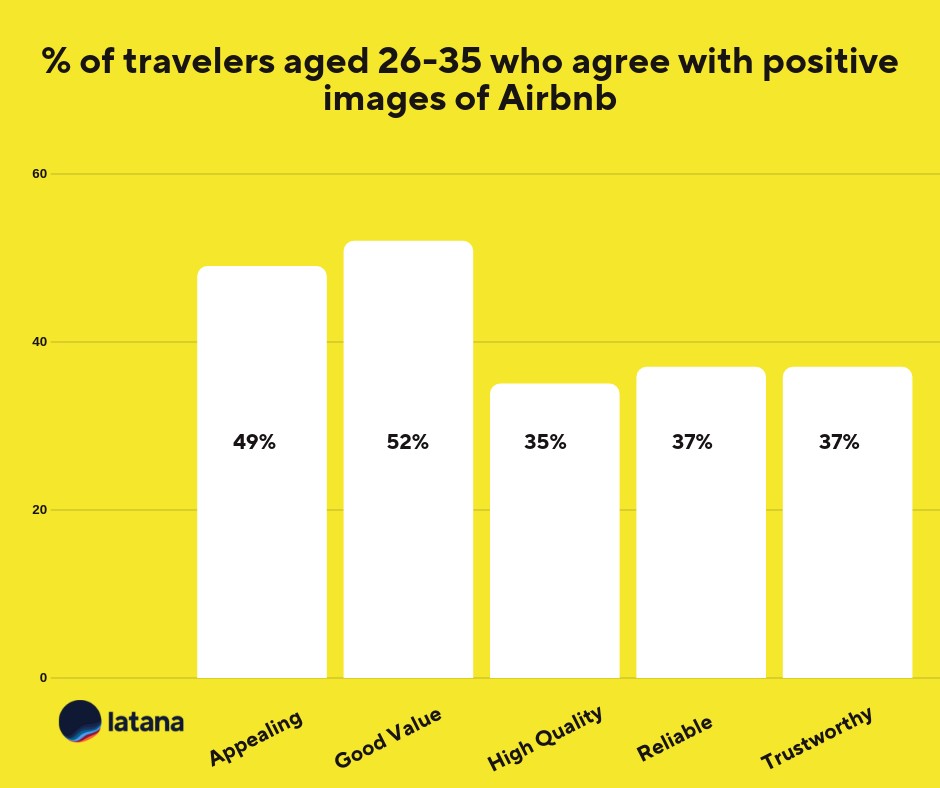\n\n\n\n\n\n\n\nThere are no real changes across the different age groups regarding the positive terms we provided. However, considering the high percentage of respondents who indicated they would consider using Airbnb, the percentage of respondents associating the positive associations with the brand are surprisingly low. \n\nIs this where we can see negative press as having an impact? Respondents would consider Airbnb but are not entirely sure of its appeal, quality, value, reliability, and trustworthiness.\n\nLet’s check our hotel friends again to see if people have more faith in traditional accommodation. Note: while hotels are traditional, the concept of Hotel Tonight is still somewhat new.\n\n\n\n\n\n\n\n\n\nLike with Airbnb, we don’t see changes across age for Hotel Tonight. However, Hotel Tonight performs better in high quality, reliability, and trustworthiness — areas Airbnb should perhaps consider working on.\n\n## Final Thoughts\n\nSo, there we have it — the insights into Airbnb's brand perception. \n\nWhen it first launched, Airbnb was the travelers dream. And in many ways, it still is. A very high percentage of respondents across all ages would consider using the brand, much more than the hotel booking platform, Hotel Tonight. \n\nOn the flip side, more people find Hotel Tonight as high quality, reliable, and trustworthy.\n\nIt seems that while Airbnb has successively grown into a massive brand, there's still some room to market itself as an alternative to more traditional accommodation i.e. hotels. It will be an interesting journey to follow as we have no doubt that Airbnb will continue to grow."},"tags":["Consumer Insights","Brand Insights"],"authorRef":{"slug":"fiona","firstName":"Fiona ","lastName":"Laughton","title":"Freelance Writer & Creative Consultant","picture":{"__typename":"ContentfulAsset","id":"bb56ceb9-a813-5edc-85a6-facde71b8efe","description":"","title":"Latana Logo Author Photo","file":{"contentType":"image/png","url":"//images.ctfassets.net/7so8go2zrvbw/7qeUdZpRNeFZFTo0zIasKz/8d00318fb2f317950a2a2d6912eb28bf/Author_Latana__1_.png","details":{"image":{"width":235,"height":235}}},"gatsbyImageData":{"images":{"sources":[{"srcSet":"//images.ctfassets.net/7so8go2zrvbw/7qeUdZpRNeFZFTo0zIasKz/8d00318fb2f317950a2a2d6912eb28bf/Author_Latana__1_.png?w=235&h=235&q=95&fm=webp 235w","sizes":"100vw","type":"image/webp"}],"fallback":{"src":"//images.ctfassets.net/7so8go2zrvbw/7qeUdZpRNeFZFTo0zIasKz/8d00318fb2f317950a2a2d6912eb28bf/Author_Latana__1_.png?w=235&h=235&q=95&fm=png","srcSet":"//images.ctfassets.net/7so8go2zrvbw/7qeUdZpRNeFZFTo0zIasKz/8d00318fb2f317950a2a2d6912eb28bf/Author_Latana__1_.png?w=235&h=235&q=95&fm=png 235w","sizes":"100vw"}},"layout":"fullWidth","backgroundColor":"#080808","width":1,"height":1}}}}},{"node":{"publishDate":"2022-02-09T09:00+02:00","slug":"uk-mobile-bank","author":"Laura Harker","title":"The UK's Top Mobile Bank Revealed Via Brand Awareness Data [Updated]","seo":{"__typename":"ContentfulSeo","title":"Brand Awareness For the UK's Mobile Banks","description":"How many people in the UK are aware of the most popular mobile banks? We measured brand awareness & consideration to provide answers.","noIndex":null,"ogImage":{"fluid":{"src":"//images.ctfassets.net/7so8go2zrvbw/2tZKV0xT3h4bgtvKMKmrGa/e29dedc8fd09e00df51bcef71eae4e9c/Blog_SEO-Thumbnail_1000X709.png?w=1200&h=675&q=90&fm=jpg"},"file":{"url":"//images.ctfassets.net/7so8go2zrvbw/2tZKV0xT3h4bgtvKMKmrGa/e29dedc8fd09e00df51bcef71eae4e9c/Blog_SEO-Thumbnail_1000X709.png"}}},"heroImage":{"__typename":"ContentfulAsset","id":"99ab6250-8dce-52c8-8fc7-607a50951bb2","description":"","title":"Illustration of a cell phone with money (Thumbnail)","file":{"contentType":"image/png","url":"//images.ctfassets.net/7so8go2zrvbw/2tZKV0xT3h4bgtvKMKmrGa/e29dedc8fd09e00df51bcef71eae4e9c/Blog_SEO-Thumbnail_1000X709.png","details":{"image":{"width":1000,"height":709}}},"gatsbyImageData":{"images":{"sources":[{"srcSet":"//images.ctfassets.net/7so8go2zrvbw/2tZKV0xT3h4bgtvKMKmrGa/e29dedc8fd09e00df51bcef71eae4e9c/Blog_SEO-Thumbnail_1000X709.png?w=200&h=142&q=95&fm=webp 200w,\n//images.ctfassets.net/7so8go2zrvbw/2tZKV0xT3h4bgtvKMKmrGa/e29dedc8fd09e00df51bcef71eae4e9c/Blog_SEO-Thumbnail_1000X709.png?w=400&h=284&q=95&fm=webp 400w,\n//images.ctfassets.net/7so8go2zrvbw/2tZKV0xT3h4bgtvKMKmrGa/e29dedc8fd09e00df51bcef71eae4e9c/Blog_SEO-Thumbnail_1000X709.png?w=800&h=567&q=95&fm=webp 800w","sizes":"(min-width: 800px) 800px, 100vw","type":"image/webp"}],"fallback":{"src":"//images.ctfassets.net/7so8go2zrvbw/2tZKV0xT3h4bgtvKMKmrGa/e29dedc8fd09e00df51bcef71eae4e9c/Blog_SEO-Thumbnail_1000X709.png?w=800&h=567&q=95&fm=png","srcSet":"//images.ctfassets.net/7so8go2zrvbw/2tZKV0xT3h4bgtvKMKmrGa/e29dedc8fd09e00df51bcef71eae4e9c/Blog_SEO-Thumbnail_1000X709.png?w=200&h=142&q=95&fm=png 200w,\n//images.ctfassets.net/7so8go2zrvbw/2tZKV0xT3h4bgtvKMKmrGa/e29dedc8fd09e00df51bcef71eae4e9c/Blog_SEO-Thumbnail_1000X709.png?w=400&h=284&q=95&fm=png 400w,\n//images.ctfassets.net/7so8go2zrvbw/2tZKV0xT3h4bgtvKMKmrGa/e29dedc8fd09e00df51bcef71eae4e9c/Blog_SEO-Thumbnail_1000X709.png?w=800&h=567&q=95&fm=png 800w","sizes":"(min-width: 800px) 800px, 100vw"}},"layout":"constrained","backgroundColor":"#c8d8e8","width":800,"height":567}},"coverImage":{"__typename":"ContentfulAsset","id":"b483bfd9-a005-5840-a2ee-8cba8ffbf412","description":"","title":"Illustration of a cell phone with money (Cover Image)","file":{"contentType":"image/png","url":"//images.ctfassets.net/7so8go2zrvbw/7gPdApIY3zAujuW3qM5MmQ/eed25661f2dfb2f55e853eceb1c453dd/Blog_Cover_1288X400.png","details":{"image":{"width":1288,"height":400}}},"gatsbyImageData":{"images":{"sources":[{"srcSet":"//images.ctfassets.net/7so8go2zrvbw/7gPdApIY3zAujuW3qM5MmQ/eed25661f2dfb2f55e853eceb1c453dd/Blog_Cover_1288X400.png?w=750&h=233&q=95&fm=webp 750w,\n//images.ctfassets.net/7so8go2zrvbw/7gPdApIY3zAujuW3qM5MmQ/eed25661f2dfb2f55e853eceb1c453dd/Blog_Cover_1288X400.png?w=1080&h=335&q=95&fm=webp 1080w,\n//images.ctfassets.net/7so8go2zrvbw/7gPdApIY3zAujuW3qM5MmQ/eed25661f2dfb2f55e853eceb1c453dd/Blog_Cover_1288X400.png?w=1288&h=400&q=95&fm=webp 1288w","sizes":"100vw","type":"image/webp"}],"fallback":{"src":"//images.ctfassets.net/7so8go2zrvbw/7gPdApIY3zAujuW3qM5MmQ/eed25661f2dfb2f55e853eceb1c453dd/Blog_Cover_1288X400.png?w=1288&h=400&q=95&fm=png","srcSet":"//images.ctfassets.net/7so8go2zrvbw/7gPdApIY3zAujuW3qM5MmQ/eed25661f2dfb2f55e853eceb1c453dd/Blog_Cover_1288X400.png?w=750&h=233&q=95&fm=png 750w,\n//images.ctfassets.net/7so8go2zrvbw/7gPdApIY3zAujuW3qM5MmQ/eed25661f2dfb2f55e853eceb1c453dd/Blog_Cover_1288X400.png?w=1080&h=335&q=95&fm=png 1080w,\n//images.ctfassets.net/7so8go2zrvbw/7gPdApIY3zAujuW3qM5MmQ/eed25661f2dfb2f55e853eceb1c453dd/Blog_Cover_1288X400.png?w=1288&h=400&q=95&fm=png 1288w","sizes":"100vw"}},"layout":"fullWidth","backgroundColor":"#c8d8e8","width":1,"height":0.3105590062111801}},"description":{"description":"How many people in the UK are aware of the most popular mobile banks? We measured brand awareness & consideration to provide answers."},"content":{"content":"You've probably already noticed some big changes that have been made in the world of banking, as well as the emerging race to dominate [brand awareness](https://latana.com/topics-brand-awareness/). Mobile and challenger banks have been shaking up the traditional banking industry for the past couple of years, and they’re proving to be extremely popular with consumers. \n\nUnlike the banks that we’ve grown up with, these new online banks don’t have any physical branches — their customers carry out all of their banking on their mobile devices. This set-up offers a handful of benefits, including 24/7 access to one’s bank, strengthened security, and increased customer control.\n\nOver the past few years, these mobile banks have had a huge push in marketing — which has made it seem as though they’re overtaking traditional banks in many ways. But is this really the case? How popular are mobile banks in the UK?\n\nTo answer this question and more, we surveyed 1,050 consumers in the UK, and we’ll use the data to reveal how many people are *actually* aware of these new challenger banks — plus which one is currently reigning supreme. \n\n## The State of Mobile Banking in the UK\n\nThe UK’s top mobile banks are currently considered to be Starling Bank, Curve, Revolut, and Monzo. When looking at the popularity of these mobile banks, we need to consider two important brand KPIs: \n\n- [brand awareness](https://latana.com/topics-brand-awareness/) \n- [brand consideration](https://latana.com/post/brand-consideration-preference-center-of-brand-funnel/)\n\nLet’s start with brand awareness.\n\n### Brand Awareness\n\nTo see which brands our participants were familiar with, we asked a general brand awareness question by compiling the brands into a list — showing both the brand name and logo — and asked consumers which ones they had heard of. \n\n\n\nWhen it comes to the general population answers, Monzo was above all of the rest with 32% of participants saying they’ve heard of the brand before. However, our leader was closely followed by Starling Bank with 26% and Revolut with 14%. \n\nTrailing behind, Curve came last with only 5%. That’s one point for Monzo.\n\n---\n\nMonzo took yet another point when looking at the answers gathered from an important [target audience](https://latana.com/guides/ultimate-target-audience-guide/): Urban Millennials.\n\n\n\nWith 32%, Monzo topped the chart. And with 24%, Starling Bank remained in second place, and Revolut took third place with 15%. Sadly, only 5% of this target audience had previously heard of Curve.\n\n---\n\nThis same trend was found in our other chosen target audience: 56 to 65-year-old participants. \n\n\n\nCurve was still bottom of the pack with 5%, while Revolut hung onto third place with 13%. Starling Bank earned 27% aided brand awareness, coming in second to Monzo’s 29%.\n\nEven though Monzo is generally leading the pack with brand awareness, there’s some obvious traction for the other brands.\n\n### Brand Consideration\n\nTo measure brand consideration, we gave all of our survey participants the same list of brands and asked which ones they would consider using. This is where the results start to get interesting.\n\n\n\nEven though not many people had heard of Curve according to our earlier results, 49% of the general population would consider using the brand. Starling Bank and Revolut both earned 50% brand consideration, while Monzo again took another crown with 55% of respondents saying they would consider using them.\n\n---\n\nSimilarly, with Urban [Millennials](https://latana.com/post/speaking-to-millennials/), Monzo again claimed first place — with 56% having stated that they would consider using the brand’s mobile banking. Next, Revolut and Starling Bank came in at 50%, while Curve claimed a respectable 48%.\n\n\n\n---\n\nBut this is where it gets really interesting — Monzo actually came last when we asked 56 to 65-year-olds which brands they would consider using.\n\n\n\nOnly 45% said they would use Monzo — and all of the other brands beat this figure. 49% said they would opt for Curve, while Starling Bank and Revolut earned 50% each. \n\nLet’s give them all 1 point!\n\n## Final Thoughts\n\nAll in all, it looks like Monzo reigns supreme with 4 points — although Revolut and Starling Bank didn’t fare too badly with 1 point each. \n\nThough Monzo clearly came out on top for almost all of our questions, the brand may be struggling to connect with 56 to 65-year-olds — as they were this groups’ last choice for brand consideration.\n\nIn the end, Monzo appears to be the clear winner. However, our other brands fared quite well for aided brand awareness and brand consideration. Nevertheless, there’s still work that needs to be done if Starling Bank and Revolut want to catch up with Monzo. \n\nAfter all, you can’t be crowned the winner if consumers can’t remember your name!\n\n---\n\nUpdated by: [Cory Schröder](https://latana.com/author/cory-schroder/) on 09.02.22\n"},"tags":["Brand Insights","Consumer Insights"],"authorRef":{"slug":"laura","firstName":"Laura","lastName":"Harker","title":"Freelance Writer & Editor","picture":{"__typename":"ContentfulAsset","id":"bb56ceb9-a813-5edc-85a6-facde71b8efe","description":"","title":"Latana Logo Author Photo","file":{"contentType":"image/png","url":"//images.ctfassets.net/7so8go2zrvbw/7qeUdZpRNeFZFTo0zIasKz/8d00318fb2f317950a2a2d6912eb28bf/Author_Latana__1_.png","details":{"image":{"width":235,"height":235}}},"gatsbyImageData":{"images":{"sources":[{"srcSet":"//images.ctfassets.net/7so8go2zrvbw/7qeUdZpRNeFZFTo0zIasKz/8d00318fb2f317950a2a2d6912eb28bf/Author_Latana__1_.png?w=235&h=235&q=95&fm=webp 235w","sizes":"100vw","type":"image/webp"}],"fallback":{"src":"//images.ctfassets.net/7so8go2zrvbw/7qeUdZpRNeFZFTo0zIasKz/8d00318fb2f317950a2a2d6912eb28bf/Author_Latana__1_.png?w=235&h=235&q=95&fm=png","srcSet":"//images.ctfassets.net/7so8go2zrvbw/7qeUdZpRNeFZFTo0zIasKz/8d00318fb2f317950a2a2d6912eb28bf/Author_Latana__1_.png?w=235&h=235&q=95&fm=png 235w","sizes":"100vw"}},"layout":"fullWidth","backgroundColor":"#080808","width":1,"height":1}}}}},{"node":{"publishDate":"2022-01-21T08:00+02:00","slug":"brand-analytics-improve-marketing","author":"Fiona Laughton","title":"How To Improve Your Campaign Marketing Using Brand Tracking Data [Updated]","seo":{"__typename":"ContentfulSeo","title":"Brand Tracking To Improve Your Campaign Marketing","description":"Brand managers, find out how to improve marketing by using brand tracking software to convert your audience’s attention. You won't regret it.","noIndex":null,"ogImage":{"fluid":{"src":"//images.ctfassets.net/7so8go2zrvbw/1eJjlsEPIyPhEBcNYjGPS1/17a21f248c49f65f7a44cbcf77721d4f/Blog_SEO-Thumbnail_1000X709__1_.png?w=1200&h=675&q=90&fm=jpg"},"file":{"url":"//images.ctfassets.net/7so8go2zrvbw/1eJjlsEPIyPhEBcNYjGPS1/17a21f248c49f65f7a44cbcf77721d4f/Blog_SEO-Thumbnail_1000X709__1_.png"}}},"heroImage":{"__typename":"ContentfulAsset","id":"a143b722-d4c2-50c0-9d91-b8c593c694c8","description":"How To Improve Your Campaign Marketing Using Brand Tracking Data","title":"How To Improve Your Campaign Marketing Using Brand Tracking Data","file":{"contentType":"image/png","url":"//images.ctfassets.net/7so8go2zrvbw/1eJjlsEPIyPhEBcNYjGPS1/17a21f248c49f65f7a44cbcf77721d4f/Blog_SEO-Thumbnail_1000X709__1_.png","details":{"image":{"width":1000,"height":710}}},"gatsbyImageData":{"images":{"sources":[{"srcSet":"//images.ctfassets.net/7so8go2zrvbw/1eJjlsEPIyPhEBcNYjGPS1/17a21f248c49f65f7a44cbcf77721d4f/Blog_SEO-Thumbnail_1000X709__1_.png?w=200&h=142&q=95&fm=webp 200w,\n//images.ctfassets.net/7so8go2zrvbw/1eJjlsEPIyPhEBcNYjGPS1/17a21f248c49f65f7a44cbcf77721d4f/Blog_SEO-Thumbnail_1000X709__1_.png?w=400&h=284&q=95&fm=webp 400w,\n//images.ctfassets.net/7so8go2zrvbw/1eJjlsEPIyPhEBcNYjGPS1/17a21f248c49f65f7a44cbcf77721d4f/Blog_SEO-Thumbnail_1000X709__1_.png?w=800&h=568&q=95&fm=webp 800w","sizes":"(min-width: 800px) 800px, 100vw","type":"image/webp"}],"fallback":{"src":"//images.ctfassets.net/7so8go2zrvbw/1eJjlsEPIyPhEBcNYjGPS1/17a21f248c49f65f7a44cbcf77721d4f/Blog_SEO-Thumbnail_1000X709__1_.png?w=800&h=568&q=95&fm=png","srcSet":"//images.ctfassets.net/7so8go2zrvbw/1eJjlsEPIyPhEBcNYjGPS1/17a21f248c49f65f7a44cbcf77721d4f/Blog_SEO-Thumbnail_1000X709__1_.png?w=200&h=142&q=95&fm=png 200w,\n//images.ctfassets.net/7so8go2zrvbw/1eJjlsEPIyPhEBcNYjGPS1/17a21f248c49f65f7a44cbcf77721d4f/Blog_SEO-Thumbnail_1000X709__1_.png?w=400&h=284&q=95&fm=png 400w,\n//images.ctfassets.net/7so8go2zrvbw/1eJjlsEPIyPhEBcNYjGPS1/17a21f248c49f65f7a44cbcf77721d4f/Blog_SEO-Thumbnail_1000X709__1_.png?w=800&h=568&q=95&fm=png 800w","sizes":"(min-width: 800px) 800px, 100vw"}},"layout":"constrained","backgroundColor":"#082888","width":800,"height":568}},"coverImage":{"__typename":"ContentfulAsset","id":"00a077dd-5d9d-5661-b343-3b95edb77712","description":"How To Improve Your Campaign Marketing Using Brand Tracking Data","title":"How To Improve Your Campaign Marketing Using Brand Tracking Data","file":{"contentType":"image/png","url":"//images.ctfassets.net/7so8go2zrvbw/5vzTaCjz3NCk4YSeiO5vAT/9300a7badaa1281f8035455854c101ed/Blog_Cover_1288X400__1_.png","details":{"image":{"width":1288,"height":400}}},"gatsbyImageData":{"images":{"sources":[{"srcSet":"//images.ctfassets.net/7so8go2zrvbw/5vzTaCjz3NCk4YSeiO5vAT/9300a7badaa1281f8035455854c101ed/Blog_Cover_1288X400__1_.png?w=750&h=233&q=95&fm=webp 750w,\n//images.ctfassets.net/7so8go2zrvbw/5vzTaCjz3NCk4YSeiO5vAT/9300a7badaa1281f8035455854c101ed/Blog_Cover_1288X400__1_.png?w=1080&h=335&q=95&fm=webp 1080w,\n//images.ctfassets.net/7so8go2zrvbw/5vzTaCjz3NCk4YSeiO5vAT/9300a7badaa1281f8035455854c101ed/Blog_Cover_1288X400__1_.png?w=1288&h=400&q=95&fm=webp 1288w","sizes":"100vw","type":"image/webp"}],"fallback":{"src":"//images.ctfassets.net/7so8go2zrvbw/5vzTaCjz3NCk4YSeiO5vAT/9300a7badaa1281f8035455854c101ed/Blog_Cover_1288X400__1_.png?w=1288&h=400&q=95&fm=png","srcSet":"//images.ctfassets.net/7so8go2zrvbw/5vzTaCjz3NCk4YSeiO5vAT/9300a7badaa1281f8035455854c101ed/Blog_Cover_1288X400__1_.png?w=750&h=233&q=95&fm=png 750w,\n//images.ctfassets.net/7so8go2zrvbw/5vzTaCjz3NCk4YSeiO5vAT/9300a7badaa1281f8035455854c101ed/Blog_Cover_1288X400__1_.png?w=1080&h=335&q=95&fm=png 1080w,\n//images.ctfassets.net/7so8go2zrvbw/5vzTaCjz3NCk4YSeiO5vAT/9300a7badaa1281f8035455854c101ed/Blog_Cover_1288X400__1_.png?w=1288&h=400&q=95&fm=png 1288w","sizes":"100vw"}},"layout":"fullWidth","backgroundColor":"#082888","width":1,"height":0.3105590062111801}},"description":{"description":"Brand managers, find out how to improve marketing by using brand tracking software to convert your audience’s attention. You won't regret it."},"content":{"content":"Capturing an audience’s attention is a significant challenge for marketers. The proliferation of mobile devices has allowed consumers to become more connected than ever before, with the ability to socialize, shop, watch TV, or even take a language class anytime, anywhere. \n\nBut attention isn’t a finite resource, and it’s no secret that our mobile devices can bombard us with more information and messages than we can handle. \n\nWith this in mind, [brand managers](https://latana.com/brand-manager/) must understand how their target audiences are perceiving their brand and whether their campaigns are even able to cut through the noise to make the desired impression. By using [brand tracking software](https://latana.com/), you can do exactly this. \n\nWith access to real-world data on how your brand is performing, you can leverage key insights to optimize future campaigns and catch your audience’s attention or — if they’ve already heard of your brand — [shift their perceptions](https://latana.com/post/brand-perception-2020).\n\n## Why is Brand Tracking Important?\n\nTo understand why brand tracking has become so important, it’s essential to talk about the Attention Economy. This is a theory based on the idea that consumers only have a limited attention capacity, which becomes harder and more costly to capture as more and more brands enter the market. \n\nThe basic economic theory behind this treats consumer attention as a resource or commodity, sold by those that own advertising space — whether that be on the latest social media app, connected TVs, or a billboard on a busy street — and bought by advertisers eager to connect with consumers. Because attention is the commodity being traded, it’s the channels that catch consumers’ eyes and drive engagement that can command the highest price. \n\nWith advertising opportunities in abundance, getting your brand message out there and in front of consumers is no longer the key challenge. Instead, the most difficult obstacle is being noticed at the right time, and then remembered by your target audience. \n\nTo overcome this challenge, marketers need to ensure that their message doesn’t get lost in the crowd — but even more importantly, it’s imperative that they use brand tracking to gauge who’s taking notice and what their perceptions are, to inform future campaigns.\n\n## Defining Brand Tracking\n\nBringing a brand to life with a compelling new campaign is one of the most creative aspects of marketing. However, while many in the industry have embraced data analytics to inform their campaigns and improve performance, branding is sometimes still perceived as an art form — driven by gut decision and blind-guesses, rather than an informed understanding of what does and doesn’t work with the target audience in question. \n\nBrand tracking bridges this gap, providing brand managers and marketers with the tools to measure how their branding campaigns are performing. \n\nMany of you have probably already heard of brand tracking, but Latana's software takes [traditional brand tracking](https://latana.com/post/issues-brand-tracking) one step further. By using a form of data science called [MRP](https://latana.com/whitepapers/mrp-vs-traditional-quota-sampling-brand-tracking/), Latana provides a more accurate analysis of your brand’s health, drawing on a wider range of audience segmentations to give you insights on a variety of key demographics such as age, gender, income, education, and geography.\n\nTherefore, brand tracking is best defined as __a means of continuously and precisely measuring brand health via audience brand metrics by using advanced data science and large data sets__.\n\nThe use of MRP, or Multilevel Regression and Poststratification, is critical in giving you a detailed picture of your brand’s health. But what does this look like in practice? \n\nWhen you first log in to the Latana platform, you’ll land on the Brand Insights page. This features a dashboard that allows you to visualise insights into your chosen brand KPIs, with time toggle, competitor benchmarking, and audience segment features allowing you to see how these KPIs are performing over time, against your core competition and with different audiences.\n\nThe main KPIs that are vital to track are:\n\n* __Brand Awareness:__ This KPI measures what share of your target audience knows about your brand. [Brand awareness](https://latana.com/topics-brand-awareness/) tends to move slowly and it’s unlikely that you’ll see big jumps over short periods of time. However, it’s worth remembering that the numbers involved can be so large, that an increase of just 1% could translate to hundreds of thousands of people.\n* __Brand Associations:__ This measures the attributes that people connect with your brand, for example, whether your product or service is perceived as high quality, innovative, or sustainable. Measuring [brand associations](https://latana.com/post/brand-association/) reveals whether your desired positioning matches how your brand is actually being perceived by consumers and can show you where you should direct your marketing resources to help shift these perceptions.\n* __Brand Consideration__: This KPI examines whether consumers would consider purchasing from a brand they are aware of. While some brands can have a high degree of awareness, with desirable associations, it does not necessarily indicate that consumers will purchase the product or service in question. For example, many famous luxury brands will simply be out of the price range of many consumers. [Brand consideration](https://latana.com/post/brand-kpis-mid-sized-companies/) ultimately measures whether a certain target group would actually consider buying from that specific brand and can indicate how many potential customers you have — plus how this is evolving over time.\n* __Brand Preference:__ This KPI reflects a consumer's desire to use a particular company's product against equally priced and/or equally-available alternatives. [Brand preference ](https://latana.com/post/brand-consideration-preference-center-of-brand-funnel)is an important metric because it provides an indicator of your customers' loyalty, the success of your marketing tactics, and the strength of your brand.\n\n\n\nTo find out more about our brand tracking platform, check out our [guide](https://www.latana.com/post/brand-analytics-platform-guide).\n\n## How To Improve Your Marketing Campaigns Using Brand Tracking Data\n\nData can be just as pivotal in informing a branding campaign as it can for any other marketing activity. By receiving insights into audiences’ perceptions of your brand, you can understand how effective your messaging is at reaching different types of consumers and influencing their purchasing decisions. \n\nBy measuring brand associations, you can get a better picture of whether your brand is being received the way you intended or not and if certain associations still need to be worked on in future campaigns. \n\nYou can use these insights to tailor your marketing campaigns more effectively. For example, if a large proportion of your target audience is already familiar with your brand, it means you can prioritize lower-funnel campaigns — concentrating on messaging that attempts to convert consumers with details of promotions or offers, new product ranges, or just an in-depth look at your core product or service.\n\nHowever, you may discover that your target audience has a low awareness of your brand. If this is the case, you still need to work to capture consumers’ attention with [brand awareness campaigns](https://latana.com/post/brand-building-campaigns). By charting consumer perception of your brand over time, you can see the progress you’re making with target audiences — so you can be sure you’re heading in the right direction before reinvesting in a particular channel or continuing with a particular message.\n\nInformation regarding brand associations can also be extremely useful. First, you can assess the positive terms your target audience identifies with your brand and then incorporate these associations into future campaigns to further build up your relationship with this segment of consumers. \n\nOn the other hand, by reviewing any negative associations your target audience might have, you can understand why consumers are less likely to purchase your product or service and address these issues in future campaigns.\n\nWhile coming up with a creative campaign idea can still be something of an art form, it’s important that all marketing activities are informed by data if you want to drive your brand towards growth. The first step when bringing a new campaign idea to life should always be a thorough assessment of past data to understand what has and hasn’t worked before. After all, no campaign is really complete until you have analyzed its performance.\n\n## Marketing Insights Are Only as Valuable as The Actions They Inform\n\nThe ultimate goal of brand tracking is to have your finger on the pulse of consumers’ perceptions — with an ability to recognize which campaigns are breaking through the noise and [raising your brand awareness](https://latana.com/topics-brand-awareness/) and with which target audience. \n\nWith the right campaign, you should notice growth in awareness over time or a shift in perception. But even if there are no [significant changes](https://latana.com/post/interpret-brand-tracking-data/), you’ve still gained important insights about how to engage with your target audience in the future. In these cases, we advise that you return to the planning stage and consider reworking your existing strategy and campaigns. \n\nIt’s also important to know that the insights you get from the Latana platform don’t just have to be in relation to _your_ brand. With our brand tracking software, you can see how the competition fairs too or improve your understanding of the marketplace, to see what different segments of your audience want from brands in your category.\n\nFor example, you can drill down to a specific region to get insights like the things that consumers want from their brands.\n\n\n\nIncreasingly, modern marketing is about iterating until you find what works and then scaling it up. Marketing insights are only as valuable as the actions they inform, so once you have the data make sure you’re using it to guide your brand in the right direction. \n\n## Final Thoughts\n\n[Brand tracking software](https://latana.com/) is now an essential part of any good marketing strategy if you want to be competitive in the Attention Economy_ _and be heard or seen by your target audience. It’s really about tuning into and respecting consumers’ thoughts and opinions — that way you understand what your brand means to them and where it fits into their busy lives. \n\nAnd with advanced brand tracking data at hand, you’ll be empowered to start speaking directly to your target audience rather than bombarding them with messages that simply don’t resonate.\n\n---\n\nUpdated by: [Ashley Lightfoot](https://latana.com/author/ashley-lightfoot/), 21.01.22"},"tags":["Brand Strategy","Brand Marketing"],"authorRef":{"slug":"fiona","firstName":"Fiona ","lastName":"Laughton","title":"Freelance Writer & Creative Consultant","picture":{"__typename":"ContentfulAsset","id":"bb56ceb9-a813-5edc-85a6-facde71b8efe","description":"","title":"Latana Logo Author Photo","file":{"contentType":"image/png","url":"//images.ctfassets.net/7so8go2zrvbw/7qeUdZpRNeFZFTo0zIasKz/8d00318fb2f317950a2a2d6912eb28bf/Author_Latana__1_.png","details":{"image":{"width":235,"height":235}}},"gatsbyImageData":{"images":{"sources":[{"srcSet":"//images.ctfassets.net/7so8go2zrvbw/7qeUdZpRNeFZFTo0zIasKz/8d00318fb2f317950a2a2d6912eb28bf/Author_Latana__1_.png?w=235&h=235&q=95&fm=webp 235w","sizes":"100vw","type":"image/webp"}],"fallback":{"src":"//images.ctfassets.net/7so8go2zrvbw/7qeUdZpRNeFZFTo0zIasKz/8d00318fb2f317950a2a2d6912eb28bf/Author_Latana__1_.png?w=235&h=235&q=95&fm=png","srcSet":"//images.ctfassets.net/7so8go2zrvbw/7qeUdZpRNeFZFTo0zIasKz/8d00318fb2f317950a2a2d6912eb28bf/Author_Latana__1_.png?w=235&h=235&q=95&fm=png 235w","sizes":"100vw"}},"layout":"fullWidth","backgroundColor":"#080808","width":1,"height":1}}}}},{"node":{"publishDate":"2019-06-13T00:00+02:00","slug":"branding-cryptocurrency","author":"Stephanie Siwiec","title":"Brand Tracking in the Cryptocurrency Market","seo":{"__typename":"ContentfulSeo","title":"Brand Tracking in the Cryptocurrency Market","description":"We used brand tracking to look at cryptocurrency in Europe, Asia, and Africa to get an overview of brand awareness in the market. This is what we found.","noIndex":null,"ogImage":{"fluid":{"src":"//images.ctfassets.net/7so8go2zrvbw/3gizphkCagbMxzScf0NGuZ/f92317e4b5d97f47b8859bfd61178083/branding-cryptocurrency_1.jpg?w=1200&h=675&q=90&fm=jpg"},"file":{"url":"//images.ctfassets.net/7so8go2zrvbw/3gizphkCagbMxzScf0NGuZ/f92317e4b5d97f47b8859bfd61178083/branding-cryptocurrency_1.jpg"}}},"heroImage":{"__typename":"ContentfulAsset","id":"d566d6f6-f633-5c2d-85f7-4224f5a438da","description":"Brand Tracking in the Cryptocurrency Market","title":"Brand Tracking in the Cryptocurrency Market","file":{"contentType":"image/jpeg","url":"//images.ctfassets.net/7so8go2zrvbw/3gizphkCagbMxzScf0NGuZ/f92317e4b5d97f47b8859bfd61178083/branding-cryptocurrency_1.jpg","details":{"image":{"width":1320,"height":803}}},"gatsbyImageData":{"images":{"sources":[{"srcSet":"//images.ctfassets.net/7so8go2zrvbw/3gizphkCagbMxzScf0NGuZ/f92317e4b5d97f47b8859bfd61178083/branding-cryptocurrency_1.jpg?w=200&h=122&q=95&fm=webp 200w,\n//images.ctfassets.net/7so8go2zrvbw/3gizphkCagbMxzScf0NGuZ/f92317e4b5d97f47b8859bfd61178083/branding-cryptocurrency_1.jpg?w=400&h=244&q=95&fm=webp 400w,\n//images.ctfassets.net/7so8go2zrvbw/3gizphkCagbMxzScf0NGuZ/f92317e4b5d97f47b8859bfd61178083/branding-cryptocurrency_1.jpg?w=800&h=487&q=95&fm=webp 800w","sizes":"(min-width: 800px) 800px, 100vw","type":"image/webp"}],"fallback":{"src":"//images.ctfassets.net/7so8go2zrvbw/3gizphkCagbMxzScf0NGuZ/f92317e4b5d97f47b8859bfd61178083/branding-cryptocurrency_1.jpg?w=800&h=487&fl=progressive&q=95&fm=jpg","srcSet":"//images.ctfassets.net/7so8go2zrvbw/3gizphkCagbMxzScf0NGuZ/f92317e4b5d97f47b8859bfd61178083/branding-cryptocurrency_1.jpg?w=200&h=122&fl=progressive&q=95&fm=jpg 200w,\n//images.ctfassets.net/7so8go2zrvbw/3gizphkCagbMxzScf0NGuZ/f92317e4b5d97f47b8859bfd61178083/branding-cryptocurrency_1.jpg?w=400&h=244&fl=progressive&q=95&fm=jpg 400w,\n//images.ctfassets.net/7so8go2zrvbw/3gizphkCagbMxzScf0NGuZ/f92317e4b5d97f47b8859bfd61178083/branding-cryptocurrency_1.jpg?w=800&h=487&fl=progressive&q=95&fm=jpg 800w","sizes":"(min-width: 800px) 800px, 100vw"}},"layout":"constrained","backgroundColor":"#081818","width":800,"height":487}},"coverImage":null,"description":{"description":"We used brand tracking to look at cryptocurrency in Europe, Asia, and Africa to get an overview of brand awareness in the market. This is what we found."},"content":{"content":"Cryptocurrency is growing in popularity. Take for instance South Korea where the government are actively promoting cryptocurrency and where [locals are buying more cryptocurrency than ever.](https://cointelegraph.com/news/south-koreans-invest-an-average-6-000-in-cryptocurrency-says-new-survey) Even Russia and China, who were both against cryptocurrency at one point, are now setting the plans in motion to become blockchain leaders.\n\nThis change of mind piqued our interest and we became curious about just how popular cryptocurrency is. We used our [brand monitoring](https://latana.com/product/) skills to look at countries in Europe, Asia, and Africa to get an overview of cryptocurrency brand awareness. This is what we found.\n\n## **Using Brand Tracking to Discover Perception Around Cryptocurrency Brands**\n\nCryptocurrency is a hot topic, one that can get pretty controversial. Opinions aside, there’s no doubt that cryptocurrencies are becoming more popular. What gives them this extra edge is tied to branding and targeting the right audience. But how many people are currently buying into the whole cryptocurrency thing? Here is a breakdown by country.\n\n#### **France**\n\n_501 French survey respondents took part in this study._\n\nOf all the countries surveyed using brand tracking, respondents from France were the least aware when provided with a list of the most popular brands. 48% of people were not aware of any brands.\n\nOnly 17% of respondents own cryptocurrency, with 36% interested in purchasing. Almost half, at 47%, were not interested in purchasing cryptocurrency. Things aren’t looking very promising for cryptocurrency in France.\n\n\n\n**Bonus insight**: The top reason why French respondents have cryptocurrency is investment (50%).\n\n### **UK**\n\n_501 British survey respondents took part in this study._\n\nIn the UK, 39% of respondents were unaware of any of the most popular cryptocurrency brands. With just 17% of respondents owning any cryptocurrency, figures stood the same as France. 35% of respondents were interested in purchasing, although, at 49%, a larger of respondents were not interested in purchasing cryptocurrency.\n\n\n\n**Bonus insight**: The top reason why British respondents have cryptocurrency is investment (55%).\n\n### **Indonesia**\n\n_500 Indonesian survey respondents took part in this study._\n\nThings changed when we came to Indonesia. Just 14% of respondents in Indonesia were not aware of any of the most popular cryptocurrency brands. This is a big change from the 48% we saw in France and 39% in the UK.\n\nWe also saw a rise in the number of people who owned cryptocurrency: 44% of respondents owned cryptocurrency and 39% were interested in purchasing. Just 17% of respondents were not interested in purchasing cryptocurrency.\n\n\n\n**Bonus insight**: The top reason why Indonesian respondents have cryptocurrency is investment (83%).\n\n### **Italy**\n\n_500 Italian survey respondents took part in this study._\n\n21% of Italian respondents were not familiar with popular cryptocurrency brands. 23% already owned some cryptocurrency and 49% were interested in purchasing. Only 28% were not interested in purchasing. Sounds like brand marketing is working in Italy!\n\n\n\n**Bonus insight**: The top reason why Italian respondents have cryptocurrency is investment (53%).\n\n### **Nigeria**\n\n_500 Nigerian survey respondents took part in this study._\n\nCryptocurrency is popular in Nigeria. Just 20% of respondents claimed not to be familiar with any popular cryptocurrencies. 30% owned some cryptocurrency and a whopping 53% were interested in purchasing some. As few as 17% of respondents were not interested in purchasing cryptocurrency.\n\n\n\n**Bonus insight**: The top reason why Nigerian respondents have cryptocurrency is investment (83%).\n\n### **The Netherlands**\n\n_500 Dutch survey respondents took part in this study._\n\nWhen provided with a list of the most popular cryptocurrencies 39% of respondents from the Netherlands were unfamiliar with them all. Just 22% owned cryptocurrency and 32% were interested in purchasing. It will be difficult for brand managers to sell to the Dutch market; 46% of respondents were not interested in purchasing any cryptocurrency.\n\n\n\n**Bonus insight**: The top reason why Dutch respondents have cryptocurrency is investment (40%).\n\n### **South Africa**\n\n_500 South African survey respondents took part in this study._\n\nOnly 29% of respondents from South Africa were not familiar with cryptocurrency brands when a list of the most popular was provided to them. Currently, just 23% owned some cryptocurrency but 49% of respondents were interested in purchasing. Only 29% were not interested in purchasing cryptocurrencies.\n\n\n\n**Bonus insight**: The top reason why South African respondents have cryptocurrency is investment (81%).\n\n## **Branding in the Cryptocurrency Market**\n\nWhat does this study tell us about cryptocurrency and branding? Well, there is plenty of room to break into the cryptocurrency market. Overall, at least 20% of respondents surveyed were not familiar with any brands. Plus, a minimum of 35% of respondents were interested in buying cryptocurrency. It’s that 35%, that audience, which brand managers in cryptocurrency should be targeting.\n\nBrand marketers in this industry should know there is much space to grow. Whether it’s tapping into an audience they wouldn’t typically consider, [increasing brand awareness](https://latana.com/post/brand-awareness-measure/), or even overtaking competitors."},"tags":["Brand Insights","Brand Tracking"],"authorRef":{"slug":"stephanie","firstName":"Stephanie","lastName":"Siwiec","title":"Freelance Writer & Editor","picture":{"__typename":"ContentfulAsset","id":"bb56ceb9-a813-5edc-85a6-facde71b8efe","description":"","title":"Latana Logo Author Photo","file":{"contentType":"image/png","url":"//images.ctfassets.net/7so8go2zrvbw/7qeUdZpRNeFZFTo0zIasKz/8d00318fb2f317950a2a2d6912eb28bf/Author_Latana__1_.png","details":{"image":{"width":235,"height":235}}},"gatsbyImageData":{"images":{"sources":[{"srcSet":"//images.ctfassets.net/7so8go2zrvbw/7qeUdZpRNeFZFTo0zIasKz/8d00318fb2f317950a2a2d6912eb28bf/Author_Latana__1_.png?w=235&h=235&q=95&fm=webp 235w","sizes":"100vw","type":"image/webp"}],"fallback":{"src":"//images.ctfassets.net/7so8go2zrvbw/7qeUdZpRNeFZFTo0zIasKz/8d00318fb2f317950a2a2d6912eb28bf/Author_Latana__1_.png?w=235&h=235&q=95&fm=png","srcSet":"//images.ctfassets.net/7so8go2zrvbw/7qeUdZpRNeFZFTo0zIasKz/8d00318fb2f317950a2a2d6912eb28bf/Author_Latana__1_.png?w=235&h=235&q=95&fm=png 235w","sizes":"100vw"}},"layout":"fullWidth","backgroundColor":"#080808","width":1,"height":1}}}}},{"node":{"publishDate":"2021-03-30T00:00+02:00","slug":"prove-brand-performance","author":"Laura Harker","title":"How to Prove Brand Performance to Your Boss","seo":{"__typename":"ContentfulSeo","title":"How to Prove Brand Performance to Your Boss","description":"It's time to finally answer the million dollar brand marketing question: how can I prove brand performance? We tell you how brand tracking can help.","noIndex":null,"ogImage":{"fluid":null,"file":{"url":"//images.ctfassets.net/7so8go2zrvbw/6HmGhsGBZzBvpzI3jSB33K/b75940290f3ab62e6c7790beaafd76ea/1200x627__5_.svg"}}},"heroImage":{"__typename":"ContentfulAsset","id":"03f725e5-5030-5597-bfea-6d6f942556ba","description":"","title":"How to Prove Brand Performance to Your Boss","file":{"contentType":"image/svg+xml","url":"//images.ctfassets.net/7so8go2zrvbw/6Mco9k607vZJaBMXA6ciwR/ea2500cd8d2ca917d1e0e15e571255fc/1200x627__5_.svg","details":{"image":{"width":1200,"height":627}}},"gatsbyImageData":null},"coverImage":null,"description":{"description":"It's time to finally answer the million dollar brand marketing question: how can I prove brand performance? We tell you how brand tracking can help."},"content":{"content":"Brand performance, or rather proving brand performance, is one of the most elusive parts of our creed. Every brand and marketing manager knows that it is their job to get the word out there about their brand and to make people not just talk, but also shop your product. However, knowing how well you are doing this can be difficult to pinpoint. \n\nBut the answer hides in plain sight. You already know (and maybe even used) the metrics you need to measure brand performance. Also, you are probably familiar with the [brand monitoring](https://latana.com/product/) tools you can use to capture them. So brand performance isn’t a \"white whale\". It’s a regular blue one that you can spot easily if you gear up for the trip. \n\nIn this post, we first explain what is brand performance is in concrete terms and then explain the how-to part so you can easily prove your performance to your boss. Let’s dig in. \n\n## What is Brand Performance?\n\nBrand performance reflects the brand’s desirability and profitability. It’s the grand sum of actions you pursue to ensure high brand awareness, positive [brand perception](https://latana.com/post/track-brand-perception/), and strong brand recall among target audiences — that will all eventually lead to more sales. \n\nBut given that both “brand” and “perception” are lofty non-quant concepts, some marketers find the brand performance metric confusing. \n\n### Can you really measure your brand performance?\n\nYes, if you peg down the “perception” part to proxy metrics. The telling metrics to measure brand performance are:\n\n- Top-of-mind (TOM), aided, and unaided [brand awareness](https://latana.com/topics-brand-awareness/) \n- Brand sentiment including overall brand perception\n- [Brand consideration](https://latana.com/post/brand-consideration-preference-center-of-brand-funnel/) and purchase intent \n- Sales volume and sales value\n- Customer lifetime value and [brand loyalty](https://latana.com/post/brand-loyalty-content/) \n\nIn this post, we’ll show you how to measure brand performance using the above KPIs and several handy tools! \n\nBut before going into “how”, let’s dwell a moment on “why”. To ensure accurate tracking (and insights!), you need to align your measurement with your marketing goals. \n\n## Why Measuring Brand Performance is Important\n\nWhy do we pick one brand over another from the shelf? What prompts us to pay 2X to 10X more for the same types of products?\n\nAs consumers, we are driven by both rational and irrational factors. The latter is strongly tied with emotions.\n\nDeloitte found that [44% of customers](https://www.deloittedigital.com/content/dam/deloittedigital/us/documents/offerings/offerings-20190521-exploring-the-value-of-emotion-driven-engagement-2.pdf) would make a recommendation, based on emotional criteria — the feelings a brand elicits such as “trust”, “happiness”, “joy”, or “gratitude”. Emotions also influence the depth of brand loyalty and advocacy. Without understanding how your target audiences feel about your brand and what drives their perception, marketers cannot forge those connections. \n\nSecondly, digital marketing and digital sales have also increased the playing field for brand competition. Today, smaller brands can easily reach global audiences without having a local retail footprint, robust distribution network, or budgets for international TV or print ads. \n\nSocial media has given a platform for brands to proactively reach granular audience segments and effectively capitalize on the viral “network effect” to organically scale their reach. \n\n[The Ordinary](https://latana.com/brand-insights/brand-bites-ordinary/), once a niche D2C brand, became a direct competitor to giants such as L’Oreal and Estee Lauder thanks to a strategic online community building. The cosmetics company invested in developing a strong rapport with the target audiences on social media. They accumulated major brand trust, crucial in the cosmetics industry, one positive customer review at a time. \n\nUp till the point when peer-to-peer recommendations started working for them. The brand “exploded” on skincare sub-forums on Reddit and became the go-to non-sponsored recommendation among consumer trusted beauty bloggers and beauty editors alike. \n\n\n(The Ordinary is ubiquitously popular on the SkincareAddition subreddit) \n\nCan you gain similar brand performance results without effective tracking? Unlikely. \n\nFinally, brand performance numbers can provide a fuller picture of your end-to-end brand experience and help diagnose other issues, saliently undermining your success. Given that even modest improvements in customer experience (CX) performance can drive a [34% increase](https://www.qualtrics.com/blog/roi-of-cx/) in future purchase intentions in almost 20 industries, you’d probably want to know about those issues too. \n\n## How to Measure Brand Performance in 4 Steps \n\n### 1. Start with Measuring Brand Awareness \n\nBrand awareness is the cornerstone metric. It tells if people even know your brand or can recall it with a quick prompt.\n\nBut can you [measure brand awareness](https://latana.com/topics-brand-awareness/)? Absolutely, with the right tools and metrics. First, determine your KPIs. To estimate brand performance, you’ll want to analyze:\n\n- __Top-of-mind brand awareness__: is your brand the first one customers recall in a specific product category? Diapers = Pampers. \n\n- __Unaided brand awareness__: can your target audience name your brand among others without any prompts? Popular sneakers = Nike, Adidas, Puma. \n\n- __Aided brand awareness__: is your target audience familiar with your brand at all e.g. do you know the following ride-hailing companies — Uber, Lyft, Bolt, Via, Didi? \n\nThe above metrics can already tell how well your brand performs in certain markets among different audiences. If you are already a top-of-mind option, you are doing a great job with awareness campaigns. So perhaps you should re-focus on improving brand consideration and usage. \n\nTools to measure brand awareness:\n\n__Google Search Console and Google Analytics__: Measure search volumes for brand name, product name(s), and variations. Also, monitor total impression numbers per paid campaign. \n\n[__Latana__](https://latana.com/): We use machine learning to help you track brand awareness (as well as other key KPIs) across different [target audience segments](https://latana.com/audience-segmentation/) and channels in real-time. \n\n__[AgoraPulse](https://www.agorapulse.com/)__: Tracks brand mentions across social networks and lets you “listen in” on customer conversations around your brand and competitors.\n\n### 2. Analyze Brand Sentiment and Brand Knowledge \n\n[Consumer sentiment](https://latana.com/post/sentiment-analysis/) indicates how people feel about your brand and what emotions it elicits. \n\nBrand knowledge, in turn, denotes how familiar your customers and targets are with your brand values, strengths, product lines, and positioning. High brand knowledge means that your audiences can correctly recall and associate your brand with:\n\n- Specific products\n- Recent partnerships\n- Values and USPs \n- Brand story \n\nPositive consumer sentiment and strong brand knowledge is a driving factor for purchasing, recommendations, and loyalty. \n\n\n\nTools to measure brand sentiment and brand knowledge:\n\n[Awario](https://awario.com/home/): Tracks brand mentions and social media conversations in your industry and helps identify and connect with top influencers and brand advocates. \n\n[SurveyMonkey](http://surveymonkey.com/): Classic customer surveys and online focus groups are still a solid way for measuring brand sentiment and knowledge. \n\nFor an even more comprehensive picture, consider monitoring these [brand health metrics](https://latana.com/post/brand-health-metrics/) too. \n\n### 3. Capture Purchase Intent\n\nStrong brand awareness and positive brand reputation are strong “drivers” for purchase. Yet, most brand managers know that there’s often a big gap between “awareness” and “consideration” in the middle-of-the-funnel.\n\nTo close it you need to understand your audiences’ purchase intent and the drivers behind it. Again, both rational and irrational factors come into play ranging from copy language and emotional attachment to pricing and prestige factor. \n\nGoogle calls this stage the “[messy middle](https://www.thinkwithgoogle.com/consumer-insights/consumer-journey/navigating-purchase-behavior-and-decision-making/)”:\n\n\n\nTo get better at capturing the purchase intent you need to determine:\n\n- The typical paths-to-purchase for different audience segments \n- Average length of the buyer’s purchase life cycle \n- Factors, influencing the decision-making process (exploration and evaluation) \n\nYou can obtain the data on buyers’ journeys from your Google Analytics by configuring the following reports:\n\n__Custom sequence segments__: These reports showcase how visitors flip-flop between web pages and what actions they are taking. For example, you can analyze which pages a searcher who used a “branded keyword” visits during the session, which content interests them, and what prompts conversions. \n\n__Enhanced ecommerce segments__: Helps locate experiential gaps in a customer’s journey and improve them. Learn where (and why) some visitors drop-off to improve conversions and sales. \n\n__Cohort Analysis__: Apply segments to this report to better understand how different target audiences interact with your content and how their behaviors are related to their stage in the buyer’s journey. \n\nYou can also use Latana to track purchase intent among target audiences. \n\n### 4. Assess Brand Loyalty \n\nPerformance is “good” when it drives measurable outcomes. In brand marketing, this means high brand loyalty and willingness to repurchase, plus recommend the product to others.\n\nWhen your brand performs well, it does the selling for you. So are you doing enough to turn your customers into active brand advocates and peer-to-peer promoters?\n\nMeasure the following metrics to tell for sure:\n\n- [Customer lifetime value](https://latana.com/post/customer-lifetime-value-is-important/) (CLV) \n- Net Promoter Score (NPS) \n- Repurchase ratio \n- Loyal customer rate \n\nOrganic online mentions and recommendations from customers, influencers, and media are also a good proxy sign for a brand's loyalty and popularity. \n\n## Estimate How All of The Above Impact Sales\n\nAt the end of the day, your sales volume and frequency will be the strongest indicator of high brand performance. \n\nWhen your customers are using your product(s) regularly, sharing positive reviews, and recommendinmng them to others, you are indeed doing a great job with brand performance. If you want to know just how good you are, you can also measure brand usage with Latana as a separate metric. Doing so will help you compare the difference between “considering” and “using” audiences. \n\n\n(Example of [Calm’s target audiences analysis](https://latana.com/post/calms-brand-success)) \n\nAnalyzing this gap is pretty important. Because if your brand awareness and purchase intent numbers are high whereas the brand usage is low, your brand may be lagging in the “experience” department.\n\nFactors that can negatively affect brand usage (and brand loyalty) include: \n\n__Low UX and CX__: Customer experience is said to [trump price and product](https://www.walkerinfo.com/knowledge-center/featured-research-reports/customers-2020-a-progress-report) as the main brand differentiator. Poor performance in this area can undermine sales and cause significant damage to your brand. \n\n__Suboptimal pricing strategy__: High awareness among a target audience but low sales volumes may indicate a miscalculation in the audience’s price sensitivity. Hence, subsequent reluctance to purchase. \n\n__Poor customer support or delivery experience__: Post-sales experience impacts your brand too. [Over half of consumers](https://www.accenture.com/us-en/insights/retail/holiday-research-2020) will not shop with a brand after one bad delivery experience. A negative interaction with the customer support team can lead to an online rant, which again — doesn’t do good for your brand performance. \n\nIf you noticed that your brand usage and sales numbers tanked, host direct surveys to investigate and rectify the root cause of the issue. \n\n## How to Measure and Prove Brand Performance to Your Boss \n\nNeed to sell someone else on the idea that measuring brand performance is important and possible? You can send them this article. \n\nOr share brand tracking data from Latana. \n\nWhy not carry this step out on your competitors too so that you can see where you stand in comparison to them?\n\nNow you just have to showcase your results to an audience — your boss, perhaps! This is great evidence that your campaign had an impact on your targeted audience. You can also use this to discover a completely new target audience by segmenting the data."},"tags":["Brand Strategy","Brand Marketing"],"authorRef":{"slug":"laura","firstName":"Laura","lastName":"Harker","title":"Freelance Writer & Editor","picture":{"__typename":"ContentfulAsset","id":"bb56ceb9-a813-5edc-85a6-facde71b8efe","description":"","title":"Latana Logo Author Photo","file":{"contentType":"image/png","url":"//images.ctfassets.net/7so8go2zrvbw/7qeUdZpRNeFZFTo0zIasKz/8d00318fb2f317950a2a2d6912eb28bf/Author_Latana__1_.png","details":{"image":{"width":235,"height":235}}},"gatsbyImageData":{"images":{"sources":[{"srcSet":"//images.ctfassets.net/7so8go2zrvbw/7qeUdZpRNeFZFTo0zIasKz/8d00318fb2f317950a2a2d6912eb28bf/Author_Latana__1_.png?w=235&h=235&q=95&fm=webp 235w","sizes":"100vw","type":"image/webp"}],"fallback":{"src":"//images.ctfassets.net/7so8go2zrvbw/7qeUdZpRNeFZFTo0zIasKz/8d00318fb2f317950a2a2d6912eb28bf/Author_Latana__1_.png?w=235&h=235&q=95&fm=png","srcSet":"//images.ctfassets.net/7so8go2zrvbw/7qeUdZpRNeFZFTo0zIasKz/8d00318fb2f317950a2a2d6912eb28bf/Author_Latana__1_.png?w=235&h=235&q=95&fm=png 235w","sizes":"100vw"}},"layout":"fullWidth","backgroundColor":"#080808","width":1,"height":1}}}}},{"node":{"publishDate":"2020-02-04T00:00+02:00","slug":"brand-analytics-platform-guide","author":"Joy Corkery","title":"How to Use a Brand Tracking Platform [Guide]","seo":{"__typename":"ContentfulSeo","title":"How to Use a Brand Tracking Platform [Guide]","description":"AI-powered brand tracking is the future. Learn how you can use a brand tracking platform to achieve accelerated brand growth.","noIndex":null,"ogImage":{"fluid":{"src":"//images.ctfassets.net/7so8go2zrvbw/w4vUK9a9C7ip3bpkRbnNs/207ff4996dd1572ffaa7598f6a6cece0/brand-analytics-platform-guide_1.jpg?w=1200&h=675&q=90&fm=jpg"},"file":{"url":"//images.ctfassets.net/7so8go2zrvbw/w4vUK9a9C7ip3bpkRbnNs/207ff4996dd1572ffaa7598f6a6cece0/brand-analytics-platform-guide_1.jpg"}}},"heroImage":{"__typename":"ContentfulAsset","id":"7f13b5b2-8ab2-5c5e-9e4f-8bc410f97945","description":"","title":"Illustration of brand tracking dashboard","file":{"contentType":"image/png","url":"//images.ctfassets.net/7so8go2zrvbw/5npdlTchEltZIQMda006eB/b76cd8eeb610479526d75f900011cdc7/Blog_SEO-Thumbnail_1000X709.png","details":{"image":{"width":2000,"height":1418}}},"gatsbyImageData":{"images":{"sources":[{"srcSet":"//images.ctfassets.net/7so8go2zrvbw/5npdlTchEltZIQMda006eB/b76cd8eeb610479526d75f900011cdc7/Blog_SEO-Thumbnail_1000X709.png?w=200&h=142&q=95&fm=webp 200w,\n//images.ctfassets.net/7so8go2zrvbw/5npdlTchEltZIQMda006eB/b76cd8eeb610479526d75f900011cdc7/Blog_SEO-Thumbnail_1000X709.png?w=400&h=284&q=95&fm=webp 400w,\n//images.ctfassets.net/7so8go2zrvbw/5npdlTchEltZIQMda006eB/b76cd8eeb610479526d75f900011cdc7/Blog_SEO-Thumbnail_1000X709.png?w=800&h=567&q=95&fm=webp 800w,\n//images.ctfassets.net/7so8go2zrvbw/5npdlTchEltZIQMda006eB/b76cd8eeb610479526d75f900011cdc7/Blog_SEO-Thumbnail_1000X709.png?w=1600&h=1134&q=95&fm=webp 1600w","sizes":"(min-width: 800px) 800px, 100vw","type":"image/webp"}],"fallback":{"src":"//images.ctfassets.net/7so8go2zrvbw/5npdlTchEltZIQMda006eB/b76cd8eeb610479526d75f900011cdc7/Blog_SEO-Thumbnail_1000X709.png?w=800&h=567&q=95&fm=png","srcSet":"//images.ctfassets.net/7so8go2zrvbw/5npdlTchEltZIQMda006eB/b76cd8eeb610479526d75f900011cdc7/Blog_SEO-Thumbnail_1000X709.png?w=200&h=142&q=95&fm=png 200w,\n//images.ctfassets.net/7so8go2zrvbw/5npdlTchEltZIQMda006eB/b76cd8eeb610479526d75f900011cdc7/Blog_SEO-Thumbnail_1000X709.png?w=400&h=284&q=95&fm=png 400w,\n//images.ctfassets.net/7so8go2zrvbw/5npdlTchEltZIQMda006eB/b76cd8eeb610479526d75f900011cdc7/Blog_SEO-Thumbnail_1000X709.png?w=800&h=567&q=95&fm=png 800w,\n//images.ctfassets.net/7so8go2zrvbw/5npdlTchEltZIQMda006eB/b76cd8eeb610479526d75f900011cdc7/Blog_SEO-Thumbnail_1000X709.png?w=1600&h=1134&q=95&fm=png 1600w","sizes":"(min-width: 800px) 800px, 100vw"}},"layout":"constrained","backgroundColor":"#b8e8f8","width":800,"height":567}},"coverImage":null,"description":{"description":"Brand tracking is the future. Check out how to use a brand tracking platform for accelerated brand growth."},"content":{"content":"Never, ever get overwhelmed by Latana’s brand tracking platform. Our engineers have put hours and hours into making sure data is presented on an easy-to-use, intuitive scale. We also risked arthritis in our hands to ensure that a step-by-step guide is in place just in case you run into any problems (although you can also [give us a shout](https://latana.com/contact-us/) if you have any questions). Without any further ado, we present a guide to the brand tracker of the future: Latana.\n\n_Please note that the data included has been created for the purpose of this article and does not reflect any brands mentioned._\n\n## Brand Funnel\n\nFirst thing’s first, [log in](https://app.latana.com/login/).\n\nWhen you log into our brand tracking platform, you will see the [Brand Funnel](https://latana.com/post/brand-funnel-brand-analytics/) screen.\n\nIt is where you will go to see individual insights about your own brand and competitor brands. You know you are in the right place if the “Brand Funnel” tab is a dazzling shade of yellow.\n\nThe first insights you will see are for your own brand and these focus on the four most important KPIs. You will see the percentage of your [audience segmentation](https://latana.com/audience-segmentation/) which:\n\n* Expressed knowledge of your brand without being prompted (aided [brand awareness](https://latana.com/topics-brand-awareness/))\n* Out of the people who know your brand, how many would consider buying from you ([brand consideration](https://latana.com/post/brand-consideration-preference-center-of-brand-funnel/))\n* Which attributes your target audience associate with your brand\n\nPlus, you also see:\n\n* Your overall brand score\n\nHere is what this information looks like:\n\n\n\nRight underneath the KPIs is a line which, at first glance, looks pretty boring but is actually super cool. It’s a time toggle. It allows you to change the results for the four KPIs depending on the time frame and essentially track changes over time. How does it feel to have the power of time change in your hands?\n\n\n\nClick on the time toggle to:\n\n* Compare quarterly data\n* See how much your KPIs have changed between the first and the last time points\n\n## Audience List Cards\n\nThe section you see below is holds our audience list cards.\n\n\n\nHere, you can see insights for the four KPIs on a brand and audience level - plus the brand score. It is possible here to:\n\n* Use the filters in the top row to sort the entire list by KPI, ascending or descending\n* Use the “Brand” or “Audience” buttons to switch your focus from brand to audience\n\n**Pro-Tip**: You can use the arrows on your keyboard to switch between the brand and audiences views (left / right) and then navigate each of those with top / down arrows\n\nAttached to the audience list cards you will also find the audience builder. We call it an audience builder because, well, it’s an audience builder. Here, you can create your own audiences for which you see insights based on the four KPIs. To build your own audience, click the + a the top righthand side of the page.\n\n\n\nYou can choose different variables from the groups \"age\", \"gender\", \"income level\", \"education level\" and \"location\". There is also the chance to add a custom characteristic. This custom characteristic can be anything you want from people who travel a lot to people interested in books or Pinterest users. \n\nWhen creating an audience, remember that, by default, all characteristics are automatically selected. You can fine-tune your audience by selecting single characteristics.\n\nDon't forget to give your audience a name! Then click “Create Audience” and see the KPIs for your custom audience.\n\n\n\nThe audiences you create are not set in stone. Just click “Edit” at the top righthand corner of each audience to make changes.\n\n## Comparison Graph\n\nLet’s move onto the comparison view. Click the “Comparison Graph” tab at the top of the page to make it a bright yellow and to release even more brand insights.\n\nIn this view, the platform takes all the brands you have been tracking and compares them in a chart. You can hover over the line for each brand to focus in that brand's development.\n\n\n\nYou can click on one the the graph lines for more specific information.\n\nAnd you can filter by aided brand awareness, unaided brand awareness and brand consideration by using the dropdown menu.\n\n\n\nLike in the brand funnel, there is also a time toggle here. You can use the time toggle to see the growth or (hopefully not) decline across the timeframe chosen. Also, like before, the percentage in the white box shows the current results, while the blue box shows the difference between the first and last time points.\n\nBelow, the audience builder has the same layout as in the brand view.\n\nCharacteristics Heatmap\n-----------------------\n\nThe next tab at the top of the page is the characteristics heatmap view.\n\n\n\nThis tab provides a visualization of how a brand performs for a specific KPI in the entire population, across different combinations of audience characteristics. This is ideal for users who want to quickly see which of their niche demographics has higher or lower brand awareness.\n\nThe heatmap can be viewed across any combination of brand and KPI. Currently, the KPIs you can use the heatmap to visualize are Aided Brand Awareness, Unaided Brand Awareness, and Brand Consideration.\n\n## Campaign Tracking\n\nThe fourth tab at the top of the page is the campaign tracking view.\n\n\n\nThis area of the platform can be used to track campaigns and see how they compare to the results. You can now track success over time - it's as simple as that!\n\nIt's easy to add a campaign to the campaign tracker. Simply click the \"+\" menu in the top right corner of the app, and select \"Campaign.\" You will see the screen below where you can enter your specific campaign details. \"Campaign Title\" and \"Campaign Timeframe\" are mandatory but all other fields are optional.\n\n\n\nWhen you add a campaign, it will appear in multiple places: the Campaign Tracking tab, the Brand Funnel, and the Comparison Graph.\n\nIn the Campaign Tracking tab, you will see a timeline view of all your campaigns. Campaigns are represented with shadows at the bottom of the visualization in the Brand Funnel Tab and the Comparison Graph. If you hover over one, you will see the campaign details:\n\n\n\nTo edit or delete a campaign, go to the Campaign Tracking tab and click on the campaign you'd like to modify in the timeline. In the modal, you can edit the details or delete the campaign.\n\nWhat Else?\n----------\n\nSome other little things you should know.\n\nIf you are using Latana in more than one market, you can see data for each different market by using the dropdown menu at the very top of the page.\n\n\n\nAlso, it is possible to export data from the platform by clicking the arrow at the top of the page.\n\n\n\nIf you click the \"MRP\" button at the top lefthand corner of the page, a pop-up explaining our advanced data science method will appear.\n\n\n\n\n\nFinally, you can update your personal details, e.g. your password, by clicking on the account button at the top of the page.\n\n\n\n## What Can You Do With Your Brand Tracking Data?\n\n### Get brand data like never before\n\nYou will be able to measure and track the growth of your brand awareness. This is the case for both aided and unaided brand performance. Our accurate data will allow you to see the real-world impact of your marketing activities!\n\n### Get inside the mind of your audience\n\nGone are the days of second-guessing. You will be able to understand exactly what your target audience (or target audiences if you have them!) think of your brand. It is interesting to see if your brand communication lines up with what they actually feel.\n\nPlus, you can also track 1000s of audiences, as general or as niche as you like. You can use the insights provided by Latana to understand how audiences respond to your brand, to change up your marketing strategy, or discover new target audiences to reach out to. We say be greedy. Use the insights for everything!\n\n### Take on competitors\n\nEverything you can track for your own brand, you can track for your competitors too. Don’t worry, it’s all legal. You can use the insights into your competitors to learn from their mistakes, build on their success, and outperform them.\n\n### Build a better brand strategy\n\nUltimately, you can round up everything that you learn from our brand tracking data to build a better strategy. That is: dismiss campaigns that are not working; carry on successful campaigns; build campaigns better suited to your audience; find new audiences; take on competitors in a more informed way. Perfect!\n\nIf you are already a Latana subscriber, thank you! If you have any feedback or suggestions on our brand tracking platform, please [contact us](https://latana.com/contact-us/)."},"tags":["Brand Strategy"],"authorRef":{"slug":"joy","firstName":"Joy","lastName":"Corkery","title":"Head of Content Operations","picture":{"__typename":"ContentfulAsset","id":"ff88263c-7542-5e55-a02b-a2fe1c8aade4","description":"","title":"Joy Corkery Prof Pic","file":{"contentType":"image/png","url":"//images.ctfassets.net/7so8go2zrvbw/dBdnR37lTp2H5fzrmQrH4/b85552fa4e33c6f843f1385c20c18947/Author_Joy.png","details":{"image":{"width":235,"height":235}}},"gatsbyImageData":{"images":{"sources":[{"srcSet":"//images.ctfassets.net/7so8go2zrvbw/dBdnR37lTp2H5fzrmQrH4/b85552fa4e33c6f843f1385c20c18947/Author_Joy.png?w=235&h=235&q=95&fm=webp 235w","sizes":"100vw","type":"image/webp"}],"fallback":{"src":"//images.ctfassets.net/7so8go2zrvbw/dBdnR37lTp2H5fzrmQrH4/b85552fa4e33c6f843f1385c20c18947/Author_Joy.png?w=235&h=235&q=95&fm=png","srcSet":"//images.ctfassets.net/7so8go2zrvbw/dBdnR37lTp2H5fzrmQrH4/b85552fa4e33c6f843f1385c20c18947/Author_Joy.png?w=235&h=235&q=95&fm=png 235w","sizes":"100vw"}},"layout":"fullWidth","backgroundColor":"#080808","width":1,"height":1}}}}},{"node":{"publishDate":"2020-02-24T00:00+02:00","slug":"brand-awareness-measure","author":"Joy Corkery","title":"Measuring Brand Awareness — As Told By Marketing Experts","seo":{"__typename":"ContentfulSeo","title":"Experts Discuss How to Measure Brand Awareness","description":"Measuring brand awareness is difficult but can be done. Enjoy reading about the 5 measurement tactics that have benefitted marketing professionals.","noIndex":null,"ogImage":{"fluid":null,"file":{"url":"//images.ctfassets.net/7so8go2zrvbw/37nOo6EYY7t6xtsUve5QAu/ae8debf92c12a964c1566494a0acddb7/How_to_Measure_Advertising_Campaign_Effectiveness.svg"}}},"heroImage":{"__typename":"ContentfulAsset","id":"eb9c1744-5000-5e01-bda6-c4f4c95cb2d3","description":"Measuring Brand Awareness - As Told by Marketing Experts","title":"Measuring Brand Awareness - As Told by Marketing Experts","file":{"contentType":"image/png","url":"//images.ctfassets.net/7so8go2zrvbw/5vmUZenTm7GX40DrOZHtvS/8c1e7b2748f8b1c400a9ac4dd77b1992/Frame_1000x709.png","details":{"image":{"width":2000,"height":1418}}},"gatsbyImageData":{"images":{"sources":[{"srcSet":"//images.ctfassets.net/7so8go2zrvbw/5vmUZenTm7GX40DrOZHtvS/8c1e7b2748f8b1c400a9ac4dd77b1992/Frame_1000x709.png?w=200&h=142&q=95&fm=webp 200w,\n//images.ctfassets.net/7so8go2zrvbw/5vmUZenTm7GX40DrOZHtvS/8c1e7b2748f8b1c400a9ac4dd77b1992/Frame_1000x709.png?w=400&h=284&q=95&fm=webp 400w,\n//images.ctfassets.net/7so8go2zrvbw/5vmUZenTm7GX40DrOZHtvS/8c1e7b2748f8b1c400a9ac4dd77b1992/Frame_1000x709.png?w=800&h=567&q=95&fm=webp 800w,\n//images.ctfassets.net/7so8go2zrvbw/5vmUZenTm7GX40DrOZHtvS/8c1e7b2748f8b1c400a9ac4dd77b1992/Frame_1000x709.png?w=1600&h=1134&q=95&fm=webp 1600w","sizes":"(min-width: 800px) 800px, 100vw","type":"image/webp"}],"fallback":{"src":"//images.ctfassets.net/7so8go2zrvbw/5vmUZenTm7GX40DrOZHtvS/8c1e7b2748f8b1c400a9ac4dd77b1992/Frame_1000x709.png?w=800&h=567&q=95&fm=png","srcSet":"//images.ctfassets.net/7so8go2zrvbw/5vmUZenTm7GX40DrOZHtvS/8c1e7b2748f8b1c400a9ac4dd77b1992/Frame_1000x709.png?w=200&h=142&q=95&fm=png 200w,\n//images.ctfassets.net/7so8go2zrvbw/5vmUZenTm7GX40DrOZHtvS/8c1e7b2748f8b1c400a9ac4dd77b1992/Frame_1000x709.png?w=400&h=284&q=95&fm=png 400w,\n//images.ctfassets.net/7so8go2zrvbw/5vmUZenTm7GX40DrOZHtvS/8c1e7b2748f8b1c400a9ac4dd77b1992/Frame_1000x709.png?w=800&h=567&q=95&fm=png 800w,\n//images.ctfassets.net/7so8go2zrvbw/5vmUZenTm7GX40DrOZHtvS/8c1e7b2748f8b1c400a9ac4dd77b1992/Frame_1000x709.png?w=1600&h=1134&q=95&fm=png 1600w","sizes":"(min-width: 800px) 800px, 100vw"}},"layout":"constrained","backgroundColor":"#180838","width":800,"height":567}},"coverImage":{"__typename":"ContentfulAsset","id":"9568d8a8-209f-5bee-9fc7-d84e03577a8b","description":"Measuring Brand Awareness - As Told by Marketing Experts","title":"Measuring Brand Awareness - As Told by Marketing Experts - cover","file":{"contentType":"image/png","url":"//images.ctfassets.net/7so8go2zrvbw/M3achg3RSPAe1utfb5CSh/e5fec7a16616fcb6d8b0605e36b46d54/Blog_Cover_1288X400.png","details":{"image":{"width":1288,"height":400}}},"gatsbyImageData":{"images":{"sources":[{"srcSet":"//images.ctfassets.net/7so8go2zrvbw/M3achg3RSPAe1utfb5CSh/e5fec7a16616fcb6d8b0605e36b46d54/Blog_Cover_1288X400.png?w=750&h=233&q=95&fm=webp 750w,\n//images.ctfassets.net/7so8go2zrvbw/M3achg3RSPAe1utfb5CSh/e5fec7a16616fcb6d8b0605e36b46d54/Blog_Cover_1288X400.png?w=1080&h=335&q=95&fm=webp 1080w,\n//images.ctfassets.net/7so8go2zrvbw/M3achg3RSPAe1utfb5CSh/e5fec7a16616fcb6d8b0605e36b46d54/Blog_Cover_1288X400.png?w=1288&h=400&q=95&fm=webp 1288w","sizes":"100vw","type":"image/webp"}],"fallback":{"src":"//images.ctfassets.net/7so8go2zrvbw/M3achg3RSPAe1utfb5CSh/e5fec7a16616fcb6d8b0605e36b46d54/Blog_Cover_1288X400.png?w=1288&h=400&q=95&fm=png","srcSet":"//images.ctfassets.net/7so8go2zrvbw/M3achg3RSPAe1utfb5CSh/e5fec7a16616fcb6d8b0605e36b46d54/Blog_Cover_1288X400.png?w=750&h=233&q=95&fm=png 750w,\n//images.ctfassets.net/7so8go2zrvbw/M3achg3RSPAe1utfb5CSh/e5fec7a16616fcb6d8b0605e36b46d54/Blog_Cover_1288X400.png?w=1080&h=335&q=95&fm=png 1080w,\n//images.ctfassets.net/7so8go2zrvbw/M3achg3RSPAe1utfb5CSh/e5fec7a16616fcb6d8b0605e36b46d54/Blog_Cover_1288X400.png?w=1288&h=400&q=95&fm=png 1288w","sizes":"100vw"}},"layout":"fullWidth","backgroundColor":"#180838","width":1,"height":0.3105590062111801}},"description":{"description":"Measuring brand awareness is difficult but can be done. Enjoy reading about the 5 measurement tactics that have benefitted marketing professionals."},"content":{"content":"[Brand awareness](https://latana.com/topics-brand-awareness/) — it's concept that’s always on brand managers minds. They know what it is and have strategies on how they can increase it, but measuring brand awareness accurately is something that splits the marketing world.\n\nThe thing is, brand awareness is a vague concept — especially for the more numbers-driven marketers amongst us. No matter how much we would like to avoid dealing with brand awareness — with its oversaturated markets and overflowing competition — the modern world has made it a necessary KPI.\n\n\n\nWith the mass use of social media these days, it’s easy to target customers. But that doesn’t mean your brand can simply create a marketing campaign and push it onto your [target audience](https://latana.com/post/discover-niche-audience/). \n\nThese days, you're competing with similar brands who are looking to convert the same target audience as you — not to mention dealing with customer reviews online, which can be positive or *very* negative.\n\nSee, your once [loyal customer base](https://latana.com/post/european-brands-brand-loyalty/) can now be very fickle. They're open to other product/service solutions and easily impressionable. \n\nAlso, they're more likely to listen to their peers about your brand, including both positive and negative recommendations. These points also come into play when searching for new audiences. But is it possible to reliably measure brand awareness?\n\nThe answer is yes.\n\nThis article outlines five effective strategies for measuring brand awareness — brought to you by marketing professionals who have benefited personally from each one.\n\n## 5 Ways Your Company Can Begin Measuring Brand Awareness\n\n\n\n### **1. Google Search Console**\n\n*“The best way to measure brand awareness is to use data collected from Google Search Console\"*, Antti Alatola, Marketing Director at [Cashcow](https://www.cashcow.media/), told us.\n\n*“Let's say you do a [TV campaign to promote your brand](https://latana.com/post/track-brand-awareness-tv-campaigns/). If your clicks and impressions on the search console are going up, your brand has increased its awareness.*\n\n*\"This is an excellent way of[measuring offline campaigns](https://latana.com/post/offline-marketing-increase-brand-awareness-2019/). Usually, if these offline campaigns are boosting your brand performance, you will see an increase in your SEO performance as well.”*\n\nLike Alatola said, the impression and click information that you can glean from Google Search Console is crucial. [According to Google](https://support.google.com/google-ads/answer/1722064?hl=en), measuring impressions is especially important in branding campaigns. Why? Because it shows how many people actually saw your campaign. \n\nThis will be important when considered in conjunction with your click-through rate to see if your campaigns are making the impact you hoped for. If you're using Search Console to measure brand awareness, Google recommends creating a cost-per-thousand-impressions campaign so you'll pay based on impressions rather than clicks.\n\n\n\nSource: [Search Engine Watch](https://www.searchenginewatch.com/2018/01/30/inside-googles-new-search-console-whats-new-whats-the-same-and-whats-still-to-come/)\n\nOne tip for measuring clicks is to try to keep your CTR at 1% or higher — as click-through rates in Search Console can be lower.\n\nFilip Silobod, Founder at [Honest Marketing](https://honestmarketing.ie/), has also experienced the benefits of Google Search Console for measuring brand awareness:\n\n*“The best thing about Search Console is that it provides data for brand searches just one day after. For example, I had a client who experienced a drop in organic traffic compared to the same month last year. When I dug deeper, I saw that the brand search numbers were much higher last year.* \n\n*\"The reason why they had more brand traffic last year was that they launched significant email and social media campaigns. They didn't do the same this year so their traffic and brand search is down.”*\n\n### **2. Social Media Reach**\n\nThere are 3.5 billion people using social media worldwide — [45% of the current population](https://www.oberlo.com/blog/social-media-marketing-statistics). Most likely, you're using at least one social media platform to share information about your brand. \n\nIf so, take the advice of Kasia Majewska, Marketing Executive at [Napoleon Cat](https://www.napoleoncat.com/), and use social media reach as a means of brand awareness measurement:\n\n*“If you want to measure the brand awareness spread via social media content, it's great to look at reach. Reach is especially important in the case of Instagram. When likes were publicly visible, it was all about engagement rates but since Instagram users don't feel the pressure to double-tap content anymore, it’s actually more accurate to look at reach.\"*\n\n\n\nMajewska continues, saying: \n\n*“I recommend checking reach for each and every post, analyzing the peaks and valleys, and shaping best practices according to the most successful results. You can then use the data as a basis for [increasing brand awareness](https://latana.com/post/6-ways-to-increase-and-improve-brand-awareness/).*\n\n*\"By knowing your reach, you'll be able to decide on the best hours to post, the best performing hashtags, or simply, the most contagious content.”*\n\n### **3. Track Mentions**\n\nAt WDA Automotive, they use Google Trends to measure brand awareness. This strategy benefits the company by allowing them to stay on top of brand mentions and see how their brand name performs generally. \n\nThey use this data to analyze what they're doing, what's working well, and what needs changing.\n\nWhat Google Trends does is essentially tracking mentions of your brand — aka what people are saying about your brand online. If people are talking about you, they know who you are. Whether what they are saying is good or bad is a topic for another article...\n\n\n\nHowever, these mentions can be used to discover information like where the people who are talking about you are located or how they perceive your brand. You can also use Google Trends to see how well your competitors are performing against your brand.\n\nTracking mentions is also a good way to see how many people are linking to your site without you asking and how many people are sharing your posts.\n\nKan Huang, Head of Digital Marketing at [Box Advisory Services](https://boxas.com.au/), also advocated tracking mentions — especially earned mentions in the press and other publications. Huang’s team has been successful in earning exposure on Prospa, MYOB, Accountants Daily, and UNSW. \n\nThis is what tracking earned media means to him:\n\n*“Brand awareness is notoriously difficult to measure ROI for because it's difficult to attribute growth in business directly with a particular strategy. However, the method we've decided to focus tracking on gives us the ability to measure whether a particular strategy is working or not.\"*\n\n*“We believe social proof and being positioned as a key person of influence in the industry is an important component of brand awareness. By having exposure to mainstream media and PR, you're basically telling people that other media bodies and businesses see you as an 'expert’ in your niche. We not only measure our brand awareness this way but this tactic generally leads to a more qualified lead that's further down the sales \"pipeline\" so to speak. This, in turn, helps us tremendously with our ability to close and better convert leads.”*\n\n### **4. Use Brand Tracking Software**\n\nOne of the biggest issues in brand marketing today is that everybody is guessing. Consumer companies invest more than one trillion dollars a year in marketing and advertising, but they often still base the bulk of their campaigns on gut feeling rather than hard fact.\n\nThey don’t want to guess anymore — they want to know exactly how their brand is performing in important areas. This is why brand and marketing managers read articles like this one on measuring brand awareness.\n\nKeep an eye out for a brand analytics platform that provides a tracking tool stack similar to what Google Analytics provides for digital marketers. Such a platform is equipped with an intuitive dashboard where brand awareness can be measured in terms of how target audiences are reacting to your brand, the impact your brand campaigns are having, and how your competitors are performing.\n\n\n\nJake Mellett, Head of Brand & Product Marketing at [iwoca](https://www.iwoca.co.uk/finance-explained/business-loans/), is a fan of using external means to measure brand awareness:\n\n*“We measure the success of our campaigns by evaluating the effect they have on brand awareness and brand perception between surveys. We can see if a campaign has improved our brand awareness amongst small business owners or there has been a meaningful shift in perception.*\n\n*\"It's not an exact science though. We're often running a few ideas and it can be tricky to tie it back to an individual channel (i.e. was the effect because of PR or the ATL campaign) - so we often run local tests and then see if we see uplifts in regions where we're focusing activity vs. those where we're not.”*\n\n### **5. Surveys**\n\nIf there aren’t enough reviews online to garner information, go straight to the source yourself. Surveys are a great way to discover if a certain demographic is aware of your brand. \n\nPlus, there is a lot of flexibility with surveys: you can send surveys to a specific target audience, you can ask specific questions, and they can be [online or offline](https://latana.com/post/online-vs-offline-brand-marketing/) — whatever suits your product/service best.\n\n\n\nHowever, if you do decide to go down the survey route to measure brand awareness, having a clear strategy is crucial.\n\nAward-winning personal branding specialist, [Lauren Clemett](https://www.theaudaciousagency.com/), spoke to us about using surveys to measure brand awareness: \n\n*“Poll, focus groups, and surveys can also be used to measure general brand awareness, but without a strategy or measurement process, these are unreliable. The best way to measure brand awareness is to be clear about your strategy, set measures in place before launching a brand campaign, and measure during and after to track brand awareness. This is essential with rebranding, as we know there are many failures in this area.”*\n\nThere are some other things you need to keep in mind if you choose to use surveys to measure brand awareness:\n\n- **Choose the right respondents for your survey**. Sending it to the general population instead of your target audience will just bring useless results.\n\n- **Make it fun to complete**. A survey needs to be easily understandable and a reasonable length if you want respondents to complete it.\n\n- **Make it mobile-friendly**. Again, you need to aim for completions.\n\n## Final Thoughts\n\nThere you have it — brand awareness in all its glory. It doesn't have to be a scary KPI or one which entails a guessing game to determine results. There are ways to reliably measure how you are performing in terms of brand awareness. \n\nDig into a few of the options mentioned in the article and determine which one best suits your brand."},"tags":["Brand Awareness"],"authorRef":{"slug":"joy","firstName":"Joy","lastName":"Corkery","title":"Head of Content Operations","picture":{"__typename":"ContentfulAsset","id":"ff88263c-7542-5e55-a02b-a2fe1c8aade4","description":"","title":"Joy Corkery Prof Pic","file":{"contentType":"image/png","url":"//images.ctfassets.net/7so8go2zrvbw/dBdnR37lTp2H5fzrmQrH4/b85552fa4e33c6f843f1385c20c18947/Author_Joy.png","details":{"image":{"width":235,"height":235}}},"gatsbyImageData":{"images":{"sources":[{"srcSet":"//images.ctfassets.net/7so8go2zrvbw/dBdnR37lTp2H5fzrmQrH4/b85552fa4e33c6f843f1385c20c18947/Author_Joy.png?w=235&h=235&q=95&fm=webp 235w","sizes":"100vw","type":"image/webp"}],"fallback":{"src":"//images.ctfassets.net/7so8go2zrvbw/dBdnR37lTp2H5fzrmQrH4/b85552fa4e33c6f843f1385c20c18947/Author_Joy.png?w=235&h=235&q=95&fm=png","srcSet":"//images.ctfassets.net/7so8go2zrvbw/dBdnR37lTp2H5fzrmQrH4/b85552fa4e33c6f843f1385c20c18947/Author_Joy.png?w=235&h=235&q=95&fm=png 235w","sizes":"100vw"}},"layout":"fullWidth","backgroundColor":"#080808","width":1,"height":1}}}}},{"node":{"publishDate":"2019-05-09T00:00+02:00","slug":"probiotic-brands-uk-ireland","author":"Joy Corkery","title":"Probiotic Brands Brand Awareness in the UK and Ireland","seo":{"__typename":"ContentfulSeo","title":"Probiotic Brand Awareness in the UK and Ireland","description":"Always wondered which probiotic brands have the highest brand awareness in the UK and Ireland? Guess no longer. The answer is here.","noIndex":null,"ogImage":{"fluid":{"src":"//images.ctfassets.net/7so8go2zrvbw/23mC9BBKeMuvIBZZGPmMv9/9ce913735e3073bbec50a875ac4915ba/probiotic-brands-uk-ireland_1.jpg?w=1200&h=675&q=90&fm=jpg"},"file":{"url":"//images.ctfassets.net/7so8go2zrvbw/23mC9BBKeMuvIBZZGPmMv9/9ce913735e3073bbec50a875ac4915ba/probiotic-brands-uk-ireland_1.jpg"}}},"heroImage":{"__typename":"ContentfulAsset","id":"b201e5d9-b18d-55c6-b930-a4360b358a10","description":"Probiotic Brands Brand Awareness in the UK and Ireland","title":"Probiotic Brands Brand Awareness in the UK and Ireland","file":{"contentType":"image/jpeg","url":"//images.ctfassets.net/7so8go2zrvbw/23mC9BBKeMuvIBZZGPmMv9/9ce913735e3073bbec50a875ac4915ba/probiotic-brands-uk-ireland_1.jpg","details":{"image":{"width":1320,"height":880}}},"gatsbyImageData":{"images":{"sources":[{"srcSet":"//images.ctfassets.net/7so8go2zrvbw/23mC9BBKeMuvIBZZGPmMv9/9ce913735e3073bbec50a875ac4915ba/probiotic-brands-uk-ireland_1.jpg?w=200&h=133&q=95&fm=webp 200w,\n//images.ctfassets.net/7so8go2zrvbw/23mC9BBKeMuvIBZZGPmMv9/9ce913735e3073bbec50a875ac4915ba/probiotic-brands-uk-ireland_1.jpg?w=400&h=267&q=95&fm=webp 400w,\n//images.ctfassets.net/7so8go2zrvbw/23mC9BBKeMuvIBZZGPmMv9/9ce913735e3073bbec50a875ac4915ba/probiotic-brands-uk-ireland_1.jpg?w=800&h=533&q=95&fm=webp 800w","sizes":"(min-width: 800px) 800px, 100vw","type":"image/webp"}],"fallback":{"src":"//images.ctfassets.net/7so8go2zrvbw/23mC9BBKeMuvIBZZGPmMv9/9ce913735e3073bbec50a875ac4915ba/probiotic-brands-uk-ireland_1.jpg?w=800&h=533&fl=progressive&q=95&fm=jpg","srcSet":"//images.ctfassets.net/7so8go2zrvbw/23mC9BBKeMuvIBZZGPmMv9/9ce913735e3073bbec50a875ac4915ba/probiotic-brands-uk-ireland_1.jpg?w=200&h=133&fl=progressive&q=95&fm=jpg 200w,\n//images.ctfassets.net/7so8go2zrvbw/23mC9BBKeMuvIBZZGPmMv9/9ce913735e3073bbec50a875ac4915ba/probiotic-brands-uk-ireland_1.jpg?w=400&h=267&fl=progressive&q=95&fm=jpg 400w,\n//images.ctfassets.net/7so8go2zrvbw/23mC9BBKeMuvIBZZGPmMv9/9ce913735e3073bbec50a875ac4915ba/probiotic-brands-uk-ireland_1.jpg?w=800&h=533&fl=progressive&q=95&fm=jpg 800w","sizes":"(min-width: 800px) 800px, 100vw"}},"layout":"constrained","backgroundColor":"#182828","width":800,"height":533}},"coverImage":null,"description":{"description":"Always wondered which probiotic brands have the highest brand awareness in the UK and Ireland? Guess no longer. The answer is here."},"content":{"content":"Do a quick Google search of the probiotic market in the UK or Ireland and you will be met with a mixture of results. BBC published an article at the end of last year that [labelled probiotics quite useless](https://www.bbc.com/news/health-45434753) while, on the other hand, women’s online magazine Evoke.ie discussed a [probiotic that apparently banishes IBS for good](https://evoke.ie/2017/10/18/health/the-probiotic-that-works-and-banishes-ibs-for-good). This is [brand awareness](https://latana.com/topics-brand-awareness/), but is it brand awareness information that can help the company?\n\n## 10% of Respondents Suffer From Stomach, Gut & Digestive Problems\n\nWe surveyed over 2,053 respondents across the UK and Ireland regarding stomach, gut, and digestive problems. Of these 2,053 respondents, 1,012 were male and 1,041 were female.\n\nFirst, we asked how many people suffered from stomach, gut and digestive problems. You can see from the chart below that 10% of respondents in Ireland indicated suffering and 11% in the UK.\n\n\n\nIn terms of this study, 10% sounds like a low percentage. However, when you consider it a reflection of the entire population of the UK and Ireland, it is a significant number.\n\n## Brand Awareness: Which Probiotics Come To Mind When Asked\n\nThere are various forms in which one can take probiotics: in food, in supplement form, refrigerated or dry. We wanted to know first, which form is best known by people and then, which brands are best known. Therefore, we asked respondents the following question: “_When you think of probiotic supplements, which brands come to mind?_”\n\nThe top 4 brands listed were all food brands, in particular, forms of yoghurt. Also, the top 4 brands were the same in the UK in Ireland, although in a slightly different order:\n\n__Yakult, Activia, Actimel, Danone__\n\n\n\n\n\n## Probiotic Brand Awareness in Ireland\n\nThis can be very confusing for brands trying to market their product. How can they know what their [target audience](https://latana.com/post/target-audience-improve-brand-awareness/) believes in terms of probiotics and who are the brands that they trust? We decided to find out the answer by conducting a study across the UK and Ireland to find out the general conception of the probiotics market. We present the results in this article and conclude with some suggestions for brands looking to [increase brand awareness](https://latana.com//post/increase-brand-awareness-brand-tracking/).\n\nBeyond a general overview, we wanted to see if there was any difference in terms of [unaided brand awareness](https://latana.com/post/unaided-brand-awareness) across different demographics for these top 4 brands. We looked at gender, region, income, interest in health, and interest in outdoor activities and there were no major differences in terms of unaided brand awareness here (e.g. male v. female, high income v. low income). However, we did find deviations in terms of age and education level.\n\nThe highest amount of unaided answers for Yakult, Actimel, Danone and Activia fell under the 26-55 age group, with the percentages seen in the chart below.\n\n\n\nFrom the age 55+, there was only a slight drop in unaided brand awareness of these brands.\n\nHowever, when we looked at the 16-25 age bracket, we saw a significant drop in unaided brand awareness for the 4 top listed brands.\n\n\n\n**16-25-year-olds are 66% less likely to know Actimel, 50% less likely to know Yakult, 77% less likely to know Danone, and 85% less likely Activia.**\n\nWe also saw a difference in education levels for these top 4 brands. Here are the stats for respondents with a high level of education.\n\n\n\nAnd here are the stats for respondents with a low level of education.\n\n\n\n**Respondents with a low level of education were 92% less likely to indicate familiarity with Yakult and 76% with Actimel.** However, the percentage became smaller with Danone (14%) and Activia (28%).\n\n## Probiotic Brand Awareness in the UK\n\nAgain, for the UK, we looked at gender, region, income, interest in health, etc. and there were no major differences in terms of unaided brand awareness across the various demographics (except age and education) for the top 4 brands listed by survey participants.\n\nOnce more, the highest amount of unaided answers for Yakult, Actimel, Danone and Activia fell under the 26-55 age group:\n\n\n\nAnd, you guessed it, unaided brand awareness for these top 4 brands was quite lower in the 16-25-year-old age bracket.\n\n\n\nWithin the two age brackets, **unaided brand awareness for Yakult fell by 41%, Actimel by 45%, and Danone by 80%**. Breaking the mould, awareness for Activia stayed the same.\n\nThe same trends showed in education level. Below, we see the figures for those with a high level of education.\n\n\n\nAnd here are the numbers for respondents with a low level of education.\n\n\n\nAgain, the level of brand awareness for Danone stayed the same. However, **lower educated respondents listed Yakult 35% less in the unaided brand awareness question, while Actimel was 36% less and Activia was 55% less.**\n\n## What Probiotic Brands Can Do To Gain Market Share\n\nAs you have seen from the stats provided, things change. Not everything but certainly some things. We learned that there were differences between the UK and Ireland, even if slight, in the top 4 probiotic brands as indicated by the survey participants.\n\nMore importantly, we learned that there were differences in brand awareness between different age groups and education levels. Now, if we were any of these 4 companies, we would have learned one important thing: don’t take your target audience for granted. Find out exactly who they are and what they think of your brand. Make [marketing campaigns](https://latana.com/post/brand-analytics-improve-marketing/) appealing to them. Plus, don’t take anything for granted you have solid proof. Your target audience may not be who they seem or there might be additional audiences to target lurking among the data available via brand analytics.\n\nIt is a matter of gathering the right, and most useful, information. For instance, we also asked respondents “How are you most likely to find out about new brands, products, or services?” The top response at 49% was that respondents discover new brands via their friends and family. Interesting, especially in combination with other information.\n\n\n\nThe same connections can be made with the second and third answers in the market awareness question. A [TV campaign](https://latana.com/post/track-brand-awareness-tv-campaigns/) could target 43% of respondents who indicated they learn about new brands from TV ads. And 38% of respondents who learn about new brands from a Google search? A well-planned [SEO strategy](https://latana.com/post/seo-increase-brand-awareness/) should do the trick.\n\nAnother untapped audience is those people who have undiagnosed stomach, gut, and digestive problems or those who have problems they consider too embarrassing to get help with (e.g. flatulence). Why not create a TV or SEO campaign targeting these people? It may sound a bit risky but sometimes risks are worth taking. Plus, you can also gather your own brand tracking data to discover if these new activities are making a positive impact on your brand.\n\n_The results shown in this post are from a survey conducted by Latana during February 2019 across the internet connected population in the UK and Ireland. The total sample size is n=2053 and a Multilevel Regression Poststratification (MRP) model was used to obtain representative results._"},"tags":["Brand Awareness","Brand Insights"],"authorRef":{"slug":"joy","firstName":"Joy","lastName":"Corkery","title":"Head of Content Operations","picture":{"__typename":"ContentfulAsset","id":"ff88263c-7542-5e55-a02b-a2fe1c8aade4","description":"","title":"Joy Corkery Prof Pic","file":{"contentType":"image/png","url":"//images.ctfassets.net/7so8go2zrvbw/dBdnR37lTp2H5fzrmQrH4/b85552fa4e33c6f843f1385c20c18947/Author_Joy.png","details":{"image":{"width":235,"height":235}}},"gatsbyImageData":{"images":{"sources":[{"srcSet":"//images.ctfassets.net/7so8go2zrvbw/dBdnR37lTp2H5fzrmQrH4/b85552fa4e33c6f843f1385c20c18947/Author_Joy.png?w=235&h=235&q=95&fm=webp 235w","sizes":"100vw","type":"image/webp"}],"fallback":{"src":"//images.ctfassets.net/7so8go2zrvbw/dBdnR37lTp2H5fzrmQrH4/b85552fa4e33c6f843f1385c20c18947/Author_Joy.png?w=235&h=235&q=95&fm=png","srcSet":"//images.ctfassets.net/7so8go2zrvbw/dBdnR37lTp2H5fzrmQrH4/b85552fa4e33c6f843f1385c20c18947/Author_Joy.png?w=235&h=235&q=95&fm=png 235w","sizes":"100vw"}},"layout":"fullWidth","backgroundColor":"#080808","width":1,"height":1}}}}},{"node":{"publishDate":"2022-03-11T08:30+02:00","slug":"built-brand-analytics-tool","author":"Rytis Jakubauskas","title":"Here's Why and How We Built an Advanced Brand Tracking Tool [Updated]","seo":{"__typename":"ContentfulSeo","title":"Why & How We Built an Advanced Brand Tracking Tool ","description":"Our clients are a main priority. Read why we shut down an existing brand tracking business to build a bigger and better one that will help brands grow.","noIndex":null,"ogImage":{"fluid":{"src":"//images.ctfassets.net/7so8go2zrvbw/4808VnL92vZhPs61hSronA/df88009839b64c5c2e6e1c6e8cfa4f83/built-brand-analytics-tool_1.jpg?w=1200&h=675&q=90&fm=jpg"},"file":{"url":"//images.ctfassets.net/7so8go2zrvbw/4808VnL92vZhPs61hSronA/df88009839b64c5c2e6e1c6e8cfa4f83/built-brand-analytics-tool_1.jpg"}}},"heroImage":{"__typename":"ContentfulAsset","id":"7f13b5b2-8ab2-5c5e-9e4f-8bc410f97945","description":"","title":"Illustration of brand tracking dashboard","file":{"contentType":"image/png","url":"//images.ctfassets.net/7so8go2zrvbw/5npdlTchEltZIQMda006eB/b76cd8eeb610479526d75f900011cdc7/Blog_SEO-Thumbnail_1000X709.png","details":{"image":{"width":2000,"height":1418}}},"gatsbyImageData":{"images":{"sources":[{"srcSet":"//images.ctfassets.net/7so8go2zrvbw/5npdlTchEltZIQMda006eB/b76cd8eeb610479526d75f900011cdc7/Blog_SEO-Thumbnail_1000X709.png?w=200&h=142&q=95&fm=webp 200w,\n//images.ctfassets.net/7so8go2zrvbw/5npdlTchEltZIQMda006eB/b76cd8eeb610479526d75f900011cdc7/Blog_SEO-Thumbnail_1000X709.png?w=400&h=284&q=95&fm=webp 400w,\n//images.ctfassets.net/7so8go2zrvbw/5npdlTchEltZIQMda006eB/b76cd8eeb610479526d75f900011cdc7/Blog_SEO-Thumbnail_1000X709.png?w=800&h=567&q=95&fm=webp 800w,\n//images.ctfassets.net/7so8go2zrvbw/5npdlTchEltZIQMda006eB/b76cd8eeb610479526d75f900011cdc7/Blog_SEO-Thumbnail_1000X709.png?w=1600&h=1134&q=95&fm=webp 1600w","sizes":"(min-width: 800px) 800px, 100vw","type":"image/webp"}],"fallback":{"src":"//images.ctfassets.net/7so8go2zrvbw/5npdlTchEltZIQMda006eB/b76cd8eeb610479526d75f900011cdc7/Blog_SEO-Thumbnail_1000X709.png?w=800&h=567&q=95&fm=png","srcSet":"//images.ctfassets.net/7so8go2zrvbw/5npdlTchEltZIQMda006eB/b76cd8eeb610479526d75f900011cdc7/Blog_SEO-Thumbnail_1000X709.png?w=200&h=142&q=95&fm=png 200w,\n//images.ctfassets.net/7so8go2zrvbw/5npdlTchEltZIQMda006eB/b76cd8eeb610479526d75f900011cdc7/Blog_SEO-Thumbnail_1000X709.png?w=400&h=284&q=95&fm=png 400w,\n//images.ctfassets.net/7so8go2zrvbw/5npdlTchEltZIQMda006eB/b76cd8eeb610479526d75f900011cdc7/Blog_SEO-Thumbnail_1000X709.png?w=800&h=567&q=95&fm=png 800w,\n//images.ctfassets.net/7so8go2zrvbw/5npdlTchEltZIQMda006eB/b76cd8eeb610479526d75f900011cdc7/Blog_SEO-Thumbnail_1000X709.png?w=1600&h=1134&q=95&fm=png 1600w","sizes":"(min-width: 800px) 800px, 100vw"}},"layout":"constrained","backgroundColor":"#b8e8f8","width":800,"height":567}},"coverImage":{"__typename":"ContentfulAsset","id":"ab923245-0bfe-528b-ba4c-af24baaf87dc","description":"","title":"Why we built a brand tracker cover image","file":{"contentType":"image/png","url":"//images.ctfassets.net/7so8go2zrvbw/ZQZv9JZ79ZyG2px9XZ22H/98c58d8958a54ea963bc3b0d3579334a/Blog_Cover_1288X400__14_.png","details":{"image":{"width":1288,"height":400}}},"gatsbyImageData":{"images":{"sources":[{"srcSet":"//images.ctfassets.net/7so8go2zrvbw/ZQZv9JZ79ZyG2px9XZ22H/98c58d8958a54ea963bc3b0d3579334a/Blog_Cover_1288X400__14_.png?w=750&h=233&q=95&fm=webp 750w,\n//images.ctfassets.net/7so8go2zrvbw/ZQZv9JZ79ZyG2px9XZ22H/98c58d8958a54ea963bc3b0d3579334a/Blog_Cover_1288X400__14_.png?w=1080&h=335&q=95&fm=webp 1080w,\n//images.ctfassets.net/7so8go2zrvbw/ZQZv9JZ79ZyG2px9XZ22H/98c58d8958a54ea963bc3b0d3579334a/Blog_Cover_1288X400__14_.png?w=1288&h=400&q=95&fm=webp 1288w","sizes":"100vw","type":"image/webp"}],"fallback":{"src":"//images.ctfassets.net/7so8go2zrvbw/ZQZv9JZ79ZyG2px9XZ22H/98c58d8958a54ea963bc3b0d3579334a/Blog_Cover_1288X400__14_.png?w=1288&h=400&q=95&fm=png","srcSet":"//images.ctfassets.net/7so8go2zrvbw/ZQZv9JZ79ZyG2px9XZ22H/98c58d8958a54ea963bc3b0d3579334a/Blog_Cover_1288X400__14_.png?w=750&h=233&q=95&fm=png 750w,\n//images.ctfassets.net/7so8go2zrvbw/ZQZv9JZ79ZyG2px9XZ22H/98c58d8958a54ea963bc3b0d3579334a/Blog_Cover_1288X400__14_.png?w=1080&h=335&q=95&fm=png 1080w,\n//images.ctfassets.net/7so8go2zrvbw/ZQZv9JZ79ZyG2px9XZ22H/98c58d8958a54ea963bc3b0d3579334a/Blog_Cover_1288X400__14_.png?w=1288&h=400&q=95&fm=png 1288w","sizes":"100vw"}},"layout":"fullWidth","backgroundColor":"#b8e8f8","width":1,"height":0.3105590062111801}},"description":{"description":"Our clients are a main priority. Read why we shut down an existing brand tracking business to build a bigger and better one that will help brands grow."},"content":{"content":"From Latana’s inception, we set out to create a way for small and medium-sized enterprises (SMEs) to track the performance of their brand and gauge how consumers perceived it. That journey has taken us from our original BrandTracker tool to the [brand tracking](https://latana.com/) software that, today, helps our clients build their marketing strategies and grow.\n\nIn this article, we’ll take a closer look at why we launched Latana, how we built our brand tracking software, and exactly what it allows companies to achieve.\n\n\n\n## Building On BrandTracker\n\nLet’s start at the beginning and talk about BrandTracker. We launched the product in 2017 and offered brand tracking to SMEs across Europe. This was in contrast to other brand trackers, many of which have been around for decades — but are still mostly used by larger firms due to the prohibitively high cost. \n\nWith BrandTracker, we offered a leaner, lower-cost version that focused on a set of standardized KPIs (around 5-10) and smaller sample sizes (usually 500). We delivered insights to our clients on a regular basis, usually monthly or quarterly, through an easy-to-use dashboard.\n\n\n\nSome aspects of BrandTracker were received really well by our clients. The dashboard was intuitive and a big improvement over the industry-typical PowerPoint presentations or PDF documents.\n\nAlso, the speed of BrandTracker was a big plus. We were able to deliver results within 1-2 weeks, in an industry where clients often wait months to get the first insights. Lastly, our low-touch approach allowed us to keep the prices low. Our clients were surprised how much value they could get for their money — especially those that had previous experience with brand tracking.\n\nBut why did we move away from a proven business with existing clients and steady revenue streams? \n\nThe answer is that we realized that BrandTracker was not providing as much value to our clients as we wanted and that there was an opportunity to create a tool that could be used to give marketers powerful insights to grow their brand. By harnessing innovative new methodology, we could _do_ brand tracking in a completely new way.\n\nWe knew what worked well with BrandTracker, but in order to build a product that truly solved our clients’ problems, we took a closer look at the ways in which it underperformed.\n\nOne key learning. Despite giving our clients a high-level overview of how their brand was performing, our user tests showed that most of them did not act on the insights provided. And, to our surprise, we found out that this is the norm, rather than the exception, for most brand trackers. \n\nThis is because brand tracking is typically done through quota sampling and, in most cases, the methodology struggles to pick up real-world changes.\n\nAnother drawback was that entry-level services that run with a sample size of 500 have a margin of error above 4%, in the best case. Decisions based on these insights should exceed this margin of error, however, this is unrealistic for most brands — as it requires reaching millions of additional consumers in a short period of time.\n\nThen, as now, most brands we worked with did not actively market to everyone. Instead, they have smaller target groups that they focus on — be it in terms of age, gender, location, interest, or other demographic or psychographic criteria. For those that want to zoom in on one of these target groups, the sample sizes become even smaller, the margin of error skyrockets out of control, and the insights become entirely in-actionable.\n\nUltimately, we knew that we had to find a way to provide our clients with actionable insights to build a sustainable company. So, it was time to move forward.\n\n\n\n## Moving to a New Way of Brand Tracking: Why and How\n\nWith an understanding of what did and didn’t work with BrandTracker, we set out to design a solution that would give our clients reliable insights that help them build a thriving brand. \n\nIn order to do this, we knew our tool had to give a detailed picture of how a brand is performing in the real world for various target audiences and how that is changing over time. \n\nAfter months of conceptualizing and prototyping, we concluded that by applying a recent innovation in data science, **[Multilevel Regression and Poststratification](https://latana.com/mrp/)** (MRP), we could develop a tool to solves this problem. \n\nMRP had recently gained popularity within election predictions, after those modelers that used it **[successfully predicted the results of the 2012 Elections election](https://latana.com/post/mrp-latana-valuable-brand-tracking/)** for all 50 US States without actually having representative samples from each state. We decided to adapt it and further develop it as a means of tracking brand performance for the benefit of consumer brands.\n\n### How MRP Revolutionizes Brand Tracking\n\nMRP is a model-based method. It uses information from the entire sample size, which allows Latana to predict brand awareness based on a respondent’s characteristics. In other words, we use it to estimate the [brand awareness](https://latana.com/topics-brand-awareness/) of someone in any given target audience. \n\nTo demonstrate, let’s use vegetarian Generation Z-ers who are active on social media as an example. MRP looks at all respondents who report being active on social media, all vegetarian respondents, and all Generation Z-ers in the sample. \n\nBecause the amount of respondents that fit all three characteristics is likely to be very small, it combines the effects of these characteristics to produce an estimate for respondents who have all three characteristics — our target audience. \n\nBy using the entire sample to build the model, the estimate for the target audience is actually very precise, even though there are only technically 20 respondents of the target audience in the sample.\n\nMRP’s key benefits, compared to traditional brand tracking, are the following:\n\n1. We can retain high precision even across niche audiences, where traditional, entry-level brand trackers would fail\n\n2. It is optimized for tracking, which means we are much more likely to pick up real-world changes, instead of being distracted by any noise in the sample size\n\nRunning MRP is a very complex exercise and only a few firms in the world have the ability to do it. Since the model gets [more accurate with more data](https://latana.com/data-confidence/), to make it work, large sample sizes are required. \n\nHere it helps that we can access millions of respondents at the tap of a button. [But data collection is only the first part](https://latana.com/mobile-optimized-surveys/) and is followed by a computation-intense algorithm. When we started using MRP for Latana, some of the initial projects took us 3-4 days to compute, which is why we used to run them over weekends.\n\nWhile we have solved these initial issues around scalability, the resources required to model the insights are still immense and far from trivial to execute.\n\n## Designing a Brand Tracking Platform That Empowers Our Clients\n\nNow that we could provide our clients with powerful insights drawn from MRP, we needed a means of allowing marketers to explore this wealth of data. But marketers are not data scientists, so our dashboard needed to be intuitive and easy to use. \n\nWe built our **[brand tracking](https://latana.com.)** platform from the ground up with these goals in mind. With it, users can [build dozens of audiences](https://latana.com/audience-segmentation/) to replicate their target groups and personas and track the performance of their brand over time — looking at [brand awareness](https://latana.com/topics-brand-awareness/), consideration, and preference. \n\nThis is an absolute novelty in the space of survey-based brand insights, as users typically receive a static presentation and cannot explore the data themselves, let alone have the possibility to analyze dozens of audiences. With **[brand monitoring](https://latana.com/product/)**, marketers can keep their ear to the ground to chart how their brand is performing, detect changes, and tailor their messaging and advertising towards each of their audiences, maximizing impact and brand growth. \n\n\n\nWe’ve put in a lot of effort to ensure that the dashboard is accessible and easy to use, so you can track your brand’s performance with different target audiences with just the click of a button.\n\nWe’re always seeking to improve our brand tracking platform, but already it provides our clients with in-depth insights across audiences, helps them understand how their brand is performing, and precisely measures the impact of marketing activities.\n\nWhile it tackles a similar problem, our dashboard is a quantum leap ahead of traditional brand tracking and the **[benefits](https://latana.com/post/use-brand-analytics-grow-brand/)** for marketers are plentiful:\n\n* Measure the real-world impact of marketing campaigns on your brand\n* Understand how your target audience perceives your brand and how that compares to other audiences, all of which you can do with high precision\n* Detect entirely new audiences that respond well to your brand, which you were not aware of yet\n* Target your marketing to various audiences and measure the impact, instead of treating everyone the same\n* Understand how you fare against the competition, on a granular level, learn from them and avoid their mistakes\n\n## Final Thoughts\n\nMoving away from quota sampling toward MRP has opened up seemingly infinite possibilities and we have a lot of exciting features in the pipeline. Expect more cutting-edge innovation in a space that has been largely free from it for a long time.\n\n---\n\nUpdated by: [Ashley Lightfoot](https://latana.com/author/ashley-lightfoot/) on 11.03.22"},"tags":["Brand Tracking"],"authorRef":{"slug":"rytis","firstName":"Rytis","lastName":"Jakubauskas","title":"General Manager","picture":{"__typename":"ContentfulAsset","id":"bb56ceb9-a813-5edc-85a6-facde71b8efe","description":"","title":"Latana Logo Author Photo","file":{"contentType":"image/png","url":"//images.ctfassets.net/7so8go2zrvbw/7qeUdZpRNeFZFTo0zIasKz/8d00318fb2f317950a2a2d6912eb28bf/Author_Latana__1_.png","details":{"image":{"width":235,"height":235}}},"gatsbyImageData":{"images":{"sources":[{"srcSet":"//images.ctfassets.net/7so8go2zrvbw/7qeUdZpRNeFZFTo0zIasKz/8d00318fb2f317950a2a2d6912eb28bf/Author_Latana__1_.png?w=235&h=235&q=95&fm=webp 235w","sizes":"100vw","type":"image/webp"}],"fallback":{"src":"//images.ctfassets.net/7so8go2zrvbw/7qeUdZpRNeFZFTo0zIasKz/8d00318fb2f317950a2a2d6912eb28bf/Author_Latana__1_.png?w=235&h=235&q=95&fm=png","srcSet":"//images.ctfassets.net/7so8go2zrvbw/7qeUdZpRNeFZFTo0zIasKz/8d00318fb2f317950a2a2d6912eb28bf/Author_Latana__1_.png?w=235&h=235&q=95&fm=png 235w","sizes":"100vw"}},"layout":"fullWidth","backgroundColor":"#080808","width":1,"height":1}}}}},{"node":{"publishDate":"2021-07-23T09:00+02:00","slug":"brand-analytics-build-better-brand-strategy","author":"Laura Harker","title":"How to Use Brand Tracking to Build a Better Brand Strategy [Updated]","seo":{"__typename":"ContentfulSeo","title":"How to Use Brand Tracking to Build a Better Strategy","description":"Struggling to build a new brand strategy? Let brand tracking provide you with the tools to get ahead. Discover the 4 stages of building a brand strategy here!","noIndex":null,"ogImage":{"fluid":{"src":"//images.ctfassets.net/7so8go2zrvbw/5npdlTchEltZIQMda006eB/b76cd8eeb610479526d75f900011cdc7/Blog_SEO-Thumbnail_1000X709.png?w=1200&h=675&q=90&fm=jpg"},"file":{"url":"//images.ctfassets.net/7so8go2zrvbw/5npdlTchEltZIQMda006eB/b76cd8eeb610479526d75f900011cdc7/Blog_SEO-Thumbnail_1000X709.png"}}},"heroImage":{"__typename":"ContentfulAsset","id":"dbec281c-bdbd-5546-bb1c-f8fb5b77a407","description":"How to Use Brand Tracking to Build a Better Brand Strategy","title":"How to Use Brand Tracking to Build a Better Brand Strategy","file":{"contentType":"image/png","url":"//images.ctfassets.net/7so8go2zrvbw/WIIVhTAGVtXl28YA40ZxS/8b9fde78a9af095d3eaa955d81d8e901/Thumbnail_1000X709.png","details":{"image":{"width":2000,"height":1418}}},"gatsbyImageData":{"images":{"sources":[{"srcSet":"//images.ctfassets.net/7so8go2zrvbw/WIIVhTAGVtXl28YA40ZxS/8b9fde78a9af095d3eaa955d81d8e901/Thumbnail_1000X709.png?w=200&h=142&q=95&fm=webp 200w,\n//images.ctfassets.net/7so8go2zrvbw/WIIVhTAGVtXl28YA40ZxS/8b9fde78a9af095d3eaa955d81d8e901/Thumbnail_1000X709.png?w=400&h=284&q=95&fm=webp 400w,\n//images.ctfassets.net/7so8go2zrvbw/WIIVhTAGVtXl28YA40ZxS/8b9fde78a9af095d3eaa955d81d8e901/Thumbnail_1000X709.png?w=800&h=567&q=95&fm=webp 800w,\n//images.ctfassets.net/7so8go2zrvbw/WIIVhTAGVtXl28YA40ZxS/8b9fde78a9af095d3eaa955d81d8e901/Thumbnail_1000X709.png?w=1600&h=1134&q=95&fm=webp 1600w","sizes":"(min-width: 800px) 800px, 100vw","type":"image/webp"}],"fallback":{"src":"//images.ctfassets.net/7so8go2zrvbw/WIIVhTAGVtXl28YA40ZxS/8b9fde78a9af095d3eaa955d81d8e901/Thumbnail_1000X709.png?w=800&h=567&q=95&fm=png","srcSet":"//images.ctfassets.net/7so8go2zrvbw/WIIVhTAGVtXl28YA40ZxS/8b9fde78a9af095d3eaa955d81d8e901/Thumbnail_1000X709.png?w=200&h=142&q=95&fm=png 200w,\n//images.ctfassets.net/7so8go2zrvbw/WIIVhTAGVtXl28YA40ZxS/8b9fde78a9af095d3eaa955d81d8e901/Thumbnail_1000X709.png?w=400&h=284&q=95&fm=png 400w,\n//images.ctfassets.net/7so8go2zrvbw/WIIVhTAGVtXl28YA40ZxS/8b9fde78a9af095d3eaa955d81d8e901/Thumbnail_1000X709.png?w=800&h=567&q=95&fm=png 800w,\n//images.ctfassets.net/7so8go2zrvbw/WIIVhTAGVtXl28YA40ZxS/8b9fde78a9af095d3eaa955d81d8e901/Thumbnail_1000X709.png?w=1600&h=1134&q=95&fm=png 1600w","sizes":"(min-width: 800px) 800px, 100vw"}},"layout":"constrained","backgroundColor":"#380868","width":800,"height":567}},"coverImage":null,"description":{"description":"Struggling to build a new brand strategy? Let brand tracking provide you with the tools to get ahead. Discover the 4 stages of building a brand strategy here!"},"content":{"content":"There are plenty of reasons you may need a new brand strategy — your company recently underwent a full rebranding, you have a new CMO that wants to shake things up, or perhaps your old strategy just isn’t working out.\n\nWhatever the reason, building a new brand strategy from scratch is hard work and there are many pitfalls you need to avoid. So, how exactly can you create a refreshed brand strategy that’s successful and sustainable?\nBy making sure you have access to the very best data and [brand insights](https://latana.com/brand-insights/). \n\nAccurate, reliable brand data can be hard to come by. Many tools offer insights that may seem great at first glance, but after some digging, you learn there’s a catch — perhaps their data isn’t representative of your [target audience](https://latana.com/guides/ultimate-target-audience-guide/) or you’re not able to gather enough data to generate statistically significant insights.\n\nAs a brand manager, you need a solution that works. That’s where advanced [brand tracking](https://latana.com/) software comes in. When you use a brand tracking tool, you gain access to better data, which then leads to more reliable marketing decisions.\n\nBut why is brand tracking so important, and how can it improve your brand strategy? This article will take a look at the four stages of building a brand strategy, as well as how brand tracking software can help each step of the way. \n\n## The 4 Stages of Building a Brand Strategy\n\nWithout the ability to consult in-depth brand tracking data, you won’t be able to craft the kind of brand strategy that will get you ahead of your competition.\n\nBelow, we highlight the four most important stages of brand strategy and discuss how brand tracking software fits into each step.\n\n\n\n### 1. Discovery & Research\n\nWhen it comes to building a smart brand strategy, you need to conduct as much research as possible. From market research to [consumer research](https://latana.com/post/consumer-research-brand-strategy/) to competitor research, find out as much as you can about your industry so that you can position your brand as the brand of choice.\n\nResearch your competitors — both direct and indirect — to see how target audiences are responding to their branding and learn from their mistakes. And remember, a good brand strategy will focus on [increasing brand awareness](https://latana.com/post/6-ways-to-increase-and-improve-brand-awareness/) within the right target audience, allowing consumers to familiarize themselves with your brand.\n\nSo how does brand tracking software fit into the discovery & research phase? Well, without high-quality brand insights, this phase might not go quite to plan. Whether it’s incomplete data or inaccurate insights, without the right tool, you’re bound to have gaps in your brand insights. \n\nHere at Latana, we’ve got your back. With the in-depth data our software provides, you’ll be ready to map out your new brand strategy with confidence. Latana also allows you to gather data on:\n\n- __Brand Awareness:__ Does your target audience know who you are? Do they recognize your brand name? Logo? [Brand awareness](https://latana.com/topics-brand-awareness/) measures how familiar target audiences are with your brand — so, the higher this percentage is, the more likely your brand is to be top-of-mind with consumers. Brand awareness is one of the most important KPIs for any brand manager to track and improve, as it lays the foundation for all further steps in the brand funnel. \n\n- __[Brand Perception](https://latana.com/post/track-brand-perception/):__ What does your target audience think about your brand? Do they love your products? Are they frustrated with you? You’ll never know unless you ask. And while finding out what consumers think might not always be fun, you’ll learn from such insights and can use them to shape your brand. Plus, consumers and brand managers aren’t always on the same page about brand image — the way they perceive your brand might differ from how you perceive it. And that is the kind of information you need to have.\n\n- __[Brand Consideration](https://latana.com/post/brand-consideration-preference-center-of-brand-funnel/):__ Is your target audience happy buying from your brand in its current state? Brand consideration is exactly what it sounds like — how many consumers consider buying from your brand? This data allows you to see how many people actively consider using your product/service. Should this percentage be lower than you’d like, you know what to address in your new brand strategy.\n\n- __Competitor Performance:__ While it may feel somewhat underhanded to spy on your competition, believe us — it’s definitely worth it. Our data will show you [how your competitors are performing](https://latana.com/post/competitor-analysis-for-brands/) with your chosen target audiences — where they’re succeeding and struggling. You can then use such insights to beat them at their own game.\n\nWhile there’s much more that can go into the discovery phase of building a brand strategy, this section has touched on the most important. With Latana, you have all the data you need at your fingertips — plus support from expert researchers, data scientists, and project managers. \n\nWhat more could you need?\n\n\n\n### 2. Identify Brand Association\n\nBrand awareness and perception are important, as they help reveal if consumers know your brand and how they feel about it overall. \n\nHowever, knowing what your target audience associates with your brand is also important. What kinds of qualities or characteristics come to mind when they think of your brand? Do they find it trustworthy? Good value for money? Beautifully designed?\n\nBy placing focus on positive [brand associations](https://latana.com/post/brand-association/) and working to improve negative ones, you can create a brand strategy that speaks to your target audience more clearly. \n\nBut how do you get your hands on this kind of information? [DIY surveys](https://latana.com/post/survey-tools-brand-tracking/)? Social listening? While those options may provide some insights, they won’t show you the whole picture. But brand tracking software definitely will. \n\nUsing Latana, you can discover what your [target audience](https://latana.com/post/7-steps-perfect-target-audience/) associates with your brand and then use those insights as building blocks for new brand campaigns. But that’s not where the fun ends — our brand tracking tool will also help you see if your tailor-made campaigns are bringing in the results you want.\n\nBy tracking brand association, you won’t ever have to second-guess how your brand is perceived by consumers. Instead, you’ll have reliable, concrete data which you can use to analyze your performance and quantify your results. \n\n\n\n### 3. Conduct a Competitor Audit\n\nWhile you may have heaps of data on your own brand perceptions and associations, you’re still missing something. What was it again? Something to do with other brands?\n\nOh right — have you conducted an audit of your main competitors yet? Before you fully flesh out a new brand strategy, you need to know where you stand in comparison to your top competition. While your strategy may seem rock solid, if a competitor is already leagues ahead, you need to know so you can make adjustments. \n\nFirst, find out who your competitors are — both direct and indirect. Next, assess their brand image (brand identity, communication, voice, personality, etc.), and try to pinpoint what they’re doing to get ahead. You might even find a few good ideas to try in your own brand strategy! \n\nBut gathering this data can be quite difficult if you don’t have the right tools. That’s why we suggest using a brand tracking tool like Latana. The insights Latana provides can help you identify which tactics have worked well for them and which have failed. How?\n\nWell, Latana allows you to hand-select your competitors and customize the KPIs you want to track and compare. Perhaps your competitor just overhauled their customer service and you’d like to see how consumers are responding to the change.\n\nWith our dashboard, you can create charts based on the time period, audience segments, geography, and KPIs that you need to compare your brand’s performance to that of your top competitors for your target audience.\n\nWant to know who consumers associate more with “good value for money” or “great customer service”? Latana can help. Interested in finding who has stronger brand consideration or preference within your target audience? Our tool will provide all the data you need, presented in our intuitive dashboard.\n\nWith this kind of information at hand, you’ll be able to learn from their mistakes and avoid getting yourself into the same difficult situations.\n\n\n\n### 4. Establish Emotional Connections\n\nAll humans have something in common — we want to feel understood. When developing a brand strategy, this is something you can use to your benefit. \n\nHumans are powered by emotions, so one of the keys to a superb brand strategy is [establishing emotional connections](https://latana.com/post/emotional-connections-to-create-stronger-customer-bonds/) with your consumers. By weaving emotion into your brand strategy, you can more easily make personal connections with your customers and build trust.\n\nBut how do you know which emotions your target audience wants you to validate? By using the data provided by advanced brand tracking software, of course. \n\nWith data and insights from the Latana dashboard, you’ll be able to see who your customers really are — what makes them tick, how they spend their time, and what they’re willing to spend their money on. \n\nIf you use these insights to inform your brand strategy, you’ll be able to forge deeper, more meaningful emotional connections with consumers — which will, in turn, [increase brand loyalty](https://latana.com/post/brand-loyalty-content/).\n\nA good deal of this information can be found in your data on brand perception and associations. So, take a look at your data to see if your campaigns are resonating with your target audience.\n\nIf so, wonderful. If not, you know what needs to change in your new brand strategy. Remember, you want consumer perceptions to line up with your brand image. Your brand strategy should make this alignment a key focus if you want to be successful.\n\n## __Final Thoughts__\n\nWhether you’re conducting market research, scoping out the competition, or analyzing your brand perceptions and associations, one thing is clear: you need [brand tracking](https://latana.com/) to be truly successful.\n\nAnd while there are many options on the market, Latana provides an unmatched level of reliability, accuracy, and data confidence — all of which will help you craft a better, more effective brand strategy. \n\nIf you want to learn more about the ins and outs of Latana’s brand tracking solution, feel free to further explore our website. With information on [data reach](https://atana.com/data-reach/), [audience segmentation](https://latana.com/audience-segmentation/), and [Multilevel Regression and Postratification](https://latana.com/mrp/), there’s heaps for you to discover!\n\n---\n\n__Updated by: [Cory Schröder](https://latana.com/author/cory-schroder/) on 23.07.21__"},"tags":["Brand Strategy","Brand Tracking"],"authorRef":{"slug":"laura","firstName":"Laura","lastName":"Harker","title":"Freelance Writer & Editor","picture":{"__typename":"ContentfulAsset","id":"bb56ceb9-a813-5edc-85a6-facde71b8efe","description":"","title":"Latana Logo Author Photo","file":{"contentType":"image/png","url":"//images.ctfassets.net/7so8go2zrvbw/7qeUdZpRNeFZFTo0zIasKz/8d00318fb2f317950a2a2d6912eb28bf/Author_Latana__1_.png","details":{"image":{"width":235,"height":235}}},"gatsbyImageData":{"images":{"sources":[{"srcSet":"//images.ctfassets.net/7so8go2zrvbw/7qeUdZpRNeFZFTo0zIasKz/8d00318fb2f317950a2a2d6912eb28bf/Author_Latana__1_.png?w=235&h=235&q=95&fm=webp 235w","sizes":"100vw","type":"image/webp"}],"fallback":{"src":"//images.ctfassets.net/7so8go2zrvbw/7qeUdZpRNeFZFTo0zIasKz/8d00318fb2f317950a2a2d6912eb28bf/Author_Latana__1_.png?w=235&h=235&q=95&fm=png","srcSet":"//images.ctfassets.net/7so8go2zrvbw/7qeUdZpRNeFZFTo0zIasKz/8d00318fb2f317950a2a2d6912eb28bf/Author_Latana__1_.png?w=235&h=235&q=95&fm=png 235w","sizes":"100vw"}},"layout":"fullWidth","backgroundColor":"#080808","width":1,"height":1}}}}},{"node":{"publishDate":"2019-04-18T00:00+02:00","slug":"building-trusted-brand","author":"Laura Harker","title":"6 Steps to Becoming a Trusted Brand","seo":{"__typename":"ContentfulSeo","title":"6 Steps to Becoming a Trusted Brand","description":"Creating trust between a brand and its audience is vital to overall success. This article will help you set the foundations for becoming a trusted brand.","noIndex":null,"ogImage":{"fluid":{"src":"//images.ctfassets.net/7so8go2zrvbw/5qh3pvj5a0rjKjXgt19pGS/840211b85a850d71e543da30dab0d468/building-trusted-brand_1.jpg?w=1200&h=675&q=90&fm=jpg"},"file":{"url":"//images.ctfassets.net/7so8go2zrvbw/5qh3pvj5a0rjKjXgt19pGS/840211b85a850d71e543da30dab0d468/building-trusted-brand_1.jpg"}}},"heroImage":{"__typename":"ContentfulAsset","id":"4f655e56-d5ba-532d-b302-01b580a8031d","description":"","title":"Illustration of two people sitting at computers (Cover Image)","file":{"contentType":"image/png","url":"//images.ctfassets.net/7so8go2zrvbw/1WHNj89xXLMD22HgPoGq98/6c2efc86fd195af0d0d1f513e87a2370/Blog_Cover_1288X400__31_.png","details":{"image":{"width":1288,"height":400}}},"gatsbyImageData":{"images":{"sources":[{"srcSet":"//images.ctfassets.net/7so8go2zrvbw/1WHNj89xXLMD22HgPoGq98/6c2efc86fd195af0d0d1f513e87a2370/Blog_Cover_1288X400__31_.png?w=200&h=62&q=95&fm=webp 200w,\n//images.ctfassets.net/7so8go2zrvbw/1WHNj89xXLMD22HgPoGq98/6c2efc86fd195af0d0d1f513e87a2370/Blog_Cover_1288X400__31_.png?w=400&h=124&q=95&fm=webp 400w,\n//images.ctfassets.net/7so8go2zrvbw/1WHNj89xXLMD22HgPoGq98/6c2efc86fd195af0d0d1f513e87a2370/Blog_Cover_1288X400__31_.png?w=800&h=248&q=95&fm=webp 800w","sizes":"(min-width: 800px) 800px, 100vw","type":"image/webp"}],"fallback":{"src":"//images.ctfassets.net/7so8go2zrvbw/1WHNj89xXLMD22HgPoGq98/6c2efc86fd195af0d0d1f513e87a2370/Blog_Cover_1288X400__31_.png?w=800&h=248&q=95&fm=png","srcSet":"//images.ctfassets.net/7so8go2zrvbw/1WHNj89xXLMD22HgPoGq98/6c2efc86fd195af0d0d1f513e87a2370/Blog_Cover_1288X400__31_.png?w=200&h=62&q=95&fm=png 200w,\n//images.ctfassets.net/7so8go2zrvbw/1WHNj89xXLMD22HgPoGq98/6c2efc86fd195af0d0d1f513e87a2370/Blog_Cover_1288X400__31_.png?w=400&h=124&q=95&fm=png 400w,\n//images.ctfassets.net/7so8go2zrvbw/1WHNj89xXLMD22HgPoGq98/6c2efc86fd195af0d0d1f513e87a2370/Blog_Cover_1288X400__31_.png?w=800&h=248&q=95&fm=png 800w","sizes":"(min-width: 800px) 800px, 100vw"}},"layout":"constrained","backgroundColor":"#1898e8","width":800,"height":248.00000000000003}},"coverImage":{"__typename":"ContentfulAsset","id":"4f655e56-d5ba-532d-b302-01b580a8031d","description":"","title":"Illustration of two people sitting at computers (Cover Image)","file":{"contentType":"image/png","url":"//images.ctfassets.net/7so8go2zrvbw/1WHNj89xXLMD22HgPoGq98/6c2efc86fd195af0d0d1f513e87a2370/Blog_Cover_1288X400__31_.png","details":{"image":{"width":1288,"height":400}}},"gatsbyImageData":{"images":{"sources":[{"srcSet":"//images.ctfassets.net/7so8go2zrvbw/1WHNj89xXLMD22HgPoGq98/6c2efc86fd195af0d0d1f513e87a2370/Blog_Cover_1288X400__31_.png?w=750&h=233&q=95&fm=webp 750w,\n//images.ctfassets.net/7so8go2zrvbw/1WHNj89xXLMD22HgPoGq98/6c2efc86fd195af0d0d1f513e87a2370/Blog_Cover_1288X400__31_.png?w=1080&h=335&q=95&fm=webp 1080w,\n//images.ctfassets.net/7so8go2zrvbw/1WHNj89xXLMD22HgPoGq98/6c2efc86fd195af0d0d1f513e87a2370/Blog_Cover_1288X400__31_.png?w=1288&h=400&q=95&fm=webp 1288w","sizes":"100vw","type":"image/webp"}],"fallback":{"src":"//images.ctfassets.net/7so8go2zrvbw/1WHNj89xXLMD22HgPoGq98/6c2efc86fd195af0d0d1f513e87a2370/Blog_Cover_1288X400__31_.png?w=1288&h=400&q=95&fm=png","srcSet":"//images.ctfassets.net/7so8go2zrvbw/1WHNj89xXLMD22HgPoGq98/6c2efc86fd195af0d0d1f513e87a2370/Blog_Cover_1288X400__31_.png?w=750&h=233&q=95&fm=png 750w,\n//images.ctfassets.net/7so8go2zrvbw/1WHNj89xXLMD22HgPoGq98/6c2efc86fd195af0d0d1f513e87a2370/Blog_Cover_1288X400__31_.png?w=1080&h=335&q=95&fm=png 1080w,\n//images.ctfassets.net/7so8go2zrvbw/1WHNj89xXLMD22HgPoGq98/6c2efc86fd195af0d0d1f513e87a2370/Blog_Cover_1288X400__31_.png?w=1288&h=400&q=95&fm=png 1288w","sizes":"100vw"}},"layout":"fullWidth","backgroundColor":"#1898e8","width":1,"height":0.3105590062111801}},"description":{"description":"Creating trust between a brand and its audience is vital to overall success. This article will help you set the foundations for becoming a trusted brand."},"content":{"content":"When it comes to trusted brands, customers are drawn in like moths to lightbulbs — they come in droves and, if they’re impressed, they don’t mind spending slightly more than average on your products.\n\nThese days, many markets are extremely oversaturated, meaning companies are finding it harder than ever to make their brand stand out as the most trusted in their [niche](https://latana.com/post/discover-niche-audience/). Plus, with so many different business formats around — from online shops to bricks-and-mortar stores — it’s even more difficult.\n\nBecause of these hard facts — be it the [online and offline world](https://latana.com/reports/online-offline-integrated-the-state-of-marketing-in-2021/) — no matter where you look there are businesses squeezed into every corner. And when you’re competing against businesses that have been around for years, elbowing your way in is even harder.\n\nHowever, there is one thing that can help your brand stand out — your customers’ trust. By ensuring you’re the brightest (and most trustworthy) lightbulb in the room, you can really get a buzz going around your brand.\n\nReady to increase consumers’ trust in your brand? Enjoy our quick how-to guide on becoming a trusted brand.\n\n## **6 Steps to Becoming a Trusted Brand**\n\n### **1. Transparency**\n\nEven if you’re only in the early stages of establishing your brand, you should have some [form of content on your website](https://latana.com/post/content-marketing-brand-identity/). Be it blog posts or an About Us page, it’s important to provide your customers with transparency — a key step to building a trusted brand. \n\nFor example, blog posts can keep customers up-to-date on your company’s recent news and your website landing pages can inform them about business operations. Free access to this kind of information helps your brand come across as open and accessible.\n\n\nSource: [Unsplash](https://unsplash.com/photos/a2g3LM0cGFg)\n\nHowever, communication shouldn’t start and end with your website. It’s definitely worth setting up a [marketing newsletter](https://latana.com/newsletter-sign-up/) so that you can regularly touch base with customers. This type of communication allows you to be open and honest by giving the public important information about your products and services.\n\nDon’t forget — reliable products drive sales. Your offerings need to be of the highest quality so that they can hold their own when compared to your competitors. If there’s anything about your product that is lacking, there’s a chance your customers might not return. \n\nPlus, poor products and services can put a dent in your customers’ trust. All those ads you’ve released which showcased how great your product was could now be seen as slightly misleading. So, focus on [fostering brand transparency](https://latana.com/post/brand-transparency/).\n\n### **2. Communication**\n\nAnother quality that customers appreciate is open, clear communication. There might be a lot of questions about your company and products floating around — especially if you’re relatively new to the market. \n\nThus, you’ll need to be prepared to answer quite a few inquiries. But don’t see this as a bad thing, instead, consider this your time to shine! If you answer questions asked on public forums and social media well, you’ll make the questioner feel heard and impress others who happen to spot your interaction. Nice!\n\n\nSource: [Unsplash](https://unsplash.com/photos/npxXWgQ33ZQ)\n\nBut wait — what happens if one of your public communications with a customer turns sour? Believe us, this can happen to even the most trusted of household names! \n\nWhether it’s [a negative comment on a Facebook post](https://latana.com/post/negative-comments-social-media/) or a bad review on a comparison website, you should never delete the negative content. Other customers might notice that bad comments and reviews have been disappearing — which is hardly going to fill them with trust. \n\nIf anything, it could make consumers think you have something to hide. Therefore, it’s much better to address the negativity head-on. Leave a polite reply to the customer’s comment and try to work together towards a resolution.\n\n### **3. Accessibility**\n\nIf your customers can’t get in touch with you, they may well think you’ve gone into hiding. And a company in hiding certainly isn’t a trustworthy one! \n\nMake sure your address, telephone number, and main email address are in a clear and visible spot on your website. What’s more — consider rolling out a live-chat feature on your website so users can have a chat with [your customer service team](https://latana.com/post/checklist-brand-customer-service/) whenever necessary.\n\n### **4. Trust (In Your Team Members)**\n\nIt’s pretty simple — your customers won’t trust your company if you don’t. So, you need to work at building trust within your teams. \n\nWithout trusting and relying on your team members, there’d be no way any of you would have the time needed to do your jobs well. Thus, it’s incredibly important that you’re transparent with colleagues from your own team and other teams — everyone needs to be on the same page concerning major changes and decisions. \n\nIf you leave your coworkers in the dark, it could damage their trust in your company and rumors could develop — and you didn’t set out to create a rumor mill as a business!\n\n\n\nEnsuring that all of your colleagues are happy in their roles will also pay off, as customers who interact with them will notice their positive, open approach. \n\n### **5. Familiarity**\n\nWhen you think about well-known and trusted brands, one thing you’ll note is that the majority of them are household names. This is what you should aim for as well.\n\nThere’s a clear path to achieving strong [brand awareness](https://latana.com/topics-brand-awareness/) and becoming a familiar name — you need to create a brand with instantly recognizable colors and a logo that customers will remember. \n\n\n\nIf you check out our post about the [importance of brand logos](https://latana.com/post/survey-design-why-logos-are-better-than-text-in-brand-surveys/), you’ll discover how to create one that will effectively represent your company.\n\nConsistency also plays a key role in increasing familiarity. The more consistent your branding is the more consumers will remember and recognize your brand. The key to achieving this goal? [Consistent branding](https://latana.com/post/web-design-branding/) to reinforce your place in the market.\n\n### **6. Reciprocity**\n\nYou can’t expect your customers to always give, give, give. You have to be willing to throw them a bone every now and then.\n\nTry sending out the odd freebie or discount code to reward [loyal customers](https://latana.com/post/brand-loyalty-content/) — they like to feel apprecaited. And if your business is B2B, consider giving away free eBooks, webinars, or cheat sheets.\n\n## **Final Thoughts**\n\nTrust is the basis of any strong relationship — and relationships between consumers and brands are no different. In order to foster trust in your brand, you need to create a strong relationship with consumers. \n\nBy maintaining transparency in your communication, providing accessibility to important brand information, and creating a sense of familiarity and reciprocity with your brand, you’re sure to succeed.\n\nAnd remember — te competition these days is stronger than ever. Before you even realize it, a competitor might start stealing your loyal customers, leaving you with declining sales and less market share.\n\nSo, try out the tips we’ve outlined above and you’ll be sure to improve your relationship with consumers."},"tags":["Brand Strategy","Brand Marketing"],"authorRef":{"slug":"laura","firstName":"Laura","lastName":"Harker","title":"Freelance Writer & Editor","picture":{"__typename":"ContentfulAsset","id":"bb56ceb9-a813-5edc-85a6-facde71b8efe","description":"","title":"Latana Logo Author Photo","file":{"contentType":"image/png","url":"//images.ctfassets.net/7so8go2zrvbw/7qeUdZpRNeFZFTo0zIasKz/8d00318fb2f317950a2a2d6912eb28bf/Author_Latana__1_.png","details":{"image":{"width":235,"height":235}}},"gatsbyImageData":{"images":{"sources":[{"srcSet":"//images.ctfassets.net/7so8go2zrvbw/7qeUdZpRNeFZFTo0zIasKz/8d00318fb2f317950a2a2d6912eb28bf/Author_Latana__1_.png?w=235&h=235&q=95&fm=webp 235w","sizes":"100vw","type":"image/webp"}],"fallback":{"src":"//images.ctfassets.net/7so8go2zrvbw/7qeUdZpRNeFZFTo0zIasKz/8d00318fb2f317950a2a2d6912eb28bf/Author_Latana__1_.png?w=235&h=235&q=95&fm=png","srcSet":"//images.ctfassets.net/7so8go2zrvbw/7qeUdZpRNeFZFTo0zIasKz/8d00318fb2f317950a2a2d6912eb28bf/Author_Latana__1_.png?w=235&h=235&q=95&fm=png 235w","sizes":"100vw"}},"layout":"fullWidth","backgroundColor":"#080808","width":1,"height":1}}}}},{"node":{"publishDate":"2019-04-11T00:00+02:00","slug":"survey-design-why-logos-are-better-than-text-in-brand-surveys","author":"Joy Corkery","title":"How to Design a Survey: Why Logos are Better Than Text","seo":{"__typename":"ContentfulSeo","title":"Why Including Logos Can Make Your Survey Better","description":"Make sure you get the most from your survey results. Find out why placing a brand logo alongside a brand name can ensure valuable data.","noIndex":null,"ogImage":{"fluid":{"src":"//images.ctfassets.net/7so8go2zrvbw/7t4VbjXPwiE967gU8heoBA/3bc39c76e80edc7fd4c430051e58f18b/Hiring_-_Careers.png?w=1200&h=675&q=90&fm=jpg"},"file":{"url":"//images.ctfassets.net/7so8go2zrvbw/7t4VbjXPwiE967gU8heoBA/3bc39c76e80edc7fd4c430051e58f18b/Hiring_-_Careers.png"}}},"heroImage":{"__typename":"ContentfulAsset","id":"69fc99e8-4e6d-562e-934a-40ef40529833","description":"","title":"Image Intuitive Design","file":{"contentType":"image/svg+xml","url":"//images.ctfassets.net/7so8go2zrvbw/5Qw0tvMmqHvuUUuA2wgpgK/888e9292d0cd3b60a5c330c40bd40a0b/Image_Intuitive_Design.svg","details":{"image":{"width":500,"height":500}}},"gatsbyImageData":null},"coverImage":null,"description":{"description":"Make sure you get the most from your survey results. Find out why placing a brand logo alongside a brand name can ensure valuable data."},"content":{"content":"Before designing a [mobile-optimized brand survey](https://latana.com/mobile-optimized-surveys/), consider the next points. See, sometimes it happens that the quality of survey responses is awful. That is if you even get responses at all. We found that this was most often the case in regards to aided brand awareness questions. This is when a list of brands is provided and the survey respondents must indicate whether they are familiar with a brand or not.\n\nIn one case, respondents skip the question. In the other case, respondents answer that they do recognize at least some of the brands listed in the survey. The latter case is the optimal result - until you realize that the results from this question don’t correlate with other data relating to a brand. This leaves you wondering which data can actually be taken at face value.\n\nWe have a theory about why the results for aided brand awareness questions can be skewed: respondents are choosing a brand not because they recognize the brand necessarily, but because they recognize the word. This theory will be discussed in this article. We have also devised a tactic that can help solve this problem. It’s as simple as this: visualization. We include the logos of the brands (alongside the brand name) rather than just the brand name.\n\nIntrigued?\n\nContinue reading to discover how to design a survey by adding logos and how this will increase data quality. Plus, read what we found when we put this tactic to the test. If you are going to track brands, do it right!\n\n## **How to Design a Survey: Let’s Talk Brand Logos**\n\nA lot of effort should be put into designing a brand logo. If this hasn’t been the case for your brand logo, then maybe you should consider a redesign. See, a logo needs to be unmistakable. Consumers should be able to look at a logo independently from the [brand name](https://latana.com/post/come-up-with-great-brand-name/) and automatically associate it with a brand. Think Apple or McDonald’s. We hope our logo will have the same effect!\n\n\n\nThe majority of your [brand identity](https://latana.com/post/content-marketing-brand-identity/) sits with your logo. Therefore, it is way, way more important than a plain piece of text. We will go more into why a logo holds more value than text later on in this article. For now, consider this: A logo holds the colors, fonts and visual images that make up an important part of the brand identity. Some brand logos even have hidden messages. Did you know that the Museum of London logo shows the geography of how London has changed over time? Or that the double t in the Galeries Lafayette logo are formed to look like the Eiffel Tower, indicating the brand’s “Frenchness”?\n\nNow consider another point: [90% of all the information our brain receives is visual](http://www.t-sciences.com/news/humans-process-visual-data-better). Amazing, but that’s not all. Visual information is processed 60,000 times faster than text. Even more amazing! Here’s the data that will catch you hook, line and sinker: consumers are exposed to over 5,000 brand messages per day. You need to stand out!\n\n## The Problem With Aided Brand Awareness Questions\n\nA while back, we noticed a problem in our aided brand awareness question. It was actually hard to pick up because it didn’t seem like a problem at first; the numbers it was generating were great.\n\nAt this point, we were just listing the brand names as text in our aided brand awareness question. Both our clients and ourselves were happy with the results because respondents were happily clicking on brand names and indicated a high level of awareness with a number of brands. This information is crucial for our clients to know how their brand is performing in general, but also how it is performing in comparison to its competitors.\n\nSo, what was the problem? Well, we began to notice that the number of respondents indicating knowledge of a particular brand didn’t match the responses to other questions. Using the fictional brand of “Tomato” as an example, 80% of respondents indicated that they knew Tomato when the name was listed among other brand names in the aided brand awareness question. However, when it came to the unaided [brand awareness](https://latana.com/topics-brand-awareness/) question, just 15% listed Tomato when asked which brands come to mind when they think of fruit and vegetable brands.\n\nThese facts and figures make it apparent why companies take so much time, effort and budget to create a logo that will stick in the minds of their target audience. It also made it apparent that more people should know how to design a survey.\n\n\n\nThen, a client or two noticed that, taking our fictional Tomato brand as an example again, the number of people indicating they knew Tomato in The Netherlands was much too high against competitors considering the small market share Tomato had in comparison.\n\n## How to Design a Survey: Using Logos\n\n\n\nHow we used to form the aided brand awareness question\n\nWe knew we had to make a change. We value being able to present brands with accurate results and this just wasn’t fitting the mould for us. But what could we do? Where did the problem lie?\n\nThe problem sat with the brand name.\n\nOften the list of brands mentioned in the aided brand awareness question had quite generic names. Think _Share_, _About You_, and _[Wish](https://latana.com/brand-bites/brand-performance-insights-wish/)_. This made us think. We took the problem outside the box and began to consider the psychology of humans when it came to word familiarity. An often hypothesized claim is that highly familiar words may be recognised without conscious effort\\*. Is that what was happening with these generic brand names?\n\nFor when respondents answered an aided brand awareness question rather than skip it, we came up with this theory:\n\n> _When a brand with a generic name is listed as part of a survey question, respondents choose the brand name not because they were familiar with the brand, but because they are familiar with the word._\n\nWe believed that this could be the crux of the matter but how could we prove it? How could we know if a respondent would provide a better answer if the brand logo was included alongside the name? There really was only one answer here. An A/B test of course!\n\n## **How to Design a Survey: Results**\n\nTest A ran the aided brand awareness question as usual, with just the name of the brand. Test B brought in all we knew about logos (now you understand why we spent time at the beginning of this article discussing the importance of a strong brand logo).\n\n\n\nHow our aided brand awareness question looks now\n\nWe wanted to see would responses change when respondents were shown the brand logo as well as the name.\n\nThe answer is “yes”, substantially. With the inclusion of the Tomato logo\\*\\*, aided brand awareness dropped from 62% to 27%.\n\nThis new result was more in line with market share and other marketing KPIs.\n\n\n\nNevertheless, that is a big drop and we wouldn’t blame you for thinking that it equates to a bad thing. This is not the case. It is actually a good thing because now it means that the Tomato brand is receiving accurate data. With accurate data, Tomato can better align their marketing activities and push their focus and budget toward developing an area of which they are confident.\n\nThe lesson learned here is that visualization is key. Just like Facebook videos and Instagram stories perform better than other forms of content, brand surveys can perform better with the inclusion of logos. This is how to design a survey the right way.\n\nIf you would like to know more about how we ensure accurate data, check out our page on [Multilevel Regression & Poststratification (MRP )](https://latana.com/mrp/).\n\n_\\*reference from Hains S.M.J. (1986) The Role of Word Familiarity in Word Recognition. In: Newstead S.E., Irvine S.H., Dann P.L. (eds) Human Assessment: Cognition and Motivation. NATO ASI Series (Series D: Behavioural and Social Sciences), vol 27. Springer, Dordrecht_\n\n_\\*\\*we are using Tomato here but the results are real. We just swapped out the real brand name for another._"},"tags":["Brand Strategy","Brand Marketing"],"authorRef":{"slug":"joy","firstName":"Joy","lastName":"Corkery","title":"Head of Content Operations","picture":{"__typename":"ContentfulAsset","id":"ff88263c-7542-5e55-a02b-a2fe1c8aade4","description":"","title":"Joy Corkery Prof Pic","file":{"contentType":"image/png","url":"//images.ctfassets.net/7so8go2zrvbw/dBdnR37lTp2H5fzrmQrH4/b85552fa4e33c6f843f1385c20c18947/Author_Joy.png","details":{"image":{"width":235,"height":235}}},"gatsbyImageData":{"images":{"sources":[{"srcSet":"//images.ctfassets.net/7so8go2zrvbw/dBdnR37lTp2H5fzrmQrH4/b85552fa4e33c6f843f1385c20c18947/Author_Joy.png?w=235&h=235&q=95&fm=webp 235w","sizes":"100vw","type":"image/webp"}],"fallback":{"src":"//images.ctfassets.net/7so8go2zrvbw/dBdnR37lTp2H5fzrmQrH4/b85552fa4e33c6f843f1385c20c18947/Author_Joy.png?w=235&h=235&q=95&fm=png","srcSet":"//images.ctfassets.net/7so8go2zrvbw/dBdnR37lTp2H5fzrmQrH4/b85552fa4e33c6f843f1385c20c18947/Author_Joy.png?w=235&h=235&q=95&fm=png 235w","sizes":"100vw"}},"layout":"fullWidth","backgroundColor":"#080808","width":1,"height":1}}}}},{"node":{"publishDate":"2022-07-21T08:00+02:00","slug":"how-can-crypto-brands-regain-public-trust","author":"Ashley Lightfoot","title":"How Can Crypto Brands Regain Public Trust?","seo":{"__typename":"ContentfulSeo","title":"How Can Cryptocurrency Brands Regain Consumer Trust?","description":"If crypto brands are ever going to take on traditional financial brands they need to earn consumers' trust. But how can they do this, especially when their value is tumbling?","noIndex":null,"ogImage":{"fluid":{"src":"//images.ctfassets.net/7so8go2zrvbw/3Hx5GfQA2ZxNTUez2yLL1d/0050325fff3ec5569cc41479ea11694c/Blog_Cover_1288X400__59_.png?w=1200&h=675&q=90&fm=jpg"},"file":{"url":"//images.ctfassets.net/7so8go2zrvbw/3Hx5GfQA2ZxNTUez2yLL1d/0050325fff3ec5569cc41479ea11694c/Blog_Cover_1288X400__59_.png"}}},"heroImage":{"__typename":"ContentfulAsset","id":"ed32e099-67da-592a-9e18-d4f41f035575","description":"If crypto brands are ever going to take on traditional financial brands they need to earn consumers' trust. But how can they do this, especially when their value is tumbling?","title":"Hands reaching for a damaged bitcoin","file":{"contentType":"image/png","url":"//images.ctfassets.net/7so8go2zrvbw/5NPsDnJbpvLqKAlStfXwET/695687f37f11b51c1e9896cef8f3f192/Blog_SEO-Thumbnail_1000X709__50_.png","details":{"image":{"width":1001,"height":709}}},"gatsbyImageData":{"images":{"sources":[{"srcSet":"//images.ctfassets.net/7so8go2zrvbw/5NPsDnJbpvLqKAlStfXwET/695687f37f11b51c1e9896cef8f3f192/Blog_SEO-Thumbnail_1000X709__50_.png?w=200&h=142&q=95&fm=webp 200w,\n//images.ctfassets.net/7so8go2zrvbw/5NPsDnJbpvLqKAlStfXwET/695687f37f11b51c1e9896cef8f3f192/Blog_SEO-Thumbnail_1000X709__50_.png?w=400&h=284&q=95&fm=webp 400w,\n//images.ctfassets.net/7so8go2zrvbw/5NPsDnJbpvLqKAlStfXwET/695687f37f11b51c1e9896cef8f3f192/Blog_SEO-Thumbnail_1000X709__50_.png?w=800&h=567&q=95&fm=webp 800w","sizes":"(min-width: 800px) 800px, 100vw","type":"image/webp"}],"fallback":{"src":"//images.ctfassets.net/7so8go2zrvbw/5NPsDnJbpvLqKAlStfXwET/695687f37f11b51c1e9896cef8f3f192/Blog_SEO-Thumbnail_1000X709__50_.png?w=800&h=567&q=95&fm=png","srcSet":"//images.ctfassets.net/7so8go2zrvbw/5NPsDnJbpvLqKAlStfXwET/695687f37f11b51c1e9896cef8f3f192/Blog_SEO-Thumbnail_1000X709__50_.png?w=200&h=142&q=95&fm=png 200w,\n//images.ctfassets.net/7so8go2zrvbw/5NPsDnJbpvLqKAlStfXwET/695687f37f11b51c1e9896cef8f3f192/Blog_SEO-Thumbnail_1000X709__50_.png?w=400&h=284&q=95&fm=png 400w,\n//images.ctfassets.net/7so8go2zrvbw/5NPsDnJbpvLqKAlStfXwET/695687f37f11b51c1e9896cef8f3f192/Blog_SEO-Thumbnail_1000X709__50_.png?w=800&h=567&q=95&fm=png 800w","sizes":"(min-width: 800px) 800px, 100vw"}},"layout":"constrained","backgroundColor":"#080828","width":800,"height":567}},"coverImage":{"__typename":"ContentfulAsset","id":"c21e73a1-4f77-5931-894d-0847b57d8727","description":"If crypto brands are ever going to take on traditional financial brands they need to earn consumers' trust. But how can they do this, especially when their value is tumbling?","title":"How crypto brands can regain consumer trust cover image","file":{"contentType":"image/png","url":"//images.ctfassets.net/7so8go2zrvbw/3Hx5GfQA2ZxNTUez2yLL1d/0050325fff3ec5569cc41479ea11694c/Blog_Cover_1288X400__59_.png","details":{"image":{"width":1288,"height":400}}},"gatsbyImageData":{"images":{"sources":[{"srcSet":"//images.ctfassets.net/7so8go2zrvbw/3Hx5GfQA2ZxNTUez2yLL1d/0050325fff3ec5569cc41479ea11694c/Blog_Cover_1288X400__59_.png?w=750&h=233&q=95&fm=webp 750w,\n//images.ctfassets.net/7so8go2zrvbw/3Hx5GfQA2ZxNTUez2yLL1d/0050325fff3ec5569cc41479ea11694c/Blog_Cover_1288X400__59_.png?w=1080&h=335&q=95&fm=webp 1080w,\n//images.ctfassets.net/7so8go2zrvbw/3Hx5GfQA2ZxNTUez2yLL1d/0050325fff3ec5569cc41479ea11694c/Blog_Cover_1288X400__59_.png?w=1288&h=400&q=95&fm=webp 1288w","sizes":"100vw","type":"image/webp"}],"fallback":{"src":"//images.ctfassets.net/7so8go2zrvbw/3Hx5GfQA2ZxNTUez2yLL1d/0050325fff3ec5569cc41479ea11694c/Blog_Cover_1288X400__59_.png?w=1288&h=400&q=95&fm=png","srcSet":"//images.ctfassets.net/7so8go2zrvbw/3Hx5GfQA2ZxNTUez2yLL1d/0050325fff3ec5569cc41479ea11694c/Blog_Cover_1288X400__59_.png?w=750&h=233&q=95&fm=png 750w,\n//images.ctfassets.net/7so8go2zrvbw/3Hx5GfQA2ZxNTUez2yLL1d/0050325fff3ec5569cc41479ea11694c/Blog_Cover_1288X400__59_.png?w=1080&h=335&q=95&fm=png 1080w,\n//images.ctfassets.net/7so8go2zrvbw/3Hx5GfQA2ZxNTUez2yLL1d/0050325fff3ec5569cc41479ea11694c/Blog_Cover_1288X400__59_.png?w=1288&h=400&q=95&fm=png 1288w","sizes":"100vw"}},"layout":"fullWidth","backgroundColor":"#080838","width":1,"height":0.3105590062111801}},"description":{"description":"If crypto brands are ever going to take on traditional financial brands they need to earn consumers' trust. But how can they do this, especially when their value is tumbling?"},"content":{"content":"Back in February 2022, cryptocurrency-exchange brand, Coinbase, was riding high — following its simple yet ingenious show-stealing ad at the SuperBowl. Featuring a QR code pinging left and right in the style of a retro screen–saver, the ad — which cost around $13 million — caused Coinbase’s landing page to receive 20 million hits in a single minute.\n\n \n\nAlthough the crypto market was already showing worrying signs of a potential future crash even then — the SuperBowl ad appeared to represent a watershed moment: crypto had finally gone mainstream.\n\nThough this felt like a huge leap forward, there was still a mountain to climb for the countless brands in the crypto category — whether they belonged to the currencies themselves, the exchanges that facilitated trading, or the services that processed payments and transactions. \n\nIn order to be recognized as legitimate financial brands that could convince everyday consumers to hand over their hard-earned money — and not just [“crypto bros”](https://www.gq-magazine.co.uk/fashion/article/crypto-bro-style) — they would need to take a fresh look at their identities and work tirelessly to build trust.\n\nAnd then the crash happened.\n\nThe value of Bitcoin has tumbled from an all-time high of $67,500 to around $19,000 at the time of publication — all but wiping out the precipitous gains enjoyed by investors since late 2020. One currency, Luna, sunk close to $0 and wiped out [“$60 billion of investors’ money”](https://fortune.com/2022/05/25/do-kwon-terra-ust-luna-followers-insiders-react/) in a flash — while services such as Celsius, Vauld, CoinFLEX, Babel Finance, and Finblox froze or limited withdrawals. And, as values continued to fall, many investors [found their entire life savings squandered](https://www.theguardian.com/technology/2022/jul/12/they-couldnt-even-scream-any-more-they-were-just-sobbing-the-amateur-investors-ruined-by-the-crypto-crash).\n\nIt’s worth remembering that cryptocurrencies were originally sold as a means of taking back control from central banks and increasing transparency, with blockchain technology making transactions more secure and traceable. As of yet, it has struggled to convince a majority of consumers. Even before the crash, 1 in 3 Americans said they would not invest in cryptocurrencies because they didn’t think they were legitimate. And now, with millions being lost, it’s clear that the industry has a severe issue with trust.\n\nEven if it manages to pull out of this bear market and regain its lost value — in order to take the industry to the next level, Cryptocurrency brands need to invest in building trust as a central pillar of their identities.\n\nLet’s explore how this can be done.\n\n## **3 Ways That Crypto Brands Can Build Trust**\n\n### 1. Take Responsibility For Past Mistakes\n\nConsumers genuinely have relationships with brands — as strange as that might sound — and though they’re primarily transactional, emotions do still play a large part in driving these relationships.\n\nSo it should go without saying that if your brand makes mistakes, it’s better to be open, honest, and ready to demonstrate how you can improve — just like in a real relationship! \n\nWhen brands mess up, consumers want to see contrition and they need to feel confident that the same mistakes won’t happen again. Indeed, [research from 2015](https://www.provokemedia.com/research/article/companies-that-accept-responsibility-outperfom-those-that-deflect-blame) suggested that companies that accept responsibility rather than trying to deflect blame benefit from doing so. \n\nA good example of where this _didn’t_ happen is the Financial Crisis of 2008 — which caused a huge rift between financial institutions and consumers. Even after 10 years, two-thirds[ of British people still didn’t trust banks](https://yougov.co.uk/topics/economy/articles-reports/2018/08/29/ten-years-after-financial-crisis-two-thirds-britis). That banks were bailed out by taxpayers while the industry never took real responsibility may be a leading cause of this rift. \n\nOf course, activists and films like “The Big Short” have shown consumers what was really happening in the lead-up to the crisis, but for those institutions that made poor decisions, little has been done to show they’ve learned from their mistakes.\n\nTake a page from Uber’s book — which attempted to turn a new leaf on its poor reputation following the company’s chaotic expansion into new territories and toxic culture under its former CEO Travis Kalanick. \n\n\n\nHere, the brand tacitly admits to its past mistakes and makes a strong case for how it's going to move forward in the future. [Given the recent leak of confidential Uber files](https://www.theguardian.com/news/2022/jul/10/uber-files-leak-reveals-global-lobbying-campaign) that have revealed even more scandals from the Kalanick era, an updated version of this campaign might be on its way soon.\n\n### 2. Lead With Values\n\nResearch has shown that perceptions of trustworthiness rely on three pillars: [competency, honesty, and benevolence.](https://hbr.org/2015/03/why-our-trust-in-banks-hasnt-been-restored) That final one, benevolence, is vital for financial brands — essentially, consumers need to feel that the brands they are entrusting with their money are on their side and will work to benefit them.\n\nTo build this type of trust, crypto brands need to step up their current branding to demonstrate that their business is built on a series of important values. Think about the difference between Coinbases’s SuperBowl ad and this one from British bank Lloyds.\n\n\n\nWhile the ingenuity of the Coinbase ad cannot be denied, Lloyds leads with its values — building trust by vowing to look after consumers and stand by their side. If cryptocurrency brands are ever going to move past the small but dedicated audience that they currently engage, they need to develop their own set of brand values and use these as the foundation for campaigns. \n\nBy outlining what their company stands for and how it can be a force for good, cryptocurrency brands could regain consumers’ trust.\n\n### 3. Build Better Brand Propositions\n\nSimply put, a lot of consumers don’t trust cryptocurrency brands because they don’t really understand how they work or what their function is. It’s an infamously convoluted new technology that comes with a host of confusing jargon — such as “blockchain” and “bitcoin mining” — that doesn’t make sense to the average consumer.\n\nWhatsmore, the benefits of cryptocurrency, beyond it simply being a speculative asset, are similarly nebulous. That it’s not regulated by a central bank and therefore “not subject to currency manipulation” is one of the main talking points usually offered up by cryptocurrency converts. But is this something that consumers really care about?\n\nBy building a core USP around “elaborate financial theories”, crypto brands [could limit their reach](https://www.linkedin.com/pulse/cryptocurrency-marketing-has-branding-problem-big-one-yusuf-gad/) and by trumpeting the lack of oversight this system has as a main selling point, they could be undermining trust in crypto as a brand.\n\nIt’s worth remembering that most people don’t understand how complex financial instruments work, but this didn’t really stop traditional financial brands from building trust (until the 2008 crash that is). This is because those traditional brands are really good at simplifying the complexities — and volatilities — of the systems and processes that function at their core.\n\nIn order to build trust, cryptocurrency should build better, clearer brand propositions that demonstrate how this new technology can benefit consumers, in clear and easy-to-articulate ways.\n\nFor example, one big perk that cryptocurrencies could potentially offer to consumers is lower \n\nfees for processing transactions — allowing consumers to access and use their money for a fraction of the cost that banks charge.\n\nBy building their brands on more relatable brand propositions, cryptocurrency companies can build trust — moving the industry on from its current obsession with fringe economic ideas and, of course, the feeling that many investors at the moment are merely speculating.\n\n## Final Thoughts\n\nWhile consumers still might not trust banks after the faults of the 2008 financial crisis, we accept that they serve a useful function in society. Cryptocurrencies still have a lot more work to do to convince the majority of consumers that they can play an important role in the economies of the future.\n\nThe brands of cryptocurrency companies will play an important role in reshaping these views, but their success hinges on whether they can establish legitimacy and build trust. At the moment, the entire industry is bogged down in complexities, associations with “crypto bros” and toxic online culture. Add in allegations that it’s little more than a speculative bubble waiting to pop, and it appears to many that the bubble has already burst.\n\nOnce cryptocurrencies recover from this current “bear market” though, rather than returning to business as usual, they need to re-evaluate their relationship with consumers and work on building trust. \n\nOtherwise, the currency of the future may just be resigned to the past.\n"},"tags":["Brand Strategy"],"authorRef":{"slug":"ashley-lightfoot","firstName":"Ashley","lastName":"Lightfoot","title":"Content Marketing Manager","picture":{"__typename":"ContentfulAsset","id":"1b1d3438-966f-59a7-a012-e0110ae96e36","description":"","title":"Ashley Lightfoot Photo","file":{"contentType":"image/png","url":"//images.ctfassets.net/7so8go2zrvbw/4O1r95Q8NMW84P7HtTzRxS/0dc53d7d762d5142d357e1ab71db8dc6/Author_Ashley.png","details":{"image":{"width":235,"height":235}}},"gatsbyImageData":{"images":{"sources":[{"srcSet":"//images.ctfassets.net/7so8go2zrvbw/4O1r95Q8NMW84P7HtTzRxS/0dc53d7d762d5142d357e1ab71db8dc6/Author_Ashley.png?w=235&h=235&q=95&fm=webp 235w","sizes":"100vw","type":"image/webp"}],"fallback":{"src":"//images.ctfassets.net/7so8go2zrvbw/4O1r95Q8NMW84P7HtTzRxS/0dc53d7d762d5142d357e1ab71db8dc6/Author_Ashley.png?w=235&h=235&q=95&fm=png","srcSet":"//images.ctfassets.net/7so8go2zrvbw/4O1r95Q8NMW84P7HtTzRxS/0dc53d7d762d5142d357e1ab71db8dc6/Author_Ashley.png?w=235&h=235&q=95&fm=png 235w","sizes":"100vw"}},"layout":"fullWidth","backgroundColor":"#080808","width":1,"height":1}}}}},{"node":{"publishDate":"2021-08-26T08:00+02:00","slug":"brand-awareness-campaigns-vs-lead-generation-campaigns","author":"Nicholas Samuel","title":"Brand Awareness vs Lead Generation Campaigns","seo":{"__typename":"ContentfulSeo","title":"Brand Awareness vs Lead Generation Campaigns","description":"Learn more about brand awareness and lead generation campaigns and how they can be used hand-in-hand to generate sustainable brand growth. ","noIndex":null,"ogImage":{"fluid":{"src":"//images.ctfassets.net/7so8go2zrvbw/5XlpUxTqTyRaA0CQ9pMuGn/7208c5f8b73d6012d21442c17c80a7f1/Thumbnail_1000X709__2_.png?w=1200&h=675&q=90&fm=jpg"},"file":{"url":"//images.ctfassets.net/7so8go2zrvbw/5XlpUxTqTyRaA0CQ9pMuGn/7208c5f8b73d6012d21442c17c80a7f1/Thumbnail_1000X709__2_.png"}}},"heroImage":{"__typename":"ContentfulAsset","id":"31c3d9bc-1121-5a1b-962c-846b98128151","description":"","title":"Brand Awareness vs Lead Gen Thumbnail","file":{"contentType":"image/png","url":"//images.ctfassets.net/7so8go2zrvbw/5XlpUxTqTyRaA0CQ9pMuGn/7208c5f8b73d6012d21442c17c80a7f1/Thumbnail_1000X709__2_.png","details":{"image":{"width":1000,"height":709}}},"gatsbyImageData":{"images":{"sources":[{"srcSet":"//images.ctfassets.net/7so8go2zrvbw/5XlpUxTqTyRaA0CQ9pMuGn/7208c5f8b73d6012d21442c17c80a7f1/Thumbnail_1000X709__2_.png?w=200&h=142&q=95&fm=webp 200w,\n//images.ctfassets.net/7so8go2zrvbw/5XlpUxTqTyRaA0CQ9pMuGn/7208c5f8b73d6012d21442c17c80a7f1/Thumbnail_1000X709__2_.png?w=400&h=284&q=95&fm=webp 400w,\n//images.ctfassets.net/7so8go2zrvbw/5XlpUxTqTyRaA0CQ9pMuGn/7208c5f8b73d6012d21442c17c80a7f1/Thumbnail_1000X709__2_.png?w=800&h=567&q=95&fm=webp 800w","sizes":"(min-width: 800px) 800px, 100vw","type":"image/webp"}],"fallback":{"src":"//images.ctfassets.net/7so8go2zrvbw/5XlpUxTqTyRaA0CQ9pMuGn/7208c5f8b73d6012d21442c17c80a7f1/Thumbnail_1000X709__2_.png?w=800&h=567&q=95&fm=png","srcSet":"//images.ctfassets.net/7so8go2zrvbw/5XlpUxTqTyRaA0CQ9pMuGn/7208c5f8b73d6012d21442c17c80a7f1/Thumbnail_1000X709__2_.png?w=200&h=142&q=95&fm=png 200w,\n//images.ctfassets.net/7so8go2zrvbw/5XlpUxTqTyRaA0CQ9pMuGn/7208c5f8b73d6012d21442c17c80a7f1/Thumbnail_1000X709__2_.png?w=400&h=284&q=95&fm=png 400w,\n//images.ctfassets.net/7so8go2zrvbw/5XlpUxTqTyRaA0CQ9pMuGn/7208c5f8b73d6012d21442c17c80a7f1/Thumbnail_1000X709__2_.png?w=800&h=567&q=95&fm=png 800w","sizes":"(min-width: 800px) 800px, 100vw"}},"layout":"constrained","backgroundColor":"#380868","width":800,"height":567}},"coverImage":{"__typename":"ContentfulAsset","id":"0a34f988-5b01-5dbe-bc2a-2f77fe377ab3","description":"","title":"Brand Awareness vs Lead Gen Cover","file":{"contentType":"image/png","url":"//images.ctfassets.net/7so8go2zrvbw/2yHGmq5bTsvADRgJjp0vNI/43d477bc710bc002296f57c73e120ddb/Blog_Cover_1288X400__16_.png","details":{"image":{"width":1288,"height":400}}},"gatsbyImageData":{"images":{"sources":[{"srcSet":"//images.ctfassets.net/7so8go2zrvbw/2yHGmq5bTsvADRgJjp0vNI/43d477bc710bc002296f57c73e120ddb/Blog_Cover_1288X400__16_.png?w=750&h=233&q=95&fm=webp 750w,\n//images.ctfassets.net/7so8go2zrvbw/2yHGmq5bTsvADRgJjp0vNI/43d477bc710bc002296f57c73e120ddb/Blog_Cover_1288X400__16_.png?w=1080&h=335&q=95&fm=webp 1080w,\n//images.ctfassets.net/7so8go2zrvbw/2yHGmq5bTsvADRgJjp0vNI/43d477bc710bc002296f57c73e120ddb/Blog_Cover_1288X400__16_.png?w=1288&h=400&q=95&fm=webp 1288w","sizes":"100vw","type":"image/webp"}],"fallback":{"src":"//images.ctfassets.net/7so8go2zrvbw/2yHGmq5bTsvADRgJjp0vNI/43d477bc710bc002296f57c73e120ddb/Blog_Cover_1288X400__16_.png?w=1288&h=400&q=95&fm=png","srcSet":"//images.ctfassets.net/7so8go2zrvbw/2yHGmq5bTsvADRgJjp0vNI/43d477bc710bc002296f57c73e120ddb/Blog_Cover_1288X400__16_.png?w=750&h=233&q=95&fm=png 750w,\n//images.ctfassets.net/7so8go2zrvbw/2yHGmq5bTsvADRgJjp0vNI/43d477bc710bc002296f57c73e120ddb/Blog_Cover_1288X400__16_.png?w=1080&h=335&q=95&fm=png 1080w,\n//images.ctfassets.net/7so8go2zrvbw/2yHGmq5bTsvADRgJjp0vNI/43d477bc710bc002296f57c73e120ddb/Blog_Cover_1288X400__16_.png?w=1288&h=400&q=95&fm=png 1288w","sizes":"100vw"}},"layout":"fullWidth","backgroundColor":"#380868","width":1,"height":0.3105590062111801}},"description":{"description":"Learn more about brand awareness and lead generation campaigns and how they can be used hand-in-hand to generate sustainable brand growth. \n"},"content":{"content":"Brands are constantly competing for customer mindshare. Every brand wants prospective customers to consider their products — and give up those precious contact details. However, brands should consider letting customers know who they are via [brand awareness campaigns](https://latana.com/post/seo-increase-brand-awareness/) if they want to lock in that future purchase. \n\nSadly, many marketers find choosing between [brand awareness](https://latana.com/brand-awareness/) and lead awareness similar to a boxing match. On one hand, brand awareness efforts help to expand the size of the audience. On the other hand, lead generation efforts help marketers to pinpoint a group of consumers who are willing to give their contact information to receive their content. \n\nAs a brand manager, you don’t have to let brand awareness and lead generation campaigns battle it out. Instead, the two should be used strategically and effectively to complement each other. The key to striking a balance between brand awareness and lead generation is to know that the two strategies must work hand-in-hand to be effective. \n\nIn this article, we will be discussing brand awareness and lead generation campaigns and how they can be used hand-in-hand to generate sustainable brand growth.\n\n## What Are Brand Awareness Campaigns? \n\nBrand awareness is the extent to which consumers can recall and/or recognize your brand. Therefore, brand awareness campaigns are campaigns that help consumers become familiar with a new or revized product from your brand. When a consumer is searching for a product or service within your industry, you want your brand to come into their mind. That is what brand awareness campaigns can help you do. \n\nA good example of a company that has created successful brand awareness campaigns is Coca-Cola. The company has a solid global presence and high-availability in different parts of the world. For most people, the name “Coca-Cola” is synonymous with soft drinks. \n\nThe biggest part of this success can be attributed to successful brand awareness campaigns via paid advertising and the use of a consistent personality and voice when targeting the younger demographic. This has pushed the company to the top in its market segment. The [“Share a Coke” brand awareness campaign](https://www.mmaglobal.com/case-study-hub/case_studies/view/36603) is a good example of this, developed to increase brand awareness, sales, and brand love among the flailing [Millennial audience](https://latana.com/post/speaking-to-millennials/). \n\n\n\nBrand awareness campaigns need not cost a lot of money. HubSpot is a good example of a company that has successfully increased brand awareness via content marketing. \n\nHubSpot creates useful branded content that has earned it trust and widespread recognition as an industry thought leader. Its whitepapers, videos, eBooks, and webcasts match the content desired by B2B audiences, while at the same time promoting their brand. Even viewers who haven’t invested in the company’s software are most likely to have downloaded a piece of valuable content from HubSpot.\n\n## What Are Lead Generation Campaigns? \n\nLead generation campaigns have a narrower focus than brand awareness campaigns. Their main focus is to create interest around a certain product or service. They usually take the form of gated content where the interested party provides their name, email address, etc. in exchange for a piece of content on your site. \n\nThe key benefits of a lead generation campaign is there in its name: you gain leads for your brand. This means using the contact details provided to warm consumers up to your business with lead nurturing campaigns or personalized outreach from your sales team to ease them toward buying your products. This should mark the beginning of a relationship that will convert a lead into a customer. \n\nTurning browsers into leads takes some work. After attracting visitors to your site, you should immediately start working to convert them into leads. Set up your website’s customer journey in a way that directs them to a space where they can convert. Similarly, add relevant content offers in your blog posts or promote them on your social media platforms. \n\nFor lead generation campaigns to work, you must ensure the following: \n- Create an offer that is of value to your target audience.\n- Promote the offer (one way in which lead generation and brand awareness campaigns go hand-in-hand!)\n- Ensure that the landing page asks visitors for the right amount of information — too much can turn a person off converting.\n\nOnce you have started to generate leads, use lead nurturing tactics to move them forward on the buyer’s journey. \n\n## The Benefits of Brand Awareness Campaigns\n\n\n\nBrand awareness campaigns are certainly not all work and no play! The following are the benefits of improving brand awareness and investing in brand awareness strategies:\n\n### #1: Improve Sales\nBrand awareness is usually the first step in driving leads and sales. It involves making people aware of your brand by targeting relevant, high-quality audiences. The campaigns that you launch cast a wide net across your target audience and can help reel them into your brand funnel. \n\nThe more people you have aware of your brand, the more you increase your chances of creating sales. Remember: [a growth in your share of voice](https://www.nielsen.com/us/en/insights/article/2009/budgeting-for-the-upturn-does-share-of-voice-matter/) will increase sales in the long run.\n\nOne example of a company that has benefited from brand awareness campaigns is Shoes of Prey. The women’s shoe company wanted to improve its brand awareness and reach new audiences. They used YouTube influencer and beauty vlogger Blair Fowler to spread the word and host a giveaway. \n\nThe video attracted 15,000 comments, 750,000 views, and coverage on different publications — and increased sales by 300%. \n\n### #2: Improve Brand Perception\nBrand awareness campaigns can change how people think and feel about your business, and this can contribute to brand loyalty and brand affinity. First impressions matter a lot and people will make up their mind about you in [just seven seconds](https://www.forbes.com/sites/serenitygibbons/2018/06/19/you-have-7-seconds-to-make-a-first-impression-heres-how-to-succeed/?sh=201eab4756c2). Brand awareness can help you manage what your target audience learns and think about you, thus setting you up for success in the long term. \n\nTake Mitsubishi UFJ Financial Group, for example. The brand wanted to create awareness and improve perception among global business leaders located outside Japan, so they launched a content campaign on LinkedIn. This led to a [12% increase in brand familiarity](https://business.linkedin.com/marketing-solutions/blog/marketing-for-financial-services/2017/content-is-key-to-changing-brand-perceptions-and-building-trust) among Hong Kong audiences and a 7% increase in brand familiarity among US audiences. \n\n### #3: Acquire Consumer Data\nBrand awareness campaigns give marketers an opportunity to collect data about their audience and potential buyers. Such data can help you understand what your target audience likes and don’t like. \n\nYou can also understand if your brand awareness campaigns are having a positive or negative impact. You can then extract insights from the data to segment your target audience, craft retargeting strategies, and optimize your future campaigns. \n\n\n\n## The Benefits of Lead Generation Campaigns\n\nThe following are the benefits that a brand can reap from lead generation campaigns:\n\n### #1: Reduce Cold Calls and Emailing\nMost brands spend a huge amount of time running after consumers who are not interested in their products. Lead generation can save you from this. It helps brands to focus on hot leads by reducing the potential target pool to customers who are most likely to convert. \n\nThis will save you from wasting time running after consumers who will not convert and instead focus on closing more deals with leads that need your product. \n\n### #2: Boosts Revenue\nFollowing on from the above point, when you focus your energy on people that have already shown an interest in your business, you have a better chance of converting interest into sales. All you need is a solid lead nurturing strategy to follow the campaign — which can produce [20% more sales opportunities](https://www.demandgenreport.com/industry-resources/white-papers/204-calculating-the-real-roi-from-lead-nurturing-.html).\n\n## How Brand Awareness and Lead Generation Campaigns Compliment Each Other — and How to Run Them Together\n\n\n\nBoth brand awareness and lead generation campaigns have a common goal: to drive action. Thus, the two should not be seen as mutually exclusive but complementary to each other in reaching this goal. \n\nBrand awareness builds the foundation of your brand. Thus, it should be at the top of any marketer’s marketing goals. Brand marketers should focus on attracting attention to make their lead generation activities successful. If no one is aware of your brand’s amazing newsletter, you will not get many signups. \n\nWhen running a marketing campaign, determine whether you’ve enough visibility to make your lead generation activities worthwhile. If you are not attracting many visitors to your blog, you can try to create awareness through social media campaigns instead of creating an in-depth white paper to collect email addresses. You can also repurpose that whitepaper to create awareness through social media and blog posts. \n\nThe key to a successful marketing plan is to create a balance between brand awareness and lead generation. It means you must determine the percentage of the marketing budget to go into brand awareness as well as the percentage to go into lead generation. [Research conducted by LinkedIn B2B Institute](https://business.linkedin.com/content/dam/me/business/en-us/amp/marketing-solutions/images/lms-b2b-institute/pdf/LIN_B2B-Marketing-Report-Digital.pdf) shows that there is efficiency in marketing when 46% of marketing budgeting is allocated to brand awareness and 54% to lead generation. For the ideal growth of your brand, you must use the right amounts of both. \n\nAlways remember this two-stage process:\n- First, create a trustworthy reputation by running a brand awareness campaign. \n- Then, offer something good through lead generation to make good on your reputational claims. \n\nConsumers will always consider credibility and trust before supporting any brand. If you are not getting enough business, you should shift your focus to create more awareness and build up your credibility and “trust factor”. This calls for you to deliver exactly what you promise the consumers in your brand awareness campaigns as consumers may be less forgiving of mistakes from brands they trust. \n\nFor example:\n- If your blog is not receiving the desired number of new customers, expand your reach by running a social media campaign. \n- If you are not receiving enough email signups from your newsletter, try to repurpose that content in a social media or blog post. \n\nAfter building enough traffic, you can shift your focus to lead generation marketing strategies, not forgetting that great content is key for a successful lead generation strategy. If you give consumers useful data that they can’t find anywhere and answer their questions, customers will be more likely to give you their contact information in return for more details. \n\nIt is important for you to understand your market and competition. You should gather information to know the amount of budget your competitors are spending on generating brand awareness and lead generation. This will help you know whether your marketing budget is adequate or not. \n\nFinally, you must also have clear goals for brand awareness and lead generation. When defining the goals, consider your brand awareness and lead generation activities as well as the amount of budget allocated to the activities. \n\n## How to Measure the Success of Brand Awareness and Lead Generation\n\nEvery marketer must measure the success of their brand awareness and lead generation campaigns to understand how successful they have been. If you don’t, you will miss the opportunity to identify the elements of your campaigns that can be fine tuned to perform better. \n\nBrand awareness and lead generation campaigns have three goals: to inform, persuade, and remind consumers of the products. The best approach to determine whether your ads are successful is by tying them to their relevant metrics. \n\nThere are different ways to look into the awareness around your brand. It all depends on how deep you want to dive into it and the metrics that match the campaigns that you’ve been using. You can conduct a brand awareness survey, observe your website traffic, or check the number of your social media followers. \n\nYou can also use [brand tracking](https://latana.com/) software, like Latana, to do the heavy lifting. Brand tracking software can help you easily reach your exact target audience and understand how they think and feel about your brand. Thanks to AI-powered technology, brand tracking software can also ensure that you receive reliable data, so any following decisions can be based on fact rather than gut feeling.\n\n\n\nLead generation is measured by determining the number of people who provide their contact details in exchange for a lead magnet. For example, you can consider the number of people who provide their email addresses to receive updates about special offers, how-to guides, whitepaper, etc. as a key metric. \n\nHowever, accurately measuring lead generation campaigns is not solely about counting how many email addresses you acquire. You should also consider the money you spent acquiring these leads. If a single lead costs $5,000 then is it really worth it?\n\nAs a next step, also consider how much you spent afterwards nurturing the lead and, if they converted into a sale, how much that sale was worth to you. A good lead generation campaign should bring good ROI to be considered successful. \n\n## Final Thoughts\n\nBrand awareness and lead generation activities are not mutually exclusive but they complement each other. Thus, brand owners should use them hand-in-hand for the benefit of their brands. \n\nThe goal of brand awareness is to expand the audience of a particular brand. On the other hand, the goal of lead generation is to help marketers pinpoint a group of consumers who are interested in giving out their contact information to continue receiving content. \n\nBrand awareness builds the foundation of a brand. When a brand manages to attract attention to itself, its lead generation activities are most likely to be successful. Marketers should start with brand awareness activities before embarking on lead generation activities. It is also good for brands to establish the percentage of the marketing budget to go into brand awareness as well as the percentage to go into lead generation.\n\n#AskLatana"},"tags":["Brand Awareness","Brand Marketing"],"authorRef":{"slug":"nicholas-samuel","firstName":"Nicholas","lastName":"Samuel ","title":"Brand Marketing Expert","picture":{"__typename":"ContentfulAsset","id":"bb56ceb9-a813-5edc-85a6-facde71b8efe","description":"","title":"Latana Logo Author Photo","file":{"contentType":"image/png","url":"//images.ctfassets.net/7so8go2zrvbw/7qeUdZpRNeFZFTo0zIasKz/8d00318fb2f317950a2a2d6912eb28bf/Author_Latana__1_.png","details":{"image":{"width":235,"height":235}}},"gatsbyImageData":{"images":{"sources":[{"srcSet":"//images.ctfassets.net/7so8go2zrvbw/7qeUdZpRNeFZFTo0zIasKz/8d00318fb2f317950a2a2d6912eb28bf/Author_Latana__1_.png?w=235&h=235&q=95&fm=webp 235w","sizes":"100vw","type":"image/webp"}],"fallback":{"src":"//images.ctfassets.net/7so8go2zrvbw/7qeUdZpRNeFZFTo0zIasKz/8d00318fb2f317950a2a2d6912eb28bf/Author_Latana__1_.png?w=235&h=235&q=95&fm=png","srcSet":"//images.ctfassets.net/7so8go2zrvbw/7qeUdZpRNeFZFTo0zIasKz/8d00318fb2f317950a2a2d6912eb28bf/Author_Latana__1_.png?w=235&h=235&q=95&fm=png 235w","sizes":"100vw"}},"layout":"fullWidth","backgroundColor":"#080808","width":1,"height":1}}}}},{"node":{"publishDate":"2022-07-19T07:00+02:00","slug":"brands-responsibility-regulate-influencers","author":"Cory Schröder","title":"Do Brands Have A Social Responsibility to Regulate Influencer Partner Content?","seo":{"__typename":"ContentfulSeo","title":"Social Responsibility & Influencers Partnerships","description":"With great power comes… social responsibility? Learn why brands need to take an active role in regulating influencer partner content in 2022 — with 3 tips! ","noIndex":null,"ogImage":{"fluid":{"src":"//images.ctfassets.net/7so8go2zrvbw/4XP2C3tEk2W5Z69Q6do6Gx/068bba8c0b240aeed97a87d6a4f06052/Blog_SEO-Thumbnail_1000X709_-_2022-07-13T140113.567.png?w=1200&h=675&q=90&fm=jpg"},"file":{"url":"//images.ctfassets.net/7so8go2zrvbw/4XP2C3tEk2W5Z69Q6do6Gx/068bba8c0b240aeed97a87d6a4f06052/Blog_SEO-Thumbnail_1000X709_-_2022-07-13T140113.567.png"}}},"heroImage":{"__typename":"ContentfulAsset","id":"5aed962a-0774-518c-a65f-e3325208232c","description":"","title":"Image of a phone recording a women with text and icons (thumbnail)","file":{"contentType":"image/png","url":"//images.ctfassets.net/7so8go2zrvbw/4XP2C3tEk2W5Z69Q6do6Gx/068bba8c0b240aeed97a87d6a4f06052/Blog_SEO-Thumbnail_1000X709_-_2022-07-13T140113.567.png","details":{"image":{"width":1000,"height":709}}},"gatsbyImageData":{"images":{"sources":[{"srcSet":"//images.ctfassets.net/7so8go2zrvbw/4XP2C3tEk2W5Z69Q6do6Gx/068bba8c0b240aeed97a87d6a4f06052/Blog_SEO-Thumbnail_1000X709_-_2022-07-13T140113.567.png?w=200&h=142&q=95&fm=webp 200w,\n//images.ctfassets.net/7so8go2zrvbw/4XP2C3tEk2W5Z69Q6do6Gx/068bba8c0b240aeed97a87d6a4f06052/Blog_SEO-Thumbnail_1000X709_-_2022-07-13T140113.567.png?w=400&h=284&q=95&fm=webp 400w,\n//images.ctfassets.net/7so8go2zrvbw/4XP2C3tEk2W5Z69Q6do6Gx/068bba8c0b240aeed97a87d6a4f06052/Blog_SEO-Thumbnail_1000X709_-_2022-07-13T140113.567.png?w=800&h=567&q=95&fm=webp 800w","sizes":"(min-width: 800px) 800px, 100vw","type":"image/webp"}],"fallback":{"src":"//images.ctfassets.net/7so8go2zrvbw/4XP2C3tEk2W5Z69Q6do6Gx/068bba8c0b240aeed97a87d6a4f06052/Blog_SEO-Thumbnail_1000X709_-_2022-07-13T140113.567.png?w=800&h=567&q=95&fm=png","srcSet":"//images.ctfassets.net/7so8go2zrvbw/4XP2C3tEk2W5Z69Q6do6Gx/068bba8c0b240aeed97a87d6a4f06052/Blog_SEO-Thumbnail_1000X709_-_2022-07-13T140113.567.png?w=200&h=142&q=95&fm=png 200w,\n//images.ctfassets.net/7so8go2zrvbw/4XP2C3tEk2W5Z69Q6do6Gx/068bba8c0b240aeed97a87d6a4f06052/Blog_SEO-Thumbnail_1000X709_-_2022-07-13T140113.567.png?w=400&h=284&q=95&fm=png 400w,\n//images.ctfassets.net/7so8go2zrvbw/4XP2C3tEk2W5Z69Q6do6Gx/068bba8c0b240aeed97a87d6a4f06052/Blog_SEO-Thumbnail_1000X709_-_2022-07-13T140113.567.png?w=800&h=567&q=95&fm=png 800w","sizes":"(min-width: 800px) 800px, 100vw"}},"layout":"constrained","backgroundColor":"#f8f8f8","width":800,"height":567}},"coverImage":{"__typename":"ContentfulAsset","id":"d32a211e-f25b-5db8-b055-366f1472a780","description":"","title":"Image of a phone recording a women with text and icons (cover image)","file":{"contentType":"image/png","url":"//images.ctfassets.net/7so8go2zrvbw/b71sfePAIOjc3GSWsewhP/1671211412faf2a980bc57bcdcc84b62/Blog_Cover_1288X400_-_2022-07-13T140126.112.png","details":{"image":{"width":1288,"height":400}}},"gatsbyImageData":{"images":{"sources":[{"srcSet":"//images.ctfassets.net/7so8go2zrvbw/b71sfePAIOjc3GSWsewhP/1671211412faf2a980bc57bcdcc84b62/Blog_Cover_1288X400_-_2022-07-13T140126.112.png?w=750&h=233&q=95&fm=webp 750w,\n//images.ctfassets.net/7so8go2zrvbw/b71sfePAIOjc3GSWsewhP/1671211412faf2a980bc57bcdcc84b62/Blog_Cover_1288X400_-_2022-07-13T140126.112.png?w=1080&h=335&q=95&fm=webp 1080w,\n//images.ctfassets.net/7so8go2zrvbw/b71sfePAIOjc3GSWsewhP/1671211412faf2a980bc57bcdcc84b62/Blog_Cover_1288X400_-_2022-07-13T140126.112.png?w=1288&h=400&q=95&fm=webp 1288w","sizes":"100vw","type":"image/webp"}],"fallback":{"src":"//images.ctfassets.net/7so8go2zrvbw/b71sfePAIOjc3GSWsewhP/1671211412faf2a980bc57bcdcc84b62/Blog_Cover_1288X400_-_2022-07-13T140126.112.png?w=1288&h=400&q=95&fm=png","srcSet":"//images.ctfassets.net/7so8go2zrvbw/b71sfePAIOjc3GSWsewhP/1671211412faf2a980bc57bcdcc84b62/Blog_Cover_1288X400_-_2022-07-13T140126.112.png?w=750&h=233&q=95&fm=png 750w,\n//images.ctfassets.net/7so8go2zrvbw/b71sfePAIOjc3GSWsewhP/1671211412faf2a980bc57bcdcc84b62/Blog_Cover_1288X400_-_2022-07-13T140126.112.png?w=1080&h=335&q=95&fm=png 1080w,\n//images.ctfassets.net/7so8go2zrvbw/b71sfePAIOjc3GSWsewhP/1671211412faf2a980bc57bcdcc84b62/Blog_Cover_1288X400_-_2022-07-13T140126.112.png?w=1288&h=400&q=95&fm=png 1288w","sizes":"100vw"}},"layout":"fullWidth","backgroundColor":"#080808","width":1,"height":0.3105590062111801}},"description":{"description":"With great power comes… social responsibility? Learn why brands need to take an active role in regulating influencer partner content in 2022 — with 3 tips! "},"content":{"content":"In 2022, influencers wield an enormous amount of power. With millions of loyal followers, many successful influencers have achieved celebrity stature — along with heaps of money, clout, and esteem.\n\nAnd because of this, they’re incredibly sought-after by companies looking to capitalize on their popularity through brand partnerships. After all, getting your product or service on the social profile of a big-time influencer can be a game-changer for many brands.\n\nBut it begs the question: in today’s society — one that is hyper-comparative and ultra-focused on perfection and success — is there a social responsibility to ensure that the content used to promote a brand meets certain ethical standards?\n\nIs it the responsibility of the individual influencers? Or should brands also be involved? While there’s no perfect answer to this question — as a brand manager, you’re one of the gatekeepers of your [brand’s safety](https://latana.com/post/what-is-brand-safety/), image, and values. \n\nTherefore, you have a responsibility to your brand and your consumers to ensure that the content influencers post in partnership with your company falls in line with your brand’s values and ethical standards. This article will take deeper dive into this topic, as well as provide three tips for brands to make social responsibility a bit easier. \n\n## What Is Social Responsibility?\n\nBefore we get too deep into why social responsibility is important, let’s start with a definition. In its simplest form, social responsibility is, [according to author Derrick Jensen](https://books.google.de/books/about/Endgame_Volume_2.html?id=rNPtAAAAMAAJ&redir_esc=y):\n\n*“an ethical framework in which an individual is obligated to work and cooperate with other individuals and organizations for the benefit of the community that will inherit the world that individual leaves behind.”*\n\nIn essence, it’s the responsibility each person holds to act in an ethical manner and contribute positively to the society they’re a part of.\n\nWhen it applies to businesses, it’s called [corporate social responsibility](https://latana.com/post/the-benefits-of-corporate-social-responsibility/), and it means that “businesses, in addition to maximizing shareholder value, must act in a manner that benefits society.” This is the version of social responsibility that we will focus on in this article — and the version that comes into play when dealing with influencer partnerships.\n\n## Whose Job Is It To Regulate Influencer Content?\n\nSource: [Pexels](https://www.pexels.com/search/influencer/)\n\nIn an ideal world, brands wouldn’t have to regulate influencer content — instead, they’d be able to inherently trust that the influencers they’ve chosen to work with would act in an ethical, socially responsible manner in line with their values.\n\nUnfortunately, this is not the case. Though incredibly popular and influential, influencers are still regular people, often tempted by a big check to promote products and services that don’t necessarily have a positive impact on society.\n\nJust consider all the influencers who have [recommended untested drugs and medicines](https://www.brandbassador.com/en-gb/resources/8-influencer-marketing-fails), [promoted festivals that ended up being dangerous disasters](https://bettermarketing.pub/the-9-worst-influencer-marketing-campaigns-of-all-time-85bd571f2569), or peddled unverified, potentially harmful weight loss products.\n\nIn the past, social media platforms like Instagram have taken some steps to regulate content posted by influencers. Back in 2017, [Instagram rolled out a “paid partnership with” feature](https://money.cnn.com/2017/06/14/technology/business/instagram-celebrity-ads-label/index.html) — which influencers would be asked to disclose sponsored content and without which could be in violation of Federal Trade Commission guidelines. \n\nThis feature did increase transparency for users — making it clear which promotions were paid and which were genuine, organic recommendations. But, it still wasn’t able to solve the bigger issue at hand: that some influencers are willing to peddle any product or service if the price tag is high enough.\n\nOf course, there are plenty of influencers that wield their power and influence in positive, socially responsible ways. But, in order to [protect your brand from scandal](https://latana.com/post/how-brands-recover-post-scandal/) or negative brand associations, it’s important that companies are able to identify which influencers will be a good match… and which ones won’t.\n\nThus, before partnering with an influencer for a promotional campaign, it’s important to do your research. Take a deep dive into your potential partner’s social profiles, research their name and social handles for any past scandals, and have a conversation about their values and ethical beliefs — all before signing a binding contract.\n\nWhile some may see this as a bit over the top — we promise it isn’t. Modern consumers care about brands’ values and ethics. In fact, according to Fundera, [89% of shoppers stay loyal to brands](https://www.smallbizgenius.net/by-the-numbers/branding-statistics/#gref) that share their values. Furthermore, 13% of consumers would pay 31-50% more for a company’s products or services if they were under the impression that the brand is “making a positive impact on the world.”\n\nClearly, consumers these days care about more than just price points — they want to give their business and loyalty to brands that they feel are positively contributing to society, aka brands that act in socially responsible ways.\n\nTherefore, it’s vital that brand and social media managers work together to forge influencer partnerships that promote their brand in a responsible manner and protect it from negative backlash.\n\n## 3 Tips to Improve Brands’ Social Responsibility\n\nWhen working with influencers, smart brands are always aware of their social responsibility to consumers — and the ways in which it shapes such partnerships.\n\nLet’s take a look at three tips that will make social responsibility easier and ensure that brands are linking their name to influencers who will bring positive publicity.\n\n### 1. Define How Your Brand’s Ethics Apply to Social Media\n\nBefore you can find the right influencers, you need to know what your own brand values are. Most companies define their values and ethics early on — and use them to build their brand identity.\n\nBut, you also need to have a sit-down meeting with the relevant stakeholders to interpret how your brand values will apply to your social media presence. \n\nFor example, is one of your brand values diversity? Well, you need to define how this translates to your social media — what kinds of actions disqualify influencers from partnering with your brand? Or maybe another brand value is [sustainability](https://latana.com/post/audience-sustainable-brands/). Will you work with an influencer that has promoted fast fashion in the past? \n\nObviously, it’s up to each brand to decide where they draw the line and how their brand values translate to social media. But keep in mind that [consumers prioritize consistent honesty](https://www.forbes.com/sites/bernhardschroeder/2020/01/16/from-the-traditional-to-the-outrageous-four-brands-that-use-honest-transparency-to-build-loyal-customers-with-non-traditional-marketing-and-branding/?sh=44755eb720a1) — with “over 90 percent of consumers saying transparency by a brand is important to their purchase decisions.”\n\nIf your brand claims to support anti-racism but then partners with an influencer who has a history of making micro-aggressions towards POC communities, it’s likely consumers will call you out for your hypocrisy — and you’ll lose their trust.\n\nOr, if your brand supports equal pay but then remunerates female influencers less than male influencers — thereby perpetuating [the influencer pay gap](https://latana.com/post/Leading-brands-pledge-to-close-influencer-pay-gap/) — consumers won't be happy.\n\n### 2. Create Partnerships With Influencers Who Share Your Brand’s Values\n\nIn 2022, it’s not enough to partner with an influencer that just says they share your brand’s values — you need to see evidence of these shared values in their past content, actions, and partnerships.\n\nPartnering with influencers who are vocally supportive of the same values and issues that your brand believes in is the best way to ensure a successful, above-board campaign. \n\nFor example, consider the [partnership between outdoor apparel brand The North Face and climate activist Maia Wikler](https://www.businessinsider.com/the-north-face-wants-to-win-gen-z-2019-10). Back in 2019, the brand “invited a group of young influencers — including YouTuber Nathan Zed, visual artist Monica Hernandez, climate activist Maia Wikler, and Gwich'in youth leader Julia Fisher-Salmon — to the Arctic National Wildlife Refuge as part of an expedition led by The North Face.” \n\n
\n\nThe goal of the trip was clear: to align The North Face brand with the values of these Gen Z influencers by having them “share social content about the journey with their legions of followers.”\n\nOne of [The North Face’s top brand values is sustainability](http://html) — so partnering with activist influencers like Wikler makes total sense. Her personal values mesh perfectly with The North Face’s values, making it an ideal match.\n\n### 3. Retain Final Approval Over Influencer Content\n\nWhen it comes to protecting your brand image in the age of the internet, you need to be vigilant. There are many ways that influencer campaigns can go wrong. \n\nJust consider the collaboration between Scott Disick and Bootea, where the celebrity infamously copy-and-pasted the brand’s exact email message to the Instagram post’s caption. \n\n\nSource: [Mashable](https://mashable.com/article/scott-disick-sponsored-instagrams)\n\nNot only did it ruin the “smoke and mirrors illusion of marketing”, but it also showed how very little Disick cared about this partnership. Furthermore, it’s a mistake that could have easily been avoided if Bootea had retained final approval over the post.\n\nWhile it’s important to grant influencer partners creative freedom and take their thoughts into consideration, you still need to retain final approval over all published influencer partnership content.\n\nRemember, at the end of the day, you’re responsible within your company for all the feedback — both positive and negative — that influencer partnerships generate. So, if you want to ensure they’re posting content linked to your brand that’s socially responsible, you need to stay involved throughout the whole process.\n\n## Final Thoughts\n\nActing in a socially responsible manner isn’t always easy. It requires more thought, effort, and time from brand and social media managers — as well as other company stakeholders. But if you want your brand to earn and retain consumer trust, you need to ensure that your brand values are upheld at all times.\n\nTherefore, it’s important for brands to take an active role in all influencer partnership campaigns in order to ensure value alignment, protect their brand image, and maintain consistent transparency. \n"},"tags":["Brand Marketing"],"authorRef":{"slug":"cory-schroder","firstName":"Cory","lastName":"Schröder","title":"Senior Content Marketing Manager","picture":{"__typename":"ContentfulAsset","id":"31ab4d95-0f90-5835-a22f-4b7ff41fece2","description":"","title":"Cory Profile Picture","file":{"contentType":"image/png","url":"//images.ctfassets.net/7so8go2zrvbw/42rTfahl2m45FP1Fzo7B8n/52d40b8bd8af9ab559381bc0ab744cda/avatar.png","details":{"image":{"width":235,"height":235}}},"gatsbyImageData":{"images":{"sources":[{"srcSet":"//images.ctfassets.net/7so8go2zrvbw/42rTfahl2m45FP1Fzo7B8n/52d40b8bd8af9ab559381bc0ab744cda/avatar.png?w=235&h=235&q=95&fm=webp 235w","sizes":"100vw","type":"image/webp"}],"fallback":{"src":"//images.ctfassets.net/7so8go2zrvbw/42rTfahl2m45FP1Fzo7B8n/52d40b8bd8af9ab559381bc0ab744cda/avatar.png?w=235&h=235&q=95&fm=png","srcSet":"//images.ctfassets.net/7so8go2zrvbw/42rTfahl2m45FP1Fzo7B8n/52d40b8bd8af9ab559381bc0ab744cda/avatar.png?w=235&h=235&q=95&fm=png 235w","sizes":"100vw"}},"layout":"fullWidth","backgroundColor":"#080808","width":1,"height":1}}}}},{"node":{"publishDate":"2021-08-06T08:30+02:00","slug":"change-up-brand-communication","author":"Cory Schröder","title":"Are You Entertaining Consumers? When to Change-Up Your Communication","seo":{"__typename":"ContentfulSeo","title":"Are You Entertaining Consumers?","description":"When dealing with overcrowded markets, entertaining consumers is more important than ever. But how do you know if they’re responding well to your communication?","noIndex":null,"ogImage":{"fluid":{"src":"//images.ctfassets.net/7so8go2zrvbw/1NvKhmsBz8rDImkdJg72Qh/134dc14b566dbc6d9a6a871fd4308d25/Thumbnail_1000X709.png?w=1200&h=675&q=90&fm=jpg"},"file":{"url":"//images.ctfassets.net/7so8go2zrvbw/1NvKhmsBz8rDImkdJg72Qh/134dc14b566dbc6d9a6a871fd4308d25/Thumbnail_1000X709.png"}}},"heroImage":{"__typename":"ContentfulAsset","id":"264099d2-a852-5bbc-b3bb-52451043d4d2","description":"","title":"Illustration of three people watching tv and #asklatnaa (Thumbnail)","file":{"contentType":"image/png","url":"//images.ctfassets.net/7so8go2zrvbw/1NvKhmsBz8rDImkdJg72Qh/134dc14b566dbc6d9a6a871fd4308d25/Thumbnail_1000X709.png","details":{"image":{"width":2000,"height":1419}}},"gatsbyImageData":{"images":{"sources":[{"srcSet":"//images.ctfassets.net/7so8go2zrvbw/1NvKhmsBz8rDImkdJg72Qh/134dc14b566dbc6d9a6a871fd4308d25/Thumbnail_1000X709.png?w=200&h=142&q=95&fm=webp 200w,\n//images.ctfassets.net/7so8go2zrvbw/1NvKhmsBz8rDImkdJg72Qh/134dc14b566dbc6d9a6a871fd4308d25/Thumbnail_1000X709.png?w=400&h=284&q=95&fm=webp 400w,\n//images.ctfassets.net/7so8go2zrvbw/1NvKhmsBz8rDImkdJg72Qh/134dc14b566dbc6d9a6a871fd4308d25/Thumbnail_1000X709.png?w=800&h=568&q=95&fm=webp 800w,\n//images.ctfassets.net/7so8go2zrvbw/1NvKhmsBz8rDImkdJg72Qh/134dc14b566dbc6d9a6a871fd4308d25/Thumbnail_1000X709.png?w=1600&h=1136&q=95&fm=webp 1600w","sizes":"(min-width: 800px) 800px, 100vw","type":"image/webp"}],"fallback":{"src":"//images.ctfassets.net/7so8go2zrvbw/1NvKhmsBz8rDImkdJg72Qh/134dc14b566dbc6d9a6a871fd4308d25/Thumbnail_1000X709.png?w=800&h=568&q=95&fm=png","srcSet":"//images.ctfassets.net/7so8go2zrvbw/1NvKhmsBz8rDImkdJg72Qh/134dc14b566dbc6d9a6a871fd4308d25/Thumbnail_1000X709.png?w=200&h=142&q=95&fm=png 200w,\n//images.ctfassets.net/7so8go2zrvbw/1NvKhmsBz8rDImkdJg72Qh/134dc14b566dbc6d9a6a871fd4308d25/Thumbnail_1000X709.png?w=400&h=284&q=95&fm=png 400w,\n//images.ctfassets.net/7so8go2zrvbw/1NvKhmsBz8rDImkdJg72Qh/134dc14b566dbc6d9a6a871fd4308d25/Thumbnail_1000X709.png?w=800&h=568&q=95&fm=png 800w,\n//images.ctfassets.net/7so8go2zrvbw/1NvKhmsBz8rDImkdJg72Qh/134dc14b566dbc6d9a6a871fd4308d25/Thumbnail_1000X709.png?w=1600&h=1136&q=95&fm=png 1600w","sizes":"(min-width: 800px) 800px, 100vw"}},"layout":"constrained","backgroundColor":"#380868","width":800,"height":568}},"coverImage":null,"description":{"description":"When dealing with overcrowded markets, entertaining consumers is more important than ever. But how do you know if they’re responding well to your communication? Just ask."},"content":{"content":"“Entertain me.” A phrase uttered by the likes of despotic emperors, overindulged toddlers, and, now, your everyday consumer?\n\nFor decades, marketers have done their best to inform and entertain consumers, encouraging them to use their products or services. But with more companies vying for consumers’ attention than ever before, is it even possible to come up with ads that are truly new or fresh?\n\nModern-day consumers are obsessed with innovation — and expect brands to continuously entertain them with fun stories for new or reimagined products. They’re sick of the brands using the same old messaging year after year and many feel that if an ad is going to disrupt their day, it better be entertaining.\n\nWhile that’s a lot of pressure for marketers to deal with, it’s also unavoidable. So what should a smart brand manager do to remain innovative and entertaining? Their research.\n\nBrand managers need to keep their finger on the pulse of their brand perception and reception — particularly within their [target audience](https://latana.com/guides/ultimate-target-audience-guide/). They need to gather consumer insights continuously, that way they can spot disinterest or disapproval before it becomes a real issue. \n\nWith advanced consumer insights, you’ll be able to see when it’s necessary to change up your communication. Maybe consumers find your messaging outdated, boring, or even offensive — you won’t know until you ask.\n\nThis article will provide a brief retrospective on historically entertaining ads, as well as give a few tips to help brand managers assess whether or not it’s time to change up their own brand communication.\n\n## Are You Not Entertained? \nWhat qualifies as “entertainment” has definitely changed over time. From the slapstick humor of late 19th century silent films to the weird and wonky humor of many modern ads, consumers’ tastes have evolved as well. \n\nSo, let’s explore some “funny” ads from the last few decades to see if there are any unifying themes. \n\n### 1. Schlitz, 1952: Acceptably Sexist Humor\n\n\nMany ads considered “funny” or “entertaining” in the mid-20th century would now be considered aggressively sexist. But at a time when this kind of humor was commonly accepted, this 1952 ad from beer company Schlitz was all the rage.\n\nIn the eyes of a 1950s consumer, we see a compassionate husband consoling his distraught young wife — she’s burned their dinner, failing one of her top “wifely duties”. But instead of reprimanding her like he has every right to, her kind and funny husband points out that at least she didn’t burn the beer.\n\nWhat a mensch.\n\nSo, why was this ad deemed entertaining? It played on the gender expectations of the time — instead of getting upset, the husband makes an unexpected joke about the beer. Cutting edge and surprising, consumers of the time delighted in this ad.\n\nAs we can see, what was considered great advertising 70 or so years ago would now be laughed out of town… and not in a fun way. \n\n### 2. Trebor Softmints, 1987: Strange, Psychedelic Humor\n\n\n\nWith a [catchy jingle ](https://latana.com/post/the-sound-of-a-brand-a-retrospective-on-jingles/)and unforgettable visuals, Trebor’s “Mr. Soft” commercial was a huge hit in the 1980s. Odd and somewhat psychedelic, this ad had all markers of its time considered entertaining. \n\nMr. Soft is a soft man in a soft world… eating Trebor Softmints. And as he’s dancing down the street, grooving to the music — he hits a “not so soft” lamp post and falls over.\n\nOnce again, what makes this ad fun and entertaining is the unexpected happening. We think we know what kind of world Mr. Soft lives in, until we don’t. The surprise made consumers laugh and the jingle stuck in their heads for weeks. \n\nThe song “Mr. Soft” was originally sung by British rock band Cockney Rebel. However, Trebor purchased the rights to the song, rewrote the lyrics, and rerecorded it with a Steve Harley sound-alike. \n\nThe result was a familiar tune and voice — one people knew and loved — but now associated with a brand. \n\nEven if an ad like this probably wouldn’t go down as well with modern consumers — this kind of odd, slightly off-kilter humor worked in the 1980s and people responded positively to it. \n\n### 3. QLED + Aviation Gin + 6 Underground, 2019: Witty, Irreverent Humor\n\n\n\nIn this ad for not one but three different products, Ryan Reynolds shines — charismatic, dry-humored, and witty, he’s pulling off an ad within an ad…. within an ad. \n\nAd-ception, if you will.\n\nThe golden boy of comedy for the last few years, Reynolds’ trademark goofy, irreverent humor has taken his career to new heights. From movies like Deadpool and 6 Underground to his own gin brand, Aviation Gin, Reynolds has been unstoppable. \n\nAnd this ad perfectly encapsulates his humor and the humor consumers currently respond to — cheeky and witty, with a dash of impudence. \n\nOnce again, we must ask ourselves why the ad is entertaining. While you could attribute it to Reynolds’ charm and execution, we still can identify a similar theme: surprise and delight. \n\nThe commercial starts out as expected — Reynolds is extolling the virtues of the Samsung QLED TV while his Netflix film, 6 Underground, shows on the screen. A few seconds in, however, the screen unexpectedly switches to an ad for Aviation gin.\n\nThe commercial’s director then enters the scene, asking Reynolds what’s happening. He explains that he’s purchased ad space within the ad. Something so nonsensical, it actually works. \n\nBy providing consumers with the unexpected, the ad succeeds in being both entertaining and memorable. \n\n---\n\nNo matter the decade or medium, the makeup of an entertaining ad has remained largely consistent — consumers want to be surprised and amused. Essentially, while the flavor of the humor used changes over the decades, the formula remains the same. \n\nSo, how can you make sure your brand is sticking to this age-old formula for success and offering up fresh, new content? By using consumer research to track consumer perception and test out new concepts. \n\nLet’s discuss. \n\n## Is It Time to Shake Up Your Own Communication?\n\nThese days, brands are able to communicate with consumers via far more avenues than ever before. Gone are the days of relying on print ads or TV spots alone to garner consumer attention — now brands can (and are expected to) communicate directly with users through [social media](https://latana.com/post/social-media-brand-engagement/) as well.\n\nThis means that a brand’s style of communication — which encapsulates its [brand image](https://latana.com/post/improve-brand-image/) via a certain tone and personality — must be consistent across all platforms. Are you informal and funny on Instagram and Facebook? Try and instill your ads with the same kind of humor. \n\nDo you take a more conventionally formal approach to your ads and website copy? Don’t attempt to reel in consumers with out-of-place humor on your socials. Consistency is the key here.\n\nHowever, what if consumers aren’t responding well to your messaging at all? Formal or informal, funny or serious — it doesn’t matter. If customers don’t like your messaging, you’re not going to succeed as a brand.\n\nBut before you go making big and expensive changes, you need to set a baseline for [consumer perceptions](https://latana.com/post/brand-perception-2020/).\n\nSo, to figure out how consumers perceive your brand image — your messaging, personality, and overall communication style — you need to [invest in consumer research](https://latana.com/post/consumer-research-brand-strategy/).\n\n## Step 1: Utilize Consumer Research \n\nSo, how can you tell if your brand communication is succeeding? Here are a few methods.\n\n### 1. Research Your Brand Associations\n\n[Brand associations](https://latana.com/post/brand-association/) are the characteristics and traits that consumers associate with your brand. Ideally, they should align with your brand values and mission. \n\nFor example, if your brand values state that you’re invested in reducing plastic waste in your packaging, you’d hope that consumers associate your brand with being “eco-conscious”.\n\nSo how can researching your brand associations help you figure out if your communication is succeeding? Well, if you’ve recently released new ads which all utilize an irreverent, dry style of humor — you’ll want to know how they went down with your target audience.\n\nBy identifying your brand associations, you can figure out how your target audience is responding to said ads. Perhaps, after viewing your new ad, they feel your brand is “light-hearted” or “down to earth”. Or, they think your brand is “nonsensical” or “trying too hard”.\n\nPositive or negative, you need to be aware of how your target audience feels about your brand communication. And how can you gather these insights? With [brand tracking](https://latana.com/) software that provides reliable, accurate data on your target audience’s preferences. \n\nThat way, you can get ahead of any real backlash from consumers who don’t jive with your brand messaging or figure out if it’s time to overhaul your brand communication strategy.\n\n### 2. Show Your Ads to Focus Groups\n\nIt’s a decades-old approach, but no less effective than it was in 1970. By showing your ads to focus groups made up of your target audience, you’re able to get first-hand feedback — which you can then use to alter or tweak your ads before they go live.\n\nMaybe an ad your entire (male-dominated) marketing team thought was hilarious falls flat with a large portion of your female audience. Instead of attributing its failure to something nebulous like “bad timing”, you’ll know exactly what it was that went wrong.\n\nAs a [brand manager](https://latana.com/post/tips-brand-managers/), you can take this kind of information and use it to refine and improve your brand communication. By showing your ads to focus groups, you’ll be able to get a feel for how consumers are responding to your brand messaging in real-time. \n\nKeep in mind, a focus group is usually composed of no more than 20 people — meaning the insights you gather from such a process will not be helpful, but not statistically significant.\n\n### 3. Utilize Social Listening to See What Consumers Think of Your Brand\n\n\nAnother method that can help you figure out how consumers are responding to your brand communication is by utilizing social listening tools. \n\n[Social listening](https://latana.com/post/social-listening-brand/) allows brand managers to track commentary about their brand, analyze consumers’ perceptions, and respond to conversations on the internet. \n\nUsually, social listening is run via software that monitors these types of online interactions for you. All information gathered is divided into three groups: positive, neutral, and negative sentiment. \n\nHow would this help you assess consumers’ perceptions of your brand communication? You’ll be able to see actual user comments on your ads, social media posts, and more. If a good percentage of your target audience seems to dislike your brand messaging, you’ll know it’s time to shake things up.\n\nHowever, like the previous option, social listening has its downfalls. Namely, the [90-9-1 Rule](https://www.nngroup.com/articles/participation-inequality/) — which states that 90% of the online community simply lurk and observe, 9% comment from time to time, and only 1% comment/interact regularly. \n\nTranslation? Insights gathered via social listening come from only 1% of online users. So, again, not statistically significant. \n\n## Step 2: Use Your Data to Inform Your Brand Communication Strategy\n\nNow that you’re aware of how consumers feel about your brand communication, you can assess whether or not it’s time to make changes. \n\nKeep in mind that the percentage of consumers represented and the [reliability of this data](https://latana.com/data-confidence/) is directly linked to your chosen method of collection. \n\nIf you decide to go with social listening or focus groups, remember that the insights you gather won’t necessarily represent your entire target audience accurately. \n\nThat being said, if you go with brand tracking software, you’re setting yourself up for success. As an example, let’s look at a company that used our brand tracking software to revamp their brand communication, reBuy. \n\n### Case Study: reBuy \n\n\nWhen [reBuy](https://latana.com/case-studies/rebuy/) — a platform that allows users to buy and sell previously used electronics and media — first came to us, they had a major issue: they were losing touch with their target audience and weren’t sure why.\n\nWithout data on what their target audience thought of their products and services, reBuy found it difficult to craft brand communication that resonated with their audience. So, they used Latana to track brand associations. \n\nWhile they wanted to see where they stood in comparison to competitors for their core associations (quality, price, and value), they also wanted to explore new [target audiences](https://latana.com/post/target-audience-improve-brand-awareness/) they hadn’t previously been interested in. \n\nWith the data that Latana provided, reBuy was able to discover a new target audience: younger consumers interested in sustainability. While they knew sustainability was a part of their appeal, they had not been using this USP in their brand communications.\n\nUsing this data, reBuy underwent a [rebranding process](https://latana.com/guides/ultimate-guide-to-rebranding/) and made important changes to their brand messaging going forward. Now that they were aware of what consumers associated with them and how they were responding to the brand’s overall message, they were able to better appeal to future consumers.\n\n## Final Thoughts\n\nNot all brands need to change up their communication — consider giants like Coca-Cola or Nike who actually benefit from sticking to their traditional brand messaging. \n\nHowever, as a small to mid-sized company, you need to be more flexible with your brand communication and willing to listen to your consumers’ opinions. If they aren’t entertained and impressed by your ads, social media posts, and other interactions, you risk losing them to the competition. \n\nEnsuring your consumers are happy is what makes you money, after all.\n\nSo, before you decide to do a full 180 with your brand communication, do your research. Find out if you’re entertaining your customers or if you need to go back to the drawing board.\n\nAnd most importantly, remember that your work doesn’t end there. A successful brand gathers [consumer insights](https://latana.com/brand-manager/) and uses them to inform more than just decisions on brand communication — but marketing strategies overall.\n\n#AskLatana\n"},"tags":["Consumer Insights","Brand Strategy"],"authorRef":{"slug":"cory-schroder","firstName":"Cory","lastName":"Schröder","title":"Senior Content Marketing Manager","picture":{"__typename":"ContentfulAsset","id":"31ab4d95-0f90-5835-a22f-4b7ff41fece2","description":"","title":"Cory Profile Picture","file":{"contentType":"image/png","url":"//images.ctfassets.net/7so8go2zrvbw/42rTfahl2m45FP1Fzo7B8n/52d40b8bd8af9ab559381bc0ab744cda/avatar.png","details":{"image":{"width":235,"height":235}}},"gatsbyImageData":{"images":{"sources":[{"srcSet":"//images.ctfassets.net/7so8go2zrvbw/42rTfahl2m45FP1Fzo7B8n/52d40b8bd8af9ab559381bc0ab744cda/avatar.png?w=235&h=235&q=95&fm=webp 235w","sizes":"100vw","type":"image/webp"}],"fallback":{"src":"//images.ctfassets.net/7so8go2zrvbw/42rTfahl2m45FP1Fzo7B8n/52d40b8bd8af9ab559381bc0ab744cda/avatar.png?w=235&h=235&q=95&fm=png","srcSet":"//images.ctfassets.net/7so8go2zrvbw/42rTfahl2m45FP1Fzo7B8n/52d40b8bd8af9ab559381bc0ab744cda/avatar.png?w=235&h=235&q=95&fm=png 235w","sizes":"100vw"}},"layout":"fullWidth","backgroundColor":"#080808","width":1,"height":1}}}}},{"node":{"publishDate":"2022-05-03T07:00+02:00","slug":"three-brands-gender-neutral","author":"Elena Prokopets","title":"Gender-Neutral Marketing: It's More Than A Trend","seo":{"__typename":"ContentfulSeo","title":"Gender-Neutral Marketing: It's More Than A Trend","description":"Awareness of major cultural trends is one way brands can meet customer expectations. But gender-neutral marketing is more than a trend — it’s here to stay.","noIndex":null,"ogImage":{"fluid":{"src":"//images.ctfassets.net/7so8go2zrvbw/7EbGjeWyTtBGMKYA2t3p6G/83e007fd345c324682943716c10eb074/Blog_SEO-Thumbnail_1000X709_-_2022-04-21T083926.397.png?w=1200&h=675&q=90&fm=jpg"},"file":{"url":"//images.ctfassets.net/7so8go2zrvbw/7EbGjeWyTtBGMKYA2t3p6G/83e007fd345c324682943716c10eb074/Blog_SEO-Thumbnail_1000X709_-_2022-04-21T083926.397.png"}}},"heroImage":{"__typename":"ContentfulAsset","id":"679a7639-800a-595d-802d-eccac72e5d0e","description":"","title":"Illustration of a man and woman in blue and pink (thumbnail)","file":{"contentType":"image/png","url":"//images.ctfassets.net/7so8go2zrvbw/7EbGjeWyTtBGMKYA2t3p6G/83e007fd345c324682943716c10eb074/Blog_SEO-Thumbnail_1000X709_-_2022-04-21T083926.397.png","details":{"image":{"width":1000,"height":709}}},"gatsbyImageData":{"images":{"sources":[{"srcSet":"//images.ctfassets.net/7so8go2zrvbw/7EbGjeWyTtBGMKYA2t3p6G/83e007fd345c324682943716c10eb074/Blog_SEO-Thumbnail_1000X709_-_2022-04-21T083926.397.png?w=200&h=142&q=95&fm=webp 200w,\n//images.ctfassets.net/7so8go2zrvbw/7EbGjeWyTtBGMKYA2t3p6G/83e007fd345c324682943716c10eb074/Blog_SEO-Thumbnail_1000X709_-_2022-04-21T083926.397.png?w=400&h=284&q=95&fm=webp 400w,\n//images.ctfassets.net/7so8go2zrvbw/7EbGjeWyTtBGMKYA2t3p6G/83e007fd345c324682943716c10eb074/Blog_SEO-Thumbnail_1000X709_-_2022-04-21T083926.397.png?w=800&h=567&q=95&fm=webp 800w","sizes":"(min-width: 800px) 800px, 100vw","type":"image/webp"}],"fallback":{"src":"//images.ctfassets.net/7so8go2zrvbw/7EbGjeWyTtBGMKYA2t3p6G/83e007fd345c324682943716c10eb074/Blog_SEO-Thumbnail_1000X709_-_2022-04-21T083926.397.png?w=800&h=567&q=95&fm=png","srcSet":"//images.ctfassets.net/7so8go2zrvbw/7EbGjeWyTtBGMKYA2t3p6G/83e007fd345c324682943716c10eb074/Blog_SEO-Thumbnail_1000X709_-_2022-04-21T083926.397.png?w=200&h=142&q=95&fm=png 200w,\n//images.ctfassets.net/7so8go2zrvbw/7EbGjeWyTtBGMKYA2t3p6G/83e007fd345c324682943716c10eb074/Blog_SEO-Thumbnail_1000X709_-_2022-04-21T083926.397.png?w=400&h=284&q=95&fm=png 400w,\n//images.ctfassets.net/7so8go2zrvbw/7EbGjeWyTtBGMKYA2t3p6G/83e007fd345c324682943716c10eb074/Blog_SEO-Thumbnail_1000X709_-_2022-04-21T083926.397.png?w=800&h=567&q=95&fm=png 800w","sizes":"(min-width: 800px) 800px, 100vw"}},"layout":"constrained","backgroundColor":"#f8d8d8","width":800,"height":567}},"coverImage":{"__typename":"ContentfulAsset","id":"9cb2a579-3bc8-5a6c-9c17-66c8e5428bcf","description":"","title":"Illustration of a man and woman in blue and pink (cover image)","file":{"contentType":"image/png","url":"//images.ctfassets.net/7so8go2zrvbw/blwsf1hNOt08mcH46OWVJ/ada03eeca2f9361aa9e0f0af1373aff8/Blog_Cover_1288X400_-_2022-04-21T084301.077.png","details":{"image":{"width":1288,"height":400}}},"gatsbyImageData":{"images":{"sources":[{"srcSet":"//images.ctfassets.net/7so8go2zrvbw/blwsf1hNOt08mcH46OWVJ/ada03eeca2f9361aa9e0f0af1373aff8/Blog_Cover_1288X400_-_2022-04-21T084301.077.png?w=750&h=233&q=95&fm=webp 750w,\n//images.ctfassets.net/7so8go2zrvbw/blwsf1hNOt08mcH46OWVJ/ada03eeca2f9361aa9e0f0af1373aff8/Blog_Cover_1288X400_-_2022-04-21T084301.077.png?w=1080&h=335&q=95&fm=webp 1080w,\n//images.ctfassets.net/7so8go2zrvbw/blwsf1hNOt08mcH46OWVJ/ada03eeca2f9361aa9e0f0af1373aff8/Blog_Cover_1288X400_-_2022-04-21T084301.077.png?w=1288&h=400&q=95&fm=webp 1288w","sizes":"100vw","type":"image/webp"}],"fallback":{"src":"//images.ctfassets.net/7so8go2zrvbw/blwsf1hNOt08mcH46OWVJ/ada03eeca2f9361aa9e0f0af1373aff8/Blog_Cover_1288X400_-_2022-04-21T084301.077.png?w=1288&h=400&q=95&fm=png","srcSet":"//images.ctfassets.net/7so8go2zrvbw/blwsf1hNOt08mcH46OWVJ/ada03eeca2f9361aa9e0f0af1373aff8/Blog_Cover_1288X400_-_2022-04-21T084301.077.png?w=750&h=233&q=95&fm=png 750w,\n//images.ctfassets.net/7so8go2zrvbw/blwsf1hNOt08mcH46OWVJ/ada03eeca2f9361aa9e0f0af1373aff8/Blog_Cover_1288X400_-_2022-04-21T084301.077.png?w=1080&h=335&q=95&fm=png 1080w,\n//images.ctfassets.net/7so8go2zrvbw/blwsf1hNOt08mcH46OWVJ/ada03eeca2f9361aa9e0f0af1373aff8/Blog_Cover_1288X400_-_2022-04-21T084301.077.png?w=1288&h=400&q=95&fm=png 1288w","sizes":"100vw"}},"layout":"fullWidth","backgroundColor":"#f8d8d8","width":1,"height":0.3105590062111801}},"description":{"description":"Awareness of major cultural trends is one way brands are able to meet customer expectations. But gender-neutral marketing is more than a trend — it’s here to stay."},"content":{"content":"Every brand marketer understands the importance of [knowing their target audiences](https://latana.com/post/target-audience-improve-brand-awareness/). For most, it’s ongoing education — from obsessing over brand awareness drivers to re-shuffling [market segmentation](https://latana.com/post/market-segmentation/), there are always more things to learn about likely prospects. \n\nAnd, when you factor in the added layer of our ever-changing world — from shifting cultural norms to evolving priorities — it can be difficult to know exactly what is it consumers want from brands. However, over the last few years, it has become apparent that — as a means for customer segmentation — we should reconsider how gender is used for marketing purposes.\n\nTherefore, this article will discuss why gender-based marketing may no longer be the ticket, as well as showcase three brands that are already championing gender-neutral marketing and reaping the rewards.\n\n## Why Gender-Based Marketing No Longer Works\n\nGender is a traditional, easy criterion for segmentation — meaning it’s a simple parameter to establish and personalize around. “If it’s a female product, we should make it pink” — you’ve probably heard a marketer or two say this before. \n\nBut [as Gaby Barrios argued in her Ted talk](https://www.ted.com/talks/gaby_barrios_why_gender_based_marketing_is_bad_for_business?language=en):\n\n*“Because gender is such an easy thing to find in the market, to target, and to talk about, it actually distracts you from the fun things that could be driving growth for your brands. At the same time, it (gender-based marketing) continues to create separation around genders and perpetuate stereotypes.”*\n\nBarrios and her team at BCG [conducted in-depth research on global consumer choices](https://www.bcg.com/publications/2020/understanding-global-consumer-choice). They statistically compared how different variables affect our purchase decisions, and it turned out that demographics, gender, and income did not influence most consumer decisions as much as marketers believed they should have. \n\n\nSource: [BCG](https://www.bcg.com/publications/2020/understanding-global-consumer-choice) \n\nInstead, context — as in where we are, whom we are with, and what we are up to — has a much greater impact on consumer decisions than gender or demographics. Perhaps, this is why many companies chose to create [immersive brand experiences](https://latana.com/post/immersive-brand-experiences/) instead of purely marketing by segment. \n\nAt the same time, gender as a concept is growing more contested. In Western societies, many are switching from a bipolar male/female understanding of gender to one of a spectrum — where your gender self-identification can evolve over time. \n\nGlobally, about [2%-3% of populations in European counties identify as transgender, gender fluid, or non-binary](https://www.statista.com/statistics/1269778/gender-identity-worldwide-country/). In the US, [one in five adults](https://www.pewresearch.org/fact-tank/2019/09/05/gender-neutral-pronouns/) knows someone who uses a gender-neutral pronoun (they). \n\nThe shift to gender-neutrality is even stronger among younger audiences — as seen in [Gen Z](https://latana.com/guides/speaking-to-gen-z/) and [Millennials consumers](https://latana.com/guides/speaking-to-millennials/). Among these groups, [over half believe that binary gender division is outdated](https://lp.bigeyeagency.com/hubfs/Gender_BeyondtheBinary.pdf). Instead, they celebrate queerness in all its presentations and progressively stip away trite “labels” and “checkboxes”. \n\nThey expect other members of society to ditch those dividers, too. [According to a McKinsey study](https://www.mckinsey.com/industries/consumer-packaged-goods/our-insights/true-gen-generation-z-and-its-implications-for-companies), 48% of Gen Z consumers and 38% of consumers in other generations value brands that don’t classify products by gender. \n\n## Gender-Neutral as a Branding Maxim, Not a Trend \n\n\nThe affinity for gender-neutral products and marketing is already prevalent in apparel, cosmetics, toys, and FMCG segments, among others. \n\nThe gender-neutral clothing market, in particular, is booming. Both [Vogue](https://wwd.com/fashion-news/fashion-features/fashion-gender-fluid-trend-schools-stores-1234650024/) and [WWD](https://wwd.com/fashion-news/fashion-features/fashion-gender-fluid-trend-schools-stores-1234650024/) proclaimed that the future of fashion is going to be genderless — and this shift begins now. Countless fashion houses — from Gucci and LV to [Levi’s](https://campaignsoftheworld.com/print/levis-unisex/) and Urban Outfitters — brought gender-neutral collections to the stores, much to consumers’ delight. \n\nAcross social media and at OOH locations, we now see brands hiring more diverse models — in terms of ethnicity, gender, and body types — to promote new product launches. And many consumers find this inclusivity refreshing. \n\nRemember: consumers’ contexts and social values are the two shaping forces in decision-making. Your [brand’s overall positioning](https://latana.com/post/brand-tracking-brand-positioning/) and campaign-specific creative decisions can either validate or contradict those principles. Moreover, younger consumers take greater notice of inclusive advertising when [making purchase decisions](https://latana.com/post/why-to-track-purchase-drivers/). \n\n\nSource: [Deloitte](https://www2.deloitte.com/us/en/insights/topics/marketing-and-sales-operations/global-marketing-trends/2022/diversity-and-inclusion-in-marketing.html) \n\nBy making your marketing more inclusive (and dropping what younger consumers view as cliches and biases), you can significantly improve key brand funnel metrics — such as brand consideration and preference. \n\nThe best part? It’s never too late to address past blunders. Take it from Mattel — a brand that’s been under heavy criticism for promoting unrealistic standards with its Barbie doll. In 2019, [Mattel presented the first gender-neutral doll series](https://time.com/5684822/mattel-gender-neutral-doll/) which enjoyed a rather impressive positive reception. \n\n## 3 Brands Championing Gender-Neutral Marketing\n\nWhen the bulk of your brand equity was built on gendered premises, transitioning to gender-neutral marketing may seem like a daunting task. But it could be a smart move for brands that want to future-proof their numbers. \n\nBelow are three major brands that have only grown stronger with gender-neutral marketing.\n\n### 1. Calvin Klein\n\nLike many other clothing brands, Calvin Klein [received its share of criticism for over-sexualizing women’s bodies](https://time.com/4327901/calvin-klein-ads-sexual/) for marketing purposes. But as of late, the team appears to be genuinely moving in a new direction. \n\nIn 2020, Calvin Klein re-launched its gender-neutral fragrance, CK Everyone — a product idea they tested back in the 90s with lesser success. But, the fresh, citrusy smell did land with consumers better this time around. The brand didn’t just change the marketing narrative — it also updated its contents. The new perfume is made from naturally-sourced materials and comes in eco-friendly packaging. \n\nThe global *“I Love Everyone Of Me”* campaign for the fragrance gently promoted self-love and self-acceptance using a fresh roster of celebrities including Evan Mock (of Gossip Girl Reboot, South-Korean rapper and designer MLMA, singer Eliot Sumner, and rapper and dancer Priddy.\n\n\nSource: [BusinessWire](https://www.businesswire.com/news/home/20200129005757/fr/) \n\nAfter this first foray, CK took its brand marketing a step further by launching a major 2021 Global Pride campaign — aimed at promoting gender-neutral denim, underwear, and other garments.\n\nThe campaign not only featured a bunch of LGBTQIA+ faces, but it also [shared their personal stories of self-discovery and self-acceptance](https://www.pvh.com/news/ck-proudinmycalvins-campaign). Apart from empowering its ambassadors to share their voices during new product launches, CK also works with several LGBTQIA+ organizations year-round. \n\nLinh Peters, CMO at Calvin Klein, also [explained the rationale behind their new brand marketing vector](https://www.thedrum.com/news/2021/07/27/calvin-klein-s-cmo-redefining-sexuality-inclusivity-iconic-element-the-brand): \n\n*“(If) you think about (our brand) 10 or 20 years ago, our creativity was really at the forefront of perceived sexuality and sensuality, and that evocative campaign imagery. Even though that has shifted in terms of what that looks like, at the heart of it, it’s still really about redefining what sexuality and sensuality mean. It’s (redefining) gender, it’s inclusivity. It’s expanding what that definition is and being that platform for customers to express themselves.”*\n\nThis redefinition of the brand's core narrative landed well with its target audience. In Q1 2021, [Calvin Klein saw a 65% spike in business](https://pvh.com/news/press-releases/PVH-Corp-Reports-2021-First-Quarter-Results-Above-Guidance-and-Raises-Full-Year-Outlook) — despite the ongoing slump in retail sales. International revenues grew by 91% and North American revenue increased by 27%. \n\n__The Takeaway:__ Gender-neutral marketing requires a deep understanding of cultural contexts and shifting societal norms. If you lack in-house knowledge, go into the field. \n\nTap into the know-how of brand ambassadors and use customer voices to shape a new narrative for your brand. Then, use [brand monitoring software](https://latana.com/product/) to determine if you’re moving in the right direction. \n\n### 2. Milk Makeup \n\nMilk Makeup was among the first cosmetics brands to start marketing to men and non-binary people. Back in 2017, the brand rocked the cosmetic industry with a massive “Blur the Lines” campaign — poised to challenge the traditional ways of thinking about and using makeup. \n\n\nSource: Behance \n\nThe brand enlisted seven models of diverse genders and sexual orientations to share powerful messages about their self-identification, attitudes to the world, and makeup in particular. The promo video opens with bold lines of “What is gender?” and “Are we still talking about this?”. Then continues to discuss how masculinity and femininity are not “gender-reserved” notions. \n\n\n\nSince then, Milk Makeup has partnered with an array of non-binary, queer, and straight makeup artists, celebrities, and influencers to further normalize and destigmatize the usage of makeup among men, non-binary, and queer people. \n\nApart from being bold in its marketing, Milk Makeup also ensures that gender-neutrality is reflected in its product design with unisex packaging. The brand also boats accessibility, as product application is simple for makeup beginners, and they don’t need any special tools or tips to effectively use Milk products. \n\nMilk Makeup also [formalized a set of brand diversity + inclusion commitments](https://milkmakeup.com/pages/commitments) they operate by: \n\n- 45% of Milk Makeup employees in the US are BIPOC \n- 50% of the people we featured in campaigns since 2020 identify as BIPOC\n\nFinally, the brand donates a percentage of product sales to BIPOC and LGBTQIA+ communities around the world. \n\n__The Takeaway:__ Think beyond your brand marketing materials — if you want to champion “inclusivity” and “diversity” authentically, these principles should be reflected in your team composition and internal operations, too. \n\nHire more diverse folks — ones that are representative of the people you want to market to. If you want to project an impactful internal image and fully remove “gender” as a criterion from your operations, train your people on new brand values and address internal biases. \n\n### 3. Lego \n\nEveryone’s beloved building block company is among the latest “converts” to gender-neutral marketing. But, unlike others, they decided to explore complex, underlying issues instead of addressing surface-level problems. \n\nIn 2020, [Lego conducted an in-depth study around gender-based biases](https://www.lego.com/en-us/aboutus/news/2021/september/lego-ready-for-girls-campaign) by surveying 7,000 parents and children around the world to better understand how they play with Lego toys. They found that:\n\n- In the area of creative play, 72% of boys and 62% of girls think some activities are just for girls, while others are for boys.\n\n- Parents were almost five times as likely to encourage girls over boys to engage in dance and dress-up activities. \n\n- At the same time, boys were more encouraged to program games, do sports, or code toys. \n\nGender biases start forming early and, therefore, are harder to address later in life. [Data from Fawcett Society also backed issues with gender-based toys segregation](https://www.theguardian.com/lifeandstyle/2020/dec/06/pink-and-blue-toys-colour-future-of-our-children-study-warns) — calling it “lazy stereotyping” that is said to fuel a mental health crisis among young adults and limit perceived career choices. \n\nSo, Lego decided to take action. The company will no longer label its toys as “for girls” or “for boys”. Instead, the brand’s new website now categorizes suitable products by age, themes, or interests. They also plan to make product design more gender-neutral and place a greater emphasis on celebrating female creators. \n\n
\n\nJulia Goldin, Chief Product and Marketing Officer at the Lego Group, [said](https://www.theguardian.com/lifeandstyle/2021/oct/11/lego-to-remove-gender-bias-after-survey-shows-impact-on-children-stereotypes): \n\n*“We’re testing everything on boys and girls, and including more female role models. Our job now is to encourage boys and girls who want to play with sets that may have traditionally been seen as ‘not for them'”.*\n\nIn 2021, Lego also [launched their first-ever LGBTQIA+ specific set](https://www.theguardian.com/world/2021/may/20/everyone-is-awesome-lego-launch-first-lgbtq-set) and plans to add more toys to this vertical this year. \n\n__The Takeaway:__ The way you design, position, and market your products can perpetuate gender-based stereotypes. Acknowledging this isn’t always easy. But, it’s an important conversation to have internally if you want to remain relevant to the current and new generations of consumers.\n\n## Final Thoughts \n\nIt’s always tempting to stay safely within known territory, which is why many brands don’t rush to fully drop “gender” from marketing and product creation. And for other brands, their target audiences value and desire gendered marketing. For these brands, going gender-neutral would likely backfire.\n\nBut, for brands that target younger consumers and want to make a move towards gender-neutral marketing — similar to [greenwashing](https://latana.com/post/greenwashing-sustainable-brand/) — some settle for purely “cosmetic repairs”. For example, dropping the pink/blue product packaging or making their language more inclusive. \n\nHowever, merely adding a “unisex” descriptor to your products isn’t enough to get your brand into “neutral” territory to better connect with your target audience. The changes in your marketing have to be more meaningful, well-thought-out, and intentional. For example, you could consider helping to [close the influencer pay gap](https://latana.com/post/Leading-brands-pledge-to-close-influencer-pay-gap/) by paying all parnters the same rate, regardless of gender or ethnicity.\n\nRemember, the best thing you can do as a brand manager is listen to your target audience. So, if your gathered consumer insights point you in a gender-neutral direction, then it may be time to make some changes. \n"},"tags":["Brand Strategy","Brand Sustainability"],"authorRef":{"slug":"elena","firstName":"Elena","lastName":"Prokopets","title":"Freelance Writer & Content Strategist","picture":{"__typename":"ContentfulAsset","id":"3656f248-8cb2-5fce-8ae1-2ea977717e1f","description":"","title":"Elena Author Photo Framed","file":{"contentType":"image/png","url":"//images.ctfassets.net/7so8go2zrvbw/1rgsWp0ZBagiKqMSpw7MwV/0cb99f4e752141de6ac06e1e9990363f/Author_Elena.png","details":{"image":{"width":235,"height":235}}},"gatsbyImageData":{"images":{"sources":[{"srcSet":"//images.ctfassets.net/7so8go2zrvbw/1rgsWp0ZBagiKqMSpw7MwV/0cb99f4e752141de6ac06e1e9990363f/Author_Elena.png?w=235&h=235&q=95&fm=webp 235w","sizes":"100vw","type":"image/webp"}],"fallback":{"src":"//images.ctfassets.net/7so8go2zrvbw/1rgsWp0ZBagiKqMSpw7MwV/0cb99f4e752141de6ac06e1e9990363f/Author_Elena.png?w=235&h=235&q=95&fm=png","srcSet":"//images.ctfassets.net/7so8go2zrvbw/1rgsWp0ZBagiKqMSpw7MwV/0cb99f4e752141de6ac06e1e9990363f/Author_Elena.png?w=235&h=235&q=95&fm=png 235w","sizes":"100vw"}},"layout":"fullWidth","backgroundColor":"#080808","width":1,"height":1}}}}},{"node":{"publishDate":"2020-09-10T00:00+02:00","slug":"important-rebrands","author":"Laura Harker","title":"5 of the Most Important Rebrands","seo":{"__typename":"ContentfulSeo","title":"5 Lessons From Companies That Rebranded Themselves","description":"Discover some of the most famous rebrands and the lessons that you can learn from their transformation.","noIndex":null,"ogImage":{"fluid":{"src":"//images.ctfassets.net/7so8go2zrvbw/Df7g7nNyKRhf5sXxZAH6B/dc7829897c32c669517ca4ec6841918b/important-rebrands_1.jpg?w=1200&h=675&q=90&fm=jpg"},"file":{"url":"//images.ctfassets.net/7so8go2zrvbw/Df7g7nNyKRhf5sXxZAH6B/dc7829897c32c669517ca4ec6841918b/important-rebrands_1.jpg"}}},"heroImage":{"__typename":"ContentfulAsset","id":"db6f2353-571b-5072-acd7-7c2a219e2b8b","description":"Tropicana rebrand","title":"Tropicana Rebrand","file":{"contentType":"image/jpeg","url":"//images.ctfassets.net/7so8go2zrvbw/5zbXb0yUrtmLepmN6nTZdA/8885bd7379413fa78ed489f47bc38f71/Tropicana_Rebrand.jpg","details":{"image":{"width":800,"height":500}}},"gatsbyImageData":{"images":{"sources":[{"srcSet":"//images.ctfassets.net/7so8go2zrvbw/5zbXb0yUrtmLepmN6nTZdA/8885bd7379413fa78ed489f47bc38f71/Tropicana_Rebrand.jpg?w=200&h=125&q=95&fm=webp 200w,\n//images.ctfassets.net/7so8go2zrvbw/5zbXb0yUrtmLepmN6nTZdA/8885bd7379413fa78ed489f47bc38f71/Tropicana_Rebrand.jpg?w=400&h=250&q=95&fm=webp 400w,\n//images.ctfassets.net/7so8go2zrvbw/5zbXb0yUrtmLepmN6nTZdA/8885bd7379413fa78ed489f47bc38f71/Tropicana_Rebrand.jpg?w=800&h=500&q=95&fm=webp 800w","sizes":"(min-width: 800px) 800px, 100vw","type":"image/webp"}],"fallback":{"src":"//images.ctfassets.net/7so8go2zrvbw/5zbXb0yUrtmLepmN6nTZdA/8885bd7379413fa78ed489f47bc38f71/Tropicana_Rebrand.jpg?w=800&h=500&fl=progressive&q=95&fm=jpg","srcSet":"//images.ctfassets.net/7so8go2zrvbw/5zbXb0yUrtmLepmN6nTZdA/8885bd7379413fa78ed489f47bc38f71/Tropicana_Rebrand.jpg?w=200&h=125&fl=progressive&q=95&fm=jpg 200w,\n//images.ctfassets.net/7so8go2zrvbw/5zbXb0yUrtmLepmN6nTZdA/8885bd7379413fa78ed489f47bc38f71/Tropicana_Rebrand.jpg?w=400&h=250&fl=progressive&q=95&fm=jpg 400w,\n//images.ctfassets.net/7so8go2zrvbw/5zbXb0yUrtmLepmN6nTZdA/8885bd7379413fa78ed489f47bc38f71/Tropicana_Rebrand.jpg?w=800&h=500&fl=progressive&q=95&fm=jpg 800w","sizes":"(min-width: 800px) 800px, 100vw"}},"layout":"constrained","backgroundColor":"#f8f8f8","width":800,"height":500}},"coverImage":null,"description":{"description":"One of the best ways companies realign with the needs of their target audience is by rebranding. Discover the best success stories here."},"content":{"content":"Companies that rebranded themselves can teach us a lot of lessons about maintaining brand health and optimizing how to connect with target consumers. The branding of your company doesn't simply happen on day one and last the entirety of the company. The marketplace continually changes and companies must too. Indeed, dne of the best ways companies can realign with the needs of their target audience is by [rebranding](https://latana.com/guides/ultimate-guide-to-rebranding/).\n\nSure, this comes with a few dangers — no one wants to end up following in [Tropicana’s footsteps and have to revert a failed rebrand](https://medium.com/better-marketing/the-worst-rebrand-in-the-history-of-orange-juice-1fc68e99ad81)—so it’s something that needs to be carefully thought through.\n\nIf you’ve been considering going through with a rebranding, it’s useful to take a look at some famous rebrands that demonstrate the best ways to take the plunge and come out the other side smiling. To help you out, we’ve compiled a handly list of rebranding efforts that have been hugely successful.\n\nHere are 5 of the most important rebrands of recent years.\n\n## Huffington Post\n\nHuffington Post was already well-known on the online news scene for well over a decade before its rebrand in 2017. The site’s founder, Ariana Huffington, believed that [it was time for a new era and visual direction](https://brandfolder.com/blog/important-rebrands), which led to the site being rebranded as just “HuffPost.”\n\nBefore this change, the brand was very much led and fronted by Ariana. However, once it was [announced that she was to step down from the publication](https://visme.co/blog/rebranding-strategy/) and new Editor-in-Chief Lydia Polgreen would be taking over, the brand moved on to its new HuffPost moniker. This made sure there were no more links to its previous chapter with Ariana at the helm.\n\nOriginally seen as a [pioneering brand known for its investigative reporting and blogging](https://www.campaignlive.co.uk/article/brand-builder-huffington-post/1137917), this new look is visually not that different. The brand’s new logo still uses the color green, something that the site was well-known for. The green slashes on either side of the logo are also homage to the site’s main goal of [using divisive stories to bring people together](http://www.creativebloq.com/news/designers-react-to-the-huffington-post-rebrand).\n\nThis new logo, however, gave the brand a fresh and modern new vibe, that went down well with many online. However, some detractors believed that the use of a slanted font [moved the brand into tabloid territory](https://brandfolder.com/blog/important-rebrands).\n\nFor many, though, this edging into tabloid territory isn’t something to work about. As Sam Becker, ECD at [Brand Union](https://twitter.com/brandunion) puts it: “_The slanted sans serif typography and assertive geometry do seem to push the brand into tabloid territory but Huffington Post has the reach and history to redefine what those cues mean and take ownership of them_.”\n\nThe brand has continued using this new logo since unveiling it, though, so it must be bringing them noticeable benefits.\n\n\n\n[Image via Creative Bloq](https://www.creativebloq.com/news/designers-react-to-the-huffington-post-rebrand)\n\n## Compare the Market\n\nWhen Compare the Market, a UK site for comparing insurance premiums, launched their Compare the Meerkat campaign back in 2009, they probably didn't realize that it would become [one of the most successful long-running TV ads](https://www.branding.news/2017/02/02/tbt-one-of-the-most-successful-long-running-ads-on-the-meerkat/). Not only that, though, it would also fuel an equally successful rebrand that turned a [struggling company](https://www.campaignlive.co.uk/article/apg-creative-strategy-awards-comparethemarketcom-meerkat-campaign-vccp/930643) into one of the UK’s most well-known price-comparison sites.\n\nThe advertising campaign was so successful, that it was incorporated into Compare the Market’s entire branding. Over time, Aleksander Orlov, the first meerkat to front the adverts, was joined by a whole host of characters, allowing the brand to evolve their story further.\n\nCompare the Market’s rebrand around this cute bunch of Russian meerkats was so successful that their competitors started to follow suit. GoCompare even created their own character for the brand—the “[GoCompare Guy](https://www.vice.com/en_uk/article/3a8zkb/go-compare-guy-gio-di-compario-interview-2020)”—and MoneySupermarket went down the quirky route with their “You’re So Moneysupermarket” slogan.\n\nNothing could beat Compare the Market, and the popularity of the meerkat adverts led to the characters’ “simples” catchphrase being added to the [Oxford English Dictionary in 2014](https://blog.hubspot.com/agency/best-worst-rebrands-infographic).\n\n\n\n## Santander\n\nWhen brands [make small design changes to their company logo](https://latana.com/post/web-design-branding/), they might sometimes seem unnecessary. However, Santander has shown that, when done right, it can help a brand reach new audiences and retain its enduring appeal.\n\nIn 2018, the international bank decided to change the font used in its logo as well as refining the logo’s “flame”. This might not seem like such a huge rebrand, but it was done to [“gain greater visibility and improve the user experience in the digital world.”](https://www.ebaqdesign.com/blog/best-rebrands)\n\nThe new font makes the word “Santander” a lot clearer to read. It’s a very clean and simple font, which also makes it great for adapting to various forms of media. This is, in effect, exactly how the brand wants to be seen. They want to appeal to customers by being a simple and modern bank, which is also very trustworthy with money.\n\n\n\n[Image vis ebaqdesign](https://www.ebaqdesign.com/blog/best-rebrands#4)\n\n## PayPal\n\nIn 2014, PayPal had already been around for 16 years without any changes to its entire branding. So, they decided to [bring out a fresh new logo](https://www.creativebloq.com/logo-design/paypal-branding-41411520) to show that the brand does indeed keep with the times.\n\nAs well as this rebranding, PayPal coupled the new look with a fresh new advertising strategy too. The new logo was showcased in [the brand’s very first TV commercial in America](https://readwrite.com/2014/04/30/paypal-new-logo-redesign-david-marcus/).\n\nBut why change such a long-standing logo? If it isn’t broke, don’t fix it, right?\n\nThe main issue with the old logo was that it had been [created during the early days of the internet](https://www.thebrandingjournal.com/2014/05/paypal-updates-logo-brand-identity/). It didn’t encompass all of the modern services that PayPal now offers customers, and it certainly hadn’t been created with mobile design in mind. Because of this, a new visual identity was needed to prevent the brand from falling behind with the times.\n\nThe new logo looks fresh and modern, even now in 2020. It was part of PayPal’s new overall identity that focused on always making the customer number one. When paired with their “[The People Economy](https://adage.com/creativity/work/paypal-people-economy/2200871)” advert campaign, it positioned PayPal as the brand that consumers can really trust with their money.\n\nOverall, this rebranding was a big success for PayPal, and customers still view them as a highly trustworthy platform for all forms of online payments.\n\n\n\n## Subway\n\nSometimes, a rebrand comes out of necessity rather than a want to modernize. Take fast-food sandwich chain Subway, for example. After their long-time spokesperson [Jared Fogle was arrested in 2015](https://www.bbc.co.uk/news/world-us-canada-33994289), the brand decided to redesign itself to try and distance itself from the scandal.\n\nThe brand ordered a huge relaunch and every aspect was changed, including [images, brand colors, and functionality in its restaurants](https://www.qsrmagazine.com/design/subway-reveals-major-new-brand-look). The rebrand took a couple of years to roll out through the global franchise, but it’s now very obvious to see in all outlets.\n\nDespite such a big change, the Subway logo still looks fairly similar to how it used to. The famous arrows still remain, as well as the iconic mix of yellow and green. However, the italic font has been changed to one that has a bolder and striking look.\n\nOne extra trick that helped Subway to further distance themselves from their former spokesman was that they relaunched during the 2016 Olympics. In all the fanfare, consumers eventually forgot about the scandal surrounding the brand.\n\n\n\n## Final Thoughts\n\nRebrands can work wonders for organizations that are looking to update their look, regardless of whether they want to modernize their branding or move away from a PR scandal. It just needs to be done in a way that doesn’t alienate target audiences. A successful rebrand should even open the brand up to even more consumers, such as Compare the Market’s did for them."},"tags":["Brand Strategy","Brand Marketing"],"authorRef":{"slug":"laura","firstName":"Laura","lastName":"Harker","title":"Freelance Writer & Editor","picture":{"__typename":"ContentfulAsset","id":"bb56ceb9-a813-5edc-85a6-facde71b8efe","description":"","title":"Latana Logo Author Photo","file":{"contentType":"image/png","url":"//images.ctfassets.net/7so8go2zrvbw/7qeUdZpRNeFZFTo0zIasKz/8d00318fb2f317950a2a2d6912eb28bf/Author_Latana__1_.png","details":{"image":{"width":235,"height":235}}},"gatsbyImageData":{"images":{"sources":[{"srcSet":"//images.ctfassets.net/7so8go2zrvbw/7qeUdZpRNeFZFTo0zIasKz/8d00318fb2f317950a2a2d6912eb28bf/Author_Latana__1_.png?w=235&h=235&q=95&fm=webp 235w","sizes":"100vw","type":"image/webp"}],"fallback":{"src":"//images.ctfassets.net/7so8go2zrvbw/7qeUdZpRNeFZFTo0zIasKz/8d00318fb2f317950a2a2d6912eb28bf/Author_Latana__1_.png?w=235&h=235&q=95&fm=png","srcSet":"//images.ctfassets.net/7so8go2zrvbw/7qeUdZpRNeFZFTo0zIasKz/8d00318fb2f317950a2a2d6912eb28bf/Author_Latana__1_.png?w=235&h=235&q=95&fm=png 235w","sizes":"100vw"}},"layout":"fullWidth","backgroundColor":"#080808","width":1,"height":1}}}}},{"node":{"publishDate":"2022-06-29T08:00+02:00","slug":"americas-brands-react-to-the-overturning-of-roe-v-wade","author":"Ashley Lightfoot","title":"America’s Brands React to the Overturning of Roe V. Wade","seo":{"__typename":"ContentfulSeo","title":"How Brands Reacted to Roe V. Wade Ruling","description":"The decision of the US supreme court to overturn Roe V. Wade has led to many of the US's biggest brands to make statements against the ruling.","noIndex":null,"ogImage":{"fluid":{"src":"//images.ctfassets.net/7so8go2zrvbw/S4S4wqsf01hAt2PcmE7kH/8bba0fcb65aab86f79baca60ce47b448/1000X709__1_.png?w=1200&h=675&q=90&fm=jpg"},"file":{"url":"//images.ctfassets.net/7so8go2zrvbw/S4S4wqsf01hAt2PcmE7kH/8bba0fcb65aab86f79baca60ce47b448/1000X709__1_.png"}}},"heroImage":{"__typename":"ContentfulAsset","id":"4c345e88-d3fa-5384-9d43-a3c63f78a3e3","description":"","title":"US supreme court protest","file":{"contentType":"image/png","url":"//images.ctfassets.net/7so8go2zrvbw/S4S4wqsf01hAt2PcmE7kH/8bba0fcb65aab86f79baca60ce47b448/1000X709__1_.png","details":{"image":{"width":1000,"height":709}}},"gatsbyImageData":{"images":{"sources":[{"srcSet":"//images.ctfassets.net/7so8go2zrvbw/S4S4wqsf01hAt2PcmE7kH/8bba0fcb65aab86f79baca60ce47b448/1000X709__1_.png?w=200&h=142&q=95&fm=webp 200w,\n//images.ctfassets.net/7so8go2zrvbw/S4S4wqsf01hAt2PcmE7kH/8bba0fcb65aab86f79baca60ce47b448/1000X709__1_.png?w=400&h=284&q=95&fm=webp 400w,\n//images.ctfassets.net/7so8go2zrvbw/S4S4wqsf01hAt2PcmE7kH/8bba0fcb65aab86f79baca60ce47b448/1000X709__1_.png?w=800&h=567&q=95&fm=webp 800w","sizes":"(min-width: 800px) 800px, 100vw","type":"image/webp"}],"fallback":{"src":"//images.ctfassets.net/7so8go2zrvbw/S4S4wqsf01hAt2PcmE7kH/8bba0fcb65aab86f79baca60ce47b448/1000X709__1_.png?w=800&h=567&q=95&fm=png","srcSet":"//images.ctfassets.net/7so8go2zrvbw/S4S4wqsf01hAt2PcmE7kH/8bba0fcb65aab86f79baca60ce47b448/1000X709__1_.png?w=200&h=142&q=95&fm=png 200w,\n//images.ctfassets.net/7so8go2zrvbw/S4S4wqsf01hAt2PcmE7kH/8bba0fcb65aab86f79baca60ce47b448/1000X709__1_.png?w=400&h=284&q=95&fm=png 400w,\n//images.ctfassets.net/7so8go2zrvbw/S4S4wqsf01hAt2PcmE7kH/8bba0fcb65aab86f79baca60ce47b448/1000X709__1_.png?w=800&h=567&q=95&fm=png 800w","sizes":"(min-width: 800px) 800px, 100vw"}},"layout":"constrained","backgroundColor":"#c8c8c8","width":800,"height":567}},"coverImage":{"__typename":"ContentfulAsset","id":"95c9622a-17d5-5dd7-88aa-69219dfb321e","description":"","title":"Supreme Court Protest Banner Image","file":{"contentType":"image/png","url":"//images.ctfassets.net/7so8go2zrvbw/4ddOJ9b16zLroSPXdHrHlt/ae1b7592233ec7c78fc6d0aade2c02b4/Blog_Cover_1288X400__51_.png","details":{"image":{"width":1288,"height":400}}},"gatsbyImageData":{"images":{"sources":[{"srcSet":"//images.ctfassets.net/7so8go2zrvbw/4ddOJ9b16zLroSPXdHrHlt/ae1b7592233ec7c78fc6d0aade2c02b4/Blog_Cover_1288X400__51_.png?w=750&h=233&q=95&fm=webp 750w,\n//images.ctfassets.net/7so8go2zrvbw/4ddOJ9b16zLroSPXdHrHlt/ae1b7592233ec7c78fc6d0aade2c02b4/Blog_Cover_1288X400__51_.png?w=1080&h=335&q=95&fm=webp 1080w,\n//images.ctfassets.net/7so8go2zrvbw/4ddOJ9b16zLroSPXdHrHlt/ae1b7592233ec7c78fc6d0aade2c02b4/Blog_Cover_1288X400__51_.png?w=1288&h=400&q=95&fm=webp 1288w","sizes":"100vw","type":"image/webp"}],"fallback":{"src":"//images.ctfassets.net/7so8go2zrvbw/4ddOJ9b16zLroSPXdHrHlt/ae1b7592233ec7c78fc6d0aade2c02b4/Blog_Cover_1288X400__51_.png?w=1288&h=400&q=95&fm=png","srcSet":"//images.ctfassets.net/7so8go2zrvbw/4ddOJ9b16zLroSPXdHrHlt/ae1b7592233ec7c78fc6d0aade2c02b4/Blog_Cover_1288X400__51_.png?w=750&h=233&q=95&fm=png 750w,\n//images.ctfassets.net/7so8go2zrvbw/4ddOJ9b16zLroSPXdHrHlt/ae1b7592233ec7c78fc6d0aade2c02b4/Blog_Cover_1288X400__51_.png?w=1080&h=335&q=95&fm=png 1080w,\n//images.ctfassets.net/7so8go2zrvbw/4ddOJ9b16zLroSPXdHrHlt/ae1b7592233ec7c78fc6d0aade2c02b4/Blog_Cover_1288X400__51_.png?w=1288&h=400&q=95&fm=png 1288w","sizes":"100vw"}},"layout":"fullWidth","backgroundColor":"#282828","width":1,"height":0.3105590062111801}},"description":{"description":"The decision of the US supreme court to overturn Roe V. Wade has led to many of the US's biggest brands to make statements against the ruling."},"content":{"content":"Following the decision of the US supreme court to overturn its 1973 decision on Roe v. Wade, essentially outlawing abortions in many US states, a wide range of brands moved to clarify their opposition to the ruling and outline what they intend to do — both for their employees and for those people affected by the changes in the law.\n\nCorporate giants that employ people across the US issued statements outlining how their employee’s health care benefits packages will now cover the cost of travel for procedures, allowing their staff to leave states where it is outlawed and access it safely in states where it is not.\n\nCiti, JPMorgan, and Goldman Sachs all sent internal emails to their employees detailing the additional benefits, with JPMorgan clarifying that [“beginning in July, we will expand this benefit to include all covered services that can only be obtained far from your home, which would include legal abortion.”](https://www.cnbc.com/2022/06/24/jpmorgan-tells-employees-the-bank-will-pay-for-travel-to-states-that-allow-abortion.html)\n\nCiti’s head of human resources, [Sara Wechter, also explained in a company memo](https://www.theguardian.com/us-news/2022/jun/26/us-companies-pay-travel-costs-for-employees-seeking-abortions) that “we will continue to provide benefits that support our colleagues’ family planning choices wherever we are legally permitted to do so,”\n\nMicrosoft, Apple, Meta, Disney, Condé Nast, Warner Bros Discovery, and Netflix all released similar statements to their staff.\n\nHowever, as of June 27th, 2022, many of America’s biggest corporate names had yet to comment on the issue at all — including McDonald’s, PepsiCo, Coca-Cola, General Motors, and Walmart. Indeed, The Business Roundtable, which represents CEOs from some of the US’s most powerful companies, said that it “does not have a position on the merits of the case”.\n\nElsewhere, Business leaders from a range of well-known brands issued their own statements to renounce and condemn the decision by the US supreme court and outline their commitment to ensuring the procedure is safely available to those who need it.\n\nCEO of Bumble, Whitney Wolfe Herd, issued a statement vowing to “support organizations committed to reinforcing reproductive rights” and the company’s intentions to pay “additional financial contributions to the American Civil Liberties Union (ACLU) of Texas and Planned Parenthood Federation of America.”\n\nMeanwhile, the CEO of Salesforce, Marc Benioff, released a statement on Twitter saying: \n\n_“I believe CEOs have a responsibility to take care of their employees—no matter what. Salesforce moves employees when they feel threatened or experience discrimination. To our Ohana—we always make sure you have the best benefits & care, & we will always have your back. Always.”_\n\nAnd CEO of Youtube, Susan Wojcicki, also tweeted her opposition to the ruling:\n\n_“As a CEO I recognize there are a spectrum of opinions on the SCOTUS ruling today. As a woman, it’s a devastating setback. I personally believe every woman should have a choice about how and when to become a mother. Reproductive rights are human rights.”_\n\n---\n\nWhether consumers will demand more action than just hand wringing is still yet to be seen. Indeed, while corporations are expanding the health benefits afforded to their employees, many still donate funds either directly or indirectly to politicians that are in favor of restricting or outlawing abortions.\n\nJen Stark, Senior Director of Corporate Strategy at the women’s health grantmaking organization, Tara Health Foundation, believes that “companies need to act on abortion restrictions beyond mitigating effects for their employees” — advocating instead for companies to use their lobbying powers and scrutinize political donations.\n\nThis certainly resonates with how consumers generally feel about brands whenever they comment on political topics. Rather than statements of support, consumers [want decisive action](https://www.businessinsider.com/consumers-want-action-from-brands-showing-support-for-protests-2020-6) — with 42% reporting that they make an effort to look into the “actions, policies and practices of brands as they relate to social issues”\n\nThose brands looking to use important social issues like this, merely as a means of marketing, will most likely be caught out and called out — just as many brands that are guilty of [greenwashing](https://latana.com/post/greenwashing-sustainable-brand/) are.\n\nIndeed, those that are confused about or even opposed to brands making such statements need to understand that the rise of [corporate social responsibility](https://latana.com/post/the-benefits-of-corporate-social-responsibility/) and the growth of [cause marketing](https://latana.com/post/cause-marketing/) can be attributed to a trend that now sees 59% of consumers more likely to be loyal to a brand that supports causes they care about.\n\nIn essence, consumers want to know where brands stand on important issues, which means many must delve into hot political topics — whether they want to or not. In the coming days and weeks, those opposed to the Supreme Court's ruling — as well those who support it — will certainly be looking for brands to signal where they stand on the issue. That the [ruling is out of step with the views of a majority of Americans](https://www.pewresearch.org/fact-tank/2022/06/13/about-six-in-ten-americans-say-abortion-should-be-legal-in-all-or-most-cases-2/), as well as consumers in other international markets, may mean that supporters of the court's decision will see few big brands reflecting their values."},"tags":["Brand Insights","NewsFlash"],"authorRef":{"slug":"ashley-lightfoot","firstName":"Ashley","lastName":"Lightfoot","title":"Content Marketing Manager","picture":{"__typename":"ContentfulAsset","id":"1b1d3438-966f-59a7-a012-e0110ae96e36","description":"","title":"Ashley Lightfoot Photo","file":{"contentType":"image/png","url":"//images.ctfassets.net/7so8go2zrvbw/4O1r95Q8NMW84P7HtTzRxS/0dc53d7d762d5142d357e1ab71db8dc6/Author_Ashley.png","details":{"image":{"width":235,"height":235}}},"gatsbyImageData":{"images":{"sources":[{"srcSet":"//images.ctfassets.net/7so8go2zrvbw/4O1r95Q8NMW84P7HtTzRxS/0dc53d7d762d5142d357e1ab71db8dc6/Author_Ashley.png?w=235&h=235&q=95&fm=webp 235w","sizes":"100vw","type":"image/webp"}],"fallback":{"src":"//images.ctfassets.net/7so8go2zrvbw/4O1r95Q8NMW84P7HtTzRxS/0dc53d7d762d5142d357e1ab71db8dc6/Author_Ashley.png?w=235&h=235&q=95&fm=png","srcSet":"//images.ctfassets.net/7so8go2zrvbw/4O1r95Q8NMW84P7HtTzRxS/0dc53d7d762d5142d357e1ab71db8dc6/Author_Ashley.png?w=235&h=235&q=95&fm=png 235w","sizes":"100vw"}},"layout":"fullWidth","backgroundColor":"#080808","width":1,"height":1}}}}},{"node":{"publishDate":"2022-06-01T07:00+02:00","slug":"superdrug-combats-cost-of-living-crisis","author":"Cory Schröder","title":"Superdrug Freezes Cost of 130+ Items To Combat Cost-of-Living Crisis","seo":{"__typename":"ContentfulSeo","title":"Superdrug Freezes Costs Amid Cost-of-Living Crisis","description":"Superdrug has frozen the cost of 130+ essential items in 2022. Can your brand also find a way to help consumers fight the post-pandemic cost of living crisis?","noIndex":null,"ogImage":{"fluid":{"src":"//images.ctfassets.net/7so8go2zrvbw/1trQq5D6vMxpGCIjWfIxq6/9d1a9d2d2c83ea3fa6b7691482d1c369/Blog_SEO-Thumbnail_1000X709_-_2022-05-30T151733.710.png?w=1200&h=675&q=90&fm=jpg"},"file":{"url":"//images.ctfassets.net/7so8go2zrvbw/1trQq5D6vMxpGCIjWfIxq6/9d1a9d2d2c83ea3fa6b7691482d1c369/Blog_SEO-Thumbnail_1000X709_-_2022-05-30T151733.710.png"}}},"heroImage":{"__typename":"ContentfulAsset","id":"c170dca4-c8c8-5259-8ad8-ea2b26661f4e","description":"","title":"Latana NewsFlash with beauty products (thumbnail)","file":{"contentType":"image/png","url":"//images.ctfassets.net/7so8go2zrvbw/1trQq5D6vMxpGCIjWfIxq6/9d1a9d2d2c83ea3fa6b7691482d1c369/Blog_SEO-Thumbnail_1000X709_-_2022-05-30T151733.710.png","details":{"image":{"width":1000,"height":709}}},"gatsbyImageData":{"images":{"sources":[{"srcSet":"//images.ctfassets.net/7so8go2zrvbw/1trQq5D6vMxpGCIjWfIxq6/9d1a9d2d2c83ea3fa6b7691482d1c369/Blog_SEO-Thumbnail_1000X709_-_2022-05-30T151733.710.png?w=200&h=142&q=95&fm=webp 200w,\n//images.ctfassets.net/7so8go2zrvbw/1trQq5D6vMxpGCIjWfIxq6/9d1a9d2d2c83ea3fa6b7691482d1c369/Blog_SEO-Thumbnail_1000X709_-_2022-05-30T151733.710.png?w=400&h=284&q=95&fm=webp 400w,\n//images.ctfassets.net/7so8go2zrvbw/1trQq5D6vMxpGCIjWfIxq6/9d1a9d2d2c83ea3fa6b7691482d1c369/Blog_SEO-Thumbnail_1000X709_-_2022-05-30T151733.710.png?w=800&h=567&q=95&fm=webp 800w","sizes":"(min-width: 800px) 800px, 100vw","type":"image/webp"}],"fallback":{"src":"//images.ctfassets.net/7so8go2zrvbw/1trQq5D6vMxpGCIjWfIxq6/9d1a9d2d2c83ea3fa6b7691482d1c369/Blog_SEO-Thumbnail_1000X709_-_2022-05-30T151733.710.png?w=800&h=567&q=95&fm=png","srcSet":"//images.ctfassets.net/7so8go2zrvbw/1trQq5D6vMxpGCIjWfIxq6/9d1a9d2d2c83ea3fa6b7691482d1c369/Blog_SEO-Thumbnail_1000X709_-_2022-05-30T151733.710.png?w=200&h=142&q=95&fm=png 200w,\n//images.ctfassets.net/7so8go2zrvbw/1trQq5D6vMxpGCIjWfIxq6/9d1a9d2d2c83ea3fa6b7691482d1c369/Blog_SEO-Thumbnail_1000X709_-_2022-05-30T151733.710.png?w=400&h=284&q=95&fm=png 400w,\n//images.ctfassets.net/7so8go2zrvbw/1trQq5D6vMxpGCIjWfIxq6/9d1a9d2d2c83ea3fa6b7691482d1c369/Blog_SEO-Thumbnail_1000X709_-_2022-05-30T151733.710.png?w=800&h=567&q=95&fm=png 800w","sizes":"(min-width: 800px) 800px, 100vw"}},"layout":"constrained","backgroundColor":"#d8d8d8","width":800,"height":567}},"coverImage":{"__typename":"ContentfulAsset","id":"750b2dff-df90-5fdc-b85b-0fc20f46bbf1","description":"","title":"Latana NewsFlash with beauty products (cover image)","file":{"contentType":"image/png","url":"//images.ctfassets.net/7so8go2zrvbw/6N4DFzxwt4UmX9bgmf6AFP/204fd942a9d8678f117787e708abbbed/Blog_Cover_1288X400_-_2022-05-30T151739.655.png","details":{"image":{"width":1288,"height":400}}},"gatsbyImageData":{"images":{"sources":[{"srcSet":"//images.ctfassets.net/7so8go2zrvbw/6N4DFzxwt4UmX9bgmf6AFP/204fd942a9d8678f117787e708abbbed/Blog_Cover_1288X400_-_2022-05-30T151739.655.png?w=750&h=233&q=95&fm=webp 750w,\n//images.ctfassets.net/7so8go2zrvbw/6N4DFzxwt4UmX9bgmf6AFP/204fd942a9d8678f117787e708abbbed/Blog_Cover_1288X400_-_2022-05-30T151739.655.png?w=1080&h=335&q=95&fm=webp 1080w,\n//images.ctfassets.net/7so8go2zrvbw/6N4DFzxwt4UmX9bgmf6AFP/204fd942a9d8678f117787e708abbbed/Blog_Cover_1288X400_-_2022-05-30T151739.655.png?w=1288&h=400&q=95&fm=webp 1288w","sizes":"100vw","type":"image/webp"}],"fallback":{"src":"//images.ctfassets.net/7so8go2zrvbw/6N4DFzxwt4UmX9bgmf6AFP/204fd942a9d8678f117787e708abbbed/Blog_Cover_1288X400_-_2022-05-30T151739.655.png?w=1288&h=400&q=95&fm=png","srcSet":"//images.ctfassets.net/7so8go2zrvbw/6N4DFzxwt4UmX9bgmf6AFP/204fd942a9d8678f117787e708abbbed/Blog_Cover_1288X400_-_2022-05-30T151739.655.png?w=750&h=233&q=95&fm=png 750w,\n//images.ctfassets.net/7so8go2zrvbw/6N4DFzxwt4UmX9bgmf6AFP/204fd942a9d8678f117787e708abbbed/Blog_Cover_1288X400_-_2022-05-30T151739.655.png?w=1080&h=335&q=95&fm=png 1080w,\n//images.ctfassets.net/7so8go2zrvbw/6N4DFzxwt4UmX9bgmf6AFP/204fd942a9d8678f117787e708abbbed/Blog_Cover_1288X400_-_2022-05-30T151739.655.png?w=1288&h=400&q=95&fm=png 1288w","sizes":"100vw"}},"layout":"fullWidth","backgroundColor":"#d8d8d8","width":1,"height":0.3105590062111801}},"description":{"description":"Superdrug has frozen the cost of 130+ essential items in 2022. Can your brand also find a way to help consumers fight the post-pandemic cost of living crisis?"},"content":{"content":"As of last week, UK retailer [Superdrug officially added 30 more products to its \"Price Freeze Promise\"](https://www.marketingweek.com/superdrug-prices-cost-of-living/), citing research that revealed that “80% of its customers are having to switch to cheaper brands.” \n\nThe brand will hold the prices for a year in an attempt to help customers navigate the cost of living crisis so many are facing — focusing mainly on personal care essentials such as tampons, toothpaste, soap, and more.\n\nSituated within the brand’s larger “Shop Smart” campaign, which provides customers with helpful ”tips to help keep costs down”, it addresses the larger issue of hygiene poverty — which, according to poverty campaigner Jack Monroe, is growing at an “alarming rate”.\n\nLike the cost of many other items and services such as food and energy, the cost of personal care items has also seen a steep increase — what Monroe dubs “a hidden impact of the cost of living crisis”.\n\nThankfully, Superdrug isn’t alone in its quest to help UK consumers navigate the cost of living crisis that’s impacting consumers of all walks of life. The UK’s “big four” supermarkets — Tesco, Sainsbury’s, Asda, and Morrisons — have also stepped up and “outlined cost cutting measures and pledged to support consumers”. \n\nBut across the pond, US consumers haven’t been as lucky with their prices. \n\n## The Pros & Cons of Price Controls\n\nInflation and the rising cost of living are incredibly complex issues — and ones that don’t have universally agreed-upon solutions. In the US especially, many economists strongly disagree with price controls in times of inflation.\n\nFor example, [CNN Business Insider cited David Autor](https://edition.cnn.com/2022/01/18/economy/price-controls-inflation/index.html), a Professor of Economics at MIT, who said that while “price controls can of course control prices”, they are “a terrible idea”. But why? According to many mainstream economists:\n\n*“Limiting how much companies can charge will distort markets, they argue, causing shortages and exacerbating supply chain problems while only temporarily reducing inflation.”*\n\nHowever, not everyone agrees with this outlook. According to Isabella Weber, an Assistant Professor of Economics at the University of Massachusetts Amherst, “price controls have a role to play in the United States”. In her [recent piece for The Guardian](https://www.theguardian.com/business/commentisfree/2021/dec/29/inflation-price-controls-time-we-use-it), Weber explains that:\n\n*“Price controls would buy time to deal with bottlenecks that will continue as long as the pandemic prevails. Strategic price controls could also contribute to the monetary stability needed to mobilize public investments towards economic resilience, climate change mitigation and carbon-neutrality. The cost of waiting for inflation to go away is high.”*\n\nClearly, there are legitimate reasons both in favor and against price controls — however, these are usually set up by governments. So, what can brands do to help consumers deal with the current cost of living crisis?\n\n## How Brands Can Help Consumers Survive the Cost of Living Crisis & Improve Brand Loyalty\n\n\n\nWhether or not countries’ governments will step in to control rising prices and combat inflation is uncertain. However, this signals a unique opening for brands to step up — especially those that provide products and services deemed “necessary” to consumers’ lives.\n\nWhile not every brand may be able to follow in Superdrug’s footsteps and freeze prices for an entire year, there are ways to show consumers that your brand cares about their welfare. For example, [donating to charities](https://latana.com/post/brand-donations-transparency/) that support low-income families or providing support for employees who are struggling. \n\nKeep in mind — [according to Forbes](https://www.forbes.com/sites/theyec/2019/06/10/why-giving-back-increases-brand-loyalty/), “81% of millennials say they want to support brands with corporate citizenship.” And, at the end of the day, consumers — especially younger ones — are looking for brands that echo their values. This is why brands that give back report increased loyalty — when consumers feel good about shopping with your brand, they’re more likely to remain loyal.\n\nSo, take a look at your brand data and deep dive into your consumer insights to find out what it is your consumers need from your right now. Lower costs? More payment options? Better deals?\n\nBottom line: If they’re struggling with the current cost of living crisis and considering switching to less expensive brands — now is the time to give them a good reason to stick around. \n"},"tags":["Brand Insights","NewsFlash"],"authorRef":{"slug":"cory-schroder","firstName":"Cory","lastName":"Schröder","title":"Senior Content Marketing Manager","picture":{"__typename":"ContentfulAsset","id":"31ab4d95-0f90-5835-a22f-4b7ff41fece2","description":"","title":"Cory Profile Picture","file":{"contentType":"image/png","url":"//images.ctfassets.net/7so8go2zrvbw/42rTfahl2m45FP1Fzo7B8n/52d40b8bd8af9ab559381bc0ab744cda/avatar.png","details":{"image":{"width":235,"height":235}}},"gatsbyImageData":{"images":{"sources":[{"srcSet":"//images.ctfassets.net/7so8go2zrvbw/42rTfahl2m45FP1Fzo7B8n/52d40b8bd8af9ab559381bc0ab744cda/avatar.png?w=235&h=235&q=95&fm=webp 235w","sizes":"100vw","type":"image/webp"}],"fallback":{"src":"//images.ctfassets.net/7so8go2zrvbw/42rTfahl2m45FP1Fzo7B8n/52d40b8bd8af9ab559381bc0ab744cda/avatar.png?w=235&h=235&q=95&fm=png","srcSet":"//images.ctfassets.net/7so8go2zrvbw/42rTfahl2m45FP1Fzo7B8n/52d40b8bd8af9ab559381bc0ab744cda/avatar.png?w=235&h=235&q=95&fm=png 235w","sizes":"100vw"}},"layout":"fullWidth","backgroundColor":"#080808","width":1,"height":1}}}}},{"node":{"publishDate":"2022-06-08T07:00+02:00","slug":"grubhub-mastechef-partnership","author":"Cory Schröder","title":"Grubhub Partners With MasterChef, Offers Access to Award-Winning Meals","seo":{"__typename":"ContentfulSeo","title":"Grubhub Improves Brand Value with MasterChef Collab","description":"Grubhub has joined forces with MasterChef to offer customers access to award-winning meals. How will this move help the brand grow? Find out here.","noIndex":null,"ogImage":{"fluid":{"src":"//images.ctfassets.net/7so8go2zrvbw/3USu2PHeuqfFepT7hwVg6w/e1dc7fbf773296e0bd37ef8c706c074d/Blog_SEO-Thumbnail_1000X709_-_2022-06-03T165031.858.png?w=1200&h=675&q=90&fm=jpg"},"file":{"url":"//images.ctfassets.net/7so8go2zrvbw/3USu2PHeuqfFepT7hwVg6w/e1dc7fbf773296e0bd37ef8c706c074d/Blog_SEO-Thumbnail_1000X709_-_2022-06-03T165031.858.png"}}},"heroImage":{"__typename":"ContentfulAsset","id":"f296301c-f26f-5721-926e-deb6efb2adf2","description":"","title":"Image of kitchen with food on counter (thumbnail)","file":{"contentType":"image/png","url":"//images.ctfassets.net/7so8go2zrvbw/3USu2PHeuqfFepT7hwVg6w/e1dc7fbf773296e0bd37ef8c706c074d/Blog_SEO-Thumbnail_1000X709_-_2022-06-03T165031.858.png","details":{"image":{"width":1000,"height":709}}},"gatsbyImageData":{"images":{"sources":[{"srcSet":"//images.ctfassets.net/7so8go2zrvbw/3USu2PHeuqfFepT7hwVg6w/e1dc7fbf773296e0bd37ef8c706c074d/Blog_SEO-Thumbnail_1000X709_-_2022-06-03T165031.858.png?w=200&h=142&q=95&fm=webp 200w,\n//images.ctfassets.net/7so8go2zrvbw/3USu2PHeuqfFepT7hwVg6w/e1dc7fbf773296e0bd37ef8c706c074d/Blog_SEO-Thumbnail_1000X709_-_2022-06-03T165031.858.png?w=400&h=284&q=95&fm=webp 400w,\n//images.ctfassets.net/7so8go2zrvbw/3USu2PHeuqfFepT7hwVg6w/e1dc7fbf773296e0bd37ef8c706c074d/Blog_SEO-Thumbnail_1000X709_-_2022-06-03T165031.858.png?w=800&h=567&q=95&fm=webp 800w","sizes":"(min-width: 800px) 800px, 100vw","type":"image/webp"}],"fallback":{"src":"//images.ctfassets.net/7so8go2zrvbw/3USu2PHeuqfFepT7hwVg6w/e1dc7fbf773296e0bd37ef8c706c074d/Blog_SEO-Thumbnail_1000X709_-_2022-06-03T165031.858.png?w=800&h=567&q=95&fm=png","srcSet":"//images.ctfassets.net/7so8go2zrvbw/3USu2PHeuqfFepT7hwVg6w/e1dc7fbf773296e0bd37ef8c706c074d/Blog_SEO-Thumbnail_1000X709_-_2022-06-03T165031.858.png?w=200&h=142&q=95&fm=png 200w,\n//images.ctfassets.net/7so8go2zrvbw/3USu2PHeuqfFepT7hwVg6w/e1dc7fbf773296e0bd37ef8c706c074d/Blog_SEO-Thumbnail_1000X709_-_2022-06-03T165031.858.png?w=400&h=284&q=95&fm=png 400w,\n//images.ctfassets.net/7so8go2zrvbw/3USu2PHeuqfFepT7hwVg6w/e1dc7fbf773296e0bd37ef8c706c074d/Blog_SEO-Thumbnail_1000X709_-_2022-06-03T165031.858.png?w=800&h=567&q=95&fm=png 800w","sizes":"(min-width: 800px) 800px, 100vw"}},"layout":"constrained","backgroundColor":"#282828","width":800,"height":567}},"coverImage":{"__typename":"ContentfulAsset","id":"18994c82-81e6-5f7f-beab-4b18c70bdd08","description":"","title":"Image of kitchen with food on counter (cover image)","file":{"contentType":"image/png","url":"//images.ctfassets.net/7so8go2zrvbw/6mHiDT4SmE9TRbaYoCqsWQ/75033ade81cd19e745fcf106defdef46/Blog_Cover_1288X400_-_2022-06-03T164827.435.png","details":{"image":{"width":1288,"height":400}}},"gatsbyImageData":{"images":{"sources":[{"srcSet":"//images.ctfassets.net/7so8go2zrvbw/6mHiDT4SmE9TRbaYoCqsWQ/75033ade81cd19e745fcf106defdef46/Blog_Cover_1288X400_-_2022-06-03T164827.435.png?w=750&h=233&q=95&fm=webp 750w,\n//images.ctfassets.net/7so8go2zrvbw/6mHiDT4SmE9TRbaYoCqsWQ/75033ade81cd19e745fcf106defdef46/Blog_Cover_1288X400_-_2022-06-03T164827.435.png?w=1080&h=335&q=95&fm=webp 1080w,\n//images.ctfassets.net/7so8go2zrvbw/6mHiDT4SmE9TRbaYoCqsWQ/75033ade81cd19e745fcf106defdef46/Blog_Cover_1288X400_-_2022-06-03T164827.435.png?w=1288&h=400&q=95&fm=webp 1288w","sizes":"100vw","type":"image/webp"}],"fallback":{"src":"//images.ctfassets.net/7so8go2zrvbw/6mHiDT4SmE9TRbaYoCqsWQ/75033ade81cd19e745fcf106defdef46/Blog_Cover_1288X400_-_2022-06-03T164827.435.png?w=1288&h=400&q=95&fm=png","srcSet":"//images.ctfassets.net/7so8go2zrvbw/6mHiDT4SmE9TRbaYoCqsWQ/75033ade81cd19e745fcf106defdef46/Blog_Cover_1288X400_-_2022-06-03T164827.435.png?w=750&h=233&q=95&fm=png 750w,\n//images.ctfassets.net/7so8go2zrvbw/6mHiDT4SmE9TRbaYoCqsWQ/75033ade81cd19e745fcf106defdef46/Blog_Cover_1288X400_-_2022-06-03T164827.435.png?w=1080&h=335&q=95&fm=png 1080w,\n//images.ctfassets.net/7so8go2zrvbw/6mHiDT4SmE9TRbaYoCqsWQ/75033ade81cd19e745fcf106defdef46/Blog_Cover_1288X400_-_2022-06-03T164827.435.png?w=1288&h=400&q=95&fm=png 1288w","sizes":"100vw"}},"layout":"fullWidth","backgroundColor":"#181818","width":1,"height":0.3105590062111801}},"description":{"description":"Grubhub has joined forces with MasterChef to offer customers access to award-winning meals. How will this move help the brand grow? Find out here."},"content":{"content":"In an ingenious move, food delivery service [Grubhub has partnered up with TV sensation MasterChef](https://www.adweek.com/brand-marketing/grubhub-gets-the-recipe-for-winning-masterchef-dishes/) to open a “virtual restaurant” where “fans can order some of the same dishes they’ve seen during the series”.\n\nThe project has been dubbed “MasterChef Table” and it will launch in roughly 20 markets around the US — including Boston, Chicago, New York City, Washington D.C., and more. Along with offering its customers access to the MasterChef menu, the brand will also “launch a multi-episode integration into the reality show, digital content and a national ad campaign on Fox.”\n\n\nSource: Adweek\n\nBut that’s not all — Grubhub will also run a consumer sweepstake where the winners will get a “pop-up experience, complete with maître’d, at their homes.” What’s on the menu, you ask? Well, it will feature well-loved dishes from MasterChef alums — such as Gerron Hurt’s Southern horsey slaw and Nashville hot shrimp tacos and Kelsey Murphy’s spicy maple bacon fried chicken sandwich.\n\nThis campaign is not only a great way for Grubhub to gain publicity and align itself with an exciting, dynamic brand like MasterChef — it’s also a way for the food delivery service to get “a leg up in uniqueness” within its “intensely competitive” market.\n\n## The Food Delivery Market Is Thriving — But Verging On Overcrowded\n\nFood delivery services are a dime a dozen these days. From Doordash to Delivery Hero, consumers have plenty of options to choose from. And within the “food to your door” realm, there are also rivals like meal kit delivery brands [Hello Fresh](https://latana.com/brand-insights/brand-battles-meal-kit-delivery/) and [Marley Spoon](https://latana.com/post/marley-spoon-deep-dive/) to contend with.\n\nA good deal of the food delivery industry’s rapid growth can be attributed to the recent pandemic, which changed almost everything about the way people lived. One of the biggest changes was the inability of consumers to frequent restaurants.\n\nHowever, people still, understandably, wanted access to high-quality food with little hassle. And though food delivery services have existed for years, 2020-2021 was their time to truly shine.\n\nMore and more food delivery companies popped up — and what was once a relatively competitive industry became cutthroat. Standing out from the crowd became harder and harder, as almost all brands in this market were offering the same things: fast delivery, delicious meals from your favorite restaurants, and promo codes.\n\nGiant of the industry [Doordash](https://latana.com/post/doordash-success-story/) took a unique approach — it utilized deep audience segmentation, offered additional value to restaurant partners via its customer insights app, and focused on areas with less competition.\n\nWith this strategy, Doordash was able to grow at an incredible rate and continues to be successful even as the pandemic is winding down.\n\nIn a similar way, Grubhub seems to have found its unique angle through its recent partnership with MasterChef — which, according to the brand’s Vice President of Diner Acquisition, Marnie Boyer, “provides differentiation through chef-inspired recipes with a twist on American comfort foods.”\n\nAnd in order to thrive in an increasingly overcrowded market like food delivery, brands will need to follow Grubhub’s lead and find ways to differentiate themselves from their rivals. One way to do so is to lean into consumer insights gathered via [brand monitoring software](https://latana.com/product/) — aka figure out what your ideal customers want from your brand.\n\nDiscover how your target audiences perceive your brand — what they associate it with and how it compares to its competitors. With this knowledge at hand, you can more easily zero in on a strategy that should allow your brand to stand out from the crowd.\n"},"tags":["Brand Marketing","NewsFlash"],"authorRef":{"slug":"cory-schroder","firstName":"Cory","lastName":"Schröder","title":"Senior Content Marketing Manager","picture":{"__typename":"ContentfulAsset","id":"31ab4d95-0f90-5835-a22f-4b7ff41fece2","description":"","title":"Cory Profile Picture","file":{"contentType":"image/png","url":"//images.ctfassets.net/7so8go2zrvbw/42rTfahl2m45FP1Fzo7B8n/52d40b8bd8af9ab559381bc0ab744cda/avatar.png","details":{"image":{"width":235,"height":235}}},"gatsbyImageData":{"images":{"sources":[{"srcSet":"//images.ctfassets.net/7so8go2zrvbw/42rTfahl2m45FP1Fzo7B8n/52d40b8bd8af9ab559381bc0ab744cda/avatar.png?w=235&h=235&q=95&fm=webp 235w","sizes":"100vw","type":"image/webp"}],"fallback":{"src":"//images.ctfassets.net/7so8go2zrvbw/42rTfahl2m45FP1Fzo7B8n/52d40b8bd8af9ab559381bc0ab744cda/avatar.png?w=235&h=235&q=95&fm=png","srcSet":"//images.ctfassets.net/7so8go2zrvbw/42rTfahl2m45FP1Fzo7B8n/52d40b8bd8af9ab559381bc0ab744cda/avatar.png?w=235&h=235&q=95&fm=png 235w","sizes":"100vw"}},"layout":"fullWidth","backgroundColor":"#080808","width":1,"height":1}}}}},{"node":{"publishDate":"2022-06-22T07:00+02:00","slug":"daring-partners-with-kravis-to-promote-plant-based-chicken","author":"Cory Schröder","title":"A Daring Duo: Kourtney Kardashian & Travis Barker Promote Plant-Based Chicken","seo":{"__typename":"ContentfulSeo","title":"Kravis Promotes Plant-Based Daring Chicken","description":"Plant-based brand Daring has joined forces with celebrity couple, Kravis, to promote its latest plant-based chicken. Find out more here.","noIndex":null,"ogImage":{"fluid":{"src":"//images.ctfassets.net/7so8go2zrvbw/642nIGckgmgMVf4yXO3m5g/a38ea86f3af45241dcaf82d135eb0b96/Blog_SEO-Thumbnail_1000X709_-_2022-06-21T162849.443.png?w=1200&h=675&q=90&fm=jpg"},"file":{"url":"//images.ctfassets.net/7so8go2zrvbw/642nIGckgmgMVf4yXO3m5g/a38ea86f3af45241dcaf82d135eb0b96/Blog_SEO-Thumbnail_1000X709_-_2022-06-21T162849.443.png"}}},"heroImage":{"__typename":"ContentfulAsset","id":"6ce961c9-61e2-50e0-b7f4-a6b6d4b97f2b","description":"","title":"Ellen Von Unwerth Photo of Kravis with Latana NewsFlash (thumbnail)","file":{"contentType":"image/png","url":"//images.ctfassets.net/7so8go2zrvbw/642nIGckgmgMVf4yXO3m5g/a38ea86f3af45241dcaf82d135eb0b96/Blog_SEO-Thumbnail_1000X709_-_2022-06-21T162849.443.png","details":{"image":{"width":1000,"height":709}}},"gatsbyImageData":{"images":{"sources":[{"srcSet":"//images.ctfassets.net/7so8go2zrvbw/642nIGckgmgMVf4yXO3m5g/a38ea86f3af45241dcaf82d135eb0b96/Blog_SEO-Thumbnail_1000X709_-_2022-06-21T162849.443.png?w=200&h=142&q=95&fm=webp 200w,\n//images.ctfassets.net/7so8go2zrvbw/642nIGckgmgMVf4yXO3m5g/a38ea86f3af45241dcaf82d135eb0b96/Blog_SEO-Thumbnail_1000X709_-_2022-06-21T162849.443.png?w=400&h=284&q=95&fm=webp 400w,\n//images.ctfassets.net/7so8go2zrvbw/642nIGckgmgMVf4yXO3m5g/a38ea86f3af45241dcaf82d135eb0b96/Blog_SEO-Thumbnail_1000X709_-_2022-06-21T162849.443.png?w=800&h=567&q=95&fm=webp 800w","sizes":"(min-width: 800px) 800px, 100vw","type":"image/webp"}],"fallback":{"src":"//images.ctfassets.net/7so8go2zrvbw/642nIGckgmgMVf4yXO3m5g/a38ea86f3af45241dcaf82d135eb0b96/Blog_SEO-Thumbnail_1000X709_-_2022-06-21T162849.443.png?w=800&h=567&q=95&fm=png","srcSet":"//images.ctfassets.net/7so8go2zrvbw/642nIGckgmgMVf4yXO3m5g/a38ea86f3af45241dcaf82d135eb0b96/Blog_SEO-Thumbnail_1000X709_-_2022-06-21T162849.443.png?w=200&h=142&q=95&fm=png 200w,\n//images.ctfassets.net/7so8go2zrvbw/642nIGckgmgMVf4yXO3m5g/a38ea86f3af45241dcaf82d135eb0b96/Blog_SEO-Thumbnail_1000X709_-_2022-06-21T162849.443.png?w=400&h=284&q=95&fm=png 400w,\n//images.ctfassets.net/7so8go2zrvbw/642nIGckgmgMVf4yXO3m5g/a38ea86f3af45241dcaf82d135eb0b96/Blog_SEO-Thumbnail_1000X709_-_2022-06-21T162849.443.png?w=800&h=567&q=95&fm=png 800w","sizes":"(min-width: 800px) 800px, 100vw"}},"layout":"constrained","backgroundColor":"#c8c8c8","width":800,"height":567}},"coverImage":{"__typename":"ContentfulAsset","id":"795e3dcf-8e56-5a22-94e7-51c58e9503cd","description":"","title":"Ellen Von Unwerth Photo of Kravis with Latana NewsFlash (cover image)","file":{"contentType":"image/png","url":"//images.ctfassets.net/7so8go2zrvbw/4Si1UPtZWHxYMHZLfOD6gx/f0c2402d404035ee695528e65cfcdb90/Blog_Cover_1288X400_-_2022-06-17T120608.635.png","details":{"image":{"width":1288,"height":400}}},"gatsbyImageData":{"images":{"sources":[{"srcSet":"//images.ctfassets.net/7so8go2zrvbw/4Si1UPtZWHxYMHZLfOD6gx/f0c2402d404035ee695528e65cfcdb90/Blog_Cover_1288X400_-_2022-06-17T120608.635.png?w=750&h=233&q=95&fm=webp 750w,\n//images.ctfassets.net/7so8go2zrvbw/4Si1UPtZWHxYMHZLfOD6gx/f0c2402d404035ee695528e65cfcdb90/Blog_Cover_1288X400_-_2022-06-17T120608.635.png?w=1080&h=335&q=95&fm=webp 1080w,\n//images.ctfassets.net/7so8go2zrvbw/4Si1UPtZWHxYMHZLfOD6gx/f0c2402d404035ee695528e65cfcdb90/Blog_Cover_1288X400_-_2022-06-17T120608.635.png?w=1288&h=400&q=95&fm=webp 1288w","sizes":"100vw","type":"image/webp"}],"fallback":{"src":"//images.ctfassets.net/7so8go2zrvbw/4Si1UPtZWHxYMHZLfOD6gx/f0c2402d404035ee695528e65cfcdb90/Blog_Cover_1288X400_-_2022-06-17T120608.635.png?w=1288&h=400&q=95&fm=png","srcSet":"//images.ctfassets.net/7so8go2zrvbw/4Si1UPtZWHxYMHZLfOD6gx/f0c2402d404035ee695528e65cfcdb90/Blog_Cover_1288X400_-_2022-06-17T120608.635.png?w=750&h=233&q=95&fm=png 750w,\n//images.ctfassets.net/7so8go2zrvbw/4Si1UPtZWHxYMHZLfOD6gx/f0c2402d404035ee695528e65cfcdb90/Blog_Cover_1288X400_-_2022-06-17T120608.635.png?w=1080&h=335&q=95&fm=png 1080w,\n//images.ctfassets.net/7so8go2zrvbw/4Si1UPtZWHxYMHZLfOD6gx/f0c2402d404035ee695528e65cfcdb90/Blog_Cover_1288X400_-_2022-06-17T120608.635.png?w=1288&h=400&q=95&fm=png 1288w","sizes":"100vw"}},"layout":"fullWidth","backgroundColor":"#e8e8e8","width":1,"height":0.3105590062111801}},"description":{"description":"Plant-based brand Daring has joined forces with celebrity couple, Kravis, to promote its latest plant-based chicken. Find out more here."},"content":{"content":"According to the latest ad campaign from plant-based brand [Daring](https://www.daring.com/), recently-married celebrity couple Kourtney Kardashian and Travis Barker (aka Kravis) spent a portion of their honeymoon in a bathtub drinking champagne straight from the bottle and eating plant-based chicken sandwiches.\n\nA [recent article from The Drum](https://www.thedrum.com/news/2022/06/16/kourtney-kardashian-and-travis-barker-endorse-plant-based-chicken-their-honeymoon?utm_campaign=newsletter_daily_europe_pm&utm_source=pardot&utm_medium=email) explained that the Daring team actually “accompanied the newlyweds in Chateau Marmont in West Hollywood and developed four recipes for the couple” — which “will be available on Daring’s online cookbook, Unclucked Eats, and the pair will also share them on Instagram.”\n\nThe campaign photos were taken by fashion photographer Ellen Von Unwerth and give off the couple’s signature “rock-and-roll” vibe — which syncs up well with Daring Food’s own brand identity. \n\n\nSource: Daring \n\nBut according to Daring’s founder and CEO, Ross Mackay, the partnership’s synergy didn’t end there:\n\n*“From the moment our partnership with Kourtney and Travis began there was a clear synergy between Daring’s mission and their personal beliefs on plant-based eating and the positive impact it has on the environment. I could not be more proud to partner with them for Daring’s latest campaign and am grateful for their support and genuine love of our Plant Chicken.”*\n\nWhile Kardashian has been a strong proponent of healthy eating — referencing her personal health and wellness journey of the last 10+ years — Barker has been a tried and true vegan for the last 15 years. \n\nWhen asked about his feelings on Daring’s products, Barker shared:\n\n*“Daring is awesome because it’s super clean and has all-natural ingredients. When I went fully vegan 15 years ago, the options were basically straight vegetables, so I’m excited to see more plant-based choices on menus.”*\n\nWhile Kardashian isn’t vegan, she has joined Barker in eating a mostly plant-based diet — meaning the couple likely won’t face as much public backlash for the collab as Kardashian’s younger sister, Kim, did recently.\n\n## The Risks of Partnering with Influencers\n\nAs you probably know, Kourtney Kardashian isn’t the first of her family to partner up with a plant-based brand to promote their products to a wider audience. Just a few weeks ago, her sister, Kim Kardashian, joined forces with the well-known brand [Beyond Meat](https://latana.com/post/beyond-meat-deep-dive/) in the brand’s latest ad campaign. \n\n\n\nIn the video, the younger Kardashian shared that she “believes in so much of the mission of Beyond Meat” and is presented with a variety of the brand’s products to taste. She claims she’s lending the brand her “greatest asset — her taste”. With Kardashian as Beyond Meat’s Chief Taste Consultant, the brand will be able to tap into a much wider audience than previously possible thanks to the influencer’s 318 million followers.\n\nHowever, while some enjoyed the ad campaign and understood that its goal was to pique the interest of meat-eaters (not appeal to those already eating a plant-based diet) — others had a few complaints.\n\nFirst, many claimed that Kardashian never actually ate the Beyond Meat products presented to her — which [she debunked with some behind-the-scenes videos](https://www.cosmopolitan.com/uk/entertainment/a40162482/kim-kardashian-responds-backlash-beyond-meat-advert/). Others didn’t like the fact that a vegan brand was using a non-vegan brand advocate — claiming that it was inauthentic.\n\nHowever, the brand is working hard to penetrate a new audience — non-vegans. And the best way to do that is to find methods to up awareness of their products with larger audiences. Like, for example, the millions of consumers that follow Kardashian on social media.\n\n---\n\nInterestingly, the Daring x Kravis partnership hasn’t drawn as much backlash — whether that has to do with the amount of time it’s been live (the trolls haven’t had time to latch on yet?) or the fact that Barker is a full-time vegan is yet to be known. \n\nStill, partnering with big-time celebrities and influencers will always be a risky move for brands. Some consumers will love it and others will absolutely hate it. It’s up to the brand to decide if the risks are worth the eventual rewards.\n\nAnd in the case of Daring’s latest ad campaign, we’re pretty sure it will be. \n"},"tags":["Brand Strategy","NewsFlash"],"authorRef":{"slug":"cory-schroder","firstName":"Cory","lastName":"Schröder","title":"Senior Content Marketing Manager","picture":{"__typename":"ContentfulAsset","id":"31ab4d95-0f90-5835-a22f-4b7ff41fece2","description":"","title":"Cory Profile Picture","file":{"contentType":"image/png","url":"//images.ctfassets.net/7so8go2zrvbw/42rTfahl2m45FP1Fzo7B8n/52d40b8bd8af9ab559381bc0ab744cda/avatar.png","details":{"image":{"width":235,"height":235}}},"gatsbyImageData":{"images":{"sources":[{"srcSet":"//images.ctfassets.net/7so8go2zrvbw/42rTfahl2m45FP1Fzo7B8n/52d40b8bd8af9ab559381bc0ab744cda/avatar.png?w=235&h=235&q=95&fm=webp 235w","sizes":"100vw","type":"image/webp"}],"fallback":{"src":"//images.ctfassets.net/7so8go2zrvbw/42rTfahl2m45FP1Fzo7B8n/52d40b8bd8af9ab559381bc0ab744cda/avatar.png?w=235&h=235&q=95&fm=png","srcSet":"//images.ctfassets.net/7so8go2zrvbw/42rTfahl2m45FP1Fzo7B8n/52d40b8bd8af9ab559381bc0ab744cda/avatar.png?w=235&h=235&q=95&fm=png 235w","sizes":"100vw"}},"layout":"fullWidth","backgroundColor":"#080808","width":1,"height":1}}}}},{"node":{"publishDate":"2022-06-15T08:00+02:00","slug":"apple-wwdc-showcases-latest-ios-features","author":"Ashley Lightfoot","title":"Safety And Personalization At The Core Of Apple’s Latest Products Showcase","seo":{"__typename":"ContentfulSeo","title":"Safety & Personalization at Apple Showcase","description":"Apple's WWDC 2022 reveals the next steps for the tech giant's brand, with the launch of features that focus on safety and personalization.","noIndex":null,"ogImage":{"fluid":{"src":"//images.ctfassets.net/7so8go2zrvbw/5H5I4R1awMII0X8pLqwqZW/1ebb4f869f8a3c6f95e1f10c33fb472a/Blog_SEO-Thumbnail_1000X709__41_.png?w=1200&h=675&q=90&fm=jpg"},"file":{"url":"//images.ctfassets.net/7so8go2zrvbw/5H5I4R1awMII0X8pLqwqZW/1ebb4f869f8a3c6f95e1f10c33fb472a/Blog_SEO-Thumbnail_1000X709__41_.png"}}},"heroImage":{"__typename":"ContentfulAsset","id":"db2d8f8a-2285-5b61-bffd-94f38644d3cb","description":"","title":"Apple WWDC announcement image - news flash","file":{"contentType":"image/png","url":"//images.ctfassets.net/7so8go2zrvbw/5H5I4R1awMII0X8pLqwqZW/1ebb4f869f8a3c6f95e1f10c33fb472a/Blog_SEO-Thumbnail_1000X709__41_.png","details":{"image":{"width":1000,"height":709}}},"gatsbyImageData":{"images":{"sources":[{"srcSet":"//images.ctfassets.net/7so8go2zrvbw/5H5I4R1awMII0X8pLqwqZW/1ebb4f869f8a3c6f95e1f10c33fb472a/Blog_SEO-Thumbnail_1000X709__41_.png?w=200&h=142&q=95&fm=webp 200w,\n//images.ctfassets.net/7so8go2zrvbw/5H5I4R1awMII0X8pLqwqZW/1ebb4f869f8a3c6f95e1f10c33fb472a/Blog_SEO-Thumbnail_1000X709__41_.png?w=400&h=284&q=95&fm=webp 400w,\n//images.ctfassets.net/7so8go2zrvbw/5H5I4R1awMII0X8pLqwqZW/1ebb4f869f8a3c6f95e1f10c33fb472a/Blog_SEO-Thumbnail_1000X709__41_.png?w=800&h=567&q=95&fm=webp 800w","sizes":"(min-width: 800px) 800px, 100vw","type":"image/webp"}],"fallback":{"src":"//images.ctfassets.net/7so8go2zrvbw/5H5I4R1awMII0X8pLqwqZW/1ebb4f869f8a3c6f95e1f10c33fb472a/Blog_SEO-Thumbnail_1000X709__41_.png?w=800&h=567&q=95&fm=png","srcSet":"//images.ctfassets.net/7so8go2zrvbw/5H5I4R1awMII0X8pLqwqZW/1ebb4f869f8a3c6f95e1f10c33fb472a/Blog_SEO-Thumbnail_1000X709__41_.png?w=200&h=142&q=95&fm=png 200w,\n//images.ctfassets.net/7so8go2zrvbw/5H5I4R1awMII0X8pLqwqZW/1ebb4f869f8a3c6f95e1f10c33fb472a/Blog_SEO-Thumbnail_1000X709__41_.png?w=400&h=284&q=95&fm=png 400w,\n//images.ctfassets.net/7so8go2zrvbw/5H5I4R1awMII0X8pLqwqZW/1ebb4f869f8a3c6f95e1f10c33fb472a/Blog_SEO-Thumbnail_1000X709__41_.png?w=800&h=567&q=95&fm=png 800w","sizes":"(min-width: 800px) 800px, 100vw"}},"layout":"constrained","backgroundColor":"#a8a8a8","width":800,"height":567}},"coverImage":{"__typename":"ContentfulAsset","id":"fcd3682a-dd3f-505a-a130-a893db661a7a","description":"","title":"Apple WWDC showcase news flash - cover image","file":{"contentType":"image/png","url":"//images.ctfassets.net/7so8go2zrvbw/4jh9Y0eOaOrKkemPY2U0Fz/572ff552ce493452ff4f3b5dd8989ec9/Blog_Cover_1288X400__45_.png","details":{"image":{"width":1288,"height":400}}},"gatsbyImageData":{"images":{"sources":[{"srcSet":"//images.ctfassets.net/7so8go2zrvbw/4jh9Y0eOaOrKkemPY2U0Fz/572ff552ce493452ff4f3b5dd8989ec9/Blog_Cover_1288X400__45_.png?w=750&h=233&q=95&fm=webp 750w,\n//images.ctfassets.net/7so8go2zrvbw/4jh9Y0eOaOrKkemPY2U0Fz/572ff552ce493452ff4f3b5dd8989ec9/Blog_Cover_1288X400__45_.png?w=1080&h=335&q=95&fm=webp 1080w,\n//images.ctfassets.net/7so8go2zrvbw/4jh9Y0eOaOrKkemPY2U0Fz/572ff552ce493452ff4f3b5dd8989ec9/Blog_Cover_1288X400__45_.png?w=1288&h=400&q=95&fm=webp 1288w","sizes":"100vw","type":"image/webp"}],"fallback":{"src":"//images.ctfassets.net/7so8go2zrvbw/4jh9Y0eOaOrKkemPY2U0Fz/572ff552ce493452ff4f3b5dd8989ec9/Blog_Cover_1288X400__45_.png?w=1288&h=400&q=95&fm=png","srcSet":"//images.ctfassets.net/7so8go2zrvbw/4jh9Y0eOaOrKkemPY2U0Fz/572ff552ce493452ff4f3b5dd8989ec9/Blog_Cover_1288X400__45_.png?w=750&h=233&q=95&fm=png 750w,\n//images.ctfassets.net/7so8go2zrvbw/4jh9Y0eOaOrKkemPY2U0Fz/572ff552ce493452ff4f3b5dd8989ec9/Blog_Cover_1288X400__45_.png?w=1080&h=335&q=95&fm=png 1080w,\n//images.ctfassets.net/7so8go2zrvbw/4jh9Y0eOaOrKkemPY2U0Fz/572ff552ce493452ff4f3b5dd8989ec9/Blog_Cover_1288X400__45_.png?w=1288&h=400&q=95&fm=png 1288w","sizes":"100vw"}},"layout":"fullWidth","backgroundColor":"#080808","width":1,"height":0.3105590062111801}},"description":{"description":"Apple's WWDC 2022 reveals the next steps for the tech giant's brand, with the launch of features that focus on safety and personalization.\n"},"content":{"content":"Apple’s Worldwide Developer’s Conference took place last week in California, showcasing a host of new features that consumers can expect from tech’s biggest brand. \n\nAs well as announcing the latest iteration of Macbook Air and Pro, a series of accompanying updates to Apple’s various operating systems were also showcased — introducing a range of new features that seek to extend the ways that consumers incorporate Apple products into their lives.\n\nWe’ve broken down the biggest announcements of WWDC 2022 and how they look to reshape Apple’s brand and its relationship with consumers.\n\n## **Unlocking The Potential Of The Lock Screen**\n\nWith the release of iOS 16, Apple customers will be able to customize and personalize their locks screens — allowing this previously unused space to play a larger role both for the user and for [mobile-first brands](https://latana.com/post/mobile-first-brands-level-up), who may potentially leverage this new piece of in-phone real estate.\n\nConsumers will be [“able to change the appearance of the clock, pin small widgets to the front screen and minimise notifications to the bottom of the screen](https://www.theguardian.com/technology/2022/jun/06/apple-redesigns-the-iphone-lock-screen-in-ios-16-at-wwdc)” — but, most importantly, they will be able to set up more than one lock screen “with different looks and functionality for different use cases\". \n\nFor example, a user might set up a work lock screen that pins emails or notifications from apps like Slack, while muting social media. Alternatively, they could choose a weekend lock screen that works the opposite way — hiding communications from work while displaying notifications relating to the users' social life.\n\nCraig Federighi, Apple’s head of software engineering outlined that the concept is driven by a desire to offer an experience that feels “fresh and incredibly you.”\n\nFor mobile-first brands that engage with users primarily through their devices, the most important addition here is the “live activities” feature — which will “display notifications associated with an event such as booking an uber” or provide updates on an ongoing event (such as a football game). \n\nThis could present brands with new opportunities to expand their own functionality while taking advantage of the branding opportunity afforded to them by appearing in a “prime position on the lockscreen”.\n\n## **Apple, Everywhere, All At Once**\n\nContinuing with the theme of offering increased flexibility, a range of new features aim to improve how Apple’s myriad devices and systems integrate with each other. The Apple fitness app will now work across watches _and _phones, while the “continuity camera” feature now allows an iPhone to function as the webcam for any Mac computer.\n\nIn addition to this, Apple’s latest iteration of CarPlay will improve integration between iPhones and cars — effectively making the numerous screens that now feature in modern vehicles [“an extension of the iPhone”](https://www.thedrum.com/news/2022/06/07/lockscreen-branding-buy-now-pay-later-5-things-you-should-know-apple-s-wwdc).\n\nIn their own words, this “Deeper integration with the vehicle will allow users to do things like control the radio or change the climate directly through CarPlay, and using the vehicle data, CarPlay will seamlessly render the speed, fuel level, temperature and more on the instrument cluster.”\n\nOf course, these new features also empower Apple users to personalize their driving experience — offering the ability to customize “gauge cluster designs” as well as support extra widgets that display information on weather or music “right on the car’s dashboard.”\n\n## **Promoting Safety and Security**\n\nThe biggest announcement for Apple’s brand was a new feature aimed at improving privacy and security settings. Indeed, tech giants like Google, Meta, and [Twitter](https://latana.com/post/twitter-deep-dive/) are currently facing unprecedented scrutiny into their services — particularly when it comes to issues of privacy, security, and safety. \n\nApple’s move to add and improve these features feels like a conscious effort to set itself apart from the decidedly irresponsible actions of other brands in the industry.\n\nIts latest feature, “Safety Check”, allows users to quickly disable sharing across services and apps, review which contacts might have access to their location or calendar information, and makes it easier to “lock down” their device. This is a feature “Apple said would be particularly useful for people trying to flee an abusive relationship”. According to Apple, this feature was designed in partnership with victims’ organizations.\n\nThis latest announcement certainly seeks to build Apple’s reputation as a brand that prioritizes user safety and privacy. This follows Apple’s game-changing App Tracking Transparency feature from 2021, which effectively stopped the ability of apps to track users without explicit consent.\n\n------\n\nAs Apple continues to extend the reach of its services, it is also continually tweaking and readjusting its relationship with both consumers and those brands that rely on it for their own products. \n\nThe bulk of these features are focused on Apple’s wider ambitions beyond the hardware space where it currently dominates, bulking up its integration features to make [switching costs](https://www.investopedia.com/terms/s/switchingcosts.asp#:~:text=Switching%20costs%20are%20the%20costs%20a%20consumer%20pays%20as%20a,costs%20or%20low%20switching%20costs.) for existing users even greater than they currently are. \n\nIndeed, with many of the features showcased already present for Android users, the brand seems content at the moment, catering for its own dedicated users instead of trying to win new customers from rivals. A poll on Android Central suggests exactly that, with [63% of respondents unimpressed by the latest features](https://www.androidcentral.com/apps-software/poll-would-you-switch-iphone-ios-16).\n\nWhile the brand continues to be one step ahead of others in the tech space when it comes to security and privacy concerns, its show of corporate responsibility is equally matched by the brand’s ambition to extend its reach across devices into more and more corners of its consumers’ lives.\n\nWith increased levels of integration and flexibility, it appears that Apple is prepping for battles outside of its safe-zone in the world of phones, laptops and watches, into uncharted territories, in the near future.\n"},"tags":["NewsFlash","Brand Marketing"],"authorRef":{"slug":"ashley-lightfoot","firstName":"Ashley","lastName":"Lightfoot","title":"Content Marketing Manager","picture":{"__typename":"ContentfulAsset","id":"1b1d3438-966f-59a7-a012-e0110ae96e36","description":"","title":"Ashley Lightfoot Photo","file":{"contentType":"image/png","url":"//images.ctfassets.net/7so8go2zrvbw/4O1r95Q8NMW84P7HtTzRxS/0dc53d7d762d5142d357e1ab71db8dc6/Author_Ashley.png","details":{"image":{"width":235,"height":235}}},"gatsbyImageData":{"images":{"sources":[{"srcSet":"//images.ctfassets.net/7so8go2zrvbw/4O1r95Q8NMW84P7HtTzRxS/0dc53d7d762d5142d357e1ab71db8dc6/Author_Ashley.png?w=235&h=235&q=95&fm=webp 235w","sizes":"100vw","type":"image/webp"}],"fallback":{"src":"//images.ctfassets.net/7so8go2zrvbw/4O1r95Q8NMW84P7HtTzRxS/0dc53d7d762d5142d357e1ab71db8dc6/Author_Ashley.png?w=235&h=235&q=95&fm=png","srcSet":"//images.ctfassets.net/7so8go2zrvbw/4O1r95Q8NMW84P7HtTzRxS/0dc53d7d762d5142d357e1ab71db8dc6/Author_Ashley.png?w=235&h=235&q=95&fm=png 235w","sizes":"100vw"}},"layout":"fullWidth","backgroundColor":"#080808","width":1,"height":1}}}}},{"node":{"publishDate":"2022-06-30T07:00+02:00","slug":"roblox-deep-dive","author":"Michael Metcalf","title":"How Creativity & Deep Audience Knowledge Made Roblox A Sensation","seo":{"__typename":"ContentfulSeo","title":"How Creativity & Audience Knowledge Made Roblox a Hit ","description":"Loved by gamers all over the world, Roblox’s online gaming platform has found incredible success. But what can you learn from its growth story? Find out here. ","noIndex":null,"ogImage":{"fluid":{"src":"//images.ctfassets.net/7so8go2zrvbw/2ZJ27IJmWbMJJ1KHWKgJkP/d9591f8e623ed4d44275bf92f2269579/Blog_SEO-Thumbnail_1000X709_-_2022-06-16T105502.790.png?w=1200&h=675&q=90&fm=jpg"},"file":{"url":"//images.ctfassets.net/7so8go2zrvbw/2ZJ27IJmWbMJJ1KHWKgJkP/d9591f8e623ed4d44275bf92f2269579/Blog_SEO-Thumbnail_1000X709_-_2022-06-16T105502.790.png"}}},"heroImage":{"__typename":"ContentfulAsset","id":"28899694-7f8c-59b5-8c58-1099e170aed4","description":"","title":"Latana x Roblox logos (thumbnail)","file":{"contentType":"image/png","url":"//images.ctfassets.net/7so8go2zrvbw/2ZJ27IJmWbMJJ1KHWKgJkP/d9591f8e623ed4d44275bf92f2269579/Blog_SEO-Thumbnail_1000X709_-_2022-06-16T105502.790.png","details":{"image":{"width":1000,"height":709}}},"gatsbyImageData":{"images":{"sources":[{"srcSet":"//images.ctfassets.net/7so8go2zrvbw/2ZJ27IJmWbMJJ1KHWKgJkP/d9591f8e623ed4d44275bf92f2269579/Blog_SEO-Thumbnail_1000X709_-_2022-06-16T105502.790.png?w=200&h=142&q=95&fm=webp 200w,\n//images.ctfassets.net/7so8go2zrvbw/2ZJ27IJmWbMJJ1KHWKgJkP/d9591f8e623ed4d44275bf92f2269579/Blog_SEO-Thumbnail_1000X709_-_2022-06-16T105502.790.png?w=400&h=284&q=95&fm=webp 400w,\n//images.ctfassets.net/7so8go2zrvbw/2ZJ27IJmWbMJJ1KHWKgJkP/d9591f8e623ed4d44275bf92f2269579/Blog_SEO-Thumbnail_1000X709_-_2022-06-16T105502.790.png?w=800&h=567&q=95&fm=webp 800w","sizes":"(min-width: 800px) 800px, 100vw","type":"image/webp"}],"fallback":{"src":"//images.ctfassets.net/7so8go2zrvbw/2ZJ27IJmWbMJJ1KHWKgJkP/d9591f8e623ed4d44275bf92f2269579/Blog_SEO-Thumbnail_1000X709_-_2022-06-16T105502.790.png?w=800&h=567&q=95&fm=png","srcSet":"//images.ctfassets.net/7so8go2zrvbw/2ZJ27IJmWbMJJ1KHWKgJkP/d9591f8e623ed4d44275bf92f2269579/Blog_SEO-Thumbnail_1000X709_-_2022-06-16T105502.790.png?w=200&h=142&q=95&fm=png 200w,\n//images.ctfassets.net/7so8go2zrvbw/2ZJ27IJmWbMJJ1KHWKgJkP/d9591f8e623ed4d44275bf92f2269579/Blog_SEO-Thumbnail_1000X709_-_2022-06-16T105502.790.png?w=400&h=284&q=95&fm=png 400w,\n//images.ctfassets.net/7so8go2zrvbw/2ZJ27IJmWbMJJ1KHWKgJkP/d9591f8e623ed4d44275bf92f2269579/Blog_SEO-Thumbnail_1000X709_-_2022-06-16T105502.790.png?w=800&h=567&q=95&fm=png 800w","sizes":"(min-width: 800px) 800px, 100vw"}},"layout":"constrained","backgroundColor":"#181818","width":800,"height":567}},"coverImage":{"__typename":"ContentfulAsset","id":"d03dd452-55b1-53b2-a9f5-89ac61355c5d","description":"","title":"Latana x Roblox logos (cover image)","file":{"contentType":"image/png","url":"//images.ctfassets.net/7so8go2zrvbw/75hCtwYorcg14J3tQQIdKM/296a2fed53867724ab278c475f39209d/Blog_Cover_1288X400_-_2022-06-16T105504.924.png","details":{"image":{"width":1288,"height":400}}},"gatsbyImageData":{"images":{"sources":[{"srcSet":"//images.ctfassets.net/7so8go2zrvbw/75hCtwYorcg14J3tQQIdKM/296a2fed53867724ab278c475f39209d/Blog_Cover_1288X400_-_2022-06-16T105504.924.png?w=750&h=233&q=95&fm=webp 750w,\n//images.ctfassets.net/7so8go2zrvbw/75hCtwYorcg14J3tQQIdKM/296a2fed53867724ab278c475f39209d/Blog_Cover_1288X400_-_2022-06-16T105504.924.png?w=1080&h=335&q=95&fm=webp 1080w,\n//images.ctfassets.net/7so8go2zrvbw/75hCtwYorcg14J3tQQIdKM/296a2fed53867724ab278c475f39209d/Blog_Cover_1288X400_-_2022-06-16T105504.924.png?w=1288&h=400&q=95&fm=webp 1288w","sizes":"100vw","type":"image/webp"}],"fallback":{"src":"//images.ctfassets.net/7so8go2zrvbw/75hCtwYorcg14J3tQQIdKM/296a2fed53867724ab278c475f39209d/Blog_Cover_1288X400_-_2022-06-16T105504.924.png?w=1288&h=400&q=95&fm=png","srcSet":"//images.ctfassets.net/7so8go2zrvbw/75hCtwYorcg14J3tQQIdKM/296a2fed53867724ab278c475f39209d/Blog_Cover_1288X400_-_2022-06-16T105504.924.png?w=750&h=233&q=95&fm=png 750w,\n//images.ctfassets.net/7so8go2zrvbw/75hCtwYorcg14J3tQQIdKM/296a2fed53867724ab278c475f39209d/Blog_Cover_1288X400_-_2022-06-16T105504.924.png?w=1080&h=335&q=95&fm=png 1080w,\n//images.ctfassets.net/7so8go2zrvbw/75hCtwYorcg14J3tQQIdKM/296a2fed53867724ab278c475f39209d/Blog_Cover_1288X400_-_2022-06-16T105504.924.png?w=1288&h=400&q=95&fm=png 1288w","sizes":"100vw"}},"layout":"fullWidth","backgroundColor":"#282828","width":1,"height":0.3105590062111801}},"description":{"description":"Loved by gamers all over the world, Roblox’s online gaming platform has found incredible success. But what can you learn from its growth story? Find out here. "},"content":{"content":"Did you know that [three out of four American children aged nine to twelve have created an avatar in Roblox](https://www.nytimes.com/2020/08/16/technology/roblox-tweens-videogame-coronavirus.html)? If you spend time with kids and teenagers, chances are you’ve heard about it. And even if you haven’t — they certainly have. \n\nRoblox is an online platform connecting millions of gamers all around the globe, and quite frankly, the scale of it is astonishing. \n\nIt features a proprietary game engine with which users can create their own games and share them with the world. Each game hosted on the Roblox platform is known as an “experience,” and there are literally millions of experiences for players to choose from.\n\nThe game was released in 2006 and found moderate success in its first few years. It slowly picked up speed in the mid and late 2010s, seeing a huge surge in popularity during the COVID-19 pandemic. \n\nWhen it went public last year, the company’s [stock shot up to $69.50 on the first day](https://www.investors.com/news/technology/roblox-ipo-trading-begins-online-gaming-value-29-billion-rblx/). Roblox’s current net worth is valued at a staggering $41 billion. For comparison, Activision Blizzard is valued at $68 billion and Nintendo at $95 billion. Not bad for a kids’ game, right?\n\nSo, let’s explore the growth, success, and challenges that Roblox has experienced in this brand deep dive.\n\n## How Does Roblox Work? \n\nSource: [Der Standard](https://www.derstandard.de/story/2000124967411/was-ist-roblox)\n\nYou can think of Roblox as a game of games. Players create a unique avatar when they first join the platform and can choose to enter any of the 20+ million experiences with their own set of levels, rules, and mechanics. The graphics tend to change from game to game, but the default style is defined by blocky assets, much like Minecraft.\n\n*Adopt Me!* is one of the most popular games on the platform, which has players collect and care for thousands of cute pets. *Brookhaven RP* puts players in a Sims-like world where they can choose to be anything from a chef, a student, a dancer, a babysitter—you name it. \n\n*Murder Mystery 2* is a classic whodunnit game, with players taking on different roles as they try to identify the killer. There are also shooters and fantasy RPGs, build-your-town simulators, racers, fighting games, and pretty much anything else you can think of.\n\nThe opportunities are endless, and all games are free to play. That said, many experiences include special in-game, real-life currency purchases of cosmetics, ammo, consumables, and other bonuses determined by the developer. Roblox takes a significant cut of that money, giving some of it back to the game’s creators.\n\nOver the years, Roblox’s monetization tactics have raised concerns though, especially considering the platform’s primary demographic — children aged 6-16.\n\n### Building a Platform for the Young Ones\n\nMature gamers sink most of their time into a few select games. But younger gamers prefer quicker, more diverse experiences that can excite their fantasy and imagination. That’s why Minecraft is so popular with kids and teenagers, as the experience is varied and highly customizable. \n\nAnd that’s also why Roblox has taken off in such a spectacular fashion over the past few years.\n\nSocial interaction is an essential aspect of gaming today. Especially for the young ones, it’s a way to make friends, share experiences, and go on all kinds of unique digital adventures. Roblox’s community consists of over 200 million players, and the number just keeps growing. Some of the platform’s most popular experiences garner over 250,000 regular users, which is, by all means, mind-boggling. \n\nMost Roblox games incentivize group play — meaning playing with friends online is really easy. Anyone can join in on the action across multiple platforms, including PC, Xbox, and most Android and iOS devices. Cross-play is missing from many online games today, and even if a title is released on multiple platforms, its versions vary greatly — and they’re often hosted on different servers.\n\n### The Creativity Element\n\nCreativity and variety are key to Roblox’s immense success. There are no limits to what developers can do with the Roblox engine, and players can easily switch between vastly different genres (e.g., role-playing, shooting, puzzle, actions, sports, racing) with the click of a button. \n\nThere are also recreations of classic and popular games, such as Pokémon, Sonic the Hedgehog, Mario, and more.\n\n\nSource: [Nintendo-Connect](https://nintendo-connect.de/handheld/smartdevice/sonic-the-hedgehog-erscheint-erstmals-offiziell-in-roblox-91010/)\n\nCreating your own experiences isn’t too difficult either. Roblox’s engine is based on the Lua programming language, which is relatively easy to learn. With some help (Roblox’s dev team offers plenty of instructional videos on their official YouTube channel), players can create and share their own games with interested communities. \n\nExperiences have the potential to make developers quite a bit of cash, as well. [Roblox paid out $500 million through the Developer Exchange Program in 2021](https://www.gamesindustry.biz/articles/2022-01-28-roblox-developers-and-creators-earned-over-500m-in-robux-during-2021), and the most popular developers have earned over a million dollars by creating games on the platform. However, as you might expect, it’s not all roses in the world of Roblox.\n\n### The Darker Side of Roblox\n\nRoblox’s vision has been clear since its launch in 2006: Create an accessible platform where players of all ages can enjoy unique gaming experiences based on their interests. Roblox has thus established itself as a family-friendly platform, appealing mainly to younger audiences. \n\nBut with a platform that huge, it’s almost impossible to closely monitor all games. Many experiences feature inappropriate content, often in short-lived games known in the community as “condos.” [According to the BBC](https://www.bbc.com/news/technology-60314572), Roblox’s “sex problem” is extensive — with some condos simulating strip clubs, brothels, and other sexually explicit experiences. \n\n\nSource: [BBC](https://www.bbc.com/news/technology-60314572)\n\nAlthough quite a few of these games pop up here and there, they’re quickly shut down by Roblox’s monitoring team, which has been forced to become extra vigilant. Roblox has also introduced parental control tools that restrict children’s access to specific games and limit their interaction capabilities with other users. \n\n### The Developer Issue\n\nThe popular YouTube channel People Make Games explored similar concerns in [a video they posted back in December 2021](https://www.youtube.com/watch?v=vTMF6xEiAaY&ab_channel=PeopleMakeGames). Aside from the safety concerns, the channel focused on the questionable development practices and lack of regulation that plagues the platform.\n\nAlthough Roblox was initially designed to be a tool individual creators could use to craft unique experiences, as the years went by (and games started generating more revenue), many young developers found themselves working with ever-expanding teams. \n\nAs these teams communicate and operate outside of the Roblox platform itself (e.g., through Discord or Twitter), developers are often exploited by not being compensated for their work. There are also plenty of incidents of sexual harassment taking place within those online communities. \n\nUnfortunately, the issue has become so widespread that Roblox hasn’t figured out a way to properly address it.\n\n### 12-Year-Olds Probably Shouldn’t Be Using Credit Cards\n\nThe game’s developers make money by selling various in-game items, bonuses, and upgrades for real-life money. That’s fair, considering that all experiences on Roblox are available to players for free.\n\nThe obvious issue that arises is that these monetization tactics target mainly children and young teenagers. These systems put their parents’ credit cards at risk and teach children that it’s alright to spend real-life money on digital items.\n\nOf course, parents should monitor what their children do when they connect to the internet, but a platform with childish blocky graphics and cute pets is unlikely to sound the alarm. Luckily, Roblox allows parents to stay in control of their child’s spending with monthly restrictions. Those who want to disable payments on the platform should ensure that their credit card is not associated with their account.\n\n## What Can We Learn from Roblox?\n\nSource: [Xbox](https://www.xbox.com/de-DE/games/roblox)\n\nHere are some lessons Roblox’s phenomenal success has taught us:\n\n### 1) Know your audience.\n\nFrom the beginning, Roblox was designed to be a platform for young gamers to explore their creativity and have fun with their peers. Game development isn’t something we often hear children talk about, but Roblox has proved that kids want to create games as much as they want to play them. It’s a playground of endless possibilities that keeps growing by the day.\n\nIf you want to learn more about this topic, you can check out our article on [the link between target audience knowledge and brand awareness](https://latana.com/post/target-audience-improve-brand-awareness/).\n\n### 2) Stay true to your mission.\n\nDespite Roblox’s meteoric growth, its core mission remains the same. Yes, game development issues are evident, but the company hasn’t hired large studios to increase revenue. The game engine is open to all, and anyone can use it to create unique experiences. Roblox is truly a platform created by people who understand what gamers care about.\n\nIf you want to see how having a mission can help you stand out and make a difference, make sure to check out the unique story of [Tony’s Chocolonely](https://latana.com/post/tonys-chocolonely-brand/).\n\n### 3) React to crises quickly and decisively. \n\nRoblox is no stranger to scandals, but every time they’ve been in the spotlight for the wrong reasons, they’ve managed to pull through by quickly taking action. After the BBC article went viral, Roblox initiated a huge ban wave that affected thousands of accounts. \n\nThe monitoring team has since been on high alert, shutting down more “condos” and other inappropriate experiences quicker than ever before. Responding to crises sensitively is a crucial skill for [brands wanting to avoid a scandal](https://latana.com/post/how-brands-recover-post-scandal/).\n\n## Final Thoughts\n\nRoblox’s climb to the top hasn’t been easy. The platform serves a potentially vulnerable demographic, so it doesn’t really come as a surprise that it’s come under intense scrutiny, facing criticism since day one. Still, somewhat against the odds, Roblox has been continuously improving its standout features over the past two decades and continues to do so in 2022.\n\nThe key to its success is a solid understanding of its target audience, a strong will to deliver fun and unique game experiences, and quick reflexes in the face of sudden adversity. If the brand wants to sustain the goodwill of children and parents alike though, Roblox will need to step up its efforts to stay squeaky clean.\n"},"tags":["Brand Deep Dives"],"authorRef":{"slug":"michael","firstName":"Michael","lastName":"Metcalf","title":"Content Strategist & Freelance Writer","picture":{"__typename":"ContentfulAsset","id":"3f6adeeb-dc2e-5436-a714-6ae63189be0c","description":"","title":"Michael Metcalf Photo","file":{"contentType":"image/png","url":"//images.ctfassets.net/7so8go2zrvbw/6yX4zD1C6Ubd02p1rJh3NZ/863cebf6906275bfe571d516ef46a2e3/Author_Michael.png","details":{"image":{"width":235,"height":235}}},"gatsbyImageData":{"images":{"sources":[{"srcSet":"//images.ctfassets.net/7so8go2zrvbw/6yX4zD1C6Ubd02p1rJh3NZ/863cebf6906275bfe571d516ef46a2e3/Author_Michael.png?w=235&h=235&q=95&fm=webp 235w","sizes":"100vw","type":"image/webp"}],"fallback":{"src":"//images.ctfassets.net/7so8go2zrvbw/6yX4zD1C6Ubd02p1rJh3NZ/863cebf6906275bfe571d516ef46a2e3/Author_Michael.png?w=235&h=235&q=95&fm=png","srcSet":"//images.ctfassets.net/7so8go2zrvbw/6yX4zD1C6Ubd02p1rJh3NZ/863cebf6906275bfe571d516ef46a2e3/Author_Michael.png?w=235&h=235&q=95&fm=png 235w","sizes":"100vw"}},"layout":"fullWidth","backgroundColor":"#080808","width":1,"height":1}}}}},{"node":{"publishDate":"2022-06-24T07:00+02:00","slug":"eurostar-deep-dive","author":"Elena Prokopets","title":"Popular, But Polarizing: The Brand Story of Eurostar ","seo":{"__typename":"ContentfulSeo","title":"Popular, But Polarizing: Eurostar’s Brand Story","description":"Eurostar has had many successes over the years — but has also dealt with its fair share of setbacks. What can we learn from this creative brand? Find out here.","noIndex":null,"ogImage":{"fluid":{"src":"//images.ctfassets.net/7so8go2zrvbw/5kBEA2ji9jmIvoDp3l4nd8/51b0ee13cce8dee0e4e3dd740a5c9f60/Blog_SEO-Thumbnail_1000X709_-_2022-06-16T105410.695.png?w=1200&h=675&q=90&fm=jpg"},"file":{"url":"//images.ctfassets.net/7so8go2zrvbw/5kBEA2ji9jmIvoDp3l4nd8/51b0ee13cce8dee0e4e3dd740a5c9f60/Blog_SEO-Thumbnail_1000X709_-_2022-06-16T105410.695.png"}}},"heroImage":{"__typename":"ContentfulAsset","id":"3040237e-c12a-5c1d-a2e8-4d3561f6c3c6","description":"","title":"Latana x Eurostar logos (thumbnail)","file":{"contentType":"image/png","url":"//images.ctfassets.net/7so8go2zrvbw/5kBEA2ji9jmIvoDp3l4nd8/51b0ee13cce8dee0e4e3dd740a5c9f60/Blog_SEO-Thumbnail_1000X709_-_2022-06-16T105410.695.png","details":{"image":{"width":1000,"height":709}}},"gatsbyImageData":{"images":{"sources":[{"srcSet":"//images.ctfassets.net/7so8go2zrvbw/5kBEA2ji9jmIvoDp3l4nd8/51b0ee13cce8dee0e4e3dd740a5c9f60/Blog_SEO-Thumbnail_1000X709_-_2022-06-16T105410.695.png?w=200&h=142&q=95&fm=webp 200w,\n//images.ctfassets.net/7so8go2zrvbw/5kBEA2ji9jmIvoDp3l4nd8/51b0ee13cce8dee0e4e3dd740a5c9f60/Blog_SEO-Thumbnail_1000X709_-_2022-06-16T105410.695.png?w=400&h=284&q=95&fm=webp 400w,\n//images.ctfassets.net/7so8go2zrvbw/5kBEA2ji9jmIvoDp3l4nd8/51b0ee13cce8dee0e4e3dd740a5c9f60/Blog_SEO-Thumbnail_1000X709_-_2022-06-16T105410.695.png?w=800&h=567&q=95&fm=webp 800w","sizes":"(min-width: 800px) 800px, 100vw","type":"image/webp"}],"fallback":{"src":"//images.ctfassets.net/7so8go2zrvbw/5kBEA2ji9jmIvoDp3l4nd8/51b0ee13cce8dee0e4e3dd740a5c9f60/Blog_SEO-Thumbnail_1000X709_-_2022-06-16T105410.695.png?w=800&h=567&q=95&fm=png","srcSet":"//images.ctfassets.net/7so8go2zrvbw/5kBEA2ji9jmIvoDp3l4nd8/51b0ee13cce8dee0e4e3dd740a5c9f60/Blog_SEO-Thumbnail_1000X709_-_2022-06-16T105410.695.png?w=200&h=142&q=95&fm=png 200w,\n//images.ctfassets.net/7so8go2zrvbw/5kBEA2ji9jmIvoDp3l4nd8/51b0ee13cce8dee0e4e3dd740a5c9f60/Blog_SEO-Thumbnail_1000X709_-_2022-06-16T105410.695.png?w=400&h=284&q=95&fm=png 400w,\n//images.ctfassets.net/7so8go2zrvbw/5kBEA2ji9jmIvoDp3l4nd8/51b0ee13cce8dee0e4e3dd740a5c9f60/Blog_SEO-Thumbnail_1000X709_-_2022-06-16T105410.695.png?w=800&h=567&q=95&fm=png 800w","sizes":"(min-width: 800px) 800px, 100vw"}},"layout":"constrained","backgroundColor":"#081838","width":800,"height":567}},"coverImage":{"__typename":"ContentfulAsset","id":"3da92249-e62d-54f7-b64e-01dbdbd94ce1","description":"","title":"Latana x Eurostar logos (cover image)","file":{"contentType":"image/png","url":"//images.ctfassets.net/7so8go2zrvbw/4p048GqSd1hC48of1a9U1v/f8272b3946a62221bc8fc640d4f5e47c/Blog_Cover_1288X400_-_2022-06-16T105458.935.png","details":{"image":{"width":1288,"height":400}}},"gatsbyImageData":{"images":{"sources":[{"srcSet":"//images.ctfassets.net/7so8go2zrvbw/4p048GqSd1hC48of1a9U1v/f8272b3946a62221bc8fc640d4f5e47c/Blog_Cover_1288X400_-_2022-06-16T105458.935.png?w=750&h=233&q=95&fm=webp 750w,\n//images.ctfassets.net/7so8go2zrvbw/4p048GqSd1hC48of1a9U1v/f8272b3946a62221bc8fc640d4f5e47c/Blog_Cover_1288X400_-_2022-06-16T105458.935.png?w=1080&h=335&q=95&fm=webp 1080w,\n//images.ctfassets.net/7so8go2zrvbw/4p048GqSd1hC48of1a9U1v/f8272b3946a62221bc8fc640d4f5e47c/Blog_Cover_1288X400_-_2022-06-16T105458.935.png?w=1288&h=400&q=95&fm=webp 1288w","sizes":"100vw","type":"image/webp"}],"fallback":{"src":"//images.ctfassets.net/7so8go2zrvbw/4p048GqSd1hC48of1a9U1v/f8272b3946a62221bc8fc640d4f5e47c/Blog_Cover_1288X400_-_2022-06-16T105458.935.png?w=1288&h=400&q=95&fm=png","srcSet":"//images.ctfassets.net/7so8go2zrvbw/4p048GqSd1hC48of1a9U1v/f8272b3946a62221bc8fc640d4f5e47c/Blog_Cover_1288X400_-_2022-06-16T105458.935.png?w=750&h=233&q=95&fm=png 750w,\n//images.ctfassets.net/7so8go2zrvbw/4p048GqSd1hC48of1a9U1v/f8272b3946a62221bc8fc640d4f5e47c/Blog_Cover_1288X400_-_2022-06-16T105458.935.png?w=1080&h=335&q=95&fm=png 1080w,\n//images.ctfassets.net/7so8go2zrvbw/4p048GqSd1hC48of1a9U1v/f8272b3946a62221bc8fc640d4f5e47c/Blog_Cover_1288X400_-_2022-06-16T105458.935.png?w=1288&h=400&q=95&fm=png 1288w","sizes":"100vw"}},"layout":"fullWidth","backgroundColor":"#081838","width":1,"height":0.3105590062111801}},"description":{"description":"Eurostar has had many successes over the years — but has also dealt with its fair share of setbacks. What can we learn from this creative brand? Find out here."},"content":{"content":"For a quarter of a century, Eurostar has been transporting passengers between the City of Lights and the Big Smoke — as well as other mainland European cities. \n\nDuring this time, the famed train company has hit some impressive milestones. In 2003, Eurostar broke the UK rail speed record, cruising at 208mph (334.7kph) for the first time. A decade later, they carried over 10 million travelers in one year. \n\nOn board, premier-class consumers got to sample dishes, prepared by top French chefs and even enjoy a glass of Eurostar’s own brand of gin, *Toujours 21*. But brand marketers are far more impressed with Eurostar’s creative — and often unexpected — advertising choices. \n\nJust think of the brand’s [vintage 2007 “It’s summertime in London” ad](https://www.adsoftheworld.com/campaigns/the-barber), which featured a barber shaving off fur from the bearskin ceremonial hat worn by a Queen’s Guard, and quickly became an iconic reference. Or, consider the [2019 speed dating event on board Eurostar on the St. Valentine's day](https://www.youtube.com/watch?v=ePE0Q0Odt58&ab_channel=Eurostar) — an event that garnered a ton of praise. \n\nYet, Eurostar’s brand is also associated with many controversies — from hanging on at the edge of bankruptcy to slow ridership growth and endless train delays. So, how has Eurostar navigated the tedious process of building an attractive transportation brand? \n\nThis brand deep dive tells the story and provides some lessons for other marketers. \n\n## Eurostar’s Brand Journey \n\n\nSource: [Flickr](https://flickr.com/photos/basketbalnieuws/2930147092/in/photolist-5sVLDs-5sVLVQ-5sRnrp-4UcZA8-4UcZrD-Q8Kd95-7ndeeN-5sRnCv-dhZymA-2n3Dsa2-9aetz7-4tMv3t-X2yeiL-2xmJva-8DaSC3-ak4Tx-9W5bpx-4BVFnW-Ka5uz-8CDnnz-8Ajd2M-4BVEeu-TscHyA-sFHSfY-45eg9-2fVUpE8-pRVRn-a7KvGc-pRVVf-2fN2kQi-TDLfdu-TDLfc7-FsVCkB-2ep3MG6-S2vTv8-7BYBaB-2i8oV84-ak4Sw-iz4sh-Jxps5b-ciRsZ-eAD1jY-bEPYpy-2X2Zew-nRuDif-4eYrXU-8y6vYK-9wVaun-47n4gb-6waXuw) \n\nIn 1994, the construction of the Channel Tunnel was complete, and Britain finally got a ground connection to mainland Europe. Soon after, the first Eurostar train left Waterloo International Station and arrived at Paris Gare du Nord.\n\nThe public was excited about the prospect of fast travel (only 3 hours to Paris and back!). But Eurostar wasn’t an immediate success. In 1994, the company's [losses were £925 million](https://www.railway-technology.com/analysis/eurostar-25-years/) because of lower-than-anticipated revenues from passenger and freight services.\n\nThe downward earning trend continued in the late 1990s as Eurostar struggled to attract passengers, though they did try hard. Eurostar frequently engaged the Royal family for publicity, and the Queen rode Eurostar on several occasions. Prince Charles and Prince Harry even took the Eurostar to see the World Cup in Paris. \n\nEurostar also invited Australian pop star, Kylie Minogue, for a 2001 TV merry-go-lucky ad where she happily zoomed between English busses and Paris couture shops. Still, passenger numbers were much lower than the initial pre-tunnel opening forecasts anticipated. \n\n\n\nA [2012 analysis from the British government stated](https://assets.publishing.service.gov.uk/government/uploads/system/uploads/attachment_data/file/370122/Review_of_HS1_demand_forecasts.pdf): \n\n*“By 2010 demand was projected to have grown to between 21 and 27 million passengers. In 1995 fewer than 5 million passengers were carried, and in 2010 only 9.5 million were carried, indicating that the initial forecasts were a factor of 2 to 3 times too high.”*\n\nSo, how did Eurostar make such huge overestimates? The report pinpoints several reasons: \n\n- Pre-construction forecasts indicated that Eurostar would attract a lot of passengers for destinations in Germany, Spain, and even Eastern Europe. That didn’t happen. In 1996, only 3% of Euro passengers traveled to destinations other than France or Belgium. \n\n- Likewise, the team assumed more traffic from other regions of England (not just London). Again, only 12% of passengers in 1996 wanted to travel to/from the “rest of England”. \n\n- Eurostar also misjudged the demand for the London-Brussels travel route. Brits never saw Belgium as an attractive leisure destination — and business travel volumes weren’t high. \n\n- Finally, the team thought they’ll divert some customers from the ferry service. But Eurostar only won over some air travelers and draw little ridership from the ferry. \n\nThat said: Eurostar did get some projections right. The London-Paris route was a hit, with 70% of air traffic transferring to Eurostar relatively quickly. By 2000, the team changed its strategy and decided to position Eurostar as a faster, more enjoyable alternative to air travel — a marketing vector they still use today. \n\nIn the mid-2000s, Eurostart became even faster, as a new segment of high-speed rails were completed. They also moved from Waterloo Station to a renovated London St. Pancras International station, which remains Eurostar’s main hub today. \n\nWhatsmore, travel times to Paris and Brussels got shorter: 2h 35 and 2h 20 on average. This is a fact the Eurostar team started to actively advertise, along with convenient city center to city center arrivals — as seen in the ads below.\n\n\n\n\n\n*Above: Happy landings on the Champs d’Elysee 2003 campaign and 2003 Eurostar campaigns for Belgium via [the Guardian](https://www.theguardian.com/media/media-blog/gallery/2014/nov/17/tunnel-vision-two-decades-of-stylish-eurostar-ads-in-pictures#img-13) *\n\n---\n\nFaster traveling speeds, improved service levels, and clever advertising seemed to have done the trick. In 2008, just before the financial crisis, Eurostar finally saw a 21% increase in passenger volumes. \n\nYet, the global economic downturn wiped out some of Eurostar’s tentative achievements — and the company struggled financially. In 2010, Eurostar was finally incorporated as a legal entity in an attempt to restructure finances and implement better corporate governance. \n\nStill, the company ended the year with a [£133.9 million operating loss](https://www.express.co.uk/finance/city/149476/Eurostar-driven-to-2-6bn-losses), primarily accumulated through access fees to use the Channel Tunnel and London-Kent high-speed line construction project. \n\nOriginally, the UK government had a 40% stake in the company, but they sold it to private investors in 2015. At present, Eurostar International Limited (EIL) is owned by:\n\n- SNCF (55%) – a French national rail company\n- Caisse de dépôt et placement du Québec (30%) – an institutional investor \n- Hermes Infrastructure (10%) — an institutional investor \n- NMBS/SNCB (5%) — Belgian national rail company\n\nThough a part of SNCF, Eurostar is managed and marketed as a standalone brand. \n\nPost company restructuring, Eurostar decided to add “greener”, more convenient Siemens trains to its fleet. The new trains also had a 20% larger passenger capacity, which the company rushed to fill in. In 2011, Eurostar reports carrying over [9.7 million passengers and revenue exceeding £800 million](https://www.europeanceo.com/business-and-management/the-story-of-eurostar/). \n\n2012 was an even more successful year for Eurostar, as they became a sponsor of the London Olympic Games. Athletes, business people, and tourists flocked to town — helping Eurostar [double its operating profit to £52.3 million](https://www.railjournal.com/financial/eurostar-reports-increased-profit-and-passengers-in-2012/). \n\nThe [2012 Olympic games campaign](https://www.marketingweek.com/eurostar-olympic-campaign-marks-first-pan-european-positioning/) was designed to position Eurostar as a pan-European brand, connecting different nationalities figuratively and literary. The post-Olympics ads series kept this narrative and poked fun at the differences and similarities between Brits and other Europeans. \n\n\nSource: [Campaign US ](https://www.campaignlive.com/article/eurostar-post-olympic-ads-focus-cultural-exchange/1148172)\n\nUnder the spell of increased ridership, Eurostar added more European routes to its schedule — and conceptualized new regional and night services across the UK (both of which failed to fully materialize).\n\nThe 2018 London-Amsterdam route, however, was a major success. According to [an *Evening Standard* correspondent](https://www.standard.co.uk/escapist/travel/london-to-amsterdam-eurostar-tickets-a3805196.html):\n\n*“You’ll be in Amsterdam by 9.12 pm (10.12 pm local time). Celebrate with a round of shots from the buffet car with 15 minutes to go, and you’ll step straight off the train into the heart of the city, without security or passport checks”.* \n\nThough, to be fair, passengers had to change trains in Brussels on the way back to go through passport control. However, the new route was credited with [a 7% increase in passenger numbers](https://www.telegraph.co.uk/travel/destinations/europe/netherlands/amsterdam/articles/amsterdam-eurostar-return-journey-success/) — primarily frequent flyers. \n\n---\n\nThen, 2019 came — Eurostar’s 25th anniversary. Of course, the brand planned some major promo events and special sales. Among those were: \n\n- [Plastic-free train debut](https://www.railjournal.com/regions/europe/eurostar-looks-ahead-to-new-services-during-plastic-free-25th-anniversary-celebration/) with no single-use plastic used on board\n\n- [Public eco pledges to plant a tree for every Eurostar train service](https://www.globalrailwayreview.com/news/92546/eurostar-environmental-commitments/) and receive a third-start from Sustainable Restaurant Association (SRA) for serving responsibly sourced food. \n\nShortly after, Eurostar also release its first post-Brexit ad campaign where the world met Seymour — the traveling ostrich. \n\n\nSource: [Behance](https://www.behance.net/gallery/93734049/Nick-Meek-Eurostar) \n\nThe f[irst video followed Seymour around a Parisien market](https://www.youtube.com/watch?v=jPY0FvKPuOY), eying up a for-sale portrait and bumping into an antique harp. The second one, targeted at French speakers, showed Seymour being a wee bit punkish at the Camden Museum. \n\n\n\nSeymour also made a comeback for the brand’s OOH ad series. And this creativity paid off. In August 2019, Eurostar had its best month ever, [carrying over 1 million passengers](https://www.theguardian.com/business/2019/oct/17/eurostar-enjoys-busiest-august-as-passengers-seek-alternative-to-flying?CMP=gu_com). Frequent promotions, better service levels, and active advertising drove steady growth from Eurostar till the end of the year. \n\nThen, the pandemic hit in 2020 — and travel came to a screeching halt. \n\n[Passenger volumes dropped by 95%](https://www.nytimes.com/2020/12/21/business/eurostar-pandemic-train-europe.html) starting from March 2020 and revenue fell by €340 million. Eurostar went from operating over 60 daily trains to running one daily round-trip on London-Paris, London-Brussels, and London-Amsterdam routes.\n\nThe pandemic strained Eurostarts operations and ruptured future expansion plans. However, things are looking up — and in summer 2022, Eurostar hopes to [achieve 80% of pre-pandemic passenger numbers](https://www.railjournal.com/regions/europe/eurostar-hopes-for-80-of-pre-pandemic-passenger-numbers-next-summer/). \n\n## 3 Brand Lessons from Eurostar\n\nWhen you ask consumers about Eurostar, opinions are often divided. \n\nMany adore Eurostar for fast, affordable, and more eco-travel between European capitals and London. Others rely on Eurostar for work, life, and love. One loyal passenger even [told *The Financial Times* that Eurostar has played an integral role in their life](https://www.ft.com/content/562fdda5-4b83-440d-8c32-c83210edf833), stating:\n\n*“I am in a nine-year relationship, thanks to the Eurostar. To be very honest, without the Eurostar it might not have lasted.”*\n\nStill, negative [brand associations](https://latana.com/post/brand-association/) are also common. Eurostar passengers complain about constant service disruptions due to strikes (on the French side), frequent delays, dwindling service levels (“Eurostar isn’t as great as it used to be”), and moderately frequent train failures. \n\nBut as we know from other brands like [Ryanair](https://latana.com/post/ryanair-deep-dive/) and [Thomas Cook](https://latana.com/post/thomas-cook-deep-dive/), complaining is a “given” in the travel industry. Force majeure events will happen, and companies quickly lose brand equity because of them. \n\nHere’s what Eurostar did right (and wrong) on its long brand development journey. \n\n### 1. Use Your Competitive Edge\n\nEurostar doesn’t have direct brand competition — as they’re the only rail carrier operating in the Channel Tunnel. But Eurostar does still have to ward off indirect competitors — such as ferry companies, low-cost airlines, and buses.\n\nHow do you grow such a brand? Eurostar didn’t choose to compete on price or time factors alone. Instead, they developed several other brand differentiators.\n\n__Sustainability:__ Rail travel creates less pollution than short-haul flights. Also, under the [*Tread Lightly* environmental program](https://www.eurostar.com/uk-en/tread-lightly), Eurostar made several other “green” changes. They now use renewable energy sources to power trains, reduced paper ticketing by 50%, serve sustainable food on board — and even plant trees for every train owned. Such initiatives strike a chord with sustainability-oriented audiences.\n\n[Sustainability is a prominent trend in the travel industry](https://latana.com/post/the-rise-of-sustainability-in-the-travel-industry/) — and Eurostar has found a way to tactfully tap into it without resorting to [greenwashing techniques](https://latana.com/post/greenwashing-sustainable-brand/). \n\n__Convenience:__ Eurostar also emphasizes the fact that taking a train directly into the city center, instead of arriving at a remote airport, helps travelers make the most of their journies. The team runs special promotions for short weekend travel and tries to tickle consumers’ curiosity and re-kindle their adventurous spirit. \n\nThe latest *“You see more when you don't fly”* campaign features Seymor, the Ostrich, and was built on these premises. Earlier campaigns also leaned into this angle, like “[London with a Twist](https://www.youtube.com/watch?v=XavbQX5_mkc&ab_channel=Eurostar)” or “Cool for Kids (and Parents too) in Paris.” \n\n\n\n__The Takeaway:__ Every successful brand relies on several branding pillars to communicate its main value proposition to different target audiences. Provide consumers with good reasons to choose your company over others — and differentiate you from other options. \n\n### 2. Adapt Your Marketing to Different Markets \n\nEurostar has always been a three-country project, led by the UK, France, and Belgium — and later expanded to the Netherlands. The company has an HQ in London, but a French CEO, Jacques Damas — and over 3000 workers in different countries. Plus, Eurostar carries passengers from all over Europe (and other countries, too). \n\nWhen building a brand experience, Eurostar had to account for all national cultural differences to appeal to their diverse clientele. \n\nFor years, chef Raymond Blanc has worked on perfecting Eurostar's onboard menu by mixing different European cuisines. Most combinations amaze and delight consumers. Others — not as much. \n\nWhen introducing a [“press for champagne” button](https://www.mirror.co.uk/travel/news/eurostar-passengers-can-now-free-18838029), Eurostar dropped the idea of serving English sparkling wine to French consumers. Likewise, they decided against [adding Dutch licorice into dishes served on the new Amsterdam route](https://www.ft.com/content/562fdda5-4b83-440d-8c32-c83210edf833). \n\nCultural quirks also became one of the “signature” brand storytelling narratives. In 2014, Eurostar launched a [#Bettercloser campaign](https://thetrendncom.wordpress.com/2014/11/25/bettercloser-how-eurostar-celebrates-its-20th-birthday/), which wonderfully commented on cultural differences through illustrations. \n\nPeter Dewar, Director of Brand Language at The Cleaning / Eurostar’s agency, [said](https://thetrendncom.wordpress.com/2014/11/25/bettercloser-how-eurostar-celebrates-its-20th-birthday/): \n\n*“Our concept – #bettercloser – amplifies how travelers feel about the impact of Eurostar on their lives, celebrating the cultural influences and quirks of behavior that have been shared between the UK, France, and Belgium.” *\n\n\nSource: [Trend N’Com](https://thetrendncom.wordpress.com/2014/11/25/bettercloser-how-eurostar-celebrates-its-20th-birthday/)\n\n__The Takeaway:__ Rolling out brand marketing campaigns in multiple markets is difficult. Not all messages and creative ideas will translate as well as others. Rather than only translating and localizing marketing campaigns to different markets, Eurostar adapts the pitches to local cultural nuances and creates memorable cross-cultural campaigns for their target destinations. \n\nTo create equally creative and compelling messages, use [brand monitoring software](https://latana.com/product/) like Latana to learn how regional audiences perceive your brand and what types of associations they have. Then, localize your campaigns accordingly. \n\n### 3. Blend Offline and Online Experiences\n\nEurostar invested a great deal in amplifying the physical travel experience. Business travelers can lounge at an [exclusive cocktail bar](https://mediacentre.eurostar.com/mc_view?language=be-n&article_Id=ka43z000000kOPHAA2) before departure. Premier class passengers savor exquisite onboard menus and enjoy free champagne. \n\nThe company also runs interesting experiential marketing campaigns at its hub stations. For Valentine’s Day, Eurostar set up “Love Booths” around stations — offering passengers the opportunity to make and share cheeky love messages. The [takeover campaign generated over 300K YouTube views during the first week](https://www.weareamplify.com/work/all/valentines-day/) and some positive brand buzz across other social media channels. \n\nHowever, Eurostar is not too active online. Yes, the company has Instagram, Twitter, and Facebook accounts — and runs occasional “buy promo tickets” online ads. But…that’s about it. \n\nGiven its niche — travel — Eurostar could do so much more with digital storytelling and [influencer marketing](https://latana.com/post/guide-to-influencer-marketing/). For example, co-create destination guides with local celebrities or popular bloggers, enlist YouTubers to cover major city events, or partner with influencers for destination marketing campaigns. \n\nAt this point, consumers are well-aware of Eurostar, so the team really needs to focus on the [lower stages of the brand funnel](https://latana.com/post/brand-funnel-brand-analytics/) — preference, usage, and advocacy. That’s where digital marketing channels can really help.\n\n__The Takeaway:__ It’s always tempting to stay in a tried-and-tested lane, especially as a heritage brand. But venturing into the new territory — be it TikTok marketing or live streaming — is a given if you want to remain relevant to new audiences and retain existing ones. \n\n## Final Thoughts \n\nFrom the start, Eurostar was an ambitious project. As such, it didn’t always evolve as planned — ridership growth was slow, service disruptions were common, and macroeconomic events got in the way of growth. \n\nDespite all challenges, Eurostar continued to produce sharp, witty, and memorable brand marketing campaigns that millions of marketers adore. \n\nDid all of their creative choices lead to immediate ROI? No, but Eurostar is used to playing the long game — and we’re thrilled to see what their next creative move will be as the travel sector bounces back!\n"},"tags":["Brand Deep Dives"],"authorRef":{"slug":"elena","firstName":"Elena","lastName":"Prokopets","title":"Freelance Writer & Content Strategist","picture":{"__typename":"ContentfulAsset","id":"3656f248-8cb2-5fce-8ae1-2ea977717e1f","description":"","title":"Elena Author Photo Framed","file":{"contentType":"image/png","url":"//images.ctfassets.net/7so8go2zrvbw/1rgsWp0ZBagiKqMSpw7MwV/0cb99f4e752141de6ac06e1e9990363f/Author_Elena.png","details":{"image":{"width":235,"height":235}}},"gatsbyImageData":{"images":{"sources":[{"srcSet":"//images.ctfassets.net/7so8go2zrvbw/1rgsWp0ZBagiKqMSpw7MwV/0cb99f4e752141de6ac06e1e9990363f/Author_Elena.png?w=235&h=235&q=95&fm=webp 235w","sizes":"100vw","type":"image/webp"}],"fallback":{"src":"//images.ctfassets.net/7so8go2zrvbw/1rgsWp0ZBagiKqMSpw7MwV/0cb99f4e752141de6ac06e1e9990363f/Author_Elena.png?w=235&h=235&q=95&fm=png","srcSet":"//images.ctfassets.net/7so8go2zrvbw/1rgsWp0ZBagiKqMSpw7MwV/0cb99f4e752141de6ac06e1e9990363f/Author_Elena.png?w=235&h=235&q=95&fm=png 235w","sizes":"100vw"}},"layout":"fullWidth","backgroundColor":"#080808","width":1,"height":1}}}}},{"node":{"publishDate":"2022-03-18T08:00+02:00","slug":"mrp-latana-valuable-brand-tracking","author":"Fred DeVeaux","title":"How Latana Uses MRP to Create More Valuable Brand Tracking [Updated]","seo":{"__typename":"ContentfulSeo","title":"How MRP Creates More Valuable Brand Tracking [Updated]","description":"Want to know more about the cutting-edge MRP method and how it produces more valuable data? This article explains why Latana uses it and the value it can bring.","noIndex":null,"ogImage":{"fluid":{"src":"//images.ctfassets.net/7so8go2zrvbw/1WC9b4rKCja4Z4Bi4gFfkQ/b2e079f885760982c76b224997456c1e/Blog_SEO-Thumbnail_1000X709_-_2022-03-16T124014.396.png?w=1200&h=675&q=90&fm=jpg"},"file":{"url":"//images.ctfassets.net/7so8go2zrvbw/1WC9b4rKCja4Z4Bi4gFfkQ/b2e079f885760982c76b224997456c1e/Blog_SEO-Thumbnail_1000X709_-_2022-03-16T124014.396.png"}}},"heroImage":{"__typename":"ContentfulAsset","id":"17918791-9146-5629-abd4-7fb9c5992b7c","description":"","title":"Illustration of a magnifying glass over data (Thumbnail)","file":{"contentType":"image/png","url":"//images.ctfassets.net/7so8go2zrvbw/1WC9b4rKCja4Z4Bi4gFfkQ/b2e079f885760982c76b224997456c1e/Blog_SEO-Thumbnail_1000X709_-_2022-03-16T124014.396.png","details":{"image":{"width":1000,"height":709}}},"gatsbyImageData":{"images":{"sources":[{"srcSet":"//images.ctfassets.net/7so8go2zrvbw/1WC9b4rKCja4Z4Bi4gFfkQ/b2e079f885760982c76b224997456c1e/Blog_SEO-Thumbnail_1000X709_-_2022-03-16T124014.396.png?w=200&h=142&q=95&fm=webp 200w,\n//images.ctfassets.net/7so8go2zrvbw/1WC9b4rKCja4Z4Bi4gFfkQ/b2e079f885760982c76b224997456c1e/Blog_SEO-Thumbnail_1000X709_-_2022-03-16T124014.396.png?w=400&h=284&q=95&fm=webp 400w,\n//images.ctfassets.net/7so8go2zrvbw/1WC9b4rKCja4Z4Bi4gFfkQ/b2e079f885760982c76b224997456c1e/Blog_SEO-Thumbnail_1000X709_-_2022-03-16T124014.396.png?w=800&h=567&q=95&fm=webp 800w","sizes":"(min-width: 800px) 800px, 100vw","type":"image/webp"}],"fallback":{"src":"//images.ctfassets.net/7so8go2zrvbw/1WC9b4rKCja4Z4Bi4gFfkQ/b2e079f885760982c76b224997456c1e/Blog_SEO-Thumbnail_1000X709_-_2022-03-16T124014.396.png?w=800&h=567&q=95&fm=png","srcSet":"//images.ctfassets.net/7so8go2zrvbw/1WC9b4rKCja4Z4Bi4gFfkQ/b2e079f885760982c76b224997456c1e/Blog_SEO-Thumbnail_1000X709_-_2022-03-16T124014.396.png?w=200&h=142&q=95&fm=png 200w,\n//images.ctfassets.net/7so8go2zrvbw/1WC9b4rKCja4Z4Bi4gFfkQ/b2e079f885760982c76b224997456c1e/Blog_SEO-Thumbnail_1000X709_-_2022-03-16T124014.396.png?w=400&h=284&q=95&fm=png 400w,\n//images.ctfassets.net/7so8go2zrvbw/1WC9b4rKCja4Z4Bi4gFfkQ/b2e079f885760982c76b224997456c1e/Blog_SEO-Thumbnail_1000X709_-_2022-03-16T124014.396.png?w=800&h=567&q=95&fm=png 800w","sizes":"(min-width: 800px) 800px, 100vw"}},"layout":"constrained","backgroundColor":"#280898","width":800,"height":567}},"coverImage":{"__typename":"ContentfulAsset","id":"736ebf52-98bf-5013-a4c1-6289f192edd0","description":"","title":"Illustration of a magnifying glass over data (cover image)","file":{"contentType":"image/png","url":"//images.ctfassets.net/7so8go2zrvbw/6RdZW0hDXhTzRDhuY4Ctef/6c0fcebba8d0064a3c12faecc13070a8/Blog_Cover_1288X400_-_2022-03-16T124011.718.png","details":{"image":{"width":1288,"height":400}}},"gatsbyImageData":{"images":{"sources":[{"srcSet":"//images.ctfassets.net/7so8go2zrvbw/6RdZW0hDXhTzRDhuY4Ctef/6c0fcebba8d0064a3c12faecc13070a8/Blog_Cover_1288X400_-_2022-03-16T124011.718.png?w=750&h=233&q=95&fm=webp 750w,\n//images.ctfassets.net/7so8go2zrvbw/6RdZW0hDXhTzRDhuY4Ctef/6c0fcebba8d0064a3c12faecc13070a8/Blog_Cover_1288X400_-_2022-03-16T124011.718.png?w=1080&h=335&q=95&fm=webp 1080w,\n//images.ctfassets.net/7so8go2zrvbw/6RdZW0hDXhTzRDhuY4Ctef/6c0fcebba8d0064a3c12faecc13070a8/Blog_Cover_1288X400_-_2022-03-16T124011.718.png?w=1288&h=400&q=95&fm=webp 1288w","sizes":"100vw","type":"image/webp"}],"fallback":{"src":"//images.ctfassets.net/7so8go2zrvbw/6RdZW0hDXhTzRDhuY4Ctef/6c0fcebba8d0064a3c12faecc13070a8/Blog_Cover_1288X400_-_2022-03-16T124011.718.png?w=1288&h=400&q=95&fm=png","srcSet":"//images.ctfassets.net/7so8go2zrvbw/6RdZW0hDXhTzRDhuY4Ctef/6c0fcebba8d0064a3c12faecc13070a8/Blog_Cover_1288X400_-_2022-03-16T124011.718.png?w=750&h=233&q=95&fm=png 750w,\n//images.ctfassets.net/7so8go2zrvbw/6RdZW0hDXhTzRDhuY4Ctef/6c0fcebba8d0064a3c12faecc13070a8/Blog_Cover_1288X400_-_2022-03-16T124011.718.png?w=1080&h=335&q=95&fm=png 1080w,\n//images.ctfassets.net/7so8go2zrvbw/6RdZW0hDXhTzRDhuY4Ctef/6c0fcebba8d0064a3c12faecc13070a8/Blog_Cover_1288X400_-_2022-03-16T124011.718.png?w=1288&h=400&q=95&fm=png 1288w","sizes":"100vw"}},"layout":"fullWidth","backgroundColor":"#280898","width":1,"height":0.3105590062111801}},"description":{"description":"Want to know more about the cutting-edge MRP method and how it produces more valuable brand tracking? This article explains why Latana uses it — plus, the value it can bring your brand."},"content":{"content":"Every year, marketing campaigns get bigger and better. However, measuring the real impact of marketing campaigns has not gotten easier. \n\nThat’s because most tools used to measure the success of marketing efforts still rely on traditional methods of survey research — like some of the other brand tracking tools on the market.\n\nLatana, however, uses a completely different method: MRP. This article will take a look at why traditional methods of survey research are lacking, what MPR is, and how it creates more valuable brand tracking data.\n\nIt will also shed light on how Latana is using MRP technology to paint a more nuanced picture of how specific types of customers perceive brands. Let’s dive in!\n\n## Why Are Traditional Methods of Survey Research Problematic?\n\nTraditional methods of survey research usually involve collecting data from a sample of respondents and, then, using the opinions of specific groups (i.e. Millennials) within the sample to draw conclusions.\n\nFor example, to find out how aware Millennials are of a certain brand, traditional brand tracking methods would first collect a large sample and, then, zoom in on the Millennials in the sample to find out what they think.\n\nTraditional methods of survey research first collect a large sample size and then zoom into only the Millennials within the sample.\n\nSo, what’s wrong with this traditional method? Well, it struggles to overcome a major tradeoff between detail and quality. This leads to the following issue: as you zoom in closer on specific audience groups, the quality of your results decreases.\n\nTherefore, it becomes more difficult to track the opinions of the people that matter — aka your [target audience](https://latana.com/post/target-audience-improve-brand-awareness/). Knowing the opinion of your target audience is key to discovering whether or not a marketing campaign is actually working.\n\nSeems pretty important, right?\n\n## What is MRP?\n\nLet’s kick off this article by discussing what MRP is. MRP, or [Multilevel Regression Poststratification](https://latana.com/mrp/), is a form of advanced statistical modeling that has been previously used as a means of forecasting election results.\n\nMRP’s most publicized breakthrough came via [Microsoft Research’s 2014 paper](https://www.microsoft.com/en-us/research/wp-content/uploads/2016/04/forecasting-with-nonrepresentative-polls.pdf), “Forecasting elections with non-representative polls”. In this paper, the authors predicted the 2012 U.S. election results for all 50 states — without having representative samples from each state. \n\nLatana is now using MRP for brand tracking purposes.\n\nAt its core, MRP is a model-based method used to generate estimates for responses in a survey. First, it measures the relationship between the respondent’s characteristics in a dataset (i.e. demographics) and their responses to a survey question. \n\nGiven a set of respondent characteristics, it then builds a model that makes predictions for responses. To put it simply, if you give the model a set of respondent characteristics (i.e. young, urban, mid-income) it will produce an estimate for how that respondent would answer a survey question. That’s the “regression” part.\n\nThe “multilevel” part is used to organize the respondent characteristics in the model into groups so that their relationships can better capture how the variables interact in real life. \n\nFor example, a common “level” for grouping is “country” — meaning that the model will measure if respondent characteristics have different relationships to the variable of interest depending on the country.\n\nLastly, we have the “poststratification” part. Given that the model can predict the response for any type of respondent —conditional on the respondent's characteristics — the last step required to generate representative results is to take weighted averages of all the predictions. \n\nThe weighted average is the “poststratification” part, and it’s used to make sure that the overall predictions for the responses of a group of people take into account the right proportions of respondent characteristics (i.e. young, urban, mid-income) that belong in that group in order to better represent this population in real life.\n\n## How Traditional Brand Tracking Measures Marketing Campaigns\n\nNow, that we know a bit more about MRP, let’s take a deeper look into how traditional brand tracking works.\n\nImagine a brand is preparing to launch a massive marketing campaign with the goal of [increasing brand awareness](https://latana.com/post/6-ways-to-increase-and-improve-brand-awareness/). After a lot of user and message-testing, the Marketing team has a good sense of what target audiences are potentially most interested in the product.\n\nFor the purpose of this article, imagine the company is a craft beer company, called “Maltoast”, and their target customers are urban Millennial men.\n\n\n\nMaltoast launches a marketing campaign to appeal specifically to these urban Millennial men, in order to maximize the impact of the marketing investment.\n\nBut the brand needs a tool that measures whether or not this campaign actually reaches this niche audience and makes them more aware of the brand and product. This is generally what we call brand tracking.\n\n### The Problem with Traditional Brand Tracking\n\nTo [measure brand awareness](https://latana.com/post/brand-awareness-measure/) over time, Maltoast uses the following method: they conduct a nationally representative survey once a month, each time with a sample size of 1000 respondents. From this sample, it’s easy to get an overall picture of brand awareness for the general population. \n\nHowever, the marketing campaign in question was designed specifically for urban Millennial men. Therefore, Maltoast wants to zoom in and get results for this audience specifically — not just the general population.\n\nHere’s an illustrative example of how __traditional brand tracking__ would work:\n\n\n\nTo track the opinions of the chosen target audience, Maltoast starts zooming in on the sample and finds 300 male respondents, 500 Millennials, and 200 that live in an urban area. In the end, it identifies 20 respondents within the sample who have all three characteristics and, thus, can be included in the target audience of urban Millennial men.\n\nOf course, with a group of respondents this small, the tradeoff between detail and quality becomes very apparent. Even though we see that 35% of these respondents are aware of the brand in a given month — the small number of respondents makes the results very unreliable. \n\n\n\nBrand awareness can be anywhere within the large confidence bounds seen in the graphic above — ranging from 15% and 55% and making it virtually impossible to reliably track progress over time.\n\n### The MRP Solution\n\nMRP overcomes this tradeoff between detail and quality by taking a different approach.\n\n\n\nInstead of relying solely on the 20 respondents in the sample who meet all three demographic requirements and drawing an unreliable estimate for the target audience’s brand awareness — MRP uses information from the entire sample to make a prediction.\n\nHow does it work? Well, starting with the same sample of 1000 respondents, MRP focuses on respondent characteristics instead of the individual respondents themselves. It recognizes that a target audience of urban Millennial men can be separated into three characteristics: urban, men, and Millennials — as seen in the graphic below.\n\n\n\nMRP then identifies how each of these individual characteristics is related to brand awareness. \n\nFor example, to find out if there’s a relationship between male respondents and brand awareness levels, the model looks at all the male respondents in the sample (n=300) and compares their brand awareness with the 700 non-male respondents. \n\nWhatever difference it finds then becomes the “effect” (i.e. the strength of the relationship) of being male on brand awareness.\n\nNext, the model does the same for Millennials. It looks at the 500 Millennials in the sample and compares their brand awareness to the 500 non-millennials. This difference helps to define the “effect” of being a Millennial. Lastly, MRP does the same for the characteristic of living in an urban area.\n\nOnce the MRP model is built based on these characteristics, it can now predict the brand awareness level for a respondent with any combination of these characteristics — aka, our target audience: urban Millennial men.\n\n\n\nNotice that the MRP model uses information from the entire sample when it makes predictions. For example, finding the “effect” of education characteristics relied on comparing the 200 urban respondents to the 800 non-urban respondents — therefore using information from all 1000 respondents in the sample. \n\nThat means the predicted results from MRP will borrow strength from the entire sample and produce much more reliable results.\n\n\n\nIn this case, we see that the predicted brand awareness for the target audience is 35% — but now the confidence interval is much smaller, ranging from 34% to 36%. With reliable results like this, it’s much easier to track changes over time, and, therefore, measure if marketing campaigns are actually successful with specific target audiences.\n\n## Why We Use MRP for Brand Tracking\n\nWhen traditional brand trackers try to measure opinion in small target audiences, they face problems because they slice and dice the sample and narrow it down to specific respondents within the target audience. \n\nThen, they use a very small amount of information to make an estimate for brand awareness for a target audience — which leads to unreliable results with large margins of error.\n\nWe solve this problem by using MRP, a method that does not restrict itself to the small number of respondents in the target audience. Instead, it builds a model from information in the entire sample and uses this model to predict brand awareness based on a respondent’s characteristics. \n\nUltimately, it’s much easier to draw reliable insights from the data when you have higher precision and smaller margins of error.\n\n## Final Thoughts\n\nNext time a company launches a marketing campaign and wants to increase brand awareness for a specific type of target audience, we highly recommend choosing a brand tracking tool that uses MRP — like Latana.\n\nMRP-based brand tracking is the best way to get reliable insights into the opinions of the people that matter — your target audience.\n\nIf you have any specific questions about MRP or brand tracking, check out our recently updated article “[What is MRP? And More FAQs](https://latana.com/post/mrp-faq/)” or [contact us here](https://latana.com/contact-us/).\n\n---\n\nUpdated by: [Cory Schröder](https://latana.com/author/cory-schroder/) on 18.03.22.\n"},"tags":["Brand Tracking"],"authorRef":{"slug":"fred","firstName":"Fred","lastName":"DeVeaux","title":"Political Research Consultant","picture":{"__typename":"ContentfulAsset","id":"bb56ceb9-a813-5edc-85a6-facde71b8efe","description":"","title":"Latana Logo Author Photo","file":{"contentType":"image/png","url":"//images.ctfassets.net/7so8go2zrvbw/7qeUdZpRNeFZFTo0zIasKz/8d00318fb2f317950a2a2d6912eb28bf/Author_Latana__1_.png","details":{"image":{"width":235,"height":235}}},"gatsbyImageData":{"images":{"sources":[{"srcSet":"//images.ctfassets.net/7so8go2zrvbw/7qeUdZpRNeFZFTo0zIasKz/8d00318fb2f317950a2a2d6912eb28bf/Author_Latana__1_.png?w=235&h=235&q=95&fm=webp 235w","sizes":"100vw","type":"image/webp"}],"fallback":{"src":"//images.ctfassets.net/7so8go2zrvbw/7qeUdZpRNeFZFTo0zIasKz/8d00318fb2f317950a2a2d6912eb28bf/Author_Latana__1_.png?w=235&h=235&q=95&fm=png","srcSet":"//images.ctfassets.net/7so8go2zrvbw/7qeUdZpRNeFZFTo0zIasKz/8d00318fb2f317950a2a2d6912eb28bf/Author_Latana__1_.png?w=235&h=235&q=95&fm=png 235w","sizes":"100vw"}},"layout":"fullWidth","backgroundColor":"#080808","width":1,"height":1}}}}},{"node":{"publishDate":"2020-02-27T00:00+02:00","slug":"facebook-algorithm-brand","author":"Laura Harker","title":"How the 2020 Facebook Algorithm Can Impact Your Brand Strategy","seo":{"__typename":"ContentfulSeo","title":"How the Facebook Algorithm Can Impact Brand Strategy","description":"The Facebook algorithm will have an impact on your brand strategy. But it doesn't have to be negative. Discover how you should adapt to the 2020 changes.","noIndex":null,"ogImage":{"fluid":{"src":"//images.ctfassets.net/7so8go2zrvbw/2fbIJZzWNdAura6i1d95fz/ac450a50378a9715411e78ea00ca29f5/facebook-algorithm-brand_1.jpg?w=1200&h=675&q=90&fm=jpg"},"file":{"url":"//images.ctfassets.net/7so8go2zrvbw/2fbIJZzWNdAura6i1d95fz/ac450a50378a9715411e78ea00ca29f5/facebook-algorithm-brand_1.jpg"}}},"heroImage":{"__typename":"ContentfulAsset","id":"ec967ae5-c911-50df-82e3-74b530e6d4db","description":"How the 2020 Facebook Algorithm Can Impact Your Brand Strategy","title":"How the 2020 Facebook Algorithm Can Impact Your Brand Strategy","file":{"contentType":"image/jpeg","url":"//images.ctfassets.net/7so8go2zrvbw/2fbIJZzWNdAura6i1d95fz/ac450a50378a9715411e78ea00ca29f5/facebook-algorithm-brand_1.jpg","details":{"image":{"width":1320,"height":880}}},"gatsbyImageData":{"images":{"sources":[{"srcSet":"//images.ctfassets.net/7so8go2zrvbw/2fbIJZzWNdAura6i1d95fz/ac450a50378a9715411e78ea00ca29f5/facebook-algorithm-brand_1.jpg?w=200&h=133&q=95&fm=webp 200w,\n//images.ctfassets.net/7so8go2zrvbw/2fbIJZzWNdAura6i1d95fz/ac450a50378a9715411e78ea00ca29f5/facebook-algorithm-brand_1.jpg?w=400&h=267&q=95&fm=webp 400w,\n//images.ctfassets.net/7so8go2zrvbw/2fbIJZzWNdAura6i1d95fz/ac450a50378a9715411e78ea00ca29f5/facebook-algorithm-brand_1.jpg?w=800&h=533&q=95&fm=webp 800w","sizes":"(min-width: 800px) 800px, 100vw","type":"image/webp"}],"fallback":{"src":"//images.ctfassets.net/7so8go2zrvbw/2fbIJZzWNdAura6i1d95fz/ac450a50378a9715411e78ea00ca29f5/facebook-algorithm-brand_1.jpg?w=800&h=533&fl=progressive&q=95&fm=jpg","srcSet":"//images.ctfassets.net/7so8go2zrvbw/2fbIJZzWNdAura6i1d95fz/ac450a50378a9715411e78ea00ca29f5/facebook-algorithm-brand_1.jpg?w=200&h=133&fl=progressive&q=95&fm=jpg 200w,\n//images.ctfassets.net/7so8go2zrvbw/2fbIJZzWNdAura6i1d95fz/ac450a50378a9715411e78ea00ca29f5/facebook-algorithm-brand_1.jpg?w=400&h=267&fl=progressive&q=95&fm=jpg 400w,\n//images.ctfassets.net/7so8go2zrvbw/2fbIJZzWNdAura6i1d95fz/ac450a50378a9715411e78ea00ca29f5/facebook-algorithm-brand_1.jpg?w=800&h=533&fl=progressive&q=95&fm=jpg 800w","sizes":"(min-width: 800px) 800px, 100vw"}},"layout":"constrained","backgroundColor":"#080808","width":800,"height":533}},"coverImage":null,"description":{"description":"The Facebook algorithm will have an impact on your brand strategy. But it doesn't have to be negative. Discover how you should adapt to the 2020 changes."},"content":{"content":"The Facebook algorithm is seen as something almost mythical by many marketers. Get your posts wrong, and hardly anyone will see them. Get them right, and there’s the potential for huge engagement and interaction with your target audience.\n\nWhat makes it more difficult to decipher the Facebook algorithm is that it continually changes. In fact, there have just been some changes made recently, with more set to be deployed throughout the coming year.\n\nBad news for brands? Not necessarily says Alexander Porter of [searchitlocal](https://www.searchitlocal.com.au/):\n\n> _“Facebook's algorithm changes are often shouted down by companies who proclaim it's the 'death of businesses on social media'. But that's not true. It's only the death of BAD businesses on social media. Facebook's algorithm is simple. Create content that people want to see, share and speak about. Do that, and the algorithm will love you.”_\n\nIt’s natural to worry about how recent changes in the Facebook algorithm will impact your brand strategy - because they will. But they don’t have to impact it in a bad way if you understand the changes and how to work with them. This article will tell you all you need to know about adapting your brand strategy for the 2020 Facebook algorithm.\n\n## The Facebook Algorithm: 2020 Changes - So Far\n\n### Users Can Now Take Control of Facebook’s Ranking Signals\n\nSince the beginning, there have been ranking signals that show how likely a particular user is to engage with a post. Thankfully, you don’t need to know every ranking signal to know the algorithm. But it is useful to understand that they are split into three groups:\n\n**Who a user interacts with the most**. Facebook keeps track of whose posts a user is liking and sharing the most. Those lucky relatives and friends will take up more space in the user’s timeline. However, this also applies to the brands they interact with. If a user likes two different coffee brands but only ever likes posts from one of them, then it’s likely the algorithm will mainly show them posts from this preferred brand.\n\n**The media in the post**. Whatever you do, don’t just write some text and post it as a Facebook post. That’s boring and won’t get any shares. You need to use images, videos, and other interactive media. Facebook tracks the type of content that each user seems to prefer—it knows whether someone is more likely to interact with videos or images, for example. It will then make sure that that particular user sees more of their favorite media in their timeline.\n\n**The post’s popularity.** If a post is already doing well and getting plenty of interactions, then it’s a good indication to the Facebook algorithm that people like what they see. The post will then start to gain more interaction, as the algorithm will place it forward in more timelines.\n\nBut how do these ranking signals work?\n\nFor instance, if a user continually likes Adidas’ posts, the Facebook algorithm will show posts from the brand more often. Similarly, if a user interacts with Adidas’ posts that contain images rather than video more, they will see more photos and imagery in their timeline.\n\nWhat’s new to the Facebook algorithm in 2020 is to give users greater transparency into why they are seeing certain posts. For instance, there’s now a button on each post that Facebook users can click on, and a pop-up will explain why the algorithm chose it for them.\n\n\n\nImage source: [cnet.com](https://www.cnet.com/how-to/use-facebooks-why-am-i-seeing-this-post-feature-to-tame-your-newsfeed/)\n\nIt’s also started to give users more control over their own ranking signals. Everyone who uses Facebook can now indicate who their close friends are and how interested they are in seeing content from brand pages. They can even tell Facebook how valuable each post they see is to them.\n\nSay a user adds a relative to their _Close Friends_ list. That relative’s posts will appear right at the top of their newsfeed and will start to bump down branded posts and ads. Now that the user is in the driving seat, brands need to work extra hard to prove that their content is valuable to them.\n\n### Organic Reach Is Falling\n\nBack in the day when brands were just beginning on Facebook, the organic reach potential was huge. Over time, this has drastically changed. The decline is said to [have started back in 2014](https://blog.hubspot.com/marketing/facebook-organic-reach-declining) and ever since then, organic reach has slowly been getting worse. Currently, the average organic reach is a mere [5.5%, down by 2.2% from last year](https://blog.hootsuite.com/facebook-statistics/). There are a few reasons why people think this has happened.\n\n[Facebook themselves say that](https://blog.hubspot.com/marketing/facebook-organic-reach-declining) organic reach has dropped because of the huge number of competing brands on the site. More brands are now paying for sponsored posts and ads, so the site prioritizes those over regular posts. But is that the only reason why organic reach is doing so badly nowadays?\n\nThere are a few studies that have since picked up on a few potential factors. [One study carried out by SOCIALBAKERS](https://www.business2community.com/facebook/6-studies-show-facebook-organic-reach-declining-quickly-01564179) showed that video is the best-performing post on the site. They discovered that video achieved 8.7% organic reach; posts with just links gained 5.3%; and text-only posts achieved a reach of 5.8%. So, if you are excluding video from your Facebook brand strategy, you are going to have a problem.\n\nRegardless of why organic reach is falling, brand marketers are now relying on sponsored posts and paid ads a lot more on the platform. This hasn’t deterred companies, though, who are willing to include Facebook in their paid advertising. There are estimated to be [90 million small businesses](https://blog.hootsuite.com/facebook-statistics/) on the platform and [87.1% of their brand marketers](https://blog.hootsuite.com/facebook-statistics/) use the site for marketing.\n\nSo, it seems that despite all the hurdles that marketers face, most are still very willing to put plenty of time and money into Facebook.\n\n### The Facebook Algorithm Can Recognize Low-Quality Content\n\nThe big drive at Facebook right now is to create a better online experience for its users. And that involves showing them valuable posts from people they are interested in, instead of clickbait from big-name brands. If a page is posting rushed content that is being published just for the sake of it, it won’t get much organic reach at all.\n\nGenerally speaking, low-quality posts and ads are ones that can be seen as click-baity or disruptive. For instance, any branded post that is clearly withholding information or using sensationalist language is going to get penalized by the Facebook algorithm.\n\nHere’s an example:\n\n\n\nImage source: [nealschaffer.com](https://nealschaffer.com/how-is-facebook-tackling-clickbait/)\n\nThis post is encouraging users to click on the link by withholding the answer to their question. How have researchers made everlasting ink? Well, you’ll need to check our site to find out...\n\n### Facebook Limits How Many Ads a Page Can Run at Once\n\nThe final update to note for the 2020 Facebook algorithm is that it will limit the number of ads a page can run at once. This change isn’t expected to be rolled out [until the middle of the year](https://developers.facebook.com/blog/post/2019/10/31/introducing-graph-api-v5-marketing-api-v5/), but it’s best to get prepared now because this is one extra chink to organic reach’s armor.\n\nThere is a silver lining to this, thankfully. This new change will only be affecting a small percentage of pages. What’s more, no one is 100% sure on how much the limit will be—if you don’t already post more than one or two posts a day, you might not even notice it.\n\n## How to Use the Facebook Algorithm to Benefit Your Brand Strategy\n\n### Create Engaging Posts\n\nDon’t always push for the hard sell.That’s not the point of Facebook and you will probably end up penalized by the algorithm. Facebook should be a balance between promotional and story posts. Showcasing your brand’s values and story is just one way to engage your target audience, with [89% of consumers staying loyal to brands](https://www.smallbizgenius.net/by-the-numbers/branding-statistics/#gref) that share their values. Replying to comments and running Facebook competitions also increases engagement, which, in turn, can help to boost organic reach. The more interactions people have with your posts, the more people the algorithm will show your posts to.\n\nAward-winning Social Media Consultant, [Chantal Gerardy](https://chantalgerardy.com.au/), believes it’s possible to increase engagement if you keep your content relative to your target audience:__\n\n_“Facebook is about building meaningful relationships, and this stems from two-way conversations. However, sometimes people don't engage with a page but just watch it. When they do this, Facebook can't work out what they are interested in. That's why you need to provide relevant content. Know who your target audience is and what they are interested in and provide information that will encourage them to stay. It doesn't have to be, and shouldn't be, all about your product. Think of it like going on a date. Would you come back for a second date if the other person was all \"me, me, me\"?”_\n\n__\n\nAs long as you are already [aware of who your target audience is](https://latana.com/post/7-steps-perfect-target-audience/), then this shouldn’t be a problem. You’ll know what they want to see and read apart from all the info about your products. If your audience cares about social and charitable matters, then you should be posting updates on all the good that your brand does behind the scenes. Perhaps your office just held a bake sale and raised lots of cash for a local charity? Let everyone on Facebook know—this is something that will appeal to their values.\n\nJust bear in mind that one issue a lot of brands have on Facebook is promoting content that is too generic. One of the big USPs for Facebook is that it creates authenticity—it’s a way for people to keep in touch and see what’s been going on in each other’s lives. As a brand, you need to show your authentic side too and show consumers who the people behind your logo and branding are. Posting about the office bake sale and other charitable ventures is a great way to do this.\n\nPushing more than just product information doesn’t just mean doing more charity work. You need to find out what your own target audience is interested in the most. Maybe they want more industry insights or they want to hear more about your brand’s story and what motivates you to keep pushing for success.\n\nBut are ads the main thing you should be prioritizing? Chantal believes brands should try a different angle. Rather than trying to beat the Facebook algorithm, why not just work with the site? Rather than pushing out constant ads, think of your profile like a second website:\n\n_“For one, make sure that you have your page set up correctly; make sure you have the right location, an area code for your phone number is included and your business is listed in the right industry. Fill in all the features Facebook asks for. Facebook put those features there for them, not for you. Think of Facebook as a stalker. They carefully follow your page to find out as much information about you as possible. In the end, it is for your own good; they‘ll be able to match your content with the best possible people.”_\n\nChantal also reiterated just how important it is to catch a user’s attention as soon as they land on your Facebook page:\n\n_“In the first three seconds that somebody visits your page, they will decide to leave or stay. Maximize your banner to explain what your brand is all about so you can capture them in those three seconds.”_\n\nIt seems that even if your organic reach does seem to be on the decline, there are other ways you can capture a new audience on Facebook.\n\n### Create a Publishing Schedule\n\nIdeally, you need to post at least once a day. [But be aware that posting more than twice](https://blog.hubspot.com/marketing/facebook-post-frequency-benchmarks#sm.00005x98lq12afhsyx41k4r79b6f9) a day could see the benefits of regular posting diminish. That’s because your posts could be misconstrued as spam.\n\nOnce you get the balance of regular posting right, you’ll notice the following benefits:\n\n**It’s a chance to build on customer relations.** The more you post, the more chances customers have to comment and reach out to you. By responding to these, you can start to really build on your relationship with customers and gain their trust.\n\n**It** [**increases brand awareness**](https://latana.com/post/6-ways-to-increase-and-improve-brand-awareness/)**.** As engagement with your posts increases, they will be seen by more Facebook users. That means your brand is out there being shared and seen by as many consumers as possible.\n\n**You’ll notice an increase in traffic to your site**. As well as increasing brand awareness, posting more should see higher CTR to your site, too. The posts will be in front of more people, and that should convert to a lot more clicks on links in posts.\n\n**Consumers will find your business easier.** So many people use social media to find new brands and businesses. Posting regularly increases your chances of being seen and if your posts are full of useful information and details, then this should have excellent consequences for your local SEO.\n\nAs well as posting at a consistent rate, you should also endeavor to post at a consistent time. Publish posts when you know your audience is going to be online. This will be different for B2Bs and B2Cs. [B2Bs tend to find that engagement is highest through](https://blog.hootsuite.com/facebook-algorithm/) the mornings and early afternoon on Tuesdays, Wednesdays, and Thursdays. For B2Cs, it’s more advantageous to post around lunchtime on Mondays, Tuesdays, and Wednesdays.\n\nOnce you find the time that gets you the most engagement, be sure to post at it every day. Your engagement should gradually grow, and you should be able to claw back some organic reach.\n\n### Use Paid Advertising to Support Organic Growth\n\n[Around 46% of users](https://www.smartinsights.com/social-media-marketing/social-media-strategy/understanding-role-organic-paid-social-media/) on social media are already thinking of making a purchase. You can use paid reach to capture their attention and get them into your sales funnel.\n\nWhat’s more, paid reach is a great way to increase the lifecycle of all your posts. On average, posts that haven’t been sponsored will only stay relevant and be engaged [with for 5 hours](https://sprocketwebsites.com/Blog/how-long-does-content-last-and-how-frequently-should-you-post-on-social-media).\n\nYou can increase this by paying for content promotion. Initially, the sponsored posts will be put right in front of people. If these users then interact and engage with these posts, then the organic reach should increase, too. This will create a knock-on reaction: once all the engagement from the paid reach transfers into organic reach, you should find that interaction lasts on posts longer.\n\nSo, paid advertising will increase initial distribution, however organic reach will slowly take over and help your post stay in people’s timelines for a few more days or even weeks.\n\nAnother way to see this is to think of the Facebook algorithm as a funnel. All that paid content attracts users to your page. Content on the page should then direct them to your site or wherever you want them to go from there. Ensuring a post is engaging will mean that this funnel continues for much longer.\n\n### Focus on Top-Quality Posts\n\n[No clickbait](https://nealschaffer.com/how-is-facebook-tackling-clickbait/).\n\nIf the Facebook algorithm thinks that you’re pumping out low-quality posts for clicks or to bait engagement, these posts will be relegated right to the depths of the timeline and won’t be seen by your target audience. Facebook doesn’t want its users to have a low-quality experience so if your brand is creating one, it’s going to get downgraded.\n\nIf you’re worried you might accidentally post something engagement-baity, there are a few warning signs to stay away from.\n\nDon’t be tempted to post any memes, photos, or videos along with a comment like “tag a friend who does/likes X.” Basically, any posts that try to get users to interact in a specific way, tag certain people as defined by the post, or encourage votes on topics by liking or sharing.\n\n\n\nPhoto by Tim Bennett on Unsplash\n\nSo, how can you improve the quality of your posts? You just need to ensure that they create meaningful interactions.\n\nAdd as much information to them as you can, whether that’s useful details about your product or news regarding your company. This is the kind of stuff followers want to know about a brand. It can be something as simple as updates to your store’s opening time, for example. Even small snippets of info can be meaningful and could prompt your followers to share and like your posts.\n\nLots of brands are currently finding that venturing into video posts can bring them great results. As Georgina Williams, a Social Media and PR Executive at [Zeal](https://wehavezeal.com/) told us:\n\n_“We are staying ahead of the 2020 Facebook algorithm changes by optimizing video content to include high-quality visuals as well as capture and retain the attention of followers. Another top focus is writing engaging copy that can encourage meaningful interactions with our followers.”_\n\nIf you aren’t already using fantastic videos alongside attention-grabbing copy, you really should be. It takes a lot more to interest today’s social media users and with so much viral content, you need to be able to pack a punch with your posts by making significant noise among your competitors.\n\nWant to see another example of a brand doing video well? Alexander Porter from [Search it Local](https://www.searchitlocal.com.au/) explained how this format has made waves for their brand:\n\n_“We're tapping into this by creating video content that is designed to solve the problems of our audience. We genuinely want to help them, and videos are the ideal way to do this because a) video content is the preferred content type in 2020 and b) this content type is more engaging than blog posts or articles. We don't create this content to drive leads. In fact, we don't even add CTAs. Facebook content should be considered 'top of the funnel' content with the goal of generating awareness. And we've seen excellent results so far with video content increasing our number of page likes, clicks and engagements. Using video should become a central part of brand strategy, as it will help you tap into Facebook's algorithm, and help get people talking to you and about you.”_\n\n### Post to Facebook Groups\n\nDid you know that pages can now post to Facebook Groups?\n\nOver the past few years, Groups have become one of the most visible parts of the entire site. And this is largely down to the big redesign that Facebook gave its Groups section not too long ago. The Groups tab now shows users’ activity and it’s even easier for users to find them. It’s safe to say that a large majority of your target audience will be in Groups that pertain to their interests. If your brand lines up with these interests, then your posts could look right at home in these Groups.\n\nIt’s also worth noting that Group content is prioritized alongside posts from friends and family. So, posting updates in a few groups will help the Facebook algorithm putting your content right up there with posts from users’ personal contacts.\n\nOne example of a brand utilizing groups is [Better Proposals](https://betterproposals.io/). Adam Hempenstall, the CEO, tells us that 90% of their posts on Facebook are now in groups that relate to their products. As well as group postings, the brand has also chosen to slim down their use of Newsfeed posts and only use their page as a way for consumers to reach out to them:\n\n_“At the same time, we focus on being present with our company page so we can answer customer questions. In short, the algorithm has made us lose all hopes for achieving anything organically and now we use Facebook only as a customer support channel since so many of our customers spend time there.”_\n\n### Prioritize What You Post on Facebook\n\nIf you’ve already planned your social media strategy for 2020, you might want to reconsider your ideas for Facebook based on some of the new aspects of the algorithm. Going forward, you should prioritize the ads and sponsored posts that have the best chance of providing value to your audience. Remember, the Facebook algorithm will make sure a user sees posts from their connections first before any posts or ads from brands.\n\nGet your priorities right with your future posts, and they should still be seen despite the algorithm’s preference for personal posts.\n\nFacebook knows that its users still want to see and interact with brands on the platform, but that doesn’t mean that it’s going to let brands spam everyone on the site. Make sure your profile page serves a purpose and acts as a resource that your target audience will want to keep on referring back to.\n\n## Track the Impact of the Facebook Algorithm on Brand Performance\n\nEven just using the basic data provided by Facebook can give you some great insights. You’ll eventually be able to spot patterns about the types of posts that are getting the most interactions with your followers. Once you start to spot top-performers, you can then prioritize your Facebook strategy to include more of these.\n\nFacebook Insights are quite detailed and you’ll be able to see demographics of those who see and interact with your posts and the number of people clicking through to your site.\n\nUsing this information, you can then fine-tune your ads to the type of content your target audience responds to the most.\n\nGeorgina Williams from Zeal explains how tracking helps their brand on Facebook:\n\n> _“We know that page posts that generate conversations between people will show higher in a user’s news feed. Therefore, we are analyzing our audiences closely to ensure that copy is relevant to their preferences.”_\n\nUsing all of this tracked data to tailor your content also ensures its longevity despite the Facebook algorithm. You’ll be posting content that your fans and followers would want to see, so they’ll be more likely to continue to engage with it. That, of course, is good news for your organic reach.\n\nThe changes to the Facebook algorithm may be inevitable, but that doesn’t mean that your social media strategy is going to go down the toilet."},"tags":["Brand Strategy"],"authorRef":{"slug":"laura","firstName":"Laura","lastName":"Harker","title":"Freelance Writer & Editor","picture":{"__typename":"ContentfulAsset","id":"bb56ceb9-a813-5edc-85a6-facde71b8efe","description":"","title":"Latana Logo Author Photo","file":{"contentType":"image/png","url":"//images.ctfassets.net/7so8go2zrvbw/7qeUdZpRNeFZFTo0zIasKz/8d00318fb2f317950a2a2d6912eb28bf/Author_Latana__1_.png","details":{"image":{"width":235,"height":235}}},"gatsbyImageData":{"images":{"sources":[{"srcSet":"//images.ctfassets.net/7so8go2zrvbw/7qeUdZpRNeFZFTo0zIasKz/8d00318fb2f317950a2a2d6912eb28bf/Author_Latana__1_.png?w=235&h=235&q=95&fm=webp 235w","sizes":"100vw","type":"image/webp"}],"fallback":{"src":"//images.ctfassets.net/7so8go2zrvbw/7qeUdZpRNeFZFTo0zIasKz/8d00318fb2f317950a2a2d6912eb28bf/Author_Latana__1_.png?w=235&h=235&q=95&fm=png","srcSet":"//images.ctfassets.net/7so8go2zrvbw/7qeUdZpRNeFZFTo0zIasKz/8d00318fb2f317950a2a2d6912eb28bf/Author_Latana__1_.png?w=235&h=235&q=95&fm=png 235w","sizes":"100vw"}},"layout":"fullWidth","backgroundColor":"#080808","width":1,"height":1}}}}},{"node":{"publishDate":"2021-08-12T08:00+02:00","slug":"free-now-deep-dive","author":"Maddie Duke","title":"Built Globally, Tailored Locally: How FREE NOW Became Europe’s Leading Multi-Mobility Platform","seo":{"__typename":"ContentfulSeo","title":"What You Can Learn From FREE NOW","description":"What drives the success of multi-mobility platform FREE NOW? We deep dive into the brand so you can learn what to do - and what not.","noIndex":null,"ogImage":{"fluid":{"src":"//images.ctfassets.net/7so8go2zrvbw/1iJ1puzc5kZtuq8JMITMuf/0638c735fe63cd74b87d823ef79e0838/Blog_SEO-Thumbnail_1000X709__84_.png?w=1200&h=675&q=90&fm=jpg"},"file":{"url":"//images.ctfassets.net/7so8go2zrvbw/1iJ1puzc5kZtuq8JMITMuf/0638c735fe63cd74b87d823ef79e0838/Blog_SEO-Thumbnail_1000X709__84_.png"}}},"heroImage":{"__typename":"ContentfulAsset","id":"3aaef34c-442b-5957-9024-53206ec419e3","description":"","title":"Latana x Free Now logos with car (Cover Image)","file":{"contentType":"image/png","url":"//images.ctfassets.net/7so8go2zrvbw/1iJ1puzc5kZtuq8JMITMuf/0638c735fe63cd74b87d823ef79e0838/Blog_SEO-Thumbnail_1000X709__84_.png","details":{"image":{"width":1001,"height":709}}},"gatsbyImageData":{"images":{"sources":[{"srcSet":"//images.ctfassets.net/7so8go2zrvbw/1iJ1puzc5kZtuq8JMITMuf/0638c735fe63cd74b87d823ef79e0838/Blog_SEO-Thumbnail_1000X709__84_.png?w=200&h=142&q=95&fm=webp 200w,\n//images.ctfassets.net/7so8go2zrvbw/1iJ1puzc5kZtuq8JMITMuf/0638c735fe63cd74b87d823ef79e0838/Blog_SEO-Thumbnail_1000X709__84_.png?w=400&h=284&q=95&fm=webp 400w,\n//images.ctfassets.net/7so8go2zrvbw/1iJ1puzc5kZtuq8JMITMuf/0638c735fe63cd74b87d823ef79e0838/Blog_SEO-Thumbnail_1000X709__84_.png?w=800&h=567&q=95&fm=webp 800w","sizes":"(min-width: 800px) 800px, 100vw","type":"image/webp"}],"fallback":{"src":"//images.ctfassets.net/7so8go2zrvbw/1iJ1puzc5kZtuq8JMITMuf/0638c735fe63cd74b87d823ef79e0838/Blog_SEO-Thumbnail_1000X709__84_.png?w=800&h=567&q=95&fm=png","srcSet":"//images.ctfassets.net/7so8go2zrvbw/1iJ1puzc5kZtuq8JMITMuf/0638c735fe63cd74b87d823ef79e0838/Blog_SEO-Thumbnail_1000X709__84_.png?w=200&h=142&q=95&fm=png 200w,\n//images.ctfassets.net/7so8go2zrvbw/1iJ1puzc5kZtuq8JMITMuf/0638c735fe63cd74b87d823ef79e0838/Blog_SEO-Thumbnail_1000X709__84_.png?w=400&h=284&q=95&fm=png 400w,\n//images.ctfassets.net/7so8go2zrvbw/1iJ1puzc5kZtuq8JMITMuf/0638c735fe63cd74b87d823ef79e0838/Blog_SEO-Thumbnail_1000X709__84_.png?w=800&h=567&q=95&fm=png 800w","sizes":"(min-width: 800px) 800px, 100vw"}},"layout":"constrained","backgroundColor":"#081868","width":800,"height":567}},"coverImage":{"__typename":"ContentfulAsset","id":"c16947c9-e386-5da0-a3d4-cacf6b2e376c","description":"Image showing FREE NOW logo and car","title":"Free Now Blog Cover 1288X400","file":{"contentType":"image/png","url":"//images.ctfassets.net/7so8go2zrvbw/5HiaWLI6UZzHKcRh9iSMu/6c857cf80e0ddac5e00633672b04e0ea/Free_Now_Blog_Cover_1288X400.png","details":{"image":{"width":1288,"height":400}}},"gatsbyImageData":{"images":{"sources":[{"srcSet":"//images.ctfassets.net/7so8go2zrvbw/5HiaWLI6UZzHKcRh9iSMu/6c857cf80e0ddac5e00633672b04e0ea/Free_Now_Blog_Cover_1288X400.png?w=750&h=233&q=95&fm=webp 750w,\n//images.ctfassets.net/7so8go2zrvbw/5HiaWLI6UZzHKcRh9iSMu/6c857cf80e0ddac5e00633672b04e0ea/Free_Now_Blog_Cover_1288X400.png?w=1080&h=335&q=95&fm=webp 1080w,\n//images.ctfassets.net/7so8go2zrvbw/5HiaWLI6UZzHKcRh9iSMu/6c857cf80e0ddac5e00633672b04e0ea/Free_Now_Blog_Cover_1288X400.png?w=1288&h=400&q=95&fm=webp 1288w","sizes":"100vw","type":"image/webp"}],"fallback":{"src":"//images.ctfassets.net/7so8go2zrvbw/5HiaWLI6UZzHKcRh9iSMu/6c857cf80e0ddac5e00633672b04e0ea/Free_Now_Blog_Cover_1288X400.png?w=1288&h=400&q=95&fm=png","srcSet":"//images.ctfassets.net/7so8go2zrvbw/5HiaWLI6UZzHKcRh9iSMu/6c857cf80e0ddac5e00633672b04e0ea/Free_Now_Blog_Cover_1288X400.png?w=750&h=233&q=95&fm=png 750w,\n//images.ctfassets.net/7so8go2zrvbw/5HiaWLI6UZzHKcRh9iSMu/6c857cf80e0ddac5e00633672b04e0ea/Free_Now_Blog_Cover_1288X400.png?w=1080&h=335&q=95&fm=png 1080w,\n//images.ctfassets.net/7so8go2zrvbw/5HiaWLI6UZzHKcRh9iSMu/6c857cf80e0ddac5e00633672b04e0ea/Free_Now_Blog_Cover_1288X400.png?w=1288&h=400&q=95&fm=png 1288w","sizes":"100vw"}},"layout":"fullWidth","backgroundColor":"#081868","width":1,"height":0.3105590062111801}},"description":{"description":"What drives the success of multi-mobility platform FREE NOW? We deep dive into the brand so you can learn what to do - and what not."},"content":{"content":"When mytaxi was first launched in Hamburg in 2009, founders Niclaus Mewes and Sven Külper wanted to revolutionize the cab industry by enabling a direct connection between passengers and taxi drivers. Fast forward through a decade, an acquisition, and a hefty [rebrand](https://latana.com/guides/ultimate-guide-to-rebranding/), FREE NOW is a dominant player in the urban mobility sector. \n\nAbsorbed into Daimler Mobility’s YOUR NOW urban mobility brand family in 2019, FREE NOW currently offers a comprehensive multiservice mobility platform. Operating in over 100 cities, serving over 14 million passengers, and working with over 100,000 drivers, it is the leading provider of its kind in Europe.\n\nSo, what has driven the success of FREE NOW? What has worked for the brand and what hasn’t? And, most importantly, what can other brands learn from their story?\n\n## The Mobility Market in Europe: Key Insights\n\n\n\nWithin less than ten years, advances in technology have transformed the cab industry, including the breakthrough of ride hailing as a [major industry in itself](https://www.forbes.com/sites/howardhyu/2021/06/30/the-largest-ipo-of-2021-foretells-the-future-of-ride-hailing-didi/?sh=66885e1c16a6). Yet, it’s not the only market relevant to FREE NOW.\n\nThe way people move from A to B has diversified, with new smart mobility services pushing their way into the market. From e-scooters, e-bikes, and mopeds, to car- and ride-sharing, customers have more choice than ever and are quick to adopt the myriad of new choices. \n\nBordering a number of market segments, let’s consider the economic environment in which FREE NOW operates.\n\n### Ride Hailing & Cab Market\n\nThe ride hailing and cab industry is the one we most associate with FREE NOW. In Central and Western Europe, it is projected to reach [US$30 million in revenue by 2025](https://www.statista.com/outlook/mmo/mobility-services/ride-hailing-taxi/central-western-europe), serving 65 million users. The growing demand can be attributed to the ease of booking, [rising brand awareness](https://latana.com/post/6-ways-to-increase-and-improve-brand-awareness/), as well as environmental concerns regarding air pollution and increased traffic congestion in cities.\n\n### Smart Mobility\n\nThe broader smart mobility market, which connects elements of technology and mobility and includes ride sharing (car- and bike sharing), car rentals, as well as ride hailing, is expected to reach almost US$350 million in revenue by 2025. More and more companies that originally began as ride hailing companies are breaking into this space.\n\n### Mobility as a Service (MaaS)\n\nPerhaps the most relevant market for FREE NOW is Mobility as a Service (MaaS), which is defined as integrating various forms of transport services into a single mobility service accessible on demand. This market is projected to reach a whopping [US$198 billion by 2025](https://www.statista.com/statistics/1002916/mobility-as-a-service-eu-market-size/) in the EU.\n\n## The Success of the FREE NOW Brand\n\nFREE NOW have had a lot to contend with over the years, whether that be emerging industries and competitors, as well as changing consumer behavior. Yet the brand has managed to come out the other side of the last decade smiling, But it can’t have been easy, especially with the ongoing COVID-19 pandemic which has resulted in the demand for mobility services decreasing across the globe in 2020.\n\nBut how did they do it? And what can other brands take away from FREE NOW? Let’s explore.\n\n## Built Globally, Experienced Locally\n\nThe FREE NOW brand experience is designed to be consistent, no matter where you are in the world. The app is intentionally built with a global intention, but deals with realtime information in local environments all over Europe and Latin America.\n\nBrand campaigns, too, have been [tailored to local markets](https://latana.com/post/cultural-differences-brand-campaign/). The approach to each country differs depending on the local environment and [target audience](https://latana.com/post/target-audience-improve-brand-awareness/). \n\n### FREE NOW Local Campaigns\n\nIn London, for example, a customized digital (DOOH) campaign utilized data triggers to target customers at the exact moment they’re most likely to consider alternative modes of travel, for example subway riders faced with cancellations and delays. By running ads timed to coincide with people's real-time need to get from one place to another, FREE NOW presented a solution specifically at the moment people were likely to be experiencing frustration or friction. The clever campaign resulted in a hefty 31% increase in brand awareness.\n\nAnother brand campaign designed specifically for the UK market was a collaboration with popular drag queen and influencer, Tia Kofi. The “Cab Chats Trivia” brand campaign provided a light-hearted look into the experience of a FREE NOW journey within London, with Tia Kofi meeting and quizzing a number of different FREE NOW drivers on local trivia.\n\n
\n\nA rebranding campaign in Ireland involved Ireland’s largest ever out of home campaign. While there’s often some debate about the [value of OOH in a digital world](https://latana.com/post/out-of-home-advertising/), with the right strategic and creative execution, FREE NOW was able to create a powerful and memorable campaign that targeted some of its key audiences: city center shoppers, airport arrivals, people on a night out. A [survey conducted afterwards](https://www.adworld.ie/2019/07/12/free-now-promotes-rebrand-with-largest-ever-ooh-campaign/) showed that two thirds of consumers thought that posters/screens are a good way of finding out about new products/services.\n\nFor the German market, FREE NOW has launched a German-language podcast, Von A nach B (“From A to B”), exploring the journeys and adventures of real people getting from one place to the next. For this project, FREE NOW aligned with a content creator with an existing following, in an opportunity that allows the brand to reach his audience directly and build a story behind the brand, while the brand itself takes a backseat. \n\n\n\n### The Lesson\n\nBy collaborating with local influencers, and developing campaigns that reference local trivia, FREE NOW gets the message across that although it operates in 100 different cities, the brand is also right at home with its customers. \n\nThis is a great reminder that when branching out into new regions or markets, it’s important to think not only about how your brand and campaigns will be perceived by different cultures, but also about giving it a localized feel, so that people can experience your brand on a more personal level.\n\n## Several Services, One Product\n\nIn its initial iteration as mytaxi, FREE NOW was a ride hailing app. It allowed the supply and demand of taxis and passengers to be balanced in real time, and enabled the two to connect directly via one platform. This model differed from other ride hailing apps, such as Uber, whose initial concept was to connect passengers to private vehicles. \n\n2019 was not just the year of the FREE NOW rebrand, it was also a monumental year for the product itself. \n\nWith the mission to provide people with a wider choice for how to get from A to B, several new mobility products were added to the mix across a number of European cities. These included FREE NOW Ride, a chauffeur service, FREE NOW Lite, a taxi service with cheaper conditions and upfront pricing, as well as E-Bikes, and the E-Scooter brand, Hive. All of these smart mobility options are offered within the same app, putting customer convenience and freedom of choice at the heart of the product.\n\nSince 2019, FREE NOW has continued to expand its platform to integrate a full range of mobility services. It has also expanded availability into more cities across Europe and in Latin America. Its rapid expansion was made possible in part through the merging of existing and established ride hail brands, including Kapten, Clever Taxi, Beat, and Hailo.\n\nIn addition, FREE NOW has strengthened its own brand and product offering by establishing and leveraging strategic partnerships with third party apps and MaaS providers. Partnering with MILES ride sharing app enables FREE NOW to offer car sharing services in some markets without having to build an entirely new competing infrastructure and fleet. \n\nBy bundling these smart mobility services together in an all-in-one platform where they’re available with a tap or a swipe, the FREE NOW brand has established itself as a fully integrated service provider, getting passengers seamlessly from A to B in whichever way they choose.\n\n### The Lesson\n\nThe reason this multi-mobility model works so well in favor of FREE NOW is that it puts the customer’s experience at the core. When they make a transaction with FREE NOW, customers don’t buy a trip in a car or a ride on an e-bike, they buy mobility — getting from A to B. \n\nBy providing several options for people to get from one place to another and integrating them into the same platform, customers can stay within the brand while they weigh up their options — even if that means getting a MILES instead of a FREE NOW branded taxi. You sign up once, set up your payment method once, and you’ve got access to a range of alternatives at your fingertips. That sure beats downloading and setting up yet another app when you see there are no carshares in your area.\n\nSo, how can you make your customers’ lives easier? Can you broaden your brand promise to address the core need of your customers, rather than narrowing yourself down to the product itself?\n\n## A (Nearly) Seamless Rebrand\n\n\n\nLet’s talk about the [name](https://latana.com/post/come-up-with-great-brand-name/).\n\nFollowing BMW and Daimler’s 2019 decision to pool a number of their services under a joint venture, the former mytaxi underwent a rebrand to FREE NOW. We know that [rebranding can be tough to pull off](https://latana.com/post/5-major-reasons-rebranding-fails/), so how did FREE NOW do it?\n\nFor the UK and Irish markets, the app had already undergone one major rebrand when Damiler acquired UK taxi app Hailo and merged it with mytaxi in 2016. For some, it was simply too much. People were confused about the meaning behind the name — was mytaxi now free?\n\n
\n\nFREE NOW’s Irish boss, Alan Fox, acknowledged that the name itself might seem a little strange. “*There may have been some confusion that (the service) is free, but it’s about freedom*”, he reassured customers. \n\nWithout the broader context of the YOUR NOW umbrella brand, under which FREE NOW sits alongside brands like CHARGE NOW, PARK NOW, and SHARE NOW, it’s understandable that the change could cause some friction. These brands are all part of the vision of the future of urban mobility that Daimler Mobility works towards. With this in mind, it starts to make sense.\n\nDespite the confusion for some, the rebrand was made as simple as possible on the consumer side. Existing customers did not have to create a new account or even download a new app, so there was no onboarding process for current users. This was an incredibly smart move: new customers tend to be picky when it comes to onboarding experience, existing customers are likely to be even more sensitive. When Hailo was merged with mytaxi, users had to create a new account with new credentials, and customers [were not happy](https://www.thetimes.co.uk/article/freenow-flags-losses-since-rebrandings-from-hailo-fm68wtqd7)!\n\n### The Lesson\n\nWe don’t all have the backing of two of the world’s biggest brands behind us to justify and support a bold rebranding strategy. People needed time and context to accept the rebranding of FREE NOW, and there’s no doubt that the impact (and marketing budget) of Daimler Mobility made this much less of a gamble than it could have been. \n\nSo, the lesson isn’t simply to go forth with an ambiguous brand name and trust it will work out. Rather, to make sure you weigh up a decision like a name change or rebrand. Consider what it will take for your existing audiences to embrace the change. If it’s going to be a stretch, do you have the resources to explain, educate, and nurture your customers as they grow to love it, or will it just alienate them?\n\n## Real Commitment to Climate Change\n\nToday’s brand must be willing to put their money where their mouth is when it comes to claiming to [value the environment](https://latana.com/post/greenwashing-sustainable-brand/). \n\nFREE NOW plans to be the first mobility platform in Europe to reach Net-Zero emissions. It has begun investing in tactical efforts to achieve this goal, including investing €6 million to encourage cab drivers in Ireland to go electric, and planting 20,000 trees across European cities to offset emissions. \n\n[23% of consumers](https://deloitte.wsj.com/articles/consumers-expect-brands-to-address-climate-change-01618945334) are willing to switch to buying products from an organization that shares their values on environmental issues, and FREE NOW are providing a greener choice within the mobility market. Moreover, it makes sense that the people who choose alternative options like FREE NOW over private car ownership are likely to care more about climate change. By demonstrating that the brand values the environment, it aligns itself more closely with the values of many of its potential customers and demonstrates [brand integrity](https://latana.com/post/guide-brand-integrity/) by backing its claim of sustainability as one of its own core values.\n\n### The Lesson\n\nWhen it comes to corporate social responsibility and climate, consumers put their money where their values are. Yet, in order for them to do that, there needs to be a choice. Could your brand be that choice? \n\nWhat would it take for your company to start demonstrating a value or contributing to a cause that your audience cares about? Consider what their values are and whether you can turn that into a differentiating factor for your brand.\n\n## Staying Focused Throughout a Crisis\n\nA number of [local marketing initiatives](https://medium.com/inside-freenow/how-were-reworking-our-services-to-keep-critical-parts-moving-in-europe-509e84a093c8) have been undertaken by FREE NOW in response to the onset of the COVID-19 pandemic, including free trips for medical personnel in Italy, collaborating with volunteer drivers in Spain, a courier service in Cologne and Munich that offered food delivery to high risk community members, and helping transport homeless people to self-isolation accommodation in the UK. \n\nThese proactive efforts are designed to truly benefit the wider communities, neighborhoods, and cities in which FREE NOW operates, demonstrating the company’s commitment to the people who make up its driver and passenger communities and building new, valuable brand associations. \n\n### The Lesson\n\nWhen a brand understands that it plays a part in the networks and communities in which it exists, there’s an opportunity to accept and embrace a role as a contributing member. What can your brand do for your community? How can your brand respond to a crisis or act to show compassion in a time of need? Whether it’s the ongoing pandemic or something on a much smaller scale, look for opportunities to participate and give back.\n\n## Final Thoughts\n\nWe couldn’t discuss the success and impact of the FREE NOW brand without considering the influence and resources of the parent brand, or brands, as they ultimately are. By joining together, BMW and Daimler have been able to combine strengths, expertise, and budgets to contribute to their overarching mission to establish a new player in the fast-growing market of urban mobility.\n\nIt’s difficult to speculate on where the brand would be without this monumental backing, or rather, where mytaxi and Hailo would have ended up, but nonetheless, FREE NOW has made some bold and clever moves that we can all learn from. From a customer-centric product that focuses on providing a range of solutions in one place, to a risky yet successful rebrand, to recognising the need for a brand to feel local even as it continues to expand to new cities, FREE NOW has demonstrated skillful brand establishment.\n\nFREE NOW maintains its place as the first choice in multi-mobility service providers, at least for now. Sister brand PARK NOW is set to be sold, and Uber has their eye on FREE NOW — only time will tell whether yet another rebrand is in store!\n\nIn the meantime, consider what FREE NOW has already undertaken to be successful. There is a lot of valuable advice in this article that you don’t want to miss! "},"tags":["Brand Deep Dives","Brand Marketing"],"authorRef":{"slug":"maddie-duke","firstName":"Maddie","lastName":"Duke","title":"Freelance Marketer","picture":{"__typename":"ContentfulAsset","id":"65901de7-355f-5f2e-9afc-385164b94bae","description":"","title":"Maddie Duke","file":{"contentType":"image/png","url":"//images.ctfassets.net/7so8go2zrvbw/1qNUFRwb4TLmuiGH10JDui/9824682cacd443a03bc5e15e39fe2582/Author_Maddie.png","details":{"image":{"width":235,"height":235}}},"gatsbyImageData":{"images":{"sources":[{"srcSet":"//images.ctfassets.net/7so8go2zrvbw/1qNUFRwb4TLmuiGH10JDui/9824682cacd443a03bc5e15e39fe2582/Author_Maddie.png?w=235&h=235&q=95&fm=webp 235w","sizes":"100vw","type":"image/webp"}],"fallback":{"src":"//images.ctfassets.net/7so8go2zrvbw/1qNUFRwb4TLmuiGH10JDui/9824682cacd443a03bc5e15e39fe2582/Author_Maddie.png?w=235&h=235&q=95&fm=png","srcSet":"//images.ctfassets.net/7so8go2zrvbw/1qNUFRwb4TLmuiGH10JDui/9824682cacd443a03bc5e15e39fe2582/Author_Maddie.png?w=235&h=235&q=95&fm=png 235w","sizes":"100vw"}},"layout":"fullWidth","backgroundColor":"#080808","width":1,"height":1}}}}},{"node":{"publishDate":"2021-03-04T09:00+01:00","slug":"cultural-differences-brand-campaign","author":"Maddie Duke","title":"9 Cultural Differences to Remember For Your Next Brand Campaign","seo":{"__typename":"ContentfulSeo","title":"Optimize Your Campaign For Cultural Competence","description":"Learn how to deliver successful brand campaigns that grow your brand in new markets by understanding the impact of cultural differences. ","noIndex":null,"ogImage":{"fluid":{"src":"//images.ctfassets.net/7so8go2zrvbw/6f8CEXwDHAC2YFckfvQy0/70b5c1f449ce7b08ad1073f261d2028a/Cultural_Differences.png?w=1200&h=675&q=90&fm=jpg"},"file":{"url":"//images.ctfassets.net/7so8go2zrvbw/6f8CEXwDHAC2YFckfvQy0/70b5c1f449ce7b08ad1073f261d2028a/Cultural_Differences.png"}}},"heroImage":{"__typename":"ContentfulAsset","id":"061a33ec-704c-56ac-bb25-0deaf6cf8a03","description":"Cultural Differences","title":"Cultural Differences","file":{"contentType":"image/png","url":"//images.ctfassets.net/7so8go2zrvbw/6f8CEXwDHAC2YFckfvQy0/70b5c1f449ce7b08ad1073f261d2028a/Cultural_Differences.png","details":{"image":{"width":680,"height":730}}},"gatsbyImageData":{"images":{"sources":[{"srcSet":"//images.ctfassets.net/7so8go2zrvbw/6f8CEXwDHAC2YFckfvQy0/70b5c1f449ce7b08ad1073f261d2028a/Cultural_Differences.png?w=170&h=183&q=95&fm=webp 170w,\n//images.ctfassets.net/7so8go2zrvbw/6f8CEXwDHAC2YFckfvQy0/70b5c1f449ce7b08ad1073f261d2028a/Cultural_Differences.png?w=340&h=365&q=95&fm=webp 340w,\n//images.ctfassets.net/7so8go2zrvbw/6f8CEXwDHAC2YFckfvQy0/70b5c1f449ce7b08ad1073f261d2028a/Cultural_Differences.png?w=680&h=730&q=95&fm=webp 680w","sizes":"(min-width: 680px) 680px, 100vw","type":"image/webp"}],"fallback":{"src":"//images.ctfassets.net/7so8go2zrvbw/6f8CEXwDHAC2YFckfvQy0/70b5c1f449ce7b08ad1073f261d2028a/Cultural_Differences.png?w=680&h=730&q=95&fm=png","srcSet":"//images.ctfassets.net/7so8go2zrvbw/6f8CEXwDHAC2YFckfvQy0/70b5c1f449ce7b08ad1073f261d2028a/Cultural_Differences.png?w=170&h=183&q=95&fm=png 170w,\n//images.ctfassets.net/7so8go2zrvbw/6f8CEXwDHAC2YFckfvQy0/70b5c1f449ce7b08ad1073f261d2028a/Cultural_Differences.png?w=340&h=365&q=95&fm=png 340w,\n//images.ctfassets.net/7so8go2zrvbw/6f8CEXwDHAC2YFckfvQy0/70b5c1f449ce7b08ad1073f261d2028a/Cultural_Differences.png?w=680&h=730&q=95&fm=png 680w","sizes":"(min-width: 680px) 680px, 100vw"}},"layout":"constrained","backgroundColor":"#580898","width":800,"height":859}},"coverImage":null,"description":{"description":"Learn how to deliver successful brand campaigns that grow your brand in new markets by understanding the impact of cultural differences. "},"content":{"content":"Culture can have a massive impact on your brand campaign. Without careful consideration of cultural differences between markets and demographic groups, you can easily make a costly mistake. Even some of the world’s biggest brands can fumble. Nike once had to recall a line of footwear after people noticed that the flame detail on the back of the shoes looked like the word “Allah” in Arabic. \n\nWhile global borders may have blurred thanks to increased internet use and the advancement of technology, it is a big mistake to bunch different countries and cultures into a “global market”. The importance of understanding different cultures is vital to the success of your business and keeping your [brand identity](https://latana.com/post/brand-identity-branding-essential-growing-company/) intact. You don’t want to mess that up with one bad brand campaign. \n\nAvoid any damage to your brand by ensuring your global brand campaigns and communications are localized and screened for any possible cultural differences. The advice presented in this article will help you out. \n\n## What is Cultural Sensitivity and Why Is It Important in branding?\n\nBefore you can fully understand the importance of the advice in this article, you first need to understand what cultural sensitivity is and why it is important.\n\nCultural sensitivity is understanding and adapting to cultural similarities and differences that exist between people. In branding, it means applying this understanding across the markets you operate in or plan to operate in.\n\nCultural sensitivity is also important when considering differences between subgroups of people within broader cultures, or [segmented audiences](https://latana.com/audience-segmentation/) within broader markets. Cultural differences between groups with shared identities based on factors like migration, sexuality, gender, or race need to be considered just as thoroughly.\n\nThrough a culturally sensitive brand campaign, you can demonstrate to your target audiences that your company appreciates their unique values. This will enable you to gain their respect and increase your ability to connect and resonate with them. Failing to consider these differences can cause lasting offense, damaging your brand image, and ultimately hurting sales.\n\nBack in 2011, Puma really put their foot in it when they released a special anniversary edition sneaker in the color of the United Arab Emirates flag. The design caused serious resentment among the public, who deemed it disrespectful. Why? Because in Middle Eastern cultures, showing the bottom of your feet is considered very rude. Wrapping the national flag around your feet just adds insult to injury. \n\nPuma issued an apology and recalled the sneakers, losing sales and rendering the whole campaign a waste of money. No doubt the incident is still remembered by some, turning loyal customers away for good.\n\nWhen choosing not to practice cultural sensitivity, you risk an unsuccessful brand campaign. At worst, you could find yourself not just alienating new audiences, but causing significant offense or implicitly encouraging offensive behavior with a message that’s memorable for all of the wrong reasons. \n\nWhile pushing boundaries can be part of your brand’s key characteristics - and can even serve you well - you need to have a strong social and ethical responsibility to keep the masses happy. Do your homework to find out the finer nuances of what’s considered funny, progressive, or risque within the target culture, and draw the line appropriately. The following tips are a good starting point.\n\n## 9 Tips For Considering Cultural Differences in Your Next Brand Campaign\n\n\n\n### Localize language\n\nLanguage is a major factor when it comes to considering cultural differences. Your catchphrase, slogan, or even the [brand name](https://latana.com/post/come-up-with-great-brand-name/) itself, might be offensive or off-putting to your target audience. Before launching in a local language, you need to thoroughly understand how the words you use will be perceived to ensure it’s successful in a new market.\n\nEven within the same language, the meanings and implications of specific words and phrases can differ greatly. Take the word “thick” for example. Thick means curvy and full-bodied in the US, while in the UK and Australia, implies unintelligent or dim-witted. Think twice before you use it in your brand campaign!\n\nFailing to localize language can have lasting effects on the [health of your brand](https://latana.com/post/brand-health-metrics/). One notable example was when General Motors advertized its ‘Nova’ model car. Nova translates to “it won’t go” in South American local languages. Not something you want in a car! \n\nOne small oversight could cost your company enormously in reputation and lost sales, so pay attention to language, [invest in localization services](https://www.latana.com/post/international-brand-visibility/), and test your brand campaigns before you launch them.\n\n### Check your hand gestures\n\nBrand mascots, such as Ronald McDonald or the Michelin Man, can have a strong effect on brand awareness and sales by driving trust and powerfully conveying meaning, emotions, and associations. Utilizing a human, animal, or anamorphic character in the visual elements of your brand campaign can be a fantastic way to establish brand familiarity and to convey personality and meaning. \n\nKeep an eye on your mascot's signature hand gesture. You may think these gestures have universally understood meanings, but they can translate to different things [depending on the country](https://www.businessinsider.com/hand-gestures-offensive-different-countries-2018-6). For instance, although it’s widely recognized as a sign of approval or agreement in English-speaking countries, in Bangladesh, a “thumbs up” gesture is used as an insult. \n\nGo a step further and check for any hand gestures that have acquired new meaning within your own culture. Take the “okay” hand gesture, in which the thumb and index finger touch while the other fingers of the hand are held outstretched. It may seem fairly innocuous in most contexts, however, in the past few years, it has become associated with white supremacist groups and could now be perceived as extremely offensive.\n\n### Mind your body movements\n\nBeing mindful of body language is just as important as hand gestures. Certain movements can become so ingrained in how we conduct ourselves and convey meaning that they feel innate, so much so that it can be easy to forget how vastly they can differ.\n\nLaunching a TV campaign in Indonesia? Make sure the actors don’t use their left hand. The left hand is used to clean yourself in the bathroom. Locals will look upon your brand with disgust.\n\nSimple things like proximity, eye contact, and posture can also have different implications. Indicating “yes” by nodding your head up and down may seem universal, but in Greece, tilting the head to the left and right means “yes”, while tilting the head up and back means “no”. This might seem like an innocent enough mistake but who knows the implications it can have in the wrong context. \n\nWhile many of these differences are more apparent in face-to-face interactions, it pays to consider how the characters in your brand campaign are positioned and how they relate to one another or the viewer.\n\n### Use emojis with care\n\nEmojis may seem like the lingua franca of today. They can be used to [express feelings](https://metro.co.uk/2015/04/11/andy-murray-predicts-entire-wedding-day-in-epic-emoji-tweet-5144999/) and convey meaning in place of full words and sentences. Pretty universal, right? Wrong. When creating content with emojis for a global audience, you may be surprised by some of the differences. \n\n\n[Photo](https://unsplash.com/s/photos/applause-emoji?utm_source=unsplash&utm_medium=referral&utm_content=creditCopyText) by Domingo Alvarez E on Unsplash\n\nCase one: be careful with the applause emoji! It is used in the West to offer praise or congratulations, but in China, it is the [symbol for making love](https://www.bbc.com/future/article/20181211-why-emoji-mean-different-things-in-different-cultures). You don’t want your brand message confused.\n\nLook into emoji use among subcultures in your existing markets too, to avoid looking the fool. In the absence of specific images, people tend to get creative and make do with the emojis they do have. This can give some otherwise innocent emojis a whole new meaning. Hint: Beware the double meaning of certain fruits and vegetables.\n\n### Check your use of color\n\nColor is a vital component to branding, with the potential to increase brand recognition by [up to 80 percent](https://www.colorcom.com/research/why-color-matters), influence mood, evoke feelings, and communicate the qualities and attributes of your brand identity. So important is color, that many brands trademark their iconic brand colors to protect this element of their brand. \n\nBut color isn’t as innocent as it seems.\n\nLet’s take the color red as an example of how color psychology can differ between cultures. In many Western cultures, red symbolizes excitement, royalty, and passion. But it also represents danger, bloodshed, and has many negative connotations, especially when used in language. Think: what do the terms “I see red”, “caught red-handed”, “in the red”, or “red flag” say to you? \n\nJust the sight of the color red can also invite trouble. In China, red symbolizes good luck, prosperity, and happiness. Red is used for big celebrations, red envelopes are used for giving money as a gift, and Chinese brides usually wear red at their weddings. In East Asian stock markets, red signifies a rise in stock prices.\n\nWhen adapting your brand campaign for a new market, consider how your brand colors will affect how your brand is perceived and consider whether you need to modify it.\n\n### Keep religion in mind\n\nReligion plays an enormous role in framing people’s beliefs and values. Whether you’re launching a brand campaign, religion should be a key consideration. \n\nHighly religious cultures tend to be prudent about certain issues such as sex, gender, and marriage, influencing how various products and brand campaigns are perceived. Religion is a critical consideration to understand before launching in new markets and cultures. For example, since the Philippines is highly Catholic, there's a lot of prudence involved when [launching campaigns with Western ideas](https://www.spot.ph/newsfeatures/51324/10-ads-that-created-controversy) (e.g. sex education, dating, same-sex marriage, and divorce).\n\n### Don’t be sexist\n\nWhile historically, brands have been able to get away with some problematic representations of women and their roles in society, the world is changing, and most cultures have progressed beyond this. Even if you plan to launch in a culture where women are still struggling to fight for equal treatment, it’s not wise to capitalize on harmful messaging that enables poor treatment or perpetuates the struggle. \n\nSexist brand campaigns, ideologies, or slogans don’t sit well with most countries across the globe. Even if something flies within one culture, you will likely experience a backlash in other markets. Think of [Co-op’s sexist chocolate egg](https://www.stylist.co.uk/life/ridiculously-sexist-misogyny-anti-feminist-adverts-posters-billboards-present-modern-day/69598) — and from a company that touts gender equality as a principle, no less.\n\nEmbedded content: https://twitter.com/VeronicaMorris2/status/849333212727963649?ref_src=twsrc%5Etfw%7Ctwcamp%5Etweetembed%7Ctwterm%5E849333212727963649%7Ctwgr%5E%7Ctwcon%5Es1_c10&ref_url=https%3A%2F%2Ftwitter.com%2FVeronicaMorris2%2Fstatus%2F849333212727963649\n\n### Consider whether “sex sells”\n\nUsing the human body to sell is arguably a form of sexism, and is a message that will likely ruffle a few feathers among highly religious cultures. Take the rather [suggestive brand campaign in Belarus](https://probusiness.io/marketing/3887-seksizm-na-seksizme-podborka-skandalnoy-belorusskoy-reklamy.html), where a model posed with a bottle of Slavnaya water being squirted over her face. It was considered vulgar and caused deep offense.\n\n\n\nUsing sex and nudity in branding is something that many brands do, and is largely accepted in many cultures. However, some countries are much more strict around sex and censorship. Do your research to avoid negative resonance and pushback.\n\n### Don’t be racist\n\nWe’d like to say this last piece of advice goes without saying, but unfortunately, there’s plenty of evidence to the contrary. Many brands are still perpetuating harmful racial stereotypes and failing to understand that there is nothing funny or clever about racism of any kind. \n\nIt’s your ethical responsibility to interrogate whether the message your brand puts out into the world is racist. Go beyond whether you personally find it racist, as you may not be as sensitive to the nuances of microaggressions and other less overt but still harmful forms of racism.\n\nIn 2021, it could even be argued that it’s a brand’s responsibility to take a step further and educate their audience. Some brands, such as Nike), have done well to use their platforms to spread positive messages, while [others have experienced backlash](https://www.theguardian.com/fashion/2020/jun/02/munroe-bergdorf-accuses-loreal-of-racial-hypocrisy) by showing hypocrisy and inconsistency between their words and their actions. And if you want an example of who to avoid, this of the Pepsi and Kendall Jenner controversy.\n\nEmbedded content: https://www.youtube.com/watch?v=drcO2V2m7lw\n\n## Recovering From Cultural Blunders\n\nIf you’ve already had a few missteps in different markets, consider undertaking a [brand audit](https://latana.com/post/digital-brand-audit/) to gain valuable insights and make data-driven branding decisions moving forward. Small errors can be costly but can often be overcome. \n\nHowever, if your company makes a major misjudgment, or allows an offensive brand campaign to slip through sign-off and make it to launch, it’s important to react quickly and appropriately. Listen to those that speak out, apologize, and take ownership of the mistake. Don’t shrug it off, don’t release a defensive statement. If it’s caused offense, pull the campaign materials and messaging, and take the opportunity to demonstrate that you’ve learned from your error.\n\nBy doing so, not only will you minimize the damage to your brand and reputation, you’ll minimize the damage caused to consumers. If you’ve offended even a small population of people, there’s every chance you’ve made someone within your own company uncomfortable. Now is the time to exercise your cultural sensitivity and understand the appropriate apology for this particular market or group.\n\nBeing transparent, authentic, and even vulnerable, is increasingly important for [brands today](https://latana.com/post/5-trends-brands-2021/).\n\n## Final Thoughts\n\nFor a brand to prevail in today’s world, it is extremely critical that they are sensitive to varying cultural differences. When launching a brand campaign in any market, whether you already have a presence there or not, you must double and triple-check that you are not causing offense to anyone.\n\nYou can generate a big impact for your brand and connect with new audiences without being disrespectful or offensive. It’s simply a matter of conducting research and learning about your audience’s cultural values and taboo topics. Don’t be the brand everybody is talking about for the wrong reasons.\n"},"tags":["Brand Marketing"],"authorRef":{"slug":"maddie-duke","firstName":"Maddie","lastName":"Duke","title":"Freelance Marketer","picture":{"__typename":"ContentfulAsset","id":"65901de7-355f-5f2e-9afc-385164b94bae","description":"","title":"Maddie Duke","file":{"contentType":"image/png","url":"//images.ctfassets.net/7so8go2zrvbw/1qNUFRwb4TLmuiGH10JDui/9824682cacd443a03bc5e15e39fe2582/Author_Maddie.png","details":{"image":{"width":235,"height":235}}},"gatsbyImageData":{"images":{"sources":[{"srcSet":"//images.ctfassets.net/7so8go2zrvbw/1qNUFRwb4TLmuiGH10JDui/9824682cacd443a03bc5e15e39fe2582/Author_Maddie.png?w=235&h=235&q=95&fm=webp 235w","sizes":"100vw","type":"image/webp"}],"fallback":{"src":"//images.ctfassets.net/7so8go2zrvbw/1qNUFRwb4TLmuiGH10JDui/9824682cacd443a03bc5e15e39fe2582/Author_Maddie.png?w=235&h=235&q=95&fm=png","srcSet":"//images.ctfassets.net/7so8go2zrvbw/1qNUFRwb4TLmuiGH10JDui/9824682cacd443a03bc5e15e39fe2582/Author_Maddie.png?w=235&h=235&q=95&fm=png 235w","sizes":"100vw"}},"layout":"fullWidth","backgroundColor":"#080808","width":1,"height":1}}}}},{"node":{"publishDate":"2022-06-13T08:00+02:00","slug":"how-targeting-specific-audiences-can-benefit-your-brand","author":"Ashley Lightfoot","title":"How Targeting Specific Audiences Can Benefit Your Brand","seo":{"__typename":"ContentfulSeo","title":"How Target Specific Audiences Can Benefit Your Brand","description":"Measuring your brand's performance with niche target audiences can help find insights that could unlock growth but getting the right balance is vital.","noIndex":null,"ogImage":{"fluid":{"src":"//images.ctfassets.net/7so8go2zrvbw/2nqodgi4J2hSIpnw8o7AAM/4bed805c0d64723d99e781a9ecfcd45a/Blog_SEO-Thumbnail_1000X709__40_.png?w=1200&h=675&q=90&fm=jpg"},"file":{"url":"//images.ctfassets.net/7so8go2zrvbw/2nqodgi4J2hSIpnw8o7AAM/4bed805c0d64723d99e781a9ecfcd45a/Blog_SEO-Thumbnail_1000X709__40_.png"}}},"heroImage":{"__typename":"ContentfulAsset","id":"d946f084-c2da-58d1-b06c-dc92366248e5","description":"","title":"Target Audiences Thumbnail showing a large and diverse group of consumers","file":{"contentType":"image/png","url":"//images.ctfassets.net/7so8go2zrvbw/2nqodgi4J2hSIpnw8o7AAM/4bed805c0d64723d99e781a9ecfcd45a/Blog_SEO-Thumbnail_1000X709__40_.png","details":{"image":{"width":1000,"height":709}}},"gatsbyImageData":{"images":{"sources":[{"srcSet":"//images.ctfassets.net/7so8go2zrvbw/2nqodgi4J2hSIpnw8o7AAM/4bed805c0d64723d99e781a9ecfcd45a/Blog_SEO-Thumbnail_1000X709__40_.png?w=200&h=142&q=95&fm=webp 200w,\n//images.ctfassets.net/7so8go2zrvbw/2nqodgi4J2hSIpnw8o7AAM/4bed805c0d64723d99e781a9ecfcd45a/Blog_SEO-Thumbnail_1000X709__40_.png?w=400&h=284&q=95&fm=webp 400w,\n//images.ctfassets.net/7so8go2zrvbw/2nqodgi4J2hSIpnw8o7AAM/4bed805c0d64723d99e781a9ecfcd45a/Blog_SEO-Thumbnail_1000X709__40_.png?w=800&h=567&q=95&fm=webp 800w","sizes":"(min-width: 800px) 800px, 100vw","type":"image/webp"}],"fallback":{"src":"//images.ctfassets.net/7so8go2zrvbw/2nqodgi4J2hSIpnw8o7AAM/4bed805c0d64723d99e781a9ecfcd45a/Blog_SEO-Thumbnail_1000X709__40_.png?w=800&h=567&q=95&fm=png","srcSet":"//images.ctfassets.net/7so8go2zrvbw/2nqodgi4J2hSIpnw8o7AAM/4bed805c0d64723d99e781a9ecfcd45a/Blog_SEO-Thumbnail_1000X709__40_.png?w=200&h=142&q=95&fm=png 200w,\n//images.ctfassets.net/7so8go2zrvbw/2nqodgi4J2hSIpnw8o7AAM/4bed805c0d64723d99e781a9ecfcd45a/Blog_SEO-Thumbnail_1000X709__40_.png?w=400&h=284&q=95&fm=png 400w,\n//images.ctfassets.net/7so8go2zrvbw/2nqodgi4J2hSIpnw8o7AAM/4bed805c0d64723d99e781a9ecfcd45a/Blog_SEO-Thumbnail_1000X709__40_.png?w=800&h=567&q=95&fm=png 800w","sizes":"(min-width: 800px) 800px, 100vw"}},"layout":"constrained","backgroundColor":"#5828e8","width":800,"height":567}},"coverImage":{"__typename":"ContentfulAsset","id":"b19fb332-f188-5984-b88d-00cd958af928","description":"","title":"Precise Target Audiences cover image","file":{"contentType":"image/png","url":"//images.ctfassets.net/7so8go2zrvbw/6bIC40qlBs7vJhpCJj6N8t/cf65c6b55b5146e1df1a6986ac77b896/Blog_Cover_1288X400__44_.png","details":{"image":{"width":1288,"height":400}}},"gatsbyImageData":{"images":{"sources":[{"srcSet":"//images.ctfassets.net/7so8go2zrvbw/6bIC40qlBs7vJhpCJj6N8t/cf65c6b55b5146e1df1a6986ac77b896/Blog_Cover_1288X400__44_.png?w=750&h=233&q=95&fm=webp 750w,\n//images.ctfassets.net/7so8go2zrvbw/6bIC40qlBs7vJhpCJj6N8t/cf65c6b55b5146e1df1a6986ac77b896/Blog_Cover_1288X400__44_.png?w=1080&h=335&q=95&fm=webp 1080w,\n//images.ctfassets.net/7so8go2zrvbw/6bIC40qlBs7vJhpCJj6N8t/cf65c6b55b5146e1df1a6986ac77b896/Blog_Cover_1288X400__44_.png?w=1288&h=400&q=95&fm=webp 1288w","sizes":"100vw","type":"image/webp"}],"fallback":{"src":"//images.ctfassets.net/7so8go2zrvbw/6bIC40qlBs7vJhpCJj6N8t/cf65c6b55b5146e1df1a6986ac77b896/Blog_Cover_1288X400__44_.png?w=1288&h=400&q=95&fm=png","srcSet":"//images.ctfassets.net/7so8go2zrvbw/6bIC40qlBs7vJhpCJj6N8t/cf65c6b55b5146e1df1a6986ac77b896/Blog_Cover_1288X400__44_.png?w=750&h=233&q=95&fm=png 750w,\n//images.ctfassets.net/7so8go2zrvbw/6bIC40qlBs7vJhpCJj6N8t/cf65c6b55b5146e1df1a6986ac77b896/Blog_Cover_1288X400__44_.png?w=1080&h=335&q=95&fm=png 1080w,\n//images.ctfassets.net/7so8go2zrvbw/6bIC40qlBs7vJhpCJj6N8t/cf65c6b55b5146e1df1a6986ac77b896/Blog_Cover_1288X400__44_.png?w=1288&h=400&q=95&fm=png 1288w","sizes":"100vw"}},"layout":"fullWidth","backgroundColor":"#5828e8","width":1,"height":0.3105590062111801}},"description":{"description":"Measuring your brand's performance with niche target audiences can help find insights that could unlock growth but getting the right balance is vital."},"content":{"content":"No brand is complete without its target audiences. Indeed, a brand without them is like a planet with no star to orbit — adrift, directionless, and entirely in the dark. But, of course, you know this. Even the smallest businesses are aware that they need to target specific consumers if they’re to turn a profit or grow.\n\nThe challenge then is figuring out exactly who your brand’s ideal target audience is, what the best marketing channels for reaching them are, and how you can understand their relationship with your brand.\n\nIn this article, we’re going to explore the best strategies for figuring out your brand’s target audience and weigh up the benefits and limitations of zeroing in on specific target segments rather than broader demographic groups.\n\n## **Why is Targeting Specific Audiences Important?**\n\nServing ads to consumers can be expensive. Whether you want your ad to run across the top banner of a popular news site, play before a youtube video, or light up Time Square in New York — getting your ad in front of consumers doesn’t come cheap. \n\nIndeed, it’s estimated that [$37 billion is wasted in ad spend every year ](https://www.marketingevolution.com/marketing-essentials/target-audience)from ads that fail to effectively find and engage with a relevant target audience.\n\nImagine for a second that you own and operate a dog grooming business. You’ve printed some flyers to promote your brand and, of course, you’d like to at least recoup the design and print costs by converting new customers. \n\nNaturally, your business has a clear target audience: dog owners. Giving a flyer to a cat owner or a person with no pets is unlikely to win you a new customer, so rather than handing out flyers at the local mall you head to the dog park where you’re certain to find lots of relevant consumers to engage with.\n\nThis is why [knowing your target audience is essential](https://latana.com/guides/template-building-a-target-audience/) — it helps shape what form your marketing messages or brand identity takes, how they should be disseminated and where they should appear in order to be most effective. The deeper your understanding, the more impactful your campaigns can be.\n\nBreaking consumers up into distinct segments based on specific characteristics allows you to focus your marketing efforts on those consumers who are most likely to engage with your brand and convert. For most brands, their segments might not always be instantly clear as in the example of dog ownership — but once they’ve identified their relevant audiences, they have an indispensable insight that will allow them to bring their products to market more effectively and save money.\n\nThe ultimate goal of all this is to deliver the right marketing message to the right consumer at the most opportune time in order to generate sales and drive revenue.\n\n## **How to Segment Consumers Into Target Audiences**\n\nThere are numerous ways to split consumers into smaller target groups based on different characteristics. Thus, it’s important for marketers and brand managers to identify which factors could influence how consumers perceive and react to their brand — and then use these factors to build target audiences.\n\nHere are a few key ways that you can split audiences up into smaller groups.\n\n**By Interest:**\n\nOne valuable way to segment consumers is by grouping them together based on their interests. This can include their entertainment preferences, hobbies, or whether they belong to particular subcultures such as coffee enthusiasts or fans of heavy metal. \n\nThis can help you understand their motivations and passions so that you can tailor and personalize your campaigns to fit different tastes.\n\n**By Location:**\n\nLocation is an essential factor for segmenting audiences for a number of reasons. There may be some places where there’s a strong market for your product or service or where consumers tend to spend more — while in other regions demand may be much lower. \n\nThere may also be cases where your offering may not be relevant, or even available in certain locales — and so consumers in these regions should preferably be omitted from your campaign targeting.\n\n**By Demographics:**\n\nBreaking consumers up into groups based on age, gender, income, and level of education (to name but a few) is a great way of understanding consumer behavior and how demographic factors might affect consumers’ relationships with your brand. \n\n**By Purchase Intent:**\n\nFor some marketing activities, it’s possible to split consumers based on whether they’re “in the market” for a particular product or service. Being able to identify and serve relevant ads to consumers just as they’re actively looking for a particular product is the holy grail of marketing.\n\n\n\n---\n\nOnce you’ve decided on the best way to split audiences, you need to actually build your target profiles. In order to build relevant segments, it’s best to base your targeting on some kind of data rather than just relying on gut instinct. \n\nObviously, you don’t need to back up your hunch that dog owners are a good target audience for dog grooming services — but for characteristics where the link to purchasing decisions is not so clear cut, make use of your own in-house data to spot patterns in the behaviors of your existing customers. This can help you discern which groups of consumers are most valuable to your business.\n\nAs you build your target audiences, remember that each characteristic you add reduces the size of that pool of consumers. Whether you’re segmenting for brand tracking or serving ads on digital platforms like Facebook or Instagram — there’s a fine balance between precision and feasibility. Go too broad and your results will include too many irrelevant responses, too precise and you could stymie your brand’s growth and miss the broader context of your brand’s health in the marketplace.\n\nA good strategy is to place your target characteristics in a hierarchy of importance so that you can find the right balance by adding and removing them. At the end of this process, you should have a collection of target profiles onto which you can add and remove characteristics based on their importance to your brand strategy and the feasibility of tracking and targeting them accurately.\n\n## **The Benefits Of Tracking Broader Audiences**\n\nBefore we get started on the benefits and limitations of tracking more granular segments, let’s take a quick look at the pros and cons of tracking your brand’s relationship with broad segments of consumers.\n\n1. __Keep An Eye On The Context Of The Market__\n\nAs you invest in your brand’s growth, you’ll definitely want to track your progress against target demographics. In fact, smaller brands will want to focus all their efforts on raising brand awareness with audiences that are more likely to convert and become valuable customers.\n\nBut there is value in zooming out and seeing how your brand slots into the marketplace overall.\n\nFor example, if you’ve invested in an OOH campaign, you can’t guarantee that only your target audience saw and connected with your message. Just focusing on niche audiences is a bit like having tunnel vision — you’re not able to see the bigger picture and, as a result, you might miss valuable insights or opportunities.\n\nTo get a more holistic, panoramic view of the marketplace, your competition, and your brand’s health, it’s definitely a good idea to look at broader target groups that can then provide context — and a baseline — for your analysis of more specific audiences.\n\n2.__ Identify and Address Clear Trends__\n\nDon’t underestimate the value of tracking your brand’s performance with the general population or with broader target groups — in the right context, it could provide you with useful insights without having to dig too deep.\n\nThink of these as low-hanging fruit — this data is much simpler to acquire and while it will only show an overview of the health of your brand, it can still capture any larger trends that are at play.\n\n## **The Benefits Of Tracking Precise Audiences**\n\nTargeting specific audiences presents some challenges, especially when it comes to brand tracking. The biggest obstacle to contend with is the fact that the more precise or complex your target profile gets, the more the size of consumers who fit that description shrinks. \n\nWhen performing surveys to gauge the health of your brand, having a highly specific target audience increases costs and lengthens the time required for gathering data, while also increasing the size of the data’s margin of error. \n\nAdvanced statistical modeling, like [MRP](https://latana.com/post/mrp-faq/), can help to smoothen out the data and make accurate predictions based on audiences with similar characteristics — but it’s important to be aware that zooming in on very precise consumer profiles does have some drawbacks.\n\nIt’s also worth remembering that by zooming in too much, the insights you’re likely to gain from the small pool of consumers that you’re targeting may not tell you much more than your own data could. Brand tracking works best when it’s there to give you a holistic view of the market, consumer perceptions, and how your brand fits into that — and going too precise won’t reveal these kinds of insights. \n\nWith those caveats aside, here are the biggest benefits of tracking precise audiences.\n\n1.__ Unlock Growth By Targeting Valuable Groups__\n\nThe first key benefit to targeting specific customer groups is how it can help gauge your brand’s health and assess the impact of your current targeting strategy. For startups and small brands, the key to growth is identifying valuable users with a predisposition to your product and focusing on them. \n\nAs your brand grows you can expand your reach and speak to a broader collection of audiences but in the beginning, it’s best to focus on segments that can help fuel your early growth. This was a strategy perfected by fitness and activity tracking app Strava, which began as a hyper-specific app aimed at the top 30% of cyclists and now boasts 100,000 million users. \n\n2. __Identify Opportunities and New Valuable Audiences__\n\nTracking more specific target audiences can be a great way of identifying new opportunities for growth by breaking down the preferences of larger audience groups so you can see where your brand is making progress and where it is coming up against a wall.\n\nFor example, a premium coffee brand might discover that male coffee drinkers have a high awareness of their brand but low consideration and preference for it. They decide to investigate by analyzing their brand's performance with more complex subsegments of male coffee drinkers — those in urban areas, those with low incomes, those that work in tech, etc. \n\nBy doing this, they might discover why their awareness isn’t converting into higher preference levels for their brand — perhaps their campaign is resonating most with an audience that’s not as valuable for a premium brand, such as those with low incomes.\n\nWith these insights, brand managers and marketers can then go back to the drawing board and reposition the brand, target different channels, or commission new creatives that target more valuable segments of male coffee drinkers than prior campaigns.\n\n## Final Thoughts\n\nWhen it comes to tracking audiences’ perceptions of your brand and monitoring your brand’s health and performance, it’s imperative that you find the right balance when deciding on the types of audiences that you track. \n\nLatana’s [brand monitoring software](https://latana.com/product/) gives brands the ability to track niche target audiences and get reliable insights from these. However, it isn’t always advisable to zoom in on small pools of consumers, many of whom might already be your customers. \n\nInstead, the key to finding a balance is understanding that brand tracking is a tool for gaining a holistic, panoramic view of how your brand fits into the marketplace — where it’s growing or stalling and what opportunities are waiting to be seized."},"tags":["Brand Strategy"],"authorRef":{"slug":"ashley-lightfoot","firstName":"Ashley","lastName":"Lightfoot","title":"Content Marketing Manager","picture":{"__typename":"ContentfulAsset","id":"1b1d3438-966f-59a7-a012-e0110ae96e36","description":"","title":"Ashley Lightfoot Photo","file":{"contentType":"image/png","url":"//images.ctfassets.net/7so8go2zrvbw/4O1r95Q8NMW84P7HtTzRxS/0dc53d7d762d5142d357e1ab71db8dc6/Author_Ashley.png","details":{"image":{"width":235,"height":235}}},"gatsbyImageData":{"images":{"sources":[{"srcSet":"//images.ctfassets.net/7so8go2zrvbw/4O1r95Q8NMW84P7HtTzRxS/0dc53d7d762d5142d357e1ab71db8dc6/Author_Ashley.png?w=235&h=235&q=95&fm=webp 235w","sizes":"100vw","type":"image/webp"}],"fallback":{"src":"//images.ctfassets.net/7so8go2zrvbw/4O1r95Q8NMW84P7HtTzRxS/0dc53d7d762d5142d357e1ab71db8dc6/Author_Ashley.png?w=235&h=235&q=95&fm=png","srcSet":"//images.ctfassets.net/7so8go2zrvbw/4O1r95Q8NMW84P7HtTzRxS/0dc53d7d762d5142d357e1ab71db8dc6/Author_Ashley.png?w=235&h=235&q=95&fm=png 235w","sizes":"100vw"}},"layout":"fullWidth","backgroundColor":"#080808","width":1,"height":1}}}}},{"node":{"publishDate":"2022-06-07T07:00+02:00","slug":"marley-spoon-deep-dive","author":"Elena Prokopets","title":"How Marley Spoon Carved Out a Top Spot in the Meal Kit Market ","seo":{"__typename":"ContentfulSeo","title":"How Marley Spoon Carved Out Its Top Spot","description":"Marley Spoon has managed to find success in the over-crowned meal kit delivery market – but how? Out deep dive has all the answers.","noIndex":null,"ogImage":{"fluid":{"src":"//images.ctfassets.net/7so8go2zrvbw/2soyHvX3sg4LMuq6z436ou/aa4b9b04f1cb68ace86c9017853080d7/Blog_SEO-Thumbnail_1000X709_-_2022-05-27T093441.101.png?w=1200&h=675&q=90&fm=jpg"},"file":{"url":"//images.ctfassets.net/7so8go2zrvbw/2soyHvX3sg4LMuq6z436ou/aa4b9b04f1cb68ace86c9017853080d7/Blog_SEO-Thumbnail_1000X709_-_2022-05-27T093441.101.png"}}},"heroImage":{"__typename":"ContentfulAsset","id":"89dd36bd-9dfa-5d76-873b-1234bf98f8e1","description":"","title":"Latana x Marley Spoon (thumbnail)","file":{"contentType":"image/png","url":"//images.ctfassets.net/7so8go2zrvbw/2soyHvX3sg4LMuq6z436ou/aa4b9b04f1cb68ace86c9017853080d7/Blog_SEO-Thumbnail_1000X709_-_2022-05-27T093441.101.png","details":{"image":{"width":1000,"height":709}}},"gatsbyImageData":{"images":{"sources":[{"srcSet":"//images.ctfassets.net/7so8go2zrvbw/2soyHvX3sg4LMuq6z436ou/aa4b9b04f1cb68ace86c9017853080d7/Blog_SEO-Thumbnail_1000X709_-_2022-05-27T093441.101.png?w=200&h=142&q=95&fm=webp 200w,\n//images.ctfassets.net/7so8go2zrvbw/2soyHvX3sg4LMuq6z436ou/aa4b9b04f1cb68ace86c9017853080d7/Blog_SEO-Thumbnail_1000X709_-_2022-05-27T093441.101.png?w=400&h=284&q=95&fm=webp 400w,\n//images.ctfassets.net/7so8go2zrvbw/2soyHvX3sg4LMuq6z436ou/aa4b9b04f1cb68ace86c9017853080d7/Blog_SEO-Thumbnail_1000X709_-_2022-05-27T093441.101.png?w=800&h=567&q=95&fm=webp 800w","sizes":"(min-width: 800px) 800px, 100vw","type":"image/webp"}],"fallback":{"src":"//images.ctfassets.net/7so8go2zrvbw/2soyHvX3sg4LMuq6z436ou/aa4b9b04f1cb68ace86c9017853080d7/Blog_SEO-Thumbnail_1000X709_-_2022-05-27T093441.101.png?w=800&h=567&q=95&fm=png","srcSet":"//images.ctfassets.net/7so8go2zrvbw/2soyHvX3sg4LMuq6z436ou/aa4b9b04f1cb68ace86c9017853080d7/Blog_SEO-Thumbnail_1000X709_-_2022-05-27T093441.101.png?w=200&h=142&q=95&fm=png 200w,\n//images.ctfassets.net/7so8go2zrvbw/2soyHvX3sg4LMuq6z436ou/aa4b9b04f1cb68ace86c9017853080d7/Blog_SEO-Thumbnail_1000X709_-_2022-05-27T093441.101.png?w=400&h=284&q=95&fm=png 400w,\n//images.ctfassets.net/7so8go2zrvbw/2soyHvX3sg4LMuq6z436ou/aa4b9b04f1cb68ace86c9017853080d7/Blog_SEO-Thumbnail_1000X709_-_2022-05-27T093441.101.png?w=800&h=567&q=95&fm=png 800w","sizes":"(min-width: 800px) 800px, 100vw"}},"layout":"constrained","backgroundColor":"#f8d848","width":800,"height":567}},"coverImage":{"__typename":"ContentfulAsset","id":"7372eba4-01cf-53f5-a605-2116cdd8af78","description":"","title":"Latana x Marley Spoon (cover image)","file":{"contentType":"image/png","url":"//images.ctfassets.net/7so8go2zrvbw/4I7HMs1Ip32HA0p4wucLSV/4cf01bb51ed31cc5a498744b0ff9a278/Blog_Cover_1288X400_-_2022-05-27T093443.118.png","details":{"image":{"width":1288,"height":400}}},"gatsbyImageData":{"images":{"sources":[{"srcSet":"//images.ctfassets.net/7so8go2zrvbw/4I7HMs1Ip32HA0p4wucLSV/4cf01bb51ed31cc5a498744b0ff9a278/Blog_Cover_1288X400_-_2022-05-27T093443.118.png?w=750&h=233&q=95&fm=webp 750w,\n//images.ctfassets.net/7so8go2zrvbw/4I7HMs1Ip32HA0p4wucLSV/4cf01bb51ed31cc5a498744b0ff9a278/Blog_Cover_1288X400_-_2022-05-27T093443.118.png?w=1080&h=335&q=95&fm=webp 1080w,\n//images.ctfassets.net/7so8go2zrvbw/4I7HMs1Ip32HA0p4wucLSV/4cf01bb51ed31cc5a498744b0ff9a278/Blog_Cover_1288X400_-_2022-05-27T093443.118.png?w=1288&h=400&q=95&fm=webp 1288w","sizes":"100vw","type":"image/webp"}],"fallback":{"src":"//images.ctfassets.net/7so8go2zrvbw/4I7HMs1Ip32HA0p4wucLSV/4cf01bb51ed31cc5a498744b0ff9a278/Blog_Cover_1288X400_-_2022-05-27T093443.118.png?w=1288&h=400&q=95&fm=png","srcSet":"//images.ctfassets.net/7so8go2zrvbw/4I7HMs1Ip32HA0p4wucLSV/4cf01bb51ed31cc5a498744b0ff9a278/Blog_Cover_1288X400_-_2022-05-27T093443.118.png?w=750&h=233&q=95&fm=png 750w,\n//images.ctfassets.net/7so8go2zrvbw/4I7HMs1Ip32HA0p4wucLSV/4cf01bb51ed31cc5a498744b0ff9a278/Blog_Cover_1288X400_-_2022-05-27T093443.118.png?w=1080&h=335&q=95&fm=png 1080w,\n//images.ctfassets.net/7so8go2zrvbw/4I7HMs1Ip32HA0p4wucLSV/4cf01bb51ed31cc5a498744b0ff9a278/Blog_Cover_1288X400_-_2022-05-27T093443.118.png?w=1288&h=400&q=95&fm=png 1288w","sizes":"100vw"}},"layout":"fullWidth","backgroundColor":"#f8d848","width":1,"height":0.3105590062111801}},"description":{"description":"Marley Spoon has managed to find success in the over-crowned meal kit delivery market – but how? Out deep dive has all the answers."},"content":{"content":"Everyone loves restaurant-quality food. But far fewer people have the patience, skill, and tenacity to meticulously shop for the best ingredients, select recipes, and create meal plans. \n\nThis predicament was observed by many a savvy entrepreneur — and the booming meal kit market sprang into existence. Now estimated to have a value of $17.8 billion, [the global meal kit market is set to triple in size](https://www.statista.com/statistics/655037/global-direct-to-door-meal-kit-service-market-revenue/) to $64.4 billion by 2030. \n\nEstablished players like [HelloFresh, Blue Apron, and Freshly](https://latana.com/brand-insights/brand-battles-meal-kit-delivery/), among others, will drive a good chunk of this growth. Yet, there’s still room for new brands to enter the industry and provide cover for more local market segments. \n\nAfter all, consumers are eager to shop local — and do so online. Among Americans, [58% say that local produce is important for them](https://www.nielsen.com/us/en/insights/news/2019/how-americans-will-shop-what-products-do-consumers-care-about-when-buying-local.html). Of Irish consumers, [93% prioritize buying local food and drink brands](https://www.breakingnews.ie/business/consumers-now-actively-choosing-to-buy-local-food-and-drink-brands-1208557.html). At the same time, a major survey of British consumers found that, in 2030, [45% expect to primarily order food via computers and 32% via mobile](https://files.thoughtworks.com/pdfs/Books/2030_Grocery_Retail_Report.pdf). \n\nMarley Spoon, another big player in the meal kit delivery market, has cultivated [strong brand equity](https://latana.com/post/brand-equity-brand-awareness-guide/) at the intersection of these two preferences: access to fresh, local ingredients and convenient digital ordering.\n\nSo, if you‘re also interested in entering the booming meal kit market, this brand deep dive into Marley Spoon’s story offers several great lessons. \n\n## Marley Spoon's Success Story \n\n\nMarley Spoon co-founders (from left): Fabian Siegel and Till Neatby. Source: [BizJournal ](https://www.bizjournals.com/newyork/news/2016/06/17/how-marley-spoon-got-martha-stewart-meal-kit-deal.html)\n\nMarley Spoon was co-founded by Fabian Siegel and Till Neatby in 2014. Siegel, a seasoned entrepreneur, already had several other ventures under his belt and held executive roles in both European and US startups. \n\nIn 2011, Siegel co-founded another online food ordering company — you might have heard of it, just a little brand called Delivery Hero — which went public in 2017. However, Spiegel left the company earlier in 2013 and settled for a VC partner role with Global Founders Capital. \n\nHowever, his tenure there wasn’t long. A year later, he reached out to Till Neatby — a childhood friend and business partner — to launch a new venture: Marley Spoon. \n\nThe brand name is [a nod to a small family-owned restaurant](https://marleyspoon.com/blog/the-story-behind-the-name) the duo visited in the 90s during a backpacking trip around Asia, called Marley’s. In the midst of a tropical storm, Marley’s provided shelter and heartwarming, homemade food to Neatby and Spigel — so they named the brand after it. \n\nBut it’s not just the name that was spot-on — other elements of Marley Spoon’s operations were well-thought-out, too. To their great advantage, Siegel possessed extensive experience in the FoodTech market, plenty of supplier connections, German market knowledge, and a well-defined customer value proposition. \n\nTherefore, Marley Spoon’s brand is based on three pillars: \n\n- __Convenience and time savings:__ Consumers receive fresh products at their doorstep on a subscription-based schedule — all organized by recipe.\n\n- __Sustainability and food waste reduction:__ Spiegel designed a business model where — unlike supermarkets — they could have zero [food waste.](https://latana.com/post/brands-need-to-care-food-waste/) A measured amount of ingredients also allowed consumers to prevent food spoilage at home. \n\n- __Health:__ The team developed recipes to promote healthier food choices and food consciousness. They use fresh, clean ingredients and don’t include any pre-processed foods. \n\nSpiegel also focused on designing a lean source-to-order system. To achieve this, Marley Spoon commissions produce straight from growers in the right quantities, which reduces waste at the point of manufacturing. Additionally, the company requires only one fulfillment center per marker and uses optimized delivery routes to reduce its carbon footprint. \n\nAn attractive value proposition, crystalized brand positioning, and optimized operations gave Marley Spoon a strong headstart in the market. \n\nAnd thanks to lavish seed and Series A money, which Spiegel secured in part thanks to his reputation, Marley Spoon was launched in three European markets at once. Over the next two years, the brand added three more — the US, Australia, and Belgium. Between 2014 and 2017, Marley Spoon [grew at a whopping 137% on a quarterly basis](https://thenextweb.com/news/growth-story-marley-spoon). \n\n\nSource: [The Next Web ](https://thenextweb.com/news/growth-story-marley-spoon)\n\n---\n\nIn 2015, Siegel decided to enter the profitable, but competitive, US meal kit market. At that time, more established meal kit brands were already active in the US — with smaller, regional competitors on the city and state levels. \n\nTo many, Marley Spoon was an unfamiliar European brand. So, to engage local target audiences and boost brand awareness, Siegel needed a “face” for the brand. Once again, Spigel’s network came through by connecting the brand with none other than Martha Stewart. \n\nIn 2015, Spiegel recruited Jennifer Aaronson as Marley Spoon’s Culinary and Brand Director. Before that, Aaronson worked for Martha Stewart Living Omnimedia. So, she made the introduction happen. \n\nAs Spiegel said in [a BizJournal interview:](https://www.bizjournals.com/newyork/news/2016/06/17/how-marley-spoon-got-martha-stewart-meal-kit-deal.html) \n\n*“Martha Stewart blind-tested (the Marley Spoon meal kit), and had colleagues test it, and she tested other services before she decided. She was very particular about finding out if we were good enough for her brand.”*\n\nIn June 2016, Marley Spoon officially joined Nasdaq-listed Sequential Brands Group Inc (which owned the Martha Stewart brand at that time) — and was re-branded as Martha & Marley Spoon.\n\nSecuring a major [co-branding partnership](https://latana.com/post/surprising-cobranding-that-succeeded/) was a priority for Spiegel. The brand’s European experience proved that [online ads, SEO, and other digital channels](https://latana.com/post/best-marketing-channels-2021-22-online-offline/) weren’t really effective for rapid customer acquisition. Consumers didn’t (yet) know of meal kit delivery services, so they weren’t searching for such services online.\n\nHence, the team focused on increasing product awareness first. Martha’s strong personal brand and TV presence was an advantage other brands in the space didn’t have. To improve brand metrics in the US market, Marley Spoon heavily invested in [OOH advertising and TV ads](https://latana.com/post/out-of-home-advertising/) in particular. They also partnered with other home delivery services by placing introductory offers in delivered packages.\n\nCumulatively, the efforts paid off. According to a [2018 investor report](https://ir.marleyspoon.com/investor-centre/), Martha & Marley Spoon: \n\n- Hit an all-time-high €23.9 million in net revenue, up 15% quarter-on-quarter \n- Achieved 43% quarter-on-quarter net revenue growth in the US \n- Secured 50% quarter-on-quarter net revenue growth in Australia \n\n\nSource: Marley Spoon – 3Q 2018 Quarterly Report \n\n---\n\nStrong year-on-year performance and upward market growth trajectory eventually lead to [a mid-2018 IPO on the Australian Securities Exchange](https://techcrunch.com/2018/06/06/marley-spoon-ipo/). \n\nBy that time, Marley Spoon was rapidly acquiring more market share of the Australian $600 million prepared meals and meal kit delivery market, where only one other brand, HelloFresh, was currently active. \n\nSimilar to other online delivery brands, 2020 was a strong year for Marley Spoon. With lockdowns, the demand for home meal deliveries soared across markets. Marley Spoon’s lean operating model allowed them to adapt to soaring order volumes and temporary supply chain disruptions. \n\nIn 2020, Marley Spoon [increased its active customer base by 104% across markets](https://www.foodanddrinkbusiness.com.au/news/aussie-sales-up-82-per-cent-for-marley-spoon). Sales in Australia went up by 82% in the same year. \n\nMarley Spoon’s rapid growth is a direct result of smart brand marketing and measured ad spending. They offset initially high customer acquisition costs (CAC) through customer retention and overall high customer lifetime value (CLV). Their aim is to [maintain 3X higher CLV than CAC](https://ir.marleyspoon.com/investor-centre/). This balance creates attractive unit economics, where the brand can maintain positive contribution margins without penny-pinching on the quality of ingredients or service levels. \n\nMarley Spoon entered 2022 with strong numbers. Their revenue and user base growth remains double-digit in two main markets — Australia (+53% in revenue growth) and the US (+36% in revenue growth). \n\n## 3 Brand Lessons from Marley Spoon \n\nSource: [Marley Spoon](https://marleyspoon.de/)\n\nMarley Spoon had several “unfair” advantages at the start:\n\n- A highly-experienced founder \n- Access to VC capital \n- Martha Stewart partnership \n\nNow, not every brand will have access to the same advantages. But, there are several other smart brand growth tactics the team applied — and other brand marketers can borrow. \n\n### 1. Develop a Deep Audience Knowledge\n\nThough Spiegel came in with some “baggage”, his initial assumptions about target audiences weren't always true. \n\nMarley Spoon first offered an “on-demand” meal delivery, where people could place an occasional order with them whenever they wanted. However, this model proved to be unsustainable with their profit margins. They also struggled with customer retention, which made high CAC costs hard to justify. \n\nAs Spiegel told [The Next Web](https://thenextweb.com/news/growth-story-marley-spoon): \n\n*“It took us six months to realize that the original business model didn’t work and to figure out what needed to be done differently. It took us three months to implement the changes, and nine months after the initial launch we launched the model that we’ve had ever since.”*\n\nMarley Spoon replaced the “on-demand” pitch with “flexible, subscription-based deliveries”. In-depth [consumer research](https://latana.com/post/consumer-research-brand-strategy/) also helped them better understand who their best targets were. Originally, Marley Spoon positioned their brand to appeal to young couples and “empty nesters” — but a deeper analysis found that “families” were also a promising secondary audience. \n\nThe team obsessed over data to find similarity patterns between different user cohorts. By analyzing CLV, demographics, and behavioral signals, Marley Spoon soon developed several profitable audience personas for targeting. That’s when their brand growth really took off. \n\n__Takeaway:__ “The curse of knowledge” — over-reliance on assumptions and dated customer research can steer your brand in the wrong direction. Back your hunches with real consumer data using [brand monitoring software](https://latana.com/product/) like Latana. \n\nAlso, don’t be afraid to pedal back on your decisions and drop unprofitable ideas or even markets. For instance, Marley Spoon chose to close operations in the UK because they couldn’t find the right customer cohorts. \n\n### 2. Focus on Education For Both Brand and Product \n\nSince day one, Marley Spoon has focused on articulating its value proposition.\n\nAfter all, they weren’t just competing against other meal delivery services — the company was attempting to change fundamental customer behavior: entice people to order planned meals online instead of going to a supermarket.\n\nTo tip the scale in their favor, Marley Spoon focused on educating audiences both about their product and brand — and this approach is still present in recent marketing campaigns. \n\nFor a 2018 digital campaign in Australia, Marley Spoon used creatives that combined brand-building and product explanations. Each of the videos in the series was also designed for different audience segments. \n\nAn emotive family video promoted the joy of sharing a meal together. The second video promoted the idea of “quick”, “delicious”, and “fresh” meals anyone can cook. \n\n\n\nAfter running the two as YouTube ads, Marley Spoon saw a [25% increase in brand awareness and a 49% increase in ad recall](https://www.thinkwithgoogle.com/intl/en-154/future-of-marketing/creativity/how-fresh-perspective-helped-marley-spoon-build-awareness-and-drive-conversions-one-campaign/). \n\nAussie audiences grew more aware of Marley Spoon’s product. So, in 2020, the team changed the storytelling vector to appeal more to different user cohorts. The [latest TV campaign](https://www.youtube.com/watch?v=_CNLCNhM8VQ&feature=emb_logo&ab_channel=MarleySpoonAustralia) showcases the many reasons why people love Marley Spoon — recipe variety, faster cooking, healthier eating, and so on. \n\nAs Ashleigh Becker, Head of Acquisition for Marley Spoon, [puts it](https://mumbrella.com.au/marley-spoon-celebrates-its-new-range-of-meal-kits-in-first-marketing-push-of-2020-612249):\n\n*“If you speak with Marley Spoon customers, it’s rare that there’s just one thing they really enjoy. So we wanted to showcase all of these in a way that really cuts through.”*\n\n__Takeaway:__ Select the right goals at different stages of brand growth. Product and brand awareness are solid metrics to pursue in new markets (and with new audience segments). \n\nBut, as your brand matures, look into [other stages of your brand funnel](https://latana.com/post/brand-funnel-brand-analytics/). Analyze where consumers are most likely to drop off — and focus on fixing those leaks. \n\n### 3. Use Customer Experience to Ward Off the Competition \n\nOne thing we all crave in our diets is variety. But sometimes, our fantasy doesn’t go further than a standard set of comfort foods — be it mash & bangers, mac n’ cheese, or spag bol.\n\nMarley Spoon addresses this slight frustration by offering diverse recipe choices. But too many choices can be overwhelming, too. After all, people buy meal kits to reduce the cognitive load of picking recipes and doing meal prep. \n\nTo balance the risk of many choices with recipe variety, Marley Spoon developed an AI-driven recipe recommendation algorithm. The algorithm analyzes users’ common choices and offers personalized menu recommendations — pushing the most relevant recipes up top. The tool is also connected to a sales forecast model, which allows Marley Spoon to adjust their supply chain process. For consumers, this means faster and even fresher ingredients delivered to their doorsteps. \n\nKate Whitney, CMO at Marley Spoon, says that [an extra layer of personalization protects them from the competition](https://www.cmo.com.au/article/687545/cmo-profile-marley-spoon-kate-whitney-recalibrating-her-thinking-right-kind-cmo/?pp=2): \n\n*“The meal kit market is rife with this – there is a voucher game going on and people are switching brands. But if I can truly inoculate my base by providing solid, trusted delivery and meeting expectations week in, week out, consumers are less likely to be swayed by a $40 voucher.”*\n\nThe brand positions itself as “premium” and continuously highlights “exceptional ingredient quality”, “premium add-on grocery items”, and “interesting twists to classic recipes”. Most of their copy is written to suggest that there’s “something extra” to this meal kit service — or else Martha Stewart wouldn’t have given it her seal of approval!\n\n__Takeaway:__ From product development and sales to customer service, there are many ways to put customer data to better use for your brand marketing. But to piece together a consistent brand experience, you need to educate all people on all teams about core brand values, overall vision, and main audiences. \n\n## Final Thoughts \n\nMarley Spoon developed an appetizing recipe for growing its brand. Combine clear customer value propositions as the main ingredient, data-driven brand marketing as a side, and a hefty sprinkle of CX excellence to top everything off — and voilà!. You’ve got the recipe for a deliciously successful brand!\n\nOf course, other FoodTech brands might work with a different set of ingredients. But they can definitely apply some of the “ingredients” Marley Spoon used — like in-depth target audience research, marketing creatives aligned to different brand funnel stages, and personalized customer experiences. \n"},"tags":["Brand Deep Dives"],"authorRef":{"slug":"elena","firstName":"Elena","lastName":"Prokopets","title":"Freelance Writer & Content Strategist","picture":{"__typename":"ContentfulAsset","id":"3656f248-8cb2-5fce-8ae1-2ea977717e1f","description":"","title":"Elena Author Photo Framed","file":{"contentType":"image/png","url":"//images.ctfassets.net/7so8go2zrvbw/1rgsWp0ZBagiKqMSpw7MwV/0cb99f4e752141de6ac06e1e9990363f/Author_Elena.png","details":{"image":{"width":235,"height":235}}},"gatsbyImageData":{"images":{"sources":[{"srcSet":"//images.ctfassets.net/7so8go2zrvbw/1rgsWp0ZBagiKqMSpw7MwV/0cb99f4e752141de6ac06e1e9990363f/Author_Elena.png?w=235&h=235&q=95&fm=webp 235w","sizes":"100vw","type":"image/webp"}],"fallback":{"src":"//images.ctfassets.net/7so8go2zrvbw/1rgsWp0ZBagiKqMSpw7MwV/0cb99f4e752141de6ac06e1e9990363f/Author_Elena.png?w=235&h=235&q=95&fm=png","srcSet":"//images.ctfassets.net/7so8go2zrvbw/1rgsWp0ZBagiKqMSpw7MwV/0cb99f4e752141de6ac06e1e9990363f/Author_Elena.png?w=235&h=235&q=95&fm=png 235w","sizes":"100vw"}},"layout":"fullWidth","backgroundColor":"#080808","width":1,"height":1}}}}},{"node":{"publishDate":"2022-05-27T08:00+02:00","slug":"how-skyscanner-helped-transform-the-travel-industry","author":"Ashley Lightfoot","title":"How Skyscanner Helped Transform The Travel Industry","seo":{"__typename":"ContentfulSeo","title":"How Skyscanner Changed The Travel Industry","description":"Skyscanner undoubtedly changed the travel industry and managed to weather the pandemic. Find out how its brand identity played an important role in its survival.","noIndex":null,"ogImage":{"fluid":{"src":"//images.ctfassets.net/7so8go2zrvbw/29bk1yLjnciD1q5TTm1uPe/d1af7397ec43fd2c698c6a015403521d/Blog_SEO-Thumbnail_1000X709__37_.png?w=1200&h=675&q=90&fm=jpg"},"file":{"url":"//images.ctfassets.net/7so8go2zrvbw/29bk1yLjnciD1q5TTm1uPe/d1af7397ec43fd2c698c6a015403521d/Blog_SEO-Thumbnail_1000X709__37_.png"}}},"heroImage":{"__typename":"ContentfulAsset","id":"3b247409-c0bd-5044-a704-8e3adfe36c65","description":"","title":"Skyscanner Brand Deep Dive Thumbnail","file":{"contentType":"image/png","url":"//images.ctfassets.net/7so8go2zrvbw/29bk1yLjnciD1q5TTm1uPe/d1af7397ec43fd2c698c6a015403521d/Blog_SEO-Thumbnail_1000X709__37_.png","details":{"image":{"width":1000,"height":709}}},"gatsbyImageData":{"images":{"sources":[{"srcSet":"//images.ctfassets.net/7so8go2zrvbw/29bk1yLjnciD1q5TTm1uPe/d1af7397ec43fd2c698c6a015403521d/Blog_SEO-Thumbnail_1000X709__37_.png?w=200&h=142&q=95&fm=webp 200w,\n//images.ctfassets.net/7so8go2zrvbw/29bk1yLjnciD1q5TTm1uPe/d1af7397ec43fd2c698c6a015403521d/Blog_SEO-Thumbnail_1000X709__37_.png?w=400&h=284&q=95&fm=webp 400w,\n//images.ctfassets.net/7so8go2zrvbw/29bk1yLjnciD1q5TTm1uPe/d1af7397ec43fd2c698c6a015403521d/Blog_SEO-Thumbnail_1000X709__37_.png?w=800&h=567&q=95&fm=webp 800w","sizes":"(min-width: 800px) 800px, 100vw","type":"image/webp"}],"fallback":{"src":"//images.ctfassets.net/7so8go2zrvbw/29bk1yLjnciD1q5TTm1uPe/d1af7397ec43fd2c698c6a015403521d/Blog_SEO-Thumbnail_1000X709__37_.png?w=800&h=567&q=95&fm=png","srcSet":"//images.ctfassets.net/7so8go2zrvbw/29bk1yLjnciD1q5TTm1uPe/d1af7397ec43fd2c698c6a015403521d/Blog_SEO-Thumbnail_1000X709__37_.png?w=200&h=142&q=95&fm=png 200w,\n//images.ctfassets.net/7so8go2zrvbw/29bk1yLjnciD1q5TTm1uPe/d1af7397ec43fd2c698c6a015403521d/Blog_SEO-Thumbnail_1000X709__37_.png?w=400&h=284&q=95&fm=png 400w,\n//images.ctfassets.net/7so8go2zrvbw/29bk1yLjnciD1q5TTm1uPe/d1af7397ec43fd2c698c6a015403521d/Blog_SEO-Thumbnail_1000X709__37_.png?w=800&h=567&q=95&fm=png 800w","sizes":"(min-width: 800px) 800px, 100vw"}},"layout":"constrained","backgroundColor":"#f8f8e8","width":800,"height":567}},"coverImage":{"__typename":"ContentfulAsset","id":"a512702b-4f61-5b6f-9978-7de9a813bb27","description":"","title":"Skyscanner Brand Deep Dive Cover Image","file":{"contentType":"image/png","url":"//images.ctfassets.net/7so8go2zrvbw/5e8Y640fNtgWiLjCoofenC/9744f1138b2fb8d8dc87b3eed65b3d26/Blog_Cover_1288X400__40_.png","details":{"image":{"width":1288,"height":400}}},"gatsbyImageData":{"images":{"sources":[{"srcSet":"//images.ctfassets.net/7so8go2zrvbw/5e8Y640fNtgWiLjCoofenC/9744f1138b2fb8d8dc87b3eed65b3d26/Blog_Cover_1288X400__40_.png?w=750&h=233&q=95&fm=webp 750w,\n//images.ctfassets.net/7so8go2zrvbw/5e8Y640fNtgWiLjCoofenC/9744f1138b2fb8d8dc87b3eed65b3d26/Blog_Cover_1288X400__40_.png?w=1080&h=335&q=95&fm=webp 1080w,\n//images.ctfassets.net/7so8go2zrvbw/5e8Y640fNtgWiLjCoofenC/9744f1138b2fb8d8dc87b3eed65b3d26/Blog_Cover_1288X400__40_.png?w=1288&h=400&q=95&fm=webp 1288w","sizes":"100vw","type":"image/webp"}],"fallback":{"src":"//images.ctfassets.net/7so8go2zrvbw/5e8Y640fNtgWiLjCoofenC/9744f1138b2fb8d8dc87b3eed65b3d26/Blog_Cover_1288X400__40_.png?w=1288&h=400&q=95&fm=png","srcSet":"//images.ctfassets.net/7so8go2zrvbw/5e8Y640fNtgWiLjCoofenC/9744f1138b2fb8d8dc87b3eed65b3d26/Blog_Cover_1288X400__40_.png?w=750&h=233&q=95&fm=png 750w,\n//images.ctfassets.net/7so8go2zrvbw/5e8Y640fNtgWiLjCoofenC/9744f1138b2fb8d8dc87b3eed65b3d26/Blog_Cover_1288X400__40_.png?w=1080&h=335&q=95&fm=png 1080w,\n//images.ctfassets.net/7so8go2zrvbw/5e8Y640fNtgWiLjCoofenC/9744f1138b2fb8d8dc87b3eed65b3d26/Blog_Cover_1288X400__40_.png?w=1288&h=400&q=95&fm=png 1288w","sizes":"100vw"}},"layout":"fullWidth","backgroundColor":"#f8f8e8","width":1,"height":0.3105590062111801}},"description":{"description":"Skyscanner undoubtedly changed the travel industry and managed to weather the pandemic. Find out how its brand identity played an important role in its survival."},"content":{"content":"Slowly, the travel industry is starting to recover from a tumultuous two years defined by the COVID-19 Pandemic and the disruptions that it brought. Not all brands survived and many of those that did have had to downsize or rethink their strategies to fit the new concerns and priorities of travelers.\n\nSkyscanner is certainly one such brand. One of the biggest flight aggregator and online travel agent sites around, it entered 2020 with a new look and feel following years of impressive growth — only to face its biggest challenge yet with the complete collapse of bookings that took place at the onset of the pandemic.\n\nHowever, the brand made it through that tough period and emerged from the pandemic ready to tackle new consumer demands about safety, sustainability, and reliability. But, its growth story, which started at its founding in 2003, also tells us a lot about how much the travel industry has changed in the last 20 years — and reveals important lessons on what it takes to completely shake up an industry.\n\nLet’s take a closer look at the story of Skyscanner.\n\n## **Charting a New Route for the Travel Industry**\n\nBack in 2003, the travel industry was on the verge of immense change. With five years until the founding of Airbnb and one year until its competitor, Kayak, was founded — the industry was still influenced heavily by traditional travel agencies.\n\nBy this point, though, budget airlines had already begun embracing the web to circumvent travel agents to sell flights directly to consumers. Travelers at this time were empowered by an industry that was offering more choice than ever before — however, there was one catch: they had to shop around to find the best deals.\n\nFrustrated that there was no simple way of finding affordable flights — friends, Gareth Williams, Barry Smith, and Bonamy Grimes [started a project that would compare costs across a range of airlines](https://www.eu-startups.com/2017/04/exclusive-interview-with-skyscanner-ceo-gareth-williams/).\n\nThe three friends “sat round a table in a pub in London, scribbled some ideas on a beer mat, and slowly the idea of Skyscanner took shape. From a simple excel spreadsheet, Skyscanner was born.”\n\nThis was in 2001 — shortly after the dot-com bubble burst — and the idea for Skyscanner, a web-based business formatted on the new concept of metasearch, meant that investors and airline partners were reluctant to get on board.\n\nGareth Williams explains that they “ended up sharing two salaries between three of us, with me working on Skyscanner full time while the others kept their day jobs”. But they had faith in their idea and persevered, adapting to the challenges they were confronted with.\n\n_“We boot-strapped the business at the very start, and that served us well. It meant we naturally had to be very agile and allowed us to put a lot of emphasis on refining the product.” _But finally in 2007, the brand received £2.5 million funding from Scottish Equity Partners.\n\nFrom here on the brand continued to grow as it offered consumers more tools to discover more deals on flights across the globe.\n\n## **The Sky’s The Limit**\n\nWhat began as a small business operated from Williams’ spare room, offering only budget flights in Europe, gradually grew in size. [By 2009 the brand went global ](https://www.skyscanner.net/about-us)with its website operating in 30 languages. Only three years after the launch of Apple’s app store in 2008, the brand had its very own app — which allowed consumers to find and book flights from their phones.\n\nThe brand continued to expand, opening offices in Singapore in 2011 to serve as headquarters for the company’s operations in Asia and the Pacific region. A year later, another office in Beijing was opened and the brand became an official partner with China’s biggest search engine Baidu — meaning that the Skyscanner’s results would now [“appear directly on Baidu search pages.”](https://www.skyscanner.net/press-releases/skyscanner-announces-partnership-chinas-number-one-search-engine/)\n\nThe growth continued and, in 2013, the company expanded into offering search tools to include car hire. By then, Skyscanner had over 180 employees and announced plans to expand into the USA with a new office based in Miami, Florida. The following year they expanded again — this time to include search tools for hotels so that customers would be able to find suppliers for all the main aspects of their trip.\n\nBy 2016, the brand was flying high and was acquired by Chinese travel giant, Ctrip (now known as Trip.com Group) for £1.4 billion — the largest travel tech acquisition to ever take place in Europe.\n\nIn 2019, Skyscanner hit 100 million monthly users and had more than 800 employees across the globe. It ended the year with a rebrand, revealing its new logo and outlining its [“bold mission to lead the global transformation towards modern and sustainable travel.”](https://docs.google.com/presentation/u/0/d/1rRtd93daGS_jMXMEAhXcCWnSRo4_c4qxZZToJeDqDJk/edit)\n\nAnd then the pandemic hit and global tourism ground to a halt.\n\n## **Grounded by The Pandemic**\n\nLike many other travel brands, Skyscanner was shaken by the pandemic. The turbulent period saw them lay off 300 employees, around 20% of their staff, and offices in Sofia and Budapest were permanently closed.\n\nAs travel was sporadically permitted and then restricted over the first two years of the pandemic, the brand was forced to address consumers’ newfound concerns over safety and reliability if it was to inspire confidence. Skyscanner released [“a live, interactive COVID-19 restrictions map” ](https://diginomica.com/how-skyscanner-helping-consumers-navigate-covid-19-world-international-travel)to highlight all the necessary information required to travel anywhere in the world.\n\nIn the same way that their initial product offering simplified the process of finding cheap flights from multiple providers, the brand now offered [a simplified process of keeping up to date with a seemingly ever-changing landscape of rules and regulations](https://www.skyscanner.net/travel-restrictions?vaccinationStatus=fully-vaccinated) — empowering those travelers who still wanted to embark on a trip to do so.\n\n## **Adapting To New Headwinds In The Travel Sector**\n\nWith many pandemic-related restrictions now being lifted across the globe, travelers are beginning to sate the [“pent up demand”](https://www.phocuswire.com/CEO-interview-John-Mangelaars-Skyscanner) they had built up after two years of limited travel opportunities.\n\nWhen Australia announced that its borders were re-opening, the brand “recorded a 200% jump in travel bookings from one day to the next.” For Skyscanner, this wave of [“revenge travel”](https://latana.com/post/how-to-ride-revenge-travel-wave/) presents them with an opportunity to pick up where they left off. Americans alone were able to set aside roughly “$2.4 trillion in extra savings during the pandemic” according to Wells Fargo — and data shows that those services that missed out most during the pandemic have picked up rapidly once restrictions have eased.\n\nSo what’s on the horizon for Skyscanner now that traveler numbers have started to bounce back?\n\n[John Mangelaars, CEO of Skyscanner](https://www.phocuswire.com/CEO-interview-John-Mangelaars-Skyscanner), believes that travel brands are going to “go back to basics as travel resumes, hoping to remind everyone about the joy of travelling.” But that doesn’t mean marketing within the industry is stagnating. Indeed, the rise of virtual and video tours as marketing activities is something Mangelaars thinks will play a greater role in the near future — as well as a renewed push on “real-time data integration to make marketing campaigns relevant and timely.”\n\nMangelaars also sees the restart of travel as an opportunity to “build back better.” While changes in aviation technology should see the industry move towards fewer emissions, he wants Skyscanner to address consumers’ concerns over sustainability.\n\n_“We want to help them to understand the impact they have on the environment when they decide to travel and inform them of the tangible steps they can personally take to help counterbalance it, ensuring we’re making the more sustainable option visible to them.”_\n\nAs travel takes off again, it will be interesting to see how Skyscanner continues to take on the challenge of changing consumer tastes, especially as demand bounces back with a vengeance.\n\nBut in the meantime, let’s take a look at what lessons we can learn from their story.\n\n## **What Can You Learn From Skyscanner?**\n\n1. **Stay agile and adapt**\n\nFrom the start, Skyscanner has demonstrated an ability to adapt. As a challenger brand with a relatively novel idea and a tech company situated outside of Silicon Valley, it could not rely alone on the investment, talent, and momentum that other startups have been afforded. \n\nImpressively, the brand has retained this agility as it has developed into a leading name in the online travel agent sector.\n\nEven before the pandemic, Skyscanner repositioned its brand to match the increased concern that consumers had for the environment and the communities that were bearing the brunt of over-tourism. This is a part of the market that has since exploded with a slew of new brands catering specifically to this demand — and while there is arguably more that Skyscanner could do in order to be considered as a leader in [sustainable travel](https://latana.com/post/the-rise-of-sustainability-in-the-travel-industry/), it is managing to balance (at the moment) these new concerns with its original product offering.\n\nThe same flexibility was demonstrated during the pandemic when Skyscanner used its metasearch capabilities to provide clear information on travel restrictions to make traveling easier. Even as restrictions have been removed, this section of their websites continues to provide a clear picture of what kinds of covid-related obstacles customers can expect in different countries.\n\n**The Takeaway:** The market is always changing, as are consumer tastes and preferences. Those brands that stubbornly try to maintain the same strategy are doomed to fail. \n\nAlways keep one eye on the horizon and expect to pivot your offering, refresh your brand or change your strategy to meet new challenges as they emerge.\n\n2. **Keep it simple**\n\nSkyscanner’s core service is based around a simple idea — which, ground down to its basics, is not even about gathering a range of flights in one place, but about making travel easier and simpler.\n\nEven as they have expanded their product offering to include car hire and hotels, they have never strayed away from this central tenant. To this day, the brand remains focused on offering straightforward ways for customers to book their trips, as their COVID restrictions map demonstrates.\n\n\n\nThe brand’s identity is similarly focused on this, with their main brand messages built around their service’s adaptability to consumer needs, reliability, and, of course, simplicity.\n\n**The Takeaway:** Sometimes, a good idea is simple and that’s the best way to keep it. Skyscanner dabbles in some more emotional branding (their Instagram account for example is awash with vibrant travel photos) but for the most part, they remain focused on why their customers are there (to research trips and find the best deals) and have built their brand identity to ensure consumers are confident and empowered to make their bookings with them. \n\nFor your own brand, try to think about the consumer and don’t overcomplicate your relationship with them. Where possible, streamline the customer experience and remove any obstacles that might be getting in the way of their interactions with your brand and service.\n\n## **Final Thoughts**\n\nIt’s more important than ever for brands to understand their target audience and gauge how important different issues and considerations are to them — especially within the travel industry. \n\nAs demonstrated by Skyscanner, the travel sector is vulnerable to fluctuations in consumer confidence, especially in times of unrest. With [brand monitoring software](https://latana.com/product/), you can understand whether consumers already view your brand as a sustainable or reliable option — or if you’ve got more work to do.\n\nWith travel slowly returning to pre-pandemic levels, there’s an opportunity now for brands within this category to shake up their offering and meet the increased demand for sustainability to “build back better”. In this new world, placing the consumer at the heart of everything you do could be the difference between turbulence or clear skies."},"tags":["Brand Deep Dives"],"authorRef":{"slug":"ashley-lightfoot","firstName":"Ashley","lastName":"Lightfoot","title":"Content Marketing Manager","picture":{"__typename":"ContentfulAsset","id":"1b1d3438-966f-59a7-a012-e0110ae96e36","description":"","title":"Ashley Lightfoot Photo","file":{"contentType":"image/png","url":"//images.ctfassets.net/7so8go2zrvbw/4O1r95Q8NMW84P7HtTzRxS/0dc53d7d762d5142d357e1ab71db8dc6/Author_Ashley.png","details":{"image":{"width":235,"height":235}}},"gatsbyImageData":{"images":{"sources":[{"srcSet":"//images.ctfassets.net/7so8go2zrvbw/4O1r95Q8NMW84P7HtTzRxS/0dc53d7d762d5142d357e1ab71db8dc6/Author_Ashley.png?w=235&h=235&q=95&fm=webp 235w","sizes":"100vw","type":"image/webp"}],"fallback":{"src":"//images.ctfassets.net/7so8go2zrvbw/4O1r95Q8NMW84P7HtTzRxS/0dc53d7d762d5142d357e1ab71db8dc6/Author_Ashley.png?w=235&h=235&q=95&fm=png","srcSet":"//images.ctfassets.net/7so8go2zrvbw/4O1r95Q8NMW84P7HtTzRxS/0dc53d7d762d5142d357e1ab71db8dc6/Author_Ashley.png?w=235&h=235&q=95&fm=png 235w","sizes":"100vw"}},"layout":"fullWidth","backgroundColor":"#080808","width":1,"height":1}}}}},{"node":{"publishDate":"2022-05-10T07:30+02:00","slug":"branding-in-the-metaverse","author":"Michael Metcalf","title":"Branding in the Metaverse: The Opportunities and Risks","seo":{"__typename":"ContentfulSeo","title":" Branding in the Metaverse: Opportunities & Risks","description":"The metaverse is one of the hottest topics in tech right now, but before giving it a go, you need to understand what's virtual and what's real. Find out here.","noIndex":null,"ogImage":{"fluid":{"src":"//images.ctfassets.net/7so8go2zrvbw/6T846UhpEn7mtymks32mA5/c3ac5e0474156863954679198f63dcd4/Blog_SEO-Thumbnail_1000X709_-_2022-05-05T121038.031.png?w=1200&h=675&q=90&fm=jpg"},"file":{"url":"//images.ctfassets.net/7so8go2zrvbw/6T846UhpEn7mtymks32mA5/c3ac5e0474156863954679198f63dcd4/Blog_SEO-Thumbnail_1000X709_-_2022-05-05T121038.031.png"}}},"heroImage":{"__typename":"ContentfulAsset","id":"be6e630d-94fb-5308-ae29-9a2219e3927e","description":"","title":"Illustration of a person on a motorcycle in the metaverse (thumbnail)","file":{"contentType":"image/png","url":"//images.ctfassets.net/7so8go2zrvbw/6T846UhpEn7mtymks32mA5/c3ac5e0474156863954679198f63dcd4/Blog_SEO-Thumbnail_1000X709_-_2022-05-05T121038.031.png","details":{"image":{"width":1000,"height":709}}},"gatsbyImageData":{"images":{"sources":[{"srcSet":"//images.ctfassets.net/7so8go2zrvbw/6T846UhpEn7mtymks32mA5/c3ac5e0474156863954679198f63dcd4/Blog_SEO-Thumbnail_1000X709_-_2022-05-05T121038.031.png?w=200&h=142&q=95&fm=webp 200w,\n//images.ctfassets.net/7so8go2zrvbw/6T846UhpEn7mtymks32mA5/c3ac5e0474156863954679198f63dcd4/Blog_SEO-Thumbnail_1000X709_-_2022-05-05T121038.031.png?w=400&h=284&q=95&fm=webp 400w,\n//images.ctfassets.net/7so8go2zrvbw/6T846UhpEn7mtymks32mA5/c3ac5e0474156863954679198f63dcd4/Blog_SEO-Thumbnail_1000X709_-_2022-05-05T121038.031.png?w=800&h=567&q=95&fm=webp 800w","sizes":"(min-width: 800px) 800px, 100vw","type":"image/webp"}],"fallback":{"src":"//images.ctfassets.net/7so8go2zrvbw/6T846UhpEn7mtymks32mA5/c3ac5e0474156863954679198f63dcd4/Blog_SEO-Thumbnail_1000X709_-_2022-05-05T121038.031.png?w=800&h=567&q=95&fm=png","srcSet":"//images.ctfassets.net/7so8go2zrvbw/6T846UhpEn7mtymks32mA5/c3ac5e0474156863954679198f63dcd4/Blog_SEO-Thumbnail_1000X709_-_2022-05-05T121038.031.png?w=200&h=142&q=95&fm=png 200w,\n//images.ctfassets.net/7so8go2zrvbw/6T846UhpEn7mtymks32mA5/c3ac5e0474156863954679198f63dcd4/Blog_SEO-Thumbnail_1000X709_-_2022-05-05T121038.031.png?w=400&h=284&q=95&fm=png 400w,\n//images.ctfassets.net/7so8go2zrvbw/6T846UhpEn7mtymks32mA5/c3ac5e0474156863954679198f63dcd4/Blog_SEO-Thumbnail_1000X709_-_2022-05-05T121038.031.png?w=800&h=567&q=95&fm=png 800w","sizes":"(min-width: 800px) 800px, 100vw"}},"layout":"constrained","backgroundColor":"#080838","width":800,"height":567}},"coverImage":{"__typename":"ContentfulAsset","id":"dd012417-7da1-5e77-9bd2-ada64704a0eb","description":"","title":"Illustration of a person on a motorcycle in the metaverse (cover image)","file":{"contentType":"image/png","url":"//images.ctfassets.net/7so8go2zrvbw/594O6tMh8NvF4sFVSkI8Mt/a3a9389784839090b77413ff62aec5c2/Blog_Cover_1288X400_-_2022-05-05T130213.421.png","details":{"image":{"width":1288,"height":400}}},"gatsbyImageData":{"images":{"sources":[{"srcSet":"//images.ctfassets.net/7so8go2zrvbw/594O6tMh8NvF4sFVSkI8Mt/a3a9389784839090b77413ff62aec5c2/Blog_Cover_1288X400_-_2022-05-05T130213.421.png?w=750&h=233&q=95&fm=webp 750w,\n//images.ctfassets.net/7so8go2zrvbw/594O6tMh8NvF4sFVSkI8Mt/a3a9389784839090b77413ff62aec5c2/Blog_Cover_1288X400_-_2022-05-05T130213.421.png?w=1080&h=335&q=95&fm=webp 1080w,\n//images.ctfassets.net/7so8go2zrvbw/594O6tMh8NvF4sFVSkI8Mt/a3a9389784839090b77413ff62aec5c2/Blog_Cover_1288X400_-_2022-05-05T130213.421.png?w=1288&h=400&q=95&fm=webp 1288w","sizes":"100vw","type":"image/webp"}],"fallback":{"src":"//images.ctfassets.net/7so8go2zrvbw/594O6tMh8NvF4sFVSkI8Mt/a3a9389784839090b77413ff62aec5c2/Blog_Cover_1288X400_-_2022-05-05T130213.421.png?w=1288&h=400&q=95&fm=png","srcSet":"//images.ctfassets.net/7so8go2zrvbw/594O6tMh8NvF4sFVSkI8Mt/a3a9389784839090b77413ff62aec5c2/Blog_Cover_1288X400_-_2022-05-05T130213.421.png?w=750&h=233&q=95&fm=png 750w,\n//images.ctfassets.net/7so8go2zrvbw/594O6tMh8NvF4sFVSkI8Mt/a3a9389784839090b77413ff62aec5c2/Blog_Cover_1288X400_-_2022-05-05T130213.421.png?w=1080&h=335&q=95&fm=png 1080w,\n//images.ctfassets.net/7so8go2zrvbw/594O6tMh8NvF4sFVSkI8Mt/a3a9389784839090b77413ff62aec5c2/Blog_Cover_1288X400_-_2022-05-05T130213.421.png?w=1288&h=400&q=95&fm=png 1288w","sizes":"100vw"}},"layout":"fullWidth","backgroundColor":"#080838","width":1,"height":0.3105590062111801}},"description":{"description":"The metaverse is one of the hottest topics in tech right now, but before giving it a go, you need to understand what's virtual and what's real. Find out here."},"content":{"content":"The metaverse is one of the hottest topics in tech right now.\n\nThe hype is real, exciting, and honestly... pretty confusing. Just like we saw with [NFTs](https://latana.com/post/what-are-nfts/), the fanfare has arrived like a tidal wave — and it's left a lot of people bewildered.\n\n*What the heck is the metaverse? Is it a video game? Is it a hundred different video games? Who owns it, and how does it work?*\n\nWe'll clear things up and explore how brand-builders can take advantage of the opportunities this exciting new technology brings.\n\nBe warned, though: these are uncharted waters. Before you go planting your flag in this shiny new digital domain, you need to understand what's virtual and what's real in a landscape of lofty promises.\n\n## So What Exactly is the Metaverse?\n\nSource: [BTC Echo](https://www.btc-echo.de/news/metaverse-in-berlin-ein-einblick-in-die-start-up-szene-136231/)\n\nThis is a good place to start because there are a lot of people asking the same thing.\n\nDefining “the metaverse” is difficult because so many people and companies have their own understanding of it.\n\nBut at the most basic level, it's a shared 3D world that a number of people can interact within. It's like a video game, but on a much more ambitious scale: a persistent world that you can represent yourself in with an avatar, own objects, and even have property to your name.\n\nThe term metaverse comes from Neal Stephenson's science fiction novel *Snow Crash*, where humans interact with one another and computer programs via digital avatars. Current discourse suggests most metaverse experiences will happen through virtual reality (VR) headsets, like the ones you can buy today from HTC, Valve, Samsung, or Facebook's Oculus.\n\nWe are incredibly early in the development of the metaverse, and there's a lot of hype and confusion about it, along with excitement and opportunity.\n\nAnd there's a big problem with the way it's talked about. It's the word \"the\". Despite utopian wishes to the contrary, there's probably not going to be a single metaverse, because there are so many companies with competing interests getting involved with it. Everyone wants to own the metaverse, so there are going to be a lot of companies trying to build their own.\n\nThat's not a guarantee of course; the internet began as a mostly democratic resource, where every computer and server was equal. 20 years later, 99% of online business went through systems owned by 8 or so companies. That could happen, and it's certainly what Meta (formerly Facebook) wants to happen — hence their name change and [significant investments into metaverse and VR tech](https://about.fb.com/news/2021/09/building-the-metaverse-responsibly/).\n\nIn such a fast-moving environment, the word “metaverse” can't really have a technical definition, and we'll probably see a bunch of new terms spring up as the concept matures.\n\nSo for now, think of the metaverse as a concept like “[cyberspace](https://en.wikipedia.org/wiki/Cyberspace)”, rather than a specific technology, device, or protocol.\n\n## Why Should Marketers Care About the Metaverse?\n\nThere are concerns, which we'll address below. But first, let's put our optimism goggles on and look at some of the cool stuff that's been happening in the metaverse.\n\nThe technology that metaverse experiences are being built on is deeply intertwined with blockchain systems: the underlying tech behind cryptocurrency and NFTs. These technologies offer a method of claiming “ownership” over unique digital goods.\n\nThis means you can create limited-production digital items that customers will pay for.\n\nLuxury goods are a perfect fit because unique digital items will be coveted by users — with the “flex” of a purchase providing status to the buyer. If you can't afford a Bugatti in real life, you might be able to drive a virtual one in the metaverse for a fraction of the price — and if you're one of only 500 owners, you'll value the experience of ownership much more.\n\nThere's also the opportunity for crossovers between physical and digital products — like Coca-Cola did by [launching a virtual drink inside Fortnite Creative](https://nypost.com/2022/04/05/coca-cola-launches-virtual-drink-inside-the-metaverse/). \n\n\nSource: [New York Post](https://nypost.com/2022/04/05/coca-cola-launches-virtual-drink-inside-the-metaverse/)\n\nIt's easy to imagine the purchase of a real product giving you ownership of its digital counterpart as a bonus — something that actually happened at the [Metaverse Fashion Week](https://metaversefashionweek.com/), where you could \"buy digital & physical versions of garments from selected brands, you can wear the digital in [decentraland](https://decentraland.org/) and have the physical shipped to your door.\"\n\nIt's not just about trading items, either. You can create virtual experiences that [foster an emotional connection](https://latana.com/post/emotional-connections-to-create-stronger-customer-bonds/) with your brand, like narrative content or interactive environments.\n\nFor example, if you're a food brand, you could make a virtual factory tour and let users play a gamified version of your production process. A coffee brand could embed a 3D film that lets customers meet the farmers that grow their coffee beans.\n\nOr take inspiration from Nike, who created an entire adventure playground within Roblox — a branded game-within-a-game called [NIKELAND](https://news.nike.com/news/five-things-to-know-roblox):\n\n*\"NIKELAND is enhanced by real-life movement, encouraging visitors to get more active. NIKELAND visitors can take advantage of accelerometers in their mobile devices to transfer offline movement to online play. For example, you can move your device and body IRL to pull off cool in-game moves like long jumps or speed runs.\"*\n\n\nSource: Nike News\n\nIt might seem clichéd, but in a virtual world, the only limit is your imagination. (And in this case, your marketing budget.)\n\n## How Can I Build My Brand in the Metaverse?\n\nThis isn't the easiest question to answer right now, because we're so early on in this trend. And it greatly depends on the nature and scale of your brand.\n\nBut it seems like metaverse marketing might simply become another campaign channel for your [brand strategy](https://latana.com/post/brand-analytics-build-better-brand-strategy/) to manifest through.\n\nIf you're not already involved in interactive technology, you'll have to partner up with a development & marketing agency. They'll help you choose a platform, plan your creative, reach your target audience, and build your place in whichever metaverse platform you want to reach people in.\n\nRight now, there are not too many metaverse-specific agencies out there, but this type of company is bound to pop up more as the industry matures.\n\nYou also have to consider whether your brand can actually add value to a virtual space or not.\n\nGiven what we've explored above, some types of brands that might thrive in the metaverse are:\n\n- Fashion\n- Luxury goods\n- Art and entertainment\n- Education\n\nBut some types of brands that might not fare so well in the metaverse could be:\n\n- FMCG\n- Finance\n- Business software\n\nThat said, a virtual world has essentially infinite creative potential — so you can't rule anything out completely.\n\nWhile there aren't many playbooks for brands that have already made successful metaverse moves, it does mean there's plenty of space for creativity. Brave brands willing to take a risk could end up being true pioneers.\n\n## Three Risks of Metaverse Branding: What to Consider Before You Dive In\n\nSource: [ISPO](https://www.ispo.com/trends/metaverse-die-revolution-der-sportwelt)\n\n### 1) Consumers might not want to spend time there\n\nMany metaverse projects sound great on the surface. But they can be too idealistic and not practical enough about what's actually going to get made.\n\nOver the past few years, there's been a ton of projects popping up in blockchain gaming; usually, crypto-linked online games where users can claim virtual land or goods for themselves.\nThe problem is, they focus way too much on the transactional nature of their in-game items, and not enough on what'll make people want to play them in the first place. In short — [blockchain games suck](https://medium.com/@tokentus/blockchain-games-suck-494eb05b624c).\n\nThey're often made by “Web3” evangelists with no background in game design, which means they don't know how to create engaging experiences. There's a real danger that metaverse projects go the same route — making it all about the money rather than the experience.\n\nWandering around a VR space is going to get boring extremely quickly if all you can do is chat and try on new outfits. People need a reason to stick around.\n\nIf you see a metaverse project that you want to get involved in, ask yourself — is it going to produce the feeling of accomplishment, progress, challenge, play, and learning that video game designers have been working on for the last 30+ years? Or is it gonna fizzle out in a few weeks when users get bored and move on to something else?\n\n### 2) Consumers have to pay extra to participate\n\nRight now, it looks like VR headsets are going to be your main entry point into metaverse experiences.\n\nBut VR equipment is still niche and pretty expensive, with the lowest-price Meta device going for $299. This could change, but it's debatable whether VR headsets will become widespread enough to warrant spending your marketing budget on appearing in them.\n\nIn 2021, there were just under [10 million VR/AR headsets shipped worldwide](https://www.statista.com/statistics/653390/worldwide-virtual-and-augmented-reality-headset-shipments/). That's predicted to almost double in 2023 — but will that mean enough of your audience are plugged in?\n\n### 3) Choosing the right platform might be a headache\n\nAs Janet Balis explains in \"[How Brands Can Enter the Metaverse](https://hbr.org/2022/01/how-brands-can-enter-the-metaverse)\":\n\n*\"Each entity that creates a virtual world does so with its own access, membership, monetization rights, and formats of creative expression, so the business and technical specifications vary widely.\"*\n\nSo, not only will you have to figure out which virtual world your target demographic hangs out in, but you'll also have to play by the rules of each virtual world and customize all your digital assets to its operating rules. It could get expensive.\n\nTechnical solutions might exist at some point. In the same way that you can pay one company to put your ad on 200 billboards across a city, agencies might handle the distribution of your assets across multiple virtual worlds. You'll have to choose wisely, or things could get complicated.\n\n## Final Thoughts: The Best of the Metaverse Is Yet to Come\n\nWe've covered some cool opportunities. We've also been through a fair few risks. So should you get involved in the metaverse just yet?\n\nRight now, you might be better off investing your brand-building dollars in something more [trackable](https://latana.com/post/increase-brand-awareness-brand-tracking/). It's difficult to prove a direct ROI on metaverse branding because the platforms haven't really taken shape yet.\n\nThat said, there is a huge amount of money being poured into building the tech and taking it to the mainstream.\n\nEpic, the creators of gaming sensation Fortnite, recently announced they'd [raised a $2 billion funding round](https://www.theverge.com/2022/4/11/23020134/epic-2-billion-funding-metaverse-sony-lego) to invest in metaverse creation. They also announced a partnership with Lego to make a [metaverse platform for children](https://www.theverge.com/2022/4/7/23014616/epic-lego-metaverse-partnership). Epic is better suited than many to actually make things happen on a large scale, so your first purchase in the metaverse could well be a [brand activation](https://peekage.com/blog/brand-activation) in Lego Fortnite World.\n\nIt's good to be cautious, but people said that about Bitcoin back in 2013. Do you want to miss out on the “next big thing”?\n\nIf you've been [listening to your audience](https://latana.com/post/brand-tracking-brand-positioning/), and they show interest in new experiences and technologies — why not consider dipping your digits into this brave new digital world? \n"},"tags":["Brand Strategy","Brand Marketing"],"authorRef":{"slug":"michael","firstName":"Michael","lastName":"Metcalf","title":"Content Strategist & Freelance Writer","picture":{"__typename":"ContentfulAsset","id":"3f6adeeb-dc2e-5436-a714-6ae63189be0c","description":"","title":"Michael Metcalf Photo","file":{"contentType":"image/png","url":"//images.ctfassets.net/7so8go2zrvbw/6yX4zD1C6Ubd02p1rJh3NZ/863cebf6906275bfe571d516ef46a2e3/Author_Michael.png","details":{"image":{"width":235,"height":235}}},"gatsbyImageData":{"images":{"sources":[{"srcSet":"//images.ctfassets.net/7so8go2zrvbw/6yX4zD1C6Ubd02p1rJh3NZ/863cebf6906275bfe571d516ef46a2e3/Author_Michael.png?w=235&h=235&q=95&fm=webp 235w","sizes":"100vw","type":"image/webp"}],"fallback":{"src":"//images.ctfassets.net/7so8go2zrvbw/6yX4zD1C6Ubd02p1rJh3NZ/863cebf6906275bfe571d516ef46a2e3/Author_Michael.png?w=235&h=235&q=95&fm=png","srcSet":"//images.ctfassets.net/7so8go2zrvbw/6yX4zD1C6Ubd02p1rJh3NZ/863cebf6906275bfe571d516ef46a2e3/Author_Michael.png?w=235&h=235&q=95&fm=png 235w","sizes":"100vw"}},"layout":"fullWidth","backgroundColor":"#080808","width":1,"height":1}}}}},{"node":{"publishDate":"2022-05-04T08:00+02:00","slug":"brand-deep-dive-just-spices","author":"Ashley Lightfoot","title":"How Just Spices Added Flavor To An Industry Going Stale ","seo":{"__typename":"ContentfulSeo","title":"Brand Deep Dive: Just Spices","description":"In this Brand Deep Dive, find out how Just Spices created a successful brand in a category that had gone stale by leveraging its online presence.","noIndex":null,"ogImage":{"fluid":{"src":"//images.ctfassets.net/7so8go2zrvbw/5rv8SBDl0VnIYkOLWvqwnR/3f4fd4b4ae8f5bafd5e9ead01e66e73f/Blog_SEO-Thumbnail_1000X709__27_.png?w=1200&h=675&q=90&fm=jpg"},"file":{"url":"//images.ctfassets.net/7so8go2zrvbw/5rv8SBDl0VnIYkOLWvqwnR/3f4fd4b4ae8f5bafd5e9ead01e66e73f/Blog_SEO-Thumbnail_1000X709__27_.png"}}},"heroImage":{"__typename":"ContentfulAsset","id":"cac25996-29ef-5543-bac7-7ea0f89af8d4","description":"","title":"Just Spices Brand Deep Dive Image","file":{"contentType":"image/png","url":"//images.ctfassets.net/7so8go2zrvbw/5rv8SBDl0VnIYkOLWvqwnR/3f4fd4b4ae8f5bafd5e9ead01e66e73f/Blog_SEO-Thumbnail_1000X709__27_.png","details":{"image":{"width":1000,"height":709}}},"gatsbyImageData":{"images":{"sources":[{"srcSet":"//images.ctfassets.net/7so8go2zrvbw/5rv8SBDl0VnIYkOLWvqwnR/3f4fd4b4ae8f5bafd5e9ead01e66e73f/Blog_SEO-Thumbnail_1000X709__27_.png?w=200&h=142&q=95&fm=webp 200w,\n//images.ctfassets.net/7so8go2zrvbw/5rv8SBDl0VnIYkOLWvqwnR/3f4fd4b4ae8f5bafd5e9ead01e66e73f/Blog_SEO-Thumbnail_1000X709__27_.png?w=400&h=284&q=95&fm=webp 400w,\n//images.ctfassets.net/7so8go2zrvbw/5rv8SBDl0VnIYkOLWvqwnR/3f4fd4b4ae8f5bafd5e9ead01e66e73f/Blog_SEO-Thumbnail_1000X709__27_.png?w=800&h=567&q=95&fm=webp 800w","sizes":"(min-width: 800px) 800px, 100vw","type":"image/webp"}],"fallback":{"src":"//images.ctfassets.net/7so8go2zrvbw/5rv8SBDl0VnIYkOLWvqwnR/3f4fd4b4ae8f5bafd5e9ead01e66e73f/Blog_SEO-Thumbnail_1000X709__27_.png?w=800&h=567&q=95&fm=png","srcSet":"//images.ctfassets.net/7so8go2zrvbw/5rv8SBDl0VnIYkOLWvqwnR/3f4fd4b4ae8f5bafd5e9ead01e66e73f/Blog_SEO-Thumbnail_1000X709__27_.png?w=200&h=142&q=95&fm=png 200w,\n//images.ctfassets.net/7so8go2zrvbw/5rv8SBDl0VnIYkOLWvqwnR/3f4fd4b4ae8f5bafd5e9ead01e66e73f/Blog_SEO-Thumbnail_1000X709__27_.png?w=400&h=284&q=95&fm=png 400w,\n//images.ctfassets.net/7so8go2zrvbw/5rv8SBDl0VnIYkOLWvqwnR/3f4fd4b4ae8f5bafd5e9ead01e66e73f/Blog_SEO-Thumbnail_1000X709__27_.png?w=800&h=567&q=95&fm=png 800w","sizes":"(min-width: 800px) 800px, 100vw"}},"layout":"constrained","backgroundColor":"#f8e888","width":800,"height":567}},"coverImage":{"__typename":"ContentfulAsset","id":"67f8a0c0-4a5a-58f5-a77e-84126da63a1f","description":"","title":"Just Spices Cover Image","file":{"contentType":"image/png","url":"//images.ctfassets.net/7so8go2zrvbw/5HRzWm2Ux18MP5H3IEcqX7/b021cf376676338331e7cdefc4ff7764/Blog_Cover_1288X400__28_.png","details":{"image":{"width":1288,"height":400}}},"gatsbyImageData":{"images":{"sources":[{"srcSet":"//images.ctfassets.net/7so8go2zrvbw/5HRzWm2Ux18MP5H3IEcqX7/b021cf376676338331e7cdefc4ff7764/Blog_Cover_1288X400__28_.png?w=750&h=233&q=95&fm=webp 750w,\n//images.ctfassets.net/7so8go2zrvbw/5HRzWm2Ux18MP5H3IEcqX7/b021cf376676338331e7cdefc4ff7764/Blog_Cover_1288X400__28_.png?w=1080&h=335&q=95&fm=webp 1080w,\n//images.ctfassets.net/7so8go2zrvbw/5HRzWm2Ux18MP5H3IEcqX7/b021cf376676338331e7cdefc4ff7764/Blog_Cover_1288X400__28_.png?w=1288&h=400&q=95&fm=webp 1288w","sizes":"100vw","type":"image/webp"}],"fallback":{"src":"//images.ctfassets.net/7so8go2zrvbw/5HRzWm2Ux18MP5H3IEcqX7/b021cf376676338331e7cdefc4ff7764/Blog_Cover_1288X400__28_.png?w=1288&h=400&q=95&fm=png","srcSet":"//images.ctfassets.net/7so8go2zrvbw/5HRzWm2Ux18MP5H3IEcqX7/b021cf376676338331e7cdefc4ff7764/Blog_Cover_1288X400__28_.png?w=750&h=233&q=95&fm=png 750w,\n//images.ctfassets.net/7so8go2zrvbw/5HRzWm2Ux18MP5H3IEcqX7/b021cf376676338331e7cdefc4ff7764/Blog_Cover_1288X400__28_.png?w=1080&h=335&q=95&fm=png 1080w,\n//images.ctfassets.net/7so8go2zrvbw/5HRzWm2Ux18MP5H3IEcqX7/b021cf376676338331e7cdefc4ff7764/Blog_Cover_1288X400__28_.png?w=1288&h=400&q=95&fm=png 1288w","sizes":"100vw"}},"layout":"fullWidth","backgroundColor":"#f8e888","width":1,"height":0.3105590062111801}},"description":{"description":"In this Brand Deep Dive, find out how Just Spices created a successful brand in a category that had gone stale by leveraging its online presence."},"content":{"content":"The direct-to-consumer (D2C) business model is one that has gained increased traction over the last few years. From [Dollar Shave Club](https://latana.com/post/dollar-shave-club-marketing/) to [Huel](https://latana.com/post/huel-deep-dive/), it is no longer the reserve of upstarts and unknowns, with more and more recognizable brands reaching consumers with this business model. \n\nAnd while many of these brands eventually “graduate” with some form of presence on the shelves of grocery stores and retailers, these days their initial absence rarely stymies their ascent.\n\nThe rise of these new brands has allowed new ideas and innovations to emerge in industries that have resisted change for years — this perfectly applies to Just Spices and the so-called taste-elevation industry (herbs, seasonings, condiments, and spices) that it has upended with its unconventional approach to its product offering.\n\nIn this Brand Deep Dive, we’re going to take a closer at the story of Just Spices and how their approach added much-needed flavor to an industry that had become increasingly bland.\n\n\nSource:[justspices.de](https://www.justspices.de/)\n\n## From Bland Rice to Brand Spice: Mixing Up An Industry\n\nSometimes innovation comes from the most unlikely of places — and Just Spices is no exception — as it was founded in Germany, a country whose cuisine is infamous for lacking big flavors. But perhaps the country’s underdeveloped spice and seasoning market was a vital ingredient that drove founders Florian Falk, Ole Strohschneider, and Bela Seebach to notice a valuable gap that they could capitalize on.\n\nWhile living together in Dortmund, the trio — all three of them hobbyist cooks and self-described “freunde des guten geschmacks / *friends of good taste*” — were dismayed when shopping for the ingredients for an Indian recipe. For one dish they needed what felt like hundreds of separate spices. They wondered why it was not possible to just assemble their own spice mixes or buy in smaller quantities — and why the spice jars were so visually flavorless.\n\nAt that moment, the idea behind Just Spices was born.\n\nFlorian, Ole, and Bela traveled the world in 2014 to source the biggest flavors from across the globe and understand what made certain spice mixes work. Upon their return, [they set about bringing their product offering together](https://www.gruenderkueche.de/gruendertalk/gruenderstory-just-spices-eine-welt-des-guten-und-ausgefallenen-geschmacks/) from the basement of Florian’s parent’s house. From here, they created a website where users could purchase the spice kits directly and sourced aroma-tight cardboard tubs with bright, appealing designs.\n\nTheir goal was to add a new ingredient to the mix that the industry was severely lacking: emotion. To them, buying spices at the grocery store had become a routine chore, “like buying socks”, but it had the potential to be so much more. They wanted to make spices exciting again and pepper the retail experience with a sense of discovery and adventure.\n\nOn top of this, the team also wanted to update how spices were incorporated into the lives of modern consumers — and especially those home cooks who wanted to save time and often read recipes from their smartphones. With this in mind, they created a product that incorporated “global flavors, organic, chemical-free ingredients, convenience, and a digitally-enabled experience.”\n\nSince its founding in 2014, the brand has shaken up its category and expanded from its native Germany, first into Switzerland and Austria — and then further afield into Spain and the United Kingdom, with eyes to keep breaking into new markets. Though its products are available in supermarkets in the DACH region, as of 2020 60% of the company’s sales [came from its online store](https://www.yumda.com/en/news/1164390/spice-company-just-spices-closes-financing-round-for-13-million-euros.html).\n\nWith a product range of more than 170 different blends, salad dressings, and “in-minutes” meal mixes, the brand has pushed beyond the industry’s traditional offering to provide special combinations that are tailor-made as toppings for specific dishes, such as their avocado toppings, Italian allrounders, and oatmeal spices.\n\nWith a focus on [“data-driven innovation”](https://www.yumda.com/en/news/1173901/kraft-heinz-acquires-majority-stake-in-just-spices.html), Just Spices deftly used social media to engage with Millennial and Gen Z consumers and used advanced analytics capabilities that “enabled it to identify early consumer trend signals, drive product innovation, understand customer sentiment, and optimize customer engagement.” Impressed by their trajectory of growth and strong portfolio of products, the condiment and baked-bean titan, Kraft Heinz, bought a majority stake in Just Spices in 2021.\n\nWith the backing of a major player in the taste elevation industry, Just Spices is set to continue growing — but what can brands learn from their story so far?\n\n\n\n## What Can You Learn From Just Spices?\n\n### 1. Appeal to Consumers' Emotions\n\nOne of Just Spices’ core goals was to put the emotion back into the process of buying and using spices. In their native Germany, the spice aisle of grocery stores was not really a battlefield of competing brands like other sections often can be. In the place of visual storytelling and strong identities, brands presented themselves in the same uniform, functional way.\n\nJust Spices wanted to change this.\n\nTheir colorful cardboard tubs might hide the often kaleidoscopic colors of their spice mixes, but by featuring illustrations of various caricatures they certainly allow the brand to command its own unique visual identity.\n\nTheir online shop is also colorful and bright, and rather than focusing on the products, it puts the possibilities of how they can be used in the spotlight with Instagram-inspired visuals of delicious-looking meals. \n\nSimilar to fellow D2C brand Huel — Just Spices has purposefully shifted the emphasis from its product offering to broader themes, in its case: cooking, travel, and lifestyle — in order to expand the scope of what its brand represents to consumers.\n\n**The Takeaway**: Though we like to think that we make many purchasing decisions based on rational factors such as price or quality — in reality, many consumers are driven by the emotional connections they have with certain brands. \n\nIndeed, some of the biggest brands represent so much more than the product they’re actually related to, whether they’re status symbols, make consumers feel like part of a larger community, or just use [nostalgia to bring back fond memories](https://latana.com/post/top-lessons-comeback-brands/).\n\nBy appealing to customers’ emotions, you can give your product a chance to be more than the sum of its parts and that can be one of the most important and valuable functions of your brand.\n\n### 2. Take The Road Less Traveled\n\nFor the founders of Just Spices, the seasonings and spices category was ripe for reinvention, but, perhaps now their success only seems guaranteed because we have the benefit of hindsight. \n\nIndeed, Just Spices took a risk when it went against the grain and decided to do things differently — not only in delivering its products through an online shop rather than using large retailers but also through its distinct approach to branding and advertising.\n\nThese were things that other brands within the category weren’t really doing — and by embracing the road less traveled, Just Spices was able to grow in ways that had evaded other brands in the same industry. \n\n**The Takeaway:** It’s easy to assume that an industry doesn’t have space for innovation — until someone else comes along with a bright idea that shakes everything up. Just Spices, Dollar Shave Club, and Bloom & Wild are just a few examples of brands that blindsided complacent industries with new and innovative approaches to their sectors.\n\nIt’s certainly a lot harder in practice, but at the very least brands should have an eye on emerging trends and embrace change rather than resisting it. If it looks like there’s any chance to grow the market in a new direction, rather than fighting over existing share then this too, should be something your brand tries to crack\n\nAnd with brand tracking software, the process of reaching new audiences and fostering your brand’s relationship with them is one you can track and optimize over time.\n\n### 3. Use Online Platforms To Extend Your Brand\n\nBy opting for an online shop, Falk, Strohschneider, and Seebach gave the Just Spices brand much more space to bulk out its identity and engage with consumers than they ever could achieve with the tiny, momentary interactions that take place in the aisles of grocery stores. \n\nThe online approach of Just Spices is the perfect example of a brand that has used a combination of online platforms to build its identity and support its product offering, even though it exists in an industry that’s perceived as one that is typically “offline.”\n\nThe brand’s website and social media accounts — particularly its Instagram account — are crafted to help the product fit around consumer needs, while also driving engagement with interesting, colorful visuals. By supplying recipes and ideas and presenting them in easy-to-follow short videos, the brand has used its [online presence](https://latana.com/post/how-offline-brands-can-leverage-an-online-presence/) to add more value to its product.\n\n**The Takeaway:** It doesn’t matter what product your brand represents, even if it can’t be purchased online — there are numerous opportunities to take advantage of by using online platforms. \n\nIf an online shop isn’t an option, you still need a website to promote the best of your brand, while social media can be a great way of organically reaching new consumers or engaging with your existing community of customers.\n\n## Final Thoughts\n\nJust Spices represents a brand that has used online platforms to reach and engage with customers in ways not typical for its sector. By embracing a D2C business model and building a product offering that is tailored to the needs (and aspirations) of its target audience, it has created an exciting brand identity and challenged the status quo.\n\nOther brands should definitely take note of its success and remember that doing things differently needn’t be so daring — by utilizing [brand monitoring software](https://latana.com/product/), other brands could also take steps along the path less traveled while keeping track of how their unconventional approach is being received by consumers. And with a few course corrections here and there, could grow their market in ways previously unthought of."},"tags":["Brand Deep Dives"],"authorRef":{"slug":"ashley-lightfoot","firstName":"Ashley","lastName":"Lightfoot","title":"Content Marketing Manager","picture":{"__typename":"ContentfulAsset","id":"1b1d3438-966f-59a7-a012-e0110ae96e36","description":"","title":"Ashley Lightfoot Photo","file":{"contentType":"image/png","url":"//images.ctfassets.net/7so8go2zrvbw/4O1r95Q8NMW84P7HtTzRxS/0dc53d7d762d5142d357e1ab71db8dc6/Author_Ashley.png","details":{"image":{"width":235,"height":235}}},"gatsbyImageData":{"images":{"sources":[{"srcSet":"//images.ctfassets.net/7so8go2zrvbw/4O1r95Q8NMW84P7HtTzRxS/0dc53d7d762d5142d357e1ab71db8dc6/Author_Ashley.png?w=235&h=235&q=95&fm=webp 235w","sizes":"100vw","type":"image/webp"}],"fallback":{"src":"//images.ctfassets.net/7so8go2zrvbw/4O1r95Q8NMW84P7HtTzRxS/0dc53d7d762d5142d357e1ab71db8dc6/Author_Ashley.png?w=235&h=235&q=95&fm=png","srcSet":"//images.ctfassets.net/7so8go2zrvbw/4O1r95Q8NMW84P7HtTzRxS/0dc53d7d762d5142d357e1ab71db8dc6/Author_Ashley.png?w=235&h=235&q=95&fm=png 235w","sizes":"100vw"}},"layout":"fullWidth","backgroundColor":"#080808","width":1,"height":1}}}}},{"node":{"publishDate":"2022-04-28T08:00+02:00","slug":"what-is-brand-safety","author":"Ashley Lightfoot","title":"What Is Brand Safety, And Why Does It Matter?","seo":{"__typename":"ContentfulSeo","title":"What is Brand Safety, And Why Does It Matter?","description":"What is brand safety? Find out in our article to understand how misplaced ads could damage your brand's reputation and what you can do to stay secure.","noIndex":null,"ogImage":{"fluid":{"src":"//images.ctfassets.net/7so8go2zrvbw/2ar9b1oubsmDLOocYGsbfq/c98d765957ccac30b92caad1bff38810/Blog_SEO-Thumbnail_1000X709__26_.png?w=1200&h=675&q=90&fm=jpg"},"file":{"url":"//images.ctfassets.net/7so8go2zrvbw/2ar9b1oubsmDLOocYGsbfq/c98d765957ccac30b92caad1bff38810/Blog_SEO-Thumbnail_1000X709__26_.png"}}},"heroImage":{"__typename":"ContentfulAsset","id":"efcd3e00-7545-5080-930f-c50ae78638e7","description":"","title":"Brand Safety Image of a person leaving a positive review online","file":{"contentType":"image/png","url":"//images.ctfassets.net/7so8go2zrvbw/2ar9b1oubsmDLOocYGsbfq/c98d765957ccac30b92caad1bff38810/Blog_SEO-Thumbnail_1000X709__26_.png","details":{"image":{"width":1000,"height":709}}},"gatsbyImageData":{"images":{"sources":[{"srcSet":"//images.ctfassets.net/7so8go2zrvbw/2ar9b1oubsmDLOocYGsbfq/c98d765957ccac30b92caad1bff38810/Blog_SEO-Thumbnail_1000X709__26_.png?w=200&h=142&q=95&fm=webp 200w,\n//images.ctfassets.net/7so8go2zrvbw/2ar9b1oubsmDLOocYGsbfq/c98d765957ccac30b92caad1bff38810/Blog_SEO-Thumbnail_1000X709__26_.png?w=400&h=284&q=95&fm=webp 400w,\n//images.ctfassets.net/7so8go2zrvbw/2ar9b1oubsmDLOocYGsbfq/c98d765957ccac30b92caad1bff38810/Blog_SEO-Thumbnail_1000X709__26_.png?w=800&h=567&q=95&fm=webp 800w","sizes":"(min-width: 800px) 800px, 100vw","type":"image/webp"}],"fallback":{"src":"//images.ctfassets.net/7so8go2zrvbw/2ar9b1oubsmDLOocYGsbfq/c98d765957ccac30b92caad1bff38810/Blog_SEO-Thumbnail_1000X709__26_.png?w=800&h=567&q=95&fm=png","srcSet":"//images.ctfassets.net/7so8go2zrvbw/2ar9b1oubsmDLOocYGsbfq/c98d765957ccac30b92caad1bff38810/Blog_SEO-Thumbnail_1000X709__26_.png?w=200&h=142&q=95&fm=png 200w,\n//images.ctfassets.net/7so8go2zrvbw/2ar9b1oubsmDLOocYGsbfq/c98d765957ccac30b92caad1bff38810/Blog_SEO-Thumbnail_1000X709__26_.png?w=400&h=284&q=95&fm=png 400w,\n//images.ctfassets.net/7so8go2zrvbw/2ar9b1oubsmDLOocYGsbfq/c98d765957ccac30b92caad1bff38810/Blog_SEO-Thumbnail_1000X709__26_.png?w=800&h=567&q=95&fm=png 800w","sizes":"(min-width: 800px) 800px, 100vw"}},"layout":"constrained","backgroundColor":"#f8c8b8","width":800,"height":567}},"coverImage":{"__typename":"ContentfulAsset","id":"7307c2a0-ff00-581e-8652-d061f2a02dc7","description":"","title":"Brand Safety image of a person leaving a good review online","file":{"contentType":"image/png","url":"//images.ctfassets.net/7so8go2zrvbw/1NOo7yKuUlaXlA798kcoWk/1a27fca7fbff7350960ba8c4125a52d0/Blog_Cover_1288X400__27_.png","details":{"image":{"width":1288,"height":400}}},"gatsbyImageData":{"images":{"sources":[{"srcSet":"//images.ctfassets.net/7so8go2zrvbw/1NOo7yKuUlaXlA798kcoWk/1a27fca7fbff7350960ba8c4125a52d0/Blog_Cover_1288X400__27_.png?w=750&h=233&q=95&fm=webp 750w,\n//images.ctfassets.net/7so8go2zrvbw/1NOo7yKuUlaXlA798kcoWk/1a27fca7fbff7350960ba8c4125a52d0/Blog_Cover_1288X400__27_.png?w=1080&h=335&q=95&fm=webp 1080w,\n//images.ctfassets.net/7so8go2zrvbw/1NOo7yKuUlaXlA798kcoWk/1a27fca7fbff7350960ba8c4125a52d0/Blog_Cover_1288X400__27_.png?w=1288&h=400&q=95&fm=webp 1288w","sizes":"100vw","type":"image/webp"}],"fallback":{"src":"//images.ctfassets.net/7so8go2zrvbw/1NOo7yKuUlaXlA798kcoWk/1a27fca7fbff7350960ba8c4125a52d0/Blog_Cover_1288X400__27_.png?w=1288&h=400&q=95&fm=png","srcSet":"//images.ctfassets.net/7so8go2zrvbw/1NOo7yKuUlaXlA798kcoWk/1a27fca7fbff7350960ba8c4125a52d0/Blog_Cover_1288X400__27_.png?w=750&h=233&q=95&fm=png 750w,\n//images.ctfassets.net/7so8go2zrvbw/1NOo7yKuUlaXlA798kcoWk/1a27fca7fbff7350960ba8c4125a52d0/Blog_Cover_1288X400__27_.png?w=1080&h=335&q=95&fm=png 1080w,\n//images.ctfassets.net/7so8go2zrvbw/1NOo7yKuUlaXlA798kcoWk/1a27fca7fbff7350960ba8c4125a52d0/Blog_Cover_1288X400__27_.png?w=1288&h=400&q=95&fm=png 1288w","sizes":"100vw"}},"layout":"fullWidth","backgroundColor":"#f8c8b8","width":1,"height":0.3105590062111801}},"description":{"description":"What is brand safety? Find out in our article to understand how misplaced ads could damage your brand's reputation and what you can do to stay secure."},"content":{"content":"Your brand identity is precious. It’s the product of hundreds of deliberate decisions and design choices — and getting consumers to recognize it, let alone form a positive relationship with it, can be a challenging and often costly process, achieved through numerous campaigns both online and offline.\n\nSo, it’s no surprise that you’d be thinking about brand safety — that is, how can you keep your brand’s image and identity safe on the thousands of trips it takes to grace the ad space of websites, the pages of newspapers, or the billboards overlooking cities?\n\nWhen purchasing advertising space and putting your brand out there in the world, there’s always a chance that something could go wrong — especially in the age of [programmatic advertising](https://www.adjust.com/glossary/programmatic-media-buying/). Whether your ad is hosted in the wrong place, served to the wrong audience, or displayed in a way that wasn’t intended, brand safety is an essential consideration if you want to protect the hardwon gains that you’ve achieved with your brand.\n\nIn this article, we will explore what brand safety is, why it matters, and what you can do to ensure your brand is protected.\n\nFirst things first, let’s outline exactly what brand safety is.\n\n## What Is Brand Safety?\n\nPut simply, brand safety refers to the measures used to ensure that a [brand’s reputation is not damaged when advertising](https://www.adpushup.com/blog/what-is-brand-safety-why-is-it-important-for-publishers/). Different brands will obviously have different standards depending on the identity that they have cultivated — but broadly speaking, one huge aspect of brand safety is about making sure that advertisements do not appear in places that are at odds with a brand’s image.\n\nWhen thinking about online advertising, many brands will want to ensure that their ads are not served on websites relating to pornographic, extremist, or hateful content — or associated with disinformation and fake news.\n\nBut other types of content may be deemed inappropriate, too. For example, some brands might want to steer away from political, religious, or other polarizing subjects, or avoid association with drugs, alcohol, and other controlled substances.\n\nSome big brands like Apple, for example, are extremely controlling of where their brand appears and how it is portrayed — to the point that villains in films and TV shows [are not allowed to be seen with Apple products](https://latana.com/post/does-brand-product-placement-in-films-work/).\n\nHowever, brand safety is typically related to the process of purchasing ad space and the context around where and how those ads are displayed. It’s not isolated to the world of online advertising — campaigns like [Stop Funding Hate](https://stopfundinghate.info/) in the UK have been pressuring brands since 2016 to cease advertising with certain publications.\n\nBut, due to the automated processes that dictate where ads are served online, this is usually the main focus of most brands’ concerns.\n\n## What Can You Do To Ensure Brand Safety?\n\nAs the issue of brand safety has become more pressing, the publishers and platforms that advertisers rely on to reach key audiences have made a number of changes to help. Social media platforms such as Twitter, Facebook, and YouTube are all prime examples of publishers that have taken a look at their policies to avoid boycotts from advertisers — mainly following the spread of disinformation or controversial content on their platforms.\n\nInfamous within the community of YouTube creators who rely on ad revenue to make a living, the 2017 [“Adpocalypse”](https://www.theverge.com/2019/4/5/18287318/youtube-logan-paul-pewdiepie-demonetization-adpocalypse-premium-influencers-creators) is perhaps the most well-known example of a platform making sweeping changes to appease advertisers and protect brands. \n\nThe term itself “refers to Youtube aggressively demonetizing videos that might be problematic, in an effort to prevent companies from halting their ad spending” and it followed a series of controversial videos from one of the platform's biggest creators [Pewdiepie.](https://www.independent.co.uk/tech/pewdiepie-youtube-google-preferred-ads-antisemitic-death-to-all-jews-a7580206.html)\n\nTwitter also reviewed its approach to brand safety with [a focus on the three Ps](https://www.campaignlive.co.uk/article/twitter-approaching-%E2%80%93-improving-%E2%80%93-brand-safety-everyone/1736101?utm_medium=EMAIL&utm_campaign=promotion&utm_source=20220207&utm_content=&spMailingID=26319961&spUserID=NjUyMzYxNTQ1MDQ3S0&spJobID=2160414980&spReportId=MjE2MDQxNDk4MAS2) — “policies, products, and partnerships”. In practice, this meant that the platform would clarify how it enforces the removal of content, introduce new features to stem disinformation or hateful content, and work with third-party accreditation organizations to help audit its safety practices.\n\nHowever, there are a number of steps that you can take to make sure that your brand is protected when advertising.\n\n### 1. Blacklist Keywords\n\nOne key technique that advertisers use to protect their brand is to [blacklist certain keywords ](https://www.adpushup.com/blog/keyword-blacklisting-why-publishers-are-losing-ad-revenue-to-it/#:~:text=Keyword%20blacklisting%20is%20a%20process,%2C%20obscene%2C%20and%20adult%20content.)to ensure that their ads don’t accompany certain topics or news stories. British satirical newspaper, Private Eye, regularly highlights some of the humorous juxtapositions that have greeted readers on news websites in their “malgorithms” column. \n\nMany of these examples could have potentially been averted if blacklisted keywords had been provided.\n\n\n\nWhile blacklisting certain words can be a problem for publishers looking to monetize all their content, it allows advertisers to have more control over the content their creatives are placed next to — and can go some way to protecting their brand.\n\n### 2. Opt For Direct Deals Rather Than Programmatic\n\nBy altogether avoiding the algorithm-driven uncertainty of programmatic advertising and making [direct deals](https://www.adpushup.com/blog/direct-ad-sales-how-and-why-to-sell-your-ad-inventory-directly/) with publishers, you can help to protect your brand. \n\nThis is the old-fashioned way of buying advertising space — “a one-on-one deal between publishers and advertisers, cutting any middleman—ad network, SSP, DSP or any other ad agency”. However, this strategy also has its drawbacks, namely that it is prohibitively expensive and usually only an option for big brands.\n\n### 3. Avoid Fraudulent Traffic\nThis one isn’t focused on protecting your brand’s reputation but rather on your advertising budget. Fraudulent ad publishers are a growing concern, with digital ad fraud [costing brands $44 billion as of 2022](https://www.businessinsider.in/advertising/ad-tech/article/digital-ad-fraud-is-estimated-to-cost-brands-an-estimated-of-44-billion-to-fraudulent-activities-by-2022-and-reach-up-to-45-of-total-spent-mfilterit/articleshow/87753250.cms#:~:text=ad%2Dtech-,Digital%20Ad%20Fraud%20is%20estimated%20to%20cost%20brands%20around%20%2444,45%25%20of%20total%20spent%3A%20mFilterIt&text=The%20Digital%20Ad%20Fraud%20is,to%2045%25%20of%20total%20spent.).\n\nTypically, the issue is related to engagements and impressions being artificially boosted by bot traffic rather than real humans. But fraudsters are employing increasingly sophisticated methods, [such as click-farms](https://www.cloudflare.com/en-gb/learning/bots/what-is-ad-fraud/) to essentially steal brands’ marketing budgets.\n\nTo avoid it, brands can work with fraud prevention services — some of which can even flag fraudulent behavior and remove it from the count of impressions or engagements that advertisers are then charged for.\n\n## Why is Brand Safety Important?\n\nBrand safety is a growing concern for marketers, advertisers, and brand managers for a number of reasons. But brand safety isn’t just about damage limitation — indeed, there are also some powerful benefits to taking steps to protect your brand, too.\n\n### 1. It Can Safeguard Your Brand’s Reputation\n\nAs mentioned earlier, your brand can be one of the most valuable assets that your business owns. And where your brand is seen and the types of content that are displayed alongside it could assist in the development of unfavorable [brand associations](https://latana.com/post/brand-association/) in the minds of consumers. \n\nAt best, this could mean that your brand is seen as unprofessional or untrustworthy — at worst it could be perceived that your brand actively supports extreme and divisive points of view.\n\nRemember that by appearing in publications that publish controversial content, your brand is directly funding that content. By overlooking brand safety, you could end up being the victim of a vocal backlash if consumers take issue with the publishers you have partnered with.\n\n### 2. It Can Help You Stay Competitive\n\nTaking actions that keep your brand safe can also, by extension, help you position your brand in the market so that you’re competing in the right spaces for the right customers. \n\nAlso, having clear guidelines on the types of content with which your brand can be associated helps to maintain a strong and consistent brand identity. By going through the process of making these decisions, you can clarify what type of brand yours is and what its core values are.\n\n### 3. It Can Help To Optimize Your Ad Spend\n\nBrand safety isn’t just about protecting your brand’s reputation, it’s also about making sure that your ad spend is optimized, going towards valuable impressions and engagements. \n\nA huge part of this is making sure your ad appears in the right place — that being a space that is conducive to a productive engagement with a target consumer. A news article about a tragic event would not be an optimal place to serve an advertisement because the content is likely to clash with the tone of most creatives. Additionally, the context may also mean readers are not in a situation to engage in a way that is valuable to brands.\n\nSo while you’ll want to avoid controversial content to protect your reputation, avoiding certain keywords and content types is also about optimizing where your ad appears to ensure it has the opportunity to resonate with consumers.\n\nFurthermore, damage to your reputation could actually result in consumers choosing other brands over yours and as such, directly affect your business’s revenue streams.\n\n## Final Thoughts\n\nAdvertisers naturally want to speak to their target audiences in the spaces where they’re at their most engaged and, today, that means dealing with social media platforms and user-generated content on YouTube, TikTok, and Instagram. The unregulated nature of the content on these platforms has made brand safety more important than ever.\n\nBecause there’s a greater risk that your brand could be served alongside a controversial influencer, a piece of fake news, or extremist content — having a clear policy on brand safety is a must. Advertisers can then use this policy to create a strategy that is consistent with their brand’s values and optimized to create engagements rather than damage its reputation.\n"},"tags":["Brand Marketing","Brand Strategy"],"authorRef":{"slug":"ashley-lightfoot","firstName":"Ashley","lastName":"Lightfoot","title":"Content Marketing Manager","picture":{"__typename":"ContentfulAsset","id":"1b1d3438-966f-59a7-a012-e0110ae96e36","description":"","title":"Ashley Lightfoot Photo","file":{"contentType":"image/png","url":"//images.ctfassets.net/7so8go2zrvbw/4O1r95Q8NMW84P7HtTzRxS/0dc53d7d762d5142d357e1ab71db8dc6/Author_Ashley.png","details":{"image":{"width":235,"height":235}}},"gatsbyImageData":{"images":{"sources":[{"srcSet":"//images.ctfassets.net/7so8go2zrvbw/4O1r95Q8NMW84P7HtTzRxS/0dc53d7d762d5142d357e1ab71db8dc6/Author_Ashley.png?w=235&h=235&q=95&fm=webp 235w","sizes":"100vw","type":"image/webp"}],"fallback":{"src":"//images.ctfassets.net/7so8go2zrvbw/4O1r95Q8NMW84P7HtTzRxS/0dc53d7d762d5142d357e1ab71db8dc6/Author_Ashley.png?w=235&h=235&q=95&fm=png","srcSet":"//images.ctfassets.net/7so8go2zrvbw/4O1r95Q8NMW84P7HtTzRxS/0dc53d7d762d5142d357e1ab71db8dc6/Author_Ashley.png?w=235&h=235&q=95&fm=png 235w","sizes":"100vw"}},"layout":"fullWidth","backgroundColor":"#080808","width":1,"height":1}}}}},{"node":{"publishDate":"2022-04-12T08:00+02:00","slug":"how-offline-brands-can-leverage-an-online-presence","author":"Ashley Lightfoot","title":"How Offline Brands Can Leverage An Online Presence","seo":{"__typename":"ContentfulSeo","title":"How Offline Brands Can Leverage an Online Presence","description":"Learn how to engage with consumers online, and why it is essential step for all brands to take, even those that do the majority of their business offline.","noIndex":null,"ogImage":{"fluid":{"src":"//images.ctfassets.net/7so8go2zrvbw/4PKsncfjWZGS3W7LlnnWF4/437fb4125f633ee207224d07cafb3006/Offline_brands_leverage_online_presence_thumbnail.png?w=1200&h=675&q=90&fm=jpg"},"file":{"url":"//images.ctfassets.net/7so8go2zrvbw/4PKsncfjWZGS3W7LlnnWF4/437fb4125f633ee207224d07cafb3006/Offline_brands_leverage_online_presence_thumbnail.png"}}},"heroImage":{"__typename":"ContentfulAsset","id":"3178ceea-c105-576b-82eb-dda118f163e3","description":"","title":"Illustration representing online and offline businesses","file":{"contentType":"image/png","url":"//images.ctfassets.net/7so8go2zrvbw/4PKsncfjWZGS3W7LlnnWF4/437fb4125f633ee207224d07cafb3006/Offline_brands_leverage_online_presence_thumbnail.png","details":{"image":{"width":1000,"height":709}}},"gatsbyImageData":{"images":{"sources":[{"srcSet":"//images.ctfassets.net/7so8go2zrvbw/4PKsncfjWZGS3W7LlnnWF4/437fb4125f633ee207224d07cafb3006/Offline_brands_leverage_online_presence_thumbnail.png?w=200&h=142&q=95&fm=webp 200w,\n//images.ctfassets.net/7so8go2zrvbw/4PKsncfjWZGS3W7LlnnWF4/437fb4125f633ee207224d07cafb3006/Offline_brands_leverage_online_presence_thumbnail.png?w=400&h=284&q=95&fm=webp 400w,\n//images.ctfassets.net/7so8go2zrvbw/4PKsncfjWZGS3W7LlnnWF4/437fb4125f633ee207224d07cafb3006/Offline_brands_leverage_online_presence_thumbnail.png?w=800&h=567&q=95&fm=webp 800w","sizes":"(min-width: 800px) 800px, 100vw","type":"image/webp"}],"fallback":{"src":"//images.ctfassets.net/7so8go2zrvbw/4PKsncfjWZGS3W7LlnnWF4/437fb4125f633ee207224d07cafb3006/Offline_brands_leverage_online_presence_thumbnail.png?w=800&h=567&q=95&fm=png","srcSet":"//images.ctfassets.net/7so8go2zrvbw/4PKsncfjWZGS3W7LlnnWF4/437fb4125f633ee207224d07cafb3006/Offline_brands_leverage_online_presence_thumbnail.png?w=200&h=142&q=95&fm=png 200w,\n//images.ctfassets.net/7so8go2zrvbw/4PKsncfjWZGS3W7LlnnWF4/437fb4125f633ee207224d07cafb3006/Offline_brands_leverage_online_presence_thumbnail.png?w=400&h=284&q=95&fm=png 400w,\n//images.ctfassets.net/7so8go2zrvbw/4PKsncfjWZGS3W7LlnnWF4/437fb4125f633ee207224d07cafb3006/Offline_brands_leverage_online_presence_thumbnail.png?w=800&h=567&q=95&fm=png 800w","sizes":"(min-width: 800px) 800px, 100vw"}},"layout":"constrained","backgroundColor":"#d8d8c8","width":800,"height":567}},"coverImage":{"__typename":"ContentfulAsset","id":"e23bc98c-cbe8-56f6-a9da-6a8573bf1a4c","description":"","title":"How Offline Brands Can Leverage an Online Presence","file":{"contentType":"image/png","url":"//images.ctfassets.net/7so8go2zrvbw/6ulu7ULO1PGJSmfeVG2tKG/0f16f2d2e64b4c4548df9673c6665c52/Cover_offline_brands_leverage_online_presence.png","details":{"image":{"width":1288,"height":400}}},"gatsbyImageData":{"images":{"sources":[{"srcSet":"//images.ctfassets.net/7so8go2zrvbw/6ulu7ULO1PGJSmfeVG2tKG/0f16f2d2e64b4c4548df9673c6665c52/Cover_offline_brands_leverage_online_presence.png?w=750&h=233&q=95&fm=webp 750w,\n//images.ctfassets.net/7so8go2zrvbw/6ulu7ULO1PGJSmfeVG2tKG/0f16f2d2e64b4c4548df9673c6665c52/Cover_offline_brands_leverage_online_presence.png?w=1080&h=335&q=95&fm=webp 1080w,\n//images.ctfassets.net/7so8go2zrvbw/6ulu7ULO1PGJSmfeVG2tKG/0f16f2d2e64b4c4548df9673c6665c52/Cover_offline_brands_leverage_online_presence.png?w=1288&h=400&q=95&fm=webp 1288w","sizes":"100vw","type":"image/webp"}],"fallback":{"src":"//images.ctfassets.net/7so8go2zrvbw/6ulu7ULO1PGJSmfeVG2tKG/0f16f2d2e64b4c4548df9673c6665c52/Cover_offline_brands_leverage_online_presence.png?w=1288&h=400&q=95&fm=png","srcSet":"//images.ctfassets.net/7so8go2zrvbw/6ulu7ULO1PGJSmfeVG2tKG/0f16f2d2e64b4c4548df9673c6665c52/Cover_offline_brands_leverage_online_presence.png?w=750&h=233&q=95&fm=png 750w,\n//images.ctfassets.net/7so8go2zrvbw/6ulu7ULO1PGJSmfeVG2tKG/0f16f2d2e64b4c4548df9673c6665c52/Cover_offline_brands_leverage_online_presence.png?w=1080&h=335&q=95&fm=png 1080w,\n//images.ctfassets.net/7so8go2zrvbw/6ulu7ULO1PGJSmfeVG2tKG/0f16f2d2e64b4c4548df9673c6665c52/Cover_offline_brands_leverage_online_presence.png?w=1288&h=400&q=95&fm=png 1288w","sizes":"100vw"}},"layout":"fullWidth","backgroundColor":"#d8d8c8","width":1,"height":0.3105590062111801}},"description":{"description":"Learn how to engage with consumers online, and why it is essential step for all brands to take, even those that do the majority of their business offline."},"content":{"content":"Every business needs to be “online”. This isn’t new advice, nowadays it’s just common sense. But the internet keeps evolving and new services keep adding to the long list of things that people can do on the web. We’re now more comfortable than ever holding meetings, shopping, finding a date, or planning a holiday online — whether it’s on our phones, computers, or some other connected device.\n\nHowever, for the time being, at least, we’re still spending the majority of our time in the real world and, for most brands, offline experiences remain the core of their offering. You’d be forgiven for thinking that there were only a limited number of things these brands can achieve online, but it’s certainly not the case.\n\nHaving an online presence is vital — and not just limited to building a sleek website. There’s a whole host of online tools that your brand can invest in to fulfill a range of purposes, from social media to mobile apps.\n\nIn this article, we’re going to delve into exactly how offline brands can get the most out of building an online presence — with examples from Ikea, Wendy’s, DJI, and Supreme, to name but a few.\n\n## What Is An Offline Brand?\n\nFirst things first, let’s clarify exactly what we mean when we say _offline brand_. For the purposes of this article, an offline brand is one that is focused primarily on interactions that take place offline. \n\nThink bricks-and-mortar apparel stores, fast-food chains, or in-person experiences such as gyms and health clubs. Arguably, some of the biggest brands in the world are offline focused — Coca-Cola, McDonald’s, and Ikea, for example.\n\nBut just because the primary way that a consumer engages with a brand is offline, doesn’t mean that they shouldn’t be found online, too. Indeed, the most successful brands know that leveraging an online presence is vital in today’s economy in order to connect with consumers.\n\n\n\n## The Different Ways Offline Brands Can Build An Online Presence\n\n**1. Build A Website**\n\nWe’re sure you already know this, but since the late 90s, having a website for your business has been essential. Since then, what you can achieve with a website has expanded massively, but we’ll get around to that in a second. \n\nHowever, even those first primitive websites performed a very basic — but critical — function. After all, a company without a website is like a house without an address! At the very least, it allows users anywhere in the world to learn about your business — what it does, where it is, and how they can contact you.\n\nA website gives your brand credibility, visibility, and accessibility. For offline brands today, websites can act as hubs with important brand messages, details that might help improve the offline experience, links to other online spaces such as apps and social media, and information on offers and promotions. Websites can also be a place to host content such as videos, blogs, and podcasts that help flesh out your brand’s identity.\n\n**2. Find Your Brand’s Voice On Social Media **\n\nOne of the most popular ways to build and leverage an online presence is through social media. By creating an account for your brand on platforms like Facebook, Twitter, Linkedin, Instagram, and TikTok, you’re able to deliver organic content to engaged consumers, develop your brand’s identity, and join in on the important — and trivial — discussions that take place there.\n\nImportantly, your social media account can also function as a customer service tool as well as one used for marketing purposes. Your target audience can ask questions, make complaints, or provide suggestions, and answering them — whether through private discussions or for all to see — is a great way of improving customer experience.\n\n**3. Diversify Your Offering With E-commerce**\n\nJust because your primary brand experience takes place offline doesn’t mean you can’t diversify your offering and offer online alternatives. Giving consumers a way of buying online might allow your brand to one day pivot away from offline experiences if the need arises. \n\nBut you don’t even need to sell your core product. [Coca-Cola’s website](https://us.coca-cola.com/store/) features a shop where customers can purchase other merchandise, large orders for events, and even custom bottles for weddings! \n\n**4. Build An App**\n\nCreating an app for your brand can be a costly exercise but there are a wealth of good reasons to do so. Like websites, they can act as hubs — full of content, links to other platforms, or ways for consumers to interact. But they’re also fantastic tools for developing and broadening your brand offering.\n\nFor example, Nike doesn’t just have one app, it has at least five: Nike SNKRS, Nike Training Club, Nike Run Club, Nike Athletic Studio, and Nike Adapt. These aren’t all e-commerce apps either — instead, they’re designed to engage different segments of its target audience with the different facets of the Nike brand, while also providing support for its products.\n\n## **What Can Offline Brands Achieve With An Online Presence? **\n\n**1. Support Your Main Revenue Stream With An Online Shop**\n\nWe already discussed how e-commerce can help to diversify your business, by offering an online alternative to your main offline experience. But let’s explore what can be achieved by doing this.\n\nIkea is a retail brand with a world-famous offline customer experience. From pulling up to its gargantuan blue stores, meandering through each section, and playing house in the fake rooms, to eating its famous Swedish meatballs in the restaurant — this brand is built on all of these experiences.\n\nThese are some of Ikea’s main USPs, which were so strong that the brand held out on selling its products online until 2018 when it appointed its first-ever chief digital officer, Barbara Martin Coppola. She was given a mandate by CEO Jesper Brodin to [“change almost everything”](https://www.cnbc.com/2019/03/21/amazon-is-a-threat-but-ikeas-digital-chief-says-she-has-a-plan.html). \n\nSince then, more and more of their product range has been available online in selected markets — back in 2019/20, online shopping made up just [11% of the brand’s total revenue](https://www.modernretail.co/retailers/ikea-is-launching-an-e-commerce-app/) — but by 2021, it had [leapt up to 26%](https://ecommercenews.eu/ikeas-online-sales-increased-73/#:~:text=World%2Dfamous%20furniture%20retailer%20Ikea,percent%20of%20Ikea's%20total%20sales.). \n\nOf course, this huge increase was partly because of the COVID-19 pandemic, which forced Ikea to close its brick-and-mortar stores and rely solely on its online operation. But this option was made possible because Ikea had already invested in diversifying its offering and supporting its offline experience with an online shop.\n\n**2. Grow Your Brand’s Relevance**\n\nBrands’ presence on social media has developed from their origins as Facebook fan pages to fully-fledged identities that do much more than just communicate marketing messages. \n\nThe social media executives behind many brand Twitter accounts have to bring their brand’s identity to life with running commentary on cultural events and sassy clap-backs and jokes, *as well as* promotional content! For offline brands, this is a great way to break through the online noise and remind consumers that you’re still there.\n\nThe phenomenon of _Brand Twitter_ where the bulk of this pantomime plays out is one that has [some commentators divided](https://www.vice.com/en/article/pangw8/brand-twitter-is-absurd-and-it-will-only-get-worse), but their potential to create huge engagement and re-establish once marginalized brands cannot be understated.\n\nCase in point, Wendy’s.\n\nWhile the brand has been a mainstay of America’s huge fast-food category since the late 60s, its deftly crafted presence on Twitter has made it arguably one of the biggest brands on social media. Known for their acerbic retorts and witty ripostes, in 2019, Fast Company awarded the brand its award for _“most innovative company in the social media category”._\n\n\n\nWendy’s social media strategy represents another kind of diversification — allowing it to maintain its traditional offline experience while creating a completely unique and distinct online experience that keeps its identity top-of-mind in engaged consumers.\n\n**3. Support Your Customer Success**\n\nOne of the most crucial ways that an online presence can help your business is by broadening your customer support offering. There are myriad ways that you can do this that provide a quick and easy way of offering help or guidance to your customers much faster than a trip to your store or even a call to your support center. \n\nYour website could have an FAQ page or even a chatbot to help solve simple queries, while your social media team could also be on-hand to answer questions.\n\nBut on top of all this, an online content strategy can also improve customer experience and help customers achieve success with your product. For example, as well as promotional content, camera, and drone, brand DJI also populates its YouTube channel with “how-to videos” that help customers get the most out of their purchase.\n\n\n\nThe logic behind this approach is simple. Investing in your customers’ success means they’ll be more likely to use your product in the future — improving the reputation of your brand and the chances of repeat business.\n\n**4. Speak Directly To Engaged Consumers**\n\nOffline channels aren’t obsolete yet and [direct mail](https://latana.com/post/direct-mail-comeback/), out-of-home, and radio can still have the edge over other channels in specific cases. But if you want to speak directly to engaged consumers, nowadays your best bet is to take the conversation online.\n\nWhether you [build your own app](https://latana.com/post/mobile-optimization-brand-success/) or invest in an [email newsletter](https://latana.com/post/10-tips-for-effective-email-newsletters/), brands need to provide those consumers who want to connect, engage, and be kept up-to-date with a reliable means of doing so. Apps are certainly the most sophisticated way of doing this and most airlines now have ones from which customers can check-in, receive updates for their flights, as well as make future bookings.\n\nBut email can be just as effective. Supreme is one brand that has used its mailing list [to augment its famous offline retail experience](https://www.gq-magazine.co.uk/article/beat-the-supreme-drop-system) of turning up at stores on weekly “drop” dates to get the latest limited-edition items. Ever since the queues for these drops became unsustainably large, the brand now operates a pre-queue ticket system that requires customers to be signed up for the Supreme newsletter.\n\nHowever, understanding that the hype surrounding their products is maintained by preserving a veneer of exclusivity and inaccessibility — the mailing list sign-up page is understated, unpromoted, and [signing up doesn’t even trigger a confirmation email!](https://sendcheckit.com/blog/case-study-supreme-email-marketing-strategy) While it’s a brave tactic that’s not suitable for every brand, it’s also a masterclass in utilizing an online tool to help augment the brand’s existing offline identity.\n\n## Final Thoughts\n\nOffline brands have a wealth of tools available to them to help them connect with online audiences and doing so, in today’s economy, is essential. It doesn’t matter whether you’re an arts organization, a restaurant chain, or a brand found in a grocery store — if you want to grow your brand you’ll need to invest in an online content strategy, customer support service, and maybe even an app.\n\nIf you want to track how these actions are helping to improve your brand’s performance then you’d also be wise to invest in [brand monitoring software](https://latana.com/product/). As you put your resources into new online tools and channels, you can use brand tracking to keep track of how your efforts are helping to grow awareness or change perceptions of your brand, and as with any campaign data, use these insights to optimize your strategy."},"tags":["Brand Strategy"],"authorRef":{"slug":"ashley-lightfoot","firstName":"Ashley","lastName":"Lightfoot","title":"Content Marketing Manager","picture":{"__typename":"ContentfulAsset","id":"1b1d3438-966f-59a7-a012-e0110ae96e36","description":"","title":"Ashley Lightfoot Photo","file":{"contentType":"image/png","url":"//images.ctfassets.net/7so8go2zrvbw/4O1r95Q8NMW84P7HtTzRxS/0dc53d7d762d5142d357e1ab71db8dc6/Author_Ashley.png","details":{"image":{"width":235,"height":235}}},"gatsbyImageData":{"images":{"sources":[{"srcSet":"//images.ctfassets.net/7so8go2zrvbw/4O1r95Q8NMW84P7HtTzRxS/0dc53d7d762d5142d357e1ab71db8dc6/Author_Ashley.png?w=235&h=235&q=95&fm=webp 235w","sizes":"100vw","type":"image/webp"}],"fallback":{"src":"//images.ctfassets.net/7so8go2zrvbw/4O1r95Q8NMW84P7HtTzRxS/0dc53d7d762d5142d357e1ab71db8dc6/Author_Ashley.png?w=235&h=235&q=95&fm=png","srcSet":"//images.ctfassets.net/7so8go2zrvbw/4O1r95Q8NMW84P7HtTzRxS/0dc53d7d762d5142d357e1ab71db8dc6/Author_Ashley.png?w=235&h=235&q=95&fm=png 235w","sizes":"100vw"}},"layout":"fullWidth","backgroundColor":"#080808","width":1,"height":1}}}}},{"node":{"publishDate":"2020-06-18T00:00+02:00","slug":"executive-brand-advice","author":"Laura Harker","title":"High-Level Brand Advice for Marketing Executives","seo":{"__typename":"ContentfulSeo","title":"High-Level Brand Advice for Marketing Executives","description":"Moving the focus of your marketing efforts towards brand is not an easy task - even for the experienced. Here's some advice from fellow marketers.","noIndex":null,"ogImage":{"fluid":{"src":"//images.ctfassets.net/7so8go2zrvbw/3cyQH1yL5A2CgQAiwtBDK8/5e257f246e7f380e12a40919d966bc6a/executive-brand-advice_1.jpg?w=1200&h=675&q=90&fm=jpg"},"file":{"url":"//images.ctfassets.net/7so8go2zrvbw/3cyQH1yL5A2CgQAiwtBDK8/5e257f246e7f380e12a40919d966bc6a/executive-brand-advice_1.jpg"}}},"heroImage":{"__typename":"ContentfulAsset","id":"90a6894a-d5e5-52b3-b778-7a653d4d210c","description":"High-Level Brand Advice for Marketing Executives","title":"High-Level Brand Advice for Marketing Executives","file":{"contentType":"image/jpeg","url":"//images.ctfassets.net/7so8go2zrvbw/3cyQH1yL5A2CgQAiwtBDK8/5e257f246e7f380e12a40919d966bc6a/executive-brand-advice_1.jpg","details":{"image":{"width":1320,"height":751}}},"gatsbyImageData":{"images":{"sources":[{"srcSet":"//images.ctfassets.net/7so8go2zrvbw/3cyQH1yL5A2CgQAiwtBDK8/5e257f246e7f380e12a40919d966bc6a/executive-brand-advice_1.jpg?w=200&h=114&q=95&fm=webp 200w,\n//images.ctfassets.net/7so8go2zrvbw/3cyQH1yL5A2CgQAiwtBDK8/5e257f246e7f380e12a40919d966bc6a/executive-brand-advice_1.jpg?w=400&h=228&q=95&fm=webp 400w,\n//images.ctfassets.net/7so8go2zrvbw/3cyQH1yL5A2CgQAiwtBDK8/5e257f246e7f380e12a40919d966bc6a/executive-brand-advice_1.jpg?w=800&h=455&q=95&fm=webp 800w","sizes":"(min-width: 800px) 800px, 100vw","type":"image/webp"}],"fallback":{"src":"//images.ctfassets.net/7so8go2zrvbw/3cyQH1yL5A2CgQAiwtBDK8/5e257f246e7f380e12a40919d966bc6a/executive-brand-advice_1.jpg?w=800&h=455&fl=progressive&q=95&fm=jpg","srcSet":"//images.ctfassets.net/7so8go2zrvbw/3cyQH1yL5A2CgQAiwtBDK8/5e257f246e7f380e12a40919d966bc6a/executive-brand-advice_1.jpg?w=200&h=114&fl=progressive&q=95&fm=jpg 200w,\n//images.ctfassets.net/7so8go2zrvbw/3cyQH1yL5A2CgQAiwtBDK8/5e257f246e7f380e12a40919d966bc6a/executive-brand-advice_1.jpg?w=400&h=228&fl=progressive&q=95&fm=jpg 400w,\n//images.ctfassets.net/7so8go2zrvbw/3cyQH1yL5A2CgQAiwtBDK8/5e257f246e7f380e12a40919d966bc6a/executive-brand-advice_1.jpg?w=800&h=455&fl=progressive&q=95&fm=jpg 800w","sizes":"(min-width: 800px) 800px, 100vw"}},"layout":"constrained","backgroundColor":"#f8f8f8","width":800,"height":455}},"coverImage":null,"description":{"description":"Moving the focus of your marketing efforts towards brand is not an easy task-especially for executives who've been in the marketing game for a while. Here's some advice from fellow marketers."},"content":{"content":"Have you been in the marketing game a while? In that case, you’ve already built a vast wealth of knowledge - but there is always room to grow.\n\nIn our day-to-day operations, we often meet [marketing executives](https://latana.com/brand-manager/) who are moving into a more brand-focused role for the first time. They are always eager to learn more about this increasingly important area of marketing. Is that you? Here’s some advice from others in the industry about the shift towards building a brand.\n\n\n\n## 1\\. Understand the Brand’s Voice\n\nOne of the most important things to remember is that every brand must have its own voice. It is this voice that will help you attract the right target audience.\n\nJus Chall, Brand Strategist at [Skein](https://www.skeinagency.com) expands on this:\n\n_“Your brand is defined by how your customers feel about your company. A brand has a voice, it invokes a gut feeling and above all, it's always steadfast and consistent. If you are entering the marketing game then take time to understand your brand voice and personality. At uncertain times, your customers need to know that you stand resolute. You can help them feel this using your brand voice”_\n\nSo, take the time at the very beginning of your new role to nail the voice. Not only will this be advantageous to your customers, but it will also ensure that you’re on the same page as your team. You all need to have the same idea in order for your brand voice to make a difference. It is your job to ensure that this happens.\n\nJeilan Devanesan, a Content Marketer at [Venngage](https://venngage.com) agrees:\n\n_“The language used across your site should be consistent, and it should feel the same in email blasts, during webinars, in YouTube videos, on user calls, and so on. If your landing page copy is generally high-energy, and friendly, that should be maintained in all your other forms of communication. Then the visuals that accompany your language/tone should also be consistent - so that includes colors, logo sizes, logo colors, logo placements, icon styles, fonts, CTA buttons, and more. This means having your design team and marketing set up brand guidelines is a big step in the right direction.”_\n\n## 2\\. Don’t Be Afraid of Being Unique\n\nYou’ve been hired into your role to drive the marketing/brand department to perform better all-round, but also to enter new areas. You might think that sticking to a specific brand voice could end up stifling your creativity, but it’s actually a great opportunity to be unique. After all, you don’t want your brand to sound or read like any other out there!\n\nJeilian continues this train of thought:\n\n_“Of course, you can draw inspiration from all sorts of organizations/businesses that are killing the branding game. But you also want to be a little different from your competitors. I think that boils down to reaffirming your mission and making sure that your tone of voice/visual styles reflect that.”_\n\n\n\n[Photo source](https://unsplash.com/@ripato?utm_source=unsplash&utm_medium=referral&utm_content=creditCopyText)\n\nMany sectors and industries are oversaturated right now. It doesn’t look like it will get any easier to stand out in such crowded markets, so doing all you can to be unique and memorable will certainly pay dividends for your brand. If you’re not sure where the best place to start is, then encourage your team to create some unique content— [61% of consumers](https://www.smallbizgenius.net/by-the-numbers/branding-statistics/#gref) are more likely to buy from brands that provide unique content.\n\nJust make sure the content is right for your brand, as Mia de Rauch, [Flipswitch Media’s](https://flipswitchmedia.com.au) Company Director tells us:\n\n_“It's also important that they choose content that best represents their brand as well. For example: If they want to look high-end then ensure your video is captured really well. Or if they want to come across more personable, then they need to prepare to put themselves out there, instead of hiding behind the content._\n\n_Brand and marketing are so important for a company, with digital making everything \\[is\\] so open. So being aware of your messaging and exposure should be a top priority.”_\n\nGetting the content just right will help you bring the right target audience to the brand. That’s because you’ll be creating the type of content that the specific demographic wants to see and are likely to share between their peers. And more eyes on the content means more people getting to know your brand.\n\nAs Mia points out, you also need to polish the tone of content so that it fits the required audience. Completely new to tone of voice? [MailChimp’s guidelines](https://styleguide.mailchimp.com/voice-and-tone/) are a great resource for anyone who’s taking their first steps into content creation for branding.\n\n## 3\\. Never Stop Building the Brand\n\nFor Ryan Watson, a marketer at [Marketer Abroad](https://marketerabroad.com), execs need to always be working on building the brand:\n\n_“I'd advise executives to never underestimate the value of brand building and the sales it can drive. A perfect example is Adidas. In 2018 the business pivoted towards digital channels, splitting their budgets 77% towards digital and 23% towards brand. However, in 2019 they discovered through studies that in fact 60% of their revenue was resulting from their brand activities. Executives need to balance the immediate desire for sales with the long-term benefits of brand.”_\n\nYou must continue the brand-building activities already in place, even if you think the budget might be best spent elsewhere. You don’t want to end up like Adidas!\n\n[Tracking important metrics](https://latana.com/post/brand-analytics-build-better-brand-strategy/) and analytics will also be necessary when it comes to brand building. Many companies still don’t do that. So, if you want to put your stamp on an already existing brand strategy, introduce [brand moniroting](https://latana.com/product/) to the equation.\n\n## 4\\. Trust Your Team\n\nTom Livingstone is a marketer with vast experience working in different tech companies of various sizes. Naturally he came into contact with a lot of high-level execs before landing his current job as Head of Marketing at [Talentful](https://www.talentful.com). What’s one thing that all of those successful execs had in common? They all trusted their team:\n\n_“The one thing common to those who have worked well in marketing is a trust in their team and an openness to learn from the expertise that has taken years to accumulate._\n\n_Some execs can confuse accrued power with ubiquitous knowledge, but this isn't the case. Power is not knowledge. The execs that will see the most joy from their marketing teams will be those that adopt_ [_Satya Nadella's learn-it-all mindset_](https://cloudblogs.microsoft.com/industry-blog/en-gb/cross-industry/2019/10/01/introduce-learn-it-all-culture/) _and enter the marketing realm looking to expand their understanding, not just their control.”_\n\n\n\n[Photo source](https://unsplash.com/@dylandgillis?utm_source=unsplash&utm_medium=referral&utm_content=creditCopyText)\n\nYour new team will have already been working successfully together, so for you to join and instantly start to lay down the law could be detrimental. Similarly, coming in and insisting that the team changes up how they work will only ruffle some feathers and could cause staff morale to slip. It’s much more efficient to join the team with an open mind and willingness to learn from your employees.\n\n## 5\\. Be a Good Communicator\n\nThomas Kreutz, Head of Marketing at [Tillhub](https://www.tillhub.de), knows how fellow high-level execs can quickly onboard to brand—it’s all down to good communication:\n\n_“I would say a good CMO always invents and finds new ways to deliver a clear and customer-oriented vision by communicating through a consistent brand. Modern marketing, and especially branding, is about bringing value to the right customer rather than convincing to buy a product that’s not a fit. Ultimately the brand serves as a holistic vision that’s being delivered by relevant marketing channels.”_\n\nAround [3 in 4 employees see communication](https://blog.smarp.com/18-leadership-communication-trends-to-look-for-in-2020) as the number-one leadership trait, so any high-level exec, no matter their department, needs to have this in their utility belt. Good communication will also help you get the team on your side whenever you suggest any new strategies or small changes to the brand. [Authenticity and good listening skills](https://www.ccl.org/articles/leading-effectively-articles/communication-1-idea-3-facts-5-tips/) are key to clear communication, and using these when implementing changes will help your team see things from your point of view.\n\nWhat’s more, a good level of communication should be implemented into your brand’s message and story. This will then make it easier for customers to understand the value of your product and why they need it in their lives.\n\n## 6\\. See Things from the Consumer’s Point of View\n\nChanging your perspective to see things from your customers’ point of view is important to all aspects of marketing, especially when it comes to brand.\n\nHank Smith, Head of Marketing at [Streamwerke GmbH](https://streamwerke.de/de) agrees:\n\n_“I think the biggest hurdle is getting anyone at a company to view the brand from a consumer's perspective and to honestly believe that image. Why do audiences, clients, competitors care what your brand does or says? And does your brand live up to expectations?”_\n\nAnyone with any form of marketing experience will have had to step into their customers’ shoes at one point or another. The only difference now is that you need to take that viewpoint to look specifically at the brand image. How do consumers see it?\n\n\n\n[Photo source](https://unsplash.com/@blakewisz?utm_source=unsplash&utm_medium=referral&utm_content=creditCopyText)\n\nBear in mind [that your brand doesn’t exist within the company](https://www.lucidpress.com/blog/25-branding-stats-facts); it primarily exists within the mind of your customers. This is something that David Morneau, Co-Founder of [inBeat](https://www.inbeat.co) would be quick to argue:\n\n_“It is about what people think and feel of you. Sure, a nice logo, a nice website, and good copywriting give you brand points, but brand reaches further. From the tone of the writing on your blog to your logo, all the way to your customer support, brand just flows through your business.”_\n\nMaggie Gnadt, Senior Marketing Specialist at [Terakeet](https://terakeet.com/blog/online-reputation-management/) takes this point one step further and clarifies that your brand is in more minds than just those of your customers:\n\n_\"It’s important to note that you aren’t the only one who defines your brand. Customers, employees, and third-party websites also have a lot to say about your business, and that online content appears in your search results for everyone to see. Often, what searchers find on the first page of Google can overpower the brand you define internally. So it’s vital to manage your brand assets digitally as well as in the real world.\"_\n\nBy viewing things from other perspectives, you can quickly see just how the brand is viewed in public. How do you do that, we hear you ask? Tracking metrics is the best way forward. From brand awareness and satisfaction to equity and health, you can gain insights into the brand that highlight just what your customers really think.\n\n## 7\\. Remember Why you Were Hired in the First Place\n\nEven though your marketing background might not be in brand, there’s a reason your new boss gave you this exciting position. The knowledge and experience that you bring will certainly be useful and an exceptional fit for brand marketing.\n\nChristopher Grozdon from [Dash SEO](https://dash-seo.com) believes this is something to celebrate:\n\n_“My advice for people in this situation is to step back and take a look at the issues they were hired to solve; while also incorporating their preexisting experience. There's a reason why the company you're working for hired you in the first place, right? Right! So let your skills shine through and familiarize yourself with the brand as each day passes. You'll be able to grasp a further understanding as time progresses along and soon enough you'll become the true expert on how to make the company thrive under your leadership.”_\n\nRemember, you need not be a brand expert right away to succeed in the role; taking the time to understand the company’s brand and listening to what the team has to say is enough to get you off the starting line. Paweł Ławrowski, Head of Growth at [Tidio Live Chat](https://www.tidio.com/live-chat/), rounds it up well:\n\n_“Here’s what I’d advise any high-level manager learning branding._\n\n* _Firstly, they need to address all the misconceptions. Some CEOs still think that branding isn’t a good investment that helps to make money. It is and it does._\n* _Secondly, branding isn’t a one-time project or a one-step process. Every executive should understand that the work isn’t done after they implement the branding strategy. The goal is often to reveal the challenges and help create a foundation for the brand, which means more work._\n* _Thus my third recommendation is to invest in branding strategy accordingly from the start. Success demands great dedication and long-term commitment, so if one doesn’t stay committed, the whole project will be a waste of time._\n\n* _And the last thing: be sure to schedule your time in advance. Branding requires a lot of your time, so try scheduling everything at the very beginning.”_\n\nRemember that [consistent branding increases revenue by 23%](https://venngage.com/blog/branding-statistics/#1). Let that, and the advice in this article, be the driver of your efforts to win."},"tags":["Brand Awareness","Brand Strategy"],"authorRef":{"slug":"laura","firstName":"Laura","lastName":"Harker","title":"Freelance Writer & Editor","picture":{"__typename":"ContentfulAsset","id":"bb56ceb9-a813-5edc-85a6-facde71b8efe","description":"","title":"Latana Logo Author Photo","file":{"contentType":"image/png","url":"//images.ctfassets.net/7so8go2zrvbw/7qeUdZpRNeFZFTo0zIasKz/8d00318fb2f317950a2a2d6912eb28bf/Author_Latana__1_.png","details":{"image":{"width":235,"height":235}}},"gatsbyImageData":{"images":{"sources":[{"srcSet":"//images.ctfassets.net/7so8go2zrvbw/7qeUdZpRNeFZFTo0zIasKz/8d00318fb2f317950a2a2d6912eb28bf/Author_Latana__1_.png?w=235&h=235&q=95&fm=webp 235w","sizes":"100vw","type":"image/webp"}],"fallback":{"src":"//images.ctfassets.net/7so8go2zrvbw/7qeUdZpRNeFZFTo0zIasKz/8d00318fb2f317950a2a2d6912eb28bf/Author_Latana__1_.png?w=235&h=235&q=95&fm=png","srcSet":"//images.ctfassets.net/7so8go2zrvbw/7qeUdZpRNeFZFTo0zIasKz/8d00318fb2f317950a2a2d6912eb28bf/Author_Latana__1_.png?w=235&h=235&q=95&fm=png 235w","sizes":"100vw"}},"layout":"fullWidth","backgroundColor":"#080808","width":1,"height":1}}}}},{"node":{"publishDate":"2021-07-20T08:30+02:00","slug":"customer-insights-brand-marketing","author":"Cory Schröder","title":"5 Ways Customer Insights Inform Better Marketing Choices","seo":{"__typename":"ContentfulSeo","title":"Customer Insights For Better Marketing Decisions","description":"Customer insights — how will they strengthen your brand? This article takes a look at 5 ways customer insights will help you make better marketing decisions.","noIndex":null,"ogImage":{"fluid":{"src":"//images.ctfassets.net/7so8go2zrvbw/7AxhMVX3IhdOmrDvxjfAJT/1ea132746e0f5e2f7c89df4885159873/Hero_1000X709__5_.png?w=1200&h=675&q=90&fm=jpg"},"file":{"url":"//images.ctfassets.net/7so8go2zrvbw/7AxhMVX3IhdOmrDvxjfAJT/1ea132746e0f5e2f7c89df4885159873/Hero_1000X709__5_.png"}}},"heroImage":{"__typename":"ContentfulAsset","id":"f2d1185b-3386-50e7-8e04-4e356f7f6dec","description":"","title":"5 Ways Customer Insights Hero Image","file":{"contentType":"image/png","url":"//images.ctfassets.net/7so8go2zrvbw/7AxhMVX3IhdOmrDvxjfAJT/1ea132746e0f5e2f7c89df4885159873/Hero_1000X709__5_.png","details":{"image":{"width":3000,"height":2127}}},"gatsbyImageData":{"images":{"sources":[{"srcSet":"//images.ctfassets.net/7so8go2zrvbw/7AxhMVX3IhdOmrDvxjfAJT/1ea132746e0f5e2f7c89df4885159873/Hero_1000X709__5_.png?w=200&h=142&q=95&fm=webp 200w,\n//images.ctfassets.net/7so8go2zrvbw/7AxhMVX3IhdOmrDvxjfAJT/1ea132746e0f5e2f7c89df4885159873/Hero_1000X709__5_.png?w=400&h=284&q=95&fm=webp 400w,\n//images.ctfassets.net/7so8go2zrvbw/7AxhMVX3IhdOmrDvxjfAJT/1ea132746e0f5e2f7c89df4885159873/Hero_1000X709__5_.png?w=800&h=567&q=95&fm=webp 800w,\n//images.ctfassets.net/7so8go2zrvbw/7AxhMVX3IhdOmrDvxjfAJT/1ea132746e0f5e2f7c89df4885159873/Hero_1000X709__5_.png?w=1600&h=1134&q=95&fm=webp 1600w","sizes":"(min-width: 800px) 800px, 100vw","type":"image/webp"}],"fallback":{"src":"//images.ctfassets.net/7so8go2zrvbw/7AxhMVX3IhdOmrDvxjfAJT/1ea132746e0f5e2f7c89df4885159873/Hero_1000X709__5_.png?w=800&h=567&q=95&fm=png","srcSet":"//images.ctfassets.net/7so8go2zrvbw/7AxhMVX3IhdOmrDvxjfAJT/1ea132746e0f5e2f7c89df4885159873/Hero_1000X709__5_.png?w=200&h=142&q=95&fm=png 200w,\n//images.ctfassets.net/7so8go2zrvbw/7AxhMVX3IhdOmrDvxjfAJT/1ea132746e0f5e2f7c89df4885159873/Hero_1000X709__5_.png?w=400&h=284&q=95&fm=png 400w,\n//images.ctfassets.net/7so8go2zrvbw/7AxhMVX3IhdOmrDvxjfAJT/1ea132746e0f5e2f7c89df4885159873/Hero_1000X709__5_.png?w=800&h=567&q=95&fm=png 800w,\n//images.ctfassets.net/7so8go2zrvbw/7AxhMVX3IhdOmrDvxjfAJT/1ea132746e0f5e2f7c89df4885159873/Hero_1000X709__5_.png?w=1600&h=1134&q=95&fm=png 1600w","sizes":"(min-width: 800px) 800px, 100vw"}},"layout":"constrained","backgroundColor":"#6808a8","width":800,"height":567}},"coverImage":null,"description":{"description":"Customer insights — how will they strengthen your brand? This article takes a look at 5 ways customer insights will help you make better marketing decisions."},"content":{"content":"As someone who works in marketing, chances are you’ve heard mention of “customer insights” before.\n\nHowever, not everyone is on the same page when it comes to this concept’s definition. So, we’ve taken it upon ourselves to provide you with a clear, precise definition. Feel free to share with all your colleagues.\n\n*Customer insights refer to data gathered on customer behavior which is subsequently interpreted and used to increase the effectiveness of a brand’s products and services, drive sales, and gain a better understanding of customers’ likes and dislikes.*\n\nGathering customer feedback is a great place to start if you’re interested in using such insights to improve your marketing efforts. \n\nBut how do you collect this kind of data? And what are some ways customer insights can make a real difference and inform better marketing decisions?\n\nThis article will address both questions and — hopefully — by the end you’ll be ready to take on the world of customer insights.\n\n## How Do You Gather Customer Insights?\n\n\nThe phrase “customer insights” is often used interchangeably with “consumer insights”. However, they are slightly different. \n\nWhile [consumer insights](https://latana.com/post/consumer-research-brand-strategy/) cover a wider range of people, as they’re not limited only to current or past customers, customer insights are gathered exclusively from your current pool of customers.\n\nWhile each option has its benefits, this article will focus solely on gathering and interpreting customer insights. \n\nSo, how does one go about gathering customer insights? There are a few tried-and-tested methods, such as DIY surveys, NPS surveys, or focus groups. Let’s take a look at each to see which one works best for your brand. \n\n### __1. DIY Surveys__\n\n\nRelatively easy to set up and offering a wide range of question options, [DIY Surveys](https://latana.com/post/survey-tools-brand-tracking/) are an inexpensive way to gather customer feedback for insights. \n\nBy creating a survey and sending it directly to customers on your mailing list, you’ll be able to gather insights quite easily. An option like Google Forms, which has little to no limitations in terms of the types of question set-up or structures available, is a good place to start. \n\nFrom multiple-choice to short answer questions to drop-down, Google Forms allows for a lot of customization. Want to know what customers think of your brand image (logo, colors, etc)? You can ask them here!\n\nHowever, keep in mind that while this option is free and easy to use, it does have some limitations. You won’t be able to guarantee that your data will be representative or statistically significant, as you have no control over who answers the survey. \n\nOne way to increase participation is to offer a reward of some kind, such as a voucher for a product or service your brand provides.\n\n### __2. Net Promoter Score Survey__\n\n\nA Net Promoter Score (NPS) survey is another great way to gather consistent insights from your active users. A straightforward survey, the NPS asks your customers questions like:\n\n*“How likely are you to recommend (Company X/Product Y/Service Z) to a friend or colleague?”*\n\nor\n\n*“How pleased are you with the service (Company X/Product Y/Service Z) provides?”*\n\nTypically, respondents choose a number from a scale of 0 to 10. The 0 represents “not likely at all” and 10 represents “extremely likely”. Based on their overall scores, customers are categorized as one of three options: Promoters, Passives, or Detractors.\n\nA Promoter is a respondent who gave a 9 or 10 — these are your satisfied and loyal customers. Passive typically customers score between 7 or 8, meaning they’re generally satisfied with your brand. Detractors are those who score a 6 or below — you should keep an eye on their comments.\n\nWhile most questions on an NPS survey are standardized, you can add in custom questions are the end if you want to use this method to gather customer feedback. Again, keep in mind that it does suffer from some of the same limitations as the DIY surveys — not fully representative, reliable, or accurate. \n\n### __3. Focus Groups__\n\n\nAt first glance, focus groups can seem a bit outdated. However, if done right, you can gather helpful insights from your customers to help improve your marketing efforts.\n\nTo set up a focus group, you’ll need to be smart about who you ask to take part. Make sure you include a wide range of people from your customer pool — new customers, loyal customers, churned customers. This way, you’ll be able to collect information from a more representative group.\n\nThere are a few methods you can use to entice customers to take part in a focus group. From offering vouchers for your products or services to simply paying participants, you’ll most likely need to include an incentive.\n\nOnce you’ve chosen the right group of people, you need to decide which questions you’ll ask them to answer and discuss. Again, you need to be smart about how you ask questions. \n\nDon’t try to sway them to one answer or another with the question’s wording. After all, you want truthful answers that will provide new, useful insight. \n\nFinally, while focus groups can be helpful and provide great customer feedback, like the other options, they do have limitations concerning accuracy and reliability. Keep this in mind if you go the focus group route.\n\n## What Can Customer Insights Do For You?\n\nCustomer insights can do wonders for your marketing strategy, as they’ll likely provide new ideas and information you yourself might not have thought of.\n\nSo, what are some ways customer insights can help you make better marketing decisions?\n\n### __1. Help Define Marketing Personas__\n\n\nThere’s a good chance you already know your [target audience’s](https://latana.com/post/target-audience-improve-brand-awareness/) main characteristics — and that’s a good thing! However, audiences change and it’s vital that you stay on top of your marketing personas. \n\nWhat is a marketing persona? It’s a fictional representation of your ideal customer, which is based on data from your real customers. Many brands give their personas easy-to-remember names like “Techy Tom” or “Eco-Conscious Eva”.\n\nWhile defining these personas is something you should do early on, they can’t be neglected. Therefore, you can use customer insights to tweak and refine your personas to ensure you’re keeping up with user needs. \n\n---\n\nFor example, say you’re the brand manager of an ice cream company called “Scooped Delight”, and one of your main personas has been dubbed “Vegan Veronica”. She represents one of your newer target audiences — [vegan, eco-conscious](https://latana.com/post/vegan-food-brands/) females aged 18-45, interested in sustainability and city-living.\n\nFor the past few months, although his persona has helped convert a respectable amount of new customers, it’s remained relatively static. After running a focus group and gathering customer feedback, you learn that “Vegan Veronica” is far more interested in the taste of your products than previously thought. \n\nTherefore, instead of focusing primarily on your brand’s sustainability and eco-conscious packaging, you decide to highlight your vegan ice cream’s “great taste” as one of your main USPs going forward.\n\nBy listening to your customers and integrating the insights they provide, your job as a brand manager will be a great deal easier. \n\n### __2. Improve Communication with Target Audiences__\n\nAnother area customer insights can help improve is your communication. While you may think you’re communicating well with your customers, they might disagree.\n\nBut, you’ll never know if you don’t ask. So ask your customers how they view and interpret your communication — from ads to your website to your emails. Is their interpretation of your brand messaging consistent with what you want it to be?\n\nIf not, you have a chance to really improve your marketing going forward. Customer insights like this can help you make better, more informed decisions.\n\n---\n\nFor example, say you’re the brand manager of an up-and-coming company, “Cosmo Jewel”, and you’ve been asked to take a look at some recent [negative comments on your social media channels](https://latana.com/post/negative-comments-social-media/).\n\nUpon further inspection, you realize these comments all have a similar theme — consumers are confused by your messaging and don’t think it matches up with your brand. Now, you feel great about your brand communications — you love the informal tone of voice and friendly syntax.\n\nHowever, to gather more data you decide to send out a DIY survey to ask customers how they view your brand communication. To your surprise, many survey respondents echo the sentiments of your social media haters. They think that a more formal, refined tone would better fit your brand image and products. \n\nTherefore, going forward you decide to change up your style of communication to something more formal in an effort to better meet the expectations of your customers and improve brand loyalty. \n\n### __3. Zero-In On Products/Features to Highlight in Ads__\n\n\nAs a brand manager, there are undoubtedly aspects of your product or service that you feel are worth highlighting. But do your customers agree?\n\nWhile you may love the sleek look and feel of your brand’s faux leather shoes, customers may care more about the fact that they’re vegan and cruelty-free. So, while you were highlighting one USP in your ads, customers were more interested in another. \n\nGathering customer insights allows you to align with customer needs and expectations. Plus, you may be surprised which features customers actually appreciate.\n\n---\n\nFor example, let’s pretend you’re the online marketing manager of a grocery delivery service named “Groceryverse”. You’ve been with the brand for a little over a year and you’re seeing a drop in performance for your paid ads. \n\nYou’ve tried highlighting all sorts of different USPs in your ads, but nothing seems to be working. So, you ask the [Customer Service team ](https://latana.com/post/checklist-brand-customer-service/)to add a few custom questions to the end of their regular NPS survey to gather customer feedback.\n\nFrom this insight, you’re surprised to learn that a large chunk of your customers think that your refund policy is one of your greatest assets. As you yourself have never needed to try out the refund policy, this wasn’t something you’d ever thought to highlight in your ads.\n\nWith this knowledge, you decide to A/B test a new batch of paid ads to see if this USP will increase user engagement and improve the click-through rate.\n\n### __4. Identify Shifting Needs of Target Audiences__\n\nIn a similar manner to keeping up with your customer personas, you need to be able to keep an eye on the shifting needs of your customers. Their needs and desires aren’t stagnant, so why should your marketing be?\n\nCustomer insights make it possible to identify big shifts in needs or wants. While they may have loved that your brand’s rentable scooters were easy to use before Covid-19, now, they’re far more drawn to the health and safety policy you’re instated — deep-cleaning each scooter twice a week.\n\nHaving access to this kind of data is extremely important and will help you make better, more informed choices about your branding.\n\n---\n\nFor example, let’s say you’re the brand manager of a [mental health app](https://latana.com/post/brands-mental-health-campaigns/), “Helpworks”. You’ve been with the company for a few years and are very familiar with your target audiences’ wants and needs. \n\nHowever, with the recent global pandemic, you’ve sensed a shift in demand and you’re interested in finding out if you need to reconsider your targeting. Before the pandemic, you focused mainly on targeting consumers who had previously shown an interest in addressing their mental health. \n\nHowever, since the pandemic has changed so many people’s lives so drastically, you have the feeling that there has been a shift in need and you should expand your target audiences. To check, you decide to send out a DIY survey to your newest customers which asks them whether or not they would have looked for help before the pandemic. \n\nThe findings confirm your suspicions — there has indeed been a shift in customers’ needs and in order to address those needs, you have to expand your target audiences.\n\n### __5. Increase Brand Recognition__\n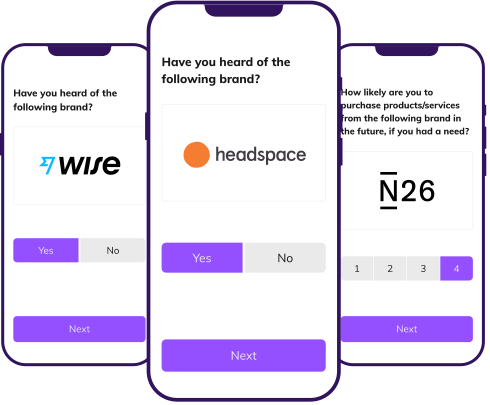\n\nDo you love your brand’s logo? Are your brand colors just the best? While it’s great if you find your [brand image](https://latana.com/post/improve-brand-image/) to be pleasing and unique, it’s far more important that customers do as well. \n\nWhile you may think that your signature colors of lemon yellow and fire-engine red are a winning combination, customers may find them garish and overwhelming. Plus, maybe they remind customers of another brand they didn’t like.\n\nKnowing what customers think of your brand image — your logo, colors, website — is vital. What you may consider memorable and easy to pick out from a crowd may be all wrong — and being memorable matters. \n\nIncreasing [brand recognition](https://latana.com/post/brand-recognition/) is a huge step toward dominating your industry in terms of brand awareness and loyalty. So make sure you ask customers what they think of your brand image — memorable or forgettable?\n\n---\n\nFor example, let’s pretend you’re the brand manager of a new haircare brand, called “Enrapture”. You’ve been working with your design team to create a logo that really captures the feel and vibe of your brand, and it’s finally ready.\n\nWhen you launch, all goes well. But for some reason, a very large percentage of the users who land on your website seem to bounce quickly. You know your user experience is great, your website loads quickly, and [everything is mobile-optimized](https://latana.com/post/mobile-optimization-brand-success/) — so what’s the catch?\n\nTo figure out what’s gone wrong, you decide to host a few focus groups. Interestingly enough, you discover that many customers feel that your minimal, sleek logo doesn’t actually resemble flowing har (like you were convinced was obvious). Instead, they perceive it to be flame-related.\n\nNow, mix that with your ambiguous brand name and you have a recipe for disaster. Customers aren’t 100% sure what your brand name or logo represents — meaning they won’t create an association with your brand and will likely forget you.\n\nIn order to remedy this situation, you head back to the drawing board with your design team and focus on creating a logo that better represents your product and brand. \n\n## Final Thoughts\n\nGathering customer feedback can be a labor-intensive process, but the insights discovered are usually worth the time and effort.\n\nHowever, if your brand is interested in gathering data on more than just your current customer’s insights (aka overall consumer insights), we suggest using [brand monitoring](https://latana.com/product/). \n\nWith the ability to gather information from a much wider pool of consumers — current and potential customers — you’ll be able to gain more nuanced, reliable insights.\n"},"tags":["Consumer Insights","Brand Strategy"],"authorRef":{"slug":"cory-schroder","firstName":"Cory","lastName":"Schröder","title":"Senior Content Marketing Manager","picture":{"__typename":"ContentfulAsset","id":"31ab4d95-0f90-5835-a22f-4b7ff41fece2","description":"","title":"Cory Profile Picture","file":{"contentType":"image/png","url":"//images.ctfassets.net/7so8go2zrvbw/42rTfahl2m45FP1Fzo7B8n/52d40b8bd8af9ab559381bc0ab744cda/avatar.png","details":{"image":{"width":235,"height":235}}},"gatsbyImageData":{"images":{"sources":[{"srcSet":"//images.ctfassets.net/7so8go2zrvbw/42rTfahl2m45FP1Fzo7B8n/52d40b8bd8af9ab559381bc0ab744cda/avatar.png?w=235&h=235&q=95&fm=webp 235w","sizes":"100vw","type":"image/webp"}],"fallback":{"src":"//images.ctfassets.net/7so8go2zrvbw/42rTfahl2m45FP1Fzo7B8n/52d40b8bd8af9ab559381bc0ab744cda/avatar.png?w=235&h=235&q=95&fm=png","srcSet":"//images.ctfassets.net/7so8go2zrvbw/42rTfahl2m45FP1Fzo7B8n/52d40b8bd8af9ab559381bc0ab744cda/avatar.png?w=235&h=235&q=95&fm=png 235w","sizes":"100vw"}},"layout":"fullWidth","backgroundColor":"#080808","width":1,"height":1}}}}},{"node":{"publishDate":"2022-03-09T08:00+01:00","slug":"gendered-toy-marketing-in-2022","author":"Cory Schröder","title":"Does Gendered Toy Marketing Have A Place in 2022?","seo":{"__typename":"ContentfulSeo","title":"Does Gendered Toy Marketing Have A Place in 2022?","description":"Children’s toys have been subject to gendered marketing for decades — but times are changing and many big-name brands are going gender-neutral. Read more here.","noIndex":null,"ogImage":{"fluid":{"src":"//images.ctfassets.net/7so8go2zrvbw/1mZW3XV5dKYxQoJekFgv9q/e7f930b9fcccf5957bdf96e352ca4c5a/Blog_SEO-Thumbnail_1000X709_-_2022-03-07T111052.581.png?w=1200&h=675&q=90&fm=jpg"},"file":{"url":"//images.ctfassets.net/7so8go2zrvbw/1mZW3XV5dKYxQoJekFgv9q/e7f930b9fcccf5957bdf96e352ca4c5a/Blog_SEO-Thumbnail_1000X709_-_2022-03-07T111052.581.png"}}},"heroImage":{"__typename":"ContentfulAsset","id":"ed03d5bb-e48a-5d2e-817d-74959e59cf6b","description":"","title":"A wooden figure on a pink & blue background (thumbnail)","file":{"contentType":"image/png","url":"//images.ctfassets.net/7so8go2zrvbw/1mZW3XV5dKYxQoJekFgv9q/e7f930b9fcccf5957bdf96e352ca4c5a/Blog_SEO-Thumbnail_1000X709_-_2022-03-07T111052.581.png","details":{"image":{"width":1000,"height":709}}},"gatsbyImageData":{"images":{"sources":[{"srcSet":"//images.ctfassets.net/7so8go2zrvbw/1mZW3XV5dKYxQoJekFgv9q/e7f930b9fcccf5957bdf96e352ca4c5a/Blog_SEO-Thumbnail_1000X709_-_2022-03-07T111052.581.png?w=200&h=142&q=95&fm=webp 200w,\n//images.ctfassets.net/7so8go2zrvbw/1mZW3XV5dKYxQoJekFgv9q/e7f930b9fcccf5957bdf96e352ca4c5a/Blog_SEO-Thumbnail_1000X709_-_2022-03-07T111052.581.png?w=400&h=284&q=95&fm=webp 400w,\n//images.ctfassets.net/7so8go2zrvbw/1mZW3XV5dKYxQoJekFgv9q/e7f930b9fcccf5957bdf96e352ca4c5a/Blog_SEO-Thumbnail_1000X709_-_2022-03-07T111052.581.png?w=800&h=567&q=95&fm=webp 800w","sizes":"(min-width: 800px) 800px, 100vw","type":"image/webp"}],"fallback":{"src":"//images.ctfassets.net/7so8go2zrvbw/1mZW3XV5dKYxQoJekFgv9q/e7f930b9fcccf5957bdf96e352ca4c5a/Blog_SEO-Thumbnail_1000X709_-_2022-03-07T111052.581.png?w=800&h=567&q=95&fm=png","srcSet":"//images.ctfassets.net/7so8go2zrvbw/1mZW3XV5dKYxQoJekFgv9q/e7f930b9fcccf5957bdf96e352ca4c5a/Blog_SEO-Thumbnail_1000X709_-_2022-03-07T111052.581.png?w=200&h=142&q=95&fm=png 200w,\n//images.ctfassets.net/7so8go2zrvbw/1mZW3XV5dKYxQoJekFgv9q/e7f930b9fcccf5957bdf96e352ca4c5a/Blog_SEO-Thumbnail_1000X709_-_2022-03-07T111052.581.png?w=400&h=284&q=95&fm=png 400w,\n//images.ctfassets.net/7so8go2zrvbw/1mZW3XV5dKYxQoJekFgv9q/e7f930b9fcccf5957bdf96e352ca4c5a/Blog_SEO-Thumbnail_1000X709_-_2022-03-07T111052.581.png?w=800&h=567&q=95&fm=png 800w","sizes":"(min-width: 800px) 800px, 100vw"}},"layout":"constrained","backgroundColor":"#e8a8b8","width":800,"height":567}},"coverImage":{"__typename":"ContentfulAsset","id":"90fb079d-01f9-54a3-a634-135cf62460fb","description":"","title":"A wooden figure on a pink & blue background (cover image)","file":{"contentType":"image/png","url":"//images.ctfassets.net/7so8go2zrvbw/vGuplEN3hLRxYQfzEriCq/50cb32a54c2704b42168c33494740a49/Blog_Cover_1288X400_-_2022-03-09T084808.918.png","details":{"image":{"width":1288,"height":400}}},"gatsbyImageData":{"images":{"sources":[{"srcSet":"//images.ctfassets.net/7so8go2zrvbw/vGuplEN3hLRxYQfzEriCq/50cb32a54c2704b42168c33494740a49/Blog_Cover_1288X400_-_2022-03-09T084808.918.png?w=750&h=233&q=95&fm=webp 750w,\n//images.ctfassets.net/7so8go2zrvbw/vGuplEN3hLRxYQfzEriCq/50cb32a54c2704b42168c33494740a49/Blog_Cover_1288X400_-_2022-03-09T084808.918.png?w=1080&h=335&q=95&fm=webp 1080w,\n//images.ctfassets.net/7so8go2zrvbw/vGuplEN3hLRxYQfzEriCq/50cb32a54c2704b42168c33494740a49/Blog_Cover_1288X400_-_2022-03-09T084808.918.png?w=1288&h=400&q=95&fm=webp 1288w","sizes":"100vw","type":"image/webp"}],"fallback":{"src":"//images.ctfassets.net/7so8go2zrvbw/vGuplEN3hLRxYQfzEriCq/50cb32a54c2704b42168c33494740a49/Blog_Cover_1288X400_-_2022-03-09T084808.918.png?w=1288&h=400&q=95&fm=png","srcSet":"//images.ctfassets.net/7so8go2zrvbw/vGuplEN3hLRxYQfzEriCq/50cb32a54c2704b42168c33494740a49/Blog_Cover_1288X400_-_2022-03-09T084808.918.png?w=750&h=233&q=95&fm=png 750w,\n//images.ctfassets.net/7so8go2zrvbw/vGuplEN3hLRxYQfzEriCq/50cb32a54c2704b42168c33494740a49/Blog_Cover_1288X400_-_2022-03-09T084808.918.png?w=1080&h=335&q=95&fm=png 1080w,\n//images.ctfassets.net/7so8go2zrvbw/vGuplEN3hLRxYQfzEriCq/50cb32a54c2704b42168c33494740a49/Blog_Cover_1288X400_-_2022-03-09T084808.918.png?w=1288&h=400&q=95&fm=png 1288w","sizes":"100vw"}},"layout":"fullWidth","backgroundColor":"#e8a8b8","width":1,"height":0.3105590062111801}},"description":{"description":"Children’s toys have been subject to gendered marketing for decades — but times are changing and many big-name brands are going gender-neutral. Read more here."},"content":{"content":"Little girls only want Barbie dolls in pretty, pink dresses and little boys just want big, blue trucks — right? Well, that’s what many toy brands and stores would have you think, even in 2022.\n\nBut in a world where gender equality and expectations are evolving rapidly, why does the children’s toy market seem to be so far behind? Gendered toy marketing (GTM) is a real issue for brands all over the world, and its impact on children’s development has been widely documented.\n\nAccording to [Dr. Rebecca Whiting’s 2020 study](https://www.bbk.ac.uk/news/gendered-marketing-of-childrens-toys-and-clothes), *Gendered Marketing of Children's Toys and Clothing*:\n\n*“The marketing of children's clothing and toys has become increasingly gendered as stereotyped gender roles and narratives are promoted by brands. ‘Boy toys’ encourage action, physicality and competition; ‘girl toys’ encourage socialising, domesticity and concern with appearance.”*\n\nThese glaring differences have been a part of children’s toy marketing for decades — but as consumers’ expectations evolve, does it still have a place in 2022? And how are some brands pushing back against gender stereotypes in toy marketing? \n\nThis article will explore the issue at hand, as well as provide a few tips for brands that are looking to un-gender their own marketing.\n\n## What Is Gendered Toy Marketing?\n\n\nSource: [Daily Mail](https://www.dailymail.co.uk/sciencetech/article-6948095/Photographer-documents-gender-stereotypes-studies-kids-perception-manipulated.html)\n\nGendered toy marketing (GTM) is exactly what it sounds like — marketing certain toys to either boys or girls based on preset gender stereotypes. Aka pink kitchen sets for girls and red racing cars for boys. As Whiting explains:\n\n*“Gendered marketing of children's toys and clothes involves explicitly labelling items as intended for girls or boys. This is done either by implicit labelling through advertising, using models of one gender to promote the item, or by packaging - using gender-associated colours such as pink for girls – and physical segregation, organising retail layout by gender.”*\n\nClearly, there are many ways that toy marketing can be gendered, with some practices being more apparent than others. But no matter how it’s done, it has a long-lasting impact on children. \n\n## How Does Gendered Toy Marketing Pose An Issue?\n\nFor decades, the limited and stereotypical toys marketed towards girls were found to have negative consequences. In fact, in a [2017 article for *National Geographic*](https://www.nationalgeographic.com/magazine/article/gender-toys-departments-piece), journalist Natasha Daly explain that “the way girls play may affect how their brains develop”, further stating:\n\n*“Targeting toys by gender has consequences beyond socialization. A [2015 study](http://www.psychologicalscience.org/news/releases/playing-with-puzzles-and-blocks-may-build-childrens-spatial-skills.html#.WFFw45MrL1J) found that boys are more likely to play with toys that develop spatial intelligence—K’nex, puzzles, Lego bricks—than girls are.”*\n\nAnd spatial skills are an incredibly important piece to future success — they’re “distinctions (that) may shape later life.” \n\nAccording to Jamie Jirout, a Developmental Psychologist at the University of Virginia, “spatial skills are a piece of the explanation for the underrepresentation of women in science and tech” — something that’s become a more acknowledged issue over the past few years.\n\nDaly expounds, stating:\n\n*“Informal activities like play are key to developing spatial skills, which, (Jirout) says, are ‘not only important for math and science but for what we call “executive function”—higher-level thinking.’ Being comfortable with certain types of toys may also shape kids’ confidence in a specific subject.”*\n\nClearly, the types of toys that are marketed towards young girls have an impact on their lives on a grander scale than one might expect. Everything from confidence to high-level thinking to spatial intelligence — it all links back to play.\n\nThat’s not to say there’s anything inherently wrong with girls playing with dolls or pink ponies. But when those kinds are toys are the only ones on offer for young girls, it can have a negative effect on their development and later career opportunities.\n\nHowever, more recent research suggests that girls are the only ones negatively impacted by gendered toy marketing — boys are suffering, too.\n\n---\n\nIn 2021, [Lego conducted a global survey](https://www.theguardian.com/lifeandstyle/2021/oct/11/lego-to-remove-gender-bias-after-survey-shows-impact-on-children-stereotypes) that found that, overall, “attitudes to play and future careers remain unequal and restrictive.” By marketing differently for both genders, brands are having a real impact on childrens’ futures.\n\nBased on Lego’s findings:\n\n*“while girls were becoming more confident and keen to engage in a wide range of activities, the same was not true of boys. Seventy-one per cent of boys surveyed feared they would be made fun of if they played with what they described as ‘girls’ toys’ – a fear shared by their parents.”*\n\nAccording to Madeline Di Nonno, the CEO of the Geena Davis Institute on Gender in Media:\n\n*“Parents are more worried that their sons will be teased than their daughters for playing with toys associated with the other gender (...) But it’s also that behaviours associated with men are valued more highly in society. (...) Until societies recognise that behaviours and activities typically associated with women are as valuable or important, parents and children will be tentative to embrace them.”*\n\nDi Nonno’s research also found that the activities children are encouraged to engage in are defined by gendered expectations — with boys encouraged to try sports and STEM activities, while girls are “offered dance and dressing up (girls were five times more likely to be encouraged in these activities than boys) or baking (three times more likely to be encouraged).”\n\nSuch gendered expectations pop up all over the world, but when it comes to children’s toys, many girls are now encouraged to play with “boy stuff”, while boys are still discouraged from playing with stereotypically “girl toys”.\n\nWhat does this mean? While girls are now playing with Lego sets marketed for boys and, thus, developing better spatial skills or confidence — boys aren’t granted the same opportunity to play with dolls and develop nurturing skills, for example.\n\nSo, it begs the question: do toy brands have an ethical imperative to put children’s futures over easy profit and steer clear of gendered toy marketing? Many consumers would say yes — and some brands have already begun to do so with the introduction of gender-neutral toy marketing.\n\n## Two Big-Name Brands That Are Pushing Back\n\nGendered toy marketing has been a staple of the industry for decades. Though the practice waned in the 70s, it came back with a vengeance in the 80s and stuck around.\n\nBut in 2022, some brands have said “enough is enough” and decided to remove gendered toy marketing from their strategies. Instead, choosing to encourage all children to play with the toys that interest them.\n\nLet’s take a look at two such brands taking a gender-nonconforming approach and discuss what others can learn from their success.\n\n### 1. Lego\n\n\nSource: [The Guardian](https://www.theguardian.com/lifeandstyle/2021/oct/11/lego-to-remove-gender-bias-after-survey-shows-impact-on-children-stereotypes)\n\nIn 2021, [Lego announced that it would begin removing gender stereotypes](https://www.npr.org/2021/10/12/1045244110/lego-toys-survey-gender-bias-stereotypes?t=1645527121128) from its toys going forward. According to Lego’s Chief Product and Marketing Officer, Julia Goldin, the brand is “working hard to make Lego more inclusive”.\n\nThe new “Lego mandate” is to “promote nurturing and caring as well as spatial awareness, creative reasoning and problem solving” for all children. Plus, the toy brand is no longer labeling any of its products “for girls” or “for boys”, and consumers can’t search for products by gender on Lego’s website. Instead, users can peruse “passion points” to find the toys they’re looking for.\n\nFinally, Lego has also announced that it will be testing all its products on boys and girls from now on — as well as working hard to spotlight more female role models. At the 2021 Lego Con, the brand “showcased female designers talking about the work they did” in an effort to make good on their promises.\n\nGoing forward, Lego has a clear goal: “to encourage boys and girls who want to play with sets that may have traditionally been seen as ‘not for them’”. \n\nAnd these changes — as well as other improvements in the area of sustainability — seem to be having a positive impact. [According to Nasdaq](https://www.nasdaq.com/articles/lego-towers-over-competition-with-record-2021-profit-2021-09-29), Lego’s “revenues in the first half of 2021 rose 43% year on year to $3.6 billion. Profit rose 140% to $1.75 billion. Both are records.”\n\n__The Takeaway:__ It’s (almost) never too late to make important changes to your business model. Lego may not be a pioneer in the movement to un-gender toy marketing, but better late than never, right?\n\nInstead of sticking to its traditional approach, the brand looked to expert research and consumer opinion to inform its marketing strategy going forward — and will reap the rewards in 2022 and beyond.\n\n### 2. Mattel\n\n\nSource: [Mattel](https://fashiondollz.de/mattels-creatable-doll-world/)\n\nMost popular for being the creator of the Barbie, Mattel’s products reinforced gender identity, as well as gendered roles and stereotypes, for decades. However, in the last 10 years or so, the brand has been making real efforts to move away from gendered toy marketing.\n\nIn 2019, Mattel released [a line of gender-neutral dolls called Creatable World](https://bestlifeonline.com/news-toy-companies-gender-bias/), where children can choose from a wide range of wardrobe accessories and interchangeable hairstyles. This allows children to design dolls with their own preferences — long or short hair, skirt or pants, it’s up to them.\n\nBy placing children’s creativity front and center and allowing them to express themselves in such a unique way, Mattel is making huge strides in eliminating gendered toy marketing in a notoriously gendered and traditional market. \n\nIn [an interview with Forbes](https://www.forbes.com/sites/afdhelaziz/2019/09/25/the-power-of-purpose-mattel-launches-creatable-world-to-celebrate-inclusive-play-for-all-kids/?sh=40287e07fcb6), Kim Culmore — Senior Vice President and Global Head of Design for Barbie at Mattel — provided an explanation of why Mattel chose to make the Creatable World line: observational insights and cultural shifts.\n\n*“We absolutely see it in culture. We receive lots of trend data and interview data around how this generation of kids are perceiving themselves and the world, and there is no doubt that there is a difference between how children are viewing gender and how older adults are. There is definitely a shift.* \n\n*“This product in particular started from the insight around ‘no labels and no rules.’ And so then we thought where do we go with that? And we've taken some of the research and data that you're talking about. We build prototypes, we do observational play and this is how we got to Creatable World - where ‘all are welcome.’”*\n\nBy exploring non-gendered play and allowing children to be themselves, Mattel is staying true to its purpose: “exploring the wonder of childhood and empowering kids to reach their full potential.”\n\n__The Takeaway:__ Mattel didn’t choose to ditch gendered toy marketing on a whim — it was based on detailed research and in-depth consumer insights. \n\nWant to know if your target audiences are also sick of gendered marketing? Well, you’ll need data. That’s where [brand monitoring software](https://latana.com/product/) comes in, as it allows you to gather nuanced, reliable consumer data on the issues that matter most. \n\nWith the insights brand tracking software provides, you’ll make smarter, more informed changes to your marketing strategy.\n\n## Final Thoughts\n\nAt the end of the day, there’s nothing inherently wrong with little girls liking sparkly ponies and little boys loving train sets. The problem stems from children being offered a dearth of choices and, in many ways, having their futures heavily influenced by something as basic as gendered marketing in toy ads.\n\nIn 2022, brands would be smart to listen to consumer opinions and make the changes necessary to reduce gendered marketing going forward. After all, making choices informed by consumer preference is always a good idea.\n"},"tags":["Brand Marketing"],"authorRef":{"slug":"cory-schroder","firstName":"Cory","lastName":"Schröder","title":"Senior Content Marketing Manager","picture":{"__typename":"ContentfulAsset","id":"31ab4d95-0f90-5835-a22f-4b7ff41fece2","description":"","title":"Cory Profile Picture","file":{"contentType":"image/png","url":"//images.ctfassets.net/7so8go2zrvbw/42rTfahl2m45FP1Fzo7B8n/52d40b8bd8af9ab559381bc0ab744cda/avatar.png","details":{"image":{"width":235,"height":235}}},"gatsbyImageData":{"images":{"sources":[{"srcSet":"//images.ctfassets.net/7so8go2zrvbw/42rTfahl2m45FP1Fzo7B8n/52d40b8bd8af9ab559381bc0ab744cda/avatar.png?w=235&h=235&q=95&fm=webp 235w","sizes":"100vw","type":"image/webp"}],"fallback":{"src":"//images.ctfassets.net/7so8go2zrvbw/42rTfahl2m45FP1Fzo7B8n/52d40b8bd8af9ab559381bc0ab744cda/avatar.png?w=235&h=235&q=95&fm=png","srcSet":"//images.ctfassets.net/7so8go2zrvbw/42rTfahl2m45FP1Fzo7B8n/52d40b8bd8af9ab559381bc0ab744cda/avatar.png?w=235&h=235&q=95&fm=png 235w","sizes":"100vw"}},"layout":"fullWidth","backgroundColor":"#080808","width":1,"height":1}}}}},{"node":{"publishDate":"2022-03-08T07:30+01:00","slug":"glossier-deep-dive","author":"Cory Schröder","title":"How Consumer Insights Helped Make Glossier A Unicorn","seo":{"__typename":"ContentfulSeo","title":"How Consumer Insights Helped Make Glossier A Unicorn","description":"From personal beauty blog to international powerhouse, Glossier made it big in just under seven years. Read our deep dive to find out how!","noIndex":null,"ogImage":{"fluid":{"src":"//images.ctfassets.net/7so8go2zrvbw/285KCnMqX6DryXH8f0THK1/10a098e7bd0d6118fc94b8c377a9dbb9/Blog_SEO-Thumbnail_1000X709_-_2022-02-21T130853.560.png?w=1200&h=675&q=90&fm=jpg"},"file":{"url":"//images.ctfassets.net/7so8go2zrvbw/285KCnMqX6DryXH8f0THK1/10a098e7bd0d6118fc94b8c377a9dbb9/Blog_SEO-Thumbnail_1000X709_-_2022-02-21T130853.560.png"}}},"heroImage":{"__typename":"ContentfulAsset","id":"019d0234-3b4d-54ea-974d-82f1d64bdeb2","description":"","title":"Latana x Glossier logos (Thumbnail)","file":{"contentType":"image/png","url":"//images.ctfassets.net/7so8go2zrvbw/285KCnMqX6DryXH8f0THK1/10a098e7bd0d6118fc94b8c377a9dbb9/Blog_SEO-Thumbnail_1000X709_-_2022-02-21T130853.560.png","details":{"image":{"width":1000,"height":709}}},"gatsbyImageData":{"images":{"sources":[{"srcSet":"//images.ctfassets.net/7so8go2zrvbw/285KCnMqX6DryXH8f0THK1/10a098e7bd0d6118fc94b8c377a9dbb9/Blog_SEO-Thumbnail_1000X709_-_2022-02-21T130853.560.png?w=200&h=142&q=95&fm=webp 200w,\n//images.ctfassets.net/7so8go2zrvbw/285KCnMqX6DryXH8f0THK1/10a098e7bd0d6118fc94b8c377a9dbb9/Blog_SEO-Thumbnail_1000X709_-_2022-02-21T130853.560.png?w=400&h=284&q=95&fm=webp 400w,\n//images.ctfassets.net/7so8go2zrvbw/285KCnMqX6DryXH8f0THK1/10a098e7bd0d6118fc94b8c377a9dbb9/Blog_SEO-Thumbnail_1000X709_-_2022-02-21T130853.560.png?w=800&h=567&q=95&fm=webp 800w","sizes":"(min-width: 800px) 800px, 100vw","type":"image/webp"}],"fallback":{"src":"//images.ctfassets.net/7so8go2zrvbw/285KCnMqX6DryXH8f0THK1/10a098e7bd0d6118fc94b8c377a9dbb9/Blog_SEO-Thumbnail_1000X709_-_2022-02-21T130853.560.png?w=800&h=567&q=95&fm=png","srcSet":"//images.ctfassets.net/7so8go2zrvbw/285KCnMqX6DryXH8f0THK1/10a098e7bd0d6118fc94b8c377a9dbb9/Blog_SEO-Thumbnail_1000X709_-_2022-02-21T130853.560.png?w=200&h=142&q=95&fm=png 200w,\n//images.ctfassets.net/7so8go2zrvbw/285KCnMqX6DryXH8f0THK1/10a098e7bd0d6118fc94b8c377a9dbb9/Blog_SEO-Thumbnail_1000X709_-_2022-02-21T130853.560.png?w=400&h=284&q=95&fm=png 400w,\n//images.ctfassets.net/7so8go2zrvbw/285KCnMqX6DryXH8f0THK1/10a098e7bd0d6118fc94b8c377a9dbb9/Blog_SEO-Thumbnail_1000X709_-_2022-02-21T130853.560.png?w=800&h=567&q=95&fm=png 800w","sizes":"(min-width: 800px) 800px, 100vw"}},"layout":"constrained","backgroundColor":"#f8d8d8","width":800,"height":567}},"coverImage":{"__typename":"ContentfulAsset","id":"79f880a9-96e1-5fc7-84e6-b1cef4320192","description":"","title":"Latana x Glossier logos (Cover image)","file":{"contentType":"image/png","url":"//images.ctfassets.net/7so8go2zrvbw/4uOAHorzemPSKdMtKrt96a/f4e809f169a22b97ba78489116766a8b/Blog_Cover_1288X400_-_2022-02-21T130857.128.png","details":{"image":{"width":1288,"height":400}}},"gatsbyImageData":{"images":{"sources":[{"srcSet":"//images.ctfassets.net/7so8go2zrvbw/4uOAHorzemPSKdMtKrt96a/f4e809f169a22b97ba78489116766a8b/Blog_Cover_1288X400_-_2022-02-21T130857.128.png?w=750&h=233&q=95&fm=webp 750w,\n//images.ctfassets.net/7so8go2zrvbw/4uOAHorzemPSKdMtKrt96a/f4e809f169a22b97ba78489116766a8b/Blog_Cover_1288X400_-_2022-02-21T130857.128.png?w=1080&h=335&q=95&fm=webp 1080w,\n//images.ctfassets.net/7so8go2zrvbw/4uOAHorzemPSKdMtKrt96a/f4e809f169a22b97ba78489116766a8b/Blog_Cover_1288X400_-_2022-02-21T130857.128.png?w=1288&h=400&q=95&fm=webp 1288w","sizes":"100vw","type":"image/webp"}],"fallback":{"src":"//images.ctfassets.net/7so8go2zrvbw/4uOAHorzemPSKdMtKrt96a/f4e809f169a22b97ba78489116766a8b/Blog_Cover_1288X400_-_2022-02-21T130857.128.png?w=1288&h=400&q=95&fm=png","srcSet":"//images.ctfassets.net/7so8go2zrvbw/4uOAHorzemPSKdMtKrt96a/f4e809f169a22b97ba78489116766a8b/Blog_Cover_1288X400_-_2022-02-21T130857.128.png?w=750&h=233&q=95&fm=png 750w,\n//images.ctfassets.net/7so8go2zrvbw/4uOAHorzemPSKdMtKrt96a/f4e809f169a22b97ba78489116766a8b/Blog_Cover_1288X400_-_2022-02-21T130857.128.png?w=1080&h=335&q=95&fm=png 1080w,\n//images.ctfassets.net/7so8go2zrvbw/4uOAHorzemPSKdMtKrt96a/f4e809f169a22b97ba78489116766a8b/Blog_Cover_1288X400_-_2022-02-21T130857.128.png?w=1288&h=400&q=95&fm=png 1288w","sizes":"100vw"}},"layout":"fullWidth","backgroundColor":"#f8d8d8","width":1,"height":0.3105590062111801}},"description":{"description":"From personal beauty blog to international powerhouse, Glossier made it big in just under seven years. Read our deep dive to find out how!"},"content":{"content":"“Democratize beauty” — it’s a bold statement for a company to make, but beauty brand Glossier has never taken the easy route.\n\nFounded in 2014, Glossier was born of CEO Emily Weiss’ mega-successful blog, *Into the Gloss*, and is dedicated to the goal of making beauty “as much an element of personal style as fashion.”\n\nFrom the beginning, Weiss took a different approach to the beauty industry — and spent her time interviewing hundreds of women to find out what actually mattered to consumers. Along the way, she discovered that the traditional beauty paradigm was incredibly flawed — with experts telling the customer what they should or shouldn’t be using on their faces.\n\nWeiss’ approach with Glossier does the opposite by building a beauty brand where everything they make starts with the consumers’ needs and wishes. But how did Glossier transform from a personal beauty blog to an international brand [valued at $1.8 billion](https://www.morningbrew.com/retail/stories/2021/07/07/glossier-scores-80-million-funding-round)? And do recent blunders threaten to bring the high-flying brand down a notch?\n\nThis Brand Deep Dive will provide all the answers — plus, three lessons others can learn from Glossier’s journey.\n\n## Glossier’s Journey to Success\n\n\nSource: [Into The Gloss](https://intothegloss.com/2015/09/emily-weiss-glossier-into-the-gloss/)\n\nFor Emily Weiss, the Glossier journey began in 2010 when she launched her beauty blog, *Into the Gloss*. At the time, Weiss had a day job as a fashion assistant at Vogue — one she had worked long and hard to get.\n\nBut, she wanted to try something different — to “start a website that would show the real-world beauty routines of fashion insiders and celebrities” and share the fascinating things she learned in her role at Vogue.\n\nThis meant that all Weiss’ work for *Into the Gloss* happened [between 4 a.m. to 8 a.m. each morning](https://www.entrepreneur.com/article/298014). But, her grueling schedule paid off, and by early 2012, Weiss’ blog had more than 200,000 unique visitors a month — a very impressive figure for only two years on the market.\n\nEarly content for *Into the Gloss* included the popular series “Top Shelf”, where Weiss interviewed women in their bathrooms about their beauty and skincare routines — with photos of their actual shelves and cabinets included. \n\nThis personal, intimate look into womens’ beauty routines really resonated with readers, and [Weiss began to score interviews big-name subjects](https://www.nytimes.com/2015/03/11/fashion/emily-weiss-of-into-the-gloss-creates-a-skincare-line.html) like model Karlie Kloss and fashion designer Jenna Lyons.\n\n\nSource: [Into the Gloss](https://intothegloss.com/2010/11/karlie-kloss/)\n\nBy 2016, *Into the Gloss* was garnering 1.3 million views per month, and “Top Shelf” afforded Weiss with an “all-access pass to powerful people.” In [an interview with Vanity Fair](https://www.vanityfair.com/style/2019/10/how-emily-weiss-grew-glossier-from-millennial-catnip-to-billion-dollar-juggernaut), Weiss explained, saying:\n\n*“I could not only meet Arianna Huffington, but go into her bathroom, spend two hours with her, and, in turn, make her feel really seen and heard—because she reads the article that I painstakingly edited from 4 a.m. to 8 a.m.”*\n\nBut for Weiss, it was about more than just gaining followers, she saw it as an opportunity to learn more about the beauty industry as a whole and contemplate the big issues, such as:\n\n*“how beauty can start conversations, how beauty can break down walls, and how beauty is something that every single person everywhere in the world deals with. It’s really foundational to who you are and how you relate.”*\n\nBut before *Into the Gloss* could make the jump from a powerful beauty blog to an up-and-coming brand, Weiss had to secure funding — and that’s where things got a bit tricky.\n\n---\n\nIn 2013, Weiss and the Glossier team dealt with nearly a dozen rejections — but finally struck gold with a $2 million investment from Kirsten Green of Forerunner Ventures. \n\nAnd by 2014, Glossier.com was officially launched with four products: a sheer skin tint, an all-purpose balm, a facial mist, and a moisturizer. While this may seem like a low number of products to start out with, Weiss was determined to only produce beauty products that they fully believed in.\n\nOver the next few years, Glossier kept on steadily growing — and was even dubbed “one of the most disruptive brands in beauty\" by [Fortune’s Polina Marinova](https://fortune.com/2018/12/12/term-sheet-wednesday-december-12/). \n\nIn 2018, the brand entered its Series C funding round and came out successful, with $52 million in investment — bringing its total funding to $86 million. When it came to sharing the news, Weiss chose a more personal route than many other CEOs — she emailed Glossier’s customers directly.\n\nBearing the subject line “Business News (It’s Good)”, Weiss updated the brand’s subscribers and explained that the recent investment would be used to “keep building the beauty company of the future: the one you shape.”\n\n[Covering the investment news for Forbes](https://fortune.com/2018/12/12/term-sheet-wednesday-december-12/), journalist Janna Mandell’s made a great point as to why Weiss’ approach worked:\n\n*“This idea of transparency – reaching out directly to customers to explain what the company’s new cash infusion will be used for – is what catapulted this three-year-old-company to beauty conglomerate status.” *\n\nLeaning into a “sense of authenticity and belonging” helped Glossier maintain the magic of Into the Gloss — allowing the brand to [connect emotionally with major target audiences](https://latana.com/post/emotional-connections-to-create-stronger-customer-bonds/) like [Millennial women](https://latana.com/guides/speaking-to-millennials/).\n\nBy 2019, the company [raised $100 million in Series D funding](https://www.wsj.com/articles/glossier-tops-billion-dollar-valuation-with-latest-funding-11552993200) and had reached a value of $1.2 billion. But that’s not all, Glossier also announced that it more than [doubled its revenue in 2018](https://www.cnbc.com/2019/03/20/how-emily-weiss-took-glossier-from-beauty-blog-to-1-billion-brand.html) and added over one million new customers.\n\nClearly, the brand’s approach to marketing was resonating with consumers. \n\n---\n\nSince its launch, Glossier has expanded its product line quite a bit — now offering everything from face serums to eyebrow pomade to Glossier-branded pink hoodies (of the GlossiWEAR collection).\n\nIn early 2019, the brand introduced Glossier Play, a line that included metallic and pigmented makeup products — such as eyeliners and eye shadows. Though it was highly anticipated by consumers, Weiss and the team chose to [suspend the line’s production in 2020](https://www.harpersbazaar.com/uk/beauty/make-up-nails/a31012411/glossier-play-paused/).\n\nIn [an article for *Business of Fashion*](https://www.businessoffashion.com/articles/beauty/glossier-presses-pause-on-play-rethinks-makeup-strategy/), Weiss admitted that “launching a sub-brand was, in hindsight, unnecessary” and identified her realization that, in reality, they “could have just launched more make-up products.”\n\nHowever, the brand learned from the faux pas and doubled down on its “commitment to fulfilling customer feedback – from the curation of products to the suspension of them” as a key driver for success. \n\nSo, what can you learn from Glossier’s astonishing journey? Let’s discuss.\n\n## 3 Brand Lessons From Glossier\n\nA brand like Glossier isn’t built overnight. It took years of research and extremely hard work from Weiss and many of her colleagues to build a company now valued at $1.8 billion — a true unicorn.\n\nAs with every other success story, there are always lessons to be learned. So, let’s take a look at three top lessons.\n\n### 1. Consumer Feedback is the Foundation of Any Good Brand Strategy\n\nWe’ve said it before and we’ll keep on saying it until everyone has hopped on board the consumer feedback train — listening to your consumers’ wants and needs forms the foundation of every successful brand strategy.\n\nAnd Glossier is the perfect example of this fact. Developed from mega-popular blog Into the Gloss, Weiss knew from the beginning that her secret ingredient was consumer feedback.\n\nWhile most beauty brands see their customers as the retailers that buy goods to stock their shelves, Glossier views it differently. In [an interview with Forbes](https://www.forbes.com/sites/pamdanziger/2018/11/07/5-keys-to-beauty-brand-glossiers-success/?sh=437fb6a3417d), Glossier’s CFO and president Henry Davis explained:\n\n*“What separates Glossier from traditional beauty brands is we are not in any way confused about who our customer is.”*\n\nGlossier knows they’re targeting actual people — not corporations. And when it comes to how the brand defines its target market, Davis shared that Glossier takes a somewhat non-traditional approach: \n\n*“The Glossier customer is a psychographic, someone who understands the role beauty plays in their life. (...) The main thing Glossier stands for is the power of the individual to choose their own style.”*\n\nClearly, Glossier understands the importance of consumer feedback and how it can be used to shape a brand marketing strategy. Because when you know how your target audience feels — what they want and how they want it — you make it so much easier to deliver products they will connect with.\n\n__The Takeaway:__ No brand marketing strategy is complete without a heaping helping of consumer data. After all, you can make the highest-quality product with the coolest design and it can still fall flat with consumers if you haven’t first researched their needs. Taking a [customer-centric approach is key](https://latana.com/post/customer-centric-marketing/).\n\nAnd to do that, you need access to data from the source: your target audience. That’s where [brand monitoring software](https://latana.com/product/) comes in. With the ability to create custom audience segmentations based on reliable, accurate data — you’ll be able to make much smarter, more data-driven marketing decisions.\n\n### 2. Lean Into The Power of Community\n\nChoosing beauty products is a somewhat personal task, as no two people have exactly the same issues, hang-ups, needs, and wishes. \n\nEach person is unique and wants to feel that way. But at the same time, they want to connect with others and understand that they’re not alone in their struggles — and that’s where fostering a strong community comes in.\n\nAnother area where the brand has excelled, from the beginning, [Glossier built its brand](https://producthabits.com/how-glossier-turned-into-a-400-million-business-in-four-years/#:~:text=Glossier%20was%20successful%20online%20because,its%20community%20to%20hang%20out.) around a “personal, authentic connection with its customers.” And — quite impressively —Weiss was able to transfer this defining aspect of the brand’s online presence to its brick and mortar retail locations. \n\n*“Rather than opening stores with the sole intention of selling products, Glossier was also creating spaces for its community to hang out. By 2017, Glossier’s flagship retail space was generating more sales revenue per square foot of space than the average Apple Store, and boasting a 65% conversion rate.”*\n\nBy creating a close-knit, powerful online community for customers to share their experiences, get advice, discover new products, and more — Glossier became more than just a company, but a safe space for beauty lovers of all walks of life.\n\n__The Takeaway:__ Consumers want to feel seen and understood. They want to forge emotional connections with brands, and one of the best ways to encourage this is by creating a community where they feel that their opinions matter.\n\nAnd you don’t have to be a beauty brand to tap into the power of community. Brands from almost every industry could benefit from leaning into community — both online and offline.\n\n### 3. Never Underestimate Brand Identity\n\nWe know — you’ve likely heard this before. But, in a world where [95% of new products fail](https://www.inc.com/marc-emmer/95-percent-of-new-products-fail-here-are-6-steps-to-make-sure-yours-dont.html#:~:text=According%20to%20Harvard%20Business%20School,year%2C%20and%2095%20percent%20fail.), there’s still room for us to harp on brand identity a bit more.\n\nAgain, Glossier crushes it when it comes to brand identity. From its signature share of “Glossier pink” to its minimalistic design to its focus on female diversity — the company’s brand identity has never been weak.\n\nIn an interview with Business Insider, Weiss stated: “Brand is really, really important. It's kind of everything.” And all it takes to see this statement in action is a quick look through Glossier’s social media channels.\n\n<rant alert> The world doesn't agree on much but we can all agree, I hope, that MyTaxi rebranding to "FREE NOW" is just daft. Bring back "Hailo" I say! :p pic.twitter.com/FErBSlac6G
— Peter Coppinger (@irlTopper) June 3, 2019
\n\nSleek, minimalistic, modern — one look and you immediately recognize the Glossier brand identity. This instantly-recognizable aesthetic is one of the things that helps the brand stand out among the competition and attract new customers within its desired target market.\n\nThe same can be said for Glossier’s physical locations, where brand identity clearly played a huge role in the design.\n\n\nSource: [Personal Care Business](https://www.personalcarebusiness360.com/summaries/glossier-opens-a-new-flagship-store-where-it-all-began.html)\n\nFrom the signature Glossier pink to the minimal setup, everything about its stores strengthens its overall brand identity. \n\n__The Takeaway:__ From the first moment a potential customer lands on your website to the tenth time they visit your physical store or purchase from your online catalog — they need to be 100% sure of what your [brand identity](https://latana.com/post/content-marketing-brand-identity/) is.\n\nAfter all, how can you ask customers to trust your brand and give you their business if you don’t really know who you are or what you represent? Consumers want to trust brands — and a rock-solid brand identity makes creating that trust a lot easier.\n\n## Final Thoughts\n\nOn the surface, Glossier’s journey from a personal beauty blog to an international powerhouse brand with unicorn status may seem like a fairy tale. But in reality, it has involved an enormous amount of work, research, mistakes, and second-trys to get it right.\n\nAdmittedly, the brand has [made some fairly large blunders since the start of the pandemic](https://www.thedrum.com/opinion/2022/02/17/glossier-the-tale-fast-growth-brand-went-south) — “going wide instead of going deep” with their brand strategy and spreading itself too thin. But if the brand can take a step back and refocus on what it does best, it will likely be able to get back on track. \n\nUltimately, Glossier is a great example of a brand that understands the [importance of consumer insights](https://latana.com/post/customer-insights-brand-marketing/) — having been powered by customer feedback since day one. So, if you want to follow in Glossier’s footsteps, we suggest keeping the above-mentioned lessons in mind. \n\nFor more insights, feel free to check out our [Glossier Brand Bite](https://latana.com/brand-insights/brand-bites-glossier/) — which features exclusive data from our own brand tracking software. And, if you like what you see, consider giving brand tracking software a try. After all, you can’t use customer insights to shape your brand strategy without first having access to quality consumer data. \n"},"tags":["Brand Deep Dives"],"authorRef":{"slug":"cory-schroder","firstName":"Cory","lastName":"Schröder","title":"Senior Content Marketing Manager","picture":{"__typename":"ContentfulAsset","id":"31ab4d95-0f90-5835-a22f-4b7ff41fece2","description":"","title":"Cory Profile Picture","file":{"contentType":"image/png","url":"//images.ctfassets.net/7so8go2zrvbw/42rTfahl2m45FP1Fzo7B8n/52d40b8bd8af9ab559381bc0ab744cda/avatar.png","details":{"image":{"width":235,"height":235}}},"gatsbyImageData":{"images":{"sources":[{"srcSet":"//images.ctfassets.net/7so8go2zrvbw/42rTfahl2m45FP1Fzo7B8n/52d40b8bd8af9ab559381bc0ab744cda/avatar.png?w=235&h=235&q=95&fm=webp 235w","sizes":"100vw","type":"image/webp"}],"fallback":{"src":"//images.ctfassets.net/7so8go2zrvbw/42rTfahl2m45FP1Fzo7B8n/52d40b8bd8af9ab559381bc0ab744cda/avatar.png?w=235&h=235&q=95&fm=png","srcSet":"//images.ctfassets.net/7so8go2zrvbw/42rTfahl2m45FP1Fzo7B8n/52d40b8bd8af9ab559381bc0ab744cda/avatar.png?w=235&h=235&q=95&fm=png 235w","sizes":"100vw"}},"layout":"fullWidth","backgroundColor":"#080808","width":1,"height":1}}}}},{"node":{"publishDate":"2022-03-07T08:00+01:00","slug":"thoughtful-communication-team-morale","author":"Michael Metcalf","title":"How Thoughtful Communication Improves Team Morale","seo":{"__typename":"ContentfulSeo","title":"How Thoughtful Communication Improves Team Morale","description":"How teams communicate in a professional space is integral to the overall success of a company — and being thoughtful in your communication matters. ","noIndex":null,"ogImage":{"fluid":{"src":"//images.ctfassets.net/7so8go2zrvbw/7ed8lUqGg7ZTnYGToAuqnY/967c66680b3e909143fbeffc9a282d86/Blog_SEO-Thumbnail_1000X709_-_2022-02-23T132952.233.png?w=1200&h=675&q=90&fm=jpg"},"file":{"url":"//images.ctfassets.net/7so8go2zrvbw/7ed8lUqGg7ZTnYGToAuqnY/967c66680b3e909143fbeffc9a282d86/Blog_SEO-Thumbnail_1000X709_-_2022-02-23T132952.233.png"}}},"heroImage":{"__typename":"ContentfulAsset","id":"bbf4b649-2230-5149-9e9e-333d5668ad2e","description":"","title":"A group of people looking at a laptop (Thumbnail)","file":{"contentType":"image/png","url":"//images.ctfassets.net/7so8go2zrvbw/7ed8lUqGg7ZTnYGToAuqnY/967c66680b3e909143fbeffc9a282d86/Blog_SEO-Thumbnail_1000X709_-_2022-02-23T132952.233.png","details":{"image":{"width":1000,"height":709}}},"gatsbyImageData":{"images":{"sources":[{"srcSet":"//images.ctfassets.net/7so8go2zrvbw/7ed8lUqGg7ZTnYGToAuqnY/967c66680b3e909143fbeffc9a282d86/Blog_SEO-Thumbnail_1000X709_-_2022-02-23T132952.233.png?w=200&h=142&q=95&fm=webp 200w,\n//images.ctfassets.net/7so8go2zrvbw/7ed8lUqGg7ZTnYGToAuqnY/967c66680b3e909143fbeffc9a282d86/Blog_SEO-Thumbnail_1000X709_-_2022-02-23T132952.233.png?w=400&h=284&q=95&fm=webp 400w,\n//images.ctfassets.net/7so8go2zrvbw/7ed8lUqGg7ZTnYGToAuqnY/967c66680b3e909143fbeffc9a282d86/Blog_SEO-Thumbnail_1000X709_-_2022-02-23T132952.233.png?w=800&h=567&q=95&fm=webp 800w","sizes":"(min-width: 800px) 800px, 100vw","type":"image/webp"}],"fallback":{"src":"//images.ctfassets.net/7so8go2zrvbw/7ed8lUqGg7ZTnYGToAuqnY/967c66680b3e909143fbeffc9a282d86/Blog_SEO-Thumbnail_1000X709_-_2022-02-23T132952.233.png?w=800&h=567&q=95&fm=png","srcSet":"//images.ctfassets.net/7so8go2zrvbw/7ed8lUqGg7ZTnYGToAuqnY/967c66680b3e909143fbeffc9a282d86/Blog_SEO-Thumbnail_1000X709_-_2022-02-23T132952.233.png?w=200&h=142&q=95&fm=png 200w,\n//images.ctfassets.net/7so8go2zrvbw/7ed8lUqGg7ZTnYGToAuqnY/967c66680b3e909143fbeffc9a282d86/Blog_SEO-Thumbnail_1000X709_-_2022-02-23T132952.233.png?w=400&h=284&q=95&fm=png 400w,\n//images.ctfassets.net/7so8go2zrvbw/7ed8lUqGg7ZTnYGToAuqnY/967c66680b3e909143fbeffc9a282d86/Blog_SEO-Thumbnail_1000X709_-_2022-02-23T132952.233.png?w=800&h=567&q=95&fm=png 800w","sizes":"(min-width: 800px) 800px, 100vw"}},"layout":"constrained","backgroundColor":"#980828","width":800,"height":567}},"coverImage":{"__typename":"ContentfulAsset","id":"56d38cd9-59a3-5f3e-90de-fcf79a87a95c","description":"","title":"A group of people looking at a laptop (Cover Image)","file":{"contentType":"image/png","url":"//images.ctfassets.net/7so8go2zrvbw/3hQDfm160U0IqodQESWVqz/85a5cc208d1e0ffa064848de83fb67e8/Blog_Cover_1288X400_-_2022-02-23T132955.596.png","details":{"image":{"width":1288,"height":400}}},"gatsbyImageData":{"images":{"sources":[{"srcSet":"//images.ctfassets.net/7so8go2zrvbw/3hQDfm160U0IqodQESWVqz/85a5cc208d1e0ffa064848de83fb67e8/Blog_Cover_1288X400_-_2022-02-23T132955.596.png?w=750&h=233&q=95&fm=webp 750w,\n//images.ctfassets.net/7so8go2zrvbw/3hQDfm160U0IqodQESWVqz/85a5cc208d1e0ffa064848de83fb67e8/Blog_Cover_1288X400_-_2022-02-23T132955.596.png?w=1080&h=335&q=95&fm=webp 1080w,\n//images.ctfassets.net/7so8go2zrvbw/3hQDfm160U0IqodQESWVqz/85a5cc208d1e0ffa064848de83fb67e8/Blog_Cover_1288X400_-_2022-02-23T132955.596.png?w=1288&h=400&q=95&fm=webp 1288w","sizes":"100vw","type":"image/webp"}],"fallback":{"src":"//images.ctfassets.net/7so8go2zrvbw/3hQDfm160U0IqodQESWVqz/85a5cc208d1e0ffa064848de83fb67e8/Blog_Cover_1288X400_-_2022-02-23T132955.596.png?w=1288&h=400&q=95&fm=png","srcSet":"//images.ctfassets.net/7so8go2zrvbw/3hQDfm160U0IqodQESWVqz/85a5cc208d1e0ffa064848de83fb67e8/Blog_Cover_1288X400_-_2022-02-23T132955.596.png?w=750&h=233&q=95&fm=png 750w,\n//images.ctfassets.net/7so8go2zrvbw/3hQDfm160U0IqodQESWVqz/85a5cc208d1e0ffa064848de83fb67e8/Blog_Cover_1288X400_-_2022-02-23T132955.596.png?w=1080&h=335&q=95&fm=png 1080w,\n//images.ctfassets.net/7so8go2zrvbw/3hQDfm160U0IqodQESWVqz/85a5cc208d1e0ffa064848de83fb67e8/Blog_Cover_1288X400_-_2022-02-23T132955.596.png?w=1288&h=400&q=95&fm=png 1288w","sizes":"100vw"}},"layout":"fullWidth","backgroundColor":"#980828","width":1,"height":0.3105590062111801}},"description":{"description":"How teams communicate in a professional space is integral to the overall success of a company — and being thoughtful in your communication matters."},"content":{"content":"The world's best brands aren't built alone — they're built by groups of creative experts with different backgrounds and perspectives coming together to produce amazing work.\n\nAnd that's only possible when they're happy, healthy, and socially connected.\n\nFrom executives to [brand managers](https://latana.com/post/what-brand-managers-like-about-job/) to creatives and administrators, the strength of relationships between people at work has a huge impact on company performance. It affects morale, productivity, and retention — and the best way for those relationships to flourish is through thoughtful communication.\n\nThoughtful communication is all about taking the time to consider how your words will affect others. It means speaking and listening with intention and making sure that your message is clear. When you communicate in a thoughtful way, you'll build trust, respect, and cooperation within your team.\n\nHow can you start communicating in a more thoughtful way? This edition of our #WorkAdvice series will cover some of our favorite strategies.\n\n## 1. Take a Moment to Process Things\n\n\nSource: [Pexels](https://www.pexels.com/photo/man-and-woman-sitting-on-chair-in-front-of-laptop-computer-7793916/)\n\n### Stop to think\n\nWhen emotions are running high, or you're in a high-pressure environment, there’s the temptation to blurt out whatever comes to mind. But that's probably not going to make for a good outcome to your conversation — and it can make you say things you regret.\n\nSo before you respond to anything surprising, aggravating, or confusing, take a moment. Let it sit for a minute and consider what's really going on.\nThis is the most important part of thoughtful communication — the thinking.\nIt gives you the opportunity to keep your cool and view the situation from multiple angles.\n\nIt's important to remember that we all see the world through our own lens and that what might seem like an obvious truth to you may not be so clear to someone else. This is why it's important to avoid judging others or making assumptions about their intentions before they've had a chance to explain themselves.\n\nRemember — this is something you get better at with practice. It might take a little time to get used to, but being intentional about it can get you pretty far in a short amount of time. You always have the opportunity to [press the internal “pause button](https://tinybuddha.com/blog/think-before-reacting-use-mental-pause-button/)”, take a breath, and choose your next action.\n\n*\"Between stimulus and response there is a space. In that space is our power to choose our response. In our response lies our growth and our freedom.\"* - Viktor Frankl\n\n### Stop to listen\n\nOne part of taking a pause involves thinking — the other is listening.\nListening is just as important as speaking, if not more so. When you take the time to listen to others, you show that you value their opinion and that you're interested in what they have to say. This builds trust between you and puts you in a better position to collaborate.\n\nActive listening is the key to really making progress in a conversation. Even if you disagree and you're upset, you need to listen properly instead of just waiting your turn to offer a counter-argument. As Kate Murphy, author of [*You're Not Listening: What You're Missing and Why It Matters*](https://us.macmillan.com/books/9781250297198/yourenotlistening) explains:\n\n*\"To listen does not mean, or even imply, that you agree with someone. It simply means you accept the legitimacy of the other person's point of view and that you might have something to learn from it. It also means that you embrace the possibility that there might be multiple truths and understanding them all might lead to a larger truth.\"*\n\nMutual understanding is what you're aiming for, so it's time to keep your ears open if you want to start connecting.\n\n## 2. Approach Conflict Constructively\n\n\nSource: [Pexels](https://www.pexels.com/photo/people-working-at-the-office-6775122/)\n\nWithin any type of shared creativity, there's going to be conflict — it's almost inevitable. The greatest ideas are forged in the fires of shared scrutiny, undergoing heat and pressure until they come out perfectly shaped and ready for the world. \n\nSo, if you want to stay happy in a collaborative environment, you have to approach conflict as a natural, positive part of the creative process. Otherwise, personalities clash and things can start to go wrong. \n\nHere are some key tactics for getting the best out of your disagreements.\n\n### Pay attention to your body language\n\nIt's important to be aware of how you're presenting yourself, so you don't send unconscious signals that you're ready for a fight. Avoid crossing your arms or legs, as this can make you look defensive or unapproachable. Make eye contact, smile, and use positive body language to show that you're open to communication.\n\nIf you find it distracting to analyze your own body language in the middle of an interaction, you could always ask a colleague or friend for feedback, and try a few practice runs with them if you want to try doing things differently.\n\n### Be civil and use the right words\n\nIt's important to use language that's respectful and relevant to your conversation partners. A little emotional intelligence will go far here, and it's up to you to understand the appropriate tone. \n\nBut the important thing is to focus on them, not you. People really appreciate when you use their name when speaking to them, look them in the eyes, and approach cultural differences with sensitivity. \n\nSomething that seems insignificant to you — like pronouncing their name incorrectly — might cause more upset than you expect, so making the effort will be worth it for the sake of your relationship. Long-term, repeated episodes of [workplace incivility can cause depression](https://www.fingerprintforsuccess.com/blog/workplace-incivility), burnout, and attrition — so if you want to surround yourself with the very best people, you have to make them feel welcome.\n\n### Consider how the other person communicates\n\nIt's easy to fall into your “default mode” when faced with a difficult conversation.\n\nIf you're a writer, for example, you might have a much easier time expressing yourself via the written word. But you might not consider the reader. If they see a wall of text sprinkled with a few negative words, they might skim-read it and get upset. \n\nA word or phrase you say can be misinterpreted wildly in text form because it's not always easy to convey the tone you're aiming for. So you might feel the satisfaction of writing out your criticism or disagreements, and it could help you get your thoughts in order. \n\nBut it might be best to leave that rant in your drafts, and speak in person instead, if you really want to get the message across.\n\nThese are pretty simple tips, but their impact can be huge. Now, if creative disagreements pop up, you shouldn't be afraid of getting into conflict with someone – you'll embrace it as a chance to connect with them.\n\n## 3. Use the Right Systems and Channels\n\n\nSource: [Pexels](https://www.pexels.com/photo/office-team-having-a-meeting-8636596/)\n\nAre you bored of using Zoom yet?\n\nTech isn't a magic solution for all your communication needs, as shown by the “[Zoom fatigue](https://www.healthline.com/health/zoom-fatigue)” that most remote or [hybrid workers](https://latana.com/post/make-most-of-hybrid-work-model/) have felt at some point in the last couple of years. But making the right choice of tools for your team can make a big difference in how effectively you communicate.\n\nThere are tons of different ways to talk to each other and what works for one team might not work for another. Some teams might prefer catching up via a daily morning stand-up meeting and keep to themselves for the rest of the day. \n\nOthers might like to share Slack messages throughout the day. Others might thrive on in-person meetings and get their best work done when they're collaborating and throwing ideas around.\n\nIt might take a little experimenting to figure out the right platform for your group, so try out a few different choices and see what sticks.\nThe most important things to note when choosing the best communication platform for you are that it's: a) easy to use, and b) helps people respect each others' time and energy.\n\nNotifications pinging throughout the day and night distract folks from their [deep work](https://clockify.me/blog/managing-time/deep-work/) — the type of creative, cognitively-demanding work that demands uninterrupted time and space. It's the most valuable, productive time people can have, and if you're brought out of it by a distraction, it's really hard to get back into it.\n\nYour systems that support this don't necessarily have to be tech — they can be agreements and policies. The team at *Proof* introduced [quiet hours](https://zapier.com/blog/reduce-meetings/) between 9:35 am and noon, where conversations are limited to conference rooms or outdoors. The result was that people prioritized their deep work during that time and more social or admin-focused work for the afternoon.\n\nYou can't rest well if you're thinking about work out-of-hours, either. You actually need [four types of rest](https://timetastic.co.uk/blog/the-importance-of-taking-time-off/) (physical, mental, social, and spiritual) to be in your best condition, and even just seeing a work email pop up on your phone can put you back in “work mode”. \nThe happiest, healthiest workers are those who are allowed to forget about working when the time's right.\n\n## Final Thoughts\n\nBeing thoughtful about how you communicate makes a big difference in the workplace. And the best part about the tips we've explored is that they're not particularly difficult to implement.\n\nWith just a little effort, you can start collaborating and building work relationships in a deeper way and enjoy a more harmonious, productive environment — which also [encourages overall wellness](https://latana.com/post/wellness-brand-impact-2022/).\n\nYou don't need to approach this as a direct way to become more effective and efficient at work. Being good to others and taking their needs into consideration [literally boosts your happiness and well-being](https://pubmed.ncbi.nlm.nih.gov/29702043/). After trying it out for a while, you should start to enjoy thoughtful communication intrinsically — and it'll soon become second nature.\n"},"tags":["Work Advice"],"authorRef":{"slug":"michael","firstName":"Michael","lastName":"Metcalf","title":"Content Strategist & Freelance Writer","picture":{"__typename":"ContentfulAsset","id":"3f6adeeb-dc2e-5436-a714-6ae63189be0c","description":"","title":"Michael Metcalf Photo","file":{"contentType":"image/png","url":"//images.ctfassets.net/7so8go2zrvbw/6yX4zD1C6Ubd02p1rJh3NZ/863cebf6906275bfe571d516ef46a2e3/Author_Michael.png","details":{"image":{"width":235,"height":235}}},"gatsbyImageData":{"images":{"sources":[{"srcSet":"//images.ctfassets.net/7so8go2zrvbw/6yX4zD1C6Ubd02p1rJh3NZ/863cebf6906275bfe571d516ef46a2e3/Author_Michael.png?w=235&h=235&q=95&fm=webp 235w","sizes":"100vw","type":"image/webp"}],"fallback":{"src":"//images.ctfassets.net/7so8go2zrvbw/6yX4zD1C6Ubd02p1rJh3NZ/863cebf6906275bfe571d516ef46a2e3/Author_Michael.png?w=235&h=235&q=95&fm=png","srcSet":"//images.ctfassets.net/7so8go2zrvbw/6yX4zD1C6Ubd02p1rJh3NZ/863cebf6906275bfe571d516ef46a2e3/Author_Michael.png?w=235&h=235&q=95&fm=png 235w","sizes":"100vw"}},"layout":"fullWidth","backgroundColor":"#080808","width":1,"height":1}}}}},{"node":{"publishDate":"2022-02-10T08:00+01:00","slug":"make-most-of-hybrid-work-model","author":"Nina Rübsteck","title":"How To Make the Most Out of A Hybrid Working Model","seo":{"__typename":"ContentfulSeo","title":"How To Make the Most Out of A Hybrid Working Model","description":"Hybrid work models are the future & any company that doesn’t adapt to them will put itself at a disadvantage. Find out why in our latest #WorkAdvice article.","noIndex":null,"ogImage":{"fluid":{"src":"//images.ctfassets.net/7so8go2zrvbw/1b3ojQ0hkhkHzb3PjdF13y/c5f0a6d626cf8b501dc8f1c134e6c79a/Blog_SEO-Thumbnail_1000X709_-_2022-02-08T082314.606.png?w=1200&h=675&q=90&fm=jpg"},"file":{"url":"//images.ctfassets.net/7so8go2zrvbw/1b3ojQ0hkhkHzb3PjdF13y/c5f0a6d626cf8b501dc8f1c134e6c79a/Blog_SEO-Thumbnail_1000X709_-_2022-02-08T082314.606.png"}}},"heroImage":{"__typename":"ContentfulAsset","id":"8e68e765-3e0c-5178-88b9-90052dcd4609","description":"","title":"#WorkAdvice with a woman sitting on couch with child (Thumbnail)","file":{"contentType":"image/png","url":"//images.ctfassets.net/7so8go2zrvbw/1b3ojQ0hkhkHzb3PjdF13y/c5f0a6d626cf8b501dc8f1c134e6c79a/Blog_SEO-Thumbnail_1000X709_-_2022-02-08T082314.606.png","details":{"image":{"width":1000,"height":709}}},"gatsbyImageData":{"images":{"sources":[{"srcSet":"//images.ctfassets.net/7so8go2zrvbw/1b3ojQ0hkhkHzb3PjdF13y/c5f0a6d626cf8b501dc8f1c134e6c79a/Blog_SEO-Thumbnail_1000X709_-_2022-02-08T082314.606.png?w=200&h=142&q=95&fm=webp 200w,\n//images.ctfassets.net/7so8go2zrvbw/1b3ojQ0hkhkHzb3PjdF13y/c5f0a6d626cf8b501dc8f1c134e6c79a/Blog_SEO-Thumbnail_1000X709_-_2022-02-08T082314.606.png?w=400&h=284&q=95&fm=webp 400w,\n//images.ctfassets.net/7so8go2zrvbw/1b3ojQ0hkhkHzb3PjdF13y/c5f0a6d626cf8b501dc8f1c134e6c79a/Blog_SEO-Thumbnail_1000X709_-_2022-02-08T082314.606.png?w=800&h=567&q=95&fm=webp 800w","sizes":"(min-width: 800px) 800px, 100vw","type":"image/webp"}],"fallback":{"src":"//images.ctfassets.net/7so8go2zrvbw/1b3ojQ0hkhkHzb3PjdF13y/c5f0a6d626cf8b501dc8f1c134e6c79a/Blog_SEO-Thumbnail_1000X709_-_2022-02-08T082314.606.png?w=800&h=567&q=95&fm=png","srcSet":"//images.ctfassets.net/7so8go2zrvbw/1b3ojQ0hkhkHzb3PjdF13y/c5f0a6d626cf8b501dc8f1c134e6c79a/Blog_SEO-Thumbnail_1000X709_-_2022-02-08T082314.606.png?w=200&h=142&q=95&fm=png 200w,\n//images.ctfassets.net/7so8go2zrvbw/1b3ojQ0hkhkHzb3PjdF13y/c5f0a6d626cf8b501dc8f1c134e6c79a/Blog_SEO-Thumbnail_1000X709_-_2022-02-08T082314.606.png?w=400&h=284&q=95&fm=png 400w,\n//images.ctfassets.net/7so8go2zrvbw/1b3ojQ0hkhkHzb3PjdF13y/c5f0a6d626cf8b501dc8f1c134e6c79a/Blog_SEO-Thumbnail_1000X709_-_2022-02-08T082314.606.png?w=800&h=567&q=95&fm=png 800w","sizes":"(min-width: 800px) 800px, 100vw"}},"layout":"constrained","backgroundColor":"#4848b8","width":800,"height":567}},"coverImage":{"__typename":"ContentfulAsset","id":"966f5406-9ea3-5aea-a001-e332cd3b553a","description":"","title":"#WorkAdvice with a woman sitting on couch with child (Cover Image)","file":{"contentType":"image/png","url":"//images.ctfassets.net/7so8go2zrvbw/5AEZ7phCbaz8PiQxKDSUHq/c66dcd10402737dc69e55c05c9ce0a6a/Blog_Cover_1288X400_-_2022-02-08T082317.268.png","details":{"image":{"width":1288,"height":400}}},"gatsbyImageData":{"images":{"sources":[{"srcSet":"//images.ctfassets.net/7so8go2zrvbw/5AEZ7phCbaz8PiQxKDSUHq/c66dcd10402737dc69e55c05c9ce0a6a/Blog_Cover_1288X400_-_2022-02-08T082317.268.png?w=750&h=233&q=95&fm=webp 750w,\n//images.ctfassets.net/7so8go2zrvbw/5AEZ7phCbaz8PiQxKDSUHq/c66dcd10402737dc69e55c05c9ce0a6a/Blog_Cover_1288X400_-_2022-02-08T082317.268.png?w=1080&h=335&q=95&fm=webp 1080w,\n//images.ctfassets.net/7so8go2zrvbw/5AEZ7phCbaz8PiQxKDSUHq/c66dcd10402737dc69e55c05c9ce0a6a/Blog_Cover_1288X400_-_2022-02-08T082317.268.png?w=1288&h=400&q=95&fm=webp 1288w","sizes":"100vw","type":"image/webp"}],"fallback":{"src":"//images.ctfassets.net/7so8go2zrvbw/5AEZ7phCbaz8PiQxKDSUHq/c66dcd10402737dc69e55c05c9ce0a6a/Blog_Cover_1288X400_-_2022-02-08T082317.268.png?w=1288&h=400&q=95&fm=png","srcSet":"//images.ctfassets.net/7so8go2zrvbw/5AEZ7phCbaz8PiQxKDSUHq/c66dcd10402737dc69e55c05c9ce0a6a/Blog_Cover_1288X400_-_2022-02-08T082317.268.png?w=750&h=233&q=95&fm=png 750w,\n//images.ctfassets.net/7so8go2zrvbw/5AEZ7phCbaz8PiQxKDSUHq/c66dcd10402737dc69e55c05c9ce0a6a/Blog_Cover_1288X400_-_2022-02-08T082317.268.png?w=1080&h=335&q=95&fm=png 1080w,\n//images.ctfassets.net/7so8go2zrvbw/5AEZ7phCbaz8PiQxKDSUHq/c66dcd10402737dc69e55c05c9ce0a6a/Blog_Cover_1288X400_-_2022-02-08T082317.268.png?w=1288&h=400&q=95&fm=png 1288w","sizes":"100vw"}},"layout":"fullWidth","backgroundColor":"#2868d8","width":1,"height":0.3105590062111801}},"description":{"description":"Hybrid work models are the future & any company that doesn’t adapt to them will put itself at a disadvantage. Find out why in our latest #WorkAdvice article."},"content":{"content":"*\"Has the pandemic changed the office forever?\"* [New Yorker magazine posed this question](https://www.newyorker.com/magazine/2021/02/01/has-the-pandemic-transformed-the-office-forever) in early 2021, as employees and employers around the world were forced to adopt digital working models in light of Covid-19. \n\nHowever, the future of the workplace has been a hot-button issue for a few years now — with people asking questions like: *Is it really necessary for employees to work from the office every day? Is remote work becoming the \"new\" normal? Does the future belong to hybrid work?*\n\nOnly time will tell how different companies and cultures will deal with this issue going forward. But if the future of work does indeed belong to hybrid teams, how can marketing teams, in particular, cope with the challenges it will bring about? \n\nThis question and more will be explored in this edition of [our #WorkAdvice series](https://latana.com/articles/?page&tag=work-advice). Let’s dig in.\n\n## Hybrid Work in Marketing Teams: More Than a Trend\n\nIn many companies, it’s now common practice for employees to work from home, provided their superiors approve. Whether it’s just a few days or the entire week, hybrid work provides many marketing professionals with the flexibility and choice they desire in their careers.\n\nIn fact, a [recent survey revealed](https://envoy.com/blog/envoy-survey-finds-employees-want-companies-to-embrace-hybrid-work-and-mandate-covid-vaccines/) that 47% of employees would likely look for another job if their employer didn't offer a flexible work model. \n\nWith tight deadlines and a good deal of required back-and-forth with other departments, hybrid work can pose some challenges for marketing teams in particular. But what exactly is “hybrid work”, and what challenges are we referring to? \n\nThis is where we like to dive a little deeper.\n\n## What Is Hybrid Work, and How Does It Differ From Remote Work? \n\n\nSource: [Unsplash](https://unsplash.com/photos/RgPQNvoIcdg)\n\nTo keep it simple, hybrid work is a setup that does not require employees to work exclusively from their company’s office. Instead, employees can choose to work in another location — depending on their needs and preferences. \n\nThis is not only limited to a “home office” setup but also includes any form of so-called “remote working”. For example, working on the train en route to an appointment with an agency or setting up shop in a café. The point being: With remote working, you can adapt each working week suit to your individual needs.\n\nHowever, there’s more than one hybrid work model to choose from. In fact, there are several subtypes — which illustrates just how flexible and adaptable hybrid work can be. \n\n### 1. Remote First\n\nAt this point, we’d be surprised if you haven’t heard this term. With fully remote teams, employees work mainly from the comfort of their homes and there’s no obligation to be present in the office. \n\nHowever, anyone who’s worked in Marketing knows that this can be difficult to implement in its entirety — so occasional days in the office are oft out of the question. Whether it be for an important strategy meeting or a company-wide debriefing.\n\n### 2. Static Hybrid Work\n\nHere, all team members decide individually whether they want to set up their workstation at home or in the office — and then stick to their choice. \n\nUsually, some employees choose home office and others prefer to come to the office every day. However, eventually, everyone knows where to reach their colleagues. Whether that’s sending a Slack message to the SEO team members at home or popping over to the content team’s desk space in the office — which is great for interdisciplinary meetings and arrangements. \n\n### 3. Dynamic Hybrid Work\n\nHere, the name says it all: each team member decides for themselves which days and times they’ll work from the office and which they’ll work from home. \n\nWhile it can result in a regular fluctuation of who’s in the office and who isn’t, you can easily align with teammates to make appointments for marketing meetings and the like.\n\n### 4. Synchronous Hybrid Work\n\nIn short: Either the entire marketing team is present, or no one is. Here, a team’s marketing manager or supervisor sets a schedule — which requires everyone to meet in the office or work from home at the same time. \n\nWhile this method requires a little more planning, it’s incredibly helpful for setting up meetings and brainstorming sessions.\n\n### 5. Office First\n\nThe classic variant and, thus, the antithesis of remote-first. Here, the office remains the primary workplace for all employees. However, work from home is occasionally permitted based on individual needs.\n\n## The Pros & Cons of Hybrid Work Models\n\nEvery company must decide together which model is ultimately right for their teams and employees — but the advantages and disadvantages of modern working models are the same for most.\n\n__The Advantages__\n\n\n\n### 1. More flexibility \n\nA [recent study conducted by Slack](https://slack.com/intl/de-de/blog/transformation/emerging-hybrid-playbook-flexible-work) found that flexibility is a key factor as to why many employees choose a hybrid work model. In a flexible working setup, it's easier to find a balance between one’s personal and professional lives. \n\nFor example, when brand managers are able to define their working hours, the result is more time to take care of the things that matter. Whether that’s running an errand, picking up their kids from daycare, or being home for a delivery. \n\nAnd when people feel that their personal needs are respected, they’re more likely to enjoy their job.\n\n### 2. Increased employee satisfaction \n\nThose who can shape their lives more freely and flexibly are more satisfied — this applies both in their private and professional lives. \n\nAnd satisfied employees are not only less likely to look for another job — according to many studies, they’re also more motivated and productive! Satisfaction can also have a positive impact on employee engagement, making for a more involved workforce.\n\n### 3. More concentration & productivity \n\nIf you’re less distracted by colleagues, other calls, etc. — you’ll likely get more work done and be more efficient. \n\nSo whether you're [working on a pitch presentation](https://latana.com/post/dealing-with-presentation-anxiety/) or preparing a market research study — you'll find the peace & quiet you need at home. This is a phenomenon that almost everyone can attest to.\n\n### 4. Hire talent from around the world \n\nIn a hybrid work model, companies can hire talent from around the world. Having access to a larger talent pool means being able to hire people with specific skills that can enrich any marketing team. \n\nThis can provide companies with a competitive edge and help them tap into new markets — as well as ensure round-the-clock productivity.\n\n### 5. Save on real estate costs and invest wisely\n\nIn a hybrid work environment, fewer people are on-site at the same time. For some companies, this can mean that they don't have to hold on to costly real estate investments. \n\nThis allows the company to reinvest the savings and provide new work opportunities for employees — such as satellite office spaces or smaller co-working spaces. They could even use the savings to fund various marketing tools.\n\n### 6. Improved environmental protection \n\nWhen employees work from home, the trip to the office is eliminated. And with it a significant proportion of emissions! \n\nBecause, regardless of whether employees come to work by car, bus, or train — if there’s no commute, there’s less of a burden on the environment!\n\n__The Disadvantages__\n\n\n\nBut, where there are pros, there are always cons. And we don't want to pretend that there aren’t any potential downsides of the hybrid model.\n\nSo, let’s discuss a few.\n\n### 1. Isolation at home\n\nLimited communication with team members and other colleagues can often lead to professional difficulties for remote workers — plus, the lack of social contact with colleagues can also end up affecting peoples’ work. \n\nThus, isolation is not only a problem for employees but also for companies, as loneliness and a lack of social contact can have a negative impact on motivation and productivity.\n\n### 2. More video conferences and technical challenges \n\nIn our day-to-day working life, we’re often faced with multiple meetings and necessary interactions with other colleagues. But only being able to see colleagues and customers virtually can prove tiring.\n\nAdditionally, many people deal with a lack of adequate hardware or problems with software at home — not to mention those pesky internet problems. \n\n### 3. Work and private life can become entangled \n\nIn marketing, there’s a certain “always-on mentality” that’s quite common. But those who work in a home office setup are further burdened with the feeling that they must always be reachable. \n\nBecause even when work is over — many people who work remotely remain at their desks. This lack of spatial separation between one’s professional and private life not only leads to extra hours but [can also quickly become overwhelming.](https://latana.com/post/how-brand-managers-can-deal-with-unrealistic-requests/)\n\nOf course, there are more pros and cons to be considered beyond the above-mentioned points. However, with this overview, you are now aware of the most important arguments for both options.\n\nStill, it’s important to note that while the advantages refer to work itself, the disadvantages have more to do with factors surrounding work. And it is precisely these “disadvantages” that can not only be remedied but even turned into advantages. \n\nNext, we'll provide a few tips on how to do just that.\n\n## 3 Tips To Make Hybrid Work More Effective\n\n\n\n### 1. Invest in professional (technical) equipment\n\nThose who have to struggle with technical problems in hybrid work setups have often not been equipped with the right hardware. Although many people have been working outside the office for some time now, not every company has provided the required equipment.\n\nThe foundation for a successful hybrid work setup is technology. Employees need to be able to access their emails and documents from anywhere and communicate with colleagues simply and easily. \n\nTo achieve this, companies need to build a secure IT infrastructure that allows remote access and provides their employees with access to platforms such as Microsoft Teams or Zoom. \n\nOf course, one also needs high-quality technical equipment and an ergonomic home workspace. Don’t be afraid to ask your employer what is available for purchase in order to create the best setup possible. Some companies provide employees with a one-time or regular budget for properly equipping their home offices. \n\nAfter all, when you can hear and see your colleagues properly, you’ll all possess a deeper understanding of your goals and boast higher rates of productivity.\n\n__Pro Tip:__ When choosing an audio and video solution, go for devices that have been optimized for major platforms such as Microsoft Teams, Zoom, or Google Meet.\n\nThis should ensure that your devices partner effortlessly with various video conferencing solutions.\n\n### 2. Use the right tools to diversify video conferences\n\nIn hybrid marketing teams, video conferencing is part of one’s daily work routine. Such video meetings are meant to replace face-to-face meetings but are often seen as an inferior alternative.\n\nHowever, when supported by the right technology and interactive tools, they can actually compete with \"real\" meetings. There’s a wide range of collaborative tools that can improve collaboration during meetings and throughout the workday. \n\nFor example, consider the app [Miro](https://miro.com/). With this tool, you can easily collaborate with your marketing colleagues. From brainstorming sessions to creative workshops, your team can use the endless virtual whiteboard to organize ideas, create mind maps, and visualize strategies and processes.\nSuch a setup lends itself to an open and playful atmosphere and brings variety and creativity to meetings.\n\n__Pro Tip:__ When creating the agenda of a video conference, it’s best to avoid long monologues and lectures by a single person. Instead, topics should be broken up and feedback from all participants — especially the remote participants — should be actively solicited. Otherwise, you might miss out on the insightful opinions of your more reserved colleagues.\n\n### 3. Don't lose the team spirit in your digital environment\n\nWithout the chance to happen upon colleagues at the coffee machine or chat with your desk mates, it’s easy to lose your sense of team spirit.\n\nTo combat this issue, it’s a good idea to schedule regular, short check-ins — preferably via video. This way, you can set up a meeting for the entire marketing team for lunch or a coffee break and make an effort to discuss more than just work. \n\nTo enhance team closeness and cooperation, it’s important to build and maintain personal bonds with colleagues. And to do so, you have to find ways to communicate via more than just e-mail — such as \"face-to-face\" video chats. Don't hesitate to turn on your camera even for short conversations. \n\nIn order to optimize various projects and remain up to date, it’s also a good idea to use project management software and tools.\n\nWhether you go with a tool like Monday.com or Trello, there are plenty of different suitable options. And if you’re looking for some of the best marketing tools out there, we recommend [checking out our recent article](https://latana.com/post/10-best-market-research-tools/).\n\n## Final Thoughts\n\nAlthough the Covid-19 pandemic has created many challenges for companies around the world, it’s also proven that hybrid work setups are realistic, successful options for the future. However, many companies still haven’t made the changes necessary to support flexible working models. \n\nAs time goes on, companies that adopt a hybrid work model will gain a competitive advantage in the fight for talent. Over the next two to three years, we’ll see a great deal of movement in this area — with companies, managers, and employees learning from experience and continually improving processes. \n"},"tags":["Work Advice"],"authorRef":{"slug":"nina","firstName":"Nina","lastName":"Rübsteck","title":"Freelance Brand Content Strategist","picture":{"__typename":"ContentfulAsset","id":"bb56ceb9-a813-5edc-85a6-facde71b8efe","description":"","title":"Latana Logo Author Photo","file":{"contentType":"image/png","url":"//images.ctfassets.net/7so8go2zrvbw/7qeUdZpRNeFZFTo0zIasKz/8d00318fb2f317950a2a2d6912eb28bf/Author_Latana__1_.png","details":{"image":{"width":235,"height":235}}},"gatsbyImageData":{"images":{"sources":[{"srcSet":"//images.ctfassets.net/7so8go2zrvbw/7qeUdZpRNeFZFTo0zIasKz/8d00318fb2f317950a2a2d6912eb28bf/Author_Latana__1_.png?w=235&h=235&q=95&fm=webp 235w","sizes":"100vw","type":"image/webp"}],"fallback":{"src":"//images.ctfassets.net/7so8go2zrvbw/7qeUdZpRNeFZFTo0zIasKz/8d00318fb2f317950a2a2d6912eb28bf/Author_Latana__1_.png?w=235&h=235&q=95&fm=png","srcSet":"//images.ctfassets.net/7so8go2zrvbw/7qeUdZpRNeFZFTo0zIasKz/8d00318fb2f317950a2a2d6912eb28bf/Author_Latana__1_.png?w=235&h=235&q=95&fm=png 235w","sizes":"100vw"}},"layout":"fullWidth","backgroundColor":"#080808","width":1,"height":1}}}}},{"node":{"publishDate":"2020-11-19T09:00+01:00","slug":"marketing-post-COVID","author":"Ashley Lipman","title":"Three Ways Marketing Will Change Post COVID-19","seo":{"__typename":"ContentfulSeo","title":"3 Ways Marketing Will Change Post COVID-19","description":"After the end of the pandemic, brands will have to adapt to new marketing practices. Here are the three most important trends you need to keep an eye on.","noIndex":null,"ogImage":{"fluid":{"src":"//images.ctfassets.net/7so8go2zrvbw/6RaRiWDyOnghB2nq2KqosC/cbf0d695cb01e7449f3a3c54444c9444/marketing_change_cover.jpg?w=1200&h=675&q=90&fm=jpg"},"file":{"url":"//images.ctfassets.net/7so8go2zrvbw/6RaRiWDyOnghB2nq2KqosC/cbf0d695cb01e7449f3a3c54444c9444/marketing_change_cover.jpg"}}},"heroImage":{"__typename":"ContentfulAsset","id":"baddaed4-9b6f-560c-86e2-52d3522f61fb","description":"marketing strategy after COVID","title":"marketing strategy after COVID","file":{"contentType":"image/jpeg","url":"//images.ctfassets.net/7so8go2zrvbw/6RaRiWDyOnghB2nq2KqosC/cbf0d695cb01e7449f3a3c54444c9444/marketing_change_cover.jpg","details":{"image":{"width":640,"height":427}}},"gatsbyImageData":{"images":{"sources":[{"srcSet":"//images.ctfassets.net/7so8go2zrvbw/6RaRiWDyOnghB2nq2KqosC/cbf0d695cb01e7449f3a3c54444c9444/marketing_change_cover.jpg?w=160&h=107&q=95&fm=webp 160w,\n//images.ctfassets.net/7so8go2zrvbw/6RaRiWDyOnghB2nq2KqosC/cbf0d695cb01e7449f3a3c54444c9444/marketing_change_cover.jpg?w=320&h=214&q=95&fm=webp 320w,\n//images.ctfassets.net/7so8go2zrvbw/6RaRiWDyOnghB2nq2KqosC/cbf0d695cb01e7449f3a3c54444c9444/marketing_change_cover.jpg?w=640&h=427&q=95&fm=webp 640w","sizes":"(min-width: 640px) 640px, 100vw","type":"image/webp"}],"fallback":{"src":"//images.ctfassets.net/7so8go2zrvbw/6RaRiWDyOnghB2nq2KqosC/cbf0d695cb01e7449f3a3c54444c9444/marketing_change_cover.jpg?w=640&h=427&fl=progressive&q=95&fm=jpg","srcSet":"//images.ctfassets.net/7so8go2zrvbw/6RaRiWDyOnghB2nq2KqosC/cbf0d695cb01e7449f3a3c54444c9444/marketing_change_cover.jpg?w=160&h=107&fl=progressive&q=95&fm=jpg 160w,\n//images.ctfassets.net/7so8go2zrvbw/6RaRiWDyOnghB2nq2KqosC/cbf0d695cb01e7449f3a3c54444c9444/marketing_change_cover.jpg?w=320&h=214&fl=progressive&q=95&fm=jpg 320w,\n//images.ctfassets.net/7so8go2zrvbw/6RaRiWDyOnghB2nq2KqosC/cbf0d695cb01e7449f3a3c54444c9444/marketing_change_cover.jpg?w=640&h=427&fl=progressive&q=95&fm=jpg 640w","sizes":"(min-width: 640px) 640px, 100vw"}},"layout":"constrained","backgroundColor":"#b89878","width":800,"height":534}},"coverImage":null,"description":{"description":"After the end of the pandemic, brands will have to adapt to new marketing practices. Here are the three most important trends you need to keep an eye on."},"content":{"content":"[COVID-19 has had a profound impact on organizations](https://latana.com/post/covid-19-brand-insights/) across the globe. Business priorities have changed due to supply chain disruptions and reductions in consumers’ disposable income. As such, companies must learn to adapt to new marketing practices, which is important if you want to stay on top and continue to forge a path for your organization.\n\nIn this article, we’ll take a look at how marketing will change post-pandemic, with a focus on social media, customer retention, and appropriate messaging.\n\n## 1. A Focus on Customer Retention and Loyalty\n\n\n\nFor many marketers, the [long-lasting effects of COVID-19](https://latana.com/post/covid-19-impacting-small-brands/) will be felt for a long time. Almost every sector has been affected by this pandemic, but many companies continue to push ahead. That means you must focus on [long-term marketing](https://latana.com/post/long-term-brand-marketing/) in order to devise a winnig strategy.\n\nThe pandemic is forcing organizations to focus their efforts differently. Additionally, when times get tough, companies generally tend to cut costs in non-essential areas first - such as marketing. As a result, marketers choose to focus on new strategies, such as [customer retention and loyalty](https://latana.com/post/brand-loyalty-content/). In the past, it was more geared towards conversions and acquiring new clients. This updated tactic is useful because it helps companies concentrate on aspects they know will generate profits. \n\nBusinesses are also turning to passive marketing. In other words, they include less in-your-face links and prefer subtle call-to-action buttons. Furthermore, this isn’t the focus of the advertising content, but rather an extra addition. Consumers will likely be sensitive to organizations that attempt to capitalize on the pandemic. They’ll also be wary of campaigns that pressure them into spending money they don’t have. As a result, it’s crucial to shift your company’s perspective to a more empathetic and giving mindset.\n\nBy demonstrating that you understand your customer’s needs, your business can stand out among the competition in a positive way.\n\n## 2. Digital Transformation\n\n\n\nThe majority of consumers are social distancing right now, and the odds are that they’re craving contact more than ever before. Where do they turn to satiate this desire? Well, the Internet, of course.\n\nIn the past, marketing strategies that consisted of only printed material and television adverts were the way to go. It’s imperative to make changes to this method, and the move towards online promotion is recommended. Businesses like Elite Sports Socks) do this well by creating all their advertising content themselves.\n\nApart from a brand-oriented social media page on the most influential sites like Twitter, Instagram, Youtube, and Facebook, it’s vital to embrace digital tools. Some examples include CRM, document signing, and online payments.\n\nAdditionally, companies should use these channels to assist their community during this pandemic and other times of crisis. It’s crucial to remain present, respond to consumers’ questions, and provide support.\n\nOne example of a brand that’s using social media to its advantage is Levi’s. Every day, the company [hosts virtual concerts](https://sourcingjournal.com/denim/denim-brands/levis-501-coronavirus-instagram-live-concert-202463/) on their Instagram page at 5:01 pm, a tribute to their signature denim jeans. Not only does this lift their consumer’s spirits and connect the community, but it also allows Levi’s to support COVID-19 relief efforts.\n\nTraditional marketing was more about increasing profits and generating sales. The new generation of marketing strategies encompasses a lot more. At its core, marketing is about building healthy communities and looking after customers. As a result, brands must learn how to adapt to the changing needs of consumers.\n\nIt’s predicted that marketers will continue to focus their efforts on social media after the COVID-19 pandemic. Subsequently, budgets might be increased towards digital channels, as opposed to television and print marketing.\n\n## 3. It’s Time to Redefine Your Business Objectives\n\n\n\nThe past couple of months have taught us a lot of things. If there’s only one thing we can take away from this experience, it’s that everybody has a responsibility to act in the best interests of society. We all play a specific role, whether it’s being an essential worker on the frontline, providing support to disadvantaged communities, or staying at home to prevent more infections.\n\nMarketers also have a part to play, especially since they have a powerful position that directly connects them with millions of consumers. It’s crucial that they use their unique abilities to address customer’s concerns and act as a voice of reason. Especially now when there’s a vast amount of misinformation on the loose.\n\n### Appropriate Messaging\n\nAdditionally, marketing teams should ensure they produce content that’s appropriate and not tone-deaf. They should avoid promotional messages that act as if nothing has changed, but also stay away from continuously talking about COVID-19. As always, it’s about striking the right balance.\n\nThe pandemic has also taught companies the power of positive impact. Brands that offer assistance and show empathy are more likely to succeed than those that don’t. Furthermore, social responsibility is more important than ever - and consumers will remember which organizations reacted the correct way.\n\nCustomers will also remember which companies avoided responsibility, and these organizations can face a lot of backlash after the pandemic. A prime example of this is the industry giant Adidas, which was heavily criticized after holding back rent payments.\n\nIn essence, companies need to demonstrate that they understand consumers’ needs and wants. Consider the obstacles they face and the opportunities that lay ahead of them. Be present, make sure your brand aligns with your vision while listening to your community.\n\n## Other Factors to Consider\n\nThe future of marketing will change in various ways after COVID-19 beyond these 3 points. To have a quick overview, here are some other aspects you should keep in mind:\n\n### A Pivot Plan\n\nIf a company wants to be successful after this crisis, it must implement a [detailed pivot plan](https://blog.hubspot.com/marketing/how-companies-are-pivoting-due-to-covid-19). This can help with recovering lost profits and forging new business goals. Here are some pivots that organizations are making:\n\n- Cutting down on non-essential expenses\n- Budgeting for short-term marketing\n- Holding virtual events\n- Making sure to show empathy towards customers\n\n### Highlighting Value\n\nThe COVID-19 pandemic left many people without an income, while others experienced drastic cuts to their salaries. As a result, the average consumer’s overall disposable funds decreased, leading to changes in spending patterns.\n\nNow, customers are more aware of their budgets, and they want to spend their money on goods and services that offer value. This means that companies need to adjust their marketing strategies to highlight the benefits of their products.\n\nTraditional tips and tricks like timed offers aren’t viable, and marketers need to connect with consumers on a much deeper level. It’s vital to show your product’s value tangibly and reframe how you showcase your offerings.\n\n### Price Point\n\nOne of the most crucial components of a marketing strategy is the cost. In many ways, the price of your product or service ties in with demonstrating its value. A decrease in many consumers’ budgets means that they’ll be less willing to spend more on something that they can get for a lower price. \n\nThis means that for the first time in a while, marketers need to pay attention to the four p’s: pricing, placement, promotion, and product. Although you can use various methods to adjust price points, your focus should be on adding value while cutting margins. However, the approach you choose will largely depend on the type of business you run.\n\n### Data is Everything\n\nLike Ronald Coase once said, if you torture the data long enough, it’ll eventually confess. When it comes to marketing, there’s nothing that rings more true. The correct information can help you understand your current position and give you an edge for the future.\n\nIn order to interpret information accurately, you need to understand your consumers’ behavior. The COVID-19 pandemic showed us that data shifts could happen almost instantly, so it’s vital to keep an eye on these trends.\n\nA company’s marketing strategy should always be based on the information that’s been collected. Not only does this help brands to adjust their advertising activities appropriately, but it can also be predicted if there’s enough data on hand. In the world of business, it’s essential to react to external circumstances quickly. If a company isn’t data-driven, this can be an impossible goal to attain.\n\n\n\n## Final Thoughts\n\nAlthough the future of marketing looks blurry right now, there are a lot of things that you can do to stay on top after the COVID-19 pandemic. At this time of uncertainty, brands should focus on realigning their purpose, retaining customers, and creating an online presence in order to achieve long-term growth."},"tags":["Brand Marketing","Brand Strategy"],"authorRef":{"slug":"ashley","firstName":"Ashley","lastName":"Lipman","title":"Content Marketing Specialist","picture":{"__typename":"ContentfulAsset","id":"bb56ceb9-a813-5edc-85a6-facde71b8efe","description":"","title":"Latana Logo Author Photo","file":{"contentType":"image/png","url":"//images.ctfassets.net/7so8go2zrvbw/7qeUdZpRNeFZFTo0zIasKz/8d00318fb2f317950a2a2d6912eb28bf/Author_Latana__1_.png","details":{"image":{"width":235,"height":235}}},"gatsbyImageData":{"images":{"sources":[{"srcSet":"//images.ctfassets.net/7so8go2zrvbw/7qeUdZpRNeFZFTo0zIasKz/8d00318fb2f317950a2a2d6912eb28bf/Author_Latana__1_.png?w=235&h=235&q=95&fm=webp 235w","sizes":"100vw","type":"image/webp"}],"fallback":{"src":"//images.ctfassets.net/7so8go2zrvbw/7qeUdZpRNeFZFTo0zIasKz/8d00318fb2f317950a2a2d6912eb28bf/Author_Latana__1_.png?w=235&h=235&q=95&fm=png","srcSet":"//images.ctfassets.net/7so8go2zrvbw/7qeUdZpRNeFZFTo0zIasKz/8d00318fb2f317950a2a2d6912eb28bf/Author_Latana__1_.png?w=235&h=235&q=95&fm=png 235w","sizes":"100vw"}},"layout":"fullWidth","backgroundColor":"#080808","width":1,"height":1}}}}},{"node":{"publishDate":"2021-09-03T08:30+02:00","slug":"brand-marketing-post-covid","author":"Michael M","title":"How the Pandemic Changed Brand Marketing","seo":{"__typename":"ContentfulSeo","title":"How Brand Marketing Changed During the Pandemic","description":"Brand marketing went through some major changes during the pandemic, and they're here to stay. Here's what the future holds for marketers.","noIndex":null,"ogImage":{"fluid":{"src":"//images.ctfassets.net/7so8go2zrvbw/3Ug6LGjEacVtfDXspnNRZi/959e3b9bb888947803ee1a885d9c230e/Thumbnail_1000X709.png?w=1200&h=675&q=90&fm=jpg"},"file":{"url":"//images.ctfassets.net/7so8go2zrvbw/3Ug6LGjEacVtfDXspnNRZi/959e3b9bb888947803ee1a885d9c230e/Thumbnail_1000X709.png"}}},"heroImage":{"__typename":"ContentfulAsset","id":"613cee3f-57bc-50a1-b63a-4d0300fd1123","description":"","title":"Brand Markting Pandemic Thumbnail/Hero","file":{"contentType":"image/png","url":"//images.ctfassets.net/7so8go2zrvbw/3Ug6LGjEacVtfDXspnNRZi/959e3b9bb888947803ee1a885d9c230e/Thumbnail_1000X709.png","details":{"image":{"width":1000,"height":709}}},"gatsbyImageData":{"images":{"sources":[{"srcSet":"//images.ctfassets.net/7so8go2zrvbw/3Ug6LGjEacVtfDXspnNRZi/959e3b9bb888947803ee1a885d9c230e/Thumbnail_1000X709.png?w=200&h=142&q=95&fm=webp 200w,\n//images.ctfassets.net/7so8go2zrvbw/3Ug6LGjEacVtfDXspnNRZi/959e3b9bb888947803ee1a885d9c230e/Thumbnail_1000X709.png?w=400&h=284&q=95&fm=webp 400w,\n//images.ctfassets.net/7so8go2zrvbw/3Ug6LGjEacVtfDXspnNRZi/959e3b9bb888947803ee1a885d9c230e/Thumbnail_1000X709.png?w=800&h=567&q=95&fm=webp 800w","sizes":"(min-width: 800px) 800px, 100vw","type":"image/webp"}],"fallback":{"src":"//images.ctfassets.net/7so8go2zrvbw/3Ug6LGjEacVtfDXspnNRZi/959e3b9bb888947803ee1a885d9c230e/Thumbnail_1000X709.png?w=800&h=567&q=95&fm=png","srcSet":"//images.ctfassets.net/7so8go2zrvbw/3Ug6LGjEacVtfDXspnNRZi/959e3b9bb888947803ee1a885d9c230e/Thumbnail_1000X709.png?w=200&h=142&q=95&fm=png 200w,\n//images.ctfassets.net/7so8go2zrvbw/3Ug6LGjEacVtfDXspnNRZi/959e3b9bb888947803ee1a885d9c230e/Thumbnail_1000X709.png?w=400&h=284&q=95&fm=png 400w,\n//images.ctfassets.net/7so8go2zrvbw/3Ug6LGjEacVtfDXspnNRZi/959e3b9bb888947803ee1a885d9c230e/Thumbnail_1000X709.png?w=800&h=567&q=95&fm=png 800w","sizes":"(min-width: 800px) 800px, 100vw"}},"layout":"constrained","backgroundColor":"#380868","width":800,"height":567}},"coverImage":{"__typename":"ContentfulAsset","id":"2c0f9a9e-c9f4-51e3-ac48-0eadd3dcec5b","description":"","title":"Brand Marketing Pandemic Cover Image","file":{"contentType":"image/png","url":"//images.ctfassets.net/7so8go2zrvbw/1KcQnZFY43MazsoRBUGlBi/b142cf461930732990bd57bd561c3950/Blog_Cover_1288X400__18_.png","details":{"image":{"width":1288,"height":400}}},"gatsbyImageData":{"images":{"sources":[{"srcSet":"//images.ctfassets.net/7so8go2zrvbw/1KcQnZFY43MazsoRBUGlBi/b142cf461930732990bd57bd561c3950/Blog_Cover_1288X400__18_.png?w=750&h=233&q=95&fm=webp 750w,\n//images.ctfassets.net/7so8go2zrvbw/1KcQnZFY43MazsoRBUGlBi/b142cf461930732990bd57bd561c3950/Blog_Cover_1288X400__18_.png?w=1080&h=335&q=95&fm=webp 1080w,\n//images.ctfassets.net/7so8go2zrvbw/1KcQnZFY43MazsoRBUGlBi/b142cf461930732990bd57bd561c3950/Blog_Cover_1288X400__18_.png?w=1288&h=400&q=95&fm=webp 1288w","sizes":"100vw","type":"image/webp"}],"fallback":{"src":"//images.ctfassets.net/7so8go2zrvbw/1KcQnZFY43MazsoRBUGlBi/b142cf461930732990bd57bd561c3950/Blog_Cover_1288X400__18_.png?w=1288&h=400&q=95&fm=png","srcSet":"//images.ctfassets.net/7so8go2zrvbw/1KcQnZFY43MazsoRBUGlBi/b142cf461930732990bd57bd561c3950/Blog_Cover_1288X400__18_.png?w=750&h=233&q=95&fm=png 750w,\n//images.ctfassets.net/7so8go2zrvbw/1KcQnZFY43MazsoRBUGlBi/b142cf461930732990bd57bd561c3950/Blog_Cover_1288X400__18_.png?w=1080&h=335&q=95&fm=png 1080w,\n//images.ctfassets.net/7so8go2zrvbw/1KcQnZFY43MazsoRBUGlBi/b142cf461930732990bd57bd561c3950/Blog_Cover_1288X400__18_.png?w=1288&h=400&q=95&fm=png 1288w","sizes":"100vw"}},"layout":"fullWidth","backgroundColor":"#380868","width":1,"height":0.3105590062111801}},"description":{"description":"Brand marketing went through some major changes during the pandemic, and they're here to stay. Here's what the future holds for marketers."},"content":{"content":"It began with the sympathetic, sentimental commercials.\n\nBut there's only so many times you can hear \"we're in this together\" until it loses all meaning.\n\nNow, in the second year of the pandemic, things are different. Customers have moved on, and so have brands.\n\nDuring 2020, we saw seismic shifts in how brands operate and communicate. Changes in marketing were extensive: all the way from comms and advertizing to retail channels to customer interaction and more. Some companies made small operating tweaks, while others pivoted their entire business model.\n\nAs we’ve ridden the second year of the pandemic, we’ve got a better handle on what changes were temporary and what’s going to stick around for years to come.\n\nHere are five ways branding and marketing have changed since the start of the pandemic — and what marketers need to be aware of if they want to keep up.\n\n## 1. Your Supply Chain is Now a Marketing Asset\n\n\nConsumers care more and more about where their stuff comes from and how it's made.\n\nThe pandemic heightened environmental awareness among people around the world, with 87% of respondents to a [BCG survey](https://www.bcg.com/en-gb/publications/2020/pandemic-is-heightening-environmental-awareness) saying they think companies *\"should integrate environmental concerns into their products, services and operations to a greater extent than they have in the past\".*\n\nThe supply chain is one of the main areas where this can happen — and it's where branding and operations are deeply intertwined.\n\n*\"Transparent supply chains reduce reputational risk and enhance a company's standing. It also helps in attracting and retaining talent who are keen to work for responsible companies,\"* says Lucy Flinter, director of Zero Procure, speaking to Courier Magazine.\n\nAs well as improving brand strength, [researchers at MIT](https://wholefoodsmagazine.com/columns/tracking-transparency/supply-chain-transparency-matters-to-consumers/#_ftn3) found that *\"consumers may be willing to pay 2 - 10% more for products from companies that provide greater supply chain transparency.\"*\n\nSo it's certainly something to invest in. But how can you prove to consumers that your supply chain is squeaky clean?\n\nOne method is blockchain technology, which is having an increasing impact on supply chain visibility, as it provides a verified ledger that can be used to trace all transactions. So consumers can, in theory, easily view the provenance of the goods they buy, from raw materials to production to distribution.\n\nNot everyone will care deeply enough to trace each record of course, but the fact that the data is openly available is a strong branding asset in itself. And software like Provenance can help translate this data into verified, customer-friendly statistics.\n\nImagine you're a sustainable ecommerce brand and your customers think you're [\"greenwashing\"](https://latana.com/post/greenwashing-sustainable-brand/) a little — making claims about your green credentials that are a little far from the truth.\n\nPreviously, you'd be able to shout about the amount of CO2 you've saved, or the trees you've planted. Now, you can combine these with real-time data on the farms your materials come from, or the workers you've helped lift out of poverty with employment opportunities, with actual verified data.\n\nThat's one powerful way to increase the amount of trust customers have in your brand. And in the future, this will be more of an expectation than a luxury.\n\n## 2. Digital Events are the Future of Gathering\n\nThe first big change we saw during the pandemic was the global shift to remote work. That shows no signs of slowing down — while Zoom took over the world during 2020, there's been a wave of follow-up innovations making digital interaction even more engaging. For brand builders and marketers, this is a huge opportunity to reach consumers in new and exciting ways.\n\nTeamflow is one example — \"a virtual office for your team to hang out in\". Having [raised $50m in recent funding](https://www.teamflowhq.com/blog/teamflow-raises-35m-series-b), they're paving the way for life after Zoom, as remote work isn't going away anytime soon. But notably, Teamflow is a virtual events platform too — where live video avatars can move around a virtual space, listening to speakers and networking like they would in person.\n\nDespite the phenomenon of \"Zoom fatigue\" — the exhaustion that comes from talking to a screen for hours on end — the idea of remote conferences and gatherings is still highly attractive. (And increasingly so, as concerns grow around climate change and the sustainability of unnecessary travel.)\n\nIf there's one company that shows just how huge digital events are, it's Hopin: \"fastest-growing European tech startup of all time\". The virtual events platform has raised a total of $1bn in funding at a valuation of almost $8bn, despite only being founded in 2019. It aims to provide \"immersive virtual, hybrid and in-person event experiences for your audience, no matter where they are\".\n\nCrucially, it's all about data — analytics are built in to see how attendees are interacting and what they're engaged with. For brand marketers, especially ones building communities, it could be a game-changer. Anyone who's brought people together in person before has to accept that a big part of community brand building in future will be done in virtual space.\n\nThis doesn't signal the end of physical events, of course. It's more of an evolution.\n\nAccording to SAP's [Global Business Traveler Report 2021](https://www.concur.com/newsroom/article/survey-uncovers-travelers-requirements-return-to-business-travel), 96% of their survey respondents are willing to get back to business travel over the next 12 months. 45% are concerned that unless they get back to business travel soon, they'll lose out on the ability to develop and maintain business connections.\n\nSo it looks like the hybrid model is the post-pandemic future: lots of us will work both remotely and in-person, and we'll attend both virtual and physical events.\n\n## 3. Your Target Audience Has Changed, Even if You Haven't\n\n\nMarketers expecting to return to a post-pandemic business to find everything the same as before are in for a bit of a shock. (And not just because it's hard to define when exactly \"post-pandemic\" is).\n\nThe personas, segments, and mailing lists you've carefully curated throughout your history have gone through some pretty dramatic changes in the last few years.\n\nConsumers have changed. We've lived more than 1.5 years through an altered world. We've had enough time at home, away from \"normality\", to think about where our lives are headed, and make some big choices.\n\nHuge numbers of consumers in their late 20s to mid 30s have gone from wanting a hedonistic, fast-paced city life to a more settled, suburban or rural existence with property ownership and a growing family. Not just because of ageing, but also through the psychological impact of lockdowns leaving them craving more space. And this has had a big impact on the brands they ally themselves with.\n\nIn fact, the pandemic changed the brand preferences of a staggering [45% of US consumers](https://www.prnewswire.com/news-releases/companies-face-brand-reckoning-as-covid-19-drives-shift-in-brand-preferences-for-nearly-1-in-2-americans-301098139.html).\n\nLifestyles change as time moves on, but social issues come and go, too. Diversity and inclusion, for example, has been a hot topic throughout 2021, and shows no sign of slowing down. Political divisions mean that consumers increasingly ally themselves with brands that \"play for their team\", and vocally boycott those that don't.\n\nIf you don’t recognize that your customers are influenced by the prevailing winds of societal concerns, you're at risk of being left behind.\n\nSo how do you understand your changing customer base? Ask questions, [investigate](https://latana.com/post/consumer-research-brand-strategy/), listen, and [look at the data](https://latana.com/data-confidence/). Only then can you give them what they really want. \n\n## 4. Lifestyle, Wellness, & Mental Health Take Center Stage\n\nAlong with the demographic shift to different living arrangements, health is now on people's minds more than ever. It affects where they live, what food they eat, how they work out, and which brands they feel support their lifestyle and wellbeing.\n\nThe wellness industry is enormous, and constantly growing. Estimates of its value go between $1 - 5 trillion (depending on how you define it), with an annual growth rate of 5-10%. [A recent McKinsey report](https://www.mckinsey.com/industries/consumer-packaged-goods/our-insights/feeling-good-the-future-of-the-1-5-trillion-wellness-market) shows that consumer interest and purchasing power in this category continue to rise, with 79% of survey respondents saying wellness is important to them.\n\nWhile spending on personal wellness grows, it's not just brands directly within this industry that'll have to adapt. It's pretty much everyone. McKinsey defines the six dimensions of wellness people care about as: general health, fitness, nutrition, appearance, sleep, and mindfulness.\nBrands — ignore these at your peril.\n\nIf you're running an office-based company, you'll be expected to offer ergonomic seating, filtered water, ventilated spaces, and provisions for mental health support, like counselling and therapy.\n\nIf you're a tech brand, you'll be expected to make sure your app doesn't exploit addictive psychology and encourage unnecessary screen time.\n\nIf you're a food brand, you have to be prepared for your sugar content to be under scrutiny from consumers as soon as you release a product. And with the rise of personal health trackers and biotechnology, consumer awareness of their own health is only going to get stronger.\n\nAnd that's before we even mention the strength of feeling people have towards potential mandatory company vaccine programs in light of the pandemic. Get this wrong and you risk alienating a large part of your brand following. \n\nWhat's the right way to go about it? There's no definitive answer, but make sure you know how your customers feel before making any big decisions. This way, you'll be prepared for the consequences. \n\n## 5. Customer Experience is a Digital and Physical Hybrid\n\n\nIt's almost too obvious to mention, but the pandemic caused a tidal wave of digitization from brands forced to pivot when physical commerce was shut down.\n\nHow big?\n\nWell, the current global ecommerce market totals $4.89 trillion in 2021. That's up from $3.3 trillion in 2019 — a 48% increase in just two years. In the same time period, the portion of total retail sales made online went from 13.6% to 19.5%. This trend is expected to continue over the next five years and beyond.\n\nJust look at Amazon, one of the biggest winners in this volatile economic climate. According to [MacroTrends](https://www.macrotrends.net/stocks/charts/AMZN/amazon/revenue), *\"Amazon revenue for the twelve months ending June 30, 2021 was $443.298B, a 37.76% increase year-over-year.\"*\n\nAnd it's not just direct sales that are booming. Amazon Marketplace is fertile ground for new brands wanting a ready-to-go platform for online retail. It's currently valued at $300 billion, and estimated to double in the next five years. There are 5 million third-party sellers on the platform today, with a million of those joining in 2020.\n\nThe market for Amazon-based DTC brands alone is enormous, with funds like Elevate Brands and Unybrands sitting on hundreds of millions of dollars of capital, ready to acquire ecommerce brands that'll continue to grow far and beyond the pandemic. \n\nAnd companies like this act as a bellwether for the market: expect more funds, platforms and marketing channels to spring up as it evolves.\n\n## Final Thoughts\n\nWhat do these changes mean for the future of retail branding and marketing?\n\nMarketers simply have to understand the seismic shifts happening in ecommerce and customer expectations. For more and more industries, a lack of online presence blocks a number of opportunities.\n\nIt means you lose out on building brand awareness and finding new customers. It means customer acquisition costs remain high. It puts the brakes on remarketing and building loyal repeat purchases. And it means that margins are dependent on a logistics chain that can be inefficient and full of potential conflict.\n\nIt signals a traditional mentality, a refusal to embrace a new way of doing things. This might work for certain demographics, but this won't be the case forever.\n\nThis trend doesn't mean the future is entirely digital, though. Humans are social animals, and some of the most persuasive sensations can only be experienced in the physical world. Touching a dress before you buy it or smelling a cologne just isn't possible if you're buying online. \n\nBut why not have the option? Aesthetics don't have to be limited to one sense. Online is perfect for visual and informational branding, while offline fosters touch, taste, and scent. Why not give customers a chance to experience you through a variety of channels?\n\nAfter all, evolving with the times is the only way for brands to survive in this ever-changing world. \n\n#AskLatana"},"tags":["Brand Marketing"],"authorRef":{"slug":"michael","firstName":"Michael","lastName":"Metcalf","title":"Content Strategist & Freelance Writer","picture":{"__typename":"ContentfulAsset","id":"3f6adeeb-dc2e-5436-a714-6ae63189be0c","description":"","title":"Michael Metcalf Photo","file":{"contentType":"image/png","url":"//images.ctfassets.net/7so8go2zrvbw/6yX4zD1C6Ubd02p1rJh3NZ/863cebf6906275bfe571d516ef46a2e3/Author_Michael.png","details":{"image":{"width":235,"height":235}}},"gatsbyImageData":{"images":{"sources":[{"srcSet":"//images.ctfassets.net/7so8go2zrvbw/6yX4zD1C6Ubd02p1rJh3NZ/863cebf6906275bfe571d516ef46a2e3/Author_Michael.png?w=235&h=235&q=95&fm=webp 235w","sizes":"100vw","type":"image/webp"}],"fallback":{"src":"//images.ctfassets.net/7so8go2zrvbw/6yX4zD1C6Ubd02p1rJh3NZ/863cebf6906275bfe571d516ef46a2e3/Author_Michael.png?w=235&h=235&q=95&fm=png","srcSet":"//images.ctfassets.net/7so8go2zrvbw/6yX4zD1C6Ubd02p1rJh3NZ/863cebf6906275bfe571d516ef46a2e3/Author_Michael.png?w=235&h=235&q=95&fm=png 235w","sizes":"100vw"}},"layout":"fullWidth","backgroundColor":"#080808","width":1,"height":1}}}}},{"node":{"publishDate":"2021-11-30T08:00+01:00","slug":"intentionalism-affects-brands","author":"Cory Schröder","title":"The Rise of Intentionalism & How It Affects Brands","seo":{"__typename":"ContentfulSeo","title":"The Rise of Intentionalism & How It Will Affect Brands","description":"2020 marked a huge change for the world — and that extended to the way consumers make purchase decisions. Intentionalism is on the rise, is your brand ready?","noIndex":null,"ogImage":{"fluid":{"src":"//images.ctfassets.net/7so8go2zrvbw/wWdv9XL4V7aLHw3aFnfy2/3c4462f1ee6b5dbf61958d98a07ae0f6/Blog_SEO-Thumbnail_1000X709__7_.png?w=1200&h=675&q=90&fm=jpg"},"file":{"url":"//images.ctfassets.net/7so8go2zrvbw/wWdv9XL4V7aLHw3aFnfy2/3c4462f1ee6b5dbf61958d98a07ae0f6/Blog_SEO-Thumbnail_1000X709__7_.png"}}},"heroImage":{"__typename":"ContentfulAsset","id":"cb4d222f-1728-564d-a0db-e06872b96261","description":"","title":"Illustration of a woman with thought bubbles (Thumbnail)","file":{"contentType":"image/png","url":"//images.ctfassets.net/7so8go2zrvbw/wWdv9XL4V7aLHw3aFnfy2/3c4462f1ee6b5dbf61958d98a07ae0f6/Blog_SEO-Thumbnail_1000X709__7_.png","details":{"image":{"width":1000,"height":709}}},"gatsbyImageData":{"images":{"sources":[{"srcSet":"//images.ctfassets.net/7so8go2zrvbw/wWdv9XL4V7aLHw3aFnfy2/3c4462f1ee6b5dbf61958d98a07ae0f6/Blog_SEO-Thumbnail_1000X709__7_.png?w=200&h=142&q=95&fm=webp 200w,\n//images.ctfassets.net/7so8go2zrvbw/wWdv9XL4V7aLHw3aFnfy2/3c4462f1ee6b5dbf61958d98a07ae0f6/Blog_SEO-Thumbnail_1000X709__7_.png?w=400&h=284&q=95&fm=webp 400w,\n//images.ctfassets.net/7so8go2zrvbw/wWdv9XL4V7aLHw3aFnfy2/3c4462f1ee6b5dbf61958d98a07ae0f6/Blog_SEO-Thumbnail_1000X709__7_.png?w=800&h=567&q=95&fm=webp 800w","sizes":"(min-width: 800px) 800px, 100vw","type":"image/webp"}],"fallback":{"src":"//images.ctfassets.net/7so8go2zrvbw/wWdv9XL4V7aLHw3aFnfy2/3c4462f1ee6b5dbf61958d98a07ae0f6/Blog_SEO-Thumbnail_1000X709__7_.png?w=800&h=567&q=95&fm=png","srcSet":"//images.ctfassets.net/7so8go2zrvbw/wWdv9XL4V7aLHw3aFnfy2/3c4462f1ee6b5dbf61958d98a07ae0f6/Blog_SEO-Thumbnail_1000X709__7_.png?w=200&h=142&q=95&fm=png 200w,\n//images.ctfassets.net/7so8go2zrvbw/wWdv9XL4V7aLHw3aFnfy2/3c4462f1ee6b5dbf61958d98a07ae0f6/Blog_SEO-Thumbnail_1000X709__7_.png?w=400&h=284&q=95&fm=png 400w,\n//images.ctfassets.net/7so8go2zrvbw/wWdv9XL4V7aLHw3aFnfy2/3c4462f1ee6b5dbf61958d98a07ae0f6/Blog_SEO-Thumbnail_1000X709__7_.png?w=800&h=567&q=95&fm=png 800w","sizes":"(min-width: 800px) 800px, 100vw"}},"layout":"constrained","backgroundColor":"#18c8c8","width":800,"height":567}},"coverImage":{"__typename":"ContentfulAsset","id":"08bd6a48-9909-5e8e-8378-a5922af74d11","description":"","title":"Illustration of a woman with thought bubbles (Cover Image)","file":{"contentType":"image/png","url":"//images.ctfassets.net/7so8go2zrvbw/6HXuFUuondBwvtEneyxA1A/8a6d76a19b2feafa7d7401f8d73daddf/Blog_Cover_1288X400__72_.png","details":{"image":{"width":1288,"height":400}}},"gatsbyImageData":{"images":{"sources":[{"srcSet":"//images.ctfassets.net/7so8go2zrvbw/6HXuFUuondBwvtEneyxA1A/8a6d76a19b2feafa7d7401f8d73daddf/Blog_Cover_1288X400__72_.png?w=750&h=233&q=95&fm=webp 750w,\n//images.ctfassets.net/7so8go2zrvbw/6HXuFUuondBwvtEneyxA1A/8a6d76a19b2feafa7d7401f8d73daddf/Blog_Cover_1288X400__72_.png?w=1080&h=335&q=95&fm=webp 1080w,\n//images.ctfassets.net/7so8go2zrvbw/6HXuFUuondBwvtEneyxA1A/8a6d76a19b2feafa7d7401f8d73daddf/Blog_Cover_1288X400__72_.png?w=1288&h=400&q=95&fm=webp 1288w","sizes":"100vw","type":"image/webp"}],"fallback":{"src":"//images.ctfassets.net/7so8go2zrvbw/6HXuFUuondBwvtEneyxA1A/8a6d76a19b2feafa7d7401f8d73daddf/Blog_Cover_1288X400__72_.png?w=1288&h=400&q=95&fm=png","srcSet":"//images.ctfassets.net/7so8go2zrvbw/6HXuFUuondBwvtEneyxA1A/8a6d76a19b2feafa7d7401f8d73daddf/Blog_Cover_1288X400__72_.png?w=750&h=233&q=95&fm=png 750w,\n//images.ctfassets.net/7so8go2zrvbw/6HXuFUuondBwvtEneyxA1A/8a6d76a19b2feafa7d7401f8d73daddf/Blog_Cover_1288X400__72_.png?w=1080&h=335&q=95&fm=png 1080w,\n//images.ctfassets.net/7so8go2zrvbw/6HXuFUuondBwvtEneyxA1A/8a6d76a19b2feafa7d7401f8d73daddf/Blog_Cover_1288X400__72_.png?w=1288&h=400&q=95&fm=png 1288w","sizes":"100vw"}},"layout":"fullWidth","backgroundColor":"#18c8c8","width":1,"height":0.3105590062111801}},"description":{"description":"2020 marked a huge change for the world — and that extended to the way consumers make purchase decisions. Intentionalism is on the rise, is your brand ready for it?"},"content":{"content":"In many ways, 2020 was a hard reset for the world. With a majority of our collective time spent at home, people had plenty of opportunities to reflect on their lives and habits — and many made drastic changes to both.\n\nRemoved from the social pressures of having to be everywhere and do everything at once — work hard, socialize, exercise, travel, etc. — people were able to carve out a new definition of “essential” and how to fit into their lives. \n\nAnd that which remained became more important than ever before. By clearing out the excess and moving towards more intentional habits and consumption, it follows that consumers are now consciously choosing which brands to support. Say goodbye to impulse purchases being the norm.\n\nThe [Covid-19 pandemic](https://latana.com/post/brand-marketing-post-covid/) also helped people become far more attuned to the ways in which they’re all connected and how their personal choices affect others. These realizations have and will continue to directly affect what brands consumers will support and buy from going forward. \n\nBy making more mindful purchase decisions, consumers are staunchly standing behind their values — supporting movements like [sustainability](https://latana.com/post/audience-sustainable-brands/), anti-racism, social equality, and more. So how will this shift from excess to intentional consumption affect your brand? \n\nLet’s take a look at some of the industries affected, dig into “people-positive marketing”, and discuss a few tips to point you in the right direction.\n\n## Which Industries Will Feel The Shift Towards Intentionalism?\n\nTo be fair, most industries will be affected in some manner by the rise in intentionalism. After all, what is deemed “essential” to one consumer won’t necessarily hold for another. \n\nHowever, some industries will be slightly more affected than others — especially those that touch on traditionally non-essential products and services like entertainment, the arts, hospitality, fashion, manufacturing, transportation, and more.\n\nHow affected your brand will be is also dependent on the demographic makeup of your target audiences. For example, a recent report from HBOMax found that 60% of Gen Z and Millennials saw 2020 as a “year of necessary reckoning and reflection that will open (them) up for much more growth in 2021.”\n\nYounger generations are clearly taking intentionalism and growth more seriously — with 71% having reported that they’re more thoughtful and purposeful in their decision-making now than they were at the start of the pandemic. \n\nAnother 77% of Gen Z and [Millennials](https://latana.com/post/speaking-to-millennials/) agreed that when they now have free time, they’re much more thoughtful about how they use it. \n\nTranslation? Younger customers are changing the ways in which they consume goods and services in 2021 and beyond. And brands will need to find new, more emotionally and purpose-driven ways of connecting with and showing up for them if they want to remain in their good graces. \n\nThis, of course, is where “people-positive” marketing comes in.\n\n## The Rise of “People-Positive” Marketing\n\n\nIn HBOMax’s report, the concept of “people-positive” marketing and its role in the rise of intentionalism is discussed in detail. The report claims that, in “the wake of intentionalism, brands must embrace a generous, regenerative approach to marketing — giving back more than they take from consumers.” \n\nGone are the days of “fighting for” consumers’ time, instead “brands need to have people-positive interactions and purpose-driven approaches to add to consumers' lives — whether that's by rewarding audiences with more of the content they love or making a tangible commitment to a social cause.”\n\nThe concept of “people-positive” marketing is fairly new, and it can be defined as a shift from a brand-centric to a human-centric marketing approach. Instead of focusing solely on advertising your brand’s products and services, you need to focus on what your brand does for consumers — how it improves their lives, supports their goals, and aligns with their values.\n\nModern consumers, especially younger generations, are no longer interested in brands that exist solely to sell their products and make profits. They want companies with a mission, vision, and a set of values that they actually live up to. \n\nBut it’s not as easy as it seems. [Building trust with modern consumers](https://latana.com/post/building-trusted-brand/) is more difficult than it’s ever been before, as the internet provides all the information one needs and, thus, it’s impossible to hide anything. \n\nDid your brand claim to be environmentally friendly then roll out a product line with one-use plastic? It’s only a matter of time before you’ll be caught and called out on social media or in the news. When consumers are intentional about the purchases they make and the brands they use, they’re even more likely to be affected by such lapses in judgment. \n\n---\n\n“People-positive” marketing is about understanding what your customers want, taking their needs into consideration, and creating an integrated experience that enhances their lives. It empowers them to learn more about your brand while respecting their time and viewpoints. It also embraces diversity and promotes a connection between communities while being a source for social good.\n\nIn a day and age where there’s been so much change, loss, and upheaval — to be successful, brands need to understand that [emotional connection](https://latana.com/post/emotional-connections-to-create-stronger-customer-bonds/) is the way forward. If you want to convince consumers to purchase your products and support your brand, you have to make yourself essential in their lives. \n\nLet’s discuss a few ways that all brands can embrace intentionalism and find success in this changing landscape.\n\n## 3 Tips To Help Your Brand Embrace Intentionalism\n\nIn order to move with the times and embrace the rise of intentionalism, here are a few tips you can integrate into your marketing strategy.\n\n\n\n### 1. Highlight Your Strengths\n\nThe easiest way to inform consumers about all the great causes you’re donating to, the values you stand for, and the pillars of your brand? Put it all in one, easy-to-access place on your website. \n\nConsumers want to know that your brand aligns with their values and follows through on their promises — especially if their decision to purchase is intentional. By creating a one-stop-shop that highlights all the reasons you’re worth their time and money, it’s easier to connect with and impress potential customers.\n\nIt even makes sense to consider joining a platform like Intentionalist, a US-based brand founded by Laura Clise that provides a directory of businesses for positive brands. With the slogan “Spend like it matters”, Intentionalist fits right into the intentionalism movement. \n\nIn an article for Geekwire, Clise explains that the goal of her brand is to make it “easier for consumers to patronize businesses in a more thoughtful way than spending their money based solely on what’s cheapest and most convenient.” Joining forces with a company like Intentionalist also provides a strong trust signal for consumers — proving that you’re a brand to intentionally support.\n\n\n\n### 2. Get Involved, But Also Listen\n\nConsumers are no longer satisfied with brands simply being advertisers/providers of products and services — they want more.\n\nIn HBOMax’s survey, they found that when asked which role consumers would like brands to play in 2021, “advertisers” was chosen the least at 10%. Instead, they want brands to be entertainers (30%), informers (23%), activists (16%), and listeners (14%). \n\nWhat does this mean for brands? Well, your content can’t revolve solely around advertising your products anymore — which is something you’re already aware of. However, there are some new insights here: consumers also want brands to be activists and listeners. \n\nThis means getting involved with the causes you support — donating money, taking vocal stands, and doing the work required to make a difference. It also reveals that brands need to take a step back and listen. Really focus on what consumers want and how they feel about your brands.\n\nBut to be able to listen to consumers, you need consumer insight data. That’s where [brand monitoring](https://latana.com/product/) comes in. With the ability to gather accurate, reliable data from your actual target audiences — you can listen to your customers, learn from them, and better meet their needs going forward.\n\n\n\n### 3. Increase Personalization\n\n“People-positive” marketing and intentionalism are all about giving back to consumers and putting their needs first. \n\nInstead of asking yourself “What will further our brand’s goals and increase profits?”, ask “What will make our consumers happy and inspire them to intentionally choose our brand?”\n\nOne of the best ways to connect with customers and become essential to their lives is through personalization. When your brand communicates in a way that speaks directly to their interests and needs, they’re far more likely to feel a kinship with you — which will have an impact on consumer decisions.\n\nFrom sending personalized emails tailored to their interests to suggesting content you think they’ll appreciate — there are plenty of ways to personalize your user journey and your customer experience in a way that will show users you understand them.\n\n## Final Thoughts\n\nThe last year and a half shook up many people’s “cruise control” approach to life. They reevaluated their priorities and made a concerted effort to only keep that which benefited them in the long term.\n\nThis approach also affected the ways consumers shopped and, thus, we’ve seen a marked rise in intentionalism. This trend isn’t likely to disappear anytime soon, and if brands want to succeed in this new environment, they’ll need to adjust their marketing and advertising strategies.\n\nKeep our tips in mind and consider adding brand tracking software to your arsenal — knowing how consumers perceive your brand will be essential to succeeding on your “people-positive” marketing journey.\n"},"tags":["Brand Strategy","Brand Insights"],"authorRef":{"slug":"cory-schroder","firstName":"Cory","lastName":"Schröder","title":"Senior Content Marketing Manager","picture":{"__typename":"ContentfulAsset","id":"31ab4d95-0f90-5835-a22f-4b7ff41fece2","description":"","title":"Cory Profile Picture","file":{"contentType":"image/png","url":"//images.ctfassets.net/7so8go2zrvbw/42rTfahl2m45FP1Fzo7B8n/52d40b8bd8af9ab559381bc0ab744cda/avatar.png","details":{"image":{"width":235,"height":235}}},"gatsbyImageData":{"images":{"sources":[{"srcSet":"//images.ctfassets.net/7so8go2zrvbw/42rTfahl2m45FP1Fzo7B8n/52d40b8bd8af9ab559381bc0ab744cda/avatar.png?w=235&h=235&q=95&fm=webp 235w","sizes":"100vw","type":"image/webp"}],"fallback":{"src":"//images.ctfassets.net/7so8go2zrvbw/42rTfahl2m45FP1Fzo7B8n/52d40b8bd8af9ab559381bc0ab744cda/avatar.png?w=235&h=235&q=95&fm=png","srcSet":"//images.ctfassets.net/7so8go2zrvbw/42rTfahl2m45FP1Fzo7B8n/52d40b8bd8af9ab559381bc0ab744cda/avatar.png?w=235&h=235&q=95&fm=png 235w","sizes":"100vw"}},"layout":"fullWidth","backgroundColor":"#080808","width":1,"height":1}}}}},{"node":{"publishDate":"2021-11-16T08:00+02:00","slug":"supply-chain-shortages-mean-holiday-marketing","author":"Marilyn Wilkinson","title":"Supply Chain Shortages and Your Holiday Marketing","seo":{"__typename":"ContentfulSeo","title":"Supply Chain Shortages and Your Holiday Marketing","description":"With fewer than 100 days to go until Christmas, many brands are suffering from serious inventory shortages. What does it mean for their marketing?","noIndex":null,"ogImage":{"fluid":{"src":"//images.ctfassets.net/7so8go2zrvbw/2cDyZOoyPRw7nosTsJ7yNQ/2cbd8f6804891073891faab993895810/Blog_SEO-Thumbnail_1000X709__9_.png?w=1200&h=675&q=90&fm=jpg"},"file":{"url":"//images.ctfassets.net/7so8go2zrvbw/2cDyZOoyPRw7nosTsJ7yNQ/2cbd8f6804891073891faab993895810/Blog_SEO-Thumbnail_1000X709__9_.png"}}},"heroImage":{"__typename":"ContentfulAsset","id":"ffa71cc3-6417-5ebb-9aea-14ac68a28ab1","description":"Image of woman looking at empty boxes","title":"Image of woman looking at empty boxes","file":{"contentType":"image/png","url":"//images.ctfassets.net/7so8go2zrvbw/2cDyZOoyPRw7nosTsJ7yNQ/2cbd8f6804891073891faab993895810/Blog_SEO-Thumbnail_1000X709__9_.png","details":{"image":{"width":1000,"height":709}}},"gatsbyImageData":{"images":{"sources":[{"srcSet":"//images.ctfassets.net/7so8go2zrvbw/2cDyZOoyPRw7nosTsJ7yNQ/2cbd8f6804891073891faab993895810/Blog_SEO-Thumbnail_1000X709__9_.png?w=200&h=142&q=95&fm=webp 200w,\n//images.ctfassets.net/7so8go2zrvbw/2cDyZOoyPRw7nosTsJ7yNQ/2cbd8f6804891073891faab993895810/Blog_SEO-Thumbnail_1000X709__9_.png?w=400&h=284&q=95&fm=webp 400w,\n//images.ctfassets.net/7so8go2zrvbw/2cDyZOoyPRw7nosTsJ7yNQ/2cbd8f6804891073891faab993895810/Blog_SEO-Thumbnail_1000X709__9_.png?w=800&h=567&q=95&fm=webp 800w","sizes":"(min-width: 800px) 800px, 100vw","type":"image/webp"}],"fallback":{"src":"//images.ctfassets.net/7so8go2zrvbw/2cDyZOoyPRw7nosTsJ7yNQ/2cbd8f6804891073891faab993895810/Blog_SEO-Thumbnail_1000X709__9_.png?w=800&h=567&q=95&fm=png","srcSet":"//images.ctfassets.net/7so8go2zrvbw/2cDyZOoyPRw7nosTsJ7yNQ/2cbd8f6804891073891faab993895810/Blog_SEO-Thumbnail_1000X709__9_.png?w=200&h=142&q=95&fm=png 200w,\n//images.ctfassets.net/7so8go2zrvbw/2cDyZOoyPRw7nosTsJ7yNQ/2cbd8f6804891073891faab993895810/Blog_SEO-Thumbnail_1000X709__9_.png?w=400&h=284&q=95&fm=png 400w,\n//images.ctfassets.net/7so8go2zrvbw/2cDyZOoyPRw7nosTsJ7yNQ/2cbd8f6804891073891faab993895810/Blog_SEO-Thumbnail_1000X709__9_.png?w=800&h=567&q=95&fm=png 800w","sizes":"(min-width: 800px) 800px, 100vw"}},"layout":"constrained","backgroundColor":"#58d8d8","width":800,"height":567}},"coverImage":{"__typename":"ContentfulAsset","id":"10d39cd1-13a9-5461-9daa-de70f8de27da","description":"","title":"Image of woman looking at empty boxes","file":{"contentType":"image/png","url":"//images.ctfassets.net/7so8go2zrvbw/6RBeYTm4LVgrsKiqIRquEU/7daf5bf63ee1f0a65f49f7e0b5822b00/Blog_Cover_1288X400__8_.png","details":{"image":{"width":1288,"height":400}}},"gatsbyImageData":{"images":{"sources":[{"srcSet":"//images.ctfassets.net/7so8go2zrvbw/6RBeYTm4LVgrsKiqIRquEU/7daf5bf63ee1f0a65f49f7e0b5822b00/Blog_Cover_1288X400__8_.png?w=750&h=233&q=95&fm=webp 750w,\n//images.ctfassets.net/7so8go2zrvbw/6RBeYTm4LVgrsKiqIRquEU/7daf5bf63ee1f0a65f49f7e0b5822b00/Blog_Cover_1288X400__8_.png?w=1080&h=335&q=95&fm=webp 1080w,\n//images.ctfassets.net/7so8go2zrvbw/6RBeYTm4LVgrsKiqIRquEU/7daf5bf63ee1f0a65f49f7e0b5822b00/Blog_Cover_1288X400__8_.png?w=1288&h=400&q=95&fm=webp 1288w","sizes":"100vw","type":"image/webp"}],"fallback":{"src":"//images.ctfassets.net/7so8go2zrvbw/6RBeYTm4LVgrsKiqIRquEU/7daf5bf63ee1f0a65f49f7e0b5822b00/Blog_Cover_1288X400__8_.png?w=1288&h=400&q=95&fm=png","srcSet":"//images.ctfassets.net/7so8go2zrvbw/6RBeYTm4LVgrsKiqIRquEU/7daf5bf63ee1f0a65f49f7e0b5822b00/Blog_Cover_1288X400__8_.png?w=750&h=233&q=95&fm=png 750w,\n//images.ctfassets.net/7so8go2zrvbw/6RBeYTm4LVgrsKiqIRquEU/7daf5bf63ee1f0a65f49f7e0b5822b00/Blog_Cover_1288X400__8_.png?w=1080&h=335&q=95&fm=png 1080w,\n//images.ctfassets.net/7so8go2zrvbw/6RBeYTm4LVgrsKiqIRquEU/7daf5bf63ee1f0a65f49f7e0b5822b00/Blog_Cover_1288X400__8_.png?w=1288&h=400&q=95&fm=png 1288w","sizes":"100vw"}},"layout":"fullWidth","backgroundColor":"#58d8d8","width":1,"height":0.3105590062111801}},"description":{"description":"With fewer than 100 days to go until Christmas, many brands are suffering from serious inventory shortages. What does it mean for their marketing?"},"content":{"content":"There are fewer than 100 days to go until the holidays. At a time when brands would usually be gearing up towards the busiest season of the year, supply chain shortages are wreaking havoc across the globe.\n\nBrands from [fashion retailers](https://latana.com/brand-insights/brand-bites-lululemon/) to car manufacturers are suffering from serious inventory shortages, putting a spoke in the wheels of many holiday marketing campaigns. In light of these challenging circumstances, how can brands manage consumer expectations? And what do supply chain problems mean for brand marketers this year? \n\n## Holiday Supply Chain Issues Causing Havoc\n\nNormally, companies would be stocking up on product inventory to prepare for increased demand between now and peak holiday season. After all, brands count on holiday sales to generate [up to 30% of their annual revenue](https://nrf.com/topics/holiday-and-seasonal-trends/winter-holidays). But these aren’t normal times. \n\nCOVID-19 outbreaks across Asia, labor shortages, and wildfires in Bangladesh have caused global supply chain issues, meaning delivery times are expected to be significantly longer and the prices of raw materials have gone through the roof. \n\nDelayed cargo and higher freight prices are already causing headaches for marketers who are wondering what this means for their campaigns — and if they'll be able to meet consumer demand.\n\n## Even Top Brands Are Affected\n\nResearch by [Deloitte](https://www2.deloitte.com/us/en/pages/finance/articles/cfo-signals-3q-2021.html) revealed that nearly half of businesses say supply disruptions have increased their costs by 5% or more this year, while almost a third experienced a decrease in sales due to delays or shortages.\n\nEven huge brands with strong supply chain networks aren’t immune. Nike has many of its factories in Vietnam and Indonesia, which are struggling to contain the Delta variant, leading to factory shutdowns and shipping disruptions. \n\nReduced inventory means lower sales, which will leave businesses of all sizes struggling to meet their business goals — even if they are a popular brand whose products are in high demand from consumers.\n\n- __H&M__ can’t meet [customer demand for their Autumn collection](https://www.ft.com/content/47843c16-6829-4ec5-a682-3cc5fdf11afb) because of supply chain issues and is expecting sales and revenue to take a hit. \n- __Nike__ [cut its sales forecast following factory closures in Vietnam](https://www.reuters.com/business/retail-consumer/nikes-vietnam-supply-hurdles-focus-ahead-quarterly-results-2021-09-22/) caused by the Delta variant. \n- __Adidas__ is [anticipating $600 million in lost sales](https://www.bloomberg.com/news/articles/2021-08-05/adidas-raises-forecast-as-sneaker-demand-booms-and-lockdowns-end) in the second half of the year due to supply chain woes and is planning to increase prices.\n- Huge US retailers like __Walmart__ and __Target__ have [seen gaps in shelves](https://www.reuters.com/world/the-great-reboot/high-stakes-christmas-looms-surging-toy-demand-meets-supply-chain-snarls-2021-09-20/) for key seasonal items.\n\nMany companies are still playing catch-up from closures and lost revenue caused by the pandemic. Now, this comes as a real blow for businesses of all sizes who rely on healthy holiday sales to finish the financial year in good shape.\n\n## What Do Holiday Shortages Mean for Shoppers?\n\nThe ease of ordering online means that the journey products take from the manufacturer to the consumer is largely invisible. You click a button on your computer or phone, and a day or two later, your item arrives. Since the pandemic, however, it's become clear that supply chains are much more complex – something that consumers and marketers alike are only just starting to realize.\n\nTraditionally, brands offer generous discounts around the holidays as part of a last-minute push to encourage consumer spending. Consumers have come to expect great offers on Black Friday, with many waiting until the end of November or beginning of December to net the best deals online and in stores. \n\nThis year, however, people may need to be prepared to pay full price to get their hands on in-demand products. And even then, the days of waiting until the beginning of December are over, unless they want to face empty shelves. \n\nHoliday shopping can be stressful anyway, with shoppers under pressure to find the perfect gifts for their loved ones. So, delays and shortages are likely to add to the stress. Now more than ever, brands need to be there for their customers and make the shopping and gifting experience smoother. \n\nSo, what can businesses do to manage consumer expectations and run a successful holiday marketing strategy — despite the supply chain crisis?\n\n\n\n## How Should Brand Managers Approach Holiday Advertising?\n\nWith so many industries affected by a shortage of supplies, most marketers will be wondering how to manage consumer expectations this holiday season. While you don’t need to cancel your campaign or stop running your ads just yet, chances are you will need to do some things differently. Here are our top tips on how to make the most out of holiday marketing in 2021 and finish the year in a strong position.\n\n### 1. Be flexible \nAs disruptions are likely, be sure to develop a backup plan in case you can’t get hold of the products you need for your end-of-year promotions. You don’t want to plan a big campaign for one key product, only to realize you can’t deliver. \n\nSo, start thinking now about the kinds of alternatives you can offer your customers and how to shape your messaging.\n\n### 2. Start your campaign early\nEncourage your customers to do their holiday shopping over a longer time frame and schedule your communication to begin a few weeks earlier than usual. If you are in a position to put on a special offer or annual sale, get it out there early with a well-timed email marketing campaign. \n\nFor example, rather than relying on Black Friday, the retailer [Guess? live streamed shopping events](https://www.bloomberg.com/news/features/2020-09-14/what-is-livestream-shopping-it-s-the-future-of-u-s-e-commerce?sref=14Z55afH) in October to entice people into shopping before the main holiday season. \n\nMany consumers will start researching and making purchases ahead of time, having wised up following delays and shortages last year. So your “early” communication will most likely be right on time for many of your customers. This is better for both sides, because if you can’t increase inventory, you can at least try to smooth customer demand and avoid a last-minute rush.\n\n### 3. Set realistic expectations\nRemind your customers of the value of your products and communicate any issues transparently and ahead of time, so that customers know not to expect last-minute details and understand why you are not able to offer special promotions. \n\nSince Corona, consumers understand that businesses – especially small businesses – are struggling, so they are likely to be sympathetic and understanding so long as you are transparent. For example, if a product is currently out of stock and will not be available for two weeks, ensure this is visible on your website, so the customer knows to expect the delay before they place their order. This will help them to plan their holiday shopping and reduce any headaches and uncertainty.\n\n### 4. Accurately predict consumer needs \nMany retailers have stocked up on inventory early as they are worried about going out of stock. However, consumer habits are changing fast, making it difficult for brands to anticipate which products are going to be popular. \n\nAround the outbreak of Corona, products such as toilet paper and hand sanitizer were suddenly sold out almost everywhere. To avoid running out of products that have suddenly and unexpectedly become popular, keep an eye on consumer trends and changes in shopper behavior — and make sure you know your target audience inside and out.\n\n### 5. Offer the best customer experience\nThe holidays are supposed to be a joyful time of year, but they can be stressful as well. So, be mindful of what you can do to improve customers’ experience with you when gift shopping. \n\nWhether that’s making the in-store experience special or offering your most loyal customers a free gift with their online purchase, making your customers feel special can go a long way towards smoothing over any friction caused by supply chain issues.\n\n## Final Thoughts\n\nPandemic-related supply chain issues and labor shortages are currently causing chaos across the globe. If your brand is affected, you can take some comfort in knowing that you are definitely not alone. \n\nWith some tweaks to your strategy, you can still expect to have a successful holiday season and run amazing campaigns. The most important thing is transparent and timely communication, so your customers know what to expect. Happy holidays!"},"tags":["Brand Marketing"],"authorRef":{"slug":"marilyn","firstName":"Marilyn","lastName":"Wilkinson","title":"Digital Marketing Expert","picture":{"__typename":"ContentfulAsset","id":"e78d550e-a31a-5186-820d-9513596e92d2","description":"","title":"Marilyn Wilkinson Prof Pic","file":{"contentType":"image/png","url":"//images.ctfassets.net/7so8go2zrvbw/1oCRDVeLkqM1iEpuSKa6YK/1ba47f67261d9419b9df6600b8a09c1e/Author_Marilyn.png","details":{"image":{"width":235,"height":235}}},"gatsbyImageData":{"images":{"sources":[{"srcSet":"//images.ctfassets.net/7so8go2zrvbw/1oCRDVeLkqM1iEpuSKa6YK/1ba47f67261d9419b9df6600b8a09c1e/Author_Marilyn.png?w=235&h=235&q=95&fm=webp 235w","sizes":"100vw","type":"image/webp"}],"fallback":{"src":"//images.ctfassets.net/7so8go2zrvbw/1oCRDVeLkqM1iEpuSKa6YK/1ba47f67261d9419b9df6600b8a09c1e/Author_Marilyn.png?w=235&h=235&q=95&fm=png","srcSet":"//images.ctfassets.net/7so8go2zrvbw/1oCRDVeLkqM1iEpuSKa6YK/1ba47f67261d9419b9df6600b8a09c1e/Author_Marilyn.png?w=235&h=235&q=95&fm=png 235w","sizes":"100vw"}},"layout":"fullWidth","backgroundColor":"#080808","width":1,"height":1}}}}},{"node":{"publishDate":"2022-01-27T08:00+01:00","slug":"10-tips-for-effective-email-newsletters","author":"Ashley Lightfoot","title":"10 Tips for Creating Effective Email Newsletters","seo":{"__typename":"ContentfulSeo","title":"10 Tips for Creating Effective Email Newsletters","description":"Learn the best email newsletter marketing strategy with tips on segmentation, design, and how to ensure healthy open-rates","noIndex":null,"ogImage":{"fluid":{"src":"//images.ctfassets.net/7so8go2zrvbw/6nM13YpWLAXgOirAFRgoMs/962c70b61ba15db39d7878996b306009/Blog_SEO-Thumbnail_1000X709__101_.png?w=1200&h=675&q=90&fm=jpg"},"file":{"url":"//images.ctfassets.net/7so8go2zrvbw/6nM13YpWLAXgOirAFRgoMs/962c70b61ba15db39d7878996b306009/Blog_SEO-Thumbnail_1000X709__101_.png"}}},"heroImage":{"__typename":"ContentfulAsset","id":"3d8fea3c-965b-5fe2-aedc-afd33083f536","description":"","title":"How to create an effective email newsletter thumbnail graphic","file":{"contentType":"image/png","url":"//images.ctfassets.net/7so8go2zrvbw/6nM13YpWLAXgOirAFRgoMs/962c70b61ba15db39d7878996b306009/Blog_SEO-Thumbnail_1000X709__101_.png","details":{"image":{"width":1000,"height":709}}},"gatsbyImageData":{"images":{"sources":[{"srcSet":"//images.ctfassets.net/7so8go2zrvbw/6nM13YpWLAXgOirAFRgoMs/962c70b61ba15db39d7878996b306009/Blog_SEO-Thumbnail_1000X709__101_.png?w=200&h=142&q=95&fm=webp 200w,\n//images.ctfassets.net/7so8go2zrvbw/6nM13YpWLAXgOirAFRgoMs/962c70b61ba15db39d7878996b306009/Blog_SEO-Thumbnail_1000X709__101_.png?w=400&h=284&q=95&fm=webp 400w,\n//images.ctfassets.net/7so8go2zrvbw/6nM13YpWLAXgOirAFRgoMs/962c70b61ba15db39d7878996b306009/Blog_SEO-Thumbnail_1000X709__101_.png?w=800&h=567&q=95&fm=webp 800w","sizes":"(min-width: 800px) 800px, 100vw","type":"image/webp"}],"fallback":{"src":"//images.ctfassets.net/7so8go2zrvbw/6nM13YpWLAXgOirAFRgoMs/962c70b61ba15db39d7878996b306009/Blog_SEO-Thumbnail_1000X709__101_.png?w=800&h=567&q=95&fm=png","srcSet":"//images.ctfassets.net/7so8go2zrvbw/6nM13YpWLAXgOirAFRgoMs/962c70b61ba15db39d7878996b306009/Blog_SEO-Thumbnail_1000X709__101_.png?w=200&h=142&q=95&fm=png 200w,\n//images.ctfassets.net/7so8go2zrvbw/6nM13YpWLAXgOirAFRgoMs/962c70b61ba15db39d7878996b306009/Blog_SEO-Thumbnail_1000X709__101_.png?w=400&h=284&q=95&fm=png 400w,\n//images.ctfassets.net/7so8go2zrvbw/6nM13YpWLAXgOirAFRgoMs/962c70b61ba15db39d7878996b306009/Blog_SEO-Thumbnail_1000X709__101_.png?w=800&h=567&q=95&fm=png 800w","sizes":"(min-width: 800px) 800px, 100vw"}},"layout":"constrained","backgroundColor":"#781868","width":800,"height":567}},"coverImage":{"__typename":"ContentfulAsset","id":"565920ef-aa41-5845-a00f-9a6fa2e54a2d","description":"","title":"How to create an effective email newsletter cover image","file":{"contentType":"image/png","url":"//images.ctfassets.net/7so8go2zrvbw/60x9wgevUZQCUbaEQUYsYH/5109a4d6318ba252ed106e5f2564669c/Blog_Cover_1288X400__103_.png","details":{"image":{"width":1288,"height":400}}},"gatsbyImageData":{"images":{"sources":[{"srcSet":"//images.ctfassets.net/7so8go2zrvbw/60x9wgevUZQCUbaEQUYsYH/5109a4d6318ba252ed106e5f2564669c/Blog_Cover_1288X400__103_.png?w=750&h=233&q=95&fm=webp 750w,\n//images.ctfassets.net/7so8go2zrvbw/60x9wgevUZQCUbaEQUYsYH/5109a4d6318ba252ed106e5f2564669c/Blog_Cover_1288X400__103_.png?w=1080&h=335&q=95&fm=webp 1080w,\n//images.ctfassets.net/7so8go2zrvbw/60x9wgevUZQCUbaEQUYsYH/5109a4d6318ba252ed106e5f2564669c/Blog_Cover_1288X400__103_.png?w=1288&h=400&q=95&fm=webp 1288w","sizes":"100vw","type":"image/webp"}],"fallback":{"src":"//images.ctfassets.net/7so8go2zrvbw/60x9wgevUZQCUbaEQUYsYH/5109a4d6318ba252ed106e5f2564669c/Blog_Cover_1288X400__103_.png?w=1288&h=400&q=95&fm=png","srcSet":"//images.ctfassets.net/7so8go2zrvbw/60x9wgevUZQCUbaEQUYsYH/5109a4d6318ba252ed106e5f2564669c/Blog_Cover_1288X400__103_.png?w=750&h=233&q=95&fm=png 750w,\n//images.ctfassets.net/7so8go2zrvbw/60x9wgevUZQCUbaEQUYsYH/5109a4d6318ba252ed106e5f2564669c/Blog_Cover_1288X400__103_.png?w=1080&h=335&q=95&fm=png 1080w,\n//images.ctfassets.net/7so8go2zrvbw/60x9wgevUZQCUbaEQUYsYH/5109a4d6318ba252ed106e5f2564669c/Blog_Cover_1288X400__103_.png?w=1288&h=400&q=95&fm=png 1288w","sizes":"100vw"}},"layout":"fullWidth","backgroundColor":"#781868","width":1,"height":0.3105590062111801}},"description":{"description":"Learn the best email newsletter marketing strategy with tips on segmentation, design, and how to ensure healthy open rates."},"content":{"content":"Email marketing may not be regarded as the flashiest of marketing channels nor at the cutting edge of technology, so it’s no surprise that sometimes it gets overlooked. \n\nWhile social media and its ecosystem of influencers, dance trends, and memes often feels like the place where the most important conversations with consumers take place — it’s worth remembering that with email you have a direct line of communication with a consumer who’s already engaged with your brand. That is marketing gold dust!\n\nSo this makes email newsletters an extremely valuable tool, giving your brand a means of regularly reaching out to your consumers to give updates, promote new offers, or just immerse them in the world of your brand, your mission, or your company culture. It can be an essential channel to drive engagement, build customer loyalty, reduce churn, or even reactivate lapsed customers.\n\nThat’s why virtually every brand uses email newsletters.\n\nBut getting them right is not easy. We all know what it’s like to receive unwanted mail in our inbox — how easy it is to click _“mark as read_” on an email you have no interest in reading — and this is often for the newsletters we signed up for with the best of intentions. \n\nSo what does it take to create an effective email newsletter — one that gives recipients a warm glow as it lands in their inbox, that actually gets opened, read, and encourages readers to continue engaging with your brand? Let’s discuss.\n\n## 10 Tips for Creating an Effective Email Newsletter\n\n\n\nFirst things first, your email newsletter probably won’t give anybody a warm glow when it lands in their inbox, no matter how great it is. But there are tried and tested ways of ensuring your newsletter works for your brand, keeping you top-of-mind with engaged audiences. \n\nThese 10 tips cover everything from the design of your newsletter to the people you’re sending it to — and with them, you’ll hopefully be able to get your newsletter working harder for your brand.\n\n### 1. Decide on a single function for your newsletter and focus on that\nNewsletters can be lots of different things to different people. They can be a means of releasing updates about your product, a place for blog posts, a channel for promotional messages, or a tool to share company news. \n\nHowever, If you don’t decide in advance what the focus of your newsletter will be, you risk having one that tries to be all things to all people — and ultimately fails at everything. To avoid this, it’s really important to decide in advance what the function of your newsletter is and focus on that.\n\nIf your brand offers a broad range of diverse products and services, rather than lumping everything together in one random briefing it would be much more effective to build multiple newsletters — so readers are always receiving content that is focused on the things they care about most.\n\nThis is something [New York magazine successfully adopted](https://archive.foliomag.com/email-newsletters-tactics-publishers-strategies-industry-dive-new-york-new-yorker/), moving from a standard “daily digest” to more than a dozen “regular newsletters of various frequencies, formats, and purposes”.\n\n### 2. Segment your audiences\n\nThis tip goes hand in hand with the previous point. Trying to hit everyone with the same message just won’t be as effective as newsletters that are carefully targeted to different audience types. \n\n[By segmenting your database](https://latana.com/post/market-segmentation) and grouping together subscribers based on their location, buying habits, or any number of other characteristics — you’ll ensure that your content feels relevant to the reader. Even if you choose to have just one main newsletter, you can always tweak it to fit the needs of different segments within your subscriber list. \n\nFor example, if you have an offer that’s only available in one region or a new service that might only be interesting to your most loyal customers, send it to the subscribers it applies to.\n\n### 3. Make things personal (but don’t get creepy!)\n\nIt’s only natural that we respond to things better when we feel they’re made just for us, rather than churned from a production line. Email newsletters are no different. If you’re able to use personalization, it’s an easy way of bumping up your open rates and driving engagement. Just by adding the recipient's name in the subject line, you can [increase your open rates by up to 26%](https://www.campaignmonitor.com/resources/guides/email-marketing-new-rules/)!\n\nPersonalization doesn’t have to stop there, but be careful not to creep your readers out. Depending on the limitations of your email marketing platform, you could potentially tailor any section of your email newsletter to any aspect of your customer — as long as you consensually hold that data on your CRM platform. \n\nFor example, if a customer holds a premium membership that entitles them to special treatment, it certainly won’t hurt to let them know you haven’t forgotten this and remind them how special and valued they are to your brand.\n\n### 4. Your subject line deserves attention\n\nIt’s not the best of practices, but people do judge books by their covers and emails by their subject lines. This puts the onus on you to offer your subscribers a compelling reason to open and read on. The subject line is probably the most important element of any email newsletter — and no matter how good your content is, people still need to be convinced to read it in the first place.\n\nWhen it comes to subject lines, you’ve got just a few words to grab the reader’s attention. Make sure to put your most important keywords at the start (in case they’re cut off on mobile devices) and get creative.\n\nAre there any hacks? Sure! We already know that personalization can increase open rates by 26%, but [adding emojis can shift the needle a few more percentage points in the right direction, too](https://www.smartrmail.com/blog/using-emojis-in-subject-lines/). Despite this, ultimately it all comes down to creating a simple, compelling title that encourages readers to open.\n\n### 5. A/B testing is essential for improving your KPIs\n\nEvery subscriber list is different — how the recipients of one newsletter respond to different types of subject lines may be completely different to the recipients of another. You can easily find a whole collection of quick hacks to improve your KPIs online — but you’ll never truly know whether they’re working for you unless you use A/B testing.\n\nA/B testing (sometimes called split testing) is when two different versions of an email are sent out and their performance is compared against each other. You might want to try two different subject lines to see which one gets the most opens or use two different CTAs (Calls-to-action) to see which ones drive the most users to your website. \n\nDepending on your email marketing platform, you should be able to tailor the parameters of each test to fit your needs. These parameters can include the percentage of your list who’re subject to the test and the time limit. Once the test is over, the option with the most opens or clicks is selected and sent to the remainder of your list, and now you have valuable insights to work with for your next campaign.\n\nOne important rule for A/B testing is to always ensure that there is only one thing being tested at a time. This way your results will give you reliable insights into the preferences of your subscribers.\n\n### 6. Drive engagement through a strong CTA\n\nWhatever the purpose of your email newsletter is, you probably want to direct readers on to more content elsewhere on the web — whether that’s on your website and online store, your Instagram account, or YouTube channel.\n\nTo get your CTA right, you’re going to need to [use some power words](https://getsitecontrol.com/blog/best-call-to-action-words-for-email-signup/). These are goal-oriented verbs that drive the reader from passively consuming your content to actively engaging. They’re also very transparent, giving your readers a clear idea of what’s going to happen once they click. \n\nExamples include:\n\n* Explore\n* Join\n* Start\n* Upgrade\n* Discover\n* Create\n\nIt’s worth creating your own list of relevant power words that you can deploy at the end of your email newsletters. Remember, you can always use A/B testing to find the words that work best with your subscribers.\n\n### 7. Design for mobile and prioritize accessibility\n\nYour email newsletter design is really important for a whole range of reasons, and while it needs to fit into the overall look and feel of your brand, it’s important to keep function at the front of your mind.\n\nA clear, simple layout allows readers to quickly find the content they’re looking for, while calls-to-action need to be bold and easy to find so that those readers that want to engage further can do so without any barriers placed in their way.\n\nIt’s also important to [think about accessibility](https://latana.com/post/why-accessibility-matters) so that all of your subscribers are able to read your newsletter. Make sure that the text size is large enough to be legible and that the colors used across the design ensure an appropriate amount of contrast. If you have images, make sure to use alt text.\n\nFinally, it really pays to design for mobile. [75% of people use their phones to check emails](https://www.emailmonday.com/mobile-email-usage-statistics/), so making sure your newsletter looks good on mobile devices is essential. But by keeping things simple, bold, and easy to read as suggested above, you’ll have already done most of the work to make your newsletter phone friendly.\n\n### 8. Set the right expectations when users subscribe\n\nAs discussed, having a clear idea of what the function of your newsletter is helps keep things focused and ensures your subscribers are always getting relevant information that’s going to drive engagement. \n\nHowever, it’s just as important to be clear and transparent with potential subscribers about the type of content they can expect. Not only is this going to help your open rate and hopefully limit the number of unsubscriptions, but it’s a great way of promoting your newsletter and encouraging relevant users to join up!\n\nAgain, New York magazine does a great job here, offering a quick synopsis of the type of content subscribers can expect, the frequency and send-date as well as the option to take a look at an example to see if it’s the kind of newsletter that you’re looking for.\n\n\n\n### 9. Your newsletter should be more than just a selling tool\n\nRemember that your newsletter is a direct line of communication with someone who is already engaged with the brand. Of course, it should have links that direct readers to purchase from you, and when you do have a genuine offer to promote, you should definitely be letting your subscribers know. \n\nHowever, it’s unlikely that consumers sign up for newsletters just to be sold to constantly. Instead, consider that your subscribers' interests overlap with your brand and that they’ve subscribed to receive a range of content from you that explores those interests. For example, a fashion retailer could offer news on fashion trends rather than just promoting their latest product range.\n\nUltimately, your newsletter is a great place to really work on your [brand associations](https://latana.com/post/brand-association/) — whether that means showing off your expertise, trustworthiness, environmental credentials, or the high-quality of your services.\n\n### 10. Research other newsletters\n\nAs a final point, always remember to scout out what other brands are doing with their newsletters, and don’t be afraid to use a good idea when you see one. \n\nNearly every brand has a newsletter, so there are lots of examples out there. Make sure to look at examples from across a range of different industries too — there’s always the chance you’ll stumble across a great idea that could be adapted to your vertical.\n\n## Final Thoughts\n\nEmail marketing isn’t easy. But getting it right can yield huge benefits for your brand and business. And though it can be tricky, there’s no use in overcomplicating things. \n\nUltimately all of the 10 tips above can be distilled into one golden rule: Always think about the reader’s experience. By putting them at the heart of your newsletter’s design, you’re setting yourself up to build a dedicated list of engaged subscribers, out of whom you might just foster some of your most loyal customers.\n\nStill want to know more about email marketing? [Read our recent post](https://latana.com/post/build-brand-identity-email-marketing) on how to use email to build your brand identity. "},"tags":["Brand Strategy","Brand Marketing"],"authorRef":{"slug":"ashley-lightfoot","firstName":"Ashley","lastName":"Lightfoot","title":"Content Marketing Manager","picture":{"__typename":"ContentfulAsset","id":"1b1d3438-966f-59a7-a012-e0110ae96e36","description":"","title":"Ashley Lightfoot Photo","file":{"contentType":"image/png","url":"//images.ctfassets.net/7so8go2zrvbw/4O1r95Q8NMW84P7HtTzRxS/0dc53d7d762d5142d357e1ab71db8dc6/Author_Ashley.png","details":{"image":{"width":235,"height":235}}},"gatsbyImageData":{"images":{"sources":[{"srcSet":"//images.ctfassets.net/7so8go2zrvbw/4O1r95Q8NMW84P7HtTzRxS/0dc53d7d762d5142d357e1ab71db8dc6/Author_Ashley.png?w=235&h=235&q=95&fm=webp 235w","sizes":"100vw","type":"image/webp"}],"fallback":{"src":"//images.ctfassets.net/7so8go2zrvbw/4O1r95Q8NMW84P7HtTzRxS/0dc53d7d762d5142d357e1ab71db8dc6/Author_Ashley.png?w=235&h=235&q=95&fm=png","srcSet":"//images.ctfassets.net/7so8go2zrvbw/4O1r95Q8NMW84P7HtTzRxS/0dc53d7d762d5142d357e1ab71db8dc6/Author_Ashley.png?w=235&h=235&q=95&fm=png 235w","sizes":"100vw"}},"layout":"fullWidth","backgroundColor":"#080808","width":1,"height":1}}}}},{"node":{"publishDate":"2021-12-29T08:00+01:00","slug":"impact-covid-OOH","author":"Cory Schröder","title":"The Impact of Covid-19 on OOH Advertising","seo":{"__typename":"ContentfulSeo","title":"The Impact of Covid-19 on OOH Advertising","description":"The pandemic has affected all areas of life — OOH advertising included. So, how can brands take advantage of those changes in 2022? Find out here.","noIndex":null,"ogImage":{"fluid":{"src":"//images.ctfassets.net/7so8go2zrvbw/2APw6VCU0o0af8jxT3p0xC/a176d79cf3076759ba0279b584719a64/Blog_SEO-Thumbnail_1000X709__76_.png?w=1200&h=675&q=90&fm=jpg"},"file":{"url":"//images.ctfassets.net/7so8go2zrvbw/2APw6VCU0o0af8jxT3p0xC/a176d79cf3076759ba0279b584719a64/Blog_SEO-Thumbnail_1000X709__76_.png"}}},"heroImage":{"__typename":"ContentfulAsset","id":"11010472-19c9-5ed4-ac0e-afd406b02ef1","description":"","title":"Illustration of OOH billboards with Covid-19 (Thumbnail)","file":{"contentType":"image/png","url":"//images.ctfassets.net/7so8go2zrvbw/2APw6VCU0o0af8jxT3p0xC/a176d79cf3076759ba0279b584719a64/Blog_SEO-Thumbnail_1000X709__76_.png","details":{"image":{"width":1000,"height":709}}},"gatsbyImageData":{"images":{"sources":[{"srcSet":"//images.ctfassets.net/7so8go2zrvbw/2APw6VCU0o0af8jxT3p0xC/a176d79cf3076759ba0279b584719a64/Blog_SEO-Thumbnail_1000X709__76_.png?w=200&h=142&q=95&fm=webp 200w,\n//images.ctfassets.net/7so8go2zrvbw/2APw6VCU0o0af8jxT3p0xC/a176d79cf3076759ba0279b584719a64/Blog_SEO-Thumbnail_1000X709__76_.png?w=400&h=284&q=95&fm=webp 400w,\n//images.ctfassets.net/7so8go2zrvbw/2APw6VCU0o0af8jxT3p0xC/a176d79cf3076759ba0279b584719a64/Blog_SEO-Thumbnail_1000X709__76_.png?w=800&h=567&q=95&fm=webp 800w","sizes":"(min-width: 800px) 800px, 100vw","type":"image/webp"}],"fallback":{"src":"//images.ctfassets.net/7so8go2zrvbw/2APw6VCU0o0af8jxT3p0xC/a176d79cf3076759ba0279b584719a64/Blog_SEO-Thumbnail_1000X709__76_.png?w=800&h=567&q=95&fm=png","srcSet":"//images.ctfassets.net/7so8go2zrvbw/2APw6VCU0o0af8jxT3p0xC/a176d79cf3076759ba0279b584719a64/Blog_SEO-Thumbnail_1000X709__76_.png?w=200&h=142&q=95&fm=png 200w,\n//images.ctfassets.net/7so8go2zrvbw/2APw6VCU0o0af8jxT3p0xC/a176d79cf3076759ba0279b584719a64/Blog_SEO-Thumbnail_1000X709__76_.png?w=400&h=284&q=95&fm=png 400w,\n//images.ctfassets.net/7so8go2zrvbw/2APw6VCU0o0af8jxT3p0xC/a176d79cf3076759ba0279b584719a64/Blog_SEO-Thumbnail_1000X709__76_.png?w=800&h=567&q=95&fm=png 800w","sizes":"(min-width: 800px) 800px, 100vw"}},"layout":"constrained","backgroundColor":"#8848f8","width":800,"height":567}},"coverImage":{"__typename":"ContentfulAsset","id":"d12a8f04-8055-5c13-abd5-22419522feb7","description":"","title":"Illustration of OOH billboards with Covid-19 (Cover Image)","file":{"contentType":"image/png","url":"//images.ctfassets.net/7so8go2zrvbw/WidAv8LkERau8exAfBKcN/bd686a02f16093809065dd96dbbad6e4/Blog_Cover_1288X400__95_.png","details":{"image":{"width":1288,"height":400}}},"gatsbyImageData":{"images":{"sources":[{"srcSet":"//images.ctfassets.net/7so8go2zrvbw/WidAv8LkERau8exAfBKcN/bd686a02f16093809065dd96dbbad6e4/Blog_Cover_1288X400__95_.png?w=750&h=233&q=95&fm=webp 750w,\n//images.ctfassets.net/7so8go2zrvbw/WidAv8LkERau8exAfBKcN/bd686a02f16093809065dd96dbbad6e4/Blog_Cover_1288X400__95_.png?w=1080&h=335&q=95&fm=webp 1080w,\n//images.ctfassets.net/7so8go2zrvbw/WidAv8LkERau8exAfBKcN/bd686a02f16093809065dd96dbbad6e4/Blog_Cover_1288X400__95_.png?w=1288&h=400&q=95&fm=webp 1288w","sizes":"100vw","type":"image/webp"}],"fallback":{"src":"//images.ctfassets.net/7so8go2zrvbw/WidAv8LkERau8exAfBKcN/bd686a02f16093809065dd96dbbad6e4/Blog_Cover_1288X400__95_.png?w=1288&h=400&q=95&fm=png","srcSet":"//images.ctfassets.net/7so8go2zrvbw/WidAv8LkERau8exAfBKcN/bd686a02f16093809065dd96dbbad6e4/Blog_Cover_1288X400__95_.png?w=750&h=233&q=95&fm=png 750w,\n//images.ctfassets.net/7so8go2zrvbw/WidAv8LkERau8exAfBKcN/bd686a02f16093809065dd96dbbad6e4/Blog_Cover_1288X400__95_.png?w=1080&h=335&q=95&fm=png 1080w,\n//images.ctfassets.net/7so8go2zrvbw/WidAv8LkERau8exAfBKcN/bd686a02f16093809065dd96dbbad6e4/Blog_Cover_1288X400__95_.png?w=1288&h=400&q=95&fm=png 1288w","sizes":"100vw"}},"layout":"fullWidth","backgroundColor":"#8848f8","width":1,"height":0.3105590062111801}},"description":{"description":"The pandemic has affected all areas of life — OOH advertising included. So, how can brands take advantage of those changes in 2022? Find out here."},"content":{"content":"Covid-19 has affected almost every area of our lives — work, school, travel, free time… the list goes on. And while many of the changes brought about will prove to be temporary, others are here to stay.\n\nRestrictions around the world kept many consumers home-bound for extended periods of time — but that didn’t stop them from living their lives. From remote working to online shopping, the pandemic required people to adapt to their new environment.\n\nThis resulted in less time spent commuting to offices or trolling the high streets — which signaled a huge drop in inner-city traffic, both vehicular and pedestrian. While this may have been a welcome respite for inner-city residents, it’s not a situation as well-received by Out-of-Home (OOH) advertisers, who rely on these areas of heavy footfall. \n\nWith “lots of activity on the outside, but a big hole in the middle”, they’re now faced with “The Donut Problem” — a [phrase coined by media & marketing agency Carat UK](https://assets-eu-01.kc-usercontent.com/5f8fda2d-bedc-011c-4499-a67ff0d88de6/8e39aad6-74da-4113-8d65-054098bde4c8/Carat%20UK_Trends_2021.pdf). Over the course of the pandemic, Carat has identified a distinct drop in both footfall and mobile data usage in city centers. However, they also found usage increasing on the outskirts.\n\nEven when the pandemic is over, this shift towards local living is likely to remain. So, what does this mean for OOH advertising in 2022? And what can brands do to ensure OOH ads are worth investing in? This article will break it down. \n\n## Why Could Localism Be Bad News For OOH Advertising?\n\n\nSource: [Unsplash](https://unsplash.com/photos/F3uyey6ours)\n\nFor decades, city-centers have been a goldmine for outdoor advertising — overflowing with potential customers, like commuting workers, tourists, and shoppers. But Covid-19 has forced people to live more local lives, which has led to “a dramatic shift in how people travel and move around.”\n\nIn her [article for Think With Google](https://www.thinkwithgoogle.com/consumer-insights/consumer-trends/localism-brand-engagement/), Susie Walker explains this phenomenon perfectly, stating:\n\n*“Driven as much by the necessity of lockdowns as by ethics, the localism trend accelerated throughout 2020, as people were forced to stay in their local areas.”*\n\nAnd while this trend may lessen when the pandemic is over, it will not disappear altogether. For many years, there have been grassroots movements encouraging people to shop locally and support neighborhood businesses. These types of campaigns were often a direct result of hyper-globalization and our on-demand economy.\n\nWant something no store nearby has in stock? Don’t wait, just order it online. Sure, it may come from a factory manned by severely underpaid workers on the other side of the world — but it’s convenient, right? \n\nHowever, a [recent survey conducted by BCG](https://www.bcg.com/publications/2020/sustainability-matters-now-more-than-ever-for-consumer-companies) revealed that nearly 95% of those surveyed “said they believed their personal actions could help reduce unsustainable waste, tackle climate change, and protect wildlife and biodiversity” — a statistic that fits right in with the move towards localism. \n\nFurthermore, Walker points out that “throughout 2021, even as many parts of the world began to open up, localism has not declined. Instead, (we witnessed) a renewed commitment to local communities. As city workers continue(d) to work from home offices, they’re (spent) more time in their local areas.”\n\n---\n\nOf course, there has been a [boom in online shopping in response to the pandemic](https://www.statista.com/statistics/1111366/coronavirus-impact-on-shopping-behavior-us/). That was to be expected. However, as previously touched upon, there have been other (more positive) changes brought about by Covid-19 — namely an interest in sustainability and supporting local businesses.\n\nAccording to Retail Week, [64% of people ](https://www.retail-week.com/retail-voice/data-how-coronavirus-has-altered-shoppers-mindsets/7035211.article?authent=1)“want to support local businesses and buy local products, with women being even more likely to shop within their community (70%)” — something brands that target female consumers should keep in mind.\n\nAnd based on the results from [Uberall’s 2021 survey](https://www.statista.com/statistics/1260265/leading-shopping-habits-among-consumers-in-us-and-europe/), 37% of respondents from the US, UK, Germany, and France stated that they “shop locally even when it’s more expensive or less convenient” — the highest percentage of all possible responses. \n\nWhen asked how they [plan to shop post-Coivd](https://www.statista.com/statistics/1260356/shopping-plans-among-consumers-in-us-and-europe-post-covid/), 43% of the same group of respondents stated: “Most of my shopping will be in stores”. Clearly, consumers are ready and willing to dip their toes back into the offline shopping world — something OOH advertisers and brands alike should rejoice in. \n\nHowever, many brands traditionally “used transport and travel patterns as cues for media (evening newspapers, drivetime radio)” — with popular OOH ads locations being tube cars, billboards, and train stations.\n\nAnd though offline shopping will increase, the localism trend also means fewer consumers will be heading into city centers to do their shopping — which spells out bad news for OOH advertisers unwilling to alter their traditional methods.\n\n---\n\nClearly, changing consumer behavior and preferences can be both positive and negative for OOH advertising in 2022 — it’s all about how they approach it. But with the shift towards local living, traditional methods and hot-spots for OOH advertising won’t work as well in 2022 and beyond.\n\nInstead, OOH advertisers will have to find new ways to get their ads in front of consumers. So, how will they accomplish this? Let’s discuss.\n\n## 3 Ways OOH Advertisers Can Reach Consumers in 2022\n\n\n\nWith the new year comes new challenges. And for brands using OOH campaigns, 2022 will be a year of ingenuity. \n\nIn order to reach consumers and ensure the continued success of this form of advertising, brands will need to consider the following tips.\n\n### 1. Test Out New Geographic Targeting \n\nFor decades, geotargeting city centers was a fool-proof plan. With the high foot traffic and millions of potential impressions, it just made sense for brands looking to [increase brand awareness](https://latana.com/post/6-ways-to-increase-and-improve-brand-awareness/). \n\nHowever, with more and more consumers choosing to shop locally and visit the nearest city center with far less frequency, brands and their advertising campaigns will have to come to them.\n\nBy choosing to geotarget new areas (suburbs, towns, villages, etc.) brands are more likely to capture consumer attention going forward — maybe even the same ones who used to see their more central ads.\n\nHowever, to figure out which areas these potential customers live in and frequent, brands will have to use their customer data strategically and, then, extrapolate. But keep in mind — with the [death of third-party cookies ](https://latana.com/post/dawn-of-data-deprecation/)and the rise of [zero party data](https://latana.com/post/zero-party-data-benefit-brand-strategy/), brands will need to be smart about how they gather and utilize customer information.\n\n### 2. Try Out Less-Traditional OOH Options\n\nBrands will also need to change the framework of how and when they target consumers. Traditional methods, such as using popular commuting routes, will no longer suffice. \n\nInstead, brands should consider how consumers are now living — and try out OOH ads that fit into their new routines. From bench ads to digital placards in bus shelters, there are plenty of ways to capture consumer attention in new their geographies.\n\nFurthermore, brands should also consider trying out less-traditional types of OOH advertising. When most people think “OOH ads”, their minds go straight to huge billboards and signs in train stations. But OOH can be so much more than that.\n\nConsider putting your branded ads on options such as bags, bike seat covers, or wall murals. Consumers are shopping at their local stores? See if any local businesses would like a free supply of [eco-friendly canvas bags](https://latana.com/post/three-creative-outdoor-campaigns/) — covered in your branding, of course.\n\nMore people are biking instead of riding public transportation? Consider giving out free, branded bike seat covers. This will get your brand all over town!\n\nAt the end of the day, it pays to be inventive when dealing with new challenges, and brands will need to figure out ways to connect with consumers in their new normal. We suggest getting creative.\n\n### 3. Invest in Advanced Consumer Data\n\nTo make it in this brave new world of OOH advertising, you’ll need to understand your [target audiences](https://latana.com/guides/ultimate-target-audience-guide/). And we mean really understand them. The shifts towards more local living and working from home will result in changing consumer perceptions and behaviors.\n\nWhat once worked wonders in downtown digital billboard campaigns may not connect with your target consumers anymore. In order to understand their evolving needs and preferences, you need access to advanced consumer insights.\n\nData like this is most readily available using [brand monitoring](https://latana.com/product/) — with a tool like Latana providing reliable, nuanced insights into consumer perceptions. When you know your target audiences’ brand awareness, consideration, and preference levels — as well as their brand associations — you’ll be better equipped to connect with them using new OOH digital marketing formats and locations.\n\n## Final Thoughts\n\nGlobal digital OOH spend is [set to increase by 91%](https://www.statista.com/statistics/272951/global-digital-out-of-home-advertising-expenditure-since-2000/) between 2021 and 2027, with ad spend projected to reach $15,905,700,000. Clearly, OOH advertising is and will continue to be a growing market.\n\nHowever, how successful brands will be when utilizing OOH ads will depend on their willingness to adapt to new consumer lifestyles and preferences. And if you want your brand to succeed in 2022 and beyond, we recommend getting started with brand tracking software as soon as possible.\n\nIt’s a choice you most definitely won’t regret.\n"},"tags":["Brand Marketing","Brand Insights"],"authorRef":{"slug":"cory-schroder","firstName":"Cory","lastName":"Schröder","title":"Senior Content Marketing Manager","picture":{"__typename":"ContentfulAsset","id":"31ab4d95-0f90-5835-a22f-4b7ff41fece2","description":"","title":"Cory Profile Picture","file":{"contentType":"image/png","url":"//images.ctfassets.net/7so8go2zrvbw/42rTfahl2m45FP1Fzo7B8n/52d40b8bd8af9ab559381bc0ab744cda/avatar.png","details":{"image":{"width":235,"height":235}}},"gatsbyImageData":{"images":{"sources":[{"srcSet":"//images.ctfassets.net/7so8go2zrvbw/42rTfahl2m45FP1Fzo7B8n/52d40b8bd8af9ab559381bc0ab744cda/avatar.png?w=235&h=235&q=95&fm=webp 235w","sizes":"100vw","type":"image/webp"}],"fallback":{"src":"//images.ctfassets.net/7so8go2zrvbw/42rTfahl2m45FP1Fzo7B8n/52d40b8bd8af9ab559381bc0ab744cda/avatar.png?w=235&h=235&q=95&fm=png","srcSet":"//images.ctfassets.net/7so8go2zrvbw/42rTfahl2m45FP1Fzo7B8n/52d40b8bd8af9ab559381bc0ab744cda/avatar.png?w=235&h=235&q=95&fm=png 235w","sizes":"100vw"}},"layout":"fullWidth","backgroundColor":"#080808","width":1,"height":1}}}}},{"node":{"publishDate":"2021-06-23T08:00+02:00","slug":"otherwild-viral-brand","author":"Elena Prokopets","title":"Wear It with Pride: How Otherwild Went from Niche to Viral Brand ","seo":{"__typename":"ContentfulSeo","title":"How Otherwild Went from Niche to Viral Brand","description":"There’s much more to Otherwild than one successful t-shirt launch. Let's celebrate how they cultivated a strong, memorable, and distinctive brand positioning.","noIndex":null,"ogImage":{"fluid":{"src":"//images.ctfassets.net/7so8go2zrvbw/2EcfDgxtHT3ImY5KjsEmEH/aa98b9ec15131964c84260238a9510cf/Hero_1000X709__18_.png?w=1200&h=675&q=90&fm=jpg"},"file":{"url":"//images.ctfassets.net/7so8go2zrvbw/2EcfDgxtHT3ImY5KjsEmEH/aa98b9ec15131964c84260238a9510cf/Hero_1000X709__18_.png"}}},"heroImage":{"__typename":"ContentfulAsset","id":"814ee41c-ffa2-5ede-8fce-c4ae285b6d6a","description":"","title":"Latana x Otherwild logos with people in bathing suits (Thumbnail)","file":{"contentType":"image/png","url":"//images.ctfassets.net/7so8go2zrvbw/2EcfDgxtHT3ImY5KjsEmEH/aa98b9ec15131964c84260238a9510cf/Hero_1000X709__18_.png","details":{"image":{"width":1000,"height":709}}},"gatsbyImageData":{"images":{"sources":[{"srcSet":"//images.ctfassets.net/7so8go2zrvbw/2EcfDgxtHT3ImY5KjsEmEH/aa98b9ec15131964c84260238a9510cf/Hero_1000X709__18_.png?w=200&h=142&q=95&fm=webp 200w,\n//images.ctfassets.net/7so8go2zrvbw/2EcfDgxtHT3ImY5KjsEmEH/aa98b9ec15131964c84260238a9510cf/Hero_1000X709__18_.png?w=400&h=284&q=95&fm=webp 400w,\n//images.ctfassets.net/7so8go2zrvbw/2EcfDgxtHT3ImY5KjsEmEH/aa98b9ec15131964c84260238a9510cf/Hero_1000X709__18_.png?w=800&h=567&q=95&fm=webp 800w","sizes":"(min-width: 800px) 800px, 100vw","type":"image/webp"}],"fallback":{"src":"//images.ctfassets.net/7so8go2zrvbw/2EcfDgxtHT3ImY5KjsEmEH/aa98b9ec15131964c84260238a9510cf/Hero_1000X709__18_.png?w=800&h=567&q=95&fm=png","srcSet":"//images.ctfassets.net/7so8go2zrvbw/2EcfDgxtHT3ImY5KjsEmEH/aa98b9ec15131964c84260238a9510cf/Hero_1000X709__18_.png?w=200&h=142&q=95&fm=png 200w,\n//images.ctfassets.net/7so8go2zrvbw/2EcfDgxtHT3ImY5KjsEmEH/aa98b9ec15131964c84260238a9510cf/Hero_1000X709__18_.png?w=400&h=284&q=95&fm=png 400w,\n//images.ctfassets.net/7so8go2zrvbw/2EcfDgxtHT3ImY5KjsEmEH/aa98b9ec15131964c84260238a9510cf/Hero_1000X709__18_.png?w=800&h=567&q=95&fm=png 800w","sizes":"(min-width: 800px) 800px, 100vw"}},"layout":"constrained","backgroundColor":"#8808f8","width":800,"height":567}},"coverImage":null,"description":{"description":"There’s much more to Otherwild than one successful t-shirt launch. Let's celebrate how Otherwild cultivated a strong, memorable, and distinctive brand positioning."},"content":{"content":"A bunch of celebrities, including Lena Dunham, Gillian Anderson, and Olivia Wilde were spotted donning the same plain white t-shirt with the “Future is Female” slogan. Doing viral rounds on Instagram, the tee quickly became the new Internet sensation.\n\nBehind the design stands Rachel Berks, founder of the Otherwild brand — a female-owned, proudly queer, feminist-identified, independent small business, selling clothes and other fun curiosities out of their LA and NYC locations. \n\nBut there’s much more to Otherwild than one successful t-shirt launch. In the spirit of Pride Month, we’d like to celebrate how the Otherwild team managed to cultivate a strong, memorable, and [distinctive brand positioning](https://latana.com/post/brand-tracking-brand-positioning/). \n\n## The Story of Otherwild \n\nOtherwild was launched by Rachel Berks — a former professional dancer and graphic designer, turned artist, activist, and owner of a queer-led retail company. \n\nRachel grew into becoming a brand owner by a serendipitous chance. After her career as a pro dancer in NYC stalled, Rachel moved on to corporate graphic design work and eventually found herself in LA, job hunting yet again.\n\nBut her search for a new gig wasn’t going that well. Somewhere in between endless interviews, a friend, Marisa Suarez-Orozco, approached Rachel with an offer to start a brick-and-mortar store. Both were active in the LA artistic queer community and wanted to create a safe and fun place where others could come for a workshop, quick chat, or to stock up for locally-made goodies. The duo shook hands and rented a 288 square feet storefront in Hollywood for $500 months. That was the start of Otherwild. \n\nThe business was fully bootstrapped. Neither Rachel nor Marsia had big bucks to invest in inventory purchases or product development. As Rachel Berks [shared in a Forbes interview](https://www.forbes.com/sites/katherynthayer/2017/07/17/otherwilds-the-future-is-female-shirts-a-cautious-experiment-wins-internet-fame/?sh=37a3b8ff5d97):\n\n“*(Our sourcing strategy was like this) saying to a friend, or a friend of a friend, 'If you give me this work, I will do my very best to sell it, and I will pay you in a timely fashion.' I quickly developed a reputation for holding up my end of the bargain*.”\n\nRachel’s commitment and honesty in doing business paid off. Otherwild developed a regular clientele of shoppers. Moreover, the team secured extra income by incorporating a small graphic design studio within the store. Plus, they started hosting workshops, events, and masterclasses, done yet again by friends and community peers. \n\nBy 2012, the business swelled. Otherwild got the funds to move to a bigger location in Echo Park, LA, where the flagship store still stands up to this date. However, along this journey, the co-founder Marisa Suarez-Orozco decided to exit the business. \n\n\nSource: [Otherwild](https://otherwild.com/pages/window-artists-in-residence)\n\nLater on, Otherwild also added extra services to their repertoire — tarot card readings for visitors, regular comedy and music shows (prior to the pandemic), artistic collabs, and a whirlwind of other fun activities, regularly done in store. \n\nOtherwild circa 2021 sells a range of feminist-wear, androgynous garments, and design curiosities across two mortar locations in LA and NYC, as well as in an online store. \n\nThe team still remains somewhat small — around 10 people — united and driven by a [brand statement](https://latana.com/post/brand-statement/) promoting: \n\n“*Inclusive, expanded, and fluid notion of gender expression, identities, and feminisms*.”\n\n## How Otherwild Cultivated a Distinctive Brand \n\nThe viral “Future is Female” t-shirt, launched as an experiment by Berks in 2017, still remains the brand’s signature product. \n\n\nSource: [Otherwild](https://otherwild.com/collections/tees-sweats/products/t-shirt-the-future-is-female) \n\nHowever, since then, Otherwild also ventured into new apparel categories, launched a successful spin-off brand, and hosted a myriad of events. \n\nYet, the team never compromised on its original [brand value](https://latana.com/post/brand-value-worth/) — strong women, inclusiveness, and non-binary fashion. \n\nAs brand marketers, we are always curious how different companies manage to cultivate strong [brand equity](https://latana.com/post/building-measuring-brand-equity-value/) and what others can take away from success stories. We went on a deep dive to decode Otherwild’s brand DNA. Here’s the T. \n\n## Powerful Brand Messages Help Achieve Organic Growth \n\nSo much of Otherwild’s success goes to the “Future is Female” slogan on a tee. \n\nOriginally, a t-shirt with the same message was worn by Alix Dobkin, an American folk singer and lesbian activist in 1975. The slogan came from NYC’s first women’s bookstore, [Labyris Books](http://seesaw.typepad.com/dykeaquarterly/venue-labyris-books/).\n\nOne day, Rachel Berks noticed this iconic picture on [@h_e_r_s_t_o_r_y](https://www.instagram.com/h_e_r_s_t_o_r_y/) Instagram account, which curates images and stories from the key points in the lesbian herstory. \n\n
\n\nDespite being over 40 years old, the message on the t-shirt felt as timely as ever for Berks. Sadly, the LGBTQIA+ community in the late 2010s still remained prone to sexism. “Gay” was used as a describer for two men in a relationship, whereas queer and non-binary people were hardly ever included or properly acknowledged. \n\nRachel Berks wanted to change the narrative. \n\nShe ordered-to-print a small sample size of t-shirts (around 25 total) to sell online. A few hours after the stock landed, it was sold out. \n\nDelighted by the demand, Rachel commissioned a bigger batch. She also teamed up with lesbian photographer Liza Cowan, who originally photographed her then-girlfriend Alix Dobkin for the iconic picture. \n\nApart from just selling a t-shirt, Rachel also decided to promote a good cause — an important part of her company’s DNA. 25% of the sales proceeds went straight to Planned Parenthood. Once again, the product launch was a major success! \n\nOtherwild chose a simple, but mass-appealing message to stand by and spread among others. The “Future is Female” is an idea that universally speaks to queer and straight females, cis and transgender women, and anyone in between who takes a stance against gender binarity, misogyny, and patriarchal culture.\n\n## Strong Target Audience Knowledge Goes a Long Way \n\nBefore starting the brand, Rachel was already an active part of the LA queer community. She also experienced a lot of the issues queer people dealt with firsthand. \n\nSuch deep and personal [consumer knowledge](https://latana.com/post/consumer-research-brand-strategy/) helped Rachel effectively connect, represent, and celebrate her brand’s customers. \n\n\"*I hope to appeal to lots of different people, but I think that to a young, queer person, we're an exciting store. Nobody else is speaking to certain interests or desires that they might have*,\" said Rachel Berks in a [Mic interview](https://www.mic.com/articles/147087/meet-the-woman-who-started-a-feminist-emporium-with-those-the-future-is-female-t-shirts). \n\nHer clear understanding of her brand's main [target audience](https://latana.com/post/target-audience-improve-brand-awareness/) reflects directly in the brand’s apparel, design, and services. \n\nOver the years, Otherwild teamed up with writers, designers, activists, herbalists, educators, and craftspeople to create products and services for people with complex identities, but an overwhelming need to create a proud, affordable, [sustainable lifestyle](https://latana.com/reports/sustainability-perception-index-2020/). \n\nIn a foray to serve more people, the Otherwild team launched a spin-off brand in 2019. [Hirsuit](https://www.instagram.com/hirsuit/?hl=en) is an androgynous swimwear line with a focus on inclusion. \n\n
\n\nAgain, the product idea was born out of the personal experience and target audience knowledge. As Rachel told [Teen Vogue](https://www.teenvogue.com/story/why-we-need-better-clothing-options-for-non-binary-and-gender-non-conforming-people): \n\n“*In my own life, my partner, who identifies as an androgyne, has always struggled to find suitable beachwear, often gravitating towards sports-oriented swimwear, which has filled a missing gap but had non ideal design elements like a low-cut neckline, unflattering seams, and no real chest support. With a lack of stylish and affirming options available, it was this frustrating experience that led us to create our own solution*.” \n\nTo promote the new line, Otherwild decided to hire non-professional models in different body shapes to better illustrate how their product fits actual, unretouched bodies. The response was overwhelmingly positive and most of the swimwear sold out fast! \n\n## Social Media is a Powerful Brand Driver When Done Right\n\nThere’s no denying that [social media](https://latana.com/post/social-media-brand-engagement/) plays an important role in shaping brand perception. \n\nBut visual platforms such as Instagram are also often criticized for helping spread the wrong messages around beauty standards, lifestyle preferences, and other strong social issues. \n\nMany brands, Otherwild included, are using their platforms as a megaphone for spreading the right ideas. \n\nOriginally, Otherwild had a small offline and online community of fans and allies. But with every year, the brand gained more and more supporters in the form of artists and designers to similar-minded activists. \n\nAs Rachel Berks [admits](https://www.forbes.com/sites/katherynthayer/2017/07/17/otherwilds-the-future-is-female-shirts-a-cautious-experiment-wins-internet-fame/?sh=8d8fdb25d977): \"*Going from a business that was completely owned and operated in every single function by myself, to being a group of all of these incredible people who work for me (was an incredible community journey)*”\n\nOtherwild regularly teams up with other creatives such as Kelly Rakowski, who runs the Instagram account @h_e_r_s_t_o_r_y. Jointly, they launched a limited edition [clothing line](https://otherwild.com/collections/otherwild-x-herstory) with some of the proceeds donated to the Lesbian Herstory Archives in Brooklyn, as well as the victims of Pulse Orlando and their families.\n\n[Cause marketing](https://latana.com/post/cause-marketing/) is a strong growth strategy many brands try to leverage. But far fewer choose to consistently place good causes into the center of their operations. \n\nOtherwild donated to BLM, AAPI community, ACLU, Freedom to Thrive, NAACP Legal Defense Fund, and National Center for Transgender Equality among many others. They also launched a separate ANOTHERWILD fund to extend cash grants to QTPOC artists and makers with whom they are collaborating.\n\nOtherwild uses a lot of its influence and community support for good, which is an amazing thing more brands should be doing, despite their size. They are living their beliefs and politics beyond quirky slogans and don’t attempt to capitalize on the marginalized and excluded communities as some [rainbow-washing companies](https://latana.com/post/why-rainbow-washing-is-bad/) might do. \n\n## Final Thoughts\n\nOtherwild is firm in its beliefs and deliberate with its actions. Despite being a small business, the company provides sizable support to other members of the LGBTQIA+ community and society at large. \n\nRachel Berks and her growing team of allies are not afraid to choose complex causes such as sexism, social justice, and access to health care as hills to defend. Many bigger brands, queer or not, could borrow some of their dedication and consistency to serving their ideal audiences as well as Otherwild does! "},"tags":["Brand Marketing","Brand Deep Dives"],"authorRef":{"slug":"elena","firstName":"Elena","lastName":"Prokopets","title":"Freelance Writer & Content Strategist","picture":{"__typename":"ContentfulAsset","id":"3656f248-8cb2-5fce-8ae1-2ea977717e1f","description":"","title":"Elena Author Photo Framed","file":{"contentType":"image/png","url":"//images.ctfassets.net/7so8go2zrvbw/1rgsWp0ZBagiKqMSpw7MwV/0cb99f4e752141de6ac06e1e9990363f/Author_Elena.png","details":{"image":{"width":235,"height":235}}},"gatsbyImageData":{"images":{"sources":[{"srcSet":"//images.ctfassets.net/7so8go2zrvbw/1rgsWp0ZBagiKqMSpw7MwV/0cb99f4e752141de6ac06e1e9990363f/Author_Elena.png?w=235&h=235&q=95&fm=webp 235w","sizes":"100vw","type":"image/webp"}],"fallback":{"src":"//images.ctfassets.net/7so8go2zrvbw/1rgsWp0ZBagiKqMSpw7MwV/0cb99f4e752141de6ac06e1e9990363f/Author_Elena.png?w=235&h=235&q=95&fm=png","srcSet":"//images.ctfassets.net/7so8go2zrvbw/1rgsWp0ZBagiKqMSpw7MwV/0cb99f4e752141de6ac06e1e9990363f/Author_Elena.png?w=235&h=235&q=95&fm=png 235w","sizes":"100vw"}},"layout":"fullWidth","backgroundColor":"#080808","width":1,"height":1}}}}},{"node":{"publishDate":"2021-06-11T08:45+02:00","slug":"canva-deep-dive","author":"Cory Schröder","title":"How Canva Met the Needs of a Neglected Audience — and Reaped the Rewards","seo":{"__typename":"ContentfulSeo","title":"How Canva Met the Needs of a Neglected Audience","description":"Canva has been met with extraordinary success as one of the world's first graphic design SaaS tools. But what did their road to success look like? Find out here! ","noIndex":null,"ogImage":{"fluid":{"src":"//images.ctfassets.net/7so8go2zrvbw/2lYUuE9QHVMHZEwgOUwzFV/e6eb0bcd838fed9b55394a5fb1f7d23e/Hero_1000X709__26_.png?w=1200&h=675&q=90&fm=jpg"},"file":{"url":"//images.ctfassets.net/7so8go2zrvbw/2lYUuE9QHVMHZEwgOUwzFV/e6eb0bcd838fed9b55394a5fb1f7d23e/Hero_1000X709__26_.png"}}},"heroImage":{"__typename":"ContentfulAsset","id":"48ed65b0-b972-51a6-9441-427bb945c89e","description":"","title":"Latana x Canva logos with computer screen (Thumbnail)","file":{"contentType":"image/png","url":"//images.ctfassets.net/7so8go2zrvbw/2lYUuE9QHVMHZEwgOUwzFV/e6eb0bcd838fed9b55394a5fb1f7d23e/Hero_1000X709__26_.png","details":{"image":{"width":1000,"height":709}}},"gatsbyImageData":{"images":{"sources":[{"srcSet":"//images.ctfassets.net/7so8go2zrvbw/2lYUuE9QHVMHZEwgOUwzFV/e6eb0bcd838fed9b55394a5fb1f7d23e/Hero_1000X709__26_.png?w=200&h=142&q=95&fm=webp 200w,\n//images.ctfassets.net/7so8go2zrvbw/2lYUuE9QHVMHZEwgOUwzFV/e6eb0bcd838fed9b55394a5fb1f7d23e/Hero_1000X709__26_.png?w=400&h=284&q=95&fm=webp 400w,\n//images.ctfassets.net/7so8go2zrvbw/2lYUuE9QHVMHZEwgOUwzFV/e6eb0bcd838fed9b55394a5fb1f7d23e/Hero_1000X709__26_.png?w=800&h=567&q=95&fm=webp 800w","sizes":"(min-width: 800px) 800px, 100vw","type":"image/webp"}],"fallback":{"src":"//images.ctfassets.net/7so8go2zrvbw/2lYUuE9QHVMHZEwgOUwzFV/e6eb0bcd838fed9b55394a5fb1f7d23e/Hero_1000X709__26_.png?w=800&h=567&q=95&fm=png","srcSet":"//images.ctfassets.net/7so8go2zrvbw/2lYUuE9QHVMHZEwgOUwzFV/e6eb0bcd838fed9b55394a5fb1f7d23e/Hero_1000X709__26_.png?w=200&h=142&q=95&fm=png 200w,\n//images.ctfassets.net/7so8go2zrvbw/2lYUuE9QHVMHZEwgOUwzFV/e6eb0bcd838fed9b55394a5fb1f7d23e/Hero_1000X709__26_.png?w=400&h=284&q=95&fm=png 400w,\n//images.ctfassets.net/7so8go2zrvbw/2lYUuE9QHVMHZEwgOUwzFV/e6eb0bcd838fed9b55394a5fb1f7d23e/Hero_1000X709__26_.png?w=800&h=567&q=95&fm=png 800w","sizes":"(min-width: 800px) 800px, 100vw"}},"layout":"constrained","backgroundColor":"#08c8c8","width":800,"height":567}},"coverImage":{"__typename":"ContentfulAsset","id":"c5014853-a970-58c9-a9f8-0e936f7bb9c9","description":"","title":"Latana x Canva with image of desktop (Cover Image)","file":{"contentType":"image/png","url":"//images.ctfassets.net/7so8go2zrvbw/1K4oMeKr4KfnEewqxahNRW/6123eff9a4241a29ecb0616733ea278d/Blog_Cover_1288X400_-_2021-12-21T104212.167.png","details":{"image":{"width":1288,"height":400}}},"gatsbyImageData":{"images":{"sources":[{"srcSet":"//images.ctfassets.net/7so8go2zrvbw/1K4oMeKr4KfnEewqxahNRW/6123eff9a4241a29ecb0616733ea278d/Blog_Cover_1288X400_-_2021-12-21T104212.167.png?w=750&h=233&q=95&fm=webp 750w,\n//images.ctfassets.net/7so8go2zrvbw/1K4oMeKr4KfnEewqxahNRW/6123eff9a4241a29ecb0616733ea278d/Blog_Cover_1288X400_-_2021-12-21T104212.167.png?w=1080&h=335&q=95&fm=webp 1080w,\n//images.ctfassets.net/7so8go2zrvbw/1K4oMeKr4KfnEewqxahNRW/6123eff9a4241a29ecb0616733ea278d/Blog_Cover_1288X400_-_2021-12-21T104212.167.png?w=1288&h=400&q=95&fm=webp 1288w","sizes":"100vw","type":"image/webp"}],"fallback":{"src":"//images.ctfassets.net/7so8go2zrvbw/1K4oMeKr4KfnEewqxahNRW/6123eff9a4241a29ecb0616733ea278d/Blog_Cover_1288X400_-_2021-12-21T104212.167.png?w=1288&h=400&q=95&fm=png","srcSet":"//images.ctfassets.net/7so8go2zrvbw/1K4oMeKr4KfnEewqxahNRW/6123eff9a4241a29ecb0616733ea278d/Blog_Cover_1288X400_-_2021-12-21T104212.167.png?w=750&h=233&q=95&fm=png 750w,\n//images.ctfassets.net/7so8go2zrvbw/1K4oMeKr4KfnEewqxahNRW/6123eff9a4241a29ecb0616733ea278d/Blog_Cover_1288X400_-_2021-12-21T104212.167.png?w=1080&h=335&q=95&fm=png 1080w,\n//images.ctfassets.net/7so8go2zrvbw/1K4oMeKr4KfnEewqxahNRW/6123eff9a4241a29ecb0616733ea278d/Blog_Cover_1288X400_-_2021-12-21T104212.167.png?w=1288&h=400&q=95&fm=png 1288w","sizes":"100vw"}},"layout":"fullWidth","backgroundColor":"#08c8c8","width":1,"height":0.3105590062111801}},"description":{"description":"Canva has been met with extraordinary success as one of the world's first graphic design SaaS tools. But what did their road to success look like? Find out here!"},"content":{"content":"Learning to be a graphic designer takes years of study and practice. From InDesign to Illustrator, you need to master the complicated tools necessary to succeed in this beautifully demanding industry.\n\nBut what about the people who don’t have the time or the funds to become fully-fledged designers? Those who need the ability to make high-quality designs without the years of schooling?\n\nWell, that’s where [Canva](https://www.canva.com/create/) comes in.\n\n---\n\nBack in 2012, founder Melanie Perkins had an epiphany: there are millions of people around the world that want to be able to design but don’t have the necessary skills or tools to do so.\n\nAs a do-it-yourself design platform, Canva grants access to the world of graphic design to everyone and anyone who’s interested. From Instagram posts to blog banners, this brand provides a simple, intuitive interface that allows users to create high-quality, visually impressive designs.\n\nBy identifying a previously neglected audience — people interested in design but without formal training — this brand was able to create an empowering product that solved a real problem.\n\nSo, how did Canva achieve its incredible number of users, drive its exponential growth, and reach profitability in just under five years? \n\nThis article will take a deep dive into their growth strategy and recipe for success.\n\n## Canva’s Origin Story\n\nSource: [Canva](https://designschool.canva.com/tutorials/designing/)\n\nFrom the very beginning, Perkins knew that it was important that they didn’t get ahead of themselves.\n\nA great idea is one thing, but without proper ideation, development, and implementation, they risked failure. \n\nThe [rough concept for Canva](https://about.canva.com/story/#:~:text=The%20Canva%20journey%20began%20back,the%20University%20of%20Western%20Australia.&text=After%20coming%20up%20an%20idea,team%20to%20build%20Fusion%20Books.) came to Perkins during her time at the University of Western Australia. When teaching students how to use design software, she was struck by how difficult and complicated it all was.\n\n[Perkins explained](https://www.bbc.com/news/business-42552367), saying:\n\n*“It could take a whole semester to learn the very basics. Even the simplest tasks, like exporting a high-quality PDF file could take 22 clicks.”*\n\nSo what’s the solution? A simpler design tool.\n\nShortly thereafter, Perkins and her partner Cliff Obrecht took a stab at creating such a tool and [produced Fusion Books](https://medium.com/canva/21-questions-from-aussie-startups-highs-lows-lessons-learned-during-canvas-journey-so-far-da07723ff545), an online design tool that allowed students to more easily create their own yearbooks.\n\nWhen they realized that the technology they had created could be used more widely, they teamed up with tech expert Cameron Adams, and Canva was officially born.\n\n## Taking It In Strides\n\n\n\nTo start things off, Perkins, Obrecht, and Adams launched the earliest version of Canva in 2013 — but made it [available only to selected professionals.](https://blog.markgrowth.com/growth-story-how-canva-acquired-10-million-users-within-5-years-bfe5275b321c)\n\nWith this approach, they were able to get the ball rolling, gather feedback from their chosen users, and then apply any collected insights to the product before launching publicly. \n\nThey also utilized the strategy of starting [niche](https://latana.com/post/discover-niche-audience/) and then going wide. They began with Fusion Books (a more niche product) and then transformed it into Canva (a much more widely applicable tool). By starting small, Perkins found that they were able to gather a deeper understanding of their [target audience](https://latana.com/guides/ultimate-target-audience-guide/) — their problems, needs, and desires. \n\nOnce they knew what their target audience problems were, they were able to create a product that solved them.\n\nThey also needed to refine their brand mission and messaging before sharing Canva with the world. This meant defining their brand goals and values.\n\nAccording to Perkins, the goal of Canva is “to enable the whole world to design.” By providing graphic design software as a service, Canva functions are an online tool for people who need designs but don’t have access to designers. \n\nIn short, Canva makes the complex simple and empowers non-designers to design. Plus, it provides real, tangible value to users.\n\nThese, along with others, are still some of [Canva’s main brand values](https://www.canva.com/careers/why-canva/). \n\nWith a rock-solid brand vision, clear messaging, and a good product, Canva was ready to take things to the next level.\n\n## Gathering Influential Support\n\n\n\nIn January of 2014 — just two years later — Canva went public and quickly attracted 150,000 users.\n\nIn this early stage, Perkins and Obrecht made the strategic decision to team up with tech influencer Guy Kawasaki, who helped them triple their users in just two months. But more importantly, Kawasaki became the “Chief Evangelist of Canva”, sharing his support and recommendation with his millions of followers.\n\nBy getting a trusted and respected tech influencer on board with their product, Canva was able to rapidly reach and quickly convert thousands of new users. Kawasaki himself explains Canva’s appeal and his interest in the product almost perfectly, [having stated](https://xconomy.com/san-francisco/2014/04/16/guy-kawasaki-aims-to-democratize-design-through-aussie-startup-canva/):\n\n*“I think Apple democratized computers and Google democratized information, and now Canva is democratizing design.”*\n\nClearly, Canva was on the right path to conquer this formerly uncharted territory.\n\n---\n\nBy August 2015, they reached four million users — staggering numbers in such a short time period. Though their growth was impressively fast, it can be partly attributed to the fact that their product solved a real problem. \n\nThey identified a neglected audience — one who was ready and willing to use (and fervently support) a product that allowed them access to simpler design software. And, thankfully, they were also willing to pay for it.\n\nThanks to roughly 294,000 paying users, Canva was able to [achieve profitability in 2017](https://techcrunch.com/2018/01/08/new-sequoia-china-investment-values-australian-design-company-canva-at-1-billion/) — the “white whale” all startups are after.\n\nBy June 2020 Canva [raised $60 million in funding, achieved a valuation of $6 billion](https://techcrunch.com/2020/06/22/canva-raises-60-million-on-a-6-billion-valuation/), and was used in 190 countries around the world. Currently, they boast over 15 million monthly active users who have created over one billion designs. \n\nAnd those numbers just keep growing, with their most recent funding round earning them another [$92 million and the coveted \"Unicorn\" title with a value of $19.5 billion](https://www.smartcompany.com.au/startupsmart/news/canva-92-5-million-raise-unicorn-19-5-billion/).\n\nSo, other than taking things in stages and gathering influential support, what else propelled Canva on to achieve massive success?\n\n## Relying On Social Proof Over Paid Advertising\n\n
\n\nSource: Twitter\n\nIn many ways, this was a hit-or-miss strategy — a real gamble. \n\nWhile many startups utilize paid advertising — from search to social — to ensure their product is being seen by as many new users as possible, Canva took a different approach. \n\nThey relied on their early adopters to spread the word, share their designs, and, basically, become free advertisements. And it worked!\n\nEarly users of Canva shared their designs and experiences with colleagues and friends, and through [social proof and word of mouth](https://latana.com/post/importance-of-social-proof/), Canva began to grow.\n\nPerkins herself [summarized this approach](https://www.forbes.com/sites/nguyenjames/2016/11/27/how-design-startup-canva-used-social-proof-to-get-valued-at-345m/?sh=4562cd9f20e3), stating:\n\n*“Social currency in the sense of our community has always been incredibly valuable for us. [...] Much of that growth has come through word of mouth and our user sharing about us.”*\n\nFrom articles on [huge publications like Tech Crunch](https://techcrunch.com/2014/07/21/australian-graphic-design-startup-canva-raises-additional-3-6m/) to celebratory tweets from investors and Twitter big-wigs, word of Canva spread like wildfire. While any company can buy ads extolling their virtues and amazing products, there’s nothing quite as influential as positive social proof. \n\nCanva was able to capitalize on this approach, and, consequently, did not have to invest too much of their hard-earned funding on expensive paid advertising. \n\n## More Than Just a Product: Empowering Users & Providing Value\n\n\nSource: [Canva](https://www.canva.com/about/)\n\nAt the end of the day, Perkins understood that Canva had to be more than just a great product. It had to empower people — inspire them and make them believe in themselves.\n\nAnd Canva does just that. It also solves a real problem in a simple, intuitive way. \n\nFurthermore, Canva provides incredible value in both the free and paid versions. A tip from Perkins herself: \n\n*“Offer a free tier that delivers a lot of value (as it) will naturally help your product to spread much more rapidly.”*\n\nIt also helps to keep your paid product affordable. Perkins found that the trend across such services was a constant drive to make things “cheaper, faster, and more efficient”, as it brings more equality. \n\nHowever, it also means companies have to continually improve, make products less expensive, and earn bigger profits. \n\nWith such seemingly contradictory yet coinciding goals, it can be hard to figure out the balance. \n\nCanva was able to find its sweet spot and balance all these goals by utilizing social proof, gathering the support of tech influencers, providing value at all levels, and taking things one step at a time.\n\n## Final Thoughts\n\nWhile not every startup or mid-sized company can hope to replicate Canva’s immense success or utilize the same growth methods, they can come away with some great tips.\n\n__1. Know Your Target Audience and Identify Their Problems__\n\nIt’s one thing to have a general feel for who you think your product and services are best suited for. It’s another to gain a deep, nuanced understanding of their needs, problems, and desires. \n\nTo get this type of information, make sure you conduct preliminary research on your target audience. From gathering market research to collecting consumer insights, brands that [really know their target audiences](https://latana.com/post/target-audience-improve-brand-awareness/) will have a better chance of connecting with them and gaining their support.\n\n__2. Gather Support From Industry Influencers__\n\nHaving supportive users is fantastic, but gathering support from key influencers in your industry can take you to the next level. \n\nOne tweet from a popular, trusted influencer in your industry can reach thousands — if not millions — of consumers. Hiring an official “Evangelist” as Canva did could be a great way for your brand to reach new audiences via a trusted voice.\n\n__3. Offer Real Value and Empower Users__\n\nThis point may seem obvious, but it’s one that too many brands never really nail. \n\nThere’s a difference between the [brand value](https://latana.com/post/brand-value-worth/) you think your audience wants and the value they actually are looking for. That’s why it’s vital that you conduct continual consumer research to gather insights.\n\nYour target audience will not remain static, and neither will their needs and wants. To understand what value they’re looking for and how to empower them, you need to do the legwork. \n\n---\n\nCheck out some of our other articles for more information on [conducting consumer research](https://latana.com/post/consumer-research-brand-strategy/) or [finding your target audiences.](https://latana.com/post/7-steps-perfect-target-audience/) "},"tags":["Brand Strategy","Brand Deep Dives"],"authorRef":{"slug":"cory-schroder","firstName":"Cory","lastName":"Schröder","title":"Senior Content Marketing Manager","picture":{"__typename":"ContentfulAsset","id":"31ab4d95-0f90-5835-a22f-4b7ff41fece2","description":"","title":"Cory Profile Picture","file":{"contentType":"image/png","url":"//images.ctfassets.net/7so8go2zrvbw/42rTfahl2m45FP1Fzo7B8n/52d40b8bd8af9ab559381bc0ab744cda/avatar.png","details":{"image":{"width":235,"height":235}}},"gatsbyImageData":{"images":{"sources":[{"srcSet":"//images.ctfassets.net/7so8go2zrvbw/42rTfahl2m45FP1Fzo7B8n/52d40b8bd8af9ab559381bc0ab744cda/avatar.png?w=235&h=235&q=95&fm=webp 235w","sizes":"100vw","type":"image/webp"}],"fallback":{"src":"//images.ctfassets.net/7so8go2zrvbw/42rTfahl2m45FP1Fzo7B8n/52d40b8bd8af9ab559381bc0ab744cda/avatar.png?w=235&h=235&q=95&fm=png","srcSet":"//images.ctfassets.net/7so8go2zrvbw/42rTfahl2m45FP1Fzo7B8n/52d40b8bd8af9ab559381bc0ab744cda/avatar.png?w=235&h=235&q=95&fm=png 235w","sizes":"100vw"}},"layout":"fullWidth","backgroundColor":"#080808","width":1,"height":1}}}}},{"node":{"publishDate":"2021-12-21T08:00+01:00","slug":"achieve-balance-under-pressure","author":"Nina Rübsteck","title":"How to Achieve Balance & Work Well Under Pressure","seo":{"__typename":"ContentfulSeo","title":"How to Achieve Balance & Work Well Under Pressure","description":"Feeling stressed at work? This article provides 8 effective methods on how to stay calm and remain efficient even in the most stressful situations.","noIndex":null,"ogImage":{"fluid":{"src":"//images.ctfassets.net/7so8go2zrvbw/68n3sYZwp5Pbbzo4Ec7mBG/05cbcc3d947dfd8ece51917e88510579/Blog_SEO-Thumbnail_1000X709__50_.png?w=1200&h=675&q=90&fm=jpg"},"file":{"url":"//images.ctfassets.net/7so8go2zrvbw/68n3sYZwp5Pbbzo4Ec7mBG/05cbcc3d947dfd8ece51917e88510579/Blog_SEO-Thumbnail_1000X709__50_.png"}}},"heroImage":{"__typename":"ContentfulAsset","id":"29241b6a-bd5c-5134-9a77-3f0e2ffbe8de","description":"","title":"A woman sitting in front of her laptop (Thumbnail)","file":{"contentType":"image/png","url":"//images.ctfassets.net/7so8go2zrvbw/68n3sYZwp5Pbbzo4Ec7mBG/05cbcc3d947dfd8ece51917e88510579/Blog_SEO-Thumbnail_1000X709__50_.png","details":{"image":{"width":1000,"height":709}}},"gatsbyImageData":{"images":{"sources":[{"srcSet":"//images.ctfassets.net/7so8go2zrvbw/68n3sYZwp5Pbbzo4Ec7mBG/05cbcc3d947dfd8ece51917e88510579/Blog_SEO-Thumbnail_1000X709__50_.png?w=200&h=142&q=95&fm=webp 200w,\n//images.ctfassets.net/7so8go2zrvbw/68n3sYZwp5Pbbzo4Ec7mBG/05cbcc3d947dfd8ece51917e88510579/Blog_SEO-Thumbnail_1000X709__50_.png?w=400&h=284&q=95&fm=webp 400w,\n//images.ctfassets.net/7so8go2zrvbw/68n3sYZwp5Pbbzo4Ec7mBG/05cbcc3d947dfd8ece51917e88510579/Blog_SEO-Thumbnail_1000X709__50_.png?w=800&h=567&q=95&fm=webp 800w","sizes":"(min-width: 800px) 800px, 100vw","type":"image/webp"}],"fallback":{"src":"//images.ctfassets.net/7so8go2zrvbw/68n3sYZwp5Pbbzo4Ec7mBG/05cbcc3d947dfd8ece51917e88510579/Blog_SEO-Thumbnail_1000X709__50_.png?w=800&h=567&q=95&fm=png","srcSet":"//images.ctfassets.net/7so8go2zrvbw/68n3sYZwp5Pbbzo4Ec7mBG/05cbcc3d947dfd8ece51917e88510579/Blog_SEO-Thumbnail_1000X709__50_.png?w=200&h=142&q=95&fm=png 200w,\n//images.ctfassets.net/7so8go2zrvbw/68n3sYZwp5Pbbzo4Ec7mBG/05cbcc3d947dfd8ece51917e88510579/Blog_SEO-Thumbnail_1000X709__50_.png?w=400&h=284&q=95&fm=png 400w,\n//images.ctfassets.net/7so8go2zrvbw/68n3sYZwp5Pbbzo4Ec7mBG/05cbcc3d947dfd8ece51917e88510579/Blog_SEO-Thumbnail_1000X709__50_.png?w=800&h=567&q=95&fm=png 800w","sizes":"(min-width: 800px) 800px, 100vw"}},"layout":"constrained","backgroundColor":"#1898f8","width":800,"height":567}},"coverImage":{"__typename":"ContentfulAsset","id":"cad1e703-94d4-575c-9cbe-2e10324fac21","description":"","title":"A woman sitting in front of her laptop (Cover Image)","file":{"contentType":"image/png","url":"//images.ctfassets.net/7so8go2zrvbw/5yRLsJFCQBvxO7lEq0iJsK/c57f7054b354ff2f76b52838b0cc72b2/Blog_Cover_1288X400__69_.png","details":{"image":{"width":1288,"height":400}}},"gatsbyImageData":{"images":{"sources":[{"srcSet":"//images.ctfassets.net/7so8go2zrvbw/5yRLsJFCQBvxO7lEq0iJsK/c57f7054b354ff2f76b52838b0cc72b2/Blog_Cover_1288X400__69_.png?w=750&h=233&q=95&fm=webp 750w,\n//images.ctfassets.net/7so8go2zrvbw/5yRLsJFCQBvxO7lEq0iJsK/c57f7054b354ff2f76b52838b0cc72b2/Blog_Cover_1288X400__69_.png?w=1080&h=335&q=95&fm=webp 1080w,\n//images.ctfassets.net/7so8go2zrvbw/5yRLsJFCQBvxO7lEq0iJsK/c57f7054b354ff2f76b52838b0cc72b2/Blog_Cover_1288X400__69_.png?w=1288&h=400&q=95&fm=webp 1288w","sizes":"100vw","type":"image/webp"}],"fallback":{"src":"//images.ctfassets.net/7so8go2zrvbw/5yRLsJFCQBvxO7lEq0iJsK/c57f7054b354ff2f76b52838b0cc72b2/Blog_Cover_1288X400__69_.png?w=1288&h=400&q=95&fm=png","srcSet":"//images.ctfassets.net/7so8go2zrvbw/5yRLsJFCQBvxO7lEq0iJsK/c57f7054b354ff2f76b52838b0cc72b2/Blog_Cover_1288X400__69_.png?w=750&h=233&q=95&fm=png 750w,\n//images.ctfassets.net/7so8go2zrvbw/5yRLsJFCQBvxO7lEq0iJsK/c57f7054b354ff2f76b52838b0cc72b2/Blog_Cover_1288X400__69_.png?w=1080&h=335&q=95&fm=png 1080w,\n//images.ctfassets.net/7so8go2zrvbw/5yRLsJFCQBvxO7lEq0iJsK/c57f7054b354ff2f76b52838b0cc72b2/Blog_Cover_1288X400__69_.png?w=1288&h=400&q=95&fm=png 1288w","sizes":"100vw"}},"layout":"fullWidth","backgroundColor":"#1898f8","width":1,"height":0.3105590062111801}},"description":{"description":"Feeling stressed at work? This article provides 8 effective methods on how to stay calm and remain efficient even in the most stressful situations."},"content":{"content":"Working in marketing has never been as exciting as it is today. At the same time, it’s never been as demanding. Trends change daily, new tools are beneficial yet challenging, and — along the way — you have to always be creative, inspiring, and achieve targets within tight time frames. \n\nTherefore, it’s safe to say that the risk of overworking oneself is also higher than ever before. According to Forbes, around [83% of marketing and communications professionals in the U.S.](https://www.forbes.com/sites/rachelmontanez/2020/07/09/83-of-marketing-and-communication-professionals-now-report-burnout---heres-some-career-advice/) feel burned out and like they must be permanently available. This is an alarming number and perfectly highlights the challenges that marketers face on a daily basis. \n\nThus, it’s all the more important to learn to recognize the signs of too much pressure — then to channel it efficiently and calmly. But how? In this #WorkAdvice article, we’ll explore why marketing professionals experience so much pressure in their daily work and discuss how they can deal with it productively to achieve balance and harmony. \n\n## The Most Common Causes of Stress in Marketing Jobs\n\nNo two working days in the life of a brand or marketing manager are the same. For anyone looking for variety in their job, this may sound tempting — and is certainly a common “pro” in digital marketing job advertisements. \n\nBut, in reality, having to constantly switch between projects, tasks, campaigns, strategies, budgets, and goals adds up to an enormous amount of pressure. \n\nDigitalization has also led to many marketing managers working without boundaries. As a result of smartphones and remote work, employees are reachable virtually at any time and anywhere — and they feel the pressure to make themselves available, too.\n\nSo, the insights that Blind uncovered in its study, [entitled “The Evolution of the Burnout: Covid 19 Edition”](https://usblog.teamblind.com/wp-content/uploads/2020/05/StateofBurnoutCovid19.pdf), are not that surprising. Blind asked 7000 marketing and communication experts to what extent they are affected by too much pressure and stress at work, and the results were quite shocking. \n\nAround 75% of those surveyed admitted that they are currently or have been affected by burnout. That’s a higher rate than any other of the surveyed departments. \n\n\nSource: Blind\n\nThe reasons participants of the study gave vividly explain the causes for this: \n\n- Marketing managers are often exposed to __extreme working hours__ due to pitches and campaign peaks. The pressure to succeed is enormous, and many colleagues, especially young ones, are not ready for the level of stress and fear failure.\n- Additionally, __lack of sleep, breaks, and holidays__ lead to physical overload and inner burn-out. \n- __High expectations__ from supervisors or clients due to aggressive goals can add additional pressure.\n- The demand on oneself to be creative, alert, and always up-to-date is probably greater in marketing than in any other department. Furthermore, __creative bottlenecks__ can lead to the belief that you cannot meet your own and external expectations — this causes extreme stress. \n\n## Stress Can Make You Ill — and Miserable \n\n\"How do you deal with stressful situations?\" This is one of the most frequently asked questions in job interviews. \n\nThere’s an obvious reason for this: performing well under pressure is what sets an average employee apart from an outstanding one. Those who manage to stay calm, think logically, and act professionally in stressful scenarios are an asset to any marketing team.\n\nSo, it's no wonder that stress is an important topic for HR when discussing work experience — especially in agencies and marketing departments. Too much pressure can have serious consequences for employees and the company.\n\nFor example, constant stress can reduce employee productivity, cause employee dissatisfaction, and, in the worst-case scenario, lead to an increased quitting rate. Additionally, it can actually become dangerous for the employee concerned. \n\nNumerous studies show that [workplace stress is by far the leading source of stress](https://www.who.int/news-room/q-a-detail/ccupational-health-stress-at-the-workplace) for American adults and has been increasing in recent decades. Increased levels of stress have been shown to be linked to increased rates of heart attacks, high blood pressure, and other illnesses. \n\nTo sum it up: Too much pressure can cause dissatisfaction with one’s current job situation and, thus, lead to increased fluctuation. In the worst case, it can also cause damage to one’s psychological or physical health. \n\nTherefore, we have more than enough reasons to examine the problem at hand and search for ways to better deal with stress and pressure in your work environment. \n\nEasier said than done, though — right? Well, we have good news for you. If you take the time to learn, there are simple methods that will prove to be a real game-changer in your everyday work life.\n\n## 8 Ways to Better Handle Stress as a Marketer\n\n\n\n### 1. Reframe Your Approach \n\nIt’s common knowledge that the right attitude can make all the difference. So, when you feel like your manager is asking too much of you in too short a period of time or your client is making your original timing obsolete with unclear de-briefings — take a new approach by facing the stress with a positive attitude. \n\nInstead of seeing it as a threat to your success, view this stressful situation as a personal challenge and an opportunity to learn and grow. This way, you’ll feel less panicked and lacking in self-confidence and more so ready to face a new battle head-on.\n\n### 2. Find Tools To Automate Processes\n\nWhen you’ve found the right marketing automation and [brand monitoring](https://latana.com/product/) tools, they can take a lot of work off your hands. \n\nBy allowing you and your team to define processes that make life easier, pre-plan and implement marketing campaigns, and measure results without investing too much effort, they save time and energy — thus reducing overall stress levels. \n\n### 3. Optimize Your Own Work With the Right Training Sessions\n\nAre you someone who struggles with time management and then feels like you can't cope with the pressure? Do you doubt yourself and then find it difficult to come up with unique, creative, and innovative marketing strategies?\n\nThen you might want to consider signing up for training or coaching sessions in these areas. Especially for those working in marketing and communication, there are plenty of great online training courses and webinars led by experts. They offer valuable tips on how you can become more self-confident and learn creativity-inducing techniques.\n\n### 4. Set Priorities\n\nBy categorizing tasks based on urgency and importance, you can sort through your workload and ensure that the most relevant things are done first. After all, not every task is equally important. \n\nYour CEO expects a report on the performance indicators of your social ads campaign tomorrow? A task like this is both important and urgent. Thus, it’s best to take care of this one first. Then, move on to those that are important but less urgent — like finalizing your campaign budget. \n\nWhen all the important and urgent tasks have been taken care of, you can move on to the remaining, less-important tasks — like answering emails.\n\n### 5. Do What You Do Best — and Outsource the Rest\n\nNot every task that comes across your desk during a stressful day needs to be done specifically by you. Thus, it's worth using your analytical skills to consider which tasks might be better delegated to colleagues.\n\nCommunity management just isn't in the cards today? Then find a colleague or intern you work closely with and brief them on what’s required — then let them take over for you. This leaves you with more time to take care of urgent tasks. \n\nOf course, it's not a matter of simply handing over unpleasant tasks but of deciding who has the skills and capacity to take on extra work.\n\n### 6. Avoid Distractions\n\nYou're supposed to be focused on prepping a marketing presentation — but emails, Slack, or Trello notifications keep popping up on your desktop and distracting you. No wonder you're getting nowhere and feeling restless. \n\nWhether it's personal or professional, the most important thing to do when completing important tasks is to block out (or workaround) distractions. \nWhen there's important work to be done, it helps to disable notifications of any kind, check emails max three times a day, and mute your phone.\n\nYou'll be amazed at how efficient and focused you'll become in no time. \n\n### 7. Consciously Take Breaks and Listen to Your Body\n\nIf you take on too much, you'll gain nothing in the long run. At some point, you'll be frustrated to discover that you can't be as effective as you might like. So, in order to take proper care of your physical, mental, and emotional health, you need to exercise regularly, get enough sleep, and eat healthily.\n\nAnd most importantly, listen to your body! When you feel like you need a break, take it. This can be a short walk outside or even coffee with a colleague. You’ll find that these short moments of downtime help you clear your head and recharge your batteries. \n\n### 8. Communicate Openly When You Become Overwhelmed \n\nIn a previous article from this #WorkAdvice series, we pointed out how important it is to [say no to unrealistic requests](https://latana.com/post/how-brand-managers-can-deal-with-unrealistic-requests/) and to communicate openly when you feel that a task doesn't make sense or has become too much for you. \n\nIf you notice that the pressure is building and you can no longer cope with the increasing responsibilities, you should set up a meeting with your supervisor to address the issue before it gets out of hand. \n\nThis shows maturity and self-awareness — and it protects you from becoming overwhelmed by too many tasks.\n\n## Final Thoughts\n\nNo two people are the same, and every individual has their own idea of what constitutes “too much stress”. This makes it all the more important to listen to your body and take action in a reasonable amount of time when you’re feeling overwhelmed. Open communication can work wonders here — but so can good time management, task prioritization, and taking breaks when needed. \n\nAdditionally, employers should be aware that they have a responsibility to their employees in this area. Only in a working atmosphere that is characterized by openness, transparency, and clear responsibilities will employees be able to remain truly calm in stressful times. And that will help everyone. \n"},"tags":["Brand Marketing","Work Advice"],"authorRef":{"slug":"nina","firstName":"Nina","lastName":"Rübsteck","title":"Freelance Brand Content Strategist","picture":{"__typename":"ContentfulAsset","id":"bb56ceb9-a813-5edc-85a6-facde71b8efe","description":"","title":"Latana Logo Author Photo","file":{"contentType":"image/png","url":"//images.ctfassets.net/7so8go2zrvbw/7qeUdZpRNeFZFTo0zIasKz/8d00318fb2f317950a2a2d6912eb28bf/Author_Latana__1_.png","details":{"image":{"width":235,"height":235}}},"gatsbyImageData":{"images":{"sources":[{"srcSet":"//images.ctfassets.net/7so8go2zrvbw/7qeUdZpRNeFZFTo0zIasKz/8d00318fb2f317950a2a2d6912eb28bf/Author_Latana__1_.png?w=235&h=235&q=95&fm=webp 235w","sizes":"100vw","type":"image/webp"}],"fallback":{"src":"//images.ctfassets.net/7so8go2zrvbw/7qeUdZpRNeFZFTo0zIasKz/8d00318fb2f317950a2a2d6912eb28bf/Author_Latana__1_.png?w=235&h=235&q=95&fm=png","srcSet":"//images.ctfassets.net/7so8go2zrvbw/7qeUdZpRNeFZFTo0zIasKz/8d00318fb2f317950a2a2d6912eb28bf/Author_Latana__1_.png?w=235&h=235&q=95&fm=png 235w","sizes":"100vw"}},"layout":"fullWidth","backgroundColor":"#080808","width":1,"height":1}}}}},{"node":{"publishDate":"2021-10-26T08:00+02:00","slug":"three-creative-outdoor-campaigns","author":"Cory Schröder","title":"3 Creative & Impactful Outdoor Brand Campaigns To Learn From","seo":{"__typename":"ContentfulSeo","title":"3 Impactful Outdoor Brand Campaigns To Learn From","description":"OOH ads are making a comeback — but they’re not all successful. This article looks at 3 impactful OOH ads and provides tips for brand managers to succeed! ","noIndex":null,"ogImage":{"fluid":{"src":"//images.ctfassets.net/7so8go2zrvbw/mIjj3hICOoFZ21cY8Yq5t/fd115c59fd3749232435b289d40e50c0/Thumbnail_1000X709.png?w=1200&h=675&q=90&fm=jpg"},"file":{"url":"//images.ctfassets.net/7so8go2zrvbw/mIjj3hICOoFZ21cY8Yq5t/fd115c59fd3749232435b289d40e50c0/Thumbnail_1000X709.png"}}},"heroImage":{"__typename":"ContentfulAsset","id":"069080d3-953b-5c4c-b916-e73f70b76774","description":"","title":"Illustration of various Out of Home Ads (Thumbnail)","file":{"contentType":"image/png","url":"//images.ctfassets.net/7so8go2zrvbw/mIjj3hICOoFZ21cY8Yq5t/fd115c59fd3749232435b289d40e50c0/Thumbnail_1000X709.png","details":{"image":{"width":1000,"height":709}}},"gatsbyImageData":{"images":{"sources":[{"srcSet":"//images.ctfassets.net/7so8go2zrvbw/mIjj3hICOoFZ21cY8Yq5t/fd115c59fd3749232435b289d40e50c0/Thumbnail_1000X709.png?w=200&h=142&q=95&fm=webp 200w,\n//images.ctfassets.net/7so8go2zrvbw/mIjj3hICOoFZ21cY8Yq5t/fd115c59fd3749232435b289d40e50c0/Thumbnail_1000X709.png?w=400&h=284&q=95&fm=webp 400w,\n//images.ctfassets.net/7so8go2zrvbw/mIjj3hICOoFZ21cY8Yq5t/fd115c59fd3749232435b289d40e50c0/Thumbnail_1000X709.png?w=800&h=567&q=95&fm=webp 800w","sizes":"(min-width: 800px) 800px, 100vw","type":"image/webp"}],"fallback":{"src":"//images.ctfassets.net/7so8go2zrvbw/mIjj3hICOoFZ21cY8Yq5t/fd115c59fd3749232435b289d40e50c0/Thumbnail_1000X709.png?w=800&h=567&q=95&fm=png","srcSet":"//images.ctfassets.net/7so8go2zrvbw/mIjj3hICOoFZ21cY8Yq5t/fd115c59fd3749232435b289d40e50c0/Thumbnail_1000X709.png?w=200&h=142&q=95&fm=png 200w,\n//images.ctfassets.net/7so8go2zrvbw/mIjj3hICOoFZ21cY8Yq5t/fd115c59fd3749232435b289d40e50c0/Thumbnail_1000X709.png?w=400&h=284&q=95&fm=png 400w,\n//images.ctfassets.net/7so8go2zrvbw/mIjj3hICOoFZ21cY8Yq5t/fd115c59fd3749232435b289d40e50c0/Thumbnail_1000X709.png?w=800&h=567&q=95&fm=png 800w","sizes":"(min-width: 800px) 800px, 100vw"}},"layout":"constrained","backgroundColor":"#c8c8f8","width":800,"height":567}},"coverImage":{"__typename":"ContentfulAsset","id":"08dd1fbf-5cf3-5f91-b4f0-296f23a3d7bd","description":"","title":"Illustration of various Out of Home Ads (Cover Image)","file":{"contentType":"image/png","url":"//images.ctfassets.net/7so8go2zrvbw/3FckOTPqce9Kl5pabdStti/0242748e78786445f92b9e21b3bd0cdd/Blog_Cover_1288X400__51_.png","details":{"image":{"width":1288,"height":400}}},"gatsbyImageData":{"images":{"sources":[{"srcSet":"//images.ctfassets.net/7so8go2zrvbw/3FckOTPqce9Kl5pabdStti/0242748e78786445f92b9e21b3bd0cdd/Blog_Cover_1288X400__51_.png?w=750&h=233&q=95&fm=webp 750w,\n//images.ctfassets.net/7so8go2zrvbw/3FckOTPqce9Kl5pabdStti/0242748e78786445f92b9e21b3bd0cdd/Blog_Cover_1288X400__51_.png?w=1080&h=335&q=95&fm=webp 1080w,\n//images.ctfassets.net/7so8go2zrvbw/3FckOTPqce9Kl5pabdStti/0242748e78786445f92b9e21b3bd0cdd/Blog_Cover_1288X400__51_.png?w=1288&h=400&q=95&fm=webp 1288w","sizes":"100vw","type":"image/webp"}],"fallback":{"src":"//images.ctfassets.net/7so8go2zrvbw/3FckOTPqce9Kl5pabdStti/0242748e78786445f92b9e21b3bd0cdd/Blog_Cover_1288X400__51_.png?w=1288&h=400&q=95&fm=png","srcSet":"//images.ctfassets.net/7so8go2zrvbw/3FckOTPqce9Kl5pabdStti/0242748e78786445f92b9e21b3bd0cdd/Blog_Cover_1288X400__51_.png?w=750&h=233&q=95&fm=png 750w,\n//images.ctfassets.net/7so8go2zrvbw/3FckOTPqce9Kl5pabdStti/0242748e78786445f92b9e21b3bd0cdd/Blog_Cover_1288X400__51_.png?w=1080&h=335&q=95&fm=png 1080w,\n//images.ctfassets.net/7so8go2zrvbw/3FckOTPqce9Kl5pabdStti/0242748e78786445f92b9e21b3bd0cdd/Blog_Cover_1288X400__51_.png?w=1288&h=400&q=95&fm=png 1288w","sizes":"100vw"}},"layout":"fullWidth","backgroundColor":"#c8c8f8","width":1,"height":0.3105590062111801}},"description":{"description":"OOH ads are making a comeback — but they’re not all successful. This article looks at 3 impactful OOH ads and provides tips for brand managers to succeed!"},"content":{"content":"[Outdoor advertising](https://latana.com/guides/the-ultimate-guide-to-outdoor-advertising/) can be very hit or miss. Constantly surrounded by hundreds — if not thousands — of billboards, posters, bags, digital signs, and more, consumers are bombarded with brand messaging day in and day out.\n\nA [recent study by Nielsen](https://www.statista.com/statistics/1171287/digital-place-based-out-of-home-advertising-attention-united-states/) revealed that while only 21% of US respondents paid attention to digital out-of-home (OOH) ads “all of the time”, 29% reported “most of the time”, 33% reported “sometimes”, and 13% reported “almost never”.\n\nClearly, gaining the attention of a majority of the population is a difficult feat for many OOH ads and the brands behind them. Therefore, to be successful in today’s oversaturated markets, brands need to come up with truly innovative, impactful ad campaigns. Anything less will get lost in the noise.\n\nTo give you an idea of what’s worked well, this article will take a look at three of the most creative, dynamic OOH ads over the last year and a half. Then, we’ll close with some tips brands can take on board when creating their next OOH campaign. \n\n## 3 Highly Creative Outdoor Brand Campaigns\n\nFor an [OOH campaign to be successful](https://latana.com/post/out-of-home-advertising/), it needs to be immersive — something that grabs your attention and holds it. It also needs to leave an impression on viewers and encourage them to take action.\n\nWhile the following examples are quite different from one another, each OOH ad discussed below proved to be wildly successful in its own way. \n\n### 1. “Embarrassing Plastic Bags”, East West Market - Vancouver, Canada (2019)\n\n \n\nEast West Market, a small community grocery store in Vancouver, garnered international attention in mid-2019 after launching its “Embarrassing Plastic Bags” campaign.\n\nThe goal of this OOH campaign? According to the company’s owner, David Lee Kwen, their goal was to promote their new, reusable canvas bags and shame customers out of choosing single-use plastic bags. \nBut how did they manage to “shame” customers? Well, each 5¢ plastic bag the store sold included a hyper-embarrassing slogan — such as: “Dr. Toes’s Wart Ointment Wholesale” and “The Colon Care Co-Op”.\n\n\nSource: [Daily Hive](https://dailyhive.com/vancouver/east-west-market-embarrassing-plastic-bags-july-2019)\n\nUnderstandably, many consumers would be hesitant to carry around bags with these kinds of slogans. With one customer even saying she’d rather carry her groceries in her arms than use a plastic bag.\n\nBut here’s the real kicker. The only cost associated with this unique OOH campaign? Purchasing the bags. East West Market spent $0 promoting their bags — yet, they received global recognition and interest. \n\nThousands of people tweeted and posted about the campaign, and some consumers even traveled to the grocery store solely to snag a bag. The success of this OOH campaign was undeniable. And, most importantly, East West Market accomplished their original goal.\n\nIn an [interview with the Daily Hive Vancouver](https://dailyhive.com/vancouver/east-west-market-embarrassing-plastic-bags-july-2019), Kwen proudly shared: \n\n*“After we implemented the embarrassing plastic bags, the number of our customers bringing reusable bags surged to 96%—reducing the use of plastic bags in our store.”*\n\nThanks to the success of this campaign, East West Market and its embarrassing bags became a globally recognized brand. They even created reusable versions of the embarrassing bags, so “people can enjoy the slogans without the plastic.”\n\nWhile bags might not be immediately recognizable as an OOH campaign, they meet all the basic requirements: advertising a brand by being out and about in public and seen by a wide range of consumers.\n\nAnd as traditional OOH advertising continues to oversaturate, trying out alternative OOH formats will become more popular. \n\n### 2. “Malnutrition Facts”, Dole - NYC, LA, Baltimore (2021)\n\n\n\nIn early 2021, Dole caught the attention of consumers all over the US with their creative “Malnutrition Facts” campaign. \n\nAgain, this is a great example of a brand that’s experimenting with both traditional and alternative OOH formats. From larger-than-life projections on buildings to posters gracing everything from trash cans to garbage trucks to dumpsters — Dole took a somewhat guerilla approach to this campaign.\n\nPart of the success of these ads can be attributed to the strategy Dole employed: a mix of the familiar with a twist. \n\nThe ads’ format was that of a typical nutrition label — something everyone is familiar with. However, instead of listing ingredients and nutritional data, each version of the ad shared an eye-opening set of facts about modern malnutrition and food waste.\n\n\nSource: [Campaigns of the World](https://campaignsoftheworld.com/outdoor/dole-malnutrition-facts/)\n\nConsumers were taken with this digital marketing campaign, sharing images and reactions on various social media platforms. The campaign also included a digital side — with paid digital ads, social media, and content — to support the brand’s “Sunshine for All” project.\n\nThe goal of this campaign? To spotlight the issues and causes that Dole supports, which allows the brand to [build emotional connections](https://latana.com/post/emotional-connections-to-create-stronger-customer-bonds/) with the public. Modern consumers want to know that the brands they patronize share their values — from issues like sustainability to food waste to [mental health](https://latana.com/post/brands-mental-health-campaigns/).\n\nDole made a bold move with these ads — but it paid off. Consumers all over the world were talking about the campaign, which undoubtedly increased their brand awareness. \n\n### 3. “Purina Street Vet”, Purina - Paris, France (2020)\n\n\n\n“Do you really know how healthy your dog is?” That’s the question Purina’s digital billboards asked Parisians for three weeks in mid-2020. Dubbed “Purina Street Vet”, this OOH campaign used cutting-edge technology to create an immersive experience for consumers. \n\nBut how did it work? The brand placed its special billboards all over dog-friendly areas within Paris and the billboard’s pole released irresistible pheromones. When dogs approached and peed on said pole, their urine was collected and then analyzed in the specially-created sterile environment at the base of the billboard using chemical reagents and screening technology.\n\n\nSource: [Ad Age](https://adage.com/creativity/work/purina-street-vet/2165891)\n\nWithin 30 seconds, Purina’s “Street Vet” would display the dog’s results — an instant health check-up. The technology was able to detect up to four different health problems: diabetes, kidney failure, urinary infection, and alimentary imbalance. \n\nIf a health issue was detected, the digital billboard would then display a recommended Purina Pro Plan diet — “clinically designed to prevent disease”. And, if the results indicated a deeper checkup to be necessary, users could download the results and share them with their veterinarian.\n\nThe goal of this campaign? While the ultimate goal was to increase awareness of and sales for Purina’s Pro Plan diets, it also aimed to change consumers’ perception of how important regular health check-ups are for dogs — a bit of disruptive marketing. Additionally, it helped people feel more connected to their pets and showed that Purina [cares about animal welfare](https://latana.com/post/supporting-animal-welfare/).\n\nAgain, this is a great example of a brand using an innovative OOH ad to showcase its values and reassure consumers that they’re on the same page. Impactful and memorable, this OOH campaign was a resounding success — generating 50 million impressions, detecting health issues in 41% of dogs tested, and, ultimately, [increasing positive brand sentiment by 11%](https://www.contagious.com/news-and-views/purina-street-vet).\n\n## What Can You Learn From These OOH Campaigns?\n\nAs we can see, creativity and innovation reign supreme. With so much competition in the OOH advertising industry, capturing and sustaining consumer attention is nearly impossible.\n\nHowever, each of the above-mentioned OOH campaigns were able to do just that. So what sets them apart from the competition? Let’s see.\n\n\n\n### 1. Connect With A Cause\n\nEach of the ads we highlighted had something important in common: they were [connected with a cause](https://latana.com/post/brands-embrace-good-causes/). In today’s world, advertising a product or service alone doesn’t really cut it — there has to be something more.\n\nFor example, East West Market wanted consumers to buy and use their reusable canvas bags. But instead of focusing solely on increasing sales of their own product, East West Market tied their campaign to a cause: decreasing the use of single-use plastic to support the environment.\n\nNow, when consumers purchased and used the brand’s canvas bags, they were showing their support of a movement — they were able to be a part of something bigger than themselves.\n\n__The Takeaway?__ If you want an OOH brand campaign to have a better chance at success, make sure it’s connected to a cause that your brand supports. \n\nModern consumers want brands to be vocal about their activism and values. Including both in your OOH marketing strategy is a great way to show consumers that your brand cares and follows through.\n\n\n\n### 2. Use Technology To Your Advantage\n\nTo be fair, Purina’s Street Vet was two years in the making. With help from engineering institute YNCREA and the veterinary clinical VetParis7, Purina developed the technology needed to make this OOH campaign a success.\n\nOffering quick, comprehensive results, Street Vet was able to easily capture and sustain consumers’ attention. Furthermore, this OOH ad didn’t stop at a diagnosis, it provided actionable next steps for dog owners.\n\nAnd while the technology used to test the dogs’ urine was impressive, that wasn’t the only place the brand used tech to enhance the experience. If a tested dog required a more extensive health checkup, owners could also scan and download the information to their phones. \n\nBut using a digital OOH billboard and taking advantage of modern technology, Purina was able to create an immersive, responsive experience for consumers.\n\n__The Takeaway?__ While not all brands can create advanced technology to support their OOH ads, they can utilize modern technologic solutions to enhance their campaigns. \n\nAdding QR codes to billboards or posters allows brands to direct consumers to the logical next step. Be it a specially designed landing page or a video with further explanation, this small addition makes it possible for marketing teams to extend the consumer experience.\n\n\n\n### 3. Follow Through With Actionable Steps\n\nThese days, consumers want brands to walk the walk, not just talk the talk. While a creative OOH campaign idea is wonderful, if it all ends there, consumers won’t be impressed. \n\nFor example, consider Dole’s “Malnutrition Facts” OOH campaign. It didn’t just end with some eye-catching guerilla billboarding — they followed through with the issue. \n\nAfter the campaign went live, Dole launched their [“Malnutrition Facts” website](https://www.malnutritionfacts.com/), which spotlights Malnutrition Projections and global facts, provides tips and recipes, and lists ways for consumers to get involved via Dole’s “Sunshine for All® Fund”.\n\nThis OOH campaign was part of a larger project for Dole and allowed the brand to draw attention to its values and actions.\n\n__The Takeaway?__ When creating an OOH campaign, make sure it’s more than fun visuals and witty slogans. If your ad is [connected to a cause](https://latana.com/post/cause-marketing/), ensure consumers can follow through with next steps.\n\nCreate a landing page with more information or release an app to spotlight your brand’s activism — whatever marketing efforts fit your version of “actionable steps”.\n\n## Final Thoughts\n\nFunny ads may get some media attention. People might tweet about impressive guerilla marketing. But unless your OOH campaign is connected to a larger cause and allows for follow-through, there’s a chance it won’t be the resounding success you’re hoping for.\n\nSuccessful OOH campaigns need to connect with consumers — which means brands need to know what their [target audiences](https://latana.com/guides/ultimate-target-audience-guide/) value. And if you’re interested in gathering the consumer insights necessary to create impactful campaigns, we recommend using [brand tracking](https://latana.com/). \n\nWith access to reliable, nuanced data, you’ll be able to make better, more informed marketing decisions.\n"},"tags":["Brand Marketing","Brand Strategy"],"authorRef":{"slug":"cory-schroder","firstName":"Cory","lastName":"Schröder","title":"Senior Content Marketing Manager","picture":{"__typename":"ContentfulAsset","id":"31ab4d95-0f90-5835-a22f-4b7ff41fece2","description":"","title":"Cory Profile Picture","file":{"contentType":"image/png","url":"//images.ctfassets.net/7so8go2zrvbw/42rTfahl2m45FP1Fzo7B8n/52d40b8bd8af9ab559381bc0ab744cda/avatar.png","details":{"image":{"width":235,"height":235}}},"gatsbyImageData":{"images":{"sources":[{"srcSet":"//images.ctfassets.net/7so8go2zrvbw/42rTfahl2m45FP1Fzo7B8n/52d40b8bd8af9ab559381bc0ab744cda/avatar.png?w=235&h=235&q=95&fm=webp 235w","sizes":"100vw","type":"image/webp"}],"fallback":{"src":"//images.ctfassets.net/7so8go2zrvbw/42rTfahl2m45FP1Fzo7B8n/52d40b8bd8af9ab559381bc0ab744cda/avatar.png?w=235&h=235&q=95&fm=png","srcSet":"//images.ctfassets.net/7so8go2zrvbw/42rTfahl2m45FP1Fzo7B8n/52d40b8bd8af9ab559381bc0ab744cda/avatar.png?w=235&h=235&q=95&fm=png 235w","sizes":"100vw"}},"layout":"fullWidth","backgroundColor":"#080808","width":1,"height":1}}}}},{"node":{"publishDate":"2021-12-16T08:00+01:00","slug":"elf-cosmetics-deep-dive","author":"Cory Schröder","title":"How e.l.f. Championed Affordability & Came Out On Top","seo":{"__typename":"ContentfulSeo","title":"How e.l.f. Championed Affordability & Came Out On Top","description":"Known for high-quality, affordable products, e.l.f.’s been a staple of the beauty industry since 2004. But what can you learn from this successful brand? Find out here.","noIndex":null,"ogImage":{"fluid":{"src":"//images.ctfassets.net/7so8go2zrvbw/2CJ8wf2lj5yRsXvZJ35AtF/e42b81b1aec89e5eb08f16b712723a85/Blog_SEO-Thumbnail_1000X709__68_.png?w=1200&h=675&q=90&fm=jpg"},"file":{"url":"//images.ctfassets.net/7so8go2zrvbw/2CJ8wf2lj5yRsXvZJ35AtF/e42b81b1aec89e5eb08f16b712723a85/Blog_SEO-Thumbnail_1000X709__68_.png"}}},"heroImage":{"__typename":"ContentfulAsset","id":"5ae5d874-a66b-5085-a6b2-cb6177a85972","description":"","title":"Latana x e.l.f. logos with woman (Thumbnail)","file":{"contentType":"image/png","url":"//images.ctfassets.net/7so8go2zrvbw/2CJ8wf2lj5yRsXvZJ35AtF/e42b81b1aec89e5eb08f16b712723a85/Blog_SEO-Thumbnail_1000X709__68_.png","details":{"image":{"width":1000,"height":709}}},"gatsbyImageData":{"images":{"sources":[{"srcSet":"//images.ctfassets.net/7so8go2zrvbw/2CJ8wf2lj5yRsXvZJ35AtF/e42b81b1aec89e5eb08f16b712723a85/Blog_SEO-Thumbnail_1000X709__68_.png?w=200&h=142&q=95&fm=webp 200w,\n//images.ctfassets.net/7so8go2zrvbw/2CJ8wf2lj5yRsXvZJ35AtF/e42b81b1aec89e5eb08f16b712723a85/Blog_SEO-Thumbnail_1000X709__68_.png?w=400&h=284&q=95&fm=webp 400w,\n//images.ctfassets.net/7so8go2zrvbw/2CJ8wf2lj5yRsXvZJ35AtF/e42b81b1aec89e5eb08f16b712723a85/Blog_SEO-Thumbnail_1000X709__68_.png?w=800&h=567&q=95&fm=webp 800w","sizes":"(min-width: 800px) 800px, 100vw","type":"image/webp"}],"fallback":{"src":"//images.ctfassets.net/7so8go2zrvbw/2CJ8wf2lj5yRsXvZJ35AtF/e42b81b1aec89e5eb08f16b712723a85/Blog_SEO-Thumbnail_1000X709__68_.png?w=800&h=567&q=95&fm=png","srcSet":"//images.ctfassets.net/7so8go2zrvbw/2CJ8wf2lj5yRsXvZJ35AtF/e42b81b1aec89e5eb08f16b712723a85/Blog_SEO-Thumbnail_1000X709__68_.png?w=200&h=142&q=95&fm=png 200w,\n//images.ctfassets.net/7so8go2zrvbw/2CJ8wf2lj5yRsXvZJ35AtF/e42b81b1aec89e5eb08f16b712723a85/Blog_SEO-Thumbnail_1000X709__68_.png?w=400&h=284&q=95&fm=png 400w,\n//images.ctfassets.net/7so8go2zrvbw/2CJ8wf2lj5yRsXvZJ35AtF/e42b81b1aec89e5eb08f16b712723a85/Blog_SEO-Thumbnail_1000X709__68_.png?w=800&h=567&q=95&fm=png 800w","sizes":"(min-width: 800px) 800px, 100vw"}},"layout":"constrained","backgroundColor":"#f8e8c8","width":800,"height":567}},"coverImage":{"__typename":"ContentfulAsset","id":"03466a9f-76e7-54c1-92ba-9834f156c734","description":"","title":"Latana x e.l.f. logos with woman (Cover Image)","file":{"contentType":"image/png","url":"//images.ctfassets.net/7so8go2zrvbw/242bpEdcyRyRXqqIn7H7Nr/5f9e2ed2a9e1bb42274cc87e3a399b44/Blog_Cover_1288X400__86_.png","details":{"image":{"width":1288,"height":400}}},"gatsbyImageData":{"images":{"sources":[{"srcSet":"//images.ctfassets.net/7so8go2zrvbw/242bpEdcyRyRXqqIn7H7Nr/5f9e2ed2a9e1bb42274cc87e3a399b44/Blog_Cover_1288X400__86_.png?w=750&h=233&q=95&fm=webp 750w,\n//images.ctfassets.net/7so8go2zrvbw/242bpEdcyRyRXqqIn7H7Nr/5f9e2ed2a9e1bb42274cc87e3a399b44/Blog_Cover_1288X400__86_.png?w=1080&h=335&q=95&fm=webp 1080w,\n//images.ctfassets.net/7so8go2zrvbw/242bpEdcyRyRXqqIn7H7Nr/5f9e2ed2a9e1bb42274cc87e3a399b44/Blog_Cover_1288X400__86_.png?w=1288&h=400&q=95&fm=webp 1288w","sizes":"100vw","type":"image/webp"}],"fallback":{"src":"//images.ctfassets.net/7so8go2zrvbw/242bpEdcyRyRXqqIn7H7Nr/5f9e2ed2a9e1bb42274cc87e3a399b44/Blog_Cover_1288X400__86_.png?w=1288&h=400&q=95&fm=png","srcSet":"//images.ctfassets.net/7so8go2zrvbw/242bpEdcyRyRXqqIn7H7Nr/5f9e2ed2a9e1bb42274cc87e3a399b44/Blog_Cover_1288X400__86_.png?w=750&h=233&q=95&fm=png 750w,\n//images.ctfassets.net/7so8go2zrvbw/242bpEdcyRyRXqqIn7H7Nr/5f9e2ed2a9e1bb42274cc87e3a399b44/Blog_Cover_1288X400__86_.png?w=1080&h=335&q=95&fm=png 1080w,\n//images.ctfassets.net/7so8go2zrvbw/242bpEdcyRyRXqqIn7H7Nr/5f9e2ed2a9e1bb42274cc87e3a399b44/Blog_Cover_1288X400__86_.png?w=1288&h=400&q=95&fm=png 1288w","sizes":"100vw"}},"layout":"fullWidth","backgroundColor":"#f8e8c8","width":1,"height":0.3105590062111801}},"description":{"description":"Known for high-quality, affordable products, e.l.f.’s been a staple of the beauty industry since 2004. But what can you learn from this successful brand? Find out here."},"content":{"content":"High-quality cosmetics are supposed to be expensive, right? Well, not according to e.l.f. cosmetics.\n\nShort for EyesLipsFace, e.l.f. is an American beauty brand that’s well-known for its top-quality yet highly-affordable products. Founded in 2004 by makeup enthusiasts Joseph Shamah and Scott Vincent Borba, e.l.f. is a [vegan](https://latana.com/post/vegan-food-brands/), cruelty-free makeup brand that’s taken the world by storm.\n\nWith most of the brand’s products ranging from $3-$10, e.l.f. believes that high-quality products shouldn’t have to be incredibly expensive. In other words, e.l.f. wants you to “be extra without paying extra”. At the end of the day, this brand’s mission is simple: to provide equal access to the best of beauty.\n\nSo, how did e.l.f. go from a two-person brainstorming session to a publicly-traded beauty powerhouse? And what can you learn from this brand’s approach to success? Our deep dive will reveal the answers.\n\n## e.l.f.’s Journey to Success\n\n\nSource: Beauty Brains Blush\n\nWhen Joseph Shamah met Scott Vincent Borba at a party in 2002, the former was a 23-year-old NYU student and the latter a 31-year-old LA beauty industry veteran. Though their backgrounds were admittedly quite different, the men saw an opportunity and shared a dream: to launch an inexpensive, high-quality cosmetics line for women. \n\nIn a 2006 interview with CNN, Borba explained the duo’s interest in the market saying that “the idea for the company came from driving by 99-cent stores in Los Angeles, California, and seeing BMWs and Mercedes in the parking lot.” Inside these stores were “women with obviously expensive tastes buying bargain-price cosmetics.” \n\nBorba continued, saying:\n\n*\"I saw all these women with Louis Vuitton purses, and they were just buying truckloads of lip balms and nail polishes, and I thought there's a major market here.\"*\n\nAnd they were right — there was definitely a great deal of money to be made “helping women look good for less.”\n\nWithin a few months, the pair had drawn up a business plan and, e.l.f. was officially launched in 2004. Part of said business plan included partnering with factories that understood and agreed with the brand’s philosophy — “to meld women's inner and outer beauty, to make the products effective as well as inexpensive.”\n\nBy teaming up with suppliers that believed in e.l.f.’s vision, they were able to keep costs low from the start — which helped them remain true to their overarching mission in the coming years. \n\n---\n\nWithin its first year, e.l.f. revamped its website from a product showcase to a fully-functional e-commerce website — thus allowing the brand to be featured in big-time magazines like *Glamour*, which resulted in a huge increase in sales.\n\nIn 2007, the brand launched its blog, which focused on beauty tips, advice, and even mentioned celebrity sightings. Furthermore, all e.l.f. landing pages had a “Chat Now” button, which allowed consumers to chat directly with one of the brand’s in-house professional MUAs. \n\nThe 2007 website also offered a “virtual makeover lab”, which made it possible for customers to digitally test out e.l.f. products on models or their own uploaded photo. But it didn’t end there — e.l.f. created a real community for its customers where each user could make a personal profile, comment on blog posts, chat with other customers, and access e.l.f.’s extensive beauty encyclopedia.\n\nCustomers could also create a “beauty profile”, which e.l.f. then used to recommend products based on each customers’ individual hair and eye color, skin type, and beauty regimen. \n\nBy 2011, the e.l.f. community had grown to “include over 2 million members and (had) become a global source for savvy beauty consumers looking for superior quality cosmetics, professional expert tips, and valuable feedback.” \n\nUsing the website, e.l.f. community members could share tips, watch educational videos, and learn new makeup techniques — making it a hub of knowledge and camaraderie.\n\n---\n\nIn 2011, the brand boasted three distinct makeup lines: e.l.f. Studio, e.l.f. Minerals, and e.l.f. Essentials. \n\n\nSource: [A Beauty Edit](https://www.abeautyedit.com/best-elf-cosmetics-makeup-products/)\n\ne.l.f. Studio was the more expensive makeup line created for professional makeup artists (MUAs) and consumers. Though the Studio products did cost more money, they allowed the brand to cater to a more demanding clientele.\n\nNext, there was the e.l.f. Minerals, which consisted of makeup made from all-natural, mineral-based ingredients. Offering everything from face power to hydrating creams, e.l.f. Minerals were a bit more expensive than e.l.f.’s everyday products, but still didn’t break the bank.\n\nFinally, there was e.l.f. Essentials, which was — arguably — the brand’s most well-known line. The Essentials line included everyday makeup at a lower price than the brand’s other two lines. Indeed, most items cost $3 — making good on their brand promise to be affordable and accessible to all consumers.\n\n---\n\nAfter 2011, e.l.f. placed much less focus on separating out its three product lines — instead, choosing to group products based on their respective categories and collections. While e.l.f. offered just 13 products at its launch, the brand has since developed more than 300. \n\nFrom skin-care to makeup to professional tools, e.l.f. sells its products to a wide and varied [target audience](https://latana.com/guides/ultimate-target-audience-guide/). Everyone from Gen Z to women in their 40s and 50s are part of e.l.f.’s target demographic — made possible by the brand’s wide variety of products and collections.\n\nIn 2021, the website still offers each visitor the opportunity to chat with a “Beauty Advisor”, providing prompts informed by their FAQs, as well as tutorials, lookbooks, quick tips, guides, and finders. \n\nFurthermore, each website visitor is also invited to join the e.l.f. Beauty Squad, where members earn exclusive rewards, receive free products and shipping, and have early access to new products. Though the brand still operated its blog back in 2018, it has since moved its community-building activities to social media platforms.\n\nWith 355k followers on [TikTok](https://latana.com/post/tik-tok-brand-building/), 5.8 million followers on Instagram, 106k subscribers on YouTube, the brand now effectively builds connections with consumers of all ages and genders through dynamic social media content.\n\nAdd in mega-successful brand partnerships with the likes of [big-name brands like Chipotle](https://latana.com/post/surprising-cobranding-that-succeeded/) and celebrities like Tove Lo, and you’ll understand why e.l.f. has raked in revenue upwards of $318.1 million in 2021.\n\nSo, what can you learn from this highly successful cosmetics brand? Let’s discuss.\n\n## 3 Lessons to Learn from e.l.f.\n\n\nSource: Vogue Business\n\nHaving been around for almost 20 years, there’s a good deal we can learn from e.l.f. From building community to sticking to one’s brand mission, e.l.f. provides some great lessons.\n\n### 1. Create A Community & Reward Engagement\n\nBack when e.l.f. was still a relatively young brand, the founders made a genius move — they created a community for their customers. For many years, the e.l.f. website functioned as a hub of knowledge and a place to meet like-minded people — which incentivized customers to remain loyal to the brand. \n\nWhile this community-based framework has now migrated to the brand’s social media platforms like YouTube and Instagram, it remains an integral part of e.l.f.’s success.\n\nIn addition to creating a community, e.l.f. also understands the importance of rewarding [loyalty](https://latana.com/post/brand-loyalty-content/). The e.l.f. Beauty Squad, a loyalty program that rewards customers with free products and gifts, encourages customers to heavily engage with the brand. \n\nBased on the number of points one earns, customers receive a wide variety of perks, gifts, and exclusive offers. And the more points earned, the better the rewards. With 2.1 million members as of November 2020, it seems to be working quite well despite the upheaval caused by the [Covid-19 pandemic](https://latana.com/post/brand-marketing-post-covid/).\n\nAccording to CEO Tanrang Amin in an interview with Vogue Business, Beauty Squad membership was up roughly 40% year on year and drove 70% of online sales, with members “purchasing more frequently and at higher order values than other consumers.”\n\n__The Takeaway:__ This kind of setup is a very effective way to encourage customers to spend more money with your brand — as they view making purchases as a means to a very exciting end.\n\nBy creating a community and offering rewards for loyalty, you show your customers that their business matters to you and that you’re dedicated to ensuring they remain happy.\n\n### 2. Adapt to Consumers’ Needs\n\nWhen the pandemic first reared its ugly head in early 2020, many people thought it would be over within a few months. \n\nSo, when the changes it brought on were still in effect by the end of the year, smart brands like e.l.f. knew it was time to make some big changes or risk ruin. Thus, the brand expertly adapted its strategy to meet customer needs.\n\nNoting a 60% surge in website traffic during the pandemic, e.l.f. stepped up its customer service offerings in a big way. Building on its existing AI-driven chat feature, e.l.f. launched a new live chat feature in November 2020. \n\nThe new live chat allowed consumers to converse directly e.l.f.’s experts via video, phone, or chat — which was made possible by reallocating their top resource: store associates and MUAs. Instead of working the counters at e.l.f. brick-and-mortar shops, e.l.f. employees now offered their services digitally. \n\nOf this strategy, Amin explained:\n\n*“(We were) looking at the current reality of people’s behaviour changing and saying, how can we adapt to that?”*\n\nFurthermore, the brand listened to consumer feedback and saw the emerging trend of category-blurring. After all, why can’t a concealer cover blemishes and hydrate? By focusing on shifting consumer needs and behavior, e.l.f. was able to meet and exceed consumer expectations at an incredibly difficult time.\n\n__The Takeaway:__ You may have years of experience as a brand or marketing manager, but you’ll never beat [customer data](https://latana.com/post/zero-party-data-benefit-brand-strategy/). Smart brands listen to their customers’ feedback and adapt to their changing needs.\n\nThe pandemic is an extreme example of this, but, as we all know, consumer behavior changed almost overnight. And brands who weren’t willing or able to move with the times got left behind. \n\nThe moral of the story? Listen to your customers, they’ll tell you what they want.\n\n### 3. Put Your Money Where Your Mouth Is\n\ne.l.f. claims to be a brand that “stands with every eye, lip, face and paw.” On the website’s e.l.f. Cares page, the brand’s purpose is stated as such:\n\n*“We are committed to creating a culture internally – and in the world around us – where all individuals are encouraged to express their truest selves, are empowered to succeed and where we do the right thing for people, the planet and animals.”*\n\nIn many ways, this is a bold statement. And because it’s bold, it’s also risky. But in this realm, e.l.f. excels by putting their money where their mouth is. The brand uses its website and large social media platforms to vocally support movements such as International Women’s Day, Pride, and Project Unicorn.\n\nIn support of social justice movements, the brand provides extensive resource pages for their Black Lives Matter and Stop AAPI Hate campaigns. e.l.f. goes the extra mile to stick to its guns and be a vocal supporter of causes that matter to the brand — not just for its customers but for its employees as well.\n\n__The Takeaway:__ Being committed to providing a safe, inclusive workplace and community is something that makes e.l.f. a real stand-out in the beauty industry. No matter what causes and movements your brand stands behind, it’s important that you communicate your position clearly.\n\nModern consumers want to know that their values are supported by the brands they patronize — so be loud and proud with the [causes that matter to you](https://latana.com/post/brands-embrace-good-causes/).\n\n## Final Thoughts\n\ne.l.f. started as a small brand with a big dream. But thanks to passion, expert leadership, and enviable adaptability, it’s become a real force to be reckoned with in the beauty industry.\n\nAnd if you’re looking to follow in e.l.f.’s footsteps, you’ll need access to advanced consumer insights. For this, we recommend trying out [brand tracking](https://latana.com/). \n\nWith reliable data straight from the source, aka your target audiences, you’ll be in a position to make smarter marketing decisions and strengthen your brand strategy. Sounds pretty good to us!\n"},"tags":["Brand Deep Dives","Brand Strategy"],"authorRef":{"slug":"cory-schroder","firstName":"Cory","lastName":"Schröder","title":"Senior Content Marketing Manager","picture":{"__typename":"ContentfulAsset","id":"31ab4d95-0f90-5835-a22f-4b7ff41fece2","description":"","title":"Cory Profile Picture","file":{"contentType":"image/png","url":"//images.ctfassets.net/7so8go2zrvbw/42rTfahl2m45FP1Fzo7B8n/52d40b8bd8af9ab559381bc0ab744cda/avatar.png","details":{"image":{"width":235,"height":235}}},"gatsbyImageData":{"images":{"sources":[{"srcSet":"//images.ctfassets.net/7so8go2zrvbw/42rTfahl2m45FP1Fzo7B8n/52d40b8bd8af9ab559381bc0ab744cda/avatar.png?w=235&h=235&q=95&fm=webp 235w","sizes":"100vw","type":"image/webp"}],"fallback":{"src":"//images.ctfassets.net/7so8go2zrvbw/42rTfahl2m45FP1Fzo7B8n/52d40b8bd8af9ab559381bc0ab744cda/avatar.png?w=235&h=235&q=95&fm=png","srcSet":"//images.ctfassets.net/7so8go2zrvbw/42rTfahl2m45FP1Fzo7B8n/52d40b8bd8af9ab559381bc0ab744cda/avatar.png?w=235&h=235&q=95&fm=png 235w","sizes":"100vw"}},"layout":"fullWidth","backgroundColor":"#080808","width":1,"height":1}}}}},{"node":{"publishDate":"2019-10-10T00:00+02:00","slug":"online-vs-offline-brand-marketing","author":"Laura Harker","title":"Online Vs. Offline Brand Marketing — Which Is Best for You?","seo":{"__typename":"ContentfulSeo","title":"Online Vs. Offline Brand Marketing — Which Is Best?","description":"Not sure if online or offline brand marketing is better for your brand? We cover both in this article to see which you should be concentrating on.","noIndex":null,"ogImage":{"fluid":{"src":"//images.ctfassets.net/7so8go2zrvbw/1TJwrlnC7fIVc8gdrcbBiP/c27767528588e57cb7362b99ed05788b/Frame_1000x709__1_.png?w=1200&h=675&q=90&fm=jpg"},"file":{"url":"//images.ctfassets.net/7so8go2zrvbw/1TJwrlnC7fIVc8gdrcbBiP/c27767528588e57cb7362b99ed05788b/Frame_1000x709__1_.png"}}},"heroImage":{"__typename":"ContentfulAsset","id":"f1d4d394-2a76-5ce9-916f-827bfb34a07e","description":"Measure Offline Marketing ROI","title":"Measure Offline Marketing ROI","file":{"contentType":"image/png","url":"//images.ctfassets.net/7so8go2zrvbw/1TJwrlnC7fIVc8gdrcbBiP/c27767528588e57cb7362b99ed05788b/Frame_1000x709__1_.png","details":{"image":{"width":2000,"height":1418}}},"gatsbyImageData":{"images":{"sources":[{"srcSet":"//images.ctfassets.net/7so8go2zrvbw/1TJwrlnC7fIVc8gdrcbBiP/c27767528588e57cb7362b99ed05788b/Frame_1000x709__1_.png?w=200&h=142&q=95&fm=webp 200w,\n//images.ctfassets.net/7so8go2zrvbw/1TJwrlnC7fIVc8gdrcbBiP/c27767528588e57cb7362b99ed05788b/Frame_1000x709__1_.png?w=400&h=284&q=95&fm=webp 400w,\n//images.ctfassets.net/7so8go2zrvbw/1TJwrlnC7fIVc8gdrcbBiP/c27767528588e57cb7362b99ed05788b/Frame_1000x709__1_.png?w=800&h=567&q=95&fm=webp 800w,\n//images.ctfassets.net/7so8go2zrvbw/1TJwrlnC7fIVc8gdrcbBiP/c27767528588e57cb7362b99ed05788b/Frame_1000x709__1_.png?w=1600&h=1134&q=95&fm=webp 1600w","sizes":"(min-width: 800px) 800px, 100vw","type":"image/webp"}],"fallback":{"src":"//images.ctfassets.net/7so8go2zrvbw/1TJwrlnC7fIVc8gdrcbBiP/c27767528588e57cb7362b99ed05788b/Frame_1000x709__1_.png?w=800&h=567&q=95&fm=png","srcSet":"//images.ctfassets.net/7so8go2zrvbw/1TJwrlnC7fIVc8gdrcbBiP/c27767528588e57cb7362b99ed05788b/Frame_1000x709__1_.png?w=200&h=142&q=95&fm=png 200w,\n//images.ctfassets.net/7so8go2zrvbw/1TJwrlnC7fIVc8gdrcbBiP/c27767528588e57cb7362b99ed05788b/Frame_1000x709__1_.png?w=400&h=284&q=95&fm=png 400w,\n//images.ctfassets.net/7so8go2zrvbw/1TJwrlnC7fIVc8gdrcbBiP/c27767528588e57cb7362b99ed05788b/Frame_1000x709__1_.png?w=800&h=567&q=95&fm=png 800w,\n//images.ctfassets.net/7so8go2zrvbw/1TJwrlnC7fIVc8gdrcbBiP/c27767528588e57cb7362b99ed05788b/Frame_1000x709__1_.png?w=1600&h=1134&q=95&fm=png 1600w","sizes":"(min-width: 800px) 800px, 100vw"}},"layout":"constrained","backgroundColor":"#7838f8","width":800,"height":567}},"coverImage":null,"description":{"description":"Not sure if online or offline brand marketing is better for your brand? We cover both in this article to see which you should be concentrating on."},"content":{"content":"No matter how good you think your brand’s advertizing and marketing strategy is right now, there’s always room for improvement. \n\nOne way you can improve both is by deciding whether to focus more on online or offline brand marketing. First, think about what *type* of advertising you to try out and *who* it will benefit. Next, create an execution plan which outlines each step of your strategy. Finally, you’ll need to analyze your data to see what worked and what didn’t.\n\nBut which method — online or offline — is the right brand marketing for you? This article will cover both to help you discover which one your brand should concentrate on.\n\n## What Is Online Brand Marketing?\n\nSource: [Unsplash](https://unsplash.com/photos/tLZhFRLj6nY)\n\nOnline brand marketing is a catch-all term for the different ways brands can market and advertise their products and services online. \n\nIn today’s highly digital world, there are numerous online channels and platforms you can leverage for your brand marketing.\n\nFrom [email marketing](https://wiza.co/) and social media adverts to optimizing your site and setting up Google ads, brands use online marketing to reach their [target audiences](https://latana.com/post/7-steps-perfect-target-audience/) in the digital hotspots they tend to hang out in — think Google, Facebook, Instagram, or Amazon.\n\n## The Benefits of Online Brand Marketing\n\nOnline brand marketing dominates most companies’ advertizing strategies these days and provides the following benefits.\n\n### **1. Easy to Measure**\n\nThanks to analytics and insight tools (think Google Analytics or a social media tool such as Hootsuite), you’ll be able to track how well your online adverts are doing. \n\nBy measuring their performance, you can refine your strategy so that, for future campaigns, you only use methods that bring results. \n\n### **2. Long-Term Exposure**\n\nCertain types of online brand marketing will provide you with long-term exposure, such as SEO and some sponsored adverts. \n\nSuch online marketing options are very cost-effective, as you’ll benefit from long-term results without spending too much money.\n\n### **3. Easy to Target Key Audiences**\n\nWhen creating an online ad, you’re able to choose exactly who will see it — making it possible to reach only people in your specific target audience. \n\nThis way, you won’t be wasting money on showing your ads to people who won’t be interested.\n\n### **4. Affordable**\n\nCompared to offline advertising, online ads tend to be more affordable. \n\nTherefore, it’s easier for new brands with smaller budgets to reach their target audience with online marketing — especially using methods like social media, which can be completely free.\n\n### **5. Target Mobile Customers**\n\nThese days, when surfing the internet, more people are using mobile than desktop. So, it’s essential that you keep this in mind when choosing who to target.\n\nThe majority of online ads can now be tailored for mobile users, meaning you won’t miss out on anyone.\n\n### **6. Benefit From a Greater Reach**\n\nOnline ads can reach a truly remarkable number of people. \n\nIf you create an ad that users react well to and engage with, it can spread even further than you might think.\n\n### **7. Build Relationships with Customers**\n\nChances are, your target audience will see your online ads a few times.\n\nIdeally, this will help them start to recognize your brand — which is great news for brand awareness. The more they see you, then the more they will come to trust you. \n\nEventually, this trust and recognition should strengthen their brand loyalty.\n\n## What Is Offline Brand Marketing?\n\nSource: [Unsplash](https://unsplash.com/photos/Zi8T2OwJf44)\n\nAlternatively, we have offline brand marketing, which is the use of various offline media (think [TV](https://latana.com/post/track-brand-awareness-tv-campaigns/), [print](https://latana.com/post/print-advertising-brand/), etc.) to help marketers [boost their brand’s awareness](https://latana.com/post/offline-marketing-increase-brand-awareness-2019/). \n\nEssentially, offline marketing encompasses all the methods that companies have been using for decades — long before the internet took off. \n\nSome among you may even be surprised to learn that the digital revolution didn’t completely kill off all offline marketing methods — they’re still very much alive and worth considering.\n\n## The Benefits of Offline Brand Marketing\n\nOf course, offline brand marketing comes with its own set of benefits as well. Even though some methods may seem a bit outdated, they can still be beneficial in a number of ways.\n\n### **1. Provides Customers with Something Tangible**\n\nIn some situations, we’d rather have something physical to hold over something digital, right? \n\nThat’s certainly the case for many people and is evident in something like the music industry — even though the majority of music is available in digital formats, vinyl records have become increasingly popular.\n\nThis is also the case with advertising — whether you give consumers business cards, pamphlets, or branded merch, they love having things that they can hold and keep.\n\n### **2. Builds Relationships When Networking**\n\nThose business cards will also come in handy at networking events. \n\nNetworking is a great way to spread the word about your brand in real life. It also provides you the opportunity to speak with people face-to-face, so you can answer questions directly and show a more human side to your business. \n\nSome even say this is the best form of offline brand marketing.\n\n### **3. Reach Your Audience When They're Attentive**\n\nPeople who are watching TV or reading newspapers are usually quite focused on the task at hand. \n\nAlternatively, those scrolling through social media or browsing online aren’t as focused as they could be.\n\nThink about it: using a TV or newspaper ad gives you the chance to be noticed by people who are focused and will give your marketing their full attention. This is something offline brand marketing does best.\n\n### **4. A Chance to Be Creative**\n\nYou can really mix things up with offline brand marketing campaigns. \n\nUse catchy jingles for TV or radio ads, create colorful sponsorship branding for a big event, invite colleagues to your office open-house, or go bold with [out-of-home advertising](https://latana.com/post/out-of-home-advertising/) and a flash mob. \n\nOffline offers far more options than online, which makes it easier to be super creative.\n\n### **5. Can Work Well Alongside Online Marketing**\n\nNevertheless, there’s no reason to stick with just offline brand marketing. There are plenty of benefits to be had by pairing the two together, as there are many ways that they can work well together.\n\n---\n\n## The Disadvantages of Online Brand Marketing\n\n\n\nNow — to be fair, both forms of brand marketing also have their disadvantages, and we’d be remiss if we didn’t touch on them as well. \n\nTurns out, online brand marketing isn’t the hole-in-one it might at first appear to be. Unfortunately, it can come with a few downsides...\n\n### **1. Dependent on Technology**\n\nOnline brand marketing is, quite obviously, completely dependant on tech.\n\nYour online ads won’t reach consumers who don’t use specific types of tech. No mobile phone? I guess you won’t be included in a brand’s mobile ad targeting.\n\nFurthermore, you might have to invest in various software and programs to ensure you can successfully carry out certain online ads.\n\nWhat’s more, in the event that your company suffers any internet downtime, you won’t be able to update ads or track and measure current ones.\n\n### **2. Worldwide Competition**\n\nOne of the big benefits of the internet is that it opens up international markets for small brands.\n\nWhile that’s great in one sense, it also means that your brand will have to deal with a lot of stiff competition. If your ads aren’t up to par, they won’t stand out in such an oversaturated market.\n\n### **3. Customers Often Ignore Online Ads**\n\nWe’ve all been there, scrolling through our social media timelines or reading news online when an ad pops up. \n\nWe don’t know about you, but we tend to scroll right past ads to get to what we really wanted to see.\n\nThat’s how most internet users react to online adverts these days — they simply ignore them. So, you need to do all that you can to make sure your online brand marketing stops them in their tracks.\n\n### **4. Limited Face-to-Face Contact**\n\nConsumers like to see the human side of brands that they interact with.\n\nUnfortunately, online marketing doesn’t make this easy, but that doesn’t mean that you won’t be able to come up with ingenious ways of getting past that. Perhaps video calls for with your Customer Service team?\n\n## The Disadvantages of Offline Brand Marketing\n\n\nGoing down the offline brand marketing route will also throw a few bumps in the road. \n\nFor example, consider the following: \n\n### **1. Difficult to Measure**\n\nOnline ads may have their pitfalls, but they’re at least easy to measure thanks to all the available analytics. Unfortunately, there aren’t many options for tracking offline brand marketing — most brands just release a new ad into the wild and hope it brings new customers.\n\nHowever, there are a few ways you can try to measure your offline efforts. Traditionally, marketers looked at sale numbers and profits. If they increased, then an ad has done well.\n\nBut if you’re looking for a more accurate, data-driven approach, you can use Latana. Our [brand tracking](https://latana.com/) tracks various brand KPIs, including brand awareness and consideration, to give you an idea of how your brand is performing with your target audience. \n\n### **2. Only Runs for a Short Period**\n\nCompared to online brand marketing, offline brand marketing campaigns don’t last that long.\n\nIf you want your TV or newspaper ad to remain in the public eye — meaning you have to continually republish it — the costs will end up being steep.\n\nAdditionally, networking and other event-based marketing don’t last for very long either — once they are over, they’re over.\n\n### **3. High Costs**\n\nAs previously mentioned, costs for offline brand marketing can be considerably higher than online.\n\nWhile there are a lot of free ways to market your brand online, such as using social media, there’s no free lunch in the world of offline advertizing! TV and newspaper advertizing are notoriously expensive and funding one-off events, such as networking evenings, might not bring the returns needed to make the costs worth it.\n\n### **4. Limited Accessibility**\n\nPeople are always online these days, so they’ll likely be exposed to a lot of brand marketing — some of which they might not even be aware of!\n\nUnfortunately, accessibility to offline brand marketing isn’t so automated. Consumers need to take action to see your ad — whether that’s turning on their TV, opening a newspaper, or attending a networking event. \n\nPlus, there’s no guarantee that they’ll even do any of those things.\n\n## Examples of Online Brand Marketing\n\n\nTo give you a better idea of what online brand marketing can look like, here are some examples.\n\n### **Email Marketing**\n\n[Email marketing](https://latana.com/post/build-brand-identity-email-marketing/) is pretty straightforward — it’s using emails to increase awareness about your brand. \n\nMany marketers encourage consumers to [sign up for their brand’s weekly or bi-weekly newsletter](https://latana.com/newsletter-sign-up/). Newsletters are a great tool, as sending them out regularly motivates your subscribers to take action, whether that’s making a purchase or forwarding your email to a friend.\n\nThe car-share app Uber is known for its impressive emailing campaign — slick and to the point, there’s no wasted copy and always ends with a clear CTA. The brand also includes links to their blog posts, allowing subscribers to click through to learn more.\n\nHowever, there are some downsides to sending too many emails. Some recipients might mistake them for spam and may not click on them. So, it's crucial to adhere to best practices and use email templates to maximize your marketing efforts.\n\n### **Google Display Ads**\n\nGoogle display ads are adverts that Google will place on relevant sites for users to see. Whether you want text, video, or visual ads, just design and upload. Google will then place them on suitable blogs, news publications, and other niche sites.\n\nDisplay ads are often quite cost-effective, and you can look to various analytical data to measure performance. Additionally, you can rest assured that your ads will be placed on suitable sites, as they’re matched based on the keyword you’ve chosen.\n\nHowever, you need to make sure your keyword targeting is specific, otherwise, it’s easy for Google to misunderstand and misplace ads.\n\nIt’s also easy to be overcharged for these ads, as you may be paying for extra features — some of which might not be necessary for your brand. For example, even if you just want your ads displayed on desktop browsers, you’ll still need to cough up funds for access to mobile metrics.\n\n### **Webinars**\n\nPeople are always keen to learn new things. If you have knowledge or experience that could be of use to your peers or consumers, then you might want to try out webinars.\n\nThough they may seem like a lot of effort, companies who are doing it right (like HubSpot) can attest that the rewards are worth the time spent. \n\nOn HubSpot’s website, you’ll notice a page dedicated to dozens of free webinars. These webinars are high-quality, offering real value — and are subsequently shared around the web, increasing HubSpot’s brand awareness.\n\nWhile you can use webinars to spread your name around the web, there are a few downsides. Technical problems could hinder a user’s experience, especially if you go for live sessions. Furthermore, planning webinars can be fairly time-consuming. So make sure you have the time and resources to devote before planning one.\n\n### **YouTube Ads**\n\nYou can also advertize your brand using YouTube, where ads are played at the beginning of short videos, as well as throughout longer ones.\n\nYouTube is seen as the choice advertizing platform these days and is second only to Google. In 2017, videos on YouTube brought in a [staggering $2.59 billion in ad revenue](https://umgagency.com/youtube-pros-cons/)! It’s certainly the place to be seen right now.\n\nStill, there are a few cons to this platform. First, you won’t have much control over where your ads appear, so they might crop up on some inappropriate videos and your target audience might not see them. \n\nSecond, lots of YouTube users skip past ads when possible. So, even if they are seen by your target audience, there’s no guarantee they’ll take much notice!\n\n### **Social Media Marketing**\n\nIf you are looking for a free form of online brand marketing, then social media is your friend. \n\nWhile it’s always free to sign up and post content, if you want to make the most of your web presence on Instagram, Twitter, or LinkedIn, we strongly recommended you sponsor some posts to increase their reach.\n\nOne of the best ways to get ahead of your competitors on social media is to engage as much as possible with consumers. The British bakery [Greggs uses Twitter exceptionally well](https://twitter.com/GreggsOfficial), as they always engage with their followers and tweet content that they know will be reshared.\n\nFor Twitter, the retweets and likes don’t always come that easily, and it could take you a while to build a significant following. It’s also a platform that needs regular monitoring so that you can quickly react to criticism or negativity.\n\n### **SEO**\n\nIdeally, you should be able to institute some basic SEO for free or at a low cost. However, if you want to use this avenue to really boost awareness, you’ll need to invest heavily.\n\nStrong [SEO can boost your brand’s web presence](https://latana.com/post/seo-increase-brand-awareness/), meaning your site will be easy to find. This, in turn, should support your brand awareness and identity. Additionally, it can do wonders for your brand’s credibility.\nThe grass isn’t always green in the world of SEO, though, and there are a few disadvantages.\n\nFirst, it’s a process that takes time, and SEO certainly shouldn’t be seen as a quick fix. Unlike running Google ads, where you can instantly start to track performance, SEO updates take time to make a difference.\n\nStrangely, some start-ups find that their SEO can actually be too good. Their leads increase, but perhaps too much so. Small, newer brands might find such an influx of traffic too much to handle, ending up overwhelmed and unable to process so many sales at once.\n\n## Examples of Offline Brand Marketing\n\n\nNow, let’s take a look at some of the various types of offline brand marketing.\n\n### **Direct Mail**\n\nDirect mail is exactly what it sounds like — a physical piece of mail that targets consumers in their homes. \n\nTo succeed with direct mail campaigns, you need to design an eye-catching flyer or brochure to grab consumers’ attention. However, you can always be more creative — in fact, creativity should be actively encouraged! One such example is when [Skoda sent out DVDs](https://www.campaignlive.co.uk/article/skoda-direct-marketing-emphasises-individuality/220533) to all of its consumers.\n\nThe main advantage of this type of campaign is that it allows you to target a niche audience directly. You’ll also be able to provide them with more information than you could squeeze into a tweet or Google ad.\n\nHowever, costs do start to add up quickly. Plus, some recipients might just view your correspondence as junk mail and send it straight into the trash.\n\n### **Billboards, Train Station Ads, etc.**\n\nLarge physical ads certainly command the public’s attention and obviously still work well in today’s digital age. Many of the big-name tech firms, including Apple and Netflix, still invest heavily in billboard advertizing.\n\nThese types of ads allow you to get a lot of bang for your buck, and many marketers see the high costs an investment. Not only that, but physical ads promote your brand to a much wider audience. It won’t just be your target audience seeing them — meaning you might tap into a new target audience you had not previously considered.\n\nHowever, this lack of targeted focus can also be a disadvantage. A lot of people will see your ads — some of whom might view them as visual pollution. Plus, these kinds of ads do require a lot of ongoing maintenance if they’re meant to be up for a long time — are you prepared for those extra costs?\n\n### **Seminars**\n\nIf you want to add another feather to your B2B marketing cap, you might consider offering seminars. \n\nHosting a seminar will give you a platform from which you can demonstrate your industry expertise to a captive audience. You could also walk away having made a few handy contacts.\n\nHowever, seminars aren’t for every company. Some brand marketers find them too time-consuming, so they aren’t ideal for small companies that can’t afford the manpower. Depending on the type of seminar and your chosen venue, they can also be fairly expensive to organize.\n\n### **TV Ads**\n\nWhen it comes to TV ads, we all have our favorites. Whether it’s something retro, like the famous Coca-Cola ad, or more modern, like Budweiser’s Puppy Love.\n\n\n\nEven though streaming services are extremely popular, there are still millions of people around the world glued to regular TV channels. Once again, this method promotes your brand to a captive audience. Plus, you can often choose the time of day your ad runs, meaning you can ensure your ads are shown when you know your target audience is likely watching.\n\nHowever, with so many TV services that now allow viewers to record their favorite shows and fast-forward past advert breaks, it begs the question: do people take any notice of TV ads?\n\nKeeping this trend in mind, remember that the number of people who actually watch your ad might be considerably lower than expected.\n\n### **Live Demonstrations**\n\nIf you attend expos or trade fairs, you might consider providing a live demonstration of your product or service.\n\nFor example, brands that make cooking equipment often set up live demonstrations. They often cook something at their local food fair or market, giving consumers a glimpse of their products in action.\n\nThis approach also allows you to bring your products directly to customers, allowing you to extoll their virtues and explain to consumers why they need to buy from your brand. \n\nHowever, live demonstrations can go wrong — accidents, spills, etc. Additionally, you might have to deal with transport and space limitations if your products are especially bulky.\n\n## How to Merge Online and Offline Brand Marketing\n\nBoth online and offline brand marketing work well on their own. But, if you can successfully merge them, it’s almost like discovering you’ve got a new marketing superpower!\n\nIf you plan your campaigns and brand marketing strategies carefully, your digital efforts can help support your offline methods, and vice versa. Here are a few ways to achieve a solid, all-round marketing campaign that combines both.\n\n### **Boost Offline Promotions with Online Call to Actions**\n\nDo you have an upcoming TV or billboard ad launching soon? It might not have been publically released yet, but there’s no reason why you can’t get the public excited about it. \n\nUse your social media channels to drum up some excitement and add in a call to action (CTA), such as “Tune in on Friday at 9 pm!” This way, you may get a few more viewers tuned in to see your ad.\n\nThese online CTAs can be used in a similar way to promote seminars, webinars, and events.\n\n### **Support Offline Brand Marketing with Online Data**\n\nThanks to the internet, there’s an abundance of data available to analyze both online and offline campaigns.\n\nWhile this data may come from online sources, it can still be used to analyze offline brand advertizing. For instance, you can gain helpful insights by looking at the types of consumers who visit your physical stores or attend your events.\n\n### **Encourage Online Followers to Help Offline**\n\nSocial media competitions help build followings online, so why not use them to create content for your offline marketing efforts, too?\n\nSome brands now run competitions online to get followers to submit designs, images, and slogans — all of which can be used in the brand’s next offline campaign. \n\nIn addition to getting some great user-generated content, it should also increase the number of people interested in your offline campaign — just in case their entry has been chosen!\n\n## How to Determine Which Methods to Use\n\nFeeling a bit overwhelmed by all the different ways you can market your brand? We understand, there are quite a few options available.\n\nHowever, make sure you don’t overstretch yourself attempting to use them all. Instead, it’s best to focus on a couple of different methods and make sure you do them well.\n\nHere are a few factors that can help you decide which [offline and online brand marketing](https://jooble.org/jobs-brand-marketing-specialist) efforts to go with.\n\n### **Consider Your Budget**\n\nThe biggest deciding factor for any brand is likely the budget available. \n\nAs a brand manager, you need to look at your budget and figure out what you can afford. When done with a lot of care and attention, even a [less expensive marketing option can bring you good returns](https://latana.com/post/improve-brand-strategy-limited-budget/).\n\n### **Know Your Target Audience**\n\nIf your product is aimed at pre-teen boys, then there’s no point in hosting webinars or investing in newspaper ads. Your target audience probably won’t see either of them. Instead, it would be a good idea to try out YouTube and in-app ads.\n\nTake a look at the data to find out where your target audience is and which ads they’re most likely to see. Once identified, you know the smart places to spend your money.\n\n### **Keep to Your Brand Identity**\n\nYou also need to consider what would suit your [brand identity](https://latana.com/post/brand-identity-branding-essential-growing-company/). \n\nWhile some types of marketing can boost your brand identity, others might hinder it. If you’re looking to strengthen your overall brand identity, then it will be best to choose more trusted methods of marketing and advertizing.\n\n## **Final Thoughts**\n\nMarketing can be hit and miss at times. What works one week might not work the next. As long as you remain flexible, it shouldn’t be too much of an issue. \n\nBut, until you find the perfect balance of offline and online marketing, be ready to test a few different options. The main takeaway? It’s important to identify what works for you and your brand. \n\nThankfully, there are a lot of different offline and online methods you can consider. Once you find your perfect offline/online blend, then the sky really will be the limit for your brand marketing!"},"tags":["Brand Marketing"],"authorRef":{"slug":"laura","firstName":"Laura","lastName":"Harker","title":"Freelance Writer & Editor","picture":{"__typename":"ContentfulAsset","id":"bb56ceb9-a813-5edc-85a6-facde71b8efe","description":"","title":"Latana Logo Author Photo","file":{"contentType":"image/png","url":"//images.ctfassets.net/7so8go2zrvbw/7qeUdZpRNeFZFTo0zIasKz/8d00318fb2f317950a2a2d6912eb28bf/Author_Latana__1_.png","details":{"image":{"width":235,"height":235}}},"gatsbyImageData":{"images":{"sources":[{"srcSet":"//images.ctfassets.net/7so8go2zrvbw/7qeUdZpRNeFZFTo0zIasKz/8d00318fb2f317950a2a2d6912eb28bf/Author_Latana__1_.png?w=235&h=235&q=95&fm=webp 235w","sizes":"100vw","type":"image/webp"}],"fallback":{"src":"//images.ctfassets.net/7so8go2zrvbw/7qeUdZpRNeFZFTo0zIasKz/8d00318fb2f317950a2a2d6912eb28bf/Author_Latana__1_.png?w=235&h=235&q=95&fm=png","srcSet":"//images.ctfassets.net/7so8go2zrvbw/7qeUdZpRNeFZFTo0zIasKz/8d00318fb2f317950a2a2d6912eb28bf/Author_Latana__1_.png?w=235&h=235&q=95&fm=png 235w","sizes":"100vw"}},"layout":"fullWidth","backgroundColor":"#080808","width":1,"height":1}}}}},{"node":{"publishDate":"2021-12-14T08:00+01:00","slug":"direct-mail-comeback","author":"Cory Schröder","title":"Will Direct Mail Make A Comeback in 2022?","seo":{"__typename":"ContentfulSeo","title":"Will Direct Mail Make A Comeback in 2022?","description":"For years, direct mail was considered a thing of the past. But with more people working from home, it’s having a resurgence. But is it right for you? Find out here.","noIndex":null,"ogImage":{"fluid":{"src":"//images.ctfassets.net/7so8go2zrvbw/32wmCQunMH1lvcj15Pz4Rw/58946cf2a8d1f798bbf2208196ded27e/Blog_SEO-Thumbnail_1000X709__67_.png?w=1200&h=675&q=90&fm=jpg"},"file":{"url":"//images.ctfassets.net/7so8go2zrvbw/32wmCQunMH1lvcj15Pz4Rw/58946cf2a8d1f798bbf2208196ded27e/Blog_SEO-Thumbnail_1000X709__67_.png"}}},"heroImage":{"__typename":"ContentfulAsset","id":"92ec476d-9519-56ff-91f0-9204eeca8645","description":"","title":"Illustration of mail in a mailbox (Thumbnail)","file":{"contentType":"image/png","url":"//images.ctfassets.net/7so8go2zrvbw/32wmCQunMH1lvcj15Pz4Rw/58946cf2a8d1f798bbf2208196ded27e/Blog_SEO-Thumbnail_1000X709__67_.png","details":{"image":{"width":1000,"height":709}}},"gatsbyImageData":{"images":{"sources":[{"srcSet":"//images.ctfassets.net/7so8go2zrvbw/32wmCQunMH1lvcj15Pz4Rw/58946cf2a8d1f798bbf2208196ded27e/Blog_SEO-Thumbnail_1000X709__67_.png?w=200&h=142&q=95&fm=webp 200w,\n//images.ctfassets.net/7so8go2zrvbw/32wmCQunMH1lvcj15Pz4Rw/58946cf2a8d1f798bbf2208196ded27e/Blog_SEO-Thumbnail_1000X709__67_.png?w=400&h=284&q=95&fm=webp 400w,\n//images.ctfassets.net/7so8go2zrvbw/32wmCQunMH1lvcj15Pz4Rw/58946cf2a8d1f798bbf2208196ded27e/Blog_SEO-Thumbnail_1000X709__67_.png?w=800&h=567&q=95&fm=webp 800w","sizes":"(min-width: 800px) 800px, 100vw","type":"image/webp"}],"fallback":{"src":"//images.ctfassets.net/7so8go2zrvbw/32wmCQunMH1lvcj15Pz4Rw/58946cf2a8d1f798bbf2208196ded27e/Blog_SEO-Thumbnail_1000X709__67_.png?w=800&h=567&q=95&fm=png","srcSet":"//images.ctfassets.net/7so8go2zrvbw/32wmCQunMH1lvcj15Pz4Rw/58946cf2a8d1f798bbf2208196ded27e/Blog_SEO-Thumbnail_1000X709__67_.png?w=200&h=142&q=95&fm=png 200w,\n//images.ctfassets.net/7so8go2zrvbw/32wmCQunMH1lvcj15Pz4Rw/58946cf2a8d1f798bbf2208196ded27e/Blog_SEO-Thumbnail_1000X709__67_.png?w=400&h=284&q=95&fm=png 400w,\n//images.ctfassets.net/7so8go2zrvbw/32wmCQunMH1lvcj15Pz4Rw/58946cf2a8d1f798bbf2208196ded27e/Blog_SEO-Thumbnail_1000X709__67_.png?w=800&h=567&q=95&fm=png 800w","sizes":"(min-width: 800px) 800px, 100vw"}},"layout":"constrained","backgroundColor":"#b888f8","width":800,"height":567}},"coverImage":{"__typename":"ContentfulAsset","id":"6c95f333-0123-578c-9178-0eda36f4846f","description":"","title":"Illustration of mail in a mailbox (Cover Image)","file":{"contentType":"image/png","url":"//images.ctfassets.net/7so8go2zrvbw/l2Jsuj43JnQ16KHnngzTL/a2ebaf0d62399e5cd7252767a473c0c9/Blog_Cover_1288X400__85_.png","details":{"image":{"width":1288,"height":400}}},"gatsbyImageData":{"images":{"sources":[{"srcSet":"//images.ctfassets.net/7so8go2zrvbw/l2Jsuj43JnQ16KHnngzTL/a2ebaf0d62399e5cd7252767a473c0c9/Blog_Cover_1288X400__85_.png?w=750&h=233&q=95&fm=webp 750w,\n//images.ctfassets.net/7so8go2zrvbw/l2Jsuj43JnQ16KHnngzTL/a2ebaf0d62399e5cd7252767a473c0c9/Blog_Cover_1288X400__85_.png?w=1080&h=335&q=95&fm=webp 1080w,\n//images.ctfassets.net/7so8go2zrvbw/l2Jsuj43JnQ16KHnngzTL/a2ebaf0d62399e5cd7252767a473c0c9/Blog_Cover_1288X400__85_.png?w=1288&h=400&q=95&fm=webp 1288w","sizes":"100vw","type":"image/webp"}],"fallback":{"src":"//images.ctfassets.net/7so8go2zrvbw/l2Jsuj43JnQ16KHnngzTL/a2ebaf0d62399e5cd7252767a473c0c9/Blog_Cover_1288X400__85_.png?w=1288&h=400&q=95&fm=png","srcSet":"//images.ctfassets.net/7so8go2zrvbw/l2Jsuj43JnQ16KHnngzTL/a2ebaf0d62399e5cd7252767a473c0c9/Blog_Cover_1288X400__85_.png?w=750&h=233&q=95&fm=png 750w,\n//images.ctfassets.net/7so8go2zrvbw/l2Jsuj43JnQ16KHnngzTL/a2ebaf0d62399e5cd7252767a473c0c9/Blog_Cover_1288X400__85_.png?w=1080&h=335&q=95&fm=png 1080w,\n//images.ctfassets.net/7so8go2zrvbw/l2Jsuj43JnQ16KHnngzTL/a2ebaf0d62399e5cd7252767a473c0c9/Blog_Cover_1288X400__85_.png?w=1288&h=400&q=95&fm=png 1288w","sizes":"100vw"}},"layout":"fullWidth","backgroundColor":"#e898f8","width":1,"height":0.3105590062111801}},"description":{"description":"For years, direct mail was considered a thing of the past. But with more people working from home, it’s having a resurgence. But is it right for you? Find out here."},"content":{"content":"No matter how many times it happens, there’s still something special about receiving a letter in your mailbox. It’s personal, tangible, and a bit of a throw-back, if we’re being honest.\n\nFor years, it was thought that direct mail was a thing of the past. After all, no one checked their physical mailbox *that* regularly. But then the world entered a global pandemic and everything changed. \n\nWith so many people working from home, physical touchpoints became more and more popular. And with consumers going numb to digital ads, we have to ask: is the answer to future advertising actually a blast from the past? \n\nThis article will take a look at direct mail’s growing comeback as an effective marketing channel and explore the ways in which marketers have been forced to restrategize if they stand a chance of succeeding in 2022 and beyond.\n\nPlus, three tips for brands looking to try their hand at direct mail campaigns in 2022.\n\n## What is Direct Mail?\n\n\nSource: [Unsplash](https://unsplash.com/photos/oeDH20DVb2A)\n\nDirect mail is exactly what it sounds like — physical pieces of mail that arrive in your mailbox. \n\nBe it a letter, postcard, or magazine — from small businesses to enterprise companies — brands are using direct mail to increase brand awareness, better connect with customers, push promotions and deals, and even gather customer feedback.\n\nAs of this year, the U.S. Postal Service (USPS) is seeing its [second-lowest advertising mail volume since its peak in 2007](https://www.statista.com/statistics/320243/advertising-mail-volume-of-the-usps/). Although 66.2 billion units of advertising mail sent and received in 2021 may seem like a huge number, that’s only about one piece of advertising mail every two days. \n\nSo, what does this translate to? A brand communication channel with less competition. Given the low amount of direct mail received by the average consumer, it follows that they’re more likely to open and read a piece of physical mail than, say, click on a display ad.\n\nSo, now that we all know exactly what direct mail is, let’s move on to why brands should test it out.\n\n## Why Should Brands Use Direct Mail in 2022?\n\nThough it may feel like direct mail is a relic of the past, there’s good reason to give it a go in 2022.\n\nFirst, the response rate that direct mail receives is a great deal higher than other forms of brand communication. Even back in 2018, direct mail response rates came in at 9%. Compared to email marketing, social media, and paid ads with a 1% response rate — and display ads with a 0.3% response rate — direct mail has been looking pretty good recently.\n\nAdd in the fact that — thanks to the Covid-19 pandemic — consumers have been spending an inordinate amount of time at home and you’ll come to a better understanding of why direct mail marketing campaigns currently present a unique opportunity for brands: they have a captive audience.\n\n---\n\nAnother reason brands should consider a direct mail campaign in 2022? The nostalgia factor. In [an interview with B2B Marketing](https://www.b2bmarketing.net/en-gb/resources/articles/comeback-direct-mail), Graham Dodridge explains direct mail’s appeal, stating: \n\n*“In an all-consuming digital world, there is greater appreciation for a tactile, authentic, and even artisanal experience.”*\n\nWe can all agree — it *feels* different to receive a piece of mail than to see a paid search ad or open an email. The immediate physicality of the action is a throwback to days gone by, and it does induce feelings of nostalgia for consumers old enough to remember direct mail’s age of supremacy. \n\nFurthermore, as discussed in our article “[Will Nostalgia Be the Biggest Marketing Trend of 2021?](https://latana.com/post/nostalgia-marketing/)”, nostalgia marketing is having a bit of a resurgence at the moment. In these trying and uncertain times, consumers are looking for comfort and familiarity — something to remind them of a time when everything was simpler.\n\nFrom Burger King to Coca-Cola, many brands are cashing in on this trend with throw-back digital ads and retro [rebrands](https://latana.com/guides/ultimate-guide-to-rebranding/). For these reasons and more, direct mail has found its place in the nostalgia trend. After all, when’s the last time you received a personalized letter from a brand?\n\nSo, if a direct mail campaign seems like a tactic you’d like to try out in 2022, read on for three tips to encourage success.\n\n## 3 Tips For Brands New to Direct Mail Campaigns\n\nSo, you’ve deceived to give direct mail a whirl — that’s great news. \n\nHowever, please keep in mind: while this form of brand communication may be old-fashioned, that doesn’t mean your approach to it in 2022 should be! If you want your direct mail campaign to succeed, you need to take a modern, data-driven approach.\n\nBelow you’ll find three tips that will help you create a more effective and successful direct mail campaign.\n\n### 1. Utilize Audience Segmentation\n\nLike most brands, you’ll have thousands of contacts to choose from — so how do you determine which customers should be targeted for your direct mail campaign? That’s where [audience segmentation](https://latana.com/audience-segmentation/) comes in.\n\nNaturally, not every consumer will respond in the same way to being on the receiving end of a direct mail campaign. Thus, in order to give your campaign the best shot at success, you need to pick and choose which audiences you’ll include on your mailing list.\n\nThe good news is direct mail can be just as highly targeted as digital marketing. Thus, the best practice is to select a handful of audience segmentations that your customer data indicates will respond best to direct mail, and then test it out. \n\nFor example, let’s consider an important target audience for many brands: Millennials.\n\nIn a 2019 USPS study, [Still Relevant: A Look At How Millennials Respond to Direct Mail](https://www.uspsdelivers.com/wp-content/uploads/A_look_at_how_millennials_respond_to_direct_mail.pdf), they found that 88% of Millennials take the time to look through their mail and 59% find the information they receive by mail to be more useful than that which they receive by email.\n\nFurthermore, 65% of Millennials pay attention to direct mail advertising and when compared to Boomers and Gen X, Millennials are the most likely to take action from direct marketing mail — with 67% of Millennials stating that they “frequently and occasionally use marketing mail as a prompt to go online.”\n\nClearly, Millennials are a receptive audience to direct mail marketing and should be given consideration when you decide which audience segmentations to test out. The bottom line is this: do your research and choose your recipients wisely.\n\n### 2. Lean into Personalization\n\nIn the above-mentioned USPS study, they also found that 75% of [Millennials](https://latana.com/post/speaking-to-millennials/) said that “receiving personal mail makes them feel special”. And it’s likely that this sentiment is shared by other generations and target audiences.\n\nReceiving personalized mail feels significant — like someone has singled you out for a unique message. In the same article for B2B Marketing, Kate Gorringe, the creative director of Mr B and Friends, expanded on the importance of personalization, saying:\n\n*“We’re looking for opportunities where we can be highly-targeted, where we’re trying to target high-value customers we know by name, and send them something of value. Something that’s highly-personalised that can be directly followed up by a sales person. That’s where we see the real value in direct marketing.”*\n\nBut true personalization is about more than adding a recipient’s name to an envelope — it should encompass everything about the campaign. The message, the special offer, the timing — even the mail’s format should be personalized.\n\nWhen a customer receives direct mail at the right time, with the right message, the right offer, and in a unique format, they’re bound to be greatly impacted (and hopefully moved to action).\n\nThus, if you want your direct mail campaign to be a success, you must make strategic use of your customer data to determine routes for personalization. Figure out who to target and when to do so — then get to personalizing every aspect you can. \n\n### 3. Always Follow Up & Track Engagement\n\nIt can be tempting to hope that a well-planned direct mail campaign will be successful enough without further nurturing. However, you would be incorrect on this account.\n\nTo be truly successful, you need to follow up your direct mail campaign with another form of outreach — and it needs to be tracked. Be it a phone call, personalized email, or text message, your brand can’t just send out mail and hope for the best.\n\nUsing direct mail as the first step in a customer engagement campaign is great, but the next step must be to make contact — and you absolutely must log how that contact is made. Keeping detailed records of how customers have been contacted and their subsequent engagement rates is vital to determine the success of your direct mail campaign.\n\nA great way to encourage engagement is to enhance your direct mail content with easy-to-use QR codes, exciting special discount codes, or even a dedicated landing page or phone number for questions. These enhancements also make it easier to track engagement, as every time a customer uses one, you’ll have it on record. \n\nAt the end of the day, direct mail opens the door to more engaged contact with consumers — it doesn’t do all the work for you. To put yourself in the best position for success, you need to follow up and keep detailed records of engagement. This way, you’ll be able to better measure overall campaign success. \n\n## Final Thoughts\n\nDirect mail campaigns are making a real comeback — but that doesn’t mean they’re the right choice for every brand. \n\nBefore spending time and money planning a direct mail campaign, consider whether or not it fits with your brand identity and [positioning](https://latana.com/post/brand-tracking-brand-positioning/) — and your target audiences, of course. \n\nRemember, determining whether or not direct mail is a good idea has a lot to do with understanding how consumers perceive your brand. That’s where [brand monitoring](https://latana.com/product/) comes in. When you have reliable consumer data on hand, you’re guaranteed to make better decisions.\n"},"tags":["Brand Marketing","Brand Insights"],"authorRef":{"slug":"cory-schroder","firstName":"Cory","lastName":"Schröder","title":"Senior Content Marketing Manager","picture":{"__typename":"ContentfulAsset","id":"31ab4d95-0f90-5835-a22f-4b7ff41fece2","description":"","title":"Cory Profile Picture","file":{"contentType":"image/png","url":"//images.ctfassets.net/7so8go2zrvbw/42rTfahl2m45FP1Fzo7B8n/52d40b8bd8af9ab559381bc0ab744cda/avatar.png","details":{"image":{"width":235,"height":235}}},"gatsbyImageData":{"images":{"sources":[{"srcSet":"//images.ctfassets.net/7so8go2zrvbw/42rTfahl2m45FP1Fzo7B8n/52d40b8bd8af9ab559381bc0ab744cda/avatar.png?w=235&h=235&q=95&fm=webp 235w","sizes":"100vw","type":"image/webp"}],"fallback":{"src":"//images.ctfassets.net/7so8go2zrvbw/42rTfahl2m45FP1Fzo7B8n/52d40b8bd8af9ab559381bc0ab744cda/avatar.png?w=235&h=235&q=95&fm=png","srcSet":"//images.ctfassets.net/7so8go2zrvbw/42rTfahl2m45FP1Fzo7B8n/52d40b8bd8af9ab559381bc0ab744cda/avatar.png?w=235&h=235&q=95&fm=png 235w","sizes":"100vw"}},"layout":"fullWidth","backgroundColor":"#080808","width":1,"height":1}}}}},{"node":{"publishDate":"2021-11-12T08:00+01:00","slug":"squid-game-effect","author":"Eliza Khodarinova","title":"What is the \"Squid Game Effect\", and Why Should Your Brand Take Advantage of It? ","seo":{"__typename":"ContentfulSeo","title":"How to Take Advantage of the Squid Game Effect","description":"How did the “Squid Game effect” change marketing and branding, and how you can implement it in your strategy?","noIndex":null,"ogImage":{"fluid":{"src":"//images.ctfassets.net/7so8go2zrvbw/2ESA1uOCJFBEHVIGj5ZUeL/adc8653a697024b10d5c6940cfa90fb5/Blog_SEO-Thumbnail_1000X709.png?w=1200&h=675&q=90&fm=jpg"},"file":{"url":"//images.ctfassets.net/7so8go2zrvbw/2ESA1uOCJFBEHVIGj5ZUeL/adc8653a697024b10d5c6940cfa90fb5/Blog_SEO-Thumbnail_1000X709.png"}}},"heroImage":{"__typename":"ContentfulAsset","id":"4682ac94-f8f7-50b3-adb0-665eb6833b04","description":"","title":"Squid Game Show - dalgona game","file":{"contentType":"image/png","url":"//images.ctfassets.net/7so8go2zrvbw/2ESA1uOCJFBEHVIGj5ZUeL/adc8653a697024b10d5c6940cfa90fb5/Blog_SEO-Thumbnail_1000X709.png","details":{"image":{"width":1000,"height":709}}},"gatsbyImageData":{"images":{"sources":[{"srcSet":"//images.ctfassets.net/7so8go2zrvbw/2ESA1uOCJFBEHVIGj5ZUeL/adc8653a697024b10d5c6940cfa90fb5/Blog_SEO-Thumbnail_1000X709.png?w=200&h=142&q=95&fm=webp 200w,\n//images.ctfassets.net/7so8go2zrvbw/2ESA1uOCJFBEHVIGj5ZUeL/adc8653a697024b10d5c6940cfa90fb5/Blog_SEO-Thumbnail_1000X709.png?w=400&h=284&q=95&fm=webp 400w,\n//images.ctfassets.net/7so8go2zrvbw/2ESA1uOCJFBEHVIGj5ZUeL/adc8653a697024b10d5c6940cfa90fb5/Blog_SEO-Thumbnail_1000X709.png?w=800&h=567&q=95&fm=webp 800w","sizes":"(min-width: 800px) 800px, 100vw","type":"image/webp"}],"fallback":{"src":"//images.ctfassets.net/7so8go2zrvbw/2ESA1uOCJFBEHVIGj5ZUeL/adc8653a697024b10d5c6940cfa90fb5/Blog_SEO-Thumbnail_1000X709.png?w=800&h=567&q=95&fm=png","srcSet":"//images.ctfassets.net/7so8go2zrvbw/2ESA1uOCJFBEHVIGj5ZUeL/adc8653a697024b10d5c6940cfa90fb5/Blog_SEO-Thumbnail_1000X709.png?w=200&h=142&q=95&fm=png 200w,\n//images.ctfassets.net/7so8go2zrvbw/2ESA1uOCJFBEHVIGj5ZUeL/adc8653a697024b10d5c6940cfa90fb5/Blog_SEO-Thumbnail_1000X709.png?w=400&h=284&q=95&fm=png 400w,\n//images.ctfassets.net/7so8go2zrvbw/2ESA1uOCJFBEHVIGj5ZUeL/adc8653a697024b10d5c6940cfa90fb5/Blog_SEO-Thumbnail_1000X709.png?w=800&h=567&q=95&fm=png 800w","sizes":"(min-width: 800px) 800px, 100vw"}},"layout":"constrained","backgroundColor":"#181818","width":800,"height":567}},"coverImage":{"__typename":"ContentfulAsset","id":"445d0bed-d249-5066-bb84-631f21785903","description":"","title":"Squid Game - dalgona game","file":{"contentType":"image/png","url":"//images.ctfassets.net/7so8go2zrvbw/1PuHFBlfFUg0bCOFNLofB9/a3a21f14851239b770a996e37786651d/Blog_Cover_1288X400.png","details":{"image":{"width":1288,"height":400}}},"gatsbyImageData":{"images":{"sources":[{"srcSet":"//images.ctfassets.net/7so8go2zrvbw/1PuHFBlfFUg0bCOFNLofB9/a3a21f14851239b770a996e37786651d/Blog_Cover_1288X400.png?w=750&h=233&q=95&fm=webp 750w,\n//images.ctfassets.net/7so8go2zrvbw/1PuHFBlfFUg0bCOFNLofB9/a3a21f14851239b770a996e37786651d/Blog_Cover_1288X400.png?w=1080&h=335&q=95&fm=webp 1080w,\n//images.ctfassets.net/7so8go2zrvbw/1PuHFBlfFUg0bCOFNLofB9/a3a21f14851239b770a996e37786651d/Blog_Cover_1288X400.png?w=1288&h=400&q=95&fm=webp 1288w","sizes":"100vw","type":"image/webp"}],"fallback":{"src":"//images.ctfassets.net/7so8go2zrvbw/1PuHFBlfFUg0bCOFNLofB9/a3a21f14851239b770a996e37786651d/Blog_Cover_1288X400.png?w=1288&h=400&q=95&fm=png","srcSet":"//images.ctfassets.net/7so8go2zrvbw/1PuHFBlfFUg0bCOFNLofB9/a3a21f14851239b770a996e37786651d/Blog_Cover_1288X400.png?w=750&h=233&q=95&fm=png 750w,\n//images.ctfassets.net/7so8go2zrvbw/1PuHFBlfFUg0bCOFNLofB9/a3a21f14851239b770a996e37786651d/Blog_Cover_1288X400.png?w=1080&h=335&q=95&fm=png 1080w,\n//images.ctfassets.net/7so8go2zrvbw/1PuHFBlfFUg0bCOFNLofB9/a3a21f14851239b770a996e37786651d/Blog_Cover_1288X400.png?w=1288&h=400&q=95&fm=png 1288w","sizes":"100vw"}},"layout":"fullWidth","backgroundColor":"#181818","width":1,"height":0.3105590062111801}},"description":{"description":"How did the “Squid Game effect” change marketing and branding, and how you can implement it in your strategy?"},"content":{"content":"You’ve heard it a million times before, but we’ll say it again – [Squid Game](https://www.imdb.com/title/tt10919420/) has changed the world. \n\nThis series made us reconsider what going “viral” means, especially in the world of marketing and branding. [Most of the show’s success is organic](https://www.protocol.com/newsletters/sourcecode/squid-game-netflix-goes-viral?rebelltitem=1#rebelltitem1), word-of-mouth, critics reviews, and reactions from the viewers all over social media. \n\nThe show also offered brands an opportunity to join the conversation and implement bits of it into their strategy by being relatable. Be it memes, ads, or social media posts — brands managed to use Squid Game to their own advantage.\n\nBut how did they do it? And how can brands take advantage of similar opportunities in the future?\n\nWithout further ado, let’s look at what the “Squid Game effect\" is, how it affected brands, and how you can implement the effect of any viral show in your marketing & brand strategy. As a bonus, we’ve included some tips on how you can grow your brand using these trends. \n\n## You’ve Been Living in a Cave and Don’t Know What Squid Game Is?\n\nWell, it can happen — and we don’t judge you here. Remember when [Jared Leto went on a silent retreat](https://www.vanityfair.com/style/2021/01/jared-leto-coronavirus-silent-meditation-retreat-tonight-show-jimmy-fallon) just before the COVID-19 lockdown and came back to see the world shutdown? If you managed to miss (or purposely avoided) watching Squid Game, this one is for you. No spoilers ahead. \n\nSquid Game is a South Korean Netflix show where over 400 people, low on cash, get a strange invitation to compete in children's playground games. Accepting the invite, players need to survive this battle royale in order to win the ₩45.6 billion cash prize. \n\nSince its release, this Korean series has become the [most-watched Netflix show](https://www.statista.com/chart/25957/most-watched-netflix-shows-in-first-28-days-since-release/) in history, reaching [111 million viewers in the first month](https://deadline.com/2021/10/squid-game-111-million-views-in-first-month-cruising-past-bridgerton-top-all-time-netflix-original-1234854955/) alone.\n\n## The “Squid Game Effect\" on Brands \n\nWhat is the \"Squid Game effect\"? \n\nNetflix’s most-watched show not only won over viewers and social media users but global brands, too. In the weeks following the show’s release, brands’ social media became overloaded with references to the show. This helped get consumers’ attention focused on these brands, which increased brand awareness and usage. \n\nBe it product placement, or just using themes from the show in marketing, brands have succeeded in grabbing the attention of consumers. Here are a few examples of how Squid Game helped brands grow. \n\n__1. Vans Slip-On Shoes - Luck Was on Their Side__\n\nVans doesn’t need any help selling its shoes — nevertheless, the impact product placement had on the brand was phenomenal, as the white slip-ons players wear in Squid Game are from Vans. \n\nThe brand saw an increase of over [7,800% in sales](https://www.news18.com/news/buzz/white-vans-from-squid-game-goes-off-the-wall-as-sales-surge-by-7800-percent-4321340.html) since the show launched. It certainly helped that the show launched in Autumn and inspired millions of Halloween costumes around the world.\n\n *Image Source: [Google](https://images.app.goo.gl/pnTxpXkb1JG1UDME7) *\n\n__2. Relief - Jumping on a Trend__\n\nYou don’t have to have been featured in the show to benefit from the Squid Game effect — just jumping on the bandwagon was enough to help this brand grow. \n\nMiami-based app [Relief](https://www.thedrum.com/news/2021/10/14/debt-relief-app-taps-squid-game-craze-with-business-card-promo) used the invitation design from Squid Game to create over 10,000 business cards. The brand connected the Squid Game storyline of people getting out of debt to advertise its own service — to help people get their finances back in shape. \n\nThe cards were a hit. While we don’t know how much business they brought in, they were [shared massively across social media](https://www.linkedin.com/posts/famouscampaigns_netflix-graphicdesign-marketing-activity-6856052135151341568-6-B2), bringing plenty of brand awareness for Relief. \n\n *Image Source: Relief App*\n\n## How Can You Use Squid Game and Other Viral Shows to Increase Brand Awareness? \n\nHow can your brand take advantage of the Squid Game craze — or whatever will weave its way into pop culture next? Implementing even just one of the tips below can help bring success. \n\n### Social Media Campaigns\n\nWho doesn’t like social media growth? Adding the Squid Game effect, or any other popular show or movie, to your social media strategy is an easy way to get eyes on your brand. Social media provides the creative freedom to try out literally anything. It’s all about the timing. \n\nHowever, there are some things you need to remember if social media is going to work for you. For one, head to TikTok, Instagram, or Twitter — that’s where the party begins. Roll up your sleeves and start researching what is working there — and what isn’t. \n\nWhen you’ve found the right campaign to [resonate with your target audience](https://latana.com/guides/level-up-refining-your-target-audience/), you can increase your chances of going viral by using the right hashtags, trending music, and themes. Social algorithms work magic when it comes to trending content and you can get that slice of pie easily.\n\nHere are a few social media posts from global brands that jumped on the Squid Game trend to provide some inspiration: \n\n__Heineken__: One of the first brands to use the show on their social media — and get it right with their first try: \n\nPublishing folks: Did you know you can do INSANELY GOOD product mock-ups FOR FREE with Canva??? This would have saved me SO MUCH TIME making graphics for my last Kickstarter!
— Ash the Stampede (@wundergeek) May 27, 2021
The option is sorta buried, so here's the basic steps for how to do it (1/n)
\n\n__Marigold__: Their creative social team was fast to jump on trends by offering chocolate milk to those who couldn’t get it — another smart reference to the show: \n\nThe best pick #Heineken pic.twitter.com/S1lDbuYPi0
— Heineken (@Heineken) October 7, 2021
\n\n__Latana__: We also used Squid Game's famous \"Red Light Green Light\" scene to promote the success your brand could have in the games by using brand tracking — have a look here: \n\n
\n\n### Billboards\n\nIf you are ready to spend a big chunk of your budget on an ad, consider billboards. \n[Outdoor advertising ](https://latana.com/guides/the-ultimate-guide-to-outdoor-advertising/)is one of the most powerful ways to tell a story and build brand awareness, with over [60%](https://www.adquick.com/blog/what-are-the-benefits-of-outdoor-advertising/) of consumers responding to outdoor advertising. \n\nThe great thing about billboards is that they are 24/7 advertising. While a TV spot will only play at certain times, the billboard is constantly available to anybody that passes it. And research has shown that [75% of the people](https://www.bmediagroup.com/news/14-benefits-of-billboard-advertising/) that pass by these billboards will consciously look.\n\nOne of the most famous pop-cultural inspired use-cases were billboard ads after the release of the Hollywood film *Three Billboards Outside Ebbing, Missouri*. This film, inspired by real-life events, has helped various NGOS start a conversation through the creation of billboards with [messages that were meant to be a wake-up call.](https://www.washingtonpost.com/news/morning-mix/wp/2018/02/20/three-billboards-outside-ebbing-missouri-inspires-real-life-billboards/) \n\n
\n\n### TV Advertising\n\nWhatever you’ve heard about TV advertising being dead and old-fashioned is wrong. It’s always been a powerful tool for marketers to tell their brand stories. \n\nToday, traditional TV has been given a modern makeover, and businesses of all sizes are using TV to reach their audience and grow their brand. \n\n[TV ads inspired by films](https://www.thedrum.com/news/2014/04/02/ten-best-ads-have-been-inspired-film) and series are nothing out of the ordinary, but there’s still lots of room for creativity. If you want to launch your first TV commercial, consider using the Squid Game effect. Not only can you take advantage of a trending topic, but you can also play around with characters to get attention. \n\nThink along the lines of Volkswagen’s “The Force” ad, which first aired during the 2011 Super Bowl. “The Force” was viewed over 17 million times on YouTube before the kickoff during the match. The original video is no longer available on YouTube, but in 2016 it had over 61 million views and was named the second most-shared TV commercial.\n\n\n\nBefore deciding on launching [TV commercials](https://latana.com/guides/a-guide-to-tv-advertising-in-2021/), you need to ensure that campaign success is possible in the age of streaming and be aware of the latest trends in TV advertising. Additionally, you need to know the pitfalls to avoid, and, most importantly, how to measure the impact of your TV campaigns. \n\n## Final Thoughts\n\nWe’ve seen how Squid Game has helped brands increase their brand awareness. The hype around the show will die down — but something else will always come along, and you can use the Squid Game effect to increase brand awareness. The tips included in this article will help you when the time comes.\n\nJust remember, good marketing isn’t just about the campaigns. It’s also about understanding the impact those campaigns had on your target audience. If you want to know how consumers perceive your brand following the campaigns, take some time to learn about what [brand tracking](https://latana.com/) can do for you. \n"},"tags":["Brand Strategy","Brand Marketing"],"authorRef":{"slug":"eliza","firstName":"Eliza","lastName":"Frey","title":"Social Media Manager","picture":{"__typename":"ContentfulAsset","id":"002ace13-a3f5-5165-a3d2-9a71198940fc","description":"","title":"Eliza Author Photo","file":{"contentType":"image/png","url":"//images.ctfassets.net/7so8go2zrvbw/1x2KAM6GvkZiPTBLUurBSZ/197bb0f27b261bbaecf9048ef6d4aa16/Author_Eliza.png","details":{"image":{"width":235,"height":235}}},"gatsbyImageData":{"images":{"sources":[{"srcSet":"//images.ctfassets.net/7so8go2zrvbw/1x2KAM6GvkZiPTBLUurBSZ/197bb0f27b261bbaecf9048ef6d4aa16/Author_Eliza.png?w=235&h=235&q=95&fm=webp 235w","sizes":"100vw","type":"image/webp"}],"fallback":{"src":"//images.ctfassets.net/7so8go2zrvbw/1x2KAM6GvkZiPTBLUurBSZ/197bb0f27b261bbaecf9048ef6d4aa16/Author_Eliza.png?w=235&h=235&q=95&fm=png","srcSet":"//images.ctfassets.net/7so8go2zrvbw/1x2KAM6GvkZiPTBLUurBSZ/197bb0f27b261bbaecf9048ef6d4aa16/Author_Eliza.png?w=235&h=235&q=95&fm=png 235w","sizes":"100vw"}},"layout":"fullWidth","backgroundColor":"#080808","width":1,"height":1}}}}},{"node":{"publishDate":"2021-11-25T08:00+01:00","slug":"market-segmentation","author":"Marilyn Wilkinson","title":"All You Need to Know About Market Segmentation","seo":{"__typename":"ContentfulSeo","title":"All You Need to Know About Market Segmentation","description":"Market segmentation can help you build brand loyalty, drive sales and run more effective marketing campaigns.","noIndex":null,"ogImage":{"fluid":{"src":"//images.ctfassets.net/7so8go2zrvbw/2kKmPRg17B7BHN4g4xNqTg/53f8b0dfa2f76bf2652cb8c0cc55ebf2/Blog_SEO-Thumbnail_1000X709.png?w=1200&h=675&q=90&fm=jpg"},"file":{"url":"//images.ctfassets.net/7so8go2zrvbw/2kKmPRg17B7BHN4g4xNqTg/53f8b0dfa2f76bf2652cb8c0cc55ebf2/Blog_SEO-Thumbnail_1000X709.png"}}},"heroImage":{"__typename":"ContentfulAsset","id":"eda3b6c9-1fb5-5045-99e7-e4e628eda21f","description":"","title":"Illustration of a women standing in front of a pie chart (Thumbnail)","file":{"contentType":"image/png","url":"//images.ctfassets.net/7so8go2zrvbw/2kKmPRg17B7BHN4g4xNqTg/53f8b0dfa2f76bf2652cb8c0cc55ebf2/Blog_SEO-Thumbnail_1000X709.png","details":{"image":{"width":1000,"height":709}}},"gatsbyImageData":{"images":{"sources":[{"srcSet":"//images.ctfassets.net/7so8go2zrvbw/2kKmPRg17B7BHN4g4xNqTg/53f8b0dfa2f76bf2652cb8c0cc55ebf2/Blog_SEO-Thumbnail_1000X709.png?w=200&h=142&q=95&fm=webp 200w,\n//images.ctfassets.net/7so8go2zrvbw/2kKmPRg17B7BHN4g4xNqTg/53f8b0dfa2f76bf2652cb8c0cc55ebf2/Blog_SEO-Thumbnail_1000X709.png?w=400&h=284&q=95&fm=webp 400w,\n//images.ctfassets.net/7so8go2zrvbw/2kKmPRg17B7BHN4g4xNqTg/53f8b0dfa2f76bf2652cb8c0cc55ebf2/Blog_SEO-Thumbnail_1000X709.png?w=800&h=567&q=95&fm=webp 800w","sizes":"(min-width: 800px) 800px, 100vw","type":"image/webp"}],"fallback":{"src":"//images.ctfassets.net/7so8go2zrvbw/2kKmPRg17B7BHN4g4xNqTg/53f8b0dfa2f76bf2652cb8c0cc55ebf2/Blog_SEO-Thumbnail_1000X709.png?w=800&h=567&q=95&fm=png","srcSet":"//images.ctfassets.net/7so8go2zrvbw/2kKmPRg17B7BHN4g4xNqTg/53f8b0dfa2f76bf2652cb8c0cc55ebf2/Blog_SEO-Thumbnail_1000X709.png?w=200&h=142&q=95&fm=png 200w,\n//images.ctfassets.net/7so8go2zrvbw/2kKmPRg17B7BHN4g4xNqTg/53f8b0dfa2f76bf2652cb8c0cc55ebf2/Blog_SEO-Thumbnail_1000X709.png?w=400&h=284&q=95&fm=png 400w,\n//images.ctfassets.net/7so8go2zrvbw/2kKmPRg17B7BHN4g4xNqTg/53f8b0dfa2f76bf2652cb8c0cc55ebf2/Blog_SEO-Thumbnail_1000X709.png?w=800&h=567&q=95&fm=png 800w","sizes":"(min-width: 800px) 800px, 100vw"}},"layout":"constrained","backgroundColor":"#380868","width":800,"height":567}},"coverImage":{"__typename":"ContentfulAsset","id":"bbd5ac12-7c26-5b90-9a25-cba52985eed5","description":"","title":"Illustration of a women standing in front of a pie chart (Cover Iamge)","file":{"contentType":"image/png","url":"//images.ctfassets.net/7so8go2zrvbw/36V923qWITBQTAzAVhpBea/8698118d7a369c860fd3fbf2fc173903/Blog_Cover_1288X400.png","details":{"image":{"width":1288,"height":400}}},"gatsbyImageData":{"images":{"sources":[{"srcSet":"//images.ctfassets.net/7so8go2zrvbw/36V923qWITBQTAzAVhpBea/8698118d7a369c860fd3fbf2fc173903/Blog_Cover_1288X400.png?w=750&h=233&q=95&fm=webp 750w,\n//images.ctfassets.net/7so8go2zrvbw/36V923qWITBQTAzAVhpBea/8698118d7a369c860fd3fbf2fc173903/Blog_Cover_1288X400.png?w=1080&h=335&q=95&fm=webp 1080w,\n//images.ctfassets.net/7so8go2zrvbw/36V923qWITBQTAzAVhpBea/8698118d7a369c860fd3fbf2fc173903/Blog_Cover_1288X400.png?w=1288&h=400&q=95&fm=webp 1288w","sizes":"100vw","type":"image/webp"}],"fallback":{"src":"//images.ctfassets.net/7so8go2zrvbw/36V923qWITBQTAzAVhpBea/8698118d7a369c860fd3fbf2fc173903/Blog_Cover_1288X400.png?w=1288&h=400&q=95&fm=png","srcSet":"//images.ctfassets.net/7so8go2zrvbw/36V923qWITBQTAzAVhpBea/8698118d7a369c860fd3fbf2fc173903/Blog_Cover_1288X400.png?w=750&h=233&q=95&fm=png 750w,\n//images.ctfassets.net/7so8go2zrvbw/36V923qWITBQTAzAVhpBea/8698118d7a369c860fd3fbf2fc173903/Blog_Cover_1288X400.png?w=1080&h=335&q=95&fm=png 1080w,\n//images.ctfassets.net/7so8go2zrvbw/36V923qWITBQTAzAVhpBea/8698118d7a369c860fd3fbf2fc173903/Blog_Cover_1288X400.png?w=1288&h=400&q=95&fm=png 1288w","sizes":"100vw"}},"layout":"fullWidth","backgroundColor":"#380868","width":1,"height":0.3105590062111801}},"description":{"description":"Market segmentation can help you build brand loyalty, drive sales and run more effective marketing campaigns."},"content":{"content":"What if there was a way to improve brand loyalty, increase customer satisfaction, drive sales, and run more effective marketing campaigns? Luckily, there is — it’s called market segmentation. \n\nRead on to learn how you as a brand manager can use market segmentation to understand your target audience on a deeper level.\n\n## What Is Market Segmentation?\n\nMarket segmentation divides your [target audience](https://latana.com/post/7-steps-perfect-target-audience/) into groups (or “segments”) based on a set of shared characteristics. \n\nLet’s take a basic example. If you sell books for children, teenagers, and young adults, you could segment your customers based on age. That’s a basic market segmentation method. However, you can go much deeper based on the genre of books they enjoy reading, how often they purchase from you, where they live, and more.\n\nLet’s dive into the different types of market segmentation, also known as [audience segmentation](https://latana.com/audience-segmentation/), and how they can help you understand your target customers better.\n\n## The Four Different Types of Market Segmentation\n\nThere are four main different types of market segmentation: demographic, geographic, behavioral, and psychographic. Let’s dive into how each type works and when to use it.\n\n### 1. Demographic\n\n[Demographic segmentation](https://www.qualtrics.com/uk/experience-management/brand/demographic-segmentation/) splits your potential customers into groups according to basic characteristics such as age, gender, education, income level, and occupation. \n\nDemographic segmentation is one of the most common forms of market segmentation because it’s very black-and-white. The data is readily available and makes it easy to spot patterns and trends between, for example, age, and purchase behavior. \n\nHere are some simple questions to ask when segmenting your customer according to demographics:\n\n- How old are they?\n- What is their gender?\n- What is their level of education?\n- What is their job?\n- What is their income level?\n\n### 2. Geographic\n\nGeographic segmentation splits up your customers based on their location. Customers have different needs, preferences, and interests depending on where they live. Marketers need to be aware of these differences for their campaigns to be effective. \n\nFor geographic segmentation, you will be looking at questions like:\n\n- What country/state do they live in?\n- What is their Zip code?\n- Do they live in a big city or urban area?\n\nUnderstanding where your customers live can help you understand their needs better. For instance, you don’t want to market warm winter clothes to people living in a hot climate!\n\n### 3. Behavioral\n\nAnother popular market segmentation method is behavioral, which splits your customers into groups of people according to behaviors they display, particularly with regard to your product, website, app, or brand.\n\nSome types of behaviors to look at include:\n\n- Do your customers order from you via your website, your app, or in-store?\n- What kind of content do they consume on your website?\n- How often do they purchase/use your product?\n- When was their last order? \n- How long have they been a customer?\n- Are they 100% loyal to your brand, or do they also buy from your competitors?\n\nYou can get this data from various sources, including Google Analytics or other website analytics tools and your customer relationship management (CRM) database.\n\nBehavioral segmentation is a powerful tool for brand managers because it relates directly to how customers interact with your brand or products. Understanding their behavior enables you to produce more targeted marketing efforts – for example, if a customer hasn’t purchased from you recently, you could send them a special offer to remind them how great your brand is.\n\n### 4. Psychographic\n\n[Psychographic segmentation](https://latana.com/post/brands-psychographic-segmentation/) looks at the mental and emotional traits of your customers. These attributes are not easy to quantify as demographic data, but they provide valuable insight into your customers’ needs and desires. \n\nExamples of psychographic characteristics include personality traits, interests, beliefs, values, attitudes, and lifestyles.\n\n- What personality traits define them? For instance, are they kind, humorous, outgoing, or introverted?\n- What hobbies are they interested in?\n- What is their stance on the environment and sustainability?\n- Are they religious?\n- Do they lead a healthy lifestyle?\n\nPsychographic segmentation provides insight into your customers’ mindsets and values. This can help you market to them on a deeper level and come up with powerful messaging which speaks to their individual needs and desires.\n\n## How Does Market Segmentation Benefit Brands?\n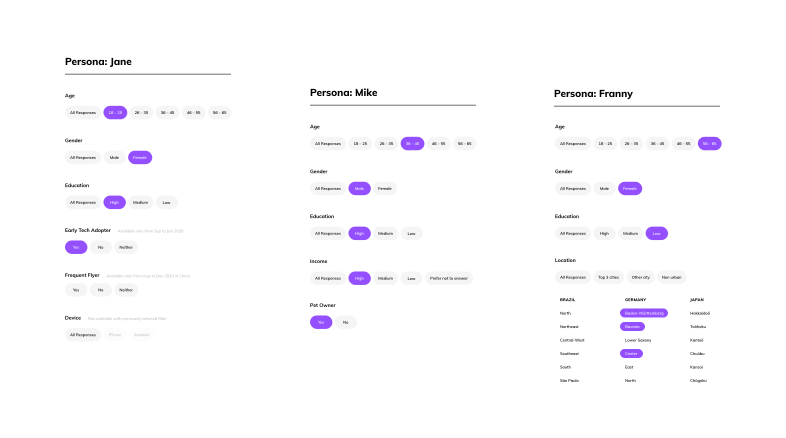\n\n### 1. Run relevant promotions and offers\n\n[91% of consumers](https://www.accenture.com/_acnmedia/PDF-77/Accenture-Pulse-Survey.pdf) are more likely to shop with brands who recognize, remember and provide relevant offers and recommendations. Segmenting your audience is the easiest way to offer customers what they are truly interested in, which is more likely to drive engagement and, ultimately, sales. \n\n### 2. Create compelling marketing messaging\n\nInstead of being generic and vague, you can focus on the specific needs and desires of your target audience. \n\n### 3. Build effective marketing strategies\n\nUnderstanding different customer groups and how they tick helps you understand which products or services they are most interested in, which tactics they will respond to and which channels you can reach them on.\n\n### 4. Targeted paid advertising\n\nPaid ads on social media, video, and display enable marketers to target precisely who they want to reach, based on characteristics like age, gender, location, browsing behavior on your site, and more. \n\nSegmenting and targeting specific audiences is more effective, and also more cost-efficient, than a “spray and pray” approach blasting the same marketing messages out to everybody.\n\n### 5. Inform your product development\n\nWho are your top customer segments and what do they need most? These insights can help you set priorities and structure your product roadmap to ensure you are meeting customer needs in the best way. \n\n## How to Get Started with Market Segmentation\n\nSo, you understand why you need market segmentation for your brand, and now you’re wondering how to get started? Here are the steps you need to follow so you can level up your brand marketing with customer segments.\n\n### 1. Set goals.\n\nWhat are you hoping to achieve? Do you want to increase sales among already-loyal customers, reduce churn among customers at risk of breaking away or identify new target audiences? Understanding your business goals and KPIs will help you select and prioritize your segments later. \n\n### 2. Collect quantitative data.\n\nFirst, make sure you have the data you need. Typically, this will be your company database (CRM), a web analytics tool, and possibly third-party data sets.\n\n### 3. Collect qualitative data.\n\nConducting [mobile-optimized brand surveys](https://latana.com/mobile-optimized-surveys/), focus groups, and polls can help you get the necessary psychographic data. Google Analytics won’t tell you that your customers go hiking at the weekends, are career-orientated, or want to start a family soon. Qualitative data will help you understand the why behind the what.\n\n### 4. Segment your customers.\n\nDecide which of the four types (demographic, psychographic, geographic, or behavior) you want to use. You don’t need to stick to just one! Feel free to use a combination and experiment with what works for your brand. \n\n### 5. Try and test.\n\nOnce you have chosen your segments, you can use them for your campaigns. Use conversion data and [brand tracking](https://latana.com/) to check the effectiveness. Keep testing and reiterating to figure out which segments are working well and where you need to make changes.\n\n## Latana Brand Tracking for Advanced Audience Segmentation\n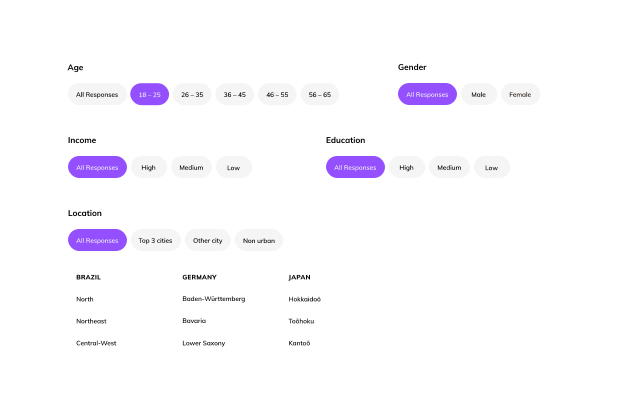\n\nBrands who are serious about understanding their customers are using brand tracking software, rather than relying on basic demographics or treating all their customers the same. Learn more about how top brands like Duolingo and Monday.com use Latana for [audience segmentation](https://latana.com/audience-segmentation/).\n\nLatana uses an AI-powered algorithm to track how different audiences engage with your brand and gives you accurate insights even for niche audiences. You can build custom audience segmentations and track the exact audiences which are most important to your brand, which enables you to make marketing decisions based on information you can trust.\n\n## Do’s and Don’ts of Market Segmentation\n\nMarket segmentation is a powerful tool to gain a better understanding of your customers but it’s important to do it right! Here are some tips to help you get the most out of this strategy.\n\n__Do….__\n\n- __Do combine segmentation methods.__ \n\nYou may realize that segmenting based on simple demographics like age doesn’t help you build a powerful campaign, yet behavioral or psychographics does. \n\n- __Do iterate based on your findings and learnings.__ \n\nMarket segmentation is not an exact science and as you go through the process, you will get a better idea of what works for your brand and what doesn’t.\n\n- __Do ensure your marketing, sales, and product teams are aligned.__\nEach team needs to understand how to use the segments to drive business value.\n\n__Don’t…__\n\n- __Don’t get carried away building segments that are too specific.__\n\nTiny, niche segments are unlikely to be representative and biases can easily skew the data if the sample size is too small. It might not be worth your time and effort building a campaign targeting, say, retirees who care about the environment and take their dog for a walk on Sundays. It’s important to strike a balance.\n\n- __Don’t forget to update your segments.__\n\nCustomers and their needs change and evolve constantly, especially since COVID. Customers who might have bought from you offline in the past might be more likely to purchase online now, so your data needs to reflect that.\n\n## Final Thoughts\n\nWhat separates a good brand from a great one is the ability to understand their customers and speak to their needs. Market segmentation is a great way to do exactly that.\n\nDo you know who your top audiences are, how they feel about your brand, and how to engage with them best? Are you aware of which market segmentation strategies are the best for your brand? Check out the [Latana Ultimate Guide to Target Audiences](https://latana.com/guides/ultimate-target-audience-guide/) to learn more.\n"},"tags":["Brand Strategy","Brand Marketing"],"authorRef":{"slug":"marilyn","firstName":"Marilyn","lastName":"Wilkinson","title":"Digital Marketing Expert","picture":{"__typename":"ContentfulAsset","id":"e78d550e-a31a-5186-820d-9513596e92d2","description":"","title":"Marilyn Wilkinson Prof Pic","file":{"contentType":"image/png","url":"//images.ctfassets.net/7so8go2zrvbw/1oCRDVeLkqM1iEpuSKa6YK/1ba47f67261d9419b9df6600b8a09c1e/Author_Marilyn.png","details":{"image":{"width":235,"height":235}}},"gatsbyImageData":{"images":{"sources":[{"srcSet":"//images.ctfassets.net/7so8go2zrvbw/1oCRDVeLkqM1iEpuSKa6YK/1ba47f67261d9419b9df6600b8a09c1e/Author_Marilyn.png?w=235&h=235&q=95&fm=webp 235w","sizes":"100vw","type":"image/webp"}],"fallback":{"src":"//images.ctfassets.net/7so8go2zrvbw/1oCRDVeLkqM1iEpuSKa6YK/1ba47f67261d9419b9df6600b8a09c1e/Author_Marilyn.png?w=235&h=235&q=95&fm=png","srcSet":"//images.ctfassets.net/7so8go2zrvbw/1oCRDVeLkqM1iEpuSKa6YK/1ba47f67261d9419b9df6600b8a09c1e/Author_Marilyn.png?w=235&h=235&q=95&fm=png 235w","sizes":"100vw"}},"layout":"fullWidth","backgroundColor":"#080808","width":1,"height":1}}}}},{"node":{"publishDate":"2020-05-14T00:00+02:00","slug":"covid-19-brand-insights","author":"Joy Corkery","title":"The Answers to Brands' Top COVID-19 Questions","seo":{"__typename":"ContentfulSeo","title":"The Answers to Brands' Top COVID-19 Questions","description":"During these uncertain times due to COVID-19, industry insights are more important than ever. Are you a US company? Here's some stats you need to know.","noIndex":null,"ogImage":{"fluid":{"src":"//images.ctfassets.net/7so8go2zrvbw/1cuaQwZGjksn7P184vp6IE/9e7376d4f2f9a7327b61eda5306b98b6/covid-19-brand-insights_1.jpg?w=1200&h=675&q=90&fm=jpg"},"file":{"url":"//images.ctfassets.net/7so8go2zrvbw/1cuaQwZGjksn7P184vp6IE/9e7376d4f2f9a7327b61eda5306b98b6/covid-19-brand-insights_1.jpg"}}},"heroImage":{"__typename":"ContentfulAsset","id":"8eb0aa8b-29e3-5f5f-8bf3-77723da88899","description":"The Answers to Brands' Top COVID-19 Questions","title":"The Answers to Brands' Top COVID-19 Questions","file":{"contentType":"image/jpeg","url":"//images.ctfassets.net/7so8go2zrvbw/1cuaQwZGjksn7P184vp6IE/9e7376d4f2f9a7327b61eda5306b98b6/covid-19-brand-insights_1.jpg","details":{"image":{"width":1280,"height":905}}},"gatsbyImageData":{"images":{"sources":[{"srcSet":"//images.ctfassets.net/7so8go2zrvbw/1cuaQwZGjksn7P184vp6IE/9e7376d4f2f9a7327b61eda5306b98b6/covid-19-brand-insights_1.jpg?w=200&h=142&q=95&fm=webp 200w,\n//images.ctfassets.net/7so8go2zrvbw/1cuaQwZGjksn7P184vp6IE/9e7376d4f2f9a7327b61eda5306b98b6/covid-19-brand-insights_1.jpg?w=400&h=283&q=95&fm=webp 400w,\n//images.ctfassets.net/7so8go2zrvbw/1cuaQwZGjksn7P184vp6IE/9e7376d4f2f9a7327b61eda5306b98b6/covid-19-brand-insights_1.jpg?w=800&h=566&q=95&fm=webp 800w","sizes":"(min-width: 800px) 800px, 100vw","type":"image/webp"}],"fallback":{"src":"//images.ctfassets.net/7so8go2zrvbw/1cuaQwZGjksn7P184vp6IE/9e7376d4f2f9a7327b61eda5306b98b6/covid-19-brand-insights_1.jpg?w=800&h=566&fl=progressive&q=95&fm=jpg","srcSet":"//images.ctfassets.net/7so8go2zrvbw/1cuaQwZGjksn7P184vp6IE/9e7376d4f2f9a7327b61eda5306b98b6/covid-19-brand-insights_1.jpg?w=200&h=142&fl=progressive&q=95&fm=jpg 200w,\n//images.ctfassets.net/7so8go2zrvbw/1cuaQwZGjksn7P184vp6IE/9e7376d4f2f9a7327b61eda5306b98b6/covid-19-brand-insights_1.jpg?w=400&h=283&fl=progressive&q=95&fm=jpg 400w,\n//images.ctfassets.net/7so8go2zrvbw/1cuaQwZGjksn7P184vp6IE/9e7376d4f2f9a7327b61eda5306b98b6/covid-19-brand-insights_1.jpg?w=800&h=566&fl=progressive&q=95&fm=jpg 800w","sizes":"(min-width: 800px) 800px, 100vw"}},"layout":"constrained","backgroundColor":"#f8d888","width":800,"height":566}},"coverImage":null,"description":{"description":"During these uncertain times due to COVID-19, industry insights are more important than ever. Are you a US company? Here's some stats you need to know."},"content":{"content":"The COVID-19 pandemic. A time of fear and uncertainty for many, including some of our favorite brands. We wanted to help by putting some of those uncertainties to bed. At Latana, we are lucky to have a platform that enables us to reach a large global audience and we wanted to leverage that for our customers. So, we invited them to join our free COVID-19 “Omnibus” series.\n\nThe premise was simple: we asked brands for their most pressing question related to COVID-19. We then put the questions to 500 people in the US. We gained some interesting insights into spending during the pandemic, materialism, shopping habits, and mobile banking. Take a look at the responses and use the insights to help your brand prevail during these troubling times.\n\n### Which of the following, if any, have you delayed spending on since the COVID-19 outbreak?\n\nUS citizens are keeping their cents in their pockets. But where are they most reluctant to spend right now?\n\n\n\nUnsurprisingly, the travel, restaurant, and entertainment industries have taken the biggest hit, fuelled by the many company closures that needed to take place to protect people’s health and safety. But, it seems like spending is also down across most market categories: particularly beauty, big-ticket items, and luxury goods. Healthcare and groceries haven’t suffered much but even there, spending has decreased.\n\nNaturally, brands will want to push and encourage consumers to buy their products. We get it, they need to make money. However, any marketing campaigns that are running right now must be sensitive to the population’s current plight. Plus, any incentives you promote right now mustn’t be one-sided - and that includes toward the customer too.\n\nBack in 1981, American Airlines was cash strapped so it decided to offer unlimited first-class flights for a flat rate of $250,000. By the time 2007 came around, passengers were taking free flights that amounted to millions in loss for the company.\n\n### Thinking about the things you own, how has your attitude changed, if at all, since the COVID-19 pandemic?\n\nLet’s be honest, a brand's main purpose is to sell their products and services. So many have already lost out due to the lockdown that has taken place worldwide, and want reassurance that their customers will still be there when things end.\n\nThe last years have already been a whirlwind of minimalism and people like Marie Kondo have driven home the message that “less is more”. With more than [26 million people in the US out of work](https://www.forbes.com/sites/advisor/2020/04/28/real-stories-of-filing-for-unemployment-during-covid-19/#5a36aaa515dd) due to COVID-19, there is less income to spend and more time to think about the things they really want/need in life. Will that mean less spending even when restrictions are lifted?\n\n\n\nNearly 50% of respondents stated that their attitudes towards owning material goods have remained unchanged since the start of the pandemic. We can’t say whether or not these people were big spenders or lived a minimal lifestyle, but the result indicates that their spending is not set to change.\n\nHowever, there may be an indication of a reduction in materialism among the general population. Brands will need to convince consumers of the value of their product all over again.\n\n### Thinking ahead to a time when government restrictions on COVID-19 are lifted, how do you expect your purchasing behavior to change?\n\nShopping habits are already shifting from offline to online, with [85% of Americans shopping for groceries in-store](http://www.netimperative.com/2019/07/31/us-online-vs-online-shopping-habits-infographic/), but preferring to purchase non-essential daily items online. With online shopping being the only option in many industries during the pandemic, will more people stick with online shopping in the aftermath?\n\n\n\nAlthough a good chunk of respondents indicated that their purchasing behavior won’t change, it seems that this uptick in online shopping will remain following the lifting of restrictions. As you can see from the chart above, there is a definite perceived shift towards more ‘online’ behavior as economies begin to recover.\n\nMany brands have already had to adjust and sell their products online in order to stay afloat, but the results encourage these brands to make online sales as a long-term tactic.\n\n### How has the COVID-19 pandemic impacted your opinion on using digital or mobile banking (banking in which you access via an app on your phone and not a physical bank)?\n\nHere’s one for the Ally’s and Go Banks of the world.\n\n\n\nThe good news for mobile banking is that of the respondents that are not already using the service, the majority of people may be more responsive to the idea of transitioning to online exclusive or mobile banking. Although, keep in mind that there is still a large portion of neutral responses. Mobile banks should take advantage of this opportunity and start running marketing campaigns to get users on board. Who knows how opinion might change following the end of the pandemic.\n\nBrands are struggling during these uncertain times but all is not lost. Consumers might not be spending on travel but are still purchasing cosmetics. More people than ever are open to mobile banking. People still want to spend when all this is over. The thing is, we don’t know when the COVID-19 pandemic will be over. So, brands must do what they can to prosper and, at the very least, survive. The best way to do this is by knowing what consumers are thinking and how they are acting. Key insights that can drive great marketing campaigns and sales pave the way right now."},"tags":["Brand Strategy"],"authorRef":{"slug":"joy","firstName":"Joy","lastName":"Corkery","title":"Head of Content Operations","picture":{"__typename":"ContentfulAsset","id":"ff88263c-7542-5e55-a02b-a2fe1c8aade4","description":"","title":"Joy Corkery Prof Pic","file":{"contentType":"image/png","url":"//images.ctfassets.net/7so8go2zrvbw/dBdnR37lTp2H5fzrmQrH4/b85552fa4e33c6f843f1385c20c18947/Author_Joy.png","details":{"image":{"width":235,"height":235}}},"gatsbyImageData":{"images":{"sources":[{"srcSet":"//images.ctfassets.net/7so8go2zrvbw/dBdnR37lTp2H5fzrmQrH4/b85552fa4e33c6f843f1385c20c18947/Author_Joy.png?w=235&h=235&q=95&fm=webp 235w","sizes":"100vw","type":"image/webp"}],"fallback":{"src":"//images.ctfassets.net/7so8go2zrvbw/dBdnR37lTp2H5fzrmQrH4/b85552fa4e33c6f843f1385c20c18947/Author_Joy.png?w=235&h=235&q=95&fm=png","srcSet":"//images.ctfassets.net/7so8go2zrvbw/dBdnR37lTp2H5fzrmQrH4/b85552fa4e33c6f843f1385c20c18947/Author_Joy.png?w=235&h=235&q=95&fm=png 235w","sizes":"100vw"}},"layout":"fullWidth","backgroundColor":"#080808","width":1,"height":1}}}}},{"node":{"publishDate":"2021-03-18T09:00+01:00","slug":"guide-brand-integrity","author":"Maddie Duke","title":"The Beginner’s Guide to Brand Integrity","seo":{"__typename":"ContentfulSeo","title":"Brand Integrity: Building Trust And Authenticity","description":"Brand integrity can give you an edge over competitors. Learn how to build and maintain the integrity of your brand. ","noIndex":null,"ogImage":{"fluid":null,"file":{"url":"//images.ctfassets.net/7so8go2zrvbw/PRUmlyK0kDQzx4fo3WPPC/4d6f14f188d728571ea95dd1f5c24e7d/1200x627.svg"}}},"heroImage":{"__typename":"ContentfulAsset","id":"8252e024-c7d3-5e9c-ab8b-6b2caf38eb71","description":"Brand integrity","title":"Brand Integrity - Latana","file":{"contentType":"image/svg+xml","url":"//images.ctfassets.net/7so8go2zrvbw/PRUmlyK0kDQzx4fo3WPPC/4d6f14f188d728571ea95dd1f5c24e7d/1200x627.svg","details":{"image":{"width":1254,"height":627}}},"gatsbyImageData":null},"coverImage":null,"description":{"description":"Brand integrity can give you an edge over competitors. Learn how to build and maintain the integrity of your brand. "},"content":{"content":"Brands can be elusive. We build them in boardrooms, share them via [brand campaigns](https://latana.com/post/brand-managers-campaigns/), and back them by delivering products and experiences. Yet, once a brand is out in the world, its value and meaning can feel out of our control. \n\nBrand integrity is essential to ensuring that the way your brand is perceived and interpreted by consumers aligns with your brand vision, fostering trust and loyalty. It’s a crucial part of what can make or break your brand. The stronger your brand integrity, the easier it will be for you to convert leads and transform customers into advocates.\n\nThis guide outlines why brand integrity is important and how you can build and maintain a brand that has it.\n\n## What is Brand Integrity?\n\nAt its simplest, brand integrity is a reflection of how the way your brand is perceived and experienced by people stacks up against the promises and values it purports to have.\n\n\n\nPeople interact with brands in multiple ways and at every stage of the [buyer journey](https://blog.hubspot.com/sales/what-is-the-buyers-journey). Every single interaction is an opportunity for your brand to convey a message or purpose, or to deliver value. In addition, each experience a person has with your brand combines to create an overall impression of what your brand stands for.\n\nEvery decision your company makes that aligns with your brand values and promises, you appear to act with integrity. If your brand represents quality, and your products are the best you can get, your brand has integrity. Every time you fail to deliver on the image you’ve built, you risk losing some of that precious integrity. \n\n## Why is Brand Integrity Important?\n\nWhen a brand loses integrity, its value and meaning are diminished, along with the sense of trust consumers have in your brand.\n\nAuthenticity, transparency, and sincerity are critical components of the brand experience. If you demonstrate to your customers that your brand sticks to its own principles, acts according to its own values, and follows through on promises, you’ll be rewarded with their trust, loyalty, and, ultimately, their hard-earned cash.\n\nAdditionally, brand integrity highlights that no campaign can fix a bad brand experience, so you must strive for brand integrity. Here are some reasons why.\n\n### Brand integrity builds trust\n\nEach time a customer comes into contact with your brand, they expect to be met with the same, consistent brand experience. When that expectation is met, people come to trust your brand to deliver. Trust is a key factor in consumer purchase decisions, with [81% of consumers](https://www.oberlo.com/blog/branding-statistics) reporting that they need to be able to trust a brand in order to buy from them. The bigger the investment, the more trust needed.\n\n\n\nThe Volkswagen brand [suffered sorely](https://www.thedrum.com/news/2015/09/23/has-volkswagen-s-emissions-scandal-smashed-brand-beyond-repair) in the wake of the company’s emissions scandal. By cheating, the brand contradicted its well-established image of being a reliable, trustworthy brand, losing an immense amount of brand integrity in the process.\n\n### Brands with integrity are more likely to have brand advocates\n\nBy consistently delivering on a promise that aligns with a customer’s expectation, you’re much more likely to develop enough [brand affinity](https://latana.com/post/guide-brand-affinity/) that people actively promote and advocate for your brand. \n\nBrand advocates are consumers who love your brand, genuinely use or aspire to use your products, and want to see your brand succeed. These people are your most loyal and enthusiastic customers. Brand advocates are highly valuable, as they will promote and recommend your brand to others, often creating [user-generated content](https://sproutsocial.com/insights/user-generated-content-guide/), and making glowing posts or rave reviews.\n\n\n\nCurly hair care brand [DevaCurl](https://www.forbes.com/sites/yolarobert1/2020/02/14/devacurl-is-under-fire-from-their-loyal-customers-for-alleged-hair-loss-and-damageheres-what-we-know/?sh=26b65a665e0f) built a large following of customers and advocates who talked about the brand with passionate fervor. However, the brand came under fire when a number of consumers and former brand ambassadors claimed to have experienced damage and hair loss from their products. Instead of recalling products and apologizing for the damage, the company continues to promote their products and denies any responsibility, all the while making statements such as “Nothing is more important to us than you.”\n\nThis contradiction of actions and words has resulted in former brand advocates passionately working against the brand, hoping to protect other consumers from potential damage and hair loss.\n\n### Brand integrity helps you reach the right people\n\nA brand with integrity is one whose core message, purpose, and value is aligned across every possible touchpoint. From the website through to the packaging of a product, everything is designed to enhance and support a specific brand experience and image. When brands get this right, it resonates with the intended audience.\n\nIf your brand focuses on supporting a consistent experience that’s informed by your understanding of the values and needs of the people you want to reach, it’s much more likely to reach and resonate with those people.\n\nTake outdoor apparel company [Patagonia](https://www.marketingweek.com/case-study-patagonias-dont-buy-this-jacket-campaign/). Part of their mission is to “cause no unnecessary harm”, a lofty goal for a global brand. The company took a bold step when they launched their “Don’t Buy This Jacket” campaign during a Black Friday sales period, urging people to reflect more on what they buy and how much they consume. Perhaps not the best campaign for driving sales that season, but the message garnered plenty of attention and resonated among those consumers who share Patagonia’s eco-friendly ethos. Which brand do you think those people will likely choose when the time comes that they need a new jacket?\n\n### Strong brand integrity may be the edge you need to beat your competitors\n\nIn this digital age, consumers have so much choice at their fingertips, as well as access to a world of information to inform their purchase decisions. If a person is dissatisfied with one brand, they can immediately find an alternative. So, it’s crucial that your brand stands out from the crowd—in a good way.\n\n\n\nBrand integrity gives weight and meaning to the claims you make about your brand and your products. By being consistent, you’ll develop a reputation for being true to your word that will set you a cut above the rest.\n\n## How to Build and Maintain Brand Integrity\n\nThe benefits of brand integrity are clear, but how do you know if you’ve got it? And how do you build and maintain it?\n\nWhether you’re building a brand from scratch or [rebranding an existing one](https://latana.com/guides/ultimate-guide-to-rebranding/), you’ve got to start with the basics and get clear on your [brand identity](https://latana.com/post/brand-identity-branding-essential-growing-company/). From there, it’s a matter of applying that vision to everything you do. And, as the saying goes: it’s a marathon, not a sprint. \n\n### Get clear on your brand purpose, promise, and values\n\nYou can’t build brand integrity without first understanding what meaning you want your brand to have. Get back to basics and define your brand’s values, purpose, and promises. Consider [who you’re trying to reach](https://latana.com/post/discover-niche-audience/) and let their values, needs, and characteristics inform your branding decisions. \n\nTo take it a step further: consider how purposeful you want your brand to be. Do you want to connect it to something bigger? Consumers are [increasingly demanding sustainability](https://latana.com/post/5-trends-brands-2021/) and social responsibility from brands.\nBut before you make bold claims about how much you’re going to give back to communities, think about how much you can realistically follow through with. It’s better not to align your brand with a social or environmental cause than to make empty claims and be called out for [greenwashing](https://latana.com/post/greenwashing-sustainable-brand/).\n\n\n\n### Align your brand promise with your offering\n\nLet’s return to the example of Patagonia, whose other brand promise is to “build the best product”. A brand that promises high quality, durable products must back it up with their product offering if they want to maintain brand integrity. If Patagonia didn’t deliver on that promise by producing products that last, their integrity would be compromised. A brand that only promises to make affordable apparel, rather than the “best”, may indeed have more brand integrity than a brand that over-promises and under-delivers.\n\nUnderstand the nuances in the promises you make and use them to bring your products in line. Communicate honestly about your products to set realistic expectations about what they can and cannot do. If your promise is to be fashion-forward and edgy, your products should reflect the latest styles and hottest trends. Consistently delivering on that promise will gradually build integrity as consumers learn they can trust your brand.\n\nOne disastrous example of a brand that didn't deliver on their promises is the notorious [Fyre Festival](https://www.forbes.com/sites/forbescommunicationscouncil/2019/04/16/what-marketers-can-learn-from-the-fyre-festivals-influencer-marketing-fiasco/?sh=6fab124b1308), which left eager festival-goers stranded on a half-deserted island. While this example is an extreme case that landed the festival’s creator in prison, the basic principle applies to all brands. Failing to deliver on your brand promise in your actual product or service offering is a quick way to reduce brand integrity.\n\n### Be consistent across all brand touchpoints\n\nConsistency and cohesion are key. If a consumer is getting one message from an ad or social media channel and another when they head to your website, you’ve got a problem. Mixed messages between any of your consumer touchpoints will erode your brand integrity.\n\nConsider every opportunity a consumer has to come into contact with your brand. Everything from an email campaign to a social media post, to your call-waiting music, is a brand touchpoint. Even a candidate’s experience in applying for a job at your company is an interaction with your brand.\nEveryone in your business has a part in branding, so you must ensure everyone is on the same page when it comes to what your brand represents. Create a brand manifesto that everyone can access, or even invest in employee brand training. \n\nOpportunities for employees to experience the brand or products themselves is crucial to their ability to understand the customer experience and apply the brand identity to their part of the business. BMW Group Australia) provides employees with opportunities to lease company cars and encourages them to participate in staff-only BMW Driving Experience events.\n\n### Be human \n\nConsumers have become more cynical and discerning, and the pressure is on for brands to show vulnerability and authenticity. A human-centered approach can go a long way in building trust and ultimately, integrity in consumers.\n\nWith digital marketing, we have more ways than ever to connect with our audience, and endless opportunities to engage with them directly. Even financial service providers no longer need to be overly professional, with new players such as [Venmo](https://www.talkwalker.com/blog/best-digital-marketing-strategies-for-financial-services) adopting more casual communication styles to connect with their audiences. \n\nTo adopt a more human tone, avoid using jargon or legaleze, and project an attitude of honesty and openness. Building a more authentic tone behind your brand builds trust and tells consumers they can trust you (without explicitly telling them they can trust you).\n\n### Be accountable\n\nEveryone makes a faux pas from time to time, maintaining brand integrity involves owning up to your blunders and apologizing, rather than pointing the finger or going silent. When people see that a company is willing to take responsibility for a misstep and learn from it, you’ll find that they’re more likely to forgive you.\n\nFacebook faced enormous consumer backlash in 2018, when it emerged that a political data firm had harvested the personal data of up to 87 million Facebook users without their knowledge or consent. Instead of apologizing and admitting fault or accountability, Facebook’s spokespeople vehemently defended the brand.\n\nEventually, they promised to take action to improve users’ ability to control their privacy settings, something that CEO Mark Zuckerberg had already promised, and failed to do, years prior. It should be no surprise then, that Facebook is one of the [least trusted](https://www.businessinsider.com/facebook-is-consumers-least-trusted-social-media-platform-2020-9?r=DE&IR=T) social media platforms.\n\n### Listen and adapt\n\nTo maintain brand integrity you need to be alert to changes and agile enough to adapt to them. New trends develop constantly, and world events can shift public opinion and the relationship between consumers and brands. Monitor the changing needs of your audience and keep track of how your brand is perceived by keeping tabs on key brand metrics.\n\nBy listening, you can better anticipate and adapt to changes. While staying true to your core values and message is important to build integrity, don’t be so staunch that you can’t change when it’s appropriate. Integrity is also about adapting your values in the face of wider changes, and they can happen quickly, and not being ready to respond can cost you dearly.\n\nThe events of 2020 saw a number of well-established brands break tradition and [respond to public pressure](https://www.forbes.com/sites/jemimamcevoy/2020/10/06/eskimo-pie-becomes-edys-pie-here-are-all-the-brands-that-are-changing-racist-names-and-packaging/?sh=41883a9a56a7) by updating their names and packaging. By paying attention to the consumer landscape, and ending the use of racist imagery and product names, these brands have been able to regain some integrity.\n\n## Challenges in Building Brand Integrity\n\nThere are a number of challenges to building a brand, and building brand integrity can be added to the list. Some of the challenges you may face when building brand integrity include:\n\n- __Getting buy-in from other parts of the business__. If your employees have never even used your product, getting other departments to agree to learn can be a big hurdle. Be prepared to outline the benefits and risks, and have a clear plan of action as to where you want to start (hint: a brand manifesto is a great starting point!)\n- __Sudden changes in public opinion or consumer sentiment__. If you don’t already have your finger on the pulse, it’s easy to take a misstep after a sudden change. Be prepared by [tracking your brand health regularly](https://latana.com/post/brand-health-metrics)/. That way, you know what position you’re starting with and can better assess how and whether you need to take action.\n- __Trying to do (or be) it all__. Your brand can’t stand for every good thing in the world. If you try to represent too many values, or support too many causes, you’re destined to let somebody down and damage your integrity. [Niche down](https://latana.com/post/discover-niche-audience/) and stick to what’s relevant to your target audience to prevent overloading your brand.\n\n## What To Do If Your Brand Integrity Has Been Compromised\n\nThankfully, not every blunder will require a full [rebrand](https://latana.com/post/important-rebrands/). If the integrity of your brand has taken a big hit, the first step is to understand what happened, apologize authentically, and learn from it.\n\nNext, go back to square one and consider what your brand message, purpose, and values are and determine how you will apply that to your products and brand experiences. This could be a great point in time to undergo a [brand audit](https://latana.com/post/digital-brand-audit/). \n\nThere’s no quick fix, recovering from a loss of integrity takes time. As we said earlier, it’s a marathon, not a sprint.\n\n## Final Thoughts\n\nCustomers are spending more time searching for brands that can offer them authentic, genuine relationships. Brand integrity can create a foundation of trust, upon which these relationships can be built, developed, and nurtured. Consumers that trust your brand and know what to expect are much more likely to become loyal customers or even brand advocates. Make sure to work on your brand integrity as well as other KPIs to grow and maintain a loyal customer base."},"tags":["Brand Strategy"],"authorRef":{"slug":"maddie-duke","firstName":"Maddie","lastName":"Duke","title":"Freelance Marketer","picture":{"__typename":"ContentfulAsset","id":"65901de7-355f-5f2e-9afc-385164b94bae","description":"","title":"Maddie Duke","file":{"contentType":"image/png","url":"//images.ctfassets.net/7so8go2zrvbw/1qNUFRwb4TLmuiGH10JDui/9824682cacd443a03bc5e15e39fe2582/Author_Maddie.png","details":{"image":{"width":235,"height":235}}},"gatsbyImageData":{"images":{"sources":[{"srcSet":"//images.ctfassets.net/7so8go2zrvbw/1qNUFRwb4TLmuiGH10JDui/9824682cacd443a03bc5e15e39fe2582/Author_Maddie.png?w=235&h=235&q=95&fm=webp 235w","sizes":"100vw","type":"image/webp"}],"fallback":{"src":"//images.ctfassets.net/7so8go2zrvbw/1qNUFRwb4TLmuiGH10JDui/9824682cacd443a03bc5e15e39fe2582/Author_Maddie.png?w=235&h=235&q=95&fm=png","srcSet":"//images.ctfassets.net/7so8go2zrvbw/1qNUFRwb4TLmuiGH10JDui/9824682cacd443a03bc5e15e39fe2582/Author_Maddie.png?w=235&h=235&q=95&fm=png 235w","sizes":"100vw"}},"layout":"fullWidth","backgroundColor":"#080808","width":1,"height":1}}}}},{"node":{"publishDate":"2020-11-05T09:00+01:00","slug":"greenwashing-sustainable-brand","author":"Orsolya Dobe","title":"How to Avoid Greenwashing as a Sustainable Brand","seo":{"__typename":"ContentfulSeo","title":"How to Avoid Greenwashing as a Sustainable Brand","description":"Greenwashing is a sure way to kill trust in your brand. Don’t give into temptation. Read this article to discover how you can do green marketing the right way.","noIndex":null,"ogImage":{"fluid":{"src":"//images.ctfassets.net/7so8go2zrvbw/68Gt3CxOWWxlLkdTtZtxZw/2ef4eddffe686f06bfd332895f712a63/greenwashing_cover.png?w=1200&h=675&q=90&fm=jpg"},"file":{"url":"//images.ctfassets.net/7so8go2zrvbw/68Gt3CxOWWxlLkdTtZtxZw/2ef4eddffe686f06bfd332895f712a63/greenwashing_cover.png"}}},"heroImage":{"__typename":"ContentfulAsset","id":"d8bab322-15ef-51a3-8159-4019357f4536","description":"dangers of greenwashing","title":"dangers of greenwashing","file":{"contentType":"image/png","url":"//images.ctfassets.net/7so8go2zrvbw/68Gt3CxOWWxlLkdTtZtxZw/2ef4eddffe686f06bfd332895f712a63/greenwashing_cover.png","details":{"image":{"width":1000,"height":630}}},"gatsbyImageData":{"images":{"sources":[{"srcSet":"//images.ctfassets.net/7so8go2zrvbw/68Gt3CxOWWxlLkdTtZtxZw/2ef4eddffe686f06bfd332895f712a63/greenwashing_cover.png?w=200&h=126&q=95&fm=webp 200w,\n//images.ctfassets.net/7so8go2zrvbw/68Gt3CxOWWxlLkdTtZtxZw/2ef4eddffe686f06bfd332895f712a63/greenwashing_cover.png?w=400&h=252&q=95&fm=webp 400w,\n//images.ctfassets.net/7so8go2zrvbw/68Gt3CxOWWxlLkdTtZtxZw/2ef4eddffe686f06bfd332895f712a63/greenwashing_cover.png?w=800&h=504&q=95&fm=webp 800w","sizes":"(min-width: 800px) 800px, 100vw","type":"image/webp"}],"fallback":{"src":"//images.ctfassets.net/7so8go2zrvbw/68Gt3CxOWWxlLkdTtZtxZw/2ef4eddffe686f06bfd332895f712a63/greenwashing_cover.png?w=800&h=504&q=95&fm=png","srcSet":"//images.ctfassets.net/7so8go2zrvbw/68Gt3CxOWWxlLkdTtZtxZw/2ef4eddffe686f06bfd332895f712a63/greenwashing_cover.png?w=200&h=126&q=95&fm=png 200w,\n//images.ctfassets.net/7so8go2zrvbw/68Gt3CxOWWxlLkdTtZtxZw/2ef4eddffe686f06bfd332895f712a63/greenwashing_cover.png?w=400&h=252&q=95&fm=png 400w,\n//images.ctfassets.net/7so8go2zrvbw/68Gt3CxOWWxlLkdTtZtxZw/2ef4eddffe686f06bfd332895f712a63/greenwashing_cover.png?w=800&h=504&q=95&fm=png 800w","sizes":"(min-width: 800px) 800px, 100vw"}},"layout":"constrained","backgroundColor":"#2898d8","width":800,"height":504}},"coverImage":null,"description":{"description":"Greenwashing is a sure way to kill trust in your brand. Don’t give into temptation. Read this article to discover how you can do green marketing the right way. "},"content":{"content":"An increasing number of companies are introducing sustainable practices into their strategy. Rightly so, knowing that [70% of consumers](https://www.barrons.com/articles/two-thirds-of-north-americans-prefer-eco-friendly-brands-study-finds-51578661728) in the US and Canada prefer companies that emphasize preserving the environment and following ethical practices. However, incorporating these practices into their marketing is harder than it seems.\n\nThe issue is that many companies are not transparent in their marketing - or their level of sustainability. Many businesses will go to market with catchy slogans but fail to have a proven positive impact. They are misleading their customers by \"greenwashing\". While this move to environmentally conscious consumerism is very much needed to reduce our collective carbon footprint, unbacked claims of green practices by brands are rather a step back instead of a step forward when it comes to building your brand. \n\n[82% of American customers](https://www.marketingcharts.com/brand-related/brand-loyalty-109127#:~:text=Brand%20Trust%20Drives%20Loyalty&text=Some%208%20in%2010%20US,suddenly%20becomes%20hot%20and%20trendy.) say that they will continue to use a brand they trust, even if a competitor becomes popular and trendy. But they won’t hang around for long if your advertising is misleading. Greenwashing can severely harm your reputation and diminish customers’ overall trust in your brand. To avoid long-term harm to your brand image and to reach today’s eco-friendly consumers, we’ll show you how to do green marketing right. \n\n## What Green Marketing Is - and What It Shouldn’t Be\n\nIncorporating sustainability into marketing campaigns [started in the 1960s](https://archive.org/details/greatdebatesamer00blac) when the environmentalist movement took off and an increasing number of companies decided to create a new “green image”. Green marketing, or as sometimes called eco-marketing, can be used for various purposes: to promote a specific eco-conscious product, draw attention to a time-sensitive issue, or promote a concrete initiative. \n\nHowever, it is important to keep in mind that when a brand uses low environmental impact as a unique selling point they not only promote a specific service or product, they also actively draw attention to the company's processes and business practices. If sustainability is not actually a part of their overall strategy, that could easily lead to backlash from consumers. That’s why companies need to adopt a holistic approach when it comes to sustainability.\n\n### Greenwashing\n\nWhat happens if your customers think that they are being misled by your marketing? It creates an adverse reaction, curbs the trust in your brand and you’ll be faced with the backlash of ‘greenwashing’. \n\n\n\nBut what is greenwashing exactly?\n\nGreenwashing is when companies invest more of their time and money in marketing themselves as sustainable than in actual corporate environmental efforts. The term itself was coined by [Jay Westerfeld](https://link.springer.com/referenceworkentry/10.1007%2F978-3-642-28036-8_104), who originally referred to the hypocrisy of hotels creating ads on TV and radio encouraging guests to reuse their towels while neglecting other crucial elements of sustainability in their everyday business practices.\n\nHow can customers spot greenwashing?\n\nGreenwashing is easily recognized by looking at a brand’s budget. During the first Earth Day in 1970, corporations spent [eight times more](https://corpwatch.org/article/greenwash-fact-sheet) on establishing a green image through advertising than the amount they spent on environmental research initiatives. It can also be recognized through the use of phrases on packaging and in advertising that they can’t back up, such as “all-natural”, “non-toxic” and “eco-friendly”, or when brands simply decorate use a green background and images of leaves and trees to signal that the product somehow contributes to the fight against climate change. \n\nAnd it’s more common than you’d think. A [2017 study](https://www.triplepundit.com/story/2017/paint-town-green-greenwashing-still-alive-and-well/16966) of more than 5000 home products showed that 95% of them had problematic green claims. Greenwashing seems to be becoming the fake news of the marketing industry. Even the biggest companies like McDonald’s and FIJI Water make these mistakes, so let’s look at what we can learn from their slip-ups.\n\n## Brands Who’ve Greenwashed Consumers - and Were Caught\n\n### McDonald’s\n\nIn 2009, McDonald’s [changed its logo to green](http://www.nbcnews.com/id/34111784/ns/business-us_business/t/mcdonalds-rolling-out-green-logo-europe/#.XyJZei-w3fY) in Europe to “clarify their responsibility for the preservation of natural resources”. However, the rebrand was not enough to persuade the skeptics. If the brand is ingrained in people’s minds as “unhealthy” and “wasteful” this is clearly not enough to convince them otherwise. Brands need to show real, long-term commitment to environmental causes and a logo change to green accompanied by empty promises just won’t do. \n\n\n\nThe brand ran into another greenwashing scandal in 2019 when they replaced their plastic straws with a paper alternative. This created a huge media buzz, however, it quickly turned into bad publicity for the brand. As it turns out, the new paper straws were not actually recyclable. On top of that, the impact was minimal as straws only take up [0.025 % of total plastic waste](https://www.independent.co.uk/voices/mcdonalds-plastic-straws-recycling-carbon-footprint-green-washing-waste-starbucks-a9041871.html) in the ocean. Of course, adapting to more sustainable practices takes time. But the way McDonald’s only announced a small step towards the right direction, while failing to show how they’re going to take action in other parts of their business, is a loud and clear example of greenwashing.\n\n\n\nThis advert is clever and creative, showing the “last plastic straw” being exhibited like a rare and expensive art piece while the brand promises to completely ditch the use of plastic straws and sell the last one on eBay as the very last McDonalds plastic straw. But knowing the deceptive things we just talked about, this catchy ad loses its appeal, doesn’t it? \n\n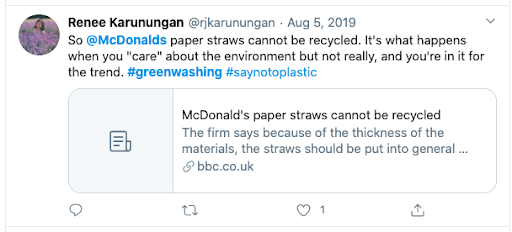\n\n\nThe Twittersphere agreed. Customers today are looking for real impact. It’s understandable that brands want to keep shouting about their environmental commitments, but if it's done in a deceiving way, backlash is inevitable. It will spread on social media like wildfire, which will eventually make more people lose trust in your brand’s credibility. \n\n### FIJI Water\n\nBased on their brand image it’s hard to imagine that FIJI Water Company was sued for [“deceptively marketing itself as carbon-negative”](https://www.motherjones.com/politics/2011/01/fiji-water-sued-greenwashing/). The lawsuit in 2010 revealed that the reason many customers chose FIJI and not other brands is that they claimed to be [“the only carbon negative bottled water”](https://www.environmentalleader.com/2010/12/fiji-water-targeted-in-greenwashing-class-action-suit/) on the market.\n\nBeing [carbon-negative](https://www.environmentalleader.com/2010/12/fiji-water-targeted-in-greenwashing-class-action-suit/) means they remove more carbon pollution from our atmosphere than they release into it. But that wasn’t the case with FIJI. Although it was a plan for the future, at the time of the lawsuit, they were unable to lay out a concrete plan to achieve this ambitious goal. Forward crediting is dangerously deceptive and can make customers lose all trust in the company.\n\nAnd what about their most recent TV advertising campaign? It was a series of ads depicting the contrast of the polluted, urban, dark grey modern world and the clean untouched nature FIJI Water represents. This is a textbook example of greenwashing. While claiming to be “part of nature” and “untouched by men” they disguise what they really are doing: selling water in plastic bottles that take [450 years to decompose](https://goodmenproject.com/environment-2/greenwashing-a-fiji-water-story/). But that’s not all. While they advertise the cleanest water for a very steep price, [47% of local Fijians](https://www.youtube.com/watch?v=mOpa8kd6fBI) don’t even have access to clean drinking water. \n\n\n\nHowever, the brand seemed to learn its lesson since the scandals. Their [current website](https://www.fijiwater.com/pages/sustainability) avoids using big claims and puts concrete actionable steps next to every grand promise.\n\n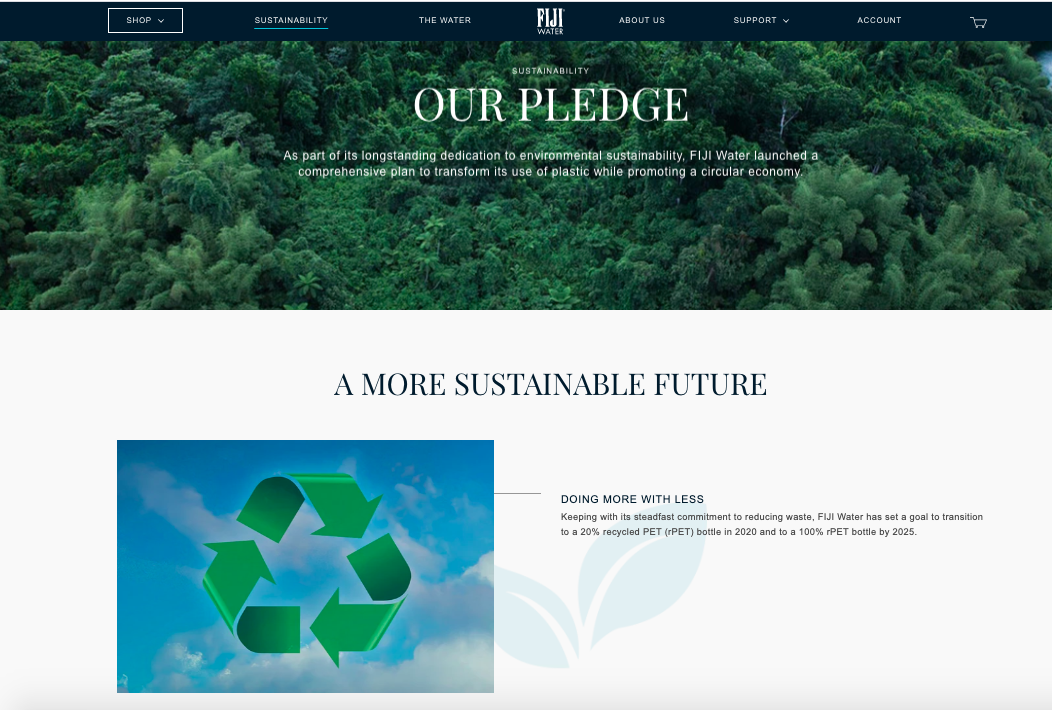\n\n## 4 Tips for a Successful Green Marketing Campaign\n\n### 1. Be fully transparent about your commitments\n\nLack of information leads to a lack of trust. The real danger of greenwashing is deceiving your customers and losing their loyalty in the process. \n\nOf course, your company can’t become Greta Thunberg overnight. However successful green marketing is not about big achievements, it’s about transparency. By showcasing your commitments you should simultaneously register your shortcomings as well. This might seem scary to do at first. After all, transparency is hard enough to achieve in the [internal communications of a company](https://www.forbes.com/sites/forbesagencycouncil/2018/04/16/why-you-should-be-radically-transparent-with-your-customers/#5d4c42c67aef), let alone in what you tell your customers. But people are aware of the dishonest world of green marketing campaigns, and they will appreciate you being upfront and realistic about your commitments. This way you can avoid disappointments.\n\nOne way to stay transparent is to set concrete action steps with clear deadlines. By doing this, you allow your audience to keep you accountable while managing their expectations. Book a meeting with your team to talk about the next steps you can take as a brand then share them with your audience. This could be anything between including sustainability goals in the Corporate Social Responsibility section of your website to building a social media campaign around your plans. Remember, no matter if the actions are big or small, being transparent about trial and error is always better than being inactive and dishonest.\n\n__Mini Case Study: LEGO__\n\nFortunately, there are companies that are leading the way in honest green marketing practices. In 2015, Lego announced to “go green” and committed to spending $150 million on its sustainability efforts in the next 15 years. There is even a separate part of their website providing a detailed description of their efforts. What’s great about LEGO’s approach is that they are not only transparent about their plans but they are also honest about their current shortcomings. \n\nThey plan to make all LEGO bricks from sustainable materials (plastic sourced from sugarcane) [by 2030](https://www.bbc.com/news/business-43253798). But at the same time, they also admitted that currently only 2% of their products are made of materials that fit their sustainability criteria. LEGO also tracks the progress of other efforts through easy-to-understand infographics.\n\n\n\n\n\nOn their website, there is a whole section dedicated to [sustainability reporting](https://www.lego.com/en-gb/aboutus/sustainability/reporting/#section-9), where they depict an honest picture of the progression of their sustainability efforts. Greenwashing is all about dishonesty, so being transparent in where your brand is on track to achieve its goals is very important for building brand loyalty with your customers. \n\n\n\nThis 2018 commercial is an excellent example of what LEGO is doing right. The video is full of concrete actionable plans, statistics about the impact of their sustainability efforts, and it also explains how all of this fits into their brand image.\n\n### 2. Collect credentials for authenticity\n\nWhile you might detail your efforts on your brand’s website, there are strict regulations about what you can label your packages with. Using terms like ‘recyclable’, ‘eco-friendly’ or ‘sustainable’, if not true, could even be illegal. Even though it’s harder to track, deceiving your customers with your illustrations of green meadows and clear skies won’t make you an environmentalist superhero overnight. You could lose the support of the environmentally-conscious audience altogether.\n\nThat’s where certain sustainability credentials come into the picture. In the US the most known one is the Federal Trade Commission's Green Guide but you can seek out third-party credentials in most countries. Think about this as a vehicle license. As you wouldn’t drive a car that hasn’t been approved by the authorities for being safe, consumers will also trust your sustainability claims more if your brand has the right green accreditation. \n\nThese credentials will not only enable you to back your sustainability claims with evidence but they will also make it easier for sustainability-driven consumers to choose your brand over the competition. Win-win.\n\n### 3. Connect sustainability to brand equity\n\nYour brand equity is the social value associated with your company and your products. Reducing your environmental footprint is an amazing way to showcase how your brand contributes to society in a positive way. Unfortunately, environmental issues are not going away anytime soon, so sustainability can make your brand valuable in the long-term.\n\nApple is the master of brand equity. They know the real value of maintaining a positive perception by their target audience. They also know that the way to do this is by taking a clear stance on issues that are important to them. As you’ve seen, sustainability is not a topic to mess around with. Falling to communicate how your brand contributes to the global fight against climate change is a missed opportunity to solidify your positive reputation. \n\n__Mini Case Study: Ben & Jerry’s__\n\nBen & Jerry's 2019 advertising campaign is a great example of showcasing sustainability as a core company value. This might be surprising but there is no concrete selling point of their product in the video, not even their eye-catching packaging. Ice cream is only featured as a metaphor for our melting planet and after some hard-hitting facts about climate change, the brand invites the audience to join them to the youth-led climate protests that took place worldwide in September 2019. This showed that on top of their green efforts, Ben & Jerry’s stands for sustainability and will use its platform to educate people - regardless of what anyone thinks.\n\n\n\nConsumers might fall in love with your product, but it will be only a quick affair without shared values. You can create a long-term relationship with your audience by integrating sustainability into your company’s core values. \n\n### 4. Make sustainability a business-wide initiative\n\nAs we mentioned before, using sustainability in your marketing requires a holistic approach. You need to show your customers' commitment to and engagement with environmental issues on multiple levels of your company. Once greenwashing destroys the trust in your brand, it is really hard to rebuild it. That’s why you need a comprehensive green marketing strategy. \n\nA credible green marketing strategy is always business-wide. You need to think about the environmental impact of your entire production cycle. Of course, it’s very difficult to transform your whole process all of a sudden, but that shouldn’t make you ditch green marketing altogether! Remember, you can avoid greenwashing if you are honest and transparent about your plans to improve. \n\n__Mini Case Study: Patagonia__\n\nPatagonia is doing this right. [On their website](https://www.patagonia.com/hidden-cost-of-clothes/), they admit that everything they make has an impact on the planet and they even call out the clothing industry’s irresponsible practices, most brands’ dishonest use of green claims, and the culture of overconsumption. Even though their brand is part of one of the most harmful industries to the planet, they show how they make an effort to do their best) in areas ranging from using recycled materials, experimenting with organic agriculture, and taking care of their workers. For them, sustainability is ingrained in every part of their business, as it should be.\n\n## Final Thoughts\n\nIntentionally or not, using false claims in your green marketing harms your brand and could even lead to severe financial consequences. You certainly don’t want to end up like Walmart, who had to [pay $1 million in 2017 to settle](https://www.sfgate.com/bayarea/article/Walmart-to-pay-1M-to-settle-suit-over-10901772.php) a greenwashing lawsuit, after advertising false claims about the compostability of plastic products. \n\nSustainability is more than a trend. We can see that more and more customers are [prioritising brands that they view as environmentally-friendly](https://latana.com/reports/sustainability-perception-index-2020/) while boycotting companies that fail to meet their expectations. Don’t be one of them. Get ahead of the competition by staying transparent about your activities and including sustainability in your brand’s core values. Your audience’s long-term loyalty will be the reward."},"tags":["Brand Sustainability","Brand Strategy"],"authorRef":{"slug":"orsolya","firstName":"Orsolya","lastName":"Dobe","title":"Content Marketer","picture":{"__typename":"ContentfulAsset","id":"bb56ceb9-a813-5edc-85a6-facde71b8efe","description":"","title":"Latana Logo Author Photo","file":{"contentType":"image/png","url":"//images.ctfassets.net/7so8go2zrvbw/7qeUdZpRNeFZFTo0zIasKz/8d00318fb2f317950a2a2d6912eb28bf/Author_Latana__1_.png","details":{"image":{"width":235,"height":235}}},"gatsbyImageData":{"images":{"sources":[{"srcSet":"//images.ctfassets.net/7so8go2zrvbw/7qeUdZpRNeFZFTo0zIasKz/8d00318fb2f317950a2a2d6912eb28bf/Author_Latana__1_.png?w=235&h=235&q=95&fm=webp 235w","sizes":"100vw","type":"image/webp"}],"fallback":{"src":"//images.ctfassets.net/7so8go2zrvbw/7qeUdZpRNeFZFTo0zIasKz/8d00318fb2f317950a2a2d6912eb28bf/Author_Latana__1_.png?w=235&h=235&q=95&fm=png","srcSet":"//images.ctfassets.net/7so8go2zrvbw/7qeUdZpRNeFZFTo0zIasKz/8d00318fb2f317950a2a2d6912eb28bf/Author_Latana__1_.png?w=235&h=235&q=95&fm=png 235w","sizes":"100vw"}},"layout":"fullWidth","backgroundColor":"#080808","width":1,"height":1}}}}},{"node":{"publishDate":"2021-05-20T08:50+02:00","slug":"cause-marketing","author":"Helen Jackson","title":"What is Cause Marketing - and the Brands That Nailed It","seo":{"__typename":"ContentfulSeo","title":"How to Create a Compelling Cause Marketing Campaign","description":"We talk all about cause-related marketing — what it is, who’s doing it well, and how you can create a cause marketing campaign that delivers.","noIndex":null,"ogImage":{"fluid":{"src":"//images.ctfassets.net/7so8go2zrvbw/79zTMTFfTjLO0cUIvlUjPo/1380ce300371ca1220cb0147a44818a3/Cause_Marketing_Hero_Image.png?w=1200&h=675&q=90&fm=jpg"},"file":{"url":"//images.ctfassets.net/7so8go2zrvbw/79zTMTFfTjLO0cUIvlUjPo/1380ce300371ca1220cb0147a44818a3/Cause_Marketing_Hero_Image.png"}}},"heroImage":{"__typename":"ContentfulAsset","id":"9c9a5eef-e2b9-5067-8945-41b5a6ee7e69","description":"People holding signs protesting for a cause","title":"Cause Marketing Hero Image","file":{"contentType":"image/png","url":"//images.ctfassets.net/7so8go2zrvbw/79zTMTFfTjLO0cUIvlUjPo/1380ce300371ca1220cb0147a44818a3/Cause_Marketing_Hero_Image.png","details":{"image":{"width":2400,"height":1254}}},"gatsbyImageData":{"images":{"sources":[{"srcSet":"//images.ctfassets.net/7so8go2zrvbw/79zTMTFfTjLO0cUIvlUjPo/1380ce300371ca1220cb0147a44818a3/Cause_Marketing_Hero_Image.png?w=200&h=105&q=95&fm=webp 200w,\n//images.ctfassets.net/7so8go2zrvbw/79zTMTFfTjLO0cUIvlUjPo/1380ce300371ca1220cb0147a44818a3/Cause_Marketing_Hero_Image.png?w=400&h=209&q=95&fm=webp 400w,\n//images.ctfassets.net/7so8go2zrvbw/79zTMTFfTjLO0cUIvlUjPo/1380ce300371ca1220cb0147a44818a3/Cause_Marketing_Hero_Image.png?w=800&h=418&q=95&fm=webp 800w,\n//images.ctfassets.net/7so8go2zrvbw/79zTMTFfTjLO0cUIvlUjPo/1380ce300371ca1220cb0147a44818a3/Cause_Marketing_Hero_Image.png?w=1600&h=836&q=95&fm=webp 1600w","sizes":"(min-width: 800px) 800px, 100vw","type":"image/webp"}],"fallback":{"src":"//images.ctfassets.net/7so8go2zrvbw/79zTMTFfTjLO0cUIvlUjPo/1380ce300371ca1220cb0147a44818a3/Cause_Marketing_Hero_Image.png?w=800&h=418&q=95&fm=png","srcSet":"//images.ctfassets.net/7so8go2zrvbw/79zTMTFfTjLO0cUIvlUjPo/1380ce300371ca1220cb0147a44818a3/Cause_Marketing_Hero_Image.png?w=200&h=105&q=95&fm=png 200w,\n//images.ctfassets.net/7so8go2zrvbw/79zTMTFfTjLO0cUIvlUjPo/1380ce300371ca1220cb0147a44818a3/Cause_Marketing_Hero_Image.png?w=400&h=209&q=95&fm=png 400w,\n//images.ctfassets.net/7so8go2zrvbw/79zTMTFfTjLO0cUIvlUjPo/1380ce300371ca1220cb0147a44818a3/Cause_Marketing_Hero_Image.png?w=800&h=418&q=95&fm=png 800w,\n//images.ctfassets.net/7so8go2zrvbw/79zTMTFfTjLO0cUIvlUjPo/1380ce300371ca1220cb0147a44818a3/Cause_Marketing_Hero_Image.png?w=1600&h=836&q=95&fm=png 1600w","sizes":"(min-width: 800px) 800px, 100vw"}},"layout":"constrained","backgroundColor":"#8848f8","width":800,"height":418}},"coverImage":null,"description":{"description":"We talk all about cause-related marketing — what it is, who’s doing it well, and how you can create a cause marketing campaign that delivers."},"content":{"content":"It’s not just about competing on product or price anymore; consumers expect more from brands. They want a brand that stands for something — a brand with a moral compass that cares about causes close to their own hearts. Welcome to cause marketing.\n\nWhat’s in it for brands? The benefits go further than just feeling good, it [increases your brand awareness](https://latana.com/post/6-ways-to-increase-and-improve-brand-awareness/) and revenue — [71% of millennials](https://www.5wpr.com/new/research/5wpr-2020-consumer-culture-report/) will pay more for a product if they know some of the proceeds go to charity. 71% — that’s a lot.\n\nCause marketing or cause-related marketing presents a real opportunity for brands to simultaneously engage their audience, help the community, and increase sales. What’s not to like?\n\nRead on to learn more about cause marketing and how to create a cause marketing campaign that delivers results.\n\n## What is Cause Marketing?\n\n\n\nCause marketing sits under ‘corporate social responsibility (CSR) and serves as a dual-purpose campaign. It’s a mutually beneficial strategy for both the not-for-profit and brand; the strategy is devised to increase attention to a particular cause while increasing brand profits.\n\nWhat’s deemed acceptable by consumers as ‘CSR’ has changed. Historically, CSR was seen as hosting a charitable event to tick a box, a dress-down day, or a bake sale raising money for local charities. But as we’ve said already, consumers expect more. They expect brands to take a stance on issues affecting the world — they’re belief-driven consumers. Cause marketing can help brands engage the belief-driven consumer while simultaneously increasing sales, and supporting a cause people care about.\n\n## What Are the Benefits of Cause Marketing for a Brand?\n\n[Two-thirds of consumers](https://www.edelman.com/news-awards/two-thirds-consumers-worldwide-now-buy-beliefs) now buy on belief, and not only are consumers willing to spend more with brands that are ethically and socially responsible, but they’ll also spread the word about your brand. According to a global survey, 61% of consumers said they would promote a brand’s products or services if there is a good cause behind them.\n\nSo you’re not just engaging and converting consumers in your immediate vicinity, you’re able to reach the people they know and care about through recommendations.\n\nOther benefits of cause marketing include:\n\n### Improves customer loyalty\n\nIt’s well-documented that attracting new customers takes longer and costs more money than retaining existing customers. Considering that today’s consumers are belief-driven, it’s in your best interest to focus on engaging your existing customers through supporting a cause they believe in.\n\n[Research](https://www.tandfonline.com/doi/full/10.1080/1331677X.2018.1547202#:~:text=Specifically%2C%20our%20study%20empirically%20demonstrates,and%20loyalty%20to%20the%20company.&text=The%20results%20show%20that%20CSR,%2C%20commitment%2C%20satisfaction%20and%20loyalty.) conducted by David Servera-Francés found that investment in CSR policies increases consumer value, satisfaction, and loyalty to the company. So, not only will implementing a cause marketing strategy help you build a brand connection consumers crave, but it will help you achieve customer loyalty, too.\n\n### Differentiates your brand\n\n\n\nIn a competitive marketplace, you can only compete so much on product and pricing. According to a 2020 Deloitte report, “purpose-oriented companies have higher productivity and growth rates [...] while traditional trends might dominate purchasing behavior, new opportunities exist to connect with customers through purpose.” \n\nSo while competing companies rely on traditional trends to get their brand seen and heard, there’s scope to make a stand, supporting a cause you and your audience believe in; differentiating your brand for the better.\n\n### Improves employee satisfaction\n\nAs reported by Causely, 6 out of 10 millennials say that a \"sense of purpose is part of the reason they chose to work for their current employer.\" Millennials in particular care about more than the paycheck it seems, which is crucial for your brand to remember — it’s not always about direct profit and customer engagement, don’t discount the impact supporting a great cause can have on attracting top-tier talent and workforce retention (which inevitably saves you recruitment fees in the long run).\n\n## An Example of Cause Marketing Gone Wrong\n\nJust as cause marketing can achieve some great results, you’ve guessed it; it can cause widespread damage to your brand, too. The slightest audience misjudgment and you’re under fire — and we all know how fast it can spread online.\n\nLet’s take a quick look at a recent marketing campaign by THIS. THIS is a vegan food company advocating for animals’ rights and promoting the benefits of a vegan lifestyle, not just for the consumers but for the planet, too. Its 2021 April Fools joke didn’t land well with some of their [target audience](https://latana.com/guides/ultimate-target-audience-guide/).\n\nThe joke showed a social media exec ‘exposing’ the brand’s food as being lab-grown and not vegan. The video includes a toy chicken and bra inserts posing as chicken fillets. THIS first shared the video of the exec taking viewers on a ‘factory tour’ where the meat was ‘grown’, stating they use live chicken DNA to grow the meat on-site. \n\nWhile many enjoyed the joke, there was an immediate uproar from a handful of the vegan community, as you can see from the Instagram comments below:\n\n\n\nThey say all PR is good PR, but only time will tell if that’s true with this particular brand campaign. You can see how quickly consumers with strong beliefs call out brands who seemingly step slightly out of line with their ethical and social values. \n\n## How to Create a Cause Marketing Campaign \n\nIt’s important you don’t rush into a cause marketing strategy or campaign — supporting any not-for-profit that comes your way isn’t the best decision to make; it’s something that requires careful consideration. You need to analyze what causes matter to your audience if it’s going to have the desired impact.\n\nWith that in mind, how can you create a cause marketing strategy?\n\n### Giving money to the cause just won’t cut it\nMoney’s great, and charities and not-for-profits can benefit significantly from it, but for your cause marketing campaign to have umph, you need to do more than that. Cause marketing statistics show [64% of consumers](https://www.sheerid.com/blog/how_cause_marketing_can_help_you_grow_your_business/) believe it is no longer enough for corporations to give money. Almost anyone can throw money at the problem, but it doesn’t show you deeply care about the cause.\n\n### Pick your cause deliberately\nIf you find a cause related to your product or service, the more deliberate your strategy will be. You need to care about the cause you’re supporting (and your staff does, too); otherwise, the campaign can fall flat when everyone lacks enthusiasm. Consider a suggestion box to collate all staff ideas, this can help include everyone in the process, and you’re likely to get some great ideas, too. \n\n### Focus on simple messaging\nWe’re constantly chased by remarketing ads and batting away pop-ups, so the more simple your campaign messaging, the more likely it’ll be remembered. When crafting a cause marketing campaign, you need maximum impact for your revenue and for the cause you’re supporting.\n\nIt was widely reported that the [average attention span](https://time.com/3858309/attention-spans-goldfish/) of users had dropped from 12 seconds to 8 seconds, and whether those numbers stack up are neither here nor there (there’s a bit of debate around this topic!), because the truth is, there is more for us to be distracted by now. Users will only wait a mere [three seconds](https://www.marketingdive.com/news/google-53-of-mobile-users-abandon-sites-that-take-over-3-seconds-to-load/) for a page to load before bouncing back to find an alternative page! \n\nSo hone your messaging and make it count.\n\n### Don’t concentrate on monetary gain\nConsumers are savvy — they’ll see right through your efforts if they’re shallow, for example, if there’s an obvious focus on revenue. For cause marketing to work beautifully, you need to put money to the back of your mind, focus on the cause at hand. \n\nFirst impressions of your brand matter — it only takes a customer between [17 and 50 milliseconds](https://ai.googleblog.com/2012/08/users-love-simple-and-familiar-designs.html) to form an opinion. Don’t waste this minuscule window of opportunity — make a show-stopping first impression.\n\n## 3 Best Examples of Cause Marketing\n\nSometimes you need a little inspiration, so that’s what we’re giving you. Here are three brands doing cause-related marketing the right way.\n\n### TOMS\nTOMS is a footwear brand that has always been [consistent with its mission](https://mission-statement.com/toms/) since working in partnership with children’s charity Save The Children in 2011 — their mission? “for every pair of TOMS shoes purchased online or at retail, the company will provide a pair to a child in need. One for One.” \n\n\n[Source](https://www.google.com/url?sa=i&url=https%3A%2F%2Faim2flourish.com%2Finnovations%2Fone-for-one-one-by-one&psig=AOvVaw3Ppm_3bh6bgiw6hK2A6zgL&ust=1620811978243000&source=images&cd=vfe&ved=0CAIQjRxqFwoTCNjPoKWpwfACFQAAAAAdAAAAABAD)\n\nTheir One for One™ business model means their consumers feel included and part of the solution. [Ypulse](https://www.ypulse.com/article/2017/04/25/why-millennials-love-toms-insights-from-millennial-20-20-speakers/) puts it perfectly: “TOMS has won millennials over by turning a product into a movement, and positioning themselves as a mere “facilitator” of consumers’ own social good efforts.”\n\nAnd because this isn’t a one-off campaign, they’re known for the good they do. When [millennials were asked](https://www.ypulse.com/article/2017/04/25/why-millennials-love-toms-insights-from-millennial-20-20-speakers/) what brand does the most good, TOMS was at the top of the ranking. To date, TOMS has donated over 1 million shoes to support this cause.\n\nIf you’re consistent with your mission, you get recognized for it.\n\n### Fanpage\nFanpage, an Italian independent newspaper, created a campaign to raise awareness of domestic violence. Over a five-year period, [538,000 women](https://www.dailysabah.com/europe/2019/11/25/538000-italian-women-subjected-to-abuse-in-last-five-years) in Italy were the victims of physical or sexual abuse by their partners. It’s clearly an important topic that resonates around the world, so Fanpage started a dialogue around this topic affecting millions by creating a thought-provoking video. They published a video on Facebook in 2015, which quickly went viral and has now been watched over 44 million times. \n\nThe video features young boys being asked to slap a young girl they’ve just met, and their responses are emotive and confronting. \n\nYour audience expects you to stand for something and make a difference, and Fanpage definitely delivered that.\n\n\n\n### LADbible\nUsually a light-hearted, social entertainment site, LADbible took a stand against plastic in the ocean by teaming up with the charity Plastic Oceans back in 2017. The social giant — who has 10 million Instagram followers and over 37 million Facebook followers — used their platform to draw attention to the plastics crisis happening right now. With particular attention to the ‘trash island’ in the Pacific Ocean that was the size of France.\n\nThe campaign caught the eye of the world-renowned broadcaster, David Attenborough and facilitated a much-needed conversation around plastic usage. \n\n\n\n## Final Thoughts \nAuthenticity is one of the main components of a successful cause marketing strategy, and you can see this from the brand examples we’ve used. They’ve picked causes that people care deeply about — it’s hard not to like a brand that genuinely cares about making a difference to the local or global communities surrounding them.\n\nSo go out there and make a difference, be mindful of the cause you back, and focus solely on the cause, not revenue. The revenue will come."},"tags":["Brand Strategy","Brand Marketing"],"authorRef":{"slug":"helen","firstName":"Helen","lastName":"Jackson","title":"Freelance Content Writer","picture":{"__typename":"ContentfulAsset","id":"94d6abfa-bfc3-5a6e-a835-be9b0126ec4d","description":"","title":"Helen Jackson Profile Pic","file":{"contentType":"image/png","url":"//images.ctfassets.net/7so8go2zrvbw/t3FrsVmYvMLU8o1Te7mXn/475f19bb2c5d838fd4a0f924346b0824/Author_Helen.png","details":{"image":{"width":235,"height":235}}},"gatsbyImageData":{"images":{"sources":[{"srcSet":"//images.ctfassets.net/7so8go2zrvbw/t3FrsVmYvMLU8o1Te7mXn/475f19bb2c5d838fd4a0f924346b0824/Author_Helen.png?w=235&h=235&q=95&fm=webp 235w","sizes":"100vw","type":"image/webp"}],"fallback":{"src":"//images.ctfassets.net/7so8go2zrvbw/t3FrsVmYvMLU8o1Te7mXn/475f19bb2c5d838fd4a0f924346b0824/Author_Helen.png?w=235&h=235&q=95&fm=png","srcSet":"//images.ctfassets.net/7so8go2zrvbw/t3FrsVmYvMLU8o1Te7mXn/475f19bb2c5d838fd4a0f924346b0824/Author_Helen.png?w=235&h=235&q=95&fm=png 235w","sizes":"100vw"}},"layout":"fullWidth","backgroundColor":"#080808","width":1,"height":1}}}}},{"node":{"publishDate":"2021-04-08T01:00+02:00","slug":"nostalgia-marketing","author":"Marilyn Wilkinson","title":"Will Nostalgia Be the Biggest Marketing Trend of 2021? ","seo":{"__typename":"ContentfulSeo","title":"Is Nostalgia 2021's Biggest Marketing Trend?","description":"Customers are craving familiarity in these uncertain times. Learn how Coca-Cola, Pizza Hut and Burger King are using nostalgia to connect with customers.","noIndex":null,"ogImage":{"fluid":{"src":"//images.ctfassets.net/7so8go2zrvbw/3E4rGpYzTAVJ3kpk8ZrjhY/7d08b6de0e48ab80a19872e04e996cbb/Burger_King_before_after.png?w=1200&h=675&q=90&fm=jpg"},"file":{"url":"//images.ctfassets.net/7so8go2zrvbw/3E4rGpYzTAVJ3kpk8ZrjhY/7d08b6de0e48ab80a19872e04e996cbb/Burger_King_before_after.png"}}},"heroImage":{"__typename":"ContentfulAsset","id":"a8682ec2-31f1-5e55-8f74-9b3e5b785924","description":"Burger King Nostalgia Marketing","title":"Burger King before after","file":{"contentType":"image/png","url":"//images.ctfassets.net/7so8go2zrvbw/3E4rGpYzTAVJ3kpk8ZrjhY/7d08b6de0e48ab80a19872e04e996cbb/Burger_King_before_after.png","details":{"image":{"width":596,"height":335}}},"gatsbyImageData":{"images":{"sources":[{"srcSet":"//images.ctfassets.net/7so8go2zrvbw/3E4rGpYzTAVJ3kpk8ZrjhY/7d08b6de0e48ab80a19872e04e996cbb/Burger_King_before_after.png?w=149&h=84&q=95&fm=webp 149w,\n//images.ctfassets.net/7so8go2zrvbw/3E4rGpYzTAVJ3kpk8ZrjhY/7d08b6de0e48ab80a19872e04e996cbb/Burger_King_before_after.png?w=298&h=168&q=95&fm=webp 298w,\n//images.ctfassets.net/7so8go2zrvbw/3E4rGpYzTAVJ3kpk8ZrjhY/7d08b6de0e48ab80a19872e04e996cbb/Burger_King_before_after.png?w=596&h=335&q=95&fm=webp 596w","sizes":"(min-width: 596px) 596px, 100vw","type":"image/webp"}],"fallback":{"src":"//images.ctfassets.net/7so8go2zrvbw/3E4rGpYzTAVJ3kpk8ZrjhY/7d08b6de0e48ab80a19872e04e996cbb/Burger_King_before_after.png?w=596&h=335&q=95&fm=png","srcSet":"//images.ctfassets.net/7so8go2zrvbw/3E4rGpYzTAVJ3kpk8ZrjhY/7d08b6de0e48ab80a19872e04e996cbb/Burger_King_before_after.png?w=149&h=84&q=95&fm=png 149w,\n//images.ctfassets.net/7so8go2zrvbw/3E4rGpYzTAVJ3kpk8ZrjhY/7d08b6de0e48ab80a19872e04e996cbb/Burger_King_before_after.png?w=298&h=168&q=95&fm=png 298w,\n//images.ctfassets.net/7so8go2zrvbw/3E4rGpYzTAVJ3kpk8ZrjhY/7d08b6de0e48ab80a19872e04e996cbb/Burger_King_before_after.png?w=596&h=335&q=95&fm=png 596w","sizes":"(min-width: 596px) 596px, 100vw"}},"layout":"constrained","backgroundColor":"#f8e8d8","width":800,"height":450}},"coverImage":null,"description":{"description":"Customers are craving familiarity in these uncertain times. Learn how Coca-Cola, Pizza Hut, and Burger King are using nostalgia to connect with customers."},"content":{"content":"Remember the good old times when….? There’s no better time to relive happy memories than when you’re stuck at home during lockdown – and marketers know it. Historically, the nostalgia marketing strategy has been a popular tactic during hard times. Will the pandemic lead to a flurry of sentimental ads? It seems Coca-Cola, Pizza Hut, and Burger King have already embraced this not-so-new trend in their latest campaigns. \n\n## What’s the Psychology Behind the Nostalgia Marketing Strategy?\n\nNostalgia is like comfort food. It transports us back to a simpler, happier place and gives us comfort and stability – things we all long for in times of uncertainty. \n\nIt has now been over a year since the first lockdown that put our lives on hold and turned everything upside down. Since then, masks, distance learning, and working from home have become the new normal and this is having a knock-on effect on the types of content people are consuming.\n\nA [recent study](https://static.billboard.com/files/2020/04/COVID-19-Entertainment-Tracker-Release-1-1586793733.pdf) exploring the effects of COVID-19 on entertainment choices found that more than half of consumers are finding comfort in old TV shows, films, and songs from their youth. Pokémon cards are skyrocketing in value and stars of 2000s TV shows like High School Musical have been a huge hit on Tiktok. \n\nKrystine Batcho, a psychology professor at Le Moyne College in Syracuse, New York, told [National Geographic](https://www.nationalgeographic.com/science/article/surprising-role-of-nostalgia-during-coronavirus-pandemic), “*Generally, people find comfort in nostalgia during times of loss, anxiety, isolation, or uncertainty*.”\n\nIn these challenging times, brands can offer comfort with familiar, sentimental content. Let’s take a look at how Coca-Cola, Pizza Hut, and Burger King are using nostalgia to engage with their customers on an emotional level.\n\n## Brands That Use Nostalgia Marketing\n\n### Coca-Cola \"Unbelievable Double Take\"\n\n\n\nIn March, Coca-Cola launched a new omnichannel campaign to promote its cherry, vanilla, cherry vanilla, and orange vanilla flavored beverages.\n\nAs part of the hugely-popular NCAA basketball tournament March Madness, which was canceled last year due to the Coronavirus, Coca-Cola created a series of ads featuring the most iconic moments in the tournament’s history. \n\nThe brand used 3D technology to digitally insert images of Coca-Cola flavors into the hands of past players, coaches, mascots, and fans during memorable sports moments, such as North Carolina State's infamous victory over Houston in 1983.\n\nBy invoking nostalgia about iconic sports victories, Coke manages to tap into sports fans’ sentimentality. The use of rendering technology is also a clever way to circumvent restrictions on live filming during the pandemic.\n\n### Pizza Hut \"Newstalgia\"\n\n\n\nRemember PAC-MAN? Chances are, you do, which is why Pizza Hut is centering their \"Newstalgia\" campaign around it. \n\nIn a modern twist, Pizza Hut created a limited-edition PAC-MAN pizza box featuring an augmented reality game where people could win a custom PAC-MAN game cabinet. The brand encouraged customers to order a large pizza, scan the QR code on the box, play PAC-MAN, and share their score on Twitter using the hashtags #PizzaHutARcade #Sweepstakes.\n\nActor and comedian Craig Robinson is the face of the campaign. The Super Bowl commercial showed him playing a retro PAC-MAN game while enjoying a $10 Tastemaker™ pizza — just like in the old days dining in at Pizza Hut.\n\n\"*Everyone has their own special Pizza Hut memory - from being a BOOK IT! kid or grabbing post-game pizza with your little league buddies*,\" said Craig. \"*Growing up in the 80s, mine was going into Pizza Hut and devouring those little PAC-MAN dots just like I did my pizza. Those arcade games in the restaurant - there was nothing better as a kid*.\"\n\nPlaying on nostalgia, the brand has been promoting the campaign heavily on social media, writing on one Instagram post, “#tbt to when it wasn’t rude to play games at the table”. Their customers seem to be loving the PAC-MAN throwback, with one enthusiastic user even commenting, “My favorite game as a kid!”\n\nWhy is the campaign so popular? Well, it puts a modern twist on all the things their customers know and love about the brand, like vintage arcade games, red cups, and Tiffany-style lamps and of course, iconic Pizza Hut pizzas.\n\nThe uplifting message is designed to let customers relive childhood memories from the safety of their home. And the PAC-MAN game and [TV ad](https://www.latana.com/post/niche-brand-tv-advertising/) are just the beginning. Craig will remain the face of the brand for the rest of the year, while Pizza Hut plans to bring back iconic pizzas and tap into entertainment and pop culture in new and unexpected ways.\n\n### Burger King Rebrand\n\n\n\nBurger King's first [rebrand](https://www.latana.com/guides/ultimate-guide-to-rebranding/) in 20 years happens to resemble the logo used by the brand in the 1970s, 80s, and 90s. Coincidence? It would seem the retro look and feel is designed to take customers back to happier times.\n\nAgency creative director Lisa Smith said, \"*We explored a lot of different design territories, but kept coming back to the brand's original iconic logo from 1969 and 1994 when Burger King looked at its best*.”\n\nIt’s more than just a new logo. The brand’s new visual identity is centered around a color palette based on iconic Burger King menu items — burger, salad and fries - and looks distinctly old school.\n\nInterestingly, the brand opted for a custom serif typeface called “Flame”. The fun and expressive font is an unusual choice, as brands today tend to opt for simple, non-serif fonts which are modern, but are often criticized for being boring and all looking the same.\n\nThe comprehensive rebrand includes packaging, restaurant merchandise, menu boards, uniforms, restaurant signage, and décor and is being rolled out in Burger King restaurants worldwide right now. While it might be a while until you can experience them in person, you can also find Burger King’s fun vintage style on their social media channels and website.\n\n## So, Will You Use a Nostalgia Marketing Strategy in 2021? \n\nConsumers are craving familiarity in these uncertain times. Brands can help fill this need with uplifting and sentimental content. Whether it’s a flash in the pan or a marketing trend for the whole year depends largely on if and when we get back to “normal”. Will your brand be incorporating nostalgia into its marketing strategy this year? We would love to hear about it!"},"tags":["Brand Marketing","Brand Strategy"],"authorRef":{"slug":"marilyn","firstName":"Marilyn","lastName":"Wilkinson","title":"Digital Marketing Expert","picture":{"__typename":"ContentfulAsset","id":"e78d550e-a31a-5186-820d-9513596e92d2","description":"","title":"Marilyn Wilkinson Prof Pic","file":{"contentType":"image/png","url":"//images.ctfassets.net/7so8go2zrvbw/1oCRDVeLkqM1iEpuSKa6YK/1ba47f67261d9419b9df6600b8a09c1e/Author_Marilyn.png","details":{"image":{"width":235,"height":235}}},"gatsbyImageData":{"images":{"sources":[{"srcSet":"//images.ctfassets.net/7so8go2zrvbw/1oCRDVeLkqM1iEpuSKa6YK/1ba47f67261d9419b9df6600b8a09c1e/Author_Marilyn.png?w=235&h=235&q=95&fm=webp 235w","sizes":"100vw","type":"image/webp"}],"fallback":{"src":"//images.ctfassets.net/7so8go2zrvbw/1oCRDVeLkqM1iEpuSKa6YK/1ba47f67261d9419b9df6600b8a09c1e/Author_Marilyn.png?w=235&h=235&q=95&fm=png","srcSet":"//images.ctfassets.net/7so8go2zrvbw/1oCRDVeLkqM1iEpuSKa6YK/1ba47f67261d9419b9df6600b8a09c1e/Author_Marilyn.png?w=235&h=235&q=95&fm=png 235w","sizes":"100vw"}},"layout":"fullWidth","backgroundColor":"#080808","width":1,"height":1}}}}},{"node":{"publishDate":"2021-10-15T08:00+02:00","slug":"stitch-fix-deep-dive","author":"Cory Schröder","title":"How AI Helped Stitch Fix Dominate Sustainable Online Fashion","seo":{"__typename":"ContentfulSeo","title":"Stitch Fix Used AI to Dominate Sustainable Fashion","description":"In under 10 years, Stitch Fix became one of the most successful clothing subscription brands around. How did they do it and what can you learn? Find out here.","noIndex":null,"ogImage":{"fluid":{"src":"//images.ctfassets.net/7so8go2zrvbw/6LWooD2krD7A8RInhxhmB2/446036612d5999f015d95b69d55da54e/Blog_SEO-Thumbnail_1000X709__19_.png?w=1200&h=675&q=90&fm=jpg"},"file":{"url":"//images.ctfassets.net/7so8go2zrvbw/6LWooD2krD7A8RInhxhmB2/446036612d5999f015d95b69d55da54e/Blog_SEO-Thumbnail_1000X709__19_.png"}}},"heroImage":{"__typename":"ContentfulAsset","id":"b90664ab-c47e-50e7-866f-1c85c57cc592","description":"","title":"Stitch Fix Thumbnail","file":{"contentType":"image/png","url":"//images.ctfassets.net/7so8go2zrvbw/6LWooD2krD7A8RInhxhmB2/446036612d5999f015d95b69d55da54e/Blog_SEO-Thumbnail_1000X709__19_.png","details":{"image":{"width":1000,"height":709}}},"gatsbyImageData":{"images":{"sources":[{"srcSet":"//images.ctfassets.net/7so8go2zrvbw/6LWooD2krD7A8RInhxhmB2/446036612d5999f015d95b69d55da54e/Blog_SEO-Thumbnail_1000X709__19_.png?w=200&h=142&q=95&fm=webp 200w,\n//images.ctfassets.net/7so8go2zrvbw/6LWooD2krD7A8RInhxhmB2/446036612d5999f015d95b69d55da54e/Blog_SEO-Thumbnail_1000X709__19_.png?w=400&h=284&q=95&fm=webp 400w,\n//images.ctfassets.net/7so8go2zrvbw/6LWooD2krD7A8RInhxhmB2/446036612d5999f015d95b69d55da54e/Blog_SEO-Thumbnail_1000X709__19_.png?w=800&h=567&q=95&fm=webp 800w","sizes":"(min-width: 800px) 800px, 100vw","type":"image/webp"}],"fallback":{"src":"//images.ctfassets.net/7so8go2zrvbw/6LWooD2krD7A8RInhxhmB2/446036612d5999f015d95b69d55da54e/Blog_SEO-Thumbnail_1000X709__19_.png?w=800&h=567&q=95&fm=png","srcSet":"//images.ctfassets.net/7so8go2zrvbw/6LWooD2krD7A8RInhxhmB2/446036612d5999f015d95b69d55da54e/Blog_SEO-Thumbnail_1000X709__19_.png?w=200&h=142&q=95&fm=png 200w,\n//images.ctfassets.net/7so8go2zrvbw/6LWooD2krD7A8RInhxhmB2/446036612d5999f015d95b69d55da54e/Blog_SEO-Thumbnail_1000X709__19_.png?w=400&h=284&q=95&fm=png 400w,\n//images.ctfassets.net/7so8go2zrvbw/6LWooD2krD7A8RInhxhmB2/446036612d5999f015d95b69d55da54e/Blog_SEO-Thumbnail_1000X709__19_.png?w=800&h=567&q=95&fm=png 800w","sizes":"(min-width: 800px) 800px, 100vw"}},"layout":"constrained","backgroundColor":"#f8f8f8","width":800,"height":567}},"coverImage":{"__typename":"ContentfulAsset","id":"f18c2025-89ac-5085-8f35-d0e345e1a8bf","description":"","title":"Stitch Fix Cover Image 2","file":{"contentType":"image/png","url":"//images.ctfassets.net/7so8go2zrvbw/39zzrccjEHOhdrluO4R16h/9b85c835a11c1b1b583bcba38cfd2394/Blog_Cover_1288X400__34_.png","details":{"image":{"width":1288,"height":400}}},"gatsbyImageData":{"images":{"sources":[{"srcSet":"//images.ctfassets.net/7so8go2zrvbw/39zzrccjEHOhdrluO4R16h/9b85c835a11c1b1b583bcba38cfd2394/Blog_Cover_1288X400__34_.png?w=750&h=233&q=95&fm=webp 750w,\n//images.ctfassets.net/7so8go2zrvbw/39zzrccjEHOhdrluO4R16h/9b85c835a11c1b1b583bcba38cfd2394/Blog_Cover_1288X400__34_.png?w=1080&h=335&q=95&fm=webp 1080w,\n//images.ctfassets.net/7so8go2zrvbw/39zzrccjEHOhdrluO4R16h/9b85c835a11c1b1b583bcba38cfd2394/Blog_Cover_1288X400__34_.png?w=1288&h=400&q=95&fm=webp 1288w","sizes":"100vw","type":"image/webp"}],"fallback":{"src":"//images.ctfassets.net/7so8go2zrvbw/39zzrccjEHOhdrluO4R16h/9b85c835a11c1b1b583bcba38cfd2394/Blog_Cover_1288X400__34_.png?w=1288&h=400&q=95&fm=png","srcSet":"//images.ctfassets.net/7so8go2zrvbw/39zzrccjEHOhdrluO4R16h/9b85c835a11c1b1b583bcba38cfd2394/Blog_Cover_1288X400__34_.png?w=750&h=233&q=95&fm=png 750w,\n//images.ctfassets.net/7so8go2zrvbw/39zzrccjEHOhdrluO4R16h/9b85c835a11c1b1b583bcba38cfd2394/Blog_Cover_1288X400__34_.png?w=1080&h=335&q=95&fm=png 1080w,\n//images.ctfassets.net/7so8go2zrvbw/39zzrccjEHOhdrluO4R16h/9b85c835a11c1b1b583bcba38cfd2394/Blog_Cover_1288X400__34_.png?w=1288&h=400&q=95&fm=png 1288w","sizes":"100vw"}},"layout":"fullWidth","backgroundColor":"#f8f8f8","width":1,"height":0.3105590062111801}},"description":{"description":"In just under 10 years, Stitch Fix became one of the most successful clothing subscription brands around. How did they do it and what can you learn? Find out here."},"content":{"content":"Shopping — you won’t find too many people on the fence about this activity. They either love it or hate it. \n\nWhile some love the rush of finding the perfect shirt or shoes, others see it as an uncomfortable outing or a waste of valuable time. \n\nBut, whether you’re a lover or a hater, Stitch Fix can work for you. Why is that? Well, after you answer a few simple questions about your style, body type, and price limits, Stitch Fix will send you boxes of pre-selected outfits.\n\nFor the shopping-lovers, it’s an opportunity to try on a hand-selected outfit with an element of surprise. For those that don’t enjoy shopping, it allows them to refresh their wardrobe without investing their own time or effort.\n\nAnd with [85% of respondents around the world reporting](https://www.statista.com/statistics/1192578/worldwide-share-of-consumers-that-shop-online/) that they shopped online in 2020, this industry has nowhere to go but up.\n\nFounded in 2011 by Katrina Lake and Erin Morrison Flynn, Stitch Fix has become one of the US’s most successful personal styling services. Using AI and data science to generate personalized recommendations for users, Stitch Fix boasts more than [4.1 million users in 2021](https://investors.stitchfix.com/news-releases/news-release-details/stitch-fix-announces-third-quarter-fiscal-year-2021-financial#:~:text=Stitch%20Fix%20President%20and%20incoming,quarter%20active%20client%20additions%20ever.).\n\nSo, how has this cutting-edge brand managed to become so successful despite fierce competition and a global pandemic? This article will break it down — plus, provide tips you can use when growing your own brand. \n\n## Stitch Fix’s Journey To Success\n\n\nSource: [Entrepreneur](https://www.entrepreneur.com/article/297514)\n\nWhen Katrina Lake founded Stitch Fix over 10 years ago, it was originally called “Rack Habit” and only offered clothing for women. Run out of Lake’s apartment, Stitch Fix started out relatively small with [$750,000 in seed money.](https://www.crunchbase.com/funding_round/stitch-fix-seed--a8467bf6)\n\nFrom the beginning, Lake didn’t harbor any dreams of being a CEO or Silicon Valley mogul — instead, she wanted to [use her intellect and talent](https://www.fastcompany.com/90628362/stitch-fix-sells-1-7-billion-of-clothes-each-year-now-its-visionary-ceo-is-passing-the-baton) to explore what “the next generation of shopping would look like.” Interestingly, she states that her massive success is a “byproduct of pursuing what [she] thought was a really interesting business idea.”\n\nAnd her “really interesting business idea” worked. In 2013 alone, Stitch Fix [raised $4.75 million in Series A funding](https://www.crunchbase.com/funding_round/stitch-fix-series-a--d2f45e19) and another [$12 million in Series B funding](https://www.crunchbase.com/funding_round/stitch-fix-series-b--09ae5bf6) — leading to a [valuation of around $41 million](https://pitchbook.com/newsletter/series-c-brings-stitch-fix-large-valuation). \n\nBy 2014, Stitch Fix was profitable — a huge coup for a brand that was, at the time, less than four years old. 2014 also saw the company raise another [$25 million in Series C funding](https://news.crunchbase.com/news/successful-ipo-might-not/) and boast an updated valuation of around $330 million. \n\nThat’s an incredible 705% increase year on year.\n\nIn an effort to grow the brand and serve a wider audience, Stitch Fix launched a new clothing line almost yearly: maternity options in 2015, men’s clothing in 2016, plus-size options in 2017, and kid’s clothing in 2018.\n\nAnd each year, revenue was on the rise. From [$73.23 million in 2014](https://www.sec.gov/Archives/edgar/data/1576942/000119312517333497/d400510ds1a.htm) to [$977.1 million by 2017](https://www.sec.gov/Archives/edgar/data/1576942/000119312517333497/d400510ds1a.htm) — Stitch Fix was trending up. 2017 also saw Stitch Fix [go public with NASDAQ](https://www.washingtonpost.com/gdpr-consent/?next_url=https%3a%2f%2fwww.washingtonpost.com%2fnews%2fbusiness%2fwp%2f2017%2f11%2f17%2fstitchfix-goes-public-marking-the-first-tech-ipo-led-by-a-woman-this-year%2f) as the first female-led company to successfully launch an IPO in over a year.\n\nThough this was a huge achievement, Lake still “bristled at how she was portrayed in the media.” In an [interview with Elizabeth Sergan of *Fast Company*](https://www.fastcompany.com/90628362/stitch-fix-sells-1-7-billion-of-clothes-each-year-now-its-visionary-ceo-is-passing-the-baton), she explained: \n\n*“At some points, I resented being on lists of top female founders: I would ask, why am I not just a founder? Why do I have to be highlighted in this way?”*\n\nA fair question, in our opinion.\n\n---\n\nAs an “incredibly capital-efficient company that has shown other firms how to grow sans burning bars full of cash”, Stitch Fix made a [bold move going public in 2017](https://news.crunchbase.com/news/successful-ipo-might-not/). \n\nBut it paid off — they raised the money needed to fuel further growth, provided long-term liquidity to shareholders, and “bolstered the profile of the firm by showing off its history of profits and huge revenue growth.” Furthermore, they reached a [valuation of $1.6 billion](https://www.forbes.com/sites/laurengensler/2017/11/17/stitch-fix-ipo-first-day-of-trading/?sh=20f2d4193192).\n\n2018 saw the brand generate more than $1 billion in sales, though they did struggle a bit with [shares dropping in value later in the year](https://techcrunch.com/2018/10/01/stitch-fix-tumbles-20-in-after-hours-trading-following-lukewarm-earnings-report/).\n\nBy 2019, Stitch Fix had around 8,000 employees — 5,100 of which were stylists and [more than 100 of which were data scientists](https://www.wired.com/story/stitch-fix-shop-your-looks/). Though 100 may seem like a high number, this brand is committed to using AI and machine learning to rocket themselves to further success — and that requires a lot of brainpower.\n\nLike most other companies, 2020 hit Stitch Fix hard, causing the brand to let go of 18% of its workforce in order to drive down costs. However, they still performed well in terms of customer growth, reporting [3.4 million customers in June 2020](https://abcnews.go.com/Business/stitch-fix-founder-katrina-lake-shaking-retail-apparel/story?id=67855693).\n\nNow, in 2021, we’re about to see how some big changes will affect the brand, as founder and [CEO Katrina Lake is handing over the role](https://www.fastcompany.com/90628362/stitch-fix-sells-1-7-billion-of-clothes-each-year-now-its-visionary-ceo-is-passing-the-baton) to the company’s current president, Elizabeth Spaulding. \n\nThough Lake will stay involved as a chairperson of the board, this transition will definitely have ripple effects throughout the brand. Spaulding has ambitious goals and a great deal of experience, and we’re excited to see what happens next.\n\n## What Can You Learn From Stitch Fix?\n\n\nSource: [Stitch Fix](https://www.stitchfix.com/home)\n\nClearly, Stitch Fix has been wildly successful. As one of the most well-known clothing subscription retailers around, this brand seems to have cracked the code.\n\nBut what can you learn from Stitch Fix and its impressive leadership team? Let’s discuss. \n\n### 1. Lean Into Diversity\n\nDiversity is what makes a team — and a company — truly strong. \n\nAnd we mean all kinds of diversity: cultural diversity, ethnic diversity, neurodiversity, gender diversity. Hire people of various ages, sexual orientations, physical abilities, races, and more.\n\nLeaning into diversity has been one of the biggest reasons Stitch Fix boasts such a strong company culture, where employees are truly connected to the [brand mission](https://latana.com/post/tonys-chocolonely-brand/). Lake explained the approach taken, saying:\n\n*“I hate the notion of a ‘cultural fit.’ If you’re just fitting in or blending in, you’re not actually bringing anything new to the table. I prefer to think about ‘culture additions,’ which means bringing new people to help our culture evolve.”*\n\nBy actively prioritizing diversity when hiring, you are able to “attract phenomenal diverse talent” — which leads to stronger overall company culture. Brands that only stick to what they know will grow stagnant over time. To truly evolve, you need to embrace diversity.\n\nIn Lake’s words, “when teams are not monochromatic, it deepens the idea that everybody adds to it. You create environments where people feel like they can be their most authentic selves.”\n\n__The takeaway?__ Prioritize diversity in your hiring process. Look for candidates that bring something new to the table — who don’t just “fit” your company, but enhance it. \n\nWith this approach, you’re sure to enhance your brand’s quality and chances of success.\n\n### 2. Use Data To Grow Strategically \n\nIt doesn’t matter what kind of brand you are, data is important. It helps you understand what your customers want and need — which allows you to tailor your products and services to meet their expectations.\n\nBut it’s the brands that actually use their acquired data to grow strategically that make it big. \n\n[Spalling explains](https://www.fastcompany.com/90628362/stitch-fix-sells-1-7-billion-of-clothes-each-year-now-its-visionary-ceo-is-passing-the-baton) what makes Stitch Fix unique, saying that while many companies “dabble in commerce”, they’re not “deeply innovating in the full end-to-end customer experience, from inventory to supply chain to customer experience. Stitch Fix is a needle in a haystack, marrying the DNA of data and technology, then adding the human touch of styling.”\n\nStitch Fix is now [using the data they’ve collected over years](https://latana.com/post/dawn-of-data-deprecation/) to evolve its business model — going from one that relied heavily on the human element (stylists) to one that leans into the data that $7 billion worth of clothing sales has produced. \n\nIn the future, AI will become even more integral to their approach, as customers will “have the option of shopping in a personalized store and interacting with a stylist when they want.”\n\n__The takeaway?__ Let your data lead the way. When you see an opportunity where using data could cut down on costs and enhance your customer experience, you have to explore it. \n\nInnovation and evolution are what keep brands alive and relevant. And data makes both possible. \n\n### 3. Focus On Your Brand Values\n\nBrand values are great — they live on your “About Us” page and allow consumers to see what your company stands for.\n\nHowever, if you don’t integrate those values into every aspect of your business, you’ll likely lose [consumer trust](https://latana.com/post/building-trusted-brand/). There’s nothing worse than a brand that claims to be eco-conscious getting caught with one-use plastic — a PR nightmare.\n\nStitch Fix’s values are clear: they’re dedicated to creating a more sustainable and equitable world — supporting eco-friendly, innovative business processes and promoting gender and racial equity in hiring.\n\nFrom gender representation to universal parental leave to employee pay equity, Stitch Fix outlines which values drive them in terms of [promoting equity](https://www.stitchfix.com/impact/equity). And when it comes to [sustainability](https://www.stitchfix.com/impact/sustainability), they’re honest about the material used — highlighting recycled fabrics, conflict-free minerals, and waste reduction. \n\nMoreover, having stepped down as CEO, Lake is now focusing a great deal of time on helping Stitch Fix [become a leader in sustainability](https://latana.com/post/brands-and-sustainability/). She’s looking into resale and garment recycling in an effort to see how Stitch Fix can live out its values more thoroughly. \n\nAt the end of the day, Lake knows that “these projects will be very meaningful for [the] company and [the] shareholders.” By dedicating time and money to further its brand values, Stitch Fix is signaling to consumers that they make good on its promises.\n\n__The Takeaway?__ Integrate your brand values whenever possible. And when you’re able to do so successfully, tell your customers about it. \n\nConsumers want to know that your brand is staying true to its word — it enhances [brand loyalty](https://latana.com/post/brand-loyalty-content/) and trust, which leads to higher sales.\n\n## Final Thoughts\n\nStitch Fix is by no means the only clothing subscription service around — but it is one of the most successful and innovative brands we’ve come across.\n\nIf you’re looking to follow in Stitch Fix’s footsteps, make sure to lean into diversity in the workplace, use your data wisely, and integrate your brand values whenever possible. All of these moves will help you to become a more effective, successful brand.\n\nAnd if you want to level up your customer data, consider using [brand tracking](https://latana.com/) to gather the insights you need to inform better, smarter marketing strategies.\n"},"tags":["Brand Strategy","Brand Deep Dives"],"authorRef":{"slug":"cory-schroder","firstName":"Cory","lastName":"Schröder","title":"Senior Content Marketing Manager","picture":{"__typename":"ContentfulAsset","id":"31ab4d95-0f90-5835-a22f-4b7ff41fece2","description":"","title":"Cory Profile Picture","file":{"contentType":"image/png","url":"//images.ctfassets.net/7so8go2zrvbw/42rTfahl2m45FP1Fzo7B8n/52d40b8bd8af9ab559381bc0ab744cda/avatar.png","details":{"image":{"width":235,"height":235}}},"gatsbyImageData":{"images":{"sources":[{"srcSet":"//images.ctfassets.net/7so8go2zrvbw/42rTfahl2m45FP1Fzo7B8n/52d40b8bd8af9ab559381bc0ab744cda/avatar.png?w=235&h=235&q=95&fm=webp 235w","sizes":"100vw","type":"image/webp"}],"fallback":{"src":"//images.ctfassets.net/7so8go2zrvbw/42rTfahl2m45FP1Fzo7B8n/52d40b8bd8af9ab559381bc0ab744cda/avatar.png?w=235&h=235&q=95&fm=png","srcSet":"//images.ctfassets.net/7so8go2zrvbw/42rTfahl2m45FP1Fzo7B8n/52d40b8bd8af9ab559381bc0ab744cda/avatar.png?w=235&h=235&q=95&fm=png 235w","sizes":"100vw"}},"layout":"fullWidth","backgroundColor":"#080808","width":1,"height":1}}}}},{"node":{"publishDate":"2021-04-01T00:00+02:00","slug":"kermit-the-frog-adidas","author":"Marilyn Wilkinson","title":"It's Not Easy Being Green — Kermit the Frog Stars in Adidas’ Latest Sustainability Campaign","seo":{"__typename":"ContentfulSeo","title":"Kermit the Frog x Adidas’ Sustainability Campaign","description":"So, what made the iconic sportswear brand choose Kermit the Frog as an unexpected yet brilliant brand ambassador? And is Adidas really sustainable?","noIndex":null,"ogImage":{"fluid":{"src":"//images.ctfassets.net/7so8go2zrvbw/3Ec6vRSco5FYQ9iZHo8HPg/32a7967ad966380e03927e517bd0e9c3/Kermit_Stan_Smith.png?w=1200&h=675&q=90&fm=jpg"},"file":{"url":"//images.ctfassets.net/7so8go2zrvbw/3Ec6vRSco5FYQ9iZHo8HPg/32a7967ad966380e03927e517bd0e9c3/Kermit_Stan_Smith.png"}}},"heroImage":{"__typename":"ContentfulAsset","id":"ea2cb8fb-0815-5624-a756-efa53b65a509","description":"","title":"Kermit Stan Smith","file":{"contentType":"image/png","url":"//images.ctfassets.net/7so8go2zrvbw/3Ec6vRSco5FYQ9iZHo8HPg/32a7967ad966380e03927e517bd0e9c3/Kermit_Stan_Smith.png","details":{"image":{"width":1915,"height":975}}},"gatsbyImageData":{"images":{"sources":[{"srcSet":"//images.ctfassets.net/7so8go2zrvbw/3Ec6vRSco5FYQ9iZHo8HPg/32a7967ad966380e03927e517bd0e9c3/Kermit_Stan_Smith.png?w=200&h=102&q=95&fm=webp 200w,\n//images.ctfassets.net/7so8go2zrvbw/3Ec6vRSco5FYQ9iZHo8HPg/32a7967ad966380e03927e517bd0e9c3/Kermit_Stan_Smith.png?w=400&h=204&q=95&fm=webp 400w,\n//images.ctfassets.net/7so8go2zrvbw/3Ec6vRSco5FYQ9iZHo8HPg/32a7967ad966380e03927e517bd0e9c3/Kermit_Stan_Smith.png?w=800&h=407&q=95&fm=webp 800w,\n//images.ctfassets.net/7so8go2zrvbw/3Ec6vRSco5FYQ9iZHo8HPg/32a7967ad966380e03927e517bd0e9c3/Kermit_Stan_Smith.png?w=1600&h=814&q=95&fm=webp 1600w","sizes":"(min-width: 800px) 800px, 100vw","type":"image/webp"}],"fallback":{"src":"//images.ctfassets.net/7so8go2zrvbw/3Ec6vRSco5FYQ9iZHo8HPg/32a7967ad966380e03927e517bd0e9c3/Kermit_Stan_Smith.png?w=800&h=407&q=95&fm=png","srcSet":"//images.ctfassets.net/7so8go2zrvbw/3Ec6vRSco5FYQ9iZHo8HPg/32a7967ad966380e03927e517bd0e9c3/Kermit_Stan_Smith.png?w=200&h=102&q=95&fm=png 200w,\n//images.ctfassets.net/7so8go2zrvbw/3Ec6vRSco5FYQ9iZHo8HPg/32a7967ad966380e03927e517bd0e9c3/Kermit_Stan_Smith.png?w=400&h=204&q=95&fm=png 400w,\n//images.ctfassets.net/7so8go2zrvbw/3Ec6vRSco5FYQ9iZHo8HPg/32a7967ad966380e03927e517bd0e9c3/Kermit_Stan_Smith.png?w=800&h=407&q=95&fm=png 800w,\n//images.ctfassets.net/7so8go2zrvbw/3Ec6vRSco5FYQ9iZHo8HPg/32a7967ad966380e03927e517bd0e9c3/Kermit_Stan_Smith.png?w=1600&h=814&q=95&fm=png 1600w","sizes":"(min-width: 800px) 800px, 100vw"}},"layout":"constrained","backgroundColor":"#383838","width":800,"height":407}},"coverImage":null,"description":{"description":"So, what made the iconic sportswear brand choose Kermit the Frog as an unexpected yet brilliant brand ambassador? And is Adidas really a sustainable brand? Find out here."},"content":{"content":"It doesn't matter how old we are, there's always something we can learn from Kermit the Frog. Like while it might not be easy being green, it's still important. That’s the key message of the new campaign from Adidas to promote the launch of their Stan Smith sneakers made of recycled materials. \n\nSo, what made the iconic sportswear brand choose Kermit the Frog as an unexpected yet brilliant brand ambassador? And is Adidas really a sustainable brand?\n\n## Kermit x Adidas Brand Campaign\n\nThe campaign highlights Adidas' commitment to lower its carbon footprint and eliminate plastic waste, having pledged to use only 100% recycled polyester in all their products by 2024.\n\nIn the 60-second spot released on TV and social media, Kermit talks about how overwhelming it feels to be up against a huge challenge like climate change. The loveable frog character of Muppets’ fame goes on to explain why the seemingly impossible challenge is worth it, saying, “If we all do our part, we can make the world a better place, a greener place, for the next person to walk in our shoes.”\n\nThe ad concludes with Kermit declaring, “It’s not easy being green.”\nStan Smith, the legendary tennis star and ambassador of the Adidas sneaker line, replies, “But nothing great ever is.”\n\n\n\nGet this — Kermit doesn’t just star in the ad, he’s on the actual shoe. For a sneaker line that has stayed true to its signature style since 1973, this is a big deal. The new sneakers still look and feel like the original Stan Smiths, but they are made with Primegreen, a series of high-performance recycled materials exclusive to Adidas. \n\nThe new product line builds on the longstanding partnership between Adidas and Disney and aims to “bring green icons together like never before”. Other green characters such as The Hulk and Groot from the Marvel movies and Monster Inc’s Mike Wazowski also feature on some of the new Adidas Stan Smith sneakers and are available as of March 29 on adidas.com/stansmith.\n\n## Why Kermit the Frog is the Perfect Fit for the Adidas Brand\n\nWhat do Kermit the Frog and Kendell Jenner have in common? Well, they are both the face of Adidas — a brand that stands for overcoming challenges against all odds.\n\nTake the Adidas logo for instance. The three stripes look like a mountain, symbolizing facing challenges and pursuing your goals no matter what. \nThis philosophy goes back to the very beginnings of the brand when the founder of Adidas — then still known as Dassler Shoes — Adolf Dassler drove to the 1936 Summer Olympics with a suitcase full of cleats and talked sprinter Jesse Owens into wearing them. Against all odds, he said yes, and Adidas was catapulted to fame overnight. \n\nIt’s unsurprising, then, that the spot focused on the difficulty and perceived futility of battling climate change by yourself. As Kermit says, “You might wonder, am I too small to change this whole world?”\n\nBravery, resilience, and a get-it-done attitude are core brand values that Adidas ambassadors are expected to demonstrate — whether they are celebrities like Beyoncé and Kanye West, sports stars like David Beckham and Mohammed Ali, or indeed, Disney characters. \n\nKermit the Frog’s personality is the perfect fit for the Adidas brand. He is kind and helpful toward others, highly empathetic, with a keen sense of right and wrong. Above all, Kermit is brave, honorable and stands up for what he believes in, even when the odds are against him — as seen in Muppet Treasure Island where he plays the role of Captain Smollett and stands up to the villainous pirate Long John Silver.\n\nA talking, sword-yielding frog perfectly embodies the Adidas tagline, “Impossible is nothing.”\n\n## Is Adidas a Sustainable Brand? \n\nThe campaign reminds us all to be more green — but is Adidas as sustainable as they say?\n\nThe [Latana Sustainability Index](https://latana.com/reports/sustainability-perception-index-2020/) revealed that consumers ranked Adidas 53 out of the 100 most sustainable brands, behind Nike, who came in at 38. This means that while the brand is already perceived as being quite sustainable, there is still a lot of room for improvement.\n\nBy 2025, nine out of ten Adidas products will be sustainable. This is based on their Three Loop Strategy: made from recycled materials, made to be remade, or made with natural and renewable materials.\n\n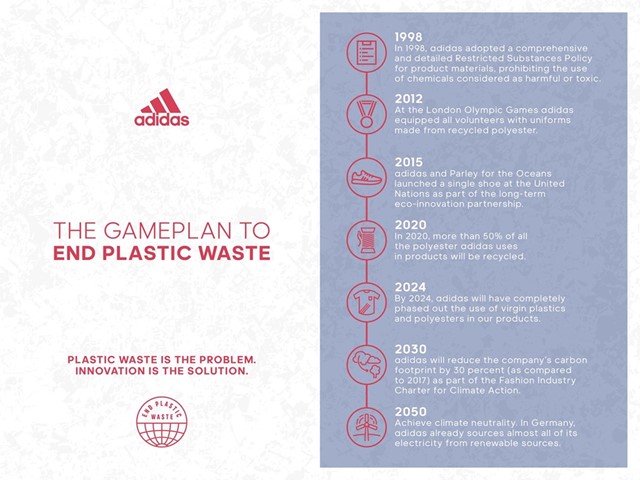\n\nThis is a smart move for the brand since their target audience is more environmentally aware than average.\n\nAdidas’ customer base is around 13-40 years old, but its key target audience is 15-30-year-olds from a higher-income background, often in urban areas. Research from Latana showed that young people feel strongly about sustainability, with [55% of 18-24-year-olds](https://latana.com/reports/sustainability-perception-index-2020/) saying they would not buy from a brand they knew to be acting unsustainably. \n\nAdidas says that its [strategic focus is on increasing brand credibility](https://www.adidas-group.com/en/group/strategy-overview/), elevating the experience for consumers, and pushing the boundaries in sustainability. The focus on sustainable products seems to be consumer-led.\n\nAdidas’ marketing playbook, referred to internally as \"Own the Game\", says, “Consumers drive structural trends in our industry through their preferences and behaviors. They strive to live active and healthy lives, they wish to blend sport and lifestyle, and they are digital by default as well as sustainable by conviction.”\n\nPut simply, consumers — especially the younger generations – want to buy from sustainable brands, and Adidas knows it.\n\nAdidas is also planning to move away from one-off sustainability initiatives and towards a [scaled and comprehensive sustainability program](https://www.adidas-group.com/en/group/strategy-overview/). \n\nDoes this mean we will be seeing more of Kermit and other green Disney characters? Let us know what you think!\n"},"tags":["Brand Marketing"],"authorRef":{"slug":"marilyn","firstName":"Marilyn","lastName":"Wilkinson","title":"Digital Marketing Expert","picture":{"__typename":"ContentfulAsset","id":"e78d550e-a31a-5186-820d-9513596e92d2","description":"","title":"Marilyn Wilkinson Prof Pic","file":{"contentType":"image/png","url":"//images.ctfassets.net/7so8go2zrvbw/1oCRDVeLkqM1iEpuSKa6YK/1ba47f67261d9419b9df6600b8a09c1e/Author_Marilyn.png","details":{"image":{"width":235,"height":235}}},"gatsbyImageData":{"images":{"sources":[{"srcSet":"//images.ctfassets.net/7so8go2zrvbw/1oCRDVeLkqM1iEpuSKa6YK/1ba47f67261d9419b9df6600b8a09c1e/Author_Marilyn.png?w=235&h=235&q=95&fm=webp 235w","sizes":"100vw","type":"image/webp"}],"fallback":{"src":"//images.ctfassets.net/7so8go2zrvbw/1oCRDVeLkqM1iEpuSKa6YK/1ba47f67261d9419b9df6600b8a09c1e/Author_Marilyn.png?w=235&h=235&q=95&fm=png","srcSet":"//images.ctfassets.net/7so8go2zrvbw/1oCRDVeLkqM1iEpuSKa6YK/1ba47f67261d9419b9df6600b8a09c1e/Author_Marilyn.png?w=235&h=235&q=95&fm=png 235w","sizes":"100vw"}},"layout":"fullWidth","backgroundColor":"#080808","width":1,"height":1}}}}},{"node":{"publishDate":"2020-07-02T00:00+02:00","slug":"streaming-services-covid","author":"Joy Corkery","title":"How Streaming Services Can Continue Growth After COVID-19","seo":{"__typename":"ContentfulSeo","title":"How Streaming Services Can Continue Growth","description":"Streaming services have been booming in the wake of COVID-19. But how can brands continue to scale that growth? The answers lie in our data.","noIndex":null,"ogImage":{"fluid":{"src":"//images.ctfassets.net/7so8go2zrvbw/ohhGPr9F3WDXKQmB1t5tX/21d59aaa2e109c7359c6e03c3074d280/streaming-services-covid_1.jpg?w=1200&h=675&q=90&fm=jpg"},"file":{"url":"//images.ctfassets.net/7so8go2zrvbw/ohhGPr9F3WDXKQmB1t5tX/21d59aaa2e109c7359c6e03c3074d280/streaming-services-covid_1.jpg"}}},"heroImage":{"__typename":"ContentfulAsset","id":"8d472408-9bfa-540a-aaf6-2b186ac750ba","description":"How Streaming Services Can Continue Growth After COVID-19","title":"How Streaming Services Can Continue Growth After COVID-19","file":{"contentType":"image/jpeg","url":"//images.ctfassets.net/7so8go2zrvbw/ohhGPr9F3WDXKQmB1t5tX/21d59aaa2e109c7359c6e03c3074d280/streaming-services-covid_1.jpg","details":{"image":{"width":1320,"height":803}}},"gatsbyImageData":{"images":{"sources":[{"srcSet":"//images.ctfassets.net/7so8go2zrvbw/ohhGPr9F3WDXKQmB1t5tX/21d59aaa2e109c7359c6e03c3074d280/streaming-services-covid_1.jpg?w=200&h=122&q=95&fm=webp 200w,\n//images.ctfassets.net/7so8go2zrvbw/ohhGPr9F3WDXKQmB1t5tX/21d59aaa2e109c7359c6e03c3074d280/streaming-services-covid_1.jpg?w=400&h=244&q=95&fm=webp 400w,\n//images.ctfassets.net/7so8go2zrvbw/ohhGPr9F3WDXKQmB1t5tX/21d59aaa2e109c7359c6e03c3074d280/streaming-services-covid_1.jpg?w=800&h=487&q=95&fm=webp 800w","sizes":"(min-width: 800px) 800px, 100vw","type":"image/webp"}],"fallback":{"src":"//images.ctfassets.net/7so8go2zrvbw/ohhGPr9F3WDXKQmB1t5tX/21d59aaa2e109c7359c6e03c3074d280/streaming-services-covid_1.jpg?w=800&h=487&fl=progressive&q=95&fm=jpg","srcSet":"//images.ctfassets.net/7so8go2zrvbw/ohhGPr9F3WDXKQmB1t5tX/21d59aaa2e109c7359c6e03c3074d280/streaming-services-covid_1.jpg?w=200&h=122&fl=progressive&q=95&fm=jpg 200w,\n//images.ctfassets.net/7so8go2zrvbw/ohhGPr9F3WDXKQmB1t5tX/21d59aaa2e109c7359c6e03c3074d280/streaming-services-covid_1.jpg?w=400&h=244&fl=progressive&q=95&fm=jpg 400w,\n//images.ctfassets.net/7so8go2zrvbw/ohhGPr9F3WDXKQmB1t5tX/21d59aaa2e109c7359c6e03c3074d280/streaming-services-covid_1.jpg?w=800&h=487&fl=progressive&q=95&fm=jpg 800w","sizes":"(min-width: 800px) 800px, 100vw"}},"layout":"constrained","backgroundColor":"#f8f8f8","width":800,"height":487}},"coverImage":null,"description":{"description":"Streaming services have been booming in the wake of COVID-19. But how can brands continue to scale that growth? The answers lie in our data."},"content":{"content":"Some of the biggest brands have been severely impacted by the COVID-19 pandemic. Thousands have resorted to mass lay offs to stay afloat, while others have closed their doors forever. But then there are the brands that have found themselves soaring.\n\nAn industry that was once more popular with innovators and early-tech adopters, [streaming services](https:/latana.com/post/brand-awareness-important-music-streaming-brands/) have truly made it to the mainstream. While the success of the Amazons) and Spotifysof the world won’t come as a surprise, even the startups of the streaming world, like Molotov, have [gained more users in a month in 2020](https://sifted.eu/articles/streaming-startups-coronavirus/) than they normally would in a year.\n\nBut is this exponential growth going to hang around post-COVID? We might be in a “new normal” now, but things are sure to change yet again. Some consumer behaviors developed during the pandemic will deplete but some will stick around. Will the transition to digital continue? How will brand loyalty change?\n\nWe can’t answer all these questions in this article but we can provide some fascinating insights into the streaming industry right now in Germany, Spain, France, and the UK. This article will explore streaming services going mainstream and the current reasoning for use. We determine if customers will stick around for the long-term and, finally, we provide streaming brands with insights and tips on how they can keep customers on board.\n\n## Streaming Services Have Gone Mainstream\n\nOne thing that’s for sure, and won’t come as a surprise, is that people globally are using streaming services at home more now than before the COVID-19 outbreak.\n\n\n\nNot that you needed a chart to tell you that. A quick Google search will overwhelm you with articles reporting on the success of streaming services during the pandemic: “[people are streaming twice as much video](https://www.fiercevideo.com/video/people-are-streaming-twice-as-much-video-during-covid-19-crisis-nielsen)”, “[households are streaming for up to 6 hours per day](https://www.comscore.com/Insights/Blog/Streaming-on-Connected-TVs-Increases-During-Coronavirus)”. But it is worth investigating what demographics or audiences are driving this increase.\n\nIt will also come as no surprise to see that streaming services are more common among innovative people who are always keen to try out new things. Even for them, usage has again dramatically increased during the pandemic: 60% report to stream more.\n\n\n\nThis audience insight will be especially useful as new streaming services, such as Disney+ and Apple TV, begin to take center stage. In fact, since the outbreak of COVID-19, Disney+ has managed to [double global subscriber numbers to 50 million](https://www.theguardian.com/media/2020/apr/09/disney-netflix-rival-doubles-subscriptions-in-virus-lockdown). It took Netflix seven years to reach this level.\n\nThe old-timers like Amazon and [Netflix](https://latana.com/post/how-netflix-thrives-on-controversy/) need to watch out. If we were them, we would already start marketing to this audience and give them something new to shout about. Innovators create momentum. They are influential people who can bring a new, niche product or service into the mainstream as they like to recommend the best service experience to non-innovators - from friends to grandparents and everyone in between. This is more or less a form of free marketing for brands.\n\nIf you are going to target a specific segmentation, make sure you target them in the right places. Information such as region is incredibly important to companies running offline campaigns (which often increase when a company decides to focus more on branding). Thousands spent on billboard campaigns will go to waste if your audience isn’t around to see them.\n\n## Non-Innovators the New Normal?\n\nLet’s look at our last chart again.\n\n\n\nWhile it is clear that innovators are using streaming services more than anybody else, non-innovators are not far behind. 45% of non-innovators are streaming more since the outbreak of COVID-19. While innovators may hang around as long as you keep your service innovative, the mainstream audience is more fickle. Brands will need to make an extra effort to keep them on board.\n\n## The Rush Won’t Last Forever\n\nBrands, you may be thinking “hmm, this is an interesting insight but why bother marketing now”? Haven’t we all gained new subscribers?” Well, they might not be hanging around for long. Below are the reasons why everyone, innovators and non-innovators alike, are currently using streaming services.\n\n\n\nThe main reasons are tied in with the fact that due to various levels of lockdown and job loss/reduction around the world, people have more time to spare. This spare time, or at least part of it, is being filled by streaming services.\n\nLooking at these reasons, you may expect a decline in usage once countries begin to reopen. A quick glimpse of the chart below shows that a big churn may in fact be the case as we see that all respondents plan to use streaming services less once the government restrictions on COVID-19 are lifted.\n\n\n\nThat doesn’t mean that streaming services will plummet in terms of users again somewhere down the line. There are opportunities for brands to maintain growth, or at least manage churn.\n\n## Increased Long-Term Usage for Streaming Services\n\nIncreased subscription profits may dwindle away pretty fast if brands don’t work on proving their value to consumers in the long term. In fact, Amazon Prime is the only popular streaming service that has added something extra to its customers in the last months: German Prime members can view some Bundesliga matches free of charge and [kids TV shows and movies are being streamed for free](https://techcrunch.com/2020/03/23/amazon-prime-video-is-streaming-kids-movies-and-tv-for-free-no-prime-membership-required/), even for non-Prime members.\n\nThis is the perfect time to call out Spotify who really needs to work on their brand marketing right now. While Netflix and Disney might be able to ride the COVID wave and enjoy increased profit a little longer, Spotify has been suffering these last months. According to [Barrons.com](https://www.barrons.com/articles/spotify-was-meant-to-gain-from-covid-19-it-may-not-be-happening-51586196389), “engagement has slowed, with Spotify’s top 200 streams worldwide down 12%, with declines of 16% in the U.S. and 20% in Italy... podcast listening also has declined... downloads of music apps have slowed as consumers focus on productivity and entertainment apps.”\n\nWhat streaming brands need is some insights into how consumers are feeling right now and how their lives have changed. This requires more than it ever has: listening to your customers and closely observing consumer patterns. The next section will provide information that can be incorporated into campaigns to better appeal to consumers.\n\n## Be Sensitive Regarding Consumers’ Lives\n\nStreaming services are going to have a challenge on their hands. The majority of respondents stated that they are using the services more because they have more free time. Unfortunately, the economy has been massively hit by the pandemic, meaning there is no clear answer as to when “normal” daily activity will resume and for how many people. But, there is a big risk that users will switch off and cancel subscriptions. If brands decide to capitalize on this, they need to do it respectfully. With many jobs reduced or cut and high numbers of people ill, the decision to have more time at home was taken out of their hands. Consider this in your marketing message.\n\nWe saw earlier that using streaming services for comfort and stress-relief is the third biggest reason why brands have experienced an increase in growth. At 19%, it may not encompass the majority of our survey respondents, but it is the safest bet for converting people into long-term users. With the [rise of stress relief in the form of meditation apps](https://techcrunch.com/2020/01/30/top-10-meditation-apps-pulled-in-195m-in-2019-up-52-from-2018/) for instance, consumers won’t be opposed to or offended by suggestions on how to enjoy a more relaxed lifestyle.\n\nDon’t forget to look beyond the people currently using your service to enhance future marketing.\n\n\n\nAn article in the New York Times reported on “a wave of new social science research that shows that the quality of shows can influence us in important ways, shaping our thinking and political preferences, even affecting our cognitive ability.” Within this study, it was found that what people decide to watch can shape them. For example, certain content can make viewers feel relaxed, while other types of content can agitate and even evoke violence.\n\n[1 in 3 people actively avoids the news](https://www.linkedin.com/pulse/one-three-people-actively-avoid-news-do-you-isabelle-roughol/) due to increased feelings of anxiety. Give them a safe place to turn to by running marketing campaigns advertising content that will help them feel this way. Remember, the best way to connect with your target audience is to understand them and tap into how they are feeling. And what’s the golden rule in getting consumers on board with your product: provide them with value. There are a vast number of ways in which a brand can provide value but we are referring to its numerical meaning here.\n\nLife has sadly taken a turn for the worse for many people. Just look at the chart below.\n\n\n\nThe income of over half of the people surveyed has worsened as a result of COVID-19. These same people might be bored or need a distraction to lessen their anxiety but the choice of whether or not to cancel a subscription may well come down to their personal budget.\n\nAgain, this is an insight in which you must handle delicately if you decide to use it in your marketing. Concentrate on the lowest price options and really highlight the benefits of your service. Compare what you can offer to the competition. Give people a reason to stay. The main point to remember, for all brands, is that the world has changed significantly. Brands cannot ride on the experiences of a post-COVID world. There is a new normal and it’s here to stay.\n\nRemember, the best way to drive sales is to create a brand that consumers can relate to. To do this, you need to be in tune with your target audience. You need to understand their situation, worries, needs in order to make a connection. A strong brand is what will help you survive the COVID slump.\n\n_Latana is pioneering the use of [Multilevel Regression and Postratification](https://latana.com/mrp/) for brand-related research and at the forefront of [higher data quality](https://latana.com/data-confidence/). A sample of n=2175 online-connected respondents in Germany, Spain, France, and the UK was collected over 4 days. We used a method called MRP (multilevel regression and poststratification) to post-process the raw survey data. This method is frequently used in quantitative political science to adjust for sample bias and to yield stable small area estimates._"},"tags":["Brand Insights","Brand Strategy"],"authorRef":{"slug":"joy","firstName":"Joy","lastName":"Corkery","title":"Head of Content Operations","picture":{"__typename":"ContentfulAsset","id":"ff88263c-7542-5e55-a02b-a2fe1c8aade4","description":"","title":"Joy Corkery Prof Pic","file":{"contentType":"image/png","url":"//images.ctfassets.net/7so8go2zrvbw/dBdnR37lTp2H5fzrmQrH4/b85552fa4e33c6f843f1385c20c18947/Author_Joy.png","details":{"image":{"width":235,"height":235}}},"gatsbyImageData":{"images":{"sources":[{"srcSet":"//images.ctfassets.net/7so8go2zrvbw/dBdnR37lTp2H5fzrmQrH4/b85552fa4e33c6f843f1385c20c18947/Author_Joy.png?w=235&h=235&q=95&fm=webp 235w","sizes":"100vw","type":"image/webp"}],"fallback":{"src":"//images.ctfassets.net/7so8go2zrvbw/dBdnR37lTp2H5fzrmQrH4/b85552fa4e33c6f843f1385c20c18947/Author_Joy.png?w=235&h=235&q=95&fm=png","srcSet":"//images.ctfassets.net/7so8go2zrvbw/dBdnR37lTp2H5fzrmQrH4/b85552fa4e33c6f843f1385c20c18947/Author_Joy.png?w=235&h=235&q=95&fm=png 235w","sizes":"100vw"}},"layout":"fullWidth","backgroundColor":"#080808","width":1,"height":1}}}}},{"node":{"publishDate":"2021-01-07T09:00+01:00","slug":"brand-survey-questions-mobile","author":"Marilyn Wilkinson","title":"How to Write Brand Survey Questions Ready for Mobile","seo":{"__typename":"ContentfulSeo","title":"How to Write Brand Survey Questions Ready for Mobile","description":"Ensuring your brand survey questions are optimized for mobile is essential. Otherwise, you risk frustrating your customers and missing out on insights.","noIndex":null,"ogImage":{"fluid":null,"file":{"url":"//images.ctfassets.net/7so8go2zrvbw/4fNa9byjKipG6bJQIshc4b/707873a7bdcd9200afcb237d0b5d9635/Image_Surveys.svg"}}},"heroImage":{"__typename":"ContentfulAsset","id":"d758d3e2-ea9d-58fa-abaa-685882cbeba7","description":"","title":"Image Surveys","file":{"contentType":"image/svg+xml","url":"//images.ctfassets.net/7so8go2zrvbw/4fNa9byjKipG6bJQIshc4b/707873a7bdcd9200afcb237d0b5d9635/Image_Surveys.svg","details":{"image":{"width":600,"height":500}}},"gatsbyImageData":null},"coverImage":null,"description":{"description":"Ensuring your brand survey questions are optimized for mobile is essential. Otherwise, you risk frustrating your customers and missing out on insights."},"content":{"content":"What do customers really think of your brand? [Brand survey](https://latana.com/whitepapers/mobile-optimized-surveys/) questions make it possible to uncover a wealth of consumer insights direct from the horse’s mouth. Companies can use this information to make product improvements, tweak their [positioning](https://latana.com/post/brand-tracking-brand-positioning/), or gain a competitive advantage.\n\nBut consider this.\n\nImagine you’ve set up a survey and sent it to 1000 of your customers. Excited, you sit back and wait for the responses to come flooding in, so you can slice and dice the data and push through some exciting changes to your brand. And then…. Nothing. Or maybe a couple of half-hearted responses, which aren’t enough to reach the statistical significance you need to guide your marketing strategy.\n\nWhy do scenarios like this happen? These days, your customers are using their mobile devices for almost everything, and brand surveys are no exception. However, a poor mobile experience will quickly lead to frustration. \n\nIn fact, customers are [5X more likely](https://www.intechnic.com/blog/100-ux-statistics-every-user-experience-professional-needs-to-know/) to abandon a task if the interface isn’t optimized for mobile and [52% of users](https://www.intechnic.com/blog/100-ux-statistics-every-user-experience-professional-needs-to-know/) say a bad mobile experience makes them less likely to engage with a brand.\n\nEnsuring your brand survey questions are optimized for mobile is essential. Otherwise, you risk antagonizing your customers and missing out on precious insights. There are 5 key questions you need to ask when writing a brand survey:\n1. Is there a logical flow with one question per screen? \n2. Can the user respond using interactions native to mobile (swipe, tap and touch)? \n3. Is the user interface simple enough so that the screen doesn’t look cluttered?\n4. Is there enough contrast between the font color and the background? \n5. Is the font easy to read? \n\nRead on to learn how to answer these questions and design mobile-optimized brand surveys so you can achieve higher response rates and feel confident about the results.\n\n## Designing a Brand Survey for Mobile Requires a Complete Rethink\n\nThe ways of interacting on a mobile device are very different compared to a laptop. Dragging and dropping won’t work on a mobile device - instead, the average mobile user will tap, swipe, and click their phone [2,617 times a day](https://review42.com/smartphone-statistics/). You need to ensure your survey is geared up to incorporate these actions, so users can easily respond in a way that feels natural to them.\n\nThink about how popular mobile apps make interaction effortless - such as Tinder’s iconic left and right swipe. On mobile, people are on the go and their attention span is more fickle, so you need to make the experience as seamless as possible for them. \n\n\n\n## A Simple and Intuitive Design is Key\n\nEvery button, image, and line of text takes up space and can quickly look cluttered on a small, mobile screen. Therefore, you need to be highly discerning and think critically about what to include in your survey. As Antoine de Saint-Exupéry famously said, “Perfection is achieved when there is nothing left to take away.” \n\nSeveral screens with one question and a simple layout are infinitely preferable to a single, cluttered screen, which is likely to result in your customers feeling overwhelmed, not fully understanding your questions, or omitting key pieces of information. \n\nA simple flow with one question per screen, without needing to scroll or change screen size, will enable respondents to focus on their answers and provide you with reliable brand insights.\n\n\n\n## It’s All About the Buttons\n\nHave you ever entered a survey response only for it to jump to the next question, possibly before you’ve even finished? And then there’s no way to change your mind? \n\nSometimes marketers implement this kind of system in a misguided attempt to improve the user experience (UX). The less a user needs to click, the quicker and easier it is for them, right? Well, not always.\n\n“Next” buttons are vital for mobile surveys. UX experts recommend implementing a two-point system where the user responds to the question and then clicks “next”. This prevents users from accidentally selecting an incorrect option or forgetting their response, which improves user experience and has a positive effect on data quality.\n\n## Make Your Survey Questions Easy to Read\n\nAn easy way to scare off your respondents is to present them with lots of text-heavy questions. Research shows users tend to scan and skim on mobile, rather than read every word. Therefore, your questions need to be concise and visually appealing. \n\nIs the font easy to read? Is there a decent contrast between the font color and the background? Get to the point quickly and ensure the text is inviting so that your customers can provide the insights you are seeking without experiencing respondent fatigue.\n\n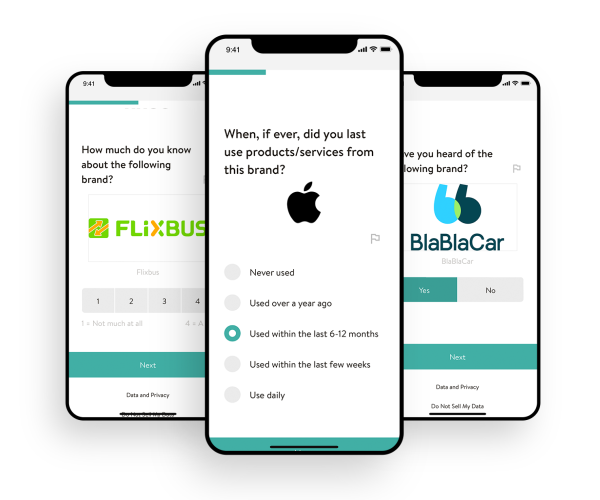\n\n## Avoid Question Formats That Aren’t Mobile-friendly\n\nConsider carefully which formats you will incorporate into your survey. Multi-attribute questions and statement questions can be overwhelming, especially if there are too many options as they will not all fit onto one screen. Also avoid drop-downs, as these can be fiddly on mobile. \n\n## Minimize the Need for Typing\n\nDid we mention how mobile users value convenience? Scientists even found a link between reliance on mobile devices and lazy thinking! While you may sometimes need to offer customers the freedom to enter their own response, treat open questions with caution. Usually, people are reluctant to spend time typing out an answer. It’s easier to select predefined options from a list, so try to prefill fields with the most likely default values.\n\n## Final Thoughts\n\nMobile users these days are accustomed to dealing with Amazon and Uber - they expect responsive websites and fast, flawless mobile experiences. Armed with the information from this article, you now know enough to check your brand survey is mobile-friendly before sending it to your customers. \n\nRemember, important questions to put on your pre-launch checklist include:\n1. Is there a logical flow with one question per screen? \n2. Can the user respond using interactions native to mobile (swipe, tap and touch)? \n3. Is the user interface simple enough so that the screen doesn’t look cluttered?\n4. Is there enough contrast between the font color and the background? \n5. Is the font easy to read? \n\nBrand surveys represent a great way to connect with your customers. By ensuring that they can easily answer your questions on the go, you are showing that you respect their time and make it easy for them to provide you with the insights you are seeking. This will help you achieve a higher response rate, more truthful answers, and improved [data quality](https://latana.com/data-confidence/). Ensuring your brand surveys are mobile-friendly is essential in order to deliver reliable, actionable insights you can use to measure and build your brand."},"tags":["Brand Insights","Brand Tracking"],"authorRef":{"slug":"marilyn","firstName":"Marilyn","lastName":"Wilkinson","title":"Digital Marketing Expert","picture":{"__typename":"ContentfulAsset","id":"e78d550e-a31a-5186-820d-9513596e92d2","description":"","title":"Marilyn Wilkinson Prof Pic","file":{"contentType":"image/png","url":"//images.ctfassets.net/7so8go2zrvbw/1oCRDVeLkqM1iEpuSKa6YK/1ba47f67261d9419b9df6600b8a09c1e/Author_Marilyn.png","details":{"image":{"width":235,"height":235}}},"gatsbyImageData":{"images":{"sources":[{"srcSet":"//images.ctfassets.net/7so8go2zrvbw/1oCRDVeLkqM1iEpuSKa6YK/1ba47f67261d9419b9df6600b8a09c1e/Author_Marilyn.png?w=235&h=235&q=95&fm=webp 235w","sizes":"100vw","type":"image/webp"}],"fallback":{"src":"//images.ctfassets.net/7so8go2zrvbw/1oCRDVeLkqM1iEpuSKa6YK/1ba47f67261d9419b9df6600b8a09c1e/Author_Marilyn.png?w=235&h=235&q=95&fm=png","srcSet":"//images.ctfassets.net/7so8go2zrvbw/1oCRDVeLkqM1iEpuSKa6YK/1ba47f67261d9419b9df6600b8a09c1e/Author_Marilyn.png?w=235&h=235&q=95&fm=png 235w","sizes":"100vw"}},"layout":"fullWidth","backgroundColor":"#080808","width":1,"height":1}}}}},{"node":{"publishDate":"2021-07-22T08:00+02:00","slug":"5-branding-tips-mid-sized-companies","author":"Madeline Duke","title":"5 Branding Tips Mid-Sized Companies Can Steal from Large Companies","seo":{"__typename":"ContentfulSeo","title":"5 Branding Tips From The World’s Biggest Brands","description":"Branding tips from the world’s biggest brands and how they can help mid-sized companies grow.","noIndex":null,"ogImage":{"fluid":{"src":"//images.ctfassets.net/7so8go2zrvbw/20O86HOBjwroYk5bxnKNti/c230f858612f511c53bc9a44717302e4/Thumbnail_1000X709.png?w=1200&h=675&q=90&fm=jpg"},"file":{"url":"//images.ctfassets.net/7so8go2zrvbw/20O86HOBjwroYk5bxnKNti/c230f858612f511c53bc9a44717302e4/Thumbnail_1000X709.png"}}},"heroImage":{"__typename":"ContentfulAsset","id":"bfbac7ec-594b-52c3-b7b5-62df53b86764","description":"Man with brand logos above his head","title":"Man with brand logos above his head","file":{"contentType":"image/png","url":"//images.ctfassets.net/7so8go2zrvbw/20O86HOBjwroYk5bxnKNti/c230f858612f511c53bc9a44717302e4/Thumbnail_1000X709.png","details":{"image":{"width":3000,"height":2127}}},"gatsbyImageData":{"images":{"sources":[{"srcSet":"//images.ctfassets.net/7so8go2zrvbw/20O86HOBjwroYk5bxnKNti/c230f858612f511c53bc9a44717302e4/Thumbnail_1000X709.png?w=200&h=142&q=95&fm=webp 200w,\n//images.ctfassets.net/7so8go2zrvbw/20O86HOBjwroYk5bxnKNti/c230f858612f511c53bc9a44717302e4/Thumbnail_1000X709.png?w=400&h=284&q=95&fm=webp 400w,\n//images.ctfassets.net/7so8go2zrvbw/20O86HOBjwroYk5bxnKNti/c230f858612f511c53bc9a44717302e4/Thumbnail_1000X709.png?w=800&h=567&q=95&fm=webp 800w,\n//images.ctfassets.net/7so8go2zrvbw/20O86HOBjwroYk5bxnKNti/c230f858612f511c53bc9a44717302e4/Thumbnail_1000X709.png?w=1600&h=1134&q=95&fm=webp 1600w","sizes":"(min-width: 800px) 800px, 100vw","type":"image/webp"}],"fallback":{"src":"//images.ctfassets.net/7so8go2zrvbw/20O86HOBjwroYk5bxnKNti/c230f858612f511c53bc9a44717302e4/Thumbnail_1000X709.png?w=800&h=567&q=95&fm=png","srcSet":"//images.ctfassets.net/7so8go2zrvbw/20O86HOBjwroYk5bxnKNti/c230f858612f511c53bc9a44717302e4/Thumbnail_1000X709.png?w=200&h=142&q=95&fm=png 200w,\n//images.ctfassets.net/7so8go2zrvbw/20O86HOBjwroYk5bxnKNti/c230f858612f511c53bc9a44717302e4/Thumbnail_1000X709.png?w=400&h=284&q=95&fm=png 400w,\n//images.ctfassets.net/7so8go2zrvbw/20O86HOBjwroYk5bxnKNti/c230f858612f511c53bc9a44717302e4/Thumbnail_1000X709.png?w=800&h=567&q=95&fm=png 800w,\n//images.ctfassets.net/7so8go2zrvbw/20O86HOBjwroYk5bxnKNti/c230f858612f511c53bc9a44717302e4/Thumbnail_1000X709.png?w=1600&h=1134&q=95&fm=png 1600w","sizes":"(min-width: 800px) 800px, 100vw"}},"layout":"constrained","backgroundColor":"#6828b8","width":800,"height":567}},"coverImage":null,"description":{"description":"Branding tips from the world’s biggest brands and how they can help mid-sized companies grow."},"content":{"content":"All companies must depend on innovation and keeping good on their promises if they want to grow. They must look and get branding tips from the competition — and then find a way to do it better.\n\nFor a mid-sized company, it can be pretty daunting looking to the world’s biggest companies for branding tips — particularly if you don’t have a huge budget or team. Yet, these big brands didn’t become this way simply because of money. Some of their best branding strategies can be applied to companies of any size. \n\nIn this article, we look to the big players for inspiration — [without focusing too much on budget](https://latana.com/post/budget-increase-brand-awareness/). Read on to discover five branding tips that mid-sized businesses can apply to their own brand strategy to achieve growth.\n\n## Branding Tip 1: Focus on Social Impact\n\n\n\nPeople are increasingly expecting more from the brands, holding them accountable to the values they tout. They expect speed, self-service, and convenience — but also expect brands to live up to a number of social values, too.\n\n[Young consumers in particular](https://www.mckinsey.com/business-functions/marketing-and-sales/our-insights/the-future-of-brand-strategy-its-time-to-go-electric) are mindful of social and environmental impact. For example, they no longer find it acceptable for companies to be silent on social justice issues and neither do they accept a [lack of diversity or inclusiveness in marketing campaigns](https://latana.com/post/why-rainbow-washing-is-bad/). \n\nThe best brands pay attention and respond accordingly — or they get cancelled. By incorporating social responsibility or sustainability into a brand’s ethos and, importantly, [living up to any promises and claims](https://latana.com/post/greenwashing-sustainable-brand/), purpose-driven brands achieve twice the brand value growth of their peers. \n\n### Mini Case Studies: Adidas and Patagonia\n\nLarge companies have found ways to incorporate social or environmental impact into their branding. In an effort to highlight the brand’s commitment to sustainability, [Adidas paired with Disney’s Kermit the Frog](https://latana.com/post/kermit-the-frog-adidas/) to launch a range of their classic Stan Smith sneakers made from recycled materials. \n\nWhile Adidas is far from the world’s most sustainable or environmentally friendly brand, [brand partnership initiatives](https://latana.com/post/co-branding/) like this contribute to a shift in consumer attitudes towards the brand and how it lives up to its corporate social responsibility as a global brand.\n\nOther brands take their sense of obligation much further. Well established as a leading brand in the space of environmental and social impact, Patagonia donates 1% of all sales to environmental organizations globally and makes all their products from sustainable or recycled materials. Sustainability and ethical production are at the core of the [brand’s identity](https://latana.com/post/brand-identity-branding-essential-growing-company/), and it’s working for them, with wide recognition as one of the most socially responsible brands and [continued company success](https://www.forbes.com/sites/roncarucci/2021/04/21/how-patagonias-purpose-is-once-again-raising-the-bar-on-doing-the-right-thing/?sh=59304838777c). \n\n### Branding Tip\n\nMid-sized companies too can take steps — large or small — towards becoming more sustainable, treating workers better, donating to charities and causes, and even engaging in activism. Even by taking a clearer stance on political topics such as racism and sexuality on social media, brands can better align socially and build stronger relationships with their customer base and audience.\n\nOne step mid-size brands can take right now is to apply for formal recognition, such as B Corp certification. In doing so, they join a global community of brands and organizations working towards doing business for good by meeting stringent standards of social and environmental performance, transparency, and accountability.\n\n## Branding Tip 2: Focus on Brand-Driven Storytelling\n\n\n\nHighly creative brands [consistently outperform their competitors](https://www.mckinsey.com/business-functions/mckinsey-digital/our-insights/creativitys-bottom-line-how-winning-companies-turn-creativity-into-business-value-and-growth). By embedding brand campaigns with stories that move, thrill, or amuse [target audiences](https://latana.com/post/7-steps-perfect-target-audience/), brands like Airbnb, Lego, and Nike successfully cut through the clutter to connect with and win new and loyal customers. \n\nConsumers have come to expect their favorite brands to provide a compelling story, rather than focusing solely on product benefits or brand attributes. Today, it is a better strategy to convey the identity of a brand in a way that resonates and establishes a lasting connection.\n\n### Mini Case Studies: Airbnb, Nike, and Lego\n\nAt Airbnb, rather than telling the company’s story itself, Airbnb incorporates hosts and their properties into brand-driven storytelling, which has been a highly effective brand strategy for Airbnb. This approach allows them to convey what one can expect an Airbnb stay to be like, in a way that resonates with guests, and subtly shares what the brand is all about — unique experiences, rather than just rooms for rent.\n\nNike has been leveraging the power of great storytelling for decades. Almost everything the brand does involves storytelling, not just about the brand itself, or about celebrities, but everyday people as well. Storytelling itself is at the core of the brand ethos. \n\nJust one example is the brand’s partnership with Michael Jordan. Nike has incorporated the iconic athlete’s career story into many brand advertising campaigns. \n\n\n\nSince 1932, LEGO has diversified into movies, video games, television shows, and even major amusement parks — bringing their products to life through highly relatable storytelling across multiple mediums and platforms. What makes LEGO’s products exciting is not the sets of interlocking bricks and figures, but the imagination that children (and adults!) all over the globe bring to the way they play. \n\nIdentifying that play and imagination are at the core of the brand’s value and bringing this philosophy to life in the LEGO movies and other platforms has been critical to the brand’s ability to evolve from a plastic kids toy to an [entertainment and media company](https://www.researchgate.net/publication/327137614_The_impact_of_Storytelling_and_Content_Marketing_on_the_LEGO_brand_-_Abstract_Bachelor's_dissertation).\n\n### Branding Tip\n\nGood quality storytelling doesn’t mean you need to partner with major celebrities or transform your business into a media conglomerate. What makes storytelling successful is the brand’s ability to truly understand the value of their brand, product, or service, as well as who buys, uses, or interacts with it. \n\nBringing an authenticity to the way your brand story is told is more important than a splashy campaign that will blow the budget. Ask yourself, does the story embody the identity and values of the brand? Does it go beyond simply communicating the brand story or product benefits? What brand-driven storytelling can you incorporate into your next branding campaign? \n\n## Branding Tip 3: Remember Brand Consistency\n\n\n\nThe [world’s most recognizable brands](https://latana.com/post/brand-recognition/) strive to ensure that the way a consumer experiences their brand is consistent at every touchpoint, from website through to packaging and even scent. With ever-increasing choices and channels available to consumers, factors like brand trustworthiness and brand integrity are more important than ever for brands to build loyalty and [brand affinity](https://latana.com/post/guide-brand-affinity/). \n\nConsistency forms the foundation upon which these can be built. On the other hand, inconsistencies can undermine the brand and confuse or even aggravate customers who feel they’ve been misled. \n\n### Mini Case Study: McDonald's\n\nVisit a McDonald’s restaurant anywhere in the world, and you’ll see the same familiar golden arches. Order french fries and the staff will use the same method to prepare and serve a product that will look and taste the same no matter where you are. \n\nMcDonald’s knows the importance of consistency to developing a powerful brand that resonates and builds trust with customers.\n\n### Branding Tip\n\nMid-sized companies can ensure brand consistency by implementing brand guidelines that ensure that brand image and personality can be applied to all aspects of their business. \n\nA consistent tone of voice across all social media channels is a great place to start. Another is to keep consistent color schemes and design elements across all online and offline platforms — from printed sales literature, to in-store signage and email newsletters. Getting your whole team on-board with brand guidelines is particularly important — that way, everyone is empowered to make informed decisions about the way the brand is represented.\n\n## Branding Tip 4: Leverage Employer Branding\n\n\n\nAnother advantage to training staff on brand guidelines has to do with how your brand is perceived by employees and candidates. Utilizing the power of the company’s workforce can be a particularly impactful aspect to branding. Employees acting as brand advocates is an important strategy for attracting and retaining a strong and engaged workforce.\n\nOrganizations with positive employer branding tend to have an engaged and motivated workforce of people who are also often willing to advocate for the company’s brands, products, and services. More than the company’s ability to attract and retain talent — employee branding has to do with the willingness and preparedness of employees to advocate for the company’s brand.\n\n### Mini Case Studies: Glassdoor and Google\n\nRanking first in Glassdoor’s Best Places to Work in 2020, HubSpot has made the most of employer branding opportunities. Providing marketing and sales products to help other businesses with their own branding, HubSpot has earned a reputation for having a supportive and inclusive culture. \n\nHubSpot employees are particularly enthusiastic brand advocates and ambassadors, not only attracting high-quality candidates to join the team, but also reinforcing the HubSpot brand values and experience.\n\nAttracting some three million job applicants a year, Google is another example of a large company optimizing employer branding opportunities. Using research on the impact of culture on the working environment, Google aims to foster a workplace where employees feel safe, valued, and like their work has meaning and impact. Known around the world for being an innovative, prestigious, and thrilling place to work — they’re getting something right.\n\n### Branding Tip\n\nYou don’t have to be a household brand name to attract great talent or have employees speak highly of your brand. With the right training, tools, and culture, employees can add value to the company brand and how it’s presented in different spaces. \n\nMid-sized companies can start by focusing on consistently delivering a positive day-to-day experience for employees, seeking feedback, and providing opportunities for personal growth and development. Also, it's helpful to create opportunities where the staff to experience the brand, so that they too can understand the customer experience.\n\nBy educating your workforce about your brand's values, attributes, and promise, you can foster a positive culture that supports engaging and positive conversations about the brand.\n\n## Branding Tip 5: Make Data-Driven Decisions\n\n\n\nOne of the most useful branding tips to borrow from large companies is to embrace new methods of tracking your brand. By utilizing available sources of data, companies of all sizes can better understand their brand health and make informed decisions about campaigns or rebranding efforts. [Brand monitoring](https://latana.com/product/) can provide insights into brand KPIs such as awareness, association, experience, purchase behaviour, and engagement.\n\nBrand tracking is the [continuous monitoring of your brand’s health](https://latana.com/post/what-is-brand-tracking-and-why-do-you-need-it/) over a period of time. It provides a means to understand what your target audiences think of your brand and how they respond to your brand messaging. It allows you to track your competitors, compare your brand performance across different markets, and identify new market opportunities.\n\nIn the past, accurate and meaningful brand tracking was more difficult and time-consuming to perform, but nowadays almost every large company utilizes advanced brand tracking to make smarter and more impactful decisions.\n\nAI-supported brand tracking allows brand managers to record and optimize brand performance across all touchpoints, cultivate better connections, and drive loyalty, and monitor other brand KPIs. \n\nBeing able to access brand insights in a timely and accurate manner enables branding and marketing budgets and ROI to be managed and measured more effectively, too.\n\n### Branding Tip\n\nWhile brand tracking can be undertaken by gathering information through surveys and social media listening tools, this approach can be cumbersome and inaccurate. \n\nTo accurately measure important brand KPIs like brand experience, brand associations, or brand engagement — look for a solution that meets your unique needs. Thankfully, there are some great brand tracking tools available.\n\n## Final Thoughts\n\nAt its most basic, a brand represents a promise and an expectation – no matter the size of the company. While some of the strategies used by large companies may seem inaccessible to mid-sized or small businesses, it’s often just a case of adapting an approach, strategy, or philosophy to the level of resources you do have. \n\nThese five branding tips are just a starting point to strengthening your brand strategy. Make sure to check out our other articles for additional information and advice on how you can improve and grow your brand. "},"tags":["Brand Strategy"],"authorRef":{"slug":"maddie-duke","firstName":"Maddie","lastName":"Duke","title":"Freelance Marketer","picture":{"__typename":"ContentfulAsset","id":"65901de7-355f-5f2e-9afc-385164b94bae","description":"","title":"Maddie Duke","file":{"contentType":"image/png","url":"//images.ctfassets.net/7so8go2zrvbw/1qNUFRwb4TLmuiGH10JDui/9824682cacd443a03bc5e15e39fe2582/Author_Maddie.png","details":{"image":{"width":235,"height":235}}},"gatsbyImageData":{"images":{"sources":[{"srcSet":"//images.ctfassets.net/7so8go2zrvbw/1qNUFRwb4TLmuiGH10JDui/9824682cacd443a03bc5e15e39fe2582/Author_Maddie.png?w=235&h=235&q=95&fm=webp 235w","sizes":"100vw","type":"image/webp"}],"fallback":{"src":"//images.ctfassets.net/7so8go2zrvbw/1qNUFRwb4TLmuiGH10JDui/9824682cacd443a03bc5e15e39fe2582/Author_Maddie.png?w=235&h=235&q=95&fm=png","srcSet":"//images.ctfassets.net/7so8go2zrvbw/1qNUFRwb4TLmuiGH10JDui/9824682cacd443a03bc5e15e39fe2582/Author_Maddie.png?w=235&h=235&q=95&fm=png 235w","sizes":"100vw"}},"layout":"fullWidth","backgroundColor":"#080808","width":1,"height":1}}}}},{"node":{"publishDate":"2021-10-11T08:00+02:00","slug":"is-localization-right-for-your-brand","author":"Cory Schröder","title":"Is Localization Marketing Right for Your Brand?","seo":{"__typename":"ContentfulSeo","title":"Is Localization Marketing Right for Your Brand?","description":"Localization marketing is not for everyone — but for brands that are ready to take this strategy on, it can launch them to the next level. Learn more here!","noIndex":null,"ogImage":{"fluid":{"src":"//images.ctfassets.net/7so8go2zrvbw/WbPtOjVfyX3z4obU4DoC6/bc2b662a614f90705685d8b2b674258d/Blog_SEO-Thumbnail_1000X709__25_.png?w=1200&h=675&q=90&fm=jpg"},"file":{"url":"//images.ctfassets.net/7so8go2zrvbw/WbPtOjVfyX3z4obU4DoC6/bc2b662a614f90705685d8b2b674258d/Blog_SEO-Thumbnail_1000X709__25_.png"}}},"heroImage":{"__typename":"ContentfulAsset","id":"563319c8-5e08-5d3f-a844-cc6e59be405c","description":"","title":"Illustration of Localization Marketing with 3 people and speech bubbles (Thumbnail)","file":{"contentType":"image/png","url":"//images.ctfassets.net/7so8go2zrvbw/WbPtOjVfyX3z4obU4DoC6/bc2b662a614f90705685d8b2b674258d/Blog_SEO-Thumbnail_1000X709__25_.png","details":{"image":{"width":1000,"height":709}}},"gatsbyImageData":{"images":{"sources":[{"srcSet":"//images.ctfassets.net/7so8go2zrvbw/WbPtOjVfyX3z4obU4DoC6/bc2b662a614f90705685d8b2b674258d/Blog_SEO-Thumbnail_1000X709__25_.png?w=200&h=142&q=95&fm=webp 200w,\n//images.ctfassets.net/7so8go2zrvbw/WbPtOjVfyX3z4obU4DoC6/bc2b662a614f90705685d8b2b674258d/Blog_SEO-Thumbnail_1000X709__25_.png?w=400&h=284&q=95&fm=webp 400w,\n//images.ctfassets.net/7so8go2zrvbw/WbPtOjVfyX3z4obU4DoC6/bc2b662a614f90705685d8b2b674258d/Blog_SEO-Thumbnail_1000X709__25_.png?w=800&h=567&q=95&fm=webp 800w","sizes":"(min-width: 800px) 800px, 100vw","type":"image/webp"}],"fallback":{"src":"//images.ctfassets.net/7so8go2zrvbw/WbPtOjVfyX3z4obU4DoC6/bc2b662a614f90705685d8b2b674258d/Blog_SEO-Thumbnail_1000X709__25_.png?w=800&h=567&q=95&fm=png","srcSet":"//images.ctfassets.net/7so8go2zrvbw/WbPtOjVfyX3z4obU4DoC6/bc2b662a614f90705685d8b2b674258d/Blog_SEO-Thumbnail_1000X709__25_.png?w=200&h=142&q=95&fm=png 200w,\n//images.ctfassets.net/7so8go2zrvbw/WbPtOjVfyX3z4obU4DoC6/bc2b662a614f90705685d8b2b674258d/Blog_SEO-Thumbnail_1000X709__25_.png?w=400&h=284&q=95&fm=png 400w,\n//images.ctfassets.net/7so8go2zrvbw/WbPtOjVfyX3z4obU4DoC6/bc2b662a614f90705685d8b2b674258d/Blog_SEO-Thumbnail_1000X709__25_.png?w=800&h=567&q=95&fm=png 800w","sizes":"(min-width: 800px) 800px, 100vw"}},"layout":"constrained","backgroundColor":"#08c8b8","width":800,"height":567}},"coverImage":{"__typename":"ContentfulAsset","id":"c73df268-23b2-5a0b-8150-e14f2243aca3","description":"","title":"Illustration of Localization Marketing with 3 people and speech bubbles (Cover Image)","file":{"contentType":"image/png","url":"//images.ctfassets.net/7so8go2zrvbw/2udXSHRsXkrLkgXyfkJgr7/445d124a473248798d9686ffd8343cb8/Blog_Cover_1288X400__43_.png","details":{"image":{"width":1288,"height":400}}},"gatsbyImageData":{"images":{"sources":[{"srcSet":"//images.ctfassets.net/7so8go2zrvbw/2udXSHRsXkrLkgXyfkJgr7/445d124a473248798d9686ffd8343cb8/Blog_Cover_1288X400__43_.png?w=750&h=233&q=95&fm=webp 750w,\n//images.ctfassets.net/7so8go2zrvbw/2udXSHRsXkrLkgXyfkJgr7/445d124a473248798d9686ffd8343cb8/Blog_Cover_1288X400__43_.png?w=1080&h=335&q=95&fm=webp 1080w,\n//images.ctfassets.net/7so8go2zrvbw/2udXSHRsXkrLkgXyfkJgr7/445d124a473248798d9686ffd8343cb8/Blog_Cover_1288X400__43_.png?w=1288&h=400&q=95&fm=webp 1288w","sizes":"100vw","type":"image/webp"}],"fallback":{"src":"//images.ctfassets.net/7so8go2zrvbw/2udXSHRsXkrLkgXyfkJgr7/445d124a473248798d9686ffd8343cb8/Blog_Cover_1288X400__43_.png?w=1288&h=400&q=95&fm=png","srcSet":"//images.ctfassets.net/7so8go2zrvbw/2udXSHRsXkrLkgXyfkJgr7/445d124a473248798d9686ffd8343cb8/Blog_Cover_1288X400__43_.png?w=750&h=233&q=95&fm=png 750w,\n//images.ctfassets.net/7so8go2zrvbw/2udXSHRsXkrLkgXyfkJgr7/445d124a473248798d9686ffd8343cb8/Blog_Cover_1288X400__43_.png?w=1080&h=335&q=95&fm=png 1080w,\n//images.ctfassets.net/7so8go2zrvbw/2udXSHRsXkrLkgXyfkJgr7/445d124a473248798d9686ffd8343cb8/Blog_Cover_1288X400__43_.png?w=1288&h=400&q=95&fm=png 1288w","sizes":"100vw"}},"layout":"fullWidth","backgroundColor":"#08c8b8","width":1,"height":0.3105590062111801}},"description":{"description":"Localization marketing is not for everyone — but for brands that are ready to take this strategy on, it can launch them to the next level. Learn more here!"},"content":{"content":"For many global brands, the language of choice is English. Whether this is the native tongue of the company’s home country or not, choosing to communicate via the world’s most widely-spoken language makes sense for many reasons. \n\nGreater reach, more applicability in pop culture, and so on — there are legitimate reasons English is so popular for brands. \n\nHowever, by creating content in only one language, brands also risk alienating many consumers and hindering their own growth. After all, [a study by Common Sense Advisory](https://hbr.org/2012/08/speak-to-global-customers-in-t) found that 72.4% of consumers said they’d be more likely to buy a product if it offered information in their own language.\n\nFor consumers to trust brands and give them their business, they need to feel comfortable and secure. And while many consumers speak or at least understand English, when given the choice between a second language and their native language, they’ll understandably prefer the latter. \n\nThat’s where localization comes in. Now, there are different understandings of what “localization” truly is. Some go straight to “localization marketing”, which is a strategy used by digital marketers to scale growth by providing localized content. \n\nOthers think of “marketing localization”, which is more of a process of translating a customer experience from one language to another — everything from written content to images to certain UX elements.\n\nWhile both have their place in a global brand’s marketing strategy, this article will focus more on localization marketing — what it is, if it’s right for your brand, and some tips to try it out. Let’s dig in.\n\n## What is Localization Marketing, and How Does it Help Brands?\n\n\nLocalization marketing is a strategy that marketers use to generate demand, encourage growth, and improve the user experience for local markets. \n\nOn a smaller scale, it includes the act of creating a new website (or subdomain) for content fully translated from the brand’s global language into each market’s local language. Blog posts, website copy, knowledge centers, [email campaigns](https://latana.com/post/build-brand-identity-email-marketing/) — all relevant copy is translated by native speakers. \n\nThe goal of this process is to create content that subsections of your target audience will better understand and connect with. Case in point? 90% of internet users said that — when given a choice of languages — they always visited a website in their own language\n\nOn a larger scale, localization marketing also includes creating new, unique content in the languages of each individual market your brand occupies. By producing content that’s not only in a consumer’s native language but also uses their cultural reference points, brands can forge deeper connections with customers. \n\n## Is Localization Marketing Right for Your Brand?\n\nWhile localization marketing is a great strategy for brands to incorporate into their larger marketing strategy, you do need to consider the time and effort involved. Whether or not localization marketing is a good idea for your brand depends on a few factors.\n\nFirst, consider how many unique markets you currently serve, as well as any plans for expansion. There’s a big difference between creating localized content for 3 markets or for 15. \n\nYou should also consider the size of your marketing team. How many content creators do you have? Do they have the time and expertise to ensure that a localization project will run smoothly?\n\nWhile localization marketing is a great way for smaller companies to increase demand and grow, you also need to consider if it’s a scalable strategy as your brand expands. Furthermore, if creating localized content becomes an integral part of your overall marketing strategy, it makes sense to hire extra content creators for this exact purpose. \n\nFinally, consider how important each market is for your brand. Does it make sense to invest time and money into localizing content for every one of your markets? Or just the bigger, more successful ones?\n\nBy considering all these factors, you’ll be able to get a good idea of whether or not your brand is suited for localization marketing.\n\n## 3 Tips to Encourage Successful Localization Marketing\n\nIf localization marketing seems like a strategy you’d like to try out, we have a few tips you can employ to get ahead.\n\n### 1. Be Circumspect Before Committing\n\n\nBefore committing to a localization marketing strategy, you need to figure out the time, effort, and budget you’ll be able to allot to it. While localizing marketing content is a large part of the process, don’t forget that other teams and departments will be affected by this strategy. You need to decide early on how far-reaching this strategy will be.\n\nAfter all, how odd would it be to browse a website in your native language only to contact the help chat and have to switch to a completely different language? If you’re going to fully commit to a localization marketing strategy, you need to consider necessary changes for teams like Customer Service and Product. \n\nWill your help chat and knowledge center be localized as well? How about your products and services? Make sure you approach this strategy with caution, as it can quickly spiral out of control if you don’t set boundaries early on. \n\nA brand that does a fantastic job of utilizing localization marketing is the [Nordic delivery platform Wolt](https://latana.com/post/wolt-deep-dive/). Their approach is to be an international company and a local business — meaning each market they serve has its own team running the day-to-day operations and app. Plus, all content is translated and localized, which allows this brand to have an authentic, local feel in every country it serves.\n\n### 2. Hire A Localization Manager\n\n\nFor a better chance at success, brands that choose to go all-in with localization marketing should consider hiring a localization manager. This person would be responsible for the entire process and the contact point for everyone involved.\n\nFrom hiring new content creators or translators to aligning teams and rendezvousing with other managers, a localization manager takes some pressure off the CMO by dealing with and managing the daily work.\n\nIdeally, a good localization manager understands that localizing content is about more than just the mere translation of words. High-quality localization takes a much more holistic approach — considering everything from cultural differences to market-specific UX preferences to systems of measurement.\n\nEssentially, it’s vital that brands interested in fully committing to localization marketing understand the magnitude and importance of this process. Hiring a localization manager is a smart move and increases your chances of success. \n\n### 3. Consider Adapting More Than Just Content\n\n\nWhile translating and adapting content is an integral part of localization marketing, it’s not the end-all-be-all. Some brands go as far as to diversify their [product offerings](https://latana.com/guides/branding-for-product-teams/) as well.\n\nMaking changes to your products or services may seem like a huge commitment, and, for many brands, it is. But if the goal is to fully localize your brand, then tweaking your products and services to fit different locations’ needs may be necessary as well.\n\nBut, to figure out what consumers from different markets want and need from your brand, you need access to advanced consumer data and insights. While a tool like Google Analytics can provide helpful insights, it may not be equipped to deliver the level of detail and nuance you’ll need to make such big decisions.\n\nInstead, we recommend using [brand monitoring](https://latana.com/product/), which provides brands with reliable, accurate consumer data. With the ability to use customized KPIs and specify your exact target audiences and locations, the data brand tracking tools deliver makes it possible to build an intelligent, well-developed localization marketing strategy.\n\n## Final Thoughts\n\nLocalization marketing isn’t for everyone. Some brands are right to avoid it — as they don’t possess the resources or personnel required to make it a success.\n\nBut, for brands that are able to commit the time, money, and effort required — localization marketing is a great way to scale, increase exposure, and connect with new audiences. And for those that want to give it a go, make sure to first choose the right brand tracking software. "},"tags":["Brand Marketing","Brand Strategy"],"authorRef":{"slug":"cory-schroder","firstName":"Cory","lastName":"Schröder","title":"Senior Content Marketing Manager","picture":{"__typename":"ContentfulAsset","id":"31ab4d95-0f90-5835-a22f-4b7ff41fece2","description":"","title":"Cory Profile Picture","file":{"contentType":"image/png","url":"//images.ctfassets.net/7so8go2zrvbw/42rTfahl2m45FP1Fzo7B8n/52d40b8bd8af9ab559381bc0ab744cda/avatar.png","details":{"image":{"width":235,"height":235}}},"gatsbyImageData":{"images":{"sources":[{"srcSet":"//images.ctfassets.net/7so8go2zrvbw/42rTfahl2m45FP1Fzo7B8n/52d40b8bd8af9ab559381bc0ab744cda/avatar.png?w=235&h=235&q=95&fm=webp 235w","sizes":"100vw","type":"image/webp"}],"fallback":{"src":"//images.ctfassets.net/7so8go2zrvbw/42rTfahl2m45FP1Fzo7B8n/52d40b8bd8af9ab559381bc0ab744cda/avatar.png?w=235&h=235&q=95&fm=png","srcSet":"//images.ctfassets.net/7so8go2zrvbw/42rTfahl2m45FP1Fzo7B8n/52d40b8bd8af9ab559381bc0ab744cda/avatar.png?w=235&h=235&q=95&fm=png 235w","sizes":"100vw"}},"layout":"fullWidth","backgroundColor":"#080808","width":1,"height":1}}}}},{"node":{"publishDate":"2021-10-05T08:00+02:00","slug":"hand-in-hand-marketing-and-sales","author":"Nina Rübsteck","title":"How Marketing Can Work Hand-in-Hand With Other Teams","seo":{"__typename":"ContentfulSeo","title":"How Marketing Can Work Hand-in-Hand With Other Teams","description":"When teams become too siloed and refuse to work together, brands suffer. Marketing needs to work closely with other teams to achieve company success.","noIndex":null,"ogImage":{"fluid":{"src":"//images.ctfassets.net/7so8go2zrvbw/256KhfVvZNnTsY362p6kRI/6e335a3684487364efcc1e25f969b95d/Thumbnail_1000X709.png?w=1200&h=675&q=90&fm=jpg"},"file":{"url":"//images.ctfassets.net/7so8go2zrvbw/256KhfVvZNnTsY362p6kRI/6e335a3684487364efcc1e25f969b95d/Thumbnail_1000X709.png"}}},"heroImage":{"__typename":"ContentfulAsset","id":"46e76958-4c24-504b-b513-f099b64a1704","description":"","title":"Illustration of two people holding a ribbon with #asklatana (Thumbnail)","file":{"contentType":"image/png","url":"//images.ctfassets.net/7so8go2zrvbw/256KhfVvZNnTsY362p6kRI/6e335a3684487364efcc1e25f969b95d/Thumbnail_1000X709.png","details":{"image":{"width":1000,"height":709}}},"gatsbyImageData":{"images":{"sources":[{"srcSet":"//images.ctfassets.net/7so8go2zrvbw/256KhfVvZNnTsY362p6kRI/6e335a3684487364efcc1e25f969b95d/Thumbnail_1000X709.png?w=200&h=142&q=95&fm=webp 200w,\n//images.ctfassets.net/7so8go2zrvbw/256KhfVvZNnTsY362p6kRI/6e335a3684487364efcc1e25f969b95d/Thumbnail_1000X709.png?w=400&h=284&q=95&fm=webp 400w,\n//images.ctfassets.net/7so8go2zrvbw/256KhfVvZNnTsY362p6kRI/6e335a3684487364efcc1e25f969b95d/Thumbnail_1000X709.png?w=800&h=567&q=95&fm=webp 800w","sizes":"(min-width: 800px) 800px, 100vw","type":"image/webp"}],"fallback":{"src":"//images.ctfassets.net/7so8go2zrvbw/256KhfVvZNnTsY362p6kRI/6e335a3684487364efcc1e25f969b95d/Thumbnail_1000X709.png?w=800&h=567&q=95&fm=png","srcSet":"//images.ctfassets.net/7so8go2zrvbw/256KhfVvZNnTsY362p6kRI/6e335a3684487364efcc1e25f969b95d/Thumbnail_1000X709.png?w=200&h=142&q=95&fm=png 200w,\n//images.ctfassets.net/7so8go2zrvbw/256KhfVvZNnTsY362p6kRI/6e335a3684487364efcc1e25f969b95d/Thumbnail_1000X709.png?w=400&h=284&q=95&fm=png 400w,\n//images.ctfassets.net/7so8go2zrvbw/256KhfVvZNnTsY362p6kRI/6e335a3684487364efcc1e25f969b95d/Thumbnail_1000X709.png?w=800&h=567&q=95&fm=png 800w","sizes":"(min-width: 800px) 800px, 100vw"}},"layout":"constrained","backgroundColor":"#380868","width":800,"height":567}},"coverImage":{"__typename":"ContentfulAsset","id":"a5a7c15d-7bd6-505b-93e8-58866516d001","description":"","title":"Illustration of two people holding a ribbon with #asklatana (Cover image)","file":{"contentType":"image/png","url":"//images.ctfassets.net/7so8go2zrvbw/7hHepNUaEEDFHSV2VVsCa/39306125f0857162289b60f26cdf7f19/Blog_Cover_1288X400__38_.png","details":{"image":{"width":1288,"height":400}}},"gatsbyImageData":{"images":{"sources":[{"srcSet":"//images.ctfassets.net/7so8go2zrvbw/7hHepNUaEEDFHSV2VVsCa/39306125f0857162289b60f26cdf7f19/Blog_Cover_1288X400__38_.png?w=750&h=233&q=95&fm=webp 750w,\n//images.ctfassets.net/7so8go2zrvbw/7hHepNUaEEDFHSV2VVsCa/39306125f0857162289b60f26cdf7f19/Blog_Cover_1288X400__38_.png?w=1080&h=335&q=95&fm=webp 1080w,\n//images.ctfassets.net/7so8go2zrvbw/7hHepNUaEEDFHSV2VVsCa/39306125f0857162289b60f26cdf7f19/Blog_Cover_1288X400__38_.png?w=1288&h=400&q=95&fm=webp 1288w","sizes":"100vw","type":"image/webp"}],"fallback":{"src":"//images.ctfassets.net/7so8go2zrvbw/7hHepNUaEEDFHSV2VVsCa/39306125f0857162289b60f26cdf7f19/Blog_Cover_1288X400__38_.png?w=1288&h=400&q=95&fm=png","srcSet":"//images.ctfassets.net/7so8go2zrvbw/7hHepNUaEEDFHSV2VVsCa/39306125f0857162289b60f26cdf7f19/Blog_Cover_1288X400__38_.png?w=750&h=233&q=95&fm=png 750w,\n//images.ctfassets.net/7so8go2zrvbw/7hHepNUaEEDFHSV2VVsCa/39306125f0857162289b60f26cdf7f19/Blog_Cover_1288X400__38_.png?w=1080&h=335&q=95&fm=png 1080w,\n//images.ctfassets.net/7so8go2zrvbw/7hHepNUaEEDFHSV2VVsCa/39306125f0857162289b60f26cdf7f19/Blog_Cover_1288X400__38_.png?w=1288&h=400&q=95&fm=png 1288w","sizes":"100vw"}},"layout":"fullWidth","backgroundColor":"#380868","width":1,"height":0.3105590062111801}},"description":{"description":"When teams become too siloed and refuse to work together, brands suffer. This article explains why Marketing needs to work closely with other teams to achieve company success."},"content":{"content":"Cross-team alignment is difficult to master — and we’ve yet to discover the secret to perfection. But in our competitive, hyper-connected world, finding ways to better align teams and streamline processes is more important than ever, especially for Marketing teams. \n\nAnd the three teams that Marketing must work closely together with to succeed? Sales, Customer Service, and HR. \n\nTo be fair, many people are unaware of just how important interdepartmental cooperation is for the sustainable success of the company. After all, a brand’s success does not depend on individual performances, but on the coordinated, aligned interaction of all departments, teams, and employees. \n\nStill, Marketing teams are often confronted with a lack of understanding and acceptance of their activities by other departments — making fruitful collaboration difficult.\n\nThe reasons? It comes down to a lack of communication, misunderstandings of what the other does, and siloed team structures. And for brands with complex products or services that require explanation, it can be even worse — as the Marketing team is often dependent on information and help from other departments.\n\nThat’s why it’s crucial Marketing is able to convince other teams of the benefits a close working relationship will provide. This article will explore each of the aforementioned issues, as well as provide some tips on how to remedy them.\n\nBecause when Marketing can begin to work hand-in-hand with Sales, Customer Service, and HR — by sharing knowledge, data, and goals — they’ll all come to the understanding that no team can truly succeed on their own.\n\n## Marketing & Sales: Different Priorities, Common Goals\n\n\n\nFor many brands, the relationship crisis between Marketing and Sales could probably fill several notebooks. \n\nAlthough these teams share many goals and objectives, often, the reason for such friction lies in the different priorities and challenges faced by each department. Marketing feels the pressure of bringing in high-quality leads and increasing brand awareness. Sales feels the pressure of converting those leads into customers. \n\nSo, although both teams share an ultimate goal, Marketing and Sales have varying perspectives on how to achieve them and what needs to take precedence — which can lead to internal problems. \n\n---\n\nAs a general rule, Marketing teams usually take a more strategic, long-term approach, while Sales teams tend to be more invested in the short-term — like closing the next deal to meet their required numbers. Furthermore, in many companies, these conflicts are historical in nature — they didn’t just pop up overnight.\n\nBut there is a real connection between these seemingly opposite teams — one which holds a great deal of potential and can have a positive impact on the entire company should they choose to work together. \n\nSo, how can Marketing and Sales put aside their difference and combine forces to achieve their common goals?\n\nLet’s discuss!\n\n### 1. Appreciate One Another’s Challenges\n\nYou can’t successfully sympathize with a problem you don’t understand. And for many Marketing and Sales team members, they don’t possess a thorough enough understanding of the others’ challenges.\n\nTherefore, to create an opportunity for greater understanding and acceptance, it’s a good idea for Sales and Marketing team members to take turns shadowing one another. This allows each department to better understand the other's challenges and broaden their own perspectives. \n\nIn doing so, both teams can acknowledge their own strengths — as well as those of the other team — to generate more value from future collaboration. Additionally, this exercise highlights weak points and provides opportunities to better align processes.\n\nBy taking a day to step into the other’s shoes, each team member can better appreciate their counterparts’ needs and challenges, which leads to less siloed work.\n\n### 2. Take Time To Plan Campaigns Together\n\nThough it may seem like a bit much, it does make sense to include a few members of the Sales team when planning a new marketing campaign. \n\nWhy is that? Well, Marketing needs input from Sales to create the best content strategy possible. After all, without data from the Sales team, it's almost impossible to create accurate customer personas or understand which leads are the most desirable. \n\nWhen it comes to developing targeted campaigns, Marketing and Sales should take time to clarify important questions, such as: \n\n*What is the goal of this campaign? Will it generate leads that Sales can develop? Will it take advantage of upselling potential with existing customers? Who is responsible for which tasks?* \n\nSetting up an exchange before the start of a new campaign can make a big difference in its performance. After all, if both teams are aligned on the goals of the campaign and their respective roles, it’s bound to be more successful.\n\n### 3. Use Shared Dashboards & Tools for Communication\n\nYou’ve heard it before: Communication is the key to success. While it may be an overused adage, it still holds true.\n\nFor teams and departments to work together effectively, they need to be in regular contact and willing to share data. And what better way to do that than by using shared tools for communication and data analysis? \n\nFrom instant messaging apps like Slack to [brand monitoring](https://latana.com/product/) dashboards like Latana, using shared tools allows for more transparency and accountability across departments. \n\nFor example, you could create a group chat in Slack that includes members from both departments — where individuals can share updates and ask questions of each other. Or you could use a tool like Latana, which tracks brand perception and provides reliable data on customer insights — information that will be interesting to both Marketing and Sales. \n\nOf course, each team will still have a few tools that only they need access to — but the more teams are able to use common dashboards and apps, the better they’re able to align their work.\n\n## Marketing & Customer Service: Helping One Another Better Understand Consumers\n\n\n\nWe’ve already learned why cross-departmental alignment is critical to a company’s success, but it doesn’t end with Marketing and Sales. \n\nThe relationship between Marketing and Customer Service should also be prioritized, as they share some common goals — like increasing brand use and improving customer satisfaction.\n\nAnd as consumers increasingly turn to [social media to engage with brands](https://latana.com/post/social-media-brand-engagement/), a strong Marketing and Customer Service relationship is now more important than ever. In fact, social media is the preferred method of communication for most customers when contacting a brand — ahead of live chat, email, or a phone call. \n\nTherefore, it’s vital that Marketing team members, such as Social Media Managers and Content Creators, work closely with Customer Service Representatives to develop strategies to best communicate with consumers, maintain a positive brand image, and [increase brand loyalty](https://latana.com/post/brand-loyalty-content/).\n\nSo, what can Marketing and Customer Service do to better align their respective teams?\n\n### 1. Gather Content Ideas from CS Experience\n\nCustomer Service is constantly communicating with customers — which allows them to learn a great deal about their problems, interests, and needs. This information can prove to be a goldmine for content ideas. \n\nAfter all, isn’t the goal of content marketing to create content that addresses consumer interest, needs, and problems? And what team is more familiar with these topics than your Customer Service colleagues?\n\nTherefore, it’s a good idea to set up semi-regular meetings where Customer Service reps can provide Marketing with real-life customer issues and desired solutions — which can then be turned into high-quality blog posts, ebooks, whitepapers, and more. \n\nAs a member of the Marketing team, don’t you want to know how your product is used or how features are received? As the ones who are in daily contact with customers, your [Customer Success team is probably most familiar with these topics](https://latana.com/post/importance-of-customer-service/). \n\nHolding regular meetings between Marketing and Customer Service is an excellent way to generate new ideas and understand customers better. \n\n### 2. Set Up Brand Training Exercises For CS \n\nFor any partnership to be successful, it has to be beneficial for both parties. While Marketing can learn a good deal from CS’s experiences with customers, Customer Service can also benefit from Marketing’s brand knowledge. \n\nAs the ones who have the most direct contact with consumers, it’s imperative that [Customer Service reps are familiar with your brand](https://latana.com/guides/branding-for-customer-service-teams/) — from brand image to identity to associations to personality. Customer Service needs to have a deep understanding of what makes your brand tick. This way, they can do their absolute best to represent your brand when speaking to consumers.\n\nBy setting up brand training exercises, Customer Service team members will learn more about the intricacies of your brand identity. This will, in turn, allows them to further excel in their own roles and contribute to overall brand success.\n\n## Marketing & HR: Strengthening Brand Identity With Employer Branding\n\n\n\nIn today’s professional climate, a good HR manager must be familiar with marketing best practices. They need to be able to present your brand to potential candidates as authentically as possible — to inspire candidates and make them feel excited about your company. \n\nMore than anything else, they need to create and put forth an authentic employer brand identity that can hold its own in the cutthroat applicant market and retain top talent for the long term. To do this, both teams should work closely together to plan and implement well-thought-out recruiting campaigns.\n\nFurthermore, by setting up regular meetings and workshops to collaborate — touching on areas like [brand image](https://latana.com/post/improve-brand-image/), social responsibility, corporate design, and employee satisfaction — both parties can help create an employer branding experience that aligns with brand values and attracts top talent.\n\nFor Marketing to succeed, they need to have high-quality team members — and it’s HR’s job to supply the talent. Therefore, HR and Marketing clearly have common goals — and ones that they should work together to achieve. \n\nLet’s talk action points. \n\n### 1. Agree On A Consistent Brand Image \n\nTo create an authentic employer brand, a transparent and consistent exchange between HR and Marketing is required. In many ways, employer branding is an overlap between HR and Marketing. \n\nWhen finding candidates for open positions, HR provides important information — such as employee benefits, organizational structure, remuneration, and working time models. All of this and more flows into the development of the employer brand. \n\nOn the other side, Marketing provides information on brand values, corporate philosophy, and brand identity. To find the best candidates possible, both teams need to regularly brief and consult the other. After all, you’re looking for candidates that are talented and will be a good fit.\n\n### 2. Develop the “Candidate Journey” Together \n\nFrom the first point of contact via a job portal to visiting your website to communicating via email — each potential candidate interacts with your company at various touchpoints in the recruiting process. \n\nEvery encounter a candidate has with their potential employer should be both positive and motivating. In many ways, the “candidate journey” closely resembles a successful “customer journey” and should become an instrument of sustainable employer branding. \n\nBy working together to set up well-thought-out “candidate journeys”, both teams will reap the rewards. At the end of the day, talent acquisition succeeds when HR and Marketing combine their knowledge and experience.\n\n### 3. Utilize Employees as Brand Ambassadors\n\nA company’s employees are one of its most frequently untapped resources. When trained well, they can become invaluable brand ambassadors — both for the brand's products or services and for the company itself.\n\nHowever, for this type of employer branding to work, they must act of their own accord. Forcing employees to post about their company never has the same impact.\n\nTherefore, HR and marketing should work together to develop measures through which employees can get involved and help shape the brand image. From posting about recent content to experiences with employee perks, it can all help shape outsiders’ views of your brand.\n\n## Final Thoughts\n\nThere’s no way a brand can be truly successful if its teams become too siloed and do not possess a deep understanding of each others’ work. \n\nEach department has different priorities and challenges, which are often difficult to solve without help from other teams. That’s why fostering strong relationships, setting up regular exchanges, and using shared tools can help brands run smoother and break down silos. \n\nWhen departments like Marketing, Sales, HR, and Customer Service can work hand-in-hand instead of against one another, brands will be able to achieve far greater success.\n"},"tags":["Brand Marketing","Brand Strategy"],"authorRef":{"slug":"nina","firstName":"Nina","lastName":"Rübsteck","title":"Freelance Brand Content Strategist","picture":{"__typename":"ContentfulAsset","id":"bb56ceb9-a813-5edc-85a6-facde71b8efe","description":"","title":"Latana Logo Author Photo","file":{"contentType":"image/png","url":"//images.ctfassets.net/7so8go2zrvbw/7qeUdZpRNeFZFTo0zIasKz/8d00318fb2f317950a2a2d6912eb28bf/Author_Latana__1_.png","details":{"image":{"width":235,"height":235}}},"gatsbyImageData":{"images":{"sources":[{"srcSet":"//images.ctfassets.net/7so8go2zrvbw/7qeUdZpRNeFZFTo0zIasKz/8d00318fb2f317950a2a2d6912eb28bf/Author_Latana__1_.png?w=235&h=235&q=95&fm=webp 235w","sizes":"100vw","type":"image/webp"}],"fallback":{"src":"//images.ctfassets.net/7so8go2zrvbw/7qeUdZpRNeFZFTo0zIasKz/8d00318fb2f317950a2a2d6912eb28bf/Author_Latana__1_.png?w=235&h=235&q=95&fm=png","srcSet":"//images.ctfassets.net/7so8go2zrvbw/7qeUdZpRNeFZFTo0zIasKz/8d00318fb2f317950a2a2d6912eb28bf/Author_Latana__1_.png?w=235&h=235&q=95&fm=png 235w","sizes":"100vw"}},"layout":"fullWidth","backgroundColor":"#080808","width":1,"height":1}}}}},{"node":{"publishDate":"2021-01-14T09:00+01:00","slug":"5-trends-brands-2021","author":"Lavender Nguyen","title":"5 Trends Brands Must Know for 2021","seo":{"__typename":"ContentfulSeo","title":"5 Trends Brands Must Know for 2021","description":"Make the best decisions for your brand in 2021 by educating yourself on the most important changes in customer behaviors and brand marketing trends.","noIndex":null,"ogImage":{"fluid":{"src":"//images.ctfassets.net/7so8go2zrvbw/3nhE0vuy5xzXZgBroS7VKk/2e7302d18119267c7a10c68afb334425/shopping-4000414_640.jpg?w=1200&h=675&q=90&fm=jpg"},"file":{"url":"//images.ctfassets.net/7so8go2zrvbw/3nhE0vuy5xzXZgBroS7VKk/2e7302d18119267c7a10c68afb334425/shopping-4000414_640.jpg"}}},"heroImage":{"__typename":"ContentfulAsset","id":"4af0ee92-5258-5f42-ae55-80c60bc11dca","description":"Online shopping consumer trend 2021","title":"shopping-4000414 640","file":{"contentType":"image/jpeg","url":"//images.ctfassets.net/7so8go2zrvbw/3nhE0vuy5xzXZgBroS7VKk/2e7302d18119267c7a10c68afb334425/shopping-4000414_640.jpg","details":{"image":{"width":640,"height":424}}},"gatsbyImageData":{"images":{"sources":[{"srcSet":"//images.ctfassets.net/7so8go2zrvbw/3nhE0vuy5xzXZgBroS7VKk/2e7302d18119267c7a10c68afb334425/shopping-4000414_640.jpg?w=160&h=106&q=95&fm=webp 160w,\n//images.ctfassets.net/7so8go2zrvbw/3nhE0vuy5xzXZgBroS7VKk/2e7302d18119267c7a10c68afb334425/shopping-4000414_640.jpg?w=320&h=212&q=95&fm=webp 320w,\n//images.ctfassets.net/7so8go2zrvbw/3nhE0vuy5xzXZgBroS7VKk/2e7302d18119267c7a10c68afb334425/shopping-4000414_640.jpg?w=640&h=424&q=95&fm=webp 640w","sizes":"(min-width: 640px) 640px, 100vw","type":"image/webp"}],"fallback":{"src":"//images.ctfassets.net/7so8go2zrvbw/3nhE0vuy5xzXZgBroS7VKk/2e7302d18119267c7a10c68afb334425/shopping-4000414_640.jpg?w=640&h=424&fl=progressive&q=95&fm=jpg","srcSet":"//images.ctfassets.net/7so8go2zrvbw/3nhE0vuy5xzXZgBroS7VKk/2e7302d18119267c7a10c68afb334425/shopping-4000414_640.jpg?w=160&h=106&fl=progressive&q=95&fm=jpg 160w,\n//images.ctfassets.net/7so8go2zrvbw/3nhE0vuy5xzXZgBroS7VKk/2e7302d18119267c7a10c68afb334425/shopping-4000414_640.jpg?w=320&h=212&fl=progressive&q=95&fm=jpg 320w,\n//images.ctfassets.net/7so8go2zrvbw/3nhE0vuy5xzXZgBroS7VKk/2e7302d18119267c7a10c68afb334425/shopping-4000414_640.jpg?w=640&h=424&fl=progressive&q=95&fm=jpg 640w","sizes":"(min-width: 640px) 640px, 100vw"}},"layout":"constrained","backgroundColor":"#e8e8e8","width":800,"height":530}},"coverImage":null,"description":{"description":"Make the best decisions for your brand in 2021 by educating yourself on the most important changes in customer behaviors and brand marketing trends."},"content":{"content":"Brands want to - and need to - stay ahead of the curve when it comes to the latest trends in marketing and consumerism. That makes sense. The more you know about upcoming trends, the better you can prepare your [brand strategy](https://latana.com/post/brand-strategy-brand-tracking/) and strengthen your chances of growth. \n\nHowever, it is also important not to jump on just any bandwagon; when it comes to trends, you need to focus on what will benefit you and your target audience. \n\nConsidering the trials and tribulations inflicted on the marketplace thanks to 2020’s COVID-19 pandemic, a lot has changed for brands in 2021. Plus, with increasing competitiveness and certain brands hanging on by a string, it is crucial to be aware of and follow the most beneficial trends.\n\nTo help you make the best decisions in 2021, this post will outline the most important changes in customer behaviors and [brand marketing](https://latana.com/post/brand-marketing-tools/) trends that you need to know. Take on board the advice and stay in the know so you can give your marketing that extra edge. \n\n## 5 Trends Brands Must Know for 2021\n\n### 1. The global pandemic has transformed consumers’ lifestyles and spending habits \n\n2020 is over but COVID-19 is still impacting our lives - and that’s not set to end anytime soon. The majority of respondents in the [2020 Gartner Consumer Values and Lifestyle](https://www.gartner.com/en/marketing/insights/articles/three-top-consumer-trends-marketers-watch-2021) survey predict that the world won’t return to some sense of “normality” until Fall 2021 or later. \n\nThis includes consumer spending habits.\n\n\n\nOne of the most prominent trends of 2021 is that home continues to be multifunctional: working from home, eating from home, shopping from home, etc. As a result, online shopping will continue to thrive. \n\nConsumers have been turning to online shopping to limit exposure to the coronavirus. [Data from Adobe](https://www.adobe.com/special/retail-shopping-insights/?cgen=PC1PQLW6&mv=other) found that consumers spent about $34.4 billion online during Cyber Week, representing a 20.7% year-over-year increase. Smartphones accounted for over 41% of online revenue, and this number is expected to increase in 2021 as 5G becomes more widely available. \n\n__How You Can Implement This Trend Into Your Strategy__\n\n- Offer home delivery services and/or move your products online. For example, if you’re running a gym, consider providing online workout classes or developing an app to help people stay fit at home. Be creative and you’ll find a way to become a part of consumers’ home-based lives. \n- Optimize your website to offer exceptional shopping experiences. Ensure you include popular payment methods, deliver on time, provide excellent customer service, and customers will choose your brand over another. The golden rule to acing this trend is to do everything you can to help customers feel safe and comfortable when shopping with you. \n\n### 2. Consumer loyalty is decreasing \n\nAccording to [McKinsey’s Covid-19 US Consumer Pulse](https://www.mckinsey.com/business-functions/marketing-and-sales/our-insights/the-great-consumer-shift-ten-charts-that-show-how-us-shopping-behavior-is-changing) survey, consumers have been switching brands at unprecedented rates during COVID-19: 36% of consumers tried a new product brand, while 25% incorporated a new private-label brand. Of those consumers who have tried different brands, more than half intend to continue to include these brands into their routine. \n\n\n\nTo win back consumer loyalty, brands must meet consumer needs in the most targeted and personalized ways possible. Meeting those personalized expectations starts with understanding each customer as an individual with unique needs and preferences. By doing this, brands can design experiences that make consumers feel comfortable when shopping with them. \n\nRemember, consumers are more likely to shop with brands who [recognize, remember, and provide relevant offers and recommendations](https://www.accenture.com/_acnmedia/pdf-83/accenture-making-personal.pdf), so brands never go wrong when offering personalized experiences. \n\n__How You Can Implement This Trend Into Your Strategy __\n\n- Invest in customer data and analytics foundations to learn about customers’ needs. You can invest in brand tracking software or simply use polls or online surveys to collect customer feedback. These insights can be used to identify ways in which you can hold onto consumer loyalty. \n- Use [audience segmentation](https://latana.com/audience-segmentation/) based on behaviors, demographics, or psychographics to run target marketing campaigns. Doing that will boost your campaign’s relevance and performance and let your audience know you care about their needs. \n\n### 3. Sustainability is no longer a nice-to-have, but a requirement for most brands \n\nSince the beginning of the pandemic, consumers have developed an increasing demand for [sustainability](https://latana.com/reports/sustainability-perception-index-2020/). Consumers are now more aware of why they make a purchase, who they purchase from, and how a product is made. Consumers will pay more attention to the brands that stress these values. [David Morrissey](https://www.linkedin.com/pulse/what-brands-need-know-2021-five-lasting-shifts-david-morrissey/), Director of Strategy at Camp + King, puts it best:\n\n“*Assuming the basic table stakes of value, availability, and convenience are met, consumers may use a new framework when deciding between brands: Do good for me/us, do good for your people, do good for the world*.”\n\n\n\nWhat’s more, [socially conscious consumers](https://latana.com/post/audience-sustainable-brands) want brands to demonstrate responsibility and transparency through concrete actions. [Research on sustainable fashion](https://www.thinkwithgoogle.com/intl/en-gb/consumer-insights/consumer-trends/how-data-making-business-case-sustainable-fashion/) shows that creating and communicating sustainable attributes has a halo effect, influencing customer perceptions—especially around quality and value—at key decision-making moments.\n\n__How You Can Implement This Trend Into Your Strategy__\n\n- Provide detailed information about the source of materials used, the manufacturing process, and any other information important to the eco-friendly consumer. Ensure your frontline employees have clear answers to consumer questions to a sustainable image can be maintained. \n- Offer opportunities for your customers to get involved in the issues you’re trying to solve. Make it super easy for them to actively engage with your sustainability messaging and offerings daily. Buy-one-give-one giving programs from TOM shoes or Bombas socks are typical examples. \n\n### 4. Being transparent, authentic, and even vulnerable, is smart marketing in 2021\n\nNow, more than ever, brands need to demonstrate their human side. \nCOVID-19 causes a lot of fear but also empathy. Regardless of nation, color, and religion, people are sharing and listening to each other a lot more. These same people will also show support for brands that represent values associated with kindness and caring - and will abandon brands that lack humanization, transparency, and authenticity. \n\n\n\nThink about what you’ve done to support your customers during this crisis. What else you can do to ease the challenges your community is facing? What are the concerns of your target audience? How can you make them trust you more? Responding to these questions will make you authentic and relevant, and remind people that you’re always beside them. \n\n__How You Can Implement This Trend Into Your Strategy __\n\n- Ensure policies on delivery, returns, refunds, corporate social responsibility, etc. are available on your website. Avoid hidden fees and sticker shock at checkout. \n- Make use of [social media](https://thesocialshepherd.com/blog/top-social-media-agencies) and email marketing to deliver a direct, personalized message of resilience to customers and reassure them that you are there. \n- Don’t talk about how much you lost during the crisis; focus on sharing what you have done to help the wider community and showcase the real people behind the scenes.\n\n### 5. A successful SEO strategy needs to be optimized for user experience, not just search engines\n\nSearch for “SEO trends 2021” and you’ll find heaps of information on voice search, image search, artificial intelligence, local search listings, web experience optimization, long-form content, and more. However, there are two crucial things you need to keep in mind.\n\nThe first is to carry out SEO with user and search intent in mind. As so much has changed rapidly in 2020, it’s important to review and learn what your target market needs, what they’re looking for from you, how they’re finding you, and whether you’re helping them overcome current challenges. SEO marketers who will be successful in 2021 “*will be those who can truly understand how to meet searchers’ needs*”, said Marie Haynes, CEO, Marie Haynes Consulting Inc.\n\n\n\nSecondly, you need to make it super easy and clear for Google to understand your brand. According to [Jason Barnard](https://www.searchenginejournal.com/10-important-2021-seo-trends-you-need-to-know/389395/), The Brand SERP guy at Kalicube.pro, brands should clarify who they are, what they offer, and what audience they serve. \n\n“*Qualifying the relationships between the legitimacy of author credentials to content, in addition to the way Google perceives value from content, will be even more important*\".\n\n__How You Can Implement This Trend Into Your Strategy__\n\n- Review and optimize your brand’s entire digital presence, including website and social media channels. Look at how Google features all of your properties, check your competitors’ to see if they’re doing better than you, and then make improvements. \n- Do keyword research on what your target audience is looking for and produce content that helps solve their concerns. Don’t talk about your brand and products, catering to customers instead. “*Don’t make people work to find your content or to spend money with you. No forced pop-ups, registrations, etc.*”, said [Adam Riemer](https://www.searchenginejournal.com/10-important-2021-seo-trends-you-need-to-know/389395/), President at Adam Riemer Marketing. \n\n## Keep your 2021 brand marketing strategy updated with trends!\n\nThe global pandemic has affected consumers’ behaviors, trust, and loyalty. This, in turn, has resulted in massive shifts in consumerism that brands need to be aware of and take on board. By aligning yourself with the marketing trends mentioned above, you’ll be better equipped to run successful marketing campaigns.\n\nJust remember that you don’t have to take every single trend on board. What is more beneficial is determining what is in your brand’s best interest and putting your focus there. This way, you can bring forth more robust branding that your customers can’t help but interact with. "},"tags":["Brand Strategy"],"authorRef":{"slug":"lavender","firstName":"Lavender","lastName":"Nguyen","title":"Marketing Content Creator","picture":{"__typename":"ContentfulAsset","id":"bb56ceb9-a813-5edc-85a6-facde71b8efe","description":"","title":"Latana Logo Author Photo","file":{"contentType":"image/png","url":"//images.ctfassets.net/7so8go2zrvbw/7qeUdZpRNeFZFTo0zIasKz/8d00318fb2f317950a2a2d6912eb28bf/Author_Latana__1_.png","details":{"image":{"width":235,"height":235}}},"gatsbyImageData":{"images":{"sources":[{"srcSet":"//images.ctfassets.net/7so8go2zrvbw/7qeUdZpRNeFZFTo0zIasKz/8d00318fb2f317950a2a2d6912eb28bf/Author_Latana__1_.png?w=235&h=235&q=95&fm=webp 235w","sizes":"100vw","type":"image/webp"}],"fallback":{"src":"//images.ctfassets.net/7so8go2zrvbw/7qeUdZpRNeFZFTo0zIasKz/8d00318fb2f317950a2a2d6912eb28bf/Author_Latana__1_.png?w=235&h=235&q=95&fm=png","srcSet":"//images.ctfassets.net/7so8go2zrvbw/7qeUdZpRNeFZFTo0zIasKz/8d00318fb2f317950a2a2d6912eb28bf/Author_Latana__1_.png?w=235&h=235&q=95&fm=png 235w","sizes":"100vw"}},"layout":"fullWidth","backgroundColor":"#080808","width":1,"height":1}}}}},{"node":{"publishDate":"2021-04-19T00:00+02:00","slug":"measure-offline-advertising-roi","author":"Joy Corkery","title":"How to Effectively Measure Offline Advertising ROI and Adjust Your Marketing Strategy","seo":{"__typename":"ContentfulSeo","title":"How to Effectively Measure Offline Advertising ROI","description":"Analyzing your offline marketing metrics is necessary for optimizing and improving strategies. Here's how to measure offline marketing performance effectively.","noIndex":null,"ogImage":{"fluid":{"src":"//images.ctfassets.net/7so8go2zrvbw/1TJwrlnC7fIVc8gdrcbBiP/c27767528588e57cb7362b99ed05788b/Frame_1000x709__1_.png?w=1200&h=675&q=90&fm=jpg"},"file":{"url":"//images.ctfassets.net/7so8go2zrvbw/1TJwrlnC7fIVc8gdrcbBiP/c27767528588e57cb7362b99ed05788b/Frame_1000x709__1_.png"}}},"heroImage":{"__typename":"ContentfulAsset","id":"f1d4d394-2a76-5ce9-916f-827bfb34a07e","description":"Measure Offline Marketing ROI","title":"Measure Offline Marketing ROI","file":{"contentType":"image/png","url":"//images.ctfassets.net/7so8go2zrvbw/1TJwrlnC7fIVc8gdrcbBiP/c27767528588e57cb7362b99ed05788b/Frame_1000x709__1_.png","details":{"image":{"width":2000,"height":1418}}},"gatsbyImageData":{"images":{"sources":[{"srcSet":"//images.ctfassets.net/7so8go2zrvbw/1TJwrlnC7fIVc8gdrcbBiP/c27767528588e57cb7362b99ed05788b/Frame_1000x709__1_.png?w=200&h=142&q=95&fm=webp 200w,\n//images.ctfassets.net/7so8go2zrvbw/1TJwrlnC7fIVc8gdrcbBiP/c27767528588e57cb7362b99ed05788b/Frame_1000x709__1_.png?w=400&h=284&q=95&fm=webp 400w,\n//images.ctfassets.net/7so8go2zrvbw/1TJwrlnC7fIVc8gdrcbBiP/c27767528588e57cb7362b99ed05788b/Frame_1000x709__1_.png?w=800&h=567&q=95&fm=webp 800w,\n//images.ctfassets.net/7so8go2zrvbw/1TJwrlnC7fIVc8gdrcbBiP/c27767528588e57cb7362b99ed05788b/Frame_1000x709__1_.png?w=1600&h=1134&q=95&fm=webp 1600w","sizes":"(min-width: 800px) 800px, 100vw","type":"image/webp"}],"fallback":{"src":"//images.ctfassets.net/7so8go2zrvbw/1TJwrlnC7fIVc8gdrcbBiP/c27767528588e57cb7362b99ed05788b/Frame_1000x709__1_.png?w=800&h=567&q=95&fm=png","srcSet":"//images.ctfassets.net/7so8go2zrvbw/1TJwrlnC7fIVc8gdrcbBiP/c27767528588e57cb7362b99ed05788b/Frame_1000x709__1_.png?w=200&h=142&q=95&fm=png 200w,\n//images.ctfassets.net/7so8go2zrvbw/1TJwrlnC7fIVc8gdrcbBiP/c27767528588e57cb7362b99ed05788b/Frame_1000x709__1_.png?w=400&h=284&q=95&fm=png 400w,\n//images.ctfassets.net/7so8go2zrvbw/1TJwrlnC7fIVc8gdrcbBiP/c27767528588e57cb7362b99ed05788b/Frame_1000x709__1_.png?w=800&h=567&q=95&fm=png 800w,\n//images.ctfassets.net/7so8go2zrvbw/1TJwrlnC7fIVc8gdrcbBiP/c27767528588e57cb7362b99ed05788b/Frame_1000x709__1_.png?w=1600&h=1134&q=95&fm=png 1600w","sizes":"(min-width: 800px) 800px, 100vw"}},"layout":"constrained","backgroundColor":"#7838f8","width":800,"height":567}},"coverImage":null,"description":{"description":"Analyzing your offline marketing metrics is necessary for optimizing and improving strategies. Here's a quick guide on how to measure offline marketing performance effectively."},"content":{"content":"Despite the rise of digital marketing, [a study by Statista](https://www.statista.com/statistics/1028853/offline-media-ad-spend-us/) predicts that companies will have a total spending of $175.9 billion on [offline advertising](https://latana.com/post/offline-marketing-increase-brand-awareness-2019/). This is 4 billion more than last year. The figures show how offline ads continue to play a huge role in your marketing mix. Thus, it is high time to level up your techniques in measuring your offline ads ROI to gain better insights into its impacts on your business.\n\nMeasuring your offline ads' ROI might seem a lot more challenging than it sounds. After all, it isn't like your digital marketing campaigns where you can simply use built-in tools from your software to [leverage data](https://latana.com/data-confidence/) and analytics. Nonetheless, analyzing your offline marketing metrics is necessary for optimizing and improving your overall strategies.\n\nWith that, here is a quick guide on how to measure offline marketing performance effectively.\n\n## 6 Ways to Measure the Offline Advertising ROI\n\n\n\n### 1. Integrate online and offline data\n\nNowadays, marketing efforts span across various media platforms—from billboards, [TV](https://latana.com/guides/a-guide-to-tv-advertising-in-2021/), social media channels, and personal websites. Focusing on individual channels can be time-consuming. Moreover, it fails to capture the complexity of your customers’ journey throughout your marketing campaigns. After all, your customers can encounter several touchpoints during your campaigns. This makes it tougher to pinpoint what exactly had influenced them to buy from your brand.\n\nTo properly measure your offline ads ROI, you should consider integrating your online and offline marketing analytics and data. This can give you insight into your customers’ journey throughout your marketing campaigns in a more holistic manner. From there, you can extract your consumers’ behavior in relation to their offline media consumption. But first, you must make sure to [access quality data](https://latana.com/post/marketers-guide-data-quality). This requires you to determine which offline ads your consumers are engaging with. \n\nBy integrating data from both digital and offline ads, you can then create a unified marketing measurement model that can calculate the ROI of every marketing spending. This is also known as an omnichannel measurement approach where you gather data from multiple choices and value offline ads together with online ones.\n\n### 2. Create customized URLs or links for offline campaigns\n\nUnlike digital media, offline media does not offer any tangible way to count how many consumers engage with your ads. However, there is a roundabout way of doing just that. One effective way on how to [track offline marketing campaigns](https://latana.com/post/offline-marketing-increase-brand-awareness-2019/) is through a dedicated page. These are custom URLs or links that can redirect your consumers to your landing page or homepage.\n\nThis allows you to count how many visitors you get via the URL or link associated with a specific offline ad. You can use a web analytics solution such as Google Analytics to track traffic, conversions, and customer data. This lets you determine which ads have the highest response rates and which offline ads are more effective. So that in future campaigns, you can then focus on the most responsive and valuable offline channel to further increase your ROI.\n\n### 3. Assign specific promo codes for each ad\nPromo and discount codes can benefit both you and your customers. Through it, your customers can save money while purchasing something of value for them. On the other hand, it keeps them interested and engaged with your brand. More than that, you can also use it to measure your offline ads ROI. By assigning specific promo or discount codes for each ad, you can easily track the revenue back to its source.\n\n\n\nYou can insert promo codes in any of your offline materials. You can have it in your TV and radio ads, flyers, billboards, and newspaper ads. Giving away codes encourages your customers to avail of your products or services whether online or in physical stores. In turn, this gives you a measurable way to determine the impacts of your offline ad and see its causal effect on your revenue.\n\n### 4. Leverage offline brand tracking software\n\nManually monitoring the performance of your offline ad can be time consuming. Moreover, it can result in inaccurate data and results. Fortunately, there are various tools and software that can help you track your brand’s offline reach. [Brand tracking](https://latana.com/) is a reliable way to track all your campaigns—both online and offline.\n\nUsing brand tracking software also enables you to segment results into various [target audiences](https://latana.com/guides/ultimate-brand-tracking-guide/), providing more accurate information regarding who exactly is impacting your revenue. To further streamline your marketing campaigns, you can also [check out this guide on selecting marketing software](https://comparecamp.com/marketing-software/).\n\n\n\n### 5. Take advantage of QR codes\n\nCustomers often encounter your offline ads in passing. They can just be driving past your billboard by the road, or channel surfing TV. Unlike online ads, your customers have no opportunity to explore and interact with your offline ads more. And while customized URLs and links can redirect them to your company’s homepage, your customers might not even have the time to remember or type it down. This is where QR codes can come in useful.\n\n[According to PYMNTS.com](https://www.pymnts.com/consumer-payments-2/2021/qr-codes-gain-clarity-as-travel-retails-new-conversion-play/), two-thirds of consumers are more compelled to interact with a brand using QR codes. By simply taking out their phones and scanning the code itself, they can easily access your web pages or ecommerce stores. It is a quick and painless process that won’t take up too much of their time. From there, you can easily track where your visitors are coming from and which offline ad they had interacted with.\n\n### 6. Use dedicated contact details for offline campaigns\n\nIntegrating data from your offline and online campaigns is one thing. But using the same email inbox or phone numbers for both can make it harder to distinguish which channels are attracting more customers. Hence, it is a good idea to keep your contact details separate for both your online and offline ads.\n\nFor example, you can use a dedicated email address for your newspaper ad so that the content of your inbox will only have customers who have encountered your offline ad in the newspaper. This allows you to measure responses directly from each offline campaign. You can also do the exact same thing for telephone numbers and SMS messaging.\n\n## Final Thoughts\n\nFinding the right balance between online and offline marketing can [give your brand the recognition it deserves](https://latana.com/post/brand-recognition). This requires you to properly measure the ROI of both your online and offline campaigns. For digital campaigns, this task seems easier. But for offline campaigns, you might find yourself struggling to find an effective way to do so.\n\nFortunately, there are tools that can help you with that. You can check out [brand monitoring](https://latana.com/product/) tools like Latana, which can help you track your brand across different channels. Moreover, you can utilize promo codes, QR codes, and customized URLs to help you trace back revenues from its offline source. Whichever medium you pick, you will enjoy the benefits of effectively measuring offline advertising ROI."},"tags":["Brand Marketing"],"authorRef":{"slug":"joy","firstName":"Joy","lastName":"Corkery","title":"Head of Content Operations","picture":{"__typename":"ContentfulAsset","id":"ff88263c-7542-5e55-a02b-a2fe1c8aade4","description":"","title":"Joy Corkery Prof Pic","file":{"contentType":"image/png","url":"//images.ctfassets.net/7so8go2zrvbw/dBdnR37lTp2H5fzrmQrH4/b85552fa4e33c6f843f1385c20c18947/Author_Joy.png","details":{"image":{"width":235,"height":235}}},"gatsbyImageData":{"images":{"sources":[{"srcSet":"//images.ctfassets.net/7so8go2zrvbw/dBdnR37lTp2H5fzrmQrH4/b85552fa4e33c6f843f1385c20c18947/Author_Joy.png?w=235&h=235&q=95&fm=webp 235w","sizes":"100vw","type":"image/webp"}],"fallback":{"src":"//images.ctfassets.net/7so8go2zrvbw/dBdnR37lTp2H5fzrmQrH4/b85552fa4e33c6f843f1385c20c18947/Author_Joy.png?w=235&h=235&q=95&fm=png","srcSet":"//images.ctfassets.net/7so8go2zrvbw/dBdnR37lTp2H5fzrmQrH4/b85552fa4e33c6f843f1385c20c18947/Author_Joy.png?w=235&h=235&q=95&fm=png 235w","sizes":"100vw"}},"layout":"fullWidth","backgroundColor":"#080808","width":1,"height":1}}}}},{"node":{"publishDate":"2021-04-26T08:50+02:00","slug":"understanding-data-margin-of-error-confidence-level-and-statistical","author":"Joy Corkery","title":"Understanding Data: Margin of Error, Confidence Level, and Statistical Significance","seo":{"__typename":"ContentfulSeo","title":"Data in Brand Tracking","description":"Margin of Error, confidence level, statistical significance. If you’re not a statistician, these terms may be hard to understand. Learn the difference here.","noIndex":null,"ogImage":{"fluid":null,"file":{"url":"//images.ctfassets.net/7so8go2zrvbw/1c2SXA0d3GzHwhr7RQvGVI/4fa5b01836a3b0cd851efb3a1afb2b64/MRP_1_animated.svg"}}},"heroImage":{"__typename":"ContentfulAsset","id":"06ee0bca-09b8-5e9f-b9bf-f72c5fbe5297","description":"","title":"Cover MRP vs QS","file":{"contentType":"image/svg+xml","url":"//images.ctfassets.net/7so8go2zrvbw/6clCs1m1uP1SheTZy1pZMV/e672cb3feeddd60efb32b38b02facdf0/Cover_MRP_vs_QS.svg","details":{"image":{"width":612,"height":434}}},"gatsbyImageData":null},"coverImage":null,"description":{"description":"Margin of Error, confidence level, and statistical significance. If you’re not a statistician, these three terms may be hard to understand. We explain the difference between each in this article."},"content":{"content":"If you’re [conducting a survey](https://latana.com/mobile-optimized-surveys/), you’ll need to understand your results in-depth and gain a deeper understanding of your study population. In most cases, this will require you to calculate three measures namely Margin of Error, Confidence Level, and Statistical Significance.\n\nIf you’re not a statistician, these three terms may be hard to understand. \nAlthough the three terms sound difficult to grasp, the ideas behind them are very simple. \n\nIn this article, we will be discussing these terms in detail, help you know how to calculate each one of them, and explain how they differ from each other. \n\n\n\n## Statistical Significance\n\n### What is Statistical Significance?\n\nAfter [conducting a survey](https://latana.com/post/brand-survey-questions-mobile), you will always want to know whether the results are “significant”. This will determine whether the results will be used for decision-making or not. \n\nStatistical significance is the measure of the probability of a null hypothesis being true in relation to the acceptable level of uncertainty in the true answer. Simply put, a statistically significant survey is one where the results are most likely to be true. Such a survey helps you conclude that the results obtained were as a result of work done rather than by chance. \n\nStatistical significance determines the confidence level and risk tolerance. \nFor example, let’s say you are running an A/B test with a significance level of 95%.\n\nAfter getting the results, you’ll be 95% confident that they are real and not an error resulting from randomness. At the same time, it means that there is a 5% chance that your results are wrong. \n\n### Does Statistical Significance Matter?\n\nStatistical significance is used to prove whether a particular statistic is reliable or not. \n\nBefore making a decision based on the results of a survey, you should be sure that there is an actual relationship. Digital advertisers are nowadays conducting A/B tests to get statistical significance before making conclusions. \n\nStatistical significance is also a good tool for hypothesis testing. \nFor example, you want to investigate whether changing the position of a button on a web page will result in more clicks. If the button is at the top, that is known as the “null hypothesis”. Moving the button to the middle is called the “alternative hypothesis”. \n\nTo know the difference in the significance test, you should consider two outputs namely the confidence interval (MoE) and the p-value. The confidence interval will be discussed later in this article. The p-value is the probability of getting an effect from a sample population. \n\nAlthough you should care about statistical significance, it is not always necessary. There are situations where you can still draw meaningful conclusions from your survey results without using statistical significance. \n\nAt the same time, it’s worth noting that statistical significance doesn’t give you a guarantee that your survey results are useful. This means that it doesn’t add any importance to your survey. If the survey has a good statistical significance, but it’s a bad survey, it will remain a bad survey. If you’re conducting research to get valuable data about brand performance, that data must not be statistically significant. Hence, a surveyor should focus on a statistical measure like [Margin of Error](https://latana.com/data-confidence/) (MoE) than statistical significance. \n\n## Margin of Error\n\n### What is Margin of Error?\n\nYour survey results will not exactly match your study population. However, you can know how close you are using the margin of error (MoE), also known as the confidence interval. It tells you how your survey results reflect the views of the entire population. \n\nRemember that in surveying, a smaller group (survey respondents) is used to represent a much larger population (target or total population). See the MoE as a way of determining the effectiveness of the survey. A small value for the MoE means that you’re more confident with the survey results. The vice versa is true, a large value for the MoE means that the survey results stray far from the views of the entire population. \n\nThe MoE is a range of values below and above the actual survey results. For example, if “65%” of the individuals taking your survey say “yes” with an MoE of 5%, it means that 60-70% of the total population would say “yes”. \nIf you reduce the value for the MoE, say to 3%, the results will even be more accurate. The spread will be tighter, that is, 63-68%. \n\nMost industries use an MoE of 5%. However, you can change this value depending on the confidence that you have in your survey results. \n\n### How Do You Find the Margin of Error\n\nMoE is calculated using a simple formula as shown below:\n\nMoE=z × √n\nWhere:\nz = z-score\nσ = standard deviation of the population\nn = sample size\n\nSteps: \nDetermine the sample size (n).\nCalculate the standard deviation of the population (σ). \nGet the square root of the sample size (√n). \nDivide the standard deviation by the square root of sample size. \nMultiply the result from step 4 with the z-core. \nNote: The z-score should be consistent with the confidence interval that you need to achieve as summarized in the following table:\n\n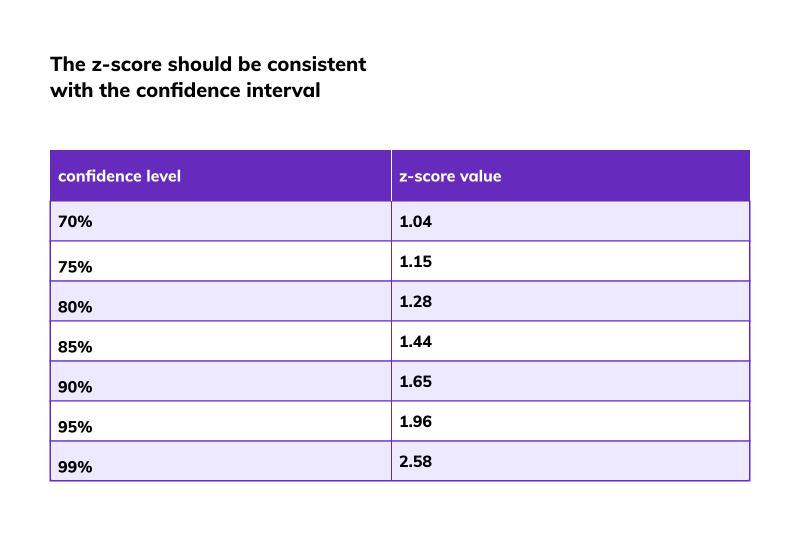\n\n### Why Margin of Error (MoE) Matters?\n\nAll statistical results should include the MoE. \n\nMoE is important because most statistics only use a part of a population to estimate numbers regarding the whole population. There is no single-number result that is an accurate estimation of a whole population unless the researcher collected data on every single member of the study population. \n\nWhat happens is that data is collected from a sample of a population, the sample results are analyzed, and conclusions regarding the whole population are made based on the results from the sample population. The fact is that sample results will vary from one sample to another, and this variation should be reported. \n\nMoE is the statistic used to measure the level of precision in the sample results of a study. The error in the margin of error doesn’t necessarily mean that a mistake was made and it needs to be reported. It only means that since your results are based on a sample of the entire population, there is a potential gap between your results and the real value that you need to estimate for the population. \n\n## Confidence Level\n\nFor your survey to be statistically significant, you must calculate the confidence level. \n\nIn our previous example, where we had an MoE value of 5% and 65% of the sample population saying “yes”, 60-70% of the target population would say. \nBut how can we be certain that 60-70% of the entire population will say “yes”? That’s why we need the confidence level, which is the level of certainty that you have in a particular result. \n\nSo, confidence level measures the probability by which an estimation parameter in a sample population is also true for the whole population. \nNote that confidence level should not be confused with confidence interval (also called the margin of error). After conducting your survey on a sample population, it’s difficult to have a 100% certainty that the obtained results reflect the views of the whole population. \n\nThe reason is that some niche views in the target population may not be represented in the sample population used in the survey. So, the confidence level will tell you whether your results are reproducible or outliers. \n\nMost industries use a confidence level of 95%, which means that if you conduct the same survey on the total population repeatedly, the results would match those of the sample population 95% of the time. For example:\nIn a survey involving 2,000 Americans on whether they supported a ban on smoking in restaurants, 75% of the respondents said “yes”. The confidence level for the survey was 95% while the margin of error was 2%. Using the MoE, we can tell that the actual supporters of the ban range between 73% and 77%. \n\nIf the survey is conducted 100 times, with 2,000 participants each time, the number of people supporting the ban fall between 73% and 77%, 95 out of 100 times. However, the number of Americans supporting the ban would fall below or above 73-77%, 5 out of 100 times.\n\nSome industries use confidence levels of 98% and 99%, increasing the chances of getting the correct results. However, the use of such confidence levels also means that larger sample population sizes should be used. To calculate the appropriate sample size that can give you statistically significant results, you’ve to combine different values for confidence level and margin of error. \n\nHowever, the good news is that there are several sample size calculators that you can find on the internet. \n\n## Conclusion\n\nMargin of error, confidence level, and statistical significance is not something you can grasp on the first go. If there is anything you learn from this article, remember:\n\n- Statistical significance determines the reliability of survey results. \n- A statistically significant survey is a survey whose results are most likely to be true. \n- Although statistical significance is a popular statistic, it is not always necessary. There are situations under which you can still draw meaningful conclusions from your survey without considering the statistical significance. \n- The Margin of Error (MoE), also called the confidence interval, tells us how the survey results reflect the views of the entire population. \n- Since only a sample of the entire population is used to conduct a survey, there will be a potential gap between your survey results and the real value that you need to estimate for the population. This gap can only be accounted for by the MoE, making it an important statistic in every survey. \n- The confidence level tells us the level of certainty in a particular result. \n- The confidence level is not as important as the confidence interval (MoE) when analyzing survey results. \n\nIf you would like to learn how margin of error fits into brand tracking, [check out this whitepaper](https://latana.com/whitepapers/mrp-vs-traditional-quota-sampling-brand-tracking/).\n"},"tags":["Brand Tracking"],"authorRef":{"slug":"joy","firstName":"Joy","lastName":"Corkery","title":"Head of Content Operations","picture":{"__typename":"ContentfulAsset","id":"ff88263c-7542-5e55-a02b-a2fe1c8aade4","description":"","title":"Joy Corkery Prof Pic","file":{"contentType":"image/png","url":"//images.ctfassets.net/7so8go2zrvbw/dBdnR37lTp2H5fzrmQrH4/b85552fa4e33c6f843f1385c20c18947/Author_Joy.png","details":{"image":{"width":235,"height":235}}},"gatsbyImageData":{"images":{"sources":[{"srcSet":"//images.ctfassets.net/7so8go2zrvbw/dBdnR37lTp2H5fzrmQrH4/b85552fa4e33c6f843f1385c20c18947/Author_Joy.png?w=235&h=235&q=95&fm=webp 235w","sizes":"100vw","type":"image/webp"}],"fallback":{"src":"//images.ctfassets.net/7so8go2zrvbw/dBdnR37lTp2H5fzrmQrH4/b85552fa4e33c6f843f1385c20c18947/Author_Joy.png?w=235&h=235&q=95&fm=png","srcSet":"//images.ctfassets.net/7so8go2zrvbw/dBdnR37lTp2H5fzrmQrH4/b85552fa4e33c6f843f1385c20c18947/Author_Joy.png?w=235&h=235&q=95&fm=png 235w","sizes":"100vw"}},"layout":"fullWidth","backgroundColor":"#080808","width":1,"height":1}}}}},{"node":{"publishDate":"2020-11-12T09:00+01:00","slug":"brand-women-fail","author":"Laura Harker","title":"6 Ways Brands Fail to Connect with Women","seo":{"__typename":"ContentfulSeo","title":"6 Ways Brands Fail to Connect with Women","description":"Want to make sure your marketing is successful? Here are the most common mistakes you need to avoid in order to hit the right tone with your female customers.","noIndex":null,"ogImage":{"fluid":{"src":"//images.ctfassets.net/7so8go2zrvbw/5Pri3OjbLDgUmRl3WKjKYf/e82dca574aee518b6f6094ec9722d250/priscilla-du-preez-nF8xhLMmg0c-unsplash.jpg?w=1200&h=675&q=90&fm=jpg"},"file":{"url":"//images.ctfassets.net/7so8go2zrvbw/5Pri3OjbLDgUmRl3WKjKYf/e82dca574aee518b6f6094ec9722d250/priscilla-du-preez-nF8xhLMmg0c-unsplash.jpg"}}},"heroImage":{"__typename":"ContentfulAsset","id":"b36dc0ca-3bf6-5f72-8e1c-8623e10a77b8","description":"6 Ways Brands Fail to Connect with Women","title":"6 Ways Brands Fail to Connect with Women","file":{"contentType":"image/jpeg","url":"//images.ctfassets.net/7so8go2zrvbw/5Pri3OjbLDgUmRl3WKjKYf/e82dca574aee518b6f6094ec9722d250/priscilla-du-preez-nF8xhLMmg0c-unsplash.jpg","details":{"image":{"width":640,"height":427}}},"gatsbyImageData":{"images":{"sources":[{"srcSet":"//images.ctfassets.net/7so8go2zrvbw/5Pri3OjbLDgUmRl3WKjKYf/e82dca574aee518b6f6094ec9722d250/priscilla-du-preez-nF8xhLMmg0c-unsplash.jpg?w=160&h=107&q=95&fm=webp 160w,\n//images.ctfassets.net/7so8go2zrvbw/5Pri3OjbLDgUmRl3WKjKYf/e82dca574aee518b6f6094ec9722d250/priscilla-du-preez-nF8xhLMmg0c-unsplash.jpg?w=320&h=214&q=95&fm=webp 320w,\n//images.ctfassets.net/7so8go2zrvbw/5Pri3OjbLDgUmRl3WKjKYf/e82dca574aee518b6f6094ec9722d250/priscilla-du-preez-nF8xhLMmg0c-unsplash.jpg?w=640&h=427&q=95&fm=webp 640w","sizes":"(min-width: 640px) 640px, 100vw","type":"image/webp"}],"fallback":{"src":"//images.ctfassets.net/7so8go2zrvbw/5Pri3OjbLDgUmRl3WKjKYf/e82dca574aee518b6f6094ec9722d250/priscilla-du-preez-nF8xhLMmg0c-unsplash.jpg?w=640&h=427&fl=progressive&q=95&fm=jpg","srcSet":"//images.ctfassets.net/7so8go2zrvbw/5Pri3OjbLDgUmRl3WKjKYf/e82dca574aee518b6f6094ec9722d250/priscilla-du-preez-nF8xhLMmg0c-unsplash.jpg?w=160&h=107&fl=progressive&q=95&fm=jpg 160w,\n//images.ctfassets.net/7so8go2zrvbw/5Pri3OjbLDgUmRl3WKjKYf/e82dca574aee518b6f6094ec9722d250/priscilla-du-preez-nF8xhLMmg0c-unsplash.jpg?w=320&h=214&fl=progressive&q=95&fm=jpg 320w,\n//images.ctfassets.net/7so8go2zrvbw/5Pri3OjbLDgUmRl3WKjKYf/e82dca574aee518b6f6094ec9722d250/priscilla-du-preez-nF8xhLMmg0c-unsplash.jpg?w=640&h=427&fl=progressive&q=95&fm=jpg 640w","sizes":"(min-width: 640px) 640px, 100vw"}},"layout":"constrained","backgroundColor":"#e8e8e8","width":800,"height":534}},"coverImage":null,"description":{"description":"Want to make sure your marketing targeted to women is successful? Here are the most common mistakes you need to avoid in order to hit the right tone with your female customers.\n"},"content":{"content":"If you’ve ever doubted the purchasing power of women, then you need to take a look at these stats: in [85% of households, women are the primary decision-makers when it comes to buying consumer goods](https://www.marketingdonut.co.uk/marketing-strategy/your-target-market/the-truth-about-marketing-to-women). They also make [81%](https://www.marketingdonut.co.uk/marketing-strategy/your-target-market/the-truth-about-marketing-to-women) of the decisions when it comes to grocery shopping too.\n\nWith so many women out there making these daily decisions, it would be foolish for any brand to neglect to reach out to them in their branding and marketing. Even worse, it could be detrimental for a brand to try but completely miss the mark when trying to connect to women.\n\nThere are many reasons why marketing to women might not work: it could be misplaced humor, excluding certain demographics, or portraying outdated stereotypes. Whatever the reason, these mistakes should never happen in the first place as it could result in women turning away from a brand.\n\nWant to make sure your marketing to women always hits the mark? Make sure you steer clear of these notorious mistakes.\n\n\n\n## 6 Ways Brands Fail to Connect with Women\n\n### Glorifying Domestic Violence\n\nDomestic violence is a serious issue that many women around the world have to live with. One of the most publicized instances of domestic violence occurred between rapper Chris Brown and singer Rihanna. It would be tasteless for a brand to use this as part of an advertising campaign, right? That would be obvious for most brands but not to Snapchat.\n\nIn 2018 the social media platform ran an advert to promote a game that referenced Brown’s 2009 assault.\n\n\n\nThis didn’t go unnoticed by Rihanna who hit out at the brand in an Instagram story with a direct call-out to the brand: “[I’m just trying to figure out what the point was with this mess](https://www.bbc.co.uk/news/newsbeat-43419455)\". \nI'd love to call it ignorance, but I know you ain't that dumb.\"\n\nOther famous names, including [Chelsea Clinton](https://www.thecut.com/2018/03/snapchat-removes-offensive-chris-brown-and-rihanna-ad.html), took to social media to support Rihanna and denounce the advert. All of this negativity had very serious consequences for Snapchat [as $1 billion was instantly wiped off the value of the brand’s parents company Snap Inc](https://www.theguardian.com/music/2018/mar/15/rihanna-snapchat-ad-domestic-violence-chris-brown). Shares in the company also [dropped by 5% overnight](https://www.theguardian.com/music/2018/mar/15/rihanna-snapchat-ad-domestic-violence-chris-brown).\n\n### Marketing to Mums Rather than Women\n\nOne very obvious way to dampen your connection with women is if you are exclusive to certain demographics. If you do exclude certain women from adverts and branding then there’s no way they will consider you when they are looking for new products and services.\n\nAs Tanya Williams, author of [A Childfree Happily Ever After](https://childfreehappilyeverafter.com.au), explains how brands that only target mums are guilty of this:\n\n> One of my pet peeves, and something I am trying to change, is how most brands think they need to market to mums not women. I am so sick of seeing ads for anything to do with the house and lifestyle making an assumption you are a mother if you are a woman!\n> \n> Current ad agencies and marketers need to move with the times and understand that not every woman is a mother. In fact close to 1 in 4 women are now choosing to be childfree so that means marketers need to keep up and reflect what is actually happening in real life, not what they think is.\n\nAppealing to mothers could have been a savvy strategy a few decades ago when the average number of births was higher than it is today—[for instance, the current birth rate in the UK is the lowest it's been since 2006](https://www.ons.gov.uk/peoplepopulationandcommunity/birthsdeathsandmarriages/livebirths/bulletins/birthcharacteristicsinenglandandwales/2017) - but now adverts directly targeting mothers are often met with disdain.\n\nAdverts that do portray mothers are often at risk of being labeled as sexist. Just take this Asda advert from 2013.\n\n\n\nIn the TV advert for the UK supermarket giant, we see a tired mum having to do all the hard work associated with getting a family ready for Christmas—doing the big food shop alone with kids; sorting out all the decorations; cooking the big dinner.\n\nNot only does this advert exclude women who aren’t mothers, but it also resulted in a large backlash as many people thought the trope of the stressed-out mother preparing Christmas was incredibly sexist. The[UK advertising watchdog received 600 complaints labeling the ad as offensive and sexist](https://www.theguardian.com/media/2013/jan/30/asda-christmas-ad). However, the supermarket was cleared of this when the watchdog ruled in its favor.\n\nAppealing to mothers might seem innocent on the face of it, although there are two issues for brands that we’ve seen above: failing to include women who don’t have children and potentially being perceived as sexist.\n\n### Excluding Women with Disabilities\n\nAppealing to mothers isn’t the only way a brand could be seen as excluding a demographic of women. Using a non-diverse cast of women for adverts and branding is preventing them from connecting to key BAME and other minority groups.\n\n[Lisa Cox](https://www.instagram.com/lisacox.co/?hl=en), an author, speaker, and consultant explains further:\n\n> We are only ever presented with a monotype but women of all different ages, sizes, abilities (and more) are consumers with money to spend. This lack of representation is bad for society and bad for business. As a disabled woman, I'm now working with mainstream brands to better educate them around the value of representation—for me and for their bottom line. \n\nThe disabled community has a [£200 billion spending power](https://www.thedrum.com/news/2016/09/29/post-paralympics-brands-still-failing-represent-disabled-consumers-despite-200bn), so it would be foolish of brands to exclude disabled women from their marketing campaigns. Not only would a brand be losing out on all this potential spending, but it could also create a huge backlash against them.\n\nJust take a look at what happened to Brazillian Vogue in 2016. The brand used an Instagram post to promote the Brazilian paralympic games showing two of the game’s celebrity ambassadors. However, there was just one problem—neither ambassador was actually disabled and [the image had been edited to remove a limb on each of them](https://www.vox.com/2016/8/27/12660082/rio-2016-vogue-brazil-photoshop-paralympics-disabled).\n\n\n\nThis image, along with the caption “We are all Paralympians” was seen as very bad taste and there was a large media backlash against the fashion brand.\n\nAnother brand that has been noted for its use of disabled models is Tommy Hilfiger. The international clothing brand now offers the “Tommy Adaptive” line, which is aimed specifically at people with disabilities. For marketing campaigns around this line, the brand has been working with a lot of disabled models to boot.\n\n\n\nThanks to this move to cater to physically disadvantaged fashion fans, Tommy Hilfiger has seen its revenues and profits increase. The clothing line launched in early 2018 and, [along with the brand investing heavily in new data and tech to fine-tune its brand](https://www.voguebusiness.com/companies/tommy-hilfiger-daniel-grieder-interview-technology-sustainability), the adaptive campaign helped push sales to $4.2 billion. That’s a jump from the [$3.3 billion reported in 2015](https://www.voguebusiness.com/companies/tommy-hilfiger-daniel-grieder-interview-technology-sustainability).\n\n### Brands Not Being Diverse Enough\n\nIt’s not just disabled women that brands need to be careful not to exclude. BAME women and those from other minorities have also been left out of many brand campaigns in the past.\n\nEven though the large majority of brands are now including BAME models in their brand marketing adverts, one area there is still a lack of diversity in the use of social media influencers.\n\nThe American clothing brand Altar’d State faced criticism over this when they posted from the “blogger adventure” they hosted last year. [It was quickly pointed out that all the influencers and bloggers who attended the event were white.](https://www.cnbc.com/2019/08/29/instagram-influencers-are-often-white-leading-to-brand-criticism.html) The attendees were so similar, in fact, that it was noted they all had blonde hair apart from just the one influencer who was a brunette.\n\nAs [one Instagram user commented](https://www.cnbc.com/2019/08/29/instagram-influencers-are-often-white-leading-to-brand-criticism.html): “Why is your Instagram account all skinny white girls? This is 2019, there are a lot more diverse girls out there who need to be seen. I like your stuff. But this is not OK. Wish there was more diversity in your marketing.”\n\nBy inviting just a very niche group of women, the brand was inadvertently showing others that the experience and their clothes are not for them. In effect, it’s showing that the brand is exclusively for thin, blonde white women. In a country where African-American women make up [14% of the population and have a spending power of $1.2 trillion](https://www.cnbc.com/2019/08/29/instagram-influencers-are-often-white-leading-to-brand-criticism.html), the brand is missing out on potentially huge sales and revenues. \n\n### Excluding Plus-Size Women\n\nThere’s one further way brands can exclude women: it’s by not being considerate of the size of models used in all social media posts and adverts.\n\nClaire Jensen, a stylist based in Australia, has personal experience of this:\n\n> As a style 14 to 16 in Australia - I find the fit of garments is so out of touch with how women's body shapes actually are at this size. For me, and many of my clients (who are various sizes) the biggest downfall is in pants/trousers/jeans where often, the hips, bottom, and thighs fit tightly, and the waist is far too big. \n> \n> In Australia, the average woman is a size 14 to 16. But the general size of a curve model is a 10 to 12. So, there is a huge discrepancy there alone. While some brands are stepping up in this department - there is still a lot of work to be done. I don't think using a size 12 \"curve\" or \"plus-size\" model is cutting it anymore. For many consumers, and for my clients - they want to see a vast representation of not just different cultures, skin tones, ethnicities, but also shapes. Even brands who utilize influencers to help build brand awareness or boost sales need to start looking outside of sample sizes. \n\nClaire uses the Australian brand Country Road as an example. Even though the brand has recently started to use models from a wider range of backgrounds and ethnicities, they are still lacking in their use of plus-sized models.\n\n> As a store that offers up to a size 16 - there's nothing on the site or across their socials to show their garments on someone of this size. So as a customer - it's hard to really know how that's going to look on a curvier shape. I work with a lot of clients who range from a size 12 to a size 20 and so many of them tell me they find it hard to know where to shop based on the fact they can't see someone who reflects their size or shape in marketing or on online stores which deters them from making a purchase. \n> \n\nOne clothing brand that felt the negative effects of not creating plus-sized clothing was Lucy & Yak. The brand is known for making ethical and sustainable clothing with a focus on comfort for the wearer. They have done particularly well over the past few years thanks to their smart social media strategy and teaming up with influencers on various platforms.\n\n\n\nHowever, in the background, the brand has constantly been asked by plus-sized consumers why their clothing line wasn’t size-inclusive.\n\n\n\nThis all came to a head in September 2020 when top Instagrammer [Aja Barber called out the brand directly](http://welshwanderer.com/2020/09/24/lucy-yak-drama-made-easy-ish/) about various issues that included a lack of size-inclusivity, using influencers as free labor, and not appropriately addressing any of the criticism put against them.\n\nThe couple behind the brand took to Instagram and posted apology videos, however, these did not go down well with the customer base who saw them as merely performative.\n\n\n\nIf this was bad enough, things quickly got worse. The brand left the comments under their apology video unmoderated for a full 24 hours. During this time there was a lot of racist and bigotted abuse left targeting Aja Barber for originally speaking out. Eventually, the brand was forced to publish [a statement](https://lucyandyak.com/pages/public-statement-22nd-september-2020) in which they, amongst other things, outlined action points they could use to create a safer space for followers online and promised to create an advisory panel.\n\n### Brands Downplaying Women’s Successes\n\nHave you ever noticed how some brands continue to portray women in the kitchen rather than being in charge of the boardroom? This is something that Lisa Sweeney of [Business in Heels](https://businessinheels.net/aboutus) notes:\n\n> Brands continue to fail women with ongoing stereotyping and the downplaying of success.\n> It is amazing that successful entrepreneurs who have made it, who now have big teams and an office continue to be depicted in their kitchen. When was the last time you saw a male entrepreneur in his garage?\n> \n> Incredibly inspirational women end up with more coverage about their appearance than their content and we still are given a perception that you need to be a slim well-dressed woman to be successful.\n\nOne such patronizing advert campaign is the “Girl Boss” advert from People Per Hour. Launched across London tube stations in 2019, the advert showed a laughing woman alongside the caption “You do the girl boss thing. We’ll do the SEO thing.\n\nAs Emma Sexton pointed out on Twitter, it could have been massively improved by saying “You do the CEO thing, we’ll do the SEO thing.”\n\n\n\nBut instead of downplaying the girl’s success by simply referring it to the patronizing “girl boss thing,” People per Hour put themselves at odds against women in their target audience. As a result, there was a huge backlash on social media and, after receiving complaints, [the Advertising Standards Authority banned the advert](https://www.bbc.co.uk/news/business-51032631).\n\nAs Megan Thudium, Senior Consultant at [MTC | The Content Agency](https://www.mtcthecontentagency.com) put it:\n\n> Women are now holding more leadership positions in 2020 (29%) than in previous years, according to [Catalyst](https://www.catalyst.org/research/women-in-management/). Marketing messaging that still references sexual innuendos or graphics of only men in corporate offices should be challenged. Marketing should speak to the needs of the market, and the women of this market are telling brands 'enough is enough.' We demand inclusive marketing.\n\n## Final Thoughts\n\nAll of the brand mistakes outlined above could have easily been avoided, usually by ignoring stereotypes and including a wider variety of women in all advertising materials. The results of not doing so can be devastating to brands: from a PR nightmare to a significant loss in sales and revenues. \n\nTo protect your brand from these issues, [think carefully about women as your target audience](https://latana.com/guides/level-up-refining-your-target-audience/). Listen to them as a diverse group and consider what they want to see in targeting advertising. What motivates them? What are their needs and wants? And then you should be able to create brand marketing that connects with women and inspires them to check out your brand."},"tags":["Brand Marketing","Brand Strategy"],"authorRef":{"slug":"laura","firstName":"Laura","lastName":"Harker","title":"Freelance Writer & Editor","picture":{"__typename":"ContentfulAsset","id":"bb56ceb9-a813-5edc-85a6-facde71b8efe","description":"","title":"Latana Logo Author Photo","file":{"contentType":"image/png","url":"//images.ctfassets.net/7so8go2zrvbw/7qeUdZpRNeFZFTo0zIasKz/8d00318fb2f317950a2a2d6912eb28bf/Author_Latana__1_.png","details":{"image":{"width":235,"height":235}}},"gatsbyImageData":{"images":{"sources":[{"srcSet":"//images.ctfassets.net/7so8go2zrvbw/7qeUdZpRNeFZFTo0zIasKz/8d00318fb2f317950a2a2d6912eb28bf/Author_Latana__1_.png?w=235&h=235&q=95&fm=webp 235w","sizes":"100vw","type":"image/webp"}],"fallback":{"src":"//images.ctfassets.net/7so8go2zrvbw/7qeUdZpRNeFZFTo0zIasKz/8d00318fb2f317950a2a2d6912eb28bf/Author_Latana__1_.png?w=235&h=235&q=95&fm=png","srcSet":"//images.ctfassets.net/7so8go2zrvbw/7qeUdZpRNeFZFTo0zIasKz/8d00318fb2f317950a2a2d6912eb28bf/Author_Latana__1_.png?w=235&h=235&q=95&fm=png 235w","sizes":"100vw"}},"layout":"fullWidth","backgroundColor":"#080808","width":1,"height":1}}}}},{"node":{"publishDate":"2021-06-29T08:30+02:00","slug":"importance-of-social-proof","author":"Cory Schröder","title":"The Importance of Social Proof for Brand Growth","seo":{"__typename":"ContentfulSeo","title":"The Importance of Social Proof for Brand Growth","description":"Social proof can be extremely difficult to get right, but if you can harness its power, you’re sure to reap the rewards. Learn more about social proof here!","noIndex":null,"ogImage":{"fluid":{"src":"//images.ctfassets.net/7so8go2zrvbw/7a4UAtO2yTSkqT9kyNpgSv/93f50127b7f17b78db1a28f8b0a0943a/Hero_1000X709.png?w=1200&h=675&q=90&fm=jpg"},"file":{"url":"//images.ctfassets.net/7so8go2zrvbw/7a4UAtO2yTSkqT9kyNpgSv/93f50127b7f17b78db1a28f8b0a0943a/Hero_1000X709.png"}}},"heroImage":{"__typename":"ContentfulAsset","id":"4467bd74-982f-54c1-a368-eb0f01eb40a3","description":"","title":"Illustration showing five people holding signs (Thumbnail)","file":{"contentType":"image/png","url":"//images.ctfassets.net/7so8go2zrvbw/4b5aMBNyWPttdc3BaCj28Z/577334b899b8c1179f3bfa33747dfd60/Hero_1000X709.png","details":{"image":{"width":3000,"height":2127}}},"gatsbyImageData":{"images":{"sources":[{"srcSet":"//images.ctfassets.net/7so8go2zrvbw/4b5aMBNyWPttdc3BaCj28Z/577334b899b8c1179f3bfa33747dfd60/Hero_1000X709.png?w=200&h=142&q=95&fm=webp 200w,\n//images.ctfassets.net/7so8go2zrvbw/4b5aMBNyWPttdc3BaCj28Z/577334b899b8c1179f3bfa33747dfd60/Hero_1000X709.png?w=400&h=284&q=95&fm=webp 400w,\n//images.ctfassets.net/7so8go2zrvbw/4b5aMBNyWPttdc3BaCj28Z/577334b899b8c1179f3bfa33747dfd60/Hero_1000X709.png?w=800&h=567&q=95&fm=webp 800w,\n//images.ctfassets.net/7so8go2zrvbw/4b5aMBNyWPttdc3BaCj28Z/577334b899b8c1179f3bfa33747dfd60/Hero_1000X709.png?w=1600&h=1134&q=95&fm=webp 1600w","sizes":"(min-width: 800px) 800px, 100vw","type":"image/webp"}],"fallback":{"src":"//images.ctfassets.net/7so8go2zrvbw/4b5aMBNyWPttdc3BaCj28Z/577334b899b8c1179f3bfa33747dfd60/Hero_1000X709.png?w=800&h=567&q=95&fm=png","srcSet":"//images.ctfassets.net/7so8go2zrvbw/4b5aMBNyWPttdc3BaCj28Z/577334b899b8c1179f3bfa33747dfd60/Hero_1000X709.png?w=200&h=142&q=95&fm=png 200w,\n//images.ctfassets.net/7so8go2zrvbw/4b5aMBNyWPttdc3BaCj28Z/577334b899b8c1179f3bfa33747dfd60/Hero_1000X709.png?w=400&h=284&q=95&fm=png 400w,\n//images.ctfassets.net/7so8go2zrvbw/4b5aMBNyWPttdc3BaCj28Z/577334b899b8c1179f3bfa33747dfd60/Hero_1000X709.png?w=800&h=567&q=95&fm=png 800w,\n//images.ctfassets.net/7so8go2zrvbw/4b5aMBNyWPttdc3BaCj28Z/577334b899b8c1179f3bfa33747dfd60/Hero_1000X709.png?w=1600&h=1134&q=95&fm=png 1600w","sizes":"(min-width: 800px) 800px, 100vw"}},"layout":"constrained","backgroundColor":"#380868","width":800,"height":567}},"coverImage":null,"description":{"description":"Social proof can be extremely difficult to get right, but if you can harness its power, you’re sure to reap the rewards. Learn more about social proof here!"},"content":{"content":"Social proof — difficult to wrangle but priceless when you’ve got it — is one of the more elusive aspects of any brand strategy.\n\nIndependent of a brand’s size or industry, gathering positive social proof is one of the most effective ways to grow your business. But that doesn’t mean it’s easy.\n\nSocial proof, or informational social influence, has been around as long as marketing. What was once shared via print ads in glossy magazines or newspapers has now transformed into digital reviews, social media posts, and promotional YouTube videos.\n\nAnd though social proof doesn’t necessarily guarantee success, it definitely encourages brand growth through increased trust and loyalty signals.\n\nSo, how can a brand harness the power of social proof? Where do you need to start? This article will explore the aforementioned questions and more. \n\n## What is Social Proof, and Why Is It Important?\n\nFor decades, social proof was a peppy testimonial in a print ad or a celebrity endorsement on a radio show. \n\nTake Marilyn Monroe and Chanel No. 5 — having notoriously stated that the perfume was the only thing she wore in bed during a [1952 interview with Life Magazine](https://garage.vice.com/en_us/article/nexzew/coco-chanel-classy-fabulous-investigation), the perfume’s sales subsequently skyrocketed.\n\nEveryone wanted to smell like Marilyn — they trusted her taste and aspired to emulate her style.\n\nEven as recently as 2015, [59% of the general population in the US](https://www.statista.com/statistics/494690/united-states-opinion-brand-chanel-n-5/) still hold a positive opinion of the perfume. That is some truly impressive positive social proof, Marilyn!\n\n---\n\nIn many ways, social proof has evolved alongside technology, and, today, is more often found in online reviews, recommendations, and endorsements. \n\nFrom influencers’ social media posts to websites like Trustpilot, consumers are incredibly receptive to social proof and will go out of their way to find it — often before they even try a new brand. \n\nAnd that’s not to say that social proof is always positive. In many ways, bad reviews or rescinded endorsements can have an even larger impact on your brand’s success. \n\nTherefore, it’s incredibly important that you keep a close eye on [what consumers are saying about your brand online](https://latana.com/post/social-media-trolls-protect-brand/). If you are receiving a good deal of negative feedback, make sure you address it publicly, remain polite at all times, and show proof that you’ve taken their feedback on board. \n\n## Who Cares About Social Proof?\n\n\nSource: [Pexels](https://www.pexels.com/photo/selective-focus-photography-of-person-using-iphone-x-1542252/)\n\nAccording to a 2019 study by Trustpilot, [93% of global consumers read customer reviews](https://www.statista.com/statistics/1047962/how-online-shoppers-worldwide-research-unfamiliar-retailers/) in an effort to research an unfamiliar digital retailer *before* making a purchase. Another 34% ask friends if they’d recommend a brand and 27% check the brand’s social media channels. \n\nWhat do these statistics tell us? Consumers know what they want — and they know where to find it. \n\nWhether they’re reading reviews online, asking friends for opinions, or scrolling through a brand’s Instagram feed, they're doing their due diligence. \n\nSo, the real question is: What do you want them to find? The answer: Positive social proof.\n\nIdeally, it’s naturally occurring and doesn’t need to be too heavily encouraged or incentivized. But, as long as the proof is there, potential customers will take it into consideration. \n\nThat being said, it’s in your best interest to generate as much positive social proof as you can. So how do you go about doing that? \n\n## How Can I Generate Positive Social Proof For My Brand?\n\nTo be fair, this question doesn’t have a universal answer. What counts as effective positive social proof is highly dependent on your industry and product. \n\nFor example, a new vegan hair care line that focuses on environmental sustainability and social justice would be a great fit for Influencer campaigns on Instagram and YouTube. \n\nWith the ability to reach millions of potential consumers — which fit neatly into their target audience — this new brand could leverage the power of social proof through their chosen Influencers. \n\nThey could also team up with well-known environmental and social justice organizations, which would allow them to add their partners’ logos to their own website, lending them credibility — social proof of another (but just as important) flavor. \n\n---\n\nOn the other hand, a new, breakout science fiction author would need to rely heavily on positive reviews on a platform like Goodreads or Amazon. In July 2019 alone, there were just [over 90 million reviews written by users](https://www.statista.com/statistics/252998/number-of-user-generated-reviews-on-goodreadscom/) on the Goodreads platform — and those numbers have been trending positive for years. \n\nWhile a social media influencer promoting their book might be helpful, user-generated reviews still reign supreme. \n\nThey could also gather reviews from other prominent authors, aka expert testimonials. After all, people are more likely to use a product [recommended to them by someone they trust](https://www.nielsen.com/eu/en/press-releases/2015/recommendations-from-friends-remain-most-credible-form-of-advertising/).\n\nEssentially, what counts as positive social proof differs depending on your industry, product, and service. But one thing remains constant — if you want to encourage a positive buzz on the internet, deliver a top-notch experience.\n\nNothing attracts consumers to a brand more than high-quality products and services, amazing customer service, and an overall consistently positive brand experience.\n\n## Who’s Done Social Proof Right?\n\nWhile we can’t provide the exact answer you may need when it comes to generating social proof for your brand, we can take a look at a few companies that have excelled in their own industry. \n\n### 1. Canva: Leveraging Happy Customers\nThree Billboards Outside Miami, Florida ✊🏼 #3BillboardsForRubio pic.twitter.com/aLtlSaOfd6
— Avaaz (@Avaaz) February 16, 2018
\n\nBack in the early 2010s when the easy-to-use design tool Canva was starting out, they made the [conscious decision to rely heavily on social proof](https://latana.com/post/canva-deep-dive/). Instead of rolling out thousands of paid ads extolling their tool’s virtues, they looked to their users to do it for them.\n\nAnd, oh, did they! Early adopters were chomping at the bit to share just how amazing the tool was with the rest of the internet. From joyous tweets to word of mouth, early Canva users were sharing their experience with the tool left and right.\n\nThis social currency Canva created allowed them to gain credibility and build an impressively loyal customer base. It also got the attention of big-time publications like TechCrunch and Forbes — which spread the word of their do-it-yourself graphic design tool even further.\n\nBut how did Canva do it? While most of their social proof was earned based on the excellence of their product, they also consciously worked with social influencers to get the word out. By [hiring Guy Kawasaki as their “Cheif Evangelist”](https://www.canva.com/learn/guy-kawasaki-chief-evangelist/), they were able to leverage his influence and credibility.\n\nConsequently, he provided the most powerful social proof available — the willing and enthusiastic support of a highly respected pillar of their industry. \n\n### 2. Peloton: Making Smart Connections\n\nSource: [Forbes](https://www.forbes.com/sites/bridgetarsenault/2020/09/27/travelling-to-the-gym-feels-like-a-distant-memory/?sh=3cc80db12cd5)\n\nWhile social proof often comes from consumers themselves, it can also come from other powerful brands. \n\nIn an effort to gain the trust and confidence of potential customers, Peloton worked with established brands such as [Forbes](https://www.forbes.com/sites/larryolmsted/2016/11/02/the-best-home-workout-fitness-machine-peloton-review/?sh=301dbcd25a0d), Good Housekeeping, and Best Health to promote their products. \n\nBy gathering endorsements from such big names, they were able to prove to consumers that they were part of an exclusive club of well-known and respected brands. Ergo, some of the big-name brands’ influence was passed to Peloton.\n\nPartnering with more established brands is a great way to increase your brand’s positive social proof. Just keep in mind that these collaborations often involve some fees — meaning it may be a pretty expensive way to garner attention. \n\n### 3. Netflix: Playing into Psychology\n\n\nSource: [TVLine](https://tvline.com/2020/02/24/netflix-top-10-shows-movies-feature/)\n\nThough it may seem somewhat basic, Netflix uses social proof in a very intuitive, psychological way. \n\nNot only do they arrange each users’ homepage according to their individual history and likes, but from “Popular on Netflix” to “Recommended on TV”, Netflix is also constantly showing users which movies and shows their peers have enjoyed. \n\nAfter all, [if *everyone* is watching something, it has to be good, right](https://latana.com/post/how-netflix-thrives-on-controversy/)? (Wrong.) Still, knowing other people are interested in a product or service increases our own interest — we’re just wired that way.\n\nFurthermore, Netflix allows users to share content to numerous other social platforms, from Instagram Stories to Snapchat to Messenger — making peer recommendations an easy and straightforward process.\n\nIn this day and age, the power of online reviews cannot be overstated. As of 2021, [31% of online shoppers reported reading 4-6 reviews](https://www.statista.com/statistics/1020836/share-of-shoppers-reading-reviews-before-purchase/) before making a purchase decision. The same approach applies to something like Netflix — people read reviews online and rely on the opinions of others before they make decisions. \n\nThis is the power of social proof. \n\n## Final Thoughts\n\nSocial proof comes in many forms — online reviews, peer recommendations, trusted logos in website footers, and more. \n\nUnderstanding what will work best for your brand is up to you. But you’ll need to consider your resources, marketing goals, and overall brand strategy to come up with the right approach. \n\nBefore you nail down your social proof strategy, take a look at some of our previous articles on how to [increase brand engagement on social media](https://latana.com/post/social-media-brand-engagement/) and how to [use negative comments on social media to your brand’s advantage](https://latana.com/post/negative-comments-social-media/) — as both topics will help you further your positive social proof plans."},"tags":["Brand Strategy","Brand Awareness"],"authorRef":{"slug":"cory-schroder","firstName":"Cory","lastName":"Schröder","title":"Senior Content Marketing Manager","picture":{"__typename":"ContentfulAsset","id":"31ab4d95-0f90-5835-a22f-4b7ff41fece2","description":"","title":"Cory Profile Picture","file":{"contentType":"image/png","url":"//images.ctfassets.net/7so8go2zrvbw/42rTfahl2m45FP1Fzo7B8n/52d40b8bd8af9ab559381bc0ab744cda/avatar.png","details":{"image":{"width":235,"height":235}}},"gatsbyImageData":{"images":{"sources":[{"srcSet":"//images.ctfassets.net/7so8go2zrvbw/42rTfahl2m45FP1Fzo7B8n/52d40b8bd8af9ab559381bc0ab744cda/avatar.png?w=235&h=235&q=95&fm=webp 235w","sizes":"100vw","type":"image/webp"}],"fallback":{"src":"//images.ctfassets.net/7so8go2zrvbw/42rTfahl2m45FP1Fzo7B8n/52d40b8bd8af9ab559381bc0ab744cda/avatar.png?w=235&h=235&q=95&fm=png","srcSet":"//images.ctfassets.net/7so8go2zrvbw/42rTfahl2m45FP1Fzo7B8n/52d40b8bd8af9ab559381bc0ab744cda/avatar.png?w=235&h=235&q=95&fm=png 235w","sizes":"100vw"}},"layout":"fullWidth","backgroundColor":"#080808","width":1,"height":1}}}}},{"node":{"publishDate":"2020-07-16T00:00+02:00","slug":"seasonal-marketing-brand","author":"Rodney Laws","title":"How To Ace Seasonal Marketing Without Sacrificing Your Brand","seo":{"__typename":"ContentfulSeo","title":"Ace Seasonal Marketing Without Sacrificing","description":"You’ve built a strong brand and don’t want to sell it out in your seasonal marketing. Learn how to cut through the noise without sacrificing your brand image.","noIndex":null,"ogImage":{"fluid":{"src":"//images.ctfassets.net/7so8go2zrvbw/1xmXloIpfxnv50cYLm3snp/f0d68d9a13e6a87960f050298f957561/seasonal-marketing-brand_1.jpg?w=1200&h=675&q=90&fm=jpg"},"file":{"url":"//images.ctfassets.net/7so8go2zrvbw/1xmXloIpfxnv50cYLm3snp/f0d68d9a13e6a87960f050298f957561/seasonal-marketing-brand_1.jpg"}}},"heroImage":{"__typename":"ContentfulAsset","id":"08dbc449-9016-5c80-85fd-6e8865dff93a","description":"How To Ace Seasonal Marketing Without Sacrificing Your Brand","title":"How To Ace Seasonal Marketing Without Sacrificing Your Brand","file":{"contentType":"image/jpeg","url":"//images.ctfassets.net/7so8go2zrvbw/1xmXloIpfxnv50cYLm3snp/f0d68d9a13e6a87960f050298f957561/seasonal-marketing-brand_1.jpg","details":{"image":{"width":1320,"height":880}}},"gatsbyImageData":{"images":{"sources":[{"srcSet":"//images.ctfassets.net/7so8go2zrvbw/1xmXloIpfxnv50cYLm3snp/f0d68d9a13e6a87960f050298f957561/seasonal-marketing-brand_1.jpg?w=200&h=133&q=95&fm=webp 200w,\n//images.ctfassets.net/7so8go2zrvbw/1xmXloIpfxnv50cYLm3snp/f0d68d9a13e6a87960f050298f957561/seasonal-marketing-brand_1.jpg?w=400&h=267&q=95&fm=webp 400w,\n//images.ctfassets.net/7so8go2zrvbw/1xmXloIpfxnv50cYLm3snp/f0d68d9a13e6a87960f050298f957561/seasonal-marketing-brand_1.jpg?w=800&h=533&q=95&fm=webp 800w","sizes":"(min-width: 800px) 800px, 100vw","type":"image/webp"}],"fallback":{"src":"//images.ctfassets.net/7so8go2zrvbw/1xmXloIpfxnv50cYLm3snp/f0d68d9a13e6a87960f050298f957561/seasonal-marketing-brand_1.jpg?w=800&h=533&fl=progressive&q=95&fm=jpg","srcSet":"//images.ctfassets.net/7so8go2zrvbw/1xmXloIpfxnv50cYLm3snp/f0d68d9a13e6a87960f050298f957561/seasonal-marketing-brand_1.jpg?w=200&h=133&fl=progressive&q=95&fm=jpg 200w,\n//images.ctfassets.net/7so8go2zrvbw/1xmXloIpfxnv50cYLm3snp/f0d68d9a13e6a87960f050298f957561/seasonal-marketing-brand_1.jpg?w=400&h=267&fl=progressive&q=95&fm=jpg 400w,\n//images.ctfassets.net/7so8go2zrvbw/1xmXloIpfxnv50cYLm3snp/f0d68d9a13e6a87960f050298f957561/seasonal-marketing-brand_1.jpg?w=800&h=533&fl=progressive&q=95&fm=jpg 800w","sizes":"(min-width: 800px) 800px, 100vw"}},"layout":"constrained","backgroundColor":"#180808","width":800,"height":533}},"coverImage":null,"description":{"description":"You’ve built a strong brand and don’t want to sell it out in your seasonal marketing. Learn how to cut through the noise without sacrificing your brand image."},"content":{"content":"Throughout the year, consumers battle against their worst retail impulses. They look at the best TVs and the newest computers and tell themselves to show restraint. So, when they reach an occasion on which impulsive spending is essentially _encouraged_ through seasonal marketing ([Christmas being the biggest example](https://latana.com/post/christmas-advertising-campaigns/)), they take full advantage.\n\nThis is mostly due to the excuse of gift-giving. It’s also due to the simple thought of “_I’ve earned this_” — they’ve scrimped and saved for months, so why shouldn’t they treat themselves to some ill-advised therapeutic expenditure?\n\nBecause of this, seasonal traffic is something that every marketer is eager to win. It converts at a speedy rate with orders that are significantly larger than normal purchases, seeing people make buys that they wouldn’t otherwise consider. To harness it, retailers pursue seasonal marketing, but deploying a successful seasonal marketing campaign isn’t easy.\n\nThe main problem is the level of competition. _Everyone_ wants that traffic, so the online world becomes saturated with [relevant content](https://latana.com/post/content-marketing-brand-identity/), advertising, and landing pages. To some extent, you need to embrace the spirit of contrarianism, but it can endanger your [brand image](https://latana.com/post/improve-brand-image/) if you push it too far. In this article, we’re going to consider how you can create standout content marketing that suits your [branding strategy](https://latana.com/post/brand-strategy-brand-tracking/) (and look at some great examples of such marketing) so you can win at seasonal marketing and also stay true to yourself.\n\n\n\n## Establish a solid baseline with the _expected_ content\n\nAs much as creativity and boldness need to factor into your seasonal marketing, truth is there are some areas you realistically _need_ to cover because they’re such reliable sources of income. You likely won’t be able to stand out with your content covering those areas, but you don’t need to: you just need to be there.\n\nThe perfect example of such an area is _gift-giving guides_. It’s so typical for people to be unsure of what to buy their friends and family members and look for inspiration online. Someone might look for “Great gifts for grandparents” or “Cheap gifts for coworkers” — and rather than picking just one result, they’d probably open up numerous tabs and browse through them.\n\nIf you create your own gift-giving guides (and tag them correctly), you can show up on that list. You can do individual pages for specific types of buyers, or you can do one overarching guide with different sections ([this is what Shopify did in 2019](https://www.shopify.com/blog/holiday-gift-guide), for instance). All that matters is that you get your products seen, giving each one of them a chance of being picked.\n\nThen there are the elements that are even _more_ basic, such as laying out your shipping promises (can you guarantee delivery by certain dates?) and defining your return policy. The process of covering off all of these things is a matter of laying the groundwork, allowing you to move on to your meaningfully-branded content.\n\n## Be reverent or irreverent (either extreme works)\n\nThere’s so much buzz and hoopla around seasonal occasions that the worst thing you can do is put something out with no notable stance. What’s clear from the long history of seasonal marketing is that there are two particular approaches that reliably pay off: being _reverent_ or being _irreverent_.\n\nWhy is this? Well, you can look at it somewhat like politics. People want you to be strongly _for_ or _against_ things: you’re unlikely to get very far by going for something in the middle. Let’s think about the former option first: being _reverent_. This involves playing up all the things people love about the occasions in question, treating them as incredibly important and momentous.\n\nOne retailer that has _mastered_ reverent seasonal marketing is John Lewis, a UK department store that has become known for its [Christmas campaigns](https://latana.com/post/christmas-advertising-campaigns/). It concentrates on specific products, _but_ it does so by telling stories that tug at the heartstrings. The perfect example of this is the 2014 edition featuring a festive penguin love story:\n\n\n\nTick off all the emotional elements as you go through. A smiling boy and his best friend having adventures. The seasons visibly changing as the year passes. A Christmas tree being decorated. Watching TV as a family. Relatable loneliness — and then companionship appearing (as if by magic) on Christmas Day itself. If it weren’t pitch-perfect, it would be open to mockery, but the simple truth is that people _want_ to feel that there’s something magical about Christmas.\n\nSo that’s what being reverent involves, and if you want to do something similar, then the key is being completely earnest. Don’t worry about flippant social media comments or the notion that you need to be _edgy_ or _sarcastic_. Tell a simple story about Christmas, tell it well, and people will warm to you and whatever you have to offer.\n\nBut maybe that isn’t for you: maybe being earnest doesn’t fit your brand. If so, that’s fine, because you can go in the opposite direction and have a lot of success. Being _irreverent_ about Christmas, in particular, holds a lot of power. Everyone knows it isn’t always _magical_. Sometimes it’s a frustrating period of miserable weather and forced “merriment” — and if you skip all the spirit-of-Christmas material and focus on not taking things seriously, you can get attention.\n\nMaybe the most direct contrast I can think of comes from Harvey Nichols, _another_ UK department store, through its 2013 campaign entitled 'Sorry I Spent It On Myself':\n\n\n\nIn addition to gently mocking the over-the-top presentation style that’s so common to Christmas ads, this campaign spoke to a truth that often goes ignored: plenty of people spend minimally on gifts so they can spend more heavily on themselves. Instead of condemning those people, Harvel Nichols tells us that it’s OK. The point of a gift is to think of someone, after all — and creating a range of cheap (yet still overpriced) comedy gifts was a masterstroke.\n\n## Focus on memorable (and shareable) elements\n\nBoth of the examples we’ve looked at so far made their products very clear, but it isn’t necessary to do this. The point of seasonal marketing is primarily to be talked about. People are already looking for excuses to buy things, so you don’t need to sell them on anything aside from _your brand in general_. Provided they remember you as a result of your marketing, it’s achieved its primary purpose — anything else is a bonus.\n\nFor a great example of a campaign that operates through viral appeal and puts minimal focus on the specifics of the product (or products) on offer, we can look at Dollar Shave Club’s 2019 Father’s Day campaign (entitled _Manifique: A Father’s Day Gift_):\n\n\n\nNow, while it’s true that the men in this video are holding razors and using shaving cream, the video isn’t about those things. It’s about subverting expectations. You’d expect to see lean athletes in dancing videos, but instead, you have normal-looking men undulating in varying states of undress. It’s funny, and it’s shareable, and that’s what matters.\n\nYou can also think about everything that goes into Super Bowl halftime ads because the Super Bowl definitely counts as an opportunity for seasonal marketing. You have _so_ many ads packed into a small amount of time, and the fact that people are unlikely to stray from their celebratory snacks to investigate products means that ads will need to have a lasting impact. This has formed a curious contest, with each participating company trying to be the topic of discussion.\n\n[Vogue has a good rundown of some of the biggest hits from Super Bowl history](https://www.vogue.com/article/best-super-bowl-ads-of-all-time). Remember the Budweiser frogs? Did that have much of anything to do with the product? No, it didn’t: but it stuck in the brain, and that’s the kind of marketing that pays off for _years_ to come.\n\nHave the most memorable Super Bowl ad and you’ll get the most mentions on social media throughout the following weeks — and that social media attention will be what drives sales. The same can be said of Christmas ads, or Father’s Day ads, or Valentine’s Day ads. Make your work attention-grabbing and impossible to forget, and your sales will benefit down the line.\n\nCreative branded campaigns _can_ be immensely effective at cutting through general seasonal marketing efforts, but they need to be handled extremely well (and supported by more generic content meeting regular expectations). By taking a strong stance on the importance of the seasonal occasions in question — building up their significance _or_ undercutting it for effect — and concentrating on memorable moments, you can outperform competitors using [brand monitoring](https://latana.com/product/) and make the most of the frenzied retail interest."},"tags":["Brand Strategy"],"authorRef":{"slug":"rodney","firstName":"Rodney","lastName":"Laws","title":"eCommerce Expert","picture":{"__typename":"ContentfulAsset","id":"bb56ceb9-a813-5edc-85a6-facde71b8efe","description":"","title":"Latana Logo Author Photo","file":{"contentType":"image/png","url":"//images.ctfassets.net/7so8go2zrvbw/7qeUdZpRNeFZFTo0zIasKz/8d00318fb2f317950a2a2d6912eb28bf/Author_Latana__1_.png","details":{"image":{"width":235,"height":235}}},"gatsbyImageData":{"images":{"sources":[{"srcSet":"//images.ctfassets.net/7so8go2zrvbw/7qeUdZpRNeFZFTo0zIasKz/8d00318fb2f317950a2a2d6912eb28bf/Author_Latana__1_.png?w=235&h=235&q=95&fm=webp 235w","sizes":"100vw","type":"image/webp"}],"fallback":{"src":"//images.ctfassets.net/7so8go2zrvbw/7qeUdZpRNeFZFTo0zIasKz/8d00318fb2f317950a2a2d6912eb28bf/Author_Latana__1_.png?w=235&h=235&q=95&fm=png","srcSet":"//images.ctfassets.net/7so8go2zrvbw/7qeUdZpRNeFZFTo0zIasKz/8d00318fb2f317950a2a2d6912eb28bf/Author_Latana__1_.png?w=235&h=235&q=95&fm=png 235w","sizes":"100vw"}},"layout":"fullWidth","backgroundColor":"#080808","width":1,"height":1}}}}},{"node":{"publishDate":"2020-05-07T00:00+02:00","slug":"sentiment-analysis","author":"Laura Harker","title":"How to Use Sentiment Analysis to Build Your Brand","seo":{"__typename":"ContentfulSeo","title":"How to Use Sentiment Analysis to Build Your Brand","description":"Tracking brand sentiment is important. Still, many brands are not using this marketing tool to grow. This article why it's such an important metric.","noIndex":null,"ogImage":{"fluid":{"src":"//images.ctfassets.net/7so8go2zrvbw/1iEph9JzAncEwfGNcU6O6B/3e46c962add57cc1dd6b3a8ea7f161fe/sentiment-analysis-brand_1.jpg?w=1200&h=675&q=90&fm=jpg"},"file":{"url":"//images.ctfassets.net/7so8go2zrvbw/1iEph9JzAncEwfGNcU6O6B/3e46c962add57cc1dd6b3a8ea7f161fe/sentiment-analysis-brand_1.jpg"}}},"heroImage":{"__typename":"ContentfulAsset","id":"f8a8446e-93b9-533c-aeb8-6e734f1bead3","description":"How to Use Sentiment Analysis to Build Your Brand","title":"How to Use Sentiment Analysis to Build Your Brand","file":{"contentType":"image/jpeg","url":"//images.ctfassets.net/7so8go2zrvbw/1iEph9JzAncEwfGNcU6O6B/3e46c962add57cc1dd6b3a8ea7f161fe/sentiment-analysis-brand_1.jpg","details":{"image":{"width":1320,"height":803}}},"gatsbyImageData":{"images":{"sources":[{"srcSet":"//images.ctfassets.net/7so8go2zrvbw/1iEph9JzAncEwfGNcU6O6B/3e46c962add57cc1dd6b3a8ea7f161fe/sentiment-analysis-brand_1.jpg?w=200&h=122&q=95&fm=webp 200w,\n//images.ctfassets.net/7so8go2zrvbw/1iEph9JzAncEwfGNcU6O6B/3e46c962add57cc1dd6b3a8ea7f161fe/sentiment-analysis-brand_1.jpg?w=400&h=244&q=95&fm=webp 400w,\n//images.ctfassets.net/7so8go2zrvbw/1iEph9JzAncEwfGNcU6O6B/3e46c962add57cc1dd6b3a8ea7f161fe/sentiment-analysis-brand_1.jpg?w=800&h=487&q=95&fm=webp 800w","sizes":"(min-width: 800px) 800px, 100vw","type":"image/webp"}],"fallback":{"src":"//images.ctfassets.net/7so8go2zrvbw/1iEph9JzAncEwfGNcU6O6B/3e46c962add57cc1dd6b3a8ea7f161fe/sentiment-analysis-brand_1.jpg?w=800&h=487&fl=progressive&q=95&fm=jpg","srcSet":"//images.ctfassets.net/7so8go2zrvbw/1iEph9JzAncEwfGNcU6O6B/3e46c962add57cc1dd6b3a8ea7f161fe/sentiment-analysis-brand_1.jpg?w=200&h=122&fl=progressive&q=95&fm=jpg 200w,\n//images.ctfassets.net/7so8go2zrvbw/1iEph9JzAncEwfGNcU6O6B/3e46c962add57cc1dd6b3a8ea7f161fe/sentiment-analysis-brand_1.jpg?w=400&h=244&fl=progressive&q=95&fm=jpg 400w,\n//images.ctfassets.net/7so8go2zrvbw/1iEph9JzAncEwfGNcU6O6B/3e46c962add57cc1dd6b3a8ea7f161fe/sentiment-analysis-brand_1.jpg?w=800&h=487&fl=progressive&q=95&fm=jpg 800w","sizes":"(min-width: 800px) 800px, 100vw"}},"layout":"constrained","backgroundColor":"#48c8f8","width":800,"height":487}},"coverImage":null,"description":{"description":"Tracking brand sentiment is important. Still, many brands are not using this marketing tool to grow. This article why it's such an important metric."},"content":{"content":"_“If it’s going to be a world with no time for sentiment, it’s not a world that I want to live in.”_\n\n__\n\nWe wonder whether Christopher Isherwood would be surprised that his words could be so relatable to the 21st-century marketing world?\n\n\n\nYou may think that sentiment is best left in romantic novels and movies, but it can actually be a very valuable marketing tool. Sentiment analysis has been used to discover the general feeling around a brand, and then as a diving-off board for building a solid brand. The interest in the area has only grown over the last five years, as seen via Google Trends below.\n\n\n\nStill, many brands are not using this [marketing tool](https://latana.com/post/brand-marketing-tools/) to grow. Does that include you? If so, dive into this article and see why this is an important metric to build and further your brand.\n\n## What Is Sentiment Analysis and Why is It Important?\n\nSentiment analysis revolves around what consumers think about your brand. It is a means of tapping into their feelings and emotions, most of which will be clearly displayed online.\n\nThere are three types of sentiment that you should look into: positive, negative, and neutral. These are all pretty self-explanatory, but here are a few great examples:\n\n\n\nPositive sentiment\n\n\n\nNegative sentiment\n\n\n\nNeutral sentiment\n\nOn top of social platforms, you can also find sentiment in online forums, reviews, and or even in local media. The more data you collect, then the better your analysis will be. Knowing what people think of your brand is always good, but carrying out a thorough sentiment analysis can show you a lot more.\n\nFirstly, it’s a great motivator for business decisions. That’s all down [to the insight it provides](https://blog.hootsuite.com/social-media-sentiment-analysis-tools/). From blogger outreach programs to customer service, it should give you a clear look into every part of your brand to see what’s working and what’s not.\n\nKeeping an eye on brand sentiment can also help with your PR campaigns. Any PR guru will explain how it’s important to keep an eye on your brand perception and any attention it attracts. One way to stay on top of this is to find out how your audience feels on various topics related to your brand. Tracking brand sentiment is also an important feature for any brand looking to branch out into influencer marketing or maybe change up the influencers they partner with. You can see which influencers and bloggers are already talking about your brand and think highly of it—these are the ones that you need to team up with.\n\nBut, most importantly, sentiment analysis can help you build a great brand.\n\n## How to Use Sentiment Analysis to Build Your Brand\n\nThe most important way to use sentiment analysis to build your brand is by showing that you are engaging with your target audience correctly.\n\nSimon Hall, Brand Strategy and Integrated Services Director at [Wyatt International](https://www.wyattinternational.com) explains the thinking behind this:\n\n_“Your brand is built up of the experiences people have when they interact with your product, service, or experience. Whether it’s online or offline, people will be talking about your brand in spaces you may not have control over, and if you’re not listening to what they’re saying, you’re putting your reputation at stake. Sentiment analysis can be a really useful activity as it provides a reality check and makes you really think about your customers. When Jeff Bezos said, “your brand is what other people say about you when you’re not in the room,” he hit the nail on the head.”_\n\nLook at the sentiment around your brand and, if it isn’t what you expected or wanted, then you need to make some changes. Fast. Before your brand’s reputation suffers too much damage.\n\nA few tweaks to your marketing strategy can help with that.\n\n### Monitor Your Brand\n\nYou need to know what potential customers are saying about your brand, plus how your marketing campaigns are affecting their perception of you. A [brand monitoring](https://latana.com/product/) tool can help you do this not just by monitoring the negative/positive associations to your brand, but by providing an overall indication of your brand health.\n\nFocusing solely on sentiment could prove to be too narrow though, so widen your net and monitor as many metrics as possible. As Simon Hall says, measuring sentiment might not be enough to help improve a brand:\n_“While sentiment analysis of a brand is important and should be a respected KPI, it isn’t the be-all and end-all when it comes to measuring brand value. Natural Language Process (NLP) tools and social media listening tools are helpful to see what people are saying, but people will use these platforms to talk about bad experiences rather than good. Alongside this, the data they provide isn’t foolproof, as they fail to take context, sarcasm and cultural differences into consideration.”_\n\n### Choose Trackable Keywords Carefully\n\nPart of carrying out good sentiment analysis is being able to effectively separate your keywords. Of course, which keywords you target will depend on the kind of sentiment you want to uncover. For analyzing negative sentiment, you might want to go for the likes of “bad”, “worst”, and “hate”. Put these into the analysis tool along with your brand name and see what, if anything, comes up. On the other hand, for tracking positive sentiment, target words like “love”, “like”, and “favorite”.\n\nIt’s also useful to think carefully about what your audience might be saying about you. Think about the kinds of things they post and what they usually search for. Would any current trends affect any of this? Once you’ve got a good idea of how your audience interacts online and the kinds of things they want to see, then it’ll help you with targeting a few niche keywords. These will help dig out posts and tweets that generic keywords might not have found.\n\nFor instance, did you know that [68% of customers leave a brand because](https://www.netbase.com/blog/surprising-social-listening-stats/) they believe it doesn’t care about them? If you dig deeper into your brand sentiment, you could find some negative tweets or posts that open your eyes. You might think that your customer service is on point, although your customers might actually disagree with you.\n\nIf you’re ever stuck trying to think of some keywords, you could use the free tool Answer the Nation.\n\n### Keep an Eye on Your Competitors\n\nYou can also perform a competitor analysis by completing brand sentiment. On social media, you’ll be able to see so much more than just tweets directed at your brand. You can also do a very quick search to flag up what is being said about your competitors too.\n\nOne of the first things that many brands do is to compare positive and negative sentiment. Does it look like consumers are generally more positive or negative to a similar brand to you? If so, why is that?\n\nIt’s also worth seeing what’s kind of negative or positive things are being said about competitors. For instance, if your brand focuses on activewear and sportswear with a USP of being waterproof, it could be worth noting how consumers feel about this feature in competitor products. So, when putting your keywords into a sentiment analysis tool, add in the likes of “waterproof” “weather resistant” and relevant phrases, such as “great in the rain”. This will then show sentiment around this particular product feature. Let’s hope that you come out more positively!\n\n### Adapt Your Message\n\nSentiment is always in flux. Just because your customers think of your brand quite highly right now is no guarantee that they will in months or years to come. It’s something that you should always track and, whenever necessary, adapt to it accordingly.\n\nIf your brand is showing more of a negative sentiment, don’t panic. The [half-life of a tweet, especially one that doesn’t contain any photos or videos, is extremely short](https://www.netbase.com/blog/surprising-social-listening-stats/). There are around 1.2 million terabytes of data on the Internet right now, so there’s a very good chance that any bad tweets will be swamped by a continual supply of new tweets.\n\nIf you want to do something proactive against any bad tweets, you can always work to drown out the negativity. Post engaging tweets that followers will want to share and engage with. Handy tip: post a photo or video, as they are more likely to be retweeted and have a better half-life than tweets without.\n\nAn example of this could be the incident with Chick-Fill-A. Back in 2018, it came to light that the brand had been funding [political advocacy groups that publicly oppose gay marriage](https://landt.co/2018/05/brands-that-bounced-back-from-major-pr-disasters/). Social media was not happy, and the brand’s sentiment plummeted. Chick-Fill-A knew that they had to act, and were able to start pushing out a different message. They stopped their funding and turned this into charitable donations to some much less controversial charities and organizations. Sentiment around the brand flipped and became a lot more positive—this was a big help to the business as its revenues have been in steady growth ever since the incident.\n\n### Ask for Customer Feedback\n\nDon’t shy away from asking your customers for their feedback. This is useful data that can be added to your sentiment analysis. It can be fairly easy to get positive feedback, but as only [1 in 26 customers](https://outcry.io/2019/08/05/customer-feedback-statistics/) is likely to bring up any form of complaint, you might need to fish around to find any negative sentiment this way. Many brands find success when using customer surveys, as people are more likely to say anything negative when able to do so anonymously. All of this feedback that people aren’t willing to share in person or on a public platform provides you with even more data to be analyzed. You’ll be going a lot deeper than simply doing sentiment analysis based on what’s being said on the socials.\n\n\n\nSimon Hall explains how asking for feedback when running a sentiment analysis can also give you a deeper insight into who makes up your target audience:\n\n_“When it comes to starting a new campaign, understanding what your target audience thinks or feels about the brand you’re working with will offer huge insight. This is really helpful when it comes to crafting audience personas, as you can avoid one-sided monologues with your audiences and fully immerse yourself in their world. This process is essential to understanding each person, who they are and what success looks like for them. Businesses often lose themselves in their own targets and objectives, which places the customer on the back-burner.”_\n\nYou can never have too much feedback from consumers. It’s all useful data that can be added to your sentiment analysis, used when creating audience personas, and fine-tuning your brand’s message.\n\n> So, ready to get a bit sentimental with your brand?\n\nWe don’t mean bringing out old family photos or bringing out roses and chocolates; instead you should be getting closer to the data!\n\nTo recap: brand analysis is important for many reasons, but most of all, it helps with putting the building blocks of a solid brand in place. By tracking and monitoring brand sentiment, you can start to build your brand. This is useful for startups and international corporations, as continual brand building will lead to healthy growth and revenues. When tracking sentiment, you’ll inadvertently be comparing the competition, reaching out to customers for feedback, adapting your message, and tracking keywords. These can push you and your team forward while also bringing benefits to other brand assets, including SEO and PR.\n\nThe first steps in nailing brand sentiment analysis are choosing the best keywords. Once you start seeing the data, it’s time to assess your next steps: keep doing what you’re doing or try to change the public’s opinion of you? Only your brand sentiment can tell!"},"tags":["Brand Strategy"],"authorRef":{"slug":"laura","firstName":"Laura","lastName":"Harker","title":"Freelance Writer & Editor","picture":{"__typename":"ContentfulAsset","id":"bb56ceb9-a813-5edc-85a6-facde71b8efe","description":"","title":"Latana Logo Author Photo","file":{"contentType":"image/png","url":"//images.ctfassets.net/7so8go2zrvbw/7qeUdZpRNeFZFTo0zIasKz/8d00318fb2f317950a2a2d6912eb28bf/Author_Latana__1_.png","details":{"image":{"width":235,"height":235}}},"gatsbyImageData":{"images":{"sources":[{"srcSet":"//images.ctfassets.net/7so8go2zrvbw/7qeUdZpRNeFZFTo0zIasKz/8d00318fb2f317950a2a2d6912eb28bf/Author_Latana__1_.png?w=235&h=235&q=95&fm=webp 235w","sizes":"100vw","type":"image/webp"}],"fallback":{"src":"//images.ctfassets.net/7so8go2zrvbw/7qeUdZpRNeFZFTo0zIasKz/8d00318fb2f317950a2a2d6912eb28bf/Author_Latana__1_.png?w=235&h=235&q=95&fm=png","srcSet":"//images.ctfassets.net/7so8go2zrvbw/7qeUdZpRNeFZFTo0zIasKz/8d00318fb2f317950a2a2d6912eb28bf/Author_Latana__1_.png?w=235&h=235&q=95&fm=png 235w","sizes":"100vw"}},"layout":"fullWidth","backgroundColor":"#080808","width":1,"height":1}}}}},{"node":{"publishDate":"2020-04-09T00:00+02:00","slug":"print-advertising-brand","author":"Laura Harker","title":"8 Marketing Experts Discuss Print Advertizing in 2020","seo":{"__typename":"ContentfulSeo","title":"8 Marketing Experts Discuss Print Advertizing","description":"Is print advertizing still worth the time and budget in 2020? Eight marketing experts provide the answers your brand needs.","noIndex":null,"ogImage":{"fluid":{"src":"//images.ctfassets.net/7so8go2zrvbw/2Qr9yvLCKsGLjVbwhsZeM0/7096838846dbbdd998749f6ed2dca999/print-advertising-brand_1.jpg?w=1200&h=675&q=90&fm=jpg"},"file":{"url":"//images.ctfassets.net/7so8go2zrvbw/2Qr9yvLCKsGLjVbwhsZeM0/7096838846dbbdd998749f6ed2dca999/print-advertising-brand_1.jpg"}}},"heroImage":{"__typename":"ContentfulAsset","id":"2dca0bbd-96d2-51c1-a49b-24197e962b50","description":"8 Marketing Experts Discuss Print Advertising in 2020","title":"8 Marketing Experts Discuss Print Advertising in 2020","file":{"contentType":"image/jpeg","url":"//images.ctfassets.net/7so8go2zrvbw/2Qr9yvLCKsGLjVbwhsZeM0/7096838846dbbdd998749f6ed2dca999/print-advertising-brand_1.jpg","details":{"image":{"width":1320,"height":878}}},"gatsbyImageData":{"images":{"sources":[{"srcSet":"//images.ctfassets.net/7so8go2zrvbw/2Qr9yvLCKsGLjVbwhsZeM0/7096838846dbbdd998749f6ed2dca999/print-advertising-brand_1.jpg?w=200&h=133&q=95&fm=webp 200w,\n//images.ctfassets.net/7so8go2zrvbw/2Qr9yvLCKsGLjVbwhsZeM0/7096838846dbbdd998749f6ed2dca999/print-advertising-brand_1.jpg?w=400&h=266&q=95&fm=webp 400w,\n//images.ctfassets.net/7so8go2zrvbw/2Qr9yvLCKsGLjVbwhsZeM0/7096838846dbbdd998749f6ed2dca999/print-advertising-brand_1.jpg?w=800&h=532&q=95&fm=webp 800w","sizes":"(min-width: 800px) 800px, 100vw","type":"image/webp"}],"fallback":{"src":"//images.ctfassets.net/7so8go2zrvbw/2Qr9yvLCKsGLjVbwhsZeM0/7096838846dbbdd998749f6ed2dca999/print-advertising-brand_1.jpg?w=800&h=532&fl=progressive&q=95&fm=jpg","srcSet":"//images.ctfassets.net/7so8go2zrvbw/2Qr9yvLCKsGLjVbwhsZeM0/7096838846dbbdd998749f6ed2dca999/print-advertising-brand_1.jpg?w=200&h=133&fl=progressive&q=95&fm=jpg 200w,\n//images.ctfassets.net/7so8go2zrvbw/2Qr9yvLCKsGLjVbwhsZeM0/7096838846dbbdd998749f6ed2dca999/print-advertising-brand_1.jpg?w=400&h=266&fl=progressive&q=95&fm=jpg 400w,\n//images.ctfassets.net/7so8go2zrvbw/2Qr9yvLCKsGLjVbwhsZeM0/7096838846dbbdd998749f6ed2dca999/print-advertising-brand_1.jpg?w=800&h=532&fl=progressive&q=95&fm=jpg 800w","sizes":"(min-width: 800px) 800px, 100vw"}},"layout":"constrained","backgroundColor":"#c8c8c8","width":800,"height":532}},"coverImage":null,"description":{"description":"Is print advertizing still worth the time and budget in 2020? Eight marketing experts provide the answers your brand needs."},"content":{"content":"When was the last time you picked up a newspaper or a magazine? The figures show that [newspaper sales drop year-on-year](https://pressgazette.co.uk/national-newspaper-abc-daily-star-sunday-print-drop-first-2020-circulation-figures/), with big names like The Financial Times dropping as much as 12%. \n\nWith so many online publications offering free content, it’s possible to access the news on all of our devices. Great for us, but what does this mean for print advertizing?\n\n\nSource: [Unsplash](https://unsplash.com/photos/Uy0Bq8vYjk4)\n\nOnce, [printed advertizing brought big ROI](https://www.inma.org/blogs/research/post.cfm/cross-media-study-shows-print-advertising-has-highest-roi) for companies and firms in various industries. But, as the sale of printed publications drops, many marketers are starting to question whether these ads are still relevant.\n\nBefore you completely turn your back on print advertizing, check out what the marketers still playing the game have to say.\n\n## The Cost of Print Advertizing\n\nAodhan MacCathmhaoil from [Waster.com.au](http://waster.com.au) explained their brand’s experience with taking out a printed ad:\n\n*“We spend 95% of our marketing on online and [content marketing](https://latana.com/post/content-marketing-brand-identity/). We tried one print ad — to test if it was good for us. We spent $20k running an ad for 13 weeks in a city newspaper. In the entire time, we had only one inquiry based on the advert. Thankfully — the sale we got paid for the ad — but it was lucky.”*\n\nWith results like this, it makes sense that companies are funneling their cash into online and digital marketing instead. But there are ways you can minimize that risk. \n\nOne is by being picky about the publications in which you run your ads. For most marketers, this means targeting trade publications.\n\n## Targeting the Right Publications\n\nKara de Schot, Creative Director at Pixel Co-Creative & Marketing, explains her brand’s tactic:\n\n*“We specifically select trade or specialist publications where we have a good idea that the target readership is a good fit. As it's harder to measure 'views' and 'clicks' on traditional advertising, we do have unique calls-to-action on each publication so we can measure effectiveness to a certain degree.”*\n\nIt makes sense to target these publications as many B2B and B2C professionals still read their industry mag.\n\nStan Tan from [Selby’s](http://www.selbys.net) backs this up, saying:\n\n*“Our organization still receives our industry trade magazines every month and we still read it.”*\n\nHe also agrees that a brand needs to weigh the cost involved before they do send an ad to print:\n\n*“It comes down to the cost per readership. In the digital world, we call it CPM or cost per one thousand impressions. For example, a $10 CPM means for $10 you can reach 1,000 people.* \n\n*Get the data on the publication's readership and the cost to advertise then compare that to advertising on a website. You can use Google Display Network to find out the cost to advertise on specific websites.”*\n\n## Targeting the Right Demographics\n\nCost isn’t the only factor to consider while considering print advertizing. Don’t forget to explore the demographics you intend to target. \n\nJanette Baker, Digital Marketing Specialist and owner of [Generate Marketing](http://www.generatemarketing.com.au) told us:\n\n*“The demographics for print media is getting older generally, and it is harder to really gauge or measure the response to the advert you run. For a startup, where often you want to sell through a direct response from the target audience, it is vital to target the right audience and demographic—and I am not certain if this really exists anymore for print media.*\n\n*As with any marketing endeavors, it's important to be able to track the ROI. So that you know whether the money spent delivered the desired outcome. Print ads may send potential customers to your website but even when looking at your web analytics you will be unable to track whether they can from the print ad. This is why it's a great idea to have a coupon code and offer specific to each print ad. That way, you can track conversions and analyze the effectiveness of your advertising dollars spent.\"*\n\n\n\nSomeone else who agrees that the age of your target audience could be the decisive factor for print advertizing is Jakub Kliszczak, a marketing specialist at [Channels](http://digitalbond.com.au):\n\n*“Print publications exist because there's still a viable group of people who buy them. This group (as every other group) of customers has specific characteristics. Because they enjoy reading a newspaper, they are also likely to purchase products through the phone which is oftentimes used in print ads.* \n\n*Just like Gen Zers are used to shopping online, newspaper readers are fine dialing the phone number and ordering a product from an ad. So, the whole 'whether marketers should be utilizing print ads' question depends on who you serve and where your target audience is.”*\n\n## Print Advertizing and Brand Positioning\n\nFor some brands, print advertizing is not just a method used to bag as many sales as possible. Adam Stewart, from [Digitalbond](http://digitalbond.com.au), believes print ads can help to [position brands](https://latana.com/post/brand-tracking-brand-positioning/) as market leaders:\n\n*“I believe running ads in print can be very good for brands wanting to portray themselves as a leader in their given industry. In terms of short term ROI, it isn't the best idea but can be a great branding exercise.*\n\n*My background is Digital Marketing in the Machinery and Construction industry. We experienced that people are using print media much much less to actually make the final decision to put in a request for a quote and eventually purchase the machine. *\n\n*Most buyers will just use Machinery Trader websites to request more information. However, we have found that when you do take yourself out of these industry-specific magazines you do get people asking ‘is X Machinery Company still around?’ We think these magazines are best for branding and staying in relevant magazines as an industry leader.* \n\n*I would still highly suggest moving most of your budget towards digital media: Google Ads, Facebook, and industry-specific website plans.”*\n\n## Supplementing Digital with Print\n\nFor some brands, supplementing their main digital and social marketing strategies with strategic printed ads can help aid their reputation within the industry.\n\nJennifer, Editor at [Etia.com](https://www.etia.com), agrees that printed ads can bring great rewards for a brand’s credibility:\n\n*“We think that just because the entire world has moved online, print advertising is dead and buried. But it is far from the truth. In fact, advertisers who make print a part of their marketing mix have the potential to significantly increase their response rates.* \n\n*Why? Because of credibility. Print publications consistently offer readers high-quality, reliable content that develops credibility, and advertisers can easily leverage this credibility. This makes your ads much more trustworthy, which generates leads and sales more easily.* \n\n*An MRI Survey of the American Consumer found that 'influentials,' those consumers who can sway other consumers, are influenced by print ads, with 51% being influenced by magazines and 53% influenced by newspapers.* \n\n*Print media also benefits from not being a form of 'interruption marketing,' or a brazen interruption that occurs while the consumer is trying to digest information. TV commercials, on the other hand, are a form of interruption marketing; so are banner ads on the web.”*\n\nNot everyone in the world is completely sold on the idea of still pursuing print adverts, though. John from [Elinz](https://www.elinz.com.au) tells how his brand has experienced a mixed bag of results:\n\n*“We've advertised with a couple of publications last year, one of which was print and the other digital. Digital worked best as we could track it, and there's longevity as long as the article with our mention/link stayed on their website, on top of getting exposure via the digital publication.*\n\n*Traditional often sticks to the bigger brands with bigger budgets. If you're running a small to mid-sized company, be prepared with a sizable budget; even so, you won't be able to track how it affects your sales directly, especially with the seasonal fluctuations within the market.*\n\n*However, we've seen an influx in traffic from some digital publications, which led to some very high periods of traffic and conversions in the months they were released.*\n\n*Print, as some would say, is a dying media. Not a lot of people subscribe or purchase publications except of course for the bigger brands such as established newspapers and magazines. Even so, with the cost associated, it could still be a complete win-or-loss type of situation.”*\n\nSo, for some smaller and medium-sized brands, it could be best to stick to digital ads. As many of these marketing experts told us, start-ups should steer clear of print advertising altogether as it often requires a huge budget.\n\n## Executing Print Advertizing\n\nIf you do decide to go to print with an ad, it’s important to execute it well. It needs to look good and get your message across in an instant. Otherwise, you could stand to waste your whole print budget as few readers will take any notice.\n\nMaksym Babych, CEO at [Spdload](https://spdload.com), talked us through designing an eye-catching printed ad:\n\n*“Place of images and graphics on the left. When compiling an ad, the spatial positioning of images and text must be taken into account. These elements must match the anatomical features of your vision.*\n\n*The look of the model is directed towards CTA. People tend to follow the gaze of others. This trait helped our ancestors more quickly detect threats, and evolution rooted this ability in our tonsils.* \n\n*You can use this instinct in your advertising campaigns. If your ad contains images of people, target them on your CTA. So you will attract more attention to this area.*\"\n\n\nSource: [Unsplash](https://unsplash.com/photos/0adHvNJu-Zo)\n\nBabych continues, saying: \n\n*Increase the size of words that convey emotions. The larger the font, the more intense emotions it evokes. This is because, according to the theory of evolution, our ancestors judged a potential threat based on their assumptions about its size.*\n\n*If the images occupy most of the advertisement, then you should put branded elements on the right. This proposal is due to the hypothesis of the distribution and balance of activity of the cerebral hemispheres. If the image is large, then people will begin to process the ad primarily in the right hemisphere, while the left will be less activated.”*\n\n## Final Thoughts\n\nAt the end of the day, it’s up to each brand to decide whether print advertizing is the right move for them. A great deal of your success will depend on the industry and niche your brand inhabits, your budget, and your [target audience](https://latana.com/post/7-steps-perfect-target-audience/). But, as the marketing experts have shown, print isn’t completely dead.\n\nFinally, using our own brand tracking software we recently took a look at the German newspaper *Der Spiegel*. Our goal was to see if brand awareness and usage are at all similar for different generations.\n\nThe content planner at Canva is so Amazing. I used it for 1 Hour, and I already feel I cannot live without it. :-) #CanvaPro #canva @canva
— Sagar Tirodkar (@santropex) June 10, 2021
\n\nWhat we found is that, while Baby Boomers show higher levels of brand awareness for the newspaper, Gen Z actually reports higher brand usage levels. \n\nHow does this affect print advertizing? Well, seeing that newspapers aren't as dead we've been lead to believe, it follows that print advertizing is probably not a lost cause either."},"tags":["Brand Awareness","Brand Strategy"],"authorRef":{"slug":"laura","firstName":"Laura","lastName":"Harker","title":"Freelance Writer & Editor","picture":{"__typename":"ContentfulAsset","id":"bb56ceb9-a813-5edc-85a6-facde71b8efe","description":"","title":"Latana Logo Author Photo","file":{"contentType":"image/png","url":"//images.ctfassets.net/7so8go2zrvbw/7qeUdZpRNeFZFTo0zIasKz/8d00318fb2f317950a2a2d6912eb28bf/Author_Latana__1_.png","details":{"image":{"width":235,"height":235}}},"gatsbyImageData":{"images":{"sources":[{"srcSet":"//images.ctfassets.net/7so8go2zrvbw/7qeUdZpRNeFZFTo0zIasKz/8d00318fb2f317950a2a2d6912eb28bf/Author_Latana__1_.png?w=235&h=235&q=95&fm=webp 235w","sizes":"100vw","type":"image/webp"}],"fallback":{"src":"//images.ctfassets.net/7so8go2zrvbw/7qeUdZpRNeFZFTo0zIasKz/8d00318fb2f317950a2a2d6912eb28bf/Author_Latana__1_.png?w=235&h=235&q=95&fm=png","srcSet":"//images.ctfassets.net/7so8go2zrvbw/7qeUdZpRNeFZFTo0zIasKz/8d00318fb2f317950a2a2d6912eb28bf/Author_Latana__1_.png?w=235&h=235&q=95&fm=png 235w","sizes":"100vw"}},"layout":"fullWidth","backgroundColor":"#080808","width":1,"height":1}}}}},{"node":{"publishDate":"2020-03-11T00:00+02:00","slug":"brand-strategy-brand-tracking","author":"Laura Harker","title":"35 Amazing Brand Marketing Statistics For Your Brand Strategy","seo":{"__typename":"ContentfulSeo","title":"35 Brand Statistics For Your Brand Strategy","description":"Want to grow your brand? Here are 35 amazing brand marketing statistics that will help you make the decisions for your brand strategy.","noIndex":null,"ogImage":{"fluid":{"src":"//images.ctfassets.net/7so8go2zrvbw/24LvelxWbsJqBd3gUxCHyi/4626d099a7bb5b148aa9bbee4794b9ce/brand-strategy-brand-tracking_1.jpg?w=1200&h=675&q=90&fm=jpg"},"file":{"url":"//images.ctfassets.net/7so8go2zrvbw/24LvelxWbsJqBd3gUxCHyi/4626d099a7bb5b148aa9bbee4794b9ce/brand-strategy-brand-tracking_1.jpg"}}},"heroImage":{"__typename":"ContentfulAsset","id":"eb9c1744-5000-5e01-bda6-c4f4c95cb2d3","description":"Measuring Brand Awareness - As Told by Marketing Experts","title":"Measuring Brand Awareness - As Told by Marketing Experts","file":{"contentType":"image/png","url":"//images.ctfassets.net/7so8go2zrvbw/5vmUZenTm7GX40DrOZHtvS/8c1e7b2748f8b1c400a9ac4dd77b1992/Frame_1000x709.png","details":{"image":{"width":2000,"height":1418}}},"gatsbyImageData":{"images":{"sources":[{"srcSet":"//images.ctfassets.net/7so8go2zrvbw/5vmUZenTm7GX40DrOZHtvS/8c1e7b2748f8b1c400a9ac4dd77b1992/Frame_1000x709.png?w=200&h=142&q=95&fm=webp 200w,\n//images.ctfassets.net/7so8go2zrvbw/5vmUZenTm7GX40DrOZHtvS/8c1e7b2748f8b1c400a9ac4dd77b1992/Frame_1000x709.png?w=400&h=284&q=95&fm=webp 400w,\n//images.ctfassets.net/7so8go2zrvbw/5vmUZenTm7GX40DrOZHtvS/8c1e7b2748f8b1c400a9ac4dd77b1992/Frame_1000x709.png?w=800&h=567&q=95&fm=webp 800w,\n//images.ctfassets.net/7so8go2zrvbw/5vmUZenTm7GX40DrOZHtvS/8c1e7b2748f8b1c400a9ac4dd77b1992/Frame_1000x709.png?w=1600&h=1134&q=95&fm=webp 1600w","sizes":"(min-width: 800px) 800px, 100vw","type":"image/webp"}],"fallback":{"src":"//images.ctfassets.net/7so8go2zrvbw/5vmUZenTm7GX40DrOZHtvS/8c1e7b2748f8b1c400a9ac4dd77b1992/Frame_1000x709.png?w=800&h=567&q=95&fm=png","srcSet":"//images.ctfassets.net/7so8go2zrvbw/5vmUZenTm7GX40DrOZHtvS/8c1e7b2748f8b1c400a9ac4dd77b1992/Frame_1000x709.png?w=200&h=142&q=95&fm=png 200w,\n//images.ctfassets.net/7so8go2zrvbw/5vmUZenTm7GX40DrOZHtvS/8c1e7b2748f8b1c400a9ac4dd77b1992/Frame_1000x709.png?w=400&h=284&q=95&fm=png 400w,\n//images.ctfassets.net/7so8go2zrvbw/5vmUZenTm7GX40DrOZHtvS/8c1e7b2748f8b1c400a9ac4dd77b1992/Frame_1000x709.png?w=800&h=567&q=95&fm=png 800w,\n//images.ctfassets.net/7so8go2zrvbw/5vmUZenTm7GX40DrOZHtvS/8c1e7b2748f8b1c400a9ac4dd77b1992/Frame_1000x709.png?w=1600&h=1134&q=95&fm=png 1600w","sizes":"(min-width: 800px) 800px, 100vw"}},"layout":"constrained","backgroundColor":"#180838","width":800,"height":567}},"coverImage":null,"description":{"description":"Want to grow your brand? Here are 35 amazing brand marketing statistics that will help you make the decisions for your brand strategy."},"content":{"content":"Choose any topic in the world and you can be sure there are some interesting stats behind it. Considering you are here, it seems like brand marketing statistics are what tickles your fancy.\n\nBut rather than just finding them interesting, wouldn’t you like to know what can be done with all these cool statistics? It can be super useful to take a look at the wider picture and see some of the facts and figures that are being generated by brand marketing as a whole. How do consumers react? What are other companies investing heavily into? By doing this, you can then put your own brand marketing into the wider context; see how it compares and what you can do to make it even better.\n\nWell, let’s see, shall we? Here are 35 amazing brand marketing statistics you need to know about brand marketing!\n\n## B2B Brand Marketing Statistics\n\n* According to [77% of B2B marketing leaders](https://www.lucidpress.com/blog/25-branding-stats-facts), branding is crucial to growth.\n* [Only 4% of B2B marketers](https://www.thedrum.com/opinion/2019/11/04/four-arguments-why-b2b-marketers-should-spend-more-brand-building) measure marketing impact beyond 6 months.\n* [69% of B2B marketers](https://www.elisedopson.co.uk/blog/b2b-content-marketing-statistics/) succeed thanks to a well-documented content strategy.\n* B2B marketing should be split [46% marketing spend and 54% lead generation](https://www.marketingweek.com/b2b-brands-invest-brand-marketing/).\n* Customers in the B2B sector [are twice as likely](https://www.marketingweek.com/b2b-branding-where-is-the-love/) to go for a brand that favors personal value over business value.\n* [74% of consumers and 91% of B2B buyers](https://www.adweek.com/digital/ogilvy-cannes-study-behold-the-power-of-word-of-mouth/) identify word-of-mouth as a key factor in their purchasing decision.\n\n### Personalization\n\nPersonalization is key for brands in 2021. Some big brands have been doing this for years already, and taking inspiration from them is a great way to start. Personalization has become a lot more than using subscribers’ first names in newsletters. Consumers now want companies to share the same values that they uphold in their personal lives. They have to be able to envision themselves using a brand before they will ever consider purchasing it.\n\nNike does a great job with personalization. Their “Just Do It” campaign is about more than just showing off their products; it is also filled with value. Their campaign material featured both professional and amateur athletes. Regular people watching the adverts could see someone in them that looked just like they did.\n\nYou’ll notice that it tends to be high-end brands that opt for more personalized branding. This positions brands as enviable and, as a result, they’re able to charge a premium for their products and services. Consumers pay over the average for Nike sneakers because they’re happy to pay into the brand as a whole. They aren’t just buying shoes; they want the type of active lifestyle that comes with the brand image.\n\n### Long-term Marketing Strategies\n\nFrom the brand marketing statistics above, it looks like the majority of B2B marketing managers already know that branding is crucial to growth; but then why do only 4% measure the impact of their marketing beyond 6 months?\n\nIn order to [grow a brand successfully](https://latana.com/post/brand-identity-branding-essential-growing-company/), companies need to form a brand identity. And that’s not something that is going to happen overnight. Long-term brand marketing is the best way to fuel loyalty, stand out against competitors, [increase brand awareness](https://latana.com/case-studies/blinkist/), and build credibility. It takes plenty of hard work and dedication, that goes well beyond the 6-month mark. **Track your brand long term to see if your brand marketing is having a positive impact**.\n\nAnother long-term task you should stick to is [keeping a well-documented content strategy](https://latana.com/post/brand-loyalty-content/) - 69% of B2B marketers can’t be wrong! Once you know how well your content strategy is going, you’ll be able to gain further insights into how this helps to achieve a bigger impact on your brand’s target market.\n\n\n\nBut why look to move into long-term strategies in the first place?\n\nGoing in for the long haul might seem like a bit of a gamble but in the majority of cases, these risks will pay off. For one, customers want to know that the brands they use are going to stick around. If they think you will be around for the long term then there’s a greater chance that they will stick with you.\n\nLong-term strategies can also solidify your overall image in consumers’ minds. You’ll be consistently sending the same message and promoting the same values, so there’ll be little doubt in what you stand for and who you are targeting.\n\nWhat’s more, a long-term strategy will be easier to scale. When it’s time to start growing the business and looking to increase sales, you’ll be able to grow your strategy smoothly. It’ll only take a few tweaks and subtle changes to ensure the consistent increase of an already long-term strategy.\n\nBelieve us, that will be a lot easier than trying to shoot off lots of smaller, short-term efforts while trying to support business growth with marketing. Sure, those numbers of the brand marketing statistics above show that B2Bs feel that their money is better spent on lead generation, but the stats also show that you shouldn’t neglect brand marketing. Brand marketing is what creates an image of a brand and, according to the numbers, that’s going to go down very well with consumers. If your emphasis is on customer over business value, you could gain double the number of customers.\n\nFirstly, customers that feel a strong attachment to a brand [can bring a 23% premium](https://brandfolder.com/blog/customer-focused-marketing-strategy) over the average customer. That means much bigger profits and revenues once you get consumers on your side.\n\nBut becoming more customer-focused isn’t just about the money. That’s just an added bonus.\n\nConsumers have never been so empowered as they are now, and that’s all down to Google. If they have a question or need to solve a problem, a quick Google search can help them figure things out in minutes.\n\nBy placing yourself as a source of fantastic knowledge for your industry, you can guarantee that customers will turn to you straight away. You’ll build a rapport with them, and they might cut out Google as the middleman.\n\nIf your customers love the service you give them and you’re also able to offer them excellent knowledge and information, then there’s little chance of them turning their back on you!\n\n## B2C Brand Marketing Statistics\n\n* 2018-2019 saw a [69% increase in audio/visual usage](https://contentmarketinginstitute.com/wp-content/uploads/2018/12/2019_B2C_Research-FINAL-PDF-12_10_18.pdf) for B2C marketers.\n* [81% of B2C marketers](https://www.pointvisible.com/blog/content-marketing-statistics-2019/) are interested in creating content that builds loyalty.\n* [81% of B2C marketers](https://www.pointvisible.com/blog/content-marketing-statistics-2019/) also use paid methods of content distribution to find new customers.\n* However only [38% of B2C brands](https://elitecopywriter.com/content-marketing-statistics/) have a content marketing strategy.\n\n### Content Marketing\n\nEven though plenty of B2C marketers understand the importance of content, it still seems to be only a third of them who are actively creating a strategy around it. This number should be a whole lot higher. Content is the main vessel that you can use to showcase all the key information and knowledge you have to share with consumers. Infographics, blog posts full of wisdom, and educational videos are what people want to see.\n\nAnd you can be sure these will get shared, too. All those shares push your brand to an even wider audience.\n\nGoogle loves content as well. The better all your content is, then the greater chance you’re ranked up at the top of the first page of search results. There are many new trends in the world of content for 2021. We’ll cover some, including videos and podcasts, later in this article. For now, let’s mention the fact that most B2C marketers are aware that they need to get their content seen. 81% are pushing forward with paid content distribution. But going hard and heavy on paid distribution isn’t the best way to go about it.\n\nSponsored posts and other paid methods of driving traffic to your content certainly have short-term benefits: it’s a way of instantly putting targeted ads in front of the people who are most likely to respond to them. Although it shouldn’t be the sole way of getting your content out there.\n\nPaid content distribution is all well and good, but the benefits it brings won’t last forever. Would you repeatedly click on the same sponsored link over and over again? Nope, so there’s no point expecting consumers to.\n\nIf B2C marketers start using paid distribution only as a supplement to their long-term marketing plan, they’ll see some major results in their brand strategy.\n\n### Video\n\nBefore we move on, let’s take a look at video content. Consumers love shiny new things and even though video is nothing revolutionary, it’s still relatively new to the marketing world. Of course, consumers aren’t interested in any old videos. They want to see brands push the boundaries and do what hasn’t been done before.\n\nLike Coca-Cola. Remember their iconic “I’d Like to Teach the World to Sing” ad back in the 1970s? Even if you weren’t around then, you will still have heard of it. The soda’s adverts are still big hits to this day, such as the example below from 2019. Here, the brand plays on America’s nostalgic love for baseball to unite their target audience.\n\n\n\nYou don’t always have to pull on the heartstrings or ignite some pride in national sports, but unique and engaging videos can really make a big difference to your 2021 brand strategy.\n\nLet’s not forget about other visual marketing strategies either. Photos are not completely outdated just yet, and brands are doing them justice.\n\nTheir colorful graphics perfectly complement their brilliant use of video. What’s more, they’ve turned their branding interactive. They constantly ask their followers to send in their own photos for a variety of themes. This helps to create the feel of “audience participation” which drives an even stronger bond between the brand and its target audience.\n\n## Social Media Statistics\n\n* 3.2 billion users are active on social media. That’s [42% of the world’s population](https://blog.hubspot.com/blog/tabid/6307/bid/23865/13-mind-bending-social-media-marketing-statistics.aspx).\n* Instagram delivers the most engagement as brands in all industries see a [median engagement of 1.60%](https://sproutsocial.com/insights/social-media-statistics/) on the platform.\n* Brands report a [median engagement of only 0.09%](https://sproutsocial.com/insights/social-media-statistics/) on Facebook.\n* [53% of consumers](https://sproutsocial.com/insights/social-media-statistics/) would consider buying from a brand if they have a social media presence.\n* [70% of consumers](https://sproutsocial.com/insights/social-media-statistics/) agree that brands should take a public stand on political and social issues.\n* However, [55% of consumers](https://sproutsocial.com/insights/social-media-statistics/) did say that they would likely boycott a brand if it took a public stand that didn’t align with their own values.\n* [71% of consumers](https://blog.hubspot.com/blog/tabid/6307/bid/23865/13-mind-bending-social-media-marketing-statistics.aspx) who interact with a brand positively on social media would recommend it to others.\n* [84% of consumers](https://www.inc.com/craig-bloem/84-percent-of-people-trust-online-reviews-as-much-.html) say they either completely or somewhat trust recommendations from family about products and services\n\nSocial media is the norm now. There are so many people on various profiles—3.2 billion users daily. Just imagine the reach you could get if you joined a big platform, like Facebook, Twitter or Instagram.\n\n\n\n### Facebook\n\nThe best social platform is still up for debate, though. Once the king, Facebook now seems to have lost its shine for brands, as the median engagement appears to have dipped quite a bit.\n\nA post’s organic reach is only [6.4% of a page’s total likes](https://www.socialmediatoday.com/news/10-need-to-know-facebook-marketing-stats-for-2019/547488/). Even if you have 100,000 followers on the platform, that means only 6,400 users would see a post. That might pale in comparison to the number you had in your head. And it means there are 93,600 followers not seeing your ads at all.\n\nThere are ways to improve this, though. Posts that are engaged with will be shown to more people. So give your followers a reason to like, share, and comment on each and every post.\n\nYou might also want to try sponsoring important posts to give them a cash boost. Defining specific demographics can help you reach your target audience with your sponsored posts.\n\nEven though a lot of brands will have started out solely on Facebook just a few years ago, it looks like there are better returns to be had on Instagram. So, those of you who are looking to increase brand awareness might want to start snapping some photos!\n\n### Instagram\n\nHere’s a great example of a brand killing it on Instagram. You might think that traditional brands tend to stay away from social media, but Tiffany & Co. is turning that theory on its head. From creating stories and content specifically for the Instagram platform and creating Tiffany Blue—a color used throughout their profile and social branding—they’ve really embraced the online generation.\n\nThis unique branding and careful use of Instagram stories to cover fashion, pop culture, and art, means that Tiffany & Co. now [get 11-times more interactions](https://blog.socialmediastrategiessummit.com/top-10-brands-killing-it-on-instagram/) on Instagram compared to other jewelry and watch brands.\n\nBut why is social media so useful for brands? Well, just look at those numbers above. Over half of all consumers would consider buying from you if you have a presence on social media. There are various reasons why this is, but it’s largely down to the fact that it’s a type of [consumer interaction that adds depth](https://www.socialmediatoday.com/news/new-study-examines-how-brand-engagement-on-social-influences-purchase-behav/561161/) to the usual business-consumer relationship.\n\nNot only does this added depth helps you to build trust, but it also gives platform users the chance to feel like they have an insider’s perspective of a brand. If a target audience feels like they are now seeing aspects of your company that were previously kept behind closed doors, then your brand will seem a lot more humanized.\n\nSo, the numbers show that using social media as part of your brand strategy would certainly work out in your favor. That is, of course, if you do it well. Say something online that your target audience may not agree with, and you run the risk of being boycotted. An example of a brand messing up from last year is brought to us by SunnyD. The juice company [posted a joke pretending to have a mental illness.](https://www.inc.com/max-totsky/social-media-fails-2019.html) Obviously, this didn’t land well with its target audience and the brand faced a big backlash.\n\n## Content Strategy Statistics\n\nWe’ve briefly touched upon content as part of your brand strategy already. Let’s look a bit deeper; there are certainly a few brand marketing statistics in terms of content that will catch your eye.\n\n* [Podcast listeners are a lot more likely](https://www.podcastinsights.com/podcast-statistics/) to follow brands on social media.\n* [43% of marketers agree that blogging](https://www.hubspot.com/marketing-statistics) is their most important form of content.\n* Each day sees [over 4 million blog posts published](https://www.internetlivestats.com/).\n* [64% of customers](https://tubularinsights.com/64-percent-viewers-purchase-social-video/) will buy a product after watching branded video content on social media\n* [45% of consumers agree that](http://cdn2.hubspot.net/hubfs/3393575/Content%20Offers/2017-08_Whitepaper_V4_Final.pdf) authoritative content makes branded videos feel authentic.\n* [87% of customers](https://blog.hubspot.com/marketing/state-of-video-marketing-new-data) want even more video content from brands.\n\n\n\n### Blogging\n\nEveryone knows that they should be blogging. The brands that have been doing this for years are certainly seeing dividends as it’s a fantastic tool for content and [SEO strategies](https://latana.com/post/seo-increase-brand-awareness/).\n\nLong-term blogging will increase readership. Web users will get to know your publishing schedule and will know when to visit the site for hot new content. As long as you stick with what your target audience wants to read, then they’ll return and will link their friends and colleagues too.\n\nWriting blog posts over a long period of time also means that there’ll be a good spread of keywords peppered throughout your site. These are what Google picks up on when it’s ranking your site for SEO. It will notice all these keywords and, as long as your content is top notch, you’ll take the top spots in relevant Google keyword searches.\n\nBlogging was and always will be important for brands, but there are plenty of new trends to join too.\n\n### Video and Podcasting\n\nTwo big trends for 2021 are video content and [podcasting](https://latana.com/post/podcast-sponsorship-brand-awareness/). These are still relatively new tools in most marketers’ arsenals but if you look at the numbers, it’s clear it’s something that every brand should be doing.\n\nFor starters, video is growing in popularity at great speeds. It’s no surprise as it brings some great ROIs; [88% of marketers would agree with this](https://www.smartinsights.com/digital-marketing-platforms/video-marketing/video-marketing-statistics-to-know/) now. In 2015, only 33% agreed.\n\nThat last stat in our list is a clear sign—the general public actually wants to see _more_ video content. If that’s not something that gets you and your brand started with video, then we don’t know what will! If the figures are anything to go by, the public’s appetite for video is growing year upon year. In 2019, the average web user watched [84 minutes of video online](https://www.smartinsights.com/digital-marketing-platforms/video-marketing/video-marketing-statistics-to-know/). By 2021, it’s forecast that that figure will grow to 100 minutes. If your brand doesn’t make any videos, there’s no way you’ll be included in those 100 minutes.\n\nIt’s clear that video marketing can bring your brand strategy big results. But that’s no reason to give up blogging in favor of it. A well-rounded content plan that includes written content and video is what you want to aim for.\n\nAnd why not add podcasts into that mix?\n\nOnly [17% of brands](https://www.stateofinbound.com/?__hstc=20629287.727a9a00164cc3f2a6984d63ae8b6c35.1548206893418.1548206893418.1548206893418.1&__hssc=20629287.6.1548359217490&__hsfp=1461334275) currently incorporate podcasts into their content strategy mix. If you start a new series of your own now, you can hopefully acquire a large audience for your podcast before your sector becomes too saturated with them. Podcast users have been shown to also be faithful to social media—targeting podcast listeners could help spread your name as more users share your aurel nuggets of wisdom to their followers.\n\nBuzzfeed is a really good example of how branded podcasts work. Initially, this Millennial brand was known for irreverent listicles and viral content. But since the launch of its Thirst Aid Kit podcast in 2017, the brand has successfully shifted away from its initial image. The brand is no longer known for its hot takes, the podcasts have [transformed it into many adults’ go-to place for articulate](https://whatsnewinpublishing.com/eight-media-brands-with-innovative-podcasts) and funny perspectives on current popular culture.\n\n## Email Marketing Statistics\n\nEmail marketing is still very much alive and kicking, and here are the brand marketing statistics that show that.\n\n* Email is the best form of business communication according to [86% of professionals](https://www.hubspot.com/marketing-statistics).\n* There was [3.9 billion email users](https://www.avasam.com/email-marketing-statistics-you-need-to-know/) in 2019.\n* A personalized subject line encourages [62% of subscribers](https://www.campaignmonitor.com/blog/email-marketing/2019/07/new-insights-into-consumer-email-habits/) to open an email.\n* [Consumers are two-times more likely](https://www.constantcontact.com/uk/landing1/email-roi/nonprofit#) to sign up for an email newsletter than interact with a brand on Facebook.\n* For every $1 spent on email marketing, [brands can expect a return of $42 on average](https://www.oberlo.co.uk/blog/email-marketing-statistics).\n\nSo, what does this all mean for your brand strategy?\n\nIt’s a clear yes to [including email marketing in your strategy](https://latana.com/post/build-brand-identity-email-marketing/) if you want to scale up your brand. As long as you personalize your correspondence then you should see a good number of clicks from subscribers. Email is easy for consumers to share. If you read something you enjoyed or saw a great deal in an email, wouldn’t you pass it on to a friend?\n\nWhat’s more, email works for both B2B and B2C brands.\n\n\n\nOnce again, Buzzfeed deserves a shout out here. Since the site was founded, their newsletters have become [one of their top sources of traffic](https://mailbakery.com/blog/best-email-marketing-campaign-examples/). That’s because they’re headed with enticing titles that people want to click, and the content inside is ridiculously engaging. Subscribers want to read it all and then forward it to friends and family. The brand has created various newsletters so that there is something for each of their target audiences. And some of them are quite... niche.\n\nTake a look at [This Week in Cats](http://thisweekin.cat/). Buzzfeed realized that web users love cats so they created this addition to BuzzfeedAnimals: a weekly newsletter that sends high numbers of people to their website. Just look at that large number of professionals who see it as the best form of business communication. It’s not just consumers who will click on your mail in their inbox!\n\nIt also makes sense to send email marketing from a financial perspective as well. That $42 you get back for each $1 of email investment could be reinvested into other areas of your brand strategy. And that’s a very efficient way to bump up your brand equity.\n\n## Google Search Statistics\n\n[SEO and brand marketing](https://latana.com/post/seo-increase-brand-awareness/)—have you ever considered how well they work together? Not many brand managers do but here are some brand marketing statistics that can show why it can help.\n\n* Google’s share of mobile web traffic is 87.51% worldwide.\n* Moving up just one spot in Google’s search results [can increase CTRs by 30.8%](https://99firms.com/blog/google-search-statistics/#gref).\n* Brands spending [$1 on Google ads get $8 back on average](https://firstsiteguide.com/google-search-stats/).\n* [34% of searches that include “near me”](https://blog.hubspot.com/marketing/local-seo-stats) lead to store visits, whether carried out on desktop or tablet.\n* [68% of consumers](https://www.nielsen.com/us/en/press-releases/2015/recommendations-from-friends-remain-most-credible-form-of-advertising/) trust online reviews from strangers rather than from a brand marketing\n* [88% of people](https://www.brightlocal.com/research/local-consumer-review-survey-2014/) trust online reviews written by other consumers\n\nBeing successful with SEO and appearing higher in the rankings more often will eventually help to get your brand more well-known. You’ll pop up near the top of a lot more searches and consumers will start to remember the name.\n\nOnce searchers spot you more frequently, they should start to associate your brand as being trustworthy. Google ranks trustworthy and reputable brands the highest, and consumers will also regard these as ones they can trust with their cash.\n\nThat’s why more traffic means more conversions and sales.\n\nDon’t neglect your local SEO either, especially if you have a bricks-and-mortar store. All of those local searches can turn even more people into customers. Combine this with excellent customer service, and you should see word-of-mouth referrals flourish.\n\nSure, local SEO can bring in some major leads. It [can bring 300% more leads](https://www.webconfs.com/3024/5-incredible-advantages-of-seo-for-your-business-in-2020/) than social media can (but don’t delete your Twitter account just yet)! It also brings a higher ROI, too. That’s because higher leads equal a higher conversion rate.\n\n\n\nThese brand marketing statistics are more than just interesting numbers and figures. It’s all information that you can use to make your brand strategy even stronger in the future.\n\nAnd a stronger brand strategy can help improve your brand’s longevity.\n\nGo ahead and use these brand marketing statistics to back up your own brand strategy decisions—we guarantee you won’t be disappointed with the results!"},"tags":["Brand Strategy"],"authorRef":{"slug":"laura","firstName":"Laura","lastName":"Harker","title":"Freelance Writer & Editor","picture":{"__typename":"ContentfulAsset","id":"bb56ceb9-a813-5edc-85a6-facde71b8efe","description":"","title":"Latana Logo Author Photo","file":{"contentType":"image/png","url":"//images.ctfassets.net/7so8go2zrvbw/7qeUdZpRNeFZFTo0zIasKz/8d00318fb2f317950a2a2d6912eb28bf/Author_Latana__1_.png","details":{"image":{"width":235,"height":235}}},"gatsbyImageData":{"images":{"sources":[{"srcSet":"//images.ctfassets.net/7so8go2zrvbw/7qeUdZpRNeFZFTo0zIasKz/8d00318fb2f317950a2a2d6912eb28bf/Author_Latana__1_.png?w=235&h=235&q=95&fm=webp 235w","sizes":"100vw","type":"image/webp"}],"fallback":{"src":"//images.ctfassets.net/7so8go2zrvbw/7qeUdZpRNeFZFTo0zIasKz/8d00318fb2f317950a2a2d6912eb28bf/Author_Latana__1_.png?w=235&h=235&q=95&fm=png","srcSet":"//images.ctfassets.net/7so8go2zrvbw/7qeUdZpRNeFZFTo0zIasKz/8d00318fb2f317950a2a2d6912eb28bf/Author_Latana__1_.png?w=235&h=235&q=95&fm=png 235w","sizes":"100vw"}},"layout":"fullWidth","backgroundColor":"#080808","width":1,"height":1}}}}},{"node":{"publishDate":"2020-01-02T00:00+02:00","slug":"web-design-branding","author":"Joy Corkery","title":"How Bad Web Design Can Negatively Impact Your Brand","seo":{"__typename":"ContentfulSeo","title":"How Bad Web Design Can Negatively Impact Your Brand","description":"A good and consistent web design should be part of your brand strategy. Find out why in this article.","noIndex":null,"ogImage":{"fluid":{"src":"//images.ctfassets.net/7so8go2zrvbw/2Bced83yrnOVmiG1lpwuTz/125af709ee534af2276790e1c09980bb/web-design-branding_1.jpg?w=1200&h=675&q=90&fm=jpg"},"file":{"url":"//images.ctfassets.net/7so8go2zrvbw/2Bced83yrnOVmiG1lpwuTz/125af709ee534af2276790e1c09980bb/web-design-branding_1.jpg"}}},"heroImage":{"__typename":"ContentfulAsset","id":"aec1bd63-efed-5cee-a161-2b530f5a0ba8","description":"How Bad Web Design Can Negatively Impact Your Brand","title":"How Bad Web Design Can Negatively Impact Your Brand","file":{"contentType":"image/jpeg","url":"//images.ctfassets.net/7so8go2zrvbw/2Bced83yrnOVmiG1lpwuTz/125af709ee534af2276790e1c09980bb/web-design-branding_1.jpg","details":{"image":{"width":1320,"height":762}}},"gatsbyImageData":{"images":{"sources":[{"srcSet":"//images.ctfassets.net/7so8go2zrvbw/2Bced83yrnOVmiG1lpwuTz/125af709ee534af2276790e1c09980bb/web-design-branding_1.jpg?w=200&h=116&q=95&fm=webp 200w,\n//images.ctfassets.net/7so8go2zrvbw/2Bced83yrnOVmiG1lpwuTz/125af709ee534af2276790e1c09980bb/web-design-branding_1.jpg?w=400&h=231&q=95&fm=webp 400w,\n//images.ctfassets.net/7so8go2zrvbw/2Bced83yrnOVmiG1lpwuTz/125af709ee534af2276790e1c09980bb/web-design-branding_1.jpg?w=800&h=462&q=95&fm=webp 800w","sizes":"(min-width: 800px) 800px, 100vw","type":"image/webp"}],"fallback":{"src":"//images.ctfassets.net/7so8go2zrvbw/2Bced83yrnOVmiG1lpwuTz/125af709ee534af2276790e1c09980bb/web-design-branding_1.jpg?w=800&h=462&fl=progressive&q=95&fm=jpg","srcSet":"//images.ctfassets.net/7so8go2zrvbw/2Bced83yrnOVmiG1lpwuTz/125af709ee534af2276790e1c09980bb/web-design-branding_1.jpg?w=200&h=116&fl=progressive&q=95&fm=jpg 200w,\n//images.ctfassets.net/7so8go2zrvbw/2Bced83yrnOVmiG1lpwuTz/125af709ee534af2276790e1c09980bb/web-design-branding_1.jpg?w=400&h=231&fl=progressive&q=95&fm=jpg 400w,\n//images.ctfassets.net/7so8go2zrvbw/2Bced83yrnOVmiG1lpwuTz/125af709ee534af2276790e1c09980bb/web-design-branding_1.jpg?w=800&h=462&fl=progressive&q=95&fm=jpg 800w","sizes":"(min-width: 800px) 800px, 100vw"}},"layout":"constrained","backgroundColor":"#383838","width":800,"height":462}},"coverImage":null,"description":{"description":"A good and consistent web design should be part of your brand strategy. Find out why in this article."},"content":{"content":"Web design is extremely important for branding. Don’t scoff - it really is. It might have been fine 10 years ago to have a basic website with the purpose of sharing your contact details and logo but that’s just not enough anymore. In fact, these days, design can be more important than overall content on your website. A study titles Trust and Mistrust of Online Health Sites found that [94% of comments regarding mistrust of websites were aimed at design rather than overall content](https://whimsico.de/2018/08/understanding-the-full-impact-of-web-design-on-seo-branding-and-more/). That is a scary number.\n\nWhy take notice of it?\n\nIt’s a competitive world out there, a matter of sink or brand, we would say. You need to stand out as a strong brand so your target audience picks you over all the others. One way to do this is by having a website that showcases your brand identity and gives your target audience something to connect with and trust. Good, consistent web design as part of your brand strategy (and as an important brand health metric) can play a big part in ensuring this and if you choose to ignore that… Well, let Johannes Ippen, Founder at Human Deluxe Design Studio tell you the damage bad web design can have on your brand health.\n\n\n\n## How Bad Web Design Can Negatively Impact Your Brand\n\nJohannes agrees that the ability to do good branding means companies realizing that it’s not just about placing your logo and contact details somewhere on a website. **“*Good branding is more about what people feel when using the brand*,''** says Johannes. “*Think of a company like Tinder. Every action somebody makes on Tinder, whether it be clicking the X or heart icon, is a meaningful gesture. This is particularly so when we consider Tinder’s swiping function. This is something they associate with the brand, and I’ve often been asked can I implement “swiping like Tinder” for other companies*”.\n\nLet’s discuss gestures a bit more before we move on. How can something so simple as a gesture impact your brand? [People want efficiency in the most minimal way possible](https://www.webdesignerdepot.com/2016/02/designing-for-gestures/), especially those who predominantly use their mobile phones for apps or browsing the web. Tinder provides this easy navigation. Now, what would happen if the swipe gesture of Tinder wasn’t intuitive? Most likely people wouldn’t bother with the gesture and perhaps even the app, and there would be a whole load more lonely people in the world.\n\n**Include gestures in your web design that make your site easy to use and navigate**. No doubt you have a website full of valuable content that you want potential customers to see. If you can’t easily lead them to this content then it is not reaching its full potential. Failure to do this will most likely lead to confusion for people and ultimately they will click off your site. What’s the end result here? Potential customers associating your brand with confusion and dissatisfaction. Is that what you want?\n\n## Web Design for Branding is Not a One-Time Thing\n\n“*What some brands forget is that branding has to be taken into consideration every time something changes on their website*,” Johannes told us. “*It is understandable that websites will grow and change as the product grows and changes; it is just important that companies don’t forget to either evolve their original brand guidelines or to ensure the old ones stay in place. Make sure that changing any interactive elements or editing items that provide access to important information don’t lead to breaking features on the website*.”\n\n“*Don’t forget things like font either. The importance of keeping the same font is something that becomes undermined over time. Likewise with buttons and sign-up forms. Don’t get me wrong, it can easily happen that it slips your mind. What you need to do as a brand manager is to ensure it doesn’t happen or, at the very least, fix any inconsistencies as soon as possible*”.\n\nJohannes is correct. Consistency is extremely important within [the funnel](https://latana.com/post/brand-funnel-brand-analytics/) in order to get positive brand effects. And that leads us to the final and most important point of web design and branding.\n\n## Bad Web Design = Bad Branding = Lack of Trust in Your Brand\n\nOften companies use different integrations for their website and can only change so much with them. Let’s take the example of Stripe. Stripe is an online payment platform with a web design that is always recognized as great. Take the time to browse Stripe’s website and admire how wonderfully it was designed (and maybe get some ideas for your own website).\n\n\n\n_Stripe's website_\n\nNow go back to Stripe’s homepage and click “Start Now”. The registration landing page you are brought to has a different feel, doesn’t it?\n\n\n\n_Stripe's registration page_\n\nThat’s because Stripe have integrated a tool to create this form and there are only so many changes it can make to it. That is not to say that we are condemning Stripe for having an inconsistent website. Not at all. Sometimes integrations cannot be helped and it is apparent that Stripe’s designers have spent time on [making this web page](https://spark.adobe.com/make/website-builder/) as consistent as possible. See the reCAPTCHA? That’s something that can’t be changed but Stripe have done a very good job integrating the branding of this reCAPTCHA into the rest of the page to ensure the highest level of consistency as possible and keep branding on point. No, we are not mentioning Stripe here to diss its web design in any way, it’s simply to show that even the best brands can’t have everything 100%.\n\nWhy even mention this point at all? Well, imagine a company using an integration that did not work as hard on its branding as Stripe did with their sign-up page. Imagine browsing a website with a strong brand identity and being convinced to submit your personal details, only to land on a page that looks completely different from what you have been accustomed to. What will the majority of people do? Click out of that page ASAP! Why? Because **you have broken their trust**.\n\nThe best brand managers will know that [purchasing is more of an emotional decision than a practical one](https://www.venveo.com/blog/three-reasons-brand-consistency-is-so-important). And if you want to evoke the type of emotion that will lead to a sale you need to make people feel your brand can be trusted. People like predictability, they like knowing the outcome, and they want something that is dependable. If you can’t show yourself as dependable, you lose their trust and you lose their custom.\n\n## Branding Needs Web Design\n\nAt this point, you should be eager to return to your website to check for consistency and brainstorm where you can make the brand experience better. Good. Johannes has done his job in emphasizing just how detrimental web design can be to your brand if it isn’t done correctly, and why it should be included as one of your brand health metrics. Always remember that consumers have so much purchase choice these days it is somewhat overwhelming. Be the brand that stands out and provides a seamless experience. Including good, consistent web design as part of your brand strategy can help you achieve that."},"tags":["Brand Marketing","Brand Strategy"],"authorRef":{"slug":"joy","firstName":"Joy","lastName":"Corkery","title":"Head of Content Operations","picture":{"__typename":"ContentfulAsset","id":"ff88263c-7542-5e55-a02b-a2fe1c8aade4","description":"","title":"Joy Corkery Prof Pic","file":{"contentType":"image/png","url":"//images.ctfassets.net/7so8go2zrvbw/dBdnR37lTp2H5fzrmQrH4/b85552fa4e33c6f843f1385c20c18947/Author_Joy.png","details":{"image":{"width":235,"height":235}}},"gatsbyImageData":{"images":{"sources":[{"srcSet":"//images.ctfassets.net/7so8go2zrvbw/dBdnR37lTp2H5fzrmQrH4/b85552fa4e33c6f843f1385c20c18947/Author_Joy.png?w=235&h=235&q=95&fm=webp 235w","sizes":"100vw","type":"image/webp"}],"fallback":{"src":"//images.ctfassets.net/7so8go2zrvbw/dBdnR37lTp2H5fzrmQrH4/b85552fa4e33c6f843f1385c20c18947/Author_Joy.png?w=235&h=235&q=95&fm=png","srcSet":"//images.ctfassets.net/7so8go2zrvbw/dBdnR37lTp2H5fzrmQrH4/b85552fa4e33c6f843f1385c20c18947/Author_Joy.png?w=235&h=235&q=95&fm=png 235w","sizes":"100vw"}},"layout":"fullWidth","backgroundColor":"#080808","width":1,"height":1}}}}},{"node":{"publishDate":"2019-12-10T00:00+02:00","slug":"2020-brand-marketing","author":"Rytis Jakubauskas","title":"Why 2020 Should Be the Year of Brand Marketing","seo":{"__typename":"ContentfulSeo","title":"Why 2020 Should Be the Year of Brand Marketing","description":"Brand marketing should be the focus of your marketing strategy for 2020. We've brought in the big guns to tell you why.","noIndex":null,"ogImage":{"fluid":{"src":"//images.ctfassets.net/7so8go2zrvbw/1bALunLO8RgEArWMg55M6O/403109cc9d4724b001cbd2f9f7aa930b/2020-brand-marketing_1.jpg?w=1200&h=675&q=90&fm=jpg"},"file":{"url":"//images.ctfassets.net/7so8go2zrvbw/1bALunLO8RgEArWMg55M6O/403109cc9d4724b001cbd2f9f7aa930b/2020-brand-marketing_1.jpg"}}},"heroImage":{"__typename":"ContentfulAsset","id":"67281d13-a278-5ec6-98b7-c1ffb577d1fd","description":"","title":"Why Brand Marketing is a Must in 2021 Thumbnail/Hero","file":{"contentType":"image/png","url":"//images.ctfassets.net/7so8go2zrvbw/5z5Wii1dkpg57cCmdnSaul/3704a54553daa4a408c9bc98666bdec1/Blog_SEO-Thumbnail_1000X709__12_.png","details":{"image":{"width":1000,"height":709}}},"gatsbyImageData":{"images":{"sources":[{"srcSet":"//images.ctfassets.net/7so8go2zrvbw/5z5Wii1dkpg57cCmdnSaul/3704a54553daa4a408c9bc98666bdec1/Blog_SEO-Thumbnail_1000X709__12_.png?w=200&h=142&q=95&fm=webp 200w,\n//images.ctfassets.net/7so8go2zrvbw/5z5Wii1dkpg57cCmdnSaul/3704a54553daa4a408c9bc98666bdec1/Blog_SEO-Thumbnail_1000X709__12_.png?w=400&h=284&q=95&fm=webp 400w,\n//images.ctfassets.net/7so8go2zrvbw/5z5Wii1dkpg57cCmdnSaul/3704a54553daa4a408c9bc98666bdec1/Blog_SEO-Thumbnail_1000X709__12_.png?w=800&h=567&q=95&fm=webp 800w","sizes":"(min-width: 800px) 800px, 100vw","type":"image/webp"}],"fallback":{"src":"//images.ctfassets.net/7so8go2zrvbw/5z5Wii1dkpg57cCmdnSaul/3704a54553daa4a408c9bc98666bdec1/Blog_SEO-Thumbnail_1000X709__12_.png?w=800&h=567&q=95&fm=png","srcSet":"//images.ctfassets.net/7so8go2zrvbw/5z5Wii1dkpg57cCmdnSaul/3704a54553daa4a408c9bc98666bdec1/Blog_SEO-Thumbnail_1000X709__12_.png?w=200&h=142&q=95&fm=png 200w,\n//images.ctfassets.net/7so8go2zrvbw/5z5Wii1dkpg57cCmdnSaul/3704a54553daa4a408c9bc98666bdec1/Blog_SEO-Thumbnail_1000X709__12_.png?w=400&h=284&q=95&fm=png 400w,\n//images.ctfassets.net/7so8go2zrvbw/5z5Wii1dkpg57cCmdnSaul/3704a54553daa4a408c9bc98666bdec1/Blog_SEO-Thumbnail_1000X709__12_.png?w=800&h=567&q=95&fm=png 800w","sizes":"(min-width: 800px) 800px, 100vw"}},"layout":"constrained","backgroundColor":"#8808f8","width":800,"height":567}},"coverImage":null,"description":{"description":"Brand marketing should be the focus of your marketing strategy for 2020. We've brought in the big guns to tell you why."},"content":{"content":"Brand marketing is having a bit of a renaissance.\n\nCompanies are beginning to hit a glass ceiling with channels like performance marketing. They’ve begun to realize that relying exclusively on paid growth is just a short-term solution, one that is becoming increasingly more expensive as a result of the vast competition out there. A more long-term strategy is needed so they are putting more of a focus on brand marketing.\n\nSome companies are already spending big bucks on brand. Creating a mass brand is what makes the big companies big companies. Yet, some companies are digging their heels in and are refusing to spend the budget needed on brand. They are wrong. If companies want to continue on an upward growth trend, 2020 needs to be about brand marketing. Those who don’t get on board will suffer the consequences. Don’t believe us? We’ve brought in the big guns to tell you why you should make 2020 the year of brand marketing.\n\n\n\n[\nBuilding an audience is more valuable than direct sales for over 70% of brand managers](https://www.lucidpress.com/blog/25-branding-stats-facts). And how do you build a loyal audience? By first building a brand identity that people can relate to.\n\n“*2020 is the year of the brand marketer*,” says Gail Axelrod, Director of Brand Marketing at [Drift](https://www.drift.com/). “*Why? Because there have never been more options available to your would-be buyers. So how do you stand out? Build an emotional moat around your company. And that starts and ends with your brand. 2020 is the year to invest.*”\n\n[\n](https://www.lucidpress.com/blog/25-branding-stats-facts)\n\nConsumers Also Want a Story\n---------------------------\n\nA three-line message in a digital campaign is barely enough to get your target audience interested in your product never mind putting them on the road to becoming a loyal customer. More on that in the next point. What’s important to know here is that a good brand story is very important in achieving growth. It goes hand-in-hand with creating a brand people can relate to. Let international marketing and communication professional, [Mats Rönne](https://www.linkedin.com/in/matsronne/) tell you why.\n\n“*For anyone in marketing, it is worthwhile to ask yourself why companies do marketing in the first place?*,” says Mats. “*Many will answer ‘to sell more’, but then they are missing two key words: ‘more profitably’. But ‘selling more, more profitably’ means reaching more people AND getting them wanting to pay more for your product. If you only want to define one KPI for you as a marketing professional, that should be about your customers' willingness to pay.*”\n\n\n\nFor that to happen, Mats told us that brands need to do two things:\n\n1\\. Understand what drives the customers' behavior - WHY they buy, and;\n\n2\\. Create a story to engage them - why should they want to buy from you.\n\nMats continues:\n\n“*And if price/promotions/offers is the answer, you haven't done your job. The customer journey starts long before the purchase journey. We buy products and services from brands we like, and that comes close to our hearts. Just as you don't propose on the first date, you need to develop a relationship over time. Then, and only then, will customers buy from you, not because you are the cheapest, but because you represent the [better value](https://latana.com/post/building-measuring-brand-equity-value), even at a higher price.*”\n\n## Brand Marketing is Important for Purpose-Driven Purchasing\n\nCommunications Specialist, [Rose McCullough](https://www.rosemcculloughpr.com/), takes the importance of creating a great brand story one step forward by explaining how crucial it is in this era of purpose-driven purchasing.\n\n“*More and more consumers are paying a premium for purpose*,” says Rose, “*and, subsequently, voting with their purchases to support companies that are doing good in the world, whether that's being environmental, providing fair work environments, or supporting diversity. For brands to truly succeed in this space, brand marketing will be crucial in bringing purpose-driven stories to life in a way that does not woke-wash, but authentically highlights the company's values*.\"\n\n\n\n## Performance Marketing No Longer Outweighs Brand Marketing\n\nPerformance marketing is not enough on its own anymore for your brand to stand out in an oversaturated marketplace. Continuing to focus on it and it alone will only assist your brand in sinking rather than swimming.\n\nPerformance marketing only focuses on short-term goals. And it is very easy to hit a glass ceiling with a channel like that. Eventually, it becomes so expensive that it is no longer sustainable.\n\nStef Hamerlinck of the podcast [Let’s Talk Branding](https://www.letstalkbranding.be/) understands how easy it can be to become trapped in the performance marketing sphere:\n\n\"*It's human nature to focus on the short-term gains. A cigarette will make you feel good, a beer will make you feel happy. We need to resist this urge when it comes to marketing (and life too, sometimes). If we want a “healthy” brand, we need to focus on the long-term, consistent actions that support our underlying strategy (or belief system)*.\"\n\nWhile performance marketing can help you send a message, consumers need something more solid they can relate to. Make brand marketing more important or find yourself drowning in a sea of lost ads.\n\nDifferentiation Brought From Brand Marketing Helps Other Channels Succeed\n-------------------------------------------------------------------------\n\nOne of the best ways you can sell your product to more people is through recommendations from current customers. Yes, we are talking about word-of-mouth marketing, one of the best forms of marketing to ever exist. Tom Livingstone, Head of Marketing at [Talentful](https://www.talentful.com/), agrees with us.\n\n“*As much of a cliche as it may be, I believe that word of mouth recommendation is still the most powerful form of marketing and probably always will be*,” says Tom. “E*xperts in our field are relentlessly pressing that the way we interact with customers has changed: today’s audience values advocacy from within their own network much higher than the traditional broadcast-to-all approach from brands, which has little resonance*.”\n\n\n\n“*So, If you don’t have a differentiated brand that people want to tell their friends about organically, it doesn’t matter how much money you pour into making noise in 2020’s over-saturated market - nobody will be listening*.”\n\n“*Why am I saying this? Because I know from personal experience. In the past, I’ve made the mistake of jumping straight into direct marketing without being honest about whether the brand and messaging will truly resonate with the target audience*.”\n\n## Brand Marketing is Important if You Want to Succeed in 2020\n\nBusiness is all about getting ahead of the pack and take our word for it, an increase in brand marketing is the best way for you to get ahead in 2020 and beyond. There is just one more thing you should know about brand marketing in a way that will help you beat the competition.\n\nIf you are going to increase the budget and time you spend on brand marketing, you must track your results. It can be difficult to pinpoint exactly which brand campaigns are actually contributing to growth. What would help significantly is using a brand tracker.\n\nA [brand tracker](https://latana.com/) provides more precise insights into the areas in which budget spent has an impact, why people choose certain brands, and how these decisions are driven. This data can be fed into the points mentioned in this article to ensure a rock-solid brand strategy.\n\nMake 2020 the year of brand marketing for your brand. Do it, but do it right, and leave the competition in the dust."},"tags":["Brand Marketing"],"authorRef":{"slug":"rytis","firstName":"Rytis","lastName":"Jakubauskas","title":"General Manager","picture":{"__typename":"ContentfulAsset","id":"bb56ceb9-a813-5edc-85a6-facde71b8efe","description":"","title":"Latana Logo Author Photo","file":{"contentType":"image/png","url":"//images.ctfassets.net/7so8go2zrvbw/7qeUdZpRNeFZFTo0zIasKz/8d00318fb2f317950a2a2d6912eb28bf/Author_Latana__1_.png","details":{"image":{"width":235,"height":235}}},"gatsbyImageData":{"images":{"sources":[{"srcSet":"//images.ctfassets.net/7so8go2zrvbw/7qeUdZpRNeFZFTo0zIasKz/8d00318fb2f317950a2a2d6912eb28bf/Author_Latana__1_.png?w=235&h=235&q=95&fm=webp 235w","sizes":"100vw","type":"image/webp"}],"fallback":{"src":"//images.ctfassets.net/7so8go2zrvbw/7qeUdZpRNeFZFTo0zIasKz/8d00318fb2f317950a2a2d6912eb28bf/Author_Latana__1_.png?w=235&h=235&q=95&fm=png","srcSet":"//images.ctfassets.net/7so8go2zrvbw/7qeUdZpRNeFZFTo0zIasKz/8d00318fb2f317950a2a2d6912eb28bf/Author_Latana__1_.png?w=235&h=235&q=95&fm=png 235w","sizes":"100vw"}},"layout":"fullWidth","backgroundColor":"#080808","width":1,"height":1}}}}},{"node":{"publishDate":"2019-09-24T00:00+02:00","slug":"branding-in-music","author":"Laura Harker","title":"Branding in Music: Our Top Tunes","seo":{"__typename":"ContentfulSeo","title":"Branding in Music: Our Top Tunes","description":"Branding comes in all forms. Check out the top hits which brought some of the world's biggest brands into the world of music.","noIndex":null,"ogImage":{"fluid":{"src":"//images.ctfassets.net/7so8go2zrvbw/1JNwVnpbQzRANEyHdIitqF/0e4b6c5029d6299cb70d6559adae1986/branding-in-music_1.jpg?w=1200&h=675&q=90&fm=jpg"},"file":{"url":"//images.ctfassets.net/7so8go2zrvbw/1JNwVnpbQzRANEyHdIitqF/0e4b6c5029d6299cb70d6559adae1986/branding-in-music_1.jpg"}}},"heroImage":{"__typename":"ContentfulAsset","id":"5504332a-aed5-5dd5-82e7-b055b51f1d3d","description":"Branding in Music: Our Top Tunes","title":"Branding in Music: Our Top Tunes","file":{"contentType":"image/jpeg","url":"//images.ctfassets.net/7so8go2zrvbw/1JNwVnpbQzRANEyHdIitqF/0e4b6c5029d6299cb70d6559adae1986/branding-in-music_1.jpg","details":{"image":{"width":1320,"height":880}}},"gatsbyImageData":{"images":{"sources":[{"srcSet":"//images.ctfassets.net/7so8go2zrvbw/1JNwVnpbQzRANEyHdIitqF/0e4b6c5029d6299cb70d6559adae1986/branding-in-music_1.jpg?w=200&h=133&q=95&fm=webp 200w,\n//images.ctfassets.net/7so8go2zrvbw/1JNwVnpbQzRANEyHdIitqF/0e4b6c5029d6299cb70d6559adae1986/branding-in-music_1.jpg?w=400&h=267&q=95&fm=webp 400w,\n//images.ctfassets.net/7so8go2zrvbw/1JNwVnpbQzRANEyHdIitqF/0e4b6c5029d6299cb70d6559adae1986/branding-in-music_1.jpg?w=800&h=533&q=95&fm=webp 800w","sizes":"(min-width: 800px) 800px, 100vw","type":"image/webp"}],"fallback":{"src":"//images.ctfassets.net/7so8go2zrvbw/1JNwVnpbQzRANEyHdIitqF/0e4b6c5029d6299cb70d6559adae1986/branding-in-music_1.jpg?w=800&h=533&fl=progressive&q=95&fm=jpg","srcSet":"//images.ctfassets.net/7so8go2zrvbw/1JNwVnpbQzRANEyHdIitqF/0e4b6c5029d6299cb70d6559adae1986/branding-in-music_1.jpg?w=200&h=133&fl=progressive&q=95&fm=jpg 200w,\n//images.ctfassets.net/7so8go2zrvbw/1JNwVnpbQzRANEyHdIitqF/0e4b6c5029d6299cb70d6559adae1986/branding-in-music_1.jpg?w=400&h=267&fl=progressive&q=95&fm=jpg 400w,\n//images.ctfassets.net/7so8go2zrvbw/1JNwVnpbQzRANEyHdIitqF/0e4b6c5029d6299cb70d6559adae1986/branding-in-music_1.jpg?w=800&h=533&fl=progressive&q=95&fm=jpg 800w","sizes":"(min-width: 800px) 800px, 100vw"}},"layout":"constrained","backgroundColor":"#883838","width":800,"height":533}},"coverImage":null,"description":{"description":"Branding comes in all forms. Check out the top hits which brought some of the world's biggest brands into the world of music."},"content":{"content":"Ad jingles. They’re so catchy, you’ll either love ‘em or hate ‘em. Regardless, they are good branding.\n\nCan you remember the last time you had a jingle from an advert stuck in your head? It might not have been that long ago as jingles are a huge part of video and radio adverts. Even online adverts, such as the ones you might hear on Podcasts or Spotify, make use of music and catchy melodies. It’s such a large part of adverts and ensuring that they help a brand tell their product’s story that many brands will work with special jingle composers. Now _there’s_ a job we wish we were told about in college!\n\nBrands don’t just create their own jingles for their adverts and campaigns. Sometimes, they look to the pop charts and borrow a recent hit. Most of the big-name brands have done this—you might remember Apple using “Are You Gonna Be My Girl?” or Vodafone’s use of “Bohemian Like You.”\n\nIt’s not always brands taking advantage of musician’s music, though! Sometimes some of the biggest names in the music world have taken a brand name and created a song around it. Here are some of our favorites.\n\n## Top of the Pops Meets Branding\n\n### **Corvette**\n\nPrince’s biggest hits might have been Purple Rain and 1999, but another of his popular songs namechecks one of the US’s biggest car brands. **Little Red Corvette** is a turbo-charged bop that uses a lot of car metaphors throughout as the singer details his night with a lady. It’s a sultry song that puts the carmaker front and center. It must have done a lot for Corvette’s reputation—anyone who has heard this tune will now probably associate the brand with very romantic connotations!\n\n\n\n### Hello Kitty\n\nYou might not associate skater chick Avril Lavigne with kids’ brands, but her hit **Hello Kitty** pays homage to the cutest, pinkest kitten! There are other nods to Japanese culture in the song and Lavigne also shows off her language skills with the odd Japanese lyric. It may not be to everyone’s taste—some reviews weren’t all that kind towards the song—but Lavigne has never worried about what other people think about her! The Hello Kitty brand probably weren’t that bothered about the negativity either, as all publicity is good publicity, right?\n\n\n\n### Lego\n\nAnother pop favorite, Ed Sheeran is another singer that has used a big childhood brand in his song **Lego House**. It’s a chilled-out pop song that comes from Sheeran’s debut album and has a particularly famous music video as it features Harry Potter actor Rupert Grint. A couple of years later, Sheeran released an animated Lego video to accompany the song. The original video was recreated shot-for-shot using Lego bricks. So, Lego didn’t only get a shout out in the title—they eventually got a leading role in the music video too!\n\n\n\n### Mercedes Benz\n\nIf you don’t follow the pop charts then the recent tunes from Ed Sheeran and Avril Lavigne could have easily passed you by. One song that you should know quite well is **Mercedes Benz** by the iconic Janis Joplin. In the song, Joplin asks God to buy her the famous car as well as a color TV and a big night out to prove His love for her. Even though this acapella song is thought to be a rejection of consumerism, Mercedes Benz actually took the song and used it in a huge international TV advertising campaign in the mid 1990s. One fun fact about this song is that you might notice that the hyphen that is usually in “Mercedes-Benz” doesn’t appear—that’s just how the name happened to appear on the album’s track listing!\n\n\n\n### John Deere\n\nYou might not think that a brand of tractor would ever inspire a hit single, but that’s just what John Deere did. They get name checked in the title of Keith Urban’s **John Cougar, John Deere, John 3:16**. Taken from his 2015 album, “Ripcord”, the song has a funky vibe that has taken quite a bit of inspiration from the 1970s. It’s a toe-tapping tune that will have definitely got name of John Deere tractors out to a younger generation based in cities, even if they weren’t all that bothered about the country way of life!\n\n\n\nImagine how far your brand could go if it were mentioned in a successful song like these. You’d instantly become a household name and hundreds of thousands of people who might not need your products will still be aware of who you are.\n\nBut how does a brand get to the point where they are featured in pop tunes? They need to work on their own branding of course! Your marketing and branding need to have created a solid base for you to work on and for you to start to become known. After all, a pop star needs to know about you before they write you into one of their songs!\n\nWhich popstar would you love a shout out in a song from? Whether you’d rather a vintage rocker like Bruce Springsteen or a pop’s sweetheart Taylor Swift, your branding needs to be on point right from day one."},"tags":["Brand Marketing"],"authorRef":{"slug":"laura","firstName":"Laura","lastName":"Harker","title":"Freelance Writer & Editor","picture":{"__typename":"ContentfulAsset","id":"bb56ceb9-a813-5edc-85a6-facde71b8efe","description":"","title":"Latana Logo Author Photo","file":{"contentType":"image/png","url":"//images.ctfassets.net/7so8go2zrvbw/7qeUdZpRNeFZFTo0zIasKz/8d00318fb2f317950a2a2d6912eb28bf/Author_Latana__1_.png","details":{"image":{"width":235,"height":235}}},"gatsbyImageData":{"images":{"sources":[{"srcSet":"//images.ctfassets.net/7so8go2zrvbw/7qeUdZpRNeFZFTo0zIasKz/8d00318fb2f317950a2a2d6912eb28bf/Author_Latana__1_.png?w=235&h=235&q=95&fm=webp 235w","sizes":"100vw","type":"image/webp"}],"fallback":{"src":"//images.ctfassets.net/7so8go2zrvbw/7qeUdZpRNeFZFTo0zIasKz/8d00318fb2f317950a2a2d6912eb28bf/Author_Latana__1_.png?w=235&h=235&q=95&fm=png","srcSet":"//images.ctfassets.net/7so8go2zrvbw/7qeUdZpRNeFZFTo0zIasKz/8d00318fb2f317950a2a2d6912eb28bf/Author_Latana__1_.png?w=235&h=235&q=95&fm=png 235w","sizes":"100vw"}},"layout":"fullWidth","backgroundColor":"#080808","width":1,"height":1}}}}},{"node":{"publishDate":"2019-08-20T00:00+02:00","slug":"brand-funnel-brand-analytics","author":"Joy Corkery","title":"What is a Brand Funnel and How to Use it to Grow","seo":{"__typename":"ContentfulSeo","title":"What is a Brand Funnel and How to Use it to Grow","description":"Find out how a brand funnel can move you from marketing based on guesswork to reliable data that accelerates growth.","noIndex":null,"ogImage":{"fluid":{"src":"//images.ctfassets.net/7so8go2zrvbw/4myHOMpG8CYxh67qv6dFIF/f63f45991102fc7658e1d990935e4b19/1200x627__4_.png?w=1200&h=675&q=90&fm=jpg"},"file":{"url":"//images.ctfassets.net/7so8go2zrvbw/4myHOMpG8CYxh67qv6dFIF/f63f45991102fc7658e1d990935e4b19/1200x627__4_.png"}}},"heroImage":{"__typename":"ContentfulAsset","id":"56407c38-267b-54d9-a241-681a7fba9bcf","description":"","title":"Brand Funnel","file":{"contentType":"image/png","url":"//images.ctfassets.net/7so8go2zrvbw/4myHOMpG8CYxh67qv6dFIF/f63f45991102fc7658e1d990935e4b19/1200x627__4_.png","details":{"image":{"width":1200,"height":627}}},"gatsbyImageData":{"images":{"sources":[{"srcSet":"//images.ctfassets.net/7so8go2zrvbw/4myHOMpG8CYxh67qv6dFIF/f63f45991102fc7658e1d990935e4b19/1200x627__4_.png?w=200&h=105&q=95&fm=webp 200w,\n//images.ctfassets.net/7so8go2zrvbw/4myHOMpG8CYxh67qv6dFIF/f63f45991102fc7658e1d990935e4b19/1200x627__4_.png?w=400&h=209&q=95&fm=webp 400w,\n//images.ctfassets.net/7so8go2zrvbw/4myHOMpG8CYxh67qv6dFIF/f63f45991102fc7658e1d990935e4b19/1200x627__4_.png?w=800&h=418&q=95&fm=webp 800w","sizes":"(min-width: 800px) 800px, 100vw","type":"image/webp"}],"fallback":{"src":"//images.ctfassets.net/7so8go2zrvbw/4myHOMpG8CYxh67qv6dFIF/f63f45991102fc7658e1d990935e4b19/1200x627__4_.png?w=800&h=418&q=95&fm=png","srcSet":"//images.ctfassets.net/7so8go2zrvbw/4myHOMpG8CYxh67qv6dFIF/f63f45991102fc7658e1d990935e4b19/1200x627__4_.png?w=200&h=105&q=95&fm=png 200w,\n//images.ctfassets.net/7so8go2zrvbw/4myHOMpG8CYxh67qv6dFIF/f63f45991102fc7658e1d990935e4b19/1200x627__4_.png?w=400&h=209&q=95&fm=png 400w,\n//images.ctfassets.net/7so8go2zrvbw/4myHOMpG8CYxh67qv6dFIF/f63f45991102fc7658e1d990935e4b19/1200x627__4_.png?w=800&h=418&q=95&fm=png 800w","sizes":"(min-width: 800px) 800px, 100vw"}},"layout":"constrained","backgroundColor":"#380868","width":800,"height":418}},"coverImage":null,"description":{"description":"Find out how a brand funnel can move you from marketing based on guesswork to reliable data that accelerates growth."},"content":{"content":"One of the major issues that brand and marketing managers have today is that their campaigns are often built on guesswork. Because [brand performance](https://latana.com/brand-bites/) has been notoriously difficult to track they don't bother, and base decisions on gut feeling instead. But they are wrong. Brand performance is actually quite easy to track when you use a brand funnel.\n\nNot familiar with the brand funnel? This article will explain what a brand funnel is and how you can use insights derived from the brand funnel to make better marketing decisions and accelerate growth.\n\n## What is a Brand Funnel?\n\nA brand funnel is a conceptual model that represents a consumer-centric framework for the theoretical journey people take towards brand loyalty. It looks something like this.\n\n\n\nJust like any other relationship, there are different stages of a consumer's relationship with a brand. Understanding first how customers journey through the brand funnel is crucial for the success of your brand. The stages are as follows:\n\n**Awareness**: how many people have heard of the brand\n\n**Consideration**: how many of those who are aware of the brand would consider using them\n\n**Preference**: how many people would choose the brand over the competition\n\n**Usage**: how many people are currently using the brand and to what extent\n\n**Advocacy**: how many people would recommend the brand\n\nBrand funnels have evolved from an act of sales to a strategic tool which provides insightful information about your audience. For instance, a brand funnel can:\n\n\\- Help you [assess your brand’s health](https://latana.com/post/brand-health-metrics)\n\n\\- See where you’re losing your audience\n\n\\- Determine what changes you can make to patch any holes\n\nBasically, everything you need to grow!\n\n## How to Use a Brand Funnel to Determine Brand Health\n\nA brand funnel is not a complicated tool. In fact, you can pretty much determine your brand's health simply by looking at the shape of the funnel.\n\n### Skinny Brand Funnel\n\nIf your brand funnel is skinny from top to bottom this may be a sign that you are in trouble (or at the start of your brand journey). A skinny brand funnel indicates that you are already having problems at the first stage: your attempts to [increase brand awareness](https://latana.com/post/6-ways-to-increase-and-improve-brand-awareness) are not resonating with your [target audience](https://latana.com/post/target-audience-improve-brand-awareness).\n\nThe latter half of this article will discuss how to move consumers from stage to stage but the important point to remember here is that, as tempting as it might seem, do not skip the awareness stage of the funnel. If you really want to fuel long-term growth, you have to put the effort in here first.\n\n### Upside Down Triangle Brand Funnel\n\nIf your brand funnel begins wide but gradually narrows as it reaches the end, you are not providing consumers with enough value for them to stay with you. There is a leak somewhere and you need to fix it! You really need to take a deep dive into your overall company performance to determine the exact problem but here are some of the most common causes of \"leakage\":\n\nYou are depending too much on sales/special offers/vouchers\n\nYour brand is not well differentiated from the competition\n\nYour product/service is not good\n\nYour customer service is lacking\n\n### Fat Brand Funnel\n\nIf your brand funnel is robust from top to bottom, well done! Just remember, not everything lasts forever. Today's consumers are fickle and have more choices than ever across all industries. Stay on top of your brand funnel and monitor any change in size. You need to be proactive rather than reactive to win.\n\n## How to Guide Consumers Along the Brand Funnel\n\nNo matter the shape of your brand funnel, you will also have one main aim: to guide consumers from one stage to the next until they are fully fledged advocates of your brand. Here is how you can run a smooth brand funnel.\n\n### Awareness to Consideration\n\nProbably the main reason why consumers don't move from the awareness to the consideration stage is because the brand is targeting the right people. Unfortunately, brands today are still fans of [catch-all marketing](https://latana.com/post/marketing-increase-brand-awareness), where they shoot out campaigns to everyone. That might lead to impressive results in impressions and even website clicks but, if your product/service isn't want the consumers is looking for, they won't consider your brand, let along purchase from it. If you want to have a fighting chance of gaining a loyal customer base, you have to determine a perfect target audience and market to them only.\n\nIf you already have that perfect target audience, consider that your messaging might be the issue. Is that all important [emotional connection missing](https://latana.com/post/emotional-connections-to-create-stronger-customer-bonds/)? Look back on previous campaigns and find out.\n\n\n\n### Consideration to Preference\n\nNow that your brand is a contender, how do you make it the brand of choice for your target audience? The secret is in that emotional connection. You need to fulfil the consumers needs and also appeal to their values. What can you provide them that no other brand can? See what the competition is doing. Is it working? Can you put your own twist on it? If you need inspiration, take a look at the Lego “[Rebuild the World](https://www.forbes.com/sites/martyswant/2019/09/19/legos-cmo-says-a-new-global-campaign-aims-to-inspire-people-to-rebuild-the-world/#4ed734386a47)” campaign.\n\n### Preference to Usage\n\nYou are coming close to closing that sale but how can you guarantee it? By ensuring you have that USP. It works more or less the same way as fostering that emotional connection: what can I offer consumers that no other brand can? Or, if I am offering the same thing, what makes my product/service better?\n\nOnce you have determined your USP, shout about it loud and proud. If you can get some customer testimonials that shine the light on your USP, all the better!\n\n\nPhoto by [Erik Mclean](https://unsplash.com/@introspectivedsgn?utm_source=unsplash&utm_medium=referral&utm_content=creditCopyText) on [Unsplash](https://unsplash.com/s/photos/brand-usage?utm_source=unsplash&utm_medium=referral&utm_content=creditCopyText)\n\n### Usage to Advocacy\n\nThe last step can often be the hardest and often can be outside the control of the brand/marketing team. If you want to turn one-time buyers into brand loyalists, then strong customer support is the way forward. Take the time to sit with your customer support and understand their pain points. It is communication? Outdated processes? Disengaged employees?\n\nWhatever the problem may be, you need to make the necessary changes that will get your funnel flowing smoothly from top to bottom. Plus, the solutions for these problems are usually areas that are important for branding too: a chatbot, a substantial FAQ section, emails.\n\n## Conclusion\n\nIf you are really serious about building a top-notch brand then you need to take the guesswork out of your operations. Implement [brand tracking](https://latana.com/) and monitor a brand funnel so you can really know how your overall brand health is performing and the areas which are sabotaging organic growth."},"tags":["Brand Strategy","Brand Tracking"],"authorRef":{"slug":"joy","firstName":"Joy","lastName":"Corkery","title":"Head of Content Operations","picture":{"__typename":"ContentfulAsset","id":"ff88263c-7542-5e55-a02b-a2fe1c8aade4","description":"","title":"Joy Corkery Prof Pic","file":{"contentType":"image/png","url":"//images.ctfassets.net/7so8go2zrvbw/dBdnR37lTp2H5fzrmQrH4/b85552fa4e33c6f843f1385c20c18947/Author_Joy.png","details":{"image":{"width":235,"height":235}}},"gatsbyImageData":{"images":{"sources":[{"srcSet":"//images.ctfassets.net/7so8go2zrvbw/dBdnR37lTp2H5fzrmQrH4/b85552fa4e33c6f843f1385c20c18947/Author_Joy.png?w=235&h=235&q=95&fm=webp 235w","sizes":"100vw","type":"image/webp"}],"fallback":{"src":"//images.ctfassets.net/7so8go2zrvbw/dBdnR37lTp2H5fzrmQrH4/b85552fa4e33c6f843f1385c20c18947/Author_Joy.png?w=235&h=235&q=95&fm=png","srcSet":"//images.ctfassets.net/7so8go2zrvbw/dBdnR37lTp2H5fzrmQrH4/b85552fa4e33c6f843f1385c20c18947/Author_Joy.png?w=235&h=235&q=95&fm=png 235w","sizes":"100vw"}},"layout":"fullWidth","backgroundColor":"#080808","width":1,"height":1}}}}},{"node":{"publishDate":"2019-08-13T00:00+02:00","slug":"european-brands-brand-loyalty","author":"Laura Harker","title":"What European Brands Must Do to Achieve Brand Loyalty","seo":{"__typename":"ContentfulSeo","title":"How European Brands Can Achieve Brand Loyalty","description":"Customers are lucky. Today, there are many brand options. Brands are not so lucky. How can they retain customers? Let's discuss brand loyalty.","noIndex":null,"ogImage":{"fluid":{"src":"//images.ctfassets.net/7so8go2zrvbw/3QMUs8vyN8H8XULssSHIo7/8ab65afc3922c2ea36377f1760479817/1200x627__16_.png?w=1200&h=675&q=90&fm=jpg"},"file":{"url":"//images.ctfassets.net/7so8go2zrvbw/3QMUs8vyN8H8XULssSHIo7/8ab65afc3922c2ea36377f1760479817/1200x627__16_.png"}}},"heroImage":{"__typename":"ContentfulAsset","id":"f63bb5c7-c2ec-59c1-ba11-930071f9107d","description":"What European Brands Must Do to Achieve Brand Loyalty","title":"What European Brands Must Do to Achieve Brand Loyalty","file":{"contentType":"image/png","url":"//images.ctfassets.net/7so8go2zrvbw/3QMUs8vyN8H8XULssSHIo7/8ab65afc3922c2ea36377f1760479817/1200x627__16_.png","details":{"image":{"width":3762,"height":1881}}},"gatsbyImageData":{"images":{"sources":[{"srcSet":"//images.ctfassets.net/7so8go2zrvbw/3QMUs8vyN8H8XULssSHIo7/8ab65afc3922c2ea36377f1760479817/1200x627__16_.png?w=200&h=100&q=95&fm=webp 200w,\n//images.ctfassets.net/7so8go2zrvbw/3QMUs8vyN8H8XULssSHIo7/8ab65afc3922c2ea36377f1760479817/1200x627__16_.png?w=400&h=200&q=95&fm=webp 400w,\n//images.ctfassets.net/7so8go2zrvbw/3QMUs8vyN8H8XULssSHIo7/8ab65afc3922c2ea36377f1760479817/1200x627__16_.png?w=800&h=400&q=95&fm=webp 800w,\n//images.ctfassets.net/7so8go2zrvbw/3QMUs8vyN8H8XULssSHIo7/8ab65afc3922c2ea36377f1760479817/1200x627__16_.png?w=1600&h=800&q=95&fm=webp 1600w","sizes":"(min-width: 800px) 800px, 100vw","type":"image/webp"}],"fallback":{"src":"//images.ctfassets.net/7so8go2zrvbw/3QMUs8vyN8H8XULssSHIo7/8ab65afc3922c2ea36377f1760479817/1200x627__16_.png?w=800&h=400&q=95&fm=png","srcSet":"//images.ctfassets.net/7so8go2zrvbw/3QMUs8vyN8H8XULssSHIo7/8ab65afc3922c2ea36377f1760479817/1200x627__16_.png?w=200&h=100&q=95&fm=png 200w,\n//images.ctfassets.net/7so8go2zrvbw/3QMUs8vyN8H8XULssSHIo7/8ab65afc3922c2ea36377f1760479817/1200x627__16_.png?w=400&h=200&q=95&fm=png 400w,\n//images.ctfassets.net/7so8go2zrvbw/3QMUs8vyN8H8XULssSHIo7/8ab65afc3922c2ea36377f1760479817/1200x627__16_.png?w=800&h=400&q=95&fm=png 800w,\n//images.ctfassets.net/7so8go2zrvbw/3QMUs8vyN8H8XULssSHIo7/8ab65afc3922c2ea36377f1760479817/1200x627__16_.png?w=1600&h=800&q=95&fm=png 1600w","sizes":"(min-width: 800px) 800px, 100vw"}},"layout":"constrained","backgroundColor":"#2848d8","width":800,"height":400}},"coverImage":null,"description":{"description":"Customers are lucky. Today, there are many brand options. Brands are not so lucky. How can they retain customers? Let's discuss brand loyalty."},"content":{"content":"Back in the day, consumers didn’t have much choice. There were maybe one or two brands per product and they stuck with the one they had always used. Things aren’t like that anymore and the general public has a lot more choice, with hundreds of brands vying for their attention. It’s good news for consumers, but bad news for [brand managers](https://latana.com/brand-manager/) who are looking to [improve brand loyalty](https://latana.com/post/brand-loyalty-content/). It’s a constant battle to keep their product fresh and appealing.\n\nIt’s not just all the competition that makes things difficult for brand managers though. There are also the constant changes in consumer preference and wants to keep up with. A new trend always seems to pop up and dictate the market and what consumers want. But what is it that consumers want from brands right now? We ran a study across several European countries to find out. The results might just bag you a few more loyal customers.\n\n## What Do European Consumers Want From Brands?\n\n### Germany\n\nOut of 2,027 respondents from Germany, we found that 44% want to see special discounts or loyalty offers, while 36% are keen on seeing eco-friendlier or locally sourced products. 21% would like to see more innovation and trendy products.\n\n\n\n### The Netherlands\n\nIn The Netherlands, the 1,030 individuals surveyed provided results quite similar to Germany. 42% liked the idea of special discounts or loyalty offers and 30% wanted eco-friendly or locally sourced produce. However, personalized products came in third place with 24%.\n\n\n\n### Austria\n\nOut of the 1,017 interviewees in Austria, 48% agreed that they want special discounts or loyalty offers. In second place, 42% would like more locally produced and eco-friendly products. One difference with Germany and The Netherlands was that 23% said they would like to use a brand that helped them improve their knowledge and skills. This is the first time we have seen this answer.\n\n\n\n### Switzerland\n\nElsewhere in the DACH region, 32% of the 1,027 Swiss respondents said they would also like to see loyalty offers and special discounts. Improving skills and knowledge was in second place at 30%. Eco-friendly and locally sourced produce is also important to those from Switzerland as 27% stated that they would like to see brands offer these too.\n\n\n\n### Spain\n\nWe asked 1,014 individuals in Spain and a huge 62% want brands to offer special discounts and loyalty offers. On the other hand, 30% want to improve their knowledge and skills. Similarly, 30% want brands to offer produce that is eco-friendly and locally sourced.\n\n\n\n### France\n\nSpecial discounts and loyalty offers are also really important to the French with 57% of the 1,072 respondents choosing it as their top option. 31% said that they want innovative and trendy products, while 28% agreed with many from the other countries in that they want more locally sourced and eco-friendly products to choose from.\n\n\n\n## What Should Brands Take from This Survey?\n\nThere’s no denying that customers want brands to offer some loyalty offers and discounts, but it also looks like [sustainability](https://latana.com/reports/sustainability-perception-index-2020/) is high on most people’s agendas as well. Other points to bear in mind is that consumers would also like to improve their skills and knowledge, as well as owning innovative products.\n\nIf you want to try to take these results into account for your own brand, there are certainly a few improvements that will need to be made. How you do go about making them should be dependent on what exactly your customers want from you. Once you do start to listen, it should be very clear where you should make those crucial improvements."},"tags":["Brand Strategy"],"authorRef":{"slug":"laura","firstName":"Laura","lastName":"Harker","title":"Freelance Writer & Editor","picture":{"__typename":"ContentfulAsset","id":"bb56ceb9-a813-5edc-85a6-facde71b8efe","description":"","title":"Latana Logo Author Photo","file":{"contentType":"image/png","url":"//images.ctfassets.net/7so8go2zrvbw/7qeUdZpRNeFZFTo0zIasKz/8d00318fb2f317950a2a2d6912eb28bf/Author_Latana__1_.png","details":{"image":{"width":235,"height":235}}},"gatsbyImageData":{"images":{"sources":[{"srcSet":"//images.ctfassets.net/7so8go2zrvbw/7qeUdZpRNeFZFTo0zIasKz/8d00318fb2f317950a2a2d6912eb28bf/Author_Latana__1_.png?w=235&h=235&q=95&fm=webp 235w","sizes":"100vw","type":"image/webp"}],"fallback":{"src":"//images.ctfassets.net/7so8go2zrvbw/7qeUdZpRNeFZFTo0zIasKz/8d00318fb2f317950a2a2d6912eb28bf/Author_Latana__1_.png?w=235&h=235&q=95&fm=png","srcSet":"//images.ctfassets.net/7so8go2zrvbw/7qeUdZpRNeFZFTo0zIasKz/8d00318fb2f317950a2a2d6912eb28bf/Author_Latana__1_.png?w=235&h=235&q=95&fm=png 235w","sizes":"100vw"}},"layout":"fullWidth","backgroundColor":"#080808","width":1,"height":1}}}}},{"node":{"publishDate":"2019-07-25T00:00+02:00","slug":"top-brand-influencers-twitter-2019","author":"Laura Harker","title":"The Top Brand Marketing Influencers on Twitter 2019","seo":{"__typename":"ContentfulSeo","title":"The Top Brand Marketing Influencers on Twitter 2019","description":"Want to dive deeper into the world of branding? Of course you do! Find out which brand marketing influencers you NEED to be following on Twitter in 2019.","noIndex":null,"ogImage":{"fluid":{"src":"//images.ctfassets.net/7so8go2zrvbw/4QyFPLR1yYCUlBf9XvqxgR/606c3de8e08a9690c2e0bafce9abd276/top-brand-influencers-twitter-2019_1.jpg?w=1200&h=675&q=90&fm=jpg"},"file":{"url":"//images.ctfassets.net/7so8go2zrvbw/4QyFPLR1yYCUlBf9XvqxgR/606c3de8e08a9690c2e0bafce9abd276/top-brand-influencers-twitter-2019_1.jpg"}}},"heroImage":{"__typename":"ContentfulAsset","id":"98f99c1e-51ce-596b-939c-6720cd2b23ca","description":"The Top Brand Marketing Influencers on Twitter 2019","title":"The Top Brand Marketing Influencers on Twitter 2019","file":{"contentType":"image/jpeg","url":"//images.ctfassets.net/7so8go2zrvbw/4QyFPLR1yYCUlBf9XvqxgR/606c3de8e08a9690c2e0bafce9abd276/top-brand-influencers-twitter-2019_1.jpg","details":{"image":{"width":940,"height":788}}},"gatsbyImageData":{"images":{"sources":[{"srcSet":"//images.ctfassets.net/7so8go2zrvbw/4QyFPLR1yYCUlBf9XvqxgR/606c3de8e08a9690c2e0bafce9abd276/top-brand-influencers-twitter-2019_1.jpg?w=200&h=168&q=95&fm=webp 200w,\n//images.ctfassets.net/7so8go2zrvbw/4QyFPLR1yYCUlBf9XvqxgR/606c3de8e08a9690c2e0bafce9abd276/top-brand-influencers-twitter-2019_1.jpg?w=400&h=336&q=95&fm=webp 400w,\n//images.ctfassets.net/7so8go2zrvbw/4QyFPLR1yYCUlBf9XvqxgR/606c3de8e08a9690c2e0bafce9abd276/top-brand-influencers-twitter-2019_1.jpg?w=800&h=671&q=95&fm=webp 800w","sizes":"(min-width: 800px) 800px, 100vw","type":"image/webp"}],"fallback":{"src":"//images.ctfassets.net/7so8go2zrvbw/4QyFPLR1yYCUlBf9XvqxgR/606c3de8e08a9690c2e0bafce9abd276/top-brand-influencers-twitter-2019_1.jpg?w=800&h=671&fl=progressive&q=95&fm=jpg","srcSet":"//images.ctfassets.net/7so8go2zrvbw/4QyFPLR1yYCUlBf9XvqxgR/606c3de8e08a9690c2e0bafce9abd276/top-brand-influencers-twitter-2019_1.jpg?w=200&h=168&fl=progressive&q=95&fm=jpg 200w,\n//images.ctfassets.net/7so8go2zrvbw/4QyFPLR1yYCUlBf9XvqxgR/606c3de8e08a9690c2e0bafce9abd276/top-brand-influencers-twitter-2019_1.jpg?w=400&h=336&fl=progressive&q=95&fm=jpg 400w,\n//images.ctfassets.net/7so8go2zrvbw/4QyFPLR1yYCUlBf9XvqxgR/606c3de8e08a9690c2e0bafce9abd276/top-brand-influencers-twitter-2019_1.jpg?w=800&h=671&fl=progressive&q=95&fm=jpg 800w","sizes":"(min-width: 800px) 800px, 100vw"}},"layout":"constrained","backgroundColor":"#f8e828","width":800,"height":671}},"coverImage":null,"description":{"description":"Want to dive deeper into the world of branding? Of course you do! Find out which brand marketing influencers you NEED to be following on Twitter in 2019."},"content":{"content":"Do you have an interest in brand marketing? Wanting to learn more about this subject? But do you want to try even more? Here’s one thing you might not have tried just yet—connecting with the most influential brand marketing influencers on Twitter.\n\nTo help you get started, we’ve come up with our own list of top brand marketing influencers. Take a look to see who you need to be following.\n\n## Twitter’s Most Influential Brand Marketing Influencers\n\nWe used Buzzsumo to make the following list of Twitter brand marketing influencers. To decide who had the biggest influence, we looked at the following factors, all of which are Buzzsumo’s definitions:\n\n**Page authority**. We used a score (on a 100-point scale) that was developed by MOZ. It predicts how well a specific page will rank on various search engines.\n\n**Reply ratio**. This is the percentage of replies sent by the user.\n\n**Retweet ratio**. This ratio is the percentage of tweets that are retweeted by the user.\n\nHere's a chart outlining which brand marketing influencers made the list, plus their page authority, reply ratio and retweet ration. Scroll beyond the chart for more information about each brand marketing influencer and where you can find them on Twitter.\n\n\n\nHere are the brand marketing influencers who made the list:\n\n[**Sean Sweeney**](https://twitter.com/SEANesweeney) is the Global Brand Marketing Manager at sportswear brand New Balance. He’s always retweeting the brand’s latest campaigns, providing followers with an insightful look into the world of sports branding.\n\n[**Niharika Shah**](https://twitter.com/NiharikaShah) works at Prudential as their Head of Brand Marketing & Advertising. Her tweets focus on female empowerment in the workplace and she’s often retweeting branding words of wisdom from the marketing experts she follows.\n\n[**Sue Warren**](https://twitter.com/SueLWarren)’s branding expertise lies in the travel and tourism industry as she’s the Brand & Marketing Manager for Bury St. Edmunds and Beyond. Her tweets promote the UK town of Bury St. Edmunds and she’s always retweeting those who are helping to improve the town’s brand perception.\n\n[**Shahawaz Karim**](https://twitter.com/shahnawazkarim) is BMW Motorrad India’s Brand & Marketing Specialist and from his tweets you can really see that his work is also his passion. By tweeting about his own personal experience of BMW motorcycles, he’s offering a positive view of his brands and motorbikes in general to all of his followers.\n\n[**Ben Kendall**](https://twitter.com/iambenkendall) is another travel and tourism expert on our list as he’s Airbnb’s UK Brand Marketing Manager. When he isn’t retweeting insights into the UK travel industry, he’s busy promoting the Airbnb brand by retweeting their campaigns and news articles regarding the brand.\n\n[**Michelle Maskaly**](https://twitter.com/mmaskaly) works within the pharma and biotech sectors as a content, brand, marketing, and social strategist. She retweets industry news and insights that can help marketing managers within these sectors take their brand further.\n\n[**Tracey Wallace**](https://twitter.com/TraceWall) is a regular on marketing and branding podcasts, so she certainly has plenty of knowledge and insights to share! Her work as a Brand Marketer at Eterneva has given her plenty of experience that she regularly shares with her followers.\n\n[**Duncan Adams**](https://twitter.com/duncanadams) works in brand, marketing, and comms in the UK and is continually retweeting news about the country’s biggest brands. There’s also some political retweets in the mix to give you an idea of some of the bigger factors affecting companies these days.\n\n[**Gail Axelrod**](https://twitter.com/gaxelro) tweets about her favorite marketing and branding podcasts and articles, and is always retweeting those who have something wise to say about these topics. She’s the Director of Brand Marketing at Drift, so you can be sure of plenty of tweets regarding this sale’s oriented company’s latest news and marketing campaigns.\n\n[**Fiona White**](https://twitter.com/fionamcr) is I-COM’s Head of Brand Marketing, an award-winning digital marketing agency based in Manchester, UK. Even though she isn’t a frequent tweeter, her tweets are all top-quality and are often retweets of I-COM’s branding tips.\n\n[**Yuwei Zhang**](https://twitter.com/yuweizhang_) is the Associate Director and a marketing and comms whizz at Ey. She regularly tweets about the marketing panels and events that she attends, aiming to give her followers a taste of all the branding knowledge she picks up along the way.\n\n[**Daniel Sullivan**](https://twitter.com/Danielmsullivan) founded Crowdly and is a big advocate of word-of-mouth marketing. He’s another user that isn’t such a prolific tweeter, but when he does tweet, he makes sure that they are insightful and valuable to all his followers.\n\n[**Alex Cohen**](https://twitter.com/A1exCohen) has learnt a thing or two about branding during his time as a Brand Marketer for Free Wheel. Even though he’d probably rather be out on the golf course, he still regularly tweets about all kinds of topics, from the future of data to the continued importance of [TV advertising](https://latana.com/post/track-brand-awareness-tv-campaigns).\n\n[**Max Clark**](https://twitter.com/maxclark26) can give you an idea of the ins and outs of B2B marketing as she’s the Marketing Director at UPP B2B. She tweets about the best marketing and branding campaigns she sees out in the wild.\n\n[**Colin Fleming**](https://twitter.com/colinjfleming) works in Global Brand & Marketing at SalesForce and is always retweeting the platform’s creative branding campaigns. When he’s not tweeting about business, he’s tweeting about his other love – F1 racing!\n\n[**Nick Tran**](https://twitter.com/AtSignNick) has a very impressive resume having worked for Stance, Samsung, and Tacobell. These days he is the VP of Brand Marketing & Culture at Hulu. His tweets aren’t just about the latest binge-worthy series, though, as he’s also very vocal about tech and social media.\n\n[**Kimmy Colombo**](https://twitter.com/kimmycolombo) works on brand marketing for Nespresso and you’ll see tech, startups, and sustainability covered in all of her tweets. As she’s based in Brussels, she’s also one to watch for all of the latest news coming out of the home of the EU.\n\n[**Patty McNease**](https://twitter.com/PattyMcNease) is the VP of Brand Marketing at Homes.com and is _the_ person to follow if you want to know what is hot in real estate marketing. It’s not all about property, though, as she also tweets about various marketing topics, such as her [top tips for using Facebook](https://latana.com/post/facebook-algorithm-brand)and Instagram.\n\n****[**Nicole Taylor**](https://twitter.com/nicoletayyy) covers the brand marketing at Hollister. She tweets about a range of subjects, from _that_ Game of Thrones finale to Miley Cyrus’s feminism.\n\n[**Laura Weston**](https://twitter.com/LauLauWeston) is a PR & Brand Marketing Consultant who is interested in branding in the sports industry. She also tweets great marketing podcast recommendations, so start following her to discover some new, informative listening material for your commute.\n\n[**Rick Rockhill**](https://twitter.com/RickRockhill) is another Brand & Marketing Consultant who makes our list. When not tweeting about national and international news, he’s retweeting the most important topical articles from the world’s biggest publications.\n\n[**Samantha Binns**](https://twitter.com/SamanthaBinns1) works for Cisco as their Digital & Brand Marketing Manager. Follow her to see how Cisco are using their online platform as she regularly retweets what the brand is up to.\n\nSo, now you know who some of the most influential brand marketers are on Twitter, why not start following them? This is the first step in connecting and building a relationship with them. We’re sure you will have plenty of expertise to share with them, and in turn you can learn a lot from them. Why not pay it forward and share this list with your own network? We’re sure all of the professionals you know will benefit from it! Oh, and if you like to follow [@LatanaBrand](https://www.twitter.com/LatanaBrand) too we would be forever grateful."},"tags":["Brand Marketing"],"authorRef":{"slug":"laura","firstName":"Laura","lastName":"Harker","title":"Freelance Writer & Editor","picture":{"__typename":"ContentfulAsset","id":"bb56ceb9-a813-5edc-85a6-facde71b8efe","description":"","title":"Latana Logo Author Photo","file":{"contentType":"image/png","url":"//images.ctfassets.net/7so8go2zrvbw/7qeUdZpRNeFZFTo0zIasKz/8d00318fb2f317950a2a2d6912eb28bf/Author_Latana__1_.png","details":{"image":{"width":235,"height":235}}},"gatsbyImageData":{"images":{"sources":[{"srcSet":"//images.ctfassets.net/7so8go2zrvbw/7qeUdZpRNeFZFTo0zIasKz/8d00318fb2f317950a2a2d6912eb28bf/Author_Latana__1_.png?w=235&h=235&q=95&fm=webp 235w","sizes":"100vw","type":"image/webp"}],"fallback":{"src":"//images.ctfassets.net/7so8go2zrvbw/7qeUdZpRNeFZFTo0zIasKz/8d00318fb2f317950a2a2d6912eb28bf/Author_Latana__1_.png?w=235&h=235&q=95&fm=png","srcSet":"//images.ctfassets.net/7so8go2zrvbw/7qeUdZpRNeFZFTo0zIasKz/8d00318fb2f317950a2a2d6912eb28bf/Author_Latana__1_.png?w=235&h=235&q=95&fm=png 235w","sizes":"100vw"}},"layout":"fullWidth","backgroundColor":"#080808","width":1,"height":1}}}}},{"node":{"publishDate":"2019-07-18T00:00+02:00","slug":"7-steps-perfect-target-audience","author":"Laura Harker","title":"How to Find Your Target Audience in 7 Steps","seo":{"__typename":"ContentfulSeo","title":"How to Find Your Target Audience in 7 Steps","description":"Knowing your target audience is one hurdle that can be easily overcome. Check out how to find your target audience in our latest article","noIndex":null,"ogImage":{"fluid":{"src":"//images.ctfassets.net/7so8go2zrvbw/5TgoZN9AKbTHJb1fWaEoXu/67bdea955be82d008cb819ce2220304f/Frame_1200x627__6_.png?w=1200&h=675&q=90&fm=jpg"},"file":{"url":"//images.ctfassets.net/7so8go2zrvbw/5TgoZN9AKbTHJb1fWaEoXu/67bdea955be82d008cb819ce2220304f/Frame_1200x627__6_.png"}}},"heroImage":{"__typename":"ContentfulAsset","id":"f34b5c85-1da7-5fcf-a820-54e1d4df6481","description":"","title":"Finding Target Audience 7 Steps","file":{"contentType":"image/png","url":"//images.ctfassets.net/7so8go2zrvbw/5TgoZN9AKbTHJb1fWaEoXu/67bdea955be82d008cb819ce2220304f/Frame_1200x627__6_.png","details":{"image":{"width":2400,"height":1254}}},"gatsbyImageData":{"images":{"sources":[{"srcSet":"//images.ctfassets.net/7so8go2zrvbw/5TgoZN9AKbTHJb1fWaEoXu/67bdea955be82d008cb819ce2220304f/Frame_1200x627__6_.png?w=200&h=105&q=95&fm=webp 200w,\n//images.ctfassets.net/7so8go2zrvbw/5TgoZN9AKbTHJb1fWaEoXu/67bdea955be82d008cb819ce2220304f/Frame_1200x627__6_.png?w=400&h=209&q=95&fm=webp 400w,\n//images.ctfassets.net/7so8go2zrvbw/5TgoZN9AKbTHJb1fWaEoXu/67bdea955be82d008cb819ce2220304f/Frame_1200x627__6_.png?w=800&h=418&q=95&fm=webp 800w,\n//images.ctfassets.net/7so8go2zrvbw/5TgoZN9AKbTHJb1fWaEoXu/67bdea955be82d008cb819ce2220304f/Frame_1200x627__6_.png?w=1600&h=836&q=95&fm=webp 1600w","sizes":"(min-width: 800px) 800px, 100vw","type":"image/webp"}],"fallback":{"src":"//images.ctfassets.net/7so8go2zrvbw/5TgoZN9AKbTHJb1fWaEoXu/67bdea955be82d008cb819ce2220304f/Frame_1200x627__6_.png?w=800&h=418&q=95&fm=png","srcSet":"//images.ctfassets.net/7so8go2zrvbw/5TgoZN9AKbTHJb1fWaEoXu/67bdea955be82d008cb819ce2220304f/Frame_1200x627__6_.png?w=200&h=105&q=95&fm=png 200w,\n//images.ctfassets.net/7so8go2zrvbw/5TgoZN9AKbTHJb1fWaEoXu/67bdea955be82d008cb819ce2220304f/Frame_1200x627__6_.png?w=400&h=209&q=95&fm=png 400w,\n//images.ctfassets.net/7so8go2zrvbw/5TgoZN9AKbTHJb1fWaEoXu/67bdea955be82d008cb819ce2220304f/Frame_1200x627__6_.png?w=800&h=418&q=95&fm=png 800w,\n//images.ctfassets.net/7so8go2zrvbw/5TgoZN9AKbTHJb1fWaEoXu/67bdea955be82d008cb819ce2220304f/Frame_1200x627__6_.png?w=1600&h=836&q=95&fm=png 1600w","sizes":"(min-width: 800px) 800px, 100vw"}},"layout":"constrained","backgroundColor":"#380868","width":800,"height":418}},"coverImage":null,"description":{"description":"Knowing your target audience is one hurdle that can be easily overcome. Check out how to find your target audience in our latest article."},"content":{"content":"If you’re aiming for a target, you need to know exactly what you are trying to hit — that’s what helps you get your aim just right. Just ask any archer who’s always focused on the bullseye. \n\nThe same philosophy applies when [finding your target audience](https://latana.com/guides/ultimate-target-audience-guide/).\n\nWhen it comes to business, the target is your brand’s audience. Getting to know the group of people that you’re aiming your brand at is a huge help — not to mention a crucial element to your business success. If your brand isn’t appealing to your intended audience, then there’s not much chance of it succeeding.\n\nThere’s just one slight problem that many entrepreneurs face — defining your exact brand audience can be extremely tricky. Even if you’ve been in business for years, trying to pinpoint a target audience can still be difficult. \n\nThe bullseye might shift or change over time. What once was perfect aim could result in your arrow landing in a lake 30 feet past your target.\n\nKeep reading to discover our seven actionable steps that will show you how to find your target audience.\n\n## What Exactly Is a Brand Audience?\n\nBefore we discuss how to find your target audience, let's discuss exactly what your brand audience is. It’s the group of people who are buying your products or using your services. Essentially, your customers!\n\n\n\nYour target audience is going to be made up of people with similar qualities. For example, if you’re producing high-quality baby clothing and have a small store in Nebraska, then your products will likely be purchased by middle-class parents with children aged between 0-3 years of age who live in the Midwest. \n\nThere’s no reason for teenagers to be interested in your company, as you aren’t selling anything that would appeal to them — so that’s one demographic you can strike from your target audience list.\n\nBut what if your products or services aren’t quite that niche? Defining your target audience should still be pretty straightforward, you just might have to think a little bit harder.\n\n## How to Find Your Target Audience\n\nFinding your target audience is a process and one which requires that you follow each step carefully.\n\nSkipping or ignoring a step can lead to a badly-defined target audience that underperforms.\n\n### 1. Carry out a brand audit\n\nOne of the first steps in identifying your target audience is to consider who your current customers are.\n\nYou should be able to figure this out quite easily by evaluating your product and analyzing what value it offers the public. Who wants to buy it the most? Who does it benefit?\n\n\n\nHowever, it’s not just your own audience that you should consider when carrying out this research. You should also take a look at your competitors’ target audiences. \n\nAlthough you likely offer similar services or products, there could still be some nuanced differences between the audiences you are targeting. Identifying these slight disparities can provide some key insights you could use to tweak your strategies.\n\nBy taking a deep dive into your target audience, you’ll be able to discover whether they’re actually using your brand. If not, the data gathered should make clear what needs to change.\n\n### 2. Refine your target audience\n\nOnce you’ve completed your brand audit, you should have a good picture of who currently makes up your brand’s audience. However, you still need to ask yourself: Is it the ideal audience for your product/service? \n\nIn order to figure this out, you need to take a good, long look at the demographics that are currently in your audience and the ones you think should be within your current target. If these demographics don’t match up, then you’ll need to reconsider who you’re targeting. \n\nAsk yourself these same questions over and over again — eventually, you’ll end up with your perfect target audience. Or, at least, nearly perfect.\n\n### 3. Be confident in your decision\n\nAre you sure you’re satisfied with this target audience? Like, *really* satisfied? \n\nYou need to be confident that targeting this audience will generate a profit. If you have doubts about this audience — whether they’re the right for your product or service or whether they can afford your products — then it’s safest to go back to step one and revaluate.\n\n### 4. Define your audience personas\n\nThere’s no reason to think that your brand’s target audience won’t change over time — their needs, interests, and desires.\n\nAnd when they do change, your brand may no longer be on your customers’ radars. To keep on target, it’s important that you create an audience persona or personas. These personas will contain certain characteristics, demographics, and interests that match those of your target customers. \n\nDon’t keep this information to yourself — let everyone know. Then everyone in your company will be on the same page, targeting the right kind of people.\n\n\n\n### 5. Make a plan, and start targeting them!\n\nWhen you’re about to launch an exciting new marketing campaign, it’s sometimes hard not to get a little ahead of yourself. \n\nBecause if you let all that excitement go to your head, you could end up blindly shooting off campaigns and forgetting about your target audience.\n\nTo ensure each campaign reaches the right people, you need to know which channels your target audience is likely to check on a regular basis. Running your campaigns on these channels will result in higher user engagement. \n\nHow can you figure out what the best channels are? Check to see what your competitors are doing and where they’re rolling out their targeted campaigns.\n\nThe takeaway? Always have a solid, thought-out plan for your campaigns. This ensures that you’re aiming for the right target audience. Releasing a campaign without a plan is never a good approach!\n\n### 6. Keep on analyzing\n\n\nConsumers are always growing, developing, and adapting — so it makes sense that your brand’s target audience will also change over time. \n\nTherefore, it’s vital that you monitor changes using a [brand monitoring](https://latana.com/product/) tool. For example, data collected by brand tracking will reveal if the same people are engaging with your brand or if a particular demographic has lost interest. \n\nBut it’s not just about losing audiences — you might win some new ones, as well! [Audience segmentation](https://latana.com/audience-segmentation/) is the best way to identify any new, promising audiences.\n\nThe ability to change and evolve in order to meet your new audience’s needs is what will help your brand become stronger. No matter which demographics you gain or lose, you’ll be rolling with the punches and making the most of new opportunities!\n\n### 7. Build a relationship\n\nThe work doesn’t come to an end just because you’ve defined your target audience. \n\nTo ensure they’ll remain loyal to your brand, you need to build a relationship with your target audience.\n\nYour customers will have varying wants and needs, and it’s your job to meet them. Thankfully, as many of your customers will belong to your target audience, your data and [consumer insights](https://latana.com/brand-manager/) will help you identify their wants and needs quickly and efficiently.\n\nDo what you can to keep your audience happy and meet their needs — at every touchpoint. From their experience on your website to a chat with your [Customer Service team](https://latana.com/guides/branding-for-customer-service-teams/). They should always have an on-brand experience.\n\nThis consistency should help you build trust — a cornerstone of any long-lasting relationship. For more information on becoming a trusted brand, [check out this blog post](https://latana.com/post/building-trusted-brand/).\n\n---\n\nThere is no getting around it — [defining your target audience](https://latana.com/post/target-audience-improve-brand-awareness/) is an essential step to becoming a successful brand.\n\nGetting it right means you’ll outperform your competitors and your target audience will be naturally drawn to your brand. And more customers mean higher profits!\n\nSo, if you follow these seven steps we’ve laid out, you’ll no longer have to worry that you aren’t targeting the right audience. And once you do, you’ll be ever closer to creating and maintaining a [strong brand identity](https://latana.com/post/brand-identity-branding-essential-growing-company/)!"},"tags":["Brand Strategy"],"authorRef":{"slug":"laura","firstName":"Laura","lastName":"Harker","title":"Freelance Writer & Editor","picture":{"__typename":"ContentfulAsset","id":"bb56ceb9-a813-5edc-85a6-facde71b8efe","description":"","title":"Latana Logo Author Photo","file":{"contentType":"image/png","url":"//images.ctfassets.net/7so8go2zrvbw/7qeUdZpRNeFZFTo0zIasKz/8d00318fb2f317950a2a2d6912eb28bf/Author_Latana__1_.png","details":{"image":{"width":235,"height":235}}},"gatsbyImageData":{"images":{"sources":[{"srcSet":"//images.ctfassets.net/7so8go2zrvbw/7qeUdZpRNeFZFTo0zIasKz/8d00318fb2f317950a2a2d6912eb28bf/Author_Latana__1_.png?w=235&h=235&q=95&fm=webp 235w","sizes":"100vw","type":"image/webp"}],"fallback":{"src":"//images.ctfassets.net/7so8go2zrvbw/7qeUdZpRNeFZFTo0zIasKz/8d00318fb2f317950a2a2d6912eb28bf/Author_Latana__1_.png?w=235&h=235&q=95&fm=png","srcSet":"//images.ctfassets.net/7so8go2zrvbw/7qeUdZpRNeFZFTo0zIasKz/8d00318fb2f317950a2a2d6912eb28bf/Author_Latana__1_.png?w=235&h=235&q=95&fm=png 235w","sizes":"100vw"}},"layout":"fullWidth","backgroundColor":"#080808","width":1,"height":1}}}}},{"node":{"publishDate":"2019-07-09T00:00+02:00","slug":"branding-in-house-agency-infographic","author":"Stephanie Siwiec","title":"The Best Company Branding: In-house or Agency? [Infographic]","seo":{"__typename":"ContentfulSeo","title":"In-house or Agency Company Branding? {Infographic}","description":"Who can better build your brand: an agency or your in-house team? Our infographic shows the pros and cons of each method of company branding.","noIndex":null,"ogImage":{"fluid":{"src":"//images.ctfassets.net/7so8go2zrvbw/2ITb596sMeHY3E3wfS7gyP/9fea6db111ad26111e65c0ebb03ffb7b/branding-in-house-agency-infographic_1.jpg?w=1200&h=675&q=90&fm=jpg"},"file":{"url":"//images.ctfassets.net/7so8go2zrvbw/2ITb596sMeHY3E3wfS7gyP/9fea6db111ad26111e65c0ebb03ffb7b/branding-in-house-agency-infographic_1.jpg"}}},"heroImage":{"__typename":"ContentfulAsset","id":"2f808b1f-b40e-549d-a52f-298a8f43c719","description":"Branding tips from the world’s biggest brands and how they can help mid-sized companies grow.","title":"5 Branding Tips To Borrow From The World’s Biggest Brands","file":{"contentType":"image/png","url":"//images.ctfassets.net/7so8go2zrvbw/6JHVbH0zN4D9NkMcuDdyOk/6fe6e4da9bb08abb0b0b4f26e3b7a9ab/Thumbnail_1000X709.png","details":{"image":{"width":2000,"height":1419}}},"gatsbyImageData":{"images":{"sources":[{"srcSet":"//images.ctfassets.net/7so8go2zrvbw/6JHVbH0zN4D9NkMcuDdyOk/6fe6e4da9bb08abb0b0b4f26e3b7a9ab/Thumbnail_1000X709.png?w=200&h=142&q=95&fm=webp 200w,\n//images.ctfassets.net/7so8go2zrvbw/6JHVbH0zN4D9NkMcuDdyOk/6fe6e4da9bb08abb0b0b4f26e3b7a9ab/Thumbnail_1000X709.png?w=400&h=284&q=95&fm=webp 400w,\n//images.ctfassets.net/7so8go2zrvbw/6JHVbH0zN4D9NkMcuDdyOk/6fe6e4da9bb08abb0b0b4f26e3b7a9ab/Thumbnail_1000X709.png?w=800&h=568&q=95&fm=webp 800w,\n//images.ctfassets.net/7so8go2zrvbw/6JHVbH0zN4D9NkMcuDdyOk/6fe6e4da9bb08abb0b0b4f26e3b7a9ab/Thumbnail_1000X709.png?w=1600&h=1136&q=95&fm=webp 1600w","sizes":"(min-width: 800px) 800px, 100vw","type":"image/webp"}],"fallback":{"src":"//images.ctfassets.net/7so8go2zrvbw/6JHVbH0zN4D9NkMcuDdyOk/6fe6e4da9bb08abb0b0b4f26e3b7a9ab/Thumbnail_1000X709.png?w=800&h=568&q=95&fm=png","srcSet":"//images.ctfassets.net/7so8go2zrvbw/6JHVbH0zN4D9NkMcuDdyOk/6fe6e4da9bb08abb0b0b4f26e3b7a9ab/Thumbnail_1000X709.png?w=200&h=142&q=95&fm=png 200w,\n//images.ctfassets.net/7so8go2zrvbw/6JHVbH0zN4D9NkMcuDdyOk/6fe6e4da9bb08abb0b0b4f26e3b7a9ab/Thumbnail_1000X709.png?w=400&h=284&q=95&fm=png 400w,\n//images.ctfassets.net/7so8go2zrvbw/6JHVbH0zN4D9NkMcuDdyOk/6fe6e4da9bb08abb0b0b4f26e3b7a9ab/Thumbnail_1000X709.png?w=800&h=568&q=95&fm=png 800w,\n//images.ctfassets.net/7so8go2zrvbw/6JHVbH0zN4D9NkMcuDdyOk/6fe6e4da9bb08abb0b0b4f26e3b7a9ab/Thumbnail_1000X709.png?w=1600&h=1136&q=95&fm=png 1600w","sizes":"(min-width: 800px) 800px, 100vw"}},"layout":"constrained","backgroundColor":"#4818c8","width":800,"height":568}},"coverImage":null,"description":{"description":"Who can better build your brand: an agency or your in-house team? Our infographic shows the pros and cons of each method of company branding."},"content":{"content":"Say you thought up or created a really useful and totally unique product or service. Perhaps you developed an alternative version of something that already exists. Whether or not the product or service is original or an adaption it’s your company branding that will make the difference for its survival. Think about T-Mobile, a household name when it comes to cellular companies despite there being an extensive list of other companies and competitors. What did they do to become the brand they are?\n\nThe company has a clear understanding of their brand when it comes to communication and its belief. They know their audience and figured out a way to make themselves different from the competition. This difference comes from its aesthetic, to who they target as their audience, and understanding what that audience wants. Your brand needs to do the same plus more. For instance, Sarah Moriarty from [Blinkist](https://latana.com/cases/blinkistlbrandawareness) believes that the best branding is done in-house.\n\n> _The key to building a cohesive brand is starting with your own team! If you can get every team member in your company on the same page when it comes to what your brand is, how it feels & sounds, and why they should believe in it, then this understanding will trickle into every project that's built and developed. You can achieve this through clear brand guidelines, interactive brand workshop sessions, and practical toolkits that speak to real tensions and challenges. This is the fundamental first step in translating your brand vision to all customer touch points. -- Sarah Moriarty, Director of Brand Marketing at Blinkist._\n\nThat said, all brands are unique and require different types of help. Time and labor is a major consideration when it comes to branding. A lot of the time there isn’t enough resources in-house for the job to be done right. Maybe your brand can be complex and bringing in a new team of people would just make things even more complicated than they already are. There are certainly benefits to both in-house or agency company branding, but with those benefits come with the cons. \n\n\n\n## Company Branding In-House\n\nThe pros to working with an in-house team means it’s easier to communicated with people face-to-face. This means quicker decisions and less chances for misinterpretation. Developing your brand in-house also means less explaining. Your employees have already been trained to live and breathe your brand and share a cultural connection. In some cases, they’re the very best people to support and share the brand. Having a company with individuals or teams on the same wavelength provide a certain amount of stability and consistency. Two factors that are crucial to the success of any brand.\n\nWith this in mind, limiting your company to in-house branding could also result is some less than optimal situations. That very person or team that’s working on your branding could quite frankly, just get bored and lack inspiration to create something new. Also, sometimes your best cheerleaders can become blind. Not being able to see your brand from an outside perspective will result in missed opportunities for necessary changes or innovation. Sometimes shake-ups are needed to take a brand that extra step further.\n\nIn-house branding allows your team to be more versatile. Employees can perform different tasks and can be paid at their normal salary. This removes the headache of extra budgeting and can encourage your team to strengthen their own skills that could also be used in the future. With flexibility comes more situations of accountability though. Your team may be able to set their own processes, but this can be contingent on working with other departments and depending on their workflow to get something done.\n\n## Company Branding by an Agency\n\nThe benefits of working with an agency are undeniable in that you’ll have skilled people on hand to work. Think developer, designers, or marketers already with previous experience and a broader skillset. With that experience comes more exposure to different ideas or methods to apply to your brand. Since agencies work with on multiple different projects their teams can bring news ideas and provide fresh perspectives.\n\nBringing in an agency to help with your branding can be a less desirable option. Since it’s a new person or team of individual you’ll have to bring them up to speed on what your brand is about and how it has performed so far. Picking an agency with experience in your industry is a given. Working with an agency also comes at price, not only are you responsible for paying for their service, but certain tasks like redesigns can be costly.\n\nAgency branding is an easy solution for companies with funding who find themselves with little time and not enough people in their own team to focus on branding. Agencies have the wherewithal to set up their own processes, keep to schedules, and reduce costs where possible with minimal guidance from you. They’ll also have the expertise to provide constructive feedback about your brands current state and help develop it further.\n\n## Be Confident in Your Company Branding Decisions\n\nRemember, there is no right or wrong option when it comes to company branding and you can always incorporate a little bit of both. The benefits of having an internal employee working with an agency could mean having someone to make sure that external agency doesn’t stray from the message of your brand. In the end your brand should reflect what your company values with the assistance of outside help.\n\nThere are various pros and cons regardless if you decide to move forward with in-house or agency branding. It’s important to decide which factors weigh the most heavily when it comes to your brand and how you want to work with it. In other words, the main point is to be confident in selecting the option that matches your current circumstances best."},"tags":["Brand Strategy"],"authorRef":{"slug":"stephanie","firstName":"Stephanie","lastName":"Siwiec","title":"Freelance Writer & Editor","picture":{"__typename":"ContentfulAsset","id":"bb56ceb9-a813-5edc-85a6-facde71b8efe","description":"","title":"Latana Logo Author Photo","file":{"contentType":"image/png","url":"//images.ctfassets.net/7so8go2zrvbw/7qeUdZpRNeFZFTo0zIasKz/8d00318fb2f317950a2a2d6912eb28bf/Author_Latana__1_.png","details":{"image":{"width":235,"height":235}}},"gatsbyImageData":{"images":{"sources":[{"srcSet":"//images.ctfassets.net/7so8go2zrvbw/7qeUdZpRNeFZFTo0zIasKz/8d00318fb2f317950a2a2d6912eb28bf/Author_Latana__1_.png?w=235&h=235&q=95&fm=webp 235w","sizes":"100vw","type":"image/webp"}],"fallback":{"src":"//images.ctfassets.net/7so8go2zrvbw/7qeUdZpRNeFZFTo0zIasKz/8d00318fb2f317950a2a2d6912eb28bf/Author_Latana__1_.png?w=235&h=235&q=95&fm=png","srcSet":"//images.ctfassets.net/7so8go2zrvbw/7qeUdZpRNeFZFTo0zIasKz/8d00318fb2f317950a2a2d6912eb28bf/Author_Latana__1_.png?w=235&h=235&q=95&fm=png 235w","sizes":"100vw"}},"layout":"fullWidth","backgroundColor":"#080808","width":1,"height":1}}}}},{"node":{"publishDate":"2021-06-10T00:00+02:00","slug":"competitor-analysis-for-brands","author":"Helen Jackson","title":"How To Do Competitor Analysis For Brands","seo":{"__typename":"ContentfulSeo","title":"How To Do Competitor Analysis For Brands","description":"Without competitor analysis, your brand doesn’t have a chance. But how do you do it? This article spills all the dirty secrets.","noIndex":null,"ogImage":{"fluid":{"src":"//images.ctfassets.net/7so8go2zrvbw/4tuvdaZwx0tmHzFsruX9lq/30d881a3a4243c61e779d5f126c6ec78/Image_of_man_looking_through_telescope.png?w=1200&h=675&q=90&fm=jpg"},"file":{"url":"//images.ctfassets.net/7so8go2zrvbw/4tuvdaZwx0tmHzFsruX9lq/30d881a3a4243c61e779d5f126c6ec78/Image_of_man_looking_through_telescope.png"}}},"heroImage":{"__typename":"ContentfulAsset","id":"8b20bc60-2fc7-53a1-8ca6-b9189405e1be","description":"Image of man looking through telescope","title":"Image of man looking through telescope","file":{"contentType":"image/png","url":"//images.ctfassets.net/7so8go2zrvbw/4tuvdaZwx0tmHzFsruX9lq/30d881a3a4243c61e779d5f126c6ec78/Image_of_man_looking_through_telescope.png","details":{"image":{"width":3600,"height":1881}}},"gatsbyImageData":{"images":{"sources":[{"srcSet":"//images.ctfassets.net/7so8go2zrvbw/4tuvdaZwx0tmHzFsruX9lq/30d881a3a4243c61e779d5f126c6ec78/Image_of_man_looking_through_telescope.png?w=200&h=105&q=95&fm=webp 200w,\n//images.ctfassets.net/7so8go2zrvbw/4tuvdaZwx0tmHzFsruX9lq/30d881a3a4243c61e779d5f126c6ec78/Image_of_man_looking_through_telescope.png?w=400&h=209&q=95&fm=webp 400w,\n//images.ctfassets.net/7so8go2zrvbw/4tuvdaZwx0tmHzFsruX9lq/30d881a3a4243c61e779d5f126c6ec78/Image_of_man_looking_through_telescope.png?w=800&h=418&q=95&fm=webp 800w,\n//images.ctfassets.net/7so8go2zrvbw/4tuvdaZwx0tmHzFsruX9lq/30d881a3a4243c61e779d5f126c6ec78/Image_of_man_looking_through_telescope.png?w=1600&h=836&q=95&fm=webp 1600w","sizes":"(min-width: 800px) 800px, 100vw","type":"image/webp"}],"fallback":{"src":"//images.ctfassets.net/7so8go2zrvbw/4tuvdaZwx0tmHzFsruX9lq/30d881a3a4243c61e779d5f126c6ec78/Image_of_man_looking_through_telescope.png?w=800&h=418&q=95&fm=png","srcSet":"//images.ctfassets.net/7so8go2zrvbw/4tuvdaZwx0tmHzFsruX9lq/30d881a3a4243c61e779d5f126c6ec78/Image_of_man_looking_through_telescope.png?w=200&h=105&q=95&fm=png 200w,\n//images.ctfassets.net/7so8go2zrvbw/4tuvdaZwx0tmHzFsruX9lq/30d881a3a4243c61e779d5f126c6ec78/Image_of_man_looking_through_telescope.png?w=400&h=209&q=95&fm=png 400w,\n//images.ctfassets.net/7so8go2zrvbw/4tuvdaZwx0tmHzFsruX9lq/30d881a3a4243c61e779d5f126c6ec78/Image_of_man_looking_through_telescope.png?w=800&h=418&q=95&fm=png 800w,\n//images.ctfassets.net/7so8go2zrvbw/4tuvdaZwx0tmHzFsruX9lq/30d881a3a4243c61e779d5f126c6ec78/Image_of_man_looking_through_telescope.png?w=1600&h=836&q=95&fm=png 1600w","sizes":"(min-width: 800px) 800px, 100vw"}},"layout":"constrained","backgroundColor":"#1898e8","width":800,"height":418}},"coverImage":null,"description":{"description":"Without competitor analysis, your brand doesn’t have a chance. But how do you do it? This article spills all the dirty secrets."},"content":{"content":"Simply being aware of your competition isn’t enough to get ahead of them. You need to analyze what they’re doing, how they’re doing it, and then figure out how you can make your brand stand out next to them. \n\nWhen you and your competitors are lined up in front of customers, you want them to pick your brand, but how can you get that result if you’ve nothing to benchmark against?\n\nIn this article, we’re talking you through how you can perform a competitor analysis to ensure you’re ahead of the game. Consumers have so much choice now, so let’s make sure you’re the obvious one.\n\n## Why Is It Important to Research Competitors?\n\nAll brands are after one thing: market share. More market share means you have a competitive advantage, but it also increases your bargaining power — particularly when negotiating better pricing from suppliers.\n\nAnd how do you get that bigger slice of market share? By conducting a competitor analysis. \n\nCompetitor analyses help you understand your competitors’ weaknesses and use them to your advantage. Their weaknesses can become your strengths — which presents an opportunity for your brand to get ahead. A competitor analysis helps you strengthen and clarify your value proposition.\n\n\n\n## How to Conduct Competitor Analysis in 3 Steps\n\nThere are three essential steps in competitor analysis: identifying your competitors, analyzing their customer journey, and reviewing their marketing strategies.\n\n### 1. Identify Your Competitors\n\nOnce you’ve identified your competitors, consistently measuring their performance helps you understand your own growth as a brand.\n\nSo, how do you identify your competitors? First, you need to understand your brand. Who are your customers? What is your product or service? Now, go out and search for other companies with a similar offering. You should focus on both direct competitors and indirect competitors. \n\nTo find your direct competitors, market research would suffice. A quick Google for your product type will throw up all competing search listings.\n\nTake a look at their website to ascertain whether you class them as a competitor — i.e. they market to the same audience, their product is pretty much in the same ballpark — as in, it solves the same problem.\n\nYou could keep tabs on all competitors, but that’s not realistic. So pick a mixture: some other competitors around the same level as you and the best of the best (the market leader). Remember, you need someone to aim for.\n\nBy indirect competitors, we mean companies who market to the same audience you do but are an alternative to your product or service. \n\nAs an example, let’s look at Freshly and Graze. Both are food subscription services but both have different target audiences. \n\nOne targets people wanting snacks, and the other fully-prepared, fresh meals. Graze wouldn’t need to keep too close an eye on Freshly, as they’re an indirect competitor. But if Freshly started offering a treat box, then they’d step into the direct competitor group. \n\nThat’s why brands need to keep indirect competitors in their peripheral vision — one day, they might diversify.\n\n\n\n### 2. Analyse Your Competitors’ Customer Journey\n\nYou might not know what your competitors’ are planning behind the scenes, but they’ve got a website with all kinds of information just floating out in the public domain, waiting to be explored.\n\nVisit your leading competitor’s website and take the journey through their site as if you were a customer. Are there any nice touches you think you could apply to your journey? Maybe you like their welcome email or their cart prompts? \n\nTake time to look at their pricing strategy. Are you offering comparable pricing? If not, is there a reason? Are you a cheaper alternative? What is it that makes them command that price? Is it just their higher level of brand awareness?\n\nTo get a real idea of what their weaknesses are when it comes to their customer experience, head over to Trustpilot. On Trustpilot, you can filter reviews by \"bad\", \"poor\", and \"average\" and scan through them to pick up any patterns to customer complaints. \n\nWhile you’re analyzing customer complaints, stop by their Twitter page and click on \"Tweets and replies\" to gain further insight into their customer experience. \n\nAnalyzing customer journeys, particularly of the brands that are storming way ahead with their market share, is crucial to understanding what your similar audience wants. Remember, they’re market leaders for a reason. \n\nExercises like these can help you identify the weaknesses of your competition without resorting to invasive detective-worthy tactics.\n\n### 3. Review Their Marketing Strategy \n\nReviewing their marketing strategy is another crucial step in your competitor analysis. You need to gather the information that tells you how they’re marketing their products, find out what they’re doing differently to you — and the same as you. If they’re performing better at the channels you also target, why? \n\nOther questions to think about:\n\n- Do they have a blog? \n- Are they creating blog content regularly? \n- What kind of blog content are they creating?\n- What are they doing with that blog content? Repurposing, etc.?\n- Which social channels are getting the most engagement? \n- What kind of social content performs the best for them?\n- How often do they send email campaigns? \n- What kind of content is in their emails?\n\nThere are a lot of questions to ask yourself at this stage, but they’re all answers that can help you shape your future strategies and help benchmark your brand going forward.\n\n## 3 Tools to Help You Analyse the Competition\n\nYou can only analyze so much manually, but that’s why tools and software exist — to help you gain better insights which ultimately means better marketing decisions\n\n### 1. SEMrush\n\nSEMrush packs many marketing tools into one platform. They market themselves as an online visibility platform, supporting you as you analyze and improve every aspect of your digital marketing. From SEO, PPC, and content marketing to their market explorer — they’ve got you covered. \n\nThe market explorer tool is pretty sophisticated, helping you truly understand the competition you’re up against. Not only does the tool promise to help marketers reveal key players in any industry, but it also enables the user to analyze new and emerging markets - and we all know that analyzing new markets and niches means one thing, and that’s swiping a bigger chunk of the market share. \n\nWith SEMrush, you can effortlessly compare growth rates against competitors, establish the game changers, the niche players, and the established players — all at a glance.\n\n### 2. Facebook Ad Library \n\nKnowing what your competitors are offering their customers gives you the opportunity to undercut their offer, or plan a better, more attention-grabbing offer to overlap theirs. Facebook Ad Library is like a window into your competitors’ sponsored ads, all in one place.\n\nYou can view all sponsored ads or filter by Facebook, Instagram, Messenger, or audience network and take a peep at their live offers. \n\nWe searched for \"Headspace\" — a leader in their field, bringing meditation to the masses — to see what kind of offers they’re currently peddling on social media:\n\n\nSource: [Facebook Ad Library](https://www.facebook.com/ads/library)\n\nYou can see they’re aggressively pushing 30% off their membership across different countries. It’s insights like this that can help you keep tabs on your competitors' marketing strategies so you can prepare a counter-campaign to challenge them for new customers.\n\n*P.S. Learn how Headspace replicated successful brand campaigns to accelerate growth in our [Headspace case study](https://latana.com/case-studies/headspace/).*\n\n### 3. Latana Brand Tracking\n\nWe had to go ahead and put Latana on the list! Latana has helped many brands use [brand monitoring](https://latana.com/product/) to gain insights into their competition. Understanding how people perceive your brand gives you power, for sure, but imagine being able to analyze audience performance across your competitors, too? \n\nOur tool provides unprecedented flexibility in exploring and comparing brand data for you and your competition. It's possible to customize your dashboard to fit your needs using combinations of geography, time period, KPIs, brand, and audience segments. \n\nAnd the best part? Lantana has a dedicated team of experienced researchers that provide end-to-end support, using tried and tested methodologies to ensure data you can trust.\n\nLatana is an essential tool for any brand trying to gain market share. If you don’t know how you measure up to the competition, how can you plan where you’re going?\n\n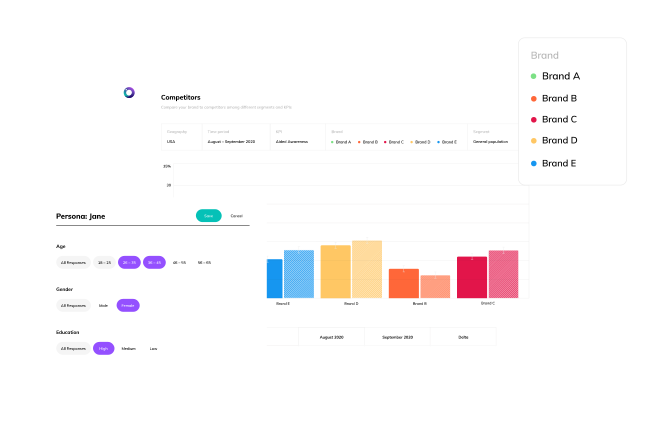\n\n## Final Thoughts\n\nHelloFresh overtook 100s of meal delivery competitors and remain the number one meal subscription service, [turning over 3.75 billion euros in 2020](https://www.retaildetail.eu/en/news/food/record-breaking-year-hellofresh) (partly due to COVID-19). \n\nHow did they overtake the competition and sustain their lead? They’re expecting to grow a further 20-25% in 2021, by the way. In an [interview with Inc.com](https://www.inc.com/magazine/201808/burt-helm/hellofresh.html), co-founder Dominik Richter puts their success down to data. \n\nRichter says they focus on their target customer by analyzing data, fine-tune their marketing strategy (again, using data), and continue to improve their offering by using... more data.\n\nBut having access to data isn’t enough. It’s also how you extract information from that data and which tools you use to make sense of that data that matters. \n\nData unlocks opportunities for any brand, regardless of sector, product, or service offering. Data gives you precise answers to the many questions you have about your audience — their perception, where you sit in the marketplace, and how you can get ahead of the competition. \n\nThat’s why competitor analysis is so important to everything you do for your brand. Without it, you’re treading water, pushing marketing tactics out into the ether with no direction. \n\nSo go out and experiment with different tools and see what information you can unearth to help keep your brand at the forefront."},"tags":["Brand Tracking"],"authorRef":{"slug":"helen","firstName":"Helen","lastName":"Jackson","title":"Freelance Content Writer","picture":{"__typename":"ContentfulAsset","id":"94d6abfa-bfc3-5a6e-a835-be9b0126ec4d","description":"","title":"Helen Jackson Profile Pic","file":{"contentType":"image/png","url":"//images.ctfassets.net/7so8go2zrvbw/t3FrsVmYvMLU8o1Te7mXn/475f19bb2c5d838fd4a0f924346b0824/Author_Helen.png","details":{"image":{"width":235,"height":235}}},"gatsbyImageData":{"images":{"sources":[{"srcSet":"//images.ctfassets.net/7so8go2zrvbw/t3FrsVmYvMLU8o1Te7mXn/475f19bb2c5d838fd4a0f924346b0824/Author_Helen.png?w=235&h=235&q=95&fm=webp 235w","sizes":"100vw","type":"image/webp"}],"fallback":{"src":"//images.ctfassets.net/7so8go2zrvbw/t3FrsVmYvMLU8o1Te7mXn/475f19bb2c5d838fd4a0f924346b0824/Author_Helen.png?w=235&h=235&q=95&fm=png","srcSet":"//images.ctfassets.net/7so8go2zrvbw/t3FrsVmYvMLU8o1Te7mXn/475f19bb2c5d838fd4a0f924346b0824/Author_Helen.png?w=235&h=235&q=95&fm=png 235w","sizes":"100vw"}},"layout":"fullWidth","backgroundColor":"#080808","width":1,"height":1}}}}},{"node":{"publishDate":"2021-07-30T12:25+02:00","slug":"brands-olympics","author":"Marilyn Wilkinson","title":"Brands Blow Billions on the Olympics – Is it Worth It?","seo":{"__typename":"ContentfulSeo","title":"Is Olympic Branding Worth It?","description":"As the Games in Tokyo spark controversy, top sponsors like Toyota are distancing themselves from the event. Has the 2021 event been worth the investment?","noIndex":null,"ogImage":{"fluid":{"src":"//images.ctfassets.net/7so8go2zrvbw/1P2F7QVs21JcOc3bxrnMIY/2a94f1cba01507ca0858024999dde15f/BurgerKing.jpg?w=1200&h=675&q=90&fm=jpg"},"file":{"url":"//images.ctfassets.net/7so8go2zrvbw/1P2F7QVs21JcOc3bxrnMIY/2a94f1cba01507ca0858024999dde15f/BurgerKing.jpg"}}},"heroImage":{"__typename":"ContentfulAsset","id":"b717ff71-8058-511d-ab12-b2ef55402166","description":"Image of Burger King Tokyo Olympics Ads","title":"BurgerKing","file":{"contentType":"image/jpeg","url":"//images.ctfassets.net/7so8go2zrvbw/1P2F7QVs21JcOc3bxrnMIY/2a94f1cba01507ca0858024999dde15f/BurgerKing.jpg","details":{"image":{"width":602,"height":342}}},"gatsbyImageData":{"images":{"sources":[{"srcSet":"//images.ctfassets.net/7so8go2zrvbw/1P2F7QVs21JcOc3bxrnMIY/2a94f1cba01507ca0858024999dde15f/BurgerKing.jpg?w=151&h=86&q=95&fm=webp 151w,\n//images.ctfassets.net/7so8go2zrvbw/1P2F7QVs21JcOc3bxrnMIY/2a94f1cba01507ca0858024999dde15f/BurgerKing.jpg?w=301&h=171&q=95&fm=webp 301w,\n//images.ctfassets.net/7so8go2zrvbw/1P2F7QVs21JcOc3bxrnMIY/2a94f1cba01507ca0858024999dde15f/BurgerKing.jpg?w=602&h=342&q=95&fm=webp 602w","sizes":"(min-width: 602px) 602px, 100vw","type":"image/webp"}],"fallback":{"src":"//images.ctfassets.net/7so8go2zrvbw/1P2F7QVs21JcOc3bxrnMIY/2a94f1cba01507ca0858024999dde15f/BurgerKing.jpg?w=602&h=342&fl=progressive&q=95&fm=jpg","srcSet":"//images.ctfassets.net/7so8go2zrvbw/1P2F7QVs21JcOc3bxrnMIY/2a94f1cba01507ca0858024999dde15f/BurgerKing.jpg?w=151&h=86&fl=progressive&q=95&fm=jpg 151w,\n//images.ctfassets.net/7so8go2zrvbw/1P2F7QVs21JcOc3bxrnMIY/2a94f1cba01507ca0858024999dde15f/BurgerKing.jpg?w=301&h=171&fl=progressive&q=95&fm=jpg 301w,\n//images.ctfassets.net/7so8go2zrvbw/1P2F7QVs21JcOc3bxrnMIY/2a94f1cba01507ca0858024999dde15f/BurgerKing.jpg?w=602&h=342&fl=progressive&q=95&fm=jpg 602w","sizes":"(min-width: 602px) 602px, 100vw"}},"layout":"constrained","backgroundColor":"#f8f8f8","width":800,"height":454}},"coverImage":null,"description":{"description":"As the Games in Tokyo continue to spark controversy, top sponsors like Toyota are beginning to distance themselves from the widely-criticized event. Has the 2021 event been worth the investment?"},"content":{"content":"Coca-Cola, Toyota, Visa, Airbnb, Samsung and Procter & Gamble are just some of the [60 brands](https://olympics.com/tokyo-2020/en/organising-committee/marketing/sponsors/) sponsoring the Tokyo Olympics taking place between 23 July and 8 August.\n\nNBCUniversal, the main television broadcaster in the US, has reported record ad revenues netting [$1.25 billion from over 120 advertisers](https://www.adweek.com/convergent-tv/nbcuniversal-surpasses-rios-1-2-billion-advertising-haul-for-tokyo-olympics/). That’s 20 more than last time and surpasses the $1.2 billion from Rio in 2016. While that seems promising, not everything is rosy.\n\nThe Olympics have always been wildly popular among advertisers, and this year is no exception. Brands have invested more than $3 billion in sponsorships and ad campaigns. But as the Games in Tokyo continue to spark controversy, top sponsors like Toyota are beginning to distance themselves. Are brands going to lose out?\n\n## Resentment Growing in Japan and Around the World\n\nThe 2020 Olympics, which were delayed by one year due to the ongoing COVID-pandemic, have been subject to controversy from the get-go. With health experts and the general public fearing a “superspreader” event, many have called for the games to be canceled. \n\nA [Japanese poll](https://www.asahi.com/ajw/articles/14351670) revealed that 83% of people in Japan think the Olympics should not have happened this year, and 46% believe the Olympics should have been canceled. The host country is struggling to keep the COVID pandemic under control, as it was slower than other countries to roll out the vaccine and [only a quarter of its population is vaccinated](https://www.bbc.com/news/57556978). \n\nAt least [25 athletes have dropped out](https://edition.cnn.com/2021/07/21/sport/olympic-athletes-coronavirus-withdraw/index.html) after becoming infected with COVID, and [one hospital in Tokyo](https://www.asahi.com/ajw/articles/14344117) made headlines for putting up signs saying “Medical capacity reached its limits. Stop the Olympics!”.\n\n## Sponsors are Losing Out\n\n\n\nJapanese corporate sponsors [invested $3 billion in the games](https://www.wsj.com/articles/tokyo-olympics-sponsors-spent-big-bucks-but-their-plans-are-falling-flat-11626175499) and paid an extra $200 million to extend the contracts after the event was postponed. But two weeks before the Opening Ceremony, Japan declared a State of Emergency and banned spectators. \n\nWith the Games being held in empty stadiums, sponsors are no longer able to run the in-person brand experiences they had planned. The subdued atmosphere is also a likely reason for the drop in viewership and public interest.\n\nA [Fujitsu spokesperson](https://fortune.com/2021/07/23/tokyo-olympics-sponsor-toyota-skips-opening-ceremony-cancels-ads/) told Fortune magazine, “*the decision regarding spectators means we will discontinue the use of sponsor tickets; and that we will no longer be able to offer our hospitality program, which was an opportunity for us to build relationships with customers*.”\n\nHowever, there’s a bigger problem. Brands seem worried that taking part in the unpopular Games could damage, rather than enhance, their reputation.\n\n## Toyota Drops Out Among Brand Image Concerns\n\nBeing a corporate sponsor for the most prestigious sporting event in the world is usually highly beneficial in terms of brand affinity and [brand loyalty](https://latana.com/post/brand-loyalty-content/). But as the voice of opposition becomes too loud to ignore, even top sponsors are beginning to distance themselves from the event.\n\nToyota, one of the largest and most influential Japanese companies, recently announced an abrupt halt to its Olympic-themed TV ads in Japan. This can’t have been an easy decision for the brand, who signed a $1bn commercial deal with the International Olympic Committee in 2015. \n\nBrands were quick to follow Toyota's lead, with Panasonic, Fujitsu, NEC, and others shunning the Opening Ceremony to avoid public backlash.\n\nOutside of Japan, brands are steaming ahead with their campaigns.\n\n## Olympic Campaigns Still Going Ahead\n\nThe Olympics remains the largest and most prestigious sporting event in the world, offering brands unparalleled global reach and a rare opportunity to reach fragmented audiences.\n\nWhile Toyota has distanced themselves from the Games to appease the Japanese market, their ads in the US are still running. \n\nIn other areas of the world, brands are running creative omni channel campaigns to unite their audiences and share messages of joy and hope in tough times. Let’s take a look at some of the strongest campaigns.\n\n### Nike “Best Day Ever”\n\n\n\nNike’s Olympic campaign explores how sport can help create a better tomorrow for champions and everyday athletes. The emotional spot stars sporting legends like Shelly-Ann Fraser-Pryce, the first woman to run 100m in under 10 seconds, and wheelchair tennis pro Diede de Groot. \n\n### Oreo “Fiercely Together”\n\n\n\nThe spot features athletes from rival teams singing along to “The More We Get Together.” The competitors put their rivalries aside to celebrate their shared love of Oreos.\n\n### Burger King #WishItWasAWhopper\n\n\n\nOver the years, it’s become an Olympic tradition for champions to bite into their gold medal. In a creative marketing stunt, BurgerKing encouraged users to share images of athletes taking part in this tradition with the hashtag #WishItWasAWhopper.\n\n## Final Thoughts\n\nIt’s a tricky situation for brands. Sponsors who have pulled ads and canceled executive appearances will clearly not get their money’s worth. On the other hand, if something went wrong — like a major outbreak — then the brands associated with the Games could face a PR disaster. \n\nIn Japan, it makes sense for brands to downplay their association with the Olympics. However, in the rest of the world, the Games are still a good opportunity for brands to engage with their audiences. As the US, Europe and many other countries around the world are showing high vaccine rates, the general public is keen to get back to normal and have something to celebrate. \n\nFor brands, this is a unique opportunity to engage audiences in exceptional circumstances. After all, there will never be another Olympics like this one."},"tags":["Brand Marketing"],"authorRef":{"slug":"marilyn","firstName":"Marilyn","lastName":"Wilkinson","title":"Digital Marketing Expert","picture":{"__typename":"ContentfulAsset","id":"e78d550e-a31a-5186-820d-9513596e92d2","description":"","title":"Marilyn Wilkinson Prof Pic","file":{"contentType":"image/png","url":"//images.ctfassets.net/7so8go2zrvbw/1oCRDVeLkqM1iEpuSKa6YK/1ba47f67261d9419b9df6600b8a09c1e/Author_Marilyn.png","details":{"image":{"width":235,"height":235}}},"gatsbyImageData":{"images":{"sources":[{"srcSet":"//images.ctfassets.net/7so8go2zrvbw/1oCRDVeLkqM1iEpuSKa6YK/1ba47f67261d9419b9df6600b8a09c1e/Author_Marilyn.png?w=235&h=235&q=95&fm=webp 235w","sizes":"100vw","type":"image/webp"}],"fallback":{"src":"//images.ctfassets.net/7so8go2zrvbw/1oCRDVeLkqM1iEpuSKa6YK/1ba47f67261d9419b9df6600b8a09c1e/Author_Marilyn.png?w=235&h=235&q=95&fm=png","srcSet":"//images.ctfassets.net/7so8go2zrvbw/1oCRDVeLkqM1iEpuSKa6YK/1ba47f67261d9419b9df6600b8a09c1e/Author_Marilyn.png?w=235&h=235&q=95&fm=png 235w","sizes":"100vw"}},"layout":"fullWidth","backgroundColor":"#080808","width":1,"height":1}}}}},{"node":{"publishDate":"2021-08-17T08:30+02:00","slug":"importance-of-customer-service","author":"Cory Schröder","title":"Why We Shouldn’t Underestimate the Importance of Customer Service For Brand Success","seo":{"__typename":"ContentfulSeo","title":"Why We Shouldn't Underestimate Customer Service","description":"With many marketers seeing investment into Customer Service as “starving acquisition”, what can be done to convince them otherwise? This article takes a look.","noIndex":null,"ogImage":{"fluid":{"src":"//images.ctfassets.net/7so8go2zrvbw/2LdrTY4IssT3kCYYYVQqS2/2c06525705864685f522f6c5008a5cb8/Blog_SEO-Thumbnail_1000X709__6_.png?w=1200&h=675&q=90&fm=jpg"},"file":{"url":"//images.ctfassets.net/7so8go2zrvbw/2LdrTY4IssT3kCYYYVQqS2/2c06525705864685f522f6c5008a5cb8/Blog_SEO-Thumbnail_1000X709__6_.png"}}},"heroImage":{"__typename":"ContentfulAsset","id":"cb736374-0e1f-5284-94fa-75494feefd39","description":"","title":"Importance of CS Thumbnail 1000x709","file":{"contentType":"image/png","url":"//images.ctfassets.net/7so8go2zrvbw/2LdrTY4IssT3kCYYYVQqS2/2c06525705864685f522f6c5008a5cb8/Blog_SEO-Thumbnail_1000X709__6_.png","details":{"image":{"width":1000,"height":709}}},"gatsbyImageData":{"images":{"sources":[{"srcSet":"//images.ctfassets.net/7so8go2zrvbw/2LdrTY4IssT3kCYYYVQqS2/2c06525705864685f522f6c5008a5cb8/Blog_SEO-Thumbnail_1000X709__6_.png?w=200&h=142&q=95&fm=webp 200w,\n//images.ctfassets.net/7so8go2zrvbw/2LdrTY4IssT3kCYYYVQqS2/2c06525705864685f522f6c5008a5cb8/Blog_SEO-Thumbnail_1000X709__6_.png?w=400&h=284&q=95&fm=webp 400w,\n//images.ctfassets.net/7so8go2zrvbw/2LdrTY4IssT3kCYYYVQqS2/2c06525705864685f522f6c5008a5cb8/Blog_SEO-Thumbnail_1000X709__6_.png?w=800&h=567&q=95&fm=webp 800w","sizes":"(min-width: 800px) 800px, 100vw","type":"image/webp"}],"fallback":{"src":"//images.ctfassets.net/7so8go2zrvbw/2LdrTY4IssT3kCYYYVQqS2/2c06525705864685f522f6c5008a5cb8/Blog_SEO-Thumbnail_1000X709__6_.png?w=800&h=567&q=95&fm=png","srcSet":"//images.ctfassets.net/7so8go2zrvbw/2LdrTY4IssT3kCYYYVQqS2/2c06525705864685f522f6c5008a5cb8/Blog_SEO-Thumbnail_1000X709__6_.png?w=200&h=142&q=95&fm=png 200w,\n//images.ctfassets.net/7so8go2zrvbw/2LdrTY4IssT3kCYYYVQqS2/2c06525705864685f522f6c5008a5cb8/Blog_SEO-Thumbnail_1000X709__6_.png?w=400&h=284&q=95&fm=png 400w,\n//images.ctfassets.net/7so8go2zrvbw/2LdrTY4IssT3kCYYYVQqS2/2c06525705864685f522f6c5008a5cb8/Blog_SEO-Thumbnail_1000X709__6_.png?w=800&h=567&q=95&fm=png 800w","sizes":"(min-width: 800px) 800px, 100vw"}},"layout":"constrained","backgroundColor":"#38c8c8","width":800,"height":567}},"coverImage":{"__typename":"ContentfulAsset","id":"086cb910-5d0c-54fe-961a-243fd9076875","description":"","title":"Importance of Customer Service Cover Image","file":{"contentType":"image/png","url":"//images.ctfassets.net/7so8go2zrvbw/34bKMNdo3QkquEpojPs00D/fa0e22ce1d9e4afb193181eb4951921c/Blog_Cover_1288X400__8_.png","details":{"image":{"width":1288,"height":400}}},"gatsbyImageData":{"images":{"sources":[{"srcSet":"//images.ctfassets.net/7so8go2zrvbw/34bKMNdo3QkquEpojPs00D/fa0e22ce1d9e4afb193181eb4951921c/Blog_Cover_1288X400__8_.png?w=750&h=233&q=95&fm=webp 750w,\n//images.ctfassets.net/7so8go2zrvbw/34bKMNdo3QkquEpojPs00D/fa0e22ce1d9e4afb193181eb4951921c/Blog_Cover_1288X400__8_.png?w=1080&h=335&q=95&fm=webp 1080w,\n//images.ctfassets.net/7so8go2zrvbw/34bKMNdo3QkquEpojPs00D/fa0e22ce1d9e4afb193181eb4951921c/Blog_Cover_1288X400__8_.png?w=1288&h=400&q=95&fm=webp 1288w","sizes":"100vw","type":"image/webp"}],"fallback":{"src":"//images.ctfassets.net/7so8go2zrvbw/34bKMNdo3QkquEpojPs00D/fa0e22ce1d9e4afb193181eb4951921c/Blog_Cover_1288X400__8_.png?w=1288&h=400&q=95&fm=png","srcSet":"//images.ctfassets.net/7so8go2zrvbw/34bKMNdo3QkquEpojPs00D/fa0e22ce1d9e4afb193181eb4951921c/Blog_Cover_1288X400__8_.png?w=750&h=233&q=95&fm=png 750w,\n//images.ctfassets.net/7so8go2zrvbw/34bKMNdo3QkquEpojPs00D/fa0e22ce1d9e4afb193181eb4951921c/Blog_Cover_1288X400__8_.png?w=1080&h=335&q=95&fm=png 1080w,\n//images.ctfassets.net/7so8go2zrvbw/34bKMNdo3QkquEpojPs00D/fa0e22ce1d9e4afb193181eb4951921c/Blog_Cover_1288X400__8_.png?w=1288&h=400&q=95&fm=png 1288w","sizes":"100vw"}},"layout":"fullWidth","backgroundColor":"#38c8c8","width":1,"height":0.3105590062111801}},"description":{"description":"With many marketers seeing investment into Customer Service as “starving acquisition”, what can be done to convince them otherwise? This article takes a look."},"content":{"content":"When creating a [brand strategy](https://latana.com/post/brand-analytics-build-better-brand-strategy/), most of the focus is placed on the first half of the customer journey — moving from potential client to first-time customer. \n\nHundreds of thousands of dollars are spent attracting, convincing, and converting consumers into customers. But for many brands, this also means less emphasis is placed on the second half of said journey — growing and maintaining the customer relationship.\n\nWhile it’s always great to acquire new customers, it’s an incredibly expensive endeavor — often with a high CAC. You’re paying out the nose for search ads, social ads, and more — all with the hope of converting new users. Plus, since you have to spend precious time convincing them why your brand is worth their business, it’s a more labor-intensive process. \n\nNow, we’re not saying that you should neglect the first half of your customer journey — what we’re saying is that you should give the second half of said journey more attention than it’s currently getting. Essentially, the vital role that Customer Service/Success teams play needs to be recognized. \n\nBy nurturing and maintaining strong relationships with your customers, they are doing their part to bring in revenue for your business. And since you don’t have to spend as much time and money convincing current customers to make purchases, it’s a more cost-effective way to earn revenue. \n\nTherefore, this article will start by exploring both halves of the typical customer journey, and then move on to discussing why a strong Customer Service team is vital. Finally, we’ll provide a few ways your Customer Service team can contribute to overall brand success. \n\n## The First Half of The Customer Journey\n\n\nWhen it comes to the first half of a typical customer journey, there are a few important steps you need to take before you can really call someone your “customer”.\n\nLet’s break it down.\n\n### Step 1: Awareness \n\nFirst, you need to make consumers aware of your brand. After all, you can’t convert someone who doesn’t know you exist. \n\nWhether they see your ad on a billboard or hear your brand name mentioned on a podcast, the first step is always getting consumers’ attention. This is why [increasing brand awareness](https://latana.com/post/6-ways-to-increase-and-improve-brand-awareness/) is such a high priority for brand managers. \n\n### Step 2: Consideration\n\nOnce a consumer is aware of your brand, they enter the “Consideration Stage”. It’s now your job to get them to engage with a content touchpoint — be it your website or social media profile — so they can learn more about your products and/or services. \n\nAs they learn about your brand, they should become more and more convinced that you’re the best option on the market. Whether it’s via social ads, online reviews, or email campaigns, consumers need to [increase their consideration](https://latana.com/post/brand-consideration-preference-center-of-brand-funnel/) for your brand if they’re going to make it to the next stage.\n\nKeep in mind — in this day and age, most industries are highly oversaturated and the competition for consumers’ business and loyalty is cut-throat. Therefore, through high-quality content and personalized interactions, it’s your job as a brand manager to make sure consumers are thoroughly convinced you’re the best option around.\n\n### Step 3: Purchase\n\nThe final stage in the first half of a typical customer journey is for them to make their first purchase, officially becoming a “customer”. \n\nBe it in your brick-and-mortar store, your online shop, or via a sales team member, when a consumer makes their first purchase and is converted into a customer, you’ve crossed a very important threshold. \n\nHowever, for some brands, the hard work ends there. Marketing has converted the user into a customer and, now, the job is done. \n\nBut, in many ways, post-purchase is where the really hard and important work begins — now it’s your job to consistently impress customers with your brand’s offered value, customer experience, brand image, and so much more.\n\n---\n\nAnd while this responsibility falls to a combination of teams, Customer Service is at the forefront. Think about it — Who deals with daily complaints and issues to maintain the buy-in of important customers? Who keeps their finger on the pulse of customer satisfaction? Who maintains the brand’s Knowledge Base and Community?\n\nCustomer Service plays a huge role in a brand’s success, yet their contributions are often overlooked. So, let’s take a look at the second half of a typical customer’s journey to see how Customer Service can improve brand success.\n\n## The Second Half of The Customer Journey\n\n\nJust because a consumer has been converted into a customer doesn’t mean they can now be neglected. A one-time purchase does not a [loyal customer](https://latana.com/post/brand-loyalty-content/) make!\n\nIn actuality, customers need to be consistently nurtured. With so much competition lurking around, you can’t be lax when it comes to maintaining the happiness and satisfaction of your customer base.\n\n### Step 4: Retention\n\nTherefore, the next stage in a customer journey is that of retention — aka keeping customers around to make more purchases. \n\nFor some brands, this is expressed through nurturing email campaigns or Loyalty Programs run by Customer Retention Management (CRM) teams. While not directly part of a typical Customer Service team, they often work hand-in-hand to nurture customer relationships. \n\nFrom newsletter campaigns to blog articles, there are many ways the brands can prove value to customers in the hopes of retaining them. Another great way to provide value to customers is through an online community. Having your Customer Service team set up and run an online forum where customers can ask questions, share experiences, and provide advice is a wonderful way to increase retention.\n\nHowever, to make it to the next stage of the customer journey, you need to ensure customers are blown away by their experiences.\n\n### Step 5: Advocacy\n\nWhile it’s amazing to have a loyal, retained customer, it’s another thing altogether to have a brand advocate. \n\nLoyal customers who become brand advocates essentially provide you with free advertising. Whether it’s through social media comments, online reviews, or word-of-mouth recommendations, customers who advocate for your brand are the holy grail of brand success. \n\nBut how do you get customers to enter this stage? By providing a superior brand experience from start to finish — great value, helpful customer service chats, a fantastic loyalty program. All this and more is what convinces customers to become advocates. \n\n## How Customer Service Can Contribute to Brand Success\n\n\nAs we touched on in the last two points, Customer Service plays an important role in the latter half of the customer journey — retention and advocacy. \n\nSo, in an effort to illustrate a few examples of just how helpful Customer Service teams can be, let’s look at a few ways they contribute to brand success. \n\n### 1. Strengthen Relationships With Top Clientele\n\nNo matter your industry or market, there will always be customers who are more valuable than others. Big spenders, enthusiastic advocates — no matter their role, they require extra attention.\n\nAnd who better to provide them with the time and attention they need than your Customer Service team? Whether it’s sending personalized emails to touch base or asking them to contribute expert advice to your brand community, Customer Service agents have the unique ability to foster strong, close relationships with clients.\n\nFor example, say your company sells high-end, imported wine. One of your top clients is the Manager of a chain of luxury hotels. As she makes the final call on all large purchases for food & drink, she’s someone you want to keep happy. \n\nTherefore, your Customer Service team makes a routine effort to check in with her — Is she pleased with the quality of your wine? Are your deliveries on time? Does she have any suggestions for you?\n\nBy making her feel valued and letting her know her opinion is important, you’re more likely to maintain a positive, lucrative relationship. Remember, the happier she is with your service, the more likely she is to become a brand advocate. \n\n### 2. Identify Issues/Roadblocks In the Customer Journey \n\nWhile you might think your ads are performing well or that your social media presence is on-point, not every consumer agrees. \n\nAs the face of your brand and the people who speak directly with customers, your Customer Service team is in a unique position to identify potential issues or roadblocks in your customer journey. \n\nYou can’t control the way consumers perceive your brand — they’re going to make assumptions and [associations](https://latana.com/post/brand-association/) based on social media presence, ads, content, and more. What you can control is how your Customer Service team represents your brand. \n\nDid you know that [73% of customers say they remain loyal to brands](https://www.slideshare.net/RightNow/2011-customer-experience-impact-report/5) because of friendly customer service representatives? The way your Customer Service team represents your brand is vital, and a friendly atmosphere makes customers more willing to provide helpful feedback.\n\nWhether it’s the tone of voice in your ads or the visuals on your website, there may be aspects of your brand that customers take issue with. Through friendly conversations, your Customer Service agents can identify such issues and help your Marketing team improve the first half of the customer journey. \n\n### 3. Save Money With Customer Retention \n\nDid you know that repeat customers are [67% more likely to spend more](https://blog.hubspot.com/service/importance-customer-service) with your brand? Or that an increase in customer retention of only 5% can lead to a 25% increase in profits?\n\nWhile many view investing in customer retention as a method of “starving acquisition”, HubSpot points out that it actually “creates more breathing room for your business tomorrow”. They go on to say:\n\n*“Rather than being forced to play catch-up because unhappy customers are churning, you can create an entirely new, much less expensive acquisition channel — your happy customers. This also has the added benefit of driving the average CAC down.”*\n\nAnd what are they referencing when they say happy customers can serve as a new acquisition channel? Brand advocacy. By turning your happy customers into brand advocates, you are indeed opening up a new acquisition channel.\n\nWhat happens when happy customers talk to their friends, family, and colleagues about your brand? They bring in new customers that you didn’t have to directly pay for. This, in turn, drives the overall CAC down. \n\nTherefore, recognizing the importance of and investing money in Customer Service will provide many benefits in the long run — from a decreased churn rate to a lower CAC.\n\n## Final Thoughts\n\nWhile there will always be pressure to increase customer acquisition, don’t forget to siphon the necessary time, energy, and resources into customer retention and supporting your Customer Service team.\n\nCustomer Service plays an important role in a brand’s overall success, and you’d be remiss not to take note of it.\n\nIf you’re interested in taking it a step further and learning more about how your Customer Service team can be on board and aligned with branding, check out our infographic: [“Branding For Customer Service Team”](https://latana.com/guides/branding-for-customer-service-teams/)."},"tags":["Brand Strategy"],"authorRef":{"slug":"cory-schroder","firstName":"Cory","lastName":"Schröder","title":"Senior Content Marketing Manager","picture":{"__typename":"ContentfulAsset","id":"31ab4d95-0f90-5835-a22f-4b7ff41fece2","description":"","title":"Cory Profile Picture","file":{"contentType":"image/png","url":"//images.ctfassets.net/7so8go2zrvbw/42rTfahl2m45FP1Fzo7B8n/52d40b8bd8af9ab559381bc0ab744cda/avatar.png","details":{"image":{"width":235,"height":235}}},"gatsbyImageData":{"images":{"sources":[{"srcSet":"//images.ctfassets.net/7so8go2zrvbw/42rTfahl2m45FP1Fzo7B8n/52d40b8bd8af9ab559381bc0ab744cda/avatar.png?w=235&h=235&q=95&fm=webp 235w","sizes":"100vw","type":"image/webp"}],"fallback":{"src":"//images.ctfassets.net/7so8go2zrvbw/42rTfahl2m45FP1Fzo7B8n/52d40b8bd8af9ab559381bc0ab744cda/avatar.png?w=235&h=235&q=95&fm=png","srcSet":"//images.ctfassets.net/7so8go2zrvbw/42rTfahl2m45FP1Fzo7B8n/52d40b8bd8af9ab559381bc0ab744cda/avatar.png?w=235&h=235&q=95&fm=png 235w","sizes":"100vw"}},"layout":"fullWidth","backgroundColor":"#080808","width":1,"height":1}}}}},{"node":{"publishDate":"2021-04-16T00:00+02:00","slug":"goodbye-lockdown-in-new-ads","author":"Marilyn Wilkinson","title":"Brands Say “Goodbye Lockdown” In Emotional New Ads","seo":{"__typename":"ContentfulSeo","title":"Brands Say “Goodbye Lockdown” In Emotional New Ads","description":"Is life going back to normal soon? Google, Budweiser and Walgreens seem to think so. But are the messages of hope resonating with consumers?","noIndex":null,"ogImage":null},"heroImage":null,"coverImage":null,"description":{"description":"Is life going back to normal soon? Google, Budweiser, and Walgreens seem to think so. But are the messages of hope resonating with consumers?"},"content":{"content":"Is life going back to normal soon? Google, Budweiser, and Walgreens certainly think so. The brands recently released emotional new ads saying farewell to homeschooling, virtual happy hours, and endless Zoom calls. But as countries roll out the vaccine at different rates, are messages of hope resonating with consumers – or do they seem insensitive to people still in lockdown?\n\n## Not Everyone Is Vaccinated Yet\n\nIsrael, the US, and the UK are leading the way in terms of vaccinations, with over [61 million fully vaccinated U.S. residents](https://covid.cdc.gov/covid-data-tracker/#vaccinations). But across Europe, Africa, and Asia, there are many countries where [less than 20% of the population has been vaccinated](https://www.nytimes.com/interactive/2021/world/covid-vaccinations-tracker.html) – in some cases, less than 1%.\n\nSo, while there is reason to be optimistic, there is still some way to go. With that in mind, let’s dive into the campaigns and see how consumers have reacted so far.\n\n### Google\n\nGoogle recently released an emotional spot titled “Get Back To What You Love”. The minute-long video starts by showing common Corona-related search terms, such as \"quarantine,\" \"social distancing,\" and \"lockdown\". \n\nGoogle goes on to show how the world will hopefully be opening up again soon, allowing people to enjoy in-person gatherings once again. The search terms are replaced by what used to be normal, and hopefully will be again. \n\nThe calendar notice “virtual happy hour” is replaced by simply “happy hour”, while “sweat pants” becomes “pants”. A Google Maps theater location switches from \"temporarily closed\" to \"open.\" The spot concludes with the search term: \"covid vaccine near me.\"\n\nThe video generated 8.4 million views on YouTube (as of April 16th, 2021) and received positive traction on Twitter, with users even saying the spot made them cry. \n\nGoogle has partnered with the Ad Council on an initiative designed to promote vaccine efforts and education, including a “Get The Facts” campaign running in April. So, it seems we can expect more COVID-related campaign messaging from the tech giant.\n\n\n\n\n\n### Budweiser\n\nBudweiser recently released an ad called “[Good Times are Coming](https://www.youtube.com/watch?v=Eehmzv2cpNc).” It shows photos of people drinking beer together, followed by the rhetorical question, “Remember this?”\n\nThe sentimental spot ends with the tagline “Good times are coming. Now we have a shot” as Jimmy Durante’s “I’ll Be Seeing You” plays. This comes after the brand made the decision to put their ad dollars towards COVID-vaccine education, instead of running a Superbowl ad.\n\nThe spot amplifies the brand’s ongoing message around the importance of vaccination and how we can expect to return to the shared moments we have all missed.\n\nThe message might seem unrelated to beer. But of course, the brand has a vested interest in enabling people to gather in bars, restaurants, and parties selling beer.\n\nMonica Rustgi, VP of Marketing at Budweiser, said the spot uses old user-generated content of people enjoying their beer. She explained, “The light is at the end of the tunnel, finally, so we thought these shared moments around beer are really when it feels like humanity should be a little bit back to normal.”\n\nThe spot elicited an emotional reaction on YouTube and Twitter, with one user commenting, “This made me cry. I miss moments like this with my friends.”\n\n\n\n### Walgreens\n\nWalgreens, the largest pharmacy in the US, has launched an omnichannel marketing campaign educating people around the topic of vaccination. [This is our shot](https://www.youtube.com/watch?v=rlVbCRzB5Is) is the first of two 30-second spots narrated by John Legend, who will also represent the brand on social media and in interviews. The spots will air on broadcast and cable TV as well as during NBA programming on ABC and ESPN.\n\n“This is our shot” refers to the role vaccination will play in getting back to normal, and shows emotional visuals of the in-person gatherings such as weddings, graduations, and family reunions.\n\nJohn Legend stated, “Getting vaccinated against COVID-19 is our shot at getting back to the moments that matter most — time with friends, live concerts and family barbeques. I am proud to team up with Walgreens to encourage everyone to get their COVID-19 vaccination, and help reach communities hit hardest by the pandemic.”\n\nSo far, the spot hasn’t generated as much interaction as the campaigns from Google and Budweiser. Walgreen’s YouTube video has just over 1,000 views and some critical comments from those skeptical of the vaccine. However, there is still more to come from the pharmacy giant.\n\nThe second spot will be released in a few weeks and will feature John Legend making an emotional appeal for the public to get vaccinated. Walgreens made headlines recently for [partnering with rideshare app Uber](https://news.walgreens.com/press-releases/walgreens-uber-vaccine-equity.htm) to facilitate the distribution of the COVID-vaccine in underprivileged communities. \n\nNow, the pharmacy giant is ramping up its marketing efforts as the availability of the vaccine increases, leveraging its website, social media channels and influencer marketing to amplify the message.\n\nOn April 18, the brand will run a variety special on NBC called “Roll Up Your Sleeves”, where celebrities, pharmacists and influencers will encourage the public to get vaccinated. \n\n
\n\n## Final Thoughts\n\nThe emotional ad campaigns show a light at the end of the tunnel – something we are all desperate to see after so long.\n\nVaccines are set to become available to all U.S. adults by May 1st, and Google, Budweiser, and Walgreens are all US brands. Your average Russian, Indian or Peruvian might not be able to identify with the optimistic messaging, given that [less than 10% of the population](https://www.nytimes.com/interactive/2021/world/covid-vaccinations-tracker.html) in these countries has been vaccinated.\n\nNonetheless, consumer reactions have been overwhelmingly positive. It seems we all need some hope right now, no matter where we are in the world. "},"tags":["Brand Marketing"],"authorRef":{"slug":"marilyn","firstName":"Marilyn","lastName":"Wilkinson","title":"Digital Marketing Expert","picture":{"__typename":"ContentfulAsset","id":"e78d550e-a31a-5186-820d-9513596e92d2","description":"","title":"Marilyn Wilkinson Prof Pic","file":{"contentType":"image/png","url":"//images.ctfassets.net/7so8go2zrvbw/1oCRDVeLkqM1iEpuSKa6YK/1ba47f67261d9419b9df6600b8a09c1e/Author_Marilyn.png","details":{"image":{"width":235,"height":235}}},"gatsbyImageData":{"images":{"sources":[{"srcSet":"//images.ctfassets.net/7so8go2zrvbw/1oCRDVeLkqM1iEpuSKa6YK/1ba47f67261d9419b9df6600b8a09c1e/Author_Marilyn.png?w=235&h=235&q=95&fm=webp 235w","sizes":"100vw","type":"image/webp"}],"fallback":{"src":"//images.ctfassets.net/7so8go2zrvbw/1oCRDVeLkqM1iEpuSKa6YK/1ba47f67261d9419b9df6600b8a09c1e/Author_Marilyn.png?w=235&h=235&q=95&fm=png","srcSet":"//images.ctfassets.net/7so8go2zrvbw/1oCRDVeLkqM1iEpuSKa6YK/1ba47f67261d9419b9df6600b8a09c1e/Author_Marilyn.png?w=235&h=235&q=95&fm=png 235w","sizes":"100vw"}},"layout":"fullWidth","backgroundColor":"#080808","width":1,"height":1}}}}},{"node":{"publishDate":"2021-06-09T00:00+02:00","slug":"menstruation-in-advertising","author":"Marilyn Wilkinson","title":"Menstruation in Advertising – Breaking the Ultimate Taboo","seo":{"__typename":"ContentfulSeo","title":"Menstruation in Advertising – Breaking the Taboo","description":"Brands are working hard to fight period stigma and portray menstruation more realistically in their campaigns. But have attitudes really changed?","noIndex":null,"ogImage":{"fluid":{"src":"//images.ctfassets.net/7so8go2zrvbw/4KeSavhIjpz7Wsmmo95xXf/36a5785654f9869b376275ef83a8d865/Primark.JPG?w=1200&h=675&q=90&fm=jpg"},"file":{"url":"//images.ctfassets.net/7so8go2zrvbw/4KeSavhIjpz7Wsmmo95xXf/36a5785654f9869b376275ef83a8d865/Primark.JPG"}}},"heroImage":{"__typename":"ContentfulAsset","id":"7a99bad1-4082-5212-af20-10ec935d8821","description":"Primark Instagram Post of Woman Lying on Bed","title":"Primark","file":{"contentType":"image/jpeg","url":"//images.ctfassets.net/7so8go2zrvbw/4KeSavhIjpz7Wsmmo95xXf/36a5785654f9869b376275ef83a8d865/Primark.JPG","details":{"image":{"width":666,"height":589}}},"gatsbyImageData":{"images":{"sources":[{"srcSet":"//images.ctfassets.net/7so8go2zrvbw/4KeSavhIjpz7Wsmmo95xXf/36a5785654f9869b376275ef83a8d865/Primark.JPG?w=167&h=148&q=95&fm=webp 167w,\n//images.ctfassets.net/7so8go2zrvbw/4KeSavhIjpz7Wsmmo95xXf/36a5785654f9869b376275ef83a8d865/Primark.JPG?w=333&h=295&q=95&fm=webp 333w,\n//images.ctfassets.net/7so8go2zrvbw/4KeSavhIjpz7Wsmmo95xXf/36a5785654f9869b376275ef83a8d865/Primark.JPG?w=666&h=589&q=95&fm=webp 666w","sizes":"(min-width: 666px) 666px, 100vw","type":"image/webp"}],"fallback":{"src":"//images.ctfassets.net/7so8go2zrvbw/4KeSavhIjpz7Wsmmo95xXf/36a5785654f9869b376275ef83a8d865/Primark.JPG?w=666&h=589&fl=progressive&q=95&fm=jpg","srcSet":"//images.ctfassets.net/7so8go2zrvbw/4KeSavhIjpz7Wsmmo95xXf/36a5785654f9869b376275ef83a8d865/Primark.JPG?w=167&h=148&fl=progressive&q=95&fm=jpg 167w,\n//images.ctfassets.net/7so8go2zrvbw/4KeSavhIjpz7Wsmmo95xXf/36a5785654f9869b376275ef83a8d865/Primark.JPG?w=333&h=295&fl=progressive&q=95&fm=jpg 333w,\n//images.ctfassets.net/7so8go2zrvbw/4KeSavhIjpz7Wsmmo95xXf/36a5785654f9869b376275ef83a8d865/Primark.JPG?w=666&h=589&fl=progressive&q=95&fm=jpg 666w","sizes":"(min-width: 666px) 666px, 100vw"}},"layout":"constrained","backgroundColor":"#f8f8f8","width":800,"height":708}},"coverImage":null,"description":{"description":"Brands are working hard to fight period stigma and portray menstruation more realistically in their campaigns. But have attitudes really changed?"},"content":{"content":"It’s the most natural thing in the world and affects half the population. So, what is it about the menstrual cycle that causes people to freak out if an ad shows *blood*? \n\nBrands like Primark, Yoppie, and Kotex are working hard to fight period stigma and their latest campaigns portray menstruation more openly and realistically than ever before. But have attitudes really changed?\n\n## The Very First Period Ads\n\nPeriods are nothing new, and neither are ads for menstrual products. In fact, the first print ads date back to the 1870s.\n\nHowever, if you think back to the period ads you’ve seen on TV, even in recent years, you’ll probably recall women in white shorts dancing around and feeling fabulous. No vaginas, and definitely no blood. \n\nAds for menstrual products were banned on TV and radio until 1972, and it wasn‘t until 1985 that the word \"period\" was used. The ad, ran by the brand Tampax, featured a young pre-Friends Courtney Cox in tight spandex telling the audience, “Feeling cleaner is more comfortable. It can actually change the way you feel about your period.”\n\nEven after menstrual products could finally be advertised on TV, brands were still heavily restricted in what they could say and show on air. Specific details around anatomy were forbidden and a watery, blue liquid was used instead of blood. \n\nObviously, in real life, menstruation does not look like that.\n\n## From Stigma to “So What” – Meet the Brands Fighting the Good Fight\n\nWhile a period is a sign of a healthy body able to procreate, advertising has traditionally portrayed menstruation as an illness or undesirable condition.\n\nFor years, societal norms have implied that people should be discreet about or even ashamed of their monthly cycle. But fortunately, this is starting to change.\n\nBrands and influencers are increasingly using their voice to normalize menstruation, provide educational content and improve access to hygiene products, especially in developing countries.\n\nLet’s take a look at the brands taking a stand and how they portray periods in their campaigns in 2021.\n\n### Kotex #SheCan\n\nOkay I've watched it a million times now but every time I see the @Walgreens @johnlegend This Is Our Shot commercial I get chills. He crushed it. John rn: pic.twitter.com/cC31m1OGli
— Alexandra Brown-Monteleagre (@AlexzBrown) April 18, 2021
\n\nKotex is an American brand of menstrual hygiene products whose product range includes pads, tampons, and period underwear. The brand was created 100 years ago, when nurses at the front lines had to keep working even when they had their periods. \n\nTo commemorate their 100th anniversary, Kotex has launched a global campaign called “[She Can](https://www.kimberly-clark.com/en-us/responsibility/social-impact/kotex-she-can-initiative)” to champion women’s progress. Kotex has committed to investing $2.5 million over three years to expand menstrual hygiene education and access.\n\nJuanita Pelaez, Vice President, Global Adult and Feminine Care for Kimberly-Clark, stated, \"The Kotex She Can Initiative is a long-term effort to build a future where a period never gets in the way of any woman's progress.\"\n\nOn Instagram, the brand called upon users to “start a new cycle” free of shame and stigma, and to just call a period what it is instead of using euphemisms like “aunt flow” or “crimson tide”.\n\n### Yoppie\n\n
\n\nPersonal care brand Yoppie is helping break the stigma surrounding period anxiety with a new omnichannel campaign aiming to raise awareness for the issue and even share free menstrual products.\n\nA survey conducted by the brand found that 27% of women *(anyone identifying as a woman, non-binary, trans men/women)* experience anxiety about planning their social life while on their period, especially as facilities like public toilets have been closed during lockdown.\n\nWhile Yoppie can’t influence the availability of public toilets, they can increase access to free period care. Every Yoppie customer can give their friends and family £30 credit via a unique code, and for each person who subscribes, they get £20 back. Doing so will provide users with free Yoppie products for months or even years.\n\nYoppie founder Danielle Peri said, “We wanted to make sure women across the nation were well armed with free period care products to help reduce anxiety when planning around their period.”\n\nYoppie is also supporting people with periods through the publication of their recent guide, [Menstrual Cycles & Mental Health](https://yoppie.com/menstrual-cycles-mental-health) — which examines the \"myths, misconceptions, truths and realities of the relationship between mental health and your menstrual cycle.\"\n\n### Primark Period Underwear\n\n
\n\nPrimark, the global fast fashion retailer headquartered in Ireland, recently launched a new range of washable, reusable [period underwear](https://www.primark.com/en/periodunderwear). Designed to replace single-use period products, the period pants look and feel like regular underwear and are an innovative move towards making menstrual products more sustainable.\n\nTo announce the launch, Primark collaborated with Liv Blankson, a UK-based fashion blogger and influencer with over 30,000 followers.\n\nIn an emotional yet down-to-earth video, Liv opens up about her experiences with Menorrhagia (heavy periods), saying, “I’ve struggled with my period since I ever got it, to be honest.”\n\nLiv goes on to explain that although she hadn’t previously considered period underwear, the Primark period pants were a game-changer for her, enabling her to feel more confident and cut her consumption of disposable sanitary products in half.\n\nFor a mainstream fashion brand, rather than a niche period underwear brand, this kind of campaign is a big deal and goes a long way towards normalizing periods. \n\n## Is Period Stigma Really Gone?\n\n\n\nYou might be thinking, society has come a long way in recent years. We all know periods are a fact of life for a significant part of the population. \n\nHowever…\n\nIn 2017, the first ad in the UK to depict real period blood, Bodyform’s \"Blood Normal\" sent shock waves and was banned by Facebook. \n\nIn 2019, Thinx ran a TV ad showing a tampon string hanging out of someone's underwear, which was banned by numerous TV networks following numerous user complaints.\n\nAnd only last year, the Tampax ad dubbed “tampons and tea” was banned in the UK and Ireland for causing “widespread offence”. \n\nSo while we have made progress, there is clearly a lot of ground to cover before menstruation is truly accepted. \n\n## Final Thoughts\n\nThe global movement against period shaming is empowering people who menstruate to lead more comfortable and confident lives. Brands have a vital role to play in eliminating period stigma and discrimination. \n\nTo some extent, brands are leading the way while society needs to catch up.\nFor too long, culture and traditions have perpetuated the notion that periods are shameful, impure, and unnatural. This has led people who menstruate to miss work and school, feel embarrassed to ask for hygiene products, and be too ashamed to get help for their menstrual health issues. \n\nThis needs to change, and luckily, is changing.\n\nHowever, many trans and non-binary people have periods too and are still underrepresented in advertising – even forward-thinking period brands aim most of their advertising at “women”. \n\nNonetheless, a mainstream fashion brand like Primark talking about heavy flow is a huge step forward - even if they do show pretty underwear and a flat stomach rather than blood, bloating and cramps. It seems society isn’t quite ready to see the full reality of menstruation yet.\n\nWhile there is still progress to be made, how brands treat periods has come a long way from the days of Courtney Cox’s spandex pants. \n"},"tags":["Brand Marketing"],"authorRef":{"slug":"marilyn","firstName":"Marilyn","lastName":"Wilkinson","title":"Digital Marketing Expert","picture":{"__typename":"ContentfulAsset","id":"e78d550e-a31a-5186-820d-9513596e92d2","description":"","title":"Marilyn Wilkinson Prof Pic","file":{"contentType":"image/png","url":"//images.ctfassets.net/7so8go2zrvbw/1oCRDVeLkqM1iEpuSKa6YK/1ba47f67261d9419b9df6600b8a09c1e/Author_Marilyn.png","details":{"image":{"width":235,"height":235}}},"gatsbyImageData":{"images":{"sources":[{"srcSet":"//images.ctfassets.net/7so8go2zrvbw/1oCRDVeLkqM1iEpuSKa6YK/1ba47f67261d9419b9df6600b8a09c1e/Author_Marilyn.png?w=235&h=235&q=95&fm=webp 235w","sizes":"100vw","type":"image/webp"}],"fallback":{"src":"//images.ctfassets.net/7so8go2zrvbw/1oCRDVeLkqM1iEpuSKa6YK/1ba47f67261d9419b9df6600b8a09c1e/Author_Marilyn.png?w=235&h=235&q=95&fm=png","srcSet":"//images.ctfassets.net/7so8go2zrvbw/1oCRDVeLkqM1iEpuSKa6YK/1ba47f67261d9419b9df6600b8a09c1e/Author_Marilyn.png?w=235&h=235&q=95&fm=png 235w","sizes":"100vw"}},"layout":"fullWidth","backgroundColor":"#080808","width":1,"height":1}}}}},{"node":{"publishDate":"2022-04-29T07:00+02:00","slug":"twitter-deep-dive","author":"Cory Schröder","title":"Trends, Trolls, & Takeovers: The Odyssey of Twitter","seo":{"__typename":"ContentfulSeo","title":"Trends, Trolls, & Takeovers: The Odyssey of Twitter","description":"Twitter has seen explosive growth over the last 16 years — but is its popularity waning? And how will Musk’s takeover impact the platform? Find out here.","noIndex":null,"ogImage":{"fluid":{"src":"//images.ctfassets.net/7so8go2zrvbw/2hbUiAK827bGBhB9ADVAGT/b445845c691d1bc5e81d97ce2aaf06d3/Blog_SEO-Thumbnail_1000X709_-_2022-04-29T095329.422.png?w=1200&h=675&q=90&fm=jpg"},"file":{"url":"//images.ctfassets.net/7so8go2zrvbw/2hbUiAK827bGBhB9ADVAGT/b445845c691d1bc5e81d97ce2aaf06d3/Blog_SEO-Thumbnail_1000X709_-_2022-04-29T095329.422.png"}}},"heroImage":{"__typename":"ContentfulAsset","id":"ac720918-c3b2-5867-aae4-3d91a8f7dbae","description":"","title":"Latana x Twitter logos with Elon Musk (thumbnail)","file":{"contentType":"image/png","url":"//images.ctfassets.net/7so8go2zrvbw/2hbUiAK827bGBhB9ADVAGT/b445845c691d1bc5e81d97ce2aaf06d3/Blog_SEO-Thumbnail_1000X709_-_2022-04-29T095329.422.png","details":{"image":{"width":1000,"height":709}}},"gatsbyImageData":{"images":{"sources":[{"srcSet":"//images.ctfassets.net/7so8go2zrvbw/2hbUiAK827bGBhB9ADVAGT/b445845c691d1bc5e81d97ce2aaf06d3/Blog_SEO-Thumbnail_1000X709_-_2022-04-29T095329.422.png?w=200&h=142&q=95&fm=webp 200w,\n//images.ctfassets.net/7so8go2zrvbw/2hbUiAK827bGBhB9ADVAGT/b445845c691d1bc5e81d97ce2aaf06d3/Blog_SEO-Thumbnail_1000X709_-_2022-04-29T095329.422.png?w=400&h=284&q=95&fm=webp 400w,\n//images.ctfassets.net/7so8go2zrvbw/2hbUiAK827bGBhB9ADVAGT/b445845c691d1bc5e81d97ce2aaf06d3/Blog_SEO-Thumbnail_1000X709_-_2022-04-29T095329.422.png?w=800&h=567&q=95&fm=webp 800w","sizes":"(min-width: 800px) 800px, 100vw","type":"image/webp"}],"fallback":{"src":"//images.ctfassets.net/7so8go2zrvbw/2hbUiAK827bGBhB9ADVAGT/b445845c691d1bc5e81d97ce2aaf06d3/Blog_SEO-Thumbnail_1000X709_-_2022-04-29T095329.422.png?w=800&h=567&q=95&fm=png","srcSet":"//images.ctfassets.net/7so8go2zrvbw/2hbUiAK827bGBhB9ADVAGT/b445845c691d1bc5e81d97ce2aaf06d3/Blog_SEO-Thumbnail_1000X709_-_2022-04-29T095329.422.png?w=200&h=142&q=95&fm=png 200w,\n//images.ctfassets.net/7so8go2zrvbw/2hbUiAK827bGBhB9ADVAGT/b445845c691d1bc5e81d97ce2aaf06d3/Blog_SEO-Thumbnail_1000X709_-_2022-04-29T095329.422.png?w=400&h=284&q=95&fm=png 400w,\n//images.ctfassets.net/7so8go2zrvbw/2hbUiAK827bGBhB9ADVAGT/b445845c691d1bc5e81d97ce2aaf06d3/Blog_SEO-Thumbnail_1000X709_-_2022-04-29T095329.422.png?w=800&h=567&q=95&fm=png 800w","sizes":"(min-width: 800px) 800px, 100vw"}},"layout":"constrained","backgroundColor":"#e8e8f8","width":800,"height":567}},"coverImage":{"__typename":"ContentfulAsset","id":"622aeb8d-9800-504e-a61b-7e1e95713cc4","description":"","title":"Latana x Twitter logos with Elon Musk (cover image)","file":{"contentType":"image/png","url":"//images.ctfassets.net/7so8go2zrvbw/719lUBO0FBl20tjRerdvA1/2e9482bae6d85e266041f0fa61e86f21/Blog_Cover_1288X400_-_2022-04-29T095310.176.png","details":{"image":{"width":1288,"height":400}}},"gatsbyImageData":{"images":{"sources":[{"srcSet":"//images.ctfassets.net/7so8go2zrvbw/719lUBO0FBl20tjRerdvA1/2e9482bae6d85e266041f0fa61e86f21/Blog_Cover_1288X400_-_2022-04-29T095310.176.png?w=750&h=233&q=95&fm=webp 750w,\n//images.ctfassets.net/7so8go2zrvbw/719lUBO0FBl20tjRerdvA1/2e9482bae6d85e266041f0fa61e86f21/Blog_Cover_1288X400_-_2022-04-29T095310.176.png?w=1080&h=335&q=95&fm=webp 1080w,\n//images.ctfassets.net/7so8go2zrvbw/719lUBO0FBl20tjRerdvA1/2e9482bae6d85e266041f0fa61e86f21/Blog_Cover_1288X400_-_2022-04-29T095310.176.png?w=1288&h=400&q=95&fm=webp 1288w","sizes":"100vw","type":"image/webp"}],"fallback":{"src":"//images.ctfassets.net/7so8go2zrvbw/719lUBO0FBl20tjRerdvA1/2e9482bae6d85e266041f0fa61e86f21/Blog_Cover_1288X400_-_2022-04-29T095310.176.png?w=1288&h=400&q=95&fm=png","srcSet":"//images.ctfassets.net/7so8go2zrvbw/719lUBO0FBl20tjRerdvA1/2e9482bae6d85e266041f0fa61e86f21/Blog_Cover_1288X400_-_2022-04-29T095310.176.png?w=750&h=233&q=95&fm=png 750w,\n//images.ctfassets.net/7so8go2zrvbw/719lUBO0FBl20tjRerdvA1/2e9482bae6d85e266041f0fa61e86f21/Blog_Cover_1288X400_-_2022-04-29T095310.176.png?w=1080&h=335&q=95&fm=png 1080w,\n//images.ctfassets.net/7so8go2zrvbw/719lUBO0FBl20tjRerdvA1/2e9482bae6d85e266041f0fa61e86f21/Blog_Cover_1288X400_-_2022-04-29T095310.176.png?w=1288&h=400&q=95&fm=png 1288w","sizes":"100vw"}},"layout":"fullWidth","backgroundColor":"#e8e8f8","width":1,"height":0.3105590062111801}},"description":{"description":"Twitter has seen explosive growth over the last 16 years — but is its popularity waning? And how will Musk’s takeover impact the platform? Find out here."},"content":{"content":"Having staked its claim as the world’s real-time news feed, Twitter occupies a unique position within the social media landscape. \n\nNot as influencer-heavy & image-focused as Instagram, as video-obsessed as [TikTok](https://latana.com/post/tik-tok-brand-building/), or as interpersonally-driven as Facebook — Twitter sees itself as “more of an information network” than a social network. It’s a place for so-called “microblogging”, where users can share their thoughts & opinions, the latest news, and more — in 240 characters or less.\n\nThis distinction has led Twitter to become the home base for political pundits, public figures, brands, and business “gurus” alike — all of which have found their niche within the omnipresent Twitter universe. \n\nHowever, Twitter’s success has been called into question over the last few years — with many claiming that while its officially-reported metrics may look promising, the platform is at risk of losing its most important resource: users who actively tweet. \n\nThat being said, the recent takeover by US billionaire Elon Musk seems to have given Twitter a boost. After Musk revealed that [he bought 9.2% of Twitter for $2.64 billion](https://www.bloomberg.com/news/articles/2022-04-04/musk-takes-9-2-stake-in-twitter-after-questioning-platform) on April 4th, 2022, the brand’s stock rose by 27% and Twitter’s shares experienced the “biggest intraday increase since its first day of trading following the company’s 2013 initial public offering.”\n\nAs of April 25th, the Twitter board of directors has accepted Musk’s offer to acquire Twitter for $44 billion — which means the company is soon to go private. So, where does Twitter go from here? \n\nLet’s take a look at Twitter’s journey from obscurity to prominence, as well as identify a few tips other brands can take into consideration.\n\n## Twitter’s Journey To Global Fame\n\n\nSource: [New York Magazine](https://nymag.com/intelligencer/2013/11/twitters-founder-feuds-explained.html)\n\nTwitter started off as many other businesses do — the products of a “daylong brainstorming session” among friends and colleagues. \n\nOriginally pitched as [a way for individuals to use an SMS service to communicate with a small group](https://www.nytimes.com/2010/10/31/technology/31ev.html) while the group was working at Odeo, its disemvowelled code name was *twttr*. But the origin of the brand name itself? Co-founder Jack Dorsey explained in [an article for the LA Times](https://latimesblogs.latimes.com/technology/2009/02/twitter-creator.html):\n\n*“we came across the word ‘twitter’, and it was just perfect. The definition was ‘a short burst of inconsequential information’, and ‘chirps from birds’. And that's exactly what the product was.”*\n\nOn March 21, 2006, Dorsey published the first official tweet, which read:\n\n
\n\nFunnily enough, this first-ever tweet was actually [sold as an NFT in March 2021 to crypto entrepreneur Sina Estavi](https://www.coindesk.com/business/2022/04/13/jack-dorseys-first-tweet-nft-went-on-sale-for-48m-it-ended-with-a-top-bid-of-just-280/) for $2.9 million, who proceeded to re-sell said [NFT](https://latana.com/post/what-are-nfts/) in 2022 and donate half of the proceeds ($25 million) to charity. What a small world!\n\nBut, back to Twitter’s origin story. The first full version of the platform was introduced to the public on July 15, 2006. Within the same year, Dorsey, Evan Williams, Biz Stone, and other members of Odeo formed a new company called Obvious Corporation — which then acquired Odeo, as well as Twitter.com.\n\nHowever, in 2007, [Twitter officially spun off into its own company](https://web.archive.org/web/20090727073104/http://www.thedailyanchor.com/2009/02/12/a-conversation-with-twitter-co-founder-jack-dorsey/) — and the platform’s founders worked hard to define exactly what it was Twitter was supposed to be. In [a 2013 interview with Inc.](https://www.inc.com/issie-lapowsky/ev-williams-twitter-early-years.html?cid=em01011week40day04b), Williams explained:\n\n*“They called it a social network, they called it microblogging, but it was hard to define, because it didn't replace anything. {...} Twitter actually changed from what we thought it was in the beginning, which we described as status updates and a social utility. {...} Twitter was really more of an information network than it is a social network.”*\n\n---\n\nWith this new direction in mind, Twitter began to gain some organic traction, with the “tipping point” being [identified as the South by Southwest Interactive (SXSWi) conference](https://thenextweb.com/news/5-years-ago-today-twitter-launched-to-the-public) in 2007. During the event, Twitter’s usage went from 20,000 tweets a day to 60,000 — a huge step forward for the brand.\n\nIn [Steven Levy’s 2007 article for Newsweek](https://www.newsweek.com/twitter-brevity-next-big-thing-98045), he attributes this growth to Twitter’s marketing efforts, stating:\n\n*“The Twitter people cleverly placed two 60-inch plasma screens in the conference hallways, exclusively streaming Twitter messages. Hundreds of conference-goers kept tabs on each other via constant twitters.* \n\n*“Panelists and speakers mentioned the service, and the bloggers in attendance touted it. Soon everyone was buzzing and posting about this new thing that was sort of instant messaging and sort of blogging and maybe even a bit of sending a stream of telegrams.”*\n\nIt was a smashing success in more ways than one — influential bloggers of the time lauded Twitter and the platform even received the coveted SXSWi Web Award prize! \n\n---\n\nFrom 2007 to 2010, Twitter experienced rapid growth. In 2007, the platform had 400,000 tweets per quarter — and by 2008, it was 100 million tweets per quarter. Cut to June 2010, and [it’s 65 million tweets *per day*](https://blog.twitter.com/official/en_us/a/2010/big-goals-big-game-big-records.html). That’s some exponential growth if we’ve ever seen it. \n\nFrom 2009 to 2010, Twitter went from the twenty-second to the third-highest-ranking social networking site in the world — and continued to break its own records of daily tweets and tweets per second as the years went on.\n\nIn the fall of 2010, Twitter got a makeover. Dubbed “New Twitter”, this updated version of the platform now allowed users to view pictures and videos without leaving Twitter itself — which afforded members with a much more holistic, enjoyable experience. \n\n“New Twitter” also had a complete overhaul of its interface — shifting “@mentions” and “Retweets” links to above the Twitter stream and moving “Messages” and “Log Out” to the top navigation bar. By November 2010, the “New Twitter experience” had been rolled out to all users and allowed the site to transition to a more seamless experience.\n\n2011 saw the introduction of the “Connect” and “Discover” tabs, as well as a timeline of tweets and completely redesigned user profiles — which [some compared to rival networking site Facebook’s setup](https://www.foxnews.com/tech/twitter-2-0-everything-you-need-to-know-about-the-new-changes). And by 2012, the platform was celebrating its 6th birthday, when it announced that it officially had 140 million users and 340 million tweets per day.\n\nBetween 2011 and 2013, Twitter acquired many notable companies — each of which enhanced the platform’s service and offerings. From Vine to Crashlytics, Twitter was buying up companies left and right with the goal of growing more efficiently. And for a while, it really worked.\n\n## The Dawn of Brand Twitter\n\n\nSource: [Wealth of Geeks](https://wealthofgeeks.com/the-snarkiest-brand-accounts-on-twitter/)\n\nWhile Twitter had been steadily gaining steam since its founding in 2006, it wasn’t until February 2013 that some would say Twitter truly exploded. \n\nDuring Super Bowl XLVII on February 3rd, unfortunately, the power went out — which led to it being dubbed “The Blackout Bowl”. But what was bad for the rival football teams was good for Twitter — and, thanks to a savvy move by its marketing team, none other than “America’s favorite cookie”, Oreo.\n\nWhen the power went out, the vice president of the Mercedes-Benz Superdome Mondeles International, Lisa Mann, was asked (and agreed) to tweet, “You can still dunk in the dark” — which was in reference to Oreo cookies. \n\nIn [a 2020 interview with AdAge](https://adage.com/article/podcast-ad-lib/how-cmo-role-changing-some-cases-worse/2284776), Mann said that “literally the world changed when I woke up the next morning”, — with some going as far as to pinpoint Mann’s tweet as a “watershed moment”, which marked “the beginning of an era when brands endlessly commented on culture”.\n\nAccording to [Nathan Allebach of *Vulture*](https://www.vulture.com/2019/06/brand-twitter-jokes-history.html), marketing and advertising have “always been integrated with culture — [mascots brought brands to life](https://latana.com/post/social-media-home-of-brand-mascot/), influencers became human billboards”. But Twitter took it a step further, making it possible for users to respond to brand’s tweets “without consciously thinking it’s an ad” — a real coup for brand and social media managers everywhere.\n\nIn many ways, this was the beginning of “Brand Twitter” — which “facilitated a new sort of intimacy for brands, one in which they can blend in with people and develop their own personas.” Many brands got off to a rocky, if not entertaining, start. \n\nJust think Los Angeles Chargers way back in 2007:\n\njust setting up my twttr
— jack⚡️ (@jack) March 21, 2006
\n\nTo be completely fair, this Twitter handle was previously owned by the team’s “digital-media person”, and, thus, when the Chargers acquired it, it came with some historical tweets attached. So, while this tweet wasn’t intended to represent the Los Angeles Chargers, in true Twitter fashion, it quickly went viral and became “an artifact of Brand Twitter history”.\n\nBy 2009, many big-name brands had jumped on the Twitter bandwagon — but it wasn’t until 2013 that Brand Twitter really took on a life of its own. \n\nFrom KFC to Old Spice, brands of all kinds were finding their Twitter groove and building out their “Brand Twitter” identities — which, usually, went hand-in-hand with their overall brand identities.\n\n---\n\nFor example, consider fast-food chain Wendy’s Twitter presence. It’s saucy, brazen — if not a bit rude — and was one of the first brands to really solidify its brand image through the use of snappy, 140-character tweets. \n\nIn fact, the brand became so well-known for its cheeky, witty tweets that its [yearly participation in National Roast Day](https://www.today.com/food/trends/wendys-roasts-people-brands-twitter-thread-rcna12076) feels totally natural. On February 12th each year, Wendy’s hard-working social media team “steps up its game even more to celebrate the made-up (but now very real) holiday and send not-so-subtle jabs at its competitors and customers alike.”\n\nAnd more often than not, brands actually nominate themselves to be roasted. After all, going viral thanks to a scathing Wendy’s tweet is fantastic (if not always 100% positive) exposure. From roasting big-time energy drinks…\n\nsoo hungry need to find my wife and head to pf changs
— Los Angeles Chargers (@chargers) February 20, 2007
\n\n…to well-known alcohol brands…\n\nTop drink of choice for when you hate yourself and so does your English teacher. #NationalRoastDay
— Wendy’s (@Wendys) January 12, 2022
\n\nThanks to the brand’s established Brand Twitter persona and the platform’s quippy, irreverent environment, Wendy’s is able to poke fun at brands, influencers, and regular Twitter users alike without facing any real backlash — something that could not be done as effectively on any other social media platform.\n\n---\n\nOver the years, plenty of other brands found their Brand Twitter identity and solidified their place in modern pop culture. \n\nFrom [Denny’s “quirky-surreal-teen-blogger”](https://twitter.com/DennysDiner) iconic tweets — which “arguably kick-started the trend toward ‘weird corporate’ personification” — to Hamburger Helper’s 2016 mixtape, Twitter became a place where brands could be daring, outrageous, and even a bit offensive, all in the name of exposure.\n\nCut to 2016, and Twitter had become a hub of political discourse — with brands like Excedrin and Merriam-Webster taking the opportunity to comment on the US Presidential election and increase brand awareness in the same stroke. \n\nThis was also the beginning of the era of “self-aware Brand Twitter”, where companies became conscious of the fact that they could use their Twitter content to stir up controversy… and get their brand in front of new audiences.\n\nAccording to Allebach, the mainstream “meme-ification” of Brand Twitter officially began in 2018. He explains that:\n\n*“Users talked about brands like they were celebrities, admired their cleverness, embraced their absurdity, and even wanted to get roasted for fun.”*\n\nHowever, it couldn’t last forever, and, over time, the “impact of communities like r/FellowKids dwindled because brands were in on the joke and intentionally trying to get featured; it was like a badge of honor.” What followed was [brand humanization](https://latana.com/post/how-to-humanize-your-brand/), or the process of making your brand more relatable, approachable, and, well, human.\n\nHowever, it was around 2019 that Brand Twitter began to take a turn for the worse — and even more absurd. From the “Silence, Brand” memes to Vita Coco’s infamous jar-full-of-piss tweet, Brand Twitter seemed to be going off the rails.\n\nartificially flavored for teens to make their post-prom feel tRoPiCal #NationalRoastDay
— Wendy’s (@Wendys) January 12, 2022
\n\nInterestingly, this also seemed to coincide with what some dubbed the decline of Twitter — but in what way? Let’s break it down.\n\n## The Decline of Twitter\n\n\nSource: Forbes\n\nIn 2019, [Forbes published a deep dive](https://www.forbes.com/sites/kalevleetaru/2019/04/23/a-fading-twitter-changes-its-user-metrics-once-again/) into the changes Twitter made to its user metrics — where the article’s author, Kalev Leetaru, stated:\n\n*“Twitter is fading. Fast. In the last six years it has dropped by 100 million tweeting users per day, plummeting from an average of 350 million posting users to just 250 million {...} In short, Twitter has been in a six-year decline and stagnation it can’t seem to shake.” *\n\nIn order to fix this issue, the article pointed to Twitter’s decision to “pivot to yet another definition of what counts as a ‘user’ in a desperate attempt to paint its decline in a more positive light.” This new user metric was called a “monetizable daily active user” or an mDAU, and could be defined as anyone who “consumes a tweet in a way that the company can show them ads.”\n\nAnd Leetaru had the data to back up his claim. By shifting its focus to how many users it can show ads to, Twitter managed to pull attention away from the fact that the number of members creating content — aka tweeting — was on the decline.\n\nLeetaru went on to explain that:\n\n*“the company steadfastly declines to provide the kinds of metrics that would permit actual evaluation of its health, from the number of daily tweets to the number of daily tweeting users to its retweet density and average account age.”*\n\nAnd without active users creating daily tweets, “the platform is merely an empty box without all those users pouring in new tweets each day”. After all, consumers come to Twitter to see tweets, memes, and reactions — not to view ads.\n\nSo while the increase in mDAUs was a positive factor for Twitter, the platform still seemed to be in quite a bit of trouble if it couldn’t get the number of tweets up again.\n\nNow, if we fast-forward to 2022, one could say that Twitter is emerging from its slump in a few notable ways. First, the platform has [reported a consistent increase in users from Q3 2020 to Q4 2021](https://www.businessofapps.com/data/twitter-statistics/) — with overall annual users going from 139 million in 2019 to 186 million in 2020.\n\n\n\nAnd that is only including the mDAUs, not the regular DAUs, which are “reportedly between 350 and 400 million”. However, while this growth is a positive thing, it still doesn’t address the issue presented earlier: are the number of tweets, aka content, increasing or decreasing?\n\nAdditionally, while the company has reported a consistent increase in quarterly revenue for all of 2021 — with a majority of said revenue being (unsurprisingly) driven by advertising on the platform — it also saw a net profit loss of $1.1 billion in 2020.\n\nClearly, Twitter is still walking a dangerous line. So, will the platform’s new owner be able to breathe fresh life into it? Or will its popularity continue to wane? \n\n## Twitter Goes Private? The Elon Musk Era\n\n\nSource: [MSNBC News](https://www.msnbc.com/the-reidout/reidout-blog/elon-musk-twitter-deal-rcna25869)\n\nElon Musk has been an active, popular Twitter user since June 2009. With 86.1 million followers and 17.5k tweets under his belt, Musk is a highly influential user on the platform.\n\nBack in March of this year, Musk polled his followers to ask them whether or not they think Twitter adheres to the principles of free speech:\n\nAddress? pic.twitter.com/sQ7Mxrdj9f
— Vita Coco (@VitaCoco) May 15, 2019
\n\nA whopping 70.4% said “no” — and Musk followed up this poll with another tweet asking if a new platform was needed. In a recent Bloomberg article, Tom Forte, an analyst at DA Davidson & Co. was quoted as saying:\n\n*“Given Elon’s prior comments about wanting to start a social media company, I would say it’s possible that he will increase his stake in Twitter or take a controlling interest in the company sometime soon”.*\n\nTalk about prophetic. And when Musk did indeed purchase a 9.2% stake in Twitter on April 4th, the price of the company’s shares rose sharply — as seen in the Bloomberg chart below.\n\n\n\nAnd as of April 25th, Twitter’s board of directors has officially accepted Musk’s offer to acquire the company for $44 billion — which means that Twitter will soon transition from a public to private company. \n\nAnd since private companies are not as open to scrutiny and regulation as public ones, many fear that Musk’s staunch free speech beliefs will only increase the platform’s current issues surrounding regulating what counts as “free speech”.\n\nMost recently, Musk has claimed that Twitter operates as “the de facto public town square” — where “failing to adhere to free speech principles fundamentally undermines democracy.”\n\nBut [according to Microsoft researcher Tarleton Gillespie](https://theconversation.com/what-will-elon-musks-ownership-of-twitter-mean-for-free-speech-on-the-platform-181626), “the notion that social media platforms can operate as truly open spaces is fantasy, given how platforms must moderate content while also disavowing this process.”\n\nIn fact, when it comes to platforms such as Twitter, Gillespie states that they are\n\n*“obliged to moderate, to protect users from their antagonists, to remove offensive, vile, or illegal content and to ensure they can present their best face to new users, advertisers, partners, and the public more generally.”*\n\nHowever, the real issue lies in “exactly when, how, and why to intervene.” And in the end, this is the real challenge of regulating content on a platform like Twitter.\n\nBut, [according to the press release announcing the deal](https://www.cnbc.com/2022/04/25/twitter-accepts-elon-musks-buyout-deal.html), Musk’s priorities will be to “make Twitter better than ever by enhancing the product with new features, making the algorithms open source to increase trust, defeating the spam bots, and authenticating all humans.”\n\nIt’s yet to be seen how Musk’s Twitter takeover will impact users or the platform in general, but we’ll be keeping a close eye on how the story unfolds.\n\n## What You Can Learn From Twitter\n\nWith an enormous, successful company like Twitter, there’s always something to learn. However, we’ll focus on just a few tips in this section.\n\n### 1. Work Smarter, Not Harder\n\nWhile they haven’t always been highly publicized, Twitter has made plenty of acquisitions over the years that allowed the brand to work smarter, not harder. For example, instead of building out its own video capabilities, the brand purchased Vine and integrated its technology into the Twitter platform.\n\nAnd that’s by no means the only example of Twitter acquiring another company in order to enhance its own offerings. Over the years, its service-enhancing acquisitions have been:\n\n- __Vine (2012) -__ a video clip company, allowed Twitter to have a standalone app that could be used to create and share six-second looping videos directly in Twitter users’ feeds.\n- __Crashlytics (2013) -__ software company, allowed Twitter to build out its mobile developer products, as well as collect, analyze, and organize app crash reports to improve service.\n- __Trendrr (2013) -__ a real-time social data & analytics company, allowed Twitter to better tap into media and TV\n- __MoPub (2013) -__ a mobile-focused ad exchange platform, made it possible for mobile app publishers to “manage their inventory of multiple sources of advertising”.\n- __Namo Media (2014) -__ a technology firm, allowed Twitter to enhance its “native advertising” capabilities\n- __SnappyTV (2014) -__ a company that helps edit and share video content from TV, allowed Twitter to help broadcasters and rights holders share video content on Twitter\n- __CardSpring (2014) -__ a coupon-syncing service, allowed Twitter to enhance its eCommerce strategy\n- __Mitro (2014) -__ a password-security company, allowed Twitter to enhance its own password security \n- __Niche (2015) -__ an advertising network for social media influencers, allowed Twitter to streamline the relationship between advertisers and social media celebrities\n- __Periscope (2015) -__ a live-streaming video app, allowed Twitter to enhance its live-streaming abilities\n- __TellApart (2015) -__ a commerce ad tech firm, allowed Twitter to boost its commerce ads\n- __Magic Pony (2016) -__ an artificial intelligence startup, allowed Twitter to enhance images and videos on the platform\n\nFrom this list, it’s clear that often, instead of putting its own resources and effort into developing its own solutions, Twitter chose to outsource. Buying up successful apps and companies and incorporating their technology into its own service saved Twitter a good deal of work.\n\nNow, this specific course of action isn’t possible for all brands, as buying other companies can be an expensive endeavor. However, the overall idea can still be utilized: instead of doing everything in-house, expending a great deal of time and effort, sometimes it's a better idea to make the executive decision to outsource.\n\nThis allowed Twitter to expand rapidly and grow consistently by incorporating other brands’ work and technology into their own platform. Remember: smarter, not harder.\n\n### 2. Don’t Be a Copycat\n\nWhen it comes to social media, it’s *all* about trends. Hashtags, viral music, memes — to be successful in this fast-paced environment, you need to keep up with what’s cool.\n\nHowever, there’s a fine line between being up-to-date and trendy and just being a copycat. And while many social media platforms move fast, Twitter moves at lightspeed. What was trending yesterday may be forgotten by tomorrow — the window of time to produce content that’s “on trend” is extremely short.\n\nAnd because of this setup, Twitter has taught many users an important lesson: Why be a copycat when you can be a cool cat? The most successful accounts and content creators on Twitter are authentic and original — they’re the trendsetters, the cool cats.\n\nWhile other social media platforms are more open to copycatting trends — think TikTok challenges or Instagram hashtags — Twitter users are quick to call out accounts they feel aren’t producing original content.\n\nFor example, consider the decline of Brand Twitter. For a while, posting memes, roasting others, and being wacky were seen as refreshing attributes. But somewhat quickly, users got tired of “brand-posted cringe” and derided those who were late to the game, aka the copycats.\n\nAt the end of the day, the most successful and innovative brands are the ones that come up with new ideas, push the envelope, and aren’t afraid to be different. While being a copycat is definitely easier, it pays to be original.\n\n## Final Thoughts\n\nTwitter has been on quite a journey since its founding back in 2006. Millions upon billions of people have visited the site and its impact on modern culture is undeniable.\n\nHowever, like most large, influential brands, it hasn’t always been easy. Figures on both sides of the political spectrum have criticized the platform’s handling of free speech. And, perhaps more than any other social networking site, particularly vicious trolls abound.\n\nNevertheless, Twitter has been and will likely continue to be a staple of online culture and a hub of important conversation, thoughts, and opinions — a place where everyone from [big-name news outlets](https://latana.com/brand-insights/brand-battles-news-and-entertainment/) to your nextdoor neighbor can come to share their thoughts. \n\nOf course, with the recent takeover by Elon Musk, the platform’s future is up in the air. We’ll be standing by to see when and where it lands.\n\n---\n\n## July 2022 Update\n\nWell, folks — it seems that Musk's buy-out of Twitter may have been just another way for the billionaire to garner attention and grab some headlines. As of July 8th, Musk has officially announced that he's walking away from the deal — \"following ‘multiple breaches’ of the agreement.\"\n\nBut it was back in May when the trouble began. On May 13th, Musk tweeted that the deal was on hold \"pending an investigation into the proportion of bots on the platform\" — [which The Drum notes](https://www.thedrum.com/news/2022/07/11/twitter-and-elon-musk-s-broken-deal-timeline?utm_source=dlvr.it&utm_medium=twitter) \"was largely seen as a tactic for Musk to either drive the price of Twitter down to force a better deal or as a potential way to save face upon an exit.\"\n\nTwitter has stood by its claim that bots only represent 5% of its overall userbase, and, legally, Musk didn't have much backing him. However, shortly after Musk's announcement, Twitter share prices fell by about 25%. \n\nTherefore, on May 16th, [Twitter's shareholders announced that they'd be suing Musk for stock manipulation](https://deadline.com/2022/05/twitter-shareholders-sue-elon-musk-1235034117/) — something the billionaire has been found guilty of in the past, as well (aka [*those* Tesla tweets](https://www.reuters.com/article/us-tesla-musk-tweet-idUSKCN1N10K2)).\n\nMost recently Twitter's CEO, Parag Agwaral, has revised its estimate of how many bots it removes per day to one million — which is double the amount that Agwaral has cited in the past — but maintains the 5% claim.\n\nNow, Twitter has announced its intentions to sue Musk \"not for the $1bn it would get as part of the clause if Musk were to walk away, but to force the billionaire to complete the purchase.\" \n\nIt seems that Twitter is, yet again, calling Musk's bluff.\n\n---\n\n## November 2022 Update\n\nWell, it's finally happened, everyone. After months of trying to get out of the deal, Elon Musk has finally bought Twitter for $44 billion. And he didn't waste any time making big changes.\n\nAccording [to The New York Times](https://www.nytimes.com/2022/10/27/technology/elon-musk-twitter-deal-complete.html), Musk almost immediately \"began cleaning house, with at least four top Twitter executives — including the chief executive and chief financial officer — getting fired on Thursday.\" He also plans to backtrack on many of Twitter's policies — specifically, \"he wants to make the social media platform a more freewheeling place for all types of commentary\".\n\nAnd it hasn't just been C-levels who've been let go. The [BBC recently reported](https://www.bbc.com/news/technology-63495125) that Musk plans to lay off almost half of Twitter's current workforce in an effort to \"ensure the company's success moving forward\".\n\nAdditionally, Musk has ruffled many a feather with his announcement that, in the future, users will have to pay $8 a month for their \"verified\" blue check mark. This means that \"those who pay could have their tweets promoted more widely and see fewer adverts.\"\n\nOn a recent episode of \"The Daily Show\", [Variety noted that](https://variety.com/2022/tv/news/trevor-noah-slams-elon-musk-twitter-8-dollar-blue-check-mark-plan-1235420880/) host Trevor Noah voiced his issues with this plan, reasoning that \"charging people for blue check marks goes against Musk’s mission of bringing free speech and equality to Twitter.\" \n\nInstead, he stated:\n\n*\"If you’re trying to create equality on Twitter, why charge anyone to be verified? Just give everyone a blue checkmark then.\"*\n\nSo far, Musk's changes seem to have received mixed reactions and we'll have to wait and see if his seemingly drastic changes will be for the good of the company or not."},"tags":["Brand Deep Dives","Brand Strategy"],"authorRef":{"slug":"cory-schroder","firstName":"Cory","lastName":"Schröder","title":"Senior Content Marketing Manager","picture":{"__typename":"ContentfulAsset","id":"9f0cf148-1fd7-560d-b149-dadccace23d5","description":"","title":"Cory Profile Picture","file":{"contentType":"image/png","url":"//images.ctfassets.net/7so8go2zrvbw/42rTfahl2m45FP1Fzo7B8n/52d40b8bd8af9ab559381bc0ab744cda/avatar.png","details":{"image":{"width":235,"height":235}}},"gatsbyImageData":{"images":{"sources":[{"srcSet":"//images.ctfassets.net/7so8go2zrvbw/42rTfahl2m45FP1Fzo7B8n/52d40b8bd8af9ab559381bc0ab744cda/avatar.png?w=235&h=235&q=95&fm=webp 235w","sizes":"100vw","type":"image/webp"}],"fallback":{"src":"//images.ctfassets.net/7so8go2zrvbw/42rTfahl2m45FP1Fzo7B8n/52d40b8bd8af9ab559381bc0ab744cda/avatar.png?w=235&h=235&q=95&fm=png","srcSet":"//images.ctfassets.net/7so8go2zrvbw/42rTfahl2m45FP1Fzo7B8n/52d40b8bd8af9ab559381bc0ab744cda/avatar.png?w=235&h=235&q=95&fm=png 235w","sizes":"100vw"}},"layout":"fullWidth","backgroundColor":"#080808","width":1,"height":1}}}}},{"node":{"publishDate":"2024-08-23T07:00+01:00","slug":"higher-quality-through-question-design","author":"Imran Choudhary","title":"The hidden layers of brand awareness: How you should be measuring aided awareness","seo":{"__typename":"ContentfulSeo","title":"Unlocking Brand Awareness: Best Practices for Measuring Aided Awareness","description":"Measuring brand awareness can seem pretty straightforward: you simply ask someone whether they know a brand. But the devil is in the detail and the exact question format can have a huge impact on the answer that you get. ","noIndex":null,"ogImage":{"fluid":{"src":"//images.ctfassets.net/7so8go2zrvbw/74BYArLhFbLaySWGWfgjwT/98a260c2c0ef1e0af5707a5328812f36/Screenshot_2023-08-21_at_12.25.54.png?w=1200&h=675&q=90&fm=jpg"},"file":{"url":"//images.ctfassets.net/7so8go2zrvbw/74BYArLhFbLaySWGWfgjwT/98a260c2c0ef1e0af5707a5328812f36/Screenshot_2023-08-21_at_12.25.54.png"}}},"heroImage":{"__typename":"ContentfulAsset","id":"b216e9da-44a1-577b-84d4-cb735438322c","description":"","title":"Blog Cover 1288X400 (2)","file":{"contentType":"image/png","url":"//images.ctfassets.net/7so8go2zrvbw/2K3J6G9YKqtet0SRU6o5cl/9e956266246c3c95e511536fb067eacb/Blog_SEO-Thumbnail_1000X709__1_.png","details":{"image":{"width":1000,"height":709}}},"gatsbyImageData":{"images":{"sources":[{"srcSet":"//images.ctfassets.net/7so8go2zrvbw/2K3J6G9YKqtet0SRU6o5cl/9e956266246c3c95e511536fb067eacb/Blog_SEO-Thumbnail_1000X709__1_.png?w=200&h=142&q=95&fm=webp 200w,\n//images.ctfassets.net/7so8go2zrvbw/2K3J6G9YKqtet0SRU6o5cl/9e956266246c3c95e511536fb067eacb/Blog_SEO-Thumbnail_1000X709__1_.png?w=400&h=284&q=95&fm=webp 400w,\n//images.ctfassets.net/7so8go2zrvbw/2K3J6G9YKqtet0SRU6o5cl/9e956266246c3c95e511536fb067eacb/Blog_SEO-Thumbnail_1000X709__1_.png?w=800&h=567&q=95&fm=webp 800w","sizes":"(min-width: 800px) 800px, 100vw","type":"image/webp"}],"fallback":{"src":"//images.ctfassets.net/7so8go2zrvbw/2K3J6G9YKqtet0SRU6o5cl/9e956266246c3c95e511536fb067eacb/Blog_SEO-Thumbnail_1000X709__1_.png?w=800&h=567&q=95&fm=png","srcSet":"//images.ctfassets.net/7so8go2zrvbw/2K3J6G9YKqtet0SRU6o5cl/9e956266246c3c95e511536fb067eacb/Blog_SEO-Thumbnail_1000X709__1_.png?w=200&h=142&q=95&fm=png 200w,\n//images.ctfassets.net/7so8go2zrvbw/2K3J6G9YKqtet0SRU6o5cl/9e956266246c3c95e511536fb067eacb/Blog_SEO-Thumbnail_1000X709__1_.png?w=400&h=284&q=95&fm=png 400w,\n//images.ctfassets.net/7so8go2zrvbw/2K3J6G9YKqtet0SRU6o5cl/9e956266246c3c95e511536fb067eacb/Blog_SEO-Thumbnail_1000X709__1_.png?w=800&h=567&q=95&fm=png 800w","sizes":"(min-width: 800px) 800px, 100vw"}},"layout":"constrained","backgroundColor":"#f87828","width":800,"height":567}},"coverImage":{"__typename":"ContentfulAsset","id":"3e3e7831-527b-5e3f-bff0-7a808adf7435","description":"","title":"Blog SEO-Thumbnail 1000X709 (1)","file":{"contentType":"image/png","url":"//images.ctfassets.net/7so8go2zrvbw/6CTzs1JPNVVlUAwiWnOKeR/40c1458f44ae5db3709358592ee1bc46/Blog_Cover_1288X400__2_.png","details":{"image":{"width":1288,"height":400}}},"gatsbyImageData":{"images":{"sources":[{"srcSet":"//images.ctfassets.net/7so8go2zrvbw/6CTzs1JPNVVlUAwiWnOKeR/40c1458f44ae5db3709358592ee1bc46/Blog_Cover_1288X400__2_.png?w=750&h=233&q=95&fm=webp 750w,\n//images.ctfassets.net/7so8go2zrvbw/6CTzs1JPNVVlUAwiWnOKeR/40c1458f44ae5db3709358592ee1bc46/Blog_Cover_1288X400__2_.png?w=1080&h=335&q=95&fm=webp 1080w,\n//images.ctfassets.net/7so8go2zrvbw/6CTzs1JPNVVlUAwiWnOKeR/40c1458f44ae5db3709358592ee1bc46/Blog_Cover_1288X400__2_.png?w=1288&h=400&q=95&fm=webp 1288w","sizes":"100vw","type":"image/webp"}],"fallback":{"src":"//images.ctfassets.net/7so8go2zrvbw/6CTzs1JPNVVlUAwiWnOKeR/40c1458f44ae5db3709358592ee1bc46/Blog_Cover_1288X400__2_.png?w=1288&h=400&q=95&fm=png","srcSet":"//images.ctfassets.net/7so8go2zrvbw/6CTzs1JPNVVlUAwiWnOKeR/40c1458f44ae5db3709358592ee1bc46/Blog_Cover_1288X400__2_.png?w=750&h=233&q=95&fm=png 750w,\n//images.ctfassets.net/7so8go2zrvbw/6CTzs1JPNVVlUAwiWnOKeR/40c1458f44ae5db3709358592ee1bc46/Blog_Cover_1288X400__2_.png?w=1080&h=335&q=95&fm=png 1080w,\n//images.ctfassets.net/7so8go2zrvbw/6CTzs1JPNVVlUAwiWnOKeR/40c1458f44ae5db3709358592ee1bc46/Blog_Cover_1288X400__2_.png?w=1288&h=400&q=95&fm=png 1288w","sizes":"100vw"}},"layout":"fullWidth","backgroundColor":"#f87828","width":1,"height":0.3105590062111801}},"description":{"description":"Measuring brand awareness can seem pretty straightforward: you simply ask someone whether they know a brand. But the devil is in the detail and the exact question format can have a huge impact on the answer that you get. "},"content":{"content":"Tracking brand awareness is a top priority for most brand marketers, and for good reason—if your target audience doesn’t know you exist, your brand might as well be invisible. We interviewed over 1,000 brand and marketing leaders, and the consensus was clear: aided awareness is the single most important metric to include in any brand tracker.\n\nMeasuring awareness for your brand and competitors has been standard practice for decades, and it might seem straightforward. But here’s what you didn’t know: most brands are getting inaccurate awareness results and they probably aren't even aware of it! This issue often stems from flaws in survey question design which leads to over or under inflated awareness figures, which can lead to poor strategic decisions. This problem is further compounded when you consider most lower funnel KPIs are asked to those aware of the brand, and if you get awareness wrong, you’re then impacting all of the subsequent findings.\n\nAt [Latana](https://www.latana.com/), we've refined our approach to ensure the data you gather is not just accurate, but truly accurate. In this article, you’ll learn how to capture brand awareness accurately, even for small or sub-brands, avoid common pitfalls, and ultimately gain the trustworthy insights your brand needs.\n\n## The problem with how aided brand awareness is currently tracked\n\nGetting your read on how many people are aware of your brand wrong can have major implications. For example, in large markets like the US, if your brand awareness was incorrect by 10%—, that translates to about 25 million people! This error not only distorts the quality of insights but also undermines the credibility of brand tracking efforts.\n\nOne of the key issues lies in how awareness questions are structured and the way brands are shown within the survey. Typically, respondents are presented with a long list of brands and asked to select which of them they are aware of. Our extensive testing reveals that this approach leads to a high cognitive workload for respondents. This list-based question format often causes them to focus on familiar brands while overlooking lesser-known ones, resulting in skewed data. \n\n\n\nThe number of brands on the list also makes a difference. For instance, increasing the number of brands from 5 to 20 in a survey can reduce the average reported awareness level for each brand by up to 15%. Furthermore, the composition of the list can significantly affect awareness measurements. A brand with medium awareness might show a 25% recognition rate when listed among well-known brands but could achieve a 36% recognition rate when placed with mostly lesser-known brands. Even highly recognized brands aren't immune; they might see their awareness reported at 61% when grouped with other well-known brands but jump to 76% when placed among lesser-known ones.\n\n\n\nThese errors have far-reaching consequences. Since awareness questions typically precede those on [brand perception](https://resources.latana.com/post/tackling-the-challenges-of-measuring-brand-perception/), purchase intent, and other key metrics, inaccuracies in the initial awareness measurement will skew all subsequent responses. This compromises the entire survey, leading to misguided business strategies. In large markets like the US or India, even a small error in brand awareness measurement can result in significant missteps in your marketing and brand strategy.\n\n## How can you ask brand awareness questions to get higher-quality insights?\n\n### Use brand logos, not just names\n\nIncorporating brand logos into survey questions significantly enhances the accuracy of brand awareness measurements. Logos, as visual symbols, are more recognizable and memorable than brand names alone, aiding respondents in recalling brands more effectively. This reduces cognitive effort, minimizing the risk of overlooking or confusing brand names. \n\nLogos improve the reliability of responses due to their frequent exposure in advertising, packaging, and digital media. This is particularly helpful in differentiating between brands with similar names and reduces errors from misinterpreting brand names or recall issues, leading to more valid insights.\n\nMoreover, incorporating logos mirrors real-world interactions, where visual branding is crucial for recognition and recall. This method enhances data quality and supports informed decision-making and strategic planning based on reliable insights into [brand perception](https://resources.latana.com/post/tackling-the-challenges-of-measuring-brand-perception/).\n\n\n\n### Ask in silo, just one brand at a time questions \n\nOur research showed that using siloed questions—where respondents answer about individual brands one at a time—tends to produce more reliable data. Although it may seem more time-consuming and costly, this approach reduces cognitive load and enhances data accuracy by minimizing distraction and focusing on one brand at a time.\n\n\n\nEach question in a siloed format typically takes less than a second to answer, which helps maintain respondent engagement and reduces drop-off rates. This method also prevents the common issue of 'brand spillover,' where the presence of well-known brands in a list can skew perceptions and diminish the visibility of lesser-known brands. \n\n\n\n\n\n### Address social desirability bias with the \"Not Sure\" option\n\nSocial desirability bias is a common issue in survey research where respondents may inaccurately claim familiarity with a brand to appear more knowledgeable or socially acceptable. This can significantly skew the results of brand awareness surveys, leading to misleading data and inaccurate insights. When respondents feel pressured to give affirmative answers, they may overstate their familiarity with brands, distorting actual levels of brand awareness and impacting data reliability.\n\nTo mitigate social desirability bias and improve survey accuracy, incorporate a \"Not Sure\" option in the questions. This adjustment provides respondents with a neutral choice that acknowledges their uncertainty without forcing them into a binary \"Yes\" or \"No.\" Allowing respondents to select \"Not Sure\" enables them to express genuine uncertainty about their familiarity with a brand, reducing the pressure to give a positive response they might not fully believe.\n\nIncluding a \"Not Sure\" option can significantly reduce falsely reported brand awareness levels, with studies showing a decrease in inflated awareness reports by up to 10%. This approach builds trust with respondents by acknowledging and validating their honest responses, even if they do not align with a socially desirable narrative. Consequently, this enhances the overall quality of the survey data and provides more reliable insights into consumer perceptions and brand recognition.\n\n\n\n## Conclusion\n\nIn conclusion, accurate brand awareness measurement is crucial for effective brand tracking and strategic planning. Poor survey design can lead to significant inaccuracies:\n\n- Increasing the number of brands in a list from 5 to 20 can reduce reported awareness or usage for each brand by up to 15%.\n- Pairing well-known brands with lesser-known ones can lower the latter's awareness by up to 10%.\n- Excluding logos typically decreases brand recognition by about 20%.\n- Forcing binary choices can inflate reported awareness by around 8%.\n\nAddressing these issues with refined survey techniques ensures more reliable data and better insights into brand performance. Latana’s advanced methodologies overcome these challenges, providing you with accurate and actionable insights. For enhanced brand tracking and strategic planning, book a demo with Latana today.\n"},"tags":["Brand Insights","Brand Tracking"],"authorRef":{"slug":"imran","firstName":"Imran","lastName":"Choudhary","title":"VP Customer Success","picture":{"__typename":"ContentfulAsset","id":"d58cf915-ecc1-5dff-b2c9-18347e8d13cd","description":"","title":"Group 556 (1)","file":{"contentType":"image/png","url":"//images.ctfassets.net/7so8go2zrvbw/6MI3AfP79I6fakYM8ojCUv/bd14087754926a4921195f88b0629ff3/Group_556__1_.png","details":{"image":{"width":262,"height":270}}},"gatsbyImageData":{"images":{"sources":[{"srcSet":"//images.ctfassets.net/7so8go2zrvbw/6MI3AfP79I6fakYM8ojCUv/bd14087754926a4921195f88b0629ff3/Group_556__1_.png?w=262&h=270&q=95&fm=webp 262w","sizes":"100vw","type":"image/webp"}],"fallback":{"src":"//images.ctfassets.net/7so8go2zrvbw/6MI3AfP79I6fakYM8ojCUv/bd14087754926a4921195f88b0629ff3/Group_556__1_.png?w=262&h=270&q=95&fm=png","srcSet":"//images.ctfassets.net/7so8go2zrvbw/6MI3AfP79I6fakYM8ojCUv/bd14087754926a4921195f88b0629ff3/Group_556__1_.png?w=262&h=270&q=95&fm=png 262w","sizes":"100vw"}},"layout":"fullWidth","backgroundColor":"#080808","width":1,"height":1.0305343511450382}}}}},{"node":{"publishDate":"2024-07-26T06:00+01:00","slug":"reach-in-small-markets","author":"Imran Choudhary","title":"How ad-based sampling provides high quality reach in small markets","seo":{"__typename":"ContentfulSeo","title":"How ad-based sampling provides high quality reach in small markets","description":"How you can reliable brand insights in hard-to-reach markets like Norway, Kenya, and Peru with our in-ad surveys, reaching over 3 billion people daily. Fast, cost-effective, and accurate, our approach revolutionizes brand tracking in small markets.","noIndex":null,"ogImage":{"fluid":{"src":"//images.ctfassets.net/7so8go2zrvbw/6ouASpP8aqSGD6uUD64qJa/709bdeff9a0a03e3c6adfd30c7ebb9b5/Blog_SEO-Thumbnail_1000X709_-_2022-03-31T151435.612.png?w=1200&h=675&q=90&fm=jpg"},"file":{"url":"//images.ctfassets.net/7so8go2zrvbw/6ouASpP8aqSGD6uUD64qJa/709bdeff9a0a03e3c6adfd30c7ebb9b5/Blog_SEO-Thumbnail_1000X709_-_2022-03-31T151435.612.png"}}},"heroImage":{"__typename":"ContentfulAsset","id":"0e71c6ef-83ec-57b2-82ec-6c41fdca892a","description":"","title":"Photo of a hologram screen in purple frame (thumbnail)","file":{"contentType":"image/png","url":"//images.ctfassets.net/7so8go2zrvbw/6ouASpP8aqSGD6uUD64qJa/709bdeff9a0a03e3c6adfd30c7ebb9b5/Blog_SEO-Thumbnail_1000X709_-_2022-03-31T151435.612.png","details":{"image":{"width":1000,"height":709}}},"gatsbyImageData":{"images":{"sources":[{"srcSet":"//images.ctfassets.net/7so8go2zrvbw/6ouASpP8aqSGD6uUD64qJa/709bdeff9a0a03e3c6adfd30c7ebb9b5/Blog_SEO-Thumbnail_1000X709_-_2022-03-31T151435.612.png?w=200&h=142&q=95&fm=webp 200w,\n//images.ctfassets.net/7so8go2zrvbw/6ouASpP8aqSGD6uUD64qJa/709bdeff9a0a03e3c6adfd30c7ebb9b5/Blog_SEO-Thumbnail_1000X709_-_2022-03-31T151435.612.png?w=400&h=284&q=95&fm=webp 400w,\n//images.ctfassets.net/7so8go2zrvbw/6ouASpP8aqSGD6uUD64qJa/709bdeff9a0a03e3c6adfd30c7ebb9b5/Blog_SEO-Thumbnail_1000X709_-_2022-03-31T151435.612.png?w=800&h=567&q=95&fm=webp 800w","sizes":"(min-width: 800px) 800px, 100vw","type":"image/webp"}],"fallback":{"src":"//images.ctfassets.net/7so8go2zrvbw/6ouASpP8aqSGD6uUD64qJa/709bdeff9a0a03e3c6adfd30c7ebb9b5/Blog_SEO-Thumbnail_1000X709_-_2022-03-31T151435.612.png?w=800&h=567&q=95&fm=png","srcSet":"//images.ctfassets.net/7so8go2zrvbw/6ouASpP8aqSGD6uUD64qJa/709bdeff9a0a03e3c6adfd30c7ebb9b5/Blog_SEO-Thumbnail_1000X709_-_2022-03-31T151435.612.png?w=200&h=142&q=95&fm=png 200w,\n//images.ctfassets.net/7so8go2zrvbw/6ouASpP8aqSGD6uUD64qJa/709bdeff9a0a03e3c6adfd30c7ebb9b5/Blog_SEO-Thumbnail_1000X709_-_2022-03-31T151435.612.png?w=400&h=284&q=95&fm=png 400w,\n//images.ctfassets.net/7so8go2zrvbw/6ouASpP8aqSGD6uUD64qJa/709bdeff9a0a03e3c6adfd30c7ebb9b5/Blog_SEO-Thumbnail_1000X709_-_2022-03-31T151435.612.png?w=800&h=567&q=95&fm=png 800w","sizes":"(min-width: 800px) 800px, 100vw"}},"layout":"constrained","backgroundColor":"#8848e8","width":800,"height":567}},"coverImage":{"__typename":"ContentfulAsset","id":"62b8cad8-c59d-5c14-880c-5c65a490211c","description":"","title":"Photo of a hologram screen in purple frame (cover image)","file":{"contentType":"image/png","url":"//images.ctfassets.net/7so8go2zrvbw/PXP9uewqCToDndZFxUmaG/178f833c5f089d6840646878bd9e859c/Blog_Cover_1288X400_-_2022-03-31T151438.979.png","details":{"image":{"width":1288,"height":400}}},"gatsbyImageData":{"images":{"sources":[{"srcSet":"//images.ctfassets.net/7so8go2zrvbw/PXP9uewqCToDndZFxUmaG/178f833c5f089d6840646878bd9e859c/Blog_Cover_1288X400_-_2022-03-31T151438.979.png?w=750&h=233&q=95&fm=webp 750w,\n//images.ctfassets.net/7so8go2zrvbw/PXP9uewqCToDndZFxUmaG/178f833c5f089d6840646878bd9e859c/Blog_Cover_1288X400_-_2022-03-31T151438.979.png?w=1080&h=335&q=95&fm=webp 1080w,\n//images.ctfassets.net/7so8go2zrvbw/PXP9uewqCToDndZFxUmaG/178f833c5f089d6840646878bd9e859c/Blog_Cover_1288X400_-_2022-03-31T151438.979.png?w=1288&h=400&q=95&fm=webp 1288w","sizes":"100vw","type":"image/webp"}],"fallback":{"src":"//images.ctfassets.net/7so8go2zrvbw/PXP9uewqCToDndZFxUmaG/178f833c5f089d6840646878bd9e859c/Blog_Cover_1288X400_-_2022-03-31T151438.979.png?w=1288&h=400&q=95&fm=png","srcSet":"//images.ctfassets.net/7so8go2zrvbw/PXP9uewqCToDndZFxUmaG/178f833c5f089d6840646878bd9e859c/Blog_Cover_1288X400_-_2022-03-31T151438.979.png?w=750&h=233&q=95&fm=png 750w,\n//images.ctfassets.net/7so8go2zrvbw/PXP9uewqCToDndZFxUmaG/178f833c5f089d6840646878bd9e859c/Blog_Cover_1288X400_-_2022-03-31T151438.979.png?w=1080&h=335&q=95&fm=png 1080w,\n//images.ctfassets.net/7so8go2zrvbw/PXP9uewqCToDndZFxUmaG/178f833c5f089d6840646878bd9e859c/Blog_Cover_1288X400_-_2022-03-31T151438.979.png?w=1288&h=400&q=95&fm=png 1288w","sizes":"100vw"}},"layout":"fullWidth","backgroundColor":"#8848f8","width":1,"height":0.3105590062111801}},"description":{"description":"How you can reliable brand insights in hard-to-reach markets like Norway, Kenya, and Peru with our in-ad surveys, reaching over 3 billion people daily. Fast, cost-effective, and accurate, our approach revolutionizes brand tracking in small markets."},"content":{"content":"Forty percent of global consumer spending, or roughly $20 trillion, happens outside of the world’s biggest markets. Countries like Norway, Kenya, Bangladesh, Peru, Vietnam, Saudi Arabia, and many others present large and often untapped growth opportunities for global brands. However, gathering accurate [brand perception](https://resources.latana.com/post/tackling-the-challenges-of-measuring-brand-perception/) metrics in these markets can be both difficult and expensive, especially within target audiences. \n\nIn this article, you'll discover how Latana's innovative ad-based sampling method tackles the challenge of reaching target audiences in small and emerging markets, providing brands with reliable and actionable insights to capture growth opportunities.\n\n## The Challenge: Reaching Target Audiences in Small Markets\n\nTraditional panels, which have long been the backbone of market research, often fall short in several key areas:\n\n- __Limited Reach of Panels__: Typically, less than 1% of a population is registered in online panels. In large markets like Germany, this might translate to around 600,000 individuals, but in smaller countries like Switzerland, the number drops to less than 60,000. With low participation rates ranging from 5% to 20%, the available pool for research becomes even smaller, making it challenging to gather reliable data, especially for niche groups.\n- __High Costs__: Conducting traditional surveys is expensive, especially in small and emerging markets. High financial and logistical costs can be prohibitive for smaller brands or those entering new markets, limiting the frequency and depth of their research efforts.\n- __Subcontracting and Inconsistent Methodologies__: To maximize respondent pools, traditional tracking providers often subcontract multiple panel providers. This approach leads to inconsistencies in recruitment, incentivization, and data quality. Varying levels of fraudulent responses and varying methodologies can result in volatile trends and unreliable data.\n\n## Latana's Solution: Ad-Based Sampling\n\n### Ad-Based Sampling: Revolutionizing Data Collection\n\nLatana’s innovative approach integrates [survey questions](https://resources.latana.com/post/higher-quality-through-question-design/) directly into advertising space seen by billions of people worldwide via real-time bidding. This seamless survey integration allows for interactive participation directly within the ad space, eliminating the need for redirection to external survey platforms. This revolutionary technique ensures broader, more representative data collection from everyday casual people, enhancing the accuracy and reliability of brand perception metrics.\n\n### Unmatched Reach and Coverage\n\nWith the capacity to reach up to 70% of a country's population per day, Latana's ad-based sampling taps into the largest possible sampling frame of any existing methodology. Six billion people currently own a smartphone, and almost all of them use services, browse websites and use apps that display advertisements. Through our ad-network integrations, we are able to bid on over 40 billion ad requests daily around the world, meaning we can provide frequent, reliable tracking even in small and emerging markets. This broad coverage ensures that brands capture a diverse and representative sample, vital for accurate and actionable insights.\n\n\n\n### Ad Impression Data\n\nLatana's ad-based sampling methodology has an impressive daily reach figures in all countries, including those where traditional panels are often limited:\n\n| Country | Population | Latana Reach |\n| ---------- | ---------- | ---------- |\n| Switzerland | 8,794,341 | 44.14% |\n| Chile | 19,479,170 | 38.01% |\n| UAE | 10,156,199 | 46.02% |\n| Israel | 8,958,451 | 32.58% |\n| Singapore | 5,951,249 | 25.76% |\n\nWhat this means in terms of reach per country is that brands can easily access everyday, casual people representative of each market in large numbers. Latana’s sample size over the course of the year is up to 10x the industry standard. This provides brands the ability for companies to track their brand reliably, frequently and efficiently in these markets.\n\nThis unparalleled reach opens up the door for brands to make data-led decisions with greater confidence.\n\n### Consistent Methodology Across the Globe\n\nOur ad-based sampling works consistently across every country and region, enabling brands to make cross-country comparisons without the need for correcting biases from different sampling approaches. Whether data is collected in Switzerland, Hong Kong or India, the methodology remains uniform, ensuring the integrity and comparability of the results. There’s no subcontracting to other parties, meaning there is end-to-end transparency which ensures consistency. This global consistency is crucial for brands seeking to understand their market position and performance on an international scale. \n\nIt is also possible to tailor your surveys to specific geographic areas, from major cities to sub-city levels, ensuring accuracy and relevance in data collection. In the US, for example, targeting can be set at the state or even sub-state level to guarantee a sampling setup that follows population densities. This can be particularly important in countries like Belgium or Switzerland, where regions can have significant cultural or linguistic differences.\n\n## Case Study: Emma Sleep\n\n\n\n[Emma Sleep](https://www.emma-sleep.com/) is a leading D2C mattress brand present in numerous countries across four continents. With such a vast global reach, the brand recognised the value of having localized brand tracking insights for each market. However, Emma Sleep had the challenge of reaching target audiences in small and emerging markets, particularly Hong Kong, The Netherlands, Taiwan, Switzerland and Belgium. \n\nThrough traditional approaches, the brand was not able to reach enough of their target audience to gain credible insights in these markets, especially when you consider the purchase cycle for mattresses and how infrequently consumers buy into the category. They were also challenged by the costs associated with more traditional incentivised approaches to track frequently in these markets, meaning they had little to no insight on brand perception in key markets. \n\nEmma Sleep made the decision to use Latana to track brand performance in these smaller markets as well as their larger, main markets. By leveraging the digital advertising ecosystem, we are able to help Emma Sleep track in 20 markets worldwide receiving monthly outputs with high levels of precision and accuracy when it comes to brand perception within mattress buyers in a cost effective fashion.\n\n## Conclusion\n\nLatana’s global reach and innovative ad-based sampling methodology address the significant challenge of obtaining reliable brand perception metrics in small and emerging markets. Our approach enables brands to make informed data-led decisions when it comes to capturing growth opportunities. By leveraging data from a diverse and extensive sample, brands can confidently navigate these markets and fine-tune their strategies for maximum impact. \nIf you'd like to learn how Latana can help you track in traditionally hard to reach markets, get in touch with us at hello@latana.com. "},"tags":["Brand Insights","Brand Tracking"],"authorRef":{"slug":"nico","firstName":"Nico","lastName":"Jaspers","title":"CEO","picture":{"__typename":"ContentfulAsset","id":"21bc437e-d3d7-550b-a811-8d5e27ab5ccf","description":"","title":"Nico headshot","file":{"contentType":"image/png","url":"//images.ctfassets.net/7so8go2zrvbw/6P3zJxOcq3Z8dJfVDYgG5y/5b95bbfe48f68dc03aa6fe95b1dcfbe9/Group_556.png","details":{"image":{"width":200,"height":200}}},"gatsbyImageData":{"images":{"sources":[{"srcSet":"//images.ctfassets.net/7so8go2zrvbw/6P3zJxOcq3Z8dJfVDYgG5y/5b95bbfe48f68dc03aa6fe95b1dcfbe9/Group_556.png?w=200&h=200&q=95&fm=webp 200w","sizes":"100vw","type":"image/webp"}],"fallback":{"src":"//images.ctfassets.net/7so8go2zrvbw/6P3zJxOcq3Z8dJfVDYgG5y/5b95bbfe48f68dc03aa6fe95b1dcfbe9/Group_556.png?w=200&h=200&q=95&fm=png","srcSet":"//images.ctfassets.net/7so8go2zrvbw/6P3zJxOcq3Z8dJfVDYgG5y/5b95bbfe48f68dc03aa6fe95b1dcfbe9/Group_556.png?w=200&h=200&q=95&fm=png 200w","sizes":"100vw"}},"layout":"fullWidth","backgroundColor":"#080808","width":1,"height":1}}}}},{"node":{"publishDate":"2022-08-26T07:00+02:00","slug":"why-gen-z-loves-starface","author":"Cory Schröder","title":"Why Brands Like Starface Are Leading the Way With Gen Z","seo":{"__typename":"ContentfulSeo","title":"Why Gen Z Loves Brands Like Starface","description":"Bold, offbeat brand Starface wants people to change the way they think about acne — and they’re accomplishing their mission one yellow Hydro-Star at a time.","noIndex":null,"ogImage":{"fluid":{"src":"//images.ctfassets.net/7so8go2zrvbw/4VMWcnWDxSaxI3X2HvVfoM/0d2e1633b2b545a0eac6726dfda27cee/Blog_SEO-Thumbnail_1000X709_-_2022-08-22T100517.784.png?w=1200&h=675&q=90&fm=jpg"},"file":{"url":"//images.ctfassets.net/7so8go2zrvbw/4VMWcnWDxSaxI3X2HvVfoM/0d2e1633b2b545a0eac6726dfda27cee/Blog_SEO-Thumbnail_1000X709_-_2022-08-22T100517.784.png"}}},"heroImage":{"__typename":"ContentfulAsset","id":"7aba4f28-ffe5-52fa-902a-56a27256f890","description":"","title":"Illustration of people with their hands up and Starface logo [Thumbnail]","file":{"contentType":"image/png","url":"//images.ctfassets.net/7so8go2zrvbw/4VMWcnWDxSaxI3X2HvVfoM/0d2e1633b2b545a0eac6726dfda27cee/Blog_SEO-Thumbnail_1000X709_-_2022-08-22T100517.784.png","details":{"image":{"width":1000,"height":709}}},"gatsbyImageData":{"images":{"sources":[{"srcSet":"//images.ctfassets.net/7so8go2zrvbw/4VMWcnWDxSaxI3X2HvVfoM/0d2e1633b2b545a0eac6726dfda27cee/Blog_SEO-Thumbnail_1000X709_-_2022-08-22T100517.784.png?w=200&h=142&q=95&fm=webp 200w,\n//images.ctfassets.net/7so8go2zrvbw/4VMWcnWDxSaxI3X2HvVfoM/0d2e1633b2b545a0eac6726dfda27cee/Blog_SEO-Thumbnail_1000X709_-_2022-08-22T100517.784.png?w=400&h=284&q=95&fm=webp 400w,\n//images.ctfassets.net/7so8go2zrvbw/4VMWcnWDxSaxI3X2HvVfoM/0d2e1633b2b545a0eac6726dfda27cee/Blog_SEO-Thumbnail_1000X709_-_2022-08-22T100517.784.png?w=800&h=567&q=95&fm=webp 800w","sizes":"(min-width: 800px) 800px, 100vw","type":"image/webp"}],"fallback":{"src":"//images.ctfassets.net/7so8go2zrvbw/4VMWcnWDxSaxI3X2HvVfoM/0d2e1633b2b545a0eac6726dfda27cee/Blog_SEO-Thumbnail_1000X709_-_2022-08-22T100517.784.png?w=800&h=567&q=95&fm=png","srcSet":"//images.ctfassets.net/7so8go2zrvbw/4VMWcnWDxSaxI3X2HvVfoM/0d2e1633b2b545a0eac6726dfda27cee/Blog_SEO-Thumbnail_1000X709_-_2022-08-22T100517.784.png?w=200&h=142&q=95&fm=png 200w,\n//images.ctfassets.net/7so8go2zrvbw/4VMWcnWDxSaxI3X2HvVfoM/0d2e1633b2b545a0eac6726dfda27cee/Blog_SEO-Thumbnail_1000X709_-_2022-08-22T100517.784.png?w=400&h=284&q=95&fm=png 400w,\n//images.ctfassets.net/7so8go2zrvbw/4VMWcnWDxSaxI3X2HvVfoM/0d2e1633b2b545a0eac6726dfda27cee/Blog_SEO-Thumbnail_1000X709_-_2022-08-22T100517.784.png?w=800&h=567&q=95&fm=png 800w","sizes":"(min-width: 800px) 800px, 100vw"}},"layout":"constrained","backgroundColor":"#080808","width":800,"height":567}},"coverImage":{"__typename":"ContentfulAsset","id":"80231fc3-0fbd-5519-b8a5-f738ac8c1386","description":"","title":"Illustration of people with their hands up and Starface logo [Cover Image]","file":{"contentType":"image/png","url":"//images.ctfassets.net/7so8go2zrvbw/7cMqHmSMRFclS6pRGDglHt/da388fb22b39a51024f68733e8f3d229/Blog_Cover_1288X400_-_2022-08-22T100520.934.png","details":{"image":{"width":1288,"height":400}}},"gatsbyImageData":{"images":{"sources":[{"srcSet":"//images.ctfassets.net/7so8go2zrvbw/7cMqHmSMRFclS6pRGDglHt/da388fb22b39a51024f68733e8f3d229/Blog_Cover_1288X400_-_2022-08-22T100520.934.png?w=750&h=233&q=95&fm=webp 750w,\n//images.ctfassets.net/7so8go2zrvbw/7cMqHmSMRFclS6pRGDglHt/da388fb22b39a51024f68733e8f3d229/Blog_Cover_1288X400_-_2022-08-22T100520.934.png?w=1080&h=335&q=95&fm=webp 1080w,\n//images.ctfassets.net/7so8go2zrvbw/7cMqHmSMRFclS6pRGDglHt/da388fb22b39a51024f68733e8f3d229/Blog_Cover_1288X400_-_2022-08-22T100520.934.png?w=1288&h=400&q=95&fm=webp 1288w","sizes":"100vw","type":"image/webp"}],"fallback":{"src":"//images.ctfassets.net/7so8go2zrvbw/7cMqHmSMRFclS6pRGDglHt/da388fb22b39a51024f68733e8f3d229/Blog_Cover_1288X400_-_2022-08-22T100520.934.png?w=1288&h=400&q=95&fm=png","srcSet":"//images.ctfassets.net/7so8go2zrvbw/7cMqHmSMRFclS6pRGDglHt/da388fb22b39a51024f68733e8f3d229/Blog_Cover_1288X400_-_2022-08-22T100520.934.png?w=750&h=233&q=95&fm=png 750w,\n//images.ctfassets.net/7so8go2zrvbw/7cMqHmSMRFclS6pRGDglHt/da388fb22b39a51024f68733e8f3d229/Blog_Cover_1288X400_-_2022-08-22T100520.934.png?w=1080&h=335&q=95&fm=png 1080w,\n//images.ctfassets.net/7so8go2zrvbw/7cMqHmSMRFclS6pRGDglHt/da388fb22b39a51024f68733e8f3d229/Blog_Cover_1288X400_-_2022-08-22T100520.934.png?w=1288&h=400&q=95&fm=png 1288w","sizes":"100vw"}},"layout":"fullWidth","backgroundColor":"#b8d8f8","width":1,"height":0.3105590062111801}},"description":{"description":"Bold, offbeat brand Starface wants people to change the way they think about acne — and they’re accomplishing their mission one yellow Hydro-Star at a time."},"content":{"content":"Acne — the bane of every teen’s existence. For years, we tried to cover it up with concealer or heavy foundation (which, in the long run, only made it worse), while the media led us to believe that acne is embarrassing and distasteful — a sign of uncleanliness to be discreetly concealed.\n\nThe shame associated with acne can be debilitating and most people's instinct to try and hide it is a direct product of society’s treatment of it. But up-and-coming skincare brand Starface disagrees. It thinks there’s a better way to help treat and heal acne — and it doesn’t mean hiding your blemishes away, but giving them center stage.\n\nMost well-known for its bright yellow, star-shaped pimple patches, Starface is a brand that’s breaking boundaries with its skin-positive movement — and it's quickly become a [Gen Z](https://latana.com/guides/speaking-to-gen-z/) favorite. Traditionally, acne has been kept on the down-low, but Starface’s pimple patches are hard to miss — and their goal is to allow consumers the ability to be confident no matter the state of their skin.\n\nSo why does Gen Z love Starface so much? And what can other brands learn from its approach to product creation and marketing? Let’s see.\n\n## What is Starface?\n\nLaunched in 2019 by Julie Schott, a former Elle.com beauty director, and entrepreneur Brian Bordainick, [Starface is a boundary-breaking D2C skincare brand](https://fortune.com/2020/08/31/starface-skincare-brands-startup-year-one-advice-small-business/#:~:text=Starface%20launched%20on%20Sept.,on%20acne%20and%20skin%20care.&text=Skin%20care%20is%20increasingly%20outselling%20cosmetics%20in%20the%20beauty%20business.) that “aims to change the conversation around skin and acne today by rejecting negative perceptions.”\n\nThe brand’s first (and most famous) product is its yellow, star-shaped Hydro-Stars — “colorful and bright, like the stickers you may have received as a reward on your homework in elementary school.” Of course, they’re meant to help heal acne, with each patch providing a dose of hydrocolloid spot treatment to consumers’ skin. But, they’re also supposed to look cute and draw the eye — the complete opposite of how acne patches of the past positioned themselves.\n\nIn [an interview with](https://www.lofficielusa.com/beauty/starface-acne-skincare-julie-schott-interview) *L’OFFICIEL*, Schott shared:\n\n*“Before we started, certain retailers or investors didn't necessarily believe in the concept and they said 'Nobody's going to want to wear these loud patches and draw attention to their acne!' And we really believed the opposite to be true.*\n\n*“If you read the reviews or feedback from customers, they always say, 'I feel so much cuter, this made me feel happy!' or 'I'm looking forward to having a breakout!'”*\n\nJust over three years old, Starface is already a hit with consumers — and the brand has been working to continually improve and update its products for its “growing and diverse audience.” \n\nFor example, when the brand received feedback that the original “jelly yellow” color wasn’t showing up the same on all complexions, it went back to the drawing board. Soon after, Starface released an updated version of the Hydro-Star patches, but this time with a truly opaque finish that complemented all skin tones.\n\nSchott explains, “It was just important to have a uniform finish for every complexion so that nobody's having a contrasting experience.” And this attention to detail and the brand experience is what makes a company like Starface so successful. Customers feel heard and as if their voices matter — something which really resonates with Gen Z.\n\n---\n\nOver the past few years, Starface has expanded its product range — which now offers a line of “clean, vegan, and cruelty-free skincare products including a face wash, moisturizer, exfoliating toner, and pore strips.”\n\nAnd the brand’s mission since the beginning has been to challenge the existing stereotypes around acne and change peoples’ perceptions of it. Schott told *L’OFFICIEL* that it all “starts from the language” they use — and Starface prefers to use honest, clinical terms like “acne” or “pimple” rather than “imperfection” or “blemish”. Instead of beating around the bush, Starface gets right to the point — thereby removing the unnecessary niceties and spotlighting authenticity.\n\nSchott explained that “language and visibility are really important and they contribute to normalizing a thing that should totally be normal anyway, because 95 percent of people experience it. Making it fun, making it uplifting, making it optimistic is always the goal.”\n\n## Why Does Gen Z Love Starface So Much?\n\n![Screenshot from Starface website testimonials [Article Image]](//images.ctfassets.net/7so8go2zrvbw/6c0bjn5KWItsnDDxf5FoDQ/5f49368df49774cdac5ac62729214a85/Screenshot_2022-08-22_at_13.57.29.png)\nSource: [Starface Website Testimonials](https://starface.world/)\n\nThere are myriad reasons why Gen Z — and other young consumers — love Starface. But below, we’ll list some of the most important reasons. \n\nLet’s dig in.\n\n### 1. It’s Fun & Eco-Friendly\n\nFor Gen Z, sustainability matters. According to our own research, 37% of Gen Zers and 36% of Millennials reported that they find it “very important” to improve their environmental impact in 2022. \n\nSo, it makes sense why a sustainably-focused brand like Starface would resonate with them — the brand’s refillable, eye-catching cases are not only eco-friendly, they’re “collectible yellow pods” are whimsical and playful. \n\nDescribed in [an article for Vogue](https://www.vogue.com/article/starface-acne-stickers-skin-acceptance-movement) by Arden Fanning Andrews as “a mirrored compact that looks like a mix between an AirPod case and a Polly Pocket toy”, Starface’s “thoughtfully designed” packaging ticks all the boxes for fun-loving Gen Z.\n\nAdd in the fact that the brand’s additional packaging is all recyclable (except for the patches themselves, as seen in the screenshot below), and it becomes even clearer why Starface has hit a home run with this up-and-coming economic powerhouse.\n\n![Screenshot from Starface website \"Earth Friendly\" [Article Image]](//images.ctfassets.net/7so8go2zrvbw/2RRlgR6BgZ1K2CpFpoPAGx/a028325d750fa69450de6af8b77c96d5/Screenshot_2022-07-21_at_14.36.37.png)\nSource: Starface Website\n\n__The Takeaway:__ By blending quirky brand packaging with true eco-consciousness, Starface has won the brand loyalty of countless consumers. Remember, sustainability doesn’t necessarily need to look serious or boring — it can be fun, colorful, and eye-catching.\n\n### 2. It’s Bold & Authentic\n\nIf Gen Z loves one attribute the most, it’s probably authenticity. They aren’t drawn in by traditional marketing ploys or corporate lingo. They want brands that prioritize authenticity, and transparency — and aren’t afraid to take bold stances.\n\nPutting a bright yellow star-shaped sticker on your acne spot is not what anyone could call demure or inconspicuous. It demands to be seen — whether that makes other people comfortable or not.\n\nAndrews goes on to explain that:\n\n*“for the new generation of consumers looking to skincare (rather than concealer) to treat, not disguise, complexions, Starface offers a portable solution that can still fit into the tiniest microbag.*\n\n*“Adorable peel-and-stick star patches create a new opportunity to claim, decorate, and celebrate real, unfiltered faces.”*\n\nThis can easily be seen in Starface’s social media profiles — which often feature real people who use the Hydro-Stars in their everyday lives.\n\nFree speech is essential to a functioning democracy.
— Elon Musk (@elonmusk) March 25, 2022
Do you believe Twitter rigorously adheres to this principle?
\n\nClearly, they’re not meant to be discreet, but to draw attention to and normalize caring for your skin openly. \n\n__The Takeaway:__ Gen Z connects emotionally to brands that celebrate acceptance and embrace authenticity. If your brand is looking to win over this target audience, then don’t be afraid to be bold, authentic, and have a little fun.\n\n### 3. It’s Inclusive & Uplifting\n\nWhen it comes to how Gen Z feels about social, and ethical issues such as LGBTQIA+ rights or the anti-racism movement, we can turn to Latana’s own data. \n\nAccording to research conducted in May 2022, 53% of Gen Z respondents would either be “likely” or “very likely” to purchase from a brand that [actively supports LGBTQIA+ rights](https://latana.com/post/three-best-pride-campaigns-2022/). Additionally, 42% of Gen Z respondents stated that they would be “likely” or “very likely” to avoid buying from brands that don’t take an active stance against racism. \n\nWhile it’s not 100%, these topics are more important to Gen Z and Millennial consumers than they are to their older counterparts. So, it makes total sense that younger consumers connect with Starface’s inclusive, uplifting vibes.\n\nA short look through the brand’s website reveals its [“Your Impact” page](https://starface.world/pages/your-impact), which explains all the ways that the company is working to make the world a safe, more inclusive place. \n\n\nSource: Starface \"Your Impact\" Page\n\nAccording to the brand’s website, 100% of the net proceed from the Rainbow Star pimple patches will be donated forever to the following organizations:\n\n- __The Hetrick-Martin Institute for LGBTQ+ Youth (HMI):__ This organization works with teachers, school administrators, guidance counselors, mental health providers, and local government agencies to “educate and inform policies that better support LGBTQ youth ages 13 - 24 and their families.”\n- __Black-Led Movement Fund (BLMF):__ This donor collaborative at Borealis Philanthropy works to strengthen the Movement for Black Lives (M4BL) to “better shape policy agenda for black communities, create viable alternatives to institutions that have been harmful to Black people, and build local Black community power.”\n- __Black Thrive:__ This UK-based organization works to improve the mental health and overall wellbeing of Black communities — while also striving to reduce health inequalities. \n- __Alliance for Youth Actions:__ This is a non-partisan network of organizations that work to build the progressive power of young people across the US — creating political homes for young people with both physical and online communities.\n- __Black Women In Motion (BWIM):__ This is a Toronto-based organization that works to “empower, advocate for, uplift and support Black women and non-binary folx” through its “anti-racist, intersectionally feminist, trauma-informed and survivor-centred” framework.\n\nStarface has already donated $240,000 to the above-mentioned charities and organizations — which proves to Gen Z consumers that the brand puts its money where its mouth is.\n\n__The Takeaway:__ Many Gen Z and Millennial consumers are looking to give their business to brands whose values coincide with their own. And inclusivity, equality, and an uplifting community are all very attractive attributes to these generations.\n\nSo, if your brand wants to connect with younger consumers, then you’d be smart to consider the ways in which it can uplift and support its community.\n\n## Final Thoughts\n\nBy working to normalize acne — something that’s incredibly common yet so often hidden away from view — Starface has won the attention (and brand loyalty) of thousands of consumers. \n\nThe brand’s bold, whimsical approach to branding and marketing has made it a smash hit — particularly with Gen Z. Furthermore, its inclusive mission and uplifting brand voice have allowed the brand to foster a strong community, therefore enhancing its brand experience.\n\nBy understanding what its target audience wanted and delivering it to them in spades, Starface has grown into a fully-fledged powerhouse in just under three years. So, if you want access to reliable data that allows you to better understand your target audience’s thoughts, needs, and opinions, we recommend giving [brand monitoring software](https://latana.com/product/) a try — you won’t regret it.\n"},"tags":["Brand Marketing","Brand Strategy"],"authorRef":{"slug":"cory-schroder","firstName":"Cory","lastName":"Schröder","title":"Senior Content Marketing Manager","picture":{"__typename":"ContentfulAsset","id":"9f0cf148-1fd7-560d-b149-dadccace23d5","description":"","title":"Cory Profile Picture","file":{"contentType":"image/png","url":"//images.ctfassets.net/7so8go2zrvbw/42rTfahl2m45FP1Fzo7B8n/52d40b8bd8af9ab559381bc0ab744cda/avatar.png","details":{"image":{"width":235,"height":235}}},"gatsbyImageData":{"images":{"sources":[{"srcSet":"//images.ctfassets.net/7so8go2zrvbw/42rTfahl2m45FP1Fzo7B8n/52d40b8bd8af9ab559381bc0ab744cda/avatar.png?w=235&h=235&q=95&fm=webp 235w","sizes":"100vw","type":"image/webp"}],"fallback":{"src":"//images.ctfassets.net/7so8go2zrvbw/42rTfahl2m45FP1Fzo7B8n/52d40b8bd8af9ab559381bc0ab744cda/avatar.png?w=235&h=235&q=95&fm=png","srcSet":"//images.ctfassets.net/7so8go2zrvbw/42rTfahl2m45FP1Fzo7B8n/52d40b8bd8af9ab559381bc0ab744cda/avatar.png?w=235&h=235&q=95&fm=png 235w","sizes":"100vw"}},"layout":"fullWidth","backgroundColor":"#080808","width":1,"height":1}}}}},{"node":{"publishDate":"2024-06-12T00:00+02:00","slug":"tackling-the-challenges-of-measuring-brand-perception","author":"Joy Corkery","title":"Tackling the Challenges of Measuring Brand Perception","seo":{"__typename":"ContentfulSeo","title":"Overcoming the Challenges of Measuring Brand Perception","description":"Discover why measuring brand perception is so challenging and how innovative solutions are transforming brand tracking. We explore common pitfalls for accurate and cost-effective brand insights.","noIndex":null,"ogImage":{"fluid":{"src":"//images.ctfassets.net/7so8go2zrvbw/1JWnGWEUHdtUtTEtlwqnUK/113b53eeb3d4b4cbfa0d507d693f99e3/Group_3772__1_.png?w=1200&h=675&q=90&fm=jpg"},"file":{"url":"//images.ctfassets.net/7so8go2zrvbw/1JWnGWEUHdtUtTEtlwqnUK/113b53eeb3d4b4cbfa0d507d693f99e3/Group_3772__1_.png"}}},"heroImage":{"__typename":"ContentfulAsset","id":"9d64b4dc-e185-52d7-bb87-74db1bf85fb9","description":"DO NOT CHANGE THE TITLE OR IMAGE - used in DPI","title":"map_illustration","file":{"contentType":"image/png","url":"//images.ctfassets.net/7so8go2zrvbw/1JWnGWEUHdtUtTEtlwqnUK/113b53eeb3d4b4cbfa0d507d693f99e3/Group_3772__1_.png","details":{"image":{"width":2611,"height":1672}}},"gatsbyImageData":{"images":{"sources":[{"srcSet":"//images.ctfassets.net/7so8go2zrvbw/1JWnGWEUHdtUtTEtlwqnUK/113b53eeb3d4b4cbfa0d507d693f99e3/Group_3772__1_.png?w=200&h=128&q=95&fm=webp 200w,\n//images.ctfassets.net/7so8go2zrvbw/1JWnGWEUHdtUtTEtlwqnUK/113b53eeb3d4b4cbfa0d507d693f99e3/Group_3772__1_.png?w=400&h=256&q=95&fm=webp 400w,\n//images.ctfassets.net/7so8go2zrvbw/1JWnGWEUHdtUtTEtlwqnUK/113b53eeb3d4b4cbfa0d507d693f99e3/Group_3772__1_.png?w=800&h=512&q=95&fm=webp 800w,\n//images.ctfassets.net/7so8go2zrvbw/1JWnGWEUHdtUtTEtlwqnUK/113b53eeb3d4b4cbfa0d507d693f99e3/Group_3772__1_.png?w=1600&h=1024&q=95&fm=webp 1600w","sizes":"(min-width: 800px) 800px, 100vw","type":"image/webp"}],"fallback":{"src":"//images.ctfassets.net/7so8go2zrvbw/1JWnGWEUHdtUtTEtlwqnUK/113b53eeb3d4b4cbfa0d507d693f99e3/Group_3772__1_.png?w=800&h=512&q=95&fm=png","srcSet":"//images.ctfassets.net/7so8go2zrvbw/1JWnGWEUHdtUtTEtlwqnUK/113b53eeb3d4b4cbfa0d507d693f99e3/Group_3772__1_.png?w=200&h=128&q=95&fm=png 200w,\n//images.ctfassets.net/7so8go2zrvbw/1JWnGWEUHdtUtTEtlwqnUK/113b53eeb3d4b4cbfa0d507d693f99e3/Group_3772__1_.png?w=400&h=256&q=95&fm=png 400w,\n//images.ctfassets.net/7so8go2zrvbw/1JWnGWEUHdtUtTEtlwqnUK/113b53eeb3d4b4cbfa0d507d693f99e3/Group_3772__1_.png?w=800&h=512&q=95&fm=png 800w,\n//images.ctfassets.net/7so8go2zrvbw/1JWnGWEUHdtUtTEtlwqnUK/113b53eeb3d4b4cbfa0d507d693f99e3/Group_3772__1_.png?w=1600&h=1024&q=95&fm=png 1600w","sizes":"(min-width: 800px) 800px, 100vw"}},"layout":"constrained","backgroundColor":"#080808","width":800,"height":512}},"coverImage":null,"description":{"description":"Explore the common pitfalls of traditional brand tracking methods and the innovative solutions that can provide marketers with the actionable insights they need."},"content":{"content":"In the rapidly evolving world of brand marketing, understanding and measuring brand perception is a significant challenge. Brand marketers frequently grapple with questions about the effectiveness of their current tools and methodologies. Why is brand perception so difficult to measure? Why do expensive solutions often fail to deliver reliable insights? \n\nIn this interview, Nico Jaspers, CEO of Latana, delves into these critical issues. He explores the common pitfalls of traditional brand tracking methods and highlights innovative solutions that can provide marketers with the actionable insights they need.\n\n## Brand Marketers: Why is measuring brand perception so difficult?\n\n__Nico Jaspers, CEO of Latana__: Measuring brand perception is inherently challenging due to the complexity and scale of data required. Consumer brands typically invest six to seven-digit figures in [brand tracking](https://www.latana.com/) solutions to understand how their brand is perceived and how this perception changes over time. \n\nHowever, our recent study among marketers highlighted several issues with current brand tracking solutions. We found that marketers often find this data unreliable, especially for niche audiences, and feel that the insights provided are inadequate and the solutions too expensive.\n\n## BM: How is it that marketers get so little value out of such expensive solutions?\n\n__NJ:__ The core issue lies in reaching enough people for research. Current data collection methods are not well-suited for accurately tracking brand perception. \n\nTo illustrate, let's consider a scenario. Imagine the Chinese EV brand BYD wants to understand how people in Germany perceive it compared to 19 other leading EV manufacturers, across five dimensions of perception, segmented by five different audience types and demographics. This means BYD needs to ask 110 questions to a sample of 2,000 people per month to get [reliable segmentation](https://resources.latana.com/audience-segmentation/). \n\nOn an annual basis, BYD needs to ask each of the 24,000 respondents in Germany 110 questions. The challenge magnifies when multiple brands require similar insights. If all 19 EV brands conduct similar research, they need a pool of respondents of nearly half a million to avoid survey fatigue and bias.\n\n\n\n## BM: That sounds like a massive undertaking. Can you explain why this is problematic?\n\n__NJ:__ If we go by the reported numbers of leading online panels, about 1% of a country’s population is typically registered in online panels but only a fraction of those regular users participate in research regularly. The numbers differ by type of panel and country but typically range between 10% and 50% of registered users. \n\nSo in a country like the US, reaching enough people for brand research on numerous brands across different categories is doable. But in most smaller countries, there simply aren’t enough people registered on online panels to conduct high-quality research. \n\n## BM: How does this scarcity of respondents impact the quality of data?\n\n__NJ:__ To motivate participation, research panels often offer incentives like cash payments or gift cards. However, this leads to significant issues like fraud. Industry experts estimate that there are currently over 2,000 businesses globally specializing in survey fraud, often using bots to automatically answer surveys. According to research conducted by industry experts, it’s estimated that up to 40% of survey answers in the current online sampling market could be fraudulent.\n\nEven without fraud, the repetitiveness and length of [brand surveys](https://resources.latana.com/post/unincentivized-surveys-better-data/) can lead to poor data quality. Respondents may rush through surveys, providing inconsistent or random answers just to receive their reward.\n\n## BM: What other challenges do you see with data collection currently?\n\n__NJ:__ One big challenge is agreement bias, where respondents give socially desirable answers instead of honest ones. For example, they might claim to know and consider buying a brand they have never heard of simply because they think it’s the \"right\" answer. \n\nAlso, small sample sizes are particularly problematic for reliable segmentation. If a brand wants to track purchase consideration among a niche audience, like high-income surfers, the sample size might be too small to draw meaningful conclusions. Even slight changes in respondent numbers can falsely suggest significant shifts in perception or behaviour.\n\nAdditionally, high-quality survey research is expensive. The costs per interview can range from $2 to $10, depending on the survey setup and target audience. With a requirement of 10,000 to 20,000 interviews per year for reliable data, the cost for data collection alone can exceed $100,000 annually for just one market.\n\n\n\n## BM: So, what is the solution to these challenges?\n\n__NJ:__ At Latana, we've developed innovative methodologies to address these challenges head-on. We leverage ad-based sampling to access a vast and diverse audience of casual respondents who are motivated by the desire to share their opinions, rather than by monetary incentives. This approach significantly reduces the risk of fraud and improves data quality by engaging genuine respondents.\n\nOur technology ensures that we gather reliable, real-time data from a broad cross-section of the population, avoiding the pitfalls of traditional panels. By doing so, we provide marketers with accurate, actionable insights that are both cost-effective and efficient. Latana is dedicated to transforming brand tracking by offering solutions that meet the needs of modern marketers, making brand measurement more accessible and insightful."},"tags":["Brand Tracking"],"authorRef":{"slug":"joy","firstName":"Joy","lastName":"Corkery","title":"Head of Content Operations","picture":{"__typename":"ContentfulAsset","id":"9c4180e9-f2cd-55fb-bba8-60368df1aec1","description":"","title":"Joy Corkery Prof Pic","file":{"contentType":"image/png","url":"//images.ctfassets.net/7so8go2zrvbw/dBdnR37lTp2H5fzrmQrH4/b85552fa4e33c6f843f1385c20c18947/Author_Joy.png","details":{"image":{"width":235,"height":235}}},"gatsbyImageData":{"images":{"sources":[{"srcSet":"//images.ctfassets.net/7so8go2zrvbw/dBdnR37lTp2H5fzrmQrH4/b85552fa4e33c6f843f1385c20c18947/Author_Joy.png?w=235&h=235&q=95&fm=webp 235w","sizes":"100vw","type":"image/webp"}],"fallback":{"src":"//images.ctfassets.net/7so8go2zrvbw/dBdnR37lTp2H5fzrmQrH4/b85552fa4e33c6f843f1385c20c18947/Author_Joy.png?w=235&h=235&q=95&fm=png","srcSet":"//images.ctfassets.net/7so8go2zrvbw/dBdnR37lTp2H5fzrmQrH4/b85552fa4e33c6f843f1385c20c18947/Author_Joy.png?w=235&h=235&q=95&fm=png 235w","sizes":"100vw"}},"layout":"fullWidth","backgroundColor":"#080808","width":1,"height":1}}}}},{"node":{"publishDate":"2024-05-10T13:00+01:00","slug":"lowering-research-costs-through-standardization","author":"Nico Jaspers","title":"How To Reduce Data Collection Cost For Brand Tracking By Over 90% ","seo":{"__typename":"ContentfulSeo","title":"How to reduce data collection cost for brand tracking by over 90%","description":"Tracking how people perceive a brand can be very expensive typically due to data collection. Reducing data collection costs is therefore the key to making brand tracking more affordable. ","noIndex":null,"ogImage":null},"heroImage":{"__typename":"ContentfulAsset","id":"2201b568-8270-5173-8c8c-1f95df552c3e","description":"","title":"Team analysing data [cover image]","file":{"contentType":"image/png","url":"//images.ctfassets.net/7so8go2zrvbw/6ySXgE5l1tzVjVB4LiMUSN/b541043b4f7201e95b962896b4fe47b6/Blog_SEO-Thumbnail_1000X709.png","details":{"image":{"width":1001,"height":709}}},"gatsbyImageData":{"images":{"sources":[{"srcSet":"//images.ctfassets.net/7so8go2zrvbw/6ySXgE5l1tzVjVB4LiMUSN/b541043b4f7201e95b962896b4fe47b6/Blog_SEO-Thumbnail_1000X709.png?w=200&h=142&q=95&fm=webp 200w,\n//images.ctfassets.net/7so8go2zrvbw/6ySXgE5l1tzVjVB4LiMUSN/b541043b4f7201e95b962896b4fe47b6/Blog_SEO-Thumbnail_1000X709.png?w=400&h=284&q=95&fm=webp 400w,\n//images.ctfassets.net/7so8go2zrvbw/6ySXgE5l1tzVjVB4LiMUSN/b541043b4f7201e95b962896b4fe47b6/Blog_SEO-Thumbnail_1000X709.png?w=800&h=567&q=95&fm=webp 800w","sizes":"(min-width: 800px) 800px, 100vw","type":"image/webp"}],"fallback":{"src":"//images.ctfassets.net/7so8go2zrvbw/6ySXgE5l1tzVjVB4LiMUSN/b541043b4f7201e95b962896b4fe47b6/Blog_SEO-Thumbnail_1000X709.png?w=800&h=567&q=95&fm=png","srcSet":"//images.ctfassets.net/7so8go2zrvbw/6ySXgE5l1tzVjVB4LiMUSN/b541043b4f7201e95b962896b4fe47b6/Blog_SEO-Thumbnail_1000X709.png?w=200&h=142&q=95&fm=png 200w,\n//images.ctfassets.net/7so8go2zrvbw/6ySXgE5l1tzVjVB4LiMUSN/b541043b4f7201e95b962896b4fe47b6/Blog_SEO-Thumbnail_1000X709.png?w=400&h=284&q=95&fm=png 400w,\n//images.ctfassets.net/7so8go2zrvbw/6ySXgE5l1tzVjVB4LiMUSN/b541043b4f7201e95b962896b4fe47b6/Blog_SEO-Thumbnail_1000X709.png?w=800&h=567&q=95&fm=png 800w","sizes":"(min-width: 800px) 800px, 100vw"}},"layout":"constrained","backgroundColor":"#380868","width":800,"height":567}},"coverImage":{"__typename":"ContentfulAsset","id":"8ced49e8-b0dd-57f4-b81c-a62bc29e0b41","description":"","title":"People analysing data","file":{"contentType":"image/png","url":"//images.ctfassets.net/7so8go2zrvbw/26N2hYDRGbXokZzl07gUCK/3b2253e321662e7cc63e4bfb648dd41d/Blog_Cover_1288X400__1_.png","details":{"image":{"width":1288,"height":400}}},"gatsbyImageData":{"images":{"sources":[{"srcSet":"//images.ctfassets.net/7so8go2zrvbw/26N2hYDRGbXokZzl07gUCK/3b2253e321662e7cc63e4bfb648dd41d/Blog_Cover_1288X400__1_.png?w=750&h=233&q=95&fm=webp 750w,\n//images.ctfassets.net/7so8go2zrvbw/26N2hYDRGbXokZzl07gUCK/3b2253e321662e7cc63e4bfb648dd41d/Blog_Cover_1288X400__1_.png?w=1080&h=335&q=95&fm=webp 1080w,\n//images.ctfassets.net/7so8go2zrvbw/26N2hYDRGbXokZzl07gUCK/3b2253e321662e7cc63e4bfb648dd41d/Blog_Cover_1288X400__1_.png?w=1288&h=400&q=95&fm=webp 1288w","sizes":"100vw","type":"image/webp"}],"fallback":{"src":"//images.ctfassets.net/7so8go2zrvbw/26N2hYDRGbXokZzl07gUCK/3b2253e321662e7cc63e4bfb648dd41d/Blog_Cover_1288X400__1_.png?w=1288&h=400&q=95&fm=png","srcSet":"//images.ctfassets.net/7so8go2zrvbw/26N2hYDRGbXokZzl07gUCK/3b2253e321662e7cc63e4bfb648dd41d/Blog_Cover_1288X400__1_.png?w=750&h=233&q=95&fm=png 750w,\n//images.ctfassets.net/7so8go2zrvbw/26N2hYDRGbXokZzl07gUCK/3b2253e321662e7cc63e4bfb648dd41d/Blog_Cover_1288X400__1_.png?w=1080&h=335&q=95&fm=png 1080w,\n//images.ctfassets.net/7so8go2zrvbw/26N2hYDRGbXokZzl07gUCK/3b2253e321662e7cc63e4bfb648dd41d/Blog_Cover_1288X400__1_.png?w=1288&h=400&q=95&fm=png 1288w","sizes":"100vw"}},"layout":"fullWidth","backgroundColor":"#380868","width":1,"height":0.3105590062111801}},"description":{"description":"Tracking how people perceive a brand can be very expensive and run into the hundreds of thousands of USD per year and market! Data collection typically accounts for at least half of the total cost of a brand tracker, so reducing data collection costs is the key to making brand tracking more affordable. "},"content":{"content":"Tracking how people perceive a brand can be very expensive, running into the hundreds of thousands of USD per year and market! [Data collection](https://www.latana.com/why-latana/better-data) typically accounts for at least half of the total cost of a brand tracker. This is not just a problem for the brand tracking providers, but also for the brands who wish to use the service, too. \n\nTherefore, when launching Latana for the brand professional masses, reducing data collection costs was the key to making brand tracking more affordable and accessible. This article explains just how we did that while retaining accurate and reliable data.\n\n## What makes collecting brand tracking data so expensive?\n\nTo understand how we can reduce data collection costs, let’s first look at what makes collecting brand tracking data so expensive.\n\n### The length and complexity of a survey\n\nThere are lots of potential metrics to track, from the classic funnel metrics ([brand awareness](https://resources.latana.com/post/6-ways-to-increase-and-improve-brand-awareness/), [brand consideration](https://resources.latana.com/post/brand-consideration-preference-center-of-brand-funnel/), brand preference) to “unaided awareness”, usage metrics, ad-recall, NPS scores, and perception metrics (e.g. whether people “love” a brand). \n\nResearchers and marketers often find it difficult to choose which KPI to track and thus go for “all of the above”, which - if tracked for a dozen or more competitor brands - leads to long and often boring surveys that few people want to complete. Getting enough people to accurately complete poorly [designed surveys](https://resources.latana.com/post/higher-quality-through-question-design/) can be more than twice as expensive as getting people to accurately complete short and easy surveys.\n\n### Audience segmentation\n\nGetting reliable data on how “men between the age of 18 and 39 who regularly drive a car and live in a city” (a group that is less than 5% of the general population in many countries) view electric car brands is tricky. It often requires complex quota management in classic survey research to ensure that the final sample doesn’t just include 37 people who fit that criteria, thus making it difficult to generate meaningful insights from it. The granularity of [audience segmentation](https://resources.latana.com/audience-segmentation/) can increase the cost of data collection by a factor of three or more.\n\n### The frequency of data delivery\n\nHow often do we need updates on our [brand performance](https://www.latana.com/why-measure-brand-performance)? This is a question that many brand managers struggle with, and rightly so. Each “wave” comes with a fixed cost for data collection, so having quarterly updates is four times as expensive as having annual updates, and having monthly updates is three times as expensive as quarterly ones.\n\nCombined, these three drivers can have an enormous impact on sampling costs. Here’s an illustrative overview of data collection costs for different setups of a brand tracking study:\n\n| Complexity level | Tracking setup | Effective cost per interview | Required interviews per year | Total data costs per year |\n| ---------- | ---------- | ---------- | ---------- | ---------- |\n| Very low | Few brands and simple KPIs, general population, bi-annual updates, large market | $1.50 | 2.000 | $3.000 |\n| Low | Many brands and complex KPIs, general population, quarterly updates, large market | $3.00 | 4.000 | $12.000 |\n| Medium | Many brands and complex KPIs, niche audience/detailed segmentation, quarterly waves, large market | $6.00 | 8.000 | $48.000 |\n| High | Many brands and complex KPIs, niche audience/detailed segmentation, monthly waves, large market | $6.00 | 32.000 | $192.000 |\n| Very high | Many brands and complex KPIs, niche audience/detailed segmentation, monthly waves, small market | $10.00 | 32.000 | $320.000 |\n\nThe costs of data collection pose a dilemma for many brands: either they buy a cheap version of brand tracking that provides only high-level insights with often limited value, or they invest quite substantial sums to get reliable data at a sufficient frequency. Often, only the world’s largest brands can afford the latter for all their markets.\n\nSo how can brand tracking become more accessible to brands?\n\n## Reducing data collection costs in brand tracking\n\nBy taking the right steps, it is possible to reduce data collection costs for brand tracking by over 90%. Here’s how.\n\n### Focus on what matters and make surveys user-friendly \n\nSome KPIs like unaided awareness require open questions that often lead to inconsistent data and require lots of manual data cleaning and large sample sizes to deliver reliable results on changes. In addition, other common KPIs rarely change significantly (e.g. usage data), are campaign specific (eg ad-recall), or are difficult to answer adequately (e.g. most image statements) and thus don’t belong to a general tracker. \n\nAt Latana, we focus only on the metrics that matter: brand awareness, brand understanding, positive and negative brand perception, purchase drivers, brand consideration, and brand preference. \n\nWe also split up longer surveys into smaller modules that can be individually answered in one-to-two minutes to maximize engagement. This alone enables us to reduce data collection costs by over 50% while increasing response quality significantly.\n\n### Use Bayesian statistics to get reliable estimates on niche audiences\n\nSegmenting on simple demographics like age and gender, or on key segments like “car drivers”, or “living in a city”, is often easy with a sample size of 1,000 interviews. But when it comes to drilling down on combinations of those segments (e.g. “men between the age of 18 and 39 who regularly drive a car and live in a city”), things get tricky. Results either come with huge margins of errors or the gross sample size needs to be increased significantly.\n\nWe employ Bayesian statistics to be able to segment niche audiences while maintaining high precision and a low margin of error. This enables us to provide a detailed view of the results at less than half the sample size and costs that would be required with non-Bayesian analytical approaches.\n\n### Syndicate data collection\n\nMost KPIs are the same between brands, so instead of running the same setup for multiple clients, we collect data on the shared KPIs in a “syndicated” setup (i.e. generate standard data sets that can be accessed by different brands at shared costs). This enables us to collect a high volume of data and deliver more frequent updates without increasing the cost for our clients.\n\n## Conclusion\n\nBy following the three steps above, Latana can offer a [brand tracking solution](https://www.latana.com/) that delivers the value of a large and sophisticated tracker at a fraction of the price. Our standard setup includes:\n- Monthly updates on key brand metrics that are accessible through a user-friendly dashboard\n- Insights based on the continuous collection of 50,000 interviews throughout a year per industry or product category\n- The ability to drill down on combinations of small segments while maintaining a margin of error that is up to three times lower than industry standards\n\nIf you’re keen to explore a more affordable way to get high-quality brand insights, or if you’re looking for more frequent, timely, and reliable brand insights, book a call with our team today.\n"},"tags":["Brand Tracking"],"authorRef":{"slug":"nico","firstName":"Nico","lastName":"Jaspers","title":"CEO","picture":{"__typename":"ContentfulAsset","id":"21bc437e-d3d7-550b-a811-8d5e27ab5ccf","description":"","title":"Nico headshot","file":{"contentType":"image/png","url":"//images.ctfassets.net/7so8go2zrvbw/6P3zJxOcq3Z8dJfVDYgG5y/5b95bbfe48f68dc03aa6fe95b1dcfbe9/Group_556.png","details":{"image":{"width":200,"height":200}}},"gatsbyImageData":{"images":{"sources":[{"srcSet":"//images.ctfassets.net/7so8go2zrvbw/6P3zJxOcq3Z8dJfVDYgG5y/5b95bbfe48f68dc03aa6fe95b1dcfbe9/Group_556.png?w=200&h=200&q=95&fm=webp 200w","sizes":"100vw","type":"image/webp"}],"fallback":{"src":"//images.ctfassets.net/7so8go2zrvbw/6P3zJxOcq3Z8dJfVDYgG5y/5b95bbfe48f68dc03aa6fe95b1dcfbe9/Group_556.png?w=200&h=200&q=95&fm=png","srcSet":"//images.ctfassets.net/7so8go2zrvbw/6P3zJxOcq3Z8dJfVDYgG5y/5b95bbfe48f68dc03aa6fe95b1dcfbe9/Group_556.png?w=200&h=200&q=95&fm=png 200w","sizes":"100vw"}},"layout":"fullWidth","backgroundColor":"#080808","width":1,"height":1}}}}},{"node":{"publishDate":"2022-12-23T07:00+01:00","slug":"how-brands-can-leverage-automation-in-2023","author":"Lucy Manole","title":"How Brands Can Start Leveraging Automation in 2023","seo":{"__typename":"ContentfulSeo","title":"How Brands Can Start Leveraging Automation in 2023","description":"With automation, startups and small businesses can take on corporations, prepare for crises, use resources sparsely, and get jobs done cost-effectively.","noIndex":null,"ogImage":{"fluid":{"src":"//images.ctfassets.net/7so8go2zrvbw/kyL3clCEWc0rhRQEGKLc5/bada07e7a9eba8ee29b22a3faa26e966/Blog_SEO-Thumbnail_1000X709_-_2022-12-07T123241.810.png?w=1200&h=675&q=90&fm=jpg"},"file":{"url":"//images.ctfassets.net/7so8go2zrvbw/kyL3clCEWc0rhRQEGKLc5/bada07e7a9eba8ee29b22a3faa26e966/Blog_SEO-Thumbnail_1000X709_-_2022-12-07T123241.810.png"}}},"heroImage":{"__typename":"ContentfulAsset","id":"2fba733b-07d2-555a-a84e-3c8d7efa03dc","description":"","title":"Image of computer [Thumbnail]","file":{"contentType":"image/png","url":"//images.ctfassets.net/7so8go2zrvbw/kyL3clCEWc0rhRQEGKLc5/bada07e7a9eba8ee29b22a3faa26e966/Blog_SEO-Thumbnail_1000X709_-_2022-12-07T123241.810.png","details":{"image":{"width":1000,"height":709}}},"gatsbyImageData":{"images":{"sources":[{"srcSet":"//images.ctfassets.net/7so8go2zrvbw/kyL3clCEWc0rhRQEGKLc5/bada07e7a9eba8ee29b22a3faa26e966/Blog_SEO-Thumbnail_1000X709_-_2022-12-07T123241.810.png?w=200&h=142&q=95&fm=webp 200w,\n//images.ctfassets.net/7so8go2zrvbw/kyL3clCEWc0rhRQEGKLc5/bada07e7a9eba8ee29b22a3faa26e966/Blog_SEO-Thumbnail_1000X709_-_2022-12-07T123241.810.png?w=400&h=284&q=95&fm=webp 400w,\n//images.ctfassets.net/7so8go2zrvbw/kyL3clCEWc0rhRQEGKLc5/bada07e7a9eba8ee29b22a3faa26e966/Blog_SEO-Thumbnail_1000X709_-_2022-12-07T123241.810.png?w=800&h=567&q=95&fm=webp 800w","sizes":"(min-width: 800px) 800px, 100vw","type":"image/webp"}],"fallback":{"src":"//images.ctfassets.net/7so8go2zrvbw/kyL3clCEWc0rhRQEGKLc5/bada07e7a9eba8ee29b22a3faa26e966/Blog_SEO-Thumbnail_1000X709_-_2022-12-07T123241.810.png?w=800&h=567&q=95&fm=png","srcSet":"//images.ctfassets.net/7so8go2zrvbw/kyL3clCEWc0rhRQEGKLc5/bada07e7a9eba8ee29b22a3faa26e966/Blog_SEO-Thumbnail_1000X709_-_2022-12-07T123241.810.png?w=200&h=142&q=95&fm=png 200w,\n//images.ctfassets.net/7so8go2zrvbw/kyL3clCEWc0rhRQEGKLc5/bada07e7a9eba8ee29b22a3faa26e966/Blog_SEO-Thumbnail_1000X709_-_2022-12-07T123241.810.png?w=400&h=284&q=95&fm=png 400w,\n//images.ctfassets.net/7so8go2zrvbw/kyL3clCEWc0rhRQEGKLc5/bada07e7a9eba8ee29b22a3faa26e966/Blog_SEO-Thumbnail_1000X709_-_2022-12-07T123241.810.png?w=800&h=567&q=95&fm=png 800w","sizes":"(min-width: 800px) 800px, 100vw"}},"layout":"constrained","backgroundColor":"#c8e8f8","width":800,"height":567}},"coverImage":{"__typename":"ContentfulAsset","id":"64854ab0-d6ce-5fd1-8884-8020ffa23634","description":"","title":"Image of computer [Cover Image]","file":{"contentType":"image/png","url":"//images.ctfassets.net/7so8go2zrvbw/xqWGtzrU90KWqDyoUT7qU/85133542992617c4be3853d4385f89be/Blog_Cover_1288X400_-_2022-12-07T123244.148.png","details":{"image":{"width":1288,"height":400}}},"gatsbyImageData":{"images":{"sources":[{"srcSet":"//images.ctfassets.net/7so8go2zrvbw/xqWGtzrU90KWqDyoUT7qU/85133542992617c4be3853d4385f89be/Blog_Cover_1288X400_-_2022-12-07T123244.148.png?w=750&h=233&q=95&fm=webp 750w,\n//images.ctfassets.net/7so8go2zrvbw/xqWGtzrU90KWqDyoUT7qU/85133542992617c4be3853d4385f89be/Blog_Cover_1288X400_-_2022-12-07T123244.148.png?w=1080&h=335&q=95&fm=webp 1080w,\n//images.ctfassets.net/7so8go2zrvbw/xqWGtzrU90KWqDyoUT7qU/85133542992617c4be3853d4385f89be/Blog_Cover_1288X400_-_2022-12-07T123244.148.png?w=1288&h=400&q=95&fm=webp 1288w","sizes":"100vw","type":"image/webp"}],"fallback":{"src":"//images.ctfassets.net/7so8go2zrvbw/xqWGtzrU90KWqDyoUT7qU/85133542992617c4be3853d4385f89be/Blog_Cover_1288X400_-_2022-12-07T123244.148.png?w=1288&h=400&q=95&fm=png","srcSet":"//images.ctfassets.net/7so8go2zrvbw/xqWGtzrU90KWqDyoUT7qU/85133542992617c4be3853d4385f89be/Blog_Cover_1288X400_-_2022-12-07T123244.148.png?w=750&h=233&q=95&fm=png 750w,\n//images.ctfassets.net/7so8go2zrvbw/xqWGtzrU90KWqDyoUT7qU/85133542992617c4be3853d4385f89be/Blog_Cover_1288X400_-_2022-12-07T123244.148.png?w=1080&h=335&q=95&fm=png 1080w,\n//images.ctfassets.net/7so8go2zrvbw/xqWGtzrU90KWqDyoUT7qU/85133542992617c4be3853d4385f89be/Blog_Cover_1288X400_-_2022-12-07T123244.148.png?w=1288&h=400&q=95&fm=png 1288w","sizes":"100vw"}},"layout":"fullWidth","backgroundColor":"#c8e8f8","width":1,"height":0.3105590062111801}},"description":{"description":"With automation, startups and small businesses can take on corporations, prepare for crises, use resources sparsely, and get jobs done cost-effectively."},"content":{"content":"Automation was crucial in refining business operations long before the pandemic. Many SMEs are emphasizing automation to boost their efficiency. With automation, startups and small businesses can take on corporations, prepare for crises, use resources sparsely, and get jobs done cost-effectively.\n\nResearch shows that the worldwide market for business automation could increase from [an anticipated $196.6 billion in 2021](https://www.precedenceresearch.com/industrial-automation-market) to more than $412.8 billion by 2030. This means there is a lot in store for brands looking to adopt automation across different industries.\n\nMany sectors like IT, healthcare, education, banking, healthcare, retail, manufacturing, and more leverage automation across different departments. This includes automation in marketing, sales automation, production automation, data analysis automation, and more\n\nModern-day businesses should consider hyper-automation as a viable strategy for the future. It's necessary for today's highly competitive global market. \n\nLet’s cover the basics.\n\n## Understanding Automation\n\nBusiness automation is a broad term that uses technology to automate routine, time-consuming, and mundane tasks. It aims to drive efficiency by freeing your employees from conducting roofing routinely-repeated processes by replacing them with predetermined actions that are done faster.\n\nSuch automation technology allows workers to concentrate on strategic planning and perform core business tasks. It minimizes the need for human involvement in complicated processes and reduces paperwork, ensures better service, reduces process costs in the long run, and offers efficiency.\n\n## What Automation Should Your Brand Consider in 2023?\n\nEvery business has unique technological requirements, depending on its challenges and goals. However, all businesses have a fundamental goal — to ensure revenue growth. \n\nCompanies are heavily using current intelligent automation trends to create and process massive amounts of data, automate their operations, and improve speed and efficiency.\n\nHere's a list of business automation you should leverage in 2023. \n\nLet's get started!\n\n### 1. Sales Automation\n\nBusinesses can leverage sales automation that integrates artificial intelligence, machine learning, and big data to ensure effective implementation. Such technology replaces labor-intensive human processes in the sales department. \n\nIt helps the sales team take charge of their key tasks and use automation tools for routine tasks. Sales' strategic and planning aspects can take advantage of automation to improve sales forecasting, propel channel sales, and more efficiently allocate resources. \n\nFor lead identification and qualification, automation tools help ensure effective pipeline management and drive future actions for prospects and existing leads. Sales personnel use automation for lead qualification, configuration, and quotation. \n\n[Sales automation](https://dealhub.io/glossary/sales-automation/) also includes scheduling appointments based on the leads funnel. This help determines the efforts required to convert leads. For example, if the lead is fresh, then nurturing it over a sales meet (or call) requires different content than when the lead is ready to purchase. It prepares sales personnel to determine whether they need to inform, highlight advantages, show use cases, or seal the deal.\n\nOnce you grasp what business solutions to unlock through sales automation, it is better to devise the right tactics that help drive more sales.\n\n### 2. Social media automation\n\nAs much as [58.4% of the global population](https://www.businesswire.com/news/home/20220126005361/en/Digital-2022-Report-Finds-Social-Media-Users-Now-Equivalent-to-58-Percent-of-the-World%E2%80%99s-Total-Population) is already active on social media, providing businesses with a vast and readily accessible customer base. Therefore, it is tough to write off the [importance of social media](https://latana.com/post/importance-of-social-media-in-brand-building/) in brand building as it needs businesses to leverage resources (finances, human, and technology) to their full potential. This starts with regularly updating social media profiles, providing useful content, and remaining accessible to the brand's followers.\n\nInvest in social media automation that saves time and effort by enabling post scheduling, publishing content automatically, and managing customer interactions in real time.\n\nFor instance, automation analyzes what could be the ideal time to publish for someone else might not be the best moment for you. Constantly interacting with an online audience can improve social media customer service. But carrying out these tasks on different systems is challenging. Social media marketing automation can help in such situations. \n\n[Posting on the right day and at the right time](https://buffer.com/library/best-time-to-post-on-social-media/) can significantly increase the amount of attention the content gets. [Automation tools](https://influencermarketinghub.com/social-media-automation-tools/) help determine whether the busiest posting hours (in terms of engagement) are on a weekday, if your target audience is more active on the weekend, etc. \n\n### 3. RPA for marketing automation\n\nThere are different fields where companies can implement [RPA in their marketing processes](https://research.aimultiple.com/rpa-marketing/). The following are the primary marketing processes that can be automated using [RPA tools](https://www.itbusinessedge.com/applications/robotic-process-automation-rpa-tools/).\n\nCompanies can use RPA in their marketing processes across a variety of domains. RPA is useful in the following instances:\n\n__Data collection:__ marketers can use RPA to get client data by scraping it from publicly available websites. Web scrapers and RPA enable organizations to automatically gather customer contact information and update the CRM database when used in tandem.\n\n__Competition analysis:__ Unless you sell unique products, setting your product/service pricing requires competition analysis. RPA can help calculate the optimum pricing strategy for goods and services by considering the present economic and market situations. \n\nIt leverages [price scrapping](https://netacea.com/blog/price-scraping-how-does-it-work/) and crawls rivals' eCommerce and retail websites like eBay, Walmart, and others. Similarly, for services, it analyzes reviews and factors in the ROIs of current users to offer the best possible price.\n\n__Bidding:__ Automation ensures seamless bid modifications that help advertisers and marketers gauge their advertising' performance across channels and devices. Such data helps set the frequency at and appears on a given device, in a given place, and at a given time. \n\nFor instance, your brand may drop the price for tablet and mobile users in a campaign if you see the bulk of clicks on your advertisements come from a given device, like a desktop, at a specific time or vice versa.\n\n__Audience analysis:__ RPA frees advertisers and marketers from the time-consuming process of manually evaluating audience behavior and modifying bids to get their desired results. \n\nFor instance, the optimal time to run a digital ad campaign (to a specific group) is during the weekend, between 1 to 4 p.m. Here, RPA tools will automatically change bids and display ads to your target audience at predetermined times to increase impressions and click-throughs.\n\nUsing RPA tools enables collecting customer data to understand the client's requirements and aid the customer service team provide effective solutions. For instance, it helps leverage the power of optical character recognition (OPR) with natural language processing (MLP) for RPA bots to scan customer feedback and get relevant information from several channels. \n\nAlso, you get consumer data reports by sorting and tabulating the collected data about individual consumers.\n\nFor example, Cobmax's sales center partnered with a major Brazilian telco but failed to deal with the volume of calls. Partly because of manual and outdated systems. But, [IBM's RPA technology](https://community.ibm.com/community/user/automation/blogs/p-williams/2021/08/09/cobmax-use-case-removing-growth-obstacles-with-rob) helps speed up routine manual processes and reduce the likelihood of human error. The RPA technology helped reduce 50% of administrative tasks.\n\n## Final Thoughts\n\nWe are approaching the end of 2022, and this is the right time to start planning automation for 2023. To begin with, refer to [tips from five marketers](https://latana.com/post/brand-managers-campaigns/) to run brand campaigns in 2022. Ensure that you plan automation tactics based on your business requirements. Making way for the aforementioned business automation solutions is crucial for your business growth in 2023.\n\nRemember, there is no one-size-fits-all in leveraging automation. Therefore, driving the best results requires awareness and adaptation of current trends. Tailor the automated solutions mentioned in this post to match complex business requirements.\n"},"tags":["Brand Strategy"],"authorRef":{"slug":"lucy","firstName":"Lucy","lastName":"Manole","title":"Creative Content Writer & Strategist","picture":{"__typename":"ContentfulAsset","id":"fced01d7-f777-5e1b-97ba-6cf10f2dbbd7","description":"","title":"Lucy Manole Author Photo","file":{"contentType":"image/png","url":"//images.ctfassets.net/7so8go2zrvbw/4DHjZ5DhHkTMSQW0ySKnui/f7f7a0ecc82588183dd2d4449558841a/Author_LucyManole.png","details":{"image":{"width":235,"height":235}}},"gatsbyImageData":{"images":{"sources":[{"srcSet":"//images.ctfassets.net/7so8go2zrvbw/4DHjZ5DhHkTMSQW0ySKnui/f7f7a0ecc82588183dd2d4449558841a/Author_LucyManole.png?w=235&h=235&q=95&fm=webp 235w","sizes":"100vw","type":"image/webp"}],"fallback":{"src":"//images.ctfassets.net/7so8go2zrvbw/4DHjZ5DhHkTMSQW0ySKnui/f7f7a0ecc82588183dd2d4449558841a/Author_LucyManole.png?w=235&h=235&q=95&fm=png","srcSet":"//images.ctfassets.net/7so8go2zrvbw/4DHjZ5DhHkTMSQW0ySKnui/f7f7a0ecc82588183dd2d4449558841a/Author_LucyManole.png?w=235&h=235&q=95&fm=png 235w","sizes":"100vw"}},"layout":"fullWidth","backgroundColor":"#080808","width":1,"height":1}}}}},{"node":{"publishDate":"2022-11-24T07:00+01:00","slug":"home-to-go-deep-dive","author":"Elena Prokopets","title":"How HomeToGo Uses Travel Market Disruption To Thrive","seo":{"__typename":"ContentfulSeo","title":"How HomeToGo Uses Market Disruption To Thrive ","description":"The vacation rental platform HomeToGo has seen incredible growth over the last few years. So, how has the travel brand managed to climb to the top?","noIndex":null,"ogImage":{"fluid":{"src":"//images.ctfassets.net/7so8go2zrvbw/4escObZCUag0j1DYfYnlRx/f20ba74481632bc82b233ed3a90f6985/Blog_SEO-Thumbnail_1000X709_-_2022-11-17T153341.580.png?w=1200&h=675&q=90&fm=jpg"},"file":{"url":"//images.ctfassets.net/7so8go2zrvbw/4escObZCUag0j1DYfYnlRx/f20ba74481632bc82b233ed3a90f6985/Blog_SEO-Thumbnail_1000X709_-_2022-11-17T153341.580.png"}}},"heroImage":{"__typename":"ContentfulAsset","id":"0e0651b7-b5fd-516f-a1a4-a84de16ac8a8","description":"","title":"Latana x HomeToGo [Thumbnail]","file":{"contentType":"image/png","url":"//images.ctfassets.net/7so8go2zrvbw/4escObZCUag0j1DYfYnlRx/f20ba74481632bc82b233ed3a90f6985/Blog_SEO-Thumbnail_1000X709_-_2022-11-17T153341.580.png","details":{"image":{"width":1000,"height":709}}},"gatsbyImageData":{"images":{"sources":[{"srcSet":"//images.ctfassets.net/7so8go2zrvbw/4escObZCUag0j1DYfYnlRx/f20ba74481632bc82b233ed3a90f6985/Blog_SEO-Thumbnail_1000X709_-_2022-11-17T153341.580.png?w=200&h=142&q=95&fm=webp 200w,\n//images.ctfassets.net/7so8go2zrvbw/4escObZCUag0j1DYfYnlRx/f20ba74481632bc82b233ed3a90f6985/Blog_SEO-Thumbnail_1000X709_-_2022-11-17T153341.580.png?w=400&h=284&q=95&fm=webp 400w,\n//images.ctfassets.net/7so8go2zrvbw/4escObZCUag0j1DYfYnlRx/f20ba74481632bc82b233ed3a90f6985/Blog_SEO-Thumbnail_1000X709_-_2022-11-17T153341.580.png?w=800&h=567&q=95&fm=webp 800w","sizes":"(min-width: 800px) 800px, 100vw","type":"image/webp"}],"fallback":{"src":"//images.ctfassets.net/7so8go2zrvbw/4escObZCUag0j1DYfYnlRx/f20ba74481632bc82b233ed3a90f6985/Blog_SEO-Thumbnail_1000X709_-_2022-11-17T153341.580.png?w=800&h=567&q=95&fm=png","srcSet":"//images.ctfassets.net/7so8go2zrvbw/4escObZCUag0j1DYfYnlRx/f20ba74481632bc82b233ed3a90f6985/Blog_SEO-Thumbnail_1000X709_-_2022-11-17T153341.580.png?w=200&h=142&q=95&fm=png 200w,\n//images.ctfassets.net/7so8go2zrvbw/4escObZCUag0j1DYfYnlRx/f20ba74481632bc82b233ed3a90f6985/Blog_SEO-Thumbnail_1000X709_-_2022-11-17T153341.580.png?w=400&h=284&q=95&fm=png 400w,\n//images.ctfassets.net/7so8go2zrvbw/4escObZCUag0j1DYfYnlRx/f20ba74481632bc82b233ed3a90f6985/Blog_SEO-Thumbnail_1000X709_-_2022-11-17T153341.580.png?w=800&h=567&q=95&fm=png 800w","sizes":"(min-width: 800px) 800px, 100vw"}},"layout":"constrained","backgroundColor":"#f8f8f8","width":800,"height":567}},"coverImage":{"__typename":"ContentfulAsset","id":"7c49a824-7fe3-5bca-bbaf-94cbcfafecf0","description":"","title":"Latana x HomeToGo [Cover Image]","file":{"contentType":"image/png","url":"//images.ctfassets.net/7so8go2zrvbw/4NusJhpGnp7zmnms8ZmYSy/3b3adcadd37757ded5ebb19dc2ca00e8/Blog_Cover_1288X400_-_2022-11-17T153243.138.png","details":{"image":{"width":1288,"height":400}}},"gatsbyImageData":{"images":{"sources":[{"srcSet":"//images.ctfassets.net/7so8go2zrvbw/4NusJhpGnp7zmnms8ZmYSy/3b3adcadd37757ded5ebb19dc2ca00e8/Blog_Cover_1288X400_-_2022-11-17T153243.138.png?w=750&h=233&q=95&fm=webp 750w,\n//images.ctfassets.net/7so8go2zrvbw/4NusJhpGnp7zmnms8ZmYSy/3b3adcadd37757ded5ebb19dc2ca00e8/Blog_Cover_1288X400_-_2022-11-17T153243.138.png?w=1080&h=335&q=95&fm=webp 1080w,\n//images.ctfassets.net/7so8go2zrvbw/4NusJhpGnp7zmnms8ZmYSy/3b3adcadd37757ded5ebb19dc2ca00e8/Blog_Cover_1288X400_-_2022-11-17T153243.138.png?w=1288&h=400&q=95&fm=webp 1288w","sizes":"100vw","type":"image/webp"}],"fallback":{"src":"//images.ctfassets.net/7so8go2zrvbw/4NusJhpGnp7zmnms8ZmYSy/3b3adcadd37757ded5ebb19dc2ca00e8/Blog_Cover_1288X400_-_2022-11-17T153243.138.png?w=1288&h=400&q=95&fm=png","srcSet":"//images.ctfassets.net/7so8go2zrvbw/4NusJhpGnp7zmnms8ZmYSy/3b3adcadd37757ded5ebb19dc2ca00e8/Blog_Cover_1288X400_-_2022-11-17T153243.138.png?w=750&h=233&q=95&fm=png 750w,\n//images.ctfassets.net/7so8go2zrvbw/4NusJhpGnp7zmnms8ZmYSy/3b3adcadd37757ded5ebb19dc2ca00e8/Blog_Cover_1288X400_-_2022-11-17T153243.138.png?w=1080&h=335&q=95&fm=png 1080w,\n//images.ctfassets.net/7so8go2zrvbw/4NusJhpGnp7zmnms8ZmYSy/3b3adcadd37757ded5ebb19dc2ca00e8/Blog_Cover_1288X400_-_2022-11-17T153243.138.png?w=1288&h=400&q=95&fm=png 1288w","sizes":"100vw"}},"layout":"fullWidth","backgroundColor":"#f8f8f8","width":1,"height":0.3105590062111801}},"description":{"description":"The vacation rental platform HomeToGo has seen incredible growth over the last few years. So, how has the travel brand managed to climb to the top?"},"content":{"content":"The global travel industry continues to soldier on through rocky times. After the two-year pandemic slump, it now faces new challenges in the wake of rising fuel costs, geopolitical calamities, and growing inflation — all of which result in lower consumer spending on vacations.\n\nMoreover, people’s travel habits have changed quite a bit. More now choose independent travel over organized tours and stays at all-inclusive resorts. Instead, there’s a growing cohort of free independent travelers (FITs) — people who plan their own trips and travel solo or in small groups. \n\nEastern Europe, Germany, and Scandinavian countries have the biggest FIT markets. In 2019, [35% of German tourists](http://reiseanalyse.de/wp-content/uploads/2022/11/RA2019_Erste-Ergebnisse_DE.pdf) booked their accommodations independently over using a travel agency. \n\nOther Europeans are increasingly seeking more invigorating travel experiences. A [recent poll by Booking.com](https://www.euronews.com/travel/2022/10/21/complete-culture-shock-will-you-be-chasing-these-travel-trends-in-2023) found that 58% of travelers want to get “out of their comfort zone” during their 2023 trips and 47% will seek out destinations offering completely different cultural experiences to their home country. \n\nThese changes in the travel market have already prompted legacy travel brands like [Thomas Cook](https://latana.com/post/thomas-cook-deep-dive/) and [Eurostar](https://latana.com/post/eurostar-deep-dive/) to refresh their brand marketing strategy — and have accelerated growth for challenger brands like HomeToGo. \n\nDespite the ongoing disruptions, HomeToGo has grown into the world’s largest marketplace of vacation rentals. In 2021, the company [successfully IPO-ed](https://shorttermrentalz.com/news/hometogo-spac-merger-lakestar/) with a valuation of above $1 billion. As of Q3 2022, HomeToGo continues to display stellar financial performance results with [revenue growth of 59.8% year-on-year](https://www.investegate.co.uk/hometogo-se/eqs/hometogo-delivers-record-q3-with-highest-profit-ever--upgrading-full-year-guidance-again-as-it-continues-on-path-to-break-even-profitability-in-2023/20221110060006EQHJV/). \n\nHomeToGo is now set to break even by 2023 across all 25 counties where it is present — that's faster than one of its biggest (and older) competitors, Airbnb (which hasn't reached net positive yet.)\n\nSo how has HomeToGo managed to thrive in the tumultuous travel market? Let’s deep dive into the brand’s growth story. \n\n## HomeToGo's Success Story: An Experienced Team and Lean Business Model \n\n![HomeToGo's founding team [Article Image]](//images.ctfassets.net/7so8go2zrvbw/1i87lnM86TzZiZxfZbe362/fc920565af6ff8ea2b3784a469c4dc1f/5WuFYDhJ.jpeg)\n*(HomeToGo Management Board. Left to right: Wolfgang Heigl, Co-Founder & CSO; Steffen Schneider, CFO; Dr. Patrick Andrae, Co-founder & CEO; Valentin Gruber, CCO)*\n\nSource: [HomeToGo Press Kit](https://www.dropbox.com/sh/jlviy4xjkmmp5lg/AAAjwHIb1TR7tO2g46exV1xpa/HomeToGo%20Management%20Board%20Headshots?dl=0&lst=&preview=HomeToGo+Management+Board.jpg)\n\nHomeToGo was co-founded in 2014 in Berlin by Wolfgang Heigl and Patrick Andrae — an experienced entrepreneur and an executive. The duo saw an opportunity to improve the vacation rental experience, which most travelers found confusing. \n\nAs Andrae recounted in [a TNW interview](https://thenextweb.com/news/how-travel-startup-hometogo-became-the-go-to-search-engine-for-holiday-houses): \n\n*“The market of vacation rental used to be really fragmented, way more than, for example, the hotel market. Before HomeToGo, there wasn’t a similar metasearch engine. That’s the void that we tried to fill.“*\n\nAndrae and Heigl built a convenient search platform for aggregating, comparing, and booking [vacation rentals](https://latana.com/guides/best-of-brand-vacation-rentals/) from all around the web. Think of HomeToGo as [Skyscanner](https://latana.com/post/how-skyscanner-helped-transform-the-travel-industry/), but for holiday homes. \n\nBefore co-founding HomeToGo, Wolfgang Heigl created and sold Swoodoo — a metasearch engine for flights. Andrae, in turn, was in charge of business development for home24 — a European online furniture store. They also had another person on board, familiar with the online travel agency (OTA) market. \n\nThe team has deep travel market knowledge, experience in online commerce, and technical know-how. So it only took a few meetings to secure their first round of angel investments to launch the website for German consumers. \n\n---\n\nCut to 2016: HomeToGo has successfully launched in 9 European markets and the US. Their platform integrated over 250 inventory partners from 200 countries, giving users an ample choice of properties of any type, size, and budget.\n\nAnd these performance results couldn’t go unnoticed by VC firms. The same year, HomeToGo [raised a $20 million Series B](https://techcrunch.com/2016/04/15/hometo-20m/) from several high-profile investors. Harley Miller, Vice President at Insight Venture Partners, one of the investors, [explained his firm’s enthusiasm](https://www.startuplithuania.com/news/worlds-largest-vacation-rental-metasearch-hometogo-secures-undisclosed-amount-in-series-c-funding/) for this particular project: \n\n*“We’ve seen a lot of travel meta-search businesses over the years, but never any with such strong retention as HomeToGo. The strong traction is also due to HomeToGo’s massive investment in brand, predominantly in TV ads, rewarded by a large base of loyal returning users.”*\n\nIndeed, HomeToGo was doing a stellar job at generating awareness for its brand. One of their most successful marketing campaigns at that time was with Chris North, better known to some as Mr.Big from Sex and the City series. \n\nThroughout 2018, HomeToGo released a series of short TV promos, each pitching one simple brand value proposition — “[one-stop search destination for all rentals](https://www.ispot.tv/ad/dYSC/hometogo-one-search-featuring-chris-noth)”, “[biggest selection of inventory](https://www.ispot.tv/ad/dVnT/hometogo-outtakes-featuring-chris-noth)”, and “[cheap deals in popular locations](https://www.ispot.tv/ad/dT2P/hometogo-double-take-featuring-chris-noth)”. North eventually became the [brand’s celebrity advocate](https://latana.com/post/how-the-right-celebrity-brand-advocate-is-make-or-break/), singing his praises for HomeToGo in other interviews with outlets like People, Travel + Leisure, and Forbes, among others. \n\nThough North was an “interested party”, he couldn’t have promoted HomeToGo as vocally as he did if the product wasn’t great. On the tech side, HomeToGo has been relentlessly improving on-site user experience (UX) to help users score the best deals.\n\nThere was a kicker, though. As Andrae [explained to PhocusWire](https://www.phocuswire.com/in-the-big-chair-Patrick-Andra-HomeToGo), unlike hotels, “vacation rentals are highly individual, non-standardized (which is also a strength of the product), and do not have unique identifiers”.\n\nThis makes search and comparing properties more challenging for users. HomeToGo solved this issue by creating robust machine learning algorithms for classifying different properties by searchable criteria (e.g. number of bedrooms, special amenities, property type, etc.) and adding other comparison filters to enable easy inventory search for users. \n\nIts strong focus on UX paid off. By the end of 2017, HomeToGo was sending [20 million monthly visitors](https://www.hometogo.com/media/growth-award/) to its partners’ websites, which earned them a prestigious Gründerszene Growth Award.\n\n---\n\nWindwhirl product growth continued through 2018 and 2019 with HomeToGo processing over [€1.22 billion in gross bookings](https://www.rentalscaleup.com/top-9-slides-from-the-hometogo-investor-deck-with-comments/) for the first time. In 2019, the startup also acquired a struggling US competitor, Tripping.com, which strengthened its brand presence in the US. \n\nYet, HomeToGo growth was hitting a plateau. Its original monetization model relied on Cost per Click and Cost per Lead profits — revenue share from partners for whom they generated rental bookings. That’s how other metasearch engines like Skyscanner, Kayak, and Tripadvisor also operate.\n\nBut HomeToGo decided to go another way. [Booking.com](https://latana.com/post/booking-deep-dive/) and Vrbo (formerly HomeAway) directly process user bookings and, therefore, retain more profits and customer information. HomeToGo wanted to operate in the same way. \n\nThis was a contrasting strategy to other travel metasearch engines like Google Travel, which eventually abandoned direct bookings. Yet, HomeToGo managed to successfully make this transition, thanks to its strong technology backbone and efficient customer retention mechanisms. \n\nBy 2019, 76% of revenue in the DACH region came from “on-site bookings”. Looking ahead, the volume of global onsite bookings for HomeToGo [increased by 280% between 2019 and 2022](https://skift.com/2022/11/13/hometogo-made-progress-in-booking-strategy-that-other-metas-abandoned/), netting the company €16.3 million in revenue. \n\nThe global pandemic slowed down HomeToGo growth, but only temporarily. By the summer of 2020, the booking volumes were climbing again. The company still processed over €1.25 billion in gross bookings in 2020, whereas other online travel agencies saw a 58% weighted average decline. \n\nHomeToGo’s secret to success? The ability to rapidly adjust its product technology to better serve new customer needs. \n\nAs Patrick Andrae mentioned in his PhocusWire interview: \n\n*“We immediately saw two major needs emerge: one being the ability to change bookings flexibly and the other being the possibility to look for deals on vacation rentals within a longer time frame due to the new flexibility already discussed”. *\n\nBy early spring, the team rolled out free cancellation filters for booked properties and emphasized flexible date search functionality. Post-roll-out, they saw a 35% increase in guests selecting properties with flexible cancellation policies. \n\n---\n\nThat said, HomeToGo saw issues coming from another angle — namely Google. In 2019, the search engine quietly launched a feature that allowed users to search, compare, and book hotels straight from a destination site (aka Google Travel). \n\nA year later, many travel startups, particularly metasearch engines, noticed some disturbing dips in traffic. As it turned out, Google has started to feature its own results above others. This didn’t feel like fair play to HomeToGo.\n\nTogether with other industry players, the startup petitioned the European competition commissioner with an [antitrust complaint](https://www.competitionpolicyinternational.com/hometogo-files-antitrust-complaint-against-google-in-germany/), arguing that such “favoritism” towards its own products hurts other businesses and is bad for consumers. The legal battle continues. \n\n2021 however, started on a better foot as HomeToGo said it has almost entirely transitioned from an earlier cost-per-acquisition (CPA) model to onsite bookings. “The CPA model aligns the incentives in the right way. It gives our partners a better ratio of what they spend on HomeToGo versus what they earn from an ROI [return-on-investment] perspective,” Andrae said in a Skift interview. \n\nThe same year, HomeToGo [went public on Frankfurt Stock Exchange](https://shorttermrentalz.com/news/hometogo-spac-merger-lakestar/) in a €1.2 billion transaction, which marked a new exciting growth chapter for the company. \n\nWith movement restrictions lifted in most geographies, the [wave of “revenge travel” began](https://latana.com/post/how-to-ride-revenge-travel-wave/) — and HomeToGo was well set to profit from it all through 2022. According to the [latest investor numbers](https://www.investegate.co.uk/hometogo-se/eqs/hometogo-delivers-record-q3-with-highest-profit-ever--upgrading-full-year-guidance-again-as-it-continues-on-path-to-break-even-profitability-in-2023/20221110060006EQHJV/), the platform’s IFRS 15 revenues grew by €39.2 million per quarter, representing a surge of 302.6% in year-over-3-year growth. \n\n## 3 Brand Lessons from HomeToGo \n![Image of HomeToGo office [Article Image]](//images.ctfassets.net/7so8go2zrvbw/Q0s1MfCHSgzttEouei1Nc/f8714b1f97abe969bbbad4d029bdf4a0/HomeToGo_Berlin_Office_Miami_Art_Deco_Conference_Space.jpg)\nSource: [HomeToGo Press Kit](https://www.dropbox.com/sh/jlviy4xjkmmp5lg/AADhEobb1Arj_WfaHrzu8hena/HomeToGo%20Office%20Berlin?dl=0&preview=HomeToGo+Berlin+Office_Miami+Art+Deco+Conference+Space.jpg&subfolder_nav_tracking=1)\n\nHomeToGo has many established direct competitors (like Airbnb or Vrbo by Expedia) and in-direct ones whom they’ve successfully turned into business partners (like Booking.com). They also mustered a massive transition by changing their business model from a metasearch engine to an online travel agency, which further accelerated their growth. \n\nIn both cases, [high brand awareness](https://latana.com/post/6-ways-to-increase-and-improve-brand-awareness/) among target audiences and an impeccable user experience were critical factors for success. HomeToGo delivered on both of these goals through a smart combination of brand marketing and product development strategies that other markets can also apply. \n\n### 1. Test Different User Acquisition Channels to Balance the Costs \n\nBrand marketers have no shortage of [online and offline channels](https://latana.com/post/best-marketing-channels-2021-22-online-offline/) to test drive. \n\nSpending on brand-building channels like OOH and TV ads can boost the [top-of-the-funnel metrics](https://latana.com/post/brand-funnel-brand-analytics/) like brand awareness and consideration, which are critical at early stages. Yet, the HomeToGo business model also required cost-effective bottom-of-the-funnel (BoFU) performance.\n\nAs Nils Regge, formerly responsible for marketing at HomeToGo, [explained to EU Startups](https://www.eu-startups.com/2017/11/vacation-rental-search-engine-hometogo-breaks-even-in-its-fourth-year/): \n\n*“The vacation rental market is very cost-intensive, especially in terms of marketing. It is a difficult market to break even in, and so we’re delighted to be able to grow and break even at such an early stage (in 2017)”.*\n\nThis growth came from HomeToGo’s smart digital marketing strategy — and SEO in particular. \n\nBetween 2014 and 2019, HomeToGo's internal SEO team increased hometogo.de organic website visibility by over 50%, placing them well ahead of Airbnb.\n\n![Chart of HomeToGo growth [Article Image]](//images.ctfassets.net/7so8go2zrvbw/4E1AHvCXLXQgG0VnayplJL/dbaaa6b6fce2d26aa4b64f70ec969639/Sistrix_HomeToGo.de_.at_.ch-vs-airbnb.de_-1536x578.png)\nSource: [Search Engine Journal ](https://searchengineland.com/how-one-in-house-seo-team-is-taking-on-industry-incumbents-320644)\n\nThe brand’s SEO strategy had two pillars: \n\n- Localized data-driven content for each target market \n\n- Extensive content research and outreach for backlinks acquisition \n\nIn 2018 alone, the HomeToGo marketing team created over [100 data-driven content pieces](https://searchengineland.com/how-one-in-house-seo-team-is-taking-on-industry-incumbents-320644) for both domestic (German-speaking) and international audiences. In each case, they pursued a localized angle for each market to [engage their ideal target audiences](https://latana.com/post/how-targeting-specific-audiences-can-benefit-your-brand/) and secure coverage with the local press. \n\nFor instance, the [Ski Price Index](https://www.hometogo.com/united-states/ski-vacation/#ski-price-index) campaign earned the team mentions with the New York Times and MSN.com among other online publishers, which drove a boost in brand awareness. But more importantly, the website’s rankings for relevant keywords increased by as much as 85 positions, which lead to an evergreen source of new traffic and conversions. \n\n__The Takeaway:__ Paid channels are often seen as a “shortcut” to customer acquisition — and a strategy most new brands focus on. Yet, owned channels can bring more lasting marketing impact at a lower cost. \n\nTargeted investments in content marketing, SEO, and [organic social media promotion](https://latana.com/post/importance-of-social-media-in-brand-building/) require more time to bear results. But once they do, their cumulative effect significantly overshadows paid media in terms of cost-efficiency and volume results. \n\n### 2. Put Customer Needs at Focus of Your Technology Investments\n\nHomeToGo operates under the principle of “'we leave no search unanswered”. Whether you’re looking for a castle with a pool in Europe or a remote 6-room farm in the Midwest, HomeToGo will give you attractive options, based on pre-defined criteria like dates, amenities, or number of bathrooms.\n\n![HomeToGo search site [Article Image]](//images.ctfassets.net/7so8go2zrvbw/1JYEJmBMumW4DLNmrkCyLG/200a3a14aab14fc2b71d0e972559115b/HomeToGo.png)\nSource: [HomeToGo](https://www.hometogo.com/search/59688dc9d12ab?properties[]=pool&properties[]=internet&type[]=castle) \n\nWhat also sets them apart from others is property result rankings. In contrast to other accommodation booking platforms, HomeToGo doesn’t let property suppliers “auction” for the top listing position. Instead, they rely on different data points (ranging from selected filters to users’ location or past booking history) to maximize booking rates. \n\nAlso, HomeToGo doesn’t allow users to rank properties by the lowest price. This discourages suppliers from offering misleading low rates to game the platform’s algorithms.\n\nHomeToGo also aggregates all possible deals on the market, plus touts some exclusive listings from long-term partners. The platform’s high user return rate is a direct result of a strong alignment between the underlying technology and target audience knowledge. This alignment is further emphasized by the brand’s ethos of “easy, fast, and cheap access to the best vacation rentals from all over the world”. \n\n__The Takeaway:__ Strong product and brand marketing alignment is the ultimate recipe for sustainable growth. However, it’s a hard balance to achieve as it requires ongoing education on branding for the [product](https://latana.com/guides/branding-for-product-teams/), [tech](https://latana.com/guides/branding-for-tech-teams/), and even [customer service teams](https://latana.com/guides/branding-for-customer-service-teams/). \n\nTo ensure your product evolves in line with the customer needs, inform your product development with brand tracking data and consumer sentiment insights — the type of data our [brand monitoring software](https://latana.com/product/) provides. At the same time, educate your brand marketing team on the value and power of the proprietary tech you’re building, so that they could disseminate this knowledge to targets. \n\n### 3. Turn Proprietary Data Into Unique Brand Stories\n\nSince the early days, HomeToGo focused on [data-driven storytelling](https://latana.com/post/data-driven-brand-storytelling/). As a technology platform, they have visibility into customer vacationing patterns and unique property or location characteristics, as reported by their partners. \n\nSimilar to Spotify's “Wrapped” campaign, HomeToGo uses this data to create unique brandable assets, press-worthy reports, and shareable social media stories. Recent campaigns like “2022 best cities to celebrate pride” or “[2021 travel trend report](https://www.hometogo.com/media/travel-trends-2021/)” have landed HomeToGo free coverage in CNBC, The New York Times, CNN, and other global media. \n\n![Screenshot from Travel + Leisure [Article Image]](//images.ctfassets.net/7so8go2zrvbw/1np70zyheoI2ItfHBXVXxg/b33946f3ba7d6489edcf5704178fa1a5/Screenshot_2022-11-17_at_16.11.32.png)\nSource: [Travel + Leisure](https://www.travelandleisure.com/trip-ideas/lgbt-travel/best-cities-to-celebrate-pride-2022) \n\nThe media stories, in turn, generate possible buzz on social media, drive organic site traffic, and entertain existing audiences. \n\nThat said, HomeToGo could have accomplished an even greater impact by creating social media content based on these data stories (something that Spotify does). Instagram, TikTok, and YouTube are often top sources of travel inspiration for younger consumers. Yet, HomeToGo’s Instagram has rather generic content and barely any engagement. \n\nIncluding social channels in its data-driven content distribution strategy could help HomeToGo [capture the flickering attention of Gen Z consumers](https://latana.com/post/how-travel-brands-are-capturing-gen-z-attention/), who represent a growing cohort in the travel market. \n\nTakeaway: Brands can generate major organic buzz with unique, compelling, and data-driven stories. But most stories also need amplification to reach the right audiences and achieve the “viral” effect. \n\nDistributing stories to online publishers is a good strategy. However, it can be further enhanced by cultivating an online community of brand fans, who’d then take your message further. Engaged communities can give your brand a truly viral moment (which, when harnessed right – can lead to sizable improvements in ToFU metrics). \n\nSo perhaps HomeToGo may want to borrow some community-building lessons from the likes of [Strava](https://latana.com/post/strava-deep-dive/) or [Patreon](https://latana.com/post/patreon-deep-dive/). \n\n## Final Thoughts \n\nHomeToGo went through some incredible growth over several years, going from a local search engine for vacation homes to one of the “category leaders” in the travel space. The team’s sharp focus on harnessing technology to meet changing user needs helped HomeToGo achieve early traction — and then turn it into ongoing success, amplified by tactical investments in organic (and paid) marketing channels.\n\nBy maintaining lean operations and pivoting their product through turbulent times, HomeToGo couldn’t have been slowed down even by the pandemic. Still, we can’t help but wonder how the startup will continue operating at its peak and engaging new travel audiences as the travel market further evolves. What’s certain though, is that some great new brand marketing adventures are ahead for them! \n"},"tags":["Brand Deep Dives"],"authorRef":{"slug":"elena","firstName":"Elena","lastName":"Prokopets","title":"Freelance Writer & Content Strategist","picture":{"__typename":"ContentfulAsset","id":"36843279-389a-5cf9-a0ad-899cb9826f30","description":"","title":"Elena Author Photo Framed","file":{"contentType":"image/png","url":"//images.ctfassets.net/7so8go2zrvbw/1rgsWp0ZBagiKqMSpw7MwV/0cb99f4e752141de6ac06e1e9990363f/Author_Elena.png","details":{"image":{"width":235,"height":235}}},"gatsbyImageData":{"images":{"sources":[{"srcSet":"//images.ctfassets.net/7so8go2zrvbw/1rgsWp0ZBagiKqMSpw7MwV/0cb99f4e752141de6ac06e1e9990363f/Author_Elena.png?w=235&h=235&q=95&fm=webp 235w","sizes":"100vw","type":"image/webp"}],"fallback":{"src":"//images.ctfassets.net/7so8go2zrvbw/1rgsWp0ZBagiKqMSpw7MwV/0cb99f4e752141de6ac06e1e9990363f/Author_Elena.png?w=235&h=235&q=95&fm=png","srcSet":"//images.ctfassets.net/7so8go2zrvbw/1rgsWp0ZBagiKqMSpw7MwV/0cb99f4e752141de6ac06e1e9990363f/Author_Elena.png?w=235&h=235&q=95&fm=png 235w","sizes":"100vw"}},"layout":"fullWidth","backgroundColor":"#080808","width":1,"height":1}}}}},{"node":{"publishDate":"2021-03-11T09:00+01:00","slug":"calms-brand-success","author":"Elena Prokopets","title":"The Audiences Driving Calm's Brand Success","seo":{"__typename":"ContentfulSeo","title":"The Audiences Driving Calm's Brand Success","description":"What’s driving Calm’s success? We analyzed Calm’s brand activities and funnel to identify key target audiences driving brand performance. Here’s what we found.","noIndex":null,"ogImage":{"fluid":{"src":"//images.ctfassets.net/7so8go2zrvbw/2hIMkLZxR66PWYoroP8Xc/3b395d4a36835d6cbde41febad66959c/Hero_1000X709__23_.png?w=1200&h=675&q=90&fm=jpg"},"file":{"url":"//images.ctfassets.net/7so8go2zrvbw/2hIMkLZxR66PWYoroP8Xc/3b395d4a36835d6cbde41febad66959c/Hero_1000X709__23_.png"}}},"heroImage":{"__typename":"ContentfulAsset","id":"74819440-0de6-509e-87ef-4be9e832cbca","description":"","title":"Latana x Calm logos with mountain scene (Thumbnail)","file":{"contentType":"image/png","url":"//images.ctfassets.net/7so8go2zrvbw/2hIMkLZxR66PWYoroP8Xc/3b395d4a36835d6cbde41febad66959c/Hero_1000X709__23_.png","details":{"image":{"width":1000,"height":709}}},"gatsbyImageData":{"images":{"sources":[{"srcSet":"//images.ctfassets.net/7so8go2zrvbw/2hIMkLZxR66PWYoroP8Xc/3b395d4a36835d6cbde41febad66959c/Hero_1000X709__23_.png?w=200&h=142&q=95&fm=webp 200w,\n//images.ctfassets.net/7so8go2zrvbw/2hIMkLZxR66PWYoroP8Xc/3b395d4a36835d6cbde41febad66959c/Hero_1000X709__23_.png?w=400&h=284&q=95&fm=webp 400w,\n//images.ctfassets.net/7so8go2zrvbw/2hIMkLZxR66PWYoroP8Xc/3b395d4a36835d6cbde41febad66959c/Hero_1000X709__23_.png?w=800&h=567&q=95&fm=webp 800w","sizes":"(min-width: 800px) 800px, 100vw","type":"image/webp"}],"fallback":{"src":"//images.ctfassets.net/7so8go2zrvbw/2hIMkLZxR66PWYoroP8Xc/3b395d4a36835d6cbde41febad66959c/Hero_1000X709__23_.png?w=800&h=567&q=95&fm=png","srcSet":"//images.ctfassets.net/7so8go2zrvbw/2hIMkLZxR66PWYoroP8Xc/3b395d4a36835d6cbde41febad66959c/Hero_1000X709__23_.png?w=200&h=142&q=95&fm=png 200w,\n//images.ctfassets.net/7so8go2zrvbw/2hIMkLZxR66PWYoroP8Xc/3b395d4a36835d6cbde41febad66959c/Hero_1000X709__23_.png?w=400&h=284&q=95&fm=png 400w,\n//images.ctfassets.net/7so8go2zrvbw/2hIMkLZxR66PWYoroP8Xc/3b395d4a36835d6cbde41febad66959c/Hero_1000X709__23_.png?w=800&h=567&q=95&fm=png 800w","sizes":"(min-width: 800px) 800px, 100vw"}},"layout":"constrained","backgroundColor":"#5828e8","width":800,"height":567}},"coverImage":{"__typename":"ContentfulAsset","id":"20bc79d3-f855-521c-a339-98667e54eed1","description":"","title":"Latana x Calm with mountain view (Cover Image)","file":{"contentType":"image/png","url":"//images.ctfassets.net/7so8go2zrvbw/3Up0cAgzFooSFrHS79gJI8/c6155301b00a41dd8e0d9503c719dce2/Blog_Cover_1288X400__100_.png","details":{"image":{"width":1288,"height":400}}},"gatsbyImageData":{"images":{"sources":[{"srcSet":"//images.ctfassets.net/7so8go2zrvbw/3Up0cAgzFooSFrHS79gJI8/c6155301b00a41dd8e0d9503c719dce2/Blog_Cover_1288X400__100_.png?w=750&h=233&q=95&fm=webp 750w,\n//images.ctfassets.net/7so8go2zrvbw/3Up0cAgzFooSFrHS79gJI8/c6155301b00a41dd8e0d9503c719dce2/Blog_Cover_1288X400__100_.png?w=1080&h=335&q=95&fm=webp 1080w,\n//images.ctfassets.net/7so8go2zrvbw/3Up0cAgzFooSFrHS79gJI8/c6155301b00a41dd8e0d9503c719dce2/Blog_Cover_1288X400__100_.png?w=1288&h=400&q=95&fm=webp 1288w","sizes":"100vw","type":"image/webp"}],"fallback":{"src":"//images.ctfassets.net/7so8go2zrvbw/3Up0cAgzFooSFrHS79gJI8/c6155301b00a41dd8e0d9503c719dce2/Blog_Cover_1288X400__100_.png?w=1288&h=400&q=95&fm=png","srcSet":"//images.ctfassets.net/7so8go2zrvbw/3Up0cAgzFooSFrHS79gJI8/c6155301b00a41dd8e0d9503c719dce2/Blog_Cover_1288X400__100_.png?w=750&h=233&q=95&fm=png 750w,\n//images.ctfassets.net/7so8go2zrvbw/3Up0cAgzFooSFrHS79gJI8/c6155301b00a41dd8e0d9503c719dce2/Blog_Cover_1288X400__100_.png?w=1080&h=335&q=95&fm=png 1080w,\n//images.ctfassets.net/7so8go2zrvbw/3Up0cAgzFooSFrHS79gJI8/c6155301b00a41dd8e0d9503c719dce2/Blog_Cover_1288X400__100_.png?w=1288&h=400&q=95&fm=png 1288w","sizes":"100vw"}},"layout":"fullWidth","backgroundColor":"#5828e8","width":1,"height":0.3105590062111801}},"description":{"description":"What’s driving Calm’s success in the mindfulness market? We analyzed Calm’s brand activities and funnel to identify key target audiences driving brand performance. Here’s what we found. "},"content":{"content":"In 2020, the global mental wellness market (including both digital and physical products & services) was worth [$121 billion](https://globalwellnessinstitute.org/press-room/press-releases/gwi-finds-mental-wellness-is-a-121-billion-market/). The meditation and mindfulness segment within it jumped to a staunch $2.9 billion. This makes sense as the pandemic has prompted us to seek out solace and try new therapeutic routines to cope with the uncertain reality. \n\nBut even before the world went into shambles, the meditation app market had a lot of movers and shakers. [Attest analyzed](https://www.askattest.com/original-research/whats-the-leading-us-brand-in-mental-wellbeing-apps) the popular wellbeing apps in the U.S. They found that over a quarter of people tried one at least once. Among “regulars”, Headspace and Mindstrong were leaders in the pack, with Calm reigning as the most well-known app: over 58% of respondents said that they recognized the Calm brand (even if they didn’t use the app). \n\nThat data left us wondering: what’s driving Calm’s success in the mindfulness market? We wanted to dig deeper and discover just which segments of the general population helps the brand achieve over [3.9 million](https://www.bloomberg.com/news/articles/2020-10-13/meditation-app-calm-said-to-seek-funds-at-2-2-billion-valuation) app downloads in one month? \n\nWe used our [brand tracking](https://latana.com/) platform to analyze Calm’s brand activities and funnel to identify key target audiences driving brand performance. Here’s what we found. \n\n## How You Can Become as Cool as Calm \n\nIn 2012, Calm entered the market as an online tool for hyperactive Silicon Valley developers. Their simple website featured several free guided meditation classes with extra exercises for poor sleeping, stress, and work performance management — all available for a monthly subscription fee. But despite a sound value proposition and good pricing model, Calm was struggling to turn in a decent profit. \n\nSeven years later, Calm grossed over [$92 million](https://techcrunch.com/2020/01/30/top-10-meditation-apps-pulled-in-195m-in-2019-up-52-from-2018/) in profit from over a million paid subscribers. So how did a geeky tool become a celebrity-endorsed (and even backed!) product with a 10-episode HBO Max series called A World of Calm? \n\nThe Calm team got way better at understanding their target audience needs. Then, they “packed” this knowledge into a new brand positioning strategy and went on a major roadshow with it. As a result, we were able to identify some key audiences attributing to its position as the number one wellness app. \n\n\n\n### 1. Polish Your Brand Positioning to Reach Frequent Meditators\n\n\n\nSimilarly, we found that Calm is known by almost 60% of people who meditate regularly. This user cohort is even more eager to consider Calm as their primary product of choice and feels more inclined to use this app over others. \n\nThanks to consistent and strategic brand building, Calm gained very high brand equity among people who meditate regularly. How did that happen? \n\nCalm wasn’t the first successful product Acton Smith brought to the market. In the early 2010s, he was better known as the founder of Moshi Monsters — Britain's viral kids’ browser app. At the pinnacle of its growth, the cute monster game had [over 50 million](https://www.telegraph.co.uk/technology/news/8559744/Moshi-Monsters-hits-50-million-members.html) registered users. \n\nBut by 2012, Moshi Monsters started tanking as kids moved on to mobile phones. And Acton Smith moved on to building Calm. While he was already known as a successful entrepreneur in the UK, Acton Smith lacked “credibility” in the US. His early VC pitches missed the mark and he struggled to acquire more users for Calm.\n\nAs often happens in Silicon Valley fairy tales: Acton Smith also experienced a light-bulb moment. He realized that a lot of people saw meditation as something either too religious, too outdated, or plain New Age woo-woo. So he decided to challenge that narrative. \n\nCalm’s team invested significant marketing resources in cementing the idea that meditation is everyday mind science for anyone — overworked developer, stressed-out celebrity, or anxious college graduate. This pitch took off because it was better aligned to their target audience’s beliefs, values, and preferences. \n\n### 2. Educate Your Audience to Become a Thought-Leader Brand\n\n\n\nWe also found that Calm’s best-performing audience is people who are interested in health and wellness (not religion, for instance). Among this demographic group, Calm has 55% aided brand awareness. Also, 44% of respondents would consider using Calm over a competing brand. \n\nWhy does Calm strike a chord with health buffs? In the [words of Acton Smith](https://www.cnbc.com/2018/08/27/meditation-start-up-calm-looks-to-grow-beyond-its-app.html):\n\n“*We’ve done well at understanding the brand and taking the crunchiness and health and wellness from California and not leaning into it; instead of making it more western, more mainstream — and in a way, more British and cynical*.”\n\nUnlike many other wellness brands, Calm heavily focused on the scientific benefits of mediation and other mindfulness practices, rather than “perceived and unproved” guru-style claims. An entire section on [Calm’s blog](https://blog.calm.com/calm-science) is dedicated to original research and commentary on scientific findings in the sleep, mindfulness, and meditation space. \n\nAs marketers, we know that target audiences can be swayed by both rational and irrational factors. But in the long run, continuous audience education pays off better than click-bait or FOMO-driven practices. \n\n### 3. Pick Your Brand Battles \n\n\n\nNot everyone’s too keen on Calm though. We found that audiences with low education have a 9 percentage point lower brand awareness of Calm compared to regular meditation practitioners and are less likely to consider or ever try using this app. \n\nGiven Calm’s heavy reliance on science-based evidence and neuroscience references, it is understandable why they are not the top choice for the “low education” crowd. Their “geekier” positioning, claims, and slogans don’t quite land with this target audience. \n\nStill, Calm has relatively high brand awareness numbers even among this non-core audience. It may be because Calm heavily invests in paid ads. They are one of the biggest advertisers in the mobile ad space as [per MobileAction](https://medium.com/scale-fanatics/discover-calms-billion-dollar-marketing-strategy-7db1c289d21b).\n\nAlso, they heavily invest in Facebook, Tapjoy, and Instagram ads at different stages of their customer journeys — from acquisition to retention and reactivation. If you are on their targeting radar, you’ll likely see a lot of Calm in your feeds. \n\nThen again, they could do better with [audience segmentation](https://latana.com/audience-segmentation/) to curb ad waste on users who are least likely to engage with their product. Having high brand awareness is good. But earning high unaided brand recognition numbers among the main target audiences is priceless. \n\n## Final Thoughts \n\nCalm chose “mindfulness is science” as a hill they choose to defend and stand by that claim throughout all touchpoints with customers. The company leverages deep audience knowledge, paired with a distinctive brand positioning statement and paid advertising to amplify their content’s reach.\n\nWhile Calm amassed over 60 million app downloads, they are present on 2.2% of smartphones globally. The meditation and mindfulness app segment is growing bigger year-over-year with enough room for new entrants, proving that this focus on audience segmentation works. In order to beat Calm at this point, other mindfulness brands will need to identify and target the core audiences providing them with the downloads.\n\n--------------------------------------------------------------------------\n\nInterested in growing your brand in the health & wellness industry? Learn how you can get [health & wellness industry insights](https://latana.com/industry-insights/health-and-wellness-industry-insights/)."},"tags":["Brand Deep Dives","Consumer Insights"],"authorRef":{"slug":"elena","firstName":"Elena","lastName":"Prokopets","title":"Freelance Writer & Content Strategist","picture":{"__typename":"ContentfulAsset","id":"36843279-389a-5cf9-a0ad-899cb9826f30","description":"","title":"Elena Author Photo Framed","file":{"contentType":"image/png","url":"//images.ctfassets.net/7so8go2zrvbw/1rgsWp0ZBagiKqMSpw7MwV/0cb99f4e752141de6ac06e1e9990363f/Author_Elena.png","details":{"image":{"width":235,"height":235}}},"gatsbyImageData":{"images":{"sources":[{"srcSet":"//images.ctfassets.net/7so8go2zrvbw/1rgsWp0ZBagiKqMSpw7MwV/0cb99f4e752141de6ac06e1e9990363f/Author_Elena.png?w=235&h=235&q=95&fm=webp 235w","sizes":"100vw","type":"image/webp"}],"fallback":{"src":"//images.ctfassets.net/7so8go2zrvbw/1rgsWp0ZBagiKqMSpw7MwV/0cb99f4e752141de6ac06e1e9990363f/Author_Elena.png?w=235&h=235&q=95&fm=png","srcSet":"//images.ctfassets.net/7so8go2zrvbw/1rgsWp0ZBagiKqMSpw7MwV/0cb99f4e752141de6ac06e1e9990363f/Author_Elena.png?w=235&h=235&q=95&fm=png 235w","sizes":"100vw"}},"layout":"fullWidth","backgroundColor":"#080808","width":1,"height":1}}}}},{"node":{"publishDate":"2022-11-21T08:00+02:00","slug":"fintech-marketing-strategy","author":"Maddie Duke","title":"How to Market Your Fintech Brand in 2023","seo":{"__typename":"ContentfulSeo","title":"How Fintech Has the Right Marketing Strategy","description":"Fintech scale-ups have disrupted the global financial services industry. Find out how they did it and what you can learn from their marketing strategy?","noIndex":null,"ogImage":{"fluid":{"src":"//images.ctfassets.net/7so8go2zrvbw/WVzcv6t08W6cg1rGXrdEy/0b848e5b0d10b56858ec15d08f20829e/Blog_SEO-Thumbnail_1000X709_-_2022-11-11T163230.255.png?w=1200&h=675&q=90&fm=jpg"},"file":{"url":"//images.ctfassets.net/7so8go2zrvbw/WVzcv6t08W6cg1rGXrdEy/0b848e5b0d10b56858ec15d08f20829e/Blog_SEO-Thumbnail_1000X709_-_2022-11-11T163230.255.png"}}},"heroImage":{"__typename":"ContentfulAsset","id":"fa517854-b8ce-5792-ad06-7c6054a1bf73","description":"","title":"Illustration of a phone with coins [Thumbnail]","file":{"contentType":"image/png","url":"//images.ctfassets.net/7so8go2zrvbw/WVzcv6t08W6cg1rGXrdEy/0b848e5b0d10b56858ec15d08f20829e/Blog_SEO-Thumbnail_1000X709_-_2022-11-11T163230.255.png","details":{"image":{"width":1000,"height":709}}},"gatsbyImageData":{"images":{"sources":[{"srcSet":"//images.ctfassets.net/7so8go2zrvbw/WVzcv6t08W6cg1rGXrdEy/0b848e5b0d10b56858ec15d08f20829e/Blog_SEO-Thumbnail_1000X709_-_2022-11-11T163230.255.png?w=200&h=142&q=95&fm=webp 200w,\n//images.ctfassets.net/7so8go2zrvbw/WVzcv6t08W6cg1rGXrdEy/0b848e5b0d10b56858ec15d08f20829e/Blog_SEO-Thumbnail_1000X709_-_2022-11-11T163230.255.png?w=400&h=284&q=95&fm=webp 400w,\n//images.ctfassets.net/7so8go2zrvbw/WVzcv6t08W6cg1rGXrdEy/0b848e5b0d10b56858ec15d08f20829e/Blog_SEO-Thumbnail_1000X709_-_2022-11-11T163230.255.png?w=800&h=567&q=95&fm=webp 800w","sizes":"(min-width: 800px) 800px, 100vw","type":"image/webp"}],"fallback":{"src":"//images.ctfassets.net/7so8go2zrvbw/WVzcv6t08W6cg1rGXrdEy/0b848e5b0d10b56858ec15d08f20829e/Blog_SEO-Thumbnail_1000X709_-_2022-11-11T163230.255.png?w=800&h=567&q=95&fm=png","srcSet":"//images.ctfassets.net/7so8go2zrvbw/WVzcv6t08W6cg1rGXrdEy/0b848e5b0d10b56858ec15d08f20829e/Blog_SEO-Thumbnail_1000X709_-_2022-11-11T163230.255.png?w=200&h=142&q=95&fm=png 200w,\n//images.ctfassets.net/7so8go2zrvbw/WVzcv6t08W6cg1rGXrdEy/0b848e5b0d10b56858ec15d08f20829e/Blog_SEO-Thumbnail_1000X709_-_2022-11-11T163230.255.png?w=400&h=284&q=95&fm=png 400w,\n//images.ctfassets.net/7so8go2zrvbw/WVzcv6t08W6cg1rGXrdEy/0b848e5b0d10b56858ec15d08f20829e/Blog_SEO-Thumbnail_1000X709_-_2022-11-11T163230.255.png?w=800&h=567&q=95&fm=png 800w","sizes":"(min-width: 800px) 800px, 100vw"}},"layout":"constrained","backgroundColor":"#181868","width":800,"height":567}},"coverImage":{"__typename":"ContentfulAsset","id":"83e39fd8-d358-5755-b59b-b8647484f272","description":"","title":"Illustration of a phone with coins [Cover Image]","file":{"contentType":"image/png","url":"//images.ctfassets.net/7so8go2zrvbw/4gJi63lXrmh3IJWcaUMqs7/50ff620ce9211c5bcf70642781570a8b/Blog_Cover_1288X400_-_2022-11-11T163233.628.png","details":{"image":{"width":1288,"height":400}}},"gatsbyImageData":{"images":{"sources":[{"srcSet":"//images.ctfassets.net/7so8go2zrvbw/4gJi63lXrmh3IJWcaUMqs7/50ff620ce9211c5bcf70642781570a8b/Blog_Cover_1288X400_-_2022-11-11T163233.628.png?w=750&h=233&q=95&fm=webp 750w,\n//images.ctfassets.net/7so8go2zrvbw/4gJi63lXrmh3IJWcaUMqs7/50ff620ce9211c5bcf70642781570a8b/Blog_Cover_1288X400_-_2022-11-11T163233.628.png?w=1080&h=335&q=95&fm=webp 1080w,\n//images.ctfassets.net/7so8go2zrvbw/4gJi63lXrmh3IJWcaUMqs7/50ff620ce9211c5bcf70642781570a8b/Blog_Cover_1288X400_-_2022-11-11T163233.628.png?w=1288&h=400&q=95&fm=webp 1288w","sizes":"100vw","type":"image/webp"}],"fallback":{"src":"//images.ctfassets.net/7so8go2zrvbw/4gJi63lXrmh3IJWcaUMqs7/50ff620ce9211c5bcf70642781570a8b/Blog_Cover_1288X400_-_2022-11-11T163233.628.png?w=1288&h=400&q=95&fm=png","srcSet":"//images.ctfassets.net/7so8go2zrvbw/4gJi63lXrmh3IJWcaUMqs7/50ff620ce9211c5bcf70642781570a8b/Blog_Cover_1288X400_-_2022-11-11T163233.628.png?w=750&h=233&q=95&fm=png 750w,\n//images.ctfassets.net/7so8go2zrvbw/4gJi63lXrmh3IJWcaUMqs7/50ff620ce9211c5bcf70642781570a8b/Blog_Cover_1288X400_-_2022-11-11T163233.628.png?w=1080&h=335&q=95&fm=png 1080w,\n//images.ctfassets.net/7so8go2zrvbw/4gJi63lXrmh3IJWcaUMqs7/50ff620ce9211c5bcf70642781570a8b/Blog_Cover_1288X400_-_2022-11-11T163233.628.png?w=1288&h=400&q=95&fm=png 1288w","sizes":"100vw"}},"layout":"fullWidth","backgroundColor":"#181868","width":1,"height":0.3105590062111801}},"description":{"description":"Fintech brands have disrupted the global financial services industry. Find out how they did it and what you can learn from their marketing strategy?"},"content":{"content":"With a total value of [$226.5 billion](https://www.statista.com/statistics/557237/value-of-fintech-financing/) in investments worldwide in 2021, there’s no doubt that fintech (financial technology) brands are disrupting the financial services industry and will continue to shake things up in 2023.\n\nBy creating modernized, easy solutions for businesses and consumers, new players in banking, insurance, trading, and financial advice have made traditional financial institutions seem rigid and clunky, forcing them to digitize their services or risk not keeping up. Incumbent market leaders have seen their market share rapidly divided by upstarts like PayPal and N26 and unless they can demonstrate that they’re willing to adapt to this new world, they may get left in the dust.\n\nYet, fintech startups and scale-ups face their own challenges. They face strong competition and rigid compliance laws in an increasingly saturated market. Once they [reach new audiences](https://latana.com/guides/ultimate-target-audience-guide/), they’re tasked with [building trust in new tech](https://latana.com/brand-insights/brand-bites-grammarly/) and educating people on unfamiliar products and services — all without a brick-and-mortar presence. \n\nHow have the biggest fintech brands managed to get it right? This article explores the world of fintech marketing and shows how fintech companies have built brands worth reckoning with. It provides pertinent lessons for all brands, as more and more industries face disruption from paradigm-shifting startups that do things differently.\n\n## **7 Lessons to Learn from Fintech Marketing **\n\n### **1. Take a Customer-Centric Approach**\n\nAdopting a [customer-centric approach](https://latana.com/post/customer-centric-marketing/) to every aspect of the marketing funnel is something that many companies claim to do, but that few manage to sustain. But when it works, it works, and many fintech brands have made this part of their [brand identity](https://latana.com/post/brand-identity-branding-essential-growing-company/).\n\nTake Revolut, a banking app that has continued to maintain an ethos of focusing on the customer’s needs at every level and in every new market. This is something that has enabled them to grow from [150 thousand customers in 2017 to over 15 million by 2021](https://www.businessofapps.com/data/revolut-statistics/).\n\nHaving launched their brand in the US in 2020, Revolut plans to level up their US expansion but they don't plan to take customers from other fintech brands in the US, but those unsatisfied with legacy banks. \n\n“Our new customers come from traditional banks, where folks are just kind of fed up with the fees and the lack of transparency and all the things that go with large banks,” [says Ron Olivera](https://thefinancialbrand.com/115750/how-revoluts-super-app-strategy-could-shake-up-u-s-banking/), former CEO of Revolut USA.\n\nGlobal payments and shopping service provider, Klarna, also includes customer-centricity in its marketing strategy. In 2020, they launched their global [\"Consumer Council\" program,](https://www.klarna.com/international/press/klarna-launches-global-consumer-council/) where consumers were invited to meet and share their experiences of using Klarna. \n\nBy listening to shoppers and Klarna users, marketing managers can learn what customers want, what they need, and how Klarna could be more valuable to them.\n\nSimilarly, Stripe holds Stripe Sessions, which present a forum for the company to hear directly from its users and delight customers through rich brand experiences.\n\n### **2. Take An Experiential Approach to Growth**\n\nFor fintech companies, particularly those operating largely within a B2B environment, it can be difficult to create opportunities for customers to physically experience your brand. Besides the above-mentioned forums, what else can fintech companies do?\n\nKlarna builds [pop-up store experiences and events](https://www.klarna.com/uk/blog/klarna-olivia-rubin-team-up-for-london-fashion-week-2020/) in different cities, working together with merchants to host and feature their brands. \n\nThese pop-ups provide [Klarna](https://latana.com/post/klarna-deep-dive/) with physical touchpoints for customers to experience the brand and build a stronger [emotional connection](https://latana.com/post/emotional-connections-to-create-stronger-customer-bonds/).\n\nOther popular ways that fintech companies create physical brand experiences is by attending or hosting events, hackathons, or meetups. \n\nA physical touchpoint doesn’t always need to involve a big event or project. Stripe initially sent welcome packages to new customers, in a gesture that both makes the customer feel valued and also allowed them to physically experience a brand they’d otherwise only interact with digitally.\n\nHowever, it’s also important to remember that having a physical presence is becoming much less important to consumers, especially if you can compensate for it by having a streamlined user experience and an authentic brand identity online. Transparency, accessibility, and reliability are all worth a lot more than a branch on the main street.\n\nThink about the possible opportunities for customers to experience not just your products but your brand. \n\nCan you create a way for people to touch and feel your brand through an experiential marketing strategy, does this need to be done in a physical space or can you achieve it through social media or other online channels?\n\n### **3. Encourage Branded Language**\n\nWe’ve all heard the phrase “Venmo me”. \n\nMany fintech brands encourage customers to adopt branded language, to “verbify” their [brand name](https://latana.com/post/come-up-with-great-brand-name/), and work it into everyday use. This encouragement can be done via external communications and social media channels, as well as from within the app or platform itself. \n\nBranded language fosters familiarity and brand resonance, and in the best cases, the brand name can become central to the product type or industry itself. (Think “Hoover”!)\n\nCould your brand name be used to describe an action that has to do with your product? What other branded language could you incorporate into your communications strategy?\n\n### **4. Educate Customers**\n\nMany successful fintech brands have invested in efforts to provide customers with advice, guidance, and education — and not just info on how to use their products. By addressing real questions and providing valuable knowledge, brands can position their products as the perfect solution or next step.\n\nWealthsimple offers a free investing masterclass, sharing tips that promise to turn customers into “financial geniuses”. Through short and digestible videos, the course introduces new consumers to the brand, positioning it as smart and approachable, and making people feel empowered to start investing and building wealth. \n\nThe language is simple and the topics are tailored to a specific audience.\n\nKnowledge-sharing has also been a key component of Stripe’s marketing strategy, with articles, guides, and even books providing advice on everything from email marketing to engineering. While these topics may seem unrelated to Stripe’s core offer of payment processing, they’re more broadly relevant to Stripe’s key audience. \n\nBy focusing on adding value and educating your customers in areas of interest that can be even broadly linked to your brand, you can bridge the gap between interest and action when it comes to trying your product or service.\n\n### **5. Leverage Gamification**\n\nBy holding contests, creating puzzles, awarding prizes, or otherwise incentivizing some form of interaction with their products, fintech brands use gamification to generate excitement about new products and build awareness among new users. \n\nIn order to generate pre-launch excitement and capitalize on word-of-mouth customer acquisition, stock trading app [Robinhood](https://latana.com/post/robinhood-deep-dive/) started a clever referral priority waitlist before their product was even launched. \n\nIt works like this: Join the list and you’re at the end of the queue to join their investment app where you can invest for free. However, refer a friend and you can move up in line. The more people you refer, the further you move up the line and the sooner you get access to the app. \n\nThe results were significant, with [almost 1 million](https://www.businessofapps.com/data/robinhood-statistics/) people signing up prior to the 2015 launch. \n\nConsider how, like [Robinhood](https://latana.com/brand-insights/brand-bites-robinhood/), your own brand can generate press or customer interest and excitement before you launch a new product.\n\n### **6. Establish Emotional Connection**\n\nFintech companies have a unique challenge when it comes to the emotional connections customers develop with their brands. The emotions we feel about our hard-earned money and the way we use, manage, and spend it are drastically different from the emotions we feel when we use a food delivery app or streaming service. \n\nSo when our [experience doesn’t match our expectations](https://latana.com/post/guide-brand-integrity/), the impact can be monumental.\n\nSmart fintech brands know this and work hard to establish strong emotional connections with their customers. \n\nKlarna constantly works to be fundamentally different from other brands in the sector. While almost all other fintech brand logos are colored black or blue, in 2017 Klarna boldly [changed theirs to pink](https://www.klarna.com/international/klarna-15/). They argued that even if people don’t like it, they’ll have reacted to it, which is the important thing. \n\nQuirky brand campaigns establish Klarna as creative and unique, appealing to communities and segments that are receptive to the product and brand, but still getting a reaction from those who find the brand off-putting.\n\n\n\n### **7. Utilize Influencer and Affiliate Marketing**\n\nIncentivizing third-party affiliates or [influencers](https://latana.com/post/guide-to-influencer-marketing/) to promote a brand’s products is a popular growth tactic used by fintech brands. It allows them to access niche communities through trusted and influential people or businesses, and can often have a bigger impact than a splashy and expensive brand campaign.\n\nInfluencers who are well-loved in niche communities can be big drivers of culture around specific audiences, particularly among younger people. \n\nWealthsimple leveraged this by collaborating with successful rap artist Awkwafina. The campaign was particularly relatable to her fanbase, who also fit a relevant target customer profile for Wealthsimple.\n\nWorking with carefully selected influencers, who can reflect your brand’s image and whose audience matches a relevant segment of yours, can generate significant awareness of your brand or product.\n\n## **Final Thoughts**\n\nThe [most successful fintech brands](https://latana.com/brand-insights/brand-battles-finance/) are those that reach the right audiences with clever campaigns and customer knowledge, all while experiencing rapid growth and expansion. \n\nConsumers are aware that these brands represent a new chapter in financial services, so using your brand to build trust and foster bonds with them is vital. For some sub-categories, this is more important than for others. Cryptocurrencies, for example, have an uphill struggle to [recover their reputation](https://latana.com/post/how-can-crypto-brands-regain-public-trust/) after the market crashed and various scandals tarred the industry’s image.\n\nThe tactics of these brands are transferable and it’s certainly worth looking to them for inspiration and innovative ideas when it comes to your branding and marketing strategy. Other adjacent industries are all but set to disrupted in the near future in similar ways, so looking ahead and working out how you can stay adaptable is essential. Which of these strategies will you incorporate into your own brand campaigns in 2023?\n\n--------------------------------------------------------------------------\n\nInterested in growing your brand in the fintech industry? Learn how you can get [fintech industry insights](https://latana.com/industry-insights/fintech-industry-insights/)."},"tags":["Brand Marketing","Brand Strategy"],"authorRef":{"slug":"maddie-duke","firstName":"Maddie","lastName":"Duke","title":"Freelance Marketer","picture":{"__typename":"ContentfulAsset","id":"2a69b476-430e-51c2-a3aa-dc6836a29f17","description":"","title":"Maddie Duke","file":{"contentType":"image/png","url":"//images.ctfassets.net/7so8go2zrvbw/1qNUFRwb4TLmuiGH10JDui/9824682cacd443a03bc5e15e39fe2582/Author_Maddie.png","details":{"image":{"width":235,"height":235}}},"gatsbyImageData":{"images":{"sources":[{"srcSet":"//images.ctfassets.net/7so8go2zrvbw/1qNUFRwb4TLmuiGH10JDui/9824682cacd443a03bc5e15e39fe2582/Author_Maddie.png?w=235&h=235&q=95&fm=webp 235w","sizes":"100vw","type":"image/webp"}],"fallback":{"src":"//images.ctfassets.net/7so8go2zrvbw/1qNUFRwb4TLmuiGH10JDui/9824682cacd443a03bc5e15e39fe2582/Author_Maddie.png?w=235&h=235&q=95&fm=png","srcSet":"//images.ctfassets.net/7so8go2zrvbw/1qNUFRwb4TLmuiGH10JDui/9824682cacd443a03bc5e15e39fe2582/Author_Maddie.png?w=235&h=235&q=95&fm=png 235w","sizes":"100vw"}},"layout":"fullWidth","backgroundColor":"#080808","width":1,"height":1}}}}},{"node":{"publishDate":"2022-12-14T07:00+01:00","slug":"utilize-nfts-for-brand-awareness","author":"Chris Hardy","title":"Why NFTs Will Be Huge For Contributing To Brand Awareness","seo":{"__typename":"ContentfulSeo","title":"How To Utilize NFTs For Brand Awareness","description":"In this article, you'll learn how to utilize NFTs for brand awareness and look into who has already adopted the technology and where It could go in the future.","noIndex":null,"ogImage":{"fluid":{"src":"//images.ctfassets.net/7so8go2zrvbw/7eSF4rSxFVgFsxBPT49tY5/1b7afa19b74192ac6439ce74d8e780ec/Blog_SEO-Thumbnail_1000X709_-_2022-12-13T103411.655.png?w=1200&h=675&q=90&fm=jpg"},"file":{"url":"//images.ctfassets.net/7so8go2zrvbw/7eSF4rSxFVgFsxBPT49tY5/1b7afa19b74192ac6439ce74d8e780ec/Blog_SEO-Thumbnail_1000X709_-_2022-12-13T103411.655.png"}}},"heroImage":{"__typename":"ContentfulAsset","id":"66d8996a-10b2-5d68-88ad-f63354bebe9f","description":"","title":"Rocket ship with icons [Thumbnail]","file":{"contentType":"image/png","url":"//images.ctfassets.net/7so8go2zrvbw/7eSF4rSxFVgFsxBPT49tY5/1b7afa19b74192ac6439ce74d8e780ec/Blog_SEO-Thumbnail_1000X709_-_2022-12-13T103411.655.png","details":{"image":{"width":1000,"height":709}}},"gatsbyImageData":{"images":{"sources":[{"srcSet":"//images.ctfassets.net/7so8go2zrvbw/7eSF4rSxFVgFsxBPT49tY5/1b7afa19b74192ac6439ce74d8e780ec/Blog_SEO-Thumbnail_1000X709_-_2022-12-13T103411.655.png?w=200&h=142&q=95&fm=webp 200w,\n//images.ctfassets.net/7so8go2zrvbw/7eSF4rSxFVgFsxBPT49tY5/1b7afa19b74192ac6439ce74d8e780ec/Blog_SEO-Thumbnail_1000X709_-_2022-12-13T103411.655.png?w=400&h=284&q=95&fm=webp 400w,\n//images.ctfassets.net/7so8go2zrvbw/7eSF4rSxFVgFsxBPT49tY5/1b7afa19b74192ac6439ce74d8e780ec/Blog_SEO-Thumbnail_1000X709_-_2022-12-13T103411.655.png?w=800&h=567&q=95&fm=webp 800w","sizes":"(min-width: 800px) 800px, 100vw","type":"image/webp"}],"fallback":{"src":"//images.ctfassets.net/7so8go2zrvbw/7eSF4rSxFVgFsxBPT49tY5/1b7afa19b74192ac6439ce74d8e780ec/Blog_SEO-Thumbnail_1000X709_-_2022-12-13T103411.655.png?w=800&h=567&q=95&fm=png","srcSet":"//images.ctfassets.net/7so8go2zrvbw/7eSF4rSxFVgFsxBPT49tY5/1b7afa19b74192ac6439ce74d8e780ec/Blog_SEO-Thumbnail_1000X709_-_2022-12-13T103411.655.png?w=200&h=142&q=95&fm=png 200w,\n//images.ctfassets.net/7so8go2zrvbw/7eSF4rSxFVgFsxBPT49tY5/1b7afa19b74192ac6439ce74d8e780ec/Blog_SEO-Thumbnail_1000X709_-_2022-12-13T103411.655.png?w=400&h=284&q=95&fm=png 400w,\n//images.ctfassets.net/7so8go2zrvbw/7eSF4rSxFVgFsxBPT49tY5/1b7afa19b74192ac6439ce74d8e780ec/Blog_SEO-Thumbnail_1000X709_-_2022-12-13T103411.655.png?w=800&h=567&q=95&fm=png 800w","sizes":"(min-width: 800px) 800px, 100vw"}},"layout":"constrained","backgroundColor":"#0808a8","width":800,"height":567}},"coverImage":{"__typename":"ContentfulAsset","id":"8a199142-d21d-5d75-af4a-d83a4c452977","description":"","title":"Rocket ship with icons [Cover Image]","file":{"contentType":"image/png","url":"//images.ctfassets.net/7so8go2zrvbw/21QsrDTH8NliKSqUORh761/3a1eefe57bea94be176b94dfe067221f/Blog_Cover_1288X400_-_2022-12-13T103414.649.png","details":{"image":{"width":1288,"height":400}}},"gatsbyImageData":{"images":{"sources":[{"srcSet":"//images.ctfassets.net/7so8go2zrvbw/21QsrDTH8NliKSqUORh761/3a1eefe57bea94be176b94dfe067221f/Blog_Cover_1288X400_-_2022-12-13T103414.649.png?w=750&h=233&q=95&fm=webp 750w,\n//images.ctfassets.net/7so8go2zrvbw/21QsrDTH8NliKSqUORh761/3a1eefe57bea94be176b94dfe067221f/Blog_Cover_1288X400_-_2022-12-13T103414.649.png?w=1080&h=335&q=95&fm=webp 1080w,\n//images.ctfassets.net/7so8go2zrvbw/21QsrDTH8NliKSqUORh761/3a1eefe57bea94be176b94dfe067221f/Blog_Cover_1288X400_-_2022-12-13T103414.649.png?w=1288&h=400&q=95&fm=webp 1288w","sizes":"100vw","type":"image/webp"}],"fallback":{"src":"//images.ctfassets.net/7so8go2zrvbw/21QsrDTH8NliKSqUORh761/3a1eefe57bea94be176b94dfe067221f/Blog_Cover_1288X400_-_2022-12-13T103414.649.png?w=1288&h=400&q=95&fm=png","srcSet":"//images.ctfassets.net/7so8go2zrvbw/21QsrDTH8NliKSqUORh761/3a1eefe57bea94be176b94dfe067221f/Blog_Cover_1288X400_-_2022-12-13T103414.649.png?w=750&h=233&q=95&fm=png 750w,\n//images.ctfassets.net/7so8go2zrvbw/21QsrDTH8NliKSqUORh761/3a1eefe57bea94be176b94dfe067221f/Blog_Cover_1288X400_-_2022-12-13T103414.649.png?w=1080&h=335&q=95&fm=png 1080w,\n//images.ctfassets.net/7so8go2zrvbw/21QsrDTH8NliKSqUORh761/3a1eefe57bea94be176b94dfe067221f/Blog_Cover_1288X400_-_2022-12-13T103414.649.png?w=1288&h=400&q=95&fm=png 1288w","sizes":"100vw"}},"layout":"fullWidth","backgroundColor":"#0808a8","width":1,"height":0.3105590062111801}},"description":{"description":"In this article, you'll learn how to utilize NFTs for brand awareness and look into who has already adopted the technology and where It could go in the future."},"content":{"content":"Have you been hearing about NFTs but don't know what they are?\n\nNFTs, or [Non-Fungible Tokens](https://latana.com/post/what-are-nfts/), are a new type of digital asset that is quickly gaining popularity. They have the potential to revolutionize the way brands interact with their customers and create more engaging experiences.\n\nWant to learn more? We've created this guide to explain everything you need to know about NFTs and how you can start using them in your brand strategy.\n\nLet’s dive in and find out about this exciting, new technology.\n\n## What Are NFTs And How Do They Work?\n![Image of NFTs on a phone [Article image]](//images.ctfassets.net/7so8go2zrvbw/5nM226MCaB1dGPcMwg2AbR/f97397dc3718e250e057b788b19c1a40/unnamed__7_.png)\nSource: [Campaign Asia](https://www.campaignasia.com/article/the-busy-marketers-guide-to-running-an-nft-campaign/481254)\n\nUnlike traditional assets, such as currency or stocks, NFTs cannot be replaced or interchanged. This allows for the creation of unique digital items, such as art, collectibles, gaming items, and more whereby ownership can be verified.\n\nWhile NFTs are still in the early stages of development, there is potential for them to change the way we interact with digital content.\n\nFor example, NFTs could be used to create unique experiences, such as [virtual reality worlds](https://latana.com/post/branding-in-the-metaverse/) or products, content, or services that can only be accessed by the owner of the corresponding NFT. \n\nAdditionally, NFTs could be used to verify the ownership and provenance of digital artworks. As the technology develops, we will see even more innovative applications for NFTs.\n\n## The Benefits Of Using NFTs For Brand Awareness\n\nNFTs have been gaining popularity in recent years as a tool for businesses to [increase brand awareness](https://latana.com/post/6-ways-to-increase-and-improve-brand-awareness/). By creating NFTs or NFT collections, businesses can attach digital assets to their brand, which can then be traded or sold by customers.\n\nThis allows businesses to tap into a new market of digital collectors and create lasting relationships with their customers. By releasing verifiable, collectible, items that can increase in value and be bought and sold, it adds a brand-new dynamic to how customers interact with your company.\n\nIn addition, NFTs can be used to track customer behavior and collect data that can be used to improve the customer experience. As NFTs become more common, businesses that are early adopters of this technology will have a competitive advantage.\n\n## How To Create A Successful NFT Campaign\n\nFrom digital art and gaming to collectibles and licensing, NFTs provide a new way for creators and businesses to monetize their work.\n\nBy including NFTs as part of your [brand strategy](https://latana.com/topics-brand-management/), you can provide your customers with a unique and valuable way to engage with your company. \n\nHere are a few practical steps for incorporating NFTs into your brand strategy:\n\n### 1. Decide what type of NFT you want to offer\n\nThere are many different types of NFTs available, so it's important to choose one that aligns with your company's goals and values. \n\nDo you want to offer an NFT that represents ownership of a product or service? Or do you want to create an NFT that can be traded or sold on a secondary market? \n\nEvaluating your options and making a decision about what type of NFT you want to offer will help you create a more targeted and effective brand strategy.\n\n### 2. Incorporate NFTs into your existing marketing campaigns\n\nIf you're already running ads or promotional campaigns, consider adding an NFT component to increase [brand engagement](https://latana.com/glossary/brand-engagement) and excitement about your brand. \n\nFor example, if you're promoting a new product launch, consider giving away an exclusive NFT with each purchase. Or if you're running a contest or sweepstakes, consider making the grand prize an NFT instead of a cash prize. \n\nAdding an NFT component to your marketing campaigns will help you stand out from the competition and attract attention from potential customers who are interested in collecting and trading digital assets.\n\n### 3. Offer customer incentives for buying or holding your company's NFTs\n\nMany people are motivated by the potential to make money from buying and selling digital assets. \n\nAs such, offering customer incentives for buying or holding your company's NFTs can help foster loyalty and encourage customers to become more [active advocates](https://latana.com/post/brand-advocacy-next-level/) for your brand. \n\nYou could offer discounts on future purchases or exclusive access to new products for customers who buy or hold a certain amount of your company's NFTs.\n\nFor example, a [payment processor](https://ellencibula.com/payment-processor-features) could create an NFT that can only be used to make payments on their platform. This would give users an incentive to collect the NFT and show it off to their friends. \n\nIn addition, the payment processor could use the NFT to run promotions or offer discounts to users who hold the token.\n\nBy offering these types of incentives, you can encourage customers to view your company's NFTs as valuable investments rather than simply digital assets.\n\n### 4. Use data from your customer's interactions with NFTs to improve your products and services\n\nAs customers interact with NFT-based products and services, they will generate data that can be used to improve those offerings. \n\nFor example, if you offer an NTF-based [loyalty program](https://latana.com/post/how-to-build-a-successful-loyalty-program/), you can use data about customer behavior to refine the program and make it more effective at driving customer loyalty. \n\nAdditionally, data collected from NFT interactions can be used to improve your overall marketing strategy by helping you better understand what type of content and offers resonate most with your target audience.\n\n### 5 . Promote transparency and trust by being upfront about how you plan to use customer data\n\nIn the wake of major data breaches at companies like Facebook and Equifax, consumers have become increasingly concerned about how their personal data is being used by businesses. \n\nAs such, it's important for companies that plan to use NFTs as part of their business model to [be transparent](https://latana.com/post/brand-transparency/) about their data collection practices. \n\nFailing to do so could [damage your company's reputation](https://latana.com/post/how-brands-recover-post-scandal/) and alienate potential customers. \n\nWhen promoting your NFT products and services, make sure to include language that explains how customer data will be used and clearly outlines any rights customers have to Opt-Out of having their data collected. \n\nBeing upfront about how you plan to use NFTs limits any backlash you might get from utilizing a new technology that people aren’t used to.\n\n## Examples Of Successful NFT Campaigns\n\nIn the past year, a number of successful NFT campaigns have been launched.\n\nOne such example is the virtual art gallery known as [SuperRare](https://superrare.com/). SuperRare allows artists to sell their digital artworks as NFTs. The platform has been hugely successful, with some artworks selling for over $100,000.\n\nAnother successful NFT campaign is Decentraland, a virtual world where users can buy, sell, and trade virtual land parcels using NFTs. Decentraland recently held an auction of premium virtual land, which sold for a total of $2.6 million.\n\n![Screenshot from Decentraland [Article Image]](//images.ctfassets.net/7so8go2zrvbw/6gxXnBfsHOt3DK3sQo36vo/0435bcf11d8278a10942cb659c173ee2/Screenshot_2022-11-22_at_10.36.32.png)\nSource: [Decentraland](https://decentraland.org/)\n\nStarbucks also launched its [Starbucks Odyssey](https://stories.starbucks.com/press/2022/starbucks-brewing-revolutionary-web3-experience-for-its-starbucks-rewards-members/), which is an extension of its traditional rewards program. NFT owners can now connect members to each other and offer activities, rewards, and challenges to members.\n\nLoyalty NFT stamps can also be bought, collected, and traded in exchange for premium benefits and rewards, and holders of NFT can connect with each other, almost like having the NFTs act like [digital business cards](https://selfmadenewbie.com/best-digital-business-cards/).\n\nFinally, Royal Perks is an NFT program launched by Burger King, which gives customers an NFT collectible game piece with every order. When 3 pieces are collected, customers receive rewards such as free food, celebrity connections, or other valuable NFTs.\n\n![Screenshot of Burger King NFTs [Article Image]](//images.ctfassets.net/7so8go2zrvbw/RTHL25Kjdw1gfBbvxvHl5/ce2e52e1077be385e71b45797d78a7ab/Screenshot_2022-11-22_at_10.43.12.png)\nSource: [Burger King](https://www.bk.com/crypto)\n\nThese examples show that there is huge potential for NFTs as a way to monetize digital assets.\n\n## The Future Of NFTs And Brand Awareness\n\nWhile the future of NFTs is still uncertain, there is potential for them to become a mainstream way of buying and selling digital content. For brands, NFT's offer a new way to generate awareness and connect with consumers.\n\nAlso, because customers hold something of value that may have demand around it, they’re able to interact with the company in ways that we’ve never seen before. Customer retention and overall brand awareness and connection are therefore also increased.\n\nBy [creating NFTs](https://www.cartoonize.net/nft-maker/) that represent their products or services, brands can reach a wider audience and create experiences that bring ongoing value to everyone who interacts with your brand.\n\nAs the use of NFTs grows, it is likely that we will see more brands experiment with this new technology.\n\n## Final Thoughts\n\nNow that you understand how to incorporate NFTs into your brand strategy, take the time to consider if it's the right move for your company. \n\nWe’ve seen how NFTs can be used to improve branding and that they can act as a powerful marketing tool, which can help create a more [personal connectio](https://latana.com/post/emotional-connections-to-create-stronger-customer-bonds/)n between brands and customers. \n\nAdditionally, NFTs are unique in that they offer an added layer of security for customers. They can provide proof of ownership and verification for digital assets — this makes them ideal for use in online transactions. \n\nFinally, NFTs are also great for building customer loyalty programs that can be extended by offering more services, specials, events, and prizes. So, we hope this article has helped you understand the potential uses of NFT technology for branding and allows you to level up your marketing strategy going forward.\n"},"tags":["Brand Strategy","Brand Awareness"],"authorRef":{"slug":"chris-hardy","firstName":"Chris","lastName":"Hardy","title":"Content Marketer","picture":{"__typename":"ContentfulAsset","id":"02522836-746e-521f-b5ad-15f765b14bf2","description":"","title":"Latana Logo Author Photo","file":{"contentType":"image/png","url":"//images.ctfassets.net/7so8go2zrvbw/7qeUdZpRNeFZFTo0zIasKz/8d00318fb2f317950a2a2d6912eb28bf/Author_Latana__1_.png","details":{"image":{"width":235,"height":235}}},"gatsbyImageData":{"images":{"sources":[{"srcSet":"//images.ctfassets.net/7so8go2zrvbw/7qeUdZpRNeFZFTo0zIasKz/8d00318fb2f317950a2a2d6912eb28bf/Author_Latana__1_.png?w=235&h=235&q=95&fm=webp 235w","sizes":"100vw","type":"image/webp"}],"fallback":{"src":"//images.ctfassets.net/7so8go2zrvbw/7qeUdZpRNeFZFTo0zIasKz/8d00318fb2f317950a2a2d6912eb28bf/Author_Latana__1_.png?w=235&h=235&q=95&fm=png","srcSet":"//images.ctfassets.net/7so8go2zrvbw/7qeUdZpRNeFZFTo0zIasKz/8d00318fb2f317950a2a2d6912eb28bf/Author_Latana__1_.png?w=235&h=235&q=95&fm=png 235w","sizes":"100vw"}},"layout":"fullWidth","backgroundColor":"#080808","width":1,"height":1}}}}},{"node":{"publishDate":"2022-12-19T07:00+01:00","slug":"utilizing-ai-in-digital-marketing","author":"Eva Bouchard","title":"5 Ways Companies Are Utilizing AI in Digital Marketing to Enhance Customer Experience","seo":{"__typename":"ContentfulSeo","title":"5 Ways To Use AI To Enhance Customer Experience","description":"AI has been pushing boundaries for years now in all fields, including the digital marketing space. Let's look at a few ways AI is used to enhance customer experience.","noIndex":null,"ogImage":{"fluid":{"src":"//images.ctfassets.net/7so8go2zrvbw/6yGjJ0OptxAMt3hJVT0dI2/dfbb8a314bc04f4f00047151522ddfc5/Blog_SEO-Thumbnail_1000X709_-_2022-11-29T121202.443.png?w=1200&h=675&q=90&fm=jpg"},"file":{"url":"//images.ctfassets.net/7so8go2zrvbw/6yGjJ0OptxAMt3hJVT0dI2/dfbb8a314bc04f4f00047151522ddfc5/Blog_SEO-Thumbnail_1000X709_-_2022-11-29T121202.443.png"}}},"heroImage":{"__typename":"ContentfulAsset","id":"15618e19-aec6-5085-95af-1fd1ff31711f","description":"","title":"Robot with background [Thumbnail]","file":{"contentType":"image/png","url":"//images.ctfassets.net/7so8go2zrvbw/6yGjJ0OptxAMt3hJVT0dI2/dfbb8a314bc04f4f00047151522ddfc5/Blog_SEO-Thumbnail_1000X709_-_2022-11-29T121202.443.png","details":{"image":{"width":1000,"height":709}}},"gatsbyImageData":{"images":{"sources":[{"srcSet":"//images.ctfassets.net/7so8go2zrvbw/6yGjJ0OptxAMt3hJVT0dI2/dfbb8a314bc04f4f00047151522ddfc5/Blog_SEO-Thumbnail_1000X709_-_2022-11-29T121202.443.png?w=200&h=142&q=95&fm=webp 200w,\n//images.ctfassets.net/7so8go2zrvbw/6yGjJ0OptxAMt3hJVT0dI2/dfbb8a314bc04f4f00047151522ddfc5/Blog_SEO-Thumbnail_1000X709_-_2022-11-29T121202.443.png?w=400&h=284&q=95&fm=webp 400w,\n//images.ctfassets.net/7so8go2zrvbw/6yGjJ0OptxAMt3hJVT0dI2/dfbb8a314bc04f4f00047151522ddfc5/Blog_SEO-Thumbnail_1000X709_-_2022-11-29T121202.443.png?w=800&h=567&q=95&fm=webp 800w","sizes":"(min-width: 800px) 800px, 100vw","type":"image/webp"}],"fallback":{"src":"//images.ctfassets.net/7so8go2zrvbw/6yGjJ0OptxAMt3hJVT0dI2/dfbb8a314bc04f4f00047151522ddfc5/Blog_SEO-Thumbnail_1000X709_-_2022-11-29T121202.443.png?w=800&h=567&q=95&fm=png","srcSet":"//images.ctfassets.net/7so8go2zrvbw/6yGjJ0OptxAMt3hJVT0dI2/dfbb8a314bc04f4f00047151522ddfc5/Blog_SEO-Thumbnail_1000X709_-_2022-11-29T121202.443.png?w=200&h=142&q=95&fm=png 200w,\n//images.ctfassets.net/7so8go2zrvbw/6yGjJ0OptxAMt3hJVT0dI2/dfbb8a314bc04f4f00047151522ddfc5/Blog_SEO-Thumbnail_1000X709_-_2022-11-29T121202.443.png?w=400&h=284&q=95&fm=png 400w,\n//images.ctfassets.net/7so8go2zrvbw/6yGjJ0OptxAMt3hJVT0dI2/dfbb8a314bc04f4f00047151522ddfc5/Blog_SEO-Thumbnail_1000X709_-_2022-11-29T121202.443.png?w=800&h=567&q=95&fm=png 800w","sizes":"(min-width: 800px) 800px, 100vw"}},"layout":"constrained","backgroundColor":"#a8d8f8","width":800,"height":567}},"coverImage":{"__typename":"ContentfulAsset","id":"92ead251-f8b9-58ae-9dc9-05047c1db300","description":"","title":"Robot with background [Cover Image]","file":{"contentType":"image/png","url":"//images.ctfassets.net/7so8go2zrvbw/6MBypKANoLnq8yvIVuX0jG/af2ebe08d19947a4033eacba1e4e7059/Blog_Cover_1288X400_-_2022-11-29T121204.652.png","details":{"image":{"width":1288,"height":400}}},"gatsbyImageData":{"images":{"sources":[{"srcSet":"//images.ctfassets.net/7so8go2zrvbw/6MBypKANoLnq8yvIVuX0jG/af2ebe08d19947a4033eacba1e4e7059/Blog_Cover_1288X400_-_2022-11-29T121204.652.png?w=750&h=233&q=95&fm=webp 750w,\n//images.ctfassets.net/7so8go2zrvbw/6MBypKANoLnq8yvIVuX0jG/af2ebe08d19947a4033eacba1e4e7059/Blog_Cover_1288X400_-_2022-11-29T121204.652.png?w=1080&h=335&q=95&fm=webp 1080w,\n//images.ctfassets.net/7so8go2zrvbw/6MBypKANoLnq8yvIVuX0jG/af2ebe08d19947a4033eacba1e4e7059/Blog_Cover_1288X400_-_2022-11-29T121204.652.png?w=1288&h=400&q=95&fm=webp 1288w","sizes":"100vw","type":"image/webp"}],"fallback":{"src":"//images.ctfassets.net/7so8go2zrvbw/6MBypKANoLnq8yvIVuX0jG/af2ebe08d19947a4033eacba1e4e7059/Blog_Cover_1288X400_-_2022-11-29T121204.652.png?w=1288&h=400&q=95&fm=png","srcSet":"//images.ctfassets.net/7so8go2zrvbw/6MBypKANoLnq8yvIVuX0jG/af2ebe08d19947a4033eacba1e4e7059/Blog_Cover_1288X400_-_2022-11-29T121204.652.png?w=750&h=233&q=95&fm=png 750w,\n//images.ctfassets.net/7so8go2zrvbw/6MBypKANoLnq8yvIVuX0jG/af2ebe08d19947a4033eacba1e4e7059/Blog_Cover_1288X400_-_2022-11-29T121204.652.png?w=1080&h=335&q=95&fm=png 1080w,\n//images.ctfassets.net/7so8go2zrvbw/6MBypKANoLnq8yvIVuX0jG/af2ebe08d19947a4033eacba1e4e7059/Blog_Cover_1288X400_-_2022-11-29T121204.652.png?w=1288&h=400&q=95&fm=png 1288w","sizes":"100vw"}},"layout":"fullWidth","backgroundColor":"#98d8f8","width":1,"height":0.3105590062111801}},"description":{"description":"AI has been pushing boundaries for years now in all fields, including the digital marketing space. Let's look at a few ways AI is used to enhance customer experience.\n"},"content":{"content":"AI has been pushing boundaries for years now in all fields, including the digital marketing space.\n\nWhether it’s AI content in games, personalized ads, or chatbots online — AI is creeping into our daily lives, and we have no control over it.\n\nToday, we’ll be looking at how AI is used within the digital market. But, before we begin, let’s talk about AI’s role within the digital marketing space.\n\n## What Role Does AI Have In Digital Marketing?\n\nAI offers plenty of benefits within the digital marketing space. Machine learning is able to help improve certain processes, which otherwise would have been wasted on a real person.\n\nThis allows for much better productivity since the AI can take care of tasks like creating effective workflows, data collection, and automation — which frees up time for employees to focus on larger problems, without having to worry about the smaller tasks.\n\nUsing machine learning requires information though, which is why in recent years there has been an uproar over the [protection of data](https://latana.com/post/dawn-of-data-deprecation/) and personal information. Why? Because machine learning can use all of that raw data to create algorithms that companies can use to push products and services to you.\n\nThere has been plenty to say about AI in the digital market. Today, we’ll be taking a look at 5 ways companies are utilizing AI in digital marketing to enhance customer experience.\n\n### 1. Chatbots\n\nA chatbot is essentially an AI-driven program that can have basic conversations and answer certain questions customers might have.\nCustomer support tools, like chatbots, can be programmed to answer frequently asked questions, schedule meetings with clients, or greet customers and send them to the correct person.\n\nThe best part about chatbots though is that when machine learning is implemented, they’re able to learn from their interactions with customers. The more customers ask questions, the better they will become at answering customers’ questions.\n\nChatbots have become more widely used in recent years, mainly because of how far the technology has come. But also so that human staff can spend their time on more important things than answering basic questions like pricing.\n\nNot only that, but chatbots respond immediately — which makes customers feel important. Chatbots can be programmed to greet users with a friendly hello and might even be able to tap into user information to greet them by name.\n\nChatbots can be found running many FAQs these days, as well as operating the landing pages of plenty of websites. If you’ve recently had to reschedule a flight, you might have been in contact with a customer support chatbot and never even spoken to a real person at all. \n\nThere are tons of other examples of companies leveraging these intelligent programs to provide information to potential customers 24/7. \n\nHowever, before programming a chatbot to provide better and quicker customer service, you need to keep in mind what your goals are and what problems you’re trying to solve. And if chatbots fit your strategy, then you’ll need to choose a suitable platform to [set up your AI chatbot](https://shanebarker.com/blog/best-ai-chatbot/) for your own business. \n\nIndeed, many powerful platforms are available on the market but not all of them might fit your needs.\n\n### 2. Image recognition technology\n\nImage recognition technology is getting better day by day, and so are its uses.\n\nImage recognition is the ability of software to identify things in a picture — these can be people, a place, or objects within a given picture.\n\nMachine vision cameras are paired with extremely advanced AI using algorithms to record data, analyze it, and recognize images. The potential growth within this industry is immense, and plenty of companies are investing in the technology.\n\nHowever, their intentions can differ.\n\nMachine vision can be beneficial within an industrial environment, running live cameras to detect issues within a factory or self-driving cars. But what a lot of investors are really interested in is its ability to analyze visual data in the marketplace.\n\nThese days, a lot of information can be gathered from pictures on social media. \n\nIntegrating image recognition with text-based analytics should make searching for valuable data on a social media page much easier.\n\nWhen people post things about a brand online, they might not mention the brand directly, but post a picture of it. Most search engines currently won’t be able to find that post and its relation to your brand.\n\nInstead, if you used image recognition to find the writing or logo of your brand in the picture, you would be able to analyze the post and get some great info from it.\n\nTake, for example, a canned food company that produces a defective batch of canned food that needs to be recalled. Instead of just putting it out on your social media pages, you can also run an image recognition of your brand on each social media site, and send an [automated email](https://www.omnisend.com/blog/email-automation/) to all these accounts.\n\nSure, it does sound much easier than it is, but it’s no lie that using this technology will help you get into contact with more people than simply posting it.\n\n### 3. Predictive and targeted content\n\nCustomers are what marketing is all about, which is why the user experience on your website is everything!\n\nCompanies like [Netflix](https://latana.com/brand-insights/brand-bites-netflix/) have designed an excellent UX, delivering mostly positive results with its AI-curated recommendations. But even then, Netflix has been flirting with the idea of human-curated recommendations called “collections” and were testing it for a while on IOS devices.\n\nThis shows that people are still suckers for being made to feel special and catered to by another person, instead of a computer.\n\nUX, which stands for user experience, has to do with how users interact with a website. This includes the ease of use, how a website’s utility is perceived, and its speed. AI can still be used for UX design, specifically when it comes to helping creative marketing teams get an extra bolt of creativity or need help solving a problem.\n\nUsing AI to help design your UX should allow some extra time away for your design and marketing teams to use their “human skills” for other things that need their attention.\n\nThrow in machine learning and these AI algorithms should learn how users usually do things, offering them a completely different experience than the next person.\n\nAi isn’t just used for personalization though, the future of AI is looking more fascinating with every year that passes.\n\n### 4. Content creation\n\nIt can be extremely hard to create original or creative content these days, especially when the internet is flooded with content daily.\n\nContent marketing platforms are becoming the norm. These companies offer these exact services to companies that need to create original content that is copyright free, yet still engaging. Now AI has joined in on the fun as well.\n\nAI can be used in specific ways to create content that still feels personal and fulfills the customer’s requirements, without needing all the manpower and hours that would have been wasted without AI.\n\nAI can analyze plenty of other, similar content samples and look at their performance as well. It can then either make certain changes to your page or simply suggest changes for you to make. \n\nNot only does this save you a lot of time, but it can also help you boost [lead generation](https://latana.com/post/brand-awareness-campaigns-vs-lead-generation-campaigns/) from the get-go, without any A/B testing even.\n\nUsing AI to create content should keep users happier and engaged with your content. AI can never fully replace content creators, but it can be used together to find the best way to present content that will get more people interested.\n\n### 5. Personalization\n\nIt’s a proven fact that personalization is an important factor when it comes to customer satisfaction and converting leads.\n\n[A 2021 report](https://www.mckinsey.com/business-functions/growth-marketing-and-sales/our-insights/the-value-of-getting-personalization-right-or-wrong-is-multiplying) showed that companies that do great at personalizing content generated 40% more revenue than businesses that didn’t.\n\nWith the dawn of AI, providing a personalized experience to your users has become easier than ever! No more sifting through piles of information to try and get something usable or figure out what your audience really wants.\nAI software can now easily scan your social media pages collecting literal mountains of data in seconds to minutes, compile it all together and make recommendations. \n\nThis information can then be used to personally send ads to specific users, instead of all of your followers. Product suggestions on your website can be based on their previous search history, or even remember previous interactions with your website, offering a product they might have been looking at yesterday.\n\nWhen AI tailors your website’s suggestions toward the content relevant to the user, it satisfies the immediate need of the user. This sort of gratification is what makes users come back to your website or app, over and over again.\n\n## Final Thoughts\n\nAI is rapidly changing the customer experience and for better or worse, companies need to consider getting on the AI train as fast as possible.\nNot only is AI able to provide valuable information to companies regarding the user experience, but is able to assist in curating content to fit the needs of the users, sometimes better than we can do ourselves.\n"},"tags":["Brand Awareness"],"authorRef":{"slug":"eva","firstName":"Eva","lastName":"Bouchard","title":"Content Writer","picture":{"__typename":"ContentfulAsset","id":"02522836-746e-521f-b5ad-15f765b14bf2","description":"","title":"Latana Logo Author Photo","file":{"contentType":"image/png","url":"//images.ctfassets.net/7so8go2zrvbw/7qeUdZpRNeFZFTo0zIasKz/8d00318fb2f317950a2a2d6912eb28bf/Author_Latana__1_.png","details":{"image":{"width":235,"height":235}}},"gatsbyImageData":{"images":{"sources":[{"srcSet":"//images.ctfassets.net/7so8go2zrvbw/7qeUdZpRNeFZFTo0zIasKz/8d00318fb2f317950a2a2d6912eb28bf/Author_Latana__1_.png?w=235&h=235&q=95&fm=webp 235w","sizes":"100vw","type":"image/webp"}],"fallback":{"src":"//images.ctfassets.net/7so8go2zrvbw/7qeUdZpRNeFZFTo0zIasKz/8d00318fb2f317950a2a2d6912eb28bf/Author_Latana__1_.png?w=235&h=235&q=95&fm=png","srcSet":"//images.ctfassets.net/7so8go2zrvbw/7qeUdZpRNeFZFTo0zIasKz/8d00318fb2f317950a2a2d6912eb28bf/Author_Latana__1_.png?w=235&h=235&q=95&fm=png 235w","sizes":"100vw"}},"layout":"fullWidth","backgroundColor":"#080808","width":1,"height":1}}}}},{"node":{"publishDate":"2022-12-21T07:00+01:00","slug":"care-of-deep-dive","author":"Cory Schröder","title":"How Personalization & Consumer Insights Made Care/of A HealthTech Industry Leader","seo":{"__typename":"ContentfulSeo","title":"Personalization & Insights: Care/of’s Growth Story","description":"Care/of has managed to make its mark as a healthcare tech brand in just under 6 years — so what can other brands learn from their story? Find out here.","noIndex":null,"ogImage":{"fluid":{"src":"//images.ctfassets.net/7so8go2zrvbw/2jdDG8s4adcq76wLeKTgUh/b80257b41b234b4263564cff92b3db0e/Blog_SEO-Thumbnail_1000X709_-_2022-11-18T151151.779.png?w=1200&h=675&q=90&fm=jpg"},"file":{"url":"//images.ctfassets.net/7so8go2zrvbw/2jdDG8s4adcq76wLeKTgUh/b80257b41b234b4263564cff92b3db0e/Blog_SEO-Thumbnail_1000X709_-_2022-11-18T151151.779.png"}}},"heroImage":{"__typename":"ContentfulAsset","id":"5af85fa1-71d6-5fc3-b3e8-e6edaffa28dc","description":"","title":"Latana x Care/of [Thumbnail]","file":{"contentType":"image/png","url":"//images.ctfassets.net/7so8go2zrvbw/2jdDG8s4adcq76wLeKTgUh/b80257b41b234b4263564cff92b3db0e/Blog_SEO-Thumbnail_1000X709_-_2022-11-18T151151.779.png","details":{"image":{"width":1000,"height":709}}},"gatsbyImageData":{"images":{"sources":[{"srcSet":"//images.ctfassets.net/7so8go2zrvbw/2jdDG8s4adcq76wLeKTgUh/b80257b41b234b4263564cff92b3db0e/Blog_SEO-Thumbnail_1000X709_-_2022-11-18T151151.779.png?w=200&h=142&q=95&fm=webp 200w,\n//images.ctfassets.net/7so8go2zrvbw/2jdDG8s4adcq76wLeKTgUh/b80257b41b234b4263564cff92b3db0e/Blog_SEO-Thumbnail_1000X709_-_2022-11-18T151151.779.png?w=400&h=284&q=95&fm=webp 400w,\n//images.ctfassets.net/7so8go2zrvbw/2jdDG8s4adcq76wLeKTgUh/b80257b41b234b4263564cff92b3db0e/Blog_SEO-Thumbnail_1000X709_-_2022-11-18T151151.779.png?w=800&h=567&q=95&fm=webp 800w","sizes":"(min-width: 800px) 800px, 100vw","type":"image/webp"}],"fallback":{"src":"//images.ctfassets.net/7so8go2zrvbw/2jdDG8s4adcq76wLeKTgUh/b80257b41b234b4263564cff92b3db0e/Blog_SEO-Thumbnail_1000X709_-_2022-11-18T151151.779.png?w=800&h=567&q=95&fm=png","srcSet":"//images.ctfassets.net/7so8go2zrvbw/2jdDG8s4adcq76wLeKTgUh/b80257b41b234b4263564cff92b3db0e/Blog_SEO-Thumbnail_1000X709_-_2022-11-18T151151.779.png?w=200&h=142&q=95&fm=png 200w,\n//images.ctfassets.net/7so8go2zrvbw/2jdDG8s4adcq76wLeKTgUh/b80257b41b234b4263564cff92b3db0e/Blog_SEO-Thumbnail_1000X709_-_2022-11-18T151151.779.png?w=400&h=284&q=95&fm=png 400w,\n//images.ctfassets.net/7so8go2zrvbw/2jdDG8s4adcq76wLeKTgUh/b80257b41b234b4263564cff92b3db0e/Blog_SEO-Thumbnail_1000X709_-_2022-11-18T151151.779.png?w=800&h=567&q=95&fm=png 800w","sizes":"(min-width: 800px) 800px, 100vw"}},"layout":"constrained","backgroundColor":"#f8f8e8","width":800,"height":567}},"coverImage":{"__typename":"ContentfulAsset","id":"962ed314-d2e8-5145-8dcf-fc45f10df6aa","description":"","title":"Latana x Care/of [Cover Image]","file":{"contentType":"image/png","url":"//images.ctfassets.net/7so8go2zrvbw/3HvA8kNQFAZnU0Gg6SKAk2/dfa6002871350b02a9e11a13543a1fbc/Blog_Cover_1288X400_-_2022-11-18T151146.442.png","details":{"image":{"width":1288,"height":400}}},"gatsbyImageData":{"images":{"sources":[{"srcSet":"//images.ctfassets.net/7so8go2zrvbw/3HvA8kNQFAZnU0Gg6SKAk2/dfa6002871350b02a9e11a13543a1fbc/Blog_Cover_1288X400_-_2022-11-18T151146.442.png?w=750&h=233&q=95&fm=webp 750w,\n//images.ctfassets.net/7so8go2zrvbw/3HvA8kNQFAZnU0Gg6SKAk2/dfa6002871350b02a9e11a13543a1fbc/Blog_Cover_1288X400_-_2022-11-18T151146.442.png?w=1080&h=335&q=95&fm=webp 1080w,\n//images.ctfassets.net/7so8go2zrvbw/3HvA8kNQFAZnU0Gg6SKAk2/dfa6002871350b02a9e11a13543a1fbc/Blog_Cover_1288X400_-_2022-11-18T151146.442.png?w=1288&h=400&q=95&fm=webp 1288w","sizes":"100vw","type":"image/webp"}],"fallback":{"src":"//images.ctfassets.net/7so8go2zrvbw/3HvA8kNQFAZnU0Gg6SKAk2/dfa6002871350b02a9e11a13543a1fbc/Blog_Cover_1288X400_-_2022-11-18T151146.442.png?w=1288&h=400&q=95&fm=png","srcSet":"//images.ctfassets.net/7so8go2zrvbw/3HvA8kNQFAZnU0Gg6SKAk2/dfa6002871350b02a9e11a13543a1fbc/Blog_Cover_1288X400_-_2022-11-18T151146.442.png?w=750&h=233&q=95&fm=png 750w,\n//images.ctfassets.net/7so8go2zrvbw/3HvA8kNQFAZnU0Gg6SKAk2/dfa6002871350b02a9e11a13543a1fbc/Blog_Cover_1288X400_-_2022-11-18T151146.442.png?w=1080&h=335&q=95&fm=png 1080w,\n//images.ctfassets.net/7so8go2zrvbw/3HvA8kNQFAZnU0Gg6SKAk2/dfa6002871350b02a9e11a13543a1fbc/Blog_Cover_1288X400_-_2022-11-18T151146.442.png?w=1288&h=400&q=95&fm=png 1288w","sizes":"100vw"}},"layout":"fullWidth","backgroundColor":"#e8e8e8","width":1,"height":0.3105590062111801}},"description":{"description":"Care/of has managed to make its mark as a healthcare tech brand in just under 6 years — so what can other brands learn from their story? Find out here."},"content":{"content":"Do you want more energy? Better sleep? Healthier digestion? Well, you’re not alone. But finding the right combination of vitamins and supplements can be a tall order — after all, there are so many options out there, how do you know which ones are right for you?\n\nWell, that’s where a brand like Care/of comes in. Founded in 2016 by Craig Elbert and Akash Shah, Care/of is a D2C healthcare tech brand that sells personalized vitamins and supplements. Allowing consumers to choose from myriad health goals or categories, Care/of’s goal is to make it easier to be healthy. Promising honesty, transparency, and quality, Care/of is a research-backed brand that’s making waves in 2022.\n\nSo, what allowed this niche brand to find such success in just under six years? And what can other companies learn from Care/of’s brand strategy? Let’s dive right in.\n\n## Care/of’s Growth Story\n\n![Screenshot from Care/of website founders [Article Image]](//images.ctfassets.net/7so8go2zrvbw/7HGciy4DaHmcIwCQzKKmi3/70bb34137d8a66daaac6dcb3b1f3fece/Screenshot_2022-11-09_at_12.39.01.png)\nSource: [Care/of Website](https://takecareof.com/about)\n\nAccording to the brand’s About Us page, Craig Elbert and Akash Shah founded Care/of in 2016 — quite possibly in Washington Square Park, NYC — but they aren’t 100% sure about the exact location.\n\nWith a degree from the Wharton School and having previously served as an executive at e-retailer Bonobos, CEO Elbert brought both know-how and hands-on experience to Care/of. In [the words of Christine Lagorio-Chafkin](https://www.inc.com/christine-lagorio/turning-point-careof-fake-company.html), a senior writer for Inc., “Elbert was well-schooled in tech-startup best practices. Start lean, launch fast, iterate fast.” In short, he know what he was doing.\n\nBefore co-founding Care/of, Akash Shah [shared with The Proof](https://www.theproofwellness.com/akash-shah) that he “co-founded Hometeam, a technology-enabled in-home senior care provider that has raised over $40 million.” Furthermore, in 2017, Shah was named one of Forbes’s 30 Under 30 and is one of the four founding members of AARP’s Innovator's Council. Most importantly for Care/of, Shah, who is able the brand’s Head of Product, is “passionate about impacting people’s health” and wants the brand to serve as “a trusted wellness advisor alongside them as they build their health routine.”\n\nBut before Care/of was formally launched, the duo faced an issue: as much as they wanted to test consumer reception of a minimum viable product, the health supplement industry made it nearly impossible to do so. To launch, Care/of would need “a squeaky-clean supply chain in place before opening up sales to customers”, as well as a “friendly brand” that managed to assuage some consumers’ worries.\n\nSo, Elbert and Shah took a novel approach. They launched a fake brand first. Yes, you read that right. To “learn more about how customers would react to the concept of the product”, the duo came up with a fake brand, called “Beets Vitamins” — with a mock logo and website created to mirror Care/of’s future look, they had their friends and family visit and interact with the website.\n\n![Screenshot of Beets Vitamins LP [Article Image]](//images.ctfassets.net/7so8go2zrvbw/5unlZ2o8XNvAOa03jBZ8Na/6f12f3a407651522ea81487efdefac9a/beetsvitamins2-1_51514.jpeg)\nSource: [Inc.](https://www.inc.com/christine-lagorio/turning-point-careof-fake-company.html)\n\nIn their interview with Inc., Elbert shared that their “friends and family who tested Beets were aware they couldn't make purchases, but they took a health quiz on the site and interacted with a company page and ads on Facebook”, which allowed the Care/of “team to watch and learn from their behavior.” They found that consumers were happy to take time with the personalization quiz and were really digging into the articles and studies provided. \n\nThis all made sense to Elbert and Shah, and though their experiment only lasted a few months, they were able to gather incredibly useful data — which enabled Elbert to “put together $3 million in funding from New York venture capital fund Juxtapose.”\n\nAfter adding two “vitamin supply chain insiders from New Chapter, a decades-old vitamin and supplement company” to their team, Care/of was ready to launch the real thing. While the brand struggled in the first few months due to high demand and operational difficulties, the company managed to find its feet and managed its own supply chains.\n\n---\n\nIn 2017, Care/of boasted 70 full-time employees and [had raised $15 million](https://www.cbinsights.com/research/direct-to-consumer-retail-strategies/) — and just a year later, was valued at $156 million after “securing investments from Goldman Sachs’ venture capital unit and several other investors.” 2019 saw the brand’s sales soar 200% year-over-year, which caught the eye of giant-of-the-industry, Bayer.\n\nIn 2020, the Germany-based pharmaceutical company acquired a 70% stake in Care/of, which increase the brand’s value to an impressive $225 million. In the trade-off, Bayer now has access to Care/of’s data from more than 5 million people who have taken its core quiz since 2016, which the brand will likely use to “inform its future product and marketing efforts.”\n\nCare/of is perhaps best known for its “[signature, science-backed quiz](https://www.uschamber.com/co/good-company/the-leap/interview-care-of-ceo-craig-elbert)”, which “deduces uniquely curated regimens for its customers” with “questions pertaining to customer health concerns, diet preferences, lifestyle habits, and fitness goals and recommends products based on those needs.”\n\n![Screenshot of Care/of quiz [Article Image]](//images.ctfassets.net/7so8go2zrvbw/4r9sfOcMleMPOjZ6JusM5u/0688d76a921dd24d17bcd1d2ce6c9cfd/Screenshot_2022-11-09_at_12.35.31.png)\nSource: [Care/of Quiz](https://takecareof.com/)\n\nElbert shared with CO— that “each product recommendation is based on peer-reviewed scientific research and clinical reports”, and then expanded, stating:\n\n*“The quality of our products is a huge priority for us and we take great care to ensure our line of vitamins and minerals is made from the best ingredients out there, sourcing from the places they grow best, so each nutrient is as effective, safe and bioavailable as it can be”.*\n\nIn 2022, Care/of is on the up and up — leaning into its strong social media presence, research-backed product assortment, and seamless customer journey. Let’s take a look at some lessons other brands can learn from Care/of.\n\n## 3 Lessons To Learn From Care/of\n\n![Screenshot of Care/of Homepage [Article Image]](//images.ctfassets.net/7so8go2zrvbw/6wqKc7GKmhzLIF6QYjPwNm/727010b3ba3850a343c279be5e37a668/Screenshot_2022-11-09_at_12.34.37.png)\nSource: [Care/of Homepage](https://takecareof.com/)\n\nCare/of is perhaps best summed up by its “You do you” mission statement, which reads:\n\n*“Everyone has a different path to personal health, and we're here to help you find yours. We believe in the power of technology, science, and human empathy to make the journey simpler. Let us help take care of you.”*\n\nFrom this, it’s clear that Care/of knows its strengths, as well as what consumers want in the health supplement industry. Let’s discuss three lessons we can take away from Care/of’s journey.\n\n### 1. Personalization Is Your Best Friend\n\nWe all know that personalization matters — but it can still be surprising just how much of a difference it can make for brands in 2022. Care/of has a deep understanding of the importance of personalization, which can be seen most clearly in its core quiz.\n\nWhen trying to determine which vitamins and supplements to take, the average consumer conducting their own research will likely end up confused and overwhelmed. There are so many options out there — and they all claim to be the best, exactly what your body needs! \n\nBut how do you know who’s bending the truth and who’s being honest? And how could you possibly figure out which of hundreds of vitamins you need to take to best complement your diet, lifestyle, and health goals?\n\nThat’s where Care/of and its core quiz come in. Lasting about 5 minutes, the brand’s quiz gathers vital information about each consumer’s demographic information, health goals, vitamin history, diet, and more. And [when the quiz is done](https://www.optimonk.com/careof-marketing-strategy/), you “receive customized recommendations for vitamins and supplements that can solve the problems you’ve identified”.\n\nBut Care/of goes a step further and “explains the science behind their recommendations in expandable windows, and highlights the reason(s) you’d benefit from taking each vitamin or supplement.” From these recommendations, consumers can pick and choose what they’d like to take — thus, creating their own personalized vitamin bundle (which has their name on it and everything!)\n\n__The Takeaway:__ To make it in an industry like health supplements — where there’s so much potential but so little common knowledge — Care/of needed to make the process as simple and personalized as possible. Customers need to feel as though they’re getting the vitamins and supplements that are truly tailored to their needs to foster brand loyalty.\n\nNo matter what industry your brand exists in, it’s always a good idea to see how you can incorporate personalization into your customer journey. It helps form [stronger emotional connections with consumers](https://latana.com/post/emotional-connections-to-create-stronger-customer-bonds/) and enhances the brand experience — both of which will support customer retention going forward.\n\n### 2. Acquire Data From Testing To Get Ahead\n\nFrom the very beginning, Elbert and Shah recognized the importance of data and testing. Instead of launching Care/of straight away, the duo went to the trouble of creating and launching a fake brand in order to gather the data and insights they needed to ensure Care/of had its best chance of success.\n\nFrom this data, the co-founders gathered valuable insights. First, they learned that consumers were happy to spend more time than expected on the brand’s core quiz thanks to its focus on personalization. Second, they discovered that consumers were very interested in reading about the vitamins and supplements available. They wanted to truly know more about what they might put into their bodies.\n\n![Screenshot from Care/of website [Article Image]](//images.ctfassets.net/7so8go2zrvbw/3YG92BVTwUSyIJHD9t9X7N/b92356f47ca77c2d432c9c7c0f59b5ca/Screenshot_2022-11-09_at_12.38.06.png)\nSource: [Care/of Website](https://takecareof.com/promise)\n\nThese two learnings, paired with the rest of the insights gleaned from the Beets launch, allowed Elbert and Shah to launch the real thing with far more confidence and foresight.\n\n__The Takeaway:__ Some people may have thought they were crazy for spending time and effort on launching a fake brand to gather insights. But Elbert and Shah understood the value of high-quality data — of knowing what it is your target audiences really want from you and what they best respond to.\n\nWhile brands that already exist can’t take this exact approach (sorry, time travel is still widely regarded as impossible), they can lean into data acquisition and testing — all of which is supported by [brand tracking software](https://latana.com/product/). With access to reliable, authentic consumer data, brands can better position themselves to provide their target audience with what they want.\n\n### 3. (Consumer) Knowledge Is Power & Enhances Trust\n\nFrom the above-mentioned trial run, Care/of’s founders learned that consumers want to be educated on the world of vitamins and supplements. And not just surface-level knowledge, they want to dig deep into the powders, capsules, and pills they may be putting into their bodies.\n\nWith this information at hand, Care/of has executed a robust content marketing strategy that places a strong emphasis on educational content. From a digital library filled with informational articles and detailed project research to hundreds of customer reviews to resources on the brand’s honesty and quality, Care/of has provided potential and current customers with a wealth of information.\n\n![Screenshot of Care/of reviews [Article Image]](//images.ctfassets.net/7so8go2zrvbw/01K6fMn4PrUPNKCsZzZN1j/d3245ed822158cf4b5094ecc0fdc0b61/Screenshot_2022-11-09_at_12.41.11.png)\nSource: [Care/of Website](https://takecareof.com/reviews)\n\nAnd enhancing consumer knowledge does more than just draw people in — it also increases trust and loyalty. As pointed out in a recent Optimnk article:\n\n*“As a DTC brand, you can’t just expect consumers to trust you, you need to show them clearly why they should trust you. To do that, you need to highlight the experts behind your product, be transparent about your ingredients or processes, and never make claims that you can’t back up.”*\n\n__The Takeaway:__ By providing consumers with a font of detailed knowledge, Care/of empowers them to take charge of their health and make informed decisions about the vitamins and supplements they add to their diets.\n\nTherefore, brands that offer less well-known products or services should consider following in Care/of’s footsteps and providing their target audience with all the information they need to make informed decisions.\n\n## Final Thoughts\n\nCare/of has claimed its place in the health supplements industry by leaning into personalization, prioritizing consumer education, and using in-depth user data to tailor its content, products, and brand messaging to consumers’ needs and expectations.\n\nWith its Instagram-worthy packaging, influencer-friendly branding, highly personalized marketing approach, and science-backed products, Care/of is sure to continue its domination of the vitamin and supplement industry in 2023 and beyond. And we’ll be keeping an eye on them, no doubt about it.\n"},"tags":["Brand Deep Dives"],"authorRef":{"slug":"cory-schroder","firstName":"Cory","lastName":"Schröder","title":"Senior Content Marketing Manager","picture":{"__typename":"ContentfulAsset","id":"9f0cf148-1fd7-560d-b149-dadccace23d5","description":"","title":"Cory Profile Picture","file":{"contentType":"image/png","url":"//images.ctfassets.net/7so8go2zrvbw/42rTfahl2m45FP1Fzo7B8n/52d40b8bd8af9ab559381bc0ab744cda/avatar.png","details":{"image":{"width":235,"height":235}}},"gatsbyImageData":{"images":{"sources":[{"srcSet":"//images.ctfassets.net/7so8go2zrvbw/42rTfahl2m45FP1Fzo7B8n/52d40b8bd8af9ab559381bc0ab744cda/avatar.png?w=235&h=235&q=95&fm=webp 235w","sizes":"100vw","type":"image/webp"}],"fallback":{"src":"//images.ctfassets.net/7so8go2zrvbw/42rTfahl2m45FP1Fzo7B8n/52d40b8bd8af9ab559381bc0ab744cda/avatar.png?w=235&h=235&q=95&fm=png","srcSet":"//images.ctfassets.net/7so8go2zrvbw/42rTfahl2m45FP1Fzo7B8n/52d40b8bd8af9ab559381bc0ab744cda/avatar.png?w=235&h=235&q=95&fm=png 235w","sizes":"100vw"}},"layout":"fullWidth","backgroundColor":"#080808","width":1,"height":1}}}}},{"node":{"publishDate":"2022-12-16T07:00+01:00","slug":"can-augmented-reality-save-brick-and-mortar","author":"Marilyn Wilkinson","title":"Can AR Save Brick and Mortar Stores in 2023?","seo":{"__typename":"ContentfulSeo","title":"Can AR Save Brick and Mortar Stores in 2023?","description":"Over half of US consumers prefer to shop online. Can augmented reality help attract shoppers to physical stores?","noIndex":null,"ogImage":{"fluid":{"src":"//images.ctfassets.net/7so8go2zrvbw/J74qqLCdB5MI94y63xcYg/70da73a0ce370ee244f3236977a9081c/Blog_SEO-Thumbnail_1000X709_-_2022-12-02T122421.200.png?w=1200&h=675&q=90&fm=jpg"},"file":{"url":"//images.ctfassets.net/7so8go2zrvbw/J74qqLCdB5MI94y63xcYg/70da73a0ce370ee244f3236977a9081c/Blog_SEO-Thumbnail_1000X709_-_2022-12-02T122421.200.png"}}},"heroImage":{"__typename":"ContentfulAsset","id":"338246d8-1028-558c-b694-cf555d69eafc","description":"","title":"Image of a women in VR goggles [Thumbnail]","file":{"contentType":"image/png","url":"//images.ctfassets.net/7so8go2zrvbw/J74qqLCdB5MI94y63xcYg/70da73a0ce370ee244f3236977a9081c/Blog_SEO-Thumbnail_1000X709_-_2022-12-02T122421.200.png","details":{"image":{"width":1000,"height":709}}},"gatsbyImageData":{"images":{"sources":[{"srcSet":"//images.ctfassets.net/7so8go2zrvbw/J74qqLCdB5MI94y63xcYg/70da73a0ce370ee244f3236977a9081c/Blog_SEO-Thumbnail_1000X709_-_2022-12-02T122421.200.png?w=200&h=142&q=95&fm=webp 200w,\n//images.ctfassets.net/7so8go2zrvbw/J74qqLCdB5MI94y63xcYg/70da73a0ce370ee244f3236977a9081c/Blog_SEO-Thumbnail_1000X709_-_2022-12-02T122421.200.png?w=400&h=284&q=95&fm=webp 400w,\n//images.ctfassets.net/7so8go2zrvbw/J74qqLCdB5MI94y63xcYg/70da73a0ce370ee244f3236977a9081c/Blog_SEO-Thumbnail_1000X709_-_2022-12-02T122421.200.png?w=800&h=567&q=95&fm=webp 800w","sizes":"(min-width: 800px) 800px, 100vw","type":"image/webp"}],"fallback":{"src":"//images.ctfassets.net/7so8go2zrvbw/J74qqLCdB5MI94y63xcYg/70da73a0ce370ee244f3236977a9081c/Blog_SEO-Thumbnail_1000X709_-_2022-12-02T122421.200.png?w=800&h=567&q=95&fm=png","srcSet":"//images.ctfassets.net/7so8go2zrvbw/J74qqLCdB5MI94y63xcYg/70da73a0ce370ee244f3236977a9081c/Blog_SEO-Thumbnail_1000X709_-_2022-12-02T122421.200.png?w=200&h=142&q=95&fm=png 200w,\n//images.ctfassets.net/7so8go2zrvbw/J74qqLCdB5MI94y63xcYg/70da73a0ce370ee244f3236977a9081c/Blog_SEO-Thumbnail_1000X709_-_2022-12-02T122421.200.png?w=400&h=284&q=95&fm=png 400w,\n//images.ctfassets.net/7so8go2zrvbw/J74qqLCdB5MI94y63xcYg/70da73a0ce370ee244f3236977a9081c/Blog_SEO-Thumbnail_1000X709_-_2022-12-02T122421.200.png?w=800&h=567&q=95&fm=png 800w","sizes":"(min-width: 800px) 800px, 100vw"}},"layout":"constrained","backgroundColor":"#080818","width":800,"height":567}},"coverImage":{"__typename":"ContentfulAsset","id":"4e56974e-6c39-5b8b-b272-959525d41592","description":"","title":"A woman in VR glasses [Article Image]","file":{"contentType":"image/png","url":"//images.ctfassets.net/7so8go2zrvbw/4L750jA64AXgBVG0c1GoR/2d33bb2372ed90e2e750bbedaf9adf9b/Blog_Cover_1288X400_-_2022-12-02T122355.128.png","details":{"image":{"width":1288,"height":400}}},"gatsbyImageData":{"images":{"sources":[{"srcSet":"//images.ctfassets.net/7so8go2zrvbw/4L750jA64AXgBVG0c1GoR/2d33bb2372ed90e2e750bbedaf9adf9b/Blog_Cover_1288X400_-_2022-12-02T122355.128.png?w=750&h=233&q=95&fm=webp 750w,\n//images.ctfassets.net/7so8go2zrvbw/4L750jA64AXgBVG0c1GoR/2d33bb2372ed90e2e750bbedaf9adf9b/Blog_Cover_1288X400_-_2022-12-02T122355.128.png?w=1080&h=335&q=95&fm=webp 1080w,\n//images.ctfassets.net/7so8go2zrvbw/4L750jA64AXgBVG0c1GoR/2d33bb2372ed90e2e750bbedaf9adf9b/Blog_Cover_1288X400_-_2022-12-02T122355.128.png?w=1288&h=400&q=95&fm=webp 1288w","sizes":"100vw","type":"image/webp"}],"fallback":{"src":"//images.ctfassets.net/7so8go2zrvbw/4L750jA64AXgBVG0c1GoR/2d33bb2372ed90e2e750bbedaf9adf9b/Blog_Cover_1288X400_-_2022-12-02T122355.128.png?w=1288&h=400&q=95&fm=png","srcSet":"//images.ctfassets.net/7so8go2zrvbw/4L750jA64AXgBVG0c1GoR/2d33bb2372ed90e2e750bbedaf9adf9b/Blog_Cover_1288X400_-_2022-12-02T122355.128.png?w=750&h=233&q=95&fm=png 750w,\n//images.ctfassets.net/7so8go2zrvbw/4L750jA64AXgBVG0c1GoR/2d33bb2372ed90e2e750bbedaf9adf9b/Blog_Cover_1288X400_-_2022-12-02T122355.128.png?w=1080&h=335&q=95&fm=png 1080w,\n//images.ctfassets.net/7so8go2zrvbw/4L750jA64AXgBVG0c1GoR/2d33bb2372ed90e2e750bbedaf9adf9b/Blog_Cover_1288X400_-_2022-12-02T122355.128.png?w=1288&h=400&q=95&fm=png 1288w","sizes":"100vw"}},"layout":"fullWidth","backgroundColor":"#080828","width":1,"height":0.3105590062111801}},"description":{"description":"Over half of US consumers prefer to shop online. Can augmented reality help attract shoppers to physical stores?"},"content":{"content":"[Over half of US consumers prefer to shop online](https://fitsmallbusiness.com/online-shopping-statistics/), but many brands and retailers still rely on the in-store experience to connect with customers and drive sales. As marketers look for new and creative ways to drive foot traffic, can augmented reality help attract shoppers to physical stores?\n\nLet’s explore how brands are using AR to elevate the shopping experience.\n\n## How Can Augmented Reality Help Brands?\n\nSince the pandemic, online shopping is more popular than ever. eCommerce will account for [20.4% of global retail sales](https://www.forbes.com/sites/forbestechcouncil/2022/03/14/e-commerce-trends-2022-what-the-future-holds/?sh=2e3bb48d58da) by the end of 2022, up from 10% only five years ago. \n\nIn a world where consumers can buy anything at the click of a button without leaving their couches, many people will only hit the streets and visit brick-and-mortar stores if they have a very good reason to do so. However, this has left a gap for businesses, as [in-store customers tend to spend more per visit](https://www.firstinsight.com/press-releases/71-percent-of-shoppers-are-spending-more-in-store-than-online-according-to-new-survey) and are [more likely to indulge in impulse purchases](https://www.ipsos.com/sites/default/files/ct/publication/documents/2022-08/2022_08_02_Impulse_Buys_Lehman_Ipsos.pdf).\n\nThe in-store experience also plays a key role in brand loyalty. While online shopping is convenient, human interaction gives brands the opportunity to create an emotional connection through memorable moments that create a lasting impact.\n\nMarketers are realizing that, if they want to drive foot traffic, the in-store experience needs to be exceptional. That’s why many brands and retailers are currently experimenting with AR technology to connect with customers and entice them back into stores. \n\n## How Does Augmented Reality Work?\n\nAugmented reality enhances our real-world experience by adding digital content to objects we see in front of us. You point your smartphone camera at something (like an item in a store), and augmented reality software recognizes it and delivers relevant digital content, creating an exciting and [immersive experience](https://staging.latana.com/post/immersive-brand-experiences/).\n\nWhile augmented reality has been around for a while (who remembers [Pokémon GO](https://latana.com/brand-insights/brand-bites-pokemon-go/)?), it has recently become a popular strategy for brands seeking new, innovative ways to engage with shoppers in-store. \n\n## How Can Brands Use AR In-Store?\n\nLet’s take a look at the most common ways brands and retailers can use AR to augment the shopping experience in physical retail locations.\n\n### 1. Virtual Navigation\n\nDon’t you just hate getting lost in the mall? AR navigation systems use GPS markers to guide shoppers through physical retail locations. This enables customers to navigate even the most complex malls and department stores and find exactly what they’re looking for.\n\nFor example, [UK-based retailer M&S recently launched a shopping app](https://www.chargedretail.co.uk/2022/01/20/watch-ms-unveils-new-ar-shopping-app/) to help direct customers through the store. Shoppers can create a shopping list and the app will direct them to the items using a live navigation system. \n\n![Photo of M&S AR app [Article Image]](//images.ctfassets.net/7so8go2zrvbw/3ayB82TEFde3MRpZNDvxnf/af581a3b8790d9f9b85a98daf24bb8c9/M_S.jpeg)\nSource: [The Telegraph](https://www.telegraph.co.uk/business/2022/01/21/ms-enters-augmented-reality-help-customers-find-groceries/)\n\n### 2. In-Store Displays\n\nDigital in-store displays are a great way to engage shoppers with educational experiences and let them discover new products, prompting spontaneous purchases.\n\nNespresso’s experiential store in Leeds, UK, is a great example. The AR-powered “Coffee as Art” masterclass area teaches shoppers about coffee recipes, recycling, and Nespresso’s coffee heritage in an interactive way.\n\n### 3. AR Windows and Storefronts\n\nLooking to engage spontaneous shoppers as they stroll past your store? AR window displays are a striking way to grab customers’ attention.\n\nFor example, take a look at this un-bee-lieveable storefront from NYC-based designer Kate Spade. Passers-by could scan a QR code to experience bees buzzing. The AR-powered bees drew attention to the new summer collection and helped bring foot traffic into stores.\n\n![Image of Kate Space storefront [Article Image]](//images.ctfassets.net/7so8go2zrvbw/2GUcVJr01IIRxC2JlH6iOO/61243c3aac18f58b8f76558969bc0005/Kate_Spade.jpg)\nSource: [Tulfa](https://tulfa.com/kate-spade-new-york-ar-instore-immersive-activation-for-summer-21-collection/)\n\n### 4. Virtual Fitting Rooms and Virtual Mirrors\n\nVirtual fitting rooms enable shoppers to try on items without physically touching them, saving time and offering a more hygienic experience. As more brands start to experiment with this technology, the global virtual fitting room market is predicted to be [worth $6.5 million by 2025](https://www.shopify.com/retail/virtual-fitting-rooms). \n\nMany high-profile brands, including H&M, Ralph Lauren, Adidas, and Macy’s, have already added virtual fitting rooms to many of their stores, providing customers with more flexible shopping experiences while increasing conversions and reducing returns.\n\n### 5. Enhanced Product Information\n\nThere’s only so much info you can include on a product label. Brands can use AR technology to share reviews, user manuals, product demos, social media, and USG content.\n\nFor example, Nike’s flagship House of Innovation store in NYC lets customers scan items with their smartphone to learn more, and they can enter a VR world to find out how the items were produced. \n\n## How Brands Can Integrate AR Into Their Brand Strategy \n\nLet’s dive into how you can use augmented reality to build a stronger brand, and how to ensure it fits into your overall marketing strategy.\n\n### 1. Understand Your Target Audience\n\nAs with any marketing campaign or in-store offer, knowing your customer is key. The better you understand your [target audience](https://latana.com/guides/ultimate-target-audience-guide/) and their specific interests, needs, and pain points, the more likely it is that you will be able to create special in-store moments that resonate with them.\n\n### 2. Brand Consistency Is Key\n\nAs the line between online and offline shopping continues to blur, most consumers come into contact with multiple touchpoints on their way to making a purchase decision. \n\nEnsure your branding is consistent and that customers can expect a high-quality experience on every channel. For example, AR experiences should also show your brand colors and logo, staying true to the look and feel of your brand.\n\n### 3. Add Value\n\nHow can you make the shopping experience easier and more convenient? Map out any potential sources of friction, like returning items or waiting in line, and think about how you can use technology to solve those problems — like contactless checkout, digital product previews, and AR fitting rooms. \n\nFor example, [66% of shoppers claim AR visuals would make them feel more confident](https://www.eclipsegroup.co.uk/wp-content/uploads/2020/06/The-Impact-of-Augmented-Reality-on-Retail.pdf) that they’re buying the right product.\n\n### 4. Create “Wow” Moments\n\nIn-store “surprise and delight” initiatives are a great way to build customer loyalty, and 55% of customers say shopping with AR makes the experience more fun and exciting.\n\n### 5. Don’t Use AR Just for the Sake of It\n\nYes, augmented reality is fun and exciting, but it must have a purpose. Consider your target audience and how you can drive real value for them.\n\n## Final Thoughts\n\nAugmented reality offers a promising opportunity for brands to bridge the gap between online convenience and a more impactful in-store experience. \n\nAs 71% of shoppers say they would shop more often in a store that offered augmented reality, the technology could be the answer brick-and-mortar stores need to up their game and get customers through the door in 2023 and beyond. \n\nNonetheless, for optimal results, businesses will need to ensure the AR experiences are on-brand and deliver [genuine added value](https://latana.com/post/brand-value-worth/)."},"tags":["Brand Marketing","Brand Sustainability"],"authorRef":{"slug":"marilyn","firstName":"Marilyn","lastName":"Wilkinson","title":"Digital Marketing Expert","picture":{"__typename":"ContentfulAsset","id":"332ff7c6-0a48-504d-b401-d5dc11ed5602","description":"","title":"Marilyn Wilkinson Prof Pic","file":{"contentType":"image/png","url":"//images.ctfassets.net/7so8go2zrvbw/1oCRDVeLkqM1iEpuSKa6YK/1ba47f67261d9419b9df6600b8a09c1e/Author_Marilyn.png","details":{"image":{"width":235,"height":235}}},"gatsbyImageData":{"images":{"sources":[{"srcSet":"//images.ctfassets.net/7so8go2zrvbw/1oCRDVeLkqM1iEpuSKa6YK/1ba47f67261d9419b9df6600b8a09c1e/Author_Marilyn.png?w=235&h=235&q=95&fm=webp 235w","sizes":"100vw","type":"image/webp"}],"fallback":{"src":"//images.ctfassets.net/7so8go2zrvbw/1oCRDVeLkqM1iEpuSKa6YK/1ba47f67261d9419b9df6600b8a09c1e/Author_Marilyn.png?w=235&h=235&q=95&fm=png","srcSet":"//images.ctfassets.net/7so8go2zrvbw/1oCRDVeLkqM1iEpuSKa6YK/1ba47f67261d9419b9df6600b8a09c1e/Author_Marilyn.png?w=235&h=235&q=95&fm=png 235w","sizes":"100vw"}},"layout":"fullWidth","backgroundColor":"#080808","width":1,"height":1}}}}},{"node":{"publishDate":"2022-12-06T07:00+02:00","slug":"dollar-shave-club-marketing","author":"Elena Prokopets","title":"How Dollar Shave Club Turned a Viral Video Into 10 Years of Marketing Success","seo":{"__typename":"ContentfulSeo","title":"Dollar Shave Club's Success Story","description":"It takes more than one neat trick to become huge. So what else has Dollar Shave Club been doing right to achieve its brand growth? Find out here.","noIndex":null,"ogImage":{"fluid":{"src":"//images.ctfassets.net/7so8go2zrvbw/6pvzp2m7E7mPajPINAs6tT/5471b3944eee673c5d57517ec861a9b7/Blog_SEO-Thumbnail_1000X709__23_.png?w=1200&h=675&q=90&fm=jpg"},"file":{"url":"//images.ctfassets.net/7so8go2zrvbw/6pvzp2m7E7mPajPINAs6tT/5471b3944eee673c5d57517ec861a9b7/Blog_SEO-Thumbnail_1000X709__23_.png"}}},"heroImage":{"__typename":"ContentfulAsset","id":"98fb7dd9-d5af-59f9-9d5e-90f43db009fb","description":"","title":"Dollar Shave Club Thumbnail","file":{"contentType":"image/png","url":"//images.ctfassets.net/7so8go2zrvbw/5P2N4RO5pGNctdFQFt7Gpw/a30585cb1e9d5eae1e163d36eaa18b3e/Blog_SEO-Thumbnail_1000X709__23_.png","details":{"image":{"width":1000,"height":709}}},"gatsbyImageData":{"images":{"sources":[{"srcSet":"//images.ctfassets.net/7so8go2zrvbw/5P2N4RO5pGNctdFQFt7Gpw/a30585cb1e9d5eae1e163d36eaa18b3e/Blog_SEO-Thumbnail_1000X709__23_.png?w=200&h=142&q=95&fm=webp 200w,\n//images.ctfassets.net/7so8go2zrvbw/5P2N4RO5pGNctdFQFt7Gpw/a30585cb1e9d5eae1e163d36eaa18b3e/Blog_SEO-Thumbnail_1000X709__23_.png?w=400&h=284&q=95&fm=webp 400w,\n//images.ctfassets.net/7so8go2zrvbw/5P2N4RO5pGNctdFQFt7Gpw/a30585cb1e9d5eae1e163d36eaa18b3e/Blog_SEO-Thumbnail_1000X709__23_.png?w=800&h=567&q=95&fm=webp 800w","sizes":"(min-width: 800px) 800px, 100vw","type":"image/webp"}],"fallback":{"src":"//images.ctfassets.net/7so8go2zrvbw/5P2N4RO5pGNctdFQFt7Gpw/a30585cb1e9d5eae1e163d36eaa18b3e/Blog_SEO-Thumbnail_1000X709__23_.png?w=800&h=567&q=95&fm=png","srcSet":"//images.ctfassets.net/7so8go2zrvbw/5P2N4RO5pGNctdFQFt7Gpw/a30585cb1e9d5eae1e163d36eaa18b3e/Blog_SEO-Thumbnail_1000X709__23_.png?w=200&h=142&q=95&fm=png 200w,\n//images.ctfassets.net/7so8go2zrvbw/5P2N4RO5pGNctdFQFt7Gpw/a30585cb1e9d5eae1e163d36eaa18b3e/Blog_SEO-Thumbnail_1000X709__23_.png?w=400&h=284&q=95&fm=png 400w,\n//images.ctfassets.net/7so8go2zrvbw/5P2N4RO5pGNctdFQFt7Gpw/a30585cb1e9d5eae1e163d36eaa18b3e/Blog_SEO-Thumbnail_1000X709__23_.png?w=800&h=567&q=95&fm=png 800w","sizes":"(min-width: 800px) 800px, 100vw"}},"layout":"constrained","backgroundColor":"#180858","width":800,"height":567}},"coverImage":{"__typename":"ContentfulAsset","id":"3bea28ef-5383-53e5-95d4-61d8c78b94d8","description":"Image showing Dollar Shave Club products","title":"Blog Cover 1288X400 (42)","file":{"contentType":"image/png","url":"//images.ctfassets.net/7so8go2zrvbw/6wnD2Xs2nuV3qvq1BZpmdk/52b3741e16ca00d3ac173466944f2015/Blog_Cover_1288X400__42_.png","details":{"image":{"width":1288,"height":400}}},"gatsbyImageData":{"images":{"sources":[{"srcSet":"//images.ctfassets.net/7so8go2zrvbw/6wnD2Xs2nuV3qvq1BZpmdk/52b3741e16ca00d3ac173466944f2015/Blog_Cover_1288X400__42_.png?w=750&h=233&q=95&fm=webp 750w,\n//images.ctfassets.net/7so8go2zrvbw/6wnD2Xs2nuV3qvq1BZpmdk/52b3741e16ca00d3ac173466944f2015/Blog_Cover_1288X400__42_.png?w=1080&h=335&q=95&fm=webp 1080w,\n//images.ctfassets.net/7so8go2zrvbw/6wnD2Xs2nuV3qvq1BZpmdk/52b3741e16ca00d3ac173466944f2015/Blog_Cover_1288X400__42_.png?w=1288&h=400&q=95&fm=webp 1288w","sizes":"100vw","type":"image/webp"}],"fallback":{"src":"//images.ctfassets.net/7so8go2zrvbw/6wnD2Xs2nuV3qvq1BZpmdk/52b3741e16ca00d3ac173466944f2015/Blog_Cover_1288X400__42_.png?w=1288&h=400&q=95&fm=png","srcSet":"//images.ctfassets.net/7so8go2zrvbw/6wnD2Xs2nuV3qvq1BZpmdk/52b3741e16ca00d3ac173466944f2015/Blog_Cover_1288X400__42_.png?w=750&h=233&q=95&fm=png 750w,\n//images.ctfassets.net/7so8go2zrvbw/6wnD2Xs2nuV3qvq1BZpmdk/52b3741e16ca00d3ac173466944f2015/Blog_Cover_1288X400__42_.png?w=1080&h=335&q=95&fm=png 1080w,\n//images.ctfassets.net/7so8go2zrvbw/6wnD2Xs2nuV3qvq1BZpmdk/52b3741e16ca00d3ac173466944f2015/Blog_Cover_1288X400__42_.png?w=1288&h=400&q=95&fm=png 1288w","sizes":"100vw"}},"layout":"fullWidth","backgroundColor":"#180858","width":1,"height":0.3105590062111801}},"description":{"description":"As brand marketers, we know that it takes more than one neat trick to become huge. So what else has Dollar Shave Club been doing right to achieve its brand growth? Find out here."},"content":{"content":"Every marketer dreams of concocting the ultimate growth hack — a savvy trick that would instantly boost their brand from unknown to iconic.\n\nSome brands make it look easy — brands like Dollar Shave Club, for example. When the company was founded in 2011 by Mark Levine and Michael Dubin, the pair decided to do something about their shared frustrations with the high cost of razor blades.\n\nCombining their own money and some investment from Science Inc., a startup incubator, the duo launched their website in April 2011, only a few months after operations kicked off in January 2011.\n\nBut it wasn’t until 2012 that Dollar Shave Club became a household name thanks to its viral launch video. After that, more investment came pouring in and the brand was on the up and up.\n\nSo, let’s take a look at how Dollar Shave Club has grown over the years, as well as discuss a few lessons other brands can learn from this innovative company in 2022.\n\n## Dollar Shave Club’s Road To Success\n\nWhile the brand was founded in 2011, it caught its big break in 2012 due to its viral launch video starring Michael Dubin, one of its co-founders. With a budget of only $4,500 — that’s how much it cost him to shoot DSC's video — the video featured Dubin bouncing around a warehouse and proclaiming that DSC blades are “f***ing great”.\n\n\n\nAmassing several million views and excessive media coverage, the Dollar Shave Club video became a revered growth hack every other marketer praised. The video is textbook perfect. Why? Well, it:\n\n- __Communicates the main value proposition in the first 10 seconds:__ “For $1 a month, we send high-quality razors right to your door.”\n- __Names the website address several times:__ “Hi, I’m Mike, founder of DollarShaveClub.com. What is DollarShaveClub.com?”\n- __Packs a punch(line):__ “Are our blades good? No. Our blades are f***ing great.”\n- __Makes the product benefits clear:__ “Each blade has stainless steel blades and an aloe vera lubricating strip….”\n\nAnd, more than anything else, it was just fun. For a good reason, too — Mike Dubin studied improvisational comedy for 8 years prior to shooting that video. In fact, [he credits](https://www.inc.com/magazine/201604/kris-frieswick/dollar-shave-club-michael-dubin.html) much of his subsequent marketing accomplishments to this skill.\n\nAnd in April 2012, the brand [received an influx of pre-seed funding](https://venturebeat.com/entrepreneur/dollar-shave-club/) — $1 million, to be exact — from “Silicon Valley fat cats at Kleiner Perkins, Andreesen Horowitz, Shasta Ventures, Felicis Ventures, (and) Forerunner Ventures”, just to name a few.\n\nIndeed, DSC’s growth was so impressive that the same group, this time joined by Venrock, [provided $10 million in Series A funding](https://www.wsj.com/articles/DJFVW00020121101e8b1apm16) only seven months later in October 2012. At the time, Dublin “declined to comment on the timing of rolling out new products or what they could be, but said the funding will be used to introduce numerous goods and services to make men’s lives simpler”.\n\nCome 2013, the company [raised a series B funding round of $12 million](https://www.fastcompany.com/3019667/dollar-shave-club-raises-12-million-to-offer-more-grooming-products) and, a year later, announced that it would be “expanding its portfolio to offer a dozen men’s grooming and skincare products”.\n\nIndeed, Dubin told Fast Company:\n\n*“We see a huge opportunity in the exploding, multibillion dollar men’s grooming and skincare market to provide high-quality products that are affordable and appealing to our members. And given our direct relationship to our 330,000 and growing members, we want to improve and maximize that.”*\n\nAnd maximize on it they did. By 2015, Dollar Shave Club was [worth $615 million and was up to 2 million members](https://www.latimes.com/business/technology/la-fi-tn-dollar-shave-club-investment-20150622-story.html) — and it secured yet another funding round, a Series D worth $75 million in venture capital. Now a real threat to established brands like Gillette, Dollar Shave Club was “seeking to maintain an edge by expanding to new products, trying to offer superior customer service and providing related online content.”\n\nNo surprise here, the edge was maintained, and, in 2016, Dollar Shave Club caught the eye of giant of the industry, Unilever — and [acquired by the brand for $1 billion in cash](https://fortune.com/2016/07/19/unilever-buys-dollar-shave-club-for-1-billion/). Talk about fast growth!\n\n---\n\nBut as [brand marketers](https://latana.com/brand-manager/), we know that it takes more than one neat trick and a singular online marketing channel to become the second-largest men's razor brand in the US and the most used subscription box. \n\nSo what else has Dollar Shave Club been doing right to achieve its [brand growth](https://latana.com/post/brand-analytics-build-better-brand-strategy/)? Let's take a look.\n\n## 3 Brand Growth Lessons from Dollar Shave Club\n\nAfter only a few years on the market, Dollar Shave Club became a brand to reckon with. It aggressively came for Gillette’s market share in the US. Under pressure, Gillette had to reduce its razor prices by [an average of 12%](https://www.washingtonpost.com/business/capitalbusiness/how-hipster-brands-have-the-king-of-razors-on-the-run/2017/04/05/edca3af6-1a27-11e7-9887-1a5314b56a08_story.html) and launch its own subscription service. \n\nStill, Gillette’s US market share dropped from [70% in 2010 to 54% in 2018](https://www.vox.com/the-goods/2018/12/11/18134456/best-razor-gillette-harrys-dollar-shave-club). \n\nDSC's aggressive brand growth caught Unilever’s attention. After four years in operation, Dollar Shave Club received an astounding [$1 billion all-cash offer](https://www.unilever.com/news/press-releases/2016/unilever-acquires-dollar-shave-club.html) from Unilever. For the first time, a direct-to-consumer (D2C) brand joined the unicorn club.\n\nPost-acquisition, Mike Dubin said that he wanted to become the next Starbucks. Why? Because Starbucks took a commodity product and “built a shared language around it and created space for it. They created a church for this brand.\" \n\nDubin wanted Dollar Shave Club to gain the same [brand equity and value](https://latana.com/post/building-measuring-brand-equity-value/). And as of 2021, he's really close to succeeding. \n\nLet’s dig deeper into how Dollar Shave Club's brand marketing evolved post-acquisition and the lessons worth learning from Mike Dubin, dubbed the most creative marketer in [D2C](https://latana.com/reports/d2c-brand-awareness-report-2019/).\n\n### 1. Consistent Brand Marketing \n\nPost-acquisition, brands often lose their [unique identity](https://latana.com/post/brand-identity-branding-essential-growing-company/) and differentiators under the pressure from the new owners. Thankfully, that didn’t happen to Dollar Shave Club. \n\n“*We’re fortunate enough that Unilever bothers to leave us alone in terms of how they’ve positioned (Dollar Shave Club). ... It’s so good to have that trust coming from them to continue doing what we’ve been doing as we’ve enjoyed some success*,” [shared](https://www.marketingweek.com/dollar-shave-club-unilever/) Matt Knapp, Creative Director of the brand. \n\nInstead of rolling all its brands into a unified corporate portfolio, Unilever manages some of its brands as independent subsidiaries. This is a smart strategy as it allows the conglomerate to capitalize on individual brands' strengths, values, and stories. \n\nThus, Dollar Shave Club was able to retain its original brand positioning of “fun”, “no-BS”, “relatable”, and “unapologetically truthful” company. And they keep consistently cultivating these [brand associations](https://latana.com/post/brand-association/). \n\nThe 2019 \"Dad Bod\" campaign is the perfect testament to the above. Featuring men of all different shapes and sizes doing elaborate choreography in bath towels and robes with deadpan faces, it shows that everyone is welcome at the (Dollar Shave) club. \n\n\n\nOr consider the 2018 “Get Ready” campaign, celebrating all of our kooky, weird, and wonderful grooming habits. Plus, this ad showed that we, as humans, can and should thrive outside of prescribed societal norms and expectations. Nice!\n\n\n\nFor most campaigns, Dollar Shave Club spotlights average people with imperfect bodies. They don’t attempt to “gloss things up” or make high-spirited, pretentious speeches about making the world a better place. \n\nInstead, they stick to the small, simple, and very relatable things we do — weird product applications, not-always-appropriate but oh-so-fun bathroom mirror dancing, and so on. And this type of consistent [brand storytelling](https://latana.com/post/are-brand-stories-necessary/) works in their favor.\n\nSome marketers think that consistency is boring as it diminishes room for creativity. Dollar Shave Club is a great example of how you can spin the “Welcome to the Club” idea in a multitude of different ways. \n\n### 2. Good Ol’ Brand Rivalry\n\nCoke has Pepsi, Uber has Lift, and McDonald’s has Burger King. There are many brands with archnemeses out there. \n\nOftentimes, such friendly rivalry helps fan the flames of very creative marketing campaigns. It also keeps target audiences entertained, leading to [higher brand awareness and recall](https://latana.com/post/6-ways-to-increase-and-improve-brand-awareness/). \n\nFrom the very beginning, DSC singled out Gillette as its main rival. The bigger company even sued them over a patent in 2015, though the [dispute was settled by P&G](https://www.bizjournals.com/cincinnati/news/2019/03/29/p-g-settles-lawsuit-with-unilever-s-dollar-shave.html), Gillette's parent company, in 2019. On the marketing turf, however, the two brands still engage in friendly clashes, snarky tweets, and occasional newsjacking. \n\nIn 2019, [Gilette ran a controversial ad campaign about toxic masculinity](https://www.bbc.com/news/newsbeat-46874617). It was both praised and criticized by media outlets and consumers alike. Many people didn’t like the moralizing ring of the story. Others labeled it as too misogynistic. \n\nDespite heaps of praise from NGOs and media, Gillette’s buzz score plummeted from [5.8 to -3.4](https://w3-lab.com/gillettes-ad-dollar-shave-club/) in a week after the campaign aired. Most people were talking about the brand negatively.\n\nWhile the controversy kept unfolding, Dollar Shave Club did two things. First, they re-booted the 2018 “Get Ready” campaign as a series of OOH ads on Times Square, likely to remind consumers of their view of modern masculinity. Next, they published this “innocent” tweet: \n\n
\n\nWhile we don’t have the exact [brand tracking data](https://latana.com/product/) from that period, it’s safe to assume that this round was won by DSC. \n\n---\n\nBut is brand rivalry a good marketing tool for everyone? There’s no straight answer to this question. It depends on how you play the game. A good rivalry can spark creativity and prompt a brand to explore new sales channels, refresh its messaging, and poke fun at the competition. \n\nBurger King and McDonald’s marketing jabs are great examples of the above. For instance, in a UK \"Whooper Secret\" campaign, Burger King shows that for the same price you get a bigger sandwich. To demonstrate that, they shot a fun video, showing that the “other burger” was always placed behind their product in ads, but no one could notice that. \n\nHowever, when a rivalry becomes the focal point of your brand story, you should probably reel it in. People get tired of endless squabbling, especially when the narrative changes from lighter banter to downright accusations, undercutting, and other “below the waist” moves. \n\nFor example, Apple and Samsung have developed this type of negative relationship over the years. On several occasions, Samsung has [resorted to comparative advertising](https://www.forbes.com/sites/jaymcgregor/2015/06/05/samsung-attacks-apple-in-new-advert/?sh=2613b26d22f5) — which is often looked down upon by both consumers and ad regulators alike. \n\nTo show how Samsung phones are superior to iPhones, the company deliberately presented only more favorable features. Unlike Burger King, who is obviously making fun, Samsung was more determined to downplay Apple’s strengths while diverting the eye from its products' weaker sides. \n\nSo, before you engage in this tactic, think twice. Can your creative department pull off humorous marketing without getting borderline offensive or diminutive towards a competitor? Will this brand narrative land well with your [target audiences](https://latana.com/guides/ultimate-target-audience-guide/)? \n\nAnalyze and strategize before acting. \n\n### 3. Effective Omnichannel Scaling \n\nMost [D2C brands](https://latana.com/post/d2c-revolution-helped-grow-specialty-brands/) eventually hit a customer acquisition plateau. Direct sales reach is limited by high marketing costs and low profit margins. Even for subscription businesses with recurring revenue, aggressive customer acquisition gets tough. \n\nThat’s why DSC's acquisition was an equally good move for both Dollar Shave Club and Unilever. At that time, Unilever lacked the ability to connect with customers directly — but DSC excelled in this department. However, Mike Dubin didn’t have any experience with wholesale and retail distribution, where Unilever already dominated. \n\nDespite being hugely successful online, Dollar Shave Club reached a tipping point of exhausting the total addressable market. After all, many people still grab razors and other personal hygiene products at retail locations. \n\nSo DSC started setting the scene for omnichannel operations. In 2018, the brand experimented with selling razors via vending machines during a time-bound pilot. By 2020, Dollar Shave Club did a major brand refresh and rolled out [new brand aesthetics](https://welcome.dollarshaveclub.com/new-look/) for its website, product packaging, and other assets. \n\n\nSource: [Dollar Shave Club](https://welcome.dollarshaveclub.com/new-look/) \n\nThe refreshed look was part of wider pre-launch planning activities. Shortly afterward, DSC goods landed on shelves at Target and Walmart. And their 2021 “[We Got You](https://www.youtube.com/watch?v=aNVB2XrkjZ8&ab_channel=PapayaFilms)” ad campaign places their new retail-special product — a 6 Blade vs 4 Blade Razor Starter Set — in the limelight. \n\n---\n\nAs of 2021, DSC sold its products at [over 40,000](https://adage.com/article/cmo-strategy/dollar-shave-club-hits-40000-stores-song-its-heart-and-six-bladed-razor/2309731) other retail locations. However, the company still plans to maintain an active offline presence and answer men’s pressing grooming questions, like those voiced out in the 2021 ad, through online channels. \n\nBut both the new leadership and the now-departed Mike Dubin were oriented towards omnichannel growth. “*I'm hopeful that we'll be able to, in the next year or two, turn our guns toward omnichannel international*,\" Dubin [said](https://www.inc.com/diana-ransom/dollar-shave-club-michael-dubin-omnichannel-direct-to-consumer-branding.html) before stepping down from the CEO position in 2021. \n\nWhy the not-so-sudden change of heart? The male hygiene market has evolved. Per the [2019 Mindbody survey](https://www.mindbodyonline.com/sites/default/files/public/education/learning-assets/2019_Beauty_in_America.pdf), US men now prioritize beauty and grooming as much as women do. But still, spend somewhat less monthly — $29 vs $39. \n\nAlso, the interest and demand for self-care, cosmetics, and male health products spiked during the pandemic. For instance, younger men are more inclined to seek out eco-friendly and gender-neutral products. Likewise, decorative cosmetics usage is up. \n\nOver [56%](https://www.cnbc.com/2019/05/17/men-are-a-multibillion-dollar-growth-opportunity-for-the-beauty-industry.html) of American men use some form of facial cosmetics like BB cream or concealer. While over [30%](https://morningconsult.com/2019/10/28/as-beauty-norms-blur-one-third-of-young-men-say-theyd-consider-wearing-cosmetics/) of guys under 30 would consider or already wear makeup. \n\nDollar Shave Club is gradually acting upon the market changes. As [Dubin noted](https://www.yahoo.com/lifestyle/dollar-shave-club-debuts-look-040143794.html), “*Men have become a lot more comfortable in (the grooming) terrain, the category is growing and we’re well-positioned to take advantage of that*.” \n\nThe brand already branched out into fragrances and tentatively expanded its product portfolio with more diverse goods. And we are curious to see how their brand marketing will further evolve under the new leadership.\n\n## Final Thoughts \n\nIn mid-2010, Dollar Shave Club started the razor wars — a period of aggressive market re-segmentation in the US. Though the battle was tough, they emerged as the winner by consistently increasing the [customer lifetime value](https://latana.com/post/customer-lifetime-value-is-important/) with their brand and expanding into new product verticals.\n\nIn 2021, Dollar Shave Club was still one of the most successful D2C men’s grooming brands around. According to [Bloomberg Second Measure](https://secondmeasure.com/datapoints/mens-grooming-subscription-companies-harrys-dollar-shave-club-beard-bevel-gillette/), DSC boasted the highest quarterly customer retention between Q1 2020 and Q3 2021 at 54% — beating out rivals like Harry’s, The Beard Club, and Gillette On Demand.\n\nAs the male grooming market further evolves, it will be interesting to see how Dollar Shave Club will leverage the new omnichannel market [strategy to convert](https://breadnbeyond.com/conversion/) those one-time retail shoppers into their grooming “church”. What can we say for certain, it’s going to be a fun ride! \n\n---\n\nUpdated by: [Cory Schröder](https://latana.com/author/cory-schroder/) on 06.12.22"},"tags":["Brand Marketing","Brand Deep Dives"],"authorRef":{"slug":"elena","firstName":"Elena","lastName":"Prokopets","title":"Freelance Writer & Content Strategist","picture":{"__typename":"ContentfulAsset","id":"36843279-389a-5cf9-a0ad-899cb9826f30","description":"","title":"Elena Author Photo Framed","file":{"contentType":"image/png","url":"//images.ctfassets.net/7so8go2zrvbw/1rgsWp0ZBagiKqMSpw7MwV/0cb99f4e752141de6ac06e1e9990363f/Author_Elena.png","details":{"image":{"width":235,"height":235}}},"gatsbyImageData":{"images":{"sources":[{"srcSet":"//images.ctfassets.net/7so8go2zrvbw/1rgsWp0ZBagiKqMSpw7MwV/0cb99f4e752141de6ac06e1e9990363f/Author_Elena.png?w=235&h=235&q=95&fm=webp 235w","sizes":"100vw","type":"image/webp"}],"fallback":{"src":"//images.ctfassets.net/7so8go2zrvbw/1rgsWp0ZBagiKqMSpw7MwV/0cb99f4e752141de6ac06e1e9990363f/Author_Elena.png?w=235&h=235&q=95&fm=png","srcSet":"//images.ctfassets.net/7so8go2zrvbw/1rgsWp0ZBagiKqMSpw7MwV/0cb99f4e752141de6ac06e1e9990363f/Author_Elena.png?w=235&h=235&q=95&fm=png 235w","sizes":"100vw"}},"layout":"fullWidth","backgroundColor":"#080808","width":1,"height":1}}}}},{"node":{"publishDate":"2022-12-01T07:00+01:00","slug":"zillow-deep-dive","author":"Michael Metcalf","title":"What Can Zillow’s Story Teach Us About Brand Growth?","seo":{"__typename":"ContentfulSeo","title":"What Zillow’s Story Teaches About Brand Growth","description":"Zillow is a giant of the real estate industry — but it recently hit a rough patch. Find out what you can learn from this innovative brand’s growth story.","noIndex":null,"ogImage":{"fluid":{"src":"//images.ctfassets.net/7so8go2zrvbw/3jA92MTIrSZenXXQ9aQP2g/1b87089b513d6248a1c3eac99bf40b0f/Blog_SEO-Thumbnail_1000X709_-_2022-11-17T154701.061.png?w=1200&h=675&q=90&fm=jpg"},"file":{"url":"//images.ctfassets.net/7so8go2zrvbw/3jA92MTIrSZenXXQ9aQP2g/1b87089b513d6248a1c3eac99bf40b0f/Blog_SEO-Thumbnail_1000X709_-_2022-11-17T154701.061.png"}}},"heroImage":{"__typename":"ContentfulAsset","id":"56d4a7bf-d086-52d5-a151-aa1544295b55","description":"","title":"Latana x Zillow [Thumbnail]","file":{"contentType":"image/png","url":"//images.ctfassets.net/7so8go2zrvbw/3jA92MTIrSZenXXQ9aQP2g/1b87089b513d6248a1c3eac99bf40b0f/Blog_SEO-Thumbnail_1000X709_-_2022-11-17T154701.061.png","details":{"image":{"width":1000,"height":709}}},"gatsbyImageData":{"images":{"sources":[{"srcSet":"//images.ctfassets.net/7so8go2zrvbw/3jA92MTIrSZenXXQ9aQP2g/1b87089b513d6248a1c3eac99bf40b0f/Blog_SEO-Thumbnail_1000X709_-_2022-11-17T154701.061.png?w=200&h=142&q=95&fm=webp 200w,\n//images.ctfassets.net/7so8go2zrvbw/3jA92MTIrSZenXXQ9aQP2g/1b87089b513d6248a1c3eac99bf40b0f/Blog_SEO-Thumbnail_1000X709_-_2022-11-17T154701.061.png?w=400&h=284&q=95&fm=webp 400w,\n//images.ctfassets.net/7so8go2zrvbw/3jA92MTIrSZenXXQ9aQP2g/1b87089b513d6248a1c3eac99bf40b0f/Blog_SEO-Thumbnail_1000X709_-_2022-11-17T154701.061.png?w=800&h=567&q=95&fm=webp 800w","sizes":"(min-width: 800px) 800px, 100vw","type":"image/webp"}],"fallback":{"src":"//images.ctfassets.net/7so8go2zrvbw/3jA92MTIrSZenXXQ9aQP2g/1b87089b513d6248a1c3eac99bf40b0f/Blog_SEO-Thumbnail_1000X709_-_2022-11-17T154701.061.png?w=800&h=567&q=95&fm=png","srcSet":"//images.ctfassets.net/7so8go2zrvbw/3jA92MTIrSZenXXQ9aQP2g/1b87089b513d6248a1c3eac99bf40b0f/Blog_SEO-Thumbnail_1000X709_-_2022-11-17T154701.061.png?w=200&h=142&q=95&fm=png 200w,\n//images.ctfassets.net/7so8go2zrvbw/3jA92MTIrSZenXXQ9aQP2g/1b87089b513d6248a1c3eac99bf40b0f/Blog_SEO-Thumbnail_1000X709_-_2022-11-17T154701.061.png?w=400&h=284&q=95&fm=png 400w,\n//images.ctfassets.net/7so8go2zrvbw/3jA92MTIrSZenXXQ9aQP2g/1b87089b513d6248a1c3eac99bf40b0f/Blog_SEO-Thumbnail_1000X709_-_2022-11-17T154701.061.png?w=800&h=567&q=95&fm=png 800w","sizes":"(min-width: 800px) 800px, 100vw"}},"layout":"constrained","backgroundColor":"#e8e8e8","width":800,"height":567}},"coverImage":{"__typename":"ContentfulAsset","id":"3c6e1fd0-8e81-56ed-b7ae-d838e963edda","description":"","title":"Latana x Zillow [Cover Image]","file":{"contentType":"image/png","url":"//images.ctfassets.net/7so8go2zrvbw/1wz0h5Z6AvwhCujIrw0fvP/e4a7d80e0a0ae1b014cf15ba46132066/Blog_Cover_1288X400_-_2022-11-17T154704.666.png","details":{"image":{"width":1288,"height":400}}},"gatsbyImageData":{"images":{"sources":[{"srcSet":"//images.ctfassets.net/7so8go2zrvbw/1wz0h5Z6AvwhCujIrw0fvP/e4a7d80e0a0ae1b014cf15ba46132066/Blog_Cover_1288X400_-_2022-11-17T154704.666.png?w=750&h=233&q=95&fm=webp 750w,\n//images.ctfassets.net/7so8go2zrvbw/1wz0h5Z6AvwhCujIrw0fvP/e4a7d80e0a0ae1b014cf15ba46132066/Blog_Cover_1288X400_-_2022-11-17T154704.666.png?w=1080&h=335&q=95&fm=webp 1080w,\n//images.ctfassets.net/7so8go2zrvbw/1wz0h5Z6AvwhCujIrw0fvP/e4a7d80e0a0ae1b014cf15ba46132066/Blog_Cover_1288X400_-_2022-11-17T154704.666.png?w=1288&h=400&q=95&fm=webp 1288w","sizes":"100vw","type":"image/webp"}],"fallback":{"src":"//images.ctfassets.net/7so8go2zrvbw/1wz0h5Z6AvwhCujIrw0fvP/e4a7d80e0a0ae1b014cf15ba46132066/Blog_Cover_1288X400_-_2022-11-17T154704.666.png?w=1288&h=400&q=95&fm=png","srcSet":"//images.ctfassets.net/7so8go2zrvbw/1wz0h5Z6AvwhCujIrw0fvP/e4a7d80e0a0ae1b014cf15ba46132066/Blog_Cover_1288X400_-_2022-11-17T154704.666.png?w=750&h=233&q=95&fm=png 750w,\n//images.ctfassets.net/7so8go2zrvbw/1wz0h5Z6AvwhCujIrw0fvP/e4a7d80e0a0ae1b014cf15ba46132066/Blog_Cover_1288X400_-_2022-11-17T154704.666.png?w=1080&h=335&q=95&fm=png 1080w,\n//images.ctfassets.net/7so8go2zrvbw/1wz0h5Z6AvwhCujIrw0fvP/e4a7d80e0a0ae1b014cf15ba46132066/Blog_Cover_1288X400_-_2022-11-17T154704.666.png?w=1288&h=400&q=95&fm=png 1288w","sizes":"100vw"}},"layout":"fullWidth","backgroundColor":"#e8e8e8","width":1,"height":0.3105590062111801}},"description":{"description":"Zillow is a giant of the real estate industry — but it recently hit a rough patch. Find out what you can learn from this innovative brand’s growth story. "},"content":{"content":"Zillow Group, Inc. (or just Zillow) is one of the world’s biggest real-estate marketplace companies, dating all the way back to 2006. It was founded by entrepreneurs Rich Barton and Lloyd Fink, who were also behind the online travel company Expedia (at the time, a subsidiary of Microsoft). \n\nBarton also co-founded Glassdoor, so it’s safe to assume he knows a thing or two about successful online search engines and marketplaces.\n\nZillow has had plenty of ups and downs over the years, but it never stopped innovating and looking for new ways to grow. But how did they do it? Well, it all boils down to brand growth through clever data management and advertising.\n\n## A Brief History of Zillow\n\nRich Barton was already a very wealthy man when the idea of Zillow came to him. His family was growing, his needs were changing, and he was looking to buy a new house. But all the information Barton required to make an informed decision just wasn’t readily available:\n\n*“What other categories could we turn on the lights in the room and empower everybody to make better decisions about something really important to them, emotionally and financially? I was shopping for a house, I was having more babies, and I needed a bigger house. And I was kind of appalled at how hard it was to get the stuff, the information.”*\n\nContacting real estate agents and getting all this information was a real pain. And that’s the problem Zillow was made to solve. When the platform went live in February 2006, its database included more than 40 million listings. It took only about three days for Zillow to hit its millionth visitor.\n\nOver the next 17 years, Zillow kept growing, reaching more people and acquiring several smaller companies (including top competitor Trulia in 2013). As you’ve probably already guessed, Zillow’s biggest strength is data. Let’s look at how it’s worked out for them.\n\n## The Power of Ads\n\nZillow relies on the accuracy of its data as a means of attracting more people to the platform: home buyers, homeowners, and real estate professionals. It displays ads to bring in revenue and fuel growth.\n\nHere’s just how much money Zillow generated in the past three years:\n\n- In 2019, Zillow’s [annual revenue was $2.743B](https://www.macrotrends.net/stocks/charts/ZG/zillow/revenue).\n- In 2020 it brought home __$3.34B__ – a 21.77% increase.\n- In 2021, it made __$8.147B__ – a 144% increase from 2020.\n- For the twelve months ending on the 30th of September 2022, Zillow's revenue was __$10.818B__ – a staggering 180% increase year-over-year.\n\nWith more than 300 million visits per month, Zillow is the number one real estate platform in the U.S. If you’re in the market to buy a new house, sell your home, or rent an apartment, chances are, you’ll visit Zillow. With its enormous reach, it’s no surprise that realtors, property managers, and real estate agencies all want to have their profiles displayed on Zillow.\n\n### An Array of Useful Tools\n\nThe company’s goal is to create a map containing information about every U.S. property — and Zillow is almost there. By collecting all kinds of data from its users, Zillow has built an impressive ecosystem of real estate management tools.\n\nThe “Zestimate” tool can help homeowners quickly come up with an estimated value for their property. Although not 100% accurate, Zillow’s estimates are a great starting point for people entering the real estate market. Zillow also has tools to help users calculate mortgage costs, compare mortgage rates in an area, and connect with local mortgage brokers.\n\nZillow’s mobile app allows users to access these tools with a few taps. There’s also a Premier Agent app that helps agents stay on top of their leads and connections on the go.\n\n### Zillow Premier Agent\n\nZillow Premier Agent is a premium service that makes the lion’s share of Zillow’s profit. It’s a paid feature that connects buyers to sellers within their chosen zip code.\n\nPaying customers can have their agent profiles pop up when potential clients search for property in their area. It doesn’t really cost Zillow anything to add a small feature like this with real estate listings, but agents are willing to pay quite a bit to use it to reach their target audience.\n\n## Zillow Offers — a Minor Setback\n\n\n\nSince 2006, Zillow has used ads as its main source of revenue. Agent advertising had been a driving force for the company, but they were looking for ways to break into other emerging real estate markets, such as iBuying. \n\nYou can think of iBuyers as institutional house flippers. Companies such as Offerpad and Opendoor use algorithms to determine a home’s value, buying it directly from the owner for slightly less than market value. They then sell those properties at (or slightly higher) than market value and make a profit.\n\nZillow attempted to enter the iBuying industry in 2018 as it began using a complex algorithm to purchase homes all around the country. Zillow Offers had all the data needed to thrive, but the program was abruptly shut down in 2021. Zillow admitted heavy losses, sold its existing inventory, and laid off 25% of its employees.\n\nThe company reported [losses of approximately $420 million in Q3 2021](https://www.nytimes.com/2021/11/02/business/zillow-q3-earnings-home-flipping-ibuying.html), and its share price has since plummeted from a high of $203 to a low of $27 in October 2022. The pandemic brought with it labor and supply shortages, leading to operating inefficiencies. Zillow was buying too many homes way too quickly — and wasn’t selling them fast enough to make a profit (or break even). \n\nBy Q1 2020, the housing market had begun to cool off, but Zillow refused to slow down its iBuying operations. We could blame it all on the algorithm, but it certainly seems that Zillow’s business management didn’t properly prepare for the changes that come with a global crisis.\n\nBesides that recent hiccup, Zillow is still growing, bringing in billions of dollars in revenue each year. However, the Zillow Offers failure will probably force management to zero in on advertising for the next few years. \n\n## How to Use Your Platform to Grow Your Brand\n![Zillow app on computers [Article Image]](//images.ctfassets.net/7so8go2zrvbw/6LBqPc46cABvCxpGHqLLsL/db012db354f7ad2076850edfb09dde27/Zillow_Hero_Transparent__download_.png)\nSource: [Zillow Press Kit](https://zillow.mediaroom.com/logos)\n\nZillow is one of the biggest [brands in online real estate](https://latana.com/post/redfin-deep-dive/) and boasts incredibly impressive brand awareness. While it has hit some rough patches lately, the company’s marketing strategy remains simple — and it’s all about constant growth. \n\nHere’s what we can learn from Zillow’s story.\n\n### 1. Learn your audience and give them what they need\n\nZillow invested a lot in acquiring crucial data, and it all paid off in the end. They used data to give back to their users and earn their trust, designing helpful tools such as Zestimate, as well as a range of management tools and calculators. They built an ecosystem that slowly took more and more control of the user’s lifecycle.\n\nZillow is the real estate website at the front of most customers’ minds — a real [brand awareness](https://latana.com/brand-awareness/) success story. The key here is to create a constant flow of incoming data: Users tell you about themselves to make use of your tools and services, and you use that information to design better products and draw in even more users.\n\n### 2. Leverage data to increase your revenue\n\nZillow focused on growing the platform from day one. Once it had established a large enough audience, it was easy to offer lead-generation opportunities to realtors through ads. You don’t need 300 million visitors a month to make this work, but the larger the audience, the easier it is to attract professionals willing to pay to promote their profiles.\n\nMarketing is a numbers game. But if you don’t have the numbers and want to make money from advertising, you need to make sure your audience is highly engaged. If there’s anything we’ve learned from social media over the past few years, it’s that small, [super-engaged audiences](https://latana.com/post/discover-niche-audience/) can be just as valuable, if not more, than massive followings.\n\n### 3. Try new things but don’t take unnecessary risks\n\nFor almost 15 years, Zillow depended on advertising to keep the platform growing. Relying on one revenue source is never ideal because it can leave you vulnerable to the unexpected twists and turns of the market. It’s no secret, for example, that many companies reduce their advertising spend during a recession.\n\nWhen Zillow decided to future-proof the business by entering the iBuying market in 2018, the move made sense from a business perspective. No one could’ve predicted that a pandemic would soon unsettle the world economy or that the real estate industry would suffer due to [supply chain disruptions](https://latana.com/post/supply-chain-shortages-mean-holiday-marketing/) and labor shortages. We can perhaps fault Zillow for not pulling the plug on Zillow Offers sooner, though.\n\nIt was estimated that Zillow’s iBuying venture would make the company more than $20B by 2025. Instead, it led to heavy losses and a 25% workforce reduction. Diversification is good, but it should be closely monitored — especially during the early stages.\n\nIt’s okay to try new things, but don’t get carried away. If something’s not working, it’s okay to scrap it and move on.\n\n## Final Thoughts\n\nZillow is undeniably one of the biggest marketplaces in the online real estate world. Although it’s now the go-to search tool for anyone looking to buy/sell/rent property in the U.S., from a business perspective, the road recently did get quite bumpy. \n\nHowever, Zillow has so far managed to remain afloat by falling back on its main strength: the insightful use of customer data. While iBuying didn’t pan out for the brand, it’s sure to find another bold way to stand out from the crowd in 2023. \n\nAnd if you'd also like to tap into the power of consumer insights, then we recommend checking out [brand monitoring software](https://latana.com/product/). With access to reliable, accurate data, you can rest assured you'll make better, more data-driven marketing decisions.\n"},"tags":["Brand Deep Dives"],"authorRef":{"slug":"michael","firstName":"Michael","lastName":"Metcalf","title":"Content Strategist & Freelance Writer","picture":{"__typename":"ContentfulAsset","id":"39f29fbc-a880-5897-80e0-b1768b568160","description":"","title":"Michael Metcalf Photo","file":{"contentType":"image/png","url":"//images.ctfassets.net/7so8go2zrvbw/6yX4zD1C6Ubd02p1rJh3NZ/863cebf6906275bfe571d516ef46a2e3/Author_Michael.png","details":{"image":{"width":235,"height":235}}},"gatsbyImageData":{"images":{"sources":[{"srcSet":"//images.ctfassets.net/7so8go2zrvbw/6yX4zD1C6Ubd02p1rJh3NZ/863cebf6906275bfe571d516ef46a2e3/Author_Michael.png?w=235&h=235&q=95&fm=webp 235w","sizes":"100vw","type":"image/webp"}],"fallback":{"src":"//images.ctfassets.net/7so8go2zrvbw/6yX4zD1C6Ubd02p1rJh3NZ/863cebf6906275bfe571d516ef46a2e3/Author_Michael.png?w=235&h=235&q=95&fm=png","srcSet":"//images.ctfassets.net/7so8go2zrvbw/6yX4zD1C6Ubd02p1rJh3NZ/863cebf6906275bfe571d516ef46a2e3/Author_Michael.png?w=235&h=235&q=95&fm=png 235w","sizes":"100vw"}},"layout":"fullWidth","backgroundColor":"#080808","width":1,"height":1}}}}},{"node":{"publishDate":"2022-11-29T07:00+01:00","slug":"klarna-deep-dive","author":"Cory Schröder","title":"Revelation or Debt Trap? The Klarna Dilemma","seo":{"__typename":"ContentfulSeo","title":"Revelation or Debt Trap? Klarna's Branding Dilemma","description":"Swedish fintech brand Klarna rose to cult status in 2017 — but how did it find success in such a crowded industry? And what can you learn from its mistakes?","noIndex":null,"ogImage":{"fluid":{"src":"//images.ctfassets.net/7so8go2zrvbw/5DuHS4USma7HDNXlfNgnLv/b6b9b435f23cafd19920fe0182b05c42/Blog_SEO-Thumbnail_1000X709_-_2022-03-17T160559.530.png?w=1200&h=675&q=90&fm=jpg"},"file":{"url":"//images.ctfassets.net/7so8go2zrvbw/5DuHS4USma7HDNXlfNgnLv/b6b9b435f23cafd19920fe0182b05c42/Blog_SEO-Thumbnail_1000X709_-_2022-03-17T160559.530.png"}}},"heroImage":{"__typename":"ContentfulAsset","id":"aa2419c1-0f0c-5891-b463-0939b601b23d","description":"","title":"Latana x Klarna logos (thumbnail)","file":{"contentType":"image/png","url":"//images.ctfassets.net/7so8go2zrvbw/5DuHS4USma7HDNXlfNgnLv/b6b9b435f23cafd19920fe0182b05c42/Blog_SEO-Thumbnail_1000X709_-_2022-03-17T160559.530.png","details":{"image":{"width":1000,"height":709}}},"gatsbyImageData":{"images":{"sources":[{"srcSet":"//images.ctfassets.net/7so8go2zrvbw/5DuHS4USma7HDNXlfNgnLv/b6b9b435f23cafd19920fe0182b05c42/Blog_SEO-Thumbnail_1000X709_-_2022-03-17T160559.530.png?w=200&h=142&q=95&fm=webp 200w,\n//images.ctfassets.net/7so8go2zrvbw/5DuHS4USma7HDNXlfNgnLv/b6b9b435f23cafd19920fe0182b05c42/Blog_SEO-Thumbnail_1000X709_-_2022-03-17T160559.530.png?w=400&h=284&q=95&fm=webp 400w,\n//images.ctfassets.net/7so8go2zrvbw/5DuHS4USma7HDNXlfNgnLv/b6b9b435f23cafd19920fe0182b05c42/Blog_SEO-Thumbnail_1000X709_-_2022-03-17T160559.530.png?w=800&h=567&q=95&fm=webp 800w","sizes":"(min-width: 800px) 800px, 100vw","type":"image/webp"}],"fallback":{"src":"//images.ctfassets.net/7so8go2zrvbw/5DuHS4USma7HDNXlfNgnLv/b6b9b435f23cafd19920fe0182b05c42/Blog_SEO-Thumbnail_1000X709_-_2022-03-17T160559.530.png?w=800&h=567&q=95&fm=png","srcSet":"//images.ctfassets.net/7so8go2zrvbw/5DuHS4USma7HDNXlfNgnLv/b6b9b435f23cafd19920fe0182b05c42/Blog_SEO-Thumbnail_1000X709_-_2022-03-17T160559.530.png?w=200&h=142&q=95&fm=png 200w,\n//images.ctfassets.net/7so8go2zrvbw/5DuHS4USma7HDNXlfNgnLv/b6b9b435f23cafd19920fe0182b05c42/Blog_SEO-Thumbnail_1000X709_-_2022-03-17T160559.530.png?w=400&h=284&q=95&fm=png 400w,\n//images.ctfassets.net/7so8go2zrvbw/5DuHS4USma7HDNXlfNgnLv/b6b9b435f23cafd19920fe0182b05c42/Blog_SEO-Thumbnail_1000X709_-_2022-03-17T160559.530.png?w=800&h=567&q=95&fm=png 800w","sizes":"(min-width: 800px) 800px, 100vw"}},"layout":"constrained","backgroundColor":"#f8b8c8","width":800,"height":567}},"coverImage":{"__typename":"ContentfulAsset","id":"22cf53e7-f02d-5526-84cd-4449ec3b65ad","description":"","title":"Latana x Klarna logos (cover image)","file":{"contentType":"image/png","url":"//images.ctfassets.net/7so8go2zrvbw/6BPN6lU9U2DZCGqpjKvMW6/e63e0d44a84d78888dcc65dc45685be6/Blog_Cover_1288X400_-_2022-03-17T161248.462.png","details":{"image":{"width":1288,"height":400}}},"gatsbyImageData":{"images":{"sources":[{"srcSet":"//images.ctfassets.net/7so8go2zrvbw/6BPN6lU9U2DZCGqpjKvMW6/e63e0d44a84d78888dcc65dc45685be6/Blog_Cover_1288X400_-_2022-03-17T161248.462.png?w=750&h=233&q=95&fm=webp 750w,\n//images.ctfassets.net/7so8go2zrvbw/6BPN6lU9U2DZCGqpjKvMW6/e63e0d44a84d78888dcc65dc45685be6/Blog_Cover_1288X400_-_2022-03-17T161248.462.png?w=1080&h=335&q=95&fm=webp 1080w,\n//images.ctfassets.net/7so8go2zrvbw/6BPN6lU9U2DZCGqpjKvMW6/e63e0d44a84d78888dcc65dc45685be6/Blog_Cover_1288X400_-_2022-03-17T161248.462.png?w=1288&h=400&q=95&fm=webp 1288w","sizes":"100vw","type":"image/webp"}],"fallback":{"src":"//images.ctfassets.net/7so8go2zrvbw/6BPN6lU9U2DZCGqpjKvMW6/e63e0d44a84d78888dcc65dc45685be6/Blog_Cover_1288X400_-_2022-03-17T161248.462.png?w=1288&h=400&q=95&fm=png","srcSet":"//images.ctfassets.net/7so8go2zrvbw/6BPN6lU9U2DZCGqpjKvMW6/e63e0d44a84d78888dcc65dc45685be6/Blog_Cover_1288X400_-_2022-03-17T161248.462.png?w=750&h=233&q=95&fm=png 750w,\n//images.ctfassets.net/7so8go2zrvbw/6BPN6lU9U2DZCGqpjKvMW6/e63e0d44a84d78888dcc65dc45685be6/Blog_Cover_1288X400_-_2022-03-17T161248.462.png?w=1080&h=335&q=95&fm=png 1080w,\n//images.ctfassets.net/7so8go2zrvbw/6BPN6lU9U2DZCGqpjKvMW6/e63e0d44a84d78888dcc65dc45685be6/Blog_Cover_1288X400_-_2022-03-17T161248.462.png?w=1288&h=400&q=95&fm=png 1288w","sizes":"100vw"}},"layout":"fullWidth","backgroundColor":"#f8b8c8","width":1,"height":0.3105590062111801}},"description":{"description":"Swedish fintech brand Klarna rose to cult status in 2017 — but how did it find success in such a crowded industry? And what can you learn from its mistakes?"},"content":{"content":"In 2021, Klarna’s signature catchphrase, “Get smoooth”, transformed into “Get smoooth again” — making it clear that this Swedish fintech company was ready to help consumers all over the world get back into the swing of regular life.\n\nUsing the star power of big names like Snoop Dogg and A$AP Rocky to more niche influencers like Celeste Barber and Bretman Rock — Klarna has been successfully tapping into celebrity power and influence to get its brand name and “Buy now, pay later” mission out there for years.\n\nOriginally founded in 2005 by Sebastian Siemiatkowski, Niklas Adalberth, and Victor Jacobsson, Klarna is a [fintech company](https://latana.com/post/fintech-marketing-strategy/) that provides online financial & payment processing services for the eCommerce industry — such as direct payments and post-purchase payments. \n\nBut it wasn’t until 2014 that Klarna really hit its stride — when “The Klarna Group” was officially founded. Well-funded and recently merged with German SOFORT Banking, Klarna was then able to launch its services in the US in 2015 — which signified a large turning point for the brand, as the US became its [principal focus for future growth and expansion](https://www.reuters.com/article/us-sweden-tech-klarna-idUSKCN0VX1W5).\n\nAs of 2022, Klarna has made impressive strides — gathering more capital, roping in numerous new investors, and even launching the Klarna card in the US & UK. However, with controversy surrounding the post-payment industry’s lack of regulation and numerous privacy concerns over the years, Klarna’s journey to success hasn’t been without its setbacks.\n\nSo, how did this small fintech startup become one of Sweden’s “five unicorns” in just ten years? This brand deep dive will provide all the answers — plus, three lessons other brands can learn from Klarna’s successes and failures.\n\n## Klarna’s “Smoooth” Road To Success\n\n\nSource: [Impulse](https://www.impulse.de/management/wie-drei-schweden-mit-digitalem-rechnungswesen-den-onlinehandel-erobern/2007787.html)\n\nIn 2005, Klarna’s three founders — Siemiatkowski, Adalberth, and Jacobsson — put their idea for Klarna up for the Stockholm School of Economics’ annual Entrepreneurship Award. Unfortunately, their idea wasn’t very well received, and they [lost the competition](https://sifted.eu/articles/klarna-everything-to-know/).\n\nIn [an interview with Whiteboard](https://web.archive.org/web/20180312201552/http://www.whiteboardmag.com/interview-from-burger-king-to-boardroom-how-klarna-became-a-payments-giant/), founder Niklas Adalberth explained:\n\n*“The problem we faced was: we were three students, we had no money whatsoever, and no tech knowledge either. I mean, I did some homepages when I was younger, but no hardcore programming. We needed money and tech, which was hard to find. There was no commercial solution out there solving our need.”*\n\nThough the founders faced a real setback with their loss of the Entrepreneurship Award, they soldiered on. And by mid-2005, Klarna had launched operations in Sweden — thanks, in great part, to Swedish angel investor Jane Walerud. \n\nA former sales manager for Erland Systems, Walerud not only invested capital but also put the founders in contact with the tech resources they’d need to Klarna get off the ground. Adalberth recounted how it all went down, saying:\n\n*“Three weeks later, she gave us 60 000€ (in) seed money for 10% of the company and 5 techies to build our platform in exchange for 37% of the company.”*\n\nWhile some may argue that this was a great deal of stake to give up so early in the game, Adalberth explained that though it “was a tough decision”, they realized that they “wanted to build something big”. And to do that — and do it well — they had to be willing to give up the necessary shares.\n\n---\n\nBy the end of 2007, Klarna had attracted a new investor — namely, venture capital firm Investment AB Öresund, a well-known Swedish investment company. This influx of money allowed Klarna to expand to Norway, Finland, Denmark, Germany, and the Netherlands in 2010.\n\nWithin the same year, [US-based venture capital firm Sequoia Capital](https://www.businessinsider.com/klarna-ceo-looked-up-sandhill-road-on-google-maps-before-sequoia-capital-investment-2016-4) entered the scene and the company saw an [80% increase in revenues](https://techcrunch.com/2011/05/04/klarna-acquires-analyzd-to-tie-social-to-finance-and-payments/). 2011 was another big year of growth for Klarna — with new investments of $155 million from General Atlantic and DST Global. In May 2011, the company acquired Israeli company Analyzed, which specialized in risk management and fraud prevention.\n\nOver the next two years, Klarna expanded to Austria and merged with German SOFORT AG when they acquired SOFORT Banking from Reinmann Investors. This marked the point when Klarna officially became Klarna Group.\n\nShortly thereafter in 2015, Klarna launched in the US and was [dubbed one of Sweden’s five “unicorns”](https://www.thelocal.se/20190125/innovation-in-sweden-the-swedish-unicorn-simplifying-your-online-shopping-sinews/) alongside other Swedish powerhouses Spotify, Skype, King, and Mojang. By 2019, the brand raised another $460 million in funding and [reached a valuation of $5.5 billion](https://www.ft.com/content/3f16a05c-b828-11e9-8a88-aa6628ac896c) — officially becoming the largest fintech startup in Europe.\n\n---\n\nCut to 2020, and Klarna continued to grow. From the acquisition of fashion platform, Nuji, to establishing a global partnership with Ant Financial, the payment affiliate of Alibaba, a Chinese eCommerce brand — Klarna was on a roll. \n\nIn February 2021, Klarna [launched full-fledged bank accounts](https://www.ft.com/content/3f16a05c-b828-11e9-8a88-aa6628ac896c) for a limited number of customers in Germany — complete with a Visa debit card and German IBAN. This was a huge shift, signaling the fintech startup’s evolution into a mobile banking app, with the goal of challenging the likes of N26 and Revolut.\n\nBy June of the same year, Klarna raised another $639 million — led primarily by SoftBank Group’s Vision Fund 2. — which increased the company’s [valuation to a staggering $45.6 billion](https://www.ft.com/content/9f73b352-723f-471b-b098-5f090279b5bb). \n\nA few months later, Klarna also [rolled out a “Pay Now” option for US consumers](https://techcrunch.com/2021/11/23/klarna-offers-pay-now-option-in-u-s-klarna-card-coming-soon/), allowing them to pay immediately instead of paying later, and the “Klarna card”, a physical card that permitted interest-free payments in stores or online. \n\nAs of 2022, UK customers have access to a physical “Klarna card”, accepted anywhere Visa cards are. With a [waiting list of 400,000](https://www.theguardian.com/money/2022/jan/26/klarna-buy-now-pay-later-firm-to-launch-card-in-the-uk), it’s set to be another popular feature for the brand. \n\n### A Model Open to Criticism\n\nHowever, it hasn’t all been *smoooth* sailing for this brand. Operating in a relatively new industry, the post-payment sector has been heavily criticized for seemingly encouraging consumers to enter into hopeless levels of debt.\n\n[Dubbed a “debt trap”](https://www.theguardian.com/money/2018/nov/17/klarna-buy-now-pay-later-system-that-is-seducing-millennials) in the UK by *The Guardian*, Jane Clack — a money advisor at debt advice firm PayPlan — explained: \n\n*“This form of introduction to credit does not encourage budgeting and supports the ‘I want it now’ purchases of items people may not be able to afford. We have seen a worrying increase in the number of young people contacting us for free debt advice. It now makes up more than a fifth of our total client base.”*\n\nTo be fair, Klarna is somewhat transparent that, when accounts are left unpaid for several months, they are passed over to debt collection agencies “as a last resort.” But what many consumers don’t understand is that unpaid fees will affect their credit scores — a rather large side effect of negligence in a Klarna account.\n\nIn fact, these issues created such a stir that, as of February 2021, the post-payment sector is now [subject to regulation from the UK’s Financial Conduct Authority](https://www.bbc.co.uk/news/business-55895162). But it wasn’t just the UK that had issues with Klarna’s business model. Back in 2014, the Swedish Consumer Agency received a large number of complaints about reminder fees and threats from debt collectors — all without ever having received a proper invoice. \n\nThe Swedish Consumer Agency found reason to investigate the above-mentioned issues, as well as how Klarna was adding credit fees for partial payments. And Adalberth even admitted in a [2013 presentation at startup conference Arctic15](https://www.youtube.com/watch?v=ZasUQuoCw2Q&t=1886s) that:\n\n*“That is one of our revenue streams so actually the best customer is the one that doesn't pay directly but actually get a reminder and then also debt collection because we are able to add the legal fees.\"*\n\nClearly, this upset many consumers and didn’t do much to increase brand trust for Klarna. But, the issues don’t end there — the fintech unicorn has also dealt with many privacy concerns.\n\n---\n\nOn top of issues with regulation, Klarna has also had its fair share of privacy issues to contend with — one being that the brand allows customer information to be auto-filled. Normally, this wouldn’t be an issue.\n\nBut, in February 2020, *Der Spiegel* — a German newspaper — reported that the auto-fill feature allows anyone to discover sensitive personal information of Klarna customers. For example, phone numbers, postal addresses, and dates of birth — all based only on an email address or postal code of an existing customer.\n\nThis leaves Klarna customers quite [vulnerable to identity theft and fraud](https://www.bbc.com/news/business-55829879). Though the brand does use strong authentication when registering a new customer, all it takes afterward to [make a fraudulent order](https://www.cnbc.com/2021/11/18/criminals-exploit-buy-now-pay-later-services-like-klarna-and-afterpay.html) is knowing a customer’s postal code and email address.\n\nAdd in some mishaps with emails being sent to the wrong people and user accounts being exposed randomly to other users, and you’ll understand why many consumers view Klarna with a healthy dose of speculation.\n\nStill, this fintech startup has been incredibly successful over the last seventeen years, and there are many things other brands can learn from Klarna’s journey.\n\n### More Funding, More Growth\n\nHowever, in July 2022, Klarna closed [an impressive funding round worth $800 million](https://www.klarna.com/international/regulatory-news/klarna-closes-major-financing-round-during-worst-stock-downturn-in-50-years/) with a $6.7 billion post-money valuation — with is three times higher than it was in 2018. In the brand’s announcement, CEO Sebastian Siemiatkowski said:\n\n*“It’s a testament to the strength of Klarna’s business that, during the steepest drop in global stock markets in over fifty years, investors recognized our strong position and continued progress in revolutionizing the retail banking industry. Now more than ever businesses need a strong consumer base, a superior product, and a sustainable business model.”*\n\nThis investment round received strong support from Klarna’s current investors, including Sequoia, the founders of Bestseller, Silver Lake, and Commonwealth Bank of Australia. According to the brand’s statement, these include “Mubadala Investment Company, the $284bn sovereign fund of the UAE, and Canada Pension Plan Investment Board (CPP Investments) which manages over C$539bn.”\n\nOf Klarna’s future growth goals, Siemiatkowski said:\n\n*“Klarna is the only fintech in the world that has been profitable for its first 14 years of existence. In 2017 Klarna recorded a 12% EBT margin. The last few years however we have made significant investments as we took the opportunity to transform Klarna into a global player. *\n\n*“With the recent shift in investor sentiment we also now shift our focus and look forward to returning to a modus operandi of growth and profitability. The foundation for a global leader has been set.”*\n\nClearly, this fintech startup has been quite successful over the last seventeen years, and there are many things other brands can learn from Klarna’s journey.\n\n## 3 Lessons To Learn From Klarna\n\n![Image of Klarna app [Article Image]](//images.ctfassets.net/7so8go2zrvbw/4d9w0ON0hl6FsXEZ8tLXMn/dbac5b41b97f708bad7e4812204bce69/PressKit_USA_AppScreen_SLAQ.jpg)\nSource: [Klarna Press Kit](https://locker.klarna.com/web/232aa7fcc13f5bb8/press-kit---us/?mediaId=6F55F594-2E79-4CA2-833345745253A249)\n\n### 1. Be Strategic With Brand Partnerships\n\nWhen Klarna takes on a new partner, it’s always for a good reason. The brand has grown impressively over ten or so years, with each new partnership being a strategic choice.\n\nFrom Nike to Zara to Michal Kors, Klarna’s list of partners is extensive and impressive. With over 130,000 partners around the world, Klarna has been able to expand its reach in a large part through partnerships. \n\nFor example, take Klarna’s partnership with ASOS. [According to FinTech Magazine](https://fintechmagazine.com/venture-capital/four-reasons-why-klarna-biggest-fintech-europe):\n\n*“Not only is this an excellent match in terms of seamless spending, but Klarna has tapped into ASOS’s 80mn active customers across 250 countries, which, when paired with its increased order average equates to increased revenue that would notably benefit both companies. With the nature of this expansion, Klarna is moving to be a contender with PayPal.”*\n\n\nSource: [Klarna](https://www.klarna.com/international/press/klarna-asos-expand-uk-partnership-with-new-payment-method/)\n\nThere are hundreds of thousands of brands that Klarna could partner with — but by choosing the ones that allow the brand to expand in an intelligent manner, Klarna saves both money and effort in the long run.\n\n__The Takeaway:__ When looking to expand and grow your business, spend a good amount of time considering which partnerships to enter into. If done correctly, [brand partnerships](https://latana.com/post/co-branding/) can help your company evolve and expand successfully.\n\nThat’s why it’s important to never accept new partnerships without first considering all the benefits and drawbacks.\n\n### 2. Use Branding to Stand Out\n\nMost fintech brands stick to a serious, no-nonsense branding approach. Reason-driven and blandly trustworthy, most brands in the financial services industry use their [brand identity](https://latana.com/post/brand-identity-branding-essential-growing-company/) to inspire trust.\n\nBut Klarna took a different approach. Between 2016 to 2017, the brand underwent a transformation and launched its first “Smoooth” campaign. [According to Marina Chillingaryan of *No Good*](https://nogood.io/2021/02/23/klarna-marketing-strategy/):\n\n*“The bank began the process of shedding the older layers of seriousness so typical to the financial industry; it began taking solid steps away from the traditional, reason-driven marketing and growth pattern so many competitors in the field complied to — and with it, kicked off the disruption of the payment industry immediately.”*\n\nThe “Smoooth” campaign itself consisted of a “series of odd, whimsical videos infused with color and animation.” It also abandoned its “cold and serious (or as they call it, boring) blue hues and instead embraced the bold imagery and the pink color the brand is recognized for today.” \n\n \n\nNow, when comparing Klaran to other brands in the fintech industry, there’s no doubt it stands out. And this fun, light-hearted brand image and marketing approach has connected very well with Millennial customers — one of the brand’s top target audiences.\n\n__The Takeaway:__ When deciding on your [brand image](https://latana.com/post/improve-brand-image/), don’t be afraid to think outside the box. While it may be risky to take a bold or novel approach to branding within your industry, it has paid off for other companies before.\n\nJust make sure that your new approach is a well-thought-out, fully-fledged concept.\n\n### 3. Focus on Fostering Emotional Connections\n\nCreating [an emotional connection with customers](https://latana.com/post/emotional-connections-to-create-stronger-customer-bonds/) as an online fintech brand may seem like a tall order, but Klarna has managed to do so quite impressively. This has been mostly achieved through the company’s unique branding, positioning, and customer-centricity.\n\nThere’s no mistaking the Klarna brand — it’s bold, fun, and [whimsical](https://latana.com/post/why-whimsical-branding-works-for-some-but-not-others/). And for many consumers, this strong brand identity helps foster an emotional connection. Add in the star power of Snoop Dogg — one of Klarna’s shareholders — and the “Smoooth” brand image, and you’ll see why Klarna has been able to elicit strong emotions from consumers.\n\nTo forge an emotional connection, trust is a large factor. But as are entertainment, joy, and surprise. Consider the brand’s [“House of Klarna” pop-ups](https://fintechmagazine.com/venture-capital/house-klarna-pop-opens-uk-public-today) from 2020 in Manchester and Covent Garden. \n\n\nSource: Klarna\n\nThese pop-up stores featured “major partners of the brand such as ASOS, Oliver Bonas, Topshop, Topman, House of Holland, Missguided, BEAUTY BAY, My Protein and Schuh” and showcased their products and services for Klarna customers.\n\n[According to FinTech Magazine](https://fintechmagazine.com/venture-capital/house-klarna-pop-opens-uk-public-today):\n\n*“The event is not only set to create further publicity for Klarna and its partners by devoting 10 days to talks, beauty and lifestyle sessions, but to act as something of a shrine to design and great customer experiences.*\n\n*“Events across the three-story building will include a number of free beauty treatments, styling sessions with the aforementioned partners and yoga”.*\n\nBy launching marketing campaigns such as this, Klarna has been able to show customers that their needs and desires are front and center. These fun, whimsical events also create an opportunity for Klarna to emotionally connect with consumers in inventive, entertaining ways — further cementing their position as a favorite amount younger consumers.\n\n__The Takeaway:__ In order to forge an emotional connection with consumers, your brand has to stand out in some way. After all, people can’t connect with a brand they don’t even remember.\n\nHowever, there’s more than one way to emotionally connect with consumers, and you should stay true to your brand’s values and ethos to do so in a genuine way. \n\n## Final Thoughts\n\nKlarna’s “Buy now, pay later” approach to making purchases has allowed it to become a leader in its industry and staple in the lives of many consumers — primarily younger generations who prefer to try products out before making a commitment.\n\nBut, the BNPL approach has also been a cause for concern, as more and more Klarna customers are finding themselves dealing with mounting debt. Still, Klarna has managed to become the most successful Swedish fintech company ever — and has no plans to slow down any time soon.\n\nHowever, to successfully utilize the lessons learned from Klarna, you’ll need access to reliable consumer data — which can be acquired using [brand monitoring software](https://latana.com/product/). After all, how can you mimic Klarna’s customer-centric approach without any data from your customers?\n\nWith this software, you have access to accurate customer insights, an easy-to-use dashboard, and cutting-edge machine learning — all of which will help you intelligently steer your marketing strategy and make better, more data-driven decisions.\n\n--------------------------------------------------------------------------\n\nInterested in growing your brand in the fintech industry? Learn how you can get [fintech industry insights](https://latana.com/industry-insights/fintech-industry-insights/).\n\nUpdated by: [Cory Schröder](https://latana.com/author/cory-schroder/) on 29.11.22"},"tags":["Brand Deep Dives"],"authorRef":{"slug":"cory-schroder","firstName":"Cory","lastName":"Schröder","title":"Senior Content Marketing Manager","picture":{"__typename":"ContentfulAsset","id":"9f0cf148-1fd7-560d-b149-dadccace23d5","description":"","title":"Cory Profile Picture","file":{"contentType":"image/png","url":"//images.ctfassets.net/7so8go2zrvbw/42rTfahl2m45FP1Fzo7B8n/52d40b8bd8af9ab559381bc0ab744cda/avatar.png","details":{"image":{"width":235,"height":235}}},"gatsbyImageData":{"images":{"sources":[{"srcSet":"//images.ctfassets.net/7so8go2zrvbw/42rTfahl2m45FP1Fzo7B8n/52d40b8bd8af9ab559381bc0ab744cda/avatar.png?w=235&h=235&q=95&fm=webp 235w","sizes":"100vw","type":"image/webp"}],"fallback":{"src":"//images.ctfassets.net/7so8go2zrvbw/42rTfahl2m45FP1Fzo7B8n/52d40b8bd8af9ab559381bc0ab744cda/avatar.png?w=235&h=235&q=95&fm=png","srcSet":"//images.ctfassets.net/7so8go2zrvbw/42rTfahl2m45FP1Fzo7B8n/52d40b8bd8af9ab559381bc0ab744cda/avatar.png?w=235&h=235&q=95&fm=png 235w","sizes":"100vw"}},"layout":"fullWidth","backgroundColor":"#080808","width":1,"height":1}}}}},{"node":{"publishDate":"2022-11-09T08:00+01:00","slug":"brewdog-pulls-a-pint-of-controversy-with-its-anti-world-cup-campaign","author":"Ashley Lightfoot","title":"Brewdog Pulls A Pint Of Controversy With Its Anti-World Cup Campaign","seo":{"__typename":"ContentfulSeo","title":"Brewdog Controversy With Anti-World Cup Campaign","description":"Brewdog pronounce themselves anti-sponsors to the FIFA World Cup 2022 in Qatar - however, was their most recent PR campaign an unintentional own goal?","noIndex":null,"ogImage":{"fluid":{"src":"//images.ctfassets.net/7so8go2zrvbw/7fQdDf7Waq7lv9vjm4ldBs/4a4f4d59338012911994643f897dcc16/Blog_SEO-Thumbnail_1000X709.png?w=1200&h=675&q=90&fm=jpg"},"file":{"url":"//images.ctfassets.net/7so8go2zrvbw/7fQdDf7Waq7lv9vjm4ldBs/4a4f4d59338012911994643f897dcc16/Blog_SEO-Thumbnail_1000X709.png"}}},"heroImage":{"__typename":"ContentfulAsset","id":"556a8302-130a-55a2-b936-76e93682c547","description":"","title":"Image of Brewdog OOH campaign - anti-world cup","file":{"contentType":"image/png","url":"//images.ctfassets.net/7so8go2zrvbw/7fQdDf7Waq7lv9vjm4ldBs/4a4f4d59338012911994643f897dcc16/Blog_SEO-Thumbnail_1000X709.png","details":{"image":{"width":1000,"height":709}}},"gatsbyImageData":{"images":{"sources":[{"srcSet":"//images.ctfassets.net/7so8go2zrvbw/7fQdDf7Waq7lv9vjm4ldBs/4a4f4d59338012911994643f897dcc16/Blog_SEO-Thumbnail_1000X709.png?w=200&h=142&q=95&fm=webp 200w,\n//images.ctfassets.net/7so8go2zrvbw/7fQdDf7Waq7lv9vjm4ldBs/4a4f4d59338012911994643f897dcc16/Blog_SEO-Thumbnail_1000X709.png?w=400&h=284&q=95&fm=webp 400w,\n//images.ctfassets.net/7so8go2zrvbw/7fQdDf7Waq7lv9vjm4ldBs/4a4f4d59338012911994643f897dcc16/Blog_SEO-Thumbnail_1000X709.png?w=800&h=567&q=95&fm=webp 800w","sizes":"(min-width: 800px) 800px, 100vw","type":"image/webp"}],"fallback":{"src":"//images.ctfassets.net/7so8go2zrvbw/7fQdDf7Waq7lv9vjm4ldBs/4a4f4d59338012911994643f897dcc16/Blog_SEO-Thumbnail_1000X709.png?w=800&h=567&q=95&fm=png","srcSet":"//images.ctfassets.net/7so8go2zrvbw/7fQdDf7Waq7lv9vjm4ldBs/4a4f4d59338012911994643f897dcc16/Blog_SEO-Thumbnail_1000X709.png?w=200&h=142&q=95&fm=png 200w,\n//images.ctfassets.net/7so8go2zrvbw/7fQdDf7Waq7lv9vjm4ldBs/4a4f4d59338012911994643f897dcc16/Blog_SEO-Thumbnail_1000X709.png?w=400&h=284&q=95&fm=png 400w,\n//images.ctfassets.net/7so8go2zrvbw/7fQdDf7Waq7lv9vjm4ldBs/4a4f4d59338012911994643f897dcc16/Blog_SEO-Thumbnail_1000X709.png?w=800&h=567&q=95&fm=png 800w","sizes":"(min-width: 800px) 800px, 100vw"}},"layout":"constrained","backgroundColor":"#f8f8f8","width":800,"height":567}},"coverImage":{"__typename":"ContentfulAsset","id":"dd28cc11-c5f7-5b6a-8f35-832decbc469c","description":"","title":"Image of Brewdog anti sponsor campaign - cover image","file":{"contentType":"image/png","url":"//images.ctfassets.net/7so8go2zrvbw/16eZBekbdLLAPpYoZGrIRO/afa4a860adb13cc8bb0f667bcd004857/Blog_Cover_1288X400.png","details":{"image":{"width":1288,"height":400}}},"gatsbyImageData":{"images":{"sources":[{"srcSet":"//images.ctfassets.net/7so8go2zrvbw/16eZBekbdLLAPpYoZGrIRO/afa4a860adb13cc8bb0f667bcd004857/Blog_Cover_1288X400.png?w=750&h=233&q=95&fm=webp 750w,\n//images.ctfassets.net/7so8go2zrvbw/16eZBekbdLLAPpYoZGrIRO/afa4a860adb13cc8bb0f667bcd004857/Blog_Cover_1288X400.png?w=1080&h=335&q=95&fm=webp 1080w,\n//images.ctfassets.net/7so8go2zrvbw/16eZBekbdLLAPpYoZGrIRO/afa4a860adb13cc8bb0f667bcd004857/Blog_Cover_1288X400.png?w=1288&h=400&q=95&fm=webp 1288w","sizes":"100vw","type":"image/webp"}],"fallback":{"src":"//images.ctfassets.net/7so8go2zrvbw/16eZBekbdLLAPpYoZGrIRO/afa4a860adb13cc8bb0f667bcd004857/Blog_Cover_1288X400.png?w=1288&h=400&q=95&fm=png","srcSet":"//images.ctfassets.net/7so8go2zrvbw/16eZBekbdLLAPpYoZGrIRO/afa4a860adb13cc8bb0f667bcd004857/Blog_Cover_1288X400.png?w=750&h=233&q=95&fm=png 750w,\n//images.ctfassets.net/7so8go2zrvbw/16eZBekbdLLAPpYoZGrIRO/afa4a860adb13cc8bb0f667bcd004857/Blog_Cover_1288X400.png?w=1080&h=335&q=95&fm=png 1080w,\n//images.ctfassets.net/7so8go2zrvbw/16eZBekbdLLAPpYoZGrIRO/afa4a860adb13cc8bb0f667bcd004857/Blog_Cover_1288X400.png?w=1288&h=400&q=95&fm=png 1288w","sizes":"100vw"}},"layout":"fullWidth","backgroundColor":"#f8f8f8","width":1,"height":0.3105590062111801}},"description":{"description":"Brewdog pronounce themselves anti-sponsors to the FIFA World Cup 2022 in Qatar - however, was their most recent PR campaign an unintentional own goal?"},"content":{"content":"Many advertisers are still nervously reading the room before launching their World Cup 2022 campaigns. While past iterations of the tournament have seen a frenzy of advertising activity that aimed to leverage consumer engagement in any way possible, this year brands have been decidedly muted in the run up to the event's November kickoff.\n\nThey have good reason to be cautious.\n\nFIFA's choice of host for the 2022 World Cup, Qatar, has attracted vocal criticism since being announced back in 2010. The nation’s human rights record, concerns over the safety of LGBTQIA+ players and fans, and allegations of corruption are just some of the factors that have contributed to a more cautious response from brands.\n\nBut the controversy-courting craft beer brand [Brewdog](https://latana.com/brand-insights/brand-bites-brewdog/) in typical fashion, marked itself out from the crowd with a loud, brash campaign that announces itself as an “anti-sponsor” of the 2022 World Cup. It’s not the first time that one of their campaigns has grabbed headlines, indeed, the brand is one that regularly gets people talking — earning a mixture of admiration and ire from consumers and commentators alike (this very article is a perfect example!)\n\nBut is Brewdog’s latest campaign an own goal or a scorcher? Let’s take a look!\n\n\n\nThe anti-sponsor campaign certainly wades head-on into the debate that surrounds the 2022 World Cup. Led by huge, attention-grabbing OOH ads and supported by social media, as well as a new masthead on the brand’s website. [Brewdog](https://latana.com/post/insights-from-brewdog/) places itself in firm opposition to a divisive World Cup, by using ad creatives that feature bold black messages on a simple white background, each taking shots at the stained reputation of both FIFA and Qatar.\n\n**“FIRST RUSSIA, THEN QATAR. CAN’T WAIT FOR NORTH KOREA”**\n\n**“THE BEAUTIFUL SHAME”**\n\n**“EAT, SLEEP, BRIBE, FOOTBALL”**\n\nWhile other brands have decided to stay silent on the issue, it appears that Brewdog is making a principled move against the World Cup. Only there’s a catch.\n\nRather than boycotting the tournament completely, Brewdog will still screen games in its pubs and has actively promoted “Brewdog Fanzones”. So while the ad creative is certainly attention-grabbing, it also oversells and obscures the main message at the heart of the campaign.\n\n\n\nDigging a little deeper on the Brewdog website, a clearer explanation of the campaign’s goals and motivations can be found:\n\n“It might be a World F*Cup – but that shouldn’t stop you from enjoying the ACTUAL on-pitch action. So come watch the live games at ours, the official Anti-Sponsors. Big screen, big atmosphere. And with all profits from our Lost Lager going to fight human rights abuses, it's the perfect place to show your love for the game… and your anger at who happens to be hosting it.”\n\nThe huge, confrontational statements displayed in its OOH ads make a huge impression, but they arguably undermine the core message of the campaign, making anything other than a complete boycott appear hypocritical. So, it’s no surprise that the brand’s campaign has received its fair share of criticism, particularly on Twitter and Linkedin.\n\n\n\nIt isn’t the first time that Brewdog has been accused of shallow stunts — much of its history has been defined by them — but the brand’s reputation is much more vulnerable after a serious scandal shook the business last year.\n\nAn open letter written in early 2021 by a “group of former workers called Punks with Purpose” accused the company’s chief executive James Watt of “creating a ‘toxic’ environment.” The scandal saw the brewer invest £9 million to try and fix its “culture problem” while a rebrand tried to soften Brewdog’s identity to one that focused on inclusivity and good causes. That same year, Brewdog became a certified B-Corp after it [“shifted to a community ownership model”](https://ecofriendlybeer.com/a-toast-to-the-b-corp-breweries-putting-employees-environment-and-community-on-par-with-profits/), removed plastic from its supply chain, “invested heavily in renewable energy”, and became the “world’s first carbon-negative brewery.”\n\nBut despite these moves, many social media responses to the brand’s anti-sponsor campaign pointed to the 2021 scandal as a sign of the company’s hypocrisy. Bryan Simpson, from the British union organization, Unite, said: \n\n_“The treatment of workers in Qatar is an international scandal but Brewdog have a cheek saying anything about workers’ rights when hundreds of their own workers (past and present) signed an open letter detailing a ‘culture of fear’ with workers demanding an apology for ‘harassing, assaulting, belittling, insulting or gaslighting them.”_\n\nOf course, it must be assumed that Brewdog and Saatchi & Saatchi — the ad agency behind this campaign — anticipated this reaction and decided ultimately that being at the center of yet another heated discussion was good for their brand. \n\nThey wouldn’t be at fault for making this assumption. Despite the reputational damage wrought by the 2021 scandal, Brewdog experienced healthy growth that year, with [revenues up by 21% against the previous year](https://presshub.brewdog.com/presshub/brewdog-2021-financial-results) — to levels that even outsize its performance from before the pandemic.\n\nSo while commentators on social media may not hide their distaste for the Scottish beer brand and its campaigns, and industry insiders are well informed of its shortcomings, it appears that the outrage that circulates on these channels has done little to stymie the brand’s growth. \n\nWhether beer drinkers are ultimately unconcerned with the criticisms leveled at Brewdog is yet to be confirmed but it appears that the rebel brewer has found a way to grow, even if it continues to upset those consumers who share their views on social media.\n\nIt’s still too early to tell whether Brewdog’s campaign will see them to victory or result in a red card — but like a streaker running onto the pitch to interrupt play, one thing is clear — for the moment, all eyes are on them.\n\nMain image credit: [BrewDog](https://www.brewdog.com/uk/anti-sponsor-qatar)\n"},"tags":["NewsFlash"],"authorRef":{"slug":"ashley-lightfoot","firstName":"Ashley","lastName":"Lightfoot","title":"Content Marketing Manager","picture":{"__typename":"ContentfulAsset","id":"183081eb-17c9-5ab4-b36b-d666ffe247d7","description":"","title":"Ashley Lightfoot Photo","file":{"contentType":"image/png","url":"//images.ctfassets.net/7so8go2zrvbw/4O1r95Q8NMW84P7HtTzRxS/0dc53d7d762d5142d357e1ab71db8dc6/Author_Ashley.png","details":{"image":{"width":235,"height":235}}},"gatsbyImageData":{"images":{"sources":[{"srcSet":"//images.ctfassets.net/7so8go2zrvbw/4O1r95Q8NMW84P7HtTzRxS/0dc53d7d762d5142d357e1ab71db8dc6/Author_Ashley.png?w=235&h=235&q=95&fm=webp 235w","sizes":"100vw","type":"image/webp"}],"fallback":{"src":"//images.ctfassets.net/7so8go2zrvbw/4O1r95Q8NMW84P7HtTzRxS/0dc53d7d762d5142d357e1ab71db8dc6/Author_Ashley.png?w=235&h=235&q=95&fm=png","srcSet":"//images.ctfassets.net/7so8go2zrvbw/4O1r95Q8NMW84P7HtTzRxS/0dc53d7d762d5142d357e1ab71db8dc6/Author_Ashley.png?w=235&h=235&q=95&fm=png 235w","sizes":"100vw"}},"layout":"fullWidth","backgroundColor":"#080808","width":1,"height":1}}}}},{"node":{"publishDate":"2022-11-25T08:00+01:00","slug":"how-luxury-brands-can-overcome-the-industrys-3-biggest-challenges","author":"Ashley Lightfoot","title":"How Luxury Brands Can Overcome The Industry’s 3 Biggest Challenges","seo":{"__typename":"ContentfulSeo","title":"How Luxury Brands Can Overcome The Industry’s 3 Biggest Challenges","description":"Find out why CX is so important for luxury brands, how to create a sense of exclusivity how to grow without compromising your brand’s identity.","noIndex":null,"ogImage":{"fluid":{"src":"//images.ctfassets.net/7so8go2zrvbw/5kZ1ULC9mYpB5u0aWByBO1/9d638c9d2777429bf04e5fbea155fade/Blog_SEO-Thumbnail_1000X709__1_.png?w=1200&h=675&q=90&fm=jpg"},"file":{"url":"//images.ctfassets.net/7so8go2zrvbw/5kZ1ULC9mYpB5u0aWByBO1/9d638c9d2777429bf04e5fbea155fade/Blog_SEO-Thumbnail_1000X709__1_.png"}}},"heroImage":{"__typename":"ContentfulAsset","id":"70dbffb4-8531-5ba0-b127-ee2a06a82ae7","description":"","title":"Growing Pains thumbnail - diamond","file":{"contentType":"image/png","url":"//images.ctfassets.net/7so8go2zrvbw/7ufzpjbjpa0H3KCrwnD6pL/4cbcd3f841dd8fa7b97324527f453cec/Blog_SEO-Thumbnail_1000X709__3_.png","details":{"image":{"width":1000,"height":709}}},"gatsbyImageData":{"images":{"sources":[{"srcSet":"//images.ctfassets.net/7so8go2zrvbw/7ufzpjbjpa0H3KCrwnD6pL/4cbcd3f841dd8fa7b97324527f453cec/Blog_SEO-Thumbnail_1000X709__3_.png?w=200&h=142&q=95&fm=webp 200w,\n//images.ctfassets.net/7so8go2zrvbw/7ufzpjbjpa0H3KCrwnD6pL/4cbcd3f841dd8fa7b97324527f453cec/Blog_SEO-Thumbnail_1000X709__3_.png?w=400&h=284&q=95&fm=webp 400w,\n//images.ctfassets.net/7so8go2zrvbw/7ufzpjbjpa0H3KCrwnD6pL/4cbcd3f841dd8fa7b97324527f453cec/Blog_SEO-Thumbnail_1000X709__3_.png?w=800&h=567&q=95&fm=webp 800w","sizes":"(min-width: 800px) 800px, 100vw","type":"image/webp"}],"fallback":{"src":"//images.ctfassets.net/7so8go2zrvbw/7ufzpjbjpa0H3KCrwnD6pL/4cbcd3f841dd8fa7b97324527f453cec/Blog_SEO-Thumbnail_1000X709__3_.png?w=800&h=567&q=95&fm=png","srcSet":"//images.ctfassets.net/7so8go2zrvbw/7ufzpjbjpa0H3KCrwnD6pL/4cbcd3f841dd8fa7b97324527f453cec/Blog_SEO-Thumbnail_1000X709__3_.png?w=200&h=142&q=95&fm=png 200w,\n//images.ctfassets.net/7so8go2zrvbw/7ufzpjbjpa0H3KCrwnD6pL/4cbcd3f841dd8fa7b97324527f453cec/Blog_SEO-Thumbnail_1000X709__3_.png?w=400&h=284&q=95&fm=png 400w,\n//images.ctfassets.net/7so8go2zrvbw/7ufzpjbjpa0H3KCrwnD6pL/4cbcd3f841dd8fa7b97324527f453cec/Blog_SEO-Thumbnail_1000X709__3_.png?w=800&h=567&q=95&fm=png 800w","sizes":"(min-width: 800px) 800px, 100vw"}},"layout":"constrained","backgroundColor":"#080808","width":800,"height":567}},"coverImage":{"__typename":"ContentfulAsset","id":"0a40eade-f73c-5f14-8c29-54b3c4a3c512","description":"","title":"cover image of Growing Pains design with diamond.","file":{"contentType":"image/png","url":"//images.ctfassets.net/7so8go2zrvbw/2X3iwtAkt4spH4KVuvuvoX/d93929f7c4819fefb5192818342b27c7/Blog_Cover_1288X400__3_.png","details":{"image":{"width":1288,"height":400}}},"gatsbyImageData":{"images":{"sources":[{"srcSet":"//images.ctfassets.net/7so8go2zrvbw/2X3iwtAkt4spH4KVuvuvoX/d93929f7c4819fefb5192818342b27c7/Blog_Cover_1288X400__3_.png?w=750&h=233&q=95&fm=webp 750w,\n//images.ctfassets.net/7so8go2zrvbw/2X3iwtAkt4spH4KVuvuvoX/d93929f7c4819fefb5192818342b27c7/Blog_Cover_1288X400__3_.png?w=1080&h=335&q=95&fm=webp 1080w,\n//images.ctfassets.net/7so8go2zrvbw/2X3iwtAkt4spH4KVuvuvoX/d93929f7c4819fefb5192818342b27c7/Blog_Cover_1288X400__3_.png?w=1288&h=400&q=95&fm=webp 1288w","sizes":"100vw","type":"image/webp"}],"fallback":{"src":"//images.ctfassets.net/7so8go2zrvbw/2X3iwtAkt4spH4KVuvuvoX/d93929f7c4819fefb5192818342b27c7/Blog_Cover_1288X400__3_.png?w=1288&h=400&q=95&fm=png","srcSet":"//images.ctfassets.net/7so8go2zrvbw/2X3iwtAkt4spH4KVuvuvoX/d93929f7c4819fefb5192818342b27c7/Blog_Cover_1288X400__3_.png?w=750&h=233&q=95&fm=png 750w,\n//images.ctfassets.net/7so8go2zrvbw/2X3iwtAkt4spH4KVuvuvoX/d93929f7c4819fefb5192818342b27c7/Blog_Cover_1288X400__3_.png?w=1080&h=335&q=95&fm=png 1080w,\n//images.ctfassets.net/7so8go2zrvbw/2X3iwtAkt4spH4KVuvuvoX/d93929f7c4819fefb5192818342b27c7/Blog_Cover_1288X400__3_.png?w=1288&h=400&q=95&fm=png 1288w","sizes":"100vw"}},"layout":"fullWidth","backgroundColor":"#080808","width":1,"height":0.3105590062111801}},"description":{"description":"Find out why CX is so important for luxury brands, how to create a sense of exclusivity how to grow without compromising your brand’s identity.\n"},"content":{"content":"As a brand manager, your goal is to build a strong, recognizable brand, but this is no easy feat to pull off. Unfortunately, there’s no silver-bullet solution to hack your way to success, what works for one brand might not work for yours. Whether a particular strategy will gain traction depends on your product, your target audience, your brand’s existing identity, and the trends within the industry that it competes in.\n\nDespite this, there are certain universal truths and principles that all brands should be using as the foundation for their diverging campaigns. Whatsmore, brands in the same industry face similar challenges, and there’s a strong likelihood that, with a little adaptation, what works for one brand should work for yours.\n\nIf you’re building a luxury brand, you might find yourself grappling with some particularly stubborn challenges — how to curate a sense of prestige and exclusivity that helps justify your prices, how to find audiences that can fuel your growth, and, indeed, how to grow without compromising your brand’s identity. \n\nLuckily, your brand can play a big role in overcoming these challenges, so let’s find out what you can do to overcome these obstacles.\n\n## **The Universal Foundations Of A Strong Brand**\n\nFirst, let’s first go over some of the fundamentals that every brand needs to get right, regardless of industry. If you haven’t got these pinned down, you might struggle to get your luxury brand off the ground at all.\n\nIt’s important to understand that the most important role of a brand is to act as the recognizable face and emotional core of your business — indeed, for luxury brands, your [identity](https://latana.com/topics-brand-identity/) and how it shifts perceptions will be fundamental in drawing in big spenders. Regardless of the industry though, a brand should give consumers something memorable and emotional to latch onto, while also positioning your product or service in an exciting and favorable way. \n\nYou’ll already know some of the main considerations needed to start achieving these goals. Your brand needs a logo and accompanying visual identity, a tone of voice for your content across both marketing collateral and other customer-facing material, and a series of values that are consistently represented in everything your business does — both internally and externally. The more consistent you can make all of these disparate elements, the stronger your overall brand will be.\n\nGetting the foundation right can be tricky, but it’s vitally important. Brands that invest in market research and analytics can give themselves a huge helping hand. [Knowing more about how your target audience perceives your brand](https://latana.com/guides/ultimate-brand-tracking-guide/) or your competitors, understanding [the size of your market](https://latana.com/post/what-is-market-size-and-why-does-it-matter/), and acquiring insights on consumer behavior trends are all essential if you want to build a sturdy foundation from which to grow a successful brand. \n\nThis might sound like a lot, but you should consider investing in a [brand tracker](https://latana.com/product/), which could allow you to achieve these goals while setting you up to optimize your brand’s performance as you grow.\n\nOnce you know more about your target market and have used that to build the bones of your brand, it’s time to start thinking about some of the specific challenges that you’ll face when trying to take your luxury brand to the next level.\n\n## **Why Luxury Brands Need To Create An Aspirational Identity**\n![Image of a Prada bag [Article Image]](//images.ctfassets.net/7so8go2zrvbw/4Uxs8W3BYdbmAVRPTtesJA/8ca5a8e8828d8d2c0e361973f0a15354/laura-chouette-dRi1hAzjozc-unsplash.jpg)\nSource: [Unsplash](https://unsplash.com/s/photos/luxury-brands?orientation=landscape)\n\nThe line that divides luxury goods and necessity goods is a fuzzy one, but, ultimately, the assumption of need drives demand for the latter, while the former must create their own demand. \n\nSince we can make the assumption that there is no inherent necessity to purchase a fine wine, a designer handbag, or a Swiss watch, it’s important to think about why consumers might feel compelled to spend on these types of products. So let’s break down the key [purchase drivers](https://latana.com/post/why-to-track-purchase-drivers/) of luxury goods:\n\n* They can be used to mark a special occasion, bought as a gift, or perhaps even as a one-time treat.\n* A luxury product might be purchased as a status symbol because the customer in question feels social pressure to look, act, and shop in a way that reflects their position in society.\n* Finally, for some — particularly those with large amounts of disposable income — a luxury good may simply be preferred due to its superiority; whether that’s because it is handmade rather than mass-produced, uses finer ingredients, or is made from better or rarer materials.\n\nLooking at these purchase drivers gives us a clearer idea of what a luxury good’s brand identity needs to achieve, so let’s break them down too:\n\n* For those making one-off purchases for special occasions, the brand must distinguish the product from the norm, by promoting its rarity, the quality of its materials or ingredients, or its elevated value.\n* For those purchasing a status symbol, the brand must form strong associations between the product in question and a desired social class. \n* For those purchasing on the basis of quality alone, the brand must celebrate the factors that elevate it above non-luxury goods,\n\nIn summary, we can see that, regardless of the purchase drivers, a luxury brand’s identity generally must focus on what sets it apart from the norm while fostering strong aspirational associations in the minds of consumers. But how should this be done?\n\n## **How To Craft An Aspirational Identity**\n\nIt’s no easy feat to create a luxury brand with an aspirational identity that encourages consumers to spend big. Ultimately, it requires multiple functions of your business to operate in tandem, but your brand, as ever, can play a big part.\n\nLuxury goods need to be desired. Making your products scarce, either through rarity — creating limited numbers — or by [pricing them out of reach of most consumers](https://www.investopedia.com/terms/v/valuebasedpricing.asp) will help create a sense of exclusivity around your product that will breed desire. \n\nBut you can’t just throw a huge price tag on your product and wait for millionaires to show up at your store. In order to desire something, consumers need to know about it — and in order for a product to hold the type of cultural capital that might allow it to become a status symbol, it needs to be known and desired by many consumers who may never actually become customers.\n\nThink about brands like Rolex, Chanel, or Lamborghini — the average consumer has strong awareness of these brands, but most will likely never purchase them. This unequal relationship isn’t accidental, in fact, it drives the sense of exclusivity that luxury brands need to survive — although, it isn’t typically achieved through traditional advertising either. Can you remember the last time you saw an ad for Rolex or Lamborghini?\n\n[Rather, luxury brands can raise awareness through PR campaigns](https://cpp-luxury.com/why-big-luxury-brands-dont-spend-money-on-advertising/); think about how red-carpet events are used by luxury fashion houses, how prestigious awards for wines and whiskeys generate buzz, or how luxury cars might feature in films and TV. \n\nExclusivity and prestige are useful tools for appealing to wealthy consumers who have the means to splash out on a treat — or those wanting to appear richer than they are — but the quality of your brand can also play a part in forming bonds with wealthy consumers. \n\nLuxury brands can build interest by showcasing the process behind their production and weaving this into their [brand story](https://latana.com/post/same-brand-story-new-way/), distinguishing themselves from the competition and marking themselves out for those consumers with a taste for the finer things in life. \n\nThe Insider YouTube series “So Expensive” is a great example of how superior ingredients, materials, or design processes can form the backbone of a brand’s story.\n\n\n\n## **Why Luxury Brands Need To Master Customer Experience**\n\nYour luxury brand should “feel” elevated above the standard alternative. Not only is this a vital factor in building loyalty, but it will help generate positive word-of-mouth buzz around your product if every interaction with the customer feels optimized or tailormade.\n\nBrand managers then need to focus on nearly every aspect of the customer experience and think about how it can be elevated. Indeed, you need to remember that you’re not just selling a product, you’re also selling a unique, exclusive experience. As James Brown, CEO of Brownstone Hotels & Resorts puts it, luxury customers [“seek stimulation, not standardization.”](https://www.forbes.com/sites/chipbell/2022/04/14/treat-them-like-royalty-customer-experience-lessons-from-luxury-brands/?sh=206f0b416495)\n\nThese experiences can be varied and span the entirety of the customer journey; it might be the ritual of opening a bottle of champagne, it might be the mystique of entering a designer fashion store with the intent to buy, it could mean next-level customer service and assistance or personal touches that demonstrate time, effort, and care have gone into fulfilling your order.\n\nLet’s take a closer look at how luxury brands can master customer experience.\n\n## **How To Master a Luxury Customer Experience**\n\nThere’s a reason that [luxury brands have been a little slower in taking on ](https://www.thedrum.com/opinion/2018/08/23/luxury-fashion-brands-slow-embrace-e-commerce-must-act-now-and-fast)eCommerce. While “rarity and exclusivity often lie at the heart of the luxury business model…digital communications are all about global access.” Creating that exclusive experience is certainly easier in a physical setting, particularly because we have decades of precedent to draw from. \n\nIn a store, the customer can be placed in the well-trained hands of a salesperson who can guarantee the luxury experience, while lighting, design, and decoration can all play their part in building a unique and memorable atmosphere. Indeed, the simple fact that shopping at a particular store is only possible in person, rather than at the consumer’s convenience adds to the exclusivity of the whole experience.\n\nThat isn’t to say that luxury brands aren’t confronting eCommerce and finding their own ways to deliver exceptional service on digital channels and platforms, too. \n\nBurberry is a good example of a luxury brand that has found interesting ways to use digital channels to boost interaction and create memorable experiences online in ways that have also positively affected its bottom line. Its focus on digital experiences helped deliver a [“marked increase” ](https://www.luxurydaily.com/burberry-transforms-customer-experiences-through-digital-innovation/)in sales in 2020, while attracting “new and younger consumers”.\n\nVice President of digital technology, Rajeev Aikkara, explained that “one thing we are looking towards, in particular, is storytelling…I think technologies like VR, AR, gaming are all going to open up new possibilities for storytelling.” This open and experimental approach to online experiences is certainly demonstrated in the brand’s collaboration with Minecraft, which combines “an in-game adventure, capsule collection and real-world experiences” in a way that is precision-targeted at younger, digital natives who expect to find brands in online spaces, even luxury ones.\n\nThis fine-tuned, ritual-driven approach to luxury customer experiences should even influence your brand’s name. [Adam Alter, a psychologist and professor at New York’s Stern School of Business](https://www.linkedin.com/pulse/4-ways-behavioural-science-builds-desire-luxury-brands-kyle-ross/), explains that “people associate more complexity with luxury products and so disfluency, or cognitive difficulty, makes luxury products more appealing.” \n\nThis is why mass-market products often have simple, easy-to-pronounce names, while luxury brands are free to make things a little difficult. Names like Louis Vuitton or Dom Pérignon, for example, force the consumer to spend a little more time reading and working out the pronunciation. An ornate label with a cursive type might increase the difficulty further, but ultimately they all add an “intangible value to a luxury product” to “enhance our perception of their overall value.”\n\n## **Why Luxury Brands Need To Scale Without Compromising Their Identity**\n![Image of Gucci goods [Article Image]](//images.ctfassets.net/7so8go2zrvbw/2xcLUIdzhgnT0e6ElpqbM0/12282ff8b561d69d9641d564cbbb19d5/pexels-katelyn-whitson-12901704.jpg)\nSource: [Pexels](https://www.pexels.com/photo/black-framed-sunglasses-and-jewelries-on-a-gucci-dust-bag-12901704/)\n\nThe third challenge that luxury brands often face in their pursuit of growth is finding a viable way to scale up, reach more consumers and increase sales, without compromising an identity that is based on exclusivity.\n\nIndeed, all brands need to grow and, though the world’s rich are getting richer, this might not always be the case — so luxury brands need a solid strategy for expanding their business without losing that special spark.\n\n## **How To Scale Without Compromising Brand Identity**\n\nIn order to demonstrate how you can achieve success when scaling your luxury brand, let’s go back to Burberry. Back in the early 2000s, the brand had achieved huge success in building strong [brand awareness](https://latana.com/brand-awareness/), becoming highly sought after by consumers and increasingly associated with wealth and status. \n\nBut just as the brand reached an all-time high, it became apparent that [something had been lost along the way — credibility](https://www.bbc.com/news/entertainment-arts-41818169). The brand relied heavily on its famous Burberry check, but the print become overexposed, driving demand for fakes which, in turn, undermined its exclusivity. Burberry’s popularity led it to be simultaneously associated with both “ostentatious luxury” and “[Chavs”](https://www.theguardian.com/media/2004/nov/01/marketingandpr) — a negative caricature of working-class people that rose to prominence in early 2000s Britain. \n\nFashion designer Christopher Bailey helped the brand recover by pulling back the brand’s reliance on its iconic print, raising prices, and refocusing on exclusivity. It drove the trend towards statement pieces like the “it” bag and pioneered ready-to-wear fashion, available to buy straight off the catwalk — all of which not only rehabilitated the brand’s image but also led to its growth.\n\nIn order to compensate for the loss of customers after its prices were raised, the brand launched Burberry Beauty in 2010, a luxury make-up brand with “prices that match competitors like YSL and Estee Lauder” allowing the brand to tap into “the younger generation who can afford a lipstick but not a catwalk dress…It means you can fill your home with Burberry even if you can't afford a £10,000 bag.\"\n\n## **Final Thoughts**\n\nManaging a luxury brand is a delicate balancing act that requires constant analysis of consumer perceptions — so that you can always deliver high-quality experiences and retain a sense of exclusivity and aspiration, while still finding ways to speak to new audiences and achieve brand awareness.\n\nUnfortunately, there’s no magic pill to turn your brand into a status symbol overnight, but if it has history and heritage, if it can demonstrate and deliver unmatched quality, and if it can successfully navigate the tides of public perception — then with time and a riveting [brand story](https://latana.com/post/are-brand-stories-necessary/), it might just be the next Burberry, the next Rolls Royce, or even the next Rolex.\n"},"tags":["Brand Strategy"],"authorRef":{"slug":"ashley-lightfoot","firstName":"Ashley","lastName":"Lightfoot","title":"Content Marketing Manager","picture":{"__typename":"ContentfulAsset","id":"183081eb-17c9-5ab4-b36b-d666ffe247d7","description":"","title":"Ashley Lightfoot Photo","file":{"contentType":"image/png","url":"//images.ctfassets.net/7so8go2zrvbw/4O1r95Q8NMW84P7HtTzRxS/0dc53d7d762d5142d357e1ab71db8dc6/Author_Ashley.png","details":{"image":{"width":235,"height":235}}},"gatsbyImageData":{"images":{"sources":[{"srcSet":"//images.ctfassets.net/7so8go2zrvbw/4O1r95Q8NMW84P7HtTzRxS/0dc53d7d762d5142d357e1ab71db8dc6/Author_Ashley.png?w=235&h=235&q=95&fm=webp 235w","sizes":"100vw","type":"image/webp"}],"fallback":{"src":"//images.ctfassets.net/7so8go2zrvbw/4O1r95Q8NMW84P7HtTzRxS/0dc53d7d762d5142d357e1ab71db8dc6/Author_Ashley.png?w=235&h=235&q=95&fm=png","srcSet":"//images.ctfassets.net/7so8go2zrvbw/4O1r95Q8NMW84P7HtTzRxS/0dc53d7d762d5142d357e1ab71db8dc6/Author_Ashley.png?w=235&h=235&q=95&fm=png 235w","sizes":"100vw"}},"layout":"fullWidth","backgroundColor":"#080808","width":1,"height":1}}}}},{"node":{"publishDate":"2022-11-23T07:00+01:00","slug":"twitter-blues-parody-accounts-brand-safety","author":"Cory Schröder","title":"Twitter Blue’s Parody Accounts Wreak Havoc on Brand Safety","seo":{"__typename":"ContentfulSeo","title":"Twitter Blue’s Parody Accounts & Brand Safety","description":"Brand parody accounts had a field day with Musk's \"Blue subscribers\" rollout — putting the brand safety of many a company at risk. Find out more here.","noIndex":null,"ogImage":{"fluid":{"src":"//images.ctfassets.net/7so8go2zrvbw/1OCUqdF3MPgKhqZhaPDzRo/d97ca7e5ddd72e8333c021cf7aa53841/Blog_SEO-Thumbnail_1000X709_-_2022-11-18T150841.840.png?w=1200&h=675&q=90&fm=jpg"},"file":{"url":"//images.ctfassets.net/7so8go2zrvbw/1OCUqdF3MPgKhqZhaPDzRo/d97ca7e5ddd72e8333c021cf7aa53841/Blog_SEO-Thumbnail_1000X709_-_2022-11-18T150841.840.png"}}},"heroImage":{"__typename":"ContentfulAsset","id":"c13f8a01-b042-5f3c-98b3-41af7fc51fd5","description":"","title":"Image of Elon Musk & a tweet [Thumbnail]","file":{"contentType":"image/png","url":"//images.ctfassets.net/7so8go2zrvbw/1OCUqdF3MPgKhqZhaPDzRo/d97ca7e5ddd72e8333c021cf7aa53841/Blog_SEO-Thumbnail_1000X709_-_2022-11-18T150841.840.png","details":{"image":{"width":1000,"height":709}}},"gatsbyImageData":{"images":{"sources":[{"srcSet":"//images.ctfassets.net/7so8go2zrvbw/1OCUqdF3MPgKhqZhaPDzRo/d97ca7e5ddd72e8333c021cf7aa53841/Blog_SEO-Thumbnail_1000X709_-_2022-11-18T150841.840.png?w=200&h=142&q=95&fm=webp 200w,\n//images.ctfassets.net/7so8go2zrvbw/1OCUqdF3MPgKhqZhaPDzRo/d97ca7e5ddd72e8333c021cf7aa53841/Blog_SEO-Thumbnail_1000X709_-_2022-11-18T150841.840.png?w=400&h=284&q=95&fm=webp 400w,\n//images.ctfassets.net/7so8go2zrvbw/1OCUqdF3MPgKhqZhaPDzRo/d97ca7e5ddd72e8333c021cf7aa53841/Blog_SEO-Thumbnail_1000X709_-_2022-11-18T150841.840.png?w=800&h=567&q=95&fm=webp 800w","sizes":"(min-width: 800px) 800px, 100vw","type":"image/webp"}],"fallback":{"src":"//images.ctfassets.net/7so8go2zrvbw/1OCUqdF3MPgKhqZhaPDzRo/d97ca7e5ddd72e8333c021cf7aa53841/Blog_SEO-Thumbnail_1000X709_-_2022-11-18T150841.840.png?w=800&h=567&q=95&fm=png","srcSet":"//images.ctfassets.net/7so8go2zrvbw/1OCUqdF3MPgKhqZhaPDzRo/d97ca7e5ddd72e8333c021cf7aa53841/Blog_SEO-Thumbnail_1000X709_-_2022-11-18T150841.840.png?w=200&h=142&q=95&fm=png 200w,\n//images.ctfassets.net/7so8go2zrvbw/1OCUqdF3MPgKhqZhaPDzRo/d97ca7e5ddd72e8333c021cf7aa53841/Blog_SEO-Thumbnail_1000X709_-_2022-11-18T150841.840.png?w=400&h=284&q=95&fm=png 400w,\n//images.ctfassets.net/7so8go2zrvbw/1OCUqdF3MPgKhqZhaPDzRo/d97ca7e5ddd72e8333c021cf7aa53841/Blog_SEO-Thumbnail_1000X709_-_2022-11-18T150841.840.png?w=800&h=567&q=95&fm=png 800w","sizes":"(min-width: 800px) 800px, 100vw"}},"layout":"constrained","backgroundColor":"#888888","width":800,"height":567}},"coverImage":{"__typename":"ContentfulAsset","id":"6c51ff53-d730-5804-a010-bc950d94c72a","description":"","title":"Image of Elon Musk & a tweet [Cover Image]","file":{"contentType":"image/png","url":"//images.ctfassets.net/7so8go2zrvbw/5ZFJJBeAH3zAxFCa5U2bPx/4af9b81afd50c4187d5d5e750d23ba45/Blog_Cover_1288X400_-_2022-11-18T150845.842.png","details":{"image":{"width":1288,"height":400}}},"gatsbyImageData":{"images":{"sources":[{"srcSet":"//images.ctfassets.net/7so8go2zrvbw/5ZFJJBeAH3zAxFCa5U2bPx/4af9b81afd50c4187d5d5e750d23ba45/Blog_Cover_1288X400_-_2022-11-18T150845.842.png?w=750&h=233&q=95&fm=webp 750w,\n//images.ctfassets.net/7so8go2zrvbw/5ZFJJBeAH3zAxFCa5U2bPx/4af9b81afd50c4187d5d5e750d23ba45/Blog_Cover_1288X400_-_2022-11-18T150845.842.png?w=1080&h=335&q=95&fm=webp 1080w,\n//images.ctfassets.net/7so8go2zrvbw/5ZFJJBeAH3zAxFCa5U2bPx/4af9b81afd50c4187d5d5e750d23ba45/Blog_Cover_1288X400_-_2022-11-18T150845.842.png?w=1288&h=400&q=95&fm=webp 1288w","sizes":"100vw","type":"image/webp"}],"fallback":{"src":"//images.ctfassets.net/7so8go2zrvbw/5ZFJJBeAH3zAxFCa5U2bPx/4af9b81afd50c4187d5d5e750d23ba45/Blog_Cover_1288X400_-_2022-11-18T150845.842.png?w=1288&h=400&q=95&fm=png","srcSet":"//images.ctfassets.net/7so8go2zrvbw/5ZFJJBeAH3zAxFCa5U2bPx/4af9b81afd50c4187d5d5e750d23ba45/Blog_Cover_1288X400_-_2022-11-18T150845.842.png?w=750&h=233&q=95&fm=png 750w,\n//images.ctfassets.net/7so8go2zrvbw/5ZFJJBeAH3zAxFCa5U2bPx/4af9b81afd50c4187d5d5e750d23ba45/Blog_Cover_1288X400_-_2022-11-18T150845.842.png?w=1080&h=335&q=95&fm=png 1080w,\n//images.ctfassets.net/7so8go2zrvbw/5ZFJJBeAH3zAxFCa5U2bPx/4af9b81afd50c4187d5d5e750d23ba45/Blog_Cover_1288X400_-_2022-11-18T150845.842.png?w=1288&h=400&q=95&fm=png 1288w","sizes":"100vw"}},"layout":"fullWidth","backgroundColor":"#888888","width":1,"height":0.3105590062111801}},"description":{"description":"Brand parody accounts had a field day with Musk's \"Blue subscribers\" rollout — putting the brand safety of many a company at risk. Find out more here."},"content":{"content":"Over the last few weeks, we’ve been treated to many a surprising update about Musk’s vision for [Twitter](https://latana.com/post/twitter-deep-dive/). From mass firings to what [TechCrunch dubbed](https://techcrunch.com/2022/11/09/fake-twitter-blue-check-lebron-musk/?guccounter=1&guce_referrer=aHR0cHM6Ly93d3cuZ29vZ2xlLmNvbS8&guce_referrer_sig=AQAAALPgXc1_4v3nvGP72G79lN3EISpFtbzsr9hmdwh8oPPHFFyJerZen2VQyAnkM5lqUd01WCMLV-zlsPPbtKwpoJ6NIfBuY5w-oBJi_Pha2Ol2ga7BkTaqar83RsACn5ZGggxXBbMS8qOZ5HQAyJQ8hlHSNymb2UWlR5ChvPrcqQXb) “half-baked product plans”, the internet has been abuzz with all the changes taking place on and around the platform. \n\nBut perhaps the most controversial update was the roll-out of the “Blue subscribers” feature, which allows regular accounts to pay $8 a month in return for a verified account and the coveted blue checkmark that comes along with it. \n\nFor those that aren’t sure why this might be a problematic feature, we’ll give a bit of background. You see, for years, [earning a blue checkmark on Twitter](https://help.twitter.com/en/managing-your-account/about-twitter-verified-accounts#:~:text=Until%20now%2C%20Twitter%20used%20the,verified%20based%20on%20certain%20requirements.) meant that your account was deemed “active, notable, and authentic” by the platform. \n\nIt indicated that the account in question was the real deal — which is a fairly important thing for brands, celebrities, politicians, and other notable people and organizations on the platform.\n\nSo, when the new $8 verification badge for “Blue subscribers” went live, chaos ensued. With blue checkmarks now available for every day paying subscribers, the platform’s timeline was injected “with tweets that appear(ed) to be from official accounts”... but most definitely were not.\n\nTechCrunch noted that, unfortunately, “Musk’s Twitter skeleton crew made no meaningful changes to the visual language of the blue check, so right now it signals that you’re either really who you say you are — @CocaCola, for instance — or you’re somebody random who just coughed up $8 and got a stamp of approval.”\n\nThus, for a certain amount of time, there was no way for people to distinguish between real accounts and parody accounts — and anyone could “impersonate someone else for $8 a month and see their content boosted algorithmically without any vetting.” It was, in short, absolute chaos with real-world implications.\n\n## Where Does Brand Safety Fit In?\n\nNow that we’re all on the same page about the “Blue subscribers” situation, we can discuss what a blow it was to Twitter’s ability to realistically maintain brand safety.\n\n[Brand safety](https://latana.com/post/what-is-brand-safety/), which refers to the measures used to ensure that a brand’s reputation is not damaged when advertising or promoting itself, is extremely important in 2022. A brand’s image and reputation is carefully crafted and, often, represents years of research and hard work. \n\nUnderstandably, brands want to ensure that their ads, visuals, and logos don’t appear in places that are at odds with their cultivated image — and they also go to great lengths to maintain their brand image on social media accounts. \n\nSo, when a troll with $8 to spare can create a new “verified” Coca-Cola account on Twitter that’s nearly indistinguishable from the authentic account, real and lasting damage can (and did) ensue.\n\n![Screenshot of fake Coca-Cola Tweet [Article Image]](//images.ctfassets.net/7so8go2zrvbw/IRMvoXnJdVlajElrbDjNR/3ba158f2a230114f80538fe32edbde60/Screenshot_2022-11-18_at_12.33.05.png)\nSource: [Business Insider](https://www.businessinsider.com/timeline-elon-musks-chaotic-twitter-blue-verification-rollout-2022-11)\n\nBut Coca-Cola wasn’t the only brand that had its safety compromised thanks to Musk’s “Blue subscribers” feature. Brands like Lockheed Martin and Eli Lilly and Co. saw the real-world impact of parody accounts, with the former’s [share prices having dropped about 5.5%](https://eurasiantimes.com/no-weapons-sales-to-israel-how-a-lockheed-martin-tweet-resulted/) and its capitalization having dropped by more than $7 billion. \n\nWelcome to the Club.
— Dollar Shave Club (@DollarShaveClub) January 14, 2019
\n\nThe latter is also dealing with the fallout from a parody account’s actions, which tweeted “We are excited to announce insulin is free now.” \n\nThe [Washington Post reported](https://www.washingtonpost.com/technology/2022/11/14/twitter-fake-eli-lilly/) that the fake tweet “sparked a panic”. Consequently, “company officials scrambled to contact Twitter representatives and demanded they kill the viral spoof, worried it could undermine their brand’s reputation or push false claims about people’s medicine.” \n\nUnsurprisingly, the tweet managed to accomplish both. [According to Gizmodo](https://gizmodo.com/twitter-eli-lilly-elon-musk-insulin-1849779323), “the pharma company’s stock sank from $368 a share to $346 a share, which according to economic reports at the time—reportedly erased billions in market cap.” It also hurt the brand’s reputation, as it signaled an inability to control its own narrative.\n\n---\n\nDue to the chaos that ensued, Twitter revoked its paid verification features and postponed its debut until after the U.S. midterm elections. [According to Business Insider](https://www.businessinsider.com/timeline-elon-musks-chaotic-twitter-blue-verification-rollout-2022-11), Twitter managers were even told to “ask laid-off engineers if they'd be interested in returning to the company to help with the relaunch of Twitter Blue.” Understandably, most were not.\n\nTo add to the madness, Twitter began rolling out grey checkmarks on November 9th, which appeared on profiles of politicians, famous athletes, news outlets, and more. But it didn’t last long, as Musk “killed” the feature and tweeted the following: \n\nMeanwhile, this is certainly not causing laughter for the @LockheedMartin public relations team. pic.twitter.com/HVbGcAMl4c
— Steve Herman (@W7VOA) November 11, 2022
\n\nHowever, as of November 11th, Twitter’s “Blue subscribers” feature was rolled back in order to “help address impersonation issues”. Now, the future of Twitter is again quite unclear — but one thing’s for certain: it’s not a place that can guarantee brand safety any time soon.\n\nThus, brands will have to take the time to consider if remaining on the platform is worth risking their reputation and safety. Some big-name brands — like [Balenciaga](https://hypebeast.com/2022/11/balenciaga-leaves-twitter-after-elon-musk-acquisition) — have already abandoned the platform. Let’s see who follows. \n\nMain Image Credit: [TechCrunch](https://techcrunch.com/2022/11/16/musk-poses-workers-with-a-choice-quit-twitter-or-prepare-to-get-hardcore/?guccounter=1&guce_referrer=aHR0cHM6Ly93d3cuZ29vZ2xlLmNvbS8&guce_referrer_sig=AQAAAJ_qYPskqHAr5KGypUR1EI8HoLuzXsd4GFwqwdFCbhyQFLo0SKm8655PUL-TqnMLLzFHdqG8xmdb2dnWS_Gy_J2BKbgc63FUrV5AHsW8FYCo3meN9TaX_q8rrabTEv4xuJDiztFkaXbC2PzczGWtKW9ZZdsCULIPDHdtbG0ziJEG) & [Twitter](https://twitter.com/nico_w1992/status/1591246598616788993?s=20&t=j8qi65iGJDgaYUPSZMz4eg)\n"},"tags":["NewsFlash"],"authorRef":{"slug":"cory-schroder","firstName":"Cory","lastName":"Schröder","title":"Senior Content Marketing Manager","picture":{"__typename":"ContentfulAsset","id":"9f0cf148-1fd7-560d-b149-dadccace23d5","description":"","title":"Cory Profile Picture","file":{"contentType":"image/png","url":"//images.ctfassets.net/7so8go2zrvbw/42rTfahl2m45FP1Fzo7B8n/52d40b8bd8af9ab559381bc0ab744cda/avatar.png","details":{"image":{"width":235,"height":235}}},"gatsbyImageData":{"images":{"sources":[{"srcSet":"//images.ctfassets.net/7so8go2zrvbw/42rTfahl2m45FP1Fzo7B8n/52d40b8bd8af9ab559381bc0ab744cda/avatar.png?w=235&h=235&q=95&fm=webp 235w","sizes":"100vw","type":"image/webp"}],"fallback":{"src":"//images.ctfassets.net/7so8go2zrvbw/42rTfahl2m45FP1Fzo7B8n/52d40b8bd8af9ab559381bc0ab744cda/avatar.png?w=235&h=235&q=95&fm=png","srcSet":"//images.ctfassets.net/7so8go2zrvbw/42rTfahl2m45FP1Fzo7B8n/52d40b8bd8af9ab559381bc0ab744cda/avatar.png?w=235&h=235&q=95&fm=png 235w","sizes":"100vw"}},"layout":"fullWidth","backgroundColor":"#080808","width":1,"height":1}}}}},{"node":{"publishDate":"2022-11-18T07:00+02:00","slug":"oatly-deep-dive","author":"Cory Schröder","title":"How Humor & Sustainability Made Oatly A International Success","seo":{"__typename":"ContentfulSeo","title":"How Oatly Became an International Success","description":"Oatly burst onto the stage in the mid-2010s & has since gained global recognition. But how did it become one of the top oat milk brands in the world?","noIndex":null,"ogImage":{"fluid":{"src":"//images.ctfassets.net/7so8go2zrvbw/4Sy6pVequSCZ1WJV01myPP/19a61bd3609050e79745566c55361c0b/Blog_SEO-Thumbnail_1000X709__36_.png?w=1200&h=675&q=90&fm=jpg"},"file":{"url":"//images.ctfassets.net/7so8go2zrvbw/4Sy6pVequSCZ1WJV01myPP/19a61bd3609050e79745566c55361c0b/Blog_SEO-Thumbnail_1000X709__36_.png"}}},"heroImage":{"__typename":"ContentfulAsset","id":"27431143-d733-5f74-96f4-2b49ca85228a","description":"","title":"Oatly and Latana logos on a blue background with a picture of Oatly cartons (Thumbnail)","file":{"contentType":"image/png","url":"//images.ctfassets.net/7so8go2zrvbw/4Sy6pVequSCZ1WJV01myPP/19a61bd3609050e79745566c55361c0b/Blog_SEO-Thumbnail_1000X709__36_.png","details":{"image":{"width":1000,"height":709}}},"gatsbyImageData":{"images":{"sources":[{"srcSet":"//images.ctfassets.net/7so8go2zrvbw/4Sy6pVequSCZ1WJV01myPP/19a61bd3609050e79745566c55361c0b/Blog_SEO-Thumbnail_1000X709__36_.png?w=200&h=142&q=95&fm=webp 200w,\n//images.ctfassets.net/7so8go2zrvbw/4Sy6pVequSCZ1WJV01myPP/19a61bd3609050e79745566c55361c0b/Blog_SEO-Thumbnail_1000X709__36_.png?w=400&h=284&q=95&fm=webp 400w,\n//images.ctfassets.net/7so8go2zrvbw/4Sy6pVequSCZ1WJV01myPP/19a61bd3609050e79745566c55361c0b/Blog_SEO-Thumbnail_1000X709__36_.png?w=800&h=567&q=95&fm=webp 800w","sizes":"(min-width: 800px) 800px, 100vw","type":"image/webp"}],"fallback":{"src":"//images.ctfassets.net/7so8go2zrvbw/4Sy6pVequSCZ1WJV01myPP/19a61bd3609050e79745566c55361c0b/Blog_SEO-Thumbnail_1000X709__36_.png?w=800&h=567&q=95&fm=png","srcSet":"//images.ctfassets.net/7so8go2zrvbw/4Sy6pVequSCZ1WJV01myPP/19a61bd3609050e79745566c55361c0b/Blog_SEO-Thumbnail_1000X709__36_.png?w=200&h=142&q=95&fm=png 200w,\n//images.ctfassets.net/7so8go2zrvbw/4Sy6pVequSCZ1WJV01myPP/19a61bd3609050e79745566c55361c0b/Blog_SEO-Thumbnail_1000X709__36_.png?w=400&h=284&q=95&fm=png 400w,\n//images.ctfassets.net/7so8go2zrvbw/4Sy6pVequSCZ1WJV01myPP/19a61bd3609050e79745566c55361c0b/Blog_SEO-Thumbnail_1000X709__36_.png?w=800&h=567&q=95&fm=png 800w","sizes":"(min-width: 800px) 800px, 100vw"}},"layout":"constrained","backgroundColor":"#f8f8f8","width":800,"height":567}},"coverImage":{"__typename":"ContentfulAsset","id":"3238d381-d50a-501d-87d5-fcb518a5824f","description":"","title":"Latana and Oatly logos on a blue background with a picture of 3 Oatly cartons (Cover Image)","file":{"contentType":"image/png","url":"//images.ctfassets.net/7so8go2zrvbw/4ZitofglXnvUP9aWF3x5zD/bb623e3e79932fb4ee77caa518d2e87e/Blog_Cover_1288X400__55_.png","details":{"image":{"width":1288,"height":400}}},"gatsbyImageData":{"images":{"sources":[{"srcSet":"//images.ctfassets.net/7so8go2zrvbw/4ZitofglXnvUP9aWF3x5zD/bb623e3e79932fb4ee77caa518d2e87e/Blog_Cover_1288X400__55_.png?w=750&h=233&q=95&fm=webp 750w,\n//images.ctfassets.net/7so8go2zrvbw/4ZitofglXnvUP9aWF3x5zD/bb623e3e79932fb4ee77caa518d2e87e/Blog_Cover_1288X400__55_.png?w=1080&h=335&q=95&fm=webp 1080w,\n//images.ctfassets.net/7so8go2zrvbw/4ZitofglXnvUP9aWF3x5zD/bb623e3e79932fb4ee77caa518d2e87e/Blog_Cover_1288X400__55_.png?w=1288&h=400&q=95&fm=webp 1288w","sizes":"100vw","type":"image/webp"}],"fallback":{"src":"//images.ctfassets.net/7so8go2zrvbw/4ZitofglXnvUP9aWF3x5zD/bb623e3e79932fb4ee77caa518d2e87e/Blog_Cover_1288X400__55_.png?w=1288&h=400&q=95&fm=png","srcSet":"//images.ctfassets.net/7so8go2zrvbw/4ZitofglXnvUP9aWF3x5zD/bb623e3e79932fb4ee77caa518d2e87e/Blog_Cover_1288X400__55_.png?w=750&h=233&q=95&fm=png 750w,\n//images.ctfassets.net/7so8go2zrvbw/4ZitofglXnvUP9aWF3x5zD/bb623e3e79932fb4ee77caa518d2e87e/Blog_Cover_1288X400__55_.png?w=1080&h=335&q=95&fm=png 1080w,\n//images.ctfassets.net/7so8go2zrvbw/4ZitofglXnvUP9aWF3x5zD/bb623e3e79932fb4ee77caa518d2e87e/Blog_Cover_1288X400__55_.png?w=1288&h=400&q=95&fm=png 1288w","sizes":"100vw"}},"layout":"fullWidth","backgroundColor":"#f8f8f8","width":1,"height":0.3105590062111801}},"description":{"description":"Oatly burst onto the stage in the mid-2010s & has since gained global recognition. But how did it become one of the top oat milk brands in the world?"},"content":{"content":"Known for its guerilla approach to advertising and brash, tongue-in-cheek packaging — Oatly is a stand-out brand that takes a bold approach to marketing.\n\nFrom publishing the actual text of a lawsuit against its slogan “Milk, but made for humans” in Sweden to launching a European-wide ad campaign called “Are You Stupid?” — Oatly’s irreverent approach to winning over consumers has been surprisingly successful.\n\nThough the company has been around since the early 1990s, it only started picking up steam around 2014 when it relaunched the brand under the guidance of new CEO Toni Petersson. With an increased focus on [sustainability](https://latana.com/post/brands-and-sustainability/) and health, Petersson and the marketing team crafted a new brand voice: quirky, somewhat flippant, and definitely humorous — it became their calling card, of sorts.\n\nHowever, it hasn’t all been smooth sailing for this milk alternative brand — from backlash surrounding chosen investors to fighting Amendment 171 in the EU, Oatly has faced its fair share of setbacks and challenges.\n\nStill, having gone public in 2021 via an IPO valued at up to $10.1 billion, this sassy [vegan brand](https://latana.com/post/vegan-food-brands/) is on the up and up. But how did it reach this point in its growth, and what can you learn from its wins and losses?\nLet’s dive in.\n\n## Oatly’s Journey To Success\n![Image of Oatly being poured in a cup [Article Image]](//images.ctfassets.net/7so8go2zrvbw/315PSUblATO1QobDseAmS/874db64895d22a0bcc06e5bba7a09ae0/IMG_7676.jpeg)\nSource: [Oatly Press Kit](https://investors.oatly.com/gallery/6636/grid)\n\nOatly was founded in the early 1990s by Swedish brothers — Rickard Öste, a food scientist, and his brother Bjorn. The inventors of oat milk, the brothers were researching alternatives to cow’s milk for people who were lactose intolerant.\n\nThough they were successful in creating such a product, Oatly didn’t really make it big on the international scene. That is — until the brand brought in Toni Petersson in 2014 as CEO. With previous roles as CEO in a myriad of companies, Petersson brought a good deal of experience and knowledge to the role.\n\nThe first big changes Petersson made? The packaging. Previously, Oatly’s cartons had a small, red “Oatly” logo in the top left corner. Forgettable and somewhat bland, this logo, placement, and overall packaging style had to go. \n\n\nSource: [CNBC Make It](https://www.cnbc.com/2021/05/20/oatly-ipo-how-the-swedish-oat-milk-became-popular-in-us.html)\n\nIn a bold move, Petersson opted for a combination of block and bubble letters that spelled out “OAT-LY!” in the center of each carton. Additionally, the packaging copy was changed from Swedish to English in an effort to be more accessible to a global audience. \n\nPetersson also did away with the professional, informative tone of the former packaging and utilized Oatly’s new brand voice and personality. Cheeky and fresh, this new copy proved far more eye-catching and entertaining to consumers.\n\n![Image of Oatly Barista package [Article Image]](//images.ctfassets.net/7so8go2zrvbw/dmGtxnfQKIBmAg6dHwYwd/f3444cd2b6e2556f52581e5c30d8a87f/61622_Barista_UK_right_tp_brik_edge_1L_v029.jpeg)\nSource: [Oatly Press Kit](https://investors.oatly.com/gallery/7461/grid?items_per_page=9&page=0)\n\n---\n\nPetersson’s next move was to focus on Oatly’s environmental impact and sustainability. He commissioned a report in 2017 that would show how Oatly is better for the environment than traditional dairy. The findings? [Circular X reported](https://www.circularx.eu/en/cases/37/oatly-sustainable-dairy-alternatives):\n\n*“Oatly estimated that its oat drink can reduce greenhouse gas emissions by 80%, land use by 79% and energy consumption by 60% compared to a same size portion of cow’s milk.”*\n\nWith this kind of data at hand, Petersson could make bold claims about the superiority of oat milk in the areas of sustainability and environmental preservation — which are included in each carton's product information.\n\nAnother tactic Petersson used in 2017 to promote their products in the U.S. was to get in at the ground floor with local baristas. Oatly actually sent representatives to high-end coffee shops in places like New York City to share and test their products with local baristas.\n\nThe thought was that if baristas could recommend and use Oatly’s milk with customers, it would lead to higher rates of interest. Of the strategy, the brand's U.S. General Manager Mike Messersmith [told CNBC Make It](https://www.cnbc.com/2021/05/20/oatly-ipo-how-the-swedish-oat-milk-became-popular-in-us.html):\n\n*“We thought about specialty coffee shops and tea shops, where if you were able to take the recommendation of your local barista you see every day, and try our product through an expertly prepared latte or cappuccino that would be a really amazing way to kind of be introduced to even just the idea of oat milk”.*\n\nPetersson’s changes paid off. Between 2017 and 2019, [Oatly’s revenue in Europe went from about US $15.5 million to about US $69 million](https://www.statista.com/statistics/1066193/revenue-of-oatly-by-market/). That’s a massive increase for just two years. And in 2020, Oatly reported revenue of US $421.4 million — which is a 106.5% increase from their 2019 revenue.\n\n---\n\nHowever, Oatly’s success hasn’t made it immune to controversy or bad decisions. In 2020, Oatly sold $200 million in stake to a myriad of investors — with one such investor being the Blackstone Group, a company that has been [accused of financing businesses contributing to deforestation in the Amazon](https://www.theguardian.com/food/2020/sep/01/oatly-vegan-milk-sale-blackstone) and road development in the jungle to export soy.\n\nShortly after this was announced, Oatly faced backlash from consumers on social media and had to deal with their [first “cancel culture” experience](https://latana.com/post/brands-cancel-culture/). Though many consumers are still not happy about the brand's association with Blackstone, it hasn’t seemed to damage its reputation or sales in the long run.\n\nNow one of the largest oat drink companies in the world, Oatly offers a wide variety of oat-based products — from milk to ice cream to yogurt to spreads. Valued at [$2 billion for the worldwide market in 2021](https://www.statista.com/statistics/1258359/alternative-protein-companies-global-market-value/) and [having made $669 million in Q1 2022 revenue](https://investors.oatly.com/static-files/e068f40e-fa6d-475e-9dc6-274cff1a7dbc), Oatly is not slowing down any time soon.\n\n## What Can You Learn From Oatly?\n\n![Image of a Frenchie on a bench with Oatly [Article Image]](//images.ctfassets.net/7so8go2zrvbw/2DNFBZKK9atSWsEEVreghq/4887342ba248b427397bc796a7b556ae/Berlinoatly-76_US_2.jpeg)\nSource: [Oatly Press Kit](https://investors.oatly.com/gallery/6646/grid?items_per_page=9&page=3)\n\nOatly went from a relatively unknown Swedish oat milk brand to a globally recognized giant of the industry — it just took about 30 years and the addition of a visionary as CEO.\n\nHowever, when it comes to Oatly’s more recent global success, there are a few pointers other brands can use for their own growth journeys. Let’s take a look.\n\n### 1. Don’t Take Yourself Too Seriously\n\nEverything about Oatly screams “fun”. From its billboards to its TV spots to its packaging. Oatly’s distinctive brand voice makes its communication entertaining and laid-back, which increases accessibility.\n\nIt’s clear to consumers that this brand doesn’t take itself too seriously. In keeping with the younger generation’s more irreverent approaches to humor, Oatly approaches almost every situation with its trademark wit and humor.\n\nHowever, as the brand grows, it’s nearing the edge of the challenger brand category — which means it will start having to change its approach to marketing and branding in order to find continued success.\n\n__The Takeaway?__ Of course, this type of brand personality won’t work for every brand. However, it’s still a good approach to keep in mind for your brand’s internal workings. Don’t take yourself or your brand too seriously — it can put unnecessary pressure on your employees.\n\nInstead, try and see the humor in your mistakes. By taking a down-to-earth approach, your brand is seen as more relatable.\n\n### 2. Turn Losses Into Wins\n\nAs previously mentioned, Oatly has had its ups and downs. In 2015,[ Oatly was sued by the Swedish dairy lobby LRF Mjölk](https://theoutline.com/post/8384/sweden-milk-war-oatly) for “disparaging cow milk.”\n\nAfter Oatly lost the case, the brand was ordered to “stop referring to its own product as milk and to stop implying that cow milk is either unhealthy or not fit for human consumption.”\n\nIn many ways, this loss could have been a devastating blow for the up-and-coming brand. However, Oatly and Petersson didn’t take this loss lying down — they responded by publishing the text of the lawsuit, “making LRF Mjölk look like it was bullying the tiny oat company.”\n\nThis tactic worked, and Oatly’s sales in Sweden soared. In 2018, the brand successfully used its Swedish-banned slogan “Milk, but made for humans” in a £700,000 billboard ad campaign in the UK.\n\nInstead of bowing to a hard loss, Oatly tapped into its ingenuity and devil-may-care attitude to turn it into a win — [a strategy that challenger brand Glebe Farms actually used against Oatly in 2022](https://latana.com/post/how-to-transition-from-challenger-to-industry-leader/)!\n\n__The Takeaway?__ During your own growth journey, you’re bound to deal with a loss or two — something doesn’t go your way or [a huge campaign flops](https://latana.com/post/why-brand-marketing-fails/).\n\nInstead of lamenting your loss and moving on, take a deep dive into what happened and see if you can turn it into a win. Get creative and take risks — you never know how it may pay off.\n\n### 3. Be Willing To Fight For Your Future\n\n![Image of a sign with an Oatly sticker [Article Image]](//images.ctfassets.net/7so8go2zrvbw/4qKeQy43jTj7BLQvVafDke/444afdcffe32cd7bdb652753309121e5/londonlifestyle-85_0.jpeg)\nSource: [Oatly Press Kit](https://investors.oatly.com/gallery/6646/grid?items_per_page=36&page=0)\n\nOver the last year or so, Oatly has been working hard to fight Amendment 171 in the EU Parliament. They even went as far as to create a campaign called “Are You Stupid?”, which showed results from focus groups of consumers correctly identifying products that do and do not contain dairy.\n\n\n\nSupported by the European Dairy Association, this amendment claims that current marketing and packaging guidelines for plant-based products are “misleading” consumers.\n\nIf enacted, it would ban non-dairy products from using “dairy-based descriptors” — such as “dairy”, “creamy”, or “does not contain milk”. And [according to The Drum](https://www.thedrum.com/creative-works/project/oatly-are-you-stupid), Amendment 171 would also “impact climate footprint comparisons, where comparing the emissions to dairy could no longer be allowed.”\n\nWhile Amendment 171 was approved by a majority vote in the European Parliament in October 2020, the EU withdrew the amendment on March 25, 2021. This was a big win for brands like Oatly, as it allowed plant-based dairy brands to continue using dairy-based descriptors in their packaging and advertising.\n\n__The Takeaway?__ When something happens that could impact your company negatively, you need to take a stand. While it may sound a bit dramatic, no one will fight for your future if you don’t.\n\nWhen Oatly saw how Amendment 171 could affect its future, it got involved and took action. As a growing brand, you must also be willing to go to the mat for things that will make or break your company.\n\n## Final Thoughts\n\nOatly isn’t by any means a perfect brand. While it has great brand values it tries to live up to, it sometimes falls short. However, through creativity, daring, and a knack for problem-solving, Oatly is managing to dominate the oat milk market — and you can find out more by checking out our [Oatly Brand Bite](https://latana.com/brand-insights/brand-bites-oatly/).\n\nHowever, Oatly will need to be careful that it doesn’t cling too tightly to its challenger-stage brand personality as it continues to grow. In order to be successful as a market leader, Oatly will need to accept that the strategic approach that allowed it to reach its current heights may no longer propel the brand further. And, in actuality, could hinder its future growth.\n\nNevertheless, for brands looking to recreate Oatly’s success, we recommend following the tips provided above. And if you want to go the extra mile and get access to the consumer insights you need to succeed, [brand monitoring software](https://latana.com/product/) is the solution you’re looking for.\n\nAfter all, brands like Oatly have a deep understanding of what their customers want and need — shouldn’t you follow suit?\n\n---\n\nUpdated by: [Cory Schröder](https://latana.com/author/cory-schroder/) on 18.11.22"},"tags":["Brand Marketing","Brand Deep Dives"],"authorRef":{"slug":"cory-schroder","firstName":"Cory","lastName":"Schröder","title":"Senior Content Marketing Manager","picture":{"__typename":"ContentfulAsset","id":"9f0cf148-1fd7-560d-b149-dadccace23d5","description":"","title":"Cory Profile Picture","file":{"contentType":"image/png","url":"//images.ctfassets.net/7so8go2zrvbw/42rTfahl2m45FP1Fzo7B8n/52d40b8bd8af9ab559381bc0ab744cda/avatar.png","details":{"image":{"width":235,"height":235}}},"gatsbyImageData":{"images":{"sources":[{"srcSet":"//images.ctfassets.net/7so8go2zrvbw/42rTfahl2m45FP1Fzo7B8n/52d40b8bd8af9ab559381bc0ab744cda/avatar.png?w=235&h=235&q=95&fm=webp 235w","sizes":"100vw","type":"image/webp"}],"fallback":{"src":"//images.ctfassets.net/7so8go2zrvbw/42rTfahl2m45FP1Fzo7B8n/52d40b8bd8af9ab559381bc0ab744cda/avatar.png?w=235&h=235&q=95&fm=png","srcSet":"//images.ctfassets.net/7so8go2zrvbw/42rTfahl2m45FP1Fzo7B8n/52d40b8bd8af9ab559381bc0ab744cda/avatar.png?w=235&h=235&q=95&fm=png 235w","sizes":"100vw"}},"layout":"fullWidth","backgroundColor":"#080808","width":1,"height":1}}}}},{"node":{"publishDate":"2022-11-17T08:00+01:00","slug":"branding-opportunities-and-risks-2022-fifa-world-cup","author":"Ashley Lightfoot","title":"The Branding Opportunities and Risks of the 2022 FIFA World Cup","seo":{"__typename":"ContentfulSeo","title":"Branding Opportunities & Risks: 2022 FIFA World Cup","description":"The FIFA World Cup 2022 presents brands with unique opportunities to connect with engaged consumers, but also comes with its share of risks. How can brands tackle this challenge.","noIndex":null,"ogImage":{"fluid":{"src":"//images.ctfassets.net/7so8go2zrvbw/5kZ1ULC9mYpB5u0aWByBO1/9d638c9d2777429bf04e5fbea155fade/Blog_SEO-Thumbnail_1000X709__1_.png?w=1200&h=675&q=90&fm=jpg"},"file":{"url":"//images.ctfassets.net/7so8go2zrvbw/5kZ1ULC9mYpB5u0aWByBO1/9d638c9d2777429bf04e5fbea155fade/Blog_SEO-Thumbnail_1000X709__1_.png"}}},"heroImage":{"__typename":"ContentfulAsset","id":"c12cdf6b-1779-594b-be65-a3a21daf4eaa","description":"","title":"The Branding Opportunities and Risks of the 2022 FIFA World Cup thumbnail image","file":{"contentType":"image/png","url":"//images.ctfassets.net/7so8go2zrvbw/5kZ1ULC9mYpB5u0aWByBO1/9d638c9d2777429bf04e5fbea155fade/Blog_SEO-Thumbnail_1000X709__1_.png","details":{"image":{"width":1000,"height":709}}},"gatsbyImageData":{"images":{"sources":[{"srcSet":"//images.ctfassets.net/7so8go2zrvbw/5kZ1ULC9mYpB5u0aWByBO1/9d638c9d2777429bf04e5fbea155fade/Blog_SEO-Thumbnail_1000X709__1_.png?w=200&h=142&q=95&fm=webp 200w,\n//images.ctfassets.net/7so8go2zrvbw/5kZ1ULC9mYpB5u0aWByBO1/9d638c9d2777429bf04e5fbea155fade/Blog_SEO-Thumbnail_1000X709__1_.png?w=400&h=284&q=95&fm=webp 400w,\n//images.ctfassets.net/7so8go2zrvbw/5kZ1ULC9mYpB5u0aWByBO1/9d638c9d2777429bf04e5fbea155fade/Blog_SEO-Thumbnail_1000X709__1_.png?w=800&h=567&q=95&fm=webp 800w","sizes":"(min-width: 800px) 800px, 100vw","type":"image/webp"}],"fallback":{"src":"//images.ctfassets.net/7so8go2zrvbw/5kZ1ULC9mYpB5u0aWByBO1/9d638c9d2777429bf04e5fbea155fade/Blog_SEO-Thumbnail_1000X709__1_.png?w=800&h=567&q=95&fm=png","srcSet":"//images.ctfassets.net/7so8go2zrvbw/5kZ1ULC9mYpB5u0aWByBO1/9d638c9d2777429bf04e5fbea155fade/Blog_SEO-Thumbnail_1000X709__1_.png?w=200&h=142&q=95&fm=png 200w,\n//images.ctfassets.net/7so8go2zrvbw/5kZ1ULC9mYpB5u0aWByBO1/9d638c9d2777429bf04e5fbea155fade/Blog_SEO-Thumbnail_1000X709__1_.png?w=400&h=284&q=95&fm=png 400w,\n//images.ctfassets.net/7so8go2zrvbw/5kZ1ULC9mYpB5u0aWByBO1/9d638c9d2777429bf04e5fbea155fade/Blog_SEO-Thumbnail_1000X709__1_.png?w=800&h=567&q=95&fm=png 800w","sizes":"(min-width: 800px) 800px, 100vw"}},"layout":"constrained","backgroundColor":"#a81838","width":800,"height":567}},"coverImage":{"__typename":"ContentfulAsset","id":"91cf876f-9998-59a8-a800-709ee29911e4","description":"","title":"Cover image - The Branding Opportunities and Risks of the 2022 FIFA World Cup","file":{"contentType":"image/png","url":"//images.ctfassets.net/7so8go2zrvbw/55CTLDGG8YXqz9xxmPZLlP/fde76868ebabcad1903b29f355eb6e92/Blog_Cover_1288X400__1_.png","details":{"image":{"width":1288,"height":400}}},"gatsbyImageData":{"images":{"sources":[{"srcSet":"//images.ctfassets.net/7so8go2zrvbw/55CTLDGG8YXqz9xxmPZLlP/fde76868ebabcad1903b29f355eb6e92/Blog_Cover_1288X400__1_.png?w=750&h=233&q=95&fm=webp 750w,\n//images.ctfassets.net/7so8go2zrvbw/55CTLDGG8YXqz9xxmPZLlP/fde76868ebabcad1903b29f355eb6e92/Blog_Cover_1288X400__1_.png?w=1080&h=335&q=95&fm=webp 1080w,\n//images.ctfassets.net/7so8go2zrvbw/55CTLDGG8YXqz9xxmPZLlP/fde76868ebabcad1903b29f355eb6e92/Blog_Cover_1288X400__1_.png?w=1288&h=400&q=95&fm=webp 1288w","sizes":"100vw","type":"image/webp"}],"fallback":{"src":"//images.ctfassets.net/7so8go2zrvbw/55CTLDGG8YXqz9xxmPZLlP/fde76868ebabcad1903b29f355eb6e92/Blog_Cover_1288X400__1_.png?w=1288&h=400&q=95&fm=png","srcSet":"//images.ctfassets.net/7so8go2zrvbw/55CTLDGG8YXqz9xxmPZLlP/fde76868ebabcad1903b29f355eb6e92/Blog_Cover_1288X400__1_.png?w=750&h=233&q=95&fm=png 750w,\n//images.ctfassets.net/7so8go2zrvbw/55CTLDGG8YXqz9xxmPZLlP/fde76868ebabcad1903b29f355eb6e92/Blog_Cover_1288X400__1_.png?w=1080&h=335&q=95&fm=png 1080w,\n//images.ctfassets.net/7so8go2zrvbw/55CTLDGG8YXqz9xxmPZLlP/fde76868ebabcad1903b29f355eb6e92/Blog_Cover_1288X400__1_.png?w=1288&h=400&q=95&fm=png 1288w","sizes":"100vw"}},"layout":"fullWidth","backgroundColor":"#a81838","width":1,"height":0.3105590062111801}},"description":{"description":"The FIFA World Cup 2022 presents brands with unique opportunities to connect with engaged consumers, but also comes with its share of risks. How can brands tackle this challenge?"},"content":{"content":"It’s no secret that huge sporting events offer massive opportunities for brands, whether they’re acting as official sponsors or finding other, less official ways to get in on the action and tap into the excitement and anticipation of millions of fans. \n\nAnd they don’t come much bigger than the FIFA World Cup — [the world’s most watched sporting event](https://www.huffingtonpost.co.uk/2018/02/21/10-most-watched-sport-events-in-the-history-of-television_a_23367211/) — which can draw audiences in the billions! Of course, that’s a global, multi-lingual audience spanning numerous markets, but it’s safe to say that in many countries, the World Cup will likely be the only thing that people will be talking about — especially if their team is doing well!\n\nSo what’s the fuss all about? Each year, 32 teams representing nations from across the globe battle it out in 64 matches over the course of 29 days — first in group stages before progressing to a knock-out style tournament. The final, which will be held on December 18th, will likely draw a huge audience. \n\nIndeed, the final of the 2018 World Cup, which saw France defeat Croatia 4 - 2, captured an audience of [516.6 million viewers](https://www.independent.co.uk/sport/football/premier-league/2018-russia-world-cup-england-france-croatia-final-fifa-viewing-figures-numbers-a8694261.html) — although at least 1.12 billion people tuned in for at least one minute of the match.\n\nIn most markets across the world, the FIFA World Cup will be an important fixture around which branding opportunities and advertising campaigns will be crafted. Even in the US, where soccer is something of an underdog that sits in the shadow of “football”, basketball, and baseball, the tournament’s final match can still grab a lot of eyeballs. During the last World Cup back in 2018, [approximately 11.4 million tuned in](https://www.cnbc.com/2019/07/10/us-viewership-of-the-womens-world-cup-final-was-higher-than-the-mens.html#:~:text=According%20to%20a%20statement%20from,a%2022%25%20U.S.%20viewership%20boost.) — a figure that was smashed by the 2019 Women’s World Cup which won 14.3 million US viewers.\n\nSo, it’s safe to say the stakes are high and brands that can translate the passion and dedication wrapped up in this insanely popular international tournament can win big — whether they’re targeting an international audience or focusing on domestic viewers.\n\nBut the 2022 FIFA World Cup is no ordinary installment — taking place in Qatar, it has [faced boycotts and suffered a host of controversies](https://www.theguardian.com/world/2022/oct/04/paris-joins-other-french-cities-in-world-cup-tv-boycott-qatar), which could not only risk the health of sponsoring brands but could damage the reputation of the tournament itself.\n\nIf you’re new to all this, you’ll be forgiven for finding it all a bit overwhelming. But don’t worry! It might be one of the biggest events in the world of branding, but we’re going to break it down into bite-sized chunks — explaining why this year’s installment is wrapped up in controversy and the history of the tournament from a branding perspective. We’ll also take a closer look at the branding opportunities available, for companies, countries, and of course, FIFA.\n\n\nSource: [Unsplash ](https://unsplash.com/photos/qCrKTET_09o)\n\n## Why is FIFA World Cup 2022 Controversial?\n\nThe main reasons that this year’s FIFA World Cup is surrounded by controversy mainly stem from the choice of host, Qatar. Though it will represent the first time the tournament has ever been held in a country within the so-called “Arab World”, it’s believed by many that the lofty aim of spreading the culture of soccer to new markets is not entirely sincere. \n\nIndeed, there have been allegations that soccer’s biggest event is being used to [“sports wash”](https://www.theguardian.com/football/blog/2022/oct/14/forget-sportswashing-qatar-2022-is-about-military-might-and-hard-sports-power) the country and its reputation, and the legitimacy of its selection has also been called into question — although, it must be added that no actual evidence of corruption has been found and a two-year inquiry by FIFA’s ethics committee [“found no significant concerns.”](https://www.theguardian.com/football/2022/oct/08/football-corruption-and-the-remarkable-road-to-qatar-world-cup)\n\nWe’ll run through the main points of contention:\n\n### 1. Qatar’s Treatment of Migrant Workers & Allegations of Slavery\n\nLike the United Arab Emirates further south along the gulf coast, Qatar is a nation where migrant workers vastly outnumber citizens and, as in Dubai or Abu Dhabi, many of these migrant workers have been employed in large-scale construction projects.\n\nIt’s not unusual for a host nation to embark on a spree of development as it prepares to show itself off under international attention and Qatar has been no exception. [The Guardian reports](https://www.theguardian.com/global-development/2021/feb/23/revealed-migrant-worker-deaths-qatar-fifa-world-cup-2022): “In addition to seven new stadiums, dozens of major projects have been completed or are under way, including a new airport, roads, public transport systems, hotels and a new city, which will host the World Cup final.”\n\nBut many commentators have called attention to the conditions under which these migrant workers must toil — particularly the desert heat, [which could be the cause of hundreds of deaths per year](https://www.theguardian.com/global-development/2019/oct/02/revealed-hundreds-of-migrant-workers-dying-of-heat-stress-in-qatar-each-year). Indeed, between December 2010 — when Qatar won in its bid to host the 2022 competition — and 2021, 6500 migrant workers have lost their lives.\n\nFor some migrant workers, their freedom to simply walk away from these conditions and return home is being denied. An investigation by _The Guardian_ in 2013 found that many Nepalese workers faced a combination of debt, “non-payment of wages, confiscation of documents” and an inability to leave their place of work, all of which constituted forced labor — “a form of modern-day slavery,”\n\nWhile some have argued that international pressure has[ since led to positive labor reforms](https://www.theguardian.com/global-development/2022/oct/23/qatar-labour-policy-workers-world-cup-2022-expert-verdict), these scandals have left a mark on the tournament’s reputation that it has struggled to recover from.\n\n### 2. LGBTQIA+ Rights\n\nThe choice of Qatar as the host country for the world cup — a country where homosexuality is illegal — has also drawn criticism from all quarters and given rise to legitimate fears for the safety of fans and players during their visit to the gulf state.\n\nThe president of FIFA at the time, Sepp Blatter, provoked calls for his resignation in 2011 when responding to a question on the issue. His response, a bad-taste joke, suggested that gay football fans [“refrain from any sexual activities.”](https://www.theguardian.com/football/2010/dec/14/fifa-boss-gay-fans-no-sex) Following his joke’s controversy, Blatter clarified “we don't want racism, we don't want any discrimination. What we want to do is open this game to everybody, and to open it to all cultures, and this is what we are doing in 2022.\"\n\nThe state has made some gestures of tolerance, such as allowing rainbow flags to be flown within its stadiums, and high profile figures such as the chief executive of England’s Football Association have attempted to [reassure fans](https://www.independent.co.uk/sport/football/mark-bullingham-football-association-england-harry-kane-lgbtq-b2172421.html) that they “will not face arrest for holding hands or kissing in public at the World Cup in Qatar”. But, under the shadow of potential arrest, [concerns over the safety of LGBTQIA+ fans traveling to Qatar](https://www.theguardian.com/football/2022/mar/31/concerns-raised-over-possible-risk-for-lgbtq-people-at-qatar-world-cup), understandably remain. \n\n### 3. Suitability\n\nWhether, the hot, desert climate is suitable for such a large-scale sporting event is another objection that has been made by many commentators. Indeed, there have been genuine concerns that the heat could have potentially harmful effects on players’ performance as well as the thousands of fans packed into stadiums.\n\nTo accommodate Qatar’s climate, [all eight of the stadiums being used for the event will be air-conditioned.](https://www.sportingnews.com/us/soccer/news/Qatar-World-Cup-stadiums-air-conditioned-temperature/hyib2lcbxydanzwcs4ypxpm3#:~:text=Are%20the%20World%20Cup%20stadiums,competition%20will%20be%20air%2Dconditioned.) In addition to this, the tournament’s traditional summer schedule has actually been moved to winter to take advantage of cooler temperatures — however, this has, in turn, [had a disruptive effect on many domestic football leagues](https://bleacherreport.com/articles/1574775-world-cup-2022-why-the-premier-league-was-right-to-question-winter-tournament) which typically play between late summer and spring.\n\n### 4. Corruption\n\nGiven all of the above issues, it’s no surprise that some commentators questioned whether Qatar’s triumph over rival bids to host the tournament was fair. Although “there is no chain of evidence linking Qatar itself to any kind of corruption in securing its World Cup bid success.”\n\nHowever, the fact that [“16 of 22 voting exco members”](https://www.theguardian.com/football/2022/oct/08/football-corruption-and-the-remarkable-road-to-qatar-world-cup) present at the time of Qatar’s triumph “have been implicated in or investigated over some form of alleged corruption or bad practice” has certainly painted the tournament in an unsavory light.\n\n---\n\nNow that we have the tournament’s many controversies out of the way, let’s take a quick tour through the history of the World Cup — as seen through the lens of brands!\n\n## **A Branding History Of The FIFA World Cup**\n\nWhen the World Cup was first held in Uruguay in 1930, the world was very a different place. Though the Olympics had long made partnerships with a variety of brands, the first World Cup tournament appears to have been a rather muted affair — at least when it came to branding opportunities. Indeed, FIFA rules at the time dictated that even the ball [“could not be visibly branded”](https://www.wsc.co.uk/stories/hell-for-leather-mystery-surrounds-the-first-ever-world-cup-final-ball/).\n\nOf course, as successive World Cups were held and the development of mass media brought the games to more and more listeners and then viewers — brands slowly began to understand the huge impact that could be made for those that stood out and caught consumers’ attention. \n\nCoca-Cola caught on in the 1950s, investing in stadium advertising for every tournament ever since. And In 1974, it entered into a formal association and continues to be a close partner of the games.\n\nBut let’s take a look at some standout campaigns that brands have executed, once they caught on to the massive potential of the World Cup.\n\n### 1. Puma Pounces On The Potential Of Star Power\n\nObviously, it was sports brands that first capitalized on the World Cup to develop desired brand associations and increase awareness. German sports apparel brand, PUMA, has, on more than one occasion, used the tournament to play out highly inventive, headline-catching campaigns.\n\nThe first came in the 1970 tournament in Mexico, when during the final — just before the start of the match — “Brazilian star player Pelé stood on the midfield and requested the referee to pause the game for a minute to tie his laces.” For 42 seconds, the superstar took his time tying his laces, and eyes — and cameras — of the world were fixated on his shoes as he did — a pair of PUMAs. \n\nThe whole thing was a marketing tactic, a free 42-second commercial right before the game began, arguably one of the world’s “[first viral promotional sports marketing campaigns](https://projectnile.in/2021/05/04/the-most-effective-sports-marketing-campaigns-ever/).”\n\nPUMA didn’t stop there, 4 years later at the 1974 World Cup held in West Germany, another star player, Johan Cruyff, became the backbone of a clever campaign. [“Cruyff had an exclusive personal deal with PUMA”](https://footyanalyst.com/two-stripes-how-sponsorship-conflict-made-johan-cruyff-play-the-1974-world-cup-with-a-two-striped-adidas-kit/), but his country had made a separate branding partnership with rivals Adidas. \n\nEver loyal to his brand PUMA, Cruyff refused to wear the Adidas branded kit, arguing that “despite the fact that the kit may belong to the Dutch FA, the head sticking out of it is mine”. Eventually, it was agreed that Cruyff could remove one of the three iconic Adidas stripes from his kit to make it “commercially neutral”.\n\nPUMA, of course, spun this into a yarn, pushing the tale of “the rebel brand and the rebel player” who “ripped off one stripe from his kit because of his distaste of Adidas.” [Partnering with celebrity advocates](https://latana.com/post/how-the-right-celebrity-brand-advocate-is-make-or-break/) doesn’t come better than this — on the world’s stage, their superstar player had publicly shunned their biggest rivals, before going on to win football’s biggest award for individual players, the Ballon d’Or, for a third time.\n\n### 2. Nations Embrace The Power Of Sports Branding\n\n[There’s a lot of skepticism](https://www.investmentmonitor.ai/analysis/world-cup-bring-investment-qatar-2022) over whether hosting major international sporting events like the World Cup has a net positive impact on host nations’ economies or ultimately costs much more than the accumulated value of the tourism and investment they attract. Regardless, sports associations the world over fervently bid to host large-scale events — and politicians often shout loudly about the positive effects, jobs, and investment opportunities that these events can bring.\n\nWhat cannot be denied is that, under the gaze of international media, nations have a unique opportunity to project the desired image of their country and culture to the rest of the world. It is believed by some analysts that [improving perceptions could have indirect effects on investment and tourism](https://brandsouthafrica.com/106264/nearperfect/), so it’s no surprise that host nations reach for branding tools to achieve these goals.\n\nBy the 1986 World Cup in Mexico, host nations were comfortable adopting visual identities, official mottos and songs, non-sporting sponsors (in this case, Bata shoes), and of course mascots. \n\nPique, a green Jalapeño wearing a sombrero, is sometimes cited as [the best-world cup mascot in history](https://www.theguardian.com/football/that-1980s-sports-blog/2014/jun/11/mexico-86-world-cup-argentina-maradona-lineker). The tournament also boasted a poster campaign that featured photography of the country’s [“pre-Columbian heritage”](https://wc-football.jimdofree.com/mexico-1986/) and a completely unique ball — the Azteca — marking the first time that the tournament’s ball would include designs inspired by the host nation.\n\n\n\nThe USA’s own hosting of the tournament in 1994 saw a star-studded opening ceremony held at Chicago’s Soldier Field, while South Africa’s turn would forever be remembered for the deafening buzz of its vuvuzelas. With each successive World Cup, host nations would continue to embrace the chance to showcase homegrown culture, art, and music — making it an integral part of the coverage and experience of the tournament.\n\n### 3. TV Advertising and The World Cup\n\nThe growing profile of the World Cup eventually predicated dedicated campaigns from brands in an attempt to leverage fans’ engagement and direct it toward their products or services. Over the years, brands have utilized a range of different tactics in creating their “World Cup” campaigns — from stone-faced seriousness to humor to taking inspiration from the culture of the host nation.\n\nMcDonald’s 1994 British campaign for the USA World Cup smartly focused on its takeaway option, tying it in with the World Cup fever that afflicts so many viewers.\n\n\n\nOn the topic of afflictions, Adidas’ campaign for the 2002 World Cup in South Korea and Japan also focused on the levels of obsession that hit both fans and players during the tournament with their “Footballitis” ad.\n\n \n\nFor that same World Cup, Pepsi took inspiration from the tournament’s Japanese hosts with an ad that depicted a faceoff between football’s biggest stars at the time and a team of Sumo Wrestlers.\n\n\n\nFinally, there’s the epic 2014 commercial for Beats, which highlights a very important lesson to be learned — you don’t have to be an official partner to leverage engagement surrounding the World Cup. Both Beats and Pepsi, neither of which were official partners, demonstrated that by carefully negotiating around licensed imagery and making partnerships with individual sports stars, it’s entirely possible to outcompete those who’ve paid for the right to use the FIFA logo in their ads.\n\n\n\nIn fact, a study that year found that of the five top brands associated with the 2014 FIFA World Cup, only one of them was an official partner, Continental Tires. Beats, KFC, Nike, and Bridgestone all “ambushed” an official sponsor and [won a stronger association than those that paid for it](https://www.insidethegames.biz/articles/1020892/four-of-top-five-brands-associated-with-fifa-world-cup-not-official-sponsors-claims-report).\n\n## The Key Rewards — And Risks — Of A 2022 World Cup Campaign\n\n### 3 Potential Rewards\n\n**1. Leverage Engagement**\n\nIt should go without saying that an ad campaign that airs in the run-up to or during coverage of the World Cup will receive a lot of engagement — though this will vary depending on the market in question. \n\nIn soccer-obsessed countries like the UK, Italy, Germany, and Brazil (to name but a few), the World Cup represents a valuable moment to connect with consumers. While US audience numbers are growing, they still pale in comparison to events like the Superbowl.\n\nIf you can’t afford to be there at the heart of the action, remember that this event will be front of mind for millions of fans worldwide. So, if you can tie your brand message into the ups and downs of a game of soccer, work with a well-known player, or take inspiration from the host nation’s culture, you’ll likely find your message breaking through the noise.\n\nAlthough, given the controversies surrounding Qatar, it would not be surprising to find most brands steering clear of mentioning the hosts at all. Coca-Cola’s recently released commercial opts for a placeless locale rather than being clearly set in Qatar.\n\n\n\nOf course, it's also possible to stand in vocal opposition to the tournament, like Brewdog did with their loud and controversial \"anti-sponsor\" campaign. You can read more about that campaign [here](https://latana.com/post/brewdog-pulls-a-pint-of-controversy-with-its-anti-world-cup-campaign/).\n\n\n\n**2. Tell a Brand Story**\n\nThe World Cup is a great opportunity to [tell a brand story](https://latana.com/post/same-brand-story-new-way/) that lasts longer than a single commercial — especially for official partners that can follow viewers every step of the way, building up towards the opening match and accompanying fans to the final. \n\nThere are big opportunities here for brands to invest in local communities, fund initiatives, or work with charities — which could leave a larger and most lasting impression on local consumers, while also offering brands a chance to tell real stories that can effectively engage consumers on an emotional level. Here’s an example from Coca-Cola’s 2014 World Cup campaign promoting the “The FIFA World Cup™ Trophy Tour by Coca-Cola”.\n\n\n\n**3. Reach a New Market**\n\nIf you’re planning on expanding into new markets and speaking to new consumers, then a big event like the World Cup could be a great opportunity to get your launch started with a splash.\n\nOfficial partners will benefit from stadium branding and other OOH opportunities that could allow your brand to take on a strong physical presence and effectively announce its arrival. With the World Cup 2022 being the first in the Arab World, there’s an opportunity for brands to leverage the excitement surrounding this moment in history and speak to consumers from across the region.\n\n### ** 2 Potential Risks**\n\n**1. The Risk to Brand Safety**\n\n[Brand safety ](https://latana.com/post/what-is-brand-safety/)refers to the measures used to ensure that a brand’s reputation is not damaged when advertising — and there are myriad ways that this can happen. \n\nTypically it’s related to cases of a brand appearing in places that are at odds with its values — for example on a website that spreads misinformation or distributes controversial content. But your brand can also be at risk when displayed next to content that might inadvertently paint your service or offering in a bad light. Think about an airline ad placed next to news about a plane crash!\n\nHaving already covered the many controversies surrounding the 2022 Qatar World Cup, it should be clear that the event has the potential to damage any brand that is closely associated with it. If, for example, any of the issues we’ve already covered steal the limelight from the soccer being played on the pitch, there’s a risk that sponsoring brands may be perceived as being complicit.\n\nIt presents a unique challenge for brand managers and may explain why campaigns for the 2022 tournament have attempted to focus their narratives on more universal themes. Indeed, a similar scenario played out before the 2018 Russia World Cup. \n\nNot only did brands use much less of the host’s identity to flavor their creatives but brands were [“reluctant to sound the whistle on their campaigns](https://www.marketingweek.com/fifa-world-cup-russia-brand-risk-or-opportunity/)” and waited just weeks before it began to get started. In comparison, the run-up to the 2014 World Cup in Brazil saw brands “touting their campaigns months in advance” while leaning heavily into the country’s soccer-obsessed culture.\n\n**2. The Risks of Ambush Marketing**\n\nFinally, it bears repeating that ambush marketing presents a few unique risks of its own. For official partners, there is the aforementioned possibility that despite paying for the right to bear the FIFA World Cup Logo and advertise within stadiums and in other exclusive spaces, rival brands may still outperform yours — so long as they do so in a way that doesn’t break the law.\n\nIndeed, for those brands that are tempted to chance it with an ambush marketing campaign of their own, remember that you’d be undermining one of FIFA’s biggest sources of revenue and the organization won’t hesitate to go on the offensive and have your campaign taken down if it falls foul of rules designed to protect brands that have paid to be official sponsors.\n\nDuring the 2010 FIFA World Cup, Bavaria Beer snuck Dutch models into the Netherlands' first game against Denmark, wearing dresses supplied to them by the brewery in a stunt that [ended with arrests and a criminal investigation.](https://www.theguardian.com/football/2010/jun/16/fifa-world-cup-ambush-marketing)\n\nThe key here is to bend the rules rather than actually break them!\n\n## Final Thoughts\n\nThere’s no doubt that there are huge opportunities to be had for those brands that can successfully engage with soccer-obsessed fans during the World Cup. With the tournament’s latest hosts surrounded by controversy, the potential rewards are paired with unique risks — but rather than back out altogether, it’s still possible for brands to run successful campaigns on their own terms.\n\nFIFAs brand has already been severely damaged — with various corruption scandals since 2010 sinking its reputation with consumers. The fact that brands like [Nike and McDonald’s also saw their reputation damaged by their association with FIFA](https://www.marketingweek.com/data-shows-that-nike-is-the-most-damaged-brand-from-fifa-scandal/) should act as a cautionary tale as we head into this latest World Cup. \n\nBut it appears to be a lesson that brands are taking heed of. FIFA has struggled to attract [official partners for this tournament](https://inews.co.uk/sport/football/world-cup-2022-qatar-fifa-sponsors-human-rights-1309263), with many, no doubt cautious of being too closely associated with an event that could still deliver more controversy.\n\nWhether your brand opts to boycott the event altogether or seeks to build an ad campaign built around universal themes that focus on the many positive effects that sports can deliver — it’s safe to say that Qatar’s 2022 World Cup will be an event that is certainly worth keeping an eye on.\n"},"tags":["Brand Strategy"],"authorRef":{"slug":"ashley-lightfoot","firstName":"Ashley","lastName":"Lightfoot","title":"Content Marketing Manager","picture":{"__typename":"ContentfulAsset","id":"183081eb-17c9-5ab4-b36b-d666ffe247d7","description":"","title":"Ashley Lightfoot Photo","file":{"contentType":"image/png","url":"//images.ctfassets.net/7so8go2zrvbw/4O1r95Q8NMW84P7HtTzRxS/0dc53d7d762d5142d357e1ab71db8dc6/Author_Ashley.png","details":{"image":{"width":235,"height":235}}},"gatsbyImageData":{"images":{"sources":[{"srcSet":"//images.ctfassets.net/7so8go2zrvbw/4O1r95Q8NMW84P7HtTzRxS/0dc53d7d762d5142d357e1ab71db8dc6/Author_Ashley.png?w=235&h=235&q=95&fm=webp 235w","sizes":"100vw","type":"image/webp"}],"fallback":{"src":"//images.ctfassets.net/7so8go2zrvbw/4O1r95Q8NMW84P7HtTzRxS/0dc53d7d762d5142d357e1ab71db8dc6/Author_Ashley.png?w=235&h=235&q=95&fm=png","srcSet":"//images.ctfassets.net/7so8go2zrvbw/4O1r95Q8NMW84P7HtTzRxS/0dc53d7d762d5142d357e1ab71db8dc6/Author_Ashley.png?w=235&h=235&q=95&fm=png 235w","sizes":"100vw"}},"layout":"fullWidth","backgroundColor":"#080808","width":1,"height":1}}}}},{"node":{"publishDate":"2022-11-16T07:00+01:00","slug":"amazon-wellness-industry-new-partnership","author":"Cory Schröder","title":"Amazon Sets Its Sights on The Wellness Industry With New Partnership ","seo":{"__typename":"ContentfulSeo","title":"Amazon Sets Its Sights on The Wellness Industry","description":"Looks like Amazon has its sights set on dominating the wellness industry next. But how does it plan to do so? Find out here.","noIndex":null,"ogImage":{"fluid":{"src":"//images.ctfassets.net/7so8go2zrvbw/5fw1uxIHjldu8T1aah4LUS/eada8010ff064e6098c830c99bd79a35/Blog_SEO-Thumbnail_1000X709_-_2022-11-11T152954.634.png?w=1200&h=675&q=90&fm=jpg"},"file":{"url":"//images.ctfassets.net/7so8go2zrvbw/5fw1uxIHjldu8T1aah4LUS/eada8010ff064e6098c830c99bd79a35/Blog_SEO-Thumbnail_1000X709_-_2022-11-11T152954.634.png"}}},"heroImage":{"__typename":"ContentfulAsset","id":"9fe75e6d-3307-51cf-bccf-b3ae0fe97dd0","description":"","title":"Three Halo View Fitness Trackers [Thumbnail]","file":{"contentType":"image/png","url":"//images.ctfassets.net/7so8go2zrvbw/5fw1uxIHjldu8T1aah4LUS/eada8010ff064e6098c830c99bd79a35/Blog_SEO-Thumbnail_1000X709_-_2022-11-11T152954.634.png","details":{"image":{"width":1000,"height":709}}},"gatsbyImageData":{"images":{"sources":[{"srcSet":"//images.ctfassets.net/7so8go2zrvbw/5fw1uxIHjldu8T1aah4LUS/eada8010ff064e6098c830c99bd79a35/Blog_SEO-Thumbnail_1000X709_-_2022-11-11T152954.634.png?w=200&h=142&q=95&fm=webp 200w,\n//images.ctfassets.net/7so8go2zrvbw/5fw1uxIHjldu8T1aah4LUS/eada8010ff064e6098c830c99bd79a35/Blog_SEO-Thumbnail_1000X709_-_2022-11-11T152954.634.png?w=400&h=284&q=95&fm=webp 400w,\n//images.ctfassets.net/7so8go2zrvbw/5fw1uxIHjldu8T1aah4LUS/eada8010ff064e6098c830c99bd79a35/Blog_SEO-Thumbnail_1000X709_-_2022-11-11T152954.634.png?w=800&h=567&q=95&fm=webp 800w","sizes":"(min-width: 800px) 800px, 100vw","type":"image/webp"}],"fallback":{"src":"//images.ctfassets.net/7so8go2zrvbw/5fw1uxIHjldu8T1aah4LUS/eada8010ff064e6098c830c99bd79a35/Blog_SEO-Thumbnail_1000X709_-_2022-11-11T152954.634.png?w=800&h=567&q=95&fm=png","srcSet":"//images.ctfassets.net/7so8go2zrvbw/5fw1uxIHjldu8T1aah4LUS/eada8010ff064e6098c830c99bd79a35/Blog_SEO-Thumbnail_1000X709_-_2022-11-11T152954.634.png?w=200&h=142&q=95&fm=png 200w,\n//images.ctfassets.net/7so8go2zrvbw/5fw1uxIHjldu8T1aah4LUS/eada8010ff064e6098c830c99bd79a35/Blog_SEO-Thumbnail_1000X709_-_2022-11-11T152954.634.png?w=400&h=284&q=95&fm=png 400w,\n//images.ctfassets.net/7so8go2zrvbw/5fw1uxIHjldu8T1aah4LUS/eada8010ff064e6098c830c99bd79a35/Blog_SEO-Thumbnail_1000X709_-_2022-11-11T152954.634.png?w=800&h=567&q=95&fm=png 800w","sizes":"(min-width: 800px) 800px, 100vw"}},"layout":"constrained","backgroundColor":"#f8f8f8","width":800,"height":567}},"coverImage":{"__typename":"ContentfulAsset","id":"81daf814-9ff2-5058-93d7-3f2379f981e1","description":"","title":"Three Halo View Fitness Trackers [Cover Image]","file":{"contentType":"image/png","url":"//images.ctfassets.net/7so8go2zrvbw/Eusi8i6UnuexrBOdoIOxV/db7b7232252e95dd32eda67deac5cfb6/Blog_Cover_1288X400_-_2022-11-11T152959.432.png","details":{"image":{"width":1288,"height":400}}},"gatsbyImageData":{"images":{"sources":[{"srcSet":"//images.ctfassets.net/7so8go2zrvbw/Eusi8i6UnuexrBOdoIOxV/db7b7232252e95dd32eda67deac5cfb6/Blog_Cover_1288X400_-_2022-11-11T152959.432.png?w=750&h=233&q=95&fm=webp 750w,\n//images.ctfassets.net/7so8go2zrvbw/Eusi8i6UnuexrBOdoIOxV/db7b7232252e95dd32eda67deac5cfb6/Blog_Cover_1288X400_-_2022-11-11T152959.432.png?w=1080&h=335&q=95&fm=webp 1080w,\n//images.ctfassets.net/7so8go2zrvbw/Eusi8i6UnuexrBOdoIOxV/db7b7232252e95dd32eda67deac5cfb6/Blog_Cover_1288X400_-_2022-11-11T152959.432.png?w=1288&h=400&q=95&fm=webp 1288w","sizes":"100vw","type":"image/webp"}],"fallback":{"src":"//images.ctfassets.net/7so8go2zrvbw/Eusi8i6UnuexrBOdoIOxV/db7b7232252e95dd32eda67deac5cfb6/Blog_Cover_1288X400_-_2022-11-11T152959.432.png?w=1288&h=400&q=95&fm=png","srcSet":"//images.ctfassets.net/7so8go2zrvbw/Eusi8i6UnuexrBOdoIOxV/db7b7232252e95dd32eda67deac5cfb6/Blog_Cover_1288X400_-_2022-11-11T152959.432.png?w=750&h=233&q=95&fm=png 750w,\n//images.ctfassets.net/7so8go2zrvbw/Eusi8i6UnuexrBOdoIOxV/db7b7232252e95dd32eda67deac5cfb6/Blog_Cover_1288X400_-_2022-11-11T152959.432.png?w=1080&h=335&q=95&fm=png 1080w,\n//images.ctfassets.net/7so8go2zrvbw/Eusi8i6UnuexrBOdoIOxV/db7b7232252e95dd32eda67deac5cfb6/Blog_Cover_1288X400_-_2022-11-11T152959.432.png?w=1288&h=400&q=95&fm=png 1288w","sizes":"100vw"}},"layout":"fullWidth","backgroundColor":"#f8f8f8","width":1,"height":0.3105590062111801}},"description":{"description":"Looks like Amazon has its sights set on dominating the wellness industry next. But how does it plan to do so? Find out here."},"content":{"content":"Looks like Amazon has big plans for the wellness industry. Last week, the eCommerce giant announced a new partnership with Planet Fitness to promote its Halo View wellness tracker and, hopefully, gain access to insights on Gen Z consumers.\n\nIn a recent article, [Marketing Dive reports](https://www.marketingdive.com/news/amazon-planet-fitness-partner-halo-view-marketing/636108/) that this comes just on the heels of the brand shutting down its Amazon Care business \"due to a lack of momentum just one month after acquiring primary care network One Medical for $3.9 billion.\" Seems like instead of leaving the wellness industry alone for now, Amazon is just changing its tactics.\n\nClearly, this new partnership with Fitness Planet signals that \"the e-commerce behemoth (is) sinking its teeth further into the wellness space\" — and the setup is quite extensive. First, for a limited time, new Planet Fitness Black Card holders will [receive a free Halo View wellness tracker](https://www.prnewswire.com/news-releases/planet-fitness-collaborates-with-amazon-halo-to-provide-people-with-the-tools-and-resources-to-start-and-stick-with-their-fitness-journeys-301669885.html?tc=eml_cleartime) and a year-long membership, if they sign up between November 7th-15th. \n\nBut that's not all, the partnership also has a social media element to it in the form of a [TikTok](https://latana.com/post/tik-tok-brand-building/) challenge — which is aimed at attracting the attention of Gen Z consumers.\n\nThe partners are offering up $500 Amazon gift cards to ten creators who add a video of themselves dancing to TikTok — but they have to tag Planet Fitness and add the hashtag #GlowUsYourMoves. So far, only [three videos have been uploaded](https://www.tiktok.com/tag/glowusyourmoves) with the hashtag — though one is labeled as an ad promoting the challenge. Seems like TikTok-loving Zoomers haven’t been convinced yet.\n\n---\n\nClearly, Amazon is looking to gather insights on Gen Z — an audience that Planet Fitness has started to actively court post-pandemic. In its [Q3 earnings call](https://www.fool.com/earnings/call-transcripts/2022/11/08/planet-fitness-plnt-q3-2022-earnings-call-transcri/#:~:text=Net%20income%20was%2030.7%20million,found%20in%20the%20earnings%20release.), CEO Chris Rondeau “pointed to the young demographic as a major opportunity point” and shared that “Gen Z was the smallest segment of its user base pre-pandemic, but is now the second largest group of members.”\n\nPlease note that Twitter will do lots of dumb things in coming months.
— Elon Musk (@elonmusk) November 9, 2022
We will keep what works & change what doesn’t.
\n\nSo, if Amazon can get Gen Z consumers to wear the Halo View trackers, they can gather incredibly important insights into how this audience lives their lives — then tailor their ads, content, and product suggestions to their findings.\n\nBut what kind of data is gathered? Well, the wearables track heart rate, sleep, movement, body composition, nutrition, and even tone analysis. Yes, the Halo View will listen to its wearers and [analyze their tone of voice](https://www.amazon.com/Halo_Membership/b?ie=UTF8&node=23432473011) so that they can be “more aware of how they sound to others.”\n\nThis is a lot of potential data for Amazon to utilize to better understand and connect with Gen Z going forward. \n\n---\n\nBut it’s not just about tapping into [Gen Z insights](https://latana.com/reports/gen-z-consumer-preferences-report/) — Marketing Dive explains that by teaming up with “one of the largest fitness franchises in America, Amazon can market its wearable to an engaged audience and maintain its foothold in the wellness industry”. And it’s a fairly good idea — [brand partnerships](https://latana.com/post/co-branding/) can be incredibly effective if done well.\n\nIt’s yet to be seen how successful the Halo View will be, especially when considering the fact that there are many other more established names in the fitness tracker industry — think FitBit, Oura, or the Apple Watch. Amazon’s main hurdle when breaking into the wellness industry will be earning consumer trust and proving the quality of its products. \n\nThis partnership with Planet Fitness is a well-timed, solid start, as it could “help the franchise maintain its membership momentum with the potential for increased traffic in the lead up to the post-holiday season, a period that typically sees increased traffic as many commit to New Years resolutions.” We’ll be checking back in come 2023 to see how this partnership has fared — and if it’s brought Amazon the value it’s hoping for. \n\nMain Image Credit: [Digital Trends](https://www.digitaltrends.com/mobile/halo-view-review/)\n"},"tags":["NewsFlash"],"authorRef":{"slug":"cory-schroder","firstName":"Cory","lastName":"Schröder","title":"Senior Content Marketing Manager","picture":{"__typename":"ContentfulAsset","id":"9f0cf148-1fd7-560d-b149-dadccace23d5","description":"","title":"Cory Profile Picture","file":{"contentType":"image/png","url":"//images.ctfassets.net/7so8go2zrvbw/42rTfahl2m45FP1Fzo7B8n/52d40b8bd8af9ab559381bc0ab744cda/avatar.png","details":{"image":{"width":235,"height":235}}},"gatsbyImageData":{"images":{"sources":[{"srcSet":"//images.ctfassets.net/7so8go2zrvbw/42rTfahl2m45FP1Fzo7B8n/52d40b8bd8af9ab559381bc0ab744cda/avatar.png?w=235&h=235&q=95&fm=webp 235w","sizes":"100vw","type":"image/webp"}],"fallback":{"src":"//images.ctfassets.net/7so8go2zrvbw/42rTfahl2m45FP1Fzo7B8n/52d40b8bd8af9ab559381bc0ab744cda/avatar.png?w=235&h=235&q=95&fm=png","srcSet":"//images.ctfassets.net/7so8go2zrvbw/42rTfahl2m45FP1Fzo7B8n/52d40b8bd8af9ab559381bc0ab744cda/avatar.png?w=235&h=235&q=95&fm=png 235w","sizes":"100vw"}},"layout":"fullWidth","backgroundColor":"#080808","width":1,"height":1}}}}},{"node":{"publishDate":"2021-05-13T08:50+02:00","slug":"insights-from-brewdog","author":"Elena Prokopets","title":"How to Brew a Strong Beer Brand: Insights from BrewDog","seo":{"__typename":"ContentfulSeo","title":"How to Brew a Strong Beer Brand","description":"Craft beer BrewDog is now competing with players such as Budweiser, Heineken, and Carlsberg. What stands behind BrewDogs’ success? This article has the answers.","noIndex":null,"ogImage":{"fluid":{"src":"//images.ctfassets.net/7so8go2zrvbw/2o1nNkn7xuYeUhy0G21v2j/995220b58cef8fbd62b14d5dbb3f1f94/Hero_1000X709__25_.png?w=1200&h=675&q=90&fm=jpg"},"file":{"url":"//images.ctfassets.net/7so8go2zrvbw/2o1nNkn7xuYeUhy0G21v2j/995220b58cef8fbd62b14d5dbb3f1f94/Hero_1000X709__25_.png"}}},"heroImage":{"__typename":"ContentfulAsset","id":"4d38fe44-ce88-5987-8de4-342d3c31e983","description":"","title":"Latana x Brewdog logos with beer cans (Thumbnail)","file":{"contentType":"image/png","url":"//images.ctfassets.net/7so8go2zrvbw/2o1nNkn7xuYeUhy0G21v2j/995220b58cef8fbd62b14d5dbb3f1f94/Hero_1000X709__25_.png","details":{"image":{"width":1000,"height":709}}},"gatsbyImageData":{"images":{"sources":[{"srcSet":"//images.ctfassets.net/7so8go2zrvbw/2o1nNkn7xuYeUhy0G21v2j/995220b58cef8fbd62b14d5dbb3f1f94/Hero_1000X709__25_.png?w=200&h=142&q=95&fm=webp 200w,\n//images.ctfassets.net/7so8go2zrvbw/2o1nNkn7xuYeUhy0G21v2j/995220b58cef8fbd62b14d5dbb3f1f94/Hero_1000X709__25_.png?w=400&h=284&q=95&fm=webp 400w,\n//images.ctfassets.net/7so8go2zrvbw/2o1nNkn7xuYeUhy0G21v2j/995220b58cef8fbd62b14d5dbb3f1f94/Hero_1000X709__25_.png?w=800&h=567&q=95&fm=webp 800w","sizes":"(min-width: 800px) 800px, 100vw","type":"image/webp"}],"fallback":{"src":"//images.ctfassets.net/7so8go2zrvbw/2o1nNkn7xuYeUhy0G21v2j/995220b58cef8fbd62b14d5dbb3f1f94/Hero_1000X709__25_.png?w=800&h=567&q=95&fm=png","srcSet":"//images.ctfassets.net/7so8go2zrvbw/2o1nNkn7xuYeUhy0G21v2j/995220b58cef8fbd62b14d5dbb3f1f94/Hero_1000X709__25_.png?w=200&h=142&q=95&fm=png 200w,\n//images.ctfassets.net/7so8go2zrvbw/2o1nNkn7xuYeUhy0G21v2j/995220b58cef8fbd62b14d5dbb3f1f94/Hero_1000X709__25_.png?w=400&h=284&q=95&fm=png 400w,\n//images.ctfassets.net/7so8go2zrvbw/2o1nNkn7xuYeUhy0G21v2j/995220b58cef8fbd62b14d5dbb3f1f94/Hero_1000X709__25_.png?w=800&h=567&q=95&fm=png 800w","sizes":"(min-width: 800px) 800px, 100vw"}},"layout":"constrained","backgroundColor":"#080808","width":800,"height":567}},"coverImage":{"__typename":"ContentfulAsset","id":"5304c293-ede2-554e-a784-69d3498cbf8f","description":"","title":"Latana x Brewdog with beer cans (Cover Image)","file":{"contentType":"image/png","url":"//images.ctfassets.net/7so8go2zrvbw/tdQNuTarcOpIPjsNDexac/ff0d9c15402e323ef38396db2c942a05/Blog_Cover_1288X400_-_2021-12-21T104103.421.png","details":{"image":{"width":1288,"height":400}}},"gatsbyImageData":{"images":{"sources":[{"srcSet":"//images.ctfassets.net/7so8go2zrvbw/tdQNuTarcOpIPjsNDexac/ff0d9c15402e323ef38396db2c942a05/Blog_Cover_1288X400_-_2021-12-21T104103.421.png?w=750&h=233&q=95&fm=webp 750w,\n//images.ctfassets.net/7so8go2zrvbw/tdQNuTarcOpIPjsNDexac/ff0d9c15402e323ef38396db2c942a05/Blog_Cover_1288X400_-_2021-12-21T104103.421.png?w=1080&h=335&q=95&fm=webp 1080w,\n//images.ctfassets.net/7so8go2zrvbw/tdQNuTarcOpIPjsNDexac/ff0d9c15402e323ef38396db2c942a05/Blog_Cover_1288X400_-_2021-12-21T104103.421.png?w=1288&h=400&q=95&fm=webp 1288w","sizes":"100vw","type":"image/webp"}],"fallback":{"src":"//images.ctfassets.net/7so8go2zrvbw/tdQNuTarcOpIPjsNDexac/ff0d9c15402e323ef38396db2c942a05/Blog_Cover_1288X400_-_2021-12-21T104103.421.png?w=1288&h=400&q=95&fm=png","srcSet":"//images.ctfassets.net/7so8go2zrvbw/tdQNuTarcOpIPjsNDexac/ff0d9c15402e323ef38396db2c942a05/Blog_Cover_1288X400_-_2021-12-21T104103.421.png?w=750&h=233&q=95&fm=png 750w,\n//images.ctfassets.net/7so8go2zrvbw/tdQNuTarcOpIPjsNDexac/ff0d9c15402e323ef38396db2c942a05/Blog_Cover_1288X400_-_2021-12-21T104103.421.png?w=1080&h=335&q=95&fm=png 1080w,\n//images.ctfassets.net/7so8go2zrvbw/tdQNuTarcOpIPjsNDexac/ff0d9c15402e323ef38396db2c942a05/Blog_Cover_1288X400_-_2021-12-21T104103.421.png?w=1288&h=400&q=95&fm=png 1288w","sizes":"100vw"}},"layout":"fullWidth","backgroundColor":"#080808","width":1,"height":0.3105590062111801}},"description":{"description":"Craft beer BrewDog is now competing with players such as Budweiser, Heineken, and Carlsberg. So what stands behind BrewDogs’ success? This article has the answers."},"content":{"content":"In 2021, they say you need 100 true fans to run a successful business — be it selling comics, art, or craft beer. BrewDog put that concept to a gritty test and built a competitive craft beer brand, fully backed by the power of community. A company of over 100,000 stakeholders, BrewDog is now competing with “household name” players such as Budweiser, [Heineken](https://latana.com/post/heineken-releases-limited-edition-sneakers/), and Carlsberg across markets. \n\nConsidering that the global market for craft beers is poised to cross the [$200 million](https://www.globenewswire.com/news-release/2021/01/07/2154650/0/en/By-2026-Global-Craft-Beer-Market-Size-Share-to-Cross-USD-200-Million-at-8-CAGR-Analyst-Report-from-Facts-Factors.html) mark by 2026, other brands too may want to up their marketing game. So what stands behind BrewDogs’ success? \n\n## How BrewDog Became the Fastest Growing Alternative Beer Brand in the UK \n\nA self-funded startup, BrewDog had a [whirlwind journey to success](https://www.brewdog.com/uk/community/culture/our-history). That includes several world records, a beer museum, and pint brewing at the bottom of the ocean. Born in the Scottish highlands in 2007, BrewDog turned its unapologetic quirkiness and punk-ish vibe into a brand story that appeals to audiences across the globe. \n\nJames Watt and Martin Dickie, the founding duo, got a strong head start at the local market. The craft ales were a hit among Brittons and, soon enough, the team needed to upgrade from additive brewing to a pro-level distillery. In a contrarian spirit, the team rejected the idea of traditional funding — eschewing business loans or venture capital. Instead, they offered their brand fans a chance to chip in to support their favorite brewery. In 2009, BrewDog issued the first round of shares. \n\nBy 2011, BrewDog founders had gotten really good at stunning their fans. They dispensed beer from a modified deer's head (it looks less morbid than it sounds), brewed the beer at the bottom of the ocean, opened bars across the country, and grew business volume by 200%. All these stunts attracted over 5,000 shareholders and £2.2 million in funding.\n\n\n(BrewDog Union Square Bar. Source: [BrewDog](https://www.brewdog.com/blog/brewdog-union-square/))\n\nAnd the money went straight to the business. BrewDog once again upgraded its distillery, opened several bars in the UK, and started shipping its brewski to 55 countries. 2016-17 was full of some sizzling successes, too — as BrewDog broke two world records: \n\n- Achieved the highest ever crowdfunding raise (twice!)\n- Had the most consecutive years in the Sunday Times \"Fast Track 100\"\n\nAs of 2019, BrewDog’s Punk IPA ranks as the number one craft beer in the UK with sales volume growing at [25% per year](https://d1fnkk8n0t8a0e.cloudfront.net/docs/BrewDog-Reports-and-Accounts-Doc-2019_v1.pdf). BrewDog also had a strong growth momentum (30%) in two new markets — France and Sweden — where they primarily sell online. \n\nThrough all those years, the key element to BrewDog’s success was a strong community of brand supporters turned company stakeholders, “spreading the craft beer gospel beyond their communities”. But, BrewDog couldn’t have amassed over 130,000 company stakeholders without strategically growing their [brand equity](https://latana.com/post/building-measuring-brand-equity-value/). \n\n## 4 Insights From Brewdog\n\nUsing our [brand monitoring](https://latana.com/product/) software, we sampled BrewDog’s target audiences and found some fine intel. If you want to get more “crafty” with your target audience research and brand positioning, here are several insights you can borrow from BrewDog. \n\n### 1. Strong Product Differentiation Goes a Long Way \n\nDuring our analysis, we found that BrewDog has moderately high brand awareness (31%) among the general UK population. \n\n\n\nAmong those familiar with the beer brand, 60% would consider using them. Of this cohort, 39% have a preference for this brand over others. And among those who prefer BrewDog’s goods, 35% currently use the brand. \n\nFor a craft beer manufacturer that’s competing with more established players, these results are strong. BrewDog effectively engages with prospects at later stages of the funnel. Distinctive visual branding, collaborations with artists and NGOs for labels, and offline presence — paired with excellent product quality — are doing the job for BrewDog. \n\n\n(In 2015, BrewDog teamed up with LGBTQI+ events organizers Queerest of the Queer to create a [NoLabel](https://www.brewdog.com/blog/no-label) ‘non-binary, postgender beer’)\n\nSmartly, they are not using price as a brand differentiator as many in the CPG industry do. \n\nJames Watt mentioned in an [interview with Scotsman](https://www.scotsman.com/business/interview-james-watt-and-martin-dickie-brewdog-1547508):\n\n“*Pouring £12,000 worth of hops into a tank of already brewed beer doesn’t make much economic sense, but it’s how I like the beer*.” \n\nThe duo launched their business with an idea to brew a beer they’d personally enjoy drinking. And it looks like their community shares their taste preferences. \n\nAs marketers, we know that every successful brand has a distinctive selling proposition. But oftentimes, it's built on personal judgment and assumptions which struggle to get a strong response from target audiences. Such a knowledge gap is a prime reason why many branding and [rebranding efforts fail](https://latana.com/post/5-major-reasons-rebranding-fails/). While BrewDog’s hunch paid off and struck a chord with the community, it’s always better to back your inklings with audience data. \n\n### 2. Primary Audiences Help Grow, Secondary Audiences Help Scale\n\nBoth British men and women have the same levels of brand awareness — 31%. But the males are more likely to consider using the brand: 65% vs 60%. Respectively, of that 65%, 43% prefer BrewDog over other brands. At the bottom of the funnel, 40% are already sipping BrewDog’s ales. \n\n\n\nThe data can be interpreted in several ways. On the surface level, BrewDog is a brand built by men for other beer-loving men. It’s no non-nonsense positioning and tone of voice lands well with this audience. Then, its male orientation also extends to product development. The brewer holds the record for the world’s strongest beer and has a range of products with above-average alcohol content. \n\nWomen are also aware of BrewDog. Among them, 60% are considering this brand, whereas 39% of this pack has a preference for the brand over others. At the lowest level, only 35% are using it. \n\n\n\nThe drop in brand performance is sharp when compared to male audiences. How so? We assume that BrewDog seems to have gotten into the trap most other beer brands do: failing to engage with female beer drinkers.\n\nA [recent report](https://beertoday.co.uk/beer-industry-female-drinkers-0518/) of UK consumers found that male-oriented advertising is a strong barrier, pushing away 27% of women from ordering beers. The figure jumps to 48% among the 18 to 24-year-old female group. Interestingly, taste is also a divider. Among beer-loving gals, 56% go for a pint because they like the taste. At the same time, 83% of women never drink beer because they don’t like the taste. \n\nThe “taste factor” could explain the lower numbers of brand preference and brand usage among females. On the other hand, BrewDog and other beer brands could have done better work with their advertising and positioning towards women. Especially given the fact that women seem to be strongly interested in considering this brand, but then don’t follow through and try it. \n\n### 3. Marketing to Gen Z Consumers Will be Tricky for Beer Brands \n\nMillennials (aged 25 to 41 in 2021) helped propel the craft beer movement by choosing “local”, “organic”, and “craft” over mass-market. But the newest generation coming of legal drinking age, [Gen Zers, are not as hooked on craft beers.](https://latana.com/post/how-brands-are-adapting-to-gen-z-alcohol-trends/)\n\nWe found that among the 18 to 24-year-old demographic in the UK, only 17% are aware of BrewDog. That’s a plummeting drop. Yet, among them, 57% are considering trying this brand, and among them, 40% have a preference for it. These figures are similar to other audiences. Why so? \n\n\n\nA lag in awareness probably stems from the new drinking habits. Per the [Society of Independent Brewers](https://www.brewer-world.com/siba-craft-beer-report-2019-key-insights/), 23% of 18 to 24-year-olds are now teetotal, with 6% going sober in the past 12 months. The decision to avoid alcohol consumption per se partially explains a gap in awareness. \n\nSecondly, the newest generation also drinks [20% less per capita](https://www.businessinsider.com/millennials-gen-z-drag-down-beer-sales-2018-2?) than their Millennial counterparts did at the same age. A [survey by Berenberg](https://csnews.com/why-generation-z-may-be-bad-your-beer-business) also notes that 64% of young adults today already say that they plan to drink less when they get older (and past the “party” stage in life) as they are more concerned about their health. \n\nFinally, when the youngsters go for some booze, most prefer spirits (such as vodka or gin) and wine to beer. \n\nStill, despite the overall changing perception of beer drinking, Gen Zers do love to grab a beer once in a while. When they do, most go for local, heritage brands with values they can relate to. BrewDog does well in the storytelling department and that likely explains higher brand consideration and preference numbers. \n\n### 4. Boomers are The Best Performing Beer Audience \n\nCommon wisdom prompts us into thinking that the young drink and party the hardest, but data proves otherwise. The drinking rates are declining among younger consumers — however, Boomers still greatly enjoy their pints. \n\nConsumers aged 56-65 are the best performing target audience for BrewDog. 44% of this demographic is aware of BrewDog, likely due to a mix of several factors — overall interest in beers and wide-cast [offline and online advertising](https://latana.com/post/measure-campaign-effectiveness/). \n\n\n\nA 2019 UK government-backed survey found that: \n\n- 64% of adults aged 45-64 had at least one drink per week \n- 41% of adults aged 16-24 had at least one drink per week \n\nBoomers abstain less from alcohol than their younger counterparts and statistically consume more alcohol than Millennials or Gen Zs. Hence, targeting this audience for [brand awareness campaigns](https://latana.com/post/6-ways-to-increase-and-improve-brand-awareness/) makes perfect sense. \n\nWhat we also noticed, however, is that despite higher awareness, BrewDog loses some points at later stages of the funnel. Out of 44%, only 63% are considering this brand (vs 31% and 65% among Millennial men for comparison). Also, of the above, 38% prefer BrewDog to other beers and only 33% are using the brand. \n\nBrewDog could improve its funnel by tailoring its campaigns even more to this generation. For example, dwell more on how age enables a richer and fuller lifestyle. Recruiting more mature ambassadors, which the brand already has aplenty, could be one way to accomplish that. \n\n
\n\n## Final Thoughts \n\nBrewDog has a refreshing approach to branding marketing. [Their campaigns may be daring, blunt, and defiant](https://latana.com/post/brewdog-pulls-a-pint-of-controversy-with-its-anti-world-cup-campaign/) at times, but always with a good cause in mind. Over the years, they spoke about important community issues — inclusiveness, diversity, sustainability, and giving back. \n\nThe grand sum of such creativity, values, and commitment to delivering excellent products helped BrewDog turn its brand equity into financial support. Other craft beer brands should take a cue when it comes to [brand identity development](https://latana.com/post/brand-identity-branding-essential-growing-company/). \n\nOn the other hand, there’s also room to grow. BrewDog has a strong potential to convert more secondary audiences — female beer fans and Boomers. Doubling down on tailoring a portion of their messaging towards them could lead to significant gains at the later stages of the funnel and sales volumes subsequently. "},"tags":["Brand Marketing","Brand Deep Dives"],"authorRef":{"slug":"elena","firstName":"Elena","lastName":"Prokopets","title":"Freelance Writer & Content Strategist","picture":{"__typename":"ContentfulAsset","id":"36843279-389a-5cf9-a0ad-899cb9826f30","description":"","title":"Elena Author Photo Framed","file":{"contentType":"image/png","url":"//images.ctfassets.net/7so8go2zrvbw/1rgsWp0ZBagiKqMSpw7MwV/0cb99f4e752141de6ac06e1e9990363f/Author_Elena.png","details":{"image":{"width":235,"height":235}}},"gatsbyImageData":{"images":{"sources":[{"srcSet":"//images.ctfassets.net/7so8go2zrvbw/1rgsWp0ZBagiKqMSpw7MwV/0cb99f4e752141de6ac06e1e9990363f/Author_Elena.png?w=235&h=235&q=95&fm=webp 235w","sizes":"100vw","type":"image/webp"}],"fallback":{"src":"//images.ctfassets.net/7so8go2zrvbw/1rgsWp0ZBagiKqMSpw7MwV/0cb99f4e752141de6ac06e1e9990363f/Author_Elena.png?w=235&h=235&q=95&fm=png","srcSet":"//images.ctfassets.net/7so8go2zrvbw/1rgsWp0ZBagiKqMSpw7MwV/0cb99f4e752141de6ac06e1e9990363f/Author_Elena.png?w=235&h=235&q=95&fm=png 235w","sizes":"100vw"}},"layout":"fullWidth","backgroundColor":"#080808","width":1,"height":1}}}}},{"node":{"publishDate":"2020-07-30T00:00+02:00","slug":"brand-loyalty-content","author":"Marques Coleman","title":"8 Tips for Building Brand Loyalty with Long-Form Content","seo":{"__typename":"ContentfulSeo","title":"Building Brand Loyalty with Long-Form Content","description":"In the age of fast data circulation and competitive marketing, emphasis on brand loyalty can transform your business for the better. Long-form content can help.","noIndex":null,"ogImage":{"fluid":{"src":"//images.ctfassets.net/7so8go2zrvbw/6JHVbH0zN4D9NkMcuDdyOk/6fe6e4da9bb08abb0b0b4f26e3b7a9ab/Thumbnail_1000X709.png?w=1200&h=675&q=90&fm=jpg"},"file":{"url":"//images.ctfassets.net/7so8go2zrvbw/6JHVbH0zN4D9NkMcuDdyOk/6fe6e4da9bb08abb0b0b4f26e3b7a9ab/Thumbnail_1000X709.png"}}},"heroImage":{"__typename":"ContentfulAsset","id":"5f5f4890-a650-5801-85d0-69fc45d438fd","description":"Branding tips from the world’s biggest brands and how they can help mid-sized companies grow.","title":"5 Branding Tips To Borrow From The World’s Biggest Brands","file":{"contentType":"image/png","url":"//images.ctfassets.net/7so8go2zrvbw/6JHVbH0zN4D9NkMcuDdyOk/6fe6e4da9bb08abb0b0b4f26e3b7a9ab/Thumbnail_1000X709.png","details":{"image":{"width":2000,"height":1419}}},"gatsbyImageData":{"images":{"sources":[{"srcSet":"//images.ctfassets.net/7so8go2zrvbw/6JHVbH0zN4D9NkMcuDdyOk/6fe6e4da9bb08abb0b0b4f26e3b7a9ab/Thumbnail_1000X709.png?w=200&h=142&q=95&fm=webp 200w,\n//images.ctfassets.net/7so8go2zrvbw/6JHVbH0zN4D9NkMcuDdyOk/6fe6e4da9bb08abb0b0b4f26e3b7a9ab/Thumbnail_1000X709.png?w=400&h=284&q=95&fm=webp 400w,\n//images.ctfassets.net/7so8go2zrvbw/6JHVbH0zN4D9NkMcuDdyOk/6fe6e4da9bb08abb0b0b4f26e3b7a9ab/Thumbnail_1000X709.png?w=800&h=568&q=95&fm=webp 800w,\n//images.ctfassets.net/7so8go2zrvbw/6JHVbH0zN4D9NkMcuDdyOk/6fe6e4da9bb08abb0b0b4f26e3b7a9ab/Thumbnail_1000X709.png?w=1600&h=1136&q=95&fm=webp 1600w","sizes":"(min-width: 800px) 800px, 100vw","type":"image/webp"}],"fallback":{"src":"//images.ctfassets.net/7so8go2zrvbw/6JHVbH0zN4D9NkMcuDdyOk/6fe6e4da9bb08abb0b0b4f26e3b7a9ab/Thumbnail_1000X709.png?w=800&h=568&q=95&fm=png","srcSet":"//images.ctfassets.net/7so8go2zrvbw/6JHVbH0zN4D9NkMcuDdyOk/6fe6e4da9bb08abb0b0b4f26e3b7a9ab/Thumbnail_1000X709.png?w=200&h=142&q=95&fm=png 200w,\n//images.ctfassets.net/7so8go2zrvbw/6JHVbH0zN4D9NkMcuDdyOk/6fe6e4da9bb08abb0b0b4f26e3b7a9ab/Thumbnail_1000X709.png?w=400&h=284&q=95&fm=png 400w,\n//images.ctfassets.net/7so8go2zrvbw/6JHVbH0zN4D9NkMcuDdyOk/6fe6e4da9bb08abb0b0b4f26e3b7a9ab/Thumbnail_1000X709.png?w=800&h=568&q=95&fm=png 800w,\n//images.ctfassets.net/7so8go2zrvbw/6JHVbH0zN4D9NkMcuDdyOk/6fe6e4da9bb08abb0b0b4f26e3b7a9ab/Thumbnail_1000X709.png?w=1600&h=1136&q=95&fm=png 1600w","sizes":"(min-width: 800px) 800px, 100vw"}},"layout":"constrained","backgroundColor":"#4818c8","width":800,"height":568}},"coverImage":null,"description":{"description":"In the age of fast data circulation and competitive marketing, emphasis on brand loyalty can truly transform your business for the better. Long-form content can help."},"content":{"content":"Whether you operate as a small business within a local market or a large-scale international company, brand loyalty is an important performance factor to consider. \n\nAccording to [Forbes](https://www.forbes.com/sites/blakemorgan/2020/05/07/50-stats-that-show-the-importance-of-good-loyalty-programs-even-during-a-crisis/#794be4122410), 29% of consumers want their brand loyalty rewards to be more interesting. Likewise, 87% of them are open to brands monitoring their activities if it leads to more personalized user experience (UX) on their respective platform.\n\nThis showcases a shift in brand perception, one that leaves businesses with ample opportunity to build brand loyalty in a variety of ways in 2020 and beyond. Data published by [Small Biz Genius](https://www.smallbizgenius.net/by-the-numbers/customer-loyalty-statistics/#gref) showcased that 82% of companies agree with the sentiment that retention is cheaper than acquisition. Furthermore, 65% of a company’s business comes from existing customers — just 5% retention has the ability to raise profits by 25-95%.\n\nOften-overlooked blogs offer a unique and cost-effective way of building a high-loyalty brand without delving into PPC or paid social media placement. Enter long-form content — content which is more complex and valuable than typical blog content found across the web. \n\nLong-form content can, in fact, encourage a sizable audience to remain on your website and ensure their brand loyalty due to its professional nature. That said, let’s take a closer look at how you can build a long-form content pipeline for your business and encourage brand loyalty.\n\n## 1. Goals & Milestones Matter\n\n\n\nProducing long-form content takes more time than typical blog posts created exclusively for the purposes of SEO. While long-form posts will likewise add to your SEO ranking, their planning and execution should be done more carefully. Setting concrete KPIs in regards to your goals and milestones matters.\n\nGoal-setting methodologies such as [SMART](https://www.mindtools.com/pages/article/smart-goals.htm) can act as a great catalyst for your long-form content production. The goals set for your content creators should be attainable, numeric, and clearly understandable to ensure proper audience targeting, calls to action, and emotional triggers. \n\nSome of the KPIs you can use as brand loyalty via long-form content include:\n\n- Pieces of content produced over several weeks/month\n- Number of visitors from SERP/social media/industry websites\n- Number of visitors converted into subscribers/customers\n- Number of social media shares and mentions\n- Number of B2B stakeholders reached out after reading long-form content\n\n## 2. Standardize your Long-Form Content Format\n\nBefore you commit to a long-form content format for your blog, make sure that you settle for a standardized set of formatting rules. For example, how long-form is long-form in your website’s case? Do you have enough resources and time to devote to 1500+ word pieces on a weekly (or more frequent) basis?\n\nDoes your industry have ample opportunities to explore new trends, innovation, case studies, and other forms of long-form writing regularly? Standardization of long-form content formatting also applies to the way you treat headings, subheadings, lists, and other elements contained within a single article.\n\nDigital marketers often rely on a standard content creation stack for editing and formating necessities, so it might be a good idea to assemble one. Don’t go into long-form content creation ad hoc and expect brand loyalty to follow — adopt a more methodical approach instead.\n\n## 3. Topic Clustering as a Catalyst for Retention\n\nIdeal long-form content creation should serve a two-fold purpose. Primarily, it should add to the appeal of [brand loyalty](https://latana.com/post/european-brands-brand-loyalty/) for your business in regards to lead retention. However, it should also enable your content creators to produce content as quickly and professionally as possible within the confines of your industry.\n\nAccording to [Smart Insights](https://www.smartinsights.com/content-management/content-marketing-strategy/essential-content-marketing-statistics/), it takes 65% more time to write posts than it did in 2014 — with 19% of bloggers spending six hours or more writing. Standard form blog posts now include images (90%), lists (60%), and statistics (57%), as well as contributor quotes (39%). These elements can find their place in your long-form content in the form of topic clusters or articles which are related to one another. \n\nA great example of topic clustering can be found in [Typeform and their \"Brand Awareness\" cluster of pages](https://www.typeform.com/blog/guides/brand-awareness/). As the name suggests, the pillar of their topic cluster revolves around [brand awareness](https://latana.com/topics-brand-awareness/) tips and guidelines — with different articles embedded throughout the main content. This allows for a seamless transition between pages that are interconnected allowing readers to pick and choose what to read.\n\nTopic clusters offer the opportunity to explore a single topic in-depth and provide minute details for your readers. Likewise, interested readers will be very likely to come back for more information on a certain topic within a cluster, leading to elevated brand loyalty.\n\n## 4. Emphasize Personality & UX in Content\n\nBuilding brand loyalty through long-form content is all about making sure that readers feel welcome and appreciated on your platform. Thus, personal pronouns, casual tone of voice, and an inviting and approachable vocabulary play pivotal roles in your content’s appeal. Address individual readers as “you, yourself” and your brand as “us, me” — include the reader in the topic’s exploration with “we”.\n\nIf we turn our attention to eCommerce, a great example of UX personalization can be found in Pull & Bear and their website’s navigation design. Inherently, eCommerce websites consist of endless product pages with descriptions, sales incentives, and calls to action — making personalization a must. \n\nPull & Bear adopts an approach that invites visitors to personalize their browsing experience from the moment they hit the landing page without mandatory registration.\n\nDon’t distance yourself from the reader who took time to go through your long-form content. Instead, include them in the journey. You can refer to writing services such as or Evernote to edit and format the flow of your writing prior to publishing. While informative writing and professionalism play a large role in brand loyalty, user-centric UX, and brand personality are just as vital for long-term success.\n\n## 5. User-Generated Content Implementation\n\nGiven the nature and size of long-form content pieces, user-generated content (UGC) can find its way into your articles without much trouble. You can emphasize the necessity for UGC through social media, email marketing, and other communication channels to let users know about your newly-implemented initiative.\n\nAccording to [Medium](https://medium.com/@lexywright/the-50-user-generated-content-stats-you-need-to-know-8ffbeebf8552), 84% of Millennials report that UGC on company websites had an influence on what they buy. Additionally, Millennials trust UGC 50% more than original content produced by online brands — further cementing its necessity in long-form content. \n\nOne of the most predominant venues for UGC can be found in social media channels such as Instagram and Facebook, due to their easy-to-share nature. [Starbucks](https://medium.com/@lexywright/the-50-user-generated-content-stats-you-need-to-know-8ffbeebf8552) took this as a sign that UGC campaigns can improve its brand awareness and personalization efforts and, thus, rolls out the [Red Cup Contest](https://www.instagram.com/explore/tags/redcupcontest/) every December. \n\nThe goal is to bridge the gap between customer and brand, effectively marketing their products while providing a platform for users to express their creativity.\n\nUGC in long-form articles can also take the form of quotes, related multimedia, or reviews/testimonials relevant to the topic you’re tackling at the moment. Depending on the type of business you run (marketing, design, IT, etc.), UGC can take the form of fan art and production inspired by your products.\n\n\n\nPhoto Source: [Unsplash](https://unsplash.com/@robin_rednine?utm_source=unsplash&utm_medium=referral&utm_content=creditCopyText)\n\n## 6. Long-Form Multimedia – Appealing & Unique\n\nWe’ve discussed long-form content primarily as text-based articles and production centered on case studies on trending industry topics — but what about multimedia? \n\nLong-form content can take the form of extensive infographics, presentations, as well as video materials or audio podcasts, and then be posted on your company website. You can also [compress videos online](https://www.videoconverter.com/video-compressor.html) if the file size is large, to ensure your users do not lose out on great content because of page loading issues. \n\nTake REI, the outdoor apparel company, as an example of long-form video content. The goal of their long-form documentary (which acts as an advertisement platform) was to humanize the brand and showcase its authentic, professional outdoor apparel. The entirety of the “content” takes the form of video — there is no accompanying article or case study which offers a transcript of the [Paul’s Boots](https://www.rei.com/blog/paulsboots) video.\n\nThat’s because Paul’s Boots IS the content specifically produced as a means to incite loyalty, word of mouth, and brand awareness. The same strategy can be applied to any number of industries without effort – all you need is to get creative and start producing unique content.\n\n## 7. Influencer & Guest Contributions\n\nIndividuals who opt for brand loyalty are likely to do so because your brand plays well with others — no one likes to follow monopoly-centric companies. Even large-scale brands such as Disney and Coca-Cola collaborate with local creators and youth to encourage positive change through teamwork and networking.\n\nAs such, it’s a great practice to invite community influencers from social media and blogging sphere to your website for long-form content contributions. Working with B2B partners and inviting them to contribute to your blog (in accordance with standardized long-form content formatting) can do wonders for brand loyalty. \n\nFor example, Leesa is a brand that specializes in luxury mattress manufacture and works exclusively online. Thus, the company has decided to reach out to influencer bloggers to produce long-form blog content as a means to promote their brand worldwide. Content such as the article published by [Sleepopolis](https://sleepopolis.com/mattress-reviews/leesa-mattress-review/) has managed to spread awareness of Leesa and, thus, impact their engagement and sales in a positive manner.\n\nThese long-form content pieces can take the form of interviews, Q&A sessions, or simple discussions between like-minded individuals which are then published as blog posts. Coupled with the aforementioned UGC, guest contributions and influencer content present on your blog section will further elevate the appeal of brand loyalty toward your company.\n\n## 8. Data Gathering & Reevaluation\n\nLastly, once your long-form content pipeline is in place and performing as intended, data analysis should become a priority going forward. [Gathering data](https://latana.com/data-confidence/) and evaluating your content’s performance will give you ample opportunity to detect bottlenecks and build on the solid foundations of long-form content. \n\nWhen it comes to the question of brands that use data to improve their services, the real question is “which ones don’t do it”. Data has become an inherent part of online interaction — be it social media, your favorite streaming platform, or an indie blogger.\n\nPlatforms such as Google Analytics, as well as Lucky Orange for user heatmap tracking, are great examples of tools that can help improve your services. Consulting these tools will give insight into how your leads interact with the long-form content you produce. \n\nUse a variety of sampling and performance tracking methods to ensure the quality and relevance of generated data. Surveys, polls, as well as live tracking on your website, can help detect behavior patterns, interest triggers, and other hot spots on your website.\n\nFailing to track your long-form content’s performance post-publishing will leave you in the dark in regard to its appeal and effects on brand loyalty. Remain vigilant and apply your findings to future content production to allow for organic growth of interest in brand loyalty for your company.\n\n## Final Thoughts\n\nIn the age of fast data circulation and competitive marketing, emphasis on brand loyalty can truly transform your business for the better. Long-form [content marketing](https://latana.com/post/content-marketing-brand-identity) can serve as a catalyst for positive change and inspiration for deep discussion, sharing of experience, and user retention regardless of your industry.\n\nHowever, proper planning, format standardization, and collaboration with like-minded industry individuals are what will seal the proverbial deal for many customers and brand followers. Don’t be afraid to commit to long-form content to help avoid [brand agnosticism](https://latana.com/post/what-is-brand-agnosticism/) — play your cards in a smart way and your user base will return the favor in spades."},"tags":["Brand Marketing"],"authorRef":{"slug":"marques","firstName":"Marques","lastName":"Coleman","title":"Freelance Copywriter & Marketer","picture":{"__typename":"ContentfulAsset","id":"02522836-746e-521f-b5ad-15f765b14bf2","description":"","title":"Latana Logo Author Photo","file":{"contentType":"image/png","url":"//images.ctfassets.net/7so8go2zrvbw/7qeUdZpRNeFZFTo0zIasKz/8d00318fb2f317950a2a2d6912eb28bf/Author_Latana__1_.png","details":{"image":{"width":235,"height":235}}},"gatsbyImageData":{"images":{"sources":[{"srcSet":"//images.ctfassets.net/7so8go2zrvbw/7qeUdZpRNeFZFTo0zIasKz/8d00318fb2f317950a2a2d6912eb28bf/Author_Latana__1_.png?w=235&h=235&q=95&fm=webp 235w","sizes":"100vw","type":"image/webp"}],"fallback":{"src":"//images.ctfassets.net/7so8go2zrvbw/7qeUdZpRNeFZFTo0zIasKz/8d00318fb2f317950a2a2d6912eb28bf/Author_Latana__1_.png?w=235&h=235&q=95&fm=png","srcSet":"//images.ctfassets.net/7so8go2zrvbw/7qeUdZpRNeFZFTo0zIasKz/8d00318fb2f317950a2a2d6912eb28bf/Author_Latana__1_.png?w=235&h=235&q=95&fm=png 235w","sizes":"100vw"}},"layout":"fullWidth","backgroundColor":"#080808","width":1,"height":1}}}}},{"node":{"publishDate":"2022-09-27T08:00+02:00","slug":"booking-deep-dive","author":"Ashley Lightfoot","title":"How Booking.com Became Travel’s Biggest Brand","seo":{"__typename":"ContentfulSeo","title":"How Booking.com Became Travel's Biggest Brand","description":"How did Booking.com become the biggest brand in travel? The story behind one of the world’s biggest OTAs is also the story of how the internet transformed the travel industry.","noIndex":null,"ogImage":{"fluid":{"src":"//images.ctfassets.net/7so8go2zrvbw/3caugNEN2kPJwc8JATxP79/165d346f45341ae9d20e95a9b7f6c2ec/Blog_SEO-Thumbnail_1000X709__66_.png?w=1200&h=675&q=90&fm=jpg"},"file":{"url":"//images.ctfassets.net/7so8go2zrvbw/3caugNEN2kPJwc8JATxP79/165d346f45341ae9d20e95a9b7f6c2ec/Blog_SEO-Thumbnail_1000X709__66_.png"}}},"heroImage":{"__typename":"ContentfulAsset","id":"39834a5e-fca7-5796-baa0-df545ce7be85","description":"","title":"How Booking.Com Became Travel's Biggest Brand. Brand Deep Dive","file":{"contentType":"image/png","url":"//images.ctfassets.net/7so8go2zrvbw/3caugNEN2kPJwc8JATxP79/165d346f45341ae9d20e95a9b7f6c2ec/Blog_SEO-Thumbnail_1000X709__66_.png","details":{"image":{"width":1000,"height":709}}},"gatsbyImageData":{"images":{"sources":[{"srcSet":"//images.ctfassets.net/7so8go2zrvbw/3caugNEN2kPJwc8JATxP79/165d346f45341ae9d20e95a9b7f6c2ec/Blog_SEO-Thumbnail_1000X709__66_.png?w=200&h=142&q=95&fm=webp 200w,\n//images.ctfassets.net/7so8go2zrvbw/3caugNEN2kPJwc8JATxP79/165d346f45341ae9d20e95a9b7f6c2ec/Blog_SEO-Thumbnail_1000X709__66_.png?w=400&h=284&q=95&fm=webp 400w,\n//images.ctfassets.net/7so8go2zrvbw/3caugNEN2kPJwc8JATxP79/165d346f45341ae9d20e95a9b7f6c2ec/Blog_SEO-Thumbnail_1000X709__66_.png?w=800&h=567&q=95&fm=webp 800w","sizes":"(min-width: 800px) 800px, 100vw","type":"image/webp"}],"fallback":{"src":"//images.ctfassets.net/7so8go2zrvbw/3caugNEN2kPJwc8JATxP79/165d346f45341ae9d20e95a9b7f6c2ec/Blog_SEO-Thumbnail_1000X709__66_.png?w=800&h=567&q=95&fm=png","srcSet":"//images.ctfassets.net/7so8go2zrvbw/3caugNEN2kPJwc8JATxP79/165d346f45341ae9d20e95a9b7f6c2ec/Blog_SEO-Thumbnail_1000X709__66_.png?w=200&h=142&q=95&fm=png 200w,\n//images.ctfassets.net/7so8go2zrvbw/3caugNEN2kPJwc8JATxP79/165d346f45341ae9d20e95a9b7f6c2ec/Blog_SEO-Thumbnail_1000X709__66_.png?w=400&h=284&q=95&fm=png 400w,\n//images.ctfassets.net/7so8go2zrvbw/3caugNEN2kPJwc8JATxP79/165d346f45341ae9d20e95a9b7f6c2ec/Blog_SEO-Thumbnail_1000X709__66_.png?w=800&h=567&q=95&fm=png 800w","sizes":"(min-width: 800px) 800px, 100vw"}},"layout":"constrained","backgroundColor":"#f8f8f8","width":800,"height":567}},"coverImage":{"__typename":"ContentfulAsset","id":"9b82277a-387d-5d30-8614-84eb6f552e19","description":"","title":"How Booking.com became Travel's Biggest Brand. Cover Image","file":{"contentType":"image/png","url":"//images.ctfassets.net/7so8go2zrvbw/5y4I3NegYFEgmJcpCLxyk3/774025a131b59284f548e375c7815da7/Blog_Cover_1288X400__77_.png","details":{"image":{"width":1288,"height":400}}},"gatsbyImageData":{"images":{"sources":[{"srcSet":"//images.ctfassets.net/7so8go2zrvbw/5y4I3NegYFEgmJcpCLxyk3/774025a131b59284f548e375c7815da7/Blog_Cover_1288X400__77_.png?w=750&h=233&q=95&fm=webp 750w,\n//images.ctfassets.net/7so8go2zrvbw/5y4I3NegYFEgmJcpCLxyk3/774025a131b59284f548e375c7815da7/Blog_Cover_1288X400__77_.png?w=1080&h=335&q=95&fm=webp 1080w,\n//images.ctfassets.net/7so8go2zrvbw/5y4I3NegYFEgmJcpCLxyk3/774025a131b59284f548e375c7815da7/Blog_Cover_1288X400__77_.png?w=1288&h=400&q=95&fm=webp 1288w","sizes":"100vw","type":"image/webp"}],"fallback":{"src":"//images.ctfassets.net/7so8go2zrvbw/5y4I3NegYFEgmJcpCLxyk3/774025a131b59284f548e375c7815da7/Blog_Cover_1288X400__77_.png?w=1288&h=400&q=95&fm=png","srcSet":"//images.ctfassets.net/7so8go2zrvbw/5y4I3NegYFEgmJcpCLxyk3/774025a131b59284f548e375c7815da7/Blog_Cover_1288X400__77_.png?w=750&h=233&q=95&fm=png 750w,\n//images.ctfassets.net/7so8go2zrvbw/5y4I3NegYFEgmJcpCLxyk3/774025a131b59284f548e375c7815da7/Blog_Cover_1288X400__77_.png?w=1080&h=335&q=95&fm=png 1080w,\n//images.ctfassets.net/7so8go2zrvbw/5y4I3NegYFEgmJcpCLxyk3/774025a131b59284f548e375c7815da7/Blog_Cover_1288X400__77_.png?w=1288&h=400&q=95&fm=png 1288w","sizes":"100vw"}},"layout":"fullWidth","backgroundColor":"#f8f8f8","width":1,"height":0.3105590062111801}},"description":{"description":"How did Booking.com become the biggest brand in travel? The story behind one of the world’s biggest OTAs is also the story of how the internet transformed the travel industry.\n"},"content":{"content":"Booking a holiday has never been easier. We take it for granted that, with a few exceptions, no matter where we’re traveling in the world, we can book flights, hotels, transfers, and excursions all from the comfort of our homes — [increasingly from our phones!](https://econsultancy.com/mobile-use-for-travel-and-holidays-rapidly-becoming-the-norm/) With ease, consumers can become their own travel agents; filtering through millions of options to find the ones that best suit their tastes.\n\nIt’s worth remembering that it wasn’t always this easy. In fact, the model for booking a holiday looked completely different before the 2000s. Brochures, travel agents, package deals, and guided tours were all commonplace — long before the arrival of technology that allowed consumers to do it all themselves. \n\nIn short, at the turn of the century the travel industry was revolutionized and this great leap forward was fueled by the growth of the internet, as well as a handful of innovative brands that leveraged it to change everything. One of those brands was Booking.com.\n\nIn this Brand Deep Dive, we’re going to take a closer look at Booking.com, the Netherlands-based travel behemoth that transformed how trips are booked. With more than 28 million listings in virtually every corner of the world, Booking.com built its brand around simplifying the buying experience and solving common consumer problems.\n\nBut how did they do it? And what lessons can you learn from them?\n\nLet’s dive right in.\n\n## Traveling Back To The 90s\n\nBooking.com started life in 1996 as bookings.nl, founded by Geert-Jan Bruinsma, who was fresh out of college when he saw the potential of the internet and [decided to create a hotel booking website.](https://skift.com/oral-history-of-booking-acquisition/)\n\nHe wasn’t the first to have this idea. The Hotel Reservation Network had already launched its first website — Hoteldiscount.com — in 1995, Expedia came along a year later in 1996 as a division of Microsoft, and Lastminute.com joined the gang in 1998. \n\nNot long after, Andy Phillipps and Adrian Critchlow decided they could do better than all of these brands and created Activebooking.com, which eventually changed its name to Active Hotels. They saw a gap in the market — independent hotels which weren’t yet connected to the internet like larger, hotel-chain brands were.\n\nIn these early days of the internet though, things weren’t as simple as they are now. Many of the independent hotels that Activebooking.com wanted to list [“didn't have a laptop or a computer.”](https://skift.com/oral-history-of-booking-acquisition/) As a solution, they would provide them with “this small, Alcatel phone with a modem that gave them access to the Internet.” Despite having only a very simple interface, with these phones hotel owners “could put in their rates and availability and then we would connect to the World Wide Web.”\n\nThis was the age of the dot-com bubble, when internet use was still being discovered and adopted by millions of consumers. It provided ample opportunity for growth for all of these brands — that is until the bubble burst in the early 2000s. While many online travel brands didn’t survive, Active Hotels and Bookings.nl were able to keep growing and thriving in the new travel ecosystem.\n\n---\n\nIn 2004 and 2005, these two brands were both acquired by another internet travel company, Priceline.com — and in 2006, they were merged to finally create the brand we know today as Booking.com.\n\nIn the run-up to their acquisition, both brands had developed distinct specialties. Active Hotels had developed a web of distribution partnerships and affiliate deals, while Bookings.nl had become very adept at search engine marketing. Under the new brand, their strengths could be combined. Booking.com was ultimately able to start outsmarting competitors by using the full capabilities of the internet — setting trends that would be copied by others.\n\nFor instance, the site would display messaging “about how many site visitors were looking at a specific hotel at that particular moment, or the number of people who had booked the property in the past day”. These were Booking.com innovations, but they would soon become “standard fare across online travel.”\n\nWhile the 2010s saw the rapid growth of Airbnb, a disruptive innovation that could yet have implications for Booking.com, this didn’t stop the brand’s upward trajectory. Indeed, its dominance is so impressive that in 2015, [leaked EU documents](https://www.theguardian.com/technology/2015/apr/24/eu-warns-internet-firms-regulated-amazon-etsy) expressed concerns about Booking.com (as well as dominant other brands) exercising “undue power over their market sector” acting as the “main entry point to the travel sector” and, thus, being able to charge “fees with full discretion”.\n\nThis shouldn’t come as a surprise. Available in 43 languages and with over 28 million listings, Booking.com has become a worldwide phenomenon. However, it hasn’t been without its controversies. \n\n---- \n\nWhile listing the number of bookings made with a particular hotel and displaying the number of rooms remaining is a great way to create a sense of urgency, it has also brought the brand under scrutiny for misleading holidaymakers and pressuring them into booking. In 2018, the UK’s competition watchdog, the Competition and Markets Authority, [launched an investigation into online booking websites that utilized this technique](https://www.bbc.com/news/business-44633411), as well as other misleading methods aimed at increasing conversion rates.\n\nIndeed, the CMA highlighted four main areas of investigation and ordered the sites to review their practices. The four main concerns were:\n\n- How search result rankings could potentially be influenced by factors such as how much commission a hotel pays the site.\n- Whether “a false impression is created” when displaying information on how many people are looking at one particular room, how many rooms are remaining, and how long a price is available for.\n- A need for clarity over discounts, including “whether a weekday rate is being compared to a previous weekend rate”.\n- Whether holidaymakers were being hit with “unexpected extra charges such as taxes and booking fees later in the booking process.”\n\nA year later, the UK consumer watchdog, Which?, claimed that Booking.com was still making misleading claims, reportedly finding “clear evidence that Booking.com has not yet sufficiently cleaned up its act and is flouting the rules on pressure-selling, which could lead to millions of consumers being rushed into making a booking.” They found that five out of 10 of Booking.com's \"only 1 room left on our site\" claims failed to give an accurate picture of availability.\n\nBut controversies aside, what can you learn from this globetrotting brand?\n\n## 3 Lessons To Be Learned From Booking.com\n\nUp early for a rambling and indirect 16 mile plus wander in to Ffion Loch and back around and then home for a couple of cans of @BrewDog Clockwork Tangerine for lunch pic.twitter.com/EfKDum0Q9X
— mark littlejohn (@mark_lj) April 21, 2021
\n\n### 1. Don’t Just Be Convenient, Be Empowering!\n\nBooking.com’s brand mission is to “make it easier for everyone to experience the world.” This makes sense, as Booking.com earns its revenue by linking up consumers with businesses and taking commissions. \n\nIn order to succeed at this, it needs to give consumers an incentive to include them as middlemen — and it does so by making the process of planning and booking a holiday extremely simple while offering a one-stop shop for millions of accommodation types, flights, transfers, car hire, and activities.\n\nInteractions with the brand are geared towards simplicity and straightforwardness, with a website that features numerous tools for consumers to filter and find the right services, all displayed in a functional and clear way.\n\nWhile this is all obviously the core of Booking.com’s brand proposition, its identity elevates what these tools all mean to the consumer — it’s not just about convenience, it’s about empowerment.\n\nIts long-standing slogan — Booking.yeah — is the perfect embodiment of how the brand packages and sells empowerment. It’s usually accompanying an ad injected with a heavy dose of humor, such as this one that ironically celebrates — to triumphantly empowering music — the popular joys of taking a vacation.\n\n\n\nThis was taken a step further in the brand’s 2022 “Surfs Up” campaign, which explicitly frames the ease of booking everything in one place as a source of empowerment.\n\n**The Takeaway:** This comes back to something that virtually every brand should be practicing. When thinking about your core message and identity, take a step back and consider what your product or service enables consumers to achieve. \n\nBooking.com isn’t just an easier way to book a holiday — it’s an empowering service that places the wonders of the world at consumers’ fingertips. Think about the ways your own brand empowers consumers, and focus on that — like fellow travel brand [Centre Parcs](https://latana.com/post/center-parcs-brand-deep-dive/) does.\n\n### 2. Give Your USPs A Dose Of Emotion\n\nBooking.com’s pre-pandemic 2019 campaign “live curious” also provides some useful lessons for how you can inject emotion into your brand proposition to inspire passion in consumers. \n\nWhile sticking to the brand’s typical light-hearted and comedic tone, this campaign leaned heavily into the wealth of diverse experiences possible around the world, in order to highlight Booking.com’s filtering and search capabilities.\n\n\n\n**The takeaway:** If lesson one was about zooming out to think about how your brand empowers consumers, this lesson is about zooming in to think about the human effect of your USPs. Why did your brand work so hard to bring a particular feature to life? What new possibilities does that open up for consumers, and how could it be used in practice?\n\nWhen showing off how your brand’s product or service can be used, don’t be afraid to get emotional. You’ll find your brand building deeper connections with consumers.\n\n### 3. Know When To Adapt Your Brand Message\n\nLike its competitor [Skyscanner](https://latana.com/post/how-skyscanner-helped-transform-the-travel-industry/), and various other online travel agents, Booking.com was forced to make lots of changes to its brand message when it faced the existential crisis that was the COVID-19 Pandemic.\n\nDespite the downturn in travel during 2020 that ravaged the travel industry, Booking.com wanted to make sure its brand remained in consumers’ minds — and it did so with a message that was a stark departure from its usual humorous tone.\n\n\n\nOn top of this, the brand [adapted its services to fit with the host of new considerations and expectations](https://latana.com/post/how-to-ride-revenge-travel-wave/) that consumers now had when it come to booking trips — once travel reopened enough for them to do so.\n\n**The Takeaway:** While historic events that affect your brand will hopefully be rare, Booking.com’s reaction to the pandemic demonstrates the value of [building emotional connections](https://latana.com/post/emotional-connections-to-create-stronger-customer-bonds/) between your brand and consumers, even in times when there might be real obstacles standing in the way. \n\nWhatever those obstacles might be, take time to invest in your brand’s relationships with consumers and you’ll likely see it repaid in the future when things return to normality.\n\n## Final Thoughts\n\nIt’s clear that the powers behind Booking.com recognized early on just how personal our tastes in travel can be — and how catering to those individual tastes could be the central ingredient to a winning brand.\n\nWith its mission to “make it easier for everyone to experience the world”, Booking.com ultimately owes its dominant position to a brand strategy that celebrates the quirks of travel alongside its near infinite possibilities, while empowering consumers to embrace their personal preferences and pursue their travel ambitions."},"tags":["Brand Deep Dives"],"authorRef":{"slug":"ashley-lightfoot","firstName":"Ashley","lastName":"Lightfoot","title":"Content Marketing Manager","picture":{"__typename":"ContentfulAsset","id":"183081eb-17c9-5ab4-b36b-d666ffe247d7","description":"","title":"Ashley Lightfoot Photo","file":{"contentType":"image/png","url":"//images.ctfassets.net/7so8go2zrvbw/4O1r95Q8NMW84P7HtTzRxS/0dc53d7d762d5142d357e1ab71db8dc6/Author_Ashley.png","details":{"image":{"width":235,"height":235}}},"gatsbyImageData":{"images":{"sources":[{"srcSet":"//images.ctfassets.net/7so8go2zrvbw/4O1r95Q8NMW84P7HtTzRxS/0dc53d7d762d5142d357e1ab71db8dc6/Author_Ashley.png?w=235&h=235&q=95&fm=webp 235w","sizes":"100vw","type":"image/webp"}],"fallback":{"src":"//images.ctfassets.net/7so8go2zrvbw/4O1r95Q8NMW84P7HtTzRxS/0dc53d7d762d5142d357e1ab71db8dc6/Author_Ashley.png?w=235&h=235&q=95&fm=png","srcSet":"//images.ctfassets.net/7so8go2zrvbw/4O1r95Q8NMW84P7HtTzRxS/0dc53d7d762d5142d357e1ab71db8dc6/Author_Ashley.png?w=235&h=235&q=95&fm=png 235w","sizes":"100vw"}},"layout":"fullWidth","backgroundColor":"#080808","width":1,"height":1}}}}},{"node":{"publishDate":"2022-02-24T08:00+01:00","slug":"social-media-content-fatigue","author":"Cory Schröder","title":"How to Battle Social Media Content Fatigue","seo":{"__typename":"ContentfulSeo","title":"How to Battle Social Media Fatigue","description":"It’s only natural that people will become tired of seeing the same thing repeatedly. That’s why you have to work hard to fight social media content fatigue. ","noIndex":null,"ogImage":{"fluid":{"src":"//images.ctfassets.net/7so8go2zrvbw/6FjEffSnFO8niUSygnNbX4/dfd1a8c43db48039a8eb9f611cc1c536/Blog_SEO-Thumbnail_1000X709_-_2022-02-22T164846.757.png?w=1200&h=675&q=90&fm=jpg"},"file":{"url":"//images.ctfassets.net/7so8go2zrvbw/6FjEffSnFO8niUSygnNbX4/dfd1a8c43db48039a8eb9f611cc1c536/Blog_SEO-Thumbnail_1000X709_-_2022-02-22T164846.757.png"}}},"heroImage":{"__typename":"ContentfulAsset","id":"0088ed4e-e31c-5216-bf50-4836a2687092","description":"","title":"Illustration of a man sitting in front of a computer with notifications (Thumbnail)","file":{"contentType":"image/png","url":"//images.ctfassets.net/7so8go2zrvbw/6FjEffSnFO8niUSygnNbX4/dfd1a8c43db48039a8eb9f611cc1c536/Blog_SEO-Thumbnail_1000X709_-_2022-02-22T164846.757.png","details":{"image":{"width":1000,"height":709}}},"gatsbyImageData":{"images":{"sources":[{"srcSet":"//images.ctfassets.net/7so8go2zrvbw/6FjEffSnFO8niUSygnNbX4/dfd1a8c43db48039a8eb9f611cc1c536/Blog_SEO-Thumbnail_1000X709_-_2022-02-22T164846.757.png?w=200&h=142&q=95&fm=webp 200w,\n//images.ctfassets.net/7so8go2zrvbw/6FjEffSnFO8niUSygnNbX4/dfd1a8c43db48039a8eb9f611cc1c536/Blog_SEO-Thumbnail_1000X709_-_2022-02-22T164846.757.png?w=400&h=284&q=95&fm=webp 400w,\n//images.ctfassets.net/7so8go2zrvbw/6FjEffSnFO8niUSygnNbX4/dfd1a8c43db48039a8eb9f611cc1c536/Blog_SEO-Thumbnail_1000X709_-_2022-02-22T164846.757.png?w=800&h=567&q=95&fm=webp 800w","sizes":"(min-width: 800px) 800px, 100vw","type":"image/webp"}],"fallback":{"src":"//images.ctfassets.net/7so8go2zrvbw/6FjEffSnFO8niUSygnNbX4/dfd1a8c43db48039a8eb9f611cc1c536/Blog_SEO-Thumbnail_1000X709_-_2022-02-22T164846.757.png?w=800&h=567&q=95&fm=png","srcSet":"//images.ctfassets.net/7so8go2zrvbw/6FjEffSnFO8niUSygnNbX4/dfd1a8c43db48039a8eb9f611cc1c536/Blog_SEO-Thumbnail_1000X709_-_2022-02-22T164846.757.png?w=200&h=142&q=95&fm=png 200w,\n//images.ctfassets.net/7so8go2zrvbw/6FjEffSnFO8niUSygnNbX4/dfd1a8c43db48039a8eb9f611cc1c536/Blog_SEO-Thumbnail_1000X709_-_2022-02-22T164846.757.png?w=400&h=284&q=95&fm=png 400w,\n//images.ctfassets.net/7so8go2zrvbw/6FjEffSnFO8niUSygnNbX4/dfd1a8c43db48039a8eb9f611cc1c536/Blog_SEO-Thumbnail_1000X709_-_2022-02-22T164846.757.png?w=800&h=567&q=95&fm=png 800w","sizes":"(min-width: 800px) 800px, 100vw"}},"layout":"constrained","backgroundColor":"#8888f8","width":800,"height":567}},"coverImage":{"__typename":"ContentfulAsset","id":"8630c873-4121-5fce-96b9-63e5d0e1e578","description":"","title":"Illustration of a man sitting in front of a computer with notifications (Cover image)","file":{"contentType":"image/png","url":"//images.ctfassets.net/7so8go2zrvbw/01js89pUQVbZ51c7K6G2TH/ee57a3e1faad5a4d607fe19b6cad6b04/Blog_Cover_1288X400_-_2022-02-22T164849.346.png","details":{"image":{"width":1288,"height":400}}},"gatsbyImageData":{"images":{"sources":[{"srcSet":"//images.ctfassets.net/7so8go2zrvbw/01js89pUQVbZ51c7K6G2TH/ee57a3e1faad5a4d607fe19b6cad6b04/Blog_Cover_1288X400_-_2022-02-22T164849.346.png?w=750&h=233&q=95&fm=webp 750w,\n//images.ctfassets.net/7so8go2zrvbw/01js89pUQVbZ51c7K6G2TH/ee57a3e1faad5a4d607fe19b6cad6b04/Blog_Cover_1288X400_-_2022-02-22T164849.346.png?w=1080&h=335&q=95&fm=webp 1080w,\n//images.ctfassets.net/7so8go2zrvbw/01js89pUQVbZ51c7K6G2TH/ee57a3e1faad5a4d607fe19b6cad6b04/Blog_Cover_1288X400_-_2022-02-22T164849.346.png?w=1288&h=400&q=95&fm=webp 1288w","sizes":"100vw","type":"image/webp"}],"fallback":{"src":"//images.ctfassets.net/7so8go2zrvbw/01js89pUQVbZ51c7K6G2TH/ee57a3e1faad5a4d607fe19b6cad6b04/Blog_Cover_1288X400_-_2022-02-22T164849.346.png?w=1288&h=400&q=95&fm=png","srcSet":"//images.ctfassets.net/7so8go2zrvbw/01js89pUQVbZ51c7K6G2TH/ee57a3e1faad5a4d607fe19b6cad6b04/Blog_Cover_1288X400_-_2022-02-22T164849.346.png?w=750&h=233&q=95&fm=png 750w,\n//images.ctfassets.net/7so8go2zrvbw/01js89pUQVbZ51c7K6G2TH/ee57a3e1faad5a4d607fe19b6cad6b04/Blog_Cover_1288X400_-_2022-02-22T164849.346.png?w=1080&h=335&q=95&fm=png 1080w,\n//images.ctfassets.net/7so8go2zrvbw/01js89pUQVbZ51c7K6G2TH/ee57a3e1faad5a4d607fe19b6cad6b04/Blog_Cover_1288X400_-_2022-02-22T164849.346.png?w=1288&h=400&q=95&fm=png 1288w","sizes":"100vw"}},"layout":"fullWidth","backgroundColor":"#8888f8","width":1,"height":0.3105590062111801}},"description":{"description":"It’s only natural that people will become tired of seeing the same thing again and again. That’s why you have to work hard to fight social media content fatigue. "},"content":{"content":"Brand and social media managers — do you ever worry that followers aren’t noticing your posts anymore? That was used to grab their attention is now part of the mindless daily scroll? That your [social commerce](https://latana.com/reports/social-commerce-report-2022/) is dwindling as a result?\n\nYou aren’t alone. Social media content fatigue is a real issue, and no brand is immune to it. Even the most vibrant, creative visuals, videos, and posts will eventually become expected.\n\nSo, how can brand and social media managers work together to fight social media content fatigue and drive engagement with consumers? \n\nIn this edition of our #WorkAdvice series, we’ll provide an interesting case study on a brand that has managed to shine on all its social channels — plus a few tips and tricks to help keep your own social media content fresh.\n\n## What is Social Media Content Fatigue?\n\nIt’s always best to start with the basics — which, in this case, is defining social media content fatigue.\n\nIn short, it’s the tendency for social media users to become numb or immune to certain visuals or content. For example, let’s say that every time your brand publishes a new article on your blog, you upload the following:\n\n\n\nSure, it fits your aesthetic and looks great, but don’t you think users might get sick of seeing the same thing time and time again? In fact, they might even become so used to this particular visual (or a version of it), they don’t even register a new blog post on their feed anymore.\n\nThis can happen on any social media networking platform, so it’s important that you conduct regular analyses to ensure that user engagement remains strong — if not, you could risk dealing with social media content fatigue. \n\n## 3 Tips to Fight Social Media Content Fatigue\n\nFighting social media content fatigue is an uphill battle, as users can become accustomed to your content quickly. Therefore, it’s important that you keep the following tips in mind when creating your marketing strategy.\n\n### 1. Decrease Frequency & Increase Quality\n\nIn some cases, less really is more. For many brand and social media managers, there’s a great deal of pressure to constantly increase output — with the hypothesis that more posts, videos, or tweets will directly equal more engagement and a larger following.\n\nWhile constantly increasing content may work for some brands, most will see a decrease in quality at a certain point. After all, not every brand has a content team big enough to post multiple times a day on every platform and maintain their quality threshold.\n\nThat’s not to say that you should decrease your current posting frequency by too much — just that it makes sense to focus on quantity and quality. \n\nWhile more activity does have a positive impact on many a social media profile, users still have to feel like the time they invested in your content was worth it. There’s nothing worse than getting labeled “spammy” and “annoying” and unfollowed. \n\n__The Takeaway:__ In the [words of digital marketer Ann Hadley](https://annhandley.com/), “We don’t need more content. We need better content.” It’s fine to have a social media growth goal and want to meet it — but make sure that your goals also include increasing the quality of your work, not just the frequency.\n\n[According to HubSpot](https://blog.hubspot.com/blog/tabid/6307/bid/23865/13-mind-bending-social-media-marketing-statistics.aspx), “83% of marketers believe the quality of social media posts is more important than the quantity.” So take a step back and analyze your current social media output. Is there room to increase quality? If so, go for it — even if it means decreasing quantity for a while. \n\n### 2. Regularly Switch Up Formats \n\nDon’t knock it till you try it, right? Social media sites are constantly evolving — releasing new features all the time. While that can feel overwhelming for many a social media manager, it also presents brands with the opportunity to diversify their content.\n\nFor example, say you’re the social media manager of a brand called BrightEyez, which sells prescription and colored contacts.\n\nOn Instagram, you publish daily main feed posts and fun stories to engage with users. However, you haven’t yet broken into Reels or Instagram Guides because you’re unsure if they’ll add value to your account or if they fit your “vibe”.\n\nOf course, it’s good to be circumspect and consider your options before jumping on a new trend. But, social media is all about remaining on the cutting edge — and you can’t do that if you aren’t willing to embrace all the features such platforms have to offer.\n\nRemember, there’s no “right way” to use features such as Instagram Reels, TikTok videos, or Pinterest infographics. You have to figure out how to make them work for your brand. \n\n__The Takeaway:__ In order to maintain user interest, drive engagement, and avoid content fatigue, you need to regularly switch up the formats used. Don’t get stuck in a rut of posting the same kind of content in the same format.\n\nUsers want to be entertained and surprised — so, take the plunge and figure out how to shoot a Reel or take a deep dive into Instagram Guides. You’ll never know if it’s right for your brand until you try it. \n\nAnd keep in mind — “82% of marketers repurpose content across various social media channels.” So it’s not always about making unique content for each channel, there are ways you can repurpose content and save time while still appealing to users.\n\n### 3. Ask Your Followers For Feedback\n\nBelieve it or not — no one expects you to be omniscient. You can and should always look at social media stats to see which types of content are performing best. But, one of your greatest assets as a brand or social media manager is consumer data. \n\nWhy? Because it helps to go directly to the source (your users) and ask, “What kind of content do you want to see?” Gathering this type of information makes it so much easier to create content that your target audience is actually interested in.\n\nSo, instead of spending hours creating Reels that gain very little traction and your target audience doesn’t connect with, shift towards investing time and effort into something they do like — such as livestreams with Q&A sessions.\n\nTo gather this kind of data, you can use social media polls or [DIY surveys](https://latana.com/post/survey-tools-brand-tracking/) — with free options like Google Forms or SurveyMonkey. Inexpensive and easy-to-use, DIY surveys can be a great source of information for social media managers looking to refine their strategy with consumer insights.\n\nHowever, keep in mind that there are real limitations to the reliability and accuracy of consumer data gathered via DIY surveys — as well as the level of complexity the data can provide.\n\nFor brands that require more accurate, reliable consumer data in an easier-to-digest form, advanced [brand monitoring software](https://latana.com/product/) presents a more viable solution. With the ability to ask your target audience customized questions, you can gather the data you need to make it big in social media.\n\nNext, let’s consider a short case study on online banking brand Monzo — which illustrates a brand that’s hitting all the right notes with its social media content.\n\n## Case Study: Monzo\n\nMonzo is a UK-based online bank and was one of the first “app-based challenger banks” to hit the market back in 2015. Offering customers everything from business to personal to joint accounts, Monzo differentiates itself from its competitors through its social program, community forum, and down-to-earth tone of voice.\n\nBut where Monzo really shines is on its social media channels. Active on Instagram, Twitter, LinkedIn, Facebook, TikTok, and YouTube, Monzo tailors its content to each channels’ individual features and vibe.\n\nNext, we’ll take a look at some of the brand’s most important channels and how it fights social media fatigue.\n\n### 1. Instagram \n\nLet’s start with Instagram. When scrolling through Monzo’s profile, there’s a clear use of branded visuals — with Monzo’s red-orange and dark blue colors used throughout. The bank takes a somewhat casual approach to its content here and makes full use of all of Instagram’s features.\n\n\nSource: [Monzo](https://www.instagram.com/monzo/?hl=en)\n\nPosts, guides, reels, videos, and stories — Monzo does it all. And while some of their content is light-hearted and fun, the brand does a great job of simultaneously educating consumers. For example, consider the following Reel.\n\n
\n\nIt’s accessible, fun, and above all — informative. Monzo has does a fantastic job of using social media features in ways that work for its audience and fall in line with its overall tone. Plus, the brand always published quality content, which doesn't hurt either.\n\n### 2. Twitter\n\nNext, let’s consider Monzo’s Twitter. With 134.8k followers, the brand has a respectably-sized audience. But when compared to Instagram, Monzo’s Twitter account has a slightly different vibe — more so in keeping with the meme-driven, dry humor of the channel.\n\nFor example, many of Monzo’s tweets are purely for entertainment purposes. Take its recent round of “What Would You Rather”.\n\n
\n\nThis series of tweets were fun and engaging — and did their job of making the brand accessible and relatable. But Monzo also uses Twitter to educate consumers, albeit in a rather tongue-in-cheek manner.\n\nWhat would you rather?
— Monzo (@monzo) February 7, 2022
A - It’s raining men
B - It’s raining money
\n\nClearly, Monzo understands how to speak to and engage with users on this particular platform — and is able to do so in a way that is fresh, fun, and on-brand.\n\nNo social media content fatigue here.\n\n### 3. LinkedIn\n\nMonzo’s LinkedIn paints a slightly different image of the brand. While Monzo maintains its colorful visuals and down-to-earth tone of voice, this channel is clearly used for the purpose of educating and updating consumers.\n\nSharing posts on everything from helpful writing tips to holiday celebrations to exciting company news, Monzo takes a more reserved, professional approach to its LinkedIn content. \n\n\n\nClearly, Monzo understands what users want and expect from its LinkedIn channel, and it gives it to them in spades while keeping things fresh and interesting. \n\n### 4. YouTube\n\nFinally, let’s consider Monzo’s YouTube profile. Perhaps the most effective channel for educating consumers using long-form video content, Monzo offers a wide variety of content.\n\nThe brand’s video content is a delightful mix of more professional “Monzo Insider” episodes, community-made “how-to” videos, “The Future of Monzo” speeches, and more. \n\n\n\nRanging from light and informative to serious and inspiring — there’s something for everyone on Monzo’s YouTube channel. \n\nIt’s also markedly different from the brand’s Instagram and Twitter channels — proving that Monzo has a clear and effective strategy when it comes to creating social media content.\n\n---\n\nOverall, Monzo manages to utilize all its social media platforms in fun, informative and creative ways. From Instagram Reels showing different ways to save money to Twitter threads about how to prevent fraud, Monzo generates fresh content that meets its users’ needs at every turn, while remaining true to its brand voice.\n\n## Final Thoughts\n\nHere’s the bad news: Battling social media content fatigue is a constant struggle. But, there’s also good news — it pushes you and your colleagues to constantly improve your social content and dig deeper into consumer data.\n\nRemember, not everything you post will be a hit. And that’s okay! Finding your [social media](https://latana.com/post/importance-of-social-media-in-brand-building/) groove takes time, testing, and access to heaps of consumer data. So, keep our above tips in mind, and you’ll do just fine. \n"},"tags":["Brand Strategy","Work Advice"],"authorRef":{"slug":"cory-schroder","firstName":"Cory","lastName":"Schröder","title":"Senior Content Marketing Manager","picture":{"__typename":"ContentfulAsset","id":"9f0cf148-1fd7-560d-b149-dadccace23d5","description":"","title":"Cory Profile Picture","file":{"contentType":"image/png","url":"//images.ctfassets.net/7so8go2zrvbw/42rTfahl2m45FP1Fzo7B8n/52d40b8bd8af9ab559381bc0ab744cda/avatar.png","details":{"image":{"width":235,"height":235}}},"gatsbyImageData":{"images":{"sources":[{"srcSet":"//images.ctfassets.net/7so8go2zrvbw/42rTfahl2m45FP1Fzo7B8n/52d40b8bd8af9ab559381bc0ab744cda/avatar.png?w=235&h=235&q=95&fm=webp 235w","sizes":"100vw","type":"image/webp"}],"fallback":{"src":"//images.ctfassets.net/7so8go2zrvbw/42rTfahl2m45FP1Fzo7B8n/52d40b8bd8af9ab559381bc0ab744cda/avatar.png?w=235&h=235&q=95&fm=png","srcSet":"//images.ctfassets.net/7so8go2zrvbw/42rTfahl2m45FP1Fzo7B8n/52d40b8bd8af9ab559381bc0ab744cda/avatar.png?w=235&h=235&q=95&fm=png 235w","sizes":"100vw"}},"layout":"fullWidth","backgroundColor":"#080808","width":1,"height":1}}}}},{"node":{"publishDate":"2022-02-17T08:00+01:00","slug":"vinted-deep-dive","author":"Elena Prokopets","title":"How Vinted Used Community-Led Brand Marketing to Grow","seo":{"__typename":"ContentfulSeo","title":"How Vinted Used Community-Led Brand Marketing to Grow","description":"Second-hand clothes are making a comeback, and no one knows that better than Vinted. Click here for a deep dive into this wildly successful brand’s journey!","noIndex":null,"ogImage":{"fluid":{"src":"//images.ctfassets.net/7so8go2zrvbw/5JxTdvekhqI7B7jvuMiYI0/b4c05a41272002c1b9afdb5f6d96a6ef/Blog_SEO-Thumbnail_1000X709__90_.png?w=1200&h=675&q=90&fm=jpg"},"file":{"url":"//images.ctfassets.net/7so8go2zrvbw/5JxTdvekhqI7B7jvuMiYI0/b4c05a41272002c1b9afdb5f6d96a6ef/Blog_SEO-Thumbnail_1000X709__90_.png"}}},"heroImage":{"__typename":"ContentfulAsset","id":"f5b8d343-c56f-5116-b6ce-7374ecce2e79","description":"","title":"Latana x Vinted logos with woman in background (Thumbnail)","file":{"contentType":"image/png","url":"//images.ctfassets.net/7so8go2zrvbw/5JxTdvekhqI7B7jvuMiYI0/b4c05a41272002c1b9afdb5f6d96a6ef/Blog_SEO-Thumbnail_1000X709__90_.png","details":{"image":{"width":1000,"height":709}}},"gatsbyImageData":{"images":{"sources":[{"srcSet":"//images.ctfassets.net/7so8go2zrvbw/5JxTdvekhqI7B7jvuMiYI0/b4c05a41272002c1b9afdb5f6d96a6ef/Blog_SEO-Thumbnail_1000X709__90_.png?w=200&h=142&q=95&fm=webp 200w,\n//images.ctfassets.net/7so8go2zrvbw/5JxTdvekhqI7B7jvuMiYI0/b4c05a41272002c1b9afdb5f6d96a6ef/Blog_SEO-Thumbnail_1000X709__90_.png?w=400&h=284&q=95&fm=webp 400w,\n//images.ctfassets.net/7so8go2zrvbw/5JxTdvekhqI7B7jvuMiYI0/b4c05a41272002c1b9afdb5f6d96a6ef/Blog_SEO-Thumbnail_1000X709__90_.png?w=800&h=567&q=95&fm=webp 800w","sizes":"(min-width: 800px) 800px, 100vw","type":"image/webp"}],"fallback":{"src":"//images.ctfassets.net/7so8go2zrvbw/5JxTdvekhqI7B7jvuMiYI0/b4c05a41272002c1b9afdb5f6d96a6ef/Blog_SEO-Thumbnail_1000X709__90_.png?w=800&h=567&q=95&fm=png","srcSet":"//images.ctfassets.net/7so8go2zrvbw/5JxTdvekhqI7B7jvuMiYI0/b4c05a41272002c1b9afdb5f6d96a6ef/Blog_SEO-Thumbnail_1000X709__90_.png?w=200&h=142&q=95&fm=png 200w,\n//images.ctfassets.net/7so8go2zrvbw/5JxTdvekhqI7B7jvuMiYI0/b4c05a41272002c1b9afdb5f6d96a6ef/Blog_SEO-Thumbnail_1000X709__90_.png?w=400&h=284&q=95&fm=png 400w,\n//images.ctfassets.net/7so8go2zrvbw/5JxTdvekhqI7B7jvuMiYI0/b4c05a41272002c1b9afdb5f6d96a6ef/Blog_SEO-Thumbnail_1000X709__90_.png?w=800&h=567&q=95&fm=png 800w","sizes":"(min-width: 800px) 800px, 100vw"}},"layout":"constrained","backgroundColor":"#28a8a8","width":800,"height":567}},"coverImage":{"__typename":"ContentfulAsset","id":"47f1e105-ac24-545c-8cd9-4720d3a6d414","description":"","title":"Latana x Vinted logos with woman in background (cover image)","file":{"contentType":"image/png","url":"//images.ctfassets.net/7so8go2zrvbw/4JLf96MjK9TqCPlsHmc3l3/5f68296407c29ca9ac0364635ed3ec3e/Blog_Cover_1288X400_-_2022-01-07T102857.687.png","details":{"image":{"width":1288,"height":400}}},"gatsbyImageData":{"images":{"sources":[{"srcSet":"//images.ctfassets.net/7so8go2zrvbw/4JLf96MjK9TqCPlsHmc3l3/5f68296407c29ca9ac0364635ed3ec3e/Blog_Cover_1288X400_-_2022-01-07T102857.687.png?w=750&h=233&q=95&fm=webp 750w,\n//images.ctfassets.net/7so8go2zrvbw/4JLf96MjK9TqCPlsHmc3l3/5f68296407c29ca9ac0364635ed3ec3e/Blog_Cover_1288X400_-_2022-01-07T102857.687.png?w=1080&h=335&q=95&fm=webp 1080w,\n//images.ctfassets.net/7so8go2zrvbw/4JLf96MjK9TqCPlsHmc3l3/5f68296407c29ca9ac0364635ed3ec3e/Blog_Cover_1288X400_-_2022-01-07T102857.687.png?w=1288&h=400&q=95&fm=webp 1288w","sizes":"100vw","type":"image/webp"}],"fallback":{"src":"//images.ctfassets.net/7so8go2zrvbw/4JLf96MjK9TqCPlsHmc3l3/5f68296407c29ca9ac0364635ed3ec3e/Blog_Cover_1288X400_-_2022-01-07T102857.687.png?w=1288&h=400&q=95&fm=png","srcSet":"//images.ctfassets.net/7so8go2zrvbw/4JLf96MjK9TqCPlsHmc3l3/5f68296407c29ca9ac0364635ed3ec3e/Blog_Cover_1288X400_-_2022-01-07T102857.687.png?w=750&h=233&q=95&fm=png 750w,\n//images.ctfassets.net/7so8go2zrvbw/4JLf96MjK9TqCPlsHmc3l3/5f68296407c29ca9ac0364635ed3ec3e/Blog_Cover_1288X400_-_2022-01-07T102857.687.png?w=1080&h=335&q=95&fm=png 1080w,\n//images.ctfassets.net/7so8go2zrvbw/4JLf96MjK9TqCPlsHmc3l3/5f68296407c29ca9ac0364635ed3ec3e/Blog_Cover_1288X400_-_2022-01-07T102857.687.png?w=1288&h=400&q=95&fm=png 1288w","sizes":"100vw"}},"layout":"fullWidth","backgroundColor":"#28a8a8","width":1,"height":0.3105590062111801}},"description":{"description":"Second-hand clothes are making a comeback, and no one knows that better than Vinted. Click here for a deep dive into this wildly successful brand’s journey!"},"content":{"content":"“A closet full of clothes, but nothing to wear” isn’t just a commonplace problem — it’s a huge and profitable business opportunity. \n\nTo be precise, the [global second-hand apparel market is now worth $26.7 billion](https://www.reuters.com/business/retail-consumer/second-none-fashion-resalers-bulk-up-capitalize-booming-sales-2021-10-28/) and is projected to almost triple in size by 2025. \n\nWhat’s driving this surge? Consumers’ changing attitudes towards mass-market fashion (and the practices driving pollution behind it) are a huge factor. However, we also have to consider the impact of aggressive brand growth efforts utilized by tech startups like Vinted. \n\nSporting a [brand mission](https://www.vinted.com/about) of “Sell the clothes that have more to give. Shop for items you won’t find in stores”, [Vinted](https://latana.com/brands-insights/brand-bites-vinted/) is one of the biggest fashion resale platforms in Europe. Per the latest data, the platform has over [45 million active users and $32.5 million in annual revenue](https://craft.co/vinted).\n\nSo how did Vinted earn the status of Europe’s most popular second-hand clothing marketplace? And what actually fuel’s their brand success? Let’s take a deep dive. \n\n## Vinted’s Success Story \n\n\nSource: Vinted\n\nFounded in 2008 by Lithuanian entrepreneurs Milda Mitkute and Justas Janauskas, the idea for Vinted was first discussed at a party. \n\nMitkute was about to move away for college, but her new place could barely fit all the clothes she owned. And that got her thinking: why isn’t there an easy way to sell used clothing online? \n\nIn [an interview with Nordic Business Forum](https://www.nbforum.com/nbreport/vinted-founder-from-a-shy-and-insecure-girl-to-a-global-clothing-player/), Mitkute explained:\n\n*“I was invited to a housewarming party where I met Justas. I remember telling him about my idea at around 2 am, and he said: ‘Why not, we should try’.”* \n\nIn just two weeks, the duo had created a simple website to test their idea… and people loved it. \n\nIn the following months, hundreds of members joined their peer-to-peer clothing marketplace. And thanks to Lithuanian media publishers who covered the launch, the news spread fast. From radio stations to newspapers, journalists were calling constantly in to invite Mitkute and Janauskas for interviews. \n\nEmpowered by this initial wave of organic brand growth, the team doubled down. By 2009, Vinted launched in Germany under the name *Kleiderkreisel*. Soon, the news about the Baltic startup’s success traveled across oceans — backed by the investments from Accel Partners, Vinted expanded operations to the US and the UK in 2011. \n\n---\n\nAs opposed to the typical B2B or B2C, Vinted operates as a C2C marketplace — providing a space for sellers and buyers to connect. Additionally, they don’t handle shipping or offer consignment services. So, cross-border expansion was easy to orchestrate and Vinted was able to new markets in record time. \n\nBut rapid growth comes at a toll. Despite raising several rounds of investments, totaling €52.2 million, Vinted was once again short on cash by 2016. As [Thomas Plantenga, then-consultant and now-Vinted CEO, admitted](https://fashionunited.uk/news/retail/fashion-resale-a-booming-market-interview-with-thomas-plantenga-ceo-of-vinted/2019102245875): “company growth stalled whilst the costs were increasing rapidly”.\n\nThe company was in peril due to several factors — operational overspending, high customer acquisition costs, low user retention efforts, and mounting complaints around service levels. And to make things worse, Vinted’s [brand value](https://latana.com/post/brand-value-worth/) was diminishing fast. \n\nSo, Plantenga decided to make some radical changes. Under his guidance, the company:\n\n- __Adopted a “No Sellers’ Fee Model”:__ This allowed sellers to list an unlimited number of items without paying any selling fees. \n\n- __Added “Buyer Protection”:__ An extra “insurance” fee users could pay to acquire more safety and security on the platform.\n\n- __Set Up 24/7 Customer Support:__ This was to improve the speed and efficiency of issue resolution and improve the platform's reputation. \n\nAlso, Vinted switched gears from aggressive new market expansion to achieving higher [brand consideration](https://latana.com/post/brand-consideration-preference-center-of-brand-funnel/) numbers in two core markets: Germany and France. \n\nWith their refreshed [brand marketing strategy](https://latana.com/post/why-brand-marketing-is-a-must/), Vinted now focused on cultivating a better sense of community. The team noticed that platform users developed connections that resembled more of a social network than an eCommerce website. \n\nUsers followed one another, exchanged likes, and partook in many private conversations. So, Vinted decided to capitalize on this behavioral trend and rolled out more community-building features. \n\nThis major shift in strategy worked. Within several weeks, [Vinted broke over $2 million in sales in one day](https://techcrunch.com/2018/09/04/behind-the-turnaround-that-netted-vinted-e50-million/) — and then proceeded to close the largest ever investment round for a Baltic startup. \n\nBy 2019, Vinted became the first unicorn startup in Lithuania with a €1 billion valuation. A year later, the platform was [acquired by a Dutch competitor, United Wardrobe](https://ww.fashionnetwork.com/news/Vinted-acquires-dutch-competitor-united-wardrobe,1254601.html), for an undisclosed (but likely lavish) sum.\n\nCirca 2021, Vinted is still in its active growth stage. Once again, the brand is [raising funds upwards of $303 million](https://techcrunch.com/2021/05/11/vinted-raises-303m-for-its-2nd-hand-clothes-marketplace-used-by-45m-and-now-valued-at-4-5b/) with the goal of making an even bigger mark in the circular economy — just like its US competitor [thredUP](https://latana.com/post/thred-up-deep-dive/). \n\nBut despite having strong positions in European markets and a more refined growth strategy, Vinted still has plenty of challenges ahead. They need to differentiate from a growing number of competitors, improve [brand affinity](https://latana.com/post/guide-brand-affinity/), and fulfill a bigger brand mission they’ve committed to — making second-hand fashion the first choice worldwide. \n\n## 3 Brand Growth Lessons from Vinted \n\nIn the early day, Vinted boasted strong organic growth momentum. Paired with strategic product development, its efforts landed the brand atop several European markets. \n\nBut as more brands enter the space, Vinted will need to strengthen its connection with current customers to increase retention while further [increasing brand awareness](https://latana.com/post/6-ways-to-increase-and-improve-brand-awareness/). Thus far, the team has been moderately successful with this task. \n\nSo, if your brand is struggling to transition from organic to orchestrated brand growth, here are several tips to keep in mind.\n\n### 1. Focus on Value Creation \n\nWhen Plantenga joined Vinted, the app was making most revenue of its from charging a commission on sales — a standard model many C2C marketplaces use. \n\nBut with the rising competition and ability to sell goods directly (e.g. via the then-new Facebook Marketplace), Plantenga recognized this wasn’t a viable approach for the long term.\n\nSo, he changed Vinted's monetization strategy to the one they use today. Now, the platform makes money from:\n\n- listing visibility boosts \n- buyer protection \n- brand-sponsored ads (akin to social media) \n\nBuyer protection is the feature that nets Vinted the most revenue. Why? Because it’s value-driven. People are wary of buying things from strangers and some have probably been burned by scams on other platforms. \n\nThus, buyer protection fulfills several jobs at once:\n\n- Motivates more people to shop on Vinted without worrying about fraud\n- Helps locate and eliminate dishonest sellers through submitted reviews and complaints \n- Allows Vinted to attract more sellers as product listings can remain fee-free. \n\nAnd this monetization strategy works to their advantage and even prompts users from other platforms to switch. As [one former Depop seller admitted to Refinery29](https://www.refinery29.com/en-gb/vinted-vs-depop-which-is-better) that she *“really hates how Depop takes 10% of sellers’ earnings. On Vinted, the system is more logical and it falls to buyers to pay this fee.”*\n\n__The Takeaway:__ Understanding the features customers are willing to pay for is crucial when operating on slim margins. While it’s easy to focus your product development efforts around the highest-grossing features or copy your competition and then try to sell to consumers at any cost — eventually, this can lead to a high rate of resistance and user attrition. \n\nThus, smarter marketers [seek data to understand what prompts consumers to consider, use, and stay with your product](https://latana.com/product/). Then, they invest in strategies to maximize the perceived and obtained value from the product through a mix of pricing tiers and premium features. \n\n### 2. Cultivate and Curate a Community \n\nShopping is a social experience. It’s not just picking clothes from racks, it’s also sharing “looks” from the changing room with your friend group or texting about the “steal” you’ve just managed. \n\nVinted was among the first marketplace platforms to take note of the users’ “social” behaviors: *“On other platforms, you visit the site when you know what you want, but usually, on Vinted, people seem to be spending time there when they don’t know what they want, or when they have too much time,”* [Janauskas told Tech.eu about their observations](https://tech.eu/features/3655/vinted-profile/) during early company days. \n\nSo, they tried to amplify these behaviors through the platform’s shopping mechanics, with Vinted user-profiles resembling social media accounts. They were also among the first to add “likes” and the ability to follow seller profiles. Plus, they encouraged users to add photos and quick “About Me” sections. \n\n\nSource: [Vinted](https://www.vinted.com/member/71063248-hannysfashions) \n\nSimilarly, the team deliberately attempted to preserve the C2C aspect by not allowing resellers onto the platform. Plus, they haven’t made any attempts to [partner with brands](https://latana.com/post/co-branding/). \n\n[Natacha Blanchard, Consumer Lead at Vinted, says](https://www.refinery29.com/en-gb/vinted-vs-depop-which-is-better): *“We do not allow professional sellers or dropshippers on the platform. We work closely with our members and customer service teams to enforce this. If there is any suspicion of commercial activity, users are warned and may be suspended or blocked permanently.”*\n\nOn one hand, such a consistent focus on one brand value is good for maintaining [brand integrity](https://latana.com/post/guide-brand-integrity/). Users love Vinted for what it is — an affordable way to buy or sell clothes. \n\nBut this singular approach also limits their potential for growth. In the future, if Vinted decides to change its attitude towards pro sellers and pursue alternative revenue streams, this may create brand-damaging community backlash. \n\n__The Takeaway:__ Over [59% of consumers](https://www.pwc.com/us/en/services/consulting/library/consumer-intelligence-series/future-of-customer-experience.html) feel that businesses have lost touch with the human element of customer experience. However, Vinted’s carefully-cultivated community plays to its advantage of maintaining a personable, approachable, and likable brand personality. \n\nStill — a distinctive, narrow brand focus can limit the possibilities for future growth. At some point, Vinted may struggle to [attract new target audiences](https://latana.com/post/7-steps-perfect-target-audience/) unless they come up with a creative angle on their original brand promises. \n\n### 3. Use Voice of the Customer (VoC) as a Marketing Tool \n\nApart from cultivating a community on the platform, Vinted also uses social media to amplify its reach to new audiences. But given their business model (a marketplace), coming up with on-brand content can be challenging. \n\nBut it looks like the community really came through for them here. For instance, French users have set up a hilarious [Best of Vinted Twitter account](https://twitter.com/bestofvintedfr) — which now has over 378K followers (vs 7,800+ on the official Vinted FR account). \n\nThe community-run profile curates the best gems from the platform like [impromptu Kermit the Frog appearances](https://twitter.com/bestofvintedfr/status/1462339199546413057) in the product listings. Or funny dialogs between users (in French) about the possibility of getting a discount because *“the listing said that the item was never worn, but now you are sending me pictures, where you are modeling it for me”.* \n\n\nSource: Twitter \n\nVinted shoppers are also super active on TikTok, where the brand’s hashtag [amassed over 705 million views organically](https://www.tiktok.com/tag/vinted?lang=en). However, Vinted doesn’t have a corporate TikTok — which seems to be a mistake, as many fans use TikTok to vent about their unfortunate purchases and unmet expectations.\n\nVinted’s use of community voices gets more intentional in TV campaigns and out-of-home ads. For example, in the brand’s recent promos in [Poland](https://www.linkedin.com/pulse/made-x-vinted-tv-online-campaign-worlds-biggest-second-hand-/?trk=organization-update-content_share-article), [France](https://www.youtube.com/watch?time_continue=49&v=YRE15ciO0AI&feature=emb_logo&ab_channel=Vinted), and [the UK](https://www.thinkbox.tv/case-studies/vinted/) spotlight its users as the ads’ protagonists. \n\nIn each market, they focus on promoting their key brand differentiators — affordability, ease of use, and access to the circular economy. Such consistency is nice for global branding, but are they doing enough to engage with local audiences? \n\nGiven that it’s mostly the community that drives the local online conversations, Vinted might be lacking accurate [brand tracking data](https://latana.com/post/interpret-brand-tracking-data/) on local trends. \n\n__The Takeaway:__ Word of mouth and community-led marketing can create a viral buzz around your brand, leading to higher [brand awareness](https://latana.com/topics-brand-awareness/) numbers. But the problem is that you can’t control the conversation. \n\nInstead, you let both favorable and not-so-favorable [brand associations](https://latana.com/post/brand-association/) emerge and become part of the narrative. Also, without listening to and interacting with your audiences, it’s easy to miss major changes in sentiment, satisfaction levels, and overall content. And that can ultimately derail your growth. \n\n## Final Thoughts\n\nVinted championed growth by being the “first mover”. They impressed users in Lithuania, Germany, and France — among others — by filling in a vacant niche. As Janauskas recounted: *“Similar to Lithuania, Kleiderkreisel was growing organically through word of mouth. We didn’t do any marketing and just focused on the product.”*\n\nBut as the global and regional pre-loved apparel market gets more competitive — think of brands like [Reflaunt](https://latana.com/post/reflaunt-deep-dive/) — Vinted will need to shake up its marketing mix. Community voices can help you gain popularity — but can just as easily result in cancelation. From off-hand comments to minor mishaps, we’ve seen it happen to other brands like [Too Faced](https://latana.com/post/too-faced-deep-dive/), [Heineken](https://latana.com/post/brands-cancel-culture/), and [The Honest Company](https://latana.com/post/honest-company-deep-dive/) — among others. \n\nTo outsmart the competition, Vinted will need to become more intentional with owning and shaping its brand marketing strategy. And we’re eager to see where that will take them! \n"},"tags":["Brand Deep Dives","Brand Marketing"],"authorRef":{"slug":"elena","firstName":"Elena","lastName":"Prokopets","title":"Freelance Writer & Content Strategist","picture":{"__typename":"ContentfulAsset","id":"36843279-389a-5cf9-a0ad-899cb9826f30","description":"","title":"Elena Author Photo Framed","file":{"contentType":"image/png","url":"//images.ctfassets.net/7so8go2zrvbw/1rgsWp0ZBagiKqMSpw7MwV/0cb99f4e752141de6ac06e1e9990363f/Author_Elena.png","details":{"image":{"width":235,"height":235}}},"gatsbyImageData":{"images":{"sources":[{"srcSet":"//images.ctfassets.net/7so8go2zrvbw/1rgsWp0ZBagiKqMSpw7MwV/0cb99f4e752141de6ac06e1e9990363f/Author_Elena.png?w=235&h=235&q=95&fm=webp 235w","sizes":"100vw","type":"image/webp"}],"fallback":{"src":"//images.ctfassets.net/7so8go2zrvbw/1rgsWp0ZBagiKqMSpw7MwV/0cb99f4e752141de6ac06e1e9990363f/Author_Elena.png?w=235&h=235&q=95&fm=png","srcSet":"//images.ctfassets.net/7so8go2zrvbw/1rgsWp0ZBagiKqMSpw7MwV/0cb99f4e752141de6ac06e1e9990363f/Author_Elena.png?w=235&h=235&q=95&fm=png 235w","sizes":"100vw"}},"layout":"fullWidth","backgroundColor":"#080808","width":1,"height":1}}}}},{"node":{"publishDate":"2022-06-14T07:00+02:00","slug":"will-digital-go-physical","author":"Michael Metcalf","title":"Will Digital Trends Go Physical in 2022?","seo":{"__typename":"ContentfulSeo","title":"Will Digital Trends Go Physical in 2022?","description":"Traditionally, things happen in the physical world and the discussion around them ripples through cyberspace. But has that changed in 2022? Let’s see.","noIndex":null,"ogImage":{"fluid":{"src":"//images.ctfassets.net/7so8go2zrvbw/2nlWcv6nxLkNWvw6nRb1VH/3abc2d8ca7eaa3842271899c548d306b/Blog_SEO-Thumbnail_1000X709_-_2022-06-08T083002.638.png?w=1200&h=675&q=90&fm=jpg"},"file":{"url":"//images.ctfassets.net/7so8go2zrvbw/2nlWcv6nxLkNWvw6nRb1VH/3abc2d8ca7eaa3842271899c548d306b/Blog_SEO-Thumbnail_1000X709_-_2022-06-08T083002.638.png"}}},"heroImage":{"__typename":"ContentfulAsset","id":"4d52866c-93ca-5885-a20f-05902906dc49","description":"","title":"Illustration of a desktop with images (thumbnail)","file":{"contentType":"image/png","url":"//images.ctfassets.net/7so8go2zrvbw/2nlWcv6nxLkNWvw6nRb1VH/3abc2d8ca7eaa3842271899c548d306b/Blog_SEO-Thumbnail_1000X709_-_2022-06-08T083002.638.png","details":{"image":{"width":1000,"height":709}}},"gatsbyImageData":{"images":{"sources":[{"srcSet":"//images.ctfassets.net/7so8go2zrvbw/2nlWcv6nxLkNWvw6nRb1VH/3abc2d8ca7eaa3842271899c548d306b/Blog_SEO-Thumbnail_1000X709_-_2022-06-08T083002.638.png?w=200&h=142&q=95&fm=webp 200w,\n//images.ctfassets.net/7so8go2zrvbw/2nlWcv6nxLkNWvw6nRb1VH/3abc2d8ca7eaa3842271899c548d306b/Blog_SEO-Thumbnail_1000X709_-_2022-06-08T083002.638.png?w=400&h=284&q=95&fm=webp 400w,\n//images.ctfassets.net/7so8go2zrvbw/2nlWcv6nxLkNWvw6nRb1VH/3abc2d8ca7eaa3842271899c548d306b/Blog_SEO-Thumbnail_1000X709_-_2022-06-08T083002.638.png?w=800&h=567&q=95&fm=webp 800w","sizes":"(min-width: 800px) 800px, 100vw","type":"image/webp"}],"fallback":{"src":"//images.ctfassets.net/7so8go2zrvbw/2nlWcv6nxLkNWvw6nRb1VH/3abc2d8ca7eaa3842271899c548d306b/Blog_SEO-Thumbnail_1000X709_-_2022-06-08T083002.638.png?w=800&h=567&q=95&fm=png","srcSet":"//images.ctfassets.net/7so8go2zrvbw/2nlWcv6nxLkNWvw6nRb1VH/3abc2d8ca7eaa3842271899c548d306b/Blog_SEO-Thumbnail_1000X709_-_2022-06-08T083002.638.png?w=200&h=142&q=95&fm=png 200w,\n//images.ctfassets.net/7so8go2zrvbw/2nlWcv6nxLkNWvw6nRb1VH/3abc2d8ca7eaa3842271899c548d306b/Blog_SEO-Thumbnail_1000X709_-_2022-06-08T083002.638.png?w=400&h=284&q=95&fm=png 400w,\n//images.ctfassets.net/7so8go2zrvbw/2nlWcv6nxLkNWvw6nRb1VH/3abc2d8ca7eaa3842271899c548d306b/Blog_SEO-Thumbnail_1000X709_-_2022-06-08T083002.638.png?w=800&h=567&q=95&fm=png 800w","sizes":"(min-width: 800px) 800px, 100vw"}},"layout":"constrained","backgroundColor":"#98d8c8","width":800,"height":567}},"coverImage":{"__typename":"ContentfulAsset","id":"3ff6f1b9-ccfd-5fbd-a0b7-d09cd06514db","description":"","title":"Illustration of a desktop with images (cover image)","file":{"contentType":"image/png","url":"//images.ctfassets.net/7so8go2zrvbw/9vagR55TqnB9rdKl7Rp0H/0060c8975bff8047dbce53457e0ab3a4/Blog_Cover_1288X400_-_2022-06-08T082959.516.png","details":{"image":{"width":1288,"height":400}}},"gatsbyImageData":{"images":{"sources":[{"srcSet":"//images.ctfassets.net/7so8go2zrvbw/9vagR55TqnB9rdKl7Rp0H/0060c8975bff8047dbce53457e0ab3a4/Blog_Cover_1288X400_-_2022-06-08T082959.516.png?w=750&h=233&q=95&fm=webp 750w,\n//images.ctfassets.net/7so8go2zrvbw/9vagR55TqnB9rdKl7Rp0H/0060c8975bff8047dbce53457e0ab3a4/Blog_Cover_1288X400_-_2022-06-08T082959.516.png?w=1080&h=335&q=95&fm=webp 1080w,\n//images.ctfassets.net/7so8go2zrvbw/9vagR55TqnB9rdKl7Rp0H/0060c8975bff8047dbce53457e0ab3a4/Blog_Cover_1288X400_-_2022-06-08T082959.516.png?w=1288&h=400&q=95&fm=webp 1288w","sizes":"100vw","type":"image/webp"}],"fallback":{"src":"//images.ctfassets.net/7so8go2zrvbw/9vagR55TqnB9rdKl7Rp0H/0060c8975bff8047dbce53457e0ab3a4/Blog_Cover_1288X400_-_2022-06-08T082959.516.png?w=1288&h=400&q=95&fm=png","srcSet":"//images.ctfassets.net/7so8go2zrvbw/9vagR55TqnB9rdKl7Rp0H/0060c8975bff8047dbce53457e0ab3a4/Blog_Cover_1288X400_-_2022-06-08T082959.516.png?w=750&h=233&q=95&fm=png 750w,\n//images.ctfassets.net/7so8go2zrvbw/9vagR55TqnB9rdKl7Rp0H/0060c8975bff8047dbce53457e0ab3a4/Blog_Cover_1288X400_-_2022-06-08T082959.516.png?w=1080&h=335&q=95&fm=png 1080w,\n//images.ctfassets.net/7so8go2zrvbw/9vagR55TqnB9rdKl7Rp0H/0060c8975bff8047dbce53457e0ab3a4/Blog_Cover_1288X400_-_2022-06-08T082959.516.png?w=1288&h=400&q=95&fm=png 1288w","sizes":"100vw"}},"layout":"fullWidth","backgroundColor":"#98d8c8","width":1,"height":0.3105590062111801}},"description":{"description":"Traditionally, things happen in the physical world and the discussion around them ripples through cyberspace. But has that changed in 2022? Let’s see."},"content":{"content":"Traditionally, the outside world has driven online conversation. Things happen in real life, and the discussion around them ripples through cyberspace.\n\nBut interesting things happen when it's the other way round.\n\nIdeas, fashions, and memes now make waves through online discourse, eventually finding their way out into the real world. Through commerce, culture and crypto, the way brands interact with consumers is becoming a hybrid of the tangible and the technological.\n\nIf your brand presence is mostly online and you're looking for inspiration for spicing things up in the real world, the brands and examples below will give you something to think about. Let's take a look at some of the ways in which digital trends are impacting what happens in the physical world — and how brand managers can get in on the fun.\n\n## 1. Online Trends Are Curating Physical Retail Experiences\n\n\nSource: [Campaign](https://www.campaignlive.co.uk/article/argos-collaborates-pinterest-open-trend-inspired-hotel/1748890)\n\nWould you trust your home decorating to a social media platform? Crowd-sourced interior design might actually turn out better than you think.\n\nIn early 2022, UK retailer Argos announced a collaboration with Pinterest, launching the Argos Mood Hotel in Bethnal Green, London. It was a pop-up hotel with rooms decorated entirely with products from Argos, based on interior design trends on Pinterest.\n\n\nSource: [Channelx](https://channelx.world/2022/04/argos-and-pinterest-open-doors-to-the-mood-hotel)\n\n[Pinterest Predicts](https://business.pinterest.com/en-gb/pinterest-predicts/) is the platform's annual report of the hottest new trends in fashion and design, which, in 2022, highlighted popular choices like luxe gold accessories, biophilic design, curved sofas, and goth kitchen décor. These are the trends that pinners have recently been excited about, and bringing them into a real-world setting was a fun way to see the trends up close.\n\nPinterest has a strong focus on shopping, being one of the most prominent links between the digital space and the physical world.\n\nBut this collab with Argos was only a three-day affair, and it wouldn't be worth doing if it was only for the hundred or so lucky tenants that got to book a stay themselves. So, the space was recorded in 360° video and alluring photos were shared through a wide variety of publications — letting anyone [buy the curated products themselves](https://www.argos.co.uk/features/the-mood-hotel) through the Argos website.\n\n__The Takeaway:__ Where else could you take this model? We've already looked at brand-building in the metaverse. But instead of taking your real-world brand into a virtual universe, why not think of it the other way round? \n\nThe world of gaming and virtual reality is a canvas for infinite creativity — and spaces like Minecraft, Roblox, and even The Sims show that people just love creating their own digital spaces.\n\nSavvy retailers and brands will look at what people are building in their digital lives and help them recreate it in real life.\n\n## 2. Online Brands Are Growing Through Offline Channels\n\n\nGlossier Flagship Store, Source: [Dezeen](https://www.dezeen.com/2021/12/06/glossier-los-angeles-store-west-hollywood/)\n\nThe eCommerce boom of the last two years has resulted in some amazing new brands springing up in the digital world. Direct-to-customer retail brands are growing at pace, and online commerce is going from strength to strength.\n\nAnd the success of these eCommerce brands is literally breaking out into the real world by prompting the creation of more brick-and-mortar retail locations.\n\nWith an increasing appetite for in-person experiences, the opportunity for digital brands to connect with customers and grow their presence in the physical world is abundant. Online shopping remains mostly transactional, while [physical retail](https://www.shopify.com/blog/why-digital-brands-need-physical-retail) benefits from the obvious human interaction and knowledge of in-store staff.\n\nDirect-to-consumer brands like Warby Parker, Everlane, [Glossier](https://latana.com/post/glossier-deep-dive/), Yardbird, and others all experienced a boom in customer demand during 2020-2021— each deciding to increase their physical retail footprint afterward. It seems counterintuitive, but it actually increases sales and brand value as a whole.\n\nOne specific way this manifests is through Search Engine Optimization (SEO). Having physical stores grants a place in Google's local search rankings, enhancing a brand's overall visibility for their eCommerce site. Funnily enough, existing in the physical world means digital brands increase their footprint in the digital world.\n\nAccording to [Luxe Digital](https://luxe.digital/business/digital-luxury-reports/digital-luxury-ecommerce-brands-open-physical-stores/):\n\n*\"...the multiplication of brick-and-mortar locations usually means an increase in brand mentions and searches online, which is often accompanied by increased financial returns, making physical stores a good investment both in terms of popularity and profitability.\"*\n\nLuxe goes on to note that when a digital-native brand opens a new store, its web traffic can increase by up to 45%:\n\n*\"Physical stores also drive digital engagement and improve brand health such as awareness, consumer perceptions, and recommendations.\"*\n\n__The Takeaway:__ So, if your brand is dominating its online niche and your eCommerce operations are optimized, your next growth channel could well be a good old-fashioned high street store.\n\nIt may seem counterintuitive, as, for so many years, the focus has been on getting everything online and digitally streamlined. But as it so often happens, the pendulum swings a bit in the other direction — bringing back trends we thought long gone.\n\n## 3. Web3 Goes Real World\n\n\nSource: [Wunderman Thompson](https://www.wundermanthompson.com/insight/sxsw-2022-doodles-sxsw)\n\nAt 2022's South by South West (SXSW) festival in Austin, Texas, there was a particularly popular attraction by the name of [Doodles](https://sxsw.doodles.app/). Doodles is a colorful collection of NFT illustrations that turned out to be hugely popular in the digital art space. \n\nAt SXSW, the abstract became real, as part of an immersive festival experience where “owners” of Doodles NFTs were granted access to exclusive parts of the exhibition. Visitors could explore a pastel-colored feast for the eyes, and get themselves a bowl of Doodle-themed noodles as well.\n\nAs a brand-building exercise, it was a fun endeavor, generating a good buzz online as well as throughout the event. It shows the actual utility of NFTs as access-granting tokens — which may persist past the current hype phase, predominantly made up of cartoons and art projects.\n\nOf course, there are some things to be wary of. If you search for news about the Doodles SXSW event, you'll find it was unanimously reported as a “huge success”. But if you look a little closer, every site reporting this is an NFT / Metaverse / Crypto publication. In other words — those that have a stake in maintaining the hype are the ones hyping it up.\n\nOther pop culture and tech brands did cover the story but in a much more level-headed tone. Even a surprisingly hyped headline from the Wall Street Journal (\"[SXSW Goes Crazy for Doodles](https://www.wsj.com/articles/sxsw-goes-crazy-for-doodles-11647621351)\") turns out to be a rather snarky putdown.\n\n__The Takeaway:__ The main problem facing [NFT projects](https://latana.com/post/what-are-nfts/) — and other Web3 darlings — is that their value is so abstract that it's hard for everyone to agree on what's worth what. By bringing their value from cyberspace to meatspace, people can see, touch, hear, smell and taste what they're paying for. \n\nAnd that means there are a lot of potential opportunities for brands and brand managers to make successful crossovers — although you could achieve a pretty similar result using regular coupons or tickets.\n\n## To Consider: The Influencer Backlash\n\nInfluencers continue to have a [massive impact on the branding landscape](https://influencermarketinghub.com/influencer-marketing-benchmark-report/), both physical and digital.\n\nFor example, home cleaning and design enthusiast [Mrs. Hinch wields a sensational effect](http://www.sourcepr.co.uk/mrs-hinch-influencer-effect/) over the shopping habits of her millions of followers — participating in a [growing global market](https://www.fortunebusinessinsights.com/household-cleaning-products-market-103286) expected to reach $320bn in the next five years.\n\nBut what happens when the tide starts to turn against influencers — will brands lose out on valuable growth opportunities?\n\nCasual [burrito brand Chipotle](https://latana.com/post/chipotle-deep-dive/) is one of a number of brands joining BeReal, an anti-influencer social media platform. It's designed to get users to share real, unfiltered photos by sending everyone a notification at the same time and giving them two minutes to upload a picture. The thinking is that you've got no time to pose a carefully-manicured photo that glamorizes your life in an unrealistic way.\n\nChipotle was one of the [first brands to join BeReal](https://www.thedrum.com/news/2022/04/29/chipotle-gets-candid-with-the-anti-filter-social-media-app-bereal), offering a promo code for free food in its restaurants to followers on the app.\n\nWith Instagram being [identified by users as the worst social network for self-esteem](https://www.irreverentgent.com/social-media-and-self-esteem-statistics/), there's been a notable backlash against the traditional influencer platforms of choice, and there's a growing online trend for being online less as a way to live a healthier life.\n\nIs the right way to deal with this to join another social platform like Chipotle did? Or is it to ditch them completely, like Swift Cup Coffee did (finding their [sales continued to increase after leaving Instagram](https://thingtesting.com/stories/creative-social-media))?\n\nWhile Chipotle's experiment may have increased footfall in a few stores, it's not certain they'll be able to turn this into a big win in the long term. If they're really sincere about promoting good mental health and discouraging inauthenticity, why not promote their restaurants as a spot for connecting with friends and family over authentic Mexican food?\n\n## Final Thoughts\n\nOnline trends don't just shape online commerce — they influence real-world culture and the physical spaces we spend time in.\n\nAs a brand manager, the most important thing you can do to harness the digital zeitgeist is to listen intently. Good [digital communication](https://latana.com/reports/digital-communication-report-2022/) is key for a strong brand. \n\nYou don't have to kit out an entire hotel to bring digital trends to the real world. It all goes back to the fundamentals of marketing — finding out what your ideal customer wants and providing them with it… wherever they might be.\n\nSo, are you going to set the trends yourself, or use them as inspiration for your next big move?\n"},"tags":["Brand Strategy"],"authorRef":{"slug":"michael","firstName":"Michael","lastName":"Metcalf","title":"Content Strategist & Freelance Writer","picture":{"__typename":"ContentfulAsset","id":"39f29fbc-a880-5897-80e0-b1768b568160","description":"","title":"Michael Metcalf Photo","file":{"contentType":"image/png","url":"//images.ctfassets.net/7so8go2zrvbw/6yX4zD1C6Ubd02p1rJh3NZ/863cebf6906275bfe571d516ef46a2e3/Author_Michael.png","details":{"image":{"width":235,"height":235}}},"gatsbyImageData":{"images":{"sources":[{"srcSet":"//images.ctfassets.net/7so8go2zrvbw/6yX4zD1C6Ubd02p1rJh3NZ/863cebf6906275bfe571d516ef46a2e3/Author_Michael.png?w=235&h=235&q=95&fm=webp 235w","sizes":"100vw","type":"image/webp"}],"fallback":{"src":"//images.ctfassets.net/7so8go2zrvbw/6yX4zD1C6Ubd02p1rJh3NZ/863cebf6906275bfe571d516ef46a2e3/Author_Michael.png?w=235&h=235&q=95&fm=png","srcSet":"//images.ctfassets.net/7so8go2zrvbw/6yX4zD1C6Ubd02p1rJh3NZ/863cebf6906275bfe571d516ef46a2e3/Author_Michael.png?w=235&h=235&q=95&fm=png 235w","sizes":"100vw"}},"layout":"fullWidth","backgroundColor":"#080808","width":1,"height":1}}}}},{"node":{"publishDate":"2020-05-27T00:00+02:00","slug":"improve-brand-image","author":"Shaurya Jain","title":"Brand Experts Explain What's Harming Your Brand Image","seo":{"__typename":"ContentfulSeo","title":"Brand Experts Explain What Is Harming Your Brand Image","description":"Having a positive brand image is extremely important. Check out the 7 most common mistakes that can have a negative effect on your brand image in 2022.","noIndex":null,"ogImage":{"fluid":{"src":"//images.ctfassets.net/7so8go2zrvbw/2hS8bPaHjsefjMVGUcbtfh/cf6839e4398d3befa326501de9c3a030/Blog_SEO-Thumbnail_1000X709_-_2022-09-19T150123.197.png?w=1200&h=675&q=90&fm=jpg"},"file":{"url":"//images.ctfassets.net/7so8go2zrvbw/2hS8bPaHjsefjMVGUcbtfh/cf6839e4398d3befa326501de9c3a030/Blog_SEO-Thumbnail_1000X709_-_2022-09-19T150123.197.png"}}},"heroImage":{"__typename":"ContentfulAsset","id":"f14c7262-0990-5820-a58e-ee24d2f92143","description":"","title":"Illustration of \"brand image\" with shattered glass [Thumbnail]","file":{"contentType":"image/png","url":"//images.ctfassets.net/7so8go2zrvbw/2hS8bPaHjsefjMVGUcbtfh/cf6839e4398d3befa326501de9c3a030/Blog_SEO-Thumbnail_1000X709_-_2022-09-19T150123.197.png","details":{"image":{"width":1000,"height":709}}},"gatsbyImageData":{"images":{"sources":[{"srcSet":"//images.ctfassets.net/7so8go2zrvbw/2hS8bPaHjsefjMVGUcbtfh/cf6839e4398d3befa326501de9c3a030/Blog_SEO-Thumbnail_1000X709_-_2022-09-19T150123.197.png?w=200&h=142&q=95&fm=webp 200w,\n//images.ctfassets.net/7so8go2zrvbw/2hS8bPaHjsefjMVGUcbtfh/cf6839e4398d3befa326501de9c3a030/Blog_SEO-Thumbnail_1000X709_-_2022-09-19T150123.197.png?w=400&h=284&q=95&fm=webp 400w,\n//images.ctfassets.net/7so8go2zrvbw/2hS8bPaHjsefjMVGUcbtfh/cf6839e4398d3befa326501de9c3a030/Blog_SEO-Thumbnail_1000X709_-_2022-09-19T150123.197.png?w=800&h=567&q=95&fm=webp 800w","sizes":"(min-width: 800px) 800px, 100vw","type":"image/webp"}],"fallback":{"src":"//images.ctfassets.net/7so8go2zrvbw/2hS8bPaHjsefjMVGUcbtfh/cf6839e4398d3befa326501de9c3a030/Blog_SEO-Thumbnail_1000X709_-_2022-09-19T150123.197.png?w=800&h=567&q=95&fm=png","srcSet":"//images.ctfassets.net/7so8go2zrvbw/2hS8bPaHjsefjMVGUcbtfh/cf6839e4398d3befa326501de9c3a030/Blog_SEO-Thumbnail_1000X709_-_2022-09-19T150123.197.png?w=200&h=142&q=95&fm=png 200w,\n//images.ctfassets.net/7so8go2zrvbw/2hS8bPaHjsefjMVGUcbtfh/cf6839e4398d3befa326501de9c3a030/Blog_SEO-Thumbnail_1000X709_-_2022-09-19T150123.197.png?w=400&h=284&q=95&fm=png 400w,\n//images.ctfassets.net/7so8go2zrvbw/2hS8bPaHjsefjMVGUcbtfh/cf6839e4398d3befa326501de9c3a030/Blog_SEO-Thumbnail_1000X709_-_2022-09-19T150123.197.png?w=800&h=567&q=95&fm=png 800w","sizes":"(min-width: 800px) 800px, 100vw"}},"layout":"constrained","backgroundColor":"#080808","width":800,"height":567}},"coverImage":{"__typename":"ContentfulAsset","id":"4af1f653-ea27-5814-9c1b-5706e252ee10","description":"","title":"Illustration of \"brand image\" with shattered glass [Cover Image]","file":{"contentType":"image/png","url":"//images.ctfassets.net/7so8go2zrvbw/4KxQ85ol5jdmFRfqWodHEw/ff7cd04e920727ba3cdd4dbaf0e8356d/Blog_Cover_1288X400_-_2022-09-19T150126.189.png","details":{"image":{"width":1288,"height":400}}},"gatsbyImageData":{"images":{"sources":[{"srcSet":"//images.ctfassets.net/7so8go2zrvbw/4KxQ85ol5jdmFRfqWodHEw/ff7cd04e920727ba3cdd4dbaf0e8356d/Blog_Cover_1288X400_-_2022-09-19T150126.189.png?w=750&h=233&q=95&fm=webp 750w,\n//images.ctfassets.net/7so8go2zrvbw/4KxQ85ol5jdmFRfqWodHEw/ff7cd04e920727ba3cdd4dbaf0e8356d/Blog_Cover_1288X400_-_2022-09-19T150126.189.png?w=1080&h=335&q=95&fm=webp 1080w,\n//images.ctfassets.net/7so8go2zrvbw/4KxQ85ol5jdmFRfqWodHEw/ff7cd04e920727ba3cdd4dbaf0e8356d/Blog_Cover_1288X400_-_2022-09-19T150126.189.png?w=1288&h=400&q=95&fm=webp 1288w","sizes":"100vw","type":"image/webp"}],"fallback":{"src":"//images.ctfassets.net/7so8go2zrvbw/4KxQ85ol5jdmFRfqWodHEw/ff7cd04e920727ba3cdd4dbaf0e8356d/Blog_Cover_1288X400_-_2022-09-19T150126.189.png?w=1288&h=400&q=95&fm=png","srcSet":"//images.ctfassets.net/7so8go2zrvbw/4KxQ85ol5jdmFRfqWodHEw/ff7cd04e920727ba3cdd4dbaf0e8356d/Blog_Cover_1288X400_-_2022-09-19T150126.189.png?w=750&h=233&q=95&fm=png 750w,\n//images.ctfassets.net/7so8go2zrvbw/4KxQ85ol5jdmFRfqWodHEw/ff7cd04e920727ba3cdd4dbaf0e8356d/Blog_Cover_1288X400_-_2022-09-19T150126.189.png?w=1080&h=335&q=95&fm=png 1080w,\n//images.ctfassets.net/7so8go2zrvbw/4KxQ85ol5jdmFRfqWodHEw/ff7cd04e920727ba3cdd4dbaf0e8356d/Blog_Cover_1288X400_-_2022-09-19T150126.189.png?w=1288&h=400&q=95&fm=png 1288w","sizes":"100vw"}},"layout":"fullWidth","backgroundColor":"#080808","width":1,"height":0.3105590062111801}},"description":{"description":"Having a positive brand image is extremely important. Check out the 7 most common mistakes that can have a negative effect on your brand image in 2022."},"content":{"content":"You've likely heard the term \"brand image\" thrown around from time to time as a marketer. But what is it, exactly?\n\nWell, brand image is the overall opinion consumers form about your company based on the interactions they have with your brand. So, how important is your brand image? While a positive image can help improve relationships, build overall trust, and make your sales efforts smoother... a negative image, well…\n\nThe problem is that companies are often too busy chasing financial goals and are [reluctant to invest budget into building their brand](https://latana.com/post/improve-brand-strategy-limited-budget/). This is a big mistake. Neglecting your brand can cause a lot of harm in the long run. \n\nBut, how do you know when your brand image is at risk? Don’t worry! We’re here to point you in the right direction. This article will cover seven common mistakes to avoid if brands want to maintain their positive image — as told by brand experts themselves.\n\n## The 7 Things Harming Your Brand Image\n![Illustration of two circles saying \"brand image\" [Article Image]](//images.ctfassets.net/7so8go2zrvbw/50qn0bDf9rEAxgrORF2pXA/c1c963237e7114c25410227994991cd3/Blog_Cover_1288X400_-_2022-09-19T122207.401.png)\n\nBrand image is important and, in 2022, it's vital that companies understand the role that brand image plays in their overall marketing strategies. \n\nHere, we'll discuss seven situations where your brand image is at a risk for negative associations. Let's dive right in.\n\n### 1. Bad Customer Service & Communication\n\nJason Berkowitz, an SEO Director at [**Break the Web**](http://breaktheweb.agency), believes that today’s consumers want honesty, transparency, and communication. If you’re not giving it to them, your brand will suffer.\n\nHe explains:\n\n*“Let’s face it, today’s consumers are more suspicious and cynical than ever. If they don’t trust you or your business, they’ll simply block you and move on to someone else. Transparency and communication are key in any industry, and they’re especially important in the [SEO space](https://latana.com/post/seo-increase-brand-awareness/) where there’s already a lot of distrust and ambiguity.*\n\n*\"In the current market, consumers want to do business with companies that are engaged, relatable, and have [a human face to represent the brand](https://latana.com/post/how-to-humanize-your-brand/). There are more choices than ever before, so you have to show them why your brand can be trusted to deliver on their promises.”*\n\nBut convincing customers to purchase from you is not enough. Jason advises that you be transparent about your company’s values and culture, too.\n\n*“Being totally transparent and forming connections with your audience is the key to gaining their trust while attempting to be secretive or hide details about your product or service from your customers can be more damaging to your brand’s reputation than almost anything else.”*\n\n---\n\nBad communication practices are a common problem for both B2B and B2C companies. From his own experience, Michael Costin, Director of [Local Digital](https://www.localdigital.com.au), believes this can often be a result of a lack of quality reporting and poor communication.\n\nHe shares:\n\n*“Clients like to know what’s going on with their business. It’s vital that you keep in touch with clients on a consistent basis with reports that actually provide value and insight. Poor communication is another common complaint. A lot of agencies will allow their clients to deal directly with the team members working on their account, either by phone or email, with no real oversight on how well these inquiries are handled.*\n\n*\"What happens when the team member forgets the client called or reads the email but doesn’t act on it? Many days can pass with no action and a frustrated client as a result. So being on top of this, having a process in place for handling client inquiries and support is vital.”*\n\nThese experiences can seriously damage your brand’s reputation and trust amongst your target audience. But how can you ensure that your customers have a smooth experience when reaching out to you for help?\n\nYuri Burchenya, Cofounder of [GetFound XL](http://getfoundxl.com), recommends putting the training of your customer support agents high on your priorities list.\n\n*“Customer support agents are the face of the brand, and shouldn’t steep down to sarcastic, mocking, rude, or condescending remarks. Nor should they blame the customer for whatever the issue at hand is. Our goal should be to educate the customer and help them achieve their goals.* \n\n*\"When that happens, we build a stronger brand, and that greatly helps with word of mouth marketing for our products and services. Failure to do this would negatively impact your brand image.”*\n\nWhen it comes to replying to customer queries, quick answers are also important, suggested Brad Smith, Founder of [Codeless](http://getcodeless.com).\n\n*“Customers form their own opinions based on their brief, fleeting first impression. And nowhere is that more true than one simple thing: response time. If you say ‘replies within 5 minutes’ actually reply within five minutes. *\n\n*\"Don't make customers jump through hoops to get answers to their questions. Otherwise, the Internet doesn't make the world smaller, but bigger. And there's no shortage of other companies or alternatives out there waiting to intercept new business.”*\n\n### 2. Not Dealing Well with Negative Reviews\n\nCorey Northcutt, the CEO of [Northcutt](http://northcutt.com), thinks that review and reputation searches are a big deal for every brand. He shares:\n\n*“You can optimize a ‘reviews’ page on your site and proactively drive clients/customers to a few sites that you've decided are critical. Usually, those are the sites that your audience might also be going around Google to search directly.”*\n\nThe hope is that these pages are overflowing with positive reviews praising your brand. But what can you do if you come across some negative reviews?\n\nIn the experience of Kevin Hilton, Director at [Multi-Layer Marketing](https://www.multi-layer-media.co.uk/), it's best to [engagw with negative comments](https://latana.com/post/negative-comments-social-media/) but avoiding an emotional response.\n\n*“Reacting badly to negative reviews will never be a good look for your brand. You should respond to all reviews you receive, good or bad, as this shows customers that you are willing to engage with them. However, arguing against a negative review will hurt your brand image more than anything. *\n\n*\"For the sake of your brand, reply to negative reviews but make sure all emotion is removed from your reply. Regardless of whether the negative review is true or not, you should only respond gracefully and factually, while apologizing for the bad experience.”*\n\nBut should you have a different approach on different platforms? Nick Kanter, Director of Operations at [Smash Digital](https://smashdigital.com/), is of the opinion that you should avoid entering into discussions with the negative inhabitants of social media at all costs.\n\n*“Every brand will attract a couple of persistent trolls once in a while. You want to be very careful and avoid getting into a heated argument on social media with them and/or trying to defend your brand’s image as that can come off as disrespectful and bullying to others.*\n\n*\"Instead of trying to prove your point on social media, direct every troll to your customer service channels, politely, and warmly. If they keep kicking up dust, hold fast to the higher ground, and they will eventually tire themselves out at some point.”*\n\n---\n\nWhen it comes to different platforms, Brandyn Morelli, CEO of Tilt Metrics finds it crucial to look beyond your own website and social media channels and browse the web a bit more to discover new customer reviews.\n\nHe shared the following tips:\n\n*“A mistake we see a lot of companies make is focusing on how they're portraying their brand on the properties they control (website, social media, etc.) while ignoring other channels.*\n\n*\"If you already have an established brand, start by using queries in Google like 'yourbrand + reviews', 'yourbrand + support', 'yourbrand + alternatives' and start researching what people are saying about your company. This gives you two primary benefits. The first benefit being you can directly interact with customers and potential customers who you may be on the fence of losing. Secondly, you can start to build relationships with bloggers and site owners who may be willing to review or write about your brand.“*\n\nBut what if you ignore these reviews altogether? Amanda Thomas, a Partner at [Konstruct Digital](http://konstructdigital.com/), explained to us what happens if you fail to solicit and respond to your reviews online — and how it will ultimately impact the perception of your brand in a negative way.\n\nShe explained:\n\n*“Online reviews have been shown to impact nearly 68% of online purchase decisions. Ultimately, your buyers will be checking your online reviews before finalizing their decision.*\n\n*\"Buyers tend to look for a few things when assessing reviews:*\n\n*- How many reviews do you have?- This can indicate how popular your brand is.*\n*- How frequently are reviews occurring?- Are all of the reviews from 2017 with nothing since? This can give the perception that people are choosing to no longer buy from your brand.*\n*- What did the reviews say?- Are a good proportion of your reviews negative? If more than 15% are negative consumers will feel unfavorable towards your brand.*\n*- How is the company responding? If you're not responding to negative reviews, buyers can perceive that customer satisfaction is not a high priority for your brand.”*\n\nAmanda recommends having an ongoing review solicitation plan, actively responding to both negative and positive reviews, and leveraging the information you find in the critical comments for product development. Following these steps will ensure that your brand will keep receiving the praise you deserve when it comes to online reviews.\n\n### 3. Inactive on Social Media\n\n“Inactive social media accounts is an easy-to-avoid brand mistake I see every day“, said Stephen Sumner, the Founder of [Optimise Agency](http://optimiseagency.com/). \n\n*“If a business is going to link to an account from their website I don't want to see the last post from them to be from 2 years ago. Either use the channels or get rid of them. You would not show a non-functioning customer service telephone number, so why do the same with the web equivalent.”*\n\nHe finds that choosing the right social media accounts for your business is something to look out for as well.\n\n*“If your business targets retirees you might not find them on Snapchat or Tiktok, so think carefully when you set your website up and choose which social media channels you want to use and the ones you don't, you don’t necessarily need to be on all of them.”*\n\n---\n\nBeing active and engaging with your audience on social media has countless benefits, but increasing your brand awareness is one of the most important of them all. Brandyn Morelli, CEO of [Tilt Metrics](http://tiltmetrics.com/), explained that being active on social media is a great opportunity to [increase your brand awareness](https://www.latana.com/post/6-ways-to-increase-and-improve-brand-awareness/) by engaging with relevant site owners.\n\n*“Site owners and bloggers get bombarded with requests from companies pitching their products and services. To stand out, start by following and engaging with their social accounts and then send an intro email asking for their opinion on your product or service. Be willing to give sample products or a free offering/subscription (depending on your business) to boost your chances of being written about.”*\n\n---\n\nNow, you don't want to miss an opportunity to reach out to influencers and [engage with your audience](https://latana.com/post/how-brands-reacted-to-boris-johnsons-resignation/) through your socials, would you? But is there such a thing as posting too much? What many people forget is that most of these platforms are very much focused on visuals — and creating content with low-quality designs can do more harm than good.\n\nHere’s Elliott Davidson’s, Founder of [Contrast Digital](http://www.contrast.digital), take on this: \n\n*“Design is very important, if it is done on a low budget you are better off not posting that content as that poor design is then associated with the brand. You do not have to spend an extortionate amount of money but you would be able to tell the difference in quality.”*\n\n### 4. Poor Design & Copy\n\nFollowing on our last point, good design should be a feature of everything you put out there — not just your social media content. Providing excellent service or having an outstanding product is sadly not enough these days. \n\nDan Christensen, President of [Morningdove Marketing](https://morningdove.co), thinks that even though there are plenty of companies out there that are good at what they do, the problem is that they don’t showcase it the right way.\n\n*“[Poor branding, design, and copy](https://latana.com/post/web-design-branding/) are a few things that can be a complete turn-off to the casual searcher. I’ve seen lots of poor copywriting techniques being used by companies that by all available metrics, are legitimately good companies.*\n\n*“A simple tweak in their messaging could enhance their brand image and cause people to engage with them. With all the freelance platforms available, and options for nearly every budget, there’s really no excuse to have outdated and bland copy on your site.”*\n\nBut beware, quality design does not mean putting your logo or brand elements on every section or design element you can find. Tom De Spiegelaere, the Director of [Mango Matter Media](https://mangomattermedia.com/), finds the over-exposure of your brand, both in design and advertising campaigns, to be a big branding mistake.\n\n*“It’s definitely not a good look! As for advertising campaigns, we know people need a lot of touchpoints with brands to get those brands to stick, but there is definitely a point where you can cross the line with consumers. A point where the constant retargeting back-fires on you.”*\n\n### 5. Cold Email Campaigns\n\n\n\n[Photo source](https://unsplash.com/@austindistel?utm_source=unsplash&utm_medium=referral&utm_content=creditCopyText)\n\nJoe Robinson, Founder of [Green Flag Digital](https://www.greenflagdigital.com/) finds overeager [cold email campaigns](https://www.poptin.com/blog/7-cold-emailing-tools-amplify-lead-generation/) to be a concept that might be hurting your brand image — and you might not even thought about it yet. \n\nWhile this applies more to the B2B industry, it can apply to any industry where a ton of cold sales emails are sent out to valuable buyers.\n\n*“After listening to many cold email sales podcasts I've realized the risk of ‘burning out’ contacts at companies if you send a pitch that comes across as too spammy - whether it's the content of the message, the number of emails sent, or sending them to the wrong person at the company.*\n\n*\"Word gets around if your company sending the cold emails is looked at in a negative light. The solution to this is to be extra careful with email messaging and who you're targeting. This mainly applies to cold prospecting emails, but could also apply to marketing email sequences that miss the mark with overly aggressive sends and poor execution.”*\n\n### 6. Bad Website Experience\n\nNick Eubanks, the CEO of [From The Future](http://ftf.agency), has strong feelings [about having a poor quality website](https://latana.com/post/web-design-branding/), as it can impact the trust he has in a brand.\n\n*“I'm talking about a free theme with no customization, no thought put into their positioning, and no real purpose for their website (whether it's an agency site or a personal / name domain site). Even if you don't have the time to put something slick up, at least get up a single page that explains who you are and what you do.”*\n\nDoes your website design follow Nick’s advice? Great, but don’t think you’re done. As your business evolves you need to keep updating and optimizing your website accordingly to avoid harming your brand image.\n\n---\n\nChris Sloane, the President of [Heaviside Group](https://heaviside.digital) believes that your website is the most important part of your branding and that’s why you need to take constant care of it.\n\n*“If you let it ‘get old’ and look not up-to-date, you're telling potential customers that you are not on top of things and giving them a reason to doubt the quality of service you provide.*\n\n*\"Of course, the quality of your service likely has nothing to do with what your website looks like - but people checking you out are not going to know that. If the copyright in the footer on your site was last updated three years ago, and the last blog post was years ago as well - they might wonder if you're still growing and ‘in business.’“*\n\n### 7. A Blog with No Direction\n\n[Content marketing](https://latana.com/post/content-marketing-benefits/) — and especially having a blog section on your website — can be a great way to provide value to your audience and connect with them. But you need to stay consistent and have a clear idea about the brand purpose behind your articles.\n\nCurt Storring, the Founder of [Floor500](https://floorfivehundred.com), admits that it's common to start a blog with no direction. Having a blog can yield massive returns for your business, but doing it wrong will absolutely negatively impact your brand image. But what does a low-quality blog look like?\n\n*“Either they write irregularly, they cover topics their target market isn't interested in, they don't target useful search terms to drive organic traffic, or they simply publish whatever is on the owner's mind.*\n\n*\"If your blog looks haphazard, it can erode trust in your brand. With such a forward-facing medium, your customers expect to be able to read valuable information about either your company, your products, or the industry. After all, you're supposed to be the expert.”*\n\nCurt offers advice on how to improve your blog articles.\n\n*“Combat an unprofessional blog by creating a [content strategy](https://latana.com/post/content-marketing-brand-identity/) and sticking to a regular publishing schedule, with content written by experts in your field. *\n\n*\"A content strategy might focus on writing content to increase organic Google traffic, or it could focus on writing content to share on social media (either with the intent of going viral or to establish thought-leadership in your space).”*\n\nIf your blog is thrown together without much thought or hasn't been updated in years, consider freshening it up to boost your brand image.\n\n## Final Thoughts\n\nYour brand image must mirror your company’s values to make sure that people understand what your company stands for while also receiving impeccable service. \n\nOften, these minor mistakes in communications create major misunderstandings with consumers and can lead to disappointing your target audience. We recommend you listen to the experts, and don’t fall into the trap of these seven common branding mistakes."},"tags":["Brand Strategy"],"authorRef":{"slug":"shaurya","firstName":"Shaurya","lastName":"Jain","title":"Marketer & Writer","picture":{"__typename":"ContentfulAsset","id":"02522836-746e-521f-b5ad-15f765b14bf2","description":"","title":"Latana Logo Author Photo","file":{"contentType":"image/png","url":"//images.ctfassets.net/7so8go2zrvbw/7qeUdZpRNeFZFTo0zIasKz/8d00318fb2f317950a2a2d6912eb28bf/Author_Latana__1_.png","details":{"image":{"width":235,"height":235}}},"gatsbyImageData":{"images":{"sources":[{"srcSet":"//images.ctfassets.net/7so8go2zrvbw/7qeUdZpRNeFZFTo0zIasKz/8d00318fb2f317950a2a2d6912eb28bf/Author_Latana__1_.png?w=235&h=235&q=95&fm=webp 235w","sizes":"100vw","type":"image/webp"}],"fallback":{"src":"//images.ctfassets.net/7so8go2zrvbw/7qeUdZpRNeFZFTo0zIasKz/8d00318fb2f317950a2a2d6912eb28bf/Author_Latana__1_.png?w=235&h=235&q=95&fm=png","srcSet":"//images.ctfassets.net/7so8go2zrvbw/7qeUdZpRNeFZFTo0zIasKz/8d00318fb2f317950a2a2d6912eb28bf/Author_Latana__1_.png?w=235&h=235&q=95&fm=png 235w","sizes":"100vw"}},"layout":"fullWidth","backgroundColor":"#080808","width":1,"height":1}}}}},{"node":{"publishDate":"2020-12-10T09:00+01:00","slug":"gaming-industry-branding","author":"Marilyn Wilkinson","title":"What the Gaming Industry Can Teach You About Branding","seo":{"__typename":"ContentfulSeo","title":"The Gaming Industry and Branding","description":"We compared brand awareness and usage to discover the secrets behind the success of the Angry Birds brand and how Epic Games won over Gen Z. ","noIndex":null,"ogImage":{"fluid":{"src":"//images.ctfassets.net/7so8go2zrvbw/21ITnrLlFRzIoW1TPCOipK/38d87334f2856f4267cee9d34e73bf21/Frame_1000x709__10_.png?w=1200&h=675&q=90&fm=jpg"},"file":{"url":"//images.ctfassets.net/7so8go2zrvbw/21ITnrLlFRzIoW1TPCOipK/38d87334f2856f4267cee9d34e73bf21/Frame_1000x709__10_.png"}}},"heroImage":{"__typename":"ContentfulAsset","id":"68fc4480-4283-5d8e-bda4-be4e2e83b516","description":"","title":"Gaming Industry Brand","file":{"contentType":"image/png","url":"//images.ctfassets.net/7so8go2zrvbw/21ITnrLlFRzIoW1TPCOipK/38d87334f2856f4267cee9d34e73bf21/Frame_1000x709__10_.png","details":{"image":{"width":2000,"height":1418}}},"gatsbyImageData":{"images":{"sources":[{"srcSet":"//images.ctfassets.net/7so8go2zrvbw/21ITnrLlFRzIoW1TPCOipK/38d87334f2856f4267cee9d34e73bf21/Frame_1000x709__10_.png?w=200&h=142&q=95&fm=webp 200w,\n//images.ctfassets.net/7so8go2zrvbw/21ITnrLlFRzIoW1TPCOipK/38d87334f2856f4267cee9d34e73bf21/Frame_1000x709__10_.png?w=400&h=284&q=95&fm=webp 400w,\n//images.ctfassets.net/7so8go2zrvbw/21ITnrLlFRzIoW1TPCOipK/38d87334f2856f4267cee9d34e73bf21/Frame_1000x709__10_.png?w=800&h=567&q=95&fm=webp 800w,\n//images.ctfassets.net/7so8go2zrvbw/21ITnrLlFRzIoW1TPCOipK/38d87334f2856f4267cee9d34e73bf21/Frame_1000x709__10_.png?w=1600&h=1134&q=95&fm=webp 1600w","sizes":"(min-width: 800px) 800px, 100vw","type":"image/webp"}],"fallback":{"src":"//images.ctfassets.net/7so8go2zrvbw/21ITnrLlFRzIoW1TPCOipK/38d87334f2856f4267cee9d34e73bf21/Frame_1000x709__10_.png?w=800&h=567&q=95&fm=png","srcSet":"//images.ctfassets.net/7so8go2zrvbw/21ITnrLlFRzIoW1TPCOipK/38d87334f2856f4267cee9d34e73bf21/Frame_1000x709__10_.png?w=200&h=142&q=95&fm=png 200w,\n//images.ctfassets.net/7so8go2zrvbw/21ITnrLlFRzIoW1TPCOipK/38d87334f2856f4267cee9d34e73bf21/Frame_1000x709__10_.png?w=400&h=284&q=95&fm=png 400w,\n//images.ctfassets.net/7so8go2zrvbw/21ITnrLlFRzIoW1TPCOipK/38d87334f2856f4267cee9d34e73bf21/Frame_1000x709__10_.png?w=800&h=567&q=95&fm=png 800w,\n//images.ctfassets.net/7so8go2zrvbw/21ITnrLlFRzIoW1TPCOipK/38d87334f2856f4267cee9d34e73bf21/Frame_1000x709__10_.png?w=1600&h=1134&q=95&fm=png 1600w","sizes":"(min-width: 800px) 800px, 100vw"}},"layout":"constrained","backgroundColor":"#08d8e8","width":800,"height":567}},"coverImage":{"__typename":"ContentfulAsset","id":"227fa084-8a36-5c37-a7ad-0cc574adae44","description":"Gaming Industry Brand","title":"Gaming Industry Brand - cover","file":{"contentType":"image/png","url":"//images.ctfassets.net/7so8go2zrvbw/4esKSCVvstkgpssM4LV2u/553fbbdd0ad5c8d37a78eaa210b3984f/Blog_Cover_1288X400__14_.png","details":{"image":{"width":1288,"height":400}}},"gatsbyImageData":{"images":{"sources":[{"srcSet":"//images.ctfassets.net/7so8go2zrvbw/4esKSCVvstkgpssM4LV2u/553fbbdd0ad5c8d37a78eaa210b3984f/Blog_Cover_1288X400__14_.png?w=750&h=233&q=95&fm=webp 750w,\n//images.ctfassets.net/7so8go2zrvbw/4esKSCVvstkgpssM4LV2u/553fbbdd0ad5c8d37a78eaa210b3984f/Blog_Cover_1288X400__14_.png?w=1080&h=335&q=95&fm=webp 1080w,\n//images.ctfassets.net/7so8go2zrvbw/4esKSCVvstkgpssM4LV2u/553fbbdd0ad5c8d37a78eaa210b3984f/Blog_Cover_1288X400__14_.png?w=1288&h=400&q=95&fm=webp 1288w","sizes":"100vw","type":"image/webp"}],"fallback":{"src":"//images.ctfassets.net/7so8go2zrvbw/4esKSCVvstkgpssM4LV2u/553fbbdd0ad5c8d37a78eaa210b3984f/Blog_Cover_1288X400__14_.png?w=1288&h=400&q=95&fm=png","srcSet":"//images.ctfassets.net/7so8go2zrvbw/4esKSCVvstkgpssM4LV2u/553fbbdd0ad5c8d37a78eaa210b3984f/Blog_Cover_1288X400__14_.png?w=750&h=233&q=95&fm=png 750w,\n//images.ctfassets.net/7so8go2zrvbw/4esKSCVvstkgpssM4LV2u/553fbbdd0ad5c8d37a78eaa210b3984f/Blog_Cover_1288X400__14_.png?w=1080&h=335&q=95&fm=png 1080w,\n//images.ctfassets.net/7so8go2zrvbw/4esKSCVvstkgpssM4LV2u/553fbbdd0ad5c8d37a78eaa210b3984f/Blog_Cover_1288X400__14_.png?w=1288&h=400&q=95&fm=png 1288w","sizes":"100vw"}},"layout":"fullWidth","backgroundColor":"#08d8e8","width":1,"height":0.3105590062111801}},"description":{"description":"We compared brand awareness and usage to discover the secrets behind the success of the Angry Birds brand and how Epic Games won over Gen Z. "},"content":{"content":"A few years ago, gaming might have conjured up images of a nerdy teenage boy glued to a console in his bedroom. In reality, the gaming industry is one of the most competitive and dynamic industries with an estimated value of [$200 billion by 2023](https://www.statista.com/statistics/292056/video-game-market-value-worldwide/). \n\nMarketers in other fast-paced industries, such as tech, can learn a lot from the branding strategies of gaming companies who made it to the top and managed to stay there. We decided to analyze the top companies in the gaming industry — according to data — and explore how they have been successful in building a strong brand during times of extreme change.\n\nUsing insights from our [brand tracking](https://latana.com/) software, we compared brand awareness and brand usage to discover the secrets behind the success of the iconic Angry Birds) brand and how Epic Games managed to win over Generation Z.\n\n## Gaming is for Nerds, Right?\n\nWrong. According to [data from the Entertainment Software Association](https://www.statista.com/statistics/232383/gender-split-of-us-computer-and-video-gamers/), in 2021, 45% of US gamers were female — and [the average video game player is 35 years old](https://dataprot.net/statistics/gamer-demographics/#:~:text=The%20majority%20of%20gamers%20in,gamers%20are%20older%20than%2055.).\n\nAs gaming is now the [leading form of entertainment today](https://thirdeyeblindproductions.com/how-gaming-became-the-biggest-entertainment-industry/), the “gamer” stereotype is fast becoming extinct. After all, we don’t have a specific term to describe people who watch movies or listen to music.\nSo what changed? In a word, mobile. Making games accessible to everybody changed the face of the industry forever. People no longer need to buy special hardware; almost anyone can just whip out their smartphone and start playing. The massive shift to mobile has inspired new distribution and monetization strategies, a trend also seen in other industries such as finance, healthcare, and retail.\n\nSo, let’s dive into the [brand awareness](https://latana.com/topics-brand-awareness/) and brand usage of the top gaming companies and take a look at how they successfully navigated dramatic changes in technology and user behavior. \n\n## Which Companies in the Gaming Industry are Winning at Brand Awareness?\n\nAngry Birds enjoys the highest level of brand awareness, scoring 79% among the general population and comfortably beating FarmVille, who ranks second at 48%. Epic Games (45%) and Bejeweled (45%) tie for third place and Farm Frenzy just makes it into the top 5 with 27%. The three brands with the lowest brand awareness among the general population are Glu (5%), Signal (4%), and EVE Valkyrie (4%).\n\n\n\nBrand usage tells a slightly different story, with Epic Games taking the top spot with 57%, followed by Glu (41%), Angry Birds (37%), and Bejeweled (29%). Despite FarmVille’s high brand awareness, their brand usage is much lower at 23%. \n\n\n\nLet’s take a closer look at the top three gaming companies with the highest brand awareness and explore what brand managers can learn from them.\n\n### 1. Angry Birds \n\nAngry Birds boasts the highest level of brand awareness across all ages and genders. The game became famous overnight after Apple promoted it on the homepage of the app store. Yet Rovio, the creator of Angry Birds, had launched other online games before that you might not have heard of. \n\n\n\nSo, what made Angry Birds so successful? Firstly, the concept behind Angry Birds is straight-forward yet engaging: launch the bird, hit the pigs. The simplicity draws you in, and then the variety keeps you hooked, with Rovio constantly designing new levels and creating new challenges for users. Who doesn’t love a challenge?\n\nThe Angry Birds brand is one of the most recognizable in the world because it is so ubiquitous. Taking a leaf out of Disney’s book, they have essentially built an empire around their product. Why stop at a game when you can have branded merchandising, a movie, and a theme park? (That is not a joke -the Angry Birds movie came out in 2016 and you can even visit Angry Birds Land in the city of Tampere, Finland.)\n\n### 2. FarmVille\n\nFarmVille enjoys the second-highest level of brand awareness, reaching 48%. However, their brand usage is much lower, scoring 23%. So what happened?\nA decade ago, every time you logged into Facebook, you could expect to be poked (or forked) with a notification from a farmer. FarmVille was the most popular application on the most popular social network. Lady Gaga even released songs from her new album Born This Way on FarmVille! \n\nHowever, as an early pioneer of social gaming, FarmVille struggled to adjust to the shift from social to mobile. The rise and fall of FarmVille show companies need to make the user experience a priority in order to build and sustain a strong brand. As technology continues to evolve, users’ expectations grow with it and today’s customers expect effortless brand experiences at their fingertips.\n\n### 3. Epic Games (Fortnite) \n\nIf you haven’t heard of them, you are probably over 25. Epic Games, the creator of Fortnite, is the most popular brand among young people, both male and female. Achieving the highest level of brand awareness (76%) and brand usage (76%) among young males, brand usage rises even further among young males with low education (80%). It is not just a “boys game” though, scoring second-highest brand awareness (65%) and the highest brand usage (57%) among young females. \n\n\n\nWhy is Fortnite so popular with Generation Z? Firstly, two of their three games, Battle Royal and Creative, are free-to-play; only Save the World is pay-to-play. Fortnite’s monetization strategy revolves around V-Bucks, the in-game currency that users can either purchase or earn through completing missions and other achievements. Secondly, players can move from their PlayStation to their smartphone and back as it suits them.\n\nOffering the games for free and on a wide range of devices reduces the barrier to entry. What keeps users hooked is the fast-paced, Hunger Games-style experience, with one hundred players competing in a no-holds-barred deathmatch. \n\nSimilar to Angry Birds, Fortnite has reached the level of ubiquity where it is far more than just a game. Fortnite is so deeply entwined with youth culture and popular with celebrities such as Drake, it has become a lifestyle and identity statement for Generation Z.\n\n## Key Takeaways for Brand Managers\n\n- __Stay ahead of new trends in your industry.__ As the FarmVille example shows, today’s customers are spoilt for choice and have high expectations around User Experience (UX). If you don’t provide effortless user experiences at the touch of a button, your competitors will.\n\n- __Think outside the box.__ The best-known gaming brands leverage celebrity endorsement, influencers, merchandising, movies, and even theme parks. Going beyond your core product to offer customers something new and fresh can take your brand to new heights.\n\n- __Make it easy for customers to start using your product.__ Offering a basic version for free and on a wide variety of devices was key to the success of many of these games. Breaking down the barriers to entry helps turn people who have vaguely heard of you into actual customers who use your product.\n\n- __Brand awareness does not always correlate with brand usage.__ Even established brands need to drive engagement and retention, as users can be fickle. A brand tracker makes brand awareness, usage, loyalty, and advocacy measurable, so businesses can tap into how their target audience perceives them. \n\n---------------------------------------------------------------------\n\nWant to learn from one of the most successful gaming brands of all time? Check out our [Pokémon Go Brand Bite](https://latana.com/brand-insights/brand-bites-pokemon-go/)."},"tags":["Brand Marketing","Brand Insights"],"authorRef":{"slug":"marilyn","firstName":"Marilyn","lastName":"Wilkinson","title":"Digital Marketing Expert","picture":{"__typename":"ContentfulAsset","id":"332ff7c6-0a48-504d-b401-d5dc11ed5602","description":"","title":"Marilyn Wilkinson Prof Pic","file":{"contentType":"image/png","url":"//images.ctfassets.net/7so8go2zrvbw/1oCRDVeLkqM1iEpuSKa6YK/1ba47f67261d9419b9df6600b8a09c1e/Author_Marilyn.png","details":{"image":{"width":235,"height":235}}},"gatsbyImageData":{"images":{"sources":[{"srcSet":"//images.ctfassets.net/7so8go2zrvbw/1oCRDVeLkqM1iEpuSKa6YK/1ba47f67261d9419b9df6600b8a09c1e/Author_Marilyn.png?w=235&h=235&q=95&fm=webp 235w","sizes":"100vw","type":"image/webp"}],"fallback":{"src":"//images.ctfassets.net/7so8go2zrvbw/1oCRDVeLkqM1iEpuSKa6YK/1ba47f67261d9419b9df6600b8a09c1e/Author_Marilyn.png?w=235&h=235&q=95&fm=png","srcSet":"//images.ctfassets.net/7so8go2zrvbw/1oCRDVeLkqM1iEpuSKa6YK/1ba47f67261d9419b9df6600b8a09c1e/Author_Marilyn.png?w=235&h=235&q=95&fm=png 235w","sizes":"100vw"}},"layout":"fullWidth","backgroundColor":"#080808","width":1,"height":1}}}}},{"node":{"publishDate":"2020-01-16T00:00+02:00","slug":"content-marketing-brand-identity","author":"Laura Harker","title":"How Content Marketing Can Help Build a Brand Identity","seo":{"__typename":"ContentfulSeo","title":"How Content Marketing Can Build Brand Identity","description":"There are lots of ways to build a brand, many of which you probably never thought about. Find out how to use content marketing to create a brand identity.","noIndex":null,"ogImage":{"fluid":{"src":"//images.ctfassets.net/7so8go2zrvbw/4I594nw5PO2TxqYLweM2MV/43f97d6e566ca1788452ba29066ccce0/content-marketing-brand-identity_1.jpg?w=1200&h=675&q=90&fm=jpg"},"file":{"url":"//images.ctfassets.net/7so8go2zrvbw/4I594nw5PO2TxqYLweM2MV/43f97d6e566ca1788452ba29066ccce0/content-marketing-brand-identity_1.jpg"}}},"heroImage":{"__typename":"ContentfulAsset","id":"1de198f8-403a-5c2b-befc-13ecc52864d3","description":"How to Increase Brand Value to Get Ahead of Your Competitors","title":"How to Increase Brand Value to Get Ahead of Your Competitors","file":{"contentType":"image/svg+xml","url":"//images.ctfassets.net/7so8go2zrvbw/YyLgRYeLcPCwYA91F6EEF/7615c23f0b2b08735249c57035e94c24/Thumbnail_1000X709.svg","details":{"image":{"width":1000,"height":710}}},"gatsbyImageData":null},"coverImage":{"__typename":"ContentfulAsset","id":"825b39c2-09aa-5b19-bbbf-82d1c5ac6d86","description":"Article Image","title":"Brand Value Cover Image ","file":{"contentType":"image/png","url":"//images.ctfassets.net/7so8go2zrvbw/1K9tB0xzZi4Tx4672NctkU/ab4355f6d5d74f4499af11977ff4c548/Blog_Cover_1288X400__37_.png","details":{"image":{"width":1288,"height":400}}},"gatsbyImageData":{"images":{"sources":[{"srcSet":"//images.ctfassets.net/7so8go2zrvbw/1K9tB0xzZi4Tx4672NctkU/ab4355f6d5d74f4499af11977ff4c548/Blog_Cover_1288X400__37_.png?w=750&h=233&q=95&fm=webp 750w,\n//images.ctfassets.net/7so8go2zrvbw/1K9tB0xzZi4Tx4672NctkU/ab4355f6d5d74f4499af11977ff4c548/Blog_Cover_1288X400__37_.png?w=1080&h=335&q=95&fm=webp 1080w,\n//images.ctfassets.net/7so8go2zrvbw/1K9tB0xzZi4Tx4672NctkU/ab4355f6d5d74f4499af11977ff4c548/Blog_Cover_1288X400__37_.png?w=1288&h=400&q=95&fm=webp 1288w","sizes":"100vw","type":"image/webp"}],"fallback":{"src":"//images.ctfassets.net/7so8go2zrvbw/1K9tB0xzZi4Tx4672NctkU/ab4355f6d5d74f4499af11977ff4c548/Blog_Cover_1288X400__37_.png?w=1288&h=400&q=95&fm=png","srcSet":"//images.ctfassets.net/7so8go2zrvbw/1K9tB0xzZi4Tx4672NctkU/ab4355f6d5d74f4499af11977ff4c548/Blog_Cover_1288X400__37_.png?w=750&h=233&q=95&fm=png 750w,\n//images.ctfassets.net/7so8go2zrvbw/1K9tB0xzZi4Tx4672NctkU/ab4355f6d5d74f4499af11977ff4c548/Blog_Cover_1288X400__37_.png?w=1080&h=335&q=95&fm=png 1080w,\n//images.ctfassets.net/7so8go2zrvbw/1K9tB0xzZi4Tx4672NctkU/ab4355f6d5d74f4499af11977ff4c548/Blog_Cover_1288X400__37_.png?w=1288&h=400&q=95&fm=png 1288w","sizes":"100vw"}},"layout":"fullWidth","backgroundColor":"#58d8d8","width":1,"height":0.3105590062111801}},"description":{"description":"There are lots of ways to build a brand, many of which you probably never thought about. Find out how to use content marketing to create a brand identity."},"content":{"content":"If somebody were to ask you right now what your main goal is in terms of content marketing, what would you say? Sales? Prospects? Leads? Revenue? How many of you would add building a [brand identity](https://latana.com/topics-brand-identity/) to that list?\n\n**If building a brand identity is not on your list, you are doing something wrong.**\n\nThat’s not to say you should forget about sales, revenue, etc. However, these things will come along naturally when you build a strong brand identity. Why? Because of trust. A credible brand identity is a trusted brand identity. In fact, according to a study, [90% of people make up their mind about a brand after doing a search about it](https://thenextscoop.com/content-marketing-helps-build-brand/).\n\nYou can spread this trustworthy brand identity through content marketing.\n\nAine Bonner, Content Marketing Manager at [Global Shares](http://www.globalshares.com/) is a big advocate of using content marketing as a means of building a brand identity.\n\n“_You can absolutely create a brand identity with content marketing_,'' says Aine. “_It’s a bit of a chicken and egg scenario really: which comes first? You can define who you are as a brand and then produce content that’s on point and in keeping with that brand._”\n\nThe question now is “how”?\n\nThe answer lies within this article. Let’s take a look at how you can use content marketing to create a credible, trusted brand that will benefit you in the long run.\n\n## Why Content Marketing When Building a Brand Identity?\n\nYou might be wondering of all the options out there, why focus on content marketing as the main tool for building a brand identity. Our reply was originally “because it’s awesome!” but we decided to opt for a more eloquent answer from Jonathan Bluemel, Senior Content Marketing Manager at leading fin-tech ecosystem [finleap](https://www.finleap.com/), instead.\n\n“_Content marketing is a valuable instrument in the marketing mix that keeps brand identity in motion_” says Jonathan.\n\n“_In my view, building a healthy brand identity with the help of content marketing involves three elements_:\n\n1\\. **Discovery**: _Content marketing is like a sponge that absorbs new trends, insights and, customer pain points from the outside world (via e.g. SEO, web analytics, thought leaders, industrial experts). All new impulses and insights are being edited and made digestible for your own company by means of content creation. In this way, new product ideas are constantly being developed, previously unknown topics and market gaps are discovered and valuable assets for customer success are designed._\n\n2\\. **Transport**: _An unknown brand has three arch-enemies: invisibility, lack of trustworthiness and no relevance. Content marketing helps to overcome all of these three enemies. How? By helping to transport the expertise and distinctiveness of the company as well as the added value of the services and products to the outside world. The most important content parameters such as relevance, up-to-dateness and feasibility can show when content should best be communicated to the outside world._\n\n3\\. **Build and Confirm**: _Content marketing not only transports brand content but it can help you build up your brand identity as well. Previously created content is subjected to an ongoing success measurement. You can deepen successful topics further while discovering niches to expand on. These discoveries are immensely valuable for a brand identity, because content marketing sharpens the focus on the appropriate topics, discards the inappropriate and seeks constant exchange with the outside world.”_\n\nThanks for that, Jonathan! Content Marketing Manager [Liesa Huppertz](http://www.iamliesa.com) also has some wise words to add on why brands should use content marketing:\n\n\"_As a content marketing expert I often get asked what the difference is between traditional marketing and content marketing. I have a very short answer to that: With traditional marketing you’re telling the world that you’re a rockstar, with content marketing however, you’re proving it._\n\n_Content Marketing makes you stand out from the competition by reflecting your position as an authority in your field of expertise. Imagine your company sells superfoods which are in high demand these days. Your customer starts his buying journey by comparing prices and products online and finds two sellers, let’s call them company A and company B, with similar offers. But: Company A doesn’t only show product details on the website as company B does it; they also provide valuable information on nutrition, smoothie recipes and a background story of why superfoods are important._\n\n_What do you think, where is the customer more likely to end up buying? Where would you buy?_\"\n\nNow let’s dig deeper into how content marketing can help build a brand identity.\n\n## Content Marketing Can Tell a Story\n\nBelieve us when we say it, telling a brand story really is an incredibly effective marketing tool.\n\nStorytelling is something that has been ingrained in our existence since time began. We like to tell stories, hear stories, communicate via stories, and most importantly, connect with stories.\n\nYou need this connection with your target audience in order to be a successful brand. This can be done by telling the story of your company: who you are, what you represent, and what your goals are.\n\n#### **Mini Case Study: TOMS**\n\nTOMS Shoes do storytelling extremely well. The company has dedicated an entire page on their site to the story behind their company. After seeing child poverty while traveling through Argentina, founder Blake Mycoskie created TOMS Shoes, “a company that would match every pair of shoes purchased with a new pair of shoes for a child in need.”\n\n\n\nPhoto by Jeremy Perkins on Unsplash\n\nTOMS has tapped into the notion that today’s customers, especially millennials, need their brands to have intrinsic value. Zita Cassizzi, former Chief Digital Officer at TOMS got that understanding how important it was to build a movement people were happy to be part of. In an [interview with Forbes](https://www.forbes.com/sites/johnellett/2014/08/19/how-toms-creates-customers-for-life/), Cassizzi explained how this movement was apparent in the company’s content marketing: “Valuable content should be what the customer cares about at that particular time and will spend his or her time engaging with.”\n\n#### **Mini Case Study: Airbnb**\n\nAirbnb is known for putting its customers right at the heart of what it does. And where is this heart? In the home, of course! The marketing team at Airbnb wanted travellers and hosts to see Airbnb beyond a means of simply renting space. They wanted their rentals to be considered a home away from home.\n\n“*You see, a house is just a space, but a home is where you belong*,\" [explained Airbnb CEO Brian Chesky](https://www.meetsoci.com/blog/what-airbnb-teaches-us-about-having-a-strong-brand-identity/). “*And what makes this global community so special is that for the very first time, you can belong anywhere*.”\n\nAs a result, Airbnb became a brand associated with home, focusing on the real experiences only a home can provide.\n\nAirbnb uses content marketing to take their brand identity above and beyond by sharing stories based in some of its most popular rental locations. Instead of telling the company story, [Airbnb tells those of their customers](https://www.airbnb.com/community-stories). What could be more personable and relatable than hearing from fellow Airbnb users?\n\nBoth TOMS and Airbnb do a great job of interloping their story with people’s lives. When they share this story, it does a better job of grabbing attention than any “buy me” paid advertisement can.\n\nFind your story and share it using content marketing. Show your target audience you have the same values they do via informative articles, beautiful images, and/or a video they just can’t look away from. Catch their eye by using one form of content marketing and see how consumers seep into other areas before soon becoming loyal customers.\n\n## Content Marketing Can Help Your Brand Stand Out as Different\n\nWe’re sure that the brand stories of TOMS and Airbnb have softened your heart but don’t take the easy way out by trying to replicate the identity they have built. A strong brand identity is also a unique brand identity that helps you stand out from your competitors.\n\nThe first port of call in using content marketing to build your brand identity is adding that story we mentioned above to as many content pieces that make sense. By adding your story to your content, you can turn anything you create from dull and boring into engaging pieces that your target audience will want to click on.\n\nIt’s a chance to relay facts through a narrative, which will make them a whole lot more entertaining. As humans, we’re all looking for things to connect with and a narrative is something that is instantly connectable.\n\nStories can also prompt action. Add a narrative to a bland piece of writing, and you will transform it into content that instantly creates an emotional response in readers. They then won’t be able to resist acting in the way you had in mind, whether that’s to sign up for your email list or to click through to your online shop.\n\nAs you are reading this article you are automatically thinking of all the cool blog articles you have written that your story can be added to. And that’s great. Your story should be there considering 346 million people [read blogs throughout the world](https://thefuturebuzz.com/2009/01/12/social-media-web-20-internet-numbers-stats/). At the same time, there are more than 500 million blogs live in the world today, with over [two million blog posts being published daily.](https://hostingtribunal.com/blog/how-many-blogs/) This means it is easy for your brand identity to drown in a sea of others.\n\nIf you want to give your brand identity that extra push as well as something a little more special, go down some content avenues that no one else is exploring. Take a look at these trend predictions for 2020 and see how you can create your own niche in them:\n\n### **Augmented Reality**\n\nRemember when Pokemon Go first broke out into the gaming world? This is one of the first major uses of augmented reality. These days, it’s not just for games. More apps are starting to use AR (think Instagram filters and SnapChat lenses) and this new media will be big in the content marketing world come next year.\n\nOne example of this is the IKEA Place app. Consumers who are considering buying new furniture can see how IKEA pieces will fit into their home and current decor. Just snap a picture of a room and you can then place true-to-scale, 3D images of furniture in the pic.\n\nIs there a way you could be using AR in your content marketing that no other brand is doing? Breaking into a rarely used content marketing territory such as AR, gives you something that your brand can become known for, something that adds more to your identity.\n\n### **Voice Technology**\n\nTech like Alexa and Siri may not be new, but not many brands use this kind of voice technology in their content marketing just yet.\n\nBut that looks set to change next year. This is the bandwagon that you want to be driving, rather than jumping on once the trend is already underway.\n\nThere’s no getting away from the fact that voice-control is becoming a much bigger part of our everyday lives, so it’s about time brands started using it in their content marketing and brand identity as well. Make it part of your website or implement it in your app and other platform interfaces in order to stay ahead of all the competition.Again, becoming known for your use of voice technology as part of your content marketing can set you apart from competitors and really double down to ensure your brand identity is clear in your audience’s mind.\n\nRemember those connections that were explained in the above point about telling a story? These are important for brand recall. The stronger a connection between your brand and consumers, then the stronger their [brand awareness](https://latana.com/topics-brand-awareness/) and recollection of you will be.\n\n## Content Marketing Can Create A Brand Identity That Defines Your Value\n\nThe overall value of your brand is the sum of its many parts. In most cases, these parts are your beliefs, vision, and company goals. But what can often be overlooked is the value your brand can bring to those who purchase from you. Share this value within your brand’s story.\n\nRob Smith, Digital Marketing Manager at [ramarketing](https://www.ramarketingpr.com/) explains further using the case of a B2B brand as an example:\n\n“_\\[One\\] way \\[to use content marketing to create a brand identity\\] is through the core messaging that the brand is trying to get across. This may be that the brand wants to be seen as 'innovative' or 'agile' for example. This content marketing would present these brand values by discussing cutting edge techniques they are using or though case studies showing their ability to turn a project around quickly_.”\n\n“Cutting edge techniques”, “quick project turnaround”; if we were a company looking for a marketing service these terms would certainly catch our eye. Why? Because they bring ease and value to our everyday operations.\n\nSimply tell your target audience how your brand can add value to their lives and build a brand identity around this value.\n\nThis shouldn’t be too hard to do in terms of content marketing. Start with publishing some case studies that are full of facts and figures demonstrating how you have helped your clients/customers. Then go even bigger by publishing a whitepaper. Now, if you include information that shows how you helped a specific client/customer, the value of your product will become apparent.\n\nLet’s take a look at an example of a brand that has created a strong brand identity by creating value: Nike.\n\n#### **Mini Case Study: Nike**\n\nNike’s values are strongly linked to their famous slogan, “Just Do It”.\n\nMotivation is key to the company and all its customers. By bringing inspiration through its innovative products, it continues to be one of the leading sportswear brands around the world. Its inclusivity and belief that anyone with a body is an athlete is another reason why it continues to be a huge international hit.\n\n\n\nPhoto by who?du!nelson on Unsplash\n\nWhat’s more, the Nike slogan is completely timeless. It also crosses boundaries, as Davide Grasso, VP of Global Brand Marketing at Nike explains:\n\n_“It has been translated into many, many languages \\[...\\] One of my favourite examples is this one: The American Foundation for the Blind gave Nike the 1995 Access Award for its creation and distribution of a ‘Just Do It’ poster done in braille.”_ \\[[from Creative Review](https://www.creativereview.co.uk/just-do-it-slogan/)\\]\n\nIn fact, if you ask Grasso, he’d explain that the marketers at Nike don’t believe in slogans:\n\n_“Instead, what we’ve found to be most effective is inviting people to join us in what we believe in and what we stand for. And what we stand for is to serve and honor athletes. I think that’s why ‘Just Do It’ has had such an impact over the last 20 years and continues to. It’s genuine and speaks to our core mission.”_ \\[[from Creative Review](https://www.creativereview.co.uk/just-do-it-slogan/)\\]\n\nIf Nike had a sports club, we’d definitely want to be a part of it!\n\n## Content Marketing Can Make Your Brand More Memorable\n\n\n\nAs well as being different, your brand should be memorable.\n\nThink of it this way: if your brand isn’t easy to remember then people might forget about it no matter how different it is from all the others.\n\nOne great example of this is Hubspot. Their content marketing has helped them to stick in the minds of many professionals.\n\nIf you were to ask, we’re sure that the majority of marketing professionals would name Hubspot as a fantastic go-to place for marketing resources and advice. As a marketer, we are sure you will have used the brand before.\n\nBut why are they so memorable? Because they create fantastic content that is bursting with insider knowledge and tips. They create blogs and other resources that people in the industry want to read.\n\nImagine if you could build a brand like that. One that every industry professional has on their tongue and has a strong reputation as a result.\n\nYou can do this with content marketing. Once people begin to associate your content with quality, then this will rub off onto your brand.\n\nHubspot’s main secret weapon is their very own inbound sales engine. They went against the grain of using traditional outbound marketing methods and instead used their own content and services by offering first-class blog posts, industry resources, and reputable webinars. Customers then want to engage with the brand and be associated with them.\n\nIf you’re able to build and create similar quality tools, such as eBooks, whitepapers, and tutorials, that are relevant to your niche, then you should see a flood of web traffic heading your way.\n\nHowever, as Aine Bonner of Global Shares reminds us, “_creating a brand identity through the content you produce is an ongoing process. Quality content will continue to nurture your brand and help it flourish. Your content needs to be engaging, emotional and have an authentic tone of voice. The more you produce and distribute through your various channels, the more people will learn about what it is you do and will remember you. It is this type of content that will stand to you in helping your brand grow from strength to strength._”\n\n## Content Marketing Can Reach Your Target Audience\n\nBy now, you should be very familiar with [your target audience](https://latana.com/post/7-steps-perfect-target-audience/). That’s good because you always need to keep them in mind when creating your content.\n\nYou’ll be half-way there if you start off with publishing content that you know they want to see. And you’ll know exactly what kind of content will appeal to them if you know and understand your target audience fully.\n\nOnce you have gotten to know each and every demographic that makes up your target audiences, you’ll be able to understand them better. You’ll figure out what drives their views and opinions and therefore, will be able to create content that resonates with them.\n\n\n\nUltimately, the more targeted content you can put out into the public domain, the better. Your audience will easily see this type of content and might even actively seek it out. Once the word spreads about this fantastic content, you will be able to build a very firm reputation of being an expert in your industry and field.\n\nJust don’t fall into the age-old trap of stopping there. Content marketing goes beyond simply creating content. It’s equally about getting your content in the faces of the right people. Remember, there are millions of blogs online. Simply posting something and hoping the right people find it is not enough.\n\nSo, after creating your content, your number-one goal should be to push it right under the nose of your target audience.\n\nWe suggested some more forward-thinking and innovative ways to do content marketing earlier in this article. But that doesn’t mean you should steer away entirely from the tried and tested methods. Some of the best things you can do within your content marketing strategy are:\n\n### **Team Up with Influencers**\n\nSocial media influencers are a big deal today. If you find one who you know your target audience will be following, then you should see if they are interested in collaborating. By doing sponsored posts on their channels that link to your blog posts and other forms of content, you’re creating a new pathway for consumers to find you.\n\n### **Make Relevant Content**\n\nThe content marketers were making 10 years ago is completely different to what brands are creating today. That’s because our tastes change over time and what was once seen as cool and fashionable might be seen as old fashioned now. So, make sure you’re utilizing the types of content that a modern audience wants to actively seek out—think videos, social media posts, and stylish articles for your blog. If your content isn’t relevant for the contemporary world anymore, then there’s little chance of it reaching your target audience.\n\n### **Consider Changing Your Tact with Referral Marketing**\n\nIt’s often overlooked by content marketers, but using referrals is a great way to develop your brand identity through word of mouth.One referral scheme to take some inspiration from is the [one by mattress firm Dream Bed](https://www.azcentral.com/story/sponsor-story/dream-bed/2015/12/09/dream-bed-buy-bed-give-bed-concept-catching-on/77056796/). Instead of just using the scheme as a way to grow their customer base, they have transformed it into a platform for showing off the brand’s charitable side.\n\nFor everyone who refers a friend through the scheme, the brand will also donate a mattress for a person in need.Using referral schemes in this way is a great way to showcase your brand’s values and create more of a defined brand identity. Just like Dream Bed are known as the charitable mattress firm, you could also become known as the charitable brand in your niche.\n\n### **Social Media**\n\nYou need to have a promotional campaign embedded in your content strategy as well. And there’s no better campaign tool than social media. If you align your social media and content, it’s like having a secret weapon that can really get your marketing off with a bang!\n\nSetting up a content calendar can really help with this.\n\nYou’ve probably already drawn up a schedule for future blog posts. But have you also thought about how you can fit their promotion into your social media plan? Aligning a calendar for both social and content could be just the ticket.\n\nFor instance, imagine you were planning on writing a blog post that celebrates the female members of your team for International Women’s Day. You can add this to your calendar so that you remember to publish it to your blog on the day itself, March 8th. As well as that, make sure there is a note on your social media calendar so that a link to the post is published to all your social channels and promoted thoroughly.\n\nPeople need to know about your brand, and the only way they will find anything out about it is by telling them yourself.\n\nKeep on reminding the public about who you are, what you do, and what you stand for. Push this message out far and wide so there is no doubt about your brand. Keep on publishing blog posts, tweet on a regular basis, and push more and more innovative content out for your audience to see.\n\nEventually, the public will have a strong sense of your brand identity, and there won’t be any doubt in your message.\n\n## Content Marketing Can Help You Rebrand\n\nThink it’s time to freshen up your brand’s look? You bet your content marketing can help you with this side of brand identity, too!\n\nIf your [brand tracking](https://latana.com/) software has shown you that your target audience is actually somewhat younger than what you’d originally thought, then it could be worth adding some youth to your branding. This could entail changing your web copy up so it’s less formal and will appeal to millennials and Gen Z.\n\n#### **Mini Case Study: Old Spice**\n\nTake the aftershave brand [Old Spice,](https://www.inc.com/articles/201108/5-marketing-lessons-from-old-spice.html) for example. Once seen as a very outdated scent that peaked in popularity in the 1970s and ‘80s, it has seen a big makeover in the past couple of years.\n\nIn the mid-2010s, the male-fragrance brand teamed up with NFL player Isaiah Mustafa who starred in a number of TV ads that were actually aimed at women. These ads had the sole aim of shifting the perception of Old Spice from being outdated to a fragrance that was alluring to women. Along with some fun updates to the language used—they started calling its body wash line “scent vacations”—they successfully began to target a younger audience.\n\n## Content Marketing Can Implement Some Damage Control\n\nSometimes things might not go according to plan.\n\nA tweet might go viral for all the wrong reasons; your online reviews might take a nosedive; a PR disaster might turn customers away from you. When things like this start to snowball, it might seem like there’s no way back from the edge.\n\nIt is possible to contain things, though, and carry out some important damage control. This can be done with a clever and reactive content marketing strategy.\n\nRemember this tweet [from the NRA back in 2012](https://www.businessinsider.com/nra-twitter-colorado-theater-shooting-batman-aurora-2012-7?r=US&IR=T)? The brand tweeted “Good morning, shooters. Happy Friday! Any weekend plans?” This might seem innocent enough coming from the National Rifle Association, however, it was seen as grossly miss-timed as a mass shooting had occurred in Colorado just hours before.\n\nThere was a huge backlash, which prompted the brand to quickly apologize. They also explained that the individual who was running their social media at the time was completely unaware of the prior event.\n\nLet this be a warning for all brand tweeters—you need to always be aware of the wider picture and understand the context of each and every tweet.\n\nApologetic and positive—that’s what your content needs to be in the face of a PR issue. From publishing a statement on social media to posting an apology in a blog post, there are ways you can limit the damage and ensure that your brand’s reputation comes out as in-tact as possible. It also pays to answer each of the hundreds of bad reviews and emails that will inevitably flood into your inbox.\n\nBy being proactive and professional in this way with your content strategy, you will find that the disaster blows over a lot quicker than you might have thought, and your customers will slowly return.\n\nSpeaking of proactivity, you can also work in damage control before a scandal could even happen. If over time you are able to show that you are a strong, trustworthy brand that offers value, your customers might be more forgiving toward one minor slip-up that might occur. Still though, better not to make that slip-up at all.\n\n## What Is Your Brand About? Keep Shouting About It\n\nSo, you’ve built a brand and have got a firm handle on its identity. You’re clear on your vision and all of the values and goals, plus you’re sure that these are shared with your target audience.\n\nDon’t waste any time in letting your audience and customers know all about this!\n\nAgain, this is something that content marketing can help you with.\n\nYou shouldn’t just shout about your brand once and then keep schtum. This is a [message that you need to continually send](https://latana.com/post/brand-managers-campaigns/), and what better way than by putting your content to good use?\n\nThe public then won’t have any issues trying to understand your brand, and it also shows them why they should put their trust in you.\n\nCan you think of a brand that you haven’t heard from in a while? They might have neglected their social media and other forms of advertising, but that doesn’t mean that they are defunct. Even so, you might now be unclear on what they actually stand for.\n\nWould you make an effort to search for this brand and use them again? Probably not.\n\nSimply put, you’ve lost your trust in them.\n\nAnd you sure don’t want this scenario playing out with your target audience for your own brand...\n\nSo, create some shareable content that you can continually push out into the public sphere. Make your blog posts, social media posts, and website easy to find using some strong content marketing strategies. And then there’s no way your customers will stop hearing about your brand and its message.\n\nNot only will replaying your brand’s message ensure that your customers do not lose sight of your values and vision, but it will also ensure that you stay fresh in your mind. That will help heaps with brand recall. And as we know, consumers are a lot more likely to trust and choose brands that they know well!\n\n## Content Marketing Shows You’re Sticking Around for the Long Term\n\nThis closely links to the point above about always shouting about your brand. Having a solid content marketing campaign in place will show people that you are serious about being around for the long term.\n\nThis is a key point for all B2B businesses and brands. If you’re in this industry, then there’s a good chance that you’re charging your clients a regular fee or subscription. Whether that’s to use some corporate software or for regular access to your business services, this is the most common way B2B brands operate.\n\nPaying a monthly subscription will give your customers peace of mind that they can always rely on your service. Showing your audience that you intend to be around for the long-term will make them think about reliability and reassurance when they think of your brand. This, in turn, reinforces your brand identity in their minds.\n\nEstablishing a very strong content campaign can also help you to convey stability. Your content will describe your visions for the future and will really assure your clients that you will be able to deliver well into the future.\n\nThink of your various pieces of content as building blocks. All of these blocks can be put together to create brand identity. The more blocks you have, and the stronger they are linked, then the better they are for your brand identity. Over time, you can place larger and much more stable foundations to create a completely watertight brand.\n\nImagine this… Once your brand has been around for a while, the brand recognition and awareness will start to really pick up. This will cement your brand’s identity as one that is reliable and can be trusted. Any other attributes and characteristics that you’ve been pushing should also start being associated with your brand. This is a result of you being around long enough for your audience to start connecting them to your brand identity.\n\nThis can also be linked to creating a long-term, consistent message. If your brand is going to survive for years to come, you need to guarantee its consistency.\n\nRob Smith of ramarketing explains his take on this:\n\n_“Consistency in content is a big part of this - having a consistent voice and message throughout all marketing channels creates a stronger impression of what a 'brand' sounds and looks like._\n\n_This is powerful when building a brand, as their target audience will get to know a brand and the elements like voice, messaging and values as they interact with it. This allows us to connect with people on a personal level, as they look for companies with similar values to themselves.“_\n\nSo, there you have it. There’s a whole lot more to content marketing than just being an SEO tool. When you do it well, you can use it to shape your brand identity. Most of the time, this is all down to increasing your trustworthiness.\n\nFrom telling your brand story and defining your value to differentiating yourself and aiding any future rebrand: there’s so much that content marketing can help you with.\n\nAre you ready to make yours work for you and your brand identity in 2020?"},"tags":["Brand Marketing"],"authorRef":{"slug":"laura","firstName":"Laura","lastName":"Harker","title":"Freelance Writer & Editor","picture":{"__typename":"ContentfulAsset","id":"02522836-746e-521f-b5ad-15f765b14bf2","description":"","title":"Latana Logo Author Photo","file":{"contentType":"image/png","url":"//images.ctfassets.net/7so8go2zrvbw/7qeUdZpRNeFZFTo0zIasKz/8d00318fb2f317950a2a2d6912eb28bf/Author_Latana__1_.png","details":{"image":{"width":235,"height":235}}},"gatsbyImageData":{"images":{"sources":[{"srcSet":"//images.ctfassets.net/7so8go2zrvbw/7qeUdZpRNeFZFTo0zIasKz/8d00318fb2f317950a2a2d6912eb28bf/Author_Latana__1_.png?w=235&h=235&q=95&fm=webp 235w","sizes":"100vw","type":"image/webp"}],"fallback":{"src":"//images.ctfassets.net/7so8go2zrvbw/7qeUdZpRNeFZFTo0zIasKz/8d00318fb2f317950a2a2d6912eb28bf/Author_Latana__1_.png?w=235&h=235&q=95&fm=png","srcSet":"//images.ctfassets.net/7so8go2zrvbw/7qeUdZpRNeFZFTo0zIasKz/8d00318fb2f317950a2a2d6912eb28bf/Author_Latana__1_.png?w=235&h=235&q=95&fm=png 235w","sizes":"100vw"}},"layout":"fullWidth","backgroundColor":"#080808","width":1,"height":1}}}}},{"node":{"publishDate":"2022-11-15T07:00+01:00","slug":"reflaunt-deep-dive","author":"Cory Schröder","title":"How Reflaunt Found Success In the Luxury Second-Hand Market","seo":{"__typename":"ContentfulSeo","title":"Reflaunt’s Success in the Luxury Second-Hand Market","description":"Luxury second-hand resell platform Reflaunt found an underserved niche and ran with it. So, what can you learn from this sustainability-focused brand?","noIndex":null,"ogImage":{"fluid":{"src":"//images.ctfassets.net/7so8go2zrvbw/1MGdVIQULo5PEk5dmHwiXF/50ad47ffa975ba8b210dfaec0e5f74d0/Blog_SEO-Thumbnail_1000X709_-_2022-11-07T112509.883.png?w=1200&h=675&q=90&fm=jpg"},"file":{"url":"//images.ctfassets.net/7so8go2zrvbw/1MGdVIQULo5PEk5dmHwiXF/50ad47ffa975ba8b210dfaec0e5f74d0/Blog_SEO-Thumbnail_1000X709_-_2022-11-07T112509.883.png"}}},"heroImage":{"__typename":"ContentfulAsset","id":"c9d9d32a-2265-54f2-b9ea-b13332e31325","description":"","title":"Latana x Reflaut [Thumbnail]","file":{"contentType":"image/png","url":"//images.ctfassets.net/7so8go2zrvbw/1MGdVIQULo5PEk5dmHwiXF/50ad47ffa975ba8b210dfaec0e5f74d0/Blog_SEO-Thumbnail_1000X709_-_2022-11-07T112509.883.png","details":{"image":{"width":1000,"height":709}}},"gatsbyImageData":{"images":{"sources":[{"srcSet":"//images.ctfassets.net/7so8go2zrvbw/1MGdVIQULo5PEk5dmHwiXF/50ad47ffa975ba8b210dfaec0e5f74d0/Blog_SEO-Thumbnail_1000X709_-_2022-11-07T112509.883.png?w=200&h=142&q=95&fm=webp 200w,\n//images.ctfassets.net/7so8go2zrvbw/1MGdVIQULo5PEk5dmHwiXF/50ad47ffa975ba8b210dfaec0e5f74d0/Blog_SEO-Thumbnail_1000X709_-_2022-11-07T112509.883.png?w=400&h=284&q=95&fm=webp 400w,\n//images.ctfassets.net/7so8go2zrvbw/1MGdVIQULo5PEk5dmHwiXF/50ad47ffa975ba8b210dfaec0e5f74d0/Blog_SEO-Thumbnail_1000X709_-_2022-11-07T112509.883.png?w=800&h=567&q=95&fm=webp 800w","sizes":"(min-width: 800px) 800px, 100vw","type":"image/webp"}],"fallback":{"src":"//images.ctfassets.net/7so8go2zrvbw/1MGdVIQULo5PEk5dmHwiXF/50ad47ffa975ba8b210dfaec0e5f74d0/Blog_SEO-Thumbnail_1000X709_-_2022-11-07T112509.883.png?w=800&h=567&q=95&fm=png","srcSet":"//images.ctfassets.net/7so8go2zrvbw/1MGdVIQULo5PEk5dmHwiXF/50ad47ffa975ba8b210dfaec0e5f74d0/Blog_SEO-Thumbnail_1000X709_-_2022-11-07T112509.883.png?w=200&h=142&q=95&fm=png 200w,\n//images.ctfassets.net/7so8go2zrvbw/1MGdVIQULo5PEk5dmHwiXF/50ad47ffa975ba8b210dfaec0e5f74d0/Blog_SEO-Thumbnail_1000X709_-_2022-11-07T112509.883.png?w=400&h=284&q=95&fm=png 400w,\n//images.ctfassets.net/7so8go2zrvbw/1MGdVIQULo5PEk5dmHwiXF/50ad47ffa975ba8b210dfaec0e5f74d0/Blog_SEO-Thumbnail_1000X709_-_2022-11-07T112509.883.png?w=800&h=567&q=95&fm=png 800w","sizes":"(min-width: 800px) 800px, 100vw"}},"layout":"constrained","backgroundColor":"#e8e8e8","width":800,"height":567}},"coverImage":{"__typename":"ContentfulAsset","id":"4971422e-3651-539a-b204-43fcf363ef76","description":"","title":"Latana x Refalunt [Cover Image]","file":{"contentType":"image/png","url":"//images.ctfassets.net/7so8go2zrvbw/395YF2Agrv7ksKjJXd8yQe/0d8eae1ec1412fceb997ffda6fb6fc2b/Blog_Cover_1288X400_-_2022-11-07T112505.048.png","details":{"image":{"width":1288,"height":400}}},"gatsbyImageData":{"images":{"sources":[{"srcSet":"//images.ctfassets.net/7so8go2zrvbw/395YF2Agrv7ksKjJXd8yQe/0d8eae1ec1412fceb997ffda6fb6fc2b/Blog_Cover_1288X400_-_2022-11-07T112505.048.png?w=750&h=233&q=95&fm=webp 750w,\n//images.ctfassets.net/7so8go2zrvbw/395YF2Agrv7ksKjJXd8yQe/0d8eae1ec1412fceb997ffda6fb6fc2b/Blog_Cover_1288X400_-_2022-11-07T112505.048.png?w=1080&h=335&q=95&fm=webp 1080w,\n//images.ctfassets.net/7so8go2zrvbw/395YF2Agrv7ksKjJXd8yQe/0d8eae1ec1412fceb997ffda6fb6fc2b/Blog_Cover_1288X400_-_2022-11-07T112505.048.png?w=1288&h=400&q=95&fm=webp 1288w","sizes":"100vw","type":"image/webp"}],"fallback":{"src":"//images.ctfassets.net/7so8go2zrvbw/395YF2Agrv7ksKjJXd8yQe/0d8eae1ec1412fceb997ffda6fb6fc2b/Blog_Cover_1288X400_-_2022-11-07T112505.048.png?w=1288&h=400&q=95&fm=png","srcSet":"//images.ctfassets.net/7so8go2zrvbw/395YF2Agrv7ksKjJXd8yQe/0d8eae1ec1412fceb997ffda6fb6fc2b/Blog_Cover_1288X400_-_2022-11-07T112505.048.png?w=750&h=233&q=95&fm=png 750w,\n//images.ctfassets.net/7so8go2zrvbw/395YF2Agrv7ksKjJXd8yQe/0d8eae1ec1412fceb997ffda6fb6fc2b/Blog_Cover_1288X400_-_2022-11-07T112505.048.png?w=1080&h=335&q=95&fm=png 1080w,\n//images.ctfassets.net/7so8go2zrvbw/395YF2Agrv7ksKjJXd8yQe/0d8eae1ec1412fceb997ffda6fb6fc2b/Blog_Cover_1288X400_-_2022-11-07T112505.048.png?w=1288&h=400&q=95&fm=png 1288w","sizes":"100vw"}},"layout":"fullWidth","backgroundColor":"#e8e8e8","width":1,"height":0.3105590062111801}},"description":{"description":"Luxury second-hand resell platform Reflaunt found an underserved niche and ran with it. So, what can you learn from this sustainability-focused brand?"},"content":{"content":"With the interest in sustainability and circular fashion growing, it’s no wonder that the second-hand shopping market is booming all over the world. Well-known brands like Amazon, [Etsy](https://latana.com/brand-insights/brand-bites-etsy/), eBay, and Facebook Marketplace all have a hand in facilitating the second-hand market’s proliferation — and its popularity is set to grow even more over the next few years.\n\nIn the U.S. alone, [56% of consumers reported having purchased second-hand fashion](https://www.statista.com/statistics/1310404/consumers-open-to-secondhand-fashion/), and another 32% are open to the idea of purchasing second-hand fashion in the future. Buying and selling clothing, shoes, and accessories online has become easier than ever before — and, now, the luxury second-hand goods market is following suit. \n\nAccording to [recent research from Statista](https://www.statista.com/statistics/1316124/secondhand-luxury-goods-market-growth-rate-forecast/), the luxury second-hand goods market is set to grow at a steady rate of 8% each year from 2023-2027. But selling used high-end goods isn’t quite as straightforward as reselling regular products. Boasting much higher price tags and (sometimes) pickier buyers/sellers, luxury second-hand goods require a slightly different approach when being resold.\n\nThat’s where a brand like Reflaunt comes in. [According to Forbes](https://www.forbes.com/sites/brookerobertsislam/2019/06/21/sustainabilitys-biggest-players-youve-never-heard-of/), Reflaunt’s service is best described as “a software platform that promotes the circular economy by connecting brands/retailers with the second-hand market.” \n\nEssentially, Reflaunt provides luxury retailers with a “resale eCommerce and tailor-made branded marketplace technology and operations solution” which allows them to improve their brand experience and provide more value for their customers by making reselling used luxury items as easy as possible.\n\nSo, how has Reflaunt grown over the years, and what can other brands learn from this sustainability-focused company? Let’s dive in.\n\n## What is Reflaunt?\n\n\n\nWith the goal to “build a world of positive consumption”, Reflaunt was founded in 2018 by an ambitious trio of entrepreneurs with highly complementary areas of experience.\n\nAccording to the brand’s [About Us page](https://www.reflaunt.com/about), they are:\n\n- __Stephanie Crespin, CEO:__ bringing “10 years of experience managing luxury brands between P&G Fine Fragrances and leading Asian resale marketplace StyleTribute”, she brings the fashion experience\n- __Felix Winckler, CCO:__ a “serial entrepreneur in the consumer technology space”, he brings the tech experience\n- __Philippe Benedetti, CTO:__ boasting “10 years of experience building and leading tech businesses from Rocket Internet to StyleTribute”, he brings that business-building experience\n\nIn [an article for Fashion United](https://fashionunited.com/news/business/reflaunt-excites-fashion-brands-and-retailers-with-their-accessible-resale-as-a-service-proposition/2021102543102), Reflaunt is described as “a technology company that brings Resale-as-a-Service to fashion brands and multi-brand retailers” so they “can empower their own customers to resell or recycle their past purchases in a click, directly on their ecommerce platform.”\n\nIn a nutshell, Reflaunt partners with fashion brands and retailers to provide them with the platform they need to allow their customers to resell their pre-loved products — aka “an integrated resale model within their after-sale services.”\n\nFor consumers who purchase high-end fashion, it’s often difficult to resell their pieces using traditional second-hand avenues. After all, your average second-hand shop isn’t necessarily looking to resell a $3000 purse — their customers are on the hunt for vintage, pre-loved goods that won’t break the bank.\n\nThus, Reflaunt meets the needs of a more niche group of consumers: high-end fashion lovers who value sustainability through circular fashion. And, over the last four years, Reflaunt has been quite successful in building its brand and finding new partners.\n\n---\n\nThe abovementioned Fashion United article references a fascinating report — one which “indicated that resale has grown 21 times faster than traditional retail over the past three years.” Furthermore, by 2023, “the market is set to reach $51bn, growing at an annual projected rate of 16%.”\n\n![Image of a dress, shoes, and earrings [Article image]](//images.ctfassets.net/7so8go2zrvbw/78KnPZ2QjE0FPg6DMXY0Q9/e5d06bfb299da6d931f1a6aa8fce5133/gabrielle-henderson-pL1qsBqCatk-unsplash.jpg)\nSource: [Unsplash](https://unsplash.com/photos/pL1qsBqCatk)\n\nClearly, resale has become a real competitor for traditional retail. And by keeping sustainability at its core, this circular fashion movement is sure to connect with even greater numbers of consumers as time goes on. \n\nWhy? Because it’s not just about getting rid of clothing, shoes, or accessories you no longer wear — these days, “research shows that 40% of consumers under 30 consider the resale value of an item before buying it.” Based on this data, Gen Z and younger Millennials are ideal target audiences for brands like Reflaunt, as they’re already considering resale possibilities before making new purchases. \n\nAnd while second-hand shopping has traditionally been viewed as only popular for those looking to spend less on clothes, Fashion United shared:\n\n*“Another striking figure is the large number (35%) of high-income shoppers involved in second-hand trade. This number reveals that the growth of the second-hand market is more driven by ethical and environmental concerns rather than financial gain.”*\n\n---\n\nToday, Reflaunt’s notable partners include the likes of Harvey Nichols, Balenciaga, [Net-a-Porter](https://latana.com/brand-insights/brand-bites-net-a-porter/), The Outnet, and more. \n\nAnd in August 2022, the brand [secured a Series A funding round of $11 million](https://fashionunited.uk/news/business/resale-tech-solution-reflaunt-secures-11-million-us-dollars-in-funding/2022082564827) in order to “accelerate the circular growth of the fashion industry (...) led by Shanghai-based Ventech China, Global Blue and Bombyx Growth Fund”.\n\nIn a statement commenting on the investment, Tomas Mostany, the Senior VP of Strategy and CPO at Global Blue said:\n\n*“The resale market is one of the fastest growing sectors in luxury, and customer demand for circular fashion is strong.*\n\n*\"Our partnership with Reflaunt continues to place us at the forefront of innovation for retail growth areas, enabling us to constantly offer new solutions that empower our merchants to capture the opportunities these fast-growing new sectors represent.”*\n\nIn late 2022, Reflaunt is poised to dominate the resale space in the coming years — and other brands would be smart to take a look at what sets this brand apart from the competition.\n\n## 3 Lessons to Learn From Reflaunt\n\n![Image of luxury purses and perfume [Article Image]](//images.ctfassets.net/7so8go2zrvbw/4di5HPyrZFhz540I1bUfDR/10025afa08325c6cf1b61da052f7e308/laura-chouette-FTaKIJ_uEo0-unsplash.jpg)\nSource: [Unsplash](https://unsplash.com/photos/FTaKIJ_uEo0)\n\n### 1. Always Be On The Lookout For Ways to Provide More Value to Customers\n\nEvery marketer knows how difficult it is to build customer loyalty in 2022. With nearly “unlimited choice and a limited attention span”, modern consumers are becoming [brand agnostics](https://latana.com/post/what-is-brand-agnosticism/) — no longer loyal to brand names but always searching for the best value.\n\nIn order to keep customers loyal in 2022 and beyond, brands absolutely need to [provide unmatched value](https://latana.com/post/brand-value-worth/) to their customers. Reflaunt understands this principle and its entire business model revolves around how it can add value to its customers’ lives.\n\nThe 2021 article from Fashion United perfectly outlines the ways in which Reflaunt’s “service model brings significant value to the brand’s customers”, stating:\n\n*“The main (value) being the ease of putting an item for sale: Reflaunt sources the product description from the brand database to simplify the listing process. The listing process is a seamless journey where customers can create their product listing in a few clicks.”*\n\nSo, first, Reflaunt adds value by making its listing process as simple as possible. It requires very minimal input from customers — which makes for an enjoyable customer experience.\n\nThe article continues, explaining: \n\n*“The other and considerable value for the customer in this model is the additional financial return they receive in store credit. The store credit scheme gives the customer the option to be paid in cash or receive a higher return in store credits, making it more interesting to resell via the brand rather than reselling on their own. *\n\n*“This approach enables customers to unlock the value they have tied up in their garments and support a fundamental change in how they view and engage with the brand.”*\n\nSecondly, Reflaunt makes it possible for its customers to receive actual monetary value while simultaneously staying true to their personal values — which, in this case, has to do with sustainability and circular fashion.\n\n__The Takeaway:__ Modern consumers require more than convenience to [remain loyal](https://latana.com/post/brand-loyalty-content/) to a brand. In order to build customer loyalty in 2022, you need to provide customers with unmatched value — so much so that switching over to a competitor would mean losing out.\n\nWhether that’s in the quality of your products, the seamlessness of your brand experience, or the fact that your brand allows consumers to stay true to their beliefs — providing value to your customers is vital.\n\n### 2. Use Consumer Insights & Industry Trends To Guide You\n\nReflaunt’s goal is to build a world of positive consumption — one where “fashion is art lived daily, uniquely expressing one’s personal style” and “potentially appreciating in value” as time goes on. In short, to move forward the circular fashion movement.\n\nHowever, Reflaunt’s founders didn’t decide to launch their company on a whim — they looked to evolving industry trends and consumer preferences (i.e. sustainability, love for second-hand clothing) to make strategic decisions. \n\nIn an [interview with Fashion United in September 2021](https://fashionunited.com/news/people/resell-as-a-service-felix-winckler-on-the-rise-of-reflaunt-and-how-it-plans-to-change-the-industry/2021090641943), Reflaunt’s CCO Felix Winckler touched on one of the brand’s main values, sustainability, stating:\n\n*“Sustainability is something of great importance and makes the subject part of their agenda, as well as product life cycles and circularity.”*\n\nFurthermore, he shared additional insights into why Reflaunt has been so successful, explaining:\n\n*“the second-hand market has been quite dynamic. I think when people were at home looking at their wardrobe and had time on their hands we saw the market grow during this period. It supported the idea that this market is quite strong and resilient.”*\n\n__The Takeaway:__ Clearly, Reflaunt’s brand strategy is based soundly on real data and insights — and it’s allowed the brand to grow and find success even during a time as tumultuous as the last two, Covid-stricken years.\n\nOther brands should take a page out of Reflaunt’s book and look to consumer insights to inform their strategic business decisions. And if you’re not sure where to access reliable consumer insights and market trends, we suggest looking into [brand monitoring software](https://latana.com/product/) — as it provides accurate data on brands’ target audiences, as well as insights into what consumers really want.\n\n### 3. Find Creative Ways to Reegnage With Customers To Strengthen Your Connection\n\nTraditionally, fashion brands only had one main point of contact with their customers: to sell them new products. And efforts to reengage with them had to center around encouraging them to purchase more — something that sustainability-minded consumers aren’t fans of these days.\n\nHowever, Reflaunt makes it possible for fashion brands to reconnect with customers in an exciting, novel way. Fashion United expanded on this thought, stating:\n\n*“beyond the financial opportunity, the resale service can be used strategically as an opportunity to re-engage existing customers in a clever and meaningful way, boosting customer retention and reaching new audiences with a sustainability-driven mindset. *\n\n*“The other plus of having an integrated resale experience is that the brand and retailer owns the customer journey, as customers remain on their website for the entire process, continuing their brand experience.”*\n\nWhen integrating Reflaunt’s service, fashion brands have the opportunity to re-engage with customers and offer them a new, highly-valuable service: an easy-to-use resale platform. \n\nInstead of customers having to resell their items on their own, they can return to the brand from which they purchased their items and continue their brand experience seamlessly. \n\n__The Takeaway:__ With the importance of [sustainability](https://latana.com/reports/sustainability-perception-index-2020/) growing for consumers, brands will need to find new, creative ways to re-engage that don’t just push more consumption. \n\nFinding innovative methods to reconnect with customers will be the way forward — so brainstorm ways that your brand can re-engage with customers and add value to their experience without selling them new products. It may sound difficult, but it’s definitely worth thinking about.\n\n## Final Thoughts\n\nReflaunt found an underserved niche in a growing market and crafted a service that makes consumers’ lives easier, allows brands to re-engage with customers, and leans into important trends like [sustainability and circular fashion](https://latana.com/guides/best-of-brand-mens-fashion/).\n\nWhile not every brand may be able to find such a perfect fit, they can learn from Reflaunt’s methods and take the lessons discussed in this deep dive into consideration.\n"},"tags":["Brand Deep Dives"],"authorRef":{"slug":"cory-schroder","firstName":"Cory","lastName":"Schröder","title":"Senior Content Marketing Manager","picture":{"__typename":"ContentfulAsset","id":"9f0cf148-1fd7-560d-b149-dadccace23d5","description":"","title":"Cory Profile Picture","file":{"contentType":"image/png","url":"//images.ctfassets.net/7so8go2zrvbw/42rTfahl2m45FP1Fzo7B8n/52d40b8bd8af9ab559381bc0ab744cda/avatar.png","details":{"image":{"width":235,"height":235}}},"gatsbyImageData":{"images":{"sources":[{"srcSet":"//images.ctfassets.net/7so8go2zrvbw/42rTfahl2m45FP1Fzo7B8n/52d40b8bd8af9ab559381bc0ab744cda/avatar.png?w=235&h=235&q=95&fm=webp 235w","sizes":"100vw","type":"image/webp"}],"fallback":{"src":"//images.ctfassets.net/7so8go2zrvbw/42rTfahl2m45FP1Fzo7B8n/52d40b8bd8af9ab559381bc0ab744cda/avatar.png?w=235&h=235&q=95&fm=png","srcSet":"//images.ctfassets.net/7so8go2zrvbw/42rTfahl2m45FP1Fzo7B8n/52d40b8bd8af9ab559381bc0ab744cda/avatar.png?w=235&h=235&q=95&fm=png 235w","sizes":"100vw"}},"layout":"fullWidth","backgroundColor":"#080808","width":1,"height":1}}}}},{"node":{"publishDate":"2022-11-11T08:00+01:00","slug":"center-parcs-brand-deep-dive","author":"Ashley Lightfoot","title":"How Center Parcs Conquered The Hearts Of British Holidaymakers","seo":{"__typename":"ContentfulSeo","title":"How Center Parcs Conquered UK Holidaymakers' Hearts","description":"Center Parcs is a popular brand in the UK, particularly for consumers with young children. But how did it use its brand to build this reputation?","noIndex":null,"ogImage":{"fluid":{"src":"//images.ctfassets.net/7so8go2zrvbw/7eoUB6i1sDKIxk5frNToMj/61c7e1082ec36199a2bef1d4494a77a0/Blog_SEO-Thumbnail_1000X709__8_.png?w=1200&h=675&q=90&fm=jpg"},"file":{"url":"//images.ctfassets.net/7so8go2zrvbw/7eoUB6i1sDKIxk5frNToMj/61c7e1082ec36199a2bef1d4494a77a0/Blog_SEO-Thumbnail_1000X709__8_.png"}}},"heroImage":{"__typename":"ContentfulAsset","id":"6d81e2c7-63f7-5f24-8484-49486582c7c8","description":"","title":"Center Parcs Brand Deep Dive Thumbnail - image of red squirrel","file":{"contentType":"image/png","url":"//images.ctfassets.net/7so8go2zrvbw/7eoUB6i1sDKIxk5frNToMj/61c7e1082ec36199a2bef1d4494a77a0/Blog_SEO-Thumbnail_1000X709__8_.png","details":{"image":{"width":1000,"height":709}}},"gatsbyImageData":{"images":{"sources":[{"srcSet":"//images.ctfassets.net/7so8go2zrvbw/7eoUB6i1sDKIxk5frNToMj/61c7e1082ec36199a2bef1d4494a77a0/Blog_SEO-Thumbnail_1000X709__8_.png?w=200&h=142&q=95&fm=webp 200w,\n//images.ctfassets.net/7so8go2zrvbw/7eoUB6i1sDKIxk5frNToMj/61c7e1082ec36199a2bef1d4494a77a0/Blog_SEO-Thumbnail_1000X709__8_.png?w=400&h=284&q=95&fm=webp 400w,\n//images.ctfassets.net/7so8go2zrvbw/7eoUB6i1sDKIxk5frNToMj/61c7e1082ec36199a2bef1d4494a77a0/Blog_SEO-Thumbnail_1000X709__8_.png?w=800&h=567&q=95&fm=webp 800w","sizes":"(min-width: 800px) 800px, 100vw","type":"image/webp"}],"fallback":{"src":"//images.ctfassets.net/7so8go2zrvbw/7eoUB6i1sDKIxk5frNToMj/61c7e1082ec36199a2bef1d4494a77a0/Blog_SEO-Thumbnail_1000X709__8_.png?w=800&h=567&q=95&fm=png","srcSet":"//images.ctfassets.net/7so8go2zrvbw/7eoUB6i1sDKIxk5frNToMj/61c7e1082ec36199a2bef1d4494a77a0/Blog_SEO-Thumbnail_1000X709__8_.png?w=200&h=142&q=95&fm=png 200w,\n//images.ctfassets.net/7so8go2zrvbw/7eoUB6i1sDKIxk5frNToMj/61c7e1082ec36199a2bef1d4494a77a0/Blog_SEO-Thumbnail_1000X709__8_.png?w=400&h=284&q=95&fm=png 400w,\n//images.ctfassets.net/7so8go2zrvbw/7eoUB6i1sDKIxk5frNToMj/61c7e1082ec36199a2bef1d4494a77a0/Blog_SEO-Thumbnail_1000X709__8_.png?w=800&h=567&q=95&fm=png 800w","sizes":"(min-width: 800px) 800px, 100vw"}},"layout":"constrained","backgroundColor":"#d8d8c8","width":800,"height":567}},"coverImage":{"__typename":"ContentfulAsset","id":"cf9ef855-fa8f-5f1e-8d98-f7e64e540f4b","description":"","title":"Center Parcs Brand Deep Dive Cover Image ","file":{"contentType":"image/png","url":"//images.ctfassets.net/7so8go2zrvbw/5ydpyFMvrhAb7O1Z08Fkul/448ccaf85f5f427cad3d2d75101bc3cd/Blog_Cover_1288X400__8_.png","details":{"image":{"width":1288,"height":400}}},"gatsbyImageData":{"images":{"sources":[{"srcSet":"//images.ctfassets.net/7so8go2zrvbw/5ydpyFMvrhAb7O1Z08Fkul/448ccaf85f5f427cad3d2d75101bc3cd/Blog_Cover_1288X400__8_.png?w=750&h=233&q=95&fm=webp 750w,\n//images.ctfassets.net/7so8go2zrvbw/5ydpyFMvrhAb7O1Z08Fkul/448ccaf85f5f427cad3d2d75101bc3cd/Blog_Cover_1288X400__8_.png?w=1080&h=335&q=95&fm=webp 1080w,\n//images.ctfassets.net/7so8go2zrvbw/5ydpyFMvrhAb7O1Z08Fkul/448ccaf85f5f427cad3d2d75101bc3cd/Blog_Cover_1288X400__8_.png?w=1288&h=400&q=95&fm=webp 1288w","sizes":"100vw","type":"image/webp"}],"fallback":{"src":"//images.ctfassets.net/7so8go2zrvbw/5ydpyFMvrhAb7O1Z08Fkul/448ccaf85f5f427cad3d2d75101bc3cd/Blog_Cover_1288X400__8_.png?w=1288&h=400&q=95&fm=png","srcSet":"//images.ctfassets.net/7so8go2zrvbw/5ydpyFMvrhAb7O1Z08Fkul/448ccaf85f5f427cad3d2d75101bc3cd/Blog_Cover_1288X400__8_.png?w=750&h=233&q=95&fm=png 750w,\n//images.ctfassets.net/7so8go2zrvbw/5ydpyFMvrhAb7O1Z08Fkul/448ccaf85f5f427cad3d2d75101bc3cd/Blog_Cover_1288X400__8_.png?w=1080&h=335&q=95&fm=png 1080w,\n//images.ctfassets.net/7so8go2zrvbw/5ydpyFMvrhAb7O1Z08Fkul/448ccaf85f5f427cad3d2d75101bc3cd/Blog_Cover_1288X400__8_.png?w=1288&h=400&q=95&fm=png 1288w","sizes":"100vw"}},"layout":"fullWidth","backgroundColor":"#d8d8c8","width":1,"height":0.3105590062111801}},"description":{"description":"Center Parcs is a popular brand in the UK, particularly for consumers with young children. But how did it use its brand to build this reputation?"},"content":{"content":"Though it has its roots in continental Europe, Center Parcs, a brand of well-kept holiday villages, is nowadays a uniquely British institution. Ever since the first site was opened in 1987, it has offered British consumers a popular alternative to the dominant options available to them in the travel and leisure industry. \n\nEven as budget airlines opened up sunnier climes to more and more British consumers — and even as Airbnb made it easier than ever to find a cottage, lodge, or villa in unspoiled natural settings — the brand has gone from strength to strength.\n\nBut why does Center Parks continue to be such a hit with British consumers?\n\nThe answer lies in a brand identity that deals in the currency of aspiration — each holiday village is a mini utopia, an idealized family-focused place where consumers can make memories and be in close contact with nature. Over its more than 30 years of providing staycations for British consumers, it has deftly positioned its key USPs through the lens of aspiration — creating an iconic brand that resonates effectively with scores of consumers across Britain and, as of 2019, Ireland, too.\n\nIn this article, we’re going to explore exactly how Center Parcs has built its aspirational brand and how it uses branding campaigns to promote values that keep British consumers coming back again and again.\n\nBut first, let’s take a look at how it all began. \n\n## Constructing A Staycation Sensation\n\nCenter Parcs’ story begins in the 1950s with Dutch businessman, Piet Derkson, who opened a range of successful sports department stores, Sporthuis Centrum, across the Netherlands. \n\nCapitalizing on a trend for camping that had swept the nation in the late 60s, Derkson purchased a tract of woodland near Reuver where consumers could rent large tents, inspired by the [“tradition of the European workers-union camp or American corporate retreat”](https://www.iconeye.com/design/features/center-parcs-the-paradise-machine). Though the concept of Center Parcs would evolve over the years, this small campground would be the progenitor of the brand’s first-ever holiday village, “De Lommerbergen”. \n\nEventually, the tents were replaced by villas as Derkson enlisted the help of Dutch architect, Jacob “Jaap” Bakema, to create a destination that allowed for close contact with nature. The original plan included “30 villas clustered around a ‘Center’ that combined a swimming pool and some basic outdoor sports facilities” — a design that endures to this day in the brand’s latest parks. The villas themselves were “simple, single-story bungalows with low flat roofs, sunk into the ground to minimise visual impact”. Their large windows slid open to create a “literal connection to nature.”\n\nThe concept became an instant hit, and high demand predicated a building spree between 1970 and 1980 when five more holiday villages were constructed. The sixth park in the Sporthuis Centrum collection, known as de Eemhof, included a revolutionary new feature — a “Subtropical Swimming Paradise” — which would soon become a staple across all of the brand’s locations.\n\nIn 1978, Derkson sold all 17 of his Sporthuis Centrum stores to concentrate on the running of his holiday parks — and in 1986, with a view to expanding internationally, the name was finally changed to Center Parcs. A year later, the first UK village was opened in Sherwood Forest, England — featuring an enormous dome that contains the Subtropical Swimming Paradise and a range of other centrally located attractions and facilities.\n\nMore locations were opened on an almost yearly basis, but in 1989, Derksen sold the business to concentrate on ventures related to his Catholic faith. Under new management, Center Parcs continued to expand — however, in 2001, the four locations that comprised the UK wing of the business were sold to Deutsche Bank Capital Partners, breaking the brand into two parts: Center Parks UK — which would eventually become Center Parks UK and Ireland — and Center Parks Europe. \n\nThough they were now two distinct business entities, the two would continue to share a common brand identity, making them nearly indistinguishable to the average consumer. However, for the remainder of this article, we’re going to be focusing on Center Parks UK and Ireland.\n\n\n\n## Capturing British Aspirations\n\nThe continental European brand was an instant hit with British consumers when it arrived in 1987. A column from May of that year in the _Nottingham Evening Post_ proclaimed that the “£37m revolutionary holiday village in Sherwood Forest, has announced boom business before its opening day on July 3” with several summer weeks fully booked even before construction had been completed. The English tourist board described the park’s opening as [“the most important innovation in British Tourism since the war.”](https://www.nottinghampost.com/news/local-news/how-center-parcs-went-sherwood-4462121)\n\nExactly why the brand landed with such a splash in the United Kingdom is hard to pinpoint, yet worth scrutinizing. According to Peter Moore, Center Parks’ Marketing Director in the late 80s who was tasked with opening the first Sherwood Forest site, the company [“felt there was a gap in the market for people who wanted a little bit of quality and a touch of leisure”](https://www.mirror.co.uk/tv/tv-news/secrets-center-parcs-unique-water-22681142) that could compete with increasingly accessible holidays to sunny destinations abroad.\n\nIndeed, Center Parcs has always deftly positioned itself to leverage the aspirations of the British public. It’s not just the promise of nature — which could be found in many of Britain’s national parks — that draws consumers to the brand, but the Parks’ offer of an exclusive, family-friendly environment designed with convenience in mind. Customers can ditch their cars and, within the sanitized confines of the park, find numerous memorable experiences and family activities at their fingertips. \n\nOn top of this, the brand has a talent for appealing to British consumers’ tastes by adding extra flair to their offering, in the form of attractions that can’t be found anywhere else — whether that’s the impressive [“Subtropical Swimming Paradise”](https://www.centerparcs.co.uk/discover-center-parcs/activities/subtropical-swimming-paradise.html) waterparks found at the heart of every destination, exclusive spas with themed rooms, or instagrammable [Treehouses](https://www.centerparcs.co.uk/discover-center-parcs/lodge-holidays/accommodation-type/luxury-treehouse-holidays.html) — the parks’ most exclusive category of accommodation built amidst the boughs of the British woodland with a range of luxurious amenities.\n\nNeedless to say, the brand has continued to expand to the present day and, while other travel trends have come and gone, Center Parcs has crafted its reputation into something of a British institution. By 2019, the brand expanded into Ireland, opening its first park there and, after weathering the COVID-19 pandemic, announced in 2021 plans for a seventh park in West Sussex, just south of London.\n\nNow we know more about the history of Center Parcs, let’s dive into some important lessons we can learn from its brand and some of its most memorable campaigns.\n\n## 3 Branding Lessons We Can Learn From Center Parcs\n\n### 1. __When it comes to Brand Identity, Leave Nothing To Chance__\n\nThe success of Center Parcs can not be attributed to just a single factor, but it cannot be denied that its brand identity plays an important role. Indeed, just like its holiday villages, Center Parcs’ brand identity is well-kept and preened, nothing is left to chance and even the tiniest details are considered. \n\nEvery element of a brand’s identity represents a choice and, with Center Parcs, no stone has been left unturned. For example, despite splitting off from its European counterparts in 2001, the brand’s name still proudly wears its European heritage — Center Parcs instead of _“Centre Parks”, _a detail that lends an air of continental sophistication to its identity.\n\nFor Center Parcs, crafting this identity requires a lot more than just running sumptuous ad campaigns that highlight the host of activities that can be enjoyed at one of its parks — though it does that, too. But, the experiences of each and every customer during their stay feed into their perception of the brand, and in the presentation, design, and delivery of its services, Center Parcs also looks after every detail both big and small.\n\nA 2003 article from _The Observer_ sums it all up — [“It's twee, manufactured, but safe, clean, polite, unpolluted, tranquil and above all very enjoyable.”](https://www.theguardian.com/travel/2003/mar/23/unitedkingdom.familyholidays.family) \n\n“Over the course of both trips we heard the f-word once, saw kids smoking once, and encountered hundreds of 13-19 year-olds who clearly and demonstratively felt that Center Parcs, despite the presence of all those mums, dads, grandparents and baby brothers, was 'cool'.”\n\n\n\nBy curating an environment that appeals to “middle England” and creating a safe, sanitized simulacrum of the English countryside, the brand has found a winning formula. Although it must be added, that sometimes it's possible to over-egg the pudding! Following the death of Queen Elizabeth II, the brand — like many others — went out of its way to show respect and reverence to the departed monarch, originally decided to close all its parks for the Queen’s funeral so that its employees could take part in the historic day. \n\nFollowing a huge backlash from angry holidaymakers, some of whom faced being evicted from the park halfway through their break with nowhere else to go, Center Parcs backtracked. Despite this, the brand still restricted check-ins on the day of the Queen’s funeral, asking guests to delay their arrival until the next day — a move that will have cost them some loyal customers.\n\n**The Takeaway:** The ways that consumers can interact with your brand are numerous beyond count — make sure to go over every design, UX, campaign decision, and every instance of customer interaction, then, think about the choices that have been made. Ask yourself, do these choices resonate with the preferences of my target audience? If they don’t, it’s time to make other choices.\n\n### __2. Build Your Brand Proposition From Audience Insights__\n\nWe’ve already observed that Center Parcs leaves nothing to chance when it comes to its brand identity, so it should come as no surprise that the brand utilizes market research to build its campaigns.\n\nIn 2021, Center Parcs ran a new campaign called “Family. Refreshed.” which ever so slightly repositioned the brand’s laser-sharp focus on providing a place for families to get together.\n\n\n\nMarket research had shown that [“during the pandemic and lockdowns being together as a family was no longer an issue.”](https://www.campaignlive.co.uk/article/center-parcs-powers-families-new-campaign/1736213) However, parents felt “increasingly exhausted and in need of being refreshed.” \n\nWith just a small twist, Center Parcs still led with images of an idealized family enjoying time together, but by adding a battery bar filling up as they spent quality time together, they appealed to current consumer demands and placed themselves in an advantageous position to compete in the post-lockdown travel and leisure landscape.\n\n**The Takeaway:** Market research is an indispensable step when building your brand, as it can offer insights that can make your core messages resonate more effectively with consumers. \n\nWhen you’re planning your next branding campaign remember that research could give you the edge against the competition, whether you’re tracking the performance of your own brand, [measuring the size of the market](https://latana.com/post/what-is-market-size-and-why-does-it-matter/), or just finding out consumers’ tastes and preferences.\n\n### __3. Adopt A “Whole Brand” Approach To Foster Loyalty__\n\nThe final lesson that we can learn from Center Parcs loops back to the brand’s attention to detail, particularly when it comes to the experiences of customers within their parks. As a case study, the brand acts as a great reminder that your brand doesn’t start and end with the runtime of your latest commercial — and it isn’t limited to the confines of billboards, display ads, or even the UX of your website.\n\nCenter Parcs understands that repeat bookings and brand loyalty rely on building a “whole brand” experience that not only builds hype for their service through aspirational branding, but delivers on those promises while customers are spending time in their parks. Once they leave, how the brand interacts with them in the days that follow could be vital for clinching a booking next year.\n\nJust one way that the brand delivers this “whole brand” approach is by printing a magazine and distributing it to [“300,000 regular visitors of Center Parcs”.](https://www.dialogue.agency/content-marketing-for-center-parcs)\n\nThe aim of the magazine was “invoke memories that would result in repeat bookings” for those consumers already engaged with the brand, while also reinforcing the brand’s core message of “family togetherness”. \n\nThe resulting _Village Life_ magazine was a huge success, placing a “strong emphasis on storytelling – such as the ‘Locally Sourced’ series focusing on local food producers” while imparting the brand’s vital “luxury feel.” The results? The following year saw a “139.2% increase in bookings from those receiving the print edition of Village Life.”\n\n**Takeaway:** All interactions with your brand will affect consumers’ perceptions of it — whether that’s making an order online, opening a delivery, contacting a customer service representative, or seeing a commercial that grabs their attention just for a second. \n\nIt’s not always easy to interfere with other departments and change how they function, but by doing whatever you can to make sure that your brand’s values sit at the core of every team, you’ll be working towards a more consistent and successful brand.\n\n## **Final Thoughts**\n\nRegardless of the industry your brand competes in, meticulously crafting its identity, so that it resonates effectively with consumers is vital. The story of Center Parcs teaches us that, with insights from market research, it’s possible to build a brand that forges strong bonds with customers and that by adopting a “whole brand” approach, you can deliver a consistent experience across every interaction.\n\nIf you’re looking to adopt a similar approach, market research might be your first step — and if that is the case, you might want to consider a [brand tracker](https://latana.com/product/) like Latana’s, which allows you to evaluate the health of your brand, understand market size, and gauge consumer perceptions and preferences. It could be the dividing line between a forgettable brand and one that turns into an institution, like Center Parcs."},"tags":["Brand Deep Dives"],"authorRef":{"slug":"ashley-lightfoot","firstName":"Ashley","lastName":"Lightfoot","title":"Content Marketing Manager","picture":{"__typename":"ContentfulAsset","id":"183081eb-17c9-5ab4-b36b-d666ffe247d7","description":"","title":"Ashley Lightfoot Photo","file":{"contentType":"image/png","url":"//images.ctfassets.net/7so8go2zrvbw/4O1r95Q8NMW84P7HtTzRxS/0dc53d7d762d5142d357e1ab71db8dc6/Author_Ashley.png","details":{"image":{"width":235,"height":235}}},"gatsbyImageData":{"images":{"sources":[{"srcSet":"//images.ctfassets.net/7so8go2zrvbw/4O1r95Q8NMW84P7HtTzRxS/0dc53d7d762d5142d357e1ab71db8dc6/Author_Ashley.png?w=235&h=235&q=95&fm=webp 235w","sizes":"100vw","type":"image/webp"}],"fallback":{"src":"//images.ctfassets.net/7so8go2zrvbw/4O1r95Q8NMW84P7HtTzRxS/0dc53d7d762d5142d357e1ab71db8dc6/Author_Ashley.png?w=235&h=235&q=95&fm=png","srcSet":"//images.ctfassets.net/7so8go2zrvbw/4O1r95Q8NMW84P7HtTzRxS/0dc53d7d762d5142d357e1ab71db8dc6/Author_Ashley.png?w=235&h=235&q=95&fm=png 235w","sizes":"100vw"}},"layout":"fullWidth","backgroundColor":"#080808","width":1,"height":1}}}}},{"node":{"publishDate":"2022-11-10T07:00+01:00","slug":"what-is-brand-agnosticism","author":"Cory Schröder","title":"What Does it Mean to Be \"Brand Agnostic\" in 2022?","seo":{"__typename":"ContentfulSeo","title":"What Does It Mean to Be “Brand Agnostic” in 2022?","description":"Brand agnosticism isn’t necessarily new, but it’s definitely more popular than it’s ever been in the past. Read on to learn how to connect with these consumers.","noIndex":null,"ogImage":{"fluid":{"src":"//images.ctfassets.net/7so8go2zrvbw/67myPmRUEcT8kkOOEeK92I/b277c2a13922acb0b008a1e80fb4a89d/Blog_SEO-Thumbnail_1000X709_-_2022-11-07T164508.106.png?w=1200&h=675&q=90&fm=jpg"},"file":{"url":"//images.ctfassets.net/7so8go2zrvbw/67myPmRUEcT8kkOOEeK92I/b277c2a13922acb0b008a1e80fb4a89d/Blog_SEO-Thumbnail_1000X709_-_2022-11-07T164508.106.png"}}},"heroImage":{"__typename":"ContentfulAsset","id":"520e8167-f9c9-5d1d-b515-440b4733b364","description":"","title":"A woman choosing between two products [Thumbnail]","file":{"contentType":"image/png","url":"//images.ctfassets.net/7so8go2zrvbw/67myPmRUEcT8kkOOEeK92I/b277c2a13922acb0b008a1e80fb4a89d/Blog_SEO-Thumbnail_1000X709_-_2022-11-07T164508.106.png","details":{"image":{"width":1000,"height":709}}},"gatsbyImageData":{"images":{"sources":[{"srcSet":"//images.ctfassets.net/7so8go2zrvbw/67myPmRUEcT8kkOOEeK92I/b277c2a13922acb0b008a1e80fb4a89d/Blog_SEO-Thumbnail_1000X709_-_2022-11-07T164508.106.png?w=200&h=142&q=95&fm=webp 200w,\n//images.ctfassets.net/7so8go2zrvbw/67myPmRUEcT8kkOOEeK92I/b277c2a13922acb0b008a1e80fb4a89d/Blog_SEO-Thumbnail_1000X709_-_2022-11-07T164508.106.png?w=400&h=284&q=95&fm=webp 400w,\n//images.ctfassets.net/7so8go2zrvbw/67myPmRUEcT8kkOOEeK92I/b277c2a13922acb0b008a1e80fb4a89d/Blog_SEO-Thumbnail_1000X709_-_2022-11-07T164508.106.png?w=800&h=567&q=95&fm=webp 800w","sizes":"(min-width: 800px) 800px, 100vw","type":"image/webp"}],"fallback":{"src":"//images.ctfassets.net/7so8go2zrvbw/67myPmRUEcT8kkOOEeK92I/b277c2a13922acb0b008a1e80fb4a89d/Blog_SEO-Thumbnail_1000X709_-_2022-11-07T164508.106.png?w=800&h=567&q=95&fm=png","srcSet":"//images.ctfassets.net/7so8go2zrvbw/67myPmRUEcT8kkOOEeK92I/b277c2a13922acb0b008a1e80fb4a89d/Blog_SEO-Thumbnail_1000X709_-_2022-11-07T164508.106.png?w=200&h=142&q=95&fm=png 200w,\n//images.ctfassets.net/7so8go2zrvbw/67myPmRUEcT8kkOOEeK92I/b277c2a13922acb0b008a1e80fb4a89d/Blog_SEO-Thumbnail_1000X709_-_2022-11-07T164508.106.png?w=400&h=284&q=95&fm=png 400w,\n//images.ctfassets.net/7so8go2zrvbw/67myPmRUEcT8kkOOEeK92I/b277c2a13922acb0b008a1e80fb4a89d/Blog_SEO-Thumbnail_1000X709_-_2022-11-07T164508.106.png?w=800&h=567&q=95&fm=png 800w","sizes":"(min-width: 800px) 800px, 100vw"}},"layout":"constrained","backgroundColor":"#48a8e8","width":800,"height":567}},"coverImage":{"__typename":"ContentfulAsset","id":"d1d72958-937a-5d61-a49a-0a990eb53d55","description":"","title":"A woman choosing between two products [Cover Image]","file":{"contentType":"image/png","url":"//images.ctfassets.net/7so8go2zrvbw/2BkQbjOe3CYiK2jEESlJV7/9a2d8771570b0afd6f41d28fad128b30/Blog_Cover_1288X400_-_2022-11-07T164510.344.png","details":{"image":{"width":1288,"height":400}}},"gatsbyImageData":{"images":{"sources":[{"srcSet":"//images.ctfassets.net/7so8go2zrvbw/2BkQbjOe3CYiK2jEESlJV7/9a2d8771570b0afd6f41d28fad128b30/Blog_Cover_1288X400_-_2022-11-07T164510.344.png?w=750&h=233&q=95&fm=webp 750w,\n//images.ctfassets.net/7so8go2zrvbw/2BkQbjOe3CYiK2jEESlJV7/9a2d8771570b0afd6f41d28fad128b30/Blog_Cover_1288X400_-_2022-11-07T164510.344.png?w=1080&h=335&q=95&fm=webp 1080w,\n//images.ctfassets.net/7so8go2zrvbw/2BkQbjOe3CYiK2jEESlJV7/9a2d8771570b0afd6f41d28fad128b30/Blog_Cover_1288X400_-_2022-11-07T164510.344.png?w=1288&h=400&q=95&fm=webp 1288w","sizes":"100vw","type":"image/webp"}],"fallback":{"src":"//images.ctfassets.net/7so8go2zrvbw/2BkQbjOe3CYiK2jEESlJV7/9a2d8771570b0afd6f41d28fad128b30/Blog_Cover_1288X400_-_2022-11-07T164510.344.png?w=1288&h=400&q=95&fm=png","srcSet":"//images.ctfassets.net/7so8go2zrvbw/2BkQbjOe3CYiK2jEESlJV7/9a2d8771570b0afd6f41d28fad128b30/Blog_Cover_1288X400_-_2022-11-07T164510.344.png?w=750&h=233&q=95&fm=png 750w,\n//images.ctfassets.net/7so8go2zrvbw/2BkQbjOe3CYiK2jEESlJV7/9a2d8771570b0afd6f41d28fad128b30/Blog_Cover_1288X400_-_2022-11-07T164510.344.png?w=1080&h=335&q=95&fm=png 1080w,\n//images.ctfassets.net/7so8go2zrvbw/2BkQbjOe3CYiK2jEESlJV7/9a2d8771570b0afd6f41d28fad128b30/Blog_Cover_1288X400_-_2022-11-07T164510.344.png?w=1288&h=400&q=95&fm=png 1288w","sizes":"100vw"}},"layout":"fullWidth","backgroundColor":"#0858c8","width":1,"height":0.3105590062111801}},"description":{"description":"Brand agnosticism isn’t necessarily new, but it’s definitely more popular than it’s ever been in the past. Read on to learn how to connect with these consumers."},"content":{"content":"For most brands, the ultimate goal is to build strong brand loyalty — to foster a customer base that is dedicated to your products and services and won’t be swayed to jump ship for a competitor. But in 2022, brand loyalty is harder than ever to achieve, and that has a good deal to do with the rising trend of being “brand agnostic”.\n\nIn a nutshell, [brand agnosticism](https://fourweekmba.com/brand-agnostic/#:~:text=Brand%20agnostic%20refers%20to%20a,consumers%20typically%20possess%20several%20characteristics.) “refers to a consumer who does not show a preference for one brand over another”. As opposed to brand loyal consumers, brand agnostic consumers are more so motivated by discounts, their personal values, product/service quality, and emotional connections. \n\nThey’re less interested in buying from a brand just because of a label or brand name’s reputation — and they’re more motivated by their own desire for variety. In fact, according to [a report published by Daymon Worldwide and Hartman Group](https://www.fmi.org/docs/knowledge-portal/foodcultureresearch_daymonhartmanfmi.pdf?sfvrsn=4), “67 percent said they choose products according to a whim or desire for variety rather than brand affinity.”\n\nSo, how can brands best deal with brand agnostic consumers in 2022? Let’s see.\n\n## Is Brand Agnosticism New?\n\nYes and no. Brand agnosticism has always existed, but it’s definitely increased in popularity over the last few years.\n\nAccording to [Gennaro Cuofano’s recent article for FourWeekMBA](https://fourweekmba.com/brand-agnostic/#:~:text=Brand%20agnostic%20refers%20to%20a,consumers%20typically%20possess%20several%20characteristics.), there are many reasons for the trend’s increased prevalence, and he stated:\n\n*“Today, consumers faced with unlimited choice and a limited attention span tend to be more brand agnostic than previous generations. Brand loyalty has been replaced with a desire for new experiences.”*\n\nFurthermore, Cuofano explained that “supply chain disruptions arising from the COVID-19 pandemic also caused a rapid shift to brand agnosticism as consumers rushed to purchase whatever products were still in stock.”\n\nSo, the rise in brand agnosticism was a natural reaction to increasing choice and decreasing attention span — but it was super-charged by the pandemic’s impact on the world. And in 2022, this means that brand agnostic consumers are more common than they were in previous years.\n\nUnderstandably, these kinds of consumers have different desires and needs than brand loyal consumers. However, Cuofano notes that “while the brand does remain an important factor in some purchase decisions, modern consumers now consider a range of other criteria, such as social responsibility, product quality, innovation, healthiness, and of course value.”\n\nTo meet brand agnostic consumers’ expectations, brands will need to get creative. But first, let’s compare the two types of consumers.\n\n## Brand Agnostic vs. Brand Loyal\n\nBefore we try and tackle how companies can best win over brand agnostic consumers, let’s consider the differences between brand agnostic and brand loyal consumers.\n\n### Brand Loyal Consumers\n\n- Place value in brand name & reputation\n- Have high levels of trust in brands they’re loyal to\n- Aren’t as swayed by changes in price & are willing to pay more\n- Often act as brand advocates\n\n### Brand Agnostic Consumers\n\n- Place little value in famous brand names and labels\n- Will jump from brand to brand looking for the best deal\n- Are sensitive to prices changes\n- Are motivated by their own values/ethics\n- Are drawn to innovative products/brands\n\nNow, there are some similarities between the two types of consumers. Both are looking to forge emotional connections with brands and both groups want high-quality products/services. \n\nBut in order to attract brand agnostic consumers, companies will need to take a slightly different approach than before. For newer, more agile brands, this won’t be too difficult — as they’re used to changing things up to meet evolving consumer needs. \n\nHowever, larger, more traditional brands might struggle to attract brand agnostic consumers if they place too much faith in the appeal of their brand name and the loyalty it inspires. Not every brand has managed to foster the die-hard loyalty of Apple, Starbucks, or Nike.\n\nSo, let’s discuss three methods brands can use to try and connect with brand agnostic consumers.\n\n## 3 Tips to Connect With Brand Agnostic Consumers in 2022\n\n![Two women standing at a counter [Article Image]](//images.ctfassets.net/7so8go2zrvbw/3mTcfgBw7WAQtahV3s3PdI/283139e737a95b6ed33ffc8357a9dbfc/christiann-koepke-dQyS2pMYtok-unsplash.jpg)\nSource: [Unsplash](https://unsplash.com/photos/dQyS2pMYtok) \n\nIn order to win over brand agnostic consumers, there are a few methods you can try out. Let’s dive in.\n\n### 1. Focus on Variety & Innovation\n\nUnlike brand loyal customers who stay focused on their chosen brands and aren’t easily swayed, brand agnostic consumers have wandering eyes. They’re constantly on the lookout for variety and innovation — something new and shiny to grab their attention.\n\nIn order to attract these types of consumers, you need to be dedicated to creativity and willing to offer up more variety (where possible). According to [research from Euromonitor International](https://www.linkedin.com/pulse/brand-agnosticism-akkul-dhand/), brand agnostic consumers find value in innovative products/services and are in “constant search for value and inspiration through consumption.”\n\nThus, in order to attract these types of consumers, brands need to know what their ideal target audience members are searching for — and then be willing to provide them with variety. Of course, there’s nothing wrong with sticking to a successful product or service — but, you have to be willing to shake it up now and again if you want to connect with brand agnostic consumers.\n\n### 2. Offer Discounts When Possible\n\nOne of the very best traits about brand loyal customers is that they’re not super price-sensitive. If they’re found a brand that they trust and share values with, they’re not necessarily going to jump ship if you raise your prices.\n\nOn the other hand, brand agnostic consumers are often on the hunt for discounts and bargains — and if your brand is a good deal more expensive than the competition and offers (what they view as) the same quality products or services, you’re not likely to draw them in.\n\nThus, where and when it’s feasible, you should be willing to offer reasonable discounts or price match your competitors. Brand agnostic consumers are doing their research and then know exactly how much your rival is charging for the same product or service — so you’ll need to be willing to make some small sacrifices in the form of discounts to reel these consumers in.\n\nOnce a brand agnostic consumer has tried your product or service and knows that it offers the best value for price, they’re far more likely to keep buying from you.\n\n### 3. Highlight Your Brand’s Quality\n\nMore than anything else, brand agnostic consumers are looking for the best quality goods at the best possible price. Now, not every brand is able to offer consistent discounts or match competitors’ prices. But what they can control is the quality of their own products or services.\n\nTherefore, when looking to connect with brand agnostic consumers — who are looking for high-quality products and services that fit into their [ethical beliefs and personal values](https://latana.com/reports/the-ethics-in-marketing-report/) — you’d be smart to highlight what makes your offerings so high in value.\n\nWhether it's better quality materials than your competitors, a smoother user experience, or unparalleled customer service — use it as a USP to attract brand agnostic consumers, because they certainly aren’t swayed by famous brand names alone.\n\n## Final Thoughts\n\nBrand agnosticism isn’t necessarily new, it’s been a growing trend for years. But the global pandemic and current cost of living crises have definitely increased its prevalence — and in order to survive in this new consumer landscape, brands will need to learn how to best connect with brand agnostic consumers.\n\nWe hope this article has provided you with some helpful, practical tips that your brand can try out in 2022 and beyond. And if you’re struggling to understand what it is your target customers want from your brand, then we recommend trying out [brand monitoring software](https://latana.com/product/). With the data it provides, you’ll have access to all sorts of helpful, actionable insights that you can use to better market your company to brand agnostic consumers.\n"},"tags":["Brand Strategy","Brand Marketing"],"authorRef":{"slug":"cory-schroder","firstName":"Cory","lastName":"Schröder","title":"Senior Content Marketing Manager","picture":{"__typename":"ContentfulAsset","id":"9f0cf148-1fd7-560d-b149-dadccace23d5","description":"","title":"Cory Profile Picture","file":{"contentType":"image/png","url":"//images.ctfassets.net/7so8go2zrvbw/42rTfahl2m45FP1Fzo7B8n/52d40b8bd8af9ab559381bc0ab744cda/avatar.png","details":{"image":{"width":235,"height":235}}},"gatsbyImageData":{"images":{"sources":[{"srcSet":"//images.ctfassets.net/7so8go2zrvbw/42rTfahl2m45FP1Fzo7B8n/52d40b8bd8af9ab559381bc0ab744cda/avatar.png?w=235&h=235&q=95&fm=webp 235w","sizes":"100vw","type":"image/webp"}],"fallback":{"src":"//images.ctfassets.net/7so8go2zrvbw/42rTfahl2m45FP1Fzo7B8n/52d40b8bd8af9ab559381bc0ab744cda/avatar.png?w=235&h=235&q=95&fm=png","srcSet":"//images.ctfassets.net/7so8go2zrvbw/42rTfahl2m45FP1Fzo7B8n/52d40b8bd8af9ab559381bc0ab744cda/avatar.png?w=235&h=235&q=95&fm=png 235w","sizes":"100vw"}},"layout":"fullWidth","backgroundColor":"#080808","width":1,"height":1}}}}},{"node":{"publishDate":"2022-11-02T07:00+01:00","slug":"millennials-mourn-made-com-potential-closure","author":"Cory Schröder","title":"Millennials Mourn Made.com’s Closure","seo":{"__typename":"ContentfulSeo","title":"Millennials Mourn Made.com’s Closure","description":"With D2C furniture Made.com announcing its closure, other challenger brands should take notice and learn from its mistakes.","noIndex":null,"ogImage":{"fluid":{"src":"//images.ctfassets.net/7so8go2zrvbw/637qbFmMguKfOqP8p8grIT/6a1cd9bb728a9eb5ebd6df83e4892f60/Blog_SEO-Thumbnail_1000X709_-_2022-10-31T162647.955.png?w=1200&h=675&q=90&fm=jpg"},"file":{"url":"//images.ctfassets.net/7so8go2zrvbw/637qbFmMguKfOqP8p8grIT/6a1cd9bb728a9eb5ebd6df83e4892f60/Blog_SEO-Thumbnail_1000X709_-_2022-10-31T162647.955.png"}}},"heroImage":{"__typename":"ContentfulAsset","id":"db98c804-2271-58dc-b4e5-0329628aed0e","description":"","title":"Woman looking through a fish bowl [Thumbnail]","file":{"contentType":"image/png","url":"//images.ctfassets.net/7so8go2zrvbw/637qbFmMguKfOqP8p8grIT/6a1cd9bb728a9eb5ebd6df83e4892f60/Blog_SEO-Thumbnail_1000X709_-_2022-10-31T162647.955.png","details":{"image":{"width":1000,"height":709}}},"gatsbyImageData":{"images":{"sources":[{"srcSet":"//images.ctfassets.net/7so8go2zrvbw/637qbFmMguKfOqP8p8grIT/6a1cd9bb728a9eb5ebd6df83e4892f60/Blog_SEO-Thumbnail_1000X709_-_2022-10-31T162647.955.png?w=200&h=142&q=95&fm=webp 200w,\n//images.ctfassets.net/7so8go2zrvbw/637qbFmMguKfOqP8p8grIT/6a1cd9bb728a9eb5ebd6df83e4892f60/Blog_SEO-Thumbnail_1000X709_-_2022-10-31T162647.955.png?w=400&h=284&q=95&fm=webp 400w,\n//images.ctfassets.net/7so8go2zrvbw/637qbFmMguKfOqP8p8grIT/6a1cd9bb728a9eb5ebd6df83e4892f60/Blog_SEO-Thumbnail_1000X709_-_2022-10-31T162647.955.png?w=800&h=567&q=95&fm=webp 800w","sizes":"(min-width: 800px) 800px, 100vw","type":"image/webp"}],"fallback":{"src":"//images.ctfassets.net/7so8go2zrvbw/637qbFmMguKfOqP8p8grIT/6a1cd9bb728a9eb5ebd6df83e4892f60/Blog_SEO-Thumbnail_1000X709_-_2022-10-31T162647.955.png?w=800&h=567&q=95&fm=png","srcSet":"//images.ctfassets.net/7so8go2zrvbw/637qbFmMguKfOqP8p8grIT/6a1cd9bb728a9eb5ebd6df83e4892f60/Blog_SEO-Thumbnail_1000X709_-_2022-10-31T162647.955.png?w=200&h=142&q=95&fm=png 200w,\n//images.ctfassets.net/7so8go2zrvbw/637qbFmMguKfOqP8p8grIT/6a1cd9bb728a9eb5ebd6df83e4892f60/Blog_SEO-Thumbnail_1000X709_-_2022-10-31T162647.955.png?w=400&h=284&q=95&fm=png 400w,\n//images.ctfassets.net/7so8go2zrvbw/637qbFmMguKfOqP8p8grIT/6a1cd9bb728a9eb5ebd6df83e4892f60/Blog_SEO-Thumbnail_1000X709_-_2022-10-31T162647.955.png?w=800&h=567&q=95&fm=png 800w","sizes":"(min-width: 800px) 800px, 100vw"}},"layout":"constrained","backgroundColor":"#c8c8c8","width":800,"height":567}},"coverImage":{"__typename":"ContentfulAsset","id":"08bf4abf-7476-51c6-a87e-e7a407cf2955","description":"","title":"Woman looking through a fish bowl [Cover Image]","file":{"contentType":"image/png","url":"//images.ctfassets.net/7so8go2zrvbw/152GLHAjYY3YvZL7dcwZPv/0fa8b4ad329c5a2106ff604ddafef208/Blog_Cover_1288X400_-_2022-10-31T151949.585.png","details":{"image":{"width":1288,"height":400}}},"gatsbyImageData":{"images":{"sources":[{"srcSet":"//images.ctfassets.net/7so8go2zrvbw/152GLHAjYY3YvZL7dcwZPv/0fa8b4ad329c5a2106ff604ddafef208/Blog_Cover_1288X400_-_2022-10-31T151949.585.png?w=750&h=233&q=95&fm=webp 750w,\n//images.ctfassets.net/7so8go2zrvbw/152GLHAjYY3YvZL7dcwZPv/0fa8b4ad329c5a2106ff604ddafef208/Blog_Cover_1288X400_-_2022-10-31T151949.585.png?w=1080&h=335&q=95&fm=webp 1080w,\n//images.ctfassets.net/7so8go2zrvbw/152GLHAjYY3YvZL7dcwZPv/0fa8b4ad329c5a2106ff604ddafef208/Blog_Cover_1288X400_-_2022-10-31T151949.585.png?w=1288&h=400&q=95&fm=webp 1288w","sizes":"100vw","type":"image/webp"}],"fallback":{"src":"//images.ctfassets.net/7so8go2zrvbw/152GLHAjYY3YvZL7dcwZPv/0fa8b4ad329c5a2106ff604ddafef208/Blog_Cover_1288X400_-_2022-10-31T151949.585.png?w=1288&h=400&q=95&fm=png","srcSet":"//images.ctfassets.net/7so8go2zrvbw/152GLHAjYY3YvZL7dcwZPv/0fa8b4ad329c5a2106ff604ddafef208/Blog_Cover_1288X400_-_2022-10-31T151949.585.png?w=750&h=233&q=95&fm=png 750w,\n//images.ctfassets.net/7so8go2zrvbw/152GLHAjYY3YvZL7dcwZPv/0fa8b4ad329c5a2106ff604ddafef208/Blog_Cover_1288X400_-_2022-10-31T151949.585.png?w=1080&h=335&q=95&fm=png 1080w,\n//images.ctfassets.net/7so8go2zrvbw/152GLHAjYY3YvZL7dcwZPv/0fa8b4ad329c5a2106ff604ddafef208/Blog_Cover_1288X400_-_2022-10-31T151949.585.png?w=1288&h=400&q=95&fm=png 1288w","sizes":"100vw"}},"layout":"fullWidth","backgroundColor":"#e8e8e8","width":1,"height":0.3105590062111801}},"description":{"description":"With D2C furniture Made.com announcing its closure, other challenger brands should take notice and learn from its mistakes."},"content":{"content":"Perhaps the most surprising recent brand news, D2C furniture brand Made.com announced on October 26th that it had officially stopped trading. Shortly after, its site functionality was switched off and replaced with the following message:\n\n*“Sorry, MADE is not currently taking any new orders. We appreciate your patience and we hope to be able to restart accepting orders again soon.”*\n\nWhile this message didn’t outright state that the brand has shut down, [according to The Drum](https://www.thedrum.com/news/2022/10/26/why-madecom-s-fall-grace-serves-warning-challenger-brands?utm_campaign=newsletter_daily_europe_pm&utm_source=pardot&utm_medium=email), the “business is short of the £70m it needs to survive the next 18 months and, as a result, the share price plummeted by 93% to 1/2p after the announcement came that it had shut up shop.”\n\nClearly, Made.com was in the red and, like many other [challenger brands](https://latana.com/post/how-to-transition-from-challenger-to-industry-leader/), suffered \"from a combination of supply chain issues, spiraling business costs, a living cost crisis tightening consumer purses and a pandemic boom that created an inflated success.” \n\nMillennials all over the world are in mourning — with many taking to Twitter to express their devastation at losing this made-to-order darling.\n\nAnd take a close look at the posts themselves 🔍
— Monzo (@monzo) February 9, 2022
Tell-tale signs include people awkwardly photoshopped onto backgrounds, or obvious spelling mistakes.
“Promotion” doesn’t have an “a” in it, for instance.
\n\nAt the beginning of October, the brand announced that it was in talks with a number of interested potential investors and shared an end-of-the-month deadline. But, [according to Time Out](https://www.timeout.com/uk/news/made-com-could-soon-be-closing-and-twitter-has-gone-into-full-grief-mode-102622), “none of its potential buyers were able to meet that date. As a result, Made.com has ended the rescue talks, putting the company at severe risk of closure.”\n\nAnd in early November, it was announced that the rescue talks didn't pan out and, sadly, [Made.com entered administration](https://news-sky-com.cdn.ampproject.org/c/s/news.sky.com/story/amp/made-com-collapses-but-hope-for-some-jobs-as-next-buys-brand-12742336) — putting 573 people out of jobs and \"leaving thousands of customer orders hanging in the balance.\"\n\nAccording to Sky News, British fashion brand Next has snapped up \"parts of the broken online furniture business\" — but that doesn't mean they'll be fulfilling outstanding orders. The article recommends that \"those worried about their orders are being urged to contact administrators while financial experts urged anyone losing out to make refund claims through their card or credit providers.\"\n\nWhile consumers are “divided over how good the retailer actually is” — with some swearing by the brand’s trendy goods and others lamenting the brand’s quality — another cohort is waiting with bated breath for one thing and one thing only: a sale.\n\nWe’re yet to see whether or not Made.com will go through with a getting rid of stock sale, but if it does, it’s sure to be a virtual bloodbath.\n\n---\n\nAs a category disrupter, Made.com spent the last decade working hard to [take on industry leaders](https://latana.com/post/how-challenger-brands-can-take-on-an-industry-champion-and-win/). With “hyper-stylish campaigns based on its iconic pastel color palette and quirky furniture”, Made.com depended on its in-house creative team to manage all its advertising needs. \n\nAnd many marketers, such as Wunderman Thompson’s Social Strategy Director Laura Shephard, appreciated Made.com’s approach. Shepherd shared her view with The Drum, stating:\n\n*“As someone who has long viewed the brand as a golden goose of the furniture category with a class-leading online presence, I was surprised to see its fall from grace. (The brand put a) huge amount of work in to build mental availability through an appetite to constantly test, learn and scale through digital.”*\n\n![Image of a woman leaning against a candle [Article Image]](//images.ctfassets.net/7so8go2zrvbw/2JgOqS3IKiirqrpkULLTVm/1c396366e5b5afbc0f94e12b4683afaa/_MADE.COM__A_Different_Point_of_View.jpg)\nSource: [Made.com Press Kit](https://drive.google.com/drive/folders/1E8xBbo8Eiq1iFXdCz41k9RLZ_ux316z9)\n\nAs a D2C brand, this made sense — Made.com needed to test, review, and test again in order to figure out the perfect way to connect with its target audiences. And though the brand worked tirelessly to find its sweet spot, it might not have been enough. Just consider the previously successful [D2C brand Eve Sleep](https://latana.com/post/can-brand-positioning-save-eve-sleep/), which filed for administration in June and is still looking for a buyer these many months later.\n\n---\n\nAs Nicola Strange, a senior problem solver and impact lead at B+A agency, pointed out, in the post-pandemic atmosphere, challenger brands like Made.com have found it increasingly difficult to compete with established industry leaders. \n\nShe explains that while “stalwarts can use their vast infrastructures to pivot and respond to rivals, as John Lewis has with its Anyday collection of homewares and fashion” — category disrupter brands like Made.com face must instead find ways to add “value, such as social impact commitments, robust sustainability or an overriding brand purpose to keep customers loyal” and survive.\n\nMore specifically, Strange believes that Made.com “suffered from a disconnect between the external brand and the internal company.” She told *The Drum*:\n\n“There is a sweet spot for challengers where the brand can do the legwork while the business organizes itself, but in tough economic times growth driven by the brand can quickly turn into your downfall when the human beings doing the work behind the scenes can’t keep up.”\n\n---\n\nIn [a recent statement](https://uk.news.yahoo.com/made-com-collapses-loss-573-071900368.html), Made.com Chief Executive Nicola Thompson apologized for the business's descent into administration and shared some insight into what made it necessary:\n\n*\"Over the past months we have fought tooth and nail to rapidly re-size the cost base, re-engineer the sourcing and stock model, and try every possible avenue to raise fresh financing and avoid this outcome.*\n\n*\"Made is a much-loved brand that was highly successful and well adapted, over many years, to a world of low inflation, stable consumer demand, reliable and cost efficient global supply chains and limited geo-political volatility.*\n\n*\"That world vanished, the business could not survive in its current iteration, and we could not pivot fast enough.\"*\n\nThe fate of Made.com is a sad one — and we wouldn’t be surprised if other [D2C challenger brands](https://latana.com/post/d2c-revolution-helped-grow-specialty-brands/) also struggle to make it in the coming months. \n"},"tags":["NewsFlash","Brand Strategy"],"authorRef":{"slug":"cory-schroder","firstName":"Cory","lastName":"Schröder","title":"Senior Content Marketing Manager","picture":{"__typename":"ContentfulAsset","id":"9f0cf148-1fd7-560d-b149-dadccace23d5","description":"","title":"Cory Profile Picture","file":{"contentType":"image/png","url":"//images.ctfassets.net/7so8go2zrvbw/42rTfahl2m45FP1Fzo7B8n/52d40b8bd8af9ab559381bc0ab744cda/avatar.png","details":{"image":{"width":235,"height":235}}},"gatsbyImageData":{"images":{"sources":[{"srcSet":"//images.ctfassets.net/7so8go2zrvbw/42rTfahl2m45FP1Fzo7B8n/52d40b8bd8af9ab559381bc0ab744cda/avatar.png?w=235&h=235&q=95&fm=webp 235w","sizes":"100vw","type":"image/webp"}],"fallback":{"src":"//images.ctfassets.net/7so8go2zrvbw/42rTfahl2m45FP1Fzo7B8n/52d40b8bd8af9ab559381bc0ab744cda/avatar.png?w=235&h=235&q=95&fm=png","srcSet":"//images.ctfassets.net/7so8go2zrvbw/42rTfahl2m45FP1Fzo7B8n/52d40b8bd8af9ab559381bc0ab744cda/avatar.png?w=235&h=235&q=95&fm=png 235w","sizes":"100vw"}},"layout":"fullWidth","backgroundColor":"#080808","width":1,"height":1}}}}},{"node":{"publishDate":"2022-02-16T08:00+01:00","slug":"real-representation-brand-success","author":"Cory Schröder","title":"Why Real Representation Matters to Brand Success","seo":{"__typename":"ContentfulSeo","title":"Why Real Representation Matters to Brand Success","description":"Modern brand & marketing campaigns need to lean into diversity and focus on achieving real representation — or risk losing customers. Find out why here.","noIndex":null,"ogImage":{"fluid":{"src":"//images.ctfassets.net/7so8go2zrvbw/2x5tXQfY2fOuj0NSQisXEp/d025725c4d463c6075223f4942ee78d2/Blog_SEO-Thumbnail_1000X709_-_2022-02-14T140906.459.png?w=1200&h=675&q=90&fm=jpg"},"file":{"url":"//images.ctfassets.net/7so8go2zrvbw/2x5tXQfY2fOuj0NSQisXEp/d025725c4d463c6075223f4942ee78d2/Blog_SEO-Thumbnail_1000X709_-_2022-02-14T140906.459.png"}}},"heroImage":{"__typename":"ContentfulAsset","id":"2a6bdda8-e2f0-58b1-a808-adec15482316","description":"","title":"Collage of diverse people with colorful backgrounds (Thumbnail)","file":{"contentType":"image/png","url":"//images.ctfassets.net/7so8go2zrvbw/2x5tXQfY2fOuj0NSQisXEp/d025725c4d463c6075223f4942ee78d2/Blog_SEO-Thumbnail_1000X709_-_2022-02-14T140906.459.png","details":{"image":{"width":1000,"height":709}}},"gatsbyImageData":{"images":{"sources":[{"srcSet":"//images.ctfassets.net/7so8go2zrvbw/2x5tXQfY2fOuj0NSQisXEp/d025725c4d463c6075223f4942ee78d2/Blog_SEO-Thumbnail_1000X709_-_2022-02-14T140906.459.png?w=200&h=142&q=95&fm=webp 200w,\n//images.ctfassets.net/7so8go2zrvbw/2x5tXQfY2fOuj0NSQisXEp/d025725c4d463c6075223f4942ee78d2/Blog_SEO-Thumbnail_1000X709_-_2022-02-14T140906.459.png?w=400&h=284&q=95&fm=webp 400w,\n//images.ctfassets.net/7so8go2zrvbw/2x5tXQfY2fOuj0NSQisXEp/d025725c4d463c6075223f4942ee78d2/Blog_SEO-Thumbnail_1000X709_-_2022-02-14T140906.459.png?w=800&h=567&q=95&fm=webp 800w","sizes":"(min-width: 800px) 800px, 100vw","type":"image/webp"}],"fallback":{"src":"//images.ctfassets.net/7so8go2zrvbw/2x5tXQfY2fOuj0NSQisXEp/d025725c4d463c6075223f4942ee78d2/Blog_SEO-Thumbnail_1000X709_-_2022-02-14T140906.459.png?w=800&h=567&q=95&fm=png","srcSet":"//images.ctfassets.net/7so8go2zrvbw/2x5tXQfY2fOuj0NSQisXEp/d025725c4d463c6075223f4942ee78d2/Blog_SEO-Thumbnail_1000X709_-_2022-02-14T140906.459.png?w=200&h=142&q=95&fm=png 200w,\n//images.ctfassets.net/7so8go2zrvbw/2x5tXQfY2fOuj0NSQisXEp/d025725c4d463c6075223f4942ee78d2/Blog_SEO-Thumbnail_1000X709_-_2022-02-14T140906.459.png?w=400&h=284&q=95&fm=png 400w,\n//images.ctfassets.net/7so8go2zrvbw/2x5tXQfY2fOuj0NSQisXEp/d025725c4d463c6075223f4942ee78d2/Blog_SEO-Thumbnail_1000X709_-_2022-02-14T140906.459.png?w=800&h=567&q=95&fm=png 800w","sizes":"(min-width: 800px) 800px, 100vw"}},"layout":"constrained","backgroundColor":"#a898b8","width":800,"height":567}},"coverImage":{"__typename":"ContentfulAsset","id":"3f6ed9db-4b09-5106-89f0-2207dbaecc2c","description":"","title":"Collage of diverse people with colorful backgrounds (cover image)","file":{"contentType":"image/png","url":"//images.ctfassets.net/7so8go2zrvbw/GgyODmPHDN74qRIlSBHNA/813edd72ec0a4d3b50c753a013000a12/Blog_Cover_1288X400_-_2022-02-14T140909.209.png","details":{"image":{"width":1288,"height":400}}},"gatsbyImageData":{"images":{"sources":[{"srcSet":"//images.ctfassets.net/7so8go2zrvbw/GgyODmPHDN74qRIlSBHNA/813edd72ec0a4d3b50c753a013000a12/Blog_Cover_1288X400_-_2022-02-14T140909.209.png?w=750&h=233&q=95&fm=webp 750w,\n//images.ctfassets.net/7so8go2zrvbw/GgyODmPHDN74qRIlSBHNA/813edd72ec0a4d3b50c753a013000a12/Blog_Cover_1288X400_-_2022-02-14T140909.209.png?w=1080&h=335&q=95&fm=webp 1080w,\n//images.ctfassets.net/7so8go2zrvbw/GgyODmPHDN74qRIlSBHNA/813edd72ec0a4d3b50c753a013000a12/Blog_Cover_1288X400_-_2022-02-14T140909.209.png?w=1288&h=400&q=95&fm=webp 1288w","sizes":"100vw","type":"image/webp"}],"fallback":{"src":"//images.ctfassets.net/7so8go2zrvbw/GgyODmPHDN74qRIlSBHNA/813edd72ec0a4d3b50c753a013000a12/Blog_Cover_1288X400_-_2022-02-14T140909.209.png?w=1288&h=400&q=95&fm=png","srcSet":"//images.ctfassets.net/7so8go2zrvbw/GgyODmPHDN74qRIlSBHNA/813edd72ec0a4d3b50c753a013000a12/Blog_Cover_1288X400_-_2022-02-14T140909.209.png?w=750&h=233&q=95&fm=png 750w,\n//images.ctfassets.net/7so8go2zrvbw/GgyODmPHDN74qRIlSBHNA/813edd72ec0a4d3b50c753a013000a12/Blog_Cover_1288X400_-_2022-02-14T140909.209.png?w=1080&h=335&q=95&fm=png 1080w,\n//images.ctfassets.net/7so8go2zrvbw/GgyODmPHDN74qRIlSBHNA/813edd72ec0a4d3b50c753a013000a12/Blog_Cover_1288X400_-_2022-02-14T140909.209.png?w=1288&h=400&q=95&fm=png 1288w","sizes":"100vw"}},"layout":"fullWidth","backgroundColor":"#a898b8","width":1,"height":0.3105590062111801}},"description":{"description":"Modern brand & marketing campaigns need to lean into diversity and focus on achieving real representation — or risk losing customers. Find out why here."},"content":{"content":"When creating a brand campaign, how much thought and effort do you put into the strategy and content? What about the imagery and visuals? For most brand and marketing managers, it’s quite a lot.\n\nBut in 2022, your brand campaigns have to be about more than just snappy copy and eye-catching visuals — they need to accurately reflect your target audience and [brand identity](https://latana.com/topics-brand-identity/).\n\nOver the past few decades, we’ve seen families change and grow. What was once a cookie-cutter expectation has evolved into a beautifully diverse concept — and brands have a duty to evolve alongside consumers.\n\nTherefore, when creating brand campaigns and strategies that resonate with modern consumers, it’s imperative that brands explore and deeply understand their [target audiences](https://latana.com/guides/ultimate-target-audience-guide/) — to ensure their visuals are representative and inspire connection.\n\nThis article will take a look at how consumer and family demographics have evolved over the last decade, as well as provide tips for brands to increase emotional connection and inspire loyalty with modern consumers.\n\n## Why Should Brands Care About Accurate Representation?\n\n\nSource: [Pexels](https://www.pexels.com/photo/happy-diverse-family-talking-to-little-girl-on-sofa-indoors-6393037/)\n\nBefore we dig into how family demographics have changed over the past few decades, it’s important to address why this actually matters for brands. \n\nAccording to [a 2019 report from Adobe](https://www.forbes.com/sites/soniathompson/2020/02/05/data-shows-consumers-want-diversity-in-marketing-why-many-brands-struggle-to-get-it-right-and-how-to-fix/?sh=3dc1fbc432f5), “61% of Americans find diversity in advertising important, and 38% of consumers are more likely to trust brands that do well with showing diversity in their ads.”\n\nHowever, the same report found that “66% of African-Americans, and 53% of Latino and Hispanic Americans feel their ethnicity is portrayed stereotypically in advertisements.” While increasing diversity in advertising is important, it must be done intelligently and with sensitivity. \n\nDiversity for diversity’s sake (without careful consideration and research) won’t get you far with modern consumers.\n\nInstead, you need to do your homework and gather data on what your target audience looks like. What’s their demographic makeup? What do they like to see from brands? All this information will help you to better understand how to approach diversity and representation in your ads and branded materials — that way, you can provide consumers with the experience they’re looking for and increase brand loyalty.\n\nNext, let’s take a look at how family demographics have evolved over the last few decades to see what brands should pay attention to going forward.\n\n## How Have Consumer & Family Demographics Changed?\n\n\nSource: [Pexels](https://www.pexels.com/photo/a-family-eating-ice-cream-8576042/)\n\nWhen looking at family demographics over the last few decades, there have been some interesting changes — not just in size and makeup, but also concerning marital status and average family income.\n\nBetween 1960 and 2020, the [average family size in the US dropped from 3.67 to 3.15 people](https://www.statista.com/statistics/183657/average-size-of-a-family-in-the-us/) — a 14% decrease. And, according to the [NCHS & US Department of Health and Human Service](https://www.statista.com/statistics/195943/birth-rate-in-the-united-states-since-1990/), between 1990 and 2019, the birthrate decreased from 16.7 to 11.4 per 1000. That’s a pretty significant drop.\n\nBut what does this tell us? When it comes to size, the landscape of the US family has changed over the last 30-60 years, with the average size and birthrate both dropping — which is something to keep in mind when representing families in brand campaigns.\n\nQuite interestingly, the [divorce rate in the US has also seen a decline](https://www.statista.com/statistics/195939/number-of-divorces-in-the-united-states-since-1981/) — going from 1.21 million divorces in 1981 to only 750,000 divorces in 2019. However, at the same time, the number of single parents has increased quite a bit. \n\n[According to the US Census Bureau](https://www.statista.com/statistics/205000/number-of-families-with-a-single-mother-in-the-us/), there were 11.27 million families with single mothers in 1990 and 15.49 million families in 2020 — that’s a 37% increase over the last 30 years. Similarly, the [number of families with single fathers has also increased](https://www.statista.com/statistics/204966/number-of-families-with-a-single-father-in-the-us/) — going from 2.91 million in 1990 to 6.96 million in 2020.\n\nSo, while divorce rates have decreased, the rate of single parenthood has increased — meaning the definition of “family” must be expanded to include single-parent households, whether they’re a product of divorce or began that way.\n\nThus, to connect with families in 2020, brand and marketing campaign visuals should show more than just two-parent households in their ads and branding materials — single-parent families need to be represented appropriately.\n\n---\n\nIt’s also important to look at how demographics have changed concerning family makeup. What for many years was assumed to be the “average family” — a cis, heterosexual married couple with 2.5 children — no longer applies in 2022.\n\nNow, families come in all shapes and sizes — there’s no “correct” ethnic or cultural makeup, sexual orientation, gender expression, or relationship status. [According to the Pew Research Center](https://www.pewresearch.org/social-trends/2015/12/17/1-the-american-family-today/), one in six kids in the US now lives in a blended family — aka a household that includes a step-parent, step-sibling, or half-sibling.\n\n\nSource: Pew Research\n\nAs we can see, Hispanic, Black, and Caucasian children are all equally likely to live in a blended family, while Asian (7%) children are a bit less likely. Clearly, blended families are a part of today’s family landscape and brands should find innovative ways to include them in messaging and visuals.\n\nAnother important change Pew Research found over the past six decades has been an increase in mothers as the family’s primary breadwinner — with four in ten families now being supported primarily by the mother.\n\n*“The bulk of these breadwinner moms—8.3 million—are either unmarried or are married and living apart from their spouse.19 The remaining 4.9 million, who are married and living with their spouse, earn more than their husbands.* \n\n*“While families with married breadwinner moms tend to have higher median incomes than married-parent families where the father earns more ($88,000 vs. $84,500), families headed by unmarried mothers have incomes far lower than unmarried father families.”*\n\nHowever, based on [data from Facebook Advertising](https://www.impactplus.com/blog/diverse-inclusive-marketing-statistics), “male characters are 1.3x more likely than female characters to be shown working, and 1.6x more likely to be shown in the office.” Obviously, this doesn’t accurately represent the current landscape.\n\nSo, for brands looking to accurately represent and connect with modern families, it’s important to remember that many women work full-time and provide the main source of income for their households. Be mindful of the ways in which they’re represented in brand visuals and avoid antiquated stereotypes.\n\n---\n\nFinally, we need to consider the growing ethnic and cultural diversity in our modern landscape. According to the 2020 US Census, diversity is increasing faster than predicted — as seen in the chart below.\n\n\n\nSource: [Brookings](https://www.brookings.edu/research/new-census-data-shows-the-nation-is-diversifying-even-faster-than-predicted/)\n\nAnd, this diversity is increasing most dramatically in younger generations — specifically those 16 and under. As these consumers age, they will likely be even more interested in seeing brands that employ proper representation — as will the parents of this age group.\n\nBut advertising isn’t keeping up. According to [data from Facebook Advertising](https://www.impactplus.com/blog/diverse-inclusive-marketing-statistics), “ethnic minorities are 2x less likely than white characters to be shown as a member of a family and 1.9x less likely to be shown driving.” This just won’t work in 2022.\n\nSo, for brands whose target audiences include younger consumers (and their parents), keep in mind that the importance of diversity will likely increase — and to connect with these consumers, you need to provide accurate representation in your brand visuals.\n\n## 3 Tips To Encourage Proper Representation in 2022\n\n\nSource: [Pexels](https://www.pexels.com/photo/happy-diverse-family-resting-on-bed-in-morning-4545202/)\n\nBased on the data we’ve shared, it’s clear that the landscape of diversity has been evolving, and brands who want to remain successful need to keep up. \n\nLet’s discuss three tips you can implement to encourage proper representation in 2022 and beyond.\n\n### 1. Diversify Your Own Company\n\nOne of the best ways to encourage proper representation in your brand visuals and ads is to start at the foundation: a diverse company.\n\nWhen you make it a top priority to hire and foster a diverse team, it will become a whole lot easier to gather different perspectives and insights. And there’s more than one type of diversity — ethnic and cultural diversity, gender diversity, neurodiversity, the list goes on.\n\nHaving a team that more accurately corresponds to your target audience provides a huge advantage. Diverse colleagues bring in diverse perspectives — and that’s something we need a bit more of in 2022 to keep up with consumers.\n\n### 2. Deep Dive Into Consumer Data\n\nYou can’t really know what your customers are looking for unless you know your customers. And to do that, you need heaps of data.\n\nFirst, you need to consider the demographics of your customers. What age are they? What gender? What’s their income level? Marital status? Ethnicity? \n\nWhile you may not have access to some of this data due to data protection laws — these are the kinds of questions you need to find the answers to if you want to paint an accurate picture of your customer landscape. \n\nThen, take a deep dive into your consumer data to find out how these different target audiences currently feel about your brand. Would they consider using your products and services? Do they prefer you to the competition? Do they think of your brands as innovative or bold or diverse?\n\nAnd if you’re still unsure of how your target audiences feel about diversity and proper representation in your brand visuals, ask them using a [brand monitoring](https://latana.com/product/) tool like Latana. With the ability to gather data directly from the source — your target consumers — you can figure out the answer to this (and many more) important questions.\n\n### 3. Understand & Meet Your Customers’ Preferences\n\nRemember, customer demographics won’t tell you the whole story. Not all of your customers may be neurodiverse, people of color, or members of the LGBTQIA+ community — but that doesn’t mean they don’t want to see representations of diversity and inclusion.\n\nAccording to a [2019 survey by GLAAD](https://www.statista.com/statistics/1178500/lgbtq-representation-advertising-media-acceptance-united-states/), 75% of non-LGBTQIA+ adults are comfortable seeing an LGBTQIA+ person in a commercial and 70% are comfortable seeing an LGBTQIA+ family with children in an ad. \n\nAnd based on [data from Microsoft Advertising](https://www.impactplus.com/blog/diverse-inclusive-marketing-statistics), we know that 70% of Gen Z consumers are “more trusting of brands that represent diversity in ads.” But perhaps the most revealing insight for brands considering diversity in advertising comes from Facebook Advertising data:\n\n*“In more than 90% of the simulations run by Facebook, diverse representation was the winning strategy for ad recall lift.”* \n\nClearly, you don’t have to belong to a specific demographic to support diversity and want to see it properly represented. So, while it’s important to know the demographic breakdown of your target audiences, it’s also important to understand what consumers want and are expecting from you.\n\nAnd in 2022, 71% are *expecting* brands to promote diversity and inclusion and will vote with their wallets. \n\n## Final Thoughts\n\nEnsuring that your brand promotes proper representation in all advertising and brand visuals is a big undertaking — there are many mistakes to be made and pitfalls to avoid along the way.\n\nNo one is expecting you to be perfect from day one — but to do your research, put in the effort, and learn from your errors. At the end of the day, it’s a smart marketing move. So start working on your representation sooner rather than later — we promise it will be worth it.\n"},"tags":["Brand Strategy"],"authorRef":{"slug":"cory-schroder","firstName":"Cory","lastName":"Schröder","title":"Senior Content Marketing Manager","picture":{"__typename":"ContentfulAsset","id":"9f0cf148-1fd7-560d-b149-dadccace23d5","description":"","title":"Cory Profile Picture","file":{"contentType":"image/png","url":"//images.ctfassets.net/7so8go2zrvbw/42rTfahl2m45FP1Fzo7B8n/52d40b8bd8af9ab559381bc0ab744cda/avatar.png","details":{"image":{"width":235,"height":235}}},"gatsbyImageData":{"images":{"sources":[{"srcSet":"//images.ctfassets.net/7so8go2zrvbw/42rTfahl2m45FP1Fzo7B8n/52d40b8bd8af9ab559381bc0ab744cda/avatar.png?w=235&h=235&q=95&fm=webp 235w","sizes":"100vw","type":"image/webp"}],"fallback":{"src":"//images.ctfassets.net/7so8go2zrvbw/42rTfahl2m45FP1Fzo7B8n/52d40b8bd8af9ab559381bc0ab744cda/avatar.png?w=235&h=235&q=95&fm=png","srcSet":"//images.ctfassets.net/7so8go2zrvbw/42rTfahl2m45FP1Fzo7B8n/52d40b8bd8af9ab559381bc0ab744cda/avatar.png?w=235&h=235&q=95&fm=png 235w","sizes":"100vw"}},"layout":"fullWidth","backgroundColor":"#080808","width":1,"height":1}}}}},{"node":{"publishDate":"2022-02-15T08:00+01:00","slug":"why-brand-packaging-matters","author":"Cory Schröder","title":"Why Brand Packaging Matters in 2022","seo":{"__typename":"ContentfulSeo","title":"Why Brand Packaging Matters in 2022","description":"Brand packaging is more than a box and some packing peanuts — it’s an important part of your brand experience. Learn more about why brand packing matters here.","noIndex":null,"ogImage":{"fluid":{"src":"//images.ctfassets.net/7so8go2zrvbw/5HURi2uROuaGXHKFaYqviz/def2fa9b844eae6773394fbfc674db4b/Blog_SEO-Thumbnail_1000X709.png?w=1200&h=675&q=90&fm=jpg"},"file":{"url":"//images.ctfassets.net/7so8go2zrvbw/5HURi2uROuaGXHKFaYqviz/def2fa9b844eae6773394fbfc674db4b/Blog_SEO-Thumbnail_1000X709.png"}}},"heroImage":{"__typename":"ContentfulAsset","id":"ae491908-dd76-50d9-b660-a5eef0f4a10a","description":"","title":"Illustration of blue boxes with orange rings (Thumbnail)","file":{"contentType":"image/png","url":"//images.ctfassets.net/7so8go2zrvbw/5HURi2uROuaGXHKFaYqviz/def2fa9b844eae6773394fbfc674db4b/Blog_SEO-Thumbnail_1000X709.png","details":{"image":{"width":1000,"height":709}}},"gatsbyImageData":{"images":{"sources":[{"srcSet":"//images.ctfassets.net/7so8go2zrvbw/5HURi2uROuaGXHKFaYqviz/def2fa9b844eae6773394fbfc674db4b/Blog_SEO-Thumbnail_1000X709.png?w=200&h=142&q=95&fm=webp 200w,\n//images.ctfassets.net/7so8go2zrvbw/5HURi2uROuaGXHKFaYqviz/def2fa9b844eae6773394fbfc674db4b/Blog_SEO-Thumbnail_1000X709.png?w=400&h=284&q=95&fm=webp 400w,\n//images.ctfassets.net/7so8go2zrvbw/5HURi2uROuaGXHKFaYqviz/def2fa9b844eae6773394fbfc674db4b/Blog_SEO-Thumbnail_1000X709.png?w=800&h=567&q=95&fm=webp 800w","sizes":"(min-width: 800px) 800px, 100vw","type":"image/webp"}],"fallback":{"src":"//images.ctfassets.net/7so8go2zrvbw/5HURi2uROuaGXHKFaYqviz/def2fa9b844eae6773394fbfc674db4b/Blog_SEO-Thumbnail_1000X709.png?w=800&h=567&q=95&fm=png","srcSet":"//images.ctfassets.net/7so8go2zrvbw/5HURi2uROuaGXHKFaYqviz/def2fa9b844eae6773394fbfc674db4b/Blog_SEO-Thumbnail_1000X709.png?w=200&h=142&q=95&fm=png 200w,\n//images.ctfassets.net/7so8go2zrvbw/5HURi2uROuaGXHKFaYqviz/def2fa9b844eae6773394fbfc674db4b/Blog_SEO-Thumbnail_1000X709.png?w=400&h=284&q=95&fm=png 400w,\n//images.ctfassets.net/7so8go2zrvbw/5HURi2uROuaGXHKFaYqviz/def2fa9b844eae6773394fbfc674db4b/Blog_SEO-Thumbnail_1000X709.png?w=800&h=567&q=95&fm=png 800w","sizes":"(min-width: 800px) 800px, 100vw"}},"layout":"constrained","backgroundColor":"#f8f8f8","width":800,"height":567}},"coverImage":{"__typename":"ContentfulAsset","id":"931fc8e5-add8-58d4-bdde-edf83a2b63f8","description":"","title":"Illustration of blue boxes with orange rings (Cover Image)","file":{"contentType":"image/png","url":"//images.ctfassets.net/7so8go2zrvbw/4eusymt193SN1Ov1RD8vfN/b7edd793fb098925de8ef08491863158/Blog_Cover_1288X400_-_2022-02-15T083102.532.png","details":{"image":{"width":1288,"height":400}}},"gatsbyImageData":{"images":{"sources":[{"srcSet":"//images.ctfassets.net/7so8go2zrvbw/4eusymt193SN1Ov1RD8vfN/b7edd793fb098925de8ef08491863158/Blog_Cover_1288X400_-_2022-02-15T083102.532.png?w=750&h=233&q=95&fm=webp 750w,\n//images.ctfassets.net/7so8go2zrvbw/4eusymt193SN1Ov1RD8vfN/b7edd793fb098925de8ef08491863158/Blog_Cover_1288X400_-_2022-02-15T083102.532.png?w=1080&h=335&q=95&fm=webp 1080w,\n//images.ctfassets.net/7so8go2zrvbw/4eusymt193SN1Ov1RD8vfN/b7edd793fb098925de8ef08491863158/Blog_Cover_1288X400_-_2022-02-15T083102.532.png?w=1288&h=400&q=95&fm=webp 1288w","sizes":"100vw","type":"image/webp"}],"fallback":{"src":"//images.ctfassets.net/7so8go2zrvbw/4eusymt193SN1Ov1RD8vfN/b7edd793fb098925de8ef08491863158/Blog_Cover_1288X400_-_2022-02-15T083102.532.png?w=1288&h=400&q=95&fm=png","srcSet":"//images.ctfassets.net/7so8go2zrvbw/4eusymt193SN1Ov1RD8vfN/b7edd793fb098925de8ef08491863158/Blog_Cover_1288X400_-_2022-02-15T083102.532.png?w=750&h=233&q=95&fm=png 750w,\n//images.ctfassets.net/7so8go2zrvbw/4eusymt193SN1Ov1RD8vfN/b7edd793fb098925de8ef08491863158/Blog_Cover_1288X400_-_2022-02-15T083102.532.png?w=1080&h=335&q=95&fm=png 1080w,\n//images.ctfassets.net/7so8go2zrvbw/4eusymt193SN1Ov1RD8vfN/b7edd793fb098925de8ef08491863158/Blog_Cover_1288X400_-_2022-02-15T083102.532.png?w=1288&h=400&q=95&fm=png 1288w","sizes":"100vw"}},"layout":"fullWidth","backgroundColor":"#f8f8f8","width":1,"height":0.3105590062111801}},"description":{"description":"Brand packaging is more than a box and some packing peanuts — it’s an important part of your brand experience. Learn more about why brand packing matters here."},"content":{"content":"Imagine the following scenario: you ordered a luxury candle from an online home goods brand but when it arrives, you’re at a loss for words. \n\nTo start with, the box is completely unbranded — if you didn’t see the brand’s name on the tiny return address sticker, you never would have known where it was from. Plus, the thin, flimsy cardboard has already been crushed on one end. Not a good sign. \n\nWhen you open up the box, your lovely candle is just free-floating, surrounded by a few, meager packing peanuts. A return slip has been haphazardly shoved inside and you’re a bit worried about what looks like a scratch on the glass of the candle.\n\nThe cherry on top? The candle itself is completely bare — no branded sticker or tag in sight. And to make matters worse, there’s no thank you note or personalized message of any kind. This candle could truly be from anyone.\n\nAll in all — shockingly bad packaging. To be fair, the candle smells amazing and is exactly what you were looking for. But when considering whether or not you’ll order from this brand again, it’s a strong no. \n\nMoral of the story? Brand packaging matters. And not just for aesthetic and [brand identity](https://latana.com/topics-brand-identity/) reasons — it has an effect on your brand’s [sustainability](https://latana.com/reports/sustainability-perception-index-2020/) and [accessibility](https://latana.com/post/why-accessibility-matters/), as well as your brand experience. All of which affect your company’s most important KPI — revenue. \n\nSo, let’s discuss the myriad reasons why brand packaging matters in 2022 and how you can ensure your brand is getting it right.\n\n## What is Brand Packaging?\n\nBrand packaging is exactly what it sounds like — the container, protective packing, and any additional branded materials that come with an online purchase. In many ways, it’s a consumer’s first real, hands-on experience with an online brand.\n\nBut — for many years — brand packaging was an afterthought. After all, if your delivery is speedy and your products high-quality, do the shipping boxes you use really make a difference? Thankfully, we now know that it very much does. \n\nAccording to a [2021 survey from Dotcom Distribution](https://www.statista.com/statistics/1255515/packaging-impact-on-digital-shopping-behavior-united-states/), there are a few important packaging components that make US consumers want to shop from brands online:\n\n- 42% want sustainable packaging\n- 34% want free samples\n- 6% want gift-like packaging\n- 5% want a personal note\n- 14% want something “other”\n\nBased on this data, we can see that the most important factor for consumers is sustainability — which is supported by data from [bespoke packaging company Swiftpak](https://www.swiftpak.co.uk/insights/5-top-packaging-trends-for-2021). \n\nAccording to their research, “74% of consumers indicated they would actually pay a higher amount for products that were contained within environmentally safe and sustainable packaging.” Clearly, the sustainability and eco-friendly nature of a brand’s packaging does have an impact on sales and revenue. \n\nAdd in the rapid growth of eCommerce over the last two years in response to the Covid-19 pandemic and it’s understandable that both consumers and brands have doubled down on the importance of brand packaging.\n\nAccording to Holly Adams’ 2021 article “[Packaging trends in 2021 and beyond](https://sparkemotions.com/2021/07/06/packaging-trends-in-2021-and-beyond/)”:\n\n*“2021 packaging is being made with the focus of deliverable suitability – meaning sturdy and supportive casing in order to protect the contents, but also quality materials and trendy designs to make the eventual receiving of the product all the more pleasurable.”*\n\nClearly, modern brand packaging is about more than just ensuring a product arrives safely — it’s part of the larger brand experience. But how, exactly, does brand packaging impact consumer experience? Let’s discuss. \n\n## How Does Brand Packaging Impact Consumer Experience?\n\nBefore the arrival of online eCommerce, most people visited brick-and-mortar stores to make purchases. They were able to see, touch — even smell — possible purchases. They could speak directly with sales associates about products’ benefits and drawbacks, and take in their surroundings. \n\nIn-person shopping was and is a personal, in-depth brand experience.\n\nOrdering products online is an entirely different experience. Consumers use the internet to research an item they want and, without ever physically seeing or touching said item, buy it. \n\nThus, a good deal of ordering products and services online is faith-based — whether that means believing the brands themselves or the [positive social proof](https://latana.com/post/importance-of-social-proof/) of other clients. If you’re a new customer, you have to hope and trust that you’ll be impressed with your purchase.\n\nSo, how do online brands entice consumers to make a purchase? Sure, there are attention-grabbing ads, exclusive discounts, and convincing website copy — they all do their part. \n\nBut one of the most important factors is branded product packaging.\n\nAccording to Inc., every year, [95% of new products fail](https://www.inc.com/joshua-conran/why-your-product-s-packaging-is-as-important-as-the-product-itself.html) due to the fact that most consumers judge them based on first impressions alone. And while that might not be the best news for up-and-coming brands, it’s just human nature.\n\nIf a consumer is comparing two products from different brands — both with similar functions and customer reviews — in the end, they’re most likely to pick the one with better presentation packaging. \n\n[According to Swiftpak](https://www.swiftpak.co.uk/insights/what-is-presentation-packaging-everything-you-need-to-know), presentation packaging is “a collection of techniques and processes that goes beyond just an ordinary box, it’s all about re-thinking the package and turning it into a piece of art.”\n\nThough investing time and money into branded product packaging may seem like a chore to some, it’s actually an opportunity to better connect with and impress modern customers.\n\nFor example, brands that want to earn or maintain a reputation for being sustainable in order to impress their [target audiences](https://latana.com/guides/ultimate-target-audience-guide/) should use eco-friendly packaging materials and practices. \n\n---\n\nAnother reason to focus on brand packaging is to increase accessibility. Brands that pride themselves on being inclusive and accessible can’t just be so on their websites. It needs to be consistent throughout their entire brand experience — and that includes packaging. \n\nFor example, let’s pretend you’re the product manager of an online brand that sells organic cleaning products. For most consumers, your product labels are enough to identify what is what. \n\nBut what about blind and visually impaired customers? How would they differentiate between your products? After all, no one wants to be using glass cleaner on wood.\n\nIn this case, it would make sense to include a form of braille labeling for your product packaging. Whether it’s on the bottles themselves or as removable tags, it would make your products far more accessible to all.\n\n---\n\nAt the end of the day, high-quality brand packaging provides another opportunity to share your brand story with consumers. And i’s about more than just consistent brand colors, imagery, and fonts — it’s about the common thread that runs through your entire experience. \n\nThat way, from the first time a customer lands on your website or social media profile to the moment they open their package, their experience is consistent and uniquely yours.\n\n## 3 Companies That Are Acing Brand Packaging (+ Tips)\n\nWhen it comes to brands that have thought up amazing brand packaging solutions, a few big-time names come to mind.\n\nThink Tiffany’s and their iconic robin’s egg blue boxes and bags. You see this color and immediately know the brand in question. \n\nOr consider the Chanel No. 5 bottle. It’s immediately recognizable and unique to the Chanel aesthetic. In fact — at this point — it’s part of the product’s allure.\n\nHowever, most brands are decades away from the levels of brand awareness those examples possess. So, instead, we’ll discuss three mid-sized brands that are acing their brand packaging — plus provide tips other brands can use to improve their own.\n\n### 1. Get Creative, like Thelma’s Treats\n\n\nSource: DesignRush\n\nWhen it comes to absolutely nailing brand packaging, look no further than Thelma’s Treats. A US company based out of Des Moines, Iowa, this inventive brand's cookies come in custom packaging — aka [an iconic and memorable “Oven Box”](https://www.packworld.com/issues/operational-excellence/article/13364053/oven-box-design-delights-thelmas-treats).\n\nMade to look like a retro oven, the package opens on the front side and the cookies slide out on sheets, just as they would from an actual oven. It’s fun, quirky, and [plays on consumers' nostalgia](https://latana.com/post/nostalgia-marketing/). A true brand packaging home run. \n\nNow, think about what it feels like to take warm, fresh cookies out of the oven. The smell, the anticipation. Does that feeling usually translate to opening a plastic package of Oreos? No. (Though Oreos are still great.)\n\nThe design of the “Oven Box” evokes those thoughts and memories for customers. It reminds them of youthful treats and the thrill of a fresh-baked goodie — making unboxing this package an integral part of their brand experience.\n\n__The Takeaway:__ When it comes to your brand packaging, don’t be afraid to get creative. You want consumers to remember your brand — remember how it made them feel. \n\nUnique, fun brand packaging is one great way to do just that. So, if it falls in line with your [brand image](https://latana.com/post/improve-brand-image/) and identity, it’s time to think outside the box.\n\n### 2. Keep It Simple, like Huel\n\n\nSource: [Huel](https://huel.com/pages/about-us)\n\nSometimes, simple really is better. And when you take a look at health & nutrition brand [Huel’s](https://latana.com/post/huel-deep-dive/) packaging, it’s clear that this is a mantra the brand lives by.\n\nBold, sleek, and minimalistic, Huel’s brand packaging serves as an extension of its brand identity. How do we know this? Just consider Huel’s mission:\n\n*“To make nutritionally complete, convenient, affordable food, with minimal impact on animals and the environment.”*\n\nIt’s clear and to the point — no fluff, no hype. Exactly like the packaging seen above. \n\nAnd this simple, clean approach extends to the brand’s external packaging as well. Huel’s deliveries arrive in a matte, all-black box — with “Huel” featured prominently on the top and sides.\n\nWhen opened, all the contents have been arranged with thought and care — everything has its place. Each product is clearly labeled and easy to identify, allowing consumers to also view the brand itself as easy to use and convenient. \n\nIn the end, Huel’s brand packaging’s success is rooted in its simplicity and sleek, no-fuss design. Positioning itself as a practical, smart choice, Huel is a great example for brands looking to connect with similar target audiences.\n\n__The Takeaway:__ For many brands, simplicity is the key. It’s easy to get caught up in branding and design trends — to want to stay up to date and modern. But you have to consider if the latest styles really suit your brand identity. \n\nAs a brand, Huel knows who it is and what it represents — and its brand packaging does a great job of reinforcing its values. When choosing your own brand packaging, keep your mission, values, and goals in mind. \n\nIf you don’t, you might end up with a visually pleasing but disjointed brand experience.\n\n### 3. Prioritize Your Values, like Patagonia\n\n\nSource: [Core77](https://designawards.core77.com/Packaging/30763/Patagonia-Baselayer-Packaging)\n\n[Patagonia](https://latana.com/brand-insights/brand-bites-patagonia/) is a brand that’s well-known for its sustainability initiatives. A self-labeled “activist brand”, Patagonia has never shied away from addressing tough issues — even when it’s rubbed some consumers the wrong way.\n\nRecently, Patagonia chose to [redesign its packaging for its Baselayer clothing line](https://casemakes.com/resources/blog/creative-packaging-examples-2021/) as part of its Corporate Social Responsibility efforts. For this new “rightsized” packaging, they wanted a design that upheld their brand values — something sustainable, eco-friendly, and practical. \n\nThey ended up with an ingenious hexagonal box design — space efficient and easily stackable, this option “reduces air space in the packaging, and thus the materials used.” Not only does this design allow for more efficient shipping, but it also makes in-store stocking easier. Win-win.\n\n__The Takeaway:__ Keep in mind, excellent brand packaging isn’t just about pretty designs and on-brand color schemes. It’s about function and values. \n\nWhen you look at your brand packaging as an extension of your brand experience and an opportunity to enhance your brand story, you’ll be able to find more functional, creative ways to integrate it. \n\nSo, when coming up with your brand packaging design, remember to let your values guide you and think unconventionally. \n\n## Final Thoughts\n\nBrand packaging is so much more than the materials that hold and transport your products. It’s a chance to [emotionally connect with customers](https://latana.com/post/emotional-connections-to-create-stronger-customer-bonds/), strengthen your brand values, and elevate your brand storytelling.\n\nHowever, it’s important that you keep your target audiences’ values and perceptions in mind when designing your brand packaging. After all, you need to know what’s important to them to deliver brand packaging they’ll love and connect with.\n\nThat’s why we recommend using [brand monitoring software](https://latana.com/product/). With access to reliable, nuanced consumers data and insights, you’ll know exactly which direction to take your brand packaging in 2022.\n"},"tags":["Brand Marketing","Brand Sustainability"],"authorRef":{"slug":"cory-schroder","firstName":"Cory","lastName":"Schröder","title":"Senior Content Marketing Manager","picture":{"__typename":"ContentfulAsset","id":"9f0cf148-1fd7-560d-b149-dadccace23d5","description":"","title":"Cory Profile Picture","file":{"contentType":"image/png","url":"//images.ctfassets.net/7so8go2zrvbw/42rTfahl2m45FP1Fzo7B8n/52d40b8bd8af9ab559381bc0ab744cda/avatar.png","details":{"image":{"width":235,"height":235}}},"gatsbyImageData":{"images":{"sources":[{"srcSet":"//images.ctfassets.net/7so8go2zrvbw/42rTfahl2m45FP1Fzo7B8n/52d40b8bd8af9ab559381bc0ab744cda/avatar.png?w=235&h=235&q=95&fm=webp 235w","sizes":"100vw","type":"image/webp"}],"fallback":{"src":"//images.ctfassets.net/7so8go2zrvbw/42rTfahl2m45FP1Fzo7B8n/52d40b8bd8af9ab559381bc0ab744cda/avatar.png?w=235&h=235&q=95&fm=png","srcSet":"//images.ctfassets.net/7so8go2zrvbw/42rTfahl2m45FP1Fzo7B8n/52d40b8bd8af9ab559381bc0ab744cda/avatar.png?w=235&h=235&q=95&fm=png 235w","sizes":"100vw"}},"layout":"fullWidth","backgroundColor":"#080808","width":1,"height":1}}}}},{"node":{"publishDate":"2021-11-11T08:00+01:00","slug":"same-brand-story-new-way","author":"Michael Metcalf","title":"How to Tell the Same Brand Story — in a New Way","seo":{"__typename":"ContentfulSeo","title":"How to Tell the Same Brand Story — in a New Way","description":" Your brand story is the ‘hero’s journey’ behind your brand. Here’s how to write one that makes a real impact.","noIndex":null,"ogImage":{"fluid":{"src":"//images.ctfassets.net/7so8go2zrvbw/4os0jRNhNRiJixPOy7v1hI/e31b1592808009856a2dbbe83434b9bb/Blog_SEO-Thumbnail_1000X709__42_.png?w=1200&h=675&q=90&fm=jpg"},"file":{"url":"//images.ctfassets.net/7so8go2zrvbw/4os0jRNhNRiJixPOy7v1hI/e31b1592808009856a2dbbe83434b9bb/Blog_SEO-Thumbnail_1000X709__42_.png"}}},"heroImage":{"__typename":"ContentfulAsset","id":"8e584076-231d-53ee-a71c-b66ca2497bf8","description":"","title":"A woman seeing a man holding a beer in a thought bubble (Thumbnail)","file":{"contentType":"image/png","url":"//images.ctfassets.net/7so8go2zrvbw/4os0jRNhNRiJixPOy7v1hI/e31b1592808009856a2dbbe83434b9bb/Blog_SEO-Thumbnail_1000X709__42_.png","details":{"image":{"width":1000,"height":709}}},"gatsbyImageData":{"images":{"sources":[{"srcSet":"//images.ctfassets.net/7so8go2zrvbw/4os0jRNhNRiJixPOy7v1hI/e31b1592808009856a2dbbe83434b9bb/Blog_SEO-Thumbnail_1000X709__42_.png?w=200&h=142&q=95&fm=webp 200w,\n//images.ctfassets.net/7so8go2zrvbw/4os0jRNhNRiJixPOy7v1hI/e31b1592808009856a2dbbe83434b9bb/Blog_SEO-Thumbnail_1000X709__42_.png?w=400&h=284&q=95&fm=webp 400w,\n//images.ctfassets.net/7so8go2zrvbw/4os0jRNhNRiJixPOy7v1hI/e31b1592808009856a2dbbe83434b9bb/Blog_SEO-Thumbnail_1000X709__42_.png?w=800&h=567&q=95&fm=webp 800w","sizes":"(min-width: 800px) 800px, 100vw","type":"image/webp"}],"fallback":{"src":"//images.ctfassets.net/7so8go2zrvbw/4os0jRNhNRiJixPOy7v1hI/e31b1592808009856a2dbbe83434b9bb/Blog_SEO-Thumbnail_1000X709__42_.png?w=800&h=567&q=95&fm=png","srcSet":"//images.ctfassets.net/7so8go2zrvbw/4os0jRNhNRiJixPOy7v1hI/e31b1592808009856a2dbbe83434b9bb/Blog_SEO-Thumbnail_1000X709__42_.png?w=200&h=142&q=95&fm=png 200w,\n//images.ctfassets.net/7so8go2zrvbw/4os0jRNhNRiJixPOy7v1hI/e31b1592808009856a2dbbe83434b9bb/Blog_SEO-Thumbnail_1000X709__42_.png?w=400&h=284&q=95&fm=png 400w,\n//images.ctfassets.net/7so8go2zrvbw/4os0jRNhNRiJixPOy7v1hI/e31b1592808009856a2dbbe83434b9bb/Blog_SEO-Thumbnail_1000X709__42_.png?w=800&h=567&q=95&fm=png 800w","sizes":"(min-width: 800px) 800px, 100vw"}},"layout":"constrained","backgroundColor":"#380868","width":800,"height":567}},"coverImage":{"__typename":"ContentfulAsset","id":"0565af08-08f4-561e-9208-11b2a0140e35","description":"","title":"A woman seeing a man holding a beer in a thought bubble (Cover Image)","file":{"contentType":"image/png","url":"//images.ctfassets.net/7so8go2zrvbw/oyO3KC29jL74de8UrM719/b148880cffd075b546a7e1a290d245a5/Blog_Cover_1288X400__60_.png","details":{"image":{"width":1288,"height":400}}},"gatsbyImageData":{"images":{"sources":[{"srcSet":"//images.ctfassets.net/7so8go2zrvbw/oyO3KC29jL74de8UrM719/b148880cffd075b546a7e1a290d245a5/Blog_Cover_1288X400__60_.png?w=750&h=233&q=95&fm=webp 750w,\n//images.ctfassets.net/7so8go2zrvbw/oyO3KC29jL74de8UrM719/b148880cffd075b546a7e1a290d245a5/Blog_Cover_1288X400__60_.png?w=1080&h=335&q=95&fm=webp 1080w,\n//images.ctfassets.net/7so8go2zrvbw/oyO3KC29jL74de8UrM719/b148880cffd075b546a7e1a290d245a5/Blog_Cover_1288X400__60_.png?w=1288&h=400&q=95&fm=webp 1288w","sizes":"100vw","type":"image/webp"}],"fallback":{"src":"//images.ctfassets.net/7so8go2zrvbw/oyO3KC29jL74de8UrM719/b148880cffd075b546a7e1a290d245a5/Blog_Cover_1288X400__60_.png?w=1288&h=400&q=95&fm=png","srcSet":"//images.ctfassets.net/7so8go2zrvbw/oyO3KC29jL74de8UrM719/b148880cffd075b546a7e1a290d245a5/Blog_Cover_1288X400__60_.png?w=750&h=233&q=95&fm=png 750w,\n//images.ctfassets.net/7so8go2zrvbw/oyO3KC29jL74de8UrM719/b148880cffd075b546a7e1a290d245a5/Blog_Cover_1288X400__60_.png?w=1080&h=335&q=95&fm=png 1080w,\n//images.ctfassets.net/7so8go2zrvbw/oyO3KC29jL74de8UrM719/b148880cffd075b546a7e1a290d245a5/Blog_Cover_1288X400__60_.png?w=1288&h=400&q=95&fm=png 1288w","sizes":"100vw"}},"layout":"fullWidth","backgroundColor":"#380868","width":1,"height":0.3105590062111801}},"description":{"description":"Your brand story is the ‘hero’s journey’ behind your brand. Here’s how to write one that makes a real impact."},"content":{"content":"An enthralling story makes for a powerful way for brands to connect with consumers. It's how brands share their values, how they differentiate their product or service, and how they [create an emotional bond](https://latana.com/post/emotional-connections-to-create-stronger-customer-bonds/) between themselves and their target audience.\n\nBut it's easy to use clichés in brand storytelling.\n\nA smorgasbord of choice for consumers means they're discerning in who they pay attention to, and being the same as everyone else means you'll only be ignored.\n\nSo how do you stay creative when you're telling people what your company does? Below, we'll discuss some strategies that'll help you write a brand story that hooks consumers and attracts them to your brand.\n\n## What is a Brand Story?\n\nAn important part of your [brand identity](https://latana.com/topics-brand-identity/), your brand story is the narrative behind your brand. It's the story you tell when you introduce who you are, and includes your reasons for existing, how you started, and what you're helping people with.\n\nIt can be an actual story told in one sitting, or a narrative \"universe\" like you'd encounter in fictional entertainment.\n\nWhy have a compelling brand story? Well, it tells the world how you're different from the competition. It can help you illustrate abstract concepts with real examples.\n\nMost importantly, a good story helps create an emotional bond between your brand and potential customers, by letting them identify with the human side of your business.\n\n## How to Tell Your Brand Story in 2022 and Beyond\n\nPredicting the future isn't easy. The only thing you can say for certain is that things aren't slowing down; the next few years will likely bless us with even more social causes, economic volatility, incredible innovations, and nonsensical memes. \n\nAnyone launching or running a brand during the new \"roaring twenties\" has quite a task on their hands, but it's far from impossible. Classic storytelling methods don't go out of fashion, and following them will make it much easier to cut through the noise.\n\nAny story worth telling has a certain structure, and that's no different for brands. Not just a start, middle, and end, but heroes, side characters, challenges, victories, and drama.\n\nThankfully you don't need to construct a Marvel Universe of lore for your brand to be a hit. You just need to get the fundamentals right.\n\nHere are the basics of writing a great brand story:\n\n### 1) Start with the foundation\n\nYour brand needs a clear purpose, and your stories should embody that. It might be how you're powering the future of energy consumption or how you're creating better lives for the people in your community. Now's the time to think back to when it all began and figure out the *why*.\n\n### 2) Define the setting and situation\n\nEvery story takes place somewhere, so where's yours happening?\n\nThe suburbs of London? Beauty salons in Peru? Online forums for lizard owners? Every scene has its inhabitants, with their own unique concerns and desires. \n\nIt might be obvious to you as a founder, but faced with multiple stories competing for their attention, consumers need to know they're in familiar territory.\n\n### 3) Identify the protagonist\n\nThis \"hero\" of the story is the one who takes action and makes things happen. It could be the founder, the employees, the customer, investors, community members, or someone else. The story will center around this main character, so you need to be clear about who they are.\n\n### 4) First steps on the journey\n\nWhat prompted the hero to take action in the first place? What was the defining event or revelation that caused them to set out on their journey? For a product-led brand, it might stem from the realization that everything else out there was just no good.\n\n### 5) When things go wrong\n\nDid anything go wrong along the way? Moments of vulnerability can help you connect with your audience, so remember to share them. Don't shy away from admitting mistakes or unexpected misfortune. Stories that go too well can seem a bit untrustworthy, so the tension of a hiccup can bring it back to reality.\n\n### 6) The moment of victory\n\nNow it's time to talk up your successes. Describe how you finally figured out the perfect recipe for your product, or the time your website almost crashed from a rush of customers. There had to be a time when you realized the hard work was worth it – it's a moment of joy the whole story leads up to.\n\n### 7) Setting up for the future\n\nJust like superhero movie franchises, the story is never really done. As a brand, you'll want to give customers a reason to stick with you for the long run, whether that's through reliable service, cool new innovations, or a connection with your cause.\n\n## Making Your Brand Story Work For the Future\n\nThere are a couple of other important things you'll need to remember when creating, maintaining, and communicating your brand story. Here's how to get the best out of it.\n\n### Unify Your Messaging\n\nThe framework above is pretty versatile. The most obvious place to use it is on the \"About Us\" page on your website, where you can go through the whole thing, start to finish.\n\nBut that's just the beginning. A truly effective brand story will percolate throughout your brand communication channels. It could be in:\n\n- interviews with the press\n- a feel-good customer case study\n- a five-day email drip campaign for new sign-ups\n- a pinned Instagram story about how you started\n- the micro-copy in your transactional emails\n\nAnd so on. Like any piece of content, brand stories can and should be chopped up, remixed, repurposed, and told in different ways for different audiences.\n\n### Stay Focused\n\nThere are so many things happening in the world that it's tempting to jump on every trend that comes along. [Brand managers](https://latana.com/brand-manager/) are only human, and they feel the FOMO just like the rest of us.\n\nBut not every fad is an opportunity, and just like the social causes mentioned above, you're doing your brand a disservice if you try to jump aboard each one.\n\nYour story shouldn't drift too far from its original state just because others are talking about different things.\n\nFocus is what turns short-term wonders into perennial sellers that stand the test of time. Remember your initial vision, and stick to it.\n\n### Zig When Others Zag\n\nJust because you shouldn't follow everyone else down the latest path, doesn't mean you shouldn't blaze some new trails yourself. A commitment to sensible creativity and necessary innovation will keep your brand fresh. So you can continue to solve the same problems but in different ways.\n\nExperiment, listen to the data, and see what works.\n\n## Brand Storytelling Case Study: Fly by Jing\n\nSource: [Fly by Jing](https://flybyjing.com/about-us)\n\nIndependent food brands demonstrate some of the most successful brand storytelling out there, which you can learn from no matter what industry you're in.\n\nFood is a global connector of cultures, and anyone can relate to enjoying a delicious meal and connecting with people over the dinner table. From humble beginnings in a family kitchen to widespread popularity, startup food brands usually go through a journey that's ripe for sharing.\n\nIt's not always easy to spark desire for food simply through photographs and great ad copy. You need something more – an emotional connection that's built through a great story. Fly by Jing is a superb example of this.\n\nCreated by Chengdu-born, LA-based entrepreneur Jing Gao, Fly by Jing is a brand selling hot sauces and seasonings inspired by the Sichuan region of China.\n\nJing's cross-cultural origin story is told through various different channels. There's the [About Us](https://flybyjing.com/about-us) page, which is a snackable summary of the journey so far:\n\n*\"Hey, I'm Jing. I founded Fly By Jing in 2018, inspired by the amazing flavors of my hometown Chengdu and its famous fly restaurants— soulful hole-in-the-wall eateries so good they attract diners like flies.\"*\n\nIt doesn't end there, though. Jing's brand narrative is expanded on in her [press interviews](https://www.heremagazine.com/articles/fly-by-jing-chengdu-china-interview) where she has the chance to go deeper and explore more of the motivation behind her creations. It's also told in the brand's [Instagram stories](https://www.instagram.com/flybyjing/) (both explicitly and weaved into other relevant content), online shop copy, blog posts, product packaging, and pretty much everywhere it exists.\n\nJing does authentic brand storytelling at its finest, and never sounds insincere or untrustworthy. Fly by Jing is now stocked in over 400 stores around the United States and is starting to go global. With coverage in the New York Times, Esquire, Forbes, and other major publications, it's clearly a story that resonates with people.\n\n## Clichés to Avoid in Your Brand Storytelling\n\nConsumers are smarter than marketers give them credit for. They'll remember more than you might think, and if they see a certain phrase, punchline, or idea more than a few times, they'll notice. And that doesn't reflect well on your brand.\n\nHere are a few brand story clichés that you probably want to avoid.\n\n### 1. Made by x, for x\n\nLots of brand stories come from founders that want to improve an aspect of their industry. It's rare that industry outsiders start a new venture without at least some relevant experience.\n\nBut for some reason, thousands of brands rely on this hackneyed turn of phrase:\n\n- Made by gamers, for gamers\n- Created by surfboarders, for surfboarders\n- An SEO tool crafted by SEO nerds\n\nWhile the \"by x, for x\" structure sounds neat, it's kinda redundant. You wouldn't trust a kitchen knife that was made by accountants, for chefs, would you?\n\nIf you really want to show off your credentials as part of your story, there are better ways to do it. The old classic \"show, don't tell\" applies here – if you tell the story of how your company came together and which problem you're passionate about solving, you won't need to declare that you're qualified.\n\n### 2. Caring about every trending social cause\n\nWhile companies doing good is broadly a good thing for society, doing it the wrong way can make for a confusing, ineffective brand story.\n\nSome of today's brand managers read think-pieces celebrating the purpose-led brand and go a little overboard with their social responsibility efforts.\n\n[Integrity](https://latana.com/post/guide-brand-integrity/) is a vital asset for any strong brand. If your brand only supports the latest social cause because everyone else is doing it, it's going to be obvious. Consumers will sniff out your insincerity, and if your brand tries too hard to look like it cares about social issues by jumping on every trend, they won't appreciate it.\n\nEven if it's a really great cause, it might not be a great fit for your brand. If you're a coffee brand that wants to publicly support a sanctuary for orphaned llamas, that's great! But...why? Do your customers know? Do you really know?\n\nThere's a fine line to walk with this. You probably won't hear a chorus of disparaging comments when you donate to a worthy, but irrelevant, cause. But each time you proclaim your support for something that was never a part of your brand purpose, you undermine it a little bit.\n\nRemember, support comes in many different ways. Donations are effective of course, and so is raising awareness for important issues. But you actually have to do the work behind the scenes, too. This means making sure your corporate practices don't go against what you're saying in public. \n\nIf you want consumers to believe that your company is really passionate about changing society for the better, authenticity has to be demonstrated with real, long-term commitments.\n\nBeyoncé found this out after the launch of her Ivy Park fashion brand back in 2016. The collaboration with [retailer Topshop hit a major roadblock](https://glassclothing.com/beyonce-and-sweatshops-is-ivy-park-unethical/) when it emerged that the mostly female workers making the clothes in Sri Lanka were paid staggeringly low amounts – not a great look for a singer championing the empowerment of women around the world.\n\nIt's taken a few years to revamp the brand's operations and earn back the trust it lost during that disastrous time. That's quite an expensive mistake to make.\n\n### 3. \"We make things for humans\"\n\nIt's a cute phrase that you'll see on any non-mainstream tech-related brand right now. But it's soon going to outstay its welcome.\n\nTapping into peoples' fears of increasingly powerful technology, the mantra \"made for humans\" (and its variant, \"made by humans\") is a rather on-the-nose reminder that we are human after all, and the brand in question is made of actual people with feelings who care about you, the customer. You aren't just a transaction ID to them.\n\nBut is it really necessary to shout this from the rooftops? Every digital agency and Shopify store under the sun has it in their website footer these days: \"Made by humans in (city name).\" Unless you're selling to bots (and in the era of the supply chain squeeze, your next customer may indeed be a bot) it's redundant and a little too common.\n\nYou might think this is a little picky. Not all brand messages make sense under the microscope, and that's fine. Abstract ideas and sharp witticisms don't have to be examined in detail to make an impact. But it sends a subtle message that you're not a paragon of originality, which could lead to less trust in your brand.\n\nThe solution here is the same as the one for 'made for x by x': show, don't tell. Use natural language in your copy and plenty of non-stock images of real people using your products.\n\n## Final Thoughts\n\nBeing truly original is never easy. But you don't have to be completely unique in every dimension to run a likable brand. You just need at least one differentiating factor that elevates you above the competition and tempts a purchase decision to come your way.\n\nHopefully, the work you do when creating your brand in the first place will put you in a good spot to achieve this; a clearly defined vision and offering is crucial in a noisy world of endless consumer choice.\n\nThat said, you really don't want to erode that hard work by drifting into clichéd phrases and ideas throughout your messaging. Your brand story should be a memorable, relatable narrative that your prospects can identify with. \n\nWhatever tone it strikes is down to you, but you have to leave customers with a singular desire: to ally with your brand instead of the others.\nThe best way to make this happen is by using a little creativity and some classic storytelling techniques.\n\n*And they all lived happily ever after.*\n"},"tags":["Brand Marketing","Brand Strategy"],"authorRef":{"slug":"michael","firstName":"Michael","lastName":"Metcalf","title":"Content Strategist & Freelance Writer","picture":{"__typename":"ContentfulAsset","id":"39f29fbc-a880-5897-80e0-b1768b568160","description":"","title":"Michael Metcalf Photo","file":{"contentType":"image/png","url":"//images.ctfassets.net/7so8go2zrvbw/6yX4zD1C6Ubd02p1rJh3NZ/863cebf6906275bfe571d516ef46a2e3/Author_Michael.png","details":{"image":{"width":235,"height":235}}},"gatsbyImageData":{"images":{"sources":[{"srcSet":"//images.ctfassets.net/7so8go2zrvbw/6yX4zD1C6Ubd02p1rJh3NZ/863cebf6906275bfe571d516ef46a2e3/Author_Michael.png?w=235&h=235&q=95&fm=webp 235w","sizes":"100vw","type":"image/webp"}],"fallback":{"src":"//images.ctfassets.net/7so8go2zrvbw/6yX4zD1C6Ubd02p1rJh3NZ/863cebf6906275bfe571d516ef46a2e3/Author_Michael.png?w=235&h=235&q=95&fm=png","srcSet":"//images.ctfassets.net/7so8go2zrvbw/6yX4zD1C6Ubd02p1rJh3NZ/863cebf6906275bfe571d516ef46a2e3/Author_Michael.png?w=235&h=235&q=95&fm=png 235w","sizes":"100vw"}},"layout":"fullWidth","backgroundColor":"#080808","width":1,"height":1}}}}},{"node":{"publishDate":"2021-10-19T08:00+02:00","slug":"celebrity-brand-ambassadors","author":"Nina Rübsteck","title":"Are Celebrity Brand Ambassadors Effective in 2022?","seo":{"__typename":"ContentfulSeo","title":"Are Celebrity Brand Ambassadors Effective in 2022?","description":"It seems like every big-name brand has its own celebrity ambassador. But, in 2022, are they actually effective? Or a waste of time and money? Let’s take a look.","noIndex":null,"ogImage":{"fluid":{"src":"//images.ctfassets.net/7so8go2zrvbw/5W7p5x9Iq7g0LiXadNZMX6/c07041426745643b072258f87ec21e68/Blog_SEO-Thumbnail_1000X709__1_.png?w=1200&h=675&q=90&fm=jpg"},"file":{"url":"//images.ctfassets.net/7so8go2zrvbw/5W7p5x9Iq7g0LiXadNZMX6/c07041426745643b072258f87ec21e68/Blog_SEO-Thumbnail_1000X709__1_.png"}}},"heroImage":{"__typename":"ContentfulAsset","id":"8461a1ba-3ff4-5391-892f-060909f5ee3c","description":"","title":"Celeb Brand Ambassadors Thumbnail","file":{"contentType":"image/png","url":"//images.ctfassets.net/7so8go2zrvbw/5W7p5x9Iq7g0LiXadNZMX6/c07041426745643b072258f87ec21e68/Blog_SEO-Thumbnail_1000X709__1_.png","details":{"image":{"width":1000,"height":709}}},"gatsbyImageData":{"images":{"sources":[{"srcSet":"//images.ctfassets.net/7so8go2zrvbw/5W7p5x9Iq7g0LiXadNZMX6/c07041426745643b072258f87ec21e68/Blog_SEO-Thumbnail_1000X709__1_.png?w=200&h=142&q=95&fm=webp 200w,\n//images.ctfassets.net/7so8go2zrvbw/5W7p5x9Iq7g0LiXadNZMX6/c07041426745643b072258f87ec21e68/Blog_SEO-Thumbnail_1000X709__1_.png?w=400&h=284&q=95&fm=webp 400w,\n//images.ctfassets.net/7so8go2zrvbw/5W7p5x9Iq7g0LiXadNZMX6/c07041426745643b072258f87ec21e68/Blog_SEO-Thumbnail_1000X709__1_.png?w=800&h=567&q=95&fm=webp 800w","sizes":"(min-width: 800px) 800px, 100vw","type":"image/webp"}],"fallback":{"src":"//images.ctfassets.net/7so8go2zrvbw/5W7p5x9Iq7g0LiXadNZMX6/c07041426745643b072258f87ec21e68/Blog_SEO-Thumbnail_1000X709__1_.png?w=800&h=567&q=95&fm=png","srcSet":"//images.ctfassets.net/7so8go2zrvbw/5W7p5x9Iq7g0LiXadNZMX6/c07041426745643b072258f87ec21e68/Blog_SEO-Thumbnail_1000X709__1_.png?w=200&h=142&q=95&fm=png 200w,\n//images.ctfassets.net/7so8go2zrvbw/5W7p5x9Iq7g0LiXadNZMX6/c07041426745643b072258f87ec21e68/Blog_SEO-Thumbnail_1000X709__1_.png?w=400&h=284&q=95&fm=png 400w,\n//images.ctfassets.net/7so8go2zrvbw/5W7p5x9Iq7g0LiXadNZMX6/c07041426745643b072258f87ec21e68/Blog_SEO-Thumbnail_1000X709__1_.png?w=800&h=567&q=95&fm=png 800w","sizes":"(min-width: 800px) 800px, 100vw"}},"layout":"constrained","backgroundColor":"#1898e8","width":800,"height":567}},"coverImage":{"__typename":"ContentfulAsset","id":"21ccea74-c7c7-5491-91e3-b6995215ac38","description":"","title":"Celeb Brand Ambassadors Cover Image","file":{"contentType":"image/png","url":"//images.ctfassets.net/7so8go2zrvbw/7I0uX8dkSLbmvOR3d5D3Lk/76d6631822b3fad8e46bec890b93e493/Blog_Cover_1288X400__4_.png","details":{"image":{"width":1288,"height":400}}},"gatsbyImageData":{"images":{"sources":[{"srcSet":"//images.ctfassets.net/7so8go2zrvbw/7I0uX8dkSLbmvOR3d5D3Lk/76d6631822b3fad8e46bec890b93e493/Blog_Cover_1288X400__4_.png?w=750&h=233&q=95&fm=webp 750w,\n//images.ctfassets.net/7so8go2zrvbw/7I0uX8dkSLbmvOR3d5D3Lk/76d6631822b3fad8e46bec890b93e493/Blog_Cover_1288X400__4_.png?w=1080&h=335&q=95&fm=webp 1080w,\n//images.ctfassets.net/7so8go2zrvbw/7I0uX8dkSLbmvOR3d5D3Lk/76d6631822b3fad8e46bec890b93e493/Blog_Cover_1288X400__4_.png?w=1288&h=400&q=95&fm=webp 1288w","sizes":"100vw","type":"image/webp"}],"fallback":{"src":"//images.ctfassets.net/7so8go2zrvbw/7I0uX8dkSLbmvOR3d5D3Lk/76d6631822b3fad8e46bec890b93e493/Blog_Cover_1288X400__4_.png?w=1288&h=400&q=95&fm=png","srcSet":"//images.ctfassets.net/7so8go2zrvbw/7I0uX8dkSLbmvOR3d5D3Lk/76d6631822b3fad8e46bec890b93e493/Blog_Cover_1288X400__4_.png?w=750&h=233&q=95&fm=png 750w,\n//images.ctfassets.net/7so8go2zrvbw/7I0uX8dkSLbmvOR3d5D3Lk/76d6631822b3fad8e46bec890b93e493/Blog_Cover_1288X400__4_.png?w=1080&h=335&q=95&fm=png 1080w,\n//images.ctfassets.net/7so8go2zrvbw/7I0uX8dkSLbmvOR3d5D3Lk/76d6631822b3fad8e46bec890b93e493/Blog_Cover_1288X400__4_.png?w=1288&h=400&q=95&fm=png 1288w","sizes":"100vw"}},"layout":"fullWidth","backgroundColor":"#1898e8","width":1,"height":0.3105590062111801}},"description":{"description":"It seems like every big-name brand has its own celebrity ambassador. But, in 2022, are they actually effective? Or a waste of time and money? Let’s take a look."},"content":{"content":"At a time when more and more companies are promoting their products on a wide variety of channels, it’s more important than ever to find a [brand identity](https://latana.com/topics-brand-identity/) that stands out from the crowd. And choosing the right multipliers can make a huge difference.\n\nThus, \"Celebrity Brand Ambassador\" is a real job and there’s no getting around in the 2021 marketing landscape. If the goal of your integrated brand campaign is to attract attention and improve your company's image, adding a celebrity to the marketing mix can make all the difference. \n\nFor example, consider the 2014 [collaboration between Calvin Klein and Justin and Hailey Bieber](https://blog.hollywoodbranded.com/celebrity-endorsement-case-study-calvin-klein-and-the-biebers) — the black-and-white campaign images quickly went viral and the media response was enormous. Of course, Calvin Klein knew what they were doing: the Biebers have an en masse social following of 150 million and were sure to bring the sex appeal the brand was looking for. \n\nUnsurprisingly, the campaign was the talk of the town for weeks and provided the brand with a huge upsurge in popularity — especially among younger audiences. \n\nTo provide more context and take a deep dive into why celebrity brand ambassadors are useful, this article will outline the main advantages of utilizing a prominent face. However, in an effort to provide objectivity, we’ll also discuss the risks you should be aware of and what to pay attention to when selecting and handling partners so that the investment pays off in the end.\n\n## Why Celebrity Brand Ambassadors Can Pay Off\n\nBefore we start, let’s first define what a brand ambassador is: \nA brand ambassador is someone hired by a brand to portray them in a positive light, help increase brand awareness, and work towards achieving company goals. \n\nOften seen as opinion leaders or influential members of their community, brand ambassadors can have a significant impact on sales figures through their popularity and influence — after all, word-of-mouth marketing can generate [more than twice the sales of paid marketing](https://www.pixlee.com/blog/the-50-user-generated-content-stats-you-need-to-know/#:~:text=UGC%20is%2035%25%20more%20memorable,campaigns%20or%20websites%20without%20it.&text=Consumers%20on%20average%20spend%205.4,day%20with%20user%2Dgenerated%20content.). \n\nIn a so-called “celebrity endorsement”, one or more celebrities are used to advertise a brand’s service or product. The goal of such a campaign is to reach a larger audience with the help of the brand ambassador’s existing fanbase. Additionally, a well-structured brand ambassador campaign should transfer the positive associations that fans connect with the celebrity to the advertised products. \n\nDid you know that [71% of marketers believe](https://www.tapinfluence.com/influencer-marketing-statistics/) ongoing brand ambassador campaigns are the most effective form of influencer marketing — not to mention a great way to reach new and existing customers? \n\nKeeping those impressive stats in mind, let’s take a look at some celebrity brand ambassador examples and how they paid off. \n\n### Mini Case Study: Nespresso\n\nWhen most consumers think of Nespresso, their minds immediately go to George Clooney — whose charming, mischievous personality and renowned celebrity quickly turned Nespresso into a must-have brand with humorous commercials and suave billboards. \n\n\n\nNespresso paid Clooney $40 million for this collaboration — and it was money well spent. Not only did [sales increase by 30% in one year alone](https://www.dailymail.co.uk/news/article-3775308/Coffee-pod-sales-set-beat-instant-Clooney-effect-sparks-boom-despite-costing-15-times-cup-instant.html), but Clooney has also sworn to remain with the brand until the end, despite [alleged child labor reports](https://www.theguardian.com/global-development/2020/feb/26/george-clooney-saddened-by-alleged-child-labour-on-nespresso-coffee-farms).\n\nSocial influencers who are well-known on platforms like YouTube, Instagram, or Tiktok are also popular choices as brand ambassadors. Although they’re often less familiar to the general public, they have loyal fan bases who trust their advice. Therefore, they command a high degree of respect within their community and often have a certain “expert” status — which, in turn, can be extremely helpful when it comes to credibility. \n\nHowever, if you’re aiming for a broader, possibly older target group and want more PR coverage, then [classic celebrity brand ambassadors](https://latana.com/post/how-the-right-celebrity-brand-advocate-is-make-or-break/), like George Clooney, should be your first choice. \n\n## What Are the Benefits of Celebrity Ambassadors in 2022?\n\nWe’re all aware that many well-known brands are successfully using celebrity ambassadors. But what exactly are they hoping to achieve by employing these famous faces? \n\nHere are some of the top advantages of a successful celebrity campaign:\n\n### 1. More Brand Attention\n\nIn the age of information overload, many stimuli are often ignored. Only those that are [perceived as truly important catch consumers’ attention](https://www.researchgate.net/publication/326300080_Role_of_Celebrities_in_Creation_of_Brand_Image) and sink into their consciousness. Therefore, celebrities serve as eye-catchers and attention magnets for advertisements. \n\n### 2. Higher Sales\n\nThe right brand ambassador creates trust with consumers and, thus, has a positive impact on their purchase decisions. Celebrity brand ambassadors can also improve a brand’s value and [increase sales by up to 4%](https://eu.usatoday.com/story/money/columnist/2017/11/03/brain-science-heres-why-you-cant-resist-celebrity-endorsements/827171001/). Furthermore, they can also [improve a brand’s overall image](https://www.sciencedirect.com/science/article/abs/pii/S2212571X16303031). \n\n### 3. Positive Image Transfer From the Ambassador\n\nWhen engaging in a celebrity endorsement, the reputation that precedes the chosen celebrity is automatically transferred to the advertised product or brand. Ideally, that means primarily positive associations are transferred to the advertised brand. \n\nA great example of this phenomenon can be seen in the 2008 partnership between talk show host Ellen Degeneres and cosmetics brand CoverGirl. By partnering with a 50-year-old queer woman, the brand broke new ground and was able to appeal to more consumers. \n\n\nSource: [Kelsey Baldwin](https://kelseybaldwin99.wixsite.com/home/post/ellen-degeneres-covergirl)\n\nThe campaign was focused on shattering beauty standards, and the collaboration was a huge success — [CoverGirl became the first US cosmetics brand to reach $1 billion in sales](https://www.thedrum.com/news/2016/03/31/2008-ellen-degeneres-becomes-covergirl) within a year of partnering with Ellen. \n\n### 4. Higher Recognition Value\n\nHow many consumers recognize your brand? Your logo, colors, or slogan? Brand recognition is extremely important, and, of course, also very difficult to attain. Consumers forget brands all the time — and the market is extremely oversaturated.\n\nHowever, most of the time, a [product stays in a consumer’s mind much longer if they associate it with a celebrity](https://www.ijhassnet.com/file/2.%20Melissa%20SamirAraigy.pdf). Thus, the recognition value of the brand in question becomes significantly higher.\n\n## How to Find the Perfect Brand Ambassador \n\nThe above-mentioned advantages are, of course, very persuasive arguments in favor of using celebrity ambassadors for many a marketing strategist. \nHowever, celebrities also tie up a fair amount of the marketing budget and the risks (which we'll get to later) are not to be ignored either. \n\nTherefore, when selecting a celebrity brand ambassador, you should consider some important factors to make the collaboration a success, such as: \n\n### Good Brand Fit\n\nIt’s important that your chosen brand ambassador is easily identifiable with your brand. To create a partnership that works, your brand ambassador must appear authentic and stand behind your brand and its values. \n\nThus, brand fit plays a particularly important role here, and thorough research should be conducted to determine whether previous collaborations, projects, and personal public actions of the potential ambassador match your brand values. \n\n### Credibility\n\nCredibility is another important factor in determining whether a collaboration will be a success or a flop. Brand ambassador testimonials must be authentic and viewed as \"real\". This is only possible if the ambassador themselves has a positive public image and is popular with the brand’s core target group. \n\nOf course, the general public must also like your chosen brand ambassador. A good example of this is David Beckham, who’s been promoting Adidas since 2003 with his signature suave, charming personality.\n\nThis relationship works well because the values of both the brand and the chosen ambassador mesh well. And, as a world-famous sports star, you’d be hard-pressed to find someone who wouldn’t see Beckham and Adidas as a natural, credible fit. \n\n### Public Interest\n\nThe public's interest in a potential ambassador is another important factor to consider. The greater the interest — from both the press and the public — the more successful the campaign is likely to be. \n\nIn 2017, P&G-owned brand Head & Shoulders signed Sofia Vergara as its newest brand ambassador, launching a very successful ad campaign. In the video spot, Vergara helps her son prepare for an interview. When he scratches his head, she offers him Head & Shoulders shampoo as a solution.\n\n\n\nAn award-winning actress who’s extremely well-liked by the public, Vergara was a great choice for a celebrity brand ambassador. She’s charismatic, funny, and aspirational. And most importantly, Vergara actually uses Head & Shoulders and has for more than 20 years. This also lends itself to the credibility of the partnership.\n\n### Competence\n\nAnother aspect of the relationship to consider before signing a contract? The ambassador’s skill in building and maintaining connections. Essentially, their competence. \n\nAsk yourself: Is this potential ambassador communicative and well connected? Do they feel comfortable interacting with media representatives and consumers? Do they have charisma and a high level of communicative competence? \n\nBy asking these types of questions, you’ll be able to get a better feel for if this person is the right overall fit as your brand ambassador.\n\nAdditionally, an ideal ambassador has a good reputation — which should also rub off on your brand. They should be able to quickly establish and maintain new, important contacts and, ideally, be active on social media with a dedicated following. While it’s great to have a big-name ambassador on your side, it’s also important that they’re able to uphold their end of the bargain.\n\n### Emotional Connection\n\nDo consumers have an [emotional connection](https://latana.com/post/emotional-connections-to-create-stronger-customer-bonds/) to your chosen ambassador? If yes, then there’s a greater possibility that your partnership will resonate well with your target audience.\n\nFor example, consider the recent partnership of American actress Zendaya with jeweler Bvlgari. Zendaya is well-loved and has a huge fan base, and in the words of Bvlgari’s own Jean-Christophe Babin, she epitomizes “the Generation-Z spirit” and showcases the brand’s dedication to diversity. \n\n\nSource: [WWD](https://wwd.com/accessories-news/jewelry/zendaya-bulgari-diversity-bzero1-nyfw-1203464913/)\n\nAnd so, the emotional connection that younger consumers feel to Zendaya will influence their view of the more traditional jeweler in a positive manner. \n\n## Consider the Risk Factors\n\nBefore you start making a list of your dream celebrity ambassadors, keep in mind: not every brand partnership with a celebrity ambassador will be a success. Stars don’t always strengthen advertising campaigns. In fact, they sometimes even have a negative impact.\n\nIn these hyper-connected digital times, famous personalities are often in consistent contact with fans — but also with “haters”. While, in some ways, this increases the potential of success for a celebrity endorsement — due to the enormous media echo, it also increases the risk involved. \n\nTherefore, it’s important to take different risk factors into account before embarking on a brand ambassador campaign.\n\n### Scandals and Misconduct\n\nKeep in mind: celebrities who are involved in scandals, or behave questionably in public, can drag a company down with them and will often result in negative press coverage.\n\nFor example, back in the early 2000s, Kate Moss signed numerous high-profile advertising deals — with brands like Burberry or Chanel. However, she lost all major advertising deals after her cocaine addiction was revealed and a scandal ensued. Moss only managed to win back advertising partners years later after a successful stint in rehab. \n\n### Lack of Brand Fit\n\nIf the celebrity and the product do not match, their endorsement can seem to be out of place and is more likely to attract ridicule than impress consumers.\n\nFor example, consider the partnership between the legendary Ozzy Osbourne and I Can’t Believe It’s Not Butter! from 2006. While the ad was quirky and entertaining, the mash-up made no sense for brand fit. Osbourne is known for his larger-than-life antics and distinctive voice — neither of which make much sense for selling fake butter.\n\n\n\n### Overshadowing\n\nWhen a celebrity brand ambassador chooses to draw attention to themselves instead of the product — thus overshadowing it — viewers end up remembering the celebrity, not the brand.\n\nTherefore, it’s important to find a brand ambassador that understands their role and the importance of centering your brand.\n\n### Conflict of Interest\n\nWhen searching for the perfect brand ambassador, you also need to consider their current and former endorsements. When celebrities promote multiple brands — especially those with opposing values — it can sew distrust among potential consumers.\n\nTherefore, you need to make sure your chosen ambassador doesn’t have any conflicts of interest before signing them.\n\nAdditionally, make sure you have the necessary resources and know-how available, as well as [a crisis plan in place](https://latana.com/guides/how-to-handle-a-brand-crisis/) — that way, if you need to react immediately to a possible scandal of your ambassador’s making, you’re ready.\n\n## Final Thoughts\n\nFor many big-name brands, it’s no longer possible to imagine their brand strategies without celebrities involved. However, before jumping on the “celebrity brand ambassador” train, it’s important that you consider the idea carefully. And if you do choose to try this approach, minimize potential risks by formulating realistic KPIs and building a goal-oriented communication strategy.\n\nRemember, celebrity star power alone will not make a product, collection, or brand a sales hit. In order for a celebrity endorsement to achieve the desired effect, multiple variables must be accounted for. Plus, successful brand ambassadors are usually hired for longer periods, allowing brands to build up their awareness over time.\n\nTherefore, the relationship between brands and their celebrity ambassadors is characterized by trust, transparency, shared values, and open communication. Only then can the cooperation truly become a success."},"tags":["Brand Strategy","Brand Awareness"],"authorRef":{"slug":"nina","firstName":"Nina","lastName":"Rübsteck","title":"Freelance Brand Content Strategist","picture":{"__typename":"ContentfulAsset","id":"02522836-746e-521f-b5ad-15f765b14bf2","description":"","title":"Latana Logo Author Photo","file":{"contentType":"image/png","url":"//images.ctfassets.net/7so8go2zrvbw/7qeUdZpRNeFZFTo0zIasKz/8d00318fb2f317950a2a2d6912eb28bf/Author_Latana__1_.png","details":{"image":{"width":235,"height":235}}},"gatsbyImageData":{"images":{"sources":[{"srcSet":"//images.ctfassets.net/7so8go2zrvbw/7qeUdZpRNeFZFTo0zIasKz/8d00318fb2f317950a2a2d6912eb28bf/Author_Latana__1_.png?w=235&h=235&q=95&fm=webp 235w","sizes":"100vw","type":"image/webp"}],"fallback":{"src":"//images.ctfassets.net/7so8go2zrvbw/7qeUdZpRNeFZFTo0zIasKz/8d00318fb2f317950a2a2d6912eb28bf/Author_Latana__1_.png?w=235&h=235&q=95&fm=png","srcSet":"//images.ctfassets.net/7so8go2zrvbw/7qeUdZpRNeFZFTo0zIasKz/8d00318fb2f317950a2a2d6912eb28bf/Author_Latana__1_.png?w=235&h=235&q=95&fm=png 235w","sizes":"100vw"}},"layout":"fullWidth","backgroundColor":"#080808","width":1,"height":1}}}}},{"node":{"publishDate":"2021-08-05T08:00+02:00","slug":"babbels-target-audiences-brand-associations","author":"Elena Prokopets","title":"What Babbel's Target Audiences Are Associating With The Brand","seo":{"__typename":"ContentfulSeo","title":"Babbel's Brand Associatons","description":"We can never pass on the opportunity to analyze how others build a strong rapport with target audiences. So let’s see what story Babbel can tell us.","noIndex":null,"ogImage":{"fluid":{"src":"//images.ctfassets.net/7so8go2zrvbw/2a3FUuiRqm1kLvE3MqflLK/831ae891c2180c8ea53cbedb51bb2c23/Blog_SEO-Thumbnail_1000X709__86_.png?w=1200&h=675&q=90&fm=jpg"},"file":{"url":"//images.ctfassets.net/7so8go2zrvbw/2a3FUuiRqm1kLvE3MqflLK/831ae891c2180c8ea53cbedb51bb2c23/Blog_SEO-Thumbnail_1000X709__86_.png"}}},"heroImage":{"__typename":"ContentfulAsset","id":"a9768b66-49c3-5a2b-b8de-c9f928c9864f","description":"","title":"Latana x Babbel logos with woman on computer screen (Thumbnail)","file":{"contentType":"image/png","url":"//images.ctfassets.net/7so8go2zrvbw/2a3FUuiRqm1kLvE3MqflLK/831ae891c2180c8ea53cbedb51bb2c23/Blog_SEO-Thumbnail_1000X709__86_.png","details":{"image":{"width":1000,"height":709}}},"gatsbyImageData":{"images":{"sources":[{"srcSet":"//images.ctfassets.net/7so8go2zrvbw/2a3FUuiRqm1kLvE3MqflLK/831ae891c2180c8ea53cbedb51bb2c23/Blog_SEO-Thumbnail_1000X709__86_.png?w=200&h=142&q=95&fm=webp 200w,\n//images.ctfassets.net/7so8go2zrvbw/2a3FUuiRqm1kLvE3MqflLK/831ae891c2180c8ea53cbedb51bb2c23/Blog_SEO-Thumbnail_1000X709__86_.png?w=400&h=284&q=95&fm=webp 400w,\n//images.ctfassets.net/7so8go2zrvbw/2a3FUuiRqm1kLvE3MqflLK/831ae891c2180c8ea53cbedb51bb2c23/Blog_SEO-Thumbnail_1000X709__86_.png?w=800&h=567&q=95&fm=webp 800w","sizes":"(min-width: 800px) 800px, 100vw","type":"image/webp"}],"fallback":{"src":"//images.ctfassets.net/7so8go2zrvbw/2a3FUuiRqm1kLvE3MqflLK/831ae891c2180c8ea53cbedb51bb2c23/Blog_SEO-Thumbnail_1000X709__86_.png?w=800&h=567&q=95&fm=png","srcSet":"//images.ctfassets.net/7so8go2zrvbw/2a3FUuiRqm1kLvE3MqflLK/831ae891c2180c8ea53cbedb51bb2c23/Blog_SEO-Thumbnail_1000X709__86_.png?w=200&h=142&q=95&fm=png 200w,\n//images.ctfassets.net/7so8go2zrvbw/2a3FUuiRqm1kLvE3MqflLK/831ae891c2180c8ea53cbedb51bb2c23/Blog_SEO-Thumbnail_1000X709__86_.png?w=400&h=284&q=95&fm=png 400w,\n//images.ctfassets.net/7so8go2zrvbw/2a3FUuiRqm1kLvE3MqflLK/831ae891c2180c8ea53cbedb51bb2c23/Blog_SEO-Thumbnail_1000X709__86_.png?w=800&h=567&q=95&fm=png 800w","sizes":"(min-width: 800px) 800px, 100vw"}},"layout":"constrained","backgroundColor":"#e84818","width":800,"height":567}},"coverImage":{"__typename":"ContentfulAsset","id":"f45257ff-7c54-515f-b38f-86de3eecbd64","description":"","title":"Latana x Babbel logos with woman on computer screen (Cover Image)","file":{"contentType":"image/png","url":"//images.ctfassets.net/7so8go2zrvbw/72qrTLhxcshTjjupLzSMGq/fdf31800e8eb03768825814a93251ce2/Blog_Hero_1288X400__1_.png","details":{"image":{"width":1288,"height":400}}},"gatsbyImageData":{"images":{"sources":[{"srcSet":"//images.ctfassets.net/7so8go2zrvbw/72qrTLhxcshTjjupLzSMGq/fdf31800e8eb03768825814a93251ce2/Blog_Hero_1288X400__1_.png?w=750&h=233&q=95&fm=webp 750w,\n//images.ctfassets.net/7so8go2zrvbw/72qrTLhxcshTjjupLzSMGq/fdf31800e8eb03768825814a93251ce2/Blog_Hero_1288X400__1_.png?w=1080&h=335&q=95&fm=webp 1080w,\n//images.ctfassets.net/7so8go2zrvbw/72qrTLhxcshTjjupLzSMGq/fdf31800e8eb03768825814a93251ce2/Blog_Hero_1288X400__1_.png?w=1288&h=400&q=95&fm=webp 1288w","sizes":"100vw","type":"image/webp"}],"fallback":{"src":"//images.ctfassets.net/7so8go2zrvbw/72qrTLhxcshTjjupLzSMGq/fdf31800e8eb03768825814a93251ce2/Blog_Hero_1288X400__1_.png?w=1288&h=400&q=95&fm=png","srcSet":"//images.ctfassets.net/7so8go2zrvbw/72qrTLhxcshTjjupLzSMGq/fdf31800e8eb03768825814a93251ce2/Blog_Hero_1288X400__1_.png?w=750&h=233&q=95&fm=png 750w,\n//images.ctfassets.net/7so8go2zrvbw/72qrTLhxcshTjjupLzSMGq/fdf31800e8eb03768825814a93251ce2/Blog_Hero_1288X400__1_.png?w=1080&h=335&q=95&fm=png 1080w,\n//images.ctfassets.net/7so8go2zrvbw/72qrTLhxcshTjjupLzSMGq/fdf31800e8eb03768825814a93251ce2/Blog_Hero_1288X400__1_.png?w=1288&h=400&q=95&fm=png 1288w","sizes":"100vw"}},"layout":"fullWidth","backgroundColor":"#f86828","width":1,"height":0.3105590062111801}},"description":{"description":"As data-obsessed brand marketers, we can never pass on the opportunity to analyze how others build a strong rapport with target audiences. So let’s see what story Babbel can tell us."},"content":{"content":"Learning a new foreign language is something we all aspire to do, but always find an excuse not to — too little time, no spare cash, lack of opportunity to practice. To all those doubting learners, Babbel presents very compelling arguments.\n\nA Berlin-bred and globally used language learning app has not only democratized the access and cost of language learning but actually built a fun and effective experience. One that teaches you to converse with other fellow humans, rather than reciting century-old adages. Proof? Recent milestone of [10 million paid subscribers](https://press.babbel.com/en/releases/2020-09-21-Babbel-10million-US.html) and a potential [€1 billion IPO](https://www.reuters.com/article/us-lesson-nine-ipo-idUSKBN2B32A7) in the works.\n\nAs data-obsessed brand marketers, we can never pass on the opportunity to analyze how others [build a strong rapport with target audiences](https://latana.com/post/target-audience-improve-brand-awareness/). So let’s see what story Babbel can tell us.\n\n## The Backstory of Building Babbel\n\nIn 2007, Thomas Holl was nagging his friend Lorenz Hein to find some online app for learning Spanish. But a cursory scan over Google results proved otherwise — there was nada bueno. Just some textbooks, CDs/DVDs, and a bunch of private teachers, listing their services online. That got Thomas Holl thinking: why can’t I build that app?\n\nSince then, Babbel underwent several iterations, morphing from an online course, to an e-learning portal, and then a sleek mobile app.\n\nBut one idea remains a pillar to the company’s product: there is not a \"one-size-fits-all\" approach to language learning. People have different linguistics backgrounds and learning preferences to account for.\n\nAs Holl explained in a [BBC interview](https://www.bbc.com/news/business-42136370): “*A Spaniard should be able to gain fluency in Italian quicker than a Swede, because Spanish and Italian have a lot in common as Romance languages related to Latin*.”\n\nBabbel's team spent a lot of time doing [segmented consumer research](https://latana.com/post/consumer-research-brand-strategy/) and comparing notes across geographies. Based on that data, they created a signature roaster of online classes. All are designed for specific use cases (e.g. travel) and adapted to the learner’s background. Course content for Germans learning French is slightly different than one showed to Spaniards.\n\nThe brand’s rigorous investment in customer intelligence paid off. Last year, sales in the US and German-speaking markets boomed by 200%. Babbel capitalized on the pandemic-prompted trend of self-education we all jumped on. Moreover, the team saw a nice spike in corporate subscriptions to their B2B platform. Babbel for Business revenues doubled YoY too.\n\nHowever, Babbel's success goes beyond favorable market conditions. The brand also has a [strong understanding of its core target audiences](https://www.latana.com/post/7-steps-perfect-target-audience/) — their needs, preferences, and pet peeves. They pack this knowledge into compelling brand differentiators, sinking in consumers minds’ like a hot choco sauce into a pair of new white jeans.\n\nSo what conversations happen around Babbel and how do they steer them? Using our [brand tracking](https://latana.com/) software, we analyzed Babbel through the lens of customer brand associations.\n\n## Why Measure and Moderate Brand Associations\n\n[Brand associations](https://latana.com/post/brand-association/) are characteristics customers retain about your brand. Think funky attributes, personality, emotions, and overall vibe you present to the world. [Deloitte](https://www.deloittedigital.com/content/dam/deloittedigital/us/documents/offerings/offerings-20190521-exploring-the-value-of-emotion-driven-engagement-2.pdf) found 62% of consumers feel they have a relationship with a brand. About the same number (60%) also use emotional language to describe their connection with long-loved brands.\n\nBy developing positive brand associations, you plant emotional anchors within your target audiences. These, in turn, give them a good reason-to-buy and recommend. Mostly, brand associations come into play at the consideration and preference stages of the [brand funnel](https://latana.com/post/brand-funnel-brand-analytics/).\n\nBabbel, for instance, shares the same turf with freemiums apps such as Duolingo app, a bunch of similar paid online platforms and apps such as Rosetta Stone and Memrise, plus online language exchange platforms like italki and Lingoda pairing online tutors with students.\n\nAll of these brands share a similar value proposition. Yet, each has a set of strong brand differentiators and [brand identity](https://latana.com/topics-brand-identity/), making them more competitive.\nUsing our software, we found that among general populations, Babbel has cultivated the following brand associations:\n\n\n\nAlright, but how did Babebel arrive at these results? And what other brands in the space can do to spark the right conversations too? Let’s dig in.\n\n## Your Product Will Impact the Brand Associations\n\nStarting with the obvious: if you are selling a substandard product or service, you cannot force desirable brand associations down your customers' throats.\n\nBut there are no universally perfect products either, right? What smart brand marketers focus on instead is determining the perfect buyer for what you are selling.\n\n[Goop](https://latana.com/post/goop-deep-dive/) is a prime example of a brand selling all-sorts of arguably useless lifestyle gizmos at a price. Nonetheless, the brand has a raving community of fans, oblivious to Gwyneth Paltrow’s lifestyle goofs. How so? Because Goop is good at pitching their products to perceptive audiences and ignoring everyone else.\n\nIn the case of Babbel, the company also has a [clear-cut brand agenda](https://www.babbel.com/en/magazine/babbel-perspectives-values): “making complicated simple”. They are obsessed with accessibility and curate the brand assets accordingly. And this works:\n\n- Babbel mobile app has a 4.55 rating on Google Play, based on 450,000+ reviews.\n- Their overall product rating is 4.6 on Trustpilot, based on 17,000+ reviews.\n\nMost people comment on the ease of getting started with Babbel. During onboarding, new users are asked to add their age, native language, the reason for learning a new language and then select their proficiency level. The app will personalize the content accordingly and you are ready to roll. \n\nBe it signing up for a live class or contacting customer service, dealing with Babbel is always easy. So it follows that most target audiences have “User-friendly” as the strongest brand association.\n\n\n\n__Takeaway__: Your product’s strengths and weaknesses are like raw clay. You can mold them into the right brand positioning and brand messages to shape the audience’s perception of your product.\n\n## Consistency is Key to Forming Desirable Brand Associations\n\nApart from making their product deadpan easy to use, Babbel also strengthens that they are effective.\n\nTheir narrative can be summed up as: “Yes, you can learn a language with us to the point that you actually speak it. And we have a polished method to back that claim.” \n\nWhenever you touch grounds with Babbel, you get to experience this sentiment: on their website, when seeing a TV ad, offline billboard, or even in a TikTok creator sponsorship. Speaking of which, Babbel did a very good job with reaching Gen Z consumers.\n\nOne of the brand’s sponsored hashtags, #learnwithbabbel, amassed over 1.4 million views. While individual creator videos rack up over 500K views and a ton of upbeat comments.\n\n\nSource: [@blairsbrainiacs on Tiktok](https://www.tiktok.com/@blairsbrainiacs/video/6923244605781708037?is_copy_url=1&is_from_webapp=v1)\n\nBabbel's biggest achievement is perhaps its users' perception of it as an effective solution. Per an internal survey, [87% of customers](https://www.reuters.com/article/ctech-us-tech-babbel-idCAKCN1G40YR-OCATC) saw more success with Babbel than with another product.\n\nOur brand tracking data proves that claim too. 41% of male and 37.5% of female learners associate Babbel with “effectiveness”. It's even more interesting to see that an equal share of beginners and advanced learners (33%) say the app is helpful.\n\n\n\nBecause educational products, especially language learning apps, tend to lose appeal at some point. As a [NY Times correspondent notes](https://www.nytimes.com/2019/05/04/smarter-living/500-days-of-duolingo-what-you-can-and-cant-learn-from-a-language-app.html) apps like Duolingo are good for mastering conversational basics and writing best practices. But few let you graduate further than Lifestyle Conversation 101. You can’t learn to discuss banking regulations or astrophysics if that’s your jam.\n\nBabbel has addressed this “plateau of language learning productivity” by recruiting 150 linguistics experts and native speakers to lead live teaching classes. You can choose your proficiency level (A1 to C1) and sign up for a class around a particular topic. Though there was no Astrophysics 101 in Italian, the last time we checked :)\n\n__Takeaway__: Shuffling your brand narrative may seem tempting when you have many touchpoints with customers. Yes, personalization is important. But you should always check that your take-home messages align with your [brand identity](https://latana.com/post/brand-identity-branding-essential-growing-company/). You can’t be “result-focused” on one channel and then switch to being that “chill learn-how-you-like” buddy for the other.\n\n## Higher Brand Credibility Staves Off Price Sensitivity\n\nWhen describing Babbel, “affordability” was the lowest scored brand association among users. Only 21% of females, as well as folk with high and low education, think of the brand as such. \n\n\n\nWhile Babbel runs seasonal promotions (up to 60%), they do not actively advertise themselves as a “cheap way to learn a language”. That’s a good move. Because otherwise, they’d have to compete for bargain-seeking customers with free language apps. A race like that can dilute any brand. \n\nInstead, Babbel settles for a “good price-to-value ratio” narrative. You can test-drive the app for free and then upgrade to a paid plan if you find it effective. Given that this is at check, it makes sense why Babbel became so good at growing its customer base.\n\n__Takeaway__: [Scientific research](https://www.sciencedirect.com/science/article/abs/pii/S0167811601000489) found brand credibility decreases price sensitivity among consumers across product categories. Use the available means to show that your brand solves a tangible problem and does so better than others before letting another discount offer out of the door. \n\n## Room for Improvement: Learning to Talk to Female Audiences\n\nDespite being positively reviews, women are less sure of Babbel’s effectiveness, affordability, and fun factor as our data shows:\n\n\n\n\n\nThe [above trend](https://www.businesslanguageservices.co.uk/general/women-men-study-foreign-languages/) is interesting because statistically, women study more foreign languages than men. And gals also often outperform dudes in their rigor as one analysis of [Dutch language learners](https://www.ncbi.nlm.nih.gov/pmc/articles/PMC4634989/) found.\n\nA possible explanation for this is the difference in learning goals. Men more often pick a new tongue for aspirational purposes, rather than work or academic interest. Thus self-paced, casual, and fun learning apps like Babbel fit better into their goals.\n\nWomen, on the contrary, often seek a more structured, guided learning experience. They are driven by achieving faster mastery to advance their careers or get fluent for other reasons. Respectively, some may discard Babbel as a more “basic” app that’s good for beginners, but not pros (which isn’t the case).\n\n__Takeaway__: Secondary audiences are crucial to scaling your brand’s reach. Yet they may have somewhat different agendas. Analyze jobs-to-be-done for different segments to better understand what drives their brand consideration and usage patterns.\n\n## Final Thoughts\n\nEmotions inspire and frame the depth of brand loyalty, as well as encourage brand advocacy. But forging ties with targets is often harder than assembling one-color puzzles.\n\nCultivating distinctive brand associations requires consistency and dedication. But the long-term investment pays off, especially for SaaS products. Improving customer retention rates [by 5%](https://hbswk.hbs.edu/archive/the-economics-of-e-loyalty) can lend to a revenue boost of 25% to 95%\n\nBabbel does a stellar job in activating and retaining the learners. They also centered their brand identity around the ideas of “simplicity”, “effectiveness”, and opportunities language learning provides. There’s still some polishing left to do on a more granular level. But that makes us even more eager to watch Babbel’s progress!\n\n-------------------------------------------------------------------------\n\nInterested in growing your brand in the e-learning industry? Learn how you can get [e-learning industry insights](https://latana.com/industry-insights/elearning-industry-insights/) for your brand."},"tags":["Brand Deep Dives"],"authorRef":{"slug":"elena","firstName":"Elena","lastName":"Prokopets","title":"Freelance Writer & Content Strategist","picture":{"__typename":"ContentfulAsset","id":"36843279-389a-5cf9-a0ad-899cb9826f30","description":"","title":"Elena Author Photo Framed","file":{"contentType":"image/png","url":"//images.ctfassets.net/7so8go2zrvbw/1rgsWp0ZBagiKqMSpw7MwV/0cb99f4e752141de6ac06e1e9990363f/Author_Elena.png","details":{"image":{"width":235,"height":235}}},"gatsbyImageData":{"images":{"sources":[{"srcSet":"//images.ctfassets.net/7so8go2zrvbw/1rgsWp0ZBagiKqMSpw7MwV/0cb99f4e752141de6ac06e1e9990363f/Author_Elena.png?w=235&h=235&q=95&fm=webp 235w","sizes":"100vw","type":"image/webp"}],"fallback":{"src":"//images.ctfassets.net/7so8go2zrvbw/1rgsWp0ZBagiKqMSpw7MwV/0cb99f4e752141de6ac06e1e9990363f/Author_Elena.png?w=235&h=235&q=95&fm=png","srcSet":"//images.ctfassets.net/7so8go2zrvbw/1rgsWp0ZBagiKqMSpw7MwV/0cb99f4e752141de6ac06e1e9990363f/Author_Elena.png?w=235&h=235&q=95&fm=png 235w","sizes":"100vw"}},"layout":"fullWidth","backgroundColor":"#080808","width":1,"height":1}}}}},{"node":{"publishDate":"2021-07-16T08:30+02:00","slug":"goop-deep-dive","author":"Cory Schröder","title":"How Goop Used Community To Create A Wellness Empire ","seo":{"__typename":"ContentfulSeo","title":"How Goop Used Community To Create A Wellness Empire","description":"Through building a strong community, Goop has created a rock-solid brand identity. What can you learn from this controversial brand? Keep reading to find out.","noIndex":null,"ogImage":{"fluid":{"src":"//images.ctfassets.net/7so8go2zrvbw/3cVhe48MVuXWB4VH13HFHb/3b0fa1253d085ea88e0950a43c411f71/Hero_1000X709__16_.png?w=1200&h=675&q=90&fm=jpg"},"file":{"url":"//images.ctfassets.net/7so8go2zrvbw/3cVhe48MVuXWB4VH13HFHb/3b0fa1253d085ea88e0950a43c411f71/Hero_1000X709__16_.png"}}},"heroImage":{"__typename":"ContentfulAsset","id":"06e0883f-dcd0-5f04-824b-15058bcf7e83","description":"","title":"Goop logo & Latana logo on a black background with image of Goop products (Thumbnail)","file":{"contentType":"image/png","url":"//images.ctfassets.net/7so8go2zrvbw/7aYUIC2SaLFPN0nU5rexrB/7b87d378e424c3891938e67963b99c2d/Hero_1000X709__3_.png","details":{"image":{"width":1000,"height":709}}},"gatsbyImageData":{"images":{"sources":[{"srcSet":"//images.ctfassets.net/7so8go2zrvbw/7aYUIC2SaLFPN0nU5rexrB/7b87d378e424c3891938e67963b99c2d/Hero_1000X709__3_.png?w=200&h=142&q=95&fm=webp 200w,\n//images.ctfassets.net/7so8go2zrvbw/7aYUIC2SaLFPN0nU5rexrB/7b87d378e424c3891938e67963b99c2d/Hero_1000X709__3_.png?w=400&h=284&q=95&fm=webp 400w,\n//images.ctfassets.net/7so8go2zrvbw/7aYUIC2SaLFPN0nU5rexrB/7b87d378e424c3891938e67963b99c2d/Hero_1000X709__3_.png?w=800&h=567&q=95&fm=webp 800w","sizes":"(min-width: 800px) 800px, 100vw","type":"image/webp"}],"fallback":{"src":"//images.ctfassets.net/7so8go2zrvbw/7aYUIC2SaLFPN0nU5rexrB/7b87d378e424c3891938e67963b99c2d/Hero_1000X709__3_.png?w=800&h=567&q=95&fm=png","srcSet":"//images.ctfassets.net/7so8go2zrvbw/7aYUIC2SaLFPN0nU5rexrB/7b87d378e424c3891938e67963b99c2d/Hero_1000X709__3_.png?w=200&h=142&q=95&fm=png 200w,\n//images.ctfassets.net/7so8go2zrvbw/7aYUIC2SaLFPN0nU5rexrB/7b87d378e424c3891938e67963b99c2d/Hero_1000X709__3_.png?w=400&h=284&q=95&fm=png 400w,\n//images.ctfassets.net/7so8go2zrvbw/7aYUIC2SaLFPN0nU5rexrB/7b87d378e424c3891938e67963b99c2d/Hero_1000X709__3_.png?w=800&h=567&q=95&fm=png 800w","sizes":"(min-width: 800px) 800px, 100vw"}},"layout":"constrained","backgroundColor":"#080808","width":800,"height":567}},"coverImage":null,"description":{"description":"Through building a strong community, Goop has created a rock-solid brand identity. What can you learn from this controversial healthy and wellness brand? Keep reading to find out."},"content":{"content":"From [psychic vampire repellent spray](https://www.ranker.com/list/craziest-goop-products/donn-saylor) to 24k gold playing cards, Goop offers a wide, rather eclectic range of products.\n\nThe luxurious, the mysterious, the downright odd — you can have it all for the low, low price of… wait. Scratch that, not a single one of the prices on this site is reasonable.\n\nHowever, that doesn’t mean the brand isn’t successful.\n\nGoop — spearheaded by actress turned wellness guru Gwyneth Paltrow — has been sharing its highly specific and eccentric aesthetic with people all over the world since 2008. But what is Goop, really?\n\nIs it a wellness company? A peddler of the luxury lifestyle? A mixture of both high-quality and borderline insane products? Yes, yes, and yes. \n\nAbove all, Goop is a brand. Whether it’s selling [golden vibrator necklaces](https://stylecaster.com/beauty/crazy-goop-products/) or to-go coffee enemas, the [brand identity](https://latana.com/topics-brand-identity/) is consistent. From the messaging to imagery, Gwyneth and her fellow Goop-ies know exactly what they’re doing: creating a community.\n\nSo, what can you learn from Goop? This article will take a deep dive into the brand’s journey to success and the controversy it’s encountered along the way — as well as provide some tips you can use when building your own brand.\n\n## Where Did Goop Come From?\n\n\nSource: [NYTimes](https://www.nytimes.com/2018/09/05/business/goop-vaginal-egg-settlement.html)\n\nGwyneth’s Goop empire grew from humble beginnings — namely, a weekly e-newsletter offering “new age” advice on health and wellness. \n\nEarly-days-Goop encouraged readers to “[Nourish the Inner Aspect](https://www.nytimes.com/2009/02/22/fashion/22gwyneth.html)”, and each newsletter came with an editor’s note from Gwyneth herself, offering insight into her daily life and routines. People ate it up. \n\nBy 2011, Goop was incorporated — now with a website and an eCommerce angle. Over the next few years, Goop collaborated with exclusive fashion brands, launched pop-up shops, started a print magazine, and even [hosted its own “wellness summit”](https://people.com/bodies/in-goop-health-gwyneth-paltrow-wellness-summit/) — which customers could take part in for the meager price of $500. \n\nEverything was looking up.\n\nHowever, around 2014 doctors began to note that Goop’s “wellness” content had become increasingly radical — moving in the direction of what some called pseudoscience. [The New York Times even claimed](https://www.nytimes.com/2018/07/25/magazine/big-business-gwyneth-paltrow-wellness.html) that Goop’s content was “no longer ludicrous — no, now it was dangerous.”\n\nFrom potentially hazardous “snake oil” vaginal steaming to the wearable “Body Vibes” sticker which falsely claimed to “rebalance the energy frequency of our bodies”, Goop has promoted many unverified, untested remedies and products. \n\nIn 2017, Truth in Advertising, an independent advertising watchdog, even filed a legal complaint with California regulators citing over 50 health claims made by Goop. The results were a [$145,000 settlement and a five-year injunction that prohibited the company](https://www.truthinadvertising.org/tina-takes-goop-claims-to-regulators/) from making “unsubstantiated, and therefore deceptive health and disease-treatment” claims about the benefits of its products.\n\nTo prevent any further issues, all blog articles on Goop now come with a disclaimer at the end, which states:\n\n*“This article is not, nor is it intended to be, a substitute for professional medical advice, diagnosis, or treatment, and should never be relied upon for specific medical advice.”*\n\nWhile Goop is covering its legal bases here, thousands of people all over the world love the brand and are still highly influenced by it — which leads us to the next section.\n\n## Why Are People So Critical of Goop?\n\n\nSource: [NYTimes](https://www.nytimes.com/2020/02/03/opinion/goop-gwyneth-paltrow-netflix.html)\n\nDangerous products are not the only criticisms that Goop has faced. \n\nThe wellness brand has also faced critique for its [incredibly expensive and “out of touch”](https://www.vanityfair.com/hollywood/2015/03/gwyneth-paltrow-goop) product recommendations — which Gwyneth herself defended, stating they were “aspirational” — as well as its controversial marketing strategy. \n\nIn [an article for Jezebel](https://jezebel.com/wellness-womanhood-and-the-west-how-goop-profits-fro-1793674265), Stassa Edwards pointed to Goop’s marketing strategy and claimed that it “profits from endless illness.” Doesn’t really fit into the whole “wellness” theme, does it?\n\nBy focusing heavily on traditional Eastern medicinal philosophies, Goop frames its wellness products as “healing agents (...) supposedly untapped by Western doctors who refuse to see their potential” — meaning, they are “almost magical approaches to nearly any disease or disorder.” \n\n[Brand analyst Jill Avery](https://www.vox.com/science-and-health/2017/7/19/15988180/gwyneth-paltrow-goop-jade-egg-debunkers) also weighed in on the situation, making astute observations about the way Goop handles almost all criticism — with a clever change of narrative and a focus on community.\n\nWhen faced with a critique, they double-down on their “open-minded” worldview, leaning into their brand identity and using the situation to “draw their customer closer.” Avery further stated that Goop’s response to such criticism evokes:\n\n*“themes from feminism, Eastern medicines and philosophies, and anti-establishment politics to incite (Paltrow’s) consumers to action: to make them feel as if they are under attack, to reassure them that their ideology will be supported by Goop, and to arm them with arguments to help them defend themselves.”*\n\nFurthermore, Gywneth and her team seem to enjoy the “cultural firestorms” such scandals create, which only end up drawing in more potential customers. All press is good press, right?\n\nEssentially, Goop has succeeded in identifying an extremely open-minded (some would say vulnerable) [target audience](https://latana.com/post/7-steps-perfect-target-audience/), who are looking for a supportive community and, therefore, are more than receptive to all her wellness remedies. For one reason or another, traditional Western medicine has failed them and they’re seeking a new source of truth.\n\nEnter Gwyneth and the Goop empire — all too happy to sell them expensive, unverified products laden with disclaimers.\n\nStill, Goop has managed to create a brand empire. Most recently [valued at $250 million](https://www.worth.com/goop-empowering-women-elise-loehnen/), the company is extremely influential. They’re masters at generating controversial content to gain attention and spinning criticism to further strengthen their [brand image](https://latana.com/post/improve-brand-image/).\n\nSo, what can you take away from Goop’s [brand strategy](https://latana.com/post/improve-brand-strategy-limited-budget/)?\n\n## What Can You Learn From Goop’s Success?\n\n\nSource: [Vanity Fair](https://www.vanityfair.com/style/2016/03/all-about-gwyneth-paltrows-goop-blend)\n\nGoop has built a cult of eccentricity and luxury around their muse and leader — the [“internet’s kooky rich aunt”](https://jezebel.com/wellness-womanhood-and-the-west-how-goop-profits-fro-1793674265) — Gywneth Paltrow.\n\nShe’s beautiful, healthy, wealthy, and more than willing to share all her secrets to success. Whether or not a rose quartz yoni egg will also help you achieve your dreams is up to you.\n\nSo — questionable methods aside — why has Goop been successful, and what can you learn from this brand?\n\n### __1. Identify & Address Your Target Audiences’ Concerns__\n\n\nSource: [Goop](https://goop.com/wellness/)\n\nWhile some health and luxury brands focus quite openly on making customers feel unworthy, Goop spends more time delving into, assuaging, and subsequently monetizing consumers’ curiosities, worries, and concerns. \n\nGoop’s [target audience](https://latana.com/guides/ultimate-target-audience-guide/) is looking for answers they haven’t been able to find anywhere else and is dazzled by the brand’s sleek image and eye-opening content. Goop knows what their readers want and it gives it to them in spades. \n\nWhile some may claim that the way Goop goes about this process borders on unethical — nevertheless, it does work for the brand. \n\nShould you wish to apply this approach to your own brand, keep in mind: successful brands are the ones that provide solutions to consumers’ problems. (Ideally, trustworthy, safe solutions.)\n\n### __2. Make Suggestions, Don’t Coerce__\n\nSource: [Goop](https://goop.com/whats-goop/)\n\nSomehow, whether you’re exploring Goop’s articles or taking “a peek inside GP’s shopping cart”, a certain feeling follows you. \n\nGoop is guiding, suggesting, and showing — but never forcing or coercing. \n\nAfter a few hours exploring the site, you find yourself slowly getting sucked into the Goop universe — questioning the truth behind modern science and warming to her alternative remedies. It’s like falling into digital quicksand. \n\nBut because of the way Goop communicates with its readers, they feel like they’re making their own decisions and not being forced into buying anything. All hail the power of suggestion.\n\nHow can you apply this principle? Don’t go straight for the hard sell. Take the time to explain how and why your brand can solve consumers’ issues and, then, suggest your product as the solution. \n\nTrying to force modern consumers into buying your products or services via bullying or criticism won’t work.\n\n### __3. Create A Community & Sprinkle in the Absurd__ \n\nSource: [Goop](https://goop.com/goop-wellness-rose-quartz-egg/p/?variant_id=25157)\n\nGwyneth herself has admitted that certain products are released with the goal of creating “cultural firestorms”. These products bring an influx of traffic to the site — with the end goal being to “monetize those eyeballs”.\n\nWhile it may not be the most above-board approach, it is effective. \n\nTo be fair, Goop does sell some great (albeit expensive) products. Sure, they have the eccentric outliers that are used to bring attention to the brand, but as a whole, Goop has built an incredibly [strong brand identity](https://latana.com/post/content-marketing-brand-identity/) surrounding alternative approaches to health and wellness.\n\nThis, in turn, fosters impressive [brand loyalty](https://latana.com/post/brand-loyalty-content/). Goop has created a community for its customers. A place where they can discuss their issues openly with like-minded individuals. This creates an incredibly intoxicating allure — one many consumers are likely to indulge in.\n\nHow can you use this approach? Create a community for your consumers. A place where they can gather knowledge about your industry and connect with other people who have the same issues and interests. \n\n### __4. Slowly Integrate Your Own Product Lines__\nthe MADE .com closing down sale is going to be the millennial Dunkirk… people are going to lose their lives, impaled on a velvet sofa. we’ll be telling our grandchildren about it!
— Louis Staples (@LouisStaples) October 26, 2022
\n\nGoop started out peddling products and services from a variety of bespoke, luxury brands. However, as time went on and the brand’s own success grew, new Goop-brand product lines began to emerge. \n\nFrom a partnership with Juice Beauty (Goop by Juice Beauty) to its own fashion line (Goop Label) to selling vitamins and supplements (Goop Wellness), Goop has been slowly and consistently expanding its product reach.\n\nThough the website still sells products of a similar nature from other brands, each new Goop product line was released and integrated in a strategic fashion. \n\nSo, if you want to release your own product line, make sure you do so in an organized, well-thought-out manner. This way, you don’t overwhelm consumers and make them feel forced into buying from your brand — everyone likes choice.\n\n## Final Thoughts\nAt the end of the day, whether or not you like Goop doesn’t really matter — the brand has been incredibly successful. They know who their target audience is, what they want, and how to communicate with them.\n\nThey also know how to spin criticism and media attention in order to deepen their [connection with customers](https://latana.com/post/emotional-connections-to-create-stronger-customer-bonds/). And based on recent valuation, they aren’t going anywhere but up. \n\nSo, what’s the truth about Goop? Well, it isn’t always backed by science, it’s sometimes controversial, but — gosh — if it isn’t effective.\n\n--------------------------------------------------------------------------\n\nInterested in growing your brand in the health & wellness industry? Learn how you can get [health & wellness industry insights](https://latana.com/industry-insights/health-and-wellness-industry-insights/)."},"tags":["Brand Deep Dives"],"authorRef":{"slug":"cory-schroder","firstName":"Cory","lastName":"Schröder","title":"Senior Content Marketing Manager","picture":{"__typename":"ContentfulAsset","id":"9f0cf148-1fd7-560d-b149-dadccace23d5","description":"","title":"Cory Profile Picture","file":{"contentType":"image/png","url":"//images.ctfassets.net/7so8go2zrvbw/42rTfahl2m45FP1Fzo7B8n/52d40b8bd8af9ab559381bc0ab744cda/avatar.png","details":{"image":{"width":235,"height":235}}},"gatsbyImageData":{"images":{"sources":[{"srcSet":"//images.ctfassets.net/7so8go2zrvbw/42rTfahl2m45FP1Fzo7B8n/52d40b8bd8af9ab559381bc0ab744cda/avatar.png?w=235&h=235&q=95&fm=webp 235w","sizes":"100vw","type":"image/webp"}],"fallback":{"src":"//images.ctfassets.net/7so8go2zrvbw/42rTfahl2m45FP1Fzo7B8n/52d40b8bd8af9ab559381bc0ab744cda/avatar.png?w=235&h=235&q=95&fm=png","srcSet":"//images.ctfassets.net/7so8go2zrvbw/42rTfahl2m45FP1Fzo7B8n/52d40b8bd8af9ab559381bc0ab744cda/avatar.png?w=235&h=235&q=95&fm=png 235w","sizes":"100vw"}},"layout":"fullWidth","backgroundColor":"#080808","width":1,"height":1}}}}},{"node":{"publishDate":"2019-09-26T00:00+02:00","slug":"online-fashion-brand-index-germany","author":"Fiona Laughton","title":"Online Fashion Brand Index: Germany","seo":{"__typename":"ContentfulSeo","title":"Online Fashion Brand Index: Germany","description":"Online fashion has brought brands directly to consumers fingertips. But just how well are they performing? Check out our brand index to find out.","noIndex":null,"ogImage":{"fluid":{"src":"//images.ctfassets.net/7so8go2zrvbw/2ZTJPQ1BPu1viYsMvoSNRY/b8b294e93fee1c0f3564c4c05342c197/online-fashion-brand-index-germany_1.jpg?w=1200&h=675&q=90&fm=jpg"},"file":{"url":"//images.ctfassets.net/7so8go2zrvbw/2ZTJPQ1BPu1viYsMvoSNRY/b8b294e93fee1c0f3564c4c05342c197/online-fashion-brand-index-germany_1.jpg"}}},"heroImage":{"__typename":"ContentfulAsset","id":"3bd8b087-1688-552b-b40b-1668271e5762","description":"Online Fashion Brand Index: Germany","title":"Online Fashion Brand Index: Germany","file":{"contentType":"image/jpeg","url":"//images.ctfassets.net/7so8go2zrvbw/2ZTJPQ1BPu1viYsMvoSNRY/b8b294e93fee1c0f3564c4c05342c197/online-fashion-brand-index-germany_1.jpg","details":{"image":{"width":820,"height":312}}},"gatsbyImageData":{"images":{"sources":[{"srcSet":"//images.ctfassets.net/7so8go2zrvbw/2ZTJPQ1BPu1viYsMvoSNRY/b8b294e93fee1c0f3564c4c05342c197/online-fashion-brand-index-germany_1.jpg?w=200&h=76&q=95&fm=webp 200w,\n//images.ctfassets.net/7so8go2zrvbw/2ZTJPQ1BPu1viYsMvoSNRY/b8b294e93fee1c0f3564c4c05342c197/online-fashion-brand-index-germany_1.jpg?w=400&h=152&q=95&fm=webp 400w,\n//images.ctfassets.net/7so8go2zrvbw/2ZTJPQ1BPu1viYsMvoSNRY/b8b294e93fee1c0f3564c4c05342c197/online-fashion-brand-index-germany_1.jpg?w=800&h=304&q=95&fm=webp 800w","sizes":"(min-width: 800px) 800px, 100vw","type":"image/webp"}],"fallback":{"src":"//images.ctfassets.net/7so8go2zrvbw/2ZTJPQ1BPu1viYsMvoSNRY/b8b294e93fee1c0f3564c4c05342c197/online-fashion-brand-index-germany_1.jpg?w=800&h=304&fl=progressive&q=95&fm=jpg","srcSet":"//images.ctfassets.net/7so8go2zrvbw/2ZTJPQ1BPu1viYsMvoSNRY/b8b294e93fee1c0f3564c4c05342c197/online-fashion-brand-index-germany_1.jpg?w=200&h=76&fl=progressive&q=95&fm=jpg 200w,\n//images.ctfassets.net/7so8go2zrvbw/2ZTJPQ1BPu1viYsMvoSNRY/b8b294e93fee1c0f3564c4c05342c197/online-fashion-brand-index-germany_1.jpg?w=400&h=152&fl=progressive&q=95&fm=jpg 400w,\n//images.ctfassets.net/7so8go2zrvbw/2ZTJPQ1BPu1viYsMvoSNRY/b8b294e93fee1c0f3564c4c05342c197/online-fashion-brand-index-germany_1.jpg?w=800&h=304&fl=progressive&q=95&fm=jpg 800w","sizes":"(min-width: 800px) 800px, 100vw"}},"layout":"constrained","backgroundColor":"#f8e828","width":800,"height":304}},"coverImage":null,"description":{"description":"Online fashion has brought brands directly to consumers fingertips. But just how well are they performing? Check out our brand index to find out."},"content":{"content":"Online fashion has brought designers, boutiques and department stores directly to the consumers' fingertips. And the convenience it brings is unprecedented when compared to a brick and mortar fashion store. Ecommerce is a booming industry. \n\nIn 2019, the ecommerce industry in Germany alone is forecast to be worth 58.5 billion euros, increasing 9% (or 5 billion euros) from the previous year. But how would these online fashion brands rank on a brand index?\n\nAnd why should they care?\n\nConsidering the fast changing pace of the fashion industry, knowing how they rank against their competitors should be considered highly important for fashion brands. With 52 fashion seasons in the year now, it can be very easy to lost track of what is trending and, most importantly, what consumers want to buy. \n\nPlus, with more and more people buying online and not just the younger generations, online fashion brands need to be able to cater for all ages, styles, and tastes. The best way to find out if your brand is staying in favor with your target audience is via [brand tracking](https://latana.com/).\n\n## Online Fashion Brand Index: the Latana Brand Score\n\nHere's the good news:\n\nWe’ve drawn on data from the best online fashion brands Germany. In June 2019, we surveyed 1000 people aged between 18-65 to get an immediate insight into how well a brand is performing.\n\nTo be able to accurately rank the online fashion brand, we used the Latana brand score. The brand score is simply a weighted average drawn from [aided brand awareness](https://latana.com/topics-brand-awareness/) (40%), unaided brand awareness (30%) and [brand consideration](https://latana.com/post/brand-consideration-preference-center-of-brand-funnel/) (30%). The score is then given out of ten.\n\nTo compile the brand score, we look at two things:\n\n1. Aided brand awareness expands on this further by asking consumers which brands they know based on a list of brands provided.\n\n2. Finally, brand consideration: \"which of the following brands would you consider using from the list below?\"\n\nParticipants were given a list of all brands mentioned in this article. These include: Amazon, Zalando, Bonprix, About You, Baur, Schwab, Asos, Shein, Conleys, and Breuninger. And from these 1000 participants we surveyed in Germany, we present the brand score results, with rankings from best to worst.\n\nAre you ready to find out where your brand ranks?\n\n## From Amazon to Zalando: How Online Fashion Brands Rank on the Brand Index\n\n### 1. Amazon\n\nAs one of the Big 4 technology companies (alongside Facebook, Google, and Apple), it’s no surprise that Amazon ranks the highest of all the online fashion brands on the brand index. In 2012, Amazon made a leap into the world of online fashion ecommerce. Since then there’s been the Met Gala and fashion week sponsorships and it boasts a large range of products, fast service, free shipping and returns.\n\nAmongst our 1000 survey participants, Amazon’s brand score ranked at: 6.5, with 92% aided brand awareness and 80% brand consideration.\n\n\n\n### 2. Zalando\n\nFashion retailer [Zalando](https://www.zalando.co.uk/men-home/) is a European eCommerce company with headquarters in Berlin. Founded in 2008, Zalando had a 5.3 billion Euro revenue in 2018 and offers both over 1500 high street and high end fashion brands to the European market. \n\nIt is expected a European company would rank well amongst the Germany-based survey respondents, and it closed in at second place with a brand score of 5.2 including 89% aided brand awareness and 56% of brand consideration.\n\n\n\n### 3. Bonprix\n\nServicing over 35 million customers in more than 30 countries, Hamburg fashion retailed Bonprix has been in business since 1986. Bonprix’s website ranks as one of the top 10 most visited websites in the German-speaking market and offers affordable fashion items to the European market. \n\nIt ranked highly in Germany, with a third-best brand score of 4.6. Aided brand awareness polled at 79% with brand consideration at 48%.\n\n\n\n### 4. About You\n\nAlongside Bonprix, About You is another Otto Group subsidiary brand. Founded in 2014, About You generated over 450 million euros in revenue in 2018 and ranked as one of the top 5 online retailers in the German-speaking market.\n\nOffering a wide selection of over 200 000 items spanning from 1200 designer brands as well as their own brand, About Yo achieved a brand score of 4.5. This was made up of an aided brand awareness of 68% and a brand consideration of 51%.\n\n\n\n### 5. Asos\n\nBritish brand Asos was founded in London in 2000 as a fashion brand targeted at the young adult market. It sells over 850 brands and ships to almost 200 countries around the world, with the Asos German brand launched as part of its international strategy in 2010. \n\nTheir aided brand awareness was ranked significantly lower than About You, dropping to 37% however brand consideration ranked higher at 54%. Overall their brand score was 4.\n\n\n\n### 6. Baur\n\nCompared to other highly ranked brands Baur has a long history, with humble beginnings as a mail-order company back in 1925. Last year it held a gross revenue of 758 million euros and its ecommerce website focussed on fashion, home and lifestyle products to a target audience of women between 40-55 years old. \n\nIt had a brand score of 3.2 with aided brand awareness at 60% and brand consideration at 30%.\n\n\n\n### 7. Breueninger\n\nSince 1881, Breueninger has been serving fashion and lifestyle products to the German market. What started as a high street brand, it evolved into a department store with stores Germany-wide.\n\nIt now has an accompanying online store, with fashion and lifestyle products for women, men and children. Its brand score was a 3, with aided brand awareness ranking at 33% and brand consideration ranking at 36%.\n\n\n\n### 8. Schwab\n\nMail order company Schwab had a brand score of 2.8, made up of brand awareness at 42% and brand consideration at 21%.\n\n\n\n### 9. Shein\n\nShein ranked a 2 for its brand score, with a drop in aided brand awareness (22%) yet ranked higher in brand consideration at 43%.\n\n\n\n### 10. Conleys\n\nConleys brand score was 1.5%, with aided brand awareness at 9% and brand consideration again slightly higher at 49%.\n\n\n\n## Key Takeaways\n\n- The difference in brand score and brand awareness between the different brands is not that large as we scale down the brand index. However, there is a very big difference between the best and worst ranked companies: Amazon and Conleys. Therefore, Conleys know they have a log way to go before they can overtake Amazon.\n\n- The difference in brand consideration is substantial between Amazon and Zalando - 24%. This is interesting to note for Zalando as Amazon is not predominantly a fashion retailer. It would be interesting for them to look more into how Amazon promotes their fashion section and learn from their marketing campaigns. The difference between the rest of the brands is not as big. This will be good news for the other online fashion brands as it means that with the right strategy, they make be able to overtake some of their competitors soon.\n\n- For all other brands besides Amazon, roughly half of respondents would not consider using the brand. This figure can go as high as 79%, as we saw with Schwab, who had just 21% brand consideration. Brands should investigate why that is. Bad reviews online? Unappealing website?\n\n## Help Your Brand Rank Higher on the Brand Index\n\nAs online fashion brand managers and marketers, what can you draw from this data and how does scoring your brand help your fashion brand’s strategy? Have you previously considered using data-driven insights such as the Latana platform to help your brand?\n\nWhen you use [brand tracking](https://latana.com/) to score a brand index it will quantify how well your brand is performing on the market. It will give you valuable insights you’ll need that will accurately measure your brand’s performance across your [target audiences](https://latana.com/guides/ultimate-target-audience-guide/). \n\nYou can even use this data to check out how your competitors are performing. In such a big ecommerce industry, online fashion brand managers love these data-driven insights as they can tailor their marketing strategy accordingly."},"tags":["Brand Insights","Consumer Insights"],"authorRef":{"slug":"fiona","firstName":"Fiona ","lastName":"Laughton","title":"Freelance Writer & Creative Consultant","picture":{"__typename":"ContentfulAsset","id":"02522836-746e-521f-b5ad-15f765b14bf2","description":"","title":"Latana Logo Author Photo","file":{"contentType":"image/png","url":"//images.ctfassets.net/7so8go2zrvbw/7qeUdZpRNeFZFTo0zIasKz/8d00318fb2f317950a2a2d6912eb28bf/Author_Latana__1_.png","details":{"image":{"width":235,"height":235}}},"gatsbyImageData":{"images":{"sources":[{"srcSet":"//images.ctfassets.net/7so8go2zrvbw/7qeUdZpRNeFZFTo0zIasKz/8d00318fb2f317950a2a2d6912eb28bf/Author_Latana__1_.png?w=235&h=235&q=95&fm=webp 235w","sizes":"100vw","type":"image/webp"}],"fallback":{"src":"//images.ctfassets.net/7so8go2zrvbw/7qeUdZpRNeFZFTo0zIasKz/8d00318fb2f317950a2a2d6912eb28bf/Author_Latana__1_.png?w=235&h=235&q=95&fm=png","srcSet":"//images.ctfassets.net/7so8go2zrvbw/7qeUdZpRNeFZFTo0zIasKz/8d00318fb2f317950a2a2d6912eb28bf/Author_Latana__1_.png?w=235&h=235&q=95&fm=png 235w","sizes":"100vw"}},"layout":"fullWidth","backgroundColor":"#080808","width":1,"height":1}}}}},{"node":{"publishDate":"2021-06-25T08:00+02:00","slug":"build-brand-identity-email-marketing","author":"Elizabeth Luther","title":"How to Build Brand Identity Through Email Marketing","seo":{"__typename":"ContentfulSeo","title":"How to Build Brand Identity Through Email Marketing","description":"It's time to grow! This article provides actionable steps to help you build brand identity through email marketing - with examples from the experts.","noIndex":null,"ogImage":{"fluid":{"src":"//images.ctfassets.net/7so8go2zrvbw/6mMG6kB9AzUi37UnAcy3JI/556ebfc572d9b09fdcde75a9236c03eb/Image_of_letter_coming_out_of_envelope_and_a_woman.png?w=1200&h=675&q=90&fm=jpg"},"file":{"url":"//images.ctfassets.net/7so8go2zrvbw/6mMG6kB9AzUi37UnAcy3JI/556ebfc572d9b09fdcde75a9236c03eb/Image_of_letter_coming_out_of_envelope_and_a_woman.png"}}},"heroImage":{"__typename":"ContentfulAsset","id":"c79f355c-a31c-591b-a961-51b1c8a41f91","description":"Image of letter coming out of envelope and a woman","title":"Image of letter coming out of envelope and a woman (1)","file":{"contentType":"image/png","url":"//images.ctfassets.net/7so8go2zrvbw/6Gu6QzJs5uP4Vyl2iTzhl1/200c848191b6e548e3483dc8d9388a96/Image_of_letter_coming_out_of_envelope_and_a_woman__1_.png","details":{"image":{"width":612,"height":434}}},"gatsbyImageData":{"images":{"sources":[{"srcSet":"//images.ctfassets.net/7so8go2zrvbw/6Gu6QzJs5uP4Vyl2iTzhl1/200c848191b6e548e3483dc8d9388a96/Image_of_letter_coming_out_of_envelope_and_a_woman__1_.png?w=153&h=108&q=95&fm=webp 153w,\n//images.ctfassets.net/7so8go2zrvbw/6Gu6QzJs5uP4Vyl2iTzhl1/200c848191b6e548e3483dc8d9388a96/Image_of_letter_coming_out_of_envelope_and_a_woman__1_.png?w=306&h=217&q=95&fm=webp 306w,\n//images.ctfassets.net/7so8go2zrvbw/6Gu6QzJs5uP4Vyl2iTzhl1/200c848191b6e548e3483dc8d9388a96/Image_of_letter_coming_out_of_envelope_and_a_woman__1_.png?w=612&h=434&q=95&fm=webp 612w","sizes":"(min-width: 612px) 612px, 100vw","type":"image/webp"}],"fallback":{"src":"//images.ctfassets.net/7so8go2zrvbw/6Gu6QzJs5uP4Vyl2iTzhl1/200c848191b6e548e3483dc8d9388a96/Image_of_letter_coming_out_of_envelope_and_a_woman__1_.png?w=612&h=434&q=95&fm=png","srcSet":"//images.ctfassets.net/7so8go2zrvbw/6Gu6QzJs5uP4Vyl2iTzhl1/200c848191b6e548e3483dc8d9388a96/Image_of_letter_coming_out_of_envelope_and_a_woman__1_.png?w=153&h=108&q=95&fm=png 153w,\n//images.ctfassets.net/7so8go2zrvbw/6Gu6QzJs5uP4Vyl2iTzhl1/200c848191b6e548e3483dc8d9388a96/Image_of_letter_coming_out_of_envelope_and_a_woman__1_.png?w=306&h=217&q=95&fm=png 306w,\n//images.ctfassets.net/7so8go2zrvbw/6Gu6QzJs5uP4Vyl2iTzhl1/200c848191b6e548e3483dc8d9388a96/Image_of_letter_coming_out_of_envelope_and_a_woman__1_.png?w=612&h=434&q=95&fm=png 612w","sizes":"(min-width: 612px) 612px, 100vw"}},"layout":"constrained","backgroundColor":"#280868","width":800,"height":567}},"coverImage":null,"description":{"description":"It's time to grow! This article provides actionable steps to help you build brand identity through email marketing — with examples from the experts.\n"},"content":{"content":"Email marketing — though considered by some an archaic means to market a brand — is still thriving as one of the most efficient channels worldwide. Most importantly, it's still an area with big growth potential for brands.\n\nThere were [4 billion email users worldwide](https://www.statista.com/statistics/255080/number-of-e-mail-users-worldwide/#:~:text=In%202019%2C%20the%20number%20of,4.48%20billion%20users%20in%202024.&text=In%202018%2C%20approximately%20281%20billion,daily%20e%2Dmails%20in%202023.) in 2020 and this number is expected to increase to 4.6 billion by 2025. This means that with the right email marketing strategy, you can successfully brand your business and gain more customers. \n\nHowever, the process takes time to yield fruitful results, and expecting an outcome overnight is unwise.\n\nBut we're here to help! This article provides actionable steps to help you [build brand identity](https://latana.com/post/brand-identity-branding-essential-growing-company/) through email marketing — with examples from the experts.\n\n## Why Is Brand Identity Important?\n\nBrands build [brand identity](https://latana.com/topics-brand-identity/) because consumers are more likely to trust and rely on a brand with a strong brand identity. \n\nTypically, the brand identity of a business involves showcasing a consistent interface and content that meets the original business goals. Designing a high-quality brand identity system and logo can attract users and develop a good first impression. These consumers would potentially remember your brand and later convert into buyers.\n\nAlso, having a reliable brand image ensures high credibility. Businesses that focus on creating and [promoting marketing strategies](https://prgstore.ca/promotional-marketing/) like banner images, [video ads](https://clipchamp.com/en/promo-video/), and online promotional ads gain more impressions. In turn, viewers can start to believe that your business is reputable and trustworthy of their time and money. \n\nOne way to successfully build brand identity is to utilize effective and affordable strategies, like email marketing. With this content, you can show your users what you have to offer and represent your brand’s aim. \n\nAlso, adding guidelines on how to use the services/platform can impress new subscribers. Here, keep in mind it's important to maintain consistency in the tone of the content you push in your emails to all users.\n\n\n\n## How to Build Brand Identity Via Email Marketing\n\nCreating and promoting an accurate brand image contributes to the success of a business. There are various ways in which you can improve your relationship with users and build brand identity through email marketing.\n\n### 1. A Strong Welcome Email\n\nCreating a good first impression is crucial for improving brand image among consumers. Typically, viewers [take around 0.05 seconds](https://www.8ways.ch/en/digital-news/visual-design-why-first-impressions-matter) to assess the digital layout of a website and form their opinion on your business. \n\nWhen it comes to emails, the first impression occurs via \"Welcome\" emails that are sent to new subscribers. For the best outcome, it's a good idea to add information that will guide new users, so they know what to expect from your brand. Also, you can add a welcoming quote to emphasize how much you are looking forward to having them as a customer.\n\nOne example of a robust welcome email is that of [Canva](https://latana.com/post/canva-deep-dive/). They've created an engaging and friendly write-up, provided a step-by-step guide for new users, and kept the content brief and to-the-point.\n\n\n\nTypically, adding an engaging tone in the welcome email allows users to expect the same consistency from the brand’s services going forward. For instance, if the welcome email is user-friendly and interactive, customers will be more likely to feel that the business cares about their opinions. \n\nThus, customers feel more connected to a company's brand identity if its email tone is uniform and pleasant across all communication.\n\nFor your brand’s welcome email, choose a format that will help you connect with new customers and acknowledges their efforts. Users are more likely to trust and rely on a company if they find the first message helpful.\n\n### 2. Redirect Your Readers To Your Website / Blog\n\nAdding a compelling blurb and CTA is one of the best ways to redirect your email readers to your blogs. To get people clicking, you'll need to use creative wording that evokes a sense of excitement, while also suggesting the next course of action for the users to take. \n\nDon’t add something that the user may not see in the blog, as it will decrease trust in your brand.\n\nFor the CTA itself, use action-related words such as \"Download Now!\" or “Our New Success Story”. It's essential that the readers feel interested enough to take action. You can take things one step forward by using personalized CTAs, which can [increase your readers' trust in you by 42x](https://dsim.in/blog/2017/07/21/113-cta-stats-to-quantify-its-power-for-brands/#:~:text=Emails%20with%20a%20single%20call,anchor%20text%20%26%20internal%20link%20CTAs.).\n\nConsumers feel more inclined to trust a brand when they can quickly access their blog or website to find all the relevant information. Easy access to vital information about your brand makes it easier to connect with customers and answer all their burning questions — which is extremely important for a strong brand image. \n\nHowever, you don't necessarily have to send your readers to just your blog. If your brand is featured in a magazine or publication, that too can be a good place to redirect consumers.\n\n__Pro Tip__: Make sure to use short phrases, and keep your text large and noticeable. Remember that you need to draw in users' attention without going overboard.\n\n### 3. Personalize Your Content\n\nA touch of personalization can have a significant impact on your branding efforts. Statistically, [77% of marketers](https://www.statista.com/statistics/451788/digital-marketing-channels-with-personalized-communication/) push personalized content to users who have subscribed to their email. \n\nMost customers prefer brands that speak directly to them and add content that is oriented to their preference.\n\nIt can be as easy as using a customer's first name in your greeting. You can also add personal sign-offs at the end. Moreover, you can send customized emails with graphics or videos on birthdays, anniversaries, and other special occasions — or even just a simple [thank you video](https://www.bonjoro.com/blog/post/6-thank-you-video-examples-and-scripts-you-can-use) — to forge a special, more personal bond. \n\nThe more you [build an emotional connection with your audience](https://latana.com/post/emotional-connections-to-create-stronger-customer-bonds/), the higher the chances of conversions and referrals.\n\nSince this is the first thing a viewer would notice, it sets precedence for the rest of the brand experience. Readers will feel that your brand is dependable and customer-friendly if you focus on meeting your customers’ interests and demands. \n\nIndeed, personalized email content can portray your brand’s image as one that cares about its clients, not just meeting the sales quota.\n\nPersonalizing the email content itself boosts engagement rates as well. For example, Moosend has a good personalized welcome email, which includes the quote: “(Client’s-name), Welcome to Moosend!” You can create a similarly engaging and interactive personalized email for your brand to gain more loyal subscribers.\n\n### 4. Limit The Sales Pitch \n\nCustomers do not like constant emails promoting products or services. This can actually have a countereffect and reduce their interest in your brand. Therefore, brand owners should avoid pushing sales-oriented emails too much.\n\nWhere you do send such an email, focus on targeting people that have indicated interest. This will help streamline your brand’s promotional marketing strategies to a selected group who are possibly more amenable towards getting said advertisements. \n\nIn terms of your brand’s image, the recipients will consider your company dependable. Furthermore, they're more likely to turn into your loyal customers compared to other businesses who continuously bombard them with sales pitches in email form.\n\nOverall, implementing lead scoring for your emails will help you recognize a solid behavioral pattern. This targeted promotion will improve their experience and your brand image compared to generic product promotion emails.\n\n\n\n### 5. Create Short & Crisp Emails\n\nIn today's era, most people view emails on-the-go. That is why penning short and concise emails is of the utmost importance. \n\nInstead of only including text, try adding visuals. Emails with graphics have an [opening rate of 27%](https://snov.io/blog/email-marketing-statistics/#:~:text=89%25%20of%20marketers%20use%20email,rate%20for%202019%20was%200.2%25.&text=47%25%20of%20marketers%20rate%20email,33%25%20for%20content%20marketing)) compared to text-based emails, which stand at just 20%.\n\nIt's crucial to remember that generic texts can distract the attention of the user. You need to think outside the box and move away from conventional layouts to garner enhanced audience attention. Even if you want to opt for the text-based format, make sure that the content is engaging and concise. Delivering value with every email is vital for lead generation.\n\nMost users don't have the time or patience to read through long emails — regardless of the content. Consumers currently prefer to-the-point content that provides consistent rewards and is easy-to-use. \n\nA short and personalized email with clear information works on all fronts and establishes value-centric brand identity.\n\n### 6. An Unique Subject Line Helps\n\nThe best way to enhance your leads is to incorporate a catchy subject line in your email. \n\nStatistics reveal that [47% of users open emails](https://optinmonster.com/101-email-subject-lines-your-subscribers-cant-resist/) just by seeing the subject line. If the subject line is enticing, you can expect more clickthrough rates, which can ultimately lead to improved conversion rates.\n\nIt is vital to maintain balance while writing the subject line. If it's too long, the user will lose interest, and if it's too short, you run the risk of not conveying enough information. Moreover, usage of terms like discount, offer, bonus, etc., can impact audience attention.\n\nA concise email with a unique subject line gives off the image that the sender (in this case, your company) is straightforward and fresh. Most users feel drawn towards interesting or new content/services compared to something expected. Also, a unique title that mentions the solution they are after would likely create a trustworthy brand image.\n\nThe addition of adjectives and verbs can make a mundane line quirky and engaging. It is vital to keep in mind that it is the subject line that ultimately compels the user to read the message.\n\n## Final Thoughts\n\nEmail marketing is an effective tool for increasing customer interest, promoting the brand, and generating leads. It's important to keep in mind that the end-users and their interests are the main priority. \n\nTherefore, orient your email campaigns with content, tone, and tools that your target audience prefers. With the strategies mentioned earlier, you can create high-quality emails that are informative and engaging to generate high CTRs."},"tags":["Brand Marketing"],"authorRef":{"slug":"elizabeth","firstName":"Elizabeth","lastName":"Luther","title":"Freelance Writer","picture":{"__typename":"ContentfulAsset","id":"02522836-746e-521f-b5ad-15f765b14bf2","description":"","title":"Latana Logo Author Photo","file":{"contentType":"image/png","url":"//images.ctfassets.net/7so8go2zrvbw/7qeUdZpRNeFZFTo0zIasKz/8d00318fb2f317950a2a2d6912eb28bf/Author_Latana__1_.png","details":{"image":{"width":235,"height":235}}},"gatsbyImageData":{"images":{"sources":[{"srcSet":"//images.ctfassets.net/7so8go2zrvbw/7qeUdZpRNeFZFTo0zIasKz/8d00318fb2f317950a2a2d6912eb28bf/Author_Latana__1_.png?w=235&h=235&q=95&fm=webp 235w","sizes":"100vw","type":"image/webp"}],"fallback":{"src":"//images.ctfassets.net/7so8go2zrvbw/7qeUdZpRNeFZFTo0zIasKz/8d00318fb2f317950a2a2d6912eb28bf/Author_Latana__1_.png?w=235&h=235&q=95&fm=png","srcSet":"//images.ctfassets.net/7so8go2zrvbw/7qeUdZpRNeFZFTo0zIasKz/8d00318fb2f317950a2a2d6912eb28bf/Author_Latana__1_.png?w=235&h=235&q=95&fm=png 235w","sizes":"100vw"}},"layout":"fullWidth","backgroundColor":"#080808","width":1,"height":1}}}}},{"node":{"publishDate":"2020-08-27T00:00+02:00","slug":"brand-identity-online","author":"Rodney Laws","title":"How To Maintain Your Brand Identity When Moving Online","seo":{"__typename":"ContentfulSeo","title":"Maintaining Brand Identity When Moving Online","description":"Maintaining your brand's identity when moving your business online can be a difficult task. The good news is that you don’t need to abandon your existing work.","noIndex":null,"ogImage":{"fluid":{"src":"//images.ctfassets.net/7so8go2zrvbw/30js56tAcfNlocnjhscawb/8861410a526a47b13fed63583cd47f67/Frame_1000x709__12_.webp?w=1200&h=675&q=90&fm=jpg"},"file":{"url":"//images.ctfassets.net/7so8go2zrvbw/30js56tAcfNlocnjhscawb/8861410a526a47b13fed63583cd47f67/Frame_1000x709__12_.webp"}}},"heroImage":{"__typename":"ContentfulAsset","id":"1732bfb7-14d6-5c75-a177-343538b5dbdd","description":"How To Maintain Your Brand Identity When Moving Online","title":"How To Maintain Your Brand Identity When Moving Online","file":{"contentType":"image/webp","url":"//images.ctfassets.net/7so8go2zrvbw/30js56tAcfNlocnjhscawb/8861410a526a47b13fed63583cd47f67/Frame_1000x709__12_.webp","details":{"image":{"width":2000,"height":1418}}},"gatsbyImageData":{"images":{"sources":[{"srcSet":"//images.ctfassets.net/7so8go2zrvbw/30js56tAcfNlocnjhscawb/8861410a526a47b13fed63583cd47f67/Frame_1000x709__12_.webp?w=200&h=142&q=95&fm=webp 200w,\n//images.ctfassets.net/7so8go2zrvbw/30js56tAcfNlocnjhscawb/8861410a526a47b13fed63583cd47f67/Frame_1000x709__12_.webp?w=400&h=284&q=95&fm=webp 400w,\n//images.ctfassets.net/7so8go2zrvbw/30js56tAcfNlocnjhscawb/8861410a526a47b13fed63583cd47f67/Frame_1000x709__12_.webp?w=800&h=567&q=95&fm=webp 800w,\n//images.ctfassets.net/7so8go2zrvbw/30js56tAcfNlocnjhscawb/8861410a526a47b13fed63583cd47f67/Frame_1000x709__12_.webp?w=1600&h=1134&q=95&fm=webp 1600w","sizes":"(min-width: 800px) 800px, 100vw","type":"image/webp"}]},"layout":"constrained","backgroundColor":"#3858a8","width":800,"height":567}},"coverImage":{"__typename":"ContentfulAsset","id":"1c7024cc-4168-5b86-b736-9fc542cb75aa","description":"Article - image","title":"Maintaining your brand identity - cover ","file":{"contentType":"image/webp","url":"//images.ctfassets.net/7so8go2zrvbw/m7tLelGUDVNHHPRMFWNQk/9f084d4ecc8f11b3fddf47f8d634fcd7/Blog_Cover_1288X400__16_.webp","details":{"image":{"width":1288,"height":400}}},"gatsbyImageData":{"images":{"sources":[{"srcSet":"//images.ctfassets.net/7so8go2zrvbw/m7tLelGUDVNHHPRMFWNQk/9f084d4ecc8f11b3fddf47f8d634fcd7/Blog_Cover_1288X400__16_.webp?w=750&h=233&q=95&fm=webp 750w,\n//images.ctfassets.net/7so8go2zrvbw/m7tLelGUDVNHHPRMFWNQk/9f084d4ecc8f11b3fddf47f8d634fcd7/Blog_Cover_1288X400__16_.webp?w=1080&h=335&q=95&fm=webp 1080w,\n//images.ctfassets.net/7so8go2zrvbw/m7tLelGUDVNHHPRMFWNQk/9f084d4ecc8f11b3fddf47f8d634fcd7/Blog_Cover_1288X400__16_.webp?w=1288&h=400&q=95&fm=webp 1288w","sizes":"100vw","type":"image/webp"}]},"layout":"fullWidth","backgroundColor":"#4868b8","width":1,"height":0.3105590062111801}},"description":{"description":"Maintaining your brand's identity when moving your business online can be a difficult task. The good news is that you don’t need to abandon your existing work."},"content":{"content":"Barring the occasional exception, the writing has been on the wall for offline-only businesses for many years now. The online world plays far too of an integral part in everyday life — and _all_ forms of retail and enterprise — to be overlooked altogether. Even so, some business owners are stubborn in the [offline vs. online](https://latana.com/post/online-vs-offline-brand-marketing/) debate and prefer being self-defeatingly contrarian to moving with the times.\n\nUp until early 2020, many of these business owners were determined to continue operating as they always had. Then along came the [COVID-19 outbreak to change everything](https://latana.com/post/covid-19-impacting-small-brands/). In the blink of an eye, non-essential businesses were confronted with a simple dichotomy: operate online, or don’t operate at all.\n\n\n\n\nImage Source: [Morning Brew](https://unsplash.com/@morningbrew?utm_source=unsplash&utm_medium=referral&utm_content=creditCopyText) on [Unsplash](https://unsplash.com/s/photos/moving-online?utm_source=unsplash&utm_medium=referral&utm_content=creditCopyText)\n\n## Moving Your Business Online\n\nLet’s say, for the sake of argument, that you’re planning to move your business online soon. Maybe you’ve been in operation for quite some time and you just can’t hold out any longer: if you want your company to thrive (or even just _survive_) then you need to go online. Or perhaps it’s a new business you’ve been working on as a part-time endeavor, and taking it to the digital landscape is just the next step in its development. Either way, you’re in a tricky position.\n\nSo much of a company’s [brand identity](https://latana.com/topics-brand-identity/) can get wrapped up in its local elements. The layout and design of the office. The nature and location of the store (or storefront). The simple practice of conversing with customers and parlaying that into participating in the community. Venture to the internet, and suddenly everything is different: you’re a small fish in a _vast_ ocean, stripped of many of the unique identifiers that have helped you make progress so far.\n\nIf you’re going to make the most of this move into the online world, you need to do what you can to preserve that [brand identity](https://latana.com/post/brand-identity-branding-essential-growing-company/). So how can you do it? Well, in this post we’re going to look at some core tips for getting it done. Let’s get started.\n\n## Retain offline elements through embracing a hybrid model\n\nDespite common framing, it isn’t necessary to choose between operating [offline or online](https://latana.com/post/online-vs-offline-brand-marketing/). It’s perfectly possible to do both — in fact, it’s increasingly _important_. They’ve previously been viewed as somehow incompatible, but eCommerce (being a pioneering industry in many ways) was fairly quick to devise smart ways to offer the best of both worlds.\n\nFirst came [the click-and-collect model](https://www.entrepreneur.com/article/319393): place an order online, and collect it from a store (or another drop-off location). The result is improved convenience. The customer gets to secure their purchase without going anywhere but doesn’t need to watch out for delivery. Instead, they can simply pick it up when it’s ready.\n\n\n\nThen came the advent of pop-up shops: online sellers taking some of their products with them, setting up tables or booths in public areas or shopping malls, and temporarily taking advantage of in-person communication to make some sales and drum up brand recognition in the process. The development of hybrid-capable point-of-sale systems made it possible for online sellers to sync their in-person sales with their digital inventories.\n\nThe takeaway here is that moving online doesn’t require you to abandon your local identity. By maintaining an offline presence in some reduced form, you can continue to engage with people in your local area — and use that activity as fuel for your broad online content. Even if you operate nationally, supporting your local area is something that most people will appreciate.\n\n## Invest in comprehensive and wide-ranging content marketing\n\nThe expression of personality and unique brand elements is mission-critical when trying to support and expand a memorable corporate identity, so you need to consider all available avenues — and that means [investing _heavily_ in content marketing](https://latana.com/post/content-marketing-brand-identity/). Most online activity goes unnoticed because there’s just too much to see. If you want attention, you must be proactive.\n\nThat means drawing upon the huge range of viable content types, playing to the strengths of each chosen variety, and using it to demonstrate aspects of your identity. Organic social media conversation is the closest to the in-person interactions of traditional business: being active on platforms like Twitter and Facebook will give you plenty of opportunities to show the humanity behind your business and play to your corporate values.\n\nVideo content, meanwhile, brings in the face-to-face aspect: watching people speak (and [observing their body language](https://www.forbes.com/sites/carolkinseygoman/2018/08/26/5-ways-body-language-impacts-leadership-results/#11f6e1ec536a)) is something we rely on when gauging how much we trust them, and trust is a difficult thing to earn when you’re conducting business online. You could record a series of video tutorials concerning your target niche — this would allow you to come across as likable _and_ demonstrate your notable expertise.\n\nThen there’s the classic company blog, albeit without the stilted and generic news updates that generate no interest. Offering _honest_ and in-depth insight into the behind-the-scenes operation of your business will do even more to dampen the perception of your company as a nameless and faceless entity. And provided you stick to a comprehensive set of brand guidelines (your content needs memorable hallmarks, of course), you can get as creative as you want.\n\nAnd if you have the budget to really go hard, take a leaf out of [Angry Birds'](https://latana.com/post/gaming-industry-branding/) book and create a movie around your brand. The ultimate \"video\"! \n\n## Fight the temptation to cater to all audiences\n\n[One of the most common mistakes business owners make](https://latana.com/post/marketing-increase-brand-awareness/) when they move their businesses online is watering them down to the point of incoherence in an effort to cater to everyone. It’s somewhat understandable, admittedly: it’s easy to focus on niche appeal when you’re operating in clearly-defined physical locations, but so much harder to stick to that approach when your pool of prospective customers expands nationally (or even internationally).\n\nThe problem is that no business, no matter _how_ generic, can appeal to everyone. Even grocery stores have distinct demographics based on pricing and product ranges. If you want to get noticed online, it’s _far_ easier to impress a small group of people than it is to develop a strategy to take on the industry juggernauts. You’ll never see a company like Coca-Cola take a real creative _risk_ because it could easily drive some customers away. You have relative freedom.\n\n\n\nImage Source: [PIXNIO](https://pixnio.com/media/archery-practice-sport-target-hay)\n\nInstead of shying away from your niche activity, then, _double down on it_. Revel in what makes your company different. Be proud to serve a specific audience. This will allow you to carry on in the same vein and hold on to the origin of the company. Remember who your real competitors are: not those companies doing everything, but those competing for your niche audience.\n\nIf you’re not already tracking what those competitors are doing, [you should start as a matter of great urgency](https://latana.com/cases/airhelp/). Seeing what they’re doing will prove hugely useful. If they all start to embrace a new standard, you’ll have two options: go along with it (if it’s clear that it’s where the industry is going), _or_ go in a fresh direction to make it clear that _your_ business is different. This consistent comparison will help narrow your focus and prevent your creative direction from wandering.\n\n## Partner with compatible companies on side projects\n\nOur identities are heavily influenced _and_ highlighted by the people around us. Imagine being settled in a particular place for a long stretch of time, feeling utterly comfortable with the area, then taking the nerve-wracking step of moving into a much bigger town. Very suddenly you’re unmoored: left alone and unsupported in an unfamiliar area. How can you reassert yourself? Resume the role you previously played? The key is _networking_ — and so it is online.\n\nExpressing your identity through content is certainly useful, but having that identity directly acknowledged and publicized by respected companies from overlapping fields can make a huge difference. That’s why you should look to partner with compatible companies on side projects. You could propose an in-depth industry survey, for instance: something that would require interviewing yet more businesses, offering commentary, and generating subsequent resources informed by the findings (guides and tutorials, for instance, or even infographics).\n\n\n\nImage Source: [Cytonn Photography](https://unsplash.com/@cytonn_photography?utm_source=unsplash&utm_medium=referral&utm_content=creditCopyText) on [Unsplash](https://unsplash.com/s/photos/partnerships?utm_source=unsplash&utm_medium=referral&utm_content=creditCopyText)\n\nIt isn’t outright _easy_ to convince a bigger business to partner with you, but if you can get a solid plan in place (and come across as competent and enthusiastic) then it will likely be easier than you might think. After all, projects like that are great for all participants. Provided the results of a given project are good, your partner will be happy to associate with them — and if they’re _not_, well, they don’t need to bother mentioning them.\n\nSuccessfully collaborating with a notable company that shares your values will do three great things:\n\n1. give you better marketing content than you could have managed in isolation\n2. introduce your brand to a much larger audience\n3. give you ample opportunity to talk about who you are, what you do, and what your goals are\n\nIn closing, while there are various ways to develop a business identity online, you don’t need to abandon your existing work. By retaining offline elements, engaging in content marketing, keeping your niche appeal, and building working relationships with various compatible brands, you’ll be able to successfully manage the offline-to-online brand transition."},"tags":["Brand Marketing"],"authorRef":{"slug":"rodney","firstName":"Rodney","lastName":"Laws","title":"eCommerce Expert","picture":{"__typename":"ContentfulAsset","id":"02522836-746e-521f-b5ad-15f765b14bf2","description":"","title":"Latana Logo Author Photo","file":{"contentType":"image/png","url":"//images.ctfassets.net/7so8go2zrvbw/7qeUdZpRNeFZFTo0zIasKz/8d00318fb2f317950a2a2d6912eb28bf/Author_Latana__1_.png","details":{"image":{"width":235,"height":235}}},"gatsbyImageData":{"images":{"sources":[{"srcSet":"//images.ctfassets.net/7so8go2zrvbw/7qeUdZpRNeFZFTo0zIasKz/8d00318fb2f317950a2a2d6912eb28bf/Author_Latana__1_.png?w=235&h=235&q=95&fm=webp 235w","sizes":"100vw","type":"image/webp"}],"fallback":{"src":"//images.ctfassets.net/7so8go2zrvbw/7qeUdZpRNeFZFTo0zIasKz/8d00318fb2f317950a2a2d6912eb28bf/Author_Latana__1_.png?w=235&h=235&q=95&fm=png","srcSet":"//images.ctfassets.net/7so8go2zrvbw/7qeUdZpRNeFZFTo0zIasKz/8d00318fb2f317950a2a2d6912eb28bf/Author_Latana__1_.png?w=235&h=235&q=95&fm=png 235w","sizes":"100vw"}},"layout":"fullWidth","backgroundColor":"#080808","width":1,"height":1}}}}},{"node":{"publishDate":"2020-03-24T00:00+02:00","slug":"come-up-with-great-brand-name","author":"Laura Harker","title":"How to Come Up With a Brand Name: A Guide","seo":{"__typename":"ContentfulSeo","title":"How To Come Up With A Brand Name (Guide)","description":"Creating your brand identity is the fun part of marketing. Except for one little thing... choosing your brand name. But this easy guide is here to help you!","noIndex":null,"ogImage":{"fluid":{"src":"//images.ctfassets.net/7so8go2zrvbw/1kKqkVvAugie0RIoCyxqaD/7ba25c47d3c52605077fed92f43d3abf/Screenshot_2021-06-11_at_17.00.03.png?w=1200&h=675&q=90&fm=jpg"},"file":{"url":"//images.ctfassets.net/7so8go2zrvbw/1kKqkVvAugie0RIoCyxqaD/7ba25c47d3c52605077fed92f43d3abf/Screenshot_2021-06-11_at_17.00.03.png"}}},"heroImage":{"__typename":"ContentfulAsset","id":"a8a4866c-8c1a-5044-943a-63f3f9e5887f","description":"","title":"Illustration of two people sitting at computers (Thumbnail)","file":{"contentType":"image/png","url":"//images.ctfassets.net/7so8go2zrvbw/7bpPndcKrvveSfyXyG5Zdy/b8fcf4b6dcb6aee42c38fc07a6911cb8/Blog_SEO-Thumbnail_1000X709__16_.png","details":{"image":{"width":1000,"height":709}}},"gatsbyImageData":{"images":{"sources":[{"srcSet":"//images.ctfassets.net/7so8go2zrvbw/7bpPndcKrvveSfyXyG5Zdy/b8fcf4b6dcb6aee42c38fc07a6911cb8/Blog_SEO-Thumbnail_1000X709__16_.png?w=200&h=142&q=95&fm=webp 200w,\n//images.ctfassets.net/7so8go2zrvbw/7bpPndcKrvveSfyXyG5Zdy/b8fcf4b6dcb6aee42c38fc07a6911cb8/Blog_SEO-Thumbnail_1000X709__16_.png?w=400&h=284&q=95&fm=webp 400w,\n//images.ctfassets.net/7so8go2zrvbw/7bpPndcKrvveSfyXyG5Zdy/b8fcf4b6dcb6aee42c38fc07a6911cb8/Blog_SEO-Thumbnail_1000X709__16_.png?w=800&h=567&q=95&fm=webp 800w","sizes":"(min-width: 800px) 800px, 100vw","type":"image/webp"}],"fallback":{"src":"//images.ctfassets.net/7so8go2zrvbw/7bpPndcKrvveSfyXyG5Zdy/b8fcf4b6dcb6aee42c38fc07a6911cb8/Blog_SEO-Thumbnail_1000X709__16_.png?w=800&h=567&q=95&fm=png","srcSet":"//images.ctfassets.net/7so8go2zrvbw/7bpPndcKrvveSfyXyG5Zdy/b8fcf4b6dcb6aee42c38fc07a6911cb8/Blog_SEO-Thumbnail_1000X709__16_.png?w=200&h=142&q=95&fm=png 200w,\n//images.ctfassets.net/7so8go2zrvbw/7bpPndcKrvveSfyXyG5Zdy/b8fcf4b6dcb6aee42c38fc07a6911cb8/Blog_SEO-Thumbnail_1000X709__16_.png?w=400&h=284&q=95&fm=png 400w,\n//images.ctfassets.net/7so8go2zrvbw/7bpPndcKrvveSfyXyG5Zdy/b8fcf4b6dcb6aee42c38fc07a6911cb8/Blog_SEO-Thumbnail_1000X709__16_.png?w=800&h=567&q=95&fm=png 800w","sizes":"(min-width: 800px) 800px, 100vw"}},"layout":"constrained","backgroundColor":"#1898e8","width":800,"height":567}},"coverImage":{"__typename":"ContentfulAsset","id":"001c5ef4-a521-5d0f-b5e6-89200cf7f753","description":"","title":"Illustration of two people sitting at computers (Cover Image)","file":{"contentType":"image/png","url":"//images.ctfassets.net/7so8go2zrvbw/1WHNj89xXLMD22HgPoGq98/6c2efc86fd195af0d0d1f513e87a2370/Blog_Cover_1288X400__31_.png","details":{"image":{"width":1288,"height":400}}},"gatsbyImageData":{"images":{"sources":[{"srcSet":"//images.ctfassets.net/7so8go2zrvbw/1WHNj89xXLMD22HgPoGq98/6c2efc86fd195af0d0d1f513e87a2370/Blog_Cover_1288X400__31_.png?w=750&h=233&q=95&fm=webp 750w,\n//images.ctfassets.net/7so8go2zrvbw/1WHNj89xXLMD22HgPoGq98/6c2efc86fd195af0d0d1f513e87a2370/Blog_Cover_1288X400__31_.png?w=1080&h=335&q=95&fm=webp 1080w,\n//images.ctfassets.net/7so8go2zrvbw/1WHNj89xXLMD22HgPoGq98/6c2efc86fd195af0d0d1f513e87a2370/Blog_Cover_1288X400__31_.png?w=1288&h=400&q=95&fm=webp 1288w","sizes":"100vw","type":"image/webp"}],"fallback":{"src":"//images.ctfassets.net/7so8go2zrvbw/1WHNj89xXLMD22HgPoGq98/6c2efc86fd195af0d0d1f513e87a2370/Blog_Cover_1288X400__31_.png?w=1288&h=400&q=95&fm=png","srcSet":"//images.ctfassets.net/7so8go2zrvbw/1WHNj89xXLMD22HgPoGq98/6c2efc86fd195af0d0d1f513e87a2370/Blog_Cover_1288X400__31_.png?w=750&h=233&q=95&fm=png 750w,\n//images.ctfassets.net/7so8go2zrvbw/1WHNj89xXLMD22HgPoGq98/6c2efc86fd195af0d0d1f513e87a2370/Blog_Cover_1288X400__31_.png?w=1080&h=335&q=95&fm=png 1080w,\n//images.ctfassets.net/7so8go2zrvbw/1WHNj89xXLMD22HgPoGq98/6c2efc86fd195af0d0d1f513e87a2370/Blog_Cover_1288X400__31_.png?w=1288&h=400&q=95&fm=png 1288w","sizes":"100vw"}},"layout":"fullWidth","backgroundColor":"#1898e8","width":1,"height":0.3105590062111801}},"description":{"description":"Creating your brand identity is the fun part of marketing. Except for one little thing... choosing your brand name. But this easy guide is here to help you!"},"content":{"content":"There are some brand names that just seem to stick with us. \n\nCan you imagine a world in which our favorite soda or baked beans hadn’t been christened Coca-Cola or Heinz? Who knows what we’d be asking for at dinner time! \n\nBut why is a brand name so important? And how can you come up with a good brand name?\n\nThink of it like this — everything needs a name. It’s the label that people will refer to things by and defines the very thing it's naming.\n\n---\n\nWhen you think of all the best brand names, you’ll start to realize just how important it is to try and come up with one that will [grab your target audiences' attention](https://latana.com/guides/ultimate-target-audience-guide/). \n\nTake the name “Hoover”, for example. This simple word has gone on to become a catch-all term for the common vacuum cleaner in the UK. Even if a household doesn’t have a Hoover-branded vacuum, they’ll probably still refer to their model as a Hoover. \n\nImagine if your new brand name went on to become the household standard for your product? Customers will be asking for you in the shops without even thinking about it, and you’ll blow your competitors right out of the water!\n\n## How to Come Up With a Brand Name\n\n\nChances are, you already know just how difficult it can be to come up with such a unique and catchy brand name. \n\nYou might have way too many ideas — meaning trying to pinpoint the best one for your brand could be like being made to choose between your own kids. And that’s when it’s just you trying to decide — imagine how chaotic it would be with a whole team of managers behind you shouting out their ideas!\n\nSome companies spend weeks — even months — agonizing over a new brand name. They want to get it just right, as the name really could make or break for them. You can’t just go with the first name that comes to mind!\n\nIdeally, naming your brand should be easy, but it very rarely is. Consequently, there are a few common problems that many companies face — you might have even encountered some of these yourself already.\n\n- Everyone on your team disagrees. With too many opinions, it can be very difficult to reach a final decision.\n\n- Everything you come up with is, well… let’s face it, not that great. Inspiration doesn’t always strike when you want it to and your list of possibilities might only be a couple of suggestions that (to put it bluntly) stink.\n\nDo these sound anything like problems you’ve been facing?\n\nNot to worry, you aren’t the first and you certainly won’t be the last company to go through these struggles. \n\nSo, take heart! These steps should help you push through and find your perfect brand name.\n\n### Create a naming team\n\nThis isn’t a decision that should be opened up to your entire staff, as there will be far too many conflicting ideas to shortlist. \n\nInstead, spend some time deciding on a [core team of stakeholders](https://latana.com/how-to-share-insights-so-stakeholders-pay-attention/) (3-4 people) who can succinctly debate the pros and cons of each possible name. Also, your brand manager is the best candidate to supervise this team.\n\n### Define your brand\n\nWhat are the [core values of your company](https://latana.com/post/brand-value-worth/)? Who are you trying to attract with this new brand name? How do you want your name to reflect your business? \n\nOnce you’ve answered these important questions, you should find it easier to think of a word or phrase that really reflects your [brand identity](https://latana.com/topics-brand-identity/).\n\n### Shortlist, categorize, and evaluate\n\nNow that you should have a list of possibilities, you need to choose some favorites to shortlist. You might find that sorting the possible choices into categories helps you with this. \n\nOnce you have a shortlist, evaluate each option and discuss its strengths and weaknesses. \n\nAny names on the list that could be deemed offensive? Strike them from the list. Any options that are just too confusing to ever work? Don’t need those.\n\n### Remember to Think Globally, Not Just Locally\n\nNow you have your finalized shortlist, it’s important to takea look at your potential brand names from a different perspective.\n\nYou need to ensure the name you think sounds original and catchy will also translate well. After all, you don’t want to limit yourself to a monolingual market. \n\nAnd you certainly don’t want to unknowingly put your foot in your mouth by giving your wonderful new product a name that could [offend speakers of another language](https://latana.com/post/cultural-differences-brand-campaign/) or just give them a good laugh.\n\nYour brand name needs to be able to cross borders just as easily as the product itself. Perhaps the name you’ve chosen means something less-than-polite in Mandarin. Or perhaps it’s the name of a controversial figure somewhere on the globe. Or maybe it just sounds really odd in the language spoken by one of your target markets. \n\nYou should focus most of your attention on the languages spoken in markets you’re currently operating in or plan to operate in. But it’s also worth making sure that it wouldn’t be controversial in any of the world’s major languages, just in case you become an international phenomenon.\n\nOf course, you can never guarantee that your chosen brand name won’t have some negative connotations in any of the seven thousand plus languages spoken on our wonderfully varied planet. But, as long as you’re not offending millions or billions of consumers, you should be okay. \n\nSome brands do, of course, change product names for different markets for just this reason. However, if you can, it’s best to keep your brand name consistent internationally.\n\n---\n\nHere are a few examples of international brand names gone wrong, and what we can learn from them:\n\n### __1. Mercedes-Benz __\n\nMercedes-Benz first entered the Chinese market as “Bensi”, which means “rush to die”.\n\n### __The Lesson:__\n\nIf you’re targeting a specific market, make sure you work with a native speaker.\n\n### __2. Ford __\n\nFord tried to launch the Pinto in Brazil, not realizing that it’s a slang term for rather small male genitals.\n\n### __The Lesson:__\n\nTake slang into account when selecting a name, especially if you’re borrowing a word from another language.\n\n### __3. Vicks __\n\nVicks thought that their brand name would do just fine in Germany, but failed to take into account that Germans pronounce “v” as “f”, and “ficks” is a rather intimate term. The brand is now known as Wicks in Germany.\n\n### __The Lesson:__\n\nJust because something isn’t spelled in a certain way doesn’t mean it won’t sound strange when it’s said out loud.\n\n### __4. Colgate __\n\nColgate launched a toothpaste called “Cue” in France without realizing that there’s a French pornographic magazine with the same name.\n\n### __The Lesson:__\n\nIt’s not just offensive words you want to avoid. Other products or companies with the same name could cause you problems too. If you find that you are still stuck with finding a name, try using a powerful [brand name generator](https://www.squadhelp.com/business-name-generator) to act as a springboard for creativity.\n\n## You Got The Name… Now What?\n\n\nSo, you think you’ve come up with the perfect brand name? Not so fast! Once you have a contender that looks set to be crowned the winner, it’s worth letting your whole team know. \n\nYou don’t have to take any of their personal feedback onboard, but it is worth passing your idea by as many people as possible to make sure there are no negative connotations you might have missed.\n\nWhat will your competitors think about your new brand name? You’ll no doubt want them to be green with envy over just how excellent it is. However, you certainly don’t want their ears to prick up thinking that it reminds them of something… like their own name! \n\nYour brand name needs to be unique to ensure it doesn’t infringe on any of your competitors’ copyright. Not only could this put you in some hot (legal) water, but it might also end up confusing for your target market.\n\n## Final Thoughts\n\nAlthough choosing a new brand name can be a frustrating, labor-intensive process, if you stick to the process outlined above, you should be able to choose a great name without too many hiccups. \n\nRemember, this isn’t the place to cut corners — creating a fantastic, memorable brand name is part of the foundation of any successful company. Once you have a strong name in place, it will be a lot easier to build a reliable brand around it going forward.\n\nThat being said, a good name is just a small part of building a strong brand. Read why [brand tracking should also matter](https://latana.com/post/what-is-brand-tracking-and-why-do-you-need-it/)."},"tags":["Brand Strategy"],"authorRef":{"slug":"laura","firstName":"Laura","lastName":"Harker","title":"Freelance Writer & Editor","picture":{"__typename":"ContentfulAsset","id":"02522836-746e-521f-b5ad-15f765b14bf2","description":"","title":"Latana Logo Author Photo","file":{"contentType":"image/png","url":"//images.ctfassets.net/7so8go2zrvbw/7qeUdZpRNeFZFTo0zIasKz/8d00318fb2f317950a2a2d6912eb28bf/Author_Latana__1_.png","details":{"image":{"width":235,"height":235}}},"gatsbyImageData":{"images":{"sources":[{"srcSet":"//images.ctfassets.net/7so8go2zrvbw/7qeUdZpRNeFZFTo0zIasKz/8d00318fb2f317950a2a2d6912eb28bf/Author_Latana__1_.png?w=235&h=235&q=95&fm=webp 235w","sizes":"100vw","type":"image/webp"}],"fallback":{"src":"//images.ctfassets.net/7so8go2zrvbw/7qeUdZpRNeFZFTo0zIasKz/8d00318fb2f317950a2a2d6912eb28bf/Author_Latana__1_.png?w=235&h=235&q=95&fm=png","srcSet":"//images.ctfassets.net/7so8go2zrvbw/7qeUdZpRNeFZFTo0zIasKz/8d00318fb2f317950a2a2d6912eb28bf/Author_Latana__1_.png?w=235&h=235&q=95&fm=png 235w","sizes":"100vw"}},"layout":"fullWidth","backgroundColor":"#080808","width":1,"height":1}}}}},{"node":{"publishDate":"2022-05-20T08:00+02:00","slug":"the-sound-of-a-brand-a-retrospective-on-jingles","author":"Ashley Lightfoot","title":"The Sound Of A Brand: A Retrospective On Jingles","seo":{"__typename":"ContentfulSeo","title":"Why Did Advertisers Stop Using Jingles?","description":"Jingles were once the bread and butter of many leading brands' ad campaigns. So why did jingles go out fashion? And should brands still use them today?","noIndex":null,"ogImage":{"fluid":{"src":"//images.ctfassets.net/7so8go2zrvbw/38wyCAbzAO9Rw0hvHaj9iZ/fad6987cf4521d894ecbae81e1a1239f/Blog_SEO-Thumbnail_1000X709__33_.png?w=1200&h=675&q=90&fm=jpg"},"file":{"url":"//images.ctfassets.net/7so8go2zrvbw/38wyCAbzAO9Rw0hvHaj9iZ/fad6987cf4521d894ecbae81e1a1239f/Blog_SEO-Thumbnail_1000X709__33_.png"}}},"heroImage":{"__typename":"ContentfulAsset","id":"561fd751-f353-57a5-82b1-563eaa5f88d2","description":"","title":"A retrospective on jingles - images of iconic ads with jingles","file":{"contentType":"image/png","url":"//images.ctfassets.net/7so8go2zrvbw/38wyCAbzAO9Rw0hvHaj9iZ/fad6987cf4521d894ecbae81e1a1239f/Blog_SEO-Thumbnail_1000X709__33_.png","details":{"image":{"width":1000,"height":709}}},"gatsbyImageData":{"images":{"sources":[{"srcSet":"//images.ctfassets.net/7so8go2zrvbw/38wyCAbzAO9Rw0hvHaj9iZ/fad6987cf4521d894ecbae81e1a1239f/Blog_SEO-Thumbnail_1000X709__33_.png?w=200&h=142&q=95&fm=webp 200w,\n//images.ctfassets.net/7so8go2zrvbw/38wyCAbzAO9Rw0hvHaj9iZ/fad6987cf4521d894ecbae81e1a1239f/Blog_SEO-Thumbnail_1000X709__33_.png?w=400&h=284&q=95&fm=webp 400w,\n//images.ctfassets.net/7so8go2zrvbw/38wyCAbzAO9Rw0hvHaj9iZ/fad6987cf4521d894ecbae81e1a1239f/Blog_SEO-Thumbnail_1000X709__33_.png?w=800&h=567&q=95&fm=webp 800w","sizes":"(min-width: 800px) 800px, 100vw","type":"image/webp"}],"fallback":{"src":"//images.ctfassets.net/7so8go2zrvbw/38wyCAbzAO9Rw0hvHaj9iZ/fad6987cf4521d894ecbae81e1a1239f/Blog_SEO-Thumbnail_1000X709__33_.png?w=800&h=567&q=95&fm=png","srcSet":"//images.ctfassets.net/7so8go2zrvbw/38wyCAbzAO9Rw0hvHaj9iZ/fad6987cf4521d894ecbae81e1a1239f/Blog_SEO-Thumbnail_1000X709__33_.png?w=200&h=142&q=95&fm=png 200w,\n//images.ctfassets.net/7so8go2zrvbw/38wyCAbzAO9Rw0hvHaj9iZ/fad6987cf4521d894ecbae81e1a1239f/Blog_SEO-Thumbnail_1000X709__33_.png?w=400&h=284&q=95&fm=png 400w,\n//images.ctfassets.net/7so8go2zrvbw/38wyCAbzAO9Rw0hvHaj9iZ/fad6987cf4521d894ecbae81e1a1239f/Blog_SEO-Thumbnail_1000X709__33_.png?w=800&h=567&q=95&fm=png 800w","sizes":"(min-width: 800px) 800px, 100vw"}},"layout":"constrained","backgroundColor":"#380868","width":800,"height":567}},"coverImage":{"__typename":"ContentfulAsset","id":"c43a65c5-1bbf-5802-8eb7-de777f162e09","description":"","title":"Cover image of famous ad jingles commercials","file":{"contentType":"image/png","url":"//images.ctfassets.net/7so8go2zrvbw/4DavVfGyoB762E4te4BNW/dee446c03cb752211ab32222178dd596/Blog_Cover_1288X400__36_.png","details":{"image":{"width":1288,"height":400}}},"gatsbyImageData":{"images":{"sources":[{"srcSet":"//images.ctfassets.net/7so8go2zrvbw/4DavVfGyoB762E4te4BNW/dee446c03cb752211ab32222178dd596/Blog_Cover_1288X400__36_.png?w=750&h=233&q=95&fm=webp 750w,\n//images.ctfassets.net/7so8go2zrvbw/4DavVfGyoB762E4te4BNW/dee446c03cb752211ab32222178dd596/Blog_Cover_1288X400__36_.png?w=1080&h=335&q=95&fm=webp 1080w,\n//images.ctfassets.net/7so8go2zrvbw/4DavVfGyoB762E4te4BNW/dee446c03cb752211ab32222178dd596/Blog_Cover_1288X400__36_.png?w=1288&h=400&q=95&fm=webp 1288w","sizes":"100vw","type":"image/webp"}],"fallback":{"src":"//images.ctfassets.net/7so8go2zrvbw/4DavVfGyoB762E4te4BNW/dee446c03cb752211ab32222178dd596/Blog_Cover_1288X400__36_.png?w=1288&h=400&q=95&fm=png","srcSet":"//images.ctfassets.net/7so8go2zrvbw/4DavVfGyoB762E4te4BNW/dee446c03cb752211ab32222178dd596/Blog_Cover_1288X400__36_.png?w=750&h=233&q=95&fm=png 750w,\n//images.ctfassets.net/7so8go2zrvbw/4DavVfGyoB762E4te4BNW/dee446c03cb752211ab32222178dd596/Blog_Cover_1288X400__36_.png?w=1080&h=335&q=95&fm=png 1080w,\n//images.ctfassets.net/7so8go2zrvbw/4DavVfGyoB762E4te4BNW/dee446c03cb752211ab32222178dd596/Blog_Cover_1288X400__36_.png?w=1288&h=400&q=95&fm=png 1288w","sizes":"100vw"}},"layout":"fullWidth","backgroundColor":"#888888","width":1,"height":0.3105590062111801}},"description":{"description":"Jingles were once the bread and butter of many leading brands' ad campaigns. So why did jingles go out fashion? And should brands still use them today?"},"content":{"content":"We can all name a famous ad jingle — whether it's McDonald's short and simple \"I'm lovin' it\" or a golden oldie from our childhood — I'm looking at you [Toys \"R\" Us!](https://www.youtube.com/watch?v=5qpEVl-Q-Ks).\n\nThey represent an important point in the history of brands and of course they're still relevant today — even if they're not as common. Plus, the can be a strong driver of [feel-good marketing](https://latana.com/post/is-feel-good-marketing-right-for-your-brand/), helping brands build a strong [emotional connection](https://latana.com/post/emotional-connections-to-create-stronger-customer-bonds/) with consumers. \n\nIn the below infographic, we explore the history of jingles, why they went out of fashion and how brands still use sound to connect with consumers.\n\n\n\nThe story of why jingles went out of fashion demonstrates that no matter how effective a single channel is, it won’t last forever..!\n\nIndeed, there are so many stories of rises and falls as technology changes consumer behavior and brands have to switch focus or risk shouting into the void. For example, it used to be that brands would clamor to feature during TV ad breaks, but the rise of on-demand TV has triggered [a new focus on product placement](https://latana.com/post/does-brand-product-placement-in-films-work/) instead. In a few years' time, we may look back at TikToks and Instagram posts in the same way we do those cheesy jingles from the 80s.\n\n\n\nBut some brands still do have jingles — McDonald’s is one of the most well-known — so it begs the question, is there still a case to use them today?\n\nWell, there’s a good reason brands have abandoned the style of jingle that was so popular from the 50s through to the 80s — nowadays they feel outdated and out of place, they require real talent to pull off effectively and are probably not cost-effective when compared against licensed music. \n\n\n\nHowever, rather than simply disappear, they’ve actually evolved into a shorter, much more subtle form and continue to play a small but essential role in how companies shape their [brand identity](https://latana.com/topics-brand-identity/).\n\nThis much shorter, more minimalistic successor is one that many leading brands still invest in to create a kind of audio signature at the end of their ads. \n\nThis applies to McDonald’s famous and fleeting jingle but also to a host of other brands such as Audi whose ads end with a [distinctive percussive heartbeat](https://www.youtube.com/watch?v=pWaHZ2oRE7s), Playstation’s [distorted voice over](https://www.youtube.com/watch?v=4yuEnY9ItqA) as the brand’s symbols illuminate with a click, and the two-note trill of Colombian delivery start-up Rappi that plays at the start and end of their ads.\n\n\n\nWith these much shorter jingles, brands are still able to rely on the appeal and popularity of licensed music, while stamping their own aural identity onto the ends of commercials. It’s certainly not as memorable as a fully-fledged original song, though its subtlety may be one of its key benefits.\n\nIndeed, many of these short audio signatures aren’t going to be remembered by consumers, but they allow one last moment to repeat the emotional tone of the ad creative while the brand logo is onscreen.\n\nThey represent a growing movement of brands that are still prioritizing sound and how it plays into their identity, but with a focus on the subtle ways that it can be deployed to help build those vital emotional connections.\n\nFrom the sound that a Mac makes as it starts up to the furor created by SunChip’s [noisy eco-friendly bags](https://thetakeout.com/the-history-of-loud-sun-chips-bags-compostable-biodeg-1846577698), sounds play a vital part in the way that consumers experience brands. It’s an important factor that many brands invest a lot of time and effort in, even if most consumers never really consciously notice it.\n\nUltimately brands now have more choice than ever when it comes to creating a sonic identity for their brand. They can piggyback on the cultural relevance of pop music, create their own aural signature at the end of commercials, incorporate sound into their products and even resurrect traditional jingles to tap into the current trend for [nostalgia marketing](https://latana.com/post/nostalgia-marketing/).\n\nFiguring out which works best for your brand is a matter of understanding your audience and knowing what resonates best with them. For this task, [brand tracking software](https://latana.com/product/) can give you the insights you need to learn how to effectively speak and engage with your target audience.\n"},"tags":["Brand Insights"],"authorRef":{"slug":"ashley-lightfoot","firstName":"Ashley","lastName":"Lightfoot","title":"Content Marketing Manager","picture":{"__typename":"ContentfulAsset","id":"183081eb-17c9-5ab4-b36b-d666ffe247d7","description":"","title":"Ashley Lightfoot Photo","file":{"contentType":"image/png","url":"//images.ctfassets.net/7so8go2zrvbw/4O1r95Q8NMW84P7HtTzRxS/0dc53d7d762d5142d357e1ab71db8dc6/Author_Ashley.png","details":{"image":{"width":235,"height":235}}},"gatsbyImageData":{"images":{"sources":[{"srcSet":"//images.ctfassets.net/7so8go2zrvbw/4O1r95Q8NMW84P7HtTzRxS/0dc53d7d762d5142d357e1ab71db8dc6/Author_Ashley.png?w=235&h=235&q=95&fm=webp 235w","sizes":"100vw","type":"image/webp"}],"fallback":{"src":"//images.ctfassets.net/7so8go2zrvbw/4O1r95Q8NMW84P7HtTzRxS/0dc53d7d762d5142d357e1ab71db8dc6/Author_Ashley.png?w=235&h=235&q=95&fm=png","srcSet":"//images.ctfassets.net/7so8go2zrvbw/4O1r95Q8NMW84P7HtTzRxS/0dc53d7d762d5142d357e1ab71db8dc6/Author_Ashley.png?w=235&h=235&q=95&fm=png 235w","sizes":"100vw"}},"layout":"fullWidth","backgroundColor":"#080808","width":1,"height":1}}}}},{"node":{"publishDate":"2021-06-16T08:30+02:00","slug":"brand-consideration-preference-center-of-brand-funnel","author":"Cory Schröder","title":"Brand Consideration & Preference: Why the Center of Your Brand Funnel Matters in 2022","seo":{"__typename":"ContentfulSeo","title":"Brand Consideration & the Center of the Brand Funnel","description":"When it comes to the brand funnel, too many mid-sized companies are focusing almost exclusively on brand awareness. But what about the middle? Find out here!","noIndex":null,"ogImage":{"fluid":{"src":"//images.ctfassets.net/7so8go2zrvbw/4X1LdD9ogq0WjzDaG86gpf/90717ff3458af0ef63e80c0cd7c9eaea/1200x627_2x.png?w=1200&h=675&q=90&fm=jpg"},"file":{"url":"//images.ctfassets.net/7so8go2zrvbw/4X1LdD9ogq0WjzDaG86gpf/90717ff3458af0ef63e80c0cd7c9eaea/1200x627_2x.png"}}},"heroImage":{"__typename":"ContentfulAsset","id":"c006334b-5aab-5743-a041-37ae050d1200","description":"","title":"Illustration showing funnel with Brand Consideration & Preference (Hero Image)","file":{"contentType":"image/png","url":"//images.ctfassets.net/7so8go2zrvbw/4X1LdD9ogq0WjzDaG86gpf/90717ff3458af0ef63e80c0cd7c9eaea/1200x627_2x.png","details":{"image":{"width":2400,"height":1254}}},"gatsbyImageData":{"images":{"sources":[{"srcSet":"//images.ctfassets.net/7so8go2zrvbw/4X1LdD9ogq0WjzDaG86gpf/90717ff3458af0ef63e80c0cd7c9eaea/1200x627_2x.png?w=200&h=105&q=95&fm=webp 200w,\n//images.ctfassets.net/7so8go2zrvbw/4X1LdD9ogq0WjzDaG86gpf/90717ff3458af0ef63e80c0cd7c9eaea/1200x627_2x.png?w=400&h=209&q=95&fm=webp 400w,\n//images.ctfassets.net/7so8go2zrvbw/4X1LdD9ogq0WjzDaG86gpf/90717ff3458af0ef63e80c0cd7c9eaea/1200x627_2x.png?w=800&h=418&q=95&fm=webp 800w,\n//images.ctfassets.net/7so8go2zrvbw/4X1LdD9ogq0WjzDaG86gpf/90717ff3458af0ef63e80c0cd7c9eaea/1200x627_2x.png?w=1600&h=836&q=95&fm=webp 1600w","sizes":"(min-width: 800px) 800px, 100vw","type":"image/webp"}],"fallback":{"src":"//images.ctfassets.net/7so8go2zrvbw/4X1LdD9ogq0WjzDaG86gpf/90717ff3458af0ef63e80c0cd7c9eaea/1200x627_2x.png?w=800&h=418&q=95&fm=png","srcSet":"//images.ctfassets.net/7so8go2zrvbw/4X1LdD9ogq0WjzDaG86gpf/90717ff3458af0ef63e80c0cd7c9eaea/1200x627_2x.png?w=200&h=105&q=95&fm=png 200w,\n//images.ctfassets.net/7so8go2zrvbw/4X1LdD9ogq0WjzDaG86gpf/90717ff3458af0ef63e80c0cd7c9eaea/1200x627_2x.png?w=400&h=209&q=95&fm=png 400w,\n//images.ctfassets.net/7so8go2zrvbw/4X1LdD9ogq0WjzDaG86gpf/90717ff3458af0ef63e80c0cd7c9eaea/1200x627_2x.png?w=800&h=418&q=95&fm=png 800w,\n//images.ctfassets.net/7so8go2zrvbw/4X1LdD9ogq0WjzDaG86gpf/90717ff3458af0ef63e80c0cd7c9eaea/1200x627_2x.png?w=1600&h=836&q=95&fm=png 1600w","sizes":"(min-width: 800px) 800px, 100vw"}},"layout":"constrained","backgroundColor":"#380868","width":800,"height":418}},"coverImage":null,"description":{"description":"When it comes to the brand funnel, too many mid-sized companies are focusing almost exclusively on brand awareness. But what about the middle? Find out here!"},"content":{"content":"When it comes to the brand funnel, there are a few key definitions that all brand managers should be familiar with.\n\n[Brand awareness](https://latana.com/topics-brand-awareness/) is an easy one to start off with. How familiar is your target audience with your brand? Simple.\n\nHowever, as the funnel continues on, it gets a bit more complicated.\n\nAlthough brand consideration and brand preference sound quite similar, they actually represent very different levels in your customer journeys and brand marketing funnel. \n\nAnd while many brand managers pour most of their resources and budget into increasing their brand awareness, is there something to be said for focusing more of your efforts on the center of your brand funnel?\n\nThis article will take a closer look at the two terms and discuss the importance of shifting focus further into your funnel. \n\n## What is Brand Consideration?\n\nThe traditional brand funnel consists of four levels: awareness, consideration, preference, and usage. \n\n\n\nAs previously mentioned, brand awareness has to do with how familiar your target audience is with your brand. Do they recognize your brand name? Logo? Slogan?\n\nBut here’s where the “funnel” part comes in. Those who are aware of your brand are only a certain percentage of the total amount surveyed — be it the general population or a more [customized target audience](https://latana.com/post/target-audience-improve-brand-awareness/). \n\nNow, from the percentage that knows about your brand, who would consider using it? This is the next step in the funnel — it makes sense that people have to be aware of a brand to consider using it. \n\n---\n\nBrand consideration is [shaped by consumer experience with your brand](https://bbf.digital/how-to-improve-your-brand-consideration) and evolves along with the consumer relationship. From brand messaging and values to actual experience, many aspects are influencing consumer brand consideration levels.\n\nAdditionally, brand consideration is an ever-changing metric and one that is highly dependent on brand experience meeting expectations. Plus, it’s influenced by your industry and market. \n\nFor example, a brand in an oversaturated market with hundreds of competitors will have a harder time amassing brand consideration than a [niche brand](https://latana.com/post/discover-niche-audience/) with just a handful of competitors. \n\nTherefore, increasing brand awareness might not naturally lead to an increase in brand consideration for companies in larger, more competitive markets. Instead, they should focus on increasing brand awareness only with their target audiences and improving their brand value, [brand understanding](https://latana.com/post/how-to-track-brand-understanding/), positioning, and consistency. \n\n---\n\nTo give an example — in a survey, a brand consideration question could look like this:\n\n*“Of the ten travel brands you are aware of, which one(s) would you consider using?”*\n\n\tor\n\n*“Of the seven vegan food brands you’re aware of, which one(s) would you consider purchasing from?”*\n\nWhile consideration is definitely a step in the right direction, the ultimate goal for all brands should be usage.\n\nHowever, to get to brand usage, you still have to pass brand preference, which is up next on the docket.\n\n## What is Brand Preference?\n\n\nAfter brand consideration, brand preference is the next step in the brand funnel. \n\nSimilar to its predecessor, the percentage of people who prefer your brand has to come out of the percentage that would consider using your brand. Therefore, the percentages will continue to drop as the funnel continues. \n\nBut what sets consideration and preference apart?\n\nWhile those who consider using your brand are somewhat wishy-washy in their feelings towards your brand, those who prefer your brand are more resolute in their feelings. \n\nWhen looking at a list of brands offering similar products and services to your own, brand preference is [defined as those who would prefer to use your brand over the competition](https://www.forbes.com/sites/theyec/2021/02/16/what-is-brand-preference-and-how-do-you-build-it/?sh=139b41a35ff0).\n\nBrand preference is influenced by many factors, such as [brand associations ](https://latana.com/post/brand-association/)and loyalty. \n\nHow does your target audience feel about your brand? Do they have positive associations? And when it comes to how loyal they are to a brand, do they choose you over the competition regularly?\n\nPositive associations and strong brand loyalty both do their part to increase brand preference and, therefore, brand usage.\n\n---\n\nTo provide an example, a brand preference question might look like this:\n\n*“Of the list of five cosmetics brands that you would consider using, which one(s) do you prefer using?”*\n\nAgain, this is not a done deal, but it’s a step closer to your final goal. After all, the more consumers who prefer your brand, the bigger chance you have to turn them into active customers. \n\n## How Can I Improve My Brands’ Consideration & Preference Levels in 2022?\n\n\n\nWhen it comes to brand awareness, most brand managers know the ropes. \n\nTo [increase your brand awareness](https://latana.com/post/6-ways-to-increase-and-improve-brand-awareness/) focus on targeted brand campaigns, high-quality content, top-notch SEO, and strategic partnerships with industry influencers. \n\nEasy.\n\nBut when it comes to consideration and preference, consumers are a bit harder to convince. As previously discussed, brand consideration has a lot to do with your brand positioning, value, and messaging — as well as offering a consistently good experience.\n\nHow you communicate with customers and potential customers is incredibly important — and it plays a large role in their levels of brand consideration. So keep your communication consistently impressive across all touchpoints and your [brand value high](https://latana.com/post/brand-value-worth/).\n\nBut what about brand preference? How can you increase this metric?\n\nLike brand consideration, increasing brand preference will require brands to focus on creating a consistently excellent experience for consumers. You prefer brands that deliver impressive results and products on a regular basis.\n\nIt also helps to [conduct extensive market research](https://smallbusiness.chron.com/increase-brand-preference-61602.html), as the better you know your target audiences’ needs and motivations, the easier it will be to appeal to them through your messaging.\n\nFurthermore, increasing and [improving your brand engagement](https://latana.com/post/brand-kpis-mid-sized-companies/) can have a positive impact on your brand preference levels. From customized email marketing campaigns to fun, engaging social media, customers respond more positively to brands that actively engage with them in personalized, interesting ways. \n\n## Reconsider Your Funnel Focus\n\nAccording to [a study by Forrester](https://www.forrester.com/report/Why+Consideration+And+Preference+Are+A+Priority/-/E-RES55517), many brands spend far too much money on brand awareness and should instead focus spend on the center of the funnel — consideration and preference. \n\nWhile more traditional advertising via newspapers, TV, and outdoor ads is great for brand awareness, to improve the center of the funnel, brands need to keep in mind that consumers respond well to different things — such as peer recommendations, internet reviews, and in-store information.\n\nTherefore, finding ways to incentivize customers to recommend friends or write positive online reviews can help increase your brand consideration and preference levels.\n\nAnd if you have physical stores, make sure you focus on the in-store experience. From rigorous employee training to creating a pleasant environment, ensure consumers feel welcomed, valued, and important. \n\n## Final Thoughts\n\nThe brand funnel is an integral part of any brand marketing strategy, and understanding how it all fits together is vital.\n\nBut it’s also important to consider how much time, money, and effort to put into each stage of the funnel. \n\nWhile it makes sense for unknown startups to pour a majority of their funds into brand awareness, for more established mid-sized brands, it may be time to reassess your brand strategy and focus more on the funnel’s center.\n\nFor those who want to learn more, [check out our previous article](https://latana.com/post/brand-funnel-brand-analytics/) for a deeper look into brand funnels and how they can be used to help brands grow.\n"},"tags":["Brand Strategy","Brand Tracking"],"authorRef":{"slug":"cory-schroder","firstName":"Cory","lastName":"Schröder","title":"Senior Content Marketing Manager","picture":{"__typename":"ContentfulAsset","id":"9f0cf148-1fd7-560d-b149-dadccace23d5","description":"","title":"Cory Profile Picture","file":{"contentType":"image/png","url":"//images.ctfassets.net/7so8go2zrvbw/42rTfahl2m45FP1Fzo7B8n/52d40b8bd8af9ab559381bc0ab744cda/avatar.png","details":{"image":{"width":235,"height":235}}},"gatsbyImageData":{"images":{"sources":[{"srcSet":"//images.ctfassets.net/7so8go2zrvbw/42rTfahl2m45FP1Fzo7B8n/52d40b8bd8af9ab559381bc0ab744cda/avatar.png?w=235&h=235&q=95&fm=webp 235w","sizes":"100vw","type":"image/webp"}],"fallback":{"src":"//images.ctfassets.net/7so8go2zrvbw/42rTfahl2m45FP1Fzo7B8n/52d40b8bd8af9ab559381bc0ab744cda/avatar.png?w=235&h=235&q=95&fm=png","srcSet":"//images.ctfassets.net/7so8go2zrvbw/42rTfahl2m45FP1Fzo7B8n/52d40b8bd8af9ab559381bc0ab744cda/avatar.png?w=235&h=235&q=95&fm=png 235w","sizes":"100vw"}},"layout":"fullWidth","backgroundColor":"#080808","width":1,"height":1}}}}},{"node":{"publishDate":"2022-05-19T07:00+02:00","slug":"zalando-deep-dive","author":"Elena Prokopets","title":"How Zalando Aims to Dominate European Fashion Retail","seo":{"__typename":"ContentfulSeo","title":"How Zalando Aims To Dominate Euro Fashion Retail","description":"Online retail is on the up and up — and fashion eCommerce platform Zalando wants to be the starting point for fashion. How have they done so far? Find out here.","noIndex":null,"ogImage":{"fluid":{"src":"//images.ctfassets.net/7so8go2zrvbw/4E95kqhV6u7qYBPguRjaUz/486f4e53beaffcb4b82e40072d55cd59/Blog_SEO-Thumbnail_1000X709_-_2022-05-10T163150.653.png?w=1200&h=675&q=90&fm=jpg"},"file":{"url":"//images.ctfassets.net/7so8go2zrvbw/4E95kqhV6u7qYBPguRjaUz/486f4e53beaffcb4b82e40072d55cd59/Blog_SEO-Thumbnail_1000X709_-_2022-05-10T163150.653.png"}}},"heroImage":{"__typename":"ContentfulAsset","id":"ae67e4be-8ec2-5eb9-8112-1c826bf90da6","description":"","title":"Latana x Zalando logos (Thumbnail)","file":{"contentType":"image/png","url":"//images.ctfassets.net/7so8go2zrvbw/4E95kqhV6u7qYBPguRjaUz/486f4e53beaffcb4b82e40072d55cd59/Blog_SEO-Thumbnail_1000X709_-_2022-05-10T163150.653.png","details":{"image":{"width":1000,"height":709}}},"gatsbyImageData":{"images":{"sources":[{"srcSet":"//images.ctfassets.net/7so8go2zrvbw/4E95kqhV6u7qYBPguRjaUz/486f4e53beaffcb4b82e40072d55cd59/Blog_SEO-Thumbnail_1000X709_-_2022-05-10T163150.653.png?w=200&h=142&q=95&fm=webp 200w,\n//images.ctfassets.net/7so8go2zrvbw/4E95kqhV6u7qYBPguRjaUz/486f4e53beaffcb4b82e40072d55cd59/Blog_SEO-Thumbnail_1000X709_-_2022-05-10T163150.653.png?w=400&h=284&q=95&fm=webp 400w,\n//images.ctfassets.net/7so8go2zrvbw/4E95kqhV6u7qYBPguRjaUz/486f4e53beaffcb4b82e40072d55cd59/Blog_SEO-Thumbnail_1000X709_-_2022-05-10T163150.653.png?w=800&h=567&q=95&fm=webp 800w","sizes":"(min-width: 800px) 800px, 100vw","type":"image/webp"}],"fallback":{"src":"//images.ctfassets.net/7so8go2zrvbw/4E95kqhV6u7qYBPguRjaUz/486f4e53beaffcb4b82e40072d55cd59/Blog_SEO-Thumbnail_1000X709_-_2022-05-10T163150.653.png?w=800&h=567&q=95&fm=png","srcSet":"//images.ctfassets.net/7so8go2zrvbw/4E95kqhV6u7qYBPguRjaUz/486f4e53beaffcb4b82e40072d55cd59/Blog_SEO-Thumbnail_1000X709_-_2022-05-10T163150.653.png?w=200&h=142&q=95&fm=png 200w,\n//images.ctfassets.net/7so8go2zrvbw/4E95kqhV6u7qYBPguRjaUz/486f4e53beaffcb4b82e40072d55cd59/Blog_SEO-Thumbnail_1000X709_-_2022-05-10T163150.653.png?w=400&h=284&q=95&fm=png 400w,\n//images.ctfassets.net/7so8go2zrvbw/4E95kqhV6u7qYBPguRjaUz/486f4e53beaffcb4b82e40072d55cd59/Blog_SEO-Thumbnail_1000X709_-_2022-05-10T163150.653.png?w=800&h=567&q=95&fm=png 800w","sizes":"(min-width: 800px) 800px, 100vw"}},"layout":"constrained","backgroundColor":"#f8f8f8","width":800,"height":567}},"coverImage":{"__typename":"ContentfulAsset","id":"01ff680f-9f0c-529b-8d70-76c982a5dadd","description":"","title":"Latana x Zalando logos (cover image)","file":{"contentType":"image/png","url":"//images.ctfassets.net/7so8go2zrvbw/QjWP8k3HSbNjIEE5z6nYE/7dcb0a783962f5e1440a915bd9b79fd0/Blog_Cover_1288X400_-_2022-05-10T163225.440.png","details":{"image":{"width":1288,"height":400}}},"gatsbyImageData":{"images":{"sources":[{"srcSet":"//images.ctfassets.net/7so8go2zrvbw/QjWP8k3HSbNjIEE5z6nYE/7dcb0a783962f5e1440a915bd9b79fd0/Blog_Cover_1288X400_-_2022-05-10T163225.440.png?w=750&h=233&q=95&fm=webp 750w,\n//images.ctfassets.net/7so8go2zrvbw/QjWP8k3HSbNjIEE5z6nYE/7dcb0a783962f5e1440a915bd9b79fd0/Blog_Cover_1288X400_-_2022-05-10T163225.440.png?w=1080&h=335&q=95&fm=webp 1080w,\n//images.ctfassets.net/7so8go2zrvbw/QjWP8k3HSbNjIEE5z6nYE/7dcb0a783962f5e1440a915bd9b79fd0/Blog_Cover_1288X400_-_2022-05-10T163225.440.png?w=1288&h=400&q=95&fm=webp 1288w","sizes":"100vw","type":"image/webp"}],"fallback":{"src":"//images.ctfassets.net/7so8go2zrvbw/QjWP8k3HSbNjIEE5z6nYE/7dcb0a783962f5e1440a915bd9b79fd0/Blog_Cover_1288X400_-_2022-05-10T163225.440.png?w=1288&h=400&q=95&fm=png","srcSet":"//images.ctfassets.net/7so8go2zrvbw/QjWP8k3HSbNjIEE5z6nYE/7dcb0a783962f5e1440a915bd9b79fd0/Blog_Cover_1288X400_-_2022-05-10T163225.440.png?w=750&h=233&q=95&fm=png 750w,\n//images.ctfassets.net/7so8go2zrvbw/QjWP8k3HSbNjIEE5z6nYE/7dcb0a783962f5e1440a915bd9b79fd0/Blog_Cover_1288X400_-_2022-05-10T163225.440.png?w=1080&h=335&q=95&fm=png 1080w,\n//images.ctfassets.net/7so8go2zrvbw/QjWP8k3HSbNjIEE5z6nYE/7dcb0a783962f5e1440a915bd9b79fd0/Blog_Cover_1288X400_-_2022-05-10T163225.440.png?w=1288&h=400&q=95&fm=png 1288w","sizes":"100vw"}},"layout":"fullWidth","backgroundColor":"#f8f8f8","width":1,"height":0.3105590062111801}},"description":{"description":"Online retail is on the up and up — and fashion eCommerce platform Zalando wants to be the starting point for fashion. How have they done so far? Find out here."},"content":{"content":"Online commerce is experiencing its “Golden Age”. The number of first-time buyers is up, and the percentage of returning shoppers is growing, too. \n\nAnd what items do Europeans shop for online the most? Clothes! Among consumers, [apparel ranks first in future online shopping preferences](https://www.forbes.com/sites/lelalondon/2021/12/31/fashion-is-officially-europes-favorite-thing-to-shop-for-online/?sh=67e595a017ed) in Spain and second in the UK & Germany. And many of these shoppers get their fix for new fashion at Zalando — a pan-European online clothing marketplace and category leader.\n\nFounded in 2008 in Germany, Zalando now operates in 23 European markets. As of 2021, this eCommerce marketplace accumulated over [48 million active customers and €10.4 billion in revenue](https://corporate.zalando.com/en/about-us) — up by 30% compared to 2020. \n\nSo, how did [Zalando](https://www.zalando.ie/) become the go-to fashion marketplace in Europe? This Brand Deep Dive will give you the story — plus, several lessons for others to apply. \n\n## Zalando’s Success Story \n\nSource: [Zalando](https://corporate.zalando.com/sites/default/files/media-download/Zalando%20SE%20Investor%20Factbook%20April%202021_vf.pdf) \n\nZalando’s story started back in 2008, days before the financial crisis. That’s when Robert Gentz and David Schneider came up with the idea for a European eCommerce platform. Modeled after Zappos — a rising US shoe e-tailer, later purchased by Amazon — Zalando was hatched with a [€50,000 cash investment](https://cordmagazine.com/business/entrepreneurship/robert-gentz-zalando-how-robert-gentz-built-e1-8b-company-in-6-years/) from several friends and “leased” software developers. \n\nTo begin with, Gentz and Schneider set up a simple storefront for selling flip-flops in Germany. Within the year, they added more footwear categories for men and women. At that time, the competition was non-existent — and Zalando got early traction. Soon after, the team moved from a shared apartment to an office at Torstrasse in Berlin, hired permanent staff, and began fundraising. \n\nZalando was soon able to expand into Austria and Switzerland with the help of investor cash. And as it turns out, entering two other DACH countries was a safe bet. In both cases, Zalando didn’t have to [localize their brand experience](https://latana.com/post/is-localization-right-for-your-brand/) that much to engage target audiences. But, they did begin to feel a deeper strain on their logistical operations. \n\nTo attract more customers, Zalando offered a free shipping and returns policy — a novel concept at that time. But while fast shipping and easy returns helped them grow their user base, it also ran up a huge courier bill. \n\nAt the end of 2010, Zalando [reported a net loss of €23.1 million](https://accid.org/wp-content/uploads/2019/07/Case-Zalandoformatv.pdf) with a negative cash flow from operating activities of €18 million. Thus, much of the money raised in the 2010 Series A round went towards expanding their logistics network as part of a wider pan-European go-to-market strategy. \n\n### The Era of Market Expansion\n\nBetween 2011 to 2013, Zalando doubled down on market expansion, entering an incredible 12 new markets. However, as this was a major undertaking, some flops were inevitable. \n\nFor example — at the time, Zalando decided to use the cheeky brand slogan “Scream of Joy” in its cross-channel marketing campaign. In each market, the premise was the same: You have a group of people (mainly women) in a ridiculous situation, and they inevitably scream with joy when a bunch of Zalando packages enters the frame.\n\nThe [Italian version](https://www.youtube.com/watch?v=wejSxSG52lA&ab_channel=Modaonlive) featured a famous local TV presenter and singer whose voice sounds unnaturally low and hoarse, unlike her normal, well-known voice. Then, a Zalando courier shows up and hears her — and while she squeals with joy, the courier screams in surprise. The local audiences quite liked it. \n\n\nSource: [Working Not Working ](https://workingnotworking.com/projects/168311-zalando-scream-of-joy)\n\nThis stupid-funny (but viral) ad campaign secured strong brand growth in German and Italian-speaking markets — but didn’t manage to “translate” in all others. \n\nCase in point — the bank robbery version, dubbed for the Dutch market. Unfortunately, it didn’t perform as intended. \n\n\n\nThe ad’s absurdity wasn’t perceived as humorous, but as jarring. In fact, this ad was voted as the most irritating ad by locals… twice in a row. But hey, [negative comments can be played up to your advantage](https://latana.com/post/negative-comments-social-media/). \n\nStill, as part of the cross-border expansion, Zalando worked relentlessly on the operational side of things. Its goal was to become a customer experience (CX) leader in every market and win over consumers with unmatched service levels. \n\nProgressively, Zalando localized each element of their brand — from website microcopy and payment methods to customer support and local logistics. As of 2022, [Zalando supports 19 languages and 20 local payment methods](https://corporate.zalando.com/en/about-us/our-history) — and collaborates with hundreds of regional logistics providers. \n\nAs brand markers, we know that superb a brand experience is the grand sum of all interactions targets have at different touchpoints. High consistency, localization, and uniform convenience are key to success. \n\n### The Era of Product Expansion & Partnerships\n\nProportionally to market presence, Zalando also expanded its product assortment mix — adding more merchandise and covering new niches from beauty to luxury items. Strong relationships with partners were a growth lever for them. \n\nTo that end, they’ve been working on an advanced technology platform to be the backbone of their entire operations. Originally, Zalando used a classic eCommerce model, where they purchased stock from some 2,000 brands and shipped it from the company's own warehouses. But this approach had limited scaling capabilities and required a lot of cash. \n\nSo, in 2015, Zalando changed course and decided to switch to a marketplace model, similar to Amazon’s. The team developed brand-facing functionality, enabling retailers to list their stock, set prices, and ship orders straight from their locations. \n\nAs Carsten Keller, Zalando’s managing director of partner solutions, [describes it](https://www.reuters.com/article/zalando-brands-idUSL8N1OB4NQ): \n\n*“The brands are put in the driving seat. They keep control over the assortment, prices, and brand representation. It is a very different environment to other marketplaces like eBay or Amazon.”*\n\nAccess to large audiences and a seamless sign-up experience enticed many brands to join Zalando as marketplace partners. At the same time, it allowed Zalando to improve their bottom lines as they often lost sales when best-selling items ran out of stock. \n\nAfter launching the partner’s model in Germany, Zalando [doubled its sales within 12 months](https://www.reuters.com/article/zalando-brands-idUSL8N1OB4NQ) — and proceeded to expand the program into other markets. \n\nIn 2018, their partner-driven approach morphed into a [“Connected Retail” strategy](https://magazine.whosnext.com/en/connected-retail-by-zalando-un-service-numerique-au-service-des-boutiques-physiques/), with the newly-developed functionality enabling physical stores to connect their stock to Zalando’s platform in several steps. Smaller brick-and-mortar retailers found this to be a much-needed alternative to building their own online footprint. \n\nIn short, they could capitalize on Zalando’s large customer base and move stock faster. This feature became even more in demand during the pandemic, as many physical retailers had to rapidly pivot to online selling. And as of 2021, Zalando offers [a host of retail tools and customer intelligence solutions for partnering brands](https://corporate.zalando.com/en/brand-hub/news-stories/2021-brand-opportunities-optimize-your-marketing-strategy).\n\n### The Era of Personalization & Customer Retention\n\n\nSource: [Zalando](https://corporate.zalando.com/en/brand-hub/news-stories/2021-brand-opportunities-optimize-your-marketing-strategy) \n\nAt the same time, Zalando needed to maintain its strong [customer lifetime value](https://latana.com/post/customer-lifetime-value-is-important/). Once again, their technical DNA plays a pivotal role. \n\nZalando was among the first European e-tailers to roll out data-driven personalization — such that goes beyond basic product recommendations. Since Zalando sells stock from multiple brands (which often use different sizing systems), they’ve focused on minimizing confusion with shoppers by creating an advanced sizing personalization tool. \n\nAs Stacia Carr, Head of Engineering & Sizing, [explains](https://corporate.zalando.com/en/newsroom/en/stories/data-personalization-and-future-sizing): \n\n*“We have a wealth of data available to us, which allows for clear insights around Sizing topics. We can leverage these findings internally, but we’re also able to share this information with our brand partners. Brands gain knowledge from a ‘Size Related Returns’ perspective and customers are better able to make sense of the vast assortment in the Zalando store”.*\n\nIn 2018, Zalando also pioneered an AI-powered digital outfit recommendation tool. The team used outfit data from Zalon, the retailer’s curated shopping service, to instill “great fashion sense” in the algorithm. \n\nThen, the system was configured to use customers’ “wishlist” items to create different looks and to further hone its performance, stylists provide feedback. Zalando has since reported that outfit recommendations [drive 40% larger shopping cart sizes](https://fashionunited.uk/news/fashion/ai-in-fashion-interview-with-vp-of-inspire-and-engage-at-zalando/2019080944674).\n\nZalando was also among the few retailers to build their own payment method, instead of using a payment services provider. Though this is a costly and complex move, it paid off. Custom payment infrastructure allowed Zalando to customize the check-out experience, reduce fraud and non-payment rates, and rapidly release new payment features such as “try now, pay later” or installment payments. \n\n---\n\n2019 marks yet another era of Zalando. The new “Free to Be” slogan replaced the long-lasting “Scream of Joy” —- and the team started a more complex brand transition. \n\nJonathan Ng, Zalando’s director of marketing strategy and campaigns, [describes their new brand vector ](https://corporate.zalando.com/en/newsroom/en/stories/zalando-repositions-brand-new-slogan-zalando-free-be)as: \n\n*“free to be” expresses a powerful truth about fashion: when we’re free to be who we want, and wear what we want, nothing can hold us back. It also connects to our purpose as a company: to reimagine fashion for the good of all. Zalando believes in a world where everyone is free to be themselves regardless of style, size, age, gender, or background.”*\n\nOperationally, they also [framed their new strategy as becoming the “starting point for fashion”](https://corporate.zalando.com/sites/default/files/media-download/Zalando%20SE%20Investor%20Factbook%20April%202021_vf.pdf) — the prime destination European consumers navigate to for any apparel purchase. To become this category leader, Zalando plans to further level up its customer experience, focus on customer retention, double down on sustainability-oriented efforts — and become even more inclusive. \n\n## 3 Brand Lessons from Zalando \n\nZalando had almost two decades to morph from a shoe-selling startup to a leading multi-brand fashion platform, powered by advanced tech and a vast logistics network. \n\nThough it’s hard to copy them entirely, there are several smaller lessons brand marketers can borrow from Zalando. \n\n### 1. Get Creative with Ad Personalization \n\nZalando has two strong competitive points: fast deliveries to anywhere in Europe and top-notch personalization.\n\nThey decided to spotlight both in a 2016 #whereveryouare campaign with Cara Delevigne. To give you some background, Zalando has just signed up Topshop (acquired by ASOS in 2021) as their latest big-name partner — and their goal was to prove they can now ship their products to any city.\n\n\n\nTo amplify the message, Zalando asked Cara Delevigne to read-our various hard-to-pronounce small town names for a funny bloopers-styled video. Then, Zalando reused those mini-clips for a large-scale Facebook ad campaign. \n\nUsing FB advanced targeting, Zalando showed ad versions to users, referencing their hometown, and the campaign went viral. As t[heir agency partner reports](https://www.infinitizer.de/en/case-studies/zalando-cara-calavigne/), it gained:\n\n- 180 million impressions across social media\n- 40% of these were earned free media \n- Topshop sales grew by 54% \n\nThis campaign also [landed Zalando a prestigious Effie ad award](https://www.effie.org/case_database/case/EU_2016_1012) — and made Cara Delevigne a long-term [celebrity brand ambassador](https://latana.com/post/celebrity-brand-ambassadors/). \n\n__The Takeaway:__ Zalando used the tactics of low-hanging fruit — they target audiences in traditionally overlooked markets with highly creative, celebrity-led, and personalized messages. This has allowed them to keep campaign costs low and engagement rates sky-high. \n\nDon’t overlook secondary audiences and less competitive niche markets — be it by location or another parameter. With the right creative, you can reduce your marketing costs, while securing higher conversion rates. \n\n### 2. Connect Customers to a Story \n\n[Emotional connections](https://latana.com/post/emotional-connections-to-create-stronger-customer-bonds/) play a strong part in branding. According to Accenture, 60% of top-performing companies agree that they [need to stand for something bigger than the products/services](https://www.accenture.com/us-en/insights/interactive/business-of-experience) they sell to customers. \n\nIn the past, Zalando secured some good brand associations of “free delivery”, “fast shipping”, and perhaps “screaming women”. But until 2019, their brand marketing lacked a wider, more nuanced story. They never mentioned what they stand for and made no attempt to [humanize their brand](https://latana.com/post/how-to-humanize-your-brand/). \n\nThe “Free to Be” era changed all that. To work out a sharper brand positioning, [Zalando asked some 10,000 consumers what they expected from the brand](https://corporate.zalando.com/en/newsroom/en/stories/zalando-repositions-brand-new-slogan-zalando-free-be): \n\n*“What did we learn? They want an even more personal, relevant, and emotional approach. It’s about combining our playful, disruptive startup spirit with innovative ways of connecting with consumers, becoming a more confident voice within fashion; the go-to fashion destination for the digital age”.*\n\nZalando leveraged this knowledge to shape the first “Free to Be” campaign video, making it substantially different from anything they did earlier. Moody, narrated, and hero-focused, it spoke straight to the new values Zalando wanted to stand for: body positivity, inclusivity, diversity, and the “freedom to be you”. \n\n\n\nIn the next campaigns, Zalando incorporated even more “social” themes into their marketing, reflective of current buzz-worthy topics in society — gender, sustainability, and LGBTQIA+ rights. \n\nIn 2019, they sponsored London’s Queer Fashion Show, were a chief partner of Helsinki Pride in 2021, and made [Rain Dove, a gender non-conforming model, the face of Zalando’s menswear and womenswear](https://www.voguebusiness.com/fashion/model-rain-dove-zalando-gender-non-conforming).\n\nOverall, the roster of models used on the platform became more diverse in terms of race, age, body size, and gender. Yet, former employees came through with [allegations of typecasting and racism in 2019](https://www.businessinsider.com/zalando-starts-internal-investigation-after-racism-allegations-2020-6?r=US&IR=T) — suggesting that not all Zalando leadership was on board with diversity initiatives. \n\n---\n\nSince 2020, Zalando has also made a stronger push towards sustainability. They introduced filtering by the “sustainable” category and encouraged partners to make full disclosures on their production standards. They also launched a pre-loved marketplace section, plus a “care & repair” service for shoppers. Zalando-owned private-label Zign is also cultivated as a sustainable brand. \n\nIn a 2021 interview, Zalando’s co-CEO [Robert Gentz even went on record saying that](https://www.ft.com/content/afdf9568-d9ac-4021-adb2-ab9bf80d24eb) “eventually there is no alternative to a more sustainable fashion industry”. But independent research companies found Zalando guilty of “[greenwashing](https://latana.com/post/greenwashing-sustainable-brand/)” and glossing over its sustainability efforts. \n\nThe company uses a higher percentage of synthetic fibers in their sustainable collections — which is incongruous with the green label applied to them. \n\nAccording to [a Synthetic Anonymous report](http://changingmarkets.org/wp-content/uploads/2021/07/SyntheticsAnonymous_FinalWeb.pdf), sustainability claims were made for 86% of all products analyzed — but 79% of them flouted UK’s Competition and Markets Authority (CMA) guidelines for fair disclosures. In actuality, Zalando's main and sustainable collections have marginally different material compositions, suggesting the latter's labeling is primarily for marketing purposes.\n\n__The Takeaway:__ You can’t become an “ethical” brand overnight. It’s a multi-step process, that required sweeping changes across departments. However, the public has a positive sentiment toward brands that address and atone for past mistakes and mishaps in their branding. \n\nBut consumers are understandably suspicious of companies that suddenly add an “ethical” or “sustainable” dimension to their marketing and take a stance on values only for marketing purposes. \n\nIf you’re planning to rebrand in this direction, make sure that your changes go beyond the surface level. Collect consumer data to understand what truly matters for your audiences and then work on cultivating the right associations — by addressing both internal and customer-facing elements of your brand.\n\n### 3. Take A Subtle Approach When Introducing New Categories \n\nZalando started by selling fast-fashion and mid-market brands. They primarily focused on younger demographics, often with limited disposable income. But their [brand positioning](https://latana.com/post/brand-tracking-brand-positioning/) has evolved over time. \n\nThanks to their super-convenient shopping experience, shoppers grew comfortable with buying expensive items from Zalando. Their target audiences also became more mature and affluent. Both factors made Zalando more attractive to apparel brands in the higher-end segment — and Zalando was happy to cultivate this relationship. After all, a higher average order value could help them increase their profit margins. \n\nIn 2020, Zalando began expanding in the “luxury” product vertical. While FarFetch and Net-a-Porter are the go-to online destination for Gen X and Millennial fashion editors, influencers, and fashionistas alike — Zalando decided to secure a future stake with the Gen Z shoppers. \n\nAs Lena-Sophie Röper, Head of Premium & Luxury Purchasing at Zalando, [says](https://corporate.zalando.com/en/newsroom/en/news-stories/premium-category-expands-luxury-brands-alberta-ferretti-moschino-couture): \n\n*“Zalando has the largest customer base of GenZ and millennials in Europe. These groups are predicted to make 55 percent of all luxury purchases by 2025. This is very interesting for brand partners, as they can access new customers through the designer destination within Zalando.\"*\n\nWhile their timing was unfortunate — cue pandemic and declined luxury spending — Zalando’s push into the luxury market was well-executed from a brand-building perspective. \n\nInstead of adding a “luxury” or “premium” tag to some of its merchandise, Zalando decided to name the high-end section “Designer” — and encouraged shoppers to discover “their interpretation of luxury.” \n\nIn actuality, [luxury Gen Z shoppers have several prominent differences from Millennials](http://media-publications.bcg.com/france/True-Luxury%20Global%20Consumer%20Insight%202019%20-%20Plenary%20-%20vMedia.pdf): \n\n- They purchase collaborations more often (67% vs 50% of general True-luxury consumers) — and prefer different designers. \n\n- They are more influenced by sustainability and shop second-hand luxury items more often. \n\nAlso, they are more likely to mix-and-match items across categories — few appear all designer-clad. Instead, [56% of Gen Z partially shifted to purchasing a mix](http://media-publications.bcg.com/france/True-Luxury%20Global%20Consumer%20Insight%202019%20-%20Plenary%20-%20vMedia.pdf) of premium, fast-fashion, niche, and sports brands — and Zalando sells all of these categories in one place. \n\nZalando’s activation of Gen Z luxury shoppers began with a #RealLifeLuxury I Designer Campaign for AW 2020 — which is whimsically wonderful and somewhat reminiscent of Wes Andreson movies. \n\nIn 2021, they followed up with a blended “Luxury On Your Terms” campaign that consisted of a shoppable film series, *[The Life of Liberty](https://zalando.wirewax.com/?autoStart=true)*. In each episode, you meet characters, donning garments from Zalando’s Designer section — all oozing that subtle luxury vibe. \n\nThey also launched a series of promotional TikTok and Instagram content, made by diverse young creatives such as queer activist William Ernult and non-binary actor Lachlan Watson.\n\n
\n\n__The Takeaway:__ Brand development is a marathon, not a sprint. You can’t “sell” a new brand association to target audiences with one announcement or several savvy targeting ads. \n\nNot only do you need to perform precise segmentation to identify the best targets, but you also need to be subtle with your marketing push to avoid alienating (or belittling) other prospective customer segments. Precise brand performance data from advanced [brand moniotring software](https://latana.com/product/) can help a lot here.\n\n## Final Thoughts \n\nFrom starting out as a Zappos clone to evolving into a distinctive brand of its own — Zalando has come a long way over the last two decades.\n\nIn its home market, [Zalando boasts nearly as high aided brand awareness numbers as Amazon](https://latana.com/post/online-fashion-brand-index-germany/). In Austria, the platform holds an estimated 15%-20% market share — well ahead of the competition. \n\nA strong focus on customer service levels and technical know-how helped them reach these results. But the team has strategically [aligned product development with marketing and brand-building initiatives](https://latana.com/guides/branding-for-product-teams/) — and their tech complements and reinforces the main brand differentiators and competitive points. \n\nAlthough their recent transition to a value-based brand strategy was positively received, gaps do remain. The brand still appears to be on shaky grounds when it comes to its externally projected brand ethos and internal practices. But those are relatively easy to resolve with some effort, and we’re interested to see how it develops.\n"},"tags":["Brand Deep Dives"],"authorRef":{"slug":"elena","firstName":"Elena","lastName":"Prokopets","title":"Freelance Writer & Content Strategist","picture":{"__typename":"ContentfulAsset","id":"36843279-389a-5cf9-a0ad-899cb9826f30","description":"","title":"Elena Author Photo Framed","file":{"contentType":"image/png","url":"//images.ctfassets.net/7so8go2zrvbw/1rgsWp0ZBagiKqMSpw7MwV/0cb99f4e752141de6ac06e1e9990363f/Author_Elena.png","details":{"image":{"width":235,"height":235}}},"gatsbyImageData":{"images":{"sources":[{"srcSet":"//images.ctfassets.net/7so8go2zrvbw/1rgsWp0ZBagiKqMSpw7MwV/0cb99f4e752141de6ac06e1e9990363f/Author_Elena.png?w=235&h=235&q=95&fm=webp 235w","sizes":"100vw","type":"image/webp"}],"fallback":{"src":"//images.ctfassets.net/7so8go2zrvbw/1rgsWp0ZBagiKqMSpw7MwV/0cb99f4e752141de6ac06e1e9990363f/Author_Elena.png?w=235&h=235&q=95&fm=png","srcSet":"//images.ctfassets.net/7so8go2zrvbw/1rgsWp0ZBagiKqMSpw7MwV/0cb99f4e752141de6ac06e1e9990363f/Author_Elena.png?w=235&h=235&q=95&fm=png 235w","sizes":"100vw"}},"layout":"fullWidth","backgroundColor":"#080808","width":1,"height":1}}}}},{"node":{"publishDate":"2022-11-08T07:00+02:00","slug":"redfin-deep-dive","author":"Elena Prokopets","title":"Ready for a Restart: How Redfin Is Tackling The Volatile Online Real Estate Market ","seo":{"__typename":"ContentfulSeo","title":"How Redfin Is Tackling The Online Real Estate Market","description":"The last few years have been challenging, but the real estate market took a huge hit. So, how did online real estate brokerage Redfin fare? Find out here.","noIndex":null,"ogImage":{"fluid":{"src":"//images.ctfassets.net/7so8go2zrvbw/1IJswoPUctbQ4OL600CY9r/c072a99049b0c030f51cf43f78109c8f/Blog_SEO-Thumbnail_1000X709__81_.png?w=1200&h=675&q=90&fm=jpg"},"file":{"url":"//images.ctfassets.net/7so8go2zrvbw/1IJswoPUctbQ4OL600CY9r/c072a99049b0c030f51cf43f78109c8f/Blog_SEO-Thumbnail_1000X709__81_.png"}}},"heroImage":{"__typename":"ContentfulAsset","id":"a7906a96-9064-5a7f-a63d-142579b559e3","description":"","title":"Latana x Redfin logos with phone screen (Thumbnail)","file":{"contentType":"image/png","url":"//images.ctfassets.net/7so8go2zrvbw/1IJswoPUctbQ4OL600CY9r/c072a99049b0c030f51cf43f78109c8f/Blog_SEO-Thumbnail_1000X709__81_.png","details":{"image":{"width":1000,"height":709}}},"gatsbyImageData":{"images":{"sources":[{"srcSet":"//images.ctfassets.net/7so8go2zrvbw/1IJswoPUctbQ4OL600CY9r/c072a99049b0c030f51cf43f78109c8f/Blog_SEO-Thumbnail_1000X709__81_.png?w=200&h=142&q=95&fm=webp 200w,\n//images.ctfassets.net/7so8go2zrvbw/1IJswoPUctbQ4OL600CY9r/c072a99049b0c030f51cf43f78109c8f/Blog_SEO-Thumbnail_1000X709__81_.png?w=400&h=284&q=95&fm=webp 400w,\n//images.ctfassets.net/7so8go2zrvbw/1IJswoPUctbQ4OL600CY9r/c072a99049b0c030f51cf43f78109c8f/Blog_SEO-Thumbnail_1000X709__81_.png?w=800&h=567&q=95&fm=webp 800w","sizes":"(min-width: 800px) 800px, 100vw","type":"image/webp"}],"fallback":{"src":"//images.ctfassets.net/7so8go2zrvbw/1IJswoPUctbQ4OL600CY9r/c072a99049b0c030f51cf43f78109c8f/Blog_SEO-Thumbnail_1000X709__81_.png?w=800&h=567&q=95&fm=png","srcSet":"//images.ctfassets.net/7so8go2zrvbw/1IJswoPUctbQ4OL600CY9r/c072a99049b0c030f51cf43f78109c8f/Blog_SEO-Thumbnail_1000X709__81_.png?w=200&h=142&q=95&fm=png 200w,\n//images.ctfassets.net/7so8go2zrvbw/1IJswoPUctbQ4OL600CY9r/c072a99049b0c030f51cf43f78109c8f/Blog_SEO-Thumbnail_1000X709__81_.png?w=400&h=284&q=95&fm=png 400w,\n//images.ctfassets.net/7so8go2zrvbw/1IJswoPUctbQ4OL600CY9r/c072a99049b0c030f51cf43f78109c8f/Blog_SEO-Thumbnail_1000X709__81_.png?w=800&h=567&q=95&fm=png 800w","sizes":"(min-width: 800px) 800px, 100vw"}},"layout":"constrained","backgroundColor":"#f8f8f8","width":800,"height":567}},"coverImage":{"__typename":"ContentfulAsset","id":"7ba3878c-cfa1-5ad7-ac96-e21cb004a1eb","description":"","title":"Redfin Cover Image","file":{"contentType":"image/png","url":"//images.ctfassets.net/7so8go2zrvbw/6r7odHji8FtxNzBG00fi9I/06853af63b84526bb0264b2603750362/Blog_Cover_1288X400__3_.png","details":{"image":{"width":1288,"height":400}}},"gatsbyImageData":{"images":{"sources":[{"srcSet":"//images.ctfassets.net/7so8go2zrvbw/6r7odHji8FtxNzBG00fi9I/06853af63b84526bb0264b2603750362/Blog_Cover_1288X400__3_.png?w=750&h=233&q=95&fm=webp 750w,\n//images.ctfassets.net/7so8go2zrvbw/6r7odHji8FtxNzBG00fi9I/06853af63b84526bb0264b2603750362/Blog_Cover_1288X400__3_.png?w=1080&h=335&q=95&fm=webp 1080w,\n//images.ctfassets.net/7so8go2zrvbw/6r7odHji8FtxNzBG00fi9I/06853af63b84526bb0264b2603750362/Blog_Cover_1288X400__3_.png?w=1288&h=400&q=95&fm=webp 1288w","sizes":"100vw","type":"image/webp"}],"fallback":{"src":"//images.ctfassets.net/7so8go2zrvbw/6r7odHji8FtxNzBG00fi9I/06853af63b84526bb0264b2603750362/Blog_Cover_1288X400__3_.png?w=1288&h=400&q=95&fm=png","srcSet":"//images.ctfassets.net/7so8go2zrvbw/6r7odHji8FtxNzBG00fi9I/06853af63b84526bb0264b2603750362/Blog_Cover_1288X400__3_.png?w=750&h=233&q=95&fm=png 750w,\n//images.ctfassets.net/7so8go2zrvbw/6r7odHji8FtxNzBG00fi9I/06853af63b84526bb0264b2603750362/Blog_Cover_1288X400__3_.png?w=1080&h=335&q=95&fm=png 1080w,\n//images.ctfassets.net/7so8go2zrvbw/6r7odHji8FtxNzBG00fi9I/06853af63b84526bb0264b2603750362/Blog_Cover_1288X400__3_.png?w=1288&h=400&q=95&fm=png 1288w","sizes":"100vw"}},"layout":"fullWidth","backgroundColor":"#f8f8f8","width":1,"height":0.3105590062111801}},"description":{"description":"The last few years have been challenging, but the real estate market took a huge hit. So, how did online real estate brokerage Redfin fare? Find out here."},"content":{"content":"2020 was a challenging year on many accounts — but the real estate market arguably took one of the biggest hits. Prime commercial real estate was swiftly abandoned and bidding wars for homes cooled down for a while.\n\nBetween April and May of 2021, residential housing sales in the US hit the lowest point since the housing and financial crisis of 2007.\n\nNationwide [home showings per listing were down by 40%](https://www.showingtime.com/showingtime-showing-index/), and in U.S. metro areas, the number of pending home sales declined by 33% on average — though asking prices remained largely unscathed. People felt compelled to shelter in place. Home flippers and real estate investors were wary of spending cash in such uncertainty.\n\nUnderstandably, these market conditions put pressure on online real estate startups such as Redfin, whose entire business is built upon matching sellers with buyers.\n\nBut company leadership didn’t let this crisis derail its growth ambitions. On the contrary, it looks like Redfin used this temporary “cool down” opportunity to refine its priorities and prepare the brand for the market rebound — one we saw in late 2021.\n\n\nSource: [Redfin](https://www.redfin.com/news/coronavirus-pandemic-real-estate-impact-charts/) \n\nAnd as one of the countries with the highest price [growth in residential property markets in the third quarter of 2021 at 18.7%](https://www.statista.com/statistics/1041586/price-growth-fastest-growing-home-markets-worldwide/), the U.S. presented an interesting opportunity for Redfin.\n\nSo, to understand how Redfin not only weathered the crisis but re-emerged from it with a stronger brand than ever, let’s travel down memory lane. First, we'll explore how Redfin got started, then we'll take a look at what lessons other companies can learn from this brand to encourage their own growth.\n\n## What is Redfin?\n\nIn 2004, David Eraker decided that a career in medicine wasn’t for him. He dropped out of med school at the University of Washington and started looking for gigs in software development instead. And, in the meantime, he needed a new place to live.\n\nApartment hunting in Seattle wasn’t going great. Eraker was stuck with endless spreadsheets, comparing property location, prices, etc. Frustrated, he decided to code an automated real estate search tool. His two friends — Michael Dougherty and David Selinger — loved the initial idea and chipped in to add online map functionality to the tool.\n\nAnd that’s how the Redfin MVP came about.\n\nAlmost two decades later, Redfin has evolved into a full-service real estate brokerage with an online-to-offline business model. Users can research properties on the website, compare prices, and schedule a virtual visit. Then, they can connect with local real estate agents to tour the grounds in person.\n\nSince its early days, the team majorly evolved its tech stack and now relies on advanced machine learning algorithms to recommend listings to buyers and estimate home value for sellers. Plus, the platform is jam-packed with useful guides for listing, marketing, and selling your property, too.\n\nRedfin’s [main brand value](https://latana.com/post/brand-value-worth/) proposition is convenience combined with cost-effectiveness. The brand charges sellers a 1% listing fee across most states — but, thanks to its transparent pricing model, [customers save about $8,600 on average](https://www.redfin.com/why-redfin-how-you-save) with Redfin compared to traditional brokerage firms.\n\n\nSource: [Redfin](https://www.redfin.com/why-redfin-how-you-save) \n\n---\n\nIn 2017, Redfin rolled out its competitive, tech-driven mortgage application solution for originating and underwriting loans in 20 states and Washington D.C. Using a combo of technology and human expertise, Redfin provides fully underwritten mortgage pre-approval to its customers.\n\nThe brand has also [extended a 30-day closing guarantee](https://www.prnewswire.com/news-releases/redfin-mortgage-expands-to-arizona-delaware-and-new-hampshire-301067818.html) — which is a promise that’s paramount in the home financing world.\n\n“We’ll track every aspect of the closing in a single system used by mortgage advisers, real estate agents, title experts, and the customer so everyone works together on an on-time closing,” [said Redfin CEO Glenn Kelman](https://www.housingwire.com/articles/39056-redfin-gets-into-the-mortgage-business/). \n\n\nSource: [Redfin Investor Presentation](https://investors.redfin.com/static-files/338eefbf-7ce2-40e5-b42c-20eed0fb5c18) \n\nAgain, the main idea behind this offering was to simplify yet another leg of a home-buying journey and cement Redfin’s [brand associations](https://latana.com/post/brand-association/) of convenience, speed, and efficiency. \n\nA year later, Redfin launched yet another “fast-track” service RedfinNow — an option to get an instant valuation of your home and close the sale in under 7 days. In such cases, your home gets purchased either by Redfin directly or by one of their institutional buyers. \n\nAs [the latest numbers suggest](https://www1.realtrends.com/rankings/real-trends-500-by-volume-2022), Redfin’s hold on the real estate market remains strong. In 2021, the company served 76,680 customers and reported a sales volume of $52.5 million, ranking 5th among brokerage firms U.S.-wide.\n\n## Who’s Redfin Competition? \n\nThe real estate market is large, lucrative, and jam-packed with traditional firms and digital-first startups. \n\nRedfin assumed a [brand position](https://latana.com/post/brand-tracking-brand-positioning/) of an orchestrator — a tech-led “middleman”, connecting buyers with sellers (and vice versa) via local real estate agents or directly with some value-added services sandwiched in between. \n\nIts closest competitor for a long time has been Zillow — an online home listing website, boasting the highest [brand awareness](https://latana.com/topics-brand-awareness/) numbers in the U.S. But that wasn’t enough for Zillow. In 2019, the company also decided to dive into the brokerage game and presented a Zillow 2.0. brand vision. \n\nThe re-imagined Zillow platform now lets users:\n\n- Rent and buy houses straight from the platform \n- Get financing options — Zillow Home loans \n- Sell properties — to buyers and Zillow itself\n\nNext comes Opendoor — a pioneer in the iBuying market. iBuying is a business model where a buyer gets an instant property valuation and a cash offer from the company, something Zillow and Redfin also provide. Apart from an instant buy-sell experience, Opendoor also offers home financing options through partners. \n\n---\n\nToday, these three top online real estate companies — Redfin, Zillow, and Opendoor — offer very similar value propositions. Yet, each of them also possesses a host of brand differentiators, which has allowed each of them to carve and maintain a separate niche in the market.\n\nHowever, all three companies saw a surge in value and net worth in 2021 — only to fall back to 2020 levels this year. In [a July 2022 article for Redfin News](https://www.redfin.com/news/home-purchases-fall-through-2022/), the brand reported that home sales were being canceled at the “highest rate since the start of the pandemic” — which was partly due to “a slowing housing marketing” giving homebuyers “more room to negotiate”.\n\nThe brand continued, explaining: \n\n*“Nationwide, roughly 60,000 home-purchase agreements fell through in June, equal to 14.9% of homes that went under contract that month. That’s the highest percentage on record with the exception of March and April 2020, when the housing market all but ground to a halt due to the onset of the coronavirus pandemic. It compares with 12.7% a month earlier and 11.2% a year earlier.”*\n\n![Graph of the 2022 Housing Market [Article Image]](//images.ctfassets.net/7so8go2zrvbw/2JJ9izRLmMcemBgr0o9Chg/779ee1f330475282c2cb1fee88883547/Screenshot_2022-09-19_at_14.07.30.png)\nSource: [Redfin News](https://www.redfin.com/news/home-purchases-fall-through-2022/)\n\nFor comparison, in September 2021,[ Redfin was valued at $6.4 billion](https://www.fool.com/investing/2021/03/09/why-i-still-like-redfin-better-than-zillow-and-ope/), Zillow at $31.5 billion, and Opendoor at $11.2 billion. But in September 2022, Redfin is [currently valued at just $0.8 billion](https://www.macrotrends.net/stocks/charts/RDFN/redfin/net-worth#:~:text=Redfin%20net%20worth%20as%20of%20September%2016%2C%202022%20is%20%240.8B.), with [$8.4 billion for Zillow](https://www.macrotrends.net/stocks/charts/ZG/zillow/net-worth#:~:text=Interactive%20chart%20of%20historical%20net,16%2C%202022%20is%20%248.4B.) and [$2.55 billion for Opendoor](https://www.macrotrends.net/stocks/charts/OPEN/opendoor-technologies/net-worth#:~:text=How%20much%20a%20company%20is,14%2C%202022%20is%20%242.87B.&text=Opendoor%20Technologies%20Inc.,platform%20for%20residential%20real%20estates.). \n\nStill, Redfin remains a major power to reckon with in the brokerage segment.\n\n## 4 Brand Growth Lessons from Redfin in 2022\n\nDespite stressors on all fronts — the market, the competition, and consumers — Redfin is still working to grow and actively expanding its services into new states. \n\n[Redfin CEO Glenn Kelman told](https://therealdeal.com/2022/08/05/redfins-second-quarter-slowed-with-the-weakened-housing-market/) *The Real Deal* that “Even as the housing market weakened our results, Redfin has gotten stronger” — “pointing to things like expanding the platform to include 91 percent of the homes in America to 94 percent, with 52 new MLSs.”\n\nSo, what drives Redfin’s competitiveness in 2022? We have some ideas.\n\n### 1. Active Customer Listening \n\nRedfin started as a simple online listing website but progressively grew into a more sophisticated tool for selling and buying properties. \n\nHowever, the team was initially reluctant to pursue the “eCommerce” route for real estate. In fact, the company already [tried adding a “buy” button](https://www.redfin.com/news/introducing_redfin_direct_and_redfins_blog-2/) next to listings in 2006 but this idea never gained traction. \n\nFast-forward to spring 2019, Redfin made another attempt to enable direct sales. This time around, the idea worked. Why? Because Redfin audiences were ready for this step. \n\nThe company’s legal team reported that swashes of unrepresented people were approaching Redfin’s listing agents with rather good offers. But few agents knew how to respond appropriately. \n\nSo Redfin decided to try the “old-new” — create an online service for sellers who want to avoid buyer agent fees and receive offers directly. At the same time, Redfin also considered how it could best serve people who want to make those direct offers. The team created several tools in response:\n\n- A 55-question online self-assessment for preparing a good offer \n- In-person, virtual, and more recently — self-guided, tour scheduling \n- Attractive 2% fee scheme for sellers who accept a direct offer (vs standard 3.5%) \n\n\nSource: [Redfin Blog](https://www.redfin.com/news/redfin-direct-unrepresented-buyers/)\n\nAfter successfully testing the tool in Boston, Redfin Direct expanded into new hot markets in California, Texas, and Virginia — all thanks to their active customer listening. The company reports that [half of the unrepresented buyers now get their offers accepted](https://www.geekwire.com/2021/new-realities-real-estate-redfin-ceo-tech-climate-housing-era-thousand-hqs/). \n\n### 2. Consistent Brand Experience \n\nThe customer experience (CX) is a complex but crucial element of branding — and tech startups need to get it right to succeed. Other “intermediary” tech brands like [Airbnb](https://latana.com/post/airbnb-uk-brand/), [Grab](https://latana.com/post/grab-deep-dive/), and [DoorDash](https://latana.com/post/doordash-success-story/) made an early bet on delivering a stellar online experience — offering convenient websites and handy mobile apps.\n\nBut then there’s also the offline component of your product experience — ensuring that the service providers, home renters, drivers, or real estate agents also contribute to a consistent CX and branding experience.\n\nRedfin recognized early on that its offline arm should be well-aligned with the image they present online. Kelman shared:\n\n*“Our relationship with our agents isn’t like Uber’s relationship with its drivers; our agents are my colleagues and friends, and many are shareholders in this company and the fiercest advocates for our mission.”*\n\nAnd the brand doesn’t just talk a good game. Redfin real estate agents pass a strict vetting process during the application, then receive extensive training.\n\nWhat’s more, they’re empowered by a growing collection of tech tools for streamlining repetitive chores and advising homebuyers. Finally, despite operating on slim margins, Redfin agents [receive twice the median compensation](https://www.redfin.com/guides/how-are-redfin-agents-paid), plus most business expenses paid.\n\nThe compounding effect of these factors is that Redfin provides a consistent brand experience at every touchpoint with potential customers — be it a first-time seller, unrepresented buyer, or serial real estate investor.\n\nMaintaining a consistent brand experience is also extremely important to brand perception — something that can and should be tracked regularly. And companies that use [brand tracking software](https://latana.com/) to gather the consumer insights they need to constantly improve their CX are the ones that get ahead.\n\n### 3. Focus on Sustainability \n\nFor [8 in 10 consumers, sustainability is an important criterion](https://www.ibm.com/downloads/cas/EXK4XKX8) when considering a brand. Even when it comes to real estate purchases. According to a [REALTORS® and Sustainability 2020 report](https://www.nar.realtor/sites/default/files/documents/2020-sustainability-04-30-2020.pdf):\n\n- 61% of agents say that clients are at least somewhat interested in sustainability.\n- 70% claim that energy efficiency promotion in listings was helpful. \n- 40% mention that properties with solar panels tend to receive higher offers. \n\nRedfin caught wind of the “green” trends early on and [added sustainability data to home listings in 2021](https://sustainablebrands.com/read/defining-the-next-economy/redfin-now-provides-climate-risk-data-for-prospective-home-purchases). Buyers now see a ClimateCheck rating next to each property, indicating how susceptible it can be to extreme weather conditions — heat, droughts, storms, fires, etc. \n\nThe algorithm calculates possible risks using global climate models that assume both conservative and worst-case scenarios of climate change. \n\nA home is a major financial investment. Oftentimes one you’d be still paying off in 20-30 years. Given the current state of climate change, it makes perfect sense why many sellers and buyers take climate risks into account when assessing a property. \n\nUnlike many [“greenwashing” companies](https://latana.com/post/greenwashing-sustainable-brand/), Redfin does not gloss over or overblow the potential risks but provides honest acknowledgment and helpful information to its customers. \n\n### 4. Learn From Your Mistakes \n\nLet’s be honest: no brand is perfect. Uncomfortable truths get swept under the rug — and re-emerge at the worst possible moments. Until recently, Redfin was not doing enough to address the race-based inequality in homeownership — to the point where matters got heated. \n\nIn 2020, the [National Fair Housing Alliance (NFHA) sued Redfin](https://nationalfairhousing.org/2020/10/29/nfha-files-federal-discrimination-lawsuit-to-stop-redfins-real-estate-redlining/) for real estate redlining and discriminatory practices towards people of color (POC). As of April 2022, the case was settled and [the outcome was reported as follows](https://nationalfairhousing.org/national-fair-housing-alliance-and-redfin-agree-to-settlement-which-greatly-expands-access-to-real-estate-services-in-communities-of-color-%EF%BF%BC/):\n\n*“Redfin will change its minimum housing price policy, alter other practices, and pay $4 million to settle the suit brought against it by NFHA and nine other fair housing organizations.*\n\n*“The changes will increase access to Redfin’s real estate services across the country and help counter redlining and residential segregation that NFHA and the other plaintiffs alleged Redfin’s policies perpetuated. Settlement proceeds of $4 million will be used to conduct monitoring and compliance programs that expand homeownership opportunities in the cities covered by the lawsuit and cover litigation and investigation expenses.”*\n\n---\n\nInterestingly, however, Redfin yet again managed to turn this crisis into an opportunity to investigate and reflect on its operations. “I can’t pretend there’s nothing we can learn from the lawsuit, but I disagree with the premise of the lawsuit,” [Kelman said in an interview](https://www.washingtonpost.com/business/2021/01/13/consolidation-competition-real-estate-could-mean-consumers-win-redfin-chief-says/). \n\nBut the CEO seems to be acting within the company’s [brand values](https://www.redfin.com/careers/redfin-values) of “doing the right thing” and “admitting mistakes”.\n\nHowever, he also believes that the problem of racial inequality in homeownership runs much deeper than redlining and starts with lenders. According to Kelman, more financing options should be made available to higher-risk borrowers, which often include POC. But that is not an issue they can solve alone. \n\nTo prove the above point, Redfin conducted a [study of Black homeowners in 2021](https://www.redfin.com/news/redfin-survey-black-homeownership-financial-barriers/) and found that:\n\n- 86% of Black homeowners had to make financial sacrifices to afford their first property versus 77% of white homeowners. \n\n- 16% of Black Americans who apply for mortgages are denied, compared with 7% of white Americans. \n\n- 10% of Black borrowers face at least one rejection for a loan before getting approved vs 4% of white borrowers. \n\nDespite being in a tricky situation, Redfin managed to own up to its wrongdoings (at least to some extent). The company decided not to profusely apologize or dole out lavish promises to do better. Instead, it chose to give the matter a holistic assessment and attempt to figure out the root of the problem before applying any remedies — which is a smart thing to do.\n\n## Final Thoughts\n\nThe residential real estate market in the U.S. remains volatile in 2022 — with peaks and valleys in prices, inventory availability, and selling speeds. \n\nAmidst this all, Redfin stands clear with its underlying brand purpose of listening to the customers’ issues and acting upon their evolving needs and preferences. \n\nThe team remains strongly committed to further simplifying the home buying and selling processes as remote workers escape high-cost living cities, move to lower-tax states, or change zip codes for other reasons. \n\nAnd its success can be attributed to its ability to listen to customer needs, provide a consistent customer experience, and learn from its mistakes — all tips that other brands can (and likely should) take on board.\n\n---\n\nUpdated by: [Cory Schröder](https://latana.com/author/cory-schroder/) on 08.11.22\n"},"tags":["Brand Deep Dives"],"authorRef":{"slug":"elena","firstName":"Elena","lastName":"Prokopets","title":"Freelance Writer & Content Strategist","picture":{"__typename":"ContentfulAsset","id":"36843279-389a-5cf9-a0ad-899cb9826f30","description":"","title":"Elena Author Photo Framed","file":{"contentType":"image/png","url":"//images.ctfassets.net/7so8go2zrvbw/1rgsWp0ZBagiKqMSpw7MwV/0cb99f4e752141de6ac06e1e9990363f/Author_Elena.png","details":{"image":{"width":235,"height":235}}},"gatsbyImageData":{"images":{"sources":[{"srcSet":"//images.ctfassets.net/7so8go2zrvbw/1rgsWp0ZBagiKqMSpw7MwV/0cb99f4e752141de6ac06e1e9990363f/Author_Elena.png?w=235&h=235&q=95&fm=webp 235w","sizes":"100vw","type":"image/webp"}],"fallback":{"src":"//images.ctfassets.net/7so8go2zrvbw/1rgsWp0ZBagiKqMSpw7MwV/0cb99f4e752141de6ac06e1e9990363f/Author_Elena.png?w=235&h=235&q=95&fm=png","srcSet":"//images.ctfassets.net/7so8go2zrvbw/1rgsWp0ZBagiKqMSpw7MwV/0cb99f4e752141de6ac06e1e9990363f/Author_Elena.png?w=235&h=235&q=95&fm=png 235w","sizes":"100vw"}},"layout":"fullWidth","backgroundColor":"#080808","width":1,"height":1}}}}},{"node":{"publishDate":"2022-11-07T07:00+01:00","slug":"tik-tok-political-content-crackdown","author":"Marilyn Wilkinson","title":"TikTok Cracks Down on Political Content – But Is It Enough?","seo":{"__typename":"ContentfulSeo","title":"TikTok Cracks Down on Political Content in 2022","description":"Ahead of the US midterm elections, TikTok has introduced a series of restrictions to limit the influence of politicians and political groups.","noIndex":null,"ogImage":{"fluid":{"src":"//images.ctfassets.net/7so8go2zrvbw/6diX1TAABbCdFVsHC2QvmF/b24416157fe09ca94637337719ad9d94/Blog_SEO-Thumbnail_1000X709_-_2022-10-31T094359.731.png?w=1200&h=675&q=90&fm=jpg"},"file":{"url":"//images.ctfassets.net/7so8go2zrvbw/6diX1TAABbCdFVsHC2QvmF/b24416157fe09ca94637337719ad9d94/Blog_SEO-Thumbnail_1000X709_-_2022-10-31T094359.731.png"}}},"heroImage":{"__typename":"ContentfulAsset","id":"066e8543-6e07-5d12-bd2e-d1d630aa91ec","description":"","title":"TikTok logo on newspapers [Thumbnail]","file":{"contentType":"image/png","url":"//images.ctfassets.net/7so8go2zrvbw/6diX1TAABbCdFVsHC2QvmF/b24416157fe09ca94637337719ad9d94/Blog_SEO-Thumbnail_1000X709_-_2022-10-31T094359.731.png","details":{"image":{"width":1000,"height":709}}},"gatsbyImageData":{"images":{"sources":[{"srcSet":"//images.ctfassets.net/7so8go2zrvbw/6diX1TAABbCdFVsHC2QvmF/b24416157fe09ca94637337719ad9d94/Blog_SEO-Thumbnail_1000X709_-_2022-10-31T094359.731.png?w=200&h=142&q=95&fm=webp 200w,\n//images.ctfassets.net/7so8go2zrvbw/6diX1TAABbCdFVsHC2QvmF/b24416157fe09ca94637337719ad9d94/Blog_SEO-Thumbnail_1000X709_-_2022-10-31T094359.731.png?w=400&h=284&q=95&fm=webp 400w,\n//images.ctfassets.net/7so8go2zrvbw/6diX1TAABbCdFVsHC2QvmF/b24416157fe09ca94637337719ad9d94/Blog_SEO-Thumbnail_1000X709_-_2022-10-31T094359.731.png?w=800&h=567&q=95&fm=webp 800w","sizes":"(min-width: 800px) 800px, 100vw","type":"image/webp"}],"fallback":{"src":"//images.ctfassets.net/7so8go2zrvbw/6diX1TAABbCdFVsHC2QvmF/b24416157fe09ca94637337719ad9d94/Blog_SEO-Thumbnail_1000X709_-_2022-10-31T094359.731.png?w=800&h=567&q=95&fm=png","srcSet":"//images.ctfassets.net/7so8go2zrvbw/6diX1TAABbCdFVsHC2QvmF/b24416157fe09ca94637337719ad9d94/Blog_SEO-Thumbnail_1000X709_-_2022-10-31T094359.731.png?w=200&h=142&q=95&fm=png 200w,\n//images.ctfassets.net/7so8go2zrvbw/6diX1TAABbCdFVsHC2QvmF/b24416157fe09ca94637337719ad9d94/Blog_SEO-Thumbnail_1000X709_-_2022-10-31T094359.731.png?w=400&h=284&q=95&fm=png 400w,\n//images.ctfassets.net/7so8go2zrvbw/6diX1TAABbCdFVsHC2QvmF/b24416157fe09ca94637337719ad9d94/Blog_SEO-Thumbnail_1000X709_-_2022-10-31T094359.731.png?w=800&h=567&q=95&fm=png 800w","sizes":"(min-width: 800px) 800px, 100vw"}},"layout":"constrained","backgroundColor":"#080808","width":800,"height":567}},"coverImage":{"__typename":"ContentfulAsset","id":"dc118f1f-0ef8-5931-9a4e-4e00690b9be4","description":"","title":"TikTok logo with newspapers [Cover Image]","file":{"contentType":"image/png","url":"//images.ctfassets.net/7so8go2zrvbw/3TS1ysnqTHK0nrkfM3mMAO/9dd7272be78c449ebac80e308e09f59d/Blog_Cover_1288X400_-_2022-10-31T094405.292.png","details":{"image":{"width":1288,"height":400}}},"gatsbyImageData":{"images":{"sources":[{"srcSet":"//images.ctfassets.net/7so8go2zrvbw/3TS1ysnqTHK0nrkfM3mMAO/9dd7272be78c449ebac80e308e09f59d/Blog_Cover_1288X400_-_2022-10-31T094405.292.png?w=750&h=233&q=95&fm=webp 750w,\n//images.ctfassets.net/7so8go2zrvbw/3TS1ysnqTHK0nrkfM3mMAO/9dd7272be78c449ebac80e308e09f59d/Blog_Cover_1288X400_-_2022-10-31T094405.292.png?w=1080&h=335&q=95&fm=webp 1080w,\n//images.ctfassets.net/7so8go2zrvbw/3TS1ysnqTHK0nrkfM3mMAO/9dd7272be78c449ebac80e308e09f59d/Blog_Cover_1288X400_-_2022-10-31T094405.292.png?w=1288&h=400&q=95&fm=webp 1288w","sizes":"100vw","type":"image/webp"}],"fallback":{"src":"//images.ctfassets.net/7so8go2zrvbw/3TS1ysnqTHK0nrkfM3mMAO/9dd7272be78c449ebac80e308e09f59d/Blog_Cover_1288X400_-_2022-10-31T094405.292.png?w=1288&h=400&q=95&fm=png","srcSet":"//images.ctfassets.net/7so8go2zrvbw/3TS1ysnqTHK0nrkfM3mMAO/9dd7272be78c449ebac80e308e09f59d/Blog_Cover_1288X400_-_2022-10-31T094405.292.png?w=750&h=233&q=95&fm=png 750w,\n//images.ctfassets.net/7so8go2zrvbw/3TS1ysnqTHK0nrkfM3mMAO/9dd7272be78c449ebac80e308e09f59d/Blog_Cover_1288X400_-_2022-10-31T094405.292.png?w=1080&h=335&q=95&fm=png 1080w,\n//images.ctfassets.net/7so8go2zrvbw/3TS1ysnqTHK0nrkfM3mMAO/9dd7272be78c449ebac80e308e09f59d/Blog_Cover_1288X400_-_2022-10-31T094405.292.png?w=1288&h=400&q=95&fm=png 1288w","sizes":"100vw"}},"layout":"fullWidth","backgroundColor":"#080808","width":1,"height":0.3105590062111801}},"description":{"description":"Ahead of the US midterm elections, TikTok has introduced a series of restrictions to limit the influence of politicians and political groups."},"content":{"content":"TikTok has banned political ads since 2019. Despite the official policy, the platform has still become a hotbed of political content. Who remembers the infamous Trump Dance Challenge? \n\nAhead of the US midterm elections this year, TikTok has introduced a series of new restrictions to further limit the influence of politicians and political groups. But will they prove effective? And what about the political content from influencers or brands that slips through the cracks?\n\nWith these questions in mind, let’s take a look at TikTok’s history with politics, as well as the steps it's taken to limit politicians’ influence and the spread of misinformation on the platform. \n\n## TikTok and Politics – A Complicated Relationship\n\nThe social media app, which counts more than [one billion users](https://newsroom.tiktok.com/en-us/1-billion-people-on-tiktok) and is owned by China's ByteDance, [considers itself as](https://newsroom.tiktok.com/en-us/updating-our-policies-for-political-accounts) “first and foremost an entertainment platform”. In theory, [TikTok’s ads policy](https://ads.tiktok.com/help/article?aid=9550) prevents politicians, their spouses, and even royal family members from running ads — deeming political campaigning “unsuitable”. \n\nIn reality, though, political ads still slip through the cracks. According to [TikTok’s 2020 Transparency Report](https://newsroom.tiktok.com/en-us/tiktoks-h-2-2020-transparency-report), 347,225 videos were removed in the US for spreading election misinformation, disinformation, or manipulated media. As the 2022 midterm elections heat up, it’s no surprise that the platform is taking action to protect its users from fake news. So, what’s changing?\n\n![Screenshot of TikTok video from Dr. Oz [Article Image]](//images.ctfassets.net/7so8go2zrvbw/xRhafcnKqPGn1YjL1TQHF/42f05a9e5a3706303a15ea1cc433793c/Screenshot_20221031_132100_com.zhiliaoapp.musically_edit_1889678940856.jpg)\nSource: [Dr. Oz TikTok Account](https://www.tiktok.com/@dr_oz/video/7097697051923811630?is_copy_url=1&is_from_webapp=v1&lang=en)\n\nIn August 2022, the company launched the TikTok Elections Center, a hub of reliable, objective information available in more than 45 languages. Now, the platform has taken things one step further. In [a press release](https://newsroom.tiktok.com/en-us/our-commitment-to-election-integrity) entitled “Our commitment to election integrity”, Eric Han, Head of US Safety, laid out a series of measures designed to take a tougher stance on political campaigning. \n\nHan wrote:\n\n*“At TikTok, we take our responsibility to protect the integrity of our platform - particularly around elections - with the utmost seriousness. We're proud to be a place that brings people together over creative and entertaining content, and we work hard to keep harmful misinformation and other violations of our policies off our platform.”*\n\n## TikTok’s Stricter New Rules for Politicians\n![TikTok logo on purple background [Article Image]](//images.ctfassets.net/7so8go2zrvbw/2PtRw95hG9s5hLXB1U9AOh/b8318e013244a9e61e70208b19642d96/Blog_Cover_1288X400_-_2022-11-01T100922.107.png)\n\nRecently, TikTok has cracked down on accounts belonging to governments, politicians, and political parties — and here are the main changes: \n\n### 1. Mandatory Verification for Political Accounts\n\nWhile many political accounts voluntarily add the “verified” badge to their profile to prove they are who they say they are, until now, this was optional. \n\nHowever, TikTok has started trialing mandatory verification for accounts belonging to governments, politicians, and political parties through the midterm elections.\n\n### 2. No Access to Advertising Features\n\nTikTok has a longstanding ban on political advertising, which covers both paid ads and influencers being paid to create branded content. Now, the platform has applied new restrictions at the account level. \n\nAccounts belonging to politicians and political parties automatically have their access to advertising features turned off. Governments can only run ads in exceptional circumstances — like to raise awareness for COVID vaccines — while working directly with a TikTok representative.\n\n### 3. Monetization Tools Off-Limits\n\nPolitical accounts no longer have access to features like gifting, tipping, and Commerce — and are not eligible for TikTok’s Creator Fund. This means political accounts will not be able to donate or receive money on the platform.\n\n### 4. Campaign Fundraising Officially Banned\n\nTikTok no longer allows any kind of campaign fundraising, whether it’s a video from a politician asking for donations or a political party sending users to a donation page on their website.\n\n## Why Do the TikTok Policy Changes Matter?\n\nWe’ve seen in the past how social media influences politics — like [Cambridge Analytica’s Facebook campaign](https://www.theguardian.com/technology/2017/may/07/the-great-british-brexit-robbery-hijacked-democracy) to skew the Brexit vote in the United Kingdom or Donald Trump’s avid use of Twitter during the 2016 elections.\n\nConsidering the design and viral nature of TikTok, it’s even more important to keep a close eye on the political messages being shared. Content on TikTok spreads fast — a video can amass millions of views overnight. \n\nThe way TikTok is built makes it particularly vulnerable to spreading political misinformation. The platform’s algorithm delivers highly-tailored content based on users’ interests, which means the “For You” page can quickly become an information bubble.\n\n![Screenshot of TikTok video [Article Image]](//images.ctfassets.net/7so8go2zrvbw/4P7LnMNXgrMq2a7UCbNmYn/d04c4db66fd738c88ea9bf79d90f1807/Screenshot_20221031_131514_com.zhiliaoapp.musically_edit_1929749916371.jpg)\nSource: [MAGA 2024 TikTok](https://www.tiktok.com/@donaldtrump_fanp/video/7159881943893478662?is_copy_url=1&is_from_webapp=v1&lang=en)\n\nOf TikTok’s [80 million monthly active users](https://wallaroomedia.com/blog/social-media/tiktok-statistics/#:~:text=60%25%20are%20between%20the%20ages,data%20comes%20straight%20from%20TikTok.) in the US, [60% are between the ages of 16-24 and 80% are between the ages of 16-34](https://wallaroomedia.com/blog/social-media/tiktok-statistics/#:~:text=60%25%20are%20between%20the%20ages,data%20comes%20straight%20from%20TikTok.). This makes the platform a powerful channel to reach younger voters — who, according to [a recent study](https://circle.tufts.edu/yesi2022), could swing the election results in key states like Arizona, Georgia, Pennsylvania, and Wisconsin.\n\nIn [an announcement titled](https://newsroom.tiktok.com/en-us/updating-our-policies-for-political-accounts) “Updating our policies for political accounts”, Blake Chandlee, President of Global Business Solutions at TikTok stated:\n\n*“By prohibiting campaign fundraising and limiting access to our monetization features and verifying accounts, we're aiming to strike a balance between enabling people to discuss the issues that are relevant to their lives while also protecting the creative, entertaining platform that our community wants.”*\n\nIn other words, TikTok is trying to stay true to its roots as an entertainment platform and avoid misuse. \n\n## How Effective Are TikTok’s Political Ads Rules?\n![TikTok logo on dark purple background [Article Image]](//images.ctfassets.net/7so8go2zrvbw/75JyhCZwBqptbD6X0y2Fir/05d795d8b43602cff800c4b80534bf00/Blog_Cover_1288X400_-_2022-11-01T100931.492.png)\n\nTikTok doesn't provide a publicly-searchable database of advertising data, unlike other social media platforms including Facebook and Twitter. Without this insight, it’s difficult to say for sure how effectively TikTok is enforcing its advertising policies. \n\nA recent experiment revealed that [TikTok failed to catch 90%](https://www.globalwitness.org/en/press-releases/facebook-and-tiktok-fail-block-deceptive-ads-blatant-us-midterms-disinformation/) of ads featuring false and misleading messages about elections, while YouTube and Facebook identified and blocked most of them. The watchdog group Global Witness and the Cybersecurity for Democracy uploaded ten ads in English and ten in Spanish, without declaring the ads to be political. They deleted the accepted ads before they were published.\n\nA key issue seems to be TikTok’s reliance on self-declaration. Two weeks before the 2020 US Presidential Election, left-wing content creators shared anti-Trump get-out-the-vote TikTok posts. \n\nThey were paid by the agency Bigtent Creative, which receives funding from Democratic political organizations, but failed to disclose this and the videos gained hundreds of thousands of views. TikTok only removed the posts after [BBC journalists conducted an investigation](https://www.bbc.com/news/election-us-2020-54555798) and approached the platform.\n\nSimilarly, several [right-wing TikTok influencers](https://www.theverge.com/2022/1/5/22868483/turning-point-charlie-kirk-republican-influencers-instagram-today-is-america) appear to be funded by conservative organizations like Turning Point USA, whose influencer program funds young conservative content creators on social media.\n\nA brief look at the platform today shows no shortage of political content on all sides of the spectrum. This raises the question, what is an ad? On other platforms like Facebook, organic reach has been dwindling for years, so brands pay to boost their content and engage with targeted audiences. On TikTok, paid ads might be off-limit for politicians and influencers directly collaborating with them, but political content is still allowed and can reach thousands or even millions of people. \n\nTikTok is a platform where videos can go viral overnight — no advertising dollars needed. Since politicians and political groups are still using the platform to promote themselves and their ideas, at scale, the crackdown on ads and fundraising seems like an empty gesture.\n\n## Final Thoughts\n\nIn a world where Donald Trump can launch his own social media app, Truth, and [Elon Musk can buy Twitter](https://latana.com/post/twitter-deep-dive/), taking steps to limit politics on social media seems like a refreshing step in the right direction. \n\nAnd as the elections creep up, brands and influencers alike will need to be careful of what kind of content they agree to post — as getting too political on a platform like TikTok may no longer be the way to go in 2022 and beyond.\n\nBut as the lines between ad and content continue to blur, the main question is, will it be enough?\n"},"tags":["Brand Strategy"],"authorRef":{"slug":"marilyn","firstName":"Marilyn","lastName":"Wilkinson","title":"Digital Marketing Expert","picture":{"__typename":"ContentfulAsset","id":"332ff7c6-0a48-504d-b401-d5dc11ed5602","description":"","title":"Marilyn Wilkinson Prof Pic","file":{"contentType":"image/png","url":"//images.ctfassets.net/7so8go2zrvbw/1oCRDVeLkqM1iEpuSKa6YK/1ba47f67261d9419b9df6600b8a09c1e/Author_Marilyn.png","details":{"image":{"width":235,"height":235}}},"gatsbyImageData":{"images":{"sources":[{"srcSet":"//images.ctfassets.net/7so8go2zrvbw/1oCRDVeLkqM1iEpuSKa6YK/1ba47f67261d9419b9df6600b8a09c1e/Author_Marilyn.png?w=235&h=235&q=95&fm=webp 235w","sizes":"100vw","type":"image/webp"}],"fallback":{"src":"//images.ctfassets.net/7so8go2zrvbw/1oCRDVeLkqM1iEpuSKa6YK/1ba47f67261d9419b9df6600b8a09c1e/Author_Marilyn.png?w=235&h=235&q=95&fm=png","srcSet":"//images.ctfassets.net/7so8go2zrvbw/1oCRDVeLkqM1iEpuSKa6YK/1ba47f67261d9419b9df6600b8a09c1e/Author_Marilyn.png?w=235&h=235&q=95&fm=png 235w","sizes":"100vw"}},"layout":"fullWidth","backgroundColor":"#080808","width":1,"height":1}}}}},{"node":{"publishDate":"2022-10-25T07:00+02:00","slug":"woowoo-deep-dive","author":"Cory Schröder","title":"Fighting Stigma: How WooWoo Found Success as an Intimate Wellness Brand","seo":{"__typename":"ContentfulSeo","title":"Fighting Stigma: The Key to WooWoo’s Success","description":"Intimate care brand WooWoo wants to break taboos surrounding female self-care — and they’ve been pretty successful so far. Click here to learn more!","noIndex":null,"ogImage":{"fluid":{"src":"//images.ctfassets.net/7so8go2zrvbw/6gbgS4lqcS4K9koxBiOvYB/8ad46a3c7f7702932a822b08974a41a4/Blog_SEO-Thumbnail_1000X709_-_2022-09-23T160933.763.png?w=1200&h=675&q=90&fm=jpg"},"file":{"url":"//images.ctfassets.net/7so8go2zrvbw/6gbgS4lqcS4K9koxBiOvYB/8ad46a3c7f7702932a822b08974a41a4/Blog_SEO-Thumbnail_1000X709_-_2022-09-23T160933.763.png"}}},"heroImage":{"__typename":"ContentfulAsset","id":"74c22501-6b7e-5304-8ff0-e589a245d777","description":"","title":"Latana x WooWoo logos [Thumbnail]","file":{"contentType":"image/png","url":"//images.ctfassets.net/7so8go2zrvbw/6gbgS4lqcS4K9koxBiOvYB/8ad46a3c7f7702932a822b08974a41a4/Blog_SEO-Thumbnail_1000X709_-_2022-09-23T160933.763.png","details":{"image":{"width":1000,"height":709}}},"gatsbyImageData":{"images":{"sources":[{"srcSet":"//images.ctfassets.net/7so8go2zrvbw/6gbgS4lqcS4K9koxBiOvYB/8ad46a3c7f7702932a822b08974a41a4/Blog_SEO-Thumbnail_1000X709_-_2022-09-23T160933.763.png?w=200&h=142&q=95&fm=webp 200w,\n//images.ctfassets.net/7so8go2zrvbw/6gbgS4lqcS4K9koxBiOvYB/8ad46a3c7f7702932a822b08974a41a4/Blog_SEO-Thumbnail_1000X709_-_2022-09-23T160933.763.png?w=400&h=284&q=95&fm=webp 400w,\n//images.ctfassets.net/7so8go2zrvbw/6gbgS4lqcS4K9koxBiOvYB/8ad46a3c7f7702932a822b08974a41a4/Blog_SEO-Thumbnail_1000X709_-_2022-09-23T160933.763.png?w=800&h=567&q=95&fm=webp 800w","sizes":"(min-width: 800px) 800px, 100vw","type":"image/webp"}],"fallback":{"src":"//images.ctfassets.net/7so8go2zrvbw/6gbgS4lqcS4K9koxBiOvYB/8ad46a3c7f7702932a822b08974a41a4/Blog_SEO-Thumbnail_1000X709_-_2022-09-23T160933.763.png?w=800&h=567&q=95&fm=png","srcSet":"//images.ctfassets.net/7so8go2zrvbw/6gbgS4lqcS4K9koxBiOvYB/8ad46a3c7f7702932a822b08974a41a4/Blog_SEO-Thumbnail_1000X709_-_2022-09-23T160933.763.png?w=200&h=142&q=95&fm=png 200w,\n//images.ctfassets.net/7so8go2zrvbw/6gbgS4lqcS4K9koxBiOvYB/8ad46a3c7f7702932a822b08974a41a4/Blog_SEO-Thumbnail_1000X709_-_2022-09-23T160933.763.png?w=400&h=284&q=95&fm=png 400w,\n//images.ctfassets.net/7so8go2zrvbw/6gbgS4lqcS4K9koxBiOvYB/8ad46a3c7f7702932a822b08974a41a4/Blog_SEO-Thumbnail_1000X709_-_2022-09-23T160933.763.png?w=800&h=567&q=95&fm=png 800w","sizes":"(min-width: 800px) 800px, 100vw"}},"layout":"constrained","backgroundColor":"#f8f8e8","width":800,"height":567}},"coverImage":{"__typename":"ContentfulAsset","id":"78b89d5d-e228-5a42-81f8-a9169f59dc6c","description":"","title":"Latana x WooWoo logos [Cover Image]","file":{"contentType":"image/png","url":"//images.ctfassets.net/7so8go2zrvbw/5UY1tMfjP0noWzHgi1Mgz8/8e1d945da06ba654a2ce1c5aaf649d1c/Blog_Cover_1288X400_-_2022-09-23T160936.402.png","details":{"image":{"width":1288,"height":400}}},"gatsbyImageData":{"images":{"sources":[{"srcSet":"//images.ctfassets.net/7so8go2zrvbw/5UY1tMfjP0noWzHgi1Mgz8/8e1d945da06ba654a2ce1c5aaf649d1c/Blog_Cover_1288X400_-_2022-09-23T160936.402.png?w=750&h=233&q=95&fm=webp 750w,\n//images.ctfassets.net/7so8go2zrvbw/5UY1tMfjP0noWzHgi1Mgz8/8e1d945da06ba654a2ce1c5aaf649d1c/Blog_Cover_1288X400_-_2022-09-23T160936.402.png?w=1080&h=335&q=95&fm=webp 1080w,\n//images.ctfassets.net/7so8go2zrvbw/5UY1tMfjP0noWzHgi1Mgz8/8e1d945da06ba654a2ce1c5aaf649d1c/Blog_Cover_1288X400_-_2022-09-23T160936.402.png?w=1288&h=400&q=95&fm=webp 1288w","sizes":"100vw","type":"image/webp"}],"fallback":{"src":"//images.ctfassets.net/7so8go2zrvbw/5UY1tMfjP0noWzHgi1Mgz8/8e1d945da06ba654a2ce1c5aaf649d1c/Blog_Cover_1288X400_-_2022-09-23T160936.402.png?w=1288&h=400&q=95&fm=png","srcSet":"//images.ctfassets.net/7so8go2zrvbw/5UY1tMfjP0noWzHgi1Mgz8/8e1d945da06ba654a2ce1c5aaf649d1c/Blog_Cover_1288X400_-_2022-09-23T160936.402.png?w=750&h=233&q=95&fm=png 750w,\n//images.ctfassets.net/7so8go2zrvbw/5UY1tMfjP0noWzHgi1Mgz8/8e1d945da06ba654a2ce1c5aaf649d1c/Blog_Cover_1288X400_-_2022-09-23T160936.402.png?w=1080&h=335&q=95&fm=png 1080w,\n//images.ctfassets.net/7so8go2zrvbw/5UY1tMfjP0noWzHgi1Mgz8/8e1d945da06ba654a2ce1c5aaf649d1c/Blog_Cover_1288X400_-_2022-09-23T160936.402.png?w=1288&h=400&q=95&fm=png 1288w","sizes":"100vw"}},"layout":"fullWidth","backgroundColor":"#f8f8e8","width":1,"height":0.3105590062111801}},"description":{"description":"Intimate care brand WooWoo wants to break taboos surrounding female self-care — and they’ve been pretty successful so far. Click here to learn more!"},"content":{"content":"Let’s talk about intimate care, or as up-and-coming intimate wellness brand WooWoo calls it, “care down there”. Much like menstruation, discussing female intimate care — aka the cleaning, grooming, and caring for one’s vagina — is still quite taboo.\n\nWell, WooWoo is having none of it. In [the brand’s own words](https://woowoo.fun/en-de/pages/about), its goal is to: \n\n*“help you value your vagina and in turn approach sex with high standards for health, pleasure and hygiene. We’re giving the finger to the female sexuality taboo and creating a world where you can proudly love, groom and talk about your vagina.”*\n\nOffering everything from intimate body wash to pH-balanced wipes to hair removal creams, female-founded WooWoo has positioned itself as a one-stop shop for feminine intimate care. Coming at it from a “self-care” lens, WooWoo understands that intimate care is about more than just hygiene and health — it’s about pleasure, community, and fun. \n\nAnd in just 6 years, the UK-based brand has grown quite a bit and is now poised to expand into the US market. So, what can you learn from this bold, exciting brand? Let’s see.\n\n## WooWoo’s Growth Story\n\n![Screenshot of WooWoo website [Article Image]](//images.ctfassets.net/7so8go2zrvbw/6ohupxHpJEv1WxBw7L79B9/fea393d30837d209170b4f2327b9d6d6/Screenshot_2022-09-08_at_14.54.56.png)\nSource: [WooWoo Website](https://woowoo.fun/en-de)\n\nFounded in 2016 by Lucy Anderson, WooWoo is an intimate wellness brand that boasts one of the UK’s few all-female boards. From the beginning, WooWoo’s founder saw just how much stigma surrounded female intimate care and wanted to make a real difference.\n\nThus, WooWoo’s goal over the last six years has been to shatter the many taboos surrounding female intimate care. In [Anderson’s own words](http://www.styleofthecitymag.co.uk/how-the-femtech-brand-woowoo-established-a-cult-following/), WooWoo wants “to provide 21st-century women with fun and fearless intimate products that really work, as well as a judgement-free space.” \n\nAnd since the brand’s launch, Anderson has noted some positive trends, stating:\n\n*“more big retailers are stocking female orientated products, and there’s also more frank and honest content entering mainstream media and social media which is normalising topics that for so long were off the table.” *\n\nHowever, there’s still a way to go, which is why femtech brands like WooWoo remain so important.\n\n---\n\nIn 2018, Anderson [raised £500,00 in a pre-seed](https://www.beautyindependent.com/british-intimate-care-specialist-woowoo-raises-1m-prepares-us-launch/#:~:text=Accessibly%20priced%20British%20intimate%20wellness,Kingdom's%20few%20all%2Dfemale%20boards.) and “closed the pre-seed round after scoring distribution at British mass-market health and beauty retailer [Superdrug](https://latana.com/post/superdrug-combats-cost-of-living-crisis/)” — which likely had something to do with the brand’s price-accessibility. Most of WooWoo’s products are under $15, making them affordable for the average consumer.\n\nAccording to Claire McCormack of Beauty Independent, “WooWoo’s mix of colorful packaging, cheeky branding, and advocacy for women’s self-esteem and the normalization of their sexuality has helped the brand build a dedicated consumer base notably of 18- to 30-year-old consumers”. Clearly, WooWoo knows who its [target audience](https://latana.com/guides/level-up-refining-your-target-audience/) is — as well as how to effectively connect with them.\n\nRecently, Bettina Wonsag — who sits on the company’s board — shared with Beauty Independent why she’s so excited to be a part of the brand’s growth, stating:\n\n*“Lucy’s vision in bringing to market a brand of gorgeous, standout products that truly deliver on their claims has not only been instrumental in leading the charge in carving out a whole exciting new and much needed intimate skincare category, but through her vision and determination she has also created a platform and a safe space for women to ask and learn more about intimate health and pleasure”.*\n\nNot only does WooWoo have a clear vision for its growth, but it also has a board and team that’s highly dedicated to said vision — which is a great indicator of future success.\n\n---\n\nIn May 2022, the brand’s products launched in the US after they set up a company and warehouse in LA. And in September, WooWoo’s product became available in clothing retailer American Eagle. However, the brand has its sights set on many more American retail partners, and, according to McCormack, it’s been “eyeing chains like Walmart, Target and CVS.”\n\nAnd in exciting news for WooWoo’s future and growth plans, Anderson recently [secured 75% of $1 million in funding](https://www.crunchbase.com/organization/woowoo) from all-female investors — which will allow the company to fund its expansion into the US, as well as develop its product range going forward.\n\nWooWoo not only wants to provide consumers with great products, but it also wants to encourage certain groups of consumers not to be “afraid to have the frank conversations” — as well as “to educate and to provide useful information that empowers women to feel more confident in the bedroom.”\n\nSo, what can your brand learn from WooWoo? Let’s see.\n\n## 3 Brand Lessons to Learn From WooWoo\n\n![Image of a woman putting lotion on her leg [Article Image]](//images.ctfassets.net/7so8go2zrvbw/2ez6akYjaGgfHh2m9NbkRv/1bdc3212c2c042178ce79ebce48990a7/pexels-sora-shimazaki-5938567.jpg)\nSource: [Pexels](https://www.pexels.com/search/feminine%20care/?orientation=landscape)\n\nBold, unapologetic, and incredibly fun, WooWoo is a brand that knows who it is and what its target audience wants. We could all learn a thing or two from a brand such as this. So, let’s take a look at three lessons to learn from WooWoo.\n\n### 1. Make Sustainability A Core Value\n\nSustainability is incredibly important to many modern consumers. According to [our own research](https://latana.com/reports/sustainability-perception-index-2020/), 66% of customers say sustainability is important when buying products, and 51% are willing to pay more for sustainable products.\n\nWooWoo definitely understands the importance of sustainability to its target audiences, and it’s made its stance on the issue crystal clear. The brand’s “[About Us](https://woowoo.fun/en-de/pages/about)” page has an entire section dedicated to the ways that sustainability is a core value.\n\nFirst, it highlights its “guilt-free packaging”, saying:\n\n*“We avoid using petrochemicals that are harmful to the planet and the packaging for our creams and balms (not including Tame it!) are produced using material from the sugar cane plant, which is a renewable resource that can be recycled.*\n\n*“We are recruiting an eco-packaging specialist to help us find a suitable alternative for the plastic caps and looking at using ocean recovered plastic. Our wipes are 100% cellulose thus plastic free and biodegradable and can be flushed one a time.”*\n\nNot only does WooWoo call attention to the ways in which its products are currently sustainable — but it also highlights the steps it's taking to enhance its sustainability going forward. The same can be said for the brand’s goal to become 100% vegan, as it’s working to remove the hydrolyzed silk proteins from its Tame it! Cream, its only product that’s not made from fully vegan ingredients.\n\nFinally, WooWoo also spotlights the fact that its products do not contain any parabens, which are preservatives used to prolong shelf life and prevent the growth of bacteria. However, the brand explains that “parabens are a chemical compound and can be harmful to your body and have been linked to disrupting hormone function, as it is able to mimic oestrogen – a key hormone for your femininity and your woo woo!”\n\nFurthermore, parabens are also harmful to the environment. According to research cited in [an article from the Environmental Working Group](https://www.ewg.org/what-are-parabens#:~:text=Environmental%20Effects,and%20sediments%20(Haman%202015).):\n\n“Parabens are also linked to ecological harm, as low levels of butylparaben can kill coral, according to laboratory tests (Danaovaro 2008). Parabens have been detected in surface waters, fish and sediments (Haman 2015).”\n\n__The Takeaway:__ Where possible, your brand should consider ways to become more sustainable, as modern consumers prioritize sustainability and want to take an eco-conscious approach when making purchasing decisions.\n\nAnd should you take steps to increase your [sustainability](https://latana.com/post/top-global-brands-environment/), make sure it’s made clear to consumers. That way, they can see that their core values overlap with your own.\n\n### 2. Breaking Taboos Can Be Fun\n\nBreaking the taboos surrounding menstruation, intimate care, and other bodily functions is hard work — but it doesn’t have to be boring or stuffy. At least, that’s WooWoo’s approach, and it’s worked quite well for them so far.\n\nIn the words of the brand’s founder, Lucy Anderson, “it needs to be fun”. And she means all of it — “from the products, to the communications and of course, the team.” A short perusal of WooWoo’s website makes it clear that the brand is taking a bold approach to branding. \n\nJust consider this quote from Anderson for [Global Cosmetics News](https://www.globalcosmeticsnews.com/british-brand-woowoo-brings-intimate-pampering-to-the-uk-with-new-range-of-beauty-products-for-the-vagina/):\n\n*“Our aim is to empower women to feel more body confident and ready to play, rather than embarrassed about buying products to ‘fix a problem’. It’s high time us girls valued our vaginas and WOO WOO was designed to do just that by enabling women to feel unapologetically sexually confident.”*\n\nClearly, WooWoo isn’t shying away from speaking openly about its products, using traditionally taboo words like “vagina”, or cutting right to the heart of the matter with visuals that say “F*ck gender roles”. \n\nAnd this bold approach to marketing is resonating very well with the brand’s target audience: people looking for period care, hair removal, and intimate care products. By positioning intimate care as just another part of self-care, WooWoo has been very clever — as the health & wellness, as well as sexual wellness, industries are on the rise.\n\n__The Takeaway:__ Breaking taboos can be really hard work, but it doesn’t have to be a solemn, cheerless endeavor. By taking a fun, light-hearted approach, brands like WooWoo are making previously taboo products and industries appear more accessible and open.\n\nIf your brand is looking to break any taboos, consider what kind of approach and tone you take. While being serious and austere has its place, you should consider what type of messaging your target audience will be most drawn to.\n\n### 3. Inclusivity Is Everything \n\nWhen many people think of feminine intimate care, they imagine young women looking for the perfect hair removal cream or the best lubricant — not necessarily older women looking to relieve menopause symptoms. \n\nBut WooWoo knows that [inclusivity](https://latana.com/post/how-to-get-brand-inclusivity-right-in-2022/) is key to success in 2022, and they’re soon to release a new line specifically made for people experiencing menopause. Beauty Independent provided more detail on what the line will look like, stating:\n\n*“Formulated with artichoke leaf peptides, an active ingredient chosen to boost collagen, the range will feature a gentle exfoliator, intimate wash, lube and a bath product, among various products.”*\n\nThere’s so much about menopause that we’re unprepared to experience, and that’s mainly because no one really talks about menopause openly. It’s well-known that “at a certain age”, people go through menopause and deal with an array of uncomfortable symptoms. From hot flashes to mood changes to sleeping problems, those undergoing menopause and perimenopause are often overlooked.\n\n
\n\n---\n\nIn [an article published on WooWoo’s blog](https://woowoo.fun/en-de/blogs/news/perimenopause-and-hrt) as part of its “Real Women Real Stories” series, the author speaks very openly about her difficult perimenopause symptoms, noting:\n\n*“my lack of sleep, my anxiety and my added anxiety that I was going mad. I was mixing up my words, my friends and children had started to call me out on it. (...) The anxiety, the brain fog along with a catalogue of other symptoms including increased UTI’s, headaches...The list goes on, are all related to having lower levels of estrogen.”*\n\nWhile we often hear about the symptoms of menopause, we rarely discuss the causes behind it. WooWoo’s blog post speaks honestly about menopause, what causes the troublesome symptoms (changes in hormones), and the options available to deal with them.\n\nThe author of the article chose the HRT route — also known as hormone replacement therapy. For her, it included “a programme of bio identical hormones derived from yams (that took) the form of a spray”. And in the post’s conclusion, she explains her reasoning for penning this piece:\n\n*“I wanted to share my story as it is real, very real and there's not enough conversation around it. (...) The choice is entirely yours. You just need to know that there are choices!”*\n\nThis post, as well as the brand’s upcoming line of menopause products, provide representation for those a group that’s often left out of the conversation. Yes, we should be able to discuss periods, sexual health, and more openly — but we have to be mindful that we’re not leaving anyone behind.\n\nWooWoo understands that part of inclusivity is representation. In order to feel included, menopausal people need to feel like there’s a place for them at the table, and WooWoo makes sure they know they’re welcome.\n\n__The Takeaway:__ Inclusivity is a hot topic in 2022, and many brands are keen to ensure they’re being as open and inclusive as possible. But true inclusivity is about more than just saying you’re inclusive, you have to take the steps to become so.\n\nWooWoo has created a community that welcomes and includes all those who currently menstruate or previously menstruated. For consumers to believe your claims of inclusivity, they’ll need to see real action.\n\n## Final Thoughts\n\nWooWoo is on a mission to get rid of the stigmas and break the taboos surrounding the intimate care industry — to normalize female sexuality, self-care, and [sexual wellness](https://latana.com/reports/sexual-wellness-consumer-insights-report/). And, so far, the brand has been incredibly successful in this undertaking.\n\nClearly, WooWoo understands who its target market is and what it is they really want from brands, which has allowed them to forge strong emotional connections with consumers. And with its planned US expansion and forthcoming menopause product line, WooWoo is set to find even more success in 2023.\n\nIf you want to follow in WooWoo’s footsteps, you’ll need access to reliable consumer insights — which we recommend getting from advanced brand tracking software. Providing reliable data on important KPIs like brand awareness, understanding, consideration, and more, brand monitoring software allows you to tailor your products and brand communication to your target audience's wants and needs.\n"},"tags":["Brand Deep Dives"],"authorRef":{"slug":"cory-schroder","firstName":"Cory","lastName":"Schröder","title":"Senior Content Marketing Manager","picture":{"__typename":"ContentfulAsset","id":"9f0cf148-1fd7-560d-b149-dadccace23d5","description":"","title":"Cory Profile Picture","file":{"contentType":"image/png","url":"//images.ctfassets.net/7so8go2zrvbw/42rTfahl2m45FP1Fzo7B8n/52d40b8bd8af9ab559381bc0ab744cda/avatar.png","details":{"image":{"width":235,"height":235}}},"gatsbyImageData":{"images":{"sources":[{"srcSet":"//images.ctfassets.net/7so8go2zrvbw/42rTfahl2m45FP1Fzo7B8n/52d40b8bd8af9ab559381bc0ab744cda/avatar.png?w=235&h=235&q=95&fm=webp 235w","sizes":"100vw","type":"image/webp"}],"fallback":{"src":"//images.ctfassets.net/7so8go2zrvbw/42rTfahl2m45FP1Fzo7B8n/52d40b8bd8af9ab559381bc0ab744cda/avatar.png?w=235&h=235&q=95&fm=png","srcSet":"//images.ctfassets.net/7so8go2zrvbw/42rTfahl2m45FP1Fzo7B8n/52d40b8bd8af9ab559381bc0ab744cda/avatar.png?w=235&h=235&q=95&fm=png 235w","sizes":"100vw"}},"layout":"fullWidth","backgroundColor":"#080808","width":1,"height":1}}}}},{"node":{"publishDate":"2022-08-10T07:00+02:00","slug":"heineken-releases-limited-edition-sneakers","author":"Cory Schröder","title":"Heineken Celebrates New Gen Z Brew With Buzz-Worthy, Limited Edition Sneakers","seo":{"__typename":"ContentfulSeo","title":"Heineken Appeals to Gen Z With Beer-Filled Sneakers","description":"In its latest attempts to win the hearts of Gen Z, Heineken has released limited edition sneakers dubbed “Heinekicks” filled with actual beer.","noIndex":null,"ogImage":{"fluid":{"src":"//images.ctfassets.net/7so8go2zrvbw/3ezLamnEM9fGLucGYendvY/78eb33195940224d81bb52435370ffb2/Blog_SEO-Thumbnail_1000X709_-_2022-08-08T094829.660.png?w=1200&h=675&q=90&fm=jpg"},"file":{"url":"//images.ctfassets.net/7so8go2zrvbw/3ezLamnEM9fGLucGYendvY/78eb33195940224d81bb52435370ffb2/Blog_SEO-Thumbnail_1000X709_-_2022-08-08T094829.660.png"}}},"heroImage":{"__typename":"ContentfulAsset","id":"ff7d0f32-9bf2-51f7-9bde-099ca11ffed9","description":"","title":"Black & white image of Heineken beers in fridge (Thumbnail)","file":{"contentType":"image/png","url":"//images.ctfassets.net/7so8go2zrvbw/3ezLamnEM9fGLucGYendvY/78eb33195940224d81bb52435370ffb2/Blog_SEO-Thumbnail_1000X709_-_2022-08-08T094829.660.png","details":{"image":{"width":1000,"height":709}}},"gatsbyImageData":{"images":{"sources":[{"srcSet":"//images.ctfassets.net/7so8go2zrvbw/3ezLamnEM9fGLucGYendvY/78eb33195940224d81bb52435370ffb2/Blog_SEO-Thumbnail_1000X709_-_2022-08-08T094829.660.png?w=200&h=142&q=95&fm=webp 200w,\n//images.ctfassets.net/7so8go2zrvbw/3ezLamnEM9fGLucGYendvY/78eb33195940224d81bb52435370ffb2/Blog_SEO-Thumbnail_1000X709_-_2022-08-08T094829.660.png?w=400&h=284&q=95&fm=webp 400w,\n//images.ctfassets.net/7so8go2zrvbw/3ezLamnEM9fGLucGYendvY/78eb33195940224d81bb52435370ffb2/Blog_SEO-Thumbnail_1000X709_-_2022-08-08T094829.660.png?w=800&h=567&q=95&fm=webp 800w","sizes":"(min-width: 800px) 800px, 100vw","type":"image/webp"}],"fallback":{"src":"//images.ctfassets.net/7so8go2zrvbw/3ezLamnEM9fGLucGYendvY/78eb33195940224d81bb52435370ffb2/Blog_SEO-Thumbnail_1000X709_-_2022-08-08T094829.660.png?w=800&h=567&q=95&fm=png","srcSet":"//images.ctfassets.net/7so8go2zrvbw/3ezLamnEM9fGLucGYendvY/78eb33195940224d81bb52435370ffb2/Blog_SEO-Thumbnail_1000X709_-_2022-08-08T094829.660.png?w=200&h=142&q=95&fm=png 200w,\n//images.ctfassets.net/7so8go2zrvbw/3ezLamnEM9fGLucGYendvY/78eb33195940224d81bb52435370ffb2/Blog_SEO-Thumbnail_1000X709_-_2022-08-08T094829.660.png?w=400&h=284&q=95&fm=png 400w,\n//images.ctfassets.net/7so8go2zrvbw/3ezLamnEM9fGLucGYendvY/78eb33195940224d81bb52435370ffb2/Blog_SEO-Thumbnail_1000X709_-_2022-08-08T094829.660.png?w=800&h=567&q=95&fm=png 800w","sizes":"(min-width: 800px) 800px, 100vw"}},"layout":"constrained","backgroundColor":"#e8e8e8","width":800,"height":567}},"coverImage":{"__typename":"ContentfulAsset","id":"2503572e-bf2d-5a7b-a539-023d7120598b","description":"","title":"Black & white image of Heineken beers in fridge (cover image)","file":{"contentType":"image/png","url":"//images.ctfassets.net/7so8go2zrvbw/6nUq8aCjR9Xou1rd7FXIQ6/a16c1a5ee79b1e6875008ab853b96112/Blog_Cover_1288X400_-_2022-08-08T094825.069.png","details":{"image":{"width":1288,"height":400}}},"gatsbyImageData":{"images":{"sources":[{"srcSet":"//images.ctfassets.net/7so8go2zrvbw/6nUq8aCjR9Xou1rd7FXIQ6/a16c1a5ee79b1e6875008ab853b96112/Blog_Cover_1288X400_-_2022-08-08T094825.069.png?w=750&h=233&q=95&fm=webp 750w,\n//images.ctfassets.net/7so8go2zrvbw/6nUq8aCjR9Xou1rd7FXIQ6/a16c1a5ee79b1e6875008ab853b96112/Blog_Cover_1288X400_-_2022-08-08T094825.069.png?w=1080&h=335&q=95&fm=webp 1080w,\n//images.ctfassets.net/7so8go2zrvbw/6nUq8aCjR9Xou1rd7FXIQ6/a16c1a5ee79b1e6875008ab853b96112/Blog_Cover_1288X400_-_2022-08-08T094825.069.png?w=1288&h=400&q=95&fm=webp 1288w","sizes":"100vw","type":"image/webp"}],"fallback":{"src":"//images.ctfassets.net/7so8go2zrvbw/6nUq8aCjR9Xou1rd7FXIQ6/a16c1a5ee79b1e6875008ab853b96112/Blog_Cover_1288X400_-_2022-08-08T094825.069.png?w=1288&h=400&q=95&fm=png","srcSet":"//images.ctfassets.net/7so8go2zrvbw/6nUq8aCjR9Xou1rd7FXIQ6/a16c1a5ee79b1e6875008ab853b96112/Blog_Cover_1288X400_-_2022-08-08T094825.069.png?w=750&h=233&q=95&fm=png 750w,\n//images.ctfassets.net/7so8go2zrvbw/6nUq8aCjR9Xou1rd7FXIQ6/a16c1a5ee79b1e6875008ab853b96112/Blog_Cover_1288X400_-_2022-08-08T094825.069.png?w=1080&h=335&q=95&fm=png 1080w,\n//images.ctfassets.net/7so8go2zrvbw/6nUq8aCjR9Xou1rd7FXIQ6/a16c1a5ee79b1e6875008ab853b96112/Blog_Cover_1288X400_-_2022-08-08T094825.069.png?w=1288&h=400&q=95&fm=png 1288w","sizes":"100vw"}},"layout":"fullWidth","backgroundColor":"#282828","width":1,"height":0.3105590062111801}},"description":{"description":"In its latest attempts to win the hearts of Gen Z, Heineken has released limited edition sneakers dubbed “Heinekicks” filled with actual beer."},"content":{"content":"Just last week, Heineken announced the release of its limited edition sneakers dubbed “Heinekicks”. A collaboration between the beer brand and well-known shoe designer Dominic Ciambrone, aka the Shoe Surgeon, “Heinekicks” not only embody Heineken's signature colors and unique branding — but include soles filled with actual Heineken Silver.\n\n
\n\nThese wild and wacky shoes will drop in the fourth quarter in Singapore — with [only 32 pairs having been created](https://adage.com/creativity/work/heinekens-sneakers-have-beer-them/2425176). However, only seven pairs of shoes will actually be available for purchase. But until they’re up for grabs, they’ll be on display in a Singapore shopping mall in the Limited Edition Vault at 313@Somerset — part of an exhibition organized by Cultural Cartel x Tomorrow Lapse called “Project Future”.\n\nThe goal of this visionary collaboration? To promote Heineken’s new beer, [Heineken Silver](https://www.heineken.com/global/en/our-products/heineken-silver), to a [Gen Z audience](https://latana.com/guides/speaking-to-gen-z/). This new brew is lighter than the brand’s other beers, dubbed “an accessible & unique lager with a crisp and subtle finish” — and, [according to AdAge](https://adage.com/creativity/work/heineken-silvers-launch-campaign-plays-fakeness-instagram/2411766), has been “specially formulated to appeal to Gen Z”, a group known for drinking less than their older counterparts.\n\nAnd by tapping into another trend that Gen Z loves — fun, unique sneakers — Heineken is hoping to catch the attention of these young consumers by showing that it “gets” them. From the Heineken-green leather to the removable tongue that doubles as a bottle opener to the see-through soles filled with actual beer — the Heinekicks are truly buzz-worthy.\n\n---\n\nInterestingly, this isn’t the first campaign Heineken has rolled out for its new, lighter brew. Back in April when the beer was released, the brand launched a series of ads that played on the “Instagram vs Reality” trope — showing attractive, young consumers in typical Instagram-esque setups, only to be revealed that they’re just handing out with friends.\n\n\n\nThe ads’ goal was to appeal to a younger generation of consumers who are sick of the “fakeness” that many social media platforms perpetuate. By positioning Heineken Silver as an option for down-to-earth drinkers, this “playful campaign” extolled “the benefits of real life over digital connections”.\n\nComparatively, the “Heinekicks” don’t fit as neatly into the “down-to-earth” vibes — but seem to represent the brand’s multi-pronged approach to targeting the Gen Z consumer. If they aren’t reeled in by the “Instagram vs Reality” ads, perhaps they’ll be lured in via a wacky, (hopefully) viral, beer-filled sneaker. \n\nAnd that wouldn’t be the first time Heineken has gone viral. Back in July 2021, the brand released [a series of ads encouraging consumers to get vaccinated](https://latana.com/post/brands-cancel-culture/). While many people enjoyed the ads and appreciate the brand making its pro-vaccine stance known, others were upset that it took a side.\n\nThe hashtag #BoycottHeineken took off for a bit, but, ultimately, the campaign didn’t do irreparable damage to the brand itself.\n\n---\n\nDubbed “Beer for your sole”, “Heinekicks” prove that the brand is ready to take a more experimental, artistic approach to marketing its latest brew — but only time will tell if it’s an [effective strategy to win the hearts and wallets of Gen Z](https://latana.com/post/how-brands-are-adapting-to-gen-z-alcohol-trends/). \n"},"tags":["NewsFlash"],"authorRef":{"slug":"cory-schroder","firstName":"Cory","lastName":"Schröder","title":"Senior Content Marketing Manager","picture":{"__typename":"ContentfulAsset","id":"9f0cf148-1fd7-560d-b149-dadccace23d5","description":"","title":"Cory Profile Picture","file":{"contentType":"image/png","url":"//images.ctfassets.net/7so8go2zrvbw/42rTfahl2m45FP1Fzo7B8n/52d40b8bd8af9ab559381bc0ab744cda/avatar.png","details":{"image":{"width":235,"height":235}}},"gatsbyImageData":{"images":{"sources":[{"srcSet":"//images.ctfassets.net/7so8go2zrvbw/42rTfahl2m45FP1Fzo7B8n/52d40b8bd8af9ab559381bc0ab744cda/avatar.png?w=235&h=235&q=95&fm=webp 235w","sizes":"100vw","type":"image/webp"}],"fallback":{"src":"//images.ctfassets.net/7so8go2zrvbw/42rTfahl2m45FP1Fzo7B8n/52d40b8bd8af9ab559381bc0ab744cda/avatar.png?w=235&h=235&q=95&fm=png","srcSet":"//images.ctfassets.net/7so8go2zrvbw/42rTfahl2m45FP1Fzo7B8n/52d40b8bd8af9ab559381bc0ab744cda/avatar.png?w=235&h=235&q=95&fm=png 235w","sizes":"100vw"}},"layout":"fullWidth","backgroundColor":"#080808","width":1,"height":1}}}}},{"node":{"publishDate":"2022-11-03T08:00+01:00","slug":"how-brands-are-adapting-to-gen-z-alcohol-trends","author":"Ashley Lightfoot","title":"How Brands Are Adapting To Gen Z Alcohol Trends","seo":{"__typename":"ContentfulSeo","title":"How Brands Are Adapting To Gen Z Alcohol Trends","description":"Get effective branding strategies to connect with changing alcohol consumption trends from innovators within the alcoholic beverage industry","noIndex":null,"ogImage":{"fluid":{"src":"//images.ctfassets.net/7so8go2zrvbw/4VSOyHAJKPyGly2JWTg0Ys/4669424a5b801455ebc36ce00334926d/Blog_SEO-Thumbnail_1000X709__6_.png?w=1200&h=675&q=90&fm=jpg"},"file":{"url":"//images.ctfassets.net/7so8go2zrvbw/4VSOyHAJKPyGly2JWTg0Ys/4669424a5b801455ebc36ce00334926d/Blog_SEO-Thumbnail_1000X709__6_.png"}}},"heroImage":{"__typename":"ContentfulAsset","id":"c0e2ea52-6df0-5b0c-88fa-8773f680f371","description":"","title":"How Brands Are Adapting To Gen Z Alcohol Trends - image of Nolo beverage brands","file":{"contentType":"image/png","url":"//images.ctfassets.net/7so8go2zrvbw/4VSOyHAJKPyGly2JWTg0Ys/4669424a5b801455ebc36ce00334926d/Blog_SEO-Thumbnail_1000X709__6_.png","details":{"image":{"width":1000,"height":709}}},"gatsbyImageData":{"images":{"sources":[{"srcSet":"//images.ctfassets.net/7so8go2zrvbw/4VSOyHAJKPyGly2JWTg0Ys/4669424a5b801455ebc36ce00334926d/Blog_SEO-Thumbnail_1000X709__6_.png?w=200&h=142&q=95&fm=webp 200w,\n//images.ctfassets.net/7so8go2zrvbw/4VSOyHAJKPyGly2JWTg0Ys/4669424a5b801455ebc36ce00334926d/Blog_SEO-Thumbnail_1000X709__6_.png?w=400&h=284&q=95&fm=webp 400w,\n//images.ctfassets.net/7so8go2zrvbw/4VSOyHAJKPyGly2JWTg0Ys/4669424a5b801455ebc36ce00334926d/Blog_SEO-Thumbnail_1000X709__6_.png?w=800&h=567&q=95&fm=webp 800w","sizes":"(min-width: 800px) 800px, 100vw","type":"image/webp"}],"fallback":{"src":"//images.ctfassets.net/7so8go2zrvbw/4VSOyHAJKPyGly2JWTg0Ys/4669424a5b801455ebc36ce00334926d/Blog_SEO-Thumbnail_1000X709__6_.png?w=800&h=567&q=95&fm=png","srcSet":"//images.ctfassets.net/7so8go2zrvbw/4VSOyHAJKPyGly2JWTg0Ys/4669424a5b801455ebc36ce00334926d/Blog_SEO-Thumbnail_1000X709__6_.png?w=200&h=142&q=95&fm=png 200w,\n//images.ctfassets.net/7so8go2zrvbw/4VSOyHAJKPyGly2JWTg0Ys/4669424a5b801455ebc36ce00334926d/Blog_SEO-Thumbnail_1000X709__6_.png?w=400&h=284&q=95&fm=png 400w,\n//images.ctfassets.net/7so8go2zrvbw/4VSOyHAJKPyGly2JWTg0Ys/4669424a5b801455ebc36ce00334926d/Blog_SEO-Thumbnail_1000X709__6_.png?w=800&h=567&q=95&fm=png 800w","sizes":"(min-width: 800px) 800px, 100vw"}},"layout":"constrained","backgroundColor":"#f8f8f8","width":800,"height":567}},"coverImage":{"__typename":"ContentfulAsset","id":"ee46a2d7-ca91-561f-8798-1c70ec6962ee","description":"","title":"How Brands Are Adapting To Gen Z Alcohol Trends - cover image","file":{"contentType":"image/png","url":"//images.ctfassets.net/7so8go2zrvbw/4ggJRzinmheambaEqpiYFi/96a2d728b642198db286465c778653ec/Blog_Cover_1288X400__7_.png","details":{"image":{"width":1288,"height":400}}},"gatsbyImageData":{"images":{"sources":[{"srcSet":"//images.ctfassets.net/7so8go2zrvbw/4ggJRzinmheambaEqpiYFi/96a2d728b642198db286465c778653ec/Blog_Cover_1288X400__7_.png?w=750&h=233&q=95&fm=webp 750w,\n//images.ctfassets.net/7so8go2zrvbw/4ggJRzinmheambaEqpiYFi/96a2d728b642198db286465c778653ec/Blog_Cover_1288X400__7_.png?w=1080&h=335&q=95&fm=webp 1080w,\n//images.ctfassets.net/7so8go2zrvbw/4ggJRzinmheambaEqpiYFi/96a2d728b642198db286465c778653ec/Blog_Cover_1288X400__7_.png?w=1288&h=400&q=95&fm=webp 1288w","sizes":"100vw","type":"image/webp"}],"fallback":{"src":"//images.ctfassets.net/7so8go2zrvbw/4ggJRzinmheambaEqpiYFi/96a2d728b642198db286465c778653ec/Blog_Cover_1288X400__7_.png?w=1288&h=400&q=95&fm=png","srcSet":"//images.ctfassets.net/7so8go2zrvbw/4ggJRzinmheambaEqpiYFi/96a2d728b642198db286465c778653ec/Blog_Cover_1288X400__7_.png?w=750&h=233&q=95&fm=png 750w,\n//images.ctfassets.net/7so8go2zrvbw/4ggJRzinmheambaEqpiYFi/96a2d728b642198db286465c778653ec/Blog_Cover_1288X400__7_.png?w=1080&h=335&q=95&fm=png 1080w,\n//images.ctfassets.net/7so8go2zrvbw/4ggJRzinmheambaEqpiYFi/96a2d728b642198db286465c778653ec/Blog_Cover_1288X400__7_.png?w=1288&h=400&q=95&fm=png 1288w","sizes":"100vw"}},"layout":"fullWidth","backgroundColor":"#f8f8f8","width":1,"height":0.3105590062111801}},"description":{"description":"Get effective branding strategies to connect with changing alcohol consumption trends from innovators within the alcoholic beverage industry"},"content":{"content":"Like all goods and services, alcoholic beverages are subject to changes in consumer trends. What was once popular and ubiquitous can slowly start to lose ground to fresh new products on the market. Consumers can and will lose interest if your brand becomes stale, and there’s no other sector that quite demonstrates this like the alcoholic beverage industry.\n\nIn one decade, the drink of choice might be craft beer, in another hard seltzer — one moment everybody’s drinking Gin & Tonics, and the next everybody’s ordering Rum & Cokes. Even within subcategories, trends ebb and flow. Take wine, for instance, where different styles and grape varieties pop in and out of fashion — consider the 2005 film Sideways and its protagonist’s disdain for merlot, which was [widely credited for depressing the merlot market](https://www.npr.org/sections/thesalt/2017/07/05/535038513/the-sideways-effect-how-a-wine-obsessed-film-reshaped-the-industry).\n\nOf course, a strong brand can protect a product line from the worst effects of consumers’ fickle tastes — it is possible to successfully resist the prevailing winds of change, either to prolong your brand’s reign or to elevate it as a perennial choice across a wide range of markets. Just think about brands like Guinness or Aperol.\n\nBut beyond the rise and fall of competing brands, there’s a major existential crisis looming over the entirety of the beverage industry… What if people just stop drinking altogether?\n\nIndeed, [a growing share of Millennials and particularly Gen Z are turning away from alcohol completely](https://www.bbc.com/worklife/article/20220920-why-gen-zers-are-growing-up-sober-curious). In the UK, out of all age cohorts, 16 to 25-year-olds were the most likely to be teetotal — while in the US, the number of college-aged consumers who don’t drink alcohol has risen from 20% to 28% in just a decade. In 2022, 38% of Gen Z were [“buying more non-alcoholic beverages than in the previous year”.](https://www.drinkripples.com/blog/5-stats-behind-the-gen-z-drink-trend-thats-not-going-away)\n\nSo, it’s no surprise that brands, seeing the market for their products shrink, are starting to take action — but they’re doing so in a variety of ways.\n\nIn this article, we’re going to explore how brands within this category are adapting to changing consumer trends, whether that means changing their messaging and identities to match consumer sentiment or launching new products that appeal to a growing share of teetotallers.\n\nLet’s dive right in.\n\n## **1. The Alcohol-Free Revolution**\n\nThe clearest response from brands to the increasing share of consumers going teetotal is the growing range of low-alcohol or alcohol-free beverages that are still positioned adjacent to their alcoholic counterparts. Indeed, the no/low-alcohol drinks category, often shortened to “nolo”, is [projected to grow by 31% in the next two years](https://foodmatterslive.com/article/the-history-rise-of-low-no-alcohol-drinks-clubs/#:~:text=According%20to%20research%20published%20in,of%20the%20entire%20alcohol%20industry.). \n\nUltimately, the market is developing in ways that mean opportunities await any brand that can fill this growing gap in the market. A strong majority of consumers (61%) “want better choice when it comes to non-alcoholic drinks”, while “58% are drinking more no and low ABC drinks than last year.” Those brands that stick to their guns are likely going to see their market share pulled out from underneath them by new brands offering consumers the variety that they want.\n\nAs a result, consumers are likely going to see big brands putting their nolo alcohol products front and center for their advertising campaigns, so as to not be [usurped by upstarts and challenger brands](https://latana.com/post/how-challenger-brands-can-take-on-an-industry-champion-and-win/).\n\nTake Carlsberg, for example, who re-enlisted the star power of Mads Mikkelsen to create a new version of their Danish-focused ad campaign for their 0.0% product. This represents a real investment in this category for the beer giant — and demonstrates how big alcohol brands are adapting to consumer trends.\n\n\n\nBut they’re not the only ones at it. Heineken has also recently pumped cash into a lavish campaign for their zero-alcohol beer — set to Stevie Wonder’s “Suspicion”, the ad whimsically positions Heineken as a way for teetotalers to blend in and avoid the suspicions of other drinkers.\n\n\n\nBut it’s not just established drinks brands that are moving into this space and investing in campaigns. Indeed, newer brands are also coming out of the woodwork with their entire identity pitched at those who want so-called nolo options.\n\nThere are brands such as [Big Drop Brewing](https://www.bigdropbrew.com/) and [Athletic Brewin](https://athleticbrewing.com/)g that specialize in alcohol-free craft beers, both positioning their brand in a matter-of-fact way aimed at consumers who don’t want to sacrifice the taste of beer when trying to cut alcohol out of their lifestyle.\n\nFor Athletic Brewing this is summed up with their messaging:\n\n“Whether you’re looking to cut out alcohol for life or just for a night, you shouldn’t have to sacrifice your ability to be healthy, active and at your best, to enjoy great beer.”\n\nWhile for Big Drop, their focus is “making great beer… that just happens to be alcohol-free” — a feat that is backed up by an array of brewing awards, many of which were awarded to their beers over full alcohol entrants — not just other “nolos” like theirs.\n\n\n\nIn order to get in on the “nolo” game, you don’t just have to be a beer brand! [Polly](https://drinkpolly.de/en), an alcohol-free spirits brand, is also courting teetotal consumers with its range of gins and Italian-style aperitifs.\n\nThe takeaway that we can learn from the way all of these brands have brought their products to market? Positioning is vital. \n\nRather than deviate from traditional branding, these products embrace the standardized design choices of their industry throughout. They look and feel like the alcoholic brands they’re deviating from. There’s a host of reasons they’re doing this — whether it’s to maximize the taste experience, allow consumers to blend in with their alcohol-consuming buddies, or signal a maturer product that fits in with the other beverages on offer in bars, restaurants, or clubs.\n\n## **2. Responsible Brands For Responsible Drinkers**\n\nAnother way that alcoholic drink brands are attempting to sync their identities with the tastes and preferences of Gen Z consumers is by appealing to this generation’s fondness for brands that align with their values.\n\nWith more than “three fifths of Gen Z” saying that they’re “likely to stop buying from a brand that doesn’t meet their personal values”, it makes sense for brands that want to speak directly to this demographic to clean up their image and be seen as forces for good.\n\nBeer brands have been really speeding ahead on this front, with brands like [Brewdog](https://latana.com/brand-insights/brand-bites-brewdog/) reinventing themselves as eco-friendly activist brands or Sierra Nevada shouting about their sustainable production plants and “commitment to high quality, low impact brewing”.\n\n\n\nIt’s no surprise then that specialists have been able to step into this space too, with sustainability built into the core of their brand identity. Brewgooder is one such example, founded with the intention of selling beer to help fund clean water initiatives in developing countries.\n\nIn 2021, Brewgooder was awarded [“Best for the World](https://www.brewgooder.com/pages/timeline)” by B Lab, the organization that also awards B-Corp status — “joining brands that include [Patagonia](https://latana.com/brand-insights/brand-bites-patagonia/) and TOMS as one of the highest rated B-Corp brands in the world”.\n\nBut other brands in some of the alcoholic beverage industry’s other subcategories are also catching on and building sustainability into their brand — and shouting about their B-Corp status! \n\nOne example is whisky brand “Nc’nean”, proudly B-Corp certified, whose entire brand identity is focused on sustainability and the intention to “create a whisky which could exist in harmony with this planet we call home.” Even the brand’s name is in sync with this mission, inspired as it is by the Gaelic goddess Neachneohain — Queen of Spirits and a fierce protector of nature.\n\n## **3. Mixing Up The Message**\n\nThe final way that brands are adapting to Gen Z’s shifting tastes and behavioral trends is simply by mixing up the messaging. These are exactly the challenges that brands were designed to overcome.\n\nOf course, it’s a natural fact of life that consumers gradually lose their preference for a particular product or service over time — but this can be combatted by repositioning a brand, appealing to new emotions, and creating fresh demand.\n\nSo how exactly are brands doing this?\n\nHeineken’s strategy includes the launch of a new beer, designed to appeal to Gen Z taste buds — Heineken Silver — [an accessible & unique lager with a crisp and subtle finish](https://latana.com/post/heineken-releases-limited-edition-sneakers/). In order to promote their new beverage, they decided to dip their toes into the world of sneaker culture and teamed up with legendary shoe designer Dominic “The Shoe Surgeon” Ciambrone to create Heinekicks, a pair of limited edition sneakers that actually contain Heineken Silver.\n\n\n\nLooking beyond the headline-grabbing stunt, Heineken’s decision to launch a new product designed with its target audience in mind makes perfect sense. Alcoholic drinks are subject to generational trends, with each new age cohort eager to find offerings that sync with their tastes and align with contemporary culture. \n\nThis means there are ample opportunities for brands that represent completely new styles of alcoholic beverage — even if it might just be a simple repositioning of an existing product! And for Gen Z, a new category is already proving to be particularly popular.\n\nYes, we’re talking about hard seltzer, which has exploded out of the US beverages industry and sunk its (white) claws into Gen Z. This wouldn’t be the first new category to achieve huge success with the youngest cohort of consumers that can legally buy and drink alcohol — alcopops and fruit ciders have also offered a winning combination of alcohol, sweet flavor, and low calories to young Millennials and Gen X consumers in the past.\n\n\n\nBetween 2018 & 2019, sales of leading hard seltzer brand White Claw[ “grew by 320% in the US](https://www.theguardian.com/food/2020/aug/26/alcopops-grown-up-a-wave-of-hard-seltzers-has-hit-australian-shores)”. Even the COVID-19 pandemic couldn’t dampen its ascent, “prompting Nielsen to label it “the most resilient alcohol segment in the US.”\n\nFor White Claw, in particular, the success of its brand has been attributed to the way that it markets to a [“post-gender world”](https://www.washingtonpost.com/news/voraciously/wp/2019/09/10/the-key-to-white-claws-surging-popularity-marketing-to-a-post-gender-world/), which particularly resonates with Gen Z consumers. In advertising campaigns, the beverage is present for kinds of “group hangs” that “define young people’s social lives, marking a break from the typically gendered advertising of beer and wine brands.”\n\nSanjiv Gajiwala, Vice President of Marketing for White Claw, explained that the world being conjured in their advertising and marketing campaigns “wasn’t a world where guys got together in a basement and drank beer and women were off doing something else, drinking with their girlfriends… Whatever we put out creatively and how we positioned the brand really reflects that everyone hangs out together all the time.”\n\nDanelle Kosmal, Vice President of Nielsen’s beverage alcohol practice backed this up, explaining that “hard seltzer is one of the most gender-neutral products we have seen across the alcohol industry… In comparison, traditional beer drinkers are two times more likely to be men than women.”\n\nThe question now, however, is whether hard seltzer brands can retain their position as the generation that embraced them gets older and matures. Millennials and Gen X had brands like Hooch, Baracadi Breezer, Smirnoff Ice, and WKD — all of which synced with the contemporary youth culture of the time to achieve massive growth. However, they were arguably tied too closely to the zeitgeist — drinks that consumers grew out of, and before long [“they stopped being seen as aspirational”.](https://www.bbc.com/news/magazine-23502892)\n\n## Final Thoughts\n\nAll brands must adapt to trends within the market in order to survive — as more and more of Gen Z (who are currently 18-25) — get jobs, move out, go to college, and make more purchase decisions for themselves, their importance to brands will grow too. \n\nThis is why so many brands are scrambling to understand their tastes and preferences — and for the alcoholic beverages industry, being in sync with these trends is essential for them to survive. Whether it’s a propensity to drink less, a greater concern for a brand’s values, or simply a yearning for new flavors and styles — Gen Z is already making an impact on the market and the biggest prize will go to the brands that can serve them exactly what they’re looking for.\n\nAnd if you’d like to learn more about Gen Z’s consumer preferences, feel free to check out our [recent Gen Z report](https://latana.com/reports/gen-z-consumer-preferences-report/)."},"tags":["Brand Strategy","Consumer Insights"],"authorRef":{"slug":"ashley-lightfoot","firstName":"Ashley","lastName":"Lightfoot","title":"Content Marketing Manager","picture":{"__typename":"ContentfulAsset","id":"183081eb-17c9-5ab4-b36b-d666ffe247d7","description":"","title":"Ashley Lightfoot Photo","file":{"contentType":"image/png","url":"//images.ctfassets.net/7so8go2zrvbw/4O1r95Q8NMW84P7HtTzRxS/0dc53d7d762d5142d357e1ab71db8dc6/Author_Ashley.png","details":{"image":{"width":235,"height":235}}},"gatsbyImageData":{"images":{"sources":[{"srcSet":"//images.ctfassets.net/7so8go2zrvbw/4O1r95Q8NMW84P7HtTzRxS/0dc53d7d762d5142d357e1ab71db8dc6/Author_Ashley.png?w=235&h=235&q=95&fm=webp 235w","sizes":"100vw","type":"image/webp"}],"fallback":{"src":"//images.ctfassets.net/7so8go2zrvbw/4O1r95Q8NMW84P7HtTzRxS/0dc53d7d762d5142d357e1ab71db8dc6/Author_Ashley.png?w=235&h=235&q=95&fm=png","srcSet":"//images.ctfassets.net/7so8go2zrvbw/4O1r95Q8NMW84P7HtTzRxS/0dc53d7d762d5142d357e1ab71db8dc6/Author_Ashley.png?w=235&h=235&q=95&fm=png 235w","sizes":"100vw"}},"layout":"fullWidth","backgroundColor":"#080808","width":1,"height":1}}}}},{"node":{"publishDate":"2021-03-29T00:00+02:00","slug":"brand-identity-branding-essential-growing-company","author":"Laura Harker","title":"Why You Need to Create a Brand Identity to Grow","seo":{"__typename":"ContentfulSeo","title":"Why You Need to Create a Brand Identity to Grow","description":"Want to launch a new brand but skip out on brand identity? Big mistake. Discover why creating a brand identity essential for growth.","noIndex":null,"ogImage":{"fluid":{"src":"//images.ctfassets.net/7so8go2zrvbw/4tTV0AO0eARvbBaJlsmRW1/6b2fa20aba16a553d5654be3710c5715/Frame_1000x709__13_.webp?w=1200&h=675&q=90&fm=jpg"},"file":{"url":"//images.ctfassets.net/7so8go2zrvbw/4tTV0AO0eARvbBaJlsmRW1/6b2fa20aba16a553d5654be3710c5715/Frame_1000x709__13_.webp"}}},"heroImage":{"__typename":"ContentfulAsset","id":"079b13e0-9606-50b8-95c8-b3c9169af05c","description":"Brand identity","title":"Brand identity (Article Image)","file":{"contentType":"image/webp","url":"//images.ctfassets.net/7so8go2zrvbw/4tTV0AO0eARvbBaJlsmRW1/6b2fa20aba16a553d5654be3710c5715/Frame_1000x709__13_.webp","details":{"image":{"width":2000,"height":1418}}},"gatsbyImageData":{"images":{"sources":[{"srcSet":"//images.ctfassets.net/7so8go2zrvbw/4tTV0AO0eARvbBaJlsmRW1/6b2fa20aba16a553d5654be3710c5715/Frame_1000x709__13_.webp?w=200&h=142&q=95&fm=webp 200w,\n//images.ctfassets.net/7so8go2zrvbw/4tTV0AO0eARvbBaJlsmRW1/6b2fa20aba16a553d5654be3710c5715/Frame_1000x709__13_.webp?w=400&h=284&q=95&fm=webp 400w,\n//images.ctfassets.net/7so8go2zrvbw/4tTV0AO0eARvbBaJlsmRW1/6b2fa20aba16a553d5654be3710c5715/Frame_1000x709__13_.webp?w=800&h=567&q=95&fm=webp 800w,\n//images.ctfassets.net/7so8go2zrvbw/4tTV0AO0eARvbBaJlsmRW1/6b2fa20aba16a553d5654be3710c5715/Frame_1000x709__13_.webp?w=1600&h=1134&q=95&fm=webp 1600w","sizes":"(min-width: 800px) 800px, 100vw","type":"image/webp"}]},"layout":"constrained","backgroundColor":"#280878","width":800,"height":567}},"coverImage":{"__typename":"ContentfulAsset","id":"7a41f5e3-ba5d-51c8-8192-cbe5d1136da3","description":"","title":"Brand Identity - Cover Image","file":{"contentType":"image/webp","url":"//images.ctfassets.net/7so8go2zrvbw/5s3z3YrhUKomITRzRvTfPQ/05c307d2f9fbd0a7d9403459c2ec06ce/Blog_Cover_1288X400__17_.webp","details":{"image":{"width":1288,"height":400}}},"gatsbyImageData":{"images":{"sources":[{"srcSet":"//images.ctfassets.net/7so8go2zrvbw/5s3z3YrhUKomITRzRvTfPQ/05c307d2f9fbd0a7d9403459c2ec06ce/Blog_Cover_1288X400__17_.webp?w=750&h=233&q=95&fm=webp 750w,\n//images.ctfassets.net/7so8go2zrvbw/5s3z3YrhUKomITRzRvTfPQ/05c307d2f9fbd0a7d9403459c2ec06ce/Blog_Cover_1288X400__17_.webp?w=1080&h=335&q=95&fm=webp 1080w,\n//images.ctfassets.net/7so8go2zrvbw/5s3z3YrhUKomITRzRvTfPQ/05c307d2f9fbd0a7d9403459c2ec06ce/Blog_Cover_1288X400__17_.webp?w=1288&h=400&q=95&fm=webp 1288w","sizes":"100vw","type":"image/webp"}]},"layout":"fullWidth","backgroundColor":"#280878","width":1,"height":0.3105590062111801}},"description":{"description":"Want to launch a new brand but skip out on brand identity? Big mistake. Discover why creating a brand identity essential for growth."},"content":{"content":"As someone who works in marketing, you’re used to solving a myriad of problems — from content issues to [stumbling blocks with your SEO](https://latana.com/post/seo-increase-brand-awareness/). However, there are some issues that can prove a little trickier to come to terms with, such as brand identity. \n\nSome marketers even regularly neglect brand identity, as they just don’t understand the importance of it. So, why does brand identity pose such an issue?\n\nOne of the biggest problems is that many marketers don’t want to put their hard-earned budget toward improving it. Others believe that tracking your progress correctly is nearly impossible and will even joke that you need to be a mind reader to get it right.\n\nIf you’ve ever felt this way about brand identity, then this article is for you. To find out why your company’s brand identity is crucial, read on.\n\n## What is Brand Identity?\n\nWhen it comes to defining brand identity, we’re partial to this [quote by 99 designs](https://en.99designs.de/blog/tips/brand-identity/#brandidentity):\n\n*\"Brand identity is the collection of all elements that a company creates to portray the right image to its consumer.\"*\n\nAs an example, let’s take a look at Airbnb. First, they have a strong mission that people relate to: \"Belong Anywhere\". What’s more, they really work on making sure this message comes across in all their communications. \n\nTake the “A” in the Airbnb logo — it represents four major concepts that relate to [Airbnb’s brand identity](https://www.entrepreneur.com/article/235709): “a head to represent people, a location icon to represent place, a heart for love and then an A for Airbnb.” \n\nTheir light red color palette continues this warm and fuzzy feeling, and the font used is fun and friendly. Most importantly, their brand identity is working. How do we know? We took a little peek into [Airbnb's brand awareness](https://latana.com/post/airbnb-uk-brand/).\n\n\n\n## Why You Need to Create a Brand Identity to Grow\nNext, we’ll look at a few reasons why you need a strong, recognizable brand identity to grow your business. \n\n### 1. Without Good Brand Identity, You’ll Never Be Recognizable\n\nYour logo design and colors are some of the main components that help make your brand highly recognizable. \n\nEverybody knows the blue and yellow of Ikea and the iconic red of the Coca-Cola brand. As soon as someone sees your color palette alongside your logo, they should instantly realize that they’re looking at your brand.\n\n\n\nDon’t worry about the general public getting sick of seeing your brand everywhere. This is actually something to be embraced, as continued recognition will lead to increased trust. \n\nSo, the more people see and recognize your brand, the sooner you’ll be able to build trust in your company. Before you know it, you’ll become a household name!\n\nIf you don’t think that your brand currently boasts good recognition, here are some things you can change:\n\n* **Train your team**: Everyone needs to be on the same page when it comes to brand identity. If your employees keep on getting it wrong, then your customers will never recognize your branding.\n* **Create a new logo:** Your logo needs to reflect your brand’s message and values. And don’t take your brand colors for granted either — bright colors that suit your company can make a huge impact.\n* **Come up with a new company name:** Are you sure your current brand name is pulling its weight? Find out more about [choosing a new name here](https://latana.com/post/come-up-with-great-brand-name/).\n\n### 2. Brand Identity Builds Loyalty and Trust\n\nIn order to differentiate yourself from the competition, your brand needs something to set it apart — something unique. \n\nOnce you identify what that is, why not focus on this as your main USP? \n\nA strong, unique brand image is an essential part of building a good relationship with customers. If they feel that you both share the same values, they’ll be attracted to your brand and will likely feel comfortable choosing you over the competition.\n\nIf you can keep this connection alive, you’ll be able to cultivate a long-term relationship — which can ultimately lead to stronger customer loyalty and higher lifetime value (LTV).\n\nIn fact, customers who have an emotional connection with a brand report a [306% higher LTV](https://blog.accessdevelopment.com/2018-customer-loyalty-statistics#loyalty).\n\n### 3. A Poor Brand Identity Will Lower Revenue\n\nStrong brand identity leads to increased recognition and brand awareness, which should hopefully help improve your company’s word-of-mouth recommendations. \n\nWhen your brand is top-of-mind for your customers, they won’t have to think twice when an acquaintance asks them for a recommendation — your company’s name will roll right off their tongue!\n\nBut how would this same situation play out should a customer find your brand unmemorable?\n\nIf someone approaches them for a recommendation, they won’t be very likely to suggest your brand — as they’ll have forgotten all about you. Losing the possibility of word-of-mouth sales is a portion of your revenue going straight down the drain.\n\nTo ensure you don’t miss out on revenue, keep our previous tips in mind.\n\n### 4. While Good Brand Identity Can Increase Revenue\n\nWhen one thinks about incredibly strong brand identity, Apple comes to mind almost immediately. Apple's high price point is a direct result of the strong, reliable brand it’s built over the years.\n\nDespite the fact that quality-wise Apple products are pretty much on the same level as the competition, Apple is able to charge a premium price. In the minds of its customers, its products are worth more than the many other technology brands. This has a lot to do with brand identity.\n\nSo what can you learn from Apple? By spending the money necessary to create a strong, unique brand identity, you too can attract high-paying customers.\n\n\n\n## How to Build Your Brand Identity\n\nThe first step is knowing what you want your brand identity to be. Then, the real work begins — you need to build your brand identity from the ground up.\n\nThere are many ways in which you can do so, such as:\n\n- [Online and offline advertising](https://latana.com/post/online-vs-offline-brand-marketing/)\n- [Social media marketing](https://latana.com/post/facebook-algorithm-brand/)\n- Influencer marketing\n- Email marketing\n- Visual branding\n- Events\n\nThe list goes on.\n\nHowever, keep in mind that it won't be possible to build your brand identity using all these channels at once. Instead, assess which ones are the best fit for your current strategy. Then, revisit the other options in the future to see if you need to mix it up.\n\nOnce you’ve created your new brand identity, you’ll need to ensure that there is consistency across the board. To make sure all of your team members are properly briefed, you should create branding guidelines that they can use as a reference with all your brand assets at hand. \n\nIf someone decides to go rogue and disregard your brand style guide, your brand identity will suffer from major inconsistencies — which can put your customer trust and loyalty at risk.\n\nWant to know a secret that will help your brand identity remain consistent across all customer touchpoints? [Define your target audience](https://latana.com/post/7-steps-perfect-target-audience/).\n\nOnce you know who your brand needs to appeal to, create an audience persona. By sharing this persona with your marketing team, everyone is aware of who they’re speaking to with future campaigns, strategies, and publications.\n\n## Take Brand Identity Inspiration From These Three Brands\n\nNext, we’ll walk you through how three of our favorite brands have achieved enviable awareness with their target demographic via a strong brand identity.\n\nNote: All data below was gathered using our own [brand tracking](https://latana.com/product/) software — which helped us generate the insights we share with you here. \n\n### 1. Foot Locker\n\n[Retail giant Foot Locker](https://www.footlocker.eu/gdpr?c=DE&l=en) is a household name that boasts 79% brand awareness within the general population. Now, that’s pretty good, wouldn’t you say? \n\nOf that 79% that are aware of the brand, 74% would consider using it and almost half (44%) would choose Footlocker as their preferred sports brand.\n\n\n\nSo, what has Foot Locker done to achieve results like these? Firstly, this brand is in tune with its audience. \n\nDuring the pandemic last year, the brand launched a campaign that focused on embracing individuality. It was reported that [the new campaign featured](https://www.lbbonline.com/news/foot-locker-and-gen-z-changemakers-pave-the-way-for-embracing-individuality) “leading changemakers who are championing individuality and a more progressive future for their communities and beyond.”\n\n[According to a 2018 survey](https://www.statista.com/topics/5239/foot-locker/#:~:text=Foot%20Locker%20is%20one%20of,in%20the%20last%2012%20months.), over 23 % of respondents aged 18 to 29-years-old stated that they had shopped for shoes in person at Foot Locker in the last 12 months. \n\nThis 2020 campaign is a great example of how Foot Locker is working to further connect with this demographic through values and movements that resonate with them.\n\n### 2. Airbnb\n\nEveryone’s heard of Airbnb — if you haven’t, perhaps you’ve been living under a rock? \n\nSo, why does everyone know about Airbnb? Yes, they advertise pretty much everywhere — TV ads, social media ads, paid search ads. However, initially, their big driver was word of mouth.\n\nThe brand quickly realized that [referrals accounted for millions of dollars of sales](https://www.referralcandy.com/blog/airbnb-referral-program/). Underpinned by their tagline “Belong Anywhere”, staying in an Airbnb is a personal experience. Consumers instantly feel at ease, which is reflected in the brand awareness stats below.\n\nLook how high those numbers are! It seems, regardless of age, people are more than willing to use Airbnb.\n\n\n\nWhen booking an Airbnb, the process is as follows: find the best location, read through the reviews, and pick the option that best suits your needs. \n\nUser-generated reviews are a magnificently powerful and trustworthy form of marketing. So trustworthy, in fact, that [79% of consumers say they trust online reviews](https://www.brightlocal.com/research/local-consumer-review-survey/#:~:text=79%25%20of%20consumers%20say%20they,recommendations%20from%20friends%20or%20family.) as much as personal recommendations from friends or family. \n\nSo, if you’re trying to craft a brand identity people will love, take a page out of Airbnb’s book — invest in a referral program, then focus on delighting your customers to increase word-of-mouth recommendations and online reviews.\n\nWhy? Because reviews speak volumes and enable users to make snap decisions about your brand.\n\n### 3. JBL\n\n[JBL](https://latana.com/brand-insights/brand-bites-jbl/) manufactures high-end audio equipment, which is a bit more of a niche market than Airbnb or Foot Locker. So, it’s not surprising that the general population’s brand awareness currently stands at 27% — a good bit lower than the others we discussed. \n\nHowever, of the 27% that are aware, 74% would consider using the brand. As we can see, although their audience is small, it’s mightly engaged!\n\n\n\nWhen looking at the demographic make-up, JBL’s audience skews male — with men showing higher brand awareness as 30%. When looking at the female audience, we see a significant drop in brand awareness to 19%. \n\nWhat does this tell us? It seems that JBL’s brand identity is focused more on a male audience. Perhaps the brand has found them to be a more receptive audience?\n\n\n\n\n\nSo, what makes JBL’s brand identity so strong? It’s lauded for its high-quality, affordable equipment. Although JBL is competing with premium brands such as Apple, its brand identity resonates better with a younger Gen Z demographic — which is apparent in the kind of content they share online.\n\n## Final Thoughts\n\nAs you can see, your company’s brand identity is extremely important. When you invest time and effort into it, it can bring tangible results. \n\nAnd even though some entrepreneurs might still disagree, it’s most certainly something you can [effectively track with the right resources](https://latana.com/brand-awareness/).\n\nWhen tracked properly, you’ll be rewarded with precise insights into previous campaigns — which you can use to make smarter marketing decisions going forward. \n"},"tags":["Brand Strategy","Brand Marketing"],"authorRef":{"slug":"laura","firstName":"Laura","lastName":"Harker","title":"Freelance Writer & Editor","picture":{"__typename":"ContentfulAsset","id":"02522836-746e-521f-b5ad-15f765b14bf2","description":"","title":"Latana Logo Author Photo","file":{"contentType":"image/png","url":"//images.ctfassets.net/7so8go2zrvbw/7qeUdZpRNeFZFTo0zIasKz/8d00318fb2f317950a2a2d6912eb28bf/Author_Latana__1_.png","details":{"image":{"width":235,"height":235}}},"gatsbyImageData":{"images":{"sources":[{"srcSet":"//images.ctfassets.net/7so8go2zrvbw/7qeUdZpRNeFZFTo0zIasKz/8d00318fb2f317950a2a2d6912eb28bf/Author_Latana__1_.png?w=235&h=235&q=95&fm=webp 235w","sizes":"100vw","type":"image/webp"}],"fallback":{"src":"//images.ctfassets.net/7so8go2zrvbw/7qeUdZpRNeFZFTo0zIasKz/8d00318fb2f317950a2a2d6912eb28bf/Author_Latana__1_.png?w=235&h=235&q=95&fm=png","srcSet":"//images.ctfassets.net/7so8go2zrvbw/7qeUdZpRNeFZFTo0zIasKz/8d00318fb2f317950a2a2d6912eb28bf/Author_Latana__1_.png?w=235&h=235&q=95&fm=png 235w","sizes":"100vw"}},"layout":"fullWidth","backgroundColor":"#080808","width":1,"height":1}}}}},{"node":{"publishDate":"2021-04-22T11:00+02:00","slug":"brand-image-caterpillar-cake","author":"Cory Schröder","title":"The Importance of Brand Image (as Told By A Chocolate Caterpillar Cake)","seo":{"__typename":"ContentfulSeo","title":"The Importance of Brand Image: Asda and M&S","description":"The recent Twitter war between M&S and Aldi over a chocolate caterpillar cake shows just how vital brand messaging is to brand image. Check out our take here!","noIndex":null,"ogImage":{"fluid":{"src":"//images.ctfassets.net/7so8go2zrvbw/4a9M0n4q4nZmaAiMSmgbKq/99b4d35ff26bc2fddc7c89fa72049ce6/Brand_Image_Hero_Image.png?w=1200&h=675&q=90&fm=jpg"},"file":{"url":"//images.ctfassets.net/7so8go2zrvbw/4a9M0n4q4nZmaAiMSmgbKq/99b4d35ff26bc2fddc7c89fa72049ce6/Brand_Image_Hero_Image.png"}}},"heroImage":{"__typename":"ContentfulAsset","id":"3c52a5b0-3ca7-52cc-9574-abd5186b3ab6","description":"","title":"Aldi Tweet about Caterpillars for Cancer","file":{"contentType":"image/png","url":"//images.ctfassets.net/7so8go2zrvbw/4a9M0n4q4nZmaAiMSmgbKq/99b4d35ff26bc2fddc7c89fa72049ce6/Brand_Image_Hero_Image.png","details":{"image":{"width":667,"height":345}}},"gatsbyImageData":{"images":{"sources":[{"srcSet":"//images.ctfassets.net/7so8go2zrvbw/4a9M0n4q4nZmaAiMSmgbKq/99b4d35ff26bc2fddc7c89fa72049ce6/Brand_Image_Hero_Image.png?w=167&h=86&q=95&fm=webp 167w,\n//images.ctfassets.net/7so8go2zrvbw/4a9M0n4q4nZmaAiMSmgbKq/99b4d35ff26bc2fddc7c89fa72049ce6/Brand_Image_Hero_Image.png?w=334&h=173&q=95&fm=webp 334w,\n//images.ctfassets.net/7so8go2zrvbw/4a9M0n4q4nZmaAiMSmgbKq/99b4d35ff26bc2fddc7c89fa72049ce6/Brand_Image_Hero_Image.png?w=667&h=345&q=95&fm=webp 667w","sizes":"(min-width: 667px) 667px, 100vw","type":"image/webp"}],"fallback":{"src":"//images.ctfassets.net/7so8go2zrvbw/4a9M0n4q4nZmaAiMSmgbKq/99b4d35ff26bc2fddc7c89fa72049ce6/Brand_Image_Hero_Image.png?w=667&h=345&q=95&fm=png","srcSet":"//images.ctfassets.net/7so8go2zrvbw/4a9M0n4q4nZmaAiMSmgbKq/99b4d35ff26bc2fddc7c89fa72049ce6/Brand_Image_Hero_Image.png?w=167&h=86&q=95&fm=png 167w,\n//images.ctfassets.net/7so8go2zrvbw/4a9M0n4q4nZmaAiMSmgbKq/99b4d35ff26bc2fddc7c89fa72049ce6/Brand_Image_Hero_Image.png?w=334&h=173&q=95&fm=png 334w,\n//images.ctfassets.net/7so8go2zrvbw/4a9M0n4q4nZmaAiMSmgbKq/99b4d35ff26bc2fddc7c89fa72049ce6/Brand_Image_Hero_Image.png?w=667&h=345&q=95&fm=png 667w","sizes":"(min-width: 667px) 667px, 100vw"}},"layout":"constrained","backgroundColor":"#f8f8f8","width":800,"height":414}},"coverImage":null,"description":{"description":"The recent Twitter war waged between M&S and Aldi over a chocolate caterpillar cake shows just how vital brand messaging is to brand image. Check out our take on the debacle here!"},"content":{"content":"There’s a good chance you’ve heard some digital chit-chat this week surrounding edible caterpillars with alliterative names such as “Colin” or “Cuthbert”. \n\nYou see, Marks & Spencer seem to have started a legal battle with Aldi over a chocolate, caterpillar-shaped cake. (Yes, we’re 100% serious. This isn’t a joke.)\n\n\n\nSource: [M&S](https://www.marksandspencer.com/c/food-to-order/not-just-any-food/mands-brands/colin-the-caterpillar)\n\nAs of Thursday, April 15th, [M&S lodged a legal complaint with the High Court](https://www.standard.co.uk/business/aldi-colin-the-caterpillar-high-court-marks-spencer-m-s-macmillan-b929831.html) stating that Aldi’s lookalike cake “Cuthbert the Caterpillar” is riding \"on the coat-tails” of the more exclusive (and expensive) “Colin the Caterpillar”. \n\nWhile the cakes do, admittedly, look incredibly similar, M&S’s Colin has been a British household staple since late 1990 — while Cuthbert only made his debut in 2019. Additionally, they have quite different price points, with Colin costing a respectable £7 and Cuthbert coming in at a cool £4.99. \n\nM&S claims that the physical and visual similarity leads consumers to believe that they’re receiving the same quality of cake from both anthropomorphic chocolate logs. Understandably, this pedantic food fight has garnered international attention.\n\nBut what does this tiff have to do with brand messaging and [brand identity](https://latana.com/post/brand-identity-branding-essential-growing-company/)? In this article, we'll dig into the existing brand identity and communication of both M&S and Aldi, as well as discuss how each company’s handling of the situation affects their brand image.\n\n## How are M&S and Colin Handling the Situation?\n\nAs one of the UK’s most well-known, high-end companies, Marks & Spencer is definitely [aware of their brand image](https://medium.com/@Stewart_Fabrik/its-not-just-branding-it-s-marks-spencer-branding-bcd3df9988cc): luxurious, high-quality, respectable, and exclusive. Everything from their digital advertisements to their Twitter account reflects these values. \n\nSo, in a situation such as this — where important and somewhat sensitive conversations are playing out in public — how is M&S handling their Twitter spat with Aldi? \n\nWith only one slightly cheeky tweet and a situationally appropriate meme, M&S seems to be maintaining a (comparatively) stiff upper lip.\n\n\nSource: [Twitter](https://twitter.com/marksandspencer/status/1384489545899470853)\n\nHowever, with plenty of other Colin “copycaterpillars” out there — from Tesco’s Curly to Waitrose’s Cecil — it begs the question, why zero in on Cuthbert? \n\nThe Guardian hypothesizes that [it might have something to do with Cuthbert’s origins](https://www.theguardian.com/business/2021/apr/18/caterpillar-wars-time-to-pick-sides-in-battle-of-colin-v-cuthbert) — he is a German caterpillar, after all. And if that’s the case, going after the other, respectable British caterpillar cakes might not be the move. \n\nSuing Aldi by alleging an intellectual property claim is a bold move for M&S. If they truly believe that their caterpillar is superior, should they be bothered by a Teutonic lookalike? And what does this say about their brand identity?\n\nWell, M&S has been approaching this issue in a reserved manner, with the trademark “Keep Calm and Carry On” approach we’ve come to expect. They certainly aren’t the digital instigators of this situation, but by remaining consistent with their brand messaging, they’ll most likely please their current customer base. \n\n## How are Aldi and Cuthbert Handling the Situation?\n\nAldi, on the other hand, has taken a somewhat different — but still on-brand — approach to the spat. Instead of bowing out quietly and removing Cuthbert from its shelves until the legal battle is settled, they’ve [launched a limited edition version](https://www.mirror.co.uk/money/aldi-bringing-back-cuthbert-caterpillar-23945734) to benefit the Teenage Cancer Trust and Macmillan Cancer Support. \n\nThey’ve also taken to Twitter to assemble a crack team of British caterpillar cakes to join their cause using the hashtags #FreeCuthbert and #CaterpillarsForCancer. They’ve seen some success with fellow supermarkets Waitrose and Asda, who’ve both tweeted support for Cuthbert and agreed to join the “Caterpillars for Cancer” initiative. \n\nBeer for your sole
— Heineken (@Heineken) August 2, 2022
Designed in collaboration with noted shoe designer, Dominic Ciambrone, to celebrate the smoothness of Heineken®️ Silver. Heinekicks aren't your everyday shoe, but it’s not every day you get to walk on beer. pic.twitter.com/LefwD5X7if
\n\nMark Ritson of MarketingWeek [explains Aldi’s brand image](https://www.marketingweek.com/brand-equity-is-dead-long-live-aldi/) as a “no-nonsense approach” that positions itself around “high-quality products at the lowest possible prices”. Their stores aren’t flashy or elegant, but they communicate what Aldi’s brand image is all about: they’re simple, down-to-earth, price-driven, and plain-spoken.\n\nThis positioning extends to Aldi’s social communication as well, where we are witnessing far more active, casual, and humorous Twitter commentary.\n\n\nSource: [Twitter](https://twitter.com/AldiUK/status/1384176280929636352)\n\nWith numerous tweets and memes shared over the past few days, Aldi is not shying away from confrontation, but heading straight into the dogfight armed with their wit and devil-may-care attitude. \n\nThis type of brand messaging is meant to [resonate with their target audience](https://latana.com/guides/level-up-refining-your-target-audience/). And just like M&S, their style of communications is a strategic move. How consumers respond to the situation most likely falls in line with the kind of supermarket they usually shop at. \n\n## What Does This Situation Reveal About Brand Image?\n\nBrand image can be a delicate thing to properly maintain, and companies won’t ever be able to please everyone. From [bad online communication to inactive social media](https://latana.com/post/improve-brand-image/), there are numerous ways businesses can inadvertently damage their brand image.\n\nHowever, in this case, it seems that both M&S and Aldi have made a good choice by sticking to their traditional brand messaging and tone in an effort to please their existing customer base and possibly win over new ones.\n\nSome Twitter commentators believe that this situation has hurt M&S’s image, as Aldi has put a great deal of focus on their idea to “[raise money for charity, not lawyers](https://twitter.com/AldiUK/status/1384446799029616641)” — which doesn’t paint M&S’s refusal to join in the best light. In essence, by choosing to donate all Cuthbert’s proceeds to charity, Aldi has successfully aligned their brand image with corporate responsibility and altruism and boxed M&S into a metaphorical corner. \n\nHowever, others see this as Aldi trying to stir up unnecessary trouble online to avoid reasonable copyright litigation and point to M&S’s own history of charity work. Either way, both brands have found fervent supporters all over the Twitterverse.\n\n\nSource: [Twitter](https://twitter.com/AldiUK/status/1384520840973373441)\n\n## Final Thoughts\n\nThough waging a war over a chocolate log cake in the shape of a caterpillar is not something many people saw coming for 2021, it probably won’t be the weirdest thing to happen this year. Plus, legal consequences aside, this squabble has generated a [nice bump in brand awareness for both brands](https://trends.google.com/trends/explore?geo=GB&q=aldi,M%26S) since the debacle began last week.\n\nIn a day and age where nothing online can stay private for long, brand image is directly linked to your digital reputation and presence. So, what does this situation teach us about brand image? You won’t be able to please everyone with your style of communication and internet presence. But, choosing a tone and method of communication that resonates with your target audiences is key to finding success.\n\nIf you’re interested in learning more about finding your target audience and communicating the right brand image, check out our [free ebook on target audiences](https://latana.com/guides/ultimate-target-audience-guide/).\n\n---\n\n## The Caterpillar War: 2022 Update\n\nAlmost a year after the showdown first began, it seems that Colin and Cuthbert have finally come to a legal understanding. \n\nWhile details of the ruling from the high court have not yet been revealed, [the Guardian reports](https://www.theguardian.com/business/2022/feb/01/marks-spencer-and-aldi-call-truce-in-colin-the-caterpillar-cake-war) that it's \"understood that Cuthbert will not appear again in quite the same form.\"\n\nFor their part, Marks & Spencers seem to be quite chuffed, having stated: \"The objective of the claim was to protect the (intellectual property) in our Colin the Caterpillar cake and we are very pleased with the outcome.\"\n\nHowever, a spokesperson for Aldi came forward and added: “Cuthbert is free and looking forward to seeing all his fans again very soon!”\n\nMorning @Tesco @sainsburys @asda @Morrisons @waitrose @coopuk. Cuthbert needs the help of Curly, Clyde, Cecil, Charlie, Morris and Wiggles. Caterpillars clubbing together to raise money for charity, not lawyers. #caterpillarsforcancer. Up for it?
— Aldi Stores UK (@AldiUK) April 20, 2021
\n\nIn typical Aldi-fashion, the discount grocer also took to Twitter to share their take — with many a humerous tweet and meme.\n\nGetting out early on good behaviour, keep an eye out for Cuthy B this Spring 👀👀 x #FreeCuthbert
— Aldi Stores UK (@AldiUK) February 1, 2022
\n\nWe'll have to see what decision the high court landed on. But until then, we'll enjoy the show.\n"},"tags":["Brand Marketing","Brand Awareness"],"authorRef":{"slug":"cory-schroder","firstName":"Cory","lastName":"Schröder","title":"Senior Content Marketing Manager","picture":{"__typename":"ContentfulAsset","id":"9f0cf148-1fd7-560d-b149-dadccace23d5","description":"","title":"Cory Profile Picture","file":{"contentType":"image/png","url":"//images.ctfassets.net/7so8go2zrvbw/42rTfahl2m45FP1Fzo7B8n/52d40b8bd8af9ab559381bc0ab744cda/avatar.png","details":{"image":{"width":235,"height":235}}},"gatsbyImageData":{"images":{"sources":[{"srcSet":"//images.ctfassets.net/7so8go2zrvbw/42rTfahl2m45FP1Fzo7B8n/52d40b8bd8af9ab559381bc0ab744cda/avatar.png?w=235&h=235&q=95&fm=webp 235w","sizes":"100vw","type":"image/webp"}],"fallback":{"src":"//images.ctfassets.net/7so8go2zrvbw/42rTfahl2m45FP1Fzo7B8n/52d40b8bd8af9ab559381bc0ab744cda/avatar.png?w=235&h=235&q=95&fm=png","srcSet":"//images.ctfassets.net/7so8go2zrvbw/42rTfahl2m45FP1Fzo7B8n/52d40b8bd8af9ab559381bc0ab744cda/avatar.png?w=235&h=235&q=95&fm=png 235w","sizes":"100vw"}},"layout":"fullWidth","backgroundColor":"#080808","width":1,"height":1}}}}},{"node":{"publishDate":"2020-12-17T09:00+01:00","slug":"brand-statement","author":"Daniela McVicker","title":"How to Write a Strong Brand Statement in 2022","seo":{"__typename":"ContentfulSeo","title":"How to Write a Strong Brand Statement in 2022","description":"The first step to building a strong brand identity, and indeed a strong brand, is creating a brand statement. Want to know the best way to do it in 2022? Find out here.","noIndex":null,"ogImage":{"fluid":{"src":"//images.ctfassets.net/7so8go2zrvbw/45Bwdw3nS4hho0TlmveUes/e3eee25c0daef28e00a4b718f4492aa8/Blog_SEO-Thumbnail_1000X709_-_2022-09-20T151634.682.png?w=1200&h=675&q=90&fm=jpg"},"file":{"url":"//images.ctfassets.net/7so8go2zrvbw/45Bwdw3nS4hho0TlmveUes/e3eee25c0daef28e00a4b718f4492aa8/Blog_SEO-Thumbnail_1000X709_-_2022-09-20T151634.682.png"}}},"heroImage":{"__typename":"ContentfulAsset","id":"388210af-a0b7-586e-a390-c640c2a624c4","description":"","title":"Illustration of a typewriter with books [Thumbnail]","file":{"contentType":"image/png","url":"//images.ctfassets.net/7so8go2zrvbw/45Bwdw3nS4hho0TlmveUes/e3eee25c0daef28e00a4b718f4492aa8/Blog_SEO-Thumbnail_1000X709_-_2022-09-20T151634.682.png","details":{"image":{"width":1000,"height":709}}},"gatsbyImageData":{"images":{"sources":[{"srcSet":"//images.ctfassets.net/7so8go2zrvbw/45Bwdw3nS4hho0TlmveUes/e3eee25c0daef28e00a4b718f4492aa8/Blog_SEO-Thumbnail_1000X709_-_2022-09-20T151634.682.png?w=200&h=142&q=95&fm=webp 200w,\n//images.ctfassets.net/7so8go2zrvbw/45Bwdw3nS4hho0TlmveUes/e3eee25c0daef28e00a4b718f4492aa8/Blog_SEO-Thumbnail_1000X709_-_2022-09-20T151634.682.png?w=400&h=284&q=95&fm=webp 400w,\n//images.ctfassets.net/7so8go2zrvbw/45Bwdw3nS4hho0TlmveUes/e3eee25c0daef28e00a4b718f4492aa8/Blog_SEO-Thumbnail_1000X709_-_2022-09-20T151634.682.png?w=800&h=567&q=95&fm=webp 800w","sizes":"(min-width: 800px) 800px, 100vw","type":"image/webp"}],"fallback":{"src":"//images.ctfassets.net/7so8go2zrvbw/45Bwdw3nS4hho0TlmveUes/e3eee25c0daef28e00a4b718f4492aa8/Blog_SEO-Thumbnail_1000X709_-_2022-09-20T151634.682.png?w=800&h=567&q=95&fm=png","srcSet":"//images.ctfassets.net/7so8go2zrvbw/45Bwdw3nS4hho0TlmveUes/e3eee25c0daef28e00a4b718f4492aa8/Blog_SEO-Thumbnail_1000X709_-_2022-09-20T151634.682.png?w=200&h=142&q=95&fm=png 200w,\n//images.ctfassets.net/7so8go2zrvbw/45Bwdw3nS4hho0TlmveUes/e3eee25c0daef28e00a4b718f4492aa8/Blog_SEO-Thumbnail_1000X709_-_2022-09-20T151634.682.png?w=400&h=284&q=95&fm=png 400w,\n//images.ctfassets.net/7so8go2zrvbw/45Bwdw3nS4hho0TlmveUes/e3eee25c0daef28e00a4b718f4492aa8/Blog_SEO-Thumbnail_1000X709_-_2022-09-20T151634.682.png?w=800&h=567&q=95&fm=png 800w","sizes":"(min-width: 800px) 800px, 100vw"}},"layout":"constrained","backgroundColor":"#e8b898","width":800,"height":567}},"coverImage":{"__typename":"ContentfulAsset","id":"92a2b5bf-a53f-5c71-b170-bbc19f9b103a","description":"","title":"Illustration of a typewriter with books [Cover Image]","file":{"contentType":"image/png","url":"//images.ctfassets.net/7so8go2zrvbw/6owgcU1HgHGLmMaIYWPipa/fa3ec73783f0f141a8c9932f7fc7e4bb/Blog_Cover_1288X400_-_2022-09-20T151637.467.png","details":{"image":{"width":1288,"height":400}}},"gatsbyImageData":{"images":{"sources":[{"srcSet":"//images.ctfassets.net/7so8go2zrvbw/6owgcU1HgHGLmMaIYWPipa/fa3ec73783f0f141a8c9932f7fc7e4bb/Blog_Cover_1288X400_-_2022-09-20T151637.467.png?w=750&h=233&q=95&fm=webp 750w,\n//images.ctfassets.net/7so8go2zrvbw/6owgcU1HgHGLmMaIYWPipa/fa3ec73783f0f141a8c9932f7fc7e4bb/Blog_Cover_1288X400_-_2022-09-20T151637.467.png?w=1080&h=335&q=95&fm=webp 1080w,\n//images.ctfassets.net/7so8go2zrvbw/6owgcU1HgHGLmMaIYWPipa/fa3ec73783f0f141a8c9932f7fc7e4bb/Blog_Cover_1288X400_-_2022-09-20T151637.467.png?w=1288&h=400&q=95&fm=webp 1288w","sizes":"100vw","type":"image/webp"}],"fallback":{"src":"//images.ctfassets.net/7so8go2zrvbw/6owgcU1HgHGLmMaIYWPipa/fa3ec73783f0f141a8c9932f7fc7e4bb/Blog_Cover_1288X400_-_2022-09-20T151637.467.png?w=1288&h=400&q=95&fm=png","srcSet":"//images.ctfassets.net/7so8go2zrvbw/6owgcU1HgHGLmMaIYWPipa/fa3ec73783f0f141a8c9932f7fc7e4bb/Blog_Cover_1288X400_-_2022-09-20T151637.467.png?w=750&h=233&q=95&fm=png 750w,\n//images.ctfassets.net/7so8go2zrvbw/6owgcU1HgHGLmMaIYWPipa/fa3ec73783f0f141a8c9932f7fc7e4bb/Blog_Cover_1288X400_-_2022-09-20T151637.467.png?w=1080&h=335&q=95&fm=png 1080w,\n//images.ctfassets.net/7so8go2zrvbw/6owgcU1HgHGLmMaIYWPipa/fa3ec73783f0f141a8c9932f7fc7e4bb/Blog_Cover_1288X400_-_2022-09-20T151637.467.png?w=1288&h=400&q=95&fm=png 1288w","sizes":"100vw"}},"layout":"fullWidth","backgroundColor":"#b87848","width":1,"height":0.3105590062111801}},"description":{"description":"The first step to building a strong brand identity, and indeed a strong brand, is creating a brand statement. Want to know the best way to do it in 2022? Find out here."},"content":{"content":"The first step to building a strong [brand identity](https://latana.com/post/brand-identity-online/), and indeed a strong brand, is creating a brand statement. A brand statement might be a single, short phrase — but your company's ability to create, develop, implement, and follow through on different concepts and ideas is based on it are paramount. \n\nA branding statement is a promise that you make to your customers. It should be realistic, meaningful, and informative enough to make them understand what you do — and why. However, while it may sound pretty simple to write, it can be difficult to condense everything you want to say — in a way that people can relate to — into a sentence or two.\n\nStill, it's a must for every brand. We’ll start with a quick intro to get you in the right mindset for writing a brand statement and then move straight to writing tips that will ensure your company ends up with the best statement possible. \n\n## What is a Brand Statement?\n\n![Illustration of a woman writing and floating letters [Article Image]](//images.ctfassets.net/7so8go2zrvbw/7jYSKvJ97FvKUaKhr31dG1/e708aff3db2b012c7061b12f3e47400f/Blog_Cover_1288X400_-_2022-09-20T151640.911.png)\n\nA brand statement is a one or two-sentence phrase that describes a company’s mission, expertise, and promise. \n\nThe purpose of a brand statement is to help others understand what your company does, why it does it, and what makes it unique. Essentially, it’s a unique selling proposition, which gives you your own [brand identity](https://latana.com/post/brand-identity-branding-essential-growing-company/). \n\nFor example, consider the following branding statement for a real estate business:\n\n“*Our company helps people find their dream home for less.*”\n\nIt's short, concise, and perfectly embodies the mission of the brand.\n\nAnd it’s not just companies that have brand statements — individuals use them, too. Creating a personal brand statement to differentiate oneself from the competition is a common practice among job seekers, solo entrepreneurs, and marketers. \n\nConsider the following example of a marketer's personal brand statement:\n\n“*I help [startups](https://latana.com/post/startup-brand-operating-system/) achieve their true potential by creating powerful digital marketing strategies*.” \n\n## Why Write a Brand Statement?\n\nKeep in mind, a brand statement isn’t a PR slogan full of salesy buzzwords. Its goal is twofold: \n\n- Helping brands stand out from the competition\n- Making it easy for clients to relate to the brand\n\nThis makes a brand statement a critical part of [brand-building campaigns](https://latana.com/post/brand-building-campaigns/), as it becomes your tool to spark consumers' curiosity and make your target audience want to learn more about your business. \n\nSo, it could be said that a branding statement is a starting point for building relationships with customers. Coming up with a strong statement, however, can be tricky.\n\nIt may seem easy to just reword your expertise and business goals, but... there are millions of other businesses doing the same thing. Sadly, it won't work this way. \n\nA strong brand statement must be intriguing and compelling enough to make people want to learn more about your company. And this is where problems begin, as combining everything into a short, striking phrase is hard. Here’s how to go about it.\n\n## How to Write a Strong Branding Statement\n\n\nIf you're looking to write a compelling, relatable, and inviting brand statement, we recommend keeping the below tips in mind.\n\n### 1. Determine Your Unique Selling Proposition\n\nA unique selling proposition (USP) should lie at the core of your brand statement. However, while your USPs might seem easy to determine and describe, that's not always the case.\n\nWhy so?\n\nAs someone who works as a part of the brand, it might be difficult to “detach” yourself from it and speak the language of the customer. Here’s an example. Let’s suppose you work at an advertising agency. Since your typical day consists mostly of developing and perfecting slogans and ads, this brand statement might sound just fine to you:\n\n“*We help companies create high-performing online advertising campaigns*”. \n\nHowever, this says very little to the customer. While it does capture the essence of the business and its value, it doesn’t quite speak “the language of the customer.” Take a look at this one:\n\n“*We help companies grow and reach more customers through unique and engaging campaigns*.” \n\nInstead of talking about the result of your work, it focuses on the best-case scenario for the customer. This is how you use your USPs when crafting your own branding statement — always imagine the base-case scenario for the customer. \n\n### 2. Choose the Right Adjectives\n\nBy now, we've discussed USPs — and if you know yours, you've already done 50% of the work. At this point, we need to move on to the *language* of your brand statement. It’s important you word it the right way — after all, it’s going to be a major marketing tool. \n\nAdjectives should be your first consideration. \n\nWhen writing a brand statement, it’s quite easy to get carried away and choose adjectives that sound fake or irrelevant. To avoid that, we’ll undergo a simple exercise. \n\nFirst, write down a list of adjectives that represent your business (if you’re working on a personal brand statement, they should describe your personality or traits). Some examples might be:\n\n- Useful \n- Helpful\n- Authentic\n- Convenient\n- Hip\n- Reliable\n- Accessible\n- Safe\n\nThe list goes on and on. \n\nWhen you have a decent collection to choose from, pick three and focus on them. It’s important that you don’t overuse adjectives throughout your statement, as they can begin to feel redundant. \n\nChoose the ones that are attention-grabbing, but also meaningful to your mission and vision. For example, “safe” wouldn’t be the best choice for businesses like advertising agencies, writing services, or coffee shops. If you stick to the best ones, you can use them to improve your brand statement. \n\nAdjectives like “excellent” and “transformative,” for example, could be relevant for online team building training companies and educational institutions. \n\nHere are some examples of how well-known companies & individuals did it (with adjectives in bold):\n\n- “*Improving people’s lives through __meaningful__ innovation.*” - Philips\n\n- “*Greenpeace is an __independent__ campaigning organisation, which uses __non-violent__, __creative__ confrontation to expose __global__ environmental problems, and to force the solutions which are __essential__ to a __green__ and __peaceful__ future.*” - Greenpeace\n\n- “*To organize the world’s information and make it universally __accessible__ and __useful__*.” - Google\n\nIn some cases, businesses stick with only adjectives. Sofia Crokos, an event planner, has chosen three specific ones to describe her company, seen below. \n\n\n\nSo, if you feel like your brand statement should consist solely of adjectives, go for it. But remember to limit their use — too many aren’t necessary. \n\n### 3. Make it Memorable\n\nOne reason why the brand statement examples from the previous section are great is the fact that they’re memorable. In fact, everything we’ve been doing until now was focused on that in one way or another. So, let's discuss a few more tips on how to make your brand statement resonate with customers:\n\n- Avoid industry slang, jargon, and professional vocabulary\n- Write with your customer’s perspective in mind\n- Be realistic and don’t make promises you can’t fulfill\n- Describe a long-term goal that other people can benefit from, too \n\nHere’s an example that follows these tips, courtesy of Caterpillar, the world’s leading manufacturer of mining and construction equipment. Clearly, the company operates in a unique niche, and its statement could easily have a lot of professional terms. But instead, Caterpillar went with the following:\n\n\"*To enable economic growth through infrastructure and energy development, and to provide solutions that support communities and protect the planet*.\"\n\nFirst and foremost, it's a meaningful statement — which makes it memorable. But, most of all, it makes Caterpillar's brand values clear. \n\nSo, how can you do the same? You know this one already (hint: it's the best-case scenario for your [target audience](https://latana.com/post/7-steps-perfect-target-audience/)). \n\n### 4. Conduct an Empathy Review\n\nEmpathy is often called the new marketing, and for good reason. An “empathetic” brand is a brand that:\n\n- Implements its vision and mission in daily life\n- Encourage employees to follow their vision\n- Is environmentally conscious \n- Is authentic and empowers its employees\n\nBut what does empathy have to do with writing branding statements? \n\nIt’s all about speaking the language of the customer. Once you’ve identified the best-case scenario for your customers, you need to make them the hero of the statement.\n\nConducting an empathy review, or simply analyzing if you've identified your customers' interests correctly, is a great idea. Here’s how to conduct the empathy review:\n\n- __Hold a feedback meeting__. Sit down with your product managers, customer support folks, and other stakeholders who are in regular contact with your customers and ask them to read the statement and provide feedback.\n\n- __Check if the customer is the hero__. Ask yourself the question: “Have we defined how we can empower our target customer?” If the answer is yes, then you've made the customer the hero of your statement.\n\nIf you need an example, Tumblr’s is great:\n\n“*To empower creators to make their best work and get it in front of the audience they deserve.*” \n\nThat’s empathy at its best. \n\n__Pro Tip__: If you’re writing a branding statement for a personal brand, the trick here is actually the same. Make sure you’re making it clear how your services empower your customer.\n\n### 5. Research Your Competitors\n\nIf you’re having a hard time coming up with unique ideas, you might need some inspiration. There’s nothing wrong with [checking out the websites of competitors](https://latana.com/post/competitor-analysis-for-brands/) and seeing how they wrote their branding statements. \n\nYou never know where or when the inspiration will strike, so feel free to do some investigating. \n\n## Final Thoughts\n\nThat’s it, five tips to write a strong branding statement: use USPs, add adjectives, make it memorable, employ empathy, and conduct competitor research. Now that you know what it takes to write one, make sure you take your time. Speak to your colleagues, employees, and other stakeholders while brainstorming — and make sure you ask for feedback when you’re done. \n\nStill sounds like a 10-minute job? Well, you’ll be surprised how much time crafting those meaningful two lines of text will take. But no worries, with the knowledge you have now, getting to the final draft will be much easier. "},"tags":["Brand Strategy"],"authorRef":{"slug":"daniela","firstName":"Daniela","lastName":"McVicker","title":"Freelance Writer","picture":{"__typename":"ContentfulAsset","id":"02522836-746e-521f-b5ad-15f765b14bf2","description":"","title":"Latana Logo Author Photo","file":{"contentType":"image/png","url":"//images.ctfassets.net/7so8go2zrvbw/7qeUdZpRNeFZFTo0zIasKz/8d00318fb2f317950a2a2d6912eb28bf/Author_Latana__1_.png","details":{"image":{"width":235,"height":235}}},"gatsbyImageData":{"images":{"sources":[{"srcSet":"//images.ctfassets.net/7so8go2zrvbw/7qeUdZpRNeFZFTo0zIasKz/8d00318fb2f317950a2a2d6912eb28bf/Author_Latana__1_.png?w=235&h=235&q=95&fm=webp 235w","sizes":"100vw","type":"image/webp"}],"fallback":{"src":"//images.ctfassets.net/7so8go2zrvbw/7qeUdZpRNeFZFTo0zIasKz/8d00318fb2f317950a2a2d6912eb28bf/Author_Latana__1_.png?w=235&h=235&q=95&fm=png","srcSet":"//images.ctfassets.net/7so8go2zrvbw/7qeUdZpRNeFZFTo0zIasKz/8d00318fb2f317950a2a2d6912eb28bf/Author_Latana__1_.png?w=235&h=235&q=95&fm=png 235w","sizes":"100vw"}},"layout":"fullWidth","backgroundColor":"#080808","width":1,"height":1}}}}},{"node":{"publishDate":"2022-09-30T07:00+02:00","slug":"methods-to-help-sexual-wellness-brands-grow","author":"Cory Schröder","title":"3 Methods To Help Sexual Wellness Brands Grow in 2022","seo":{"__typename":"ContentfulSeo","title":"How Sexual Wellness Brands Can Grow in 2022","description":"The sexual wellness industry is definitely on the up-and-up, but will likely face many growing pains along the way. Want to know more? Find out here.","noIndex":null,"ogImage":{"fluid":{"src":"//images.ctfassets.net/7so8go2zrvbw/5pSYqlAtx2Io1SZDtCtGaW/3adab1e33e35c2100196ed7b90acc6cb/Blog_SEO-Thumbnail_1000X709_-_2022-09-20T105546.510.png?w=1200&h=675&q=90&fm=jpg"},"file":{"url":"//images.ctfassets.net/7so8go2zrvbw/5pSYqlAtx2Io1SZDtCtGaW/3adab1e33e35c2100196ed7b90acc6cb/Blog_SEO-Thumbnail_1000X709_-_2022-09-20T105546.510.png"}}},"heroImage":{"__typename":"ContentfulAsset","id":"578c2c80-9f94-5635-846b-317cfc6fca54","description":"","title":"Illustration of two hands and a condom [Thumbnail]","file":{"contentType":"image/png","url":"//images.ctfassets.net/7so8go2zrvbw/5pSYqlAtx2Io1SZDtCtGaW/3adab1e33e35c2100196ed7b90acc6cb/Blog_SEO-Thumbnail_1000X709_-_2022-09-20T105546.510.png","details":{"image":{"width":1000,"height":709}}},"gatsbyImageData":{"images":{"sources":[{"srcSet":"//images.ctfassets.net/7so8go2zrvbw/5pSYqlAtx2Io1SZDtCtGaW/3adab1e33e35c2100196ed7b90acc6cb/Blog_SEO-Thumbnail_1000X709_-_2022-09-20T105546.510.png?w=200&h=142&q=95&fm=webp 200w,\n//images.ctfassets.net/7so8go2zrvbw/5pSYqlAtx2Io1SZDtCtGaW/3adab1e33e35c2100196ed7b90acc6cb/Blog_SEO-Thumbnail_1000X709_-_2022-09-20T105546.510.png?w=400&h=284&q=95&fm=webp 400w,\n//images.ctfassets.net/7so8go2zrvbw/5pSYqlAtx2Io1SZDtCtGaW/3adab1e33e35c2100196ed7b90acc6cb/Blog_SEO-Thumbnail_1000X709_-_2022-09-20T105546.510.png?w=800&h=567&q=95&fm=webp 800w","sizes":"(min-width: 800px) 800px, 100vw","type":"image/webp"}],"fallback":{"src":"//images.ctfassets.net/7so8go2zrvbw/5pSYqlAtx2Io1SZDtCtGaW/3adab1e33e35c2100196ed7b90acc6cb/Blog_SEO-Thumbnail_1000X709_-_2022-09-20T105546.510.png?w=800&h=567&q=95&fm=png","srcSet":"//images.ctfassets.net/7so8go2zrvbw/5pSYqlAtx2Io1SZDtCtGaW/3adab1e33e35c2100196ed7b90acc6cb/Blog_SEO-Thumbnail_1000X709_-_2022-09-20T105546.510.png?w=200&h=142&q=95&fm=png 200w,\n//images.ctfassets.net/7so8go2zrvbw/5pSYqlAtx2Io1SZDtCtGaW/3adab1e33e35c2100196ed7b90acc6cb/Blog_SEO-Thumbnail_1000X709_-_2022-09-20T105546.510.png?w=400&h=284&q=95&fm=png 400w,\n//images.ctfassets.net/7so8go2zrvbw/5pSYqlAtx2Io1SZDtCtGaW/3adab1e33e35c2100196ed7b90acc6cb/Blog_SEO-Thumbnail_1000X709_-_2022-09-20T105546.510.png?w=800&h=567&q=95&fm=png 800w","sizes":"(min-width: 800px) 800px, 100vw"}},"layout":"constrained","backgroundColor":"#d87888","width":800,"height":567}},"coverImage":{"__typename":"ContentfulAsset","id":"af85abc3-324d-52c4-8db0-89d91665be42","description":"","title":"Illustration of two hands and a condom [Cover Image]","file":{"contentType":"image/png","url":"//images.ctfassets.net/7so8go2zrvbw/4wifvOdYYzjOv53Y95PbMe/debca3d30f2dff0be4d969df9b59ba87/Blog_Cover_1288X400_-_2022-09-20T105549.171.png","details":{"image":{"width":1288,"height":400}}},"gatsbyImageData":{"images":{"sources":[{"srcSet":"//images.ctfassets.net/7so8go2zrvbw/4wifvOdYYzjOv53Y95PbMe/debca3d30f2dff0be4d969df9b59ba87/Blog_Cover_1288X400_-_2022-09-20T105549.171.png?w=750&h=233&q=95&fm=webp 750w,\n//images.ctfassets.net/7so8go2zrvbw/4wifvOdYYzjOv53Y95PbMe/debca3d30f2dff0be4d969df9b59ba87/Blog_Cover_1288X400_-_2022-09-20T105549.171.png?w=1080&h=335&q=95&fm=webp 1080w,\n//images.ctfassets.net/7so8go2zrvbw/4wifvOdYYzjOv53Y95PbMe/debca3d30f2dff0be4d969df9b59ba87/Blog_Cover_1288X400_-_2022-09-20T105549.171.png?w=1288&h=400&q=95&fm=webp 1288w","sizes":"100vw","type":"image/webp"}],"fallback":{"src":"//images.ctfassets.net/7so8go2zrvbw/4wifvOdYYzjOv53Y95PbMe/debca3d30f2dff0be4d969df9b59ba87/Blog_Cover_1288X400_-_2022-09-20T105549.171.png?w=1288&h=400&q=95&fm=png","srcSet":"//images.ctfassets.net/7so8go2zrvbw/4wifvOdYYzjOv53Y95PbMe/debca3d30f2dff0be4d969df9b59ba87/Blog_Cover_1288X400_-_2022-09-20T105549.171.png?w=750&h=233&q=95&fm=png 750w,\n//images.ctfassets.net/7so8go2zrvbw/4wifvOdYYzjOv53Y95PbMe/debca3d30f2dff0be4d969df9b59ba87/Blog_Cover_1288X400_-_2022-09-20T105549.171.png?w=1080&h=335&q=95&fm=png 1080w,\n//images.ctfassets.net/7so8go2zrvbw/4wifvOdYYzjOv53Y95PbMe/debca3d30f2dff0be4d969df9b59ba87/Blog_Cover_1288X400_-_2022-09-20T105549.171.png?w=1288&h=400&q=95&fm=png 1288w","sizes":"100vw"}},"layout":"fullWidth","backgroundColor":"#280818","width":1,"height":0.3105590062111801}},"description":{"description":"The sexual wellness industry is definitely on the up-and-up, but will likely face many growing pains along the way. Want to know more? Find out here."},"content":{"content":"Building a strong brand is no walk in the park. It requires time, effort, (a good deal of) money — and the ability to effectively connect with consumers. Now, not every brand or industry need function the same way, as different brands fulfill different roles in consumers’ lives.\n\nConsider the fact that your insurance company meets different needs than your favorite apparel brand — but, for a well-rounded life, both are important to consumers. However, some brands and industries have a harder go of it — for example, consider the [sexual wellness industry](https://latana.com/reports/sexual-wellness-consumer-insights-report/).\n\nA budding industry with a growing market around the world, the sexual wellness industry faces many a challenge. From social and cultural taboos to a lack of education, there are plenty of areas where the sexual wellness industry is experiencing — and will continue to experience — growing pains.\n\nIn this article, we’ll explore some of the obstacles that might stand in the way of your sexual wellness brand’s growth as you seek to increase your awareness and market share. We’ll also provide a few tips that will help sexual wellness brands of all kinds increase their chances for success in 2022 and beyond.\n\n## Starting With The Basics\n\nAs we already mentioned, not every brand will have the same goals or measure success in the same manner. For example, U.S. brand [Avocados From Mexico ](https://latana.com/post/avocados-from-mexico-deep-dive/)measure its success by how well it’s been able to grow awareness for the avocado in the U.S. — whereas e-mobility brand [Lime](https://latana.com/post/lime-deep-dive/) looks to ride count and revenue to measure success.\n\nBut, regardless of how your brand defines success, you still need a strong [brand identity](https://latana.com/post/brand-identity-branding-essential-growing-company/) to get where you want to go. And keep in mind, that your brand identity is about more than just your logo or slogan — it’s formed in the minds of consumers at every brand touch point they experience. \n\nEverything from their first visit to your website to their 12th order on your app informs consumers about your brand identity. And your identity — think tone of voice, brand messaging, brand values, etc. — needs to remain consistent throughout it all. \n\nSo, when it comes to the sexual wellness industry, what challenges arise when creating and growing a brand — and what tips can we offer to help your brand succeed? Let’s take a look.\n\n## 1. Why Sexual Wellness Brands Must Focus On Education\n\n![Image of a condom on a red background [Article image]](//images.ctfassets.net/7so8go2zrvbw/9PO4UaMi5C5zg3DSbATv5/526fb19150441e0aea16f8b0eff81cd8/charlesdeluvio-aNHBgtjoUDE-unsplash.jpg)\nSource: [Unsplash](https://unsplash.com/photos/aNHBgtjoUDE) \n\nWhile brands from various industries would be smart to focus on educating consumers about their products and services, it’s absolutely paramount for sexual wellness brands.\n\nBut before we get into the “why”, let’s consider the “what” — as in, “What is sexual wellness?” In short, the [Phanes Clinic defines sexual wellness](https://phanesclinic.com/sexual-wellness/) as “a blend of physical state, mental state, and social well-being that has a connection with sexuality.” \n\nThus, the sexual wellness industry covers many issues — ranging from sexual health to sexual orientation to sexual pleasure. And brands within this industry sell everything from contraceptives to BDSM gear. It’s a wide-ranging, varied industry that meets many consumer needs — and has been gaining popularity over the last few years \n\nHowever, even in 2022, knowledge levels surrounding sexual wellness are surprisingly low. Just consider this [2021 study from SKDK and Thinx Inc.](https://www.statista.com/statistics/1243057/teens-lack-of-communication-and-education-on-periods/), which revealed that 76% of female teenage students in the U.S. were “taught more about the biology of frogs than the human female body at school.” According to [the same study](https://www.statista.com/statistics/1243075/teen-girl-need-for-menstrual-health-education/), another 77% reported that “there needs to be more in-depth education about menstrual health.” \n\nFor [young men in the U.S.](https://admissionsly.com/sex-education-statistics/), a shocking 30% never received “any sex education before their first-ever intercourse”. And it gets even worse when looking into queer sexual education in the U.S. According to the [GLSEN 2013 National School Climate Survey](https://www.hrc.org/resources/a-call-to-action-lgbtq-youth-need-inclusive-sex-education), “fewer than five percent of LGBT students had health classes that included positive representations of LGBT-related topics.”\n\nClearly, education around sexual wellness topics is severely lacking in places like the U.S. — and though many other countries boast comprehensive sex ed programs, it isn’t a topic covered universally. Therefore, for sexual wellness brands to overcome the challenge that this lack of knowledge creates, they need to step up and provide comprehensive education for consumers.\n\nAfter all, you can’t expect to increase demand for products and services that consumers have little to no understanding of.\n\n## How Sexual Wellness Brands Can Provide Education\n\nIn 2022, there are many ways that [sexual wellness brands can provide consumers with education and support](https://latana.com/post/ann-summers-deep-dive/). First and foremost, they can offer easy-to-understand, accessible educational materials on their websites. \n\nThis includes:\n\n- Blog posts\n- Explainer videos\n- Webinars \n- Comprehensive guides\n- Access to sexual wellness experts\n- And more…\n\nIn a study that Latana conducted in July 2022, we found that 52% of U.S. adults want sexual wellness brands to “provide more educational materials for adults”. This insight proves that consumers actively want sexual wellness brands to play an educational role in their journey.\n\nBut supporting sexual wellness education isn’t just about providing materials for adults — it’s also about supporting movements to increase sex education in schools for teenagers. \n\nWhile sexual wellness brands definitely need to provide educational materials for adults, they also need to be proactive about the next generations’ knowledge levels — thus, ensuring future demand for their products and services. \n\n## 2. Why Sexual Wellness Brands Must Promote Inclusivity\n\n![Image of two women in bed smiling [Article Image]](//images.ctfassets.net/7so8go2zrvbw/5kgH9ENaWyc7XndiahUGLS/d7ae49cd36cfdcdf6faac679ee347a76/pexels-mahrael-boutros-1215709.jpg)\nSource: [Pexels](https://www.pexels.com/photo/photo-of-two-women-1215709/)\n\nFor many people, the sexual wellness industry can feel intimidating — there’s so much to learn and experience, and many people are looking for a place where they feel like they belong. And this is especially true for queer consumers, who are often faced with an overwhelmingly heteronormative approach to sexual education.\n\nQueer teens want to feel included in sex ed — and queer adults want sexual wellness brands that cater to their needs. Everyone wants to feel seen and as if their wants and desires are worthwhile. \n\nAccording to [an interview with Chloe Macintosh](https://theindustry.beauty/why-we-are-witnessing-a-sexual-wellness-revolution/), the Founder/CEO of sexual wellness app Kama, for The Industry, “the attitude of the younger generation is driving and forcing the change. (...) Our generation is a very binary structure, we make binary decisions, ‘are you in or out?’ There isn’t a lot of fluidity or flexibility”.\n\nIn 2020, [Gallup found that Gen Z](https://www.statista.com/statistics/719685/american-adults-who-identify-as-homosexual-bisexual-transgender-by-generation/) boasts the highest percentage of those who identify as LGBT+ in the U.S. at 15.9% — compared to only 2% of Boomers. Macintosh and the Kama team understand this trend, stating:\n\n*“Gen Z’s different way of seeing the world, dressing up, their make-up, is what is affecting the consumer market. We need to move away from the taboo, the shame, the oppression. Now, more than ever, those things are starting to become more visible. They want to identify with new models. Models that are current, inclusive and forward thinking, where people can fully explore and develop their potential.”*\n\nAnd as time goes on, the percentage of consumers that identify as LGBTQIA+ will likely increase, as more people will become comfortable with exploring and expressing their sexuality. Sexual wellness brands can get ahead of the curve by providing a safe, inclusive space for consumers of all genders and sexualities to explore.\n\n## How Sexual Wellness Brands Can Promote Inclusivity\n\nPromoting inclusivity in every aspect of their brand experience is an excellent way for sexual wellness brands to get ahead in 2022. This means having a product range, educational materials, and brand messaging that cater to all sexual orientations and needs.\n\nIn order to [form an emotional connection with consumers](https://latana.com/post/emotional-connections-to-create-stronger-customer-bonds/), brands need to show them that they understand their wants, needs, and painpoints — and they’re ready to exceed their expectations. \n\nFor example, consider the sexual wellness brand Cake. Founded in 2020, one of its main goals is to make “the pleasure market (...) a more inclusive place” — which it is achieving “by creating specialized, high-quality products that are accessible to all genders, sexual preferences, and relationship structures.”\n\nIn [an interview with Well + Good](https://www.wellandgood.com/inclusive-sexual-wellness-products/), Cake’s founders explain their approach, stating:\n\n*“Cake's lubricants are geared toward different sexual activities, rather than just a ‘his/hers’ approach. This not only validates varying identities, but also acknowledges a range of preferences and experiences in a way that maximizes pleasure for all.”*\n\nIn the same article, author Mary Grace Garis quotes sex educator and trauma specialist Jimanekia Eborn, who shared the following:\n\n*\"Psychologically\" gendering sexual wellness products \"can cause folks to distrust and discount their own feelings and desires, which, over time, can lead to folks struggling in many other ways sexually”.*\n\nThus, it’s clear that sexual wellness brands who want to grow and connect with consumers in 2022 and beyond should make it a priority to create an inclusive brand experience — from the way they advertise their products to the products themselves, brands should focus on making all potential customers feel welcomed — just like [UK-based brand WooWoo](https://latana.com/post/woowoo-deep-dive/) does.\n\n## 3. Why Social Taboos Means Your Sexual Wellness Brand Must Work Harder\n![Image of a pad with flowers [Article Image]](//images.ctfassets.net/7so8go2zrvbw/369YBhYWuuGe4NtQtc33pK/59b617b38401db7c7eeac0a1f9b04b3f/pexels-cliff-booth-6590856.jpg)\nSource: [Pexels](https://www.pexels.com/photo/white-napkin-with-flowers-6590856/)\n\nIt’s no secret that sex and sexuality are taboo subjects in many places around the world. Even in 2022, it’s difficult for anyone to speak openly about sexual health, orientation, and pleasure without getting censored, fined, or admonished.\n\nAs a small case study, let’s consider the [difficulty that faces menstruation brands](https://latana.com/post/building-a-period-brand/) who want to accurately advertise their products in ad campaigns. But first, a little background.\n\nDid you know that while tampons became popular in the 1930s and 40s, it [wasn’t until 1972 that a commercial for a tampon aired on TV](https://www.mentalfloss.com/article/24501/not-so-famous-firsts-ads-feminine-products)? But don’t be fooled — that didn’t mean that the visuals and language used weren’t heavily restricted. Think back to any menstruation ads you’ve seen in the past — do you remember anything resembling actual blood being used?\n\nFast-forward to 2022 and people still respond negatively to ads that dare to show a hanging tampon string. Just a few years ago, the social platform [Facebook banned ads that depict realistic period blood](https://www.thedrum.com/news/2020/10/02/facebook-backtracks-modibodi-ad-ban-after-claiming-period-blood-violated-rules). So, how is a modern menstruation brand supposed to advertise its products and educate consumers if it can’t break past social taboos and antiquated rules?\n\nWell, we don’t have a perfect answer for you. But we do know that exposure, education, and acceptance can go a long way toward breaking social and cultural taboos of all kinds — those surrounding sexual wellness included. Let’s look at a few ways that sexual wellness brands can help change the status quo.\n\n## What Your Sexual Wellness Brand Can Do To Break Barriers\n\nThe sexual wellness industry’s best weapon against social and cultural taboos is accessible education and the willingness to engage in uncomfortable conversations. Nothing changes if people — and, in this case, brands — aren’t willing to go the extra mile and confront outdated taboos.\n\nMany sexual wellness brands are at the forefront of breaking down such barriers — providing educational materials, financial support, and a place for everyone to belong. Remember, your brand can’t thrive in a market that heavily censors your ads or one where consumers have little to no knowledge about what it is you sell. \n\nIn order for sexual wellness brands to grow and expand in the coming years, they’ll need to work together — be it with other sexual wellness brands, relevant organizations, or even lawmakers — in order to achieve true, lasting change.\n\nChanging the status quo isn’t easy, but as time goes on, people’s views evolve. According to our own research, Millennials* are by far the most knowledgeable and interested group when it comes to the sexual wellness industry — far exceeding their older counterparts. \n\nThis proves that, with time and effort, there’s likely a bright future for sexual wellness brands — but you can’t rely solely on changing values, you have to be proactive and work to create the best conditions for your brand to thrive.\n\n## Final Thoughts\n\nCreating a successful, long-lasting sexual wellness brand isn’t for the faint of heart. This industry faces many challenges and will likely experience more growing pains over the next few years. \n\nBut for brands that are willing to put in the work — which means realizing the pivotal role they play in providing education, promoting inclusion, and breaking centuries-old taboos — then there’s a real chance they can find success.\n\nAnd for companies that want to really understand their target audience — what they want, need, and desire, how they view your brand (and competitors), and what drives them to make purchases — we recommend trying out [brand monitoring software](https://latana.com/product/). With access to accurate, reliable consumer insights, you can build a more data-driven brand strategy and make better marketing decisions.\n\nFinally, if you want more exclusive insights into the sexual wellness industry in 2022, you can check out our Sexual Wellness Consumer Insights Report.\n\n---\n\n*In our research, Millennials refer to respondents aged 26-45.\n"},"tags":["Brand Strategy"],"authorRef":{"slug":"cory-schroder","firstName":"Cory","lastName":"Schröder","title":"Senior Content Marketing Manager","picture":{"__typename":"ContentfulAsset","id":"9f0cf148-1fd7-560d-b149-dadccace23d5","description":"","title":"Cory Profile Picture","file":{"contentType":"image/png","url":"//images.ctfassets.net/7so8go2zrvbw/42rTfahl2m45FP1Fzo7B8n/52d40b8bd8af9ab559381bc0ab744cda/avatar.png","details":{"image":{"width":235,"height":235}}},"gatsbyImageData":{"images":{"sources":[{"srcSet":"//images.ctfassets.net/7so8go2zrvbw/42rTfahl2m45FP1Fzo7B8n/52d40b8bd8af9ab559381bc0ab744cda/avatar.png?w=235&h=235&q=95&fm=webp 235w","sizes":"100vw","type":"image/webp"}],"fallback":{"src":"//images.ctfassets.net/7so8go2zrvbw/42rTfahl2m45FP1Fzo7B8n/52d40b8bd8af9ab559381bc0ab744cda/avatar.png?w=235&h=235&q=95&fm=png","srcSet":"//images.ctfassets.net/7so8go2zrvbw/42rTfahl2m45FP1Fzo7B8n/52d40b8bd8af9ab559381bc0ab744cda/avatar.png?w=235&h=235&q=95&fm=png 235w","sizes":"100vw"}},"layout":"fullWidth","backgroundColor":"#080808","width":1,"height":1}}}}},{"node":{"publishDate":"2021-04-29T08:50+02:00","slug":"social-media-brand-engagement","author":"Maddie Duke","title":"How to Increase Brand Engagement on Social Media","seo":{"__typename":"ContentfulSeo","title":"How to Increase Brand Engagement on Social Media","description":"Right now, many brands aren’t using social media to their advantage. We share examples and pointers on to use social media to build better brand engagement. ","noIndex":null,"ogImage":{"fluid":null,"file":{"url":"//images.ctfassets.net/7so8go2zrvbw/7awJl9iW8kBsn5wtmvbOtp/8d0bea9ff43b8497e5b5a2f11e2e3ec5/Social_Media___Brand_Engagement.svg"}}},"heroImage":{"__typename":"ContentfulAsset","id":"c9c06a6d-3f2a-5bfc-9aca-aef0745f2d6b","description":"Social Media & Brand Engagement","title":"Social Media & Brand Engagement","file":{"contentType":"image/svg+xml","url":"//images.ctfassets.net/7so8go2zrvbw/7awJl9iW8kBsn5wtmvbOtp/8d0bea9ff43b8497e5b5a2f11e2e3ec5/Social_Media___Brand_Engagement.svg","details":{"image":{"width":1200,"height":627}}},"gatsbyImageData":null},"coverImage":null,"description":{"description":"Right now, many brands aren’t using social media to their advantage. We share examples and pointers on to use social media to build better brand engagement. "},"content":{"content":"We spend around [145 minutes every day on social media](https://www.statista.com/statistics/433871/daily-social-media-usage-worldwide/) — that’s up 55 minutes from 2012, which is a pretty significant increase in a relatively short space of time.\n\nBut it’s not the time spent on social media that brands should be taking note of; it’s how that time is being spent. Users are buying through social media more than ever before; they’re building connections with brands across multiple platforms. And [90% of consumers](https://www.marketingdive.com/news/90-of-people-buy-from-brands-they-follow-on-social-media-study-says/577882/#:~:text=CMO%20Corner-,90%25%20of%20people%20buy%20from%20brands%20they,on%20social%20media%2C%20study%20says) say they’re more likely to buy from a brand they follow on social media. \n\nIf that statistic isn’t enough to coax you into building a solid brand presence on social media, then check out what else we have to say on the matter.\n\n## Brands Are Causing Problems For Themselves\n\nSocial media offers brands the chance to show a personal side. It’s a space where you can instigate direct conversations about topics that reflect your values and enables you to build an emotional connection with audience members.\n\nIt’s not like a website that might get updated once a week; most marketers share social content [3 to 4 times per week](https://www.hubspot.com/state-of-marketing). __Social media holds the power to facilitate two-way communication en mass, which is unlike any other marketing channel__.\n\nBut, it seems a lot of brands are still using social media as a megaphone. Tracy L. Tuten writes in her book *[Social Media Marketing](https://books.google.co.uk/books?id=2hDnDwAAQBAJ&dq)* that 95% of brands studied are stuck in “broadcast” mode — which is basically shouting about themselves. Fewer than 40% of brands ever ask their followers questions, and only 2% consistently responded to their follower’s comments about the brand.\n\nIt would seem brands are their own worst enemy; they’re creating an empty void filled with self-promotion that will eventually disenfranchise the followers they do have. This is not the path to building brand engagement.\n\n## How to Use Social Media to Build Brand Engagement\n\n### Employ emotional understanding \nCompanies are slowly realizing that to stand out in a competitive marketplace, they need to [focus on building audience emotional attachment](https://latana.com/post/emotional-connections-to-create-stronger-customer-bonds/) through their social channels. This means ditching the hard sell and focusing on authentic conversations.\n\nFocusing on emotional connections doesn’t just help businesses remain socially competitive; it also creates more valuable consumers:\n\n\n- Otley, P. (2016, March 23). “Can you feel it? Why brands must focus on emotional connection”. [Digital Pulse](https://www.digitalpulse.pwc.com.au/branded-content-emotional-connection/).\n\n64% of consumers want brands to connect with them. But what does “connect” really mean? [According to Sprout Social](https://sproutsocial.com/insights/data/social-media-connection/#brands-must-listen-before-they-speak), 44% of consumers say they would feel more connected to brands if they create, participate in, or even host relevant conversations online.\n\n__It’s all about listening to what your audience truly wants and delivering it.__\n\nThis strategy is about tapping into what makes your audience tick, not just once but consistently. Find out what they care about, establish creative social conversations to engage them on an emotional level, and show them that you care about the same issues and causes.\n\nPutting aside our primitive needs, when creating social content, turn to Maslow’s Hierarchy of Needs. Above the basic needs of food, water and shelter, lie ego and social needs. Needs including belonging, inclusion, self-esteem, power, recognition and inclusion, can all be applied to your social strategies.\n\nPeople want to be part of something bigger than themselves, and this is your opportunity to deliver that. You need to create more than just a sprinkling of sporadic posts, but think of the bigger picture and how can your brand help support your audience and deliver on these needs.\n\n### Only focus on social platforms your audience is active on\n\nMany brands see a new platform pop up, and they gravitate towards it, creating a profile as quickly as possible. But here’s why you shouldn’t do that: firstly, you need to concentrate your resources strategically on platforms your audience is actively using. Secondly, rushing into any old platform could damage your brand. Before starting your social media strategy, it's crucial you choose the right platforms from the very beginning. Reaching out to reliable companies that can offer [best white label social media management services](https://www.designrush.com/agency/social-media-marketing/trends/best-white-label-social-media-management-services) is always a viable option before you start creating your plan.\n\nLet’s say you create a TikTok profile because it’s all the rage right now. However, you don’t really understand it or how it could work for your business because you’ve jumped in too quickly without assessing:\n\nA. Whether your audience is even on TikTok\nB. What kind of content will perform well for your brand.\n\nBy doing this, you’re just removing direction away from your mission of brand engagement.\n\nA quick social demographic overview: [26% of the UK TikTok audience](https://www.statista.com/statistics/1091438/tiktok-penetration-demographics-in-the-uk/) is aged 18-24, [33% of Instagram users](https://www.statista.com/statistics/325587/instagram-global-age-group/) are between the ages of 25-34, the 25-34 age bracket is also the most prominent [segment for Facebook users](https://www.statista.com/statistics/376128/facebook-global-user-age-distribution/).\n\nYou can use the above stats as a guide, but to truly understand which platform your audience is on, you can do two things: \n\n__Ask them what they’re using__: Survey your customers and find out which platform they prefer for which kind of content. \n__Check out the competition__: What platforms are they having success with? Use social listening tools such as Hootsuite or Buffer to keep tabs on their content performance.\n\nIf you know your audience is on Facebook, consider searching groups to understand your audience better. There are [1.8 billion people using Facebook groups](https://www.facebook.com/community/whats-new/facebook-communities-summit-keynote-recap/) — and there’s pretty much a group for any topic you can think of. \n\nAs a business, you can start a group of your own around your shared values with your audience to connect with them on that emotional level, without an ounce of sales or promotion talk. \n\nIt’s what consumers want. \n\n[23% of consumers](https://sproutsocial.com/insights/marketing-tips-facebook-groups/) want to see brands engaging in private community groups. This setting means you’re on neutral ground, bonding over a shared interest, indirectly building brand engagement.\n\n## How to Increase Brand Engagement on Social Media\n\nIt’s all well and good discussing how you should approach social media to influence brand engagement, but real-life examples can help you realize what is truly possible for your brand. \n\nWe’re focusing on three brands with three very different social platform strategies.\n\n### User-generated content with Cupshe\n\nSwimwear brand Cupshe has almost 1 million followers on Instagram. How? The team is smashing it with user-generated content. Their strategy plays into the hands of women who want recognition for their photos - tapping into Maslow’s need for inclusion, belonging, and recognition. \n\nThis strategy is reciprocal: the user gets their content seen by thousands of people and the brand gains exposure for their swimwear - without having to lift a finger.\n\n \nSource: [Cupshe Instagram](https://www.instagram.com/cupshe/?hl=en) \n\nIn their bio above, you can see Cupshe is actively encouraging users to share pictures using its handle and dedicated hashtag. By creating its own hashtag, the brand can easily keep track of brand mentions and [measure brand awareness](https://latana.com/post/brand-awareness-measure/).\n\n### Facebook Group marketing with National Geographic\n\nNational Geographic is an excellent example of a brand engaging its audience with shared values and shunning self-promotion. Its Facebook group, named “Women of Impact”, has over 70,000 members and “is a space for everyone who is invested in and passionate about women breaking barriers in their fields, changing their communities, and exploring the world.”\n\nThe brand has built a strong community and is dedicated to learning about the lives and work of women it believes deserve a spotlight. This brand engagement tactic is subtle and keeps National Geographic in the minds of its community members without forcing them to buy any products or services. In the meantime, they’re bonding over shared interests in remarkable women.\n\n\nSource: [Women of Impact Facebook Group](https://www.facebook.com/groups/natgeowomenofimpact)\n\n### Relevant Social Content with BooHoo\n\nUK clothing giant, BooHoo, is a great example of a brand engaging its audience with the right kind of content. Their content is fun and always relatable. They pick up on trends quickly and keep their tone conversational. \n\nIn January, it was reported that the popular TV show Bridgerton (designed for Gen Z and millennial audiences) was rated the most-watched original Netflix series ever, pulling in 82 million households. As soon as news broke that series two was being filmed, BooHoo jumped straight on the news, eager to share it with its social audience.\n\nThe tweet (below) garnered over 3,000 likes and more than 400 retweets. That short, six-word phrase generated a lot of exposure for the brand. It shows communicating with your audience can be effortless when you know them well.\n\n\nSource: [BooHoo Twitter](https://twitter.com/boohoo/status/1371524572131033093)\n\n## Final Thoughts\n\nHopefully, you’re leaving this post feeling inspired to rejig your social media approach. Social media directly influences brand engagement, and to treat it as a way of broadcasting company updates and new products only is a waste of your resources.\n\nSo remember:\n\n- It’s not about you; it’s about your customers. Don’t approach social media solely to sell\n- Focus on building a social community around shared values\n- Create authentic content experiences for your audience, get them involved in your content\n- Try your hand at [conversational marketing](https://latana.com/post/benefits-of-conversational-marketing/) to connect with consumers\n- Ditch the social platforms your customers aren’t actively using\n- Stay on top of trends and news that your audience cares about and incorporate them into your social strategy"},"tags":["Brand Marketing"],"authorRef":{"slug":"maddie-duke","firstName":"Maddie","lastName":"Duke","title":"Freelance Marketer","picture":{"__typename":"ContentfulAsset","id":"2a69b476-430e-51c2-a3aa-dc6836a29f17","description":"","title":"Maddie Duke","file":{"contentType":"image/png","url":"//images.ctfassets.net/7so8go2zrvbw/1qNUFRwb4TLmuiGH10JDui/9824682cacd443a03bc5e15e39fe2582/Author_Maddie.png","details":{"image":{"width":235,"height":235}}},"gatsbyImageData":{"images":{"sources":[{"srcSet":"//images.ctfassets.net/7so8go2zrvbw/1qNUFRwb4TLmuiGH10JDui/9824682cacd443a03bc5e15e39fe2582/Author_Maddie.png?w=235&h=235&q=95&fm=webp 235w","sizes":"100vw","type":"image/webp"}],"fallback":{"src":"//images.ctfassets.net/7so8go2zrvbw/1qNUFRwb4TLmuiGH10JDui/9824682cacd443a03bc5e15e39fe2582/Author_Maddie.png?w=235&h=235&q=95&fm=png","srcSet":"//images.ctfassets.net/7so8go2zrvbw/1qNUFRwb4TLmuiGH10JDui/9824682cacd443a03bc5e15e39fe2582/Author_Maddie.png?w=235&h=235&q=95&fm=png 235w","sizes":"100vw"}},"layout":"fullWidth","backgroundColor":"#080808","width":1,"height":1}}}}},{"node":{"publishDate":"2022-08-15T07:00+02:00","slug":"d2c-revolution-helped-grow-specialty-brands","author":"Elena Prokopets","title":"How The D2C Revolution Helped Grow Specialty Brands","seo":{"__typename":"ContentfulSeo","title":"How The D2C Revolution Helped Grow Specialty Brands","description":"The D2C industry has exploded over the last few years — but specialty brands seem to have found a winning formula. Find out why here.","noIndex":null,"ogImage":{"fluid":{"src":"//images.ctfassets.net/7so8go2zrvbw/7rWiCYsPgpeJyMeFOpX6i3/94b9782e0f2bcdd7d922a6edd149bc2f/Blog_SEO-Thumbnail_1000X709_-_2022-08-08T165132.801.png?w=1200&h=675&q=90&fm=jpg"},"file":{"url":"//images.ctfassets.net/7so8go2zrvbw/7rWiCYsPgpeJyMeFOpX6i3/94b9782e0f2bcdd7d922a6edd149bc2f/Blog_SEO-Thumbnail_1000X709_-_2022-08-08T165132.801.png"}}},"heroImage":{"__typename":"ContentfulAsset","id":"ae1bca99-86f7-5ce9-a789-1cd1e3b07bdc","description":"","title":"Illustration of a phone with icons and arrows flying under (thumbnail)","file":{"contentType":"image/png","url":"//images.ctfassets.net/7so8go2zrvbw/7rWiCYsPgpeJyMeFOpX6i3/94b9782e0f2bcdd7d922a6edd149bc2f/Blog_SEO-Thumbnail_1000X709_-_2022-08-08T165132.801.png","details":{"image":{"width":1000,"height":709}}},"gatsbyImageData":{"images":{"sources":[{"srcSet":"//images.ctfassets.net/7so8go2zrvbw/7rWiCYsPgpeJyMeFOpX6i3/94b9782e0f2bcdd7d922a6edd149bc2f/Blog_SEO-Thumbnail_1000X709_-_2022-08-08T165132.801.png?w=200&h=142&q=95&fm=webp 200w,\n//images.ctfassets.net/7so8go2zrvbw/7rWiCYsPgpeJyMeFOpX6i3/94b9782e0f2bcdd7d922a6edd149bc2f/Blog_SEO-Thumbnail_1000X709_-_2022-08-08T165132.801.png?w=400&h=284&q=95&fm=webp 400w,\n//images.ctfassets.net/7so8go2zrvbw/7rWiCYsPgpeJyMeFOpX6i3/94b9782e0f2bcdd7d922a6edd149bc2f/Blog_SEO-Thumbnail_1000X709_-_2022-08-08T165132.801.png?w=800&h=567&q=95&fm=webp 800w","sizes":"(min-width: 800px) 800px, 100vw","type":"image/webp"}],"fallback":{"src":"//images.ctfassets.net/7so8go2zrvbw/7rWiCYsPgpeJyMeFOpX6i3/94b9782e0f2bcdd7d922a6edd149bc2f/Blog_SEO-Thumbnail_1000X709_-_2022-08-08T165132.801.png?w=800&h=567&q=95&fm=png","srcSet":"//images.ctfassets.net/7so8go2zrvbw/7rWiCYsPgpeJyMeFOpX6i3/94b9782e0f2bcdd7d922a6edd149bc2f/Blog_SEO-Thumbnail_1000X709_-_2022-08-08T165132.801.png?w=200&h=142&q=95&fm=png 200w,\n//images.ctfassets.net/7so8go2zrvbw/7rWiCYsPgpeJyMeFOpX6i3/94b9782e0f2bcdd7d922a6edd149bc2f/Blog_SEO-Thumbnail_1000X709_-_2022-08-08T165132.801.png?w=400&h=284&q=95&fm=png 400w,\n//images.ctfassets.net/7so8go2zrvbw/7rWiCYsPgpeJyMeFOpX6i3/94b9782e0f2bcdd7d922a6edd149bc2f/Blog_SEO-Thumbnail_1000X709_-_2022-08-08T165132.801.png?w=800&h=567&q=95&fm=png 800w","sizes":"(min-width: 800px) 800px, 100vw"}},"layout":"constrained","backgroundColor":"#080818","width":800,"height":567}},"coverImage":{"__typename":"ContentfulAsset","id":"9f3ee77a-3b27-5b7f-ae55-e6af93ec0015","description":"","title":"Illustration of a phone with icons and arrows flying under (cover image)","file":{"contentType":"image/png","url":"//images.ctfassets.net/7so8go2zrvbw/1AM5Tmur7Zf7OMKpPzgfF4/89fd25d2868ab32fb7f559bb72505abc/Blog_Cover_1288X400_-_2022-08-08T165135.335.png","details":{"image":{"width":1288,"height":400}}},"gatsbyImageData":{"images":{"sources":[{"srcSet":"//images.ctfassets.net/7so8go2zrvbw/1AM5Tmur7Zf7OMKpPzgfF4/89fd25d2868ab32fb7f559bb72505abc/Blog_Cover_1288X400_-_2022-08-08T165135.335.png?w=750&h=233&q=95&fm=webp 750w,\n//images.ctfassets.net/7so8go2zrvbw/1AM5Tmur7Zf7OMKpPzgfF4/89fd25d2868ab32fb7f559bb72505abc/Blog_Cover_1288X400_-_2022-08-08T165135.335.png?w=1080&h=335&q=95&fm=webp 1080w,\n//images.ctfassets.net/7so8go2zrvbw/1AM5Tmur7Zf7OMKpPzgfF4/89fd25d2868ab32fb7f559bb72505abc/Blog_Cover_1288X400_-_2022-08-08T165135.335.png?w=1288&h=400&q=95&fm=webp 1288w","sizes":"100vw","type":"image/webp"}],"fallback":{"src":"//images.ctfassets.net/7so8go2zrvbw/1AM5Tmur7Zf7OMKpPzgfF4/89fd25d2868ab32fb7f559bb72505abc/Blog_Cover_1288X400_-_2022-08-08T165135.335.png?w=1288&h=400&q=95&fm=png","srcSet":"//images.ctfassets.net/7so8go2zrvbw/1AM5Tmur7Zf7OMKpPzgfF4/89fd25d2868ab32fb7f559bb72505abc/Blog_Cover_1288X400_-_2022-08-08T165135.335.png?w=750&h=233&q=95&fm=png 750w,\n//images.ctfassets.net/7so8go2zrvbw/1AM5Tmur7Zf7OMKpPzgfF4/89fd25d2868ab32fb7f559bb72505abc/Blog_Cover_1288X400_-_2022-08-08T165135.335.png?w=1080&h=335&q=95&fm=png 1080w,\n//images.ctfassets.net/7so8go2zrvbw/1AM5Tmur7Zf7OMKpPzgfF4/89fd25d2868ab32fb7f559bb72505abc/Blog_Cover_1288X400_-_2022-08-08T165135.335.png?w=1288&h=400&q=95&fm=png 1288w","sizes":"100vw"}},"layout":"fullWidth","backgroundColor":"#080828","width":1,"height":0.3105590062111801}},"description":{"description":"The D2C industry has exploded over the last few years — but specialty brands seem to have found a winning formula. Find out why here."},"content":{"content":"D2C, short for direct-to-consumer, is a retail segment that’s been thriving since the mid-2010s. eCommerce platforms like Shopify and BigCommerce commoditized access to the tech needed to set up, stock, and manage an online store. \n\nThe manufacturing industry, in turn, lowered the minimum order quantity (MOQ) bar and became more receptive to on-demand production. These two operational factors made it easier than ever before to launch small specialty D2C brands.\n\nToday, over [22,000 D2C fashion brands operate in the US alone](https://julienfontaine.com/wp-content/uploads/2019/12/pipecandy-dtc-public-version.pdf). Among them, [17 D2C companies are “unicorns”](https://www.cbinsights.com/research-unicorn-companies) with a valuation of $1 billion or above. \n\nThis article will explain how the D2C market evolved over time, as well as what it takes to grow a new, specialty brand in 2022. \n\n## D2C Space (R)evolution: From From Unicorns to New-Gen Specialty Brands\n\nD2C brands like Warby Parker, [Nest Bedding](https://latana.com/post/how-nest-bedding-built-a-competitive-brand/), Casper, Harry’s, and [Glossier](https://latana.com/post/glossier-deep-dive/) launched the D2C movement. Each of them hit billion-dollar valuations (and IPO-ed) in a short span, thanks to a mix of strategy and serendipity. \n\nBen Lehrer, a Managing Partner at venture firm Lerer Hippeau, [described the early days of the D2C as an environment](https://hbr.org/2020/03/reinventing-the-direct-to-consumer-business-model):\n\n*“It wasn’t too hard to succeed as a smart person with a mediocre product in a big, sleepy TAM (total addressable market).”*\n\nAnd in the early 2010s “sleepy” TAMs were plentiful. Larger players like P&G, Nestlé, and PepsiCo, took the most space in retail chains with larger merchants — while smaller businesses mostly created local competition. Though social media was rapidly coming of age, traditional players saw networks as an opportunity to increase [brand awareness](https://latana.com/topics-brand-awareness/), rather than sell products. \n\nThat proved to be an oversight. In 2013, [Nielsen reported](https://www.marketingcharts.com/brand-related-56444) that consumers mostly discovered new brands and products via:\n\n- 68% – Internet \n- 61% – TV advertising\n- 53% – friends and family \n- 43% – in retail stores \n- 36% – social networking websites \n\nTraditional brands dominated [TV](https://latana.com/guides/a-guide-to-tv-advertising-in-2021/) and [OOH advertising](https://latana.com/post/out-of-home-advertising/), but largely lagged behind in terms of digital marketing.\n\nD2C entrepreneurs chose cheaper digital acquisition channels, and successes soon followed. \n\n- Harry’s, one of the first D2C subscription razor brands, [secured over 100,000 potential customers in a week](https://www.cbinsights.com/research/direct-to-consumer-retail-strategies/#harry2) by doing a pre-launch sponsorship campaign on Tim Ferriss' blog.\n\n- [Dollar Shave Club](https://latana.com/post/dollar-shave-club-marketing/) made a $4,500 YouTube promo video that went supernova-viral in 72 hours and led to tons of orders. \n\n- [Glossier](https://latana.com/brand-insights/brand-bites-glossier/) was built on the base of the “Into the Gloss” blog of founder Emily Weiss, pulling over 1.5M unique views every month. It then helped her product line [grow its revenue by 600% year-on-year](https://www.cbinsights.com/research/direct-to-consumer-retail-strategies/#glossier1).\n\nIn other words: early D2C brands excelled in locating, nurturing, and converting online audiences into customers and, oftentimes, into long-term brand fans. \n\n---\n\nThe timing was also on the D2C side, as people were growing more comfortable buying products online.\n\n- __2014:__ global eCommerce sales were a “modest” [$1.33 trillion](https://www.statista.com/statistics/379046/worldwide-retail-e-commerce-sales/).\n\n- __2018:__ global online retail market almost tripled to $2.9 trillion. \n\n- __2022:__ the US eCommerce sales volume alone is set to cross the [$1 trillion mark](https://www.insiderintelligence.com/newsroom/index.php/us-ecommerce-will-cross-1-trillion-in-2022/).\n\nIn the mid-2010s, consumers also switched their attention from TV ads and retail shelves to social media recommendations. \n\nAccording to [a 2017 US consumer survey](https://martech.org/survey-consumers-seeking-buy-directly-brands-vs-retailers/), social media ads (51%) and search engine ads (47%) prompted more people to visit a brand’s website than recommendations from friends (38%) or TV/radio ads (35%). \n\nD2C startups, in turn, got even better at running paid ad campaigns for customer acquisition, as evidenced in numerous Google case studies from that period. \n\nIn short, D2C brands won over customers with:\n\n- Uncanny, transparent, and novel product offerings, paired with minimalistic, fresh branding (which sometimes bordered on \"blanding\", however). \n\n- Publicly active, amicable founders and stellar [brand storytelling](https://latana.com/post/data-driven-brand-storytelling/) put D2C in direct contrast with “faceless” retail corporations. \n\n- Referral marketing, personalization, and investment in customer experience (CX). Every D2C promised to make shopping for mattresses/razors/suitcases a “better experience”. \n\nIn summation, a digital-focused customer acquisition machine was bringing early D2C players oodles of new customers at a relatively low cost. \n\n---\n\nHowever, customer retention proved to be a weak spot for D2C players. By design, this business model limits your product distribution capabilities to “owned” online channels — your website, social media accounts, or mobile apps. \n\nIn contrast, regular B2C brands benefit from wholesale distribution to retail chains, malls, and multi-brand online marketplaces. \n\nAs Neil Blumenthal, CEO of Warby Parker, noted in [an interview with *The New York Times*](https://www.nytimes.com/2020/01/23/business/Billion-Dollar-Brands.html): \n\n*“It’s never been cheaper to start a business, although I think it’s never been harder to scale a business.” *\n\nYet for several glorious years, D2C brands continued to grow by cheaply acquiring more and more new customers across markets with the help of investor cash. \n\nHowever, the tide shifted around 2018. Under investors’ pressure, D2C startups had to double down on customer acquisition. Feeling threatened by competition, retailers upped their ad spending, too. \n\nSince 2014, [average CAC increased by 60%](https://www.profitwell.com/recur/all/how-is-cac-changing-over-time) on average for B2B and B2C companies — much due to a rise in paid costs across platforms.\n\nIn 2021, [Business Insider reported](https://www.businessinsider.com/facebook-google-amazon-advertising-break-down-ad-prices-2021-7) that in one year:\n\n- Facebook ad costs increased by 89% \n- Google and YouTube ad prices jumped by 108% \n- TikTok ad costs went up by 92% \n\n…and that happened just after an “unprecedented year” of soaring shipping costs, ongoing supply chain disruptions, and calamities in consumer spending. \n\nCombined, these factors made a dent in mature D2C startups’ ambition, which in turn led to a “sobering” phase in the D2C space. \n\nMattress brand Casper had a lackluster IPO at the beginning of 2020, where it was valued at $600,000 lower than during the previous funding round. Furniture brand [Wayfair reported a $78 million loss](https://www.cnbc.com/2022/03/14/the-direct-to-consumer-craze-is-slamming-into-reality.html) in the third quarter of 2021 after generating $173 million in net income in 2020. And the list goes on — many more D2C companies have shown less than stellar performance figures. \n\n## The New Era of D2C: Specialty Commerce and RetailTech Brands \n\n\nSource: [Pexels](https://www.pexels.com/photo/person-holding-black-iphone-5-5076511/)\n\nTo be fair, the D2C business model comes with unique challenges, such as:\n\n- Low-profit margins \n- Rising customer acquisition costs \n- Limited retail distribution capabilities \n\nThus, many D2C players had to turn to new channels and reinvested funds in customer retention after exhausting \"easy\" ad-based customer acquisition.\n\nSince 2018, a host of D2C startups have opened physical retail locations (once deemed ineffective) and signed wholesale distribution deals with bigger retail chains and online marketplaces to expand their reach. \n\nBut the above decisions raised a valid question among consumers and investors alike: Are D2C brands really just regular retail brands? \n\nIn [a Retail Media article](https://www.retaildive.com/news/the-decade-of-vc-funding-that-shaped-e-commerce-and-dtc-brands/587134/), Carle Stenmark, a partner at VMG Partners, explained that: \n\n*“There are some definitely real, legitimate arguments for (D2C startups) to be valued in a different way than a traditional consumer company if they’re actually providing unique personalization through the data that they are capturing, and thus delivering a better consumer experience. *\n\n*“But if they’re using direct to consumer just as a distribution channel, which I think a lot was, then all of a sudden they’re just way overvalued because they’re not going to ultimately trade any differently than any other consumer brand.”*\n\nThe good news? Booming online retail markets have room for everyone. Yet, we’ll likely see more proliferation and distinctions in the D2C space in the coming years. \n\nBigger consumer brands will continue to embrace D2C as a new distribution channel as companies like P&G, Nike, and [Crocs](https://latana.com/brand-insights/brand-bites-crocs/), among others, already do. The first gen of well-funded D2C startups will be morphing into something closer to retail brands. \n\nAs Suzy Davidkhanian, an eMarketer principal analyst, [notes](https://www.insiderintelligence.com/content/shifting-strategies-large-brands-move-toward-d2c-while-digital-natives-pivot-wholesale): \n\n*“Well-known brands are looking to cut back on wholesale to increase their margins, provide more control over distribution, and create an element of exclusivity. Meanwhile, digitally native D2C brands need to go wholesale to get more eyeballs on their product”.*\n\nAt the same time, we’ll also get to see the “second generation” of D2C startups who are leaning more on technology to offer truly unique shopping and brand experiences — like [Peloton](https://latana.com/post/peloton-deep-dive/) or [Hims and Hers](https://latana.com/post/hims-deep-dive/) do. \n\nSeparately, more specialty brands will continue to emerge in the D2C space. Smaller, niche companies with a limited product range and strong customer audience rapport such as [Huel](https://latana.com/post/huel-deep-dive/) or [Just Spices](https://latana.com/post/brand-deep-dive-just-spices/). The latter category, in fact, already seems to dominate the US D2C space, where 75% of brands generate less than $1 million in online sales.\n\nNew entrepreneurs will enter the eCommerce space as entry barriers remain low and sales channels multiply. Hopefully, the newer generation will not chase sensational growth but rather play the [long game of brand building](https://latana.com/post/overcome-challenges-brand-building/).\n\n## Starting a Specialty D2C Brand in 2022: 3 Brand Growth Tips \n\nAfter 2020, new audiences — Boomers and Millennials — flocked online, eager to experience the wonders of online shopping and digital-only brands. \n\nRespectively, [consumer goods companies saw 70% growth](https://www.ey.com/en_gl/consumer-products-retail/how-to-accelerate-online-direct-to-consumer-strategies-beyond-covid-19) coming from D2C sales online and [almost double the traffic](https://www.emarketer.com/content/direct-to-consumer-brands-2019) in the last two years. Although marketing a D2C brand today is harder than ten years ago, there are still many underserved customer segments to activate and engage. \n\nBelow are our top three tips for that. \n\n### 1. Look for Alternative Advertising Channels \n\nPaid ads were game-changing for early D2C players. But growing ad costs and banner blindness among consumers warrant more creative brand marketing. \n\nExplore slower, but more sustainable ways to acquire your target audiences — such as cultivating niche communities rather than building a massive social media following. \n\nThat's what successful specialty brands now do. Nadya Okamoto of period care brand August started [building a community well ahead of the brand launch](https://www.fastcompany.com/90718217/august-sustainable-period-care). On her TikTok, Nadya began to discuss an array of topics around menstruation, body issues, and women's health. In several months, her account grew to 3.4 million followers, providing her with a free advertising channel for her brand. \n\nYet, August’s true community of buyers and brand fans is on the Geneva app (a Slack-like social app) where some 2,000 members chat about all sorts of bodily issues, support one another through harder days, and share their experiences with August products. \n\nGefen Skolnick, founder of Couplet Coffee chose an even more creative D2C marketing strategy. She focused on carving our Couplet’s own niche in LA’s LGBTQ+ community through hosting queer art shows and poetry nights and is yet to spend a dollar on paid marketing. \n\nFreedom has never tasted so good https://t.co/24dLUF38mY
— Aldi Stores UK (@AldiUK) February 2, 2022
\n\n__The Takeaway:__ There are a lot of promising channels for connecting with your target audiences if you’re willing to dig a little — from private chatting apps and newsletters to Discord, Clubhouse, or even in-person events. \n\nOur tip? Figure out what your most promising primary and secondary audiences are with [brand monitoring software](https://latana.com/product/) like Latana, then create a “space” for connecting with them. \n\n### 2. Curate Product Choices \n\nThough most of us are eager to discover new products, we’re also feeling overloaded with choices.\n\nA [2022 study](https://journals.sagepub.com/doi/10.1177/1069031X211073821) found that 48% of US consumers reported an overabundance of options in soft drink choices. At the same time, [51% of European consumers said they were seeking curated experiences](https://www.thinkwithgoogle.com/intl/en-gb/consumer-insights/consumer-journey/retail-product-curation-choice/#:~:text=Curation%3A%20The%20value%20of%20personalised%20recommendations&text=This%20has%20increased%20in%20popularity,experiences%20tailored%20to%20their%20taste.) tailored to their tastes. \n\nD2C brands need to not only spark consumers' interest in mere seconds but also persuade them to actually consider using their products. To promote [brand consideration](https://latana.com/post/brand-consideration-preference-center-of-brand-funnel/), you should curate your product choices and communicate their value clearly.\n\nCosmetics brand Rowse handles product curation with skincare quizzes — an interactive way to help customers discover the best products for them. Rowse also smartly bundles up individual products into “Routines”, which increase order value and enable consumers to get a better taste of their brand. \n\nCare/Of, a D2C vitamin brand, also uses a combo of quizzes and analytical algorithms to recommend the best vitamin bundle for users. Some [5 million shoppers have taken its core quiz since 2016](https://www.glossy.co/beauty/care-of-expands-into-the-booming-beauty-ingestibles-category). Because the strategy worked, Care/Of also made new quizzes for subsequent product launches like beauty ingestibles. In 2020, Bayer acquired a majority stake in the company primarily because of its unique customer data collection process and robust distribution capabilities. \n\n__The Takeaway:__ With fewer differences between attractive product options and more information available about them, making a selection becomes more difficult for shoppers. Customers may feel overwhelmed by choice if they’re unfamiliar with the products in the assortment.\n\nCreate engaging mechanisms for product discovery and recommendations using quizzes, personalized in-take forms, or in-person recommendations to improve your conversion rates. \n\n### 3. Collaborate with Other Specialty Brands \n\nHigh customer acquisition cost is the biggest barrier to growth for new specialty brands. Split the costs with other emerging players to cross-promote one another.\n\nTo amplify its reach during its launch, furniture brand Feather teamed up with a food subscription box Daily Harvest. The first 100 customers to rent its furniture in the summer received a complimentary Daily Harvest box. Both startups benefited from extra brand exposure for a low cost. \n\nKinfield cosmetics brand staged a bigger collaboration last November with some 50 BIPOC-led D2C brands. Jointly, they cross-promoted each other on social media and shared a universal discount code. One of the participating brands, Curie, [saw a 1,000% increase in sales](https://www.glossy.co/beauty/dtc-beauty-brands-double-down-on-cross-category-collabs/) a week after the campaign went live. \n\nGravity, a weighted blanket brand, has been a long-time proponent of collaborations. The company now [draws 20% of its revenue from co-branding](https://www.modernretail.co/startups/partnerships-now-make-up-nearly-20-of-weighted-blanket-brand-gravitys-revenue/) and partnership deals. \n\nAt the same time, D2C brands can broaden their reach with retail and wholesale partnerships, which are also growing in frequency. Cued by consumer demand, “legacy” players are eagerly adding specialty brands to their range. For instance, D2C underwear startup Parade accessed new audiences thanks to [a partnership with Urban Outfitters](https://www.modernretail.co/startups/how-dtc-startup-parade-is-moving-beyond-underwear-and-into-new-retail-channels/). Earlier, Parade also collaborated with Swarovski on a holiday-special product launch and floral designer Brittany Asch of Brrch Floral.\n\n
\n\nSpecialty brands can leverage retail as a discovery platform — and use wholesale as an alternative to setting up expensive brick & mortar locations. \n\n__The Takeaway:__ D2C brands can’t scale if they focus on just one marketing and sales channel. Diversify your reach by engaging other players in the retail space.\n\nThe key to [a successful co-branding partnership](https://latana.com/post/co-branding/) is selecting brands with similar core consumer bases, values, and sales goals. \n\n## Final Thoughts \n\nD2C went from virtually non-existent to a mass-market business model in the span of a decade. During this time, we saw break-neck growth alongside painful pivots and unmet customer expectations. \n\nLaunching a specialty brand today remains relatively easy. But scaling it — not as much. Consumers aren’t just looking for more products (pitched as ads). They want to discover unique, creative, ethical brands that align with their values. And if you get it wrong, you could end up like [former D2C darlings Made.com](https://latana.com/post/millennials-mourn-made-com-potential-closure/) or [Eve Sleep](https://latana.com/post/can-brand-positioning-save-eve-sleep/): in hot water.\n\nTo successfully grow a specialty brand in 2022 and beyond, prioritize your brand story over the number of SKUs on offer and conduct in-depth target audience research to better understand to whom, how, and where you should market your goodies. \n"},"tags":["Brand Marketing","Brand Strategy"],"authorRef":{"slug":"elena","firstName":"Elena","lastName":"Prokopets","title":"Freelance Writer & Content Strategist","picture":{"__typename":"ContentfulAsset","id":"36843279-389a-5cf9-a0ad-899cb9826f30","description":"","title":"Elena Author Photo Framed","file":{"contentType":"image/png","url":"//images.ctfassets.net/7so8go2zrvbw/1rgsWp0ZBagiKqMSpw7MwV/0cb99f4e752141de6ac06e1e9990363f/Author_Elena.png","details":{"image":{"width":235,"height":235}}},"gatsbyImageData":{"images":{"sources":[{"srcSet":"//images.ctfassets.net/7so8go2zrvbw/1rgsWp0ZBagiKqMSpw7MwV/0cb99f4e752141de6ac06e1e9990363f/Author_Elena.png?w=235&h=235&q=95&fm=webp 235w","sizes":"100vw","type":"image/webp"}],"fallback":{"src":"//images.ctfassets.net/7so8go2zrvbw/1rgsWp0ZBagiKqMSpw7MwV/0cb99f4e752141de6ac06e1e9990363f/Author_Elena.png?w=235&h=235&q=95&fm=png","srcSet":"//images.ctfassets.net/7so8go2zrvbw/1rgsWp0ZBagiKqMSpw7MwV/0cb99f4e752141de6ac06e1e9990363f/Author_Elena.png?w=235&h=235&q=95&fm=png 235w","sizes":"100vw"}},"layout":"fullWidth","backgroundColor":"#080808","width":1,"height":1}}}}},{"node":{"publishDate":"2022-04-22T08:00+02:00","slug":"too-good-to-go-brand-deep-dive","author":"Ashley Lightfoot","title":"How Too Good To Go Fuses Profits And Purpose","seo":{"__typename":"ContentfulSeo","title":"How Too Good To Go Fuses Profits And Purpose","description":"Brands that put purpose over profit are becoming increasingly common but exactly how can they find the right balance? Find out in our Too Good To Go deep dive!","noIndex":null,"ogImage":{"fluid":{"src":"//images.ctfassets.net/7so8go2zrvbw/7tFIAsLtlnTeom2ba6i3oe/9bab18ba8b7941a7a067e204b27b5b27/Blog_SEO-Thumbnail_1000X709__24_.png?w=1200&h=675&q=90&fm=jpg"},"file":{"url":"//images.ctfassets.net/7so8go2zrvbw/7tFIAsLtlnTeom2ba6i3oe/9bab18ba8b7941a7a067e204b27b5b27/Blog_SEO-Thumbnail_1000X709__24_.png"}}},"heroImage":{"__typename":"ContentfulAsset","id":"1cd433d2-b584-5e1c-aa97-6432e1c22072","description":"","title":"Too Good To Go Brand Deep Dive Image","file":{"contentType":"image/png","url":"//images.ctfassets.net/7so8go2zrvbw/7tFIAsLtlnTeom2ba6i3oe/9bab18ba8b7941a7a067e204b27b5b27/Blog_SEO-Thumbnail_1000X709__24_.png","details":{"image":{"width":1000,"height":709}}},"gatsbyImageData":{"images":{"sources":[{"srcSet":"//images.ctfassets.net/7so8go2zrvbw/7tFIAsLtlnTeom2ba6i3oe/9bab18ba8b7941a7a067e204b27b5b27/Blog_SEO-Thumbnail_1000X709__24_.png?w=200&h=142&q=95&fm=webp 200w,\n//images.ctfassets.net/7so8go2zrvbw/7tFIAsLtlnTeom2ba6i3oe/9bab18ba8b7941a7a067e204b27b5b27/Blog_SEO-Thumbnail_1000X709__24_.png?w=400&h=284&q=95&fm=webp 400w,\n//images.ctfassets.net/7so8go2zrvbw/7tFIAsLtlnTeom2ba6i3oe/9bab18ba8b7941a7a067e204b27b5b27/Blog_SEO-Thumbnail_1000X709__24_.png?w=800&h=567&q=95&fm=webp 800w","sizes":"(min-width: 800px) 800px, 100vw","type":"image/webp"}],"fallback":{"src":"//images.ctfassets.net/7so8go2zrvbw/7tFIAsLtlnTeom2ba6i3oe/9bab18ba8b7941a7a067e204b27b5b27/Blog_SEO-Thumbnail_1000X709__24_.png?w=800&h=567&q=95&fm=png","srcSet":"//images.ctfassets.net/7so8go2zrvbw/7tFIAsLtlnTeom2ba6i3oe/9bab18ba8b7941a7a067e204b27b5b27/Blog_SEO-Thumbnail_1000X709__24_.png?w=200&h=142&q=95&fm=png 200w,\n//images.ctfassets.net/7so8go2zrvbw/7tFIAsLtlnTeom2ba6i3oe/9bab18ba8b7941a7a067e204b27b5b27/Blog_SEO-Thumbnail_1000X709__24_.png?w=400&h=284&q=95&fm=png 400w,\n//images.ctfassets.net/7so8go2zrvbw/7tFIAsLtlnTeom2ba6i3oe/9bab18ba8b7941a7a067e204b27b5b27/Blog_SEO-Thumbnail_1000X709__24_.png?w=800&h=567&q=95&fm=png 800w","sizes":"(min-width: 800px) 800px, 100vw"}},"layout":"constrained","backgroundColor":"#e8e8e8","width":800,"height":567}},"coverImage":{"__typename":"ContentfulAsset","id":"d0947262-cc1c-52aa-98b0-f4642bba5876","description":"","title":"Too Good To Go Cover Image","file":{"contentType":"image/png","url":"//images.ctfassets.net/7so8go2zrvbw/5KQ9MqSollNrk0d5vhIUSw/8e7052fd3d6af7652611100db1caf011/Blog_Cover_1288X400__25_.png","details":{"image":{"width":1288,"height":400}}},"gatsbyImageData":{"images":{"sources":[{"srcSet":"//images.ctfassets.net/7so8go2zrvbw/5KQ9MqSollNrk0d5vhIUSw/8e7052fd3d6af7652611100db1caf011/Blog_Cover_1288X400__25_.png?w=750&h=233&q=95&fm=webp 750w,\n//images.ctfassets.net/7so8go2zrvbw/5KQ9MqSollNrk0d5vhIUSw/8e7052fd3d6af7652611100db1caf011/Blog_Cover_1288X400__25_.png?w=1080&h=335&q=95&fm=webp 1080w,\n//images.ctfassets.net/7so8go2zrvbw/5KQ9MqSollNrk0d5vhIUSw/8e7052fd3d6af7652611100db1caf011/Blog_Cover_1288X400__25_.png?w=1288&h=400&q=95&fm=webp 1288w","sizes":"100vw","type":"image/webp"}],"fallback":{"src":"//images.ctfassets.net/7so8go2zrvbw/5KQ9MqSollNrk0d5vhIUSw/8e7052fd3d6af7652611100db1caf011/Blog_Cover_1288X400__25_.png?w=1288&h=400&q=95&fm=png","srcSet":"//images.ctfassets.net/7so8go2zrvbw/5KQ9MqSollNrk0d5vhIUSw/8e7052fd3d6af7652611100db1caf011/Blog_Cover_1288X400__25_.png?w=750&h=233&q=95&fm=png 750w,\n//images.ctfassets.net/7so8go2zrvbw/5KQ9MqSollNrk0d5vhIUSw/8e7052fd3d6af7652611100db1caf011/Blog_Cover_1288X400__25_.png?w=1080&h=335&q=95&fm=png 1080w,\n//images.ctfassets.net/7so8go2zrvbw/5KQ9MqSollNrk0d5vhIUSw/8e7052fd3d6af7652611100db1caf011/Blog_Cover_1288X400__25_.png?w=1288&h=400&q=95&fm=png 1288w","sizes":"100vw"}},"layout":"fullWidth","backgroundColor":"#e8e8e8","width":1,"height":0.3105590062111801}},"description":{"description":"Brands that put purpose over profit are becoming increasingly common — but exactly how can businesses find the right balance? Find out in our Brand Deep Dive on Too Good To Go!"},"content":{"content":"More than ever, consumers have real concerns about the impact that their actions have on the environment. Spurred by the looming presence of the climate crisis, it’s unsurprising that more and more people are examining the various systems in our society that are not set up to last and trying to find solutions to make them sustainable. \n\nThese solutions don’t just take the form of government policies though, new ideas present exciting opportunities for new businesses and a host of new brands have risen up to meet consumers’ demand for sustainability.\n\nIn fashion, this has seen the rise of thrift and second-hand brands at the expense of so-called “fast fashion”. In the tourism sector, it’s resulted in new brands catering specifically for eco-friendly and sustainable holidays, and in the food and beverage industry meat-free and vegan alternatives to a vast array of traditional products have created more choices for consumers than ever before.\n\nToo Good To Go is a prime example of a new business and brand that has found a valuable gap in this emergent market. However, its place in the food and beverage industry is unique. Rather than producing its own products, Too Good To Go provides a useful service, linking up restaurants and businesses that have [food waste](https://latana.com/post/brands-need-to-care-food-waste/) with consumers hungry for discounted meals and ingredients that would otherwise just be thrown in the trash.\n\nLike many other new sustainably-minded brands that have filled gaps in the market, Too Good To Go fuses activism with business, putting its environmental cause at the heart of its brand identity.\n\nIn this Brand Deep Dive, we’re going to take a closer look at Too Good To Go’s origins, discover how they successfully built a brand that closely aligns with an environmental cause, and provide three important lessons you can take away from their story.\n\n## Waste Not, Want Not: Building a Brand Out Of Trash\n\nSource: [BP](https://www.bp.com/de_ch/switzerland/retail/bp-shop/too-good-to-go.html)\n\n[Too Good To Go was founded in 2015 ](https://zerowasteeurope.eu/wp-content/uploads/2020/01/zero_waste_europe_CS7_CP_TooGoodToGo_en.pdf)by Brian Christensen, Thomas Bjørn Momsen, Stian Olesen, Klaus Bagge Pedersen, and Adam Sigbrand in Copenhagen, Denmark. Created as a solution to the massive problem of food waste across the world, the founders' initial idea was to “focus on the food that became waste at the end of buffets”.\n\nHowever, they quickly realized that their approach needn’t be so narrow — a whole range of foodservice providers from restaurants and cafes to hotels and bakeries could be included in their new idea.\n\nAnd the idea was a simple one. One-third of all food produced ends up going to waste. We’re not talking exclusively about fresh produce going moldy on the shelf, but also meals prepped by restaurants, baked goods in bakeries, and breakfast foods from hotels. So many businesses that sell food throw a great deal of it away for a variety of reasons — so, why not connect those consumers concerned about food waste (and interested in discounted prices) with businesses looking to make a little extra revenue from their waste?\n\nLike all new ideas these days, Too Good To Go became an app, one that connected those businesses that signed up with consumers looking to save a perfectly good meal from ending up in the trash. In March 2016, the company saved its first meal — 15 months later, the Too Good To Go app [reached one million users](https://www.peterfisk.com/gamechanger/too-good-to-go/), and since then the company has helped to [save 129 million meals and counting](https://toogoodtogo.com/en-us/)!\n\nToo Good To Go is now the world’s largest B2C platform aimed at fighting food waste. It operates in 17 countries including the US, UK, Germany, and France — though coverage in each region is usually centered on large cities. Each day it saves 100,000 meals.\n\nBut the brand isn’t just focused on expanding its services and earning more revenue — it’s also a vocal proponent of the larger movement against food waste, advocating for policy changes, providing educational resources, and supporting charities like [Fare Share](https://fareshare.org.uk/) in the UK. \n\nAs a certified B Corp brand, Too Good To Go is part of a growing number of businesses that are putting profit on an equal footing to other considerations — such as sustainability — so that as a business it is transparent, accountable, and, ultimately, a force for good.\n\n\n\nEven a brand with a positive, eco-friendly purpose such as this one has not been without controversy though. In 2021, shortly after the brand’s launch in Philadelphia, an [opinion piece from a local news website](https://phillyplaindealer.com/2021/03/04/opinion-too-good-to-go-has-got-to-go-the-for-profit-app-threatens-the-literal-food-chain/) posited that, by diverting surplus food that might otherwise be sent to charities and selling it instead, the brand posed a threat to those in the city struggling with food insecurity. \n\nIn response, [some restaurant owners in the city](https://philly.eater.com/2021/4/12/22368600/too-good-to-go-philly-food-waste-mutual-aid) have argued that Too Good To Go allows them to offload incredibly small quantities of food that charities and community support groups do not have the infrastructure to collect.\n\nToo Good To Go has successfully found a valuable niche that ultimately benefits both the businesses it works with and offers useful services to its customers. But what can we learn from its story and the way it has built its brand? \n\n## What Can You Learn From Too Good To Go?\n\n### 1. Enfuse Your Brand With Purpose\n\nWhile many brands that have sprung up to meet the demands of sustainably-minded consumers have fused their cause and purpose into their brand identity, we shouldn’t assume this is the only option.\n\nIndeed, [Impossible Foods](https://latana.com/post/impossible-foods-deep-dive/) is a great example of one such brand that has chosen the alternative option of putting factors other than environmentalism at the heart of its messaging. So, while Too Good To Go could have built a brand identity around offering bargains to consumers and extra revenue to businesses, the team behind its brand consciously chose to lead with messages relating to the wider food-waste movement.\n\nEven if Too Good To Go was a company driven solely by profit — its certified B Corp status proves otherwise — this would be a wise decision. With around 70% of consumers eager to improve their environmental impact in 2022, consumers are hungry for solutions that can fit into their existing routines and buying habits that allow them to make these positive changes. \n\nSo, Too Good To Go’s heavy reliance on its purpose-driven plans and environmental goals is something that is likely to resonate with a large portion of consumers.\n\nThis is something that is present across the brand’s messaging. On Too Good To Go’s homepage, users are greeted with a bold opening statement — “Ready to fight food waste?” — while many of the website’s pages are devoted to facts and figures about the scale of food waste and what can be done to combat it.\n\nThe brand’s social media accounts also prioritize messages relating to the wider food waste cause rather than their core product offering. Its Instagram account, for example, is rich with tips and tricks that consumers can employ to cut their own food waste with much fewer posts about its core service.\n\n**The Takeaway:** Attaching your brand to something much bigger than your core product or services like a social movement or political cause can be a great way of capturing its energy and enthusiasm to help grow your business — while also making a positive impact on the world. \n\nBut be warned, you can’t fake it! Case in point, Pepsi, which tried to capitalize on increased political engagement following the election of Donald Trump in 2016. \n\n\n\nIts “Live For Now” campaign was widely criticized for attempting to capitalize on movements like Black Lives Matter without actively contributing or participating in them. The ad was pulled shortly after its release. \n\nSo, if you want to infuse your brand with purpose, make sure it’s sincere and back up your campaigns with real actions to avoid accusations of profiteering.\n\n\n\n### 2. Embrace Your Offering’s Shortcomings\n\nNo brand is perfect. But ultimately, those imperfections might just be what sets your brand apart from the competition. In some cases, there are great opportunities to embrace the shortcomings of your offering and turn it into something that makes your brand stand out. \n\nIn the case of Too Good To Go, the fact that the food on offer is not always consistently available could have been something that consumers saw as a major drawback. \n\nWith no guarantees as to the types of food products that will be leftover, every time a consumer makes an order with a restaurant or bakery through the Too Good To Go app, they’re rolling the dice. But Too Good To Go embraced this randomness and made it a core part of their offering — their “magic bags” which can include an assortment of leftover food items are not dissimilar to the phenomena of [“mystery boxes”](https://www.eccnederland.nl/en/news/mystery-box-box-full-surprises-or-disappointments#:~:text=A%20mystery%20box%20is%20a,remain%20a%20surprise%20until%20delivery.) and have been [embraced by consumers who love surprises](https://www.businessinsider.com/too-good-to-go-food-waste-app-cheap-meals-restaurants-2022-1). \n\nBy embracing the unpredictability of its offering, Too Good To Go has added an extra element to its brand experience — which is perfectly summed up in this [review from Wired](https://www.wired.com/story/too-good-to-go-app-food-waste/):\n\n_“that element of surprise is what makes it so exciting and fun. Sometimes you strike gold with an amazing value—like $3 for 10 bagels, many of which are still in my freezer waiting to be toasted up for breakfast.”_\n\n**The Takeaway:** You’ve probably heard the saying [“it’s not a bug, it’s a feature”](https://dancedric.com/blog/its-not-a-bug-its-a-feature-explained-what-does-it-mean/) — but in some cases, this can actually be true! Too Good To Go wouldn’t be the first brand to shift the perspective on an element of its offering that might be construed as a weakness.\n\nBuckley’s cough syrup has the famous tagline [“it tastes awful. And it works”](https://www.buckleys.ca/about-buckleys/award-winning-advertising/), while Czech automobile brand Skoda embraced the fact that it had [terrible brand associations with many consumers](https://www.youtube.com/watch?v=ZWTJ_TPraLQ).\n\nDon’t always assume that consumers will balk at your brand’s shortcomings, instead try to find a way to incorporate them into your brand’s identity and make them part of your USP.\n\n### 3. Keep Things Simple\n\nThe basic idea behind Too Good To Go’s service is a simple one — and this simplicity is something that has been carried over into the brand’s identity and its core service. Everything from the uncomplicated three-color logo to the app’s straightforward layout has been designed to create as little resistance to signing up and getting involved as possible.\n\nThis simplicity also helps keep the brand’s environmental cause visible — indeed, the fight to end food-waste acts as a through-line that gracefully connects all the brand’s messaging, its look and feel, and its core offering. This uncomplicated design has certainly been a factor in the rapid growth of Too Good To Go, which has been able to convince millions of people to sign up, download the app, and get involved.\n\n**The Takeaway:** When it comes to building a brand and speaking to consumers, [less is more](https://www.businessnewsdaily.com/8918-keep-online-ads-simple.html). By keeping things simple in your brand’s messaging, you leave room for a single message to resonate time and time again. \n\nIf your brand is a new player in an emergent market, the need to keep things straightforward becomes even more important. Don’t alienate your target audience with different messaging and selling points or convoluted ways to sign up and get involved. Find a simple message that communicates who you are and what you do and stick with that.\n\n## Final Thoughts\n\nToo Good To Go represents an increasingly common approach to business where the founding principles and goals are not overwhelmingly focused on profit. The growth of activist brands is moving in step with consumers’ concerns over a myriad of environmental and social issues — and, in turn, all brands are beginning to feel increasing pressure to demonstrate how they’re contributing to positive change.\n\nJust consider environmental activist brand [Patagonia](https://latana.com/post/patagonia-deep-dive/) or second-hand electronics platform [Refurbed](https://latana.com/post/refurbed-deep-dive/) — there are plenty of ways that modern brands are adhering to their values. \n\nWhether you’re an established brand or a new one with an environmental mission at the heart of your business, with Latana’s [brand monitoring software](https://latana.com/product/) you can track how consumers perceive your brand and identify the gaps in your messaging that might be leading to low awareness or a build-up of negative associations."},"tags":["Brand Deep Dives"],"authorRef":{"slug":"ashley-lightfoot","firstName":"Ashley","lastName":"Lightfoot","title":"Content Marketing Manager","picture":{"__typename":"ContentfulAsset","id":"183081eb-17c9-5ab4-b36b-d666ffe247d7","description":"","title":"Ashley Lightfoot Photo","file":{"contentType":"image/png","url":"//images.ctfassets.net/7so8go2zrvbw/4O1r95Q8NMW84P7HtTzRxS/0dc53d7d762d5142d357e1ab71db8dc6/Author_Ashley.png","details":{"image":{"width":235,"height":235}}},"gatsbyImageData":{"images":{"sources":[{"srcSet":"//images.ctfassets.net/7so8go2zrvbw/4O1r95Q8NMW84P7HtTzRxS/0dc53d7d762d5142d357e1ab71db8dc6/Author_Ashley.png?w=235&h=235&q=95&fm=webp 235w","sizes":"100vw","type":"image/webp"}],"fallback":{"src":"//images.ctfassets.net/7so8go2zrvbw/4O1r95Q8NMW84P7HtTzRxS/0dc53d7d762d5142d357e1ab71db8dc6/Author_Ashley.png?w=235&h=235&q=95&fm=png","srcSet":"//images.ctfassets.net/7so8go2zrvbw/4O1r95Q8NMW84P7HtTzRxS/0dc53d7d762d5142d357e1ab71db8dc6/Author_Ashley.png?w=235&h=235&q=95&fm=png 235w","sizes":"100vw"}},"layout":"fullWidth","backgroundColor":"#080808","width":1,"height":1}}}}},{"node":{"publishDate":"2022-11-01T07:00+02:00","slug":"refurbed-deep-dive","author":"Elena Prokopets","title":"How Refurbed Became Europe’s Fastest-Growing CleanTech Startup ","seo":{"__typename":"ContentfulSeo","title":"How Refurbed Became Europe’s Fastest-Growing Startup","description":"Learn how Refurbed took second-hand electronics mainstream to become Europe's fastest-growing CleanTech Startup and flag-bearers for the circular economy.","noIndex":null,"ogImage":{"fluid":{"src":"//images.ctfassets.net/7so8go2zrvbw/14RjbsicCTThmo9QrCnf3a/279535851fc2855b104afa3c0fc737cb/Blog_SEO-Thumbnail_1000X709__4_.png?w=1200&h=675&q=90&fm=jpg"},"file":{"url":"//images.ctfassets.net/7so8go2zrvbw/14RjbsicCTThmo9QrCnf3a/279535851fc2855b104afa3c0fc737cb/Blog_SEO-Thumbnail_1000X709__4_.png"}}},"heroImage":{"__typename":"ContentfulAsset","id":"e4da5a00-44d1-5686-a883-944baa75a3eb","description":"","title":"Refurbed Deep Dive Thumbnail Image","file":{"contentType":"image/png","url":"//images.ctfassets.net/7so8go2zrvbw/14RjbsicCTThmo9QrCnf3a/279535851fc2855b104afa3c0fc737cb/Blog_SEO-Thumbnail_1000X709__4_.png","details":{"image":{"width":1000,"height":709}}},"gatsbyImageData":{"images":{"sources":[{"srcSet":"//images.ctfassets.net/7so8go2zrvbw/14RjbsicCTThmo9QrCnf3a/279535851fc2855b104afa3c0fc737cb/Blog_SEO-Thumbnail_1000X709__4_.png?w=200&h=142&q=95&fm=webp 200w,\n//images.ctfassets.net/7so8go2zrvbw/14RjbsicCTThmo9QrCnf3a/279535851fc2855b104afa3c0fc737cb/Blog_SEO-Thumbnail_1000X709__4_.png?w=400&h=284&q=95&fm=webp 400w,\n//images.ctfassets.net/7so8go2zrvbw/14RjbsicCTThmo9QrCnf3a/279535851fc2855b104afa3c0fc737cb/Blog_SEO-Thumbnail_1000X709__4_.png?w=800&h=567&q=95&fm=webp 800w","sizes":"(min-width: 800px) 800px, 100vw","type":"image/webp"}],"fallback":{"src":"//images.ctfassets.net/7so8go2zrvbw/14RjbsicCTThmo9QrCnf3a/279535851fc2855b104afa3c0fc737cb/Blog_SEO-Thumbnail_1000X709__4_.png?w=800&h=567&q=95&fm=png","srcSet":"//images.ctfassets.net/7so8go2zrvbw/14RjbsicCTThmo9QrCnf3a/279535851fc2855b104afa3c0fc737cb/Blog_SEO-Thumbnail_1000X709__4_.png?w=200&h=142&q=95&fm=png 200w,\n//images.ctfassets.net/7so8go2zrvbw/14RjbsicCTThmo9QrCnf3a/279535851fc2855b104afa3c0fc737cb/Blog_SEO-Thumbnail_1000X709__4_.png?w=400&h=284&q=95&fm=png 400w,\n//images.ctfassets.net/7so8go2zrvbw/14RjbsicCTThmo9QrCnf3a/279535851fc2855b104afa3c0fc737cb/Blog_SEO-Thumbnail_1000X709__4_.png?w=800&h=567&q=95&fm=png 800w","sizes":"(min-width: 800px) 800px, 100vw"}},"layout":"constrained","backgroundColor":"#c8c8d8","width":800,"height":567}},"coverImage":{"__typename":"ContentfulAsset","id":"6b0715a0-7095-5345-985f-0cf85a11cde9","description":"","title":"Refurbed Cover Image","file":{"contentType":"image/png","url":"//images.ctfassets.net/7so8go2zrvbw/5EFGZmyHjNbhtpv0Z5Cteg/79c01396016a7611e74e533509e946b7/Blog_Cover_1288X400__5_.png","details":{"image":{"width":1288,"height":400}}},"gatsbyImageData":{"images":{"sources":[{"srcSet":"//images.ctfassets.net/7so8go2zrvbw/5EFGZmyHjNbhtpv0Z5Cteg/79c01396016a7611e74e533509e946b7/Blog_Cover_1288X400__5_.png?w=750&h=233&q=95&fm=webp 750w,\n//images.ctfassets.net/7so8go2zrvbw/5EFGZmyHjNbhtpv0Z5Cteg/79c01396016a7611e74e533509e946b7/Blog_Cover_1288X400__5_.png?w=1080&h=335&q=95&fm=webp 1080w,\n//images.ctfassets.net/7so8go2zrvbw/5EFGZmyHjNbhtpv0Z5Cteg/79c01396016a7611e74e533509e946b7/Blog_Cover_1288X400__5_.png?w=1288&h=400&q=95&fm=webp 1288w","sizes":"100vw","type":"image/webp"}],"fallback":{"src":"//images.ctfassets.net/7so8go2zrvbw/5EFGZmyHjNbhtpv0Z5Cteg/79c01396016a7611e74e533509e946b7/Blog_Cover_1288X400__5_.png?w=1288&h=400&q=95&fm=png","srcSet":"//images.ctfassets.net/7so8go2zrvbw/5EFGZmyHjNbhtpv0Z5Cteg/79c01396016a7611e74e533509e946b7/Blog_Cover_1288X400__5_.png?w=750&h=233&q=95&fm=png 750w,\n//images.ctfassets.net/7so8go2zrvbw/5EFGZmyHjNbhtpv0Z5Cteg/79c01396016a7611e74e533509e946b7/Blog_Cover_1288X400__5_.png?w=1080&h=335&q=95&fm=png 1080w,\n//images.ctfassets.net/7so8go2zrvbw/5EFGZmyHjNbhtpv0Z5Cteg/79c01396016a7611e74e533509e946b7/Blog_Cover_1288X400__5_.png?w=1288&h=400&q=95&fm=png 1288w","sizes":"100vw"}},"layout":"fullWidth","backgroundColor":"#c8c8d8","width":1,"height":0.3105590062111801}},"description":{"description":"Learn how Refurbed took second-hand electronics mainstream to become Europe's fastest-growing CleanTech Startup and flag-bearers for the circular economy."},"content":{"content":"Did you know that tech-obsessed humans generate over [40 million](https://www.theworldcounts.com/stories/electronic-waste-facts) tons of electronic waste every year? What’s worse is that e-waste comprises 70% of the global toxic total waste. This complicates traditional recycling. \n\nBut as an old adage goes: One man’s trash is another man’s treasure. Or better yet — an idea for a new venture as it appears to be with Refurbed.\n\nThe five-year startup, backed by the likes of angel investor Michael Altrichter and VC firms like Evli Growth Partners and Almaz Capital, wants to become a European “Amazon” for refurbished electronics. \n\nThat’s an ambitious goal. Consumer perception of second-hand products has always been ambiguous. When the startup was founded in 2017, [69% of surveyed consumers](https://resource-recycling.com/e-scrap/2017/12/07/survey-hints-attitudes-toward-refurbished-phones/) said they wouldn’t be buying a pre-owned phone even with warranties and insurance included.\n\nYet, despite the initially low intention to purchase pre-owned goods, Refurbed managed to scale to over [815,000 customers](https://docs.google.com/presentation/d/14YNchvKRSLvkCCz6RzuVazflVL1YLe9q/edit#slide=id.p7) across 9 European markets, cementing its position as a category leader. \n\nSo how did this brand manage to change consumer attitudes toward preloved e-goods? Here’s the story and several lessons other markets can apply. \n\n## Unwiring Refurbed Success Story \n\n\n\n_Source: [Refurbed](https://press.refurbed.ie/?_gl=1*bdlsyv*ref_ga*MzI0NjUzNzIxLjE2NjYyNzk1Mjk.*ref_ga_PKLM96ZY0H*MTY2NjI3OTUyOS4xLjEuMTY2NjI4MTI2OC42MC4wLjA.) _\n\nRefurbed is a Vienna-born project, co-founded by Kilian Kaminski, Jürgen Riedl, and Peter Windischhofer in 2017. As the [story](https://www.ergo.com/en/Microsites/tacklingclimatechange/Start/Climate/Refurbed) goes, Windischhofer once purchased a pre-owned smartphone from an online website. It broke several weeks later. As there was no warranty, Windischhofer had to pay out of pocket for a new device.\n\nAfter having this frustrating experience he came up with a unique value proposition — a marketplace of pre-vetted consumer devices with reassuring quality guarantees. He pitched the idea to his friends, Kilian Kaminski and Jürgen Riedl — and work began on the Refurbed prototype. \n\nThe team had an “unfair” advantage. Kaminski was the head of “Refurbished Products” at Amazon Germany at that time and had substantial operational knowledge in the industry. Windischhofer, in turn, was a digital consultant for McKinsey with experience in brand marketing and new product development. Riedl was a seasoned IT engineer and entrepreneur on the side.\n\nTogether, they made an expert team, bound for success — and it soon followed. As Kaminski recounted on [his blog](http://all-about-refurbished.com/new-projec-city-adventure-company-refurbed/): \n\n*\"In the first month after launching an MVP, we were already able to generate first sales and could increase our product portfolio to around 300 different items, from phones, laptops to tablets, and headphones. In addition, we were able to learn many insights about customer behavior as well as feedback from sellers.\" *\n\nIn roughly three months, the team presented their startup to a jury of Munich Re, ERGO, and Climate-KIC executives. Early traction, paired with a “green” ethos, left the panel impressed and led to a placement in the prestigious [ClimAcceletaror program](https://climaccelerator.climate-kic.org/), backed by the European Commission and private entities.\n\n---\n\nWith even greater support, Refurbed's operations picked up speed. The initial USP turned into the brand’s cornerstone message of *“40% cheaper and 100% environmentally friendly”* gadgets. \n\nA refurbished device has [39%-60%](https://core.ac.uk/download/pdf/222823425.pdf) less environmental impact than a newer one. Refurbed offsets the remaining ≈40% through its _“Plant a Tree”_ program. Each device sale funds tree planting in Haiti, Madagascar, Nepal, and other corners of the world. \n\n\n\n_Source: [Refurbed](https://www.refurbed.ie/advantages/)_\n\nRefurbed also worked hard to change consumer attitudes towards pre-loved electronics. To overcome quality-related objections, the team developed a meticulous 40-steps device verification process. That’s on top of only buying gadgets from certified retailers, rather than individual sellers. \n\nTo further forge trust with consumers, Refurbed also added a free 12-month warranty against any device issues or breakdowns. Combined, these two factors lent them greater legitimacy — and progressively built up its [brand equity.](https://latana.com/glossary/brand-equity) \n\n---\n\nIn 2018, Reburbed appeared on national television at a startup show _“2 Minuten 2 Millionen” _(an Austrian version of Shark Tank). Yet another impressed judge panel gave them a [€500,000 check](https://dach.climate-kic.org/en/success-stories/climate-kic-start-up-refurbed-pitches-its-concept-at-the-successful-tv-show-2-minuten-2-millionen/), estimating the entire idea to be worth over €3 million. The appearance also led to a sizable boost in brand awareness across German-speaking markets. [70%](http://superfounders.com/amp/2019/03/austrian-green-tech-startup-refurbed-raises-e2m/) of Refurbed sales came from Austria and Germany. \n\nThe same year, Refurbed also won a [Green Alley Award](https://www.youtube.com/watch?v=riWXCMYhfl0&ab_channel=GreenAlleyAward), which recognized the platform for its contribution to the circular economy. \n\nThe positive recognition streak culminated with Refurbed raising the largest seed investment round ([€2 million](http://superfounders.com/amp/2019/03/austrian-green-tech-startup-refurbed-raises-e2m/)) ever made in Austria. Peter Windischhofer and Kilian Kaminski also got included in the *Forbes 30 Under 30* lists for Europe as two forward-thinking, “green” entrepreneurs — and their company became synonymous with _“Europe’s fastest-growing online marketplace for refurbished products”_. \n\nRefurbed closed 2019 with a [reported](https://techcrunch.com/2020/03/17/refurbished-electronics-startup-refurbed-raises-17m-round-led-by-evli-growth-partners/) €45 million in gross merchandising volume, a 5X increase in sales, and some 150,000 customers across European markets. \n\n---\n\nIn 2020, Refurbed raised [$17 million](https://tech.eu/2020/03/17/refurbed-series-a/) in Series A funding. Extra cash went straight into market expansion and merchandise volume expansion. The marketplace also added more retailers to its vetted networks. \n\nRefurbed brand marketing strategy remained focused on cultivating positive associations around refurbished electronics. Given that its gross merchandising volume grew to [ €100 million](https://techcrunch.com/2021/08/05/european-refurbished-electronics-marketplace-refurbed-raises-54m-series-b/) in that year, Refurbed definitely succeeded in decoding customer behaviors and shaping their perception. \n\nCut to 2021, Refurbed raised another funding round of [$54 million](https://tech.eu/2021/08/05/refurbished-electronics-marketplace-refurbed-raises-54-million-in-recent-round/). By this time, the company already developed a strong presence in Italy, Poland, and France, with Ireland being the next target market. Peter Windischhofer mentioned having €10 million allocated specifically for Irish marketing campaigns. \n\nAdditionally, the raised capital went into expanding the product categories. Refurbed added household appliances, e-mobility devices, gaming consoles, and TVs to the mix, sourced from some [130+ merchants](https://www.irishtimes.com/business/technology/refurbed-raises-45m-as-it-positions-itself-for-international-growth-1.4639503).\n\n\n\n_Source: [Refurbed Press Kit](https://docs.google.com/presentation/d/14YNchvKRSLvkCCz6RzuVazflVL1YLe9q/edit#slide=id.p8) _\n\nBy 2022, Refurbed has reached [20,000 Irish households ](https://www.irishtimes.com/business/technology/refurbed-raises-45m-as-it-positions-itself-for-international-growth-1.4639503)— an admirable result for one year — and is now eying up other countries for expansion with Amazon-like speed. \n\nWith the sizzling demand for sustainable products among European consumers, Refurbed is well-positioned to maintain its break-neck growth streak. \n\n## Brand Growth Lessons from Refurbed \n\nRefurbished electronics have been around for decades, but they previously had a hard time winning mainstream affection.\n\nFor many, pre-loved electronics sold online or in-person appeared as either *“an option for the poor”*, *“likely scam”*, or *“low-quality stuff”*. Even at present, [studies](https://www.tandfonline.com/doi/full/10.1080/14606925.2018.1472856) have found that visual or text information about prior use of refurbished electronics has a negative effect on consumer evaluation. As well, consumers are [increasingly worried](https://ideas.repec.org/a/eee/joreco/v62y2021ics0969698921002186.html) about purchased products’ characteristics such as functions, battery health, and visual appearances. \n\nAt the same time, not all [consumer segments](https://latana.com/post/market-segmentation/) are open to the idea of even considering recycled goods in the first place. Though the proportion of “resistors” and “adopters” is progressively evening out as younger demographics shift to more conscious consumption. \n\n[Negative brand associations](https://latana.com/post/how-to-shake-off-unwanted-brand-associations/) and low consideration levels are the common brand marketing challenges that circular and recycling-driven companies face. Refurbed managed to effectively address them with these three strategies. \n\n### 1. Pursue Core Audiences First \n\nNew brands need to show market traction in order to grow further. Engaging [sustainability-oriented target audiences](https://latana.com/post/audience-sustainable-brands/) is the easiest way to secure initial brand awareness and translate it into early sales figures. \n\nRefurbed rightfully chose to [increase its brand awareness](https://latana.com/post/6-ways-to-increase-and-improve-brand-awareness/) among prospects who already understood the problems of e-waste. For instance, [seven in ten](https://www.buzz.ie/news/irish-news/refurbished-electronic-devices-helping-irish-26785802) Irish consumers say they’d buy refurbished e-goods to reduce their environmental impact. \n\nFor such audiences, Refurbed appeared as a great choice because of the company’s environmental and quality commitments. The *“Plant a Tree”* campaign acted as a sweet extra. A consumer not only took care of the planet by buying pre-loved but also offset any further impacts by sponsoring reforestation. These coupled benefits likely helped shoppers develop a preference for Refurbed, which later translated to advocacy. \n\nAdditionally, Refurbed used TV/social media videos to educate other audiences about the benefits of second-hand electronics. The quick reels transmitted one simple message: Buying pre-loved is easy, safe, and good for the planet. \n\n\n\n**The Takeaway?** Identify your ideal target audiences. Let them become the early adopters and direct them to help you seed your [core brand values](https://latana.com/post/brand-value-worth/) to others. To grow a purpose-driven brand, you need to have a vocal community of advocates, who’re ready to promote your cause together with you. \n\nRefurbed gives consumers extra reasons to get excited about shopping for refurbished electronics by supporting reforestation efforts. [Too Good To Go](https://latana.com/post/too-good-to-go-brand-deep-dive/) rallies consumers around the shared cause of reducing food waste, while [Tony’s Chocolonely](https://latana.com/post/tonys-chocolonely-brand/) seeks equality in the chocolate industry. \n\nChoose a hill you want to defend — and make it part of your [brand story](https://latana.com/post/are-brand-stories-necessary/). \n\n### 2. Overcome Customer Objections \n\nPeople are naturally concerned about buying second-hand goods, especially electronics (since e-devices tend to lose performance characteristics as they age). \n\nFrom day one, Refurbed has to work with those objections and dispel doubts. This _“myth-busting”_ is a huge part of their operations and brand marketing. On the supply side, the platform only accepts goods from pre-vetted retail partners. Each new device then goes through a 40-step inspection process within their network of professional refurbishers. \n\nIn an [interview with Utopia](https://utopia.de/ratgeber/refurbed-gruender-interview-refurbished-elektrogeraete-amazon/), Kaminski described their back-office operations as “_quasi-professional factories, looking closer to a lab. Refurbishers work in smocks and hairnets, professionally taking care of up to 10,000 devices per week”. _\n\nOn the customer-facing side, Refurbed also focuses on forging trust in the quality of purchased goods. Their [website](https://www.refurbed.de) has ample social proof in form of customer reviews, “as seen on” badges, and constant reassurances that refurbed™ devices are “_like new, only better”_. \n\n\n_Source: [Refurbed](https://www.refurbed.ie/what-does-refurbed-mean/) _\n\nAnd those aren’t just some empty marketing claims. Refurbed customers also get a 12-month warranty on all devices and a 30-day no-questions-asked return period. Not all regular retailers have equally lavish terms. \n\n**Takeaway?** Persuasion plays an important role in brand marketing. But persuasion is impossible without trust. Refurbed invests ample resources in educating consumers on their refurbishing process, end-product quality, and performance characteristics. \n\nAnd there’s something for every doubter — social proof, money-back guarantees, detailed product guides, and [product unboxing videos](https://www.youtube.com/c/refurbed_official/videos), which show that there’s no difference between a spanking new and refurbed™ product. \n\n\n\n### 3. Transform Your Purpose Into Action \n\nSimilar to pre-loved clothes marketplaces like [Vinted](https://latana.com/post/vinted-deep-dive/) or [thredUP](https://latana.com/post/thred-up-deep-dive/), Refurbed has to nudge consumers into changing their shopping habits. This step is crucial for eventually securing a bigger customer base. That’s no small or fast task. But Refurbed remained committed to creatively promoting its agenda of reducing e-waste, one cognizant brand message at a time. \n\nThis year, Refurbed launched a particularly impactful campaign for the German-speaking market, which sounds like _“Do I need this?”_. The main objective of the campaign is to make consumers more aware of the downsides of conspicuous consumption — and perhaps consider changing their behaviors. \n\nRefurbed set up a new [Fix Our Planet](https://www.fix-our-planet.com/) portal where the general public can learn more about their environmental impacts and eco-activists — join the action. \n\n\n\nAs part of the campaign, Refurbed promises to plant a tree for each social media post with [#FixOurPlanet](https://www.instagram.com/explore/tags/fixourplanet/) hashtag. So far, the campaign resulted in some 13,000 trees planted — and more positive sentiments cultivated around the Refurbed brand. \n\n**The Takeaway?** Purpose-driven brands naturally drift towards social activism. Such fiery campaigns can lead to higher brand awareness and recall (while also driving the promoted agenda). \n\nThe possible downside, however, is staying 100% true to your claims. Because the slightest indication of \"[greenwashing](https://latana.com/glossary/greenwashing)\" or other wrongdoing can easily turn your vocal supporters into the biggest brand critics. Or even lead to regulatory action as is now the [case with ASOS](https://latana.com/post/asos-faces-cma-investigation-potential-greenwashing/). \n\n## Final Thoughts \n\nRefurbed was among the first to recognize pre-loved electronics as an unoccupied niche with a “conscious” component to it. But as most pioneers, the marketplace also had to deal with the most resistance. Consumers were reluctant to shop second-hand — and Refurbed threw a lot of effort into persuading them otherwise. \n\nThe present-day market dynamics are different because European consumers are more attuned toward conscious shopping. Some [40%](https://www.mckinsey.com/industries/consumer-packaged-goods/our-insights/playing-offense-on-circularity-can-net-european-consumer-goods-companies-500-billion-euros) rank sustainability as a *“highly important” *quality for a brand. \n\nAt the same time, the rising cost of living and inflation will likely further affect consumers' attitudes toward cheaper and greener product options. This could give rise to more circular companies like Refurbed and prompt general retailers to link cause and cost-savings in their brand marketing. "},"tags":["Brand Deep Dives"],"authorRef":{"slug":"elena","firstName":"Elena","lastName":"Prokopets","title":"Freelance Writer & Content Strategist","picture":{"__typename":"ContentfulAsset","id":"36843279-389a-5cf9-a0ad-899cb9826f30","description":"","title":"Elena Author Photo Framed","file":{"contentType":"image/png","url":"//images.ctfassets.net/7so8go2zrvbw/1rgsWp0ZBagiKqMSpw7MwV/0cb99f4e752141de6ac06e1e9990363f/Author_Elena.png","details":{"image":{"width":235,"height":235}}},"gatsbyImageData":{"images":{"sources":[{"srcSet":"//images.ctfassets.net/7so8go2zrvbw/1rgsWp0ZBagiKqMSpw7MwV/0cb99f4e752141de6ac06e1e9990363f/Author_Elena.png?w=235&h=235&q=95&fm=webp 235w","sizes":"100vw","type":"image/webp"}],"fallback":{"src":"//images.ctfassets.net/7so8go2zrvbw/1rgsWp0ZBagiKqMSpw7MwV/0cb99f4e752141de6ac06e1e9990363f/Author_Elena.png?w=235&h=235&q=95&fm=png","srcSet":"//images.ctfassets.net/7so8go2zrvbw/1rgsWp0ZBagiKqMSpw7MwV/0cb99f4e752141de6ac06e1e9990363f/Author_Elena.png?w=235&h=235&q=95&fm=png 235w","sizes":"100vw"}},"layout":"fullWidth","backgroundColor":"#080808","width":1,"height":1}}}}},{"node":{"publishDate":"2022-10-19T08:00+02:00","slug":"deliveroo-and-klarna-partnership-draws-criticism","author":"Ashley Lightfoot","title":"Is The Deliveroo and Klarna Partnership a Step Too Far?","seo":{"__typename":"ContentfulSeo","title":"Is The Deliveroo and Klarna partnership a Step Too Far?","description":"Deliveroo and Klarna have received criticism from economists & consumer rights group over the news of their recently announced partnership","noIndex":null,"ogImage":{"fluid":{"src":"//images.ctfassets.net/7so8go2zrvbw/7AHcjIATR7fPhXPEHRYiVN/c6f49b1448db55d2fe5535c2d07474a5/Blog_SEO-Thumbnail_1000X709__1_.png?w=1200&h=675&q=90&fm=jpg"},"file":{"url":"//images.ctfassets.net/7so8go2zrvbw/7AHcjIATR7fPhXPEHRYiVN/c6f49b1448db55d2fe5535c2d07474a5/Blog_SEO-Thumbnail_1000X709__1_.png"}}},"heroImage":{"__typename":"ContentfulAsset","id":"6cfde934-7429-5c58-a7bc-dce386160298","description":"","title":"Is the Deliveroo and Klarna partnership a step too far?","file":{"contentType":"image/png","url":"//images.ctfassets.net/7so8go2zrvbw/7AHcjIATR7fPhXPEHRYiVN/c6f49b1448db55d2fe5535c2d07474a5/Blog_SEO-Thumbnail_1000X709__1_.png","details":{"image":{"width":1000,"height":709}}},"gatsbyImageData":{"images":{"sources":[{"srcSet":"//images.ctfassets.net/7so8go2zrvbw/7AHcjIATR7fPhXPEHRYiVN/c6f49b1448db55d2fe5535c2d07474a5/Blog_SEO-Thumbnail_1000X709__1_.png?w=200&h=142&q=95&fm=webp 200w,\n//images.ctfassets.net/7so8go2zrvbw/7AHcjIATR7fPhXPEHRYiVN/c6f49b1448db55d2fe5535c2d07474a5/Blog_SEO-Thumbnail_1000X709__1_.png?w=400&h=284&q=95&fm=webp 400w,\n//images.ctfassets.net/7so8go2zrvbw/7AHcjIATR7fPhXPEHRYiVN/c6f49b1448db55d2fe5535c2d07474a5/Blog_SEO-Thumbnail_1000X709__1_.png?w=800&h=567&q=95&fm=webp 800w","sizes":"(min-width: 800px) 800px, 100vw","type":"image/webp"}],"fallback":{"src":"//images.ctfassets.net/7so8go2zrvbw/7AHcjIATR7fPhXPEHRYiVN/c6f49b1448db55d2fe5535c2d07474a5/Blog_SEO-Thumbnail_1000X709__1_.png?w=800&h=567&q=95&fm=png","srcSet":"//images.ctfassets.net/7so8go2zrvbw/7AHcjIATR7fPhXPEHRYiVN/c6f49b1448db55d2fe5535c2d07474a5/Blog_SEO-Thumbnail_1000X709__1_.png?w=200&h=142&q=95&fm=png 200w,\n//images.ctfassets.net/7so8go2zrvbw/7AHcjIATR7fPhXPEHRYiVN/c6f49b1448db55d2fe5535c2d07474a5/Blog_SEO-Thumbnail_1000X709__1_.png?w=400&h=284&q=95&fm=png 400w,\n//images.ctfassets.net/7so8go2zrvbw/7AHcjIATR7fPhXPEHRYiVN/c6f49b1448db55d2fe5535c2d07474a5/Blog_SEO-Thumbnail_1000X709__1_.png?w=800&h=567&q=95&fm=png 800w","sizes":"(min-width: 800px) 800px, 100vw"}},"layout":"constrained","backgroundColor":"#181818","width":800,"height":567}},"coverImage":{"__typename":"ContentfulAsset","id":"67404399-62c8-5122-b5ea-1ed65b00d821","description":"","title":"Is the Deliveroo and Klarna partnership a step too far? cover image","file":{"contentType":"image/png","url":"//images.ctfassets.net/7so8go2zrvbw/55YrdBn4fjoQuZ1GTcAyU6/a6ac02b396df3f0376c8dd924e477e4c/Blog_Cover_1288X400__1_.png","details":{"image":{"width":1288,"height":400}}},"gatsbyImageData":{"images":{"sources":[{"srcSet":"//images.ctfassets.net/7so8go2zrvbw/55YrdBn4fjoQuZ1GTcAyU6/a6ac02b396df3f0376c8dd924e477e4c/Blog_Cover_1288X400__1_.png?w=750&h=233&q=95&fm=webp 750w,\n//images.ctfassets.net/7so8go2zrvbw/55YrdBn4fjoQuZ1GTcAyU6/a6ac02b396df3f0376c8dd924e477e4c/Blog_Cover_1288X400__1_.png?w=1080&h=335&q=95&fm=webp 1080w,\n//images.ctfassets.net/7so8go2zrvbw/55YrdBn4fjoQuZ1GTcAyU6/a6ac02b396df3f0376c8dd924e477e4c/Blog_Cover_1288X400__1_.png?w=1288&h=400&q=95&fm=webp 1288w","sizes":"100vw","type":"image/webp"}],"fallback":{"src":"//images.ctfassets.net/7so8go2zrvbw/55YrdBn4fjoQuZ1GTcAyU6/a6ac02b396df3f0376c8dd924e477e4c/Blog_Cover_1288X400__1_.png?w=1288&h=400&q=95&fm=png","srcSet":"//images.ctfassets.net/7so8go2zrvbw/55YrdBn4fjoQuZ1GTcAyU6/a6ac02b396df3f0376c8dd924e477e4c/Blog_Cover_1288X400__1_.png?w=750&h=233&q=95&fm=png 750w,\n//images.ctfassets.net/7so8go2zrvbw/55YrdBn4fjoQuZ1GTcAyU6/a6ac02b396df3f0376c8dd924e477e4c/Blog_Cover_1288X400__1_.png?w=1080&h=335&q=95&fm=png 1080w,\n//images.ctfassets.net/7so8go2zrvbw/55YrdBn4fjoQuZ1GTcAyU6/a6ac02b396df3f0376c8dd924e477e4c/Blog_Cover_1288X400__1_.png?w=1288&h=400&q=95&fm=png 1288w","sizes":"100vw"}},"layout":"fullWidth","backgroundColor":"#181818","width":1,"height":0.3105590062111801}},"description":{"description":"Deliveroo and Klarna have received criticism from economists & consumer rights group over the news of their recently announced partnership"},"content":{"content":"The British online-food delivery service Deliveroo recently announced that it was partnering with [Klarna](https://latana.com/post/klarna-deep-dive/), the Swedish Fintech brand, in order to roll out a buy now, pay later (BNPL) scheme, allowing consumers to get their takeaways and groceries with credit rather than paying directly.\n\nUsers of the Deliveroo app will now be offered this extra payment option at the checkout stage of purchasing and can opt to pay the total amount there and then, to pay in full within 30 days, or in installments over 60 days. In order to use this service, the total bill must exceed £30.\n\nCarlo Mocci, chief business officer for the UK and Ireland at Deliveroo explained that the scheme is designed to give “customers more choice and more flexibility with a safe, secure way to pay online.” Over at Klarna, chief commercial officer David Sykes added that “Deliveroo provides a great service to households, and that’s why we’re excited to offer our alternative payment options to Deliveroo customers,”\n\nBut the announcement of the new scheme was quickly met with criticism from [finance experts](https://latana.com/guides/branding-for-finance-teams/) and economists. The popular UK consumer rights expert Martin Lewis [shot down the new partnership in a tweet](https://www.yorkshireeveningpost.co.uk/read-this/martin-lewis-slams-deliveroo-for-buy-now-pay-later-klarna-option-advising-not-to-borrow-for-cheeky-nandos-3880286) that pointed out that BNPL schemes are unregulated in the UK and that offering them for takeaways is irresponsible.\n\n\n\nPersonal finance expert, Tara Flynn from consumer rights organization Choosewisely.co.uk also added their voice to the chorus of those criticizing the partnership, commenting: \n\n_“If you’re considering buying your takeaway now and paying for it later…don’t. Getting yourself into debt over a meal that’s gone in 15 minutes isn’t worth it. Having fast food delivered should be considered a treat for now and again, and if you can’t afford to do it, you shouldn’t…I think it’s irresponsible for Deliveroo to offer this as an option, and need to seriously reconsider this move ASAP\"_\n\nAndy Duggan, from the marketing agency, Hitsuzendo was also critical of the announcement. “It’s a step too far because there’s never any financial education to go alongside this. All brands working with Deliveroo now need to ask themselves: are they part of a problem that’s going to explode in the future.”\n\nIn response, Klarna has clarified that they do not charge interest or fees when the total amount of credit is paid in full on time and that this is not the main that their business makes revenue. In their own words “You will only ever owe the cost of your original purchase…our retailers pay us a transaction fee each and every time you shop on their website or in-store with Klarna.”\n\nAccording to them, its users “have extremely low default rates, well below 1%” and “40% of full repayments are made before the due date.” \n\nThey clarified their position stating that according to their research [“1 in 5 Brits pay for takeaways on a credit card](https://www.thegrocer.co.uk/online/deliveroo-offers-eat-now-pay-later-with-klarna/672416.article), and 1 in 7 have used an overdraft…We believe you should only pay for what you buy with no interest or fees, and it’s never been more important for consumers to have access to payment options which help them stay in control of their finances,”\n\nThis wouldn’t be the first time that consumer groups have sounded the alarm over the growth of BNPL schemes and brands like Klarna — pointing out, like Martin Lewis, that the industry is unregulated and that despite appearing to be harmless [“customers are often unaware of the risks attached to using this payment method.”](https://inews.co.uk/news/consumer/deliveroo-klarna-eat-now-pay-later-scheme-risky-1909938)\n\nConsumer Rights organization Which? Conducted research on the sector and found that there is often [“little to no information provided on the danger of falling into debt if repayments aren’t made.”](https://inews.co.uk/news/consumer/deliveroo-klarna-eat-now-pay-later-scheme-risky-1909938) and that for many consumers, BNPL schemes are not thought of as a type of credit.\n\nSam Richardson, deputy editor at Which? Money explained that “With more companies offering BNPL at the checkout – sometimes offering multiple options without explaining the differences – it makes the need for regulation of the market even more important.”\n\nKlarna’s own brand deftly positions itself as offering consumers simplicity and freedom when making their purchasing decisions and while this is certainly the case, the brand needs to incorporate an element of education into its offering to protect vulnerable users.\n\nOf course, many consumers already purchase their takeaways with credit, but if consumers don’t actually feel they’re purchasing their next “cheeky Nandos” with borrowed funds when using a BNPL provider, then there’s clearly a breakdown in communication that needs to be addressed. If Klarna wants to be a responsible brand it should help consumers understand exactly the types of services that it offers and provide resources for those who might be uninformed.\n\nIn the UK, it is not uncommon for gambling brands to accompany their ads with gambling safety messages such as “when the fun stops, stop” and provide links to helplines for vulnerable consumers where they can access assistance or advice. A similar strategy might be necessary here for BNPL brands, at least until regulation forces their hand.\n\nMain image credit: [Adam Rhodes ](https://unsplash.com/photos/JdwNFjxrjkg?utm_source=unsplash&utm_medium=referral&utm_content=creditShareLink)"},"tags":["NewsFlash"],"authorRef":{"slug":"ashley-lightfoot","firstName":"Ashley","lastName":"Lightfoot","title":"Content Marketing Manager","picture":{"__typename":"ContentfulAsset","id":"183081eb-17c9-5ab4-b36b-d666ffe247d7","description":"","title":"Ashley Lightfoot Photo","file":{"contentType":"image/png","url":"//images.ctfassets.net/7so8go2zrvbw/4O1r95Q8NMW84P7HtTzRxS/0dc53d7d762d5142d357e1ab71db8dc6/Author_Ashley.png","details":{"image":{"width":235,"height":235}}},"gatsbyImageData":{"images":{"sources":[{"srcSet":"//images.ctfassets.net/7so8go2zrvbw/4O1r95Q8NMW84P7HtTzRxS/0dc53d7d762d5142d357e1ab71db8dc6/Author_Ashley.png?w=235&h=235&q=95&fm=webp 235w","sizes":"100vw","type":"image/webp"}],"fallback":{"src":"//images.ctfassets.net/7so8go2zrvbw/4O1r95Q8NMW84P7HtTzRxS/0dc53d7d762d5142d357e1ab71db8dc6/Author_Ashley.png?w=235&h=235&q=95&fm=png","srcSet":"//images.ctfassets.net/7so8go2zrvbw/4O1r95Q8NMW84P7HtTzRxS/0dc53d7d762d5142d357e1ab71db8dc6/Author_Ashley.png?w=235&h=235&q=95&fm=png 235w","sizes":"100vw"}},"layout":"fullWidth","backgroundColor":"#080808","width":1,"height":1}}}}},{"node":{"publishDate":"2022-10-31T07:00+02:00","slug":"wolt-deep-dive","author":"Cory Schröder","title":"International Zeal, Localized Feel: How Wolt Achieved Success","seo":{"__typename":"ContentfulSeo","title":"How Wolt Achieved Success [2022 Update]","description":"In just over 6 years, Wolt went from a small, Nordic-based delivery app to one of the world’s top contenders — and just recently joined forces with DoorDash! ","noIndex":null,"ogImage":{"fluid":{"src":"//images.ctfassets.net/7so8go2zrvbw/DJlmQ6G5z8RoRjWRa2xQt/21f4a16df1e266e676dc833d5c622333/download__1_.png?w=1200&h=675&q=90&fm=jpg"},"file":{"url":"//images.ctfassets.net/7so8go2zrvbw/DJlmQ6G5z8RoRjWRa2xQt/21f4a16df1e266e676dc833d5c622333/download__1_.png"}}},"heroImage":{"__typename":"ContentfulAsset","id":"07e5358e-f017-5ecb-86c3-616b37131fc8","description":"","title":"International Zeal, Localized Feel: How Wolt Achieved Success Hero/Thumbnail","file":{"contentType":"image/png","url":"//images.ctfassets.net/7so8go2zrvbw/FGTEjRNcr66YOFQnsMWGb/b55e176f6c6e48ec149e396e04d39708/Blog_SEO-Thumbnail_1000X709.png","details":{"image":{"width":1000,"height":709}}},"gatsbyImageData":{"images":{"sources":[{"srcSet":"//images.ctfassets.net/7so8go2zrvbw/FGTEjRNcr66YOFQnsMWGb/b55e176f6c6e48ec149e396e04d39708/Blog_SEO-Thumbnail_1000X709.png?w=200&h=142&q=95&fm=webp 200w,\n//images.ctfassets.net/7so8go2zrvbw/FGTEjRNcr66YOFQnsMWGb/b55e176f6c6e48ec149e396e04d39708/Blog_SEO-Thumbnail_1000X709.png?w=400&h=284&q=95&fm=webp 400w,\n//images.ctfassets.net/7so8go2zrvbw/FGTEjRNcr66YOFQnsMWGb/b55e176f6c6e48ec149e396e04d39708/Blog_SEO-Thumbnail_1000X709.png?w=800&h=567&q=95&fm=webp 800w","sizes":"(min-width: 800px) 800px, 100vw","type":"image/webp"}],"fallback":{"src":"//images.ctfassets.net/7so8go2zrvbw/FGTEjRNcr66YOFQnsMWGb/b55e176f6c6e48ec149e396e04d39708/Blog_SEO-Thumbnail_1000X709.png?w=800&h=567&q=95&fm=png","srcSet":"//images.ctfassets.net/7so8go2zrvbw/FGTEjRNcr66YOFQnsMWGb/b55e176f6c6e48ec149e396e04d39708/Blog_SEO-Thumbnail_1000X709.png?w=200&h=142&q=95&fm=png 200w,\n//images.ctfassets.net/7so8go2zrvbw/FGTEjRNcr66YOFQnsMWGb/b55e176f6c6e48ec149e396e04d39708/Blog_SEO-Thumbnail_1000X709.png?w=400&h=284&q=95&fm=png 400w,\n//images.ctfassets.net/7so8go2zrvbw/FGTEjRNcr66YOFQnsMWGb/b55e176f6c6e48ec149e396e04d39708/Blog_SEO-Thumbnail_1000X709.png?w=800&h=567&q=95&fm=png 800w","sizes":"(min-width: 800px) 800px, 100vw"}},"layout":"constrained","backgroundColor":"#08c8e8","width":800,"height":567}},"coverImage":{"__typename":"ContentfulAsset","id":"adf91420-b7fa-50d2-9f47-5d2dc34538f5","description":"","title":"Wolt Deep Dive Cover Photo","file":{"contentType":"image/png","url":"//images.ctfassets.net/7so8go2zrvbw/2y7WzZ2kMjq5Wsrl1O1RdB/10bd315e980837d6c1dfa97b3e1b2238/Blog_Cover_1288X400__23_.png","details":{"image":{"width":1288,"height":400}}},"gatsbyImageData":{"images":{"sources":[{"srcSet":"//images.ctfassets.net/7so8go2zrvbw/2y7WzZ2kMjq5Wsrl1O1RdB/10bd315e980837d6c1dfa97b3e1b2238/Blog_Cover_1288X400__23_.png?w=750&h=233&q=95&fm=webp 750w,\n//images.ctfassets.net/7so8go2zrvbw/2y7WzZ2kMjq5Wsrl1O1RdB/10bd315e980837d6c1dfa97b3e1b2238/Blog_Cover_1288X400__23_.png?w=1080&h=335&q=95&fm=webp 1080w,\n//images.ctfassets.net/7so8go2zrvbw/2y7WzZ2kMjq5Wsrl1O1RdB/10bd315e980837d6c1dfa97b3e1b2238/Blog_Cover_1288X400__23_.png?w=1288&h=400&q=95&fm=webp 1288w","sizes":"100vw","type":"image/webp"}],"fallback":{"src":"//images.ctfassets.net/7so8go2zrvbw/2y7WzZ2kMjq5Wsrl1O1RdB/10bd315e980837d6c1dfa97b3e1b2238/Blog_Cover_1288X400__23_.png?w=1288&h=400&q=95&fm=png","srcSet":"//images.ctfassets.net/7so8go2zrvbw/2y7WzZ2kMjq5Wsrl1O1RdB/10bd315e980837d6c1dfa97b3e1b2238/Blog_Cover_1288X400__23_.png?w=750&h=233&q=95&fm=png 750w,\n//images.ctfassets.net/7so8go2zrvbw/2y7WzZ2kMjq5Wsrl1O1RdB/10bd315e980837d6c1dfa97b3e1b2238/Blog_Cover_1288X400__23_.png?w=1080&h=335&q=95&fm=png 1080w,\n//images.ctfassets.net/7so8go2zrvbw/2y7WzZ2kMjq5Wsrl1O1RdB/10bd315e980837d6c1dfa97b3e1b2238/Blog_Cover_1288X400__23_.png?w=1288&h=400&q=95&fm=png 1288w","sizes":"100vw"}},"layout":"fullWidth","backgroundColor":"#08c8e8","width":1,"height":0.3105590062111801}},"description":{"description":"In just over 6 years, Wolt went from a small, Nordic-based delivery app to one of the world’s top contenders — and just recently joined forces with DoorDash! "},"content":{"content":"The list of so-called “super apps” seems to be on the rise lately. What once was a rarity — a platform that aimed to meet all your delivery needs — is now a common goal for brands all over the world.\n\nWolt, the Nordic online ordering and delivery service, is a perfect example of an app that started out offering one service and has since expanded to multiple other verticals. \n\nFounded in 2014, Wolt is headquartered in Helsinki, Finland and run by CEO Miki Kuusi — formerly of Slush. While its original business model focused primarily on the restaurant delivery space in its home city — as of early 2021, the company had expanded to 23 different markets around the world and now offers everything from pet food to flowers to grocery delivery. \n\nBut how was Wolt able to make it in such a competitive and well-funded industry? And what can you learn from this brand’s success? Let’s take a look.\n\n## Wolt’s Journey To Success\n\n![Photo of Wolt's Founder Miki Kuusi [Article Image]](//images.ctfassets.net/7so8go2zrvbw/7ozti6LCxT9bJTgCoUygfG/1e9c8b6da4be703b4b23633339fc5666/406821-2021-11-08_Miki-blog-final__1_-cc6b9e-original-1636496237.jpg)\nSource: [Wolt Press Kit](https://press.wolt.com/en-WW/media_kits/227898/)\n\nWhen Wolt started out in 2015, it had just 10 partner restaurants in Helsinki and only offered a pick-up service. But, with €2.5 million in seed money, the founders of Wolt were determined to break into the world of online delivery. \n\nBy 2016, Wolt did just that, adding a delivery service to its platform and expanding to the nearby countries of Sweden and Estonia. In their Series A financing, which was led by EQT Ventures, Wolt raised another €10 million — which was used to fuel their rapid growth. \n\nIt was also during this time that [Wolt experimented with “self-driving” robots in Tallinn](https://blog.wolt.com/hq/2016/11/28/yes-wolt-testing-food-deliveries-robots-happening-speak/), in partnership with Starship Technologies.\n\nThe way it worked? After an order was placed on the Wolt app, a robot provided by Starship would be loaded up with the chosen food in a secure container. The little robot would then make its way to the delivery location and the customer would open the box containing their food by clicking a link in the app.\n\nWhile customers did have to go outside to retrieve the food from the robot, the idea was that robot delivery would lead to a more sustainable method of delivering goods. In their blog post, Wolt explained that they were:\n\n*“working on how robots can manoeuvre down the street and interact with humans, how to make robotics affordable and thus everything around logistics more environmental (it’s way less CO2 than a car or a scooter).”*\n\nBy 2017, Wolt had expanded to Denmark, Latvia, and Lithuania and had replaced third-party tools with its own “in-house created courier apps” and logistics backend — allowing the app to function more efficiently and independently.\n\nWolt launched its [Series B funding round, spearheaded by 83North](https://www.crunchbase.com/funding_round/wolt-series-b--a58f99d9), in 2018 and raised €27 million. This was also a time of “hypergrowth”, where the app went from 100 to 300 employees in an effort to push forward and meet its goals.\n\nBy 2019, Wolt had expanded further into Eastern Europe and partnered with South Pole to compensate for CO2 emissions on all Wolt deliveries — even those from the past. The company also entered its Series C funding round, led by ICONIQ Capital and Highland Europe, and raised another €116 million.\n\nFor Wolt, 2020 saw the beginning of the Covid pandemic, expansion into Japan and Germany, the addition of groceries and retail to the app, an official “Unicorn” status, and another €100 million in funding — a big year, to say the least. \n\n---\n\nAt the end of the day, Wolt is a self-described “technology company known for (their) food delivery platform”. Although the world mainly saw Wolt operating in one vertical, the brand has since expanded into many other verticals and markets.\n\nWhen asked to pinpoint Wolt’s rapid growth and success in an [interview with TechCrunch, Kuusi explained](https://techcrunch.com/2021/01/25/wolt-closes-530m-round-to-continue-expanding-beyond-restaurant-delivery/): \n\n*“We started with an exclusive focus on the restaurant, as it’s the biggest local service with an underlying high-frequency use case. We quickly learnt that the magical product market fit for bringing the restaurant online was to offer a quick and predictable delivery experience from restaurants that didn’t use to be available for delivery. We do this by handling the complexity of the delivery on the restaurant’s behalf”.*\t\t\n\nHowever, coming from a difficult home market in the Nordics, Wolt needed to build an “optimization-heavy logistics setup for last-mile delivery” which allowed the service to operate even in “very small cities with low income disparity, limited population density and high labor costs”.\n\nThis approach allowed Wolt to operate efficiently even when met with low order volumes, which also enabled the brand to “grow and expand rapidly with much less financing than some of the other players in the market.” \n\nBy finding their niche, Wolt was able to succeed in cities and markets that rivals hadn’t yet been able to conquer.\n\nAnd the ultimate goal? To become a “super app”, much like [Southeast Asian competitor Grab](https://latana.com/post/grab-deep-dive/) — offering everything from pharmaceuticals to clothes to electronics and more. \n\nEventually, they want to launch the “Wolt Market”, which would serve as an online retailer that bridged the gap with offline retailers. In their own words, [Wolt’s vision](https://wolt.com/en/about) is “to build the digital world version of the shopping malls we used to frequent, this time brought to the convenience of our homes and workplaces within the half-hour or so.” A bold goal, but one they’ll likely achieve.\n\nSo, what can you learn from a brand like Wolt?\n\n## What Can You Learn From Wolt?\n\n![Screenshot of Wolt's app on a laptop [Article Image]](//images.ctfassets.net/7so8go2zrvbw/4zMkduMJp2hi2mlbKQj0gO/ef80b87a036ecef5dcffb2d83ea4126b/392711-Wolt.com-Japan-45f1f1-original-1622789258.jpg)\nSource: [Wolt Press Kit](https://press.wolt.com/en-WW/media_kits/227105/)\n\nWhen looking at Wolt’s origin, it’s somewhat surprising the brand was able to find such success. The food delivery industry is crowded and cutthroat — making it big in this market requires a certain *je ne sais quoi*.\n\nLet’s look at a few things that set Wolt apart from the competition.\n\n### 1. Take A “Logistics Optimization First” Approach\n\nTo be successful in a difficult market like Finland, Wolt had to rely heavily on technology to become efficient. \n\nAs “second generation providers”, aka the ones who bring the food from restaurants to customers, [Wolt sees itself](https://www.food-service.de/international/int-news/interview-wolt-ceo-miki-kuusi-monopolies-are-never-good-for-people-46999) as “first and foremost as a logistics optimization company”. In order to conquer such a market, Wolt needed to constantly optimize its technological solutions.\n\nWhat did that mean? Kuusi explained that it’s all about “mathematical and technological improvements to make the delivery business more efficient for all parties.” Though the customer would never know, Wolt employs 180 product developers who are constantly working to improve their offerings and app. \n\n__The takeaway?__ If your brand relies on technology to function, make sure you’re setting aside enough time and resources to really push the envelope. \n\nFocusing on how you can increase efficiency and better the user experience will inevitably lead to higher customer satisfaction.\n\n### 2. Have A Clear, Specific Focus \n\nIn his interview with Food Service, Kuusi explained that, as a guiding principle to Wolt’s success, he believes in focus. What does that mean, exactly? \n\nIn his own words, “you should focus on one thing and work to become the best in the world at it.” For Wolt, this meant that they don’t partner with restaurants that also deliver themselves — they focus on those who need them. \n\nWhy? Because the only way they can “guarantee a fast and consistent customer experience at an affordable price is with (their) setup and technology.” And, admittedly, individual restaurants can “never make delivery as efficient and affordable as a highly specialized technology company”.\n\nFollowing this approach, Wolt has a clear, highly specified focus that isn’t slowed down or cluttered up by trying to overstretch themselves. They’ve identified their niche and are working to become the best.\n\n__The takeaway?__ Find your niche and conquer it. Don’t try to overexert your brand — especially in the early days. Many a promising brand has failed because they tried to do too much too soon. Having a clear focus helps brands grow sustainably.\n\n### 3. Be An International Company and A Local Business\n\nWhile Wolt is most definitely an international company, they place a great deal of focus on also being a local business. \n\nEach country has its own team running the day-to-day operations and on their app, all content is translated and localized. \n\nWhen it comes to [operations and marketing](https://www.noah-conference.com/wolt-interview-noah-london-19/), Wolt made sure to hire “local talent” who are able to help the app “resonate with the country’s and city’s culture in an authentic way.” Furthermore, they provide local customer support to be able to help and connect with customers in their native language. \n\nBy ensuring that each branch of Wolt has an authentic, local feel, this app has been able to rapidly and successfully expand to over 23 countries. \n\n__Our tip?__ If you’re looking to grow your own brand and expand to new cities or countries, keep this point in mind: if you’re going to be accepted and embraced by locals, you need to speak their language and understand their culture.\n\n## Final Thoughts\n\nWhile Wolt started out small, they’ve grown to be one of the most successful delivery apps in the world. But for Wolt, it’s about more than just financial success — they’re “building new infrastructure” to “make our cities a better place to live.”\n\nBy optimizing its logistics and ensuring a localized approach to all new markets, Wolt has been able to expand rapidly. Over the last year or so, Wolt has remained focused on growth, increasing revenue, and investing new funds into its “people, technology, and markets”.\n\nFor brands looking to follow in their footsteps, keep our above tips in mind. Plus, it’s always a good idea to use [brand monitoring](https://latana.com/product/) to gain a better understanding of how consumers view your brand — after all, how consumers feel about your brand is incredibly important to overall success. \n\n---\n\n## 2022 Update: Wolt & DoorDash Join Forces\n\n![Image of Wolt and DoorDash logos [Article Image]](//images.ctfassets.net/7so8go2zrvbw/3bCGgM2hcxSuwTbAYAHbhv/eeaf1999448678e78d0c995365e072b3/406815-Blog_Image_Landscape_Final_2560x1440-26962d-original-1636492017.jpg)\nSource: [Wolt Press Kit](https://press.wolt.com/en-WW/media_kits/227898/)\n\nBack in November 2021, it was announced that Wolt and [DoorDash](https://latana.com/post/doordash-success-story/) would be joining forces, with the latter company planning to acquire Wolt Enterprises OY in an all-stock transaction. In [Wolt’s official press release announcing the coming merger](https://press.wolt.com/en-WW/204364-doordash-joins-forces-with-wolt), the brand shared that it expected “this partnership to accelerate our progress towards our common goals.”\n\nFrom Wolt’s perspective, their “combination of technological innovation, operational expertise, and intense focus on the consumer experience are characteristics” that will make it possible for the combined companies “to build a leading local commerce platform and drive substantial growth for many years.”\n\nAs of June 1st, 2022, Wolt was officially acquired by DoorDash in the aforementioned all-stock transaction — making Wolt’s CEO Miki Kuusi the new head of DoorDash International, a position that will report to DoorDash CEO Tony Xu. \n\nThis acquisition expands DoorDash’s reach to a total of 27 countries — helping the brand to further solidify its place as a global market leader. However, Wolt won’t just disappear into the DoorDash universe. According to [Wolt’s official press release](https://press.wolt.com/en-WW/215041-doordash-completes-acquisition-of-wolt):\n\n*“Under Miki's leadership, DoorDash aims to accelerate its international growth through faster product development and improved investment efficiency. The Wolt consumer app will continue to run separately, supported by the resources of a global technology company. Wolt plans to maintain operations in all of the markets where it currently operates.”*\n\nIn fact, both DoorDash CEO Tony Xu and Wolt CEO Miki Kuusi see this merger as an opportunity to improve their combined brands. In the press release, Kuusi shared:\n\n*“Today marks the beginning of a new chapter for Wolt. By joining forces with DoorDash, we have an even greater ability to build delightful products and services across continents. Our two companies share a strong vision for local commerce, and working side by side, we can accomplish more for all our stakeholders.”*\n\nWe’ll be interested to see how this acquisition impacts the combined companies' success — and will, thus, be keeping our eyes open for any forthcoming announcements. \n\n---\n\nUpdated by: [Cory Schröder](https://latana.com/author/cory-schroder/) on 31.10.22"},"tags":["Brand Deep Dives"],"authorRef":{"slug":"cory-schroder","firstName":"Cory","lastName":"Schröder","title":"Senior Content Marketing Manager","picture":{"__typename":"ContentfulAsset","id":"9f0cf148-1fd7-560d-b149-dadccace23d5","description":"","title":"Cory Profile Picture","file":{"contentType":"image/png","url":"//images.ctfassets.net/7so8go2zrvbw/42rTfahl2m45FP1Fzo7B8n/52d40b8bd8af9ab559381bc0ab744cda/avatar.png","details":{"image":{"width":235,"height":235}}},"gatsbyImageData":{"images":{"sources":[{"srcSet":"//images.ctfassets.net/7so8go2zrvbw/42rTfahl2m45FP1Fzo7B8n/52d40b8bd8af9ab559381bc0ab744cda/avatar.png?w=235&h=235&q=95&fm=webp 235w","sizes":"100vw","type":"image/webp"}],"fallback":{"src":"//images.ctfassets.net/7so8go2zrvbw/42rTfahl2m45FP1Fzo7B8n/52d40b8bd8af9ab559381bc0ab744cda/avatar.png?w=235&h=235&q=95&fm=png","srcSet":"//images.ctfassets.net/7so8go2zrvbw/42rTfahl2m45FP1Fzo7B8n/52d40b8bd8af9ab559381bc0ab744cda/avatar.png?w=235&h=235&q=95&fm=png 235w","sizes":"100vw"}},"layout":"fullWidth","backgroundColor":"#080808","width":1,"height":1}}}}},{"node":{"publishDate":"2022-10-28T08:00+02:00","slug":"how-to-beat-the-3-biggest-challenges-of-building-a-music-streaming-brand","author":"Ashley Lightfoot","title":"How to Beat The 3 Biggest Challenges of Building a Music Streaming Brand","seo":{"__typename":"ContentfulSeo","title":"3 Biggest Challenges of Building a Music Streaming Brand","description":"Building a strong music streaming brand means going up against some big rivals. Find out how to build an effective challenger brand in this category.","noIndex":null,"ogImage":{"fluid":{"src":"//images.ctfassets.net/7so8go2zrvbw/3mg6yzVYI3XSsj8jGXmZ9O/bf57276b508d498aede4e720944dddba/Blog_SEO-Thumbnail_1000X709__5_.png?w=1200&h=675&q=90&fm=jpg"},"file":{"url":"//images.ctfassets.net/7so8go2zrvbw/3mg6yzVYI3XSsj8jGXmZ9O/bf57276b508d498aede4e720944dddba/Blog_SEO-Thumbnail_1000X709__5_.png"}}},"heroImage":{"__typename":"ContentfulAsset","id":"d75733f4-9e5d-5037-be36-ad0ccf0cf354","description":"","title":"Growing Pains Audio Streaming Thumbnail Image","file":{"contentType":"image/png","url":"//images.ctfassets.net/7so8go2zrvbw/3mg6yzVYI3XSsj8jGXmZ9O/bf57276b508d498aede4e720944dddba/Blog_SEO-Thumbnail_1000X709__5_.png","details":{"image":{"width":1000,"height":709}}},"gatsbyImageData":{"images":{"sources":[{"srcSet":"//images.ctfassets.net/7so8go2zrvbw/3mg6yzVYI3XSsj8jGXmZ9O/bf57276b508d498aede4e720944dddba/Blog_SEO-Thumbnail_1000X709__5_.png?w=200&h=142&q=95&fm=webp 200w,\n//images.ctfassets.net/7so8go2zrvbw/3mg6yzVYI3XSsj8jGXmZ9O/bf57276b508d498aede4e720944dddba/Blog_SEO-Thumbnail_1000X709__5_.png?w=400&h=284&q=95&fm=webp 400w,\n//images.ctfassets.net/7so8go2zrvbw/3mg6yzVYI3XSsj8jGXmZ9O/bf57276b508d498aede4e720944dddba/Blog_SEO-Thumbnail_1000X709__5_.png?w=800&h=567&q=95&fm=webp 800w","sizes":"(min-width: 800px) 800px, 100vw","type":"image/webp"}],"fallback":{"src":"//images.ctfassets.net/7so8go2zrvbw/3mg6yzVYI3XSsj8jGXmZ9O/bf57276b508d498aede4e720944dddba/Blog_SEO-Thumbnail_1000X709__5_.png?w=800&h=567&q=95&fm=png","srcSet":"//images.ctfassets.net/7so8go2zrvbw/3mg6yzVYI3XSsj8jGXmZ9O/bf57276b508d498aede4e720944dddba/Blog_SEO-Thumbnail_1000X709__5_.png?w=200&h=142&q=95&fm=png 200w,\n//images.ctfassets.net/7so8go2zrvbw/3mg6yzVYI3XSsj8jGXmZ9O/bf57276b508d498aede4e720944dddba/Blog_SEO-Thumbnail_1000X709__5_.png?w=400&h=284&q=95&fm=png 400w,\n//images.ctfassets.net/7so8go2zrvbw/3mg6yzVYI3XSsj8jGXmZ9O/bf57276b508d498aede4e720944dddba/Blog_SEO-Thumbnail_1000X709__5_.png?w=800&h=567&q=95&fm=png 800w","sizes":"(min-width: 800px) 800px, 100vw"}},"layout":"constrained","backgroundColor":"#5828e8","width":800,"height":567}},"coverImage":{"__typename":"ContentfulAsset","id":"77416c2e-ab05-5a9a-ab9d-d711d4c77c15","description":"","title":"Growing Pains Audio Streaming Cover Image","file":{"contentType":"image/png","url":"//images.ctfassets.net/7so8go2zrvbw/2qEGLYqAtdvJRyQlyZSLry/03f9dc48bc1eb99e5fa0eb50d661bb09/Blog_Cover_1288X400__6_.png","details":{"image":{"width":1288,"height":400}}},"gatsbyImageData":{"images":{"sources":[{"srcSet":"//images.ctfassets.net/7so8go2zrvbw/2qEGLYqAtdvJRyQlyZSLry/03f9dc48bc1eb99e5fa0eb50d661bb09/Blog_Cover_1288X400__6_.png?w=750&h=233&q=95&fm=webp 750w,\n//images.ctfassets.net/7so8go2zrvbw/2qEGLYqAtdvJRyQlyZSLry/03f9dc48bc1eb99e5fa0eb50d661bb09/Blog_Cover_1288X400__6_.png?w=1080&h=335&q=95&fm=webp 1080w,\n//images.ctfassets.net/7so8go2zrvbw/2qEGLYqAtdvJRyQlyZSLry/03f9dc48bc1eb99e5fa0eb50d661bb09/Blog_Cover_1288X400__6_.png?w=1288&h=400&q=95&fm=webp 1288w","sizes":"100vw","type":"image/webp"}],"fallback":{"src":"//images.ctfassets.net/7so8go2zrvbw/2qEGLYqAtdvJRyQlyZSLry/03f9dc48bc1eb99e5fa0eb50d661bb09/Blog_Cover_1288X400__6_.png?w=1288&h=400&q=95&fm=png","srcSet":"//images.ctfassets.net/7so8go2zrvbw/2qEGLYqAtdvJRyQlyZSLry/03f9dc48bc1eb99e5fa0eb50d661bb09/Blog_Cover_1288X400__6_.png?w=750&h=233&q=95&fm=png 750w,\n//images.ctfassets.net/7so8go2zrvbw/2qEGLYqAtdvJRyQlyZSLry/03f9dc48bc1eb99e5fa0eb50d661bb09/Blog_Cover_1288X400__6_.png?w=1080&h=335&q=95&fm=png 1080w,\n//images.ctfassets.net/7so8go2zrvbw/2qEGLYqAtdvJRyQlyZSLry/03f9dc48bc1eb99e5fa0eb50d661bb09/Blog_Cover_1288X400__6_.png?w=1288&h=400&q=95&fm=png 1288w","sizes":"100vw"}},"layout":"fullWidth","backgroundColor":"#180838","width":1,"height":0.3105590062111801}},"description":{"description":"Building a strong music streaming brand means going up against some big rivals. Find out how to build an effective challenger brand in this category."},"content":{"content":"The task of building a strong, recognizable brand involves many tough challenges and difficult choices — for which there are rarely straightforward solutions. Ultimately, it all depends on your product, your target audience, and the industry within which your brand exists. \n\nIf you’re building a music streaming brand — whether it’s a major player or a smaller platform aimed at serving a particular community — you’ll probably find yourself struggling with some challenges unique to your sector. Standing out against established competitors, fostering a community, and driving engagement are all essential if you want to thrive in this space. Luckily, your brand can play a huge role in helping you achieve these goals.\n\nIn this article, we’ll explore some of the key roadblocks that might stand in the way of your music streaming business as you develop its brand and take a look at some of the considerations you should make when designing the different aspects of its identity and the role it will play with customers and target audiences. \n\n**So without further ado.**\n\n## **The Basics That All Brands Need To Get Right**\n\nBefore we get started, let’s first go over some basic functions that every brand needs to get right, regardless of industry. \n\nFirstly, the most important role of a brand is to act as the recognizable face and emotional core of a business — that gives consumers something memorable to latch onto while positioning your product or service in an exciting and favorable way. Ultimately, you want to set up your brand to foster relationships with consumers that build loyalty.\n\nYou’ll already know some of the main considerations needed to start achieving these goals. Your brand needs a logo and accompanying visual identity, a tone of voice for your content across both marketing collateral and other customer-facing material, and a series of values that are consistently represented in everything your business does — both internally and externally.\n\nBut, when it comes to the music streaming industry, what are the biggest challenges when building and growing a brand — and what are some tried and tested ways of overcoming them? Furthermore, **which brand functions must be prioritized**? \n\nLet’s find out.\n\n\n\n## **Why Music Streaming Brands Must Create A Strong Brand Proposition**\n\nThe music streaming space is dominated by a few big players. [Globally, Spotify owns around 31% of the market](https://www.theverge.com/2022/1/20/22892939/music-streaming-services-market-share-q2-2021-spotify-apple-amazon-tencent-youtube), with Apple and Amazon hoarding another 30% (approx.) between them. That final 40% remaining is where the category’s other brands are scrapping it out — but even this portion includes big players like YouTube, Tencent Music (which serves the Chinese market), and Deezer.\n\nIn short, music streaming is a crowded market, owned by powerful brands that have huge resources to maintain their dominant position. \n\nBut it gets worse! Both Spotify and Amazon both offer free, ad-supported tiers to their streaming service, which means new entrants into the market will struggle to create a rival brand proposition based on price alone.\n\nSo, in order to compete in this market, brands need a strong _raison d'être_, a point to them existing at all — and this needs to be communicated to consumers so they can differentiate between their options and choose the one best suited to their needs.\n\nIn order to do this, it helps to have a strong, clear brand that is backed up by a distinct brand proposition.\n\n### **How Music Streaming Brands Can Build A Strong Brand Proposition**\n\nIn order to see how brands can overcome this issue, let’s take a look at some music streaming services that already differentiate themselves from the competition in a unique way.\n\nFirstly, there’s Tidal — formerly owned by Jay Z — which positions itself as the option for discerning audiophiles who don’t want to compromise on sound quality.\n\nThis positioning runs right through the brand, but it wasn't always like this. The service was [originally known as WiMP](https://www.lexiconbranding.com/entertainment-branding-tech-names-tidal) — a name that poorly represented its offering and struggled to convince consumers that it was _the _alternative for those who valued sound quality.\n\nWith the help of brand-name agency Lexicon, they mixed things up by opting for a name that helped signal to consumers the “high-fidelity positioning” while capturing “the promise of truly big, truly immersive sound waves washing over you.”. Thus, Tidal was born.\n\nNowadays, the brand focuses with laser precision on [its key USP](https://tidal.com/): “a lossless audio experience and high-fidelity sound quality” that allows consumers to “listen to music the way it’s meant to sound.” This is backed up by a visual identity that features bright colors, crisp and clear against black.\n\nTidal also boasts a secondary USP that neatly fits into messaging that positions itself as the best option for true music lovers — the brand’s Direct Artist Payout program means that each customer’s most streamed artists can get “up to 10%” of their monthly subscription.\n\nAll of this is summed up in an ad campaign that drives home the main selling points of the brand, seen below.\n\n\n\n---\n\nTwo other streaming platforms with clear differentiation from the competition are BandCamp and Soundcloud — brands are built around nurturing truly independent artists and fostering a community around emerging musicians. \n\nNext, we’ll take a closer look at these brands as we zoom in on the importance of using your brand to build a community around your service.\n\n## Why Music Streaming Brands Should Focus On Community\n\nMusic is a deeply social art form that has, at least in the modern era, sat at the core of an untold number of subcultures. From punks and emos to the myriad local variants of rap and hip & hop to heavy metal and techno — music has provided a focal point for many larger cultural communities.\n\nSo it makes sense that music streaming services try to harness and leverage this power in order to grow their own brands and connect with consumers. Indeed, for brands sitting in the shadow of the industry’s biggest players, taking a role in fostering and serving music-based communities could be the difference between irrelevance and growth.\n\nSo, while it’s clear that community building can be a clear win for music streaming brands, how exactly should it be done? Let’s take a look at two brands that lead with community — Bandcamp and Soundcloud.\n\n### How Music Streaming Brands Can Focus On Community\n\nBoth Bandcamp and Soundcloud are open to independent musicians who can upload their music free of charge and use these platforms to help grow their following from a grassroots level. Clearly, both brands take community very seriously — they’re not just trying to build their own, but are providing a platform on which artists can build communities around their work.\n\nUltimately, success here is about empowering creators on the platform to engage with their fans in whichever way suits them, while also giving fans more channels to enjoy the work of their favorite artists. \n\nA good example of an initiative that promotes this thinking is Bandcamp’s recently announced _Live_ feature, which empowers artists by giving them more ways to share their work — whether they want to release a music video, stream a live performance, or just hang out and talk to their followers. This, in return, gives listeners more reasons to stick with the platform, rather than opt for bigger streaming services.\n\n\n\nSoundcloud also positions itself as a community hub first, rather than a music streaming platform, and provides numerous tools for artists to release their work and for fans to connect. \n\nThe grassroots nature of Soundcloud means that it can nurture artists as they grow out of the communities its supports — which ultimately means it can host hot new artists ahead of their breakout success and presence on competitor’s platforms. This gives them content that can only be found with their service, a fact that is highlighted in their brand messaging.\n\n\n\n## Why Music Streaming Brands Need to Jolt Users Out of Their Habits\n\nOne key challenge that many music streaming brands face when trying to convert consumers from a competitor is overcoming habitual behavior and creating a proposition that can overcome the switching costs associated with changing from one service provider to another.\n\nSpotify, Apple Music, and Amazon all have different features that help embed their brand into the lives of their customers, making it harder and more inconvenient for consumers to switch. For example, both Apple Music and Amazon integrate their services with others — for Amazon, their music streaming service is bundled with next-day deliveries and Prime Video, while Apple Music can sync across multiple devices and might even be included when purchasing a new Apple phone.\n\nSwitching costs are a real pain but overcoming them isn’t impossible — it just requires a vibrant, memorable brand with a clear and decisive call to action.\n\n### **What Your Music Streaming Brand Can Do To Break Consumer Habits**\n\nThe first important step when attempting to win customers from rival brands is to ensure that you are focused on a specific segment of consumers, rather than casting a wide net and hoping for the best. \n\nIf you’re going to successfully detach customers from their current music streaming service, you’ll need to stand out from the crowd and speak to individual’s needs directly — and this won’t be possible if you’re opting for broad, untargeted messaging.\n\nBefore you start, you need to [build a profile for the ideal type of customer](https://latana.com/guides/template-building-a-target-audience/) that you’re hoping to convert — you might even want to use market research to learn more about consumer behavior and find an audience that is potentially underrepresented by the current offerings on the market.\n\nOnce you have a better idea of who you’re targeting, never lose sight of them as you build a strategy designed to shake them loose from their current brand loyalty and convert them to your offering.\n\nRemember to focus on the parts of your brand proposition that make you different and consider working with artists to create unique content that your competitors don’t have access to. For example, Tidal has hosted all manner of exclusive content, such as Ye’s album — _The Life of Pablo_ — which was initially [released exclusively on Tidal, ](https://www.theverge.com/2016/2/15/11008932/kanye-life-of-pablo-tidal-exclusive-permanently)despite later being distributed to all streaming platforms.\n\n Obviously, this content doesn’t always need to come from chart-topping megastars — the trick here is to find exclusive content that sums up the best of your brand. That might be unsigned acts, live performances, podcasts, exclusive covers or sessions. Whatever it is, make sure to shout about it and let fans know that it’s out there waiting to be discovered, only on your platform\n\n## **Final Thoughts**\n\nThe music streaming industry is a tricky one, but there’s still room for new brands to emerge with distinct offerings as more and more consumers turn to them to listen to their favorite tunes, discover new artists, catch the latest podcast, or build a playlist. \n\nSuccess here depends on your brand clearly communicating what sets it apart and building up hype around its offering that is able to pull consumers away from their established habits and get them to try something new.\n\n[Just over half a billion people worldwide are members of a music streaming service](https://www.statista.com/topics/6408/music-streaming/) — but there are billions more that the industry has not yet activated. So don’t be afraid to throw your hat in the ring — after all, the battle for their ears could be one that your brand wins, rather than the current industry champions."},"tags":["Brand Strategy"],"authorRef":{"slug":"ashley-lightfoot","firstName":"Ashley","lastName":"Lightfoot","title":"Content Marketing Manager","picture":{"__typename":"ContentfulAsset","id":"183081eb-17c9-5ab4-b36b-d666ffe247d7","description":"","title":"Ashley Lightfoot Photo","file":{"contentType":"image/png","url":"//images.ctfassets.net/7so8go2zrvbw/4O1r95Q8NMW84P7HtTzRxS/0dc53d7d762d5142d357e1ab71db8dc6/Author_Ashley.png","details":{"image":{"width":235,"height":235}}},"gatsbyImageData":{"images":{"sources":[{"srcSet":"//images.ctfassets.net/7so8go2zrvbw/4O1r95Q8NMW84P7HtTzRxS/0dc53d7d762d5142d357e1ab71db8dc6/Author_Ashley.png?w=235&h=235&q=95&fm=webp 235w","sizes":"100vw","type":"image/webp"}],"fallback":{"src":"//images.ctfassets.net/7so8go2zrvbw/4O1r95Q8NMW84P7HtTzRxS/0dc53d7d762d5142d357e1ab71db8dc6/Author_Ashley.png?w=235&h=235&q=95&fm=png","srcSet":"//images.ctfassets.net/7so8go2zrvbw/4O1r95Q8NMW84P7HtTzRxS/0dc53d7d762d5142d357e1ab71db8dc6/Author_Ashley.png?w=235&h=235&q=95&fm=png 235w","sizes":"100vw"}},"layout":"fullWidth","backgroundColor":"#080808","width":1,"height":1}}}}},{"node":{"publishDate":"2022-10-28T07:00+02:00","slug":"benefits-of-conversational-marketing","author":"Lucy Manole","title":"Should Your Brand Consider Conversational Marketing?","seo":{"__typename":"ContentfulSeo","title":"Should Brands Consider Conversational Marketing?","description":"Conversations have always been at the heart of conducting business, but matching the scale of communication today is no cakewalk. Find out more here.","noIndex":null,"ogImage":{"fluid":{"src":"//images.ctfassets.net/7so8go2zrvbw/3v8JYtX1mnLqppqqN6Iy3o/ab6414a2563e6cf445524b087b1ec3f3/Blog_SEO-Thumbnail_1000X709_-_2022-10-14T113653.080.png?w=1200&h=675&q=90&fm=jpg"},"file":{"url":"//images.ctfassets.net/7so8go2zrvbw/3v8JYtX1mnLqppqqN6Iy3o/ab6414a2563e6cf445524b087b1ec3f3/Blog_SEO-Thumbnail_1000X709_-_2022-10-14T113653.080.png"}}},"heroImage":{"__typename":"ContentfulAsset","id":"bb187a80-01e6-5897-a290-343bea800e7a","description":"","title":"Image of people walking around & talking [Thumbnail]","file":{"contentType":"image/png","url":"//images.ctfassets.net/7so8go2zrvbw/3v8JYtX1mnLqppqqN6Iy3o/ab6414a2563e6cf445524b087b1ec3f3/Blog_SEO-Thumbnail_1000X709_-_2022-10-14T113653.080.png","details":{"image":{"width":1000,"height":709}}},"gatsbyImageData":{"images":{"sources":[{"srcSet":"//images.ctfassets.net/7so8go2zrvbw/3v8JYtX1mnLqppqqN6Iy3o/ab6414a2563e6cf445524b087b1ec3f3/Blog_SEO-Thumbnail_1000X709_-_2022-10-14T113653.080.png?w=200&h=142&q=95&fm=webp 200w,\n//images.ctfassets.net/7so8go2zrvbw/3v8JYtX1mnLqppqqN6Iy3o/ab6414a2563e6cf445524b087b1ec3f3/Blog_SEO-Thumbnail_1000X709_-_2022-10-14T113653.080.png?w=400&h=284&q=95&fm=webp 400w,\n//images.ctfassets.net/7so8go2zrvbw/3v8JYtX1mnLqppqqN6Iy3o/ab6414a2563e6cf445524b087b1ec3f3/Blog_SEO-Thumbnail_1000X709_-_2022-10-14T113653.080.png?w=800&h=567&q=95&fm=webp 800w","sizes":"(min-width: 800px) 800px, 100vw","type":"image/webp"}],"fallback":{"src":"//images.ctfassets.net/7so8go2zrvbw/3v8JYtX1mnLqppqqN6Iy3o/ab6414a2563e6cf445524b087b1ec3f3/Blog_SEO-Thumbnail_1000X709_-_2022-10-14T113653.080.png?w=800&h=567&q=95&fm=png","srcSet":"//images.ctfassets.net/7so8go2zrvbw/3v8JYtX1mnLqppqqN6Iy3o/ab6414a2563e6cf445524b087b1ec3f3/Blog_SEO-Thumbnail_1000X709_-_2022-10-14T113653.080.png?w=200&h=142&q=95&fm=png 200w,\n//images.ctfassets.net/7so8go2zrvbw/3v8JYtX1mnLqppqqN6Iy3o/ab6414a2563e6cf445524b087b1ec3f3/Blog_SEO-Thumbnail_1000X709_-_2022-10-14T113653.080.png?w=400&h=284&q=95&fm=png 400w,\n//images.ctfassets.net/7so8go2zrvbw/3v8JYtX1mnLqppqqN6Iy3o/ab6414a2563e6cf445524b087b1ec3f3/Blog_SEO-Thumbnail_1000X709_-_2022-10-14T113653.080.png?w=800&h=567&q=95&fm=png 800w","sizes":"(min-width: 800px) 800px, 100vw"}},"layout":"constrained","backgroundColor":"#f8f8f8","width":800,"height":567}},"coverImage":{"__typename":"ContentfulAsset","id":"7e298f10-b95c-5ab9-b5bb-e6d99194cf5f","description":"","title":"Image of people walking around & talking [Cover Image]","file":{"contentType":"image/png","url":"//images.ctfassets.net/7so8go2zrvbw/1BZTBCts9xhh4bd7oSCQ1L/73f11f9be9c30a046d2dea96332394a6/Blog_Cover_1288X400_-_2022-10-14T113655.064.png","details":{"image":{"width":1288,"height":400}}},"gatsbyImageData":{"images":{"sources":[{"srcSet":"//images.ctfassets.net/7so8go2zrvbw/1BZTBCts9xhh4bd7oSCQ1L/73f11f9be9c30a046d2dea96332394a6/Blog_Cover_1288X400_-_2022-10-14T113655.064.png?w=750&h=233&q=95&fm=webp 750w,\n//images.ctfassets.net/7so8go2zrvbw/1BZTBCts9xhh4bd7oSCQ1L/73f11f9be9c30a046d2dea96332394a6/Blog_Cover_1288X400_-_2022-10-14T113655.064.png?w=1080&h=335&q=95&fm=webp 1080w,\n//images.ctfassets.net/7so8go2zrvbw/1BZTBCts9xhh4bd7oSCQ1L/73f11f9be9c30a046d2dea96332394a6/Blog_Cover_1288X400_-_2022-10-14T113655.064.png?w=1288&h=400&q=95&fm=webp 1288w","sizes":"100vw","type":"image/webp"}],"fallback":{"src":"//images.ctfassets.net/7so8go2zrvbw/1BZTBCts9xhh4bd7oSCQ1L/73f11f9be9c30a046d2dea96332394a6/Blog_Cover_1288X400_-_2022-10-14T113655.064.png?w=1288&h=400&q=95&fm=png","srcSet":"//images.ctfassets.net/7so8go2zrvbw/1BZTBCts9xhh4bd7oSCQ1L/73f11f9be9c30a046d2dea96332394a6/Blog_Cover_1288X400_-_2022-10-14T113655.064.png?w=750&h=233&q=95&fm=png 750w,\n//images.ctfassets.net/7so8go2zrvbw/1BZTBCts9xhh4bd7oSCQ1L/73f11f9be9c30a046d2dea96332394a6/Blog_Cover_1288X400_-_2022-10-14T113655.064.png?w=1080&h=335&q=95&fm=png 1080w,\n//images.ctfassets.net/7so8go2zrvbw/1BZTBCts9xhh4bd7oSCQ1L/73f11f9be9c30a046d2dea96332394a6/Blog_Cover_1288X400_-_2022-10-14T113655.064.png?w=1288&h=400&q=95&fm=png 1288w","sizes":"100vw"}},"layout":"fullWidth","backgroundColor":"#f8f8f8","width":1,"height":0.3105590062111801}},"description":{"description":"Conversations have always been at the heart of conducting business, but matching the scale of communication today is no cakewalk. Find out more here."},"content":{"content":"It's fascinating how something as simple as conversations can change the outlook of transactions, customer support, business deals, and whatnot. \n\nConversations have always been at the heart of conducting business. \n\nIt is a testament to the fact that understanding the nuances of the way humans communicate is what connects businesses to their customers and employees alike. \n\nToday, conversations still rule the game. New technologies have only changed the way we communicate. But at its core, the reasons are more or less the same — to employ advanced communication tactics to enhance customer experience and streamline internal processes. \n\nHowever, matching the scale of communication in today’s enterprises is not a cakewalk. Because of multiple stakeholders and fulfilling the expectations of a growing customer base, it’s challenging to maintain a consistent communication strategy that benefits everyone. \n\nTo address this, companies are implementing what we call conversational marketing strategies. \n\n## What is Conversational Marketing?\n![Image of two women speaking [Article Image]](//images.ctfassets.net/7so8go2zrvbw/4PVlpmfFq8ZS3RlyAcj4HV/4f7007de999ac9645b30926eaa6d316e/christina-wocintechchat-com-LQ1t-8Ms5PY-unsplash.jpg)\nSource: [Unsplash](https://unsplash.com/photos/LQ1t-8Ms5PY)\n\nConversational marketing enables companies to foster long-lasting customer relationships through one-to-one, automated, real-time interactions across multiple platforms. According to Hubspot, there are [four key elements to conversational marketing](https://blog.hubspot.com/marketing/conversational-marketing) which are:\n\n- __Real-time:__ The idea is to have conversations with customers at their time of convenience. Even if it's a weekend or midnight, customers can communicate with the company at any time and expect an immediate response. \n\n- __Context-oriented Conversations:__ Conversational marketing leverages data to add context to conversations. It makes it convenient for chatbots to start and continue conversations with relevant customer history. \n\n- __Scalability:__ Automation paves the way for scalability. The best part about conversational marketing is that whether you have 500 customers or 5000, everyone will get a consistent experience and continue to do so even if the number of customers reaches 50,000. \n\n- __Meeting Customers where they are:__ Conversational marketing makes it possible for companies to have real-time automated conversations on any digital platform and be present where the customers are. \n\nNow, onto our main question — should brands consider conversational marketing? \n\nIn a highly digitalized world, strong conversational marketing is essential to remain competitive and fulfill consumers’ increasing demands. \n\nChatbots and live chat are becoming key components of any marketing strategy for numerous reasons. So in a nutshell, yes, conversational marketing is a must-have strategy for today’s brands. Why so? You’re about to find out. \n\n## 7 Reasons Your Brand Should Consider Conversational Marketing\n![Image of a laptop in a person's lap [Article Image]](//images.ctfassets.net/7so8go2zrvbw/1hspqVB134k4s5UMvF6jw6/1dc28a64e094ceacc7760973b900bce1/windows-w79mIrYKcK4-unsplash__1_.jpg)\nSource: [Unsplash](https://unsplash.com/photos/w79mIrYKcK4)\n\n### 1. Faster Data Collection \n\nAll marketing activities today are backed by concrete data, leaving less room for guesswork and aiming for accurate results. Conversational marketing tools give a deep insight into what the customers want, how they want it when they want it, and so on. \n\nThis holds especially true for messaging channels like chatbots. You can integrate them into your CRM system and gather data at scale as it records the conversations that can be used to optimize for better customer interactions, product improvements, develop engaging content, and more. \n\nAutomated messaging gives insights into top customer pain points and fixes them in advance, which can ultimately save the business money. The data also paves the way for cross-selling and upselling. For example, if a customer is chatting with a representative on a live chat about the items they are considering buying, the rep can leverage the opportunity to sell complementary products that customers bought based on conversational history. \n\n### 2. Generate Higher Quality Leads \n\nSince customer expectations are changing, you have to go beyond the lesser interactive forms and opt for interactive messaging channels to generate leads. Lead generation is one of the most time-consuming and essential activities in marketing. The point isn’t just to automate the process, but automate it in a way that is still engaging and urges the users to provide their information. \n\nThrough conversational marketing tools like omnichannel chatbots, brands can easily generate leads and even qualify them to an extent. Instead of having the users fill out lengthy forms, bots and live chat make lead generation more engaging and also add a touch of personalization. \n\nAnd since there is a seamless flow of a two-way conversation, you can also take up the opportunity to ask screening questions that qualify the leads. For example, if you’re a SaaS company, you can ask the name, approximate employee size, location, revenue, etc on the chat interface itself. Based on the answers, you can easily qualify the clients and check who has potential. \n\n### 3. Goes In Hand-in-Hand with Inbound Marketing \n\nBusinesses are always looking at ways to improve their inbound marketing efforts since inbound marketing techniques are non-invasive. It is all about meeting people where they are and providing them with the content they need at the right time. \n\nConversational marketing is based on the same principles. Bots or live chat don’t hamper the continuity of the website or [social media experience](https://latana.com/post/social-media-brand-engagement/). It just supplements that experience by providing the users with more information. \n\nFor potential customers who are surfing through social media handles and websites, it becomes easier to have a simple conversation directly with the company as they would with a salesperson in an offline environment. It is also an affordable inbound marketing technique since with the numerous options in [chatbot pricing](https://wotnot.io/blog/chatbot-pricing/), you can get a plan that fetches you the greatest ROI and elevate your marketing efforts. \n\n### 4. Proactive Engagement \n\nYou cannot deny the power of proactive communication. [85% of consumers](https://www.nuance.com/content/dam/nuance/en_us/collateral/enterprise/data-sheet/ds-nuance-proactive-engagement-en-us.pdf) are interested in receiving proactive notifications from brands. Besides, you cannot wait for the customers to contact you. Having customer-centric support means being able to reach out to customers before them, on a platform they prefer. \n\nWith conversational marketing, you can make the customer’s experience more delightful by proactively communicating everything they’d want to know. Bots can send personalized notifications based on user activity or the lack thereof. Be it an eCommerce industry or a healthcare institution, a proactive message to a customer can change the trajectory of a customer’s buying journey. \n\nFor example, you can send discount offers and coupons to reduce cart abandonment in online shopping, you can send appointment reminders for doctors and saloons, and send notification updates about shipping, orders, payments, and so on. \n\n### 5. Easy Relationship Building \n\nA company’s goodwill is a representation of how well it treats its customers and employees through valuable communication. Conversational marketing drives this principle through interactive and responsive communication that forges a personal relationship with stakeholders. AI chatbots have the ability to have human-like conversations with customers that empowers the customers throughout their buying journey by providing an authentic user experience. \n\nConversational marketing allows you to match up to the pace of providing timely support and just being there for the customers at all times. Customers feel they are being heard and are more likely to trust the brand with their money. \n\nReal-time communication and 24/7 availability builds trust and shows that a brand takes its customer support seriously. It further helps a brand in accomplishing its objectives and accelerates brands to effectively engage with customers and increase the overall revenue across the [marketing funnel](https://latana.com/post/brand-funnel-brand-analytics/). \n\n### 6. Escalate Customer Service \n\nEfficient [customer service](https://latana.com/guides/branding-for-customer-service-teams/) relies on three prominent factors — speed, accuracy, and time. With conversational marketing, you can achieve all three with minimum effort. For example, if a user raises a question to a chatbot, “What is the status of my order?”, the bot immediately requests the order number. \n\nIt then fetches the details from the online store integration and provides the customer with an accurate answer, all within minutes. It reduces the waiting time that customers often face when they raise a query through a call. \n\nConversational marketing also blends the elements of human interaction and automated support. It means that if the customer is not satisfied with the bot support, they can always request a human handover in the chat. It shifts the conversation to a live agent right away who continues to provide support. \n\n### 7. Stimulates Sales \n\nSince conversational marketing aids with lead generation, it provides a greater chance of increasing sales. You can guide your customers at each stage of the buying journey before they make a purchase decision. You can provide personalized recommendations based on customers’ previous histories and inquiries. Conversational marketing also allows you to nurture leads strategically and reinforce relationships at every stage of the buying journey. \n\nBots and chat interfaces also allow users to book appointments and schedule demos from the customers’ end. It shows that they have a higher commitment to the brand. It adds another channel through which customers can place their orders and request services without the need for human interaction at any time of the day. \n\n## Final Thoughts \n\nOne important thing that brands should know is that automation is not at the center of conversational marketing, conversations are. Be it live chat, social media chatbots, or website chatbots, the ultimate motive is to strive for customer satisfaction and [improve lead generation](https://latana.com/post/brand-awareness-campaigns-vs-lead-generation-campaigns/) through engaging conversations. \n\nConversational marketing is already adopted by companies worldwide because of the obvious benefits it provides. It makes brands more scalable and efficient for customers. In a world where personalization is the need of the hour, conversational marketing helps brands achieve just that, and that too with a solid approach towards relationship building and elevating customer engagement on digital platforms. \n"},"tags":["Brand Marketing","Brand Strategy"],"authorRef":{"slug":"lucy","firstName":"Lucy","lastName":"Manole","title":"Creative Content Writer & Strategist","picture":{"__typename":"ContentfulAsset","id":"fced01d7-f777-5e1b-97ba-6cf10f2dbbd7","description":"","title":"Lucy Manole Author Photo","file":{"contentType":"image/png","url":"//images.ctfassets.net/7so8go2zrvbw/4DHjZ5DhHkTMSQW0ySKnui/f7f7a0ecc82588183dd2d4449558841a/Author_LucyManole.png","details":{"image":{"width":235,"height":235}}},"gatsbyImageData":{"images":{"sources":[{"srcSet":"//images.ctfassets.net/7so8go2zrvbw/4DHjZ5DhHkTMSQW0ySKnui/f7f7a0ecc82588183dd2d4449558841a/Author_LucyManole.png?w=235&h=235&q=95&fm=webp 235w","sizes":"100vw","type":"image/webp"}],"fallback":{"src":"//images.ctfassets.net/7so8go2zrvbw/4DHjZ5DhHkTMSQW0ySKnui/f7f7a0ecc82588183dd2d4449558841a/Author_LucyManole.png?w=235&h=235&q=95&fm=png","srcSet":"//images.ctfassets.net/7so8go2zrvbw/4DHjZ5DhHkTMSQW0ySKnui/f7f7a0ecc82588183dd2d4449558841a/Author_LucyManole.png?w=235&h=235&q=95&fm=png 235w","sizes":"100vw"}},"layout":"fullWidth","backgroundColor":"#080808","width":1,"height":1}}}}},{"node":{"publishDate":"2020-12-28T09:00+01:00","slug":"digital-brand-audit","author":"Laura Harker","title":"How to Perform a Digital Brand Audit","seo":{"__typename":"ContentfulSeo","title":"How to Perform a Digital Brand Audit","description":"For a brand that has never performed a digital brand audit before, it can be tricky knowing where to start. This guide covers all you need to know.","noIndex":null,"ogImage":{"fluid":{"src":"//images.ctfassets.net/7so8go2zrvbw/5fUOJcwrn2TzEz3Mio27E9/78ec47162a1628b69254a24434173ae4/Frame_1000x709__3_.png?w=1200&h=675&q=90&fm=jpg"},"file":{"url":"//images.ctfassets.net/7so8go2zrvbw/5fUOJcwrn2TzEz3Mio27E9/78ec47162a1628b69254a24434173ae4/Frame_1000x709__3_.png"}}},"heroImage":{"__typename":"ContentfulAsset","id":"f4d563c6-d0d4-5d9b-8c66-7e9e3912a226","description":"","title":"Niche TV Advertising Hero Image","file":{"contentType":"image/png","url":"//images.ctfassets.net/7so8go2zrvbw/5fUOJcwrn2TzEz3Mio27E9/78ec47162a1628b69254a24434173ae4/Frame_1000x709__3_.png","details":{"image":{"width":2000,"height":1418}}},"gatsbyImageData":{"images":{"sources":[{"srcSet":"//images.ctfassets.net/7so8go2zrvbw/5fUOJcwrn2TzEz3Mio27E9/78ec47162a1628b69254a24434173ae4/Frame_1000x709__3_.png?w=200&h=142&q=95&fm=webp 200w,\n//images.ctfassets.net/7so8go2zrvbw/5fUOJcwrn2TzEz3Mio27E9/78ec47162a1628b69254a24434173ae4/Frame_1000x709__3_.png?w=400&h=284&q=95&fm=webp 400w,\n//images.ctfassets.net/7so8go2zrvbw/5fUOJcwrn2TzEz3Mio27E9/78ec47162a1628b69254a24434173ae4/Frame_1000x709__3_.png?w=800&h=567&q=95&fm=webp 800w,\n//images.ctfassets.net/7so8go2zrvbw/5fUOJcwrn2TzEz3Mio27E9/78ec47162a1628b69254a24434173ae4/Frame_1000x709__3_.png?w=1600&h=1134&q=95&fm=webp 1600w","sizes":"(min-width: 800px) 800px, 100vw","type":"image/webp"}],"fallback":{"src":"//images.ctfassets.net/7so8go2zrvbw/5fUOJcwrn2TzEz3Mio27E9/78ec47162a1628b69254a24434173ae4/Frame_1000x709__3_.png?w=800&h=567&q=95&fm=png","srcSet":"//images.ctfassets.net/7so8go2zrvbw/5fUOJcwrn2TzEz3Mio27E9/78ec47162a1628b69254a24434173ae4/Frame_1000x709__3_.png?w=200&h=142&q=95&fm=png 200w,\n//images.ctfassets.net/7so8go2zrvbw/5fUOJcwrn2TzEz3Mio27E9/78ec47162a1628b69254a24434173ae4/Frame_1000x709__3_.png?w=400&h=284&q=95&fm=png 400w,\n//images.ctfassets.net/7so8go2zrvbw/5fUOJcwrn2TzEz3Mio27E9/78ec47162a1628b69254a24434173ae4/Frame_1000x709__3_.png?w=800&h=567&q=95&fm=png 800w,\n//images.ctfassets.net/7so8go2zrvbw/5fUOJcwrn2TzEz3Mio27E9/78ec47162a1628b69254a24434173ae4/Frame_1000x709__3_.png?w=1600&h=1134&q=95&fm=png 1600w","sizes":"(min-width: 800px) 800px, 100vw"}},"layout":"constrained","backgroundColor":"#6828b8","width":800,"height":567}},"coverImage":{"__typename":"ContentfulAsset","id":"c1700d96-ce14-5a54-8b95-150dda4cdfc1","description":"Niche TV Advertising Cover Image","title":"Niche TV Advertising Cover Image","file":{"contentType":"image/png","url":"//images.ctfassets.net/7so8go2zrvbw/4cfNAxL4X8KBjTuI3EWTUm/65db41d67a5f50bfbe09f3a1e7ba27b2/Blog_Cover_1288X400__9_.png","details":{"image":{"width":1288,"height":400}}},"gatsbyImageData":{"images":{"sources":[{"srcSet":"//images.ctfassets.net/7so8go2zrvbw/4cfNAxL4X8KBjTuI3EWTUm/65db41d67a5f50bfbe09f3a1e7ba27b2/Blog_Cover_1288X400__9_.png?w=750&h=233&q=95&fm=webp 750w,\n//images.ctfassets.net/7so8go2zrvbw/4cfNAxL4X8KBjTuI3EWTUm/65db41d67a5f50bfbe09f3a1e7ba27b2/Blog_Cover_1288X400__9_.png?w=1080&h=335&q=95&fm=webp 1080w,\n//images.ctfassets.net/7so8go2zrvbw/4cfNAxL4X8KBjTuI3EWTUm/65db41d67a5f50bfbe09f3a1e7ba27b2/Blog_Cover_1288X400__9_.png?w=1288&h=400&q=95&fm=webp 1288w","sizes":"100vw","type":"image/webp"}],"fallback":{"src":"//images.ctfassets.net/7so8go2zrvbw/4cfNAxL4X8KBjTuI3EWTUm/65db41d67a5f50bfbe09f3a1e7ba27b2/Blog_Cover_1288X400__9_.png?w=1288&h=400&q=95&fm=png","srcSet":"//images.ctfassets.net/7so8go2zrvbw/4cfNAxL4X8KBjTuI3EWTUm/65db41d67a5f50bfbe09f3a1e7ba27b2/Blog_Cover_1288X400__9_.png?w=750&h=233&q=95&fm=png 750w,\n//images.ctfassets.net/7so8go2zrvbw/4cfNAxL4X8KBjTuI3EWTUm/65db41d67a5f50bfbe09f3a1e7ba27b2/Blog_Cover_1288X400__9_.png?w=1080&h=335&q=95&fm=png 1080w,\n//images.ctfassets.net/7so8go2zrvbw/4cfNAxL4X8KBjTuI3EWTUm/65db41d67a5f50bfbe09f3a1e7ba27b2/Blog_Cover_1288X400__9_.png?w=1288&h=400&q=95&fm=png 1288w","sizes":"100vw"}},"layout":"fullWidth","backgroundColor":"#6828b8","width":1,"height":0.3105590062111801}},"description":{"description":"For a brand that has never performed a digital brand audit before, it can be tricky knowing where to start. This guide covers all you need to know."},"content":{"content":"Most of the time in business, we can see why certain issues occur. Perhaps a spate of poor PR has caused a downturn in sales or a period of high employee turnover caused a reduced quality in product and service. \n\nHowever, when it comes to brand growth, i's often not very clear why it's hit a rocky patch. If this ever happens to your brand, one solution to get to the bottom of things you can try? A digital brand audit. \n\nAs well as helping you get to the root of the problem, a digital brand audit will also perform a full service for your brand — showing you exactly what it is that needs to be done to stand out from competitors. For a brand that has never performed a digital brand audit before, it can be tricky knowing where to start. \n\nIn this article, we’ll cover all the basics so that you have a complete understanding of exactly how your brand is performing.\n\n## Why Carry Out a Digital Brand Audit?\n\n\n\n### 1. Figure Out Your Brand’s Position in the Market\n\nOnce you’ve done the digital audit, you’ll see where your [brand positioning](https://latana.com/post/brand-tracking-brand-positioning/) lies in terms of search and social media engagement. \n\nThis will help you understand your ranking against competitors for your niche audience.\n\n### 2. See Your Strengths and Weaknesses in Branding\n\nMarketing strategies often fail so you need to establish which initiatives aren’t worth your time. \n\nA digital brand audit will give you insight into the ones that are best suited to your own brand. \n\n### 3. Align Your Products and Services with Your Target Audience\n\nYou should already be aware of the benefits of defining your [target audience](https://latana.com/post/7-steps-perfect-target-audience/). Knowing the people who are more likely to purchase from you will help with your branding and marketing efforts. \n\nCarrying out a digital brand audit will ensure that all your campaigns are definitely aligned with the right audience and that they’re having the desired effect. \n\nRemember to also figure out where your audience are and how they liked to be reached. Good [digital communication](https://latana.com/reports/digital-communication-report-2022/) is key for a strong brand. \n\n### 4. Understand Brand Perception\n\nHow does your target audience view your brand? It’s important to know this, as this can help you tweak your marketing and branding while also fine-tuning products and services. \n\nYour digital brand audit might even flag that a [rebranding](https://latana.com/guides/ultimate-guide-to-rebranding/) is necessary to overhaul your [audience’s perception](https://latana.com/post/brand-perception-2020/).\n\n### 5. Ensure Consistency\n\nYour digital brand is more than just your website. It’s also your logo, social media platforms, content, and all your brand’s other online presence. \n\nBecause there are so many different fragments that make up a brand, it’s easy for inconsistencies to slip in. Any inconsistency within your brand can cause confusion among your target audience. Thankfully, a digital brand audit will help establish a base for your brand so that there is perfect consistency throughout your brand’s digital presence.\n\n## How to Perform a Digital Brand Audit\n\n\n\n### 1. Put a Framework in Place\n\nAs with most things, good planning is key to a successful digital brand audit. Building a framework is the perfect plan, as you’ll see all the aspects of the brand that need to be audited and how you will go about it. \n\nSo, first, make a list of everything that needs to be audited. This will likely include things like your website, target market, competitors’ performance, and products or services. \n\nThere are other things that might be useful to your audit too. For example, as [73% of consumers](https://www.smallbizgenius.net/by-the-numbers/branding-statistics/#gref) love brands with helpful customer service — thus, you might even want to include your own customer service as part of the audit. If it can help improve your brand, then it needs to be included as part of the framework.\n\n### 2. Analyze Your Social Media\n\nHow is your social media looking? One of the most important things is that your brand needs to be completely consistent across all profiles. This has been shown to improve [revenues by up to 23%](https://www.smallbizgenius.net/by-the-numbers/branding-statistics/#gref). So if your brand looks different on each platform, this needs to be urgently addressed.\n\nMaking sure all social media profiles are consistent is the main part of auditing your socials, but there are some other things that need carrying out too, such as checking all links in bios to ensure they aren’t broken or lead to outdated URLs. Now is also the time to reevaluate your hashtag and [content strategy](https://latana.com/post/content-marketing-brand-identity/). Could there be new hashtags that are suitable for your brand? Is our content-posting strategy frequent enough to maintain a flow of traffic from socials to your website?\n\nYou should also check on your [influencer marketing](https://latana.com/post/guide-to-influencer-marketing/). Was yours one of the [65% of influencer marketing budgets](https://www.bigcommerce.co.uk/blog/influencer-marketing-statistics/#10-most-important-influencer-marketing-statistics-for-2020) that grew in 2020? If so, you’ll need to make sure that all that extra spending is going on the right influencers. If the influencers you’re using aren’t engaging your audience correctly, then it’s time for a rethink.\n\n### 3. Focus on Website and Analytics\n\nYour website will be incredibly important to your brand. After all, it’s essentailly your home on the internet and will be where you want to direct your target audience. Even though you should be scrutinizing it on a regular basis, it’s still important to include it in your digital brand audit. \n\nWebsite [conversion rates drop by 4.42%](https://www.hubspot.com/marketing-statistics) with each additional second of loading after the first five seconds. If yours is loading slowly then this is something that needs addressing. Otherwise, you’re pretty much turning away potential customers.\n\nDon’t forget to rule out any inconsistencies in the site’s design. If it looks different from the branding design on your socials, white papers, and the rest of your online presence then it needs to change. It takes around [five to seven brand impressions](https://www.elateral.com/branding/brand-consistency-statistics/) for a customer to remember you, so any inconsistencies in the design could make it incredibly difficult for you to stick in their head.\n\nLet’s not forget to use a brand assessment tool for [brand monitoring](https://latana.com/product/) purposes. If your analytics look healthy and are consistently growing, then it shows your brand is gaining in popularity. And that’s what we like to see!\n\n\n\nBut large amounts of web traffic aren’t always a good thing. For instance, if all that traffic isn’t coming from your target geographical market, then you likely won’t be growing any sales. Take the time to analyze your traffic — where it’s coming from and the demographics that it consists of. If these don’t match your target audience, it’s time to alter some of your marketing strategies.\n\nOne final thing to look at is your site’s bounce rate. This rate shows how quickly people leave your site after landing on it. The higher your bounce rate, then the less time people are spending on your site. This could be for various reasons: perhaps they navigated there by mistake, your site’s navigation might not make it easy for them to find what they’re after, or perhaps your site loaded far too slowly. \n\nIf your rate is fairly high, it’s important to see how you can bring it down and persuade people to spend as long as possible on your site.\n\n### 4. Take Your Target Audience’s Viewpoint\n\nWhat does your target audience think about your brand? Carrying out a digital brand audit will let you know. As customer experience is the [top priority of businesses](https://www.superoffice.com/blog/customer-experience-statistics/) for the next five years, it’s important to include this analysis in your audit. \n\nThe easiest way to see your audience’s viewpoint is to just ask them about it. After all, brand analytics can show you so much, but questioning your target audience directly will give you their honest view.\n\nThere are various ways you can do this, from running online polls to brand tracking. You’ll be able to ask whatever you want, such as whether a customer would recommend your brand to their friends and family or what they think the weaknesses of your brand are. It’s also worth finding out how your customers differentiate your brand from all your competitors. This should show you how and why your brand is standing out and whether it’s successfully attracting your target audience away from competitor brands.\n\nAs part of seeing things from your customers’ point of view, it’s also a good idea to do some UX testing. Are your website and apps benefiting customers in the way you expect? If not, it could be costing you customers as [88% of users](https://uxcam.com/blog/ux-statistics/) are less likely to return to a website after a bad experience.\n\nDon’t forget to also test out the security and privacy of your site too. On average, there is an attack [every 39 seconds](https://www.webarxsecurity.com/website-hacking-statistics-2018-february/) on a site. You need to make sure that your site doesn’t fall foul to one of these attacks otherwise your customers’ data and privacy could be at risk.\n\n### 5. Check the Market\n\nHow are you performing next to the competition? Answering this question should give you an idea of where your brand is placed in the online market and whether your branding is standing up to that of your competitors.\n\nTo get an initial idea of your brand’s positioning, using a brand tracker should give you an idea of how well your brand is performing in your specific industry.\n\nThere are other benefits that come with checking the market. For instance, you’ll also find out the keywords that your competitors are targeting. Uncovering this should show you whether you are targeting the right ones for your niche and if there are any others you could jump onto. Plus, you’ll also see which keywords your competitors are neglecting to target—perfect for you to use as they won’t be so saturated. \n\n### 6. Analyze Your Findings and Take Necessary Action\n\nThe final part of your digital brand audit should be to finalize an action plan so that you and your team know how you can move forward with all this new information.\n\nFound a few problems with your brand? List them down and come up with some actionable points for each one. That way your whole team will understand what needs to be done, and they will have a structured plan to work through.\n\nKeep this plan close even once all the points have been actioned—you’ll be able to return to it when monitoring your efforts to ensure that your brand is on course for improving.\n\nAs a digital brand audit is required fairly frequently, it’s worth keeping hold of these old reports as you’ll be able to reflect on the growth and improved overall health of your brand. \n\n## Final Thoughts\n\nEvery brand needs to carry out a thorough digital brand audit. Whether you think your brand is performing well or could do with some polishing, it’s worth taking the time to analyze it as you’ll never be quite sure what might be thrown up.\n\nA strong brand is key to success in any niche or online market. Following all the steps above will bring some clarity and point the way to an even better brand that stands out from competitors, delivers a more streamlined customer experience, performs well in the digital sphere."},"tags":["Brand Strategy"],"authorRef":{"slug":"laura","firstName":"Laura","lastName":"Harker","title":"Freelance Writer & Editor","picture":{"__typename":"ContentfulAsset","id":"02522836-746e-521f-b5ad-15f765b14bf2","description":"","title":"Latana Logo Author Photo","file":{"contentType":"image/png","url":"//images.ctfassets.net/7so8go2zrvbw/7qeUdZpRNeFZFTo0zIasKz/8d00318fb2f317950a2a2d6912eb28bf/Author_Latana__1_.png","details":{"image":{"width":235,"height":235}}},"gatsbyImageData":{"images":{"sources":[{"srcSet":"//images.ctfassets.net/7so8go2zrvbw/7qeUdZpRNeFZFTo0zIasKz/8d00318fb2f317950a2a2d6912eb28bf/Author_Latana__1_.png?w=235&h=235&q=95&fm=webp 235w","sizes":"100vw","type":"image/webp"}],"fallback":{"src":"//images.ctfassets.net/7so8go2zrvbw/7qeUdZpRNeFZFTo0zIasKz/8d00318fb2f317950a2a2d6912eb28bf/Author_Latana__1_.png?w=235&h=235&q=95&fm=png","srcSet":"//images.ctfassets.net/7so8go2zrvbw/7qeUdZpRNeFZFTo0zIasKz/8d00318fb2f317950a2a2d6912eb28bf/Author_Latana__1_.png?w=235&h=235&q=95&fm=png 235w","sizes":"100vw"}},"layout":"fullWidth","backgroundColor":"#080808","width":1,"height":1}}}}},{"node":{"publishDate":"2022-09-13T08:30+02:00","slug":"how-to-get-brand-inclusivity-right-in-2022","author":"Ashley Lightfoot","title":"How To Get Brand Inclusivity Right In 2022","seo":{"__typename":"ContentfulSeo","title":"How To Get Brand Inclusivity Right In 2022","description":"Brand inclusivity is a vital aspect of your brand's identity but how can you get beyond the buzz words and ensure your brand is authentically inclusive?","noIndex":null,"ogImage":{"fluid":{"src":"//images.ctfassets.net/7so8go2zrvbw/3RSCOixoRYqrxyGCFO8xBn/356c0d0d8cf5008a651bb54ec201c73c/Blog_SEO-Thumbnail_1000X709__62_.png?w=1200&h=675&q=90&fm=jpg"},"file":{"url":"//images.ctfassets.net/7so8go2zrvbw/3RSCOixoRYqrxyGCFO8xBn/356c0d0d8cf5008a651bb54ec201c73c/Blog_SEO-Thumbnail_1000X709__62_.png"}}},"heroImage":{"__typename":"ContentfulAsset","id":"64f9d383-0907-5225-9d1f-cf4e5dd5b61a","description":"","title":"How To Get Brand Inclusivity Right In 2022 thumbnail image of people facing a hole in a wall","file":{"contentType":"image/png","url":"//images.ctfassets.net/7so8go2zrvbw/3RSCOixoRYqrxyGCFO8xBn/356c0d0d8cf5008a651bb54ec201c73c/Blog_SEO-Thumbnail_1000X709__62_.png","details":{"image":{"width":1000,"height":708}}},"gatsbyImageData":{"images":{"sources":[{"srcSet":"//images.ctfassets.net/7so8go2zrvbw/3RSCOixoRYqrxyGCFO8xBn/356c0d0d8cf5008a651bb54ec201c73c/Blog_SEO-Thumbnail_1000X709__62_.png?w=200&h=142&q=95&fm=webp 200w,\n//images.ctfassets.net/7so8go2zrvbw/3RSCOixoRYqrxyGCFO8xBn/356c0d0d8cf5008a651bb54ec201c73c/Blog_SEO-Thumbnail_1000X709__62_.png?w=400&h=283&q=95&fm=webp 400w,\n//images.ctfassets.net/7so8go2zrvbw/3RSCOixoRYqrxyGCFO8xBn/356c0d0d8cf5008a651bb54ec201c73c/Blog_SEO-Thumbnail_1000X709__62_.png?w=800&h=566&q=95&fm=webp 800w","sizes":"(min-width: 800px) 800px, 100vw","type":"image/webp"}],"fallback":{"src":"//images.ctfassets.net/7so8go2zrvbw/3RSCOixoRYqrxyGCFO8xBn/356c0d0d8cf5008a651bb54ec201c73c/Blog_SEO-Thumbnail_1000X709__62_.png?w=800&h=566&q=95&fm=png","srcSet":"//images.ctfassets.net/7so8go2zrvbw/3RSCOixoRYqrxyGCFO8xBn/356c0d0d8cf5008a651bb54ec201c73c/Blog_SEO-Thumbnail_1000X709__62_.png?w=200&h=142&q=95&fm=png 200w,\n//images.ctfassets.net/7so8go2zrvbw/3RSCOixoRYqrxyGCFO8xBn/356c0d0d8cf5008a651bb54ec201c73c/Blog_SEO-Thumbnail_1000X709__62_.png?w=400&h=283&q=95&fm=png 400w,\n//images.ctfassets.net/7so8go2zrvbw/3RSCOixoRYqrxyGCFO8xBn/356c0d0d8cf5008a651bb54ec201c73c/Blog_SEO-Thumbnail_1000X709__62_.png?w=800&h=566&q=95&fm=png 800w","sizes":"(min-width: 800px) 800px, 100vw"}},"layout":"constrained","backgroundColor":"#a878f8","width":800,"height":566}},"coverImage":{"__typename":"ContentfulAsset","id":"a7f9e5a5-9eb4-57da-8acd-962bda314209","description":"","title":"Brand Inclusivity Cover Image","file":{"contentType":"image/png","url":"//images.ctfassets.net/7so8go2zrvbw/7nla4Ec7pXI9wluG64Fq9N/e61cf32c363de5942f08933f6132ca89/Blog_Cover_1288X400__73_.png","details":{"image":{"width":1288,"height":400}}},"gatsbyImageData":{"images":{"sources":[{"srcSet":"//images.ctfassets.net/7so8go2zrvbw/7nla4Ec7pXI9wluG64Fq9N/e61cf32c363de5942f08933f6132ca89/Blog_Cover_1288X400__73_.png?w=750&h=233&q=95&fm=webp 750w,\n//images.ctfassets.net/7so8go2zrvbw/7nla4Ec7pXI9wluG64Fq9N/e61cf32c363de5942f08933f6132ca89/Blog_Cover_1288X400__73_.png?w=1080&h=335&q=95&fm=webp 1080w,\n//images.ctfassets.net/7so8go2zrvbw/7nla4Ec7pXI9wluG64Fq9N/e61cf32c363de5942f08933f6132ca89/Blog_Cover_1288X400__73_.png?w=1288&h=400&q=95&fm=webp 1288w","sizes":"100vw","type":"image/webp"}],"fallback":{"src":"//images.ctfassets.net/7so8go2zrvbw/7nla4Ec7pXI9wluG64Fq9N/e61cf32c363de5942f08933f6132ca89/Blog_Cover_1288X400__73_.png?w=1288&h=400&q=95&fm=png","srcSet":"//images.ctfassets.net/7so8go2zrvbw/7nla4Ec7pXI9wluG64Fq9N/e61cf32c363de5942f08933f6132ca89/Blog_Cover_1288X400__73_.png?w=750&h=233&q=95&fm=png 750w,\n//images.ctfassets.net/7so8go2zrvbw/7nla4Ec7pXI9wluG64Fq9N/e61cf32c363de5942f08933f6132ca89/Blog_Cover_1288X400__73_.png?w=1080&h=335&q=95&fm=png 1080w,\n//images.ctfassets.net/7so8go2zrvbw/7nla4Ec7pXI9wluG64Fq9N/e61cf32c363de5942f08933f6132ca89/Blog_Cover_1288X400__73_.png?w=1288&h=400&q=95&fm=png 1288w","sizes":"100vw"}},"layout":"fullWidth","backgroundColor":"#a878f8","width":1,"height":0.3105590062111801}},"description":{"description":"Brand inclusivity is a vital aspect of your brand's identity but how can you get beyond the buzz words and ensure your brand is authentically inclusive?"},"content":{"content":"Inclusivity is one of those buzzwords that can start to lose meaning the more we hear it thrown around with wild abandon. As a result, as brand managers and marketers, we might lose sight of the fact that practicing inclusivity is a multi-faceted process — much more than ensuring your latest ad campaign features a diverse range of actors. \n\nIndeed, building an inclusive brand is more than just a passing trend — it can make your brand more accessible, broaden its appeal to new audiences, and boost its reputation.\n\nIn this article, we’re going to look beyond the buzzword and break down how you can get inclusivity right for your brand — outlining what goals you should strive towards and what pitfalls you should avoid. So without further ado, let’s begin.\n\n## **Defining Inclusivity**\n\nFirst things first, we need to make sure we’re all on the same page — so let’s begin by going through a definition of brand inclusivity. \n\nIn essence, inclusivity means that you’re considering diversity in all its forms and attempting to remove any barriers to participation that might exist. Diversity in this instance includes people’s appearance, age, gender identity, ethnicity, religion, socioeconomic status, the languages they can — or can’t — speak, and their physical or mental abilities and limitations.\n\nUltimately, all consumers should feel that engaging with your brand is a matter of choice and not decided for them based on characteristics they have no control over. Beyond that, it’s vital to interrogate why certain groups might share a lack of preference for your brand and what you can do to be more welcoming.\n\nIn practice, there are numerous paths to building an inclusive brand and, while it’s no easy feat, it really is worth the effort and can gift your brand with a range of benefits.\n\n### **The Benefits Of Building An Inclusive Brand**\n\nImagine your brand as a physical store located on a busy street. You’d want that store to be visible and accessible because, otherwise, customers wouldn’t enter and spend money inside. So, of course, you would take the necessary steps to ensure it looked open and inviting. The more inclusive you could make your store, the more people you’d empower to shop there. \n\nThis is one of the central benefits of building an inclusive brand — it opens up your services or products to a wider audience.\n\nThere are times when achieving inclusivity is simply about stepping outside of your own bubble of experiences, considering how others might interact with your brand, and making small changes to remove barriers.\n\nHowever, there are also cases when striving towards inclusivity requires extra investment. It’s fair to wonder whether the investments made would positively impact enough consumers and empower them to engage with your brand, that you can consider the whole practice commercially viable. At this point, you also have to consider the positive impact on your reputation that being an inclusive brand can gift you, as well as the negative impact that might result if consumers far and wide feel that your brand isn’t inclusive.\n\nUltimately, inclusivity is about fairness. It’s why consumers feel so passionate about it. Our own [Ethics in Marketing Report](https://latana.com/reports/the-ethics-in-marketing-report/) found that 74% of the general population felt that their purchasing decisions were influenced by their ethical beliefs — meaning that as inclusivity continues to be an important consideration for consumers, your brand’s reputation in regard to this topic could heavily influence whether it is perceived positively or negatively.\n\nDon’t just take our word for it though.\n\nA [2018 survey by Shutterstock](https://www.nosto.com/blog/diversity-and-inclusion-in-marketing/) found that “88 percent of Generation X and 90 percent of Millennials believe a diverse representation in a brand campaign can improve that brand’s reputation.” While [a survey by Google and The Female Quotient](https://www.thinkwithgoogle.com/future-of-marketing/management-and-culture/diversity-and-inclusion/thought-leadership-marketing-diversity-inclusion/) found that “people are more likely to consider or even purchase a product, after seeing an ad they consider to be diverse or inclusive.”\n\n## **5 Considerations To Help You Get Inclusivity Right**\n\n### **1. Authenticity Matters**\n\nOne of the most crucial things to remember when building an inclusive brand is that it isn’t just a box-ticking exercise. Getting this right takes a lot more than just showcasing a broader range of demographics in your marketing collateral. If your efforts don’t feel authentic, consumers won’t be convinced — “90 percent of consumers say authenticity is important when deciding which brands they like and support.”\n\nOf course, it helps for people to see themselves reflected in your brand’s messaging but being seen counts for nothing if peoples’ experiences are still not factored into the overall brand experience.\n\nHowever, authenticity is a hard thing to quantify. Indeed, it’s difficult to point out exactly why Nike’s “[Until We All Win](https://www.youtube.com/watch?v=55gbXdVxfyU)” campaign lands so much better than Pepsi’s infamous “[Live For Now](https://www.youtube.com/watch?v=NApOXaynEJM&t=11s)”. One big factor is that Nike’s campaign _feels_ informed by the real experiences of a diverse range of athletes, while Pepsi’s ad trivializes and romanticizes the struggles marginalized people face.\n\nA good example of what to avoid is Burger King’s now infamous International Women’s Day tweet in support of a campaign aimed at making kitchens more inclusive to female employees.\n\n\n\nWhile their intentions were sincere, their shock-jock approach undermined this sincerity. The campaign would have felt a lot more authentic if they’d led with their mission to change the gender ratio in the restaurant industry. Instead, they led with a tongue-in-cheek reference to a sexist stereotype.\n\nWe’ll come back to some good ways to achieve authenticity later when we cover user-generated content.\n\n### **2. Consider The Diversity Of Diversity**\n\nBuilding an inclusive brand means thinking about the experiences of a broad range of demographics. No matter who you are or what your background is, it’s important to take the time to think about the scope of diversity and the myriad ways your brand’s messages might be interpreted. Essentially, check your blind spots!\n\nRemember that while characteristics like gender identity, religious belief, or ethnicity (to name just a few) are important to acknowledge and account for, your efforts to achieve inclusivity also need to take into account that no group is homogenous. And, on top of that, some individuals may experience multiple, overlapping barriers to engaging with your brand.\n\n### **3. Think About The Diversity Of Your Own Teams**\n\nCreating an inclusive brand can be much easier if your business’s activities are informed by the broad range of experiences that comes with a diverse workforce. Indeed, an inclusive brand should ultimately be a reflection of an inclusive company culture. \n\nIf this isn’t the case, not only will your own business potentially miss out on untapped talent, but you’ll likely struggle to get the message right when reaching for an inclusive campaign and could end up damaging your brand as you try to broaden its scope.\n\nA perfect example is Samsung’s “Night Owl” campaign. The ad Featured a woman running alone at 2 A.M. in the morning and, while the message was intended to be empowering, it received a wall of criticism for being tone-deaf. Esther Newman, editor of _Women’s Running Magazine_ [commented that](https://www.theguardian.com/technology/2022/apr/28/samsung-ad-featuring-woman-running-alone-at-2am-criticised-as-naive) “the ad was not empowering and instead was “shortsighted, naive and comical”.\n\n\n\nAs criticism for the ad built, the focus turned to the nearly all-male team at Ogilvy New York, the agency behind its inception and creation. Had this campaign been developed with a more diverse range of voices behind it, the tone would likely have been very different and the message may have landed with a positive impact instead of a negative one.\n\n### **4. Embrace User Generated Content**\n\nCapturing the entire breadth of consumer diversity would be a struggle even in the biggest of teams. So, small marketing teams can hardly be expected to have the first-hand knowledge required to create a truly authentic and inclusive brand.\n\nThis is where the value of having a strong brand community comes to the fore — as you can enlist your own customers to share their experiences while also tapping them for user-generated content.\n\nFor most brands, enlisting your customers to help bring your next campaign to life is almost guaranteed to bring about diverse results and you can rest assured that the results will be authentic.\n\nA strong example comes from swimwear brand Andie, which cast real customers for a 2022 campaign that highlighted how their flagship swimsuit could perfectly fit anyone.\n\n\n\nWhile this type of content can be extremely valuable in building stronger emotional bonds with consumers, an extra level of care must be taken when using content that has been created by your customers.\n\nAlways remember to get their consent first!\n\nA 2022 campaign by the Spanish Equality Ministry made huge mistakes in this regard when it launched its summer campaign, [intended as a positive message](https://www.theguardian.com/world/2022/aug/01/third-woman-complains-at-use-of-her-image-in-spanish-beach-body-ad) that was “supposed to encourage women of all shapes and sizes to be proud of their bodies.”\n\nAgain, while the intended message was a good one, the execution did more harm than good. Three women featured in the ad came forward to complain that their images had been used without consent and even altered — with one model’s prosthetic leg edited out completely.\n\n### **5. Accept That Inclusivity Is An Ongoing Process**\n\nBeing an inclusive brand isn’t something that can be achieved overnight, and consumers are aware of this.\n\nLooping back to the importance of authenticity, when confronting inclusivity in relation to your brand it’s often more productive to be honest with consumers about where you’re at, what you’ve implemented so far, and what you’re doing to improve.\n\nNo brand will get every aspect of inclusivity down perfectly, especially on the first try. However, highlighting that you’re taking actions to improve, changing guidelines, and taking feedback into consideration will help demonstrate to your audience that you’re committed to continually improving inclusivity in your brand.\n\n## **Final Thoughts**\n\nIncorporating inclusivity into your brand is something that will bring a range of benefits to your business, though it can be daunting when considering just how many experiences might need to be taken into consideration.\n\nInvesting in brand tracking can help you measure how well your brand resonates with certain demographics and could point you in the direction of areas where your brand might be undeserving certain groups and putting up barriers to engagement. You can then keep track of how your brand is performing as you make improvements and change your brand’s message — seeing whether this is having a positive impact on the number of consumers who consider or have a preference for your brand.\n\nBut, ultimately, when incorporating inclusivity into your brand, nothing can compare to actual input from individuals within the groups that you are targeting. Listening to these people and considering their experiences is the most surefire way to ensure you make positive progress on inclusivity and achieve authenticity.\n"},"tags":["Brand Strategy"],"authorRef":{"slug":"ashley-lightfoot","firstName":"Ashley","lastName":"Lightfoot","title":"Content Marketing Manager","picture":{"__typename":"ContentfulAsset","id":"183081eb-17c9-5ab4-b36b-d666ffe247d7","description":"","title":"Ashley Lightfoot Photo","file":{"contentType":"image/png","url":"//images.ctfassets.net/7so8go2zrvbw/4O1r95Q8NMW84P7HtTzRxS/0dc53d7d762d5142d357e1ab71db8dc6/Author_Ashley.png","details":{"image":{"width":235,"height":235}}},"gatsbyImageData":{"images":{"sources":[{"srcSet":"//images.ctfassets.net/7so8go2zrvbw/4O1r95Q8NMW84P7HtTzRxS/0dc53d7d762d5142d357e1ab71db8dc6/Author_Ashley.png?w=235&h=235&q=95&fm=webp 235w","sizes":"100vw","type":"image/webp"}],"fallback":{"src":"//images.ctfassets.net/7so8go2zrvbw/4O1r95Q8NMW84P7HtTzRxS/0dc53d7d762d5142d357e1ab71db8dc6/Author_Ashley.png?w=235&h=235&q=95&fm=png","srcSet":"//images.ctfassets.net/7so8go2zrvbw/4O1r95Q8NMW84P7HtTzRxS/0dc53d7d762d5142d357e1ab71db8dc6/Author_Ashley.png?w=235&h=235&q=95&fm=png 235w","sizes":"100vw"}},"layout":"fullWidth","backgroundColor":"#080808","width":1,"height":1}}}}},{"node":{"publishDate":"2022-10-27T07:00+02:00","slug":"doordash-success-story","author":"Cory Schröder","title":"DoorDash's Strategy Made It the Most Successful Food Delivery Service in the US","seo":{"__typename":"ContentfulSeo","title":"How DoorDash's Strategy Achieved Food Delivery Domination","description":"DoorDash’s meteoric rise has been an inspiration for mid-sized companies everywhere. But how did they manage it, and what sets them apart? Find out here!","noIndex":null,"ogImage":{"fluid":{"src":"//images.ctfassets.net/7so8go2zrvbw/5giB1VdgIb0rSIFcARHzC2/80746570ec72a9d3a3e353980ec3f003/Hero_1000X709__20_.png?w=1200&h=675&q=90&fm=jpg"},"file":{"url":"//images.ctfassets.net/7so8go2zrvbw/5giB1VdgIb0rSIFcARHzC2/80746570ec72a9d3a3e353980ec3f003/Hero_1000X709__20_.png"}}},"heroImage":{"__typename":"ContentfulAsset","id":"43e42d30-153f-5acb-9303-c820623e9307","description":"","title":"Latana x Doordash with food (Thumbnail)","file":{"contentType":"image/png","url":"//images.ctfassets.net/7so8go2zrvbw/5giB1VdgIb0rSIFcARHzC2/80746570ec72a9d3a3e353980ec3f003/Hero_1000X709__20_.png","details":{"image":{"width":1000,"height":709}}},"gatsbyImageData":{"images":{"sources":[{"srcSet":"//images.ctfassets.net/7so8go2zrvbw/5giB1VdgIb0rSIFcARHzC2/80746570ec72a9d3a3e353980ec3f003/Hero_1000X709__20_.png?w=200&h=142&q=95&fm=webp 200w,\n//images.ctfassets.net/7so8go2zrvbw/5giB1VdgIb0rSIFcARHzC2/80746570ec72a9d3a3e353980ec3f003/Hero_1000X709__20_.png?w=400&h=284&q=95&fm=webp 400w,\n//images.ctfassets.net/7so8go2zrvbw/5giB1VdgIb0rSIFcARHzC2/80746570ec72a9d3a3e353980ec3f003/Hero_1000X709__20_.png?w=800&h=567&q=95&fm=webp 800w","sizes":"(min-width: 800px) 800px, 100vw","type":"image/webp"}],"fallback":{"src":"//images.ctfassets.net/7so8go2zrvbw/5giB1VdgIb0rSIFcARHzC2/80746570ec72a9d3a3e353980ec3f003/Hero_1000X709__20_.png?w=800&h=567&q=95&fm=png","srcSet":"//images.ctfassets.net/7so8go2zrvbw/5giB1VdgIb0rSIFcARHzC2/80746570ec72a9d3a3e353980ec3f003/Hero_1000X709__20_.png?w=200&h=142&q=95&fm=png 200w,\n//images.ctfassets.net/7so8go2zrvbw/5giB1VdgIb0rSIFcARHzC2/80746570ec72a9d3a3e353980ec3f003/Hero_1000X709__20_.png?w=400&h=284&q=95&fm=png 400w,\n//images.ctfassets.net/7so8go2zrvbw/5giB1VdgIb0rSIFcARHzC2/80746570ec72a9d3a3e353980ec3f003/Hero_1000X709__20_.png?w=800&h=567&q=95&fm=png 800w","sizes":"(min-width: 800px) 800px, 100vw"}},"layout":"constrained","backgroundColor":"#f82808","width":800,"height":567}},"coverImage":{"__typename":"ContentfulAsset","id":"9a133ff0-5a71-5abf-b97d-913aa88d5917","description":"","title":"Latana x DoorDash with image of food (Cover Image)","file":{"contentType":"image/png","url":"//images.ctfassets.net/7so8go2zrvbw/3MsrGHk5Emng8G7pzby1Oo/e24b27d7b53a231edfacfcd697f71d85/Blog_Cover_1288X400_-_2021-12-21T115737.596.png","details":{"image":{"width":1288,"height":400}}},"gatsbyImageData":{"images":{"sources":[{"srcSet":"//images.ctfassets.net/7so8go2zrvbw/3MsrGHk5Emng8G7pzby1Oo/e24b27d7b53a231edfacfcd697f71d85/Blog_Cover_1288X400_-_2021-12-21T115737.596.png?w=750&h=233&q=95&fm=webp 750w,\n//images.ctfassets.net/7so8go2zrvbw/3MsrGHk5Emng8G7pzby1Oo/e24b27d7b53a231edfacfcd697f71d85/Blog_Cover_1288X400_-_2021-12-21T115737.596.png?w=1080&h=335&q=95&fm=webp 1080w,\n//images.ctfassets.net/7so8go2zrvbw/3MsrGHk5Emng8G7pzby1Oo/e24b27d7b53a231edfacfcd697f71d85/Blog_Cover_1288X400_-_2021-12-21T115737.596.png?w=1288&h=400&q=95&fm=webp 1288w","sizes":"100vw","type":"image/webp"}],"fallback":{"src":"//images.ctfassets.net/7so8go2zrvbw/3MsrGHk5Emng8G7pzby1Oo/e24b27d7b53a231edfacfcd697f71d85/Blog_Cover_1288X400_-_2021-12-21T115737.596.png?w=1288&h=400&q=95&fm=png","srcSet":"//images.ctfassets.net/7so8go2zrvbw/3MsrGHk5Emng8G7pzby1Oo/e24b27d7b53a231edfacfcd697f71d85/Blog_Cover_1288X400_-_2021-12-21T115737.596.png?w=750&h=233&q=95&fm=png 750w,\n//images.ctfassets.net/7so8go2zrvbw/3MsrGHk5Emng8G7pzby1Oo/e24b27d7b53a231edfacfcd697f71d85/Blog_Cover_1288X400_-_2021-12-21T115737.596.png?w=1080&h=335&q=95&fm=png 1080w,\n//images.ctfassets.net/7so8go2zrvbw/3MsrGHk5Emng8G7pzby1Oo/e24b27d7b53a231edfacfcd697f71d85/Blog_Cover_1288X400_-_2021-12-21T115737.596.png?w=1288&h=400&q=95&fm=png 1288w","sizes":"100vw"}},"layout":"fullWidth","backgroundColor":"#f82808","width":1,"height":0.3105590062111801}},"description":{"description":"DoorDash’s meteoric rise has been an inspiration for mid-sized companies everywhere. But how did they manage it, and what sets them apart? Find out here!"},"content":{"content":"When it comes to having food delivered to your doorstep in the US, you’re definitely not lacking in choices.\n\nFrom GrubHub to Uber Eats, the food delivery industry is a somewhat crowded marketplace. So to make it big and beat out the competition, you have to be willing to make bold, calculated moves.\n\nBy March 2019, a new kid on the block by the name of DoorDash overtook seasoned competitors to earn the title of most consumer sales — [boasting 27.6% of the on-demand delivery market](https://fortune.com/2019/03/11/doordash-tops-grubhub-on-demand-food/). \n\nFrom its impressive [audience segmentation](https://latana.com/audience-segmentation/) to its invaluable brand insights app *Drive*, DoorDash has been efficiently making its way to the top for the past few years. And with its impressive handling of the global pandemic in 2020, it’s clear that DoorDash’s success will only continue.\n\nBut, how did a student-founded delivery service from Palo Alto really become the largest on-demand food delivery brand in the US in under six years? And how is the brand performing in 2022?\n\nLet’s dig in!\n\n## Humble Beginnings\n\nFounded by Stanford University students in 2012, four friends — Zu, Tang, Fang, and Moore — were testing out a mobile app for small business owners when a local macaroon store owner asked for their help. \n\nUsing technology for delivery was still a relatively new venture in the early 2010s, and the founders saw an opportunity to enter the market with their website PaloAltoDelivery.com. \n\n\n\nSource: [DoorDash Blog](https://medium.com/precoil/how-doordash-experimented-to-find-product-market-fit-57577eb97b3d)\n\nWhile they started small and local, with most customers being fellow Stanford students, by summer 2013 they [received $120,000 in seed money from Y Combinator](https://www.wired.com/2015/11/doordash-wants-to-own-the-last-mile/), and DoorDash was officially born.\n\nFrom then on out, the founders [stood by their mission](https://medium.com/@DoorDash/the-doordash-story-b370c2bb1e5f) to “build the local, on-demand Fedex”, further stating:\n\n*“We are a logistics company more so than a food company. We help small businesses grow, we give underemployed people meaningful work, and we offer affordable convenience to consumers. We’re tackling some of the most difficult logistical challenges that come with on-demand delivery — both in engineering and in operations.”*\n\nWith a focus on logistics and technology, DoorDash has been able to maintain continual growth and revenue.\n\nBut who have they pushed to the side in their mad dash to the top? And how?\n\n## Strategically Overtaking the Competition\n\nThough they were only five years old at the time, in 2018 [DoorDash overtook food delivery giant Uber Eats](https://qz.com/1549084/doordash-overtook-uber-eats-in-us-online-food-delivery-second-measure-finds/) — emerging as “the dark horse in the food delivery race.” \n\nAnd by 2019, they beat out reigning champion GrubHub as well. So, what drives their growth and success? Let’s explore.\n\n\n\nSource: [Business of Apps](https://www.businessofapps.com/data/doordash-statistics/)\n\n### 1. Audience Segmentation\n\nThough there are many reasons DoorDash has been successful, one main driver has been the clear [audience segmentation](https://latana.com/audience-segmentation/). Instead of lumping everyone into one category and treating them all the same, DoorDash separates its customers into two groups: Users and Restaurants. \n\nThere are [many ways that businesses can separate out their audience](https://latana.com/post/7-steps-perfect-target-audience/) — by location, age, gender, interests, education, etc. But separating one’s audience into defined groups makes advertising and marketing communication easier and more effective. When a brand manager knows which audience they’re addressing, they can tailor their communication style, visuals, and tone to be able to speak to that particular group most effectively. \n\nFor DoorDash, its first group, Users, are people who want convenience and high-quality food from the comfort of their homes — and are willing to pay for it.\n\nTheir second audience is made up of Restaurants — and DoorDash often targets those that don’t have the means to deliver or don’t have adequate seating for dining-in. Clearly, DoorDash understands who will be most in-need (and, therefore, most receptive) to their services, which has helped them grow strategically.\n\nFinally, DoorDash also has its \"Dashers\" — individuals looking for steady yet flexible work. Though technically not customers of the service, they are separated from the other groups with their own app, making it easier to maintain a steady workforce.\n\nFurthermore, by employing their own drivers to make deliveries and not outsourcing from a third party, DoorDash can control revenue and earn higher profits.\n\n### 2. Advanced Value Propositions\n\nAs mentioned above in their mission statement, DoorDash is committed to tackling logistical problems and creating a simple, easy-to-use app that leaves their competition in the dust. \n\nTo accomplish this goal and set itself apart, DoorDash knows that providing additional value to its partners is key to creating a strong brand.\n\nDoorDash has [built its brand identity](https://latana.com/post/content-marketing-brand-identity/) on offering more than just assistance with food deliveries. While many of their competitors can help restaurants reach a wider audience, none of them provide the same kind of invaluable, nuanced customer data as DoorDash.\n\nTherefore, in an effort to enhance the experience for their Restaurants, DoorDash offers access to *Drive*, its unique [customer insights app](https://digiday.com/retail/delivery-speed-data-advantages-doordash-pitches-platform-retailers/). From which products are most in-demand to data on surrounding neighborhoods and delivery times, *Drive* gives DoorDash a real leg up on the competition.\n\nBecause many local, smaller restaurants cannot afford to gather such extensive customer and brand insights on their own, partnering with DoorDash is an extremely appealing opportunity. \n\nFurthermore, the *Drive* app offers Partner Restaurants access to their extensive “Dasher” fleet of drivers, customizable delivery options, and direct point-of-sale integration. \n\nAll of these features work together to help Partner Restaurants achieve better access to and understanding of their customer data. They also help define DoorDash’s [brand positioning](https://latana.com/post/brand-tracking-brand-positioning/) in terms of how they want current and potential Partner Restaurants to view them: as the brand that provides added value to the standard offering, making them the obvious choice for restaurants that want to get ahead. \n\n### 3. Filling the Gap\n\nTo go up against established food delivery service providers and win, DoorDash had to have a bold and unique [brand strategy.](https://latana.com/post/brand-analytics-build-better-brand-strategy/)\n\nInstead of trying to beat out its rivals on their home turf (large inner cities), DoorDash focused on areas with less competition — mainly the suburbs and smaller cities.\n\nBy differentiating themselves from the likes of Uber Eats and GrubHub and claiming their own space in the food delivery market, DoorDash was able to find a gap in their competitor’s marketing strategies and capitalize on it.\n\nDoorDash found success and provided value in a largely ignored segment of the population by catering to new locations and target audiences. When considering your own brand strategy, it’s important to keep this example in mind.\n\nInstead of advertising to the general public, research your competitors and find gaps in their brand marketing strategies. If, for example, they aren’t performing well with a [niche audience](https://latana.com/post/discover-niche-audience/) you think your brand caters to, this is a great opportunity to grow your market share.\n\nOne of the best ways to identify such gaps is by using [brand monitoring](https://latana.com/product/), which allows you to track the performance of your competitors and see where they’re faltering.\n\n### 4. Technological Simplicity\n\nIt’s no secret that DoorDash is heavily invested in tackling logistical, engineering, and operational challenges via the use of cutting-edge technology. \n\nFrom their brand insight app to their consumer-facing app, [DoorDash understands that simplicity matters](https://thespoon.tech/doordash-now-holds-35-percent-of-consumer-spend-in-third-party-delivery/). There is a great deal that goes into the creation and improvement of their apps, and it would be all too easy to overwhelm users with fun, new feature releases or a complicated interface. \n\nEnsuring that the end-user is met with a simple, intuitive experience is one of the main things that has set DoorDash apart from the competition. Their brand image is inextricably tied to this central concept of simplicity and ease-of-use, which leads to a better overall customer experience. \n\nShould you choose to develop and implement an app for your brand, try to keep your overall brand image in mind — the level of simplicity or complexity should correspond with your brand’s identity and increase your brand’s continuity.\n\n## Getting Ahead in Covid-19 \n\nThe past two years have been difficult, complicated, and devastating for people around the globe. Many businesses have suffered and [struggled to remain competitive](https://latana.com/post/covid-19-impacting-small-brands/) with all the necessary changes Covid-19 brought about.\n\nTo survive in this new world, brands like DoorDash had to get creative and consider how to best communicate with a scared and unsure community. \n\nIn March 2020, [DoorDash CEO Tony Xu announced](https://www.insider.com/food-delivery-services-grubhub-postmates-uber-eats-reacting-adapting-coronavirus-2020-3) that they’d “stockpiled tens of thousands of gloves and bottles of hand sanitizer”, which they offered free of charge to their delivery drivers. \n\nThey also introduced contact-free deliveries as their default drop-off option, prioritizing the safety of their customers and drivers.\n\nHowever, their most ingenious moves had to do with efforts made to support Dashers, Restaurant Partners, and the community as a whole. \n\n\n\nSource: [DoorDash Blog](https://blog.doordash.com/expanding-project-dash-to-serve-vulnerable-communities-in-the-face-of-covid-19-14bab3b3b199)\n\nDrivers with confirmed Covid-19 or a mandated quarantine were offered up to two weeks’ pay. Affected restaurant workers received invitations to DoorDash’s “priority access program” to become temporary Dashers while their work schedules were on hold.\n\nFurthermore, on March 17, 2020, they offered 30 days with no commission fees for independent restaurants that joined their platform through the end of April — which was then extended to the end of May. \n\nDoorDash also waived the commission fees for pick-up orders for all existing Partner Restaurants and reduced commission fees for local restaurants across the US by 50%.\n\nFinally, DoorDash [expanded Project DASH](https://blog.doordash.com/expanding-project-dash-to-serve-vulnerable-communities-in-the-face-of-covid-19-14bab3b3b199) to assist government and nonprofit agencies, such as United Way Worldwide, by offering their last-mile solution to help get food and supplies to at-risk senior centers, schools, and food pantries. \n\nWhile these well-timed moves might have backfired and DoorDash could have ended up losing money, the choice to make strategic decisions and take calculated risks to survive in an unknown time worked out for them. \n\nBy showing empathy and taking steps to support those at-risk, DoorDash connected with thousands of customers on a new level — which definitely shows in the numbers! With [revenue of $2.9 billion and a valuation of $16 billion in 2020](https://www.businessofapps.com/data/doordash-statistics/), DoorDash has continued its growth throughout the pandemic. \n\n## What Can You Learn from DoorDash in 2022?\n\nAlthough their meteoric ascent would be hard to replicate, there are a few important takeaways that other mid-sized businesses can extract from DoorDash's strategy.\n\n\n\nSource: Apple\n\n### 1. Use technology to your advantage and invest in a simple user interface (UI).\n\nMaking it a priority to always push the technological envelope is one of the driving factors of DoorDash’s success — keep this in mind when trying to expand your own business. \n\nAdditionally, while it’s tempting to provide all the latest feature updates, a cluttered app can lead to frustrated customers and high churn rates. When in doubt, keep it simple. \n\n### 2. Be flexible and willing to reevaluate your priorities when the state of the world demands it.\n\nDoorDash made some bold but lucrative moves during the Covid-19 pandemic. \n\nBy focusing on supporting Partner Restaurants and their own employees instead of sacrificing them to the market in search of higher profits, DoorDash made good on their brand values.\n\nHopefully, there won’t be an event as life-changing and catastrophic as Covid-19 in the years to come. However, their handling of the pandemic is something that mid-sized companies can learn from going forward. \n\nWhen a unique situation arises, be willing to reevaluate your brand and business priorities in favor of supporting your employees and community — [customers usually respond well to brands](https://latana.com/post/brands-embrace-good-causes/) that show empathy in times of need.\n\n### 3. Remember the importance of customer data insights to support strategic brand growth.\n\nFrom its own brand growth strategy to the customer insights app provided for Partner Restaurants, DoorDash clearly understands the importance of using customer data to gain key insights and make informed marketing decisions.\n\nBy [tracking brand performance](https://latana.com/guides/ultimate-brand-tracking-guide/) and gathering customer feedback, you’ll be better equipped to understand how customers are responding to your brand — what they like, dislike, or don’t care about.\n\nMost importantly, the way a company responds to such insights is a good indicator of what kind of brand they are and how successful they’ll be in the long run. \n\n[Access to nuanced, detailed customer data](https://latana.com/data-confidence/) — and the actionable steps subsequently taken — are key factors that differentiate good brands from great brands. Good brands test out theories and use gut feelings. Great brands listen to and base marketing decisions on detailed data.\n\nKeep this in mind when the topic of [brand tracking](https://latana.com/) or customer insights come up in the future, as it’s a strong argument in favor of enhancing overall [brand performance](https://latana.com/post/prove-brand-performance/). \n\n## Final Thoughts\n\nDoorDash has used technology, advanced value propositions, and a deep understanding of its market to become the US leader in online food delivery.\n\nAs of 2021, DoorDash [boasted over 390,000 Partner Restaurants](https://www.businessofapps.com/data/doordash-statistics/) and 18 million users, with a market share of 45%. Their ascent to food delivery domination has been swift, though not without some bumps along the way. From accusations of withholding tips to a data breach in 2019, DoorDash’s history isn’t spotless. \n\nHowever, it’s clear that DoorDash has learned from its past mistakes and used them to improve upon its service, offerings, and policies going forward — as well as solidify its brand image. \n\nIf this on-demand titan of the industry continues with its penchant for innovation and taking calculated risks, we’re interested to see how much more growing they have left to do.\n\n---\n\n## 2022 Updates: DoorDash Keeps On Growing\n\n\nSource: Statista\n\nAccording to [recent data released by Statista](https://www.statista.com/chart/26865/doordash-gross-order-volume/), DoorDash has yet again beat the odds — reporting a 70% increase in gross order volume in 2021 and effectively defying all the \"fears that the boost provided by restaurant closures and stay-at-home orders in 2020 could be short-lived\".\n\nOnce again, this hard-working brand proved that its brand strategy and positioning have it the mark.\n\nOver the last two years, DoorDash took everything in stride — using its cutting-edge technology to get ahead and placing customer insights front and center. The brand also made the smart move of expanding beyond just restaurant food delivery by adding grocery and alcohol delivery services, as well.\n\nAccording to Felix Richter of Statista, the goal of this expansion is to \"create more reasons to interact with its platform and subsequently increase order volume across all categories\". Clearly, DoorDash plans to continue its growth trajectory.\n\nFor 2022, as seen in its [recent shareholder letter](https://s22.q4cdn.com/280253921/files/doc_financials/2021/q4/DASH-Q4-2021-Shareholder-Letter_FINAL.pdf), the brand states that the \"addition of new verticals, new services, and new geographies provides more surfaces to execute against and greater room to drive long-term growth\". Thus, Doordash expects to see order and volume between $48 and $50 billion — a solid increase from 2021's $42 billion. \n\nThe stakeholder letter goes on, stating:\n\n*\"We continue to believe the transition to omni-channel local commerce is in its early innings and we are just beginning to build the platform we envision.\"*\n\n---\n\nIn July, DoorDash made the exciting announcement that it had [officially acquired Helsinki-based food delivery brand Wolt](https://ir.doordash.com/news/news-details/2022/DoorDash-Completes-Acquisition-of-Wolt/default.aspx#:~:text=SAN%20FRANCISCO%20and%20HELSINKI%2C%20June,countries%20including%20the%20United%20States.) — bringing its global coverage up to 27 countries.\n\nOn the brand's blog, DoorDash Co-Founder and CEO, Tony Xu, shared: \n\n*\"Together with Wolt, we believe we have the best team and platform to serve merchants, consumers, and couriers in our existing and future markets. Our journey in building our international business is just beginning and we're confident in the incredible future we will build together.\"*\n\nHowever, in August, [CNBC reported that DoorDash](https://www.cnbc.com/2022/08/04/doordash-dash-earnings-q2-2022.html) \"beat Wall Street’s revenue expectations but showed a greater loss per share than anticipated.\"\n\nDoorDash revealed that its revenue actually grew 30% year-over-year, \"which the company attributed to increased order frequency and more monthly active users.\" It also saw an increase in the total number of orders it delivered, which \"grew 23% year over year to 426 million.\" According to CNBC, Wolt accounted for 12 million of the total orders.\n\nHowever, due to anticipating a \"softer consumer spending environment\", DoorDash warned \"investors that consumer spending could deteriorate faster than anticipated, which could drive results below its expectations.\"\n\nWhile DoorDash is well-positioned to continue its growth in 2022 and beyond, it can't control how willing and able consumers are to spend money on ordering food as inflation rises and cost of living increases. Needless to say, we'll be keeping close tabs on this situation. \n"},"tags":["Brand Strategy","Brand Deep Dives"],"authorRef":{"slug":"cory-schroder","firstName":"Cory","lastName":"Schröder","title":"Senior Content Marketing Manager","picture":{"__typename":"ContentfulAsset","id":"9f0cf148-1fd7-560d-b149-dadccace23d5","description":"","title":"Cory Profile Picture","file":{"contentType":"image/png","url":"//images.ctfassets.net/7so8go2zrvbw/42rTfahl2m45FP1Fzo7B8n/52d40b8bd8af9ab559381bc0ab744cda/avatar.png","details":{"image":{"width":235,"height":235}}},"gatsbyImageData":{"images":{"sources":[{"srcSet":"//images.ctfassets.net/7so8go2zrvbw/42rTfahl2m45FP1Fzo7B8n/52d40b8bd8af9ab559381bc0ab744cda/avatar.png?w=235&h=235&q=95&fm=webp 235w","sizes":"100vw","type":"image/webp"}],"fallback":{"src":"//images.ctfassets.net/7so8go2zrvbw/42rTfahl2m45FP1Fzo7B8n/52d40b8bd8af9ab559381bc0ab744cda/avatar.png?w=235&h=235&q=95&fm=png","srcSet":"//images.ctfassets.net/7so8go2zrvbw/42rTfahl2m45FP1Fzo7B8n/52d40b8bd8af9ab559381bc0ab744cda/avatar.png?w=235&h=235&q=95&fm=png 235w","sizes":"100vw"}},"layout":"fullWidth","backgroundColor":"#080808","width":1,"height":1}}}}},{"node":{"publishDate":"2022-10-26T08:00+02:00","slug":"how-brands-reacted-to-the-resignation-of-liz-truss","author":"Ashley Lightfoot","title":"How Brands Reacted To The Resignation Of Liz Truss","seo":{"__typename":"ContentfulSeo","title":"How Brands Reacted To The Resignation Of Liz Truss","description":"Liz Truss resigned as Prime Minister of the UK, but how did brands react to this news on Social Media? We've rounded up the best responses here.","noIndex":null,"ogImage":{"fluid":{"src":"//images.ctfassets.net/7so8go2zrvbw/6wwgccB7S5r5sI2EZKrA2I/bcc70ff178e32aad5b19edf53b7db9db/Blog_SEO-Thumbnail_1000X709__3_.png?w=1200&h=675&q=90&fm=jpg"},"file":{"url":"//images.ctfassets.net/7so8go2zrvbw/6wwgccB7S5r5sI2EZKrA2I/bcc70ff178e32aad5b19edf53b7db9db/Blog_SEO-Thumbnail_1000X709__3_.png"}}},"heroImage":{"__typename":"ContentfulAsset","id":"4d7b067b-3043-5529-b8b3-61082a3348d9","description":"Image Source: https://flic.kr/p/2nazSAc","title":"Lizz Truss News Flash Thumbnail Image","file":{"contentType":"image/png","url":"//images.ctfassets.net/7so8go2zrvbw/6wwgccB7S5r5sI2EZKrA2I/bcc70ff178e32aad5b19edf53b7db9db/Blog_SEO-Thumbnail_1000X709__3_.png","details":{"image":{"width":1000,"height":709}}},"gatsbyImageData":{"images":{"sources":[{"srcSet":"//images.ctfassets.net/7so8go2zrvbw/6wwgccB7S5r5sI2EZKrA2I/bcc70ff178e32aad5b19edf53b7db9db/Blog_SEO-Thumbnail_1000X709__3_.png?w=200&h=142&q=95&fm=webp 200w,\n//images.ctfassets.net/7so8go2zrvbw/6wwgccB7S5r5sI2EZKrA2I/bcc70ff178e32aad5b19edf53b7db9db/Blog_SEO-Thumbnail_1000X709__3_.png?w=400&h=284&q=95&fm=webp 400w,\n//images.ctfassets.net/7so8go2zrvbw/6wwgccB7S5r5sI2EZKrA2I/bcc70ff178e32aad5b19edf53b7db9db/Blog_SEO-Thumbnail_1000X709__3_.png?w=800&h=567&q=95&fm=webp 800w","sizes":"(min-width: 800px) 800px, 100vw","type":"image/webp"}],"fallback":{"src":"//images.ctfassets.net/7so8go2zrvbw/6wwgccB7S5r5sI2EZKrA2I/bcc70ff178e32aad5b19edf53b7db9db/Blog_SEO-Thumbnail_1000X709__3_.png?w=800&h=567&q=95&fm=png","srcSet":"//images.ctfassets.net/7so8go2zrvbw/6wwgccB7S5r5sI2EZKrA2I/bcc70ff178e32aad5b19edf53b7db9db/Blog_SEO-Thumbnail_1000X709__3_.png?w=200&h=142&q=95&fm=png 200w,\n//images.ctfassets.net/7so8go2zrvbw/6wwgccB7S5r5sI2EZKrA2I/bcc70ff178e32aad5b19edf53b7db9db/Blog_SEO-Thumbnail_1000X709__3_.png?w=400&h=284&q=95&fm=png 400w,\n//images.ctfassets.net/7so8go2zrvbw/6wwgccB7S5r5sI2EZKrA2I/bcc70ff178e32aad5b19edf53b7db9db/Blog_SEO-Thumbnail_1000X709__3_.png?w=800&h=567&q=95&fm=png 800w","sizes":"(min-width: 800px) 800px, 100vw"}},"layout":"constrained","backgroundColor":"#a8a8a8","width":800,"height":567}},"coverImage":{"__typename":"ContentfulAsset","id":"0a01f4ea-f454-59d2-a68a-77e27992744e","description":"","title":"Liz Truss resigns, British Brands Respond - Cover Image","file":{"contentType":"image/png","url":"//images.ctfassets.net/7so8go2zrvbw/76fyqd8RmFcXc49P3owkP0/11b6ea03bef0a32183895782385733c7/Blog_Cover_1288X400__4_.png","details":{"image":{"width":1288,"height":400}}},"gatsbyImageData":{"images":{"sources":[{"srcSet":"//images.ctfassets.net/7so8go2zrvbw/76fyqd8RmFcXc49P3owkP0/11b6ea03bef0a32183895782385733c7/Blog_Cover_1288X400__4_.png?w=750&h=233&q=95&fm=webp 750w,\n//images.ctfassets.net/7so8go2zrvbw/76fyqd8RmFcXc49P3owkP0/11b6ea03bef0a32183895782385733c7/Blog_Cover_1288X400__4_.png?w=1080&h=335&q=95&fm=webp 1080w,\n//images.ctfassets.net/7so8go2zrvbw/76fyqd8RmFcXc49P3owkP0/11b6ea03bef0a32183895782385733c7/Blog_Cover_1288X400__4_.png?w=1288&h=400&q=95&fm=webp 1288w","sizes":"100vw","type":"image/webp"}],"fallback":{"src":"//images.ctfassets.net/7so8go2zrvbw/76fyqd8RmFcXc49P3owkP0/11b6ea03bef0a32183895782385733c7/Blog_Cover_1288X400__4_.png?w=1288&h=400&q=95&fm=png","srcSet":"//images.ctfassets.net/7so8go2zrvbw/76fyqd8RmFcXc49P3owkP0/11b6ea03bef0a32183895782385733c7/Blog_Cover_1288X400__4_.png?w=750&h=233&q=95&fm=png 750w,\n//images.ctfassets.net/7so8go2zrvbw/76fyqd8RmFcXc49P3owkP0/11b6ea03bef0a32183895782385733c7/Blog_Cover_1288X400__4_.png?w=1080&h=335&q=95&fm=png 1080w,\n//images.ctfassets.net/7so8go2zrvbw/76fyqd8RmFcXc49P3owkP0/11b6ea03bef0a32183895782385733c7/Blog_Cover_1288X400__4_.png?w=1288&h=400&q=95&fm=png 1288w","sizes":"100vw"}},"layout":"fullWidth","backgroundColor":"#a8a8a8","width":1,"height":0.3105590062111801}},"description":{"description":"Liz Truss resigned as Prime Minister of the UK, but how did brands react to this news on Social Media? We've rounded up the best responses here."},"content":{"content":"British politics was again in the spotlight as the UK Prime Minister Liz Truss stepped down from her role, just 44 days after being sworn into office — making her premiership, the shortest-lived of any Prime Minister in history. \n\nAs the resignation of her predecessor demonstrated, it isn’t uncommon for brands to leap into the fray during political events like this and make wry observations, jokes, or references that tie into their offering or sync well with their brand identity.\n\nWhile delving into politics can sometimes be a risky business, brands could rely on a rare moment of national unity; Truss was an almost universally disliked figurehead during her short stay in number 10 — [liked by just 18% of voters](https://yougov.co.uk/topics/politics/explore/public_figure/Liz_Truss) — she held the ignoble record of being the “least-popular UK prime minister in the history of polling.\"\n\nSo the resignation of Liz Truss offered brands a relatively safe moment to get their business in the spotlight and, just as with Boris Johnson, there were a range of reactions across social media. Let’s take a look at some of the highlights.\n\n\n\nIf you saw brands reacting to the news with a wry reference to lettuce, you would be forgiven for being a little bit confused. What does lettuce have to do with the British Prime Minister?\n\nLet’s explain.\n\nTabloid publication, the Daily Star was inspired by an article in The Economist magazine which predicted that Ms Truss’ time in the top job of British politics had [“the shelf life of a lettuce.”](https://www.economist.com/leaders/2022/10/11/liz-truss-has-made-britain-a-riskier-bet-for-bond-investors?utm_medium=affiliates.content.pd&utm_source=Skimbit%20Ltd.&utm_campaign=16002&utm_content=Online%20Tracking%20Link&channel=Impact&irclickid=XJ1T0nwLexyNUsaU9dVa21evUkDVaYUucy7ERU0&irgwc=1) The PM’s dire polling, lack of support from MPs and the consequences of her mini-budget all conspired to create a perfect storm that many commentators felt could not be recovered from.\n\nThe Daily Star ran with this comparison between the PM and a lettuce, by setting up a live YouTube feed, showing a 60 pence Lettuce perched next to a photo of Liz Truss, posing the question: can Lizz Truss outlast a lettuce?\n\nOn 20th October, when it transpired that, in fact, no, the PM could not outlast a lettuce, The Daily Star’s stunt blew up, summarizing as it did, the farcical nature of the situation.\n\nSupermarket brands Lidl and [Aldi](https://latana.com/post/brand-image-caterpillar-cake/) both led with lettuce references, receiving thousands of favorites in the process, while grocery delivery service Deliveroo offered to send the Tabloid another Lettuce for the next Prime Minister in waiting. \n\n\n\n\n\nInnocent Drinks also referenced lettuces in their response, while Scottish beer brand [BrewDog](https://latana.com/brand-insights/brand-bites-brewdog/) referenced their own penchant for brewing novelty batches in response to the news, while also nodding to renewed calls for a general election.\n\n\n\n\n\nNot all brands decided to reference the victorious head of lettuce in their response. [Ryanair’s](https://latana.com/post/ryanair-deep-dive/) reaction related the news to their own brand offering, with a personalized boarding pass just for the outgoing Prime Minister.\n\n\n\nNot content with just a single response to the news, they quickly followed up with another tweet that read:\n\n“Liz Truss 🤝 Ryanair\n\n25 minute turnaround”\n\nRival budget airline easyJet also responded, using the news to promote flights to continental Europe as low as £29.99.\n\n\n\nAnother brand that used the news to highlight low price points was [Thomas Cook](https://latana.com/post/thomas-cook-deep-dive/), which jumped on the opportunity to draw attention to “short stays from £159PP”\n\n\n\nPeriod-tracking app, [Clue](https://latana.com/brand-insights/brand-bites-clue/), tied the news into their product offering by focusing on the short tenure of the outgoing prime minister — shorter than a menstrual cycle — providing them with an opportunity to show off their UX.\n\n\n\nFinally UK phone providor o2 also subtly referenced the news in order to speak about the ease with which consumers can switch contracts.\n\n\n\n## Final Thoughts\n\nThe tumultuous nature of British politics has given many brands an opportunity to gain relevance and connect with consumers without having to worry about causing offence or upsetting supporters of particularly political parties.\n\nThough brands don’t have to choose a side, there’s big rewards for those that can make consumers feel their values are being reflected. 60% of consumers in the UK are more likely to purchase from a brand that does this — but as we know, values differ from person to person and appealing to one individual’s sensibilities might offend another. \n\nHere then, brands were able to deliver a message that could resonate with consumers’ sense of frustration, without having to commit to a particular political message or pick a side in the fray.\n\nMain Image Source: [https://flic.kr/p/2nazSAc](https://flic.kr/p/2nazSAc) "},"tags":["NewsFlash"],"authorRef":{"slug":"ashley-lightfoot","firstName":"Ashley","lastName":"Lightfoot","title":"Content Marketing Manager","picture":{"__typename":"ContentfulAsset","id":"183081eb-17c9-5ab4-b36b-d666ffe247d7","description":"","title":"Ashley Lightfoot Photo","file":{"contentType":"image/png","url":"//images.ctfassets.net/7so8go2zrvbw/4O1r95Q8NMW84P7HtTzRxS/0dc53d7d762d5142d357e1ab71db8dc6/Author_Ashley.png","details":{"image":{"width":235,"height":235}}},"gatsbyImageData":{"images":{"sources":[{"srcSet":"//images.ctfassets.net/7so8go2zrvbw/4O1r95Q8NMW84P7HtTzRxS/0dc53d7d762d5142d357e1ab71db8dc6/Author_Ashley.png?w=235&h=235&q=95&fm=webp 235w","sizes":"100vw","type":"image/webp"}],"fallback":{"src":"//images.ctfassets.net/7so8go2zrvbw/4O1r95Q8NMW84P7HtTzRxS/0dc53d7d762d5142d357e1ab71db8dc6/Author_Ashley.png?w=235&h=235&q=95&fm=png","srcSet":"//images.ctfassets.net/7so8go2zrvbw/4O1r95Q8NMW84P7HtTzRxS/0dc53d7d762d5142d357e1ab71db8dc6/Author_Ashley.png?w=235&h=235&q=95&fm=png 235w","sizes":"100vw"}},"layout":"fullWidth","backgroundColor":"#080808","width":1,"height":1}}}}},{"node":{"publishDate":"2022-03-30T08:00+02:00","slug":"patreon-deep-dive","author":"Ashley Lightfoot","title":"How Patreon Used Online Communities To Build Its Brand","seo":{"__typename":"ContentfulSeo","title":"How Patreon Used Online Communities To Build Its Brand","description":"Learn how Patreon grew its brand by building a thriving online community for creators, with three vital takeaways that you can apply to your own campaigns.","noIndex":null,"ogImage":{"fluid":{"src":"//images.ctfassets.net/7so8go2zrvbw/7CklTUUGoiJrFe7X4VXjj7/419bf0f20f7e7d20b48767e3a3bb772b/Blog_SEO-Thumbnail_1000X709__19_.png?w=1200&h=675&q=90&fm=jpg"},"file":{"url":"//images.ctfassets.net/7so8go2zrvbw/7CklTUUGoiJrFe7X4VXjj7/419bf0f20f7e7d20b48767e3a3bb772b/Blog_SEO-Thumbnail_1000X709__19_.png"}}},"heroImage":{"__typename":"ContentfulAsset","id":"9c4b80fc-829f-5038-a050-8ccc175fcae1","description":"","title":"Patreon Brand Bite Hero Image","file":{"contentType":"image/png","url":"//images.ctfassets.net/7so8go2zrvbw/7CklTUUGoiJrFe7X4VXjj7/419bf0f20f7e7d20b48767e3a3bb772b/Blog_SEO-Thumbnail_1000X709__19_.png","details":{"image":{"width":1000,"height":709}}},"gatsbyImageData":{"images":{"sources":[{"srcSet":"//images.ctfassets.net/7so8go2zrvbw/7CklTUUGoiJrFe7X4VXjj7/419bf0f20f7e7d20b48767e3a3bb772b/Blog_SEO-Thumbnail_1000X709__19_.png?w=200&h=142&q=95&fm=webp 200w,\n//images.ctfassets.net/7so8go2zrvbw/7CklTUUGoiJrFe7X4VXjj7/419bf0f20f7e7d20b48767e3a3bb772b/Blog_SEO-Thumbnail_1000X709__19_.png?w=400&h=284&q=95&fm=webp 400w,\n//images.ctfassets.net/7so8go2zrvbw/7CklTUUGoiJrFe7X4VXjj7/419bf0f20f7e7d20b48767e3a3bb772b/Blog_SEO-Thumbnail_1000X709__19_.png?w=800&h=567&q=95&fm=webp 800w","sizes":"(min-width: 800px) 800px, 100vw","type":"image/webp"}],"fallback":{"src":"//images.ctfassets.net/7so8go2zrvbw/7CklTUUGoiJrFe7X4VXjj7/419bf0f20f7e7d20b48767e3a3bb772b/Blog_SEO-Thumbnail_1000X709__19_.png?w=800&h=567&q=95&fm=png","srcSet":"//images.ctfassets.net/7so8go2zrvbw/7CklTUUGoiJrFe7X4VXjj7/419bf0f20f7e7d20b48767e3a3bb772b/Blog_SEO-Thumbnail_1000X709__19_.png?w=200&h=142&q=95&fm=png 200w,\n//images.ctfassets.net/7so8go2zrvbw/7CklTUUGoiJrFe7X4VXjj7/419bf0f20f7e7d20b48767e3a3bb772b/Blog_SEO-Thumbnail_1000X709__19_.png?w=400&h=284&q=95&fm=png 400w,\n//images.ctfassets.net/7so8go2zrvbw/7CklTUUGoiJrFe7X4VXjj7/419bf0f20f7e7d20b48767e3a3bb772b/Blog_SEO-Thumbnail_1000X709__19_.png?w=800&h=567&q=95&fm=png 800w","sizes":"(min-width: 800px) 800px, 100vw"}},"layout":"constrained","backgroundColor":"#080808","width":800,"height":567}},"coverImage":{"__typename":"ContentfulAsset","id":"220dd661-da17-5450-8d7d-8dfc05f64b00","description":"","title":"Patreon Brand Biter Cover Image","file":{"contentType":"image/png","url":"//images.ctfassets.net/7so8go2zrvbw/3hVMv62vNtDV8rOc9we3hL/01598ae96778effcb16e5761e3145f53/Blog_Cover_1288X400__18_.png","details":{"image":{"width":1288,"height":400}}},"gatsbyImageData":{"images":{"sources":[{"srcSet":"//images.ctfassets.net/7so8go2zrvbw/3hVMv62vNtDV8rOc9we3hL/01598ae96778effcb16e5761e3145f53/Blog_Cover_1288X400__18_.png?w=750&h=233&q=95&fm=webp 750w,\n//images.ctfassets.net/7so8go2zrvbw/3hVMv62vNtDV8rOc9we3hL/01598ae96778effcb16e5761e3145f53/Blog_Cover_1288X400__18_.png?w=1080&h=335&q=95&fm=webp 1080w,\n//images.ctfassets.net/7so8go2zrvbw/3hVMv62vNtDV8rOc9we3hL/01598ae96778effcb16e5761e3145f53/Blog_Cover_1288X400__18_.png?w=1288&h=400&q=95&fm=webp 1288w","sizes":"100vw","type":"image/webp"}],"fallback":{"src":"//images.ctfassets.net/7so8go2zrvbw/3hVMv62vNtDV8rOc9we3hL/01598ae96778effcb16e5761e3145f53/Blog_Cover_1288X400__18_.png?w=1288&h=400&q=95&fm=png","srcSet":"//images.ctfassets.net/7so8go2zrvbw/3hVMv62vNtDV8rOc9we3hL/01598ae96778effcb16e5761e3145f53/Blog_Cover_1288X400__18_.png?w=750&h=233&q=95&fm=png 750w,\n//images.ctfassets.net/7so8go2zrvbw/3hVMv62vNtDV8rOc9we3hL/01598ae96778effcb16e5761e3145f53/Blog_Cover_1288X400__18_.png?w=1080&h=335&q=95&fm=png 1080w,\n//images.ctfassets.net/7so8go2zrvbw/3hVMv62vNtDV8rOc9we3hL/01598ae96778effcb16e5761e3145f53/Blog_Cover_1288X400__18_.png?w=1288&h=400&q=95&fm=png 1288w","sizes":"100vw"}},"layout":"fullWidth","backgroundColor":"#080808","width":1,"height":0.3105590062111801}},"description":{"description":"Learn how Patreon grew its brand by building a thriving online community for creators, with three vital takeaways that you can apply to your own campaigns."},"content":{"content":"For much of history, musicians, artists, playwrights, and other creatives were supported not by sales revenue from their latest release but by wealthy individuals or organizations. These patrons of the arts sponsored creatives whose work they liked — giving them the financial freedom to simply keep creating more art. Commercial success rarely, if ever, factored into the equation.\n\nThis is essentially the core idea behind [Patreon](https://latana.com/brand-bites/brand-bites-patreon/), a service that allows fans to support their favorite creators financially and provides a platform for artists to build communities around their work. From its founding in 2013 by musician and YouTuber Jack Conte, it has grown to provide a thriving online ecosystem for creators and [is now valued at $4 billion](https://techcrunch.com/2021/04/06/patreon-triples-valuation-to-4-billion/).\n\nThe story of Patreon is vital because it represents a brand that puts customer-centricity at its heart and, by empowering its clients, capitalized on the needs of a new online media ecosystem. It's also that of the new media landscape, where traditional distribution channels and their gatekeepers have been bypassed completely. For better or worse, this allows a diverse range of disparate voices to connect directly with their audiences.\n\nSo without further ado, let’s take a deep dive into Patreon.\n\n## Starving Artist to Startup Sensation\n\nThe internet’s profound impact on, well, pretty much everything can’t really be overstated — but its effect on the way that we consume media was perhaps the most revolutionary. \n\nThere’s hardly a single artform whose mode of distribution has not been fundamentally altered. \n\nA single’s success is now measured in streams instead of physical CD sales, while films are increasingly released simultaneously [across both cinemas and on subscription streaming services](https://latana.com/post/can-cinema-survive-streaming/) like Netflix or HBO Max. TV must now compete with a wealth of online content, and even visual art has entered new uncharted territory with [the arrival of the NFT](https://latana.com/post/what-are-nfts/).\n\nThe disruptive force of the internet took years to uproot and transform the creative industries — but its implacable march from the mid-90s onwards has now created an online ecosystem of popular platforms where creatives are empowered to circumvent traditional industry gatekeepers. \n\nMusicians no longer need record labels, film-makers no longer need executives, and artists no longer need galleries. But while creatives were able to get their content out on the web and seen or heard by millions – there was no viable way of turning their activities into an income that could allow them to keep on creating full time.\n\nEnter Patreon.\n\nPatreon’s founder, Jack Conte, was a YouTuber and musician who had successfully harnessed the power of YouTube to find an audience online. While his creativity certainly showed no bounds, his budget was presenting a severe limitation to his vision. \n\nAfter maxing out his credit cards and investing over $10,000 for a music video that features robots and a recreation of the Millennium Falcon’s cockpit from _Star Wars_ — Conte felt dissatisfied by the financial returns he was generating from ad revenue.\n\n \n\n[In an interview with The Verge](https://www.theverge.com/22543655/patreon-ceo-decoder-interview-jack-conte), Conte explained the pressures that eventually led to the founding of Patreon:\n\n*“What world are we in, where creative people are pouring their hearts out, uploading stuff to the internet, getting millions of views — this is not like the starving artists problem. A million people are seeing this. Ten football stadiums full of humans are about to watch this thing that I made. *\n\n*\"Thousands of comments and excitement and passion and energy from the community. And I’m going to get paid $160 for this? What world is this? And how is everybody not screaming about this problem right now? It felt so obvious.”*\n\nConte’s solution was to go back to the days of patronage and seek support directly from his fans; having already circumvented studio execs to distribute his work, why not do the same to get paid? This was the spark that led him to create a service that directly links up creators and their fans.\n\n\n\nConte teamed up with an old college classmate, Patreon’s co-founder Sam Yam, to turn his ideas into reality and build the Patreon platform. Yam’s experience and connections in the startup world meant that Patreon quickly snowballed, gathering the necessary investments for it to grow. \n\nIn just 18 months, over 125,000 patrons were actively using the platform to “[make recurring payments to creators”](https://backlinko.com/patreon-users), while total payments processed by Patreon “hit the $1 million landmark.”\n\nAs of June 2021, [Patreon has over 6 million patrons and 195,219 creators](https://influencermarketinghub.com/patreon-stats/#:~:text=Patreon%20has%20more%20than%206%20million%20patrons%2C%204%20million%20of,by%20at%20least%20one%20patron.) and boasts an impressive array of popular podcasters, vloggers, and musicians who use the platform to earn as much as $200,000 per year. \n\n[True Crime Obsessed currently tops the charts](https://graphtreon.com/top-patreon-creators) with 49,000 patrons. And while podcasters rule the roost at the moment, there’s no single genre or topic that stands out — with an ever wider range of creators using Patreon to get paid and support themselves.\n\n## Dealing With The Internet’s Incendiary Side\n\nPatreon’s story is intertwined with that of [Web 2.0](https://www.techopedia.com/definition/4922/web-20) — the internet of participatory, interactive platforms that enabled user-generated content, such as Facebook, Twitter, Wikipedia, and of course, YouTube. \n\nAs such, the next chapter of Patreon’s story is a familiar one, because by removing the traditional barriers for distributing and financing media, these platforms have empowered _all voices_. This means that, as well as budding musicians or creators from underrepresented groups, those spreading disinformation and extremism have also been able to find their audience online and get paid for it.\n\nWhile the commentary and criticism surrounding extremist content hosted and promoted on YouTube has focused mainly on YouTube’s role and responsibilities, Patreon has still had to wrestle with the fact that the diverse range of the views and voices that it empowers includes many creators that are outside of the mainstream — and some that could be considered extremist. \n\nThe platform, therefore, has extensive [community guidelines](https://www.patreon.com/en-GB/policy/community-guidelines) that outline its stance against hate speech, threatening behavior, doxing, and harassment.\n\nBut this has not spared Patreon controversy. By attempting to remain open and accessible for all viewpoints that fall within its guidelines, it has attracted the criticism of those who believe online channels should do more to fight extreme content. Conversely, in the instances [where it has de-platformed creators](https://www.nytimes.com/2018/12/24/technology/patreon-hate-speech-bans.html), it has been accused of censorship.\n\nIn response to the removal of controversial YouTuber Carl Benjamin in 2018 for breaching the site's community guidelines, a collection of prominent Patreon names left the platform. This included the right-wing psychologist Jordan Peterson, who’d been earning upwards of $80k per month from Patreon. Alongside Conservative commentator Paul Rubin, [Peterson founded Thinkspot](https://www.dailydot.com/layer8/jordan-peterson-thinkspot/), a “censorship-free” competitor in 2019.\n\nIndeed, Patreon is being forced to confront the fact that “creator” doesn’t just apply to people like Conte — but to [“YouTube shock-jocks, porn game developers and camgirls”](https://www.theguardian.com/technology/2018/may/14/patreon-rise-jordan-peterson-online-membership). And while it's eager not to define what is and isn’t art, the incendiary nature of the internet is slowly but surely pulling it into the fray of online flame wars.\n\n## **The Future of Patreon**\n\n[The crowdfunding industry is set to keep on growing](https://www.globenewswire.com/news-release/2022/01/18/2368834/0/en/Crowdfunding-Market-Growth-Status-and-Outlook-2022-2028-Opportunities-and-Challenges-Industry-Size-Share-Revenue-Analysis-Reports-by-Absolute-Reports.html) as the online media ecosystem continues to diversify. Looking to the future, Patreon is committed to giving its creators better tools to focus on hosting content and fostering community by providing “ways for creators to be more closely connected to their fans”. \n\nOn top of this, the brand is looking at ways it can continue to improve creators’ ownership of the relationships they have with fans and the accompanying data. As Conte put it: \n\n*“With one change, they (content platforms like YouTube) can cut my traffic in half. I’m left as a creator with suddenly half the views, half the ad revenue, and none of the control. Now I’ve actually lost touch with half of my audience.”*\n\nIndeed creators, and particularly YouTubers, have been [complaining about this issue for a long time](https://www.theverge.com/2018/9/21/17879652/youtube-creator-youtuber-burnout-problem), so it makes sense that Patreon want to bridge this gap, providing a safe (and stable) haven for creators — where they have a greater degree of control over how they communicate with their fans and keep them up to date.\n\n## **What Can You Learn From Patreon?**\n\n### 1. Speak To Your Target Audience In Their Language\n\nIn order to generate buzz around Patreon and integrate it into the online community of creators, the brand is an active presence on YouTube — where a large proportion of its clients publish their content, It also uses the specific _language_ of vlogging to communicate brand messages.\n\nFrom instructional videos detailing how to set up a Patreon account to coaching videos aimed at helping creators deal with burnout, the brand makes sure it is speaking to its audience in their language, using a medium they’re comfortable with.\n\n\n\n__The Takeaway:__ When communicating with your target audience, it’s important to think about delivery just as much as the message. Perhaps you want your brand to appeal to a demographic that hasn’t really taken notice yet, such as younger consumers. \n\nIf that’s the case, do your research, think about the social media platforms they might use and how they communicate, find out what’s important to them and what type of messages resonates with them. Try to incorporate your brand messaging into relevant mediums, and you’re more likely to get your audience’s attention.\n\n### 2. Don’t Underestimate The Value Of Transparency\n\nPatreon’s goal of empowering creators to build communities with their fans has partly been so successful because they have created their own community of creators, allowing them to foster a strong emotional connection with their clients.\n\nIn practice, this means that not only is the platform providing creators with a way to earn money from their fans, but it also acts as a gateway to an active, interconnected online community. \n\nWhile the success of this approach lies partly in the brand’s use of creative brand messaging (as mentioned above), transparency also plays a key role. The brand, which often utilizes its founder Jack Conte, speaks in a very open and clear way about its decision-making process, its goals, and the challenges that it faces.\n\n \n\nFor Patreon, this transparency is essential in building trust and ensuring that not only new creators continue to sign up but that the platform’s highest earners stay put —instead of seeking lucrative deals elsewhere.\n\n__The Takeaway:__ Transparency is a vital quality for a brand to aim for, indeed [94% of consumers identify it as a key factor that would make them more loyal to a brand or company](https://www.benefitspro.com/2021/05/26/millenials-are-all-in-on-transparency-and-companies-need-to-follow-suit/?slreturn=20220217045811#:~:text=In%20a%20recent%20survey%20conducted,a%20company's%20culture%20and%20values.).\n\nSo if you can be open and honest about the decisions you are making, you’re more likely to see your customers stick around, even through hard times.\n\n### 3. Empower Your Customers\n\nPatreon was founded to solve the glaring gaps in the new online media ecosystem, which meant popular creators weren’t getting paid. But the service and the brand that they created are about far more than just providing a platform that links artists with patrons. Everything about the brand’s identity exudes empowerment, even the call to action on the Patreon home page is “Are you ready to take back control?”.\n\nPatreon’s brand messaging — many of which take the form of YouTube videos — focuses not just on encouraging passionate and creative people to take the plunge and try to make their art into a livelihood, but also provides tips and tricks for those already hustling on the platform with ideas and strategies for promoting [Patreon accounts to followers](https://blog.patreon.com/en-GB/how-to-boost-your-income-on-patreon-with-a-special-offer).\n\n\n\nPatreon doesn’t charge its members a flat fee but earns revenue by taking a cut from the money that creators earn (between 5 - 12%). Therefore Patreon only makes money when its members do, so by providing resources, support, and community to encourage and empower its members to succeed, it is also investing in its own growth.\n\n__The Takeaway:__ All brands need their customers to achieve some level of success with their products or services in order to continue growing sustainably. \n\nSome brands still engineer obsolescence into their products to make sure consumers purchase the latest iteration on a regular basis — we’re looking at you Apple!. But, generally speaking, your brand should be doing everything it can to empower your customers and improve their lives. Do that, and you’ll have a much greater chance at sustainable growth.\n\nIt’s important not to forget how brand strategy can play a big part in this process. While focusing on strong customer support is essential, you can also empower your customers with resources such as videos, social media posts, or guides. \n\nAs well as thinking about your product or service, try to identify any barriers or pain points that might exist and work out ways these could be removed to increase customer satisfaction.\n\n## Final Thoughts\n\nPatreon represents just one interesting innovation that has helped to fuel the growth of online media. By finding such a glaring gap in the marketplace the brand has been able to carve out an invaluable niche in this new media landscape, but its success was never guaranteed. \n\nGreat ideas can sometimes fail because they’re not backed up by a strong brand, so the value of Patreon’s efforts to create a transparent, inclusive digital community that empowers its clients should not be overlooked.\n\nMore than anything, Patreon’s story backs up the importance of knowing who your target audience is and understanding how best to speak with them. With Latana’s [audience segmentation](https://latana.com/audience-segmentation/) tools you can build custom target audiences and track how your brand is performing with them over time. This empowers you to learn the right way to communicate with them and opens the way to build your own community around your brand."},"tags":["Brand Deep Dives"],"authorRef":{"slug":"ashley-lightfoot","firstName":"Ashley","lastName":"Lightfoot","title":"Content Marketing Manager","picture":{"__typename":"ContentfulAsset","id":"183081eb-17c9-5ab4-b36b-d666ffe247d7","description":"","title":"Ashley Lightfoot Photo","file":{"contentType":"image/png","url":"//images.ctfassets.net/7so8go2zrvbw/4O1r95Q8NMW84P7HtTzRxS/0dc53d7d762d5142d357e1ab71db8dc6/Author_Ashley.png","details":{"image":{"width":235,"height":235}}},"gatsbyImageData":{"images":{"sources":[{"srcSet":"//images.ctfassets.net/7so8go2zrvbw/4O1r95Q8NMW84P7HtTzRxS/0dc53d7d762d5142d357e1ab71db8dc6/Author_Ashley.png?w=235&h=235&q=95&fm=webp 235w","sizes":"100vw","type":"image/webp"}],"fallback":{"src":"//images.ctfassets.net/7so8go2zrvbw/4O1r95Q8NMW84P7HtTzRxS/0dc53d7d762d5142d357e1ab71db8dc6/Author_Ashley.png?w=235&h=235&q=95&fm=png","srcSet":"//images.ctfassets.net/7so8go2zrvbw/4O1r95Q8NMW84P7HtTzRxS/0dc53d7d762d5142d357e1ab71db8dc6/Author_Ashley.png?w=235&h=235&q=95&fm=png 235w","sizes":"100vw"}},"layout":"fullWidth","backgroundColor":"#080808","width":1,"height":1}}}}},{"node":{"publishDate":"2022-06-02T07:00+02:00","slug":"peloton-deep-dive","author":"Cory Schröder","title":"Soaring Highs & Sizzling Lows: Peloton’s Journey To Success","seo":{"__typename":"ContentfulSeo","title":" From Highs To Lows: Peloton’s Journey To Success","description":"Peloton is loved by some & hated by others. Learn how it rode some incredible highs these last few years, and how it now faces with new lows. ","noIndex":null,"ogImage":{"fluid":{"src":"//images.ctfassets.net/7so8go2zrvbw/6xsCgkJtjJQyd4c47XLPWl/5efa10c6a713609cc132d896d4b9232d/Blog_SEO-Thumbnail_1000X709_-_2022-05-27T093434.968.png?w=1200&h=675&q=90&fm=jpg"},"file":{"url":"//images.ctfassets.net/7so8go2zrvbw/6xsCgkJtjJQyd4c47XLPWl/5efa10c6a713609cc132d896d4b9232d/Blog_SEO-Thumbnail_1000X709_-_2022-05-27T093434.968.png"}}},"heroImage":{"__typename":"ContentfulAsset","id":"91b7848d-6dac-5bb4-b92f-32e189c830c7","description":"","title":"Latana x Peloton logos (thumbnail)","file":{"contentType":"image/png","url":"//images.ctfassets.net/7so8go2zrvbw/6xsCgkJtjJQyd4c47XLPWl/5efa10c6a713609cc132d896d4b9232d/Blog_SEO-Thumbnail_1000X709_-_2022-05-27T093434.968.png","details":{"image":{"width":1000,"height":709}}},"gatsbyImageData":{"images":{"sources":[{"srcSet":"//images.ctfassets.net/7so8go2zrvbw/6xsCgkJtjJQyd4c47XLPWl/5efa10c6a713609cc132d896d4b9232d/Blog_SEO-Thumbnail_1000X709_-_2022-05-27T093434.968.png?w=200&h=142&q=95&fm=webp 200w,\n//images.ctfassets.net/7so8go2zrvbw/6xsCgkJtjJQyd4c47XLPWl/5efa10c6a713609cc132d896d4b9232d/Blog_SEO-Thumbnail_1000X709_-_2022-05-27T093434.968.png?w=400&h=284&q=95&fm=webp 400w,\n//images.ctfassets.net/7so8go2zrvbw/6xsCgkJtjJQyd4c47XLPWl/5efa10c6a713609cc132d896d4b9232d/Blog_SEO-Thumbnail_1000X709_-_2022-05-27T093434.968.png?w=800&h=567&q=95&fm=webp 800w","sizes":"(min-width: 800px) 800px, 100vw","type":"image/webp"}],"fallback":{"src":"//images.ctfassets.net/7so8go2zrvbw/6xsCgkJtjJQyd4c47XLPWl/5efa10c6a713609cc132d896d4b9232d/Blog_SEO-Thumbnail_1000X709_-_2022-05-27T093434.968.png?w=800&h=567&q=95&fm=png","srcSet":"//images.ctfassets.net/7so8go2zrvbw/6xsCgkJtjJQyd4c47XLPWl/5efa10c6a713609cc132d896d4b9232d/Blog_SEO-Thumbnail_1000X709_-_2022-05-27T093434.968.png?w=200&h=142&q=95&fm=png 200w,\n//images.ctfassets.net/7so8go2zrvbw/6xsCgkJtjJQyd4c47XLPWl/5efa10c6a713609cc132d896d4b9232d/Blog_SEO-Thumbnail_1000X709_-_2022-05-27T093434.968.png?w=400&h=284&q=95&fm=png 400w,\n//images.ctfassets.net/7so8go2zrvbw/6xsCgkJtjJQyd4c47XLPWl/5efa10c6a713609cc132d896d4b9232d/Blog_SEO-Thumbnail_1000X709_-_2022-05-27T093434.968.png?w=800&h=567&q=95&fm=png 800w","sizes":"(min-width: 800px) 800px, 100vw"}},"layout":"constrained","backgroundColor":"#080808","width":800,"height":567}},"coverImage":{"__typename":"ContentfulAsset","id":"9afc6221-829a-5046-865c-d9dd05f1bc13","description":"","title":"Latana x Peloton logos (cover image)","file":{"contentType":"image/png","url":"//images.ctfassets.net/7so8go2zrvbw/7zQdURTKPD3ZIN0Pj1d3jC/09182c2da1fcdb5b10596f4edae9a1c7/Blog_Cover_1288X400_-_2022-05-27T093438.531.png","details":{"image":{"width":1288,"height":400}}},"gatsbyImageData":{"images":{"sources":[{"srcSet":"//images.ctfassets.net/7so8go2zrvbw/7zQdURTKPD3ZIN0Pj1d3jC/09182c2da1fcdb5b10596f4edae9a1c7/Blog_Cover_1288X400_-_2022-05-27T093438.531.png?w=750&h=233&q=95&fm=webp 750w,\n//images.ctfassets.net/7so8go2zrvbw/7zQdURTKPD3ZIN0Pj1d3jC/09182c2da1fcdb5b10596f4edae9a1c7/Blog_Cover_1288X400_-_2022-05-27T093438.531.png?w=1080&h=335&q=95&fm=webp 1080w,\n//images.ctfassets.net/7so8go2zrvbw/7zQdURTKPD3ZIN0Pj1d3jC/09182c2da1fcdb5b10596f4edae9a1c7/Blog_Cover_1288X400_-_2022-05-27T093438.531.png?w=1288&h=400&q=95&fm=webp 1288w","sizes":"100vw","type":"image/webp"}],"fallback":{"src":"//images.ctfassets.net/7so8go2zrvbw/7zQdURTKPD3ZIN0Pj1d3jC/09182c2da1fcdb5b10596f4edae9a1c7/Blog_Cover_1288X400_-_2022-05-27T093438.531.png?w=1288&h=400&q=95&fm=png","srcSet":"//images.ctfassets.net/7so8go2zrvbw/7zQdURTKPD3ZIN0Pj1d3jC/09182c2da1fcdb5b10596f4edae9a1c7/Blog_Cover_1288X400_-_2022-05-27T093438.531.png?w=750&h=233&q=95&fm=png 750w,\n//images.ctfassets.net/7so8go2zrvbw/7zQdURTKPD3ZIN0Pj1d3jC/09182c2da1fcdb5b10596f4edae9a1c7/Blog_Cover_1288X400_-_2022-05-27T093438.531.png?w=1080&h=335&q=95&fm=png 1080w,\n//images.ctfassets.net/7so8go2zrvbw/7zQdURTKPD3ZIN0Pj1d3jC/09182c2da1fcdb5b10596f4edae9a1c7/Blog_Cover_1288X400_-_2022-05-27T093438.531.png?w=1288&h=400&q=95&fm=png 1288w","sizes":"100vw"}},"layout":"fullWidth","backgroundColor":"#080808","width":1,"height":0.3105590062111801}},"description":{"description":"A polarizing brand, Peloton is loved by some & hated by others. Though it’s managed to ride some incredible highs these last few years, it’s now faced with new lows. "},"content":{"content":"When you hear “Peloton”, what comes to mind? A big [fitness brand](https://latana.com/brand-insights/brand-bites-puregym/)? High-end, at-home workout equipment? Multiple lawsuits and safety recalls? The uncomfortable 2019 commercial where a husband gifted his wife a Peloton for Christmas (and she looked less than pleased)?\n\nOr maybe that episode of *And Just Like That…* where Mr. Big dies of a heart attack after a grueling Peloton session? Or, perhaps… no, we’ve made our point: Clearly, Peloton has dealt with its fair share of issues over the last few years.\n\nIn many ways, the pandemic allowed Peloton to reach unprecedented heights. With the demand for at-home workout equipment skyrocketing in 2020 due to stay-at-home requirements, the brand actually had to up production to meet orders at a time when so many other companies were losing business.\n\nBut, the last few years also saw new lows for the brand — and were riddled with controversy. From tone-deaf commercials to tragic loss of life, Peloton has had to deal with some incredibly difficult situations. And while the brand’s responses haven't always been perfect, it has made an effort to make amends.\n\nHowever, with post-pandemic demand having decreased and [Peloton’s shares having dropped 76% from their pandemic high in 2020](https://www.cnbc.com/2022/01/20/pelotons-market-value-drops-by-2point5-billion-as-shares-close-below-ipo-price.html), the brand is now facing a new crisis: an oversupply of products.\n\nSo, this brand deep dive will take a look at Peloton’s controversial rise to fame, as well as the issues it previously faced and will have to face in the coming months. Plus, three lessons other brands can learn from Peloton’s actions.\n\n## Peloton’s Rise to Fame\n\n\nSource: [Good Housekeeping](https://www.goodhousekeeping.com/health-products/a29659127/what-is-peloton-bike-review-cost-facts/)\n\nIn 2011, John Foley was an executive at Barnes & Noble when he came up with an idea: what if he could make it possible for people to have the[ full high-end studio cycling experience in the comfort of their own homes](https://www.cnbc.com/2019/02/12/how-peloton-exercise-bikes-and-streaming-gained-a-cult-following.html)?\n\nFoley saw technology as the answer to this quandary, and in January 2012, Peloton Interactive, LLC was officially founded. To get off the ground, the company [raised $400,000 USD in seed money](https://angel.co/company/peloton/funding) in February 2012 and another (much more impressive) $3.5 million in December of 2012. \n\nWith these first injections of capital, Peloton was able to [create and sell its first bike on Kickstarter in 2013](https://eu.detroitnews.com/story/business/2019/09/16/peloton-founder-goes-kickstarter-millionaire/40144205/) — which offered an “early bird” price of $1500. Clearly, the Peloton bike was supposed to feel exclusive and luxurious with a price tag like that. And by 2014, the brand [released its first stationary bicycle](https://www.vox.com/the-goods/2018/11/14/18088390/peloton-hugh-jackman-spin-bikes-hydrow-tonal) — perhaps what it's best known for.\n\nPerhaps most importantly, Peloton showed up on the scene at a time when our collective obsession with stationary cycling was at an all-time high. Think SoulCycle and Equinox — everyone from your middle-aged, recently divorced neighbor to celebrities on social media were obsessed with cycling classes.\n\nIn many ways, brands like Peloton created a cult-like following. According to [an article for CNBC Make It](https://www.cnbc.com/2019/02/12/how-peloton-exercise-bikes-and-streaming-gained-a-cult-following.html), there’s a good reason people were so invested in Peloton:\n\n*“The convenience of being able to take a top-notch studio cycling class on a high tech bike at home any time you want, combined with motivational instructors and a supportive but competitive community of users has created a devoted following”.*\n\nBut it’s not just customer devotion to the Peloton experience, it’s also how much they’re prepared to pay to have and maintain this experience. After all, they’re “willing to pay $1,995 for an exercise bike, not including the $250 delivery fee or the $39-per-month subscription to stream the company’s live and on-demand classes.”\n\nSure, you could buy a Peloton bike and then just use it to do your own, individual workouts. But that’s not what Peloton’s selling — they’re selling a brand experience. When you buy a Peloton bike or treadmill, you become a part of the Peloton community. [Dubbed “the Apple of fitness” by Business Insider](https://www.businessinsider.com/peloton-raises-325-million-2017-5), Peloton’s goal is to control the user’s workout experience from start to finish.\n\n---\n\nIn 2018, the brand unveiled its new Tread+ — [a $4000 treadmill that came with a 32-inch touchscreen and soundbar](https://www.nhregister.com/news/article/Peloton-Just-Unveiled-a-4-000-Treadmill-and-12483861.php) mounted to the front of the machine that streamed Peloton classes and audio. Like the stationary bike, Tread+ allowed customers to become fully immersed in the Peloton community — providing a sensory experience far superior to your average treadmill. \n\nLater the same year, the brand announced its plans to expand to the UK and Canada, as well as the construction of a flagship studio in New York City — where it could film its high-energy classes.\n\nHowever, 2019 ushered in some real problems for the brand. In March, [Peloton was sued by the National Music Publishers Association](https://www.theverge.com/2019/3/19/18273063/peloton-music-lawsuit-licensing-video-fitness-classes-nmpa). The complaint was filed by Ultra Music, Downtown Music Publishing, and eight other publishing groups, and it claimed that Peloton had been “using their musical works for years in its workout videos without proper licensing, resulting in income lost for songwriters.”\n\n\nSource: [CNN](https://cdn.cnn.com/cnnnext/dam/assets/190320165124-peloton-lawsuit-music-licensing-infringement-super-tease.jpg)\n\nThe main issue was that Peloton “used more than 1,000 musical works owned or administered by Plaintiffs over a period of years in the videos that it makes available to its hundreds of thousands of customers without a synchronization (or “sync”) license.” Thus, the plaintiffs asked for $150 million in damages. \n\nThis lawsuit forced Peloton to change the music used in its sessions, as well as remove certain workout sessions that used music specifically mentioned in the lawsuit — which made a real impact on the user experience.\n\nAccording to [an article from The Verge](https://www.theverge.com/2019/4/24/18514036/peloton-music-copyright-fitness-studios-gym-on-demand-media-strategy), with the changes brought about by the NMPA lawsuit, workout playlists no longer “flow[ed] like they used to”. One Peloton customer went as far as to say:\n\n*“It has affected the way I work out. I find myself scrolling through classes for at least five minutes before I can find a playlist with 50 percent decent songs. It’s annoying. (...) I paid a considerable amount of money (for Peloton) and I expect a premium experience.”*\n\nThis sentiment was shared by many Peloton customers, and, understandably, this did some damage to the company’s brand image. Later that year, the lawsuit was amended and increased to $300 million — putting even more pressure on the brand. Shortly thereafter, [Peloton settled the lawsuit](https://variety.com/2020/digital/news/peloton-settles-music-publishers-lawsuit-1203517495/), but the terms were never made public.\n\n---\n\n2019 also saw Peloton [become a public company via an IPO](https://www.cnbc.com/2019/09/25/peloton-prices-ipo-at-29-per-share.html), which raised $1.6 billion and brought the company’s value up to $8.1 billion. However, although the company’s sales did grow between 2018 and 2019, so did its costs.\n\nWhile sales rose 110% from $435 million in 2018 to $915 million in 2019 — the 2019 net loss “widened to $245.7 million, from a net loss of $47.9 million in the prior year, amid growing sales and marketing costs.” Clearly, growing the Peloton brand was an expensive endeavor.\n\nThe brand’s next *faux pas* came in the form of a cringe-worthy holiday commercial, titled “The Gift That Gives Back.” In the ad, a woman receives a Peloton from her husband and begins recording a video diary of herself using the bike. Towards the end of the ad, she states that she “didn’t realize how much it would change” her. \n\n\nSource: [Distractify](https://www.distractify.com/p/woman-peloton-christmas-ad)\n\nWhile the commercial was meant to spotlight and celebrate a “fitness and wellness journey”, consumers saw it as “dystopian” and “sexist”. Not only did the woman herself look less than pleased while using the product, but [critics also pointed out](https://www.theguardian.com/media/2019/dec/04/peloton-backlash-sexist-dystopian-exercise-bike-christmas-advert) that “the woman was already slim at the start and the implication that her partner thinks she needs to get fitter and lose weight was patronising and damaging.”\n\nIn response to the ad, Peloton’s value dropped by almost $1.5 billion USD and the brand’s share price was also negatively impacted. The commercial was also spoofed by the likes of Ryan Reynolds, in his Aviation Gin ad entitled “The Gift That Doesn’t Give Back”.\n\n\n\nCut to 2020, and [Peloton was in the midst of another lawsuit](https://www.vice.com/en/article/qjdz7v/project-magnum-flywheel-peloton-patent-lawsuit) — but this time, they were the complainants. In February, competitor Flywheel stopped offering its at-home cycling services after Peloton “accused Flywheel of corporate espionage and intellectual property theft”. As part of the settlement, Flywheel “admitted that it copied elements of the Peloton bike in developing its Fly Anywhere bike” under an initiative called “Project Magnum”. \n\nNot only did Peloton rid itself of a rival, but it also took the opportunity to gain new customers. After Flywheel shut down, Peloton offered Flywheel customers the opportunity to [exchange their bikes for refurbished Peloton bikes](https://www.theverge.com/2020/2/20/21145349/flywheel-bike-shut-down-email-user-reactions-peloton-trade-in) — at no cost. This was a smart move and showed Peloton to be “the bigger person”. \n\n---\n\nOver the last two years, Peloton also saw an increased demand for its products — as, with gyms shut down, working out at home became a necessity for many consumers around the world. However, Peloton wasn’t able to keep up with the rapid increase in demand, which lead to shipping delays and canceled orders. \n\nThus, in December 2020, the brand [invested $100 million in shipping solutions](https://www.theverge.com/2021/2/5/22266121/peloton-shipping-delays-earnings-q4-2020) with the goal of decreasing shipping times and accelerating manufacturing. This made sense as a solution to the increased demand of 2020 and 2021. However, since early 2022, demand decreased quite a bit — leaving Peloton with an abundance of unsold bikes and treadmills.\n\nAdditionally, Peloton’s [shares dropped 80% from their pandemic high in 2021](https://www.cnbc.com/2022/01/20/pelotons-market-value-drops-by-2point5-billion-as-shares-close-below-ipo-price.html), which lead CEO John Foley to lay off 2,800 employees in an effort to save $800 million annually. Following the layoffs, Foley stepped down as CEO but still retained 80% voting power.\n\nIn 2022, Peloton seems to be shifting focus and has [announced a comprehensive program](https://investor.onepeloton.com/news-releases/news-release-details/peloton-announces-comprehensive-program-reduce-costs-and-drive/) to “reduce costs and drive growth, profitability, and free cash flow”. Whether or not this plan will work has yet to be seen.\n\n## 3 Lessons You Can Learn From Peloton\n\n\nSource: [24me](https://24me.de/neuer-fitnesstrend-aus-den-usa-peloton/)\n\nWhen looking at a brand like Peloton, there’s a lot to learn from — both positives and negatives. While the company has made mistakes over the years, it’s also managed to build up a tight-knit, cult-like community who are dedicated to the brand.\n\nSo, what can you learn from Peloton? Let’s take a look.\n\n### 1. Make Customer Safety A Priority\n\nThis may seem like a fairly obvious tip, but looking at Peloton’s history, it’s clearly still one that some brands need to learn.\n\nIn May 2021, [the U.S. Consumer Product Safety Commission made an official statement](https://www.theguardian.com/us-news/2021/apr/17/peloton-treadmill-us-regulators-child-death) warning consumers with pets and children to immediately stop using the Tread+ — as one child had died and 40+ had been injured because of the treadmill. \n\nThey had received multiple reports of children and pets being “pulled, pinned and entrapped under the rear roller of the Tread+ treadmill, leading to fractures, scrapes and the death of one child.”\n\nPeloton’s response to this incident was less than impressive. Instead of erring on the side of caution, the brand claimed that there was “no reason to stop using the treadmill as long as children and pets are kept away from it at all times, it is turned off when not in use, and a safety key is removed.”\n\nUnderstandably, many consumers were not impressed with Peloton’s response to such serious and upsetting claims — and [shares fell by 14%](https://news.sky.com/story/peloton-recalls-treadmills-after-injuries-and-child-death-12297597). Thankfully, the brand reconsidered and decided to voluntarily recall the Tread and Tread+ models in May 2021. \n\nCEO John Foley also apologized publicly, saying:\n\n*“I want to be clear, Peloton made a mistake in our initial response to the Consumer Product Safety Commission's request that we recall the Tread+. We should have engaged more productively with them from the outset. For that, I apologise.”*\n\nPeloton also offered to move customers’ treadmills free of charge to a room where children and pets have no access, and the brand [reintroduced an updated version of the Tread that included a removable safety key](https://eu.usatoday.com/story/money/2021/08/24/peloton-treadmill-tread-safety-features-coming-after-recall/5574633001/). Furthermore, Peloton introduced the Tread Lock feature, to prevent children from being able to use the treadmills when alone.\n\nWhile this was a much better response to the issue at hand, some consumers still felt it was too little, too late — and the brand’s image took another hit. Additionally, as of August 2021, the brand was also under investigation by the Securities and Exchange Commission concerning customer injuries and has also been subpoenaed by the Department of Justice.\n\n__The Takeaway:__ When it comes to a brand’s priorities, customer safety must come first. If your products or services are causing consumers harm, the only course of action is to recall and see how you can make amends.\n\nPeloton didn’t approach this situation correctly and, thus, ended up looking like a brand that cares more about profit than human life. This damaged its reputation and share prices, which eventually led to the brand taking a different approach — but it never should have gone down this way.\n\n### 2. Lean Into Community & Gamification\n\nOne of the most appealing aspects of Peloton is the close-knit community it created. Peloton users LOVE the brand — everything from the bikes and treadmills themselves to the live-streamed classes. \n\nTo own a Peloton product is to be a part of the Peloton community — and this is an impressive allure for many consumers who enjoy this feeling of belonging. It’s one of the reasons why Peloton has managed to become so successful in such a short period of time.\n\nIn addition to the community the brand has created, it also uses gamification features in smart, fun ways. Users can [compete with one another on a live leaderboard](https://www.nytimes.com/wirecutter/reviews/peloton-review-what-to-know-before-you-buy/) based on output (aka the total wattage of energy expended) — which taps into humans’ natural sense of competition.\n\n\nSource: [Peloton](https://www.onepeloton.de/lanebreak)\n\nUsers can also tap on others’ usernames to give them a virtual “high five” — a nice way to show encouragement in a digital setup. Additionally, in July 2021, [Peloton launched a game for its stationary bike, called Lanebreak](https://www.engadget.com/peloton-exercise-game-bike-090808077.html?guccounter=1&guce_referrer=aHR0cHM6Ly9lbi53aWtpcGVkaWEub3JnLw&guce_referrer_sig=AQAAACzYtXfDcJU7W0d2u2WPkCjH1yFJ_YPVZFqkvKCE8JJRp02suJ3Cd64CQ38K9C9Takulp1hNO18f6OtVAlZ_t-yEIhO3NYyE_gp-xyRxOWfVfdOf2P2RzZwDewmgmoKsLS3-pUdyqFDxBNrGu8vRSpcsuwivH10tMJYpm-x-QIpo).\n\nThe game featured an obstacle course where players can control a tire by pedaling and use the resistance knob to switch lanes and avoid obstacles. This added a whole new layer of fun and excitement to using a Peloton bike and likely enticed more consumers to give it a go.\n\n__The Takeaway:__ When creating a product or service, it’s always a good idea to search for ways to [build up a community](https://latana.com/post/online-brand-communities-help-brands-grow/). When a brand can successfully foster a community around its goods or services, it becomes more than just a purchase — it becomes a part of customers’ lives.\n\nFinding ways to connect with consumers and integrate your brand into their lives isn’t an easy feat, but using community and gamification features is a smart way to go about it.\n\n### 3. Make Strategic Use of Relevant Influencers\n\nThey may not have started out as well-known influencers, but many a Peloton instructor has become one over time. From [Christopher Meloni](https://latana.com/post/christoper-meloni-shines-in-pelotons-latest-ad/) to Jess King — Peloton’s association with these influencers has helped strengthen its brand over time.\n\nThese fitness instructors/influencers are a huge part of Peloton’s allure — and the brand has made good use of them.\n\nBut, not only has Peloton built up a cult following around its charismatic, high-energy instructors, it’s also tapped into the power of famous faces.\n\nJust [consider the brand’s *Artist Series*](https://www.engadget.com/apple-fitness-plus-artist-spotlight-jeanette-jenkins-time-to-walk-season-2-140003237.html), which are special formated classes that feature playlists from featured musicians — such as Britney Spears, Alicia Keys, and Jennifer Lopez. Associating the Peloton brand with these famous figures actually improves consumer perception of the brand.\n\n\nSource: [Sports Insider](https://www.sports-insider.de/beyonce-x-peloton-artist-series-workouts-und-langjaehrige-partnerschaft-38567/)\n\nFurthermore, there are quite a few celebrities that are active members of the Peloton community. From Usain Bolt to Hugh Jackman to Richard Branson — their use of Peloton’s equipment makes the brand more attractive to many consumers.\n\n__The Takeaway:__ Never underestimate the power of a famous face. Seeing a big-time celebrity using a product or service can increase [brand awareness](https://latana.com/topics-brand-awareness/) and even [brand consideration](https://latana.com/post/brand-consideration-preference-center-of-brand-funnel/).\n\nOf course, you have to ensure that you’re using the right influencers in the right ways — but, celebrity endorsements and influencer partnerships can be an effective way to connect with your target audience.\n\n## Final Thoughts\n\nThere’s no getting around it, Peloton is a polarizing brand — but, for many consumers, that’s part of the appeal. If you love Peloton, then you really love it. And if you don’t like Peloton, then you think it’s a joke.\n\nEither way, consumers feel strongly about the brand — and Peloton has used this friction to build brand awareness and grow. Though it experienced a boom in demand thanks to the global pandemic, the brand is not struggling as the world opens up again.\n\nTo make it through this slump and come back stronger than before, we would recommend that Peloton taps into consumer insights via the use of [brand monitoring software](https://latana.com/product/). Providing reliable, accurate data on what the brand’s target audience likes and dislikes, brand tracking would allow Peloton to make smarter, more data-driven decisions.\n\n--------------------------------------------------------------------------\n\nInterested in growing your brand in the health & wellness industry? Learn how you can get [health & wellness industry insights](https://latana.com/industry-insights/health-and-wellness-industry-insights/).\n"},"tags":["Brand Deep Dives"],"authorRef":{"slug":"cory-schroder","firstName":"Cory","lastName":"Schröder","title":"Senior Content Marketing Manager","picture":{"__typename":"ContentfulAsset","id":"9f0cf148-1fd7-560d-b149-dadccace23d5","description":"","title":"Cory Profile Picture","file":{"contentType":"image/png","url":"//images.ctfassets.net/7so8go2zrvbw/42rTfahl2m45FP1Fzo7B8n/52d40b8bd8af9ab559381bc0ab744cda/avatar.png","details":{"image":{"width":235,"height":235}}},"gatsbyImageData":{"images":{"sources":[{"srcSet":"//images.ctfassets.net/7so8go2zrvbw/42rTfahl2m45FP1Fzo7B8n/52d40b8bd8af9ab559381bc0ab744cda/avatar.png?w=235&h=235&q=95&fm=webp 235w","sizes":"100vw","type":"image/webp"}],"fallback":{"src":"//images.ctfassets.net/7so8go2zrvbw/42rTfahl2m45FP1Fzo7B8n/52d40b8bd8af9ab559381bc0ab744cda/avatar.png?w=235&h=235&q=95&fm=png","srcSet":"//images.ctfassets.net/7so8go2zrvbw/42rTfahl2m45FP1Fzo7B8n/52d40b8bd8af9ab559381bc0ab744cda/avatar.png?w=235&h=235&q=95&fm=png 235w","sizes":"100vw"}},"layout":"fullWidth","backgroundColor":"#080808","width":1,"height":1}}}}},{"node":{"publishDate":"2020-11-26T09:00+01:00","slug":"brands-and-sustainability","author":"Laura Harker","title":"7 Experts Discuss How They Are Creating Sustainable Brands","seo":{"__typename":"ContentfulSeo","title":"7 Experts Discuss How They Create Sustainable Brands","description":"Incorporating sustainability in your brand marketing shouldn't be hard. Here are our best tips for starting out in sustainable marketing.","noIndex":null,"ogImage":{"fluid":{"src":"//images.ctfassets.net/7so8go2zrvbw/3cHbQnhlV3rAkmlYhZP0OY/1b0399f4a628b7ad5acff8ca8c8784a5/sustanability.jpg?w=1200&h=675&q=90&fm=jpg"},"file":{"url":"//images.ctfassets.net/7so8go2zrvbw/3cHbQnhlV3rAkmlYhZP0OY/1b0399f4a628b7ad5acff8ca8c8784a5/sustanability.jpg"}}},"heroImage":{"__typename":"ContentfulAsset","id":"3636943e-36d6-50f4-b339-4128591034a8","description":"sustainability brands","title":"sustainability brands","file":{"contentType":"image/jpeg","url":"//images.ctfassets.net/7so8go2zrvbw/3cHbQnhlV3rAkmlYhZP0OY/1b0399f4a628b7ad5acff8ca8c8784a5/sustanability.jpg","details":{"image":{"width":1920,"height":1280}}},"gatsbyImageData":{"images":{"sources":[{"srcSet":"//images.ctfassets.net/7so8go2zrvbw/3cHbQnhlV3rAkmlYhZP0OY/1b0399f4a628b7ad5acff8ca8c8784a5/sustanability.jpg?w=200&h=133&q=95&fm=webp 200w,\n//images.ctfassets.net/7so8go2zrvbw/3cHbQnhlV3rAkmlYhZP0OY/1b0399f4a628b7ad5acff8ca8c8784a5/sustanability.jpg?w=400&h=267&q=95&fm=webp 400w,\n//images.ctfassets.net/7so8go2zrvbw/3cHbQnhlV3rAkmlYhZP0OY/1b0399f4a628b7ad5acff8ca8c8784a5/sustanability.jpg?w=800&h=533&q=95&fm=webp 800w,\n//images.ctfassets.net/7so8go2zrvbw/3cHbQnhlV3rAkmlYhZP0OY/1b0399f4a628b7ad5acff8ca8c8784a5/sustanability.jpg?w=1600&h=1066&q=95&fm=webp 1600w","sizes":"(min-width: 800px) 800px, 100vw","type":"image/webp"}],"fallback":{"src":"//images.ctfassets.net/7so8go2zrvbw/3cHbQnhlV3rAkmlYhZP0OY/1b0399f4a628b7ad5acff8ca8c8784a5/sustanability.jpg?w=800&h=533&fl=progressive&q=95&fm=jpg","srcSet":"//images.ctfassets.net/7so8go2zrvbw/3cHbQnhlV3rAkmlYhZP0OY/1b0399f4a628b7ad5acff8ca8c8784a5/sustanability.jpg?w=200&h=133&fl=progressive&q=95&fm=jpg 200w,\n//images.ctfassets.net/7so8go2zrvbw/3cHbQnhlV3rAkmlYhZP0OY/1b0399f4a628b7ad5acff8ca8c8784a5/sustanability.jpg?w=400&h=267&fl=progressive&q=95&fm=jpg 400w,\n//images.ctfassets.net/7so8go2zrvbw/3cHbQnhlV3rAkmlYhZP0OY/1b0399f4a628b7ad5acff8ca8c8784a5/sustanability.jpg?w=800&h=533&fl=progressive&q=95&fm=jpg 800w,\n//images.ctfassets.net/7so8go2zrvbw/3cHbQnhlV3rAkmlYhZP0OY/1b0399f4a628b7ad5acff8ca8c8784a5/sustanability.jpg?w=1600&h=1066&fl=progressive&q=95&fm=jpg 1600w","sizes":"(min-width: 800px) 800px, 100vw"}},"layout":"constrained","backgroundColor":"#282818","width":800,"height":533}},"coverImage":null,"description":{"description":"Incorporating sustainability in your brand marketing shouldn't be hard. Here are our best tips for starting out in sustainable marketing."},"content":{"content":"[Sustainability](https://latana.com/post/brand-sustainability-australia/) isn’t too far from customers’ minds these days. With [68% of US internet users believing product sustainability to be an important decision-making factor](https://www.emarketer.com/content/sustainability-is-driving-consumers-purchase-decisions), it’s become something that brands can’t afford to ignore anymore.\n\nWhile many brands will have already considered ways to make their products or services more eco-friendly, what some don’t think about is their marketing. Not only can sustainable marketing help to open up your brand to some wider [target audiences](https://latana.com/post/audience-sustainable-brands/), but it can inform and encourage consumers about the benefits of sustainability. Converting consumers to greener purchasing preferences could motivate them to switch to your more environmentally-friendly brand.\n\nSome brands find that they struggle to get their sustainable marketing off the ground. It’s more nuanced than regular brand marketing and will require a bit more in the development and planning stages. But it doesn’t have to be that hard for you.\n\nIn this article, we’ll go over our best tips for starting out in sustainable marketing as well as seeing what other brands have done to incorporate green practices into their branding.\n\n## Commit to Sustainable Packaging & Recycling\n\nThese days, plastic is out and reusable, recyclable packaging is very much in.\n\nThe demand for sustainable packaging has grown over time, from [49% of consumers saying they would pay more for it in 2011 to 57% in 2018](https://blog.globalwebindex.com/chart-of-the-week/lifting-the-lid-on-sustainable-packaging/). The numbers show that customers are actually happy to put their money where their mouth is, as over 50% of the same audience has actively reduced their plastic usage over the past 12 months.\n\nSourcing sustainable packaging is something that the swimwear brand [Triffid Swim](https://triffidswim.com) has done, according to Emily Amor:\n\n> We have gone to great lengths to incorporate more environmentally friendly practices into our business processes wherever possible. One way we've done this is through sourcing sustainable packaging materials, including compostable mailing satchels, twine, and recycled paper, as part of our commitment to our brand ethos. So as a customer, you immediately see these reflected in our website and social media messaging, and as soon as you receive your order in your hands.\n\nStart by using more sustainable packaging and this point should naturally make its way into your marketing message and be picked up by consumers. \n\nThis is also something that Shari Aubrey, owner of boutique chocolate brand [Fiamma Life](https://www.fiamma.life) has discovered:\n\n> Even as a start-up business I'll always pay a premium for sustainable packaging and use this to subtly educate in the process. I'm a big believer in beautiful gift boxes not just for effect but to encourage re-purposing. But otherwise, I proudly use recyclable pouches, home compostable mailers, etc. It is a process, and you do good, better, best - but there are new products hitting the market all the time if you stay abreast, that make a difference. I'm super excited for example, that I've just purchased compostable food handling gloves and tape!\n\nSure, sustainable packaging may come at a premium, but with most customers willing to pay that bit extra for it, then it is certainly worth the switch away from plastics. And, as Shari explains, it also gives you the chance to educate and persuade consumers to move away from their former plastic habits.\n\nIf you think that your customers might need a bit more of an incentive to get behind your sustainable packaging, why not take a page out of beauty brand Lush’s book? Their recycling policy gives customers [the chance to exchange their used pots and bottles](https://uk.lush.com/article/recycling-our-plastic-bottles-bottle-caps-and-black-pots) for a free face mask. All customers need to do is wash the used containers, take five of them back into a store so they can be sent away for refilling, and the customer gets the face mask as a big thank you.\n\nCustomers love incentives like these, no matter how small they may be. What’s more, they have a very good chance of leading to some positive word-of-mouth marketing on social media.\n\n\n\n## Work with Sustainable Companies and Partners\n\nOf course, being a sustainable brand isn’t just about your own efforts—you also need to consider how sustainable all the other companies are that you work with.\n\nThis is something that Shari Aubrey, owner of [Fiamma Life](https://www.fiamma.life/), is all too aware of:\n\n> I use Sendle as my courier, as not only do they meet most of my delivery needs but they are Australia's first carbon-neutral courier company. What I always tell people about these decisions, is if we use the Sendle example, they are one of the most affordable companies so it meets my budget needs, but if you do a little research you can choose to support actively sustainable companies with your spending - and that's brilliant. It doesn't even have to cost more in some cases.\n\nThe fact that it doesn’t have to be more expensive to work with other sustainable brands should be good news, as it means there’s no extra cost to be passed onto consumers. \n\nNot only is it good news for customers, but sustainable brand partnerships can also hugely benefit the companies involved.\n\nJust take the German soup brand Knorr as an example. It set up the Knorr Sustainability Partnership Partnership Fund. The fund aims to help all of Knorr’s suppliers so that they can continue their mission to be environmentally-friendly. The whole idea behind this is that Knorr’s suppliers can launch new sustainability projects and practices without worrying about the financial impact.\n\nLila Ong, from the vegan indoor plant brand [Ceroote](https://www.ceroote.com.au), explains how her partnership with other local sustainable brands is beneficial for each of the organizations involved:\n\n> We partner with local businesses to divert spare packaging from landfills. Our boxes may not be shiny new. They may even have someone else's branding. But we believe in the power of reusing and it is a small sacrifice to make.\n\nSo, even though the Ceroote packaging might not showcase its own branding, Lila has found that the benefits of teaming up with other local businesses far outweigh this. And as [76% of the Millennial and Boomer generations would be influenced by a brand reducing its waste](https://www.foodpackagingforum.org/news/survey-quantifies-consumer-perceptions-by-packaging-types), it shouldn’t matter too much what this greener packaging says on the outside.\n\n\n\n## Build a Sustainable Brand Story\n\nOnce you do start incorporating sustainable practices into your organization, it’s imperative that you build a brand story around this. \n\nSomeone who has already done this successfully is Anesley Clarke, Owner & Director of [B2C Furniture](https://b2cfurniture.com.au).\n\n> At B2C Furniture, our mission is to provide our Australian community with timeless, enduring furnishings, whilst offering excellent customer service. We make substance and style affordable by directly sourcing furniture from trusted manufacturers, cutting out the inflated mark-ups of the ‘middleman’.\n\nAnesley goes on to explain the reasoning behind his decision for a sustainable brand marketing message:\n\n> The reason I made a conscious decision to focus on sustainable hardwood timber because it ensures each customer receives the highest value products, whilst empowering our community with sustainable consumer habits and reducing the damage \"fast furniture\" has on our precious planet. We relay this message to our target audience primarily via our website. But it is also captured in all our digital marketing channels including email marketing and social media. Sustainability is no longer a buzzword. It is an integral part of life and necessary to future proof our planet.\n\nCurrently, many different brands across various sectors are now adding sustainability to their marketing message. The Swedish furniture giant IKEA is one great example.\n\nThe brand has recently developed a [sustainable strategy that covers various environmental matters](https://www.ikea.com/us/en/this-is-ikea/). This ranges from using less water to replacing all of the lightbulbs in its stores with LEDs. IKEA has promoted all of these sustainable initiatives widely, and so far it looks like to be having a positive effect on consumers. It’s believed this new marketing message has led to [a 58% increase in sales](https://mediareach.co.uk/The+Success+of+Sustainable+Messaging+in+Marketing+Campaigns).\n\nWhatever you do when it comes to telling your story, do not indlulge in [greenwashing](https://latana.com/post/greenwashing-sustainable-brand/); it will erase all the good you have done in terms of sustainability.\n\n## Be an Educational Brand\n\nBeing sustainable should take your brand so far, but you’ll find it also pays dividends to try to educate consumers as you go as well. This is something that Jordan Wilkes, owner of Australian sustainable fashion retailer [Stride](https://www.stridestore.com.au), has learned:\n\n> The majority of my content is informational in that I'm providing valuable insights on the issues my target market cares about - tips on how to be more eco-friendly, stats on the human rights abuses of the fast fashion industry, etc. Alternatively, a lot of my competitors are merely TV commercials - basically all of their content is transactional and focuses on pushing a product to get money out of their customers.\n> \n> I do something different with my email campaigns and welcome series. Over 75% of my email content is not promotional and instead, educates my audience on the topics they care about.\n\nIt makes sense to lean more on education-based marketing, as many consumers give the cold shoulder to any branding that is purely promotional. [42.7% of US adults use ad blockers](https://backlinko.com/ad-blockers-users), so there’s a good chance that promotional online ads aren’t even getting to them. Of the 69.9% who don’t use ad blockers, 51% believe that websites should be ad-free. \n\nBy using some form of educational marketing—whether that’s white papers, eBooks, or case studies—you’ll find it easier to cut through all the promotional noise and hit your target audience with facts and stats that they want to know. It will inform them of the benefits of sustainable brands and will further cement their sustainable reasons for choosing your brand.\n\n## Focus on Sustainable Email and Social Media Marketing\n\n\n\nAnother way you can get your brand’s sustainable message and mission out to customers is by following the example of Australian brand [Cartridges Direct](https://www.cartridgesdirect.com.au). Steven Lord, the brand’s marketing manager explains what their aim is:\n\n> Our Mission? To ensure 100% of all supplied ink cartridges are recycled through preferred channels. It can take up to 1000 years for ink cartridges to decompose and by achieving our mission, for every 100,00 ink cartridges we can stop from entering landfill, we will cleanse the earth of the following: 40 tons of reusable plastic; 1 million liters of wasted oil; 9,569 kgs of reusable aluminum; 862 million kgs of co2 emissions. The recycling program is totally free for customers.\n\nWhat was the best way for the brand to inform their customers about this? Through their email campaigns and social media channels:\n\n> We publish regularly via social media and email marketing to our existing customer base (approximately 100,000 subscribers). Once we are completely happy with the processes of the program, we plan on activating paid social marketing with video content on sustainability.\n\nIt makes sense to try to get the message out this way. [50% of the world’s population is now on social media](https://blog.hubspot.com/blog/tabid/6307/bid/23865/13-mind-bending-social-media-marketing-statistics.aspx), so that’s a lot of people that your campaign could hit. Sure, not all of those individuals are going to see your Facebook posts or tweets, but there’ll still be a large pool of people who will make up your target market and will be interested in any sustainable news.\n\nSimilarly, a lot of consumers can be exposed to email marketing campaigns. [73% of millennials prefer to hear from businesses this way](https://blog.hubspot.com/marketing/email-marketing-stats) and 78% of marketers have seen an increase in email engagement over the past 12 months. As emails are also super easy to forward, it’s also a handy way to get some extra word-of-mouth marketing going about your sustainable brand.\n\n## Know How to Reach Your Audience\n\nOf course, social media and email marketing won’t gain any significant traction if you aren’t too sure how to reach your audience. You might end up sending tweets and emails into a vacuum where no one is paying attention!\n\nJamie Kay, Co-Founder of [theotherstraw](https://theotherstraw.com) told us how his brand hones in on the right audience:\n\n> Our primary target audience consists of our next Gen group. They are Gen Ys and Gen Zs who are passionate about climate change and sustainable living. They have some sort of tertiary education and are very much involved in issues around climate change and related issues.\n\n> We mostly reach this target audience through Instagram. Promoting our ethos and sustainability policies in our messaging is key. Once someone enters our funnel, we promote our story and sustainability initiatives. As an example, our retargeting Facebook Ads might include our commitment to giving back and being a 1% for Planet Member, providing 100% carbon-neutral delivery service or our zero waste shipping policy. We want to ensure they can trust us and know that their purchase from us is helping provide a better, more sustainable future for all.\n\nAs Jamie shows, one of the most important parts of finding your audience is knowing where they hang out. In the case of Gen Y and Gen Z, it’s Instagram. However, if you were targeting an older generation, such as the Baby Boomers, you’d be better off targeting them on [their favorite platform, Facebook](https://www.statista.com/statistics/309166/boomer-senior-social-networks/).\n\n## Devise a Solid PR Strategy\n\nPR is another great way to target an audience. The Sydney co-working space [Workit Spaces](https://www.workitspaces.com.au) has found this to be especially effective for them. Laura Tien, the brand’s Digital Content and Partnerships Associate explains how they’ve tackled PR while also keeping sustainability at the core of their message:\n\n> We've been trying to share the importance of sustainability in our business when working with external publishers. We'll continue to push this message externally as well as in our own publications and internal communications.\n\nHere’s [an example of the kind of PR](https://powerretail.com.au/online-retailer-2/five-post-pandemic-trends-to-watch-in-2021/) that Workit Spaces has been chasing. On the face of it, it might just seem like a shoutout in an online publication, but it creates one extra place for their target audience to find the brand online. And that link to the Workit Spaces website will help to improve the site’s SEO. The more external links leading to your site, the better. Eventually, the improved SEO will move the site into the top 5 organic results, [which account for 67.6% of all clicks](https://www.impactplus.com/blog/seo-statistics).\n\n\n\n## Final Thoughts\n\nAs [88% of consumers want brands to help them make a difference](https://www.forbes.com/sites/solitairetownsend/2018/11/21/consumers-want-you-to-help-them-make-a-difference/?sh=463424606954) with environmentally friendly purchases, it makes sense to want to jump onto sustainable marketing. And by using educational methods to help create a solid sustainable brand message and story, it should be entirely possible to do so. Working with companies that hold similar green values and policies, and highlighting the use of recyclable packaging should also have a place in your advertising. And do not forget to work on PR campaigns, as well as email and social media marketing strategies that help you find the right audience.\n\nAs soon as sustainable marketing is implemented, it shouldn’t be too long before your brand’s name shows up as the new bright star amongst the sustainable target audiences. Your sales and revenues should hopefully follow suit!"},"tags":["Brand Sustainability","Brand Strategy"],"authorRef":{"slug":"laura","firstName":"Laura","lastName":"Harker","title":"Freelance Writer & Editor","picture":{"__typename":"ContentfulAsset","id":"02522836-746e-521f-b5ad-15f765b14bf2","description":"","title":"Latana Logo Author Photo","file":{"contentType":"image/png","url":"//images.ctfassets.net/7so8go2zrvbw/7qeUdZpRNeFZFTo0zIasKz/8d00318fb2f317950a2a2d6912eb28bf/Author_Latana__1_.png","details":{"image":{"width":235,"height":235}}},"gatsbyImageData":{"images":{"sources":[{"srcSet":"//images.ctfassets.net/7so8go2zrvbw/7qeUdZpRNeFZFTo0zIasKz/8d00318fb2f317950a2a2d6912eb28bf/Author_Latana__1_.png?w=235&h=235&q=95&fm=webp 235w","sizes":"100vw","type":"image/webp"}],"fallback":{"src":"//images.ctfassets.net/7so8go2zrvbw/7qeUdZpRNeFZFTo0zIasKz/8d00318fb2f317950a2a2d6912eb28bf/Author_Latana__1_.png?w=235&h=235&q=95&fm=png","srcSet":"//images.ctfassets.net/7so8go2zrvbw/7qeUdZpRNeFZFTo0zIasKz/8d00318fb2f317950a2a2d6912eb28bf/Author_Latana__1_.png?w=235&h=235&q=95&fm=png 235w","sizes":"100vw"}},"layout":"fullWidth","backgroundColor":"#080808","width":1,"height":1}}}}},{"node":{"publishDate":"2021-08-25T08:30+02:00","slug":"podcast-sponsorship-brand-awareness","author":"Cory Schröder","title":"How Podcast Sponsorship Can Increase Brand Awareness","seo":{"__typename":"ContentfulSeo","title":"How Podcast Sponsorship Can Increase Brand Awareness","description":"Podcast sponsorship can feel somewhat daunting for those new to the genre. But it’s a great way to increase brand awareness. How? Our article breaks it down.","noIndex":null,"ogImage":{"fluid":{"src":"//images.ctfassets.net/7so8go2zrvbw/4Fdl6wVytttS1uBWnYAAia/b183e253dafbfa1dd1794d61fc661307/Blog_SEO-Thumbnail_1000X709__8_.png?w=1200&h=675&q=90&fm=jpg"},"file":{"url":"//images.ctfassets.net/7so8go2zrvbw/4Fdl6wVytttS1uBWnYAAia/b183e253dafbfa1dd1794d61fc661307/Blog_SEO-Thumbnail_1000X709__8_.png"}}},"heroImage":{"__typename":"ContentfulAsset","id":"0768437b-4b48-5bfd-9ea6-b3b0f130aefa","description":"","title":"Podcast Sponsorship Hero image with two people talking microphones","file":{"contentType":"image/png","url":"//images.ctfassets.net/7so8go2zrvbw/4Fdl6wVytttS1uBWnYAAia/b183e253dafbfa1dd1794d61fc661307/Blog_SEO-Thumbnail_1000X709__8_.png","details":{"image":{"width":1000,"height":709}}},"gatsbyImageData":{"images":{"sources":[{"srcSet":"//images.ctfassets.net/7so8go2zrvbw/4Fdl6wVytttS1uBWnYAAia/b183e253dafbfa1dd1794d61fc661307/Blog_SEO-Thumbnail_1000X709__8_.png?w=200&h=142&q=95&fm=webp 200w,\n//images.ctfassets.net/7so8go2zrvbw/4Fdl6wVytttS1uBWnYAAia/b183e253dafbfa1dd1794d61fc661307/Blog_SEO-Thumbnail_1000X709__8_.png?w=400&h=284&q=95&fm=webp 400w,\n//images.ctfassets.net/7so8go2zrvbw/4Fdl6wVytttS1uBWnYAAia/b183e253dafbfa1dd1794d61fc661307/Blog_SEO-Thumbnail_1000X709__8_.png?w=800&h=567&q=95&fm=webp 800w","sizes":"(min-width: 800px) 800px, 100vw","type":"image/webp"}],"fallback":{"src":"//images.ctfassets.net/7so8go2zrvbw/4Fdl6wVytttS1uBWnYAAia/b183e253dafbfa1dd1794d61fc661307/Blog_SEO-Thumbnail_1000X709__8_.png?w=800&h=567&q=95&fm=png","srcSet":"//images.ctfassets.net/7so8go2zrvbw/4Fdl6wVytttS1uBWnYAAia/b183e253dafbfa1dd1794d61fc661307/Blog_SEO-Thumbnail_1000X709__8_.png?w=200&h=142&q=95&fm=png 200w,\n//images.ctfassets.net/7so8go2zrvbw/4Fdl6wVytttS1uBWnYAAia/b183e253dafbfa1dd1794d61fc661307/Blog_SEO-Thumbnail_1000X709__8_.png?w=400&h=284&q=95&fm=png 400w,\n//images.ctfassets.net/7so8go2zrvbw/4Fdl6wVytttS1uBWnYAAia/b183e253dafbfa1dd1794d61fc661307/Blog_SEO-Thumbnail_1000X709__8_.png?w=800&h=567&q=95&fm=png 800w","sizes":"(min-width: 800px) 800px, 100vw"}},"layout":"constrained","backgroundColor":"#08c8b8","width":800,"height":567}},"coverImage":{"__typename":"ContentfulAsset","id":"ea93c476-a3a4-5818-96b6-6583220ef5c8","description":"","title":"Podcast Sponsorship Cover Image with two people speaking into microphones","file":{"contentType":"image/png","url":"//images.ctfassets.net/7so8go2zrvbw/5T8abaMkp3mstYnAMnSw6S/128ec1262e1576707ab6fd2dea031e3f/Blog_Cover_1288X400__11_.png","details":{"image":{"width":1288,"height":400}}},"gatsbyImageData":{"images":{"sources":[{"srcSet":"//images.ctfassets.net/7so8go2zrvbw/5T8abaMkp3mstYnAMnSw6S/128ec1262e1576707ab6fd2dea031e3f/Blog_Cover_1288X400__11_.png?w=750&h=233&q=95&fm=webp 750w,\n//images.ctfassets.net/7so8go2zrvbw/5T8abaMkp3mstYnAMnSw6S/128ec1262e1576707ab6fd2dea031e3f/Blog_Cover_1288X400__11_.png?w=1080&h=335&q=95&fm=webp 1080w,\n//images.ctfassets.net/7so8go2zrvbw/5T8abaMkp3mstYnAMnSw6S/128ec1262e1576707ab6fd2dea031e3f/Blog_Cover_1288X400__11_.png?w=1288&h=400&q=95&fm=webp 1288w","sizes":"100vw","type":"image/webp"}],"fallback":{"src":"//images.ctfassets.net/7so8go2zrvbw/5T8abaMkp3mstYnAMnSw6S/128ec1262e1576707ab6fd2dea031e3f/Blog_Cover_1288X400__11_.png?w=1288&h=400&q=95&fm=png","srcSet":"//images.ctfassets.net/7so8go2zrvbw/5T8abaMkp3mstYnAMnSw6S/128ec1262e1576707ab6fd2dea031e3f/Blog_Cover_1288X400__11_.png?w=750&h=233&q=95&fm=png 750w,\n//images.ctfassets.net/7so8go2zrvbw/5T8abaMkp3mstYnAMnSw6S/128ec1262e1576707ab6fd2dea031e3f/Blog_Cover_1288X400__11_.png?w=1080&h=335&q=95&fm=png 1080w,\n//images.ctfassets.net/7so8go2zrvbw/5T8abaMkp3mstYnAMnSw6S/128ec1262e1576707ab6fd2dea031e3f/Blog_Cover_1288X400__11_.png?w=1288&h=400&q=95&fm=png 1288w","sizes":"100vw"}},"layout":"fullWidth","backgroundColor":"#08c8b8","width":1,"height":0.3105590062111801}},"description":{"description":"Podcast sponsorship can feel somewhat daunting for those new to the genre. But it’s a great way to increase brand awareness. How? Our article breaks it down."},"content":{"content":"[Podcasts](https://latana.com/webinars-and-podcasts/) — everyone seems to have one these days. From celebrities to authors to therapists, a wide range of people are now hosting or contributing to well-known podcasts around the world.\n\nBut what does that have to do with your brand? Well, as a growing and popular medium for learning and entertainment, podcasts provide a great opportunity to increase your brand awareness through sponsorship. A recent study predicted that by 2024, there would be over [100 million podcast listeners in the US alone.](https://www.statista.com/statistics/1123105/statista-amo-podcast-reach-us/)\n\nAnd the best part? You can not only choose podcasts that align well with your target audience to increase brand awareness, but you can also be mindful in your choices and partner with podcasts that align with your brand values. \n\nWhile it’s great to [increase brand awareness](https://latana.com/post/budget-increase-brand-awareness/) within your target audiences, it’s even more impactful when the podcast you choose to sponsor upholds similar values as your brand — therefore improving your brand integrity and loyalty. \n\nThis article will take a look at the how and why of podcast sponsorship — as well as a couple of great examples of brands that have partnered successfully with podcasts. Plus, a few tips for brands that would like to start sponsoring podcasts. \n\n## How and Why Does Podcast Sponsorship Work?\n\n\nSource: [Unsplash](https://unsplash.com/photos/XQKUIPjPl-s)\n\nThough podcasts have been around for a while, it’s only in recent years that they’ve really started to gain traction in a larger part of the population. As of 2021, [57% of US respondents stated that they have listened to a podcast](https://www.statista.com/statistics/188955/percentage-of-us-adults-who-listen-to-audio-podcasts-since-2006/) — a 58% increase over the last five years.\n\nWhen asked if they’d listened to a podcast in the last month, a [2021 survey found that 56% of US respondents aged 12-34 said yes](https://www.statista.com/statistics/912381/united-states-monthly-podcast-listening-age/), the highest percentage of all age groups. What does this tell us? Podcasts are an effective way to advertise your brand, and they’ll likely become even more popular as time goes on.\n\nPlus, when it comes to attitudes surrounding free ad-supported podcasts versus paid ad-free podcasts, a [June 2020 survey found that most respondents are happy for both options to exist](https://www.statista.com/statistics/1128195/paid-or-ad-supported-podcasts-us-age-group/) — with 56% of respondents aged 18-34 and 63% aged 35-54 agreeing. Therefore, we can rest assured that podcast ads are here to stay.\n\nRegardless of which side of the equation you’re on — whether you’re finding the right sponsor for your podcast or the right podcast to sponsor — it’s important that the fit is right. Otherwise, you’ll risk raising brand awareness for an inappropriate audience, leading to an unsuccessful partnership. \n\nAfter all, what’s the point of advertising your brand’s vegan food line on a podcast dedicated to ranking the top BBQ joints in the US?\n\n### The How\n\n\nSource: [Unsplash](https://unsplash.com/photos/XQKUIPjPl-s)\n\nSo, first, let’s discuss how podcast sponsorships work. For the sake of clarity, we’ll be analyzing this situation from the point of view of a brand looking to sponsor a podcast. \n\nIn this case, the first thing you’ll need to do as a brand manager is to define a few specifics — such as the [target audience](https://latana.com/post/target-audience-improve-brand-awareness/) you want to reach, the budget you can dedicate, and which KPI(s) you’ll measure to determine success.\n\nOnce you’ve figured these details out, you can then make a list of podcasts that fit your requirements and start reaching out. After you’ve received a good amount of responses, you should compare the cost, reach, and previous success rates of each potential podcast and see which one, or ones, would work well. \n\nKeep in mind, you’re looking to increase brand awareness. So when deciding which KPI to measure to determine success, it should be more top-of-funnel. After all, if your goal is to increase brand awareness, you can’t really measure success by purchases. \n\nInstead, you should stick to something more relevant — such as website visits, social media follows, or online mentions. This way, you’ll be able to more accurately see if brand awareness has increased.\n\nAnother option to measure brand awareness is to use [brand monitoring](https://latana.com/product/). With the ability to track important KPIs like brand awareness, consideration, usage, associations, and more, brand tracking software provides reliable, statistically significant data that you, as a brand manager, can use to make better-informed decisions. \n\n### The Why\n\n\nSource: [Pexels](https://www.pexels.com/photo/positive-black-woman-talking-to-radio-host-6954162/)\n\nNext, let’s talk about why brand sponsorship of podcasts works. To begin with, it’s flexible — there are lots of different options you can choose from when sponsoring a podcast.\n\nFrom buying pre-rolls to mid-rolls to sponsoring the entire podcast, there are a variety of different ways you can test out podcast sponsorship. If you’re looking to start conservative, it would make sense to buy a few week’s worth of pre or post-rolls, which are usually a bit shorter and less expensive than a mid-roll.\n\nThis way, your trial will have enough time to really be tested and you’ll have enough data to see if a more involved sponsorship is worth it. \n\nHowever, if you want to really give it a go, buy a few week’s worth of mid-rolls. As they occur within the podcast itself, they are often more involved and longer — and, understandably, more expensive. However, if they prove successful, you could then consider becoming the podcast’s main or only sponsor. \n\nAnother reason why podcast sponsorship works so well? You have an engaged audience. Because many podcasts deal with niche subjects, you are able to get your brand in front of a high-quality, active audience. \n\nPlus, many people listen to podcasts on the go, meaning podcasts become a well-loved part of their daily routine. Additionally, with the placement of podcast sponsor ads — which are often added within the content itself — listeners are less likely to skip them over. \n\n[According to Midroll](https://awesome.midroll.com/), a staggering 81% of podcast listeners say they sometimes or always pay attention to podcast ads. The same group of respondents admitted to sometimes or always ignoring billboard ads 61% of the time and ignoring digital ads 66% of the time. These numbers weigh heavily in podcasts’ favor. \n\nFinally, the quality of podcast listeners is quite high, as the “shows that people listen (to) are carefully selected and curated by topic.” Because the audience has made a conscious decision to listen to this podcast, they’re more likely to be invested in the topic, and “by association, the products and services advertised.” \n\nAccording to a [2020 survey by Morning Consult](https://www.statista.com/statistics/786938/top-podcast-genres/), the most popular podcast genre is comedy at 22%, followed by news at 21%, true crime at 18%, and sport at 17%. Of course, the list goes on, which is another reason why podcast sponsorship is often so successful — there’s variety. \n\n__Pro tip:__ When testing podcast sponsorship, it’s a good idea to try out a variety of different setups. From different ad types to different podcast genres, you need to see which of your target audiences respond best to this medium of advertising. \n\n## Brand KPIs Podcast Sponsorship Can Improve\n\nBefore we look at a few examples of successful brand podcast partnerships, let’s talk more specifically about the brand KPIs that podcast sponsorship can improve. \n\n### Brand Awareness\nFirst and foremost, we have [brand awareness](https://latana.com/topics-brand-awareness/). The primary goal of most podcast sponsorship is to increase brand awareness — specifically with a brand’s target audience. \n\nBy partnering with a relevant podcast to promote their products or services, brands can work more effectively to increase brand awareness levels where they matter. But how can you know if brand awareness is increasing? There are a few methods.\n\nFirst, you can keep an eye on direct and referral traffic. After your podcast sponsorship goes live, you should see an uptick in users directly searching for your brand name or arriving on your website via a referral link.\n\n__Pro tip:__ Make sure you’re also counting direct traffic that uses misspelled versions of your brand name. As an auditory medium, it can often be difficult to get a brand name right — especially if your brand doesn’t pass the Radio Test (aka are consumers able to spell your brand name from hearing it). \n\nWhile you can’t always know exactly how direct traffic originally heard of your brand, seeing an increase post-sponsorship is a good sign.\n\n### Brand Engagement\nAnother KPI that podcast sponsorship can increase is [brand engagement](https://latana.com/post/brand-kpis-mid-sized-companies/). When potential customers arrive on your website or social media profile because they heard about you on a trusted podcast, they’re most likely to be engaged with your brand. \n\nOne way to see if their engagement is really increasing? Offer an exclusive discount or promo code — which is unique to the podcast sponsorship. This way, you can see if any new customers can be attributed to your recent podcast activities. \n\nYou should also keep an eye on other key engagement indicators — such as bounce rate, unique page views, time on site, and average pages visited. \n\nAn ideal mix would be a low bounce rate, high unique page view count, high time on site, and high average pages visited, as this would indicate the most engagement.\n\nIf possible, make sure to filter out which users came via referral in Google Analytics, which will allow you to measure the engagement metrics more accurately. \n\n### Brand Associations\nFinally, podcast sponsorship can also do wonders for [brand associations](https://latana.com/post/brand-association/), which are the traits and characteristics that consumers associate with your brand.\n\nIdeally, your brand associations should match up with your brand values. For example, if one of your brand values is that you care about the environment, you’d hope that consumers associate your brand with being “sustainable” or “eco-conscious”.\n\nOne way to enhance and support your brand associations is to partner with podcasts with similar values. \n\nFor example, say you’re the brand manager of a fun, new inclusive dating app. Ideally, you’d then look to sponsor a podcast that aligns with your values — such as “Why Won’t You Date Me” by Nicole Byer or “Nancy” by Tobin Low and Kathy Tu.\n\nAnd while there are a few ways to track brand associations — such as DIY surveys or social listening tools — the best method is with brand tracking software. It allows you to gather detailed, reliable data that you can use to decide whether or not your podcast sponsorship has been successful. \n\n## Two Successful Brand + Podcast Partnerships\n\nWhen it comes to what’s deemed a “successful” brand + podcast partnership, we have to be a bit circumspect and rely on a few key indicators to make our judgments. \n\nAs we don’t have access to the individual brands’ data on performance, we must look to two factors: namely, the success of the podcast itself and the length of the brand sponsorship.\n\nIf both the podcast and the sponsorship are relatively long-running, we take this as an indication that it’s been a successful partnership. Additionally, we’ll be looking at partnerships where the values and personalities match up — another indication of a strong partnership. \n\nSo, let’s take a look at two different partnerships and why they’ve been successful.\n\n### 1. P&G + The Man Enough Podcast (2021 - Now)\n\n\nSource: Podtail\n\n[*The Man Enough Podcast*](https://manenough.com/podcast/), which is sponsored by launch partner P&G, is relatively new — only having started in June of 2021. However, the partnership between the podcast’s main host, Justin Baldoni, and P&G is a bit more extensive than a simple podcast sponsorship.\n\nBaldoni, who also authored a book of the same name, joined forces with P&G earlier this year — with Proctor & Gamble co-financing and co-producing many projects for Baldoni’s company, Wayfarer Studios. \n\nAccording to P&G’s Chief Brand Officer, Marc Pritchard: *“Wayfarer is creating authentic content and stories that bring much-needed love, light and positive energy into the world.”*\n\nSo, how does this sponsorship playout for *The Man Enough Podcast*? Within the first five minutes of each episode, Baldoni includes a detailed, minute-long explanation of why he’s partnered with P&G — which outlines their shared values and goals. \n\nBaldoni states: \n\n*“Our amazing partner P&G aspires to build a better world where boys and girls, men and women of all backgrounds and abilities can learn, grow, succeed, and thrive with equal access and opportunity. (...) P&G, the maker of brands like Tide, Swiffer, Mr. Clean, Pantene, and Braun is dedicated to supporting communities like ours, like Man Enough, where we undefine masculinity. (...) So thank you, P&G, for stepping up as a force for good in the world. Visit P&Ggoodeveryday.com to learn more.”*\n\nWhile this is only a portion of the explanation provided, we can see how strongly Baldoni appreciates this partnership and the pride he has to be associated with P&G. By providing context for their partnership through a heartfelt message, Baldoni increases his listeners’ interest in his sponsor. \n\nWhile we can’t say for sure that this podcast will last the test of time, the extensivity and honesty of the partnership between P&G and Wayfarer Studios is a good indication that it will remain strong for the foreseeable future.\n\n### Why Does This Partnership Work?\n\nTo be fair, there are a couple of important reasons why this partnership works so well. \n\nFirst, we need to consider the shared values involved. According to Pritchard, this partnership works because both parties are on the same page, stating: *“P&G is committed to creating even more content for good through this unique first-look deal with a wonderful partner that shares our values.”*\n\nThrough its program, *P&G Everyday Good*, P&G is looking to make a positive impact in the communities it serves. From equality & inclusion to environmental sustainability, this brand is doing its part to make the world a better, more equal place. \n\nAnd for these exact reasons, P&G is the perfect sponsor for *The Man Enough Podcast* — as their shared values provide an incredibly strong basis for this partnership to be successful and long-lived. \n\nAnother reason P&G is smart to sponsor this podcast? The content that *The Man Enough Podcast* puts out strengthens P&G’s brand associations. It’s one thing for P&G to say they support equality and inclusion, it’s another thing entirely to put their money where their mouth is and support groundbreaking podcasts like this one.\n\n__Our advice?__ At the end of the day, partnerships like this work — and will continue to work — because both parties want the same things. \n\nAligned values and goals will go a long way to make this kind of partnership successful, so when looking for a podcast to sponsor, make sure your values line up.\n\n### 2. Mailchimp + Serial (2014 - 2015)\n\nSource: [AdWeek](https://www.adweek.com/brand-marketing/how-mailchimp-benefiting-return-serial-168691/)\n\nMailchimp, a marketing automation platform and email marketing service, began as a sponsor of the *Serial* podcast as its start in 2014. \n\nAs one of the early adopters of podcast sponsorship, Mailchimp reaped the rewards of this partnership for years. \n\nIn an [interview with *The Guardian*](https://www.theguardian.com/technology/2014/nov/27/serial-podcast-mailchimp-advert), Mailchimp’s Marketing Director Mark DiCristina stated that their sponsorship was “not intended to boost profits, but to raise awareness of the service.” How nice, someone who understands the importance of brand awareness!\n\nSo how was this ad set up within the *Serial* podcast? As an unintentionally funny 19 second pre-roll ad. \n\nInstead of a traditional ad where the podcast host talks about why they chose their sponsor, this ad consisted of the show’s producer approaching strangers on the street and asking them to pronounce the company’s name.\n\nThe result was surprisingly successful, as some of the people approached seemed to struggle with the pronunciation — with one woman even saying something akin to “Mail kimp”.\n\nOf course, this was not planned. Yet, the ad went viral and got people on the internet buzzing about the brand. Whether or not the goal of this podcast sponsorship was or is to drive growth, it has been pretty successful in doing so.\n\n[Engagement Labs reported](https://www.adweek.com/performance-marketing/now-nprs-serial-podcast-runaway-hit-mailchimp-reaping-rewards-161642/) that Mailchimp gained 6,891 new Twitter followers between the ad’s start in early October 2014 and when their article was published at the end of November 2014. That’s no mean feat!\n\nFurthermore, [Amobee Brand Intelligence calculated](https://www.theguardian.com/technology/2014/nov/27/serial-podcast-mailchimp-advert) that there are 2,488 tweets that mention Mailchimp and Serial together. While this kind of organic virality is hard to replicate, Mailchimp’s early success in sponsoring the Serial podcast led them to continue the relationship through the second season.\n\nAs of June 2020, *Serial* was purchased by *The New York Times* and all sponsorship now goes through them. That being said, Serial’s third and subsequent seasons found new sponsors among the likes of Accenture and Clickup.\n\n__Why Did This Partnership Work__ \n\nWhile Mailchimp and *Serial* don’t necessarily seem like the most logical pairing, it was still a good choice for both parties. Mailchimp was able to raise awareness of its product with a fairly suitable audience and *Serial* got the funding it needed to get off the ground.\n\nAs of September 2018, seasons 1 and 2 of *Serial* have been downloaded over 340 million times — which is an ongoing podcast world record. In terms of exposure and brand awareness, that is a pretty large audience for Mailchimp to reach.\n\n[According to the *Financial Times*](https://www.ft.com/content/aeb8d37c-7af1-11e4-8646-00144feabdc0), brands like Mailchimp, “themselves products of the digital revolution”, saw “opportunities in the close connection that forms between listeners and the voices in their ears.” Because of this connection, listeners are more open to the advertisers that podcasts choose to partner with.\n\nBased on data from Midroll, a podcast advertising company, Mailchimp said they paid between $25 - $40 per thousand impressions for their ads on *Serial* — which is more expensive than traditional radio advertising, but still worth it.\n\nAnd with “downloads far exceeding the producers’ initial estimates”, Emily Condon, one of *Serial’s* producers, [stated that Mailchimp](https://www.ft.com/content/aeb8d37c-7af1-11e4-8646-00144feabdc0) was “getting a very good deal.” Add in the additional benefit of social media buzz that this podcast ad generated, and we can see why this partnership worked out so well for Mailchimp. \n\n__Our advice?__ When creating an ad for the podcast your brand has chosen to sponsor, consider who your audience is. While some brand + podcast partnerships benefit from more straightforward, honest approaches, others do well with more humorous, lighthearted ads. \n\nConsider your own brand personality and that of your chosen podcast to decide what kind of ad you want to create. Be it pre-roll or mid-roll, it should be enjoyable and, more importantly, memorable.\n\n## Final Thoughts\n\nWhile choosing a podcast to sponsor in order to increase brand awareness can seem daunting, it doesn’t have to be. As long as you ensure your values are aligned and your brand personalities fit, it’s worth a shot.\n\nKeep in mind that the goal is not necessarily to drive purchases, but to generally increase knowledge of your brand within your target audience. So whether you go for a short pre-roll or a longer mid-roll, keep our advice in mind and you’ll be just fine. \n\nAfter all, with [41% of the US population saying they’ve listened to a podcast](https://www.statista.com/statistics/270365/audio-podcast-consumption-in-the-us/) in the last month, chances of you reaching members of your target audience are pretty good. \n\nIf you would like to use podcasts to grow your brand, check out [The Ultimate Guide to Podcast Advertising](https://latana.com/guides/ultimate-guide-to-podcast-advertising/)."},"tags":["Brand Awareness"],"authorRef":{"slug":"cory-schroder","firstName":"Cory","lastName":"Schröder","title":"Senior Content Marketing Manager","picture":{"__typename":"ContentfulAsset","id":"9f0cf148-1fd7-560d-b149-dadccace23d5","description":"","title":"Cory Profile Picture","file":{"contentType":"image/png","url":"//images.ctfassets.net/7so8go2zrvbw/42rTfahl2m45FP1Fzo7B8n/52d40b8bd8af9ab559381bc0ab744cda/avatar.png","details":{"image":{"width":235,"height":235}}},"gatsbyImageData":{"images":{"sources":[{"srcSet":"//images.ctfassets.net/7so8go2zrvbw/42rTfahl2m45FP1Fzo7B8n/52d40b8bd8af9ab559381bc0ab744cda/avatar.png?w=235&h=235&q=95&fm=webp 235w","sizes":"100vw","type":"image/webp"}],"fallback":{"src":"//images.ctfassets.net/7so8go2zrvbw/42rTfahl2m45FP1Fzo7B8n/52d40b8bd8af9ab559381bc0ab744cda/avatar.png?w=235&h=235&q=95&fm=png","srcSet":"//images.ctfassets.net/7so8go2zrvbw/42rTfahl2m45FP1Fzo7B8n/52d40b8bd8af9ab559381bc0ab744cda/avatar.png?w=235&h=235&q=95&fm=png 235w","sizes":"100vw"}},"layout":"fullWidth","backgroundColor":"#080808","width":1,"height":1}}}}},{"node":{"publishDate":"2022-07-07T08:00+02:00","slug":"bird-mobility-brand-deep-dive","author":"Ashley Lightfoot","title":"The Story of Bird: The E-Mobility Brand That Flew Too Close to the Sun","seo":{"__typename":"ContentfulSeo","title":"How Micromobility Brand Bird Grew So Fast","description":"Micro mobility brand Bird is one of the fastest ever companies to achieve unicorn status but its services and work practices are controversial. Find out why!","noIndex":null,"ogImage":{"fluid":{"src":"//images.ctfassets.net/7so8go2zrvbw/14kDaX85Eg5BBmMW1Qmm3o/bf41900794474b9d98197f4dcc0ecd77/Blog_SEO-Thumbnail_1000X709__46_.png?w=1200&h=675&q=90&fm=jpg"},"file":{"url":"//images.ctfassets.net/7so8go2zrvbw/14kDaX85Eg5BBmMW1Qmm3o/bf41900794474b9d98197f4dcc0ecd77/Blog_SEO-Thumbnail_1000X709__46_.png"}}},"heroImage":{"__typename":"ContentfulAsset","id":"18943f1e-50b6-5f6d-835b-eb2722ba4d88","description":"","title":"Bird Scooters Thumbnail image","file":{"contentType":"image/png","url":"//images.ctfassets.net/7so8go2zrvbw/14kDaX85Eg5BBmMW1Qmm3o/bf41900794474b9d98197f4dcc0ecd77/Blog_SEO-Thumbnail_1000X709__46_.png","details":{"image":{"width":2000,"height":1418}}},"gatsbyImageData":{"images":{"sources":[{"srcSet":"//images.ctfassets.net/7so8go2zrvbw/14kDaX85Eg5BBmMW1Qmm3o/bf41900794474b9d98197f4dcc0ecd77/Blog_SEO-Thumbnail_1000X709__46_.png?w=200&h=142&q=95&fm=webp 200w,\n//images.ctfassets.net/7so8go2zrvbw/14kDaX85Eg5BBmMW1Qmm3o/bf41900794474b9d98197f4dcc0ecd77/Blog_SEO-Thumbnail_1000X709__46_.png?w=400&h=284&q=95&fm=webp 400w,\n//images.ctfassets.net/7so8go2zrvbw/14kDaX85Eg5BBmMW1Qmm3o/bf41900794474b9d98197f4dcc0ecd77/Blog_SEO-Thumbnail_1000X709__46_.png?w=800&h=567&q=95&fm=webp 800w,\n//images.ctfassets.net/7so8go2zrvbw/14kDaX85Eg5BBmMW1Qmm3o/bf41900794474b9d98197f4dcc0ecd77/Blog_SEO-Thumbnail_1000X709__46_.png?w=1600&h=1134&q=95&fm=webp 1600w","sizes":"(min-width: 800px) 800px, 100vw","type":"image/webp"}],"fallback":{"src":"//images.ctfassets.net/7so8go2zrvbw/14kDaX85Eg5BBmMW1Qmm3o/bf41900794474b9d98197f4dcc0ecd77/Blog_SEO-Thumbnail_1000X709__46_.png?w=800&h=567&q=95&fm=png","srcSet":"//images.ctfassets.net/7so8go2zrvbw/14kDaX85Eg5BBmMW1Qmm3o/bf41900794474b9d98197f4dcc0ecd77/Blog_SEO-Thumbnail_1000X709__46_.png?w=200&h=142&q=95&fm=png 200w,\n//images.ctfassets.net/7so8go2zrvbw/14kDaX85Eg5BBmMW1Qmm3o/bf41900794474b9d98197f4dcc0ecd77/Blog_SEO-Thumbnail_1000X709__46_.png?w=400&h=284&q=95&fm=png 400w,\n//images.ctfassets.net/7so8go2zrvbw/14kDaX85Eg5BBmMW1Qmm3o/bf41900794474b9d98197f4dcc0ecd77/Blog_SEO-Thumbnail_1000X709__46_.png?w=800&h=567&q=95&fm=png 800w,\n//images.ctfassets.net/7so8go2zrvbw/14kDaX85Eg5BBmMW1Qmm3o/bf41900794474b9d98197f4dcc0ecd77/Blog_SEO-Thumbnail_1000X709__46_.png?w=1600&h=1134&q=95&fm=png 1600w","sizes":"(min-width: 800px) 800px, 100vw"}},"layout":"constrained","backgroundColor":"#080808","width":800,"height":567}},"coverImage":{"__typename":"ContentfulAsset","id":"d114216a-5117-56fa-a6d4-ac3eb77d6626","description":"","title":"Bird Scooters Cover Image","file":{"contentType":"image/png","url":"//images.ctfassets.net/7so8go2zrvbw/4jBBqFCLxlu63w54KKvRsO/fe942d6108cdaf0d08d13d4446cb161c/Blog_Cover_1288X400__53_.png","details":{"image":{"width":1288,"height":400}}},"gatsbyImageData":{"images":{"sources":[{"srcSet":"//images.ctfassets.net/7so8go2zrvbw/4jBBqFCLxlu63w54KKvRsO/fe942d6108cdaf0d08d13d4446cb161c/Blog_Cover_1288X400__53_.png?w=750&h=233&q=95&fm=webp 750w,\n//images.ctfassets.net/7so8go2zrvbw/4jBBqFCLxlu63w54KKvRsO/fe942d6108cdaf0d08d13d4446cb161c/Blog_Cover_1288X400__53_.png?w=1080&h=335&q=95&fm=webp 1080w,\n//images.ctfassets.net/7so8go2zrvbw/4jBBqFCLxlu63w54KKvRsO/fe942d6108cdaf0d08d13d4446cb161c/Blog_Cover_1288X400__53_.png?w=1288&h=400&q=95&fm=webp 1288w","sizes":"100vw","type":"image/webp"}],"fallback":{"src":"//images.ctfassets.net/7so8go2zrvbw/4jBBqFCLxlu63w54KKvRsO/fe942d6108cdaf0d08d13d4446cb161c/Blog_Cover_1288X400__53_.png?w=1288&h=400&q=95&fm=png","srcSet":"//images.ctfassets.net/7so8go2zrvbw/4jBBqFCLxlu63w54KKvRsO/fe942d6108cdaf0d08d13d4446cb161c/Blog_Cover_1288X400__53_.png?w=750&h=233&q=95&fm=png 750w,\n//images.ctfassets.net/7so8go2zrvbw/4jBBqFCLxlu63w54KKvRsO/fe942d6108cdaf0d08d13d4446cb161c/Blog_Cover_1288X400__53_.png?w=1080&h=335&q=95&fm=png 1080w,\n//images.ctfassets.net/7so8go2zrvbw/4jBBqFCLxlu63w54KKvRsO/fe942d6108cdaf0d08d13d4446cb161c/Blog_Cover_1288X400__53_.png?w=1288&h=400&q=95&fm=png 1288w","sizes":"100vw"}},"layout":"fullWidth","backgroundColor":"#080808","width":1,"height":0.3105590062111801}},"description":{"description":"Micromobility brand Bird is one of the fastest ever companies to achieve unicorn status but its services and work practices are controversial. Find out why!"},"content":{"content":"For many who live in cities, the rise of micromobility has been hard to ignore. Tangled masses of [electric scooters](https://latana.com/post/2019-insights-electric-scooters-brand-awareness/) — sometimes toppled like a row of dominos — have become part of many cities’ daily sights. They’ve also become a core part of how many urbanites get around — providing a quick, affordable, and eco-friendly alternative to cars or public transport.\n\nJust as automobiles were controversial when they first started jostling for space amongst the pedestrians and horses of early 20th-century city streets, so micromobility is also highly divisive. While they’re derided by some who see them as a nuisance and an eyesore, they’re supported by those who enjoy their convenience and ease of use, as well as advocates of infrastructure solutions that move away from our current over-reliance on cars. But, whether you support them or oppose them, it cannot be denied that they sit at the center of a revolution in urban mobility.\n\nThe host of new brands providing consumers with a range of alternative transport options could well be the new Ford or Volkswagen of the next century. Indeed, this is exactly how Florida-based micromobility brand Bird sees itself — but the success of this revolution could depend on whether these brands can grow in a sustainable, responsible way and win over their harshest critics.\n\nIn this brand deep dive, we’re going to take a closer look at Bird — a leading micromobility brand with e-scooters and bikes available in over 350 communities across the globe — to understand how they’ve grown to become one of the biggest brands in the industry, what [brand management](https://latana.com/topics-brand-management/) challenges they face in taking their vehicles mainstream, and what you can learn from their journey.\n\n\n\n## **Flying the Nest**\n\nMicromobility is an industry that’s still in its infancy. Just 10 years ago, the category was focused mainly on dockless bicycles, but the growing affordability of GPS trackers and batteries, alongside the proliferation of smartphones that can easily facilitate the process of finding, unlocking, and paying for a ride has made it possible — and profitable — to provide electrically powered vehicles. \n\n2017 saw the founding of Bird — alongside well-known rival Lime — which rushed to fill this new opening in the market. Bird’s founder Travis VanderZanden already had experience disrupting the transport category, following his time as COO of Lyft and VP of international growth at Uber.\n\nThe first city that found itself with a flock of Bird scooters was Santa Monica, California — where the company began operating unannounced and without first seeking permission from city officials. Since there were no laws that explicitly regulated the distribution, parking, and use of these new vehicles, Bird was free to expand its services in the city at its own pace.\n\nE-scooters were soon scattered haphazardly across Santa Monica and Venice Beach in what is now a familiar scene. VanderZanden finally sent a message to the city’s mayor over LinkedIn, [notifying him of the company’s intentions](https://www.inc.com/magazine/201902/will-yakowicz/bird-electric-scooter-travis-vanderzanden-2018-company-of-the-year.html) and promising that more scooters were on their way:\n\n_\"We have $3M in venture funding to focus on the traffic and parking problems in Santa Monica and Venice…I'd love to work together.\"_\n\nGiven their unannounced arrival, the mayor’s response was understandably a little colder. \"If your company is the one deploying electric scooters in the public right of way,\" he replied, \"my understanding is there are serious legal issues with doing so.\"\n\nBird’s arrival in San Diego was nothing short of chaos, but it created the perfect storm to build a brand around a product that now felt radical and revolutionary. In May of 2018, the company achieved unicorn status less than a year after its founding, [becoming the fastest ever company to do so](https://qz.com/1305719/electric-scooter-company-bird-is-the-fastest-startup-ever-to-become-a-unicorn/).\n\nStill a mere hatchling, Bird’s first 14 months saw e-scooters deployed in more than 120 cities across the globe — from Los Angeles to Paris, Tel Aviv, and Mexico City. Everywhere the brand went, it chose the same tactic to expand: \n\n_“Identify cities without laws proscribing e-scooters, launch a fleet of them, watch as people start scooting all over town, and then wait as city officials scramble to respond to the newfangled transport option.”_\n\nBut just as important as expansion was making sure that the scooters themselves were efficient and profitable. The company’s first scooters were bought from the Chinese e-commerce site Alibaba and designed by consumer electronics company Xiaomi. \n\nBut deploying, charging, and replacing the scooters could be a costly task. Even if a scooter wasn’t purposefully vandalized, its lifespan could be limited to less than a year. \n\nOn top of this, a team of freelance Bird “chargers” are depended upon to round up scattered e-scooters from the day’s many trips, recharge them all, and redistribute them in “nests” — where the next morning’s commuters can easily find them. All of this eats into a micromobility brand’s profit, but designing a scooter around the demands of their service could help cut costs.\n\nThe brand’s first own-designed scooter — the much more durable, Bird Zero — was created to solve this issue. In 2019, they optimized further, with the Bird One, which could survive for around two years — long enough to pay for itself. According to VanderZanden, every ride “taken on a Bird Zero or a Bird One makes money.”\n\n## **Ruffling Feathers**\n\nBeing a revolutionary brand that upends the status quo inevitably means there will be conflicts along the way. This is definitely true for Bird.\n\nIn just over a year, the company had been handed nearly “half a million dollars in fines and court fees”, had hundreds of its scooters seized by city officials, received a slew of cease-and-desist letters from various government departments, and had become entangled in “at least three lawsuits”.\n\nThe rebellious, gung-ho attitude was not just constrained to the brand’s expansion strategy — internally Bird did things a little differently, too, and while this often resulted in a positive experience for its employees, some well-documented reports paint a less positive picture of its management. Ex-employees have told of [“erratic decision-making, careless leadership, and puzzling, ever-changing metrics of success”](https://www.theverge.com/2020/4/23/21231802/bird-electric-scooter-company-workplace-culture-layoffs) that created a culture of doubt over the brand’s business model and the “dream they’d sold investors.”\n\nComplaints about workplace practices and culture were not always taken gracefully, with Bird’s COO reacting angrily during a feedback session when the issue of low pay was raised by frustrated staff. In a widely known episode, the same COO “got so drunk” at a summit in Amsterdam that he “decided it would be amusing to fire employees at random over Slack”.\n\nIndeed, the company had a poor reputation when it came to hiring and firing, to say the least. Employee turnover was high and many felt that they were laid off “in ways that felt careless and dehumanizing”. It’s somewhat ironic that a brand that put so much energy into increasing the longevity of its scooters couldn’t do the same with its personnel. \n\nThis all culminated in a [mass firing over zoom](https://www.youtube.com/watch?v=wxTYKCOnRe4) as the COVID-19 pandemic clipped the company’s wings and stifled its growth.\n\n\n\n## **Is Bird a Dodo or a Phoenix?**\n\nThe easing of pandemic-related restrictions brought life back to many cities across the world and the micromobility sector is [expected to make a strong recovery](https://www.mckinsey.com/industries/automotive-and-assembly/our-insights/the-future-of-micromobility-ridership-and-revenue-after-a-crisis). Changes in behavior during the pandemic and newly gained attitudes to hygiene mean that many consumers are trying electric scooters for the first time, often as an alternative to busy trains or buses that now present an increased risk of infection.\n\nOn top of this, cities across the world are expected to do more to limit private car travel and promote more ecologically sustainable options — and micromobility has certainly already earned its place as part of a viable solution to urban transport.\n\nDespite this, Bird’s post-pandemic story has not been free of turbulence. The company went public in November 2021 through a SPAC merger but, since then, its stock value has suffered a [“fairly consistent downward trajectory”](https://techcrunch.com/2022/06/24/bird-gets-a-warning-from-the-nyse-because-its-stock-price-is-too-low/). With an initial implied value of $2.3 billion, the company’s shares have [“since fallen more than 90%, leaving the company worth about $200 million.”](https://www.businessinsider.com/scooter-startup-bird-laying-off-23-percent-staff-2022-6)\n\nIn an effort to pull out of this freefall and gain some altitude once again, Bird cut even more of its workforce in June 2022, with around “a quarter of its staff” losing their jobs. This move comes as part of a renewed strategy that focuses on profitability. And while the brand currently looks more like the doomed Dodo than a Phoenix, with gas prices rising there may still be a chance for Bird to soar once again.\n\nBut what can you learn from its story?\n\n## **3 Lessons You Can Learn From Bird**\n\n### **1. Be Part Of Something Bigger**\n\nA major role of your brand is to [create emotional connections](https://latana.com/post/emotional-connections-to-create-stronger-customer-bonds/) between your product and your consumers, and this is often done by associating said product with something much bigger. An outdoor clothing brand can embody the wonder of exploring the countryside, a makeup brand can represent empowerment and confidence, and somehow an energy drink brand such as Red Bull can even become synonymous with extreme sports.\n\nSo, it’s no surprise that many micromobility brands are eager to align themselves with movements relating to fighting climate change and carbon emissions. Bird is no exception.\n\n\n\nIndeed, right from its inception, Bird has sought to use the weight of its eco-friendly cause to excuse its aggressive strategy of expansion. Offloading e-scooters on unsuspecting cities and then allowing chaos to ensue while city officials scramble to work out how such activities should be regulated, has all been done — they claim — in the name of revolutionizing travel, taking cars off the road, and reducing emissions. \n\nIt’s a tactic that has, arguably, made micromobility more controversial than it needs to be, but for Bird, it has allowed the brand to paint itself as a standard-bearer of change.\n\nWhile we don’t recommend [greenwashing](https://latana.com/post/greenwashing-sustainable-brand/) your brand, if you can’t back up how your product or service actually makes a positive impact, finding a way to align your brand with something far greater could be the key to unlocking those emotional connections that drive growth and foster loyalty.\n\n### **2. Controversy Can Be A Good Thing**\n\nWhile Bird’s internal woes regarding toxic workplace practices are something that a brand should never strive for, the controversy surrounding its aggressive growth has arguably worked in its favor.\n\nIf your brand offers an alternative to established norms, then controversy can sometimes be a great way of drumming up attention, forcing a conversation about the status quo, and encouraging consumers to pick a side — preferably your side!\n\nThis is something that anti-establishment beer brand [BrewDog](https://latana.com/brand-insights/brand-bites-brewdog/) used to pull off with aplomb. Their rallying cry was that beer had become boring and corporate and they were there to shake up the industry. In courting controversy wherever they could, they were able to draw attention to their exciting, new take on a category that had started to stagnate.\n\nBird’s tactic of unannounced expansion may have ended up costing them a great deal of money in fines, but it has often put them front and center of a rowdy discussion about the future of cities and our over-reliance on cars. In essence, they have used controversy to help build their brand into something bigger (as discussed in the first point).\n\n### **3. Futureproof Your Brand**\n\nThe stagnating growth of 2022 has taught many brands some serious lessons — not least, that the good times are not guaranteed to last and you should be ready to survive in a leaner market with fewer opportunities for growth.\n\nBird, like many startups from the last decade or so, gained lift-off because eager investors were happy to pump investment into them, and growth — while not always guaranteed — could be hacked by prioritizing acquisition over retention. It’s a tactic that works for a time, but eventually, these businesses must shift gear and refocus their attention on profitability. This is something that Bird has now done, but only after severe turbulence and a plummeting share value.\n\nIndeed, the tide has changed. Consumers are tightening their belts and the new markets created by the rise of the internet and mobile have reached maturity. The combined weight of both these forces means that holding on to your most valuable customers is more important than ever.\n\nIn order to futureproof your brand, you need to build strong emotional relationships with consumers now. With [brand monitoring software](https://latana.com/product/), you can gain the insights required to build those relationships and strengthen those bonds.\n\nBy understanding who your target audience is and how your brand fits into their lives, you can make sure you optimize your messaging to stay relevant and, vitally, stay on consumers’ shopping lists.\n\n## **Final Thoughts**\n\nBird’s story has echoes of many of the last decade’s biggest disruptors — from Uber to [Netflix](https://latana.com/post/how-netflix-thrives-on-controversy/) to the slew of cryptocurrency brands that hit the mainstream from 2020 onwards. \n\nLike all of these, they offered something new and exciting, something revolutionary that challenged age-old ideas of how things were supposed to work — and they used this excitement to fuel precipitous growth.\n\nBut like all of these brands, Bird pursued a model that ignored balance and prioritized growth above all else. In believing their own hype, Bird flew, perhaps, just a little too close to the sun. Though it’s increasingly apparent that micromobility will have a lasting place in the future of urban transport — at the moment, the same can’t be said for Bird."},"tags":["Brand Deep Dives"],"authorRef":{"slug":"ashley-lightfoot","firstName":"Ashley","lastName":"Lightfoot","title":"Content Marketing Manager","picture":{"__typename":"ContentfulAsset","id":"183081eb-17c9-5ab4-b36b-d666ffe247d7","description":"","title":"Ashley Lightfoot Photo","file":{"contentType":"image/png","url":"//images.ctfassets.net/7so8go2zrvbw/4O1r95Q8NMW84P7HtTzRxS/0dc53d7d762d5142d357e1ab71db8dc6/Author_Ashley.png","details":{"image":{"width":235,"height":235}}},"gatsbyImageData":{"images":{"sources":[{"srcSet":"//images.ctfassets.net/7so8go2zrvbw/4O1r95Q8NMW84P7HtTzRxS/0dc53d7d762d5142d357e1ab71db8dc6/Author_Ashley.png?w=235&h=235&q=95&fm=webp 235w","sizes":"100vw","type":"image/webp"}],"fallback":{"src":"//images.ctfassets.net/7so8go2zrvbw/4O1r95Q8NMW84P7HtTzRxS/0dc53d7d762d5142d357e1ab71db8dc6/Author_Ashley.png?w=235&h=235&q=95&fm=png","srcSet":"//images.ctfassets.net/7so8go2zrvbw/4O1r95Q8NMW84P7HtTzRxS/0dc53d7d762d5142d357e1ab71db8dc6/Author_Ashley.png?w=235&h=235&q=95&fm=png 235w","sizes":"100vw"}},"layout":"fullWidth","backgroundColor":"#080808","width":1,"height":1}}}}},{"node":{"publishDate":"2022-10-18T07:00+02:00","slug":"3-brands-celebrate-world-mental-health-day-2022","author":"Cory Schröder","title":"How 3 Brands Celebrated World Mental Health Day 2022","seo":{"__typename":"ContentfulSeo","title":"How 3 Brands Celebrated World Mental Health Day 2022","description":"Find out more about what World Mental Health Day is, as well as 3 examples of brands that celebrated it well in 2022.","noIndex":null,"ogImage":{"fluid":{"src":"//images.ctfassets.net/7so8go2zrvbw/7JPg7kk2eM38zxEJYousp2/0315feb524876d88e274ea1f87e1493a/Blog_SEO-Thumbnail_1000X709_-_2022-10-13T115750.797.png?w=1200&h=675&q=90&fm=jpg"},"file":{"url":"//images.ctfassets.net/7so8go2zrvbw/7JPg7kk2eM38zxEJYousp2/0315feb524876d88e274ea1f87e1493a/Blog_SEO-Thumbnail_1000X709_-_2022-10-13T115750.797.png"}}},"heroImage":{"__typename":"ContentfulAsset","id":"5c44a0aa-4700-5e1e-8adb-a3e8ab9cc1b3","description":"","title":"Image of a brain with flowers and a hand [Thumbnail]","file":{"contentType":"image/png","url":"//images.ctfassets.net/7so8go2zrvbw/7JPg7kk2eM38zxEJYousp2/0315feb524876d88e274ea1f87e1493a/Blog_SEO-Thumbnail_1000X709_-_2022-10-13T115750.797.png","details":{"image":{"width":1000,"height":709}}},"gatsbyImageData":{"images":{"sources":[{"srcSet":"//images.ctfassets.net/7so8go2zrvbw/7JPg7kk2eM38zxEJYousp2/0315feb524876d88e274ea1f87e1493a/Blog_SEO-Thumbnail_1000X709_-_2022-10-13T115750.797.png?w=200&h=142&q=95&fm=webp 200w,\n//images.ctfassets.net/7so8go2zrvbw/7JPg7kk2eM38zxEJYousp2/0315feb524876d88e274ea1f87e1493a/Blog_SEO-Thumbnail_1000X709_-_2022-10-13T115750.797.png?w=400&h=284&q=95&fm=webp 400w,\n//images.ctfassets.net/7so8go2zrvbw/7JPg7kk2eM38zxEJYousp2/0315feb524876d88e274ea1f87e1493a/Blog_SEO-Thumbnail_1000X709_-_2022-10-13T115750.797.png?w=800&h=567&q=95&fm=webp 800w","sizes":"(min-width: 800px) 800px, 100vw","type":"image/webp"}],"fallback":{"src":"//images.ctfassets.net/7so8go2zrvbw/7JPg7kk2eM38zxEJYousp2/0315feb524876d88e274ea1f87e1493a/Blog_SEO-Thumbnail_1000X709_-_2022-10-13T115750.797.png?w=800&h=567&q=95&fm=png","srcSet":"//images.ctfassets.net/7so8go2zrvbw/7JPg7kk2eM38zxEJYousp2/0315feb524876d88e274ea1f87e1493a/Blog_SEO-Thumbnail_1000X709_-_2022-10-13T115750.797.png?w=200&h=142&q=95&fm=png 200w,\n//images.ctfassets.net/7so8go2zrvbw/7JPg7kk2eM38zxEJYousp2/0315feb524876d88e274ea1f87e1493a/Blog_SEO-Thumbnail_1000X709_-_2022-10-13T115750.797.png?w=400&h=284&q=95&fm=png 400w,\n//images.ctfassets.net/7so8go2zrvbw/7JPg7kk2eM38zxEJYousp2/0315feb524876d88e274ea1f87e1493a/Blog_SEO-Thumbnail_1000X709_-_2022-10-13T115750.797.png?w=800&h=567&q=95&fm=png 800w","sizes":"(min-width: 800px) 800px, 100vw"}},"layout":"constrained","backgroundColor":"#f8b8b8","width":800,"height":567}},"coverImage":{"__typename":"ContentfulAsset","id":"e9e986b0-b291-5dd6-9952-847158e13c2d","description":"","title":"Image of a brain with flowers and a hand [Cover Image]","file":{"contentType":"image/png","url":"//images.ctfassets.net/7so8go2zrvbw/FdUXvpn56rdky2RQKvAUC/28adc38f23e98576630add20402fca89/Blog_Cover_1288X400_-_2022-10-13T115808.951.png","details":{"image":{"width":1288,"height":400}}},"gatsbyImageData":{"images":{"sources":[{"srcSet":"//images.ctfassets.net/7so8go2zrvbw/FdUXvpn56rdky2RQKvAUC/28adc38f23e98576630add20402fca89/Blog_Cover_1288X400_-_2022-10-13T115808.951.png?w=750&h=233&q=95&fm=webp 750w,\n//images.ctfassets.net/7so8go2zrvbw/FdUXvpn56rdky2RQKvAUC/28adc38f23e98576630add20402fca89/Blog_Cover_1288X400_-_2022-10-13T115808.951.png?w=1080&h=335&q=95&fm=webp 1080w,\n//images.ctfassets.net/7so8go2zrvbw/FdUXvpn56rdky2RQKvAUC/28adc38f23e98576630add20402fca89/Blog_Cover_1288X400_-_2022-10-13T115808.951.png?w=1288&h=400&q=95&fm=webp 1288w","sizes":"100vw","type":"image/webp"}],"fallback":{"src":"//images.ctfassets.net/7so8go2zrvbw/FdUXvpn56rdky2RQKvAUC/28adc38f23e98576630add20402fca89/Blog_Cover_1288X400_-_2022-10-13T115808.951.png?w=1288&h=400&q=95&fm=png","srcSet":"//images.ctfassets.net/7so8go2zrvbw/FdUXvpn56rdky2RQKvAUC/28adc38f23e98576630add20402fca89/Blog_Cover_1288X400_-_2022-10-13T115808.951.png?w=750&h=233&q=95&fm=png 750w,\n//images.ctfassets.net/7so8go2zrvbw/FdUXvpn56rdky2RQKvAUC/28adc38f23e98576630add20402fca89/Blog_Cover_1288X400_-_2022-10-13T115808.951.png?w=1080&h=335&q=95&fm=png 1080w,\n//images.ctfassets.net/7so8go2zrvbw/FdUXvpn56rdky2RQKvAUC/28adc38f23e98576630add20402fca89/Blog_Cover_1288X400_-_2022-10-13T115808.951.png?w=1288&h=400&q=95&fm=png 1288w","sizes":"100vw"}},"layout":"fullWidth","backgroundColor":"#f8b8b8","width":1,"height":0.3105590062111801}},"description":{"description":"Find out more about what World Mental Health Day is, as well as 3 examples of brands that celebrated it well in 2022."},"content":{"content":"“Make mental health & well-being __for all__ a global priority” — this year’s slogan for World Mental Health Day is especially poignant, as it highlights the importance of dealing with the social and economic inequalities that are currently plaguing the world.\n\n[According to the World Health Organization (WHO)](https://www.who.int/campaigns/world-mental-health-day/2022), these past few years have been especially difficult on people’s mental health:\n\n*“The COVID-19 pandemic has created a global crisis for mental health, fueling short- and long-term stresses and undermining the mental health of millions. Estimates put the rise in both anxiety and depressive disorders at more than 25% during the first year of the pandemic. At the same time, mental health services have been severely disrupted and the treatment gap for mental health conditions has widened.” *\n\nClearly, the pandemic exacerbated an already difficult situation — making it harder for the most vulnerable to access the help and support they need to take care of their mental health. \n\nWHO’s 2022 goal for World Mental Health Day? Well, the organization envisions “a world in which mental health is valued, promoted and protected; where everyone has an equal opportunity to enjoy mental health and to exercise their human rights; and where everyone can access the mental health care they need.”\n\nThese days, consumers want more from brands than they ever have before. According to our own research, 63.6% of the general population believes that brands should be talking openly about mental health and 75.2% think brands should invest more time and money into supporting mental health initiatives.\n\nSo, in this article, we’ll take a look at a few brands that celebrated World Mental Health Day this year and explore how successful they each were with their campaigns.\n\n## What is World Mental Health Day? \n\n![Photo of a woman sitting on a chair [Article Image]](//images.ctfassets.net/7so8go2zrvbw/2LnfB3MZ1Q4BwEXNZsRyB4/cae085f0a4c1fe4afde7fc636be17ce0/anthony-tran-vXymirxr5ac-unsplash.jpg)\nSource: [Unsplash](https://unsplash.com/photos/vXymirxr5ac) \n\nWorld Mental Health Day was first celebrated on October 10th, 1992 by the [World Federation for Mental Health](https://wfmh.global/) (WFMH) — an international non-governmental organization (NGO) that works to “promote the advancement of mental health awareness, prevention of mental disorders, advocacy, and best practice recovery focused interventions worldwide.”\n\nThe WFMH itself was actually created at the suggestion of the first Director-General of the WHO, George Brock Chisholm, who was a prominent Canadian psychiatrist. According to the [WFMH’s “History” page](https://wfmh.global/who-we-are/history), Chisholm was “a radical thinker,” and it was his “view that ‘health is a state of complete physical, mental and social wellbeing and not merely the absence of disease or infirmity” — a view that provided direction for both the WFMH and the WHO since the early 20th century.\n\nUnder the suggestion of psychiatrist and Secretary General Eugene Brody, World Mental Health Day got its first theme in 1994: “Improving the Quality of Mental Health Services throughout the World”. \n\nSince then, each year has had a new theme, with notable themes over the years being:\n\n- __1998:__ “Mental Health and Human Rights”\n- __2007:__ “Mental Health in A Changing World: The Impact of Culture and Diversity”\n- __2011:__ “The Great Push: Investing in Mental Health”\n- __2015:__ “Dignity in Mental Health”\n- __2017:__ “Mental health in the workplace”\n- __2019:__ “Mental health promotion and suicide prevention”\n- __2021:__ “Mental Health in an Unequal World”\n\nThis year’s theme, “Make mental health & well-being for all a global priority”, will focus on the ways that “growing social and economic inequalities, protracted conflicts, violence and public health emergencies (are affecting) whole populations, threatening progress towards improved well-being”. \n\nThe WHO wants to “strengthen mental health care so that the full spectrum of mental health needs is met through a community-based network of accessible, affordable and quality services and supports.”\n\nAnd that’s where brands can really make their mark this year — by leaning into the “community-based network” aspect of the campaign and supporting their customers in getting access to affordable, high-quality mental health care.\n\nSo, let’s take a look at a few brands that ran effective, well-thought-out campaigns this year in honor of World Mental Health Day.\n\n## 3 Brands That Celebrated World Mental Health Day Well in 2022\n\n![Image of \"self care is not selfish\" sign [Article Image]](//images.ctfassets.net/7so8go2zrvbw/6EAF5qsyL3VKNQKqASRvPt/e42dcd5161648b07a507a32cae14f4ab/pexels-madison-inouye-2821823.jpg)\nSource: [Pexels](https://wfmh.global/who-we-are/history)\n\nNow, let’s discuss a few brands that celebrated World Mental Health Day well this year and see what others can learn from them.\n\n### 1. TOMS, “Toms 10x10 Campaign”\n\nThis year, TOMS has rolled out a special campaign to celebrate World Mental Health Day, called the “Toms 10x10”. Back in 2020, the brand shared that it's been able to positively impact 100 million lives — and now wants to help 50 million more by helping them gain access to mental health resources.\n\nAccording to [The Peninsula](https://thepeninsulaqatar.com/article/09/10/2022/toms-celebrates-world-mental-health-day-with-10x10-campaign), “Toms 10x10 seeks to help fund access to resources for people to take the ‘first step’ into bettering their mental health.” As such, the campaign will give away 10 grants each worth $10,000 to 10 mental health-focused organizations. \n\nOf the campaign, TOMS’ Chief Strategy and Impact Officer, Amy Smith, told The Peninsula:\n\n*“The earlier a mental health challenge is identified, and the more quickly a person receives care, the more attainable recovery can be. We have learned from our impact partners that one of the primary reasons people do not seek professional help is a lack of information and resources about where to start. *\n\n*\"Every single day we are committed to supporting people on their journey to better mental health, and every Toms purchase supports this commitment by funding access to mental health resources for the millions of people who need them. We created Toms 10x10 in celebration of World Mental Health Day. *\n\n*\"We are proud to give grants to these 10 organisations across the globe that support mental health programming on a local level.”*\n\n__The Takeaway:__ TOMS is consistently committed to supporting consumers’ mental health — and not just once a year with a flashy campaign. In fact, according to the brand’s [Impact page](https://www.toms.com/de/impact-emea.html), \"1/3 of profits (are invested) into social initiatives, including financial grants and partnerships with nonprofit organizations, to drive lasting change.”\n\nIt’s wonderful when brands celebrate World Mental Health Day, but it’s also important that their investment in the topic isn’t a one-off. Consumers are looking to give their business to brands who are committed to their values all year round.\n\n### 2. Headspace, “#myheadspace Campaign”\n\n[Health and wellness](https://latana.com/brand-insights/brand-battles-health-wellness/) app [Headspace](https://latana.com/case-studies/headspace/) is a big name in the mental health industry, so it’s no surprise that the brand found an authentic, collaborative way to celebrate the holiday this year.\n\nDubbed the #myheadspace campaign, the brand posted to its social media account using a combination of a video from Mediation Teacher Sam Snowden and quotes from real Headspace users.\n\n
\n\nThe goal of the post was to have other consumers “join the conversation” by sharing their own experiences of how they care for their mental health using the hashtag #myheadspace.\n\nIn the caption, Headspace explained:\n\n*“When we share our journeys together, it helps us see we’re not alone in our thoughts, feelings, and stories. It’s not always so easy, but vulnerability and strength go hand in hand.”*\n\nAs a brand that exists in the mental health industry, creating an authentic campaign to celebrate World Mental Health Day isn’t as difficult as it might be for brands in other industries. \n\nNevertheless, Headspace is a great example of a company that found a way to celebrate the holiday in a genuine way which allows it to connect with consumers and build up its community.\n\n__The Takeaway:__ Celebrating important holidays like this requires sensitivity and finesse. While it’s always a nice idea to make a charitable donation to a mental health organization, it’s also important to provide your customers with something of tangible value.\n\nIn the case of Headspace’s #myheadspace campaign, it allows the brand to foster a stronger sense of community and normalize mental health struggles.\n\n### 3. Lululemon, Influencer Collaboration Videos\n\nTo celebrate World Mental Health Day this year, athleisure brand [Lululemon](https://latana.com/post/lululemon-deep-dive/) has teamed up with three influential individuals to create a short video series exploring what it is they each do to better their mental well-being.\n\nFirst, there’s Olympian Tara David Oly, who explains how important her mental health is to her life — and how she used journaling to slow her days down and “capture her gratitude for the day”.\n\n
\n\nAnother participant in the campaign is a content creator who goes by [we_park](https://www.instagram.com/we_park/), and he shares that he “seeks out the positive in every situation to improve his mental health” by focusing on the present and seeking happiness in small, everyday acts.\n\nBut that’s not all — the campaign also highlights Lululemon’s ongoing initiative, which is “working to improve equity in well-being for over 10 million people by 2025 through the Lululemon Center for Social Impact.”\n\nAccording to the brand’s [Social Impact page](http://impact), the center’s goal is to “break barriers that prevent access to wellbeing” by leveraging “expertise, resources, and communities to invest in and advocate for the wellbeing of those most impacted by systemic inequity worldwide.”\n\nIn order to achieve this goal, Lululemon is working to invest in local community resilience, build internal capacity, and scale the project “through partnerships, philanthropy, research, and advocacy.”\n\n__The Takeaway:__ By partnering with relatable, authentic influencers, Lululemon was able to craft a World Mental Health Day campaign that resonated with its target audience. And like TOMS, Lululemon’s interest in its customers’ well-being isn’t a one-time thing. \n\nThe brand’s Center for Social Impact is an ongoing project that speaks to its real dedication to the topic of mental health. Other brands would be smart to consider a similar approach. \n\n## Final Thoughts\n\nTo celebrate a holiday as important and wide-reaching as World Mental Health Day, brands need to be careful about how they approach it. For millions of people around the world, [mental health is a serious, highly-impactful topic](https://latana.com/reports/mental-health-marketing-report/) — and if it’s treated with even a hint of irreverence or flippancy, you could stand to alienate many consumers.\n\nThat being said, the brands discussed in this article all found creative ways to celebrate World Mental Health Day that are true to their brand values and respectful of their consumers. So, if you’re looking to celebrate WMHD 2023, then you’d be wise to take a deep dive into their campaigns.\n"},"tags":["Brand Marketing"],"authorRef":{"slug":"cory-schroder","firstName":"Cory","lastName":"Schröder","title":"Senior Content Marketing Manager","picture":{"__typename":"ContentfulAsset","id":"9f0cf148-1fd7-560d-b149-dadccace23d5","description":"","title":"Cory Profile Picture","file":{"contentType":"image/png","url":"//images.ctfassets.net/7so8go2zrvbw/42rTfahl2m45FP1Fzo7B8n/52d40b8bd8af9ab559381bc0ab744cda/avatar.png","details":{"image":{"width":235,"height":235}}},"gatsbyImageData":{"images":{"sources":[{"srcSet":"//images.ctfassets.net/7so8go2zrvbw/42rTfahl2m45FP1Fzo7B8n/52d40b8bd8af9ab559381bc0ab744cda/avatar.png?w=235&h=235&q=95&fm=webp 235w","sizes":"100vw","type":"image/webp"}],"fallback":{"src":"//images.ctfassets.net/7so8go2zrvbw/42rTfahl2m45FP1Fzo7B8n/52d40b8bd8af9ab559381bc0ab744cda/avatar.png?w=235&h=235&q=95&fm=png","srcSet":"//images.ctfassets.net/7so8go2zrvbw/42rTfahl2m45FP1Fzo7B8n/52d40b8bd8af9ab559381bc0ab744cda/avatar.png?w=235&h=235&q=95&fm=png 235w","sizes":"100vw"}},"layout":"fullWidth","backgroundColor":"#080808","width":1,"height":1}}}}},{"node":{"publishDate":"2022-10-20T07:00+01:00","slug":"christmas-advertising-campaigns","author":"Lavender Nguyen","title":"How to Ace Christmas Marketing in 2022 — According to the Professionals","seo":{"__typename":"ContentfulSeo","title":"How to Ace Your Christmas Branding in 2022","description":"Learn how to run top-notch Christmas marketing campaigns in 2022, with tips and advice from expert marketers on how to build successful holiday strategies.","noIndex":null,"ogImage":{"fluid":{"src":"//images.ctfassets.net/7so8go2zrvbw/6RUWCWX7jBELhV1XEDSQDR/89d11aadd8c3345df0b8388cd659834e/Blog_SEO-Thumbnail_1000X709_-_2022-10-04T124834.532.png?w=1200&h=675&q=90&fm=jpg"},"file":{"url":"//images.ctfassets.net/7so8go2zrvbw/6RUWCWX7jBELhV1XEDSQDR/89d11aadd8c3345df0b8388cd659834e/Blog_SEO-Thumbnail_1000X709_-_2022-10-04T124834.532.png"}}},"heroImage":{"__typename":"ContentfulAsset","id":"3150f3f5-88fd-5a8f-8f5d-3bf98c32d819","description":"","title":"Illustration of 2022 with Christmas theme [Thumbnail]","file":{"contentType":"image/png","url":"//images.ctfassets.net/7so8go2zrvbw/6RUWCWX7jBELhV1XEDSQDR/89d11aadd8c3345df0b8388cd659834e/Blog_SEO-Thumbnail_1000X709_-_2022-10-04T124834.532.png","details":{"image":{"width":1000,"height":709}}},"gatsbyImageData":{"images":{"sources":[{"srcSet":"//images.ctfassets.net/7so8go2zrvbw/6RUWCWX7jBELhV1XEDSQDR/89d11aadd8c3345df0b8388cd659834e/Blog_SEO-Thumbnail_1000X709_-_2022-10-04T124834.532.png?w=200&h=142&q=95&fm=webp 200w,\n//images.ctfassets.net/7so8go2zrvbw/6RUWCWX7jBELhV1XEDSQDR/89d11aadd8c3345df0b8388cd659834e/Blog_SEO-Thumbnail_1000X709_-_2022-10-04T124834.532.png?w=400&h=284&q=95&fm=webp 400w,\n//images.ctfassets.net/7so8go2zrvbw/6RUWCWX7jBELhV1XEDSQDR/89d11aadd8c3345df0b8388cd659834e/Blog_SEO-Thumbnail_1000X709_-_2022-10-04T124834.532.png?w=800&h=567&q=95&fm=webp 800w","sizes":"(min-width: 800px) 800px, 100vw","type":"image/webp"}],"fallback":{"src":"//images.ctfassets.net/7so8go2zrvbw/6RUWCWX7jBELhV1XEDSQDR/89d11aadd8c3345df0b8388cd659834e/Blog_SEO-Thumbnail_1000X709_-_2022-10-04T124834.532.png?w=800&h=567&q=95&fm=png","srcSet":"//images.ctfassets.net/7so8go2zrvbw/6RUWCWX7jBELhV1XEDSQDR/89d11aadd8c3345df0b8388cd659834e/Blog_SEO-Thumbnail_1000X709_-_2022-10-04T124834.532.png?w=200&h=142&q=95&fm=png 200w,\n//images.ctfassets.net/7so8go2zrvbw/6RUWCWX7jBELhV1XEDSQDR/89d11aadd8c3345df0b8388cd659834e/Blog_SEO-Thumbnail_1000X709_-_2022-10-04T124834.532.png?w=400&h=284&q=95&fm=png 400w,\n//images.ctfassets.net/7so8go2zrvbw/6RUWCWX7jBELhV1XEDSQDR/89d11aadd8c3345df0b8388cd659834e/Blog_SEO-Thumbnail_1000X709_-_2022-10-04T124834.532.png?w=800&h=567&q=95&fm=png 800w","sizes":"(min-width: 800px) 800px, 100vw"}},"layout":"constrained","backgroundColor":"#08c8b8","width":800,"height":567}},"coverImage":{"__typename":"ContentfulAsset","id":"356dab20-bf44-593c-93a4-1555f7b466aa","description":"","title":"Illustration of 2022 with Christmas theme [Cover Image]","file":{"contentType":"image/png","url":"//images.ctfassets.net/7so8go2zrvbw/4vLwLvwGBr9pofYNJPcNMS/8b32961d74d95fc109dac5d8979e0b19/Blog_Cover_1288X400_-_2022-10-04T124838.271.png","details":{"image":{"width":1288,"height":400}}},"gatsbyImageData":{"images":{"sources":[{"srcSet":"//images.ctfassets.net/7so8go2zrvbw/4vLwLvwGBr9pofYNJPcNMS/8b32961d74d95fc109dac5d8979e0b19/Blog_Cover_1288X400_-_2022-10-04T124838.271.png?w=750&h=233&q=95&fm=webp 750w,\n//images.ctfassets.net/7so8go2zrvbw/4vLwLvwGBr9pofYNJPcNMS/8b32961d74d95fc109dac5d8979e0b19/Blog_Cover_1288X400_-_2022-10-04T124838.271.png?w=1080&h=335&q=95&fm=webp 1080w,\n//images.ctfassets.net/7so8go2zrvbw/4vLwLvwGBr9pofYNJPcNMS/8b32961d74d95fc109dac5d8979e0b19/Blog_Cover_1288X400_-_2022-10-04T124838.271.png?w=1288&h=400&q=95&fm=webp 1288w","sizes":"100vw","type":"image/webp"}],"fallback":{"src":"//images.ctfassets.net/7so8go2zrvbw/4vLwLvwGBr9pofYNJPcNMS/8b32961d74d95fc109dac5d8979e0b19/Blog_Cover_1288X400_-_2022-10-04T124838.271.png?w=1288&h=400&q=95&fm=png","srcSet":"//images.ctfassets.net/7so8go2zrvbw/4vLwLvwGBr9pofYNJPcNMS/8b32961d74d95fc109dac5d8979e0b19/Blog_Cover_1288X400_-_2022-10-04T124838.271.png?w=750&h=233&q=95&fm=png 750w,\n//images.ctfassets.net/7so8go2zrvbw/4vLwLvwGBr9pofYNJPcNMS/8b32961d74d95fc109dac5d8979e0b19/Blog_Cover_1288X400_-_2022-10-04T124838.271.png?w=1080&h=335&q=95&fm=png 1080w,\n//images.ctfassets.net/7so8go2zrvbw/4vLwLvwGBr9pofYNJPcNMS/8b32961d74d95fc109dac5d8979e0b19/Blog_Cover_1288X400_-_2022-10-04T124838.271.png?w=1288&h=400&q=95&fm=png 1288w","sizes":"100vw"}},"layout":"fullWidth","backgroundColor":"#08c8b8","width":1,"height":0.3105590062111801}},"description":{"description":"Learn how to run top-notch Christmas marketing campaigns in 2022, with tips and advice from expert marketers on how to build successful holiday strategies."},"content":{"content":"For many brands, Christmas is the most crucial sales period, with between [50% and 80% of total sales](https://www.marketingweek.com/mark-ritson-covid-christmas-campaign/) often generated in these last few weeks of the year. That also means every year, brands should create strategic Christmas marketing campaigns to increase their holiday turnover and boost [brand awareness](https://latana.com/topics-brand-awareness/).\n\nHowever, Christmas 2022 will be a bit different from previous years. Due to Covid-19, consumers’ behaviors have changed, and any new habits formed at this time are likely to shape trends for this season and beyond.\nHow can brands overcome these new challenges and boost sales during the holidays this year? If you’re looking for answers to this question, we’ve got you covered.\n\nIn this guide, we’ll provide useful advice from marketing experts to help you create an effective Christmas marketing strategy for 2022. We’ll also include practical tips just in case you need some inspiration or want to try something new.\n\nExcited? Let’s jump in.\n\n## 9 Tips to Ace Your Christmas Marketing in 2022\n\n\n## 1. Understand Consumers’ Changing Behaviors\n\nWhen it comes to Christmas marketing, we often look at what we did last year, jot down what worked, and use those [consumer insights](https://latana.com/consumer-insights-email-series/) to develop marketing campaigns for the upcoming holiday season.\n\nThis approach isn’t necessarily wrong, but before you make any decisions for Christmas 2022, there’s something important you should first explore: the way consumers are shopping online.\n\nThe pandemic has changed almost every aspect of our lives, and consumer behaviors are no exception.\n\nA [recent Facebook survey](https://www.facebook.com/business/insights/tools/holiday-season) found that changes in shopping behaviors are popular, especially among Gen X and Boomers, with 80% shopping online since Covid-19 happened. Almost half of the respondents expressed that they would be inclined to shop online more frequently even after the outbreak is over — with the highest percentage being Millennials at 45%, followed by Gen Z at 44%, Gen X at 42%, and Boomers coming in last at 34%.\n\n---\n\nIn another survey, [Numerator](https://www.numerator.com/holiday-trends/consumer-survey) found that 73% of consumers “expect Covid-19 to impact their 2022 holiday celebrations”, with 38% expecting the impact to be “moderate or significant.” Furthermore, about 80% of consumers reported that they plan to shop online for Christmas gifts in 2022 — something brands should keep in mind.\n\nBecause of these changes, Steven Lord, a Marketing Manager at [Digital Next Australia](https://www.digitalnext.com.au/) suggests that businesses should “use historical data with caution.” He continues, stating:\n\n*\"Data is one of the critical tools in your commercial artillery, but it’s going to be a lot more useful alongside other insights - cultural trends, ethnography, demography, and behavioral studies, to name a few.*\n\n*\"Of course, historical data will tell you that [Black Friday](https://latana.com/post/black-friday-tips/) and Christmas are going to go gangbusters. But insights will tell you that consumers have been spending big all year, are facing financial uncertainty, and that one-off spending occasions are not receiving much traction — globally.*\n\n*\"So, invite your data insights and business intelligence team to the meeting, but don’t forget to bring a sociologist too.\"*\n\nSo, to craft your 2022 Christmas marketing plan, keep yourself updated on the latest news with brand [reports](https://latana.com/reports/), consumer surveys, and holiday trends and you’ll be in a good position to better understand your potential customers’ mindsets. \n\n## 2. Start Early & Make It As Easy As Possible\n\nIf you haven’t thought about your plans for Christmas 2022, you should get moving. Otherwise, you’re sure to be left behind.\n\nAccording to [Pinterest’s 2020 Holiday Guide](https://assets.ctfassets.net/h67z7i6sbjau/SjOMN2XAsoI6rUoxPdz64/7aeebdc4289df0441a7deb8cd2559bfa/Earlier-than-ever-Pinterest-Holiday-2020.pdf): \"When you reach people first where they make their plans, they’ll reach for you first when they make their purchases.\"\n\nSo, when it comes to holiday marketing, here is a rule of thumb: Start planning early. The sooner you think about your Christmas campaign strategy, the more of an advantage you’ll have. \n\nSpecifically, you’ll have more time to:\n\n- Analyze historical performance, target audiences, industry trends, etc.\n- Brainstorm ideas with your team and run A/B tests to discover what works best\n- Keep up with changes in the market and make necessary adjustments\n- Ensure you’ll have the most profitable Christmas sales ever by preparing in advance\n\nTo ensure you have enough time and resources to perform all these tasks (and more), you should start planning your holiday marketing as soon as possible. And, as Karyn Parkinson, the Director of [Unstoppable eCommerce](https://unstoppableecomm.com/), suggests — keep up the communication.\n\nShe states:\n\n*“Christmas is a hectic time of year and no doubt will once again see shipping delays. Keep your customers up to date with expected lead times and prompt them to buy early to avoid disappointment. *\n\n*“If things go south and packages get delayed, contact your customers before they contact you. This way you’ll impress them with your service and prevent things from heating up.”*\n\n---\n\nAnd Karyn’s second tip? Make gift giving as easy as possible:\n\n*“Make it easy for customers to shop for their friends and family by offering beautiful gift wrapping and hand-written cards. This way they can purchase from you and have you ship their gifts directly. *\n\n*“This is a huge incentive for the millions of last-minute shoppers out there. You’re saving them time and effort, and they’ll be more than happy to pay for the convenience.”*\n\n\nSource: [For Dignity Website](https://www.fordignity.com.au/products/eco-friendly-gift-wraps?variant=32241043734646)\n\n## 3. Optimize Your Website for Conversions\n\nDecorating your website for the holidays could be a crucial part of your Christmas marketing strategy. Why? Because decorations with colors act as visual cues, evoking a warm and fuzzy feeling for visitors when they land on a website — and that’s what people crave. \n\nGive it to them and they’ll be more inclined to remain on your website and buy their holiday gifts in your brand. For example, you can make your homepage all about Christmas, as Pandora does:\n\n![Screenshot of Pandora Christmas website [Article Image]](//images.ctfassets.net/7so8go2zrvbw/1a1Y42V22LbQvlz0KNRgTv/b2eed6758e21febce82bd222d978b688/Screenshot_2022-09-13_at_09.47.06.png)\nSource: [Bulldog Digital Media](https://bulldogdigitalmedia.co.uk/blog/7-examples-of-brands-that-spread-joy-through-festive-homepages/)\n\nOr, learn from Arbonne and create your own gift guides. Remember, not all shoppers know what they want — some need guidance to navigate the online experience, regardless of generation. Arbonne does a great job of providing shoppers with an attractive, festive landing page full of options sorted by price, as seen below.\n\n![Screenshot of Arbonne's Christmas offerings [Article Image]](//images.ctfassets.net/7so8go2zrvbw/2I8QyUwA1yHovhYihhpC6x/f954f10b93b957761b8682c7f7b5869e/Screenshot_2022-09-13_at_09.52.16.png) \nSource: [Arbonne Holiday Collection](https://www.arbonne.com/us/en/holidaycollection)\n\nYou can also add a Christmas tab to the menu header so shoppers can see it right away when they land on your website. This makes it easier to navigate and find what they’re looking for. \n\n__Pro Tip:__ Remember to do your best to make online shopping feel like real-life shopping. Provide clear information about payment methods, delivery/returns policies, product quality, etc. In doing so, you can help consumers feel more comfortable and confident when making a purchase from your brand in 2022.\n\n## 4. Create a Real Reason to Buy With Deals and Offers — But Don’t Go Overboard\n\nThis year, consumers seem to be ramping up their Christmas shopping budgets. According to the survey data from Numerator, 59% of consumers plan to spend over $200 on Christmas purchases — that’s the highest of all holidays.\n\nHowever, you should still make the best of this increased budget and reel potential consumers in with great deals and offers this year. Keep in mind, 89% of consumers do expect inflation to impact their 2022 holiday shopping, so they’ll still be looking for good deals.\n\nWhen creating your Christmas marketing plans, ensure that you’re providing consumers with real incentives to buy from your brand. For many, this can be achieved by providing a discount, promo code, free shipping, or anything valuable to potential customers.\n\nFor example, last year, Jurlique presented customers who spent over $120 or more with a limited edition Jurlique Christmas candle — an attractive offer for those considering shopping with the brand.\n\n![Screenshot of Jurlique Christmas email [Article Image]](//images.ctfassets.net/7so8go2zrvbw/4g80wMSoDCPKMPFHvXVlG5/72eb4d9e3295836234f9e5c2d2f1aafd/Screenshot_2022-09-13_at_10.03.06.png)\nSource: [Milled](https://milled.com/jurlique-au/fresh-from-the-jurlique-farm-adZ2T9BnuyzU2OmF)\n\n---\n\nAnother way to incentivize shoppers is to create bundles or specialized gift baskets that allow them to test out more of your products. For example, if one product is a best-seller, but you’d like to introduce consumers to your other offerings, consider taking a page of our Stonewall Kitchen’s book with their 2021 “Favorite Flavors Gift” basket.\n\n![Screenshot of Stonewall Kitchen's Christmas basket [Article Image]](//images.ctfassets.net/7so8go2zrvbw/16KkZqaIULkV2BHb1Imc1Y/44be1a188771d4eba9771047580d8e70/Screenshot_2022-09-13_at_10.09.48.png)\nSource: [New York Post](https://nypost.com/article/best-christmas-gift-baskets-for-the-holidays/)\n\nBy offering up a bundled gift basket with an array of products, you can entice consumers to try out new products that, perhaps, they hadn’t previously considered.\n\n---\n\nIn the words of Katt Srinivasan, the co-founder of [SneakQIK](https://sneakqik.com/):\n\n*“You need to stand out from the crowd, as everyone's going to be marketing big.*\n\n*“Consumers expect big discounts, so don't think you can get away with a modest discount. You need to attract customers and drive sales. Not drive customers away. So get your big discounts out. If you can't, just being a non-participant will earn you better respect.*\n\n*“The best thing to try this year is to promote something very special that's never been done before. And keep it for a very short time as a sense of urgency together works well.*\n\n*“Besides remember, to expand your channels and collaborate with your partners to leverage their traffic as well maybe even a special exclusive discount just for them.”*\n\nThis year, consider new, creative ways you can offer consumers value when they purchase from your brand, as it’s a great way to set yourself apart from the competition.\n\n---\n\nHowever, Karyn Parkinson warns brands not to go overboard with their sales, stating:\n\n*“Q4 is a busy time for eCommerce, there’s Black Friday, Cyber Monday, Thanksgiving, Christmas, and then Boxing Day.*\n\n*“If you run a sale for each, then you’re basically going to be on sale for 2 months straight. This can tarnish your brand and teach your customers never to buy anything full price. The last thing you want is for a customer to wait because they know that you’ll have a sale soon.*\n\n*“Consider running one main sale during Q4 and, then you can have smaller promotions throughout the period, such as free shipping.*\n\n*“When you do have a sale, be sure to clearly communicate with your customers that this will be your last or biggest sale of the year.”*\n\n## 5. Create Buyer Personas for Your Christmas Campaign\n\nIn 2022, you can’t afford to be shooting blind with your holiday campaigns. You need to know exactly who it is you’re targeting.\n\nIn the words of Ebony Vaz, the CEO of [Above Promotions](https://abovepromotions.com/): “Knowing your customer is the number one priority in creating a marketing plan for your business, whether it’s the holiday season or just the ordinary days.”\nEbony goes on to explain:\n\n*“You should be able to create different buyer personas to identify who is your ideal customer, and who is not your customer. You can craft better stories and sales pitches when you know your customer profile and what makes them tick.*\n\n*\"If you know your buyer personas, you can set up more effective parameters for your online ads, thus, yielding a higher ROI.*\n\n*\"Persona + Persona’s Interest + Persona’s Preferences = Higher Conversions”*\n\n---\n\nEbony was kind enough to provide us with some incredibly helpful checklists and tips for marketers to use this year when setting up their Christmas campaigns. She stated:\n\n*“You should have the following:*\n\n*__Basic Marketing Channels__*\n- *Website*\n- *Social Media*\n- *Newsletter*\n- *Advertisements*\n- *SMS Messaging*\n\n__Marketing Management__\n- *Project Management Tool*\n- *Content Scheduling Tool*\n- *Automation Workflows*\n- *Customer Service*\n\n__Holiday Campaign Ideas for B2B and B2C__\n\n__Highlight:__\n - *holiday feelings of sharing & generosity*\n - *spending time with loved ones*\n - *ending the year on a good note*\n - *pushing people to accomplish business or personal goals before the end of the year*\n - *or setting themselves up for a successful new year.*\n\n- *Create a gift guide*\n- *Run a holiday cross-promotion with another business*\n- *Host tutorials or classes*\n- *Create a contest-style campaign to encourage engagement*\n- *Persuade customers to ‘give back’ to their community. Show them how your business can help.*\n- *Share user-generated content that displays the spirit of the season*\n- *Highlight the staff and their accomplishments through the year or thoughts on the holidays*\n- *Host an event to bring together customers or bring them together with their interests or communities*\n\n*\"No matter the B2B or B2C Campaign Ideas you use, keep your persona and their interests in mind for ultimate success.”*\n\n## 6. Personalized Christmas Campaign Emails\n\nEmail marketing is still one of the most effective marketing channels. And with just a few simple steps, your emails can feel a lot more personal.\n\nIn case you don’t know, today’s shoppers expect a personalized shopping experience. According to [Octane AI](https://www.octaneai.com/blog/ecommerce-personalization-stats#:~:text=80%25%20of%20consumers%20are%20more,shoppers%20online%20to%20buy%20products.), “80% of consumers are more likely to make a purchase from a brand that provides personalized experiences.” \n\nFurthermore, “98% of marketers say personalization advances customer relationships.”\n\nClearly, personalized marketing can improve your campaigns and help deliver the results you’ve been striving for.\n\nFor example, consider haircare brand Function of Beauty’s Christmas email design, which sported the friendly header “Did you forget someone?! Don’t worry…”\n\nAccording to [Drip](https://www.drip.com/blog/christmas-email-examples), the brand “goes above and beyond to make its gift card option as visually appealing as possible. What’s more, they explain the benefits of giving a gift card, such as convenience and flexibility, rather than focusing on it being a last resort.” It’s personalized, fun, and a great example of successful retargeting. \n\n![Screenshot of Function of Beauty Email [Article Image]](//images.ctfassets.net/7so8go2zrvbw/ZCKMKtELON8dcuMs4EIJg/6a1eae4cca683364d2ad2103a3c49d59/Function-of-Beauty-Christmas-Email-Promoting-Gift-Cards-2.gif)\nSource: Drip\n\nSo, here are a few tips to personalize your emails this Christmas season:\n\n- Using the recipient’s first name is the easiest and simplest way to personalize an email\n- If a shopper has left some products in their cart, send a friendly reminder\n- Send an email with the products a shopper looked at without purchasing\n- Use automated behavioral triggers for your email campaigns. A trigger campaign can be based on content or product interest, or it can also be a follow-up email from a live chat conversation. If you want it to be completely automated, you can send an email asking for feedback.\n\nFinally, we’ll close out this section with some expert advice from Emily Goodwin, the Digital Marketing Coordinator at [Neon Supply](https://www.linkedin.com/company/get-neon-supply/): \n\n*“One thing to steer clear of in holiday campaigns has to do with your email marketing. Service providers continually strengthen their spam filters, so you need to know what triggers it. *\n\n*“Avoiding spammy words and emojis in your subject line is key. Words like ‘buy’, ‘clearance’ and ‘as seen on’, writing in all caps, and excessive exclamation or question marks can all trigger spam filters.*\n\n*“Although emojis can improve open rates, overusing emojis in the subject line can also put your email directly in the spam folder. You want to select a single emoji and place it strategically so it motivates your recipients to see what’s inside.”*\n\n## 7. Make Sure Social Media is a Part of Your Plan\n\nChristmas is a time to get creative with your social media campaigns.\nWith [4.62 billion social media active users worldwide as of January 2022](https://www.smartinsights.com/social-media-marketing/social-media-strategy/new-global-social-media-research/#:~:text=The%20number%20of%20social%20media,of%20global%20social%20media%20usage.), you have a huge opportunity to convert more customers and drive sales throughout the 2022 holiday season.\n\nBut to get there, you need to learn how to do Christmas marketing right on social media. Here are some ideas to get you started:\n\n- __User-Generated Content:__ Encourage followers to share their Christmas stories or photos and use your brand hashtags in exchange for free gifts or discounts.\n- __Run Giveaways & Contests:__ These activities can be run on Instagram, Facebook, or Twitter. Don’t be afraid to make fun videos and share them on new channels like [TikTok](https://latana.com/post/tik-tok-brand-building/). As long as the content helps you reach your audience and satisfies them, you can be creative in whatever way you want.\n- __Create an Advent Calendar:__ Once it’s ready, share it on Instagram. You can use it to make a daily competition and ask followers to like or comment on your post for the chance of winning.\n\n__Pro Tip:__ Some people [use social media trolls to increase engagement](https://latana.com/post/social-media-trolls-protect-brand/). But be careful when doing that during Christmas because it can harm your message and your brand reputation.\n\n## 8. Run Paid Advertising Campaigns\n\nPay-per-click advertising (PPC) on Google is effective.\n\nIn fact, [49% of surveyed shoppers said they use Google](https://www.thinkwithgoogle.com/marketing-strategies/search/google-product-discovery-statistics/) to find new items or products. This makes Google Ads an ideal way to reach consumers at just the right time — when they’re actively searching for gift ideas and products.\n\nBesides, when you advertise with Google, you reach people across platforms, including Google search engine results pages, YouTube, Gmail, and Maps. Plus, with the PPC model, you’re only charged when someone takes your desired action — like clicks to your website.\n\nSounds good, right? But around Christmas, you need to put extra effort into your campaigns to ensure you’re ranking for the right keywords.\n\nAccording to Petra Odak, the Chief Marketing Officer at [Better Proposals](https://betterproposals.io/), you should “spend a few extra bucks on promoting your offer with paid ads - it will make sense if you target the right audiences.”\n\nTo have a successful PPC Christmas campaign in 2022, you should:\n\n- __Have clear goals in mind:__ this means you understand what you want to achieve, who you want to reach, which products you want to promote, and how you want to do it.\n- __Research keywords thoroughly:__ Review your previous campaigns to see which keywords work. Also, check out your competitors’ ads and find out which keywords they’re ranking for.\n- __Create a well-designed Christmas ad:__ Consider adding a little Christmas glam to your copy to achieve a higher position on search engine page results.\n- __Optimize your website:__ ensure it’s accessible and easy to navigate across devices.\n\n## 9. Apply Marketing Psychology Principles\n\nMarketing psychology anticipates shoppers’ behaviors by understanding humans’ cognitive biases. As consumers, we’re all irrational, and our decision-making is mostly driven by those innate biases.\n\nYou can apply marketing psychology principles to optimize ad campaigns, email marketing, and website copy to drive purchase behavior. For example, Wool and the Gang used these principles in its 2021 Christmas email campaign, with the subject line “Order today for Christmas delivery 🎄”.\n\nAccording to [Drip](https://www.drip.com/blog/christmas-email-examples), “this is one of the emails you find in your inbox when it’s almost time for Wool and the Gang to ship the last Christmas orders. It’s a straightforward call to action that nudges people to place their orders right now.”\n\n![Screenshot from Wool and the Gang email GIF [Article Image]](//images.ctfassets.net/7so8go2zrvbw/7ExwthNKkQ6yvhjp6qianZ/24fdf879813a661c6d5b7584563538ef/Wool-and-the-Gang-Christmas-Email.gif)\nSource: Drip\n\nDrip goes on to explain:\n\n*“In the email, Wool and the Gang drives urgency without overwhelming potential customers. The animated GIF and lighthearted design help lighten the mood for what could otherwise be an overly salesy email.*\n\n*\"The message is loud and clear, as well: if you want to get your gifts in time, place your order today. No fake scarcity or guilt trip—just logistical facts.”*\n\nWhile some brands may choose to try and scare consumers into making purchases (i.e. “This is your LAST CHANCE!”), Wool and the Gang took a more subtle approach — which many consumers prefer, as it’s generally considered to be a bit more dignified.\n\n---\n\nIn 2022, consider using these 3 important marketing psychology principles:\n\n- __Social Proof:__ Consumers tend to adopt the beliefs or actions of a group of people they like or trust. You can take advantage of [social proof](https://latana.com/post/importance-of-social-proof/) by showing reviews, ratings, testimonials, etc. to build trust with shoppers.\n- __Scarcity:__ The more rare the opportunity, the more valuable it is. Apply this psychology principle by showing a countdown stock on product pages.\n- __Urgency:__ Let customers know a deal is about to end by using a countdown timer. This will give them a little push to take action immediately. You can apply this principle in many places like pop-ups, web pages, emails, or ads.\n\n## Final Thoughts\n\nLike the last two Christmas seasons, Christmas 2022 will be different from years gone by due to Covid-19’s lasting impact. However, there are some things that haven’t changed — people love to give gifts to their loved ones and they’re still looking for great deals.\n\nThis year, take inspiration from our above tips while building your Christmas marketing campaign to find out what works best for your brand. And don't just stop at Christmas — you can apply this advice to all your seasonal marketing campaigns to take them to the next level and drive results.\n\n---\n\nUpdated by: [Cory Schröder](https://latana.com/author/cory-schroder/) on 20.10.22\n"},"tags":["Brand Marketing","Brand Strategy"],"authorRef":{"slug":"lavender","firstName":"Lavender","lastName":"Nguyen","title":"Marketing Content Creator","picture":{"__typename":"ContentfulAsset","id":"02522836-746e-521f-b5ad-15f765b14bf2","description":"","title":"Latana Logo Author Photo","file":{"contentType":"image/png","url":"//images.ctfassets.net/7so8go2zrvbw/7qeUdZpRNeFZFTo0zIasKz/8d00318fb2f317950a2a2d6912eb28bf/Author_Latana__1_.png","details":{"image":{"width":235,"height":235}}},"gatsbyImageData":{"images":{"sources":[{"srcSet":"//images.ctfassets.net/7so8go2zrvbw/7qeUdZpRNeFZFTo0zIasKz/8d00318fb2f317950a2a2d6912eb28bf/Author_Latana__1_.png?w=235&h=235&q=95&fm=webp 235w","sizes":"100vw","type":"image/webp"}],"fallback":{"src":"//images.ctfassets.net/7so8go2zrvbw/7qeUdZpRNeFZFTo0zIasKz/8d00318fb2f317950a2a2d6912eb28bf/Author_Latana__1_.png?w=235&h=235&q=95&fm=png","srcSet":"//images.ctfassets.net/7so8go2zrvbw/7qeUdZpRNeFZFTo0zIasKz/8d00318fb2f317950a2a2d6912eb28bf/Author_Latana__1_.png?w=235&h=235&q=95&fm=png 235w","sizes":"100vw"}},"layout":"fullWidth","backgroundColor":"#080808","width":1,"height":1}}}}},{"node":{"publishDate":"2021-11-08T08:00+01:00","slug":"pandora-deep-dive","author":"Elena Prokopets","title":"A Sparkling Comeback: How Pandora is Relaunching its Brand","seo":{"__typename":"ContentfulSeo","title":"How Pandora is Relaunching Its Brand","description":"Despite huge brand awareness, the last few years have been bleak for Pandora. Why did they lose brand equity and what’s being done to restore it?","noIndex":null,"ogImage":{"fluid":{"src":"//images.ctfassets.net/7so8go2zrvbw/aeLpA4mAiLJ3sSlhkijZF/576578a257f43953b7d701197b470eb1/Blog_SEO-Thumbnail_1000X709__41_.png?w=1200&h=675&q=90&fm=jpg"},"file":{"url":"//images.ctfassets.net/7so8go2zrvbw/aeLpA4mAiLJ3sSlhkijZF/576578a257f43953b7d701197b470eb1/Blog_SEO-Thumbnail_1000X709__41_.png"}}},"heroImage":{"__typename":"ContentfulAsset","id":"f412db0b-2a93-59d9-82bf-e36ae17a2010","description":"","title":"Pandora x Latana logos with bracelet shown (Thumbnail)","file":{"contentType":"image/png","url":"//images.ctfassets.net/7so8go2zrvbw/aeLpA4mAiLJ3sSlhkijZF/576578a257f43953b7d701197b470eb1/Blog_SEO-Thumbnail_1000X709__41_.png","details":{"image":{"width":1000,"height":709}}},"gatsbyImageData":{"images":{"sources":[{"srcSet":"//images.ctfassets.net/7so8go2zrvbw/aeLpA4mAiLJ3sSlhkijZF/576578a257f43953b7d701197b470eb1/Blog_SEO-Thumbnail_1000X709__41_.png?w=200&h=142&q=95&fm=webp 200w,\n//images.ctfassets.net/7so8go2zrvbw/aeLpA4mAiLJ3sSlhkijZF/576578a257f43953b7d701197b470eb1/Blog_SEO-Thumbnail_1000X709__41_.png?w=400&h=284&q=95&fm=webp 400w,\n//images.ctfassets.net/7so8go2zrvbw/aeLpA4mAiLJ3sSlhkijZF/576578a257f43953b7d701197b470eb1/Blog_SEO-Thumbnail_1000X709__41_.png?w=800&h=567&q=95&fm=webp 800w","sizes":"(min-width: 800px) 800px, 100vw","type":"image/webp"}],"fallback":{"src":"//images.ctfassets.net/7so8go2zrvbw/aeLpA4mAiLJ3sSlhkijZF/576578a257f43953b7d701197b470eb1/Blog_SEO-Thumbnail_1000X709__41_.png?w=800&h=567&q=95&fm=png","srcSet":"//images.ctfassets.net/7so8go2zrvbw/aeLpA4mAiLJ3sSlhkijZF/576578a257f43953b7d701197b470eb1/Blog_SEO-Thumbnail_1000X709__41_.png?w=200&h=142&q=95&fm=png 200w,\n//images.ctfassets.net/7so8go2zrvbw/aeLpA4mAiLJ3sSlhkijZF/576578a257f43953b7d701197b470eb1/Blog_SEO-Thumbnail_1000X709__41_.png?w=400&h=284&q=95&fm=png 400w,\n//images.ctfassets.net/7so8go2zrvbw/aeLpA4mAiLJ3sSlhkijZF/576578a257f43953b7d701197b470eb1/Blog_SEO-Thumbnail_1000X709__41_.png?w=800&h=567&q=95&fm=png 800w","sizes":"(min-width: 800px) 800px, 100vw"}},"layout":"constrained","backgroundColor":"#f8f8f8","width":800,"height":567}},"coverImage":{"__typename":"ContentfulAsset","id":"c912d0bc-ab2d-5583-9460-cba633dd9d34","description":"","title":"Pandora x Latana logos with bracelet shown (Cover Image)","file":{"contentType":"image/png","url":"//images.ctfassets.net/7so8go2zrvbw/4OYWCPcJOteEvuzezuid2Y/dd4135b629121e1841b395dad6bf86b9/Blog_Cover_1288X400__59_.png","details":{"image":{"width":1288,"height":400}}},"gatsbyImageData":{"images":{"sources":[{"srcSet":"//images.ctfassets.net/7so8go2zrvbw/4OYWCPcJOteEvuzezuid2Y/dd4135b629121e1841b395dad6bf86b9/Blog_Cover_1288X400__59_.png?w=750&h=233&q=95&fm=webp 750w,\n//images.ctfassets.net/7so8go2zrvbw/4OYWCPcJOteEvuzezuid2Y/dd4135b629121e1841b395dad6bf86b9/Blog_Cover_1288X400__59_.png?w=1080&h=335&q=95&fm=webp 1080w,\n//images.ctfassets.net/7so8go2zrvbw/4OYWCPcJOteEvuzezuid2Y/dd4135b629121e1841b395dad6bf86b9/Blog_Cover_1288X400__59_.png?w=1288&h=400&q=95&fm=webp 1288w","sizes":"100vw","type":"image/webp"}],"fallback":{"src":"//images.ctfassets.net/7so8go2zrvbw/4OYWCPcJOteEvuzezuid2Y/dd4135b629121e1841b395dad6bf86b9/Blog_Cover_1288X400__59_.png?w=1288&h=400&q=95&fm=png","srcSet":"//images.ctfassets.net/7so8go2zrvbw/4OYWCPcJOteEvuzezuid2Y/dd4135b629121e1841b395dad6bf86b9/Blog_Cover_1288X400__59_.png?w=750&h=233&q=95&fm=png 750w,\n//images.ctfassets.net/7so8go2zrvbw/4OYWCPcJOteEvuzezuid2Y/dd4135b629121e1841b395dad6bf86b9/Blog_Cover_1288X400__59_.png?w=1080&h=335&q=95&fm=png 1080w,\n//images.ctfassets.net/7so8go2zrvbw/4OYWCPcJOteEvuzezuid2Y/dd4135b629121e1841b395dad6bf86b9/Blog_Cover_1288X400__59_.png?w=1288&h=400&q=95&fm=png 1288w","sizes":"100vw"}},"layout":"fullWidth","backgroundColor":"#f8f8f8","width":1,"height":0.3105590062111801}},"description":{"description":"Despite huge brand awareness and a well-performing product, the last few years have been bleak for Pandora. So why did they lose brand equity and what’s being done to restore it?"},"content":{"content":"Founded in 1982 by Danish jeweler Per & Winnie Enevoldsen, [Pandora](https://latana.com/brand-insights/brand-bites-pandora/) rapidly got global consumers hooked on wearing their hearts on their sleeves. Or more precisely — to wearing a sturdy silver cord with an array of heart-shaped charms and funky beads on their wrists. \n\nBut despite having huge brand awareness and a well-performing product, up until recently Pandora’s business was bleak. In 2019 alone, [company profits dropped by 40%](https://www.themds.com/companies/pandoras-profit-drops-by-more-than-40-in-2019.html). Inventory wasn’t moving. Audiences became disenchanted with the company's bling. And Pandora’s leadership admitted to having a full-blown [brand identity](https://latana.com/post/guide-brand-integrity/) crisis. \n\nSo how and why did Pandora lose its brand equity? What is the brand doing to restore it? We’ve got some answers in this deep dive. \n\n## Pandora’s Journey To Success\n\n\n(Per and Winnie Enevoldsen, center), Source: [Flickr](https://www.flickr.com/photos/kenlennox/2536080166)\n\nOver the span of 30 years, Pandora evolved from a tiny jewelry shop to a publicly traded company with a presence on six continents. Much of the brand’s success undeniably came from the iconic Pandora charm bracelet. \n\nThe original bracelet design was developed in 2000 by Per Enevoldsen himself, with the help of Lisbeth Enø Larsen, a fellow Danish goldsmith and designer. Together they came up with the concept of selling a selection of handmade beads and charms on a metal cord. \n\nA sample collection quickly sold out and Pandora kept pushing new charms in different materials — precious and semi-precious metals; man-made and lab-cultivated stones — at an array of price points. \n\nIn 2005, Pandora opened a manufacturing facility in Gemopolis, Thailand — one of the largest jewelry industry zones in the world. Later, it set up several more facilities. The company is [very transparent about its overseas operations](https://pandoragroup.com/careers/pandora-in-your-region/thailand-pandora-production) and consistently ensures that its local laborers receive fair compensation and have proper work conditions. \n\nPandora also prides itself in producing hand-finished jewelry. This means each item passes several hands during the production — from soldering to oxidizing and polishing the charms. Some of their designs such as Murano glass charms are fully handmade, and thus have a slight variation in each design, lending to its uniqueness. \n\n\nSource: [YouTube](https://www.youtube.com/watch?v=rRxD9nxyb1I&ab_channel=BenBridgeJeweler) \n\nPandora didn’t invent the charm bracelet concept. The likes of Queen Victoria, Wallis Simpson, and Elizabeth Taylor donned similar styles back in their day. But Pandora made the charms bracelet both affordable and desirable. \n\nCharms are indeed a genius concept from the product development perspective. Jewelry isn’t a commodity product you need to replenish. Yet this brand entices shoppers to return to its stores without waiting for a special occasion. \n\n*\"People who buy one Pandora charm are more likely to come back, and keep coming back,\"* [says Jaime Barr](https://www.racked.com/2016/8/23/12525316/pandora-jewelry-charm-bracelets), a US Footwear & Accessories expert at WGSN. *\"They keep the consumer hooked by rolling out new, trendy charms, essentially building a loyal base of clientele. It's an extremely smart way of building a business.”*\n\nAnd a profitable one too — [over half of Pandora’s revenue comes from charms sales](https://www.statista.com/statistics/970540/global-revenue-share-pandora-a-s-by-product-category/). \n\nBetween 2008 and 2016, Pandora was securing good profits across markets and strengthening its global presence by opening one shop after another. \n\nBut then the tide changed. Since 2017, [Pandora’s profits have been tumbling](https://www.themds.com/companies/pandoras-profit-drops-by-more-than-40-in-2019.html). Sales in multi-brand stores and wholesalers took a major downturn. Old inventory wasn’t selling out as fast as the company needed. Yet the brand kept pushing new charms. \n\n## What Went Wrong for Pandora?\n\nPandora had a flawed merchandising strategy. [Independent stockists complained](https://www.jewellermagazine.com/Article/8711/No-surprise-Pandora-got-it-wrong) that they were denied access to some inventory, reserved solely for Pandora stores. Or deliveries got purposefully delayed. As a result, they had to heavily discount the older collections to prevent deadstock. This was impacting Pandora’s [brand value](https://latana.com/post/brand-value-worth/). \n\nIn 2018, company executives agreed that the brand was at peril. Pandora had strong [brand awareness](https://latana.com/topics-brand-awareness/) numbers, but it performed poorly at later stages of the brand funnel. Consumer preference was low because the brand no longer appealed to new target audiences. \n\nDespite having fun and quirky designs, Pandora’s brand promise didn’t sound exciting. In fact, since the mid-2010s, [brand marketers commented on Pandora’s blank brand identity](https://www.racked.com/2016/8/23/12525316/pandora-jewelry-charm-bracelets). Some called it intentional. By not using a single narrative and casting a wide positioning net, Pandora manages to appeal to a wide array of target audiences. \n\nBut in the current competitive landscape, such a lack of sharp differentiation and clear-cut [brand associations](https://latana.com/post/brand-association/) won’t take a jewelry brand too far. And that’s what happened to Pandora. \n\nThus, Pandora decided to hit a timely reset. It launched a global rebranding campaign to give the brand new sparkle. \n\n## 3 Brand Lessons from Pandora \n\nIn 2018, Pandora announced its new [\"Programme Now\" strategy](https://ml-eu.globenewswire.com/Resource/Download/0618ce5f-3848-4592-b5f8-e756f8845167) — a two-year transformation plan for reigniting the passion for Pandora. The document lays out new vectors for [brand marketing](https://latana.com/post/why-brand-marketing-is-a-must/) such as:\n\n- Revive interest and consideration of the brand\n- Develop a stronger, more distinctive positioning\n- Improve consistency between local and global marketing\n\nThe plan was sound, but the timing was off. Pandora heavily invested in re-branding its offline presence — in-store experience, relationships with wholesalers, and [out-of-home (OOH) advertising](https://latana.com/post/out-of-home-advertising/). Additionally, it was going through a change in its organizational structure and operating model.\n\nThen the global pandemic hit. So once again, Pandora had to switch gears and focus on the online experience. In 2020, the company’s ecommerce sales nearly doubled, but the overall [revenue still declined by 13%](https://www.nationaljeweler.com/articles/4726-pandora-s-2020-sales-sink-despite-strong-online-performance).\n\nStill, this didn’t deter Pandora from pushing ahead with its new brand vision and making mighty changes in its marketing over this year. How did the brand manage to achieve growth amidst all the calamities and what can other jewelry brands learn? Here’s our take. \n\n### 1. Focus on Growing Brand Equity \n\nDue to a poor merchandising strategy, a suboptimal cadence of new product launches, and an endless string of promotions, Pandora has a severe case of diluted [brand equity](https://latana.com/post/building-measuring-brand-equity-value/). Its jewels seemed neither “precious” nor “affordable” for consumers. \n\nSo Pandora did two things to improve customers perception: \n\n- Reduced the number of stock\n- Updated the promotion strategy \n\nCutting down on a number of products is never easy but, in Pandora’s case, it was good for the brand. Its ubiquitous presence and heavy discounting deterred consumers who sought out more exclusivity. \n\n[Target audience](https://latana.com/post/target-audience-improve-brand-awareness/) preferences have changed too. As the [former company CEO told CNN](https://money.cnn.com/2018/08/09/investing/pandora-jewelry-sales/index.html): *“Consumers are preferring a simple look with fewer charms. They used to wear six to seven charms, now they wear five.”* \n\nFinally, the global pandemic also sent the jewelry market in flux. Sales volumes across product categories and markets were uneven. Some people cut down on non-essential spending. Others, on the contrary, [stocked up on fine jewelry items](https://www.nytimes.com/2020/12/03/fashion/jewelry-rising-sales-pandemic-.html) but ignored Pandora. \n\nAll of these factors prompted Pandora to trim its product portfolio and double-down on uniqueness and customization instead. \n\nTo restore relationships with wholesalers, the company also [rolled out a \"buy-back\" scheme](https://www.jewellermagazine.com/Article/8467/Pandora-moves-to-buyback-jewellery-from-retailers-for-smelting). It purchased deadstock and underperforming inventory to then remake it into new products. That’s also a nice move from the [sustainability perspective](https://latana.com/post/brand-sustainability-perception/). \n\n__The Takeaway:__ Size gives you an advantage for entering new markets. But agility in operations helps you grow your bottom lines. Maintaining strong brand equity for mid-market jewelry brands is a tough balancing act. \n\nYou need to stay at the “affordable” spectrum to retain clients, but also avoid mass-market brand associations, leveling you with retailers selling costume jewelry. Pandora learned this lesson the hard way — but you don't have to. \n\nUsing [brand tracking](https://latana.com/) you can collect first-hand data from your customers and sharpen your positioning.\n\n### 2. Fuel Brand Desirability Among Younger Audiences \n\nPandora has always been a “youthful” brand, appealing more to teenagers, students, and young working women. But it didn’t quite connect with [Gen Z](https://latana.com/guides/speaking-to-gen-z/) — the youngest generation with [$156 billion in spending power](https://www.bloomberg.com/news/articles/2021-06-04/gen-z-is-now-spending-more-than-it-ever-did-before-the-pandemic). \n\nGen Z is sold on personalization, which is an advantage for Pandora. [58% percent are ready to pay more for personalized offerings](https://www.mckinsey.com/industries/consumer-packaged-goods/our-insights/true-gen-generation-z-and-its-implications-for-companies), including accessories and jewelry. But up till recently, Pandora was hardly a top-of-mind Gen Z brand. So the team decided to activate this audience. \n\nFor its latest 2021 Pandora Me product lineup and brand marketing campaign, the company concocted an ideal Gen Z fantasy — modernized Y2K aesthetics, favorite [TikTok](https://latana.com/post/tik-tok-brand-building/) creators, and endless degree of product customization and remixing options. \n\nFor the first time in a while, Pandora enlisted specific “faces” to promote its brand — Addison Rae, Charli XCX, Donté Colley, Beabadoobee, and Cecilia Cantarano — a collective of TikTok singers, dancers, and trendsetters.\n\nWith the help of new ambassadors, Pandora launched a hashtag challenge on TikTok to [elevate brand awareness](https://latana.com/post/6-ways-to-increase-and-improve-brand-awareness/). At present, the [posted videos have amassed over 10.8 billion views](https://www.tiktok.com/tag/123pandorame?is_copy_url=1&is_from_webapp=v1).\n\n\nSource: [TikTok](https://www.tiktok.com/tag/123pandorame?is_copy_url=1&is_from_webapp=v1) \n\nTikTok was just the beginning. Pandora also went after Gen Z's favorite multiplayer game — Animal Crossing.\n\nWith the help of [Blarla Button](https://www.youtube.com/channel/UCJ7FHA3RiUJH--MJxIoocWw), a popular YouTube streamer and game designer, Pandora presented a custom Pandora Me Animal Crossing island — a digital space, designed to promote Pandora Me.\n\nPlayers can discover a digital version of Pandora’s Thailand factory, featuring solar panels and other sustainable elements. Or check out the materials Pandora uses to make its jewels. Then attend a bunch of photo locations, inspired by the aesthetics of Pandora’s ambassadors such as Charli XCX’s Greenroom or Donte Colley Dance room. \n\n__The Takeaway:__ Great [brand ambassadors](https://latana.com/post/celebrity-brand-ambassadors/) don't just drive attention to your brand, but they also help you shape your campaign’s creative vision and direction. \n\nTapping into their ideas can give your brand some fresh coating. Plus, influencer marketing has a strong ROI. It would be very interesting to see Pandora’s financial results from this year. \n\n### 3. Transition to Digital Channels \n\nPandora had an online presence since the mid-2010s. But its website was secondary to selling through brand stores and wholesalers. That is until 2020 when it had to close down their stores and rapidly dial up on the online presence and ecommerce operations. \n\nOn a positive note, Pandora already had the [most visited website in the luxury and jewelry products category](https://www.similarweb.com/top-websites/category/lifestyle/jewelry-and-luxury-products/), ahead of Swarovski, Tiffany, and many others. Given that [33% of consumers named retailer websites as the No. 1 influence](https://instoremag.com/consumer-study-identifies-primary-factors-in-jewelry-purchases/) for new jewelry purchases, that’s a solid advantage. But online sales figures weren’t great.\n\nSo Pandora focused on upgrading its digital brand experience to move consumers further down the brand funnel — from [brand awareness](https://latana.com/topics-brand-awareness/) to [consideration](https://latana.com/post/brand-consideration-preference-center-of-brand-funnel/) and purchase. \n\nFirst Pandora doubled-down on on-site personalization. In [a UK trial campaign](https://pandoragroup.com/staticcontent?url=http://pandoragroup.gcs-web.com/static-files/fcc4e1f1-52ac-4c3f-8256-03ccd06ebc7c&format=pdf&title=Annual%20Report%202020), personalized ad banners increased click-rates by 17% and the number of items added to the cart by 4%. Also, the team used a mix of [consumer data](https://latana.com/post/consumer-research-brand-strategy/) and machine learning algorithms to personalize newsletter campaigns, which also led to a 60% revenue boost.\n\nFinally, Pandora also launched several omnichannel services like a virtual assistant, digital gifting, Reserve & Collect, and virtual Product Try-On across markets. On Pandora’s mobile website, you can now try almost the entire product catalog using augmented reality (AR) technology in one tap. \n\nPandora’s progressive transition to bridging digital and physical shopping experience has worked. By [Q2 2020 the company’s online sales soared by 176%](https://www.professionaljeweller.com/revealed-pandoras-astonishing-online-sales-growth-as-covid-forces-change-in-buying-habits/). The positive dynamic is expected to remain in 2021. \n\n__The Takeaway:__ Omnichannel has become the “default” way of shopping for consumers. This means you need to up your strengths in the underperforming area — be it your digital operations or lack of a physical footprint — if you want to retain an upper hand on the market. \n\n## Final Thoughts\n\nPandora has always been a vibrant brand. But due to a series of missteps, it temporarily lost its allure. As brand marketers, we know that there’s an opportunity in every crisis. By first acknowledging its failures and then taking concrete steps to heal the brand equity, Pandora’s back on the market with a more distinct positioning, sharper differentiation, and creative brand marketing.\n\n[As Pandora’s CEO said](https://www.reuters.com/world/china/pandora-eyes-us-china-fresh-sparkle-after-strong-start-2021-2021-05-04/), the company is slowing down its expansion efforts, and instead, plans to strengthen its brand in core markets: \n\n*\"We see untapped opportunities in the United States and China, where our brand penetration is still very low. We see good opportunities to grow (there), rather than expanding into new geographies.\"*\n\nSo if you too plan to get a firmer grip over your current market, improving your customer acumen will be essential. Our [brand tracking](https://latana.com/) software can provide you with the granular consumer knowledge you need to strengthen your brand. \n"},"tags":["Brand Marketing","Brand Deep Dives"],"authorRef":{"slug":"elena","firstName":"Elena","lastName":"Prokopets","title":"Freelance Writer & Content Strategist","picture":{"__typename":"ContentfulAsset","id":"36843279-389a-5cf9-a0ad-899cb9826f30","description":"","title":"Elena Author Photo Framed","file":{"contentType":"image/png","url":"//images.ctfassets.net/7so8go2zrvbw/1rgsWp0ZBagiKqMSpw7MwV/0cb99f4e752141de6ac06e1e9990363f/Author_Elena.png","details":{"image":{"width":235,"height":235}}},"gatsbyImageData":{"images":{"sources":[{"srcSet":"//images.ctfassets.net/7so8go2zrvbw/1rgsWp0ZBagiKqMSpw7MwV/0cb99f4e752141de6ac06e1e9990363f/Author_Elena.png?w=235&h=235&q=95&fm=webp 235w","sizes":"100vw","type":"image/webp"}],"fallback":{"src":"//images.ctfassets.net/7so8go2zrvbw/1rgsWp0ZBagiKqMSpw7MwV/0cb99f4e752141de6ac06e1e9990363f/Author_Elena.png?w=235&h=235&q=95&fm=png","srcSet":"//images.ctfassets.net/7so8go2zrvbw/1rgsWp0ZBagiKqMSpw7MwV/0cb99f4e752141de6ac06e1e9990363f/Author_Elena.png?w=235&h=235&q=95&fm=png 235w","sizes":"100vw"}},"layout":"fullWidth","backgroundColor":"#080808","width":1,"height":1}}}}},{"node":{"publishDate":"2021-06-22T08:30+02:00","slug":"pantene-deep-dive","author":"Cory Schröder","title":"How Pantene’s Incredible Brand Awareness Drives Global Success","seo":{"__typename":"ContentfulSeo","title":"Pantene’s Brand Awareness and Global Success","description":"Let’s take a deep dive into Pantene Pro-V, one of the world’s most recognizable brands. Who’s using their products in 2021 and driving their success?","noIndex":null,"ogImage":{"fluid":{"src":"//images.ctfassets.net/7so8go2zrvbw/6ma7zSJq7AguGEz6FQCiN1/7a9447476db73fca5bd49981a328827b/Hero_1000X709__19_.png?w=1200&h=675&q=90&fm=jpg"},"file":{"url":"//images.ctfassets.net/7so8go2zrvbw/6ma7zSJq7AguGEz6FQCiN1/7a9447476db73fca5bd49981a328827b/Hero_1000X709__19_.png"}}},"heroImage":{"__typename":"ContentfulAsset","id":"57b9396c-b322-565c-8aa5-d333e0a3f81e","description":"","title":"Latana x Pantene logos with shampoo bottle (Thumbnail)","file":{"contentType":"image/png","url":"//images.ctfassets.net/7so8go2zrvbw/6ma7zSJq7AguGEz6FQCiN1/7a9447476db73fca5bd49981a328827b/Hero_1000X709__19_.png","details":{"image":{"width":1000,"height":709}}},"gatsbyImageData":{"images":{"sources":[{"srcSet":"//images.ctfassets.net/7so8go2zrvbw/6ma7zSJq7AguGEz6FQCiN1/7a9447476db73fca5bd49981a328827b/Hero_1000X709__19_.png?w=200&h=142&q=95&fm=webp 200w,\n//images.ctfassets.net/7so8go2zrvbw/6ma7zSJq7AguGEz6FQCiN1/7a9447476db73fca5bd49981a328827b/Hero_1000X709__19_.png?w=400&h=284&q=95&fm=webp 400w,\n//images.ctfassets.net/7so8go2zrvbw/6ma7zSJq7AguGEz6FQCiN1/7a9447476db73fca5bd49981a328827b/Hero_1000X709__19_.png?w=800&h=567&q=95&fm=webp 800w","sizes":"(min-width: 800px) 800px, 100vw","type":"image/webp"}],"fallback":{"src":"//images.ctfassets.net/7so8go2zrvbw/6ma7zSJq7AguGEz6FQCiN1/7a9447476db73fca5bd49981a328827b/Hero_1000X709__19_.png?w=800&h=567&q=95&fm=png","srcSet":"//images.ctfassets.net/7so8go2zrvbw/6ma7zSJq7AguGEz6FQCiN1/7a9447476db73fca5bd49981a328827b/Hero_1000X709__19_.png?w=200&h=142&q=95&fm=png 200w,\n//images.ctfassets.net/7so8go2zrvbw/6ma7zSJq7AguGEz6FQCiN1/7a9447476db73fca5bd49981a328827b/Hero_1000X709__19_.png?w=400&h=284&q=95&fm=png 400w,\n//images.ctfassets.net/7so8go2zrvbw/6ma7zSJq7AguGEz6FQCiN1/7a9447476db73fca5bd49981a328827b/Hero_1000X709__19_.png?w=800&h=567&q=95&fm=png 800w","sizes":"(min-width: 800px) 800px, 100vw"}},"layout":"constrained","backgroundColor":"#f8f8f8","width":800,"height":567}},"coverImage":null,"description":{"description":"Let’s take a deep dive into Pantene Pro-V, one of the world’s most recognizable brands. Who’s using their products in 2021 and driving their success?"},"content":{"content":"What comes to mind when you hear the phrase: *“Don’t hate me because I’m beautiful”?*\n\nAds filled with gorgeous, statuesque women running their hands through luxurious, voluminous hair? The [Pantene Pro-V](https://latana.com/brand-insights/brand-bites-pantene-pro-v/) formula? All of the above?\n\nPantene — one of the most well-recognized haircare brands in the world — released their [“Don’t hate me because I’m beautiful” commercials](https://www.youtube.com/watch?v=hz8ul-gmLyA) in 1989. Starring then It-Girls Kelly Lebrock and Iman, these [controversial ads were wildly successful](https://www.pantene.com.ph/en-ph/about-us/the-history-of-pantene) and quickly became part of the cultural lexicon of the 1990s. \n\n
\n\nThrough the ad’s popularity, Pantene was able to increase their brand awareness and make themselves even more of a household name — along with their 2-in-1 shampoo and conditioning formula, Pro-V. \n\nBy 1994, Pantene was the #1 global haircare brand, available in 55 countries, and achieving $1 billion in sales. By 1998, it was the leading haircare brand in 90 countries worldwide. And most recently, Pantene achieved a [global brand value of $5.57 billion](https://www.statista.com/statistics/1010952/pantene-brand-value-worldwide/) in 2020.\n\nWith big names like Selene Gomez and Giselle Bündchen as current brand ambassadors, Pantene has been working constantly to keep their brand awareness and consideration levels high.\n\n---\n\nBut who is actually using Pantene these days? And which audiences are most aware of their products?\n\nUsing our advanced brand tracking software at Latana, we conducted a [mobile-optimized brand survey](https://latana.com/mobile-optimized-surveys/) to find out more about Pantene’s brand performance in 2021. \n\nThis article will take a deeper look at Pantene’s recent brand performance, as well as discuss possible [new target audiences](https://latana.com/post/target-audience-improve-brand-awareness/) for Pantene Pro-V.\n\n## Latana’s Pantene Survey Results \n\n\n\nSurveying 1000 respondents in the US with our brand tracking tool, we discovered that an incredible 91% of the general population is aware of the Pantene Pro-V brand.\n\nHowever, when we look solely at women, that brand awareness level jumps to 94% — with more than 55% of female respondents showing [brand loyalty](https://latana.com/post/brand-loyalty-content/). \n\nWhen it comes to the “who” of brand awareness, Pantene’s strongest audience can be found among women aged 46-55. This group reports 96% brand awareness, with 57% of them having used Pantene Pro-V’s products in the last six months. \n\nHowever, we found that although 98% of women aged 56-65 are aware of Pantene Pro-V, less than 50% have actually used the brand in the last six months. \n\nPerhaps they need to consider more targeted advertising for this audience segmentation?\n\n## Which Audiences Should Pantene Focus on, And What Can You Learn From Them?\n\nIn 2020, Pantene Pro-V was [used by over 23 million people in the US alone](https://www.statista.com/statistics/276123/us-households-brands-of-hair-conditioner-and-treatment-used/). As one of the world’s leading haircare brands, they need to be incredibly vigilant about maintaining their brand funnel performance — their awareness, consideration, preference, and usage levels. \n\nTo ensure their market dominance, they’ll need to keep an eye on the performance of big competitors like Suave, Tresemme, and L’Oréal — who aren’t that far behind Pantene Pro-V in terms of brand usage. \n\nThat being said, which audience should Pantene Pro-V focus on next to tighten their hold on the market?\n\n### Double Down On Success\n\n\nSource: [Pexels](https://www.pexels.com)\n\nBased on our mobile-optimized survey results, we found a much more niche audience for Pantene to focus their efforts on: people with an extensive hair washing routine.\n\nWithin this audience, 94% are aware of Pantene’s brand and 62% have used their products in the last six months — the best performance by far!\n\nSo why not double down on such a well-performing audience to see if they could increase their brand usage levels? They’ll need to be creative in the ways they find and then target this niche audience, but we believe it could be a great strategy going forward.\n\n### The Takeaway\n\n[Finding a strong niche audience](https://latana.com/post/discover-niche-audience/) isn’t always the easiest thing to do. It requires a good deal of market and [consumer research](https://latana.com/post/consumer-research-brand-strategy/), as well as a deep customer analysis. \n\nBut if you’re able to identify a niche audience with a strong brand funnel, double down on it. Make sure you’re reaching every member of this audience possible, as they’ll be more likely to become loyal customers.\n\nWhen you’ve found something good, it’s best to stick with it. \n\n## Reach Out To A Weak Audience\n\n\nSource: [Pexels](https://www.pexels.com/)\n\nAs previously mentioned, Pantene Pro-V is struggling a bit with women aged 56-65 in terms of brand usage. This could be for a myriad of reasons, but perhaps Pantene’s recent advertising materials aren’t connecting with this audience the way they want them to?\n\nWhen it comes to media — from TV to film to ads — representation matters. As [Chief Marketing Officer at Nissan Allyson Witherspoon](https://www.linkedin.com/pulse/why-representation-marketing-matters-allyson-witherspoon/) explains, representation in advertising is about more than just casting choices, it’s about:\n\n“shifting the way we look at supporting our communications to these audiences. It’s about making sure our messages are authentic and relatable.”\n\nPantene tried this theory out by releasing ads that celebrated grey hair in older women back in 2019, with their [“Power of Grey” campaign](https://www.campaignlive.co.uk/article/pantene-breaks-beauty-advertising-norms-celebrating-grey-hair/1592281). \n\nBy encouraging women and men to embrace their grey hair instead of covering it up, Pantene took a stand against modern beauty norms. Their goal was to “play a role in normalising grey hair”, as everyone deserves to feel confident and celebrated. \n\nThey’ve also been good about including older women in their commercials for the launch of other Pantene Pro-V products, like their [Hair Biology collection.](https://www.youtube.com/watch?v=7w2HbFWSvwM&t=1s)\n\nHowever, if Pantene really wants to connect with women aged 56-65, they need to do their research. Where is this target audience consuming media? What brand values are they looking for? What are their brand associations when they think about Pantene Pro-V?\n\nAll of these questions and more can be answered via the use of [brand monitoring](https://latana.com/product/).\n\nOnce they have the data they need, Pantene can more easily understand how to structure their brand messaging, advertising visuals, and brand voice to better speak to this struggling audience. \n\n### The Takeaway\n\nWhen you use advanced brand tracking software to analyze your strengths, weaknesses, and opportunities for growth, you will find some audiences that are weaker than others.\n\nHowever, just because an audience isn’t performing well at the moment doesn’t mean they don’t hold a great deal of potential.\n\nHaving an audience that reports high brand awareness but lower brand preference and usage just means you have to work harder to speak to this audience. \n\nUsing brand tracking software allows you to explore the consumers’ [brand associations](https://latana.com/post/brand-association/), engagement, and purchase behavior — all things that will help you craft better brand messaging.\n\n## Final Thoughts\n\nPantene has been wildly successful over the past 80 years, becoming a globally recognized leader in haircare.\n\nPlacing [greater emphasis on sustainability and inclusivity](https://pantene.com/en-us/pantene-story), Pantene has been evolving with the times — which is a big driver to their continued success.\n\nBased on our research, we can see that their brand funnel levels are already impressive. But even for a brand as big as Pantene, there’s always room for improvement and growth.\n\nWe’re excited to see what their next big brand campaign will look like!\n"},"tags":["Brand Deep Dives"],"authorRef":{"slug":"cory-schroder","firstName":"Cory","lastName":"Schröder","title":"Senior Content Marketing Manager","picture":{"__typename":"ContentfulAsset","id":"9f0cf148-1fd7-560d-b149-dadccace23d5","description":"","title":"Cory Profile Picture","file":{"contentType":"image/png","url":"//images.ctfassets.net/7so8go2zrvbw/42rTfahl2m45FP1Fzo7B8n/52d40b8bd8af9ab559381bc0ab744cda/avatar.png","details":{"image":{"width":235,"height":235}}},"gatsbyImageData":{"images":{"sources":[{"srcSet":"//images.ctfassets.net/7so8go2zrvbw/42rTfahl2m45FP1Fzo7B8n/52d40b8bd8af9ab559381bc0ab744cda/avatar.png?w=235&h=235&q=95&fm=webp 235w","sizes":"100vw","type":"image/webp"}],"fallback":{"src":"//images.ctfassets.net/7so8go2zrvbw/42rTfahl2m45FP1Fzo7B8n/52d40b8bd8af9ab559381bc0ab744cda/avatar.png?w=235&h=235&q=95&fm=png","srcSet":"//images.ctfassets.net/7so8go2zrvbw/42rTfahl2m45FP1Fzo7B8n/52d40b8bd8af9ab559381bc0ab744cda/avatar.png?w=235&h=235&q=95&fm=png 235w","sizes":"100vw"}},"layout":"fullWidth","backgroundColor":"#080808","width":1,"height":1}}}}},{"node":{"publishDate":"2021-02-25T09:00+01:00","slug":"challenges-ecommerce-brands-2021","author":"Rodney Laws","title":"4 Biggest Challenges Ecommerce Brands Face In 2021","seo":{"__typename":"ContentfulSeo","title":"4 Biggest Challenges Ecommerce Brands Face In 2021","description":"Emerging from the bleak year 2020 will be a huge relief — but with no guarantee 2021will be better. Here are the biggest challenges e-commerce brands will face.","noIndex":null,"ogImage":{"fluid":{"src":"//images.ctfassets.net/7so8go2zrvbw/2xnbm5O1bRYoYzg08yl2Is/52f06e1af23ca2ce7602553402103a32/ecommerce-4849055_1280.jpg?w=1200&h=675&q=90&fm=jpg"},"file":{"url":"//images.ctfassets.net/7so8go2zrvbw/2xnbm5O1bRYoYzg08yl2Is/52f06e1af23ca2ce7602553402103a32/ecommerce-4849055_1280.jpg"}}},"heroImage":{"__typename":"ContentfulAsset","id":"66545d03-22fc-5bd7-9beb-c21e6cdb730a","description":"Ecommerce challenges 2021","title":"Ecommerce challenges 2021","file":{"contentType":"image/jpeg","url":"//images.ctfassets.net/7so8go2zrvbw/2xnbm5O1bRYoYzg08yl2Is/52f06e1af23ca2ce7602553402103a32/ecommerce-4849055_1280.jpg","details":{"image":{"width":1280,"height":825}}},"gatsbyImageData":{"images":{"sources":[{"srcSet":"//images.ctfassets.net/7so8go2zrvbw/2xnbm5O1bRYoYzg08yl2Is/52f06e1af23ca2ce7602553402103a32/ecommerce-4849055_1280.jpg?w=200&h=129&q=95&fm=webp 200w,\n//images.ctfassets.net/7so8go2zrvbw/2xnbm5O1bRYoYzg08yl2Is/52f06e1af23ca2ce7602553402103a32/ecommerce-4849055_1280.jpg?w=400&h=258&q=95&fm=webp 400w,\n//images.ctfassets.net/7so8go2zrvbw/2xnbm5O1bRYoYzg08yl2Is/52f06e1af23ca2ce7602553402103a32/ecommerce-4849055_1280.jpg?w=800&h=516&q=95&fm=webp 800w","sizes":"(min-width: 800px) 800px, 100vw","type":"image/webp"}],"fallback":{"src":"//images.ctfassets.net/7so8go2zrvbw/2xnbm5O1bRYoYzg08yl2Is/52f06e1af23ca2ce7602553402103a32/ecommerce-4849055_1280.jpg?w=800&h=516&fl=progressive&q=95&fm=jpg","srcSet":"//images.ctfassets.net/7so8go2zrvbw/2xnbm5O1bRYoYzg08yl2Is/52f06e1af23ca2ce7602553402103a32/ecommerce-4849055_1280.jpg?w=200&h=129&fl=progressive&q=95&fm=jpg 200w,\n//images.ctfassets.net/7so8go2zrvbw/2xnbm5O1bRYoYzg08yl2Is/52f06e1af23ca2ce7602553402103a32/ecommerce-4849055_1280.jpg?w=400&h=258&fl=progressive&q=95&fm=jpg 400w,\n//images.ctfassets.net/7so8go2zrvbw/2xnbm5O1bRYoYzg08yl2Is/52f06e1af23ca2ce7602553402103a32/ecommerce-4849055_1280.jpg?w=800&h=516&fl=progressive&q=95&fm=jpg 800w","sizes":"(min-width: 800px) 800px, 100vw"}},"layout":"constrained","backgroundColor":"#286898","width":800,"height":516}},"coverImage":null,"description":{"description":"Finally emerging from the bleak cavern of 2020 will come as a huge relief — but there is no guarantee the year will be better. Here are the biggest challenges e-commerce brands face in 2021.\n"},"content":{"content":"Finally emerging from the bleak cavern of 2020 will come as a huge relief to most people, businesses, and industries. While there’s no guarantee that the coming year will be markedly better (though there are reasons for cautious optimism), we’re all hoping for the best.\n\nMost is an important modifier here. It’s a persistent truism that disastrous circumstances for some ultimately benefit others, and we’ve seen that borne out again this year — most significantly in the [world of eCommerce](https://latana.com/brand-insights/brand-battles-ecommerce/). Even as industries relying on foot traffic have withered to the point of suffering fatal damage, [online retail has boomed](https://www.entrepreneur.com/article/354266).\n\nThis isn’t the product of cynical exploitation. It’s the simple result of brick-and-mortar retail losing its viability and people being stuck at home with little to do but indulge in retail therapy. All the money that would otherwise have gone to malls and department stores (already diminished due to the rise of eCommerce) ended up barreling towards the internet.\n\nConsider, though, that we’re talking about the success of an industry — not of all the stores and organizations that comprise it. [Online retail](https://latana.com/brand-insights/brand-bites-etsy/) in general will continue to make huge sums of money regardless of what happens with the COVID-19 pandemic, but that says little about the plight of the average online seller. In fact, many such entrepreneurs face a difficult 2021.\n\nIn this post, we’re going to look at the biggest challenges in eCommerce that all brands will face in the year ahead. Those that can overcome these challenges will be able to reap the rewards, while those unable to adapt will struggle to survive. Let’s get started.\n\n## The 4 Biggest Challenges in eCommerce in 2021\n\n### 1. Standing Out in a Saturated Industry\n\nWhen it became clear that offices would need to shut down and remote working would become the new standard, the consequences were calamitous. The best many people could hope for was being furloughed and paid until things got better — but things still aren’t better for plenty of companies. Take a look at the movie industry, for instance. Since traditional cinema setups simply aren’t viable in current circumstances, huge chains [such as AMC](https://www.bloomberg.com/news/articles/2020-12-11/amc-movie-theaters-seek-liquidity-lifelines-to-avert-bankruptcy) are on the verge of bankruptcy and might go under this year, leaving many thousands of people unemployed.\n\nThis is relevant in the context of eCommerce because it’s the driving force behind a huge wave of entrepreneurialism. More and more people have decided to escape conventional employment due to its lack of job security: after all, feeling that you can rely on getting paid is one of the biggest reasons to work for someone else. When it’s become clear that your employer will breezily discard you if times get tough, the risk of self-employment seems less of a concern.\n\nEcommerce is one of the most accessible routes to making money online, as absolutely anyone can contact suppliers (or use dropshipping services) and get selling within days. It’s also competitive, and that’s unlikely to get better now that the dominance of online retail has been further solidified by the shuttering of brick-and-mortar stores. Look for any given product online and you’ll find countless stores offering similar experiences. This is a challenge for sellers.\n\nAny eCommerce brand that wants to excel will need to do everything it can to stand out, and this will mostly come down to brand management. Every facet of online activity at a business level must be carefully controlled. That means pulling out all the stops. Here are some suggestions:\n\n- __Embrace social media (but carefully)__. Regardless of how you feel about social media, there’s no denying the vital role it plays in making (or breaking) online brands. If you can interact with your target audience in a compelling and personable way, you can establish your brand as memorable and attract followers to whom you can later market.\n\n- __Produce high-quality content__. Content marketing is a reliably-effective way to get noticed, but only if the work is excellent. There’s so much free content around that bland posts will go unnoticed. Sellers should look for gaps in the market (search terms that others aren’t addressing) and find ways to be different, ideally through personality.\n\n- __Jump on PR opportunities__. Whether it’s through HARO schemes (HARO standing for Help A Reporter Out) or buzzing hashtags, it’s possible to get PR attention without putting in too much effort. Timing is everything. Keep an eye out for chances to weigh in on hot topics, and it’ll work to your benefit.\n\n- __Run finely-honed ad campaigns__. Proactivity is vital in eCommerce, and advertising is a consistent generator of leads — but you need to do it tactically to avoid wasting money. Instead of advertising to everyone, narrow your focus (Facebook Ads is ideal for this, offering keen targeting options), and pursue specific trackable metrics.\n\n- __Diligently track [brand awareness](https://latana.com/topics-brand-awareness/)__. Your initial strategy won’t get the results you want. That takes time and iteration: on a regular basis, you must review performance to figure out what’s working (and what isn’t). And if you’re not tracking brand awareness, you can’t know how things are going — so choose the right tool and get to work.\n\n\n\n### 2. Choosing the Right Software Tools\n\nAn old adage states that a bad workman blames his tools, and there’s some truth to that — but it’s also true that you’ll get a lot more work done (and achieve superior results) if you make a concerted effort to select and invest in the right tools for what you’re doing. After all, despite having a simple premise, eCommerce is a hugely complex industry to participate in.\n\nWe already touched upon the actions necessary for managing a brand reputation and alluded to how a [brand tracking](https://latana.com/) tool can make the workload far easier to handle. Trying to track brand performance for your target audiences manually would take a lot of effort, soaking up time that would be far better used for more creative tasks. Getting a good software foundation is vital.\n\n\n\nThe challenge here lies in selecting the right tools, because there are so many out there. When you pick a tool to govern something like your social media activity, you empower and hamper yourself based on what it can do. If it’s highly powerful, it can take your social impact to the next level — but if it’s very limited then it’ll see you fall behind other sellers using better tools. And even though you can switch to an alternative fairly easily, you can’t get that time back, and you’ll inevitably need to go through a learning curve as you move from one system to another.\n\nEven if you leave aside quality, there’s the matter of scope to consider, because some tools are designed for startups and others are geared towards enterprise operations. That applies all the way down to the eCommerce CMS being used. While it’s true that sellers with limited aspirations should use low-cost platforms that focus on basic features (Wix being a good example, with Wix website pricing being notably low — [this review explains more](https://ecommerceplatforms.io/wix-review/)), those aiming to grow their stores as much as possible really need to invest in more powerful platforms such as Shopify or Magento. The better the features, the better the resulting website.\n\nTo look at it another way, the SaaS industry is bigger than ever before, and automation gets more useful and accessible with each passing day. Any online seller not taking full advantage of the best software resources at their disposal will be unable to compete — and if you want to get the best tools, you need to put time into research and careful consideration.\n\n### 3. Consistently Getting Pricing Right\n\nOne key consequence of the saturation of the eCommerce world is the narrowing of profit margins. Every company that wants to grab some easy attention will simply undercut its competitors, and when that keeps happening it inevitably leads to consumers getting used to those low prices and being unwilling to spend more.\n\nYou might look at the demand for certain electronic products in recent months and doubt this process, noting that next-generation consoles have gone up in price and even the venerable Nintendo Switch is in high demand — but this isn’t really a counterexample. Instead, it speaks to the fundamental divide between unique products and generic products.\n\nMost sellers (and it’s a large majority) rely on the latter, often through dropshipping services. Such products have polished production costs, making it hard to produce them more cheaply, and are sold so broadly that it’s hard to be the cheapest. Due to this, pricing them correctly is a tricky undertaking: go too low and you lose profitability, but go too high and you lose sales.\n\nAny business that can produce unique products will have a much easier time, simply scaling its pricing in accordance with demand and what people are clearly willing to pay. Those with generic products should look to [dynamic pricing software](https://prisync.com/dynamic-pricing-software/) that can monitor what other sellers are charging and adjust prices on the fly to keep them competitive.\n\n### 4. Keeping Up With the UX of Bigger Brands\n\nLastly, just as people get used to lower prices for staple goods, they also get used to improved customer experiences. Once you’ve added something useful to the eCommerce process, it’s hard to take it out without people getting frustrated — and since the biggest brands in the world will have the most comprehensive UX designs, keeping up is a mission-critical concern.\n\nOne great example of a vital element is the now-common live chat system. Since people go to grips with using chatbots and typing their queries instead of calling support lines, they’ve become accustomed to the improved convenience. Anyone trying to operate solely using slower means of support (like support ticket systems) will drive away their target consumers.\n\nThen there’s the matter of varied fulfillment options. The [click-and-collect system](https://www.bringg.com/blog/industry-trends/click-and-collect-growth/) was already in popular use before 2020 began, but it became even more important when brick-and-mortar retail slowed to a crawl. People increasingly wanted options beyond just having things delivered to their doors (which isn’t always convenient), and using drop-off points was the clear solution.\n\nMore than anything else, small online retailers will need to provide options in 2021, allowing their customers to customize their buying experiences. And since dominant retailers like Amazon have drop-off points and next-day delivery, any seller without unique products to give them an edge will need to avoid falling too far behind the curve.\n\n## Final Thoughts\n\nWhile the results of 2020 provided hope to the eCommerce industry that it could make it through the pandemic mildly scathed, many eCommerce brands will face major challenges in 2021.\n\nThe four challenges we’ve set out here — standing out, making smart software choices, getting pricing right, and matching the service and features of top brands — are certainly intimidating, and there’s no easy way to succeed. To have a chance, you’ll need to set a sensible budget and put everything you have into your business. Find a way to provide your customers with what they need and you will have a fighting chance of pulling through.\n\n-------------------------------------------------------------------------\n\nWant to learn about an e-commerce brand that succeeds? Check out our [Ali Exppress Brand Bite](https://latana.com/brand-insights/brand-bites-aliexpress/).\n"},"tags":["Brand Marketing"],"authorRef":{"slug":"rodney","firstName":"Rodney","lastName":"Laws","title":"eCommerce Expert","picture":{"__typename":"ContentfulAsset","id":"02522836-746e-521f-b5ad-15f765b14bf2","description":"","title":"Latana Logo Author Photo","file":{"contentType":"image/png","url":"//images.ctfassets.net/7so8go2zrvbw/7qeUdZpRNeFZFTo0zIasKz/8d00318fb2f317950a2a2d6912eb28bf/Author_Latana__1_.png","details":{"image":{"width":235,"height":235}}},"gatsbyImageData":{"images":{"sources":[{"srcSet":"//images.ctfassets.net/7so8go2zrvbw/7qeUdZpRNeFZFTo0zIasKz/8d00318fb2f317950a2a2d6912eb28bf/Author_Latana__1_.png?w=235&h=235&q=95&fm=webp 235w","sizes":"100vw","type":"image/webp"}],"fallback":{"src":"//images.ctfassets.net/7so8go2zrvbw/7qeUdZpRNeFZFTo0zIasKz/8d00318fb2f317950a2a2d6912eb28bf/Author_Latana__1_.png?w=235&h=235&q=95&fm=png","srcSet":"//images.ctfassets.net/7so8go2zrvbw/7qeUdZpRNeFZFTo0zIasKz/8d00318fb2f317950a2a2d6912eb28bf/Author_Latana__1_.png?w=235&h=235&q=95&fm=png 235w","sizes":"100vw"}},"layout":"fullWidth","backgroundColor":"#080808","width":1,"height":1}}}}},{"node":{"publishDate":"2022-08-29T09:00+01:00","slug":"brand-transparency","author":"Lavender Nguyen","title":"What is Brand Transparency, and Why Is It Important In 2022?","seo":{"__typename":"ContentfulSeo","title":"What is Brand Transparency and Why It Is Important?","description":"what exactly do companies have to do to meet brand transparency criteria? And why is it so vital in modern business? Find the answers here. ","noIndex":null,"ogImage":{"fluid":{"src":"//images.ctfassets.net/7so8go2zrvbw/fgp5HAnn1sqRWMPhxHzwx/39b228e576e2ebab42c20320a3dde2fb/frozen-bubble-1943224_640.jpg?w=1200&h=675&q=90&fm=jpg"},"file":{"url":"//images.ctfassets.net/7so8go2zrvbw/fgp5HAnn1sqRWMPhxHzwx/39b228e576e2ebab42c20320a3dde2fb/frozen-bubble-1943224_640.jpg"}}},"heroImage":{"__typename":"ContentfulAsset","id":"f3209460-6b8b-5ee1-97b5-89426548ab63","description":"","title":"Brand Transparency: image of ingredients and products","file":{"contentType":"image/png","url":"//images.ctfassets.net/7so8go2zrvbw/4Q6L35SmD15UHizseyqhvy/88e37c041eeba7c05231c129272c2adf/Blog_SEO-Thumbnail_1000X709__59_.png","details":{"image":{"width":1000,"height":709}}},"gatsbyImageData":{"images":{"sources":[{"srcSet":"//images.ctfassets.net/7so8go2zrvbw/4Q6L35SmD15UHizseyqhvy/88e37c041eeba7c05231c129272c2adf/Blog_SEO-Thumbnail_1000X709__59_.png?w=200&h=142&q=95&fm=webp 200w,\n//images.ctfassets.net/7so8go2zrvbw/4Q6L35SmD15UHizseyqhvy/88e37c041eeba7c05231c129272c2adf/Blog_SEO-Thumbnail_1000X709__59_.png?w=400&h=284&q=95&fm=webp 400w,\n//images.ctfassets.net/7so8go2zrvbw/4Q6L35SmD15UHizseyqhvy/88e37c041eeba7c05231c129272c2adf/Blog_SEO-Thumbnail_1000X709__59_.png?w=800&h=567&q=95&fm=webp 800w","sizes":"(min-width: 800px) 800px, 100vw","type":"image/webp"}],"fallback":{"src":"//images.ctfassets.net/7so8go2zrvbw/4Q6L35SmD15UHizseyqhvy/88e37c041eeba7c05231c129272c2adf/Blog_SEO-Thumbnail_1000X709__59_.png?w=800&h=567&q=95&fm=png","srcSet":"//images.ctfassets.net/7so8go2zrvbw/4Q6L35SmD15UHizseyqhvy/88e37c041eeba7c05231c129272c2adf/Blog_SEO-Thumbnail_1000X709__59_.png?w=200&h=142&q=95&fm=png 200w,\n//images.ctfassets.net/7so8go2zrvbw/4Q6L35SmD15UHizseyqhvy/88e37c041eeba7c05231c129272c2adf/Blog_SEO-Thumbnail_1000X709__59_.png?w=400&h=284&q=95&fm=png 400w,\n//images.ctfassets.net/7so8go2zrvbw/4Q6L35SmD15UHizseyqhvy/88e37c041eeba7c05231c129272c2adf/Blog_SEO-Thumbnail_1000X709__59_.png?w=800&h=567&q=95&fm=png 800w","sizes":"(min-width: 800px) 800px, 100vw"}},"layout":"constrained","backgroundColor":"#a8d8f8","width":800,"height":567}},"coverImage":{"__typename":"ContentfulAsset","id":"1ab29f6e-a8d3-5bdf-b845-067c85342ca2","description":"","title":"Brand Transparency cover image","file":{"contentType":"image/png","url":"//images.ctfassets.net/7so8go2zrvbw/rVyekxkez7rJ9FzqlIdWp/1885d87513bdaf6ec6700c8d4ad3b179/Blog_Cover_1288X400__70_.png","details":{"image":{"width":1288,"height":400}}},"gatsbyImageData":{"images":{"sources":[{"srcSet":"//images.ctfassets.net/7so8go2zrvbw/rVyekxkez7rJ9FzqlIdWp/1885d87513bdaf6ec6700c8d4ad3b179/Blog_Cover_1288X400__70_.png?w=750&h=233&q=95&fm=webp 750w,\n//images.ctfassets.net/7so8go2zrvbw/rVyekxkez7rJ9FzqlIdWp/1885d87513bdaf6ec6700c8d4ad3b179/Blog_Cover_1288X400__70_.png?w=1080&h=335&q=95&fm=webp 1080w,\n//images.ctfassets.net/7so8go2zrvbw/rVyekxkez7rJ9FzqlIdWp/1885d87513bdaf6ec6700c8d4ad3b179/Blog_Cover_1288X400__70_.png?w=1288&h=400&q=95&fm=webp 1288w","sizes":"100vw","type":"image/webp"}],"fallback":{"src":"//images.ctfassets.net/7so8go2zrvbw/rVyekxkez7rJ9FzqlIdWp/1885d87513bdaf6ec6700c8d4ad3b179/Blog_Cover_1288X400__70_.png?w=1288&h=400&q=95&fm=png","srcSet":"//images.ctfassets.net/7so8go2zrvbw/rVyekxkez7rJ9FzqlIdWp/1885d87513bdaf6ec6700c8d4ad3b179/Blog_Cover_1288X400__70_.png?w=750&h=233&q=95&fm=png 750w,\n//images.ctfassets.net/7so8go2zrvbw/rVyekxkez7rJ9FzqlIdWp/1885d87513bdaf6ec6700c8d4ad3b179/Blog_Cover_1288X400__70_.png?w=1080&h=335&q=95&fm=png 1080w,\n//images.ctfassets.net/7so8go2zrvbw/rVyekxkez7rJ9FzqlIdWp/1885d87513bdaf6ec6700c8d4ad3b179/Blog_Cover_1288X400__70_.png?w=1288&h=400&q=95&fm=png 1288w","sizes":"100vw"}},"layout":"fullWidth","backgroundColor":"#a8d8f8","width":1,"height":0.3105590062111801}},"description":{"description":"What exactly do companies have to do to meet brand transparency criteria? And why is it so vital in modern business? Find the answers here. \n"},"content":{"content":"Many businesses know the term “brand transparency,” but not all of them understand just how essential it is in building trust with consumers and maintaining the health of your brand.\n\nIn this article, we’ll explore the definition of brand transparency and how it can affect your brand’s performance.\n\nYou’d be forgiven for overlooking this aspect of your brand. Even tech giant Facebook seems to forget the importance of putting transparency on top of their [corporate branding](https://latana.com/post/how-to-fix-impersonal-corporate-branding/) list. \n\nIndeed, the company has experienced a [sharp decline](https://www.forbes.com/sites/kateoflahertyuk/2018/10/10/this-is-why-people-no-longer-trust-google-and-facebook-with-their-data/?sh=22cbb6694b09) in user trust due to data breach, failure to explain how it handles personal data, and the Cambridge Analytica scandal. This crisis of trust finally began to bite at the beginning of 2022 when, for the first time, Facebook’s total user base declined rather than grew.\n\nDetails on how your business operates — both externally and internally — can be easily disseminated to reach consumers nowadays, which means they are more informed than ever before. This has put more pressure on brands to embrace transparency.\n\nThis is especially true in the [fashion industry](https://latana.com/brand-insights/brand-bites-net-a-porter/). According to [Fashion Revolution’s Fashion Transparency Index 2020](https://www.fashionrevolution.org/about/transparency/), while 40% of brands published a list of their first-tier manufacturers, just 7% disclosed their raw material suppliers' details. Some brands even canceled orders and changed payment terms at the last-minute hour without noticing customers. \n\nBut pressure is starting to lead to change, as brands realize that transparency has begun to mean more to consumers and could, ultimately, be a deciding factor in whether someone makes a purchase or not.\n\nSo, what exactly do companies have to do to meet brand transparency criteria? And why is it so vital in modern business? Find the answers here.\n\n## What is Brand Transparency?\n\nBrand transparency indicates how a brand shows itself to be open, genuine, and accessible to internal and external stakeholders. When a brand is transparent, it reveals information about its goals, values, prices, operations, financial statements, and even data that could be considered sensitive, like business impact on the environment. \n\nAccording to [The Consumer Good Forum](https://www.theconsumergoodsforum.com/), there are three elements of a transparent brand:\n\n1. __Corporate practice__: The brand communicates its policies and performance clearly to experts (Or its answer to the question, “How is this company progressing?”)\n2. __Product proof__: The brand communicates proof to customers (Or its answer to the question, “What’s the impact of what I’m actually buying?”)\n3. __Brand purpose__: The brand communicates values and beliefs to customers (Or its answer to the question, “Does this brand align with my values?)\n\nIt is worth noting that brand transparency can mean different things to different brands, and it also varies depending on industries. But the main principle should remain consistent: being honest and transparent to the general public. \n\n## Why Does Brand Transparency Matter in 2022?\n\n![Illustration of people with olive oil [Article Image]](//images.ctfassets.net/7so8go2zrvbw/1sfo3Y6KbJHEG9AlyoYqOn/e166f4e17bab04ad51d8f137fdea728e/Blog_Cover_1288X400_-_2022-08-29T083100.228.png)\n\nConsumers increasingly want to know more than what’s in your products. They want detailed information about your material sources, manufacturing process, corporate social responsibility, and so on. \n\nIf your brand refuses to provide those details, consumers will hunt for this information elsewhere and the chances are they’ll eventually get the answers their looking for. If your brand is a responsible one with nothing to hide, the details of your supply chain, ingredients, and work practices could now become valuable assets that help give your products or services the edge over the competition.\n\nIf your brand has secrets that you’d really not share with consumers, remember that a scandal could do huge harm to your brand — it’s probably better in the long term to be open and honest rather than misleading. Commit to making positive changes even if your current situation isn’t ideal and you’ll likely win over consumers who have misgivings about your brand.\n\nBrand transparency can result in a range of different benefits depending on the type of brand. Read on to find out what you can get from practicing brand transparency.\n\n### 1. Gain consumer trust \n\n\n\nIn this hyper-connected and-complicated world where fake news, data breaches, and privacy concerns are hot topics, whichever brand gains consumers’ trust will win the game. The way they can create this kind of trust is by showing transparency. \n\nThe latest survey from [Sprout Social](https://sproutsocial.com/insights/data/social-media-transparency/) reveals interesting insights about transparency and trust: \n\n- 89% of people say a brand can regain their trust if it admits to a mistake and is transparent about its steps to resolve the issue. \n- When brands are honest and develop a history of transparency, nearly nine in 10 people will be willing to give them second chances after bad experiences. 85% are more likely to stick with them during crises. \n- Brands that prioritize transparency in their social media marketing strategies earn great rewards—gains in consumer trust, increased sales, and a bolstered brand reputation.\n- Consumer’s transparency expectations grow daily, and long-term relationships inspire long-term trust. \n\n### 2. Increase brand loyalty \n\nTransparency makes trust possible, and trust is an essential foundation for any long-lasting relationship. When a brand builds good customer relationships, it can [build loyalty](https://latana.com/post/brand-loyalty-content/) with their customers. \n\nA [study](https://www.labelinsight.com/hubfs/2016_Transparency_ROI_Study_Label_Insight.pdf?hsCtaTracking=1ca86907-bde6-493d-92df-65b02a48a837%7C9357b528-9aa6-484e-ac6f-bf8df0c0704d&) from Label Insights shows that 94% of respondents will stay loyal to a transparent brand. Approximately 75% of these same customers will be happy to pay more for products or services from a brand they believe to be genuine. But if the brand isn’t transparent, they have no tolerance for any mistake the brand has made and quickly switch to another. \n\nWhen you’re honest about what you’re doing, you show your loyal customers that you value them, and you understand and appreciate the role they play in growing your business. \n\n### 3. Grow the business\n\n\n\nStrong customer trust and loyalty gives you competitive advantages, meaning you can charge a higher price or easily launch new products. \n\n[Polls](https://www.labelinsight.com/Transparency-ROI-Study) found that at least two-thirds of customers will be willing to spend more from a transparent company. They’re more likely to spread the words about the brand, share positive experiences with friends, or leave good reviews. This leads to an increase in [brand perception](https://latana.com/reports/sustainability-perception-index-2020/), helping drive further growth and success. \n\nTransparency also helps a business thrive through fostering employee engagement and happiness. [More than one study](https://www.tinypulse.com/resources/employee-engagement-survey-2013) even emphasizes that company transparency was the number-one factor in determining workplace happiness. And when employees feel happier to work, they’re up to [20% more productive](http://www.smf.co.uk/wp-content/uploads/2015/10/Social-Market-Foundation-Publication-Briefing-CAGE-4-Are-happy-workers-more-productive-281015.pdf#page=9) than unhappy employees. For salespeople, happiness has an even greater impact, [raising sales by 37%](https://hbr.org/2011/06/the-happiness-dividend). \n\n### 4. Drive integrity \n\nPeople often define integrity as doing the right thing even when no one else is around. It’s the ability to act with honesty and be consistent in whatever you’re doing based on the particular moral value or belief compass you have. \n\nA company can’t achieve integrity without being transparent first. When it’s transparent, it establishes its own ground rules, values, processes, and policies and demonstrates that it has nothing to hide. But it’s not just about doing the talk—a brand shows a full commitment to delivering its values and promises to really prove its authenticity. \n\n## Examples of Brand Transparency\n\nHere are three well-known instances where brands achieved transparency:\n\n### 1. Lush \n\nThe cosmetic brand [Lush](https://latana.com/brand-insights/brand-bites-lush/) sells natural and handmade beauty products. It’s one of the most successful digital beauty brands, mainly driven via social media, often in the form of ever-coveted organic, user-generated content. Lush aims to place authenticity in its products (“fresh, handmade cosmetics” and “the best, safest, and most beautiful ingredients”). Its products are also cruelty-free, meaning never tested on animals. \n\n\n\nHow Lush has built its transparency:\n\n- Display policies and values on the company website, including ethical buying, tax avoidance, animal testing, modern slavery statements, and the Lush ethos. \n- Disclose ingredients list, clearly differing between natural ingredients and “safe synthetics.”\n- Show appreciation to the name and a drawing of the person who makes stickers the brand uses for product packaging. Lush limits the number of packaging types and designs products to be sold unpackaged, reducing materials use. \n- Contract regular third-party audits of its animal testing policy, its ethical and environmental practices, as well as regular business audits.\n\n### 2. Buffer\n\nBuffer is a social media management platform offering solutions to help businesses manage their social media accounts. The company started its path to full transparency several years ago because they think it’s the right thing to do, as Buffer co-founder explains: \n\n“There’s no benefit, we don’t do it to get press. We don’t do it to get people to join our company, to sign up for Buffer. We don’t do it for anything. We just think the best possible way we can develop ourselves as people is by making the company as transparent as possible.”\n\n\n\nHow Buffer has built its transparency:\n\n- Share transparently at the individual level.\n- Reveal each employee's pay rate by name, from co-founder to content writers, and the formula it uses to come up with employee salaries. \n- Be transparent internally by organizing quarterly, monthly, or weekly all-hands meetings and making all email transparent and accessible to the full team. \n- Establish the motto “Default to transparency,” meaning everything the brand does, its first instinct is to make it public and transparent. \n\n### 3. Patagonia\n\nThe apparel [Patagonia](https://latana.com/post/patagonia-deep-dive/) is a leader and an innovator in brand transparency. It has implemented the Footprint Chronicles project to tell customers how it sources raw materials, where the cotton is grown, and how products are stocked at its warehouse.\n\n“They can see slideshows, videos, and interviews of the people behind the product. But more importantly, these slides, videos, and interviews discuss what is good about the product and what sucks. It’s the good and the bad. It’s total transparency,” Rick Ridgeway, VP for Environmental initiatives at Patagonia, explains. \n\n\n\nHow Patagonia has built its transparency:\n\n- Use videos to showcase everything related to products, from sourcing materials to manufacturing, on its website.\n- Invite feedback from customers on how it can improve the manufacturing process. \n- Share information about its Action Works to find solutions for environmental crises, clearly define its mission, give back to communities, and more. \n\n## How Brand Tracking Can Help With Brand Transparency in 2022\n\nUltimately, whenever you make changes to your branding strategy or brand identity, you need to rely on [brand tracking](https://latana.com/product/) in order to see how consumers are responding to your efforts.\n\nAs you make changes to your brand in order to make it more transparent, you’ll want to know how these changes are being perceived by different types of consumers — and most importantly — your target audience. Brand tracking can allow you to measure your brand awareness, understanding, consideration, and preference over time, giving you a clear picture of your progress.\n\nOn top of this, if your brand is well known enough you can also gain insights into brand associations, to see whether consumers think of your brand in a way that aligns with your core values.\n\n## Time to get real!\n\nBuilding true transparency for your business isn’t a one-off activity— it’s a continuous effort and takes (a lot of) time. You must practice it regularly and consistently to make it “default” in all aspects of your business operations and [brand identity](https://latana.com/post/brand-identity-online/).\n\nBut once you have brand transparency in place, customers will trust you and show their loyalty to your business. They’ll probably stick with you forever and support you even when you make mistakes. That’s the key to your long-term growth that you’ll never want to ignore.\n\n---\nUpdated by: [Ash Lightfoot](https://latana.com/author/ashley-lightfoot/) on 29.08.22\n"},"tags":["Brand Strategy","Brand Sustainability"],"authorRef":{"slug":"lavender","firstName":"Lavender","lastName":"Nguyen","title":"Marketing Content Creator","picture":{"__typename":"ContentfulAsset","id":"02522836-746e-521f-b5ad-15f765b14bf2","description":"","title":"Latana Logo Author Photo","file":{"contentType":"image/png","url":"//images.ctfassets.net/7so8go2zrvbw/7qeUdZpRNeFZFTo0zIasKz/8d00318fb2f317950a2a2d6912eb28bf/Author_Latana__1_.png","details":{"image":{"width":235,"height":235}}},"gatsbyImageData":{"images":{"sources":[{"srcSet":"//images.ctfassets.net/7so8go2zrvbw/7qeUdZpRNeFZFTo0zIasKz/8d00318fb2f317950a2a2d6912eb28bf/Author_Latana__1_.png?w=235&h=235&q=95&fm=webp 235w","sizes":"100vw","type":"image/webp"}],"fallback":{"src":"//images.ctfassets.net/7so8go2zrvbw/7qeUdZpRNeFZFTo0zIasKz/8d00318fb2f317950a2a2d6912eb28bf/Author_Latana__1_.png?w=235&h=235&q=95&fm=png","srcSet":"//images.ctfassets.net/7so8go2zrvbw/7qeUdZpRNeFZFTo0zIasKz/8d00318fb2f317950a2a2d6912eb28bf/Author_Latana__1_.png?w=235&h=235&q=95&fm=png 235w","sizes":"100vw"}},"layout":"fullWidth","backgroundColor":"#080808","width":1,"height":1}}}}},{"node":{"publishDate":"2022-09-29T08:00+01:00","slug":"black-friday-tips","author":"Helen Jackson","title":"4 Common Black Friday Mistakes To Avoid in 2022","seo":{"__typename":"ContentfulSeo","title":"4 Common Black Friday Mistakes To Avoid in 2022","description":"Black Friday 2022 is just around the corner — you'll want to make sure your brand is ready to deliver an impactful Black Friday campaign. Read more.","noIndex":null,"ogImage":{"fluid":{"src":"//images.ctfassets.net/7so8go2zrvbw/3wqzo2OrYouaqA0CBi0tI7/89a4a5c2173a5a1769fb17faf8d15d25/Blog_SEO-Thumbnail_1000X709__67_.png?w=1200&h=675&q=90&fm=jpg"},"file":{"url":"//images.ctfassets.net/7so8go2zrvbw/3wqzo2OrYouaqA0CBi0tI7/89a4a5c2173a5a1769fb17faf8d15d25/Blog_SEO-Thumbnail_1000X709__67_.png"}}},"heroImage":{"__typename":"ContentfulAsset","id":"bf34f85c-0914-5748-9d60-9514c91e0e02","description":"","title":"Illustration of a black Friday rush for sales products","file":{"contentType":"image/png","url":"//images.ctfassets.net/7so8go2zrvbw/3wqzo2OrYouaqA0CBi0tI7/89a4a5c2173a5a1769fb17faf8d15d25/Blog_SEO-Thumbnail_1000X709__67_.png","details":{"image":{"width":1000,"height":709}}},"gatsbyImageData":{"images":{"sources":[{"srcSet":"//images.ctfassets.net/7so8go2zrvbw/3wqzo2OrYouaqA0CBi0tI7/89a4a5c2173a5a1769fb17faf8d15d25/Blog_SEO-Thumbnail_1000X709__67_.png?w=200&h=142&q=95&fm=webp 200w,\n//images.ctfassets.net/7so8go2zrvbw/3wqzo2OrYouaqA0CBi0tI7/89a4a5c2173a5a1769fb17faf8d15d25/Blog_SEO-Thumbnail_1000X709__67_.png?w=400&h=284&q=95&fm=webp 400w,\n//images.ctfassets.net/7so8go2zrvbw/3wqzo2OrYouaqA0CBi0tI7/89a4a5c2173a5a1769fb17faf8d15d25/Blog_SEO-Thumbnail_1000X709__67_.png?w=800&h=567&q=95&fm=webp 800w","sizes":"(min-width: 800px) 800px, 100vw","type":"image/webp"}],"fallback":{"src":"//images.ctfassets.net/7so8go2zrvbw/3wqzo2OrYouaqA0CBi0tI7/89a4a5c2173a5a1769fb17faf8d15d25/Blog_SEO-Thumbnail_1000X709__67_.png?w=800&h=567&q=95&fm=png","srcSet":"//images.ctfassets.net/7so8go2zrvbw/3wqzo2OrYouaqA0CBi0tI7/89a4a5c2173a5a1769fb17faf8d15d25/Blog_SEO-Thumbnail_1000X709__67_.png?w=200&h=142&q=95&fm=png 200w,\n//images.ctfassets.net/7so8go2zrvbw/3wqzo2OrYouaqA0CBi0tI7/89a4a5c2173a5a1769fb17faf8d15d25/Blog_SEO-Thumbnail_1000X709__67_.png?w=400&h=284&q=95&fm=png 400w,\n//images.ctfassets.net/7so8go2zrvbw/3wqzo2OrYouaqA0CBi0tI7/89a4a5c2173a5a1769fb17faf8d15d25/Blog_SEO-Thumbnail_1000X709__67_.png?w=800&h=567&q=95&fm=png 800w","sizes":"(min-width: 800px) 800px, 100vw"}},"layout":"constrained","backgroundColor":"#080808","width":800,"height":567}},"coverImage":{"__typename":"ContentfulAsset","id":"32bb651a-c579-5420-8bbb-2c0dafc0f347","description":"","title":"Cover illustration of a black Friday rush for sales items","file":{"contentType":"image/png","url":"//images.ctfassets.net/7so8go2zrvbw/ncWrS3ClgPCeVhXsBmAXF/973be1efd4bedd0c11dcd5cf93693e47/Blog_Cover_1288X400__78_.png","details":{"image":{"width":1288,"height":400}}},"gatsbyImageData":{"images":{"sources":[{"srcSet":"//images.ctfassets.net/7so8go2zrvbw/ncWrS3ClgPCeVhXsBmAXF/973be1efd4bedd0c11dcd5cf93693e47/Blog_Cover_1288X400__78_.png?w=750&h=233&q=95&fm=webp 750w,\n//images.ctfassets.net/7so8go2zrvbw/ncWrS3ClgPCeVhXsBmAXF/973be1efd4bedd0c11dcd5cf93693e47/Blog_Cover_1288X400__78_.png?w=1080&h=335&q=95&fm=webp 1080w,\n//images.ctfassets.net/7so8go2zrvbw/ncWrS3ClgPCeVhXsBmAXF/973be1efd4bedd0c11dcd5cf93693e47/Blog_Cover_1288X400__78_.png?w=1288&h=400&q=95&fm=webp 1288w","sizes":"100vw","type":"image/webp"}],"fallback":{"src":"//images.ctfassets.net/7so8go2zrvbw/ncWrS3ClgPCeVhXsBmAXF/973be1efd4bedd0c11dcd5cf93693e47/Blog_Cover_1288X400__78_.png?w=1288&h=400&q=95&fm=png","srcSet":"//images.ctfassets.net/7so8go2zrvbw/ncWrS3ClgPCeVhXsBmAXF/973be1efd4bedd0c11dcd5cf93693e47/Blog_Cover_1288X400__78_.png?w=750&h=233&q=95&fm=png 750w,\n//images.ctfassets.net/7so8go2zrvbw/ncWrS3ClgPCeVhXsBmAXF/973be1efd4bedd0c11dcd5cf93693e47/Blog_Cover_1288X400__78_.png?w=1080&h=335&q=95&fm=png 1080w,\n//images.ctfassets.net/7so8go2zrvbw/ncWrS3ClgPCeVhXsBmAXF/973be1efd4bedd0c11dcd5cf93693e47/Blog_Cover_1288X400__78_.png?w=1288&h=400&q=95&fm=png 1288w","sizes":"100vw"}},"layout":"fullWidth","backgroundColor":"#080808","width":1,"height":0.3105590062111801}},"description":{"description":"Black Friday 2022 is just around the corner — you'll want to make sure your brand is ready to deliver an impactful Black Friday campaign. Read more."},"content":{"content":"The busiest retail period of the year is getting closer. For shoppers, Black Friday is an exciting time. But for marketers, it can be pretty stressful. \n\nWhile it’s a great opportunity to boost sales, reach new consumers with limited offers and grow your profile, there’s also a great deal of pressure to perform better and better each year — and many brands are their own worst enemies when it comes to success at this pivotal point in the year. \n\nHow so? Well, some brands are making the same mistakes year after year — mistakes that enable the competition to outperform them or undermine the hard work that they’ve put into their brand for the rest of the year. So often, they don’t even realize they're making these mistakes year in, year out.\n\nBut this year, your brand can battle through the onslaught of Black Friday deals to emerge victorious, all by avoiding 4 common pitfalls and focusing your preparation efforts on the right areas. \n\nIn this article, we’ll share some common brand mistakes to avoid while giving you actionable advice that will help you deliver your holiday campaigns with aplomb — and reach the sales goals you need. \n\n## Why is Black Friday So Important?\n\nIt’s only one of the biggest retail dates in the calendar! The holiday shopping extravaganza dates back to the 1950s in the US, with the UK (and other countries) introducing the concept in the 2010s courtesy of US retail giant [Amazon](https://latana.com/post/amazon-prime-hikes-prices-as-netflix-and-microsoft-partner-for-ad-supported/). \n\nBlack Friday is always the Friday after Thanksgiving. This, for some, signifies the start of the Christmas countdown, which means brands can take advantage of Black Friday to extend their most profitable time of year — Christmas!\n\nOn Black Friday, retail sales are in the billions — in the US, [Black Friday 2020 consumers spent $9.0 billion](https://www.forbes.com/sites/shelleykohan/2020/11/28/online-customer-spend-14-billion-on-black-friday-and-thanksgiving-by-the-numbers/?sh=39c256643194). With a figure like that, it’s not surprising that marketers are feeling the pressure to create impactful campaigns. \n\nThere’s no doubt that it’s a wildly competitive period between brands — this day represents not only a chance to increase online sales but an opportunity to boost brand exposure and gain new customers.\n\nBut only if brands avoid these common mistakes! Here’s what you need to watch out for.\n\n## 4 Common Black Friday Campaign Pitfalls Brands Must Avoid in 2022\n\nWe all make mistakes — it’s part of being human. But some mistakes can cost you precious customers and revenue. \n\nAre you making any of these Black Friday campaign mistakes? If you are, you might want to address them quickly before the end of November.\n\n### Mistake #1 | Assuming current customers will naturally gravitate to you \n\nNever assume that your customers will automatically come to you for Black Friday shopping, even those who are typically loyal to your brand. Remember, this is a time when consumers are getting bombarded with ads from hundreds of retailers, all vying for their attention. To guarantee sales, you need to stand out.\n\nWhile you’ll want to leap on the opportunity to acquire new customers — and Black Friday is a perfect way to do this — don’t forget about your most loyal customers and remember to target them as well as chasing first-timers. \n\nWhy? Because they’re easier to sell to! 57% of consumers will spend more on brands to which they are loyal, [according to Accenture](https://www.accenture.com/_acnmedia/pdf-43/accenture-strategy-gcpr-customer-loyalty.pdf). Plus, increasing customer retention rates by just 5% yields [profit increases of between 25% and 95%](https://hbr.org/2014/10/the-value-of-keeping-the-right-customers).\n\nIndeed, it’s often overlooked how events like Black Friday can increase your brand’s retention and promote loyalty. In [a survey by Yopto](https://www.yotpo.com/resources/brand-loyalty-statistics/), early access to sales was seen as a vital part of loyalty programs by 46% of consumers. So this could be the perfect time to get not only boost sales but add value to your loyalty program.\n\nRemember that a [loyalty program](https://latana.com/post/how-to-build-a-successful-loyalty-program/) can act as a direct line to your most committed customers — You can use this channel to attract attention before other brands have even had a chance to act, hyping them up for your Black Friday sale and sweetening the deal with early access benefits.\n\n### Mistake #2 | Focusing too much on sales\n\nOf course, sales are important, but not to the detriment of your [brand positioning](https://latana.com/post/brand-tracking-brand-positioning/), targeting, core messaging, and values. Don’t let all that hard work you’ve done building a recognizable, relatable brand fall by the wayside! Remember, consumers, are [4-6 times more likely to purchase from ](https://www.forbes.com/sites/afdhelaziz/2020/06/17/global-study-reveals-consumers-are-four-to-six-times-more-likely-to-purchase-protect-and-champion-purpose-driven-companies/?sh=6bba3339435f) and recommend purpose-driven companies.\n\nWe understand that it’s easy to get tunnel vision when it comes to Black Friday or Cyber Monday. All you want to see is sales. However, you must take a step back and look at the long-term effects of your strategy and the bigger picture in general. \n\nAs we’ve already stated, Black Friday can achieve other goals as well — so it’s worth trying to figure out which ones you can achieve without sacrificing your brand’s identity. \n\nFor example, if your brand has sustainability at the core of its identity, the rampant consumerism that some associate with Black Friday may be something your customers aren’t engaged in at all — and it’s likely your campaign could fall flat with them if you don’t keep this in mind.\n\nIndeed, there’s a growing [Anti-Black Friday movement](https://www.sportscareerconsulting.com/marketing-currents/top-anti-black-friday-campaigns-patagonia-allbirds-more-reject-consumerism/) being helmed by brands such as Brompton, Allbirds, and Patagonia — that still run campaigns during this season, but diverge from the usual sales messages that most brands opt for.\n\nEven IKEA has embraced a non-sales-orientated strategy in the past. Its Buy Back Friday was aimed at increasing the lifespan of IKEA’s furniture by allowing consumers to sell older pieces back to the store to be repurposed and eventually given a new home.\n\n\n\nUltimately being fixated on the sales figures tied to such a short period of time could mean you overlook some of the longer-term benefits that could be gained by developing a Black Friday strategy that seeks to gain high-value customers that will spend with you again and again rather than just as a one-off when prices are low.\n\nWhatever you do, make sure that you don’t sacrifice your brand identity or undermine your brand’s principles by chasing black-Friday targets as you could stand to alienate your loyal target audience. To create a positive impact over time, your brand messaging needs to remain consistent. Black Friday isn’t the time to drop all of that and push a sales-only focus.\n\n### Mistake #3 | Not being reactive \n\nThe lead-up to Black Friday for brands can be stressful, and the day itself is usually a whirlwind. But you can’t just press \"play\" on your campaign and sit back.\n\nNo campaign should be set in stone and with a big retail event like this. It’s best you approach your marketing strategy with a reactive mind. Not only does this approach help your brand stay relevant, but it can help you attract new customers. \n\nHow can you stay reactive? By keeping up with trending conversations on social media. The work you do pre-campaign is crucial, setting up landing pages, scheduling social posts, and building automated email campaigns — but as the campaign is running, you need to be poised to jump on trends and news items relevant to your target market. \n\nThis way it’s easy to take advantage of newsjacking possibilities to boost your content organically. Set up keyword and branded notifications so you can react as quickly as possible.\n\nP.S. In your pre-campaign prep, you can unlock unbiased brand information using [mobile-optimized brand surveys](https://latana.com/mobile-optimized-surveys/). Learn more about what consumers think about your competitors and use it to craft compelling campaign messaging.\n\n### Mistake #4 | Forgetting about your target audience\n\nAny decision you make about your Black Friday campaign needs to be cross-referenced with your [target audience](https://latana.com/guides/level-up-refining-your-target-audience/). There is no point in spending your time learning more about your target market and painting a detailed picture of your audience segments, for you to then pull a 180 and create campaigns they just won’t care about or relate to.\n\nWhat all this ultimately means is that your ad copy, social posts, email content — __all of it__ — needs to relate to your target audience. If you don’t do this, you risk detaching your brand from current customers. \n\nSo how can you make sure your campaigns speak directly to your audience and reflects their expectations this Black Friday? By researching [audience segments](https://latana.com/post/how-targeting-specific-audiences-can-benefit-your-brand/) and understanding their motivation behind buying products from your brand and competing brands.\n\n## Final Thoughts\n\nBlack Friday can be stressful for marketers, but by creating a campaign that is tailored to your audience segments, you won’t stray from your brand messaging and can continue to build trusting relationships. \n\nWhile most brands use it as an opportunity to shift stock and kick off the festive season’s sales period with a bang, it’s not the only way to engage with the date. Get creative and try and find a campaign that builds excitement and engagement around your brand in a way that stays true to its identity.\n\nAbove all here are three things to remember coming into this year’s Black Friday:\n\n- Don’t ignore your brand values; build them into your campaign\n- Analyze the most recent target audience data so your campaign is super targeted and personal\n- Think about your campaign beyond Black Friday to engage brand new customers\n\nGood luck! We look forward to seeing your Black Friday campaigns and all the amazing holiday gifts up for sale.\n"},"tags":["Brand Marketing"],"authorRef":{"slug":"helen","firstName":"Helen","lastName":"Jackson","title":"Freelance Content Writer","picture":{"__typename":"ContentfulAsset","id":"1a2e97d0-7cfb-5aec-9a6e-51f592f0a91c","description":"","title":"Helen Jackson Profile Pic","file":{"contentType":"image/png","url":"//images.ctfassets.net/7so8go2zrvbw/t3FrsVmYvMLU8o1Te7mXn/475f19bb2c5d838fd4a0f924346b0824/Author_Helen.png","details":{"image":{"width":235,"height":235}}},"gatsbyImageData":{"images":{"sources":[{"srcSet":"//images.ctfassets.net/7so8go2zrvbw/t3FrsVmYvMLU8o1Te7mXn/475f19bb2c5d838fd4a0f924346b0824/Author_Helen.png?w=235&h=235&q=95&fm=webp 235w","sizes":"100vw","type":"image/webp"}],"fallback":{"src":"//images.ctfassets.net/7so8go2zrvbw/t3FrsVmYvMLU8o1Te7mXn/475f19bb2c5d838fd4a0f924346b0824/Author_Helen.png?w=235&h=235&q=95&fm=png","srcSet":"//images.ctfassets.net/7so8go2zrvbw/t3FrsVmYvMLU8o1Te7mXn/475f19bb2c5d838fd4a0f924346b0824/Author_Helen.png?w=235&h=235&q=95&fm=png 235w","sizes":"100vw"}},"layout":"fullWidth","backgroundColor":"#080808","width":1,"height":1}}}}},{"node":{"publishDate":"2022-06-21T08:00+02:00","slug":"the-benefits-of-corporate-social-responsibility","author":"Ashley Lightfoot","title":"The Benefits of Corporate Social Responsibility","seo":{"__typename":"ContentfulSeo","title":"What Are the Biggest Benefits of Corporate Social Responsibility?","description":"Discover the key benefits of corporate social responsibility, whether you’re pursuing B Corp certification or just trying to make the world better.","noIndex":null,"ogImage":{"fluid":{"src":"//images.ctfassets.net/7so8go2zrvbw/6PstGQHaG63GbYACXZjO2h/a168896000aa948c1b7d752a3afee7cd/Blog_SEO-Thumbnail_1000X709__44_.png?w=1200&h=675&q=90&fm=jpg"},"file":{"url":"//images.ctfassets.net/7so8go2zrvbw/6PstGQHaG63GbYACXZjO2h/a168896000aa948c1b7d752a3afee7cd/Blog_SEO-Thumbnail_1000X709__44_.png"}}},"heroImage":{"__typename":"ContentfulAsset","id":"c9dcedd9-7f3a-5876-8f98-ec95dd66a2c3","description":"","title":"What are the biggest benefits of corporate social responsibility - image with scales","file":{"contentType":"image/png","url":"//images.ctfassets.net/7so8go2zrvbw/6PstGQHaG63GbYACXZjO2h/a168896000aa948c1b7d752a3afee7cd/Blog_SEO-Thumbnail_1000X709__44_.png","details":{"image":{"width":1000,"height":709}}},"gatsbyImageData":{"images":{"sources":[{"srcSet":"//images.ctfassets.net/7so8go2zrvbw/6PstGQHaG63GbYACXZjO2h/a168896000aa948c1b7d752a3afee7cd/Blog_SEO-Thumbnail_1000X709__44_.png?w=200&h=142&q=95&fm=webp 200w,\n//images.ctfassets.net/7so8go2zrvbw/6PstGQHaG63GbYACXZjO2h/a168896000aa948c1b7d752a3afee7cd/Blog_SEO-Thumbnail_1000X709__44_.png?w=400&h=284&q=95&fm=webp 400w,\n//images.ctfassets.net/7so8go2zrvbw/6PstGQHaG63GbYACXZjO2h/a168896000aa948c1b7d752a3afee7cd/Blog_SEO-Thumbnail_1000X709__44_.png?w=800&h=567&q=95&fm=webp 800w","sizes":"(min-width: 800px) 800px, 100vw","type":"image/webp"}],"fallback":{"src":"//images.ctfassets.net/7so8go2zrvbw/6PstGQHaG63GbYACXZjO2h/a168896000aa948c1b7d752a3afee7cd/Blog_SEO-Thumbnail_1000X709__44_.png?w=800&h=567&q=95&fm=png","srcSet":"//images.ctfassets.net/7so8go2zrvbw/6PstGQHaG63GbYACXZjO2h/a168896000aa948c1b7d752a3afee7cd/Blog_SEO-Thumbnail_1000X709__44_.png?w=200&h=142&q=95&fm=png 200w,\n//images.ctfassets.net/7so8go2zrvbw/6PstGQHaG63GbYACXZjO2h/a168896000aa948c1b7d752a3afee7cd/Blog_SEO-Thumbnail_1000X709__44_.png?w=400&h=284&q=95&fm=png 400w,\n//images.ctfassets.net/7so8go2zrvbw/6PstGQHaG63GbYACXZjO2h/a168896000aa948c1b7d752a3afee7cd/Blog_SEO-Thumbnail_1000X709__44_.png?w=800&h=567&q=95&fm=png 800w","sizes":"(min-width: 800px) 800px, 100vw"}},"layout":"constrained","backgroundColor":"#e81848","width":800,"height":567}},"coverImage":{"__typename":"ContentfulAsset","id":"c44b9003-68f6-5b43-acaa-f319a116bdff","description":"","title":"Banner image - What are the biggest benefits of corporate social responsibility?","file":{"contentType":"image/png","url":"//images.ctfassets.net/7so8go2zrvbw/3FmPI0ZwOw31tyGmz6XvO8/7636cc16003b97b5c4ca72e2ceaeda6a/Blog_Cover_1288X400__48_.png","details":{"image":{"width":1288,"height":400}}},"gatsbyImageData":{"images":{"sources":[{"srcSet":"//images.ctfassets.net/7so8go2zrvbw/3FmPI0ZwOw31tyGmz6XvO8/7636cc16003b97b5c4ca72e2ceaeda6a/Blog_Cover_1288X400__48_.png?w=750&h=233&q=95&fm=webp 750w,\n//images.ctfassets.net/7so8go2zrvbw/3FmPI0ZwOw31tyGmz6XvO8/7636cc16003b97b5c4ca72e2ceaeda6a/Blog_Cover_1288X400__48_.png?w=1080&h=335&q=95&fm=webp 1080w,\n//images.ctfassets.net/7so8go2zrvbw/3FmPI0ZwOw31tyGmz6XvO8/7636cc16003b97b5c4ca72e2ceaeda6a/Blog_Cover_1288X400__48_.png?w=1288&h=400&q=95&fm=webp 1288w","sizes":"100vw","type":"image/webp"}],"fallback":{"src":"//images.ctfassets.net/7so8go2zrvbw/3FmPI0ZwOw31tyGmz6XvO8/7636cc16003b97b5c4ca72e2ceaeda6a/Blog_Cover_1288X400__48_.png?w=1288&h=400&q=95&fm=png","srcSet":"//images.ctfassets.net/7so8go2zrvbw/3FmPI0ZwOw31tyGmz6XvO8/7636cc16003b97b5c4ca72e2ceaeda6a/Blog_Cover_1288X400__48_.png?w=750&h=233&q=95&fm=png 750w,\n//images.ctfassets.net/7so8go2zrvbw/3FmPI0ZwOw31tyGmz6XvO8/7636cc16003b97b5c4ca72e2ceaeda6a/Blog_Cover_1288X400__48_.png?w=1080&h=335&q=95&fm=png 1080w,\n//images.ctfassets.net/7so8go2zrvbw/3FmPI0ZwOw31tyGmz6XvO8/7636cc16003b97b5c4ca72e2ceaeda6a/Blog_Cover_1288X400__48_.png?w=1288&h=400&q=95&fm=png 1288w","sizes":"100vw"}},"layout":"fullWidth","backgroundColor":"#e81848","width":1,"height":0.3105590062111801}},"description":{"description":"Find out the key benefits of corporate social responsibility for your brand, whether you’re pursuing B Corp certification or just trying to make the world a better place."},"content":{"content":"It shouldn’t come as too much of a surprise that consumer trust in the biggest businesses and corporations is at an all-time low. Roughly \"[40% of Americans say they have little or no confidence in big business, up from just 24% in 1985.](https://hbr.org/2018/05/the-conundrum-of-corporate-power)” \n\nThis, of course, was the peak of the Reagan era, when consumers (and voters) were eagerly endorsing free-market ideas, backing deregulation, and willing to put their trust in businesses to create jobs and drive growth.\n\nFast forward to the present day and it appears an increasing share of consumers have lost their faith in businesses to behave responsibly. The last 20 years have seen countless examples of avoidable crises or controversies, whether its unscrupulous use of user data, a full-blown recession, or yet another ecological disaster — so many caused by businesses putting profits over everything else.\n\nThis transformation of consumer attitudes is beginning to take effect, especially as new challenger brands rise up with corporate social responsibility built into their business model. This means, that being perceived as a force for good that doesn’t just prioritize revenue, may actually affect your business’s bottom line.\n\nIn this article, we’ll explore the myriad ways you can foster corporate social responsibility and build it into the identity of your brand. We’ll also discuss how this can benefit your business in a marketplace where consumers are increasingly concerned about these issues.\n\n## **What is Corporate Social Responsibility?**\n\nCorporate social responsibility can broadly be defined as when a business measures its success by parameters other than profit, growth, or even brand recognition. \n\nBusinesses that are socially responsible are [essentially self-regulating](https://www.businessnewsdaily.com/4679-corporate-social-responsibility.html), building issues such as the environment, poverty, equality, diversity, and inclusion into their business mission. They ensure that everything they do is ethical, fair, and beneficial to the communities they work and interact with.\n\nIn essence, these businesses are thinking about and trying to work towards the greater good, rather than just making more money or pleasing their shareholders.\n\n### **The Pyramid of Corporate Social Responsibility**\n\nOne popular framework for corporate social responsibility is the eponymous [pyramid of corporate social responsibility](https://www.leandna.com/blog/pyramid-of-corporate-social-responsibility-and-the-3-ps/#:~:text=Created%20in%201979%20by%20Archie,People%2C%20planet%2C%20profit.), developed by Archie Caroll in 1979. Carroll literally wrote the book on this issue and his pyramid continues to be used as a guide for how businesses should work through their responsibilities to their local community, society, and the environment — as well as their clients, customers, and employees.\n\n\n\nEconomic responsibility sits at the base of the pyramid, which essentially covers a business’s duty to stay profitable and to continue surviving. It’s an important stepping stone — not only to serve its employees and service providers with income but simply because the proceeding levels can not be accomplished if the business does not exist.\n\nThe next level is a company’s legal responsibility to obey the existing regulations and laws of the nation or region that they operate in. One step above that is ethical responsibility, which represents the duty to self-regulate and go above and beyond the legal requirements to ensure practices are fair and ethical. The pyramid is topped off with philanthropic responsibility — which represents not only doing what is ethical but trying to improve conditions and striving for the greater good through activities that are unrelated to profit.\n\nIt's by no means a perfect framework — indeed, there’s a worrying insinuation that a business’s survival comes before its legal requirements. Regardless, it demonstrates a popular way of staging different duties depending on the size and reach of the business in question.\n\nAnother increasingly popular — and more current — way of providing a framework for social responsibility is B Corp certification.\n\n### **What is B Corp Certification?**\n\nDeveloped by non-profit organization B Lab, which works to transform [“the global economy to benefit all people, communities, and the planet”](https://www.bcorporation.net/en-us/certification) — B Corp Certification is a “designation that a business is meeting high standards of verified performance, accountability, and transparency on factors from [employee benefits](https://latana.com/post/is-employer-branding-worth-it/) and charitable giving to supply chain practices and input materials.”\n\nIn order to be B Corp certified, a business or organization must:\n\n* Achieve a score of 80 or above in a B Impact Assessment and pass a risk review. Multinationals must also meet “baseline requirement standards.”\n* Change their “corporate governance structure” so that it is accountable to all stakeholders instead of just shareholders.\n* Be transparent by allowing their performance in B Lab’s standards to be publicly available.\n\nB Corp Certification is an increasingly common achievement of ethical brands and activist companies with certified B Corps including [Patagonia](https://latana.com/post/patagonia-deep-dive/), Toms, The Body Shop, Intrepid, Aesop, and [BrewDog](https://latana.com/brand-insights/brand-bites-brewdog/)!\n\n## **How Focusing On Corporate Social Responsibility Can Benefit Your Brand**\n\nBeing socially responsible — accountable to those stakeholders who rely on your business or are impacted by its actions, ensuring your business does not damage the environment, and promoting fairness, equality and inclusion are all things that, in an ideal world, would be done automatically.\n\nBut the realities of business, as demonstrated by Carroll’s pyramid, mean that survival is a consideration that trumps all others. Furthermore, individuals within a business who must strive towards targets and achieve certain goals may rightly be asking how corporate social responsibility will affect their bottom line. \n\nIt’s a sad truth that, until the whole global economy is recalibrated to prioritize more than just profit and share value, many businesses will feel social responsibility is an extravagance they cannot afford.\n\nBut structuring your business to be more socially responsible isn’t just good for helping you sleep guilt-free at night — there are demonstrable benefits to becoming a more ethical, fair, inclusive, and environmentally conscious business.\n\nSo without further ado, let’s explain how.\n\n### **1. It can power new campaigns & drive engagement**\n\nUnlike people, brands are given a license to boast to their heart’s content whenever they do anything remotely altruistic. For businesses that are already in the public eye, new practices aimed at becoming more socially responsible often attract attention from news providers and can provide an excellent source of free exposure. \n\nSo, putting your latest initiative at the heart of your brand identity or as the focal point of a new campaign can be a great way to drive engagement and interest in your brand.\n\nHowever, remember that faking it isn’t an option. Nothing could be more harmful to your brand than disingenuously promoting your business as socially responsible when it isn’t. Consumers are more engaged with causes related to equality and the environment than ever before — and your brand will be gleefully torn to smithereens in the court of public opinion if you attempt to _“[greenwash](https://latana.com/post/greenwashing-sustainable-brand/)\"_ it.\n\nIt’s also important to remember that consumers are more concerned with real action rather than words or gestures — only 25% of US citizens surveyed in 2020 wanted brands to make statements in support of racial justice compared to 37% who wanted a commitment to equal pay and hiring. So, when planning a campaign around corporate social responsibility, make sure your initiative is more than just a pledge or statement.\n\n### **2. It can help your brand stand out from the crowd**\n\nAs consumers become more and more concerned with a variety of causes, they’re eager to see these attitudes reflected in the brands that they interact with and purchase from. As a result, a number of brands have carved out a niche for themselves by making their status as a socially responsible business the foundation of their brand identity.\n\nAs already mentioned above, this can be a great way of building a newsworthy campaign, but for many brands it also allows them to stand out from the crowd and differentiate themselves from their competitors — typically bigger brands with more resources at hand.\n\nThe travel industry is a great example of this where a range of new brands have emerged to cater to travelers’ increased concern over the [sustainability of their vacations](https://latana.com/post/the-rise-of-sustainability-in-the-travel-industry/) and the impact it has on their destination. Brands such as Intrepid (a certified B Corp), responsible travel, and bookdifferent.com are all examples of travel brands that cater specifically to those looking to reduce their impact whilst traveling.\n\n### **3. Retain customers and foster loyalty**\n\nResearch shows that [“87% of Americans are more likely to buy a product from a company that they can align their values with”](https://alayagood.com/guide/corporate-social-responsibility/benefits/). By embracing corporate social responsibility, you can add another reason for customers to choose your brand over the competition.\n\nWhile it’s true that the values of those 87% of Americans likely differ in sometimes quite stark ways — showcasing the good that your brand is doing doesn’t need to be a political gesture. Supporting the communities that you work with and impact, being transparent and fair, and not destroying the environment are hardly divisive issues.\n\nSo, don’t be afraid to embrace these changes and foster a loyal base of customers in the process.\n\n### **4. It can improve your employer branding **\n\nAttracting the right talent can be an uphill battle at the best of times but prospective employees (especially those from Gen Z) are anything but unscrupulous and the reputation of your business and brand may deter top talent.\n\n[“82% of Generation Z workers, according to Allegis Group, consider CSR a major factor when deciding where to work, ](https://www.hrexchangenetwork.com/hr-talent-management/articles/rise-of-generation-z-what-hr-should-know)while a further 66% of them would “take a pay cut to work for a more socially responsible company.”\n\nIt’s not just younger workers who feel this way, indeed, 75% of Americans reported that they [“would not take a job with a company with a poor corporate responsibility reputation.”](https://www2.staffingindustry.com/site/Editorial/Daily-News/Bad-Reputation-75-Would-Refuse-Job-Offers-23086)\n\nIf you want to attract the best talent, then offering them a competitive salary is only part of the equation. As people have become more aware of the consequences of corporate irresponsibility, fewer than ever before are at ease working for companies that are deemed to be doing more harm than good to the world.\n\n## **Final Thoughts**\n\nThe gathering momentum around corporate social responsibility and the growth of B Lab’s B Corp Certification are signs that a paradigm shift may be taking place. Indeed, more and more of us are looking back on the mistakes and crises of the last 20 years and longing for businesses to take more responsibility — even if the law doesn’t compel them to do so.\n\nThe belief that this all amounts to spending your budget on policies that won’t affect your bottom line is categorically false. Your brand represents everything your business does from the product it sells to the quality of your customer service to the impact of your actions. And by taking steps to become more socially responsible, you’re ultimately making your brand healthier in the long run."},"tags":["Brand Strategy","Brand Sustainability"],"authorRef":{"slug":"ashley-lightfoot","firstName":"Ashley","lastName":"Lightfoot","title":"Content Marketing Manager","picture":{"__typename":"ContentfulAsset","id":"183081eb-17c9-5ab4-b36b-d666ffe247d7","description":"","title":"Ashley Lightfoot Photo","file":{"contentType":"image/png","url":"//images.ctfassets.net/7so8go2zrvbw/4O1r95Q8NMW84P7HtTzRxS/0dc53d7d762d5142d357e1ab71db8dc6/Author_Ashley.png","details":{"image":{"width":235,"height":235}}},"gatsbyImageData":{"images":{"sources":[{"srcSet":"//images.ctfassets.net/7so8go2zrvbw/4O1r95Q8NMW84P7HtTzRxS/0dc53d7d762d5142d357e1ab71db8dc6/Author_Ashley.png?w=235&h=235&q=95&fm=webp 235w","sizes":"100vw","type":"image/webp"}],"fallback":{"src":"//images.ctfassets.net/7so8go2zrvbw/4O1r95Q8NMW84P7HtTzRxS/0dc53d7d762d5142d357e1ab71db8dc6/Author_Ashley.png?w=235&h=235&q=95&fm=png","srcSet":"//images.ctfassets.net/7so8go2zrvbw/4O1r95Q8NMW84P7HtTzRxS/0dc53d7d762d5142d357e1ab71db8dc6/Author_Ashley.png?w=235&h=235&q=95&fm=png 235w","sizes":"100vw"}},"layout":"fullWidth","backgroundColor":"#080808","width":1,"height":1}}}}},{"node":{"publishDate":"2021-06-18T08:30+02:00","slug":"robinhood-deep-dive","author":"Cory Schröder","title":"Investing in Women: Will This Be the Trick to Help Robinhood Grow?","seo":{"__typename":"ContentfulSeo","title":"Investing in Women Will Help Robinhood Grow","description":"With an overwhelmingly male user base, Robinhood needs to shake things up if they want to expand into new target audiences. But how will they attract more women?","noIndex":null,"ogImage":{"fluid":{"src":"//images.ctfassets.net/7so8go2zrvbw/44nWrtVRh3LKlsWFtwAb2I/f2d0d0755377570bff1710d5363dcf65/Blog_SEO-Thumbnail_1000X709__87_.png?w=1200&h=675&q=90&fm=jpg"},"file":{"url":"//images.ctfassets.net/7so8go2zrvbw/44nWrtVRh3LKlsWFtwAb2I/f2d0d0755377570bff1710d5363dcf65/Blog_SEO-Thumbnail_1000X709__87_.png"}}},"heroImage":{"__typename":"ContentfulAsset","id":"c2fc5800-bc3a-596c-886d-7ba7259673a7","description":"","title":"Latana x Robinhood logos with illustration of phone (Thumbnail)","file":{"contentType":"image/png","url":"//images.ctfassets.net/7so8go2zrvbw/44nWrtVRh3LKlsWFtwAb2I/f2d0d0755377570bff1710d5363dcf65/Blog_SEO-Thumbnail_1000X709__87_.png","details":{"image":{"width":1000,"height":709}}},"gatsbyImageData":{"images":{"sources":[{"srcSet":"//images.ctfassets.net/7so8go2zrvbw/44nWrtVRh3LKlsWFtwAb2I/f2d0d0755377570bff1710d5363dcf65/Blog_SEO-Thumbnail_1000X709__87_.png?w=200&h=142&q=95&fm=webp 200w,\n//images.ctfassets.net/7so8go2zrvbw/44nWrtVRh3LKlsWFtwAb2I/f2d0d0755377570bff1710d5363dcf65/Blog_SEO-Thumbnail_1000X709__87_.png?w=400&h=284&q=95&fm=webp 400w,\n//images.ctfassets.net/7so8go2zrvbw/44nWrtVRh3LKlsWFtwAb2I/f2d0d0755377570bff1710d5363dcf65/Blog_SEO-Thumbnail_1000X709__87_.png?w=800&h=567&q=95&fm=webp 800w","sizes":"(min-width: 800px) 800px, 100vw","type":"image/webp"}],"fallback":{"src":"//images.ctfassets.net/7so8go2zrvbw/44nWrtVRh3LKlsWFtwAb2I/f2d0d0755377570bff1710d5363dcf65/Blog_SEO-Thumbnail_1000X709__87_.png?w=800&h=567&q=95&fm=png","srcSet":"//images.ctfassets.net/7so8go2zrvbw/44nWrtVRh3LKlsWFtwAb2I/f2d0d0755377570bff1710d5363dcf65/Blog_SEO-Thumbnail_1000X709__87_.png?w=200&h=142&q=95&fm=png 200w,\n//images.ctfassets.net/7so8go2zrvbw/44nWrtVRh3LKlsWFtwAb2I/f2d0d0755377570bff1710d5363dcf65/Blog_SEO-Thumbnail_1000X709__87_.png?w=400&h=284&q=95&fm=png 400w,\n//images.ctfassets.net/7so8go2zrvbw/44nWrtVRh3LKlsWFtwAb2I/f2d0d0755377570bff1710d5363dcf65/Blog_SEO-Thumbnail_1000X709__87_.png?w=800&h=567&q=95&fm=png 800w","sizes":"(min-width: 800px) 800px, 100vw"}},"layout":"constrained","backgroundColor":"#188818","width":800,"height":567}},"coverImage":null,"description":{"description":"With an overwhelmingly male user base, Robinhood needs to shake things up if they want to expand into new target audiences. But how will they attract more women?"},"content":{"content":"Who’s ready to steal from the rich and give to the poor? Don’t all raise your hands at once.\n\nAs fun as that all sounds, we’re not actually talking about *that* [Robinhood](https://latana.com/brand-insights/brand-bites-robinhood/). \n\nInstead, we’ll be discussing the up-and-coming commission-free stock tracking and investing app of the same name.\n\n[Founded on the belief](https://robinhood.com/us/en/about-us/) that “the financial system should be built to work for everyone”, Robinhood (the app) hopes to educate (and ultimately capture as customers) audiences who have previously been ignored in the world of finance — aka the non-rich, non-Wall Street crowd.\n\nChallenging the status quo and ensuring the same standards for every user, Robinhood hopes to democratize finance for the masses — with their app, the rich don’t get a better deal.\n\nBut who’s actually using this revolutionary app, and are they achieving their goals?\n\nThis article will take a closer look at Robinhood’s journey, as well as its setbacks. Most importantly, it will investigate the relative participation of both men and women that are active in the realm of finance apps to ask the question: Could this ground-breaking app be doing more to attract, educate, and uplift female users? \n\nLet’s discuss.\n\n## The Robinhood Journey\n\n\nSource: [Noteworthy](https://blog.usejournal.com/robinhood-a-5-billion-company-disrupting-the-financial-world-76123965494b)\n\nLike many other successful apps in recent years, Robinhood can trace its origins back to two college roommates with a great idea.\n\nBaiju Bhatt and Vlad Tenev met at Standford in the early 2010s, where they both studied physics and mathematics. After graduating, they headed to NYC to live the dream — to build their own finance companies. Ultimately, both men ended up selling their trading software to hedge funds. \n\nDuring their time on Wall Street, they were met with some hard truths: the big-wigs in trading — prominent Wall Street firms — paid “next-to-nothing to trade stocks, while most Americans were charged a commission for every single trade.”\n\nWith this insider information, the pair decided to head back to California in 2013 and develop their own financial app — one that would provide equal access to the financial markets to everyone.\n\nBy March 2015, the first version of Robinhood was launched. With [80% of their users falling into the “Millennial” category](https://www.wsj.com/articles/BL-MBB-31486) and an average user age of 26, they were starting out strong. By April 2017, they’d raised $110 million in funding and reached a valuation of $1.3 billion — an incredibly impressive number after only two years on the market. \n\nJust a year later, in May 2018, they amassed a total of $539 million in venture capital funding and [reached a valuation of $5.6 billion](https://techcrunch.com/2018/05/10/robinhood-rockets-to-a-5-6b-valuation-with-a-massive-new-funding-round/). This shocking number was increased yet again by May 2019 when the founders decided to pursue another $200 million in funding to reach $7-$10 billion in valuation. \n\nBy 2020, the Robinhood app had over [13 million users around the world](https://www.ft.com/content/b208cbbe-579c-4cbf-9358-01ae02b4381b). And while the financial market experienced a crash in 2020, Robinhood traders continue to use the app. \n\n---\n\nHaving successfully finished their Series G funding round with another cool $280 million, it looked like Robinhood was on the up and up. That is until they meddled in the trading of certain stocks (i.e. GameStop). \n\nReferred to as the [2021 \"short squeeze\" debacle](https://www.cnbc.com/2021/01/28/robinhood-interactive-brokers-restrict-trading-in-gamestop-s.html), Robinhood faced widespread backlash for restricting the trading of certain stocks that were being targeted by an organized Reddit group. Robinhood dealt with a great deal of criticism concerning how they handled the situation from many people — from US House representative Rashida Tlaib to billionaire tech guru Elon Musk.\n\nHaving left an influx of 1-star reviews, angry Robinhood users are bent on achieving justice. On January 28th, a [class-action lawsuit was filed in the Southern District of New York against Robinhood](https://thehill.com/policy/healthcare/536320-class-action-lawsuit-filed-against-robinhood-for-restricting-trading), alleging market manipulation.\n\nIn response, Robinhood announced that it would [reallow limited buys of the stocks as of January 29th](https://edition.cnn.com/business/live-news/wallstreetbets-reddit-vs-wall-street/h_b1b6230e4e5232ed0ce80f4e4eb1e29e). However, the financial app is now facing a bit of a brand image problem. \n\nFrom stock and EFT trading to cryptocurrency trading, who is currently using Robinhood to level the financial playing field? And how can they rebound from this very public setback?\n\n## Who is Actually Using Robinhood?\n\n\n\nUsing [brand tracking](https://latana.com/) software, we recently conducted a [mobile-optimized brand survey](https://latana.com/mobile-optimized-surveys/) on Robinhood’s brand performance in the US, where we found that 26% of the general population is aware of Robinhood.\n\nThis isn’t really a bad level of [brand awareness](https://latana.com/topics-brand-awareness/), and when you break it down between genders, men come in at 28% and women at 23%.\n\nOf the 28% of men that are aware of Robinhood, 54% of those respondents would consider using the app. However, just 2% of the males surveyed actually use Robinhood.\n\nWhile brand usage levels are usually a good bit lower than consideration and preference levels, this is still pretty low and could stand to be improved. \n\nBased on these results, we see that Robinhood has a long way to go in terms of increasing brand usage — and in keeping with the reported lower brand awareness levels, we can surmise that women report even lower subsequent consideration, preference, and usage levels.\n\nAs men have been historically more involved in the financial sphere — based on years of traditionally restrictive gender roles and norms — it makes sense that they still make up a larger part of the user base for Robinhood.\n\nThe [Wall Street Journal reported](https://www.wsj.com/articles/robinhood-wants-more-female-investors-so-does-everyone-else-11610015400) that during 2020 “the number of women on Robinhood tripled (..) to reach its highest share of customers yet. Even so, they still account for a minority of users.”\n\nDoes this disparity present an opportunity for Robinhood in terms of user expansion? Could they work harder to educate, encourage, and support women in the financial industry?\n\nWe believe so, and will discuss ways they could improve usage with the female sector (and their damaged brand image) in the next section.\n\n## What Can Be Done to Encourage Female Participation in the Finance Industry?\n\n\nSource: [Pexels](https://www.pexels.com/photo/happy-ethnic-woman-sitting-at-table-with-laptop-3769021/)\n\nIf Robinhood wants to make a difference and bring more women into the industry as they’ve previously claimed, they’ll need to take actionable steps.\n\nWhile it’s one thing to [offer great introductions to finance in their user onboarding journey](https://www.purewow.com/money/robinhood-investment-app-for-women), it might not be enough to increase female app usage.\n\nLet’s discuss some of the things they could do to help women feel more empowered and welcomed in the financial world.\n\n### 1. Team Up With Tech-Focused Female Empowerment Organizations\n\nThough it’s tempting to try and get the word out with massive brand awareness campaigns, it’s a much better strategy to work with more [targeted audiences](https://latana.com/post/target-audience-improve-brand-awareness/). Should Robinhood wish to expand its user base and welcome more women into the fold, they’ll need to be smart and strategic.\n\nA great possibility would be to team up with tech-focused groups like [*Girls Who Code*](https://girlswhocode.com/), [*Black Girls Code*](https://www.blackgirlscode.com/), or [*Girl Develop It*](https://girldevelopit.com/). Perhaps Robinhood could provide funding, educational sessions, or internships to members of such organizations, empowering them to further their reach in the financial sphere. \n\nPlus, publicly associating themselves with great organizations like those listed above would have a very positive impact on Robinhood’s [brand image](https://latana.com/post/improve-brand-image/). \n\n### 2. Offer Free Online Courses in Financial Services to Women\n\nAnother way that Robinhood could encourage and empower women to feel more at home in the financial world would be to offer free online courses.\n\nSome women may not have the advantage or possibility to belong to an organization that promotes women in tech. Or they have no previous experience in the financial sector.\n\nEither way, having a few stand-alone courses available to interested women around the world would be a great option. Though Robinhood’s blog already offers a great deal of fantastic information, it is always helpful to create more interactive forms for learning.\n\n### 3. Set up Scholarships for Women Pursuing Finance Degrees\n\nThe final option we would suggest would be for Robinhood to set up a scholarship fund for women who want to pursue financial degrees but don’t have the resources to do it on their own.\n\nThere are women all over the world that could use financial and moral support to pursue their dreams of breaking into the financial industry but have been met with roadblock after roadblock.\n\nBy offering a few yearly scholarships, Robinhood could do its part to further the education and subsequent careers of women in tech and finance. \n\nFrom the [Microsoft Women’s Fellowship Program](https://www.microsoft.com/en-us/research/academic-program/dissertation-grant/) to the Booking.com Women in Technology Scholarships, companies from many different industries understand the importance of uplifting women in STEM. Robinhood would be wise to follow their lead.\n\n## Final Thoughts\n\n\nSource: [Pexels](https://www.pexels.com/photo/photo-of-woman-taking-notes-4458554/)\n\nThere’s no denying it — Robinhood didn’t exactly handle the Reddit and GameStop fiasco as well as they could have. That being said, there’s a hefty amount of goodwill and trust they’ll need to earn back from the public.\n\nIf they want to take a proactive approach and steer the conversation in a different direction, now would be the perfect time to outline a plan to uplift women in finance. \n\nHowever, the key to raising awareness and usage levels within the female population will rely heavily on Robinhood’s approach and outreach.\n\nAs a group that has been discouraged from taking up an interest in the financial sector for centuries — both subtly and outright — it’s up to brands like Robinhood to make the effort to connect with women. \n\nWe’ll be interested to see how Robinhood recovers from their recent incident, as well as which direction they’ll take their brand image going forward."},"tags":["Brand Deep Dives"],"authorRef":{"slug":"cory-schroder","firstName":"Cory","lastName":"Schröder","title":"Senior Content Marketing Manager","picture":{"__typename":"ContentfulAsset","id":"9f0cf148-1fd7-560d-b149-dadccace23d5","description":"","title":"Cory Profile Picture","file":{"contentType":"image/png","url":"//images.ctfassets.net/7so8go2zrvbw/42rTfahl2m45FP1Fzo7B8n/52d40b8bd8af9ab559381bc0ab744cda/avatar.png","details":{"image":{"width":235,"height":235}}},"gatsbyImageData":{"images":{"sources":[{"srcSet":"//images.ctfassets.net/7so8go2zrvbw/42rTfahl2m45FP1Fzo7B8n/52d40b8bd8af9ab559381bc0ab744cda/avatar.png?w=235&h=235&q=95&fm=webp 235w","sizes":"100vw","type":"image/webp"}],"fallback":{"src":"//images.ctfassets.net/7so8go2zrvbw/42rTfahl2m45FP1Fzo7B8n/52d40b8bd8af9ab559381bc0ab744cda/avatar.png?w=235&h=235&q=95&fm=png","srcSet":"//images.ctfassets.net/7so8go2zrvbw/42rTfahl2m45FP1Fzo7B8n/52d40b8bd8af9ab559381bc0ab744cda/avatar.png?w=235&h=235&q=95&fm=png 235w","sizes":"100vw"}},"layout":"fullWidth","backgroundColor":"#080808","width":1,"height":1}}}}},{"node":{"publishDate":"2022-10-24T07:00+02:00","slug":"diversity-in-the-metaverse-virtual-influencers","author":"Michael Metcalf","title":"Diversity in the Metaverse: What Role Will Virtual Influencers Play?","seo":{"__typename":"ContentfulSeo","title":"Metaverse Diversity & Virtual Influencers","description":"Virtual influencers are on the rise, and metaverse become more popular, they'll serve as an important bridge between brands and consumers. Find out more here.","noIndex":null,"ogImage":{"fluid":{"src":"//images.ctfassets.net/7so8go2zrvbw/14lZn9eAo4I0Zs38K84ZMX/1a98ba160f49e6036c866553ad412111/Blog_SEO-Thumbnail_1000X709_-_2022-10-14T084508.805.png?w=1200&h=675&q=90&fm=jpg"},"file":{"url":"//images.ctfassets.net/7so8go2zrvbw/14lZn9eAo4I0Zs38K84ZMX/1a98ba160f49e6036c866553ad412111/Blog_SEO-Thumbnail_1000X709_-_2022-10-14T084508.805.png"}}},"heroImage":{"__typename":"ContentfulAsset","id":"14167612-5669-51db-8371-f64ad632662e","description":"","title":"A figure standing in the metaverse [Article Image]","file":{"contentType":"image/png","url":"//images.ctfassets.net/7so8go2zrvbw/14lZn9eAo4I0Zs38K84ZMX/1a98ba160f49e6036c866553ad412111/Blog_SEO-Thumbnail_1000X709_-_2022-10-14T084508.805.png","details":{"image":{"width":1000,"height":709}}},"gatsbyImageData":{"images":{"sources":[{"srcSet":"//images.ctfassets.net/7so8go2zrvbw/14lZn9eAo4I0Zs38K84ZMX/1a98ba160f49e6036c866553ad412111/Blog_SEO-Thumbnail_1000X709_-_2022-10-14T084508.805.png?w=200&h=142&q=95&fm=webp 200w,\n//images.ctfassets.net/7so8go2zrvbw/14lZn9eAo4I0Zs38K84ZMX/1a98ba160f49e6036c866553ad412111/Blog_SEO-Thumbnail_1000X709_-_2022-10-14T084508.805.png?w=400&h=284&q=95&fm=webp 400w,\n//images.ctfassets.net/7so8go2zrvbw/14lZn9eAo4I0Zs38K84ZMX/1a98ba160f49e6036c866553ad412111/Blog_SEO-Thumbnail_1000X709_-_2022-10-14T084508.805.png?w=800&h=567&q=95&fm=webp 800w","sizes":"(min-width: 800px) 800px, 100vw","type":"image/webp"}],"fallback":{"src":"//images.ctfassets.net/7so8go2zrvbw/14lZn9eAo4I0Zs38K84ZMX/1a98ba160f49e6036c866553ad412111/Blog_SEO-Thumbnail_1000X709_-_2022-10-14T084508.805.png?w=800&h=567&q=95&fm=png","srcSet":"//images.ctfassets.net/7so8go2zrvbw/14lZn9eAo4I0Zs38K84ZMX/1a98ba160f49e6036c866553ad412111/Blog_SEO-Thumbnail_1000X709_-_2022-10-14T084508.805.png?w=200&h=142&q=95&fm=png 200w,\n//images.ctfassets.net/7so8go2zrvbw/14lZn9eAo4I0Zs38K84ZMX/1a98ba160f49e6036c866553ad412111/Blog_SEO-Thumbnail_1000X709_-_2022-10-14T084508.805.png?w=400&h=284&q=95&fm=png 400w,\n//images.ctfassets.net/7so8go2zrvbw/14lZn9eAo4I0Zs38K84ZMX/1a98ba160f49e6036c866553ad412111/Blog_SEO-Thumbnail_1000X709_-_2022-10-14T084508.805.png?w=800&h=567&q=95&fm=png 800w","sizes":"(min-width: 800px) 800px, 100vw"}},"layout":"constrained","backgroundColor":"#081848","width":800,"height":567}},"coverImage":{"__typename":"ContentfulAsset","id":"cb0f6bfb-be34-5eeb-a0da-ddb2309c8708","description":"","title":"A figure standing in the metaverse [Cover Image]","file":{"contentType":"image/png","url":"//images.ctfassets.net/7so8go2zrvbw/DjCjiiKXP22Y4Nf2kNlne/59fd21c3ac12d6b3ebb7e23b55d1ad38/Blog_Cover_1288X400_-_2022-10-14T084518.984.png","details":{"image":{"width":1288,"height":400}}},"gatsbyImageData":{"images":{"sources":[{"srcSet":"//images.ctfassets.net/7so8go2zrvbw/DjCjiiKXP22Y4Nf2kNlne/59fd21c3ac12d6b3ebb7e23b55d1ad38/Blog_Cover_1288X400_-_2022-10-14T084518.984.png?w=750&h=233&q=95&fm=webp 750w,\n//images.ctfassets.net/7so8go2zrvbw/DjCjiiKXP22Y4Nf2kNlne/59fd21c3ac12d6b3ebb7e23b55d1ad38/Blog_Cover_1288X400_-_2022-10-14T084518.984.png?w=1080&h=335&q=95&fm=webp 1080w,\n//images.ctfassets.net/7so8go2zrvbw/DjCjiiKXP22Y4Nf2kNlne/59fd21c3ac12d6b3ebb7e23b55d1ad38/Blog_Cover_1288X400_-_2022-10-14T084518.984.png?w=1288&h=400&q=95&fm=webp 1288w","sizes":"100vw","type":"image/webp"}],"fallback":{"src":"//images.ctfassets.net/7so8go2zrvbw/DjCjiiKXP22Y4Nf2kNlne/59fd21c3ac12d6b3ebb7e23b55d1ad38/Blog_Cover_1288X400_-_2022-10-14T084518.984.png?w=1288&h=400&q=95&fm=png","srcSet":"//images.ctfassets.net/7so8go2zrvbw/DjCjiiKXP22Y4Nf2kNlne/59fd21c3ac12d6b3ebb7e23b55d1ad38/Blog_Cover_1288X400_-_2022-10-14T084518.984.png?w=750&h=233&q=95&fm=png 750w,\n//images.ctfassets.net/7so8go2zrvbw/DjCjiiKXP22Y4Nf2kNlne/59fd21c3ac12d6b3ebb7e23b55d1ad38/Blog_Cover_1288X400_-_2022-10-14T084518.984.png?w=1080&h=335&q=95&fm=png 1080w,\n//images.ctfassets.net/7so8go2zrvbw/DjCjiiKXP22Y4Nf2kNlne/59fd21c3ac12d6b3ebb7e23b55d1ad38/Blog_Cover_1288X400_-_2022-10-14T084518.984.png?w=1288&h=400&q=95&fm=png 1288w","sizes":"100vw"}},"layout":"fullWidth","backgroundColor":"#081848","width":1,"height":0.3105590062111801}},"description":{"description":"Virtual influencers are on the rise, and metaverse become more popular, they'll serve as an important bridge between brands and consumers. Find out more here."},"content":{"content":"Virtual influencers are on the rise. Metaverse talk is increasing in tech and non-tech circles. And more and more consumers are creating digital versions of themselves and stepping into the virtual world to interact with others.\n\nSome of these virtual influencers will have thousands, or even millions, of followers. And as the various forms of metaverse become more popular, they'll have the ability to serve as an important bridge between brands and consumers.\n\nThese consumers — especially Gen Z and younger — will have increasing expectations of diversity in the things they interact with. So as brands become more interested in this evolving arena, they'd be wise to understand an important group of diversity champions within this new world: virtual influencers.\n\nWhat role will these virtual influencers play in increasing diversity in the metaverse? Let's find out.\n\n## Defining the Metaverse – Again\n\nIt seems like every week there's a different definition of what the metaverse is. Here's how we currently see it, from our recent article on [branding opportunities in the metaverse](https://latana.com/post/branding-in-the-metaverse/):\n\n*\"... a shared 3D world that a number of people can interact within. It's like a video game, but on a much more ambitious scale: a persistent world that you can represent yourself in with an avatar, own objects, and even have property to your name.\"*\n\nThe metaverse is not the specific virtual world created by Mark Zuckerberg's Meta (previously Facebook). That's currently known as [Horizon Worlds](https://www.oculus.com/horizon-worlds/), which confusingly promises users that it helps them enter *“the metaverse”* — whereas really, it should refer to *“a metaverse”*.\n\nThat said, there are tons of different metaverse projects being worked on right now. And as it makes for [a potential $800 billion market opportunity](https://www.bloomberg.com/professional/blog/metaverse-may-be-800-billion-market-next-tech-platform/), it's worth understanding.\n\n## Metaverse Diversity Is Important For Everyone\n![A girl wearing VR goggles [Article Image]](//images.ctfassets.net/7so8go2zrvbw/1fJVIhD7I1JHRXNxdgyM6D/bbe905d034438d9583c183929920cdf0/uk-black-tech-dLLQNd7RP28-unsplash.jpg)\nSource: [Unsplash](https://unsplash.com/photos/dLLQNd7RP28)\n\nWhile this tech should bring some cool new opportunities for socializing, playing, and doing business, it's also a recipe for trouble, as [the Times reports](https://www.bloomberg.com/professional/blog/metaverse-may-be-800-billion-market-next-tech-platform/):\n\n*\"Academics, VR experts and children’s charities say it is already a poorly regulated ‘Wild West’ and ‘a tragedy waiting to happen’ with legislation and safeguards woefully behind the technology. It is a place where adults and children, using their real voices, are able to mingle freely and chat, their headsets obscuring their activities from those around them.\"*\n\nAn anarchic metaverse that doesn't represent and protect its users will end up harming itself as well as society. Not only that, a lack of diversity among inhabitants of various metaverses is a problem for brands wishing to participate. In short: it makes for a smaller pool of potential customers and brand evangelists to connect with.\n\nAnd as [Gen Z cares about diversity more than any previous generation](https://izea.com/resources/gen-z-values-diversity/), this massive cohort of future consumers and brand fans will expect diverse representation as a bare minimum.\n\nA non-diverse metaverse also harms the growth of the medium itself, impacting everyone involved. [According to the WEF](https://www.weforum.org/agenda/2022/06/metaverse-platforms-face-diversity-equity-and-inclusion-challenges-heres-how-to-address-them/):\n\n*\"A metaverse platform that lacks inclusivity may give new users a bad first impression. For example, if the first thing that female users encounter is sexual harassment or unpleasant comments about their gender, they may lose the desire to return to the platform in the future.*\n\n*“Such failure to engage certain user groups will hinder the metaverse platform from building the ‘network effect’ needed to continuously attract mainstream users.\"*\n\nSo if we want this emerging technology to be successful, it needs to be fair, inclusive, equitable, and diverse. In fact, the topic is so important that [the World Economic Forum has launched an initiative](https://www.weforum.org/press/2022/05/new-initiative-to-build-an-equitable-interoperable-and-safe-metaverse/) to \"build an equitable, interoperable and safe metaverse\".\n\n## How to Promote Diversity in the Metaverse\n\nIs it possible to build an inclusive metaverse? In theory, yes — of course. In the infinite world of pixel-based virtual universes, anything is possible.\n\nBut each different metaverse platform has different diversity challenges, depending on who runs it (is it centralized or decentralized?), who its early adopters are, what its cultural norms are, and how it works on a practical level, in terms of features and functionality.\n\nSo, there's no rulebook for making it happen. There's no guide to increasing the diversity of the space, and no defined targets as to what exactly constitutes a diverse metaverse.\n\nThus, we can only take cues from other industries that have become more diverse and support initiatives like [Beyond Inclusion](https://venturebeat.com/games/beyond-inclusion-builds-workforce-diversity-for-the-metaverse/), a workforce diversity training program that helps people develop their technical skills for building the metaverse. It's not unreasonable to suggest that having a more diverse set of people building these virtual worlds should lead to positive outcomes in many areas. We can also look at companies like [Treatwell](https://latana.com/brand-insights/brand-bites-treatwell/), who have been working hard to breakdown gender stereotypes.\n\nThe world is still working it out, and hopefully, efforts like the WEF and Beyond Inclusion will level the playing field for everyone.\n\nThat said, there's one other group of people poised to make a positive difference in this area: influencers.\n\n## What's a Metaverse Influencer?\n![Image of a women wearing VR goggles [Article Image]](//images.ctfassets.net/7so8go2zrvbw/1w9vKwo9iFUGkS1vM8GXzm/3dceb954d25e18fb7888290aac99a3ad/nicolas-arnold--hcfzUuQ3uw-unsplash.jpg)\n\nLike influencers in other fields, metaverse influencers can take on a huge number of forms. They can be real, virtual, or a mix between the two. Let's look at some examples.\n\n“Real-life” metaverse influencers are currently the ones that encourage understanding and use of the technology in its nascent stage.\n\nYou could call [Matthew Ball](https://www.washingtonpost.com/video-games/2022/07/18/metaverse-book-matthew-ball-interview/), author of “Metaverse: And How It Will Revolutionize Everything”, an influencer because he's an evangelist for the technology. Others in the Web3 / Blockchain space can be equally bullish on the tech itself. But these sorts of influencers tend to have their own commercial interests and aren't too relevant to our purpose.\n\nInstead, we want to look at the creators that are likely to pick up large organic followings from their creative work within virtual worlds.\n\n[Lil Miquela](https://en.wikipedia.org/wiki/Miquela) is a computer-generated Instagram model with over three million followers and has been involved in various high-profile marketing campaigns. Being completely digital, she's a perfect example of someone who could make waves in the metaverse, champion important issues, and partner with willing brands.\n\n[SVORA](https://svora.online/), in contrast, exists as a hybrid between the two worlds. They are a \"digital artist, virtual performer, and enigmatic fluid entity\". They perform giant interactive virtual raves in a web3-connected metaverse environment. They are, in one sense, a real human being too, who [speaks at events](https://www.activaire.com/sonard-the-metaverse-ai-digital-twins-virtual-artists-and-a-whole-lot-of-bass/) (in a mask, with a modulator disguising their voice).\n\n \n\nBut while real-world activity has a limit on the number of participants, metaverse performances theoretically have no limit. So artists like SVORA could represent the next step in virtual influencers.\n\n## How Metaverse Influencers Can Affect Diversity\n\nSo how do these creative souls impact diversity within their sphere of influence?\n\nMetaverse influencers will have the power to create their own worlds. They'll [build amazing structures](https://screenrant.com/minecraft-massive-build-best-design-years-complete-huge/), perform concerts, give lectures, and amass followers. They'll hold huge sway over the opinions and behaviors of thousands. This means they'll certainly have the power to bring more (or less) diversity to almost everything they do.\n\nVirtual creators and thought leaders can represent themselves and their work in different ways. The diversity they can promote can be:\n\n- __Demographic:__ diversity in background and ethnicity\n- __[Cognitive](https://www.psychologytoday.com/us/blog/you-according-them/201706/cognitive-diversity):__ diversity in thought and mental models\n- __Cultural:__ diversity in behavior, ideology, and language\n- __Physical ability:__ diversity in how people interact with tech and represent their bodies\n- __Sex, gender identity and sexual orientation:__ diversity in identity and relationship dynamics\n- __Socioeconomic:__ diversity in social status and financial means\n- __Artistic:__ diversity in their creations and how people experience them\n\nThe rules are still being written — but the opportunities for change are available now.\n\nIf you run a brand and you're thinking of partnering your diversity efforts with metaverse influencers, there are some important things to know before you start recruiting your virtual brand ambassadors.\n\n## 3 Tips for Brands Wanting to Work With Virtual Influencers\n![A woman in VR glasses [Article Image]](//images.ctfassets.net/7so8go2zrvbw/4L750jA64AXgBVG0c1GoR/8ee16c6581a16e4da9bb8ffc041a344b/Blog_Cover_1288X400_-_2022-10-14T084328.489.png)\n\nIf you're a brand manager wanting to make your mark in this new world, there are some simple guidelines to follow so you don't end up causing a [scandal](https://latana.com/post/how-brands-recover-post-scandal/). Firstly, choose how you're going to do it.\n\nYou could launch a metaverse like Nike's [Nikeland](https://www.complex.com/sneakers/nike-roblox-virtual-nikeland), or make your mark in an already-established metaverse. You could sponsor a popular influencer in the same vein as traditional influencer marketing — paying for them to showcase your product or brand to those in their virtual orbit.\n\nOr you could even create a virtual influencer yourself, like [Knox Frost](https://findyourinfluence.com/knox-frost/).\n\nMaking your own creations can be pretty resource-heavy, and most brand managers will start their metaverse efforts by partnering with a trusted voice in the space. So here's what you need to know if you want to create or sponsor a metaverse influencer.\n\n### 1. Keep it on-brand\n\nYou can't just pick an influencer with a big following and pay them to make you a success. (This applies to traditional [influencer marketing](https://latana.com/post/guide-to-influencer-marketing/), too.)\n\nMake sure there's a real, believable link between them and your brand values. They don't need to be a super-fan of yours (especially if you've got a niche offering), but if their followers think it's an insincere sponsorship, the trust is lost.\n\n### 2. Respect the community you're selling to\n\nVirtual worlds are built by their inhabitants, and amongst their digital streets, cities, and empires, there are rules and expectations — just like any real-world group or society.\n\nSometimes, these will be explicitly laid out when you enter their world, but they could just as easily be implicit, unwritten rules that you only discover after spending time there. If you get it wrong, at best, you'll simply be ignored. At worst, you'll be exiled, and your brand reputation will be damaged.\n\n### 3. Don't be boring — use the tech creatively\n\nThe metaverse offers an infinite world of creativity for anyone participating. You can make and do pretty much anything you can imagine there. So whatever campaign you're thinking of launching — think bigger, weirder, and more unique.\n\nOriginality will be a currency in this highly creative environment. Don't try to do the same things that work in a conventional advertising space, or you're likely to be ignored.\n\n## Final Thoughts\n\nAs we're on the cusp of a great social and technological change, the doors are open to making positive changes in the virtual world that will have real-world implications.\n\nDiversity isn't just voluntary in building digital communities and entertainment products — it's necessary. Without it, they simply won't gain traction with today's demanding consumers. And if that happens, brands lose out on opportunities to connect with their ideal target audiences.\n\nThe responsibility to make this happen lies with the companies building metaverse tech, their inhabitants, influencers, and the brands participating in virtual worlds. It's certainly a challenge, but for those that want to make a difference, the possibilities are there.\n"},"tags":["Brand Strategy"],"authorRef":{"slug":"michael","firstName":"Michael","lastName":"Metcalf","title":"Content Strategist & Freelance Writer","picture":{"__typename":"ContentfulAsset","id":"39f29fbc-a880-5897-80e0-b1768b568160","description":"","title":"Michael Metcalf Photo","file":{"contentType":"image/png","url":"//images.ctfassets.net/7so8go2zrvbw/6yX4zD1C6Ubd02p1rJh3NZ/863cebf6906275bfe571d516ef46a2e3/Author_Michael.png","details":{"image":{"width":235,"height":235}}},"gatsbyImageData":{"images":{"sources":[{"srcSet":"//images.ctfassets.net/7so8go2zrvbw/6yX4zD1C6Ubd02p1rJh3NZ/863cebf6906275bfe571d516ef46a2e3/Author_Michael.png?w=235&h=235&q=95&fm=webp 235w","sizes":"100vw","type":"image/webp"}],"fallback":{"src":"//images.ctfassets.net/7so8go2zrvbw/6yX4zD1C6Ubd02p1rJh3NZ/863cebf6906275bfe571d516ef46a2e3/Author_Michael.png?w=235&h=235&q=95&fm=png","srcSet":"//images.ctfassets.net/7so8go2zrvbw/6yX4zD1C6Ubd02p1rJh3NZ/863cebf6906275bfe571d516ef46a2e3/Author_Michael.png?w=235&h=235&q=95&fm=png 235w","sizes":"100vw"}},"layout":"fullWidth","backgroundColor":"#080808","width":1,"height":1}}}}},{"node":{"publishDate":"2022-09-26T07:00+02:00","slug":"3-tips-to-nail-halloween-marketing-in-2022","author":"Cory Schröder","title":"3 Tips To Nail Your Halloween Marketing in 2022","seo":{"__typename":"ContentfulSeo","title":"3 Tips to Nail Halloween Marketing in 2022","description":"Is your brand thinking of rolling out a Halloween campaign this year? Check out our tips and tricks to make sure you get it right.","noIndex":null,"ogImage":{"fluid":{"src":"//images.ctfassets.net/7so8go2zrvbw/4d3JDHC1ppJuM1Z3IVFDDV/ff30d1c45f67093a7b83503c74c26891/Blog_SEO-Thumbnail_1000X709_-_2022-09-15T114042.846.png?w=1200&h=675&q=90&fm=jpg"},"file":{"url":"//images.ctfassets.net/7so8go2zrvbw/4d3JDHC1ppJuM1Z3IVFDDV/ff30d1c45f67093a7b83503c74c26891/Blog_SEO-Thumbnail_1000X709_-_2022-09-15T114042.846.png"}}},"heroImage":{"__typename":"ContentfulAsset","id":"f8856023-ce70-5fd3-a818-bad00a739b95","description":"","title":"Illustration of a graveyard with moon [Thumbnail]","file":{"contentType":"image/png","url":"//images.ctfassets.net/7so8go2zrvbw/4d3JDHC1ppJuM1Z3IVFDDV/ff30d1c45f67093a7b83503c74c26891/Blog_SEO-Thumbnail_1000X709_-_2022-09-15T114042.846.png","details":{"image":{"width":1000,"height":709}}},"gatsbyImageData":{"images":{"sources":[{"srcSet":"//images.ctfassets.net/7so8go2zrvbw/4d3JDHC1ppJuM1Z3IVFDDV/ff30d1c45f67093a7b83503c74c26891/Blog_SEO-Thumbnail_1000X709_-_2022-09-15T114042.846.png?w=200&h=142&q=95&fm=webp 200w,\n//images.ctfassets.net/7so8go2zrvbw/4d3JDHC1ppJuM1Z3IVFDDV/ff30d1c45f67093a7b83503c74c26891/Blog_SEO-Thumbnail_1000X709_-_2022-09-15T114042.846.png?w=400&h=284&q=95&fm=webp 400w,\n//images.ctfassets.net/7so8go2zrvbw/4d3JDHC1ppJuM1Z3IVFDDV/ff30d1c45f67093a7b83503c74c26891/Blog_SEO-Thumbnail_1000X709_-_2022-09-15T114042.846.png?w=800&h=567&q=95&fm=webp 800w","sizes":"(min-width: 800px) 800px, 100vw","type":"image/webp"}],"fallback":{"src":"//images.ctfassets.net/7so8go2zrvbw/4d3JDHC1ppJuM1Z3IVFDDV/ff30d1c45f67093a7b83503c74c26891/Blog_SEO-Thumbnail_1000X709_-_2022-09-15T114042.846.png?w=800&h=567&q=95&fm=png","srcSet":"//images.ctfassets.net/7so8go2zrvbw/4d3JDHC1ppJuM1Z3IVFDDV/ff30d1c45f67093a7b83503c74c26891/Blog_SEO-Thumbnail_1000X709_-_2022-09-15T114042.846.png?w=200&h=142&q=95&fm=png 200w,\n//images.ctfassets.net/7so8go2zrvbw/4d3JDHC1ppJuM1Z3IVFDDV/ff30d1c45f67093a7b83503c74c26891/Blog_SEO-Thumbnail_1000X709_-_2022-09-15T114042.846.png?w=400&h=284&q=95&fm=png 400w,\n//images.ctfassets.net/7so8go2zrvbw/4d3JDHC1ppJuM1Z3IVFDDV/ff30d1c45f67093a7b83503c74c26891/Blog_SEO-Thumbnail_1000X709_-_2022-09-15T114042.846.png?w=800&h=567&q=95&fm=png 800w","sizes":"(min-width: 800px) 800px, 100vw"}},"layout":"constrained","backgroundColor":"#0888a8","width":800,"height":567}},"coverImage":{"__typename":"ContentfulAsset","id":"f65441a6-1d4e-5386-973a-8aa310ff1a02","description":"","title":"Illustration of a graveyard with moon [Cover Image]","file":{"contentType":"image/png","url":"//images.ctfassets.net/7so8go2zrvbw/4ngadhA4DEBQLrSnieeyZZ/e02f8b6b6aae57481b66d4db416376ad/Blog_Cover_1288X400_-_2022-09-15T114045.734.png","details":{"image":{"width":1288,"height":400}}},"gatsbyImageData":{"images":{"sources":[{"srcSet":"//images.ctfassets.net/7so8go2zrvbw/4ngadhA4DEBQLrSnieeyZZ/e02f8b6b6aae57481b66d4db416376ad/Blog_Cover_1288X400_-_2022-09-15T114045.734.png?w=750&h=233&q=95&fm=webp 750w,\n//images.ctfassets.net/7so8go2zrvbw/4ngadhA4DEBQLrSnieeyZZ/e02f8b6b6aae57481b66d4db416376ad/Blog_Cover_1288X400_-_2022-09-15T114045.734.png?w=1080&h=335&q=95&fm=webp 1080w,\n//images.ctfassets.net/7so8go2zrvbw/4ngadhA4DEBQLrSnieeyZZ/e02f8b6b6aae57481b66d4db416376ad/Blog_Cover_1288X400_-_2022-09-15T114045.734.png?w=1288&h=400&q=95&fm=webp 1288w","sizes":"100vw","type":"image/webp"}],"fallback":{"src":"//images.ctfassets.net/7so8go2zrvbw/4ngadhA4DEBQLrSnieeyZZ/e02f8b6b6aae57481b66d4db416376ad/Blog_Cover_1288X400_-_2022-09-15T114045.734.png?w=1288&h=400&q=95&fm=png","srcSet":"//images.ctfassets.net/7so8go2zrvbw/4ngadhA4DEBQLrSnieeyZZ/e02f8b6b6aae57481b66d4db416376ad/Blog_Cover_1288X400_-_2022-09-15T114045.734.png?w=750&h=233&q=95&fm=png 750w,\n//images.ctfassets.net/7so8go2zrvbw/4ngadhA4DEBQLrSnieeyZZ/e02f8b6b6aae57481b66d4db416376ad/Blog_Cover_1288X400_-_2022-09-15T114045.734.png?w=1080&h=335&q=95&fm=png 1080w,\n//images.ctfassets.net/7so8go2zrvbw/4ngadhA4DEBQLrSnieeyZZ/e02f8b6b6aae57481b66d4db416376ad/Blog_Cover_1288X400_-_2022-09-15T114045.734.png?w=1288&h=400&q=95&fm=png 1288w","sizes":"100vw"}},"layout":"fullWidth","backgroundColor":"#0888a8","width":1,"height":0.3105590062111801}},"description":{"description":"Is your brand thinking of rolling out a Halloween campaign this year? Check out our tips and tricks to make sure you get it right."},"content":{"content":"A beloved holiday of both children and adults alike, Halloween is a candy-fueled scare-fest that millions of consumers look forward to every year. And for many brands, it’s an event that absolutely rakes in revenue.\n\nIn 2021, the [National Retail Federation found](https://www.statista.com/statistics/275736/annual-halloween-expenditure-in-the-us-by-item/) that planned Halloween expenditure in the US was $3.3 billion for costumes, $3.2 billion for decorations, $3 billion for candy, and $7 million for greeting cards. Whatsmore, just last year [65% of US consumers planned to celebrate Halloween](https://www.statista.com/statistics/243201/planned-halloween-participation-in-the-united-states/) — that’s 214,175,000 potential customers for brands to attract in the US alone.\n\nAnd it’s not just the US that celebrates Halloween — the holiday is also popular in the UK, Ireland (where it originated), Mexico, Italy, Portugal, and more. As the years have gone by, more and more countries around the world have begun to celebrate. In 2021, retail expenditure on Halloween products was [estimated to be £607 million in the UK](https://www.statista.com/statistics/330279/halloween-products-expenditure-in-the-united-kingdom-uk-forecast/).\n\nKeep in mind, you don’t need to be a costume or candy brand to get in on the Halloween fun. If there’s a way that makes sense for your brand to join in, you can and should run a Halloween campaign, as it’s a great way to connect with consumers and [add a bit of fun to your marketing strategy](https://latana.com/post/entertainment-through-the-years/). \n\nSo, let’s take a quick look at the history of Halloween, as well as touch on three tips brands can take on board when planning their Halloween marketing campaigns in 2022.\n\n## A Short History of Halloween\n\n![Photo of a lantern with books [Article Image]](//images.ctfassets.net/7so8go2zrvbw/4iWlfmrpVGnFQO1qTbSsrt/e1b3126c31d830a6ae5df16448a1b3cd/tengyart-zLETygkHMvQ-unsplash.jpg)\nSource: [Unsplash](https://unsplash.com/photos/zLETygkHMvQ)\n\nBeing the most widely celebrated in the US, you wouldn’t be remiss in thinking Halloween was a holiday with North American origins. However, you’d be wrong.\n\nAccording to [Joshua J. Mark’s article](https://www.worldhistory.org/article/1456/history-of-halloween/) for *World History*, Halloween’s origins go way back:\n\n*“Countries around the world today celebrate Halloween in one form or another, from Mexico's Day of the Dead to China's Tomb Sweeping Day. The modern-day observance of Halloween in countries such as the United States and Canada – where this tradition is most popular – share in this ancient tradition, even though some aspects of the holiday are relatively recent developments, and can be traced back to the Celtic festival of Samhain.”*\n\nFor those unfamiliar with Samhain, it’s the Celtic New Year’s festival and it translates to “summer’s end”. Traditionally, it marked the end of the harvest season and the beginning of winter. In his article, Mark explains that:\n\n*“The Celts believed that the veil between the worlds of the living and the dead were thinnest at this time and so the dead could return and walk where they had before. Further, those who had died in the past year and who, for one reason or another, had not yet moved on, would do so at this time and could interact with the living.”*\n\nOver time, the pagan traditions of Samhain were Christianized and the holiday was transformed into All Hallow’s Eve. And in the 8th century, Pope Gregory III moved All Saint’s Day to November 1st — meaning All Hallow’s Eve now fell on October 31st.\n\nToday, people all over the world celebrate Halloween by carving pumpkins, trick or treating, and visiting scary, “haunted” houses. It’s an exciting, enjoyable holiday with a rich history — and, in the words of Mark, some things haven’t changed as much as one might expect:\n\n*“At its most basic level, Halloween is – or can be – a triumph of hope over fear; which is most likely what it also meant to the ancient Celts at Samhain thousands of years ago.”*\n\n## What Kinds of Brands Excel At Halloween Campaigns?\n\n![Photo of a dog in a ghost costume [Article Image]](//images.ctfassets.net/7so8go2zrvbw/6JkKXVxoQMNHgJ2BRoIkTy/ea84e272ec02259a646b9ab1449a1098/paige-cody-29j0KKj2fbg-unsplash.jpg)\nSource: [Unsplash](https://unsplash.com/photos/29j0KKj2fbg) \n\nTo be fair, some industries and brands will find it easier than others to roll out successful Halloween campaigns. A few come to mind immediately — candy brands, costume and party stores, or greeting card companies, for instance. They all boast a natural fit into the Halloween season.\n\nHowever, other brands have been quite successful in finding creative ways to join in on the Halloween fun. Just consider the following examples:\n\n- __Pet Care:__ [Chewy](https://www.chewy.com/b/costumes-1963) has found a successful niche in pet costumes \n- __Apparel:__ Social commerce brand [Fashion Nova](https://www.fashionnova.com/collections/halloween) branched out into Halloween costumes a few years ago and has been very successful\n- __Home Decor:__ Arts and crafts brand Michaels rolls out its Halloween decoration line each year to much success, while [Etsy seller W. Francis Design](https://www.etsy.com/listing/253557255/halloween-pillow-halloween-decoration) offers a pillow perfect for spooky season\n\nClearly, plenty of regular brands have found creative ways to cash in on Halloween and celebrate in style. And other brands would be smart to follow their lead and find innovative ways that they, too, could take advantage of the Halloween season.\n\n## 3 Tips To Nail Halloween Marketing in 2022\n![Illustration of a graveyard with a huge moon [Article Image]](//images.ctfassets.net/7so8go2zrvbw/5ySOzm6Eyx33Ptq7svQf6v/10e76ee596bb1aaea1d21d6a498a68f5/Blog_Cover_1288X400_-_2022-09-15T114052.897.png)\n\nCrafting the perfect Halloween campaign will look a bit different for each brand. But there are some general tips that are important for all brand managers to keep in mind this holiday season.\n\n### 1. Lean Into the Fun of the Holiday\n\nOften, holiday ads for Christmas or New Year's are serious things that are meant to pull at your heartstrings and make you shed a tear. They play into consumers’ emotional sides — and are often quite successful because of it.\n\nBut that approach won’t really work for a wacky, spooky holiday such as Halloween. The whole idea behind the modern celebration is to dress up, go a bit wild, and have fun — and you’d be smart to create a marketing campaign that leans into this fact.\n\nWhether you decide to release a limited edition, Halloween-themed product, offer a special Halloween discount, or throw a Halloween event — don’t be afraid to have a little fun. Make your campaign creatives colorful and your brand messaging punny, and your customers will love it.\n\n__Pro Tip:__ When creating your Halloween campaign, it’s important to keep your target audience in mind. It goes without saying that a brand geared towards children wouldn’t create a truly scary Halloween product or campaign. \n\nBut brands that target adults and want to go the scary route should take a deep dive into what their customers' likes and dislikes are. Remember, while some consumers may be disappointed that a brand’s Halloween campaign isn’t scary enough, you’d be taking a much bigger risk by making it too scary.\n\n### 2. Don’t Forget About Your Existing Customers\n\nWith big holiday campaigns, there’s often a great deal of focus placed on winning over new customers. After all, the lead-up to holidays is a time when more consumers than usual are looking to spend money and a flashy campaign may be a good way to reel them in.\n\nHowever, while acquiring new customers is great, it’s an expensive endeavor — especially when compared to how much less expensive it is to advertise to your existing client base. \n\nAccording to [research](https://www.retentionscience.com/blog/customer-retention-should-outweigh-customer-acquisition/), the probability of selling to a new customer is 5-20%, while the probability of selling to an existing customer is 60-70%. Furthermore, existing customers are “50% more likely to try new products and 31% spend more, when compared to new customers.”\n\nClearly, it makes sense to devote a good portion of your Halloween campaign resources towards activating existing customers with special promotions, discounts, and limited edition products or services. A great way to do this is via email marketing, which allows brands to speak directly to their customers and build stronger relationships. \n\nA fun holiday such as Halloween is a great opportunity for brands to offer up content, discounts, or products that provide their customers with value — whether that be entertainment value or a high-value item at a discounted price.\n\n### 3. Get Spooky on Social Media\n\nAnother great way to capture consumer attention and celebrate Halloween is to create a fun, spooky social media campaign that highlights your brand’s special holiday products, offers, or events.\n\nModern consumers want to be entertained — and with so many options available, it’s hard for brands to keep their attention and build loyalty. An effective way to connect with consumers is to create an engaging, appealing social media presence — one that grabs their attention and inspires them to interact.\n\n
\n\nExciting Halloween graphics, music, and content are a great way to showcase your brand’s fun side and connect with consumers. It’s also a great opportunity to set up brand partnerships, host giveaways, and drum up user-generated content.\n\nFor example, if creating Halloween-themed products or services isn’t a natural fit for your brand, consider partnering with a brand that does have a natural fit to set up a contest or giveaway. You’ll not only increase your audience reach, but you’ll also increase interest in your brand. It’s a win-win.\n\n## Final Thoughts\n\nHalloween presents brands with an opportunity to connect with consumers, provide valuable content and products, and show their target audiences their fun-loving, humanized side. \n\nWhile not every brand can or should celebrate the holiday with a Halloween-themed campaign, product, or event — brands from all industries can join in on the fun if they’re willing to get creative and put in the effort.\n\nWe wish you the best of luck with your 2022 Halloween campaign — be it silly, spooky, or downright terrifying.\n"},"tags":["Brand Marketing"],"authorRef":{"slug":"cory-schroder","firstName":"Cory","lastName":"Schröder","title":"Senior Content Marketing Manager","picture":{"__typename":"ContentfulAsset","id":"9f0cf148-1fd7-560d-b149-dadccace23d5","description":"","title":"Cory Profile Picture","file":{"contentType":"image/png","url":"//images.ctfassets.net/7so8go2zrvbw/42rTfahl2m45FP1Fzo7B8n/52d40b8bd8af9ab559381bc0ab744cda/avatar.png","details":{"image":{"width":235,"height":235}}},"gatsbyImageData":{"images":{"sources":[{"srcSet":"//images.ctfassets.net/7so8go2zrvbw/42rTfahl2m45FP1Fzo7B8n/52d40b8bd8af9ab559381bc0ab744cda/avatar.png?w=235&h=235&q=95&fm=webp 235w","sizes":"100vw","type":"image/webp"}],"fallback":{"src":"//images.ctfassets.net/7so8go2zrvbw/42rTfahl2m45FP1Fzo7B8n/52d40b8bd8af9ab559381bc0ab744cda/avatar.png?w=235&h=235&q=95&fm=png","srcSet":"//images.ctfassets.net/7so8go2zrvbw/42rTfahl2m45FP1Fzo7B8n/52d40b8bd8af9ab559381bc0ab744cda/avatar.png?w=235&h=235&q=95&fm=png 235w","sizes":"100vw"}},"layout":"fullWidth","backgroundColor":"#080808","width":1,"height":1}}}}},{"node":{"publishDate":"2021-09-29T08:00+02:00","slug":"trust-brand-tracking-software","author":"Sam Tetrault","title":"Can Marketers Trust Brand Tracking Software? [Updated]","seo":{"__typename":"ContentfulSeo","title":"Can Marketers Trust Brand Tracking Software?","description":"Can brand tracking software be trusted? Tiimes are changing. Click here to discover 5 markers of trustworthy brand tracking software!","noIndex":null,"ogImage":{"fluid":{"src":"//images.ctfassets.net/7so8go2zrvbw/7bpPndcKrvveSfyXyG5Zdy/b8fcf4b6dcb6aee42c38fc07a6911cb8/Blog_SEO-Thumbnail_1000X709__16_.png?w=1200&h=675&q=90&fm=jpg"},"file":{"url":"//images.ctfassets.net/7so8go2zrvbw/7bpPndcKrvveSfyXyG5Zdy/b8fcf4b6dcb6aee42c38fc07a6911cb8/Blog_SEO-Thumbnail_1000X709__16_.png"}}},"heroImage":{"__typename":"ContentfulAsset","id":"a8a4866c-8c1a-5044-943a-63f3f9e5887f","description":"","title":"Illustration of two people sitting at computers (Thumbnail)","file":{"contentType":"image/png","url":"//images.ctfassets.net/7so8go2zrvbw/7bpPndcKrvveSfyXyG5Zdy/b8fcf4b6dcb6aee42c38fc07a6911cb8/Blog_SEO-Thumbnail_1000X709__16_.png","details":{"image":{"width":1000,"height":709}}},"gatsbyImageData":{"images":{"sources":[{"srcSet":"//images.ctfassets.net/7so8go2zrvbw/7bpPndcKrvveSfyXyG5Zdy/b8fcf4b6dcb6aee42c38fc07a6911cb8/Blog_SEO-Thumbnail_1000X709__16_.png?w=200&h=142&q=95&fm=webp 200w,\n//images.ctfassets.net/7so8go2zrvbw/7bpPndcKrvveSfyXyG5Zdy/b8fcf4b6dcb6aee42c38fc07a6911cb8/Blog_SEO-Thumbnail_1000X709__16_.png?w=400&h=284&q=95&fm=webp 400w,\n//images.ctfassets.net/7so8go2zrvbw/7bpPndcKrvveSfyXyG5Zdy/b8fcf4b6dcb6aee42c38fc07a6911cb8/Blog_SEO-Thumbnail_1000X709__16_.png?w=800&h=567&q=95&fm=webp 800w","sizes":"(min-width: 800px) 800px, 100vw","type":"image/webp"}],"fallback":{"src":"//images.ctfassets.net/7so8go2zrvbw/7bpPndcKrvveSfyXyG5Zdy/b8fcf4b6dcb6aee42c38fc07a6911cb8/Blog_SEO-Thumbnail_1000X709__16_.png?w=800&h=567&q=95&fm=png","srcSet":"//images.ctfassets.net/7so8go2zrvbw/7bpPndcKrvveSfyXyG5Zdy/b8fcf4b6dcb6aee42c38fc07a6911cb8/Blog_SEO-Thumbnail_1000X709__16_.png?w=200&h=142&q=95&fm=png 200w,\n//images.ctfassets.net/7so8go2zrvbw/7bpPndcKrvveSfyXyG5Zdy/b8fcf4b6dcb6aee42c38fc07a6911cb8/Blog_SEO-Thumbnail_1000X709__16_.png?w=400&h=284&q=95&fm=png 400w,\n//images.ctfassets.net/7so8go2zrvbw/7bpPndcKrvveSfyXyG5Zdy/b8fcf4b6dcb6aee42c38fc07a6911cb8/Blog_SEO-Thumbnail_1000X709__16_.png?w=800&h=567&q=95&fm=png 800w","sizes":"(min-width: 800px) 800px, 100vw"}},"layout":"constrained","backgroundColor":"#1898e8","width":800,"height":567}},"coverImage":{"__typename":"ContentfulAsset","id":"001c5ef4-a521-5d0f-b5e6-89200cf7f753","description":"","title":"Illustration of two people sitting at computers (Cover Image)","file":{"contentType":"image/png","url":"//images.ctfassets.net/7so8go2zrvbw/1WHNj89xXLMD22HgPoGq98/6c2efc86fd195af0d0d1f513e87a2370/Blog_Cover_1288X400__31_.png","details":{"image":{"width":1288,"height":400}}},"gatsbyImageData":{"images":{"sources":[{"srcSet":"//images.ctfassets.net/7so8go2zrvbw/1WHNj89xXLMD22HgPoGq98/6c2efc86fd195af0d0d1f513e87a2370/Blog_Cover_1288X400__31_.png?w=750&h=233&q=95&fm=webp 750w,\n//images.ctfassets.net/7so8go2zrvbw/1WHNj89xXLMD22HgPoGq98/6c2efc86fd195af0d0d1f513e87a2370/Blog_Cover_1288X400__31_.png?w=1080&h=335&q=95&fm=webp 1080w,\n//images.ctfassets.net/7so8go2zrvbw/1WHNj89xXLMD22HgPoGq98/6c2efc86fd195af0d0d1f513e87a2370/Blog_Cover_1288X400__31_.png?w=1288&h=400&q=95&fm=webp 1288w","sizes":"100vw","type":"image/webp"}],"fallback":{"src":"//images.ctfassets.net/7so8go2zrvbw/1WHNj89xXLMD22HgPoGq98/6c2efc86fd195af0d0d1f513e87a2370/Blog_Cover_1288X400__31_.png?w=1288&h=400&q=95&fm=png","srcSet":"//images.ctfassets.net/7so8go2zrvbw/1WHNj89xXLMD22HgPoGq98/6c2efc86fd195af0d0d1f513e87a2370/Blog_Cover_1288X400__31_.png?w=750&h=233&q=95&fm=png 750w,\n//images.ctfassets.net/7so8go2zrvbw/1WHNj89xXLMD22HgPoGq98/6c2efc86fd195af0d0d1f513e87a2370/Blog_Cover_1288X400__31_.png?w=1080&h=335&q=95&fm=png 1080w,\n//images.ctfassets.net/7so8go2zrvbw/1WHNj89xXLMD22HgPoGq98/6c2efc86fd195af0d0d1f513e87a2370/Blog_Cover_1288X400__31_.png?w=1288&h=400&q=95&fm=png 1288w","sizes":"100vw"}},"layout":"fullWidth","backgroundColor":"#1898e8","width":1,"height":0.3105590062111801}},"description":{"description":"Can brand tracking software be trusted? Though many said \"no\" in the past, times are changing. Click here to discover 5 markers of trustworthy brand tracking software!"},"content":{"content":"After years of disappointing results, brand tracking software earned itself a rather lackluster reputation in the marketing world. With so many brand tracking tools having promised an all-in-one, seemingly magical solution — it’s no wonder they sent many [brand managers](https://latana.com/post/tips-brand-managers/) running for the hills.\n\nUntil recently, it was difficult to find a tool offering actionable solutions that converted into real results. It’s only fair that today’s brand managers have a healthy skepticism surrounding the trustworthiness of some brand tracking software.\n\nLuckily, times are changing and [technology is constantly evolving](https://latana.com/brand-insights/brand-bites-grammarly/). Many modern brand tracking tools have left behind traditional outdated methods — instead leaning into the latest technology and research. \n\nAnd with the right brand tracking software, you’ll be able to [increase brand awareness](https://latana.com/post/6-ways-to-increase-and-improve-brand-awareness/), learn more about your competitors, and target the right audiences — including new niche audiences you hadn’t yet discovered.\n\nYet, the one question still looms large: How can [brand tracking](https://latana.com/post/what-is-brand-tracking-and-why-do-you-need-it/) software establish trust with brand managers? It’s quite straightforward: steer clear of the fluff and flimsy results by giving them a tool that’s actually useful and makes [data easy to share with all stakeholders](https://latana.com/how-to-share-insights-so-stakeholders-pay-attention/). \n\nIn this article, we’re hoping to teach brand managers and brand marketers alike why [brand tracking](https://latana.com/) software like Latana can be trusted. We’ll outline the five most important characteristics to look for, that way you’ll be fully prepared when on the hunt for a new brand tracking solution.\n\nLet’s get started.\n\n## Can Brand Tracking Software Lead to Actionable Results?\n\nThere are a number of ways to [measure brand awareness](https://latana.com/post/brand-awareness-measure/) that will translate to real, actionable results — especially when using advanced brand tracking software.\n\nThe unfortunate reality? Too many marketers have been burned by poor experiences with similar tools in the past. Maybe you previously tried your hand at [brand tracking surveys](https://latana.com/post/brand-survey-questions-mobile/) only to doubt the validity of the results. Perhaps you launched an entire awareness campaign only to be left with a huge margin of error.\n\nIt’s understandable why brand managers are hesitant — they’ve already wasted too much time on unreliable data, poorly designed interfaces, and limited audience reach. However, these are all signs of poor brand tracking practices — it doesn’t mean that brand tracking software as a whole is untrustworthy.\n\nIn fact, some of the biggest names in the business use brand tracking software to help them grow — take, for example, Headspace. As one of the most well-known mindfulness apps on the market, [Headspace uses Latana’s brand tracking software](https://latana.com/case-studies/headspace/) to measure how successful its campaigns are within niche demographics.\n\nAt the end of the day, not all software and platforms are made equal. Some rely on outdated practices, while others try to sell you add-ons you don’t need. In order to identify reliable, trustworthy brand tracking software that supports their marketing goals, brand managers just need to learn what to look for.\n\nThat’s where we can help.\n\n## 5 Markers of Trustworthy Brand Tracking Software\n\n\n\nThe brand tracking software you’ll encounter today is a new breed. Backed by research, technology, and the latest marketing practices, many tools have come a long way from the outdated methods of the past.\n\nThe key is to know what sets certain brand tracking software apart — what makes some options better than others. To help you make this judgment call, we’ve identified the top 5 characteristics trusted brand tracking software all have in common.\n\nSo, let’s discover how the right brand tracking software will look and how it will optimize your campaigns.\n\n### 1. Speedy Data Delivery\n\nIn the marketing world, time really is money. If it takes too long to learn about your target audience, you’re at risk of being left behind.\n\nUnfortunately, speed isn’t a priority for many brand tracking platforms. Just another cog in the marketing wheel, then end up slowing down your turnaround significantly. What’s the use of data if it takes 6+ months to get your results?\n\nAnd, after several months of waiting, how trustworthy are those results? As you know, audiences change quickly. A large gap in turnaround time leaves a lot of room for error.\n\nIf a brand tracking tool is taking months or longer to gather its data, it’s time to ask where that data is coming from. Either way, you likely can’t afford to lose that time. Just think of how it would negatively impact your marketing efforts?\n\n__What to look for?__ You need to find a brand tracking tool that promises (and delivers) timely delivery of data waves. That way, you can monitor your target audiences’ perception of your brand continually, without delay or interruption. \n\nAfter all, isn’t that the most core point of brand tracking software?\n\n### 2. Up-to-Date Delivery Methods\n\nWhen it comes to your data, delivery matters. If you can’t easily navigate your interface or understand your data, how can your team turn it into actionable insights? \n\nWith this in mind, it’s difficult to trust brand tracking software that delivers data in PDFs, [confusing spreadsheets](https://latana.com/post/brand-tracking-data-spreadsheets-campaigns/), Excel files, and so on. This type of delivery feels weirdly outdated in our hyper-digital world — where real-time platforms and [dynamic dashboards](https://latana.com/post/dynamic-dashboard-brand-insights/) are so commonplace.\n\nWouldn’t it be better if your data was delivered through an easy-to-navigate dashboard — something like Google Analytics? We thought so.\n\nMost importantly, t’s vital that your data is displayed in a way that everyone on your team can understand, as this leads to greater insights. That’s why it’s important to call into question outdated methods of data delivery, like PDFs and spreadsheets. \n\nWhile they might look impressive at first glance, there’s no substance underneath.\n\n__What to look for?__ As a brand manager on the hunt for a brand tracking solution, you need to be on the lookout for a tool that provides up-to-date delivery methods.\n\nFrom the tool’s dashboard to its overall interface, it’s crucial that you and your team can easily navigate and understand your data. Essentially, if they offer to send you a PDF of your insights, move on to the next option.\n\n### 3. Focus on the Right KPIs\n\nAs the saying goes, if it sounds too good to be true, that’s because it probably is. This rings especially true for brand tracking software.\n\nIn this day and age, we’re constantly being bombarded by ads for new software solutions and so-called “entrepreneurship gurus” who offer us the moon and stars. \n\nThey have the answers to all of our marketing problems… you just need to download 5 lead magnets, join 2 mailing lists, and sign up for a 10-year subscription. Then all of your problems will magically disappear overnight, right?\n\nWrong.\n\nHigh-quality brand tracking tools know that it’s essential to focus time and effort on the most important KPIs. By using [mobile-optimized brand surveys](https://latana.com/mobile-optimized-surveys/) that target your ideal audience members, it’s easier to gather the data you’re looking for with a tool like Latana.\n\nDon’t forget — branding is a marathon, not a sprint. You can’t ask your audience different questions a week or so apart and expect to receive groundbreaking insights. \n\nThink about a TV campaign. How can you measure the overall impact if you change your survey questions or methods every few weeks? You won’t be able to gather reliable data to monitor your KPIs. \n\nTV campaigns can take weeks — or even months — to create a noticeable impact on your target audience. You can’t expect reliable results by sending out a new [DIY survey](https://latana.com/post/survey-tools-brand-tracking/) every week.\n\n__What to look for?__ With brand tracking software, sometimes less is more. Instead of focusing on a tool that pushed vanity KPIs, find one that gathers data that actually matters to your marketing team — important KPIs like brand awareness, consideration, preference, [associations](https://latana.com/post/brand-association/), and more. \n\nFrom there, you can always expand as needed. But in the meantime, don’t become distracted by every shiny new KPI that’s dangled in front of you — they’re only distractions that drive you further from your real goals.\n\n### 4. Reliable Sampling Methods\n\nTraditional methods of survey research simply aren’t up to par these days. \n\nUsing outdated processes that involve collecting a sample from the general public, some brand tracking tools make conclusions about the opinions of specific niches from within that sample, based only on the answers given.\n\nWhile this might make sense at first glance, in actuality, you’re sacrificing research quality. Why is that? Because with traditional methods, the closer you zoom in to a specific audience niche, the lower the quality of your results. \n\nLet’s look at an example to see why [traditional brand tracking is often flawed](https://latana.com/post/issues-brand-tracking/). Say a new app launches a campaign targeting tech-savvy college students. To track whether this campaign is successful, they conduct a survey with a sample size of 1000 people.\n\nHerein lies the problem: Of those 1000 people, they determine 300 are college students and 400 are tech-savvy. Ultimately, only 40 are tech-savvy college students, aka their target niche.\n\nFrom this number, they might be able to claim that 30% of their target audience is aware of their brand. However, their small number of respondents makes this statistic unreliable. And the farther they go into more specific niches, the more challenging it is to accurately track.\n\nThat’s why, at Latana, we came up with a different approach. Instead of relying on the 40 individual tech-savvy college students within their sample, good brand tracking software should instead focus on respondent characteristics. \n\nThat’s exactly what we do here at Latana with a process known as [Multilevel Regression and Poststratification](https://latana.com/mrp/), or MRP. Boasting the ability to produce lower margins of error with deeper segmentation and more accurate data, MRP leads to more effective and reliable brand tracking results.\n\nAs the only brand tracking software currently using this groundbreaking technology, Latana is able to provide far more nuanced, insightful data to our clients. \n\n__What to look for?__ When searching for a brand tracking solution to help you better understand your target audience, you need to take sampling and data processing into account. \n\nTools that use outdated methods of sampling will provide unreliable results. You need to look for an option that uses the most cutting-edge technology to ensure you’ll get the data you need,\n\n### 5. Advanced Audience Segmentation Capabilities\n\nTraditional brand tracking software that relies on outdated sampling methods is also limited when it comes to [audience segmentation](https://latana.com/audience-segmentation/). Many such tools only allowed users to segment by basic demographics — such as age, gender, or location.\n\nThis led to lackluster results and audience insights.\nToday, brand tracking platforms like Latana give you the freedom to choose between hundreds of audience segmentation options. And more options mean more accurate results.\n\nFor example, let’s say you’re the brand manager of a maternity brand that targets first-time mothers. You need to be able to trust your brand tracking software to not only help you understand your niche target audience but also to help you monitor any changes. \n\nFor years, this simply wasn’t possible. But today, with the right tools, it’s become a reality.\n\n__What to look for?__ When considering which brand tracking tool to use, take a close look at their audience segmentation capabilities. If they don’t offer customization and accurate niche data, they aren’t the solution for you. \n\nWith a tool like Latana, you can rest assured that your customized target audience is truly at the center of your brand awareness campaigns. And that when exploring your data, you’ll be able to deep dive into the niches that matter. \n\nAfter all, you can’t afford to waste time or money on the wrong audience.\n\n## Final Thoughts \n\n\n\nWe’ve officially entered a “Brave New World” of brand tracking. Not only are companies of all shapes and sizes relying on brand tracking data to make smarter marketing decisions — it’s one of the best ways to get ahead in today’s competitive world\n\nTherefore, when choosing brand tracking software, you need to be mindful of the methods and techniques each tool uses. If you want to have access to real-time insights that matter to your business, keep our five top characteristics in mind.\n\nAnd in our opinion, whether you’re looking to [measure the performance of your offline campaigns](https://latana.com/post/offline-marketing-increase-brand-awareness-2019/), learn more about your target audience, or see how you stack up against the competition, Latana is the answer. \n\nRemember — brand tracking software is the best way to not only get the answers you’re looking for, but to then turn such information into actionable insights. \n\n---\n\nUpdated by: [Cory Schröder](https://latana.com/author/cory-schroder/) on 29.09.21"},"tags":["Brand Tracking"],"authorRef":{"slug":"sam","firstName":"Sam","lastName":"Tetrault","title":"Content Marketer & Freelance Writer","picture":{"__typename":"ContentfulAsset","id":"02522836-746e-521f-b5ad-15f765b14bf2","description":"","title":"Latana Logo Author Photo","file":{"contentType":"image/png","url":"//images.ctfassets.net/7so8go2zrvbw/7qeUdZpRNeFZFTo0zIasKz/8d00318fb2f317950a2a2d6912eb28bf/Author_Latana__1_.png","details":{"image":{"width":235,"height":235}}},"gatsbyImageData":{"images":{"sources":[{"srcSet":"//images.ctfassets.net/7so8go2zrvbw/7qeUdZpRNeFZFTo0zIasKz/8d00318fb2f317950a2a2d6912eb28bf/Author_Latana__1_.png?w=235&h=235&q=95&fm=webp 235w","sizes":"100vw","type":"image/webp"}],"fallback":{"src":"//images.ctfassets.net/7so8go2zrvbw/7qeUdZpRNeFZFTo0zIasKz/8d00318fb2f317950a2a2d6912eb28bf/Author_Latana__1_.png?w=235&h=235&q=95&fm=png","srcSet":"//images.ctfassets.net/7so8go2zrvbw/7qeUdZpRNeFZFTo0zIasKz/8d00318fb2f317950a2a2d6912eb28bf/Author_Latana__1_.png?w=235&h=235&q=95&fm=png 235w","sizes":"100vw"}},"layout":"fullWidth","backgroundColor":"#080808","width":1,"height":1}}}}},{"node":{"publishDate":"2021-09-30T08:00+02:00","slug":"test-brand-marketing","author":"Maddie Duke","title":"How To Test If Your Brand Marketing Works","seo":{"__typename":"ContentfulSeo","title":"How to Test If Your Brand Marketing Works in 2022","description":"Brand managers: How do you know if your brand marketing is really going to improve your brand’s performance? Read about how to test your brand marketing in 2022.","noIndex":null,"ogImage":{"fluid":{"src":"//images.ctfassets.net/7so8go2zrvbw/28ObI3EucvDi3XE5mx3awv/5d7ddc07917d8de5df7056f77cb6d29a/Thumbnail_1000X709__1_.png?w=1200&h=675&q=90&fm=jpg"},"file":{"url":"//images.ctfassets.net/7so8go2zrvbw/28ObI3EucvDi3XE5mx3awv/5d7ddc07917d8de5df7056f77cb6d29a/Thumbnail_1000X709__1_.png"}}},"heroImage":{"__typename":"ContentfulAsset","id":"ee5d82af-faef-5656-ba46-76d35eeaac19","description":"Image showing man testing on different devices","title":"Image showing man testing on different devices","file":{"contentType":"image/png","url":"//images.ctfassets.net/7so8go2zrvbw/28ObI3EucvDi3XE5mx3awv/5d7ddc07917d8de5df7056f77cb6d29a/Thumbnail_1000X709__1_.png","details":{"image":{"width":1000,"height":709}}},"gatsbyImageData":{"images":{"sources":[{"srcSet":"//images.ctfassets.net/7so8go2zrvbw/28ObI3EucvDi3XE5mx3awv/5d7ddc07917d8de5df7056f77cb6d29a/Thumbnail_1000X709__1_.png?w=200&h=142&q=95&fm=webp 200w,\n//images.ctfassets.net/7so8go2zrvbw/28ObI3EucvDi3XE5mx3awv/5d7ddc07917d8de5df7056f77cb6d29a/Thumbnail_1000X709__1_.png?w=400&h=284&q=95&fm=webp 400w,\n//images.ctfassets.net/7so8go2zrvbw/28ObI3EucvDi3XE5mx3awv/5d7ddc07917d8de5df7056f77cb6d29a/Thumbnail_1000X709__1_.png?w=800&h=567&q=95&fm=webp 800w","sizes":"(min-width: 800px) 800px, 100vw","type":"image/webp"}],"fallback":{"src":"//images.ctfassets.net/7so8go2zrvbw/28ObI3EucvDi3XE5mx3awv/5d7ddc07917d8de5df7056f77cb6d29a/Thumbnail_1000X709__1_.png?w=800&h=567&q=95&fm=png","srcSet":"//images.ctfassets.net/7so8go2zrvbw/28ObI3EucvDi3XE5mx3awv/5d7ddc07917d8de5df7056f77cb6d29a/Thumbnail_1000X709__1_.png?w=200&h=142&q=95&fm=png 200w,\n//images.ctfassets.net/7so8go2zrvbw/28ObI3EucvDi3XE5mx3awv/5d7ddc07917d8de5df7056f77cb6d29a/Thumbnail_1000X709__1_.png?w=400&h=284&q=95&fm=png 400w,\n//images.ctfassets.net/7so8go2zrvbw/28ObI3EucvDi3XE5mx3awv/5d7ddc07917d8de5df7056f77cb6d29a/Thumbnail_1000X709__1_.png?w=800&h=567&q=95&fm=png 800w","sizes":"(min-width: 800px) 800px, 100vw"}},"layout":"constrained","backgroundColor":"#380868","width":800,"height":567}},"coverImage":{"__typename":"ContentfulAsset","id":"0354220e-487d-500b-9045-316ffbb563af","description":"Image showing man testing brand marketing","title":"Image showing man testing brand marketing","file":{"contentType":"image/png","url":"//images.ctfassets.net/7so8go2zrvbw/1JgJmZtgxk05vpGblZNRwJ/aec0b9f88d7d7e37b6a06d3bed069b9b/Blog_Cover_1288X400__4_.png","details":{"image":{"width":1288,"height":400}}},"gatsbyImageData":{"images":{"sources":[{"srcSet":"//images.ctfassets.net/7so8go2zrvbw/1JgJmZtgxk05vpGblZNRwJ/aec0b9f88d7d7e37b6a06d3bed069b9b/Blog_Cover_1288X400__4_.png?w=750&h=233&q=95&fm=webp 750w,\n//images.ctfassets.net/7so8go2zrvbw/1JgJmZtgxk05vpGblZNRwJ/aec0b9f88d7d7e37b6a06d3bed069b9b/Blog_Cover_1288X400__4_.png?w=1080&h=335&q=95&fm=webp 1080w,\n//images.ctfassets.net/7so8go2zrvbw/1JgJmZtgxk05vpGblZNRwJ/aec0b9f88d7d7e37b6a06d3bed069b9b/Blog_Cover_1288X400__4_.png?w=1288&h=400&q=95&fm=webp 1288w","sizes":"100vw","type":"image/webp"}],"fallback":{"src":"//images.ctfassets.net/7so8go2zrvbw/1JgJmZtgxk05vpGblZNRwJ/aec0b9f88d7d7e37b6a06d3bed069b9b/Blog_Cover_1288X400__4_.png?w=1288&h=400&q=95&fm=png","srcSet":"//images.ctfassets.net/7so8go2zrvbw/1JgJmZtgxk05vpGblZNRwJ/aec0b9f88d7d7e37b6a06d3bed069b9b/Blog_Cover_1288X400__4_.png?w=750&h=233&q=95&fm=png 750w,\n//images.ctfassets.net/7so8go2zrvbw/1JgJmZtgxk05vpGblZNRwJ/aec0b9f88d7d7e37b6a06d3bed069b9b/Blog_Cover_1288X400__4_.png?w=1080&h=335&q=95&fm=png 1080w,\n//images.ctfassets.net/7so8go2zrvbw/1JgJmZtgxk05vpGblZNRwJ/aec0b9f88d7d7e37b6a06d3bed069b9b/Blog_Cover_1288X400__4_.png?w=1288&h=400&q=95&fm=png 1288w","sizes":"100vw"}},"layout":"fullWidth","backgroundColor":"#380868","width":1,"height":0.3105590062111801}},"description":{"description":"Brand managers: How do you know if your brand marketing is really going to improve your brand’s performance? Read about how to test your brand marketing in 2022."},"content":{"content":"You spend months planning, consulting, strategizing, and carefully allocating your budget until finally, you and your team execute a [brand marketing campaign](https://latana.com/post/why-brand-marketing-is-a-must/) that you believe will help you reach your brand objectives. \n\nCome next quarter, you discover that your brand is performing much the same — or perhaps even worse than before! You realize your messaging didn’t have its intended effect. You’ve either reached the wrong audience — [or offended the right one](https://latana.com/post/cultural-differences-brand-campaign/) — creating undesired associations and negative sentiment for your brand.\n\nThere’s nothing more frustrating than realizing your time and resources went to waste on brand marketing that didn’t achieve your goals. Or perhaps there is — having to [explain to your boss just what went awry](https://latana.com/post/prove-brand-performance/)!\n\nThankfully, there are ways to test how your brand marketing is performing and be able to easily [share your success with relevant stakeholders](https://latana.com/how-to-share-insights-so-stakeholders-pay-attention/). In this article, we'll take a look at some of these options to help you understand which might be best for your brand — and stop you from throwing money away on brand marketing campaigns that aren't working.\n\n## Why Test Your Brand Marketing in 2022?\n\n\n\nMarketing budgets have hit a low recently, with the average having fallen from [11.6% to 6.4% of total revenue in 2021](https://www.gartner.com/en/marketing/research/annual-cmo-spend-survey-research). Therefore, marketing and brand managers need to be more scrupulous than ever when it comes to allocating their budget — ensuring every cent spent has a good chance of delivering results. \n\nA brand marketing campaign that doesn’t perform could mean significant marketing spend is wasted. Even worse, if it damages your brand’s existing performance, you’re faced with decisions about how to best recover — further chewing into a shrinking budget. \n\nHowever, by testing brand marketing campaigns, you can avoid wasting team resources on ineffective or misguided efforts. After all, time is as valuable as money. \n\nOne of the most important things testing allows you to do — though it's not often the most considered — is that it provides the opportunity to optimize your brand marketing specifically to your target audience. Doing so can help you reduce the risk and impact of getting it wrong when building your brand. \n\nTesting also provides you with opportunities to learn [more about your target audience](https://latana.com/post/target-audience-improve-brand-awareness/). You can never know the profiles too well. By testing how they perceive your campaign, as well as your products and services, there’s always a chance you'll gain new insights into [how a particular segment views the world around them](https://latana.com/post/brands-psychographic-segmentation/).\n\nReady to get testing? Almost. Before looking at how to test brand marketing, let’s look at what successful brand marketing might look like for your company.\n\n## What Should You Measure?\n\n\n\nUnlike some other marketing activities, brand marketing doesn’t always have clear and obvious performance indicators. So, what should you be paying attention to?\n\nBrand marketing is focused on building and maintaining brand equity, brand awareness, and brand recognition, as well as reputation, trust, and visibility. Some common brand performance metrics that give an indication of how your brand is performing include:\n\n- __[Brand Awareness](https://latana.com/topics-brand-awareness/)__: Can people recall your brand with or without a prompt?\n- __[Brand Understanding](https://latana.com/post/how-to-track-brand-understanding/)__: Do consumers really understand which industry your brand is in and what it is you offer?\n- __[Brand Consideration and Preference](https://latana.com/post/brand-consideration-preference-center-of-brand-funnel/)__: How many people consider your brand or prefer it over others?\n- __[Brand Associations](https://latana.com/post/brand-association/) and Sentiment__: How do people feel about your brand? When people think of your brand, what qualities or characteristics come to mind?\n- __[Customer Lifetime Value](https://latana.com/post/customer-lifetime-value-is-important/) (CLV)__: What is the total amount of money a customer is expected to spend on your products or brand during their lifetime?\n\nRemember, this is just a taster of what you can test/measure. Your specific brand marketing goals will be unique to your company, your audiences, and your branding objectives. \n\nFor example, brand marketing for a new product or brand will likely be focused on building awareness, while a rebrand or [refresh](https://latana.com/post/what-is-a-brand-refresh-and-do-you-need-one/) might be aimed more at influencing a change in sentiment and tweaking brand identity. Naturally, your brand marketing strategy will be designed to achieve these specific goals. \n\nTherefore, when testing a brand campaign, you’ll want to test for the metrics that are the most relevant indicators to your objectives. But how do we get that information before signing off on a campaign and sending it out into the world?\n\n## How To Test Your Brand Marketing\n\nHindsight is a wonderful thing! It’s much easier to assess how a brand marketing campaign is performing once it's been fully executed than it is to predict and anticipate how it will perform before it’s been launched. \n\nSurveys and focus groups are great methods for testing how a particular campaign might impact an audience prior to its launch. Additionally, A/B testing and advanced brand tracking allow you to test a live campaign and optimize it before investing more into it. \n\nBelow you'll find a few different ways of testing. Read on to determine which works best for your brand.\n\n### 1. Surveys\n\n[Surveys](https://latana.com/post/survey-tools-brand-tracking/) are one of the most inexpensive ways to gain insights from your target demographic about how they feel about your brand and competitors. In fact, [almost 80% of growth organizations](https://www.gartner.com/en/newsroom/press-releases/2020-03-31-gartner-says-growth-companies-are-more-actively-collecting-customer-experience-data-than-nongrowth-companies) use surveys to collect customer experience data.\n\nYou can reach out to existing customers or other people in your demographic to ask what they think of specific brand campaign elements, testing how well it resonates and whether or not it creates the desired effect.\n\nA basic survey is quick to set up, as well as easy and affordable to distribute to large numbers of respondents than other options — quickly delivering insights and trends about how people feel about a certain aspect of your brand marketing campaign. \n\nSurveys can include open-ended questions, which help to garner deeper insights, or predefined questions such as multiple-choice, rating scales, ranking questions, or Likert scale questions. Online surveys allow you to gather data from anywhere in the world, no matter how remote and widespread your target audiences might be.\n\nHowever, brand managers need to be aware of the risk involved in DIY surveys. Without the proper set-up, you may end up generating inaccurate data by using confusing or misleading questions or failing to provide the answer choices that reflect the way the survey respondent feels. Make your survey too long and respondents may experience survey fatigue — which could lead to response bias, skipped questions, or higher drop-off rates, giving you incomplete data.\n\nIt can also be difficult to reach enough qualified respondents to build a sample size big enough to give a realistic representation of your audience segments. Remember, [data quality](https://latana.com/post/why-data-quality-is-make-or-break-for-growing-brands/) is a major key to success — especially for growing brands.\n\nHubspot and Delighted are both examples of survey software that allow you to create and customize questions, as well as gather and report response data. Depending on your needs, survey software plans range from around $35 up to around $500 USD per month.\n\n### 2. Focus Groups and Interviews\n\nGathering people together to discuss ideas and gather feedback is still a solid way to dive deeper into a topic. Focus groups can help you collect qualitative data about how your brand marketing ideas will be perceived and what sort of impact they’ll have on your target audience. \n\nUnlike surveys, the interactive nature of focus groups and interviews allow you to probe deeper into the responses given, delving into aspects of your brand campaign that you hadn’t considered before a product launch.\n\nIf, for example, you’re developing a new brand logo, you can present different designs to a focus group of relevant people and ask which ones are more attractive and why. The personal interaction of focus groups and one-on-one interviews allows you to observe reactions and responses as well as listen to what’s explicitly said. \n\nAllowing participants to answer questions in their own words offers more complex information than what a multiple choice or written survey might.\n\nIf, in the logo example, participants found most of the designs to be unappealing, you may uncover through further, unplanned questioning that your audience is particularly resistant to change — or that there are some very strong and specific feelings held around your old logo. \n\nYou then have the opportunity to assess the risk of alienating your audience with the change, or whether you’ll need to focus your campaign on nurturing audiences in order to foster acceptance. You may even find that there’s a new segment or opportunity in learning about the legacy of the brand in consumers’ minds.\n\nYou may choose to run focus groups or interviews via an agency, with professional moderators, or run one yourself to attempt to save some costs. Focus groups can cost anywhere [between a few thousand to over $10,000](https://www.driveresearch.com/market-research-company-blog/how-much-does-a-focus-group-cost-focus-groups-syracuse-ny/), depending on factors such as whether you need help sourcing participants, whether you need to hire a venue, and how many attendees you need for how long. \n\nHowever, it's important to make sure you have an appropriate sample size (three groups of 6-10 people is a good start) and participants who represent relevant profiles to your brand, or else you’ll undertake a costly exercise without generating strong enough insights. \n\n### 3. A/B Testing\nA/B testing is another effective method for finding out which version of a brand marketing element performs better — which allows you to refine different aspects of a campaign. \n\nA/B testing is not only useful to test possible brand marketing campaign elements prior to a full campaign launch, but also to optimize a campaign at any point in time once a campaign is running.\n\nTo conduct an A/B test, you run two variants of a campaign element, with one aspect changed, and collect data on performance. You can then implement the variant that achieved a better result. \n\nFor example, two different variants of the same campaign might contain all the same imagery, with different ad copy. You’ll be able to see which ad copy resonates better among various real audiences. \n\nMost marketing software has some level of built-in A/B testing functionality that uses AI to measure and optimize your brand campaigns. You could also incorporate A/B testing in other testing methodologies like surveys and focus groups.\n\n### 4. Advanced Brand Tracking\n\n\n\nEmerging technologies like AI and machine learning have enabled us to gather and analyze consumer data in new ways. Advanced brand tracking helps companies track key brand KPIs across different target audience segments to determine how their campaigns are making an impact. \n\nIt can be used to gain a comprehensive picture of your [brand health](https://latana.com/post/brand-health-metrics/) before, during, and after a brand marketing campaign — providing detailed, nuanced insights into brand performance. \n\nAlthough brand tracking won’t allow you to test how a brand marketing campaign will perform prior to its launch, it has some other advantages. With [brand monitoring software](https://latana.com/product/) from Latana, you can build and track custom target audiences and segmentations, allowing you to monitor the impact your brand marketing has on niche audiences that are most important to your brand. \n\nThanks to AI-powered algorithms that enhance the data that’s collected, brand tracking generates accurate insights that you can confidently use to make data-driven brand marketing decisions.\n\nBy consistently tracking how consumers perceive your brand, you can easily measure and benchmark your key brand metrics over time, and continuously refine, iterate, and optimize your brand marketing strategy.\n\n## Share The Results\n\nThere’s not much point in testing if you’re not making good use of the results. Once you’ve applied what you’ve learned to the relevant aspects of your brand marketing campaign, make sure to share and allow these findings to inform future campaigns and other areas of your business. \n\nIf, after testing, you realize that the ad copy used in your brand awareness campaign is likely to cause confusion and dilute the brand message, don’t just change the ad copy and move on. \n\nShare the test results with other members of the branding and marketing team, and check for any other potential issues with confusion. Is confusing language used in any other brand touchpoints? Do you need to update other elements such as landing pages, emails, or product campaigns?\n\nAllow these insights to inform future campaigns, too. If you discovered that one particular [audience segmentation](https://latana.com/audience-segmentation/) tends to engage more with humor, consider how you could incorporate humor into future brand campaigns targeting that segment. \n\nShare findings among team members who contribute to brand campaign ideation and development and may not otherwise be aware of what performs better, such as designers, copywriters, or creative agencies. \n\nGetting accurate results is one thing, but what you do with it is just as essential. Saving and sharing test data will allow your knowledge to grow, improving brand marketing over the long term.\n\n## Final Thoughts\n\nWhile surveys and focus groups can be helpful in the development and pre-launch phase of your brand marketing, A/B testing and advanced brand tracking are essential to consistently monitor and optimize your campaign — even after it’s gone live. \n\nEach of these methods can be helpful in testing the effectiveness of your brand marketing and gaining new insights that allow you to understand your audience and improve your message. Of course, the more time and money you can spend on testing, the more reliable your results will be.\n\nKeep in mind that brand marketing is a long-term strategy that includes your brand at every touchpoint of your business. Measuring the impact of a brand campaign over a longer period of time that allows for natural peaks, falls, and anomalies are essential to truly get an understanding of whether your brand marketing is working."},"tags":["Brand Marketing","Brand Strategy"],"authorRef":{"slug":"maddie-duke","firstName":"Maddie","lastName":"Duke","title":"Freelance Marketer","picture":{"__typename":"ContentfulAsset","id":"2a69b476-430e-51c2-a3aa-dc6836a29f17","description":"","title":"Maddie Duke","file":{"contentType":"image/png","url":"//images.ctfassets.net/7so8go2zrvbw/1qNUFRwb4TLmuiGH10JDui/9824682cacd443a03bc5e15e39fe2582/Author_Maddie.png","details":{"image":{"width":235,"height":235}}},"gatsbyImageData":{"images":{"sources":[{"srcSet":"//images.ctfassets.net/7so8go2zrvbw/1qNUFRwb4TLmuiGH10JDui/9824682cacd443a03bc5e15e39fe2582/Author_Maddie.png?w=235&h=235&q=95&fm=webp 235w","sizes":"100vw","type":"image/webp"}],"fallback":{"src":"//images.ctfassets.net/7so8go2zrvbw/1qNUFRwb4TLmuiGH10JDui/9824682cacd443a03bc5e15e39fe2582/Author_Maddie.png?w=235&h=235&q=95&fm=png","srcSet":"//images.ctfassets.net/7so8go2zrvbw/1qNUFRwb4TLmuiGH10JDui/9824682cacd443a03bc5e15e39fe2582/Author_Maddie.png?w=235&h=235&q=95&fm=png 235w","sizes":"100vw"}},"layout":"fullWidth","backgroundColor":"#080808","width":1,"height":1}}}}},{"node":{"publishDate":"2022-07-05T07:00+02:00","slug":"in-game-advertising-2022","author":"Michael Metcalf","title":"Will In-Game Advertising Explode in 2022? ","seo":{"__typename":"ContentfulSeo","title":" Will In-Game Advertising Explode in 2022?","description":"In-game advertising is a growing industry — and smart brands should consider trying it out sooner rather than later. Want to know why? All the answers are here.","noIndex":null,"ogImage":{"fluid":{"src":"//images.ctfassets.net/7so8go2zrvbw/7arpIRmYgNJqQny4KXxzCI/83664001932dc41484cb0b4e14e6aee6/Blog_SEO-Thumbnail_1000X709_-_2022-06-23T102853.037.png?w=1200&h=675&q=90&fm=jpg"},"file":{"url":"//images.ctfassets.net/7so8go2zrvbw/7arpIRmYgNJqQny4KXxzCI/83664001932dc41484cb0b4e14e6aee6/Blog_SEO-Thumbnail_1000X709_-_2022-06-23T102853.037.png"}}},"heroImage":{"__typename":"ContentfulAsset","id":"0aea73f7-27ba-5a42-943e-10c0eff7d470","description":"","title":"Illustration of computer screens with ads (thumbnail)","file":{"contentType":"image/png","url":"//images.ctfassets.net/7so8go2zrvbw/7arpIRmYgNJqQny4KXxzCI/83664001932dc41484cb0b4e14e6aee6/Blog_SEO-Thumbnail_1000X709_-_2022-06-23T102853.037.png","details":{"image":{"width":1000,"height":709}}},"gatsbyImageData":{"images":{"sources":[{"srcSet":"//images.ctfassets.net/7so8go2zrvbw/7arpIRmYgNJqQny4KXxzCI/83664001932dc41484cb0b4e14e6aee6/Blog_SEO-Thumbnail_1000X709_-_2022-06-23T102853.037.png?w=200&h=142&q=95&fm=webp 200w,\n//images.ctfassets.net/7so8go2zrvbw/7arpIRmYgNJqQny4KXxzCI/83664001932dc41484cb0b4e14e6aee6/Blog_SEO-Thumbnail_1000X709_-_2022-06-23T102853.037.png?w=400&h=284&q=95&fm=webp 400w,\n//images.ctfassets.net/7so8go2zrvbw/7arpIRmYgNJqQny4KXxzCI/83664001932dc41484cb0b4e14e6aee6/Blog_SEO-Thumbnail_1000X709_-_2022-06-23T102853.037.png?w=800&h=567&q=95&fm=webp 800w","sizes":"(min-width: 800px) 800px, 100vw","type":"image/webp"}],"fallback":{"src":"//images.ctfassets.net/7so8go2zrvbw/7arpIRmYgNJqQny4KXxzCI/83664001932dc41484cb0b4e14e6aee6/Blog_SEO-Thumbnail_1000X709_-_2022-06-23T102853.037.png?w=800&h=567&q=95&fm=png","srcSet":"//images.ctfassets.net/7so8go2zrvbw/7arpIRmYgNJqQny4KXxzCI/83664001932dc41484cb0b4e14e6aee6/Blog_SEO-Thumbnail_1000X709_-_2022-06-23T102853.037.png?w=200&h=142&q=95&fm=png 200w,\n//images.ctfassets.net/7so8go2zrvbw/7arpIRmYgNJqQny4KXxzCI/83664001932dc41484cb0b4e14e6aee6/Blog_SEO-Thumbnail_1000X709_-_2022-06-23T102853.037.png?w=400&h=284&q=95&fm=png 400w,\n//images.ctfassets.net/7so8go2zrvbw/7arpIRmYgNJqQny4KXxzCI/83664001932dc41484cb0b4e14e6aee6/Blog_SEO-Thumbnail_1000X709_-_2022-06-23T102853.037.png?w=800&h=567&q=95&fm=png 800w","sizes":"(min-width: 800px) 800px, 100vw"}},"layout":"constrained","backgroundColor":"#281858","width":800,"height":567}},"coverImage":{"__typename":"ContentfulAsset","id":"4bdd9f90-e0f5-5ec7-84c8-9f8368973940","description":"","title":"Illustration of computer screens with ads (cover image)","file":{"contentType":"image/png","url":"//images.ctfassets.net/7so8go2zrvbw/2eaNTMKU6Ad7m1b7spHp7p/9f230be42d9316e1fc1ad953f4d66962/Blog_Cover_1288X400_-_2022-06-23T102857.208.png","details":{"image":{"width":1288,"height":400}}},"gatsbyImageData":{"images":{"sources":[{"srcSet":"//images.ctfassets.net/7so8go2zrvbw/2eaNTMKU6Ad7m1b7spHp7p/9f230be42d9316e1fc1ad953f4d66962/Blog_Cover_1288X400_-_2022-06-23T102857.208.png?w=750&h=233&q=95&fm=webp 750w,\n//images.ctfassets.net/7so8go2zrvbw/2eaNTMKU6Ad7m1b7spHp7p/9f230be42d9316e1fc1ad953f4d66962/Blog_Cover_1288X400_-_2022-06-23T102857.208.png?w=1080&h=335&q=95&fm=webp 1080w,\n//images.ctfassets.net/7so8go2zrvbw/2eaNTMKU6Ad7m1b7spHp7p/9f230be42d9316e1fc1ad953f4d66962/Blog_Cover_1288X400_-_2022-06-23T102857.208.png?w=1288&h=400&q=95&fm=webp 1288w","sizes":"100vw","type":"image/webp"}],"fallback":{"src":"//images.ctfassets.net/7so8go2zrvbw/2eaNTMKU6Ad7m1b7spHp7p/9f230be42d9316e1fc1ad953f4d66962/Blog_Cover_1288X400_-_2022-06-23T102857.208.png?w=1288&h=400&q=95&fm=png","srcSet":"//images.ctfassets.net/7so8go2zrvbw/2eaNTMKU6Ad7m1b7spHp7p/9f230be42d9316e1fc1ad953f4d66962/Blog_Cover_1288X400_-_2022-06-23T102857.208.png?w=750&h=233&q=95&fm=png 750w,\n//images.ctfassets.net/7so8go2zrvbw/2eaNTMKU6Ad7m1b7spHp7p/9f230be42d9316e1fc1ad953f4d66962/Blog_Cover_1288X400_-_2022-06-23T102857.208.png?w=1080&h=335&q=95&fm=png 1080w,\n//images.ctfassets.net/7so8go2zrvbw/2eaNTMKU6Ad7m1b7spHp7p/9f230be42d9316e1fc1ad953f4d66962/Blog_Cover_1288X400_-_2022-06-23T102857.208.png?w=1288&h=400&q=95&fm=png 1288w","sizes":"100vw"}},"layout":"fullWidth","backgroundColor":"#281858","width":1,"height":0.3105590062111801}},"description":{"description":"In-game advertising is a growing industry — and smart brands should consider trying it out sooner rather than later. Want to know why? All the answers are here."},"content":{"content":"Product placement in films and TV has been around for decades. But video games don't always get included in the same conversations.\n\nThis seems like a missed opportunity for marketers. The [gaming industry](https://latana.com/post/gaming-industry-branding/) is huge, with around 2.5 billion people across the world playing some form of video game. The worldwide gaming market is set to [reach $260 billion in the next few years](https://techjury.net/blog/gaming-industry-worth/) — that's an awful lot of time and attention spent by consumers across the world.\n\nSo if you're a marketer and you've never considered advertising in games, you're missing out. Even if your brand isn't tech-related at all.\n\nThe wide world of IGA (in-game advertising) consists of virtual billboards to entire branded digital experiences. So below, we'll take a look at how in-game advertising actually works, and what you need to know if you're thinking of running in-game campaigns for your own brand.\n\n## The Rich History of Gaming and Advertising\n\nThe convergence of gaming and advertising is not particularly new.\n\nBack in 1993, Cool Spot was released for the Sega Mega Drive. In it, you played as a personification of the red dot from the 7UP logo. Games have had a long history of film tie-ins, too — from [the infamous E.T.](https://en.wikipedia.org/wiki/E.T._the_Extra-Terrestrial_(video_game)) to the mega-popular Lego Star Wars games.\n\n[Alan Wake](https://en.wikipedia.org/wiki/Alan_Wake#Product_placement), the 2010 cult horror hit, followed an author's descent into madness in a small Pacific Northwest town. When darkness falls, monsters come out to get Mr. Wake, but he defends himself with the beam of a flashlight — powered, quite clearly, by Energizer batteries.\n\n\nSource: [Alan Wake II](https://www.alanwake.com/de/story/aufwachen-alan-alan-wake-2/)\n\nWhile it wasn't the first game to feature in-game ads (that honor goes to 1978's text-based microcomputer release, [Adventureland](https://en.wikipedia.org/wiki/Adventureland_(video_game)), it did [spark fierce conversation about what constitutes an appropriate in-game ad](https://www.popmatters.com/126254-alan-wake-and-the-proper-use-of-product-placement-2496187359.html). Since then, we've seen the in-game ad landscape mature into a widely-accepted and highly effective form of brand-building.\n\nNow, you're just as likely to see a Mercedes billboard in a racing game as you are a Marvel character in [Fortnite](https://www.polygon.com/2019/5/23/18635920/fortnite-jumpman-john-wick-marvel-brand-advertisement). While gamers do have limits to what they'll deem appropriate, most now accept ads as a natural part of many gaming experiences.\n\nIf you're a marketer, the enormous variety of game worlds and genres means there's plenty of opportunities to find appropriate placements for your ads.\n\n## The State of In-Game Advertising in 2022\n\n\n\nThe games industry itself shows no sign of slowing down.\n\nIn mid-2022, amidst economic fears and increasing talk of a recession, VC firm Andreessen Horowitz chose the path of optimism by [announcing a $600m fund for gaming](https://www.gamesindustry.biz/articles/2022-05-19-andreessen-horowitz-launches-usd600m-vc-fund-for-games). Its announcement stated that \"Games Fund One is founded on the belief that games will play a pivotal role in defining how we socialise, play, and work over the next century.\"\n\nThis comes a few months after games publisher Activision Blizzard — of World of Warcraft & Call of Duty fame — was [acquired by Microsoft](https://www.theverge.com/2022/1/18/22889258/microsoft-activision-blizzard-xbox-acquisition-call-of-duty-overwatch) for an eye-watering $68.7 billion.\n\nAs for the in-game advertising market, the industry itself isn't widely tracked, so you have to look at individual firms to get a grasp of its scale. Unity, the software engine that many modern games are made with, [brought in $184 million in Q1 2022](https://www.fool.com/investing/2022/05/21/unity-software-growth-slowdown-permanent-problem/) from its Operate platform — which helps developers serve ads within their games. This is a 26% year-on-year increase.\n\nWe're likely to see much more [metaverse branding](https://latana.com/post/branding-in-the-metaverse/) as that sector matures, too. While it's certainly uncharted territory, this part of game advertising is gaining pace rapidly. WPP, the world's largest ad agency, recently [partnered with Epic Games](https://finance.yahoo.com/news/wpp-epic-games-partner-accelerate-130000097.html) to help their agencies deliver a new era of digital experiences for brands in the metaverse.\n\nThe “metaverse” is essentially a type of virtual experience focused on immersive worlds. With infinite virtual real estate to be created, there are plenty of opportunities for advertising — but, with so many options out there, earning people's attention might not be the easiest task.\n\n## How Does In-Game Advertising Work?\n\nThere's a surprising amount of different ways that ads can work in games. Some of the ways you can advertise to customers while they play games are in the following ad formats:\n\n- __Product placement__: Just like in movies and TV, [product placement](https://latana.com/post/does-brand-product-placement-in-films-work/) can make for a natural ad slot within a familiar environment. It might not work in fantasy games for example, but it's not a stretch to imagine Sonic the Hedgehog wearing a pair of Air Jordans.\n\n- __Banner ads__: These are most common in free-to-play mobile games. They overlap a portion of the screen during gameplay.\n\n- __Interstitial ads__: These take over the screen when the game is paused between levels, usually for a set amount of time before allowing the player to continue.\n\n- __Rewarding ads__: Ads that reward the player with in-game items or currency for watching or interacting with them.\n\n- __Dynamic ads__: Actual banners and billboards in virtual environments that can be updated and changed at any time. Great for racing and sports games.\n\n- __Brand partnerships__: Any form of sponsored content within a game that creates new gameplay opportunities.\n\nThat last one is one of the more interesting and relevant examples for modern brands — even ones that don't have an immediate connection with gaming. Let's look at one of the current masters of virtual brand partnerships: Rocket League.\n\n## Rocket League: Helping Brands Score More Goals\n\nRocket League is a competitive e-sport soccer game in which you control a flying RC car. It's been played by tens of millions of gamers across consoles and PC over the last five years — and is owned by Epic Games, the makers of billion-dollar sensation Fortnite.\n\nRocket League is frequently updated with brand tie-ins that are much more substantial than mere ads.\n\nDuring the Superbowl week, the game partnered with the NFL to run a limited-time “gridiron” game mode. Instead of using your rocket cars to kick a ball into the net, you'd carry it and throw quarterback-style passes to your teammates chasing a touchdown. You could also decorate your cars to show your support for whichever NFL team you followed.\n\n\n\nTake a look at their [partnership with Dacia](https://www.thedrum.com/news/2022/06/03/how-dacia-s-driving-electric-vehicle-sales-rocket-league), the car manufacturer.\n\nPromoting its new range of “Spring” electric vehicles, Dacia appeared in Rocket League with a sponsored tournament and the Dacia *Spring Electric Challenge Map*, an entire gameplay arena 100x larger than any previously available ones. It was free for gamers to play and was created in partnership with the game's community. The arena was designed to give gamers a tour around an electric-powered virtual town and play with electric-themed vehicles — highlighting the values of Dacia's own *Spring* car and brand.\n\nThis partnership didn't just get exposure to those that played the arena. It was also visible to the viewers of participating streamers, including one with 1.4 million followers. (Streamers are a key entry point into the gaming community, and the streaming world is a very brand partnership-friendly environment).\n\nWhat Rocket League is doing should give you an idea of the depth of what 'game advertising' really is; the scope of it is really only limited by your imagination.\n\n## What to Know Before Considering In-Game Advertising\n\n\n\n### 1. Proper segmentation is crucial.\n\nIn-game ads reward specificity, so you need to get specific with who you're advertising to.\n\nIn [an article for *The Drum*](https://www.thedrum.com/news/2022/05/17/brands-are-still-unsure-about-advertising-games-here-s-how-change-their-minds), Malcolm Poynton notes that explaining ad opportunities in gaming is like \"describing the world, only with fewer people\". Essentially, the world of gaming is so huge — you can't just decide to run some game ads and hope it works.\n\nYou still have to understand your [audience segmentation](https://latana.com/audience-segmentation/), where they are in the brand awareness funnel, where they hang out, how they consume information, and what KPIs you want to measure from your campaign activities.\n\n“Gamer” is an identity, yes, but it's about as vague as “mom” or “professional”. It's a start, but it's nowhere near specific enough to claim as your target demographic. Gamers these days can be 5 years old or 85, of any gender, ethnicity, ability, or preference.\n\n### 2. Choose your partners carefully.\n\nIt's unlikely that you'll be able to make games or interactive assets yourself. You'll need to partner with a game advertising agency or syndication network — which should be able to liaise with game publishers to find you the best opportunities and execute them.\n\nCompanies like [Bidstack](https://www.bidstack.com/) and [Anzu](https://www.anzu.io/) run platforms that deliver in-game advertising without disrupting the playing experience. In virtual worlds, dynamic ads are fairly simple in nature and can be customized depending on the player's profile.\n\nYou might also find there's a specific gaming brand that you'd love to work with. Why not reach out directly to their publisher and explore how you might forge a partnership?\n\n### 3. Get creative if you want to stand out.\n\nThere's no reason that the traditional style of display advertising won't be a great match for your brand. Dynamic ad networks are growing in popularity, and you could always try some smaller campaigns with those if you want to dip your toes into the game advertising world.\n\nBut there's opportunity for so much more. You could create a virtual world of your own or make your brand mascot a playable character in a game. You could launch virtual versions of your own products or sponsor an item that gives players an advantage in a competitive arena. \n\nHowever, you have to be sensitive about it (don't force your brand into somewhere it won't be appreciated) and data-driven. But if you get it right, you could make a huge splash with a gaming collaboration.\n\n## Final Thoughts\n\nThese options and more are something you'll want to explore with partners, as we mentioned above, but interactive, in-game digital campaigns could be an inspiring way for consumers to forge a connection with your brand.\n\nRemember that, whatever you can imagine — in the virtual world, it can be built. So if in-game advertising sounds like something your brand would like to try, do your research, keep our tips in mind, and give it a go. It could be what launches your brand to new heights!\n"},"tags":["Brand Marketing","Brand Strategy"],"authorRef":{"slug":"michael","firstName":"Michael","lastName":"Metcalf","title":"Content Strategist & Freelance Writer","picture":{"__typename":"ContentfulAsset","id":"39f29fbc-a880-5897-80e0-b1768b568160","description":"","title":"Michael Metcalf Photo","file":{"contentType":"image/png","url":"//images.ctfassets.net/7so8go2zrvbw/6yX4zD1C6Ubd02p1rJh3NZ/863cebf6906275bfe571d516ef46a2e3/Author_Michael.png","details":{"image":{"width":235,"height":235}}},"gatsbyImageData":{"images":{"sources":[{"srcSet":"//images.ctfassets.net/7so8go2zrvbw/6yX4zD1C6Ubd02p1rJh3NZ/863cebf6906275bfe571d516ef46a2e3/Author_Michael.png?w=235&h=235&q=95&fm=webp 235w","sizes":"100vw","type":"image/webp"}],"fallback":{"src":"//images.ctfassets.net/7so8go2zrvbw/6yX4zD1C6Ubd02p1rJh3NZ/863cebf6906275bfe571d516ef46a2e3/Author_Michael.png?w=235&h=235&q=95&fm=png","srcSet":"//images.ctfassets.net/7so8go2zrvbw/6yX4zD1C6Ubd02p1rJh3NZ/863cebf6906275bfe571d516ef46a2e3/Author_Michael.png?w=235&h=235&q=95&fm=png 235w","sizes":"100vw"}},"layout":"fullWidth","backgroundColor":"#080808","width":1,"height":1}}}}},{"node":{"publishDate":"2022-10-21T08:00+02:00","slug":"can-brand-positioning-save-eve-sleep","author":"Ashley Lightfoot","title":"Can Brand Positioning Save Eve Sleep?","seo":{"__typename":"ContentfulSeo","title":"Can Brand Positioning Save Eve Sleep?","description":"The mattress industry has been revolutionized by the D2C business model, but can new e-commerce focused brands like Eve Sleep live up to the hype?","noIndex":null,"ogImage":{"fluid":{"src":"//images.ctfassets.net/7so8go2zrvbw/5GlvOVNd4EZddzaLW86ihN/7d6f4c35ff5a6dd01eef29fda40a8117/Blog_SEO-Thumbnail_1000X709__2_.png?w=1200&h=675&q=90&fm=jpg"},"file":{"url":"//images.ctfassets.net/7so8go2zrvbw/5GlvOVNd4EZddzaLW86ihN/7d6f4c35ff5a6dd01eef29fda40a8117/Blog_SEO-Thumbnail_1000X709__2_.png"}}},"heroImage":{"__typename":"ContentfulAsset","id":"d652c8bb-aad1-5534-ba21-5c45018324a0","description":"","title":"Eve Sleep Brand Deep Dive Thumbnail Image","file":{"contentType":"image/png","url":"//images.ctfassets.net/7so8go2zrvbw/5GlvOVNd4EZddzaLW86ihN/7d6f4c35ff5a6dd01eef29fda40a8117/Blog_SEO-Thumbnail_1000X709__2_.png","details":{"image":{"width":1000,"height":709}}},"gatsbyImageData":{"images":{"sources":[{"srcSet":"//images.ctfassets.net/7so8go2zrvbw/5GlvOVNd4EZddzaLW86ihN/7d6f4c35ff5a6dd01eef29fda40a8117/Blog_SEO-Thumbnail_1000X709__2_.png?w=200&h=142&q=95&fm=webp 200w,\n//images.ctfassets.net/7so8go2zrvbw/5GlvOVNd4EZddzaLW86ihN/7d6f4c35ff5a6dd01eef29fda40a8117/Blog_SEO-Thumbnail_1000X709__2_.png?w=400&h=284&q=95&fm=webp 400w,\n//images.ctfassets.net/7so8go2zrvbw/5GlvOVNd4EZddzaLW86ihN/7d6f4c35ff5a6dd01eef29fda40a8117/Blog_SEO-Thumbnail_1000X709__2_.png?w=800&h=567&q=95&fm=webp 800w","sizes":"(min-width: 800px) 800px, 100vw","type":"image/webp"}],"fallback":{"src":"//images.ctfassets.net/7so8go2zrvbw/5GlvOVNd4EZddzaLW86ihN/7d6f4c35ff5a6dd01eef29fda40a8117/Blog_SEO-Thumbnail_1000X709__2_.png?w=800&h=567&q=95&fm=png","srcSet":"//images.ctfassets.net/7so8go2zrvbw/5GlvOVNd4EZddzaLW86ihN/7d6f4c35ff5a6dd01eef29fda40a8117/Blog_SEO-Thumbnail_1000X709__2_.png?w=200&h=142&q=95&fm=png 200w,\n//images.ctfassets.net/7so8go2zrvbw/5GlvOVNd4EZddzaLW86ihN/7d6f4c35ff5a6dd01eef29fda40a8117/Blog_SEO-Thumbnail_1000X709__2_.png?w=400&h=284&q=95&fm=png 400w,\n//images.ctfassets.net/7so8go2zrvbw/5GlvOVNd4EZddzaLW86ihN/7d6f4c35ff5a6dd01eef29fda40a8117/Blog_SEO-Thumbnail_1000X709__2_.png?w=800&h=567&q=95&fm=png 800w","sizes":"(min-width: 800px) 800px, 100vw"}},"layout":"constrained","backgroundColor":"#f8f8e8","width":800,"height":567}},"coverImage":{"__typename":"ContentfulAsset","id":"7ec6f01b-3b1c-524a-987e-37c464e7c6c8","description":"","title":"Brand Deep Dive Eve Sleep Cover Image","file":{"contentType":"image/png","url":"//images.ctfassets.net/7so8go2zrvbw/4ol0efYbSDCDhICRD6FBx6/fb6f260050b68884c52c521a3a303870/Blog_Cover_1288X400__3_.png","details":{"image":{"width":1288,"height":400}}},"gatsbyImageData":{"images":{"sources":[{"srcSet":"//images.ctfassets.net/7so8go2zrvbw/4ol0efYbSDCDhICRD6FBx6/fb6f260050b68884c52c521a3a303870/Blog_Cover_1288X400__3_.png?w=750&h=233&q=95&fm=webp 750w,\n//images.ctfassets.net/7so8go2zrvbw/4ol0efYbSDCDhICRD6FBx6/fb6f260050b68884c52c521a3a303870/Blog_Cover_1288X400__3_.png?w=1080&h=335&q=95&fm=webp 1080w,\n//images.ctfassets.net/7so8go2zrvbw/4ol0efYbSDCDhICRD6FBx6/fb6f260050b68884c52c521a3a303870/Blog_Cover_1288X400__3_.png?w=1288&h=400&q=95&fm=webp 1288w","sizes":"100vw","type":"image/webp"}],"fallback":{"src":"//images.ctfassets.net/7so8go2zrvbw/4ol0efYbSDCDhICRD6FBx6/fb6f260050b68884c52c521a3a303870/Blog_Cover_1288X400__3_.png?w=1288&h=400&q=95&fm=png","srcSet":"//images.ctfassets.net/7so8go2zrvbw/4ol0efYbSDCDhICRD6FBx6/fb6f260050b68884c52c521a3a303870/Blog_Cover_1288X400__3_.png?w=750&h=233&q=95&fm=png 750w,\n//images.ctfassets.net/7so8go2zrvbw/4ol0efYbSDCDhICRD6FBx6/fb6f260050b68884c52c521a3a303870/Blog_Cover_1288X400__3_.png?w=1080&h=335&q=95&fm=png 1080w,\n//images.ctfassets.net/7so8go2zrvbw/4ol0efYbSDCDhICRD6FBx6/fb6f260050b68884c52c521a3a303870/Blog_Cover_1288X400__3_.png?w=1288&h=400&q=95&fm=png 1288w","sizes":"100vw"}},"layout":"fullWidth","backgroundColor":"#f8f8e8","width":1,"height":0.3105590062111801}},"description":{"description":"The mattress industry has been revolutionized by the D2C business model, but can new e-commerce focused brands like Eve Sleep live up to the hype?"},"content":{"content":"Most humans spend something like a third of their life asleep. That ideal eight hours of rest per night certainly adds up and, unless you’re a traveling salesman or a pop star on tour, there’s a good chance you’ll be returning, night after night, to the same trusty mattress. \n\nSo, it’s no surprise that consumers like to really weigh up all their options when purchasing one — a process that can take up to two weeks, in fact — and once they’ve got it, unless there’s a problem with it, they’ll likely hang on to it for nine to ten years!\n\nThus, mattress brands have a unique relationship with consumers — their products are probably going to be used way more than our cars, our sofas, or our high-definition TVs. But unlike these products, they only really need to be good at one thing: getting us to sleep. And if they achieve this, it’s unlikely consumers will even think about their mattress again for another decade at least.\n\nBecause of the challenges that mattress brands face in engaging consumers and building long-lasting relationships that can persevere through their product’s long lifecycle, there are some really useful branding lessons we can take from them. Also, it’s an industry that has been disrupted by a host of hyped-up challenger brands that have vowed to shake things up and take the industry into the future — only for many of them to falter as they fail to live up to their lofty promises.\n\nSo in this brand deep dive, we’re going to delve into a well-known mattress brand that represents the modern mattress market — which means it's embraced eCommerce, while still keeping one foot firmly planted in the world of traditional retail — and see what we can learn from its story. The brand in question: Eve Sleep.\n\nFirst things first, let’s map out the history of this brand.\n\n## Stirring The Mattress Sector From Its Slumber\n\nFounded in 2015, Eve Sleep was created with the intention to shake up a sleepwalking industry and offer consumers something different. Co-founder and CMO at Eve Sleep,[ Kuba Wieczorek explained](https://www.evelyn.com/insights-and-events/insights/eve-sleep-turning-a-great-product-into-a-cool-brand/), “I thought about our competitors and how they were marketing their products… Everyone was doing much the same thing. We decided to do things differently.”\n\nThat different approach to the mattress industry came in the form of a “revolutionary memory foam mattress” that could be ordered online and delivered in a box. Designed to adjust to the sleeper’s body while keeping them cool, comfort was the principal consideration. But even with a product its founders truly believed in, they still faced the uphill struggle of waking consumers up from their usual habits and getting them on board with Eve Sleep.\n\nBut the team behind Eve Sleep was well-equipped to face the challenges of bringing a disruptive new product to the market. As well as Kuba Wieczorek, a marketing and branding whizz who’d captained Channel 4’s in-house creative agency 4 Creative, there was Jas Bagniewski, former head of Zalando UK, Joe Moore from accountancy firm Deloitte, and James Fryer, a veteran of the mattress industry.\n\nWieczorek took the lead on building Eve Sleep’s brand and sought to set it apart from the competition by positioning it as a “cool lifestyle brand”. He explained:\n\n_“When I looked at other mattress providers, they based their messaging either around sleep or functionality… I took a different approach by focusing on the benefits of sleep. The idea that every great day starts with a good night’s sleep.”_\n\n## The Dream Comes True\n\nEve Sleep’s dream to shake up the market became a reality as its brand launched and made an instant impact on consumers. Within just six months of its launch, [the brand was on track for £1m in sales](https://www.evelyn.com/insights-and-events/insights/eve-sleep-turning-a-great-product-into-a-cool-brand/) for its first year.\n\nIts initial marketing strategy focused on Google Adwords and led customers to a website optimized for conversion, where every feature was “beautifully simple.” In order to really put their brand on the map, they decided to branch out into other channels — particularly social media and OOH advertising. They invested in a huge poster campaign targeting London and saw their brand awareness shoot up from 1% to 14%.\n\nTwo years after the launch of Eve Sleep, the brand was taken public in an IPO that sought to raise funds for a massive European expansion and accompanying investment in their advertising and marketing. The move was a success, allowing Eve Sleep to [successfully raise £35 million, valuing the company at £140 million](https://www.lseg.com/markets-products-and-services/our-markets/london-stock-exchange/equities-markets/raising-equity-finance/market-open-ceremony/london-stock-exchange-welcomes-eve-sleep-plc-aim).\n\nTo some analysts, it appeared that the dream was set to never end, with Eve envisioned “as the only real pan-European player in the e-commerce sleep market.” Many felt that it was “easy to see how Eve could soon own the sleep category, be the go-to brand for everything around sleep.”\n\nBut bad dreams, perhaps even nightmares, were on the horizon.\n\n## The Dream Becomes a Nightmare\n\nIn the year that followed Eve’s IPO, the brand achieved strong growth, with sales jumping up [“132%”](https://www.retailgazette.co.uk/blog/2018/03/eve-sleep-reports-losses-despite-132-sales-rise/) to a value of £27.7 million. But despite this massive growth, the brand posted massive losses — as high as £19 million. In 2018, the impressive record of growth also began to slow, with only 61% achieved, rather than the 100% that had been anticipated.\n\nInvestors were spooked, and following the announcement, the brand's share price took a massive plunge — dropping 60%. CEO, Jas Bagnieowski, stepped down from his role and Eve refocused its efforts on key markets in the UK and France rather than expanding into multiple new territories. The brand also entered into a partnership with UK bed retailer, Dreams, to [sell its mattresses in 193 of its stores](https://www.retailgazette.co.uk/blog/2018/07/eve-sleep-shares-crash-60-amid-profit-warning-ceo-departure/).\n\nBy 2020, Eve’s share price had only fallen further, losing 98.5% of its initial value since floating — something which was blamed on [“competitors cutting prices and low consumer confidence.”](https://www.wired.co.uk/article/casper-sleep-ipo-mattress-companies) \n\nTheir fate, alongside the turbulence experienced by other challenger mattress brands, caused some commentators to question whether these brands were equipped to actually live up to their promises. In their mission to completely dominate the market, brands like Eve Sleep, Casper, and Simba had to “outspend” their rivals on marketing.\n\nDan Coatsworth, a stock market analyst at AJ Bell, painted a dreary picture of their prospects. He explained that “mattress brand loyalty is likely to be very low… Consumers will no doubt accept any product as long as it is comfortable and the price is right.”\n\nFrom his perspective, the long lifespan of the product really undermines the value of loyalty. While other [D2C brands](https://latana.com/post/d2c-revolution-helped-grow-specialty-brands/) can spend huge sums of money on customer acquisition, their subscription model and regular reorders create ample opportunities for that initial investment to be won back. But Eve Sleep was spending 54% of its revenue on customer acquisition and winning just a single transaction.\n\n## Time To Wake Up?\n\nIn response to the challenges of the market, Eve Sleep took another look at its brand and started to make changes. While the eCommerce model had worked well, trying out mattresses before buying was still [very important to consumers,](https://bedtimesmagazine.com/2016/11/bsc-research-on-what-motivates-mattress-shoppers/#:~:text=A%20whopping%2092%25%20of%20consumers,mattress%20before%20making%20a%20purchase.) so they expanded their brick-and-mortar retail presence by adding department stores, [Debenhams and Next, to their list of partners](https://www.marketingweek.com/eve-sleep-brand-positioning-dtc/).\n\nWith Cheryl Calverley as CMO, Eve Sleep began to redefine exactly what type of brand it was — not a mattress brand, but a “sleep wellness brand” eager to ensure that it had “more than a ‘one-night stand’ relationship with customers by talking about the importance of sleep and selling more than mattresses.”\n\nIn her own words, Calverly admitted that “we will not be successful if all we are is a mattress brand, there are a million of them and you can get a perfectly good one anywhere; it’s a dog fight. There has to be much more to our offering,”\n\nTo signal the change to consumers, Eve Sleep invested in an ad campaign to mark World Sleep Day on March 13th. Airing at 9:45 pm, the 90-second ad functioned as a “relaxation film that featured adults, a young child, a baby and a puppy enjoying a good night’s sleep.”\n\nThe shift came with positive revenue and profit figures, with Eve Sleep posting an [11% increase in revenue](https://www.retailgazette.co.uk/blog/2022/03/eve-sleep-grows-full-year-revenue-as-shoppers-headed-online-during-lockdown/), despite a 40% decrease in marketing spend over a two-year period.\n\nDespite a strong start to the year, in June of 2022, the company put itself up for sale in an attempt to fund its future as the first “digital sleep wellness retailer” and to help it overcome the challenges of a market struggling with low consumer confidence and rising costs. \n\nAt the time of writing, it’s yet to find a buyer, and unless things improve, it looks like one of the mattress category’s most promising brands could be set to take a slumber from which it won’t wake.\n\n## **3 Lessons We Can Learn From Eve Sleep**\n\nSo now that we know the story of Eve Sleep and the trials and tribulations the brand has faced over the years, let’s break down some of the biggest branding lessons that you can learn from it that might apply to your own brand.\n\n### 1. It’s All About Positioning!\n\nHow you position your brand can have a massive impact on how audiences perceive your product and offers, can affect consumer purchasing decisions, and influence the type of relationship your brand forms with customers.\n\nEve Sleep really helps to demonstrate how important brand positioning is. Early on in the brand’s history, its messaging focused on its product but positioned Eve as a “cool lifestyle brand” rather than relying too much on the technicalities of its mattresses. This positioning gave Eve Sleep license to theme its messaging in a more upbeat and lively way compared to the competition.\n\nThe challenges of the marketplace forced Eve Sleep to rethink this positioning. In a bid to strengthen and lengthen the relationship that consumers have with its brand, it repositioned itself as a sleep wellness brand, diversifying its offering in order to capture repeat purchases.\n\n**The Takeaway: **Positioning can be vital, particularly for emerging brands as they figure out who their target audience is or attempt to grow their appeal from niche segments to the mass market. Challenger brands have a wealth of [different positioning strategies that they can adopt](https://latana.com/post/how-challenger-brands-can-take-on-an-industry-champion-and-win/) — from posing as the irreverent maverick of a particular category — like Brew Dog or [Dollar Shave Club](https://latana.com/post/dollar-shave-club-marketing/) — or taking on a missionary role as an activist brand.\n\nYour strategy should always be informed by tracking your own brand’s performance and performing market research — this should give you useful insights into how your competition is faring and where the biggest opportunities can be found in the market.\n\n### 2. Understanding Customer Behavior and Market Size Is Vital\n\nThe story of Eve Sleep and how it repositioned its brand to adapt to the challenges of the market also demonstrates another important brand lesson — your decisions should be informed by your understanding of customer behavior and the market within which you’re competing. \n\nGetting insights into your brand performance, into the lifecycles of customers and the average value they bring — against the cost of acquiring them in the first place — is not just useful for optimizing a sales and marketing strategy, but can also inform the identity of your brand and the tone of its messaging.\n\n**The Takeaway:** Eve Sleep’s realization that its survival relied on its being more than a mattress brand was likely fueled by data and insights into the market and its performance. \n\nThese insights then directly influenced the direction it took in its brand. This is the right way to do things. Just as other parts of a business are influenced by data and performance KPIs, so should your brand strategy! Don’t leave it up to chance and build your strategy by relying on the same data the rest of your marketing and sales team are using.\n\n### 3. Activate Consumers With Advertising\n\nWhile the lifecycle of a mattress is much longer than most other products, that doesn’t mean your brand should simply rest on its laurels and wait for consumers to activate themselves. Eve Sleep, like many other mattress brands, has used advertising not just to raise awareness, but to convince consumers it's time to give their old mattresses up.\n\n\n\nEve’s “8 Signs You May Be Sleep Poor” uses humor to target consumers who just aren’t getting enough sleep, making the compelling case that they might need a new mattress. \n\nFocusing on poor sleep and discomfort is a clear strategy that many brands employ in order to activate consumers who may not have actually had their mattress longer than the average lifespan, but may be susceptible to advertising and activation earlier than anticipated.\n\n**The Takeaway: **Industries absolutely have the power to influence how consumers perceive a particular product and can change customer behavior through positioning and advertising. Just think about the commonly held notion that an engagement ring should cost 2 months’ salary. Guess who started this trend? That’s right, [De Beers diamond company](https://www.bbc.com/news/magazine-27371208).\n\nAt first, their advertising suggested a single month’s salary was the norm, but by the 80s this had risen to two months. Their campaign was a roaring success that influences consumer behavior to this day. Before the 1930s, only 10% of engagement rings contained diamonds, by the end of the 20th century, that figure had jumped up to 80%.\n\nRemember that your brand has the power to change how consumers perceive a particular category — whether that means shortening a product’s lifecycle, increasing the average spend, or encouraging the purchasing of other accompanying products.\n\n## Final Thoughts\n\nEve Sleep, alongside other disrupting brands within the mattress category, such as Casper and Nectar, certainly made their mark on the industry and the result is that consumers have more choice than ever. \n\nBut the rush to shake up [the mattress industry](https://latana.com/guides/marketers-guide-to-mattress-industry/) and the battle for one brand to completely dominate it, has, for the time being at least, ended in stale-mate — with many challenger brands retreating or repositioning after overextension, while traditional ones now find themselves with new adaptations for the modern market.\n\nIn this challenging, crowded marketplace, brand is more important than ever — marketers and [brand managers](https://latana.com/topics-brand-management/) need to ensure that they understand their relationship with consumers and leverage all the tools at their disposal in order to build loyalty and grow. If they don’t, they could find themselves abruptly woken from their dreams of success in the mattress industry.\n"},"tags":["Brand Deep Dives"],"authorRef":{"slug":"ashley-lightfoot","firstName":"Ashley","lastName":"Lightfoot","title":"Content Marketing Manager","picture":{"__typename":"ContentfulAsset","id":"183081eb-17c9-5ab4-b36b-d666ffe247d7","description":"","title":"Ashley Lightfoot Photo","file":{"contentType":"image/png","url":"//images.ctfassets.net/7so8go2zrvbw/4O1r95Q8NMW84P7HtTzRxS/0dc53d7d762d5142d357e1ab71db8dc6/Author_Ashley.png","details":{"image":{"width":235,"height":235}}},"gatsbyImageData":{"images":{"sources":[{"srcSet":"//images.ctfassets.net/7so8go2zrvbw/4O1r95Q8NMW84P7HtTzRxS/0dc53d7d762d5142d357e1ab71db8dc6/Author_Ashley.png?w=235&h=235&q=95&fm=webp 235w","sizes":"100vw","type":"image/webp"}],"fallback":{"src":"//images.ctfassets.net/7so8go2zrvbw/4O1r95Q8NMW84P7HtTzRxS/0dc53d7d762d5142d357e1ab71db8dc6/Author_Ashley.png?w=235&h=235&q=95&fm=png","srcSet":"//images.ctfassets.net/7so8go2zrvbw/4O1r95Q8NMW84P7HtTzRxS/0dc53d7d762d5142d357e1ab71db8dc6/Author_Ashley.png?w=235&h=235&q=95&fm=png 235w","sizes":"100vw"}},"layout":"fullWidth","backgroundColor":"#080808","width":1,"height":1}}}}},{"node":{"publishDate":"2022-05-31T07:00+02:00","slug":"mobile-first-brands-level-up","author":"Elena Prokopets","title":"How Mobile-First Companies Can Level Up Their Branding","seo":{"__typename":"ContentfulSeo","title":"How Mobile-First Companies Can Level Up Branding","description":"Many brands operate primarily on mobile platforms, but what makes mobile-first companies successful, & how do they navigate branding challenges? Find out here.","noIndex":null,"ogImage":{"fluid":{"src":"//images.ctfassets.net/7so8go2zrvbw/HzwJzQH7nJij2d2cxpPEN/576776ffc253de1925920955c3d9f046/Blog_SEO-Thumbnail_1000X709_-_2022-05-30T113016.675.png?w=1200&h=675&q=90&fm=jpg"},"file":{"url":"//images.ctfassets.net/7so8go2zrvbw/HzwJzQH7nJij2d2cxpPEN/576776ffc253de1925920955c3d9f046/Blog_SEO-Thumbnail_1000X709_-_2022-05-30T113016.675.png"}}},"heroImage":{"__typename":"ContentfulAsset","id":"0ba5bac7-6c43-5bc5-b327-f54e64e4350d","description":"","title":"Image of two hands with phones (thumbnail)","file":{"contentType":"image/png","url":"//images.ctfassets.net/7so8go2zrvbw/HzwJzQH7nJij2d2cxpPEN/576776ffc253de1925920955c3d9f046/Blog_SEO-Thumbnail_1000X709_-_2022-05-30T113016.675.png","details":{"image":{"width":1000,"height":709}}},"gatsbyImageData":{"images":{"sources":[{"srcSet":"//images.ctfassets.net/7so8go2zrvbw/HzwJzQH7nJij2d2cxpPEN/576776ffc253de1925920955c3d9f046/Blog_SEO-Thumbnail_1000X709_-_2022-05-30T113016.675.png?w=200&h=142&q=95&fm=webp 200w,\n//images.ctfassets.net/7so8go2zrvbw/HzwJzQH7nJij2d2cxpPEN/576776ffc253de1925920955c3d9f046/Blog_SEO-Thumbnail_1000X709_-_2022-05-30T113016.675.png?w=400&h=284&q=95&fm=webp 400w,\n//images.ctfassets.net/7so8go2zrvbw/HzwJzQH7nJij2d2cxpPEN/576776ffc253de1925920955c3d9f046/Blog_SEO-Thumbnail_1000X709_-_2022-05-30T113016.675.png?w=800&h=567&q=95&fm=webp 800w","sizes":"(min-width: 800px) 800px, 100vw","type":"image/webp"}],"fallback":{"src":"//images.ctfassets.net/7so8go2zrvbw/HzwJzQH7nJij2d2cxpPEN/576776ffc253de1925920955c3d9f046/Blog_SEO-Thumbnail_1000X709_-_2022-05-30T113016.675.png?w=800&h=567&q=95&fm=png","srcSet":"//images.ctfassets.net/7so8go2zrvbw/HzwJzQH7nJij2d2cxpPEN/576776ffc253de1925920955c3d9f046/Blog_SEO-Thumbnail_1000X709_-_2022-05-30T113016.675.png?w=200&h=142&q=95&fm=png 200w,\n//images.ctfassets.net/7so8go2zrvbw/HzwJzQH7nJij2d2cxpPEN/576776ffc253de1925920955c3d9f046/Blog_SEO-Thumbnail_1000X709_-_2022-05-30T113016.675.png?w=400&h=284&q=95&fm=png 400w,\n//images.ctfassets.net/7so8go2zrvbw/HzwJzQH7nJij2d2cxpPEN/576776ffc253de1925920955c3d9f046/Blog_SEO-Thumbnail_1000X709_-_2022-05-30T113016.675.png?w=800&h=567&q=95&fm=png 800w","sizes":"(min-width: 800px) 800px, 100vw"}},"layout":"constrained","backgroundColor":"#c8b8f8","width":800,"height":567}},"coverImage":{"__typename":"ContentfulAsset","id":"c55fbc89-2cd1-57d1-bccb-e613557d8c78","description":"","title":"Illustration of two hands with phones (cover image)","file":{"contentType":"image/png","url":"//images.ctfassets.net/7so8go2zrvbw/5FWCNMA0vYKFR0N5y60cQX/e15d0d8ec0d77576ba02fa1cf1257e17/Blog_Cover_1288X400_-_2022-05-30T113019.112.png","details":{"image":{"width":1288,"height":400}}},"gatsbyImageData":{"images":{"sources":[{"srcSet":"//images.ctfassets.net/7so8go2zrvbw/5FWCNMA0vYKFR0N5y60cQX/e15d0d8ec0d77576ba02fa1cf1257e17/Blog_Cover_1288X400_-_2022-05-30T113019.112.png?w=750&h=233&q=95&fm=webp 750w,\n//images.ctfassets.net/7so8go2zrvbw/5FWCNMA0vYKFR0N5y60cQX/e15d0d8ec0d77576ba02fa1cf1257e17/Blog_Cover_1288X400_-_2022-05-30T113019.112.png?w=1080&h=335&q=95&fm=webp 1080w,\n//images.ctfassets.net/7so8go2zrvbw/5FWCNMA0vYKFR0N5y60cQX/e15d0d8ec0d77576ba02fa1cf1257e17/Blog_Cover_1288X400_-_2022-05-30T113019.112.png?w=1288&h=400&q=95&fm=webp 1288w","sizes":"100vw","type":"image/webp"}],"fallback":{"src":"//images.ctfassets.net/7so8go2zrvbw/5FWCNMA0vYKFR0N5y60cQX/e15d0d8ec0d77576ba02fa1cf1257e17/Blog_Cover_1288X400_-_2022-05-30T113019.112.png?w=1288&h=400&q=95&fm=png","srcSet":"//images.ctfassets.net/7so8go2zrvbw/5FWCNMA0vYKFR0N5y60cQX/e15d0d8ec0d77576ba02fa1cf1257e17/Blog_Cover_1288X400_-_2022-05-30T113019.112.png?w=750&h=233&q=95&fm=png 750w,\n//images.ctfassets.net/7so8go2zrvbw/5FWCNMA0vYKFR0N5y60cQX/e15d0d8ec0d77576ba02fa1cf1257e17/Blog_Cover_1288X400_-_2022-05-30T113019.112.png?w=1080&h=335&q=95&fm=png 1080w,\n//images.ctfassets.net/7so8go2zrvbw/5FWCNMA0vYKFR0N5y60cQX/e15d0d8ec0d77576ba02fa1cf1257e17/Blog_Cover_1288X400_-_2022-05-30T113019.112.png?w=1288&h=400&q=95&fm=png 1288w","sizes":"100vw"}},"layout":"fullWidth","backgroundColor":"#c8b8f8","width":1,"height":0.3105590062111801}},"description":{"description":"Many brands operate primarily on mobile platforms, but what makes mobile-first companies successful, & how do they navigate branding challenges? Find out here."},"content":{"content":"Mobile is a promising marketing medium. Even more so today as many of us stay glued to our phones longer than usual. To be precise: [people spent a record-setting 38 trillion hours on mobile apps in 2021](https://www.forbes.com/sites/roberthart/2022/01/12/record-38-trillion-hours-spent-on-mobile-apps-during-2021-in-another-blockbuster-year-for-digital-economy/?sh=67febdcd2a42). \n\nIn light of this information, it's not surprising that so many brands have launched and operate primarily on mobile platforms. \n\nBut what makes mobile-first companies so successful in their niches and how do they navigate branding challenges? Grab your goggles, and let's dive in! \n\n## What’s a Mobile-First Company? \n\nMobile-first companies design their digital product experience primarily for mobile users instead of prioritizing desktop users. \n\nTo create a memorable and effective product experience, mobile-first companies leverage smartphone-native features like cameras, location-based services, and mobile wallets — and adjust their main offerings to mobile users’ needs. \n\nExamples of popular mobile-first companies:\n\n- Instagram \n- Waze \n- Revolut \n- Whatsapp \n- Uber \n- Deliveroo \n- [Calm](https://latana.com/post/calms-brand-success/) \n\nAll of these examples launched as app-only and shaped their entire operations — product, marketing, sales, etc — around mobile users. \n\n## A Brief History of Mobile-First Thinking \n\nOriginally, desktop and laptop computers were the primary ways of interacting with software. This has changed with the advent and evolution of smartphones — aka Internet-connected pocket computers. \n\nSmartphones started to appear back in the late 90s but gained major traction in the mid-2000s when cellular connectivity got cheaper, screens got larger, and microprocessors became more robust.\n\nThe first iPhone release in 2007 was arguably the turning point for the mobile platform. Equipped with an HD camera, a convenient touch screen, and a powerful new chip — Apple's iPhone kickstarted the era of mobile app businesses. \n\n\nSource: [Chip](https://www.chip.de/news/15-Jahre-iPhone-Das-sind-die-ersten-Modelle-heute-wert_107069964.html)\n\nIn 2008, Google released the Android OS, which proliferated the mobile app ecosystem. More hardware developers jumped into the hardware market — Samsung, Xiaomi, LG, and Huawei among others. Brands also started building and adapting their desktop and web products to the mobile channel. \n\nGoogle was among the first to popularize the term “mobile-first strategy”. In 2010, Eric Schmidt, then-CEO, [told VentureBeat](https://venturebeat.com/2010/04/12/eric-schmidt-mobile-first/):\n\n*“Mobile will ultimately be the way you provision most of your services. The way I like to put it is, that the answer should always be mobile-first. You should always put your best team and your best app on your mobile app”.*\n\n…And that’s exactly what mobile-first companies did — [purpose-built a product around the needs and preferences of mobile users](https://latana.com/post/mobile-optimization-brand-success/). \n\n---\n\nFew remember that [Instagram was originally designed as a location-sharing app](https://www.theatlantic.com/technology/archive/2014/07/instagram-used-to-be-called-brbn/373815/), called Burbn. The MVP version allowed users to check-in at different locations akin to Foursquare, make plans for future visits, and post pics from visited places. \n\n\nSource: [PG Designs](https://pg-designs.ca/burbn-the-early-instagram2/)\n\nBut the product wasn’t getting much traction. Frustrated, Kevin Systrom and Mike Krieger, Instagram's co-founders, decided to analyze why users weren’t happy. With the help of the app's analytics, the duo discovered two things:\n\n- Too many features left users confused\n\n- People loved and used photo-sharing the most \n\nSo, the Burbn team made a radical move: they scrapped everything but the photo-sharing functionality. In place of check-in features, they added more camera controls and cool photo filters. \n\nAs Kevin Systrom recounted in [a \"Fireside Chat\" interview](https://www.youtube.com/watch?v=Fgn2fhZBAVA&ab_channel=PandoDaily):\n\n*“The lesson I’ve learned is that you need to make sure to always cut what doesn’t work, cut the stuff that isn’t popular. (...) Companies go through identity crises and they figure themselves out over time, but I think it’s all about keeping what sticks and throwing away what doesn’t.”*\n\nAfter Instagram revamped its mobile product UX, the app really took off and became the global phenomenon we all love to hate today. \n\nThat being said: a brand doesn’t necessarily have to be a \"born\" as a mobile-first company, but can also transition into one. And taking a mobile-first approach is a smart move because the mobile digital economy is booming. \n\nBetween 2016 and 2022, smartphone ownership nearly doubled — going [from 3.6 billion to 6.56 billion people](https://www.statista.com/statistics/330695/number-of-smartphone-users-worldwide/). \n\nIn developing markets across LATAM and Southeast Asia, smartphone ownership and usage top desktop usage by a sizable notch. In Europe and the US, mobile also became a strong supplementary channel to the web. \n\nIn some cases, mobile even proves to be more profitable than the web. For instance:\n\n- Mobile eCommerce sales now represent [72.9% of all online retail sales globally](https://www.statista.com/statistics/806336/mobile-retail-commerce-share-worldwide/). \n\n- The global mobile banking revenues in 2021 were [$69 billion](https://www.globenewswire.com/en/news-release/2022/05/09/2438301/0/en/1-359-5-Mn-Growth-of-Mobile-Banking-Market-with-CAGR-of-11-9-Increasing-Personalization-of-Products-and-Services-Mobile-Banking-Report-Growth-Trends-Usage-by-Country-by-Vantage-Mar.html)\n\n- The app-based online food delivery market in SEA is [set to hit $23 billion by 2025].(https://www.bain.com/globalassets/noindex/2021/e_conomy_sea_2021_report.pdf) \n\n…and many other pockets of growth exist for mobile-first companies for brands to explore. \n\n## The Key Principles of a Mobile-First Strategy \n\nA mobile-first strategy has a strong focus on mobile users’ preferences. Thus, you design your product and wider brand experience around the levers and constraints of smartphones. \n\nThe baseline mobile-first strategy principles are:\n\n- Leverage native smartphone features \n\n- Adapt your UX to phone-specific gestures \n\n- Remap your visual content hierarchy \n\n- Change your navigation and information architecture \n\n- Design with microsessions (usage sessions under 15 secs) in mind\n\nAny brand with a past experience in designing desktop or web products has to re-think and re-fit their brand experience into smaller screens. Plus adapt everything — from standard customer journeys to the checkout experience — to a different set of gestures. \n\nThat’s no small task. As [Nielsen Norman Group](https://www.nngroup.com/articles/mobile-first-not-mobile-only/) emphasizes, simply “porting” desktop products to mobile is always a bad idea. \n\n*“Providing content and feature parity across devices is a great goal, but it doesn’t mean that all the UI elements and the design must also stay exactly the same. Each UI platform has different capabilities leading to different design requirements for an optimized user experience”. *\n\nApart from having strong [design knowledge](https://latana.com/post/intro-to-design-brand-managers/), you also need to [de-brief your mobile product team on branding best practices](https://latana.com/guides/branding-for-product-teams/) — or else you’ll struggle to achieve consistency between your products and deliver impeccable CX at every touchpoint. \n\nOn the other hand, when you hit that sweet spot between mobile UX, desirable brand experience, and user needs — your mobile product markets itself.\n\nTake it from Revolut — a British mobile-first bank. Founded in 2015, [Revolut reached 1.5 million users](https://techcrunch.com/2018/02/25/revolut-broke-even-in-december-now-has-1-5-million-customers/) and a $1.7 billion valuation after just three years. Across markets, stellar mobile user experience has been instrumental to this growth. \n\n\nSource: [Revolut](https://dribbble.com/shots/12010986-Revolut-App-Store-Screenshots-2-0)\n\nIrina Scarlat, Former Global Head of Growth at Revolut, [explained their journey in Romania](https://pony.studio/design-for-growth/achieving-hypergrowth-irina-scarlat): \n\n*“The initial growth that we had in Romania was purely product-driven growth. Romanians started using Revolut because the product was much better than there any existing alternative”.*\n\nRevolut didn’t have a big marketing budget for the region. Instead of using [paid digital marketing channels](https://latana.com/post/best-marketing-channels-2021-22-online-offline/), Revolut focused on cultivating a community of brand evangelists and ambassadors. \n\nThey engaged the most active users to drive brand awareness around Revolut through word-of-mouth (WOM) and referrals. Because their product experience was excellent, Revolut managed to grow from 20K to over 1.5 million users in Romania [using brand advocacy alone](https://latana.com/post/brand-advocacy-next-level/). \n\nThe bottom line: if you play your mobile card right, immense growth opportunities will follow. \n\n## 3 Ways Mobile-First Companies Can Level Up Their Branding \n\nGiven that UX comprises a bulk of the overall brand experience, it’s hugely important to get your product design right. \n\nBut design is a continuous process — especially as consumer preferences evolve. To ensure that your mobile products remain competitive and on-brand, here are several tips to apply. \n\n### 1. Create Design Systems to Ensure Consistency \n\nMobile-first thinking is user-centered thinking. \n\nYou need to build out your product experience around preferences, gestures, and jobs to be accomplished by users interacting with your app — on the go, behind the wheel, and even in the bathroom.\n\nAt the same time, you need to follow mobile design principles set forth by mobile OS developers: [Google’s Material Design](https://material.io/design) and [Apple’s Human Interface Guidelines](https://developer.apple.com/design/human-interface-guidelines/ios/). These can help you reign in your creativity — but can also pose branding challenges. \n\nFor example, when the New York Times decided to create an Android NYT Cooking app, one of the first things the team did was develop a design system, which is:\n\n*a documented set of shared guidelines, patterns, and best practices you apply in digital product design and development. *\n\nThe NYT team based its design system on: \n\n- Material design principles\n\n- Audit data from the iOS app and website \n\nBased on these findings, the project lead created a set of clear guidelines for typography, spacing, color pallets, and app iconography. They also developed a content hierarchy — consistent between Android and Apple apps (even though Android devices have greater variability in terms of breakpoints).\n\n\nSource: [MacObserver](https://www.macobserver.com/tips/quick-tip/5-cooking-apps-help-thanksgiving-dinner/)\n\nThe research and documentation efforts paid off, and the much-anticipated Android NYT Cooking app now has [a 4.8 rating based on 9K+ reviews on Google Store](https://play.google.com/store/apps/details?id=com.nytimes.cooking&hl=en&gl=US). \n\n__Action Point:__ [Conduct user research within your target audience](https://latana.com/post/consumer-research-brand-strategy/). Understand how they are using your mobile product(s) — if you already have one — or survey them on intended usage. \n\nUse the findings to create prototypes and low-fidelity mockups. Then, collect early feedback and validate your design assumptions. Finally, systemize all your knowledge into an evolving design system document and refer back to it every time you want to update your product(s). \n\n### 2. Use Native Mobile Features to Address Customers' Concerns \n\nAn [average smartphone today is more powerful than the onboard computer](https://futurism.com/the-byte/nasas-new-mars-rover-is-less-powerful-than-many-smartphones) used by Mars Rover — which is currently exploring the Red Planet. \n\nApart from having a robust computing core, smartphones are also packed with extra features brands can use to their advantage, such as: \n\n- High-definition cameras \n\n- Location-based services (GPS, Bluetooth, etc) \n\n- Accelerometer, gyroscope, temperature sensors, etc. \n\n- Stored payment methods\n\nStrategize how you can use native hardware features to address some issues on the customer's journey.\n\nFor example, let’s consider online shopping. Last year, [US retailers faced](https://multichannelmerchant.com/operations/ecommerce-returns-hit-20-8-in-2021/): \n\n- $218 billion bill for processing eCommerce returns \n\n- The average return rate was 20.8% of goods sold\n\n- 10.3% of returns are being lost to fraud \n\nIn dollar equivalent, out of every $1 billion in online sales, retailers saw $166 million worth of goods returned. \n\nAbout [58% of online order returns happen because the items didn’t fit properly](https://www.voguebusiness.com/technology/zalando-sizing-technology-asos). While the clothes sizing and fit problem is a complex one, it can be lessened with mobile virtual try-on tools.\n\nTake it from Warby Parker. In 2019, the popular eyewear retailer launched a virtual try-on tool for its iPhone app. \n\n\nSource: [Insider](https://www.insider.com/guides/style/warby-parker-virtual-try-on-app-review)\n\nThe [team admits that developing this feature was hard](https://techcrunch.com/2019/02/04/warby-parker-dips-into-ar-with-the-launch-of-virtual-try-on/): \n\n*“The first was getting fit right, which was a technical challenge that required a bunch of revisions. And the second thing was making sure the frame images looked as photorealistic as possible, which meant getting 3D artists to digital render them and lots of revisions to get it pixel perfect on each pair of frames.”*\n\nBut the return on investment soon followed. As Warby Parker states in their [2021 investor report](https://s28.q4cdn.com/987131352/files/doc_financials/2021/annual/Warby-Parker-Annual-Report-2021.pdf), virtual try-on and virtual vision test products helped them ensure a steady inflow of sales during the pandemic when many of their storefronts had to close. In 2021, Warby Parker recorded a 37.4% and 46% increase in net revenue compared to 2020 and 2019, respectively. \n\n__Action Point:__ Great mobile-first features will not only delight users but will also help you improve certain operational shortcomings. Use [brand sentiment analysis](https://latana.com/post/sentiment-analysis/) and other customer analytics tools to understand what prevents targets from buying from you. \n\nThen think about how mobile technologies can help address those. From faster customer service to better navigation to the physical locations, there are plenty of brand experience gaps mobile can help address. \n\n### 3. Focus on Helping Your Users as Quickly As Possible\n\nMobile product usage differs a lot from desktop usage. We often access apps on the go to get something accomplished as fast as possible with minimum friction. \n\nSuch short-burst activity is called mobile microsessions — and they can account for as much as [40% of average app usage](https://www.nngroup.com/articles/mobile-microsessions/). Though microsessions frequency can be higher for some products like navigation apps or weather apps. \n\nAt any rate, the “big selling point” of a mobile app is that it offers a faster way to accomplish a goal than a mobile website or desktop app. \n\nThis need-for-speed often means that you need to simplify your brand experience by:\n\n- Shortening navigation paths \n\n- Dropping some checkbox forms\n\n- Pre-filling user information \n\n- Offering “save for later” features \n\nPeter Ramsey, a UX consultant, [conducted in-depth UX research](https://builtformars.com/case-studies/opening-12-bank-accounts) on online account opening with mobile-only and standard banks. \n\nOne of his main findings? \n\n*Mobile-first banks require 45 clicks or less to open a new bank account online. Incumbent banks require 88 clicks on average (twice as more!).* \n\nMobile-first banks manage to achieve faster speed by offering ID verification online (using a phone camera) and asking for limited address details and personal information. They're also instantly engaging users by issuing a virtual card user can add to Apple Wallet or Google Pay. \n\nAs a result, users experience instant gratification — they get value from their account even before the physical card arrives — and start building the habit of using their mobile banking app. \n\n---\n\nFor example, one of the mobile banks, analyzed by Peter Ramsey, was Monzo. \n\n\nSource: [Ycombinator](https://www.ycombinator.com/blog/monzo-makes-money-work-for-everyone)\n\nMonzo managed to [scale to 5.3 million users while spending only £20 million](https://www.ycombinator.com/blog/monzo-makes-money-work-for-everyone) ($25 million) on marketing in one year, or less than £20 to acquire a customer. Keep in mind, the [average customer acquisition cost (CAC) in the banking sector stands at £240](https://www.soprabanking.com/insights/how-to-reduce-customer-acquisition-costs/) ($300). \n\nTheir secret? An intuitive product, competitive online banking features, transparent terms and conditions — which have [the required reading age of 11](https://monzo.com/blog/2018/07/02/the-monzo-mission) — consistent tone of voice, and stellar customer support. In other words: an immaculate brand experience. \n\nSimilar to Revolut, Monzo also used word-of-mouth marketing to increase [brand awareness](https://latana.com/topics-brand-awareness/) and [brand consideration](https://latana.com/post/brand-consideration-preference-center-of-brand-funnel/). Pre-launch, Monzo announced a [Golden Ticket program](https://monzo.com/blog/2016/10/17/wonderful-surprises). It allowed early-bird users to send their friends a “skip-the-waitlist” invite, and use the peer-to-peer payments feature. \n\nExcellent overall mobile product experience, plus extra social features, allowed Monzo to [boost user growth by 5% week-over-week](https://www.which.co.uk/news/article/nationwide-launches-125-switching-bonus-is-it-worth-it-aehSL1s5XfSt) during the launch and acquire new users at a low cost. \n\n__Action Points:__ Great mobile experience should happen in an instant The faster you bring a mobile user to the finishing line — the higher the probability of conversion gets. \n\nConduct a UX audit to locate redundancies and inefficiencies in current user flows. Then trim those up to accelerate time-to-value. \n\n## Final Thoughts: It’s a Mobile-First World \n\nNearly [9 in 10 smartphone owners](https://www.thinkwithgoogle.com/marketing-strategies/app-and-mobile/consumer-mobile-brand-content-interaction/) who described a mobile brand experience as “helpful or relevant” would purchase from the brand again. And those who don’t often develop negative [brand associations](https://latana.com/post/brand-association/) — and rarely give the company a second chance. \n\nWith so many excellent mobile-first products, the benchmarks for CX are high. At the same time, it’s never been easier to amplify your mobile brand experience as there’s no shortage of tools, best practices, and industry recommendations for appeasing mobile consumers.\n\nSo, if you’re a mobile-first company looking to level up your brand experience, we recommend you keep our tips in mind. "},"tags":["Brand Strategy"],"authorRef":{"slug":"elena","firstName":"Elena","lastName":"Prokopets","title":"Freelance Writer & Content Strategist","picture":{"__typename":"ContentfulAsset","id":"36843279-389a-5cf9-a0ad-899cb9826f30","description":"","title":"Elena Author Photo Framed","file":{"contentType":"image/png","url":"//images.ctfassets.net/7so8go2zrvbw/1rgsWp0ZBagiKqMSpw7MwV/0cb99f4e752141de6ac06e1e9990363f/Author_Elena.png","details":{"image":{"width":235,"height":235}}},"gatsbyImageData":{"images":{"sources":[{"srcSet":"//images.ctfassets.net/7so8go2zrvbw/1rgsWp0ZBagiKqMSpw7MwV/0cb99f4e752141de6ac06e1e9990363f/Author_Elena.png?w=235&h=235&q=95&fm=webp 235w","sizes":"100vw","type":"image/webp"}],"fallback":{"src":"//images.ctfassets.net/7so8go2zrvbw/1rgsWp0ZBagiKqMSpw7MwV/0cb99f4e752141de6ac06e1e9990363f/Author_Elena.png?w=235&h=235&q=95&fm=png","srcSet":"//images.ctfassets.net/7so8go2zrvbw/1rgsWp0ZBagiKqMSpw7MwV/0cb99f4e752141de6ac06e1e9990363f/Author_Elena.png?w=235&h=235&q=95&fm=png 235w","sizes":"100vw"}},"layout":"fullWidth","backgroundColor":"#080808","width":1,"height":1}}}}},{"node":{"publishDate":"2021-04-23T00:00+02:00","slug":"travel-brands-ad-campaigns-2021","author":"Marilyn Wilkinson","title":"Travel Brands Bounce Back with Big Ad Campaigns","seo":{"__typename":"ContentfulSeo","title":"Travel Brands Bounce Back with Big Ad Campaigns","description":"Major travel brands like Expedia and Airbnb are ramping up their marketing efforts with big-budget ad campaigns. But is now the right time?","noIndex":null,"ogImage":{"fluid":{"src":"//images.ctfassets.net/7so8go2zrvbw/2YNkJ2G8ADyGKlZpaQbBkC/ca5355a361afcd65946ebbb3f6f3acc7/Expedia_instagram.JPG?w=1200&h=675&q=90&fm=jpg"},"file":{"url":"//images.ctfassets.net/7so8go2zrvbw/2YNkJ2G8ADyGKlZpaQbBkC/ca5355a361afcd65946ebbb3f6f3acc7/Expedia_instagram.JPG"}}},"heroImage":{"__typename":"ContentfulAsset","id":"30092b0e-ae47-558e-a413-902a4d6b3486","description":"Expedia Instagram campaign 2021","title":"Expedia instagram","file":{"contentType":"image/jpeg","url":"//images.ctfassets.net/7so8go2zrvbw/2YNkJ2G8ADyGKlZpaQbBkC/ca5355a361afcd65946ebbb3f6f3acc7/Expedia_instagram.JPG","details":{"image":{"width":811,"height":599}}},"gatsbyImageData":{"images":{"sources":[{"srcSet":"//images.ctfassets.net/7so8go2zrvbw/2YNkJ2G8ADyGKlZpaQbBkC/ca5355a361afcd65946ebbb3f6f3acc7/Expedia_instagram.JPG?w=200&h=148&q=95&fm=webp 200w,\n//images.ctfassets.net/7so8go2zrvbw/2YNkJ2G8ADyGKlZpaQbBkC/ca5355a361afcd65946ebbb3f6f3acc7/Expedia_instagram.JPG?w=400&h=296&q=95&fm=webp 400w,\n//images.ctfassets.net/7so8go2zrvbw/2YNkJ2G8ADyGKlZpaQbBkC/ca5355a361afcd65946ebbb3f6f3acc7/Expedia_instagram.JPG?w=800&h=591&q=95&fm=webp 800w","sizes":"(min-width: 800px) 800px, 100vw","type":"image/webp"}],"fallback":{"src":"//images.ctfassets.net/7so8go2zrvbw/2YNkJ2G8ADyGKlZpaQbBkC/ca5355a361afcd65946ebbb3f6f3acc7/Expedia_instagram.JPG?w=800&h=591&fl=progressive&q=95&fm=jpg","srcSet":"//images.ctfassets.net/7so8go2zrvbw/2YNkJ2G8ADyGKlZpaQbBkC/ca5355a361afcd65946ebbb3f6f3acc7/Expedia_instagram.JPG?w=200&h=148&fl=progressive&q=95&fm=jpg 200w,\n//images.ctfassets.net/7so8go2zrvbw/2YNkJ2G8ADyGKlZpaQbBkC/ca5355a361afcd65946ebbb3f6f3acc7/Expedia_instagram.JPG?w=400&h=296&fl=progressive&q=95&fm=jpg 400w,\n//images.ctfassets.net/7so8go2zrvbw/2YNkJ2G8ADyGKlZpaQbBkC/ca5355a361afcd65946ebbb3f6f3acc7/Expedia_instagram.JPG?w=800&h=591&fl=progressive&q=95&fm=jpg 800w","sizes":"(min-width: 800px) 800px, 100vw"}},"layout":"constrained","backgroundColor":"#f8f8f8","width":800,"height":591}},"coverImage":null,"description":{"description":"Major travel brands like Expedia and Airbnb are ramping up their marketing efforts with big-budget ad campaigns. But is now the right time?"},"content":{"content":"Major travel brands are ramping up their marketing activity with big-budget ad campaigns. While at this point nobody is sure when travel will resume or what that will even look like, Expedia and Airbnb are keen to stay top of mind. \n\nDoes it make sense for travel brands to get their message out there before things have opened up again — and what do consumers think?\n\n## Consumers Miss Traveling\n\nA [Global Travel Trends Report](https://www.americanexpress.com/en-us/travel/fine-hotels-resorts/get-inspired/global-travel-trends) sponsored by American Express found people desperately miss traveling. 64% would be willing to give up social media for a month to go on vacation while 76% are busy creating wish lists of future travel destinations.\n\nThe prospect of traveling seems to hold high emotional value for consumers. The same report, which surveyed travelers from 7 different countries, revealed that 87% of consumers agree having a trip planned in the future gives them something to look forward to. Planning future travel makes them feel excited (63%), happy (53%), and hopeful (53%). \n\nTravelers are eager to experience the world again and are already dreaming of their next once-in-a-lifetime trip. Let’s dive into Expedia and Airbnb’s latest advertising campaigns designed to give wanderlust-stricken consumers a taste of what’s (hopefully) to come.\n\n## Expedia\n\nExpedia has just launched a complete [global rebrand](https://latana.com/guides/ultimate-guide-to-rebranding/), revealing a new logo, tone of voice, and visual identity to highlight their brand values: uplifting, positive, and travel savvy. \n\nThe Seattle-based travel company kicked off their rebranding efforts around the beginning of the pandemic, when Expedia started to feel out of touch with changing consumer needs.\n\nThe brand recently released a new spot positioning Expedia as the ultimate travel companion, with the tagline \"It matters who you travel with\". While “All By Myself” plays in the background, a young woman experiences some difficulties on her trip. \n\nThen, Expedia (played by American actress Rashida Jones in the US version and British actress Naomie Harris in the UK version) shows up in physical form to provide encouragement and support. \n\n[In a recent press release](https://advertising.expedia.com/blog/travel-trends/new-expedia-brand-travel-demand-returns/), Expedia explained their decision to use “relatable and empowering individuals” Rashida Jones and Naomie Harris puts companionship at the core of their brand narrative.\n\nThe bold new branding and powerful ad campaign represent the brand’s [largest marketing spend in years](https://adage.com/article/cmo-strategy/expedia-banks-biggest-campaign-years-and-user-experience-overhaul-spur-travel-rebound/2329101). It’s more than just a marketing initiative, though — the transition is designed to represent a fundamental shift in how Expedia shows up for its customers.\n\nExpedia’s [marketing and product teams](https://latana.com/guides/branding-for-product-teams/) worked hand in glove for the first time ever to reshape the user experience. Expedia revamped their mobile app to enable travelers to check all the details of their trip in one place, simplified their insurance policy, and extended their loyalty program to all customers.\n\n
\n\nThe new brand positioning is designed to appeal to consumers dreaming of traveling again, but needing to feel safe and supported on their journey. The message seems to have resonated, with the announcement on Instagram invoking a flurry of enthusiastic comments from users. \n\nOverall, “All By Myself” is effective in positioning Expedia as the ultimate travel companion.\n\n## Airbnb\n\nAfter famously cutting out digital advertising following the onset of the pandemic, Airbnb is back. The company’s first global branding campaign in five years is designed to remind consumers of Airbnb’s key value proposition: unique experiences, magical connections with local hosts, and a community of hosts and guests.\n\n[In a recent update](https://www.airbnb.com/resources/hosting-homes/a/ceo-brian-chesky-on-travel-trends-and-our-new-host-campaign-325), the company stated that hosts are what makes the travel experience with Airbnb's [travel accommodation](https://latana.com/reports/travel-accommodation-consumer-insights/) so special. The new campaign celebrates “the magical, unique hospitality” by highlighting “the little touches to the big gestures—this is what makes hosted travel on Airbnb so special”.\n\nThe “Made Possible By Hosts” campaign is centered around a series of short films depicting real memories from travel experiences around the world. The authentic storytelling shows glimpses of real guests on real trips to create lifelong memories together — a reunion between mother and daughter in Australia, a farewell vacation in a lodge in Texas, and a family’s first holiday together in New England. \n\nThe soundtrack of the campaign is equally emotional, featuring uplifting songs like Dolly Parton’s “I Will Always Love You” and a Goldspot cover of the classic Sonny and Cher hit, “I Got You Babe.”\n\n\n\nThe scenic locations and precious family moments stir up a sense of wanderlust and [nostalgia, a key marketing trend in 2021](https://latana.com/post/nostalgia-marketing/).\n\n
\n\nOverall, “Made Possible By Hosts” succeeds in reminding travelers of the incredible moments you can only experience while traveling. It effectively positions Airbnb as the ideal way to ensure your travel experience is unique and memorable.\n\n## Final Thoughts\n\nIt’s never been more important to have a strong brand and now is the perfect time for travel brands to reposition themselves. Tourism agencies and airlines that have been slow to ramp up their marketing and adapt to shifts in consumer behavior are in danger of falling behind.\n\nWhile consumers are keen to start traveling again, the travel landscape has changed, with new trends emerging around sustainability, hygiene, and staying local. Even some less well-known brands, like Culture Trip, are working to assuage consumers' worries with [campaings like \"Stay Safe, Stay Curious\"](https://theculturetrip.com/about-us/).\n\n
\n\n[According to PwC’s Traveler Sentiment Survey](https://www.pwc.com/us/en/industries/consumer-markets/library/traveler-sentiment-survey.html), brand loyalty is in flux, with more than 37% of consumers being likely to switch airlines, while 41% are likely to switch hotels.\n\nThe smartest thing a travel company can do right now is [build brand affinity](https://latana.com/post/guide-brand-affinity/), so when people can travel again — whenever that will be — bookings will come flowing in. \n\nIn any case, the beautiful campaigns really do make you reminisce about the magical days of escaping somewhere new. Hopefully, those days will come sooner than we all think!"},"tags":["Brand Marketing"],"authorRef":{"slug":"marilyn","firstName":"Marilyn","lastName":"Wilkinson","title":"Digital Marketing Expert","picture":{"__typename":"ContentfulAsset","id":"332ff7c6-0a48-504d-b401-d5dc11ed5602","description":"","title":"Marilyn Wilkinson Prof Pic","file":{"contentType":"image/png","url":"//images.ctfassets.net/7so8go2zrvbw/1oCRDVeLkqM1iEpuSKa6YK/1ba47f67261d9419b9df6600b8a09c1e/Author_Marilyn.png","details":{"image":{"width":235,"height":235}}},"gatsbyImageData":{"images":{"sources":[{"srcSet":"//images.ctfassets.net/7so8go2zrvbw/1oCRDVeLkqM1iEpuSKa6YK/1ba47f67261d9419b9df6600b8a09c1e/Author_Marilyn.png?w=235&h=235&q=95&fm=webp 235w","sizes":"100vw","type":"image/webp"}],"fallback":{"src":"//images.ctfassets.net/7so8go2zrvbw/1oCRDVeLkqM1iEpuSKa6YK/1ba47f67261d9419b9df6600b8a09c1e/Author_Marilyn.png?w=235&h=235&q=95&fm=png","srcSet":"//images.ctfassets.net/7so8go2zrvbw/1oCRDVeLkqM1iEpuSKa6YK/1ba47f67261d9419b9df6600b8a09c1e/Author_Marilyn.png?w=235&h=235&q=95&fm=png 235w","sizes":"100vw"}},"layout":"fullWidth","backgroundColor":"#080808","width":1,"height":1}}}}},{"node":{"publishDate":"2020-03-19T00:00+02:00","slug":"long-term-brand-marketing","author":"Laura Harker","title":"7 Experts Discuss How Long-Term Marketing Benefits Brands","seo":{"__typename":"ContentfulSeo","title":"7 Experts Discuss Long-Term Marketing","description":"Long-term brand marketing is important to achieve sustainable growth. Let us tell you how to invest in long-term brand marketing to benefit your company.","noIndex":null,"ogImage":{"fluid":{"src":"//images.ctfassets.net/7so8go2zrvbw/1xSMaPjY5HHfCpAPVgkajn/37920c20078b44f2c63d7dc7021f9d0b/long-term-brand-marketing_1.jpg?w=1200&h=675&q=90&fm=jpg"},"file":{"url":"//images.ctfassets.net/7so8go2zrvbw/1xSMaPjY5HHfCpAPVgkajn/37920c20078b44f2c63d7dc7021f9d0b/long-term-brand-marketing_1.jpg"}}},"heroImage":{"__typename":"ContentfulAsset","id":"908fac08-ca27-53a1-91ef-c87e5b0508b8","description":"Worlds Recognizable Brands","title":"Worlds Recognizable Brands","file":{"contentType":"image/png","url":"//images.ctfassets.net/7so8go2zrvbw/2wNOmlgQ00wttg422ZRGbg/2f497148b6ce6de01f23b682a373c9c2/Frame_1000x709__5_.png","details":{"image":{"width":2000,"height":1418}}},"gatsbyImageData":{"images":{"sources":[{"srcSet":"//images.ctfassets.net/7so8go2zrvbw/2wNOmlgQ00wttg422ZRGbg/2f497148b6ce6de01f23b682a373c9c2/Frame_1000x709__5_.png?w=200&h=142&q=95&fm=webp 200w,\n//images.ctfassets.net/7so8go2zrvbw/2wNOmlgQ00wttg422ZRGbg/2f497148b6ce6de01f23b682a373c9c2/Frame_1000x709__5_.png?w=400&h=284&q=95&fm=webp 400w,\n//images.ctfassets.net/7so8go2zrvbw/2wNOmlgQ00wttg422ZRGbg/2f497148b6ce6de01f23b682a373c9c2/Frame_1000x709__5_.png?w=800&h=567&q=95&fm=webp 800w,\n//images.ctfassets.net/7so8go2zrvbw/2wNOmlgQ00wttg422ZRGbg/2f497148b6ce6de01f23b682a373c9c2/Frame_1000x709__5_.png?w=1600&h=1134&q=95&fm=webp 1600w","sizes":"(min-width: 800px) 800px, 100vw","type":"image/webp"}],"fallback":{"src":"//images.ctfassets.net/7so8go2zrvbw/2wNOmlgQ00wttg422ZRGbg/2f497148b6ce6de01f23b682a373c9c2/Frame_1000x709__5_.png?w=800&h=567&q=95&fm=png","srcSet":"//images.ctfassets.net/7so8go2zrvbw/2wNOmlgQ00wttg422ZRGbg/2f497148b6ce6de01f23b682a373c9c2/Frame_1000x709__5_.png?w=200&h=142&q=95&fm=png 200w,\n//images.ctfassets.net/7so8go2zrvbw/2wNOmlgQ00wttg422ZRGbg/2f497148b6ce6de01f23b682a373c9c2/Frame_1000x709__5_.png?w=400&h=284&q=95&fm=png 400w,\n//images.ctfassets.net/7so8go2zrvbw/2wNOmlgQ00wttg422ZRGbg/2f497148b6ce6de01f23b682a373c9c2/Frame_1000x709__5_.png?w=800&h=567&q=95&fm=png 800w,\n//images.ctfassets.net/7so8go2zrvbw/2wNOmlgQ00wttg422ZRGbg/2f497148b6ce6de01f23b682a373c9c2/Frame_1000x709__5_.png?w=1600&h=1134&q=95&fm=png 1600w","sizes":"(min-width: 800px) 800px, 100vw"}},"layout":"constrained","backgroundColor":"#280868","width":800,"height":567}},"coverImage":null,"description":{"description":"Long-term brand marketing is important to achieve sustainable growth. Let us tell you how to invest in long-term brand marketing to benefit your company."},"content":{"content":"There are many important areas which companies can invest in. Unfortunately, for many of these companies, long-term brand marketing isn’t one of them. And that’s bad news for marketers.\n\nTruth is, if you aren't investing time and resources in brand marketing you are missing a serious trick. Paid ads, [performance marketing](https://latana.com/post/brand-performance-marketing/), affiliate marketing... They will all help with growth but eventually, you will hit that glass ceiling. Plus, with nearly every market oversaturated at this point, you will need to spend a whole lot of money to have any chance of standing out.\n\nLong-term brand marketing is where it's at if you want to achieve sustainable growth. It's true! 7 marketing experts tell you why investing in long-term brand marketing will benefit your company.\n\n\n\n## Short-Term Marketing: The Main Issue\n\nThere’s one thing we should iron out first: short-term marketing—what’s wrong with it?\n\nWell, nothing _exactly._ It’s still worth doing as it brings value. Take these examples:\n\n\\- Trade shows\n\n\\- Pay-per-click advertising\n\n\\- Limited-time price reductions\n\n\\- Discount promotions\n\nWhen you do these activities right, they can help you achieve growth and instant results. The problem is, that’s all it will be—a one-off boost that won’t have the momentum to keep results high for as long as you’d like. Even when pushing hundreds of thousands, even millions, of dollars into your campaigns, you will still eventually hit a point where you can’t steadily grow anymore.\n\nPlus, there’s no way your boss is going to allocate you that kind of budget, right? Yet marketers don't want to push these strategies out of the limelight. But they must. The activation effects of such campaigns will only dominate for a period of about 6 months. [Why? Because brand that is the main driver of growth and profit](https://www.irishtimes.com/advertising-feature/inside-marketing/the-long-term-value-of-brand-building-1.4052381).\n\nAre we starting to convince you? We sense you are still 50/50. Let's use performance marketing as an example to explain ourselves further.\n\nIf you've done a lot of performance marketing you will have at some point had generated results that put a huge smile on your face. And then, all of a sudden: nothing. Things always seem to peter out. And companies do spend a lot of money on this. Investment in [paid social media campaigns reached $31 billion](https://www.smallbizgenius.net/by-the-numbers/advertising-statistics/) in 2016 and larger companies spent around [13% of their revenue on digital marketing](https://www.gartner.com/en/marketing/insights/articles/gartner-cmo-spend-survey-2016-2017-shows-marketing-budgets-continue-to-climb) in 2017.\n\n\n\nBut why does performance marketing only bring these limited returns? That’s because there’s only so far performance marketing can take you. Web-users might click a link or advert when they first see it. However, after repeated sightings, there’s little chance of getting their attention anymore. In their eyes, those ads that they see become nothing more than spam. At least, that’s what 91% [of web users](https://www.theukdomain.uk/how-online-advertising-is-annoying-customers-and-how-you-can-improve-your-advertising-as-an-sme/) who view ads as intrusive will tell you.\n\nThat’s going to quickly create a negative perception of your brand.\n\nWhat’s more, there’s only so many web-users out there who your ads can be shown to. Once an ad has been displayed to your [target audience](https://latana.com/post/7-steps-perfect-target-audience/), and some of them might have decided to click on it, then there will be no one else worth showing it to. The threat of hitting a glass ceiling is enough to put anyone off performance marketing for good. But it’s not such a bad thing if you are also diversifying your marketing strategy across other channels. For example, a pay-per-click ad campaign can help to support a well-thought-out brand strategy.\n\nThink of performance marketing as a vitamin supplement. It's useful but it’s definitely not a proper substitute for a healthy diet, which in this case would be your long-term brand marketing campaign.\n\n## What is Long-Term Brand Marketing Then?\n\nWe couldn’t help but include this analogy from Alexander Porter, Head of Copy at [Search It Local](https://www.searchitlocal.com.au/):\n\n“_Imagine you joined a gym with a 12-month plan. Your goal is to build muscle. For the first few weeks your training is intense, structured and focused. Then, as the months pass, you find yourself at the gym less. You're still telling people about your goal to build muscle, but you're not backing up those aspirations with your actions or results. In fact, what you're saying about your body doesn't match the food you're eating or the lifestyle you're living. By the end of the year, everyone knows you want to build muscle, everyone knows you talk about building muscle, but there's no change in your body to match your words. There's a disconnect between your identity and your aspirations. That sums up why we need long-term brand marketing in a nutshell._”\n\n\n\nAlexander continues, discussing misconceived conceptions of what long-term brand marketing is:\n\n“_Brand marketing isn't the process of putting your business out in the world and expecting success to arrive in the form of increased traffic, clicks or conversions. The same way you have to put in effort over a prolonged period at the gym to bulk up, long-term brand marketing builds up your brand slowly, and builds both trust and relationships with your audience. While this takes time, the effects compound, creating a stronger, fitter and more capable business. Nurturing your long-term goals helps to create a stable foundation for success. Over time you’ll remove any doubts regarding your quality, values or personality. So when it comes time to communicating with your audience to drive sales, you've already proven yourself to be THE outstanding choice_.”\n\nLet’s go into those benefits in more detail!\n\n**Why Investing in Long-Term Brand Marketing Will Benefit Your Company\n\n### It Fuels Loyalty\n\nA strong brand is one that sticks in people's minds long after they have seen an ad. In the past, a catchy song or some sort of special effect might have been enough to achieve this, but consumers are changing. Nowadays, if you want your target audience to remember you, you need to speak to their soul.\n\n\"_Now, more than ever, people want to be able to connect with brands that align with their personal values_,\" says Natasha Ritz, Co-Founder at ARNAonline. “_A brand has to stand up and stand for something, sharing impactful, thoughtful messaging not just marketing jargon or sales messages_.\"\n\nNatasha practices what she preaches. When she and her sister, Arianne, founded ARNA, they did so with a mission to empower women to make bold decisions and change the stories women see and tell about themselves in society.\n\n“_We wanted to make a real impact in the world_,\"says Natasha. “_It will take 208 years until there is gender parity and there are currently more Andrews as CEOs in Australia in the top 100 companies than there are women. We wanted to play a part in fuelling the move away from this as the norm, so we created not just a business but a movement that supports the education, growth and leadership of women. On top of this, ARNA gives 1% of its total profits to women's charities and NFPs working on women's issues and rights._”\n\nThis long-term strategy is already paying off for ARNA. So far, they have experienced significant organic growth, have spoken at a conference in Dubai, created a new line of stunning women's work and laptop bags, and are about to launch their first campaign in February 2020 - all while juggling full-time jobs at other companies.\n\nOf course, it is also possible to use short-term advertising to try to hook people with your story. However, brand storytelling is not a one-off exercise like PPC campaigns often are. To sell your story and have your target audience truly believe it, you need to have a long-term plan in place, one that is consistent but can adapt to human needs.\n\nA study by [Inc.com](https://www.inc.com/tracy-leigh-hazzard/boost-profit-with-constant-brand-consistency.html) has shown that 90% of people expect brands to use the same branding across all platforms and channels. Yet, only one-quarter of brands adhere to this. If you can stick to building a consistent brand, you will ensure a positive customer experience, one that consumers won’t be able to turn away from.\n\nPlus, focusing on loyalty building is beneficial to your budget in the long run.\n\nFounder of [Carma Social](http://www.carma.social/), Carma Levene, told us that “_Investing in long term brand marketing means people will recognize and understand your business. If it's done well, you'll attract your target audience to your brand and spend less on chasing them with advertising. Customer acquisition costs decline as people know your brand and understand what it stands for. It’s said to cost_ [_5x more to attract a new customer than to retain an existing one_](https://www.forbes.com/sites/jiawertz/2018/09/12/dont-spend-5-times-more-attracting-new-customers-nurture-the-existing-ones/)_. Plus, selling to an existing customer stands somewhere at 60-70%_”.\n\n### **It Helps You Stand Out**\n\nWere you aware that [90% of searchers haven’t made up their mind about a brand before they’ve started their search](https://www.hubspot.com/marketing-statistics)? That means you could capture a lot of people if your brand stands out from all the others in your niche. You just need to work towards making your brand the first choice. Let’s look at an example of a company who has done this excellently.\n\nThere are many smartphones available to buy but we can guarantee that if you asked a significant chunk of consumers to name one brand off the top of their heads they would name Apple.\n\nThat's not to say that Apple is better in terms of software or quality. A [smartphone like Huawei is just as good](https://versus.com/en/apple-iphone-11-vs-huawei-p30) (even better for some features). It's just that Apple's branding is beyond the league of any other smartphone manufacturer and has enabled them to differentiate themselves as THE smartphone to have.\n\nDifferentiation is essential if you want to stand out in an oversaturated industry. Every product or service has a USP, you just need to find yours and sell it. If your distinctive edge can help you solve the problems of your target audience, you've made one big leap towards brand loyalty - and increased sales and profits, of course.\n\nAt the end of the day, you want to try and get over that initial stat that 90% of searchers are undecided. Follow through with a dedicated long-term brand marketing strategy that could make you the Apple of your industry.\n\n### It Helps Customers View Your Company in a Positive Light\n\nOz Chowdhury, marketer at [Powerphrase](https://powerphrase.com/) has been learning how to grow a positive brand from the big players.\n\n“_Big companies, like Nike, Mcdonalds, etc. take their time in growing their brand and segment their audience properly. Take, for instance, the Colin Kaepernick shoes from _Nike_. Nike took action to promote Colin and build a \"mini brand\" around him for his own shoes_.”\n\nSome might have viewed Colin as a controversial choice for a collaboration following his refusal to stand during the US national anthem in 2016 as a protest against racial inequality. However, Nike believed Colin was an inspiring figure for many people.. Nike’s careful and thought-out consideration around the branding of the True to 7 shoes paid off; it [sold out on the first day of its North American release](https://www.cnbc.com/2019/12/23/colin-kaepernicks-new-nike-shoe-sells-out-on-the-first-day.html).\n\n\n\n[Image Source](https://www.thebigq.org/2018/09/25/colin-kaepernick-nike-activism-or-marketing-strategy/)\n\nBy throwing their support behind Colin in this way, Nike scored some serious brownie points in the eyes of their target audience, who tend to be young adults—a demographic that is known for being strongly in favor of fighting against injustices in society. By reinforcing this positive message, Nike was seen in a brilliant light by its consumers.\n\nPlus, it aligns the brand very closely with something that many people see as a positive and important thing—equality in society.\n\nOther brand marketers could take inspiration from this. By finding a worthy cause or reinforcing positive associations throughout their brand marketing campaigns, all of these good vibes will stick to the brand.\n\n### It Will Help You Build Credibility\n\n“_Brand recognition and awareness play a huge part in building credibility with customers and helping the sales team close a deal. If a prospect doesn’t know your company, the sales rep will have to spend the first few precious minutes explaining who you are,_” says Stephen Molloy, Founder of [LOMAH Studios](https://www.lomahstudios.com/).\n\n“_Think Apple, Amazon, Ferrari and Starbucks or B2B companies such as Intel. In today’s market, brand credibility is your competitive advantage. Whether you are a start-up or a growth-phase business, it’s imperative for marketing heads to position the brand as a market leader, and leverage their founders’ profile to create positive brand perception and customer behavior_.”\n\nJust be careful. It is easy to become a well-known brand - for the wrong reasons. Take Ryanair as an example.\n\n\n\nImage by [pxhere](https://pxhere.com/en/photo/881618)\n\nRyanair received enough negative publicity for its brand to have a TV show dedicated to it called [“Ryanair: Britain’s Most Hated Airline?”](https://www.theguardian.com/tv-and-radio/2019/feb/07/ryanair-britains-most-hated-airline-review) Sure, Ryanair is well-known around Europe, not just the UK. But if you ask most people, they’ll probably be able to list a lot of reasons why they would never use them.\n\nWhat you need to ensure is that your brand is not just well-known, but it has a strong and positive reputation. As you build credibility, you also build recognition, loyalty, and competitiveness. The more credible you become, the more at ease your target audience is when buying from you and they’ll recommend your product to their friends and family. You know what that means. Increased sales and profits.\n\nBut is there really such a thing as bad publicity?\n\nEven though they are known as a “cheap and nasty” airline, a lot of people use them because of that first point—they are incredibly cheap. This cheapness might have helped them for so long, but it looks like travelers are finally starting to turn their noses up at the budget airline. Just a few years ago, a huge crisis that saw many of their flights being canceled was the straw that broke the camel’s back for most consumers. After this, the [brand saw their image plunge](https://www.irishtimes.com/business/media-and-marketing/ryanair-plunge-suggests-there-is-such-a-thing-as-bad-publicity-1.3274115) a lot more than it has before.\n\nSo, there’s a lot that can be said for building brand credibility. It can certainly help you work through turbulent times as you’ll have a strong safety net to fall back onto. But it can also help support your marketing, too. After all, your customers will want to recommend your brand to everyone they know if they see you as credible, which might not be the case for Ryanair anymore.\n\n### It Can Help You Scale\n\nYour product or service is at one stage of its life right now. But that's probably not where you want to end up. You see bigger and better things for the future. Michael Nova, Director of [Nova Custom Printing](https://www.novacustomlabelprinting.com/brand-labeling-packaging/) knows all about being able to scale business thanks to long-term brand marketing.\n\n“_We wouldn't be serving clients like AMEX, Google, Chase Bank, Calvin Klein and L'Oreal without proper long-term brand marketing. In fact, some of our long-term clients are marketing agencies. We've positioned ourselves as experts in the field of branding and marketing solutions by solving our client's custom printing challenges and fulfilling rush orders within hours. Our blog posts constantly speak about the importance of aligning packaging with the brand_.”\n\nThose that work in the B2B sector can really take a lot from this quote. But those who run B2C brands should listen up as well. Some may say that the line between B2B and B2C is getting blurry, but there are still some differences that B2C marketers need to be aware of.\n\nAs this blog post on [talenthub](https://www.talenthubresourcing.com/news/4-key-differences-b2b-b2c-marketing-skill-sets/) explains, B2B should focus on building relationships while B2C will benefit from knuckling down with transactions. Campaigns for the latter need to be geared towards getting to that all-important sale. They should focus on creating better brand recognition, which requires long-term work. B2C brands need to spend time emphasizing the benefits that consumers will get from their product or service. Promoting and advertising with the intention of building awareness takes time, too. Marketers need to roll out campaigns that consumers repeatedly see all branding so that they eventually become a well-known name.\n\nOf course, there is one main reason why B2Bs and B2Cs should work hard on long-term brand marketing. When they’re ready to scale their company, it will come in super handy.\n\n“_Google loves well-established brands because they're generally more trustworthy and authoritative when it comes to information on the web_,'' says Joe Edgley at [Amplified Marketing](https://www.amplifiedmarketing.com.au/). _This means that Google is more likely to favor a well known, established brand in the SERPs (search engine results pages) over a new or little known brand simply because they have already built up trust and authority_. _This is super important, as we see most of our clients get between 60-70% of their total website traffic straight from Google. Part of the reason Google loves big brands is also because they know that consumers often place more trust in brands they already know and love_.\n\n_So here's the bottom line: Long-term brand marketing investment is a surefire way to improve your organic search engine performance - the more trusted your brand, the more customers you'll get visiting your website._”\n\nAt the end of the day, every brand is trying to make their name a household one. That’s how you earn the big bucks: people recognize you while shopping or associate you with being the best in your sector, and they’re happy to spend their hard-earned cash on you.\n\nIt’s this philosophy you should take with you when trying to scale. Once you ramp up your long-term marketing efforts, you’ll find that brand awareness starts to spread. And, as Joe points out above, this means more organic hits to your site through search engines. Those hits can then be converted into more sales, which is critical in helping your brand to scale up.\n\n## The Benefits of Long-Term Brand Marketing Can Be Tracked\n\nAfter a long time spent in areas like performance marketing, you are used to receiving instant results. And so is your boss. How are you meant to prove the value of what brand marketing is bringing your company?\n\nBrand marketing is known as a notoriously difficult area to prove impact in.\n\nDifficult, but not impossible.\n\nBrand tracking has come on leaps and bounds in the last couple of years and advanced [brand tracking](https://latana.com/) is the solution to this problem. You just need to make sure that in choosing a brand tracker, you choose one that will give you access to accurate data on your target audience and competitor brands. This [brand tracking software checklist](https://latana.com/post/chose-brand-tracker-checklist) will help you with your search.\n\nIf you take all the points from this article, you’ll be able to put some serious work into long-term brand campaigns. Not only will these bring fruitful rewards, but you’ll also be able to show your boss why these are efforts worth their investment!"},"tags":["Brand Strategy","Brand Marketing"],"authorRef":{"slug":"laura","firstName":"Laura","lastName":"Harker","title":"Freelance Writer & Editor","picture":{"__typename":"ContentfulAsset","id":"02522836-746e-521f-b5ad-15f765b14bf2","description":"","title":"Latana Logo Author Photo","file":{"contentType":"image/png","url":"//images.ctfassets.net/7so8go2zrvbw/7qeUdZpRNeFZFTo0zIasKz/8d00318fb2f317950a2a2d6912eb28bf/Author_Latana__1_.png","details":{"image":{"width":235,"height":235}}},"gatsbyImageData":{"images":{"sources":[{"srcSet":"//images.ctfassets.net/7so8go2zrvbw/7qeUdZpRNeFZFTo0zIasKz/8d00318fb2f317950a2a2d6912eb28bf/Author_Latana__1_.png?w=235&h=235&q=95&fm=webp 235w","sizes":"100vw","type":"image/webp"}],"fallback":{"src":"//images.ctfassets.net/7so8go2zrvbw/7qeUdZpRNeFZFTo0zIasKz/8d00318fb2f317950a2a2d6912eb28bf/Author_Latana__1_.png?w=235&h=235&q=95&fm=png","srcSet":"//images.ctfassets.net/7so8go2zrvbw/7qeUdZpRNeFZFTo0zIasKz/8d00318fb2f317950a2a2d6912eb28bf/Author_Latana__1_.png?w=235&h=235&q=95&fm=png 235w","sizes":"100vw"}},"layout":"fullWidth","backgroundColor":"#080808","width":1,"height":1}}}}},{"node":{"publishDate":"2021-10-20T08:00+02:00","slug":"benefit-cosmetics-deep-dive","author":"Cory Schröder","title":"How Passion & Creativity Made Benefit Cosmetics a Household Name","seo":{"__typename":"ContentfulSeo","title":"How Benefit Cosmetics Became a Household Name","description":"Global beauty brand Benefit Cosmetics is a force to reckon with — but it started out as a single shop business. So how did it become so successful? Read on!","noIndex":null,"ogImage":{"fluid":{"src":"//images.ctfassets.net/7so8go2zrvbw/J5KVnxSqwxj6rRBacbJYV/1feb97e115c6e46b22f16a5e70435745/Blog_SEO-Thumbnail_1000X709__28_.png?w=1200&h=675&q=90&fm=jpg"},"file":{"url":"//images.ctfassets.net/7so8go2zrvbw/J5KVnxSqwxj6rRBacbJYV/1feb97e115c6e46b22f16a5e70435745/Blog_SEO-Thumbnail_1000X709__28_.png"}}},"heroImage":{"__typename":"ContentfulAsset","id":"a3246782-a078-5dca-80c9-ddeb364e8cad","description":"","title":"Benefit Cosmetics Thumbnail","file":{"contentType":"image/png","url":"//images.ctfassets.net/7so8go2zrvbw/J5KVnxSqwxj6rRBacbJYV/1feb97e115c6e46b22f16a5e70435745/Blog_SEO-Thumbnail_1000X709__28_.png","details":{"image":{"width":1000,"height":709}}},"gatsbyImageData":{"images":{"sources":[{"srcSet":"//images.ctfassets.net/7so8go2zrvbw/J5KVnxSqwxj6rRBacbJYV/1feb97e115c6e46b22f16a5e70435745/Blog_SEO-Thumbnail_1000X709__28_.png?w=200&h=142&q=95&fm=webp 200w,\n//images.ctfassets.net/7so8go2zrvbw/J5KVnxSqwxj6rRBacbJYV/1feb97e115c6e46b22f16a5e70435745/Blog_SEO-Thumbnail_1000X709__28_.png?w=400&h=284&q=95&fm=webp 400w,\n//images.ctfassets.net/7so8go2zrvbw/J5KVnxSqwxj6rRBacbJYV/1feb97e115c6e46b22f16a5e70435745/Blog_SEO-Thumbnail_1000X709__28_.png?w=800&h=567&q=95&fm=webp 800w","sizes":"(min-width: 800px) 800px, 100vw","type":"image/webp"}],"fallback":{"src":"//images.ctfassets.net/7so8go2zrvbw/J5KVnxSqwxj6rRBacbJYV/1feb97e115c6e46b22f16a5e70435745/Blog_SEO-Thumbnail_1000X709__28_.png?w=800&h=567&q=95&fm=png","srcSet":"//images.ctfassets.net/7so8go2zrvbw/J5KVnxSqwxj6rRBacbJYV/1feb97e115c6e46b22f16a5e70435745/Blog_SEO-Thumbnail_1000X709__28_.png?w=200&h=142&q=95&fm=png 200w,\n//images.ctfassets.net/7so8go2zrvbw/J5KVnxSqwxj6rRBacbJYV/1feb97e115c6e46b22f16a5e70435745/Blog_SEO-Thumbnail_1000X709__28_.png?w=400&h=284&q=95&fm=png 400w,\n//images.ctfassets.net/7so8go2zrvbw/J5KVnxSqwxj6rRBacbJYV/1feb97e115c6e46b22f16a5e70435745/Blog_SEO-Thumbnail_1000X709__28_.png?w=800&h=567&q=95&fm=png 800w","sizes":"(min-width: 800px) 800px, 100vw"}},"layout":"constrained","backgroundColor":"#f8f8f8","width":800,"height":567}},"coverImage":{"__typename":"ContentfulAsset","id":"7102a1ad-7329-52c9-ad03-b38ba78c5b54","description":"","title":"Benefit Cosmetics Cover Image","file":{"contentType":"image/png","url":"//images.ctfassets.net/7so8go2zrvbw/5FCbP5uFsPHGrdRvsFWBt1/b9cc1fe606766d81af379f50ca111a2d/Blog_Cover_1288X400__47_.png","details":{"image":{"width":1288,"height":400}}},"gatsbyImageData":{"images":{"sources":[{"srcSet":"//images.ctfassets.net/7so8go2zrvbw/5FCbP5uFsPHGrdRvsFWBt1/b9cc1fe606766d81af379f50ca111a2d/Blog_Cover_1288X400__47_.png?w=750&h=233&q=95&fm=webp 750w,\n//images.ctfassets.net/7so8go2zrvbw/5FCbP5uFsPHGrdRvsFWBt1/b9cc1fe606766d81af379f50ca111a2d/Blog_Cover_1288X400__47_.png?w=1080&h=335&q=95&fm=webp 1080w,\n//images.ctfassets.net/7so8go2zrvbw/5FCbP5uFsPHGrdRvsFWBt1/b9cc1fe606766d81af379f50ca111a2d/Blog_Cover_1288X400__47_.png?w=1288&h=400&q=95&fm=webp 1288w","sizes":"100vw","type":"image/webp"}],"fallback":{"src":"//images.ctfassets.net/7so8go2zrvbw/5FCbP5uFsPHGrdRvsFWBt1/b9cc1fe606766d81af379f50ca111a2d/Blog_Cover_1288X400__47_.png?w=1288&h=400&q=95&fm=png","srcSet":"//images.ctfassets.net/7so8go2zrvbw/5FCbP5uFsPHGrdRvsFWBt1/b9cc1fe606766d81af379f50ca111a2d/Blog_Cover_1288X400__47_.png?w=750&h=233&q=95&fm=png 750w,\n//images.ctfassets.net/7so8go2zrvbw/5FCbP5uFsPHGrdRvsFWBt1/b9cc1fe606766d81af379f50ca111a2d/Blog_Cover_1288X400__47_.png?w=1080&h=335&q=95&fm=png 1080w,\n//images.ctfassets.net/7so8go2zrvbw/5FCbP5uFsPHGrdRvsFWBt1/b9cc1fe606766d81af379f50ca111a2d/Blog_Cover_1288X400__47_.png?w=1288&h=400&q=95&fm=png 1288w","sizes":"100vw"}},"layout":"fullWidth","backgroundColor":"#f8f8f8","width":1,"height":0.3105590062111801}},"description":{"description":"Global beauty brand Benefit Cosmetics is a force to reckon with — but it started out as a small, single shop business. So how did it become so successful? Read on!"},"content":{"content":"Founded in 1976 by twins Jean and Jane Ford, Benefit Cosmetics was known for its first 15 years as “The Face Place”. Most identifiable by their famous “benetint” — a rose-colored blush, lip, and nipple tint — Benefit Cosmetics started out quite small.\n\nThough it sounds stranger than fiction, the twins’ decision to open their beauty boutique was [based on the outcome of a coin toss](https://www.benefitcosmetics.com/en-us/about-us). It was either cosmetics or a casserole cafe — an outcome I’m sure they appreciated when Benefit became a world-renowned brand by the 90s.\n\nIn 2021, Benefit products are available in more than 30 countries around the world and the brand has counters at the likes of big-name stores such as Sephora, Boots, and Douglas. Plus, they sell more than just lip tint now — offering skincare, fragrances, accessories, and more.\n\nSo, how did this small, family-run beauty business become one of the most recognizable cosmetics brands in the world? Let’s dive in.\n\n## Benefit’s Journey to Success\n\n\nSource: [Professional Beauty](https://www.professionalbeauty.com.au/news/benefit-co-founder-dies/)\n\nTwins Jean and Jane Ford were born on a farm in Northern Indianapolis in 1947. After attending Indiana University, the sisters moved to San Francisco, where they became successful models and makeup artists.\n\nIn 1976, their now-famous coin flip took place — heads for a casserole cafe, tails for a beauty boutique. And with that momentous decision made, they opened “The Face Place” in San Francisco’s Mission District.\n\nFrom nipple tint to lip plumping gloss, The Face Place slowly but surely grew in success and celebrity over the next 15 years. In 1990, they rebranded to “Benefit Cosmetics” and opened their first Benefit counter at Henri Bendel, a well-known department store in NYC.\n\nBy 1997 they’d made it across the pond, opening their first Benefit counter at Harrods in London. Officially an international brand, Benefit didn’t slow down at all. Shortly after the brand went global, they launched the Benefit Cosmetics website — making the products more accessible to consumers all over the world.\n\nIn 1999, everything changed for the Ford twins when [Moët Hennessy Louis Vuitton (LVMH) noticed and acquired their brand](https://wwd.com/fashion-news/fashion-features/article-1078366/). With both added prestige and a good deal more financial backing, Benefit was able to soar to even greater heights.\n\nIn 2003, Benefit opened its first “Brow Bar” — a boutique that specialized in brow shaping — in San Francisco’s Macy’s Union Square. From here on out, Benefit became known for its brow-expertise — and even [won a Guinness World Record in 2012](http://www.guinnessworldrecords.com/world-records/most-eyebrow-waxes-performed-in-8-hours-by-a-team) for “the most eyebrow waxes performed in 8 hours by a team”.\n\n2008 saw the addition of Jean’s daughters, Maggie & Annie, to the team — who focused on opening more stores worldwide and growing their Home Shopping Network business. Bringing “vibrancy and passion” to the brand, the newest members of Benefit served as a source of inspiration and got the creative juices flowing.\n\nFor decades, Benefit Cosmetics has been dedicated to uplifting the lives of women around the world, seen in their slogan “Laughters is the best cosmetic”. [Coined by Jean in 1995](https://www.benefitcosmetics.com/en-ie/about-us), a phrase that signalled a fundamental shift in the industry that could now embrace women — smiling, laughing and empowered by cosmetics\n\nThis support of women is encapsulated in the brand’s 2015 philanthropy initiative, the Bold is Beautiful Project, which partners with organizations and charities around the world that empower women and girls.\n\nIn 2021, Benefit Cosmetics has over 2000 counters worldwide and can claim honors such as their “Hoola Matte Bronzer” having achieved [\"cult-favorite fame\"](https://www.instyle.com/best-bronzers-6342739#toc-best-overall-benefit-hoola-bronzer). But most importantly, Benefit remains a brand that lives to uplift women — a legacy that is carried on to this day.\n\nSo, what can you learn from this fun-loving beauty brand? Let’s see.\n\n## What Can You Learn from Benefit?\n\n\nSource: [LVMH](https://www.lvmh.com/houses/perfumes-cosmetics/benefit/)\n\nMaking it in the [beauty industry](https://latana.com/post/build-brand-awareness-fenty/) is a feat unto itself. Overcrowded and cutthroat, most brands don’t survive long enough to tell their tale.\n\nSo how was Benefit Cosmetics able to thrive in the beauty industry over the last 45 years? And what can other brands learn from their journey and subsequent success?\n\nLet’s discuss.\n\n### 1. Nothing Replaces Passion \n\nThere are many reasons why the Benefit brand has been such as success, but one of the most notable is the founder’s passion for what they do.\n\nBuilding the Benefit brand was always about more than just making money and having a successful business. The sisters loved their jobs and they worked hard every day to make other women happy.\n\nCreating new products was never a chore, but an exciting opportunity to provide high-quality products that made their customers smile. The twins always began with a need — asking themselves what problem their products could solve for consumers. \n\nTo identify these requirements and desires, the brand used [consumer data](https://latana.com/post/consumer-research-brand-strategy/) — which, subsequently, allowed them to create products that spoke directly to their consumers’ needs.\n\nBy taking a solution-driven approach and infusing it with their passion for their business, Benefit has been able to create unique, innovative products that consumers absolutely adore.\n\n__The takeaway?__ When it comes to careers, not everyone is lucky enough to find their passion. And for the average person, that’s just fine. But for those that want to found their own business? Launching a brand you’re not passionate about often leads to lackluster results. \n\nSo, before you decide to start your own brand, ask yourself whether or not this is something you’re really interested in. If not, it might make sense to go back to the drawing board.\n\n### 2. Put Aside Ego & Reap the Rewards\n\nFor many people, it can be tempting to let ego get the best of you — especially if you've encountered a good bit of success.\n\nBut one of the most important lessons to be learned from Benefit Cosmetics is that ego has no place in a truly creative space. By opening up the floor to others’ ideas and giving them the same weight as your own, you’re far more likely to come out the other side with unique, creative ideas.\n\nIn [an interview with HuffPost](https://www.huffpost.com/entry/benefit-cosmetics-founders_n_1041346), Jean and Jane explained the process behind their Thursday morning product naming sessions, saying:\n\n*“There are usually about ten of us gathered around our tin table, munching on Skittles and M&M’s. The process is always done by democracy, everyone needs to buy into the name, whether it’s a product name or shade name. *\n\n*“Everyone votes, there are no egos and when we get it right everyone just lights up. We start by blurting out name ideas and then we vote thumbs up or thumbs down for our favorites.”*\n\nBy removing ego from the equation and opening up the floor to other voices, the sisters were able to find a process that brought out the best in everyone. From their “Dr. Feelgood'' face balm to their “BROWVO! Conditioning Eyebrow Primer”, there’s a sense of joy and levity that makes their products stand out from the crowd. \n\n__The takeaway?__ Consider opening up the floor to other voices in your own brand and try to check your ego at the door. For creativity to flow, people need to feel comfortable speaking up and sharing their ideas. That can’t happen without creating a truly safe and open atmosphere.\n\n### 3. Stay True to Your Brand Message\n\nSomething the most successful brands in the world have in common? No matter what happened, they always stayed true to their brand message. \n\nIn a [recent interview with aeworld](https://aeworld.com/beauty/meet-the-ladies-behind-the-success-of-benefit-cosmetics/), Maggie and Annie provide insight into how the brand is fairing in 2021. When asked about what challenges they face today, Maggie explained: \n\n*“We have to stay true to who we are in terms of our message. Because it is enticing to want to jump on a trend or jump on the bandwagon of what is causing sales to happen right now. *\n\n*“At the end of the day, trends come and go and at Benefit, we try to not attach ourselves too strongly to those trends so that we will last. We want to be aware of what’s out there, but not get so caught up in it that we lose who we are.”*\n\nRiding the razor edge of remaining true to your brand message while keeping up with the times and innovating is a real art form. There will always be challenges that come along which force brands to either innovate or get left behind. \n\nBut that doesn’t mean that you have to jump on the bandwagon with trends if that’s not a part of your core brand message. \n\n__The takeaway?__ Make sure you have a very clear concept of your brand message — what it is, how it is applied to your daily operations, and the ways in which it makes your brand unique.\n\nWhen you know what your brand stands for, it’s a lot easier to say no to trends that don’t serve you.\n\n## Final Thoughts\n\nBenefit Cosmetics has always understood that to be truly successful, they had to be more than just a beauty brand. So, they fostered a community, created products that solved consumers’ problems, and let their joy and passion saturate every aspect of their business. \n\nIn the words of Peter Born from Women’s Wear Daily, \"Benefit is a community forged out of a deep understanding of the human condition.\" Thus, if you’re looking to create a brand that follows in the footsteps of Benefit Cosmetics, keep our above tips in mind. \n\nTo learn how other successful beauty brands have made it big, check out our deep dives on household names like [Pantene](https://latana.com/post/pantene-deep-dive/), [Glossier](https://latana.com/post/glossier-deep-dive/), and [Too Faced](https://latana.com/post/too-faced-deep-dive/).\n\nAnd if you need access to consumer data to steer your own product development, we suggest trying out [brand monitoring](https://latana.com/product/). It provides you with access to all the reliable data and insights you need to get ahead."},"tags":["Brand Deep Dives"],"authorRef":{"slug":"cory-schroder","firstName":"Cory","lastName":"Schröder","title":"Senior Content Marketing Manager","picture":{"__typename":"ContentfulAsset","id":"9f0cf148-1fd7-560d-b149-dadccace23d5","description":"","title":"Cory Profile Picture","file":{"contentType":"image/png","url":"//images.ctfassets.net/7so8go2zrvbw/42rTfahl2m45FP1Fzo7B8n/52d40b8bd8af9ab559381bc0ab744cda/avatar.png","details":{"image":{"width":235,"height":235}}},"gatsbyImageData":{"images":{"sources":[{"srcSet":"//images.ctfassets.net/7so8go2zrvbw/42rTfahl2m45FP1Fzo7B8n/52d40b8bd8af9ab559381bc0ab744cda/avatar.png?w=235&h=235&q=95&fm=webp 235w","sizes":"100vw","type":"image/webp"}],"fallback":{"src":"//images.ctfassets.net/7so8go2zrvbw/42rTfahl2m45FP1Fzo7B8n/52d40b8bd8af9ab559381bc0ab744cda/avatar.png?w=235&h=235&q=95&fm=png","srcSet":"//images.ctfassets.net/7so8go2zrvbw/42rTfahl2m45FP1Fzo7B8n/52d40b8bd8af9ab559381bc0ab744cda/avatar.png?w=235&h=235&q=95&fm=png 235w","sizes":"100vw"}},"layout":"fullWidth","backgroundColor":"#080808","width":1,"height":1}}}}},{"node":{"publishDate":"2022-10-14T07:00+02:00","slug":"brand-managers-campaigns","author":"Joy Corkery","title":"Tips From 5 Marketers To Run Great Brand Campaigns in 2022","seo":{"__typename":"ContentfulSeo","title":"Tips From 5 Marketers To Run Great Brand Campaigns","description":"Brand campaigns are an essential yet frustrating part of marketing. There's so much pressure to get it right, so we asked a few marketing experts how they nail it.","noIndex":null,"ogImage":{"fluid":{"src":"//images.ctfassets.net/7so8go2zrvbw/8keXWY6wPTJcRv78JqBpc/ed203312ee05a2571b5f8e9c8450ecf3/Blog_SEO-Thumbnail_1000X709_-_2022-10-05T165342.111.png?w=1200&h=675&q=90&fm=jpg"},"file":{"url":"//images.ctfassets.net/7so8go2zrvbw/8keXWY6wPTJcRv78JqBpc/ed203312ee05a2571b5f8e9c8450ecf3/Blog_SEO-Thumbnail_1000X709_-_2022-10-05T165342.111.png"}}},"heroImage":{"__typename":"ContentfulAsset","id":"ccfc81cb-599c-5643-935d-166e21d368cf","description":"","title":"Collage of loudspeakers [Thumbnail]","file":{"contentType":"image/png","url":"//images.ctfassets.net/7so8go2zrvbw/8keXWY6wPTJcRv78JqBpc/ed203312ee05a2571b5f8e9c8450ecf3/Blog_SEO-Thumbnail_1000X709_-_2022-10-05T165342.111.png","details":{"image":{"width":1000,"height":709}}},"gatsbyImageData":{"images":{"sources":[{"srcSet":"//images.ctfassets.net/7so8go2zrvbw/8keXWY6wPTJcRv78JqBpc/ed203312ee05a2571b5f8e9c8450ecf3/Blog_SEO-Thumbnail_1000X709_-_2022-10-05T165342.111.png?w=200&h=142&q=95&fm=webp 200w,\n//images.ctfassets.net/7so8go2zrvbw/8keXWY6wPTJcRv78JqBpc/ed203312ee05a2571b5f8e9c8450ecf3/Blog_SEO-Thumbnail_1000X709_-_2022-10-05T165342.111.png?w=400&h=284&q=95&fm=webp 400w,\n//images.ctfassets.net/7so8go2zrvbw/8keXWY6wPTJcRv78JqBpc/ed203312ee05a2571b5f8e9c8450ecf3/Blog_SEO-Thumbnail_1000X709_-_2022-10-05T165342.111.png?w=800&h=567&q=95&fm=webp 800w","sizes":"(min-width: 800px) 800px, 100vw","type":"image/webp"}],"fallback":{"src":"//images.ctfassets.net/7so8go2zrvbw/8keXWY6wPTJcRv78JqBpc/ed203312ee05a2571b5f8e9c8450ecf3/Blog_SEO-Thumbnail_1000X709_-_2022-10-05T165342.111.png?w=800&h=567&q=95&fm=png","srcSet":"//images.ctfassets.net/7so8go2zrvbw/8keXWY6wPTJcRv78JqBpc/ed203312ee05a2571b5f8e9c8450ecf3/Blog_SEO-Thumbnail_1000X709_-_2022-10-05T165342.111.png?w=200&h=142&q=95&fm=png 200w,\n//images.ctfassets.net/7so8go2zrvbw/8keXWY6wPTJcRv78JqBpc/ed203312ee05a2571b5f8e9c8450ecf3/Blog_SEO-Thumbnail_1000X709_-_2022-10-05T165342.111.png?w=400&h=284&q=95&fm=png 400w,\n//images.ctfassets.net/7so8go2zrvbw/8keXWY6wPTJcRv78JqBpc/ed203312ee05a2571b5f8e9c8450ecf3/Blog_SEO-Thumbnail_1000X709_-_2022-10-05T165342.111.png?w=800&h=567&q=95&fm=png 800w","sizes":"(min-width: 800px) 800px, 100vw"}},"layout":"constrained","backgroundColor":"#380868","width":800,"height":567}},"coverImage":{"__typename":"ContentfulAsset","id":"f43adfd5-0585-5d4c-96b6-a423d4481d5c","description":"","title":"Collage of loudspeakers [Cover Image]","file":{"contentType":"image/png","url":"//images.ctfassets.net/7so8go2zrvbw/2LIxleqjEboZ4gkYzfuGVc/4e9880ecac315c45fbb715f35cd51584/Blog_Cover_1288X400_-_2022-10-05T165345.291.png","details":{"image":{"width":1288,"height":400}}},"gatsbyImageData":{"images":{"sources":[{"srcSet":"//images.ctfassets.net/7so8go2zrvbw/2LIxleqjEboZ4gkYzfuGVc/4e9880ecac315c45fbb715f35cd51584/Blog_Cover_1288X400_-_2022-10-05T165345.291.png?w=750&h=233&q=95&fm=webp 750w,\n//images.ctfassets.net/7so8go2zrvbw/2LIxleqjEboZ4gkYzfuGVc/4e9880ecac315c45fbb715f35cd51584/Blog_Cover_1288X400_-_2022-10-05T165345.291.png?w=1080&h=335&q=95&fm=webp 1080w,\n//images.ctfassets.net/7so8go2zrvbw/2LIxleqjEboZ4gkYzfuGVc/4e9880ecac315c45fbb715f35cd51584/Blog_Cover_1288X400_-_2022-10-05T165345.291.png?w=1288&h=400&q=95&fm=webp 1288w","sizes":"100vw","type":"image/webp"}],"fallback":{"src":"//images.ctfassets.net/7so8go2zrvbw/2LIxleqjEboZ4gkYzfuGVc/4e9880ecac315c45fbb715f35cd51584/Blog_Cover_1288X400_-_2022-10-05T165345.291.png?w=1288&h=400&q=95&fm=png","srcSet":"//images.ctfassets.net/7so8go2zrvbw/2LIxleqjEboZ4gkYzfuGVc/4e9880ecac315c45fbb715f35cd51584/Blog_Cover_1288X400_-_2022-10-05T165345.291.png?w=750&h=233&q=95&fm=png 750w,\n//images.ctfassets.net/7so8go2zrvbw/2LIxleqjEboZ4gkYzfuGVc/4e9880ecac315c45fbb715f35cd51584/Blog_Cover_1288X400_-_2022-10-05T165345.291.png?w=1080&h=335&q=95&fm=png 1080w,\n//images.ctfassets.net/7so8go2zrvbw/2LIxleqjEboZ4gkYzfuGVc/4e9880ecac315c45fbb715f35cd51584/Blog_Cover_1288X400_-_2022-10-05T165345.291.png?w=1288&h=400&q=95&fm=png 1288w","sizes":"100vw"}},"layout":"fullWidth","backgroundColor":"#d88848","width":1,"height":0.3105590062111801}},"description":{"description":"Brand campaigns are an essential yet frustrating part of marketing. There's so much pressure to get it right, so we asked a few marketing experts how they nail it."},"content":{"content":"Let’s face it, we’ve all had times during our career where we’ve Googled tips on how to do our jobs. Not because we don’t know how to actually *do* our job — but because we feel stuck and in need of some inspiration. When you're running numerous brand campaigns simultaneously, this comes as no surprise.\n\nSo, let's take a poll. Raise your hand if you feel like you gained a bit of inspiration from these searches? Probably quite a few hands up.\n\nBut how many of you feel that you gained *real* insight into how the big players are doing things? Not as many?\n\nThat's because many of the articles on this topic are written by people who *think* they know how [brand managers](https://latana.com/post/tips-brand-managers/) are running the show. While these articles may bring value when you're starting out, as you progress in your career as a brand manager, you'll probably be looking for something a little bit more insightful.\n\nThat's where this article comes in.\n\nWe had the pleasure of speaking with a handful of excellent brand managers and marketing experts who shared insight into how they run successful campaings, as well as tips for other brands to take on board.\n\n## Advice From 5 Brand Managers on Running Great Brand Campaigns\n\n![Photo of people sitting together on chairs [Article Image]](//images.ctfassets.net/7so8go2zrvbw/UbIVTQgUHusaSr3Zskbcb/6d1008c781c138d2773ab1af0f7903a7/jason-goodman-6awfTPLGaCE-unsplash.jpg)\nSource: [Unsplash](https://unsplash.com/photos/6awfTPLGaCE)\n\nThere's tons of advice floating around the internet about what goes into running a successful brand campaign. But it's not always verifable. \n\nHere, we'll disucss advice from five industry experts who have the experience to back up their advice and tips.\n\n### 1. Tapping into Brand Tracking Data: Alex Allcott, [Thread](https://www.thread.com/)\n\nLet's start with Alex Allcott, who is an amazing brand marketer with an incredible background. Alex began her career in advertising and gained over 10 years of experience in the field, mostly at Wieden and Kennedy. \n\nShe started out in account management before moving into strategy as a planner, which included: brand tracking, looking at input and output, developing creative briefs and working with creative teams to build brand campaigns and, of course, [evaluating the effect of the brand campaigns](https://latana.com/brand-awareness/).\n\nAlex shared: *“But I wanted to make more of an impact. I was interested in tech.\"*\n\nThus, in 2018, Alex moved to Thread, which is an innovative service that combines expert stylists with AI to create a service that only recommends clothes in your style, size, and budget.\n\n*“The thing that’s tricky is companies are very ‘data-led’ and brand is very hard to measure. Plus, it’s not something that always pays back in the short term.\"*\n\nAlex has implemented brand tracking into Thread’s everyday marketing activities so she can measure brand. The ability to focus on certain regions is important for her as she can see how brand campaigns are performing in targeted regions, or how one region compares to another.\n\nThe results gained from brand tracking open up important discussions for Alex and Thread, such as: \n\n*“Are the brand campaigns we are running building [brand awareness](https://latana.com/topics-brand-awareness/)?”, “Do we want to focus on different target audiences to increase brand awareness there?”, “How can we measure the impact of the creative in helping our campaigns cut through?”.*\n\nIt is safe to say that brand tracking allows Alex to run brand campaigns the right way: by giving her another data point to help build a rounded view of brand activity.\n\n### 2. Leveraging the Power of SEO: Gisera Matanda, [WeLoans](https://weloans.com/)\n\nGisera Matanda is the co-founder and Marketing Director of WeLoans, a brands that works to minimize the hassle of taking out loans. According to Gisera, SEO is the driving force behind her company's success.\n\nShe explained:\n\n*\"Search engine optimization has been at the heart of all our successful marketing campaigns. Through leveraging SEO, we can match our target customer intent when they search for solutions to their problems online. SEO enables us to offer the right solution to our target customers by using keywords that provide answers to what they are searching for.*\n\n*\"SEO enables us to optimize our campaigns as the need arises since it is easy to monitor the performance of a campaign through Google Analytics. Additionally, leveraging SEO works long-term and allows you to continue reaping benefits - attracting customers without actively managing a campaign in the future. All you need to do is set up everything and then keep a check on any developments.\"*\n\nSo, when looking for tips on how to run great brand campaigns of your own in 2022, you should never overlook [the power of strong SEO](https://latana.com/post/seo-increase-brand-awareness/).\n\n### 3. Understanding Your Audience: Cassia Cruz, [Momentum Collective](https://mymomentum.org.au/)\n\nCassia Cruz is the Marketing Communications Manager at a not-for-profit brand called the Momentum Collective, an organization which offers everything from short-term respite accomodation to community housing to supported employment for those in need.\n\nCassia shared the following insights into what allows her to run successful brand campaigns:\n\n*\"With over 12 years experience in the marketing and brand space in Australia and overseas, for me, one of the secrets to from a successful brand campaign is to understand your audience. *\n\n*\"Start with data. Hear what your public have to say, their pain points, the challenges they face, understand their behaviour, etc. you will then be able to work on your storytelling considering all those things. You know there are some ads that you look and say 'wow! This seems that it was written for me or made for me'.\"*\n\nAnd we couldn't agree more. Having a deep understanding of your target audience — who they are, what they need, and what they think about your brand — is essential when crafting effective brand campaigns. \n\nKeep this in mind when planning your next campaign and consider [taking a deep dive into your target audiences](https://latana.com/guides/level-up-refining-your-target-audience/)' like, dislike, and pain points.\n\n### 4. Spotlighting Consumer Trust: Rik Schnabel, [Life Beyond Limits](https://lifebeyondlimits.com.au/)\n\nRik Schnabel is a former brand manager for News Limited and former owner of advertising agencies. Now, he works as a life coach and has his own brand, Life Beyond Limits. For him, a key ingredient that is often overlooked when running brand campaigns — particularly by those new to the marketing sector — is [the trust factor](https://latana.com/post/building-trusted-brand/).\n\nRik explained his view as follows:\n\n*\"Consumers begin to trust when they can trust that your message and means of delivery can be trusted. I'm not talking about your message. I'm talking about your 'Style Guide.'*\n\n*\"Your Style Guide is your corporate colour palette. Your fonts. Your layouts. Your dos and don'ts. I see people running ads on Facebook and in mainstream media and making costly mistakes, by changing:*\n\n- Fonts\n- Colour themes\n- Logo and logo position\n- Etc.\n\n*\"[According to Harvard professor Gerald Zaltman](https://www.inc.com/logan-chierotti/harvard-professor-says-95-of-purchasing-decisions-are-subconscious.html), 95 percent of our purchasing decisions are emotional and derive from the subconscious. I personally know that it's deeper than that. Our buying decisions actually are hard-wired to our feelings of safety and therefore are below the subconscious and are found in the unconscious. In other words, a scant few can tell you 'why' they just bought something and will admit that it was emotional.\"*\n\n*\"Most people will rationalise and intellectualise their purchases. So that they are justified and make sense to others. Failing this, they will be relegated down the social ladder and labelled a fool.*\n\n*\"Their are three levels of trust that we must mentally tick those boxes before purchasing and yet, few people are conscious of these. The 'Three Levels of Trust' are:*\n\n1. Do I trust you, the advertiser (or the seller)?\n2. Do I trust the product or service to do what it promises?\n3. Do I trust myself to get what I want from the product or service?\"\n\n*\"Now, when we (the advertiser or marketer) continually change our approach, we are losing trust - because we don't trust ourselves enough to continue our tact or approach.\"*\n\n---\n\nTo further underscore his point, Rik provided us with the following case study on haircare brand Decoré.\n\n*\"Launched in May 1988 by client Reckitt & Colman Pharmaceuticals, I witnessed amazing courage when Decoré ran an TV campaign that had people singing in the shower with a one line song featuring the brand name. For almost three months, nothing happened. Sales weren't moving, but they stuck to their commitment and direction. Only to find that after the 3 month mark, sales suddenly surged. Why? For two reasons.*\n\n*\"__One:__ consumers had to trust this new brand and nothing is better than longevity. Over time, we can come to trust almost anything.*\n\n*\"__Two:__ the agency came to realise that shampoos on average, were bought every 3 or 4 months. So they had to continue until they hit the renew cycle of purchasing.*\n\n*\"The television commercial boosted consumer awareness of the Decoré brand, which was almost invisible beforehand. It generated huge trial sales of Decore, pushing it into the ranks of the most frequently used brands in the cluttered shampoo and conditioner market, which amounts to $200 million a year.\"*\n\n\n\n*\"While so many are focusing their attention on getting the right headline, copy and promise in play to generate immediate sales. It's the trust leaders today that become the brand leaders of tomorrow.\"*\n\n### 5. Focusing on Personalization: Elice Max, [EMUCoupon](https://www.emucoupon.com/)\n\nElice Max is the Co-Owner and Marketing Director of EMUCoupon, a self-proclaimed community of smart online shoppers that promotes discounts, promo codes, and coupons for retail products. \n\nWhen asked to share her advice on what makes for a great brand campaign, Elice explained:\n\n*\"Personalization is at the center of brand marketing. You must find a way to engage customers directly and address them as unique individuals. Data analytics is something that makes this possible. You need to find every little detail of customers on how they engaged with your brand previously, what are some of their needs and whether they are satisfied with the solution that's been offered.*\n\n*\"You can apply personalization even in marketing procedures that are automated. For instance, every business uses auto-replies for one reason or another. Most of these replies are extremely bland and robotic. You can make the reply sound human even if it's automated. There are software that can add a customer's name to personalize your reply. An automated reply that directly addressed the customer will make an experience that's unique and specific to your customers.*\n\n*\"There are a number of other ways where technology helps you make you add a personal touch while marketing to customers. And whenever you engage the customer in a more personalized manner, you take another step into becoming a powerful brand.\"*\n\nIn 2022, personalization is an absolute must for brands that want to form real connections with their target audiences. And, as Elice explains so well, brand managers need to go beyond the basic and get creative with personalization to really stand out.\n\n## Final Thoughts\n\nThere you have it, some great insights from five experienced brand managers and marketing leaders that you can take and apply to your own future brand campaigns. \n\nA big thanks to all five experts for taking the time to speak with us and sharing their experience, tips, and advice. We'll certainly be taking some of these tips on board — and we hope you will, too.\n\n---\n\nUpdated by: [Cory Schröder](https://latana.com/author/cory-schroder/) on 14.10.22"},"tags":["Brand Marketing","Brand Strategy"],"authorRef":{"slug":"joy","firstName":"Joy","lastName":"Corkery","title":"Head of Content Operations","picture":{"__typename":"ContentfulAsset","id":"9c4180e9-f2cd-55fb-bba8-60368df1aec1","description":"","title":"Joy Corkery Prof Pic","file":{"contentType":"image/png","url":"//images.ctfassets.net/7so8go2zrvbw/dBdnR37lTp2H5fzrmQrH4/b85552fa4e33c6f843f1385c20c18947/Author_Joy.png","details":{"image":{"width":235,"height":235}}},"gatsbyImageData":{"images":{"sources":[{"srcSet":"//images.ctfassets.net/7so8go2zrvbw/dBdnR37lTp2H5fzrmQrH4/b85552fa4e33c6f843f1385c20c18947/Author_Joy.png?w=235&h=235&q=95&fm=webp 235w","sizes":"100vw","type":"image/webp"}],"fallback":{"src":"//images.ctfassets.net/7so8go2zrvbw/dBdnR37lTp2H5fzrmQrH4/b85552fa4e33c6f843f1385c20c18947/Author_Joy.png?w=235&h=235&q=95&fm=png","srcSet":"//images.ctfassets.net/7so8go2zrvbw/dBdnR37lTp2H5fzrmQrH4/b85552fa4e33c6f843f1385c20c18947/Author_Joy.png?w=235&h=235&q=95&fm=png 235w","sizes":"100vw"}},"layout":"fullWidth","backgroundColor":"#080808","width":1,"height":1}}}}},{"node":{"publishDate":"2022-10-13T08:50+02:00","slug":"tonys-chocolonely-brand","author":"Elena Prokopets","title":"How Tony's Chocolonely Built a Mission-Driven Brand","seo":{"__typename":"ContentfulSeo","title":"How Tony’s Chocolonely Built a Mission-Driven Brand","description":"Tony’s Chocolonely is an unapologetically outspoken brand that prompts consumers to think before they munch. How do they do it? Find out here!","noIndex":null,"ogImage":{"fluid":{"src":"//images.ctfassets.net/7so8go2zrvbw/3GDg5NpZQIGlRpUeBzuU2i/a8c4abbb1295a5b1acd5e249950875ed/Hero_1000X709.png?w=1200&h=675&q=90&fm=jpg"},"file":{"url":"//images.ctfassets.net/7so8go2zrvbw/3GDg5NpZQIGlRpUeBzuU2i/a8c4abbb1295a5b1acd5e249950875ed/Hero_1000X709.png"}}},"heroImage":{"__typename":"ContentfulAsset","id":"478be830-f999-512c-a219-bec99ff9ab4c","description":"","title":"Latana x Tony's Chocolonely logos with chocolate bars (Thumbnail)","file":{"contentType":"image/png","url":"//images.ctfassets.net/7so8go2zrvbw/3GDg5NpZQIGlRpUeBzuU2i/a8c4abbb1295a5b1acd5e249950875ed/Hero_1000X709.png","details":{"image":{"width":1000,"height":709}}},"gatsbyImageData":{"images":{"sources":[{"srcSet":"//images.ctfassets.net/7so8go2zrvbw/3GDg5NpZQIGlRpUeBzuU2i/a8c4abbb1295a5b1acd5e249950875ed/Hero_1000X709.png?w=200&h=142&q=95&fm=webp 200w,\n//images.ctfassets.net/7so8go2zrvbw/3GDg5NpZQIGlRpUeBzuU2i/a8c4abbb1295a5b1acd5e249950875ed/Hero_1000X709.png?w=400&h=284&q=95&fm=webp 400w,\n//images.ctfassets.net/7so8go2zrvbw/3GDg5NpZQIGlRpUeBzuU2i/a8c4abbb1295a5b1acd5e249950875ed/Hero_1000X709.png?w=800&h=567&q=95&fm=webp 800w","sizes":"(min-width: 800px) 800px, 100vw","type":"image/webp"}],"fallback":{"src":"//images.ctfassets.net/7so8go2zrvbw/3GDg5NpZQIGlRpUeBzuU2i/a8c4abbb1295a5b1acd5e249950875ed/Hero_1000X709.png?w=800&h=567&q=95&fm=png","srcSet":"//images.ctfassets.net/7so8go2zrvbw/3GDg5NpZQIGlRpUeBzuU2i/a8c4abbb1295a5b1acd5e249950875ed/Hero_1000X709.png?w=200&h=142&q=95&fm=png 200w,\n//images.ctfassets.net/7so8go2zrvbw/3GDg5NpZQIGlRpUeBzuU2i/a8c4abbb1295a5b1acd5e249950875ed/Hero_1000X709.png?w=400&h=284&q=95&fm=png 400w,\n//images.ctfassets.net/7so8go2zrvbw/3GDg5NpZQIGlRpUeBzuU2i/a8c4abbb1295a5b1acd5e249950875ed/Hero_1000X709.png?w=800&h=567&q=95&fm=png 800w","sizes":"(min-width: 800px) 800px, 100vw"}},"layout":"constrained","backgroundColor":"#2868c8","width":800,"height":567}},"coverImage":{"__typename":"ContentfulAsset","id":"e447e63d-74ac-5752-9f54-6ec9690a2f17","description":"","title":"Latana x Tony's Chocolonely with chocolate bars (Cover Image)","file":{"contentType":"image/png","url":"//images.ctfassets.net/7so8go2zrvbw/11qu8TWsMPe7TcocMmA8hH/cd557486f5916697b27a36ef0c02c853/Blog_Cover_1288X400.png","details":{"image":{"width":1288,"height":400}}},"gatsbyImageData":{"images":{"sources":[{"srcSet":"//images.ctfassets.net/7so8go2zrvbw/11qu8TWsMPe7TcocMmA8hH/cd557486f5916697b27a36ef0c02c853/Blog_Cover_1288X400.png?w=750&h=233&q=95&fm=webp 750w,\n//images.ctfassets.net/7so8go2zrvbw/11qu8TWsMPe7TcocMmA8hH/cd557486f5916697b27a36ef0c02c853/Blog_Cover_1288X400.png?w=1080&h=335&q=95&fm=webp 1080w,\n//images.ctfassets.net/7so8go2zrvbw/11qu8TWsMPe7TcocMmA8hH/cd557486f5916697b27a36ef0c02c853/Blog_Cover_1288X400.png?w=1288&h=400&q=95&fm=webp 1288w","sizes":"100vw","type":"image/webp"}],"fallback":{"src":"//images.ctfassets.net/7so8go2zrvbw/11qu8TWsMPe7TcocMmA8hH/cd557486f5916697b27a36ef0c02c853/Blog_Cover_1288X400.png?w=1288&h=400&q=95&fm=png","srcSet":"//images.ctfassets.net/7so8go2zrvbw/11qu8TWsMPe7TcocMmA8hH/cd557486f5916697b27a36ef0c02c853/Blog_Cover_1288X400.png?w=750&h=233&q=95&fm=png 750w,\n//images.ctfassets.net/7so8go2zrvbw/11qu8TWsMPe7TcocMmA8hH/cd557486f5916697b27a36ef0c02c853/Blog_Cover_1288X400.png?w=1080&h=335&q=95&fm=png 1080w,\n//images.ctfassets.net/7so8go2zrvbw/11qu8TWsMPe7TcocMmA8hH/cd557486f5916697b27a36ef0c02c853/Blog_Cover_1288X400.png?w=1288&h=400&q=95&fm=png 1288w","sizes":"100vw"}},"layout":"fullWidth","backgroundColor":"#2868c8","width":1,"height":0.3105590062111801}},"description":{"description":"Tony’s Chocolonely is an unapologetically outspoken brand that prompts consumers to think before they munch. How do they do it? Find out here!"},"content":{"content":"When you are sizing up a chocolate bar off the supermarket shelf, your top-of-mind concern is how good will it taste. Standard brand packaging, product descriptions, and visuals also encourage you to think with your stomach. \n\nChocolate brands are very good at playing the brain-gut connection. They focus on eliciting positive emotions through our taste buds. And while Tony’s Chocolonely definitely does this too. This boldly colored and unapologetically outspoken brand also prompts consumers to think before they munch. \n\nBut how exactly did Tony’s Chocolonely do this? In an industry where taste matters more than anything else, it managed to build a quality brand while making sure its mission sits at the heart of its identity. And how has the brand recovered from accusations made against it in 2022 that it’s part of the problem it seeks to solve rather than a solution to it?\n\nLet’s explore how they do it, and what you can take away to build strong [brand management](https://latana.com/topics-brand-management/) in this Brand Deep Dive.\n\n## **Who is Tony Chocolonely?**\n\nTony's Chocolonely is a confectionary company on a mission to rewire the cocoa industry. Or as they put in their [brand statement](https://latana.com/post/brand-statement/): “Crazy about chocolate, serious about people” The company is committed to making the world’s chocolate 100% slave-free by addressing problematic workers’ conditions in the cocoa plantations — unfair compensation, exploitation, and lack of transparency on the bean origins and growing conditions. \n\nThe brand’s name is a nod to its founder, a Dutch journalist, Teun van der Keuken. “Tony” is an anglicized version of his first name, while “Chocolonely” is a nickname he took for being the lonely warrior against the inequality in the cocoa industry. \n\nIn the early 2000s, van de Keuken went on an assignment to West Africa to report on chocolate production. During his investigations, he uncovered the atrocious working conditions of local workers — below living wage compensation, modern slavery practices, and even child labor. \n\nThe pitiful state of affairs riled him to the point where he approached the local police to get arrested for eating a chocolate bar. He then demanded the local judge to convict him of supporting child slavery. \n\nHis reasoning was simple: by paying for chocolate, made from beans, harvested by under-aged workers, he too was guilty of supporting the dubious practices. While the case was dismissed, van de Keuken made a very big call-out statement and drew global attention to the issue. \n\nBut that was hardly enough for Teun. In 2005, he teamed up with other journalists to launch a fair-trade, 100% traceable, ethically sourced chocolate brand — Tony Chocolonely. \n\nThe company created a [three-step roadmap](https://tonyschocolonely.com/uk/en/our-mission#manifest-63) for spreading the idea of 100% slave-free chocolate to the world: \n\n1. Create awareness\n\n2. Lead by example\n\n3. Inspire to act\n\nWhile van de Keuken later stepped away from the company, the bold approach to branding and the strong mission at the heart of its identity remains Tony’s Chocolonely signature “flavor”. Indeed, we’re seeing more and more that consumers want brands to take action on important issues and act in ethical ways. If you’re interested in this topic, make sure to read our [Ultimate Guide to Conscious Consumption](https://latana.com/guides/ultimate-guide-to-conscious-consumption/).\n\n## **How Tony's Chocolonely Gained Global Brand Awareness **\n\nLast year, the choco producer achieved an [€88.4 million turnover](https://www.retaildetail.eu/en/news/food/tonys-chocolonely-sells-more-chocolate) — a 27% jump from the year prior. The company holds [16.5% of the Dutch market](https://www.statista.com/statistics/942628/revenue-market-share-of-tony-s-chocolonely-in-the-netherlands/), making it one of the largest local players. \n\nMore impressive for marketers, however, is that [23% of Dutch consumers](https://tonyschocolonely.com/nl/en/annual-fair-reports/) have a high brand preference for Tony's Chocolonely. Given the brand’s industry and age, that is very impressive. The chocolatier also operates in 20 other markets including the US, the UK, Belgium, and France among others with plans for further expansion. \n\nSo how did Tony's Chocoloney become so successful in [increasing brand awareness](https://latana.com/post/6-ways-to-increase-and-improve-brand-awareness/)? And more importantly, engaging consumers using a serious stance? We tried to break down their brand marketing efforts into several components other purpose-led brands can employ too. \n\n### 1. Using a Contrarian Approach to Visual Identity and Branding \n\nFrom the get-go, Tony's Chocolonely decided to forgo the standard branding playbook. Instead of making their bars blue, a signature color for milk chocolate in the Dutch market, the team went for red color. As Thecla Schaeffer, the company’s CMO [explained](https://www.creativereview.co.uk/tonys-chocolonely-branding-chocolate/), they wanted to use color “*as a symbol for the alarming situation in the cocoa industry*.” \n\nOverall, Tony’s bars may look fun and whimsical on the outside. But the team wrapped deeper meaning in every aspect of the product design. For example, they deliberately divided the chocolate pieces asymmetrically as a cue to the inequality within the cocoa supply chain.\n\n\n\nSource: [Tony’s website](https://tonyschocolonely.com/uk/en/our-chocolate/product/milk-hazelnut-32-180-gram-1-bar) \n\nSome consumers initially complain about the bar design. But the company believes that edginess is a great “conversation starter”. And they jump on every opportunity to educate the public about their mission, both using [online and offline brand marketing campaigns](https://latana.com/post/online-vs-offline-brand-marketing/). \n\nThe bar wrapper is another “talking” tool in their [brand identity development kit](https://latana.com/post/brand-identity-branding-essential-growing-company/). Using compelling copy they urge the consumer to think about their company’s mission. The company also encourages everyone to join the conversation on its social media channels. That’s a great touch of omnichannel marketing. \n\n\n\nSource: Tony’s website \n\n### 2. Inviting Consumers to Talk and Act \n\nAs marketers, we know that strong [brand awareness](https://latana.com/topics-brand-awareness/) is good to have. But it’s not enough to build long-term [brand equity](https://latana.com/post/building-measuring-brand-equity-value/) and improve KPIs at later stages of the sales funnel. \n\nA significant part of Tony’s brand building is driven by the team. But they also strategically leverage online customer engagement and empowerment to multiply their impact. \n\n“*We’re not a chocolate company, we’re an impact company that makes chocolate*,” [says the brand](https://www.independent.co.uk/life-style/food-and-drink/tonys-chocolonely-chocolate-brand-plans-end-slavery-netherlands-teun-van-de-keuken-a8874801.html?fbclid=IwAR1abC7JEkbrGJQg1pjvSH4tGcpDO3FrFhrsE9zCVU877ZxSPUU4j38NosQ). In the same vein, they prompt their audiences to make an impact too, not just for their brand’s sake, but for a greater cause. \n\nCustomers are urged not only to shop but also to take action to make cocoa production more ethical. For example: \n\n- [Sign the 100% Responsibility petition](https://tonyschocolonely.com/petition)\n\n- Learn more about the cocoa industry and choco production \n\n- Educate others about poor workers conditions and inequality \n\nThe above call-to-actions create positive word-of-mouth for the brand too. While ethical brands run the risk of being criticized for their shortcomings and [misleading consumers](https://latana.com/post/greenwashing-sustainable-brand/) which is something that this brand has certainly experienced, Tony Chocolonely remains 100% transparent about its practices and contributions to the industry. From farmer’s payouts to figures on the investigated cases of child labor, the brand layouts the full picture of their affairs in their annual reports. \n\nAdditionally, the brand hosts [(Un)Fair](https://fair.tonyschocolonely.com/) — an annual event for fans, partners, and retailers to get together and discuss the industry, learn about the problematic causes, and have some fun too! \n\n<iframe width=\"560\" height=\"315\" src=\"https://www.youtube.com/embed/2ylS00uwgKA\" title=\"YouTube video player\" frameborder=\"0\" allow=\"accelerometer; autoplay; clipboard-write; encrypted-media; gyroscope; picture-in-picture\" allowfullscreen></iframe>\n\n### 3. Leveraging Unapologetic Brand Campaigning Practices\n\nAn activist-led brand, Tony still uses somewhat provocative marketing practices to drive brand awareness. \n\nLast year, the company launched a limited edition of Sweet Solution bars — bars in wrappers mimicking the big chocos such as Twix, Toblerone, KitKat. \n\n\n\nSource: [Tony’s website ](https://tonyschocolonely.com/us/en/sweet-solution)\n\nThe idea was to call out some of the bigger brands on their murky sourcing practices and lack of fair compensation. Plus, gather signatures for a petition to the EU and US legislators to pressure them to address the issue of child labor. All the profits from this campaign went to 100WEEKS, a foundation that helps women in Africa to get out of poverty.\n\nPaul Shoenmakers, Head of Impact at Tony’s, [explained](https://www.foodingredientsfirst.com/news/big-choco-responds-tonys-chocolonely-look-alike-bars-challenge-industry-to-eradicate-illegal-cacao-labor.html) that their idea was to “*raise awareness of the issues in chocolate and the need for human rights legislation – in a positive, upbeat, and collaborative way*.”\n\nOverall, the response among the brand’s target audience was positive. But not every [customer persona for a sustainable brand](https://latana.com/post/audience-sustainable-brands/) will respond well to such ballsy campaigning. \n\nFor example, Considerate Conventionalists, an older eco-consumer group, aged 45-65 who live in more rural areas, tends to be against boycotting unsustainable brands or pursuing other radical actions. But they better respond to continuous education — something Tony does well. \n\n[Download the Sustainability Perception Index](https://latana.com/reports/sustainability-perception-index-2020/) to find out more about sustainable consumers.\n\n### 4. Focusing on Conversations on Owned Channels \n\nBig PR moves may help generate awareness. But strategic community building improves [brand affinity](https://latana.com/post/guide-brand-affinity/), consideration, and ultimately drives loyalty. Tony Chocolonely recognizes that soft power is another way to achieve impact. \n\nThecla Schaeffer, Tony’s CMO, says that their current focus is to “*get people on board with the mission and (build) a movement of choco-fans worldwide*” who’ll share the brand values and drive continuous support. \n\n<iframe width=\"560\" height=\"315\" src=\"https://www.youtube.com/embed/lqWxI05RJFU\" title=\"YouTube video player\" frameborder=\"0\" allow=\"accelerometer; autoplay; clipboard-write; encrypted-media; gyroscope; picture-in-picture\" allowfullscreen></iframe>\n\nVideo marketing has been a long-time favorite medium for Tony. In 2016, they published a 1.30 hour-long investigative documentary (in Dutch) lifting the curtain on the dubious practices in the chocolate industry. \n\nWith the brand’s increased focus on the international market, the company also started releasing shorter video content for their social media and website. Fun and serious ideas blend together in the company's trademark whimsical style. \n\n\n\nNarrated by Idris Elba, whose parents come from Ghana and Sierra Leone, the promo video explains why consumers should care about the brand mission and what they can do to support the cause. \n\nFocus on video makes perfect sense. This medium helps distribute rich, compelling stories that forge an emotional connection with the audiences. At the same time, video consumption is on the rise. According to [Wyzowl](https://www.wyzowl.com/video-marketing-statistics/), the average person spends 2.20 hours per day watching video content online (up from 1.5 hours in 2018!). What’s more, 84% of consumers admit that a brand’s video convinced them to buy a product. \n\nPerhaps this is why the choco brand started 2021 with a new video campaign. [Tony’s Chocolloquium](https://tonyschocolonely.com/int/en/tonys-chocolloquium) is a collection of short, multi-language, conversational lectures, narrated by activists from diverse industries. \n\nThe new video series hardly mention Tony’s products. But they leave a lasting impression and prompt consumers to research more about the cocoa industry and fair-trade chocolate — a road that will lead them back to Tony’s bars. \n\n## 2022 Update: Supply Chain Child Labor Issues\n\n\n\nSource: [Tony's Chocoloney](https://tonyschocolonely.com/de/de/sei-dabei/news-blog/dont-kid-yourself-about-child-labor)\n\nOn February 7th, Tony's Chocolonely released its [annual report for 2020-21](https://tonyschocolonely.com/storage/configurations/tonyschocolonelycom.app/files/jaarfairslag/2020-2021/jfs_2021_en_binw_13.pdf), which admitted to having identified 1,701 cases of child labor in its West African cocoa supply farms.\n\nA [spokesperson from Tony's told *Supply Management*](https://www.cips.org/supply-management/news/2022/february/tonys-chocolonely-admits-to-1700-cases-of-supply-chain-child-labour/) that the increase from 2019-20 report — which logged 387 incidents — is due to the \"onboarding of two farming cooperatives which had child labour rates of 50% and accounted for 1,426 cases.\"\n\nThe Tony's spokesperson went on to explain that the reason they source from West Africa — an area with very prevalent child labor issues — is actually to encourage change. It seems as though the brand is taking Robert Frost's \"the only way round is through\" approach.\n\nThey continued, saying:\n\n*“We look for both problems in our supply chain and while we have never found any cases of modern slavery, we do find instances of child labour and report this in our Annual Fair Report.\"*\n\nClearly, the brand is not trying to hide anything from the public, as admitting to child labor issues is not likely to endear them to modern consumers. The Tony's spokesperson went on to tell *Supply Management* that:\n\n*“Finding cases of child labour in your supply chain means you are taking responsibility and change is happening, which is reflected in the reduction in the prevalence of child labour at our long-term partner cooperatives.”*\n\nHowever, it does get a bit more complicated, as Tony's also partners with big-time cocoa processor Barry Callebaut — which was a \"no brainer\" for the brand. \n\nAs one of the largest chocolate makers in the world, Barry Callebaut reported 21,258 cases of child labor in its supply chain in 2020-21 — a fair bit higher than Tony's. However, Tony's positions this partnership as a way to get in at the ground level and prove to \"Big Choco\" that it's possible to be successful and slave-free. \n\nHowever, this move still got Tony's Chocolonely removed from Slave Free Chocolate's list in 2021. Founder [Ayn Riggs even went as far as to accuse Tony's](https://www.thetimes.co.uk/article/anti-slavery-chocolate-is-taken-off-ethical-list-ghsrh06vs) of “pitching virtue to consumers” when, in fact, the brand is \"completely dependent on its relationship with Barry Callebaut to make and sell chocolate which is in fact tainted by child labourers”.\n\n---\n\nWhether or not Tony's Chocolonely partnership with Barry Callebaut will make a real impact on the chocolate industry is yet to be seen. However, the brand is making good on its [dedication to transparency as outlined in its mission statement](https://tonyschocolonely.com/us/en/our-mission).\n\nThis incident will likely increase the company’s brand awareness levels, as they’ll be making headlines for a while. And while consumers’ perception of Tony’s may be negatively or positively impacted — it will depend on the value consumers place on honesty and transparency in the face of wrongdoing.\n\nOnly time will tell how this issue develops, and we'll be following along closely.\n\n## Final Thoughts \n\nTony's Chocolonely perfectly balances the quality of its product with its brand mission, marrying the two together to create a memorable and distinct brand. \n\nFunky visual identity, kitschy creative collateral, catty call-outs to competitors, and ravenous annual events are on the top layer of their branding. But looking at the inside of the “wrapper” reveals paramount levels of research, empathy, and commitment to the good cause. The topics they speak about are dire. \n\nBut by assuming a lighter tone and data-backed approach to content creation, the chocolatier manages to spread its mission to wider audience segments without sounding too patronizing.\n\nGiven the brand’s founding mission, the criticism leveled at them in 2022 suggests that it's exceptionally hard to keep your hands clean in an industry like chocolate and even harder to please everyone. But the brand’s transparent response signals an intent to continue pushing on with its mission despite the flaws that some consumers see in its strategy."},"tags":["Brand Strategy","Brand Deep Dives"],"authorRef":{"slug":"elena","firstName":"Elena","lastName":"Prokopets","title":"Freelance Writer & Content Strategist","picture":{"__typename":"ContentfulAsset","id":"36843279-389a-5cf9-a0ad-899cb9826f30","description":"","title":"Elena Author Photo Framed","file":{"contentType":"image/png","url":"//images.ctfassets.net/7so8go2zrvbw/1rgsWp0ZBagiKqMSpw7MwV/0cb99f4e752141de6ac06e1e9990363f/Author_Elena.png","details":{"image":{"width":235,"height":235}}},"gatsbyImageData":{"images":{"sources":[{"srcSet":"//images.ctfassets.net/7so8go2zrvbw/1rgsWp0ZBagiKqMSpw7MwV/0cb99f4e752141de6ac06e1e9990363f/Author_Elena.png?w=235&h=235&q=95&fm=webp 235w","sizes":"100vw","type":"image/webp"}],"fallback":{"src":"//images.ctfassets.net/7so8go2zrvbw/1rgsWp0ZBagiKqMSpw7MwV/0cb99f4e752141de6ac06e1e9990363f/Author_Elena.png?w=235&h=235&q=95&fm=png","srcSet":"//images.ctfassets.net/7so8go2zrvbw/1rgsWp0ZBagiKqMSpw7MwV/0cb99f4e752141de6ac06e1e9990363f/Author_Elena.png?w=235&h=235&q=95&fm=png 235w","sizes":"100vw"}},"layout":"fullWidth","backgroundColor":"#080808","width":1,"height":1}}}}},{"node":{"publishDate":"2022-10-12T07:00+02:00","slug":"old-spice-strikes-gold-with-inclusive-campaign","author":"Cory Schröder","title":"Old Spice Strikes Gold (Again) With Inclusive “Men Have Skin Too” Campaign ","seo":{"__typename":"ContentfulSeo","title":"Old Spice Spotlights Diversity in New Campaign","description":"Old Spice’s “Men Have Skin Too” campaign has been a hit — and not just because of its wit and humor. Find out more here.","noIndex":null,"ogImage":{"fluid":{"src":"//images.ctfassets.net/7so8go2zrvbw/1ytZb2ZBuesnUNJIIhvF66/83af62cd28562d4b32d173f2a764ffdb/Blog_SEO-Thumbnail_1000X709_-_2022-10-07T112824.545.png?w=1200&h=675&q=90&fm=jpg"},"file":{"url":"//images.ctfassets.net/7so8go2zrvbw/1ytZb2ZBuesnUNJIIhvF66/83af62cd28562d4b32d173f2a764ffdb/Blog_SEO-Thumbnail_1000X709_-_2022-10-07T112824.545.png"}}},"heroImage":{"__typename":"ContentfulAsset","id":"403d073f-b37a-5d90-84dc-5c29d61d8c86","description":"","title":"Screenshot from Old Spice ad [Thumbnail]","file":{"contentType":"image/png","url":"//images.ctfassets.net/7so8go2zrvbw/1ytZb2ZBuesnUNJIIhvF66/83af62cd28562d4b32d173f2a764ffdb/Blog_SEO-Thumbnail_1000X709_-_2022-10-07T112824.545.png","details":{"image":{"width":1000,"height":709}}},"gatsbyImageData":{"images":{"sources":[{"srcSet":"//images.ctfassets.net/7so8go2zrvbw/1ytZb2ZBuesnUNJIIhvF66/83af62cd28562d4b32d173f2a764ffdb/Blog_SEO-Thumbnail_1000X709_-_2022-10-07T112824.545.png?w=200&h=142&q=95&fm=webp 200w,\n//images.ctfassets.net/7so8go2zrvbw/1ytZb2ZBuesnUNJIIhvF66/83af62cd28562d4b32d173f2a764ffdb/Blog_SEO-Thumbnail_1000X709_-_2022-10-07T112824.545.png?w=400&h=284&q=95&fm=webp 400w,\n//images.ctfassets.net/7so8go2zrvbw/1ytZb2ZBuesnUNJIIhvF66/83af62cd28562d4b32d173f2a764ffdb/Blog_SEO-Thumbnail_1000X709_-_2022-10-07T112824.545.png?w=800&h=567&q=95&fm=webp 800w","sizes":"(min-width: 800px) 800px, 100vw","type":"image/webp"}],"fallback":{"src":"//images.ctfassets.net/7so8go2zrvbw/1ytZb2ZBuesnUNJIIhvF66/83af62cd28562d4b32d173f2a764ffdb/Blog_SEO-Thumbnail_1000X709_-_2022-10-07T112824.545.png?w=800&h=567&q=95&fm=png","srcSet":"//images.ctfassets.net/7so8go2zrvbw/1ytZb2ZBuesnUNJIIhvF66/83af62cd28562d4b32d173f2a764ffdb/Blog_SEO-Thumbnail_1000X709_-_2022-10-07T112824.545.png?w=200&h=142&q=95&fm=png 200w,\n//images.ctfassets.net/7so8go2zrvbw/1ytZb2ZBuesnUNJIIhvF66/83af62cd28562d4b32d173f2a764ffdb/Blog_SEO-Thumbnail_1000X709_-_2022-10-07T112824.545.png?w=400&h=284&q=95&fm=png 400w,\n//images.ctfassets.net/7so8go2zrvbw/1ytZb2ZBuesnUNJIIhvF66/83af62cd28562d4b32d173f2a764ffdb/Blog_SEO-Thumbnail_1000X709_-_2022-10-07T112824.545.png?w=800&h=567&q=95&fm=png 800w","sizes":"(min-width: 800px) 800px, 100vw"}},"layout":"constrained","backgroundColor":"#a8a8a8","width":800,"height":567}},"coverImage":{"__typename":"ContentfulAsset","id":"bd78b238-cf62-5be9-94f3-03c2fdec08ae","description":"","title":"Screenshot from Old Spice ad [Cover Image]","file":{"contentType":"image/png","url":"//images.ctfassets.net/7so8go2zrvbw/5gEp7Iyyb1W9eLHMR6Y9gf/d2778e6d285b608fdecec44bab7efd5b/Blog_Cover_1288X400_-_2022-10-07T112828.268.png","details":{"image":{"width":1288,"height":400}}},"gatsbyImageData":{"images":{"sources":[{"srcSet":"//images.ctfassets.net/7so8go2zrvbw/5gEp7Iyyb1W9eLHMR6Y9gf/d2778e6d285b608fdecec44bab7efd5b/Blog_Cover_1288X400_-_2022-10-07T112828.268.png?w=750&h=233&q=95&fm=webp 750w,\n//images.ctfassets.net/7so8go2zrvbw/5gEp7Iyyb1W9eLHMR6Y9gf/d2778e6d285b608fdecec44bab7efd5b/Blog_Cover_1288X400_-_2022-10-07T112828.268.png?w=1080&h=335&q=95&fm=webp 1080w,\n//images.ctfassets.net/7so8go2zrvbw/5gEp7Iyyb1W9eLHMR6Y9gf/d2778e6d285b608fdecec44bab7efd5b/Blog_Cover_1288X400_-_2022-10-07T112828.268.png?w=1288&h=400&q=95&fm=webp 1288w","sizes":"100vw","type":"image/webp"}],"fallback":{"src":"//images.ctfassets.net/7so8go2zrvbw/5gEp7Iyyb1W9eLHMR6Y9gf/d2778e6d285b608fdecec44bab7efd5b/Blog_Cover_1288X400_-_2022-10-07T112828.268.png?w=1288&h=400&q=95&fm=png","srcSet":"//images.ctfassets.net/7so8go2zrvbw/5gEp7Iyyb1W9eLHMR6Y9gf/d2778e6d285b608fdecec44bab7efd5b/Blog_Cover_1288X400_-_2022-10-07T112828.268.png?w=750&h=233&q=95&fm=png 750w,\n//images.ctfassets.net/7so8go2zrvbw/5gEp7Iyyb1W9eLHMR6Y9gf/d2778e6d285b608fdecec44bab7efd5b/Blog_Cover_1288X400_-_2022-10-07T112828.268.png?w=1080&h=335&q=95&fm=png 1080w,\n//images.ctfassets.net/7so8go2zrvbw/5gEp7Iyyb1W9eLHMR6Y9gf/d2778e6d285b608fdecec44bab7efd5b/Blog_Cover_1288X400_-_2022-10-07T112828.268.png?w=1288&h=400&q=95&fm=png 1288w","sizes":"100vw"}},"layout":"fullWidth","backgroundColor":"#989898","width":1,"height":0.3105590062111801}},"description":{"description":"Old Spice’s “Men Have Skin Too” campaign has been a hit — and not just because of its wit and humor. Find out more here."},"content":{"content":"Old Spice has been selling men’s grooming products since 1937, but it’s perhaps best known for its 2010 ad, “The Man Your Man Could Smell Like”. Starring former football player Isaiah Mustafa, the whimsical, humorous ad was an immediate cultural sensation.\n\n\n\n“Look at your man. Now back to me. Now back at your man. Now back to me.” Fast-paced and direct, the ad was created by the Wieden + Kennedy creative agency and served to both double sales and “cement the brand in pop culture.” According to [Creative Review](https://www.creativereview.co.uk/an-oral-history-of-the-old-spice-ads/), the ad:\n\n*“laid the foundations for follow-up spots and online stunts, including live videos responding to Twitter posts, prank websites scorning questionable consumer behaviour, and the later introduction of Terry Crews’ character.”*\n\nThe campaign also laid the groundwork for Old Spice’s [humorous, slightly quirky new brand personality](https://latana.com/post/why-whimsical-branding-works-for-some-but-not-others/) — which has been expertly developed over the years. In 2019, the brand launched a new campaign which is still running in 2022, called “Men Have Skin Too”.\n\nAs the face of the campaign, actress Gabrielle Dennis shines, and its latest release, called “Brunch”, was once again created by Wieden+Kennedy Portland. The ad, which also stars comedian Deon Cole and actress La La Anthony, opens with Cole in a bathrobe on his way to confront his brunching wife, played by Dennis.\n\n\n\nSlamming the empty Old Spice GentleMan’s Blend Body Wash with Lavender and Mint (a mouthful, we know) on the table, he says “Admit it, you used my Old Spice body wash.” — to which Dennis replies “Of course, I’m not letting hotel soap near my skin.” \n\n“Now I’m going to be ashy”, retorts a defeated Cole, snatching his empty bottle back from Savannah and her moisturized hands and marching back upstairs. \n\nFunny, authentic, and creative, this spot adds another gold star to Old Spice’s “Men Have Skin Too” campaign. And it’s not just the ad’s humor and wit that shine — it’s the entire campaign’s dedication to diversity. In [an article for AdAge](https://adage.com/creativity/work/deon-cole-interrupts-brunch-new-old-spice-commercial/2438776?utm_medium=social&utm_source=twitter&utm_term=adage&utm_content=b85c3625-4193-4374-9e4a-84a8cd2f862d), actress La La Anthony shared:\n\n*“For as long as I can remember, Old Spice body washes and deodorants have been a staple for the men in my family. Working with companies and brands that put diversity and inclusion at the forefront of all that they do is so important to me.\"*\n\n---\n\nOld Spice clearly understands [the importance of diversity and inclusion](https://latana.com/post/how-to-get-brand-inclusivity-right-in-2022/). In June, the brand released a “Men Have Skin Too” spot called “Finer Things”, starring actor Ross Butler. \n\n\n\nIn the ad, Butler’s mother asks his love interest “How do I know you’ll be good enough for my son? You see, he enjoys the finer things in life.” — referencing the Old Spice body wash in question. This leads to the love interest noticing Butler’s mother’s smooth, lavender-scented skin — and they both realize they’ve been using his body wash.\n\nShortly after, Butler emerges from the bathroom to ask who’s been using his Old Spice body wash only to have the two women provide different answers. Once again humorous and light-hearted, the spot was written and directed by Creative Director Clayton Tony Au in partnership with Plan C, an Asian American marketing and communications agency.\n\nAgain, it’s clear that Old Spice knows what’s important when it comes to getting diversity and inclusion right — and that’s including authentic voices from the communities you’re looking to represent and connect with. The “Finer Things” ad not only stars Asian-American actors but was created by an Asian-American director and agency. \n\nBy spotlighting authentic voices, as the brand does in its other “Men Have Skin Too” ads, it’s managed to build a campaign that approaches diversity and inclusion with sensitivity and finesse.\n\nThankfully, the “Men Have Skin Too” campaign is set to continue into 2023, and an additional spot entitled “Family Reunion” will feature Anthony and Dennis “borrowing” poor Cole’s Old Spice yet again. We, for one, are looking forward to this spot — and all the others to come.\n\nMain Image Credit: [Old Spice Ad “Brunch”](https://www.youtube.com/embed/Ns7VPt-neTE)\n"},"tags":["NewsFlash"],"authorRef":{"slug":"cory-schroder","firstName":"Cory","lastName":"Schröder","title":"Senior Content Marketing Manager","picture":{"__typename":"ContentfulAsset","id":"9f0cf148-1fd7-560d-b149-dadccace23d5","description":"","title":"Cory Profile Picture","file":{"contentType":"image/png","url":"//images.ctfassets.net/7so8go2zrvbw/42rTfahl2m45FP1Fzo7B8n/52d40b8bd8af9ab559381bc0ab744cda/avatar.png","details":{"image":{"width":235,"height":235}}},"gatsbyImageData":{"images":{"sources":[{"srcSet":"//images.ctfassets.net/7so8go2zrvbw/42rTfahl2m45FP1Fzo7B8n/52d40b8bd8af9ab559381bc0ab744cda/avatar.png?w=235&h=235&q=95&fm=webp 235w","sizes":"100vw","type":"image/webp"}],"fallback":{"src":"//images.ctfassets.net/7so8go2zrvbw/42rTfahl2m45FP1Fzo7B8n/52d40b8bd8af9ab559381bc0ab744cda/avatar.png?w=235&h=235&q=95&fm=png","srcSet":"//images.ctfassets.net/7so8go2zrvbw/42rTfahl2m45FP1Fzo7B8n/52d40b8bd8af9ab559381bc0ab744cda/avatar.png?w=235&h=235&q=95&fm=png 235w","sizes":"100vw"}},"layout":"fullWidth","backgroundColor":"#080808","width":1,"height":1}}}}},{"node":{"publishDate":"2022-10-11T08:00+02:00","slug":"what-is-market-size-and-why-does-it-matter","author":"Ashley Lightfoot","title":"What Is Market Size and Why Does It Matter?","seo":{"__typename":"ContentfulSeo","title":"What is Market Size, and Why is it Important?","description":"What is market size? Find out why measuring market size is important for growing your business and building a successful brand that connects with consumers.","noIndex":null,"ogImage":{"fluid":{"src":"//images.ctfassets.net/7so8go2zrvbw/5bdpORVNLgNWxuMp4NPAWf/1d4e439c6d504d2af8bf3e846a87a876/Blog_SEO-Thumbnail_1000X709__69_.png?w=1200&h=675&q=90&fm=jpg"},"file":{"url":"//images.ctfassets.net/7so8go2zrvbw/5bdpORVNLgNWxuMp4NPAWf/1d4e439c6d504d2af8bf3e846a87a876/Blog_SEO-Thumbnail_1000X709__69_.png"}}},"heroImage":{"__typename":"ContentfulAsset","id":"dd78d0f8-9bac-54fb-bd50-78566a98f8a7","description":"","title":"What is Market Size. Image of giant coins and crowds representing varying market sizes.","file":{"contentType":"image/png","url":"//images.ctfassets.net/7so8go2zrvbw/5bdpORVNLgNWxuMp4NPAWf/1d4e439c6d504d2af8bf3e846a87a876/Blog_SEO-Thumbnail_1000X709__69_.png","details":{"image":{"width":1000,"height":709}}},"gatsbyImageData":{"images":{"sources":[{"srcSet":"//images.ctfassets.net/7so8go2zrvbw/5bdpORVNLgNWxuMp4NPAWf/1d4e439c6d504d2af8bf3e846a87a876/Blog_SEO-Thumbnail_1000X709__69_.png?w=200&h=142&q=95&fm=webp 200w,\n//images.ctfassets.net/7so8go2zrvbw/5bdpORVNLgNWxuMp4NPAWf/1d4e439c6d504d2af8bf3e846a87a876/Blog_SEO-Thumbnail_1000X709__69_.png?w=400&h=284&q=95&fm=webp 400w,\n//images.ctfassets.net/7so8go2zrvbw/5bdpORVNLgNWxuMp4NPAWf/1d4e439c6d504d2af8bf3e846a87a876/Blog_SEO-Thumbnail_1000X709__69_.png?w=800&h=567&q=95&fm=webp 800w","sizes":"(min-width: 800px) 800px, 100vw","type":"image/webp"}],"fallback":{"src":"//images.ctfassets.net/7so8go2zrvbw/5bdpORVNLgNWxuMp4NPAWf/1d4e439c6d504d2af8bf3e846a87a876/Blog_SEO-Thumbnail_1000X709__69_.png?w=800&h=567&q=95&fm=png","srcSet":"//images.ctfassets.net/7so8go2zrvbw/5bdpORVNLgNWxuMp4NPAWf/1d4e439c6d504d2af8bf3e846a87a876/Blog_SEO-Thumbnail_1000X709__69_.png?w=200&h=142&q=95&fm=png 200w,\n//images.ctfassets.net/7so8go2zrvbw/5bdpORVNLgNWxuMp4NPAWf/1d4e439c6d504d2af8bf3e846a87a876/Blog_SEO-Thumbnail_1000X709__69_.png?w=400&h=284&q=95&fm=png 400w,\n//images.ctfassets.net/7so8go2zrvbw/5bdpORVNLgNWxuMp4NPAWf/1d4e439c6d504d2af8bf3e846a87a876/Blog_SEO-Thumbnail_1000X709__69_.png?w=800&h=567&q=95&fm=png 800w","sizes":"(min-width: 800px) 800px, 100vw"}},"layout":"constrained","backgroundColor":"#6808b8","width":800,"height":567}},"coverImage":{"__typename":"ContentfulAsset","id":"865200ed-acb5-5a02-962d-0a5c9a26f1ec","description":"","title":"What is Market Size - Cover Image","file":{"contentType":"image/png","url":"//images.ctfassets.net/7so8go2zrvbw/4oPleh0aXsJHVfvCV7dmKP/613898c79430e343b507df74a6eeff1b/Blog_Cover_1288X400__80_.png","details":{"image":{"width":1288,"height":400}}},"gatsbyImageData":{"images":{"sources":[{"srcSet":"//images.ctfassets.net/7so8go2zrvbw/4oPleh0aXsJHVfvCV7dmKP/613898c79430e343b507df74a6eeff1b/Blog_Cover_1288X400__80_.png?w=750&h=233&q=95&fm=webp 750w,\n//images.ctfassets.net/7so8go2zrvbw/4oPleh0aXsJHVfvCV7dmKP/613898c79430e343b507df74a6eeff1b/Blog_Cover_1288X400__80_.png?w=1080&h=335&q=95&fm=webp 1080w,\n//images.ctfassets.net/7so8go2zrvbw/4oPleh0aXsJHVfvCV7dmKP/613898c79430e343b507df74a6eeff1b/Blog_Cover_1288X400__80_.png?w=1288&h=400&q=95&fm=webp 1288w","sizes":"100vw","type":"image/webp"}],"fallback":{"src":"//images.ctfassets.net/7so8go2zrvbw/4oPleh0aXsJHVfvCV7dmKP/613898c79430e343b507df74a6eeff1b/Blog_Cover_1288X400__80_.png?w=1288&h=400&q=95&fm=png","srcSet":"//images.ctfassets.net/7so8go2zrvbw/4oPleh0aXsJHVfvCV7dmKP/613898c79430e343b507df74a6eeff1b/Blog_Cover_1288X400__80_.png?w=750&h=233&q=95&fm=png 750w,\n//images.ctfassets.net/7so8go2zrvbw/4oPleh0aXsJHVfvCV7dmKP/613898c79430e343b507df74a6eeff1b/Blog_Cover_1288X400__80_.png?w=1080&h=335&q=95&fm=png 1080w,\n//images.ctfassets.net/7so8go2zrvbw/4oPleh0aXsJHVfvCV7dmKP/613898c79430e343b507df74a6eeff1b/Blog_Cover_1288X400__80_.png?w=1288&h=400&q=95&fm=png 1288w","sizes":"100vw"}},"layout":"fullWidth","backgroundColor":"#280848","width":1,"height":0.3105590062111801}},"description":{"description":"What is market size? Find out why measuring market size is important for growing your business and building a successful brand that connects with consumers."},"content":{"content":"Market size is a vital metric that can be used to measure the health of a particular industry and the scope of opportunities that exist within it. Understanding market size is essential for marketers and brand managers, but it’s not the easiest concept to understand — especially because there isn’t a one-size-fits-all way of measuring it.\n\nBut fear not. In this article, we’re going to break down what market size is — and how we define it here at Latana — as well as why it’s important for you to have some idea of the scope, shape, and size of the market within which your brand exists.\n\nSo without further ado, let’s begin.\n\n-----\n\nWe all know that growing a brand is no easy feat, it takes a lot of moving parts to get right.\n\nYou’ll need a product or service that fulfills consumer needs, ad creatives and marketing campaigns to promote it, a strong sales strategy to get it into customers’ shopping baskets, and, of course, a brand strategy to help [build an emotional connection between your offering and consumers](https://latana.com/post/emotional-connections-to-create-stronger-customer-bonds/). \n\nBut, even if you somehow score straight As on all of these, if you overlook one vital factor, then you’re still not guaranteed to grow your brand. So, what exactly is that dividing line between success and failure?\n\nThe answer: It’s whether the team behind your brand understands the marketplace within which it needs to compete. And the most vital element of any marketplace is its size.\n\n## But What is Market Size?\n\nPut simply, market size is the total number of consumers who could potentially purchase a particular product or service within a given window of time. \n\nWhen marketers measure the size of a market, they’re attempting to estimate the potential of their product — it’s more than just seeing if consumers like the idea of your offering, but gauging who actually has the need, means, and intention to make that purchase.\n\n## How To Measure Market Size\n\nAs we’ve already said, there’s no one-size-fits-all way of working out market size — it all depends on what you’re attempting to get the measure of. Brands that are looking to gauge the size of the market specifically for their products or services would typically measure the number of potential customers and then calculate the revenue on sales that this potential demand would create.\n\nAlternatively, you might want to look at the scope of opportunities available within an entire industry — for this, you would just need to measure the number of potential buyers of a particular product type.\n\nOne thing to take into account is that consumers behave in different ways in relation to different products and services, and this may affect how potential customers can be measured. \n\nA [mattress brand](https://latana.com/guides/marketers-guide-to-mattress-industry/), for example, has relatively few alternative products to compete with and is only replaced on average every 9 - 10 years — so finding out how many consumers intend to buy a mattress this year is relatively straightforward. However, for other products, particularly fast-moving consumer goods (FMCG), consumers may not consistently buy the same types of products week in and week out. A snack brand, for example, isn’t just in competition with other snack brands but a range of grocery items.\n\nSo in order to gauge the size of your market, you’ll need to accurately categorize your offering in a way that reflects how consumers make their purchasing decisions and allocate their budget across different products and services.\n\nOnce you’ve worked out the type of insight you’d like to gain, you’ll need to run a survey — and remember to make sure that it’s free of potential biases that might skew how consumers respond. Or, you could leave that to the professionals, like Latana, who can collect the data for you — while also relying on some technical wizardry to draw accurate insights into different audience segments.\n\n## How Latana Measures Market Size\n\nAt Latana we measure the market size of a range of different industries by asking consumers about their intentions. Because we’re giving an industry-wide impression, rather than focusing on a single brand, our definition of market size relates only to the number of potential buyers and doesn’t include estimated revenue.\n\nWhen we run our surveys, the format of the question is standardized but adjustable, to account for the different customer behaviors that surround different product types.\n\nQuestions may use the verb “buy” or “use” or may use different time frames (“regularly” vs “next 3 months” vs “next 6 months” vs “next 12 months”) so that we allow for a variety of measurements depending on what makes sense for the product. \n\nSome examples of our market size questions:\n\n_“Are you regularly buying sweet biscuits and baked goods?”_\n\n_“Are you considering using a digital banking app in the next 6 months?”_\n\n_“Are you considering purchasing or selling a car in the next 12 months?”_\n\n## Why is Market Size Important?\n\nImagine for a moment that you have a great new product that you’re about to bring to market. You’ve developed an eye-catching brand identity and you’ve built a functional website from which it can be sold to customers. \n\nAt launch, things start slow but the few customers you do have leave rave reviews. Your campaigns are getting tons of impressions but nothing seems to shift the needle — even when you offer big discounts. What could be happening here? Your marketing strategy is sound, your product has good reviews, and your website is optimized.\n\nHowever, did you ever stop to think about how many people actually need or want your product — or even have the means to buy it? It doesn’t matter how great your advertising campaigns are, in most cases, if consumers can’t afford it, or don’t need it, they’re not likely to buy it.\n\nOf course, a large function of advertising is to persuade consumers to take action, so there’s always going to be some wiggle room — where, with a great campaign, you might just grow the market and activate consumers who didn’t expect or intend to make a particular purchase. But these would only represent minor deviations from the baseline, and, ultimately, it’s essential that you map the natural boundaries of your industry.\n\nMeasuring market size allows you to understand the environment in which you're launching your product. You can see how many consumers consistently buy certain product types as part of their regular grocery shopping or how many plan to make a specific purchase within the next few months. This gives you a crucial window, not only into the value of the market and the potential opportunities that it holds but also into customer behavior patterns associated with your product category.\n\nIt’s also important to track market size over time because new products or services — including your own — can shift consumers’ intentions, while all manner of factors can suddenly reshape consumer priorities. \n\nThink about the current [cost of living crisis in 2022](https://latana.com/post/superdrug-combats-cost-of-living-crisis/), with energy prices high and inflation driving up the cost of day-to-day essentials, consumers are starting to cut back on luxuries — many markets may experience shrinking numbers of customers who expect to purchase a particular product, while of course, others might experience growth. Tracking market size can give you a clear picture of how large numbers of consumers are making those types of purchasing decisions and allow you to predict the impact of those decisions on your brand — and bottom line!\n\n## Final Thoughts\n\nPut simply, a business that has no idea of its category’s market size is asking for trouble. Either you’ll overestimate the demand for your product or be caught off guard when consumers come flooding and you can’t keep up — it’s unlikely you’ll get the balance right while going in blind. \n\nBut, ultimately, measuring and understanding market size isn’t about averting disaster, rather it’s about gaining insights that can empower your brand to make the most of the opportunities that currently exist. It’s about knowing when the time is right to release a campaign, where consumers will be most susceptible to it, and who to target when you do. \n\nBy tracking who has the need, means, and intention to spend on a particular product or service, you’re making sure that no opportunity passes your brand without you taking notice first. And that could be the difference between your brand growing or your competitors taking the prize."},"tags":["Brand Insights","Brand Tracking"],"authorRef":{"slug":"ashley-lightfoot","firstName":"Ashley","lastName":"Lightfoot","title":"Content Marketing Manager","picture":{"__typename":"ContentfulAsset","id":"183081eb-17c9-5ab4-b36b-d666ffe247d7","description":"","title":"Ashley Lightfoot Photo","file":{"contentType":"image/png","url":"//images.ctfassets.net/7so8go2zrvbw/4O1r95Q8NMW84P7HtTzRxS/0dc53d7d762d5142d357e1ab71db8dc6/Author_Ashley.png","details":{"image":{"width":235,"height":235}}},"gatsbyImageData":{"images":{"sources":[{"srcSet":"//images.ctfassets.net/7so8go2zrvbw/4O1r95Q8NMW84P7HtTzRxS/0dc53d7d762d5142d357e1ab71db8dc6/Author_Ashley.png?w=235&h=235&q=95&fm=webp 235w","sizes":"100vw","type":"image/webp"}],"fallback":{"src":"//images.ctfassets.net/7so8go2zrvbw/4O1r95Q8NMW84P7HtTzRxS/0dc53d7d762d5142d357e1ab71db8dc6/Author_Ashley.png?w=235&h=235&q=95&fm=png","srcSet":"//images.ctfassets.net/7so8go2zrvbw/4O1r95Q8NMW84P7HtTzRxS/0dc53d7d762d5142d357e1ab71db8dc6/Author_Ashley.png?w=235&h=235&q=95&fm=png 235w","sizes":"100vw"}},"layout":"fullWidth","backgroundColor":"#080808","width":1,"height":1}}}}},{"node":{"publishDate":"2020-08-13T00:00+02:00","slug":"brand-awareness-distribution","author":"Laura Harker","title":"How Brand Awareness Distribution Varies by Demographic for Neobanks","seo":{"__typename":"ContentfulSeo","title":"How Brand Awareness Distribution Varies for Neobanks","description":"Neobanks are changing the banking industry, converting people one niche audience at a time. Here's how their brand awareness levels vary by demographic.","noIndex":null,"ogImage":{"fluid":{"src":"//images.ctfassets.net/7so8go2zrvbw/6iVA8upPvR6OIgL96TC11D/5b9b35c5b911b8ee9fc6b4e73b808ebb/Frame_1000x709__6_.png?w=1200&h=675&q=90&fm=jpg"},"file":{"url":"//images.ctfassets.net/7so8go2zrvbw/6iVA8upPvR6OIgL96TC11D/5b9b35c5b911b8ee9fc6b4e73b808ebb/Frame_1000x709__6_.png"}}},"heroImage":{"__typename":"ContentfulAsset","id":"92e5d1b0-7f80-56a3-b5ee-1fe15458b580","description":"How Brand Awareness Distribution Varies by Demographic for Neobanks","title":"How Brand Awareness Distribution Varies by Demographic for Neobanks","file":{"contentType":"image/png","url":"//images.ctfassets.net/7so8go2zrvbw/6iVA8upPvR6OIgL96TC11D/5b9b35c5b911b8ee9fc6b4e73b808ebb/Frame_1000x709__6_.png","details":{"image":{"width":2000,"height":1418}}},"gatsbyImageData":{"images":{"sources":[{"srcSet":"//images.ctfassets.net/7so8go2zrvbw/6iVA8upPvR6OIgL96TC11D/5b9b35c5b911b8ee9fc6b4e73b808ebb/Frame_1000x709__6_.png?w=200&h=142&q=95&fm=webp 200w,\n//images.ctfassets.net/7so8go2zrvbw/6iVA8upPvR6OIgL96TC11D/5b9b35c5b911b8ee9fc6b4e73b808ebb/Frame_1000x709__6_.png?w=400&h=284&q=95&fm=webp 400w,\n//images.ctfassets.net/7so8go2zrvbw/6iVA8upPvR6OIgL96TC11D/5b9b35c5b911b8ee9fc6b4e73b808ebb/Frame_1000x709__6_.png?w=800&h=567&q=95&fm=webp 800w,\n//images.ctfassets.net/7so8go2zrvbw/6iVA8upPvR6OIgL96TC11D/5b9b35c5b911b8ee9fc6b4e73b808ebb/Frame_1000x709__6_.png?w=1600&h=1134&q=95&fm=webp 1600w","sizes":"(min-width: 800px) 800px, 100vw","type":"image/webp"}],"fallback":{"src":"//images.ctfassets.net/7so8go2zrvbw/6iVA8upPvR6OIgL96TC11D/5b9b35c5b911b8ee9fc6b4e73b808ebb/Frame_1000x709__6_.png?w=800&h=567&q=95&fm=png","srcSet":"//images.ctfassets.net/7so8go2zrvbw/6iVA8upPvR6OIgL96TC11D/5b9b35c5b911b8ee9fc6b4e73b808ebb/Frame_1000x709__6_.png?w=200&h=142&q=95&fm=png 200w,\n//images.ctfassets.net/7so8go2zrvbw/6iVA8upPvR6OIgL96TC11D/5b9b35c5b911b8ee9fc6b4e73b808ebb/Frame_1000x709__6_.png?w=400&h=284&q=95&fm=png 400w,\n//images.ctfassets.net/7so8go2zrvbw/6iVA8upPvR6OIgL96TC11D/5b9b35c5b911b8ee9fc6b4e73b808ebb/Frame_1000x709__6_.png?w=800&h=567&q=95&fm=png 800w,\n//images.ctfassets.net/7so8go2zrvbw/6iVA8upPvR6OIgL96TC11D/5b9b35c5b911b8ee9fc6b4e73b808ebb/Frame_1000x709__6_.png?w=1600&h=1134&q=95&fm=png 1600w","sizes":"(min-width: 800px) 800px, 100vw"}},"layout":"constrained","backgroundColor":"#987868","width":800,"height":567}},"coverImage":{"__typename":"ContentfulAsset","id":"17c80da7-79ac-5860-820f-5a1070283df5","description":"How Brand Awareness Distribution Varies by Demographic for Neobanks - Cover","title":"How Brand Awareness Distribution Varies by Demographic for Neobanks - Cover","file":{"contentType":"image/png","url":"//images.ctfassets.net/7so8go2zrvbw/6YoUiyEMMUFliF1M4sC49T/9243a3681d2d24b55a1541cfb58548cf/Blog_Cover_1288X400__10_.png","details":{"image":{"width":1288,"height":400}}},"gatsbyImageData":{"images":{"sources":[{"srcSet":"//images.ctfassets.net/7so8go2zrvbw/6YoUiyEMMUFliF1M4sC49T/9243a3681d2d24b55a1541cfb58548cf/Blog_Cover_1288X400__10_.png?w=750&h=233&q=95&fm=webp 750w,\n//images.ctfassets.net/7so8go2zrvbw/6YoUiyEMMUFliF1M4sC49T/9243a3681d2d24b55a1541cfb58548cf/Blog_Cover_1288X400__10_.png?w=1080&h=335&q=95&fm=webp 1080w,\n//images.ctfassets.net/7so8go2zrvbw/6YoUiyEMMUFliF1M4sC49T/9243a3681d2d24b55a1541cfb58548cf/Blog_Cover_1288X400__10_.png?w=1288&h=400&q=95&fm=webp 1288w","sizes":"100vw","type":"image/webp"}],"fallback":{"src":"//images.ctfassets.net/7so8go2zrvbw/6YoUiyEMMUFliF1M4sC49T/9243a3681d2d24b55a1541cfb58548cf/Blog_Cover_1288X400__10_.png?w=1288&h=400&q=95&fm=png","srcSet":"//images.ctfassets.net/7so8go2zrvbw/6YoUiyEMMUFliF1M4sC49T/9243a3681d2d24b55a1541cfb58548cf/Blog_Cover_1288X400__10_.png?w=750&h=233&q=95&fm=png 750w,\n//images.ctfassets.net/7so8go2zrvbw/6YoUiyEMMUFliF1M4sC49T/9243a3681d2d24b55a1541cfb58548cf/Blog_Cover_1288X400__10_.png?w=1080&h=335&q=95&fm=png 1080w,\n//images.ctfassets.net/7so8go2zrvbw/6YoUiyEMMUFliF1M4sC49T/9243a3681d2d24b55a1541cfb58548cf/Blog_Cover_1288X400__10_.png?w=1288&h=400&q=95&fm=png 1288w","sizes":"100vw"}},"layout":"fullWidth","backgroundColor":"#c8b898","width":1,"height":0.3105590062111801}},"description":{"description":"Neobanks are changing the banking industry, converting people one niche audience at a time. Here's how their brand awareness levels vary by demographic."},"content":{"content":"Banking is often seen as a traditional industry: it’s been around for hundreds of years and in that time has rarely seen any major changes. Most consumers will say it’s an industry made up of a few major brands that have a very steady customer base. But, in the last few years, the banking world has begun to change.\n\nThe big brands remain, but there is now a host of smaller and newer challenger banks that are swooping in on the marketing and claiming loyal customers.\n\nUnlike the main banking brands, these new neobanks - modern, digital-only banks without physical locations - mostly build their presence online, before finally including more widely used marketing methods, like TV advertising.\n\nIn addition, most neobanks enter the market by focusing on niche customer segments. They don’t want a head-on challenge with traditional banks - or not just yet, at least. But it’s also not a case of neobanks versus traditional banks, even if it might seem like that on the surface. Different neobanks will be attractive to different customers. But which audience fits with which brand? We decided to examine [brand awareness](https://latana.com/topics-brand-awareness/) for four of the UK’s top neobanks (Starling, Monzo, Cleo, and Monese) to determine the niche demographic most aware of which brand and why.\n\n## Starling\n\nStarling is one of the forerunners of the UK’s neobanks. After being found in 2014 by Anne Boden, it was granted a banking license in July 2016, launched its first mobile personal current account in May 2017, and launched the UK’s first digital business bank account in March 2018.\n\n\n\nStarling has pretty strong brand awareness across numerous demographics. However, one interesting insight that we found is that it is strongest in older generations - 66.73% of males and 64.15% of females aged 56-65.\n\nStarling has nabbed this key audience by pushing beyond the stereotype of new, modern brands only appealing to millennials (not that it’s unknown to the younger generation, as it still scores highly with the 18-25 and 26-36 age groups too). This is likely due to its recent decision to take a more traditional marketing approach and launch its first TV campaign in Q3 2019. Starling’s advert focused on a small business owner and how she runs her business. The presence of this advert could also account for the fact that people with a medium-high income are more likely to be aware of the brand.\n\nHowever, while some key demographics stand out more than others, it is clear to see that Starling is resonating well across the board. Of course, this is a key marketing aim of Starling. They are actively creating a brand that isn’t “[defined by age or geography](https://www.starlingbank.com/blog/who-are-we-building-starling-for/)” by setting themselves up as a bank for everyone. One way the bank has established itself with such mass-appeal is that they shunned marketing that would be seen as cool and trendy. Instead, [they positioned themselves as a trustworthy bank that customers can trust with their money](https://www.warc.com/newsandopinion/news/starling-bank-moves-from-start-up-to-scale-up/43046) - which certainly appeals to the high-income, older generation.\n\nThat doesn’t mean that Starling’s branding is completely without its quirks. It reimagined the common debit card [by producing ones with a vertical design](https://www.designcouncil.org.uk/news-opinion/starling-bank-how-design-benefits-business), rather than the traditional horizontal look that we’re all so used to. Starling just needs to be careful not to fall into the trap of [catch-all marketing](https://latana.com/post/marketing-increase-brand-awareness/) if they want to build a loyal customer base and stay in the banking game for the long run.\n\n## Monzo\n\nMonzo is another of the neobanks that is doing particularly well with its brand awareness. With males and females in the 18-25 bracket, the brand scores 33.11% and 34.3% respectively. This percentage increases as people get older, and 62.96% of women and 63.71% of men aged between 56 and 65 know of the brand. In addition, the higher the education, the more people are aware of the brand.\n\n\n\nThe neobank can have the fact that it’s [the UK’s most recommended bank](https://monzo.com/blog/monzo-is-the-uks-most-recommended-brand) to thank for these promising brand awareness figures. If it wants to keep this title though, it may have to think outside the box a bit more. Monzo’s brand awareness and marketing are very similar to Starling.\n\nJust like Starling, Monzo created an equally eye-catching debit card, although rather than designing it in portrait, [they colored it in neon orange](https://medium.com/better-marketing/how-monzo-bank-became-the-uks-most-recommended-brand-ef58fd0255b8). When early adopters were out flashing their cards, it got people talking, which helped with word-of-mouth marketing.\n\nMonzo also forayed into offline marketing with its first [TV advert](https://latana.com/post/track-brand-awareness-tv-campaigns/) in May 2019. The impact on brand awareness was noticeable immediately, as the following month was the brand’s [best for sign-ups and brought in more than 250,000 new members](https://www.marketingweek.com/monzo-tv-ad-campaign/). This could also help to explain why the brand scores better for brand awareness in older age groups. [As Millennials and Gen Z are more likely to watch TV content on social media](https://www.rev.com/blog/how-gen-z-and-millennials-consume-video-content-what-that-means-for-production-teams), they may miss these ads that appear on traditional TV channels.\n\n\n\nOne unique thing that can help Monzo hold onto its prime position is the [Monzo Community Forum](https://community.monzo.com/?google_client_id=1709614300.1584464284), users’ go-to place for voicing their queries and complaints directly to the brand. The brand’s sense of community also helped them find their footing in the market early on. Customers and employees regularly frequent the community, which helps give it a real sense of personal engagement. The forum doesn’t just benefit customers, though, as employees are able to suggest possible changes to the app and brand, letting the wider community cast their vote. For example, when the brand changed its name from Mondo to Monzo in 2017, Monzo was voted for by customers.\n\nIt will be interesting to keep an eye on the Starling versus Monzo battle as the years go on.\n\n## Cleo\n\nNot all neobanks are doing quite as well with brand awareness as Starling and Monzo. Take Cleo for example. Its best performing demographic is 18-25-year-olds with higher education, but it still only manages to reach 10.76%.\n\n\n\nCleo does perform better with younger generations, compared to the other two brands we’ve seen. 9.37% of females and 7.94% of males aged 18-25 know the brand compared to just 3.45% of females and 3.11% of males aged 56-65. Brand awareness in this older age group is always weaker than younger ones, regardless of other demographics, too.\n\nThis may initially read as bad news for Cleo but it’s not. These insights show that they stand out with a niche audience that the other neobanks in this article don’t: 18-25-year-olds with higher education. Cleo can capitalize on this to accelerate growth and build a loyal customer base. In fact, they already are.\n\nOne reason why Cleo [performs better with Millenials](https://latana.com/post/speaking-to-millennials/) and Gen Z [is its use of quirky chatbots](https://techcrunch.com/2018/03/20/cleo-across-the-pond/). The bots can communicate usually boring and complicated information and advice on all aspects of banking in a fun and humorous way. The use of memes and emojis mixed in with regular bank-speak has really helped to win over its young target audience.\n\n\n\nAs well as using memes and emojis in chatbot conversations, Cleo [also harnesses its power in their digital marketing as well](https://neoreach.com/campaign-teardown-cleo/). This might not be an older consumers’ cup of tea, who would prefer a more traditional image for a bank, but it certainly helps the brand build awareness amongst their younger target audience.\n\n## Monese\n\nMonese will be glad to know that it has its own nice to tap into. The brand does quite well with the 26-35 and 36-45 age groups, especially those who have been in higher education (16.48% and 16.98% respectively). It might not be on the same level as Starling or Monzo when it comes to brand awareness, but this insight shows there is a space the bank can dominate.\n\n\n\nWhat was also interesting for Monese, that we didn’t see with any of the other brands, is higher brand awareness amongst those who live in urban areas. In the 26-35 bracket, 17.11% of those who live in one of the top 3 cities know the brand compared to just 10.92% of those in rural areas. This is mirrored in the 36-45 age group as it’s 17.13% vs 10.99% when comparing the top 3 cities and non-urban areas.\n\nThe brand’s rebrand in 2016 could be down to the appeal with middle-aged clientele. Monese decided to move away from a [childish logo](https://medium.com/monese/branding-monese-9f076baf0d79) and built the new brand around values that would appeal to older consumers - trustworthiness, progressiveness, and showing a human side.\n\nThe bank has proven to be particularly popular with digital nomads interested in opening UK and EU bank accounts, as there is no need to provide proof of address when signing up to many of the high-street brands. The brand’s customer service is available in a number of EU languages, and it can be used alongside Apple Pay in a number of European countries.\n\nThis popularity with European expats could be one reason why the brand’s awareness rates are the highest amongst the 26-35 and 36-45 age groups and those who have been in higher education. Consumers who have come out of university and are at a stage in their career will be more likely to move abroad, compared to young Gen Z-ers and those who are older and potentially more settled in their life.\n\n## Final Thoughts\n\nIt’s easy to think that these modern neobanks are big hits within the Gen Z and Millennial generation, but as you can see from the data, that isn’t always the case. With some carefully tuned branding and marketing, even a neobank can easily target the older generations.\n\nRight now, Starling and Monzo only really need to worry about each other; Cleo and Monese just don’t have the same levels of brand awareness. While this could be despairing for Cleo and Monese, our data shows that they have their own niche in which they are popular. They should take this niche and run with it to accelerate growth.\n\nEven if you’re not in the fintech sector, you can still take this nugget of wisdom away for your brand. By targeting marketing and branding, you’ll be able to [increase brand awareness](https://latana.com/post/6-ways-to-increase-and-improve-brand-awareness/) amongst your chosen audience. Once brand awareness starts to get some traction, you can build on this and begin to work on branching out into other audiences or working on other brand metrics, such as [equity and loyalty](https://latana.com/post/building-measuring-brand-equity-value/).\n\n--------------------------------------------------------------------------\n\nInterested in growing your brand in the fintech industry? Learn how you can get [fintech industry insights](https://latana.com/industry-insights/fintech-industry-insights/)."},"tags":["Brand Awareness","Brand Strategy"],"authorRef":{"slug":"laura","firstName":"Laura","lastName":"Harker","title":"Freelance Writer & Editor","picture":{"__typename":"ContentfulAsset","id":"02522836-746e-521f-b5ad-15f765b14bf2","description":"","title":"Latana Logo Author Photo","file":{"contentType":"image/png","url":"//images.ctfassets.net/7so8go2zrvbw/7qeUdZpRNeFZFTo0zIasKz/8d00318fb2f317950a2a2d6912eb28bf/Author_Latana__1_.png","details":{"image":{"width":235,"height":235}}},"gatsbyImageData":{"images":{"sources":[{"srcSet":"//images.ctfassets.net/7so8go2zrvbw/7qeUdZpRNeFZFTo0zIasKz/8d00318fb2f317950a2a2d6912eb28bf/Author_Latana__1_.png?w=235&h=235&q=95&fm=webp 235w","sizes":"100vw","type":"image/webp"}],"fallback":{"src":"//images.ctfassets.net/7so8go2zrvbw/7qeUdZpRNeFZFTo0zIasKz/8d00318fb2f317950a2a2d6912eb28bf/Author_Latana__1_.png?w=235&h=235&q=95&fm=png","srcSet":"//images.ctfassets.net/7so8go2zrvbw/7qeUdZpRNeFZFTo0zIasKz/8d00318fb2f317950a2a2d6912eb28bf/Author_Latana__1_.png?w=235&h=235&q=95&fm=png 235w","sizes":"100vw"}},"layout":"fullWidth","backgroundColor":"#080808","width":1,"height":1}}}}},{"node":{"publishDate":"2021-07-13T00:00+02:00","slug":"brands-cancel-culture","author":"Marilyn Wilkinson","title":"As Consumers #BoycottHeineken, Should Brands Be Afraid of Cancel Culture?","seo":{"__typename":"ContentfulSeo","title":"Should Brands Be Afraid of Cancel Culture?","description":"With over half of Gen Z and millennials boycotting at least one brand right now, so-called “cancel culture” is becoming commonplace.","noIndex":null,"ogImage":{"fluid":{"src":"//images.ctfassets.net/7so8go2zrvbw/1GQXlN7i0YYW9TIDobXO37/1f2fe066fd5d03a0e1e45e17481f6a59/Thumbnail_1000X709__6_.png?w=1200&h=675&q=90&fm=jpg"},"file":{"url":"//images.ctfassets.net/7so8go2zrvbw/1GQXlN7i0YYW9TIDobXO37/1f2fe066fd5d03a0e1e45e17481f6a59/Thumbnail_1000X709__6_.png"}}},"heroImage":{"__typename":"ContentfulAsset","id":"59db8d43-a86e-5295-ad9a-298d4d14091e","description":"","title":"heineken1","file":{"contentType":"image/png","url":"//images.ctfassets.net/7so8go2zrvbw/1GQXlN7i0YYW9TIDobXO37/1f2fe066fd5d03a0e1e45e17481f6a59/Thumbnail_1000X709__6_.png","details":{"image":{"width":2000,"height":1418}}},"gatsbyImageData":{"images":{"sources":[{"srcSet":"//images.ctfassets.net/7so8go2zrvbw/1GQXlN7i0YYW9TIDobXO37/1f2fe066fd5d03a0e1e45e17481f6a59/Thumbnail_1000X709__6_.png?w=200&h=142&q=95&fm=webp 200w,\n//images.ctfassets.net/7so8go2zrvbw/1GQXlN7i0YYW9TIDobXO37/1f2fe066fd5d03a0e1e45e17481f6a59/Thumbnail_1000X709__6_.png?w=400&h=284&q=95&fm=webp 400w,\n//images.ctfassets.net/7so8go2zrvbw/1GQXlN7i0YYW9TIDobXO37/1f2fe066fd5d03a0e1e45e17481f6a59/Thumbnail_1000X709__6_.png?w=800&h=567&q=95&fm=webp 800w,\n//images.ctfassets.net/7so8go2zrvbw/1GQXlN7i0YYW9TIDobXO37/1f2fe066fd5d03a0e1e45e17481f6a59/Thumbnail_1000X709__6_.png?w=1600&h=1134&q=95&fm=webp 1600w","sizes":"(min-width: 800px) 800px, 100vw","type":"image/webp"}],"fallback":{"src":"//images.ctfassets.net/7so8go2zrvbw/1GQXlN7i0YYW9TIDobXO37/1f2fe066fd5d03a0e1e45e17481f6a59/Thumbnail_1000X709__6_.png?w=800&h=567&q=95&fm=png","srcSet":"//images.ctfassets.net/7so8go2zrvbw/1GQXlN7i0YYW9TIDobXO37/1f2fe066fd5d03a0e1e45e17481f6a59/Thumbnail_1000X709__6_.png?w=200&h=142&q=95&fm=png 200w,\n//images.ctfassets.net/7so8go2zrvbw/1GQXlN7i0YYW9TIDobXO37/1f2fe066fd5d03a0e1e45e17481f6a59/Thumbnail_1000X709__6_.png?w=400&h=284&q=95&fm=png 400w,\n//images.ctfassets.net/7so8go2zrvbw/1GQXlN7i0YYW9TIDobXO37/1f2fe066fd5d03a0e1e45e17481f6a59/Thumbnail_1000X709__6_.png?w=800&h=567&q=95&fm=png 800w,\n//images.ctfassets.net/7so8go2zrvbw/1GQXlN7i0YYW9TIDobXO37/1f2fe066fd5d03a0e1e45e17481f6a59/Thumbnail_1000X709__6_.png?w=1600&h=1134&q=95&fm=png 1600w","sizes":"(min-width: 800px) 800px, 100vw"}},"layout":"constrained","backgroundColor":"#080808","width":800,"height":567}},"coverImage":{"__typename":"ContentfulAsset","id":"13299dd8-7737-57fa-920f-08dccc2fffb5","description":"","title":"BoycottHeineken Cover Image","file":{"contentType":"image/png","url":"//images.ctfassets.net/7so8go2zrvbw/2spHksM5hm7A2lTba78qQu/98bea3ce74a267bb0b4b15593ef88941/output-onlinepngtools__7_.png","details":{"image":{"width":1288,"height":400}}},"gatsbyImageData":{"images":{"sources":[{"srcSet":"//images.ctfassets.net/7so8go2zrvbw/2spHksM5hm7A2lTba78qQu/98bea3ce74a267bb0b4b15593ef88941/output-onlinepngtools__7_.png?w=750&h=233&q=95&fm=webp 750w,\n//images.ctfassets.net/7so8go2zrvbw/2spHksM5hm7A2lTba78qQu/98bea3ce74a267bb0b4b15593ef88941/output-onlinepngtools__7_.png?w=1080&h=335&q=95&fm=webp 1080w,\n//images.ctfassets.net/7so8go2zrvbw/2spHksM5hm7A2lTba78qQu/98bea3ce74a267bb0b4b15593ef88941/output-onlinepngtools__7_.png?w=1288&h=400&q=95&fm=webp 1288w","sizes":"100vw","type":"image/webp"}],"fallback":{"src":"//images.ctfassets.net/7so8go2zrvbw/2spHksM5hm7A2lTba78qQu/98bea3ce74a267bb0b4b15593ef88941/output-onlinepngtools__7_.png?w=1288&h=400&q=95&fm=png","srcSet":"//images.ctfassets.net/7so8go2zrvbw/2spHksM5hm7A2lTba78qQu/98bea3ce74a267bb0b4b15593ef88941/output-onlinepngtools__7_.png?w=750&h=233&q=95&fm=png 750w,\n//images.ctfassets.net/7so8go2zrvbw/2spHksM5hm7A2lTba78qQu/98bea3ce74a267bb0b4b15593ef88941/output-onlinepngtools__7_.png?w=1080&h=335&q=95&fm=png 1080w,\n//images.ctfassets.net/7so8go2zrvbw/2spHksM5hm7A2lTba78qQu/98bea3ce74a267bb0b4b15593ef88941/output-onlinepngtools__7_.png?w=1288&h=400&q=95&fm=png 1288w","sizes":"100vw"}},"layout":"fullWidth","backgroundColor":"#080808","width":1,"height":0.3105590062111801}},"description":{"description":"With over half of Gen Z and millennials boycotting at least one brand right now, so-called “cancel culture” is becoming commonplace."},"content":{"content":"[Heineken blew up Twitter last week](https://twitter.com/Heineken/status/1413172805852614661?s=20) with their strong stance in favor of the COVID-vaccine. The controversial post sparked a wave of indignant cries to #BoycottHeineken, as well as a flurry of support. \n\nWith [over half of Gen Z and millennials boycotting at least one brand right now](https://www.prnewswire.com/news-releases/nearly-4-in-10-consumers-are-currently-boycotting-a-company-301096367.html), so-called “cancel culture” is becoming commonplace. Should brands be worried?\n\n## What Does Cancel Culture Mean for Brands?\n\nCancel culture—the process of shaming and boycotting a person, brand or company on social media—has reached unparalleled heights in recent months and shows no signs of slowing down. [64% of consumers](https://www.edelman.com/news-awards/two-thirds-consumers-worldwide-now-buy-beliefs) around the world will buy or boycott a brand solely because of its position on a social or political issue.\n\nBoycotts are nothing new. In the Great Depression, Black Americans held “Buy Where You Can Work” campaigns boycotting companies unwilling to hire Black people. Before women won the right to vote, many working-class women organized consumer boycotts to ensure their voices were heard in other ways.\n\nIn today’s globalized world of Twitter and [TikTok](https://latana.com/post/tik-tok-brand-building/), cancel culture is boycotting on steroids. Cancel culture was instrumental to the #BlackLivesMatter and #MeToo movements, which sought to right social injustice and push for meaningful change. \n\nMore recently, cancel culture has spilled over into the world of marketing and advertising, making it hard for brands to look away. With the power of social media, one disgruntled customer is all it takes for your brand to go viral for all the wrong reasons.\n\nLet’s take a look at brands that have got caught up in cancel culture and how they have handled it.\n\n## Heineken\n\n
\n\nThe Dutch beverage company Heineken dived head-first into a controversy after striking a firmly pro-vaccination stance as part of its #FreshBeginnings campaign.\n\nBoldly declaring ‘The Night Belongs to the Vaccinated’ and depicting people partying like it’s 2019, [Heineken](https://www.thedrum.com/topics/heineken) has become one of the first brands to position itself as pro-vaccine.\n\nThe post, which has been viewed almost 500,000 times, sparked fierce criticism for being hypocritical and divisive. The hashtag #BoycottHeineken rapidly began trending on Twitter.\n\n\n\nWhile at first glance, the boycott seems like terrible news for the brand, the strong pro-vaccine stance resonated with many users who were quick to support the brand. One user even wrote it “made them want to drink Heineken more”.\n\nCheers to the vaccinated. Time to join them. #FreshBeginnings pic.twitter.com/uKeYOWKuEH
— Heineken (@Heineken) July 8, 2021
\n\nOthers reacted with humor and suggested that the people outraged by the beer brand’s pro-vaccine stance should purchase bottles of Heineken and pour it down the drain.\n\nMe enjoying my Blade beer machine drinking Heineken enjoying it even more knowing the Anti-vaxxers are crying about the new Heineken advert 🥰🥰💉💉🍻🍻 #BoycottHeineken pic.twitter.com/1aidrkbPcH
— Anthony Carl (@Paz_uzu666) July 9, 2021
\n\nAll in all, this was a very clever marketing move by the folks at Heineken. By putting their brand at front and center of a topical debate, they tapped into a level of reach that would be impossible with a normal advertising campaign.\n\nEveryone who's mad about this should go buy a case of Heineken, and share videos of them dumping it down the drain. That'll show them!
— SILLY SZN (@KyleTheRacinFan) July 8, 2021
\n\n## Oatly\n\nExcellent piece of marketing. Annoys the anti-vaxxers so much they make it viral with #BoycottHeineken 😂 the ROI must be insane 👏🏻🙇🏻♀️🙌🏻
— Bee (@MsBee_Em) July 9, 2021
10/10 would recommend. https://t.co/GZG0we2AEQ
\n\nSwedish oat milk brand [Oatly](https://latana.com/post/oatly-deep-dive/), popular among vegans and non-dairy drinkers, faced fierce criticism from climate and political activists.\n\nThe brand came under fire for their $200m deal with Blackstone, a private equity firm led by Trump donor Stephen Schwartzman. A Twitter thread appeared last year that linked Blackstone to a controversial Brazilian infrastructure investment that has been accused of contributing to deforestation in the Amazon.\n\nActivist Laura Young wrote: “*I don’t want my money going to the destruction of the planet, and putting people’s lives and land at risk just so that I can have a creamy coffee in the morning!*”\n\n[The brand was quick to issue an apology](https://twitter.com/oatlyuk/status/1299972592942678016?lang=en) and said, “*We’re still the same company with sustainability at the core of everything we do*.”\n\nDiscovered that @oatly has partnered with Blackstone - an investment company who part own companies who are responsible for Amazon deforestation. I have done a full information post on Instagram and will from now on be moving my own purchases elsewhere
— Laura Young (@LessWasteLaura) August 29, 2020
Thread key points: pic.twitter.com/8jn2bFKAg6
\n\nConsumers are more likely to be forgiving if a brand genuinely owns up to its mistakes and explains why it happened. So, in this case, Oatly did the right thing by apologizing and was able to mitigate the damage. \n\n## PepsiCo\n\n(2/8) We’re sorry to hear you’re frustrated in our choice - we’re still the same company with sustainability at the core of everything we do. Which includes who we choose as owners, as we need to move global capital in a sustainable direction if we’re to see real change.>
— OatlyUK (@OatlyUK) August 30, 2020
\n\nPepsiCo, the parent company of popular potato chips brand Frito-Lay, recently came under fire for the working conditions of factory employees.\n600 workers from the Frito-Lay plant in Topeka are striking to protest against long working hours and excessive overtime, including aptly-named “suicide shifts” of 12 hours with only an 8-hour break in between. \n\nThe workers’ protest has been amplified on social media, with users calling out the brand’s alleged unethical treatment of workers and encouraging others to boycott all of PepsiCo’s brands.\n\nData from Statista shows that [41% of US adults would boycott a brand for mistreating workers](https://www.statista.com/chart/25283/us-adults-who-would-boycott-a-brand-reasons/). In this case, an apology is unlikely to suffice – the brand will need to take real action to convince consumers they are an ethical company that cares about its employees.\n\n## Final Thoughts\n\nBrands are being held accountable for their impact on the environment, society and culture. \n\nGlobalization, social media and digital media have given consumers the power to vote with their feet without needing to wait for the elections.\n\nIn the past, brands preferred to stay safely out of the way of politics, as taking sides can offend and alienate customers. However, as younger consumers, in particular, are increasingly “woke”, brands can no longer afford to remain neutral on key issues.\n\nAs the Heineken example shows, taking sides can result in positive publicity for your brand if your values are in line with those of your target audience.\n\nConsumers of today are highly informed and empowered. They expect brands to stand up for their values and stick to their promises, and if they don’t, it’s all too easy for consumers to call them out. \n\nCanceling or boycotting usually happens when a brand goes against the values of its target audience. This is why understanding your customers and where they fall on social issues is critical. Need help gaining a deeper understanding of your target audience? Check out Latana’s [Ultimate Guide to Target Audiences](https://latana.com/guides/ultimate-target-audience-guide/) to figure out who your customers are and what makes them tick. "},"tags":["Brand Strategy","Brand Marketing"],"authorRef":{"slug":"marilyn","firstName":"Marilyn","lastName":"Wilkinson","title":"Digital Marketing Expert","picture":{"__typename":"ContentfulAsset","id":"332ff7c6-0a48-504d-b401-d5dc11ed5602","description":"","title":"Marilyn Wilkinson Prof Pic","file":{"contentType":"image/png","url":"//images.ctfassets.net/7so8go2zrvbw/1oCRDVeLkqM1iEpuSKa6YK/1ba47f67261d9419b9df6600b8a09c1e/Author_Marilyn.png","details":{"image":{"width":235,"height":235}}},"gatsbyImageData":{"images":{"sources":[{"srcSet":"//images.ctfassets.net/7so8go2zrvbw/1oCRDVeLkqM1iEpuSKa6YK/1ba47f67261d9419b9df6600b8a09c1e/Author_Marilyn.png?w=235&h=235&q=95&fm=webp 235w","sizes":"100vw","type":"image/webp"}],"fallback":{"src":"//images.ctfassets.net/7so8go2zrvbw/1oCRDVeLkqM1iEpuSKa6YK/1ba47f67261d9419b9df6600b8a09c1e/Author_Marilyn.png?w=235&h=235&q=95&fm=png","srcSet":"//images.ctfassets.net/7so8go2zrvbw/1oCRDVeLkqM1iEpuSKa6YK/1ba47f67261d9419b9df6600b8a09c1e/Author_Marilyn.png?w=235&h=235&q=95&fm=png 235w","sizes":"100vw"}},"layout":"fullWidth","backgroundColor":"#080808","width":1,"height":1}}}}},{"node":{"publishDate":"2021-11-10T08:00+02:00","slug":"branding-evolution-infographic","author":"Cory Schröder","title":"How Branding Has Evolved: An Infographic","seo":{"__typename":"ContentfulSeo","title":"How Branding Has Evolved: An Infographic","description":"Ever wondered how much branding has changed over the years? This handy infographic will give you a helpful retrospective! ","noIndex":null,"ogImage":{"fluid":{"src":"//images.ctfassets.net/7so8go2zrvbw/3l8NMg1onupXYPuH5WSb75/386ff9d9330dd5cb72dc70a35d8beae5/Blog_SEO-Thumbnail_1000X709__43___1_.png?w=1200&h=675&q=90&fm=jpg"},"file":{"url":"//images.ctfassets.net/7so8go2zrvbw/3l8NMg1onupXYPuH5WSb75/386ff9d9330dd5cb72dc70a35d8beae5/Blog_SEO-Thumbnail_1000X709__43___1_.png"}}},"heroImage":{"__typename":"ContentfulAsset","id":"57978326-8f29-52ed-a47b-c3d062d4b6c6","description":"","title":"How Branding Has Evolved with an old-fashioned Coca-Cola ad (Thumbnail)","file":{"contentType":"image/png","url":"//images.ctfassets.net/7so8go2zrvbw/3l8NMg1onupXYPuH5WSb75/386ff9d9330dd5cb72dc70a35d8beae5/Blog_SEO-Thumbnail_1000X709__43___1_.png","details":{"image":{"width":1000,"height":709}}},"gatsbyImageData":{"images":{"sources":[{"srcSet":"//images.ctfassets.net/7so8go2zrvbw/3l8NMg1onupXYPuH5WSb75/386ff9d9330dd5cb72dc70a35d8beae5/Blog_SEO-Thumbnail_1000X709__43___1_.png?w=200&h=142&q=95&fm=webp 200w,\n//images.ctfassets.net/7so8go2zrvbw/3l8NMg1onupXYPuH5WSb75/386ff9d9330dd5cb72dc70a35d8beae5/Blog_SEO-Thumbnail_1000X709__43___1_.png?w=400&h=284&q=95&fm=webp 400w,\n//images.ctfassets.net/7so8go2zrvbw/3l8NMg1onupXYPuH5WSb75/386ff9d9330dd5cb72dc70a35d8beae5/Blog_SEO-Thumbnail_1000X709__43___1_.png?w=800&h=567&q=95&fm=webp 800w","sizes":"(min-width: 800px) 800px, 100vw","type":"image/webp"}],"fallback":{"src":"//images.ctfassets.net/7so8go2zrvbw/3l8NMg1onupXYPuH5WSb75/386ff9d9330dd5cb72dc70a35d8beae5/Blog_SEO-Thumbnail_1000X709__43___1_.png?w=800&h=567&q=95&fm=png","srcSet":"//images.ctfassets.net/7so8go2zrvbw/3l8NMg1onupXYPuH5WSb75/386ff9d9330dd5cb72dc70a35d8beae5/Blog_SEO-Thumbnail_1000X709__43___1_.png?w=200&h=142&q=95&fm=png 200w,\n//images.ctfassets.net/7so8go2zrvbw/3l8NMg1onupXYPuH5WSb75/386ff9d9330dd5cb72dc70a35d8beae5/Blog_SEO-Thumbnail_1000X709__43___1_.png?w=400&h=284&q=95&fm=png 400w,\n//images.ctfassets.net/7so8go2zrvbw/3l8NMg1onupXYPuH5WSb75/386ff9d9330dd5cb72dc70a35d8beae5/Blog_SEO-Thumbnail_1000X709__43___1_.png?w=800&h=567&q=95&fm=png 800w","sizes":"(min-width: 800px) 800px, 100vw"}},"layout":"constrained","backgroundColor":"#380868","width":800,"height":567}},"coverImage":{"__typename":"ContentfulAsset","id":"9893e2c5-9e5a-50de-84d9-cef8b6d0ecb6","description":"","title":"How Branding Has Evolved with an old-fashioned Coca-Cola ad (Cover Image)","file":{"contentType":"image/png","url":"//images.ctfassets.net/7so8go2zrvbw/5tNAyOkn871WAQ8Cwnrzs8/15b6e9b6e84a83a16b9a91116c99df0b/Blog_Cover_1288X400__61_.png","details":{"image":{"width":1288,"height":400}}},"gatsbyImageData":{"images":{"sources":[{"srcSet":"//images.ctfassets.net/7so8go2zrvbw/5tNAyOkn871WAQ8Cwnrzs8/15b6e9b6e84a83a16b9a91116c99df0b/Blog_Cover_1288X400__61_.png?w=750&h=233&q=95&fm=webp 750w,\n//images.ctfassets.net/7so8go2zrvbw/5tNAyOkn871WAQ8Cwnrzs8/15b6e9b6e84a83a16b9a91116c99df0b/Blog_Cover_1288X400__61_.png?w=1080&h=335&q=95&fm=webp 1080w,\n//images.ctfassets.net/7so8go2zrvbw/5tNAyOkn871WAQ8Cwnrzs8/15b6e9b6e84a83a16b9a91116c99df0b/Blog_Cover_1288X400__61_.png?w=1288&h=400&q=95&fm=webp 1288w","sizes":"100vw","type":"image/webp"}],"fallback":{"src":"//images.ctfassets.net/7so8go2zrvbw/5tNAyOkn871WAQ8Cwnrzs8/15b6e9b6e84a83a16b9a91116c99df0b/Blog_Cover_1288X400__61_.png?w=1288&h=400&q=95&fm=png","srcSet":"//images.ctfassets.net/7so8go2zrvbw/5tNAyOkn871WAQ8Cwnrzs8/15b6e9b6e84a83a16b9a91116c99df0b/Blog_Cover_1288X400__61_.png?w=750&h=233&q=95&fm=png 750w,\n//images.ctfassets.net/7so8go2zrvbw/5tNAyOkn871WAQ8Cwnrzs8/15b6e9b6e84a83a16b9a91116c99df0b/Blog_Cover_1288X400__61_.png?w=1080&h=335&q=95&fm=png 1080w,\n//images.ctfassets.net/7so8go2zrvbw/5tNAyOkn871WAQ8Cwnrzs8/15b6e9b6e84a83a16b9a91116c99df0b/Blog_Cover_1288X400__61_.png?w=1288&h=400&q=95&fm=png 1288w","sizes":"100vw"}},"layout":"fullWidth","backgroundColor":"#380868","width":1,"height":0.3105590062111801}},"description":{"description":"Ever wondered how much branding has changed over the years? This handy infographic will give you a helpful retrospective! "},"content":{"content":"\n\n## Mini Case Study: Coca-Cola\n\nClearly, branding has had quite an evolution over the past few centuries. From actual brands used to claim ownership of livestock to the very essence that defines a modern business — branding is now a vital part of any company’s success.\n\nTo get a better feeling for what this branding evolution can look like, let’s consider an example: Coca-Cola.\n\nThe Coca-Cola Company was established in 1886 and started off marketing their carbonated soda as a “temperance drink” and over-the-counter medicine. Early ads even claimed Coca-Cola was “as wholesome as pure water” that people should drink it “every day — many times a day”.\n\n\nSource: [Fine Art America](https://fineartamerica.com/featured/vintage-coca-cola-ad-1911-nomad-art-and-design.html?product=poster)\n\nObviously, there were not yet any hard-and-fast regulations as to what kind of claims brands could make when advertising. However, this particular ad is a great example of Coca-Cola’s earliest branding. Any consumer who saw it would think that refined ladies love Coca-Cola, it’s a healthy thing to drink, and it’s unique.\n\nIn the bottom right corner, they even go as far as to say “Whenever you see an Arrow think of Coca-Cola.” Clearly, they knew what they were doing — establishing a recognizable brand identity, from the logo to the symbols used. \n\nTo explore how this brand identity evolved, let’s look at some ads from the following decades.\n\n### Coca-Cola Ads: 1950s\n\nThe Coca-Cola ads of the 1950s are iconic — colorful, cheerful, and eye-catching, these ads made it seem as though drinking Coca-Cola would fix all your life’s problems.\n\n\nSource: [CR Fashion Book](https://www.crfashionbook.com/culture/g26753337/vintage-coca-cola-ads/)\n\nInterestingly, the 50s Coke ads still claim the drink is “pure and wholesome” and that it’s a “real refreshment for everybody.” In keeping with previous decade’s styles, 50s Coca-Cola ads follow a similar pattern — happy, beautiful people are engaging in fun activities made even better by drinking Coca-Cola.\n\nTaking a Norman Rockwell-style approach to depicting the people in their ads, Coke did a great job of consistently defining and refining their brand, as well as promoting brand recognition. When consumers thought about Coca-Cola, they thought of happiness, refreshment, and wholesomeness. \n\n### Coca-Cola Ads: 1970s\n\nThe Coke ads of the 70s took an interesting turn — gone were the perfect, cookie-cutter families. In their place, Coca-Cola’s advertising became more far more “of-the-time”.\n\nMost famously, in 1971 they released the “Hilltop” commercial, where a group of multicultural young men and women sang “I’d like to buy the world a Coke” while standing on — you guessed it — a hilltop. \n\n\n\nThe 1970s was the era of the Antiwar Movement and the fight for civil and women’s rights. It was a tumultuous time, filled with upheaval and cultural changes. And instead of fighting against these developments, Coca-Cola embraced them.\n\nIn this and other 70s ads, Coke let consumers know that they were moving with the times — hip, informed, and always ready to meet their customers’ needs. It’s this kind of forward-thinking advertising that has kept Coke relevant for so long — not to mention it harkened back to the [time of the jingle](https://latana.com/post/the-sound-of-a-brand-a-retrospective-on-jingles/).\n\n### Coca-Cola Ads: 1990s - 2000s\n\nIn the late 80s, Coca-Cola unveiled its new slogan, “You can’t beat the feeling!”, which was heavily used in its 90s & 2000s ads. \n\n\nSource: [CR Fashion Book](https://www.crfashionbook.com/culture/g26753337/vintage-coca-cola-ads/?slide=25)\n\nWith ads showing cool guys in leather jackets and sunglasses eating pizza and drinking Coke, the brand knew exactly what they were doing. By associating Coke with people and things that were hip at the time, the brand was able to project an image of effortless trendiness.\n\n### Coca-Cola Ads: 2010s - Now\n\nIn the 2010s, Coca-Cola began to try out more collaborations. Instead of just hiring famous faces to represent their brand, Coke adapted its brand strategy to offer limited-edition versions of the drink — collaborating with the likes of Karl Lagerfeld and J.W. Anderson.\n\n\nSource: ici & là\n\nMost recently, Coca-Cola has been leaning hard into the emotional angle with its advertising during the Covid-19 global pandemic. Using its “Together tastes better” slogan, Coke ads from 2020 and 2021 often featured families and friends spending quality time together.\n\n\nSource: [MediaPost](https://www.mediapost.com/publications/article/354536/coke-confronts-a-turbulent-market-with-ads-that-fo.html)\n\nThe brand also [released limited-edition packs](https://www.talkingretail.com/products-news/soft-drinks/coca-cola-celebrates-2021-campaign-with-limited-edition-packs-08-01-2021/) this year featuring “a series of inspiring resolutions to encourage consumers to reflect on 2020 and look ahead to how we can be ‘Open To Better’ in 2021”.\n\nUsing the #opentobetter tag, Coca-Cola is encouraging consumers to share the ways the past year has changed their lives and to appreciate things previously taken for granted — a campaign of positivity, so to speak.\n\nAnd while this may seem like a new angle, it still fits in perfectly with one of Coke’s main brand associations — happiness.\n\n### Bonus Insight: The Coca-Cola Logo\n\nFinally, let’s consider the logo itself. There have been many different permutations — from the simple black-and-white type of the 19th century to the iconic red, cursive version of modern times.\n\n\nSource: Logos World\n\nInterestingly, the current Coca-Cola logo is actually the same as the one that was used between 1941-1986. It seems that Coca-Cola’s brand management team decided to go retro in 2003 by adopting an older version of the logo.\n\nIn many ways, this fits with the recent re-emergence of the [nostalgia marketing](https://latana.com/post/nostalgia-marketing/) trend. A tactic that’s been popular during hard times, nostalgia marketing uses familiar, sentimental content to [connect with consumers on an emotional level](https://latana.com/post/emotional-connections-to-create-stronger-customer-bonds/) — making them feel comfortable and safe. \n\nBy using an older version of their logo, Coca-Cola is harkening back to the days of old — when things were simpler. The “nostalgia” angle is a part of much of Coca-Cola’s marketing strategy, and since they’ve been around for so many decades, they come by it honestly.\n\n## Final Thoughts\n\nAs a brand that’s been wildly successful for decades and, in many ways, defined its market, Coca-Cola is the perfect example of how branding can successfully evolve under the right guidance and leadership.\n\nCoca-Cola is also a brand that possesses a deep understanding of its customers' needs, wants, and painpoints — seen in the way it’s remained relevant since the late 19th century. And if you’d like to take a deep dive into your own brand’s perception and brand awareness levels, we recommend trying out [brand monitoring](https://latana.com/product/). \n\nGone are the days of gut feelings and guesswork — brand tracking software provides reliable, real-time data and consumer insights that will help brand managers better connect with their target audiences. \n"},"tags":["Brand Strategy","Brand Marketing"],"authorRef":{"slug":"cory-schroder","firstName":"Cory","lastName":"Schröder","title":"Senior Content Marketing Manager","picture":{"__typename":"ContentfulAsset","id":"9f0cf148-1fd7-560d-b149-dadccace23d5","description":"","title":"Cory Profile Picture","file":{"contentType":"image/png","url":"//images.ctfassets.net/7so8go2zrvbw/42rTfahl2m45FP1Fzo7B8n/52d40b8bd8af9ab559381bc0ab744cda/avatar.png","details":{"image":{"width":235,"height":235}}},"gatsbyImageData":{"images":{"sources":[{"srcSet":"//images.ctfassets.net/7so8go2zrvbw/42rTfahl2m45FP1Fzo7B8n/52d40b8bd8af9ab559381bc0ab744cda/avatar.png?w=235&h=235&q=95&fm=webp 235w","sizes":"100vw","type":"image/webp"}],"fallback":{"src":"//images.ctfassets.net/7so8go2zrvbw/42rTfahl2m45FP1Fzo7B8n/52d40b8bd8af9ab559381bc0ab744cda/avatar.png?w=235&h=235&q=95&fm=png","srcSet":"//images.ctfassets.net/7so8go2zrvbw/42rTfahl2m45FP1Fzo7B8n/52d40b8bd8af9ab559381bc0ab744cda/avatar.png?w=235&h=235&q=95&fm=png 235w","sizes":"100vw"}},"layout":"fullWidth","backgroundColor":"#080808","width":1,"height":1}}}}},{"node":{"publishDate":"2022-10-10T07:00+02:00","slug":"home-chef-deep-dive","author":"Elena Prokopets","title":"From the Back of the Truck to Nationwide Grocery Chain: Home Chef’s Growth Story","seo":{"__typename":"ContentfulSeo","title":"Home Chef’s Growth & Success Story","description":"Home Chef has grown immensely over its 8-year lifespan — and offers plenty of lessons to other brands looking to follow in its footsteps. ","noIndex":null,"ogImage":{"fluid":{"src":"//images.ctfassets.net/7so8go2zrvbw/715A99bVjkT8huytW8a4hT/ac6f7e5ec27d30f137e5ac5f959ef049/Blog_SEO-Thumbnail_1000X709_-_2022-09-23T161052.712.png?w=1200&h=675&q=90&fm=jpg"},"file":{"url":"//images.ctfassets.net/7so8go2zrvbw/715A99bVjkT8huytW8a4hT/ac6f7e5ec27d30f137e5ac5f959ef049/Blog_SEO-Thumbnail_1000X709_-_2022-09-23T161052.712.png"}}},"heroImage":{"__typename":"ContentfulAsset","id":"9ab9a1f3-3b78-52ab-8e61-31b668ec5d55","description":"","title":"Latana x Home Chef [Thumbnail]","file":{"contentType":"image/png","url":"//images.ctfassets.net/7so8go2zrvbw/715A99bVjkT8huytW8a4hT/ac6f7e5ec27d30f137e5ac5f959ef049/Blog_SEO-Thumbnail_1000X709_-_2022-09-23T161052.712.png","details":{"image":{"width":1000,"height":709}}},"gatsbyImageData":{"images":{"sources":[{"srcSet":"//images.ctfassets.net/7so8go2zrvbw/715A99bVjkT8huytW8a4hT/ac6f7e5ec27d30f137e5ac5f959ef049/Blog_SEO-Thumbnail_1000X709_-_2022-09-23T161052.712.png?w=200&h=142&q=95&fm=webp 200w,\n//images.ctfassets.net/7so8go2zrvbw/715A99bVjkT8huytW8a4hT/ac6f7e5ec27d30f137e5ac5f959ef049/Blog_SEO-Thumbnail_1000X709_-_2022-09-23T161052.712.png?w=400&h=284&q=95&fm=webp 400w,\n//images.ctfassets.net/7so8go2zrvbw/715A99bVjkT8huytW8a4hT/ac6f7e5ec27d30f137e5ac5f959ef049/Blog_SEO-Thumbnail_1000X709_-_2022-09-23T161052.712.png?w=800&h=567&q=95&fm=webp 800w","sizes":"(min-width: 800px) 800px, 100vw","type":"image/webp"}],"fallback":{"src":"//images.ctfassets.net/7so8go2zrvbw/715A99bVjkT8huytW8a4hT/ac6f7e5ec27d30f137e5ac5f959ef049/Blog_SEO-Thumbnail_1000X709_-_2022-09-23T161052.712.png?w=800&h=567&q=95&fm=png","srcSet":"//images.ctfassets.net/7so8go2zrvbw/715A99bVjkT8huytW8a4hT/ac6f7e5ec27d30f137e5ac5f959ef049/Blog_SEO-Thumbnail_1000X709_-_2022-09-23T161052.712.png?w=200&h=142&q=95&fm=png 200w,\n//images.ctfassets.net/7so8go2zrvbw/715A99bVjkT8huytW8a4hT/ac6f7e5ec27d30f137e5ac5f959ef049/Blog_SEO-Thumbnail_1000X709_-_2022-09-23T161052.712.png?w=400&h=284&q=95&fm=png 400w,\n//images.ctfassets.net/7so8go2zrvbw/715A99bVjkT8huytW8a4hT/ac6f7e5ec27d30f137e5ac5f959ef049/Blog_SEO-Thumbnail_1000X709_-_2022-09-23T161052.712.png?w=800&h=567&q=95&fm=png 800w","sizes":"(min-width: 800px) 800px, 100vw"}},"layout":"constrained","backgroundColor":"#f8f8f8","width":800,"height":567}},"coverImage":{"__typename":"ContentfulAsset","id":"552e8c5a-b901-54c6-b072-e6c6d93f14f5","description":"","title":"Latana x Home Chef [Cover Image]","file":{"contentType":"image/png","url":"//images.ctfassets.net/7so8go2zrvbw/3DkmyemKX79nr3PFGqsDPL/ad29b686cd6cf9cb658cec2a8c9a2d26/Blog_Cover_1288X400_-_2022-09-23T160913.043.png","details":{"image":{"width":1288,"height":400}}},"gatsbyImageData":{"images":{"sources":[{"srcSet":"//images.ctfassets.net/7so8go2zrvbw/3DkmyemKX79nr3PFGqsDPL/ad29b686cd6cf9cb658cec2a8c9a2d26/Blog_Cover_1288X400_-_2022-09-23T160913.043.png?w=750&h=233&q=95&fm=webp 750w,\n//images.ctfassets.net/7so8go2zrvbw/3DkmyemKX79nr3PFGqsDPL/ad29b686cd6cf9cb658cec2a8c9a2d26/Blog_Cover_1288X400_-_2022-09-23T160913.043.png?w=1080&h=335&q=95&fm=webp 1080w,\n//images.ctfassets.net/7so8go2zrvbw/3DkmyemKX79nr3PFGqsDPL/ad29b686cd6cf9cb658cec2a8c9a2d26/Blog_Cover_1288X400_-_2022-09-23T160913.043.png?w=1288&h=400&q=95&fm=webp 1288w","sizes":"100vw","type":"image/webp"}],"fallback":{"src":"//images.ctfassets.net/7so8go2zrvbw/3DkmyemKX79nr3PFGqsDPL/ad29b686cd6cf9cb658cec2a8c9a2d26/Blog_Cover_1288X400_-_2022-09-23T160913.043.png?w=1288&h=400&q=95&fm=png","srcSet":"//images.ctfassets.net/7so8go2zrvbw/3DkmyemKX79nr3PFGqsDPL/ad29b686cd6cf9cb658cec2a8c9a2d26/Blog_Cover_1288X400_-_2022-09-23T160913.043.png?w=750&h=233&q=95&fm=png 750w,\n//images.ctfassets.net/7so8go2zrvbw/3DkmyemKX79nr3PFGqsDPL/ad29b686cd6cf9cb658cec2a8c9a2d26/Blog_Cover_1288X400_-_2022-09-23T160913.043.png?w=1080&h=335&q=95&fm=png 1080w,\n//images.ctfassets.net/7so8go2zrvbw/3DkmyemKX79nr3PFGqsDPL/ad29b686cd6cf9cb658cec2a8c9a2d26/Blog_Cover_1288X400_-_2022-09-23T160913.043.png?w=1288&h=400&q=95&fm=png 1288w","sizes":"100vw"}},"layout":"fullWidth","backgroundColor":"#f8f8f8","width":1,"height":0.3105590062111801}},"description":{"description":"Home Chef has grown immensely over its 8-year lifespan — and offers plenty of lessons to other brands looking to follow in its footsteps. "},"content":{"content":"The meal kit market emerged almost out of nowhere in the mid-2010s — and took over the continents, one delivery box at a time. \n\nBy 2021, American [meal delivery companies generated $6.7 billion in revenue](https://www.statista.com/statistics/761621/meal-kit-delivery-service-market-value/) and plan to cross into the double-digit territory by 2024. \n\nHome Chef stood at the helm of the meal kit market conceptualization. Launched in 2013 as a bootstrapped project, this Chicago-based company claimed its market share from bigger competitors like HelloFresh and Blue Apron.\n\nHome Chef’s striking growth also seized the attention of Kroger, which resulted in an acquisition deal in 2018. Home Chef remained an independent brand, but benefited a lot from Kroger’s substantial retail footprint and marketing acumen. Though a lot of brand growth ideas were initially conceived and then scaled by the founding team.\n\nSo let’s take a closer look at Home Chef’s growth story and what other brands can learn from this innovator in our brand deep dive.\n\n## Cooking Up Home Chef \n\n![Home Chef products on a kitchen counter [Article image]](//images.ctfassets.net/7so8go2zrvbw/RFsUTSIgqOt1neBEgLRaF/b19b02d78c5aae57065505d6dd54dbbe/product-1-b234864ce53386c5d23caa52242cd8fbfc32ee4528f143ffb68d4419b17df127.jpeg)\nSource: [Home Chef Press Kit](https://www.homechef.com/press)\n\nHome Chef was founded by Pat Vihtelic — a former web developer and tech analyst for investment banks. Fascinated by the coming-of-age meal kit market, Vihtelic decided to put together a simple website to test his meal kit company idea. \n\nFor almost a year, the project stayed “scrappy”. Pat Vihtelic recounted in [an interview with Built In Chicago](https://www.builtinchicago.org/2018/12/18/spotlight-working-at-home-chef): \n\n*“I built our first website and hired our first employee, an executive chef, through Craigslist. After developing and photographing initial recipes in my condo and several weeks of beta testing — where I made deliveries around Chicago from a U-haul truck.”*\n\nAs the meal kit service was getting solid traction, Vihtelic and his co-founder Bryon Finke, decided it was time for fundraising. \n\nDuring the first year, Home Chef's [userbase was growing at 25%-30% each month](https://www.builtinchicago.org/2014/12/09/home-chef-adds-big-backers-bring-funding-total-750k), while only being available to 60% of the US population — from Kansas to the East Coast. The solid performance results persuaded two groups of investors to fund the project in 2014. \n\nExtra cash went towards expanding the company’s operation. The team moved from a shared kitchen to a professional food production facility in Chicago’s West Loop neighborhood. \n\nWith better infrastructure in place, growth accelerated. By August 2015, Home Chef was [shipping up to 20,000 boxes per month](https://www.homechef.com/assets/press/downloads/Home_Chef_Fact_Sheet-7d8cb07a157f6c2c485eef8cb80e09c66162eddd7a2a69ce5ad7a552b4edf1aa.pdf). The team also improved the variety of available recipes, delivery times, and ordering experience. \n\nWhat set Home Chef apart from other competitors at that time was bigger meal selection. Customers could choose from 13 recipes each week. The coding team also created a unique “taste algorithm” for the website, which personalized meal recommendations. Paired with affordable prices, Home Chef has had the perfect recipe for customer acquisition. \n\n### Sizzling Growth Leads to a Tasty Acquisition \n\nIn April 2016, [Home Chef raised a Series A $10 million round](https://techcrunch.com/2016/04/29/home-chef-series-a/), and the funds went into two operational pockets: Operations and Marketing. \n\nThe same year, Home Chef opened two new distribution centers in San Bernardino and Atlanta, further extending its operational footprint across the country. \n\nThe team also doubled down on advertising. In 2016, Home Chef dropped [an estimated $2 million on desktop digital ads](https://blog.adbeat.com/meal-kit-delivery/) and another $4 million on mobile ads. Interestingly, the brand chose to run ads on high-traffic websites, including those that didn’t cover cooking at all. Segmenting down to [niche target audience](https://latana.com/post/how-targeting-specific-audiences-can-benefit-your-brand/) profiles and publishers they peruse could have likely gotten Home Chef a better return on advertising spend (ROAS). \n\nBut since digital ads were cheap and consumers’ weren’t as dismissive of them as they are today, Home Chef was doing exceptionally well in the customer acquisition department. When then-CTO Matt Pulley joined in 2017, Home Chef revenue saw [a 60% revenue increase to $255 million](https://technori.com/2019/08/17989-home-chef-cto-on-building-the-tech-to-help-picky-eaters-find-the-perfect-meal/fiske/). \n\n---\n\nHome Chef’s massive success [earned them third place on the Inc.’s 2018 list](https://www.inc.com/profile/home-chef) of the fastest growing private companies in the US. This growth started to attract the attention of traditional retail players, one of them being Kroger.\n\nAt that time, Kroger was looking to expand its digital footprint and capture new target audiences. Their competition, Walmart, was already slightly ahead in terms of online food deliveries — and Amazon had just entered the game. \n\nKroger already knew the appeal of cultivating online channels since their [online sales rose by 66%](https://www.fooddive.com/news/grocery--kroger-tops-earnings-expectations-with-strong-q1-report/526249/) after they started offering delivery through providers like Instacart in select markets. \n\nEntering the meal kit market was the next frontier Kroger wanted to capture — and Home Chef was a brand many consumers already knew, preferred, and consistently used (as their growth figures suggested). \n\nIn May 2018, Kroger extended [an acquisition offer of $200 million](https://www.cnbc.com/2018/05/23/kroger-to-buy-home-chef-in-bid-to-capitalize-on-meal-kit-craze.html) with future earnout payments of up to $500 million over five years, and Home Chef accepted it. \n\n### Growing as Part of Kroger Family \n\nOnce the acquisition had been finalized, Kroger progressively began to integrate Home Chef into its operations, and Home Chef benefitted significantly from Kroger’s nationwide retail footprint, well-established logistics operations, and exposure to some 60 million retail shoppers. \n\nKroger, in turn, was looking to make Home Chef an attractive upsell to its existing digital membership program, plus take the brand omnichannel — as low-prep Home Chef meals and 5-minute lunches paired well with Kroger's Prep+Pared offering.\n\nIn 2020, Home Chef remained in double-digit revenue growth territory. They’ve also achieved greater synergy with Kroger and adapted their product line to benefit more from omnichannel distribution. Kroger started retailing a selection of Home Chef meal kits on its shelves — and later expanded the product line of heat-and-eat meals and soups. \n\nHome Chef now [delivers over 7 million meals each month](https://www.businesswire.com/news/home/20220223005605/en/Home-Chef-Selects-UserTesting-to-Continue-Delivering-the-Freshest-Customer-Service-Possible) and [surpassed $1 billion in sales in 2021](https://ir.kroger.com/CorporateProfile/press-releases/press-release/2021/Krogers-Home-Chef-Surpasses-1-Billion-in-Annual-Sales/default.aspx). Money-wise, they overtook Blue Apron, whose recorded net revenue for the same year stood at $470.4 million. Yet, Home Chef remained in a tight battle with HelloFresh, whose [US revenue rose 65% in 2021](https://www.grocerydive.com/news/hellofreshs-sales-decelerate-as-it-looks-to-ready-to-eat-meals-for-growth/619668/).\n\nThe above revenue growth figures are a direct result of brand awareness and consideration levels among the targeted populations. Latana recently analyzed [how different meal kit brands perform in the US](https://latana.com/brand-insights/brand-battles-meal-kit-delivery/) and why some brands are emerging on top. You can claim your copy of consumer market insights for free. \n\n## 3 Brand Growth Lessons from Home Chef \n\n![Image of Home Chef food [Article image]](//images.ctfassets.net/7so8go2zrvbw/43DUKyrPUB7SApfTZ4Jgip/0be8ddeef525848c4647234abd34b75b/recipe-1-ebea9fae96f1ef0f6b1b0cd65cb361174f27343468eb39985cf6921541086ddf.jpeg)\nSource: [Home Chef Press Kit](https://www.homechef.com/press)\n\nHome Chef had a unique vision for being a customer-centric, affordable, and not-too-elaborate meal kit delivery service. Its brand mission isn’t to turn you into a “world-class chef”, but a more prosaic one. In [the words of the company](https://www.homechef.com/assets/press/downloads/Home_Chef_Fact_Sheet-7d8cb07a157f6c2c485eef8cb80e09c66162eddd7a2a69ce5ad7a552b4edf1aa.pdf):\n\n*“Home Chef is focused on developing meals that anyone can cook and everyone will love. This includes a rigorous recipe testing process that ensures our meals will be a success each time they’re cooked”.*\n\nThis down-to-earth brand positioning initially drew customers to Home Chef — and they continue to cultivate the same brand narrative post-acquisition. \n\nThat said, the company is also open to exploring [new online and offline marketing channels](https://latana.com/post/best-marketing-channels-2021-22-online-offline/) to diversify its brand marketing and customer acquisition efforts. \n\nHere are three brand marketing lessons other meal kit companies (acquired or self-funded) should borrow from Home Chef. \n\n### 1. Leverage Customer Feedback for Brand Building \n\nFrom the early days, Home Chef was meticulous about figuring out people's eating habits. It turned out, most of their users were slightly nitpicky and had a bunch of personal taste preferences to account for. The team set out to make it easier for users to choose tasty, nutrient-dense foods.\n\nThe platform’s algorithm artfully recommended recipes and Home Chef saw that people actually went with algorithmic suggestions. However, as then-CTO Matt Pulley, the team decided not to make this into a fully “done for you” experience, where the algorithm decides what you’ll eat in a week or even a month. \n\n“The data has shown us over and over that it’s not as enticing to customers. They want to be able to choose, and we’ve really targeted that,” [Pulley recounted in a podcast](https://technori.com/2019/08/17989-home-chef-cto-on-building-the-tech-to-help-picky-eaters-find-the-perfect-meal/fiske/). \n\nThe team also practiced customer listening in other areas such as recipe development. Long-term customers were invited to a \"Beta Box\", where they could provide feedback on new recipes under development. In fact, a separate role was created, called [a Recipe Analyst](https://www.wayup.com/i-Education-j-Home-Chef-349451110201291/), and they were set to be responsible for analyzing customer feedback on recipes, identifying meal trends, and reporting back to the chefs on findings. \n\n__The takeaway?__ Voice of customer (VoC) data can be a powerful tool for shaping both your product development and your brand perception. Use input from existing customers to cross-validate your internal research and drive product development. \n\nSeparately, you can rely on audience data from [brand monitoring software ](https://latana.com/product/)like Latana to better understand how recipes or menu changes after brand perception among prospective targets — and then adjust your product selection accordingly. \n\n### 2. Collaborate with Influencers to Strengthen Your Brand Funnel \n\nHome Chef originally grew through “classic” SaaS marketing strategies — cheap online ads and organic social media reach. As both channels became more crowded and Home Chef’s brand awareness reached a higher level, the company smartly decided to focus on other areas of its [brand funnel](https://latana.com/post/brand-funnel-brand-analytics/) — brand consideration and preference over the competition.\n\nFor that task, Home Chef turned to food influencers whose power over consumer choices has been proved time and again. \n\nA friend posting regularly about a particular type of food could lead you to copy their food choices, [scientists found](https://www.sciencedirect.com/science/article/abs/pii/S0195666319310359?via%3Dihub). Similarly, [our minds tend to naturally find oozing proteins](https://www.bbc.com/future/article/20171120-the-secret-tricks-hidden-inside-restaurant-menus) — like melted cheese or dribbling yolk — highly attractive. And yet another study found that [social media makes us think differently](https://pubmed.ncbi.nlm.nih.gov/34038746/) about the food we consume. \n\nBecause of the way visual food imagery affects our brain, influencer collaborations are a natural choice for many food brands, Home Chef included. \n\nIn 2022, in particular, there’s been a flurry of sponsorship deals with:\n\n- Skinnytast, a recipe and cookbook franchise by chef Gina Homolka, who developed 12 meal kits for the brand. \n\n- FitMenCook aka Kevin Curry, creator, entrepreneur, and cookbook author delivered a seasonal set of four tasty and time-saving recipes.\n\nAt the end of September 2022, Home Chef signed up Rachel Ray, a world-class chef, and well-known TV host, to endorse the brand. Over the next six months, Home Chef will release a set of unique recipes from Ray directly, much to consumers’ delight.\n\nHey Frito-Lay, Frito-Pay your workers a living wage. https://t.co/A2CXTOPM72
— 🇺🇸Josh Keaton🇵🇪 (@joshkeaton) July 11, 2021
\n\n__The takeaway?__ Influencer marketing is often seen as a tool for [increasing brand awareness](https://latana.com/post/6-ways-to-increase-and-improve-brand-awareness/) only. You enlist some folks to promote your product once or twice, then call it a day. Yet, ongoing influencer collaboration can do much more for your brand. Through multiple exposure and ongoing endorsements, influencers can help improve the levels of brand consideration, preference, and ultimately — usage among your targets. \n\nThat said: Unsuitable partnerships can dilute your brand equity or fail to translate to meaningful outcomes. So [be selective with whom you’re choosing as a spokesperson for your brand](https://latana.com/post/brands-responsibility-regulate-influencers/). \n\n### 3. Build a Balanced Brand Marketing Funnel \n\nInfluencer collaborations, digital PR, and organic social media are great for securing high brand awareness and brand recall rates. But Home Chef then spends extra effort on converting those brand-curious prospects into customers with the help of targeted ads. \n\nThe team relies on AdTech software to identify warm leads across mobile and desktop and then re-target them with personalized ads. Using The Trade Desk software, Home Chef meticulously optimizes ad delivery across geographies, formats, and frequency in order to maximize conversion rates. \n\nThis data-driven approach to customer retargeting yielded Home Chef [a 12.4% lift in service sign-ups](https://www.thetradedesk.com/assets/global/documents/CaseStudy_HomeChef_Conversion-Lift_TheTradeDesk.pdf) and 1.2X ROAS over one month. Clearly, since 2016, the team learned their lessons and now chooses to spend their ad budgets on granular audience segments, rather than serving haphazard, generic ads to just about anyone. \n\n__The takeaway?__ Prioritize [meaningful marketing metrics and KPIs](https://latana.com/post/brand-kpis-mid-sized-companies/). Low cost-per-action (CPA) or high ad click-through rates (CTAs) aren’t a cause for celebration if your conversion rates remain painfully low. On the other hand, prioritizing conversions and underfunding top-of-the-funnel marketing initiatives won’t yield the desired results either. \n\nDistribute your marketing budgets equitably across different stages of your brand funnel — and prioritize different marketing channels for achieving goals at each stage.\n\n## Final Thoughts\n\nHome Chef went from a bootstrapped project to a company generating $1 billion in revenues in the span of 8 years. Undeniably, the timing was on their side — and so did the Kroger acquisition offer. \n\nStill, much of the company’s distinctive branding and marketing positioning was cooked up in-house, thanks to a sharp focus on customer feedback, solid knowledge of their customer purchase behaviors, and strategic investments in all stages of their brand funnel. \n"},"tags":["Brand Deep Dives"],"authorRef":{"slug":"elena","firstName":"Elena","lastName":"Prokopets","title":"Freelance Writer & Content Strategist","picture":{"__typename":"ContentfulAsset","id":"36843279-389a-5cf9-a0ad-899cb9826f30","description":"","title":"Elena Author Photo Framed","file":{"contentType":"image/png","url":"//images.ctfassets.net/7so8go2zrvbw/1rgsWp0ZBagiKqMSpw7MwV/0cb99f4e752141de6ac06e1e9990363f/Author_Elena.png","details":{"image":{"width":235,"height":235}}},"gatsbyImageData":{"images":{"sources":[{"srcSet":"//images.ctfassets.net/7so8go2zrvbw/1rgsWp0ZBagiKqMSpw7MwV/0cb99f4e752141de6ac06e1e9990363f/Author_Elena.png?w=235&h=235&q=95&fm=webp 235w","sizes":"100vw","type":"image/webp"}],"fallback":{"src":"//images.ctfassets.net/7so8go2zrvbw/1rgsWp0ZBagiKqMSpw7MwV/0cb99f4e752141de6ac06e1e9990363f/Author_Elena.png?w=235&h=235&q=95&fm=png","srcSet":"//images.ctfassets.net/7so8go2zrvbw/1rgsWp0ZBagiKqMSpw7MwV/0cb99f4e752141de6ac06e1e9990363f/Author_Elena.png?w=235&h=235&q=95&fm=png 235w","sizes":"100vw"}},"layout":"fullWidth","backgroundColor":"#080808","width":1,"height":1}}}}},{"node":{"publishDate":"2022-10-07T07:00+02:00","slug":"how-travel-brands-are-capturing-gen-z-attention","author":"Michael Metcalf","title":"How Travel Brands Are Capturing Gen Z Consumer Attention","seo":{"__typename":"ContentfulSeo","title":"How Travel Brands Are Capturing Gen Z Attention","description":"2022 brought economic woes — but Gen Z didn't stop traveling, and they continue to play a huge role in keeping the travel industry afloat. Find out more here.","noIndex":null,"ogImage":{"fluid":{"src":"//images.ctfassets.net/7so8go2zrvbw/4HbzQJBXs0v4Hj2e8itJfH/eee85b5769787a7cbb0e28e1b60715aa/Blog_SEO-Thumbnail_1000X709_-_2022-10-11T115622.358.png?w=1200&h=675&q=90&fm=jpg"},"file":{"url":"//images.ctfassets.net/7so8go2zrvbw/4HbzQJBXs0v4Hj2e8itJfH/eee85b5769787a7cbb0e28e1b60715aa/Blog_SEO-Thumbnail_1000X709_-_2022-10-11T115622.358.png"}}},"heroImage":{"__typename":"ContentfulAsset","id":"c08206f7-aa53-55ea-98e4-e77acff2ad93","description":"","title":"Woman carrying a suitcase on a yellow background [Thumbnail]","file":{"contentType":"image/png","url":"//images.ctfassets.net/7so8go2zrvbw/4HbzQJBXs0v4Hj2e8itJfH/eee85b5769787a7cbb0e28e1b60715aa/Blog_SEO-Thumbnail_1000X709_-_2022-10-11T115622.358.png","details":{"image":{"width":1000,"height":709}}},"gatsbyImageData":{"images":{"sources":[{"srcSet":"//images.ctfassets.net/7so8go2zrvbw/4HbzQJBXs0v4Hj2e8itJfH/eee85b5769787a7cbb0e28e1b60715aa/Blog_SEO-Thumbnail_1000X709_-_2022-10-11T115622.358.png?w=200&h=142&q=95&fm=webp 200w,\n//images.ctfassets.net/7so8go2zrvbw/4HbzQJBXs0v4Hj2e8itJfH/eee85b5769787a7cbb0e28e1b60715aa/Blog_SEO-Thumbnail_1000X709_-_2022-10-11T115622.358.png?w=400&h=284&q=95&fm=webp 400w,\n//images.ctfassets.net/7so8go2zrvbw/4HbzQJBXs0v4Hj2e8itJfH/eee85b5769787a7cbb0e28e1b60715aa/Blog_SEO-Thumbnail_1000X709_-_2022-10-11T115622.358.png?w=800&h=567&q=95&fm=webp 800w","sizes":"(min-width: 800px) 800px, 100vw","type":"image/webp"}],"fallback":{"src":"//images.ctfassets.net/7so8go2zrvbw/4HbzQJBXs0v4Hj2e8itJfH/eee85b5769787a7cbb0e28e1b60715aa/Blog_SEO-Thumbnail_1000X709_-_2022-10-11T115622.358.png?w=800&h=567&q=95&fm=png","srcSet":"//images.ctfassets.net/7so8go2zrvbw/4HbzQJBXs0v4Hj2e8itJfH/eee85b5769787a7cbb0e28e1b60715aa/Blog_SEO-Thumbnail_1000X709_-_2022-10-11T115622.358.png?w=200&h=142&q=95&fm=png 200w,\n//images.ctfassets.net/7so8go2zrvbw/4HbzQJBXs0v4Hj2e8itJfH/eee85b5769787a7cbb0e28e1b60715aa/Blog_SEO-Thumbnail_1000X709_-_2022-10-11T115622.358.png?w=400&h=284&q=95&fm=png 400w,\n//images.ctfassets.net/7so8go2zrvbw/4HbzQJBXs0v4Hj2e8itJfH/eee85b5769787a7cbb0e28e1b60715aa/Blog_SEO-Thumbnail_1000X709_-_2022-10-11T115622.358.png?w=800&h=567&q=95&fm=png 800w","sizes":"(min-width: 800px) 800px, 100vw"}},"layout":"constrained","backgroundColor":"#f8b828","width":800,"height":567}},"coverImage":{"__typename":"ContentfulAsset","id":"bfb8a461-d9e1-5bec-8d08-f1a1927877ad","description":"","title":"Woman carrying a suitcase on a yellow background [Cover image]","file":{"contentType":"image/png","url":"//images.ctfassets.net/7so8go2zrvbw/1UEfAyn6bcwzUbud5WuN6A/eb6aae2dac03d4a42dac64db3760e51a/Blog_Cover_1288X400_-_2022-10-11T115624.910.png","details":{"image":{"width":1288,"height":400}}},"gatsbyImageData":{"images":{"sources":[{"srcSet":"//images.ctfassets.net/7so8go2zrvbw/1UEfAyn6bcwzUbud5WuN6A/eb6aae2dac03d4a42dac64db3760e51a/Blog_Cover_1288X400_-_2022-10-11T115624.910.png?w=750&h=233&q=95&fm=webp 750w,\n//images.ctfassets.net/7so8go2zrvbw/1UEfAyn6bcwzUbud5WuN6A/eb6aae2dac03d4a42dac64db3760e51a/Blog_Cover_1288X400_-_2022-10-11T115624.910.png?w=1080&h=335&q=95&fm=webp 1080w,\n//images.ctfassets.net/7so8go2zrvbw/1UEfAyn6bcwzUbud5WuN6A/eb6aae2dac03d4a42dac64db3760e51a/Blog_Cover_1288X400_-_2022-10-11T115624.910.png?w=1288&h=400&q=95&fm=webp 1288w","sizes":"100vw","type":"image/webp"}],"fallback":{"src":"//images.ctfassets.net/7so8go2zrvbw/1UEfAyn6bcwzUbud5WuN6A/eb6aae2dac03d4a42dac64db3760e51a/Blog_Cover_1288X400_-_2022-10-11T115624.910.png?w=1288&h=400&q=95&fm=png","srcSet":"//images.ctfassets.net/7so8go2zrvbw/1UEfAyn6bcwzUbud5WuN6A/eb6aae2dac03d4a42dac64db3760e51a/Blog_Cover_1288X400_-_2022-10-11T115624.910.png?w=750&h=233&q=95&fm=png 750w,\n//images.ctfassets.net/7so8go2zrvbw/1UEfAyn6bcwzUbud5WuN6A/eb6aae2dac03d4a42dac64db3760e51a/Blog_Cover_1288X400_-_2022-10-11T115624.910.png?w=1080&h=335&q=95&fm=png 1080w,\n//images.ctfassets.net/7so8go2zrvbw/1UEfAyn6bcwzUbud5WuN6A/eb6aae2dac03d4a42dac64db3760e51a/Blog_Cover_1288X400_-_2022-10-11T115624.910.png?w=1288&h=400&q=95&fm=png 1288w","sizes":"100vw"}},"layout":"fullWidth","backgroundColor":"#f8b828","width":1,"height":0.3105590062111801}},"description":{"description":"2022 brought economic woes — but Gen Z didn't stop traveling, and they continue to play a huge role in keeping the travel industry afloat. Find out more here."},"content":{"content":"When we asked a sample of Zoomers — aka Generation Z — how often they traveled before the pandemic, 53% said “1 or 2 times per year”.\n\nAnd when asked in late 2021 when they’d be most likely to travel again, 28% of them “in the next year”. Then 2022's economic woes began, and it seemed like all bets were off.\n\nBut did they stop traveling? Nope – and the industry isn't quite on its knees yet. Gen Z continues to play a huge role in keeping it afloat, and anyone working in a travel-related business would be wise to know what makes them tick.\n\nWhat does Gen Z care about in travel, and how are brands responding to them? This resilient, creative, and energetic cohort of consumers has a unique set of demands for travel brands around the world. Using data from both Latana and the wider world, we've looked into what really works for getting Gen Z travelers to part with their hard-earned cash.\n\nHere's what we found out.\n\n## Gen Z Wants To Travel, Whatever the Weather\n\nAs of August 2022, the US “[travel price index](https://www.statista.com/statistics/1319074/travel-price-index-change-by-industry-united-states/)” — a tracker of general sector prices like transportation, accommodation, and restaurants — shows a significant increase over previous years. Since 2021, it's up 10.8%, and up almost 17% compared to pre-pandemic levels.\n\nTravel and tourism, like many things right now, are more expensive than they used to be. The state of global travel has been pretty turbulent since 2020, and it may seem like optimism surrounding this sector is a long ways away.\n\nBut it's not all over yet. Planes are still flying, new hotels and bars are still opening, and [startups continue to raise funding](https://explodingtopics.com/blog/travel-startups) to disrupt the travel industry.\n\nGen Z is one of the fastest–growing and most important consumer segments to play a part in this. [According to Student Beans](https://partner.studentbeans.com/blog/gen-z-trends/gen-z-travel-2022/), 75% of UK Gen Zers intend to go traveling or backpacking in the near future.\n\nAs [Statista reports](https://www.statista.com/topics/9662/impact-of-inflation-on-travel-and-tourism-worldwide/#dossierKeyfigures):\n\n*\"In a May 2022 poll on the impact of high prices on summer travel plans in the U.S., nearly a third of surveyed Americans intended to use alternative means of transport instead of flying.\"*\n\nTranslation? Travel plans are being changed, not canceled.\n\nDespite economic difficulties, those that want to travel will find a way to do it. For Gen Z, it's an important part of their lives and identities, and while they might not be happy about paying an additional 10% or more for their travel indulgences, they still think it's a worthy spend.\n\nSure, the economic situation will have an impact on the big picture, but smart brands that can understand what these consumers really care about will have a much easier time reaching them and earning their business.\n\nHow do you go about doing that? Let's take a look.\n\n## Four Ways Travel Brands Can Reach Gen Z Effectively\n\n![Image of two women laughing [Article Image]](//images.ctfassets.net/7so8go2zrvbw/6PmnGpN2Sr6rWXo0h3gOTp/3e4182bc6b5d1250908e74ae780b46b4/pexels-elle-hughes-1549280__1_.jpg)\nSource: [Pexels](https://www.pexels.com/photo/two-women-sitting-on-white-bench-1549280/)\n\n### 1. Focus on Sustainability\n\nSustainability is something Gen Z cares deeply about. Using Latana data, we found that when on vacation, 30% of Gen Z travelers are looking for eco-friendly accommodation — that's 50% higher than Boomers. (Eco-friendly accommodation can range all the way from off-grid forest cabins to luxury city hotels that use sustainable materials and energy production methods.)\n\nSustainable travel in a wider sense can manifest in a range of ways. It could be sustainable transit, accommodation, products, experiences, or more. These things can be directly eco-friendly, or indirectly, if they contribute to carbon offset schemes or environmental organizations like charities and nonprofits.\n\nFor example, [according to Contiki](https://www.contiki.com/six-two/voice-of-a-generation-our-survey-reveals-your-thoughts-on-the-future-of-travel/), 66% of Gen Z travelers want to avoid single-use plastics on their adventures. That could provide an opportunity for air and train travel companies (which often serve plastic-wrapped food items), hotels (with lots of plastic bathroom items), or any retailer involved in the travel experience.\n\nThe key aspect of getting this right, as with any branding project, is to be authentic. Building trust with consumers involves more than just slapping a logo on a product and expecting the praise to roll in.\n\nMaybe that involves [becoming a B-corp](https://www.bcorporation.net/en-us/certification/) (meaning the entire business and supply chain adheres to strict environmental and social responsibility criteria) or being publicly transparent about which parts of the business are eco-friendly and which aren't. \n\nAs we found in our deep dive into [sustainability in the travel industry](https://latana.com/post/the-rise-of-sustainability-in-the-travel-industry/), there are some smart ways to tackle this — initiatives like BookDifferent's green labeling system show potential customers how environmentally friendly each purchase decision is.\n\n### 2. Emphasize Price\n\nBeing in the early stages of their careers and lives, Gen Z travelers don't always have huge spending power when it comes to travel. They care about paying low prices, and this is especially true when the whole sector is suffering from price inflation.\n\nBrands like budget hotel chain Premier Inn are poised to be a winner in difficult economic times. In fact, UK Gen Zers show a similar preference for Premier Inn as they do for Airbnb, with [just under 40% willing to consider booking with either](https://etc-corporate.org/uploads/2020/07/2020_ETC-Study-Generation-Z-Travellers.pdf).\n\nIn many of their consumer purchases, Gen Z uses [Buy Now, Pay Later (BNPL)](https://www.modernretail.co/technology/gen-z-is-flocking-to-buy-now-pay-later-to-beat-inflation/) services. 61% of consumers aged 18-24 report using a BNPL service such as [Klarna](https://latana.com/post/klarna-deep-dive/). While it's not particularly responsible to encourage consumers to go into debt to buy your products, it's a reality of many shoppers' experiences. So it makes sense to offer it as part of a payment option, if possible.\n\nFurthermore, brands that empathize with consumers during the cost of living crisis will thrive, opines Andrew Turner in [The Drum](https://www.thedrum.com/opinion/2022/09/23/brands-empathize-during-the-cost-living-crisis-will-thrive):\n\n*\"Looking after (customers) during difficult times, with reward schemes and promotions (for example), will generate more interest and drive conversions from both existing and new customers.\"*\n\nWith Gen Z expected to feel the impact of economic trouble the hardest, helping them keep their travel dreams a reality will be most welcome.\n\nIt's not quite as simple as “sell cheaper stuff to Gen Z”, though. Consider accommodation, for example. We found that:\n\n- 17% of Gen Z consumers would be willing to pay $101-150 per night for travel accommodation.\n- When traveling, 30% of Gen Z consumers are willing to pay $51-100 for accommodation, and 7% will pay $250-500.\n- 46% of Gen Z would be willing to pay more for higher-quality travel accommodations.\n\nThe range of prices they're willing to accept varies quite a bit. And a large chunk of this group are [seriously into luxury brands](https://www.modernretail.co/retailers/the-consumer-of-the-future-luxury-brands-place-their-bets-on-gen-z/), too. So you'll need to segment your target audience by more than just age.\n\n### 3. Offer Flexibility\n\nFlexibility, in one sense, is all about being protected. Gen Z suffered from canceled plans during the pandemic as much as everyone else, and don't have the budget to lose when plans go awry.\nThe pandemic isn't quite over yet, and it'll continue to impact travel, for the time being. So nobody wants to be left out of pocket. \n\nThis is especially important to young consumers — we found that 39% of Gen Z consumers would be willing to pay more in their bookings for free cancellations, date changes, and refunds. Offering guarantees like this is a fairly simple win for travel brands wanting new customers to take a punt on them.\n\nGen Z also wants flexibility in the way their trips are arranged. The idea of a “trip” can have various meanings for them. It could be a city break, or it could be a hiking adventure through the jungle. It could be a night spent in a nearby town when there's an event on. The ETC reports that [discovering new destinations](https://etc-corporate.org/reports/study-on-generation-z-travellers/) is something young travelers care about (unsurprisingly), and choice is important to them.\n\nThis ties in well with their love of experiences. One particular example is in the Asia-Pacific region, where Gen Z guests make up the [fastest-growing guest group for Airbnb Experiences](https://news.airbnb.com/en-au/whats-next-in-travel-the-rise-of-gen-z-adventures-and-conscious-dining/), choosing curated tours and creative activities in places like Bali, Tokyo, and Sydney.\n\n### 4. Embrace UGC\n\nUser-generated content (UGC) continues to do well across the board in 2022, and Gen Z is certainly a part of that. Airbnb, one of the pioneers in [travel-based user-generated content](https://www.pixlee.com/blog/how-airbnb-thrives-on-user-generated-content), is one of Gen Z's [favorite global brands](https://www.businessinsider.com/best-brands-according-to-gen-z-comparably-2021-11?op=1&r=US&IR=T#35-airbnb-17). In fact, we found that 42% of Gen Z think that Airbnb has the best social media presence for a travel brand.\n\nInfluencers certainly play a significant part in travel marketing, and that's not stopping anytime soon. But Gen Z won't just blindly follow the recommendation of anyone with a million followers. They're more discerning than that.\n\nContent has to be more authentic than ever to really reach them. While Forbes reports that the “[Instagrammability](https://www.forbes.com/sites/andrewarnold/2018/01/24/heres-how-much-instagram-likes-influence-millennials-choice-of-travel-destinations/?sh=4246c17a4eba)” of a destination plays a key part in Millennials' booking decisions, this might not be the case for the less showy, more privacy-focused Gen Z. A less polished, filtered aesthetic tends to work better for the younger crowd. As [Modern Retail reports](https://www.modernretail.co/marketing/we-dont-care-if-its-good-or-bad-brands-are-updating-their-user-generated-content-strategies-to-stretch-marketing-dollars/), \"less polished customer images tend to be more effective in creating buzz\".\n\nInteractivity is a great way for people to express their identity. So, user-generated content is a fantastic way of expressing both individuality and the causes that people care about. With 30% more [Gen Z showing support for same-sex relationships](https://etc-corporate.org/uploads/2020/07/2020_ETC-Study-Generation-Z-Travellers.pdf) than Boomers, LGBT+ issues are one such cause that this group is happy to shout about.\n\nTravel fare aggregator Orbitz expressed its commitment to the LGBT+ community with a campaign called “Travel as you are”, which promoted destinations and ideas for LGBT+ travelers to enjoy their journeys where they're \"celebrated, not tolerated\". This included an interactive engagement drive inviting consumers and artists to share their thoughts.\n\nA careful balance has to be struck with things like this, due to the risk of [rainbow-washing](https://latana.com/post/why-rainbow-washing-is-bad/) or claims of insincerity. But a sensitive, appropriate engagement with LGBT+ and other minority communities can make for some really authentic and successful UGC campaigns.\n\n## Final Thoughts\n\nNo business is immune to the realities of the global economic situation. And Gen Z, being early in their lives and careers, don't always have the biggest spending power. But they're such an important group — they're the consumers of the future, driven by values and purpose, with growing spending power and a desire to have their voices heard.\n\nOther causes Gen Z cares about, according to the [European Travel Commission's 2020 report](https://etc-corporate.org/uploads/2020/07/2020_ETC-Study-Generation-Z-Travellers.pdf), are personal health & wellbeing, personal image curation, equality, privacy and trust, and access (renting) vs. ownership.\n\nSome travel brands are still figuring out the best ways to approach these issues, and some have it nailed already. These days, it's not enough to generalize with statements like \"they use social media a lot\". This discerning, complex generation of young people sees the world differently and travels differently, and brands need to respect that.\n\nWith a smart, data-driven approach, Gen Z can be understood and catered for well. Travel brands that lean into this are poised to win a new generation of fans for life. \n"},"tags":["Brand Marketing","Brand Strategy"],"authorRef":{"slug":"michael","firstName":"Michael","lastName":"Metcalf","title":"Content Strategist & Freelance Writer","picture":{"__typename":"ContentfulAsset","id":"39f29fbc-a880-5897-80e0-b1768b568160","description":"","title":"Michael Metcalf Photo","file":{"contentType":"image/png","url":"//images.ctfassets.net/7so8go2zrvbw/6yX4zD1C6Ubd02p1rJh3NZ/863cebf6906275bfe571d516ef46a2e3/Author_Michael.png","details":{"image":{"width":235,"height":235}}},"gatsbyImageData":{"images":{"sources":[{"srcSet":"//images.ctfassets.net/7so8go2zrvbw/6yX4zD1C6Ubd02p1rJh3NZ/863cebf6906275bfe571d516ef46a2e3/Author_Michael.png?w=235&h=235&q=95&fm=webp 235w","sizes":"100vw","type":"image/webp"}],"fallback":{"src":"//images.ctfassets.net/7so8go2zrvbw/6yX4zD1C6Ubd02p1rJh3NZ/863cebf6906275bfe571d516ef46a2e3/Author_Michael.png?w=235&h=235&q=95&fm=png","srcSet":"//images.ctfassets.net/7so8go2zrvbw/6yX4zD1C6Ubd02p1rJh3NZ/863cebf6906275bfe571d516ef46a2e3/Author_Michael.png?w=235&h=235&q=95&fm=png 235w","sizes":"100vw"}},"layout":"fullWidth","backgroundColor":"#080808","width":1,"height":1}}}}},{"node":{"publishDate":"2022-10-06T07:00+02:00","slug":"grab-deep-dive","author":"Cory Schröder","title":"Listen & Adapt: How Grab Used Customer Insights To Get Ahead","seo":{"__typename":"ContentfulSeo","title":"How Grab Used Customer Insights To Get Ahead","description":"Grab’s domination of Southeast Asia’s transportation market is impressive, to say the least. But what can you learn from their road to success in 2022? Find out here.","noIndex":null,"ogImage":{"fluid":{"src":"//images.ctfassets.net/7so8go2zrvbw/6oR0fTzir7Gvu33ftl1Uls/e01cdd56c0a82a22ac963d2e7d3d543e/Blog_SEO-Thumbnail_1000X709__83_.png?w=1200&h=675&q=90&fm=jpg"},"file":{"url":"//images.ctfassets.net/7so8go2zrvbw/6oR0fTzir7Gvu33ftl1Uls/e01cdd56c0a82a22ac963d2e7d3d543e/Blog_SEO-Thumbnail_1000X709__83_.png"}}},"heroImage":{"__typename":"ContentfulAsset","id":"42ec176e-80c6-5ea8-b714-f712b93af0d3","description":"","title":"Latana x Grab logos with people on a bike (Thumbnail)","file":{"contentType":"image/png","url":"//images.ctfassets.net/7so8go2zrvbw/6oR0fTzir7Gvu33ftl1Uls/e01cdd56c0a82a22ac963d2e7d3d543e/Blog_SEO-Thumbnail_1000X709__83_.png","details":{"image":{"width":1000,"height":709}}},"gatsbyImageData":{"images":{"sources":[{"srcSet":"//images.ctfassets.net/7so8go2zrvbw/6oR0fTzir7Gvu33ftl1Uls/e01cdd56c0a82a22ac963d2e7d3d543e/Blog_SEO-Thumbnail_1000X709__83_.png?w=200&h=142&q=95&fm=webp 200w,\n//images.ctfassets.net/7so8go2zrvbw/6oR0fTzir7Gvu33ftl1Uls/e01cdd56c0a82a22ac963d2e7d3d543e/Blog_SEO-Thumbnail_1000X709__83_.png?w=400&h=284&q=95&fm=webp 400w,\n//images.ctfassets.net/7so8go2zrvbw/6oR0fTzir7Gvu33ftl1Uls/e01cdd56c0a82a22ac963d2e7d3d543e/Blog_SEO-Thumbnail_1000X709__83_.png?w=800&h=567&q=95&fm=webp 800w","sizes":"(min-width: 800px) 800px, 100vw","type":"image/webp"}],"fallback":{"src":"//images.ctfassets.net/7so8go2zrvbw/6oR0fTzir7Gvu33ftl1Uls/e01cdd56c0a82a22ac963d2e7d3d543e/Blog_SEO-Thumbnail_1000X709__83_.png?w=800&h=567&q=95&fm=png","srcSet":"//images.ctfassets.net/7so8go2zrvbw/6oR0fTzir7Gvu33ftl1Uls/e01cdd56c0a82a22ac963d2e7d3d543e/Blog_SEO-Thumbnail_1000X709__83_.png?w=200&h=142&q=95&fm=png 200w,\n//images.ctfassets.net/7so8go2zrvbw/6oR0fTzir7Gvu33ftl1Uls/e01cdd56c0a82a22ac963d2e7d3d543e/Blog_SEO-Thumbnail_1000X709__83_.png?w=400&h=284&q=95&fm=png 400w,\n//images.ctfassets.net/7so8go2zrvbw/6oR0fTzir7Gvu33ftl1Uls/e01cdd56c0a82a22ac963d2e7d3d543e/Blog_SEO-Thumbnail_1000X709__83_.png?w=800&h=567&q=95&fm=png 800w","sizes":"(min-width: 800px) 800px, 100vw"}},"layout":"constrained","backgroundColor":"#084808","width":800,"height":567}},"coverImage":{"__typename":"ContentfulAsset","id":"fe3a9c7b-322f-5107-9e35-1092e1bb1fe3","description":"","title":"Grab Deep Dive Cover Image","file":{"contentType":"image/png","url":"//images.ctfassets.net/7so8go2zrvbw/2Sem1rnKZcueUiv3LBj7Nx/b131e010036f37a36900ce9450e9fe89/Blog_Cover_1288X400__14_.png","details":{"image":{"width":1288,"height":400}}},"gatsbyImageData":{"images":{"sources":[{"srcSet":"//images.ctfassets.net/7so8go2zrvbw/2Sem1rnKZcueUiv3LBj7Nx/b131e010036f37a36900ce9450e9fe89/Blog_Cover_1288X400__14_.png?w=750&h=233&q=95&fm=webp 750w,\n//images.ctfassets.net/7so8go2zrvbw/2Sem1rnKZcueUiv3LBj7Nx/b131e010036f37a36900ce9450e9fe89/Blog_Cover_1288X400__14_.png?w=1080&h=335&q=95&fm=webp 1080w,\n//images.ctfassets.net/7so8go2zrvbw/2Sem1rnKZcueUiv3LBj7Nx/b131e010036f37a36900ce9450e9fe89/Blog_Cover_1288X400__14_.png?w=1288&h=400&q=95&fm=webp 1288w","sizes":"100vw","type":"image/webp"}],"fallback":{"src":"//images.ctfassets.net/7so8go2zrvbw/2Sem1rnKZcueUiv3LBj7Nx/b131e010036f37a36900ce9450e9fe89/Blog_Cover_1288X400__14_.png?w=1288&h=400&q=95&fm=png","srcSet":"//images.ctfassets.net/7so8go2zrvbw/2Sem1rnKZcueUiv3LBj7Nx/b131e010036f37a36900ce9450e9fe89/Blog_Cover_1288X400__14_.png?w=750&h=233&q=95&fm=png 750w,\n//images.ctfassets.net/7so8go2zrvbw/2Sem1rnKZcueUiv3LBj7Nx/b131e010036f37a36900ce9450e9fe89/Blog_Cover_1288X400__14_.png?w=1080&h=335&q=95&fm=png 1080w,\n//images.ctfassets.net/7so8go2zrvbw/2Sem1rnKZcueUiv3LBj7Nx/b131e010036f37a36900ce9450e9fe89/Blog_Cover_1288X400__14_.png?w=1288&h=400&q=95&fm=png 1288w","sizes":"100vw"}},"layout":"fullWidth","backgroundColor":"#084808","width":1,"height":0.3105590062111801}},"description":{"description":"Grab’s absolute domination of Southeast Asia’s transportation market is impressive, to say the least. But what can you learn from their road to success in 2022? Find out here."},"content":{"content":"Low on groceries and need some delivered? Want to book a ride to the airport for you and your family? Looking for affordable, everyday insurance?\n\nWell, if you live in Southeast Asia, you’ll be happy to hear that all of those issues (and many, many more) can be solved with one app: Grab.\n\nFounded back in 2011 by two Harvard Business School students, Grab was originally a simple taxi booking app. However, over the past 10 years, it’s grown almost exponentially and now offers a wide range of services — from food delivery to cab rides to hotel booking — making it a true “super app”.\n\nBut how did Grab manage to achieve such stunning success in just over a decade? And what can you learn about [brand management](https://latana.com/topics-brand-management/) from their journey?\n\nWe’ll address these questions and more, as well as take a look at Grab’s extensive list of services, in this article. \n\n## Grab’s Journey to Success\n\n\nSource: [Nikkei Asia](https://asia.nikkei.com/Spotlight/Nikkei-Asia-Prizes/Grab-co-founders-clean-water-pioneer-and-museum-curator-honored)\n\nDuring their time at Harvard Business School, founders Anthony Tan and Tan Hooi Ling created the app *MyTeksi* in 2011.\n\nOriginally launched in Malaysia, the goal of this app was to make taxi rides safer. By 2013, the company had expanded to the Philippines, Singapore, and Thailand and changed its name to GrabTaxi.\n\nIn 2014, two new services were launched. The first, called GrabCar, provided transportation via the use of personal cars through a licensed partner. The second, GrabBike, was launched in Ho Chi Minh City as a trial service — though it did run into some legal problems later on.\n\nThough GrabTaxi applied for a grant from the Malaysian government’s sovereign wealth fund, Khazanah Nasional, they were turned down. Therefore, the company turned to the government of Singapore’s investment fund, called Temasek, which agreed to [finance GrabTaxi with $10 million](http://www.financeasia.com/News/436929,how-vertex-lured-grab-to-singapore.aspx). \n\nUnderstandably, the business’ headquarters was moved to Singapore later that year. By 2015, GrabBike’s services had expanded to Vietnam and Indonesia, and they launched GrabCar+ in the Philippines, which provided a fleet of higher-end cars.\n\nIn these first three years alone, Grab seemed to have cracked the code for rapid, successful expansion.\n\n---\n\nBy 2016, the business rebranded to Grab, which encompasses the company’s wide range of services — including new options like GrabHitch for carpooling. They also expanded further outside the realm of ride-hailing with their new GrabPay and GrabRewards options. \n\nGrabPay functions as a digital payment service among third-party merchants and can be used for Grab rides, food deliveries, in-store purchases, and fund transfers. Essentially a mobile wallet, GrabPay [holds its own against competitors like Apple Pay and Google Pay](https://beepmix.com/post/popular-cashless-payments-malaysia) in Southeast Asia. \n\nThe same year, Grab launched an in-app instant messaging service, called GrabChat, which permitted riders and drivers to communicate. This innovative service even allowed for the translation of messages if their languages differed. It’s this kind of attention to detail that has helped Grab achieve such impressive, multinational success.\n\nIn 2017, Grab introduced two new services — GrabFamily and GrabCoach — which each allowed them to expand their customer base. Just the next year, Grab acquired Uber’s Southeast Asian operations, which allowed them to expand into food delivery services with GrabFood. \n\n2018 also saw the launch of GrabExpress, their last-mile courier service, and Grab Financial, the financial area of the company — which provides insurance, financing services, and payment options. \n\nAs we can see, at this point, Grab had made a clear step towards their “super app” title, having far exceeded their original services. They also began their Series H funding round in 2018, which [reached around $5 billion](https://techcrunch.com/2018/12/28/grab-5-billion/).\n\nIn 2019, Grab was able to expand to Japan and the Middle East through a partnership with JapanTaxi and Careem, respectively. They also co-branded with big-name brand Mastercard to launch Asia’s first numberless payment card. \n\nWhen the pandemic hit in 2020, Grab made some incredibly smart and thoughtful moves. In February, they launched GrabCare, providing 24-hour ride services for healthcare workers, who were dealing with increased discrimination due to fear of the Covid-19 pandemic. \n\nFurthermore, in an effort to support their driver and merchant partners, Grab committed $40 million to relief efforts across Southeast Asia and [slashed the salaries of top management by 20%](https://www.straitstimes.com/singapore/transport/coronavirus-grab-slashes-senior-managers-pay-by-up-to-20-warns-drivers-that). Due to increased demand, they also expanded GrabMart and GradAssistant services to more cities and countries in the area. \n\nIn April 2021, Grab announced its plans to go public via a $39.6 billion SPAC merger with Altimeter Growth Corp. And by May 2021, the company was valued at just under $40 billion — a huge feat.\n\nSo, what has made Grab so wildly successful? We’ll break it down in the next section. \n\n## Why Has Grab Been So Successful?\n\n\nSource: [Vulcan Post](https://vulcanpost.com/662327/grab-singapore-superapp-updates/)\n\nGrab has done incredibly well over the last ten years, and it has a great deal to do with its flexible approach to growth and general adaptability. \n\nWith the goal of becoming a “super app”, Grab knew that it needed to do more than just provide taxi rides. So, let’s explore some of the reasons that Grab has been able to grow so quickly.\n\n### 1. Building Brand Trust\n\n\nOne of Grab’s largest differentiators is that they have worked hard to [earn consumers’ trust](https://latana.com/post/building-trusted-brand/) — which can be seen in a few important factors. \n\n__Their Rides Have Set Price Fares__\n\nUpon first look, this may seem like a minor difference between Grab and its competitors. But when you consider the level of traffic often seen in Southeast Asia, what might have been a $15 ride elsewhere could end up costing five times as much in Bangkok or Manila.\n\nMany rivals like Uber and local taxis do not offer set price fares, meaning if they hit traffic, get lost, or just take a longer route, the rider pays the price. But with Grab, users know what to expect from the get-go, which leads to greater brand trust. \n\nAdditionally, because the price is set from the beginning, Grab drivers have an incentive to get you to your destination as efficiently as possible — dawdling won’t make them more money. Therefore, riders and drivers can forge more relaxed, genuine relationships.\n\n__They Offer Flexibility in Payment__\n\nThrough their own GrabPay or via uploading your own credit card info in their secured app, you can pay for their services electronically.\n\nThis provides users with a sense of security, knowing that they don’t have to give out their payment information or cash to drivers or delivery people if they don’t want to — not to mention greater ease of use. \n\nHowever, Grab is also aware that many regions in Southeast Asia are still very much cash-based economies. For this reason, they still offer a “cash payment” feature to encourage more app use — something Uber didn’t incorporate until 2015.\n\nNo matter where you are, Grab makes payment straightforward and flexible.\n\n### 2. Offering Ease of Use\n\n\nAnother area Grab excels in is ease of use. As Grab is available all over Southeast Asia, some might think the app would struggle with consistency. \n\nHowever, this brand has mastered the art of a consistent user experience, making their “super app” fun and easy to use. \n\n__Their In-App Chat Allows for Translation__\n\nOne of Grab’s most impressive features is located within GrabChat, an instant messaging system that allows riders and drivers to communicate. With so many different languages spoken throughout Southeast Asia, it follows that many users will be met with a language barrier.\n\nHowever, GrabChat allows riders and drivers to write in their own language and then translates the messages. This takes a lot of the stress and anxiety out of such an experience, as users can rest assured their wants and needs are understood.\n\n__The App Is The Same for All Locations __\n\nAs previously mentioned, consistency is one of Grab’s strongest features — and this is perfectly encapsulated in their app design. \n\nWhile the app will always show the language the user has chosen, for each new location, there are GPS maps, rates in local currencies, and pre-loaded locations — which all allow users to better navigate their surroundings. \n\nIt’s also what makes the Grab app so easy to use — there are no “fun” surprises in store when you pull up the app in a new country. \n\n### 3. Providing A Superior Brand Experience\n\n\nThis last point is, in many ways, heavily supported by the previous two. Still, as Grab’s brand experience is worth delving into further, it requires its own section.\n\n__Their Offerings Are Hyper-Localized__\n\nWhile Grab does a great job of offering consistency across Southeast Asia, they also understand that some locations have different needs than others. For this reason, their [hyper-localization](https://latana.com/post/is-localization-right-for-your-brand/) is a true stand-out quality.\n\nAccording to [Russell Cohen, Grab’s Head of Regional Operations](https://asia.nikkei.com/Business/Companies/Grab-pours-another-500m-into-Vietnam-expansion), their “strategy has always been, and will continue to be, to focus on Grab services in a country, our customers — and providing what we think and what we hope to be outstanding customer experience.”\n\nWhat does this mean for their services? They listen to the regional needs of consumers and deliver. Tuktuks in Thailand, GrabBike in Vietnam, GrabBajay in Indonesia — Grab identifies consumers’ needs via the use of consumer insight data and provides them with solutions.\n\n__Their “Super App” Is A One-Stop-Shop__\n\nNot many apps can realistically claim the title of “super app”. But, offering services for transportation, food delivery, insurance, online payments, booking hotels, and more — Grab really does have it all.\n\nBy providing such a wide range of important services, Grab becomes a real staple in the lives of many users. \n\nInstead of downloading a handful of apps to meet their varied needs, customers can get everything they need from Grab — easily, quickly, and securely. \n\n## What Can You Learn From Grab’s Success?\n\n\nSource: Grab Press Kit\n\nWhile it may seem that Grab’s journey to success was seamless and devoid of roadblocks, that’s not necessarily the case. \n\nFrom disputes between local taxi operators to violence against Grab drivers and assaults on riders to [regulation issues](http://cnnphilippines.com/news/2016/02/05/GrabBike-temporarily-stops-operations-LTFRB-DOTC.html), this brand has been met with its fair share of hardships along the way. However, what sets Grab apart is the way they’ve adapted.\n\nIssues with the Land Transport Authority in Singapore over child safety requirements? Launch GrabFamily, a service that covers all their bases. \n\nStruggling with users who cancel food orders last minute and rob delivery drivers of their income? Change up your rules and enforce penalties, such as suspension, for those who don’t use the app “responsibly”.\n\nAs a general rule, Grab has been able to adapt to the issues they’ve encountered, leaning into their flexibility and use of customer insights to anticipate needs. So, what can you learn from Grab’s story?\n\n### 1. Reframe Your Struggles into Opportunities\n\nWhen Grab has been met with issues, they haven’t folded — they’ve reframed. And oftentimes, were even able to improve their service based on changes made to remedy problems. (Read: GrabFamily)\n\nWhen your brand encounters an issue, instead of seeing it as a roadblock to success, think of how this could create an opportunity for growth. Perhaps this issue brings to light a new improvement or feature you haven’t yet considered?\n\nEither way, when you’re able to find a positive side to your struggles, you’re far more likely to grow from them.\n\n### 2. When In Doubt, Adapt\n\nWhile Grab could have easily created one business model and applied it to the whole of Southeast Asia, they were smart enough to realize that they needed to adapt.\n\nDifferent countries and regions have varied needs. Be it [cultural differences](https://latana.com/post/cultural-differences-brand-campaign/) or differences in infrastructure, Grab used consumer insights to adapt its business model to what was required. \n\nWhen you’re building your own brand, keep in mind that for many industries, a “one size fits all” approach is not the ticket to success. Instead, you need to delve deeply into your [target audiences](https://latana.com/post/target-audience-improve-brand-awareness/)’ wants and needs — this way, you can tailor your products and services to meet their expectations.\n\nA great way to do this is by using advanced brand tracking software, which allows you to gather accurate data at a geographically granular level. You can then use such information to inform better, more effective marketing campaigns.\n\n### 3. Incorporate Employee Feedback\n\nMore often than not, brands look to [consumer feedback](https://latana.com/post/consumer-research-brand-strategy/) to see where they need to make changes and improvements. And rest assured, there is nothing wrong with this approach. Consumers provide invaluable insights that help brand managers refine their marketing strategies.\n\nHowever, one of the areas where Grab stands out is in its incorporation of employee feedback into updates and improvements. Grab’s [Head of People, Ong Chin Yin](https://www.businesstimes.com.sg/brunch/the-grab-effect), explained, saying:\n\n*“Our Grabbers are at the forefront of solving some of the most significant challenges in this incredibly diverse region, from traffic congestion to income equality and financial inclusion”.*\n\nBy systematically listening to the issues and challenges that their local employees face, Grab has been able to identify niche problems and find inventive solutions. When building your own brand, remember to include employee feedback in your own problem-solving. \n\nEvery person has a different background and experience, and as the people on the ground running the day-to-day operations of your company, they are likely filled with helpful insights. \n\n## Final Thoughts\n\nIn just over ten years, Grab has become the leading ride-hailing app in Southeast Asia — beating out the likes of big names like Uber. \n\nThough their road to success wasn’t always easy, their dedication to adaptability and using consumer insights to anticipate needs has led them to unprecedented success.\n\nFor those looking to Grab for guidance, keep in mind our tips listed above. And if you’re interested in following Grab’s example and utilizing consumer insights to drive your own brand growth, check out our [brand tracking](https://latana.com/) tool.\n\n---\n\n## 2022 Grab Update\n\n2022 Grab Update\nAccording to data from S&P Global Market Intelligence, shares of Grab Holdings fell 64.5% in the first half of 2022. While the company completed a successful [merger with Altimeter back in December 2021](https://www.ropesgray.com/en/newsroom/news/2021/December/Altimeter-Closes-Stock-for-Stock-Merger-with-Grab-Holdings) for $40 billion, its stock began to fall shortly thereafter.\n\nBased on insight from The Motley Fool, Grab’s gross merchandise value (GMV) did climb “32% year over year to $4.8 billion, while the number of monthly transacting users rose 10% year over year to 30.9 million.” However, the company only saw a “6% year over year increase in revenue to $228 million but incurred a net loss of $435 million.”\n\nThis has proved to be a bit discouraging, but the brand has plans to increase growth. Most notably, [Grab is partnering up with Starbucks](https://stories.starbucks.com/asia/stories/2022/starbucks-partners-with-grab-to-enhance-customer-experience-in-southeast-asia/) to extend its awareness within its six markets. The partnership will allow Grab customers to earn Starbucks Rewards points through their Grab apps, thus incentivizing them to use Grab more frequently.\n\nAdditionally, the company is looking to further expand its offerings. And in June 2022, it launched GrabMaps — which, [according to Technode](https://technode.global/2022/06/08/grab-launches-mapping-service-grabmaps/), is “a new enterprise service that will allow the company to tap into the $1 billion market opportunity in Southeast Asia per year for mapping and location-based services.” \n\nThe goal is to increase the quality of the app’s service to both users and partners, therefore improving the overall brand experience. We’ll be interested to see how these new partnerships and offerings will impact the brand’s overall performance as the year goes on.\n\n---\n\nUpdated by: [Cory Schröder](https://latana.com/author/cory-schroder/) on 06.10.22\n"},"tags":["Consumer Insights","Brand Deep Dives"],"authorRef":{"slug":"cory-schroder","firstName":"Cory","lastName":"Schröder","title":"Senior Content Marketing Manager","picture":{"__typename":"ContentfulAsset","id":"9f0cf148-1fd7-560d-b149-dadccace23d5","description":"","title":"Cory Profile Picture","file":{"contentType":"image/png","url":"//images.ctfassets.net/7so8go2zrvbw/42rTfahl2m45FP1Fzo7B8n/52d40b8bd8af9ab559381bc0ab744cda/avatar.png","details":{"image":{"width":235,"height":235}}},"gatsbyImageData":{"images":{"sources":[{"srcSet":"//images.ctfassets.net/7so8go2zrvbw/42rTfahl2m45FP1Fzo7B8n/52d40b8bd8af9ab559381bc0ab744cda/avatar.png?w=235&h=235&q=95&fm=webp 235w","sizes":"100vw","type":"image/webp"}],"fallback":{"src":"//images.ctfassets.net/7so8go2zrvbw/42rTfahl2m45FP1Fzo7B8n/52d40b8bd8af9ab559381bc0ab744cda/avatar.png?w=235&h=235&q=95&fm=png","srcSet":"//images.ctfassets.net/7so8go2zrvbw/42rTfahl2m45FP1Fzo7B8n/52d40b8bd8af9ab559381bc0ab744cda/avatar.png?w=235&h=235&q=95&fm=png 235w","sizes":"100vw"}},"layout":"fullWidth","backgroundColor":"#080808","width":1,"height":1}}}}},{"node":{"publishDate":"2022-10-04T07:00+02:00","slug":"ann-summers-deep-dive","author":"Cory Schröder","title":"Breaking Taboos: How Ann Summers Found Success","seo":{"__typename":"ContentfulSeo","title":"How Ann Summers Broke Taboos & Found Success","description":"Ann Summers has been breaking taboos in the sexual wellness industry for decades — but what can you learn from this forward-thinking brand? Find out here.","noIndex":null,"ogImage":{"fluid":{"src":"//images.ctfassets.net/7so8go2zrvbw/6kROY5zP5qDVsbFoaLceoo/2f508887d8357818f26ef4ac0108fc31/Blog_SEO-Thumbnail_1000X709_-_2022-09-23T150734.906.png?w=1200&h=675&q=90&fm=jpg"},"file":{"url":"//images.ctfassets.net/7so8go2zrvbw/6kROY5zP5qDVsbFoaLceoo/2f508887d8357818f26ef4ac0108fc31/Blog_SEO-Thumbnail_1000X709_-_2022-09-23T150734.906.png"}}},"heroImage":{"__typename":"ContentfulAsset","id":"a5750cd2-a578-5872-9854-7d67cf1a49d2","description":"","title":"Latana x Ann Summers logos [Thumbnail]","file":{"contentType":"image/png","url":"//images.ctfassets.net/7so8go2zrvbw/6kROY5zP5qDVsbFoaLceoo/2f508887d8357818f26ef4ac0108fc31/Blog_SEO-Thumbnail_1000X709_-_2022-09-23T150734.906.png","details":{"image":{"width":1000,"height":709}}},"gatsbyImageData":{"images":{"sources":[{"srcSet":"//images.ctfassets.net/7so8go2zrvbw/6kROY5zP5qDVsbFoaLceoo/2f508887d8357818f26ef4ac0108fc31/Blog_SEO-Thumbnail_1000X709_-_2022-09-23T150734.906.png?w=200&h=142&q=95&fm=webp 200w,\n//images.ctfassets.net/7so8go2zrvbw/6kROY5zP5qDVsbFoaLceoo/2f508887d8357818f26ef4ac0108fc31/Blog_SEO-Thumbnail_1000X709_-_2022-09-23T150734.906.png?w=400&h=284&q=95&fm=webp 400w,\n//images.ctfassets.net/7so8go2zrvbw/6kROY5zP5qDVsbFoaLceoo/2f508887d8357818f26ef4ac0108fc31/Blog_SEO-Thumbnail_1000X709_-_2022-09-23T150734.906.png?w=800&h=567&q=95&fm=webp 800w","sizes":"(min-width: 800px) 800px, 100vw","type":"image/webp"}],"fallback":{"src":"//images.ctfassets.net/7so8go2zrvbw/6kROY5zP5qDVsbFoaLceoo/2f508887d8357818f26ef4ac0108fc31/Blog_SEO-Thumbnail_1000X709_-_2022-09-23T150734.906.png?w=800&h=567&q=95&fm=png","srcSet":"//images.ctfassets.net/7so8go2zrvbw/6kROY5zP5qDVsbFoaLceoo/2f508887d8357818f26ef4ac0108fc31/Blog_SEO-Thumbnail_1000X709_-_2022-09-23T150734.906.png?w=200&h=142&q=95&fm=png 200w,\n//images.ctfassets.net/7so8go2zrvbw/6kROY5zP5qDVsbFoaLceoo/2f508887d8357818f26ef4ac0108fc31/Blog_SEO-Thumbnail_1000X709_-_2022-09-23T150734.906.png?w=400&h=284&q=95&fm=png 400w,\n//images.ctfassets.net/7so8go2zrvbw/6kROY5zP5qDVsbFoaLceoo/2f508887d8357818f26ef4ac0108fc31/Blog_SEO-Thumbnail_1000X709_-_2022-09-23T150734.906.png?w=800&h=567&q=95&fm=png 800w","sizes":"(min-width: 800px) 800px, 100vw"}},"layout":"constrained","backgroundColor":"#f8e8e8","width":800,"height":567}},"coverImage":{"__typename":"ContentfulAsset","id":"ec91c989-56cf-56a7-95ae-6638cff3637d","description":"","title":"Latana x Ann Summers logos [Cover Image]","file":{"contentType":"image/png","url":"//images.ctfassets.net/7so8go2zrvbw/5M5C3OboAg6nGAAS2WnFZa/ad6a1abda0dbc09416d4e439f6e5f00b/Blog_Cover_1288X400_-_2022-09-23T150740.895.png","details":{"image":{"width":1288,"height":400}}},"gatsbyImageData":{"images":{"sources":[{"srcSet":"//images.ctfassets.net/7so8go2zrvbw/5M5C3OboAg6nGAAS2WnFZa/ad6a1abda0dbc09416d4e439f6e5f00b/Blog_Cover_1288X400_-_2022-09-23T150740.895.png?w=750&h=233&q=95&fm=webp 750w,\n//images.ctfassets.net/7so8go2zrvbw/5M5C3OboAg6nGAAS2WnFZa/ad6a1abda0dbc09416d4e439f6e5f00b/Blog_Cover_1288X400_-_2022-09-23T150740.895.png?w=1080&h=335&q=95&fm=webp 1080w,\n//images.ctfassets.net/7so8go2zrvbw/5M5C3OboAg6nGAAS2WnFZa/ad6a1abda0dbc09416d4e439f6e5f00b/Blog_Cover_1288X400_-_2022-09-23T150740.895.png?w=1288&h=400&q=95&fm=webp 1288w","sizes":"100vw","type":"image/webp"}],"fallback":{"src":"//images.ctfassets.net/7so8go2zrvbw/5M5C3OboAg6nGAAS2WnFZa/ad6a1abda0dbc09416d4e439f6e5f00b/Blog_Cover_1288X400_-_2022-09-23T150740.895.png?w=1288&h=400&q=95&fm=png","srcSet":"//images.ctfassets.net/7so8go2zrvbw/5M5C3OboAg6nGAAS2WnFZa/ad6a1abda0dbc09416d4e439f6e5f00b/Blog_Cover_1288X400_-_2022-09-23T150740.895.png?w=750&h=233&q=95&fm=png 750w,\n//images.ctfassets.net/7so8go2zrvbw/5M5C3OboAg6nGAAS2WnFZa/ad6a1abda0dbc09416d4e439f6e5f00b/Blog_Cover_1288X400_-_2022-09-23T150740.895.png?w=1080&h=335&q=95&fm=png 1080w,\n//images.ctfassets.net/7so8go2zrvbw/5M5C3OboAg6nGAAS2WnFZa/ad6a1abda0dbc09416d4e439f6e5f00b/Blog_Cover_1288X400_-_2022-09-23T150740.895.png?w=1288&h=400&q=95&fm=png 1288w","sizes":"100vw"}},"layout":"fullWidth","backgroundColor":"#f8e8e8","width":1,"height":0.3105590062111801}},"description":{"description":"Ann Summers has been breaking taboos in the sexual wellness industry for decades — but what can you learn from this forward-thinking brand? Find out here."},"content":{"content":"When Ann Summers was first launched in 1970, it scandalized many a British consumer. After all, sex shops weren’t meant for the high streets, right? \n\nWell, as luck would have it, that view eventually proved outdated, and in the 52 years since its founding, Ann Summers has gone from a string of small sex shops to a multinational lingerie boutique — selling everything from nightwear to swimwear to [sexual wellness](https://latana.com/reports/sexual-wellness-consumer-insights-report/) products.\n\nThese days, you’ll be hard-pressed to find a British consumer who hasn’t heard of the Ann Summers brand — or its infamous parties. Exclusively women-only, these parties were launched in 1981 as a creative way to circumvent legal restrictions concerning the display of sex toys — and they’ve proved to be a fabulous marketing tool over the last few decades.\n\nIn 2022, Ann Summers has 86 high street stores across the UK, Ireland, and the Channel Islands and a thriving online presence. So, what can other brands learn from this boundary-pushing brand? Let’s take a look and see.\n\n## The Ann Summers Story\n\n\nSource: [BDaily](https://bdaily.co.uk/articles/2020/10/22/ann-summers-celebrates-diversity-with-its-new-website-designed-by-dept) \n\nA self-proclaimed “iconic empire”, [Ann Summers was established in 1970](https://www.annsummers.com/about-us.html?_gl=1*hsnvqy*_up*MQ..) when its first shop opened in Marble Arch in London. Originally owned by Michael “Dandy Kim” Caborn-Waterfield, the brand got its name from its founder’s one-time mistress. \n\nBorn Annice Goodwin, Caborn-Waterfield persuaded her to change her name to Annice Summers in return for a directorship, and the name was subsequently shortened to “Ann Summers”.\n\nFor its first two years, the brand was a standard sex shop, but, in 1972, it went into “voluntary liquidation” and was purchased by brothers Ralph and David Gold for £10,000. Post-purchase, the brother’s goal was to transform Ann Summers from a run-of-the-mill sex shop into a lingerie boutique worthy of the high street.\n\nOver the next few years, the brand expanded and, in 1981, David Gold’s daughter, Jacqueline Gold, officially joined the business. Starting as an intern, Jacqueline quickly proved to be a font of creativity — as it was she who [introduced the idea of the Ann Summers party](https://www.telegraph.co.uk/finance/newsbysector/retailandconsumer/8224107/Jacqueline-Gold-profile-of-the-chief-executive-of-Ann-Summers.html). \n\nSimilar to a Tupperware party, Ann Summers parties are hosted in the homes of Party Organizers who invite their friends to take part. They were — and still are — a great way for the brand to show off its products and circumvent regulations around displaying sex toys. As a marketing tactic, the parties proved to be incredibly successful.\n\nIn 2022, the Ann Summers parties are still being booked left and right and 13,000 women are now official members of the “[Sisterhood](https://www.annsummers.com/join-the-sisterhood.html?_gl=1*1ntwhia*_up*MQ..)” — meaning they host parties and sell the brand’s products to make a commission. From social selling to home events to virtual events — which gained popularity due to Covid-19 — the brand has moved with the times quite seamlessly. \n\n---\n\nIn the 1980s, Ann Summers was known for its cheeky, saucy catalog — which featured the brand’s many products and was often used to drum up interest in Ann Summers parties. In 1984, the brand made its first foray into international waters when the “Party Plan” expanded to Germany, the Netherlands, and Denmark.\n\nIt was around this time that the first Party Plan conference took place, with 150 Ann Summers ambassadors in attendance. Since then, the conference has grown from a one-day event to an entire weekend — offering thousands of prizes for sales and taking design suggestions.\n\nIn the late 80s, Vanessa Gold officially joined the business and the company launched the Ann Summers fashion show. It was a roadshow featuring “professional dance troupes, Xperience and Xcalibur, dressed in Ann Summers product, touring Britain and spreading the good word.” This fun event epitomized the Ann Summers’ approach to making sex more fun and openly discussed — something it’s still working on today.\n\nThe early 90s saw the introduction of the brand’s most popular product: the Rampant Rabbit, a sex toy that’s still selling well today. And around this time, Jacqueline Gold was promoted to Director of Ann Summers and, then, CEO. With Jacqueline at the helm, the brand took a new approach to visual merchandising and store design which centered on “female empowerment”.\n\nThe idea was to design more “female friendly” stores — ones that your average woman would feel comfortable walking into and perusing. And the change paid off, as it “resulted in a 50% increase in turnover.”\n\nBut Ann Summers wasn’t stopping there. In the late 90s, its first plus-size range was launched — marking its official foray into being a more inclusive brand. And in 1999, the Ann Summers website officially made its debut and allowed the brand to increase its reach and visibility.\n\n---\n\nEnter the new millennium and Ann Summers is a force to reckon with. After the successful [acquisition of underwear brand Knickerbocker](http://news.bbc.co.uk/2/hi/business/699230.stm), the company opened its first store in Ireland — which earned some real backlash and lead to CEO Jacqueline Gold receiving a bullet in the mail. \n\nNevertheless, the brand’s first Irish location was a success and the expansion continued. Unsurprisingly, the adult nature of the brand’s products has led to some serious opposition both socially and legally over the years. In 2003, Ann Summers’ ads for staff in government job centers were banned — but, [Jacqueline took the UK government to court and won](https://web.archive.org/web/20071029164541/http://business.scotsman.com/topics.cfm?tid=930&id=672582003). The justice agreed that the ban was “unlawful and irrational”, which showcased just how much public sentiment was changing in the early 2000s.\n\nOver the next few years, there were a few complaints filed with the Advertising Standards Authority (ASA) over the brand’s advertisements — with the ASA often finding the brand’s ads to be inappropriate for the general public and, more specifically, children. \n\nIn 2006, the brand landed itself in some particularly hot water due to its recently released blow-up doll named “Mustafa Shag”. Many Muslim groups complained that the name was offensive, and eventually, [the doll was renamed following protests](https://www.manchestereveningnews.co.uk/news/local-news/sex-doll-re-named-after-protest-1025824) from Muslim activists.\n\n---\n\nEnter the 2010s and Ann Summers is clearly interested in listening to consumers and using their feedback to improve its products and services via [a customer-centric strategy](https://latana.com/post/customer-centric-marketing/). \n\nIn 2013, the brand acted on this feedback and joined forces with ITV to find a new face for their plus size range — wanting a regular woman to rep the new line. The winner, Lucy Moore, became the face of the Ann Summers plus size range shortly thereafter.\n\nAround the same time, Ann Summers teamed up with Relate to conduct a sex census of 20,000 people, with the goal of finding \"out what really happens under the sheets” and improving its offerings. The company’s method of relying on consumer insights to inform its brand strategy is one of the most effective ways to grow successfully — even in 2022.\n\nAnd come 2014, the brand’s products were officially available on eBay and Amazon, increasing its accessibility and reaching more customers than ever before. From 2016 to the present day, Ann Summers’ stockists expanded to include big-name partners such as Simply Be, Debenhams, ASOS, Zalando, Boots, Misguided, ASDA, and more. \n\nAdditionally, the brand launched its blog in 2016, which provides readers with phenomenal resources on all things sex. Finally, over the last two years, Ann Summers has really started to focus on making its products more eco-friendly — with a new, eco-conscious “Be Bad, Do Good” line and a green makeover for its best-selling collection, “Sexy Lace Planet”.\n\n---\n\nClearly, Ann Summers knows how to keep up with the changing times and has been at the forefront of the movement to make sexuality and sexual wellness a less taboo topic for years. \n\nSo, let’s take a look at what other brands can learn from Ann Summers.\n\n## 3 Lessons Other Brands Can Learn From Ann Summers\n\n
\n\nAnn Summers’ journey has been one of wins and losses, but it provides a great example to other brands that may be struggling to gain market traction due to the status quo and cultural taboos.\n\nLet’s discuss three lessons we can learn from Ann Summers.\n\n### 1. Inclusivity Is Everything in 2022\n\nThis shouldn’t come as a surprise, but, in 2022, most consumers are sick of seeing the same thing over and over again in advertisements. The world is a more diverse place than it was in the past, and using exclusively thin, white, able-bodied models just isn’t the ticket.\n\nAccording to [a 2019 survey from Adobe](https://www.statista.com/statistics/1048674/importance-of-diversity-advertising-consumers-us/), 61% of US consumers stated that diversity in advertising is “important” to them. Furthermore, according to [Facebook Advertising](https://www.facebook.com/business/news/insights/the-difference-diversity-makes-in-online-advertising?utm_source=morning_brew), 64% of consumers in the US, UK, and Brazil reported that they’d like to see more diversity in ads.\n\nTo Ann Summers’ credit, it’s kept up with changing consumers' desires quite admirably. The models and influencers the brand works with are incredibly diverse — ranging from drag artists to plus-size influencers to non-binary models. And scrolling through Ann Summers’ social media platforms is exciting, as it’s clearly a place for everyone.\n\nJust take a quick glance at the brand’s website or Instagram — both of which showcase models of all sizes, colors, and abilities. From gorgeous women with vitiligo to visibly pregnant models, Ann Summers’ is committed to reflecting what real women look like in their advertising. \n\nWe weren’t playing when we called this collection Icon…✨ Discover the Icon collection: https://t.co/aGtWs6yUMR pic.twitter.com/FqMwixSR5o
— annsummers (@AnnSummers) August 15, 2022
\n\nBut that’s not all — the brand is also working with Stonewall as Diversity Champions, which has allowed it to support and educate its colleagues and to raise “£25,000 in 2022 across all (their) stores” with [the #WeSeeYou campaign](https://www.annsummers.com/pride.html?_gl=1*8gwfm1*_up*MQ..).\n\nFurthermore, the brand has released a “Be Proud” collection, which is designed with the LGBTQIA+ community in mind. From lingerie to accessories to sex toys, the Be Proud collection was specially created to support and celebrate queer sexuality. And to top it all off, Ann Summers also provides detailed guides — from “Lesbian Sex Toys” to “Bisexual Sex Positions”, the brand is working hard to educate consumers and break taboos along the way.\n\n__The Takeaway?__ Diversity and inclusion aren’t trends — they’re here to stay. And brands that refuse to embrace them will find themselves relegated to the past. Of course, D&I will look different for each brand. What works for Ann Summers might not make sense for a brand that, for example, sells children’s toys.\n\nHowever, the base strategy remains the same: ensure that your brand marketing materials, visuals, and communication reflect the reality of your consumer base. When people feel left out or overlooked, they’re often less likely to connect with a brand. \n\n### 2. Fighting Cultural Norms Can Be Tiring — But Worth It\n\nAs a brand that sells lingerie, sex toys, and more, Ann Summers has been fighting the status quo for decades. From the court of public opinion to the actual High Court of England, the brand has been successfully working to break taboos for years.\n\nTake, for example, [the Pleasure Positivity Project](https://www.annsummers.com/page/pleasure-positive.html?_gl=1*15qofcd*_up*MQ..#intro). Launched in 2019, its goal is to “break down all the taboos surrounding female sexuality”. The project partners with different Guest Editors who are invited to “break down some of the taboos surrounding female sexuality” and to “share their expertise, knowledge, and advice as well as their toy edit.”\n\nThe current Guest Editor is influencer Anna Lawlor, who lent her expertise on “the honest realities of parenting solo, and navigating the dating world as a single parent”. The project also features guides on sexual well-being and pleasure positivity.\n\n
\n\nIn the brand’s own words: “Female sexual empowerment has been in our DNA for decades, and this project uses our voice and our expertise to close the orgasm gap.” This project, along with other taboo-breaking initiatives, have helped the Ann Summers brand evolve and shift its brand identity. \n\nWhat once was seen as simply a sex toy and lingerie brand has become so much more — now providing educational resources for sexual wellness, support for the LGBTQIA+ community, and — as of 2022 — more eco-friendly products.\n\n__The Takeaway?__ Don’t be afraid to break some taboos and push boundaries — especially if doing so allows your brand to make the world a better place for your consumers.\n\nFor Ann Summers, this means breaking taboos surrounding sexuality and sexual wellness. But for your brand, perhaps it could be something completely different. The moral of the story is that taking risks and standing up for your brand values can really pay off.\n\n### 3. Sometimes, You Just Have To Get Creative\n\nWhen Ann Summers was still a young, fledgling brand, it faced a pretty big challenge — how to market its products and spread the word when there were so many regulations and restrictions on the sex toy industry. \n\nMarketing in traditional advertising spaces was risky, and it often resulted in complaints to the ASA and potential legal action. To get the word out, Jacqueline Gold came up with a creative strategy: Ann Summers Parties.\n\nAs we discussed earlier, these parties were a great way to circumvent the restrictions and morals of the time to increase [brand awareness](https://latana.com/topics-brand-awareness/) with the company’s main target audience: adult women. \n\nBecause the brand wasn’t able to advertise its products openly, it had to find inventive ways to connect with potential customers. These parties not only helped increase brand awareness but also generated many sales — a win-win for Ann Summers.\n\nOr, consider the brand’s extensive Halloween costume range — or “fancy dress” as it’s known in the UK. While regular nurses and maids may not dress quite as scandalously, selling Halloween costumes was another creative way for Ann Summers to get its products out there.\n\nBy branching out into the fancy dress scene, the brand was able to increase awareness and make a good deal of money in the process.\n\n__The Takeaway?__ Not every brand will have the easiest time marketing its products and services to the general public — and this is still true for sexual wellness brands in 2022. \n\nThus, brands that face such challenges should take a page out of Ann Summers’ book and get creative. If you can find ways to reach your target audience through non-conventional channels, you’ll increase your chances of success a great deal.\n\n## Final Thoughts\n\nAnn Summers is a household name in the UK in 2022 — but it wasn’t always this way. For decades, the brand struggled to increase awareness and connect with consumers, constantly fighting cultural taboos.\n\nBut thanks to creativity, tenacity, and evolving morals, this [sexual wellness brand](https://latana.com/post/methods-to-help-sexual-wellness-brands-grow/) was able to make it big and now boasts an international presence. Carving out a space for your brand in an industry that faces judgment will always be tough, but the best thing a brand can do is listen to what its target audience wants and give it to them in spades.\n\nAnd if you’re not 100% what your target audience wants, then we recommend trying out brand monitoring software. With access to accurate, reliable consumer insights and data on your competitors, you’ll be able to make more informed decisions and beat out your rivals.\n"},"tags":["Brand Deep Dives"],"authorRef":{"slug":"cory-schroder","firstName":"Cory","lastName":"Schröder","title":"Senior Content Marketing Manager","picture":{"__typename":"ContentfulAsset","id":"9f0cf148-1fd7-560d-b149-dadccace23d5","description":"","title":"Cory Profile Picture","file":{"contentType":"image/png","url":"//images.ctfassets.net/7so8go2zrvbw/42rTfahl2m45FP1Fzo7B8n/52d40b8bd8af9ab559381bc0ab744cda/avatar.png","details":{"image":{"width":235,"height":235}}},"gatsbyImageData":{"images":{"sources":[{"srcSet":"//images.ctfassets.net/7so8go2zrvbw/42rTfahl2m45FP1Fzo7B8n/52d40b8bd8af9ab559381bc0ab744cda/avatar.png?w=235&h=235&q=95&fm=webp 235w","sizes":"100vw","type":"image/webp"}],"fallback":{"src":"//images.ctfassets.net/7so8go2zrvbw/42rTfahl2m45FP1Fzo7B8n/52d40b8bd8af9ab559381bc0ab744cda/avatar.png?w=235&h=235&q=95&fm=png","srcSet":"//images.ctfassets.net/7so8go2zrvbw/42rTfahl2m45FP1Fzo7B8n/52d40b8bd8af9ab559381bc0ab744cda/avatar.png?w=235&h=235&q=95&fm=png 235w","sizes":"100vw"}},"layout":"fullWidth","backgroundColor":"#080808","width":1,"height":1}}}}},{"node":{"publishDate":"2022-02-22T08:00+01:00","slug":"hims-deep-dive","author":"Elena Prokopets","title":"Here’s How Hims Grew a Male Wellness Brand ","seo":{"__typename":"ContentfulSeo","title":"Here’s How Hims Grew a Male Wellness Brand","description":"Learn how Hims tapped into its core target audiences’ preferences and needs to build a successful male wellness brand here.","noIndex":null,"ogImage":{"fluid":{"src":"//images.ctfassets.net/7so8go2zrvbw/2O4PnKFWoh46YDzLX4b5jh/b75fcc56ce6fe237a57ce45a6e52f07e/Blog_SEO-Thumbnail_1000X709_-_2022-02-14T152837.897.png?w=1200&h=675&q=90&fm=jpg"},"file":{"url":"//images.ctfassets.net/7so8go2zrvbw/2O4PnKFWoh46YDzLX4b5jh/b75fcc56ce6fe237a57ce45a6e52f07e/Blog_SEO-Thumbnail_1000X709_-_2022-02-14T152837.897.png"}}},"heroImage":{"__typename":"ContentfulAsset","id":"3a02b9d1-2ed9-57ba-b3bf-ebcce8490da5","description":"","title":"Latana x Hims logos with man in background","file":{"contentType":"image/png","url":"//images.ctfassets.net/7so8go2zrvbw/2O4PnKFWoh46YDzLX4b5jh/b75fcc56ce6fe237a57ce45a6e52f07e/Blog_SEO-Thumbnail_1000X709_-_2022-02-14T152837.897.png","details":{"image":{"width":1000,"height":709}}},"gatsbyImageData":{"images":{"sources":[{"srcSet":"//images.ctfassets.net/7so8go2zrvbw/2O4PnKFWoh46YDzLX4b5jh/b75fcc56ce6fe237a57ce45a6e52f07e/Blog_SEO-Thumbnail_1000X709_-_2022-02-14T152837.897.png?w=200&h=142&q=95&fm=webp 200w,\n//images.ctfassets.net/7so8go2zrvbw/2O4PnKFWoh46YDzLX4b5jh/b75fcc56ce6fe237a57ce45a6e52f07e/Blog_SEO-Thumbnail_1000X709_-_2022-02-14T152837.897.png?w=400&h=284&q=95&fm=webp 400w,\n//images.ctfassets.net/7so8go2zrvbw/2O4PnKFWoh46YDzLX4b5jh/b75fcc56ce6fe237a57ce45a6e52f07e/Blog_SEO-Thumbnail_1000X709_-_2022-02-14T152837.897.png?w=800&h=567&q=95&fm=webp 800w","sizes":"(min-width: 800px) 800px, 100vw","type":"image/webp"}],"fallback":{"src":"//images.ctfassets.net/7so8go2zrvbw/2O4PnKFWoh46YDzLX4b5jh/b75fcc56ce6fe237a57ce45a6e52f07e/Blog_SEO-Thumbnail_1000X709_-_2022-02-14T152837.897.png?w=800&h=567&q=95&fm=png","srcSet":"//images.ctfassets.net/7so8go2zrvbw/2O4PnKFWoh46YDzLX4b5jh/b75fcc56ce6fe237a57ce45a6e52f07e/Blog_SEO-Thumbnail_1000X709_-_2022-02-14T152837.897.png?w=200&h=142&q=95&fm=png 200w,\n//images.ctfassets.net/7so8go2zrvbw/2O4PnKFWoh46YDzLX4b5jh/b75fcc56ce6fe237a57ce45a6e52f07e/Blog_SEO-Thumbnail_1000X709_-_2022-02-14T152837.897.png?w=400&h=284&q=95&fm=png 400w,\n//images.ctfassets.net/7so8go2zrvbw/2O4PnKFWoh46YDzLX4b5jh/b75fcc56ce6fe237a57ce45a6e52f07e/Blog_SEO-Thumbnail_1000X709_-_2022-02-14T152837.897.png?w=800&h=567&q=95&fm=png 800w","sizes":"(min-width: 800px) 800px, 100vw"}},"layout":"constrained","backgroundColor":"#e8d8d8","width":800,"height":567}},"coverImage":{"__typename":"ContentfulAsset","id":"52d2b4bc-a89d-5c54-b421-d4a7034394a1","description":"","title":"Latana x Hims logos with man in background","file":{"contentType":"image/png","url":"//images.ctfassets.net/7so8go2zrvbw/6V4HswF3UdL7CL6dEpp7In/8c6e89dd663406f478e624d4ac15ff2b/Blog_Cover_1288X400_-_2022-02-14T152840.544.png","details":{"image":{"width":1288,"height":400}}},"gatsbyImageData":{"images":{"sources":[{"srcSet":"//images.ctfassets.net/7so8go2zrvbw/6V4HswF3UdL7CL6dEpp7In/8c6e89dd663406f478e624d4ac15ff2b/Blog_Cover_1288X400_-_2022-02-14T152840.544.png?w=750&h=233&q=95&fm=webp 750w,\n//images.ctfassets.net/7so8go2zrvbw/6V4HswF3UdL7CL6dEpp7In/8c6e89dd663406f478e624d4ac15ff2b/Blog_Cover_1288X400_-_2022-02-14T152840.544.png?w=1080&h=335&q=95&fm=webp 1080w,\n//images.ctfassets.net/7so8go2zrvbw/6V4HswF3UdL7CL6dEpp7In/8c6e89dd663406f478e624d4ac15ff2b/Blog_Cover_1288X400_-_2022-02-14T152840.544.png?w=1288&h=400&q=95&fm=webp 1288w","sizes":"100vw","type":"image/webp"}],"fallback":{"src":"//images.ctfassets.net/7so8go2zrvbw/6V4HswF3UdL7CL6dEpp7In/8c6e89dd663406f478e624d4ac15ff2b/Blog_Cover_1288X400_-_2022-02-14T152840.544.png?w=1288&h=400&q=95&fm=png","srcSet":"//images.ctfassets.net/7so8go2zrvbw/6V4HswF3UdL7CL6dEpp7In/8c6e89dd663406f478e624d4ac15ff2b/Blog_Cover_1288X400_-_2022-02-14T152840.544.png?w=750&h=233&q=95&fm=png 750w,\n//images.ctfassets.net/7so8go2zrvbw/6V4HswF3UdL7CL6dEpp7In/8c6e89dd663406f478e624d4ac15ff2b/Blog_Cover_1288X400_-_2022-02-14T152840.544.png?w=1080&h=335&q=95&fm=png 1080w,\n//images.ctfassets.net/7so8go2zrvbw/6V4HswF3UdL7CL6dEpp7In/8c6e89dd663406f478e624d4ac15ff2b/Blog_Cover_1288X400_-_2022-02-14T152840.544.png?w=1288&h=400&q=95&fm=png 1288w","sizes":"100vw"}},"layout":"fullWidth","backgroundColor":"#e8d8d8","width":1,"height":0.3105590062111801}},"description":{"description":"Learn how Hims tapped into its core target audiences’ preferences and needs to build a successful male wellness brand here."},"content":{"content":"If you have ever suggested to a man in your life that he go see a doctor about some minor — but possibly important — issue, you’re likely familiar with the parade of excuses: “It’s nothing”, “I’m busy”, “Leave me alone, you’re not my mother!” (Yeah, even if you are).\n\nStatistically speaking, [almost half of men miss their annual checkups](https://www.webmd.com/men/news/20210706/men-less-likely-to-see-doctor-study) with a general practitioner (GP) — and they even ignore their dentists. And when it comes to “private issues” — around their mental or sexual health — an even higher number refuse to seek professional help.\n\nWhen doing initial research for his product, Andrew Dudum found that [less than 10% of 20 to 40-year-old men had a GP](https://www.vox.com/2017/11/16/16656188/hims-male-grooming-viagra-hair-loss) they trusted to call with questions about issues like hair loss or [sexual wellness](https://latana.com/reports/sexual-wellness-consumer-insights-report/). \n\nBoth Dudum and his friends often turned to Google, instead of a licensed professional, for medical advice. More times than not, they ended up buying either over-priced products made for women or some sort of mysterious “snake oil”. \n\nSo, Dudum decided to break the pattern and launched Hims — an online platform that helps men get accurate advice and affordable prescriptions for many “hush-hush” health concerns such as hair loss, erectile dysfunction, and anxiety, among others. \n\nIn just five years, Hims [shot up to a $1.6 billion valuation](https://www.forbes.com/sites/katiejennings/2021/01/20/digital-health-startup-hims--hers-goes-public-in-16-billion-spac-deal/) and went public at the beginning of 2021. The latest investor figures suggest that Hims is still growing fast. In Q3 2021, the company revenue was $74.2 million and member subscriptions count hit 551,000. \n\nSo, how did Hims use [mental health marketing](https://latana.com/reports/mental-health-marketing-report/) to sway public opinion around “unsexy” issues and reach a cult brand status with a somewhat skeptical [target audience](https://latana.com/post/target-audience-improve-brand-awareness/)? This brand deep dive provides the gist. \n\n## Turning Shame into Acclaim: The Hims Success Story \n\n\nSource: Entrepreneur\n\nBefore Andrew Dudum founded Hims in 2017, he had already launched several startups and was serving as a partner at Atomic — a VC firm that also doubles as a startup incubator. \n\nAs Dudum recounted in [an intervew with Fast Company](https://www.fastcompany.com/40495756/goop-for-men-this-new-site-targets-the-3-7-trillion-wellness-industry), the product idea itself came to him during a family dinner. His sister cornered him in between courses and demanded to know why he was not taking better care of himself. To fix all the appalling issues identified — “ashy skin color, wrinkles, and pimples” — Dudum’s sister bought him $300 worth of cosmetic products, mainly from women’s brands. \n\nPost-encounter, Dudum took away two main things. First, not everyone has a blunt (yet caring) close family member or friend to stage health interventions. Second, few men are willing to spend that much on skincare. \n\nLike every proper Millennial, Dudum decided to do some googling. He found that most male-focused retailers focused on grooming products over healthcare. At the same time, \nmany men complained that getting an appointment with a dermatologist or urologist took ages. \n\nSo, with the support of Atomic, Dudum decided to build his product — a platform selling direct-to-consumer (D2C) pharmacy products for hair loss, penile issues, and skin concerns. \n\n\n\n*Hims website circa 2017*. Source: [Web Archive](https://web.archive.org/web/20171116020351/https://www.forhims.com/).\n\nSporting a minimalistic design, affordable pricing, and cheeky slogans with emojis — Hims was quickly dubbed “Glossier for Dudes”. \n\nBut the direct tone of voice, simple language, and “light” design were intentional: Hims wanted its target audience to feel at ease and understood. In [a Vox interview](https://www.vox.com/2017/11/16/16656188/hims-male-grooming-viagra-hair-loss), Dudum explained: \n\n*“We just need to talk to guys like they want to be spoken to, which is, like, super blunt and super directly. We’re not bullshitting them, we’re not selling them snake oil. We’re selling them stuff that works, it’s really good cost, and it’s doctor-approved. All you have to do is use it.”*\n\nAnd this [brand story](https://latana.com/post/are-brand-stories-necessary/)hit the mark — sales trickled in and VC funding followed. In just one year, Hims [raised $97 million in three rounds of funding](https://digiday.com/retail/hims-founder-andrew-dudum-plans-build-20b-business/).\n\n---\n\nBut there was a problem: Hims was marketing prescription products to a reluctant and somewhat distrusting audience. \n\nTo show that all the products they offer are legit, the brand doubled down on the “scientific” aspect of their service. Hims [recruited a Medical Advisory Board](https://www.forhims.com/our-medical-experts) featuring a roaster of licensed medical professionals who acted both as consultants and [brand advocates](https://latana.com/post/brand-advocacy-next-level/). They also upgraded their self-questionnaire to include a short online consultation with a medical professional for any prescription products. \n\nOver time, the Hims team expanded from selling ED and hair loss treatments to offering a broader spectrum of “primary care” products and services. Technologically, they’ve upgraded into a proper telehealth platform. You can schedule a virtual doctor appointment in several taps, fill in an intake form, and receive personalized medical advice from a provider. \n\nIn three years, Hims’ [annual revenue grew by 128%](https://nymag.com/intelligencer/2021/10/hims-health-care.html) — reaching $130 million in 2020. The number of virtual patient consultations topped 2 million in mid-2020. And in late 2018, Dudum also launched [Hers](https://www.forhers.com/) — a female-oriented subsidiary with a similar value prop. But that’s a story for another day. \n\nAs of 2022, Hims operates in all 50 states and in the UK (in a limited capacity). The team also launched a teletherapy app (another high-growth market!) and is focused on growing its subscriber base. \n\nIf wellness and online healthcare are the two niches you are sizing up, here are several brand growth lessons to take from Hims.\n\n## Three Brand Lessons From Hims\n\nBrands are shaped both by internal expertise and external factors like [market conditions](https://latana.com/post/10-best-market-research-tools/), pre-existing consumer sentiment, and [competitive landscape](https://latana.com/post/competitor-analysis-for-brands/). \n\nHims was launched during the “golden era” of D2C startups. In 2017, soon-to-be unicorns like Warby Parker, [Glossier](https://latana.com/brand-insights/brand-bites-glossier/), and [Casper](https://latana.com/post/mattress-brands-us/) among others were the new consumer obsessions and investor darlings. \n\nTheir niche, online health+self care, was also picking up speed until it boomed in 2020-21 — which was a not-so-lucky, but convenient concurrence. \n\nFinally, the Hims team was smart about their product sourcing and pricing. They managed to source generic versions of popular prescription drugs from pharma manufacturers for a fraction of retail prices. \n\nThe challenge for Hims, however, was building rapport with their [target audiences](https://latana.com/guides/ultimate-target-audience-guide/). Nudging men to give a fuss about their health wasn’t easy. Here’s how Hims turned uncomfortable conversions into a vibrant, fun, and compelling brand narrative. \n\n### 1. Build Your Brand Around Your Targets \n\nWhen Dudum decided to launch, Hims he already knew who he was marketing to — guys from his friend group, who’d rather read WebMD and buy woo-woo stuff than visit the actual doctor. \n\nThat sounds like a large [niche for an audience](https://latana.com/post/discover-niche-audience/) — but the choice was intentional. \n\nHims wasn’t there just for frat boys or tech nerds, straight or queer folks. Their goal was to speak to every guy who may struggle with uncomfortable health issues. For that reason, they settled on the somewhat “vague”, but modern-looking brand aesthetics. \n\nTogether with their design partner, Gin Lane, Hims translated their brand vision into a sleek visual identity, consistent across multiple formats and mediums:\n\n\n\nSource: Gin Lane\n\nEvery element of the designed UX was aimed at creating a friendly destination where:\n\n- Conversations on sensitive topics are normalized\n- The language is clear, relatable, and understandable \n- Users can discover extra content and get educated \n\nHims’ look was simple, fresh, and effective. In the first week, the brand raked in [$1 million in sales](https://nymag.com/intelligencer/2021/10/hims-health-care.html) — and that was their smallest week ever.\n\n__The Takeaway:__ Invest in [consumer research](https://latana.com/post/consumer-research-brand-strategy/) early on. Don’t get caught up with demographics data alone — think about physiographic factors, too. How do your targets prefer to be talked to? What goals do they want to accomplish? What things do they lack to live their best lives? \n\nCollect [brand monitoring](https://latana.com/product/) data to understand what language and messaging will best land with your audience and prompt them to action.\n\n### 2. Ditch the Industry Standards\n\nA lot of brand marketers believe that choosing a safe route of a “best practice” — be it pink color packing for women or a 4-step payment checkout form — primes you for a good start. \n\nBut more times than not, the “sameness” gets you nowhere.\n\nYes, consumers have certain mental anchors that help you market things to them. Many tech companies [use blue as their dominant brand color](https://www.inc.com/jessica-stillman/the-fascinating-science-of-why-so-many-brands-have-blue-logos.html) because it’s universally appealing. Or offer three-tier pricing because it boosts conversion. \n\nWhen it comes to branding, however, the overuse of some visual aesthetics eventually plays against those who adopt them. \n\nConsumers are already wondering why coffee shops, hotels, and coworking spaces from Singapore to LA have the same “AirSpace” look of raw wood tables, exposed brick, and hanging Edison bulbs. \n\nSimilarly, people are questioning why lifestyle startups are [obsessed with sans serif fonts](https://www.vox.com/2017/7/27/16029512/sans-serif-lifestyle-font). Or why the Big Tech loves Corporate Memphis design so much. \n\n\nSource: [Are.na](https://www.are.na/claire-l-evans/corporate-memphis)\n\nFrom the get-go, the Hims team was adamant about using “traditional” branding. No “macho language”, forest green or dark blue colors, or “a man sitting on a leather couch, smoking a cigar” type of vibes. \n\nAs Hilary Coles, the Brand Lead at Hims, explained in an interview, they [chose muted tones and minimalistic universal packaging](https://www.entrepreneur.com/article/321920) that anyone would feel proud to place on a bathroom shelf — regardless of their position on the gender spectrum or personal aesthetic preferences. \n\nAnd because this “neutrality” was a bit too similar to other lifestyle startups, to spruce things up, Hims doubled down on clever marketing creatives — plastering its cheeky visuals and minimalistic slogans as OOH ads all across the US: \n\n\nSource: Gin Lane \n\nUsing tongue-in-cheek humor is a great tactic other startups like [Dollar Shave Club](https://latana.com/post/dollar-shave-club-marketing/) used to successfully activate and engage male audiences. \n\nBut some overly cocky and sassy ads did [raise issues with consumers and regulators](https://www.gov.uk/government/publications/advertising-investigations-september-2021/september-2021-promotion-of-sildenafil-by-hims-uk-limited-trading-as-hims). For example, after a filed complaint, Hims was banned from running this Facebook ad in the UK. \n\n\nSource: [Swipe File](https://swipefile.com/hims-facebook-ad/) \n\n__The Takeaway:__ Being bold, instead of bland, with your brand marketing can [increase brand awareness](https://latana.com/post/6-ways-to-increase-and-improve-brand-awareness/). But you need to understand where the “border” is in borderline offensive. Especially, when it comes to a topic as sensitive as someone’s health. \n\nMaking off-hand remarks about a personal struggle — anxiety, ED, or hair loss — can leave some of your targets feeling offended. At the same time, miraculous promises and overly-confident medical advice can tank your credibility and lead to regulatory action. \n\nSo, if you’re marketing in a sensitive industry like healthcare, ensure that your collateral ticks both consumer preference and regulatory checkboxes. \n\n### 3. Use Partners to Grow \n\nThe common struggle of D2C brands is scaling the business.\n\nCustomer acquisition costs (CAC) for owned channels can add up fast. So partnerships often become the next stepping stone on the growth journey.\n\nThe common options are: \n\n- [Co-branding](https://latana.com/post/co-branding/) deals and collabs with D2C players in adjacent industries \n- Exclusive retail or wholesaler partnerships \n- [Influencer-led / celebrity partnerships](https://latana.com/post/celebrity-brand-ambassadors/) \n\nTeaming up with another D2C for cross-promotion is a particularly common tactic. For example, Gravity Products, a startup specializing in weighted blankets, ran collabs with a popular online mattress brand, Purple, and a [mediation app, Calm](https://latana.com/post/calms-brand-success/). The results were impressive — [20% of Gravity Products’ revenue for that year came through partners](https://www.modernretail.co/startups/partnerships-now-make-up-nearly-20-of-weighted-blanket-brand-gravitys-revenue/). \n\nHims appears to be riding a partnership train, too. In 2021, the company signed distribution deals with Target, Revolve, and UO to get in front of new audiences and expand their retail footprint (and boost profits). \n\nInterestingly, they also partnered with Uber Eats, allowing consumers in select US cities to order same-day door-to-door delivery. That’s a smart alternative to building a bunch of retail locations to get the same instant experience. Plus, with ongoing bottlenecks in last-mile deliveries (courtesy of surged eCommerce sales and ongoing supply chain disruptions), Hims probably wants to position “extra fast shipping” as another brand strength for their subscription customers. \n\n---\n\nFinally, the team is no stranger to recruiting celebrity ambassadors. In 2021, they had [Alex Rodriguez (also an investor in the company) promoting the new line of male make-up](https://www.beautypackaging.com/contents/view_breaking-news/2021-05-24/alex-rodriguez-is-selling-makeup-for-men/). That’s a cool choice for showing that there’s no shame in using make-up as a straight, mainly, middle-aged man. \n\n
\n\nAdditionally, [Hims enlisted NFL star Rob Gronkowski](https://www.fiercepharma.com/marketing/hims-scores-new-spokesman-nfl-super-bowl-star-rob-gronkowski-to-drive-men-s-health) to talk about men’s health issues for its Superbowl ad. Again, the personality choice and the narrative he presented were fully on-beat with Hims branding. \n\n__The Takeaway:__ With current sales numbers, Hims has the budget to broker major partnerships across the board. But smaller brands too can (and should) get on this bandwagon as the benefits are well worth it. \n\nThe key to an effective brand partnership is choosing a company that cultivates similar brand values and brand associations to yours. \n\n## Final Thoughts \n\nHims found a vacant niche and took it by storm. Dudum’s personal experience with other startups, Atomic support, and favorable marketing conditions played a major part in the brand’s rapid success. But so did deep audience research and product development efforts — backed by customer data. \n\nHims nailed the type of narrative male consumers wanted to hear around sensitive health issues — an honest, no-nonsense conversation. And they’ve been successfully amplifying their initial idea of “taking care of yourself” via a growing collection of convenient online services. \n\n[Dudum also believes](https://www.fiercehealthcare.com/digital-health/hims-hers-q2-revenue-climbs-69-as-company-invests-more-specialty-care-international) that “80% of the $4 trillion healthcare market will move toward a delivery service that ‘looks like Hims & Hers’ in the next five to 10 years”. So it will be interesting to see what Hims does next and how other brands will capitalize on digitally-led healthcare. \n\nAnd if you want to learn more about the consumers who are supporting Hims, you can check out our [Hims Brand Bite](https://latana.com/brand-insights/brand-bites-hims/)."},"tags":["Brand Deep Dives","Brand Marketing"],"authorRef":{"slug":"elena","firstName":"Elena","lastName":"Prokopets","title":"Freelance Writer & Content Strategist","picture":{"__typename":"ContentfulAsset","id":"36843279-389a-5cf9-a0ad-899cb9826f30","description":"","title":"Elena Author Photo Framed","file":{"contentType":"image/png","url":"//images.ctfassets.net/7so8go2zrvbw/1rgsWp0ZBagiKqMSpw7MwV/0cb99f4e752141de6ac06e1e9990363f/Author_Elena.png","details":{"image":{"width":235,"height":235}}},"gatsbyImageData":{"images":{"sources":[{"srcSet":"//images.ctfassets.net/7so8go2zrvbw/1rgsWp0ZBagiKqMSpw7MwV/0cb99f4e752141de6ac06e1e9990363f/Author_Elena.png?w=235&h=235&q=95&fm=webp 235w","sizes":"100vw","type":"image/webp"}],"fallback":{"src":"//images.ctfassets.net/7so8go2zrvbw/1rgsWp0ZBagiKqMSpw7MwV/0cb99f4e752141de6ac06e1e9990363f/Author_Elena.png?w=235&h=235&q=95&fm=png","srcSet":"//images.ctfassets.net/7so8go2zrvbw/1rgsWp0ZBagiKqMSpw7MwV/0cb99f4e752141de6ac06e1e9990363f/Author_Elena.png?w=235&h=235&q=95&fm=png 235w","sizes":"100vw"}},"layout":"fullWidth","backgroundColor":"#080808","width":1,"height":1}}}}},{"node":{"publishDate":"2022-10-05T08:00+02:00","slug":"what-kim-kardashians-sec-fine-means-for-influencer-marketing","author":"Ashley Lightfoot","title":"What Kim Kardashian’s SEC Fine Means For Influencer Marketing","seo":{"__typename":"ContentfulSeo","title":"What Kim Kardashian’s SEC Fine Means For Influencer Marketing","description":"Star Influencer Kim Kardashian has been fined by the SEC for a 2021 cryptocurrency promotion. Could the ruling have an impact on other celebrity influencers?","noIndex":null,"ogImage":{"fluid":{"src":"//images.ctfassets.net/7so8go2zrvbw/4plyQrkuOutKXPPkeOroZD/0317770ef8ac11c1d3c525349d8535ed/Blog_SEO-Thumbnail_1000X709__68_.png?w=1200&h=675&q=90&fm=jpg"},"file":{"url":"//images.ctfassets.net/7so8go2zrvbw/4plyQrkuOutKXPPkeOroZD/0317770ef8ac11c1d3c525349d8535ed/Blog_SEO-Thumbnail_1000X709__68_.png"}}},"heroImage":{"__typename":"ContentfulAsset","id":"5c8bcfff-88e5-59d0-a342-d64e176fb2f2","description":"Credit: Kim Kardashian Instagram","title":"Newsflash image of Kim Kardashian","file":{"contentType":"image/png","url":"//images.ctfassets.net/7so8go2zrvbw/4plyQrkuOutKXPPkeOroZD/0317770ef8ac11c1d3c525349d8535ed/Blog_SEO-Thumbnail_1000X709__68_.png","details":{"image":{"width":1000,"height":709}}},"gatsbyImageData":{"images":{"sources":[{"srcSet":"//images.ctfassets.net/7so8go2zrvbw/4plyQrkuOutKXPPkeOroZD/0317770ef8ac11c1d3c525349d8535ed/Blog_SEO-Thumbnail_1000X709__68_.png?w=200&h=142&q=95&fm=webp 200w,\n//images.ctfassets.net/7so8go2zrvbw/4plyQrkuOutKXPPkeOroZD/0317770ef8ac11c1d3c525349d8535ed/Blog_SEO-Thumbnail_1000X709__68_.png?w=400&h=284&q=95&fm=webp 400w,\n//images.ctfassets.net/7so8go2zrvbw/4plyQrkuOutKXPPkeOroZD/0317770ef8ac11c1d3c525349d8535ed/Blog_SEO-Thumbnail_1000X709__68_.png?w=800&h=567&q=95&fm=webp 800w","sizes":"(min-width: 800px) 800px, 100vw","type":"image/webp"}],"fallback":{"src":"//images.ctfassets.net/7so8go2zrvbw/4plyQrkuOutKXPPkeOroZD/0317770ef8ac11c1d3c525349d8535ed/Blog_SEO-Thumbnail_1000X709__68_.png?w=800&h=567&q=95&fm=png","srcSet":"//images.ctfassets.net/7so8go2zrvbw/4plyQrkuOutKXPPkeOroZD/0317770ef8ac11c1d3c525349d8535ed/Blog_SEO-Thumbnail_1000X709__68_.png?w=200&h=142&q=95&fm=png 200w,\n//images.ctfassets.net/7so8go2zrvbw/4plyQrkuOutKXPPkeOroZD/0317770ef8ac11c1d3c525349d8535ed/Blog_SEO-Thumbnail_1000X709__68_.png?w=400&h=284&q=95&fm=png 400w,\n//images.ctfassets.net/7so8go2zrvbw/4plyQrkuOutKXPPkeOroZD/0317770ef8ac11c1d3c525349d8535ed/Blog_SEO-Thumbnail_1000X709__68_.png?w=800&h=567&q=95&fm=png 800w","sizes":"(min-width: 800px) 800px, 100vw"}},"layout":"constrained","backgroundColor":"#989898","width":800,"height":567}},"coverImage":{"__typename":"ContentfulAsset","id":"14f71f84-faee-5768-816c-e41b0194eb2c","description":"","title":"Newsflash Cover image of Kim Kardashian","file":{"contentType":"image/png","url":"//images.ctfassets.net/7so8go2zrvbw/2WgJr3dUfpNNpDXl7RM7Be/c825c517054942612132b5853a7efd8e/Blog_Cover_1288X400__79_.png","details":{"image":{"width":1288,"height":400}}},"gatsbyImageData":{"images":{"sources":[{"srcSet":"//images.ctfassets.net/7so8go2zrvbw/2WgJr3dUfpNNpDXl7RM7Be/c825c517054942612132b5853a7efd8e/Blog_Cover_1288X400__79_.png?w=750&h=233&q=95&fm=webp 750w,\n//images.ctfassets.net/7so8go2zrvbw/2WgJr3dUfpNNpDXl7RM7Be/c825c517054942612132b5853a7efd8e/Blog_Cover_1288X400__79_.png?w=1080&h=335&q=95&fm=webp 1080w,\n//images.ctfassets.net/7so8go2zrvbw/2WgJr3dUfpNNpDXl7RM7Be/c825c517054942612132b5853a7efd8e/Blog_Cover_1288X400__79_.png?w=1288&h=400&q=95&fm=webp 1288w","sizes":"100vw","type":"image/webp"}],"fallback":{"src":"//images.ctfassets.net/7so8go2zrvbw/2WgJr3dUfpNNpDXl7RM7Be/c825c517054942612132b5853a7efd8e/Blog_Cover_1288X400__79_.png?w=1288&h=400&q=95&fm=png","srcSet":"//images.ctfassets.net/7so8go2zrvbw/2WgJr3dUfpNNpDXl7RM7Be/c825c517054942612132b5853a7efd8e/Blog_Cover_1288X400__79_.png?w=750&h=233&q=95&fm=png 750w,\n//images.ctfassets.net/7so8go2zrvbw/2WgJr3dUfpNNpDXl7RM7Be/c825c517054942612132b5853a7efd8e/Blog_Cover_1288X400__79_.png?w=1080&h=335&q=95&fm=png 1080w,\n//images.ctfassets.net/7so8go2zrvbw/2WgJr3dUfpNNpDXl7RM7Be/c825c517054942612132b5853a7efd8e/Blog_Cover_1288X400__79_.png?w=1288&h=400&q=95&fm=png 1288w","sizes":"100vw"}},"layout":"fullWidth","backgroundColor":"#888888","width":1,"height":0.3105590062111801}},"description":{"description":"Star Influencer Kim Kardashian has been fined by the SEC for a 2021 cryptocurrency promotion. Could the ruling have an impact on other celebrity influencers?"},"content":{"content":"When brands partner with the right influencer they can effectively grow their profile by reaching new audiences and building trust. It’s no surprise then that by the end of 2022, the [influencer industry is set to be worth $15 billion](https://latana.com/post/9-influencer-marketing-tactics-to-grow-your-business/).\n\nBut the world of influencer marketing is still relatively young, and there are clear risks as well as rewards. While they represent a new way for consumers to interact and form new relationships with brands, they also have the potential to mislead or cause harm. It seems advertising-standards watchdogs are still drawing up the boundaries of what’s acceptable, while many brands are coming together to set their own standards — such as when [Ogilvy decided not to work with influencers who alter their appearance in pictures](https://inflownetwork.com/ogilyv-stopped-working-with-photoshopped-influencers/#:~:text=The%20ad%20agency%20Ogilvy%20recently,that%20influencer%20marketing%20should%20have.).\n\nThe latest celebrity to be caught up in these developments is perhaps one of the most well-known and effective influencers around — Kim Kardashian. [“Her intrinsic star quality”](https://www.adweek.com/brand-marketing/kim-kardashians-sec-settlement-is-a-warning-to-all-influencers/) has lifted up a wealth of companies, from [Beyond Meat](https://latana.com/post/beyond-meat-deep-dive/) to Balenciaga. But a 2021 promotion of cryptocurrency company Ethereum Max has landed the star in hot water and resulted in a $1.26 million fine.\n\nThe US Securities and Exchange Commission (SEC) fined Kardashian for failing to publicly disclose that she was being paid to promote the crypto firm in a post on her Instagram story. Though eagle-eyed followers of her account may have spotted a clue in the form of a hashtag, reading #ad, that was displayed at the bottom of the screen, the SEC “found that insufficient”.\n\n\n\nThe reality TV star was reportedly paid $250,000 through an intermediary for the ad, which read “Are you guys into crypto???? This is not financial advice but sharing what my friends just told me about the Ethereum Max token!” \n\nShe isn’t the first celebrity recruited to endorse cryptocurrencies. She’s joined by Matt Damon, Paul Pierce, Tom Brady, and Cristiano Ronaldo, to name a few — but her story represents what AdWeek called a “cautionary tale for what can go wrong when pumping up a financial brand’s image”, especially to those influencers who might not be able to absorb a fine as easily as billionaire Kim Kardashian can.\n\nThe story may also act as a cautionary tale for consumers, too — as the value of many of the cryptocurrencies advertised by celebrities in the last few years have typically tended to fall rather than rising after being pumped up by influencers. Indeed, EthereumMax, the cryptocurrency that Kardashian was promoting in 2021 has since “suffered a 98% wipeout in its value since the end of May 2021”, [according to Bloomberg](https://www.bloomberg.com/features/2022-crypto-celebrity-endorsements/?leadSource=uverify%20wall).\n\n---\n\nInfluencers still have their reputations on the line when it comes to the products they promote but in the fast-moving, volatile world of crypto — and maybe even they are being taken a ride. It’s still yet to be seen how the SEC’s ruling will affect Kim’s reputation and the apparent trust that she commands with her 330.5 million followers. As part of her agreement with the SEC, she has agreed to “not promote crypto assets for three years.”\n\nCurrently, [48% of consumers think influencer marketing is more authentic](https://www.curemedia.com/influencer-marketing-statistics/) than other marketing methods, but scandals like this one have the potential to damage the collective value and effectiveness of this marketing channel if it erodes consumer trust.\n\nIn September 2021, the head of the UK’s FCA (Financial Conduct Authority) [“specifically called out Kardashian”](https://uk.movies.yahoo.com/movies/sec-charges-kim-kardashian-promoting-120152220.html) in a speech, saying that the star’s post may have been the biggest financial promotion in history. However, he went on to caution that “social media influencers are routinely paid by scammers to help them pump and dump new tokens on the back of pure speculation. Some influencers promote coins that turn out simply not to exist at all.”\n\nWith the value of cryptocurrencies crashing between May and June 2022, causing many investors to lose huge sums of money, the brands within this industry face an increasingly difficult uphill struggle to rehabilitate their reputation with consumers. This latest news may only hurt them more, giving consumers a reason to doubt what is typically one of the most trusted forms of marketing.\n\nEven if they’re able to bounce back from their current slump, if cryptocurrencies are ever to become the money of the future, they’ll need to [fix their reputation and recover the trust](https://latana.com/post/how-can-crypto-brands-regain-public-trust/) of the average consumer — otherwise, they’re doomed to only be remembered as a folly of the past.\n\nMain Image Credit: [Kim Kardashian / Instagram](https://www.instagram.com/kimkardashian/?hl=en)."},"tags":["NewsFlash"],"authorRef":{"slug":"ashley-lightfoot","firstName":"Ashley","lastName":"Lightfoot","title":"Content Marketing Manager","picture":{"__typename":"ContentfulAsset","id":"183081eb-17c9-5ab4-b36b-d666ffe247d7","description":"","title":"Ashley Lightfoot Photo","file":{"contentType":"image/png","url":"//images.ctfassets.net/7so8go2zrvbw/4O1r95Q8NMW84P7HtTzRxS/0dc53d7d762d5142d357e1ab71db8dc6/Author_Ashley.png","details":{"image":{"width":235,"height":235}}},"gatsbyImageData":{"images":{"sources":[{"srcSet":"//images.ctfassets.net/7so8go2zrvbw/4O1r95Q8NMW84P7HtTzRxS/0dc53d7d762d5142d357e1ab71db8dc6/Author_Ashley.png?w=235&h=235&q=95&fm=webp 235w","sizes":"100vw","type":"image/webp"}],"fallback":{"src":"//images.ctfassets.net/7so8go2zrvbw/4O1r95Q8NMW84P7HtTzRxS/0dc53d7d762d5142d357e1ab71db8dc6/Author_Ashley.png?w=235&h=235&q=95&fm=png","srcSet":"//images.ctfassets.net/7so8go2zrvbw/4O1r95Q8NMW84P7HtTzRxS/0dc53d7d762d5142d357e1ab71db8dc6/Author_Ashley.png?w=235&h=235&q=95&fm=png 235w","sizes":"100vw"}},"layout":"fullWidth","backgroundColor":"#080808","width":1,"height":1}}}}},{"node":{"publishDate":"2022-01-13T08:00+01:00","slug":"impossible-foods-deep-dive","author":"Ashley Lightfoot","title":"Why Impossible Foods Built its Brand for Meat-Lovers","seo":{"__typename":"ContentfulSeo","title":"Why Impossible Foods Built its Brand for Meat-Lovers","description":"Impossible Foods make meat-free products for meat-eaters. In this Brand Deep Dive find out why and learn how they built a mainstream eco-brand.","noIndex":null,"ogImage":{"fluid":{"src":"//images.ctfassets.net/7so8go2zrvbw/6b0QJ1Si1l7v58EycFGJ73/bdb7d32daaba301802383c3e4b91de16/Blog_SEO-Thumbnail_1000X709__92_.png?w=1200&h=675&q=90&fm=jpg"},"file":{"url":"//images.ctfassets.net/7so8go2zrvbw/6b0QJ1Si1l7v58EycFGJ73/bdb7d32daaba301802383c3e4b91de16/Blog_SEO-Thumbnail_1000X709__92_.png"}}},"heroImage":{"__typename":"ContentfulAsset","id":"059a16ca-90b6-541a-96cb-a81a04de0423","description":"","title":"Latana x Impossible Foods with burger in background (Thumbnail)","file":{"contentType":"image/png","url":"//images.ctfassets.net/7so8go2zrvbw/6b0QJ1Si1l7v58EycFGJ73/bdb7d32daaba301802383c3e4b91de16/Blog_SEO-Thumbnail_1000X709__92_.png","details":{"image":{"width":1000,"height":709}}},"gatsbyImageData":{"images":{"sources":[{"srcSet":"//images.ctfassets.net/7so8go2zrvbw/6b0QJ1Si1l7v58EycFGJ73/bdb7d32daaba301802383c3e4b91de16/Blog_SEO-Thumbnail_1000X709__92_.png?w=200&h=142&q=95&fm=webp 200w,\n//images.ctfassets.net/7so8go2zrvbw/6b0QJ1Si1l7v58EycFGJ73/bdb7d32daaba301802383c3e4b91de16/Blog_SEO-Thumbnail_1000X709__92_.png?w=400&h=284&q=95&fm=webp 400w,\n//images.ctfassets.net/7so8go2zrvbw/6b0QJ1Si1l7v58EycFGJ73/bdb7d32daaba301802383c3e4b91de16/Blog_SEO-Thumbnail_1000X709__92_.png?w=800&h=567&q=95&fm=webp 800w","sizes":"(min-width: 800px) 800px, 100vw","type":"image/webp"}],"fallback":{"src":"//images.ctfassets.net/7so8go2zrvbw/6b0QJ1Si1l7v58EycFGJ73/bdb7d32daaba301802383c3e4b91de16/Blog_SEO-Thumbnail_1000X709__92_.png?w=800&h=567&q=95&fm=png","srcSet":"//images.ctfassets.net/7so8go2zrvbw/6b0QJ1Si1l7v58EycFGJ73/bdb7d32daaba301802383c3e4b91de16/Blog_SEO-Thumbnail_1000X709__92_.png?w=200&h=142&q=95&fm=png 200w,\n//images.ctfassets.net/7so8go2zrvbw/6b0QJ1Si1l7v58EycFGJ73/bdb7d32daaba301802383c3e4b91de16/Blog_SEO-Thumbnail_1000X709__92_.png?w=400&h=284&q=95&fm=png 400w,\n//images.ctfassets.net/7so8go2zrvbw/6b0QJ1Si1l7v58EycFGJ73/bdb7d32daaba301802383c3e4b91de16/Blog_SEO-Thumbnail_1000X709__92_.png?w=800&h=567&q=95&fm=png 800w","sizes":"(min-width: 800px) 800px, 100vw"}},"layout":"constrained","backgroundColor":"#f8f868","width":800,"height":567}},"coverImage":{"__typename":"ContentfulAsset","id":"1ae3500d-a1c9-540b-b04d-d956adc21cc5","description":"","title":"Latana x Impossible Foods with burger in background","file":{"contentType":"image/png","url":"//images.ctfassets.net/7so8go2zrvbw/2cdgZv6pTwoPf7JRhhKXJq/58a2fd9b9de095367a8288d24b7bf5c5/Blog_Cover_1288X400.png","details":{"image":{"width":1288,"height":400}}},"gatsbyImageData":{"images":{"sources":[{"srcSet":"//images.ctfassets.net/7so8go2zrvbw/2cdgZv6pTwoPf7JRhhKXJq/58a2fd9b9de095367a8288d24b7bf5c5/Blog_Cover_1288X400.png?w=750&h=233&q=95&fm=webp 750w,\n//images.ctfassets.net/7so8go2zrvbw/2cdgZv6pTwoPf7JRhhKXJq/58a2fd9b9de095367a8288d24b7bf5c5/Blog_Cover_1288X400.png?w=1080&h=335&q=95&fm=webp 1080w,\n//images.ctfassets.net/7so8go2zrvbw/2cdgZv6pTwoPf7JRhhKXJq/58a2fd9b9de095367a8288d24b7bf5c5/Blog_Cover_1288X400.png?w=1288&h=400&q=95&fm=webp 1288w","sizes":"100vw","type":"image/webp"}],"fallback":{"src":"//images.ctfassets.net/7so8go2zrvbw/2cdgZv6pTwoPf7JRhhKXJq/58a2fd9b9de095367a8288d24b7bf5c5/Blog_Cover_1288X400.png?w=1288&h=400&q=95&fm=png","srcSet":"//images.ctfassets.net/7so8go2zrvbw/2cdgZv6pTwoPf7JRhhKXJq/58a2fd9b9de095367a8288d24b7bf5c5/Blog_Cover_1288X400.png?w=750&h=233&q=95&fm=png 750w,\n//images.ctfassets.net/7so8go2zrvbw/2cdgZv6pTwoPf7JRhhKXJq/58a2fd9b9de095367a8288d24b7bf5c5/Blog_Cover_1288X400.png?w=1080&h=335&q=95&fm=png 1080w,\n//images.ctfassets.net/7so8go2zrvbw/2cdgZv6pTwoPf7JRhhKXJq/58a2fd9b9de095367a8288d24b7bf5c5/Blog_Cover_1288X400.png?w=1288&h=400&q=95&fm=png 1288w","sizes":"100vw"}},"layout":"fullWidth","backgroundColor":"#f8f868","width":1,"height":0.3105590062111801}},"description":{"description":"Impossible Foods make meat-free products for meat-eaters. In this Brand Deep Dive find out why and learn how they built a mainstream eco-brand."},"content":{"content":"In response to growing consumer concern about the environment, many [brand management](https://latana.com/topics-brand-management/) strategies have been about green credentials and a host of new market disruptors have emerged to provide environmentally conscious choices where they didn’t exist previously. \n\nBut while these issues definitely impact consumer decisions, there are still many people [who aren’t willing to make lifestyle changes](https://www.theguardian.com/environment/2021/nov/07/few-willing-to-change-lifestyle-climate-survey) in order to reduce their footprint on the planet — and while traditional options are losing market share, they still reign supreme.\n\nFor Impossible Foods, this poses a serious challenge. Their mission is to lead the charge against animal agriculture, with the goal of [eliminating it by 2035](https://www.forbes.com/sites/jefffromm/2021/05/27/how-to-disrupt-your-category-with-an-inside-out-approach-to-brand-an-interview-with-impossible-foods/?sh=3d963b454190) by providing meat, fish, and dairy products made from plants. But across the globe, [meat consumption is still growing](https://www.statista.com/statistics/1270102/meat-consumption-worldwide-per-capita/) and, for many meat-eaters, ditching their favorite foods is a sacrifice they just can’t stomach.\n\nThis brand deep dive looks at how Impossible Foods built an environmentally conscious brand aimed squarely at meat-eaters and the things they got right, and wrong, as they promoted their offering to mainstream consumers.\n\n## The Improbable Rise of Impossible Foods\n\nSpurred by the environmental impact of meat production, demand for meat-free alternatives has exploded in recent years, while the range of products available to consumers has become ever more sophisticated. \n\nImpossible Foods is a major player in this growing industry, founded in 2011 by Stanford University professor, Patrick O. Brown, with the ambitious goal of eliminating animal agriculture. The Impossible Foods brand has been built around this mission, which permeates every aspect of the company’s product, culture, and messaging.\n\n\n\nSource: [Impossible Foods](https://impossiblefoods.com/blog/how-a-consumer-driven-transformation-to-a-plant-based-food-system-can-turn)\n\nTheir flagship product, the Impossible Burger, was first released in 2016 — fueled by a belief that the only way to wean people off animal products is to create something that looks, cooks, and tastes like the real thing. To that effect, Impossible Foods analyzed meat “at the molecular level” to faithfully recreate the experience of a burger made from beef. Their special ingredient “heme” even makes the burgers _bleed_.\n\nIn 2019, a revised version of the Impossible Burger was released (dubbed the Impossible Burger 2.0) and, though a few detractors still aren’t convinced, commentators and critics praised the recreation of beef’s texture and flavor with many claiming their taste buds were completely tricked into believing it was the real deal. \n\nFollowing a successful trial with 59 Burger King restaurants in and around St Louis that same year, the fast-food giant vowed to make Impossible Whoppers available across the US by 2020.\n\nSince then, Impossible Foods’ growth has been precipitous, becoming one of America’s fastest-growing brands — with its products available in more than 11,000 supermarkets as well as restaurants and fast-food chains. \n\nMost importantly, this growth is not coming at the expense of other meat-free products. Nine out of 10 people who buy Impossible Burgers regularly eat animal-derived foods. According to Jessica Appelgren, VP Communications at Impossible Foods, “_72% of people buying our product are buying it at the expense of the animal version.”_\n\n\n\nSource: Impossible Foods\n\nHowever, the brand’s growth has also come at a cost. Impossible Foods’ decision to partner with fast food restaurants in order to gain access to mainstream markets raised concerns about the health impact of their products, particularly the highly processed nature of their offering as well as the high levels of sodium in Impossible Burgers. \n\nThis backlash has forced the brand [to defend its products](https://impossiblefoods.com/blog/are-impossible-products-healthy), something which is unusual for many of the other players in the meat-free category — even if it is typical for the fast food industry.\n\nOn top of this, the use of soy heme in their products required approval from the FDA, and in order to get this, the ingredient was tested on animals. So while the ingredients of the Impossible Burger (and the sausages, meatballs, and chicken nuggets that make up their full product range) are technically vegan, there will be some consumers who still choose to skip them for ethical reasons. \n\nTo make matters worse, Impossible Foods was caught off guard by surging demand. Production had to increase 10-fold by the end of 2020 to fulfill orders from their new fast-food partners, as well as supermarkets and restaurants. \n\nIn order to pull it off, the company’s staff had to go the extra mile, volunteering on the assembly line to get Impossible Burgers produced and packed for delivery. [It was a feat that somewhat damaged the company’s reputation](https://www.inc.com/magazine/202002/burt-helm/impossible-foods-pat-brown-plant-based-burger-vegan-fake-meat-protein-beef.html), with employee reviews on Glassdoor painting a chaotic and unsavory picture of the company’s management.\n\nDespite these challenges, Impossible Foods continued to grow and by the end of 2021 was on course for a [$7 billion valuation](https://www.bloomberg.com/news/articles/2021-10-28/impossible-foods-is-said-to-eye-7-billion-value-in-fundraising), beating its main competitor [Beyond Meat](https://latana.com/post/beyond-meat-deep-dive/). Their offering has expanded from just the Impossible Burger to sausages, chicken nuggets, pork patties, and meatballs. By the end of 2021, they’d launched the brand in Australia and New Zealand and have their sights firmly set on European and Chinese markets for the future.\n\nBut what can your brand learn from Impossible Foods’ journey? Let’s discuss.\n\n## What Can You Learn From Impossible Foods?\n\n### 1. Look beyond your category’s traditional target audience\nMany brands catering to vegetarians, vegans, or environmentally conscious consumers [prioritize their eco-friendly credentials](https://latana.com/post/oatly-deep-dive/) and, while this is a core part of Impossible Foods’ brand messaging, they’ve been open with their customers from the start. Their target audience isn’t people who are already making sacrifices or avoiding animal products — it is meat eaters. In their own words:\n\n_“We’ve known from the beginning that if we want to transform the global food system, we need to create mouthwatering alternatives to our favorite foods that don’t require sacrifice or compromise…We like to say that while our products are made FROM plants, they’re made FOR people who love eating meat.”_\n\nApplegren [clarifies](https://www.forbes.com/sites/jefffromm/2021/05/27/how-to-disrupt-your-category-with-an-inside-out-approach-to-brand-an-interview-with-impossible-foods/) that they built the company _“on the philosophy that we should not put the pressure on people to care about sustainability as a requirement of loving this product. It can't be about guilt. It can't be about sacrifice. It can't be about just saving the planet. It has to be about, I want this, this is delicious and it's good for my body and the planet.”_\n\nThe brand’s first national ad campaign in 2021 reflects this ethos. “_We love meat_” bears all the hallmarks of a traditional burger ad, only mentioning at the end, as little more than an afterthought, that the product is made from plants. \n\n\n\nWhile environmental sustainability is central to Impossible Foods’ mission, in order to reach meat-eating consumers they’ve placed the quality, taste, and experience of their product front and center — rather than relying on facts and figures about carbon footprints or water usage which might otherwise fall on deaf ears. \n\n__What can you learn from this?__ Growing your brand means speaking to and converting consumers who might not be the traditional target audience of your product. Rather than fighting for market share in a crowded category, there can be huge rewards for brands that find a way to grow the market instead.\n\nUltimately, preaching to the converted will only get you so far. Think about what your brand can do to help consumers change their behavior and choose your offering over the competition.\n\n### 2. If you’re innovating, make sure to shout about it!\n\nDoing things differently can be risky, but it can also be the key to shaping your brand’s identity and distinguishing your offering from that of the competition. \n\nImpossible Foods’ use of heme to recreate the distinct flavor of real meat is a USP that they shout about, and the fact that their Impossible Burgers are the result of cutting edge science is not something they try to hide. Indeed, even the brand name “Impossible Foods” highlights the technological achievements of their product.\n\n\n\n__What can you learn from this?__ Unless you're doing things the good old fashioned way (which can be a USP in and of itself), the things that make your brands’ offering distinct from the competition could be vital ingredients in your brand’s identity. \n\nWe live in revolutionary times, so if you’re disrupting the status-quo or innovating in any way, this might be something that fires up your target audience and turns them into brand advocates.\n\n### 3. Consider a whole brand approach.\n\nYour brand is defined by more than just a few handpicked campaigns. Absolutely everything your company does, from the suppliers you work with to your customer support services, can influence how consumers perceive your brand. \n\nImpossible Foods practices a [whole brand approach](https://www.barkleyus.com/wholebrand/#ambition) where a single core idea helps guide and define all of their brand actions. For them, their brand is built around the mission to replace animal agriculture and the belief that this can only be done by meeting “animal meat, head to head with a plant-based version that performs the same in every way that the animal meat version performs.”\n\nThese ideas inform everything the company does, from its advertising campaigns straight through to the partners it works with and the great emphasis placed on the Impossible Burger experience.\n\n__What can you learn from this?__ According to ad agency Barkley, “Whole brands are rated five times more likely as a _brand on the rise”,_ so it really pays to take on a holistic approach and ensure all of your company’s moving parts are aligned and working on the same mission. \n\nHere are some key questions to ask about your brand and its offering, if you want to build a whole brand: *Are all of your employees working towards the same shared goal? Are your customer touchpoints aligned with your brand identity? Do you have a consistent core message across all of your campaigns?*\n\n## Final Thoughts\n\nIn much the same way that Tesla redefined consumers’ perceptions of electric vehicles, by creating an aspirational brand, Impossible Foods has challenged the pre-conception that alternative, meat-free products are only for vegans, vegetarians, and the environmentally conscious. And they’ve done this through strong branding which incorporates their founding goal and values. \n\nThe meat-free category looks set to grow as more players enter the market with different solutions to the problem of animal agriculture. As the demand for these products continues to grow, so too will their sophistication. In the words of Impossible Foods’ founder Patrick O. Brown, “the benefit we have over the cow, is that the cow stopped getting better ages ago, and we get better every day.”\n\n[Learn more about the growth of Impossible Foods in our exclusive Brand Bite](https://latana.com/brand-insights/brand-bites-impossible-foods/), where we explore the numbers behind consumer perception of their brand.\n"},"tags":["Brand Deep Dives","Brand Insights"],"authorRef":{"slug":"ashley-lightfoot","firstName":"Ashley","lastName":"Lightfoot","title":"Content Marketing Manager","picture":{"__typename":"ContentfulAsset","id":"183081eb-17c9-5ab4-b36b-d666ffe247d7","description":"","title":"Ashley Lightfoot Photo","file":{"contentType":"image/png","url":"//images.ctfassets.net/7so8go2zrvbw/4O1r95Q8NMW84P7HtTzRxS/0dc53d7d762d5142d357e1ab71db8dc6/Author_Ashley.png","details":{"image":{"width":235,"height":235}}},"gatsbyImageData":{"images":{"sources":[{"srcSet":"//images.ctfassets.net/7so8go2zrvbw/4O1r95Q8NMW84P7HtTzRxS/0dc53d7d762d5142d357e1ab71db8dc6/Author_Ashley.png?w=235&h=235&q=95&fm=webp 235w","sizes":"100vw","type":"image/webp"}],"fallback":{"src":"//images.ctfassets.net/7so8go2zrvbw/4O1r95Q8NMW84P7HtTzRxS/0dc53d7d762d5142d357e1ab71db8dc6/Author_Ashley.png?w=235&h=235&q=95&fm=png","srcSet":"//images.ctfassets.net/7so8go2zrvbw/4O1r95Q8NMW84P7HtTzRxS/0dc53d7d762d5142d357e1ab71db8dc6/Author_Ashley.png?w=235&h=235&q=95&fm=png 235w","sizes":"100vw"}},"layout":"fullWidth","backgroundColor":"#080808","width":1,"height":1}}}}},{"node":{"publishDate":"2021-11-02T08:00+02:00","slug":"dos-and-donts-holiday-ads","author":"Cory Schröder","title":"The Do's & Don'ts of 2021 Holiday Advertising","seo":{"__typename":"ContentfulSeo","title":"The Do's & Don'ts of 2021 Holiday Advertising","description":"This holiday season it’s important that you know which strategies to use and which to avoid. This article provides 6 tips to help you level up your advertising.","noIndex":null,"ogImage":{"fluid":{"src":"//images.ctfassets.net/7so8go2zrvbw/13m8VNCbshawtmSSxFcTjT/e29ae8d39182d3ddb236227082b00298/Thumbnail_1000X709.png?w=1200&h=675&q=90&fm=jpg"},"file":{"url":"//images.ctfassets.net/7so8go2zrvbw/13m8VNCbshawtmSSxFcTjT/e29ae8d39182d3ddb236227082b00298/Thumbnail_1000X709.png"}}},"heroImage":{"__typename":"ContentfulAsset","id":"f83166d7-2b90-53f4-84e1-18a273d55c38","description":"","title":"Various illustrations representing Winter Holidays (Thumbnail)","file":{"contentType":"image/png","url":"//images.ctfassets.net/7so8go2zrvbw/13m8VNCbshawtmSSxFcTjT/e29ae8d39182d3ddb236227082b00298/Thumbnail_1000X709.png","details":{"image":{"width":1000,"height":709}}},"gatsbyImageData":{"images":{"sources":[{"srcSet":"//images.ctfassets.net/7so8go2zrvbw/13m8VNCbshawtmSSxFcTjT/e29ae8d39182d3ddb236227082b00298/Thumbnail_1000X709.png?w=200&h=142&q=95&fm=webp 200w,\n//images.ctfassets.net/7so8go2zrvbw/13m8VNCbshawtmSSxFcTjT/e29ae8d39182d3ddb236227082b00298/Thumbnail_1000X709.png?w=400&h=284&q=95&fm=webp 400w,\n//images.ctfassets.net/7so8go2zrvbw/13m8VNCbshawtmSSxFcTjT/e29ae8d39182d3ddb236227082b00298/Thumbnail_1000X709.png?w=800&h=567&q=95&fm=webp 800w","sizes":"(min-width: 800px) 800px, 100vw","type":"image/webp"}],"fallback":{"src":"//images.ctfassets.net/7so8go2zrvbw/13m8VNCbshawtmSSxFcTjT/e29ae8d39182d3ddb236227082b00298/Thumbnail_1000X709.png?w=800&h=567&q=95&fm=png","srcSet":"//images.ctfassets.net/7so8go2zrvbw/13m8VNCbshawtmSSxFcTjT/e29ae8d39182d3ddb236227082b00298/Thumbnail_1000X709.png?w=200&h=142&q=95&fm=png 200w,\n//images.ctfassets.net/7so8go2zrvbw/13m8VNCbshawtmSSxFcTjT/e29ae8d39182d3ddb236227082b00298/Thumbnail_1000X709.png?w=400&h=284&q=95&fm=png 400w,\n//images.ctfassets.net/7so8go2zrvbw/13m8VNCbshawtmSSxFcTjT/e29ae8d39182d3ddb236227082b00298/Thumbnail_1000X709.png?w=800&h=567&q=95&fm=png 800w","sizes":"(min-width: 800px) 800px, 100vw"}},"layout":"constrained","backgroundColor":"#f8f8f8","width":800,"height":567}},"coverImage":{"__typename":"ContentfulAsset","id":"55ff9680-2652-5512-a904-b255aebf0bb1","description":"","title":"Various Iillustrations representing Winter holidays (Cover Image)","file":{"contentType":"image/png","url":"//images.ctfassets.net/7so8go2zrvbw/61G8up6fWp1CV7Nz2o0Vbq/0eb8e0d77ea3d4e81d1dcd193b1f97b5/Blog_Cover_1288X400__54_.png","details":{"image":{"width":1288,"height":400}}},"gatsbyImageData":{"images":{"sources":[{"srcSet":"//images.ctfassets.net/7so8go2zrvbw/61G8up6fWp1CV7Nz2o0Vbq/0eb8e0d77ea3d4e81d1dcd193b1f97b5/Blog_Cover_1288X400__54_.png?w=750&h=233&q=95&fm=webp 750w,\n//images.ctfassets.net/7so8go2zrvbw/61G8up6fWp1CV7Nz2o0Vbq/0eb8e0d77ea3d4e81d1dcd193b1f97b5/Blog_Cover_1288X400__54_.png?w=1080&h=335&q=95&fm=webp 1080w,\n//images.ctfassets.net/7so8go2zrvbw/61G8up6fWp1CV7Nz2o0Vbq/0eb8e0d77ea3d4e81d1dcd193b1f97b5/Blog_Cover_1288X400__54_.png?w=1288&h=400&q=95&fm=webp 1288w","sizes":"100vw","type":"image/webp"}],"fallback":{"src":"//images.ctfassets.net/7so8go2zrvbw/61G8up6fWp1CV7Nz2o0Vbq/0eb8e0d77ea3d4e81d1dcd193b1f97b5/Blog_Cover_1288X400__54_.png?w=1288&h=400&q=95&fm=png","srcSet":"//images.ctfassets.net/7so8go2zrvbw/61G8up6fWp1CV7Nz2o0Vbq/0eb8e0d77ea3d4e81d1dcd193b1f97b5/Blog_Cover_1288X400__54_.png?w=750&h=233&q=95&fm=png 750w,\n//images.ctfassets.net/7so8go2zrvbw/61G8up6fWp1CV7Nz2o0Vbq/0eb8e0d77ea3d4e81d1dcd193b1f97b5/Blog_Cover_1288X400__54_.png?w=1080&h=335&q=95&fm=png 1080w,\n//images.ctfassets.net/7so8go2zrvbw/61G8up6fWp1CV7Nz2o0Vbq/0eb8e0d77ea3d4e81d1dcd193b1f97b5/Blog_Cover_1288X400__54_.png?w=1288&h=400&q=95&fm=png 1288w","sizes":"100vw"}},"layout":"fullWidth","backgroundColor":"#f8f8f8","width":1,"height":0.3105590062111801}},"description":{"description":"This holiday season, it’s important that you know which strategies to use and which ones to avoid. This article provides 6 tips to help you level up your holiday advertising in 2021."},"content":{"content":"Most consumers have a bit of a love-hate relationship when it comes to holiday advertising. \n\nWhile it can be irritating to be constantly bombarded with holiday campaigns and ads as early as October — when you’re on the hunt for the perfect holiday gifts, the right ads can also be incredibly helpful.\n\nJust like 2020, this year’s holiday season is shaping up to be heavily focused on [digital eCommerce](https://latana.com/brand-insights/brand-bites-etsy/). Covid-19 has changed the way we approach many activities, with shopping being high on the list. \n\nWhile in-person holiday shopping was once an exciting — if challenging — tradition, the 2021 holiday shopping season will mainly take place online. Therefore, it’s imperative that your brand is ready to digitally educate, convince, and convert as many interested consumers as possible.\n\nThis article will provide three “do’s” and three “don’ts” to help brand managers all over the world level up their 2021 holiday advertising game. So, without further ado, let’s jump in!\n\n## 3 Holiday Advertising “Do’s” \n\n\nSource: [Pexels](https://www.pexels.com/search/advertisement/)\n\nFirst, let’s start with the “do’s”. While there are plenty of activities and methods you can employ to create successful holiday marketing campaigns, these are the top three we’ve identified for 2021.\n\n### 1. Do: Take Advantage of Retargeting Campaigns\n\nWhen you’re shopping for holiday gifts, do you go straight to a brand’s website and purchase exactly what you want? Or do you take a look around the internet for other options and better deals?\n\nLet’s be honest, most of us fall in the second category. With the ability to quickly and easily compare various brand offers, products, and USPs — modern consumers are hopping all over the web looking for the best deals for family and friends.\n\nAnd because most consumers are conducting so much research, your brand is at risk of getting lost in the mix! Maybe you were the twelfth website of the 20 they visited yesterday — and today, your brand has slipped their mind. Unfortunately, it’s easier than you think to be forgotten. \n\nTherefore, if they aren’t already part of your holiday advertising strategy, you should consider setting up retargeting campaigns. With these kinds of campaigns, you can create personalized holiday ads that show up on the devices of users who have interacted with your brand recently. Whether it’s a one-time visitor from the past 30 days or a user who frequents your website, you can set up retargeting campaigns to invite them back and nudge them along the funnel. \n\nWhen setting retargeting campaigns up, it’s best to separate out your audiences — this way, you can create more personalized ads. \n\nSome brand managers choose to create audiences based on how long ago they visited their website, while others do so based on where they dropped out of their funnel. After all, someone who only visited your website once will require different content than someone who had three items in their basket but didn’t complete their purchase.\n\nWith these customized audiences, you can then create ad content that speaks to their individual needs and shopping experiences. For example, your retargeting ads can send users who dropped out early to your product page or a relevant blog article. Often, these consumers need more general information about your brand before they’re convinced.\n\nOn the other hand, it might make sense to send users who dropped out much later to a landing page with stellar customer reviews or one with special holiday promotions and discounts. Either way, it’s important that you customize your retargeting ads to make the most out of them.\n\n### 2. Do: Work With Micro-Influencers Who Share Your Brand’s Values\n\nWhen it comes to working with influencers — somewhat surprisingly — the big names aren’t always the best option. Studies have shown that while mega influencers may have the numbers, it’s micro-influencers who have consumer trust.\n\nIn a [recent survey published by Cision](https://www.statista.com/statistics/1196771/effectiveness-types-influencers-usa/), they found that communications professionals rated micro-influencers as 54% effective — beating out both bloggers and celebrities. Another study found that [influencers with 1000-5000 followers have the highest rates of engagement](https://www.statista.com/statistics/992939/engagement-rate-among-influencers-profile-size-instagram-usa/) at 4.6%, while those with over one million followers report a much lower 1.39%.\n\nClearly, micro-influencers are worth a try for brands that are looking to diversify their holiday advertising campaigns in 2021. However, for the best results, it’s a good idea to partner with micro-influencers that are cause-driven and share your brand values. \n\nFor example, if one of your brand’s values is sustainability, it wouldn’t make sense to partner with an influencer that’s known for their fast-fashion hauls. Many would see this as hypocritical and you’d risk damaging [consumer trust](https://latana.com/post/building-trusted-brand/). \n\nThus, when searching for micro-influencers to add to your holiday advertising strategy, make sure you do your homework and find ones that match your brand values and, ideally, are also driven by similar causes.\n\nAdditionally, it’s incredibly important to prioritize diversity. Partnering with the same kinds of micro-influencers will not get you the reach you need. Instead, you should choose micro-influencers whose followers fit your target audiences, but who also provide diversity. \n\nLook for variety in age, gender, race, culture, and more — by partnering with a more diverse set of influencers, you’ll be able to expose new consumers to your brand.\n\n__Pro Tip:__ Make sure you provide your chosen influencers with flexible content prompts. Modern consumers can tell when an influencer is readying from a script, and it screams inauthenticity.\n\nIf you want to encourage trust, work with your chosen micro-influencers to come up with an agreed-upon approach, as it gives a more natural feeling.\n\n### 3. Do: Utilize Cross-Device Targeting \n\nThroughout the course of an average day, which devices do you normally use? Your mobile phone, your laptop, or maybe even your tablet? Unsurprisingly, most people use multiple devices.\n\nThe same goes for shopping online. While some consumers prefer shopping via their desktop, others prefer via mobile. And many use them interchangeably. \n\nIn a [2020 study by CRR](https://www.statista.com/statistics/1194644/devices-used-in-europe-for-online-christmas-shopping/), they found that in select European countries, 39.2% of online Christmas shoppers used desktops, 35.8% used mobile phones, and 25% used tablets. While this data does prove a small advantage for desktop shopping, it’s clear that most consumers are using a mix. \n\nThus, when setting up your holiday advertising campaigns, it’s crucial that your holiday-themed ads are following consumers across all the devices they use. \n\nMaybe they weren’t ready to make a purchase on their mobile phone yesterday, but an ad on their desktop may be what converts them today. By using cross-device targeting, you’re able to reach consumers more frequently and in ways that enhance their brand recall. \n\nAfter all, the more they see your logo and are exposed to your brand, the higher their [brand awareness](https://latana.com/topics-brand-awareness/) levels are likely to be.\n\n## 3 Holiday Advertising “Don'ts”\n\n\n\nNext, we move on to the “don’ts”. \n\nOf course, this is by no means an exhaustive list of all the pitfalls to avoid when building a holiday advertising campaign, but it’s a good place to start.\n\n### 1. Don’t: Wait Until December To Start Advertising\n\nThis may seem like advice you’ve heard before, but it will be more important than ever for brands that want to rake in impressive holiday sales in 2021.\n\nConsumers know that this will be another tough year for timely delivery and that there are likely to be thousands of [supply chain shortages](https://latana.com/post/supply-chain-shortages-mean-holiday-marketing/). Thus, many people will be purchasing gifts even earlier than usual — so don’t miss out on their business by being unprepared.\n\nWhile, traditionally, Black Friday has signaled the hard start of most holiday advertising, it might be too late this year. Instead, we recommend starting holiday brand awareness and consideration campaigns in early to mid-November. This way, you’ll be able to get your brand on the radar of responsible shoppers who are getting ahead of the rush.\n\nPlus, by encouraging consumers to purchase their holiday gifts from your brand sooner rather than later, you can ensure a better overall brand experience — more timely shipping, no stock shortages, and less overwhelmed customer service reps. \n\n### 2. Don’t: Send the Same Message To All Customers\n\nPersonalization — it’s the next frontier of advertising. Cookie-cutter brand communication just won’t work anymore. As a brand manager, you have to go the extra mile and make sure different audiences are receiving different messages.\n\nIn a [2020 study published by Evergage](https://www.statista.com/statistics/809002/personalization-website-in-app-benefits-worldwide/), they found that 64% of US marketers reported an “improved customer experience” and 63% reported “increased conversion rates” when utilizing marketing personalization. Not to mention it also increases user engagement and lead generation, as well as improves [brand perception](https://latana.com/post/brand-perception-2020/) and loyalty.\n\nTo be honest, modern consumers have come to expect personalized brand messaging — and not just in terms of traditional forms of brand communication, like email marketing campaigns. They also expect personalized content suggestions, deals, and offers — ones that are customized to their interests and purchase histories.\n\nWhat is your average consumer more likely to click on: a general ad that lists your top 3 USPs or one that offers them 15% off an item they previously placed in their cart and abandoned?\n\nOf course, you’re not limited to using deals and discounts to reel in customers — though they definitely help. You should also take advantage of your content to personalize brand messaging. Roll out ads that lead to your latest holiday gift guide or a specialized landing page info on all your holiday bundles.\n\nAt the end of the day, customers are looking for guidance and want information so they can feel like they’re making informed decisions. When you provide a personalized brand experience, they’re far more likely to get in the holiday spirit and view your brand favorably.\n\n### 3. Don’t: Overlook The Importance of Social Media \n\nWhile traditional search and display ads are effective ways to advertise and shouldn’t be put aside, plenty of consumers are influenced by social media advertising and are more likely to discover brands via social platforms.\n\nIn a [2021 study by GfK](https://www.statista.com/statistics/308217/us-generations-social-media-purchasing-influence/), 75% of Gen Z respondents and 68% of Boomers in the US said their purchase decisions were influenced by social media advertising. While many marketers might assume that younger generations are more influenced by social media, it seems they would be incorrect — social media’s influence is wide-reaching.\n\nWith these statistics in mind, it’s important that you don’t overlook social media when creating your holiday advertising strategy. Whether or not consumers are purchasing products directly on social platforms or not, social media advertising is a great way to ramp up brand awareness during this time of the year.\n\nAdditionally, many modern consumers see a brand’s social media presence as an integral part of the buying experience. Consumers can be skeptical of a brand that have no or very little social media presence. \n\nFinally, social media is a way that people connect and interact with one another — meaning it’s a great venue to share gift ideas and make recommendations to friends. When brands include social media ads in their holiday arsenal, they’re making it much easier for consumers to discover and share their products.\n\n## Final Thoughts\n\nWhile this is the second holiday season since Covid-19 arrived on the scene, there’s still more to learn about the ever-evolving world of marketing and holiday advertising. \n\nHowever, as the focus on digital eCommerce continues to grow, it will become increasingly important to stay up-to-date with the latest tips and tricks. So if you’re looking to build a successful holiday marketing strategy, we suggest starting with our pointers listed above.\n\nAnd if you’re interested in learning more about how consumers view your brand — their levels of awareness and consideration or their associations — we recommend investing in [brand tracking](https://latana.com/). Remember — high-quality marketing strategies are built using reliable data and top-notch insights."},"tags":["Brand Marketing","Brand Strategy"],"authorRef":{"slug":"cory-schroder","firstName":"Cory","lastName":"Schröder","title":"Senior Content Marketing Manager","picture":{"__typename":"ContentfulAsset","id":"9f0cf148-1fd7-560d-b149-dadccace23d5","description":"","title":"Cory Profile Picture","file":{"contentType":"image/png","url":"//images.ctfassets.net/7so8go2zrvbw/42rTfahl2m45FP1Fzo7B8n/52d40b8bd8af9ab559381bc0ab744cda/avatar.png","details":{"image":{"width":235,"height":235}}},"gatsbyImageData":{"images":{"sources":[{"srcSet":"//images.ctfassets.net/7so8go2zrvbw/42rTfahl2m45FP1Fzo7B8n/52d40b8bd8af9ab559381bc0ab744cda/avatar.png?w=235&h=235&q=95&fm=webp 235w","sizes":"100vw","type":"image/webp"}],"fallback":{"src":"//images.ctfassets.net/7so8go2zrvbw/42rTfahl2m45FP1Fzo7B8n/52d40b8bd8af9ab559381bc0ab744cda/avatar.png?w=235&h=235&q=95&fm=png","srcSet":"//images.ctfassets.net/7so8go2zrvbw/42rTfahl2m45FP1Fzo7B8n/52d40b8bd8af9ab559381bc0ab744cda/avatar.png?w=235&h=235&q=95&fm=png 235w","sizes":"100vw"}},"layout":"fullWidth","backgroundColor":"#080808","width":1,"height":1}}}}},{"node":{"publishDate":"2021-12-01T08:00+01:00","slug":"dealing-with-presentation-anxiety","author":"Cory Schröder","title":"3 Practical Tips to Deal With Presentation Anxiety","seo":{"__typename":"ContentfulSeo","title":" 3 Practical Tips to Deal With Presentation Anxiety","description":"Presentation anxiety affects almost everyone at some point in their lives — but there are ways to combat it. Here our 3 tips to deal with presentation anxiety.","noIndex":null,"ogImage":{"fluid":{"src":"//images.ctfassets.net/7so8go2zrvbw/58wQMDL71Q8IHDHWuNZKzg/c1cd2aaf623b1cbee29ccb6f3fa40451/Blog_SEO-Thumbnail_1000X709__58_.png?w=1200&h=675&q=90&fm=jpg"},"file":{"url":"//images.ctfassets.net/7so8go2zrvbw/58wQMDL71Q8IHDHWuNZKzg/c1cd2aaf623b1cbee29ccb6f3fa40451/Blog_SEO-Thumbnail_1000X709__58_.png"}}},"heroImage":{"__typename":"ContentfulAsset","id":"89158574-bc09-5093-9cec-98c7d7cf165d","description":"","title":"Woman smiling against a purple background (Thumbnail)","file":{"contentType":"image/png","url":"//images.ctfassets.net/7so8go2zrvbw/58wQMDL71Q8IHDHWuNZKzg/c1cd2aaf623b1cbee29ccb6f3fa40451/Blog_SEO-Thumbnail_1000X709__58_.png","details":{"image":{"width":1000,"height":709}}},"gatsbyImageData":{"images":{"sources":[{"srcSet":"//images.ctfassets.net/7so8go2zrvbw/58wQMDL71Q8IHDHWuNZKzg/c1cd2aaf623b1cbee29ccb6f3fa40451/Blog_SEO-Thumbnail_1000X709__58_.png?w=200&h=142&q=95&fm=webp 200w,\n//images.ctfassets.net/7so8go2zrvbw/58wQMDL71Q8IHDHWuNZKzg/c1cd2aaf623b1cbee29ccb6f3fa40451/Blog_SEO-Thumbnail_1000X709__58_.png?w=400&h=284&q=95&fm=webp 400w,\n//images.ctfassets.net/7so8go2zrvbw/58wQMDL71Q8IHDHWuNZKzg/c1cd2aaf623b1cbee29ccb6f3fa40451/Blog_SEO-Thumbnail_1000X709__58_.png?w=800&h=567&q=95&fm=webp 800w","sizes":"(min-width: 800px) 800px, 100vw","type":"image/webp"}],"fallback":{"src":"//images.ctfassets.net/7so8go2zrvbw/58wQMDL71Q8IHDHWuNZKzg/c1cd2aaf623b1cbee29ccb6f3fa40451/Blog_SEO-Thumbnail_1000X709__58_.png?w=800&h=567&q=95&fm=png","srcSet":"//images.ctfassets.net/7so8go2zrvbw/58wQMDL71Q8IHDHWuNZKzg/c1cd2aaf623b1cbee29ccb6f3fa40451/Blog_SEO-Thumbnail_1000X709__58_.png?w=200&h=142&q=95&fm=png 200w,\n//images.ctfassets.net/7so8go2zrvbw/58wQMDL71Q8IHDHWuNZKzg/c1cd2aaf623b1cbee29ccb6f3fa40451/Blog_SEO-Thumbnail_1000X709__58_.png?w=400&h=284&q=95&fm=png 400w,\n//images.ctfassets.net/7so8go2zrvbw/58wQMDL71Q8IHDHWuNZKzg/c1cd2aaf623b1cbee29ccb6f3fa40451/Blog_SEO-Thumbnail_1000X709__58_.png?w=800&h=567&q=95&fm=png 800w","sizes":"(min-width: 800px) 800px, 100vw"}},"layout":"constrained","backgroundColor":"#8848f8","width":800,"height":567}},"coverImage":{"__typename":"ContentfulAsset","id":"a0b73d20-2b7d-5811-8517-280782a23ac6","description":"","title":"Woman smiling against a purple background (Cover Image)","file":{"contentType":"image/png","url":"//images.ctfassets.net/7so8go2zrvbw/1lmjnFwd0WkjMxIAG7V7Hb/7f8ecbc7959f1ae5e1ef601126f14d15/Blog_Cover_1288X400__74_.png","details":{"image":{"width":1288,"height":400}}},"gatsbyImageData":{"images":{"sources":[{"srcSet":"//images.ctfassets.net/7so8go2zrvbw/1lmjnFwd0WkjMxIAG7V7Hb/7f8ecbc7959f1ae5e1ef601126f14d15/Blog_Cover_1288X400__74_.png?w=750&h=233&q=95&fm=webp 750w,\n//images.ctfassets.net/7so8go2zrvbw/1lmjnFwd0WkjMxIAG7V7Hb/7f8ecbc7959f1ae5e1ef601126f14d15/Blog_Cover_1288X400__74_.png?w=1080&h=335&q=95&fm=webp 1080w,\n//images.ctfassets.net/7so8go2zrvbw/1lmjnFwd0WkjMxIAG7V7Hb/7f8ecbc7959f1ae5e1ef601126f14d15/Blog_Cover_1288X400__74_.png?w=1288&h=400&q=95&fm=webp 1288w","sizes":"100vw","type":"image/webp"}],"fallback":{"src":"//images.ctfassets.net/7so8go2zrvbw/1lmjnFwd0WkjMxIAG7V7Hb/7f8ecbc7959f1ae5e1ef601126f14d15/Blog_Cover_1288X400__74_.png?w=1288&h=400&q=95&fm=png","srcSet":"//images.ctfassets.net/7so8go2zrvbw/1lmjnFwd0WkjMxIAG7V7Hb/7f8ecbc7959f1ae5e1ef601126f14d15/Blog_Cover_1288X400__74_.png?w=750&h=233&q=95&fm=png 750w,\n//images.ctfassets.net/7so8go2zrvbw/1lmjnFwd0WkjMxIAG7V7Hb/7f8ecbc7959f1ae5e1ef601126f14d15/Blog_Cover_1288X400__74_.png?w=1080&h=335&q=95&fm=png 1080w,\n//images.ctfassets.net/7so8go2zrvbw/1lmjnFwd0WkjMxIAG7V7Hb/7f8ecbc7959f1ae5e1ef601126f14d15/Blog_Cover_1288X400__74_.png?w=1288&h=400&q=95&fm=png 1288w","sizes":"100vw"}},"layout":"fullWidth","backgroundColor":"#8848f8","width":1,"height":0.3105590062111801}},"description":{"description":"Presentation anxiety affects almost everyone at some point in their lives — but there are ways to combat it. Click here to learn our 3 tips to deal with presentation anxiety."},"content":{"content":"We’ve all been there: you’re getting ready to give a big presentation and feeling beyond nervous. Sweaty hands, sped-up heart rate, mind racing — the works. While the rational part of your brain knows you’ll be fine, for many people, that doesn’t do much to erase the building anxiety.\n\nAs a brand or marketing manager, you’ll be called upon many times throughout your career to give important speeches and presentations — to explain your strategies to C-levels or present your brand to an audience. Thus, whether or not public speaking is currently included in your arsenal of talents, you’ll need to find a way to master it.\n\nThis article will take a look at a few different reasons presentations can cause anxiety and provide actionable steps to move beyond any worries so you can perform your best. After all, with enough practice, anyone can become a good public speaker — you just have to be willing to invest the required time and energy.\n\n## Why Do Presentations Make People Nervous?\n\nThere are myriad reasons why presentations make people feel nervous — not everyone is inherently comfortable being the center of attention. \n\nFor you, maybe it’s:\n\n- Having to stand at the front of a room while people stare at you. \n- The fear that you’ll forget your planned speaking points. \n- The worry that you’ll make a mistake.\n- The fear that people will find your presentation boring or uninspired.\n\nWhatever the root of your presentation anxiety, it all comes down to one thing: you’re afraid that others won’t believe you’re good at your job.\n\nOf course, this fear may not be rational — after all, your success as a public speaker is not a direct reflection of your success as a [brand manager](https://latana.com/post/how-brand-managers-can-deal-with-unrealistic-requests/). However, most modern professionals will be expected to give a presentation or two throughout their careers — especially those that work in front-facing departments like marketing. \n\nNevertheless, it’s helpful to remember that being a good public speaker is only one part of being a top-notch brand or marketing manager. There’s so much more that goes into excelling in such a role. You have to be creative, hard-working, innovative, and flexible — always ready to try new things and take a risk.\n\nStill, it doesn’t hurt to practice your public speaking skills to ensure you’re ready for any and all challenges that come your way.\n\n## Why Do Brand Managers (In Particular) Need To Master Public Speaking?\n\n\nIn our day and age, [brand managers](https://latana.com/post/negative-feedback-brand-manager/) in particular are often forced to serve as branding evangelists — working hard to convince colleagues and supervisors of the merit of their campaigns and activities. \n\nThus, while you don’t have to love public speaking, you will likely have to achieve a certain level of comfort to succeed in this type of role. From informal presentations for your colleagues to update them on recent branding activities to more high-stakes quarterly reviews for the C-Suite, brand managers will engage in a wide range of presentations.\n\nIf you’re someone who isn’t as comfortable as you’d like to be when it comes to public speaking, consider the three tips listed below. Additionally, you can check out our [“How to Share Insights So Stakeholders Pay Attention” guide](https://latana.com/how-to-share-insights-so-stakeholders-pay-attention/) for even more insight.\n\n## 3 Practical Tips To Gain Confidence\n\nLike learning any other skill, becoming a good public speaker requires practice. However, not everyone knows where to start on the road to building this kind of confidence.\n\nTherefore, we’ve put together three practical tips you can use to help you achieve your goals and improve your presentation skills.\n\n### 1. Practice: Start Small & Build Steadily\n\nAnxious about presenting to a large audience of important people? Have a bone-deep fear of public speaking? Take a step back and a deep breath — there’s a strategy for this.\n\nIf you know you have a big presentation on the horizon, do yourself a favor and set up a few practice sessions. Start small — perhaps with one or two colleagues you trust to serve as your practice audience members. Reserve a meeting room or set up a video conference and invite them to listen and provide feedback. \n\nYou don’t necessarily need to give the presentation you’re preparing for — sometimes it’s helpful to just practice speaking in front of other people about a topic you like. Either way, setting up a few practice sessions with colleagues or friends is a great way to dispel some of the jitters and gather more confidence.\n\nNext — if possible — ask your supervisor if they’d be willing to listen to your presentation a few days before the big day. This way, they can provide feedback and give advice, and you have enough time to include it. \n\nPlus, when you give your official presentation, you have one less person to worry about. If you were able to set up a practice session, you already know your supervisor approves and is there to support you.\n\nFinally, it can also be helpful to give the presentation to… yourself. Set up your laptop to record and run through your presentation from start to finish. Later, when you watch the video, you can gather helpful information — like if you should slow down, add more pauses, or make more eye contact with the crowd.\n\nNo matter what option(s) you choose to practice, you’ll feel much more confident when you’ve been over the material and already presented it to other people.\n\n### 2. Create an Outline & Highlight Key Points\n\nOne of the biggest fears people have about giving presentations is that they forget their talking points or fumble over their words. One of the best ways to combat this issue is to come prepared with an outline.\n\nAfter you’ve finished up a somewhat final version of your presentation, go through and highlight the most important parts. Then use this info to create a structure — this way you can see if your presentation is missing any important information or repeating itself.\n\nOnce you have your outline completed, feel free to create flashcards or add notes to your slide deck — bullet points and short phrases will do just fine. \n\nBe careful not to include a word-for-word script, as this can often backfire by making you appear stiff and robotic. Instead, only write down the key points of each section. That way, if you stumble over your words or forget your train of thought, you have a perfect reminder at hand.\n\nIt’s also a good idea to share your outline with a colleague or supervisor beforehand, as a new set of eyes can often spot mistakes or gaps in your flow. Ideally, one should be able to understand the broad strokes of your presentation by reading your outline alone.\n\nFinally, take the time to consider how you will open and close your presentation — after all, fumbling in the first minute or two is never a great way to kick off speaking in public. Oftentimes, we spend so much time preparing the main content we forget to think of interesting, engaging ways to begin and end it.\n\nWith this part of your presentation planned as well, you’re much more likely to begin with confidence.\n\n### 3. Calm Your Mind & Body Beforehand\n\nNerves are inevitable for most people before a big presentation. And though it may seem like an obvious fix, many people neglect to take real steps to calm their minds and bodies beforehand.\n\nA great way to deal with both mind and body is to meditate or practice mindfulness. Even just a 10-minute meditation can make all the difference. Many people forget that calming the body through something as simple as breathing exercises will do wonders to help calm the mind.\n\nSo instead of pacing or fidgeting while your mind races, find a quiet place to be alone. Give yourself 15-20 minutes before the presentation to relax. Try out breathing exercises or listen to a mindfulness exercise — whatever helps you to get out of your head and lower your stress levels.\n\nApps like [Calm](https://latana.com/brand-insights/brand-bites-calm/) and [Headspace](https://latana.com/case-studies/headspace/) are great resources for those that want to try out meditation and mindfulness before a big presentation. From guided meditations to breathing exercises, there’s lots to choose from.\n\nBut no matter which approach you take, it’s important to slow down and take the time to relax before giving your presentation. If you’re rushing to finish up a slide or reading through your outline for the 57th time, it’s unlikely you’ll be calm and collected when your presentation begins. \n\n## Final Thoughts\n\nRemember, if you suffer from presentation anxiety, you’re not alone. Everyone has had to face down their nerves at one point or another — be it in school, their job, or their personal life.\n\nAnd while there’s no magic fix to cure presentation or social anxiety, with practice, preparation, and the right mind frame, you can improve your public speaking skills over time. And you know what else will help you feel confident? Reliable brand data.\n\nBrand managers who are looking to enhance their presentations and grow more confident in their public speaking skills need look no further — [brand monitoring](https://latana.com/product/) will provide the data and insights you need to level up any presentation. Because when you can back up your campaigns and activities with accurate data, there’s so much less to be worried about. \n"},"tags":["Brand Strategy","Work Advice"],"authorRef":{"slug":"cory-schroder","firstName":"Cory","lastName":"Schröder","title":"Senior Content Marketing Manager","picture":{"__typename":"ContentfulAsset","id":"9f0cf148-1fd7-560d-b149-dadccace23d5","description":"","title":"Cory Profile Picture","file":{"contentType":"image/png","url":"//images.ctfassets.net/7so8go2zrvbw/42rTfahl2m45FP1Fzo7B8n/52d40b8bd8af9ab559381bc0ab744cda/avatar.png","details":{"image":{"width":235,"height":235}}},"gatsbyImageData":{"images":{"sources":[{"srcSet":"//images.ctfassets.net/7so8go2zrvbw/42rTfahl2m45FP1Fzo7B8n/52d40b8bd8af9ab559381bc0ab744cda/avatar.png?w=235&h=235&q=95&fm=webp 235w","sizes":"100vw","type":"image/webp"}],"fallback":{"src":"//images.ctfassets.net/7so8go2zrvbw/42rTfahl2m45FP1Fzo7B8n/52d40b8bd8af9ab559381bc0ab744cda/avatar.png?w=235&h=235&q=95&fm=png","srcSet":"//images.ctfassets.net/7so8go2zrvbw/42rTfahl2m45FP1Fzo7B8n/52d40b8bd8af9ab559381bc0ab744cda/avatar.png?w=235&h=235&q=95&fm=png 235w","sizes":"100vw"}},"layout":"fullWidth","backgroundColor":"#080808","width":1,"height":1}}}}},{"node":{"publishDate":"2020-08-20T00:00+02:00","slug":"brand-sustainability-perception","author":"Joy Corkery","title":"Brand Sustainability Perception and the Role of Age","seo":{"__typename":"ContentfulSeo","title":"Brand Sustainability Perception and the Role of Age","description":"Sustainability is a becoming an increasingly important feature when it comes to brand perception. We looked at how this differs across generations.","noIndex":null,"ogImage":{"fluid":{"src":"//images.ctfassets.net/7so8go2zrvbw/3E9D2NQR0XnyejjzK7NoP7/ac311098c24fe0d0cf9942cd007c788f/Blog_SEO-Thumbnail_1000X709_-_2022-10-04T141755.234.png?w=1200&h=675&q=90&fm=jpg"},"file":{"url":"//images.ctfassets.net/7so8go2zrvbw/3E9D2NQR0XnyejjzK7NoP7/ac311098c24fe0d0cf9942cd007c788f/Blog_SEO-Thumbnail_1000X709_-_2022-10-04T141755.234.png"}}},"heroImage":{"__typename":"ContentfulAsset","id":"76266360-795b-5b72-b1cc-31aa241e6677","description":"","title":"Illustration of a planet in hands [Thumbnail]","file":{"contentType":"image/png","url":"//images.ctfassets.net/7so8go2zrvbw/3E9D2NQR0XnyejjzK7NoP7/ac311098c24fe0d0cf9942cd007c788f/Blog_SEO-Thumbnail_1000X709_-_2022-10-04T141755.234.png","details":{"image":{"width":1001,"height":709}}},"gatsbyImageData":{"images":{"sources":[{"srcSet":"//images.ctfassets.net/7so8go2zrvbw/3E9D2NQR0XnyejjzK7NoP7/ac311098c24fe0d0cf9942cd007c788f/Blog_SEO-Thumbnail_1000X709_-_2022-10-04T141755.234.png?w=200&h=142&q=95&fm=webp 200w,\n//images.ctfassets.net/7so8go2zrvbw/3E9D2NQR0XnyejjzK7NoP7/ac311098c24fe0d0cf9942cd007c788f/Blog_SEO-Thumbnail_1000X709_-_2022-10-04T141755.234.png?w=400&h=284&q=95&fm=webp 400w,\n//images.ctfassets.net/7so8go2zrvbw/3E9D2NQR0XnyejjzK7NoP7/ac311098c24fe0d0cf9942cd007c788f/Blog_SEO-Thumbnail_1000X709_-_2022-10-04T141755.234.png?w=800&h=567&q=95&fm=webp 800w","sizes":"(min-width: 800px) 800px, 100vw","type":"image/webp"}],"fallback":{"src":"//images.ctfassets.net/7so8go2zrvbw/3E9D2NQR0XnyejjzK7NoP7/ac311098c24fe0d0cf9942cd007c788f/Blog_SEO-Thumbnail_1000X709_-_2022-10-04T141755.234.png?w=800&h=567&q=95&fm=png","srcSet":"//images.ctfassets.net/7so8go2zrvbw/3E9D2NQR0XnyejjzK7NoP7/ac311098c24fe0d0cf9942cd007c788f/Blog_SEO-Thumbnail_1000X709_-_2022-10-04T141755.234.png?w=200&h=142&q=95&fm=png 200w,\n//images.ctfassets.net/7so8go2zrvbw/3E9D2NQR0XnyejjzK7NoP7/ac311098c24fe0d0cf9942cd007c788f/Blog_SEO-Thumbnail_1000X709_-_2022-10-04T141755.234.png?w=400&h=284&q=95&fm=png 400w,\n//images.ctfassets.net/7so8go2zrvbw/3E9D2NQR0XnyejjzK7NoP7/ac311098c24fe0d0cf9942cd007c788f/Blog_SEO-Thumbnail_1000X709_-_2022-10-04T141755.234.png?w=800&h=567&q=95&fm=png 800w","sizes":"(min-width: 800px) 800px, 100vw"}},"layout":"constrained","backgroundColor":"#98d8b8","width":800,"height":567}},"coverImage":{"__typename":"ContentfulAsset","id":"66c501f9-6ca5-5582-9214-9e35448b4b08","description":"","title":"Illustration of a planet in hands [Cover Image]","file":{"contentType":"image/png","url":"//images.ctfassets.net/7so8go2zrvbw/4h2mlkFdrlrb4chRVtuMkv/04a6ccc67716069aa9438f8dded5daf9/Blog_Cover_1288X400_-_2022-10-04T142236.048.png","details":{"image":{"width":1288,"height":400}}},"gatsbyImageData":{"images":{"sources":[{"srcSet":"//images.ctfassets.net/7so8go2zrvbw/4h2mlkFdrlrb4chRVtuMkv/04a6ccc67716069aa9438f8dded5daf9/Blog_Cover_1288X400_-_2022-10-04T142236.048.png?w=750&h=233&q=95&fm=webp 750w,\n//images.ctfassets.net/7so8go2zrvbw/4h2mlkFdrlrb4chRVtuMkv/04a6ccc67716069aa9438f8dded5daf9/Blog_Cover_1288X400_-_2022-10-04T142236.048.png?w=1080&h=335&q=95&fm=webp 1080w,\n//images.ctfassets.net/7so8go2zrvbw/4h2mlkFdrlrb4chRVtuMkv/04a6ccc67716069aa9438f8dded5daf9/Blog_Cover_1288X400_-_2022-10-04T142236.048.png?w=1288&h=400&q=95&fm=webp 1288w","sizes":"100vw","type":"image/webp"}],"fallback":{"src":"//images.ctfassets.net/7so8go2zrvbw/4h2mlkFdrlrb4chRVtuMkv/04a6ccc67716069aa9438f8dded5daf9/Blog_Cover_1288X400_-_2022-10-04T142236.048.png?w=1288&h=400&q=95&fm=png","srcSet":"//images.ctfassets.net/7so8go2zrvbw/4h2mlkFdrlrb4chRVtuMkv/04a6ccc67716069aa9438f8dded5daf9/Blog_Cover_1288X400_-_2022-10-04T142236.048.png?w=750&h=233&q=95&fm=png 750w,\n//images.ctfassets.net/7so8go2zrvbw/4h2mlkFdrlrb4chRVtuMkv/04a6ccc67716069aa9438f8dded5daf9/Blog_Cover_1288X400_-_2022-10-04T142236.048.png?w=1080&h=335&q=95&fm=png 1080w,\n//images.ctfassets.net/7so8go2zrvbw/4h2mlkFdrlrb4chRVtuMkv/04a6ccc67716069aa9438f8dded5daf9/Blog_Cover_1288X400_-_2022-10-04T142236.048.png?w=1288&h=400&q=95&fm=png 1288w","sizes":"100vw"}},"layout":"fullWidth","backgroundColor":"#98d8b8","width":1,"height":0.3105590062111801}},"description":{"description":"Sustainability is a becoming an increasingly important feature when it comes to brand perception. We looked at how this differs across generations."},"content":{"content":"Sustainability is one of the most important issues of our time. That means that brands no longer have the luxury of ignoring sustainability practices. And hose who are committed to sustainability succeed. In fact, [CPG sales from sustainably marketed products grew by 50% from 2013 to 2018](https://www.stern.nyu.edu/experience-stern/about/departments-centers-initiatives/centers-of-research/center-sustainable-business/research/internal-research/sustainable-share-index).\n\n[Consumer brand perception](https://latana.com/post/track-brand-perception/) now has the power to shape a company's future and building a [brand that is perceived as sustainable](https://latana.com/post/top-global-brands-environment/) is a requirement in today’s world. If a brand doesn’t adhere, they will be punished. \n\nTake the fast fashion industry, as an example. With the release of reports highlighting the industry’s [high carbon emissions](https://oxfamapps.org/media/press_release/fast-fashion-produces-more-carbon-emissions-per-minute-than-driving-a-car-around-the-world-six-times-oxfam/) and the [millions worth of clothing that fills landfills every year](https://www.wrap.org.uk/content/clothing-waste-prevention), people are moving away from brands like H&M and Zara toward more sustainable brands such as &Daughter and House of Sunny. \n\nWe can see this in the numbers as the [global fast fashion market](https://www.globenewswire.com/news-release/2020/06/09/2045523/0/en/Global-Fast-Fashion-Market-Report-2020-to-2030-COVID-19-Growth-and-Change.html) is expected to decline from $35.8 billion in 2019 and to $31.4 billion in 2020.\n\nHowever, every brand and every industry is different. What is happening in the [fashion industry](https://latana.com/brand-insights/brand-bites-net-a-porter/) might not be reflective of the technology industry, for example. The key to really knowing how your brand can embrace sustainability and grow is by understanding [key audiences](https://latana.com/post/audience-sustainable-brands/).\n\nWe used our [brand tracking](https://latana.com/) tool to unearth key insights brands can use in their strategy. Some of the most interesting information we found was surrounding differences in brand perception across generations. While social media might give the impression that only the younger generation cares about sustainability, is that really the case? \n\nLet’s zone in on brand sustainability perception and the role of age and help companies make better choices.\n\n## Differences in Brand Perception Across Generations\n\nPlacing a generational lens on brand perception shows clear divides in opinion between older and younger generations. Consumers not only view specific brands differently, but entire industries vary in reception too.\n\nHere's what we found.\n\n### 1. Baby Boomers are most critical of brands when it comes to environmental sustainability\n\n\n\nThe perception of brand sustainability seems to have some consensus between the oldest generation and the youngest. The oldest generation, [Baby Boomers](https://latana.com/guides/speaking-to-boomers/) (56-65-year-olds), are most critical of brands, followed by the youngest, [Gen Z](https://latana.com/guides/speaking-to-gen-z/) (18-25-year-olds).\n\nBoth mid-generations, Gen Y/Millennials (26-40-year-olds) and [Gen X](https://latana.com/guides/speaking-to-gen-x/) (41-55-year-olds) have average brand receptivity - Gen Y being the most positive about brands' sustainability efforts.\n\nWhile the younger generations may be the ones advocating for sustainability in the public eye, it is the Baby Boomers who are protesting with their wallets. And with older generations earning more, it is them who will hurt sales most in the long term.\n\nKeep note of this when creating a [brand statement](https://latana.com/post/brand-statement/) and while running your marketing campaigns. Even if your product doesn’t immediately seem like a fit for this age group, remember that they are also parents and grandparents - the ones making the purchases for your target audience. \n\nIn addition to sustainability, [Baby Boomers also value education, loyalty, and authenticity](https://www.quicksprout.com/marketing-to-baby-boomers/). Create a connection between your brand and Baby Boomers in your marketing and you can easily tap into the market really making the decisions. Consider the example of fashion brand Stride, where [educating their target audience](https://latana.com/post/brands-and-sustainability/) about sustainability is key to relatioship building. \n\n### 2. The most sustainably rated brands differ by generation\n\n\n\nIt also helps when creating a sustainable brand to see what strategies work well for other companies. We found that top-rated brands also differ across generations. For Gen Z the most sustainable brand is Google, while it is Discovery that comes out top for both Gen Y and Gen X, and PayPal for the oldest generation of Boomers.\n\nAn interesting mix of brands, you might agree. What is it that attracts the different generations? Let’s look at some mini case studies.\n\n#### Case Study: Google\n\n[Google](https://sustainability.google/environment/) strives to achieve the most of innovation without using extra resources. They want to “empower users with technology to help ensure a cleaner, healthier future for generations to come.” This appeals to [Gen Z’s desire](https://www.pwc.de/de/handel-und-konsumguter/gen-z-is-talking-are-you-listening.pdf) for convenience and technology tailored for individual needs.\n\n\n\nTechnology companies like Google have acknowledged that these desires make Gen Z a very responsible group. They have made themselves aware of Gen Z’s priority toward companies who set an example and promote sustainable choices and market towards these areas.\n\n### Case Study: PayPal\n\n[23% of Baby Boomers](https://www.finder.com/baby-boomer-money-statistics) say they prefer their digital wallet over the traditional ways of transferring money so this age group would have a strong awareness of PayPal regardless. However, PayPal’s strong stance on sustainability is likely to have strengthened the bond between the brand and this older generation.\n\n\n\n[PayPal’s Global Impact Report](https://www.prnewswire.com/news-releases/paypal-releases-2019-global-impact-report-301047271.html) for 2019 showed the brand significant advancement in the area of sustainability, including the fact that it has matched 65% of the energy in data centers with renewable generation (the company's goal being 100% by 2023).\n\n## Brand Sustainability Perception Age x Industry\n![Illustration of a lightbulb [Article Image]](//images.ctfassets.net/7so8go2zrvbw/xrCS60UxlFjQ5NRmC0MSr/6870403d5ce9c3ece5d9b06b2ccfeae3/Blog_Cover_1288X400_-_2022-10-04T142117.092.png)\n\nBy breaking our data into blocks, we also saw nuanced results across whole industries between the generations. Business services/finance and alcoholic beverages perform worse with the younger Gen Z's. \n\nBrands such as American Express, Cisco, IBM, SAP, and Oracle are rated lower than average within the business industry, and brands like Budweiser, Corona, and Heineken perform poorly within beverages.\n\n\n\nFor the oldest Baby Boomers, apparel and tech perform particularly poorly. Lower than average rated brands within apparel include Adidas, H&M, and Nike. For tech, the list includes Amazon, Facebook, Huawei, Nintendo, Spotify, and Uber - even business tech solution company Salesforce performs poorly for this generation.\n\nIf you think back to earlier commentary on fast fashion, it is not a surprise to see H&M in this list. However, Nike surprising. Nike has been very tactful with its marketing, given the impression of a highly sustainable company. That’s not exactly the case. While [Nike has made some positive changes in the last few years](https://goodonyou.eco/how-ethical-is-nike/), it still only uses a few eco-friendly materials and has refused to commit to the removal of hazardous chemicals.\n\nIt is always expected to see the automotive industry on a list of the least sustainable brands and it performs worst across most generations, except for Gen Y.\n\nGen Y perceives the luxury industry to be the least sustainable. This is interesting as this generation makes up one of the largest and fastest-growing segments of the luxury consumer base. Luxury brands have mostly focused their marketing efforts on Gen Y-ers as they consider that market to have the most long-term potential. However, this potential could rapidly evaporate as Gen Y moves more to caring about the environment than making a fashion statement.\n\n## Final Thoughts\n\nThere is no doubt that for brands to win the loyalty of today’s consumers, they need to move more toward sustainability. However, brands need to make this move carefully and steadily; one slip up could undo much hard work.\n\nTo create a strategy based on sustainability, brands need to [understand their target audience more](https://latana.com/guides/level-up-refining-your-target-audience/). As we have seen, what constitutes a sustainable brand in the eyes of one generation may not be the case for another. Brands should commit now to track their sustainability perception so they can make better decisions."},"tags":["Brand Marketing","Brand Sustainability"],"authorRef":{"slug":"joy","firstName":"Joy","lastName":"Corkery","title":"Head of Content Operations","picture":{"__typename":"ContentfulAsset","id":"9c4180e9-f2cd-55fb-bba8-60368df1aec1","description":"","title":"Joy Corkery Prof Pic","file":{"contentType":"image/png","url":"//images.ctfassets.net/7so8go2zrvbw/dBdnR37lTp2H5fzrmQrH4/b85552fa4e33c6f843f1385c20c18947/Author_Joy.png","details":{"image":{"width":235,"height":235}}},"gatsbyImageData":{"images":{"sources":[{"srcSet":"//images.ctfassets.net/7so8go2zrvbw/dBdnR37lTp2H5fzrmQrH4/b85552fa4e33c6f843f1385c20c18947/Author_Joy.png?w=235&h=235&q=95&fm=webp 235w","sizes":"100vw","type":"image/webp"}],"fallback":{"src":"//images.ctfassets.net/7so8go2zrvbw/dBdnR37lTp2H5fzrmQrH4/b85552fa4e33c6f843f1385c20c18947/Author_Joy.png?w=235&h=235&q=95&fm=png","srcSet":"//images.ctfassets.net/7so8go2zrvbw/dBdnR37lTp2H5fzrmQrH4/b85552fa4e33c6f843f1385c20c18947/Author_Joy.png?w=235&h=235&q=95&fm=png 235w","sizes":"100vw"}},"layout":"fullWidth","backgroundColor":"#080808","width":1,"height":1}}}}},{"node":{"publishDate":"2020-10-01T09:00+01:00","slug":"brand-sustainability-australia","author":"Joy Corkery","title":"4 Key Insights Into Consumers and Brand Sustainability in Australia","seo":{"__typename":"ContentfulSeo","title":"Key Insights Into Consumers and Brand Sustainability","description":"Sustainability is the future for consumers. But what does this mean for Australian brands? Here's what our recent sustainable study discovered.","noIndex":null,"ogImage":{"fluid":{"src":"//images.ctfassets.net/7so8go2zrvbw/5bbT5GfcmTHdne4drastDo/ff9c7bf0eaed9702c66371ed020cc964/Considerate_Conventionalist.png?w=1200&h=675&q=90&fm=jpg"},"file":{"url":"//images.ctfassets.net/7so8go2zrvbw/5bbT5GfcmTHdne4drastDo/ff9c7bf0eaed9702c66371ed020cc964/Considerate_Conventionalist.png"}}},"heroImage":{"__typename":"ContentfulAsset","id":"06488124-6d05-57b3-b777-9296a3a822c6","description":"","title":"australia brand sustainability","file":{"contentType":"image/jpeg","url":"//images.ctfassets.net/7so8go2zrvbw/3e3XSpFtRG8lVRkQPpL0su/ce19bbb84ba6e63aa179901183bc8f3c/sustainability_australia.jpg","details":{"image":{"width":1920,"height":1280}}},"gatsbyImageData":{"images":{"sources":[{"srcSet":"//images.ctfassets.net/7so8go2zrvbw/3e3XSpFtRG8lVRkQPpL0su/ce19bbb84ba6e63aa179901183bc8f3c/sustainability_australia.jpg?w=200&h=133&q=95&fm=webp 200w,\n//images.ctfassets.net/7so8go2zrvbw/3e3XSpFtRG8lVRkQPpL0su/ce19bbb84ba6e63aa179901183bc8f3c/sustainability_australia.jpg?w=400&h=267&q=95&fm=webp 400w,\n//images.ctfassets.net/7so8go2zrvbw/3e3XSpFtRG8lVRkQPpL0su/ce19bbb84ba6e63aa179901183bc8f3c/sustainability_australia.jpg?w=800&h=533&q=95&fm=webp 800w,\n//images.ctfassets.net/7so8go2zrvbw/3e3XSpFtRG8lVRkQPpL0su/ce19bbb84ba6e63aa179901183bc8f3c/sustainability_australia.jpg?w=1600&h=1066&q=95&fm=webp 1600w","sizes":"(min-width: 800px) 800px, 100vw","type":"image/webp"}],"fallback":{"src":"//images.ctfassets.net/7so8go2zrvbw/3e3XSpFtRG8lVRkQPpL0su/ce19bbb84ba6e63aa179901183bc8f3c/sustainability_australia.jpg?w=800&h=533&fl=progressive&q=95&fm=jpg","srcSet":"//images.ctfassets.net/7so8go2zrvbw/3e3XSpFtRG8lVRkQPpL0su/ce19bbb84ba6e63aa179901183bc8f3c/sustainability_australia.jpg?w=200&h=133&fl=progressive&q=95&fm=jpg 200w,\n//images.ctfassets.net/7so8go2zrvbw/3e3XSpFtRG8lVRkQPpL0su/ce19bbb84ba6e63aa179901183bc8f3c/sustainability_australia.jpg?w=400&h=267&fl=progressive&q=95&fm=jpg 400w,\n//images.ctfassets.net/7so8go2zrvbw/3e3XSpFtRG8lVRkQPpL0su/ce19bbb84ba6e63aa179901183bc8f3c/sustainability_australia.jpg?w=800&h=533&fl=progressive&q=95&fm=jpg 800w,\n//images.ctfassets.net/7so8go2zrvbw/3e3XSpFtRG8lVRkQPpL0su/ce19bbb84ba6e63aa179901183bc8f3c/sustainability_australia.jpg?w=1600&h=1066&fl=progressive&q=95&fm=jpg 1600w","sizes":"(min-width: 800px) 800px, 100vw"}},"layout":"constrained","backgroundColor":"#e8e8e8","width":800,"height":533}},"coverImage":null,"description":{"description":"Sustainability is the future for consumers. But what does this mean for Australian brands? Here's what our recent sustainable study discovered."},"content":{"content":"Even though [9 out of 10 Australians are concerned about sustainability,](https://www.sustainabilitymatters.net.au/content/sustainability/news/nine-in-10-australians-concerned-about-sustainability-survey-698649130) [Australia rates poorly](https://theconversation.com/australia-ranks-20th-on-progress-towards-the-sustainable-development-goals-62820#:~:text=Australia%2C%20with%20some%20of%20the,well%20as%20loss%20of%20biodiversity.) when it comes to clean energy and climate change goals. Making progress here lies in the hands of the government, some might argue. But that’s not necessarily true. \n\n[Local designers](https://www.smh.com.au/lifestyle/fashion/australian-labels-rewriting-the-rules-by-taking-a-stand-for-sustainability-20200319-p54bsg.html) are already playing their part to make a difference, switching to producing conscious, ethical, and cruelty-free fashion. However, the big-name brands are slow to follow. \n\nThink of Amazon’s excessive packaging or the [fast fashion practices](https://latana.com/brand-insights/brand-bites-net-a-porter/) of brands like H&M and Zara. Sales may still be high right now but the mindset of consumers is changing — and brands will need to keep up in order to survive.\n\nBut what exactly is it that consumers want from you as a brand? [Our latest sustainable study](https://latana.com/reports/sustainability-perception-index-2020/) asked 1046 respondents for their opinion. The answers are key to prevailing in today’s ever-changing world.\n\n## Consumers Want Brands With A Sustainable Reputation\n![Illustration of a hand holding a globe of nature [Article Image]](//images.ctfassets.net/7so8go2zrvbw/7zORBsZfL6kiI69NUqzqBi/78b644e0bbe00919f200608b0fe4d40c/Blog_Cover_1288X400_-_2022-09-30T093044.818.png)\n\nWe often see [statistics](https://blog.reputationx.com/online-reputation-management-statistics#:~:text=Online%20reputation%20management%20statistics%20for%202020&text=49%25%20of%20consumers%20need%20at,so%20on%20a%20daily%20basis.) like “49% of consumers need at least a four-star rating before they choose to use a business” and “consumers read an average of 7 reviews before trusting a business.” But that's not the only thing affecting consumer purchasing choices.\n\n69% of respondents from the sustainability study placed importance on knowing a brand has a good [online reputation](https://referralrock.com/hub/reputation-management/) for being environmentally sustainable. That’s a much higher number than those who care about four-star ratings — showing that sustainability is becoming a key factor for consumers.\n\nFurthremore, 56% of respondents stated that they would buy a sustainable product over another, and a further 38% of respondents answered “maybe”. Just 6% of respondents surveyed answered “no”. \n\nAgain, this shows that consumers are leaning more towards sustainability. So much so that 44% of respondents are willing to pay more for sustainable products. However, a significant chunk of respondents (30%) did signify that they wouldn’t pay more for those more sustainable products.\n\n---\n\nOne brand that has built a reputation for being sustainable, and is benefiting as a result, is the fashion label Arnsdorf.\n\nArnsdorf prides itself on transparency and follows an approach to clothes that is built around sustainable design and manufacturing. Practically every part of the design and creation process has now been taken in-house in the brand’s Melbourne factory.\n\nFurthermore, the label rejects the traditional fashion cycle of releasing new clothes every season. Arnsdorf runs a constant collection of permanent pieces as well as very limited runs of [“trans-seasonal” collections](https://arnsdorf.com.au/pages/purpose).\n\nThanks to all of Arnsdorf’s work to create such an ethical brand, they are now fully accredited by [Ethical Clothing Australia.](https://arnsdorf.com.au/blogs/news/arnsdorf-receives-full-accreditation-by-ethical-clothing-australia) \n\n## It's Not Easy For Consumers To Find Sustainable Brands\n\nAlthough consumers are actively looking for sustainable brands, they're finding it difficult to locate brands that meet this criteria. \n\n37% of respondents indicated that they didn’t know any brands that offer sustainable products — and this is despite the fact that 43% of respondents indicated that they search for sustainable companies. \n\nIt shouldn’t be difficult for you as a sustainable brand to find the right audience. There are a few steps to take to increase your visibility:\n\n* __Join an ethical database.__ Once you roll out ethical practices, join a database, such as The Good Shopping Guide. As more consumers start to actively seek out sustainable brands, these databases are a brilliant tool for matchmaking.\n* __Shout about sustainable values in brand marketing.__ You need to make it clear in your marketing just how ethical and sustainable your brand is. Word of mouth should do the rest. If someone uses your brand for its sustainability and it exceeds their expectations, then they will surely tell their ethically minded friends. Plus, as long as mentions of sustainable efforts feature in adverts and branding, more consumers will see it when out and about.\n* __Get certified.__ There are a few [different green certificates](https://www.businessnewsdaily.com/10950-sustainability-certifications-guide.html) that you can get. Once a certificate has been granted, they’ll usually be listed on the accrediting organization’s website.\n\n## Consumers Won’t Be Fooled By Greenwashing\n![Image of the planet [Cover Image]](//images.ctfassets.net/7so8go2zrvbw/7zZJxX54uJa8ccbmsqv2Fv/7c8e6e9804a6969c16b2b53dca4cb9b4/Blog_Cover_1288X400_-_2022-09-30T093035.708.png)\n\nH&M’s “Conscious” line is one of the most marketed sustainable fashion lines, thanks to the brand’s big budget. Sustainable shoppers will be impressed by claims of organic cotton and recycled polyester. \n\nHowever, a more detailed look at the products shows the use of [greenwashing](https://latana.com/post/greenwashing-sustainable-brand/) by the brand to make themselves appear more environmentally friendly. For instance, a men’s “green” long sleeve shirt from H&M might be made of “100% organic cotton”, but, on average, it takes about [20,000 liters of water to produce](https://www.worldwildlife.org/industries/cotton). \n\nThe Australian Association of National Advertisers has begun [cracking down on greenwashing](https://www.soularchmedia.com/australia-cracks-down-on-greenwashing-in-advertising/), and consumers won’t be fooled by greenwashing either.\n\nThey look beyond marketing to more tangible aspects of products to determine if it is right for them. In fact, respondent’s top three most important things it came to a sustainable product were:\n\n- Recyclable packaging (37%)\n- No harmful chemicals (34%)\n- Made from 100% recycled materials (34%)\n\nConsumers who make sustainable purchases will be easily able to determine the truth in these areas. If they find out your brand is deceiving, they will leave negative reviews and damage your reputation.\n\n## Sustainability Is More Pressing For Some Industries\n\nBased on respondents answers, these are the top three industries people expect to be more environmentally sustainable:\n\n- Household products (43%)\n- Personal care (40%)\n- Food and non-alcoholic beverages (37%)\n\nConsumers will shop with their feet and it will be interesting to track these industries over time to identify any downward trends for certain brands. \n\nAs consumers look to reduce the number of chemicals in their homes, many view green and organic household products as being better for them. This is one reason why brands such as Tri Nature are doing so well at the minute. Their eco-friendly products and sustainable production methods have led to the brand becoming market leaders in green technologies within the household-products industry.\n\nSimilarly, when it comes to personal care products, those which are eco-friendly are often considered to be safer by consumers. [Scout Cosmetics](https://www.scoutactivebeauty.com/pages/mission-and-philosophy) is a brand that shows how to do safe, sustainable personal care well. By only using natural Australian ingredients, Scout has created organic vegan beauty products that have gone on to win accreditations from ACO Certified Organic and Australian Made and Owned, amongst others. \n\nIt’s not just things that we put in our home or on our skin that people agree should be safer — the food and drinks that we consume are also a large consideration for many. Just take a morning cup of coffee for example. Many Australians rely on their coffee, and the organic brand Sacred Grounds is there to get them through the day when they want to feel good about the coffee they drink. \n\nIt’s actually one of the few Australian coffee bands that have [committed themselves to sustainability](https://www.ordermentum.com/blog/four-food-suppliers-who-are-embracing-sustainability). From only selling biodegradable and recyclable cups and trays to only using products and ingredients that have been certified organic, the brand has quickly become known as one of Australia’s only eco-friendly coffee brands. \n\n## Final Thoughts\n\nSustainability is the future for consumers. The insights derived from our study have made that clear. Consumers are fickle and have plenty of options as to where to spend their money. \n\nEven despite years of brand loyalty, if a new brand fits their needs and values more, consumers will make the move. Your job is to stop them from moving on from you by growing your brand into one that is truly sustainable."},"tags":["Brand Sustainability"],"authorRef":{"slug":"joy","firstName":"Joy","lastName":"Corkery","title":"Head of Content Operations","picture":{"__typename":"ContentfulAsset","id":"9c4180e9-f2cd-55fb-bba8-60368df1aec1","description":"","title":"Joy Corkery Prof Pic","file":{"contentType":"image/png","url":"//images.ctfassets.net/7so8go2zrvbw/dBdnR37lTp2H5fzrmQrH4/b85552fa4e33c6f843f1385c20c18947/Author_Joy.png","details":{"image":{"width":235,"height":235}}},"gatsbyImageData":{"images":{"sources":[{"srcSet":"//images.ctfassets.net/7so8go2zrvbw/dBdnR37lTp2H5fzrmQrH4/b85552fa4e33c6f843f1385c20c18947/Author_Joy.png?w=235&h=235&q=95&fm=webp 235w","sizes":"100vw","type":"image/webp"}],"fallback":{"src":"//images.ctfassets.net/7so8go2zrvbw/dBdnR37lTp2H5fzrmQrH4/b85552fa4e33c6f843f1385c20c18947/Author_Joy.png?w=235&h=235&q=95&fm=png","srcSet":"//images.ctfassets.net/7so8go2zrvbw/dBdnR37lTp2H5fzrmQrH4/b85552fa4e33c6f843f1385c20c18947/Author_Joy.png?w=235&h=235&q=95&fm=png 235w","sizes":"100vw"}},"layout":"fullWidth","backgroundColor":"#080808","width":1,"height":1}}}}},{"node":{"publishDate":"2019-09-20T00:00+02:00","slug":"brand-equity-brand-awareness-guide","author":"Lavender Nguyen","title":"Brand Awareness vs. Brand Equity: Everything You Need to Know ","seo":{"__typename":"ContentfulSeo","title":"Differences Between Brand Equity & Brand Awareness","description":"Brand awareness and brand equity are often confused, but they aren't the same. Learn more about their differences and how to build and measure each of them.","noIndex":null,"ogImage":{"fluid":{"src":"//images.ctfassets.net/7so8go2zrvbw/6i0UAuTKxR0gOK1JviWUtu/ffb62554e9317ce278e82f3689b642e5/brand-equity-brand-awareness-guide_1.jpg?w=1200&h=675&q=90&fm=jpg"},"file":{"url":"//images.ctfassets.net/7so8go2zrvbw/6i0UAuTKxR0gOK1JviWUtu/ffb62554e9317ce278e82f3689b642e5/brand-equity-brand-awareness-guide_1.jpg"}}},"heroImage":{"__typename":"ContentfulAsset","id":"cd11acc3-9a09-583a-b276-3246235d8d9c","description":"","title":"Brand Value Cover Image","file":{"contentType":"image/png","url":"//images.ctfassets.net/7so8go2zrvbw/6EB8wsxqGtOkNtgNuZjtJ0/1ed55eb7bbd336839343cf94c996667d/Blog_Hero_2127X709__2_.png","details":{"image":{"width":2127,"height":710}}},"gatsbyImageData":{"images":{"sources":[{"srcSet":"//images.ctfassets.net/7so8go2zrvbw/6EB8wsxqGtOkNtgNuZjtJ0/1ed55eb7bbd336839343cf94c996667d/Blog_Hero_2127X709__2_.png?w=200&h=67&q=95&fm=webp 200w,\n//images.ctfassets.net/7so8go2zrvbw/6EB8wsxqGtOkNtgNuZjtJ0/1ed55eb7bbd336839343cf94c996667d/Blog_Hero_2127X709__2_.png?w=400&h=134&q=95&fm=webp 400w,\n//images.ctfassets.net/7so8go2zrvbw/6EB8wsxqGtOkNtgNuZjtJ0/1ed55eb7bbd336839343cf94c996667d/Blog_Hero_2127X709__2_.png?w=800&h=267&q=95&fm=webp 800w,\n//images.ctfassets.net/7so8go2zrvbw/6EB8wsxqGtOkNtgNuZjtJ0/1ed55eb7bbd336839343cf94c996667d/Blog_Hero_2127X709__2_.png?w=1600&h=534&q=95&fm=webp 1600w","sizes":"(min-width: 800px) 800px, 100vw","type":"image/webp"}],"fallback":{"src":"//images.ctfassets.net/7so8go2zrvbw/6EB8wsxqGtOkNtgNuZjtJ0/1ed55eb7bbd336839343cf94c996667d/Blog_Hero_2127X709__2_.png?w=800&h=267&q=95&fm=png","srcSet":"//images.ctfassets.net/7so8go2zrvbw/6EB8wsxqGtOkNtgNuZjtJ0/1ed55eb7bbd336839343cf94c996667d/Blog_Hero_2127X709__2_.png?w=200&h=67&q=95&fm=png 200w,\n//images.ctfassets.net/7so8go2zrvbw/6EB8wsxqGtOkNtgNuZjtJ0/1ed55eb7bbd336839343cf94c996667d/Blog_Hero_2127X709__2_.png?w=400&h=134&q=95&fm=png 400w,\n//images.ctfassets.net/7so8go2zrvbw/6EB8wsxqGtOkNtgNuZjtJ0/1ed55eb7bbd336839343cf94c996667d/Blog_Hero_2127X709__2_.png?w=800&h=267&q=95&fm=png 800w,\n//images.ctfassets.net/7so8go2zrvbw/6EB8wsxqGtOkNtgNuZjtJ0/1ed55eb7bbd336839343cf94c996667d/Blog_Hero_2127X709__2_.png?w=1600&h=534&q=95&fm=png 1600w","sizes":"(min-width: 800px) 800px, 100vw"}},"layout":"constrained","backgroundColor":"#58d8d8","width":800,"height":267}},"coverImage":null,"description":{"description":"Though they're often confused, brand awareness and brand equity aren't the same. This post will teach you more about their differences, plus provide ways to build and measure each."},"content":{"content":"Marketing jargon — it's a love-hate relationship. Until you're so deeply entrenched that something like *\"Get me the top KPIs for Q3 so that we can show ROI improvement to the CMO. We need to A/B test to ensure our SEO is up-to-par\"* makes sense... learning to decode can be frustrating, to say the least. \n\nWith so many acronyms and hybrid words thrown around, we have to remember that not all entrepreneurs, business owners, and [brand managers](https://latana.com/brand-manager/) possess the same [brand management](https://latana.com/topics-brand-management/) knowledge levels. For some people, [brand awareness](https://latana.com/topics-brand-awareness/) and [brand equity](https://latana.com/post/building-measuring-brand-equity-value/) fall into this category.\n\nBrand awareness and brand equity don’t mean the same thing, yet we often hear these terms used interchangeably. However, each has its own meaning and role in a well-developed brand strategy. \n\nIn this article, we’ll explain the differences between brand awareness and brand equity, plus take a look at some ways you can build and measure both.\n\n## What is Brand Awareness?\n\nAccording to Kevin Lane Keller, author of the best-selling book *Strategic Brand Management*, brand awareness refers to “whether consumers can recall or recognize a brand.” \n\nEssentially, have you ever heard of this brand?\n\n## Why Is Brand Awareness Important?\n\nIn many cases, consumers can be overly attached to tradition or affected by neophobia (ake the fear of trying new things). \n\nThese issues can make it difficult for brands to get consumers to take notice of their new products — even when they’re [already spending a lot of money advertising](https://latana.com/post/budget-increase-brand-awareness/).\n\n[Studies have shown](https://hbr.org/2007/03/getting-attention-for-unrecognized-brands) that consumers trust recognized brands to produce better and safer products than unrecognized ones. *“People prefer a brand they know over one they don’t — even when the familiar one is dangerous,”* said Daniel G. Goldstein, Principal Researcher at Microsoft Research.\n\nAchieving high brand awareness means consumers know your brand exists and recognize your products within your industry. The more consumers are familiar with your brand, the more likely you are to earn “top-of-mind” real estate in consumers’ minds — the first step towards brand loyalty increased sales.\n\n\n\nBrand awareness levels are [directly linked to market performance](https://sci-hub.do/10.1007/978-1-4939-0277-4_8) — as awareness affects consumers’ purchasing decisions. A known brand has a much better chance of being chosen by consumers over an unknown brand, making it likely to perform better in the marketplace.\n\nBrand awareness also affects consumers’ decision-making abilities — despite differences in quality and price. A study found that [consumers will choose a well-known brand](https://sci-hub.do/10.1016/s0148-2963(98)00070-8), even when — relative to competing brands — its price is high. \n\nThe power that brand awareness holds is impressive — and we see that the effect of awareness is stronger than that of price.\n\n## What is Brand Equity?\n\nBrand equity describes a brand’s value — which is determined by how consumers think and feel about a brand. Brand equity is one of the main reasons why marketing efforts of branded and nonbranded products perform so differently.\n\n\n\nThe concept of brand equity arose in the 1980s, and, until now, has been defined as consumer-based, sales-based, financial-based, firm-based, or employee-based. However, of all listed, consumer-based brand equity (CBBE) is the most widely used brand equity model.\n\n[According to Keller](https://sci-hub.do/10.2307/1252054), CBBE is “defined as the differential effect of brand knowledge on consumer response to the marketing of the brand.” Now, that definition is filled with words and phrases that many might not know. So, let go over some new definitions:\n\n- __Differential effect:__ Comparing consumer response to a well-known brand’s marketing efforts with that of an unnamed brand (that puts forth the same marketing efforts.)\n\n- __Brand knowledge:__ This is consumers’ level of knowledge of information such as brand images, logos, slogans, and identity.\n\n- __Consumer response to marketing:__ Consumer perceptions, preferences, and behaviors which arise from marketing activities.\n\nConsumers can react more or less favorably to a product, price, promotion, or distribution of a brand when compared to another brand. Hence, brand equity can be either positive or negative.\n\nStrong, positive brand equity stands for something important for target audiences. It captures and communicates what a brand wants to be known for. Think about Amazon — the world’s largest online marketplace and an ecosystem of products and services. \n\nAccording to [Graham Staplehurst, BrandZ’s global strategy director](https://www.marketingweek.com/amazon-brandz-2019/): *“It has successfully connected the values and positive brand associations from one business – ease of use, speed, reliability – to other areas.”*\n\nIn contrast, brands with negative brand equity have an unfavorable position in certain customers’ minds. It’s crucial to understand that while these unliked brands may gain popularity and recognition, it’s not the good kind. With negative brand equity, consumers can develop negative feelings, share negative word-of-mouth, or even give their loyalty to another brand. \n\nTake Facebook as an example. Despite having over 2.7 billion active users, Facebook has experienced a perceived decline in popularity, increased criticism, and [a boycott](https://www.nytimes.com/2020/08/01/business/media/facebook-boycott.html) for the past few years.\n\n## Why Is Brand Equity Important?\n\nBrand equity matters for both consumers and brands. It creates value by helping consumers interpret, process, and store vast quantities of information about products and brands. \n\nThink about it this way: Why do you pick an iPhone over an LG smartphone? Probably because the name “iPhone” holds a great deal of brand equity in the cellphone category. \n\nAdditionally, strong brand equity helps increase customers’ satisfaction. Knowing that a bag comes from Louis Vuitton can actually enhance the experience of wearing it: Customers feel different.\n\nBrands with strong equity consistently increase in popularity and gain [advantages in customer acquisition, retention, and profitability](https://sci-hub.do/10.1509/jm.10.0522). This makes it easy to then introduce premium pricing, attract new customers, or recapture old ones. \n\nFor example, a promotion that incentivizes trying a new ice cream flavor will be more effective if the brand is already a familiar one — you don’t have to worry about combating consumers’ skepticism of brand quality.\n\nStudies show that [strong equity helps brands achieve brand forgiveness](https://sci-hub.do/10.1016/j.jbusres.2019.12.029), meaning loyal consumers are more likely to forgive their transgressions and service failures. In 2009, Toyota recalled 3.8 million vehicles because of floor mats that trapped accelerator pedals. \n\nBut did customers turn their back on the brand? They did for a bit, but it wasn’t long-lived. Consumers’ relationship with Toyota was so strong that they [forgave the brand almost immediately](https://www.nytimes.com/2010/03/03/business/03auto.html) after it showed commitment to fixing the problem.\n\n## The Relationship Between Brand Awareness and Brand Equity\n\nBrand equity includes several dimensions — brand awareness is just one of them. The role of brand awareness in building brand equity depends on the strength of the brand’s presence in consumers’ minds. Research has shown that [a high level of brand awareness helps increase brand choice](https://papers.ssrn.com/sol3/papers.cfm?abstract_id=3097398), produce greater consumer loyalty, and, therefore, improve brand equity.\n\nBrand awareness is often considered a critical first step in building brand equity and the basis for a strong marketing strategy. Repeated exposure to brand messaging creates familiarity, increases customer trust and willingness to purchase, as [consumers don’t believe in the quality of unfamiliar brands](https://hbr.org/2007/03/getting-attention-for-unrecognized-brands).\n\n## How to Build and Measure Brand Awareness\n\n### Building Brand Awareness\n\nBrand awareness should be a top priority, but that doesn’t mean you need to spend huge amounts of money to be successful. There are methods to build brand awareness that require little or no cost.\n\n1. __Referral programs __\n\nA [referral program](https://referralrock.com/blog/referral-programs-101-everything-you-need-to-build-a-referral-marketing-program/) is a word-of-mouth marketing tactic that motivates satisfied customers to share their experiences with your brand, turning them into brand advocates. \n\nWhen a customer tells someone about your product, they’re proactively sharing a real experience with others — which is far more valuable than paid advertizing. A 2014 study found that [advertizing doesn’t predict brand awareness](https://sci-hub.do/10.1007/978-1-4939-0277-4_8) and increasing your budget doesn’t always improve it either. \n\nThe reason? [Consumers hate ads](https://www.nytimes.com/2019/10/28/business/media/advertising-industry-research.html), and they often don’t respond to an ad unless it shows something new.\n\nA referral program helps brands generate positive social proof for future customers. To start with, the more potential customers who see people referring your brand, the more familiar your products and services become. If a referral comes from someone already within their social group, the power of the social proof increases.\n\nAdditionally, existing customers’ testimonies can help create awareness surrounding the legitimacy and worth of your brand — helping reduce risk perceptions and build trust with new customers. \n\nThis also makes your product stand out from the competition, especially if they have few or no referrals. In fact, Nielsen reported that [92% of consumers trust their friends’ and families’ suggestions](https://www.nielsen.com/us/en/press-releases/2015/recommendations-from-friends-remain-most-credible-form-of-advertising/) more than advertizing when choosing a brand.\n\n__2. Guest posting__ \n\nAnother great way to increase your brand awareness is to share valuable content on other blogs, also known as guest posting. \n\nDone right, guest posts can drive organic search and referral traffic, which can potentially lead to qualified prospects. Potential customers who read an article with a byline from your brand become aware of you. If they’re curious about what you offer, they’ll click through to read more on your site and potentially enter your funnel.\n\nCase in point: \n\n\n\n__3. Freebies__\n\nMany brands offer “freebies”, or free samples of their product, to raise awareness and collect customer feedback. \n\nConsider the free gift promotion offered by Feed Me Vegan: a bundle of its new products, including assorted desserts like key lime pie and tiramisu. To receive this freebie, the brand only asks followers to follow its Instagram account and tag a friend in the post. These days, such promotions are commonplace.\n\nTo increase the performance of a promotion, you can partner with a more recognized brand, like *Feed Me Vegan* did when they teamed up with *Vegan Food*. Then, you can run giveaway contests on social media. \n\nAlternatively, you can find influencers in your niche and ask them to share your freebies with their followers. [Fenty Beauty by Rihanna](https://latana.com/brand-insights/brand-bites-fenty-beauty/) is a great example of the power of influencer marketing. At Fenty Beauty’s launch party, the singer encouraged invitees to try out product samples and take them home — which created a lot of buzz around the brand.\n\n\n\n__4. Paid advertising __\n\nPaid advertising is an effective — if expensive — way to increase brand awareness. \n\nAs an example, consider Facebook ads. They allow you to reach millions of users, with the ability to narrow down by demographic to target the audience most attractive to your brand. Facebook also has the added bonus of social sharing.\n\n\n\nWhether through social media or search ads, [paid advertizing can have a positive impact on top-of-mind awareness](https://adwords.googleblog.com/2014/06/new-study-search-ads-lift-brand.html.\n\nThe Canadian grocery retailer Sobeys saw this after running a brand awareness campaign on Facebook to reach more customers. The ad helped the store acquire 8% higher in-store sales on promoted categories.\n\nThe bottom line? With targeted keywords and a focused segment, you can get your brand in front of thousands of people. Even if they don’t end up clicking through to your website, seeing your name at the top of search results or their social media feeds makes an impression. \n\nRemember, every piece of familiarity counts when a prospect is finally ready to make a purchase.\n\n### Measuring Brand Awareness\n\nTracking brand awareness can help you understand what works and what doesn’t. You can consider the following methods:\n\n- __Use [Social Listening Tools](https://latana.com/post/social-listening-brand/):__ These help reveal what people are saying about your brand and competitors across social channels. The insights will provide you with a bigger picture of your brand. However, you should note that these tools may provide inaccurate data, as they can only discover the perception of a tiny percentage of the general population.\n\n- __Use Brand Tracking Software:__ [Brand tracking](https://latana.com/) can help you monitor overall brand health — including brand awareness, brand usage, brand consideration, [brand perception](https://latana.com/post/brand-perception-2020/), and [brand associations](https://latana.com/guides/ultimate-guide-to-brand-associations/).\n\n\n\n- __Track Brand Mentions:__ A brand mention is a reference to a brand on the internet and describes anytime someone uses your brand name. By tracking brand mentions, you can figure out how many people are talking about your brand or sharing your posts on a specific channel.\n\n- __Use Google Analytics__: Using this tool, you can track website traffic, traffic source, keywords driving traffic, search volume, user demographics, and how engaged your audience is with your brand. \n\n- __Collect feedback__: You can display a survey form on your website or run a poll on social media asking how your audience found out about your brand. The insights gathered will tell you where you’ve succeeded in your marketing efforts. Review sites are also a good source to track conversations. \n\n## How to Build and Measure Brand Equity\n\n### How to Build Brand Equity\n\nDeveloping brand equity requires establishing brand awareness early on. But it also involves the initial choice of your brand identity — such as your [brand name](https://latana.com/post/come-up-with-great-brand-name/), logo, or slogan. \n\nResearch suggests that a brand name should be simple, familiar, and distinctive. It should also be easy to understand, pronounce, and spell. Similar criteria also apply to [brand logos](https://latana.com/post/survey-design-why-logos-are-better-than-text-in-brand-surveys/) and symbols.\n\nSupporting marketing activities are another vital part of [building brand equity](https://latana.com/post/building-measuring-brand-equity-value/). These activities help increase exposure to a brand, develop customer perception, and increase the desire to try out products. It’s important to note that [consumer expectations are always changing](https://latana.com/post/5-trends-brands-2021/). Hence, brands need to adapt to meet those expectations and strengthen relationships with consumers.\n\nConsider the following tips for building brand equity:\n\n- Shape your brand personality by choosing a logo, slogan, color palette, font, social media presence, and product packaging the fits with your brand identity.\n\n- Use storytelling techniques to create a story around your brand to trigger emotional responses from your target audience. Maintain your story’s authenticity and consistency across channels.\n\n- Communicate and build relationships with your customers through email marketing, social media platforms, and your customer support team.\n\n### How to Measure Brand Equity\n\nTo measure brand equity, brands should keep the following metrics in mind. \n\nThe first six metrics represent a brand’s customer perceptions along the four dimensions of brand equity — loyalty, perceived quality, associations, and awareness. The last one, financial metrics, involves behavioral measures that represent information obtained from the market rather than directly from customers. \n\nBy measuring brand equity from customer and market perspectives, brands can get an accurate and comprehensive view of their brand values.\n\n- __Loyalty__: [Brand loyalty](https://latana.com/post/brand-loyalty-content/) is a core dimension of brand equity. A loyal customer base means consistent sales, a basis for a price premium, and other advantages. A basic indicator of loyalty is the amount a customer will pay for your brand in comparison to other brands offering similar benefits.\n\n- __Customer satisfaction__: Customer satisfaction (CSAT) [surveys](https://latana.com/mobile-optimized-surveys/) can help you understand if your customers are satisfied, delighted, or dissatisfied with your products or services. CSAT is a useful measure for service-focused brands like rental firms or hotels, where loyalty is often the cumulative result of the customer experience.\n\n- __Perceived quality__: Using surveys or focus groups, you can evaluate what customers think about your product quality. For example, is your product the best or one of the best? Is it the worst or one of the worst? Does your product have consistent or inconsistent quality?\n\n- __Awareness__: [Brand monitoring](https://latana.com/product/) is a great way to discover if customers recall your brand when they are in need of a specific product. The data it provides can help you paint a picture of the mental real estate your brand owns and how it stacks up against the competition.\n\n- __Value__: [Brand value](https://latana.com/post/brand-value-worth/) can be measured by whether a brand provides good value for the money or whether customers buy its products over competitors’ for other reasons.\n\n- __Brand personality__: Brand personality can help forge an emotional connection with customers. For example, Nike offers a sense of confidence and a spirit of athleticism, while Coca-Cola associates itself with happiness and excitement. You can measure brand personality by applying the [Big Five personality test](https://sci-hub.do/10.1002/mar.20658), which has five dimensions: Sincerity, Excitement, Competence, Sophistication, and Ruggedness.\n\n- __Financial metrics__: Look at your market share, sales revenue, the percentage of stores carrying your brand, and the percentage of people who have access to it to better understand your brand equity.\n\n## Grow with Brand Awareness and Brand Equity\n\nAs you can see, brand awareness and brand equity are quite different concepts, but they are deeply connected to each other. \n\nBrand awareness plays a vital role in consumer decision-making, market performance, and the overall marketing mix. It’s also one of brand equity’s core dimensions, meaning you need to create brand awareness in order to build brand equity.\n\n__What are some key takeaways to build and measure brand awareness?__\n\n- Building brand awareness doesn’t always require a large investment. You can try referral programs, guest posting, freebies, or paid advertising, depending on your brand strategy and budget. \n- Consider investing in a brand tracker, as it will provide you with valuable insights into your brand awareness, target audience, and customer perception — helping you make better branding decisions. \n\n__What are some key takeaways to build and measure to build and measure brand equity?__\n\n- To build brand equity, focus on creating brand awareness, a brand story, and brand personality. Also, create and maintain emotional connections with customers across channels. \n- To measure brand equity, pay attention to metrics such as brand awareness, customer loyalty, customer satisfaction, perceived quality, brand value, brand personality, and financial performance. \n\nDeveloping strong brand equity has become a priority for brands, regardless of size, industry, or market. After all, high brand value opens the doors to gaining loyal customers, obtaining more business opportunities, and achieving greater profits. \n\nThe rewards of creating strong brand equity are clear. So when do you start?"},"tags":["Brand Awareness"],"authorRef":{"slug":"lavender","firstName":"Lavender","lastName":"Nguyen","title":"Marketing Content Creator","picture":{"__typename":"ContentfulAsset","id":"02522836-746e-521f-b5ad-15f765b14bf2","description":"","title":"Latana Logo Author Photo","file":{"contentType":"image/png","url":"//images.ctfassets.net/7so8go2zrvbw/7qeUdZpRNeFZFTo0zIasKz/8d00318fb2f317950a2a2d6912eb28bf/Author_Latana__1_.png","details":{"image":{"width":235,"height":235}}},"gatsbyImageData":{"images":{"sources":[{"srcSet":"//images.ctfassets.net/7so8go2zrvbw/7qeUdZpRNeFZFTo0zIasKz/8d00318fb2f317950a2a2d6912eb28bf/Author_Latana__1_.png?w=235&h=235&q=95&fm=webp 235w","sizes":"100vw","type":"image/webp"}],"fallback":{"src":"//images.ctfassets.net/7so8go2zrvbw/7qeUdZpRNeFZFTo0zIasKz/8d00318fb2f317950a2a2d6912eb28bf/Author_Latana__1_.png?w=235&h=235&q=95&fm=png","srcSet":"//images.ctfassets.net/7so8go2zrvbw/7qeUdZpRNeFZFTo0zIasKz/8d00318fb2f317950a2a2d6912eb28bf/Author_Latana__1_.png?w=235&h=235&q=95&fm=png 235w","sizes":"100vw"}},"layout":"fullWidth","backgroundColor":"#080808","width":1,"height":1}}}}},{"node":{"publishDate":"2019-09-17T00:00+02:00","slug":"brand-awareness-makeup-brands-uk","author":"Fiona Laughton","title":"Measuring Brand Awareness for New Make-up Brands in the UK","seo":{"__typename":"ContentfulSeo","title":"Measuring Brand Awareness for Make-up Brands","description":"Measuring brand awareness is important — especially for new brands. To illustrate why, we delve into three UK make-up brands: Milk, Glossier, and The Ordinary.","noIndex":null,"ogImage":{"fluid":{"src":"//images.ctfassets.net/7so8go2zrvbw/63gfqjzZBCRaMwqPTZa0Re/cfefdf1a7af2173683640feb3f23c9c5/brand-awareness-makeup-brands-uk_1.jpg?w=1200&h=675&q=90&fm=jpg"},"file":{"url":"//images.ctfassets.net/7so8go2zrvbw/63gfqjzZBCRaMwqPTZa0Re/cfefdf1a7af2173683640feb3f23c9c5/brand-awareness-makeup-brands-uk_1.jpg"}}},"heroImage":{"__typename":"ContentfulAsset","id":"35c6ff57-3670-511d-a081-efd808ccca6f","description":"Measuring Brand Awareness for New Make-up Brands in the UK","title":"Measuring Brand Awareness for New Make-up Brands in the UK","file":{"contentType":"image/jpeg","url":"//images.ctfassets.net/7so8go2zrvbw/63gfqjzZBCRaMwqPTZa0Re/cfefdf1a7af2173683640feb3f23c9c5/brand-awareness-makeup-brands-uk_1.jpg","details":{"image":{"width":1320,"height":951}}},"gatsbyImageData":{"images":{"sources":[{"srcSet":"//images.ctfassets.net/7so8go2zrvbw/63gfqjzZBCRaMwqPTZa0Re/cfefdf1a7af2173683640feb3f23c9c5/brand-awareness-makeup-brands-uk_1.jpg?w=200&h=144&q=95&fm=webp 200w,\n//images.ctfassets.net/7so8go2zrvbw/63gfqjzZBCRaMwqPTZa0Re/cfefdf1a7af2173683640feb3f23c9c5/brand-awareness-makeup-brands-uk_1.jpg?w=400&h=288&q=95&fm=webp 400w,\n//images.ctfassets.net/7so8go2zrvbw/63gfqjzZBCRaMwqPTZa0Re/cfefdf1a7af2173683640feb3f23c9c5/brand-awareness-makeup-brands-uk_1.jpg?w=800&h=576&q=95&fm=webp 800w","sizes":"(min-width: 800px) 800px, 100vw","type":"image/webp"}],"fallback":{"src":"//images.ctfassets.net/7so8go2zrvbw/63gfqjzZBCRaMwqPTZa0Re/cfefdf1a7af2173683640feb3f23c9c5/brand-awareness-makeup-brands-uk_1.jpg?w=800&h=576&fl=progressive&q=95&fm=jpg","srcSet":"//images.ctfassets.net/7so8go2zrvbw/63gfqjzZBCRaMwqPTZa0Re/cfefdf1a7af2173683640feb3f23c9c5/brand-awareness-makeup-brands-uk_1.jpg?w=200&h=144&fl=progressive&q=95&fm=jpg 200w,\n//images.ctfassets.net/7so8go2zrvbw/63gfqjzZBCRaMwqPTZa0Re/cfefdf1a7af2173683640feb3f23c9c5/brand-awareness-makeup-brands-uk_1.jpg?w=400&h=288&fl=progressive&q=95&fm=jpg 400w,\n//images.ctfassets.net/7so8go2zrvbw/63gfqjzZBCRaMwqPTZa0Re/cfefdf1a7af2173683640feb3f23c9c5/brand-awareness-makeup-brands-uk_1.jpg?w=800&h=576&fl=progressive&q=95&fm=jpg 800w","sizes":"(min-width: 800px) 800px, 100vw"}},"layout":"constrained","backgroundColor":"#182838","width":800,"height":576}},"coverImage":null,"description":{"description":"Measuring brand awareness is important — especially for new brands. To illustrate why, we delve into three new make-up brands in the UK: Milk, Glossier, and The Ordinary."},"content":{"content":"Beauty rituals such as skincare and make-up date back to ancient times — over 7000 years ago, to be precise — and enjoyed by almost every culture in the world. \n\nThen came the rise of the Hollywood starlet which saw entrepreneurs Elizabeth Arden and Max Factor bring skincare and makeup brands to the mass market. \n\nToday, skincare and makeup brands and products are enjoyed by women on a multitude of levels: they inspire confidence, they are the base for hundreds of new and creative looks, they allow for reinvention, and they facilitate wellbeing and self-care. \n\nMeasuring [brand awareness](https://latana.com/topics-brand-awareness/) is important to see which make-up brands continue to reach the mass market.\n\n## Measuring Brand Awareness for Make-up Brands in the UK\n\nAs beauty brand managers, you’re aware that women are the biggest global consumers of both skincare and makeup products. It’s your job to make sure they choose your brand — but the challenge is how to make your brand stand out in an incredibly noisy, multi-billion dollar industry.\n\nSo, how is it done?\n\nBy using brand tracking software to obtain data-driven insights about consumers that allow you to market directly to your target audiences. More specifically, by [measuring brand awareness](https://latana.com/post/improve-brand-awareness-campaigns-brand-tracker/) for your brand.\n\nLet’s jump in and see how brand-aware British women are and see if these relatively new makeup brands are making waves in an already saturated beauty market.\n\n## Measuring Brand Awareness: The Results\n\nWe recently asked 1000 respondents in the UK about three relatively new makeup brands, Milk, [Glossier](https://latana.com/brand-insights/brand-bites-glossier/), and [the Ordinary](https://latana.com/brand-insights/brand-bites-ordinary/). The goal was to measure the brand awareness for each brand in order to find out with which [niche audience](https://latana.com/whitepapers/mrp-uncovering-insights-in-niche-audiences/) each brand was at its highest.\n\nUsing brand tracking data, we were able to get a closer look at the types of women who’d purchase these brands, their brand awareness levels, and brand consideration levels — as well as age, level of income, and employment details.\n\n### Milk Makeup\n\nMilk Makeup is a cruelty-free, vegan makeup brand hailing from New York City. Measuring brand awareness within the general British female population, Milk’s showed 7%. Of the 7% that were aware of the brand, 50% reported brand consideration.\n\n\n\n__Measuring Brand Awareness: Age__\n\nWithin our results, we found a difference in brand awareness between various age groups, starting with 11% for the 18 to 45-year-olds and dropping to 9% for the 46 to 65-year-olds. \n\nPerhaps Milk could run a marketing campaign tailored towards their older demographic? With so little difference in brand awareness, it may be worth a try.\n\n\n\n__Measuring Brand Awareness: Income__\n\nUsing data on respondents' incomes, we can dig a little deeper into our audience. \n\nLooking at the younger age group, those with higher reported income levels report 12% when measuring brand awareness. Alternatively, those with a lower income bracket report 11% — showing a fairly insignificant difference between them.\n\n\n\n__Measuring Brand Awareness: Location__\n\nNow, let’s take a look at the location for the younger age group. \n\nRespondents who reside in a city indicated 12% brand awareness, whilst rural respondents reported 11%. Again, we did not find a significant difference in brand awareness between the 18 to 45-year-old’s location demographic data.\n\n\n\nWe continued our analysis of our respondents' demographic data — employment status and education levels — but, once again, there were no significant differences to be found. \n\nTherefore, it's safe to say that the best audience for Milk brand managers to focus on going forward into is: high-income females aged 18-45 who live in a city.\n\n### Glossier\n\nNext, let’s take a look at the [D2C makeup brand](https://latana.com/reports/d2c-brand-awareness-report-2019/), Glossier. \n\nFounded on the back of popular beauty blog *Into the Gloss*, American company Glossier has evolved into one of the most “disruptive brands in beauty”. High praise! But what exactly are they disrupting? \n\nA (supposedly) unpaid endorsement by Kim Kardashian got the brand in front of millions — but what does the data tell us?\n\nFor Glossier, we measured a brand awareness level of 13% for the general population. And of the 13% that are aware, 62% reported brand consideration.\n\n\n\n__Measuring Brand Awareness: Age__\n\nWhen looking at the different age groups surveyed, 18 to 45-year-olds reported brand awareness levels of 23%, whilst 46 to 65-year-olds reported slightly lower levels at 20%.\n\n\n\n__Measuring Brand Awareness: Other Factors__\n\nRemaining with the younger age bracket, let’s take a deeper look at this demographics' data. \n\nFor both high- and low-income levels, brand awareness shows no significant differences, with both income levels for 18 to 45-year-olds reporting 23%. \n\nTherefore, brand awareness for Glossier is at its highest for females aged 18-45 — interestingly, a more general audience than Milk.\n\nFor a deep-dive into Glossier's 2020 brand performance, check out our [Brand Bite](https://latana.com/brand-insights/brand-bites-glossier/).\n\n### The Ordinary\n\nCanadian beauty brand [The Ordinary](https://latana.com/brand-insights/brand-bites-ordinary/) calls itself \"The Abnormal Beauty Company\". With its radical ingredient transparency, attractive packaging, and affordable pricing, The Ordinary has become a bestseller. \n\nBut just how well-known is it amongst British women?\n\nIn the general population, The Ordinary has brand awareness levels of 8% for brand awareness. However, of the 8% that are aware, it boasts brand consideration of 68%. Impressive!\n\n\n\n__Measuring Brand Awareness: Age__\n\nAmongst the younger age group (18 to 45-year-olds), brand awareness came in at 12% — decreasing only slightly for the older age group (46 to 65-year-olds) to 11%.\n\n\n\n__Measuring Brand Awareness: Income__\n\nBreaking it down further within the 18 to 45-year-old female demographic, those who reported higher incomes ranked The Ordinary at 12% for brand awareness. Those who reported lower incomes ranked the brand at 11%.\n\n\n\n__Measuring Brand Awareness: Employment__\n\nDrilling down even further into the data, we were interested to see if full-time employment made a difference.\n\nSpoiler alert, it does! At 18%, full-time employed women aged 18-45 with high incomes are the most aware. This is the first time we've seen a jump of more than 1% across all three brands.\n\n\n\n## Conclusion\n\nOf the three makeup brands we researched, The Ordinary showed the best results. This is good news for their future success with British women! \n\nBut why do women seem to love the brand so much? We suspect they're a fan of the company's sleek branding, reasonable prices, and product transparency. Such features will often help raise brand awareness via word-of-mouth.\n\nWe conducted an updated, mini deep dive into this brand recently and found that the following:\n\n
\n\nAs you can see, The Ordinary seems to be growing and continuing its streak of success.\n\n---\n\nWhen it comes to Glossier, it's owning the content marketing space with traffic from their cult-beauty website *Into The Gloss*, which publishes thoughtful long-form content and educational interviews with influential celebrities.\n\nFinally, Milk has several impressive USPs — such as being vegan, cruelty-free, paraben-free, and headquartered in NYC. If they can hone their strategy accordingly, Milk should be able to easily take on more established make-up brands.\n\nWe also found that across these three relatively new brands, they all have (more or less) the same audience. When it comes to brand awareness, it's similar across the board — with only a small jump of 6%. \n\nPerhaps these brands need to double down and identify more niche audiences. With a brand tracking tool like Latana, this is easy and would allow brands to look into more customized audience characteristics, such as \"cruelty-free products\" or \"women with children\".\n\n## Final Thoughts: What Brand Managers Should Know\n\nThe main takeaway here? The three brand's audiences are not very distinct, which indicates a highly competitive market. \n\nWhat action can they take going forward? Perhaps more influencer marketing? How will they retain customers? By working on developing a brand strategy — which is critical to make waves in a noisy consumer space. \n\nAdditionally, using [brand monitoring ](https://latana.com/product/) to define their niche audiences will help [brand managers](https://latana.com/brand-manager/) tailor their strategies accordingly.\n\nWhilst we found minimal differences in brand awareness between income brackets for The Ordinary, we did identify a significant jump to 18% awareness for full-time employed British women between the ages of 18-45.\n\nBy understanding the key differences between brand awareness and brand consideration and using a [brand tracker](https://latana.com/), brand managers will put themselves in the best possible position going forward. Additionally, by utilizing more precise demographic data and tailoring their brand strategy accordingly, they'll set themselves up for success. \n\nNow more than ever, brand managers need to understand their audience if they want to be able to deliver the next cult beauty brand.\n\nFor more insights into a major beauty brand, check out our article on [Fenty Beauty](https://latana.com/post/build-brand-awareness-fenty/)."},"tags":["Brand Insights","Brand Awareness"],"authorRef":{"slug":"fiona","firstName":"Fiona ","lastName":"Laughton","title":"Freelance Writer & Creative Consultant","picture":{"__typename":"ContentfulAsset","id":"02522836-746e-521f-b5ad-15f765b14bf2","description":"","title":"Latana Logo Author Photo","file":{"contentType":"image/png","url":"//images.ctfassets.net/7so8go2zrvbw/7qeUdZpRNeFZFTo0zIasKz/8d00318fb2f317950a2a2d6912eb28bf/Author_Latana__1_.png","details":{"image":{"width":235,"height":235}}},"gatsbyImageData":{"images":{"sources":[{"srcSet":"//images.ctfassets.net/7so8go2zrvbw/7qeUdZpRNeFZFTo0zIasKz/8d00318fb2f317950a2a2d6912eb28bf/Author_Latana__1_.png?w=235&h=235&q=95&fm=webp 235w","sizes":"100vw","type":"image/webp"}],"fallback":{"src":"//images.ctfassets.net/7so8go2zrvbw/7qeUdZpRNeFZFTo0zIasKz/8d00318fb2f317950a2a2d6912eb28bf/Author_Latana__1_.png?w=235&h=235&q=95&fm=png","srcSet":"//images.ctfassets.net/7so8go2zrvbw/7qeUdZpRNeFZFTo0zIasKz/8d00318fb2f317950a2a2d6912eb28bf/Author_Latana__1_.png?w=235&h=235&q=95&fm=png 235w","sizes":"100vw"}},"layout":"fullWidth","backgroundColor":"#080808","width":1,"height":1}}}}},{"node":{"publishDate":"2020-09-17T00:00+02:00","slug":"top-global-brands-environment","author":"Laura Harker","title":"10 Global Companies and Their Brand Sustainability","seo":{"__typename":"ContentfulSeo","title":"10 Global Companies and Their Brand Sustainability","description":"A brand's sustainability is often decided based on their industry not their efforts. We looked at 10 brands helping the environment, despite their reputation.","noIndex":null,"ogImage":{"fluid":{"src":"//images.ctfassets.net/7so8go2zrvbw/1jg1b9IEn0JrFbI8rg93tN/8db5ed55c39f6812bc873bc4829ddf50/Blog_SEO-Thumbnail_1000X709_-_2022-09-30T093032.831.png?w=1200&h=675&q=90&fm=jpg"},"file":{"url":"//images.ctfassets.net/7so8go2zrvbw/1jg1b9IEn0JrFbI8rg93tN/8db5ed55c39f6812bc873bc4829ddf50/Blog_SEO-Thumbnail_1000X709_-_2022-09-30T093032.831.png"}}},"heroImage":{"__typename":"ContentfulAsset","id":"2cc1a5d9-be23-571f-9ed9-d5c1d5015444","description":"","title":"Image of the planet [Thumbnail]","file":{"contentType":"image/png","url":"//images.ctfassets.net/7so8go2zrvbw/1jg1b9IEn0JrFbI8rg93tN/8db5ed55c39f6812bc873bc4829ddf50/Blog_SEO-Thumbnail_1000X709_-_2022-09-30T093032.831.png","details":{"image":{"width":1000,"height":709}}},"gatsbyImageData":{"images":{"sources":[{"srcSet":"//images.ctfassets.net/7so8go2zrvbw/1jg1b9IEn0JrFbI8rg93tN/8db5ed55c39f6812bc873bc4829ddf50/Blog_SEO-Thumbnail_1000X709_-_2022-09-30T093032.831.png?w=200&h=142&q=95&fm=webp 200w,\n//images.ctfassets.net/7so8go2zrvbw/1jg1b9IEn0JrFbI8rg93tN/8db5ed55c39f6812bc873bc4829ddf50/Blog_SEO-Thumbnail_1000X709_-_2022-09-30T093032.831.png?w=400&h=284&q=95&fm=webp 400w,\n//images.ctfassets.net/7so8go2zrvbw/1jg1b9IEn0JrFbI8rg93tN/8db5ed55c39f6812bc873bc4829ddf50/Blog_SEO-Thumbnail_1000X709_-_2022-09-30T093032.831.png?w=800&h=567&q=95&fm=webp 800w","sizes":"(min-width: 800px) 800px, 100vw","type":"image/webp"}],"fallback":{"src":"//images.ctfassets.net/7so8go2zrvbw/1jg1b9IEn0JrFbI8rg93tN/8db5ed55c39f6812bc873bc4829ddf50/Blog_SEO-Thumbnail_1000X709_-_2022-09-30T093032.831.png?w=800&h=567&q=95&fm=png","srcSet":"//images.ctfassets.net/7so8go2zrvbw/1jg1b9IEn0JrFbI8rg93tN/8db5ed55c39f6812bc873bc4829ddf50/Blog_SEO-Thumbnail_1000X709_-_2022-09-30T093032.831.png?w=200&h=142&q=95&fm=png 200w,\n//images.ctfassets.net/7so8go2zrvbw/1jg1b9IEn0JrFbI8rg93tN/8db5ed55c39f6812bc873bc4829ddf50/Blog_SEO-Thumbnail_1000X709_-_2022-09-30T093032.831.png?w=400&h=284&q=95&fm=png 400w,\n//images.ctfassets.net/7so8go2zrvbw/1jg1b9IEn0JrFbI8rg93tN/8db5ed55c39f6812bc873bc4829ddf50/Blog_SEO-Thumbnail_1000X709_-_2022-09-30T093032.831.png?w=800&h=567&q=95&fm=png 800w","sizes":"(min-width: 800px) 800px, 100vw"}},"layout":"constrained","backgroundColor":"#b8a898","width":800,"height":567}},"coverImage":{"__typename":"ContentfulAsset","id":"bfaf1d8f-2e5e-5764-9785-daf07ec5f546","description":"","title":"Image of the planet [Cover Image]","file":{"contentType":"image/png","url":"//images.ctfassets.net/7so8go2zrvbw/7zZJxX54uJa8ccbmsqv2Fv/7c8e6e9804a6969c16b2b53dca4cb9b4/Blog_Cover_1288X400_-_2022-09-30T093035.708.png","details":{"image":{"width":1288,"height":400}}},"gatsbyImageData":{"images":{"sources":[{"srcSet":"//images.ctfassets.net/7so8go2zrvbw/7zZJxX54uJa8ccbmsqv2Fv/7c8e6e9804a6969c16b2b53dca4cb9b4/Blog_Cover_1288X400_-_2022-09-30T093035.708.png?w=750&h=233&q=95&fm=webp 750w,\n//images.ctfassets.net/7so8go2zrvbw/7zZJxX54uJa8ccbmsqv2Fv/7c8e6e9804a6969c16b2b53dca4cb9b4/Blog_Cover_1288X400_-_2022-09-30T093035.708.png?w=1080&h=335&q=95&fm=webp 1080w,\n//images.ctfassets.net/7so8go2zrvbw/7zZJxX54uJa8ccbmsqv2Fv/7c8e6e9804a6969c16b2b53dca4cb9b4/Blog_Cover_1288X400_-_2022-09-30T093035.708.png?w=1288&h=400&q=95&fm=webp 1288w","sizes":"100vw","type":"image/webp"}],"fallback":{"src":"//images.ctfassets.net/7so8go2zrvbw/7zZJxX54uJa8ccbmsqv2Fv/7c8e6e9804a6969c16b2b53dca4cb9b4/Blog_Cover_1288X400_-_2022-09-30T093035.708.png?w=1288&h=400&q=95&fm=png","srcSet":"//images.ctfassets.net/7so8go2zrvbw/7zZJxX54uJa8ccbmsqv2Fv/7c8e6e9804a6969c16b2b53dca4cb9b4/Blog_Cover_1288X400_-_2022-09-30T093035.708.png?w=750&h=233&q=95&fm=png 750w,\n//images.ctfassets.net/7so8go2zrvbw/7zZJxX54uJa8ccbmsqv2Fv/7c8e6e9804a6969c16b2b53dca4cb9b4/Blog_Cover_1288X400_-_2022-09-30T093035.708.png?w=1080&h=335&q=95&fm=png 1080w,\n//images.ctfassets.net/7so8go2zrvbw/7zZJxX54uJa8ccbmsqv2Fv/7c8e6e9804a6969c16b2b53dca4cb9b4/Blog_Cover_1288X400_-_2022-09-30T093035.708.png?w=1288&h=400&q=95&fm=png 1288w","sizes":"100vw"}},"layout":"fullWidth","backgroundColor":"#b8a898","width":1,"height":0.3105590062111801}},"description":{"description":"A brand's is sustainability is often decided based on their industry not their efforts. We looked at 10 brands that are helping the environment, despite their reputation."},"content":{"content":"The environment is, quite rightly, extremely important to most people these days. As the general public becomes much more aware of how their actions and day-to-day life affect the world around them, many consumers are now looking to give their business to brands that prioritize [sustainability](https://latana.com/reports/sustainability-perception-index-2020/).\n\nThis makes [brand management](https://latana.com/topics-brand-management/) a bit more complicated, as marketers need to ensure that their brand projects a sustainable and eco-friendly brand image. And that can be especially difficult in industries that don’t have such a great reputation for their environmental initiatives.\n\nTake the car industry, for instance. The environmental and sustainable efforts of the industry continually score low with consumers. But is that judging a book by its cover? Quite possibly. There are plenty of car brands that are actually making positive moves to improve the environment.\n\nOn the other hand, industries that may have positive reputations for sustainability sometimes aren't always doing the best — especially when we look at what’s happening behind the scenes. \n\nTherefore, it’s time to pull back the curtain and see exactly wha's going on. In this article, we’ll take a look at 10 brands that are helping the environment — despite the reputation of their industries.\n\n## 5 Companies Actively Working to Change Negative Brand Sustainability Perception\n\n![Illustration of a hand holding a globe of nature [Article Image]](//images.ctfassets.net/7so8go2zrvbw/7zORBsZfL6kiI69NUqzqBi/78b644e0bbe00919f200608b0fe4d40c/Blog_Cover_1288X400_-_2022-09-30T093044.818.png)\n\n### 1. Land Rover\n\n\n\nSource: [Unsplash](https://unsplash.com/@woeiman?utm_source=unsplash&utm_medium=referral&utm_content=creditCopyText)\n\nOn the whole, car brands don’t have a great reputation when it comes to sustainability. It makes sense — cars aren’t exactly great for the environment. In 2018, vehicles emitted [9% of global greenhouse gas emissions](https://www.smartgreenpost.com/2019/09/10/the-most-harmful-car-companies-greenpeace-ranking/). So, it’s no wonder that auto brands face an uphill struggle with their image in this area.\n\nBut you can’t say that Land Rover isn’t trying. If you take a look at its site, it has an entire page dedicated to sustainability and its efforts toward [increasing brand sustainability](https://www.landrover.co.uk/explore-land-rover/responsibility/index.html).\n\nAnother way the company displays its sustainability values is by publicizing its partnerships online. The brand has cleverly teamed up with big names in the environmental sector, including the Born Free Foundation and the Royal Geographic Society. By aligning itself with these reputable organizations, Land Rover is showing eco-conscious consumers that its shares the same values.\n\n---\n\nTo dispel any lingering hesitance, let’s take a closer look at one of these partnerships: Land Rover x Born Free Foundation. \n\nSince 2002, Land Rover has been sponsoring the Born Free Foundation and supplies them with vehicles for their conversation work in [Kenya, South Africa, and India](https://4x4i.com/land-rover-continues-support-of-born-free-foundation/). \n\nAs well as helping on the ground with vital animal welfare initiatives, the brand also supports the foundation’s charitable efforts back in the UK. These efforts are usually praised in the press, such as the time [Land Rover sold a one-of-a-kind vehicle to raise £400 thousand for the foundation](https://www.birminghammail.co.uk/news/local-news/born-free-foundation-boosted-one-10715688).\n\nThat’s not all that Land Rover is doing to help the environment. It's also dedicated to offsetting the first 45,000 miles that consumers drive in their new vehicles in the UK. This unique program is one that the brand believes to be the largest customer-facing program of its kind in the world. While this may be unique — in that no other car brand appears to offer this exact program — there are other ways for customers to offset miles, such as [through their car insurance](https://www.theguardian.com/environment/2007/may/21/money.travel).\n\n\n\n### 2. Ford\n\n![Image of a Ford truck [Article Image]](//images.ctfassets.net/7so8go2zrvbw/1pGf30vIhpNziXqLPQ1hGR/27da403c96e6f80d32b5de80a9ef29d0/caleb-white-XGJBSkoqX_I-unsplash.jpg)\nSource: [Unsplash](https://unsplash.com/photos/XGJBSkoqX_I)\n\nFord is another car brand that might not be quite as bad as people believe — as the brand is actually doing quite a bit to help the planet and improve its brand sustainability perception. So much so that in early 2019, it was recognized as [a global sustainability leader in water and climate change efforts](https://media.ford.com/content/fordmedia/feu/en/news/2019/01/31/ford-motor-company-recognized-as-global-sustainability-leader-in.html) — which was all down to the brand’s water security and climate change efforts.\n\nFord’s efforts in helping fight climate change were spearheaded by its [ten green initiatives](https://www.reliableplant.com/Read/5906/green-initiatives-ford), which were rolled out as part of its Earth Day celebration. \n\nThe initatives were set up to help guide the organization’s manufacturing, materials, and facilities management. From the use of sustainable fabrics to switching to a geothermal cooling system in manufacturing — the initiatives are widespread and help the brand maintain eco-friendly processes for all of its vehicles.\n\n### 3. Goldman Sachs\n![Photo of the New York City skyline [Article Image]](//images.ctfassets.net/7so8go2zrvbw/tZeIrWrukDSZzCeTx2iyg/dd274d785bec183ca7cb6968075fab9b/jordan-merrick-lMhkCwidlRY-unsplash.jpg)\nSource: [Unsplash](https://unsplash.com/photos/lMhkCwidlRY)\n\nThese days, it’s not just car brands that have a bad rep when it comes to sustainability. Investment banking company Goldman Sachs [doesn’t rate so highly with consumers due to various crises](http://www.brandindex.com/article/goldman-sachs-reputation-scores-dive) — despite the fact [that, in 2019, the brand pledged $750 billion to environmental causes by 2030](https://www.reuters.com/article/goldman-sachs-environment/goldman-sachs-pledges-750-billion-to-environmental-causes-by-2030-idUSL1N28Q0RL).\n\nWhat’s more, the bank is trying to make it even easier for customers to invest their money into initiatives and investments that are environmentally friendly and sustainable. By setting up a new [global markets council](https://uk.reuters.com/article/us-goldman-sachs-sustainability/goldman-sachs-puts-premium-on-sustainable-investing-with-new-global-markets-council-idUKKBN22B3C0), the organization has put together a dedicated team of sales staff and traders to ensure that customers have access to knowledge on everything to do with sustainable investing.\n\nGoldman Sachs has also made some significant changes to the way the business is run in order to improve sustainability. From [driving inclusive growth through innovation and partnerships, as well as using market-driven solutions to mitigate climate risks](https://www.goldmansachs.com/s/sustainability-report/index.html), it looks like the firm is paying close attention to ways it can help the environment and improve its brand sustainability perception.\n\n### 4. KFC\n\n\nSource: [Unsplash](https://unsplash.com/photos/HYpXP6Zk1dw)\n\nInterestingly, the public doesn’t necessarily equate fast-food brand KFC with sustainability. Sure, they may sell finger-licking good chicken, but — many consumers want to know — how is it faring when it comes to making its brand as sustainable and eco-minded as possible?\n\nWell, for starters, the company has [committed to using more sustainable packaging by 2025](https://www.restaurantdive.com/news/kfc-commits-to-using-more-sustainable-packaging-by-2025/546850/). That’s a great start, as it will help consumers recycle more and significantly cut down on waste. The brand is also dedicated to cutting down on [food waste](https://latana.com/post/brands-need-to-care-food-waste/) itself, and so far [has donated over 80 million pounds of food through its global Harvest program](https://global.kfc.com/our-social-impact/).\n\nAs the brand is focused on building more KFC restaurants around the world, it understands that this needs to be done sustainably. That’s why the fast-food chain is working on its sustainable footprint by using [green building initiatives](https://global.kfc.com/our-social-impact/) that cover waste reduction and energy efficiency.\n\n### 5. Zara\n\n![Image of Zara storefront [Article Image]](//images.ctfassets.net/7so8go2zrvbw/2gswKL261kdNu6dyypK0yj/8b0085c4391b379a7b428ba30992dc2d/highlight-id-DbOdCSoefsg-unsplash.jpg)\nSource: [Unsplash](https://unsplash.com/photos/DbOdCSoefsg)\n\nZara doesn’t score highly in public brand sustainability perception. Currently, in the clothing world, consumers have a huge appetite for ditching “[fast fashion](https://www.thegoodtrade.com/features/what-is-fast-fashion)” and instead move towards more sustainable and reusable brands. \n\nIf Zara isn’t able to win the public over, then there’s a chance they could face a PR problem in a world where consumers turn their backs on labels they view as problematic.\n\nIn 2019 it announced some [very ambitious sustainability goals](https://www.forbes.com/sites/celiashatzman/2019/07/18/zara-reveals-ambitious-new-sustainability-goals/) — ones that even included earning the top green certifications for buildings for all of its head offices.\n\nThe brand has also vowed that all of its clothes will [be made from 100% sustainable fabric by 2025](https://docs.google.com/document/d/1MRJmXTRp7Je2MgjRvzLaMMIASMdlWUyRb9E0F4CTtLw/edit), something that the anti-fast-fashion crowd will no doubt be glad to hear. Not only that, though, but 80% of the energy consumed by the brand at its headquarters, factories, and stores will also come from sustainable sources by the same year.\n\n## 5 Companies Already Winning Brand Sustainable Perception\n\n### 1. PayPal\n\n![Image of PayPal logo on phone [Article Image]](//images.ctfassets.net/7so8go2zrvbw/7nZn9K6RAJ7CZaTKCfu9VQ/70cfb5c28fe792d2749117d77d681feb/marques-thomas-gs9uci8JvGw-unsplash.jpg)\nSource: [Unsplash](https://unsplash.com/photos/gs9uci8JvGw)\n\nPayPal is one of the companies that consumers believe is utilizing effective brand sustainability strategies.\n\nAt face value, it looks like it should be easy for PayPal to be an environmentally-friendly corporation, as it doesn’t produce physical products. But that doesn’t mean that the brand hasn't had to make some changes to boost its sustainability perception further. \n\nTake it’s [PayPal Missions Sustainability Challenge](https://www.edie.net/news/7/How-employee-engagement-is-helping-PayPal-make-environmental-sustainability--business-as-usual-/), an initiative introduced to try and improve staff engagement in a way that also promotes environmental efforts. Through this scheme, PayPal staff across 60 different sites have reduced the brand’s footprint by an impressive 892,000 pounds of carbon, 332,000 gallons of water, and 40,000 pounds of waste.\n\nFurthermore, PayPal has also showcased its environmental values by partnering with major industry organizations, including the Environmental Defense Fund and the World Resources Institute.\n\n### 2. Netflix\n\n\n\nSource: [Unsplash](https://unsplash.com/@molliesivaram?utm_source=unsplash&utm_medium=referral&utm_content=creditCopyText)\n\nAnother tech firm that has a great reputation for brand sustainability is [Netflix](https://latana.com/brand-insights/brand-bites-netflix/). Again, a company that doesn’t manufacture anything should be able to keep waste and carbon production down thanks to a lack of factories, right?\n\nIn most cases, the answer is a yes — although there have [been some reports that](https://www.bbc.co.uk/news/technology-45798523) the streaming service might not be _quite_ as eco-friendly as what audiences believe. However, Netflix is certainly doing its bit and has started upping its eco game.\n\nFor starters, Netflix vows to use as [little electricity as possible in all offices and DVD warehouses](https://media.netflix.com/en/company-blog/a-renewable-energy-update-from-us), and any energy the brand does use is matched with regional renewable energy certificates.\n\nBut what about all the electricity that Netflix’s customers use when streaming their favorite shows and films? The brand also has this covered. Even though the brand can’t control this indirect use of energy, they [still try to make it as sustainable as possible](https://media.netflix.com/en/company-blog/a-renewable-energy-update-from-us) by getting suppliers to match and report on this usage. Netflix then uses carbon off-setting and renewable energy certificates to try and match it.\n\n### 3. IKEA\n\n![Image of a living room with furniture [Article Image]](//images.ctfassets.net/7so8go2zrvbw/4bzjAchXWjoPJYGTucI5qY/d561e5fb911e754d5a79977e5abb91e8/amin-hasani-9XKWp1BzlE0-unsplash.jpg)\nSource: [Unsplash](https://unsplash.com/photos/9XKWp1BzlE0)\n\nUnlike Netflix and PayPal, [IKEA](https://latana.com/post/ikea-deep-dive/) is a brand that produces a huge amount of consumer goods. Despite its output, though, it still ranks well with consumers when it comes to brand sustainability.\n\nThat could be because of the natural vibe that the Scandi brand has, but it could also be down to the fact that IKEA is serious about sustainability and the environment. In 2020, the brand completely [phased out single-use packaging in all of its stores](https://www.ikea.com/gb/en/this-is-ikea/about-us/were-all-in-this-together-pubc8331c51). Additionally, lighting throughout the stores will also be converted to efficient LEDs — and by 2030 all materials used will be completely renewable and recyclable.\n\nSo far, these efforts seem to be having a positive effect as 2019 was the first year IKEA’s [carbon footprint reduced while its retail sales grew](https://newsroom.inter.ikea.com/news/breaking-the-trend--ikea-reports-a-decrease-in-climate-footprint/s/309a4361-6968-4bda-8542-a3cbc26dcd6f).\n\n### 4. Facebook\n\n![Image of phone and laptop with Facebook [Article Image]](//images.ctfassets.net/7so8go2zrvbw/23gDFMfrBxMetRPQQOOyBU/41fbded82c1b6007fb1a97d4035b9a44/timothy-hales-bennett-OwvRB-M3GwE-unsplash.jpg)\nSource: [Unsplash](https://unsplash.com/photos/OwvRB-M3GwE)\n\nFacebook may have been involved in a few controversies over some of its more [dubious policies](https://www.wired.com/story/facebook-scandals-2018/) and incidents, but it’s doing fairly well when it comes to brand sustainability perception.\n\nThe brand even disclosed [its carbon footprint right back in 2012](https://www.theguardian.com/environment/2012/aug/01/facebook-google-carbon-footprint) before many big organizations were willing to do so. It also shared its energy sources — even though 27% came from coal, this was almost matched with renewable resources at 23%.\n\nNot letting up in its sustainability efforts, Facebook has set itself some big goals for 2020. For instance, the brand promised to reduce its greenhouse gas footprint by 75% and reach 100% renewable energy.\n\nAs with many other brands mentioned already, Facebook is also keen to partner with other businesses and organizations [that have sustainability at their core](https://sustainability.fb.com/collaboration-for-good/).\n\n### 5. Amazon\n\n\n\nSource: [Unsplash](https://unsplash.com/@pixtolero2)\n\nFacebook isn’t the only brand that has successfully weathered a fair share of scandals. Amazon [hasn’t had an easy time with PR](https://www.pcr-online.biz/2018/03/19/a-non-exhaustive-list-of-amazon-scandals/) over the past few years either. But what about when it comes to its sustainability and environmental policies? Well, that’s one area in which Jeff Bezos actually impresses.\n\nBezos is known to be committed to Amazon’s environmental efforts and has committed the brand [to meet the goals of the Paris Climate Agreement](https://www.cnbc.com/2019/09/19/jeff-bezos-speaks-about-amazon-sustainability-in-washington-dc.html). To help the brand achieve that, Amazon has purchased 100,000 electric delivery vans and 80% of the energy used by the brand is expected to be from reusable resources by 2024. Bezos hopes that the brand will be completely emission-free by 2030.\n\nThat’s not where the Amazon green pledges end. The brand is also keen to [reduce water usage in all its data centers](https://blog.aboutamazon.com/innovation/reducing-water-usage-in-aws-data-centers) and to minimize waste and increase recycling through its [circular economy](https://sustainability.aboutamazon.com/environment/circular-economy).\n\n## Final Thoughts\n\nThese days, most global brands are doing something to help the environment and maintain sustainable operations. Even those that aren’t well-known for their sustainability policies are often making moves behind the scenes. But, if companies were honest — 100% honest, that is — they'd likely admit there's more they could be doing to help the enviroment.\n\nAs consumers wise up to the reality of the current state of the environment, it’s something that every brand needs to be aware of. Most importantly, [brand managers](https://latana.com/brand-manager/) should be looking at how their organization is helping the environment and make sure that the [brand story](https://latana.com/post/same-brand-story-new-way/) is clear in portraying these values. \n\nNot only will this attract a wider customer base, but it should also prevent you from earning a negative reputation despite putting in plenty of effort —just like the five unfortunate brands in the first half of this article."},"tags":["Brand Marketing","Brand Sustainability"],"authorRef":{"slug":"laura","firstName":"Laura","lastName":"Harker","title":"Freelance Writer & Editor","picture":{"__typename":"ContentfulAsset","id":"02522836-746e-521f-b5ad-15f765b14bf2","description":"","title":"Latana Logo Author Photo","file":{"contentType":"image/png","url":"//images.ctfassets.net/7so8go2zrvbw/7qeUdZpRNeFZFTo0zIasKz/8d00318fb2f317950a2a2d6912eb28bf/Author_Latana__1_.png","details":{"image":{"width":235,"height":235}}},"gatsbyImageData":{"images":{"sources":[{"srcSet":"//images.ctfassets.net/7so8go2zrvbw/7qeUdZpRNeFZFTo0zIasKz/8d00318fb2f317950a2a2d6912eb28bf/Author_Latana__1_.png?w=235&h=235&q=95&fm=webp 235w","sizes":"100vw","type":"image/webp"}],"fallback":{"src":"//images.ctfassets.net/7so8go2zrvbw/7qeUdZpRNeFZFTo0zIasKz/8d00318fb2f317950a2a2d6912eb28bf/Author_Latana__1_.png?w=235&h=235&q=95&fm=png","srcSet":"//images.ctfassets.net/7so8go2zrvbw/7qeUdZpRNeFZFTo0zIasKz/8d00318fb2f317950a2a2d6912eb28bf/Author_Latana__1_.png?w=235&h=235&q=95&fm=png 235w","sizes":"100vw"}},"layout":"fullWidth","backgroundColor":"#080808","width":1,"height":1}}}}},{"node":{"publishDate":"2020-03-26T00:00+02:00","slug":"image-recognition-brand","author":"Laura Harker","title":"How Image Recognition Can Strengthen Your Brand Strategy","seo":{"__typename":"ContentfulSeo","title":"How Image Recognition Can Strengthen Brand Strategy","description":"Image recognition AI is the hottest new tactic to build a strong brand. Read this article to see how adopting it now will help you beat the competition.","noIndex":null,"ogImage":{"fluid":{"src":"//images.ctfassets.net/7so8go2zrvbw/4vaG5zpbnGjV5214FbGXer/f7adac16039a70470c41b62f6fd653c2/image-recognition-brand_1.jpg?w=1200&h=675&q=90&fm=jpg"},"file":{"url":"//images.ctfassets.net/7so8go2zrvbw/4vaG5zpbnGjV5214FbGXer/f7adac16039a70470c41b62f6fd653c2/image-recognition-brand_1.jpg"}}},"heroImage":{"__typename":"ContentfulAsset","id":"14197aa5-6c83-5952-af20-fe5a5f5bedb3","description":"How Image Recognition Can Strengthen Your Brand Strategy","title":"How Image Recognition Can Strengthen Your Brand Strategy","file":{"contentType":"image/jpeg","url":"//images.ctfassets.net/7so8go2zrvbw/4vaG5zpbnGjV5214FbGXer/f7adac16039a70470c41b62f6fd653c2/image-recognition-brand_1.jpg","details":{"image":{"width":1298,"height":790}}},"gatsbyImageData":{"images":{"sources":[{"srcSet":"//images.ctfassets.net/7so8go2zrvbw/4vaG5zpbnGjV5214FbGXer/f7adac16039a70470c41b62f6fd653c2/image-recognition-brand_1.jpg?w=200&h=122&q=95&fm=webp 200w,\n//images.ctfassets.net/7so8go2zrvbw/4vaG5zpbnGjV5214FbGXer/f7adac16039a70470c41b62f6fd653c2/image-recognition-brand_1.jpg?w=400&h=244&q=95&fm=webp 400w,\n//images.ctfassets.net/7so8go2zrvbw/4vaG5zpbnGjV5214FbGXer/f7adac16039a70470c41b62f6fd653c2/image-recognition-brand_1.jpg?w=800&h=487&q=95&fm=webp 800w","sizes":"(min-width: 800px) 800px, 100vw","type":"image/webp"}],"fallback":{"src":"//images.ctfassets.net/7so8go2zrvbw/4vaG5zpbnGjV5214FbGXer/f7adac16039a70470c41b62f6fd653c2/image-recognition-brand_1.jpg?w=800&h=487&fl=progressive&q=95&fm=jpg","srcSet":"//images.ctfassets.net/7so8go2zrvbw/4vaG5zpbnGjV5214FbGXer/f7adac16039a70470c41b62f6fd653c2/image-recognition-brand_1.jpg?w=200&h=122&fl=progressive&q=95&fm=jpg 200w,\n//images.ctfassets.net/7so8go2zrvbw/4vaG5zpbnGjV5214FbGXer/f7adac16039a70470c41b62f6fd653c2/image-recognition-brand_1.jpg?w=400&h=244&fl=progressive&q=95&fm=jpg 400w,\n//images.ctfassets.net/7so8go2zrvbw/4vaG5zpbnGjV5214FbGXer/f7adac16039a70470c41b62f6fd653c2/image-recognition-brand_1.jpg?w=800&h=487&fl=progressive&q=95&fm=jpg 800w","sizes":"(min-width: 800px) 800px, 100vw"}},"layout":"constrained","backgroundColor":"#080808","width":800,"height":487}},"coverImage":null,"description":{"description":"Image recognition AI is the hottest new tactic to build a strong brand. Read this article to see how adopting it now will help you beat the competition."},"content":{"content":"Brand marketing is changing and you and your team need to keep pushing your strategy forward to continue succeeding. Here’s our suggestion for bringing your brand strategy right up to speed for the 21st century: image recognition.\n\nImage recognition helps computers and other tech devices to spot images and identify what’s on them. This is something humans do every waking second, but for computers? This is really some exciting new tech that will provide companies with essential insights and will help them strengthen their brand.\n\nIn this article, we’ll cover the reasons why marketers are turning to image recognition to support their brand strategy. Read on to see why it’s worth converting to this form of AI.\n\n\n\n## What Is Image Recognition?\n\nOur brains determine what we are looking at. For instance, if we have a dog and a cat in front of us, the brain is able to tell the difference and informs us which is which.\n\nComputers don’t work like our brains and find it very difficult to tell images apart. So, [computer scientists have had to create specialist devices and a system](https://arxiv.org/pdf/1706.06969.pdf) that gives computers the ability of image recognition.\n\nHere’s a quick explanation of how it works:\n\n1\\. Firstly, **pixel features are extracted from an image**. This makes the computer able to identify certain characteristics and qualities of an image, such as colors.\n\n**1\\. The computer is ‘trained’ with labeled images.** So, if you want it to be able to identify fish, then you would need to feed it a lot of different fish images. It would then pick out the shared qualities of all these images. Eventually, when a computer is ‘shown’ an image, it will be able to tell whether its qualities and characteristics match any of the labeled images. If so, then it will be able to point out all the new fish that it sees.\n\n## How Image Recognition Can Strengthen Your Brand Strategy\n\nJennifer, editor at [etia.com](https://www.etia.com/) explains that strengthening your brand with image recognition is all to do with gaining new data and brand insights:\n\n_“If marketers are not utilizing image recognition technology, they are missing out on a lot of valuable data. If your customers are seeking visual data via image recognition, it’s important to understand why. The future of digital marketing is all about visual data and having an understanding of this is key.”_\n\nThere are a few pointers that you should take a closer look at to fully explain the importance of image recognition for brands.\n\n### It Helps Reveal Consumers’ Behavioral Triggers\n\n[Three-quarters of internet users](https://www.emarketer.com/Report/Visual-Commerce-2017-How-Image-Recognition-Augmentation-Changing-Retail/2002059) in the US always search for images and visual content while deciding to make a purchase. Brand is about telling a story and communicating it the right way. If you know which images can influence your audience best, you can incorporate them into your strategy.\n\nTake advantage of this information by researching which visuals trigger certain actions with your target audience, and use these triggers to strengthen your brand strategy.\n\nFor instance, if you’re a dog food company, you might have an inkling that consumers are more likely to purchase from you if you add photos and images of dogs to social media posts. However, you should never base your brand strategy on an inkling. A really good image recognition tool or software can provide the precise information you need by telling you which _types_ of dog images will work the best for your brand. One such example is [IBM’s Watson Visual Recognition software](https://www.ibm.com/cloud/watson-visual-recognition).\n\nYou might think that this is data that your team could find themselves, but with so much content online, it’s becoming less possible for humans to sift through it all. Just bear this in mind: there are a billion Instagram accounts active each month. An AI device will be able to run its image recognition on those in no time. But how long will it take a human team to analyze all those accounts and their use?\n\nAny delay in gaining essential insights into your brand may result in you lagging behind the competition.\n\nAlso, look into consumer behavioral triggers as you can then use them to help you tell your brand’s story. If you’ve already read a few of our previous articles, you’ll already know that [telling a story can really strengthen your brand strategy](https://latana.com/post/content-marketing-brand-identity/).\n\nThe main thing to remember is that the key to a good brand strategy is being able to use marketing and branding to form a strong connection with your target audience.\n\nThe more human and personal this connection is, the better. A good image recognition API will point you to the best visuals to use and they will strike a chord with all your target audience and get them engaging with your posts.\n\n### Company Spotlight: Boohoo\n\nThe clothing brand Boohoo has developed a visual search tool to help customers sift through its huge inventory. A customer can upload a picture of an item of clothing or an accessory and the app will then bring them items on sale that are similar. This makes sorting through the inventory much quicker and also makes it a lot more likely that shoppers will find something they want.\n\n### It Helps Grow Your Influencer Marketing Strategy\n\nAs most influencers use a lot of visuals in their work, especially those that are Insta-famous, it’s no surprise that an image recognition tool can be of great help in this area of your brand strategy. In fact, research shows that [77% of fashion micro-influencers prefer to work on Instagram](https://influencermarketinghub.com/influencer-marketing-statistics/). So, posting regular photos and stories must be their most profitable type of content.\n\nFirst of all, you can use image recognition to make sure you’re working with the right influencers.\n\nTrust in influencers has fallen. [Only 4% of people](https://www.thedrum.com/news/2019/05/09/only-4-people-trust-what-influencers-say-online) say that they trust what influencers say online. Millennials, the generation that we closely associate with influencer marketing, are starting to see beyond the people they follow—[52% of millennials no longer trust influencers](https://marketinginsidergroup.com/influencer-marketing/the-rise-and-fall-of-the-social-media-influencer/) at all.\n\nSo, how can you guarantee that an influencer’s followers will trust the recommendations your brand is given?\n\n**Collaborate with an influencer who has publicly used your brand before** - without being paid to do so. Maybe a well-known Instagrammer has previously posted a photo at your restaurant chain. Or they might have posted a photo with a product from your beauty brand in the background. These are the people you should reach out to regarding potential collaboration. You know they already like you, so why not make the relationship official? This should also make the collaboration look a lot more genuine to their followers. The sponsored posts won’t be so obviously #sponcon. This strengthens your brand as it brings a lot more trust between you and your customers. The collab will look genuine and people will be likely to believe that the influencer truly uses your brand for its benefits.\n\nYou can find such influencers using a reliable image recognition tool. Train the tool to pick out your own products or logo, and you’ll be able to analyze thousands of influencers’ profiles in one quick click.\n\nThe tool will scan the internet to try and spot any logos or images that match or have a lot of similarities. It’ll then point you to where they are online, so you can judge for yourself whether it’s real or not.\n\nUsing logo recognition in this way can greatly cut down the time a human would spend searching the internet for any images. Time is crucial when you have competition to beat!\n\n### Company Spotlight: Sephora\n\n[Sephora](https://latana.com/brand-bites/how-sephora-investigated-their-target-audience/), a beauty brand known for its range of makeup, gives customers the chance to virtually try before they buy. This technology has actually been around for a while but has never been _that_ great. But now Sephora has perfected it and customers can get a very realistic view of themselves wearing the brand’s makeup before deciding to purchase it.\n\n\n\nImage source: [Sephora Virtual Artist](https://sephoravirtualartist.com/app_exclusives_5.0.php?country=US&lang=en&x=&skintone=¤tModel=)\n\n### It Helps with Brand Protection\n\nWhat some marketers fail to remember is that brand strategy should not just be about growing brand awareness and customer loyalty, it should incorporate tactics to protect their brand, too.\n\nHere’s an example to show why this is important:\n\n### Mini Case Study: Formula 1\n\nFormula 1 announced a redesign of its branding and logo. However, if you look at it closely, it looks surprisingly similar to the logo for Futuro, a brand of compression tights. [This caused a bit of a stir](https://www.creativebloq.com/news/new-formula-1-logo-sparks-similarity-backlash), and the lawyers were brought out in 2018.\n\nA settlement was made between the two brands, but it could have caused some major legal difficulties for F1. 3M, the huge company behind many well-known brands like Scotch Tape and Post-it Notes, own the brand Futuro and they had filed to trademark the logo back in February 2017. That was bad news for F1, especially as the trademark covered specific territories that F1 covered.\n\nIt’s not just a huge legal bill that F1 would have faced if this issue had been taken further by 3M. It could have also cost them greatly in terms of negative publicity.\n\nBut how would you even know that your brand has an issue with something like this?\n\n**Image recognition AI can spot logos.** Running a logo recognition tool should flag all online instances of your logo—or extremely similar designs. The results will show any suspicious-looking logos or outright copies. This helps make sure that no one ever copies your brilliant branding and prevents you from getting into a similar rebranding trouble as Formula 1 did.\n\n### It Helps with Analyzing Events\n\nEvents are notoriously difficult to track and analyze. But image recognition is [starting to change that](https://learn.g2.com/logo-recognition).\n\nSay you’re sponsoring a large event. It could be an important game in the sporting calendar or a huge conference in your industry. Your logo will be everywhere: on all the literature, used on event branding or even on volunteers’ uniforms. This is good news for brand recognition and awareness—but how can you tell how well this event worked for you?\n\nYou need to know which audience demographics are actually seeing your logo and taking it in. As well as that, it’s good to know the context they see it in, and how your logo is shared online during the event.\n\n\n\nImage by [britt gaiser](https://unsplash.com/@brittanyg?utm_source=unsplash&utm_medium=referral&utm_content=creditCopyText) on [Unsplash](https://unsplash.com/s/photos/event?utm_source=unsplash&utm_medium=referral&utm_content=creditCopyText)\n\n**Visual analytics from image recognition can help with this.** The data will show whether there was a positive shift in sharing and instances of your logo online in the days after the event. This could show whether more people are engaging with your brand after being exposed to it at the event.\n\nA good logo recognition API will provide you with all the necessary data, and your team can then analyze these insights to get a good view of the outcome of the event sponsorship.\n\nSo, would sponsoring a certain event be a good addition to your marketing strategy? Well, it’s very hard to tell unless you look into image recognition. One way to do this could be to check the visuals for the brand that sponsored this event the last time it took place and see if it was beneficial for them. You could use an image recognition API to see the effect it had on their brand by entering their logo into logo recognition and you’ll see if its appearance on social media increased after the event. If this all looked positive, then it’s clear that sponsoring this event provided a big boost to their brand strategy.\n\nTherefore, doing something similar could bring these significant gains for your brand as well.\n\n## It’s Easy to Level Up With Image Recognition\n\nOnce you’ve added image recognition to your brand marketing strategy, you and your team might be hungry for more. But for now, why not start looking into getting started with some tools for image recognition.\n\n### Google Image Recognition\n\nThere’s a good chance that you have already used Google Image Recognition. It’s what people use to do a “reverse image search.” You simply upload a picture from your computer and it then gives you a list of websites that show the same or a very similar image.\n\nYou can now also search using Google Lens. Using a phone or device that has the app, simply take a picture with the app’s camera. Press search and then see anywhere where the thing you photographed appears online.\n\n### GumGum\n\nGumGum is on a self-proclaimed mission “to solve hard problems across a variety of industries by teaching machines to see and understand the world.” These guys have been working on their technology for ten years and use it to identify visual content appropriate for marketers in order to help further their ad campaigns. They don’t just help the marketing industry though, their image recognition has also been used in the sporting world.**\n\n### LogoGrab\n\nAs their name suggests, LogoGrab is known for their excellent logo-detection service. They have a great reputation and they’ve been used by many big names, including eBay and Bloomberg. The brand is also known for their social media monitoring, sports sponsorship monitoring, and expertise on how to monetize visual data.\n\n\n\n## Final Thoughts\n\nBy now, you should be eager to get behind image recognition. From strengthening lead nurturing strategies to analyzing events, this kind of API can bring a multitude of benefits to any brand strategy. It’s also a brilliant way to support your influencer marketing as well.\n\nWith today’s industries and niches more saturated and competitive than ever before, brands need to get the edge any way they can. Adding image recognition to your brand marketing is one more weapon for your arsenal."},"tags":["Brand Strategy"],"authorRef":{"slug":"laura","firstName":"Laura","lastName":"Harker","title":"Freelance Writer & Editor","picture":{"__typename":"ContentfulAsset","id":"02522836-746e-521f-b5ad-15f765b14bf2","description":"","title":"Latana Logo Author Photo","file":{"contentType":"image/png","url":"//images.ctfassets.net/7so8go2zrvbw/7qeUdZpRNeFZFTo0zIasKz/8d00318fb2f317950a2a2d6912eb28bf/Author_Latana__1_.png","details":{"image":{"width":235,"height":235}}},"gatsbyImageData":{"images":{"sources":[{"srcSet":"//images.ctfassets.net/7so8go2zrvbw/7qeUdZpRNeFZFTo0zIasKz/8d00318fb2f317950a2a2d6912eb28bf/Author_Latana__1_.png?w=235&h=235&q=95&fm=webp 235w","sizes":"100vw","type":"image/webp"}],"fallback":{"src":"//images.ctfassets.net/7so8go2zrvbw/7qeUdZpRNeFZFTo0zIasKz/8d00318fb2f317950a2a2d6912eb28bf/Author_Latana__1_.png?w=235&h=235&q=95&fm=png","srcSet":"//images.ctfassets.net/7so8go2zrvbw/7qeUdZpRNeFZFTo0zIasKz/8d00318fb2f317950a2a2d6912eb28bf/Author_Latana__1_.png?w=235&h=235&q=95&fm=png 235w","sizes":"100vw"}},"layout":"fullWidth","backgroundColor":"#080808","width":1,"height":1}}}}},{"node":{"publishDate":"2021-08-11T08:30+02:00","slug":"entertainment-through-the-years","author":"Cory Schröder","title":"Entertainment Through the Years: An Infographic","seo":{"__typename":"ContentfulSeo","title":"Entertainment Through the Years: An Infographic","description":"Enjoy this retrospective on historically entertaining ads over the last eight decades to see how humor and advertizing have evolved.","noIndex":null,"ogImage":{"fluid":{"src":"//images.ctfassets.net/7so8go2zrvbw/3p3YsdrBLMkzdXr1LJkSM8/709b3c752019d42d3abf2ad4a2de0c73/Blog_SEO-Thumbnail_1000X709.png?w=1200&h=675&q=90&fm=jpg"},"file":{"url":"//images.ctfassets.net/7so8go2zrvbw/3p3YsdrBLMkzdXr1LJkSM8/709b3c752019d42d3abf2ad4a2de0c73/Blog_SEO-Thumbnail_1000X709.png"}}},"heroImage":{"__typename":"ContentfulAsset","id":"0957fde8-5cd9-55bd-a0da-1ce059d1d6fc","description":"","title":"Entertainment Thumbnail 2","file":{"contentType":"image/png","url":"//images.ctfassets.net/7so8go2zrvbw/28UdewI5rht6IrXIwVeZBl/002f139f96c2bc0aaf9da95ccce878ad/Blog_SEO-Thumbnail_1000X709.png","details":{"image":{"width":2001,"height":1418}}},"gatsbyImageData":{"images":{"sources":[{"srcSet":"//images.ctfassets.net/7so8go2zrvbw/28UdewI5rht6IrXIwVeZBl/002f139f96c2bc0aaf9da95ccce878ad/Blog_SEO-Thumbnail_1000X709.png?w=200&h=142&q=95&fm=webp 200w,\n//images.ctfassets.net/7so8go2zrvbw/28UdewI5rht6IrXIwVeZBl/002f139f96c2bc0aaf9da95ccce878ad/Blog_SEO-Thumbnail_1000X709.png?w=400&h=284&q=95&fm=webp 400w,\n//images.ctfassets.net/7so8go2zrvbw/28UdewI5rht6IrXIwVeZBl/002f139f96c2bc0aaf9da95ccce878ad/Blog_SEO-Thumbnail_1000X709.png?w=800&h=567&q=95&fm=webp 800w,\n//images.ctfassets.net/7so8go2zrvbw/28UdewI5rht6IrXIwVeZBl/002f139f96c2bc0aaf9da95ccce878ad/Blog_SEO-Thumbnail_1000X709.png?w=1600&h=1134&q=95&fm=webp 1600w","sizes":"(min-width: 800px) 800px, 100vw","type":"image/webp"}],"fallback":{"src":"//images.ctfassets.net/7so8go2zrvbw/28UdewI5rht6IrXIwVeZBl/002f139f96c2bc0aaf9da95ccce878ad/Blog_SEO-Thumbnail_1000X709.png?w=800&h=567&q=95&fm=png","srcSet":"//images.ctfassets.net/7so8go2zrvbw/28UdewI5rht6IrXIwVeZBl/002f139f96c2bc0aaf9da95ccce878ad/Blog_SEO-Thumbnail_1000X709.png?w=200&h=142&q=95&fm=png 200w,\n//images.ctfassets.net/7so8go2zrvbw/28UdewI5rht6IrXIwVeZBl/002f139f96c2bc0aaf9da95ccce878ad/Blog_SEO-Thumbnail_1000X709.png?w=400&h=284&q=95&fm=png 400w,\n//images.ctfassets.net/7so8go2zrvbw/28UdewI5rht6IrXIwVeZBl/002f139f96c2bc0aaf9da95ccce878ad/Blog_SEO-Thumbnail_1000X709.png?w=800&h=567&q=95&fm=png 800w,\n//images.ctfassets.net/7so8go2zrvbw/28UdewI5rht6IrXIwVeZBl/002f139f96c2bc0aaf9da95ccce878ad/Blog_SEO-Thumbnail_1000X709.png?w=1600&h=1134&q=95&fm=png 1600w","sizes":"(min-width: 800px) 800px, 100vw"}},"layout":"constrained","backgroundColor":"#380868","width":800,"height":567}},"coverImage":{"__typename":"ContentfulAsset","id":"dc899d09-cc86-5010-a987-efd8708e84a1","description":"","title":"Entertainment Cover 1288x400","file":{"contentType":"image/png","url":"//images.ctfassets.net/7so8go2zrvbw/20Rj0wsZThMLzDk5xZm6SF/2161f9dd590276db42e642693b1ed2a9/Frame_1__1_.png","details":{"image":{"width":1288,"height":400}}},"gatsbyImageData":{"images":{"sources":[{"srcSet":"//images.ctfassets.net/7so8go2zrvbw/20Rj0wsZThMLzDk5xZm6SF/2161f9dd590276db42e642693b1ed2a9/Frame_1__1_.png?w=750&h=233&q=95&fm=webp 750w,\n//images.ctfassets.net/7so8go2zrvbw/20Rj0wsZThMLzDk5xZm6SF/2161f9dd590276db42e642693b1ed2a9/Frame_1__1_.png?w=1080&h=335&q=95&fm=webp 1080w,\n//images.ctfassets.net/7so8go2zrvbw/20Rj0wsZThMLzDk5xZm6SF/2161f9dd590276db42e642693b1ed2a9/Frame_1__1_.png?w=1288&h=400&q=95&fm=webp 1288w","sizes":"100vw","type":"image/webp"}],"fallback":{"src":"//images.ctfassets.net/7so8go2zrvbw/20Rj0wsZThMLzDk5xZm6SF/2161f9dd590276db42e642693b1ed2a9/Frame_1__1_.png?w=1288&h=400&q=95&fm=png","srcSet":"//images.ctfassets.net/7so8go2zrvbw/20Rj0wsZThMLzDk5xZm6SF/2161f9dd590276db42e642693b1ed2a9/Frame_1__1_.png?w=750&h=233&q=95&fm=png 750w,\n//images.ctfassets.net/7so8go2zrvbw/20Rj0wsZThMLzDk5xZm6SF/2161f9dd590276db42e642693b1ed2a9/Frame_1__1_.png?w=1080&h=335&q=95&fm=png 1080w,\n//images.ctfassets.net/7so8go2zrvbw/20Rj0wsZThMLzDk5xZm6SF/2161f9dd590276db42e642693b1ed2a9/Frame_1__1_.png?w=1288&h=400&q=95&fm=png 1288w","sizes":"100vw"}},"layout":"fullWidth","backgroundColor":"#380868","width":1,"height":0.3105590062111801}},"description":{"description":"Enjoy this retrospective on historically entertaining ads over the last eight decades to see how humor and advertizing have evolved."},"content":{"content":"Let's be honest, what qualifies as “entertainment” has definitely changed over the last few decades.\n\nFrom the sexist humor of the 1950s to the weird and witty humor of many modern ads, consumers’ tastes have evolved as well.\n\nIn the below infographic, we explore “funny” ads from the last eight decades in an effort to identify any unifying themes.\n\n---\n\n\n\n---\n\n## “Surprise & Delight”: A Formula for Success\n\nAs you can see, when it comes to the makeup of a “funny” ad there seems to be a certain formula that advertisers follow, often called “surprise and delight”. \n\nThis formula is fairly self-explanatory, as the goal of such an ad is to catch viewers unaware in an effort to entertain them. When this kind of ad begins, the viewer is led to believe that they know what’s going on. But, at some point in the ad, everything changes — that’s the “surprise” part. \n\nNow, for it to be a successful and funny ad, this surprise needs to also delight the viewers. For example, in the last ad discussed above — Ryan Reynolds’ ad within an ad — as viewers, we start out thinking we know what’s happening.\n\n\n\nIt’s a regular ad for a QLED Samsung TV, where the TV itself is showing Reynolds’ newest movie, *6 Underground*. This, of course, is not surprising. Using a well-known actor to promote a new TV has been done before, and adding his own movie as the backdrop is a logical choice. \n\nSo where does the “surprise” come from? After a few seconds of a seemingly normal ad, the screen behind Reynolds changes to an ad for Aviation Gin, which is (coincidentally) Reynolds’ company. \n\nFeigning surprise, Reynolds hesitantly asks: “Oh, how’d that get there?”\n\nAfter this moment, the facade of a normal ad is dropped and the ad’s director shouts “Cut!” and walks on set to ask Reynolds what’s going on. Somewhat flustered yet charming, Reynolds explains that he’s purchased a mid-roll ad within this ad, stating: “It felt like the right thing to do.”\n\nAs the director isn’t sure whether or not this is prohibited, she reluctantly turns to the crew, saying “Okay, we’re going to make that work,” and the ad keeps running. \n\nAs the viewer hears a voice-over in the background of Reynolds extolling the virtues of Aviation Gin, the on-set Reynolds confidently states: “I think we got it.”\n\nAs we’re already identified the “surprise” aspect of this ad, let’s now touch on the “delight” aspect. Why is this ad delightful to the modern viewer? \n\nWell, it plays into our current understanding of humor. By going for something witty and a bit irreverent, this ad provides viewers with the unexpected, and it is, indeed, incredibly delightful. \n\nOverall, this ad hits every note of the “surprise & delight” formula with impressive precision. But what exactly are these stages? Let’s explore.\n\n## Applying This Winning Formula To Your Own Brand Ads\n\nSo, as a brand, what can you do to ensure your ads meet the requirements to adequately “surprise and delight” viewers? \n\nLet’s discuss.\n\n### 1. Start Out With the Expected\n\nFor this kind of ad to work, you need to start out with a relatively familiar situation or concept. \n\nViewers need to be able to identify with, or at least understand, what’s going on — otherwise, the “surprise” aspect will only lead to more confusion. \n\nAdditionally, you need to keep your target audience in mind when deciding what an “expected” situation might be. From age to geographic location to education level, all of these characteristics will have an effect on whether or not your intended audience will understand and sympathize with the situation on screen.\n\nFor example, if your target audience is filled with rural Boomers, creating an ad that features Gen Z celebrities making TikToks will fall flat. \n\n### 2. Sprinkle in a Surprise\n\nOnce you’ve lulled your viewers into a false sense of comfort, you need to roll out your “surprise”. \n\nBe it a character who does the unexpected or a situation that goes awry, your [target audience](https://latana.com/guides/ultimate-target-audience-guide/) needs to be legitimately surprised by what unfolds. \n\nHowever, this doesn’t mean you need to go crazy with your ad, the “surprise” can be subtle and still work. For example, consider the 1970s Volkswagen ad included in our infographic.\n\nThroughout the ad, nothing too over the top happens. The deceased’s will is read in voice-over and we learn that he believes most of his spoiled relatives are unworthy of inheriting his fortune. \n\nHowever, when he gets to the last car in his funeral processional — a Volkswagen Beetle — we learn that his thrifty, practical nephew is about to become a millionaire. \n\nWhile this is a surprising realization for both the viewers and the nephew, the speaker’s delivery is subtle and calm.\n\nTherefore, when deciding what your “surprise” will be, consider your target audience’s likes and dislikes, as well as the demographic makeup. Depending on their age, location, interests, and more, you’ll know which route to go.\n\n### 3. End With the Thoroughly Delightful\n\nAt this point, you should know what it is that will delight your audience. While a decent surprise is vital, it’s even more important that the aftermath of that surprise is delightful for your audience.\n\nBe it hilarious, satisfying, or kooky, your ending needs to leave a lasting impression on your viewers — essentially, they need to remember your ad. Again, what your target audience considers “delightful” will depend on their makeup. So, keep this in mind when formulating your ad.\n\nMoreover, when consumers start to recognize your brand via different touchpoints, such as your TV, digital, or print ads, website, or social media profiles — you can increase your brand recognition, which ties into your brand awareness.\n\nBy consistently delivering surprising and delightful ads, you’re more likely to remain top of mind with consumers, allowing you to [increase your brand awareness](https://latana.com/post/6-ways-to-increase-and-improve-brand-awareness/) where it matters most.\n\n## Final Thoughts\n\nWe hope this infographic and subsequent breakdown of the “surprise & delight” ad formula has been both informative and entertaining.\n\nKeep in mind that these kinds of ads are quite flexible and can be used for a variety of different industries. \n\nAnd, if you'd like to learn more about the importance of changing up brand communication, check out [our recent article](https://latana.com/post/change-up-brand-communication/)."},"tags":["Brand Insights"],"authorRef":{"slug":"cory-schroder","firstName":"Cory","lastName":"Schröder","title":"Senior Content Marketing Manager","picture":{"__typename":"ContentfulAsset","id":"9f0cf148-1fd7-560d-b149-dadccace23d5","description":"","title":"Cory Profile Picture","file":{"contentType":"image/png","url":"//images.ctfassets.net/7so8go2zrvbw/42rTfahl2m45FP1Fzo7B8n/52d40b8bd8af9ab559381bc0ab744cda/avatar.png","details":{"image":{"width":235,"height":235}}},"gatsbyImageData":{"images":{"sources":[{"srcSet":"//images.ctfassets.net/7so8go2zrvbw/42rTfahl2m45FP1Fzo7B8n/52d40b8bd8af9ab559381bc0ab744cda/avatar.png?w=235&h=235&q=95&fm=webp 235w","sizes":"100vw","type":"image/webp"}],"fallback":{"src":"//images.ctfassets.net/7so8go2zrvbw/42rTfahl2m45FP1Fzo7B8n/52d40b8bd8af9ab559381bc0ab744cda/avatar.png?w=235&h=235&q=95&fm=png","srcSet":"//images.ctfassets.net/7so8go2zrvbw/42rTfahl2m45FP1Fzo7B8n/52d40b8bd8af9ab559381bc0ab744cda/avatar.png?w=235&h=235&q=95&fm=png 235w","sizes":"100vw"}},"layout":"fullWidth","backgroundColor":"#080808","width":1,"height":1}}}}},{"node":{"publishDate":"2022-09-28T07:00+02:00","slug":"duolingo-guerrilla-marketing-campaign","author":"Cory Schröder","title":"“Please Adopt Me”: Duolingo Promotes Family Plan With Guerrilla Marketing Campaign ","seo":{"__typename":"ContentfulSeo","title":"Duolingo’s Guerrilla Marketing Adoption Campaign","description":"In an effort to promote its family plan, Duolingo rolled out a fun, interactive guerrilla marketing campaign in NYC. Click here to find out more!","noIndex":null,"ogImage":{"fluid":{"src":"//images.ctfassets.net/7so8go2zrvbw/4q9vvlRgZDtF9l8ALFUmm2/7717089824439046e7e9713b001c6351/Blog_SEO-Thumbnail_1000X709_-_2022-09-22T125227.893.png?w=1200&h=675&q=90&fm=jpg"},"file":{"url":"//images.ctfassets.net/7so8go2zrvbw/4q9vvlRgZDtF9l8ALFUmm2/7717089824439046e7e9713b001c6351/Blog_SEO-Thumbnail_1000X709_-_2022-09-22T125227.893.png"}}},"heroImage":{"__typename":"ContentfulAsset","id":"266bab52-536f-5dba-93e3-65c80dc20c5c","description":"","title":"Image of man with phone [Thumbnail]","file":{"contentType":"image/png","url":"//images.ctfassets.net/7so8go2zrvbw/4q9vvlRgZDtF9l8ALFUmm2/7717089824439046e7e9713b001c6351/Blog_SEO-Thumbnail_1000X709_-_2022-09-22T125227.893.png","details":{"image":{"width":1000,"height":709}}},"gatsbyImageData":{"images":{"sources":[{"srcSet":"//images.ctfassets.net/7so8go2zrvbw/4q9vvlRgZDtF9l8ALFUmm2/7717089824439046e7e9713b001c6351/Blog_SEO-Thumbnail_1000X709_-_2022-09-22T125227.893.png?w=200&h=142&q=95&fm=webp 200w,\n//images.ctfassets.net/7so8go2zrvbw/4q9vvlRgZDtF9l8ALFUmm2/7717089824439046e7e9713b001c6351/Blog_SEO-Thumbnail_1000X709_-_2022-09-22T125227.893.png?w=400&h=284&q=95&fm=webp 400w,\n//images.ctfassets.net/7so8go2zrvbw/4q9vvlRgZDtF9l8ALFUmm2/7717089824439046e7e9713b001c6351/Blog_SEO-Thumbnail_1000X709_-_2022-09-22T125227.893.png?w=800&h=567&q=95&fm=webp 800w","sizes":"(min-width: 800px) 800px, 100vw","type":"image/webp"}],"fallback":{"src":"//images.ctfassets.net/7so8go2zrvbw/4q9vvlRgZDtF9l8ALFUmm2/7717089824439046e7e9713b001c6351/Blog_SEO-Thumbnail_1000X709_-_2022-09-22T125227.893.png?w=800&h=567&q=95&fm=png","srcSet":"//images.ctfassets.net/7so8go2zrvbw/4q9vvlRgZDtF9l8ALFUmm2/7717089824439046e7e9713b001c6351/Blog_SEO-Thumbnail_1000X709_-_2022-09-22T125227.893.png?w=200&h=142&q=95&fm=png 200w,\n//images.ctfassets.net/7so8go2zrvbw/4q9vvlRgZDtF9l8ALFUmm2/7717089824439046e7e9713b001c6351/Blog_SEO-Thumbnail_1000X709_-_2022-09-22T125227.893.png?w=400&h=284&q=95&fm=png 400w,\n//images.ctfassets.net/7so8go2zrvbw/4q9vvlRgZDtF9l8ALFUmm2/7717089824439046e7e9713b001c6351/Blog_SEO-Thumbnail_1000X709_-_2022-09-22T125227.893.png?w=800&h=567&q=95&fm=png 800w","sizes":"(min-width: 800px) 800px, 100vw"}},"layout":"constrained","backgroundColor":"#989898","width":800,"height":567}},"coverImage":{"__typename":"ContentfulAsset","id":"44bd143f-4c58-5797-a791-93bc21c324b4","description":"","title":"Image of a man with a phone [Cover Image]","file":{"contentType":"image/png","url":"//images.ctfassets.net/7so8go2zrvbw/44iR45z0cM1ownAY4Zg7Fz/f3fd675e5eafd89ca3da900d464a9bc2/Blog_Cover_1288X400_-_2022-09-22T125232.865.png","details":{"image":{"width":1288,"height":400}}},"gatsbyImageData":{"images":{"sources":[{"srcSet":"//images.ctfassets.net/7so8go2zrvbw/44iR45z0cM1ownAY4Zg7Fz/f3fd675e5eafd89ca3da900d464a9bc2/Blog_Cover_1288X400_-_2022-09-22T125232.865.png?w=750&h=233&q=95&fm=webp 750w,\n//images.ctfassets.net/7so8go2zrvbw/44iR45z0cM1ownAY4Zg7Fz/f3fd675e5eafd89ca3da900d464a9bc2/Blog_Cover_1288X400_-_2022-09-22T125232.865.png?w=1080&h=335&q=95&fm=webp 1080w,\n//images.ctfassets.net/7so8go2zrvbw/44iR45z0cM1ownAY4Zg7Fz/f3fd675e5eafd89ca3da900d464a9bc2/Blog_Cover_1288X400_-_2022-09-22T125232.865.png?w=1288&h=400&q=95&fm=webp 1288w","sizes":"100vw","type":"image/webp"}],"fallback":{"src":"//images.ctfassets.net/7so8go2zrvbw/44iR45z0cM1ownAY4Zg7Fz/f3fd675e5eafd89ca3da900d464a9bc2/Blog_Cover_1288X400_-_2022-09-22T125232.865.png?w=1288&h=400&q=95&fm=png","srcSet":"//images.ctfassets.net/7so8go2zrvbw/44iR45z0cM1ownAY4Zg7Fz/f3fd675e5eafd89ca3da900d464a9bc2/Blog_Cover_1288X400_-_2022-09-22T125232.865.png?w=750&h=233&q=95&fm=png 750w,\n//images.ctfassets.net/7so8go2zrvbw/44iR45z0cM1ownAY4Zg7Fz/f3fd675e5eafd89ca3da900d464a9bc2/Blog_Cover_1288X400_-_2022-09-22T125232.865.png?w=1080&h=335&q=95&fm=png 1080w,\n//images.ctfassets.net/7so8go2zrvbw/44iR45z0cM1ownAY4Zg7Fz/f3fd675e5eafd89ca3da900d464a9bc2/Blog_Cover_1288X400_-_2022-09-22T125232.865.png?w=1288&h=400&q=95&fm=png 1288w","sizes":"100vw"}},"layout":"fullWidth","backgroundColor":"#080808","width":1,"height":0.3105590062111801}},"description":{"description":"In an effort to promote its family plan, Duolingo rolled out a fun, interactive guerrilla marketing campaign in NYC. Click here to find out more!"},"content":{"content":"What would you do if, when walking down the streets of NYC, an adult holding a large green sign emblazoned with the words “Please adopt me” approached you? Well, most of us would be understandably intrigued — and that was the whole point.\n\nOn September 21st, Duolingo launched an experiential [guerrilla marketing](https://latana.com/post/three-guerilla-marketing-methods-to-try/) campaign with the help of the creative agency Mischief @ No Fixed Address to raise awareness for its family plan. Dubbed the “Adoption Center” campaign, 50 adults took to the streets of NYC with the hope of being “adopted” into someone’s Duolingo family plan with logins to spare.\n\nMichaela Kron, the Director of U.S. Marketing for Duolingo, [recently told AdAge that](https://adage.com/creativity/work/duolingos-adoption-campaign-invites-freeloaders-join-your-family-plan/2431421?utm_medium=social&utm_source=twitter&utm_term=adage&utm_content=29927398-e479-46ae-852c-8a16b41fed5f):\n\n*“Overall, we really want to raise awareness of our family plan as a fun, cost-effective way to make the most of Duolingo’s subscription offering. In a time when we’re seeing many services crack down on password and account sharing, we wanted to take a different approach that highlights the power of learning together on one Duolingo account—because it really does take you further.”*\n\nThis creative, fun campaign’s goal of manufacturing interest in the brand’s family plan — which includes “the benefits of Super, the premium subscription” and “an ad-free experience, unlimited hearts, and a monthly streak repair” — was definitely achieved. \n\nOf course, the campaign was filmed and we can see the participants interacting with regular consumers and encouraging them to scan the QR codes on their signs — which took them to the brand’s [dedicated campaign landing page](https://duolingoadoptioncenter.com/).\n\nThe campaign leaned hard into the comical, somewhat absurd nature of full-grown people begging strangers to adopt them or shouting “I just want to learn Spanish!” off the side of a bridge. It was amusing and definitely attention-grabbing. \n\nBut, once you arrive at the brand’s website, the true goal of the campaign is made clear, as it reads:\n\n\nSource: [Duolingo Adoption Center](https://duolingoadoptioncenter.com/)\n\nAnd, as every successful marketing campaign must be in 2022, the “Duolingo Adoption Center” campaign was also promoted on the brand’s social media accounts, such as Twitter, Facebook, and Instagram.\n\n
\n\nHowever, the campaign’s goal wasn’t only to drum up awareness for the brand’s family plan — but also to juxtapose Duolingo’s much more generous approach to subscription models with other companies. \n\nAs Maia Vines points out in her AdAge piece, it comes at an opportune time, seeing that “other brands such as [Netflix](https://latana.com/brand-insights/brand-bites-netflix/) have gotten serious about limiting password sharing by imposing additional user fees.”\n\nClearly, Duolingo wants to highlight the features that set it apart from other e-learning platforms — as well as adjacent entertainment brands. And it succeeded. The “Duolingo Adoption Center” campaign took a joyful approach to marketing and remained true to the brand’s [overall values of making learning fun and universally accessible](https://www.duolingo.com/info).\n\nOf the campaign, Kron said that the brand is “hopeful about the connections that can be made among our learners, both those looking to get ‘adopted’ into a family plan and those with extra room in their family plan.”\n\nWe’ll be interested to see if Duolingo’s family plan subscriptions increase over the next few weeks due to this fantastic campaign — as well as keep our eyes peeled for the brand’s next creative ad. \n\n---\n\nCover Image Source: [Duolingo Press Kit](https://drive.google.com/drive/folders/110d-46sn4lKFJceAdACmqXfSPk_6aPXI)\n"},"tags":["NewsFlash"],"authorRef":{"slug":"cory-schroder","firstName":"Cory","lastName":"Schröder","title":"Senior Content Marketing Manager","picture":{"__typename":"ContentfulAsset","id":"9f0cf148-1fd7-560d-b149-dadccace23d5","description":"","title":"Cory Profile Picture","file":{"contentType":"image/png","url":"//images.ctfassets.net/7so8go2zrvbw/42rTfahl2m45FP1Fzo7B8n/52d40b8bd8af9ab559381bc0ab744cda/avatar.png","details":{"image":{"width":235,"height":235}}},"gatsbyImageData":{"images":{"sources":[{"srcSet":"//images.ctfassets.net/7so8go2zrvbw/42rTfahl2m45FP1Fzo7B8n/52d40b8bd8af9ab559381bc0ab744cda/avatar.png?w=235&h=235&q=95&fm=webp 235w","sizes":"100vw","type":"image/webp"}],"fallback":{"src":"//images.ctfassets.net/7so8go2zrvbw/42rTfahl2m45FP1Fzo7B8n/52d40b8bd8af9ab559381bc0ab744cda/avatar.png?w=235&h=235&q=95&fm=png","srcSet":"//images.ctfassets.net/7so8go2zrvbw/42rTfahl2m45FP1Fzo7B8n/52d40b8bd8af9ab559381bc0ab744cda/avatar.png?w=235&h=235&q=95&fm=png 235w","sizes":"100vw"}},"layout":"fullWidth","backgroundColor":"#080808","width":1,"height":1}}}}},{"node":{"publishDate":"2022-09-23T07:00+02:00","slug":"cazoo-deep-dive","author":"Michael Metcalf","title":"Lesson Learned From The Rise & Fall of Cazoo","seo":{"__typename":"ContentfulSeo","title":"The Rise & Fall of Cazoo: What Can You Learn?","description":"Cazoo grew at lightning speed — but recently, they’ve had to scale back quite a bit. What can you learn from this brand’s journey? Find out here.","noIndex":null,"ogImage":{"fluid":{"src":"//images.ctfassets.net/7so8go2zrvbw/1cGxWZd5FO4x9N2Pbo7HK9/07a7024359700dd92bb998e285842921/Blog_SEO-Thumbnail_1000X709_-_2022-09-15T123423.851.png?w=1200&h=675&q=90&fm=jpg"},"file":{"url":"//images.ctfassets.net/7so8go2zrvbw/1cGxWZd5FO4x9N2Pbo7HK9/07a7024359700dd92bb998e285842921/Blog_SEO-Thumbnail_1000X709_-_2022-09-15T123423.851.png"}}},"heroImage":{"__typename":"ContentfulAsset","id":"f30cbe12-0b0a-50e8-944b-a5719e90ac65","description":"","title":"Latana x Cazoo [Thumbnail]","file":{"contentType":"image/png","url":"//images.ctfassets.net/7so8go2zrvbw/1cGxWZd5FO4x9N2Pbo7HK9/07a7024359700dd92bb998e285842921/Blog_SEO-Thumbnail_1000X709_-_2022-09-15T123423.851.png","details":{"image":{"width":1000,"height":709}}},"gatsbyImageData":{"images":{"sources":[{"srcSet":"//images.ctfassets.net/7so8go2zrvbw/1cGxWZd5FO4x9N2Pbo7HK9/07a7024359700dd92bb998e285842921/Blog_SEO-Thumbnail_1000X709_-_2022-09-15T123423.851.png?w=200&h=142&q=95&fm=webp 200w,\n//images.ctfassets.net/7so8go2zrvbw/1cGxWZd5FO4x9N2Pbo7HK9/07a7024359700dd92bb998e285842921/Blog_SEO-Thumbnail_1000X709_-_2022-09-15T123423.851.png?w=400&h=284&q=95&fm=webp 400w,\n//images.ctfassets.net/7so8go2zrvbw/1cGxWZd5FO4x9N2Pbo7HK9/07a7024359700dd92bb998e285842921/Blog_SEO-Thumbnail_1000X709_-_2022-09-15T123423.851.png?w=800&h=567&q=95&fm=webp 800w","sizes":"(min-width: 800px) 800px, 100vw","type":"image/webp"}],"fallback":{"src":"//images.ctfassets.net/7so8go2zrvbw/1cGxWZd5FO4x9N2Pbo7HK9/07a7024359700dd92bb998e285842921/Blog_SEO-Thumbnail_1000X709_-_2022-09-15T123423.851.png?w=800&h=567&q=95&fm=png","srcSet":"//images.ctfassets.net/7so8go2zrvbw/1cGxWZd5FO4x9N2Pbo7HK9/07a7024359700dd92bb998e285842921/Blog_SEO-Thumbnail_1000X709_-_2022-09-15T123423.851.png?w=200&h=142&q=95&fm=png 200w,\n//images.ctfassets.net/7so8go2zrvbw/1cGxWZd5FO4x9N2Pbo7HK9/07a7024359700dd92bb998e285842921/Blog_SEO-Thumbnail_1000X709_-_2022-09-15T123423.851.png?w=400&h=284&q=95&fm=png 400w,\n//images.ctfassets.net/7so8go2zrvbw/1cGxWZd5FO4x9N2Pbo7HK9/07a7024359700dd92bb998e285842921/Blog_SEO-Thumbnail_1000X709_-_2022-09-15T123423.851.png?w=800&h=567&q=95&fm=png 800w","sizes":"(min-width: 800px) 800px, 100vw"}},"layout":"constrained","backgroundColor":"#f8f8f8","width":800,"height":567}},"coverImage":{"__typename":"ContentfulAsset","id":"5cfe0bc6-27e1-5683-b6e2-175dac0f9dcb","description":"","title":"Latana x Cazoo [Cover Image]","file":{"contentType":"image/png","url":"//images.ctfassets.net/7so8go2zrvbw/lPxhS6R4keXtV2f0S6tSL/c9db04491ddbd431b05864c7c9431320/Blog_Cover_1288X400_-_2022-09-15T123418.264.png","details":{"image":{"width":1288,"height":400}}},"gatsbyImageData":{"images":{"sources":[{"srcSet":"//images.ctfassets.net/7so8go2zrvbw/lPxhS6R4keXtV2f0S6tSL/c9db04491ddbd431b05864c7c9431320/Blog_Cover_1288X400_-_2022-09-15T123418.264.png?w=750&h=233&q=95&fm=webp 750w,\n//images.ctfassets.net/7so8go2zrvbw/lPxhS6R4keXtV2f0S6tSL/c9db04491ddbd431b05864c7c9431320/Blog_Cover_1288X400_-_2022-09-15T123418.264.png?w=1080&h=335&q=95&fm=webp 1080w,\n//images.ctfassets.net/7so8go2zrvbw/lPxhS6R4keXtV2f0S6tSL/c9db04491ddbd431b05864c7c9431320/Blog_Cover_1288X400_-_2022-09-15T123418.264.png?w=1288&h=400&q=95&fm=webp 1288w","sizes":"100vw","type":"image/webp"}],"fallback":{"src":"//images.ctfassets.net/7so8go2zrvbw/lPxhS6R4keXtV2f0S6tSL/c9db04491ddbd431b05864c7c9431320/Blog_Cover_1288X400_-_2022-09-15T123418.264.png?w=1288&h=400&q=95&fm=png","srcSet":"//images.ctfassets.net/7so8go2zrvbw/lPxhS6R4keXtV2f0S6tSL/c9db04491ddbd431b05864c7c9431320/Blog_Cover_1288X400_-_2022-09-15T123418.264.png?w=750&h=233&q=95&fm=png 750w,\n//images.ctfassets.net/7so8go2zrvbw/lPxhS6R4keXtV2f0S6tSL/c9db04491ddbd431b05864c7c9431320/Blog_Cover_1288X400_-_2022-09-15T123418.264.png?w=1080&h=335&q=95&fm=png 1080w,\n//images.ctfassets.net/7so8go2zrvbw/lPxhS6R4keXtV2f0S6tSL/c9db04491ddbd431b05864c7c9431320/Blog_Cover_1288X400_-_2022-09-15T123418.264.png?w=1288&h=400&q=95&fm=png 1288w","sizes":"100vw"}},"layout":"fullWidth","backgroundColor":"#f8f8f8","width":1,"height":0.3105590062111801}},"description":{"description":"Cazoo grew at lightning speed — but recently, they’ve had to scale back quite a bit. What can you learn from this brand’s journey? Find out here."},"content":{"content":"Cazoo seemingly sprung out of nowhere.\n\nThe online-only used car marketplace, founded in the UK in 2018, went through massive growth over the last few years.\n\nIt rapidly spread across Europe and attracted major investment. The company had ambitious aims and spent big in attempts to achieve them. Cazoo was racing ahead — until suddenly, it wasn't.\n\nWhat can we learn from the rapid rise and fall of Cazoo? Was it just bad market timing, or the result of bad decisions? Let's take a closer look at this fascinating brand.\n\n## Green Light for Growth\n\nCazoo was founded in 2018 by serial entrepreneur Alex Chesterman. He had previous experience founding film rental company Screenselect (which later became LoveFilm and was sold to Amazon), and property listing site Zoopla (sold to a private equity firm for £2.2bn). So, it wasn't a surprise to see investors place their trust in him.\n\nWhile it's not the only online used car marketplace in the UK or EU, Cazoo does operate a bit differently from the competition.\n\nCazoo has often been likened to Amazon due to the scale of its operation and its promise of quick delivery to customers. It owns every car that it lists, and with a speedy fulfillment process from its massive UK storage facility, it promises to deliver any car you order to your driveway within 72 hours. And, in theory, without having to operate dealerships throughout the continent, savings are passed on to the consumer.\n\nCustomers can buy cars outright from Cazoo, or they can arrange to purchase on finance. It can also collect vehicles for trade-in deals.\n\nIn 2021, the company's international expansion began, launching in Germany and France. And the following year, it acquired a competitor in Italy and launched in Spain.\n\nCazoo became one of the fastest-growing brands in Europe, rapidly raising over $1.4billion of capital investment in total. It was listed on the New York Stock Exchange in a Spac deal [valuing it at $7bn at the time.](https://techcrunch.com/2021/03/28/uks-cazoo-will-list-on-the-nyse-by-way-of-a-spac-valuing-it-at-7b-and-raising-1-6b/)\n\n## The Brand Accelerates\n![Image of a man in a Cazoo uniform [Article Image]](//images.ctfassets.net/7so8go2zrvbw/4VILLP3GiLnYIASfGCt4BZ/77b97eb4a168de0dd3fe631421560f78/e262770f-6c34-48c1-a9f5-a46c88d2d81f_Cazoo_-_Delivery_Specialist__M_.jpeg.jpg)\nSource: [Cazoo Press Kit](https://www.cazoo.co.uk/press/media-assets/)\n\nCazoo wasn't the only used car marketplace, of course. So why did it grow so big, so quickly?\n\nCazoo's growth was, by most standards, exceptional — and a warning sign of things to come. Multiple factors contributed to its eye-watering valuation at the time of its stock-market listing.\n\nAs the *Financial Times* [opined](https://www.ft.com/content/9b3be670-f224-4072-a832-4b9ba5b3267f):\n\n*\"It was the perfect alignment of factors at the point of Cazoo’s float that gave an anomalous boost — surging used car prices, an unsustainable shift to online shopping and heightened consumer spending on durable goods compared with services.\"*\n\nMarket conditions clearly played their part in its growth (and they're an important factor later in the story, too).\n\nBut that mountain of VC cash helped, as well. What did they spend it on? One major item on their bank statements was a range of sponsorship deals inked throughout 2020-2021.\n\nCazoo became well-known for its huge sponsorship advertising push, particularly in the world of sports. It sponsored teams and events in:\n\n- Soccer\n- Horse racing\n- Snooker\n- Golf\n- Rugby\n- Cricket\n- Darts\n\nThese were all significant deals in the multi-million-pound range per year. Sponsoring teams, as they did with Aston Villa, Marseille and Valencia, involved not just the exposure from the front of the team shirt, but from a wide range of touchpoints. The brand's logo and messaging would appear throughout the team's stadium, website, social media, and even collateral from other sponsors, like the shirt manufacturer's advertising for replica kits.\n\nLarge sponsorship deals like this involve multi-year contracts; they take time to set up, and if things go wrong, they're expensive to get out of (again, something to note for later in the story).\n\nFans of sponsored teams like this have a high chance of [increased brand awareness](https://latana.com/post/6-ways-to-increase-and-improve-brand-awareness/), which can lead to preferential decisions down the line — in this case, when they want to buy a car, Cazoo would be the first brand they think of.\n\nBut, sports sponsorships weren't the only form of publicity Cazoo relied upon. They also promoted the brand through different marketing channels — a must when you're an online retailer. However, much of their brand awareness came through these partnership deals — and they were expensive.\n\n## The Wheels Fall Off\n\nIn a not-entirely-unexpected turn of events, Cazoo's meteoric rise eventually stalled.\n\nWarning signs emerged in June 2022, as economic uncertainty started to grip the world. Cazoo laid off 15% of its workforce and [shuttered its car leasing option entirely](https://www.cazoo.co.uk/subscription-update/). This happened alongside a range of other companies facing similar fates due to market turmoil, and Cazoo blamed the “perfect storm” of economic conditions, implying they had no way of predicting it.\n\nAnd later, in early September 2022, Cazoo's outlook changed dramatically.\n\nThe company announced that it was [leaving the European Union entirely](https://sifted.eu/articles/cazoo-layoffs-european-union/) — and shifting operations solely back to the UK. Cazoo had been operating in the EU for less than a year when this decision was made.\n\nIt was a massive move that came as a big disappointment for many — not just customers and business partners, but employees, of whom 1,500 lost their jobs.\n\nFrom August, the company reported losses of £243m in the first half of the year — double what they were previously — and they had to switch focus to save cash and achieve profitability quickly.\n\nThe UK market is still [regarded as a big opportunity for Cazoo](https://investors.cazoo.co.uk/news-events/press-releases/detail/40/cazoo-announces-conclusion-of-strategic-review-of-its-eu), though:\n\n*\"Growth in the UK remains strong... the demand for our proposition leaves management very excited about the future opportunity for Cazoo and its ability to capture a 5% or greater UK market share.\"*\n\nThere's not much optimism around many aspects of the UK economy right now, so we have to take this statement with a pinch of salt. But alongside the anticipated savings of £100m from leaving the EU, it does at least provide some hope that Cazoo can perform another U-turn — this time, a positive one.\n\n## Reverse Gear Engaged\n\nWhat will happen to Cazoo's brand after such a rapid turnaround?\n\nFirstly, their consumer reputation might suffer. Newspaper headlines about the “troubled” company won't do any favors for consumer confidence.\n\nAnd while most retailers are having a tough time, this does represent an opportunity for competitors to step in. The used car market is dominated by dealerships, of which there are around 15,000 in the UK. Furthermore, other online dealerships and directories offer the same end product (a used car) with a slightly different service model. If customers care more about price during such an economic environment, they'll be willing to forgo the convenience of Cazoo's online-only approach and find a cheaper option.\n\nCazoo might have trouble recruiting the best talent in the future if there's an underlying fear that the rug might be pulled once again. High numbers of job losses mere months after entering new markets is never a good sign.\n\nThere's also the potential for embarrassment as their wide-ranging sponsorships throughout Europe will have to be altered. Their deal with French soccer team Olympique de Marseille, [announced in March 2022](https://www.cazoo.co.uk/press/cazoo-to-become-new-shirt-sponsor-of-lolympique-de-marseille/), will instead [be canceled](https://www.sportspromedia.com/news/cazoo-europe-sports-sponsorship-marseille-real-sociedad-freiburg-bologna/), along with those of other clubs across the continent — including Freiburg, Bologna, and Real Sociedad. Fans won't be happy if this impacts their club's ability to spend money on the best players.\n\nAnd investors won't forget either, with the company valuation plummeting more than 90% since its peak in February 2021.\n\n## Lessons From Cazoo's Rise and Fall\n![Image of Cazoo transporters [Article Image]](//images.ctfassets.net/7so8go2zrvbw/5touhb8eCww2EFjDMjBo8I/a7cba0c8ff9bce2fb4a5eff2df46756d/9475bf72-d974-4a34-8fc3-72570d5dfba8_Cazoo_-_Transporter_Line_Up.jpeg)\nSource: [Cazoo Press Kit](https://www.cazoo.co.uk/press/media-assets/)\n\nFailure can be a learning opportunity, as we've seen with various [failed product launches](https://latana.com/post/learn-from-5-failed-products/) that big brands bounced back from. Setbacks like Cazoo's don't necessarily signal the end.\n\nSo for brand managers of all backgrounds, there are two major takeaways from this unfortunate situation. And they're better to know up-front, rather than learn from bitter experience.\n\n### 1. Growing in the good times? Prepare for the bad times.\n\nIt's a bit too easy to say \"we told you so\", but it's hardly surprising that a company over-valued in 2021 is struggling in 2022. Cazoo is certainly not the only example. But it's worth reiterating for future brand-builders operating in a bull market — good times rarely last forever.\n\nWhen conditions are positive, it might seem like you can conquer the world. But do you have a plan for when things go sour? Do you have enough cash in the bank to sustain your core business and keep your brand alive?\n\nWhen people's jobs are at stake, you better have a backup plan.\n\n### 2. Sponsorships don't always get you sales\n\nOr at least to the extent you want them to.\n\nCazoo bet the farm on sports sponsorships being the way to achieve multinational success. VC-backed brands have a mandate for rapid growth, and Cazoo was operating on quarterly timelines. Sponsorships, in contrast, are often a long-term play, aimed at building brand recognition through multiple exposures over time — not prompting an immediate uplift in sales.\nYou have to blend brand sponsorship with more practical, ground-level marketing activity if you want to get those sales rolling in quickly.\n\nReporting in *Smart Company*, [Sarah Jane Kelly suggests that sponsorships are hard to measure](https://www.smartcompany.com.au/finance/sports-sponsorship-attracts-billions-dollars-work/), and lack data proving their impact. They're not a short-term solution:\n\n*\"To make matters worse, there is generally a lag between a promotional activity and the effect showing up in increased awareness and sales. Seeing a real impact also often requires several 'exposures' — for instance, a long-term partnership with a sport or team.\"*\n\nSports brand sponsorships can certainly be worth investing in — but they have to be part of a wider brand strategy for the long term.\n\n## Final Thoughts\n\nA bumpy road lies ahead for Cazoo. But if it drives carefully, it may well reach its destination, albeit a little later than planned.\n\nThe company's new focus on “cash preservation” and breaking even signals a more conservative approach to its brand strategy. The used car market will change in the years ahead, but it won't disappear — there are plenty of opportunities still out there.\n\nBut how badly will Cazoo's sudden U-turn affect its brand? Will customers and potential employees continue to trust the company? Will it be granted a second chance in the market?\n\nAny brand looking to replicate Cazoo's success would be wise to examine its setbacks, too. \nEven if it does end up as Europe's premier used car marketplace, it'll be taking the scenic route to get there.\n"},"tags":["Brand Deep Dives"],"authorRef":{"slug":"michael","firstName":"Michael","lastName":"Metcalf","title":"Content Strategist & Freelance Writer","picture":{"__typename":"ContentfulAsset","id":"39f29fbc-a880-5897-80e0-b1768b568160","description":"","title":"Michael Metcalf Photo","file":{"contentType":"image/png","url":"//images.ctfassets.net/7so8go2zrvbw/6yX4zD1C6Ubd02p1rJh3NZ/863cebf6906275bfe571d516ef46a2e3/Author_Michael.png","details":{"image":{"width":235,"height":235}}},"gatsbyImageData":{"images":{"sources":[{"srcSet":"//images.ctfassets.net/7so8go2zrvbw/6yX4zD1C6Ubd02p1rJh3NZ/863cebf6906275bfe571d516ef46a2e3/Author_Michael.png?w=235&h=235&q=95&fm=webp 235w","sizes":"100vw","type":"image/webp"}],"fallback":{"src":"//images.ctfassets.net/7so8go2zrvbw/6yX4zD1C6Ubd02p1rJh3NZ/863cebf6906275bfe571d516ef46a2e3/Author_Michael.png?w=235&h=235&q=95&fm=png","srcSet":"//images.ctfassets.net/7so8go2zrvbw/6yX4zD1C6Ubd02p1rJh3NZ/863cebf6906275bfe571d516ef46a2e3/Author_Michael.png?w=235&h=235&q=95&fm=png 235w","sizes":"100vw"}},"layout":"fullWidth","backgroundColor":"#080808","width":1,"height":1}}}}},{"node":{"publishDate":"2022-05-11T08:00+02:00","slug":"Leading-brands-pledge-to-close-influencer-pay-gap","author":"Ashley Lightfoot","title":"Coca-Cola, Heineken, & L’Oréal Pledge to Close Influencer Pay Gap","seo":{"__typename":"ContentfulSeo","title":"Leading Brands Pledge to Close the Influencer Pay Gap","description":"In order to tackle inequality, Coca-Cola, Costa, Heineken, L'Oréal and many other leading brands have committed to do more to close the influencer pay gap. ","noIndex":null,"ogImage":{"fluid":{"src":"//images.ctfassets.net/7so8go2zrvbw/3rlp1Z6zMd5n4YEMyiuCH8/ed729c65de85ea335e5480ad95098091/Blog_SEO-Thumbnail_1000X709_-_2022-09-21T100918.106.png?w=1200&h=675&q=90&fm=jpg"},"file":{"url":"//images.ctfassets.net/7so8go2zrvbw/3rlp1Z6zMd5n4YEMyiuCH8/ed729c65de85ea335e5480ad95098091/Blog_SEO-Thumbnail_1000X709_-_2022-09-21T100918.106.png"}}},"heroImage":{"__typename":"ContentfulAsset","id":"77a65aeb-4f76-5a71-a693-0388d4c271e2","description":"","title":"Image of two women speaking [Thumbnail]","file":{"contentType":"image/png","url":"//images.ctfassets.net/7so8go2zrvbw/3rlp1Z6zMd5n4YEMyiuCH8/ed729c65de85ea335e5480ad95098091/Blog_SEO-Thumbnail_1000X709_-_2022-09-21T100918.106.png","details":{"image":{"width":1000,"height":709}}},"gatsbyImageData":{"images":{"sources":[{"srcSet":"//images.ctfassets.net/7so8go2zrvbw/3rlp1Z6zMd5n4YEMyiuCH8/ed729c65de85ea335e5480ad95098091/Blog_SEO-Thumbnail_1000X709_-_2022-09-21T100918.106.png?w=200&h=142&q=95&fm=webp 200w,\n//images.ctfassets.net/7so8go2zrvbw/3rlp1Z6zMd5n4YEMyiuCH8/ed729c65de85ea335e5480ad95098091/Blog_SEO-Thumbnail_1000X709_-_2022-09-21T100918.106.png?w=400&h=284&q=95&fm=webp 400w,\n//images.ctfassets.net/7so8go2zrvbw/3rlp1Z6zMd5n4YEMyiuCH8/ed729c65de85ea335e5480ad95098091/Blog_SEO-Thumbnail_1000X709_-_2022-09-21T100918.106.png?w=800&h=567&q=95&fm=webp 800w","sizes":"(min-width: 800px) 800px, 100vw","type":"image/webp"}],"fallback":{"src":"//images.ctfassets.net/7so8go2zrvbw/3rlp1Z6zMd5n4YEMyiuCH8/ed729c65de85ea335e5480ad95098091/Blog_SEO-Thumbnail_1000X709_-_2022-09-21T100918.106.png?w=800&h=567&q=95&fm=png","srcSet":"//images.ctfassets.net/7so8go2zrvbw/3rlp1Z6zMd5n4YEMyiuCH8/ed729c65de85ea335e5480ad95098091/Blog_SEO-Thumbnail_1000X709_-_2022-09-21T100918.106.png?w=200&h=142&q=95&fm=png 200w,\n//images.ctfassets.net/7so8go2zrvbw/3rlp1Z6zMd5n4YEMyiuCH8/ed729c65de85ea335e5480ad95098091/Blog_SEO-Thumbnail_1000X709_-_2022-09-21T100918.106.png?w=400&h=284&q=95&fm=png 400w,\n//images.ctfassets.net/7so8go2zrvbw/3rlp1Z6zMd5n4YEMyiuCH8/ed729c65de85ea335e5480ad95098091/Blog_SEO-Thumbnail_1000X709_-_2022-09-21T100918.106.png?w=800&h=567&q=95&fm=png 800w","sizes":"(min-width: 800px) 800px, 100vw"}},"layout":"constrained","backgroundColor":"#d8d8d8","width":800,"height":567}},"coverImage":{"__typename":"ContentfulAsset","id":"fe348174-b176-56f3-9e49-19f97abc5592","description":"","title":"Image of two women speaking [Cover Image]","file":{"contentType":"image/png","url":"//images.ctfassets.net/7so8go2zrvbw/7iwjt7o9fg9cy67FKUDJ4V/72d5d79e25583289854bf76e2860a0ef/Blog_Cover_1288X400_-_2022-09-21T100922.895.png","details":{"image":{"width":1288,"height":400}}},"gatsbyImageData":{"images":{"sources":[{"srcSet":"//images.ctfassets.net/7so8go2zrvbw/7iwjt7o9fg9cy67FKUDJ4V/72d5d79e25583289854bf76e2860a0ef/Blog_Cover_1288X400_-_2022-09-21T100922.895.png?w=750&h=233&q=95&fm=webp 750w,\n//images.ctfassets.net/7so8go2zrvbw/7iwjt7o9fg9cy67FKUDJ4V/72d5d79e25583289854bf76e2860a0ef/Blog_Cover_1288X400_-_2022-09-21T100922.895.png?w=1080&h=335&q=95&fm=webp 1080w,\n//images.ctfassets.net/7so8go2zrvbw/7iwjt7o9fg9cy67FKUDJ4V/72d5d79e25583289854bf76e2860a0ef/Blog_Cover_1288X400_-_2022-09-21T100922.895.png?w=1288&h=400&q=95&fm=webp 1288w","sizes":"100vw","type":"image/webp"}],"fallback":{"src":"//images.ctfassets.net/7so8go2zrvbw/7iwjt7o9fg9cy67FKUDJ4V/72d5d79e25583289854bf76e2860a0ef/Blog_Cover_1288X400_-_2022-09-21T100922.895.png?w=1288&h=400&q=95&fm=png","srcSet":"//images.ctfassets.net/7so8go2zrvbw/7iwjt7o9fg9cy67FKUDJ4V/72d5d79e25583289854bf76e2860a0ef/Blog_Cover_1288X400_-_2022-09-21T100922.895.png?w=750&h=233&q=95&fm=png 750w,\n//images.ctfassets.net/7so8go2zrvbw/7iwjt7o9fg9cy67FKUDJ4V/72d5d79e25583289854bf76e2860a0ef/Blog_Cover_1288X400_-_2022-09-21T100922.895.png?w=1080&h=335&q=95&fm=png 1080w,\n//images.ctfassets.net/7so8go2zrvbw/7iwjt7o9fg9cy67FKUDJ4V/72d5d79e25583289854bf76e2860a0ef/Blog_Cover_1288X400_-_2022-09-21T100922.895.png?w=1288&h=400&q=95&fm=png 1288w","sizes":"100vw"}},"layout":"fullWidth","backgroundColor":"#d8d8d8","width":1,"height":0.3105590062111801}},"description":{"description":"In order to tackle inequality, Coca-Cola, Costa, Heineken, L'Oréal and many other leading brands have committed to do more to close the influencer pay gap. "},"content":{"content":"It shouldn’t be surprising that equality is an issue that many consumers consider to be crucially important. It only takes one glance at the news or a short scroll through [Twitter](https://latana.com/post/twitter-deep-dive/) to see that it’s a topic many people feel passionately about.\n\nIn 2014, 61% of British adults agreed with the statement “[I think we should strive for equality for all](https://www.kantar.com/uki/inspiration/equality/consumers-views-on-the-big-three-es-equality-environment-and-economy)” but by 2020 that number had increased to 71%. In the US, racial equality is “[now the most important social value to consumers](https://www.ipsos.com/en-us/knowledge/society/Consumers-want-deeper-social-justice-commitments-from-brands).”\n\nWhile it’s not unheard of for brands to comment on this topic, particularly when they’re using activism as part of their marketing strategy, a slew of mainstream brands are starting to rethink the myriad ways that inequality might manifest — and are attempting to tackle it in new campaigns and initiatives.\n\nBrands including L’oreal, Costa, Heineken, and Coca-Cola have committed to take on the [well-documented influencer pay gap](https://www.thedrum.com/news/2020/04/13/young-shafted-and-black-anything-being-done-close-the-influencer-ethnicity-pay-gap), which has seen “black influencers get paid less than white influencers.” \n\nThose responsible for brokering deals between influencers and brands within the influencer marketing industry have claimed that “pay discrepancy based on race is by no means built into the system” with prices that are predicated on an influencer’s ability to reach target audiences. According to them “if an influencer of color has more followers than a white influencer in the same category, they would be paid more.”\n\nThe disparity has been attributed to the devaluation of the “black dollar” — where white audiences are courted over those of color, meaning demand is higher for white influencers which in turn allows them to command a higher price.\n\nAlisa Metzger, founder of the Innbeauty Project clarifies that “It comes from where you’re finding your low-hanging fruit, from who’s there to buy your brand. And in the US, in beauty, it’s still more often white women between the ages of 25 and 40. So you’re going out and finding lookalike influencers to match that demographic.”\n\nThe pledges made by L’oreal, Coca-Cola, Heineken, and 20 other brands come as the ISBA (Incorporated Society of British Advertisers) revised its best practice code with [three new principles](https://www.isba.org.uk/article/updated-isba-influencer-marketing-code-conduct-focuses-diversity-and-inclusion):\n\n* Be allies in addressing the unacceptable pay gaps in influencer marketing, including those based on race and gender\n* Regularly audit the diversity of the pool of talent with which they work\n* Work to address diversity in their own marketing teams, to promote truly inclusive campaigns\n\nThe code of conduct, only released in September 2021 is intended to provide a standard for best practices for brands, agencies, and talent to[ “deliver transparency and authenticity across influencer marketing collaborations.”](https://www.adweek.com/brand-marketing/23-brands-including-coca-cola-pepsico-britvic-pledge-to-improve-influencer-diversity-and-pay/)\n\n__Brands vs Bias__\nElsewhere, Heineken is attempting to leverage its brand’s clout in the world of soccer to take on gender bias within the sport. Their [Fresher Football website](https://www.goal.com/story/fresherfootball/) provides bias-free statistics on the world of soccer that level the playing field by putting the achievements of male and female players side by side.\n\n\n\nBram Westernbrink, global head of Heineken brand, [commented that](https://www.thedrum.com/news/2022/05/03/thierry-henry-and-alex-scott-star-heineken-ad-tackling-football-gender-bias?utm_source=Bibblio-Related&utm_campaign=editorial-content): \n\n_“Heineken is a brand for the fans and we’ve always been passionate about bringing people together to celebrate the things they love — Now, on our journey to improve inclusivity in football through our sponsorships, we’re committed to ensuring the sport is a safe and welcoming space for everyone.”_\n\nThe online community for women, Peanut, is also challenging bias in their latest campaign that attempts to reframe [how female bodies are presented](https://www.thedrum.com/news/2022/05/04/ad-the-day-peanut-s-medical-illustrations-reframe-female-healthcare). In relation to healthcare services, female bodies have historically been portrayed as “white, slim, hairless, young and able-bodied” — a notion that is visibly resisted in their striking campaign that has garnered a good deal of consumer attention.\n\n\n\nFinally, the controversy surrounding Samsung’s recent [Night Owl campaign](https://corp.smartbrief.com/original/2022/05/lessons-from-samsungs-ad-controversy) demonstrates how brands need to make careful considerations while issues of equality are so high on the public’s agenda. While the message behind the ad in question was intended to be empowering, many felt that its portrayal of a woman jogging at 2 am in the morning was oblivious to the “ongoing conversations around women’s safety”.\n\nErica Frite of the women-owned and operated ad agency, Fancy, commented that “it’s good that brands are celebrating women and encouraging them to be independent and brave, but that this advice doesn’t make sense when it ignores realities about their lives.”\n\nThe main lesson here is that tackling inequality and ensuring sincere representation of groups that have struggled to be seen and head in an authentic way requires input from those very groups — whether you want to comment on a specific issue, target a specific demographic, or just make your creatives more diverse. \n\nIf you can’t find those voices in your own teams, why not work with an organization or charity that knows their stuff to make sure your attempts at inclusivity are collaborative and authentic? Consumers will appreciate your efforts.\n\nIt’s also important to remember that consumers are more concerned with real action rather than words or gestures — only 25% of US citizens surveyed in 2020 wanted brands to make statements in support of racial justice compared to 37% who wanted a commitment to equal pay and hiring.\n\nDiving into consumer data can also be a useful tool in the process of figuring out how your brand should face this issue — though it's no replacement for first-hand collaboration. Understanding who your customers are could go some way to removing your own biases and assumptions — and even help you find valuable new audiences to who you’re currently not speaking.\n\n----\n\nFollowing the furor around Samsung’s Night Owl Campaign, it’s understandable that some brands may feel reluctant to delve into issues that can inspire passionate responses from both sides of the political spectrum. Indeed, [“not all consumers want to see brands engage in actions aimed at transforming culture.”](https://www.ipsos.com/en-us/knowledge/society/Consumers-want-deeper-social-justice-commitments-from-brands)\n\nHowever, while the focus on these topics tends to be on the outrage that plays out on social media, it’s important to remember that brands have a vested interest in meeting the needs of target consumers. \n\nAs an issue that factors heavily into many people’s purchasing decisions, it shouldn’t be controversial for your brand to make changes to reflect these new preferences. Indeed, with 50% of consumers in the US prepared to stop using a brand if it does not align with their stance on equality — addressing these issues doesn’t have to be about activism or politics but is simply a crucial business decision that can open your brand up to a wider audience."},"tags":["Brand Strategy","NewsFlash"],"authorRef":{"slug":"ashley-lightfoot","firstName":"Ashley","lastName":"Lightfoot","title":"Content Marketing Manager","picture":{"__typename":"ContentfulAsset","id":"183081eb-17c9-5ab4-b36b-d666ffe247d7","description":"","title":"Ashley Lightfoot Photo","file":{"contentType":"image/png","url":"//images.ctfassets.net/7so8go2zrvbw/4O1r95Q8NMW84P7HtTzRxS/0dc53d7d762d5142d357e1ab71db8dc6/Author_Ashley.png","details":{"image":{"width":235,"height":235}}},"gatsbyImageData":{"images":{"sources":[{"srcSet":"//images.ctfassets.net/7so8go2zrvbw/4O1r95Q8NMW84P7HtTzRxS/0dc53d7d762d5142d357e1ab71db8dc6/Author_Ashley.png?w=235&h=235&q=95&fm=webp 235w","sizes":"100vw","type":"image/webp"}],"fallback":{"src":"//images.ctfassets.net/7so8go2zrvbw/4O1r95Q8NMW84P7HtTzRxS/0dc53d7d762d5142d357e1ab71db8dc6/Author_Ashley.png?w=235&h=235&q=95&fm=png","srcSet":"//images.ctfassets.net/7so8go2zrvbw/4O1r95Q8NMW84P7HtTzRxS/0dc53d7d762d5142d357e1ab71db8dc6/Author_Ashley.png?w=235&h=235&q=95&fm=png 235w","sizes":"100vw"}},"layout":"fullWidth","backgroundColor":"#080808","width":1,"height":1}}}}},{"node":{"publishDate":"2022-09-22T07:00+02:00","slug":"oktoberfest-rebrand-2022","author":"Cory Schröder","title":"The Benefits of Oktoberfest’s 2022 Rebrand","seo":{"__typename":"ContentfulSeo","title":"The Benefits of Oktoberfest’s 2022 Rebrand ","description":"Oktoberfest is back & it has a shiny new logo! Over the last two years, the Oktoberfest team has made some smart branding moves. Want to know more? Find out here.","noIndex":null,"ogImage":{"fluid":{"src":"//images.ctfassets.net/7so8go2zrvbw/7FOLKWCSFmFFn8W2PM2Uyh/b41c128df10e6bd55a04f56b3d05bed3/Blog_SEO-Thumbnail_1000X709_-_2022-09-09T145414.348.png?w=1200&h=675&q=90&fm=jpg"},"file":{"url":"//images.ctfassets.net/7so8go2zrvbw/7FOLKWCSFmFFn8W2PM2Uyh/b41c128df10e6bd55a04f56b3d05bed3/Blog_SEO-Thumbnail_1000X709_-_2022-09-09T145414.348.png"}}},"heroImage":{"__typename":"ContentfulAsset","id":"b3a497f4-4459-5465-a5dd-a702cdd42331","description":"","title":"Oktoberfest logo with image of beers [Thumbnail]","file":{"contentType":"image/png","url":"//images.ctfassets.net/7so8go2zrvbw/7FOLKWCSFmFFn8W2PM2Uyh/b41c128df10e6bd55a04f56b3d05bed3/Blog_SEO-Thumbnail_1000X709_-_2022-09-09T145414.348.png","details":{"image":{"width":1000,"height":709}}},"gatsbyImageData":{"images":{"sources":[{"srcSet":"//images.ctfassets.net/7so8go2zrvbw/7FOLKWCSFmFFn8W2PM2Uyh/b41c128df10e6bd55a04f56b3d05bed3/Blog_SEO-Thumbnail_1000X709_-_2022-09-09T145414.348.png?w=200&h=142&q=95&fm=webp 200w,\n//images.ctfassets.net/7so8go2zrvbw/7FOLKWCSFmFFn8W2PM2Uyh/b41c128df10e6bd55a04f56b3d05bed3/Blog_SEO-Thumbnail_1000X709_-_2022-09-09T145414.348.png?w=400&h=284&q=95&fm=webp 400w,\n//images.ctfassets.net/7so8go2zrvbw/7FOLKWCSFmFFn8W2PM2Uyh/b41c128df10e6bd55a04f56b3d05bed3/Blog_SEO-Thumbnail_1000X709_-_2022-09-09T145414.348.png?w=800&h=567&q=95&fm=webp 800w","sizes":"(min-width: 800px) 800px, 100vw","type":"image/webp"}],"fallback":{"src":"//images.ctfassets.net/7so8go2zrvbw/7FOLKWCSFmFFn8W2PM2Uyh/b41c128df10e6bd55a04f56b3d05bed3/Blog_SEO-Thumbnail_1000X709_-_2022-09-09T145414.348.png?w=800&h=567&q=95&fm=png","srcSet":"//images.ctfassets.net/7so8go2zrvbw/7FOLKWCSFmFFn8W2PM2Uyh/b41c128df10e6bd55a04f56b3d05bed3/Blog_SEO-Thumbnail_1000X709_-_2022-09-09T145414.348.png?w=200&h=142&q=95&fm=png 200w,\n//images.ctfassets.net/7so8go2zrvbw/7FOLKWCSFmFFn8W2PM2Uyh/b41c128df10e6bd55a04f56b3d05bed3/Blog_SEO-Thumbnail_1000X709_-_2022-09-09T145414.348.png?w=400&h=284&q=95&fm=png 400w,\n//images.ctfassets.net/7so8go2zrvbw/7FOLKWCSFmFFn8W2PM2Uyh/b41c128df10e6bd55a04f56b3d05bed3/Blog_SEO-Thumbnail_1000X709_-_2022-09-09T145414.348.png?w=800&h=567&q=95&fm=png 800w","sizes":"(min-width: 800px) 800px, 100vw"}},"layout":"constrained","backgroundColor":"#1898e8","width":800,"height":567}},"coverImage":{"__typename":"ContentfulAsset","id":"15df56a9-1292-5955-a125-8be0ef5e7379","description":"","title":"Oktoberfest logo with image of beers [Cover Image]","file":{"contentType":"image/png","url":"//images.ctfassets.net/7so8go2zrvbw/5Z48RkYKYBkQ7xQqa9bt8f/8e5253ede18366229daa0a947b223021/Blog_Cover_1288X400_-_2022-09-09T112246.395.png","details":{"image":{"width":1288,"height":400}}},"gatsbyImageData":{"images":{"sources":[{"srcSet":"//images.ctfassets.net/7so8go2zrvbw/5Z48RkYKYBkQ7xQqa9bt8f/8e5253ede18366229daa0a947b223021/Blog_Cover_1288X400_-_2022-09-09T112246.395.png?w=750&h=233&q=95&fm=webp 750w,\n//images.ctfassets.net/7so8go2zrvbw/5Z48RkYKYBkQ7xQqa9bt8f/8e5253ede18366229daa0a947b223021/Blog_Cover_1288X400_-_2022-09-09T112246.395.png?w=1080&h=335&q=95&fm=webp 1080w,\n//images.ctfassets.net/7so8go2zrvbw/5Z48RkYKYBkQ7xQqa9bt8f/8e5253ede18366229daa0a947b223021/Blog_Cover_1288X400_-_2022-09-09T112246.395.png?w=1288&h=400&q=95&fm=webp 1288w","sizes":"100vw","type":"image/webp"}],"fallback":{"src":"//images.ctfassets.net/7so8go2zrvbw/5Z48RkYKYBkQ7xQqa9bt8f/8e5253ede18366229daa0a947b223021/Blog_Cover_1288X400_-_2022-09-09T112246.395.png?w=1288&h=400&q=95&fm=png","srcSet":"//images.ctfassets.net/7so8go2zrvbw/5Z48RkYKYBkQ7xQqa9bt8f/8e5253ede18366229daa0a947b223021/Blog_Cover_1288X400_-_2022-09-09T112246.395.png?w=750&h=233&q=95&fm=png 750w,\n//images.ctfassets.net/7so8go2zrvbw/5Z48RkYKYBkQ7xQqa9bt8f/8e5253ede18366229daa0a947b223021/Blog_Cover_1288X400_-_2022-09-09T112246.395.png?w=1080&h=335&q=95&fm=png 1080w,\n//images.ctfassets.net/7so8go2zrvbw/5Z48RkYKYBkQ7xQqa9bt8f/8e5253ede18366229daa0a947b223021/Blog_Cover_1288X400_-_2022-09-09T112246.395.png?w=1288&h=400&q=95&fm=png 1288w","sizes":"100vw"}},"layout":"fullWidth","backgroundColor":"#1898e8","width":1,"height":0.3105590062111801}},"description":{"description":"Oktoberfest is back & it has a shiny new logo! Over the last two years, the Oktoberfest team has made some smart branding moves. Want to know more? Find out here."},"content":{"content":"In a few short weeks, millions of people will descend upon Munich, Germany to celebrate the 187th annual Oktoberfest. As the world’s largest “Volksfest”, Oktoberfest combines a beer festival with all the excitement of a traveling funfair — including parades, amusement rides, food stalls, and games.\n\nThis year’s festivities are especially exciting, as the event was canceled in both 2020 and 2021 due to the global pandemic. But during this time, Oktoberfest took the opportunity to focus on its branding. In 2020, the city of [Munich managed to get the “Oktoberfest” brand protected internationally](https://www.oktoberfest.de/en/magazine/oktoberfest-news/2022/new-logo-for-the-oktoberfest).\n\nAdditionally, in an effort to “strengthen the brand”, the Oktoberfest team rolled out a new, uniform design — a “curved letter ‘O’ in a modern fracture font”, which “symbolizes the Munich Oktoberfest as a concise logo”.\n\nThis new logo will grace the festival’s decor, promotional materials, merchandise, and more — and, in many ways, symbolizes a new era for the Oktoberfest brand. So, what’s the origin of this globally-recognized festival? And in what ways will its recent rebranding strengthen its brand awareness and identity? \n\nLet’s find out.\n\n## A Brief History of Oktoberfest\n\n![Image of people at Oktoberfest [Article Image]](//images.ctfassets.net/7so8go2zrvbw/7DW1D4RmjDcrm0t9MlUMmi/943d8c3e76a96b3647225248df173b05/pexels-brett-sayles-1467807.jpg)\nSource: [Pexels](https://www.pexels.com/photo/woman-standing-in-a-crowd-holding-up-beer-glass-1467807/)\n\nThe origins of Oktoberfest can be traced back to the wedding celebrations of King Ludwig I and Princess Therese of Saxe-Hildburghausen in 1810. To honor their recent marriage, [the couple hosted festivities on fields](https://web.archive.org/web/20131020064254/http://www.germanbeerinstitute.com/Oktoberfestbier.html) in front of the city gates, an area named *Theresienwiese* after the Crown Princess.\n\nCitizens of Munich were invited to attend the celebrations, which included horse races, wine and beer tastings, and performances by local children. In 1811, a show promoting Bavarian agriculture was added to the festival — and in the following years, it expanded to include tree climbing, bowling alleys, swings, and carnival booths.\n\nIn 1819, the city fathers took over responsibility for managing the festival and it was officially decided that Oktoberfest would become an annual event. As technology evolved in the late 19th century, the festival kept up with the times — adding electric lights in 1880. And it was in 1892 that the first beer was served in the festival’s iconic glass mug.\n\nAt the end of the 19th century, the festival underwent a reorganization to make more room for guests and musicians — after all, a bulk of the money made from the event came from beer sales. Therefore, the booths transformed into the much larger beer halls we know today. \n\nIn the 20th century, Oktoberfest contented to grow — but due to the unrest in Europe at the time, did not occur reliably every year. During World War I, the event was temporarily suspended. And post-war, the event was [canceled for a few years due to hyperinflation](https://www.oktoberfest.net/history-oktoberfest/).\n\nIn the 1930s, Oktoberfest was unfortunately used as a propaganda tool by the National Socialist regime, and [the event was temporarily renamed](https://www.oktoberfest.net/history-oktoberfest/) the *Großdeutches Volksfest* (Greater German folk festival) and used as a way to show the regime’s power.\n\nLike during the First World War, Oktoberfest was again put on hold during World War II — and even after the war ended, the official Oktoberfest wasn’t celebrated for a while. However, in 1950, the festival started back up again and in the 1970s, local German gay organizations arranged for [“Gay Days” at Oktoberfest](https://www.theguardian.com/travel/blog/2009/sep/22/oktoberfest-gay-munich) — which are still happening today, known as *Rosa Wiesn*.\n\nIn 1980, the festival dealt with its first instance of terrorism when [a pipe bomb was set off near the main entrance](https://www.polizei.bayern.de/wir-ueber-uns/geschichte/003413/index.html) — killing 13 people and injuring 225 more. The State Police still haven't officially solved the case in 2022, though numerous theories have been pursued.\n\n---\n\nToday, Oktoberfest is celebrated by millions of people who come from all over the world to enjoy the festival’s libations, traditional costumes and music, and fairgrounds. \n\nThe festival’s organizers keep a tight leash on what’s allowed to happen within the event’s grounds — from [what kind of beer can be sold](http://www.costumecrazy.com.au/blog/blog-posts/10-things-you-didn-t-know-about-oktoberfest/) (there are only six breweries permitted to sell beer at Oktoberfest) to who can advertise in the space. \n\nWhile the festival is meant to celebrate the culture and history of the Bavarian people, it’s also a money-making enterprise — which means its organizers are always looking for ways to improve the festival year on year.\n\nThis year, we’ll witness the official Oktoberfest rebranding — with a new logo, design, and branding experience. But how will this rebrand benefit the Oktoberfest brand? Let’s take a look.\n\n## 3 Potential Benefits of Oktoberfest’s 2022 Rebrand\n![Image of a man and woman dancing [Article Image]](//images.ctfassets.net/7so8go2zrvbw/FmkBdbcErhElL4O40pCbl/f552f9b3a69cfab6e75db58c3322d657/Blog_Cover_1288X400_-_2022-09-08T155235.746.png)\n\nOn a [landing page dedicated to the event’s fresh, new brand look](https://www.oktoberfest.de/en/magazine/oktoberfest-news/2022/new-logo-for-the-oktoberfest), the Oktoberfest team explains the rebrand as follows:\n\n*“The motif has a traditional Bavarian look, is modern at the same time and can be understood worldwide. The logo's creators from the brand agency RED even designed their own new font for it. Selected colors and a uniform visual language complement the design and make it a recognizable appearance.”*\n\nIt’s clear that a good amount of thought and research went into this rebrand. And while the Oktoberfest team was surely disappointed that the festival was canceled two years in a row, it gave them the time and space they needed to execute a successful rebrand.\n\nLet’s discuss three potential benefits this rebrand could provide Oktoberfest with.\n\n### 1. Better International Brand Recognition\n\nOktoberfest is a distinctly German — specifically Bavarian — event. It’s rooted in a deep cultural history and means a great deal to the people of the area. That being said, it’s also an event that draws an enormous international crowd — and to do that successfully, the Oktoberfest brand needs to be easily understandable on a multi-cultural, multilingual level.\n\nPrevious Oktoberfest logos have leaned into the blue and yellow color scheme, using imagery unique to the festival — such as the glass beer mug, the Ferris wheel, giant pretzels, and the traditional Bavarian hat, known as the Tirolerhut. It’s had many iterations over the years, simultaneously trying to keep up with the times while retaining its Bavarian roots.\n\nWhat these previous logos lacked in durability, they made up for in festiveness. However, they fell short when it came to increasing brand recognition on a global scale. That’s where the brand’s new logo and visual identity excel.\n\n![New Oktoberfest logo [Article Image]](//images.ctfassets.net/7so8go2zrvbw/LCxhhSj80f9G40XvpqZbY/9f0310cdebd6db6918e7ca6f503673be/lhm-0058_andrucke_90x65_2208029.-normal.png)\nSource: [Oktoberfest.de](https://www.oktoberfest.de/en/magazine/oktoberfest-news/2022/new-logo-for-the-oktoberfest)\n\nThe goal of the new logo, seen above, is to blend the traditional with the modern to create a visual identity that is uniquely associated with Oktoberfest and recognizable on a global scale.\n\nIn their own word, the Oktoberfest team explains:\n\n*“The lively appearance with its colorful and different color gradients is just as varied and colorful as the Oktoberfest and the typical Oktoberfest moments themselves. The dynamic shape of the letter 'O' reflects the swing and the 'spirit' of the Oktoberfest.*\n\n*“The entire design thus matches the emotional character of the Oktoberfest: it captures the typical Oktoberfest mood in terms of color and visualizes it as if in a kaleidoscope. Thus, a varied and free corporate design has been created, which enables the long-term development of the brand 'Oktoberfest'\".*\n\nThe team even went as far as to create a new font, aptly named \"Wiesn\", which is “based on a traditional broken Fraktur typeface” but “geared towards internationality and optimum legibility.”\n\nThis new logo and visual identity represent the evolution of Oktoberfest — something that has traditional roots but has grown into an international brand. But working to make its logo, font, and visual identity more understandable on an international scale, Oktoberfest will likely increase its brand recognition over the next few years.\n\n### 2. More Opportunities For Merchandising \n\nTo be fair, Oktoberfest has been selling merchandise for decades. Poster, shirts, glass mugs — you could buy it all to commemorate your time at Oktoberfest. But with the logo and visual identity changing over the years, there wasn’t much of a common thread to connect it all and make it recognizably “Oktoberfest”.\n\nThat’s where the new logo will really shine. But choosing something simple yet immediately identifiable, the new Oktoberfest logo will allow the event to create (and hopefully sell) more merchandise in the future.\n\nAccording to Michael Mazanec, the Managing Director and Creative Director at the brand agency RED, the thought process behind the rebrand was as follows:\n\n*“As an agency, we asked ourselves the question: Which symbol is the right one that can stand for Oktoberfest. We came to the conclusion that the Oktoberfest is so colorful and multi-layered that no single pictorial sign could do justice to these different facets - be it the beer mug, the heart, or the Ferris wheel. *\n\n*“Rather, it should be abstract, open to interpretation, and atmospheric. The initial 'O' of the word Oktoberfest meets all these requirements.\"*\n\nThis unified visual framework and recognizable new logo will make it possible for Oktoberfest to sell a wide range of merchandise going forward. What might have before looked like a fan-made tote bag to celebrate the event can now be replaced by an official, professional-looking option that’s clearly on-brand — as seen in the below image from the official Oktoberfest website.\n\n![Image of a bag with Oktoberfest logo [Article Image]](//images.ctfassets.net/7so8go2zrvbw/6YeFS40wVSoqUF0FK0jK18/69e7b37fc64b51d90c44c7a0da23af2d/5.-normal.png)\nSource: Oktoberfest.de\n\n### 3. Attract New Consumer Attention\n\nOktoberfest attracts millions of people from all over the world every year — but that doesn’t mean it has any plans to plateau. An event like Oktoberfest is always looking for novel ways to attract new customers — and rebranding is a surefire way to get some attention.\n\nOf course, you should [never rebrand just for the sake of rebranding](https://latana.com/post/5-major-reasons-rebranding-fails/) — that can definitely backfire. However, that’s not the case here. Oktoberfest clearly put a lot of time and effort into this rebrand, and it shows.\n\nAs Benedikt Brandmeier, the head of tourism, events, and hospitality at the Department of Labor and Economic Affairs, explained on Oktoberfest.de: \n\n*\"The demand we placed on the new branding: of course, it has to be perceived as typically Bavarian, but it also has to combine the tradition of the festival with modernity. And it must be open to interpretation in such a way that it can be understood internationally and works for all target groups. In short: you shouldn't have to explain it, but be able to see it directly: This is the Oktoberfest!\"*\n\nWe can see that the Oktoberfest team had a clear goal when carrying out this rebrand — which allowed them to create a distinctive, recognizable new visual identity that will serve them well for years to come.\n\n## Final Thoughts\n\nWhile not technically a music festival, Oktoberfest’s journey from a local event to an international brand is [similar to the likes of Coachella or Glastonbury](https://latana.com/post/festival-brand-building-how-to/). All three evolved from much smaller, individual events to tried and true brands with global recognition.\n\nThey understand that, in 2022, to host a successful event like Oktoberfest, it needs to be about more than just serving great beer or playing fantastic music — they need to create a brand and an experience that consumers care about and want to revisit in the future.\n\nOktoberfest’s 2022 rebrand signals the latest stage in its evolution — polished and traditional, yet open to interpretation at the same time. We’re looking forward to seeing how the brand’s new visual identity is received by consumers in a few weeks' time.\n"},"tags":["Brand Marketing","Brand Strategy"],"authorRef":{"slug":"cory-schroder","firstName":"Cory","lastName":"Schröder","title":"Senior Content Marketing Manager","picture":{"__typename":"ContentfulAsset","id":"9f0cf148-1fd7-560d-b149-dadccace23d5","description":"","title":"Cory Profile Picture","file":{"contentType":"image/png","url":"//images.ctfassets.net/7so8go2zrvbw/42rTfahl2m45FP1Fzo7B8n/52d40b8bd8af9ab559381bc0ab744cda/avatar.png","details":{"image":{"width":235,"height":235}}},"gatsbyImageData":{"images":{"sources":[{"srcSet":"//images.ctfassets.net/7so8go2zrvbw/42rTfahl2m45FP1Fzo7B8n/52d40b8bd8af9ab559381bc0ab744cda/avatar.png?w=235&h=235&q=95&fm=webp 235w","sizes":"100vw","type":"image/webp"}],"fallback":{"src":"//images.ctfassets.net/7so8go2zrvbw/42rTfahl2m45FP1Fzo7B8n/52d40b8bd8af9ab559381bc0ab744cda/avatar.png?w=235&h=235&q=95&fm=png","srcSet":"//images.ctfassets.net/7so8go2zrvbw/42rTfahl2m45FP1Fzo7B8n/52d40b8bd8af9ab559381bc0ab744cda/avatar.png?w=235&h=235&q=95&fm=png 235w","sizes":"100vw"}},"layout":"fullWidth","backgroundColor":"#080808","width":1,"height":1}}}}},{"node":{"publishDate":"2021-08-19T08:00+02:00","slug":"branding-affects-consumer-behavior","author":"Nicholas Samuel ","title":"How Branding Affects Consumer Behavior in 2022","seo":{"__typename":"ContentfulSeo","title":"How Branding Affects Consumer Behavior in 2022","description":"Explore the different ways branding affects consumer behavior, plus why it’s important to know how your brand is perceived by consumers in 2022.","noIndex":null,"ogImage":{"fluid":{"src":"//images.ctfassets.net/7so8go2zrvbw/1WX6B9Cn6MvFUBJiQmBEJ5/9c70d977c63448fa97392aac58fe0ef3/Blog_SEO-Thumbnail_1000X709__2_.png?w=1200&h=675&q=90&fm=jpg"},"file":{"url":"//images.ctfassets.net/7so8go2zrvbw/1WX6B9Cn6MvFUBJiQmBEJ5/9c70d977c63448fa97392aac58fe0ef3/Blog_SEO-Thumbnail_1000X709__2_.png"}}},"heroImage":{"__typename":"ContentfulAsset","id":"abf994b9-5dec-52a9-9f96-79baab589a80","description":"","title":"Blog SEO-Thumbnail 999X708","file":{"contentType":"image/png","url":"//images.ctfassets.net/7so8go2zrvbw/3jqEmgYeWZO9yK6IJCljPP/258ebd909171a21383313c57335d95af/Blog_SEO-Thumbnail_999X708.png","details":{"image":{"width":999,"height":708}}},"gatsbyImageData":{"images":{"sources":[{"srcSet":"//images.ctfassets.net/7so8go2zrvbw/3jqEmgYeWZO9yK6IJCljPP/258ebd909171a21383313c57335d95af/Blog_SEO-Thumbnail_999X708.png?w=200&h=142&q=95&fm=webp 200w,\n//images.ctfassets.net/7so8go2zrvbw/3jqEmgYeWZO9yK6IJCljPP/258ebd909171a21383313c57335d95af/Blog_SEO-Thumbnail_999X708.png?w=400&h=284&q=95&fm=webp 400w,\n//images.ctfassets.net/7so8go2zrvbw/3jqEmgYeWZO9yK6IJCljPP/258ebd909171a21383313c57335d95af/Blog_SEO-Thumbnail_999X708.png?w=800&h=567&q=95&fm=webp 800w","sizes":"(min-width: 800px) 800px, 100vw","type":"image/webp"}],"fallback":{"src":"//images.ctfassets.net/7so8go2zrvbw/3jqEmgYeWZO9yK6IJCljPP/258ebd909171a21383313c57335d95af/Blog_SEO-Thumbnail_999X708.png?w=800&h=567&q=95&fm=png","srcSet":"//images.ctfassets.net/7so8go2zrvbw/3jqEmgYeWZO9yK6IJCljPP/258ebd909171a21383313c57335d95af/Blog_SEO-Thumbnail_999X708.png?w=200&h=142&q=95&fm=png 200w,\n//images.ctfassets.net/7so8go2zrvbw/3jqEmgYeWZO9yK6IJCljPP/258ebd909171a21383313c57335d95af/Blog_SEO-Thumbnail_999X708.png?w=400&h=284&q=95&fm=png 400w,\n//images.ctfassets.net/7so8go2zrvbw/3jqEmgYeWZO9yK6IJCljPP/258ebd909171a21383313c57335d95af/Blog_SEO-Thumbnail_999X708.png?w=800&h=567&q=95&fm=png 800w","sizes":"(min-width: 800px) 800px, 100vw"}},"layout":"constrained","backgroundColor":"#e8e8e8","width":800,"height":567}},"coverImage":{"__typename":"ContentfulAsset","id":"54626476-6eb7-5907-bd7f-6ae6e6ae46fe","description":"","title":"Blog Cover 1287X400","file":{"contentType":"image/png","url":"//images.ctfassets.net/7so8go2zrvbw/7hsmXqPqZ55sfaiTJwwTVo/27d4ef50f51c4158c4c66013c7d2056c/blog_cover_1288x400.png","details":{"image":{"width":1288,"height":400}}},"gatsbyImageData":{"images":{"sources":[{"srcSet":"//images.ctfassets.net/7so8go2zrvbw/7hsmXqPqZ55sfaiTJwwTVo/27d4ef50f51c4158c4c66013c7d2056c/blog_cover_1288x400.png?w=750&h=233&q=95&fm=webp 750w,\n//images.ctfassets.net/7so8go2zrvbw/7hsmXqPqZ55sfaiTJwwTVo/27d4ef50f51c4158c4c66013c7d2056c/blog_cover_1288x400.png?w=1080&h=335&q=95&fm=webp 1080w,\n//images.ctfassets.net/7so8go2zrvbw/7hsmXqPqZ55sfaiTJwwTVo/27d4ef50f51c4158c4c66013c7d2056c/blog_cover_1288x400.png?w=1288&h=400&q=95&fm=webp 1288w","sizes":"100vw","type":"image/webp"}],"fallback":{"src":"//images.ctfassets.net/7so8go2zrvbw/7hsmXqPqZ55sfaiTJwwTVo/27d4ef50f51c4158c4c66013c7d2056c/blog_cover_1288x400.png?w=1288&h=400&q=95&fm=png","srcSet":"//images.ctfassets.net/7so8go2zrvbw/7hsmXqPqZ55sfaiTJwwTVo/27d4ef50f51c4158c4c66013c7d2056c/blog_cover_1288x400.png?w=750&h=233&q=95&fm=png 750w,\n//images.ctfassets.net/7so8go2zrvbw/7hsmXqPqZ55sfaiTJwwTVo/27d4ef50f51c4158c4c66013c7d2056c/blog_cover_1288x400.png?w=1080&h=335&q=95&fm=png 1080w,\n//images.ctfassets.net/7so8go2zrvbw/7hsmXqPqZ55sfaiTJwwTVo/27d4ef50f51c4158c4c66013c7d2056c/blog_cover_1288x400.png?w=1288&h=400&q=95&fm=png 1288w","sizes":"100vw"}},"layout":"fullWidth","backgroundColor":"#e8e8e8","width":1,"height":0.3105590062111801}},"description":{"description":"Explore the different ways branding affects consumer behavior, plus why it’s important to know how your brand is perceived by consumers in 2022."},"content":{"content":"Have you ever purchased a book because you were drawn to its cover? The answer is probably yes. Naturally, human beings enjoy making decisions that they feel reflect their likes, dislikes, and preferences. And that's something that smart brand managers know — and use it to impact consumer behavior. \n\nBrands influence consumer behavior by finding ways to fit in with consumers' “self-image”. Adverts show levels of happiness and types of lifestyles that consumers want to have — and those act as symbols of what the brand represents. Essentially, a brand's impact on consumer behavior depends a great deal on how [consumers perceive and relate to the brand](https://latana.com/post/brand-perception-2020/). \n\nWant to know more? In this article, we'll discuss the different ways in which branding affects consumer behavior. We'll also examine why it’s important to know how your branding is perceived by consumers. \n\n## Why Is It Important to Understand How Your Brand Is Perceived in 2022?\n\n\n\nBrand perception is the sum of the experiences, attitudes, and feelings people have with a product or service. Positive brand perception among target audiences is what moves the needle for brands — after all, [77% of consumers](https://www.getfeedback.com/resources/cx/brand-perception/) are more likely to recommend a brand to others after having a positive experience with it. \n\nThink about it: Every ad from a skincare brand seeks to sway the emotions of consumers to create favorable brand perception. Using eye-catching images or well-known celebrities to get noticed, skincare brands understand that most consumers value beauty — thus, they use beautiful images to spark emotions. However, they can’t control *which* emotions are sparked. \n\nIn this case, it's the customer who determines their perception of your brand. Regardless of the kind of product that you are marketing, the way consumers perceive your brand can be make or break. \n\n---\n\nIn the end, it’s the role of a brand to understand its target audience and do what it takes to improve its perception. This can be achieved through myriad methods — such as creating branded TV spots, YouTube ads, or asking customers to review their products online. Such interactions help can improve consumers’ perception of brands \n\nA brand owner may feel that they understand exactly what their brand stands for. However, their brand image may only reflect their aspirations, rather than what consumers want to see and feel. For example, a [study by Brain and Company](https://medium.com/@CMcVoy/80-of-ceos-believe-they-deliver-superior-customer-experience-661efabd16b0) shows that, although 80% of companies believe they offer great services, only 8% of consumers actually agree. \n\nThough it may be a tough pill to swallow, consumers are the owners of brand perception, not you. No matter type of message or image you want your brand to project, it all comes down to how consumers think and feel about it. When consumers hear, see, or interact with a brand, they develop feelings and thoughts towards it. It's the sum of all these feelings and thoughts — by all consumers — that truly make up brand perception.\n\n## How to Measure Brand Perception\n![Illustration of a man with shapes above head [Cover Image]](//images.ctfassets.net/7so8go2zrvbw/4FkZI9JAm2dsRODblkuDGH/98e6de358974edc9428d38d120b3ff92/Blog_Cover_1288X400_-_2022-09-07T094316.993.png)\n\nUnderstanding consumers’ perception of your brand allows you to gauge whether your brand has a positive or negative image. Such insights can help you to make sound decisions as far as promoting your brand is concerned. \n\nFurthermore, brand perception data can help you understand what consumers like or don’t like about your brand — which will enable you to quickly correct any mistakes in your branding that might be harming your perception. Measuring this data over time will also show whether or not your brand marketing is making a difference.\n\nHowever, there are a few different ways with which brand managers and marketers can measure brand perception. They include the following:\n\n### 1. Surveys and Focus Groups \n[Surveys](https://latana.com/mobile-optimized-surveys/) and focus groups are great tools to measure and, thus, improve brand perception. \n\nThey work by conducting online or face-to-face surveys with consumers and asking specific questions that will help you understand how your brand is perceived. \n\n### 2. Brand Tracking\n\n\n\nBrand tracking is another method that can help brand owners to understand changes in brand perception over time. The data it provides helps to quantify the returns on marketing campaigns and influences brand strategies. \n\nWith the use of [brand tracking](https://latana.com/), brands can measure consumer perception almost instantaneously — breaking data down into the target audiences most important to them. Brands can also compare brand perception across different markets and competitors, allowing for a more holistic view of the subject.\n\n### 3. Social Listening\nAnother way to track brand perception is to use [social listening tools](https://latana.com/post/social-listening-brand/) to monitor social media platforms for the mentions of their brands. \n\nThis will help them figure out what consumers are saying about their brand and determine the impact of your branding. Furthermore, it also provides brands an opportunity to give timely responses to any queries raised by consumers — which is an important step to improve brand perception. \n\n## 5 Ways in Which Branding Can Affect Consumer Behavior\n\nBranding shapes human perception surrounding familiarity and attraction — and, thus, plays a significant role in fostering loyal consumers and increasing sales. \n\nBranding affects consumer behavior in the following ways:\n\n### 1. Consumer Perception\n\nWhen you plant a clear brand message in the minds of consumers, they very well may connect with that message and consider using your brand. If the message relayed to your target audience is consistent and memorable enough to get and hold their attention, it's almost like a seed planted in their minds — one which will begin to develop over time into their brand perception.\n\nA brand's image is not the product itself, nor is it the messaging created by marketers. It's the personal perception of a brand's products or services that has been created in the minds of consumers. If this perception aligns well with the needs of the consumers, there's a good chance that they can develop brand loyalty. \n\nIn fact, the [Temkin Group conducted a study](https://www.superoffice.com/blog/customer-experience-statistics/) and found that companies that make $1 billion annually can make an additional $700 million within 3 years by investing in consumer perception. Not too shabby!\n\n### 2. Purchasing Decisions \n\nThe process of making a purchase begins when an individual realizes that they have a problem that needs to be solved. There are many steps that go into making a purchase decision — such as research and comparison.\n\nFor example, let's say you lose your phone and need to buy a new one. In this scenario, you have two options:\n\n*Buy the same phone or look for another brand from the options available.* \n\nWhen making purchasing decisions, well-established brands have a clear advantage when dealing with consumers. After all, a person with little to no knowledge about phones will likely prefer an iPhone or Samsung over a phone with an unknown brand — not because of its features, but because the brand has gone to great lengths to ensure *everyone* knows who they are. \n\n### 3. Peer Influence\n\n[According to Nielsen](https://www.buyapowa.com/blog/92-of-consumers-trust-word-of-mouth/), 92% of consumers trust recommendations from family and friends. This means that a majority of consumers are more likely to make a purchase from a brand that is liked and trusted by their friends and family members. This trust is also extended to other products manufactured by said brand. \n\nBut that's not all. [According to research from Esteban Kolsky](https://www.superoffice.com/blog/customer-experience-statistics/), 72% of consumers will share a positive experience with at least six people. On the other hand, 13% of unhappy customers will share their experience with at least 15 people. \n\nBrands cannot underestimate the impact of peer influence on consumer behavior. Therefore, a marketing strategy that highlights a brand's personality and values rather than just its pricing or features will connect more successfully with consumers.\n\n### 4. Status and Prestige\n\nThere's a reason why small business owners spend days to weeks evaluating logo designs before settling on a perfect one. They understand that their brand image is essential in communicating their value — and the logo, colors, and design aesthetic they choose will all have an impact. \n\nAdditionally, branding communicates the perks associated with a brand’s services. For example, many consumers purchase Apple products because of the prestige attached to them. And it’s worth noting that status and prestige convey more than just high price — they also signify credibility, quality, and satisfaction!\n\n### 5. Builds Trust and Loyalty\n\nWell-executed branding will not only capture the attention of your target audience, but it will also enable them to get to know your brand better. \n\nIf done well, this knowledge can be followed by consumer trust in your brand. When consumers trust your brand, they're more likely to buy your products again — and, eventually, this can turn into brand loyalty, which is key to consistent sales and brand growth. \n\nBrand marketers need to ensure consumers understand that their brand offers excellent service and high quality — while also making sure they have customers who can testify to it. A consistent customer experience, strong social media presence, and positive online reviews will all speak to your brand’s trust and build loyalty. \n\nIf your focus is on making your customers happy, they're more likely to stick around. \n\n## 3 Examples of Companies with Strong Branding\n\nMost people could build a small company if push came to shove — but to grow a large, successful one, you need an essential ingredient: you MUST be able to create a brand that everyone will love and talk about. \n\nThe best brands in the world didn't necessarily start with higher capital or unfair advantages. They went through the same struggles to gain traction and establish their role in their industry — and we can all gain insights from their marketing strategies. \n\nWhile these branding case studies won't make your brand an immediate smash hit, you might identify one or two powerful branding techniques with which you can improve your profits. \n\nThus, we’ve chosen 3 world-famous companies with strong branding and analyzed how consumers respond to their brands:\n\n### 1. Apple\n\n\n\nApple is a great example of a strong brand. It builds aesthetically-pleasing, innovative technology that's unique — and it markets its products in a way that aligns with the desires of the consumers. \n\nThis brand boasts passionate fans who will queue for hours and hours just to be the first ones to get their hands on the latest iPhone — and Apple understands this. Thus, it makes products for its target market: consumers who believe that Apple's products make life easier, better, more fun, and cooler. \n\nIts brand messaging highlights overlapping qualities between its products and its customers: creativity, imagination, and innovation. \n\n__The Takeaway:__ Interestingly, Apple doesn’t include pricing in its branding. Instead, it focuses on the value its products offer and the connections it creates with the consumers. \n\nThus, brand managers should focus on communicating to consumers how valuable their brand is and personalize their messages so as to better connect with them. \n\n### 2. Tesla\n\n\n\nTesla, a luxurious and forward-thinking auto brand, is more expensive than its competitors. Due to this fact, it doesn't focus on pricing in its branding — but, instead, it places a great deal of focus on the quality of its cars. By focusing on the high-quality features that its competitor brands don’t have, consumers aren't as concerned with the high prices of Tesla cars. \n\nFurthermore, Tesla's cars are eco-friendly, long-range, and electric. Again, the company's branding message makes it clear that its cars are different from standard electric cars because they have a longer range and are of higher quality. \n\nIn this way, Tesla has planted the message of “uniqueness” and “quality” in the minds of consumers — which is why many prefer Tesla cars over the competition.\n\n__The Takeaway:__ When determining your brand USPs — aka the selling points that set you apart from the competition — it's best to focus on what will resonate well with consumers.\n\nIf Tesla has decided to focus on its expensive prices instead of the features that set it apart and create value, consumers might have not been as interested and perhaps preferred cheaper brands. \n\n### 3. Coca-Cola\n\n\n\nCoca-Cola is perhaps the most recognizable brand in the world. Thus, there are a number of branding lessons that we can learn from this brand's past successes and failures. \n\nFor example, Coca-Cola’s leading competitor, Pepsi, once started to gain traction through a successful ad campaign — and its slightly sweeter taste was consistently winning over consumers.\n\nThus, Coca-Cola decided to come up with a response. First, the brand made some changes to its famous Coca-Cola formula — which was then branded as “New Coke”. \n\nSomewhat surprisingly, Coca-Cola lovers became angry. You see, Coca-Cola made the grave error of not remaining consistent. By changing the flavor of its flagship drink, the brand unknowingly attacked its own value proposition. After realizing it had made a mistake, it returned Coca-Cola’s original formula to the market and labeled it as “Coca-Cola Classic”. \n\nAnd that’s how the problem was solved. \n\n__The Takeaway:__ When growing your brand, not everything can or should remain the same. Sometimes you need to change things up to find success.\n\nSo, if you need to make changes to the product or service your brand is famous for, you'd be smart to provide a way for your current customers to continue enjoying this product or service instead of totally overhauling it.\n\n## Final Thoughts\n\nConsumers are the real owners of brands, not the company. Marketers should ensure that their brand messaging falls in line with the “self-image” of consumers and ads should reflect the feelings and lifestyles that consumers desire. \n\nAt the end of the day, branding has a significant impact on consumer behavior. Brands should focus on communicating the value that they will add to consumers' lives rather than focusing on less attractive aspects like pricing. Brand alignment with consumer values is key!\n\nWith hard work and dedication, branding can change consumer's perception from negative to positive. Thus, brands should be careful when crafting their brand messaging and stick to their brand identity. "},"tags":["Brand Marketing","Brand Strategy"],"authorRef":{"slug":"nicholas-samuel","firstName":"Nicholas","lastName":"Samuel ","title":"Brand Marketing Expert","picture":{"__typename":"ContentfulAsset","id":"02522836-746e-521f-b5ad-15f765b14bf2","description":"","title":"Latana Logo Author Photo","file":{"contentType":"image/png","url":"//images.ctfassets.net/7so8go2zrvbw/7qeUdZpRNeFZFTo0zIasKz/8d00318fb2f317950a2a2d6912eb28bf/Author_Latana__1_.png","details":{"image":{"width":235,"height":235}}},"gatsbyImageData":{"images":{"sources":[{"srcSet":"//images.ctfassets.net/7so8go2zrvbw/7qeUdZpRNeFZFTo0zIasKz/8d00318fb2f317950a2a2d6912eb28bf/Author_Latana__1_.png?w=235&h=235&q=95&fm=webp 235w","sizes":"100vw","type":"image/webp"}],"fallback":{"src":"//images.ctfassets.net/7so8go2zrvbw/7qeUdZpRNeFZFTo0zIasKz/8d00318fb2f317950a2a2d6912eb28bf/Author_Latana__1_.png?w=235&h=235&q=95&fm=png","srcSet":"//images.ctfassets.net/7so8go2zrvbw/7qeUdZpRNeFZFTo0zIasKz/8d00318fb2f317950a2a2d6912eb28bf/Author_Latana__1_.png?w=235&h=235&q=95&fm=png 235w","sizes":"100vw"}},"layout":"fullWidth","backgroundColor":"#080808","width":1,"height":1}}}}},{"node":{"publishDate":"2022-02-03T08:00+01:00","slug":"guide-to-influencer-marketing","author":"Marilyn Wilkinson","title":"The Savvy Brand Manager's Guide to Influencer Marketing","seo":{"__typename":"ContentfulSeo","title":"The Savvy Brand Manager's Guide to Influencer Marketing ","description":"While you may be familiar with influencer marketing, there’s always more to learn to get the most out of your campaigns. Check out our comprehensive guide here!","noIndex":null,"ogImage":{"fluid":{"src":"//images.ctfassets.net/7so8go2zrvbw/vM5gUptd3NyKrlAKNN4RQ/9f90e2dccefd5502f5d397649dea4879/Blog_SEO-Thumbnail_1000X709__95_.png?w=1200&h=675&q=90&fm=jpg"},"file":{"url":"//images.ctfassets.net/7so8go2zrvbw/vM5gUptd3NyKrlAKNN4RQ/9f90e2dccefd5502f5d397649dea4879/Blog_SEO-Thumbnail_1000X709__95_.png"}}},"heroImage":{"__typename":"ContentfulAsset","id":"b0626e41-8c87-5380-86fc-cef0e24c60f2","description":"","title":"Illustration of a woman in a instagram pots with a megaphone (Thumbnail)","file":{"contentType":"image/png","url":"//images.ctfassets.net/7so8go2zrvbw/vM5gUptd3NyKrlAKNN4RQ/9f90e2dccefd5502f5d397649dea4879/Blog_SEO-Thumbnail_1000X709__95_.png","details":{"image":{"width":1000,"height":709}}},"gatsbyImageData":{"images":{"sources":[{"srcSet":"//images.ctfassets.net/7so8go2zrvbw/vM5gUptd3NyKrlAKNN4RQ/9f90e2dccefd5502f5d397649dea4879/Blog_SEO-Thumbnail_1000X709__95_.png?w=200&h=142&q=95&fm=webp 200w,\n//images.ctfassets.net/7so8go2zrvbw/vM5gUptd3NyKrlAKNN4RQ/9f90e2dccefd5502f5d397649dea4879/Blog_SEO-Thumbnail_1000X709__95_.png?w=400&h=284&q=95&fm=webp 400w,\n//images.ctfassets.net/7so8go2zrvbw/vM5gUptd3NyKrlAKNN4RQ/9f90e2dccefd5502f5d397649dea4879/Blog_SEO-Thumbnail_1000X709__95_.png?w=800&h=567&q=95&fm=webp 800w","sizes":"(min-width: 800px) 800px, 100vw","type":"image/webp"}],"fallback":{"src":"//images.ctfassets.net/7so8go2zrvbw/vM5gUptd3NyKrlAKNN4RQ/9f90e2dccefd5502f5d397649dea4879/Blog_SEO-Thumbnail_1000X709__95_.png?w=800&h=567&q=95&fm=png","srcSet":"//images.ctfassets.net/7so8go2zrvbw/vM5gUptd3NyKrlAKNN4RQ/9f90e2dccefd5502f5d397649dea4879/Blog_SEO-Thumbnail_1000X709__95_.png?w=200&h=142&q=95&fm=png 200w,\n//images.ctfassets.net/7so8go2zrvbw/vM5gUptd3NyKrlAKNN4RQ/9f90e2dccefd5502f5d397649dea4879/Blog_SEO-Thumbnail_1000X709__95_.png?w=400&h=284&q=95&fm=png 400w,\n//images.ctfassets.net/7so8go2zrvbw/vM5gUptd3NyKrlAKNN4RQ/9f90e2dccefd5502f5d397649dea4879/Blog_SEO-Thumbnail_1000X709__95_.png?w=800&h=567&q=95&fm=png 800w","sizes":"(min-width: 800px) 800px, 100vw"}},"layout":"constrained","backgroundColor":"#08c8b8","width":800,"height":567}},"coverImage":{"__typename":"ContentfulAsset","id":"59b42838-8758-5e07-9f1d-cd88be5d1bb1","description":"","title":"Illustration of a woman in a instagram pots with a megaphone (Cover Image)","file":{"contentType":"image/png","url":"//images.ctfassets.net/7so8go2zrvbw/43LD9UGjKYuexcdj8w18Ou/aa12055a966813472855669b2b748204/Blog_Cover_1288X400_-_2022-01-12T104547.438.png","details":{"image":{"width":1288,"height":400}}},"gatsbyImageData":{"images":{"sources":[{"srcSet":"//images.ctfassets.net/7so8go2zrvbw/43LD9UGjKYuexcdj8w18Ou/aa12055a966813472855669b2b748204/Blog_Cover_1288X400_-_2022-01-12T104547.438.png?w=750&h=233&q=95&fm=webp 750w,\n//images.ctfassets.net/7so8go2zrvbw/43LD9UGjKYuexcdj8w18Ou/aa12055a966813472855669b2b748204/Blog_Cover_1288X400_-_2022-01-12T104547.438.png?w=1080&h=335&q=95&fm=webp 1080w,\n//images.ctfassets.net/7so8go2zrvbw/43LD9UGjKYuexcdj8w18Ou/aa12055a966813472855669b2b748204/Blog_Cover_1288X400_-_2022-01-12T104547.438.png?w=1288&h=400&q=95&fm=webp 1288w","sizes":"100vw","type":"image/webp"}],"fallback":{"src":"//images.ctfassets.net/7so8go2zrvbw/43LD9UGjKYuexcdj8w18Ou/aa12055a966813472855669b2b748204/Blog_Cover_1288X400_-_2022-01-12T104547.438.png?w=1288&h=400&q=95&fm=png","srcSet":"//images.ctfassets.net/7so8go2zrvbw/43LD9UGjKYuexcdj8w18Ou/aa12055a966813472855669b2b748204/Blog_Cover_1288X400_-_2022-01-12T104547.438.png?w=750&h=233&q=95&fm=png 750w,\n//images.ctfassets.net/7so8go2zrvbw/43LD9UGjKYuexcdj8w18Ou/aa12055a966813472855669b2b748204/Blog_Cover_1288X400_-_2022-01-12T104547.438.png?w=1080&h=335&q=95&fm=png 1080w,\n//images.ctfassets.net/7so8go2zrvbw/43LD9UGjKYuexcdj8w18Ou/aa12055a966813472855669b2b748204/Blog_Cover_1288X400_-_2022-01-12T104547.438.png?w=1288&h=400&q=95&fm=png 1288w","sizes":"100vw"}},"layout":"fullWidth","backgroundColor":"#08c8b8","width":1,"height":0.3105590062111801}},"description":{"description":"While you may be familiar with influencer marketing, there’s always more to learn to get the most out of your campaigns. Check out our comprehensive guide here!"},"content":{"content":"Influencer marketing is a powerful way to build brand authority, grow awareness, boost traffic and acquire new customers. Brands who collaborate with influencers typically see a [return on investment of $18 per $1 spent](https://influencermarketinghub.com/influencer-marketing-2019-benchmark-report/) — which is considerably higher than other marketing channels.\n\nAs a brand manager, you’re almost certainly familiar with influencer marketing, and perhaps you’ve already run some campaigns. Nevertheless, there’s always more to learn in order to get the most out of this increasingly popular tactic.\n\nIn this article, you will find best practices and case studies from top brands — and we’ll share how to create an effective influencer [marketing strategy](https://latana.com/post/brand-analytics-build-better-brand-strategy/) to help you meet your brand goals.\n\n## What is Influencer Marketing?\n\n\nInfluencer marketing is a type of [social media marketing](https://latana.com/post/social-media-brand-engagement/) that uses product placements and endorsements from content creators and bloggers, also known as influencers.\n\nThe majority of influencers operate on social media channels such as TikTok and Instagram, and many have their own blog or YouTube channel. Top influencers have spent years producing quality content, carefully growing their audience, and building a close relationship with their followers. \nIf an influencer endorses your product or advocates for your brand, this can give your brand a huge boost. \n\nInfluencer marketing works a bit like celebrity endorsements or product placements in movies. Let’s say you’re the brand manager for a fashion brand. Twenty years ago, you might have run a magazine or television campaign with a well-known supermodel wearing your jeans. \n\nThese days, you might opt to get the “popular girl next door” to wear them in her Instagram story. \n\nIn some ways, it's a bit like [affiliate marketing](https://www.osiaffiliate.com/) — but instead of working with a brand to sell products & services in exchange for a commission, influencer marketing usually focuses more on big-picture KPIs like brand awareness and consideration.\n\n## Why Influencer Marketing?\n\nHave you ever found yourself watching someone on YouTube or Instagram using a product — like styling their hair, making coffee with a new espresso machine, or even driving a sports car — and you start thinking how that product could help you? \n\nThen you’ve seen an influencer in action.\n\n### 1. Brands can use influencers to reach new audiences.\n\nSomeone who’s unfamiliar with your brand and isn’t following your social media channels is unlikely to see your content — but they might be following an influencer with whom you can collaborate.\n\nBy partnering with influencers, businesses can amplify their brand messages and distribute product information to acquire new customers. \n\n### 2. Influencer marketing is more authentic.\n\nInstead of openly “selling” a product like a traditional ad, an influencer shows themselves actually using the product and talks about the benefits.\n\nThis feels almost like a genuine recommendation from a friend, which is more authentic than traditional brand advertising. Read: [positive social proof](https://latana.com/post/importance-of-social-proof/).\n\n### 3. You can target specific audiences.\n\nMany influencers focus on a specific niche — such as health, beauty, travel, or motherhood — and share this knowledge with their followers. By posting content on a particular topic and acting as a helpful resource for followers, influencers position themselves as people of authority in their particular niche and build a following of interested users. \n\nBrands can capitalize on this relationship to reach specific consumer segments — such as moms, foodies, travel lovers, and more.\n\n## Examples of Influencer Marketing\n\nLet’s dive into some case studies demonstrating how top brands successfully collaborate with influencers.\n\n### 1. L’Oréal\n\n\n\n__About the Campaign__\n\nIn 2017, L’Oréal UK collaborated with 2,000 female influencers to promote the L’Oréal Pure Clay Mask. The aim was for real women to post photos, videos, and reviews across a wide range of social media channels — including Snapchat, Twitter, Facebook, Instagram, Pinterest, and YouTube.\n\n__Why it Worked__\n\nThe campaign reached over 740,000 users and was especially popular on Snapchat. The cosmetics brand revealed that their Snapchat efforts, as part of a wider influencer campaign, generated a [51% lift in sales of its clay mask](https://www.business2community.com/marketing/snapchat-influencer-marketing-drove-51-increase-sales-loreal-01848057).\n\nBy getting real women to share their experiences, the brand managed to raise awareness of their new skincare product in a way that resonated with their target audience. It was more authentic than a campaign with well-known celebrities or influencers with a huge following.\n\nThe brand realized that micro-influencers and “normal” social media users with a smaller following of family and friends are uniquely positioned to influence the purchasing decisions of those around them. You don’t necessarily need an influencer with millions of followers for your campaign to be effective.\n\n### 2. Nature Made\n\n\n\n__About the Campaign__\n\nNature Made, a vitamin and supplement brand, partnered with micro-influencers in various niches, including health, wellness, moms, and foodies for their [#HealthyTogether campaign](http://www.lomckenzie.com/nature-made-social-promotion). \n\nInfluencers shared advice on how to create a daily routine that works for you and build healthy habits.\n\n__Why it Worked__\n\nPrior to the campaign, the brand conducted research into their consumers’ lifestyles and found out that 77% of people say their schedule gets in the way of their healthy habits.\n\nThey provided influencers with the insights from the survey and tasked them with creating authentic content, using a mix of photos and videos to create engagement and build trust — resulting in more than one million engagements overall.\n\nThe campaign was successful because the brand and the influencers they partnered with genuinely wanted to help people lead healthier lifestyles. By empowering influencers to help their audience solve actual problems they are facing, the content provided real value which resonated with the target audience. \n\n## 3. Nespresso\n\n\n\n__About the Campaign__\n\nCoffee brand Nespresso partnered with Italian digital entrepreneur and Instagram influencer Chiara Ferragni to celebrate the launch of the new Nespresso Vertuo coffee machine and capsule range. \n\nAs part of the campaign, Chiara Ferragni and Nespresso co-created limited editions of the Vertuo and Essenza Mini coffee machines, glass and travel mugs, and the Aeroccino milk frother. The collection retains Nespresso’s signature sophistication, but the baby pink is unmistakably Chiara Ferragni — as seen in the above Instagram post.\n\n__Why it Worked__\n\nChiara Ferragni was a perfect fit for this campaign. Being Italian, she’s a self-professed “big coffee drinker” and is passionate about recycling and sustainability. With over 25.6 million followers, Chiara Ferragni has an extensive reach — which enabled Nespresso to run an impactful campaign that successfully generated awareness for their new product range and enabled them to position themselves as a modern, sustainable coffee brand. \n\nNow we have seen how top brands, both large and small, collaborate with influencers, let’s dive into how you can create your own influencer marketing strategy.\n\n## How to Create an Influencer Marketing Strategy\n\n### 1. Set the right goals\n\nWhat do you want to achieve with your influencer marketing efforts? Whether you are aiming to reach new target customers, drive sales, or improve brand perception — ensure that you set clear goals and have [KPIs](https://latana.com/post/brand-kpis-mid-sized-companies/) and tracking in place to measure them.\n\nYour influencer marketing campaigns should be in line with your overall marketing strategy and support key business objectives. This is an important step: Thinking carefully about your expectations will help you find the right influencers, choose the best channels, and set a realistic budget.\n\n### 2. Decide on a budget\nHow much are you prepared to invest in your campaign? Brands usually fund their influencer collaborations from their overall marketing budget. If you have run influencer marketing campaigns before, you can look at historical data to predict the [expected ROI](https://latana.com/post/measure-offline-advertising-roi/) and set a budget accordingly. \n\nIf it’s your first campaign, you might want to start small and build up your influencer marketing program gradually once you have enough learnings to ensure your influencer activities are profitable. \n\n### 3. Find the best influencers for your brand\n\nYour choice of influencers will depend largely on your target audience and your own brand values. \n\nTo find the right type of influencers for your brand, you need a deep understanding of your audience. What traits do they share? What is important to them? Where do they look for information? Looking at your brand’s audience personas can help you find content creators and bloggers with a community you would like to reach out to.\n\nIt’s important to stay true to your brand values. Before reaching out to influencers, be sure to vet them thoroughly. Which brands have they partnered with in the past? What is their content like? \n\nFor instance, if one of your brand values is “[sustainability](https://latana.com/post/audience-sustainable-brands/)”, then it makes sense to collaborate with an influencer who is environmentally conscious. This is important so that the content they create for your brand is authentic and resonates with their community, aka your potential customers.\n\n### 4. Make the collaboration official\n\nOnce you’ve found the right influencers for your brand, and they’ve agreed to work with you, the next step is to sort out the paperwork. \n\nThis covers payment as well as any other terms and conditions, such as exclusivity. While this may not be the most exciting part, it is extremely important. \n\n### 5. Launch your campaign\n\nThis is the fun part — the influencers you have chosen to partner with can finally start creating content for you! It’s important to brief the influencers on your campaign goals, brand values, and brand identity — so the influencer understands your expectations and how to represent you on social media. \n\nIt’s usually best to brief influencers then give them creative freedom — as they know their community best and are aware of what kind of topics and formats perform well. Once you are both happy with the content, the campaign can go live.\n\n### 6. Measure and analyze\n\nOnce your campaign is live, it’s important to keep an eye on the performance so you can step in and make any changes if needed. Depending on the goals of your campaign, you’ll usually want to track KPIs like reach, engagement, and sales. \n\nBut it’s not just about the numbers. Be sure to check qualitative data as well to see how the audience is reacting to the content. Hopefully, they will respond positively and you will see a lift in brand awareness and brand perception. \n\nThe influencer and your own social media team should step in if there are any questions or discussions. If your brand follows these steps, you’ll be able to create a powerful influencer marketing strategy that helps you meet your wider brand and content marketing goals. \n\n## Tips for Influencer Marketing Success\n\nHere are a few more tips to ensure you get the most out of your collaborations and campaigns with influencers.\n\n### 1. It’s not all about follower size.\n\nThe best influencers for you might not be the ones with the biggest following. Micro-influencers with smaller, highly-engaged audiences can offer great opportunities for businesses to amplify their brand message. \n\nMicro-influencers on Instagram demonstrate an [average engagement rate of 3.86%, compared to 1.21% for mega-influencers](https://influencermarketinghub.com/influencer-marketing-statistics/). Smaller influencers are often more accessible and open to collaborations with a new brand. \n\nWhile their reach might not be huge, their community is often all the more loyal and engaged — which can result in a highly effective and impactful collab.\n\n### 2. Watch out for influencer fraud.\n\nOver a third of brands claim to have been affected by influencer fraud. Ensure you have processes in place to protect your brand. \n\nOne key indicator is engagement rate compared to the number of followers. If the influencer has lots of followers but few comments, or only spammy one-word comments, then the followers might be fake. There are third-party social media tools and influencer marketing platforms that can help you verify the data and do a background check on the social media influencer. \n\n### 3. Keep it authentic.\n\nAuthenticity is the key to successful influencer marketing. Trust and credibility play a critical role here. Is the influencer considered a trustworthy source of information in their niche? And are they genuinely a fan of your brand? \n\nInfluencers should practice what they preach and be the right fit for the products and services being promoted. If they’re genuinely enthusiastic about your product, that will shine through when they recommend you and share content about you. \n\nRemember: Their audience will be able to tell the difference!\n\n### 4. Think long-term.\n\nTry to cultivate a long-term relationship with influencers. This will seem more genuine and is more likely to resonate with the audience. \n\nSo, treat your influencers well and give them reasons — besides payment — to keep coming back for more collaborations.\n\n### 5. Be sure to track your campaigns.\n\n[67% of brands measure the ROI](https://influencermarketinghub.com/influencer-marketing-benchmark-report-2021/) from their influencer campaigns. It’s important to track and analyze the results so you know what’s working, and what’s not.\n\nThese insights can fuel your future collaborations and ensure you get the most out of your influencer marketing.\n\n## Final Thoughts\n\nInfluencer marketing is one of the most powerful marketing tactics in the modern brand manager’s arsenal. Collaborating with influencers opens up exciting possibilities for brands to win over new customers and improve [brand awareness](https://latana.com/post/increase-brand-awareness-brand-tracking/) and perception. \n\nTo pull off a great influencer marketing campaign, you need a solid strategy, the right influencers to work with, and a deep understanding of your target market and audience. \n\nIf you truly know your customers and their needs, then you’re well-positioned to select perfect influencers for your brand and create impactful campaigns your audience will love.\n"},"tags":["Brand Marketing","Brand Strategy"],"authorRef":{"slug":"marilyn","firstName":"Marilyn","lastName":"Wilkinson","title":"Digital Marketing Expert","picture":{"__typename":"ContentfulAsset","id":"332ff7c6-0a48-504d-b401-d5dc11ed5602","description":"","title":"Marilyn Wilkinson Prof Pic","file":{"contentType":"image/png","url":"//images.ctfassets.net/7so8go2zrvbw/1oCRDVeLkqM1iEpuSKa6YK/1ba47f67261d9419b9df6600b8a09c1e/Author_Marilyn.png","details":{"image":{"width":235,"height":235}}},"gatsbyImageData":{"images":{"sources":[{"srcSet":"//images.ctfassets.net/7so8go2zrvbw/1oCRDVeLkqM1iEpuSKa6YK/1ba47f67261d9419b9df6600b8a09c1e/Author_Marilyn.png?w=235&h=235&q=95&fm=webp 235w","sizes":"100vw","type":"image/webp"}],"fallback":{"src":"//images.ctfassets.net/7so8go2zrvbw/1oCRDVeLkqM1iEpuSKa6YK/1ba47f67261d9419b9df6600b8a09c1e/Author_Marilyn.png?w=235&h=235&q=95&fm=png","srcSet":"//images.ctfassets.net/7so8go2zrvbw/1oCRDVeLkqM1iEpuSKa6YK/1ba47f67261d9419b9df6600b8a09c1e/Author_Marilyn.png?w=235&h=235&q=95&fm=png 235w","sizes":"100vw"}},"layout":"fullWidth","backgroundColor":"#080808","width":1,"height":1}}}}},{"node":{"publishDate":"2022-09-21T08:00+02:00","slug":"patagonias-founder-gives-the-company-away-to-help-fight-climate-crisis","author":"Ashley Lightfoot","title":"Patagonia’s Founder Gives The Company Away To Help Fight Climate Crisis","seo":{"__typename":"ContentfulSeo","title":"Patagonia Founder Gives Company Away","description":"The popular outdoor fashion brand Patagonia has been given away by its founder to help fight the climate crisis, setting a new standard for ethical brands.","noIndex":null,"ogImage":{"fluid":{"src":"//images.ctfassets.net/7so8go2zrvbw/7lpI1krW4uzLLNpWUYheHV/6fd552d59312fa07f8d297bcfa4ae4ed/Blog_SEO-Thumbnail_1000X709__65_.png?w=1200&h=675&q=90&fm=jpg"},"file":{"url":"//images.ctfassets.net/7so8go2zrvbw/7lpI1krW4uzLLNpWUYheHV/6fd552d59312fa07f8d297bcfa4ae4ed/Blog_SEO-Thumbnail_1000X709__65_.png"}}},"heroImage":{"__typename":"ContentfulAsset","id":"d84c6fda-43ed-5b7b-9191-ed793897bd75","description":"","title":"Patagonia's founder gives the company away to help fight the climate crisis","file":{"contentType":"image/png","url":"//images.ctfassets.net/7so8go2zrvbw/7lpI1krW4uzLLNpWUYheHV/6fd552d59312fa07f8d297bcfa4ae4ed/Blog_SEO-Thumbnail_1000X709__65_.png","details":{"image":{"width":1000,"height":709}}},"gatsbyImageData":{"images":{"sources":[{"srcSet":"//images.ctfassets.net/7so8go2zrvbw/7lpI1krW4uzLLNpWUYheHV/6fd552d59312fa07f8d297bcfa4ae4ed/Blog_SEO-Thumbnail_1000X709__65_.png?w=200&h=142&q=95&fm=webp 200w,\n//images.ctfassets.net/7so8go2zrvbw/7lpI1krW4uzLLNpWUYheHV/6fd552d59312fa07f8d297bcfa4ae4ed/Blog_SEO-Thumbnail_1000X709__65_.png?w=400&h=284&q=95&fm=webp 400w,\n//images.ctfassets.net/7so8go2zrvbw/7lpI1krW4uzLLNpWUYheHV/6fd552d59312fa07f8d297bcfa4ae4ed/Blog_SEO-Thumbnail_1000X709__65_.png?w=800&h=567&q=95&fm=webp 800w","sizes":"(min-width: 800px) 800px, 100vw","type":"image/webp"}],"fallback":{"src":"//images.ctfassets.net/7so8go2zrvbw/7lpI1krW4uzLLNpWUYheHV/6fd552d59312fa07f8d297bcfa4ae4ed/Blog_SEO-Thumbnail_1000X709__65_.png?w=800&h=567&q=95&fm=png","srcSet":"//images.ctfassets.net/7so8go2zrvbw/7lpI1krW4uzLLNpWUYheHV/6fd552d59312fa07f8d297bcfa4ae4ed/Blog_SEO-Thumbnail_1000X709__65_.png?w=200&h=142&q=95&fm=png 200w,\n//images.ctfassets.net/7so8go2zrvbw/7lpI1krW4uzLLNpWUYheHV/6fd552d59312fa07f8d297bcfa4ae4ed/Blog_SEO-Thumbnail_1000X709__65_.png?w=400&h=284&q=95&fm=png 400w,\n//images.ctfassets.net/7so8go2zrvbw/7lpI1krW4uzLLNpWUYheHV/6fd552d59312fa07f8d297bcfa4ae4ed/Blog_SEO-Thumbnail_1000X709__65_.png?w=800&h=567&q=95&fm=png 800w","sizes":"(min-width: 800px) 800px, 100vw"}},"layout":"constrained","backgroundColor":"#989898","width":800,"height":567}},"coverImage":{"__typename":"ContentfulAsset","id":"b38cfdd9-023d-53d2-a0f6-b3bf986a0aee","description":"","title":"Patagonia News Flash Article Cover Image","file":{"contentType":"image/png","url":"//images.ctfassets.net/7so8go2zrvbw/67YIdkeEPrzWsg3UnRBJXq/ddf201a5407a7526f0f1a04369131de8/Blog_Cover_1288X400__76_.png","details":{"image":{"width":1288,"height":400}}},"gatsbyImageData":{"images":{"sources":[{"srcSet":"//images.ctfassets.net/7so8go2zrvbw/67YIdkeEPrzWsg3UnRBJXq/ddf201a5407a7526f0f1a04369131de8/Blog_Cover_1288X400__76_.png?w=750&h=233&q=95&fm=webp 750w,\n//images.ctfassets.net/7so8go2zrvbw/67YIdkeEPrzWsg3UnRBJXq/ddf201a5407a7526f0f1a04369131de8/Blog_Cover_1288X400__76_.png?w=1080&h=335&q=95&fm=webp 1080w,\n//images.ctfassets.net/7so8go2zrvbw/67YIdkeEPrzWsg3UnRBJXq/ddf201a5407a7526f0f1a04369131de8/Blog_Cover_1288X400__76_.png?w=1288&h=400&q=95&fm=webp 1288w","sizes":"100vw","type":"image/webp"}],"fallback":{"src":"//images.ctfassets.net/7so8go2zrvbw/67YIdkeEPrzWsg3UnRBJXq/ddf201a5407a7526f0f1a04369131de8/Blog_Cover_1288X400__76_.png?w=1288&h=400&q=95&fm=png","srcSet":"//images.ctfassets.net/7so8go2zrvbw/67YIdkeEPrzWsg3UnRBJXq/ddf201a5407a7526f0f1a04369131de8/Blog_Cover_1288X400__76_.png?w=750&h=233&q=95&fm=png 750w,\n//images.ctfassets.net/7so8go2zrvbw/67YIdkeEPrzWsg3UnRBJXq/ddf201a5407a7526f0f1a04369131de8/Blog_Cover_1288X400__76_.png?w=1080&h=335&q=95&fm=png 1080w,\n//images.ctfassets.net/7so8go2zrvbw/67YIdkeEPrzWsg3UnRBJXq/ddf201a5407a7526f0f1a04369131de8/Blog_Cover_1288X400__76_.png?w=1288&h=400&q=95&fm=png 1288w","sizes":"100vw"}},"layout":"fullWidth","backgroundColor":"#989898","width":1,"height":0.3105590062111801}},"description":{"description":"The popular outdoor fashion brand Patagonia has been given away by its founder to help fight the climate crisis, setting a new standard for ethical brands."},"content":{"content":"The founder of Patagonia, billionaire Yvon Chouinard, has handed his company over to a charitable trust… for free.\n\nFrom now on, the popular outdoor fashion brand [Patagonia](https://latana.com/post/patagonia-deep-dive/) — already an established activist brand — will be managed by a charitable trust and any profit that is not reinvested into the company will go towards the fight against climate change.\n\nFounded in 1973, the brand has been dedicated to environmental causes since the 80s, pledging 1% of its income to the [“preservation and restoration of the natural environment”](https://www.patagonia.com/one-percent-for-the-planet.html). In 2002, the brand formalized this arrangement by creating a non-profit organization, “1% for the planet” — and encouraged other companies to do the same.\n\nIn 2012, Patagonia was certified with [B Corp status](https://www.bcorporation.net/en-us/) and, just a year earlier, was registered as a California Benefit Corporation — a status which allowed it to consider [“the triple bottom line of profit, people, and planet when making business decisions.”](https://jeremychenlaw.com/what-is-a-california-benefit-corporation/)\n\nIn 2018, the brand’s company purpose was altered to reflect an even stronger environmentalist sentiment — “We’re in the business to save our home planet.”\n\nThis latest move of handing the company over to a charitable organization was motivated by a desire to do even more for the environment while preserving the Patagonia brand. [A complete sale was initially considered](https://eu.patagonia.com/gb/en/home/), but Chouinard wanted to preserve the brand’s values and keep team members employed — and this could not be guaranteed once control was handed over. \n\nThey also decided against taking the company public because, in their view, even businesses with good intentions are “under too much pressure to create short-term gain at the expense of long-term vitality and responsibility.”\n\nTo that end, they created their own solution to preserve Patagonia’s brand values while directing revenue towards environmental causes. “100% of the company’s voting stock” was transferred to the Patagonia Purpose Trust — the charitable organization that was created “to protect the company’s values”\n\nOn top of this, 100% of the non-voting stock was then given to the Holdfast Collective, “a nonprofit dedicated to fighting the environmental crisis and defending nature.” \n\nFrom now on, the money that Patagonia makes that is not reinvested into the brand will be “distributed as a dividend to help fight the [climate] crisis.”\n\nThe brand’s homepage now contains a message from founder Chouinard with a statement certifying that “Earth is now our only shareholder.”\n\n\n\nThe move creates a new standard for activist brands. It cements Patagonia’s status as an authentically environmentalist brand that is committed to fighting climate change rather than simply [greenwashing](https://latana.com/post/greenwashing-sustainable-brand/) its brand identity in order to connect with consumers.\n\nChouinard has previously said that he was “horrified to be seen as a billionaire” and “never wanted to be a businessman” — but these traits have clearly influenced the hugely successful Patagonia brand and helped direct it in building a brand that is seen as authentic, sustainable, and ethical.\n\nIndeed, Patagonia’s marketing and branding campaigns have often focused on environmental causes and encouraged consumers to [“buy only what they need”](https://www.bbc.com/news/business-62906853). Its 2011 Black Friday campaign “Don’t Buy This Jacket” had an intentionally anti-consumerist message, urging those reading to not “buy what they don’t need” and to “think twice before you buy anything.” \n\nThe brand’s common threads initiative was launched to encourage customers to buy fewer items and use them for longer. It included the five Rs:\n\n**Reduce**\n\nWE make useful gear that lasts a long time\n\nYOU don’t buy what you don’t need\n\n**Repair**\n\nWE help you repair your Patagonia gear\n\nYOU pledge to fix what’s broken\n\n**Reuse**\n\nWE help find a home for Patagonia gear\n\nyou no longer need\n\nYOU sell or pass it on*\n\n**Recycle**\n\nWE will take back your Patagonia gear\n\nthat is worn out\n\nYOU pledge to keep your stuff out of\n\nthe landfill and incinerator\n\n**REIMAGINE**\n\n**TOGETHER** we reimagine a world where we take only what nature can replace.\n\nWhile critics have argued that these very tactics have actually increased the brand's prominence and encouraged more spending, those consumers that do spend certainly have to be prepared to pay the price — as Patagonia products are priced well above many other fashion brands. For example, a typical Patagonia puffer jacket costs upwards of $200.\n\nPatagonia has clarified that the high cost of its products means its clothes are “meant to last a lifetime” and allows the brand to “invest in making sure we use the least water, the least dangerous chemistries and dyes, and use the least carbon in the production of our products.”\n\nWhether or not all consumers genuinely do buy Patagonia products and use them for a lifetime rather than throwing them out when fashion trends move on, the brand is undoubtedly doing a lot to ensure that its environmental impact is reduced. And, to be fair, this is much, much more than can be said for many fast-fashion brands that actively encourage consumption, while also producing their products in ways that are harmful to the environment.\n\nCover image credit: [Unsplash](https://unsplash.com/photos/5cspgaYBxmI?utm_source=unsplash&utm_medium=referral&utm_content=creditShareLink)"},"tags":["NewsFlash"],"authorRef":{"slug":"ashley-lightfoot","firstName":"Ashley","lastName":"Lightfoot","title":"Content Marketing Manager","picture":{"__typename":"ContentfulAsset","id":"183081eb-17c9-5ab4-b36b-d666ffe247d7","description":"","title":"Ashley Lightfoot Photo","file":{"contentType":"image/png","url":"//images.ctfassets.net/7so8go2zrvbw/4O1r95Q8NMW84P7HtTzRxS/0dc53d7d762d5142d357e1ab71db8dc6/Author_Ashley.png","details":{"image":{"width":235,"height":235}}},"gatsbyImageData":{"images":{"sources":[{"srcSet":"//images.ctfassets.net/7so8go2zrvbw/4O1r95Q8NMW84P7HtTzRxS/0dc53d7d762d5142d357e1ab71db8dc6/Author_Ashley.png?w=235&h=235&q=95&fm=webp 235w","sizes":"100vw","type":"image/webp"}],"fallback":{"src":"//images.ctfassets.net/7so8go2zrvbw/4O1r95Q8NMW84P7HtTzRxS/0dc53d7d762d5142d357e1ab71db8dc6/Author_Ashley.png?w=235&h=235&q=95&fm=png","srcSet":"//images.ctfassets.net/7so8go2zrvbw/4O1r95Q8NMW84P7HtTzRxS/0dc53d7d762d5142d357e1ab71db8dc6/Author_Ashley.png?w=235&h=235&q=95&fm=png 235w","sizes":"100vw"}},"layout":"fullWidth","backgroundColor":"#080808","width":1,"height":1}}}}},{"node":{"publishDate":"2022-09-20T07:00+02:00","slug":"meditation-apps-dach","author":"Laura Harker","title":"How 6 Meditation Brands Are Performing in Germany in 2022","seo":{"__typename":"ContentfulSeo","title":"6 Meditation Apps Performance in Germany 2022","description":"Meditation apps have seen a boom in popularity over the past few years in the US — but does their growth extend to Europe? Let’s take a look at data from Germany.","noIndex":null,"ogImage":{"fluid":{"src":"//images.ctfassets.net/7so8go2zrvbw/5jz5vKR8OuJe2vEafwWFDn/ca84094df176f4d9d95e080bffb58feb/Blog_SEO-Thumbnail_1000X709_-_2022-09-12T084231.306.png?w=1200&h=675&q=90&fm=jpg"},"file":{"url":"//images.ctfassets.net/7so8go2zrvbw/5jz5vKR8OuJe2vEafwWFDn/ca84094df176f4d9d95e080bffb58feb/Blog_SEO-Thumbnail_1000X709_-_2022-09-12T084231.306.png"}}},"heroImage":{"__typename":"ContentfulAsset","id":"6c1706e7-47ff-5b7c-8e22-243595608c1e","description":"","title":"Illustration of a woman mediating [Thumbnail]","file":{"contentType":"image/png","url":"//images.ctfassets.net/7so8go2zrvbw/5jz5vKR8OuJe2vEafwWFDn/ca84094df176f4d9d95e080bffb58feb/Blog_SEO-Thumbnail_1000X709_-_2022-09-12T084231.306.png","details":{"image":{"width":1000,"height":709}}},"gatsbyImageData":{"images":{"sources":[{"srcSet":"//images.ctfassets.net/7so8go2zrvbw/5jz5vKR8OuJe2vEafwWFDn/ca84094df176f4d9d95e080bffb58feb/Blog_SEO-Thumbnail_1000X709_-_2022-09-12T084231.306.png?w=200&h=142&q=95&fm=webp 200w,\n//images.ctfassets.net/7so8go2zrvbw/5jz5vKR8OuJe2vEafwWFDn/ca84094df176f4d9d95e080bffb58feb/Blog_SEO-Thumbnail_1000X709_-_2022-09-12T084231.306.png?w=400&h=284&q=95&fm=webp 400w,\n//images.ctfassets.net/7so8go2zrvbw/5jz5vKR8OuJe2vEafwWFDn/ca84094df176f4d9d95e080bffb58feb/Blog_SEO-Thumbnail_1000X709_-_2022-09-12T084231.306.png?w=800&h=567&q=95&fm=webp 800w","sizes":"(min-width: 800px) 800px, 100vw","type":"image/webp"}],"fallback":{"src":"//images.ctfassets.net/7so8go2zrvbw/5jz5vKR8OuJe2vEafwWFDn/ca84094df176f4d9d95e080bffb58feb/Blog_SEO-Thumbnail_1000X709_-_2022-09-12T084231.306.png?w=800&h=567&q=95&fm=png","srcSet":"//images.ctfassets.net/7so8go2zrvbw/5jz5vKR8OuJe2vEafwWFDn/ca84094df176f4d9d95e080bffb58feb/Blog_SEO-Thumbnail_1000X709_-_2022-09-12T084231.306.png?w=200&h=142&q=95&fm=png 200w,\n//images.ctfassets.net/7so8go2zrvbw/5jz5vKR8OuJe2vEafwWFDn/ca84094df176f4d9d95e080bffb58feb/Blog_SEO-Thumbnail_1000X709_-_2022-09-12T084231.306.png?w=400&h=284&q=95&fm=png 400w,\n//images.ctfassets.net/7so8go2zrvbw/5jz5vKR8OuJe2vEafwWFDn/ca84094df176f4d9d95e080bffb58feb/Blog_SEO-Thumbnail_1000X709_-_2022-09-12T084231.306.png?w=800&h=567&q=95&fm=png 800w","sizes":"(min-width: 800px) 800px, 100vw"}},"layout":"constrained","backgroundColor":"#58d8d8","width":800,"height":567}},"coverImage":{"__typename":"ContentfulAsset","id":"248552bf-a19c-51b3-910a-c3eeafd5e6a5","description":"","title":"Illustration of a woman mediating [Cover Image]","file":{"contentType":"image/png","url":"//images.ctfassets.net/7so8go2zrvbw/3zIDBlrR92oKXtXXLwsSV6/f216ca4ba1b749863973fa5b969c1be9/Blog_Cover_1288X400_-_2022-09-12T084234.732.png","details":{"image":{"width":1288,"height":400}}},"gatsbyImageData":{"images":{"sources":[{"srcSet":"//images.ctfassets.net/7so8go2zrvbw/3zIDBlrR92oKXtXXLwsSV6/f216ca4ba1b749863973fa5b969c1be9/Blog_Cover_1288X400_-_2022-09-12T084234.732.png?w=750&h=233&q=95&fm=webp 750w,\n//images.ctfassets.net/7so8go2zrvbw/3zIDBlrR92oKXtXXLwsSV6/f216ca4ba1b749863973fa5b969c1be9/Blog_Cover_1288X400_-_2022-09-12T084234.732.png?w=1080&h=335&q=95&fm=webp 1080w,\n//images.ctfassets.net/7so8go2zrvbw/3zIDBlrR92oKXtXXLwsSV6/f216ca4ba1b749863973fa5b969c1be9/Blog_Cover_1288X400_-_2022-09-12T084234.732.png?w=1288&h=400&q=95&fm=webp 1288w","sizes":"100vw","type":"image/webp"}],"fallback":{"src":"//images.ctfassets.net/7so8go2zrvbw/3zIDBlrR92oKXtXXLwsSV6/f216ca4ba1b749863973fa5b969c1be9/Blog_Cover_1288X400_-_2022-09-12T084234.732.png?w=1288&h=400&q=95&fm=png","srcSet":"//images.ctfassets.net/7so8go2zrvbw/3zIDBlrR92oKXtXXLwsSV6/f216ca4ba1b749863973fa5b969c1be9/Blog_Cover_1288X400_-_2022-09-12T084234.732.png?w=750&h=233&q=95&fm=png 750w,\n//images.ctfassets.net/7so8go2zrvbw/3zIDBlrR92oKXtXXLwsSV6/f216ca4ba1b749863973fa5b969c1be9/Blog_Cover_1288X400_-_2022-09-12T084234.732.png?w=1080&h=335&q=95&fm=png 1080w,\n//images.ctfassets.net/7so8go2zrvbw/3zIDBlrR92oKXtXXLwsSV6/f216ca4ba1b749863973fa5b969c1be9/Blog_Cover_1288X400_-_2022-09-12T084234.732.png?w=1288&h=400&q=95&fm=png 1288w","sizes":"100vw"}},"layout":"fullWidth","backgroundColor":"#b8e8e8","width":1,"height":0.3105590062111801}},"description":{"description":"Meditation apps have seen a boom in popularity over the past few years in the US — but does their growth extend to Europe? Let’s take a look at data from Germany. "},"content":{"content":"Are you feeling zen? If not, there’s an app that can help!\n\nThese days, we all lead such hectic lives — both in and out of the office. So, there’s no wonder that more and more people around the world are taking up meditation as a means to relax and unwind. Due to this increased awareness, there’s been a boom in the popularity of meditation in the media and across social media — and meditation brands are now enjoying a new demand for their products.\n\nBut is that the same in all regions across the globe?\n\nIt certainly appears to be the case at first glance. In 2019, we saw a particular explosion of popularity, with [Calm](https://latana.com/post/calms-brand-success/) becoming [the first unicorn company in the mental health category](https://blog.prioridata.com/growth-of-meditation-apps). Across the board, we also saw a lot of new meditation apps start to pop up, like German mindfulness app 7mind — not to mention, a few of the big household-name brands started branching out, too.\n\nTherefore, we became curious to learn more about how various meditation and mindfulness apps are viewed by consumers in Germany. A stereotypically hard-working, nature-loving people, how aware are German consumers of mindfulness brands in 2022? And do they consider adding them to their daily routines? Let’s see.\n\n## Mindfulness & Meditation Brands Performance in Germany 2022\n\nIn order to determine how German consumers view mindfulness and meditation apps, we’ll look to data collected in June 2022 for the following brands: 7mind, Calm, Fabulous, InsightTimer, Meditopia, and Waking Up.\n\nBelow, we’ll look at brand awareness and brand consideration data from a few important audiences. Let’s jump right in.\n\n### Brand Awareness\n\nTo set a baseline, let’s take a look at brand awareness for the general population.\n\n![Chart Brand Awareness Mediation Apps Germany Gen Pop [Article Image]](//images.ctfassets.net/7so8go2zrvbw/3seWk9s25I9rlvbPAF2Ear/ce1949cc88743c7b8a3e698f0cbc0aa8/Graph_01.png)\n\nConsidering the above chart, the US-based brand Calm is the clear winner with 28.8% brand awareness among the German population. And although 28.8% may not seem like a large percentage, when considering the [current size of the German population](https://www.worldometers.info/world-population/germany-population/) (846,954,430), it’s actually a huge number of consumers — 24,392,283, to be exact.\n\n7mind comes in second with 11.5% awareness, followed by Meditopia at 10.9%. Interestingly, these brands are both German — which could explain why they came next in terms of brand awareness for German consumers. \n\nFabulous (9.1%), Waking Up (5.6%), and InsightTimer (4.0%) are all US-based brands, which may explain why they came in behind 7mind and Meditopia. However, even though Calm is a US brand, its performance here underscores just how well it's performing internationally — which is a huge feat.\n\n---\n\nNow that we’ve set a baseline with the general population, we wanted to see if the brands performed differently when bringing in the demographic of gender. So, let’s see how aware German men and women are of our six brands.\n\n![Chart Brand Awareness Mediation Apps Germany Men [Article Image]](//images.ctfassets.net/7so8go2zrvbw/21jlhEhzNiOpnuFnP0yeUj/9e12b6c4c529aabe9a852af6a53c20ea/Graph_02.png)\n\n![Chart Brand Awareness Mediation Apps Germany Women [Article Image]](//images.ctfassets.net/7so8go2zrvbw/5kGmb9mG4FPUHQyUqgrnN6/9a2e49050e61ee4d789f6ca68c8eb4c8/Graph_03.png)\n\nWhen comparing the awareness levels of men and women, overall, women seem to be more aware of mindfulness and meditation apps than men. German women reported higher brand awareness levels for every brand, with the exception of InsightTimer and Waking Up.\n\nThese results do make sense, as studies show that [women actually meditate more than men do](https://earthweb.com/meditation-statistics/) — with 16.3% of women and 11.8% of men stating they partake in meditation. Therefore, women represent a slightly more receptive audience for mediation apps, and it shows in their awareness numbers. \n\n---\n\nFinally, let’s take a look at whether or not education makes a difference in brand awareness for our chosen six mindfulness apps.\n\n![Chart Brand Awareness Mediation Apps Germany High Ed [Article Image]](//images.ctfassets.net/7so8go2zrvbw/67nH11OqegGOfgIuFLkvmz/cdf65b22dfad2ec290c20a49bc8126dc/Graph_04.png)\n\n![Chart Brand Awareness Mediation Apps Germany Low Ed [Article Image]](//images.ctfassets.net/7so8go2zrvbw/5ufAzs4qXZyw4BcwG8FEh9/675d82aa5d9188ebfa1f73408e663f80/Graph_05.png)\n\nComparing the two audiences, overall, German consumers with high educational levels are more aware of mindfulness and meditation apps — particularly so for 7mind and Calm. However, both Meditopia and Fabulous same slightly higher awareness among low education consumers — which might indicate that these apps are the most accessible for all.\n\nEither way, the level of education does seem to have an impact on brand awareness for meditation apps, with highly-educated consumers being generally more aware.\n\n### Brand Consideration\n\nNext, let’s take a look at brand consideration — which is one step further into the brand funnel. While brand awareness indicates that a consumer knows about a brand, brand consideration shows whether or not they would consider making a purchase.\n\nAgain, we’ll begin with the German general population.\n\n![Chart Brand Consideration Mediation Apps Germany Gen Pop [Article Image]](//images.ctfassets.net/7so8go2zrvbw/4rVof2H5NjxKN3zmvVj67m/1fde5c605a0c1ea8b79a55616656adb4/Graph_07.png)\n\nOnce again, Calm comes out on top with the highest brand consideration at 14.6%. Interestingly, 7mind loses its small lead on Meditopia when consideration is taken into account, with both reporting 6.1%. This indicates that while more German consumers may be aware of 7mind, a greater percentage of those aware of both apps would be willing to try Meditopia.\n\nFabulous comes in at 4.7%, followed by Waking Up at 3.4%, and InsightTimer takes the last spot at 2.6%. These values follow the same pattern as the brand awareness levels, with no other brand pulling ahead like Meditopia was able to do.\n\n---\n\nNext, we’ll look at the brand consideration numbers for men and women in Germany to see if there are any noticeable differences.\n\n![Chart Brand Consideration Mediation Apps Germany Men[Article Image]](//images.ctfassets.net/7so8go2zrvbw/29epBj4MkQodTbWAF6wgff/0165d3b46d29ff903804c63cc6ee0bd9/Graph_07.png)\n\n![Chart Brand Consideration Mediation Apps Germany Women [Article Image]](//images.ctfassets.net/7so8go2zrvbw/53zD7rSW56zMcCljEGyf0u/de606136f6b73593371b3b0393e64236/Graph_08.png)\n\nWhen comparing the brand consideration results for German men and women, women generally report higher brand consideration for our 6 chosen apps. Most notably, women are 23% more likely to consider using Calm and 14% more likely to consider using 7mind than men. \n\nInterestingly, men report higher consideration for two apps: InsightTimer and Waking Up. The difference between men and women for InsightTimer is negligent, but men are 34% more likely to consider using Waking Up than women.\n\nTherefore, while women report higher consideration levels overall, men seem to gravitate towards InsightTimer and Waking Up, while women prefer Calm and 7mind.\n\n---\n\nFinally, we’ll look at the brand consideration results for education level.\n\n![Chart Brand Consideration Mediation Apps Germany High Ed [Article Image]](//images.ctfassets.net/7so8go2zrvbw/3oXYIvETGiDwHWv1csuzOQ/dd5e17a191b8c5bf933ebe760b720a85/Graph_09.png)\n\n![Chart Brand Consideration Mediation Apps Germany Low Ed [Article Image]](//images.ctfassets.net/7so8go2zrvbw/4qByvkahSYGjPVF3WtLRMy/272f5370f1ac36ee2425e3fbf9500ff8/Graph_10__3_.png)\n\nComparing the two audiences, many of the chosen apps earned the (nearly) same consideration levels from consumers with high and low education levels — such as Fabulous, Meditopia, and Waking Up.\n\nThe only apps that saw noticeable differences were Calm, 7mind, and InsightTimer — with all three showing higher brand consideration levels with highly-educated consumers. Whether this is intentional in the brands’ marketing strategies or not, German consumers with high education levels represent a more receptive audience for mindfulness apps.\n\n## Final Thoughts\n\nWhile mindfulness and meditation apps may not be as popular in Germany as they are in other parts of the world, there does seem to be growing interest in the industry coming from the German population — especially from women and highly-educated consumers.\n\nThe mindfulness brands we discussed could take these insights into consideration and double down on connecting with the aforementioned audiences. Or, they could try and build awareness and increase interest across the entire population — it’s up to each brand to decide individually.\n\nBut, one thing’s for certain — having access to the kinds of data we shared above through the use of [brand monitoring software](https://latana.com/product/) will allow brands to really get ahead of the competition. Not only will you have data on your own brand’s performance, but you’ll also be able to see how your top competitors are performing in different regions, with various audiences. \n\nThis kind of information will allow savvy brand managers to build out data-driven strategies to grow their brand awareness and reach the right audiences in 2022 and beyond. Want to know more? You can [book a demo with our Sales Team](https://latana.com/book-demo/) now!\n\n---\n\nUpdated by: [Cory Schröder](https://latana.com/author/cory-schroder/) on 20.09.22\n"},"tags":["Brand Insights","Consumer Insights"],"authorRef":{"slug":"laura","firstName":"Laura","lastName":"Harker","title":"Freelance Writer & Editor","picture":{"__typename":"ContentfulAsset","id":"02522836-746e-521f-b5ad-15f765b14bf2","description":"","title":"Latana Logo Author Photo","file":{"contentType":"image/png","url":"//images.ctfassets.net/7so8go2zrvbw/7qeUdZpRNeFZFTo0zIasKz/8d00318fb2f317950a2a2d6912eb28bf/Author_Latana__1_.png","details":{"image":{"width":235,"height":235}}},"gatsbyImageData":{"images":{"sources":[{"srcSet":"//images.ctfassets.net/7so8go2zrvbw/7qeUdZpRNeFZFTo0zIasKz/8d00318fb2f317950a2a2d6912eb28bf/Author_Latana__1_.png?w=235&h=235&q=95&fm=webp 235w","sizes":"100vw","type":"image/webp"}],"fallback":{"src":"//images.ctfassets.net/7so8go2zrvbw/7qeUdZpRNeFZFTo0zIasKz/8d00318fb2f317950a2a2d6912eb28bf/Author_Latana__1_.png?w=235&h=235&q=95&fm=png","srcSet":"//images.ctfassets.net/7so8go2zrvbw/7qeUdZpRNeFZFTo0zIasKz/8d00318fb2f317950a2a2d6912eb28bf/Author_Latana__1_.png?w=235&h=235&q=95&fm=png 235w","sizes":"100vw"}},"layout":"fullWidth","backgroundColor":"#080808","width":1,"height":1}}}}},{"node":{"publishDate":"2022-09-19T07:00+02:00","slug":"what-is-industry-benchmarking","author":"Cory Schröder","title":"You’ve Been Using Industry Benchmarking Incorrectly — Here’s the Right Way","seo":{"__typename":"ContentfulSeo","title":"How to Use Industry Benchmarking the Right Way","description":"Industry benchmarking can be incredibly helpful — when used correctly. Find out whether or not you’ve been using it incorrectly here. ","noIndex":null,"ogImage":{"fluid":{"src":"//images.ctfassets.net/7so8go2zrvbw/1gdJc8dKC4WP2vTdgQTJwy/ad2e7d088c57c244625624409c8d8896/Blog_SEO-Thumbnail_1000X709_-_2022-09-15T121137.773.png?w=1200&h=675&q=90&fm=jpg"},"file":{"url":"//images.ctfassets.net/7so8go2zrvbw/1gdJc8dKC4WP2vTdgQTJwy/ad2e7d088c57c244625624409c8d8896/Blog_SEO-Thumbnail_1000X709_-_2022-09-15T121137.773.png"}}},"heroImage":{"__typename":"ContentfulAsset","id":"7b6790f0-1d07-57a9-aebf-0f473e07c818","description":"","title":"Illustration of a person giving a presentation [Thumbnail]","file":{"contentType":"image/png","url":"//images.ctfassets.net/7so8go2zrvbw/1gdJc8dKC4WP2vTdgQTJwy/ad2e7d088c57c244625624409c8d8896/Blog_SEO-Thumbnail_1000X709_-_2022-09-15T121137.773.png","details":{"image":{"width":1000,"height":709}}},"gatsbyImageData":{"images":{"sources":[{"srcSet":"//images.ctfassets.net/7so8go2zrvbw/1gdJc8dKC4WP2vTdgQTJwy/ad2e7d088c57c244625624409c8d8896/Blog_SEO-Thumbnail_1000X709_-_2022-09-15T121137.773.png?w=200&h=142&q=95&fm=webp 200w,\n//images.ctfassets.net/7so8go2zrvbw/1gdJc8dKC4WP2vTdgQTJwy/ad2e7d088c57c244625624409c8d8896/Blog_SEO-Thumbnail_1000X709_-_2022-09-15T121137.773.png?w=400&h=284&q=95&fm=webp 400w,\n//images.ctfassets.net/7so8go2zrvbw/1gdJc8dKC4WP2vTdgQTJwy/ad2e7d088c57c244625624409c8d8896/Blog_SEO-Thumbnail_1000X709_-_2022-09-15T121137.773.png?w=800&h=567&q=95&fm=webp 800w","sizes":"(min-width: 800px) 800px, 100vw","type":"image/webp"}],"fallback":{"src":"//images.ctfassets.net/7so8go2zrvbw/1gdJc8dKC4WP2vTdgQTJwy/ad2e7d088c57c244625624409c8d8896/Blog_SEO-Thumbnail_1000X709_-_2022-09-15T121137.773.png?w=800&h=567&q=95&fm=png","srcSet":"//images.ctfassets.net/7so8go2zrvbw/1gdJc8dKC4WP2vTdgQTJwy/ad2e7d088c57c244625624409c8d8896/Blog_SEO-Thumbnail_1000X709_-_2022-09-15T121137.773.png?w=200&h=142&q=95&fm=png 200w,\n//images.ctfassets.net/7so8go2zrvbw/1gdJc8dKC4WP2vTdgQTJwy/ad2e7d088c57c244625624409c8d8896/Blog_SEO-Thumbnail_1000X709_-_2022-09-15T121137.773.png?w=400&h=284&q=95&fm=png 400w,\n//images.ctfassets.net/7so8go2zrvbw/1gdJc8dKC4WP2vTdgQTJwy/ad2e7d088c57c244625624409c8d8896/Blog_SEO-Thumbnail_1000X709_-_2022-09-15T121137.773.png?w=800&h=567&q=95&fm=png 800w","sizes":"(min-width: 800px) 800px, 100vw"}},"layout":"constrained","backgroundColor":"#1898e8","width":800,"height":567}},"coverImage":{"__typename":"ContentfulAsset","id":"211b2084-bb8d-5957-8ec6-fd83ae052f0f","description":"","title":"Illustration of a person giving a presentation [Cover Image]","file":{"contentType":"image/png","url":"//images.ctfassets.net/7so8go2zrvbw/2L49ArBy2byqkC1Iwddq4p/928ef775a48aefac6fd0974739f09328/Blog_Cover_1288X400_-_2022-09-15T121212.709.png","details":{"image":{"width":1288,"height":400}}},"gatsbyImageData":{"images":{"sources":[{"srcSet":"//images.ctfassets.net/7so8go2zrvbw/2L49ArBy2byqkC1Iwddq4p/928ef775a48aefac6fd0974739f09328/Blog_Cover_1288X400_-_2022-09-15T121212.709.png?w=750&h=233&q=95&fm=webp 750w,\n//images.ctfassets.net/7so8go2zrvbw/2L49ArBy2byqkC1Iwddq4p/928ef775a48aefac6fd0974739f09328/Blog_Cover_1288X400_-_2022-09-15T121212.709.png?w=1080&h=335&q=95&fm=webp 1080w,\n//images.ctfassets.net/7so8go2zrvbw/2L49ArBy2byqkC1Iwddq4p/928ef775a48aefac6fd0974739f09328/Blog_Cover_1288X400_-_2022-09-15T121212.709.png?w=1288&h=400&q=95&fm=webp 1288w","sizes":"100vw","type":"image/webp"}],"fallback":{"src":"//images.ctfassets.net/7so8go2zrvbw/2L49ArBy2byqkC1Iwddq4p/928ef775a48aefac6fd0974739f09328/Blog_Cover_1288X400_-_2022-09-15T121212.709.png?w=1288&h=400&q=95&fm=png","srcSet":"//images.ctfassets.net/7so8go2zrvbw/2L49ArBy2byqkC1Iwddq4p/928ef775a48aefac6fd0974739f09328/Blog_Cover_1288X400_-_2022-09-15T121212.709.png?w=750&h=233&q=95&fm=png 750w,\n//images.ctfassets.net/7so8go2zrvbw/2L49ArBy2byqkC1Iwddq4p/928ef775a48aefac6fd0974739f09328/Blog_Cover_1288X400_-_2022-09-15T121212.709.png?w=1080&h=335&q=95&fm=png 1080w,\n//images.ctfassets.net/7so8go2zrvbw/2L49ArBy2byqkC1Iwddq4p/928ef775a48aefac6fd0974739f09328/Blog_Cover_1288X400_-_2022-09-15T121212.709.png?w=1288&h=400&q=95&fm=png 1288w","sizes":"100vw"}},"layout":"fullWidth","backgroundColor":"#1898e8","width":1,"height":0.3105590062111801}},"description":{"description":"Industry benchmarking can be incredibly helpful — when used correctly. Find out whether or not you’ve been using it incorrectly here. "},"content":{"content":"Industry benchmarking is an important tool in many a brands’ arsenal. Traditionally, it’s been understood as a means for brands to measure their performance against that of industry leaders — showing them how their brand compares to top companies in their market.\n\n[According to Shopify](https://www.shopify.com/encyclopedia/benchmarking#:~:text=Benchmarking%20is%20a%20process%20of,identify%20internal%20opportunities%20for%20improvement.), traditional benchmarking “is a process of measuring the performance of a company’s products, services, or processes against those of another business considered to be the best in the industry, aka ‘best in class.’ The point of benchmarking is to identify internal opportunities for improvement.”\n\nNow, this form of industry benchmarking isn’t meant to make brand managers feel defeated or needlessly frustrated — it’s meant to show them what they’re striving for and point them in the right direction.\n\nHowever, over time we’ve learned that brands need to be careful and thoughtful about which companies they choose to benchmark themselves against. After all, just because another brand is a successful industry leader doesn’t necessarily mean it would be prudent for your company to compare themselves to or even emulate them.\n\nTherefore, in this article, we’ll take a deeper look at how industry benchmarking can be used correctly to help your brand get ahead, as well as why it’s important to carefully select the brands you benchmark against. Plus, we’ll present an example from our own tool.\n\n## How Can Your Brand Utilize Industry Benchmarking To Get Ahead?\n\nWhen your brand is growing, using every resource at your disposal is a key to success. And one of the most important resources you can tap into is industry benchmarking data. \n\nNow, when many people think about industry benchmarking, they assume it’s only helpful for mid-sized to large companies — for brands that see industry leaders as more realistic competition. But that’s not necessarily true.\n\nIndustry benchmarking data is helpful for all types of brands, as Shopify notes:\n\n*“By studying companies with superior performance, breaking down what makes such superior performance possible, and then comparing those processes to how your business operates, you can implement changes that will yield significant improvements.”*\n\nWith this understanding, it’s clear that industry benchmarking data can be useful for brands of all sizes — be it emerging, challenger, or leader — as there’s bound to be some aspect of another company’s process, offerings, or marketing strategy that your brand can implement. The key is choosing companies to benchmark against that make sense for your brand’s long-term goal and objectives.\n\n---\n\nAnother benefit of industry benchmarking is to help your brand define growth goals for important performance metrics like [brand awareness](https://latana.com/topics-brand-awareness/), brand consideration, [brand associations](https://latana.com/guides/ultimate-guide-to-brand-associations/), brand preference, and more. \n\nSetting internal OKRs and benchmarks can be tricky if you have nothing else to compare your progress and performance to. When you have industry benchmarking data for other comparable brands in your market, you can better chart your future growth.\n\nFor example, with a brand tracking tool like Latana, you’ll have access to your own company’s brand KPI data — like brand awareness — as well as that of your competitors. That data is then presented to you on an interactive dashboard, seen as an average line across your selected brands.\n\nWith this data at hand, you can see how your brand compares to your relevant competitors in your market and how much room you have to grow.\n\n---\n\nAnother great resource that Latana offers comes in the form of our syndicated data, which provides brands with access to widespread awareness benchmarking data of up to 20 brands in various categories.\n\nThese data sets provide information about:\n\n- __Market Size:__ Discover which consumers are active in your industry and considering using products or services that are relevant to your brand\n\n- __Brand Awareness:__ Find out the percentage of consumers that know your brand and chart how this changes over time\n\n- __Purchase Drivers:__ Determine the key factors that make people purchase from a brand like yours, and how they differ across target groups\n\n- __Brand Competition:__ Learn exactly how brand competitive your industry is, and where you stand against the competition\n\n- __Population Sizes:__ Discover how many consumers are active in your industry and are considering using products or services relevant to your brand, in real-world population terms\n\nIn order to give you an idea of what that data could look like and how your brand could use it, let’s dive into a mini-case study on our syndicated data for the e-bike industry.\n\n## Industry Benchmarking Mini Case Study: E-Bike Industry\n\n![Screenshot of Latana's Industry Benchmarking [Article Image]](//images.ctfassets.net/7so8go2zrvbw/6FEL50GALTBftVySZLr41R/85a16680aed05307ca1726e9de663837/Industry_Benchmarking_Screenshot.png)\n\nAs an example, let’s consider our [e-bike industry insights](https://latana.com/industry-insights/ebike-industry-insights/). This data set delivers key brand perception data for 10 important players in the market — such as Gazelle, Van Moof, Winora, and more — with a choice between data from the U.S., UK, or Germany. \n\nWith these insights, you can learn from audience opinions and competitor performance to make better marketing decisions for your own brand. You can discover which factors motivate consumers to consider e-bike brands, as well as segment the data by various demographics — such as location, income, gender, education level, and more.\n\nAnd you can do all that while referring to the data from other, carefully-chosen brands in the market. At the end of the day, our in-dashboard benchmarking features make it possible for brands to see how they stack up against their most important rivals, as well as keep an eye on industry averages and top performers over time.\n\n## Final Thoughts\n\nIndustry benchmarking can be an invaluable tool when used correctly. Though it may be tempting, don’t get caught in the trap of benchmarking your brand’s success against ill-fitting competitors. Make sure you choose the right brands to compare your own brand’s performance against when using industry benchmarking to get ahead.\n\nAnd you’ll be happy to hear that we’re rolling our industry insights modules for more than just e-bikes. From fintech to mattresses to e-learning, [our syndicated data](https://latana.com/industry-insights/) will allow brands from all different industries the ability to measure their performance against the right benchmarks and grow more efficiently in 2022 and beyond.\n"},"tags":["Brand Tracking","Brand Strategy"],"authorRef":{"slug":"cory-schroder","firstName":"Cory","lastName":"Schröder","title":"Senior Content Marketing Manager","picture":{"__typename":"ContentfulAsset","id":"9f0cf148-1fd7-560d-b149-dadccace23d5","description":"","title":"Cory Profile Picture","file":{"contentType":"image/png","url":"//images.ctfassets.net/7so8go2zrvbw/42rTfahl2m45FP1Fzo7B8n/52d40b8bd8af9ab559381bc0ab744cda/avatar.png","details":{"image":{"width":235,"height":235}}},"gatsbyImageData":{"images":{"sources":[{"srcSet":"//images.ctfassets.net/7so8go2zrvbw/42rTfahl2m45FP1Fzo7B8n/52d40b8bd8af9ab559381bc0ab744cda/avatar.png?w=235&h=235&q=95&fm=webp 235w","sizes":"100vw","type":"image/webp"}],"fallback":{"src":"//images.ctfassets.net/7so8go2zrvbw/42rTfahl2m45FP1Fzo7B8n/52d40b8bd8af9ab559381bc0ab744cda/avatar.png?w=235&h=235&q=95&fm=png","srcSet":"//images.ctfassets.net/7so8go2zrvbw/42rTfahl2m45FP1Fzo7B8n/52d40b8bd8af9ab559381bc0ab744cda/avatar.png?w=235&h=235&q=95&fm=png 235w","sizes":"100vw"}},"layout":"fullWidth","backgroundColor":"#080808","width":1,"height":1}}}}},{"node":{"publishDate":"2021-05-11T08:50+02:00","slug":"mobile-optimization-brand-success","author":"Cory Schröder","title":"Why a Mobile-First Approach is Key for Brand Success in 2022","seo":{"__typename":"ContentfulSeo","title":"Why a Mobile-First Approach is Key for Brand Success in 2022","description":"Ever wondered why marketing experts are obsessed with a mobile-first approach? Read our deep dive into the mobile-first world and why it matters for brand success in 2022.","noIndex":null,"ogImage":{"fluid":{"src":"//images.ctfassets.net/7so8go2zrvbw/4MuO9GAiZbfLVXUosVgQkg/88907a8412414b646198e3002e502b92/Mobile_Optimization_Hero_Image.png?w=1200&h=675&q=90&fm=jpg"},"file":{"url":"//images.ctfassets.net/7so8go2zrvbw/4MuO9GAiZbfLVXUosVgQkg/88907a8412414b646198e3002e502b92/Mobile_Optimization_Hero_Image.png"}}},"heroImage":{"__typename":"ContentfulAsset","id":"215a079d-5e39-5148-b1af-28d852d5050b","description":"","title":"Illustration of a mobile phone with charts, a timer, and SEO (Hero Image)","file":{"contentType":"image/png","url":"//images.ctfassets.net/7so8go2zrvbw/4MuO9GAiZbfLVXUosVgQkg/88907a8412414b646198e3002e502b92/Mobile_Optimization_Hero_Image.png","details":{"image":{"width":2400,"height":1254}}},"gatsbyImageData":{"images":{"sources":[{"srcSet":"//images.ctfassets.net/7so8go2zrvbw/4MuO9GAiZbfLVXUosVgQkg/88907a8412414b646198e3002e502b92/Mobile_Optimization_Hero_Image.png?w=200&h=105&q=95&fm=webp 200w,\n//images.ctfassets.net/7so8go2zrvbw/4MuO9GAiZbfLVXUosVgQkg/88907a8412414b646198e3002e502b92/Mobile_Optimization_Hero_Image.png?w=400&h=209&q=95&fm=webp 400w,\n//images.ctfassets.net/7so8go2zrvbw/4MuO9GAiZbfLVXUosVgQkg/88907a8412414b646198e3002e502b92/Mobile_Optimization_Hero_Image.png?w=800&h=418&q=95&fm=webp 800w,\n//images.ctfassets.net/7so8go2zrvbw/4MuO9GAiZbfLVXUosVgQkg/88907a8412414b646198e3002e502b92/Mobile_Optimization_Hero_Image.png?w=1600&h=836&q=95&fm=webp 1600w","sizes":"(min-width: 800px) 800px, 100vw","type":"image/webp"}],"fallback":{"src":"//images.ctfassets.net/7so8go2zrvbw/4MuO9GAiZbfLVXUosVgQkg/88907a8412414b646198e3002e502b92/Mobile_Optimization_Hero_Image.png?w=800&h=418&q=95&fm=png","srcSet":"//images.ctfassets.net/7so8go2zrvbw/4MuO9GAiZbfLVXUosVgQkg/88907a8412414b646198e3002e502b92/Mobile_Optimization_Hero_Image.png?w=200&h=105&q=95&fm=png 200w,\n//images.ctfassets.net/7so8go2zrvbw/4MuO9GAiZbfLVXUosVgQkg/88907a8412414b646198e3002e502b92/Mobile_Optimization_Hero_Image.png?w=400&h=209&q=95&fm=png 400w,\n//images.ctfassets.net/7so8go2zrvbw/4MuO9GAiZbfLVXUosVgQkg/88907a8412414b646198e3002e502b92/Mobile_Optimization_Hero_Image.png?w=800&h=418&q=95&fm=png 800w,\n//images.ctfassets.net/7so8go2zrvbw/4MuO9GAiZbfLVXUosVgQkg/88907a8412414b646198e3002e502b92/Mobile_Optimization_Hero_Image.png?w=1600&h=836&q=95&fm=png 1600w","sizes":"(min-width: 800px) 800px, 100vw"}},"layout":"constrained","backgroundColor":"#081868","width":800,"height":418}},"coverImage":null,"description":{"description":"Ever wondered why marketing experts are obsessed with a mobile-first approach? Read our deep dive into the mobile-first world and why it matters for brand success in 2022."},"content":{"content":"We’re sure there’s a part of you that’s tired of hearing the phrases “mobile-optimized” or “mobile-first approach” tossed around left and right. \n\nFrom websites to emails, it seems like everything marketing-related has to be mobile-first these days. And while it may feel a bit irritating, we promise there are good reasons for it. \n\nBut what does a mobile-first approach really mean in terms of brand success? Stay tuned, as this article will take a closer look at how mobile optimization fits into your overall marketing strategy and provide a few examples of how it contributes to brand success in 2022.\n\n## What is Mobile Optimization?\n\n\n\nMobile optimization is a process of reformatting one’s website to ensure that mobile visitors experience a customized, high-quality experience that fits their smartphone’s smaller screen.\n\nIn an age where [mobile minutes account for 77% of time spent online](https://www.statista.com/statistics/266379/mobile-share-of-digital-minutes-countries/), companies can no longer dismiss mobile-first-optimization as “nice to have” — it’s now a requirement for success.\n\nAnd mobile optimization is more than making sure your website generally looks nice on smartphones, it’s also about the details — customized navigation menus, footers, and buttons. But what is the difference between a mobile-friendly website and a mobile-optimized website?\n\n### Mobile-Friendly Site vs. Mobile-Optimized Site\n\nThough these two terms sound somewhat interchangeable, in reality, they are quite different. A [mobile-friendly website](https://stevens-tate.com/articles/the-importance-of-having-a-mobile-optimized-website/) adapts the regular website to smaller, mobile dimensions — allowing visitors to see a version of the site that better fits a mobile screen. \n\nOn the other hand, a mobile-optimized website goes a step further and creates a completely reformatted version of the website specifically designed for mobile dimensions. This means that not only is the website content better scaled to fit a mobile screen, navigation menus, CTA buttons, and images are also optimized in accordance with mobile screen size and required load time.\n\nWhat’s more, though it’s not a requirement to create a mobile-optimized version of your website, [Google does primarily use mobile-first indexing](https://developers.google.com/search/mobile-sites/mobile-first-indexing). This means that — as a general rule — Google uses the mobile version of a website’s content for ranking and indexing.\n\nWith this knowledge at hand, it makes sense to ensure your website is optimized for mobile. But what are the benefits for your brand — besides making the biggest search engine in the world happy?\n\n## What are the Benefits of a Mobile-Optimized Website in 2022?\n\n\n\n### 1. Improve UX (User Experience)\n\nA mobile-optimized website not only looks nicer but also provides a better overall user experience. What’s more annoying than opening a mobile webpage and not being able to access the navigation menu or the Help Chat? \n\nWhen websites aren’t optimized in a mobile-first manner, small issues can add up to create an unimpressive user experience. This can lead to higher bounce rates, less time spent on-page, and an overall drop in your SERP ranking. It can also affect your [brand consideration](https://latana.com/post/brand-consideration-preference-center-of-brand-funnel/) levels, which provide information on how likely consumers are to consider using your brand. \n\nHowever, when you invest time and money into a mobile-optimized version of your website, you’re ensuring that a majority of your traffic is met with the very best you have to offer. \n\nMake sure to work with your [tech team](https://latana.com/guides/branding-for-tech-teams/) to guarantee that the mobile version of your website is up to snuff — from both a technical and content perspective. This way, those considering using your brand will be thoroughly impressed.\n\n### 2. Improve Mobile SEO & Accessibility\n\nWhen it comes to your brand awareness levels and overall SEO ranking on Google, many factors come into play. Back in April 2015, [Google announced that mobile-friendliness would become a ranking factor](https://developers.google.com/search/blog/2015/02/finding-more-mobile-friendly-search), which meant that the mobile usability of your website would serve as a signal to Google concerning overall quality.\n\nThis update also meant that those who ignored this new ranking factor could see a drop in their SERP ranking and, with it, likely their [brand awareness](https://latana.com/topics-brand-awareness/) levels. Thus, Google made it quite clear that creating a mobile-optimized website would be critical in determining a brand’s success. \n\nMobile-first optimization also increases [accessibility](https://latana.com/post/why-accessibility-matters/) to your website. Why cut off over half of your potential traffic will a subpar experience? Make sure your website is optimized for mobile devices first, and you’ll reap the benefits. \n\nIt also helps to [keep in mind the Web Content Accessibility Guidelines](https://www.w3.org/WAI/standards-guidelines/mobile/). These guidelines were created to ensure equal accessibility for all internet users, no matter their physical or intellectual differences. From color ratios in headers to size requirements for text, it’s important to strive for an equal experience for all users. \n\nPlus, the more accessible your website is, the more people you’ll be able to speak to — which can lead to an increase in overall brand awareness.\n\n### 3. Improve Site Speed & Performance\n\nWhen considering your site speed and performance, unless your website has been optimized for both desktop and mobile, it will not perform as well as it could. Nothing to argue here.\n\nA website programmed for desktop viewing is quite different from one set up for mobile. When a company uses its desktop version for mobile viewing, it often leads to an inefficient, somewhat clunky version of the site. \n\nResearch indicates that one in four mobile visitors will abandon a webpage if it takes more than four seconds to load. That’s not a very long time — apparently, even one second can make a huge difference.\n\nHaving your tech team code a mobile-optimized version of your website can vastly improve your page load speed and overall performance. And in a day and age where mobile performance outranks desktop performance, ensuring you offer a top-notch mobile experience is critical.\n\n### 4. Increase Engagement & Time Spent\n\nIt makes sense that visitors will want to spend more time on a well-designed and optimized mobile website. When you offer logical navigation and easy-to-click buttons, visitors are more likely to explore your site — which increases their engagement. \n\nAnd increased engagement goes hand in hand with important KPIs like brand preference. Consumers are more likely to prefer and actually use brands that provide enjoyable, high-quality mobile experiences.\n\nAdditionally, engagement is an important factor in how Google determines the quality of your webpage and overall site. Though it’s a bit unclear exactly how important user engagement really is to ranking, the [March 2019 Google algorithm update](https://www.searchenginejournal.com/increase-user-engagement-seo/306677/#close) indicated that search engines are indeed paying close attention to user engagement via metrics such as dwell time. \n\nThese metrics help Google establish how long people spend on your website, how much they engage, and, therefore, how helpful your content is. As a general rule, the longer visitors spend on and the more they interact with your webpages, the better you look to Google — and the more likely it is that consumers prefer your brand. \n\n## Where Does Mobile Optimization Fit Into Your Marketing Strategy?\n\nWhen creating a thorough and ambitious marketing strategy, there are many different areas you need to focus on. Some teams go for a content-heavy strategy, hoping to attract visitors with high-quality blog articles and webinars. \n\nOther companies prefer to invest more heavily in paid search and social ads, looking to achieve a large reach and high return on investment (ROI).\n\nHowever, whether visitors arrive organically via a blog article or through a paid ad, they all end up on your website. \n\nAs a general rule, you [use your website to educate, convince, and sell](https://www.forbes.com/sites/theyec/2020/02/03/why-every-business-needs-a-website/?sh=7014f02b6e75). So what happens when users arrive at a slow-loading mobile site? Or one that’s difficult to navigate? They leave — driving your bounce rate up and your time on page down, indicating to the search engines that your content is not addressing people’s needs.\n\nTherefore, if you want to ensure that all your various well-planned marketing efforts are worth the time and effort, start with your website. If you don’t already have a truly mobile-optimized version of your site, now is the time to make one. \n\nWe promise, you won’t regret it. \n\n## 3 Examples of How a Mobile-First Approach Affects Brand Success\n\n\n\nWith more and more people discovering brands through social media and personal referrals via their smartphones, your website needs to be [mobile-optimized and well-branded](https://latana.com/post/mobile-first-brands-level-up/). You could have the most exciting visuals and logo ever, but if they won’t load correctly or your links aren’t clickable, your brand will suffer. \n\nEnsuring that your mobile website remains consistent with your brand identity, brand messaging, and [brand positioning](https://latana.com/post/brand-tracking-brand-positioning/) is extremely important to your overall [brand health](https://latana.com/post/brand-health-metrics/). \n\nAnd it’s not just brand health that a mobile-optimized website can help. Many companies have taken a mobile-first approach to provide better access to their products, engage with their customers, and gather data for marketing purposes. But this doesn’t just pertain to mobile-optimized websites, it also has to do with mobile apps. \n\nWhen considering a mobile-first approach, many businesses have gone a step further and decided to launch their own app. While they require more work to create and are not as flexible as mobile websites, [mobile apps boast a 3x higher conversion rate](https://jmango360.com/mobile-app-vs-mobile-website-statistics/) than mobile websites and encourage users to view 4.2x more products per session.\n\nThese stats are impressive and — depending on the products and services your company offers — could make a huge difference in your sales and brand success. Let’s look at three B2C examples to gain a better understanding of how a mobile-first approach can affect brand success. \n\n### 1. Nike Fit\n\nWhen it comes to sports gear and shoes, Nike is about as well-known as it gets — offering an easy-to-navigate mobile website that puts its best foot forward for smartphone users. \n\nBut in 2019, Nike took its mobile-first approach a step further and launched “Nike Fit”, a scanning technology that allows customers to photograph and then measure their feet within the Nike app. \n\n\nSource: [Nike](https://news.nike.com/news/nike-fit-digital-foot-measurement-tool)\n\nAccording to Nike, whether it’s a faulty foot-measurement tool or the concept of sizing alone, one in five people are most likely wearing the wrong size shoe. And with [45% of consumers reporting](https://www.bigcommerce.com/blog/online-shopping-statistics/#5-essential-online-shopping-statistics) that they’ve purchased shoes online in the past 12 months, knowing your size is important if you don’t want to be ordering multiple pairs only to send all but one back.\n\nTo remedy this issue, “Nike Fit” was created and added to their mobile app. This scanning technology has users photograph their feet, from which it collects 13 data points to map foot morphology and provides your actual shoe size. \n\nBy considering their customers’ main barriers to online shoe shopping, Nike was able to come up with a mobile-first solution that simplified the shopping experience. This new addition to their mobile app, spearheaded by the Nike Direct team, was meant to improve their direct-to-consumer sales — with the [goal of reaching $16 billion in sales by the end of 2020](https://digiday.com/retail/nike-boosting-direct-consumer-business-tech-acquisitions/).\n\nWhen the average consumer shops for shoes, their instinct isn’t necessarily to do it through a mobile app. But by listening to their customers’ feedback, Nike was able to use their mobile app to better connect with and sell to their target audience — while also working to improve their brand consideration, preference, and usage. \n\n### 2. IKEA Place\n\nShopping for furniture has traditionally been an activity that requires an actual visit to a furniture store. And [IKEA excels in the physical shopping experience](https://www.cnbc.com/2019/10/05/psychology-behind-ikeas-huge-success.html) — from the logical flow of their store layout to the delicious (and cheap) food — they make furniture shopping fun and easy.\n\nBut what about the customers who aren’t able to visit an [IKEA](https://latana.com/post/ikea-deep-dive) store or don’t enjoy the physical shopping experience — those that prefer to explore and order online? Well, IKEA wasn’t about to miss out on this potential revenue, so they developed “IKEA Place”, an augmented reality (AR) app that displays furniture in customers’ homes. \n\n\nSource: [Ikea](https://www.ikea.com/au/en/customer-service/mobile-apps/say-hej-to-ikea-place-pub1f8af050)\n\nWondering what that green, velvet armchair will look like in your living room? The “IKEA Place” mobile app shows you a to-scale, 3D version of exactly how it will fit — helping you avoid setting up (and then taking apart) ill-fitting couches or bookcases.\n\nResearch shows that [customers using an AR tool are 11 times more likely to purchase an item](https://www.futurithmic.com/2019/02/20/how-businesses-using-ar-boost-sales/#:~:text=The%20Place%20app%20was%20groundbreaking,their%20homes%20before%20they%20buy.&text=Customers%20using%20the%20AR%20tool,times%20longer%20in%20the%20app.), plus they spend 2.7 times longer browsing the app. By combining the needs of a less-traditional target audience (stay-at-home furniture shoppers) with cutting-edge mobile technology, IKEA came up with a creative, mobile-first solution to drive more business, stay ahead of the competition, and improve brand preference. \n\nEvolving with the times and embracing ever-changing technology is one of the reasons IKEA boasts such [impressive and consistent annual revenue](https://www.statista.com/statistics/264433/annual-sales-of-ikea-worldwide/) and brand success. \n\n### 3. L’Oréal\n\nFor decades, choosing a new hair color or style required an in-store visit — be that your local hair salon or the hair dye aisle of a nearby drug store.\n\nIn an effort to help people make the best choices, L’Oréal took a bold, mobile-first approach: they developed their “Style My Hair” mobile app, which uses advanced facial mapping technology to turn a customer’s smartphone into a virtual mirror. \n\n\nSource: [L'Oréal](https://www.loreal.com/en/news/research-innovation/style-my-hair-putting-artificial-intelligence-to-work-for-consumers/)\n\nNow, customers can try out various hair colors and styles from the comfort of their own homes. Once they’ve found one they like, the mobile app offers to connect them with nearby L’Oréal salons. Customer hair preferences are saved in the app and shared with the salon of their choice, allowing them to take a more active role in the entire process. \n\nConcerning the goal behind the mobile app, L’Oréal’s [digital officer Lubomira Rochet](https://www.dayspamagazine.com/business/tools-tech/article/21153814/loral-professionnel-and-modiface-launch-style-my-hair-app) says:\n\n*“These tech collaborations enable our dynamic professional brands to enhance the expertise quotient in their services, while also providing consumers with a personalized brand experience and richer engagement.”*\n\nIt’s clear that L’Oréal understands how this mobile-first approach fits into their overall brand strategy, with the goal of improving the overall customer experience and brand’s success.\n\n## How Do I Know If a Mobile App Is Right For My Brand?\n\nMany B2C companies provide mobile apps that enhance their services and brand offerings, but before you decide to jump on the bandwagon, make sure you ask yourself if a mobile app really makes sense for your brand and customer experience.\n\nMobile apps take time and money to develop, and they require near-constant upkeep and attention. Therefore, make sure your product translates well to a mobile app before you begin development and deployment. \n\nJust because a mobile app seems like a good idea, doesn’t necessarily mean it will be successful. \n\n## Final Thoughts\n\nTo be fair, most established brands do offer a mobile-optimized version of their website in 2022 — and many have ventured into the mobile app arena as well. \n\nThis article isn’t necessarily for them — it’s for the brand manager of a new start-up who’s struggling to explain to their supervisor why they should invest the tech team’s precious time in mobile optimization. Or the small business that is just starting out and hasn’t quite grasped why a mobile-first approach will be crucial to their success.\n\nSo, if either of those situations feel familiar, or if you’re facing difficulties for a completely different reason, we hope this article has helped you to better understand not only why a mobile-first approach is important, but how it can affect your brand’s marketing strategy and success."},"tags":["Brand Strategy"],"authorRef":{"slug":"cory-schroder","firstName":"Cory","lastName":"Schröder","title":"Senior Content Marketing Manager","picture":{"__typename":"ContentfulAsset","id":"9f0cf148-1fd7-560d-b149-dadccace23d5","description":"","title":"Cory Profile Picture","file":{"contentType":"image/png","url":"//images.ctfassets.net/7so8go2zrvbw/42rTfahl2m45FP1Fzo7B8n/52d40b8bd8af9ab559381bc0ab744cda/avatar.png","details":{"image":{"width":235,"height":235}}},"gatsbyImageData":{"images":{"sources":[{"srcSet":"//images.ctfassets.net/7so8go2zrvbw/42rTfahl2m45FP1Fzo7B8n/52d40b8bd8af9ab559381bc0ab744cda/avatar.png?w=235&h=235&q=95&fm=webp 235w","sizes":"100vw","type":"image/webp"}],"fallback":{"src":"//images.ctfassets.net/7so8go2zrvbw/42rTfahl2m45FP1Fzo7B8n/52d40b8bd8af9ab559381bc0ab744cda/avatar.png?w=235&h=235&q=95&fm=png","srcSet":"//images.ctfassets.net/7so8go2zrvbw/42rTfahl2m45FP1Fzo7B8n/52d40b8bd8af9ab559381bc0ab744cda/avatar.png?w=235&h=235&q=95&fm=png 235w","sizes":"100vw"}},"layout":"fullWidth","backgroundColor":"#080808","width":1,"height":1}}}}},{"node":{"publishDate":"2019-07-23T00:00+02:00","slug":"meal-kit-brand","author":"Laura Harker","title":"Which Meal-Kit Delivery Service Brand Is the UK's Best?","seo":{"__typename":"ContentfulSeo","title":"Meal-Kit Delivery Service Brand In the UK","description":"Investors are loving meal-kit brands, but what does the average British citizen think? To find out more about brand performance, we surveyed 1,000 people.","noIndex":null,"ogImage":{"fluid":{"src":"//images.ctfassets.net/7so8go2zrvbw/7HEErdZnylLbwHV6AkwcKf/4e2ec5dc928fd45182f078f32c659ca9/meal-kit-brand_1.jpg?w=1200&h=675&q=90&fm=jpg"},"file":{"url":"//images.ctfassets.net/7so8go2zrvbw/7HEErdZnylLbwHV6AkwcKf/4e2ec5dc928fd45182f078f32c659ca9/meal-kit-brand_1.jpg"}}},"heroImage":{"__typename":"ContentfulAsset","id":"bc61f9fe-c9df-5020-b724-a8179f543165","description":"Which Meal-Kit Delivery Service Brand Is the UK's Best?","title":"Which Meal-Kit Delivery Service Brand Is the UK's Best?","file":{"contentType":"image/jpeg","url":"//images.ctfassets.net/7so8go2zrvbw/7HEErdZnylLbwHV6AkwcKf/4e2ec5dc928fd45182f078f32c659ca9/meal-kit-brand_1.jpg","details":{"image":{"width":940,"height":788}}},"gatsbyImageData":{"images":{"sources":[{"srcSet":"//images.ctfassets.net/7so8go2zrvbw/7HEErdZnylLbwHV6AkwcKf/4e2ec5dc928fd45182f078f32c659ca9/meal-kit-brand_1.jpg?w=200&h=168&q=95&fm=webp 200w,\n//images.ctfassets.net/7so8go2zrvbw/7HEErdZnylLbwHV6AkwcKf/4e2ec5dc928fd45182f078f32c659ca9/meal-kit-brand_1.jpg?w=400&h=336&q=95&fm=webp 400w,\n//images.ctfassets.net/7so8go2zrvbw/7HEErdZnylLbwHV6AkwcKf/4e2ec5dc928fd45182f078f32c659ca9/meal-kit-brand_1.jpg?w=800&h=671&q=95&fm=webp 800w","sizes":"(min-width: 800px) 800px, 100vw","type":"image/webp"}],"fallback":{"src":"//images.ctfassets.net/7so8go2zrvbw/7HEErdZnylLbwHV6AkwcKf/4e2ec5dc928fd45182f078f32c659ca9/meal-kit-brand_1.jpg?w=800&h=671&fl=progressive&q=95&fm=jpg","srcSet":"//images.ctfassets.net/7so8go2zrvbw/7HEErdZnylLbwHV6AkwcKf/4e2ec5dc928fd45182f078f32c659ca9/meal-kit-brand_1.jpg?w=200&h=168&fl=progressive&q=95&fm=jpg 200w,\n//images.ctfassets.net/7so8go2zrvbw/7HEErdZnylLbwHV6AkwcKf/4e2ec5dc928fd45182f078f32c659ca9/meal-kit-brand_1.jpg?w=400&h=336&fl=progressive&q=95&fm=jpg 400w,\n//images.ctfassets.net/7so8go2zrvbw/7HEErdZnylLbwHV6AkwcKf/4e2ec5dc928fd45182f078f32c659ca9/meal-kit-brand_1.jpg?w=800&h=671&fl=progressive&q=95&fm=jpg 800w","sizes":"(min-width: 800px) 800px, 100vw"}},"layout":"constrained","backgroundColor":"#f8e828","width":800,"height":671}},"coverImage":null,"description":{"description":"Investors are loving meal-kit brands, but what does the average British citizen think? To find out more about brand performance, we surveyed 1,000 people."},"content":{"content":"If it seems like the meal-kit industry is everywhere these days, that’s because it well and truly is! No matter where you go online, you will usually end up seeing some sort of promotion for these types of firms. One of the current market leaders, Hello Fresh, has sponsored ads on social media platforms, while a lot of influencers are regularly tweeting or ‘gramming about their current favorite meal-kit brand. This indicates high [brand performance](https://latana.com/post/prove-brand-performance/), right?\n\nThese brands are growing stronger. In fact, [Gousto recently raised](https://www.foodnavigator.com/Article/2019/01/11/Delivering-tremendous-growth-Meal-kit-start-ups-Gousto-and-Mindful-Chef-raise-cash-for-expansion) 18m GBP in a series E funding while Mindful Chef closed a 6m GBP series A round. If anything, it looks like the buzz and excitement around these meal kits are only going to get louder!\n\nInvestors are loving all of the marketing around meal-kit brands, but what does the average British citizen think of it all? To find out, we surveyed 1,000 people to see just how aware they are of the differences between each industry brand and how favourably they view them.\n\nRead on to see how we unboxed the brand performance results for meal-kit delivery brands!\n\n## The British Public on Meal-Kit Delivery Brand Performance\n\nFor the purpose of this survey, we wanted to find out about brand performance for the following brands that are active in the UK: Simply Cook, Gousto, Riverford Organic Farmers, Abel & Cole, Marley Spoon, and Hello Fresh.\n\nTo get the ball rolling, we asked to find out about [unaided brand awareness](https://latana.com/post/unaided-brand-awareness/) with an open-ended question. Unaided brand awareness answers are the answers respondents provide without being prompted. It is a way of showing which brands are top-of-mind in an industry. When you think of meal-kit delivery, which brands come to mind. Unfortunately, not many of the brands will be pleased with the results. Hello Fresh was the brand that most were aware of, but only 14% of participants had heard of it before. Just 6% had heard of Gousto while a mere 2% thought of Simply Cook. It’s bad news for all of the other brands in question as none of them popped into our participants’ minds.\n\nYou would hope that branding and marketing would do enough for a company to at least be remembered by some participants, but 50% of the brands fell flat at this point. When thinking about exactly how well-known these meal-kit delivery services are, these results aren’t all that promising.\n\n\n\nWe then thought it was only fair to jog our participants’ memories with an [aided brand awareness](https://latana.com/topics-brand-awareness/) question. We gave them a list of the brands and asked which they had heard of. Thankfully, no one received 0% anymore!\n\n[D2C brand](https://latana.com/reports/d2c-brand-awareness-report-2019/) Hello Fresh was by-far the most known brand as 53% of participants had heard of it. Next was Simply Cook as 38% knew of the name and logo. Gousto and Abel & Cole were known by 31% and 20% of those surveyed respectively. The brands that our participants knew least well were Riverford Organic Farmers (13%) and Marley Spoon (4%).\n\n\n\nBrand awareness jumped up when people had the meal-kit delivery service names and logo in front of them. But is that enough to think of them as well-known in the UK? If a consumer can’t think of a brand without being prompted, then they might be less likely to think to use them on their own time.\n\n## Brand Associations\n\nIt is always interesting to look into the public’s awareness of certain brands. Sometimes this can be slightly misleading if we want to know how well-liked a brand is, as awareness can also come from negative press. In order to find out exactly what our participants thought about the meal-kit delivery services, we asked them about what they associate with each one.\n\nWhen it came to Simply Cook, 45% of participants said that they thought of the brand as appealing and good value. 43% also stated that they believe it’s a high-quality brand. 35% described the brand as reliable and 30% said trustworthy.\n\n\n\nGousto fared slightly better in some categories. 50% of respondents said that they believed the brand to be of high quality and 49% stated that it is appealing. 36% also said that they believe it to be good value for money. Both reliability and trustworthiness came in at 29%.\n\n\n\nRiverford Organic Farmers did even better when it comes to quality as 51% of respondents rated it as high. 49% said that they think of it as appealing and trustworthy, while 45% said that the brand is reliable. Slightly fewer people (32%) said that it offered good value for money.\n\n\n\nNext, it’s the turn of Abel & Cole. It scored well as a high-quality brand – 49% of respondents described it as such. 44% said that it is an appealing brand and 36% said that they trusted it. Reliable and good value scored 33% and 31% respectively.\n\n\n\nWhen asked about the same associations with regards to Hello Fresh, 51% stated they saw it as high quality and 49% said they found it appealing. 43% associated the brand with good value, while 32% thought it to be reliable. Finally, 31% said it was a trustworthy brand.\n\n\n\n## What Can We Take from These Associations?\n\nWhen it comes to high quality, Riverford Organic Farmers and Hello Fresh take the top spot.\n\nRiverford Organic Farmers also do quite well on reliability as they are just 4% behind Marley Spoon. All of the other brands fall at least 10% below. It’s a similar story for trustworthiness.\n\nAs every brand are only at or under 50% for most associations, there is still plenty of room for improvement. If plenty were put into their marketing efforts, then their brand awareness and associations could drastically improve.\n\n## What Can Meal-Kit Delivery Brands Take from This?\n\nThe main takeaway from this research is that there is still some work to be done in order to raise brand performance, especially brand awareness. That’s even the case with Hello Fresh, who is arguably the most well-known brand in the whole list.\n\nOne way for these brands to move forward would be to start diversifying their promotional methods, rather than solely relying on social media influencers and sponsored posts. Take the American brand Blue Apron as an example — their [strong content marketing](https://marqueex.com/blue-apron-marketing-strategy/#Content_marketing) has helped them increase their customer base and gain a lot of positive press and PR opportunities. Another American-based brand, YouFoodz, has taken a similar approach and also saw considerable success after reducing its customer acquisition costs.\n\nOf course, brands shouldn’t just try to copy their competitors’ methods – they can start to track them as well to see how well their own [brand awareness](https://latana.com/topics-brand-awareness/) methods compare up against them. These comparisons can also give a long-term view of how well brand consideration and associations are also performing, especially as the market starts to grow. Overall, these insights will help them improve their brand performance. Sounds good!"},"tags":["Brand Insights","Consumer Insights"],"authorRef":{"slug":"laura","firstName":"Laura","lastName":"Harker","title":"Freelance Writer & Editor","picture":{"__typename":"ContentfulAsset","id":"02522836-746e-521f-b5ad-15f765b14bf2","description":"","title":"Latana Logo Author Photo","file":{"contentType":"image/png","url":"//images.ctfassets.net/7so8go2zrvbw/7qeUdZpRNeFZFTo0zIasKz/8d00318fb2f317950a2a2d6912eb28bf/Author_Latana__1_.png","details":{"image":{"width":235,"height":235}}},"gatsbyImageData":{"images":{"sources":[{"srcSet":"//images.ctfassets.net/7so8go2zrvbw/7qeUdZpRNeFZFTo0zIasKz/8d00318fb2f317950a2a2d6912eb28bf/Author_Latana__1_.png?w=235&h=235&q=95&fm=webp 235w","sizes":"100vw","type":"image/webp"}],"fallback":{"src":"//images.ctfassets.net/7so8go2zrvbw/7qeUdZpRNeFZFTo0zIasKz/8d00318fb2f317950a2a2d6912eb28bf/Author_Latana__1_.png?w=235&h=235&q=95&fm=png","srcSet":"//images.ctfassets.net/7so8go2zrvbw/7qeUdZpRNeFZFTo0zIasKz/8d00318fb2f317950a2a2d6912eb28bf/Author_Latana__1_.png?w=235&h=235&q=95&fm=png 235w","sizes":"100vw"}},"layout":"fullWidth","backgroundColor":"#080808","width":1,"height":1}}}}},{"node":{"publishDate":"2022-06-01T08:00+02:00","slug":"how-emerging-brands-can-stick-to-their-roots-as-they-grow","author":"Ashley Lightfoot","title":"How Emerging Brands Can Stick To Their Roots As They Grow","seo":{"__typename":"ContentfulSeo","title":"How to Grow Your Brand in New Markets & Keep Local Identity","description":"Wondering how to grow a brand in new markets while staying true to your local identity? Learn from the likes of Carlsberg, Yorkshire Tea and Barcardi ","noIndex":null,"ogImage":{"fluid":{"src":"//images.ctfassets.net/7so8go2zrvbw/3M3e4woTtcGs5ZqFG24pb/d7c6cfd81cb99318edb14326c47e8fa2/Blog_SEO-Thumbnail_1000X709__38_.png?w=1200&h=675&q=90&fm=jpg"},"file":{"url":"//images.ctfassets.net/7so8go2zrvbw/3M3e4woTtcGs5ZqFG24pb/d7c6cfd81cb99318edb14326c47e8fa2/Blog_SEO-Thumbnail_1000X709__38_.png"}}},"heroImage":{"__typename":"ContentfulAsset","id":"1d75894a-9c7f-51c2-baba-3311d0f2133a","description":"","title":"Image of Cuba, UK and Denmark with flags and brands that have strong local identity","file":{"contentType":"image/png","url":"//images.ctfassets.net/7so8go2zrvbw/3M3e4woTtcGs5ZqFG24pb/d7c6cfd81cb99318edb14326c47e8fa2/Blog_SEO-Thumbnail_1000X709__38_.png","details":{"image":{"width":1000,"height":709}}},"gatsbyImageData":{"images":{"sources":[{"srcSet":"//images.ctfassets.net/7so8go2zrvbw/3M3e4woTtcGs5ZqFG24pb/d7c6cfd81cb99318edb14326c47e8fa2/Blog_SEO-Thumbnail_1000X709__38_.png?w=200&h=142&q=95&fm=webp 200w,\n//images.ctfassets.net/7so8go2zrvbw/3M3e4woTtcGs5ZqFG24pb/d7c6cfd81cb99318edb14326c47e8fa2/Blog_SEO-Thumbnail_1000X709__38_.png?w=400&h=284&q=95&fm=webp 400w,\n//images.ctfassets.net/7so8go2zrvbw/3M3e4woTtcGs5ZqFG24pb/d7c6cfd81cb99318edb14326c47e8fa2/Blog_SEO-Thumbnail_1000X709__38_.png?w=800&h=567&q=95&fm=webp 800w","sizes":"(min-width: 800px) 800px, 100vw","type":"image/webp"}],"fallback":{"src":"//images.ctfassets.net/7so8go2zrvbw/3M3e4woTtcGs5ZqFG24pb/d7c6cfd81cb99318edb14326c47e8fa2/Blog_SEO-Thumbnail_1000X709__38_.png?w=800&h=567&q=95&fm=png","srcSet":"//images.ctfassets.net/7so8go2zrvbw/3M3e4woTtcGs5ZqFG24pb/d7c6cfd81cb99318edb14326c47e8fa2/Blog_SEO-Thumbnail_1000X709__38_.png?w=200&h=142&q=95&fm=png 200w,\n//images.ctfassets.net/7so8go2zrvbw/3M3e4woTtcGs5ZqFG24pb/d7c6cfd81cb99318edb14326c47e8fa2/Blog_SEO-Thumbnail_1000X709__38_.png?w=400&h=284&q=95&fm=png 400w,\n//images.ctfassets.net/7so8go2zrvbw/3M3e4woTtcGs5ZqFG24pb/d7c6cfd81cb99318edb14326c47e8fa2/Blog_SEO-Thumbnail_1000X709__38_.png?w=800&h=567&q=95&fm=png 800w","sizes":"(min-width: 800px) 800px, 100vw"}},"layout":"constrained","backgroundColor":"#3818a8","width":800,"height":567}},"coverImage":{"__typename":"ContentfulAsset","id":"a6f93cd5-81b0-55a1-ba9e-3e48a59d8eb6","description":"","title":"Cover image of brands with strong local or national identities ","file":{"contentType":"image/png","url":"//images.ctfassets.net/7so8go2zrvbw/WhT1wtySKTfMpM267B0L2/7da0241ceea7614e6e49268300b948b3/Blog_Cover_1288X400__41_.png","details":{"image":{"width":1288,"height":400}}},"gatsbyImageData":{"images":{"sources":[{"srcSet":"//images.ctfassets.net/7so8go2zrvbw/WhT1wtySKTfMpM267B0L2/7da0241ceea7614e6e49268300b948b3/Blog_Cover_1288X400__41_.png?w=750&h=233&q=95&fm=webp 750w,\n//images.ctfassets.net/7so8go2zrvbw/WhT1wtySKTfMpM267B0L2/7da0241ceea7614e6e49268300b948b3/Blog_Cover_1288X400__41_.png?w=1080&h=335&q=95&fm=webp 1080w,\n//images.ctfassets.net/7so8go2zrvbw/WhT1wtySKTfMpM267B0L2/7da0241ceea7614e6e49268300b948b3/Blog_Cover_1288X400__41_.png?w=1288&h=400&q=95&fm=webp 1288w","sizes":"100vw","type":"image/webp"}],"fallback":{"src":"//images.ctfassets.net/7so8go2zrvbw/WhT1wtySKTfMpM267B0L2/7da0241ceea7614e6e49268300b948b3/Blog_Cover_1288X400__41_.png?w=1288&h=400&q=95&fm=png","srcSet":"//images.ctfassets.net/7so8go2zrvbw/WhT1wtySKTfMpM267B0L2/7da0241ceea7614e6e49268300b948b3/Blog_Cover_1288X400__41_.png?w=750&h=233&q=95&fm=png 750w,\n//images.ctfassets.net/7so8go2zrvbw/WhT1wtySKTfMpM267B0L2/7da0241ceea7614e6e49268300b948b3/Blog_Cover_1288X400__41_.png?w=1080&h=335&q=95&fm=png 1080w,\n//images.ctfassets.net/7so8go2zrvbw/WhT1wtySKTfMpM267B0L2/7da0241ceea7614e6e49268300b948b3/Blog_Cover_1288X400__41_.png?w=1288&h=400&q=95&fm=png 1288w","sizes":"100vw"}},"layout":"fullWidth","backgroundColor":"#3818a8","width":1,"height":0.3105590062111801}},"description":{"description":"Wondering how to grow a brand in new markets while staying true to your local identity? Learn from the likes of Carlsberg, Yorkshire Tea and Barcardi "},"content":{"content":"Transitioning from an emerging brand to one that has global recognition can be a long and arduous process — one with numerous challenges along the way that can stall or even reverse your growth. Like a giant game of Snakes and Ladders, one wrong move could undo all of your progress and send your brand right back to square one.\n\nOne tricky balance to consider along the way is how to broaden your appeal to a national or global audience, especially if you’ve already fostered a strong connection with the local consumers that fueled your business’s growth in its earliest days. \n\nDo you stay true to your roots or do you sell out?\n\nIndeed, if you’ve already fostered a strong connection with local consumers then you’ve acquired an invaluable asset, one that could actually help you grow and connect with consumers elsewhere if you adapt it in the right way to their preferences. \n\nWhile it’s not a tactic that suits every brand, boasting about your brand’s heritage and drawing on the local influences that have flavored its identity can be a great way of making it stand out in a crowded, global marketplace — where every offering looks, sounds, and feels the same.\n\nIn this article, we’re going to explore how brands can leverage their hometown culture to give their brand identity a distinctive character, along with the considerations needed to preserve that local flavor when breaking into new markets.\n\n## **What Makes A Local Brand**\n\nAll brands have roots in the places they base themselves — by employing local people or having your logo emblazoned on a town’s skyline, you’ll inevitably become entwined in the fabric of that community.\n\nIt’s no surprise then, that in a 2015 survey, consumers in America’s Pacific Northwest had [a special affinity for Amazon and Starbucks](https://www.seattlebusinessmag.com/article/brands-we-love) — two brands with strong links to Seattle.\n\nBut you can go much further than this when building your brand. By piggybacking on local culture, ingratiating yourself in homegrown _scenes_, and engaging with the communities there, you can unlock regional growth and gain loyal customers in the process.\n\nSports teams and breweries are particularly good at creating this strong sense of connection with their hometowns — in the UK, nearly every town has at least one of each and, in most cases, they’re a source of intense local pride. A quick scan of the branding from any randomly selected local brewery and you’ll be sure to find messaging that celebrates the history, culture, and community of its hometown.\n\nBut tapping into local heritage and pride is not just restricted to these two brand types. Whether your brand is in the financial sector, a [locally produced foodstuff, ](https://www.thestar.co.uk/lifestyle/food-and-drink/why-hendersons-relish-still-means-so-much-to-sheffielders-136-years-after-its-creation-3372736)or even a tech startup — by telling a [“local story”](https://www.forbes.com/sites/forbesagencycouncil/2018/05/14/12-strategies-for-local-brands-to-stay-relevant-on-facebook/) and creating a sense of community with consumers “who want to understand your story and support your business”, you can become part of a local ecosystem and thrive.\n\nBut how can a brand maintain this specific element of its brand identity as it pursues consumers in new markets? Luckily we have examples from some of the biggest brands that have achieved global recognition while still retaining the character of their hometown.\n\n## **Carlsberg | Stand Out From The Crowd**\n\nWe’ve already discussed how beer brands successfully establish themselves in local markets by leveraging the culture and heritage of their hometown, but Carlsberg represents a global beer brand that has gone back to its roots in order to speak to a transnational audience.\n\n\n\nStarring Danish actor Mads Mikkelsen, _The Danish Way_ campaign was used to promote Carlsberg in the UK in 2017 — after recognizing that previous messaging had [“led it to become interchangeable with other beer brands”](https://www.marketingweek.com/carlsberg-revitalise-brand/). \n\nLiam Newton, Vice President of Marketing at Carlsberg UK, explained:\n\n_“Our Danish provenance may be a bit more interesting than four or five years ago, as there’s been this explosion of Scandi-cool. But this is not about jumping on the Scandi bandwagon, it’s about going back to basics. We’ve got this amazing brand that’s 170 years old, but people don’t know much about it.”_\n\nRegardless of whether it was intentional, the ad practically doubles as a promotion for Danish tourism. Touring notable landmarks from the country’s capital, the ad undoubtedly leans on increased interest and exposure to Scandinavian culture — and even includes a casual reference to the concept of Hygge (which was widely popular in the UK at the time the ad aired).\n\nIn going back to its roots at a time when the beer market was oversaturated, Carlsberg was able to find a way to stand out from the crowd by incorporating unique and quintessentially Danish characteristics into its brand.\n\n## **Yorkshire Tea | Embodying Regional Character**\n\nThe number one selling tea brand in the UK, Yorkshire Tea leans heavily into the culture and heritage of its home county. Indeed, despite containing a product grown and processed in Africa and India, the brand’s packaging showcases an illustrated panorama of Yorkshire countryside — while its slogan “Let’s have a proper brew” draws from the county’s dialect.\n\nThe brand’s *“Where everything’s done proper”* campaign was conceptualized to grow the brand in what was then a shrinking market — and wake up the those who always buy the same brand of tea and \"[to help spread the message of properness](https://www.thegrocer.co.uk/marketing/sean-bean-and-dynamo-star-in-yorkshire-teas-3m-tv-push/594970.article).\" Like much of the brand’s messaging, the campaign leveraged the region’s stereotypical character to humorous effect.\n\n\n\nAs with Carlsberg, finding a [brand ambassador](https://latana.com/post/celebrity-brand-ambassadors/) who can effectively personify the local character that you want your brand to represent is vital — and Yorkshire Tea found the ideal candidate in Yorkshire native and Hollywood filmstar, Sean Bean.\n\nThe campaign catapulted the brand from third place into its current leading position, [growing its market share from 15% to 28%](https://www.thedrum.com/news/2020/10/29/self-proclaimed-underdog-yorkshire-tea-finding-its-brand-voice), by waking up those habitual shoppers and making the brand “culturally famous to cut through the noise”. \n\n## **Barcadi | Create A Sense Of Heritage**\n\nBaracadi’s identity is a unique one — exiled from its original home of Cuba after the Castro government confiscated and seized its assets in 1960, the rum producer relocated to the Bahamas. \n\nIts brand story is one that is tied up in the history of the Caribbean. In fact, the original Barcadi building still stands in Havana, topped with the brand’s famous bat emblem.\n\nHowever, in 2013, Bacardi chose to put its Caribbean heritage front and center in its “Untamable” campaign. Senior Global Category Director of Rums for Baracadi, Dmitry Ivanov, explained that:\n\n_“Taking a global creative approach with the ‘Bacardi Untameable Since 1862’ campaign allows us to focus all of our marketing resources against a single powerful idea; an idea that’s completely ownable to Bacardi as it is rooted in the brand’s history and the Bacardí family’s attitude to life.”_\n\n\n\nThe campaign demonstrates a key benefit of emphasizing your brand’s origins as you grow to target international audiences — your brand’s roots and history can create a sense of heritage, and this can become a valuable asset that is unique to your brand. Whatsmore, research suggests that incorporating heritage into your brand can “among other benefits, lead consumers to believe products are of a high quality because they are time-tested.”\n\n**Final Thoughts**\n\nDon’t overlook your hometown and the local enthusiasm for your brand, even if you have your sights set on markets further afield than those on your doorstep. Your brand identity can be given a strong sense of authenticity, heritage, and uniqueness by leveraging your business’s roots.\n\nAs demonstrated by Carlsberg, leading brands can often smoothen their brand identity to allow it to fit comfortably into as many markets as possible — but this can lead to consumers’ forgetting what set your offering apart from the competition. If you’re competing against bigger brands with deeper pockets, drawing on your brand’s roots can be a great way to stand out. For these brands, it’s much wiser to [“resist the temptation to try and reach all customers or imitate the multinationals”](https://hbr.org/1999/03/competing-with-giants-survival-strategies-for-local-companies-in-emerging-markets) and, instead, target consumers who “appreciate the local touch”.\n\nYour brand’s roots are an asset that only you can leverage — and there are numerous ways that you can incorporate them into your brand identity in a way that will excite and intrigue consumers in other markets, as well as those local consumers who’ve already built a strong connection to your brand.\n"},"tags":["Brand Strategy"],"authorRef":{"slug":"ashley-lightfoot","firstName":"Ashley","lastName":"Lightfoot","title":"Content Marketing Manager","picture":{"__typename":"ContentfulAsset","id":"183081eb-17c9-5ab4-b36b-d666ffe247d7","description":"","title":"Ashley Lightfoot Photo","file":{"contentType":"image/png","url":"//images.ctfassets.net/7so8go2zrvbw/4O1r95Q8NMW84P7HtTzRxS/0dc53d7d762d5142d357e1ab71db8dc6/Author_Ashley.png","details":{"image":{"width":235,"height":235}}},"gatsbyImageData":{"images":{"sources":[{"srcSet":"//images.ctfassets.net/7so8go2zrvbw/4O1r95Q8NMW84P7HtTzRxS/0dc53d7d762d5142d357e1ab71db8dc6/Author_Ashley.png?w=235&h=235&q=95&fm=webp 235w","sizes":"100vw","type":"image/webp"}],"fallback":{"src":"//images.ctfassets.net/7so8go2zrvbw/4O1r95Q8NMW84P7HtTzRxS/0dc53d7d762d5142d357e1ab71db8dc6/Author_Ashley.png?w=235&h=235&q=95&fm=png","srcSet":"//images.ctfassets.net/7so8go2zrvbw/4O1r95Q8NMW84P7HtTzRxS/0dc53d7d762d5142d357e1ab71db8dc6/Author_Ashley.png?w=235&h=235&q=95&fm=png 235w","sizes":"100vw"}},"layout":"fullWidth","backgroundColor":"#080808","width":1,"height":1}}}}},{"node":{"publishDate":"2021-11-19T08:00+02:00","slug":"honest-company-deep-dive","author":"Cory Schröder","title":"How The Honest Company Overcame Scandal","seo":{"__typename":"ContentfulSeo","title":"How The Honest Company Overcame Scandal","description":"The Honest Co. has been very successful — and also a magnet for controversy. This organic baby product brand weathered the storms to emerge victorious.","noIndex":null,"ogImage":{"fluid":{"src":"//images.ctfassets.net/7so8go2zrvbw/3AMkFSIXdJkS4JKelvhGL5/3b24bd9c3c6ac78c6feb5a66df54b592/Blog_SEO-Thumbnail_1000X709__44_.png?w=1200&h=675&q=90&fm=jpg"},"file":{"url":"//images.ctfassets.net/7so8go2zrvbw/3AMkFSIXdJkS4JKelvhGL5/3b24bd9c3c6ac78c6feb5a66df54b592/Blog_SEO-Thumbnail_1000X709__44_.png"}}},"heroImage":{"__typename":"ContentfulAsset","id":"664bedf1-b7d3-59f6-a4f6-d648b3bc7d08","description":"","title":"The Honest Company x Latana logos with jars of cream (Thumbnail)","file":{"contentType":"image/png","url":"//images.ctfassets.net/7so8go2zrvbw/3AMkFSIXdJkS4JKelvhGL5/3b24bd9c3c6ac78c6feb5a66df54b592/Blog_SEO-Thumbnail_1000X709__44_.png","details":{"image":{"width":1000,"height":709}}},"gatsbyImageData":{"images":{"sources":[{"srcSet":"//images.ctfassets.net/7so8go2zrvbw/3AMkFSIXdJkS4JKelvhGL5/3b24bd9c3c6ac78c6feb5a66df54b592/Blog_SEO-Thumbnail_1000X709__44_.png?w=200&h=142&q=95&fm=webp 200w,\n//images.ctfassets.net/7so8go2zrvbw/3AMkFSIXdJkS4JKelvhGL5/3b24bd9c3c6ac78c6feb5a66df54b592/Blog_SEO-Thumbnail_1000X709__44_.png?w=400&h=284&q=95&fm=webp 400w,\n//images.ctfassets.net/7so8go2zrvbw/3AMkFSIXdJkS4JKelvhGL5/3b24bd9c3c6ac78c6feb5a66df54b592/Blog_SEO-Thumbnail_1000X709__44_.png?w=800&h=567&q=95&fm=webp 800w","sizes":"(min-width: 800px) 800px, 100vw","type":"image/webp"}],"fallback":{"src":"//images.ctfassets.net/7so8go2zrvbw/3AMkFSIXdJkS4JKelvhGL5/3b24bd9c3c6ac78c6feb5a66df54b592/Blog_SEO-Thumbnail_1000X709__44_.png?w=800&h=567&q=95&fm=png","srcSet":"//images.ctfassets.net/7so8go2zrvbw/3AMkFSIXdJkS4JKelvhGL5/3b24bd9c3c6ac78c6feb5a66df54b592/Blog_SEO-Thumbnail_1000X709__44_.png?w=200&h=142&q=95&fm=png 200w,\n//images.ctfassets.net/7so8go2zrvbw/3AMkFSIXdJkS4JKelvhGL5/3b24bd9c3c6ac78c6feb5a66df54b592/Blog_SEO-Thumbnail_1000X709__44_.png?w=400&h=284&q=95&fm=png 400w,\n//images.ctfassets.net/7so8go2zrvbw/3AMkFSIXdJkS4JKelvhGL5/3b24bd9c3c6ac78c6feb5a66df54b592/Blog_SEO-Thumbnail_1000X709__44_.png?w=800&h=567&q=95&fm=png 800w","sizes":"(min-width: 800px) 800px, 100vw"}},"layout":"constrained","backgroundColor":"#e8c8a8","width":800,"height":567}},"coverImage":{"__typename":"ContentfulAsset","id":"e81a4b43-a509-52ba-9b00-b48a29a33663","description":"","title":"The Honest Company x Latana logos with jars of cream (Cover Image)","file":{"contentType":"image/png","url":"//images.ctfassets.net/7so8go2zrvbw/2scO6dmjjPphtuiHxpGTjB/9b7b58e803fb15af3311e975d0bc9029/Blog_Cover_1288X400__62_.png","details":{"image":{"width":1288,"height":400}}},"gatsbyImageData":{"images":{"sources":[{"srcSet":"//images.ctfassets.net/7so8go2zrvbw/2scO6dmjjPphtuiHxpGTjB/9b7b58e803fb15af3311e975d0bc9029/Blog_Cover_1288X400__62_.png?w=750&h=233&q=95&fm=webp 750w,\n//images.ctfassets.net/7so8go2zrvbw/2scO6dmjjPphtuiHxpGTjB/9b7b58e803fb15af3311e975d0bc9029/Blog_Cover_1288X400__62_.png?w=1080&h=335&q=95&fm=webp 1080w,\n//images.ctfassets.net/7so8go2zrvbw/2scO6dmjjPphtuiHxpGTjB/9b7b58e803fb15af3311e975d0bc9029/Blog_Cover_1288X400__62_.png?w=1288&h=400&q=95&fm=webp 1288w","sizes":"100vw","type":"image/webp"}],"fallback":{"src":"//images.ctfassets.net/7so8go2zrvbw/2scO6dmjjPphtuiHxpGTjB/9b7b58e803fb15af3311e975d0bc9029/Blog_Cover_1288X400__62_.png?w=1288&h=400&q=95&fm=png","srcSet":"//images.ctfassets.net/7so8go2zrvbw/2scO6dmjjPphtuiHxpGTjB/9b7b58e803fb15af3311e975d0bc9029/Blog_Cover_1288X400__62_.png?w=750&h=233&q=95&fm=png 750w,\n//images.ctfassets.net/7so8go2zrvbw/2scO6dmjjPphtuiHxpGTjB/9b7b58e803fb15af3311e975d0bc9029/Blog_Cover_1288X400__62_.png?w=1080&h=335&q=95&fm=png 1080w,\n//images.ctfassets.net/7so8go2zrvbw/2scO6dmjjPphtuiHxpGTjB/9b7b58e803fb15af3311e975d0bc9029/Blog_Cover_1288X400__62_.png?w=1288&h=400&q=95&fm=png 1288w","sizes":"100vw"}},"layout":"fullWidth","backgroundColor":"#e8c8a8","width":1,"height":0.3105590062111801}},"description":{"description":"The Honest Co. has been very successful — and also a magnet for controversy. Learn how this organic baby product brand weathered the storms to emerge victorious."},"content":{"content":"Founded in 2011 by American actress Jessica Alba, The Honest Company was created in an effort to provide safe, eco-friendly alternatives to traditional baby products — which are often riddled with petrochemicals and synthetic fragrances.\n\nDue to Alba’s own history of childhood illnesses and an upsetting experience with welt-inducing baby laundry detergent, it was incredibly important for the founder to ensure that all of The Honest Co.’s products were organic and toxin-free.\n\nWith the help of her fellow founders, Alba built a successful consumer goods company — [recently valued at over US $2 billion](https://www.reuters.com/business/retail-consumer/jessica-albas-honest-co-valued-nearly-2-bln-market-debut-2021-05-05/) after its successful 2021 IPO.\n\nBut the journey hasn’t been easy for Alba and The Honest Co. Having dealt with multiple lawsuits over the last decade — filed by consumers, investors, and non-profit organizations alike — it seems as though this brand is almost constantly surrounded by controversy. \n\nStill, with increasing public interest in [sustainability](https://latana.com/post/audience-sustainable-brands/) and eco-friendly products, The Honest Co. is serving a market that’s set to boom and see an increase in spending power over the next few years. \n\nSo, how did The Honest Co. reach its 2021 success, and what can you learn from its hits and misses? Let’s take a deep dive.\n\n## The Honest Co.’s (Rocky) Road to Success\n\n\nSource: [USA Today](https://eu.usatoday.com/story/tech/2016/03/10/jessica-albas-honest-co-accused-not-using-green-ingredients/81619486/)\n\nAfter the birth of her first child in 2008, Jessica Alba’s interest in finding alternative baby products began to take shape. And after an incident with some welt-inducing baby detergent, her determination to create the products she needed was solidified.\n\nAfter joining with business partners Sean Kane, Brian Lee, and Christopher Gavigan, Alba launched The Honest Company in 2012 — with 17 products available for purchase. During the following year, Alba lobbied the US Congress in an effort to make the testing of consumer goods more regulated for chemical ingredients — something that would have a positive effect on many different industries.\n\nIn 2013, The Honest Co. boasted sales of US $50 million, and by 2014 they’d [raised US $70 million from venture capitalists](https://www.wsj.com/articles/BL-VCDB-15328) to fund their first — albeit unsuccessful — attempt at an IPO. Within the same year, the brand reported US $170 million in sales, which is a big jump from the previous year. \n\nThe next few years saw more funding, a move from Santa Monica to Los Angeles, and the acquisition of Alt12 Apps — things were looking up for The Honest Co. With retail partners like Whole Foods, Costco, and Target, The Honest Co. was able to reach its target audiences quite easily. By the end of 2014, the brand sold 90 products — from diapers to baby wipes to formula. \n\nAnd in 2015, they [launched Honest Beauty](https://people.com/style/jessica-alba-launches-line-of-beauty-products-for-the-honest-company/), a separate entity that sold organic skincare and makeup products.\n\n---\n\nHowever, one of the brand’s first roadblocks showed up the same year when multiple customers reported skin burns when using The Honest Co.’s SPF 30 sunblock. After the product was first released, customers complained that the consistency was greasy and thick — unpleasant to use and with an odd scent.\n\nIn an effort to address these issues, The Honest Co. [reformulated their SPF 30 sunblock](https://www.forbes.com/sites/davidkroll/2015/08/03/the-failure-of-jessica-albas-honest-company-sunscreen-explained/) and rereleased it. However, to make the sunblock more aesthetically pleasing, they had to decrease the zinc oxide concentration — aka the stuff that actually protects your skin from the sun. And though this new formula was approved by the FDA, some customers reported bad skin burns when using it.\n\nThe Honest Co. handled the situation quite well, [stating in an article for *People*](https://people.com/celebrity/jessica-albas-honest-company-responds-to-sunscreen-complaints/):\n\n*“The Honest Company is committed to providing safe and effective products, and we take all consumer feedback very seriously.*\n\n*\"Our Sunscreen Lotion was tested, by an independent 3rd party, against the protocols prescribed by the U.S. Food & Drug Administration's (FDA) monograph for over-the-counter sunscreen products. The results showed that our product is effective and safe for use as an 80 minute water-resistant (FDA's highest rating), SPF 30 sunscreen lotion in accordance with FDA regulations when used as directed.*\n\n*\"The number of complaints received on our own website about our Sunscreen Lotion constitute less than one half of one percent of all units actually sold at honest.com.”*\n\nIn many ways, this seemed to be a case of a few, loud voices making their displeasure known and less a case of The Honest Co. selling a dangerously ineffective product. Thankfully, this scandal didn’t seem to stick around too long — but that doesn’t mean this brand caught a break.\n\nIn 2016, Honest dealt with an issue surrounding the use of SLS in their detergent, and later that year, they were [sued by the Organic Consumers Association](https://www.yahoo.com/lifestyle/first-sunscreen-now-baby-food-190000274.html) for advertising their baby formula as organic — with the OCA alleging that it contained “11 synthetic substances prohibited under federal law in organic products.”\n\nThe Honest Co. fired back, pointing to its FDA approval and certified USDA Organic status, and, in December, the [Los Angeles Superior Court dismissed the complaint permanently](https://www.forbes.com/sites/clareoconnor/2016/12/19/court-dismisses-honest-co-baby-formula-suit-as-organic-group-files-appeal/). Once again, this up-and-coming brand had to deal with a scandal that didn’t amount to much in reality. However, it did its part to ensure Honest’s journey to success wasn’t an easy one.\n\nAfter settling their open lawsuits, The Honest Co. saw its valuation drop below US $1 billion in 2017. And between the 2015 Series D and [2017 Series E funding rounds](https://www.businesswire.com/news/home/20171005006456/en/Honest-Company-Closes-Series-Financing), the brand’s shares went from $45.75 to $19.60. \n\nThough Honest didn’t admit to any wrongdoing on their part, it seems that their [brand image](https://latana.com/post/improve-brand-image/) took some damage from the negative publicity.\n\n---\n\nCut to 2021 and the situation is still pretty complicated. On a positive note, The Honest Co. officially went public on May 5th, with its shares being traded o the Nasdaq stock exchange. After raising more than US $412 million via its IPO, the brand was up 40% with shares priced at US $15.\n\nThis is great news for Alba, as in many ways, this has shown Honest’s ability to rally and persevere through hard times. \n\nHowever, as of September, [a new lawsuit has been filed against the company by shareholders](https://radaronline.com/p/jessica-alba-honest-company-sued-covid-19-fraud/) — this time for failing “to disclose the fact that sales were only up because customers were stockpiling the products due to the Covid-19 pandemic sweeping the nation.”\n\nClaiming fraud, we’ve yet to see how this particular scandal will unfold. However, despite the many upsets along the way, The Honest Co. has still managed to become an incredibly successful brand in the industry of organic, sustainable baby products.\n\nSo, let’s discuss what we can all learn from their journey.\n\n## What Can You Learn From The Honest Company?\n\n\nSource: [The Honest Company](https://www.honest.com/personal-care-products)\n\nIt does feel as though The Honest Co. has dealt with more than their fair share of roadblocks over the past decade. And while some of the customer complaints and lawsuits were based on legitimate issues, others were dismissed outright.\n\nSo what can you learn from Honest’s mistakes and resilience? Let’s see.\n\n### 1. Do Your (Own) Research\n\nIn 2016, The Honest Co. was handed yet another scandal — this time about their laundry detergent.\n\n[*The Wall Street Journal* reported](https://www.wsj.com/articles/laundry-detergent-from-jessica-albas-honest-co-contains-ingredient-it-pledged-to-avoid-1457647350) that Honest’s liquid laundry detergent contained “a significant amount” of SLS, or sodium lauryl sulfate. But why was this considered breaking news? Well, according to their Honestly Free Guarantee, there are certain synthetic chemicals that the brand promised never to use in their products — SLS being one of them.\n\nAnd while the detergent didn’t contain SLS in its pure form, it did contain sodium coco sulfate — a gentler alternative for sure, but still composed primarily of SLS. \n\nSo how did this happen? Well, The Honest Co. sourced their detergent from Earth Friendly Products (EFP), which didn’t test for SLS. And EFP purchased untested chemicals from Trichromatic West who also… didn’t test for SLS. \n\nIt seems as though each company assumed the other would be responsible for keeping SLS out of the product. However, that clearly wasn’t the case — and it was The Honest Co. who took the brunt of the blame.\n\nAt the end of the day, a brand is responsible for the ingredients used in its products — the buck stops with them. And while it may not have been The Honest Co.’s mistake that landed them in hot water, it was, at the end of the day, their responsibility to their customers to ensure their products met their self-proclaimed standards.\n\n__The Takeaway?__ Many brands outsource the ingredients needed to make their products to third-party suppliers. And there’s nothing unusual or wrong with that setup. However, if your brand wants to guarantee its quality standards are met, it’s up to you to do your own research.\n\nWhile it would save money and time to blindly trust the companies supplying your own, the safest route will always be to take responsibility and do your own research.\n\n### 2. Use Data To Combat Naysayers\n\nMost successful companies will deal with criticism and negative feedback at one point or another. Unfortunately, some seem to attract more than others.\n\nIn the case of Alba and The Honest Co., there have been naysayers in spades — and the founder has had to find ways to deal with them while growing her brand. In a [2021 interview with *People*](https://people.com/tv/jessica-alba-learned-to-tune-out-naysayers-when-building-her-empire-honest/), Alba explained her approach to dealing with her critics, saying:\n\n*\"I love facts and data, so whenever there's a naysayer with a laundry list of why everything shouldn't happen, I love asking questions. 'Oh really? Why couldn't this work?' And then you collect all the data that you need to come in and hit them over the head with it.\"*\n\nClearly, this approach has worked a few times, as Honest has bounced back from many a potential downfall. And this approach is not unique to Alba’s brand or industry — it’s always a good idea to have data on hand that supports your campaigns and initiatives.\n\n__The Takeaway?__ You are going to deal with questions, criticism, and negative feedback in your job at one point or another — be it from a colleague, supervisor, or customer. How you respond will have a huge impact on your future success.\n\nInstead of ignoring or outright refuting such feedback, take it in, do your research, and come back with facts and data to support your position. This will always be a better-received rebuttal, as it’s harder to dismiss hard data.\n\nAnd for all the brand managers looking for a tool that provides the data and customer insights they need to support their own activities, we encourage you to consider [brand tracking](https://latana.com/). With reliable insights and customizable target audiences, brand tracking software gives you the data you need to combat your own naysayers.\n\n### 3. Leverage Customer Feedback To Improve Brand Experience\n\nWhile this may seem like advice you’ve heard before, it never hurts to see how a successful brand has used customer feedback to make it to the top.\n\nThere are plenty of instances where The Honest Co. has used customer feedback to make important changes and improve their brand experience. A great example from 2016 is as follows: Honest offered a diaper subscription service, where customers would receive a certain amount of diapers at pre-determined intervals.\n\nHowever, to cancel this subscription, customers were required to call the company and potentially wait on hold. While this isn’t a huge faux pas, it did prove irritating and problematic for many customers.\n\nIn response to this issue, The Honest Co. quickly [rolled out a new online cancelation feature](https://www.cosmeticsbusiness.com/news/article_page/The_Honest_Company_confirms_new_subscription_cancellation_feature_coming_soon/121856), which was well-received by consumers. \n\nWhile this wasn’t a make-or-break issue, it’s impressive that the brand reacted so swiftly to customer feedback and made the changes necessary to meet consumer expectations.\n\n__The Takeaway?__ Some customer feedback is very helpful and other feedback is… less helpful. Not every piece of feedback you receive is worth your time and effort. But every once in a while, a customer will point out something about your products or services that you yourself had not yet noticed.\n\nBy listening to customer feedback and using it to make changes to your brand experience, you can show consumers that you truly care about their thoughts and opinions. This should, in turn, increase brand loyalty and [trust](https://latana.com/post/building-trusted-brand/).\n\n## Final Thoughts\n\nIn just over 10 years, The Honest Company went from a tiny start-up to a publicly-traded company valued at nearly US $2 billion. That’s a pretty impressive journey!\n\nAnd while the road hasn’t been easy, The Honest Co. has established its place in the industry of organic, sustainable baby care & beauty products. For those that want to follow in this brand’s footsteps, feel free to try out our tips listed above.\n\nAnd for those that now understand how important data is to support your growth and initiative, we recommend trying out advanced brand tracking software. You won’t regret it!\n"},"tags":["Brand Insights","Brand Deep Dives"],"authorRef":{"slug":"cory-schroder","firstName":"Cory","lastName":"Schröder","title":"Senior Content Marketing Manager","picture":{"__typename":"ContentfulAsset","id":"9f0cf148-1fd7-560d-b149-dadccace23d5","description":"","title":"Cory Profile Picture","file":{"contentType":"image/png","url":"//images.ctfassets.net/7so8go2zrvbw/42rTfahl2m45FP1Fzo7B8n/52d40b8bd8af9ab559381bc0ab744cda/avatar.png","details":{"image":{"width":235,"height":235}}},"gatsbyImageData":{"images":{"sources":[{"srcSet":"//images.ctfassets.net/7so8go2zrvbw/42rTfahl2m45FP1Fzo7B8n/52d40b8bd8af9ab559381bc0ab744cda/avatar.png?w=235&h=235&q=95&fm=webp 235w","sizes":"100vw","type":"image/webp"}],"fallback":{"src":"//images.ctfassets.net/7so8go2zrvbw/42rTfahl2m45FP1Fzo7B8n/52d40b8bd8af9ab559381bc0ab744cda/avatar.png?w=235&h=235&q=95&fm=png","srcSet":"//images.ctfassets.net/7so8go2zrvbw/42rTfahl2m45FP1Fzo7B8n/52d40b8bd8af9ab559381bc0ab744cda/avatar.png?w=235&h=235&q=95&fm=png 235w","sizes":"100vw"}},"layout":"fullWidth","backgroundColor":"#080808","width":1,"height":1}}}}},{"node":{"publishDate":"2020-03-05T00:00+02:00","slug":"marketing-increase-brand-awareness","author":"Laura Harker","title":"Why Catch-All Marketing Won't Increase Brand Awareness","seo":{"__typename":"ContentfulSeo","title":"Why Catch-All Marketing Won't Help Your Brand","description":"Catch-all marketing means you are wasting money and it doesn't increase brand awareness. Tips from top professionals will tell you how to fix this.","noIndex":null,"ogImage":{"fluid":null,"file":{"url":"//images.ctfassets.net/7so8go2zrvbw/3KbUeMV2z8tp2WMJCDcOlW/524065b3e1aedfefd17da3a78d1f4e76/use-brand-analytics-grow-brand_3.svg"}}},"heroImage":{"__typename":"ContentfulAsset","id":"bc8a7fdb-c873-50af-9eaa-ba9397d827f7","description":"Why Catch-All Marketing Won't Increase Brand Awareness","title":"Why Catch-All Marketing Won't Increase Brand Awareness","file":{"contentType":"image/png","url":"//images.ctfassets.net/7so8go2zrvbw/6ZqDMIEz9pBS00fkFex9YE/5cdd96bd99290990b93bbfdae6feb63f/Frame_1000x709__9___1_.png","details":{"image":{"width":2000,"height":1418}}},"gatsbyImageData":{"images":{"sources":[{"srcSet":"//images.ctfassets.net/7so8go2zrvbw/6ZqDMIEz9pBS00fkFex9YE/5cdd96bd99290990b93bbfdae6feb63f/Frame_1000x709__9___1_.png?w=200&h=142&q=95&fm=webp 200w,\n//images.ctfassets.net/7so8go2zrvbw/6ZqDMIEz9pBS00fkFex9YE/5cdd96bd99290990b93bbfdae6feb63f/Frame_1000x709__9___1_.png?w=400&h=284&q=95&fm=webp 400w,\n//images.ctfassets.net/7so8go2zrvbw/6ZqDMIEz9pBS00fkFex9YE/5cdd96bd99290990b93bbfdae6feb63f/Frame_1000x709__9___1_.png?w=800&h=567&q=95&fm=webp 800w,\n//images.ctfassets.net/7so8go2zrvbw/6ZqDMIEz9pBS00fkFex9YE/5cdd96bd99290990b93bbfdae6feb63f/Frame_1000x709__9___1_.png?w=1600&h=1134&q=95&fm=webp 1600w","sizes":"(min-width: 800px) 800px, 100vw","type":"image/webp"}],"fallback":{"src":"//images.ctfassets.net/7so8go2zrvbw/6ZqDMIEz9pBS00fkFex9YE/5cdd96bd99290990b93bbfdae6feb63f/Frame_1000x709__9___1_.png?w=800&h=567&q=95&fm=png","srcSet":"//images.ctfassets.net/7so8go2zrvbw/6ZqDMIEz9pBS00fkFex9YE/5cdd96bd99290990b93bbfdae6feb63f/Frame_1000x709__9___1_.png?w=200&h=142&q=95&fm=png 200w,\n//images.ctfassets.net/7so8go2zrvbw/6ZqDMIEz9pBS00fkFex9YE/5cdd96bd99290990b93bbfdae6feb63f/Frame_1000x709__9___1_.png?w=400&h=284&q=95&fm=png 400w,\n//images.ctfassets.net/7so8go2zrvbw/6ZqDMIEz9pBS00fkFex9YE/5cdd96bd99290990b93bbfdae6feb63f/Frame_1000x709__9___1_.png?w=800&h=567&q=95&fm=png 800w,\n//images.ctfassets.net/7so8go2zrvbw/6ZqDMIEz9pBS00fkFex9YE/5cdd96bd99290990b93bbfdae6feb63f/Frame_1000x709__9___1_.png?w=1600&h=1134&q=95&fm=png 1600w","sizes":"(min-width: 800px) 800px, 100vw"}},"layout":"constrained","backgroundColor":"#080808","width":800,"height":567}},"coverImage":{"__typename":"ContentfulAsset","id":"0414c573-18e4-53cd-b377-9b35cb3d202f","description":"Why Catch-All Marketing Won't Increase Brand Awareness","title":"Why Catch-All Marketing Won't Increase Brand Awareness - Cover","file":{"contentType":"image/png","url":"//images.ctfassets.net/7so8go2zrvbw/4O73fIRrVqo4maG4G3vcrY/4348880b4ade2ced58eb2c8a44b0eae9/Blog_Cover_1288X400__5_.png","details":{"image":{"width":1288,"height":400}}},"gatsbyImageData":{"images":{"sources":[{"srcSet":"//images.ctfassets.net/7so8go2zrvbw/4O73fIRrVqo4maG4G3vcrY/4348880b4ade2ced58eb2c8a44b0eae9/Blog_Cover_1288X400__5_.png?w=750&h=233&q=95&fm=webp 750w,\n//images.ctfassets.net/7so8go2zrvbw/4O73fIRrVqo4maG4G3vcrY/4348880b4ade2ced58eb2c8a44b0eae9/Blog_Cover_1288X400__5_.png?w=1080&h=335&q=95&fm=webp 1080w,\n//images.ctfassets.net/7so8go2zrvbw/4O73fIRrVqo4maG4G3vcrY/4348880b4ade2ced58eb2c8a44b0eae9/Blog_Cover_1288X400__5_.png?w=1288&h=400&q=95&fm=webp 1288w","sizes":"100vw","type":"image/webp"}],"fallback":{"src":"//images.ctfassets.net/7so8go2zrvbw/4O73fIRrVqo4maG4G3vcrY/4348880b4ade2ced58eb2c8a44b0eae9/Blog_Cover_1288X400__5_.png?w=1288&h=400&q=95&fm=png","srcSet":"//images.ctfassets.net/7so8go2zrvbw/4O73fIRrVqo4maG4G3vcrY/4348880b4ade2ced58eb2c8a44b0eae9/Blog_Cover_1288X400__5_.png?w=750&h=233&q=95&fm=png 750w,\n//images.ctfassets.net/7so8go2zrvbw/4O73fIRrVqo4maG4G3vcrY/4348880b4ade2ced58eb2c8a44b0eae9/Blog_Cover_1288X400__5_.png?w=1080&h=335&q=95&fm=png 1080w,\n//images.ctfassets.net/7so8go2zrvbw/4O73fIRrVqo4maG4G3vcrY/4348880b4ade2ced58eb2c8a44b0eae9/Blog_Cover_1288X400__5_.png?w=1288&h=400&q=95&fm=png 1288w","sizes":"100vw"}},"layout":"fullWidth","backgroundColor":"#181818","width":1,"height":0.3105590062111801}},"description":{"description":"Catch-all marketing is killing your brand. You are wasting money and it doesn't increase brand awareness. Tips from top professionals will tell you how to fix this."},"content":{"content":"Politics and brand marketing have something in common: lazy tactics are used more often than they should be. The worst of all is the “catch-all” tactic that both use in the hope that it will increase [brand awareness](https://latana.com/topics-brand-awareness/).\n\nThe term “catch-all” originally comes from the political sphere, where a catch-all party is a party that “permits of encourages a broad spectrum of views among its members” (as defined by the Oxford English Dictionary). Basically, they want to attract as many members of the electorate to them as possible.\n\n[Brand and marketing managers](https://latana.com/brand-manager/) are also guilty of this.\n\nDoes that sound like you? If you are pushing forward with the catch-all strategy that many politicians have adopted, then stop right now. You won’t get more leads or sales as a result. In fact, all it will do is result in you sinking even further in the polls.\n\nAs Steven Jaenke, Founder and CEO at [Digimark Australia](https://www.digimark.com.au/) told us: “_Choosing a target audience doesn't mean that you are neglecting the rest of the market, it just means that you are selecting a small portion of that market and saying, \"Hey you with the pink shirt who likes rock music and eats vegan ice cream. I thought this product would help make your day better.\" This is much more effective than saying, \"Hey everyone, I have this great product that would help make your day better._\"\n\nUnfortunately, there are many marketing professionals who have had their time with catch-all marketing. Luckily for you, they were willing to share what they learned to help others avoid the same mistake. Grab a cup of coffee and get comfy: we’ll go through the reasons why catch-all marketing is ruining your brand.\n\n## It’s a Waste of Money That Doesn’t Increase Brand Awareness\n\nCatch-all marketing can be a huge cash-drain, even if the benefits of marketing broad can be appealing at first, says Georgios Chasiotis, Managing Director at [MINUTTIA](http://minuttia.com/).\n\n“_The benefits of marketing broad are (at first) appealing:_\n\n_a) You'll get more users at your door_\n\n_b) You'll most likely spend less money to acquire those users_\n\n_c) You'll prove that your product is of interest and there are people willing to use it_”\n\nYou might think that it’s helping to increase brand awareness, but it’s just burning a huge hole in your team’s budget. True, the CAC might be quite low, but so will be the conversion rate. You might not even get any conversions.\n\n“_In my experience_”, says Georgios, “_most of these users won't stay for long and the fact that you're paying a lower CAC to acquire them doesn't mean anything since they're not qualified and they probably won't stick with the product. Also, the fact that someone is using the product doesn't mean anything about the quality of the product or the actual value that the user gets_.”\n\nAlso, remember that a waste of resources is also a waste of money! Consumers expect adverts to be tailored to them and, if they aren’t, they won't work.\n\nMarketing Executive at [Shiply](https://www.shiply.com/courier-service), Louis Watton, learned how to spend time and money best when he changed the way a former company did email marketing:\n\n“_Back when I was working for a ceiling speaker website, we wanted to push a set of products which were able to transform old setups into bluetooth/wi-fi capable systems. These products would only appeal to people who had bought systems over 5 years ago, and so we sent the marketing email only to those who this applied to. As a result of this targeted advert, we saw an improved conversion rate compared to generic emails that had been sent out before. Had we not started with a personalized subject line and had a generic one instead I do not think this would have had the success that it did!_”\n\nMoral of the story: non-targeted marketing will waste money. And as many marketers already know, it can be difficult to get a substantial budget for your branding. If you aren’t getting any results with poor campaigns, then it will be impossible to persuade your boss to give you a larger wedge of cash. So, start some [highly targeted campaigns](https://latana.com/post/out-of-home-advertising) that bring fantastic results that will make your boss want to invest heavily in branding!\n\n\n\n### **Mini Case Study: Nestle Hot Chocolate**\n\nNestle Hot Chocolate is South Africa’s favorite winter drink. However, they felt that they could resonate with their audience better and therefore wanted to make their ads more relevant. They decided to test ads tailored to a broad audience between the ages of 18-44. Their campaign was split into three different segments: men aged 18-34, women aged 18-34, and both men and women aged 35-44.\n\nShort videos were created with a different message for men, women, and couples, all with the same main message: make time for love and hot chocolate. Nestle used Facebook to share their campaigns, using Facebook’s best practices of introducing the product immediately and clearly showing an image of the product, in this case, a shot of a person sipping it.\n\nNestlé’s experiment proved that [ad creative tailored to specific target groups drove significantly better results than broad targeting](https://www.facebook.com/business/success/nestle-hot-chocolate-south-africa). Between June 3–30, 2019, these ads achieved:\n\n* 6-point lift in message association\n* 2-point lift in favourability\n* 33% lift in ad recall\n\n## It Can Cause Internal Problems\n\nOne of the last things you will need on your hands is a mutiny within the team. OK, slight exaggeration but you get what we mean. Internal friction and tension between team members can be tricky to navigate.\n\nSome team members might not agree that your generic targeting strategy can increase brand awareness. Prepare for them to be very vocal about this!\n\nIf this dissent spreads throughout the ranks, then you might have to face a full-blown strike before too long.\n\nOne further risk of dissenting voices in the team is that some of them could become wildcards. If these marketers and salespeople decide to do their own thing then your brand could end up publishing different messages to the public—and that’s going to really confuse audiences.\n\nIf you have been making the mistake of pushing catch-all marketing on your team, own up, apologize and move on. The dent to your ego will be worth it.\n\nJames Cazanella, Owner of [Internet Marketing Nights](https://www.imnights.com/), told us what you can achieve as a team when switching to targeted marketing:\n\n“_I used to refer individuals to products that were related to just \"making more money online\" and because of that, I got many more people who were interested, but they were never the type of people who I wanted to help the most._\n\n“_Because of that, I soon realized that I was building an online business that was more so draining as opposed to being energizing. So instead, I changed my marketing message to focus more on building and growing an online business by utilizing software tools. The jargon that I used also changed significantly too since the types of individuals that I attracted were much deeper into the process of building their online business. They knew more about landing pages, marketing metrics, email marketing, and so on and so force. They were also much more serious about their success, and most importantly (to me), had a great work ethic to go along with a solid mindset about success_.“\n\n## No Clear Focus Means No Increase in Brand Awareness\n\nThis might be going back to the very first class in any marketing course, but it’s worth thinking again about this very important question: what do you need to do to get customers?\n\nAnswer: you need to make them feel like they absolutely need your product. They need to see the value in it. Creating an emotional connection won’t hurt either. Digital Marketing Consultant and Founder of [MarketingSyrup](http://marketingsyrup.com/), Kristina Azarenko, told us:\n\n“_The biggest downside of catch-all marketing is that you can't properly communicate your value to all different customers. If you can't communicate your value, you become a commodity which means you compete with other companies only in the price you charge, not the actual value you provide. Moreover, if you market to everyone (= no one), you can end up either with not so many clients (as you don't speak their language) or with many unsatisfied clients_.”\n\nYour brand’s product will matter to different people for different reasons. If you run a generalized campaign, you won’t be able to connect with the right people, the people who will connect with your brand.\n\nThis strategy also runs the risk of making your actual target audience disconnect from your ads too. If the message in all of your brand campaigns is too generic, they may struggle to make that all-important emotional connection. There’s little chance of them realizing that you are the brand for them!\n\nMost of the time, this could lead to your [target audience](https://latana.com/post/7-steps-perfect-target-audience/) ignoring your ads, but the worst-case scenario is that they actually create a negative association with your brand.\n\n\n\nHere is an example of what can happen if you do move toward targeting a specific audience.\n\n“_I have been working as a content marketer at my current company for 2 years”, Ben Culpin of_ [_Wakeup Data_](https://www.wakeupdata.com/) _told us. “When I first started we had no specific personas in place and initially my marketing efforts followed this 'catch-all' or 'scatter-gun' approach._\n\n_“Trying to attract everyone at once by using an unfocused array of blog, video and mail content made our product confusing, our messaging haphazard and our site difficult to navigate. Needless to say, inbound lead generation was low - on average just 5 per month and from a range of different backgrounds with totally different interests in our business._\n\n_“After doing the research, speaking to existing customers and talking to other marketers, I was able to narrow our approach from the 'catch-all'. We constructed a solid set of personas who we knew we could actively engage in an effective way and began to implement a flexible marketing plan. So by narrowing our approach to inbound we saw an immediate widening of traffic, newsletter subscribers grew and relevant marketing-qualified leads increased to 60 per month_.”\n\n## Catch-All Marketing Lowers Morale\n\nThinking back to the previous point about this form of marketing causing internal issues, that might not be the only well-being problem that raises its head. You might also find that your team suffers from low morale.\n\nCarrying out very general brand campaigns will result in your team pushing hard to increase brand awareness that they simply have no chance of achieving.\n\nWhen the team gets a poor set of results or none at all, they won’t be all that excited about presenting it to the head honcho. There will be a huge sense of dread in the office as the meeting looms—there’s very little chance your team will get anything done while thinking about the upcoming meeting which has the potential to be very dispiriting.\n\nThe team will also have to endure their boss’s endless complaints about their “useless” work. That’s going to instantly sink morale. And with low morale, you will start to notice your entire team’s efforts dipping below the 100% mark. The work they put into your campaign will be damaged, and that’s going to make the generalized ads and branding even less effective.\n\nIf you want your team to be excited about their work, you need to help them win by moving away from catch-all marketing. Just look at this example from MI Academy's Founder and Managing Director, [Alita Harvey Rodriguez](https://miacademy.com.au/about-us/our-consultants).\n\nMI Academy ran a campaign for an Australian online extreme sports retailer with a loyal customer base and a high percentage of return customers. The aim of the campaign was to reactivate dormant customers who haven’t made a purchase in the past nine months, plus gather honest and valuable suggestions for improvement from this segment of their audience.\n\n“_For this campaign, we used RFM (Recency, Frequency and Monetary) Modelling_”, said Alita, “_a powerful strategy for extracting high-impact customer segments, to define a segment of their audience that had fallen dormant_.”\n\n“_The plain text email series had a 24% open rate from repeat customers who had not made a purchase or opened an email in 9 months, and a 15.4% open rate from one-time purchasers who had become dormant. These open rates are great, but the success of the reactivation campaign was really validated by the feedback!_\n\n“_7.5% of subscribers who opened the email replied providing the retailer with valuable insight into their barriers to purchase and how lifestyle changes affected buying habits. This led to many quick fixes and process clarifications on the retailer's side, ultimately resulting in a far superior customer experience._\n\n“_Moral of the story? You’re not only missing major opportunities for ROI by overlooking segments of your audience with spray and pray campaigns—but closing the feedback loop that provides the valuable customer insights you won’t find anywhere else!_”\n\n## You’ll Be Small Fry to All Your Competitors\n\nYou don’t want to hear this but… your competitors are all beating your brand, hands down. If you take a step back and really look at your catch-all strategy, it’s super easy to see why.\n\nFirst of all, you will be dealing with all of the issues that have been previously mentioned in the above points. Secondly, you will be implementing an extremely general campaign that isn’t bringing in any results, while your competitors are forging ahead with well-thought-out campaigns that are targeting their audiences with extreme precision.\n\nYour competition is not only able to increase brand awareness but is increasing profit too. But if you switch your strategy, you can take those big bucks out from right under their noses.\n\nThe marketing team at [DUNK](https://www.dunk.com.au/), a business producing custom basketball jerseys and uniforms for the Australian market quickly learned what could be gained by moving to a more specific marketing strategy.\n\n“_A prime example of catch-all marketing fail I can recall is from about five years back”_, said Ben Arndt, Business Manager at DUNK, “_when we ran an awareness campaign on Facebook. At the time we weren’t as lasered in on target markets, and we ran a campaign that targeted an Australian audience. We didn’t drill down into any specifics, that was it! We barely generated any reasonable leads for our $1k spend – lesson learnt!_\n\n“_I knew we’d made a poor error of judgment in advertising so broadly, so I went back over our order histories and determined that 95% of our sales were coming from 18-39-year-old males who resided in one of six capital cities. I then set up the same awareness campaign but targeted these specifics, paired with ‘basketball’ or ‘NBA’ as known interests. Our $1k spend this time generated 10x the value and confirmed to me that ‘catch-all’ marketing was a massive waste of expenditure_.”\n\nSee, targeting the right audience and doing it very well can make a huge difference.\n\nIf you aren’t already taking a look at your competitors’ campaigns, then you won’t have any idea of just how well they are doing. Investing in [brand monitoring](https://latana.com/product/) can help with that.\n\nIn fact, tracking your competitors is highly recommended. You can then see what they are doing well and if there are any aspects of their branding that you should copy. And by “copy” we mean “take inspiration from…”\n\nLots of brand marketers find that tracking their competitors can give them a wakeup call, as they’ll see the areas that are in dire need for improvement in their own campaigns. Not observing your competitors will mean that you are blind to all your own brand problems—and consumers will quickly become blind to you.\n\nFailing to follow competitors means that you will almost certainly fall at the first hurdle. You’ll be unable to improve and increase brand awareness, and consumers won’t get behind you.\n\nWhy carry on if no one knows your brand? Your brand will be over before you even convince people to use it. This may sound quite melodramatic, but sadly it’s very true. Without knowing [what your competitors are doing](https://www.business2community.com/social-business/5-actionable-marketing-tips-to-beat-your-competitors-on-facebook-02206559), there’s little room for you to improve your branding and move away from a catch-all marketing strategy.\n\n## The Best Way to Increase Brand Awareness? Targeted Brand Campaigns\n\nAfter reading all that, you probably need to sit down and breathe. It’s a lot to take in, but at least you know that being proactive will really bring results.\n\nIf you do have a lot of generic catch-all campaigns on the go, you now need to alter them to [target the specific audience](https://latana.com/post/7-steps-perfect-target-audience/) you have defined for your brand. That’s all there is to it. Then you will be in a much stronger position to target all of your campaigns. You will know _who_ to target and _where_ you can target them.\n\nHere’s an example from Georgios Chasiotis regarding a brand who are marketing the right way - by targeting a specific audience.\n\n“[_Respona_](https://respona.com/) _is an outreach tool for digital PR, link building and content promotion. If you visit Respona's blog, you'll notice two things_:\n\na) _The company has started creating high-quality content early on (which is very rare for SaaS companies)_\n\nb) _The company seems to know exactly what their target audience is—based on the content it produces_\n\n_For example, their piece about_ [_outreach marketing_](https://respona.com/blog/outreach-marketing/) _is an in-depth guide that explains how to use outreach marketing the right way_. _The same applies to all the other posts Respona has published on their blog. If you think about it, the company could go a bit broader with its approach and start writing about things like email marketing or cold outreach for sales. After all, there is some relevance with that, right?_\n\n_By making their marketing super-targeted, Respona manages to communicate the value of its product and talk directly to their product’s audience: individuals and companies who are interested in building relationships through outreach_.”\n\nGo out there and be another Respona. You know what to do now."},"tags":["Brand Marketing","Brand Awareness"],"authorRef":{"slug":"laura","firstName":"Laura","lastName":"Harker","title":"Freelance Writer & Editor","picture":{"__typename":"ContentfulAsset","id":"02522836-746e-521f-b5ad-15f765b14bf2","description":"","title":"Latana Logo Author Photo","file":{"contentType":"image/png","url":"//images.ctfassets.net/7so8go2zrvbw/7qeUdZpRNeFZFTo0zIasKz/8d00318fb2f317950a2a2d6912eb28bf/Author_Latana__1_.png","details":{"image":{"width":235,"height":235}}},"gatsbyImageData":{"images":{"sources":[{"srcSet":"//images.ctfassets.net/7so8go2zrvbw/7qeUdZpRNeFZFTo0zIasKz/8d00318fb2f317950a2a2d6912eb28bf/Author_Latana__1_.png?w=235&h=235&q=95&fm=webp 235w","sizes":"100vw","type":"image/webp"}],"fallback":{"src":"//images.ctfassets.net/7so8go2zrvbw/7qeUdZpRNeFZFTo0zIasKz/8d00318fb2f317950a2a2d6912eb28bf/Author_Latana__1_.png?w=235&h=235&q=95&fm=png","srcSet":"//images.ctfassets.net/7so8go2zrvbw/7qeUdZpRNeFZFTo0zIasKz/8d00318fb2f317950a2a2d6912eb28bf/Author_Latana__1_.png?w=235&h=235&q=95&fm=png 235w","sizes":"100vw"}},"layout":"fullWidth","backgroundColor":"#080808","width":1,"height":1}}}}},{"node":{"publishDate":"2022-09-16T08:00+02:00","slug":"3-brands-that-changed-product-offerings-and-succeeded","author":"Ashley Lightfoot","title":"3 Brands That Changed Product Offerings & Succeeded","seo":{"__typename":"ContentfulSeo","title":"3 Brands That Changed Product Offerings & Succeeded","description":"In order to survive many brands need to evolve over time and switch up their main offering — but how do they do it and what can we learn from them? We analyse Nokia, BlackBerry and Amazon.","noIndex":null,"ogImage":{"fluid":{"src":"//images.ctfassets.net/7so8go2zrvbw/8QPU8RJd8ajMAMx84dy1U/429e39ab844b23f58793c498cfa31ae7/Blog_SEO-Thumbnail_1000X709__64_.png?w=1200&h=675&q=90&fm=jpg"},"file":{"url":"//images.ctfassets.net/7so8go2zrvbw/8QPU8RJd8ajMAMx84dy1U/429e39ab844b23f58793c498cfa31ae7/Blog_SEO-Thumbnail_1000X709__64_.png"}}},"heroImage":{"__typename":"ContentfulAsset","id":"ab681061-f491-5700-9bba-f967083f57e8","description":"","title":"3 Brands that changes product offering - image of butterfly emerging from cocoon.","file":{"contentType":"image/png","url":"//images.ctfassets.net/7so8go2zrvbw/8QPU8RJd8ajMAMx84dy1U/429e39ab844b23f58793c498cfa31ae7/Blog_SEO-Thumbnail_1000X709__64_.png","details":{"image":{"width":1000,"height":709}}},"gatsbyImageData":{"images":{"sources":[{"srcSet":"//images.ctfassets.net/7so8go2zrvbw/8QPU8RJd8ajMAMx84dy1U/429e39ab844b23f58793c498cfa31ae7/Blog_SEO-Thumbnail_1000X709__64_.png?w=200&h=142&q=95&fm=webp 200w,\n//images.ctfassets.net/7so8go2zrvbw/8QPU8RJd8ajMAMx84dy1U/429e39ab844b23f58793c498cfa31ae7/Blog_SEO-Thumbnail_1000X709__64_.png?w=400&h=284&q=95&fm=webp 400w,\n//images.ctfassets.net/7so8go2zrvbw/8QPU8RJd8ajMAMx84dy1U/429e39ab844b23f58793c498cfa31ae7/Blog_SEO-Thumbnail_1000X709__64_.png?w=800&h=567&q=95&fm=webp 800w","sizes":"(min-width: 800px) 800px, 100vw","type":"image/webp"}],"fallback":{"src":"//images.ctfassets.net/7so8go2zrvbw/8QPU8RJd8ajMAMx84dy1U/429e39ab844b23f58793c498cfa31ae7/Blog_SEO-Thumbnail_1000X709__64_.png?w=800&h=567&q=95&fm=png","srcSet":"//images.ctfassets.net/7so8go2zrvbw/8QPU8RJd8ajMAMx84dy1U/429e39ab844b23f58793c498cfa31ae7/Blog_SEO-Thumbnail_1000X709__64_.png?w=200&h=142&q=95&fm=png 200w,\n//images.ctfassets.net/7so8go2zrvbw/8QPU8RJd8ajMAMx84dy1U/429e39ab844b23f58793c498cfa31ae7/Blog_SEO-Thumbnail_1000X709__64_.png?w=400&h=284&q=95&fm=png 400w,\n//images.ctfassets.net/7so8go2zrvbw/8QPU8RJd8ajMAMx84dy1U/429e39ab844b23f58793c498cfa31ae7/Blog_SEO-Thumbnail_1000X709__64_.png?w=800&h=567&q=95&fm=png 800w","sizes":"(min-width: 800px) 800px, 100vw"}},"layout":"constrained","backgroundColor":"#9878f8","width":800,"height":567}},"coverImage":{"__typename":"ContentfulAsset","id":"c5af1155-f7c8-5aff-8098-37e833ea2eb0","description":"","title":"3 brand that changed product offering and succeeded cover image","file":{"contentType":"image/png","url":"//images.ctfassets.net/7so8go2zrvbw/7A7TrkUkF7QnmlP1MUnWty/509872e65d7a36f5bf7e581f7b6a44de/Blog_Cover_1288X400__75_.png","details":{"image":{"width":1288,"height":400}}},"gatsbyImageData":{"images":{"sources":[{"srcSet":"//images.ctfassets.net/7so8go2zrvbw/7A7TrkUkF7QnmlP1MUnWty/509872e65d7a36f5bf7e581f7b6a44de/Blog_Cover_1288X400__75_.png?w=750&h=233&q=95&fm=webp 750w,\n//images.ctfassets.net/7so8go2zrvbw/7A7TrkUkF7QnmlP1MUnWty/509872e65d7a36f5bf7e581f7b6a44de/Blog_Cover_1288X400__75_.png?w=1080&h=335&q=95&fm=webp 1080w,\n//images.ctfassets.net/7so8go2zrvbw/7A7TrkUkF7QnmlP1MUnWty/509872e65d7a36f5bf7e581f7b6a44de/Blog_Cover_1288X400__75_.png?w=1288&h=400&q=95&fm=webp 1288w","sizes":"100vw","type":"image/webp"}],"fallback":{"src":"//images.ctfassets.net/7so8go2zrvbw/7A7TrkUkF7QnmlP1MUnWty/509872e65d7a36f5bf7e581f7b6a44de/Blog_Cover_1288X400__75_.png?w=1288&h=400&q=95&fm=png","srcSet":"//images.ctfassets.net/7so8go2zrvbw/7A7TrkUkF7QnmlP1MUnWty/509872e65d7a36f5bf7e581f7b6a44de/Blog_Cover_1288X400__75_.png?w=750&h=233&q=95&fm=png 750w,\n//images.ctfassets.net/7so8go2zrvbw/7A7TrkUkF7QnmlP1MUnWty/509872e65d7a36f5bf7e581f7b6a44de/Blog_Cover_1288X400__75_.png?w=1080&h=335&q=95&fm=png 1080w,\n//images.ctfassets.net/7so8go2zrvbw/7A7TrkUkF7QnmlP1MUnWty/509872e65d7a36f5bf7e581f7b6a44de/Blog_Cover_1288X400__75_.png?w=1288&h=400&q=95&fm=png 1288w","sizes":"100vw"}},"layout":"fullWidth","backgroundColor":"#9878f8","width":1,"height":0.3105590062111801}},"description":{"description":"In order to survive many brands need to evolve over time and switch up their main offering — but how do they do it and what can we learn from them? We analyse Nokia, BlackBerry and Amazon."},"content":{"content":"Getting your product right on the first try is a feat that even some of today’s biggest companies could not pull off in their infancy. Did you know that YouTube was originally [envisioned as a dating website](https://www.theguardian.com/technology/2016/mar/16/youtube-past-video-dating-website)? Or that the popular messaging service for companies, Slack, was initially built as an internal tool by what was then a game development studio called Tiny Speck?\n\nWhile it’s possible to make drastic changes to your core product early on — while you are still figuring things out and while general awareness of your brand is low — there are some brands that found themselves with no choice but to switch things up, despite being strongly established with consumers.\n\nAs you’re developing your own brand, growing awareness, and building connections with consumers — there might be a time when you’re forced to change your core product offering in order to stay competitive or, perhaps, just to seize an opportunity.\n\nIn order to help you with the hurdles that this process presents, let’s take a look at three companies that found themselves in a similar situation — brands that completely reinvented who they were — and how they made a success of that transformation.\n\nSo without further ado, let’s begin.\n\n\n\n## BlackBerry: From Mobile Phone Giant To CyberSecurity Specialists\n\nRemember BlackBerry? Before iPhone completely turned the mobile industry on its head, this Canadian brand was one of the leading names in the industry.\n\nFounded in the 80s and originally known as Research In Motion (RIM), the brand was the first wireless data technology company in North America, releasing a range of technology solutions until it found success with pagers in the 90s. The first device to feature what would become the brand’s icon QWERTY keyboard was a two-way pager — the 850 — released in 1999 and nicknamed BlackBerry because of the keyboard’s resemblance to the drupelets of a blackberry.\n\nInto the 2000s, BlackBerry became a leading mobile phone brand but it wasn’t until 2006 that it began launching products specifically targeted at consumers — until this point it was mainly focused on selling to businesses. \n\nEven after the release of the iPhone in 2007, BlackBerry continued to dominate the market, reaching its peak [“in 2010, controlling 43% of the market share”](https://www.forbesmiddleeast.com/innovation/technology/remembering-the-legacy-the-once-iconic-blackberry-phone-dies-today) and boasting 80 million users. In this period, BlackBerry was hugely popular and was well known “for its exceptional security, which made it very popular with business”. US President Barrack Obama was known to have one — indeed, commentators identified it as [part of his progressive image](https://www.nbcnews.com/id/wbna28780205).\n\nBut BlackBerry struggled to compete. As iPhone and Samsung both innovated and brought new ideas to the industry, BlackBerry played catch-up. And while it did launch touch-screen models, its focus [“on enterprise over consumer tastes” ](https://www.toptal.com/finance/management-consultants/what-happened-to-blackberry#:~:text=What%20caused%20BlackBerry's%20failure%3F,nobody%20was%20building%20apps%20for.)ultimately resulted in phones that had fewer features and that developers did not build apps for.\n\n**But this was not the end of BlackBerry’s story…**\n\nBlackBerry continues on to this day as a cybersecurity specialist, as well as a developer of operating systems used in cars, “air-traffic control and medical devices.” Indeed, the brand never truly committed to targeting consumers, and while its stubborn focus on enterprise clients may have hastened its exit from the mobile device market, it allowed BlackBerry to comfortably pivot back into a brand that served businesses.\n\nThe brand had invested heavily in the security of its devices and was well known by consumers for leading the way in this regard. So, its transformation into a cybersecurity brand allowed it to transfer a lot of the associations from its time as a developer of phones.\n\nInterestingly, despite a complete transformation of its business model, BlackBerry did not choose to [rebrand](https://latana.com/post/5-major-reasons-rebranding-fails/), retaining the same look and logo as used during its time as the market leader in the mobile sector. This is a powerful reminder that, actually, rebrands are not always necessary. And, even if you’re changing as thoroughly as BlackBerry did, as long as you're relying on the same [brand associations](https://latana.com/guides/ultimate-guide-to-brand-associations/) and hoping to leverage the same emotional connections, you don’t necessarily need to abandon your old brand altogether.\n\n## Amazon: Online Book Seller To Streaming And Cloud Computing\n\nUnlike BlackBerry, which changed its product offering as a response to its failures, Amazon is a brand that has evolved over time and transformed as a result of huge successes. You might be surprised to learn that the bulk of Amazon’s revenue doesn’t actually come from eCommerce or video streaming at all but from its [Amazon Web Service](https://www.visualcapitalist.com/aws-powering-the-internet-and-amazons-profits/) (AWS), which “provides the critical infrastructure for an assortment of applications like data storage and networking”.\n\nBut before we go into more detail, let’s start at the beginning.\n\nFounded in 1994 by Jeff Bezos, Amazon started out as an online bookseller. Bezos had read a report that foretold the coming explosion of the internet economy and, eager to capitalize on the moment, chose books as the basis for his new eCommerce business. \n\nHis [selection of books wasn’t completely random](http://www.fundinguniverse.com/company-histories/amazon-com-inc-history/) but informed by “the large worldwide market for literature, the low price that could be offered for books, and the tremendous selection of titles that were available in print.” \n\nFrom here, Amazon went from strength to strength, expanding its product range beyond books in 1998 when it added [music CDs, toys, electronics, and tools](https://www.history.com/this-day-in-history/amazon-opens-for-business#:~:text=In%201998%2C%20Amazon%20extended%20beyond,as%20toys%2C%20electronics%20and%20tools.). Two years later, the company “introduced a new service allowing individual sellers and other outside merchants to peddle their products” on the Amazon website, alongside their own branded items.\n\nThe business survived the bursting of the dot-com bubble but did not become profitable until the end of 2003 as it continued to focus on expansion. Indeed, expansion is something that defines Amazon’s strategy and brand identity. \n\nSince 2000, even before the launch of many of its sub-divisions, the brand has been fronted by that yellow smirking arrow that links A to Z. Some of these forays into new products, services, and technologies have made sense — the launch of its own e-reader, the Kindle, for example, was a logical step for a brand strongly associated with books, While the Amazon Alexa allowed the brand to integrate its shopping services more seamlessly into consumers’ lives.\n\n\n(source: [Amazon](https://press.aboutamazon.com/amazon-devices-and-services-2021))\n\nBut what about launching its own rival to Netflix or cloud computing? How on earth did that happen?\n\nThe [official line is that](https://www.nytimes.com/2021/05/26/technology/amazon-prime-video.html) “a video service in Prime is one more reason for people to stick with Amazon’s membership program” — in essence, it adds value to the total package and encourages loyalty. But thinking of Amazon Prime Video as nothing but an added extra doesn’t quite fit. If this was the case, why has the company invested so much money into creating its own programs and movies, going as far as creating one of the most expensive TV shows of all time in its “Rings Of Power” series? \n\n\n\nThere’s some speculation that the brand’s video offering is a long-term strategy, in which Amazon will use “ads on Prime Video and its other online video sites to get us interested in new products” that can they can sell — allowing them to “encompass the entire life span of shopping, from “Huh, that looks interesting” to clicking buy.\n\nIt’s completely possible that the brand’s pivoting into a producer of films and television is simply a passion project of founder Jeff Bezos (or vanity project, depending on your perspective). However, the company’s hugely successful sub-division, Amazon Web Services, arose from a much more organic source.\n\nBack in 2000 when [the company launched a new feature](https://techcrunch.com/2016/07/02/andy-jassys-brief-history-of-the-genesis-of-aws/) that allowed external merchants to sell from Amazon.com, it needed “a set of common infrastructure services” to make the whole endeavor possible, but developers soon realized the solutions being created could have bigger applications.\n\nAt an executive retreat in 2003, an exercise was undertaken to identify what the brand’s “core competencies” were. As part of this process, “they realized they had also become quite good at running infrastructure services like compute, storage and database”. From here on, the core services behind AWS were gradually developed, creating what is in essence, “an operating system of sorts for the internet.”\n\nUltimately, Amazon has been able to reinvent itself again and again over the years — dipping its fingers into manifold pies and it has done this while retaining a single recognizable brand under which all of these sub-divisions exist. Its ability to do this is partly the result of a brand that was built with expansion in mind and that has fearlessly sought to integrate itself deeper and deeper into consumers' lives.\n\n## Nokia: From Finnish Mill To Mobile Phones To Telecommunications Infrastructure\n\nMany of us will probably think of Nokia and remember the iconic _3310_ mobile phones, one of the most successful mobiles of all time. But Nokia is a brand that has been on a long and wild journey that begins way back in 1865!\n\nWithout going into too much detail — there simply isn’t time to cover it all! — Nokia began life as a Pulp Mill near the town of Nokia, near Tampere, Finland. It was then part of the Russian Empire and, through a series of mergers and acquisitions leading up to the 1960s, the Nokia Corporation was formed with four main wings: forestry, cable, rubber, and electronics.\n\nYet more acquisitions followed, but most important was the purchase of Mobira in the 1980s, a mobile telephony company, which would become the foundation of the brand’s mobile phone business.\n\nFlash forward to the 2000s and Nokia was one of the biggest brands in the mobile market — thanks in large part to the huge success of its 3310 model and a range of features that were uncommon for phones at the time, such as the video game Snake. But the emergence of competitors such as BlackBerry, Apple, and Samsung chipped away at Nokia’s dominance of the mobile market. In 2013, Microsoft purchased the mobile device and services part of the corporation, leaving the remainder of the company to focus on mobile networks.\n\n\nSource: [Unsplash](https://unsplash.com/photos/okfXVsBHAtQ?utm_source=unsplash&utm_medium=referral&utm_content=creditShareLink) \n\nLike BlackBerry, Nokia was able to leverage its huge consumer-focused brand and pivot into a B2B business that sells telecom equipment to networks. It’s a move that demonstrates how a brand’s core values and the associations that consumers develop can be passed on through different iterations of the brand in question, serving different [target audiences](https://latana.com/guides/level-up-refining-your-target-audience/) and supporting variant business strategies.\n\n## **Final Thoughts**\n\nAs demonstrated by Nokia, businesses aren’t always clear-cut organizations founded with an unchanging guiding principle. In fact, most businesses evolve over time as they are acquired or make acquisitions, develop new services, and streamline their operations to cut away unprofitable activities. \n\nThese three examples demonstrate that a brand has the ability to carry a business through multiple changes if its able to reflect a series of consistent values that can support different activities and audiences. \n\nIn the case of Nokia and BlackBerry, both businesses pivoted into specialties that were strongly associated with their brand already, while Amazon had the foresight to bake the far-reaching corporation it has become into its brand from very early on in its journey.\n"},"tags":["Brand Strategy"],"authorRef":{"slug":"ashley-lightfoot","firstName":"Ashley","lastName":"Lightfoot","title":"Content Marketing Manager","picture":{"__typename":"ContentfulAsset","id":"183081eb-17c9-5ab4-b36b-d666ffe247d7","description":"","title":"Ashley Lightfoot Photo","file":{"contentType":"image/png","url":"//images.ctfassets.net/7so8go2zrvbw/4O1r95Q8NMW84P7HtTzRxS/0dc53d7d762d5142d357e1ab71db8dc6/Author_Ashley.png","details":{"image":{"width":235,"height":235}}},"gatsbyImageData":{"images":{"sources":[{"srcSet":"//images.ctfassets.net/7so8go2zrvbw/4O1r95Q8NMW84P7HtTzRxS/0dc53d7d762d5142d357e1ab71db8dc6/Author_Ashley.png?w=235&h=235&q=95&fm=webp 235w","sizes":"100vw","type":"image/webp"}],"fallback":{"src":"//images.ctfassets.net/7so8go2zrvbw/4O1r95Q8NMW84P7HtTzRxS/0dc53d7d762d5142d357e1ab71db8dc6/Author_Ashley.png?w=235&h=235&q=95&fm=png","srcSet":"//images.ctfassets.net/7so8go2zrvbw/4O1r95Q8NMW84P7HtTzRxS/0dc53d7d762d5142d357e1ab71db8dc6/Author_Ashley.png?w=235&h=235&q=95&fm=png 235w","sizes":"100vw"}},"layout":"fullWidth","backgroundColor":"#080808","width":1,"height":1}}}}},{"node":{"publishDate":"2022-09-16T07:00+02:00","slug":"brand-value-worth","author":"Marilyn Wilkinson","title":"Marketing Experts Discuss the Importance of Brand Value in 2022","seo":{"__typename":"ContentfulSeo","title":"Experts Discuss Importance of Brand Value in 2022","description":"A strong brand is a valuable business asset. Learn how to define, measure, and increase brand value — with examples from some experts in 2022.","noIndex":null,"ogImage":{"fluid":null,"file":{"url":"//images.ctfassets.net/7so8go2zrvbw/YyLgRYeLcPCwYA91F6EEF/7615c23f0b2b08735249c57035e94c24/Thumbnail_1000X709.svg"}}},"heroImage":{"__typename":"ContentfulAsset","id":"1de198f8-403a-5c2b-befc-13ecc52864d3","description":"How to Increase Brand Value to Get Ahead of Your Competitors","title":"How to Increase Brand Value to Get Ahead of Your Competitors","file":{"contentType":"image/svg+xml","url":"//images.ctfassets.net/7so8go2zrvbw/YyLgRYeLcPCwYA91F6EEF/7615c23f0b2b08735249c57035e94c24/Thumbnail_1000X709.svg","details":{"image":{"width":1000,"height":710}}},"gatsbyImageData":null},"coverImage":{"__typename":"ContentfulAsset","id":"825b39c2-09aa-5b19-bbbf-82d1c5ac6d86","description":"Article Image","title":"Brand Value Cover Image ","file":{"contentType":"image/png","url":"//images.ctfassets.net/7so8go2zrvbw/1K9tB0xzZi4Tx4672NctkU/ab4355f6d5d74f4499af11977ff4c548/Blog_Cover_1288X400__37_.png","details":{"image":{"width":1288,"height":400}}},"gatsbyImageData":{"images":{"sources":[{"srcSet":"//images.ctfassets.net/7so8go2zrvbw/1K9tB0xzZi4Tx4672NctkU/ab4355f6d5d74f4499af11977ff4c548/Blog_Cover_1288X400__37_.png?w=750&h=233&q=95&fm=webp 750w,\n//images.ctfassets.net/7so8go2zrvbw/1K9tB0xzZi4Tx4672NctkU/ab4355f6d5d74f4499af11977ff4c548/Blog_Cover_1288X400__37_.png?w=1080&h=335&q=95&fm=webp 1080w,\n//images.ctfassets.net/7so8go2zrvbw/1K9tB0xzZi4Tx4672NctkU/ab4355f6d5d74f4499af11977ff4c548/Blog_Cover_1288X400__37_.png?w=1288&h=400&q=95&fm=webp 1288w","sizes":"100vw","type":"image/webp"}],"fallback":{"src":"//images.ctfassets.net/7so8go2zrvbw/1K9tB0xzZi4Tx4672NctkU/ab4355f6d5d74f4499af11977ff4c548/Blog_Cover_1288X400__37_.png?w=1288&h=400&q=95&fm=png","srcSet":"//images.ctfassets.net/7so8go2zrvbw/1K9tB0xzZi4Tx4672NctkU/ab4355f6d5d74f4499af11977ff4c548/Blog_Cover_1288X400__37_.png?w=750&h=233&q=95&fm=png 750w,\n//images.ctfassets.net/7so8go2zrvbw/1K9tB0xzZi4Tx4672NctkU/ab4355f6d5d74f4499af11977ff4c548/Blog_Cover_1288X400__37_.png?w=1080&h=335&q=95&fm=png 1080w,\n//images.ctfassets.net/7so8go2zrvbw/1K9tB0xzZi4Tx4672NctkU/ab4355f6d5d74f4499af11977ff4c548/Blog_Cover_1288X400__37_.png?w=1288&h=400&q=95&fm=png 1288w","sizes":"100vw"}},"layout":"fullWidth","backgroundColor":"#58d8d8","width":1,"height":0.3105590062111801}},"description":{"description":"A strong brand is a valuable business asset. Learn how to define, measure, and increase brand value — with examples from some experts in 2022."},"content":{"content":"Companies spend millions of dollars to generate awareness for their products and market their brands — and what they reap from these expenditures can make or break them. \n\n[Brand management](https://latana.com/topics-brand-management/) is more than the products or services that you sell. It's what you stand for — remember, your company logo, products, website, or marketing campaigns may change with time, but your brand value must always remain the same. \n\n[Consumers are constantly looking to forge emotional connections with brands](https://latana.com/post/emotional-connections-to-create-stronger-customer-bonds/), hence, it’s important for companies to offer consumers something that they can relate to. \n\nThis goes beyond an attractive website or a beautiful logo. Although the external elements of your brand like your name and your voice can help to create [brand awareness](https://latana.com/topics-brand-awareness/), it's your brand value that will deliver real engagement and help you create powerful bonds with your target audience. \n\nIn this article, we will be discussing brand value in depth. We will also be sharing what 8 successful [brand managers](https://latana.com/brand-manager/) had to say about the importance of brand value. \n\n## What is Brand Value?\n\nRani Cohen, Chief Marketing Officer, [Australian Family Lawyers](https://www.australianfamilylawyers.com.au/), defines brand value as follows:\n\n\"*Brand value is the ‘perceived value’, and how often people will choose one brand over alternatives. Brand value is important because when people perceive that a brand is distinct and aligns with their personal values, it’s a really powerful competitive advantage*.\" \n\nSo, brand value refers to the worth of a brand to the consumer. It's a subject of much debate in the world of marketing, and there are two schools of thought about its definition:\n\n__Financial worth:__ This is the monetary value assigned to a brand. \n__Perceived worth:__ The worth that consumers perceive your brand. \n\nLet’s have a look at both. \n\nFinancial worth denotes the market value of a brand. It can be calculated based on current and future sales, as well as the potential for future growth. For example, [the financial brand value of Coca-Cola is around $78 billion](https://blog.loomly.com/brand-value-definition/). \n\n![Photo of many Coca-Cola cans lined up [Article Image]](//images.ctfassets.net/7so8go2zrvbw/5mk4byvnapD7aHPVQxlNaP/d9994958ede1061865f82385c99cae55/pawel-czerwinski-Px7rw3I3e1M-unsplash.jpg)\nSource: [Unsplash](https://unsplash.com/photos/Px7rw3I3e1M)\n\nOn the other hand, perceived worth denotes how important consumers *feel* your brand is to their life, social status, or job. For example, both Coca-Cola and Pepsi are both soda companies, but many soda drinkers perceive Coca-Cola to have a higher brand value than Pepsi. \n\nWhen consumers find value in a brand, they can develop loyalty towards it — and this can discourage other companies from joining the market and protect the market share of an existing company. For example, a diaper brand like Pampers is well-known in the market. Other companies may opt for other product lines outside of diapers to avoid competing with well-known companies, which may be detrimental to their bottom line. \n\n---\n\nIf the term brand value makes you think of dollars and cents, you’re partly correct.\n\nWhen customers know and love your brand, they are willing to pay more. This is known as [brand equity](https://latana.com/post/brand-equity-brand-awareness-guide/). In other words, brand equity is the price above a product’s market value that consumers are willing to pay. \n\nBrand equity and brand value are linked, but strictly speaking, they are not the same thing.\n\n## Why Is Brand Value Important?\n\nLet’s imagine you’re negotiating the acquisition or merger of a major brand.\n\nIf you were taking over Coca-Cola, you would be buying a lot more than the recipe for a caffeinated, sugary drink. You would be benefiting from the name, logo, and other brand elements that consumers instantly recognize and trust.\n\nBrand value is a fairly modern phenomenon. In the past, consumers relied on product quality and value to make purchasing decisions. However, the advertising boom of the 1960s turned certain businesses into household brand names. \n\nWith the emergence of modern marketing, companies could choose to associate themselves with positive characteristics such as style, elegance, trustworthiness, security, and innovation. This is essentially what it means to [build a brand](https://instasize.com/blog/building-your-brand-from-the-ground-up-a-guide-for-business) — a key element of any marketing strategy today.\n\nPretty much everyone agrees a strong brand is valuable — the tricky part is putting a number on that value.\n\n## How Is Brand Value Calculated?\n\n\n\nYour brand is a valuable asset. With other assets in life, such as your house or your car, you can easily do some research and figure out the going rate. \n\nCalculating the value of a brand — also called brand valuation — however, is more complex.\n\nWe consider a brand’s value to be a measurable concept encompassing the total net worth of a brand. \n\nKey factors include:\n\n- __Brand Recognition:__ have consumers heard of your brand?\n- __[Brand Image](https://latana.com/post/improve-brand-image/):__ how do consumers perceive your brand?\n- __[Brand Understanding](https://latana.com/post/how-to-track-brand-understanding/):__ do consumers truly understand what is it your brand offers?\n- __Brand Consideration:__ do consumers consider purchasing from your brand over the competition?\n- __[Brand Loyalty](https://latana.com/post/brand-loyalty-content/):__ do customers *stick* with you over the competition?\n\nOne simple way to gain insight into your brand value is to send [surveys](https://latana.com/post/survey-tools-brand-tracking/) to your customers, as direct customer feedback will show you how people perceive your brand. \n\nWith [brand monitoring software](https://latana.com/product/), you can accurately measure your brand awareness and track levels of recognition, popularity, and customer loyalty among specific relevant [audience segmentations](https://latana.com/audience-segmentation/). This helps you make better-informed decisions related to your brand.\n\nIf you are spending your time and budget on brand marketing campaigns, it's vital to measure the impact of what you are doing. \n\nAfter all, just like an IT manager or accountant can easily point to cost reductions in technology systems or show increased profitability, modern brand managers need to be able to show how their brand has increased or decreased in value over time.\n\n## What Makes A Brand Valuable?\n\nValuable brands have a few things in common. A brand is considered valuable if it’s: \n\n- __Highly recognizable:__ this means people know who they are\n- __Positively perceived:__ consumers have a good view of them\n- __Popular:__ people actually buy and use the products or services\n- __Have a loyal following:__ customers are ambassadors of the brand\n\nAccording to Glen Bhimani, the CEO and founder of [BPS Security](https://bpssecuritysa.com/), having a valuable brand is essential to the growth and prosperity of any growing company. He explains:\n\n*\"Brand value is extremely important because it dictates how much you can charge for your service or product. People expect certain prices from different kinds of brands, and the more widely known your up-scale brand is, the more you are able to charge.* \n\n*\"If you haven't built up your brand value yet, start by getting some marketing expert consultation on your current brand. The more of a cohesive brand you have, the greater your brand value so it's important to have a cohesive brand across all your marketing assets.\"*\n\nAs we can see, brand value not only allows you to reel in new customers but also impacts how much you can charge for your products and services. The higher the perceived value of your brand — both its tangible and intangible assets — the more likely it is you'll be able to charge higher price points. \n\n## 6 Tips to Help Build Brand Value in 2022\n\n\n\nAccording to Walter Landor of [Landor & Fitch](https://landorandfitch.com/en), \"products are manufactured in the factory, but brands are created in the mind.\" \n\nIt may be easy to calculate the physical value of your products, but it’s consumer perception that will determine the value your brand has in the marketplace. This means that it’s important for you to build value into your brand and communicate that value to your customers. \n\nThe following are some of the ways through which you can build or achieve brand value:\n\n### 1. Improve the Consumer Experience\n\n[Amazon is the leading brand in the world](https://www.investopedia.com/amazon-s-brand-value-crosses-usd400-billion-amid-lockdowns-5070100), with a value of $415.8 billion. But, how did it get there?It worked on its user experience. \n\nAmazon is well-known for providing a great brand experience. Consumers love the speed and convenience of buying books, gadgets, and other items on its site. \n\nThe point is, make it easy for customers to buy from you. If customers are not impressed when interacting with your brand or if the process of making purchases is too complex to follow, then there will be no reason for them to remain loyal to your brand. \n\nSo, you should take a look at your platforms and processes. Is it easy to use and navigate through your website? Is it mobile responsive? Is your customer service team effective?\n\nIf you work on the above areas and others, you will improve your user experience and build your brand value. \n\n### 2. Understand your Target Audience\n\nIf you need to build a strong brand, you MUST understand your customers and appeal to their needs. This means that you should create original and creative ads that go beyond products and features and tap into customer emotions. \n\nApple, one of the top brands in the world, discovered this trick and employed it in its marketing campaigns. When the brand launched the iPod, it used the tagline, “1000 songs in your pocket”. It didn’t focus on product features or technical specs. \n\nApple has shown that it truly understands its customers. The brand designs sleek and easy-to-use products that have a value far beyond their technical quality. \n\nUnderstanding who your customers are and meeting their needs is ideal for building brand value. This will give you ideas about what you should say to them. \n\nBuilding brand value also requires finding a group of people who actually care about what you are saying. You should target people who will find your brand and products valuable, instead of casting a wide net. So, you must know the channel where your target audience is and customize your brand message for that channel. \n\n### 3. Be Unique\n\nYou must put in effort for your brand to stand out, which may mean breaking free from your comfort zone. \n\nBe willing to challenge the current standards of the market and go where your competitors can’t — or won’t. Having a unique brand identity will help you to distinguish yourself from your competitors. But how can you remain unique?\n\nThe answer is simple. By sticking to the core values of your company. \n\n### 4. Work from the Inside Out\n\nTo build your brand value, you must employ a technique called \"remarkable marketing\". It's the art of building things that are worth noticing into your product or service. \n\nFor example, nobody will be amazed by a brown cow, as the world is full of brown cows. So, how can you stand out from the herd? By being the purple cow. \n\nTo build a strong brand value, focus on superlatives. The happiest employees, the most innovative, the best customer service, etc. \n\n### 5. Keep your Tone of Voice (ToV) Consistent\n\nBrand consistency is very key in building brand value. The more often you present the personality of your organization to prospective buyers, the more likely it is they'll remember you. \n\nIf you use the same tone, language, and syntax in your output, you'll do away with confusion and allow your audience to establish easy associations with your content.\n\nCreate a formal set of ToV guidelines to guide the creation of future content and ensure that your blogs, emails, and social posts all speak with one voice. \n\n### 6. Use High Standards for Design\n\nDesign is essential for visual communication. How you use shapes, colors, and fonts or lay out elements on your website, product package, or email campaign will determine whether your brand is perceived as valuable or not. \n\nThe way you [package your brand](https://latana.com/post/why-brand-packaging-matters/) will determine how it is perceived and interpreted. Your company may be small but a “strong visual branding system” can make it seem more powerful or create the impression of a large company’s strength on consumers. \n\nOn the other hand, if you use a bad design, you will destroy your brand value. \n\n## Expert Advice on Building Brand Value from Successful Marketers\n\n\n\nAccording to Drew Sherman of [RPM](https://www.rpmmoves.eu/), \"brand value lies in how well the brand connects with its customers philosophically. When many people can connect with a brand, not just in terms of what it offers but what its mission represents on a human level, this makes the brand more valuable.\"\n\nWe couldn't agree more — so let's see what other experts say on how you can make a brand valuable in 2022.\n\n### 1. Harry Morton, Founder of [Lower Street](https://lowerstreet.co/)\n\n*\"Create an impeccable customer experience. No matter how you choose to look at it, the fact remains that customer satisfaction is what drives a brand towards success. If your customers love what you do and how you do it, they aren't going to look anywhere else. *\n\n*\"Putting this customer-centric approach into action involves creating a smooth experience for your users at every part of the funnel and offering continued guidance and support to them. *\n\n*\"From lending an ear to resolve unexpected challenges to making your website incredibly user-friendly, you really need to evaluate every single customer touch point and refine it so that it not only makes the lives of your audience easier but also inspires joy in every interaction they have with you.\"*\n\n### 2. Katt Srinivasan, Co-Founder of [SneakQik](https://sneakqik.com/)\n\n*\"Besides how much the brand is worth on the paper, brand value to me is what you first buy into a brand in your mind before you actually buy from the brand - as you don't buy from a brand you don't value. It's the impression, perception and belief the brand is able to create in your mind, about what the brand stands for.*\n\n*\"Try to recall any brand you can. What comes to the mind immediately? Whatever you can think of will ultimately influence your behavior towards it, which says a lot about the brand value. This perceived brand value inherently stays in you and either grows or diminishes in you, based on what the brand is worth according to you. *\n\n*\"The stronger the value of a brand, the stronger the notion it imprints on you (or consumers), which consequently determines the brand's bottom line. Brand value is what establishes your affinity and liking for the brand. *\n\n*\"To build value, brands have to focus on the customers' wants and needs. And it really depends on what niche the brand is targeting. It varies from one industry to the other. Brands have to first define that. And COVID has also changed the way brands are built. One of the things I think the brands will particularly need to look at post-COVID is addressing environmental sustainability that today's consumers care about.\"*\n\n### 3. Shelley Grieshop, Creative Writer & PR Manager at [Totally Promotional](https://www.totallypromotional.com/)\n\n*\"Brand value is the sum of all the unique things about a company that helps others gauge its worth and potential.*\n\n*\"Brand value is important because it can set a business apart from another in the same industry. It should be used to guide decisions in the company's best interest. Just like brand culture, every employee should be aware of a company's brand value to keep actions, content and behaviors consistent. This shows a company's stability and authority over time.*\n\n*\"In 2022 and beyond, companies can build brand value by keeping their message consistent about who they are and what goals they strive to achieve. This can be accomplished by the tone used in all communications, especially marketing campaigns. Each company should create a 'brand voice' - a portfolio, if you will, of its identity - and share it with staff members. This ensures everyone is on the same page when representing the company in person, on social media or any other methods of communication.\"*\n\n### 4. Emily Goodwin, Digital Marketing Coordinator at [Neon Supply](https://www.linkedin.com/company/get-neon-supply/)\n\n*\"Brand value centres on recognition, and that's a long game. Creating a cohesive, recognizable brand takes consistency in how you implement your creative assets. To do that, brands need to have a thorough understanding of their business goals and how to communicate that to the consumer. Too often, the brand doesn't speak to the customer, which hampers its ability to create consistent experiences and cultivate customer loyalty.*\n\n*\"Building your brand's value can be done by using your brand to tell stories that can connect with customers or stakeholders. Use your mission and values to align your brand with your audience's emotions.*\n\n*\"Brands also need to ensure they target specific demographics or subsegments of their target market to find ways to align their brand values and stories with various customer segments. Brands no longer have to be stagnant. They can evolve to align with social or political issues while ensuring they achieve a wider array of marketing objectives.\"*\n\n### 5. Hamna Amjad, Outreach Manager at [Physicians Thrive](https://physiciansthrive.com/)\n\n*\"Brand values represent the unique personality of your brand and help in distinguishing your brand from your competitors.*\n\n*\"Your brand values lie at the core of its existence. So knowing it yourself and explaining it to your customers is imperative if you want your business to be successful. You must clearly define why you do what you do and how it helps people or solves certain problems in society. This should be the very foundation of your company and the center of your brand’s vision. All your business decisions should be based on that. *\n\n*\"Your brand values control how your customers perceive your brand. With so many brands available in the market, it’s hard to get your consumers’ attention. They no longer gravitate towards just any brand, even if it provides good services or products. They prefer brands that reflect their values and beliefs. You can create a powerful bond with your customers by attracting the right audience that resonates with you.\"*\n\n### 6. Jodi Duncan, Founder of [Fletch & Co.](http://www.fletchandco.com.au/)\n\n*\"A big part of what I do with my clients, is helping them move from an old school business model of just profit and growth to a conscious brand business model that includes purpose, culture, community, and social and environmental impact. This is where the value of brand growth sits in today's world, as we are seeing an increase in conscious buyers and people becoming more aware of how brands are operating to impact the world.*\n\n*\"When you build a brand that consumers can connect with, relate to and get behind and support; this is where the value increases and differentiates you from others in the same field / industry.*\n\n*\"This would be my biggest tip for any brand looking to grow in 2022 - stand for something, actually act on it, relate to your consumers, evoke their emotions AND include your team in the process; so they feel valued, respected and trusted (after all, they are your biggest brand ambassadors).\"*\n\n### 7. Sera Chern, Marketing Director of [Virtudesk](https://www.myvirtudesk.com/)\n\n*“Brand value is the worth of your brand in your industry, especially in the eyes of your audience. This also determines how you’ll make a business from the products/services you provide. Your audience should know that your brand exists.* \n\n*Establishing why your brand is important and being recognized by the general public attracts potential customers, and drives sales for your business. Thus, it is very important to work on your brand visibility, brand logo, tone, and voice, so your brand can be recognizable from your competitors.*\n\n*\"My number one tip in building your brand this 2022 is to focus on increasing your online visibility, especially on social media platforms and search engines such as Google. A lot of studies revealed an increase in their usage today, and you’ll be missing out on a great opportunity if you are not doing this. Work on your SEO ranking so you’ll get more chances of being seen by your audience.*\n\n*\"Lastly, provide value to your audience through content creation. They will not be interested in your brand if you are not solving any of their problems.”*\n\n## Final Thoughts\n\nBrand value is made up of far more than just the products or services a company sells — it's what the company itself stands for. Brand value helps companies build strong bonds with their target audiences, and it's the reason why consumers may prefer Coca-Cola over Pepsi, Mercedes Benz over Nissan, etc. \n\nFor a company to build or achieve brand value, it must first improve its user experience. This means making sure that all interactions between their brand and customers are as easy and enjoyable as possible. Big brands like Amazon discovered this trick long ago and made it easy for customers to shop on their websites — which has seen them get to where they are today. \n\nBuilding brand value also requires a company to be unique, which may mean being willing to go where its competitors cannot or won’t. In the end, building brand value is the key to building a sustainable, successful brand in 2022 and beyond. \n\n---\nUpdated by: [Cory Schröder](https://latana.com/author/cory-schroder/) on 15.09.22\n"},"tags":["Brand Strategy","Brand Marketing"],"authorRef":{"slug":"marilyn","firstName":"Marilyn","lastName":"Wilkinson","title":"Digital Marketing Expert","picture":{"__typename":"ContentfulAsset","id":"332ff7c6-0a48-504d-b401-d5dc11ed5602","description":"","title":"Marilyn Wilkinson Prof Pic","file":{"contentType":"image/png","url":"//images.ctfassets.net/7so8go2zrvbw/1oCRDVeLkqM1iEpuSKa6YK/1ba47f67261d9419b9df6600b8a09c1e/Author_Marilyn.png","details":{"image":{"width":235,"height":235}}},"gatsbyImageData":{"images":{"sources":[{"srcSet":"//images.ctfassets.net/7so8go2zrvbw/1oCRDVeLkqM1iEpuSKa6YK/1ba47f67261d9419b9df6600b8a09c1e/Author_Marilyn.png?w=235&h=235&q=95&fm=webp 235w","sizes":"100vw","type":"image/webp"}],"fallback":{"src":"//images.ctfassets.net/7so8go2zrvbw/1oCRDVeLkqM1iEpuSKa6YK/1ba47f67261d9419b9df6600b8a09c1e/Author_Marilyn.png?w=235&h=235&q=95&fm=png","srcSet":"//images.ctfassets.net/7so8go2zrvbw/1oCRDVeLkqM1iEpuSKa6YK/1ba47f67261d9419b9df6600b8a09c1e/Author_Marilyn.png?w=235&h=235&q=95&fm=png 235w","sizes":"100vw"}},"layout":"fullWidth","backgroundColor":"#080808","width":1,"height":1}}}}},{"node":{"publishDate":"2021-04-08T09:00+02:00","slug":"measure-campaign-effectiveness","author":"Elena Prokopets","title":"How to Measure Advertising Campaign Effectiveness Offline and Online","seo":{"__typename":"ContentfulSeo","title":"Measuring Advertising Campaign Effectiveness in 2022","description":"A campaign can only be deemed a success if you have the data to prove it. Find out how to measure campaign effectiveness & get the data you need in 2022.","noIndex":null,"ogImage":{"fluid":{"src":"//images.ctfassets.net/7so8go2zrvbw/4lqwUbUHWa2HoUFeEEFAz8/2e55eea1dc858a32ad738d6b684294c8/Blog_SEO-Thumbnail_1000X709_-_2022-09-14T120119.309.png?w=1200&h=675&q=90&fm=jpg"},"file":{"url":"//images.ctfassets.net/7so8go2zrvbw/4lqwUbUHWa2HoUFeEEFAz8/2e55eea1dc858a32ad738d6b684294c8/Blog_SEO-Thumbnail_1000X709_-_2022-09-14T120119.309.png"}}},"heroImage":{"__typename":"ContentfulAsset","id":"8c9c7b3e-0d37-5e51-b4f2-95c97dba2c3c","description":"","title":"Illustration of two people with a magnifying glass [Thumbnail]","file":{"contentType":"image/png","url":"//images.ctfassets.net/7so8go2zrvbw/4lqwUbUHWa2HoUFeEEFAz8/2e55eea1dc858a32ad738d6b684294c8/Blog_SEO-Thumbnail_1000X709_-_2022-09-14T120119.309.png","details":{"image":{"width":1000,"height":709}}},"gatsbyImageData":{"images":{"sources":[{"srcSet":"//images.ctfassets.net/7so8go2zrvbw/4lqwUbUHWa2HoUFeEEFAz8/2e55eea1dc858a32ad738d6b684294c8/Blog_SEO-Thumbnail_1000X709_-_2022-09-14T120119.309.png?w=200&h=142&q=95&fm=webp 200w,\n//images.ctfassets.net/7so8go2zrvbw/4lqwUbUHWa2HoUFeEEFAz8/2e55eea1dc858a32ad738d6b684294c8/Blog_SEO-Thumbnail_1000X709_-_2022-09-14T120119.309.png?w=400&h=284&q=95&fm=webp 400w,\n//images.ctfassets.net/7so8go2zrvbw/4lqwUbUHWa2HoUFeEEFAz8/2e55eea1dc858a32ad738d6b684294c8/Blog_SEO-Thumbnail_1000X709_-_2022-09-14T120119.309.png?w=800&h=567&q=95&fm=webp 800w","sizes":"(min-width: 800px) 800px, 100vw","type":"image/webp"}],"fallback":{"src":"//images.ctfassets.net/7so8go2zrvbw/4lqwUbUHWa2HoUFeEEFAz8/2e55eea1dc858a32ad738d6b684294c8/Blog_SEO-Thumbnail_1000X709_-_2022-09-14T120119.309.png?w=800&h=567&q=95&fm=png","srcSet":"//images.ctfassets.net/7so8go2zrvbw/4lqwUbUHWa2HoUFeEEFAz8/2e55eea1dc858a32ad738d6b684294c8/Blog_SEO-Thumbnail_1000X709_-_2022-09-14T120119.309.png?w=200&h=142&q=95&fm=png 200w,\n//images.ctfassets.net/7so8go2zrvbw/4lqwUbUHWa2HoUFeEEFAz8/2e55eea1dc858a32ad738d6b684294c8/Blog_SEO-Thumbnail_1000X709_-_2022-09-14T120119.309.png?w=400&h=284&q=95&fm=png 400w,\n//images.ctfassets.net/7so8go2zrvbw/4lqwUbUHWa2HoUFeEEFAz8/2e55eea1dc858a32ad738d6b684294c8/Blog_SEO-Thumbnail_1000X709_-_2022-09-14T120119.309.png?w=800&h=567&q=95&fm=png 800w","sizes":"(min-width: 800px) 800px, 100vw"}},"layout":"constrained","backgroundColor":"#e85848","width":800,"height":567}},"coverImage":{"__typename":"ContentfulAsset","id":"808b9b29-f786-5a60-8f59-a9d7c1a81e23","description":"","title":"Illustration of two people with a magnifying glass [Cover Image]","file":{"contentType":"image/png","url":"//images.ctfassets.net/7so8go2zrvbw/4r8gwMtqppl7I4LNHLVI8G/485c001741e6388864f0d9cf11242658/Blog_Cover_1288X400_-_2022-09-14T120122.420.png","details":{"image":{"width":1288,"height":400}}},"gatsbyImageData":{"images":{"sources":[{"srcSet":"//images.ctfassets.net/7so8go2zrvbw/4r8gwMtqppl7I4LNHLVI8G/485c001741e6388864f0d9cf11242658/Blog_Cover_1288X400_-_2022-09-14T120122.420.png?w=750&h=233&q=95&fm=webp 750w,\n//images.ctfassets.net/7so8go2zrvbw/4r8gwMtqppl7I4LNHLVI8G/485c001741e6388864f0d9cf11242658/Blog_Cover_1288X400_-_2022-09-14T120122.420.png?w=1080&h=335&q=95&fm=webp 1080w,\n//images.ctfassets.net/7so8go2zrvbw/4r8gwMtqppl7I4LNHLVI8G/485c001741e6388864f0d9cf11242658/Blog_Cover_1288X400_-_2022-09-14T120122.420.png?w=1288&h=400&q=95&fm=webp 1288w","sizes":"100vw","type":"image/webp"}],"fallback":{"src":"//images.ctfassets.net/7so8go2zrvbw/4r8gwMtqppl7I4LNHLVI8G/485c001741e6388864f0d9cf11242658/Blog_Cover_1288X400_-_2022-09-14T120122.420.png?w=1288&h=400&q=95&fm=png","srcSet":"//images.ctfassets.net/7so8go2zrvbw/4r8gwMtqppl7I4LNHLVI8G/485c001741e6388864f0d9cf11242658/Blog_Cover_1288X400_-_2022-09-14T120122.420.png?w=750&h=233&q=95&fm=png 750w,\n//images.ctfassets.net/7so8go2zrvbw/4r8gwMtqppl7I4LNHLVI8G/485c001741e6388864f0d9cf11242658/Blog_Cover_1288X400_-_2022-09-14T120122.420.png?w=1080&h=335&q=95&fm=png 1080w,\n//images.ctfassets.net/7so8go2zrvbw/4r8gwMtqppl7I4LNHLVI8G/485c001741e6388864f0d9cf11242658/Blog_Cover_1288X400_-_2022-09-14T120122.420.png?w=1288&h=400&q=95&fm=png 1288w","sizes":"100vw"}},"layout":"fullWidth","backgroundColor":"#e85848","width":1,"height":0.3105590062111801}},"description":{"description":"A campaign can only be deemed a success if you have the data to prove it. Find out how to measure campaign effectiveness & get the data you need in 2022."},"content":{"content":"In 2007, before social media went mainstream, the average consumer was already exposed to [5,000 ads per day](https://www.nytimes.com/2007/01/15/business/media/15everywhere.html). Nowadays, we can assume the number has climbed into the double digits. \n\nAttention is scarce and precious, and that prompts us — marketers and brand managers alike — to carefully weigh each advertising decision. \n\nIn omnichannel marketing, it’s easy to cheer on the cumulative results — growing [brand consideration](https://latana.com/post/brand-consideration-preference-center-of-brand-funnel/) and web traffic — instead of untangling the messy combo of actions that drove them. But, such an approach can be nearsighted. \n\nBy focusing on the big picture, you ignore the granular opportunities for optimization — the ones hiding behind those major results. A combo of paid mobile ads, banner campaigns, and content marketing can drive a positive ad ROI. Yet, over [99.99% of banner ad budget is wasted](https://www.realwire.com/releases/Brands-Will-Waste-999-Of-Banner-Advertising-Spend-This-Year). \n\nYours, too, perhaps — but you can’t tell for sure unless you create a setup for measuring ad campaign effectiveness across channels. This article explains how you can easily measure advertising campaign effectiveness both on and offline.\n\n## How to Measure Advertising Campaign Effectiveness in 2022\n\n![Illustration of charts and graphs [Article Image]](//images.ctfassets.net/7so8go2zrvbw/1txLEwtEwGMWU28kH1jfAf/44bd108a64513a94c89251b98b16333e/Blog_Cover_1288X400_-_2022-09-14T120126.773.png)\n\n### 1. Select Your Metrics \n\nAdvertising campaigns have three goals: inform, persuade, and remind consumers about your product. The best way to determine whether your ads are achieving these objectives is to tie them to relevant metrics. \n\nThe most common ad metrics are: \n\n- __Brand Recognition__: can your audience identify yours among others? \n- [__Brand Awareness__](https://latana.com/topics-brand-awareness/): are you a top-of-mind association? \n- __Brand Consideration__: are they interested in purchasing your products? \n\nThese provide a baseline understanding of consumer preferences, awareness, and intention to purchase. But, collecting brand data without a brand tracker is challenging. \n\nThus, marketers that don’t have such a tool in place leverage online advertising metrics — which are proxy and/or complementary to the above, such as: \n\n- __Impressions (ad views):__ the number of times your ad is shown to the viewer. \n- __Click-through-rate (CTR):__ the percentage of times your ad gets clicked when on display. \n- __Cost per click (CPC):__ the monetary value you are paying for each click or another type of action (e.g. conversion, sale, etc). \n- __Conversion rate:__ the percentage of times your ads leads to a desired action (e.g. a sale or a subscription) \n- __Return on ad spend (ROAS):__ the amount of revenue you earn for each dollar spent on ads. \n- __Social media sentiment:__ the attitude and feelings people bring up on social networks. \n- __Earned mentions:__ the number of brand mentions and links, organically acquired from online publishers. \n\nTogether, these 10 metrics can help you analyze your ads’ performance across channels and baselines. \n\nYou don’t need to track all of them, though. Focus on those that best capture your campaign’s type and channel. For example, if your goal is to [improve brand awareness](https://latana.com/post/6-ways-to-increase-and-improve-brand-awareness/) in a new market, then you should [track brand awareness](https://latana.com/post/brand-awareness-measure/), recall, social media sentiment, and earned mentions. \n\nAlternatively, if you want to maximize sales, pay more attention to brand consideration, CTR, CPC, conversion rates, and ROAS. We’ll show how you can do that using free and paid advertising analytics tools. \n\n## 3 Ways to Measure Offline Ad Campaign Effectiveness \n\n[Offline marketing](https://latana.com/post/offline-marketing-increase-brand-awareness-2019/) is a strong contender for driving brand awareness and improving brand recall. \n\nPrint, TV, and billboards — they all have marketing merit in 2022, especially if you can attribute their impact to exact consumer actions. Here are three ways to do that. \n\n### 1. Track Brand Lift Post Ad Campaign \n\nLinear TV ads are dubbed as “outdated”. Yet, TV ad spending sagged only by 7% in 2020 (compared to 2019) with brands across the MENA region collectively spending [over $869 million](https://www.statista.com/statistics/268666/tv-advertising-spending-worldwide-by-region/). \n\nNot surprisingly, even digital-first brands don’t shy away from TV ads. [Klarna’s](https://latana.com/post/klarna-deep-dive/) four “quarter-sized cowboys” ad during the 2021 Super Bowl became the talk of marketing town. \n\n\n\nKlarna wanted to communicate its unique [brand affinity](https://latana.com/post/guide-brand-affinity/) to US consumers as part of its go-to-market strategy. Distinctive aesthetics, a diverse cast, and a humorous spin on “paying in fours” steered a positive response with the viewers. \n\nFollowing the ads, the number of US searches for “Klarna” immediately [increased by 73%](https://trends.google.com/trends/explore?date=today%203-m&geo=US&q=%2Fm%2F0bwh54c). The company received follow-up coverage by online and offline media — including direct interviews with the CEO.\n\nTo measure brand lift after a TV commercial you can:\n\n- Track the volume of brand and product name searchers\n- Monitor the number of earned mentions \n- Analyze direct, referral, and branded traffic numbers \n- Run brand tracking surveys to measure recall and purchase intent \n\n### 2. Use Vanity URLs to Measure Clicks and Traffics\n\nA common problem with offline ads is lack of attribution. In the words of nineteenth-century retailer John Wanamaker:\n\n*\"Half the money I spend on advertising is wasted; the trouble is I don't know which half.\"*\n\nIn the 21st century, we have better means to establish how offline ads drive business results: by linking them up with “trackable” online metrics. \n\nTo understand if your offline campaign drives desired actions, create a vanity URL to associate with it — aka a custom web address that you can track for clicks, referral traffic, and conversions. \n\nYou can set up vanity URLs in two ways:\n\n1. With a __branded URL shortener__ (example: mywebsite.com/nytimes)\n2. Using __Urchin Tracking Module (UTM)__: a code snippet attached to the URL that captures website visitors information (example: mywebsite.com/utm_medium=adcampaign1) \n\nYou can assign such URLs to different marketing assets — billboard, print, or outdoor signage. Then, use Google Analytics to track referral traffic. \n\nFor example, Spotify uses a vanity URL to drive traffic to \"My Year Wrapped\" landing page.\n\n\n\nVanity URLs can be also “packed” into QR codes for print, in-store ads, and signage to make your ads more interactive — plus, provide you with first-hand data on the prospects’ subsequent actions. \n\nFor example, you can measure how many people opened the discount QR code versus how many used it for in-store checkout. \n\n### 3. Set Up and Monitor Campaign Hashtags \n\nBranded hashtags are a good proxy to measure consumers' engagement with your ad — especially if you're running an interactive campaign. \n\nExamples include collecting user-generated content and using it for marketing or rallying public support for a cause your brand stands for.\n\nFor example, Topshop was among the first retail brands to run a real-time shoppable campaign on Twitter, streaming real-time consumer data to digital billboards around the UK. \n\n\n\n---\n\nA branded hashtag also helps you augment your offline campaign with social media data. You can then measure:\n\n- Hashtag usage/popularity \n- Post and hashtag reach \n- Follower and engagement growth\n- Referral traffic from social media \n- Overall consumer sentiment \n\nSimilar to vanity URLs, hashtags help estimate consumer response to your ads. Furthermore, they help amplify your campaigns’ reach through the network effect and help build up the “virality” momentum. \n\n## How to Measure Online Ads Effectiveness \n\nWith online ads, measurement is more straightforward. Most ad platforms offer native analytics and attribution tools to capture an array of metrics and results. \n\nThus, you need to: \n\n- Determine the tracked metrics and channels \n- Select an attribution model \n- Monitor and analyze the findings \n\nGoogle Analytics (GA) is your best bet for both offline and online ad analytics. Using one of the eight attribution models, you can estimate how different channels — referrals, social media, paid ads, or email marketing — contribute to your campaign goals. \n\nAn attribution model helps examine how overlapping marketing channels (for example, organic social media and paid ad campaigns) drive a certain result (e.g., sale). The model also assigns value to every one of them, based on their “contribution” to converting a web visitor. \n\nHowever, the “weight distribution” differs from one model to another. Multi-touch attribution, for example, gives credit to each channel a web visitor interacted with before converting. \n\nAnother option is time decay attribution, which is as follows:\n\n*Sam first landed on your website via a Facebook ad (10%). Later, she googled the brand name and clicked from search results (15%). After checking several blog posts, she subscribed to your newsletter (25%). Five days later she received a sales email and bought the product (50%).*\n\nSuch models are more representative of the modern consumer journeys, spanning many different touchpoints. \n\n---\n\nSingle-touch attribution also has its merit for short-term, simple campaigns. For example, if you want to track how many sales a vanity URL drives from a print campaign, you can use last interaction attribution — a model that contributes full credit to the last action a consumer takes. \n\nSingle-touch attribution models are easier to set up and more straightforward to analyze. But, they provide limited visibility into your customers’ journeys. Skimping on some data (e.g., touchpoints/actions proceeding the purchase) can eschew your assumptions about the channel's effectiveness. \n\nFor comparison, if the time decay example was measured with a first-touch attribution model, all the credit would go to a FB ad. The brand might then decide to double their ad spending but cut down on [long-form content](https://latana.com/post/brand-loyalty-content/) and then wonder why conversion rates have declined. \n\nExperienced digital marketers also know that attribution models — even the advanced data-driven ones — still only tell two-thirds of the story. \n\nYou can learn about your target audiences' interactions with online ads and different assets on your website, but you may struggle to understand what’s driving direct traffic and why some audience segments respond best to some pitches over others. \n\n## Measure Brand Performance for More Ad Insights\n\nBrand performance metrics such as recall, awareness, affinity, consideration, and equity provide extra context into the customer’s actions. These factors often explain the direct traffic numbers and better/worse performance of certain campaign types. \n\nFor example, we learned that [Calm has very high aided brand recall numbers](https://latana.com/post/calms-brand-success/) among people who meditate regularly through measuring brand performance. Marketing campaigns that are tailored to these audiences will naturally drive better results. \n\n\n\nOn the other hand, the effectiveness of marketing to non-relevant audiences (for example people with low education) in Calm’s case will likely lead to ad budget waste. \n\n## How to Measure Brand Performance\n\nMeasuring brand performance is a more complex task since ad platforms don’t provide native analytics tools fit for this purpose. Still, it’s doable with the right tools at hand. \n\nTo gauge where you stand, consider tracking the following [brand health metrics](https://latana.com/post/brand-health-metrics/): \n\n- Target audience brand perception (recall, awareness, consideration)\n- Earned mentions acquired via digital PR and organically \n- Search volumes for branded keywords\n- Clicks and conversions on campaign-specific landing pages. \n\nYou have two ways to collect and interpret this data. \n\n### 1. Using Latana\n\n\n\nOur [brand tracking](https://latana.com/) platform helps monitor and analyze: \n\n- __Core branding KPIs among selected target audiences:__ You can also set up a custom question to track KPIs specific to your brand. \n- __Ad awareness:__ Find out how different audiences discovered your brand and which ad channels work best for you. \n\nYou can also use granular audience segmentation to monitor how specific campaigns resonate with a target audience — identified based on behavioral, geographic, or demographic data. \n\n### 2. Using Google Analytics \n\nGoogle Analytics also provides a set of audience segmentation tools you can use to interpret how your ads perform with different buyer groups. This may require some “hacking-together”, though. \n\n1. __Separate “branded” and “non-branded” traffic:__ Non-branded searchers will likely come from people who are not familiar with your company. Analyze how the two search groups interact with your website and what assets prompt conversions in each case. \n2. __Enrich your analytics with first-party data:__ You can upload your audience data to GA such as insights gathered via online surveys or focus groups. Then layer it atop behavioral data to create enriched audience profiles. Doing so can give you a better understanding of how different segments interact with your brand. \n3. __Segment traffic by location:__ GA geolocalization supports segmenting by country, state, and city. This report helps better evaluate the impact of local campaigns. \n\n## Final Thoughts\n\nAd campaign effectiveness has long been up for debate in the marketing industry. Can we really pair each dollar spent to a particular outcome? Not always. Does that mean that “guesstimation” is our best choice when it comes to measuring ad and brand performance? Hopefully, this article proved otherwise!\n\nHere are a few closing points to take away:\n\n__1. Metrics are critical__. They serve a dual purpose — to help formalize campaign goals and to set the baselines for tracking. Without proper metrics, you cannot tell if an ad campaign delivers on the set goals or not. \n\n__2. Link offline and online channels__. Use digital platforms and tools to integrate offline campaigns into online buyer’s journeys and monitor brand lift online using trackable URLs, hashtags, and increases in brand search volumes and traffic. \n\n__3. Experiment with different attribution models__. No model is perfect, but each provides a different type of visibility into your marketing channels and their contribution to conversions. Configure your analytics tools to capture granular traffic insights for different audience segments, campaign types, and marketing channels. \n\nFill in the knowledge gaps with data from brand tracking software and use advanced [audience segmentation](https://latana.com/audience-segmentation/) to pinpoint your most valuable audiences and drive awareness within them. \n\n---\n\nUpdated by: [Cory Schröder](https://latana.com/author/cory-schroder/) on 14.09.22"},"tags":["Brand Marketing","Brand Insights"],"authorRef":{"slug":"elena","firstName":"Elena","lastName":"Prokopets","title":"Freelance Writer & Content Strategist","picture":{"__typename":"ContentfulAsset","id":"36843279-389a-5cf9-a0ad-899cb9826f30","description":"","title":"Elena Author Photo Framed","file":{"contentType":"image/png","url":"//images.ctfassets.net/7so8go2zrvbw/1rgsWp0ZBagiKqMSpw7MwV/0cb99f4e752141de6ac06e1e9990363f/Author_Elena.png","details":{"image":{"width":235,"height":235}}},"gatsbyImageData":{"images":{"sources":[{"srcSet":"//images.ctfassets.net/7so8go2zrvbw/1rgsWp0ZBagiKqMSpw7MwV/0cb99f4e752141de6ac06e1e9990363f/Author_Elena.png?w=235&h=235&q=95&fm=webp 235w","sizes":"100vw","type":"image/webp"}],"fallback":{"src":"//images.ctfassets.net/7so8go2zrvbw/1rgsWp0ZBagiKqMSpw7MwV/0cb99f4e752141de6ac06e1e9990363f/Author_Elena.png?w=235&h=235&q=95&fm=png","srcSet":"//images.ctfassets.net/7so8go2zrvbw/1rgsWp0ZBagiKqMSpw7MwV/0cb99f4e752141de6ac06e1e9990363f/Author_Elena.png?w=235&h=235&q=95&fm=png 235w","sizes":"100vw"}},"layout":"fullWidth","backgroundColor":"#080808","width":1,"height":1}}}}},{"node":{"publishDate":"2022-09-14T07:00+02:00","slug":"kelloggs-debuts-instabowls","author":"Cory Schröder","title":"Kellogg’s Debuts “Instabowls” In An Effort To Increase Cereal Consumption","seo":{"__typename":"ContentfulSeo","title":"Just Add Water: Kellogg’s Debuts Cereal Instabowls","description":"In an effort to increase cereal consumption outside of breakfast time, Kellogg’s has released to-go Instabowls. But will they be a hit?","noIndex":null,"ogImage":{"fluid":{"src":"//images.ctfassets.net/7so8go2zrvbw/6ue68Iv3i5p4mpPJBEP3Bv/8837bb668ee9b898f2df6fe498bd98f3/Blog_SEO-Thumbnail_1000X709_-_2022-09-09T124732.082.png?w=1200&h=675&q=90&fm=jpg"},"file":{"url":"//images.ctfassets.net/7so8go2zrvbw/6ue68Iv3i5p4mpPJBEP3Bv/8837bb668ee9b898f2df6fe498bd98f3/Blog_SEO-Thumbnail_1000X709_-_2022-09-09T124732.082.png"}}},"heroImage":{"__typename":"ContentfulAsset","id":"6a67f59a-f08f-5d25-9a29-5a3dbca7c18d","description":"","title":"Image of a bowl of cereal [Thumbnail]","file":{"contentType":"image/png","url":"//images.ctfassets.net/7so8go2zrvbw/6ue68Iv3i5p4mpPJBEP3Bv/8837bb668ee9b898f2df6fe498bd98f3/Blog_SEO-Thumbnail_1000X709_-_2022-09-09T124732.082.png","details":{"image":{"width":1000,"height":709}}},"gatsbyImageData":{"images":{"sources":[{"srcSet":"//images.ctfassets.net/7so8go2zrvbw/6ue68Iv3i5p4mpPJBEP3Bv/8837bb668ee9b898f2df6fe498bd98f3/Blog_SEO-Thumbnail_1000X709_-_2022-09-09T124732.082.png?w=200&h=142&q=95&fm=webp 200w,\n//images.ctfassets.net/7so8go2zrvbw/6ue68Iv3i5p4mpPJBEP3Bv/8837bb668ee9b898f2df6fe498bd98f3/Blog_SEO-Thumbnail_1000X709_-_2022-09-09T124732.082.png?w=400&h=284&q=95&fm=webp 400w,\n//images.ctfassets.net/7so8go2zrvbw/6ue68Iv3i5p4mpPJBEP3Bv/8837bb668ee9b898f2df6fe498bd98f3/Blog_SEO-Thumbnail_1000X709_-_2022-09-09T124732.082.png?w=800&h=567&q=95&fm=webp 800w","sizes":"(min-width: 800px) 800px, 100vw","type":"image/webp"}],"fallback":{"src":"//images.ctfassets.net/7so8go2zrvbw/6ue68Iv3i5p4mpPJBEP3Bv/8837bb668ee9b898f2df6fe498bd98f3/Blog_SEO-Thumbnail_1000X709_-_2022-09-09T124732.082.png?w=800&h=567&q=95&fm=png","srcSet":"//images.ctfassets.net/7so8go2zrvbw/6ue68Iv3i5p4mpPJBEP3Bv/8837bb668ee9b898f2df6fe498bd98f3/Blog_SEO-Thumbnail_1000X709_-_2022-09-09T124732.082.png?w=200&h=142&q=95&fm=png 200w,\n//images.ctfassets.net/7so8go2zrvbw/6ue68Iv3i5p4mpPJBEP3Bv/8837bb668ee9b898f2df6fe498bd98f3/Blog_SEO-Thumbnail_1000X709_-_2022-09-09T124732.082.png?w=400&h=284&q=95&fm=png 400w,\n//images.ctfassets.net/7so8go2zrvbw/6ue68Iv3i5p4mpPJBEP3Bv/8837bb668ee9b898f2df6fe498bd98f3/Blog_SEO-Thumbnail_1000X709_-_2022-09-09T124732.082.png?w=800&h=567&q=95&fm=png 800w","sizes":"(min-width: 800px) 800px, 100vw"}},"layout":"constrained","backgroundColor":"#c8c8c8","width":800,"height":567}},"coverImage":{"__typename":"ContentfulAsset","id":"cea076ad-038f-5dc4-a02e-60effdfc718e","description":"","title":"Image of a bowl of cereal [Cover Image]","file":{"contentType":"image/png","url":"//images.ctfassets.net/7so8go2zrvbw/3gnqkfMXaCBkdd6VaCJav0/0f3c3d074701118b7a9b647fd355fae0/Blog_Cover_1288X400_-_2022-09-09T124734.349.png","details":{"image":{"width":1288,"height":400}}},"gatsbyImageData":{"images":{"sources":[{"srcSet":"//images.ctfassets.net/7so8go2zrvbw/3gnqkfMXaCBkdd6VaCJav0/0f3c3d074701118b7a9b647fd355fae0/Blog_Cover_1288X400_-_2022-09-09T124734.349.png?w=750&h=233&q=95&fm=webp 750w,\n//images.ctfassets.net/7so8go2zrvbw/3gnqkfMXaCBkdd6VaCJav0/0f3c3d074701118b7a9b647fd355fae0/Blog_Cover_1288X400_-_2022-09-09T124734.349.png?w=1080&h=335&q=95&fm=webp 1080w,\n//images.ctfassets.net/7so8go2zrvbw/3gnqkfMXaCBkdd6VaCJav0/0f3c3d074701118b7a9b647fd355fae0/Blog_Cover_1288X400_-_2022-09-09T124734.349.png?w=1288&h=400&q=95&fm=webp 1288w","sizes":"100vw","type":"image/webp"}],"fallback":{"src":"//images.ctfassets.net/7so8go2zrvbw/3gnqkfMXaCBkdd6VaCJav0/0f3c3d074701118b7a9b647fd355fae0/Blog_Cover_1288X400_-_2022-09-09T124734.349.png?w=1288&h=400&q=95&fm=png","srcSet":"//images.ctfassets.net/7so8go2zrvbw/3gnqkfMXaCBkdd6VaCJav0/0f3c3d074701118b7a9b647fd355fae0/Blog_Cover_1288X400_-_2022-09-09T124734.349.png?w=750&h=233&q=95&fm=png 750w,\n//images.ctfassets.net/7so8go2zrvbw/3gnqkfMXaCBkdd6VaCJav0/0f3c3d074701118b7a9b647fd355fae0/Blog_Cover_1288X400_-_2022-09-09T124734.349.png?w=1080&h=335&q=95&fm=png 1080w,\n//images.ctfassets.net/7so8go2zrvbw/3gnqkfMXaCBkdd6VaCJav0/0f3c3d074701118b7a9b647fd355fae0/Blog_Cover_1288X400_-_2022-09-09T124734.349.png?w=1288&h=400&q=95&fm=png 1288w","sizes":"100vw"}},"layout":"fullWidth","backgroundColor":"#c8c8c8","width":1,"height":0.3105590062111801}},"description":{"description":"In an effort to increase cereal consumption outside of breakfast time, Kellogg’s has released to-go Instabowls. But will they be a hit?"},"content":{"content":"“Just add water” isn’t necessarily what the average consumer wants to hear in reference to a bowl of cereal. But that’s the approach Kellogg’s is taking with its latest product release, Instabowls, each of which contains a single serving of cereal and specially-developed powdered milk.\n\nOver the past few years, the US-based food manufacturing company has been working hard to change the way consumers view cereal and encourage them to see it as an acceptable meal at any time of the day.\n\nAccording to [a recent article from AdWeek](https://www.adweek.com/commerce/kelloggs-instabowls-cereal-no-milk-add-water/?utm_content=bufferf168f&utm_medium=social&utm_source=twitter.com&utm_campaign=buffer), Instabowls aren’t the brand’s first attempt to drum up excitement over cereal. In 2016, Kellogg’s opened two “cereal cafés” in New York City. And, back in 2020, they even [turned a few select kinds of cereal into “Jumbo Snax”](https://www.adweek.com/brand-marketing/kelloggs-goes-jumbo-converting-beloved-cereals-into-super-sized-snacks/), a product line meant to showcase cereal’s snacking potential.\n\nIn August, Kellogg’s took its mission to a whole new level with its “Cereal for Dinner” campaign by “offering consumers a chance to win $5,000, along with a year’s supply of cereal, if they share proof of replacing steak and potatoes with a bowl of Frosted Mini-Wheats on Instagram.”\n\n\n\nNow, as delicious as a bowl of Frosted Flakes might be, we’re not 100% sure it is the best nutritional option for a family dinner. So, we’ll be interested to see how this campaign pans out.\n\n---\n\nKellogg’s latest product release, Instabowls, seem to hold a bit more promise. Chris Stolsky, the Kellogg Company’s Marketing Director, told Adweek that he’s “noted consumer demand for convenient, portable products is rising.” And the brand’s new Instabowls meet this need directly, as they require nothing more than a bit of water and a spoon.\n\nWe see all of you on here asking to get added to a Duolingo Family Plan. 👀
— Duolingo (@duolingo) September 20, 2022
Introducing the #DuolingoAdoptionCenter – a way for adults to connect with those who have unused spots in their Family Plans. Because you learn more when you learn together.
Make your flyer. ⬇️
\n\nInstabowls are currently available in four varieties: Apple Jacks, Froot Loops, Frosted Flakes, and Raisin Bran Crunch. As of right now, consumers can purchase Instabowls on Walmart’s website and at “select Walmart locations, with plans for wider distribution in the future.”\n\nHowever, the issue Kellogg’s will need to overcome is convincing consumers that powdered milk mixed with water sounds appetizing. To be successful, the brand will have to figure out the [perfect positioning](https://latana.com/post/brand-tracking-brand-positioning/) — perhaps by leaning into the product’s convenience, on-the-go appeal, and “real milk” taste. \n\nOnly time will tell if Instabowls become a hit or not, but we’ll be watching closely to see if this food manufacturing giant manages to launch a successful new product or not.\n"},"tags":["NewsFlash"],"authorRef":{"slug":"cory-schroder","firstName":"Cory","lastName":"Schröder","title":"Senior Content Marketing Manager","picture":{"__typename":"ContentfulAsset","id":"9f0cf148-1fd7-560d-b149-dadccace23d5","description":"","title":"Cory Profile Picture","file":{"contentType":"image/png","url":"//images.ctfassets.net/7so8go2zrvbw/42rTfahl2m45FP1Fzo7B8n/52d40b8bd8af9ab559381bc0ab744cda/avatar.png","details":{"image":{"width":235,"height":235}}},"gatsbyImageData":{"images":{"sources":[{"srcSet":"//images.ctfassets.net/7so8go2zrvbw/42rTfahl2m45FP1Fzo7B8n/52d40b8bd8af9ab559381bc0ab744cda/avatar.png?w=235&h=235&q=95&fm=webp 235w","sizes":"100vw","type":"image/webp"}],"fallback":{"src":"//images.ctfassets.net/7so8go2zrvbw/42rTfahl2m45FP1Fzo7B8n/52d40b8bd8af9ab559381bc0ab744cda/avatar.png?w=235&h=235&q=95&fm=png","srcSet":"//images.ctfassets.net/7so8go2zrvbw/42rTfahl2m45FP1Fzo7B8n/52d40b8bd8af9ab559381bc0ab744cda/avatar.png?w=235&h=235&q=95&fm=png 235w","sizes":"100vw"}},"layout":"fullWidth","backgroundColor":"#080808","width":1,"height":1}}}}},{"node":{"publishDate":"2022-09-12T07:00+02:00","slug":"skout-deep-dive","author":"Cory Schröder","title":"Community, Controversy, & (Virtual) Currency: The Skout Story","seo":{"__typename":"ContentfulSeo","title":"Community, Controversy, & Currency: Skout’s Story","description":"Social connections app Skout can be used for making new friends or finding potential dates. But, the app has run into some trouble these past few years…","noIndex":null,"ogImage":{"fluid":{"src":"//images.ctfassets.net/7so8go2zrvbw/3QmPnbqP1iIHSGTYKergno/453e869a922024fbe81393d974017c25/Blog_SEO-Thumbnail_1000X709_-_2022-09-05T122015.696.png?w=1200&h=675&q=90&fm=jpg"},"file":{"url":"//images.ctfassets.net/7so8go2zrvbw/3QmPnbqP1iIHSGTYKergno/453e869a922024fbe81393d974017c25/Blog_SEO-Thumbnail_1000X709_-_2022-09-05T122015.696.png"}}},"heroImage":{"__typename":"ContentfulAsset","id":"a2123816-ee75-57b1-8dd9-92fec8c8beae","description":"","title":"Latana x Skout logos [Thumbnail]","file":{"contentType":"image/png","url":"//images.ctfassets.net/7so8go2zrvbw/3QmPnbqP1iIHSGTYKergno/453e869a922024fbe81393d974017c25/Blog_SEO-Thumbnail_1000X709_-_2022-09-05T122015.696.png","details":{"image":{"width":1000,"height":709}}},"gatsbyImageData":{"images":{"sources":[{"srcSet":"//images.ctfassets.net/7so8go2zrvbw/3QmPnbqP1iIHSGTYKergno/453e869a922024fbe81393d974017c25/Blog_SEO-Thumbnail_1000X709_-_2022-09-05T122015.696.png?w=200&h=142&q=95&fm=webp 200w,\n//images.ctfassets.net/7so8go2zrvbw/3QmPnbqP1iIHSGTYKergno/453e869a922024fbe81393d974017c25/Blog_SEO-Thumbnail_1000X709_-_2022-09-05T122015.696.png?w=400&h=284&q=95&fm=webp 400w,\n//images.ctfassets.net/7so8go2zrvbw/3QmPnbqP1iIHSGTYKergno/453e869a922024fbe81393d974017c25/Blog_SEO-Thumbnail_1000X709_-_2022-09-05T122015.696.png?w=800&h=567&q=95&fm=webp 800w","sizes":"(min-width: 800px) 800px, 100vw","type":"image/webp"}],"fallback":{"src":"//images.ctfassets.net/7so8go2zrvbw/3QmPnbqP1iIHSGTYKergno/453e869a922024fbe81393d974017c25/Blog_SEO-Thumbnail_1000X709_-_2022-09-05T122015.696.png?w=800&h=567&q=95&fm=png","srcSet":"//images.ctfassets.net/7so8go2zrvbw/3QmPnbqP1iIHSGTYKergno/453e869a922024fbe81393d974017c25/Blog_SEO-Thumbnail_1000X709_-_2022-09-05T122015.696.png?w=200&h=142&q=95&fm=png 200w,\n//images.ctfassets.net/7so8go2zrvbw/3QmPnbqP1iIHSGTYKergno/453e869a922024fbe81393d974017c25/Blog_SEO-Thumbnail_1000X709_-_2022-09-05T122015.696.png?w=400&h=284&q=95&fm=png 400w,\n//images.ctfassets.net/7so8go2zrvbw/3QmPnbqP1iIHSGTYKergno/453e869a922024fbe81393d974017c25/Blog_SEO-Thumbnail_1000X709_-_2022-09-05T122015.696.png?w=800&h=567&q=95&fm=png 800w","sizes":"(min-width: 800px) 800px, 100vw"}},"layout":"constrained","backgroundColor":"#f8f8f8","width":800,"height":567}},"coverImage":{"__typename":"ContentfulAsset","id":"1af814a7-0d98-5cfe-9812-fdae1499d480","description":"","title":"Latana x Skout logos [Cover Image]","file":{"contentType":"image/png","url":"//images.ctfassets.net/7so8go2zrvbw/2yIynJAcaL6Ai78gjvk2qZ/31ee60ddc0e768897698b9e9d67b4d40/Blog_Cover_1288X400_-_2022-09-05T122028.583.png","details":{"image":{"width":1288,"height":400}}},"gatsbyImageData":{"images":{"sources":[{"srcSet":"//images.ctfassets.net/7so8go2zrvbw/2yIynJAcaL6Ai78gjvk2qZ/31ee60ddc0e768897698b9e9d67b4d40/Blog_Cover_1288X400_-_2022-09-05T122028.583.png?w=750&h=233&q=95&fm=webp 750w,\n//images.ctfassets.net/7so8go2zrvbw/2yIynJAcaL6Ai78gjvk2qZ/31ee60ddc0e768897698b9e9d67b4d40/Blog_Cover_1288X400_-_2022-09-05T122028.583.png?w=1080&h=335&q=95&fm=webp 1080w,\n//images.ctfassets.net/7so8go2zrvbw/2yIynJAcaL6Ai78gjvk2qZ/31ee60ddc0e768897698b9e9d67b4d40/Blog_Cover_1288X400_-_2022-09-05T122028.583.png?w=1288&h=400&q=95&fm=webp 1288w","sizes":"100vw","type":"image/webp"}],"fallback":{"src":"//images.ctfassets.net/7so8go2zrvbw/2yIynJAcaL6Ai78gjvk2qZ/31ee60ddc0e768897698b9e9d67b4d40/Blog_Cover_1288X400_-_2022-09-05T122028.583.png?w=1288&h=400&q=95&fm=png","srcSet":"//images.ctfassets.net/7so8go2zrvbw/2yIynJAcaL6Ai78gjvk2qZ/31ee60ddc0e768897698b9e9d67b4d40/Blog_Cover_1288X400_-_2022-09-05T122028.583.png?w=750&h=233&q=95&fm=png 750w,\n//images.ctfassets.net/7so8go2zrvbw/2yIynJAcaL6Ai78gjvk2qZ/31ee60ddc0e768897698b9e9d67b4d40/Blog_Cover_1288X400_-_2022-09-05T122028.583.png?w=1080&h=335&q=95&fm=png 1080w,\n//images.ctfassets.net/7so8go2zrvbw/2yIynJAcaL6Ai78gjvk2qZ/31ee60ddc0e768897698b9e9d67b4d40/Blog_Cover_1288X400_-_2022-09-05T122028.583.png?w=1288&h=400&q=95&fm=png 1288w","sizes":"100vw"}},"layout":"fullWidth","backgroundColor":"#f8f8f8","width":1,"height":0.3105590062111801}},"description":{"description":"Social connections app Skout can be used for making new friends or finding potential dates. But, the app has run into some trouble these past few years…"},"content":{"content":"Styled as a community platform for making friends and expanding one’s social network, Skout was also one of the first location-based dating services to have found worldwide success. \n\nThe [brand asserts users can](https://www.skout.com/about) “discover new friends at the local neighborhood bar, at a concert at Madison Square Garden or on a bus tour in Barcelona” — and with a community that spans over 100 countries, it seems the possibilities are endless.\n\nFounded in 2007, Skout’s goal from the beginning was to “develop software products that take online social interaction further than anyone had thought possible in the past.” Today, the Skout app allows users to meet new people by filtering for proximity and preference — allowing for both potential romantic and platonic connections to be forged.\n\nAcquired in 2016 for $55 million, Skout is a part of the Meet Group’s vast dating empire and offers both free and paid subscriptions. According to [the brand’s Crunchbase profile](https://www.crunchbase.com/organization/skout), it facilitated more the 680 million connections and more the 16 million virtual journeys using the *Skout Travel* feature in 2015 alone — making it a real rival for more well-known dating apps. \n\nIn this deep dive, we’ll take a closer look at Skout’s story, as well as provide a few tips other brands can apply to their own growth journey.\n\n## Skout’s Growth Story\n\n![a couple sitting on a bench [Article Image]](//images.ctfassets.net/7so8go2zrvbw/187FoGO7zlSZV7V9LzJrzY/1cd4b1bcd07cf50242c30ddd9aade300/nong-v-CmChIi5lpgY-unsplash.jpg)\nSource: [Unsplash](https://unsplash.com/photos/CmChIi5lpgY)\n\nCo-founded by first-time entrepreneurs Christian Wiklund and Niklas Lindstrom in 2007, Skout’s early days didn’t seem too promising. Just two years after its launch, the company was down to “a skeleton crew of three people after burning much of the $4.6 million it had raised since” its founding, and it hadn’t found the foothold it needed just yet.\n\nIn [an interview with TechCrunch](https://techcrunch.com/2012/04/03/skout-andreessen-horowitz-22m/), Wiklund shared:\n\n*“We were close to going under. We had no traction. But we were really stubborn and there was no way we were going to let that happen.”*\n\nWhile Skout started out as a standard social network, it was around 2009 that the co-founders decided to reinvent the app as a location-based dating service — “revamping its homepage to reflect its new goals” and to better meet the intent of its user base.\n\nIn [a 2009 interview with TechCrunch](https://techcrunch.com/2009/01/16/skout-hopes-to-help-you-find-true-love-with-your-iphone/?_ga=2.73374419.1510789652.1658912231-1510925013.1655798298), Wiklund stated that “83% of Skout’s 20,000 active users were using the network for dating and flirting already, so the switch shouldn’t be too jarring.” Furthermore, the co-founders brought in some extra assistance in the form of Match.com founder, Gary Kremen, to “help guide its new position as a dating site”.\n\nSkout’s new offering arrived on the scene at a fortuitous time, when it “hadn’t yet become brutally expensive to climb the charts in the app store” — meaning Skout was able to achieve and keep a top 25 spot in the App Store’s social networking category. \n\nThis coveted spot in the App Store allowed the brand to generate tens of millions of downloads over the next few months — and users were engaging with the app “eight to nine times a day”, spending on average “45 minutes chatting, exchanging gifts and posting photos.”\n\n---\n\nBy 2012, the app was signing up around 1 million users per month and, with these kinds of numbers, was able to start generating profit. In the same year, [Skout raised an additional $22 million in a funding round](https://www.reuters.com/article/idUS63812868620120403) led by US venture capital firm, Andreessen Horowitz, to further scale its offerings. \n\nWhile Skout was by no means alone in the growing online dating space, Andreessen Horowitz's general partner Scott Weiss thought the app was worth betting on — as it had found an idea “product-market fit in flirting and dating.”\n\nYou see, what made Skout stand out for investors like Andreessen Horowitz was the way in which the app monetized. While other mobile dating apps relied on profits generated by selling ads or subscriptions, Skout “has a healthy revenue stream from in-app purchases” — which allow people to pay for points that can be used to “send virtual gifts, see who is viewing their profile, and send ‘wink bombs’.”\n\nWith the ability to chat, go live, and meet up, Skout makes it easy to establish and develop romantic and platonic connections with other users — which is one of the app’s USPs.\n\n---\n\nAs described by writer Katie Way in her [2017 article for Inverse](https://www.inverse.com/article/34587-skout-dating-app-more-popular-than-tinder) as “the Frankenstein’s monster of dating apps”, joining Skout is to “experience sensory overload”. Unlike other dating apps, Skout users can request to chat with anyone who shows up on their “Meet” tab, which shows users’ photos and ages.\n\nWhen another user “checks you out”, you receive a banner notification and there’s even a Tinder-esque swiping option under the “Interested” panel. Unlike a vast majority of the competition, Skout’s users don’t have to indicate mutual interest in order to be connected.\n\nIn the words of Way:\n\n*“What I saw as a flaw, however, might ultimately be the factor that draws users to Skout. Because there are no obstacles like mutual attraction or geography in the way of forming connections, users are free to message anyone that catches their eye.”*\n\nThis definitely sets Skout apart from double-opt-in apps like [Tinder](https://latana.com/brand-insights/brand-bites-tinder/), [Bumble](https://latana.com/post/how-bumble-is-building-a-better-world-of-online-dating/), eHarmony, and more — and allows it to occupy a unique space in the dating app market. It’s an option for people who want to connect more casually, don’t want to be held back by geographic limitations, and perhaps also want to make some new friends along the way.\n\n---\n\nIn 2016, Skout was officially acquired by the Meet Group for $54.6 million in cash and stock, though it continued to operate as a stand-alone brand. [According to Venture Beat](https://venturebeat.com/2016/06/27/meetme-acquires-mobile-flirting-app-skout-for-55-million-in-cash-and-stock/), the Meet Group hoped that this acquisition would allow the company to “leverage Skout’s technology to improve its recommendation engine, chat, and other services, while adding to its user count.”\n\nOne of the ways it did this was by advertising MeetMe (now the Meet Group) on the free version of Skout’s app — hoping to draw in new users. Meet Group CEO Geoff Cook revealed that “combined with Skout, its mobile monthly active user count will grow 69 percent to 8.5 million, and it’ll expect 96 percent more daily chats to be sent, from 29.2 million to 57.2 million.”\n\nClearly, the Meet Group had some lofty goals for its merging with Skout — but not everything went as smoothly as planned. In 2017, [the UK police issued a warning](https://www.thesun.co.uk/tech/3967087/skout-mobile-app-police-warning-paedophiles/) about the danger of those under 18 using Skout, as it was reported that pedophiles were using the app to contact children.\n\nUsing the “shake to chat” feature, which puts users in touch with a nearby person at random who is also using the “shake to chat” feature, you have “a minute of anonymity before your profile is revealed.” The app also offers a virtual travel feature, called Skout Travel. [According to Yahoo Finance](https://finance.yahoo.com/news/skout-announces-virtual-travel-ios-110000611.html):\n\n*“Skout Travel has an easy-to-use UX that mimics purchasing an airline ticket in the real world. Skout users are able to choose a city, and then purchase, using Skout Points, a ticket to that city that is valid for 24 hours.* \n\n*“The ticket switches the location of the user's phone to the chosen city allowing them to see the local buzz, chat with local Skout users and interact as though they are virtually in that city.”*\n\nUnderstandably, these kinds of features can lead to trouble when used incorrectly. And while users aged 13-17 are placed in the teen section of the app, Skout has no way to verify users’ true age — meaning adults can enter the teen section and vice versa.\n\n---\n\nWhile Skout’s ability to transform from a dating platform to a place to meet new people is a plus for some users, it can make interactions a bit more complicated — which has led to issues in the past. \n\nHowever, the app is still successful in 2022. [SensorTower reported 90k downloads](https://app.sensortower.com/ios/publisher/skout-inc/302324252) and $200,000 in revenue over the last month for Skout, Inc. — as well as total mobile app revenue of $6 million in June 2022 for the Meet Group as a whole.\n\n## 3 Lessons to Learn From Skout\n\n![screenshot of Skout's app store [Article Image]](//images.ctfassets.net/7so8go2zrvbw/1KqLCJuFK9Oz0zb8blgMce/523a884585ab3f9a56336571c0491aba/Screenshot_2022-07-27_at_12.04.33.png)\nSource: [App Store](https://apps.apple.com/us/app/skout-meet-new-people/id302324249)\n\n### 1. Variety Is The Spice of Life…\n\nWhile most dating apps only allow users to find potential romantic partners in areas close by, Skout offers more possibilities. Of course, users can and do connect with others who they’re romantically interested in — meeting up for dates, having video calls, and even finding love. \n\nBut Skout’s members can also use the app to meet new people all over the world, use the Skout Travel feature to check out far away cities, and build up a group of friends. It positions itself as more than just a dating app, but a positive community for enhanced social interaction.\n\nWhen creating a product or service for your own brand, it’s always a good idea to offer a little variety. Modern consumers are easily bored and it can be difficult for brands to hold their attention and retain their loyalty.\n\nThat’s why it makes sense to be willing to shake things up every now and then. But don’t just make changes for the sake of making changes. Instead, you should rely on consumer data and insights to see what it is your target audience wants from you.\n\nWhen you can add variety to your product line and fulfill consumer desires, you’ll have a sure-fire recipe for success. But to get access to accurate, reliable data, you’ll need to invest in advanced [brand monitoring software](https://latana.com/product/). With access to millions of consumers in 200+ countries worldwide, a tool like Latana can provide the insights your brand needs to succeed. \n\n### 2. …But Safety Needs To Come First\n\nOffering a fun, exciting service is wonderful. You’ll likely attract heaps of customers and turn a good profit. But, you’ll risk losing everything you’ve built if you don’t put the safety of your users first.\n\nA [2012 article from the Los Angeles Times](https://www.latimes.com/business/la-xpm-2012-jun-20-la-fi-skout-20120621-story.html) describes the app’s evolution perfectly, stating:\n\n*“Skout was originally created as a flirting app for adults, and users had to be 18 or older to sign up. It morphed into more of a social networking app that finds people nearby with whom a user can swap messages, photos, and virtual gifts and make plans to meet up.”*\n\nAnd as it evolved into a social networking app, it allowed teenagers to sign up for a separate teen section. While Skout claimed that it took precautions, such as the fact that “a quarter of its staff is charged with patrolling the Skout community” and they have technology deployed called “the creepinator” which scans for “pornographic photos, profanity, and other inappropriate activity” — it didn’t prevent people from abusing the platform.\n\nJen Singer, a parenting blogger from the US, shared her frustrations with the *LA Times*, saying “Really, what did Skout think would happen when they combined teens, flirting, and the ability to locate flirty teens in one easy-to-use app?”\n\nAnd it’s a fair point — if it’s possible for adults to lie their way into connecting with vulnerable teenagers, there’s a real issue in the way the app is set up.\n\nOf course, Skout didn’t intend for the “shake to chat” feature to be misused by pedophiles. It didn’t mean for underaged members to lie about their age and connect with adults. It wasn’t the platform’s goal for [women and children to be harassed or raped](https://www.mcafee.com/blogs/mobile-security/flirting-app-used-in-rape/). But that doesn’t change the outcome.\n\nIn order for a brand to earn and retain customer loyalty, it needs to be a safe space for everyone. Scandals like these can decimate a brand’s image and equity — increasing negative [brand associations](https://latana.com/guides/ultimate-guide-to-brand-associations/) and lowering brand preference. So, learn from Skout and make sure that your brand makes safety its number one priority — especially if your customer pool includes children. \n\n### 3. Explore Gamification Options\n\nOne of Skout's most notable differentiators from other dating apps is the way it monetizes user activity. \n\nThe app allows members to buy Skout Points, aka in-app credits, which can be used to purchase gifts for other members, boost a user’s profile, and more. In 2022, $19.99 will get a user 3,150 credits — which can then be cashed in on the Skout app as virtual currency. Of course, users are not required to buy Skout Points, but it is one of the easiest ways to get your profile seen and connect with other members.\n\nThis type of setup is a form of gamification, which is essentially a strategy that brands use to enhance their service by employing typical elements of game playing (i.e. earning points, competing with other users, exchanging gifts).\n\nThis setup encourages users to interact with other users and garner attention through the use of credits — which, in turn, allows Skout to earn a good deal of money. Now, that doesn’t necessarily mean your brand needs to introduce a virtual currency — but, adding elements of gamification can help increase user engagement.\n\nAccording to [a 2017 study on gamification](https://journals.plos.org/plosone/article?id=10.1371/journal.pone.0173403#sec037), the authors found that it is effective in increasing engagement in online programs and can even “enhance related outcomes, such as learning and possibly health behavior.” Therefore, if there is a natural way to introduce some gamification to your brand’s offering, then we’d recommend giving it a try.\n\n## Final Thoughts\n\nNo dating app is perfect — every major brand in the dating industry has had its ups and downs. Though, Skout seems to have dealt with some harsher criticism than other apps due to its policy of allowing minors to access its services.\n\nHowever, in 2022, Skout still receives millions of website visits and thousands of app downloads. It offers a wider range of services than competitors like Hinge or Tinder, which is a pro for some consumers and a con for others. While Skout may not be the most popular dating app in the world — [that title goes to Tinder](https://www.statista.com/statistics/1200234/most-popular-dating-apps-worldwide-by-number-of-downloads/#:~:text=With%20over%206.5%20million%20monthly,who%20they%20are%20interested%20in.) — it has held its own over the past 16 years.\n\nAnd if you’re interested in finding out more about other dating apps, then feel free to check out our [Brand Battle: Dating Apps](https://latana.com/brand-insights/brand-battles-dating-apps/) to see how Skout’s competitors are performing in 2022.\n"},"tags":["Brand Deep Dives"],"authorRef":{"slug":"cory-schroder","firstName":"Cory","lastName":"Schröder","title":"Senior Content Marketing Manager","picture":{"__typename":"ContentfulAsset","id":"9f0cf148-1fd7-560d-b149-dadccace23d5","description":"","title":"Cory Profile Picture","file":{"contentType":"image/png","url":"//images.ctfassets.net/7so8go2zrvbw/42rTfahl2m45FP1Fzo7B8n/52d40b8bd8af9ab559381bc0ab744cda/avatar.png","details":{"image":{"width":235,"height":235}}},"gatsbyImageData":{"images":{"sources":[{"srcSet":"//images.ctfassets.net/7so8go2zrvbw/42rTfahl2m45FP1Fzo7B8n/52d40b8bd8af9ab559381bc0ab744cda/avatar.png?w=235&h=235&q=95&fm=webp 235w","sizes":"100vw","type":"image/webp"}],"fallback":{"src":"//images.ctfassets.net/7so8go2zrvbw/42rTfahl2m45FP1Fzo7B8n/52d40b8bd8af9ab559381bc0ab744cda/avatar.png?w=235&h=235&q=95&fm=png","srcSet":"//images.ctfassets.net/7so8go2zrvbw/42rTfahl2m45FP1Fzo7B8n/52d40b8bd8af9ab559381bc0ab744cda/avatar.png?w=235&h=235&q=95&fm=png 235w","sizes":"100vw"}},"layout":"fullWidth","backgroundColor":"#080808","width":1,"height":1}}}}},{"node":{"publishDate":"2022-09-09T08:00+02:00","slug":"brand-health-metrics","author":"Laura Harker","title":"13 Brand Health Metrics You Need to Know & Track in 2022","seo":{"__typename":"ContentfulSeo","title":"13 Brand Health Metrics You Need to Track in 2022","description":"Were you aware of how important it is to keep an eye on your brand health? Read on to explore the basics of brand health metrics and how you can track them in 2022.","noIndex":null,"ogImage":{"fluid":{"src":"//images.ctfassets.net/7so8go2zrvbw/6vLNHxn7Kp6EuHjVUQq1rn/26586069bb260834e6a6ee5f4277226b/Blog_SEO-Thumbnail_1000X709_-_2022-08-24T093008.301.png?w=1200&h=675&q=90&fm=jpg"},"file":{"url":"//images.ctfassets.net/7so8go2zrvbw/6vLNHxn7Kp6EuHjVUQq1rn/26586069bb260834e6a6ee5f4277226b/Blog_SEO-Thumbnail_1000X709_-_2022-08-24T093008.301.png"}}},"heroImage":{"__typename":"ContentfulAsset","id":"745d2f43-c6ab-5c87-8676-b44b1237c6b4","description":"","title":"Illustration of a heart meter with KPIs surrounding [Thumbnail]","file":{"contentType":"image/png","url":"//images.ctfassets.net/7so8go2zrvbw/6vLNHxn7Kp6EuHjVUQq1rn/26586069bb260834e6a6ee5f4277226b/Blog_SEO-Thumbnail_1000X709_-_2022-08-24T093008.301.png","details":{"image":{"width":1000,"height":709}}},"gatsbyImageData":{"images":{"sources":[{"srcSet":"//images.ctfassets.net/7so8go2zrvbw/6vLNHxn7Kp6EuHjVUQq1rn/26586069bb260834e6a6ee5f4277226b/Blog_SEO-Thumbnail_1000X709_-_2022-08-24T093008.301.png?w=200&h=142&q=95&fm=webp 200w,\n//images.ctfassets.net/7so8go2zrvbw/6vLNHxn7Kp6EuHjVUQq1rn/26586069bb260834e6a6ee5f4277226b/Blog_SEO-Thumbnail_1000X709_-_2022-08-24T093008.301.png?w=400&h=284&q=95&fm=webp 400w,\n//images.ctfassets.net/7so8go2zrvbw/6vLNHxn7Kp6EuHjVUQq1rn/26586069bb260834e6a6ee5f4277226b/Blog_SEO-Thumbnail_1000X709_-_2022-08-24T093008.301.png?w=800&h=567&q=95&fm=webp 800w","sizes":"(min-width: 800px) 800px, 100vw","type":"image/webp"}],"fallback":{"src":"//images.ctfassets.net/7so8go2zrvbw/6vLNHxn7Kp6EuHjVUQq1rn/26586069bb260834e6a6ee5f4277226b/Blog_SEO-Thumbnail_1000X709_-_2022-08-24T093008.301.png?w=800&h=567&q=95&fm=png","srcSet":"//images.ctfassets.net/7so8go2zrvbw/6vLNHxn7Kp6EuHjVUQq1rn/26586069bb260834e6a6ee5f4277226b/Blog_SEO-Thumbnail_1000X709_-_2022-08-24T093008.301.png?w=200&h=142&q=95&fm=png 200w,\n//images.ctfassets.net/7so8go2zrvbw/6vLNHxn7Kp6EuHjVUQq1rn/26586069bb260834e6a6ee5f4277226b/Blog_SEO-Thumbnail_1000X709_-_2022-08-24T093008.301.png?w=400&h=284&q=95&fm=png 400w,\n//images.ctfassets.net/7so8go2zrvbw/6vLNHxn7Kp6EuHjVUQq1rn/26586069bb260834e6a6ee5f4277226b/Blog_SEO-Thumbnail_1000X709_-_2022-08-24T093008.301.png?w=800&h=567&q=95&fm=png 800w","sizes":"(min-width: 800px) 800px, 100vw"}},"layout":"constrained","backgroundColor":"#18b8b8","width":800,"height":567}},"coverImage":{"__typename":"ContentfulAsset","id":"e4cc1b3f-0579-54af-bb60-071c52de7696","description":"","title":"Illustration of a heart meter with KPIs surrounding [cover image]","file":{"contentType":"image/png","url":"//images.ctfassets.net/7so8go2zrvbw/3aB1pUaVDmjiHvbyuC3wbm/8754567bef8f3d9b7f79dbb47245c8a6/Blog_Cover_1288X400_-_2022-08-24T093011.808.png","details":{"image":{"width":1288,"height":400}}},"gatsbyImageData":{"images":{"sources":[{"srcSet":"//images.ctfassets.net/7so8go2zrvbw/3aB1pUaVDmjiHvbyuC3wbm/8754567bef8f3d9b7f79dbb47245c8a6/Blog_Cover_1288X400_-_2022-08-24T093011.808.png?w=750&h=233&q=95&fm=webp 750w,\n//images.ctfassets.net/7so8go2zrvbw/3aB1pUaVDmjiHvbyuC3wbm/8754567bef8f3d9b7f79dbb47245c8a6/Blog_Cover_1288X400_-_2022-08-24T093011.808.png?w=1080&h=335&q=95&fm=webp 1080w,\n//images.ctfassets.net/7so8go2zrvbw/3aB1pUaVDmjiHvbyuC3wbm/8754567bef8f3d9b7f79dbb47245c8a6/Blog_Cover_1288X400_-_2022-08-24T093011.808.png?w=1288&h=400&q=95&fm=webp 1288w","sizes":"100vw","type":"image/webp"}],"fallback":{"src":"//images.ctfassets.net/7so8go2zrvbw/3aB1pUaVDmjiHvbyuC3wbm/8754567bef8f3d9b7f79dbb47245c8a6/Blog_Cover_1288X400_-_2022-08-24T093011.808.png?w=1288&h=400&q=95&fm=png","srcSet":"//images.ctfassets.net/7so8go2zrvbw/3aB1pUaVDmjiHvbyuC3wbm/8754567bef8f3d9b7f79dbb47245c8a6/Blog_Cover_1288X400_-_2022-08-24T093011.808.png?w=750&h=233&q=95&fm=png 750w,\n//images.ctfassets.net/7so8go2zrvbw/3aB1pUaVDmjiHvbyuC3wbm/8754567bef8f3d9b7f79dbb47245c8a6/Blog_Cover_1288X400_-_2022-08-24T093011.808.png?w=1080&h=335&q=95&fm=png 1080w,\n//images.ctfassets.net/7so8go2zrvbw/3aB1pUaVDmjiHvbyuC3wbm/8754567bef8f3d9b7f79dbb47245c8a6/Blog_Cover_1288X400_-_2022-08-24T093011.808.png?w=1288&h=400&q=95&fm=png 1288w","sizes":"100vw"}},"layout":"fullWidth","backgroundColor":"#18a8c8","width":1,"height":0.3105590062111801}},"description":{"description":"Were you aware of how important it is to keep an eye on your brand health? Read on to explore the basics of brand health metrics and how you can track them in 2022."},"content":{"content":"You wouldn’t ignore your own physical or mental health, so why ignore the health of your brand? Maybe you didn’t even realize that your brand has health? That’s okay, we’re here to help. \n\nJust like us, our brands can quickly become “ill”. But, if you’re able to spot the symptoms in time, your brand should be able to make a full recovery. \n\nSo, whether you’ve been unsuccessful in diagnosing your own brand health or you weren’t even aware of the concept, it doesn’t matter — this blog post is for you. \n\nRead on to explore the basics of this important metric and find out how you can track it.\n\n## __What is Brand Health?__\n\nFirst, let’s take a look at what brand health is.\n\nThankfully, it’s quite simple: brand health has to do with how well your brand is performing overall.\n\nIf the brand is helping your company achieve all the goals you’ve set, then it’s a success. And a *successful* brand is a *healthy* brand!\n\n## __Why is Tracking Brand Health Important?__\n\nLet’s say you’re confident that your brand is [targeting the right audience](https://latana.com/post/7-steps-perfect-target-audience/) and your sales are increasing. Great! Understandably, you might then be wondering why you should focus any effort on tracking your brand health.\n\nWell, as we mentioned before, it doesn’t take long for a healthy brand to transform into a weak one. You can’t afford to let your attention slip — when you look back, it might not be quite as healthy and robust as you thought.\n\nSo, what benefits will tracking your brand health bring?\n\n- __You’ll identify your brand’s strengths and weaknesses__ To determine what’s working for your branding strategy and what isn’t, take a look at your brand health.\n\n- __You can check the overall performance of your brand.__ Finding out the status of your brand health is a chance to take a good look at its performance as a whole.\n\n- __You can discover what’s holding your brand back.__ Once you check your brand’s health, you’ll be able to figure out what’s holding you back.\n\nNow that you know why you should be tracking your brand health, let’s take a look at the 13 key metrics you should be tracking.\n\n## __13 Brand Health Metrics You Need to Know__\n\n\n### **1. Brand Awareness**\n\n[Brand awareness](https://latana.com/topics-brand-awareness/) is the foundation of any successful brand strategy. Which is why, time and time again, we seem to circle back to it.\n\nAnd because it’s such an important metric for all things brand, we’ve already numerous articles on it — from [measuring brand awareness](https://latana.com/post/brand-awareness-measure/) to [high-level tips for marketing executives](https://latana.com/post/executive-brand-advice/).\n\nThe main takeaway? All of the smaller metrics that help support and uplift your brand awareness — think social media mentions, website traffic, and online reviews — can also be used to check up on your brand health.\n\n### **2. Brand Consideration**\n\nEven though a consumer is aware of your brand, that’s no guarantee that they would actually purchase something from you. That’s where [brand consideration ](https://latana.com/post/brand-consideration-preference-center-of-brand-funnel/)comes in. \n\nTo get an idea of how many consumers in your target audience would genuinely consider using your brand, you need to take a good, long look at brand consideration. \n\nIf you find a strong level of brand consideration, then it’s a clear sign that your brand is in good health. Why? Because high brand consideration means you have access to a large group of consumers who you can nurture into loyal customers.\n\n### **3. Brand Associations**\n\nTo live a happy, healthy life, it’s important that you don’t focus too much on what other people think of you. Your own opinion is always the most important.\n\nHowever, this isn’t the case for your brand. Think of it this way; if your target audience doesn’t perceive your brand well, then there’s not much chance of them choosing it over your competitors.\n\nBy delving into your [brand associations](https://latana.com/post/brand-association/) — the qualities, feelings, and characteristics that your brand brings to mind — you can see what your audience considers to be your strengths and weaknesses. \n\nWith this important information, you then know what to work on going forward.\n\n### **4. Time on Website**\n\nSeeing an influx in traffic to your website via social referrals or a recent SEO update is always is great, right? Well, unless those new users are spending a long time on your website, then it isn’t so great after all.\n\nIf users are leaving your site as soon as they land on it, it’s often a sign that they simply aren’t interested. For whatever reason, you haven’t been able to capture and hold their attention.\n\nBut don’t fret, there are ways you can fix this kind of issue. From adding attention-grabbing, high-quality content to ensuring your [web design is intuitive and easily navigable](https://latana.com/post/web-design-branding/), there are real changes you can make.\n\n### **5. Search Intent**\n\nFinding out how consumers landed on your website isn’t just for the SEO whizz kids — brand managers should take note as well. \n\nTo identify search intent, take a look at the keywords and phrases users are searching for when they land on your site. \n\nAs this is closely linked to brand awareness, it will provide you with an idea of whether users were searching specifically for your brand or something related to your brand.\n\nIf consumers are using branded search terms, then it’s a good indication that your brand has [strong unaided brand awareness](https://latana.com/post/unaided-brand-awareness/).\n\nBonus Tip: While you’re at it, check for any signs that consumers are trying to search for your site but aren’t discovering it. This might mean that you need to reconsider your current keyword targeting strategy.\n\n### **6. Brand Loyalty**\n\nAttracting customers, great — retaining customers, even better! \n\nA large chunk of most brands’ revenue comes from loyal customers. Converting new customers is expensive and labor-intensive, whereas keeping current customers satisfied is much less expensive and results in more immediate sales. \n\nPlus, it’s often your loyal customers who recommend your brand to all their friends and family — so it’s a good idea to keep them happy and satisfied with your product and service.\n\nThere are a few different ways to track [brand loyalty](https://latana.com/post/brand-loyalty-content/), but the main strategy is to track the following elements: commitment, associations, [trust](https://latana.com/post/building-trusted-brand/), satisfaction, and repeat sales.\n\n### **7. Social Listening**\n\nConsumers want to spread the word about brands and companies they love — meaning you can rest assured that those who enjoy your products will likely share their positive feelings on platforms such as Twitter, Instagram, and Facebook.\n\nHowever, that’s just one side of the coin. If consumers have negative experiences with your brand, they’re also likely to vent their frustration on social media.\n\nThe best way to keep a finger on the pulse of your social mentions? [Social listening.](https://latana.com/post/social-listening-brand/) However, it’s important to put all mentions in context — try to discover the root of customers’ issues so you can make effective changes to prevent repeat offenses. \n\n### **8. Volatility**\n\nPeoples’ opinions are constantly changing — you’ll know this from your own experience. However, this also means that consumers’ feelings about your brand might change over time.\n\nBut don’t worry, this is something you can measure quite easily. As long as you keep your finger on the pulse of your consumers’ opinions, you’ll be able to catch any negative changes and put a stop to them.\n\nAdditionally, you’ll find that tracking and managing your brand’s volatility can also help [strengthen your brand value](https://latana.com/post/brand-value-worth/). If consumers view your brand in a positive light, then, consequently, they’ll see your brand as offering high value.\n\n### **9. Purchase Behavior**\n\nTracking the above-mentioned brand metrics is all well and good, but one thing’s still missing: knowing exactly how many consumers are buying from your brand.\n\nIf too few consumers are actually purchasing your products or services, you’re definitely doing something wrong — but what? To find out which changes need to be made in order to encourage consumers to go further in your sales funnel, you need to [track purchase behavior](https://latana.com/post/brand-kpis-mid-sized-companies/). \n\nBy tracking this brand health metric, you’ll gather plenty of useful data — which will reveal who is buying what, how often, and how much they’re spending on average. \n\nAdditionally, take a look at your under-performing target audiences and brainstorm changes you can make to encourage them to improve their purchase behavior.\n\n### **10. Returning Visitors**\n\nYour website analytics should show you what percentage of your web traffic is returning visitors. But why does that matter? Because lots of returning visitors mean you have strong brand loyalty — which directly correlates to brand health.\n\nPlus, as previously mentioned, returning customers are more likely to make purchases. First-time visitors often aren’t ready to commit to a sale — they’re just there to check out your brand and gather information. \n\nHowever, if they like what they see, then, ideally, they return at a later date to make a purchase.\n\n### **11. Brand Score**\n\nThis metric might be new to you, but it’s an important one. Your brand score will come from the [brand tracking](https://latana.com/) tool that you use and will quantify your brand health on a numerical scale. \n\nHowever, not all brand tracking tools are the same and the way in which scores are calculated differs from tool to tool. Still, these scores are quite useful for getting an overall indication of your brand health.\n\nPlus, if you’re short on time, brand tracking software is a huge asset — making it quick and easy to gain an overall view of your brand health.\n\n### **12. Brand Preference**\n\nJealousy may be an awful, green-eyed monster, but we think [having a sneaky look at what your competitors](https://latana.com/post/competitor-analysis-for-brands/) are up to can only be a good thing! How else will you know how you compare?\n\nBut why does brand preference matter? Well, it will give you an idea of who your target audience prefers — you or your main competitors. \n\nIf the results don’t swing in your favor, you should brainstorm some ideas on what you can improve to increase brand preference and out-perform your rivals.\n\n### **13. Brand Delivery**\n\nIt’s all well and good to have a shiny, attractive brand. But, if you aren’t delivering what you promise, then you’re going to run into issues. Unhappy customers will quickly jump ship — so you better make sure that your brand is delivering!\n\nTo improve this metric, focus on your brand experience. From the moment a potential customer lands on your website to their first interaction with customer service, everything about your brand experience should be consistently excellent. \n\nShow consumers that you deliver on your promised USPs and you’ll earn their loyalty. \n\n## Final Thoughts\n\nWe know what you’re thinking: That’s a lot to track, right? \n\nIf reading through this list led you to believe it might require too much effort — we can assure you, your time will be well-spent! The benefits gained from tracking these brand health metrics will make it all worth it.\n\nFrom understanding how you can improve your branding to getting an up-to-date idea of your brand’s success, you’ll be much better equipped to improve and monitor your brand health going forward.\n\n---\n\nUpdated by: [Cory Schröder](https://latana.com/author/cory-schroder/) on 09.09.22"},"tags":["Brand Strategy","Brand Tracking"],"authorRef":{"slug":"laura","firstName":"Laura","lastName":"Harker","title":"Freelance Writer & Editor","picture":{"__typename":"ContentfulAsset","id":"02522836-746e-521f-b5ad-15f765b14bf2","description":"","title":"Latana Logo Author Photo","file":{"contentType":"image/png","url":"//images.ctfassets.net/7so8go2zrvbw/7qeUdZpRNeFZFTo0zIasKz/8d00318fb2f317950a2a2d6912eb28bf/Author_Latana__1_.png","details":{"image":{"width":235,"height":235}}},"gatsbyImageData":{"images":{"sources":[{"srcSet":"//images.ctfassets.net/7so8go2zrvbw/7qeUdZpRNeFZFTo0zIasKz/8d00318fb2f317950a2a2d6912eb28bf/Author_Latana__1_.png?w=235&h=235&q=95&fm=webp 235w","sizes":"100vw","type":"image/webp"}],"fallback":{"src":"//images.ctfassets.net/7so8go2zrvbw/7qeUdZpRNeFZFTo0zIasKz/8d00318fb2f317950a2a2d6912eb28bf/Author_Latana__1_.png?w=235&h=235&q=95&fm=png","srcSet":"//images.ctfassets.net/7so8go2zrvbw/7qeUdZpRNeFZFTo0zIasKz/8d00318fb2f317950a2a2d6912eb28bf/Author_Latana__1_.png?w=235&h=235&q=95&fm=png 235w","sizes":"100vw"}},"layout":"fullWidth","backgroundColor":"#080808","width":1,"height":1}}}}},{"node":{"publishDate":"2022-09-09T06:00+02:00","slug":"fruit-of-the-loom-deep-dive","author":"Ashley Lightfoot","title":"Is Fruit Of The Loom Held Back By Its Brand Legacy?","seo":{"__typename":"ContentfulSeo","title":"Is Fruit Of The Loom Held Back By Legacy?","description":"The Fruit Of The Loom brand pre-dates the invention of the lightbulb and represents a brand that has gone through numerous changes over the years. But is this legacy holding the brand back?","noIndex":null,"ogImage":{"fluid":{"src":"//images.ctfassets.net/7so8go2zrvbw/6uI9RSqH9mJTZVICVQVVoW/9f8d56006537212c23adc181bcd8cac5/Blog_SEO-Thumbnail_1000X709__63_.png?w=1200&h=675&q=90&fm=jpg"},"file":{"url":"//images.ctfassets.net/7so8go2zrvbw/6uI9RSqH9mJTZVICVQVVoW/9f8d56006537212c23adc181bcd8cac5/Blog_SEO-Thumbnail_1000X709__63_.png"}}},"heroImage":{"__typename":"ContentfulAsset","id":"8e208528-d7af-5214-ac0f-77a43f1214cf","description":"","title":"Brand Deep Dive Fruit Of The Loom Thumbnail Image","file":{"contentType":"image/png","url":"//images.ctfassets.net/7so8go2zrvbw/6uI9RSqH9mJTZVICVQVVoW/9f8d56006537212c23adc181bcd8cac5/Blog_SEO-Thumbnail_1000X709__63_.png","details":{"image":{"width":1000,"height":709}}},"gatsbyImageData":{"images":{"sources":[{"srcSet":"//images.ctfassets.net/7so8go2zrvbw/6uI9RSqH9mJTZVICVQVVoW/9f8d56006537212c23adc181bcd8cac5/Blog_SEO-Thumbnail_1000X709__63_.png?w=200&h=142&q=95&fm=webp 200w,\n//images.ctfassets.net/7so8go2zrvbw/6uI9RSqH9mJTZVICVQVVoW/9f8d56006537212c23adc181bcd8cac5/Blog_SEO-Thumbnail_1000X709__63_.png?w=400&h=284&q=95&fm=webp 400w,\n//images.ctfassets.net/7so8go2zrvbw/6uI9RSqH9mJTZVICVQVVoW/9f8d56006537212c23adc181bcd8cac5/Blog_SEO-Thumbnail_1000X709__63_.png?w=800&h=567&q=95&fm=webp 800w","sizes":"(min-width: 800px) 800px, 100vw","type":"image/webp"}],"fallback":{"src":"//images.ctfassets.net/7so8go2zrvbw/6uI9RSqH9mJTZVICVQVVoW/9f8d56006537212c23adc181bcd8cac5/Blog_SEO-Thumbnail_1000X709__63_.png?w=800&h=567&q=95&fm=png","srcSet":"//images.ctfassets.net/7so8go2zrvbw/6uI9RSqH9mJTZVICVQVVoW/9f8d56006537212c23adc181bcd8cac5/Blog_SEO-Thumbnail_1000X709__63_.png?w=200&h=142&q=95&fm=png 200w,\n//images.ctfassets.net/7so8go2zrvbw/6uI9RSqH9mJTZVICVQVVoW/9f8d56006537212c23adc181bcd8cac5/Blog_SEO-Thumbnail_1000X709__63_.png?w=400&h=284&q=95&fm=png 400w,\n//images.ctfassets.net/7so8go2zrvbw/6uI9RSqH9mJTZVICVQVVoW/9f8d56006537212c23adc181bcd8cac5/Blog_SEO-Thumbnail_1000X709__63_.png?w=800&h=567&q=95&fm=png 800w","sizes":"(min-width: 800px) 800px, 100vw"}},"layout":"constrained","backgroundColor":"#f8d8b8","width":800,"height":567}},"coverImage":{"__typename":"ContentfulAsset","id":"877ff739-2fe2-5b1e-b301-be1a7fd8f301","description":"","title":"Brand Deep Dive Fruit Of The Loom Cover Image","file":{"contentType":"image/png","url":"//images.ctfassets.net/7so8go2zrvbw/nwf95Kx40TsFsXTsx7AkI/2019d9b542ad394f7a32b209ca695182/Blog_Cover_1288X400__74_.png","details":{"image":{"width":1288,"height":400}}},"gatsbyImageData":{"images":{"sources":[{"srcSet":"//images.ctfassets.net/7so8go2zrvbw/nwf95Kx40TsFsXTsx7AkI/2019d9b542ad394f7a32b209ca695182/Blog_Cover_1288X400__74_.png?w=750&h=233&q=95&fm=webp 750w,\n//images.ctfassets.net/7so8go2zrvbw/nwf95Kx40TsFsXTsx7AkI/2019d9b542ad394f7a32b209ca695182/Blog_Cover_1288X400__74_.png?w=1080&h=335&q=95&fm=webp 1080w,\n//images.ctfassets.net/7so8go2zrvbw/nwf95Kx40TsFsXTsx7AkI/2019d9b542ad394f7a32b209ca695182/Blog_Cover_1288X400__74_.png?w=1288&h=400&q=95&fm=webp 1288w","sizes":"100vw","type":"image/webp"}],"fallback":{"src":"//images.ctfassets.net/7so8go2zrvbw/nwf95Kx40TsFsXTsx7AkI/2019d9b542ad394f7a32b209ca695182/Blog_Cover_1288X400__74_.png?w=1288&h=400&q=95&fm=png","srcSet":"//images.ctfassets.net/7so8go2zrvbw/nwf95Kx40TsFsXTsx7AkI/2019d9b542ad394f7a32b209ca695182/Blog_Cover_1288X400__74_.png?w=750&h=233&q=95&fm=png 750w,\n//images.ctfassets.net/7so8go2zrvbw/nwf95Kx40TsFsXTsx7AkI/2019d9b542ad394f7a32b209ca695182/Blog_Cover_1288X400__74_.png?w=1080&h=335&q=95&fm=png 1080w,\n//images.ctfassets.net/7so8go2zrvbw/nwf95Kx40TsFsXTsx7AkI/2019d9b542ad394f7a32b209ca695182/Blog_Cover_1288X400__74_.png?w=1288&h=400&q=95&fm=png 1288w","sizes":"100vw"}},"layout":"fullWidth","backgroundColor":"#f8d8b8","width":1,"height":0.3105590062111801}},"description":{"description":"The Fruit Of The Loom brand pre-dates the invention of the lightbulb and represents a brand that has gone through numerous changes over the years. But is this legacy holding the brand back?"},"content":{"content":"It’s easy to think of brands as very precise tools, designed with a specific function in mind that can be wielded by marketers, brand managers, designers, and even customer-facing teams to help build connections and grow a business.\n\nBut in reality, brands are a reflection of the business they represent. So, more often than not, they can be messy organic things, characterized by offshoots and hand-me-downs — built upon a mixture of old and new ideas. Even rebrands won’t completely wipe the slate clean, as long as there are consumers who can remember your old identity, those memories may still inform their perceptions of your current brand!\n\nThis is certainly the case for older brands that have changed hands over the course of generations, crossed paths with countless consumers, and provided a face for a business that has gone through numerous iterations, each fueled by diverging strategies.\n\nBut what lessons can we learn from brands like these?\n\nIn this brand deep dive, we’re going to take a look at apparel manufacturer, Fruit Of The Loom, a brand that is as messy as it is iconic, charting how it has survived and thrived since its founding way back in the mid-19th century, where it stands to today, and break down what it can teach us about branding.\n\n## **The Story of Fruit Of The Loom**\n\nFruit Of The Loom is one of [the most recognized brands in America](https://today.yougov.com/ratings/consumer/fame/clothing-footwear-brands/all), well known for creating underwear and casualwear and for supplying clothing for imprint — meaning that even if you’ve never bought an item of their clothing before, you’ve likely worn one as a uniform for school or work or as a sports kit. \n\nWith more than 28,000 employees worldwide, the brand commands a unique position in the apparel marketplace, a rare example of a really well-known heritage brand that actually has very little presence in the consumer landscape.\n\nBut in order to tell the story of the Fruit Of The Loom properly, we need to go right back to the beginning. [All the way back to 1851](https://www.company-histories.com/Fruit-of-the-Loom-Inc-Company-History.html) when the brand was founded by the brothers, Robert and Benjamin Knight. They were mill owners from Warwick, Rhode Island who sold cotton cloth. When one of their products, a muslin cloth emblazoned with apples became particularly popular, the brothers Knight decided to make it their logo, a perfect match for their new trade name “Fruit Of The Loom.”\n\nJust one year after the US established its trademark laws, the Fruit Of The Loom brand was legally established, being one of the first 500 brands to be registered. Back then there was big business in supplying fabric for homemade clothes, and Fruit Of The Loom became a leading brand within this sector. However, as manufactured clothing became increasingly popular, the market for consumer fabrics shrank, and by the late 1920s, adapting to these changes, Fruit Of The Loom began licensing the use of its brand to clothing manufacturers.\n\n\n\nIn 1938, one such license was sold to the Union Underwear Company, a popular manufacturer of men’s underwear, particularly well-known for its union suits. Helmed by its founder Jacob Goldfarb, the company helped grow the Fruit Of The Loom brand as its underwear became more and more popular. The brand supplied millions of pairs of boxer shorts to the US army during WWII and, in the late 1940s, started a new, lasting trend for how men’s underwear was sold by packaging multiple pairs within a single cellophane bag rather than selling them separately.\n\nThe success of this licensee had huge implications for Fruit of the Loom’s brand, as consumers now associated the name with underwear rather than fabric, and, by the 1950s, Union Underwear had actually grown to become a larger, more profitable business than the one that technically owned its most valuable brand. To secure the future use of this essential asset, the owners of the Union Underwear Company acquired the Fruit of The Loom trademark in 1961.\n\nIn the 70s, Union Underwear had success with “Underoos” — “decorated underwear for boys and girls” and also expanded into the business of selling unbranded garments for imprint, a part of the business which continues to thrive to this day.\n\n\n\nFinally, in the mid-80s, the Union Underwear Company was renamed Fruit of the Loom, Inc. uniting the business and brand at last. It was also a time of change for the brand, as it phased out its iconic [“Fruit Of The Loom Guys](https://www.fotlinc.com/our-company/history/)” for a new advertising campaign entitled “We Fit America Like We Never Did Before”. This advertising push included the first ever commercial to feature a woman in a pair of underwear on network television.\n\n\n\nBy the 90s, the company entered into troubling times, struggling under a huge debt burden it had acquired during the 80s. In 1999, it filed for bankruptcy, only to be rescued by Warren Buffet’s Berkshire Hathaway Company, which owns it to this day.\n\nThe Fruit Of The Loom brand still carries weight and is recognized by consumers across the globe, but the world of apparel and fashion has changed a lot in the last 30 years, with the advent of online shopping shaking up the industry and new brands arriving on the scene with identities and products that speak to modern consumers. \n\nIs there still a future for a brand like Fruit Of The Loom?\n\n## **What Can You Learn From Fruit Of The Loom?**\n\n### ** 1. Brand Understanding Is Vital**\n\nThe history of Fruit Of The Loom isn’t straightforward. A producer of fabrics that licensed its brand to other manufacturers, only to be bought out by one of its licensees, it’s a brand that’s known in different markets for different reasons — whether that be its historic dominance of the underwear category or its clothing for imprint.\n\nSo while you might have heard of Fruit Of The Loom, your understanding of the brand might diverge depending on who you are and how you’ve interacted with it in the past. But this can lead to problems.\n\nImagine you are a consumer looking to purchase some comfortable, well-made but affordable clothing. You’ve heard of the Fruit Of The Loom brand, but do they even have stores? Are they a consumer-facing brand or a B2B outfitter? Don’t they just sell clothing for school and work uniforms? As a consumer, are you prepared to go to the extra effort to answer these questions?\n\nIf consumers don’t recognize what your brand’s services are, then all of your brand awareness counts for nothing. [Brand understanding is a vital KPI](https://latana.com/post/how-to-track-brand-understanding/) that’s used to measure the health of your brand that goes beyond whether consumers can recognize your name, logo, and identity — and tracks whether they can correctly identify what it is your business does.\n\n**The Takeaway**\n\nFruit Of The Loom demonstrates that, while having multiple aspects of your business that each serve different markets or provide different services might make sense for your bottom line, it doesn’t necessarily make sense for your brand. \n\nIf you can delineate your businesses’ disparate parts you should, and you should ensure that your branding campaigns don’t just hammer home your brand name, but that they make strides towards educating consumers about your unique brand proposition too.\n\n### **2. Know Your Strengths And Leverage Them**\n\nUnderstanding how your brand is perceived can help you carve out a strategy that plays to the perceived strengths of your offering. Fruit Of The Loom offers a strong example of a brand that, while not the height of fashion, understands how it can leverage the positive associations it does hold in order to take a slice of the market.\n\nThe brand’s 2022 _Fruitism_ campaigns perfectly embody this strategy. These short video-based campaigns are designed to encapsulate and promote the brand’s key selling points: Affordable, comfortable, and available in a wide variety of sizes.\n\n\n\nBryse Yonts, Fruit Of The Loom’s director of brand communications, explains that “[We’re a 170-year-old brand, so top-of-mind awareness isn’t a problem](https://www.gsdm.com/news/fruit-of-the-loom-aims-fruitisms-at-younger-buyers/)…But we were looking for ways to showcase the breadth of our product, for both adults and kids.”\n\n**The Takeaway**\n\nIf your brand has already earned positive associations, it might make more sense to mold your campaigns around these, rather than keep pursuing associations that you aspire for your brand to hold. In essence, knowing what your brand is and what its strengths are can be valuable, allowing you to identify selling points that resonate better with your target audience.\n\nA good example of another brand that works this way is Birkenstock. Essentially synonymous with sandals, the brand has ridden numerous waves of popularity over its lifespan but its brand is grounded in self-confidence that comes from knowing what values tie it together.\n\nYes, on occasion, the fashionistas come knocking and Birkenstocks enjoy periods of huge popularity but this is driven partly by the brand's devotion to quality, staying true to an original iconic look, and prioritizing comfort and flexibility in its brand messages.\n\nIn short, it knows what its strengths are and that allows it to leverage them to maximum effect.\n\n### **3. Heritage Isn’t Always An Asset**\n\nMarketers and brand managers looking after younger, newer brands may often find themselves envious of more established brands that can use their heritage and brand legacy as part of their brand identity.\n\nBeing well-known for a particular service or product can be an extremely valuable asset when it is leveraged correctly. However, it isn’t a silver bullet and it can have its downsides, especially when it draws to mind people’s old and outdated associations with your brand.\n\nThe brand’s long history, defined by iconic advertisements from the 70s and 80s as well as huge success in providing garments for imprint, may mean that, without a drastic rebrand, its latest campaigns may [fail to break through old associations](https://latana.com/post/how-to-shake-off-unwanted-brand-associations/) and, as a result, may not achieve their intended purpose. \n\n**The Takeaway**\n\nBrand managers need to stay on top of consumer perceptions and know when to take their brand in a new direction. Tracking a range of brand-health KPIs is essential in capturing a full picture of how your brand is faring. Brand awareness might be high, but if brand consideration or preference is low, you need to work out what’s turning consumers off. \n\nEvaluating brand associations is a good strategy that could highlight which aspects of your brand are holding you back. For older brands, this might mean you need to re-evaluate how you leverage your brand’s heritage and, with a careful rebrand, you could ditch the elements that aren’t working while preserving those that are.\n\n## Final Thoughts\n\nFruit Of The Loom is certainly a unique brand that stands out in the modern apparel industry as somewhat anachronistic, and yet it continues to thrive. Its strong brand legacy is undoubtedly an asset, but that asset is a double-edged sword.\n\nAnd there’s a strong case to be made that without a rebrand, Fruits Of The Loom is doomed to always be associated with its past — unable to form new associations and develop new connections with consumers.\n"},"tags":["Brand Deep Dives"],"authorRef":{"slug":"ashley-lightfoot","firstName":"Ashley","lastName":"Lightfoot","title":"Content Marketing Manager","picture":{"__typename":"ContentfulAsset","id":"183081eb-17c9-5ab4-b36b-d666ffe247d7","description":"","title":"Ashley Lightfoot Photo","file":{"contentType":"image/png","url":"//images.ctfassets.net/7so8go2zrvbw/4O1r95Q8NMW84P7HtTzRxS/0dc53d7d762d5142d357e1ab71db8dc6/Author_Ashley.png","details":{"image":{"width":235,"height":235}}},"gatsbyImageData":{"images":{"sources":[{"srcSet":"//images.ctfassets.net/7so8go2zrvbw/4O1r95Q8NMW84P7HtTzRxS/0dc53d7d762d5142d357e1ab71db8dc6/Author_Ashley.png?w=235&h=235&q=95&fm=webp 235w","sizes":"100vw","type":"image/webp"}],"fallback":{"src":"//images.ctfassets.net/7so8go2zrvbw/4O1r95Q8NMW84P7HtTzRxS/0dc53d7d762d5142d357e1ab71db8dc6/Author_Ashley.png?w=235&h=235&q=95&fm=png","srcSet":"//images.ctfassets.net/7so8go2zrvbw/4O1r95Q8NMW84P7HtTzRxS/0dc53d7d762d5142d357e1ab71db8dc6/Author_Ashley.png?w=235&h=235&q=95&fm=png 235w","sizes":"100vw"}},"layout":"fullWidth","backgroundColor":"#080808","width":1,"height":1}}}}},{"node":{"publishDate":"2022-09-08T07:00+02:00","slug":"where-pringles-spider-campaign-went-wrong","author":"Cory Schröder","title":"Everywhere The \"Pringles Spider\" Campaign Went Wrong","seo":{"__typename":"ContentfulSeo","title":"Where The \"Pringles Spider\" Campaign Went Wrong","description":"Stackable chip brand Pringles wants to rename a spider with an uncanny resemblance to its logo. But the campaign hasn’t hit the mark. Find out why here.","noIndex":null,"ogImage":{"fluid":{"src":"//images.ctfassets.net/7so8go2zrvbw/0mPTnQitrycKFn0iMcRF8/c4c120581ec49b6e72b4d93833851416/Blog_SEO-Thumbnail_1000X709_-_2022-08-22T164516.100.png?w=1200&h=675&q=90&fm=jpg"},"file":{"url":"//images.ctfassets.net/7so8go2zrvbw/0mPTnQitrycKFn0iMcRF8/c4c120581ec49b6e72b4d93833851416/Blog_SEO-Thumbnail_1000X709_-_2022-08-22T164516.100.png"}}},"heroImage":{"__typename":"ContentfulAsset","id":"41fc1b0e-d1d7-5306-b69d-bc2850bee2bc","description":"","title":"Pringles logo with spiders and chips hanging from webs [Thumbnail]","file":{"contentType":"image/png","url":"//images.ctfassets.net/7so8go2zrvbw/0mPTnQitrycKFn0iMcRF8/c4c120581ec49b6e72b4d93833851416/Blog_SEO-Thumbnail_1000X709_-_2022-08-22T164516.100.png","details":{"image":{"width":1000,"height":709}}},"gatsbyImageData":{"images":{"sources":[{"srcSet":"//images.ctfassets.net/7so8go2zrvbw/0mPTnQitrycKFn0iMcRF8/c4c120581ec49b6e72b4d93833851416/Blog_SEO-Thumbnail_1000X709_-_2022-08-22T164516.100.png?w=200&h=142&q=95&fm=webp 200w,\n//images.ctfassets.net/7so8go2zrvbw/0mPTnQitrycKFn0iMcRF8/c4c120581ec49b6e72b4d93833851416/Blog_SEO-Thumbnail_1000X709_-_2022-08-22T164516.100.png?w=400&h=284&q=95&fm=webp 400w,\n//images.ctfassets.net/7so8go2zrvbw/0mPTnQitrycKFn0iMcRF8/c4c120581ec49b6e72b4d93833851416/Blog_SEO-Thumbnail_1000X709_-_2022-08-22T164516.100.png?w=800&h=567&q=95&fm=webp 800w","sizes":"(min-width: 800px) 800px, 100vw","type":"image/webp"}],"fallback":{"src":"//images.ctfassets.net/7so8go2zrvbw/0mPTnQitrycKFn0iMcRF8/c4c120581ec49b6e72b4d93833851416/Blog_SEO-Thumbnail_1000X709_-_2022-08-22T164516.100.png?w=800&h=567&q=95&fm=png","srcSet":"//images.ctfassets.net/7so8go2zrvbw/0mPTnQitrycKFn0iMcRF8/c4c120581ec49b6e72b4d93833851416/Blog_SEO-Thumbnail_1000X709_-_2022-08-22T164516.100.png?w=200&h=142&q=95&fm=png 200w,\n//images.ctfassets.net/7so8go2zrvbw/0mPTnQitrycKFn0iMcRF8/c4c120581ec49b6e72b4d93833851416/Blog_SEO-Thumbnail_1000X709_-_2022-08-22T164516.100.png?w=400&h=284&q=95&fm=png 400w,\n//images.ctfassets.net/7so8go2zrvbw/0mPTnQitrycKFn0iMcRF8/c4c120581ec49b6e72b4d93833851416/Blog_SEO-Thumbnail_1000X709_-_2022-08-22T164516.100.png?w=800&h=567&q=95&fm=png 800w","sizes":"(min-width: 800px) 800px, 100vw"}},"layout":"constrained","backgroundColor":"#388838","width":800,"height":567}},"coverImage":{"__typename":"ContentfulAsset","id":"32737691-9b22-5546-a715-4af1cd3bf48b","description":"","title":"Pringles logo with spiders and chips hanging from webs [cover image]","file":{"contentType":"image/png","url":"//images.ctfassets.net/7so8go2zrvbw/5UjGvQHAJmHm77mxMhECR1/03df1816b6240b9c4cc5f623bdcbfbf9/Blog_Cover_1288X400_-_2022-08-22T164519.480.png","details":{"image":{"width":1288,"height":400}}},"gatsbyImageData":{"images":{"sources":[{"srcSet":"//images.ctfassets.net/7so8go2zrvbw/5UjGvQHAJmHm77mxMhECR1/03df1816b6240b9c4cc5f623bdcbfbf9/Blog_Cover_1288X400_-_2022-08-22T164519.480.png?w=750&h=233&q=95&fm=webp 750w,\n//images.ctfassets.net/7so8go2zrvbw/5UjGvQHAJmHm77mxMhECR1/03df1816b6240b9c4cc5f623bdcbfbf9/Blog_Cover_1288X400_-_2022-08-22T164519.480.png?w=1080&h=335&q=95&fm=webp 1080w,\n//images.ctfassets.net/7so8go2zrvbw/5UjGvQHAJmHm77mxMhECR1/03df1816b6240b9c4cc5f623bdcbfbf9/Blog_Cover_1288X400_-_2022-08-22T164519.480.png?w=1288&h=400&q=95&fm=webp 1288w","sizes":"100vw","type":"image/webp"}],"fallback":{"src":"//images.ctfassets.net/7so8go2zrvbw/5UjGvQHAJmHm77mxMhECR1/03df1816b6240b9c4cc5f623bdcbfbf9/Blog_Cover_1288X400_-_2022-08-22T164519.480.png?w=1288&h=400&q=95&fm=png","srcSet":"//images.ctfassets.net/7so8go2zrvbw/5UjGvQHAJmHm77mxMhECR1/03df1816b6240b9c4cc5f623bdcbfbf9/Blog_Cover_1288X400_-_2022-08-22T164519.480.png?w=750&h=233&q=95&fm=png 750w,\n//images.ctfassets.net/7so8go2zrvbw/5UjGvQHAJmHm77mxMhECR1/03df1816b6240b9c4cc5f623bdcbfbf9/Blog_Cover_1288X400_-_2022-08-22T164519.480.png?w=1080&h=335&q=95&fm=png 1080w,\n//images.ctfassets.net/7so8go2zrvbw/5UjGvQHAJmHm77mxMhECR1/03df1816b6240b9c4cc5f623bdcbfbf9/Blog_Cover_1288X400_-_2022-08-22T164519.480.png?w=1288&h=400&q=95&fm=png 1288w","sizes":"100vw"}},"layout":"fullWidth","backgroundColor":"#88b828","width":1,"height":0.3105590062111801}},"description":{"description":"Stackable chip brand Pringles wants to rename a spider with an uncanny resemblance to its logo. But the campaign hasn’t hit the mark. Find out why here."},"content":{"content":"Yes, you read that correctly — American snack food brand Pringles wants to officially rename a species of spider to the “Pringles Spider”, due to its seemingly uncanny resemblance to the brand’s iconic logo.\n\nCurrently, the arachnid in question goes by the name of the kidney garden spider — or, if you’re feeling scientific, the *Araneus mitificus* — and is a part of the orb weaver spider species. Their habitat includes many areas of Southeast Asia — from India to Japan to Australia — and they’re often found in gardens, bushes, and low vegetation. \n\nMost importantly (for the purpose of this article), they had a distinctive pattern on their backs — one which some might say resembles a certain Mr. Julius Pringle. And instead of just crafting a funny tweet to mention the resemblance and move on, the Pringles marketing team had an even bigger idea: get the spider officially renamed and rebranded.\n\nAs fun as this story may seem, it does call attention to an increasingly popular scenario — one where companies are finding ways to insert their branded content into consumers' daily lives without them truly realizing it. \n\nSo, is getting a spider officially renamed taking branding a bit too far? And where did the campaign go wrong? Let’s discuss.\n\n## A Short History of the Pringles Brand\n\n![Image of Pringles chips [Article Image]](//images.ctfassets.net/7so8go2zrvbw/6ypOxetR4AyZ7jcpdPWmog/a95cfa81a2e82e55a6ad18f8065143d3/jeff-siepman-7cRBG4nQtKs-unsplash.jpg)\nSource: [Unsplash](https://unsplash.com/photos/7cRBG4nQtKs)\n\nThough it seems like a thoroughly modern brand, Pringles has been around for a while. Founded in 1968 and sold by P&G, it was originally marketed as “Pringle’s Newfangled Potato Chips” — and the chip itself was a feat of scientific research. In 1956, P&G tasked chemist Fredric J. Baur with creating a potato chip that addressed consumer complaints about traditional chips — greasy, stale, and easily breakable.\n\nBaur spent the next two years developing the “saddle-shaped” chip from fried dough and was even the one who chose the brand’s iconic tubular can shape. If we’re getting technical, the Pringle chip is actually in the shape of what’s mathematically known as a hyperbolic paraboloid — which can also be found in famous architecture around the world.\n\nHowever, as successful as Baur was with finding an inventive shape for the chip, he struggled to make it taste good — a fairly important piece in the puzzle. So, Baur was reassigned to another project and the chip was shelved for a few years. In the mid-60s, [P&G assigned researcher Alexander Liepa to the task of improving upon Baur’s work](https://www.nytimes.com/2011/04/06/business/06pringles.html), and he succeeded in making the chips tastier. \n\nAlong with [the help of science fiction author and mechanical engineer Gene Wolfe](https://web.archive.org/web/20090916170648/http://home.roadrunner.com/~lperson1/wolfe.html), Pringles was able to develop a machine to cook these oddly-shaped chips. With all their ducks in a row, P&G began selling Pringles in Indiana in 1968. \n\nBy 1975, they were available across most of the contingent US, and by 1991 they were sold internationally. There is some debate on where the “Pringles” name came from — with some claiming it’s a nod to potato-processing-machine creator Mark Pringle and others saying it was derived from the street name of two P&G advertising employed (Pringle Drive).\n\nThe true origin is unknown, but that hasn’t stopped the brand from growing into a household name and finding success all over the world. And in 2012, [the brand was officially sold to Kellogg’s](https://newsroom.kelloggcompany.com/2012-05-31-Kellogg-Company-Completes-Pringles-Acquisition), making it the second-largest snack company in the world.\n\nSo, let’s take a look at Pringles’ branding through the ages.\n\n## Pringles: Branding Through the Ages\n\nIt’s no secret that big-name brands like Pringles make the most of every branding opportunity — it’s one of the reasons they’re so successful. From its famous “Once you pop, you can’t stop” slogan to its catchy “Pringle Jingle”, the Pringles brand marketing team clearly knows what it’s doing.\n\nSince its launch, many of the brand’s marketing efforts had centered around its comparison to traditional potato chips — drawing attention to Pringles’ stackable shape and fresh, unbroken status, thanks to the tubular can. Just consider the below print ad from the 70s, which calls attention to both of these points.\n\n![Image of 80s Pringles Ad [Article Image]](//images.ctfassets.net/7so8go2zrvbw/35j3AWTDxWoBfj27po8FvI/993c3c459a89df78129331a2710881cc/59562142_2212853555470350_3698945158096617472_n.jpeg)\n\nSource: [Facebook](https://m.facebook.com/HistorysDumpster/posts/pringles-1970s/2212853768803662/?locale2=hi_IN)\n\nIn the 80s, the brand released its famous “Pringle Jingle”, which featured a group of children singing happily (perhaps too happily?) about the chip’s “deep-friend taste” and “crispy crunch”.\n\n\n\n---\n\nFrom the late 90s to today, Pringles’ brand marketing has returned to making comparisons to other chip brands by calling attention to the broken, greasy state of the competitions’ products — and, thus, Pringles’ superior products. \n\nThe brand’s logo, perhaps its most iconic feature, is known as Mr. P. A stylized carton head with a luxurious mustache and middle-parted hair, Mr. P has seen many evolutions over the years — from his retro look from the 70s-80s to his current minimalistic makeover, as seen in the image below.\n\n![Image of Pringles logo over time [Article Image]](//images.ctfassets.net/7so8go2zrvbw/61sFLCyS3PV1d98HMT6eNw/1b9ca496c0723cf72a63d55113edc13e/Pringles-Logo-History-1.jpeg)\nSource: [Logos World](https://logos-world.net/pringles-logo/)\n\nAnd with Mr. P’s, also known as Julius Pringle, new makeover has come a slightly new approach to marketing the brand.\n\nIts most recent ad campaign introduced an entirely new slogan and concept — “Mind Popping” — along with ad creatives two years in the making. With [the help of London-based advertising agency Grey](https://www.lbbonline.com/news/this-evolutionary-pringles-ad-promises-to-blow-your-mind), Pringles has refreshed its brand positioning, which was introduced via a multi-channel ad campaign in April 2022.\n\n\n\nThe idea this humorous ad explains is that “the world began with a big pop and that people grew opposable thumbs to open cans, have tongues perfectly shaped to hold saddle-shaped chips and grew taste buds to taste iconic Pringles flavours.” It’s a ridiculous concept — and one that fits into the “[whimsical branding](https://latana.com/post/why-whimsical-branding-works-for-some-but-not-others/)” category quite well.\n\nThis new “Mind Popping” theme that Pingles has chosen feeds into the idea that Pringles are somehow woven into the fabric of Mother Nature — that they were created before humans and are a natural part of our world. It’s a clever angle to take, as many of the brand’s critics have harped on the fact that the chip isn’t actually a chip, but a potato-based dough.\n\nTherefore, creating a new campaign that positions Pringles as both natural and timeless was a smart move. However, Pringles’ latest brand marketing initiative may have taken it one step too far. Enter: The Pringles Spider.\n\n## Introducing: The Pringles Spider?\n\n![Screenshot from the Pringles website [Article Image]](//images.ctfassets.net/7so8go2zrvbw/2i8zvzu1ggchTTvIrLRLvf/41afc76befed88b9896871dcf038d125/Screenshot_2022-07-15_at_12.08.55.png)\nSource: [Pringles](https://www.pringles.com/us/pringles-spider.html)\n\nIn late June, Pringles launched its official campaign to change the name of the kidney garden spider to the “Pringles Spider” — as seen above in a screenshot from the brand's website. The campaigns cites the pattern on the spider’s back’s uncanny resemblance to the brand’s logo as its reasoning.\n\nAt first glance, this seems like a fun and entertaining campaign. It’s a bit absurd and definitely humorous — but the brand is serious about its effort. There’s an official petition that fans can sign which will be sent to the International Society of Arachnology to have the spider’s name formally changed. \n\nIn [a statement from Kellogg’s](https://www.thedrum.com/news/2022/06/27/pringles-taps-fans-help-name-real-spider-the-pringles-spider), the brand explains:\n\n*“One look at this incredible spider and it hits you – that spider looks just like the Pringles logo. Once you see it, you can’t unsee it – the slanted hairline, the beady eyes and even that signature ‘stache – the resemblance is uncanny”.*\n\nIn the 90-second ad seen below, the brand claims that if they can get the name officially change, they’ll give out free Pringles. And consumers can even “adopt” their own virtual Pringles Spider via the “Adopt a Pringles® Spider Program”.\n\n\n\nThe kidney garden spider is being hyped as “the world’s first branded spider” — which, honestly, we’re not sure the world really needs. And don’t get us wrong, creative branding is great — finding innovative, inventive ways to connect with consumers and raise brand awareness is usually a win.\n\nHowever, there are limits to what consumers will find fun and charming. They’re looking to support brands that stand for more than just profit. And while this “Pringles Spider” campaign has a lot of fun elements to it, it’s lacking real vision. \n\nSo, let’s discuss a few ways this campaign could be improved upon.\n\n## How To Improve The “Pringles Spider” Campaign\n\nAs creative as this campaign is, there are a few aspects that could be improved. Let’s start with the campaign’s mission (or lack thereof).\n\n### 1. Empty Gestures Benefit No One\n\nAs much as we believe the world doesn’t need a branded spider, if it’s going to become a reality, then it needs to be more than an empty gesture. \n\nCurrently, the brand is hosting the “Adopt a Pringles® Spider Program”. Via this program, you can choose from one of six available kidney garden spiders to adopt seen below.\n\n![Screenshot from the \"Pringles Adopt A Spider\" campaign [Article Image]](//images.ctfassets.net/7so8go2zrvbw/70MKdTHAf6EzybsdEvUJtO/725fef88364455825895b67326795afa/Screenshot_2022-07-15_at_12.17.03.png)\nSource: [\"Adopt a Pringles® Spider Program\"](https://www.pringles.com/us/pringles-spider.html#:~:text=Wish%20you%20could%20have%20a,official%20certificate%20acknowledging%20your%20adoption.) \n\nFrom Samsom (a 1-week-old male) on the top left to Zadie (an 11-month-old female) on the bottom right, all you need to do is click “Adopt Zadie” and you’re presented with a certificate, seen below.\n\n![Screenshot from Pringles Adopt a Spider page [Article Image]](//images.ctfassets.net/7so8go2zrvbw/3dKnMwvXl5Y3ll2lxzzNWt/d87e3a221b156115813b273c2ae49194/Screenshot_2022-07-15_at_12.18.45.png)\nSource: [\"Adopt a Pringles® Spider Program\"](https://www.pringles.com/us/pringles-spider.html#:~:text=Wish%20you%20could%20have%20a,official%20certificate%20acknowledging%20your%20adoption.) \n\nIt’s cute, sharable, and fun — but, in the grand scheme of things, it means nothing. \n\nSo, what if — instead of a meaningless digital certificate — when you adopted a Pringles Spider, the brand agreed to donate a certain amount of money to an organization that protected the spider’s habitat? Or to a non-profit that [researched new ways that spiders can benefit medicine](https://www.medicalnewstoday.com/articles/290338#:~:text=In%20May%202013%2C%20Medical%20News,way%20for%20new%20antivenom%20vaccines.&text=This%20micronutrient%20test%20checks%20for,copper%2C%20selenium%2C%20and%20zinc.)?\n\nThis way would undoubtedly be more expensive for Pringles, but it would show consumers that, as a brand, Pringles was invested in more than its own profits — that it wasn’t using the resemblance with a preexisting arachnid just to make more money, but also to protect this spider’s habitat and benefit humanity.\n\nModern consumers want brands to care about more than their own profits. According to [data from Marketing Dive](https://www.marketingdive.com/news/study-71-of-consumers-tire-of-empty-promises-spurring-age-of-cynicism/600774/#:~:text=These%20high%20expectations%20are%20further,health%2C%20the%20economy%20and%20politics.), “ 64% of consumers prefer to buy from companies with a reputation for purpose as well as profit.” Furthermore, a study from market research firm Piplsay discovered that “58% of consumers say brand activism has impacted purchasing behavior or brand impression.”\n\nSure, Pringles isn’t a brand known for activism or purpose-driven campaigns. But this was the perfect opportunity for the brand to show consumers that it stood for something more than just making money. \n\n__The Takeaway:__ If your brand wants to launch a fun, wacky brand marketing campaign similar to that of the “Pringle Spider”, you’d be wise to ensure yours doesn’t come off as too self-serving or lacking in purpose. \n\nEmpty gestures that are aimed only at making a profit for your brand or increasing your awareness levels might come back to bite you if consumers catch on. Therefore, make sure a campaign of this nature offers real value beyond generating profit.\n\n### 2. Reward Loyal Customers Without Complicated Conditions \n\nPart of this campaign’s allure for customers is the chase to win free Pringles. Come on — who doesn’t like free chips?\n\nBut there’s a catch. The brand has announced that only if the kidney garden spider is recognized as the “Pringles Spider” by an official “arachnid organization” (which are listed in the Terms & Conditions) will the first 1,500 eligible participants who signed the petition receive an electronic coupon redeemable for one can of Pringles.\n\nOf course, the brand has to ensure that a campaign like this doesn’t get out of hand — case in point, [the petition has 7,377 signatures and counting at the time of publishing](https://www.change.org/p/make-the-pringles-spider-official). If this number were to keep growing exponentially and the brand promised free chips to everyone who signed, Pringles might have ended up in some hot water.\n\nHowever, signing the petition online, sharing it with friends, and even “adopting” a spider takes time and is likely the sign of a loyal (or at least motivated) customer. And thought the petition does cite the specific Terms & Conditions at the bottom of the page, most consumers won’t read that far down — meaning Pringles may end up with some unhappy customers in the future.\n\nPringles is a giant brand that’s owned and operated by an even bigger corporation, Kellogg’s. While sending e-coupons to all the petition's signees might end up costing the brand more than anticipated, it would be a gesture of goodwill to its customers that they’d definitely appreciate.\n\nAnd, again, it would be a way for the brand to show consumers that it cares about more than just the bottom line — that it appreciates the support the signees have shown.\n\n__The Takeaway:__ When launching a campaign of this kind — one where you promise to provide loyal customers with a reward of some sort — it’s best to take a generous approach. \n\nThat doesn’t mean you have to spend hundreds of thousands on rewards, but make sure the process of earning said reward doesn’t require consumers to jump through hoops only to come out the other side empty-handed.\n\n## Final Thoughts\n\nBranded content isn’t a new concept — just look at all the sports and entertainment stadiums around the world with super catchy names like the Tony Macaroni Arena in Scotland or the KFC Yum! Center in Kentucky. Companies have been finding inventive ways to expand their brand’s reach for decades. \n\nSo, while a “branded spider” is new to the mix, the concept isn’t. However, there are a few things that Pringles could improve upon to make this campaign more effective and better connect with modern consumers.\n\nAnd if you want to run your own wacky branding campaign but aren’t sure what it is your target audience is looking for from your brand, then we recommend trying out [brand monitoring software](https://latana.com/product/). With access to accurate, reliable consumer insights — including data on brand associations, [purchase drivers](https://latana.com/post/why-to-track-purchase-drivers/), and more — you will be able to craft brand campaigns that resonate with your ideal customers.\n"},"tags":["Brand Strategy","Brand Insights"],"authorRef":{"slug":"cory-schroder","firstName":"Cory","lastName":"Schröder","title":"Senior Content Marketing Manager","picture":{"__typename":"ContentfulAsset","id":"9f0cf148-1fd7-560d-b149-dadccace23d5","description":"","title":"Cory Profile Picture","file":{"contentType":"image/png","url":"//images.ctfassets.net/7so8go2zrvbw/42rTfahl2m45FP1Fzo7B8n/52d40b8bd8af9ab559381bc0ab744cda/avatar.png","details":{"image":{"width":235,"height":235}}},"gatsbyImageData":{"images":{"sources":[{"srcSet":"//images.ctfassets.net/7so8go2zrvbw/42rTfahl2m45FP1Fzo7B8n/52d40b8bd8af9ab559381bc0ab744cda/avatar.png?w=235&h=235&q=95&fm=webp 235w","sizes":"100vw","type":"image/webp"}],"fallback":{"src":"//images.ctfassets.net/7so8go2zrvbw/42rTfahl2m45FP1Fzo7B8n/52d40b8bd8af9ab559381bc0ab744cda/avatar.png?w=235&h=235&q=95&fm=png","srcSet":"//images.ctfassets.net/7so8go2zrvbw/42rTfahl2m45FP1Fzo7B8n/52d40b8bd8af9ab559381bc0ab744cda/avatar.png?w=235&h=235&q=95&fm=png 235w","sizes":"100vw"}},"layout":"fullWidth","backgroundColor":"#080808","width":1,"height":1}}}}},{"node":{"publishDate":"2021-04-15T09:00+02:00","slug":"brand-association","author":"Maddie Duke","title":"What is Brand Association, and How Can It Benefit Your Brand in 2022?","seo":{"__typename":"ContentfulSeo","title":"How Brand Association Can Benefit Your Brand in 2022","description":"Understanding brand association and the methods used for tracking and measuring how your brand is perceived is vital in order to gain insights to benefit your business in 2022.","noIndex":null,"ogImage":{"fluid":{"src":"//images.ctfassets.net/7so8go2zrvbw/39fkir6uSBAJbNwzJ3rUVT/05677868a7bee363e2c9262efef0a6da/Blog_SEO-Thumbnail_1000X709_-_2022-09-07T094314.102.png?w=1200&h=675&q=90&fm=jpg"},"file":{"url":"//images.ctfassets.net/7so8go2zrvbw/39fkir6uSBAJbNwzJ3rUVT/05677868a7bee363e2c9262efef0a6da/Blog_SEO-Thumbnail_1000X709_-_2022-09-07T094314.102.png"}}},"heroImage":{"__typename":"ContentfulAsset","id":"9d9c961c-3972-5f64-9168-263e532510f6","description":"","title":"Illustration of a man with shapes above head [Thumbnail]","file":{"contentType":"image/png","url":"//images.ctfassets.net/7so8go2zrvbw/39fkir6uSBAJbNwzJ3rUVT/05677868a7bee363e2c9262efef0a6da/Blog_SEO-Thumbnail_1000X709_-_2022-09-07T094314.102.png","details":{"image":{"width":1000,"height":709}}},"gatsbyImageData":{"images":{"sources":[{"srcSet":"//images.ctfassets.net/7so8go2zrvbw/39fkir6uSBAJbNwzJ3rUVT/05677868a7bee363e2c9262efef0a6da/Blog_SEO-Thumbnail_1000X709_-_2022-09-07T094314.102.png?w=200&h=142&q=95&fm=webp 200w,\n//images.ctfassets.net/7so8go2zrvbw/39fkir6uSBAJbNwzJ3rUVT/05677868a7bee363e2c9262efef0a6da/Blog_SEO-Thumbnail_1000X709_-_2022-09-07T094314.102.png?w=400&h=284&q=95&fm=webp 400w,\n//images.ctfassets.net/7so8go2zrvbw/39fkir6uSBAJbNwzJ3rUVT/05677868a7bee363e2c9262efef0a6da/Blog_SEO-Thumbnail_1000X709_-_2022-09-07T094314.102.png?w=800&h=567&q=95&fm=webp 800w","sizes":"(min-width: 800px) 800px, 100vw","type":"image/webp"}],"fallback":{"src":"//images.ctfassets.net/7so8go2zrvbw/39fkir6uSBAJbNwzJ3rUVT/05677868a7bee363e2c9262efef0a6da/Blog_SEO-Thumbnail_1000X709_-_2022-09-07T094314.102.png?w=800&h=567&q=95&fm=png","srcSet":"//images.ctfassets.net/7so8go2zrvbw/39fkir6uSBAJbNwzJ3rUVT/05677868a7bee363e2c9262efef0a6da/Blog_SEO-Thumbnail_1000X709_-_2022-09-07T094314.102.png?w=200&h=142&q=95&fm=png 200w,\n//images.ctfassets.net/7so8go2zrvbw/39fkir6uSBAJbNwzJ3rUVT/05677868a7bee363e2c9262efef0a6da/Blog_SEO-Thumbnail_1000X709_-_2022-09-07T094314.102.png?w=400&h=284&q=95&fm=png 400w,\n//images.ctfassets.net/7so8go2zrvbw/39fkir6uSBAJbNwzJ3rUVT/05677868a7bee363e2c9262efef0a6da/Blog_SEO-Thumbnail_1000X709_-_2022-09-07T094314.102.png?w=800&h=567&q=95&fm=png 800w","sizes":"(min-width: 800px) 800px, 100vw"}},"layout":"constrained","backgroundColor":"#98d8f8","width":800,"height":567}},"coverImage":{"__typename":"ContentfulAsset","id":"3d4a5031-2d8e-52fc-b821-797c73e6c477","description":"","title":"Illustration of a man with shapes above head [Cover Image]","file":{"contentType":"image/png","url":"//images.ctfassets.net/7so8go2zrvbw/4FkZI9JAm2dsRODblkuDGH/98e6de358974edc9428d38d120b3ff92/Blog_Cover_1288X400_-_2022-09-07T094316.993.png","details":{"image":{"width":1288,"height":400}}},"gatsbyImageData":{"images":{"sources":[{"srcSet":"//images.ctfassets.net/7so8go2zrvbw/4FkZI9JAm2dsRODblkuDGH/98e6de358974edc9428d38d120b3ff92/Blog_Cover_1288X400_-_2022-09-07T094316.993.png?w=750&h=233&q=95&fm=webp 750w,\n//images.ctfassets.net/7so8go2zrvbw/4FkZI9JAm2dsRODblkuDGH/98e6de358974edc9428d38d120b3ff92/Blog_Cover_1288X400_-_2022-09-07T094316.993.png?w=1080&h=335&q=95&fm=webp 1080w,\n//images.ctfassets.net/7so8go2zrvbw/4FkZI9JAm2dsRODblkuDGH/98e6de358974edc9428d38d120b3ff92/Blog_Cover_1288X400_-_2022-09-07T094316.993.png?w=1288&h=400&q=95&fm=webp 1288w","sizes":"100vw","type":"image/webp"}],"fallback":{"src":"//images.ctfassets.net/7so8go2zrvbw/4FkZI9JAm2dsRODblkuDGH/98e6de358974edc9428d38d120b3ff92/Blog_Cover_1288X400_-_2022-09-07T094316.993.png?w=1288&h=400&q=95&fm=png","srcSet":"//images.ctfassets.net/7so8go2zrvbw/4FkZI9JAm2dsRODblkuDGH/98e6de358974edc9428d38d120b3ff92/Blog_Cover_1288X400_-_2022-09-07T094316.993.png?w=750&h=233&q=95&fm=png 750w,\n//images.ctfassets.net/7so8go2zrvbw/4FkZI9JAm2dsRODblkuDGH/98e6de358974edc9428d38d120b3ff92/Blog_Cover_1288X400_-_2022-09-07T094316.993.png?w=1080&h=335&q=95&fm=png 1080w,\n//images.ctfassets.net/7so8go2zrvbw/4FkZI9JAm2dsRODblkuDGH/98e6de358974edc9428d38d120b3ff92/Blog_Cover_1288X400_-_2022-09-07T094316.993.png?w=1288&h=400&q=95&fm=png 1288w","sizes":"100vw"}},"layout":"fullWidth","backgroundColor":"#98d8f8","width":1,"height":0.3105590062111801}},"description":{"description":"Understanding brand association and the methods used for tracking and measuring how your brand is perceived is vital in order to gain insights to benefit your business in 2022."},"content":{"content":"While [brand awareness](https://latana.com/topics-brand-awareness/) refers to a person’s ability to recall a brand when prompted by a specific category or cue, brand association goes beyond that. \n\nEverything from a marketing campaign to a product itself is designed to reinforce a [brand’s identity](https://latana.com/post/brand-identity-branding-essential-growing-company/). Yet, it’s difficult to know whether this translates to customers' positive perception of your brand — without tracking brand association, that is.\n\nTo discover what comes to mind when consumers think of specific brands, brand association goes beyond the traditional KPIs of awareness, consideration, and preference. It’s all about the specific characteristics and qualities people link to your brand. Insights into brand association are key to informing future marketing activities — but where do you get the information you need? \n\nThis article explores how you can track brand association and use it to the benefit of your own brand.\n\n## What is Brand Association?\n\nWhen people think of a specific brand, certain qualities or characteristics come to mind. These associations then become rooted in the minds of consumers and are what differentiate one brand from another — providing reasons to remain loyal to certain brands.\n\nLet’s give it a go. What comes to mind when you think about Coca-Cola? Do you think of fun, excitement, and happiness? \n\nAnd another: What about when you think of Audi? Do you think of words like expensive, fast, high-quality, or cool? How does that differ from the way you think of [the brand BMW](https://www.trulydeeply.com.au/2010/02/audi-vs-bmw-a-battle-of-brand-association/)? Or Volkswagen? \n\nThese are all examples of brand associations.\n\nYet, brand associations are not inherently positive. Negative brand associations can also exist and do a great deal of damage to a brand’s reputation. It’s important to be aware of the brand associations connected to your brand and ensure they align with your brand’s core identity, message, and values.\n\n---\n\nAs a [brand/marketing manager](https://latana.com/post/tips-brand-managers/), brand association helps to communicate information about your brand and demonstrate how your brand is different from competitor brands. \n\nBased on the set of unique visual, auditory, or even tactile cues you present in your brand campaigns, you encourage consumers to draw conclusions about the qualities and traits of your brand. In time and with prolonged exposure to brand touchpoints and products, these qualities should become cemented in consumers’ perception of your brand. \n\nLet’s explore how you can build brand association in a positive way.\n\n## How is Brand Association Built?\n\n![Illustration of a brain with cogs surrounding [Article Image]](//images.ctfassets.net/7so8go2zrvbw/5ybNYgHR7M2EauunmdGHSF/6f8f010c6329cd3d53498287db10b20f/Blog_Cover_1288X400_-_2022-08-24T133030.971.png)\n\nBrand association is formed both intentionally — through the efforts of brand managers and marketers — and, unintentionally, through events and attitudes outside of a company’s control.\n\nAmong other marketing activities, marketing and brand campaigns, products, advertizing, press releases, and launch events are all designed to establish and foster a brand’s identity and related brand associations.\n\nProcter & Gamble made clever use of strategic branding activities when they reinvented men’s grooming brand Old Spice, using celebrity endorsement, humor, and playfulness to successfully establish new brand associations in the minds of consumers as humorous and edgy. In this case, deliberate efforts were made to move away from the existing brand association and image.\n\n\n\nWhen a brand is involved in a negative event, receives unfavorable reviews or criticism, or [makes a cultural blunder](https://latana.com/post/cultural-differences-brand-campaign/), negative brand associations are often formed. \n\nIf these situations aren’t effectively managed and mitigated — say they’re given extra mileage through press coverage or [viral social media posts](https://latana.com/post/negative-comments-social-media/) — the damage can be particularly harmful. \n\n[Several luxury brands](https://www.topmba.com/mba-programs/specializations/marketing/10-brands-and-businesses-got-their-marketing-horribly-wrong) have made incredibly ill-informed choices over recent years when it comes to topics of race, using offensive imagery and blackface. These missteps can cause irreversible damage and create extremely negative brand associations that are nearly impossible to fully recover from.\n\nYou can work to prevent negative brand association by being aware of current events, social, and cultural issues, as well as by working hard to create and maintain positive brand associations.\n\n## The Foundations of Brand Association\n\nIn order to build and maintain positive brand associations for your brand, the following elements are key.\n\n### 1. Visuals and Design \n\n\n\nThe visual components of your brand — such as your logo, colors, design elements, images, and typeface — are crucial to your brand identity and are powerful tools for building brand association. \n\nUnlike sound or tactile cues, visual elements can be applied across a multitude of platforms and formats, allowing them to be present at every brand touchpoint.\n\nHowever, using visual design to reinforce certain brand qualities requires a nuanced understanding of how these visual cues will be understood by your target audience. Various colors, symbols, and shapes can have different meanings.\n\nFinally, visual branding is not limited to graphic design alone. Consider the confectionery brand Toblerone. Its iconic triangular, oblong shape is unique to this brand, and it’s cleverly incorporated into the design of the packaging and the product itself. \n\nThis strong visual characteristic plays a large role in building brand association, with the shape and design coming to mind when consumers think of the brand.\n\n### 2. Language\n\n\n\nWhen it comes to language, your choice of words and tone of voice provide further tools for building brand association. \n\nConsider the associations you want for your brand and then figure out how you can use language to achieve them. \n\nIf you want your brand to appeal to parents, use language that’s already associated with this role: Care, playfulness, love, learning, home, relationships, and so on.\n\nConsider how Disney utilizes terms such as magical, dreams, and fantasy. The brand never misses an opportunity to use such language, which increases the [strong connection consumers’ have between such language and the Disney brand](https://www.ondemandcmo.com/blog/brand-language-examples/). \n\n### 3. Personification\n\n\n\nPersonification — the use of figurative language to give inanimate objects human-like characteristics — is another example of how brands can foster certain brand associations. \n\nDo you remember the iconic [“I’m a Mac” campaign by Apple](https://www.fastcompany.com/3026521/apples-famous-ads-created-an-im-a-mac-effect)?\n\nThis clever and memorable campaign showed actors depicting two different characters that embodied the personification of a Mac computer and a PC. The Mac was young, laid back, stress-free, and cool, while the PC was neurotic, older, and a tad on the stiff side. \n\nWhile there’s no evidence to suggest that Mac-users or PC-users embody these personas, the point of the campaign was to demonstrate the personality of the brand itself. This way, when consumers think of a Mac, they associate it with a younger, cooler man.\n\n## What Are The Benefits of Brand Association in 2022?\n\nAt the crux of it, positive brand association can help you drive sales and get an edge over your competitors. By assisting customers to remember your brand and recall its characteristics, brand association makes the buying process much easier. \n\nBrand association can benefit your brand in the following ways:\n\n### 1. Make It Memorable\nBrand association helps people remember your brand and its unique qualities, including those that differentiate you from your competitors. \n\nBy fostering familiarity and reinforcing recognizable attributes, brand association provides customers with concepts, visuals, and attitudes that can help facilitate brand recall. \n\nThe use of color can be an important tool for brands that want to create a memorable association. When people think of Coca-Cola, a mental image of the iconic red and white logo is likely to come to mind — who could forget that?\n\n### 2. Give a Reason To Buy\nBy giving your brand meaningful and memorable attributes, brand association provides consumers with reasons to purchase your products and services. \n\nConsider a brand like [Lululemon](https://latana.com/post/lululemon-deep-dive/). Its brand association evokes concepts such as “athletics”, “yoga”, “health”, “purpose”, and even “community”. These associations may resonate strongly with certain consumers, and give them an edge over other brands that haven’t built such strong brand associations.\n\n### 3. Reinforce Your Brand Identity\nMuch of a brand’s identity lives in the minds of consumers. \n\nWhen we think of a brand like Red Bull, we think of ideas like “gives you wings”, “adventure”, “daring”, and “thrilling”. These associations help form the brand’s identity in our minds. Therefore, Red Bull goes from being a unique-tasting soft drink with a hit of caffeine to something that provides a great deal more emotive feeling. \n\nThrough brand association, Red Bull becomes an incredibly powerful and meaningful personality. Building brand association keeps a brand alive and even enables it to engage in activities, brand partnerships, and projects that go entirely beyond the product category.\n\n### 4. Create positive feelings and attitudes about your brand\nHave you ever heard someone say “I just love (insert brand name here)”?\n\nConnecting your brand with a concept that gives people something to aspire to, be inspired by, or identify with can contribute to how positively your brand is viewed. \n\nConsider [Patagonia](https://latana.com/post/patagonia-deep-dive/), a brand that has worked hard and made bold moves to demonstrate that it lives by its own values as a purpose-driven company. Patagonia’s customers know they can trust the brand and its products to deliver solutions to their needs, as well as giving them a sense of social responsibility.\n\n### 5. Create opportunities to leverage your brand to new products and services\nWhen the popular dating app Bumble launched, it generated a lot of buzz (pun intended) because, unlike Tinder, it gave control to women. \n\nLeaving it up to the gals to make the first move on a dating app created a sense of agency and empowerment. By championing women, [Bumble](https://latana.com/post/how-bumble-is-building-a-better-world-of-online-dating/) was able to link its brand to progressive ideals. \n\nThis allowed the brand to seamlessly launch additional products, including Bumble BFF and Bumble Biz — respectively for female friendship and for business networking that keeps women in the driver’s seat. \n\nHad the app centered its identity around traditional dating, these new products may not have made as much sense to consumers. Instead, they may have questioned why a dating app would attempt to go in the direction of platonic, female friendships.\n\n### 6. Foster loyalty and long-term brand legacy\nApple has worked hard to create powerful brand associations, which have enabled the brand to develop an iconic identity and extremely loyal customers all over the world. \n\nPeople associate Apple with ideas and attributes such as “smart”, “user-friendly”, “creative”, “cool”. The connection with these terms is so strong that it’s allowed Apple to charge a premium price compared to competitors. \n\nWhen people are willing to pay more for a product simply because it’s part of your brand, you know you’ve built some powerful brand associations.\n\n## How To Track Brand Association\n\n\n\nHow do you find out whether or not your target audience associates your brand with the positive attributes and ideals you’ve worked hard to foster?\n\nBelow you’ll find the best methods for tracking and measuring brand association.\n\n### 1. Surveys and Focus Groups\nDiscover the words, concepts, and feelings people associate with your brand by conducting surveys and focus groups with the general population and those that represent your [target audience](https://latana.com/guides/ultimate-target-audience-guide/).\n\nBy speaking directly to consumers and capturing their thoughts and ideas, you can gain valuable insights into how your brand is perceived and the traits associated with your brand. \n\nHowever, be mindful of response bias — people may give inaccurate answers when they are asked questions directly. Furthermore, while focus groups can be costly to run, there are plenty of affordable online tools you can use to run surveys.\n\n### 2. Search Engine Insights\nWhen searching for brands on Google, people usually use a combination of terms. \n\nBy analyzing these combinations, you can gain insight into the mental connections that consumers are frequently making between brands and various topics or ideas. You can also identify how and even when consumers think about a brand.\n\nTo access this data, type your brand name into Google Trends to see related queries and topics and whether consumers are making the connections that you want them to make. Using this tool, you can also run searches on your brand’s competitors to assess how their brand associations compare to your own.\n\n### 3. Brand Tracking Tools\n\n[Brand tracking](https://latana.com/) is one of the most comprehensive ways to monitor brand association. It allows you to determine if your target audience is linking your brand to the positive brand associations you’re building with marketing activities.\n\nBy asking your target audience “Which of the following do you associate with (BRAND NAME)?”, you can track the associations and imagery they most link to your brand. This allows marketing teams to understand brand perception and primary associated attributes. Whether positive or negative, you’ll be able to see what consumers strongly and frequently associate with your brand and its products.\n\nIt’s also possible to track the same brand associations for competitors to see where your brand is winning or losing. You can also use brand tracking software to identify key areas where your brand can grow and overtake the competition.\n\n[Check out Rebuy](https://latana.com/case-studies/rebuy/) to learn more about a brand that benefitted from tracking brand associations.\n\n## Final Thoughts\n\nUncovering brand associations allows you to reinforce and nurture the positive associations you want for your brand. \n\nOver time, the insights gleaned from tracking brand association will prove key to improving and strengthening consumers’ perceptions of your brand. They can help you design strategies and craft tactics to address negative associations.\n\nThe next step? Use the advice outlined in this article to identify your brand’s current associations and work on molding them into what you want. For a deeper look into tracking brand associations, check out [The Ultimate Guide to Brand Associations](https://latana.com/guides/ultimate-guide-to-brand-associations/)."},"tags":["Brand Marketing","Brand Strategy"],"authorRef":{"slug":"maddie-duke","firstName":"Maddie","lastName":"Duke","title":"Freelance Marketer","picture":{"__typename":"ContentfulAsset","id":"2a69b476-430e-51c2-a3aa-dc6836a29f17","description":"","title":"Maddie Duke","file":{"contentType":"image/png","url":"//images.ctfassets.net/7so8go2zrvbw/1qNUFRwb4TLmuiGH10JDui/9824682cacd443a03bc5e15e39fe2582/Author_Maddie.png","details":{"image":{"width":235,"height":235}}},"gatsbyImageData":{"images":{"sources":[{"srcSet":"//images.ctfassets.net/7so8go2zrvbw/1qNUFRwb4TLmuiGH10JDui/9824682cacd443a03bc5e15e39fe2582/Author_Maddie.png?w=235&h=235&q=95&fm=webp 235w","sizes":"100vw","type":"image/webp"}],"fallback":{"src":"//images.ctfassets.net/7so8go2zrvbw/1qNUFRwb4TLmuiGH10JDui/9824682cacd443a03bc5e15e39fe2582/Author_Maddie.png?w=235&h=235&q=95&fm=png","srcSet":"//images.ctfassets.net/7so8go2zrvbw/1qNUFRwb4TLmuiGH10JDui/9824682cacd443a03bc5e15e39fe2582/Author_Maddie.png?w=235&h=235&q=95&fm=png 235w","sizes":"100vw"}},"layout":"fullWidth","backgroundColor":"#080808","width":1,"height":1}}}}},{"node":{"publishDate":"2022-09-07T07:00+02:00","slug":"asos-faces-cma-investigation-potential-greenwashing","author":"Ash Lightfoot","title":"ASOS Faces CMA Investigation Into Potential Greenwashing","seo":{"__typename":"ContentfulSeo","title":"ASOS Faces CMA Investigation Into Greenwashing","description":"The CMA has launched an investigation into ASOS, alongside Boohoo, to scrutinize whether they'll be found guilty of potential greenwashing. Find out more here.","noIndex":null,"ogImage":{"fluid":{"src":"//images.ctfassets.net/7so8go2zrvbw/2VVsQZbMEl670fk9eSqXBl/c7f9dbc3857dfc46174172258d30a5c1/Blog_SEO-Thumbnail_1000X709_-_2022-09-05T094628.118.png?w=1200&h=675&q=90&fm=jpg"},"file":{"url":"//images.ctfassets.net/7so8go2zrvbw/2VVsQZbMEl670fk9eSqXBl/c7f9dbc3857dfc46174172258d30a5c1/Blog_SEO-Thumbnail_1000X709_-_2022-09-05T094628.118.png"}}},"heroImage":{"__typename":"ContentfulAsset","id":"d0e90c27-009c-5a08-bb41-694386a47bb4","description":"","title":"Image of clothing on a rack [Thumbnail]","file":{"contentType":"image/png","url":"//images.ctfassets.net/7so8go2zrvbw/2VVsQZbMEl670fk9eSqXBl/c7f9dbc3857dfc46174172258d30a5c1/Blog_SEO-Thumbnail_1000X709_-_2022-09-05T094628.118.png","details":{"image":{"width":1000,"height":709}}},"gatsbyImageData":{"images":{"sources":[{"srcSet":"//images.ctfassets.net/7so8go2zrvbw/2VVsQZbMEl670fk9eSqXBl/c7f9dbc3857dfc46174172258d30a5c1/Blog_SEO-Thumbnail_1000X709_-_2022-09-05T094628.118.png?w=200&h=142&q=95&fm=webp 200w,\n//images.ctfassets.net/7so8go2zrvbw/2VVsQZbMEl670fk9eSqXBl/c7f9dbc3857dfc46174172258d30a5c1/Blog_SEO-Thumbnail_1000X709_-_2022-09-05T094628.118.png?w=400&h=284&q=95&fm=webp 400w,\n//images.ctfassets.net/7so8go2zrvbw/2VVsQZbMEl670fk9eSqXBl/c7f9dbc3857dfc46174172258d30a5c1/Blog_SEO-Thumbnail_1000X709_-_2022-09-05T094628.118.png?w=800&h=567&q=95&fm=webp 800w","sizes":"(min-width: 800px) 800px, 100vw","type":"image/webp"}],"fallback":{"src":"//images.ctfassets.net/7so8go2zrvbw/2VVsQZbMEl670fk9eSqXBl/c7f9dbc3857dfc46174172258d30a5c1/Blog_SEO-Thumbnail_1000X709_-_2022-09-05T094628.118.png?w=800&h=567&q=95&fm=png","srcSet":"//images.ctfassets.net/7so8go2zrvbw/2VVsQZbMEl670fk9eSqXBl/c7f9dbc3857dfc46174172258d30a5c1/Blog_SEO-Thumbnail_1000X709_-_2022-09-05T094628.118.png?w=200&h=142&q=95&fm=png 200w,\n//images.ctfassets.net/7so8go2zrvbw/2VVsQZbMEl670fk9eSqXBl/c7f9dbc3857dfc46174172258d30a5c1/Blog_SEO-Thumbnail_1000X709_-_2022-09-05T094628.118.png?w=400&h=284&q=95&fm=png 400w,\n//images.ctfassets.net/7so8go2zrvbw/2VVsQZbMEl670fk9eSqXBl/c7f9dbc3857dfc46174172258d30a5c1/Blog_SEO-Thumbnail_1000X709_-_2022-09-05T094628.118.png?w=800&h=567&q=95&fm=png 800w","sizes":"(min-width: 800px) 800px, 100vw"}},"layout":"constrained","backgroundColor":"#e8e8e8","width":800,"height":567}},"coverImage":{"__typename":"ContentfulAsset","id":"21399b0c-5449-5362-a534-f333d2a61c5a","description":"","title":"Image of clothing on a rack [Cover Image]","file":{"contentType":"image/png","url":"//images.ctfassets.net/7so8go2zrvbw/6U6JuOcvoZVs41vDrNkmKX/16c07d379e70357609ad86a792152eb6/Blog_Cover_1288X400_-_2022-09-05T094630.472.png","details":{"image":{"width":1288,"height":400}}},"gatsbyImageData":{"images":{"sources":[{"srcSet":"//images.ctfassets.net/7so8go2zrvbw/6U6JuOcvoZVs41vDrNkmKX/16c07d379e70357609ad86a792152eb6/Blog_Cover_1288X400_-_2022-09-05T094630.472.png?w=750&h=233&q=95&fm=webp 750w,\n//images.ctfassets.net/7so8go2zrvbw/6U6JuOcvoZVs41vDrNkmKX/16c07d379e70357609ad86a792152eb6/Blog_Cover_1288X400_-_2022-09-05T094630.472.png?w=1080&h=335&q=95&fm=webp 1080w,\n//images.ctfassets.net/7so8go2zrvbw/6U6JuOcvoZVs41vDrNkmKX/16c07d379e70357609ad86a792152eb6/Blog_Cover_1288X400_-_2022-09-05T094630.472.png?w=1288&h=400&q=95&fm=webp 1288w","sizes":"100vw","type":"image/webp"}],"fallback":{"src":"//images.ctfassets.net/7so8go2zrvbw/6U6JuOcvoZVs41vDrNkmKX/16c07d379e70357609ad86a792152eb6/Blog_Cover_1288X400_-_2022-09-05T094630.472.png?w=1288&h=400&q=95&fm=png","srcSet":"//images.ctfassets.net/7so8go2zrvbw/6U6JuOcvoZVs41vDrNkmKX/16c07d379e70357609ad86a792152eb6/Blog_Cover_1288X400_-_2022-09-05T094630.472.png?w=750&h=233&q=95&fm=png 750w,\n//images.ctfassets.net/7so8go2zrvbw/6U6JuOcvoZVs41vDrNkmKX/16c07d379e70357609ad86a792152eb6/Blog_Cover_1288X400_-_2022-09-05T094630.472.png?w=1080&h=335&q=95&fm=png 1080w,\n//images.ctfassets.net/7so8go2zrvbw/6U6JuOcvoZVs41vDrNkmKX/16c07d379e70357609ad86a792152eb6/Blog_Cover_1288X400_-_2022-09-05T094630.472.png?w=1288&h=400&q=95&fm=png 1288w","sizes":"100vw"}},"layout":"fullWidth","backgroundColor":"#e8e8e8","width":1,"height":0.3105590062111801}},"description":{"description":"The CMA has launched an investigation into ASOS, alongside Boohoo, to scrutinize whether they'll be found guilty of potential greenwashing. Find out more here."},"content":{"content":"The Competition and Markets Authority in the UK has launched an investigation into fashion giant ASOS, alongside Boohoo and ASDA’s George range of clothing. The [investigation intends to](https://www.thedrum.com/news/2022/08/01/asos-boohoo-and-asda-face-greenwashing-investigation) “scrutinize” whether these three brands have been guilty of “[greenwashing](https://latana.com/post/greenwashing-sustainable-brand/)” by making potentially misleading claims about the sustainability of their product ranges.\n\nJust a few weeks before the investigation was launched, ASOS quietly removed its sustainable range from its website — alongside [a filter feature](https://www.chargedretail.co.uk/2022/08/30/asos-removes-responsible-edit-amid-cma-greenwashing-scrutiny/) that purportedly only displayed “items that met certain sustainability criteria, such as using recycled materials and sustainable fibres.”\n\nUK news outlet, inews, revealed that these were both [removed without fanfare or explanation](https://inews.co.uk/news/asos-quietly-got-rid-of-its-responsible-clothing-collection-ahead-of-cma-greenwashing-probe-1820500) by July 15th, 2022. By July 29th, 2022, the CMA announced that it was investigating ASOS, Boohoo, and ASDA George.\n\nThe CMA is reportedly concerned that these brands have been making potentially “misleading claims on how their products were ‘sustainable’ or better for the environment without giving consumers information on the basis of those claims.”\n\nIn particular, they are concerned that the “brands are using vague language to market items as environmentally friendly, and weak criteria to decide if products are sustainable.” The interim CEO of CMA, Sarah Cardell, explained in a statement that consumers “who want to ‘buy green’ should be able to do so confident that they aren’t being misled.”\n\nIf the CMA is able to find evidence that these brands purposefully misled consumers, she warned that it “won’t hesitate to take enforcement action – through the courts if necessary…This is just the start of our work in this sector and all fashion companies should take note: look at your own practices and make sure they are in line with the law.”\n\n---\n\nIn response, ASOS explained that it “took the decision to proactively remove the functionality of the Responsible Edit, including filters, from the website in June as we co-operated with the CMA’s review of the fashion retail sector and we informed them of this move.”\n\nThose consumers who try to access the brand’s responsible range will now be [redirected to their Responsible fashion landing page](https://www.asos.com/responsible-fashion/), with the headline: “Responsible Fashion: Our Journey To A More Sustainable Future.”\n\nThis landing page features a somewhat honest appraisal of their performance when it comes to sustainability:\n\n*“We know we’re not perfect, but we’re serious about doing this right – from our products and packaging to how we work with partners, people and planet. We’re on a journey to becoming a more sustainable brand, and we hope you’ll join us. Interested? Find out more about it below…”*\n\nThe investigation into ASOS, Boohoo, and ASDA George is just the latest in a string of recent events relating to greenwashing but one of the first to hit the fashion industry, which has seen an explosion of new brands or new offerings from existing brands step up to rising demand from consumers for more sustainable options when it comes to apparel.\n\nIn other industries, countless brands have already been exposed for bending the truth to make their offering appear more environmentally-friendly and misleading consumers. From [Ryanair](https://latana.com/post/ryanair-deep-dive/) to [Oatly](https://latana.com/post/oatly-deep-dive/), greenwashing appears to be a problem that will keep recurring, as long as consumers’ purchasing decisions are driven by concerns over the environment. \n\nHowever, while it might be tempting to have it both ways and cash in on green credentials that your brand hasn’t actually earned — one exposed, your brand could suffer serious harm.\n\nOf course, the jury is still out on ASOS, Boohoo, and ASDA George with the CMA’s investigation still ongoing, but should it turn out that these brands have willingly misled them, it goes without saying that consumers will likely vote with their feet and shop with brands that they can trust.\n"},"tags":["NewsFlash","Brand Sustainability"],"authorRef":{"slug":"ashley-lightfoot","firstName":"Ashley","lastName":"Lightfoot","title":"Content Marketing Manager","picture":{"__typename":"ContentfulAsset","id":"183081eb-17c9-5ab4-b36b-d666ffe247d7","description":"","title":"Ashley Lightfoot Photo","file":{"contentType":"image/png","url":"//images.ctfassets.net/7so8go2zrvbw/4O1r95Q8NMW84P7HtTzRxS/0dc53d7d762d5142d357e1ab71db8dc6/Author_Ashley.png","details":{"image":{"width":235,"height":235}}},"gatsbyImageData":{"images":{"sources":[{"srcSet":"//images.ctfassets.net/7so8go2zrvbw/4O1r95Q8NMW84P7HtTzRxS/0dc53d7d762d5142d357e1ab71db8dc6/Author_Ashley.png?w=235&h=235&q=95&fm=webp 235w","sizes":"100vw","type":"image/webp"}],"fallback":{"src":"//images.ctfassets.net/7so8go2zrvbw/4O1r95Q8NMW84P7HtTzRxS/0dc53d7d762d5142d357e1ab71db8dc6/Author_Ashley.png?w=235&h=235&q=95&fm=png","srcSet":"//images.ctfassets.net/7so8go2zrvbw/4O1r95Q8NMW84P7HtTzRxS/0dc53d7d762d5142d357e1ab71db8dc6/Author_Ashley.png?w=235&h=235&q=95&fm=png 235w","sizes":"100vw"}},"layout":"fullWidth","backgroundColor":"#080808","width":1,"height":1}}}}},{"node":{"publishDate":"2022-09-06T07:00+02:00","slug":"learn-from-5-failed-products","author":"Michael Metcalf","title":"What We Can Learn From 5 Product Fails","seo":{"__typename":"ContentfulSeo","title":"What We Can Learn From 5 Product Fails","description":"Not every product is a smashing success — some go up in flames (literally). Read on to learn about 5 products that failed & the lessons we can learn from them.","noIndex":null,"ogImage":{"fluid":{"src":"//images.ctfassets.net/7so8go2zrvbw/67egLvHmTF4hrXBsrRnscs/8198effb4f332535e8e60615668ab7b1/Blog_SEO-Thumbnail_1000X709_-_2022-08-29T114826.754.png?w=1200&h=675&q=90&fm=jpg"},"file":{"url":"//images.ctfassets.net/7so8go2zrvbw/67egLvHmTF4hrXBsrRnscs/8198effb4f332535e8e60615668ab7b1/Blog_SEO-Thumbnail_1000X709_-_2022-08-29T114826.754.png"}}},"heroImage":{"__typename":"ContentfulAsset","id":"8582082b-6e0a-5c00-b62c-c79cda7b53c1","description":"","title":"Illustration of man sitting on a broken lightbulb [Thumbnail]","file":{"contentType":"image/png","url":"//images.ctfassets.net/7so8go2zrvbw/67egLvHmTF4hrXBsrRnscs/8198effb4f332535e8e60615668ab7b1/Blog_SEO-Thumbnail_1000X709_-_2022-08-29T114826.754.png","details":{"image":{"width":1000,"height":709}}},"gatsbyImageData":{"images":{"sources":[{"srcSet":"//images.ctfassets.net/7so8go2zrvbw/67egLvHmTF4hrXBsrRnscs/8198effb4f332535e8e60615668ab7b1/Blog_SEO-Thumbnail_1000X709_-_2022-08-29T114826.754.png?w=200&h=142&q=95&fm=webp 200w,\n//images.ctfassets.net/7so8go2zrvbw/67egLvHmTF4hrXBsrRnscs/8198effb4f332535e8e60615668ab7b1/Blog_SEO-Thumbnail_1000X709_-_2022-08-29T114826.754.png?w=400&h=284&q=95&fm=webp 400w,\n//images.ctfassets.net/7so8go2zrvbw/67egLvHmTF4hrXBsrRnscs/8198effb4f332535e8e60615668ab7b1/Blog_SEO-Thumbnail_1000X709_-_2022-08-29T114826.754.png?w=800&h=567&q=95&fm=webp 800w","sizes":"(min-width: 800px) 800px, 100vw","type":"image/webp"}],"fallback":{"src":"//images.ctfassets.net/7so8go2zrvbw/67egLvHmTF4hrXBsrRnscs/8198effb4f332535e8e60615668ab7b1/Blog_SEO-Thumbnail_1000X709_-_2022-08-29T114826.754.png?w=800&h=567&q=95&fm=png","srcSet":"//images.ctfassets.net/7so8go2zrvbw/67egLvHmTF4hrXBsrRnscs/8198effb4f332535e8e60615668ab7b1/Blog_SEO-Thumbnail_1000X709_-_2022-08-29T114826.754.png?w=200&h=142&q=95&fm=png 200w,\n//images.ctfassets.net/7so8go2zrvbw/67egLvHmTF4hrXBsrRnscs/8198effb4f332535e8e60615668ab7b1/Blog_SEO-Thumbnail_1000X709_-_2022-08-29T114826.754.png?w=400&h=284&q=95&fm=png 400w,\n//images.ctfassets.net/7so8go2zrvbw/67egLvHmTF4hrXBsrRnscs/8198effb4f332535e8e60615668ab7b1/Blog_SEO-Thumbnail_1000X709_-_2022-08-29T114826.754.png?w=800&h=567&q=95&fm=png 800w","sizes":"(min-width: 800px) 800px, 100vw"}},"layout":"constrained","backgroundColor":"#083848","width":800,"height":567}},"coverImage":{"__typename":"ContentfulAsset","id":"cc0d2c46-cff2-5da4-8d4d-af6183398408","description":"","title":"Illustration of man sitting on a broken lightbulb [Cover Image]","file":{"contentType":"image/png","url":"//images.ctfassets.net/7so8go2zrvbw/4YrDw7GSp00zOHiucmPxs2/5b710596bff34f1dfede9cf6c3a68e1b/Blog_Cover_1288X400_-_2022-08-29T114831.367.png","details":{"image":{"width":1288,"height":400}}},"gatsbyImageData":{"images":{"sources":[{"srcSet":"//images.ctfassets.net/7so8go2zrvbw/4YrDw7GSp00zOHiucmPxs2/5b710596bff34f1dfede9cf6c3a68e1b/Blog_Cover_1288X400_-_2022-08-29T114831.367.png?w=750&h=233&q=95&fm=webp 750w,\n//images.ctfassets.net/7so8go2zrvbw/4YrDw7GSp00zOHiucmPxs2/5b710596bff34f1dfede9cf6c3a68e1b/Blog_Cover_1288X400_-_2022-08-29T114831.367.png?w=1080&h=335&q=95&fm=webp 1080w,\n//images.ctfassets.net/7so8go2zrvbw/4YrDw7GSp00zOHiucmPxs2/5b710596bff34f1dfede9cf6c3a68e1b/Blog_Cover_1288X400_-_2022-08-29T114831.367.png?w=1288&h=400&q=95&fm=webp 1288w","sizes":"100vw","type":"image/webp"}],"fallback":{"src":"//images.ctfassets.net/7so8go2zrvbw/4YrDw7GSp00zOHiucmPxs2/5b710596bff34f1dfede9cf6c3a68e1b/Blog_Cover_1288X400_-_2022-08-29T114831.367.png?w=1288&h=400&q=95&fm=png","srcSet":"//images.ctfassets.net/7so8go2zrvbw/4YrDw7GSp00zOHiucmPxs2/5b710596bff34f1dfede9cf6c3a68e1b/Blog_Cover_1288X400_-_2022-08-29T114831.367.png?w=750&h=233&q=95&fm=png 750w,\n//images.ctfassets.net/7so8go2zrvbw/4YrDw7GSp00zOHiucmPxs2/5b710596bff34f1dfede9cf6c3a68e1b/Blog_Cover_1288X400_-_2022-08-29T114831.367.png?w=1080&h=335&q=95&fm=png 1080w,\n//images.ctfassets.net/7so8go2zrvbw/4YrDw7GSp00zOHiucmPxs2/5b710596bff34f1dfede9cf6c3a68e1b/Blog_Cover_1288X400_-_2022-08-29T114831.367.png?w=1288&h=400&q=95&fm=png 1288w","sizes":"100vw"}},"layout":"fullWidth","backgroundColor":"#086888","width":1,"height":0.3105590062111801}},"description":{"description":"Not every product is a smashing success — some go up in flames (literally). Read on to learn about 5 products that failed & the lessons we can learn from them."},"content":{"content":"In 1999's Office Space, workplace bore Tom Smykowski shares his '[million-dollar' product idea](https://www.youtube.com/watch?v=sDEL4Ty950Q) with a coworker:\n\nTom: *\"It was a 'Jump to Conclusions’ mat. You see, it would be this mat that you would put on the floor, and it would have different conclusions written on it that you could jump to.\"*\n\nMichael: *\"That's the worst idea I've ever heard in my life, Tom.\"*\n\nThankfully, Tom has a group of colleagues to shoot down his awful idea. He doesn't end up investing his life savings into taking it to market. But some ideas aren't so lucky. Some terrible inventions made it all the way through the production phase and were released into the wild – with embarrassing results.\n\nThe companies below all remain household names. Their brands weren't destroyed due to these failures. But they certainly suffered. Releasing a failed product can be seriously expensive — in some cases, it can cost billions.\n\nWe're not here to gloat or poke fun at these failures. Failure, as we'll see, can be a positive experience — as long as you learn from it. Here are five of the most notable product failures we've seen, and what you can learn from them about launching your own new ideas.\n\n## 1) Colgate Lasagne\n\n
\n\nThis is a legendary product failure — the one that appears top of any list of ill-advised releases. It's simply too good to ignore. This failure was so spectacular that the company behind it denies it ever happened — which has led to claims that it's actually a fake.\n\nAccording to Dr. Samuel West, the creator of *The Museum of Failure*, a \"showcase of failed innovations that opened in Helsingborg, Sweden, in 2017\", his conversation with a Colgate lawyer proved mystifying and inconclusive. He [told Prospect Magazine](https://www.prospectmagazine.co.uk/philosophy/colgate-lasagne-marketing-viral-fake-real) that his conversation did \"suggest that they indeed did have a frozen food product but that it was not specifically lasagne\".\n\nSo, here's how the story goes: In the 1980s, noticing the popular wave of microwave-based home cooking, Colgate decided to release a range of [microwaveable frozen dinners](https://www.ripleys.com/weird-news/colgate-beef-lasagna/), infamously including a beef lasagne dish.\n\nYes, Colgate. The *toothpaste* brand.\n\nIt's mystifying how something like this may have not only made it past the design stage but been approved by multiple stakeholders — it isn't exactly simple to launch something in the consumer food industry. \n\nThe (understandable) customer assumption of a product such as this would be that the lasagne tasted like minty toothpaste, which is a nauseating concept. It may well have been a tasty lasagne if it did indeed exist, but getting that message across with the Colgate logo on the box would have been an impossible task. \n\n### What we can learn from this (alledged) failure:\n\nYour brand isn't just an aesthetic or a message. It's [what your customers associate you with](https://latana.com/post/brand-association/) — whether that's emotions, sensations, or values.\n\nSuddenly pivoting to something unrelated to the thing you've built your brand on is going to be hard work. It's a high-risk play that carries the danger of confusing and alienating potential customers.\n\nIf you really think it's something your customers will appreciate, you'd better have the market research data to back it up.\n\n## 2) Nintendo Wii U\n\n'Colgate Lasagna' joins the line-up of epic fails on display in Los Angeles https://t.co/qhVdXyGP9y pic.twitter.com/1veySg4YgJ
— AFP News Agency (@AFP) December 15, 2017
\n\nThe Nintendo Wii was a video game console that anyone could play. Even your technophobe grandparents could pick up the simple controller and have fun waving it around to play virtual tennis. The Wii was released in 2006 and became the fourth best-selling home console of all time, racking up over 101 million sales.\n\nBut do you remember what came after it?\n\nThe Wii U was the 2012 follow-up console to the Wii, and there's a good chance you've never heard of it. It was [widely regarded as a failure](https://www.makeuseof.com/why-wii-u-failed-how-nintendo-bounced-back/), selling fewer than 14 million units throughout its lifetime.\n\nWhile it did have a number of technical improvements over its predecessor, it was strangely targeted. Nobody really knew who it was aimed at or what its main selling point was. The controller was changed from its iconic 'Wiimote' design to a wide pad with a screen in the middle so you couldn't wave it around, meaning the physical sense of joyous interaction was lost. And some people thought it was an accessory to the Wii, rather than a brand new console.\n\n### What we can learn from this failure:\n\nThere's a whole range of reasons [why the Wii U failed](https://www.makeuseof.com/why-wii-u-failed-how-nintendo-bounced-back/), but the one that stands out is that it wasn't clear who it was for.\n\nCasual gamers? Hardcore nerds? Parents? Young children? Teenagers? Their target customer simply wasn't well-defined.\n\nProper differentiation, segmentation, and communication are the key factors here: make sure everyone's crystal clear on who your product is for.\n\nAnd Nintendo went on to learn from its mistakes, releasing the Switch in 2017, a semi-portable console that has sold over 102 million units.\n\n## 3) Harley-Davidson Cologne\n\nThis one makes a little more sense than toothpaste lasagne. The romance of American motorcycle culture has an understandable olfactory link — engine oil, dive bars, and leather jackets.\n\nIconic motorcycle brand Harley-Davidson embodies the thrill of the open road, gruff masculinity, and the beauty of the machine. And fragrance brands usually play on people's desires towards those concepts.\n\nBut when the motorcycle brand launched a range of colognes and perfumes in 1996, it really didn't pay off. The bikes themselves are the reason for Harley-Davidson's popularity, but many felt that adding more products was contributing to the dilution of the brand. Fans felt that with every new product launch they were moving further away from what they loved the most: the motorbikes.\n\nThe fragrances didn't go down well. While the products themselves might not have been too bad — they're still being traded on eBay, 20+ years later — their brand positioning was just not a good fit.\n\nThey were [discontinued a few years after launching](https://news.yahoo.com/rise-fall-harley-davidson-perfume-120050615.html?guccounter=1&guce_referrer=aHR0cHM6Ly9kdWNrZHVja2dvLmNvbS8&guce_referrer_sig=AQAAADZP1GzP5fVjeAbdWSxd7pioRWgdMIpwCE8mCL-2U-Zgiv9wI1dwfv0t7RAYQit5y74PH3l_3_efSeJHexezHAZHbcrd_TbUVhosDwD3TzIcud4D4xFgOEcMzFXve-6bUIvemQqCQskOvQY9yfg9w0UZWZsz5WU1tXw8Qz4WT62J) and were never seen again.\n\n### What we can learn from this failure:\n\nRemember your core customers. Your brand loyalists are the bedrock of your company, and they'll be patient with a few missteps — up to a point. If you take them for granted by straying too far from your values, you risk losing them.\n\n## 4) Bic Cristal \"For Her\" pens\n\nThe Wii U First Launched Eight Years Ago Today https://t.co/zeYebwoAqc #WiiU pic.twitter.com/fkaxiVUEWy
— Nintendo Life (@nintendolife) November 18, 2020
\n\nIn 2022, it's clear to see why a product like this wouldn't do so well. You can't just color something pink and say it's for women.\n\nAnd in case you need further explanation: women don't need special pens to write. But that was the implication of the “For Her” pen range.\n\nThe ridiculous part is that many people would buy pink pens — just like they buy pens of all colors. It might turn out that the majority of pink pens are bought by women — but even if that were the case, this was not the right approach.\n\nIt almost implies that women shouldn't be using ordinary pens and that there's a definite divide between the genders when it comes to pen usage. Some products can be gendered, of course (like clothing and health products, for example) — just not pens.\n\nAfter its launch in 2012 and subsequent backlash, the product was [swiftly canceled](https://www.forbes.com/sites/lelalondon/2020/07/20/from-bic-for-her-to-bic-for-themhow-cancel-culture-got-bic-back-on-track/).\n\n### What we can learn from this failure:\n\nConsumer brands like this shouldn't be prescriptive; they should offer choice. Let people make their own decisions about whether the product is right for them. If you're aiming at a particular demographic and think they're the perfect consumer — you don't have to explicitly state it. You can reach them through their preferred marketing channels and show images of them using the product, for example.\n\nThe world of gender in product marketing has really shifted in recent years, as we explore in our piece on [gender-neutral marketing](https://latana.com/post/three-brands-gender-neutral/).\n\n## 5) Samsung Galaxy Note 7\n\nIncredible Bic for Her energy steaming off this podcast coverage in a major culture magazine. pic.twitter.com/5tsxrqjDSD
— Eleanor McDowall (@Ellie_McDowall) June 9, 2022
\n\nIn 2016, Samsung released the latest version of their Note smartphone, a large model with a stylus that came with a range of impressive new features.\n\nSoon afterward, reports started circulating that the device was prone to randomly burst into flames due to a battery problem. Videos of exploding phones were shared on social networks, and some airlines issued warnings to customers to turn them off during flights.\n\nSamsung [halted production of the phone mere months after its launch](https://www.androidauthority.com/samsung-galaxy-note-history-702279/) and issued a massive voluntary recall of every device (2.5 million worldwide) at an estimated cost of $5 billion.\n\nThe Note series continued, however, with its latest appearing in 2020. And Samsung Electronics continues to be a big player in the smartphone market.\n\n### What we can learn from this failure:\n\nQuality control is crucial. If your product is terrible, customers won't buy it. And if it randomly explodes, they'll tell everyone else not to buy it as well.\n\nIt doesn't matter how perfectly-targeted or exquisitely marketed your product is if it's just not up to standard.\n\nSamsung is a titan of the tech industry. It has the 8th highest brand value in the world and has a market cap of almost $300bn. It'll take more than one failed product to bring it down. But most companies don't have the luxury of such a giant pile of cash to fall back on.\n\n## Stop Trying to Avoid Failure\n\nFailure is a natural part of life and business. Embracing it, rather than fearing it, is. an important part of the creative process.\n\nResilience expert [Matthew Syed explains](https://www.matthewsyed.co.uk/why-failure-is-the-key-to-flying-high/):\n\n*\"In a complex world, failure is inevitable. It is those individuals and institutions that have the resilience and flexibility to face up to failure, learn the lessons and adapt which ultimately excel.\"*\n\nHe frames failure as a positive experience for people, not something to avoid at all costs. For institutions, it's critical, too. We wouldn't have such stringent and effective safety regulations for airplane flights without learning lessons from past failures recorded by the “black box” incident recorders.\n\nIn many cases, the lessons that failure provides help propel brands forward to new heights.\n\n## Final Thoughts\n\nFor companies, it can be expensive to fail, and embarrassing if it happens in public. If you approach it the wrong way, it can seriously risk your [brand safety](https://latana.com/post/what-is-brand-safety/). But without being willing to fail sometimes, you'll avoid pushing creative boundaries and you'll find it harder to truly innovate.\n\nTotally risk-averse companies are actually risking failure in playing it safe because they'll be left behind by more adventurous competitors. So by [taking a strategic attitude to dealing with failure](https://hbr.org/2011/04/strategies-for-learning-from-failure), your product launches will be more successful over the long run.\n"},"tags":["Brand Strategy","Brand Insights"],"authorRef":{"slug":"michael","firstName":"Michael","lastName":"Metcalf","title":"Content Strategist & Freelance Writer","picture":{"__typename":"ContentfulAsset","id":"39f29fbc-a880-5897-80e0-b1768b568160","description":"","title":"Michael Metcalf Photo","file":{"contentType":"image/png","url":"//images.ctfassets.net/7so8go2zrvbw/6yX4zD1C6Ubd02p1rJh3NZ/863cebf6906275bfe571d516ef46a2e3/Author_Michael.png","details":{"image":{"width":235,"height":235}}},"gatsbyImageData":{"images":{"sources":[{"srcSet":"//images.ctfassets.net/7so8go2zrvbw/6yX4zD1C6Ubd02p1rJh3NZ/863cebf6906275bfe571d516ef46a2e3/Author_Michael.png?w=235&h=235&q=95&fm=webp 235w","sizes":"100vw","type":"image/webp"}],"fallback":{"src":"//images.ctfassets.net/7so8go2zrvbw/6yX4zD1C6Ubd02p1rJh3NZ/863cebf6906275bfe571d516ef46a2e3/Author_Michael.png?w=235&h=235&q=95&fm=png","srcSet":"//images.ctfassets.net/7so8go2zrvbw/6yX4zD1C6Ubd02p1rJh3NZ/863cebf6906275bfe571d516ef46a2e3/Author_Michael.png?w=235&h=235&q=95&fm=png 235w","sizes":"100vw"}},"layout":"fullWidth","backgroundColor":"#080808","width":1,"height":1}}}}},{"node":{"publishDate":"2020-10-29T09:00+01:00","slug":"build-brand-awareness-fenty","author":"Laura Harker","title":"How Fenty Beauty Built Brand Awareness — and Won","seo":{"__typename":"ContentfulSeo","title":"How Fenty Beauty Built Brand Awareness — and Won","description":"Most of us know Fenty Beauty by now — but how? Through successful brand awareness campaigns, of course. Read more about the brand here.","noIndex":null,"ogImage":{"fluid":{"src":"//images.ctfassets.net/7so8go2zrvbw/waIBX2NtGxuPds4qDDYLI/7fb81141554bcc4b3a113eb3449ea6a9/Hero_1000X709__21_.png?w=1200&h=675&q=90&fm=jpg"},"file":{"url":"//images.ctfassets.net/7so8go2zrvbw/waIBX2NtGxuPds4qDDYLI/7fb81141554bcc4b3a113eb3449ea6a9/Hero_1000X709__21_.png"}}},"heroImage":{"__typename":"ContentfulAsset","id":"48cf1d18-2a63-5840-ab58-8eda379c98a5","description":"","title":"Latana x Fenty Beauty logos with lipstick (Thumbnail)","file":{"contentType":"image/png","url":"//images.ctfassets.net/7so8go2zrvbw/waIBX2NtGxuPds4qDDYLI/7fb81141554bcc4b3a113eb3449ea6a9/Hero_1000X709__21_.png","details":{"image":{"width":1000,"height":709}}},"gatsbyImageData":{"images":{"sources":[{"srcSet":"//images.ctfassets.net/7so8go2zrvbw/waIBX2NtGxuPds4qDDYLI/7fb81141554bcc4b3a113eb3449ea6a9/Hero_1000X709__21_.png?w=200&h=142&q=95&fm=webp 200w,\n//images.ctfassets.net/7so8go2zrvbw/waIBX2NtGxuPds4qDDYLI/7fb81141554bcc4b3a113eb3449ea6a9/Hero_1000X709__21_.png?w=400&h=284&q=95&fm=webp 400w,\n//images.ctfassets.net/7so8go2zrvbw/waIBX2NtGxuPds4qDDYLI/7fb81141554bcc4b3a113eb3449ea6a9/Hero_1000X709__21_.png?w=800&h=567&q=95&fm=webp 800w","sizes":"(min-width: 800px) 800px, 100vw","type":"image/webp"}],"fallback":{"src":"//images.ctfassets.net/7so8go2zrvbw/waIBX2NtGxuPds4qDDYLI/7fb81141554bcc4b3a113eb3449ea6a9/Hero_1000X709__21_.png?w=800&h=567&q=95&fm=png","srcSet":"//images.ctfassets.net/7so8go2zrvbw/waIBX2NtGxuPds4qDDYLI/7fb81141554bcc4b3a113eb3449ea6a9/Hero_1000X709__21_.png?w=200&h=142&q=95&fm=png 200w,\n//images.ctfassets.net/7so8go2zrvbw/waIBX2NtGxuPds4qDDYLI/7fb81141554bcc4b3a113eb3449ea6a9/Hero_1000X709__21_.png?w=400&h=284&q=95&fm=png 400w,\n//images.ctfassets.net/7so8go2zrvbw/waIBX2NtGxuPds4qDDYLI/7fb81141554bcc4b3a113eb3449ea6a9/Hero_1000X709__21_.png?w=800&h=567&q=95&fm=png 800w","sizes":"(min-width: 800px) 800px, 100vw"}},"layout":"constrained","backgroundColor":"#d8b8a8","width":800,"height":567}},"coverImage":{"__typename":"ContentfulAsset","id":"038b409f-b832-5136-babe-2122d580b895","description":"","title":"Latana x Fenty Beauty logos with lipstick (Cover Image)","file":{"contentType":"image/png","url":"//images.ctfassets.net/7so8go2zrvbw/12HOBmmH5Kq8P97W341PAd/c5c4f5f9fe162393dd8244bd98d7dc1e/Blog_Cover_1288X400__98_.png","details":{"image":{"width":1288,"height":400}}},"gatsbyImageData":{"images":{"sources":[{"srcSet":"//images.ctfassets.net/7so8go2zrvbw/12HOBmmH5Kq8P97W341PAd/c5c4f5f9fe162393dd8244bd98d7dc1e/Blog_Cover_1288X400__98_.png?w=750&h=233&q=95&fm=webp 750w,\n//images.ctfassets.net/7so8go2zrvbw/12HOBmmH5Kq8P97W341PAd/c5c4f5f9fe162393dd8244bd98d7dc1e/Blog_Cover_1288X400__98_.png?w=1080&h=335&q=95&fm=webp 1080w,\n//images.ctfassets.net/7so8go2zrvbw/12HOBmmH5Kq8P97W341PAd/c5c4f5f9fe162393dd8244bd98d7dc1e/Blog_Cover_1288X400__98_.png?w=1288&h=400&q=95&fm=webp 1288w","sizes":"100vw","type":"image/webp"}],"fallback":{"src":"//images.ctfassets.net/7so8go2zrvbw/12HOBmmH5Kq8P97W341PAd/c5c4f5f9fe162393dd8244bd98d7dc1e/Blog_Cover_1288X400__98_.png?w=1288&h=400&q=95&fm=png","srcSet":"//images.ctfassets.net/7so8go2zrvbw/12HOBmmH5Kq8P97W341PAd/c5c4f5f9fe162393dd8244bd98d7dc1e/Blog_Cover_1288X400__98_.png?w=750&h=233&q=95&fm=png 750w,\n//images.ctfassets.net/7so8go2zrvbw/12HOBmmH5Kq8P97W341PAd/c5c4f5f9fe162393dd8244bd98d7dc1e/Blog_Cover_1288X400__98_.png?w=1080&h=335&q=95&fm=png 1080w,\n//images.ctfassets.net/7so8go2zrvbw/12HOBmmH5Kq8P97W341PAd/c5c4f5f9fe162393dd8244bd98d7dc1e/Blog_Cover_1288X400__98_.png?w=1288&h=400&q=95&fm=png 1288w","sizes":"100vw"}},"layout":"fullWidth","backgroundColor":"#d8b8a8","width":1,"height":0.3105590062111801}},"description":{"description":"Most of us know Fenty Beauty by now — but how? Through successful brand awareness campaigns, of course. Read more about the brand here.\n"},"content":{"content":"When Rihanna announced her new beauty brand, Fenty, in 2017, many could be forgiven for thinking it would turn into just another celebrity-backed brand. From the Kardashians to [Gwyneth Paltrow](https://latana.com/post/goop-deep-dive/), famous faces have been adding their names to brands in the hope that their star power will help boost growth and revenue.\n\nHowever, Rihanna did something different from all the other celebs. Instead of just relying on her name to sell the brand, she focused on creating products that put the customer first and helped to increase diversity within the beauty business. \n\nThis forward-thinking approach, alongside a strong brand marketing strategy, led to Fenty generating [a remarkable $100 million in its first 40 days alone](https://jilt.com/blog/fenty-brand-positioning/).\n\nBut how exactly did Rihanna manage something so impressive? In this article, we’ll take a deep dive into Fenty's branding to see how the singer’s own image and business savvy helped to build a seemingly unbeatable brand identity. \n\nAdditionally, with data gathered via our own [brand tracking](https://latana.com/) software, we'll take a close look at areas where Fenty has succeeded in building awareness as a new brand.\n\n## Who Is Fenty's Audience?\n\nEvery brand needs to know who its target audience is, and this is one area where Fenty has truly excelled.\n\nHinted at in its “beauty for all” tagline, Fenty offers products in [40 shades for each and every skin tone and undertone](https://www.mintel.com/blog/beauty-market-news/fenty-beauty-targeting-women-of-all-colours) — meaning its target audience is quite all-encompassing. By meeting the needs of a mass audience (which includes pretty much every person who wears makeup), Fenty is able to appeal to a very wide range of consumers. \n\nWhat’s more, all of Fenty’s brand marketing has been unique in that it features mainly Black, Asian, and minority ethnic (BAME) models and celebrities — including Mindy Kaling and Naomi Campbell. In doing so, Fenty has been able to appeal directly to consumers from ethnic minorities who might have felt excluded by other brands' mainly white, Euro-centric marketing.\n\nSure, having Rihanna behind the brand has helped to attract thousands of customers, but pushing boundaries with its marketing and products has really helped Fenty seal the deal with an often underrepresented target audience: minority women.\n\n---\n\nAnother way Fenty has been able to carve out its place in the beauty world? By offering high-quality products at lower prices. Even though Fenty is considered a luxury brand, the price tags on its products are a good bit lower than those of competitor luxury beauty brands.\n\nFor example, while [Estée Lauder’s foundation will set you back $42](https://jilt.com/blog/fenty-brand-positioning/), Fenty’s is just $35. By positioning itself at the lower end of the luxury beauty range, Fenty has earned a special spot — not too exclusive for younger consumers or those with smaller budgets, but still high-end and high-quality. \n\nSimply put, Fenty is doing more than just appealing to a diverse audience to boost its sales and reputation. It’s also managed to carve out a niche audience for itself: luxury beauty lovers with a smaller budget.\n\n## How Has Fenty Increased Brand Awareness?\nRihanna and the geniuses behind Fenty know a thing or two about increasing [brand awareness](https://latana.com/topics-brand-awareness/). \n\nFrom social media to influencer marketing, they’ve been massively successful in spreading the word about all of Fenty’s products. Let’s take a look at some of the most effective ways Fenty has increased brand awareness.\n\n### 1. By Using Rihanna’s Social Media Accounts to Raise Awareness\n\nA fourth replacement Galaxy Note 7 caught fire in Virginia this morning https://t.co/3hhWt4M7Xq pic.twitter.com/Eofk36kOI1
— The Verge (@verge) October 9, 2016
\n\nWhat do you get when you combine [90% of the 150 million users on Instagram who are under 35](http://alvomedia.com/news/digital-marketing-strategy-fenty-beauty-rihanna/) and a business owner with an impressive 57 million followers? A match made in heaven! \n\nAs Instagram’s users fit perfectly into Fenty’s ideal target audience, using this platform to reach potential consumers makes perfect sense. Rihanna’s posts often show her using Fenty products in a playful and authentic manner, bringing a level of fun to the brand which makes it attractive to its youthful audience.\n\nRihanna also changed the way she uses her Twitter account to further spread the word about Fenty. Since the launch of her 2016 album “Anti”, her Twitter profile picture was Rhenna — an emotionless stick figure that became known as the singer’s alter-ego. \n\nHowever, in 2019, Rihanna changed this to an image of herself at the Fenty Paris launch party. Since then, [the singer’s tweets have been largely promotional for Fenty](https://influentialexecutive.com/executive-spotlight-symbol-change-from-rihanna-to-fenty/), and while off-the-cuff tweets are now rare, they always relate to the Fenty brand.\n\n---\n\nEven if some of Rihanna’s social media followers won’t buy Fenty’s products themselves, she’s still been successful in making them aware of her brand. Think about it — raising awareness for 57 million people with just a few Instagram posts is no small feat!\n\nBut that’s not where Rihanna’s social media prowess ends — the Fenty brand has also been extremely active on YouTube.\n\n### 2. Through Fenty’s Own Digital Platform\n\n\n\nThe Fenty Beauty by Rihanna YouTube channel currently has 789,000 subscribers — that’s a lot of people who are notified every time the brand uploads a video! \n\nThis YouTube channel has been invaluable to Fenty’s brand strategy by providing a means to invite consumers behind the scenes. Videos cover Rihanna’s involvement in the development of products and brand strategy, as well as useful beauty tutorials and insights on new releases.\n\nIn the same vein as her Instagram posts, these videos show the casual, authentic side of both Rihanna and Fenty — making it easy for viewers to relate. Plus, Rihanna knows this is the vibe that will hit the right note with Fenty’s audience. Corporate or blatantly promotional videos wouldn’t go over well with the crowd or have the desired effect.\n\n---\n\nIt’s not just Rihanna’s personal profile that the brand relies upon on Instagram — there’s also a dedicated Fenty profile with 10.8 million followers of its own. This account’s posts range from promotional content and information on products to memes and tutorials.\n\nThe brand’s Twitter account (boasting 755.4K followers), functions in a similar way — mainly posting and retweeting memes and promotional content. Fenty’s Twitter presence is highly celebrated and was even [nominated for a Shorty Award](https://shortyawards.com/12th/fenty-beauty-on-twitter) thanks to viral tweets that made appearances in [Billboard](https://www.billboard.com/articles/columns/pop/8497291/ariana-grande-make-up-rihanna-fenty-beauty) and [Teen Vogue](https://www.teenvogue.com/story/blackpink-jennie-rihanna-fenty-beauty-party-south-korea).\n\n### 3. By Raising Brand Awareness with Influencer Marketing\n\n\nOf course, Fenty’s success on YouTube isn’t owed solely to the brand’s own channel. [Partnering with social media influencers](https://latana.com/post/guide-to-influencer-marketing/) has also been incredibly helpful in spreading awareness.\n\nAs the brand sells a huge range of different shades and colors, thousands of influencers are able to film product reviews. By raising awareness of their products to more diverse vloggers, the brand is reaching even more potential customers on YouTube — especially compared to brands that tailor mainly to white and pale complexions.\n\nTake a look at one of Patricia Bright’s Fenty videos, pictured above. A British YouTuber with 2.83 million subscribers and video views anywhere between 800,000 and 1.1 million — Patricia is a force to be reckoned with in the YouTube beauty world. \n\n\n\nIn this particular video, Bright tries out some new Fenty products while following instructions from a tutorial video that Rihanna filmed for Vogue. Throughout the video, Bright chats to her viewers while simultaneously reviewing products and explaining how and why she’s using them — quite similar to how someone working a makeup counter would operate.\n\nAnd the response has been largely positive. Just check out some of the comments viewers have left behind on the video linked to above:\n\n\n\n\n\n\n\n## How Fenty Successfully Rolled Out Campaigns on Different Digital Channels\n\nWe’ve already touched on the fact that Rihanna spotted a huge gap in the beauty industry — a lack of diversity — and was able to capitalize on it to help Fenty’s brand awareness skyrocket. But how exactly did the brand’s campaigns roll out across the different digital channels?\n\nThere are some slight differences between Rihanna’s use of Instagram, Twitter, and YouTube. Let’s take a look at a few examples.\n\n### 1. The Launch of Fenty Skin: Instagram\n\nJust me pullin up to Sephora to make sure @fentyskin is loaded! Straight like dat, we in stores from December 26th!! Available at @Sephora, @HarveyNichols, and @BootsUK !! Til then, see you at https://t.co/p7bMMwDkgv 🧖🏿♀️ pic.twitter.com/7hzTcH3MrL
— Rihanna (@rihanna) December 9, 2020
\n\nIn the summer of 2020, Rihanna launched Fenty’s very first skincare line: Fenty Skin. As this product line was meant for everyone, it makes sense that it was launched with an uber-inclusive ad featuring both male and female models with a variety of skin colors. What’s more, it even included some of her A-list friends.\n\nWhen the ad was first posted to Rihanna’s Instagram, followers were excited to see big names like Lil Nas X and A$AP Rocky as cameos. Rihanna also posted a photo of herself and A$AP Rocky with the caption \"[No matter who you are, you deserve to have great skin!](https://www.popsugar.co.uk/beauty/rihanna-fenty-skin-ad-campaign-47629663)\" — which referred back to one of her tweets from 2017.\n\nWith the launch of this campaign, the Fenty brand boasted a rousing success: [$100 million in sales](https://vegconomist.com/fashion-und-beauty/rihannas-latest-vegan-venture-fenty-skin-makes-100-million-in-first-weeks/) for Fenty Skin during the first week alone.\n\n### 2. Fenty Beauty’s ProFiltr Foundation: Twitter\n\n\n\nThe ProFiltr Foundation is one of Fenty’s most iconic products, as it offers an impressive number of shades — covering pretty much every skin tone. The promo image expertly highlighted this by showing off the foundation’s color pallet on real models.\n\nClearly catering to as many customers as possible, this campaign showed that Fenty dared to go where few beauty brands have gone before: radical inclusivity.\n\nThe campaign for the foundation similarly pushed diversity and multiculturalism to the front with promo shots [featuring Rihanna and BAME models, including Jessie Li and Slick Woods](https://www.myfacehunter.com/2019/09/fenty-beauty-pro-filtr-hydrating-foundation.html).\n\nThe launch of this product was such a success, it even had celebrities like Gabby Sidibe and Mindy Kaling tweeting about how much they loved the new products.\n\n
\n\nIn case you're wondering about #FentyBeauty on dark skin, issa YES for me dawg. pic.twitter.com/RRiFkvQKR6
— Gabby Sidibe (@GabbySidibe) September 9, 2017
\n\n### 3. Fenty’s Work with Influencers: Instagram & YouTube\n😍#FentyBeauty has got SHADES! Thank you @rihanna!!! Kween! ❤️🙏🏾💄💋👩🏻👩🏿👩🏼👩🏽👩🏾👱🏾♀️👱🏿♀️🙋🏾💃🏾👄💪🏾🙌🏾 pic.twitter.com/6FoFIaI3f4
— Mindy Kaling (@mindykaling) September 8, 2017
\n\n[Social media influencers](https://latana.com/post/instagram-backtracks-amid-influencer-backlash/) are very powerful when it comes to shaping consumers’ purchasing behavior these days — something Rihanna was all too aware of even before she launched a beauty brand.\n\nWhereas some companies might pump hundreds of thousands of dollars into huge marketing campaigns to launch a new brand or product line, Rihanna took a slightly different approach for Fenty. She decided to invite a host of influencers to the brand’s launch.\n\n[Fans, beauty bloggers, and makeup artists](https://www.myfacehunter.com/2019/09/fenty-beauty-pro-filtr-hydrating-foundation.html) were all present at the brand’s launch party in New York City during Fashion Week. With plenty of samples for the party-goers to try and take home with them, Rihanna approached this launch with a vision.\n\nBy encouraging everyone who took samples home to leave honest reviews on social media, as well as asking customers to leave online reviews, Rihanna made it clear she was open to feedback from her target audience. \n\nCustomers praised the beauty guru for listening to their opinions and taking their feedback on board — and all of the positive reviews really did pay off. In the first month alone, the [brand made a whopping $72 million](https://www.lmdagency.com/blog/2020/fenty-beauty-a-star-power-marketing-case-study).\n\nPartnering up with super-star influencers also helped Fenty’s sales grow by generating Media Impact Value (MIV). The [five influencers who helped contribute](https://www.launchmetrics.com/resources/blog/fenty-beauty-media-impact) to Fenty’s astonishing $53.6 million MIV were: Jeffree Star ($1.37M), Laila Loves ($1.1M), Nikkie Tutorials ($1.09M), Lizy P ($1.05M), and Tati Westbrook ($1.03M).\n\n### 4. The 2020 Savage x Fenty Fashion Show: Twitter\n
\n\nOver the past couple of years, female body positivity has really made some strides thanks to plus-size models and celebrities like [Lizzo gracing the cover of Vogue](https://www.vogue.com/article/lizzo-cover-october-2020). However, the same can’t be said for the male fashion industry, as plus-size male models have been left in the shadows.\n\nHowever, things look are looking up in this area — and it seems that Rhianna and Fenty have something to do with it. At the October 2020 Savage x Fenty fashion show, where the star showcased her latest lingerie line, [plus-sized models were used](https://www.theguardian.com/lifeandstyle/2020/oct/11/how-rihanna-savage-x-fenty-made-plus-size-men-the-next-big-thing) to show the star’s first-ever line of male underwear.\n\nThis latest example of Fenty embracing diversity has allowed the brand to connect with a new target audience that was previously ignored: plus-size men.\n\nAlthough the show was an offline marketing event, it was extremely well-received on social media, with many people taking to Twitter to praise the singer’s use of plus-size male models.\n\n### 5. Fenty EAU DE PARFUM: Instagram\n\nIn August 2021, Fenty dropped the much-anticipated Fenty EUR DE PARFUM, dubbed by Rihanna \"a memory encapsulated in into a fragrance. You never forget it.\"\n\nNever in my adult life have I seen a male model that has a similar body to mine. I feel... almost emotional? Like I finally can buy something I saw and want and KNOW it was made for people like me in mind 😭
— Cody Jacob 🧣 (@imcodyjacob) October 2, 2020
\n\nCombining the scents of magnolia, blueberry, bergamot, tangerine, incense, Bulgarian rose absolute, and more — Fenty's scent is all at once vibrant and seductive. And, just like Rihanna's other products, is extremely well-thought-out and sticks to the brand's visual identity. \n\nOf the fragrance's creation, Rihanna shared:\n\n*\"If I'm going to make a fragrance that represents me, even the body language of the bottle needs to marry that.\"*\n\nThis sentiment was achieved and even extended to the imagery used on Fenty's Instagram posts announcing and promoting the fragrance, seen above. And, once again, Fenty joined forces with influencers who have helped spread awareness for the new product and strengthen its allure through their association with it.\n\n
\n\nThe fragrance sold out quickly and it wasn't until May 2022 that the second, highly-anticipated drop arrived. \n\nOnce again, Rihanna has managed to walk the fine line between being aspirational yet accessible with her products. Consumers all over the world are clamoring to smell like the Fenty founder — and while [the $140 price tag isn't cheap](https://fentybeauty.com/products/fenty-eau-de-parfum), it's still nowhere near as expensive as some other luxury scents.\n\n## Final Thoughts\n\nRihanna didn’t rely solely on marketing and branding to [win over such a large target audience](https://latana.com/guides/ultimate-target-audience-guide/): Fenty developed products that centered the customer experience and put their desires first. \n\nConsumers wanted a diverse beauty product that promoted multiculturalism and [inclusivity](https://latana.com/post/otherwild-viral-brand/). And when you combine all of the positivity this brand generated with the products’ unique place in the beauty world, it makes sense that Fenty’s word-of-mouth marketing was off the charts.\n\nFurthermore, Fenty’s products are incredibly high-quality. If Rihanna hadn’t been so focused on maintaining the quality of her products, it would have been much more difficult to achieve the cult brand following Fenty now has.\n\nFor example, if Rihanna had skimped on the quality of her products, influencers and social media followers could have easily turned against her — just like they did with Kylie Jenner’s brand, Kylie Beauty.\n\nIn 2019, Kylie Beauty launched a new walnut-powder face scrub that the megastar claimed was soft, gentle, and good for everyday use. However, many people on social media were quick to point out that it wasn’t actually the case. On the contrary, there’s some evidence to suggest that [walnuts can be damaging to facial skin](https://www.glamour.com/story/kylie-jenner-walnut-scrub-skin-care). \n\nHowever, thanks to Rihanna’s product-savviness and preference for high-quality, she's yet to deal with any similar PR disasters — which has made it much easier to build a stronger, more sustainable brand.\n\nWant data-driven insights on how Fenty Beauty of performing? Download our exclusive Brand Bite for more insights below!"},"tags":["Brand Awareness","Brand Deep Dives"],"authorRef":{"slug":"laura","firstName":"Laura","lastName":"Harker","title":"Freelance Writer & Editor","picture":{"__typename":"ContentfulAsset","id":"02522836-746e-521f-b5ad-15f765b14bf2","description":"","title":"Latana Logo Author Photo","file":{"contentType":"image/png","url":"//images.ctfassets.net/7so8go2zrvbw/7qeUdZpRNeFZFTo0zIasKz/8d00318fb2f317950a2a2d6912eb28bf/Author_Latana__1_.png","details":{"image":{"width":235,"height":235}}},"gatsbyImageData":{"images":{"sources":[{"srcSet":"//images.ctfassets.net/7so8go2zrvbw/7qeUdZpRNeFZFTo0zIasKz/8d00318fb2f317950a2a2d6912eb28bf/Author_Latana__1_.png?w=235&h=235&q=95&fm=webp 235w","sizes":"100vw","type":"image/webp"}],"fallback":{"src":"//images.ctfassets.net/7so8go2zrvbw/7qeUdZpRNeFZFTo0zIasKz/8d00318fb2f317950a2a2d6912eb28bf/Author_Latana__1_.png?w=235&h=235&q=95&fm=png","srcSet":"//images.ctfassets.net/7so8go2zrvbw/7qeUdZpRNeFZFTo0zIasKz/8d00318fb2f317950a2a2d6912eb28bf/Author_Latana__1_.png?w=235&h=235&q=95&fm=png 235w","sizes":"100vw"}},"layout":"fullWidth","backgroundColor":"#080808","width":1,"height":1}}}}},{"node":{"publishDate":"2022-08-19T08:00+02:00","slug":"an-inforgraphic-guide-to-outdoor-advertisements-ooh","author":"Ashley Lightfoot","title":"An Infographic Guide To Outdoor Advertisements (OOH)","seo":{"__typename":"ContentfulSeo","title":"Outdoor Ads and OOH Explained in 2022","description":"What is OOH advertising? In this guide to outdoor advertisement we explain the basics of billboard advertisements, street furniture and digital OOH","noIndex":null,"ogImage":{"fluid":{"src":"//images.ctfassets.net/7so8go2zrvbw/3gChShhqCUGvxi2wu26PrY/a845d9bc9bc11342755eed4a3e238bf5/Blog_SEO-Thumbnail_1000X709__57_.png?w=1200&h=675&q=90&fm=jpg"},"file":{"url":"//images.ctfassets.net/7so8go2zrvbw/3gChShhqCUGvxi2wu26PrY/a845d9bc9bc11342755eed4a3e238bf5/Blog_SEO-Thumbnail_1000X709__57_.png"}}},"heroImage":{"__typename":"ContentfulAsset","id":"feeccd64-a238-5e70-a8e7-6e8dba2b63cc","description":"","title":"Your Guide to Outdoor Advertising - OOH cheat sheet","file":{"contentType":"image/png","url":"//images.ctfassets.net/7so8go2zrvbw/3gChShhqCUGvxi2wu26PrY/a845d9bc9bc11342755eed4a3e238bf5/Blog_SEO-Thumbnail_1000X709__57_.png","details":{"image":{"width":1000,"height":709}}},"gatsbyImageData":{"images":{"sources":[{"srcSet":"//images.ctfassets.net/7so8go2zrvbw/3gChShhqCUGvxi2wu26PrY/a845d9bc9bc11342755eed4a3e238bf5/Blog_SEO-Thumbnail_1000X709__57_.png?w=200&h=142&q=95&fm=webp 200w,\n//images.ctfassets.net/7so8go2zrvbw/3gChShhqCUGvxi2wu26PrY/a845d9bc9bc11342755eed4a3e238bf5/Blog_SEO-Thumbnail_1000X709__57_.png?w=400&h=284&q=95&fm=webp 400w,\n//images.ctfassets.net/7so8go2zrvbw/3gChShhqCUGvxi2wu26PrY/a845d9bc9bc11342755eed4a3e238bf5/Blog_SEO-Thumbnail_1000X709__57_.png?w=800&h=567&q=95&fm=webp 800w","sizes":"(min-width: 800px) 800px, 100vw","type":"image/webp"}],"fallback":{"src":"//images.ctfassets.net/7so8go2zrvbw/3gChShhqCUGvxi2wu26PrY/a845d9bc9bc11342755eed4a3e238bf5/Blog_SEO-Thumbnail_1000X709__57_.png?w=800&h=567&q=95&fm=png","srcSet":"//images.ctfassets.net/7so8go2zrvbw/3gChShhqCUGvxi2wu26PrY/a845d9bc9bc11342755eed4a3e238bf5/Blog_SEO-Thumbnail_1000X709__57_.png?w=200&h=142&q=95&fm=png 200w,\n//images.ctfassets.net/7so8go2zrvbw/3gChShhqCUGvxi2wu26PrY/a845d9bc9bc11342755eed4a3e238bf5/Blog_SEO-Thumbnail_1000X709__57_.png?w=400&h=284&q=95&fm=png 400w,\n//images.ctfassets.net/7so8go2zrvbw/3gChShhqCUGvxi2wu26PrY/a845d9bc9bc11342755eed4a3e238bf5/Blog_SEO-Thumbnail_1000X709__57_.png?w=800&h=567&q=95&fm=png 800w","sizes":"(min-width: 800px) 800px, 100vw"}},"layout":"constrained","backgroundColor":"#081858","width":800,"height":567}},"coverImage":{"__typename":"ContentfulAsset","id":"86b4c579-3406-5f5e-8b5c-79d7d46bbcbb","description":"","title":"Your Guide to Outdoor Advertisements Cover Image","file":{"contentType":"image/png","url":"//images.ctfassets.net/7so8go2zrvbw/6UkxBms4GGV7aGWAAR5BHM/29bfbb725ef6c9e7c1a9387bfe526183/Blog_Cover_1288X400__65_.png","details":{"image":{"width":1288,"height":400}}},"gatsbyImageData":{"images":{"sources":[{"srcSet":"//images.ctfassets.net/7so8go2zrvbw/6UkxBms4GGV7aGWAAR5BHM/29bfbb725ef6c9e7c1a9387bfe526183/Blog_Cover_1288X400__65_.png?w=750&h=233&q=95&fm=webp 750w,\n//images.ctfassets.net/7so8go2zrvbw/6UkxBms4GGV7aGWAAR5BHM/29bfbb725ef6c9e7c1a9387bfe526183/Blog_Cover_1288X400__65_.png?w=1080&h=335&q=95&fm=webp 1080w,\n//images.ctfassets.net/7so8go2zrvbw/6UkxBms4GGV7aGWAAR5BHM/29bfbb725ef6c9e7c1a9387bfe526183/Blog_Cover_1288X400__65_.png?w=1288&h=400&q=95&fm=webp 1288w","sizes":"100vw","type":"image/webp"}],"fallback":{"src":"//images.ctfassets.net/7so8go2zrvbw/6UkxBms4GGV7aGWAAR5BHM/29bfbb725ef6c9e7c1a9387bfe526183/Blog_Cover_1288X400__65_.png?w=1288&h=400&q=95&fm=png","srcSet":"//images.ctfassets.net/7so8go2zrvbw/6UkxBms4GGV7aGWAAR5BHM/29bfbb725ef6c9e7c1a9387bfe526183/Blog_Cover_1288X400__65_.png?w=750&h=233&q=95&fm=png 750w,\n//images.ctfassets.net/7so8go2zrvbw/6UkxBms4GGV7aGWAAR5BHM/29bfbb725ef6c9e7c1a9387bfe526183/Blog_Cover_1288X400__65_.png?w=1080&h=335&q=95&fm=png 1080w,\n//images.ctfassets.net/7so8go2zrvbw/6UkxBms4GGV7aGWAAR5BHM/29bfbb725ef6c9e7c1a9387bfe526183/Blog_Cover_1288X400__65_.png?w=1288&h=400&q=95&fm=png 1288w","sizes":"100vw"}},"layout":"fullWidth","backgroundColor":"#084888","width":1,"height":0.3105590062111801}},"description":{"description":"What is OOH advertising? In this guide to outdoor advertisement we explain the basics of billboard advertisements, street furniture and digital OOH"},"content":{"content":"Outdoor advertisements and OOH may not be where the bulk of a marketer’s budget is being spent anymore, but you shouldn’t underestimate their ability to establish your brand, launch a new product or kickstart a new campaign.\n\nSince the focus of marketing has turned to digital, it’s no surprise that the ins and outs of outdoor advertising are not something we are all familiar with. But if you’re looking to build your brand, Out Of Home is a vital consideration, giving your brand the ability to assume a physical presence in target markets and speak to thousands of potential customers.\n\n__In order to ease you into the world of outdoor advertising, we’ve assembled this handy cheat sheet to break down the basics:__\n\n\n\nNow that you’re up to speed on the basics of OOH, it’s time to start thinking about how you can actually use this channel to really build your brand. So without further ado, here are some ways you can maximize the impact of outdoor advertisements.\n\n## Localize OOH Campaigns\n\n[Localizing your OOH campaigns](https://latana.com/post/3-ways-you-can-localize-your-next-ooh-campaign/) can ensure that your message not only stands out from the crowd but also resonates in a more profound way with your target audience.\n\nYou can do this by referencing local culture in the country, city, or region that your ad is being displayed in or by using the surrounding landscape or neighboring buildings and structures to inform the creative that you use — for example, an ad might reference commuting or traffic if it is situated above a highway.\n\n## Embrace Digital Technology\n\nAs mentioned in the cheat sheet, OOH, and outdoor advertisements are no longer relics from the past and with continued innovations in technology have the opportunity to display messages that are dynamic and in the future, maybe even personalized. Everything from weather data to flight data can be used on the go to trigger specific messages that can increase the relevance of your advertisement to the consumers passing it by.\n\n## Grab Your Audience’s Attention\n\nWhether you’re localizing your outdoor advertisement’s creative or using digital technology to make a dynamic ad that only triggers at certain times, one thing that is essential when it comes to OOH campaigns is that they must grab the audience’s attention.\n\n[Locations with higher footfall](https://latana.com/guides/speaking-to-urban-consumers/) are always going to be the most valuable — and expensive — spots for an OOH campaign, but remember that the consumers being targeted are likely being bombarded with hundreds of other ads as they move through that space — whether it be a busy city square, a shopping mall or a train station concourse. In order to break through the noise, it really pays to be different, so investing in a creative team that can bring your brand proposition to life in an eye-catching way is essential.\n\n## Final Thoughts\n\nRegardless of the type of OOH campaign you are looking to run, the most important step is to undertake research. The cost of getting these types of campaigns wrong doesn’t just stop at wasted marketing budget, but can actually lead to your brand suffering damage to its reputation — this is particularly important if you want to reference a particular part of a city, use local slang, or say something about the space around your ad creative — make sure you understand how this message will go down with locals!\n\nOne good trick to measure the impact of your campaigns is by using [brand monitoring software](https://latana.com/product/). With a platform like Latana’s, you can track the effectiveness of your OOH campaigns and measure how brand awareness is changing across target areas, check whether new brand associations are being formed from your campaigns that align with your core brand principles, and eventually see how your activities are influencing purchasing behavior. With these tools, your OOH branding campaigns no longer need to be based on gut instinct but can be iterated and optimized to help grow your brand.\n"},"tags":["Brand Insights"],"authorRef":{"slug":"ashley-lightfoot","firstName":"Ashley","lastName":"Lightfoot","title":"Content Marketing Manager","picture":{"__typename":"ContentfulAsset","id":"183081eb-17c9-5ab4-b36b-d666ffe247d7","description":"","title":"Ashley Lightfoot Photo","file":{"contentType":"image/png","url":"//images.ctfassets.net/7so8go2zrvbw/4O1r95Q8NMW84P7HtTzRxS/0dc53d7d762d5142d357e1ab71db8dc6/Author_Ashley.png","details":{"image":{"width":235,"height":235}}},"gatsbyImageData":{"images":{"sources":[{"srcSet":"//images.ctfassets.net/7so8go2zrvbw/4O1r95Q8NMW84P7HtTzRxS/0dc53d7d762d5142d357e1ab71db8dc6/Author_Ashley.png?w=235&h=235&q=95&fm=webp 235w","sizes":"100vw","type":"image/webp"}],"fallback":{"src":"//images.ctfassets.net/7so8go2zrvbw/4O1r95Q8NMW84P7HtTzRxS/0dc53d7d762d5142d357e1ab71db8dc6/Author_Ashley.png?w=235&h=235&q=95&fm=png","srcSet":"//images.ctfassets.net/7so8go2zrvbw/4O1r95Q8NMW84P7HtTzRxS/0dc53d7d762d5142d357e1ab71db8dc6/Author_Ashley.png?w=235&h=235&q=95&fm=png 235w","sizes":"100vw"}},"layout":"fullWidth","backgroundColor":"#080808","width":1,"height":1}}}}},{"node":{"publishDate":"2022-09-01T13:00+02:00","slug":"how-to-overcome-challenges-when-growing-insurance-brand","author":"Ashley Lightfoot","title":"How To Overcome The 3 Biggest Challenges When Growing An Insurance Brand","seo":{"__typename":"ContentfulSeo","title":"Overcoming 3 Insurance Brand Challenges","description":"Find out how your brand strategy can help you overcome some of the biggest challenges specific to the Insurance Industry with specific examples from industry leaders.","noIndex":null,"ogImage":{"fluid":{"src":"//images.ctfassets.net/7so8go2zrvbw/5S1TRemichu88MKsnmPibF/d14fd7381ce5e85bbccc39ffb3e27ade/Blog_SEO-Thumbnail_1000X709__61_.png?w=1200&h=675&q=90&fm=jpg"},"file":{"url":"//images.ctfassets.net/7so8go2zrvbw/5S1TRemichu88MKsnmPibF/d14fd7381ce5e85bbccc39ffb3e27ade/Blog_SEO-Thumbnail_1000X709__61_.png"}}},"heroImage":{"__typename":"ContentfulAsset","id":"5f9c8277-8dd5-5810-85d2-fec9e2d66b46","description":"","title":"How To Overcome The 3 Biggest Challenges When Growing An Insurance Brand","file":{"contentType":"image/png","url":"//images.ctfassets.net/7so8go2zrvbw/5S1TRemichu88MKsnmPibF/d14fd7381ce5e85bbccc39ffb3e27ade/Blog_SEO-Thumbnail_1000X709__61_.png","details":{"image":{"width":1000,"height":709}}},"gatsbyImageData":{"images":{"sources":[{"srcSet":"//images.ctfassets.net/7so8go2zrvbw/5S1TRemichu88MKsnmPibF/d14fd7381ce5e85bbccc39ffb3e27ade/Blog_SEO-Thumbnail_1000X709__61_.png?w=200&h=142&q=95&fm=webp 200w,\n//images.ctfassets.net/7so8go2zrvbw/5S1TRemichu88MKsnmPibF/d14fd7381ce5e85bbccc39ffb3e27ade/Blog_SEO-Thumbnail_1000X709__61_.png?w=400&h=284&q=95&fm=webp 400w,\n//images.ctfassets.net/7so8go2zrvbw/5S1TRemichu88MKsnmPibF/d14fd7381ce5e85bbccc39ffb3e27ade/Blog_SEO-Thumbnail_1000X709__61_.png?w=800&h=567&q=95&fm=webp 800w","sizes":"(min-width: 800px) 800px, 100vw","type":"image/webp"}],"fallback":{"src":"//images.ctfassets.net/7so8go2zrvbw/5S1TRemichu88MKsnmPibF/d14fd7381ce5e85bbccc39ffb3e27ade/Blog_SEO-Thumbnail_1000X709__61_.png?w=800&h=567&q=95&fm=png","srcSet":"//images.ctfassets.net/7so8go2zrvbw/5S1TRemichu88MKsnmPibF/d14fd7381ce5e85bbccc39ffb3e27ade/Blog_SEO-Thumbnail_1000X709__61_.png?w=200&h=142&q=95&fm=png 200w,\n//images.ctfassets.net/7so8go2zrvbw/5S1TRemichu88MKsnmPibF/d14fd7381ce5e85bbccc39ffb3e27ade/Blog_SEO-Thumbnail_1000X709__61_.png?w=400&h=284&q=95&fm=png 400w,\n//images.ctfassets.net/7so8go2zrvbw/5S1TRemichu88MKsnmPibF/d14fd7381ce5e85bbccc39ffb3e27ade/Blog_SEO-Thumbnail_1000X709__61_.png?w=800&h=567&q=95&fm=png 800w","sizes":"(min-width: 800px) 800px, 100vw"}},"layout":"constrained","backgroundColor":"#08c8b8","width":800,"height":567}},"coverImage":{"__typename":"ContentfulAsset","id":"87b49e87-cd9f-5f33-b0a4-dcb503c0b6b5","description":"","title":"How To Overcome the biggest 3 challenges of growing an insurance brand - cover image","file":{"contentType":"image/png","url":"//images.ctfassets.net/7so8go2zrvbw/3zwpOCKBRduJa7CdOpNHme/0c68c469a8937b3c6d384b64fb449f7d/Blog_Cover_1288X400__72_.png","details":{"image":{"width":1288,"height":400}}},"gatsbyImageData":{"images":{"sources":[{"srcSet":"//images.ctfassets.net/7so8go2zrvbw/3zwpOCKBRduJa7CdOpNHme/0c68c469a8937b3c6d384b64fb449f7d/Blog_Cover_1288X400__72_.png?w=750&h=233&q=95&fm=webp 750w,\n//images.ctfassets.net/7so8go2zrvbw/3zwpOCKBRduJa7CdOpNHme/0c68c469a8937b3c6d384b64fb449f7d/Blog_Cover_1288X400__72_.png?w=1080&h=335&q=95&fm=webp 1080w,\n//images.ctfassets.net/7so8go2zrvbw/3zwpOCKBRduJa7CdOpNHme/0c68c469a8937b3c6d384b64fb449f7d/Blog_Cover_1288X400__72_.png?w=1288&h=400&q=95&fm=webp 1288w","sizes":"100vw","type":"image/webp"}],"fallback":{"src":"//images.ctfassets.net/7so8go2zrvbw/3zwpOCKBRduJa7CdOpNHme/0c68c469a8937b3c6d384b64fb449f7d/Blog_Cover_1288X400__72_.png?w=1288&h=400&q=95&fm=png","srcSet":"//images.ctfassets.net/7so8go2zrvbw/3zwpOCKBRduJa7CdOpNHme/0c68c469a8937b3c6d384b64fb449f7d/Blog_Cover_1288X400__72_.png?w=750&h=233&q=95&fm=png 750w,\n//images.ctfassets.net/7so8go2zrvbw/3zwpOCKBRduJa7CdOpNHme/0c68c469a8937b3c6d384b64fb449f7d/Blog_Cover_1288X400__72_.png?w=1080&h=335&q=95&fm=png 1080w,\n//images.ctfassets.net/7so8go2zrvbw/3zwpOCKBRduJa7CdOpNHme/0c68c469a8937b3c6d384b64fb449f7d/Blog_Cover_1288X400__72_.png?w=1288&h=400&q=95&fm=png 1288w","sizes":"100vw"}},"layout":"fullWidth","backgroundColor":"#380868","width":1,"height":0.3105590062111801}},"description":{"description":"Find out how your brand strategy can help you overcome some of the biggest challenges specific to the Insurance Industry with specific examples from industry leaders."},"content":{"content":"The process of building a brand involves a range of different challenges and considerations that all depend on the sector in which your business operates. While all brands must serve as the emotional core and face of a business — consumers’ divergent relationships with, and perceptions of, differing industries mean that there will always be certain functions that some brands must prioritize in one sector, that might be less important in another. \n\nSo, for those faced with the task of building, nurturing, or growing a brand within the insurance sector — what are the key challenges of building an insurance brand? And what functions must a brand in this industry prioritize?\n\nIn this article, we’ll explore some of the key obstacles that might stand in the way of your insurance business as you develop your brand and take a look at some of the considerations you should make when designing the different aspects of your brand and its relationship with your customers and target audience.\n\n**So without further ado.**\n\n## **The Basics: What All Brands Should Achieve**\n\nTo make sure that we don’t leave any stone unturned, let’s first cover the basics of what the universal functions of any brand should be, regardless of the industry. As already mentioned, your brand should function as the emotional core of your business, dictating how it is perceived by both potential and existing customers — and providing some kind of identity with which you can interact with large groups of consumers.\n\nYou’ll already be aware of some vital requirements to achieve these goals, such as a logo and accompanying visual identity, a tone of voice for your content across both marketing collateral and other customer-facing material, and a series of values that underpin everything your business does, both internally and externally.\n\nThis last function is important even if it is often overlooked. Indeed, it is imperative that you remember your brand represents everything your business does — it’s much more than just your logo and marketing campaigns. Remember that consumers perceive a business based on all of their interactions with it, regardless of whether it's an ad they saw on TV, a call with a sales representative, or a visit to a website. By having clear values that run right through your business, you can build a consistent brand that helps shape positive perceptions.\n\nSo, when it comes to the insurance industry, what challenges arise when building and growing a brand, and which brand functions must be prioritized? \n\nLet’s find out.\n\n## **Why Insurance Brands Must Build Trust**\n\nIt should go without saying that insurance is an industry that is built firmly on trust. While most will take out insurance policies hoping they never need to make a claim, for those consumers beset by misfortune, that policy could be the difference between two very different outcomes — one that allows them to overcome a life-changing event and one that leaves them devastated.\n\nDespite playing such a crucial role, a survey in 2019 found that less than 30% of consumers from across the globe had a positive opinion of the insurance industry. 53% reported having had [“a negative experience with their cover – most blaming claims settlement and product complexity for the hassle.”](https://www.nsinsurance.com/analysis/the-geneva-association-survey/) It’s no surprise then that so many brands play off this negative sentiment, like car insurance brand Cuvva, which imagines “What if car insurance wasn’t S**t?”\n\n\n\nA number of scandals over the last decade or so, including the 2008 financial crisis, have eroded consumers’ trust in all brands that operate within the financial sector, including insurance. While the industry has done a good job at winning back the hearts and minds of some consumers, there’s still work to be done. \n\nIndeed, nearly [“80% of consumers say they trust their insurance providers”](https://iireporter.com/the-key-to-building-trust-in-the-insurance-industry/), however that trust differs greatly depending on age, with those over 65 likely to trust their providers by 16 percentage points more than those under the age of 25. On top of this, “younger customers are nearly twice as likely to say they plan on switching companies within the next three years.”\n\nSo, in order to foster strong relationships with consumers, win over new customers, and build loyalty, insurance brands that want to grow must be perceived as trustworthy — and they’ll really need to work their brand to overcome this hurdle.\n\nTo combat this, a key function of brands within this industry must be to build bridges with consumers and regain trust. But how exactly can this be done?\n\n### **How Insurance Brands Can Build Trust**\n\nInsurance brands can’t wait for life-changing moments in order to prove themselves, one by one, to consumers. Instead, they must bring their brand to bear on smaller, everyday interactions and use these to demonstrate competency and create positive customer experiences that will then build trust with consumers.\n\nResearch shows that there are three key pillars to building trust — [competency, benevolence, and honesty](https://hbr.org/2015/03/why-our-trust-in-banks-hasnt-been-restored). In the insurance sector, these three core values should run through every part of your brand identity and be considered in everything your business does. \n\nOn an operational level, you can build trust by ensuring that your customer journey is streamlined and simple, that onboarding is easy to understand, and by making sure that customers are provided with relevant tools to stay on top of their policies. Once established, these can then be worked into your branding campaigns and make up a core part of your brand proposition. \n\n[Being transparent with consumers](https://latana.com/post/brand-transparency/) can also be an important step towards this goal. Brands can achieve it by ensuring that consumers have content on how their business operates and how their insurance policies work. \n\nIt might also be helpful if you make sure you don’t have any hidden terms and conditions and provide consumers with all the tools they need to understand how their relationship with your brand will work.\n\nBut remember — trust can’t just be bought by running an ad that says “trust us.” Instead, brands should build a [“Trust Agenda”](https://www.forbes.com/sites/larrylight/2020/01/27/trust-me-advertising-does-not-build-trust-create-a-trust-agenda/?sh=3edf28f3194a) — “a corporate codification of behaviors reflecting how the business will focus and lead on responsibility, credibility and integrity.” This is why it is important to make sure those trust-building values are instilled in everything your business does first, before making them a cornerstone of your campaign messages.\n\n## Why Insurance Brands Need To Make An Emotional Connection\n\nInsurance is an extremely valuable and important industry, offering consumers a lifeline during times of need. But it’s not a topic that people get excited to talk about.\n\nWhile it might be an essential consideration, consumers don’t think about insurance the way they do about sectors that are simply more inherently exciting — like technology, travel, entertainment, or even essentials like clothing and transportation.\n\nBecause of this, insurance brands can’t expect consumers to be automatically excited about their branding campaigns. Indeed, many insurance brands these days make a key selling point out of how little consumers need to think about them and their offering. Take this AXA insurance ad, for example.\n\n\n\nWith so many consumers content to “set and forget” when it comes to their insurance coverage, brands need to get inventive in order to influence purchase decisions and convert new customers.\n\nIn order to ensure that your message breaks through the noise and gets noticed, one sure-fire method is to appeal to consumers’ emotions.\n\nAn emotional brand allows it to become more than the sum of its parts. Think about the emotional weight of your brand’s core values or the things that your services enable your customers to achieve — these are more likely to stick in consumers’ minds and help grow awareness and preference for your brand.\n\n### How Insurance Brands Can Build More Emotional Connections With Consumers\n\nA great example of an insurance brand that uses an emotional tone in its branding campaigns is New York-based health insurer Oscar Health. Indeed, while its message is focused on how it’s committed to doing health insurance differently, this is accomplished mainly by appealing to consumers’ emotions. \n\n\n\nJosh Kushner, a co-founder of Oscar Health, clarified that “[We created a brand personality that’s friendly, human, approachable and focused on the individual… We keep our member experiences clean, simple and easy to navigate.”](https://www.templafy.com/blog/industry-branding-series-branding-insurance-firms/)\n\nAllianz is another brand that leads with emotion and focuses not on what its services do, but on everything it empowers consumers to achieve, comparing the world of insurance to learning to swim. \n\n\n\nThe brand’s 2022 campaign “prepared for life” explains that “once you’re prepared to survive water, you’re also ready to take full advantage of it.” Against a Reel of the myriad ways that people can enjoy “the adventure of life” through swimming, sailing, and diving, it ends with the line “Can you imagine if we learnt to swim, only to avoid drowning?”\n\nSo rather than getting into the reeds as to why they’re different from most other insurers, Oscar Health’s and Allianz’s branding campaigns focus on the customer, zooming on their frustrations and ambitions to create a memorable brand proposition.\n\n## Why Heavy Competition Means Your Brand Must Work Harder\n\nOne key challenge for any insurance brand looking to grow its profile is just how competitive the industry is. This, combined with consumers’ general low interest in the industry, means that your brand has precious little time to connect with audiences and convert them. Furthermore, whenever a consumer is on the market for insurance, you must overcome the pitches and campaigns of countless other brands looking to convert them.\n\nThis means that having a strong, recognizable brand is a vital asset for insurance companies. If you’re able to nail a strong visual identity, memorable proposition, and connect with consumers on an emotional level, you’re more likely to be remembered when it comes to those vital windows of opportunities when consumers are looking to switch policy or purchase coverage for the first time.\n\n### **What Your Insurance Brand Can Do To Stand Out From The Crowd**\n\nAll of the points that we’ve already covered are applicable here — so, having a transparent and trustworthy brand identity, leading with emotion, and having an eye-catching brand character are all strong strategies for gaining an edge over your competitors.\n\nBut there’s one final tool that you can use in order to make sure everything your brand does resonates with your target audience — and that’s brand tracking.\n\nBrand tracking allows you to measure the performance of your brand with consumers, seeing whether they can recognize your brand, understand which industry you operate in, and whether they have a preference for you over the competition. By tracking perceptions over time, you can see which messages are breaking through with your target audience the most effectively — and optimize in much the same way that you can iterate and improve performance marketing campaigns.\n\n## **Final Thoughts**\n\nWhile creating an insurance brand presents a lot of challenges, the limitations presented by consumers and their perceptions of the industry also give a pretty clear direction of what functions you should prioritize when building your insurance brand.\n\nAs a topic that consumers don’t want to think about, you’ll be rewarded for promoting simplicity and straightforwardness. If you can do this while also demonstrating that your brand is one that consumers can trust, then you’re setting your brand up with everything it needs to grow. \n\nIt’s vital to remember that the best way to deliver these messages is by appealing to consumers’ emotions — focus on their frustrations and pain points, their goals and ambitions, and work your proposition around those emotional touchpoints. Do all that, and you’re likely to see positive progress on your brand awareness and understanding.\n"},"tags":["Brand Strategy"],"authorRef":{"slug":"ashley-lightfoot","firstName":"Ashley","lastName":"Lightfoot","title":"Content Marketing Manager","picture":{"__typename":"ContentfulAsset","id":"183081eb-17c9-5ab4-b36b-d666ffe247d7","description":"","title":"Ashley Lightfoot Photo","file":{"contentType":"image/png","url":"//images.ctfassets.net/7so8go2zrvbw/4O1r95Q8NMW84P7HtTzRxS/0dc53d7d762d5142d357e1ab71db8dc6/Author_Ashley.png","details":{"image":{"width":235,"height":235}}},"gatsbyImageData":{"images":{"sources":[{"srcSet":"//images.ctfassets.net/7so8go2zrvbw/4O1r95Q8NMW84P7HtTzRxS/0dc53d7d762d5142d357e1ab71db8dc6/Author_Ashley.png?w=235&h=235&q=95&fm=webp 235w","sizes":"100vw","type":"image/webp"}],"fallback":{"src":"//images.ctfassets.net/7so8go2zrvbw/4O1r95Q8NMW84P7HtTzRxS/0dc53d7d762d5142d357e1ab71db8dc6/Author_Ashley.png?w=235&h=235&q=95&fm=png","srcSet":"//images.ctfassets.net/7so8go2zrvbw/4O1r95Q8NMW84P7HtTzRxS/0dc53d7d762d5142d357e1ab71db8dc6/Author_Ashley.png?w=235&h=235&q=95&fm=png 235w","sizes":"100vw"}},"layout":"fullWidth","backgroundColor":"#080808","width":1,"height":1}}}}},{"node":{"publishDate":"2022-06-09T08:00+02:00","slug":"what-is-a-brand-refresh-and-do-you-need-one","author":"Ashley Lightfoot","title":"What Is A Brand Refresh And Do You Need One?","seo":{"__typename":"ContentfulSeo","title":"What Is A Brand Refresh, And Do You Need One?","description":"Why do a brand refresh? Refreshing your brand is an effective way of recalibrating a winning formula to stay adaptable and keep up with the latest brand trends.","noIndex":null,"ogImage":{"fluid":{"src":"//images.ctfassets.net/7so8go2zrvbw/6JxPX2genSZQpS7OKmBz83/55179a10a4aa0721f805237323721303/Blog_SEO-Thumbnail_1000X709__39_.png?w=1200&h=675&q=90&fm=jpg"},"file":{"url":"//images.ctfassets.net/7so8go2zrvbw/6JxPX2genSZQpS7OKmBz83/55179a10a4aa0721f805237323721303/Blog_SEO-Thumbnail_1000X709__39_.png"}}},"heroImage":{"__typename":"ContentfulAsset","id":"69a67749-15b0-57c2-826d-9d5dd73716ad","description":"","title":"Why do a brand refresh? Image representing a brand refresh.","file":{"contentType":"image/png","url":"//images.ctfassets.net/7so8go2zrvbw/6JxPX2genSZQpS7OKmBz83/55179a10a4aa0721f805237323721303/Blog_SEO-Thumbnail_1000X709__39_.png","details":{"image":{"width":1000,"height":709}}},"gatsbyImageData":{"images":{"sources":[{"srcSet":"//images.ctfassets.net/7so8go2zrvbw/6JxPX2genSZQpS7OKmBz83/55179a10a4aa0721f805237323721303/Blog_SEO-Thumbnail_1000X709__39_.png?w=200&h=142&q=95&fm=webp 200w,\n//images.ctfassets.net/7so8go2zrvbw/6JxPX2genSZQpS7OKmBz83/55179a10a4aa0721f805237323721303/Blog_SEO-Thumbnail_1000X709__39_.png?w=400&h=284&q=95&fm=webp 400w,\n//images.ctfassets.net/7so8go2zrvbw/6JxPX2genSZQpS7OKmBz83/55179a10a4aa0721f805237323721303/Blog_SEO-Thumbnail_1000X709__39_.png?w=800&h=567&q=95&fm=webp 800w","sizes":"(min-width: 800px) 800px, 100vw","type":"image/webp"}],"fallback":{"src":"//images.ctfassets.net/7so8go2zrvbw/6JxPX2genSZQpS7OKmBz83/55179a10a4aa0721f805237323721303/Blog_SEO-Thumbnail_1000X709__39_.png?w=800&h=567&q=95&fm=png","srcSet":"//images.ctfassets.net/7so8go2zrvbw/6JxPX2genSZQpS7OKmBz83/55179a10a4aa0721f805237323721303/Blog_SEO-Thumbnail_1000X709__39_.png?w=200&h=142&q=95&fm=png 200w,\n//images.ctfassets.net/7so8go2zrvbw/6JxPX2genSZQpS7OKmBz83/55179a10a4aa0721f805237323721303/Blog_SEO-Thumbnail_1000X709__39_.png?w=400&h=284&q=95&fm=png 400w,\n//images.ctfassets.net/7so8go2zrvbw/6JxPX2genSZQpS7OKmBz83/55179a10a4aa0721f805237323721303/Blog_SEO-Thumbnail_1000X709__39_.png?w=800&h=567&q=95&fm=png 800w","sizes":"(min-width: 800px) 800px, 100vw"}},"layout":"constrained","backgroundColor":"#08b8a8","width":800,"height":567}},"coverImage":{"__typename":"ContentfulAsset","id":"c2b2ca47-775f-5aba-9f88-16923a8e7b53","description":"","title":"Brand Refresh cover image","file":{"contentType":"image/png","url":"//images.ctfassets.net/7so8go2zrvbw/44HNJomSCLkLIjWtFwLFrE/ed7aa1817cbd1a2c175df5b21bd242d7/Blog_Cover_1288X400__43_.png","details":{"image":{"width":1288,"height":400}}},"gatsbyImageData":{"images":{"sources":[{"srcSet":"//images.ctfassets.net/7so8go2zrvbw/44HNJomSCLkLIjWtFwLFrE/ed7aa1817cbd1a2c175df5b21bd242d7/Blog_Cover_1288X400__43_.png?w=750&h=233&q=95&fm=webp 750w,\n//images.ctfassets.net/7so8go2zrvbw/44HNJomSCLkLIjWtFwLFrE/ed7aa1817cbd1a2c175df5b21bd242d7/Blog_Cover_1288X400__43_.png?w=1080&h=335&q=95&fm=webp 1080w,\n//images.ctfassets.net/7so8go2zrvbw/44HNJomSCLkLIjWtFwLFrE/ed7aa1817cbd1a2c175df5b21bd242d7/Blog_Cover_1288X400__43_.png?w=1288&h=400&q=95&fm=webp 1288w","sizes":"100vw","type":"image/webp"}],"fallback":{"src":"//images.ctfassets.net/7so8go2zrvbw/44HNJomSCLkLIjWtFwLFrE/ed7aa1817cbd1a2c175df5b21bd242d7/Blog_Cover_1288X400__43_.png?w=1288&h=400&q=95&fm=png","srcSet":"//images.ctfassets.net/7so8go2zrvbw/44HNJomSCLkLIjWtFwLFrE/ed7aa1817cbd1a2c175df5b21bd242d7/Blog_Cover_1288X400__43_.png?w=750&h=233&q=95&fm=png 750w,\n//images.ctfassets.net/7so8go2zrvbw/44HNJomSCLkLIjWtFwLFrE/ed7aa1817cbd1a2c175df5b21bd242d7/Blog_Cover_1288X400__43_.png?w=1080&h=335&q=95&fm=png 1080w,\n//images.ctfassets.net/7so8go2zrvbw/44HNJomSCLkLIjWtFwLFrE/ed7aa1817cbd1a2c175df5b21bd242d7/Blog_Cover_1288X400__43_.png?w=1288&h=400&q=95&fm=png 1288w","sizes":"100vw"}},"layout":"fullWidth","backgroundColor":"#08c8b8","width":1,"height":0.3105590062111801}},"description":{"description":"Why do a brand refresh? Refreshing your brand is an effective way of recalibrating a winning formula to stay adaptable and keep up with the latest brand trends."},"content":{"content":"Have you considered whether it’s time to refresh your brand? And if so, how do you even go about doing it? We understand it’s an imposing task — after all, your brand is the result of so much work, from perfecting your message to making sure every aspect of your brand identity is synced. Change is scary and messing with your brand once it’s established can feel like going back to square one.\n\nBut, it’s important to remember that your brand is a tool. \n\nA complex, multi-faceted tool designed to emotionally resonate with consumers — but a tool nonetheless. You use it to give your product or service a recognizable identity that represents what you do, which can then be employed to build relationships with your target audience. But just like any tool, you can only use it so much before it becomes worn down and in need of repair.\n\nThis is the essential idea behind a brand refresh. Unlike a total rebrand, it’s not a completely new approach, but rather a recalibration — to stick with our metaphor, you can imagine a rebrand as reaching into the toolbox to find a completely new tool that works in a completely different way.\n\nBut how do you “do” a brand refresh? And how do you even know if you need one?\n\nIn this article, we’re going to explore what a brand refresh should achieve and how to identify when the time is right to take the plunge — with examples of the best brand refreshes from recent history.\n\nSo without further ado, let’s begin.\n\n## **Why Is A Brand Refresh So Important?**\n\nDifferent markets change at different paces, but none remain static — whether you’re in the fashion industry, the fast-food sector, or a financial brand, consumer tastes are always shifting. Even if those shifts take years to unfold, eventually your brand will find itself in a marketplace that it was not designed for. \n\nThe context that informed your original creative decisions may no longer be relevant, while new challenges and trends may demand considerations you were not even aware of before.\n\nThis is why a brand refresh can be so important.\n\nWhile rebrands are probably best reserved for when your existing identity has become too closely associated with negative keywords or has demonstrably lost its ability to resonate with consumers, a refresh allows you to optimize what already works and incorporate new considerations or design choices into your winning formula.\n\nHere are some of the key ways that you can optimize your brand refresh strategy in 2022.\n\n### **1. It can grab your audience’s attention**\n\nMaking small changes to your brand identity is a great way to grab the attention of consumers and achieve some free publicity. The rise of social media, [online communities](https://latana.com/post/online-brand-communities-help-brands-grow/), and the demand for constant news stories mean that there are an untold number of commentators who’ll gladly review, analyze, or just share their opinions on your brand refresh online.\n\nAs long as your brand refresh isn’t universally hated, you’ll be able to take the negative feedback alongside the good and reap the rewards of being at the front of consumers’ minds.\n\n### **2. It can increase sales**\n\nCreating a buzz can have a direct knock-on effect on your bottom line — if consumers are thinking about you, there’s an increased chance that t[hey’ll begin considering your brand in their purchasing decisions and convert](https://hubbardchicago.com/the-importance-of-being-top-of-mind/).\n\n### **3. It can justify raised prices**\n\nChanges in the marketplace can sometimes mean that you’re left with no choice but to raise the price of your product or service. This isn’t an easy thing to do — [as demonstrated by the furor surrounding Netflix’s 2022 price hikes](https://www.forbes.com/sites/erikkain/2022/03/17/netflix-price-increase-password-sharing-crackdown-new-content/?sh=13eeea972b71).\n\nA refresh can allow you to change your brand position slightly so that its identity reflects the new, higher price tag — and can represent a break with the past that can go some way to softening the blow. \n\n### **4. It can improve customer retention**\n\nIf your brand refresh is triggered by changes in consumer behavior and preferences, then repositioning your identity to fit these changes sets your brand up to improve customer retention. \n\nConsumers like to feel that brands are listening to them, so using a refresh to highlight your commitment to their needs can be an effective way of re-engaging those already loyal to your brand.\n\n### **5. It can help recruit top talent and attract funding**\n\nConsumers are not the only ones who will take note of your brand refresh. An update to your employer brand alongside your consumer-facing one can be a great way of realigning your business with the latest employment trends in your industry and helping you stand out from the crowd when it comes to attracting top talent.\n\nThis also applies to attracting funding from investors. A refresh can be a great way of turning the page on a period of growth and signaling to all that your company has evolved and matured.\n\n## **When to Refresh Your Brand**\n\nKnowing when to refresh your brand and when to opt for it over a complete rebrand is a challenging decision to make. Though a refresh has numerous benefits, as already listed if done without research or a strong understanding of your target audience, they can actually be counterproductive.\n\nEven something as simple as [flattening your logo](https://www.printmag.com/design-trends/flat-logos-with-alex-center/) — a trend that was influenced by the growth of mobile channels, smaller screens, and app icons — has many critics up in arms.\n\n\n\nThe key to knowing when the time is right for a brand refresh is making sure that your brand manager and marketing team have a finger on the pulse of your brand so that they can constantly monitor its health.\n\nThe best way to achieve this is to use [brand monitoring software](https://latana.com/product/) like Latana. This way, you can see whether your brand awareness is growing or flatlining — and see which demographics it isn’t resonating with. This might give you some clue as to the direction your refresh should take.\n\nYou can also look at [brand understanding](https://latana.com/post/how-to-track-brand-understanding/), a KPI that allows you to gauge whether consumers understand what you do, or brand consideration and preference which measure how consumers factor your brand into their purchasing decisions. Finally, there’s brand associations — you can check whether consumers align your brand with the same keywords that you believe its identity is built around and if there’s a gap, then maybe it’s time for a refresh.\n\nAnother good reason to refresh your brand, especially its visual identity, is just to stay up to date with the latest trends. Unless your brand heavily utilizes a sense of legacy or heritage, then you really don’t want your look and feel to appear outdated when compared to the competition. However, the old adage _“if it isn’t broke don’t fix it”_ is certainly true here — and we recommend that you look into the health of your brand first, before potentially upsetting consumers who’d grown attached to your original look and feel.\n\n## **How to Do a Brand Refresh The Right Way (with 3 Examples)**\n\nA good brand refresh is one that carefully takes your precious brand identity and tweaks it here and there to make sure it’s in fighting shape for the current challenges of the market. \n\nThough they can each look different and achieve different things, the same important considerations act as the foundation on which all of them are built.\n\n### **1. It must take your current brand perception into account**\n\nKnowing when to perform a brand refresh can also help make a success of it. If you’ve done your research, you should have a strong understanding of how consumers perceive your brand elements and where there is room for improvement. \n\nJust doing a refresh because your competitors are, recalibrating different features randomly, and copying the latest trends is not a good idea — instead, you should have an idea of what you want to fix or adjust and this should be backed up by clear observations you’ve made whilst tracking the health of your brand.\n\n### **2. It must redefine your brand strategy**\n\nAs you make small changes to your brand, this is a great opportunity to make sure that your brand strategy is aligned with the current challenges of the market and the demands of consumers. \n\nFor example, flattening your logo means it can appear clearly on mobile devices or be used more flexibly across different channels — so maybe now is a good time to also commit your brand strategy to focus on these digital or mobile-first channels. \n\nChanging your font might improve readability, but what else can you do to address accessibility for your brand? Ultimately, a refresh is a great opportunity to make sure your marketing materials are all working in unison and striving towards the same goals.\n\n### **3. It must update your brand’s identity**\n\nThis one might seem like an obvious one but if you’re making small changes to brand strategy — striving to be a more inclusive brand for example — you must make sure that this is clearly visible to consumers in your brand identity. \n\nThe most common types of brand refreshes are updates to visual elements like logos or color palettes, often alongside changes to a brand’s website or app — but these don’t have to be purely technical or cosmetic in nature. Think about how your brand’s aesthetic or the functionality of your website could reflect your new brand strategy and build your revamped identity from that.\n\n### **4. It must reactivate your brand**\n\nThe last step of any brand refresh is the process of getting it back out there on the marketplace to resonate and interact with consumers. Once you have given your brand a fresh lick of paint, make sure to reintroduce it to the world with as much fanfare as you can muster.\n\nRun marketing campaigns on the channels where your target audience will see them and back up your brand’s new look with a creative that hammers home the mission and key messages upon which its transformation was predicated.\n\n---\n\nSo, now we know what goes into a great brand refresh, let’s take a look at 3 brands that pulled them off with aplomb.\n\n### **Starbucks**\n\nWhen Starbucks updated its logo in 2011, it was partly in response to the brand’s global recognition and dominance in the coffee shop sector. The removal of “Starbucks Coffee” from its logo is important because it not only symbolizes the company’s position as a market leader — for which the brand name was no longer necessary to trigger recognition —but indicates that the brand now intends to be about much than coffee. \n\n\n\nIndeed, Starbucks is a place to work, grab a snack, or meet up with friends — so it makes sense that the specific nature of their name was dropped. And as a result, the brand was able to open itself up to an even broader audience. \n\n### **Burger King**\n\nBurger King’s 2021 brand refresh represented something of a backward step for its logo — reverting to the flattened form that was [used by the brand between 1969 - 1999](https://www.logodesign.org/the-history-of-the-burger-king-logo/). \n\nBy harking back to their heritage, their new look evokes a retro feel that is very much in line with the current trend for [nostalgia marketing](https://latana.com/post/nostalgia-marketing/). Meanwhile, the colors chosen were intended to represent the brand’s renewed push to highlight its [use of fresh ingredients](https://www.fastcompany.com/90665634/burger-king-rebrand-innovation-by-design-2021).\n\n\n\n### **Discord**\n\nThe online chat and community platform Discord began life as a place for gamers to interact and share strategies, but its successes allowed the brand to eye a broader target audience outside of the world of gaming. \n\nTo accommodate this change in strategy, Discord refreshed its brand.\n\nThis one isn’t a big change at all and is a great example of how a refresh needn’t be about reinventing the wheel — but rather making small adjustments to your existing brand. Discord [explained in a tweet that:](https://www.domestika.org/en/blog/9216-17-of-the-most-talked-about-rebranding-campaigns-of-2021) \n\n_\"We're updating our brand look. Improved logo, font, colors. Not too different: just a little friendlier. Discord has become a place where people come to explore, grow, and belong. So we're updating our look to be just as welcoming.\"_\n\n\n\n## **Final Thoughts**\n\nRefreshing your brand is not something your should do lightly. However, if you can identify areas where your current identity is not meeting the expectations of consumers or helping you overcome the challenges of the market — a refresh is a great way of correcting course before things get worse.\n\nAs with any brand strategy decision, doing it right requires a strong understanding of your target audience and how they perceive both your brand and the competition — and the best way to get on top of this is to [track your brand’s health](https://latana.com/guides/ultimate-brand-tracking-guide/)."},"tags":["Brand Strategy"],"authorRef":{"slug":"ashley-lightfoot","firstName":"Ashley","lastName":"Lightfoot","title":"Content Marketing Manager","picture":{"__typename":"ContentfulAsset","id":"183081eb-17c9-5ab4-b36b-d666ffe247d7","description":"","title":"Ashley Lightfoot Photo","file":{"contentType":"image/png","url":"//images.ctfassets.net/7so8go2zrvbw/4O1r95Q8NMW84P7HtTzRxS/0dc53d7d762d5142d357e1ab71db8dc6/Author_Ashley.png","details":{"image":{"width":235,"height":235}}},"gatsbyImageData":{"images":{"sources":[{"srcSet":"//images.ctfassets.net/7so8go2zrvbw/4O1r95Q8NMW84P7HtTzRxS/0dc53d7d762d5142d357e1ab71db8dc6/Author_Ashley.png?w=235&h=235&q=95&fm=webp 235w","sizes":"100vw","type":"image/webp"}],"fallback":{"src":"//images.ctfassets.net/7so8go2zrvbw/4O1r95Q8NMW84P7HtTzRxS/0dc53d7d762d5142d357e1ab71db8dc6/Author_Ashley.png?w=235&h=235&q=95&fm=png","srcSet":"//images.ctfassets.net/7so8go2zrvbw/4O1r95Q8NMW84P7HtTzRxS/0dc53d7d762d5142d357e1ab71db8dc6/Author_Ashley.png?w=235&h=235&q=95&fm=png 235w","sizes":"100vw"}},"layout":"fullWidth","backgroundColor":"#080808","width":1,"height":1}}}}},{"node":{"publishDate":"2022-06-16T07:00+02:00","slug":"three-best-pride-campaigns-2022","author":"Cory Schröder","title":"The 3 Best Pride Brand Campaigns of 2022","seo":{"__typename":"ContentfulSeo","title":"The 3 Best Pride Campaigns of 2022","description":"Pride is upon us again, which means many brands will roll out their 2022 Pride campaigns. But which ones are the best? Find out here. ","noIndex":null,"ogImage":{"fluid":{"src":"//images.ctfassets.net/7so8go2zrvbw/6bqKZxYTxHVisHVLk20Du3/e1b15bb9206e65653551be8cce7c25ea/Blog_SEO-Thumbnail_1000X709_-_2022-06-10T160625.501.png?w=1200&h=675&q=90&fm=jpg"},"file":{"url":"//images.ctfassets.net/7so8go2zrvbw/6bqKZxYTxHVisHVLk20Du3/e1b15bb9206e65653551be8cce7c25ea/Blog_SEO-Thumbnail_1000X709_-_2022-06-10T160625.501.png"}}},"heroImage":{"__typename":"ContentfulAsset","id":"4683b351-e363-522b-a56c-bba9a8d28452","description":"","title":"Rainbow background with three images from brands (thumbnail)","file":{"contentType":"image/png","url":"//images.ctfassets.net/7so8go2zrvbw/6bqKZxYTxHVisHVLk20Du3/e1b15bb9206e65653551be8cce7c25ea/Blog_SEO-Thumbnail_1000X709_-_2022-06-10T160625.501.png","details":{"image":{"width":1000,"height":709}}},"gatsbyImageData":{"images":{"sources":[{"srcSet":"//images.ctfassets.net/7so8go2zrvbw/6bqKZxYTxHVisHVLk20Du3/e1b15bb9206e65653551be8cce7c25ea/Blog_SEO-Thumbnail_1000X709_-_2022-06-10T160625.501.png?w=200&h=142&q=95&fm=webp 200w,\n//images.ctfassets.net/7so8go2zrvbw/6bqKZxYTxHVisHVLk20Du3/e1b15bb9206e65653551be8cce7c25ea/Blog_SEO-Thumbnail_1000X709_-_2022-06-10T160625.501.png?w=400&h=284&q=95&fm=webp 400w,\n//images.ctfassets.net/7so8go2zrvbw/6bqKZxYTxHVisHVLk20Du3/e1b15bb9206e65653551be8cce7c25ea/Blog_SEO-Thumbnail_1000X709_-_2022-06-10T160625.501.png?w=800&h=567&q=95&fm=webp 800w","sizes":"(min-width: 800px) 800px, 100vw","type":"image/webp"}],"fallback":{"src":"//images.ctfassets.net/7so8go2zrvbw/6bqKZxYTxHVisHVLk20Du3/e1b15bb9206e65653551be8cce7c25ea/Blog_SEO-Thumbnail_1000X709_-_2022-06-10T160625.501.png?w=800&h=567&q=95&fm=png","srcSet":"//images.ctfassets.net/7so8go2zrvbw/6bqKZxYTxHVisHVLk20Du3/e1b15bb9206e65653551be8cce7c25ea/Blog_SEO-Thumbnail_1000X709_-_2022-06-10T160625.501.png?w=200&h=142&q=95&fm=png 200w,\n//images.ctfassets.net/7so8go2zrvbw/6bqKZxYTxHVisHVLk20Du3/e1b15bb9206e65653551be8cce7c25ea/Blog_SEO-Thumbnail_1000X709_-_2022-06-10T160625.501.png?w=400&h=284&q=95&fm=png 400w,\n//images.ctfassets.net/7so8go2zrvbw/6bqKZxYTxHVisHVLk20Du3/e1b15bb9206e65653551be8cce7c25ea/Blog_SEO-Thumbnail_1000X709_-_2022-06-10T160625.501.png?w=800&h=567&q=95&fm=png 800w","sizes":"(min-width: 800px) 800px, 100vw"}},"layout":"constrained","backgroundColor":"#181818","width":800,"height":567}},"coverImage":{"__typename":"ContentfulAsset","id":"4bcc3739-1683-5508-814d-2986e569886d","description":"","title":"Rainbow background with three images from brands (cover image)","file":{"contentType":"image/png","url":"//images.ctfassets.net/7so8go2zrvbw/3OjWETS6PGRz3SvSjYm96F/83467422fff929590ee1dcbc31c6d61f/Blog_Cover_1288X400_-_2022-06-10T160641.350.png","details":{"image":{"width":1288,"height":400}}},"gatsbyImageData":{"images":{"sources":[{"srcSet":"//images.ctfassets.net/7so8go2zrvbw/3OjWETS6PGRz3SvSjYm96F/83467422fff929590ee1dcbc31c6d61f/Blog_Cover_1288X400_-_2022-06-10T160641.350.png?w=750&h=233&q=95&fm=webp 750w,\n//images.ctfassets.net/7so8go2zrvbw/3OjWETS6PGRz3SvSjYm96F/83467422fff929590ee1dcbc31c6d61f/Blog_Cover_1288X400_-_2022-06-10T160641.350.png?w=1080&h=335&q=95&fm=webp 1080w,\n//images.ctfassets.net/7so8go2zrvbw/3OjWETS6PGRz3SvSjYm96F/83467422fff929590ee1dcbc31c6d61f/Blog_Cover_1288X400_-_2022-06-10T160641.350.png?w=1288&h=400&q=95&fm=webp 1288w","sizes":"100vw","type":"image/webp"}],"fallback":{"src":"//images.ctfassets.net/7so8go2zrvbw/3OjWETS6PGRz3SvSjYm96F/83467422fff929590ee1dcbc31c6d61f/Blog_Cover_1288X400_-_2022-06-10T160641.350.png?w=1288&h=400&q=95&fm=png","srcSet":"//images.ctfassets.net/7so8go2zrvbw/3OjWETS6PGRz3SvSjYm96F/83467422fff929590ee1dcbc31c6d61f/Blog_Cover_1288X400_-_2022-06-10T160641.350.png?w=750&h=233&q=95&fm=png 750w,\n//images.ctfassets.net/7so8go2zrvbw/3OjWETS6PGRz3SvSjYm96F/83467422fff929590ee1dcbc31c6d61f/Blog_Cover_1288X400_-_2022-06-10T160641.350.png?w=1080&h=335&q=95&fm=png 1080w,\n//images.ctfassets.net/7so8go2zrvbw/3OjWETS6PGRz3SvSjYm96F/83467422fff929590ee1dcbc31c6d61f/Blog_Cover_1288X400_-_2022-06-10T160641.350.png?w=1288&h=400&q=95&fm=png 1288w","sizes":"100vw"}},"layout":"fullWidth","backgroundColor":"#181818","width":1,"height":0.3105590062111801}},"description":{"description":"Pride is upon us again, which means many brands will roll out their 2022 Pride campaigns. But which ones are the best? Find out here. "},"content":{"content":"It’s that time of year again — Pride month! Every June, members of the LGBTQIA+ community and their allies celebrate the queer community and all the ways that it positively impacts the world. \n\nFrom the massive annual parade in São Paulo to the famous NYC Pride March, there are many ways that Pride is celebrated by people all over the globe. And understandably, many brands want to celebrate Pride, as well. \n\nFrom Absolut Vodka’s famous rainbow bottle to Levi’s long-standing support of the LGBTQIA+ community, there are plenty of brands that have figured out how to celebrate Pride successfully and respectfully.\n\nBut what about this year? Which brands have aced their Pride campaigns in 2022? Let’s take a look.\n\n## What Is A Pride Month Brand Campaign?\n\n\nSource: [RTL News](https://www.rtl.de/cms/pride-month-warum-feiern-wir-gerade-im-juni-4980768.html)\n\nTo make sure we’re all on the same page, let’s quickly define what a Pride Month brand campaign is. In essence, it’s a brand and/or marketing campaign that a company runs to show its support for the LGBTQIA+ community during the month of June.\n\nWhether a brand chooses to create a special rainbow flag-colored product, donate money to an LGBTQIA+ charity, or just voice their support publicly for the queer community’s rights — Pride campaigns allow brands to show consumers where their values lie.\n\nHowever, keep in mind that this is never a reason to “rainbow-wash” your brand. Not sure what “rainbow-washing” is? We would recommend taking a short detour to [read our article on it](https://latana.com/post/why-rainbow-washing-is-bad/). We’ll just wait here…\n\nOkay, back and all caught up on what “rainbow-washing” is and why it's a very bad idea? Good. Now, let’s take a look at three successful Pride campaigns in 2022.\n\n## 3 Successful Pride Brand Campaigns in 2022\n\nPlanning and executing a high-quality Pride campaign requires brands to clearly state their support for LGBTQIA+ community members. It’s about more than adding a rainbow hue to your logo — it requires time, effort, and research to be truly diverse and inclusive.\n\nSo, let’s discuss three brands that have rolled out effective Pride campaigns this year.\n\n### 1. Saks Off 5th\n\nThe less expensive sister brand to luxury department store Saks Fifth Avenue (which is also celebrating Pride well this year), [Saks Off 5th has taken a great approach to Pride 2022](https://www.saksoff5th.com/c/hidden/content/pride).\n\nIn partnership with The Phluid Phoundation, “a nonprofit that supports trans-led organizations and homeless queer youth at a grassroots and global level”, Saks Off 5th is launching “a gender-neutral capsule” this month to celebrate queer culture.\n\n \nSource: Saks Off 5th\n\nThe Pride collection, which “reinvents the rainbow and celebrates the freedom of universal love and self-expression” includes everything from scarves to hats to bags to kimonos. The collection also highlights the work of LGBTQIA+ designers, which adds to the campaign’s effectiveness. \n\nImpressively, 100% of the net proceeds from sales will go to The Phulid Project — up to $100,000. In the campaign’s video promo, the LGBTQIA+ community is honored through dance — with the video “spotlighting dancers of various skill sets, like Honey Balencaiga, West Dakota, Luis “Dosu” Carrera, Michelle Dorrance, Mila Jam, Courtney Taylor Key, Adriana Pierce and Harper Watters.”\n\n\nSource: Saks Off 5th\n\n__Why It Works:__ Let’s be clear — not every brand can pull off a Pride capsule collection. To make it a success, a brand needs to be well-known enough that its collection is likely to sell and actually make a profit which can be donated to LGBTQIA+ organizations. \n\nHowever, as a well-known and successful brand, Saks Off 5th has the clout to pull this capsule collection off — and will likely be able to donate a large sum of money to The Phulid Phoundation. \n\nAnother reason this campaign works? It spotlights the voices and faces of real members of the LGBTQIA+ community. Instead of slapping a rainbow on a shirt and calling it a day, Saks Off 5th collaborated with queer designers to create the merchandise and queer artists to create the promo video. \n\nThis campaign celebrates authentic queer voices, which makes it stand out among the countless other Pride campaigns.\n\nFinally, Saks Off 5th knows that supporting the LGBTQIA+ community isn’t restricted to once a year in June. In the words of Saks Off 5th’s President, Rob Brooks:\n\n*“Pride centers on the importance of acceptance and authenticity, which is the same mindset we encourage our Associates to bring to work and create in our stores everyday. Our partnership with The Phluid Project is an opportunity for us to support our communities and the customers who support us on a daily basis.”*\n\nClearly, Saks Off 5th understands that its commitment to the LGBTQIA+ community needs to continue year-round, and by fostering an inclusive, accepting environment, it can create a safe space for all.\n\n### 2. Fossil\n\nThis year, watch and accessory brand [Fossil is celebrating Pride](https://www.fossil.com/en-us/) with a multi-pronged approach. First, the brand has released a limited-edition capsule collection — which features Pride-themed products, such as watch faces, straps, charms, bracelets, purses, rings, and more.\n\n\nSource: Fossil \n\nSecond, 100% of the proceeds will go directly to [The Trevor Project](https://www.thetrevorproject.org/), which is “the world’s largest suicide prevention and crisis intervention organization for LGBTQ (lesbian, gay, bisexual, transgender, queer, and questioning) young people.”\n\nFossil has pledged a minimum donation of $100,000 — meaning even if their collection doesn’t sell out or make huge profits, the brand will still ensure that The Trevor Project receives the full donation amount. \n\nThird, Fossil has launched a social media campaign using the hashtag #TakeAMinute, where the brand’s social profiles will serve as a platform to magnify the voices of members of the LGBTQIA+ community to its 1.2 million followers.\n\n
\n\n__Why It Works:__ Again, Fossil is a large brand with a loyal customer base — meaning it has the brand recognition to likely pull off a limited-edition capsule collection. \n\nFurthermore, Fossil has agreed to honor the $100,000 minimum donation no matter what — which shows consumers that the brand’s commitment to supporting the LGBTQIA+ community is real.\n\nSecondly, Fossil is going out of its way to use its influence and power to spotlight authentic LGBTQIA+ voices. By allowing LGBTQIA+ creators to use its social media platform to have their voices heard, Fossil is making a clear statement: this is a place where everyone is welcome.\n\nFinally, by partnering with a well-respected organization like The Trevor Project, Fossil is making its values known to consumers everywhere. This alignment with the LGBTQIA+ community proves Fossil to be an ally — committed to more than just a month-long campaign. \n\n### 3. Black Baccara\n\nGay- and women-owned [indie perfume house Black Baccara](https://blackbaccaraoils.com/) knows that supporting the queer community is a year-round commitment. Founded by artist Kalliope Amorphous in 2010, Black Baccara creates herbal, gender-free fragrances for all. \n\nTo celebrate Pride 2022, the brand has released a limited edition perfume oil, called Love is Love — which is described as a “unique unisex blend” that “opens with sugared lavender that quickly gives way to dollops of honey swirled with earthy light patchouli.” Delightful.\n\nNot only is Black Baccara celebrating Pride with its special fragrance, but it’s also stated that 50% of the proceeds will “support the work being done by New Alternatives for LGBTQ+ homeless youth.”\n\n\nSource: Black Baccara\n\nThe brand’s partner for this campaign, New Alternatives, is an organization “dedicated to reducing homelessness among LGBTQ+ youth and young adults in New York City by addressing areas critical to their development and well-being.”\n\n__Why It Works:__ As a brand that’s quite clearly dedicated to supporting the LGBTQIA+ community year-round, Black Baccara’s artisanal Love is Love perfume is just another expression of the brand’s love for the queer community.\n\nFurthermore, by agreeing to donate half of the proceed to New Alternatives, consumers see that this campaign is not a money grab — but a way for Black Baccara to support and give back to the LGBTQIA+ community.\n\nFinally, as a brand that’s owned by an openly gay woman, Black Baccara’s Pride 2022 campaign rings with authenticity. In fact, the brand’s website features the following statement:\n\n*“Black Baccara is gay owned and we thank you for supporting a gay owned business while also helping us make a donation to those in need in our community during Pride month.”*\n\nThis perfectly sums up why Black Baccara’s campaign is one to emulate — it’s about supporting the most vulnerable members of the LGBTQIA+ community while also supporting a gay owned business. Win-win!\n\n## Final Thoughts\n\nWhether or not a brand’s Pride campaign will be a success is down to a few important factors — namely: authenticity, commitment, and selflessness.\n\nIf a company clearly uses Pride month as an excuse to make money with some last-minute rainbow-themed merchandise or fails to spotlight authentic LGBTQIA+ voices, then their campaigns will likely fail — or be called out by the public.\n\nKeep in mind — people want to buy from brands that align with their values. And modern consumers are savvier than they’re often given credit for. Inauthenticity will be spotted quite easily and punished quickly. So make sure your brand’s heart is in the right place this year to celebrate Pride responsibly. \n"},"tags":["Brand Marketing","Brand Strategy"],"authorRef":{"slug":"cory-schroder","firstName":"Cory","lastName":"Schröder","title":"Senior Content Marketing Manager","picture":{"__typename":"ContentfulAsset","id":"9f0cf148-1fd7-560d-b149-dadccace23d5","description":"","title":"Cory Profile Picture","file":{"contentType":"image/png","url":"//images.ctfassets.net/7so8go2zrvbw/42rTfahl2m45FP1Fzo7B8n/52d40b8bd8af9ab559381bc0ab744cda/avatar.png","details":{"image":{"width":235,"height":235}}},"gatsbyImageData":{"images":{"sources":[{"srcSet":"//images.ctfassets.net/7so8go2zrvbw/42rTfahl2m45FP1Fzo7B8n/52d40b8bd8af9ab559381bc0ab744cda/avatar.png?w=235&h=235&q=95&fm=webp 235w","sizes":"100vw","type":"image/webp"}],"fallback":{"src":"//images.ctfassets.net/7so8go2zrvbw/42rTfahl2m45FP1Fzo7B8n/52d40b8bd8af9ab559381bc0ab744cda/avatar.png?w=235&h=235&q=95&fm=png","srcSet":"//images.ctfassets.net/7so8go2zrvbw/42rTfahl2m45FP1Fzo7B8n/52d40b8bd8af9ab559381bc0ab744cda/avatar.png?w=235&h=235&q=95&fm=png 235w","sizes":"100vw"}},"layout":"fullWidth","backgroundColor":"#080808","width":1,"height":1}}}}},{"node":{"publishDate":"2022-08-31T07:00+02:00","slug":"instacart-whimsical-ad-campaign","author":"Cory Schröder","title":"Instacart Tries Its Hand At Brand Building With New, Whimsical Ad Campaign ","seo":{"__typename":"ContentfulSeo","title":"Instacart Tries Brand Building With Whimsical Ad","description":"Instacart is looking to change its marketing strategy, and its latest ad is a step in the right direction. Find out why here.","noIndex":null,"ogImage":{"fluid":{"src":"//images.ctfassets.net/7so8go2zrvbw/6AKw4LIb0mX7zpCzvky8V7/faaec875822cdc4ec847bc9668cd246c/Blog_SEO-Thumbnail_1000X709_-_2022-08-26T125436.097.png?w=1200&h=675&q=90&fm=jpg"},"file":{"url":"//images.ctfassets.net/7so8go2zrvbw/6AKw4LIb0mX7zpCzvky8V7/faaec875822cdc4ec847bc9668cd246c/Blog_SEO-Thumbnail_1000X709_-_2022-08-26T125436.097.png"}}},"heroImage":{"__typename":"ContentfulAsset","id":"05c5854d-b92e-59ab-b981-ef4c93e26aac","description":"","title":"Image of grocery bag on front steps [Thumbnail]","file":{"contentType":"image/png","url":"//images.ctfassets.net/7so8go2zrvbw/6AKw4LIb0mX7zpCzvky8V7/faaec875822cdc4ec847bc9668cd246c/Blog_SEO-Thumbnail_1000X709_-_2022-08-26T125436.097.png","details":{"image":{"width":1000,"height":709}}},"gatsbyImageData":{"images":{"sources":[{"srcSet":"//images.ctfassets.net/7so8go2zrvbw/6AKw4LIb0mX7zpCzvky8V7/faaec875822cdc4ec847bc9668cd246c/Blog_SEO-Thumbnail_1000X709_-_2022-08-26T125436.097.png?w=200&h=142&q=95&fm=webp 200w,\n//images.ctfassets.net/7so8go2zrvbw/6AKw4LIb0mX7zpCzvky8V7/faaec875822cdc4ec847bc9668cd246c/Blog_SEO-Thumbnail_1000X709_-_2022-08-26T125436.097.png?w=400&h=284&q=95&fm=webp 400w,\n//images.ctfassets.net/7so8go2zrvbw/6AKw4LIb0mX7zpCzvky8V7/faaec875822cdc4ec847bc9668cd246c/Blog_SEO-Thumbnail_1000X709_-_2022-08-26T125436.097.png?w=800&h=567&q=95&fm=webp 800w","sizes":"(min-width: 800px) 800px, 100vw","type":"image/webp"}],"fallback":{"src":"//images.ctfassets.net/7so8go2zrvbw/6AKw4LIb0mX7zpCzvky8V7/faaec875822cdc4ec847bc9668cd246c/Blog_SEO-Thumbnail_1000X709_-_2022-08-26T125436.097.png?w=800&h=567&q=95&fm=png","srcSet":"//images.ctfassets.net/7so8go2zrvbw/6AKw4LIb0mX7zpCzvky8V7/faaec875822cdc4ec847bc9668cd246c/Blog_SEO-Thumbnail_1000X709_-_2022-08-26T125436.097.png?w=200&h=142&q=95&fm=png 200w,\n//images.ctfassets.net/7so8go2zrvbw/6AKw4LIb0mX7zpCzvky8V7/faaec875822cdc4ec847bc9668cd246c/Blog_SEO-Thumbnail_1000X709_-_2022-08-26T125436.097.png?w=400&h=284&q=95&fm=png 400w,\n//images.ctfassets.net/7so8go2zrvbw/6AKw4LIb0mX7zpCzvky8V7/faaec875822cdc4ec847bc9668cd246c/Blog_SEO-Thumbnail_1000X709_-_2022-08-26T125436.097.png?w=800&h=567&q=95&fm=png 800w","sizes":"(min-width: 800px) 800px, 100vw"}},"layout":"constrained","backgroundColor":"#c8c8c8","width":800,"height":567}},"coverImage":{"__typename":"ContentfulAsset","id":"2a3b2c6a-5146-55c8-8723-3ec4bab3e29d","description":"","title":"Image of grocery bag on front steps [Cover Image]","file":{"contentType":"image/png","url":"//images.ctfassets.net/7so8go2zrvbw/12JmC5kamu930tZcixRE5H/78b331bacc686fb017a67ae10b7bfb44/Blog_Cover_1288X400_-_2022-08-26T125432.199.png","details":{"image":{"width":1288,"height":400}}},"gatsbyImageData":{"images":{"sources":[{"srcSet":"//images.ctfassets.net/7so8go2zrvbw/12JmC5kamu930tZcixRE5H/78b331bacc686fb017a67ae10b7bfb44/Blog_Cover_1288X400_-_2022-08-26T125432.199.png?w=750&h=233&q=95&fm=webp 750w,\n//images.ctfassets.net/7so8go2zrvbw/12JmC5kamu930tZcixRE5H/78b331bacc686fb017a67ae10b7bfb44/Blog_Cover_1288X400_-_2022-08-26T125432.199.png?w=1080&h=335&q=95&fm=webp 1080w,\n//images.ctfassets.net/7so8go2zrvbw/12JmC5kamu930tZcixRE5H/78b331bacc686fb017a67ae10b7bfb44/Blog_Cover_1288X400_-_2022-08-26T125432.199.png?w=1288&h=400&q=95&fm=webp 1288w","sizes":"100vw","type":"image/webp"}],"fallback":{"src":"//images.ctfassets.net/7so8go2zrvbw/12JmC5kamu930tZcixRE5H/78b331bacc686fb017a67ae10b7bfb44/Blog_Cover_1288X400_-_2022-08-26T125432.199.png?w=1288&h=400&q=95&fm=png","srcSet":"//images.ctfassets.net/7so8go2zrvbw/12JmC5kamu930tZcixRE5H/78b331bacc686fb017a67ae10b7bfb44/Blog_Cover_1288X400_-_2022-08-26T125432.199.png?w=750&h=233&q=95&fm=png 750w,\n//images.ctfassets.net/7so8go2zrvbw/12JmC5kamu930tZcixRE5H/78b331bacc686fb017a67ae10b7bfb44/Blog_Cover_1288X400_-_2022-08-26T125432.199.png?w=1080&h=335&q=95&fm=png 1080w,\n//images.ctfassets.net/7so8go2zrvbw/12JmC5kamu930tZcixRE5H/78b331bacc686fb017a67ae10b7bfb44/Blog_Cover_1288X400_-_2022-08-26T125432.199.png?w=1288&h=400&q=95&fm=png 1288w","sizes":"100vw"}},"layout":"fullWidth","backgroundColor":"#b8b8b8","width":1,"height":0.3105590062111801}},"description":{"description":"Instacart is looking to change its marketing strategy, and its latest ad is a step in the right direction. Find out why here."},"content":{"content":"In an effort to move its marketing “from transactional to inspirational”, Instacart has released a whimsical new ad campaign starring artist and entrepreneur Lizzo entitled “The World Is Your Cart”. Seen soaking in a luxurious bubble bath, Lizzo narrates as she scrolls through the app and adds items to her basket.\n\nAnd as items are added virtually, they begin to appear in fantastical ways around the Grammy-award-winning artist — cherries fall from the sky, bath bombs explode in the air, and a comically-large scoop of ice cream bursts out of the wardrobe only to be doused in gigantic sprinkles.\n\n\n\nThe ad is magical, quirky, and fun — and it plays up Lizzo’s natural charm and charisma, making it a stand-out campaign. But it also marks an important shift in Instacart’s overall marketing strategy, as the brand’s chief marketing officer, Laura Jones, explained.\n\nIn [an interview with Adweek](https://www.adweek.com/commerce/expected-ipo-instacart-biggest-ad-campaign-ever/), Jones shared:\n\n“This year was really about, ‘How do we set ourselves up for the next chapter of Instacart?' (...) The business has evolved; now, the brand needs to evolve.”\n\nAs a 10-year-old company, Instacart has managed to grow and evolve to the point where, in order to further expand, it needs to move away from transactional marketing and try its hand at brand building via a unique brand personality.\n\nOver the last few months, Instacart has been [making strides in doing just that](https://www.marketingdive.com/news/instacarts-rebrand-reflects-speedy-evolution-of-grocery-delivery/620710/#:~:text=The%20redesign%20overhauls%20Instacart's%20look,such%20as%20cosmetics%20and%20office). In March, the company underwent a [brand refresh](https://latana.com/post/what-is-a-brand-refresh-and-do-you-need-one/) “designed to reflect the evolving nature of the company and match the speedy growth of the grocery delivery landscape.” With a modernized logo, fresh typography, and new brand colors, Instacart’s new brand appearance encompasses “a broader focus on non-grocery items the service delivers, such as cosmetics and office supplies.”\n\nAdditionally, the brand recently [dropped a streetwear collection in collaboration with designer Anwar Carrots](https://www.thedrum.com/news/2022/07/28/instacart-celebrates-10-years-with-fashion-collection-anwar-carrots) to celebrate its 10th anniversary — another move that allows the brand to carve out a more distinct brand identity and personality. \n\n
\n\n---\n\nThe company has shared plans for a public IPO by the end of 2022, and, based on its recent performance, it makes sense. Though Instacart’s “growth has slowed since the early days of the pandemic”, [it made $1.8 billion in 2021](https://www.businessofapps.com/data/instacart-statistics/) — which represents a 20% year-over-year increase. \n\nFurthermore, according to [a recent article from](https://www.wsj.com/articles/instacart-revenue-growth-accelerates-ahead-of-planned-ipo-11661191774) *The Wall Street Journal*, Instacart’s 2022 revenue is also on the up and up — with revenue during three months which ended in June having \"climbed 39% from the year-earlier period to $621 million.” According to investors, this is “the highest quarterly revenue in Instacart’s history.”\n\nWith brand performance like this, it’s no surprise that Instacart is looking to go public — and its largest-ever (budget-wise) campaign is just another way for the brand to increase awareness and build towards its goals. \n\nWe’ll be interested to see whether or not the expected IPO will happen before the end of the year — and we’ll be keeping our eyes peeled for more fun, [whimsical ads](https://latana.com/post/why-whimsical-branding-works-for-some-but-not-others/) like this that move Instacart in a far more inspirational, personality-packed direction.\n"},"tags":["NewsFlash"],"authorRef":{"slug":"cory-schroder","firstName":"Cory","lastName":"Schröder","title":"Senior Content Marketing Manager","picture":{"__typename":"ContentfulAsset","id":"9f0cf148-1fd7-560d-b149-dadccace23d5","description":"","title":"Cory Profile Picture","file":{"contentType":"image/png","url":"//images.ctfassets.net/7so8go2zrvbw/42rTfahl2m45FP1Fzo7B8n/52d40b8bd8af9ab559381bc0ab744cda/avatar.png","details":{"image":{"width":235,"height":235}}},"gatsbyImageData":{"images":{"sources":[{"srcSet":"//images.ctfassets.net/7so8go2zrvbw/42rTfahl2m45FP1Fzo7B8n/52d40b8bd8af9ab559381bc0ab744cda/avatar.png?w=235&h=235&q=95&fm=webp 235w","sizes":"100vw","type":"image/webp"}],"fallback":{"src":"//images.ctfassets.net/7so8go2zrvbw/42rTfahl2m45FP1Fzo7B8n/52d40b8bd8af9ab559381bc0ab744cda/avatar.png?w=235&h=235&q=95&fm=png","srcSet":"//images.ctfassets.net/7so8go2zrvbw/42rTfahl2m45FP1Fzo7B8n/52d40b8bd8af9ab559381bc0ab744cda/avatar.png?w=235&h=235&q=95&fm=png 235w","sizes":"100vw"}},"layout":"fullWidth","backgroundColor":"#080808","width":1,"height":1}}}}},{"node":{"publishDate":"2021-05-12T08:50+02:00","slug":"content-marketing-vs-content-brand-marketing","author":"Colin Shipp","title":"Content Marketing vs Content Brand Marketing - What's The Difference?","seo":{"__typename":"ContentfulSeo","title":"Content Marketing vs. Content Brand Marketing","description":"In this article, we’ll take a look at two types of content: content marketing and content brand marketing. Discover which is most suitable for your brand and customer needs. ","noIndex":null,"ogImage":{"fluid":null,"file":{"url":"//images.ctfassets.net/7so8go2zrvbw/1y163mApDrOWOqWtDhWfeG/35092fbb54ef3a82151a7b9b061dcac1/Content_Marketing_vs_Content_Brand_Marketing.svg"}}},"heroImage":{"__typename":"ContentfulAsset","id":"f07f10b9-3cb9-5691-9a2b-45eb836e42f1","description":"Content Marketing vs Content Brand Marketing","title":"Content Marketing vs Content Brand Marketing","file":{"contentType":"image/svg+xml","url":"//images.ctfassets.net/7so8go2zrvbw/1y163mApDrOWOqWtDhWfeG/35092fbb54ef3a82151a7b9b061dcac1/Content_Marketing_vs_Content_Brand_Marketing.svg","details":{"image":{"width":1200,"height":627}}},"gatsbyImageData":null},"coverImage":null,"description":{"description":"In this article, we’ll take a look at two types of content: content marketing and content brand marketing. Discover which is most suitable for your brand and customer needs. \n"},"content":{"content":"Content is crucial for a successful online presence. It increases brand awareness and can generate [9X more leads](https://www.slideshare.net/NewsCred/50-best-stats-presentation/52-43_Organic_search_leads_have) than outbound marketing. But you must use it properly and choose the right type of content to see the results...\n\nIf you fail to do so, it can harm your business. \n\nBut how dp you know if you are using content properly? And should you opt for content marketing or content brand marketing in order to fuel company growth?\n\nIn this article, we’ll take a look at the two types of content marketing and determine which is most suitable for different companies right now, as well as for different customer needs. You’ll learn the differences between the two and best practices to apply them to your business correctly.\n\nDon’t worry — we have your back!\n\n## What Is Content Brand Marketing?\n\nContent brand marketing is directly linked with a brand. Its primary purpose is to build [brand awareness](https://latana.com/topics-brand-awareness/) and a rapport with potential customers. \n\nContent brand marketing is not necessarily a promotion of a specific product. Instead, it focuses on the brand’s mission and answers questions like why the company is on the market.\n\nAn excellent example of content brand marketing is Red Bull’s supersonic freefall video. \n\n\n\nIf you watch the video, you’ll see they aren’t promoting any product. In fact, they don’t even mention the Red Bull energy drink throughout the whole video.\n\nBut they __highlight the brand’s mission__ — sports and love for risk.\n\nIt shows their uniqueness and love of adventure, as well as provides better insights into the brand’s personality and who it's for. The campaign is also very catchy and engaging, which appeals to customers' emotions. If you love sports and risk, you’ll definitely want to be associated with Red Bull. \n\n## What Is Content Marketing?\n\nContent marketing doesn’t focus on deepening customers’ rapport with a brand. Instead, it focuses on building trust by solving customer’s problems.\n\nIn most cases, you’re identifying customer’s problems and solving them with your product. You basically provide your customers with valuable content and promote your products, increasing customer loyalty and conversions at the same time. \n\nLet’s look at a real-life example:\n\nYour customers are teachers who want to start teaching via online courses. But they don’t know which platform to pick — the problem. You can quickly solve that by providing them with a guide featuring the [best learning platforms online](https://colinshipp.com/best-online-course-platforms/) - the products.\n\nThey can read your guide, choose the platform that best suits their needs, and use it to begin teaching online. It’s not as entertaining as content brand marketing, but will definitely lead to more sales.\n\n## Content Brand Marketing vs. Content Marketing: What’s The Difference?\n\n\n\nNot knowing the difference between content brand marketing and content marketing can lead to fatal errors. In fact, it can harm your strategy and [hurt your brand image](https://latana.com/post/improve-brand-image/). This is mainly because your content isn’t relevant and personalized to your audience if you use these two interchangeably.\n\nAnd they’ll get frustrated...\n\nIt will also make your efforts useless. Understandably, people who don’t know what a CRM platform is are not in the position to choose a solution right now. They're at the top of the funnel looking for more information.\n\nWhat you need to do at this stage is engage them with content *brand* marketing, where they can learn more about the CRM platform and your brand’s mission.\n\nDifferentiating between the two will lead to more personalized content and will drive the results you desire.\n\n---\n\nEssentially, content marketing has only one purpose - increase conversions and generate leads. \n\nThat’s far from content brand marketing, where the main goal is to [increase brand awareness](https://latana.com/post/6-ways-to-increase-and-improve-brand-awareness/) and build a rapport with your [target audience](https://latana.com/guides/ultimate-target-audience-guide/).\n\nUnderstandably, it can feel confusing when so many similar terms are thrown around: content marketing, branding, brand marketing, etc. So, let's take a look at how can you apply each one to your business, and which strategy is more suitable for you.\n\n### Content Marketing Is About Driving Leads & Sales\n\nContent marketing focuses on driving leads and conversions by strategically using a brand’s products to solve its customers’ problems.\n\nAn excellent example of that is Chill Reptile’s Blogging Bootcamp.\n\nThey have in-depth blog posts about blogging online and [producing engaging blogs](https://www.chillreptile.com/how-to-write-a-blog-post/). They show expertise, which promotes trust and helps customers solve their problems. They also advertise their products at the end of each post to generate more leads.\n\n\n\nIt’s somewhat subtle and non-disturbing, yet a very effective way to get more leads and sales. Did you learn more about their brand and what’s its mission is? Of course not. You don’t care. You just want to learn more information about the topic. Using content brand marketing in this instance would only bore the reader.\n\n### Content Brand Marketing Is A Storytelling Master\n\nContent brand marketing is about building rapport and conveying a brand’s values. The easiest (and the most fun) way to do that is to publish stories that will help you get closer to your customers and deepen your rapport with them. \n\nOne of the best examples of that is the Lego Movie.\n\n\n\nIn this example, it’s the combination of storytelling and [product placement](https://latana.com/post/does-brand-product-placement-in-films-work/) that works. \n\nThe story concentrates on the main character Emmet, which is “The Chosen One.” It’s a thrilling movie that keeps the watchers engaged all time. The whole world in the movie is built from LEGO, but you barely even realize that. It’s not solving any problems nor promoting LEGO as a product directly. Instead, it focuses on entertaining viewers and building an emotional attachment.\n\nAnd the results?\n\nIt’s considered the biggest, most high-profile content brand marketing created — and it supercharged Lego’s brand awareness which indirectly led to more sales.\n\nSo why not follow suit and create a short movie or a trailer about your brand?\n\n### Content Marketing Is Less Flexible\n\nContent brand marketing is mainly interested in [brand awareness](https://latana.com/topics-brand-awareness/). You can put it anywhere, whether it’s a big publication or a social media platform.\n\nHowever, content marketing is more about conversions, and that makes it a lot less flexible.\n\nFor instance, if you create a content marketing post about apps for freelancers, you won’t be able to target everyone as with content brand marketing. Instead, you’ll be targeting only a small segment of prospects that are within your niche. That makes it a lot more challenging to promote and less flexible.\n\nBut if you find the right place, it can do wonders for your brand, especially in terms of sales and conversions.\n\n### Content Brand Marketing Drives Fast Results\n\nIf you’re trying to build trust and rapport with your audience, it’ll take a lot of time. You need to convert strangers into leads, gain their trust, and start slowly promoting your products to them.\n\nThe whole sales cycle is a long and complex process that takes a lot of time.\n\nBut meeting the goal of content brand marketing is a much easier task to do. \nYou are only interested in brand awareness, which is at the top of the sales funnel. Plus, your prospects also don’t need to pull out their wallets and consider a purchase. Instead, all they need to do is sit down and enjoy the engaging content you provide. \n\nYou also don’t need to worry about following any SEO best practices, sales tactics, and staying on top of the digital marketing trends. You just publish content, share it online with everyone, and build better brand awareness.\n\n## Final Thoughts\n\nContent marketing and content brand marketing may seem similar. But there are major differences you should know about. On the one hand, content brand marketing focuses on building brand awareness and engaging customers. It focuses on creating an emotional attachment to the brand. \n\nOn the other hand, content marketing is about lead generation and conversions. It uses your product as a solution to your readers’ problems, which increases sales.\n\nThe four major differences we discussed in this article will help you choose the right type of content for your site that meets all your needs and drives better results."},"tags":["Brand Awareness","Brand Marketing"],"authorRef":{"slug":"colin","firstName":"Colin","lastName":"Shipp","title":"Writer & Marketer","picture":{"__typename":"ContentfulAsset","id":"02522836-746e-521f-b5ad-15f765b14bf2","description":"","title":"Latana Logo Author Photo","file":{"contentType":"image/png","url":"//images.ctfassets.net/7so8go2zrvbw/7qeUdZpRNeFZFTo0zIasKz/8d00318fb2f317950a2a2d6912eb28bf/Author_Latana__1_.png","details":{"image":{"width":235,"height":235}}},"gatsbyImageData":{"images":{"sources":[{"srcSet":"//images.ctfassets.net/7so8go2zrvbw/7qeUdZpRNeFZFTo0zIasKz/8d00318fb2f317950a2a2d6912eb28bf/Author_Latana__1_.png?w=235&h=235&q=95&fm=webp 235w","sizes":"100vw","type":"image/webp"}],"fallback":{"src":"//images.ctfassets.net/7so8go2zrvbw/7qeUdZpRNeFZFTo0zIasKz/8d00318fb2f317950a2a2d6912eb28bf/Author_Latana__1_.png?w=235&h=235&q=95&fm=png","srcSet":"//images.ctfassets.net/7so8go2zrvbw/7qeUdZpRNeFZFTo0zIasKz/8d00318fb2f317950a2a2d6912eb28bf/Author_Latana__1_.png?w=235&h=235&q=95&fm=png 235w","sizes":"100vw"}},"layout":"fullWidth","backgroundColor":"#080808","width":1,"height":1}}}}},{"node":{"publishDate":"2019-06-20T00:00+02:00","slug":"discover-niche-audience","author":"Fiona Laughton","title":"How to Define Your Niche Audience — and Make it Work","seo":{"__typename":"ContentfulSeo","title":"How to Define Your Niche Audience & Make it Work","description":"Never underestimate the power of the niche audience. Discover how to define your niche audience and make it work in your brand's favor.","noIndex":null,"ogImage":{"fluid":{"src":"//images.ctfassets.net/7so8go2zrvbw/5RNzBnKSv1xZgkgvWjg7Uj/340beec2d7dfb4f8660eabe2d3292cb4/discover-niche-audience_1.jpg?w=1200&h=675&q=90&fm=jpg"},"file":{"url":"//images.ctfassets.net/7so8go2zrvbw/5RNzBnKSv1xZgkgvWjg7Uj/340beec2d7dfb4f8660eabe2d3292cb4/discover-niche-audience_1.jpg"}}},"heroImage":{"__typename":"ContentfulAsset","id":"c863b366-acff-5577-946d-6c74555d1078","description":"","title":"Illustration with audience divided in categories","file":{"contentType":"image/svg+xml","url":"//images.ctfassets.net/7so8go2zrvbw/1rTuB6AcSoSbyH8qpqaEc1/58401cebb794132aa476168ea2be0692/Frame_1__2_.svg","details":{"image":{"width":632,"height":406}}},"gatsbyImageData":null},"coverImage":null,"description":{"description":"Never underestimate the power of the niche audience. Discover how to define your niche audience and make it work in your brand's favor."},"content":{"content":"Imagine you’re a marketing manager at a global sports shoe brand. Your latest product release is a pair of running shoes. You’ve already spent thousands bringing this design to market, not to mention the associated advertising creative costs (e.g. producing image and video content), all to be used in your digital marketing campaign. \n\nYou launch your social media campaign via Facebook ads. Casting the net wide, you decide to target “anybody who wears running shoes”. You wonder why traffic to your website isn’t converting. Does this all sound a little too familiar? Then you haven't defined your niche audience.\n\n[Catch-all marketing](https://latana.com/post/marketing-increase-brand-awareness/) just doesn't cut it anymore. What you need to take is the niche audience approach invest the time in strategizing, researching and defining your niche audience. \n\nAs your shoe design is unique, individual, and fully customizable, your niche audience must reflect this. After some research, your niche persona is created: a 20-something woman with pink hair. You can now set your [social media strategy](https://latana.com/post/social-media-trolls-protect-brand/) in accordance to your defined niche audience.\n\nSounds simple but there is a bit more to it. If you are having trouble defining your target audience, or are doubting the importance of doing so, this article has a lot to offer you.\n\n## What is a Niche Audience?\n\n\n\nFirst thing’s first, let’s define what a niche audience is:\n\n*A niche audience is a more focussed subgroup of the broader market’s target audience.*\n\nThe niche audience has a specific group of needs, which can be met by a targeted product or service. In this above example, the [target audience](https://latana.com/guides/level-up-refining-your-target-audience/) would be “anyone who wears running shoes” but the niche audience is “a 20-something woman with pink hair”.\n\n## What are the Benefits of Having a Niche Audience?\n\n### 1. Niche Audiences Are a Money Saver\n\nA niche audience is important because it makes your brand stand out from competitors, establishes a positive reputation and positions your business as an authority or expert in your field. \n\nIt will help your business save on costs too! Consider the sports shoe and Facebook example — instead of spending lots of money to reach a wider group of people and have fewer conversions, you can spend less money reaching a more specific group of people who want your product. \n\nThe right customers will often mean repeat business and it’s easier to engage with fewer people, meet their needs, maintain a good product combined with customer service, and making it difficult for them to go elsewhere.\n\n### 2. Crowd Out the Competition\n\nAnother advantage of a niche audience can often mean less competition (this may also depend on how specific your product is). The more specific your product or service is, the fewer companies there will be competing for your customers. \n\nOf course, the disadvantage to this means that you will be marketing to fewer customers than if you were to approach a wider target group. This is why it’s really important to get to know your niche audience on an intimate level, so you can strategize better ways to meet their needs and in turn, win their brand loyalty and therefore repeat business.\n\n### 3. Earn a Higher Profit\n\nYou’ve thoroughly researched your demographic and are ready to price your product. Here’s where things can get delicate regarding pricing! \n\nThe temptation to price high may backfire on some customers but there are also customers who will not mind paying a higher price for a product or service they feel they cannot get elsewhere. Researching both your niche audience demographic plus a competitor analysis is key here when it comes to pricing.\n\n### 4. Content Marketing is Better With Niche Audiences\n\nInvesting in [content marketing as part of your marketing strategy](https://latana.com/post/content-marketing-brand-identity/) is one of the best things a business can do to get those inbound marketing leads and resulting sales. With so much content available online, it’s easy for content to get lost in a sea of digital noise. \n\nThe solution? Invest in content creators who will create content that inspires, educates and provides value to the consumer. Consumers want content that is targeted to them. The bonus for marketers is that Google loves organic content, and will rank your pages higher. \n\nConsumers will feel more engaged with the brand, the relationship will grow stronger, you’ll get feedback directly from your consumers, which will only serve you well when it comes to understanding how they’re responding to your product or service.\n\n## **How Can I Find My Niche Audience?**\n\n\n\n### 1. Analyze Your Product\n\nTake a step back and look at your product again. Who is it for and why is it for them? It’s important that these two questions are answered correctly or else you might run into difficulties reaching your audience. Ultimately, these questions should also explain why your target audience should buy from you.\n\nFor instance, if your brand offers services within the financial industry, you need to consider who those services are going to benefit the most. Companies or individuals? If the former, B2B or B2C? You might even want to dig a little deeper to see the demographics of individuals who may be attracted to your services, such as age and gender. \n\nCombing through your services very finely will allow you to analyze and figure out your exact niche audience.\n\n### 2. Go Deep\n\nAnother way to define your audience is by digging for authentic customer feedback. Use the data analysis to compile demographics accordingly and ask important questions:\n\n- How old is your customer? \n- Where do they live? \n- How are they purchasing your product? What professions do they work in? \n- What are their hobbies or interests? \n- Are they single or partnered? \n- Do they have children? \n- Who do they live with? \n- What is their income? \n\nAll of these questions will help you identify who are the people most benefiting from your product or service and you, as a brand manager, can align your strategy accordingly.\n\nCheck out our [NET-A-PORTER Brand Bite](https://latana.com/brand-insights/brand-bites-net-a-porter/) for an example as to how.\n\n### 3. Ask: Is My Audience Easily Accessible?\n\nNow it’s time to see if your audience is easily accessible. Where will you place all your advertising and marketing so that it can target all of those potential customers?\n\nThankfully, most audiences will be accessible once you figure out where they usually “hang out” online. For instance, Millennials and Gen X can still be found on Facebook. \n\nHowever, [Gen Z doesn’t use the platform as much as others](https://www.businessinsider.com/top-social-media-platform-by-age-group-2018-8?r=US&IR=T), such as Snapchat. So, if you need to target teens with your marketing, it makes sense to largely ignore Facebook in favor of Snapchat branding and adverts.\n\nOnce you’ve figured out where your audience is online, you can then create clever marketing campaigns that put your brand message right in front of potential customers. \n\n### 4. Find Out What Your Audience Wants \n\nAre you giving your audience what they want? This is important besides simply finding them online.\n\nWhat kind of advertising will pique their interest? What features and benefits do they want from your products or services? Of course, you’ll need to speak to your audience directly to get any usable data to answer these questions. \n\nCarrying out customer surveys is one way to go about collecting this data. You’ll be able to put your burning questions directly to those who already use your brand. As well as this, you can also carry out research on social media. \n\nThe insights you’ll find on your Facebook page and Twitter account can be very useful and should show you which posts and tweets followers and fans react to the most positively. It’s also worth using Facebook and Twitter polls to see exactly what your followers think. These are completely anonymous so your customers shouldn’t be too cautious about holding anything from you!\n\n### 5. Check Out the Competition\n\nIt always makes sense to see what the competition is up to. Maybe their niche audience isn’t exactly the same as yours, but perhaps there is a crossover? \n\nIn what ways are they engaging them that may also work for your strategy? Maybe they are doing something completely wrong and will save you the trouble of making the same mistake? Learn how they are engaging their niche audience and analyze the ways they are targeting them, then, do it better!\n\n### 6. Embrace Change\n\nYour niche audience may change over time and that’s okay! Whether a new product or service has gone to market, or your niche audience has eyes for another brand, it happens. \n\nBy using [brand tracking software](https://latana.com/) to track your brand awareness, you can start to understand this change and seek out to explore this new audience who’ve entered the market. Give yourself full permission to adjust your strategy accordingly and focus your attention on attracting and nurturing this new niche audience.\n\n### 7. Evaluate Your Decision\n\nSo, you’ve made a decision on who makes up your target audience. But is it the right one? It’s important that you evaluate the outcome to make sure it’s correct.\n\nSometimes evaluating your own decisions isn’t that easy, so it might be worth getting your branding team on board to help give their objective opinions. \n\nThe first thing to look into is whether there are actually enough people who fit the criteria of your target audience. A niche audience is always good, but if the niche is particularly small, then you might not have enough people to target. And that means growing sales and revenues could prove to be very tricky indeed. \n\nAre you sure that your target audience will even benefit from your product or service in the first place? Just having a product or service that appeals to your niche isn’t enough—it needs to also have a defined benefit or else your customers will quickly lose interest.\n\nThese benefits need to be more than just the features of the product or service. One example is that a new cell phone might be advertised as having a fast Internet connection. That sounds like a benefit, but it’s actually only a feature. \n\nHowever, this does mean that users will experience faster load times for websites and apps, which is a big benefit. It’s this benefit—the consequence of the product feature—that needs to appeal to your target audience. Otherwise, they might not find a good enough reason to purchase from your brand.\n\n## Three Tools to Help Define Your Niche Audience\n\nDefining your niche audience shouldn’t be too difficult, especially when you have these tools on your side.\n\n### Google Analytics\n\nYou’ve probably already paired your website with Google Analytics. If you aren’t using the analytics provided by this tool, why ever not?!\n\nThere’s a wealth of information you’ll be able to glean from all this data, including the demographics of people who visit your site, the pages that they spend time on, and the search engine, social media platform, or another website that sent them to your site.\n\nOnce you collect this kind of data, you should have a very good picture of your niche audience. This can act as a great jumping-off point for defining your audience or something that you can build on with further research.\n\n### Latana Brand Tracking\n\nSo, now you’ve got some data on your target audience, it’s time to put some of that to work by helping with decision making. Latana’s AI-powered [brand monitoring software](https://www.latana.com/product/) can help with that. By tracking your brand over time, you’ll be able to use the tool’s scalable insights to see the changes in your brand performance. \n\nPart of the tracked data will be deep [audience segmentation](https://latana.com/audience-segmentation/) for target audiences, for a very precise audience definition. Using the tool’s interactive dashboard will also give you the chance to find new audience that are accelerating growth.\n\n\n\n### Social Listening\n\n[Social listening](https://latana.com/post/social-listening-brand/) is a fancy name for snooping on social media. All it involves is you taking to the likes of Facebook, Instagram, and Twitter to see what people are saying about your brand. \n\nThis is a great method of analyzing your niche audience’s perception of your brand. Perhaps they don’t have quite a positive view of you as you might have thought!\n\nSure, you could spend your time scrolling through Twitter and Facebook for every mention of your brand, but it would be much more efficient to use a dedicated social listening software or a custom tool for scraping Twitter. \n\nThe software monitors online conversations and will be able to provide you with an analysis of what’s been said after a specific period of time. Knowing what your niche audience is saying about you will help you understand them a bit more.\n\n## Examples of Real Brands and Their Target Audience\n\nSome brands get their target audience completely. They understand what their buyers want and expect, and so are able to create strong marketing that appeals to even the most niche of audiences. \n\nHere are just a few examples.\n\n### 1. Zipcar\n\nZipcar is a company that deals in car hire. Users sign up online and then can book a car by the hour or day. Cars are parked around major cities, so there’s no need to visit a Zipcar office for the keys; users simply unlock their chosen car through the app. Once they’re finished with it, they just park it where they picked it up.\n\n\n\nThe main user of Zipcar is the [urban-based millennial](https://latana.com/post/speaking-to-millennials/). Those who maybe can’t afford a car full-time and don’t need to use one on a regular basis. \n\nAs millennials are mainly found on social media, Zipcar has focused a lot of their branding efforts on Facebook and Twitter. From witty posts that engage and a responsive social media team across the two platforms, they’ve really nailed their engagement with millennial social media users.\n\n### 2. Chipotle\n\nAnother brand that does millennial marketing extremely well is [Chipotle](https://latana.com/post/chipotle-deep-dive/). Known for its use of fresh and sustainable ingredients in its Mexican food, Chipotle created a fictional web series called “Farmed and Dangerous.” \n\nFeaturing a Millennial farmer, Chip, who battles a corrupt food production company, the web series was more of an experience as the brand also created a dedicated website featuring trivia and behind-the-scenes clips.\n\nThe brand didn’t stop there. They even released an iPhone game that further helped pull millennials into this unique branding experience.\n\n\n\n### 3. Quaker Oats\n\nNow let’s take a look at a brand that has proven to be effective at targeting the older generation. Quaker Oats gets an 86% approval rating from baby boomers, which is a whole 10% more than from millennials. So, why do these porridge oats get so much love from older folk?\n\nOne of their secrets could be their branded events, such as the AARP Life@50+ event in Washington DC. Visitors could take dance lessons or enjoy free samples from Quakers, all in the name of promoting healthy living. \n\nThere was also the chance to win a $50,000 grand prize which visitors could enter by submitting videos of their dance moves. All those people who attended the event would have gone away associating Quaker products as being healthy choices in the grocery store.\n\n## Final Thoughts\n\nCongrats! You now kow how to take the first step toward [brand affinity](https://latana.com/post/guide-brand-affinity/).\n\nLearning why and how to define your niche audience is a great skill brand managers can utilize as part of their marketing campaigns. Saving money, maxing out the competition, turning a higher profit and using content marketing to inspire and educate your customers, and nurturing loyal and returning customers are all advantages of learning to define and market to your niche audience and make it work in your brand’s favor.\n\nNow it's time to put theory into action! Check out our [7-step plan](https://latana.com/post/7-steps-perfect-target-audience/) today."},"tags":["Brand Strategy"],"authorRef":{"slug":"fiona","firstName":"Fiona ","lastName":"Laughton","title":"Freelance Writer & Creative Consultant","picture":{"__typename":"ContentfulAsset","id":"02522836-746e-521f-b5ad-15f765b14bf2","description":"","title":"Latana Logo Author Photo","file":{"contentType":"image/png","url":"//images.ctfassets.net/7so8go2zrvbw/7qeUdZpRNeFZFTo0zIasKz/8d00318fb2f317950a2a2d6912eb28bf/Author_Latana__1_.png","details":{"image":{"width":235,"height":235}}},"gatsbyImageData":{"images":{"sources":[{"srcSet":"//images.ctfassets.net/7so8go2zrvbw/7qeUdZpRNeFZFTo0zIasKz/8d00318fb2f317950a2a2d6912eb28bf/Author_Latana__1_.png?w=235&h=235&q=95&fm=webp 235w","sizes":"100vw","type":"image/webp"}],"fallback":{"src":"//images.ctfassets.net/7so8go2zrvbw/7qeUdZpRNeFZFTo0zIasKz/8d00318fb2f317950a2a2d6912eb28bf/Author_Latana__1_.png?w=235&h=235&q=95&fm=png","srcSet":"//images.ctfassets.net/7so8go2zrvbw/7qeUdZpRNeFZFTo0zIasKz/8d00318fb2f317950a2a2d6912eb28bf/Author_Latana__1_.png?w=235&h=235&q=95&fm=png 235w","sizes":"100vw"}},"layout":"fullWidth","backgroundColor":"#080808","width":1,"height":1}}}}},{"node":{"publishDate":"2021-05-27T08:50+02:00","slug":"consumer-research-brand-strategy","author":"Elena Prokopets","title":"Consumer Research: How to Find Insights for Your Brand Strategy","seo":{"__typename":"ContentfulSeo","title":"Consumer Research Process for Brand Strategy in 2022","description":"Your brand strategy should not be based on gut feeling but solid facts. Discover how you can implement consumer research into your 2022 brand strategy here.","noIndex":null,"ogImage":{"fluid":null,"file":{"url":"//images.ctfassets.net/7so8go2zrvbw/5sm6IX2BIKjtNYmr4Uqlnv/eaa93adfd33754af8b5595fa4708a498/Frame_1200x627__1_.svg"}}},"heroImage":{"__typename":"ContentfulAsset","id":"0b01595f-d30a-528c-8675-3f6b5a1cc209","description":"Image of different charts and magnifying glass","title":"Image of different charts and magnifying glass","file":{"contentType":"image/svg+xml","url":"//images.ctfassets.net/7so8go2zrvbw/5sm6IX2BIKjtNYmr4Uqlnv/eaa93adfd33754af8b5595fa4708a498/Frame_1200x627__1_.svg","details":{"image":{"width":1200,"height":627}}},"gatsbyImageData":null},"coverImage":null,"description":{"description":"Your brand strategy should not be based on gut feeling but on solid facts. Discover how you can implement it into your 2022 brand strategy here."},"content":{"content":"Building a strong brand is hard — assessing customer perception, [increasing brand awareness](https://latana.com/post/6-ways-to-increase-and-improve-brand-awareness/), deciphering customer journeys and, then, putting an endless list of assumptions into practice. \n\nWhat makes all of the above so hard? Having too little data to lean upon. \n\nYour brand strategy should not be based on gut feeling but rather on solid facts. In order to grow as a brand, you need to know how your brand is performing with your [target audiences](https://latana.com/guides/ultimate-target-audience-guide/), how those audiences are responding to your campaigns, and how these audiences feel about your brand.\n\nConsumer research can provide you with that missing knowledge. \n\nIn this article, we'll to dive into the world of consumer research, explore what it is, the benefits, and how you can integrate reliable data into your brand strategy. \n\n## What is Consumer Research? \n\n\n\nConsumer research is the process of collecting information to first identify your target audiences and then zoom in on their preferences, perceptions, attitudes, and purchasing drivers for a product, service, or brand. \n\nData collection and analysis are key steps of consumer research. To ensure accurate and unbiased results, marketers must leverage an array of qualitative and quantitative research methods — alongside tools for interpreting the obtained input. \n\nThe main goals of consumer research: \n\n- Formalize ideal buyer personas \n- Refine [brand positioning](https://latana.com/post/brand-tracking-brand-positioning/)\n- Discover new or lookalike audiences\n- Collect feedback on existing offerings \n- Decipher consumer decision-making process \n\nUltimately, the goal of consumer research is to validate your branding and marketing assumptions — or discover new vectors for brand development among untapped audiences. And it works! Just ask Kiri Yanchecko, founder of Australian skincare brand [AMPERNA](https://amperna.com/blogs/news/the-inspiration-behind-amperna):\n\n\"*It was invaluable for me to do consumer research and purchase market research papers before I started work on my brand strategy. It enabled us to take this knowledge to people to help brand the business and know our target personas/consumers*.\"\n\n### What is the Scope of Consumer Research?\n\nThe scope of consumer research is limited by a research thesis — the main assumptions you’d want to test. \n\nA good thesis focuses on one specific area of research. For example, what are the most-recalled sustainable brands among Millennials, and what impacts their brand preferences? \n\nFocusing consumer research on specific audiences and scoped research questions allows you to gather more precise information. \n\n## Why Consumer Research is the Cornerstone of Brand Strategy \n\nAt any time, [3 in 4 consumers](https://www.thinkwithgoogle.com/consumer-insights/consumer-journey/discovery-ad-campaigns/) are on the lookout for new relevant brands and products, even if they don’t have a purchase agenda. \n\nBrands have many touchpoints to connect with prospective customers at any moment, in any place — on social media, via email, mobile, websites, or [offline brand marketing](https://latana.com/post/offline-marketing-increase-brand-awareness-2019/). \n\n\nSource: [Think with Google](https://www.thinkwithgoogle.com/consumer-insights/consumer-journey/discovery-ad-campaigns/) \n\nWhen brands can get onto the target customer’s radar, good things happen — interest piques, brand awareness improves, and conversions and sales follow. \n\nHowever, for such serendipitous “match-making” to take place, marketers need to know two things:\n\n- Who their target audiences are\n- What's relevant to them at the moment \n\n“*A true, deep knowledge of your target market, their lifestyle problems (and how your brand solves these problems), and what motivates them should be at the heart of any brand strategy*,” recommends Lauren Hamilton of [Digital Narrative](https://www.digitalnarrative.com.au/). \n\nIf a brand doesn’t know who its ideal buyer personas are and what matters to them the most, they are employing “*a scattergun approach which wastes valuable budget, leaves consumers cold, and fails to achieve the brand’s objectives*”, according to Hamilton. \n\nIndeed, brands should use consumers' constant background \"search mode\" as an opportunity to deliver relevant content at every touchpoint to help them take the next step. From ad campaigns to PR and paid [influencer marketing campaigns](https://latana.com/post/guide-to-influencer-marketing/), you have a lot of opportunities to show that your brand “gets what they need”. \n\nYet the above is challenging. \n\nThe expanded game field with blended offline and online interactions means you have more data than ever before. At the same time, consumers are more exposed than ever to different levers and pitches, which impacts their decision-making. \n\nIt follows that [71% of marketers](https://info.amplitude.com/product-intelligence-report) have no clue where to start when it comes to understanding consumer behaviors. Almost half (49%) also cannot decipher why users behave the way they do. \n\nConsumer research helps you fill in those gaps. \n\n## Two Approaches to Consumer Research\n\n\n\nNext, let's discuss the two main approaches one can take when conducting consumer research: primary and secondary.\n\n### Primary Consumer Research \n\nPrimary customer research means going directly to the sources of truth — the customer — for input to your strategy. [Brand monitoring software](https://latana.com/product/), focus groups, and user experience studies are common methods of primary consumer research. \n\nPrimary research can be exploratory and specific. First, because you are casting a wider net to understand the overall consumer sentiment and market trends. Exploratory research is useful for audience segmentation and buyer persona creation. \n\nSpecific consumer research puts the microscope on identified areas of interest such as brand preference, product usability, or response to different creative. In this case, it makes sense to work with a specific audience segment and pose questions related to a particular issue. \n\nIf you want to learn more about conducting consumer research in 2022, you can download our guide, [Level Up: Conducting Consumer Research](https://latana.com/guides/level-up-conducting-competitor-research/).\n\n### Secondary Consumer Research \n\nSecondary research assumes leveraging internal and external data to decode your audience behaviors. CRM or social media analytics, and other types of online research platforms and BI tools come to the fore here. \n\nUsing external data such as trend reports, market statistics, and public records can also help obtain a more wholesome picture of your target audiences. \n\nSecondary research is a solid way to assess the competition, understand your current positioning, and discover new secondary audiences. \n\n## How to Conduct Consumer Research (with Examples) \n\nCustomer research is a sequential process. It has to be well-structured, bounded by a method, and backed by supporting tools. Without the above, you risk spiraling into research chaos. \n\nThat’s why you need a framework for conducting consumer research. And we have one for you! \n\n### 1. Select Your Research Methods and Tools \n\nBefore you dive into the research part, you need to create a supporting “infrastructure”. That is to identify your key method for collecting data. \n\nConsumer data comes in two forms: \n\n1. __Quantitative__: information, recorded as counts and numbers \n2. __Qualitative__: non-numerical data that approximates and characterizes\n\n### What is Quantitative Customer Research? \n\nQuantitative customer research involves discerning facts and statistics from consumer opinions. By asking questions such as \"how many\", \"how often\", or \"how likely\", you can record consumer behaviors and preferences as specific numbers. \n\nUsing quantitative research, you can collect data around measures such as duration, price, amount, length, etc. You can then use these insights to shape up your [brand marketing](https://latana.com/post/long-term-brand-marketing/). \n\n“*The only way to craft a compelling brand strategy is to ensure that the brand team puts the consumer first and makes their voice heard. Consumer research can help in defining target consumers and their preferences towards — the offering, brand campaign, media habits, their usage and attitude towards a category*.” [Soudip Banerjee](https://www.linkedin.com/in/soudipbanerjee/), Senior Brand Manager at Preferred Consumer Products\n\n### Types of Quantitative Research\n\n- __[Customer surveys and questionnaires](https://latana.com/post/survey-tools-brand-tracking/)__: classic methods for producing statistical data for analysis. \n- __Cross-sectional surveys__: conducted with target audiences, rather than current customers to assess their preferences. \n- __Brand performance tracking__: modern brand analysis tools transform unstructured (spoken) data into numeric values, pegged to specific research questions. \n- __Marketing analytics and product intelligence__: an array of MarTech tools helps translate consumer actions into quantifiable parameters.\n- __Branding tests__: estimate how well target audiences respond to your visual identity and marketing collateral. \n- __Consumer sentiment research__: helps quantify how different audiences perceive your brand and competitors. \n- __Pricing research__: evaluate price sensitivity levels among your audiences and their response to different promotions. \n- __[Market segmentation](https://latana.com/post/market-segmentation/) research__: helps divide the total addressable market into niche audiences and segments with similar behaviors. \n\n### Quantitative Consumer Research Tools\n\n\n\n__[Latana](https://latana.com/)__: An AI-powered brand tracking tool that provides reliable data upon which marketing decisions can be based. Use it to gain intel on consumer awareness, brand consideration, preference, and usage, across an array of segments. Can be easily customized to track specific brand KPIs.\n\n__Typeform__. Simple survey form builder for data collection. Is a good beginners’ tool for collecting and pre-organizing data for subsequent analysis. \n\n__Google Analytics and HubSpot Analytics__. Both provide wide-angle views into online user behaviors but are not as telling when it comes to the “why” behind brand preference or [brand affinity](https://latana.com/post/guide-brand-affinity/). \n\n---\n\n### What is Qualitative Consumer Research? \n\nQualitative consumer research collects conversational voice of customer (VoC) data, explaining the motivators behind consumer behaviors. Open-ended questions, discussion, and observations can help us glean into the whats, whys, and hows of consumers’ actions. Plus, develop a better understanding of the audiences’ attitudes, beliefs, and values. \n\nAlso, “*qualitative research excels in hypothesis generation and is helpful in identifying risks with a concept under evaluation*,” [says Sara Belt](https://medium.com/spotify-insights/accelerating-user-research-how-we-structure-insights-for-speed-at-spotify-5f15ba4b32d9), Senior Director of Growth Insights at Spotify. For example, whether existing customers will respond well to a new product feature or price structure. \n\n### Types of Qualitative Consumer Research\n\n- __Customer interviews__: structured conversations with customers, well-representative of your ideal buyer personas. \n- __Focus groups__: facilitated meetings with representatives of target populations, aimed at collecting broad intel.\n- __UX research__: user interviews or observatory studies can help learn more about the target audiences’ behaviors online. \n- __Content analysis__: a secondary type of research that helps understand the sentiment expressed by consumers and competitors. \n- __Decision-making process investigation__: research into the thought process behind brand evaluation, aimed at understanding the drivers and blockers at different stages of the customer journeys. \n\n### Qualitative Consumer Research Tools\n\n- __Zoom and spreadsheets__: a well-proven combo for recording hosting customer interviews, collecting and organizing customer data. This setup is hard to scale but works when you need extra data quickly. \n- __Remesh.ai__: Offers a digital alternative to partnering with consumer research firms. This online focus group platform facilitates interviewing and data collection using AI algorithms. \n- __Lookback__: A video platform for conducting user research interviews in real-time. You can ask users to complete tasks on their own or host guided experiments. \n\n### 2. Formalize Your Research Personas\n\nYou have the means, now know you need to determine a target audience. \n\nA target audience represents the specific customer segments and ideal buyer personas you wish to analyze. \n\nBrand audiences can be primary and secondary. \n\n- __Primary target audience__: a consumer group, known to best respond to your brand messaging and offers. These are the decision-makers you want to engage the most. \n- __Secondary target audience__: other customer segments who may appear less likely candidates for using your brand, but are still strong contenders. For example, female beer drinkers are an [undermarketed audience for craft beer brands such as BrewDog](https://latana.com/post/insights-from-brewdog/). Secondary audiences may also impact primary audience decision-making e.g. Gen Z kids may respond better to [cause marketing](https://latana.com/post/cause-marketing/) — prompting their parents to prioritize sustainable brands. \n\nAfter you’ve identified your target audiences, go a level deeper and document them as buyer personas. A buyer persona is a generalized, data-backed, representation of an ideal brand user. \n\nGood buyer personas include: \n\n- __Demographics data__: factual information about a person such as age, gender, ethnicity, occupation, etc.\n- __[Psychographic data](https://latana.com/post/brands-psychographic-segmentation/)__: psychological information about the consumer’s beliefs, values, struggles, preferences, etc.\n\nFurther consumer research should help you fill some other knowledge gaps pertaining to: \n\n- Key pain points\n- Purchase drivers\n- Decision-making rationale \n- Preferences and attitudes \n- Attitude towards your brand\n\n__Mini Case Study: Barbie & Mattel__\n\nTake a lesson from Barbie. In the early 2000s, the iconic doll was losing its allure among consumers. Because of unrealistic body standards and outdated views on women's roles in society, Barbie was no longer the doll of choice among its primary audience. \n\nAmidst the praise and criticism, Mattel had little clue on what the target audiences expected. So the company hosted a series of focus groups with different target audiences. Some mothers expressed concerns over changes in the iconic Barbie looks. While others were very supportive of making the doll more diverse in terms of body shape, skin color, and age. \nEventually, the team decided to give Barbie many new looks as per the audience’s cue. \n\nAfter a 25% nosedive, Barbie sales started climbing up between 2012 and 2017. Last year, the company reported the [biggest increase in demand](https://www.wsj.com/articles/barbie-sales-take-off-as-parents-try-to-cut-down-on-screen-time-11603399290) for the doll in two decades. Today, [55%](https://www.bbc.com/news/business-50829046) of dolls sold globally are diverse in body type, skin, and hair color. Consumer sentiment around the brand also became less polarized. \n\n### 3. Develop a Research Hypothesis \n\nApart from knowing who to talk to, you also need to sharpen the main subject of discussion. \n\nA research hypothesis is a succinct summary of what you want to learn from the consumers. It includes a specific problem statement and supporting questions you plan to research and resolve. \n\nWhy is it important to ask precise questions for consumer research? Because the type of problem you are facing will dictate the means to solving it. \n\n“*Organizations with a track record of success using a specific insights methodology can easily fall into a pattern of applying a tried and true formula even when the research question is fundamentally different. This cognitive bias is known as Maslow’s Hammer — that is, when you have a hammer, every problem looks like a nail*\". [Sara Belt, Senior Director of Growth Insights at Spotify](https://medium.com/spotify-insights/accelerating-user-research-how-we-structure-insights-for-speed-at-spotify-5f15ba4b32d9).\n\nFor example, if you struggle to improve [brand awareness](https://latana.com/topics-brand-awareness/), your first cue might be to analyze your Google ads campaign numbers and double-up with ad targeting. You may, however, overlook the fact that you are pursuing the wrong brand audience or that your collateral just doesn't resonate with them.\n\nThat’s why a brand tracking tool can be useful as it also comes with an experienced team of researchers, data scientists, and project managers that supports you from the preparation of your survey right down to the delivery of your results.\n\n### 4. Analyze the Market Trends and Competition \n\n“*A good brand strategy tells a story and provides a specific value proposition for your customers. It also outlines what makes you different from the competition and gives them an idea of how you will solve their problems*,” says Abby Ha, Head of Marketing at [WellPCB](http://wellpcb.com/). \n\nSecondary research adds more context to your brand strategy. By knowing what your competitors do and what other factors affect the demand on the market, you can refine your brand differentiation and strategic development vector. \n\nThus, as part of consumer research, you should also size up the competition. In particular, collect data about: \n\n- Competition market positioning \n- Brand differentiators\n- Macro market trends \n- Niche/short-term market trends \n\nRemember: changes in consumer demand don't appear out of nowhere. They are a direct by-product of other events. These can inadvertently affect your brand, too. \n\nFew remember, but Instagram got started as a Foursquare competitor called Burbn. The first app version had many features such as check-in at a location, future check-ins (plans), earning points, photo sharing, etc. \n\nHowever, after receiving feedback on the MVP app, the team reevaluated its product strategy. Burbn was in no capacity to compete with the likes of Yelp and Foursquare. Consumers were not too keen on using yet another app for check-ins either. But around the same time, the first iPhone was released, featuring the best mobile camera.\n\nAfter re-analyzing the market and consumer feedback, Kevin Systrom and Mike Krieger [arrived at the conclusion that](https://techcrunch.com/2010/11/08/instagram-a-pivotal-pivot/) “*if we were going to build a company, we wanted to focus on being really good at one thing. We saw mobile photos as an awesome opportunity*.” \n\nThat early decision to rely on customer feedback and market research, resulted in Instagram as we know it today. \n\n### 5. Validate or Dispell Your Assumptions \n\nConsumer data doesn’t equal insights. After you've completed your research, you'll need to further evaluate the qualitative and quantitative data you've collected. \n\nData validation is an important step as it helps you ensure that you are using accurate, truthful, and representative information about your audience. \n\nAfter you’ve collected the inputs, you’ll need to:\n\n- Organize all the collected data in meaningful categories \n- Check for bias, inconsistencies, contradictions \n- Weed out irrelevant or questionable results \n- Apply extra analytics if needed to mine the intel \n\n### 6. Put Consumer Research to Action \n\nUltimately, the goal of consumer research is to inform your actions. There are many very good ways to use consumer research data: \n\n- Refine your brand positioning and [brand statement](https://latana.com/post/brand-statement/)\n- Create strategies for engaging with secondary audiences\n- Develop new creative and collateral for ad campaigns\n- Improve your ad targeting to reduce ad waste \n- Expand into new markets with greater confidence \n\nHere’s how [Armacost Lighting](https://www.armacostlighting.com), a manufacturer of LED accent lighting, translated their data into more website traffic and revenues. \n\nAd performance is one of the brand’s best sources for customer research. The team keeps close tabs on click-through rates on keywords and then uses attribution models to understand what happens next. \n\nThe data showed them that many consumers were eager to learn more about their products. But the team didn’t provide specific product information for decision-making. “*Our research helped us realize that we appeal to an underserved, yet well-educated market segment — consumers that are deploying our products in their campers and boats*,” said Jeremy Lippenholz, Director of Commercial Operations. Despite being aware of this secondary audience, the brand never targeted them directly. \n\nThey put this consumer knowledge to a test and built a multi-step digital marketing campaign. It featured content marketing assets, email marketing, organic social media promotion, and paid advertising campaigns. At every touchpoint, the company ensured they are providing the information this audience needs to make an informed decision. \n\nResults were fast to follow. In a month, the website visits increased by 17% and revenue from the marketed product categories jumped by 11%. “*We are now exploring more products to better serve the new-found market segments*,” the team says. \n\n## Final Thoughts \n\nConsumer research is a major undertaking, but the payoffs are worth it. Learning who your audiences are, how they think, and what prompts them to act is the key to improving your market presence, growing brand equity, and ultimately — revenue numbers. \n\nUsing the above six steps, you can learn how to coax clarity out of the chaotic stack of analytics data and spoken consumer insights. Remember: a clear research audience, succinct hypothesis, optimal research methods, and supporting tools are the infrastructure you need to run efficient consumer research. "},"tags":["Consumer Insights","Brand Strategy"],"authorRef":{"slug":"elena","firstName":"Elena","lastName":"Prokopets","title":"Freelance Writer & Content Strategist","picture":{"__typename":"ContentfulAsset","id":"36843279-389a-5cf9-a0ad-899cb9826f30","description":"","title":"Elena Author Photo Framed","file":{"contentType":"image/png","url":"//images.ctfassets.net/7so8go2zrvbw/1rgsWp0ZBagiKqMSpw7MwV/0cb99f4e752141de6ac06e1e9990363f/Author_Elena.png","details":{"image":{"width":235,"height":235}}},"gatsbyImageData":{"images":{"sources":[{"srcSet":"//images.ctfassets.net/7so8go2zrvbw/1rgsWp0ZBagiKqMSpw7MwV/0cb99f4e752141de6ac06e1e9990363f/Author_Elena.png?w=235&h=235&q=95&fm=webp 235w","sizes":"100vw","type":"image/webp"}],"fallback":{"src":"//images.ctfassets.net/7so8go2zrvbw/1rgsWp0ZBagiKqMSpw7MwV/0cb99f4e752141de6ac06e1e9990363f/Author_Elena.png?w=235&h=235&q=95&fm=png","srcSet":"//images.ctfassets.net/7so8go2zrvbw/1rgsWp0ZBagiKqMSpw7MwV/0cb99f4e752141de6ac06e1e9990363f/Author_Elena.png?w=235&h=235&q=95&fm=png 235w","sizes":"100vw"}},"layout":"fullWidth","backgroundColor":"#080808","width":1,"height":1}}}}},{"node":{"publishDate":"2021-10-22T08:15+02:00","slug":"10-best-market-research-tools","author":"Michael Metcalf","title":"The 10 Best Market Research Tools of 2022","seo":{"__typename":"ContentfulSeo","title":"The 10 Best Market Research Tools of 2022","description":"Market research tools are your secret weapon for understanding customers in 2022. Here are 10 of the best market research tools available online today.","noIndex":null,"ogImage":{"fluid":{"src":"//images.ctfassets.net/7so8go2zrvbw/65mJl6GbMuDufAlTNgwELF/0ac60dcc9fea40a050ee8336a54b513b/Blog_SEO-Thumbnail_1000X709__7_.png?w=1200&h=675&q=90&fm=jpg"},"file":{"url":"//images.ctfassets.net/7so8go2zrvbw/65mJl6GbMuDufAlTNgwELF/0ac60dcc9fea40a050ee8336a54b513b/Blog_SEO-Thumbnail_1000X709__7_.png"}}},"heroImage":{"__typename":"ContentfulAsset","id":"36bbf836-97a1-5136-b57b-089e639d618c","description":"Image showing man looking through telescope at market research brand logos","title":"Blog SEO-Thumbnail 1000X709 (7)","file":{"contentType":"image/png","url":"//images.ctfassets.net/7so8go2zrvbw/65mJl6GbMuDufAlTNgwELF/0ac60dcc9fea40a050ee8336a54b513b/Blog_SEO-Thumbnail_1000X709__7_.png","details":{"image":{"width":1000,"height":709}}},"gatsbyImageData":{"images":{"sources":[{"srcSet":"//images.ctfassets.net/7so8go2zrvbw/65mJl6GbMuDufAlTNgwELF/0ac60dcc9fea40a050ee8336a54b513b/Blog_SEO-Thumbnail_1000X709__7_.png?w=200&h=142&q=95&fm=webp 200w,\n//images.ctfassets.net/7so8go2zrvbw/65mJl6GbMuDufAlTNgwELF/0ac60dcc9fea40a050ee8336a54b513b/Blog_SEO-Thumbnail_1000X709__7_.png?w=400&h=284&q=95&fm=webp 400w,\n//images.ctfassets.net/7so8go2zrvbw/65mJl6GbMuDufAlTNgwELF/0ac60dcc9fea40a050ee8336a54b513b/Blog_SEO-Thumbnail_1000X709__7_.png?w=800&h=567&q=95&fm=webp 800w","sizes":"(min-width: 800px) 800px, 100vw","type":"image/webp"}],"fallback":{"src":"//images.ctfassets.net/7so8go2zrvbw/65mJl6GbMuDufAlTNgwELF/0ac60dcc9fea40a050ee8336a54b513b/Blog_SEO-Thumbnail_1000X709__7_.png?w=800&h=567&q=95&fm=png","srcSet":"//images.ctfassets.net/7so8go2zrvbw/65mJl6GbMuDufAlTNgwELF/0ac60dcc9fea40a050ee8336a54b513b/Blog_SEO-Thumbnail_1000X709__7_.png?w=200&h=142&q=95&fm=png 200w,\n//images.ctfassets.net/7so8go2zrvbw/65mJl6GbMuDufAlTNgwELF/0ac60dcc9fea40a050ee8336a54b513b/Blog_SEO-Thumbnail_1000X709__7_.png?w=400&h=284&q=95&fm=png 400w,\n//images.ctfassets.net/7so8go2zrvbw/65mJl6GbMuDufAlTNgwELF/0ac60dcc9fea40a050ee8336a54b513b/Blog_SEO-Thumbnail_1000X709__7_.png?w=800&h=567&q=95&fm=png 800w","sizes":"(min-width: 800px) 800px, 100vw"}},"layout":"constrained","backgroundColor":"#08c8b8","width":800,"height":567}},"coverImage":{"__typename":"ContentfulAsset","id":"54e66329-083e-58ac-af66-5659bbbea219","description":"Image showing man looking through telescope at market research brand logos","title":"Blog Cover 1288X400 (6)","file":{"contentType":"image/png","url":"//images.ctfassets.net/7so8go2zrvbw/2fJ2kLkath8Y2IlZ6cz5Tm/c65af6ca9004e58ce3c15ccc7f6a92a9/Blog_Cover_1288X400__6_.png","details":{"image":{"width":1288,"height":400}}},"gatsbyImageData":{"images":{"sources":[{"srcSet":"//images.ctfassets.net/7so8go2zrvbw/2fJ2kLkath8Y2IlZ6cz5Tm/c65af6ca9004e58ce3c15ccc7f6a92a9/Blog_Cover_1288X400__6_.png?w=750&h=233&q=95&fm=webp 750w,\n//images.ctfassets.net/7so8go2zrvbw/2fJ2kLkath8Y2IlZ6cz5Tm/c65af6ca9004e58ce3c15ccc7f6a92a9/Blog_Cover_1288X400__6_.png?w=1080&h=335&q=95&fm=webp 1080w,\n//images.ctfassets.net/7so8go2zrvbw/2fJ2kLkath8Y2IlZ6cz5Tm/c65af6ca9004e58ce3c15ccc7f6a92a9/Blog_Cover_1288X400__6_.png?w=1288&h=400&q=95&fm=webp 1288w","sizes":"100vw","type":"image/webp"}],"fallback":{"src":"//images.ctfassets.net/7so8go2zrvbw/2fJ2kLkath8Y2IlZ6cz5Tm/c65af6ca9004e58ce3c15ccc7f6a92a9/Blog_Cover_1288X400__6_.png?w=1288&h=400&q=95&fm=png","srcSet":"//images.ctfassets.net/7so8go2zrvbw/2fJ2kLkath8Y2IlZ6cz5Tm/c65af6ca9004e58ce3c15ccc7f6a92a9/Blog_Cover_1288X400__6_.png?w=750&h=233&q=95&fm=png 750w,\n//images.ctfassets.net/7so8go2zrvbw/2fJ2kLkath8Y2IlZ6cz5Tm/c65af6ca9004e58ce3c15ccc7f6a92a9/Blog_Cover_1288X400__6_.png?w=1080&h=335&q=95&fm=png 1080w,\n//images.ctfassets.net/7so8go2zrvbw/2fJ2kLkath8Y2IlZ6cz5Tm/c65af6ca9004e58ce3c15ccc7f6a92a9/Blog_Cover_1288X400__6_.png?w=1288&h=400&q=95&fm=png 1288w","sizes":"100vw"}},"layout":"fullWidth","backgroundColor":"#08c8b8","width":1,"height":0.3105590062111801}},"description":{"description":"Market research tools are your secret weapon for understanding customers in 2022. Here are 10 of the best market research tools available online today."},"content":{"content":"Market and brand research tools are your secret weapon in the quest to understand your customers — and find new ones.\n\nYou may think you know everything about your target audiences already, but without the data to back it up, your hunch can send you down the wrong path.\n\nMarket research is all about figuring out who your potential customers are, how you can reach them, and what they need from you. Back in the day, tools to answer these questions might have consisted of a pen, clipboard, and phone. \n\nBut now, there's a whole array of smart data analysis and collection systems to choose from. So, where do you begin?\n\nIt starts with trying things out! Experimenting with the various options is the only way you'll know what works best for you and your company. And while some tools aim to serve all your needs, others are more specialized — so it might be best to have a few of the below-listed tools in your arsenal.\n\nThe tools we've looked at fall into three categories – online listening, broader market intelligence, and direct customer interaction. Pricing goes from free, to the tens of dollars, to enterprise-level commitments in the thousands. \n\nWhether you're part of a small business, startup, or large corporation – you can gain valuable insight from each of these services. So, let's take a look at the ten best creative market research tools we've come across so far – and discuss why you should give them a try.\n\n## 1. Answer the Public\n\n[Answer The Public](https://answerthepublic.com/) is a free market research tool that helps you figure out what questions people are asking online. Entering your topic on the search page brings up a list of questions, topics, common search terms, and related subjects.\n\nLet's look at \"oat milk\" as an example. Amongst the numerous results for this topic, you'll find:\n\n- \"where to use oat milk\"\n- \"which oat milk is best for toddlers\"\n- \"will oat milk curdle\"\n- \"can you recycle oat milk cartons\"\n\nThese may not necessarily be the topics you'd *think* people want answers to, but this is the information customers are actually looking for. And if you aren't answering their questions, rest assured, someone else definitely is.\n\nThe insights you find with this tool can inform the development of new products or services, and if [content marketing](https://latana.com/post/content-marketing-benefits/) is a channel you invest in, it's even better. \n\nIf you create content that addresses the topics your customers are searching for, you'll attract more easily them via search engines. Once on your site, you then have a chance to bring them into your marketing funnel in whichever way you prefer. \n\nThis is, of course, the foundation of good SEO.\n\n## 2. Think With Google\n\n\nSource: Think With Google\n\nWhile Google's other services are widely known, this one isn't as famous outside [data-driven marketing](https://latana.com/guides/a-guide-to-data-driven-marketing-for-beginners/) circles. \n\nBut [Think With Google](https://www.thinkwithgoogle.com/) is a different way of looking at data that'll help any marketer looking for stats, trends, and insights.\n\nThink With Google is different from the real-time data you'd get from Google Analytics — which many marketers swear by. And it's a bit more focused than its sibling, [Google Trends](https://trends.google.com/trends/?geo=US).\n\nIt's actually a free-to-use, curated resource library of facts and figures. It uses Google's vast array of analytics data — along with human wisdom — to provide information you might not find from other sources. \n\nFeatures like [consumer insights](https://latana.com/post/customer-insights-brand-marketing/) highlight what's going on in the world of commerce, and while you can perform specific searches — they might be better for creative inspiration, rather than answering focused queries. \n\nFor example, the YouTube *Find My Audience* tool can provide interesting profiles on customer searches in different target markets. \n\nYou can see both \"affinity audiences\" (buyer personas with habits and interests similar to your offering) and \"in-market audiences\" (people searching for information about your offering or its competitors).\n\nEssentially, Think With Google is a suite of different market research tools built into one platform — have a dig around and see what works best for you. \n\n## 3. Spyfu\n\n[Spyfu](https://www.spyfu.com/) is a search engine analytics platform that allows users to see how their competitors are attracting traffic.\n\nWhen you visit the homepage, you'll be asked to enter your competitor's website address. Spyfu then provides general information about their traffic metrics, where they're getting traffic from, and what people are searching to find them. \n\nIt's also really useful for [finding competitors](https://latana.com/post/competitor-analysis-for-brands/) you didn't know you had, based on the overlaps in traffic.\n\nThere are also paid options with extra features, but the free service still provides some valuable intel. There's keyword research, backlink checkers, and other useful SEO tools to inform your online marketing strategy. \n\nDespite the name, it's not designed to encourage you to plagiarize in any way — it's more about [competitor research](https://latana.com/guides/level-up-conducting-competitor-research/). And if you want to serve your target audience best, you need to know how well they're already *being* served. \n\nKnowing this allows you to find gaps in the market and spot opportunities to expand or improve your offering. It's definitely worth a shot.\n\n## 4. Latana \n\n\n\nIf you're looking for high-quality insights based on reliable data and a more streamlined, automated survey tool for your market research — our very own platform is the one for you. Latana is [brand monitoring software](https://latana.com/product/) that's simple to use, but surprisingly powerful under the hood. \n\nThe special ingredient to Latana is its ability to understand consumer perception about your brand and how it changes over time — even for niche audiences. \n\nThe [audience segmentation](https://latana.com/audience-segmentation/) feature enables brands to:\n\n- Zoom in on the niche customer groups that your brand values\n- Analyze which audiences work best for competitors - and where your brand can fill the gap\n- Focus campaigns only on the audiences that are helping your brand grow\n\nThese insights are powered by [mobile-optimized brand surveys](https://latana.com/whitepapers/mobile-optimized-surveys/) that create a smooth mobile user experience for survey respondents that ensures valid and reliable results. With them, you can [reach 4 billion mobile users in over 100 countries](https://latana.com/data-confidence/). \n\nThe result: maximum consumer information capture. Understanding the impact of your brand marketing — once thought of as fuzzy and mysterious — is now easy, clear, and precise. It's the kind of market research you can seriously enjoy doing. \n\nWhy not [give it a try](https://latana.com/book-demo/)?\n\n## 5. BuzzSumo\n\n[Buzzsumo](https://buzzsumo.com/) is a market research tool that's all about content marketing and social media. It's used to generate insight from what people are posting, engaging with, sharing, and blogging about — and can teach you a lot about what your target audience cares about.\n\nBuzzSumo is focused on the performance metrics of content — like how many shares a post has or how many backlinks a page has. As a way to find the most popular content in your industry or niche, it's second to none. \n\nBy analyzing the data it provides, you'll be able to create your own high-performing content in the hopes of going viral with your [target audience](https://latana.com/guides/ultimate-target-audience-guide/) or getting excellent press coverage.\n\nYou can use BuzzSumo to monitor the [social mentions](https://latana.com/post/social-listening-brand/) on a certain topic and set up alerts for certain keywords or comments. So, if you care about what people are saying and want to provide information and content they'll really appreciate, this tool can be a lifesaver.\n\n## 6. Statista \n\nStatista is a market and consumer data portal that covers a huge range of industries around the world.\n\nIt's easy to get started with Statista — just head to their website and [try a search](https://www.statista.com/). Queries will return hundreds of market research reports, data visualizations, and statistical dashboards created from a variety of sources.\n\nTry \"gluten free goods\" for example — it returns a wealth of reports on consumer activity in that product category over recent years. Clicking into the results gives you analytical dashboards, survey sources, and links to similar topics and studies.\n\nIt's a great way to find intel on things like [consumer behavior](https://latana.com/post/branding-affects-consumer-behavior/), market trends, demographics, and consumer opinions. \n\nHowever, if you'd like access to more detailed data, you'll need to set up a paid account. Still, the free tier is useful as a starting point.\n\n## 7. Typeform\n\n[Typeform](https://www.typeform.com/forms/) is a well-known primary research tool that offers a simple platform for making interactive forms and online surveys. \n\nIts main selling point is a design-led aesthetic that creates a nice user journey as they answer questions. Users are typically shown a single question and answer at a time — which can be less intimidating than a full-blown survey shown all in one go. \n\nPlus, the included templates are easy to set up. \n\nTypeform can play a big role in collecting customer feedback — whether that's ideas for new offerings or opinions about their current experience. If you're collecting a large volume of customer data, it also gives you the option to view the analytics of the qualitative responses you collect.\n\n## 8. Otter.ai \n\n\nSource: [Otter.ai](https://otter.ai/media-kit)\n\nIt's not what you'd traditionally call a market research tool, but [Otter.ai](https://otter.ai/) should be a part of any marketer's arsenal.\n\nIt's an AI-powered transcription software for interviews and meetings. It sits in the background listening to you talk and transcribes your words into plain text — whether you're talking in-person or remotely.\n\nThis means you get a digitized conversation that can be searched, stored in a database, and scored on [positive or negative sentiment](https://latana.com/post/sentiment-analysis/).\n\nIf you're not talking directly to your customers, you're missing out. Interviewing them is one of the most valuable ways to learn about your product — with questions like: *How do your users feel? What features do they want added? What would convince them to tell their friends about you?*\n\nSometimes, these answers don't come out in surveys or social media engagement. So, add interviewing to your market research toolkit and you'll get that human insight that broader demographic research can't always hit.\n\n## 9. Dimensions.ai \n\nHere's a secret weapon for anyone wanting scientific research to understand consumers and to provide proper sourcing for their claims: Dimensions.ai\n\n[Dimensions](https://app.dimensions.ai/discover/publication) is a search engine for academic publications. So searching for \"productivity in the pandemic\" or \"vegan food sales\" will return studies, papers, and journals from universities and research institutions around the world.\n\nIt's an amazing resource for discovering new findings in mass psychology, micro- and macro-economic trends, and trending topics. Pro Tip: Make sure to filter your search to \"All OA\" which will give you Open Access research – this is free to view, rather than paywalled.\n\nIt's free to use in your web browser. Play around with search queries related to your industry, and filter results to the last few years. Soon enough, you'll find a study that proves a hunch you may have had, or gives depth to a trend you've noticed.\n\nWhen you find a result, click on it, and then \"View PDF\" to be taken straight to the file. Or you can click the \"doi.org\" link to go to the publisher's page if you want to reference it in your marketing campaigns.\n\n## 10. Yelp \n\nWhile [Yelp](https://yelp.com/) isn't necessarily designed for businesses that conduct market research, it's a goldmine to gather information and figure out what customers expect when they spend their money.\n\nIt's a search engine and review platform for local businesses — mainly for food & drink, but also for local trade services like electricians and plumbers. With a huge archive of customer reviews, it's one of the best sources of opinion out there. \n\nIf you're a brick-and-mortar business, it can be an invaluable way to find out what your competitors are doing right and wrong.\n\nOther review sites you can discover useful insights from are TripAdvisor (for destinations), Google Reviews (also for destinations), Steam (for video games), Metacritic (for media), and Amazon (for consumer goods).\n\nYou can take this tactic even further by digging through Reddit, Quora, and other online forums dedicated to your industry. They're a great way to speak to potential customers directly without having to do online surveys. \n\nWith the intelligence you gather from review sites alone, you can have a real advantage in creating your next marketing campaign or upgrading your customer experience. \n\n## Final Thoughts\n\nThese marketing research tools will provide a big upgrade to your daily toolkit.\n\nWhether you're looking for metrics, trends, conversations, or valuable insights, you've got plenty of tools to choose from. If you want to excel as a marketer and reach a wide pool of potential customers, you need to know where to find them. \n\nNow that you've got an arsenal of solutions to deploy, you're on your way to becoming a market research expert.\n\n---\n\nUpdated by: [Cory Schröder](https://latana.com/author/cory-schroder/) on 02.08.22"},"tags":["Brand Tracking","Brand Strategy"],"authorRef":{"slug":"michael","firstName":"Michael","lastName":"Metcalf","title":"Content Strategist & Freelance Writer","picture":{"__typename":"ContentfulAsset","id":"39f29fbc-a880-5897-80e0-b1768b568160","description":"","title":"Michael Metcalf Photo","file":{"contentType":"image/png","url":"//images.ctfassets.net/7so8go2zrvbw/6yX4zD1C6Ubd02p1rJh3NZ/863cebf6906275bfe571d516ef46a2e3/Author_Michael.png","details":{"image":{"width":235,"height":235}}},"gatsbyImageData":{"images":{"sources":[{"srcSet":"//images.ctfassets.net/7so8go2zrvbw/6yX4zD1C6Ubd02p1rJh3NZ/863cebf6906275bfe571d516ef46a2e3/Author_Michael.png?w=235&h=235&q=95&fm=webp 235w","sizes":"100vw","type":"image/webp"}],"fallback":{"src":"//images.ctfassets.net/7so8go2zrvbw/6yX4zD1C6Ubd02p1rJh3NZ/863cebf6906275bfe571d516ef46a2e3/Author_Michael.png?w=235&h=235&q=95&fm=png","srcSet":"//images.ctfassets.net/7so8go2zrvbw/6yX4zD1C6Ubd02p1rJh3NZ/863cebf6906275bfe571d516ef46a2e3/Author_Michael.png?w=235&h=235&q=95&fm=png 235w","sizes":"100vw"}},"layout":"fullWidth","backgroundColor":"#080808","width":1,"height":1}}}}},{"node":{"publishDate":"2021-09-23T08:00+02:00","slug":"how-to-build-a-marketing-team","author":"Nicholas Samuel","title":"How to Build a Successful Marketing Team","seo":{"__typename":"ContentfulSeo","title":"How To Build A Successful Marketing Team in 2022","description":"Building a successful marketing team isn’t an easy task. From content to paid advertising, there’s much to consider in 2022. This article will walk you through the process step by step.","noIndex":null,"ogImage":{"fluid":{"src":"//images.ctfassets.net/7so8go2zrvbw/45lki9iTISzbBbnZwyPfag/1b048288156ad0ccdf600ba495d17041/Thumbnail_1000X709.png?w=1200&h=675&q=90&fm=jpg"},"file":{"url":"//images.ctfassets.net/7so8go2zrvbw/45lki9iTISzbBbnZwyPfag/1b048288156ad0ccdf600ba495d17041/Thumbnail_1000X709.png"}}},"heroImage":{"__typename":"ContentfulAsset","id":"21ea3e3e-d17a-5ff8-97a2-dcccf0ee07d3","description":"","title":"Illustration of four people on a Marketing Team (Thumbnail)","file":{"contentType":"image/png","url":"//images.ctfassets.net/7so8go2zrvbw/45lki9iTISzbBbnZwyPfag/1b048288156ad0ccdf600ba495d17041/Thumbnail_1000X709.png","details":{"image":{"width":1000,"height":709}}},"gatsbyImageData":{"images":{"sources":[{"srcSet":"//images.ctfassets.net/7so8go2zrvbw/45lki9iTISzbBbnZwyPfag/1b048288156ad0ccdf600ba495d17041/Thumbnail_1000X709.png?w=200&h=142&q=95&fm=webp 200w,\n//images.ctfassets.net/7so8go2zrvbw/45lki9iTISzbBbnZwyPfag/1b048288156ad0ccdf600ba495d17041/Thumbnail_1000X709.png?w=400&h=284&q=95&fm=webp 400w,\n//images.ctfassets.net/7so8go2zrvbw/45lki9iTISzbBbnZwyPfag/1b048288156ad0ccdf600ba495d17041/Thumbnail_1000X709.png?w=800&h=567&q=95&fm=webp 800w","sizes":"(min-width: 800px) 800px, 100vw","type":"image/webp"}],"fallback":{"src":"//images.ctfassets.net/7so8go2zrvbw/45lki9iTISzbBbnZwyPfag/1b048288156ad0ccdf600ba495d17041/Thumbnail_1000X709.png?w=800&h=567&q=95&fm=png","srcSet":"//images.ctfassets.net/7so8go2zrvbw/45lki9iTISzbBbnZwyPfag/1b048288156ad0ccdf600ba495d17041/Thumbnail_1000X709.png?w=200&h=142&q=95&fm=png 200w,\n//images.ctfassets.net/7so8go2zrvbw/45lki9iTISzbBbnZwyPfag/1b048288156ad0ccdf600ba495d17041/Thumbnail_1000X709.png?w=400&h=284&q=95&fm=png 400w,\n//images.ctfassets.net/7so8go2zrvbw/45lki9iTISzbBbnZwyPfag/1b048288156ad0ccdf600ba495d17041/Thumbnail_1000X709.png?w=800&h=567&q=95&fm=png 800w","sizes":"(min-width: 800px) 800px, 100vw"}},"layout":"constrained","backgroundColor":"#380868","width":800,"height":567}},"coverImage":{"__typename":"ContentfulAsset","id":"b970bb20-5eba-587d-aa25-64a1dea49aff","description":"","title":"Illustration of four people on a Marketing Team (Cover Image)","file":{"contentType":"image/png","url":"//images.ctfassets.net/7so8go2zrvbw/30Tkx1iQGiKyXVdbYciJRN/082a85a6286024c4c446aea2986530d1/Blog_Cover_1288X400__35_.png","details":{"image":{"width":1288,"height":400}}},"gatsbyImageData":{"images":{"sources":[{"srcSet":"//images.ctfassets.net/7so8go2zrvbw/30Tkx1iQGiKyXVdbYciJRN/082a85a6286024c4c446aea2986530d1/Blog_Cover_1288X400__35_.png?w=750&h=233&q=95&fm=webp 750w,\n//images.ctfassets.net/7so8go2zrvbw/30Tkx1iQGiKyXVdbYciJRN/082a85a6286024c4c446aea2986530d1/Blog_Cover_1288X400__35_.png?w=1080&h=335&q=95&fm=webp 1080w,\n//images.ctfassets.net/7so8go2zrvbw/30Tkx1iQGiKyXVdbYciJRN/082a85a6286024c4c446aea2986530d1/Blog_Cover_1288X400__35_.png?w=1288&h=400&q=95&fm=webp 1288w","sizes":"100vw","type":"image/webp"}],"fallback":{"src":"//images.ctfassets.net/7so8go2zrvbw/30Tkx1iQGiKyXVdbYciJRN/082a85a6286024c4c446aea2986530d1/Blog_Cover_1288X400__35_.png?w=1288&h=400&q=95&fm=png","srcSet":"//images.ctfassets.net/7so8go2zrvbw/30Tkx1iQGiKyXVdbYciJRN/082a85a6286024c4c446aea2986530d1/Blog_Cover_1288X400__35_.png?w=750&h=233&q=95&fm=png 750w,\n//images.ctfassets.net/7so8go2zrvbw/30Tkx1iQGiKyXVdbYciJRN/082a85a6286024c4c446aea2986530d1/Blog_Cover_1288X400__35_.png?w=1080&h=335&q=95&fm=png 1080w,\n//images.ctfassets.net/7so8go2zrvbw/30Tkx1iQGiKyXVdbYciJRN/082a85a6286024c4c446aea2986530d1/Blog_Cover_1288X400__35_.png?w=1288&h=400&q=95&fm=png 1288w","sizes":"100vw"}},"layout":"fullWidth","backgroundColor":"#380868","width":1,"height":0.3105590062111801}},"description":{"description":"Building a successful marketing team isn’t an easy task. From content to paid advertising, there’s much to consider in 2022. This article will walk you through the process step by step."},"content":{"content":"What does it take to build a truly successful marketing team? Not just one that moves with the times, but one that’s always a step ahead.\n\nIt’s a question every brand should ponder from time to time — even if their marketing department is *technically* already full. Why is that?\n\nQuite simply, the marketing landscape is changing and brands need to be ready. By 2026 — in the US alone — [hiring for marketing jobs is expected to increase by 10%](https://www.tuw.edu/business/marketing-managers-fastest-growing-careers/). And with most marketing channels getting more and more popular by the day, markets have quickly become oversaturated. \n\nTo cope with these coming changes, brands will need to place more importance than ever on the *quality* of their marketing team hires. Success in marketing will require hiring individuals with a combination of experience, creativity, and a willingness to try new things — as well as a talent for working well with others. \n\nStephanie Scheller, Founder of [Grow Disrupt](https://www.growdisrupt.com/), is a big advocate of creativity in a marketing team:\n\n*\"Creativity is key to building a marketing team in my mind! I tried to do it alone for so long but when I brought on team members and had the opportunity to exchange ideas and have fun with designing our marketing, it blew up!* \n\n*\"Of course, there is always a balance of having people who are solid with execution and can read and understand reports, but I find that creativity is the crux for building a solid marketing team. That and balancing skill sets*.\"*\n\nOf course, with such intense competition to find and keep top talent, brands will need to figure out what it is they offer that sets them apart — and how each role will fit together to build an unrivaled team.\n\nIn this article, we’ll discuss exactly what you need to do to build a strong marketing team — with insights from marketing professionals worldwide and tips on how to get ahead. \n\n## 6 Key Marketing Team Roles\n\n\n\nWhat does an effective marketing team look like? Ideally, it should consist of individuals with diverse — yet complementary — skill sets. \n\nHarrison Sharrett, a Digital Marketing and Content Manager at [Offices.co](https://offices.co/), had the following insights about building a successful marketing team:\n\n*“My number one tip for building a successful marketing team would be to diversify and look to hire professionals outside the traditional marketing sphere. In my experience, I've found that effective marketing teams are often made up of a mix of analytical and creative-minded people, each capitalizing on their own strengths to prop up the team as a whole.*\n\n*“This philosophy is particularly important in digital marketing, where rock-solid analytical processes are often finely balanced with great copywriting skills. I would suggest that marketing managers look to hire employees that display an aptitude and interest in both of these areas. *\n\n*“I would also suggest that marketing managers look to build a reliable group of freelancers to complete time-consuming tasks in order to free up time for your in-house employees and increase overall productivity.”*\n\nBy looking for hires with different, perhaps even non-traditional backgrounds, you can diversify your marketing team — leading to more creative, successful output.\n\nBut which roles, exactly, do you need to fill? The following six roles are those that make for a successful team in today’s marketing landscape.\n\n### 1. Team Leader\n\nThis role can have many different titles — Chief Marketing Officer, Director of Online Marketing, Vice President of Marketing, and more. \n\nHowever, the goal of this role remains the same: To bring together a varied group of individuals in order to combine their skills and align their work to, ultimately, meet company goals. \n\nWhile the rest of the team will focus primarily on their individual tasks, a good team leader needs to have a clear vision and a comprehensive overview of everyone’s work in order to be successful.\n\nAdditionally, a team leader must be an experienced strategist and marketer — as they’ll be responsible for planning, creating, implementing, and monitoring the overall business marketing strategy. Some of the duties this role requires include (but are not limited to) market research, product marketing, pricing, advertising, marketing communications, and public relations. \n\nA CMO is also responsible for:\n\n- Setting marketing goals and objectives\n- Contributing to the overall growth of the enterprise\n- Reviewing and managing the content marketing strategy\n- Determining KPIs for the marketing department\n- Tracking KPIs regularly and presenting reports \n- Monitoring the marketing budget regularly\n- Using reports to make data-driven decisions\n\nIn addition to all the duties listed above, perhaps a marketing team leader’s most important task is to set expectations for the marketing team. This means that they must be able to guide, lead, and coach others towards success. \n\nQuincy Smith, Marketing VP and Manager at [Mira](https://www.miracare.com/), had the following to say as far hiring a marketing team leader is concerned:\n\n*“Hire someone with in-house experience for the position of team leader or manager. Agencies are ubiquitous and you will get a lot of applicants with agency-only experience. For internal teams, it will be easier if your manager has experience working in-house as most agency applicants won't.*\n\n*“Having someone who knows how to oversee projects, juggle stakeholders, and manage budgets from an internal perspective will be invaluable.”*\n\n### 2. Data Analyst\n\nAny marketing team worth its salt has a dedicated data analyst — someone who devotes their days to interpreting and translating numbers into real insights.\n\nAs left-brain thinkers, data analysts are usually quite analytical and logical in their interpretation of information — playing an essential role on every marketing team. In terms of their main tasks, data analysts collect data, identify trends/patterns in datasets, and interpret the results into meaningful action points. \n\nBut why is this role so incredibly important? Because other members of their team rely on their provided data analysis to make important decisions — like which marketing campaigns are performing well and which products consumers are responding to.\n\nData is a rich source of information and it’s absolutely imperative that you have a talented data analyst on your team who can identify strategies for improving overall marketing effectiveness. \n\n### 3. Content Managers\n\nContent Managers are the bread and butter of any good marketing team, as they’re responsible for creating eye-catching, high-quality content for various types of websites and media platforms. \n\nThey produce copy for guides, blog posts, reports, emails, newsletters, social media posts, whitepapers, and more. Often, they also create scripts for videos and podcasts. \n\nIn the digital marketing world, the kind of content that you create is very important — as it helps position your brand within its market and communicates your brand image. \n\nThus, any Content Manager hired should boast powerful, persuasive writing skills — as well as a deep understanding of grammar and syntax. They should help craft your company’s brand voice to create relevant, reliable, and informative content that sparks the interest of your target audience.\n\nAnd because most marketing teams need to produce a high volume of quality content, you’ll likely need more than one Content Manager on your team. It’s always a good idea to look for content creators whose skills complement one another — that way, you can have one who’s great at writing e-books and another that excels at email marketing strategy. \n\n### 4. SEO Manager\n\nAn SEO Manager plays an important role in every marketing team — after all, nobody will be able to visit your beautifully designed website or read your engaging content if it can’t be easily found online. \n\nAccording to Martech Zone, [39% of the total global traffic came from search](https://martech.zone/seo-statistics/) — of which 35% was organic and 4% was paid. That’s a huge chunk of potential traffic you could miss out on if your website isn’t kept up to code with the latest SEO best practices. \n\nHiring an experienced SEO Manager is vital, as they’ll play an essential role in your marketing strategy’s success. The work of an SEO Manager is to [push your content to increase visibility](https://latana.com/post/seo-increase-brand-awareness/), optimize content for search engines, and provide content creators with the best strategies to boost organic traffic. \n\nIdeally, an SEO Manager should have experience in website development, understand broader audience trends, and be an expert in developing links and conducting keyword research. They should keep their finger on the pulse of any new SEO updates or changes and be ready to enact those changes when necessary. \n\n### 5. PR Manager\n\nAlthough it’s the job of your SEO Manager to ensure your content is visible, it’s a PR Manager’s responsibility to take your content to the next level. \n\nRemember, [47% of online users are opting to bypass or block online ads](https://www.forbes.com/sites/tjmccue/2019/03/19/47-percent-of-consumers-are-blocking-ads/?sh=10ab349b2037). This means that marketers need to consider other avenues if they want to be able to reach new audiences. That’s where a PR Manager comes in. \n\nIt’s a PR Manager’s job to get your website, products, or services mentioned in news articles, online blogs, or guest posts. Whether it’s setting up interviews for the CMO or serving as a spokesperson for your company, a PR Manager needs to be one step ahead of public sentiment at all times.\n\nAdditionally, they’ll need to work hand-in-hand with the SEO Manager to come up with a strategy to acquire backlinks from high-ranking sites. With the right approach, they’ll be able to bring new visitors to your site and boost its ranking.\n\n### 6. Social Media Manager\n\nIt’s not easy to succeed in the world of social media — millions of brands are trying to make their mark every day. And though your Content Managers can create all sorts of online content, social media requires a different approach and a special skill set. \n\nThese days, sharing updates on social media platforms is not enough to acquire the online traction you need to succeed. Instead, you need to develop creative and relevant content that allows your brand to stand out from the crowd — establishing a trendy and informed online presence that consumers connect with.\n\nA Social Media Manager should be able to handle content on various social media platforms — such as Facebook, [TikTok](https://latana.com/post/tik-tok-brand-building/), Instagram, LinkedIn, Twitter, Pinterest, and more. In addition to writing meaningful and engaging captions, they must create [attention-grabbing photo and video content that intrigues potential customers](https://latana.com/post/social-media-brand-engagement/). \n\nAdditionally, a Social Media Marketer should take responsibility for scheduling social media posts and maintaining your online presence. This also includes managing paid ads on platforms like Facebook, LinkedIn, and Instagram — which require a good deal of knowledge about social media analytics. \n\nA good Social Media Manager combines creativity and a forward-thinking approach with a real interest in data and analytics.\n\n## How Big Should A Successful Marketing Team Be?\n\n\nEvery marketer is faced with the question: How big should their team be?\n\nUnfortunately, there’s no one-size-fits-all strategy when deciding how large your marketing team should be. Instead, you need to consider a number of factors when determining the right size. \n\nLet’s discuss two of the most important factors.\n\n### 1. Your Business Status\n\nAre you trying to build a completely new brand? Are you in an established or a new industry? What kind of capital do you have available?\n\nQuestions like these will help you to establish the right size for your marketing team. \n\nIf your brand is new to the market or is part of a new industry, you may need to consider assembling a larger marketing team to get things rolling. This may mean that you hire more than one individual to fill certain roles — like two or three Content Managers and a few Data Analysts. \n\nOn the other hand, if your brand has been operating in your market for some time, you should consider a small or average-sized marketing team. Why? If your brand is already semi-well-known, the amount of work needed to take it to new levels won’t be as much as to build it from scratch.\n\nWhen asked about building a successful marketing team, Kenny Soto — the Content Marketing Lead at [Finch](https://finchmoney.com/) — explains:\n\n*“Building a successful marketing team (even if it just consists of 2-3 team members) begins with understanding what marketing skills you don't have. Marketing can be broken down into roughly three overarching practices: Demand Generation, Product Marketing, and Communications. *\n\n*“Most marketers who find themselves in a managerial role have skills in 2/3 of these practices. So their first new hire should be someone who can fill up that 3rd slot.*\n\n*“After the first hire, the next step as you scale the team is to figure out how each new role ties back to the underlying business goals for that year. If you need to ramp up your SEO efforts, yes you can hire an SEO specialist—just make sure they have some other tangential skills.*\n\n*“All in all, with each new hire, consider the following questions:*\n\n*1. What areas of marketing are you and the current team weakest at?*\n*2. How will a new hire impact your overall business goals (not just the marketing ones)?*\n*3. Is this new hire s a T-shaped marketer (a marketer who can dabble with multiple skills and also has a specialty)?”*\n\n### 2. Your Revenue & Profit Calculation\n\nFor some companies, the size of their marketing team is somewhat dependent on revenue and/or profitability. \n\nFor example, perhaps a pre-revenue company has a team of four marketers. Alternatively, maybe a company with a revenue of $300 million has a marketing team of thirteen. The size of your marketing team is dependent on your brand’s needs and goals — don’t just hire more people for the sake of growing your team. Make sure their role is really necessary.\n\nAlthough there is no general rule of thumb when determining the marketing team size based on revenue and profit calculation, SiriusDecisions has suggested what marketing spend should ideally look like: \n\n| Marketing as % of Revenue | Percentage |\n| ---------- | ---------- |\n| SaaS | 10-20% |\n| Software | 7-14% |\n| Non-Software | 2-10% |\n\nThe above table can help you to determine the amount of budget to allocate to your marketing team, which will in turn help determine the size of your marketing team. Many companies have failed by over- or underinvesting in their marketing team. Thus, it helps to use a calculation like the one above to help determine team size. \n\nOn choosing the right size of a marketing team, Janina Moza, the Chief Marketing Officer of [Flipsnack](https://www.flipsnack.com/), shares:\n\n*“Our marketing team consists of 17 people, now in 2021, but when I was assigned the role of marketing manager in 2018, we were only 6. Since then, the team has grown in many ways, not just in numbers. I would advise any marketing manager to not be afraid to hire experts or people who know more than them about certain areas of marketing.*\n\n*“Other things I would recommend:*\n\n*“Encourage the team to grow. It’s not enough to recommend webinars, courses, articles, and books. Challenge your teammates to take ownership of different tasks and projects, which will force them out of their comfort zone. After all — a great way to learn is by teaching someone else.*\n\n*“In order to be successful, the team needs to know what their marketing goals are. They also need to know exactly how they can contribute to said goals in their day-to-day activities. They should know which KPIs are important, how they can measure success, and where they can find answers regarding the performance of a campaign or specific marketing activity.\"*\n\n## How Do I Know When to Hire More People?\n\nThere are no hard and fast rules concerning the number of people your marketing team should include. However, as we previously discussed, the number that you start with should depend on factors like your business needs, available budget, and marketing strategy. \n\nFor example, if your brand is a young startup and you don’t yet have a full marketing team, your goal should be to hire enough team members to look after marketing’s core responsibilities. With that in mind, some roles are more vital than others during the very beginning — a bare-bones marketing team should include a Team Leader, Content Manager, and SEO Manager. \n\nBy hiring for these roles, you can ensure that the most important tasks are taken care of — someone to lead, someone to create content, and someone to ensure your website is in tip-top shape. Odds are, your Content Manager can help set up social media accounts and your SEO manager can do some lite PR work.\n\nBut, as you grow and more advanced skills are needed, you’ll need to add new members to lighten the load — like Data Analysts and Social Media Managers.\n\nHowever, no matter how skilled or hard-working an individual may be, they won’t have enough hours in a day to do more than one job. So, when you have the budget, consider scaling up your marketing team — thus making it easier for team members who were taking care of more than one role.\n\nQuincy Smith, the Marketing VP and Manager at Mira, explained:\n\n*“Don’t be afraid to outsource for specialties — in the beginning, you might not have enough work for a full-time paid ads, person, or email marketer. Instead of trying to hire a jack of all trades, consider a part-time contractor to fill in when you need them — you get to take advantage of their expertise without hiring them full time.”*\n\nIf you’re lucky enough to have the financial capabilities, it’s advisable to hire more than one individual for labor-intensive roles like Content Managers or Data Analysts. This way, you can ensure adequate, high-quality content and analysis to grow your brand.\n\nFinally, before hiring new members of your marketing team, take a deep dive into your available budget. Remember — adding in the salaries of new team members can have an effect on your customer acquisition. \n\nThus, you’ll need to strike a balance between hiring more members for your marketing team and managing important costs. \n\n## Why is Collaboration So Vital?\n\n\n\nNow that we’ve discussed the size and individual roles of a successful marketing team, let’s move on to another important aspect: collaboration.\n\nMarketing plays an integral role in overall brand success, but no team should work in isolation. You’ll gather many insights by collaborating with other teams, which will, in turn, help you to improve your marketing strategy. \n\nSome of these insights include:\n\n### 1. Increased Customer Knowledge\n\nSince most marketing teams don’t deal directly with customers, their knowledge about what consumers need and want is somewhat limited. However, this knowledge can be increased by [collaborating closely with the Customer Service team](https://latana.com/post/importance-of-customer-service/).\n\nBy regularly speaking to and sharing information with customer service representatives, marketing team members will learn about important areas, such as brand perception and brand associations. \n\nWhile marketing teams may have some experience with customer service, they don’t engage in as many one-on-one customer interactions. Thus, this kind of collaboration will help direct content, communication, and messaging — as feedback from customers should play an integral role in future strategy.\n\n### 2. Increased Product Knowledge\n\nAs the brains behind the products and services your brand offers, nobody knows the pros and cons like the Product team. \n\nBy [collaborating with the Product team](https://latana.com/guides/branding-for-product-teams/), Marketing can gather expert product knowledge — which will help them develop more engaging content, answer consumer queries more effectively, and come up with ideas to attract new audiences.\n\n### 3. Increased Sales Knowledge\n\nAnother important team to collaborate with is Sales. As far as customers are concerned, Marketing and Sales are two peas in a pod.\n\nWhile the marketing team drives leads, the sales team converts them. But if these two teams are not well aligned in terms of their processes and communication, it may cause a bottleneck in the funnel.\n\nTherefore, by [collaborating regularly with Sales](https://latana.com/guides/branding-for-outbound-sales-teams/), they’ll be able to maximize sales — converting more leads into customers and providing the best experience possible. \n\n---\n\nAnd in this day and age, more and more companies are working with a fully remote or hybrid remote setup — meaning collaboration has to be more intentional than ever before. Planning video chats to align and share information is going to be a major factor in remote teams’ success.\n\nErin Calugay, the Digital Marketing Team Manager at [Tomedes Translation Services](https://www.tomedes.com/), has the following advice for marketing teams who work remotely:\n\n*“Tomedes is special as our company structure is based on a remote work model. We’re structured this way because we believe in the ‘follow-the-sun’ model — no matter where our clients are located, we will always have someone from their region to provide customer service. *\n\n*“Because of this, my team and I work remotely, even before the pandemic. With this set up, we had to develop ways to ensure that our marketing team can reach our target. With a remote work set up, isolation and lack of unity can quickly occur — which can lead to lackluster communication. *\n\n*“We came up with a clear set of weekly tasks to accomplish. After that, we made it a habit to constantly communicate with each other — regardless of how small the concern may be. We at Tomedes have a culture of transparent communication. We don’t sugarcoat a situation, but we remain respectful towards each other.” *\n\n## Which KPIs Are Best for Measuring Marketing Team Success?\n\nImagine the following scenario: The Senior Leadership Team schedules an impromptu meeting for tomorrow and asks for a report on recent marketing activities and results. \n\nWhat data will you show them? Which KPIs will you use? How can you show them your efforts have been successful?\n\nWhile this may feel like a high-pressure situation, it doesn’t have to be — if you learn how to set the right goals and [measure with the correct KPIs](https://latana.com/post/brand-kpis-mid-sized-companies/) to prove how effective your marketing campaigns have been. \n\nThe following KPIs are ones that every marketer should be tracking:\n\n### 1. Cost Per Lead \n\nHow much does it cost you to acquire each lead? How many leads does each of your marketing channels generate, and what is the value of those leads? \n\nThese kinds of questions will help you to determine the efficacy of your marketing campaigns when it comes to generating new leads. It’s a great way to analyze the effectiveness of online advertising channels, such as Google Ads, paid social, and Display ads.\n\nBy knowing how much it costs to acquire a new lead, you can plan for future growth that’s ambitious yet realistic.\n\n### 2. Cost Per Acquisition\n\nLike the previous KPI, this one has to do with how much spend is required to attain a certain goal. However, cost per acquisition is usually higher than cost per lead, as it is based on the cost of acquiring a new customer — not just a potential lead.\n\nKnowing this value is extremely important, as it provides a more realistic view of how much your marketing team can spend on acquiring new customers without going over budget. \n\nAt the end of the day, leads don’t bring in revenue — customers do.\n\n### 3. The Ratio of Site Traffic to Leads\n\nWhile increasing traffic to your website is always a good thing, it’s also important that you measure the ratio of site traffic to leads. After all, if most users are bouncing from your site without becoming leads, you may need to make changes.\n\nHowever, there’s no one measurement that works perfectly here — there are actually a few metrics to consider when measuring your site traffic to lead ratio. Examples include:\n\n- __Unique Site Visits:__ An increased number of unique visits to your site will be a clear indication that your marketing campaigns have been effective in creating brand awareness. After all, a unique visitor is a new visitor — meaning you’re getting your brand in front of new eyes.\n\n- __Conversion Per Visit:__ You should also consider measuring the number of users who make purchases after visiting your site. This metric will indicate whether your marketing efforts are working to convert consumers into real customers. \n\n__Pro Tip:__ Drill down to a more granular level by looking at individual campaigns. This way, you’ll determine which campaigns are the most effective and which ones you should improve or cut.\n\n## Why Do You Need to Document the Processes of Employee Turnover?\n\nMost people don’t want to spend time thinking about employee turnover, but it’s an unfortunate reality for every organization — especially for marketing teams given the high demand for talent and job stress. \n\nAccording to [Gallup’s 2015 Workforce Panel Study](https://www.zenefits.com/workest/what-is-employee-turnover-and-why-it-matters/), 51% of workers are actively looking for a new job at any particular time. Thus, a strong marketing team should always be ready to adapt to changes that may occur due to updates in employee structure. \n\nIf you’re a marketing team leader, you should ask yourself the following question:\n\n*If a member leaves my team, will the remaining team members fill the gap they leave behind quickly and efficiently? *\n\nIf the answer is no, you need to put necessary measures into place to ensure a smooth flow of operations. In this case, detailed documentation is the easiest way to manage such transitions.\n\nDocumentation acts as a transfer of knowledge from one employee to the next — explaining what they did and why. Having detailed documentation on hand will save time and keep things running smoothly, despite any extenuating circumstances. \n\nDetailed documentation will also make it easier for your marketing team to onboard new members and reduce the potential for errors. Thus, making the transition smoother and less prone to mistakes.\n\n## Why Is Data-Driven Marketing Important?\n\n\n\nFinally, we’ll discuss the importance of data-driven marketing to overall marketing team success. \n\nBased on consumer insights, data-driven marketing combines psychological and sociological theory with data to create marketing campaigns and techniques that are based on facts, not gut feeling. \n\nBy collecting data about consumers, marketing teams can know more about what’s expected from them and segment their target audience based on such insights. But where can you acquire such important data? With [brand monitoring](https://latana.com/product/) — which provides access to the data you need to make smarter marketing decisions. \n\nBrand tracking software provides access to world-class, scalable insights that brands can use to segment their target audiences and create customized marketing content for each. After all, [74% of consumers report feeling annoyed](https://www.marketingevolution.com/marketing-essentials/data-driven-marketing) when they see irrelevant ads from brands — meaning your team should work hard to create customized content for different audiences. \n\nAt the end of the day, data-driven marketing makes it possible for marketing teams to offer personalized experiences to consumers. This, in turn, improves the customer experience — with McKinsey reporting that personalized customer experiences can [increase ROI](https://latana.com/post/measure-offline-advertising-roi/) by 5 to 8 times. \n\n## Final Thoughts\n\nA good marketing strategy alone is not enough for a brand to succeed in this competitive world. That strategy needs to be executed by the right mix of people — those that are equipped to turn strategy into reality. \n\nFor a marketing team to be successful, it must consist of individuals with diverse skill sets and backgrounds. After all, the best ideas often come from unexpected places. And most importantly, a successful marketing team takes a data-driven approach — using a [brand tracking](https://latana.com/) tool like Latana to inform smarter marketing strategies.\n\nFrom content to SEO to PR to social media, a successful marketing team will include a wide range of roles — and, ideally, should be led by someone with strong leadership skills who can bring the team together and facilitate smooth-running operations. "},"tags":["Brand Marketing","Brand Strategy"],"authorRef":{"slug":"nicholas-samuel","firstName":"Nicholas","lastName":"Samuel ","title":"Brand Marketing Expert","picture":{"__typename":"ContentfulAsset","id":"02522836-746e-521f-b5ad-15f765b14bf2","description":"","title":"Latana Logo Author Photo","file":{"contentType":"image/png","url":"//images.ctfassets.net/7so8go2zrvbw/7qeUdZpRNeFZFTo0zIasKz/8d00318fb2f317950a2a2d6912eb28bf/Author_Latana__1_.png","details":{"image":{"width":235,"height":235}}},"gatsbyImageData":{"images":{"sources":[{"srcSet":"//images.ctfassets.net/7so8go2zrvbw/7qeUdZpRNeFZFTo0zIasKz/8d00318fb2f317950a2a2d6912eb28bf/Author_Latana__1_.png?w=235&h=235&q=95&fm=webp 235w","sizes":"100vw","type":"image/webp"}],"fallback":{"src":"//images.ctfassets.net/7so8go2zrvbw/7qeUdZpRNeFZFTo0zIasKz/8d00318fb2f317950a2a2d6912eb28bf/Author_Latana__1_.png?w=235&h=235&q=95&fm=png","srcSet":"//images.ctfassets.net/7so8go2zrvbw/7qeUdZpRNeFZFTo0zIasKz/8d00318fb2f317950a2a2d6912eb28bf/Author_Latana__1_.png?w=235&h=235&q=95&fm=png 235w","sizes":"100vw"}},"layout":"fullWidth","backgroundColor":"#080808","width":1,"height":1}}}}},{"node":{"publishDate":"2022-08-30T07:00+02:00","slug":"lure-life-deep-dive","author":"Elena Prokopets","title":"How Strong Brand Positioning Is Helping Lure Life Grow ","seo":{"__typename":"ContentfulSeo","title":"How Strong Brand Positioning Helps Lure Life Grow","description":"Beauty & skincare brand Lure Life has a special ingredient: CBD. And while its therapeutic properties are proven, it still faces skepticism. Find out more here. ","noIndex":null,"ogImage":{"fluid":{"src":"//images.ctfassets.net/7so8go2zrvbw/2t40W7LIBvTtk5A3otdnOO/480c329c12c1ae10221eb36d32a16760/Blog_SEO-Thumbnail_1000X709_-_2022-08-19T152211.853.png?w=1200&h=675&q=90&fm=jpg"},"file":{"url":"//images.ctfassets.net/7so8go2zrvbw/2t40W7LIBvTtk5A3otdnOO/480c329c12c1ae10221eb36d32a16760/Blog_SEO-Thumbnail_1000X709_-_2022-08-19T152211.853.png"}}},"heroImage":{"__typename":"ContentfulAsset","id":"3cf1f9ff-c155-56f7-b822-c989999ee8b2","description":"","title":"Latana x Lure Life logos [Thumbnail]","file":{"contentType":"image/png","url":"//images.ctfassets.net/7so8go2zrvbw/2t40W7LIBvTtk5A3otdnOO/480c329c12c1ae10221eb36d32a16760/Blog_SEO-Thumbnail_1000X709_-_2022-08-19T152211.853.png","details":{"image":{"width":1000,"height":709}}},"gatsbyImageData":{"images":{"sources":[{"srcSet":"//images.ctfassets.net/7so8go2zrvbw/2t40W7LIBvTtk5A3otdnOO/480c329c12c1ae10221eb36d32a16760/Blog_SEO-Thumbnail_1000X709_-_2022-08-19T152211.853.png?w=200&h=142&q=95&fm=webp 200w,\n//images.ctfassets.net/7so8go2zrvbw/2t40W7LIBvTtk5A3otdnOO/480c329c12c1ae10221eb36d32a16760/Blog_SEO-Thumbnail_1000X709_-_2022-08-19T152211.853.png?w=400&h=284&q=95&fm=webp 400w,\n//images.ctfassets.net/7so8go2zrvbw/2t40W7LIBvTtk5A3otdnOO/480c329c12c1ae10221eb36d32a16760/Blog_SEO-Thumbnail_1000X709_-_2022-08-19T152211.853.png?w=800&h=567&q=95&fm=webp 800w","sizes":"(min-width: 800px) 800px, 100vw","type":"image/webp"}],"fallback":{"src":"//images.ctfassets.net/7so8go2zrvbw/2t40W7LIBvTtk5A3otdnOO/480c329c12c1ae10221eb36d32a16760/Blog_SEO-Thumbnail_1000X709_-_2022-08-19T152211.853.png?w=800&h=567&q=95&fm=png","srcSet":"//images.ctfassets.net/7so8go2zrvbw/2t40W7LIBvTtk5A3otdnOO/480c329c12c1ae10221eb36d32a16760/Blog_SEO-Thumbnail_1000X709_-_2022-08-19T152211.853.png?w=200&h=142&q=95&fm=png 200w,\n//images.ctfassets.net/7so8go2zrvbw/2t40W7LIBvTtk5A3otdnOO/480c329c12c1ae10221eb36d32a16760/Blog_SEO-Thumbnail_1000X709_-_2022-08-19T152211.853.png?w=400&h=284&q=95&fm=png 400w,\n//images.ctfassets.net/7so8go2zrvbw/2t40W7LIBvTtk5A3otdnOO/480c329c12c1ae10221eb36d32a16760/Blog_SEO-Thumbnail_1000X709_-_2022-08-19T152211.853.png?w=800&h=567&q=95&fm=png 800w","sizes":"(min-width: 800px) 800px, 100vw"}},"layout":"constrained","backgroundColor":"#f8f8f8","width":800,"height":567}},"coverImage":{"__typename":"ContentfulAsset","id":"77cee588-82ab-5f98-aad5-6cf7c6a739af","description":"","title":"Latana x Lure Life logos [Cover Image]","file":{"contentType":"image/png","url":"//images.ctfassets.net/7so8go2zrvbw/5pvKog5ZFexRJjAmhtxwLp/1d13165be295f8115110148846f3bcfa/Blog_Cover_1288X400_-_2022-08-19T152216.379.png","details":{"image":{"width":1288,"height":400}}},"gatsbyImageData":{"images":{"sources":[{"srcSet":"//images.ctfassets.net/7so8go2zrvbw/5pvKog5ZFexRJjAmhtxwLp/1d13165be295f8115110148846f3bcfa/Blog_Cover_1288X400_-_2022-08-19T152216.379.png?w=750&h=233&q=95&fm=webp 750w,\n//images.ctfassets.net/7so8go2zrvbw/5pvKog5ZFexRJjAmhtxwLp/1d13165be295f8115110148846f3bcfa/Blog_Cover_1288X400_-_2022-08-19T152216.379.png?w=1080&h=335&q=95&fm=webp 1080w,\n//images.ctfassets.net/7so8go2zrvbw/5pvKog5ZFexRJjAmhtxwLp/1d13165be295f8115110148846f3bcfa/Blog_Cover_1288X400_-_2022-08-19T152216.379.png?w=1288&h=400&q=95&fm=webp 1288w","sizes":"100vw","type":"image/webp"}],"fallback":{"src":"//images.ctfassets.net/7so8go2zrvbw/5pvKog5ZFexRJjAmhtxwLp/1d13165be295f8115110148846f3bcfa/Blog_Cover_1288X400_-_2022-08-19T152216.379.png?w=1288&h=400&q=95&fm=png","srcSet":"//images.ctfassets.net/7so8go2zrvbw/5pvKog5ZFexRJjAmhtxwLp/1d13165be295f8115110148846f3bcfa/Blog_Cover_1288X400_-_2022-08-19T152216.379.png?w=750&h=233&q=95&fm=png 750w,\n//images.ctfassets.net/7so8go2zrvbw/5pvKog5ZFexRJjAmhtxwLp/1d13165be295f8115110148846f3bcfa/Blog_Cover_1288X400_-_2022-08-19T152216.379.png?w=1080&h=335&q=95&fm=png 1080w,\n//images.ctfassets.net/7so8go2zrvbw/5pvKog5ZFexRJjAmhtxwLp/1d13165be295f8115110148846f3bcfa/Blog_Cover_1288X400_-_2022-08-19T152216.379.png?w=1288&h=400&q=95&fm=png 1288w","sizes":"100vw"}},"layout":"fullWidth","backgroundColor":"#f8f8f8","width":1,"height":0.3105590062111801}},"description":{"description":"Beauty & skincare brand Lure Life has a special ingredient: CBD. And while its therapeutic properties are proven, it still faces skepticism. Find out more here. "},"content":{"content":"Many topics in our society were (and often remain) taboos. Products for menstruation, male fertility, mental health, or sexual wellness were hardly discussed in the media — let alone vocally advertised. \n\nHowever, a new cohort of bolder and louder brands are actively breaking those stigmas. [Hims](https://latana.com/post/hims-deep-dive/) brings important discussions about male health to the forefront. [Period brands like Mooncup](https://latana.com/post/building-a-period-brand/) are using guerrilla marketing tactics to start conversations about menstruation — and Lure Life is sitting at the nexus of sexual wellness and skincare.\n\nThe sexual wellness market in the US is coming of age. Already valued at $10.3 billion in 2021, it’s set to keep [growing at a 7.67% CAGR until 2030](https://www.grandviewresearch.com/industry-analysis/us-sexual-wellness-market). Much of this growth comes from [emerging sexual wellness digital startups](https://www.cbinsights.com/research/sexual-wellness-vc-investment-holistic-care/) and [D2C specialty brands](https://latana.com/post/d2c-revolution-helped-grow-specialty-brands/) selling curated product lines. \n\nThis deep dive will take a look at Lure Life, one of the newer market entrants with a strong value proposition and huge growth potential. Let’s dig in!\n\n## Lure Life Brand Story: Female-Founded, Female-Serving \n\n![Image of Lure Life Founders [Article Image]](//images.ctfassets.net/7so8go2zrvbw/7bAQDJSbBSdn1Fnm8m81GQ/1dc845055000d45fb59015e39999be84/1_7qaEeGYP66bP1lSe_O_u7w.jpeg)\nSource: [Authority Magazine/Medium ](https://medium.com/authority-magazine/wisdom-from-the-women-leading-the-cannabis-industry-with-kara-kelly-summer-rice-monica-reese-of-443ebf719eff)\n\nLure Life was founded in 2020 by a powerful trio of women: Kara Kelly, Monica Reese, and Summer Rice. Together, they make a textbook-perfect team for launching a startup — a Designer, a Hustler, and a Marketer. \n\n- Monica Reese has some 20+ years in design and production. She’s a natural problem-solver and a hands-on executioner. \n\n- Kara Kelly is a former Accenture executive with in-depth knowledge of strategy, finance, and operations for consumer goods brands. \n\n- Summer Rice is a brand marketing pro, recognized as a top 4% achiever for billion-dollar female-focused product marketing.\n\nTogether, they make up the team behind Lure Life — one of the few majority Black-owned and female-led CDB businesses. For reference, [only 10% of US cannabis business founders](https://fortune.com/2022/04/26/black-cannabis-entrepreneurs-marijuana-businesses-marijuana-laws/) identified as Hispanic/Latino or Black in 2017. \n\nThe idea for launching Lure Life came from personal experience. Independently, the trio discovered the therapeutic benefits of CBD oil. CBD (Cannabidiol) is a non-psychoactive chemical present in marijuana plants. It has tremendously helped them address stress, mental issues, body aches, and loss of libido.\n\nBecause CBD has proven to be so transformative for them, the ladies decided to introduce it to more people. So, they founded Lure Life — a brand that sells a small stock of organically-grown, hemp-based products designed for women.\n\nIn [the “The Story of a Brand” podcast](https://podcasts.apple.com/us/podcast/lure-the-inner-beauty-brand/id1435740265?i=1000575047858), the Lure Life team describes their early journey as a “Wild West” experience: \n\n*“Monica and Kara got in a car together in North Carolina. We had zero expectations. We didn't know the challenges that we were gonna have down the road with marketing or with our payment processor. So we went in cowboy style, hard and heavy. If one thing didn't feel like the right fit, then we would try something else.”*\n\n…and sure some challenges were soon to follow. \n\nOn the online store launch day, the team realized that Shopify didn’t process payments for CBD businesses. So, they had to switch up their payment processor at the last moment and reschedule all launch-day marketing activities. Separately, product sourcing and supply chain management were major challenges as the brand was founded amidst the pandemic. \n\nYet, the Lure Life team was determined and remained steadfast — and, the trio has clearly stated that it will never compromise on three things:\n\n- The right organic ingredients from an FDA-certified facility\n\n- The right packaging to create the right brand perception \n\n- The best distribution to ensure fast arrival of goods \n\nSelecting the right hemp farm and manufacturer was especially crucial for Lure. CBD as a substance still has a “mixed” reputation — and other industry players often make it worse. [A recent analysis](https://jamanetwork.com/journals/jamanetworkopen/fullarticle/2794440) found that many retail CBD products don’t contain the amount of cannabidiol that’s listed on the label. Some may also have traces of THC — an active ingredient of the cannabis plant that causes a “high” feeling. \n\nLure Life wanted to establish strong credibility from the beginning. That’s why they went on a lengthy journey to find an FDA-approved CBD grower in North Carolina and an ethical manufacturer for their product line. \n\nSince the company is primarily led by women of color, they felt extra pressure. Kara Kelly admitted in the aforementioned podcast: \n\n*“We want it to be twice as good because we know we have to do that. We've felt it through the fundraising efforts. We've felt it through the packaging, the design, the distribution channels, everything. We just feel like we have to be superior to hit the mark”.*\n\nUnfortunately, the sentiment of “needing to work twice as hard” resonates with many people of color — from [Silicon Valley entrepreneurs](https://www.cnbc.com/2020/09/02/black-founder-in-silicon-valley-we-need-to-work-twice-as-hard-to-win.html) to [students at higher educational institutions](https://dailytrojan.com/2020/11/03/black-students-and-employees-must-work-twice-as-hard-for-half-the-credit/). Apart from building a holistic brand, the Lure Life team also attempts to prove by example that more BIPOC people should be in the CBD space to clear historic racial inequities in ownership in the cannabis business. \n\nIn January 2022, [Lure raised $750,000 in a seed round](https://mbemag.com/articles/female-and-bipoc-founded-lure-life-inc-closes-seed-round-for-expansion-of-the-luxury-clean-cbd-brand/) to accelerate market expansion, company growth, marketing, and product development — and we’re excited to see what this bold brand does next.\n\n## 3 Brand Lessons from Lure Life\n\nLure Life is a new brand, but it has a special allure (pun intended) that attracts customers. In less than two years, Lure has experienced 95% sales growth and increased conversions by 30%, as [WWT reported](https://wwd.com/beauty-industry-news/beauty-features/wellness-power-players-1234830365/). \n\nSo, how did a new brand in a competitive industry get such incredible traction? Here are three brand growth lessons from the Lure Life team that other marketers could borrow.\n\n### 1. Select Your Target Audiences Strategically \n\nLure Life launched with a clear understanding of its primary [target audience](https://latana.com/post/target-audience-improve-brand-awareness/): women aged 40+. \n\nMost new skincare brands choose to focus on Millennials and Gen Z. [Glossier](https://latana.com/post/glossier-deep-dive/), [The Honest Company](https://latana.com/post/honest-company-deep-dive/), [The Ordinary](https://latana.com/brand-insights/brand-bites-ordinary/), and many more skincare brands entered the market with cute, affordable, acne-fighting products anyone in the 16-35 age bracket would find satisfying. \n\nThe brand experiences — from packaging and pricing to brand tone and prioritized marketing channels style — are largely focused on appealing to younger women.\n\nLure Life decided to go with another audience segment — Gen X women, whose unique needs the founders understand first-hand. That’s an untapped, yet profitable, audience. According to recent research, since the pandemic began, some [46% of women over 40 have started to spend more on their skincare](https://professionalbeauty.co.uk/site/newsdetails/women-over-forty-investing-more-in-skincare). However, 38% of the served group also admitted to a lack of confidence when buying cosmetics online — and when they do, 58% research information much more carefully.\n\nOne of the reasons behind this wariness is that [Gen X women are grossly under-represented in the beauty space](https://www.beautyheaven.com.au/skin-care/ageism-beauty-industry/). Sure, there are brands like Gwyneth Paltrow's Goop, but its New Age vibe (and pricing) doesn’t appeal to all women. \n\nLure Life has managed to occupy a comfortable brand niche where the audience interest is high but the brand competition is still low. \n\n__The Takeaway:__ When researching your total addressable market (TAM), look into its various segments. Instead of designing your brand experience for the dominant audience, consider pursuing smaller, secondary audiences. \n\n[Brand monitoring software](https://latana.com/product/) like Latana have robust segmentation features that allow you to identify profitable audiences your competition has overlooked. \n\nRemember, building a loyal customer base early in your brand development process can help you build critical [brand equity](https://latana.com/post/building-measuring-brand-equity-value/). With initial traction secured, you can then market your brand to new audiences. \n\n### 2. Ensure Proper Positioning \n\nLure Life chose CBD as its core product component. Yet, CBD still has a somewhat dual reputation with consumers. \n\nSome swear by its therapeutic benefits, most of which are [clinically proven](https://www.ncbi.nlm.nih.gov/pmc/articles/PMC8223341/). Others are suspicious of CBD, either due to generally negative attitudes towards marijuana usage or because of a lack of awareness of CBD qualities as a substance. \n\nIn [an interview with *Authority Magazine*](https://medium.com/authority-magazine/wisdom-from-the-women-leading-the-cannabis-industry-with-kara-kelly-summer-rice-monica-reese-of-443ebf719eff), Summer Rice mentioned that strong opinions will follow any CBD brand: \n\n*“My harshest response came from my sister. She flat out said, “I will never try CBD,” fearing that it was potentially addictive and that it would actually impact my social life. Even after I educated her on all of the health benefits and quelled any fears of addiction she was still a hard “no.” It goes to show that the long-standing anti-cannabis messaging that was programmed into previous generations still takes a lot to dismantle.”*\n\nSo, Lure Life had to proactively address the stigma around CBD. Their approach — clear, compelling product copy crafted to fully explain the therapeutic benefits their products offer, as seen below. \n\n\nSource: [Lure Life](https://thelurelife.com/products/lure-pain-relief-stick) \n\nThe team also meticulously works on each product formulation to ensure that women actually experience those “acclaimed benefits”. Given their [nearly 200% customer return rate](https://wwd.com/beauty-industry-news/beauty-features/wellness-power-players-1234830365/), the product quality is definitely present. \n\n__The Takeaway:__ CBD isn’t the easiest industry to work in — mostly due to rampant misconceptions, negativity, and biases harbored by consumers. To grow, new CBD brands must carefully monitor how they are perceived. Branding yourself as a “hemp oil” seller and alluding to marijuana can give you a spike in traffic (but hardly the right type of consumer attention you need). \n\nLure Life is transparent about its products’ purpose — to address various women's ailments. They explain in plain terms why Lure CBD products work and what effects you should expect. Cultivating the right [brand associations](https://latana.com/post/brand-association/) is crucial to developing the right brand positioning and building a strong rapport with your ideal targets. \n\n### 3. Invest In Fine Details To Make an Exquisite Brand Experience \n\nWhen launching a new brand it’s easy to get caught up in “big” decisions — ingredients sourcing, manufacturing, eCommerce store setup, marketing strategy, and so on. \n\nHowever, an amazing brand experience is a grand sum of all (micro)experiences a customer has with your product, especially in the privacy of their homes. Lure Life recognizes that. \n\nAs Monica Reese explained in \"The Story of a Brand\" podcast interview: \n\n*“(With our products) it's not just the look, it's the way it feels in your hand. So when you hold our bottle, it's a little heavier, that's intentional. It shows that it's luxury. I don't have to do that thick chunk of glass at the bottom. That's about 10 millimeters, but that adds weight to the glass. The dropper is white because that kind of symbolizes purity, and the collar is gold. That's the luxury”.*\n\nThe team meticulously designed a sensory experience for consumers interacting with their products. That’s an important factor for the beauty industry. Most women treat skincare not just as a routine, but as a self-care “ritual” — important for one’s mental health and self-confidence levels. \n\nAt the same time, the rise of the [#shelfie](https://www.nylon.com/articles/why-the-skincare-shelfie-matters) also prompted skincare brands to rethink their product aesthetics. Snapshots of bathroom shelves with carefully curated products serve as “word-of-mouth in photo form” — and can organically amplify brand awareness and consideration numbers. \n\n
\n\nThe Takeaway: Treat your product packaging and unboxing experience as another opportunity to delight, retain, and entertain the consumer. [Brand packaging matters](https://latana.com/post/why-brand-packaging-matters/) more than you think. In fact, [95% of new products fail](https://www.inc.com/joshua-conran/why-your-product-s-packaging-is-as-important-as-the-product-itself.html) because most consumers judge them based on first impressions alone. \n\nYour product packaging shouldn’t just serve the purpose of containing your goodies, but also be creative, functional, and sustainable to amplify your brand experience. \n\n## Final Thoughts \n\nLaunching and growing a new brand is challenging. Launching a CBD brand as a BIPOC team is twice as hard. Yet, thanks to a combination of business acumen, determination, meticulous attention to detail, and clear brand vision, Lure Life is quickly becoming a new wellness “power player”.\n\nWith its latest investment round secured, we’re thrilled to see how Lure Life’s brand identity will evolve — and which brand marketing strategies they’ll choose to pursue next! \n"},"tags":["Brand Deep Dives"],"authorRef":{"slug":"elena","firstName":"Elena","lastName":"Prokopets","title":"Freelance Writer & Content Strategist","picture":{"__typename":"ContentfulAsset","id":"36843279-389a-5cf9-a0ad-899cb9826f30","description":"","title":"Elena Author Photo Framed","file":{"contentType":"image/png","url":"//images.ctfassets.net/7so8go2zrvbw/1rgsWp0ZBagiKqMSpw7MwV/0cb99f4e752141de6ac06e1e9990363f/Author_Elena.png","details":{"image":{"width":235,"height":235}}},"gatsbyImageData":{"images":{"sources":[{"srcSet":"//images.ctfassets.net/7so8go2zrvbw/1rgsWp0ZBagiKqMSpw7MwV/0cb99f4e752141de6ac06e1e9990363f/Author_Elena.png?w=235&h=235&q=95&fm=webp 235w","sizes":"100vw","type":"image/webp"}],"fallback":{"src":"//images.ctfassets.net/7so8go2zrvbw/1rgsWp0ZBagiKqMSpw7MwV/0cb99f4e752141de6ac06e1e9990363f/Author_Elena.png?w=235&h=235&q=95&fm=png","srcSet":"//images.ctfassets.net/7so8go2zrvbw/1rgsWp0ZBagiKqMSpw7MwV/0cb99f4e752141de6ac06e1e9990363f/Author_Elena.png?w=235&h=235&q=95&fm=png 235w","sizes":"100vw"}},"layout":"fullWidth","backgroundColor":"#080808","width":1,"height":1}}}}},{"node":{"publishDate":"2022-03-15T08:00+01:00","slug":"lululemon-deep-dive","author":"Elena Prokopets","title":"How Lululemon Dominated the Athleisure Brand Category ","seo":{"__typename":"ContentfulSeo","title":"How Lululemon Dominated the Athleisure Category","description":"Lululemon, a brand that embodies the athleisure trend, has somehow managed to stick around for more than a decade. How did they do it? Find out here.","noIndex":null,"ogImage":{"fluid":{"src":"//images.ctfassets.net/7so8go2zrvbw/4j4lwmmOheBKTpyQZXytRJ/613642f042e23d4a0063430e608b7dc6/Blog_SEO-Thumbnail_1000X709_-_2022-03-07T121018.891.png?w=1200&h=675&q=90&fm=jpg"},"file":{"url":"//images.ctfassets.net/7so8go2zrvbw/4j4lwmmOheBKTpyQZXytRJ/613642f042e23d4a0063430e608b7dc6/Blog_SEO-Thumbnail_1000X709_-_2022-03-07T121018.891.png"}}},"heroImage":{"__typename":"ContentfulAsset","id":"cf0b27dc-1405-56fa-bef5-d49d68b57d59","description":"","title":"Latana x Lululemon logos with woman in leggings (thumbnail)","file":{"contentType":"image/png","url":"//images.ctfassets.net/7so8go2zrvbw/4j4lwmmOheBKTpyQZXytRJ/613642f042e23d4a0063430e608b7dc6/Blog_SEO-Thumbnail_1000X709_-_2022-03-07T121018.891.png","details":{"image":{"width":1000,"height":709}}},"gatsbyImageData":{"images":{"sources":[{"srcSet":"//images.ctfassets.net/7so8go2zrvbw/4j4lwmmOheBKTpyQZXytRJ/613642f042e23d4a0063430e608b7dc6/Blog_SEO-Thumbnail_1000X709_-_2022-03-07T121018.891.png?w=200&h=142&q=95&fm=webp 200w,\n//images.ctfassets.net/7so8go2zrvbw/4j4lwmmOheBKTpyQZXytRJ/613642f042e23d4a0063430e608b7dc6/Blog_SEO-Thumbnail_1000X709_-_2022-03-07T121018.891.png?w=400&h=284&q=95&fm=webp 400w,\n//images.ctfassets.net/7so8go2zrvbw/4j4lwmmOheBKTpyQZXytRJ/613642f042e23d4a0063430e608b7dc6/Blog_SEO-Thumbnail_1000X709_-_2022-03-07T121018.891.png?w=800&h=567&q=95&fm=webp 800w","sizes":"(min-width: 800px) 800px, 100vw","type":"image/webp"}],"fallback":{"src":"//images.ctfassets.net/7so8go2zrvbw/4j4lwmmOheBKTpyQZXytRJ/613642f042e23d4a0063430e608b7dc6/Blog_SEO-Thumbnail_1000X709_-_2022-03-07T121018.891.png?w=800&h=567&q=95&fm=png","srcSet":"//images.ctfassets.net/7so8go2zrvbw/4j4lwmmOheBKTpyQZXytRJ/613642f042e23d4a0063430e608b7dc6/Blog_SEO-Thumbnail_1000X709_-_2022-03-07T121018.891.png?w=200&h=142&q=95&fm=png 200w,\n//images.ctfassets.net/7so8go2zrvbw/4j4lwmmOheBKTpyQZXytRJ/613642f042e23d4a0063430e608b7dc6/Blog_SEO-Thumbnail_1000X709_-_2022-03-07T121018.891.png?w=400&h=284&q=95&fm=png 400w,\n//images.ctfassets.net/7so8go2zrvbw/4j4lwmmOheBKTpyQZXytRJ/613642f042e23d4a0063430e608b7dc6/Blog_SEO-Thumbnail_1000X709_-_2022-03-07T121018.891.png?w=800&h=567&q=95&fm=png 800w","sizes":"(min-width: 800px) 800px, 100vw"}},"layout":"constrained","backgroundColor":"#481828","width":800,"height":567}},"coverImage":{"__typename":"ContentfulAsset","id":"51cfa544-a874-52e6-a587-a2c5f2256dd5","description":"","title":"Latana x Lululemon logos with woman in leggings (Cover image)","file":{"contentType":"image/png","url":"//images.ctfassets.net/7so8go2zrvbw/4wbhB2dxnoofaOh14l0lDZ/a16255a28fcf49a261653f8e6c9ec8b0/Blog_Cover_1288X400_-_2022-03-07T121021.194.png","details":{"image":{"width":1288,"height":400}}},"gatsbyImageData":{"images":{"sources":[{"srcSet":"//images.ctfassets.net/7so8go2zrvbw/4wbhB2dxnoofaOh14l0lDZ/a16255a28fcf49a261653f8e6c9ec8b0/Blog_Cover_1288X400_-_2022-03-07T121021.194.png?w=750&h=233&q=95&fm=webp 750w,\n//images.ctfassets.net/7so8go2zrvbw/4wbhB2dxnoofaOh14l0lDZ/a16255a28fcf49a261653f8e6c9ec8b0/Blog_Cover_1288X400_-_2022-03-07T121021.194.png?w=1080&h=335&q=95&fm=webp 1080w,\n//images.ctfassets.net/7so8go2zrvbw/4wbhB2dxnoofaOh14l0lDZ/a16255a28fcf49a261653f8e6c9ec8b0/Blog_Cover_1288X400_-_2022-03-07T121021.194.png?w=1288&h=400&q=95&fm=webp 1288w","sizes":"100vw","type":"image/webp"}],"fallback":{"src":"//images.ctfassets.net/7so8go2zrvbw/4wbhB2dxnoofaOh14l0lDZ/a16255a28fcf49a261653f8e6c9ec8b0/Blog_Cover_1288X400_-_2022-03-07T121021.194.png?w=1288&h=400&q=95&fm=png","srcSet":"//images.ctfassets.net/7so8go2zrvbw/4wbhB2dxnoofaOh14l0lDZ/a16255a28fcf49a261653f8e6c9ec8b0/Blog_Cover_1288X400_-_2022-03-07T121021.194.png?w=750&h=233&q=95&fm=png 750w,\n//images.ctfassets.net/7so8go2zrvbw/4wbhB2dxnoofaOh14l0lDZ/a16255a28fcf49a261653f8e6c9ec8b0/Blog_Cover_1288X400_-_2022-03-07T121021.194.png?w=1080&h=335&q=95&fm=png 1080w,\n//images.ctfassets.net/7so8go2zrvbw/4wbhB2dxnoofaOh14l0lDZ/a16255a28fcf49a261653f8e6c9ec8b0/Blog_Cover_1288X400_-_2022-03-07T121021.194.png?w=1288&h=400&q=95&fm=png 1288w","sizes":"100vw"}},"layout":"fullWidth","backgroundColor":"#481828","width":1,"height":0.3105590062111801}},"description":{"description":"Lululemon, a brand that embodies the athleisure trend, has somehow managed to stick around for more than a decade. How did they do it? Find out here."},"content":{"content":"By many accounts, athleisure is the signature fashion trend of the 21st century. From your corner store to the Met Gala runway, average folks and celebrities alike have donned this relaxed aesthetic from head to toe. \n\nSteadily growing year-on-year, the athletic apparel sector is expected to [reach $257 billion in value by 2026](https://www.alliedmarketresearch.com/athleisure-market). So, it's not surprising that many apparel brands have ventured into this vertical. \n\nOne of the pioneering companies behind this trend is Lululemon — a yoga-inspired activewear brand that rapidly became a staple in every Millennial woman’s wardrobe. \n\nBut, similar to some other lifestyle brands — like the equally beloved and criticized [Goop](https://latana.com/post/goop-deep-dive/) or scandal-prone [Honest Company](https://latana.com/post/honest-company-deep-dive/) — Lululemon’s brand story is riddled with a lot of controversies, much because of its eccentric founder.\n\nIn this Brand Deep Dive, we break down how Lululemon’s brand marketing evolved over two decades and what they’ve been doing to cement their leadership position. \n\n## Lululemon Success Story \n\n\nSource: [Business in Vancouver](https://biv.com/article/2020/01/lululemon-founder-chip-wilsons-next-apparel-play) \n\nLululemon is the brainchild of Dennis J. Wilson, better known as Chip Wilson. Vancouver-born, California-bred, and well-traveled, Chip Wilson has always been a sports buff. Swimming, college football, and triathlons were part of his personality — and so were entrepreneurial cravings.\n\nAfter completing business school, Wilson was hired as a manager by a Calgary oil and gas company. The corporate career never felt inspiring, but Wilson needed cash for his other pursuits — such as a small booth selling sportswear, operated jointly with his then-girlfriend. \n\nFor a couple of years, the apparel business was mildly successful. During some seasons, the duo struggled with cash flow — but the fabric-obsessed Wilson would then come up with a new sporty item design, and it would fly off the shelves. Wilson’s first apparel business, Westbeach, went through several iterations. They designed and sold BBQ shorts, sweatpants, skating wrap shorts, and, afterward, snowboarding and surfing items. \n\nIn every case, Wilson was fixated on creating better, more convenient cuts to make truly comfortable and high-performing clothes. As an avid sportsman, he personally knew the shortcomings of other items on the market and kept inventing new ways to make the items’ fit less constrictive and more flattering. \n\nWestbeach did well throughout the 80s and 90s but started to collapse under supply chain and distribution issues in 1995. After 18 years of running this business, Wilson had to admit the hard truth: Westbeach was not profitable. \n\nThe company had two retail stores, [earning over $1 million per year](https://chipwilson.com/chapter/from-california-to-calgary/), but the flawed international wholesale distribution model cost them over $1 million at the same time. Wilson proceeded to sell Westbeach and returned to Vancouver.\n\n---\n\nThe money from his first business allowed Wilson to lead a comfortable life. He wasn’t worried about getting another job and was considering different opportunities. \n\nDuring this transit “soul-searching” period, Wilson also started practicing yoga. Bothered by his back pain and old sports injuries, he found great relief at a local studio. However, instead of mindful meditations, his brain kept spinning in the new creative direction. \n\nWhen observing fellow yogis, especially women, Wilson realized that available apparel had many flaws. Some items didn’t fit right and lacked technical performance characteristics. Many fabrics weren’t sweatproof. \n\nAs Wilson writes in this memoir, “[The Little Black Stretchy Pants](https://chipwilson.com/chapter/the-genesis-of-lululemon/)”: \n\n*“From my first yoga class, I knew exactly the fabric I wanted to use to make my yoga apparel. I had used a version of my dream fabric as the first layer under snowboard clothing for the emerging fourteen- to eighteen-year-old female snowboard market.”*\n\nSo once again, Chip Wilson decided to get back into the technical apparel business. Yet, this time around he had:\n\n- A clear-cut, non-crowded apparel niche \n- A better understanding of target audiences \n- Knowledge of different retail models \n- A powerful brand story in the making \n\nWilson spent a lot of time bouncing ideas off his then-yoga instructor and other attendees. Bit by bit, he constructed his future brand vision and the ideal customer personas to pursue — “Power Women and Super Girls”.\n\nWhat Wilson did right was pinning down a viable target audience segment. But his definition of it was cringy at times. By Wilson’s accounts, the [ideal brand fans](https://chipwilson.com/chapter/the-world-in-1998/) would have money, devotion to health, organic food, athletics, and fashion — but also “independence and emancipation, obtained due to the advent of birth control and causing high divorce rates”. \n\n---\n\nLululemon, an apparel store by day and yoga studio by night, opened its doors in 1998. From there on out, the business took off. \n\nWilson came up with the now-iconic Lululemon yoga leggings. He also put a ton of time and thought into the technical characteristics of other garments his company produced. Cuts, fabrics, flaps, zippers — the attention to detail was meticulous.\n\nDespite making some impressive innovations in apparel design, Wilson’s approach to decision-making and brand development, in particular, was ambiguous. \n\nHe settled for the name “Lululemon” because it was hard for the Japanese people to pronounce. Based on his past experience at Westbeach, he believed that Asian consumers found brands with the letter “l” were more exclusive, luxurious, and appealing. Later, Wilson was heavily criticized for his racially offensive remarks. \n\nIn the early days, Wilson also forced all Lululemon staff to attend “Landmark Forum” – a notorious personal development program, which many deemed a scam, but Wilson personally found very inspiring. \n\nThen in 2007, the company [took a major PR hit](https://www.reuters.com/article/us-lululemon-stock-idUSN1531911220071116) when independent testing done by journalists confirmed that Lululemon’s Vitasea line fabric was not made out of seaweed. Those were just false marketing claims. \n\n---\n\nStill, despite media scrutiny, Lululemon’s business kept booming. Much of the credit for that success should go to Wilson. \n\nThe Vancouver location wasn’t just a storefront — it was a place where you could sign up for yoga, talk about healthy living, buy organic snacks, and receive shopping advice from the in-store “Educator”. \n\n\nSource: [Retail in Asia](https://retailinasia.com/in-shops/lululemon-opens-hong-kong-flagship/)\n\nWilson practiced the philosophy of “personal selling”. He trained the sales staff (rigorously hired to represent the Super Girl persona) to [follow this script](https://chipwilson.com/chapter/goals-culture-and-people-development/): \n\n*“If a Guest was looking at a product for six seconds, an Educator had a thirteen-second window to educate them about the item. Barring any follow-up questions, the Educator would then leave them alone until they looked at another item for around six seconds.”*\n\nThis strategy, paired with strategic in-store layout design, helped Lululemon [reach the same volumes of sales per square foot as Apple and Tiffany & Co. stores](https://www.cnbc.com/2017/07/29/here-are-the-retailers-that-make-the-most-money-per-square-foot-on-their-real-estate.html) had.\n\nIn the brand marketing department, Wilson was priming Lululemon to become a “Church of Athletics” — an awe-inspiring, aspirational, and soulful hotspot all the cool girls go to. Wilson was building the perfect world for his Super Girl and Super Girl wannabes. \n\n---\n\nHowever, Lululemon’s vibe wasn’t for everyone. The in-store brand experience progressively morphed into what the [New York Times journalist Rob Walker](https://www.nytimes.com/2009/07/26/magazine/26FOB-consumed-t.html) described as an “annoying phony-baloney status symbol” in 2009: \n\n*“Lululemon is peddling ‘props’ that may offer a sense of community to some but alienate others who might benefit from yoga but don’t fit what she calls the chain’s ‘yoga chick’ image and attitude.”*\n\nWilson was unphased by the “loss of touch” with the original yoga community. On the contrary, as Lululemon sales volumes grew, as did the number of stores. Thanks to a booming business and successful IPO, Wilson found more confidence to express his “philosophical” views on modern womanhood. \n\nThe news pages circa 2008-2013 have collections of Wilson’s most off-color quotes or actions plastered front and center. From [Wilson's suggestion](https://www.theatlantic.com/business/archive/2013/11/lululemon-founder-knows-liberated-women-caused-breast-cancer/354916/) that “career obsession leads to breast cancer” to [off-hand remark](http://thetyee.ca/News/2005/02/17/LuluCritics/)s about “acceptable usage of child labor in developing countries” and fat-shaming comments, Wilson exercised no discretion when talking to the media. And, to top it all off, lacked a sense of self-awareness and humility to understand his mistakes. \n\nBy 2013, other company stakeholders were fed up with Wilson’s antics. Every new comment from him caused the corporate shares to plummet, and he was asked to leave the CEO position. By 2015, Wilson was also removed from the board of directors. \n\n---\n\nAfter a decade of peak growth, Lululemon entered a financial downturn. In 2013, the [company shares declined by 11%](https://money.cnn.com/2013/12/12/investing/lululemon-earnings/) as did the revenue. This downward trend continued until 2017 as new leadership struggled with finding a new footing for the brand.\n\nIn 2018, Lululemon finally managed to shake off the negative associations left by the polarizing founder. They scrapped most of the mentions about Wilson from the brand website and accelerated its transition to eCommerce. \n\n\nSource: [Nolan Dueck](https://www.nolandueck.com/lululemon)\n\nBy 2019, Lululemon was back on track with stronger financial results and a [new brand marketing strategy](https://corporate.lululemon.com/media/press-releases/2019/04-24-2019-090026432), called “Power of Three”.Their three new verticals for growth were: \n\n- __Product innovation:__ Apart from launching new product lines for women, Lululemon also wants to double the size of its men’s revenues by 2023. \n\n- __Omni guest experience:__ Lululemon stores will no longer be the focal point for brand marketing. Instead, the team wants to diversify the range of experience it provides across channels, try out new store and event formats. \n\n- __Market expansion:__ Lululemon also wants to be present in more markets and plans to quadruple its international revenues by 2023. \n\nThe team also polished their [brand mission statement](https://latana.com/post/brand-statement/) and soft-launched an improved version of the website. None of the new branding initiatives directly referenced “Wilson-era” brand pillars. \n\n## 3 Lessons from Lululemon’s New Brand Marketing Strategy \n\nLululemon always had a distinct “brand” element to it. After all, their core product is a pair of leggings — a “commodity” product, sold by hundreds of other retailers at a much lower price. Without strategic investments in [brand equity](https://latana.com/post/building-measuring-brand-equity-value/), Lululemon apparel wouldn’t have flown off the shelves at the speed they do. \n\nDespite several challenging years, the company managed to turn the odds in its favor once again — primarily by nurturing new [brand associations](https://latana.com/post/brand-association/) and changing the customer sentiment towards it. The efforts paid off. In 2020, Lululemon became one of the fastest-growing retail brands, touting [a 40% increase in brand value](https://www.visualcapitalist.com/fastest-growing-and-declining-retail-brands-2020/).\n\nHere are three “recovery” lessons other brand marketers can borrow from Lululemon.\n\n### 1. Activate Your Digital Communities \n\nA large physical retail footprint and distinctive in-store brand experience were two pillars of Lululemon's success in the 2000s. But in the 2010s, consumer attending and spending started shifting online. When the pandemic hit, a compelling online selling experience became a given.\n\nLululemon stayed on top of these changes and acted on them fast — unlike other store-dependent brands like [Pandora](https://latana.com/post/pandora-deep-dive/). \n\nAs Nikki Neuburger, Lululemon’s Chief Brand Officer, [explained in an interview](https://strategyonline.ca/2020/11/19/2020-brand-of-the-year-lululemon-keeps-calm-as-shoppers-carry-on/): \n\n*“We were already in the (process) of elevating our digital offerings to create more guest-centric omni-experiences, but the pandemic increased and accelerated digital engagement across the board.” *\n\nAfter the first wave of “stay at home” orders and store closures, Lululemon rapidly launched [Community Carries On](https://shop.lululemon.com/story/community-carries-on) — an online hub featuring free ambassador-led workouts and mindfulness practices. Video content was also distributed over YouTube and IGTV. \n\n\n\nRapidly amassing millions of views, the workout sessions, paired with other promotional social media content, gave Lululemon a significant boost in brand awareness numbers and subsequently [a 94% growth in digital sales volumes](https://www.cnbc.com/2020/12/15/lululemon-ceo-expects-digital-growth-momentum-to-continue-post-pandemic.html).\n\n__The Takeaway__: Brands with a strong physical footprint and long-term record of successes with [out-of-home advertising](https://latana.com/post/out-of-home-advertising/) are often reluctant to transition to digital marketing and sales. But online attention is the new equivalent of foot traffic. \n\nEngaging your audiences online is key to growing important [brand KPIs like brand consideration and preference](https://latana.com/post/brand-kpis-mid-sized-companies/).\n\n### 2. Evolve Your Brand Narrative \n\nLululemon did a great job of building a community of superfans, eager to pay a higher price for becoming part of the #sweatlife community of athletes. But as their product portfolio expanded, the team was also looking for a change in [brand positioning](https://latana.com/post/brand-tracking-brand-positioning/). They wanted to associate themselves with “wellness”, rather than “workouts” alone. \n\n[Artistic brand storytelling](https://latana.com/post/same-brand-story-new-way/) is their way of making that change. Instead of continuing the narrative around “convenient, high-performing, sustainably-made, and innovative workout gear”, Lululemon spins the story of how different sports practices — be it yoga, meditation, or running — help you “feel better”. Plus, suggest to shoppers that you can feel like your best self in Lululemon clothing.\n\nThe [2020 multichannel “Mindful Run” campaign](https://www.thedrum.com/creative-works/project/lululemon-mindful-run) oozed mental, emotional, and spiritual rejuvenation in every frame — while only subtly spotlighting the Lululemon brand. \n\n\nSource: [The Drum](https://www.thedrum.com/creative-works/project/lululemon-mindful-run) \n\nThe 2021 global “Feel Charge” campaign had a similar ring to it. It used electrifying sounds, textures, and close-up shots to show what you feel in the moment, wearing Lululemon’s gear. \n\n__The Takeaway__: Traditional marketing wisdom says that you need to “sell benefits, over features”. But when consumers already know your products are good, you need to get more creative with your messaging.\n\nLululemon chose “feeling” as a focal part of their new brand narrative — an element that well-aligns with their experience-driven branding. That’s a strong move since [62% of consumers say they have a relationship with a brand](https://www.deloittedigital.com/content/dam/deloittedigital/us/documents/offerings/offerings-20190521-exploring-the-value-of-emotion-driven-engagement-2.pdf) — something you can’t cultivate without emotion. \n\n### 3. Know When It’s Time To Expand \n\nLululemon has long thrived as a female-oriented brand, but that’s just one, very competitive niche. \n\nAfter Wilson’s departure in 2015, Lululemon began the gradual cross-category expansion to male products. They had some good successes with the “anti-ball crushing” trousers and yoga pants for men — progressively building another die-hard community of fans. Still, [women's product sales remain 3X higher than men’s](https://www.statista.com/statistics/1265392/net-revenue-of-lululemon-worldwide-by-category/). \n\nAs CEO Calvin McDonald mentioned in [a 2019 interview with CNBC](https://www.cnbc.com/2019/10/29/lululemons-calvin-mcdonald-menswear-line-will-grow-with-awareness.html): \n\n*“We know our awareness and consideration within the men’s category is still low, and that is where the opportunity lies”.*\n\nSo, the team doubled down on developing new male apparel models and getting more active with their marketing. In 2021, they launched their biggest-ever man-oriented campaign, narrated with an Oscar Wilde “Selfish Giant” verse. \n\n\nSource: [Droga5](https://droga5.com/work/lululemon-feel-aoy-microsite/)\n\nThe two-minute video shows the life of a depressed man, obsessed with his rigid, daily routine. Until one day, he once again starts feeling alive again — thanks to the support of the community around him. While the hero wears Lululemon apparel, the brand is only mentioned at the very end of the story.\n\nLululemon also [recruited more male brand ambassadors](https://shop.lululemon.com/ambassadors) with the likes of Mark Healey, Kyle O’Quinn, and Charlie Dark in their ranks. Still, among the [brand’s top 50 Earned Media Value (EMV) drivers](https://www.tribedynamics.com/blog/influencer-marketing-spotlight-lululemon) from April 2019 to March 2020, just one online influencer was male. \n\nClearly, Lululemon will need to put in more work to reach its goal of 2X more men’s apparel sales by 2023. \n\n__The Takeaways__: Transforming a [brand narrative](https://latana.com/post/are-brand-stories-necessary/) from a female-led brand story to a gender-neutral or male-oriented one isn’t easy, especially in a competitive market with established category leaders. \n\nWhile Lululemon did have some early successes with attracting male audiences, they are still far from dominating the center of the brand funnel. It takes more than one artistic campaign and several influencers to change the consumer’s perception of your brand. So set realistic timelines.\n\n## Final Thoughts \n\nLululemon had a strong head start by putting [customer insights](https://latana.com/researcher/) in the center of everything they did — from product design to branding and selling experience. They’ve inspired shoppers through [brand advocacy](https://latana.com/post/brand-advocacy-next-level/) and built a cult-like following over several short years. \n\nBut as cultural contexts evolved in the 2010s, Lululemon struggled to stay relevant — and this was reflected in their sales. Thankfully, the team managed to change their brand narrative and brought in a newer version of Lululemon many OG and new fans adore. \n\nNow, the brand is relentlessly working on new, ambitious targets and it will be interesting to see whether they’ll succeed with building an international, omnichannel, gender-neutral brand experience. \n"},"tags":["Brand Deep Dives"],"authorRef":{"slug":"elena","firstName":"Elena","lastName":"Prokopets","title":"Freelance Writer & Content Strategist","picture":{"__typename":"ContentfulAsset","id":"36843279-389a-5cf9-a0ad-899cb9826f30","description":"","title":"Elena Author Photo Framed","file":{"contentType":"image/png","url":"//images.ctfassets.net/7so8go2zrvbw/1rgsWp0ZBagiKqMSpw7MwV/0cb99f4e752141de6ac06e1e9990363f/Author_Elena.png","details":{"image":{"width":235,"height":235}}},"gatsbyImageData":{"images":{"sources":[{"srcSet":"//images.ctfassets.net/7so8go2zrvbw/1rgsWp0ZBagiKqMSpw7MwV/0cb99f4e752141de6ac06e1e9990363f/Author_Elena.png?w=235&h=235&q=95&fm=webp 235w","sizes":"100vw","type":"image/webp"}],"fallback":{"src":"//images.ctfassets.net/7so8go2zrvbw/1rgsWp0ZBagiKqMSpw7MwV/0cb99f4e752141de6ac06e1e9990363f/Author_Elena.png?w=235&h=235&q=95&fm=png","srcSet":"//images.ctfassets.net/7so8go2zrvbw/1rgsWp0ZBagiKqMSpw7MwV/0cb99f4e752141de6ac06e1e9990363f/Author_Elena.png?w=235&h=235&q=95&fm=png 235w","sizes":"100vw"}},"layout":"fullWidth","backgroundColor":"#080808","width":1,"height":1}}}}},{"node":{"publishDate":"2022-08-25T07:00+02:00","slug":"how-to-do-branded-entertainment-right","author":"Marilyn Wilkinson","title":"How to Do Branded Entertainment Right","seo":{"__typename":"ContentfulSeo","title":"How to Do Branded Entertainment Right","description":"If done correctly, branded entertainment is a great way to reach new audiences and increase brand awareness. But what is “right”? Find out here.","noIndex":null,"ogImage":{"fluid":{"src":"//images.ctfassets.net/7so8go2zrvbw/2PvqpZ8uSZxMS0sKR9s2tw/2ea497a65052b40be049dc5e93b966c1/Blog_SEO-Thumbnail_1000X709_-_2022-08-22T095356.440.png?w=1200&h=675&q=90&fm=jpg"},"file":{"url":"//images.ctfassets.net/7so8go2zrvbw/2PvqpZ8uSZxMS0sKR9s2tw/2ea497a65052b40be049dc5e93b966c1/Blog_SEO-Thumbnail_1000X709_-_2022-08-22T095356.440.png"}}},"heroImage":{"__typename":"ContentfulAsset","id":"88b6b424-5431-5b1c-a9c5-d162283e5026","description":"","title":"Illustration of two people looking at a car, tv, and Lego house [Thumbnail]","file":{"contentType":"image/png","url":"//images.ctfassets.net/7so8go2zrvbw/2PvqpZ8uSZxMS0sKR9s2tw/2ea497a65052b40be049dc5e93b966c1/Blog_SEO-Thumbnail_1000X709_-_2022-08-22T095356.440.png","details":{"image":{"width":1000,"height":709}}},"gatsbyImageData":{"images":{"sources":[{"srcSet":"//images.ctfassets.net/7so8go2zrvbw/2PvqpZ8uSZxMS0sKR9s2tw/2ea497a65052b40be049dc5e93b966c1/Blog_SEO-Thumbnail_1000X709_-_2022-08-22T095356.440.png?w=200&h=142&q=95&fm=webp 200w,\n//images.ctfassets.net/7so8go2zrvbw/2PvqpZ8uSZxMS0sKR9s2tw/2ea497a65052b40be049dc5e93b966c1/Blog_SEO-Thumbnail_1000X709_-_2022-08-22T095356.440.png?w=400&h=284&q=95&fm=webp 400w,\n//images.ctfassets.net/7so8go2zrvbw/2PvqpZ8uSZxMS0sKR9s2tw/2ea497a65052b40be049dc5e93b966c1/Blog_SEO-Thumbnail_1000X709_-_2022-08-22T095356.440.png?w=800&h=567&q=95&fm=webp 800w","sizes":"(min-width: 800px) 800px, 100vw","type":"image/webp"}],"fallback":{"src":"//images.ctfassets.net/7so8go2zrvbw/2PvqpZ8uSZxMS0sKR9s2tw/2ea497a65052b40be049dc5e93b966c1/Blog_SEO-Thumbnail_1000X709_-_2022-08-22T095356.440.png?w=800&h=567&q=95&fm=png","srcSet":"//images.ctfassets.net/7so8go2zrvbw/2PvqpZ8uSZxMS0sKR9s2tw/2ea497a65052b40be049dc5e93b966c1/Blog_SEO-Thumbnail_1000X709_-_2022-08-22T095356.440.png?w=200&h=142&q=95&fm=png 200w,\n//images.ctfassets.net/7so8go2zrvbw/2PvqpZ8uSZxMS0sKR9s2tw/2ea497a65052b40be049dc5e93b966c1/Blog_SEO-Thumbnail_1000X709_-_2022-08-22T095356.440.png?w=400&h=284&q=95&fm=png 400w,\n//images.ctfassets.net/7so8go2zrvbw/2PvqpZ8uSZxMS0sKR9s2tw/2ea497a65052b40be049dc5e93b966c1/Blog_SEO-Thumbnail_1000X709_-_2022-08-22T095356.440.png?w=800&h=567&q=95&fm=png 800w","sizes":"(min-width: 800px) 800px, 100vw"}},"layout":"constrained","backgroundColor":"#f8e8a8","width":800,"height":567}},"coverImage":{"__typename":"ContentfulAsset","id":"abb538a9-96c8-5936-a013-a214db02c98c","description":"","title":"Illustration of two people looking at a car, tv, and Lego house [Cover Image]","file":{"contentType":"image/png","url":"//images.ctfassets.net/7so8go2zrvbw/2afJVFJAO4ixd8dmFhDQbS/4e5f9ecc63b6a7c49e929ecb7f00419b/Blog_Cover_1288X400_-_2022-08-22T095359.325.png","details":{"image":{"width":1288,"height":400}}},"gatsbyImageData":{"images":{"sources":[{"srcSet":"//images.ctfassets.net/7so8go2zrvbw/2afJVFJAO4ixd8dmFhDQbS/4e5f9ecc63b6a7c49e929ecb7f00419b/Blog_Cover_1288X400_-_2022-08-22T095359.325.png?w=750&h=233&q=95&fm=webp 750w,\n//images.ctfassets.net/7so8go2zrvbw/2afJVFJAO4ixd8dmFhDQbS/4e5f9ecc63b6a7c49e929ecb7f00419b/Blog_Cover_1288X400_-_2022-08-22T095359.325.png?w=1080&h=335&q=95&fm=webp 1080w,\n//images.ctfassets.net/7so8go2zrvbw/2afJVFJAO4ixd8dmFhDQbS/4e5f9ecc63b6a7c49e929ecb7f00419b/Blog_Cover_1288X400_-_2022-08-22T095359.325.png?w=1288&h=400&q=95&fm=webp 1288w","sizes":"100vw","type":"image/webp"}],"fallback":{"src":"//images.ctfassets.net/7so8go2zrvbw/2afJVFJAO4ixd8dmFhDQbS/4e5f9ecc63b6a7c49e929ecb7f00419b/Blog_Cover_1288X400_-_2022-08-22T095359.325.png?w=1288&h=400&q=95&fm=png","srcSet":"//images.ctfassets.net/7so8go2zrvbw/2afJVFJAO4ixd8dmFhDQbS/4e5f9ecc63b6a7c49e929ecb7f00419b/Blog_Cover_1288X400_-_2022-08-22T095359.325.png?w=750&h=233&q=95&fm=png 750w,\n//images.ctfassets.net/7so8go2zrvbw/2afJVFJAO4ixd8dmFhDQbS/4e5f9ecc63b6a7c49e929ecb7f00419b/Blog_Cover_1288X400_-_2022-08-22T095359.325.png?w=1080&h=335&q=95&fm=png 1080w,\n//images.ctfassets.net/7so8go2zrvbw/2afJVFJAO4ixd8dmFhDQbS/4e5f9ecc63b6a7c49e929ecb7f00419b/Blog_Cover_1288X400_-_2022-08-22T095359.325.png?w=1288&h=400&q=95&fm=png 1288w","sizes":"100vw"}},"layout":"fullWidth","backgroundColor":"#f8e8a8","width":1,"height":0.3105590062111801}},"description":{"description":"If done correctly, branded entertainment is a great way to reach new audiences and increase brand awareness. But what is “right”? Find out here."},"content":{"content":"Have you noticed how many people block ads but pay to stream their favorite shows? Consumers today are more selective than ever about who they pay attention to, what content they consume, and which channels they engage with. \n\nThat’s why iconic brands like Lego and BMW adopt a storytelling approach and weave their products into the storyline of TV shows and movies — rather than simply relying on traditional forms of marketing. \n\nKeep reading to learn why branded entertainment is an exciting opportunity to cut through the noise, and how top brands use it to engage with their target audiences in a memorable and authentic way.\n\n## What Is Branded Entertainment?\n\nBranded entertainment is where a brand creates a TV show or movie and subtly integrates its product or service into the story to increase brand awareness and improve brand perception. Branded entertainment, which can also take the form of online content, video games, and events, feels more authentic and offers a higher-quality user experience than typical commercials and online advertising. \n\nAlso known as “advertainment”, branded entertainment is different from content marketing, which brands usually create in-house and promote via their own channels like social media and email. Creating the next Netflix hit or Disney+ classic usually involves partnering up with a media production company or streaming service.\n\nBranded entertainment is similar to [product placement in movies](https://latana.com/post/does-brand-product-placement-in-films-work/), where you might see the wannabe detective tapping away on a MacBook, or the heroine puffing away on Marlboro Lights (at least until Carrie Bradshaw gave up smoking). The purpose is basically the same — it creates a positive connection between a product and a popular character, with the likeability or “coolness” of the person rubbing off onto the brand. The brand benefits from the popularity of the show and gets attention from people who wouldn’t normally hesitate to skip an ad. \n\nBranded entertainment takes the product placement strategy one step further. With product placement, companies pay to have their brand name mentioned or products shown, but with branded entertainment, they are actively involved throughout the creative development process. \n\n## Why Is Branded Entertainment a Good Opportunity?\n\nBranded entertainment is an exciting way to cut through the noise and engage with your target audience — especially if that includes hard-to-reach audiences that have installed an adblocker on their desktop, don’t watch cable, and maybe don’t even like ads at all. \n\nGen Z, in particular, is notoriously skeptical of ads — with [69% of them complaining ads are disruptive](https://www.forbes.com/sites/blakemorgan/2020/02/28/50-stats-all-marketers-must-know-about-gen-z). Yet, they will binge-watch their favorite shows for hours, as [78% of Gen Zers have a Netflix subscription](https://review42.com/resources/gen-z-statistics/). \n\nBranded entertainment appeals to consumers in a way that traditional marketing doesn’t — mainly because it doesn’t feel like marketing. Instead of interrupting the user experience, it is the experience.\n\nLet’s dive into how top brands like Lego and BMW take storytelling to the next level with branded entertainment and find out what you can learn from it.\n\n### 1. Lego Masters\n\n\n\nThe international reality television show Lego Masters is one of the most successful examples of branded entertainment of all time. In a ruthless elimination competition, teams complete a series of Lego-building challenges in the hope of winning a cash prize of $100,000, a Lego Masters trophy, and the title of Lego Master.\n\nThe popularity of the original British version of the show, which premiered in 2017, prompted other countries to follow suit, and there are now 18 international versions. In the US, the show enjoys a primetime slot on Fox hosted by actor Will Arnett. The show is jointly owned by production outfit Tuesday’s Child and The Lego Group and is represented by international distributor Banijay.\n\nWhat makes Lego’s branded entertainment so successful? Firstly, the format. Reality TV is exciting to watch. Just like The Great British Bakeoff, Project Runway, Top Model, or Strictly Come Dancing, there is something awe-inspiring about watching contestants feverishly attempt to accomplish a task against the clock to win a big prize. \n\nSecondly, as the show is genuinely entertaining, it’s the perfect way to showcase the Lego product without actively selling it. \n\nLucas Green, global head of content operations at Banijay [told *The Drum* magazine](https://www.thedrum.com/news/2022/07/11/hit-show-lego-masters-shares-the-building-blocks-branded-entertainment), “All the creative beats of the show, the tone of the show and the sense of humor and playfulness, it’s all Lego. It’s about driving home those core principles of Lego, even if it’s not just a matter of how many seconds you can get a Lego on the screen.” \n\n### 2. BMW\n\n\n\nBMW knows a thing or two about branding, and the luxury car manufacturer recently collaborated with Marvel Studios to produce the spy movie “Black Widow”. The action-packed thriller starring Scarlett Johansson and Florence Pugh features plenty of fast-paced driving scenes designed to showcase the BMW’s X3 and 2 Series Gran Coupé in action.\n\nThe exciting storyline and famous actors gripped viewers. Dark widow Natasha Romanoff — played by Scarlett Johansson — is forced to confront the secrets of her past when a dangerous conspiracy arises. Hunted by a mysterious force determined to bring her down, Natasha must deal with her history as a spy and broken relationships from before she became an Avenger. And what better way to do that than in a BMW? \n\nJens Thiemer, Senior Vice President of Customer and Brand at BMW said in [a recent press release](https://www.press.bmwgroup.com/usa/article/detail/T0337449EN_US/bmw-teams-up-with-marvel-studios%E2%80%99-black-widow-for-a-spectacular-cinema-experience?language=en_US), “Having the BMW X3 and the 2 Series Gran Coupé playing key roles in ‘Black Widow’ is part of our marketing strategy, adding strong emotional value to the communication of these models. As emotional and thrilling stories play an increasing role in our brand communication, we are definitely looking forward to continue working with Marvel Studios.”\n\n### 3. Proctor & Gamble\n\nProctor & Gamble — which owns a huge portfolio of brands including Always hygiene products, Ariel laundry detergent, Gillette razors, Pampers diapers, and many, many more — has a long history of branded entertainment.\n\nProcter & Gamble created the first radio serial dramas in the 1930s, which is how the term \"soap operas\" was born. Then, they changed the face of daytime TV with soap operas like \"As The World Turns\" and \"Guiding Light\", which ran for 72 years. The brand has produced [more than 50 made-for-television movies and mini-series](https://nicthic.fandom.com/wiki/Procter_%26_Gamble_Entertainment), as well as beauty pageants and variety shows.\n\n\"As the creator of radio soap operas back in the 1930s, P&G has always recognized the importance of the right content and the right context to reach consumers,\" Marc Pritchard, P&G's Global Marketing and Brand Building Officer, [told Forbes](https://www.forbes.com/sites/avidan/2011/07/13/how-pg-uses-branded-entertainment-as-a-strategic-tool/?sh=5e934c9637c1). \"The world has changed a lot since the days of Ma Perkins, but the one thing that hasn’t changed is P&G’s belief in the power of entertainment to make people’s lives better. \n\n## Final Thoughts\n\nBranded entertainment is a fresh approach that enables brands to connect with consumers and share their brand message in a way that adds real value. Brands can put themselves front and center of the user experience without being intrusive. \n\nWhile not every brand will have the budget for a Hollywood movie, smaller brands can also benefit from [taking a storytelling approach](https://latana.com/post/data-driven-brand-storytelling/). But keep in mind, if you do want to explore branded entertainment, you’ll need a partnership deal, a killer story, and absolute clarity on your brand values.\n"},"tags":["Brand Strategy","Brand Marketing"],"authorRef":{"slug":"marilyn","firstName":"Marilyn","lastName":"Wilkinson","title":"Digital Marketing Expert","picture":{"__typename":"ContentfulAsset","id":"332ff7c6-0a48-504d-b401-d5dc11ed5602","description":"","title":"Marilyn Wilkinson Prof Pic","file":{"contentType":"image/png","url":"//images.ctfassets.net/7so8go2zrvbw/1oCRDVeLkqM1iEpuSKa6YK/1ba47f67261d9419b9df6600b8a09c1e/Author_Marilyn.png","details":{"image":{"width":235,"height":235}}},"gatsbyImageData":{"images":{"sources":[{"srcSet":"//images.ctfassets.net/7so8go2zrvbw/1oCRDVeLkqM1iEpuSKa6YK/1ba47f67261d9419b9df6600b8a09c1e/Author_Marilyn.png?w=235&h=235&q=95&fm=webp 235w","sizes":"100vw","type":"image/webp"}],"fallback":{"src":"//images.ctfassets.net/7so8go2zrvbw/1oCRDVeLkqM1iEpuSKa6YK/1ba47f67261d9419b9df6600b8a09c1e/Author_Marilyn.png?w=235&h=235&q=95&fm=png","srcSet":"//images.ctfassets.net/7so8go2zrvbw/1oCRDVeLkqM1iEpuSKa6YK/1ba47f67261d9419b9df6600b8a09c1e/Author_Marilyn.png?w=235&h=235&q=95&fm=png 235w","sizes":"100vw"}},"layout":"fullWidth","backgroundColor":"#080808","width":1,"height":1}}}}},{"node":{"publishDate":"2021-06-17T08:00+02:00","slug":"brands-psychographic-segmentation","author":"Maddie Duke","title":"How Brands Can Benefit From Psychographic Segmentation in 2022","seo":{"__typename":"ContentfulSeo","title":"How to Benefit From Psychographic Segmentation in 2022","description":"Psychographic segmentation is the key to gaining clarity about your audience and business goals. Discover how you can use it to grow your brand in 2022 and beyond!","noIndex":null,"ogImage":{"fluid":{"src":"//images.ctfassets.net/7so8go2zrvbw/7kWc8QsDzXSbmpppJFsSp1/11f74cf009d634f292c85305b6104fe3/Blog_SEO-Thumbnail_1000X709_-_2022-08-24T133013.581.png?w=1200&h=675&q=90&fm=jpg"},"file":{"url":"//images.ctfassets.net/7so8go2zrvbw/7kWc8QsDzXSbmpppJFsSp1/11f74cf009d634f292c85305b6104fe3/Blog_SEO-Thumbnail_1000X709_-_2022-08-24T133013.581.png"}}},"heroImage":{"__typename":"ContentfulAsset","id":"dd9b3faa-53ed-5ea5-8290-583bb4eedf25","description":"","title":"Illustration of a person watering flowers with a brain [Thumbnail]","file":{"contentType":"image/png","url":"//images.ctfassets.net/7so8go2zrvbw/7kWc8QsDzXSbmpppJFsSp1/11f74cf009d634f292c85305b6104fe3/Blog_SEO-Thumbnail_1000X709_-_2022-08-24T133013.581.png","details":{"image":{"width":1000,"height":709}}},"gatsbyImageData":{"images":{"sources":[{"srcSet":"//images.ctfassets.net/7so8go2zrvbw/7kWc8QsDzXSbmpppJFsSp1/11f74cf009d634f292c85305b6104fe3/Blog_SEO-Thumbnail_1000X709_-_2022-08-24T133013.581.png?w=200&h=142&q=95&fm=webp 200w,\n//images.ctfassets.net/7so8go2zrvbw/7kWc8QsDzXSbmpppJFsSp1/11f74cf009d634f292c85305b6104fe3/Blog_SEO-Thumbnail_1000X709_-_2022-08-24T133013.581.png?w=400&h=284&q=95&fm=webp 400w,\n//images.ctfassets.net/7so8go2zrvbw/7kWc8QsDzXSbmpppJFsSp1/11f74cf009d634f292c85305b6104fe3/Blog_SEO-Thumbnail_1000X709_-_2022-08-24T133013.581.png?w=800&h=567&q=95&fm=webp 800w","sizes":"(min-width: 800px) 800px, 100vw","type":"image/webp"}],"fallback":{"src":"//images.ctfassets.net/7so8go2zrvbw/7kWc8QsDzXSbmpppJFsSp1/11f74cf009d634f292c85305b6104fe3/Blog_SEO-Thumbnail_1000X709_-_2022-08-24T133013.581.png?w=800&h=567&q=95&fm=png","srcSet":"//images.ctfassets.net/7so8go2zrvbw/7kWc8QsDzXSbmpppJFsSp1/11f74cf009d634f292c85305b6104fe3/Blog_SEO-Thumbnail_1000X709_-_2022-08-24T133013.581.png?w=200&h=142&q=95&fm=png 200w,\n//images.ctfassets.net/7so8go2zrvbw/7kWc8QsDzXSbmpppJFsSp1/11f74cf009d634f292c85305b6104fe3/Blog_SEO-Thumbnail_1000X709_-_2022-08-24T133013.581.png?w=400&h=284&q=95&fm=png 400w,\n//images.ctfassets.net/7so8go2zrvbw/7kWc8QsDzXSbmpppJFsSp1/11f74cf009d634f292c85305b6104fe3/Blog_SEO-Thumbnail_1000X709_-_2022-08-24T133013.581.png?w=800&h=567&q=95&fm=png 800w","sizes":"(min-width: 800px) 800px, 100vw"}},"layout":"constrained","backgroundColor":"#f8e8d8","width":800,"height":567}},"coverImage":{"__typename":"ContentfulAsset","id":"70264033-9ca6-5489-aacb-771040c98388","description":"","title":"Illustration of a person watering flowers with a brain [cover image]","file":{"contentType":"image/png","url":"//images.ctfassets.net/7so8go2zrvbw/6TRIIPslohizyIy2Uom5Z2/c1aed8509ac592af91b65dfc3f2632c1/Blog_Cover_1288X400_-_2022-08-24T133018.350.png","details":{"image":{"width":1288,"height":400}}},"gatsbyImageData":{"images":{"sources":[{"srcSet":"//images.ctfassets.net/7so8go2zrvbw/6TRIIPslohizyIy2Uom5Z2/c1aed8509ac592af91b65dfc3f2632c1/Blog_Cover_1288X400_-_2022-08-24T133018.350.png?w=750&h=233&q=95&fm=webp 750w,\n//images.ctfassets.net/7so8go2zrvbw/6TRIIPslohizyIy2Uom5Z2/c1aed8509ac592af91b65dfc3f2632c1/Blog_Cover_1288X400_-_2022-08-24T133018.350.png?w=1080&h=335&q=95&fm=webp 1080w,\n//images.ctfassets.net/7so8go2zrvbw/6TRIIPslohizyIy2Uom5Z2/c1aed8509ac592af91b65dfc3f2632c1/Blog_Cover_1288X400_-_2022-08-24T133018.350.png?w=1288&h=400&q=95&fm=webp 1288w","sizes":"100vw","type":"image/webp"}],"fallback":{"src":"//images.ctfassets.net/7so8go2zrvbw/6TRIIPslohizyIy2Uom5Z2/c1aed8509ac592af91b65dfc3f2632c1/Blog_Cover_1288X400_-_2022-08-24T133018.350.png?w=1288&h=400&q=95&fm=png","srcSet":"//images.ctfassets.net/7so8go2zrvbw/6TRIIPslohizyIy2Uom5Z2/c1aed8509ac592af91b65dfc3f2632c1/Blog_Cover_1288X400_-_2022-08-24T133018.350.png?w=750&h=233&q=95&fm=png 750w,\n//images.ctfassets.net/7so8go2zrvbw/6TRIIPslohizyIy2Uom5Z2/c1aed8509ac592af91b65dfc3f2632c1/Blog_Cover_1288X400_-_2022-08-24T133018.350.png?w=1080&h=335&q=95&fm=png 1080w,\n//images.ctfassets.net/7so8go2zrvbw/6TRIIPslohizyIy2Uom5Z2/c1aed8509ac592af91b65dfc3f2632c1/Blog_Cover_1288X400_-_2022-08-24T133018.350.png?w=1288&h=400&q=95&fm=png 1288w","sizes":"100vw"}},"layout":"fullWidth","backgroundColor":"#f8e8d8","width":1,"height":0.3105590062111801}},"description":{"description":"Psychographic segmentation is the key to gaining clarity about your audience and business goals. Discover how you can use it to grow your brand in 2022 and beyond!"},"content":{"content":"Strategically using [audience segmentation](https://latana.com/audience-segmentation/) allows you to create stronger, more targeted brand campaigns, attract more qualified leads, and identify unique new opportunities within existing markets. \n\nWhile you may be familiar with — or even already using — basic forms of segmentation to better [understand your target audience](https://latana.com/guides/ultimate-target-audience-guide/), psychographic segmentation goes deeper to deliver even more links between consumers’ personalities and beliefs and how they interact with brands.\n\nThis deeper understanding enables you to deliver personalized brand experiences by tailoring your marketing efforts — not just to who your audience is or where they are, but also what they think, believe, and value. Personalized brand experiences can strengthen [brand affinity](https://latana.com/post/guide-brand-affinity/), improve customer loyalty, and increase ROI on your marketing campaigns.\n\nWant to learn more? This article explains what psychographic segmentation is, how it differs from other types of audience segmentation, and how you can use it to benefit your brand.\n\n## What is Audience Segmentation?\n\n\n\nFirst, let’s take a look at market segmentation as a basic concept. Segmentation is the process of dividing a target audience into smaller sub-groups of consumers according to shared characteristics. These characteristics are often based on demographic, behavioral, or geographic information. \n\n- __Demographic segmentation__ includes such factors and statistics as age, gender, and income.\n- __Geographic segmentation__ divides people based on their location or other geographic borders. \n- __Behavioral segmentation__ focuses on things such as purchasing or spending habits. \n\nSegmentation can help a business create more personalized and relevant brand experiences.\n\nMost consumers also have some awareness of segmentation in its basic form. We’ve all seen advertising campaigns and products that are using demographic segmentation — just think of Gillette and its personal razors designed specifically to target men or women. \n\nGeographic segmentation is also fairly straightforward. For instance, a many micro-mobility brands limit their advertisements to urban consumers, as their e-scooters and bikes are best utilized in cities with better infrastructure.\n\nOr, for example, behavioral segmentation could mean dividing consumers into those who have purchased a new washing machine in the past 3 years, people who drink coffee, or those who ride the subway.\n\nHowever, a fourth way of dividing consumers and audiences into smaller groups is through psychographic segmentation.\n\n## What is Psychographic Segmentation?\n\n![Illustration of a brain with cogs surrounding [Article Image]](//images.ctfassets.net/7so8go2zrvbw/5ybNYgHR7M2EauunmdGHSF/6f8f010c6329cd3d53498287db10b20f/Blog_Cover_1288X400_-_2022-08-24T133030.971.png)\n\nPsychographics is the study of psychological attributes, such as personality, attitudes, beliefs, opinions, and lifestyles. Psychographic segmentation is when those audience sub-groups we spoke about are defined by these psychological characteristics. \n\nSo, instead of categorizing people based on gender or income, psychographic segmentation groups people based on the way they feel and think, as well as the attitudes and values they have about the world around them. \n\nPsychographic segmentation can be based on both conscious or subconscious beliefs, motivations, and priorities, and can be used to predict how consumers will respond to certain messages and how they’ll behave towards certain brands.\n\n### Examples of Psychographic Segmentation\n\n- __Values__: A person who values the environment above their perceived social status\n- __Attitudes__: A person who thinks that smoking is disgusting\n- __Interests__: A person who enjoys playing and watching tennis\n- __Motivations__: A person who likes their buying decisions to reflect a certain social status\n- __Beliefs__: A person who believes that drinking alcohol is unhealthy\n- __Desires__: A person who longs to retire early\n\nSince it concerns the way people think and feel, psychographic segmentation is more subjective than segmentation characteristics such as purchase decisions and demographics. \n\nYet, we don’t need to choose one or the other. Different methods of audience segmentation can intersect to combine a more holistic understanding of customers.\n\n## How Does Psychographic Segmentation Fit With Other Methods Of Segmentation?\n\n\nThe goal of audience segmentation is not to divide your target audience into mutually exclusive groups that have nothing to do with each other. Rather, it's to form a realistic and meaningful overview of who your audience is and how your brand might solve their problems or fulfill their wants and needs. \n\nSo, there’s no reason why you shouldn’t combine multiple approaches and try to understand the psychographic segments within different age or income groups, for example.\n\nGeographic, behavioral, and demographic segmentation are the easiest ways to divide an audience, as the characteristics are measurable and typically easier to research. However, these factors are somewhat limited in their ability to predict future behavior.\n\nThis is where psychographic segmentation comes into play as a valuable component of audience segmentation. While it’s traditionally much more difficult to measure people’s attitudes and beliefs, they can provide key insights into how someone is likely to respond to a specific situation. \n\nFor example, if you know that somebody values the environment above having the latest technology — regardless of their age, gender, or location — you could draw a number of conclusions about their buying behavior, preferences, and how they might respond to various advertising messages.\n\n## 8 Benefits of Psychographic Segmentation\n\nCollecting and analyzing data on the personalities, attitudes, and beliefs of consumers allows brands to draw insights into their needs, wants, and motivations, which is key to providing a brand experience that consumers perceive to be valuable, relevant, and exciting. \n\nSome advantages of incorporating psychographic segmentation into your marketing strategy:\n\n1. __Understanding the “why” behind consumer behavior__. Not just what consumers do, but why they do it, through analyzing their personalities, beliefs, and motivations. \n2. __Improved potential for customization__. Psychographic segmentation provides insights that allow for better and more relevant customization, not only of products and services, but of communication and targeted brand campaigns.\n3. __More efficient use of resources__. When consumer preferences and desires can be more accurately understood and predicted, many resources can be saved thanks to more accurate development of new products. The same applies to advertising and brand campaign efforts. If you discover through segmentation that a certain proportion of your audience likes watching sports, while another prefers watching stand-up comedy, you can tailor specific marketing activities to cater to those preferences.\n4. __Better understanding of competitor audiences__. Using similar variables to evaluate your competitors’ target markets allow you to better strategize branding activities\n5. __More accurate segmentation overall__. By incorporating psychographic segmentation into your overall market segmentation activities, you can identify much more accurate and meaningful opportunities and trends, driving new marketing tactics or product offerings.\n6. __Improved customer loyalty__. Giving a consumer the feeling that your brand truly understands them and addresses their needs improves [brand loyalty](https://latana.com/post/european-brands-brand-loyalty/).\n7. __More compelling communications__. By targeting your communications and content to appeal to people’s personality traits and interests, you can make your campaigns much more interesting to the right audience.\n9. __Increased brand affinity__. When customers feel like your brand knows them, they’ll want to spend much more time with your brand and its products.\n\n## How You Can Use Psychographic Segmentation in Your Branding\n\n![Illustration of plants and a man [Article Image]](//images.ctfassets.net/7so8go2zrvbw/3UhBvPag0ugzO7atQym06u/aca2b0b0f455708339d75b77a6e1d640/Blog_Cover_1288X400_-_2022-08-24T133023.648.png)\n\nBy collecting and analyzing psychographic data, you can develop a deeper understanding of the personalities, interests, and values of your audiences. \n\nWith this more multi-dimensional view of who your customers or clients are, you’ll be able to see them as unique people with individual needs and desires and things that make them tick, and categorize them in more meaningful ways. \n\nThis is the magic behind psychographic segmentation and the key to providing optimized brand experiences that truly resonate.\n\n### 5 Methods For Collecting Psychographic Data\n\n\n\nPsychographic data can be gathered from focus groups, interviews, and [brand tracking](https://latana.com/) software. Below are some examples of how your brand could collect psychographic data.\n\n1. __Interview your customers__: Ask your existing, past, and ideal customers about their attitudes and beliefs. By going right to the source, you can begin to understand. \n2. __Interview your sales managers__: An organization’s sales team often holds a wealth of detailed knowledge about the beliefs and attitudes of their customers. Conduct interviews with your sales team to find shared attributes and qualities in your customers.\n3. __Utilize your CRM system__: A sophisticated CRM such as Hubspot or Salesforce can maintain detailed data about the businesses or people that make up your customer base. Utilize your CRM tool to find trends and consistencies between.. (more relevant to demographics/behavioral segmentation).\n4. __Utilize web analytics and social media__: Your website, landing pages, and social media channels have the potential to provide valuable data about your customers. By using various tracking tools to measure behavior and perception, you gain insights into the psychographics of your audiences. \n5. __Use brand tracking software__: A good brand tracking tool can hep you understand what your target audience feels about your brand and how they are reacting to your campaigns. [Brand tracking software](https://latana.com/product/) like Latana can drill down into the niche audiences important for your brand, providing accurate insights that you can base data-driven decisions on.\n\n## Analyzing Psychographic Data\n\nWhen putting psychographic segmentation into use, you must ensure that the data is not misinterpreted, and is used accurately and ethically — in a way that's GDPR-compliant. \n\nWith this in mind, draw meaningful insights from the psychographic data you’ve gathered. Consider the following questions.\n\n- __Identify trends__: What trends or segments stand out from the data? Are there any commonly held beliefs about your brand that you hadn’t identified before?\n- __Identify opportunities__: What can the data reveal about your audience that you hadn’t considered before? What segments are currently not being served? How can your brand begin to serve those segments? Can you see new ways to connect with audiences that have been difficult to reach?\n- __Supplement other segmentation data__: How does the psychographic data correlate to existing behavioral, demographic, or geographic data? Do you now see opportunities to subdivide existing demographic groups? Are there new patterns of behavior that you can link to smaller groups?\n\nThe rich, psychological information you gather can help you to develop more holistic buyer personas and informed marketing campaigns. By appealing to psychographic factors that you now know exist, you show a deeper understanding of your audiences and their needs and wants.\n\n## Brands Using Psychographic Segmentation\n\nIt’s safe to assume that most big brands are using some form of psychographic segmentation to reach the right audience with targeted campaigns, products, and experiences. Let’s take a look at a few examples.\n\n### 1. Spotify\n\nWith [over 155 million paying subscribers worldwide](https://www.statista.com/statistics/244995/number-of-paying-spotify-subscribers/), Spotify is the market leader in [music streaming services](https://latana.com/post/brand-awareness-important-music-streaming-brands/). How did they manage to get ahead of competitors and grow so quickly? They used market segmentation to reach the right audiences. \n\nSimply by signing up, searching for and listening to music, free and paid Spotify users willingly give valuable data, not just about the way they consume music, but how they categorize it into themed playlists, and what moods they’re in when they listen to different artists or genres. \n\nSpotify can then focus on smaller groups of relatively similar customers and attract them to the brand, advertising partners, or to specific artists or labels with [content and offers that are relevant and relatable](https://ads.spotify.com/en-US/audience-targeting/). \n\n\n\nSpotify is also planning to use detailed consumer psychographic insights to provide different ads to people who may be [listening to the exact same music or podcast](https://www.theverge.com/2020/1/8/21056336/spotify-streaming-ad-insertion-technology-ces-launch).\n\n### 2. IKEA\n\nAnother brand that skillfully appeals to different consumers through psychographic segmentation is the Swedish furniture brand we all know and love, [IKEA](https://latana.com/post/ikea-deep-dive). \n\nBy understanding that people often use interior styling to express their personalities and values, IKEA creates various lines of products that [appeal to different people accordingly](https://research-methodology.net/ikea-segmentation-targeting-positioning-targeting-cost-conscious-customers/). \n\nIn a new collaboration project [with an entire city](https://www.forbes.com/sites/emanuelabarbiroglio/2021/03/11/ikea-is-assembling-the-sustainable-city-of-the-future/?sh=49fe05de783b), IKEA is using data insights around customers' different reasons and motivations for recycling textiles to increase convenience of recycling disposal options.\n\n## Final Thoughts\n\nFor years now, psychographic data has been crucial in supporting the movement towards increased personalization and targeted marketing. Modern consumers not only want but expect brands and their campaigns to relate to their personal needs and demands.\n\nUsing psychographic segmentation along with their usual segmentation methods, brands can expect to see:\n- a boost in ROI\n- an increase in brand affinity\n- strengthened customer loyalty. \n\nJust make sure your data is being used with consent and [in compliance with GDPR and other regulations](https://latana.com/post/dawn-of-data-deprecation/)!\n\n---\n\nUpdated by: [Cory Schröder](https://latana.com/author/cory-schroder/) on 24.08.22"},"tags":["Brand Strategy","Brand Insights"],"authorRef":{"slug":"maddie-duke","firstName":"Maddie","lastName":"Duke","title":"Freelance Marketer","picture":{"__typename":"ContentfulAsset","id":"2a69b476-430e-51c2-a3aa-dc6836a29f17","description":"","title":"Maddie Duke","file":{"contentType":"image/png","url":"//images.ctfassets.net/7so8go2zrvbw/1qNUFRwb4TLmuiGH10JDui/9824682cacd443a03bc5e15e39fe2582/Author_Maddie.png","details":{"image":{"width":235,"height":235}}},"gatsbyImageData":{"images":{"sources":[{"srcSet":"//images.ctfassets.net/7so8go2zrvbw/1qNUFRwb4TLmuiGH10JDui/9824682cacd443a03bc5e15e39fe2582/Author_Maddie.png?w=235&h=235&q=95&fm=webp 235w","sizes":"100vw","type":"image/webp"}],"fallback":{"src":"//images.ctfassets.net/7so8go2zrvbw/1qNUFRwb4TLmuiGH10JDui/9824682cacd443a03bc5e15e39fe2582/Author_Maddie.png?w=235&h=235&q=95&fm=png","srcSet":"//images.ctfassets.net/7so8go2zrvbw/1qNUFRwb4TLmuiGH10JDui/9824682cacd443a03bc5e15e39fe2582/Author_Maddie.png?w=235&h=235&q=95&fm=png 235w","sizes":"100vw"}},"layout":"fullWidth","backgroundColor":"#080808","width":1,"height":1}}}}},{"node":{"publishDate":"2021-05-25T08:50+02:00","slug":"emotional-connections-to-create-stronger-customer-bonds","author":"Helen Jackson","title":"How Brands Are Using Emotional Connections to Create Stronger Customer Bonds in 2022","seo":{"__typename":"ContentfulSeo","title":"How Brands Can Emotionally Connect With Customers in 2022","description":"Humans crave emotional connections, and brands can tap into this to create meaningful relationships and increase customer retention. Find out how here!","noIndex":null,"ogImage":{"fluid":{"src":"//images.ctfassets.net/7so8go2zrvbw/2aVgTlh4IXVDvURKsbUWaE/c4be35a016a6afb6985c17a72619c454/Blog_SEO-Thumbnail_1000X709_-_2022-08-24T115037.560.png?w=1200&h=675&q=90&fm=jpg"},"file":{"url":"//images.ctfassets.net/7so8go2zrvbw/2aVgTlh4IXVDvURKsbUWaE/c4be35a016a6afb6985c17a72619c454/Blog_SEO-Thumbnail_1000X709_-_2022-08-24T115037.560.png"}}},"heroImage":{"__typename":"ContentfulAsset","id":"84b2e547-9f07-5583-9c37-364e900dcfe5","description":"","title":"Illustration of two puzzle pieces in the shape of a heart [Thumbnail]","file":{"contentType":"image/png","url":"//images.ctfassets.net/7so8go2zrvbw/2aVgTlh4IXVDvURKsbUWaE/c4be35a016a6afb6985c17a72619c454/Blog_SEO-Thumbnail_1000X709_-_2022-08-24T115037.560.png","details":{"image":{"width":1001,"height":709}}},"gatsbyImageData":{"images":{"sources":[{"srcSet":"//images.ctfassets.net/7so8go2zrvbw/2aVgTlh4IXVDvURKsbUWaE/c4be35a016a6afb6985c17a72619c454/Blog_SEO-Thumbnail_1000X709_-_2022-08-24T115037.560.png?w=200&h=142&q=95&fm=webp 200w,\n//images.ctfassets.net/7so8go2zrvbw/2aVgTlh4IXVDvURKsbUWaE/c4be35a016a6afb6985c17a72619c454/Blog_SEO-Thumbnail_1000X709_-_2022-08-24T115037.560.png?w=400&h=284&q=95&fm=webp 400w,\n//images.ctfassets.net/7so8go2zrvbw/2aVgTlh4IXVDvURKsbUWaE/c4be35a016a6afb6985c17a72619c454/Blog_SEO-Thumbnail_1000X709_-_2022-08-24T115037.560.png?w=800&h=567&q=95&fm=webp 800w","sizes":"(min-width: 800px) 800px, 100vw","type":"image/webp"}],"fallback":{"src":"//images.ctfassets.net/7so8go2zrvbw/2aVgTlh4IXVDvURKsbUWaE/c4be35a016a6afb6985c17a72619c454/Blog_SEO-Thumbnail_1000X709_-_2022-08-24T115037.560.png?w=800&h=567&q=95&fm=png","srcSet":"//images.ctfassets.net/7so8go2zrvbw/2aVgTlh4IXVDvURKsbUWaE/c4be35a016a6afb6985c17a72619c454/Blog_SEO-Thumbnail_1000X709_-_2022-08-24T115037.560.png?w=200&h=142&q=95&fm=png 200w,\n//images.ctfassets.net/7so8go2zrvbw/2aVgTlh4IXVDvURKsbUWaE/c4be35a016a6afb6985c17a72619c454/Blog_SEO-Thumbnail_1000X709_-_2022-08-24T115037.560.png?w=400&h=284&q=95&fm=png 400w,\n//images.ctfassets.net/7so8go2zrvbw/2aVgTlh4IXVDvURKsbUWaE/c4be35a016a6afb6985c17a72619c454/Blog_SEO-Thumbnail_1000X709_-_2022-08-24T115037.560.png?w=800&h=567&q=95&fm=png 800w","sizes":"(min-width: 800px) 800px, 100vw"}},"layout":"constrained","backgroundColor":"#f8d878","width":800,"height":567}},"coverImage":{"__typename":"ContentfulAsset","id":"c6c7eb26-745f-54c5-919e-0f5f5ac316b8","description":"","title":"Illustration of two puzzle pieces in the shape of a heart [Cover Image]","file":{"contentType":"image/png","url":"//images.ctfassets.net/7so8go2zrvbw/GV8c8WYXJ6bpvQI5AzhfG/77a7bfbd7cfa86ac44b15b19dd1a7068/Blog_Cover_1288X400_-_2022-08-24T115559.832.png","details":{"image":{"width":1288,"height":400}}},"gatsbyImageData":{"images":{"sources":[{"srcSet":"//images.ctfassets.net/7so8go2zrvbw/GV8c8WYXJ6bpvQI5AzhfG/77a7bfbd7cfa86ac44b15b19dd1a7068/Blog_Cover_1288X400_-_2022-08-24T115559.832.png?w=750&h=233&q=95&fm=webp 750w,\n//images.ctfassets.net/7so8go2zrvbw/GV8c8WYXJ6bpvQI5AzhfG/77a7bfbd7cfa86ac44b15b19dd1a7068/Blog_Cover_1288X400_-_2022-08-24T115559.832.png?w=1080&h=335&q=95&fm=webp 1080w,\n//images.ctfassets.net/7so8go2zrvbw/GV8c8WYXJ6bpvQI5AzhfG/77a7bfbd7cfa86ac44b15b19dd1a7068/Blog_Cover_1288X400_-_2022-08-24T115559.832.png?w=1288&h=400&q=95&fm=webp 1288w","sizes":"100vw","type":"image/webp"}],"fallback":{"src":"//images.ctfassets.net/7so8go2zrvbw/GV8c8WYXJ6bpvQI5AzhfG/77a7bfbd7cfa86ac44b15b19dd1a7068/Blog_Cover_1288X400_-_2022-08-24T115559.832.png?w=1288&h=400&q=95&fm=png","srcSet":"//images.ctfassets.net/7so8go2zrvbw/GV8c8WYXJ6bpvQI5AzhfG/77a7bfbd7cfa86ac44b15b19dd1a7068/Blog_Cover_1288X400_-_2022-08-24T115559.832.png?w=750&h=233&q=95&fm=png 750w,\n//images.ctfassets.net/7so8go2zrvbw/GV8c8WYXJ6bpvQI5AzhfG/77a7bfbd7cfa86ac44b15b19dd1a7068/Blog_Cover_1288X400_-_2022-08-24T115559.832.png?w=1080&h=335&q=95&fm=png 1080w,\n//images.ctfassets.net/7so8go2zrvbw/GV8c8WYXJ6bpvQI5AzhfG/77a7bfbd7cfa86ac44b15b19dd1a7068/Blog_Cover_1288X400_-_2022-08-24T115559.832.png?w=1288&h=400&q=95&fm=png 1288w","sizes":"100vw"}},"layout":"fullWidth","backgroundColor":"#f8d878","width":1,"height":0.3105590062111801}},"description":{"description":"Humans crave emotional connections, and brands can tap into this to create meaningful relationships and increase customer retention. Find out how here!"},"content":{"content":"Brands have the power to inspire, build confidence, and make customers feel free or nostalgic — but only if they can build sustainable, genuine connections. A brand that pops up once or twice, pushing only its agenda without considering customer needs, isn’t going to have the same impact as a brand that consistently delivers authentic content and understands what its audience wants and needs.\n\nCustomers want to engage with brands who do good and make them feel good — brands that make them feel heard and seen. When customers are emotionally invested in a brand, they’re less likely to jump ship for a competing brand. If you can forge genuine emotional connections, you’ll [earn their loyalty](https://latana.com/post/brand-loyalty-content/) and be rewarded with better customer retention.\n\nDon’t believe us? [A 2019 study by Deloitte Digital](https://www.deloittedigital.com/content/dam/deloittedigital/us/documents/offerings/offerings-20190521-exploring-the-value-of-emotion-driven-engagement-2.pdf) found that 76% of consumers who consider themselves \"brand loyal\" reported they’ve used the brand in question for more than four years because of the trust they have in it. \n\nSo, there you have it, investing in fostering long-term customer relationships is totally worth it. But the real question is, how are brands building these strong emotional connections? And what kind of emotional engagement strategies are they employing?\n\n## Discovering How Your Customers Feel in 2022\n\nJust as with anything brand-related, building emotional connections with customers can be challenging. Finding common ground with your audience and understanding their honest thoughts about your brand can feel overwhelming. \n\nWith so many brands vying for your customers’ attention, how can you ensure you’re able to pinpoint what’s really important to them and start building these bonds? \n\nBy actively listening.\n\nListening sounds simple, and it is — but there are a few different ways you’ll want to listen. \n\n### 1. Social Listening Tools\n\n\n\nIn 20220, many brands can employ [social media listening tools](https://latana.com/post/social-listening-brand/) to discover audience conversations. Listening to audience conversations and keeping tabs on keywords surrounding your brand and industry will help you pick up on any questions or issues your audience has around your product. \n\nSocial listening can also help brands refine their understanding of the language used by their audience. With this info, you can figure out how to better connect with them and solve these issues using their language to build a stronger bond.\n\nHowever, social listening is not the be-all0-end-all to understanding consumer thoughts — and that's thanks in large part to the 90-9-1 rule. The 90-9-1 rule means we don’t hear from everyone that uses an online platform: instead, 90% of online communities simply lurk and observe, 9% might comment from time to time, and just 1% actually engage. \n\nTherefore, the insights that social listening tools gather comes from just 1% of the total online users.\n\n### 2. Brand Tracking Software\n\n\n\nThe best way to understand how your target audience is reacting to your brand is by getting the answer straight from the horse’s mouth. [Brand tracking software](https://latana.com/) enables you to discover if your campaigns have positively or negatively impacted your target audience — and if their associations with your brand match what you're trying to portray. \n\nBrand tracking software provides the ability to zoom in on the audiences that drive your business — meaning you're getting more nuanced insights from more than just the general population. Additionally, you can analyze how your target audience is reacting to competing brands, so you can learn from what they are doing right — and wrong. \n\n### 3. Google Alerts\n\nAnother way to measure brand sentiment is by setting up Google Alerts. You can set up as many alerts as you like around your core product, service, and brand name. \n\nOnce activated, you’ll receive notifications every time someone writes content about you online. This is an easy way to keep on top of news articles written about your brand without scouring the web for results. \n\n## Why Do Consumers Crave This Emotional Bond?\n\nTo answer this question, we spoke with Dr. Gareth Harvey, an Associate Professor of Consumer Psychology at Haute École De Gestion De Genève, to get the answer to this question. Harvey explains that:\n\n*“There is an evolutionary argument as to why consumers want to form an emotional connection, even with a brand. Virtually every model of human motivation, ranging from Maslow’s Hierarchy of Needs to Self Determination Theory, highlights our need for human connection. This is because humans have evolved living in groups, or at least people who lived in a group or society had an evolutionary advantage when it comes to survival.* \n\n*\"This means that thousands of years later, we still have this innate need to belong to a group, and brands are able to exploit this.”*\n\nTherefore, when brands tap into this need, it's often successful because consumers actually want it. A study conducted by Forrester and reported by [The Drum](https://www.thedrum.com/news/2018/11/20/study-shows-consumers-value-human-communication-brands#:~:text=According%20to%20the%20report%2C%2060,money%20with%20a%20given%20brand.) found that human communication increases brand loyalty for 57% of consumers, and 58% of consumers said human communication would increase their likelihood of spending money with a given brand. \n\nSo, by using human-like communication, brands have an opportunity to share their personality and build genuine connections with their audience to increase engagement. \n\n## Build Bonds With Authenticity\n\nAuthenticity speaks volumes. Consumers are savvy — they can see straight through disingenuous campaigns. This means your values need to be aligned with theirs. They also have to run deep through your brand — meaning it's time to put surface values in the bin and dig deeper. \n\nYou can’t just roll out one campaign and expect emotional engagement for years to come. This is a \"long game strategy\" for sure. \n\nStaying true to your roots, relentlessly and repetitively, helps customers remember your brand and build a personal relationship with it. \n\n### Mini Case Study: Guinness\n\nFor example, Guinness has done this quite well. The brand's slogan is “good things come to those who wait”, and the brand’s strongest asset is the aesthetics of the Irish dry stout itself. It's recognizable from a mile away and their May 2021 ad really leaned into this.\n\n\n\nThe ad was in honor of the grand re-opening of pubs in the UK after the latest lockdown period. It's simple and true to the brand’s slogan — emotional, well-balanced, genuine, warm, and familiar, it's everything you’d want as a customer of a much-loved brand. \n\nThe track playing in the background is a modern take on the classic “Always On My Mind” and is a sheer joy to watch. It fills viewers with hope, excitement, and nostalgia. They round the ad off nicely with a hefty pledge of £30 million to give pubs a helping hand through the financial turmoil of the last 12 months. \n\nHats off to Guinness, who — in just 40 seconds — made an impactful, emotional return to our lives.\n\n## Tap Into Trust & Consistency\n\nThe same 2019 study by Deloitte Digital discovered that the foundation of emotional connection is trust, and the foundation of trust is consistency. The study states that if brands can remain consistently trusted, they stand a better chance of:\n\n- Deepening their connections\n- Gaining forgiveness when they do wrong\n- Build stronger loyalty\n\nLet’s look at an example of building trust through real-world issues to gain perspective. \n\n### Mini Case Study: Aldi\n\nAldi started out as a family-owned supermarket in Germany back in the 90s, and it's now a worldwide brand known for its bargain prices. However, it wants to become known for something else: sustainability. \n\nSustainability is something that Aldi hasn’t just claimed it will support — the brand has actively taken steps to eliminate plastic packaging. In April 2021, as part of their “greener Easter” campaign, [Aldi removed all plastic from their Easter eggs](https://www.thegrocer.co.uk/aldi/aldi-launches-flat-bottomed-easter-egg-in-plastic-reduction-push/653285.article) and other confectionery ranges. The plastic-free move saw two million pieces of plastic — or 29 tonnes — removed from the seasonal lines. \n\n
\n\nThey pledge to go further by reducing plastic packaging by 50% by 2025, and the supermarket has already removed plastic over lids from fresh cream, big pot yogurts, and ready-to-drink coffee — which has saved an incredible 34 million pieces of plastic.\n\nResearch conducted by [IBM and the National Retail Federation](https://www.ibm.com/downloads/cas/EXK4XKX8) found almost six in 10 consumers surveyed are willing to change their shopping habits to reduce environmental impact. The research also highlighted that most consumers fall into two categories: value-driven customers or purpose-driven. \n\nWith Aldi making a stance on sustainability, this brand falls into both consumer categories — so their sustainability focus is a winning strategy, helping them build cause-related and emotional connections to their audience.\n\nWant to learn about other sustainable brands? Download our [Sustainability Perception Index](https://www.latana.com/reports/sustainability-perception-index-2020/) to discover the brands consumers find most sustainable. \n\n## Final Thoughts\n\nHarvey says that for consumers to remember your brand, it needs to be woven into the most emotive part of your campaign or story – “otherwise, there is the risk that consumers might remember the advert and the story – but forget the brand.”\n\nIf you want a marketing strategy that builds on emotional connection, there are certain things you have to remember:\n\n- Focus on building authentic connections with your audience through your shared values\n- Take time to listen to your customers and let what they say inform future strategy\n- Don’t forget, this is a long-term strategy and should be consistent throughout your branding and marketing\n\nIn 2022, there’s no space in the marketplace for a mediocre, emotionless brand. Modern consumers want brands to empathize with them and tap into their emotions. And if you want to figure out what it is your target audience wants from you, we recommend trying out [brand monitoring software](https://latana.com/product/). It won't steer you wrong.\n"},"tags":["Brand Strategy","Brand Sustainability"],"authorRef":{"slug":"helen","firstName":"Helen","lastName":"Jackson","title":"Freelance Content Writer","picture":{"__typename":"ContentfulAsset","id":"1a2e97d0-7cfb-5aec-9a6e-51f592f0a91c","description":"","title":"Helen Jackson Profile Pic","file":{"contentType":"image/png","url":"//images.ctfassets.net/7so8go2zrvbw/t3FrsVmYvMLU8o1Te7mXn/475f19bb2c5d838fd4a0f924346b0824/Author_Helen.png","details":{"image":{"width":235,"height":235}}},"gatsbyImageData":{"images":{"sources":[{"srcSet":"//images.ctfassets.net/7so8go2zrvbw/t3FrsVmYvMLU8o1Te7mXn/475f19bb2c5d838fd4a0f924346b0824/Author_Helen.png?w=235&h=235&q=95&fm=webp 235w","sizes":"100vw","type":"image/webp"}],"fallback":{"src":"//images.ctfassets.net/7so8go2zrvbw/t3FrsVmYvMLU8o1Te7mXn/475f19bb2c5d838fd4a0f924346b0824/Author_Helen.png?w=235&h=235&q=95&fm=png","srcSet":"//images.ctfassets.net/7so8go2zrvbw/t3FrsVmYvMLU8o1Te7mXn/475f19bb2c5d838fd4a0f924346b0824/Author_Helen.png?w=235&h=235&q=95&fm=png 235w","sizes":"100vw"}},"layout":"fullWidth","backgroundColor":"#080808","width":1,"height":1}}}}},{"node":{"publishDate":"2022-08-24T08:00+02:00","slug":"could-the-fall-of-cineworld-mark-the-end-of-cinema-as-we-know-it","author":"Ashley Lightfoot","title":"Could The Fall Of Cineworld Mark The End Of Cinema As We Know It?","seo":{"__typename":"ContentfulSeo","title":"Could The Fall Of Cineworld Mark The End Of Cinema As We Know It?","description":"With Cineworld considering bankruptcy as it struggles to survive in the new post-pandemic entertainment landscape, what does this mean for the future of cinema?","noIndex":null,"ogImage":{"fluid":{"src":"//images.ctfassets.net/7so8go2zrvbw/1j4x5XydfSmAXoEfO1Kccp/96ebd8b99e9cf69f72f959643a93d637/Blog_SEO-Thumbnail_1000X709__58_.png?w=1200&h=675&q=90&fm=jpg"},"file":{"url":"//images.ctfassets.net/7so8go2zrvbw/1j4x5XydfSmAXoEfO1Kccp/96ebd8b99e9cf69f72f959643a93d637/Blog_SEO-Thumbnail_1000X709__58_.png"}}},"heroImage":{"__typename":"ContentfulAsset","id":"b268a88f-1ca4-519e-b265-7e089b358b96","description":"","title":"Latana Newsflash - What does Cineworld bankruptcy mean for the film industry?","file":{"contentType":"image/png","url":"//images.ctfassets.net/7so8go2zrvbw/1j4x5XydfSmAXoEfO1Kccp/96ebd8b99e9cf69f72f959643a93d637/Blog_SEO-Thumbnail_1000X709__58_.png","details":{"image":{"width":1008,"height":717}}},"gatsbyImageData":{"images":{"sources":[{"srcSet":"//images.ctfassets.net/7so8go2zrvbw/1j4x5XydfSmAXoEfO1Kccp/96ebd8b99e9cf69f72f959643a93d637/Blog_SEO-Thumbnail_1000X709__58_.png?w=200&h=142&q=95&fm=webp 200w,\n//images.ctfassets.net/7so8go2zrvbw/1j4x5XydfSmAXoEfO1Kccp/96ebd8b99e9cf69f72f959643a93d637/Blog_SEO-Thumbnail_1000X709__58_.png?w=400&h=285&q=95&fm=webp 400w,\n//images.ctfassets.net/7so8go2zrvbw/1j4x5XydfSmAXoEfO1Kccp/96ebd8b99e9cf69f72f959643a93d637/Blog_SEO-Thumbnail_1000X709__58_.png?w=800&h=569&q=95&fm=webp 800w","sizes":"(min-width: 800px) 800px, 100vw","type":"image/webp"}],"fallback":{"src":"//images.ctfassets.net/7so8go2zrvbw/1j4x5XydfSmAXoEfO1Kccp/96ebd8b99e9cf69f72f959643a93d637/Blog_SEO-Thumbnail_1000X709__58_.png?w=800&h=569&q=95&fm=png","srcSet":"//images.ctfassets.net/7so8go2zrvbw/1j4x5XydfSmAXoEfO1Kccp/96ebd8b99e9cf69f72f959643a93d637/Blog_SEO-Thumbnail_1000X709__58_.png?w=200&h=142&q=95&fm=png 200w,\n//images.ctfassets.net/7so8go2zrvbw/1j4x5XydfSmAXoEfO1Kccp/96ebd8b99e9cf69f72f959643a93d637/Blog_SEO-Thumbnail_1000X709__58_.png?w=400&h=285&q=95&fm=png 400w,\n//images.ctfassets.net/7so8go2zrvbw/1j4x5XydfSmAXoEfO1Kccp/96ebd8b99e9cf69f72f959643a93d637/Blog_SEO-Thumbnail_1000X709__58_.png?w=800&h=569&q=95&fm=png 800w","sizes":"(min-width: 800px) 800px, 100vw"}},"layout":"constrained","backgroundColor":"#080808","width":800,"height":569}},"coverImage":{"__typename":"ContentfulAsset","id":"18c9614d-7f77-591e-bd38-1d693e1b816d","description":"","title":"Latana Newsflash - Cineworld - Cover","file":{"contentType":"image/png","url":"//images.ctfassets.net/7so8go2zrvbw/10gqPcEvADNqEh9GR5ddf1/e0d60f25f84f787a920a25aef7436f72/Blog_Cover_1288X400__69_.png","details":{"image":{"width":1288,"height":400}}},"gatsbyImageData":{"images":{"sources":[{"srcSet":"//images.ctfassets.net/7so8go2zrvbw/10gqPcEvADNqEh9GR5ddf1/e0d60f25f84f787a920a25aef7436f72/Blog_Cover_1288X400__69_.png?w=750&h=233&q=95&fm=webp 750w,\n//images.ctfassets.net/7so8go2zrvbw/10gqPcEvADNqEh9GR5ddf1/e0d60f25f84f787a920a25aef7436f72/Blog_Cover_1288X400__69_.png?w=1080&h=335&q=95&fm=webp 1080w,\n//images.ctfassets.net/7so8go2zrvbw/10gqPcEvADNqEh9GR5ddf1/e0d60f25f84f787a920a25aef7436f72/Blog_Cover_1288X400__69_.png?w=1288&h=400&q=95&fm=webp 1288w","sizes":"100vw","type":"image/webp"}],"fallback":{"src":"//images.ctfassets.net/7so8go2zrvbw/10gqPcEvADNqEh9GR5ddf1/e0d60f25f84f787a920a25aef7436f72/Blog_Cover_1288X400__69_.png?w=1288&h=400&q=95&fm=png","srcSet":"//images.ctfassets.net/7so8go2zrvbw/10gqPcEvADNqEh9GR5ddf1/e0d60f25f84f787a920a25aef7436f72/Blog_Cover_1288X400__69_.png?w=750&h=233&q=95&fm=png 750w,\n//images.ctfassets.net/7so8go2zrvbw/10gqPcEvADNqEh9GR5ddf1/e0d60f25f84f787a920a25aef7436f72/Blog_Cover_1288X400__69_.png?w=1080&h=335&q=95&fm=png 1080w,\n//images.ctfassets.net/7so8go2zrvbw/10gqPcEvADNqEh9GR5ddf1/e0d60f25f84f787a920a25aef7436f72/Blog_Cover_1288X400__69_.png?w=1288&h=400&q=95&fm=png 1288w","sizes":"100vw"}},"layout":"fullWidth","backgroundColor":"#080808","width":1,"height":0.3105590062111801}},"description":{"description":"With Cineworld considering bankruptcy as it struggles to survive in the new post-pandemic entertainment landscape, what does this mean for the future of cinema?"},"content":{"content":"British cinema giant, Cineworld Group plc, is reportedly [preparing to file for bankruptcy](https://www.bbc.com/news/business-62629932) as it struggles to fully recover following forced closures and restructures during the COVID-19 pandemic — and the sluggish response from both consumers and film studios in getting things back to pre-pandemic normality.\n\nThe conglomerate — which owns Cineworld cinemas in the UK and Ireland, Cinema City in central and eastern Europe, and Regal Cinemas in the US — employs around 28,000 people globally, 4,600 of which are based in the UK.\n\nThe group has confirmed that it is looking at a number of available options to restructure its business, [which includes a Chapter 11 filling in the US](https://www.ft.com/content/47af5998-c4eb-4a62-8841-9d5b060f2a2b) — which would allow it to continue operating and screening films while negotiating with creditors, to whom it is around $5 billion in debt.\n\nAs the world’s second-largest cinema chain after AMC theatres, the collapse of Cineworld could have huge ramifications for the future of film exhibitions. Though bankruptcy doesn’t necessarily mean the end of the Cineworld brand, as with other businesses that have filed for bankruptcy, such as [Thomas Cook](https://latana.com/post/thomas-cook-deep-dive/), it could signal a reduction in its scope and reach — as well as a reevaluation of the type of service it offers.\n\nBut with the restrictions and closures of the pandemic no longer a factor in most markets, why is Cineworld struggling now?\n\nCineworld’s unfortunate situation is largely a hangover of the pandemic. Audiences have gradually started to return to cinemas and a spate of new releases in 2022 such as _No Time To Die_, _Top Gun: Maverick_ — which became one of the highest grossing films of all time — and _Thor: Love And Thunder_ have seen healthy attendance numbers that match pre-pandemic levels.\n\nBut since the pandemic, big film releases have simply been too few in number and many studios — particularly those with streaming platforms — are still hedging their bets by digitally releasing certain films either alongside their cinematic release or shortly afterward.\n\nUltimately what this all points to is an entertainment landscape that has fundamentally changed since the pandemic. Cinema closures during 2020 essentially sped up the adoption of streaming — both in regards to those final tranches of consumers who had yet to sign up and the studios who had yet to embrace this new mode of distribution. \n\nPandora's box has been opened and its contents can’t simply be stuffed back in. While big releases may still entice audiences back into the theatre, the allure of films that can be enjoyed at home — and multi-season epics like _Stranger Things_ — mean that, ultimately, [cinemas will need to adapt and find new ways to survive](https://fortune.com/2022/06/04/movie-theaters-streaming-cooperate-film-industry-comeback/).\n\n## **Does This Spell The End Of Cinema As We Know It?**\n\nNot exactly. As seen earlier in the year, streaming services are also facing their own post-pandemic turbulence, particularly [Netflix](https://staging.latana.com/brand-insights/brand-bites-netflix/), as consumers rebalance their expenditures following the lifting of lockdowns and restrictions. Indeed, with [a cost of living crisis](https://latana.com/post/superdrug-combats-cost-of-living-crisis/) raging across much of the world, consumers are cutting back — and while having a membership for every streaming service under the sun might have made sense when everything else was closed for business, it’s now an excess that few can afford.\n\nSo it’s likely that the next few years will see cinema brands re-evaluate where exactly they fit into the new media landscape, while the [streaming sector sees increased competition](https://latana.com/post/amazon-prime-hikes-prices-as-netflix-and-microsoft-partner-for-ad-supported/) that should drive its own changes and innovation and produces its own winners and losers.\n\nAnd while 2019 was a record year for film exhibition, with the global box office accruing a whopping $42.5 billion, it is important to remember that brands were already confronting the threat of streaming with new services that could give us a clue what the future of cinema might look like.\n\nIn the UK, brands like Everyman Cinemas were leading the charge with an upmarket offering that trumped the in-home film experience with large plush seats, waiter service, and alcoholic beverages. CEO Crispin Lilly explained that they “are targeting people who want a night out and want something more special and are prepared to pay a little bit more for extra experience.”\n\nMeanwhile, multiplexes were busy experimenting with all manner of novel formats such as 3D, IMAX, and 4DX. Perhaps this gives us some clue as to how cinemas could survive in the future.\n\n## Final Thoughts\n\nEver since the invention of the television, cinemas have been on the back foot, but they’ve always found a way to bounce back and make themselves relevant. With televisions becoming bigger, clearer, and cheaper than ever before and content instantly available at the click of a button, you’d be forgiven to think that [the industry faces an existential threat](https://latana.com/post/can-cinema-survive-streaming/). \n\nHowever, if cinema brands can still create unforgettable experiences that trump the one found at home, slumped on the sofa, then there’s still a strong chance they can survive."},"tags":["NewsFlash"],"authorRef":{"slug":"ashley-lightfoot","firstName":"Ashley","lastName":"Lightfoot","title":"Content Marketing Manager","picture":{"__typename":"ContentfulAsset","id":"183081eb-17c9-5ab4-b36b-d666ffe247d7","description":"","title":"Ashley Lightfoot Photo","file":{"contentType":"image/png","url":"//images.ctfassets.net/7so8go2zrvbw/4O1r95Q8NMW84P7HtTzRxS/0dc53d7d762d5142d357e1ab71db8dc6/Author_Ashley.png","details":{"image":{"width":235,"height":235}}},"gatsbyImageData":{"images":{"sources":[{"srcSet":"//images.ctfassets.net/7so8go2zrvbw/4O1r95Q8NMW84P7HtTzRxS/0dc53d7d762d5142d357e1ab71db8dc6/Author_Ashley.png?w=235&h=235&q=95&fm=webp 235w","sizes":"100vw","type":"image/webp"}],"fallback":{"src":"//images.ctfassets.net/7so8go2zrvbw/4O1r95Q8NMW84P7HtTzRxS/0dc53d7d762d5142d357e1ab71db8dc6/Author_Ashley.png?w=235&h=235&q=95&fm=png","srcSet":"//images.ctfassets.net/7so8go2zrvbw/4O1r95Q8NMW84P7HtTzRxS/0dc53d7d762d5142d357e1ab71db8dc6/Author_Ashley.png?w=235&h=235&q=95&fm=png 235w","sizes":"100vw"}},"layout":"fullWidth","backgroundColor":"#080808","width":1,"height":1}}}}},{"node":{"publishDate":"2021-11-26T08:00+02:00","slug":"chose-brand-tracker-checklist","author":"Joy Corkery","title":"Checklist for Choosing the Right Brand Tracking Tool","seo":{"__typename":"ContentfulSeo","title":"Checklist for Choosing the Right Brand Tracking Tool","description":"Choosing a brand tracking tool can be a difficult decision — there's so much to consider. Check out our free checklist to make sure you tick all the boxes!","noIndex":null,"ogImage":{"fluid":{"src":"//images.ctfassets.net/7so8go2zrvbw/13KDBrdOdDO3GJqKxPH6v8/8a8347cb0e9e813923b4fb364cbafb6d/Blog_SEO-Thumbnail_1000X709__62_.png?w=1200&h=675&q=90&fm=jpg"},"file":{"url":"//images.ctfassets.net/7so8go2zrvbw/13KDBrdOdDO3GJqKxPH6v8/8a8347cb0e9e813923b4fb364cbafb6d/Blog_SEO-Thumbnail_1000X709__62_.png"}}},"heroImage":{"__typename":"ContentfulAsset","id":"66d2990c-a28c-5fb1-98b3-65c785c6ad94","description":"","title":"Illustration of a checklist with people (Thumbnail)","file":{"contentType":"image/png","url":"//images.ctfassets.net/7so8go2zrvbw/13KDBrdOdDO3GJqKxPH6v8/8a8347cb0e9e813923b4fb364cbafb6d/Blog_SEO-Thumbnail_1000X709__62_.png","details":{"image":{"width":1000,"height":709}}},"gatsbyImageData":{"images":{"sources":[{"srcSet":"//images.ctfassets.net/7so8go2zrvbw/13KDBrdOdDO3GJqKxPH6v8/8a8347cb0e9e813923b4fb364cbafb6d/Blog_SEO-Thumbnail_1000X709__62_.png?w=200&h=142&q=95&fm=webp 200w,\n//images.ctfassets.net/7so8go2zrvbw/13KDBrdOdDO3GJqKxPH6v8/8a8347cb0e9e813923b4fb364cbafb6d/Blog_SEO-Thumbnail_1000X709__62_.png?w=400&h=284&q=95&fm=webp 400w,\n//images.ctfassets.net/7so8go2zrvbw/13KDBrdOdDO3GJqKxPH6v8/8a8347cb0e9e813923b4fb364cbafb6d/Blog_SEO-Thumbnail_1000X709__62_.png?w=800&h=567&q=95&fm=webp 800w","sizes":"(min-width: 800px) 800px, 100vw","type":"image/webp"}],"fallback":{"src":"//images.ctfassets.net/7so8go2zrvbw/13KDBrdOdDO3GJqKxPH6v8/8a8347cb0e9e813923b4fb364cbafb6d/Blog_SEO-Thumbnail_1000X709__62_.png?w=800&h=567&q=95&fm=png","srcSet":"//images.ctfassets.net/7so8go2zrvbw/13KDBrdOdDO3GJqKxPH6v8/8a8347cb0e9e813923b4fb364cbafb6d/Blog_SEO-Thumbnail_1000X709__62_.png?w=200&h=142&q=95&fm=png 200w,\n//images.ctfassets.net/7so8go2zrvbw/13KDBrdOdDO3GJqKxPH6v8/8a8347cb0e9e813923b4fb364cbafb6d/Blog_SEO-Thumbnail_1000X709__62_.png?w=400&h=284&q=95&fm=png 400w,\n//images.ctfassets.net/7so8go2zrvbw/13KDBrdOdDO3GJqKxPH6v8/8a8347cb0e9e813923b4fb364cbafb6d/Blog_SEO-Thumbnail_1000X709__62_.png?w=800&h=567&q=95&fm=png 800w","sizes":"(min-width: 800px) 800px, 100vw"}},"layout":"constrained","backgroundColor":"#8848f8","width":800,"height":567}},"coverImage":{"__typename":"ContentfulAsset","id":"08034073-3efe-5940-9372-3f47c744212e","description":"","title":"Illustration of a checklist with people (Cover Image)","file":{"contentType":"image/png","url":"//images.ctfassets.net/7so8go2zrvbw/1FAQTivjR782mVHLBWxu9G/3f85973a14e9a6579fa46ee8fac1a4bd/Blog_Cover_1288X400__78_.png","details":{"image":{"width":1288,"height":400}}},"gatsbyImageData":{"images":{"sources":[{"srcSet":"//images.ctfassets.net/7so8go2zrvbw/1FAQTivjR782mVHLBWxu9G/3f85973a14e9a6579fa46ee8fac1a4bd/Blog_Cover_1288X400__78_.png?w=750&h=233&q=95&fm=webp 750w,\n//images.ctfassets.net/7so8go2zrvbw/1FAQTivjR782mVHLBWxu9G/3f85973a14e9a6579fa46ee8fac1a4bd/Blog_Cover_1288X400__78_.png?w=1080&h=335&q=95&fm=webp 1080w,\n//images.ctfassets.net/7so8go2zrvbw/1FAQTivjR782mVHLBWxu9G/3f85973a14e9a6579fa46ee8fac1a4bd/Blog_Cover_1288X400__78_.png?w=1288&h=400&q=95&fm=webp 1288w","sizes":"100vw","type":"image/webp"}],"fallback":{"src":"//images.ctfassets.net/7so8go2zrvbw/1FAQTivjR782mVHLBWxu9G/3f85973a14e9a6579fa46ee8fac1a4bd/Blog_Cover_1288X400__78_.png?w=1288&h=400&q=95&fm=png","srcSet":"//images.ctfassets.net/7so8go2zrvbw/1FAQTivjR782mVHLBWxu9G/3f85973a14e9a6579fa46ee8fac1a4bd/Blog_Cover_1288X400__78_.png?w=750&h=233&q=95&fm=png 750w,\n//images.ctfassets.net/7so8go2zrvbw/1FAQTivjR782mVHLBWxu9G/3f85973a14e9a6579fa46ee8fac1a4bd/Blog_Cover_1288X400__78_.png?w=1080&h=335&q=95&fm=png 1080w,\n//images.ctfassets.net/7so8go2zrvbw/1FAQTivjR782mVHLBWxu9G/3f85973a14e9a6579fa46ee8fac1a4bd/Blog_Cover_1288X400__78_.png?w=1288&h=400&q=95&fm=png 1288w","sizes":"100vw"}},"layout":"fullWidth","backgroundColor":"#8848f8","width":1,"height":0.3105590062111801}},"description":{"description":"Choosing a brand tracking tool can be a difficult decision — there's so much to consider. Check out our free checklist to make sure you tick all the boxes!"},"content":{"content":"It’s tough out there for brands, isn’t it? And it can be even tougher for those that don’t use brand tracking software to leverage accurate insights into their overall brand’s health, performance, and marketing strategies.\n\nHere you'll find our free brand tracking tool checklist — which touches on all the [most important areas high-quality software](https://latana.com/guides/the-top-10-questions-asked-about-brand-tracking/) should cover. Make sure you have it on-hand for your next call with a potential brand tracking software provider and ensure they tick all the boxes before signing a binding contract!\n\n## Why Use Brand Tracking Software?\n\nThe answer is easy: brand tracking software will help you grow your brand and lend insight into your performance and brand marketing campaigns.\n\nYou may ask: “How?” or \"Isn't the purpose of a brand monitoring tool just to tell me how my target audience feels about my brand?\"\n\nNope, there’s so much more. Using the data from a top-notch brand tracking tool, you can also:\n\n1. Find and define new target audiences, as well as [niche audiences](https://latana.com/post/discover-niche-audience/).\n2. [Avoid making the same mistakes](https://latana.com/post/use-brand-analytics-grow-brand/) as your competitors.\n3. [Increase your data reach](https://latana.com/data-confidence/) and confidence.\n4. Utilize [audience segmentation](https://latana.com/audience-segmentation/) to track the consumers who really matter to your brand\n\nBut before you can do any of these things, you need to find the right brand tracking tool for your company.\n\n## What to Ask When Looking for the Right Brand Tracking Solution\n\nTake your time when choosing a brand tracking tool. First, you need to ensure it offers access to your target markets, is within your budget, and has a good reputation. \n\nBut to be 100% sure it’s the right choice for your brand, you should also make sure that it ticks all the boxes in our below infographic. In it, we provide ten questions for you to ask potential software suppliers — as well as the ideal answers you should be looking for.\n\n\n\n[Download the Checklist (pdf)](https://assets.ctfassets.net/7so8go2zrvbw/5fw7qNtzWGf1hyjbzUcfOZ/d65704ac00b560be2e0efe8d34f48657/Latana_Checklist_How_to_Choose_the_Right_Brand_Tracker__1_.pdf)\n\n### Brand Logos\n\n__Question:__ Do your surveys allow for the inclusion of brand logos?\n\n__Correct Answer:__ Surveys that include brand logos enhance visualization for respondents, which leads to more accurate responses. While some brands can be easily recognized based on brand name alone, lesser-known brands require some visual aid to capture their recognition.\n\n### Audience\n\n__Question:__ How many audiences will I have access to?\n\n__Correct Answer:__ To outperform the competition, you need access to [reliable data](https://latana.com/data-confidence/) straight from the source: your target audience. For some brands, a more general population is best to assess wider awareness levels, while others may have a more focused or niche product and, therefore, require an audience to reflect this. Tailor your audience and segmentations to measure your brand most effectively.\n\n### Real-World Changes\n\n__Question:__ Can your software detect real-world changes?\n\n__Correct Answer:__ With a reliable tracking setup, your data should represent real-world changes in a brand's awareness levels and other KPI metrics. Reliability is based on the representativity of the audience you wish to measure, authentic responses in-survey, and a non-biased survey set up.\n\n### Sample Size\n\nQuestion: What is your standard sample size for a survey?\n\nCorrect Answer: As a general rule, the larger the sample size, the more reliable and precise the results will be. That being said, it's best to aim for at least 1,000 respondents per wave — with a 500 respondent minimum for core segmentations.\n\n### Data Accuracy\n\n__Question:__ How accurate is your data?\n\n__Correct Answer:__ Unfortunately, many brand tracking tools have large margins of error that go far beyond +/-10% — meaning they won't be able to provide you with reliable data. You need a tool that uses more accurate methods of data analysis, like [Multilevel Regression and Postratification](https://latana.com/mrp/), which boasts 90% lower margins of error.\n\n### Brand KPIs\n\n__Question:__ Which KPIs do you track?\n\n__Correct Answer:__ Different brand tracking tools will track different KPIs. Be sure your tool of choice tracks — at the very least — [brand awareness](https://latana.com/topics-brand-awareness/) and brand perception. Furthermore, it can also be useful to keep a measure on consumer consideration and preference for your brand\n\n### Competitor Brands\n\n__Question:__ How many competitor brands can I track?\n\n__Correct Answer:__ Only tracking your own brand provides a limited view of your market. Find a brand tracking tool that allows you to track your core competitors’ brand performance, as well to provide a benchmarking measurement. While there is no strict minimum or maximum number of competitors to choose from, you should consider your primary competition in the market to give the best overview of market share.\n\n### Mobile-Optimized Surveys\n\n__Question:__ Do you use mobile-optimized surveys?\n\n__Correct Answer:__ [Mobile-optimized brand surveys](https://latana.com/mobile-optimized-surveys/) provide a clear, intuitive, and engaging user experience — which, in turn, leads to more accurate responses and lessens users' confusion or fatigue.\n\n### Audience Segmentation\n\n__Question:__ Do you allow for advanced audience segmentation?\n\n__Correct Answer:__ Standard, pre-made audience segmentations won't provide the nuanced data most brands need to discover real insights. You need a tool that allows you to tailor your audience to your needs and build custom audience segmentations. This way, you can track the audiences that are actually important to your brand.\n\n### Respondent Sourcing\n\n__Question:__ How do you access respondents?\n\n__Correct Answer:__ We partner with publisher websites and apps, as well as DSPs, to invite opt-in, real-time respondents to our brand surveys. This ensures we gain insights from casual and non-professional survey takers for a more representative and authentic sample.\n\n---\n\nUpdated by: [Cory Schröder](https://latana.com/author/cory-schroder/) on 26.11.21\n"},"tags":["Brand Tracking"],"authorRef":{"slug":"joy","firstName":"Joy","lastName":"Corkery","title":"Head of Content Operations","picture":{"__typename":"ContentfulAsset","id":"9c4180e9-f2cd-55fb-bba8-60368df1aec1","description":"","title":"Joy Corkery Prof Pic","file":{"contentType":"image/png","url":"//images.ctfassets.net/7so8go2zrvbw/dBdnR37lTp2H5fzrmQrH4/b85552fa4e33c6f843f1385c20c18947/Author_Joy.png","details":{"image":{"width":235,"height":235}}},"gatsbyImageData":{"images":{"sources":[{"srcSet":"//images.ctfassets.net/7so8go2zrvbw/dBdnR37lTp2H5fzrmQrH4/b85552fa4e33c6f843f1385c20c18947/Author_Joy.png?w=235&h=235&q=95&fm=webp 235w","sizes":"100vw","type":"image/webp"}],"fallback":{"src":"//images.ctfassets.net/7so8go2zrvbw/dBdnR37lTp2H5fzrmQrH4/b85552fa4e33c6f843f1385c20c18947/Author_Joy.png?w=235&h=235&q=95&fm=png","srcSet":"//images.ctfassets.net/7so8go2zrvbw/dBdnR37lTp2H5fzrmQrH4/b85552fa4e33c6f843f1385c20c18947/Author_Joy.png?w=235&h=235&q=95&fm=png 235w","sizes":"100vw"}},"layout":"fullWidth","backgroundColor":"#080808","width":1,"height":1}}}}},{"node":{"publishDate":"2022-08-23T07:00+02:00","slug":"hinge-deep-dive","author":"Cory Schröder","title":"Designed To Be Deleted: What Sets Hinge Apart From the Crowd","seo":{"__typename":"ContentfulSeo","title":"Designed To Be Deleted: The Hinge Story","description":"Hinge differentiates itself from other dating apps through its ”Designed to be deleted” motto. But does it live up to this slogan? Let’s take a deep dive.","noIndex":null,"ogImage":{"fluid":{"src":"//images.ctfassets.net/7so8go2zrvbw/291fVpGfmgwROX4E33g9uV/d9c8ae72b5a57395661cec55fedbf884/Blog_SEO-Thumbnail_1000X709_-_2022-08-15T170035.426.png?w=1200&h=675&q=90&fm=jpg"},"file":{"url":"//images.ctfassets.net/7so8go2zrvbw/291fVpGfmgwROX4E33g9uV/d9c8ae72b5a57395661cec55fedbf884/Blog_SEO-Thumbnail_1000X709_-_2022-08-15T170035.426.png"}}},"heroImage":{"__typename":"ContentfulAsset","id":"8e54b441-9b1d-53fc-94e7-3fff5c772362","description":"","title":"Latana x Hinge logos [Thumbnail]","file":{"contentType":"image/png","url":"//images.ctfassets.net/7so8go2zrvbw/291fVpGfmgwROX4E33g9uV/d9c8ae72b5a57395661cec55fedbf884/Blog_SEO-Thumbnail_1000X709_-_2022-08-15T170035.426.png","details":{"image":{"width":1000,"height":709}}},"gatsbyImageData":{"images":{"sources":[{"srcSet":"//images.ctfassets.net/7so8go2zrvbw/291fVpGfmgwROX4E33g9uV/d9c8ae72b5a57395661cec55fedbf884/Blog_SEO-Thumbnail_1000X709_-_2022-08-15T170035.426.png?w=200&h=142&q=95&fm=webp 200w,\n//images.ctfassets.net/7so8go2zrvbw/291fVpGfmgwROX4E33g9uV/d9c8ae72b5a57395661cec55fedbf884/Blog_SEO-Thumbnail_1000X709_-_2022-08-15T170035.426.png?w=400&h=284&q=95&fm=webp 400w,\n//images.ctfassets.net/7so8go2zrvbw/291fVpGfmgwROX4E33g9uV/d9c8ae72b5a57395661cec55fedbf884/Blog_SEO-Thumbnail_1000X709_-_2022-08-15T170035.426.png?w=800&h=567&q=95&fm=webp 800w","sizes":"(min-width: 800px) 800px, 100vw","type":"image/webp"}],"fallback":{"src":"//images.ctfassets.net/7so8go2zrvbw/291fVpGfmgwROX4E33g9uV/d9c8ae72b5a57395661cec55fedbf884/Blog_SEO-Thumbnail_1000X709_-_2022-08-15T170035.426.png?w=800&h=567&q=95&fm=png","srcSet":"//images.ctfassets.net/7so8go2zrvbw/291fVpGfmgwROX4E33g9uV/d9c8ae72b5a57395661cec55fedbf884/Blog_SEO-Thumbnail_1000X709_-_2022-08-15T170035.426.png?w=200&h=142&q=95&fm=png 200w,\n//images.ctfassets.net/7so8go2zrvbw/291fVpGfmgwROX4E33g9uV/d9c8ae72b5a57395661cec55fedbf884/Blog_SEO-Thumbnail_1000X709_-_2022-08-15T170035.426.png?w=400&h=284&q=95&fm=png 400w,\n//images.ctfassets.net/7so8go2zrvbw/291fVpGfmgwROX4E33g9uV/d9c8ae72b5a57395661cec55fedbf884/Blog_SEO-Thumbnail_1000X709_-_2022-08-15T170035.426.png?w=800&h=567&q=95&fm=png 800w","sizes":"(min-width: 800px) 800px, 100vw"}},"layout":"constrained","backgroundColor":"#f8f8f8","width":800,"height":567}},"coverImage":{"__typename":"ContentfulAsset","id":"57947676-f4dc-5fbc-94ed-2549ff7278d5","description":"","title":"Latana x Hinge logos [Cover Image]","file":{"contentType":"image/png","url":"//images.ctfassets.net/7so8go2zrvbw/1xNTUoxXXXt6AZ0yEnVGKj/94d6705e7a9eacbd489336c7862818dd/Blog_Cover_1288X400_-_2022-08-15T170026.600.png","details":{"image":{"width":1288,"height":400}}},"gatsbyImageData":{"images":{"sources":[{"srcSet":"//images.ctfassets.net/7so8go2zrvbw/1xNTUoxXXXt6AZ0yEnVGKj/94d6705e7a9eacbd489336c7862818dd/Blog_Cover_1288X400_-_2022-08-15T170026.600.png?w=750&h=233&q=95&fm=webp 750w,\n//images.ctfassets.net/7so8go2zrvbw/1xNTUoxXXXt6AZ0yEnVGKj/94d6705e7a9eacbd489336c7862818dd/Blog_Cover_1288X400_-_2022-08-15T170026.600.png?w=1080&h=335&q=95&fm=webp 1080w,\n//images.ctfassets.net/7so8go2zrvbw/1xNTUoxXXXt6AZ0yEnVGKj/94d6705e7a9eacbd489336c7862818dd/Blog_Cover_1288X400_-_2022-08-15T170026.600.png?w=1288&h=400&q=95&fm=webp 1288w","sizes":"100vw","type":"image/webp"}],"fallback":{"src":"//images.ctfassets.net/7so8go2zrvbw/1xNTUoxXXXt6AZ0yEnVGKj/94d6705e7a9eacbd489336c7862818dd/Blog_Cover_1288X400_-_2022-08-15T170026.600.png?w=1288&h=400&q=95&fm=png","srcSet":"//images.ctfassets.net/7so8go2zrvbw/1xNTUoxXXXt6AZ0yEnVGKj/94d6705e7a9eacbd489336c7862818dd/Blog_Cover_1288X400_-_2022-08-15T170026.600.png?w=750&h=233&q=95&fm=png 750w,\n//images.ctfassets.net/7so8go2zrvbw/1xNTUoxXXXt6AZ0yEnVGKj/94d6705e7a9eacbd489336c7862818dd/Blog_Cover_1288X400_-_2022-08-15T170026.600.png?w=1080&h=335&q=95&fm=png 1080w,\n//images.ctfassets.net/7so8go2zrvbw/1xNTUoxXXXt6AZ0yEnVGKj/94d6705e7a9eacbd489336c7862818dd/Blog_Cover_1288X400_-_2022-08-15T170026.600.png?w=1288&h=400&q=95&fm=png 1288w","sizes":"100vw"}},"layout":"fullWidth","backgroundColor":"#f8f8f8","width":1,"height":0.3105590062111801}},"description":{"description":"Hinge differentiates itself from other dating apps through its ”Designed to be deleted” motto. But does it live up to this slogan? Let’s take a deep dive."},"content":{"content":"Online dating is a minefield. Some people swear by it — lucky enough to have swiped right on their one true love. Others maintain it’s a disaster, backed up by hilariously awful dating horror stories.\n\nMany non-believers point to hook-up apps like Tinder, where appearance comes first and real relationships seem to be few and far between. But not every dating app is the same. With the tagline of being “designed to be deleted”, Hinge has been breaking the mold since 2013. \n\nWith users encouraged to focus on personality traits rather than solely on appearance when browsing potential matches, Hinge allows them to “like” specific photos or text prompts. Unlike the typical “double opt-in” matching system of other apps, Hinge users can reach out to other members without first matching — though no one is required to respond.\n\nHinge also allows users to filter matches based on certain traits or criteria, such as religion or family plans, in order to find matches that better fit their lifestyle. And over the years, Hinge has worked hard to improve its compatibility algorithm and live up to its tagline.\n\nSo, let’s take a deeper look into Hinge’s story to see what other brands can learn from the dating app’s successes, as well as missteps. \n\n## Hinge’s Growth Story\n![Photo of a women sitting at a table looking at her phone [Article Image]](//images.ctfassets.net/7so8go2zrvbw/5vewE2M0XBvrCCq2VSefdE/c11c069bff0c7db4e78345bb622497e0/Hinge-AssetLibrary-SceneQ-DoublePortrait1_109.jpg)\nSource: [Hinge Press Kit](https://hinge.co/press/)\n\nHinge was founded in 2013, but, technically, the brand’s first incarnation goes back to 2011 when [CEO Justin McLeod launched “Secret Agent Cupid”](https://www.smh.com.au/technology/tired-of-tinder-hinge-dating-app-founder-justin-mcleod-thinks-hes-discovered-a-new-formula-20150326-1m859m.html) — an app that allowed users to connect to Facebook and identify which of their friends they had crushes on.\n\nUnfortunately, this version didn’t really take off. So, with a bit of time and a total redesign, the Hinge app as we know it was launched in 2013. From the start, it differentiated itself by claiming to be less superficial than rivals like Tinder. But the company almost ran out of funding — as it hadn’t yet gained enough users to sustain the business. \n\nThankfully, a lavish launch party in Washington D.C. [allowed McLeod to obtain the next round of funding](https://www.inc.com/will-yakowicz/hinge-a-party-to-save-the-dating-world.html), thereby saving Hinge from insolvency.\n\nBy 2017, Hinge was really earning its title as “the relationship app”, [getting more mentions in the “Weddings” section of *The New York Times* than any other dating app](https://www.bustle.com/p/whats-the-best-dating-app-for-marriage-hinge-had-the-most-mentions-in-the-weddings-section-of-the-new-york-times-7633271). It got even more popular when presidential candidate Pete Buttigieg shared that he met his husband on Hinge.\n\n---\n\nIn 2018, Hinge [introduced a new feature called “We Met”](https://www.elitedaily.com/p/what-is-hinges-we-met-feature-its-designed-to-make-your-next-first-date-even-better-12257228), which allows users “to give feedback that the company will use in order to improve the potential matches they're shown in the future.” This information makes it possible for the Hinge algorithm to improve its future matches, and is “the first time a dating app has invited user data and applied it to its algorithm.”\n\nIn an interview with Elite Daily, CEO Justin McLeod explained:\n\n*\"What we're trying to do is bring the best dating experience possible to users. With dating apps, the whole point is to go out on great dates, but most don't really know what happens after matching. *\n\n*“We're trying to continually improve our service by making sure we're tracking who's going out on dates and if the dates are actually good.\"*\n\nAnd in July of the same year, [Hinge released its “Most Compatible” feature](https://techcrunch.com/2018/07/11/hinge-employs-new-algorithm-to-find-your-most-compatible-match-for-you/), which utilizes the Gale-Shipley algorithm “to identify the matches you’re most likely to hit it off with and put one at the top of your Discover each day.”\n\nHinge is able to create these potential pairings because “the app learns a user’s preferences through their liking and passing activity and uses that to pair them with a match whose preferences best align.” By using past data gathered from users’ activities on the app — in addition to the data they gather through the “We Met” feature — Hinge is able to deliver users increasingly better matches over time.\n\n---\n\nIn 2019, the company went even further into its data when it announced the “Hinge Lab”, which researches the app’s successful matches in order to fine-tune its compatibility algorithm. \n\nYet another sign to users that Hinge is serious about being “designed to be deleted” — [McLeod dubbed the Hinge Lab](https://www.fastcompany.com/90419971/hinges-founder-gets-vulnerable-about-data-addiction-and-modern-love) “a brand-new data department” which is comprised of “a data scientist, to extract the information from successful users, both scientific and anecdotal, and a research team, to pull valuable insights from the data to find out what’s working.”\n\nThis intense, data-driven approach is, perhaps, what really sets Hinge apart from the competition, showing a true dedication to helping users find love. The data that the Hinge Lab produces is used by the marketing team to craft articles and advice, as well as the product team to “fine-tune the algorithm and innovate features based on findings.” \n\nIn many ways, Hinge sees itself as the “personal trainer of the dating world” — using data, user feedback, and advanced algorithms to help users get the most out of online dating.\n\n### If It Looks Like A Monopoly And Quacks like a Monopoly…\n\n…it’s probably a monopoly? That’s how that saying goes, right?\n\nAs early as 2017, industry giant The Match Group — which also owns Match.com, Tinder, OkCupid, PlentyOfFish, and more — [made investments into Hinge](https://www.nasdaq.com/news-and-insights). By June 2018, Match Group had successfully [acquired 51% ownership of Hinge](https://www.theverge.com/tech/2018/6/20/17485750/match-group-acquire-hinge-deal-online-dating) — with the rights to acquire all remaining shares within a year.\n\nThus, Match Group became the parent company of Hinge in the first quarter of 2019, thereby adding it to its already overflowing portfolio of global dating companies.\n\nThe purchase wasn’t particularly surprising to anyone. This had been the Match Group’s strategy for years — identify an up-and-coming dating app, purchase stock, take it over, and add to its growing portfolio. However, it did [draw some criticism from antitrust advocates](https://www.vox.com/the-goods/2019/2/11/18220425/hinge-explained-match-group-tinder-dating-apps), who saw this purchase as “indicative of a larger trend toward monopolization in the technology industry”.\n\nFor many, this is rightly a troubling concept. In its most basic form, [a monopoly is the](https://bizfluent.com/info-8747790-dangers-monopoly.html) “control of a commodity or service in a particular market, making possible the manipulation of pricing”. In the case of the Match Group, the conglomerate currently owns 45 global dating companies, including a lot of big-name brands.\n\nAnd because the Match Group owns, and thus controls, some of the most popular dating apps in the world, it can exert a wider influence than any other individual dating brand and even manipulate pricing, should it wish to.\n\nNow, monopolies themselves aren’t illegal in the US. After all, it would be difficult to stop a brand from making strategic purchases while keeping to capitalistic morals. However, it is illegal to make it impossible for competitors to enter the marketplace — although this is tricky to prove.\n\nSo far, the Match Group hasn’t explicitly prohibited other companies from entering the dating app market. But, the consistent buying up of successful dating companies is a slightly worrying trend — one which Hinge fell prey to in 2019.\n\nBut one competitor that stood firm and turned down the Match Group’s offer of a buyout is [feminist dating app Bumble](https://latana.com/post/how-bumble-is-building-a-better-world-of-online-dating/) — which [rejected the Match Group’s $450 million acquisition offer in 2017](https://www.forbes.com/sites/clareoconnor/2017/08/23/women-first-app-bumble-turned-down-450-million-buyout-offer-from-dating-giant-match-group/). And a year later, the Match Group actually sued Bumble for “violating its patents and trademarks, and for misuse of trade secrets.”\n\nHowever, Bumble didn’t take this lying down and countered with a lawsuit of its own — accusing the Match Group of “asking Bumble to reveal confidential information under the guide that Match might purchase it”. Unsurprisingly, the Match Group was not successful in its attempt to purchase Bumble. \n\n## 3 Lessons to Learn From Hinge\n![two people hugging [Article Image]](//images.ctfassets.net/7so8go2zrvbw/3HH2dqg41bC3dfofmk9BHD/8a5a6b7094dcc8b966ff45e49b47a5cf/Hinge-AssetLibrary-SceneO-SinglePortrait1_168.jpg)\nSource: [Hinge Press Kit](https://www.forbes.com/sites/clareoconnor/2017/08/23/women-first-app-bumble-turned-down-450-million-buyout-offer-from-dating-giant-match-group/)\n\nIn many ways, Hinge is breaking the dating app mold by introducing more complex data science and incorporating more detailed user feedback. Let’s take a look at three lessons other brands can learn from Hinge’s success.\n\n### 1. Data Science is Your Friend\n\nEvery dating app uses some sort of algorithm to enhance its service. But few go as deep as Hinge does — especially with the fascinating “Most Compatible” feature. Most dating apps learn what a user is interested in based on their likes and dislikes and then just gives them more of what they like. \n\nSo, let’s say you’re a heterosexual white man who swipes right on mostly white, blonde women. Chances are, you’ll start to see almost exclusively white, blonde women as time goes on — as the algorithm is learning your preferences and giving you what you say you want.\n\n[According to Cornell researchers](https://cis.cornell.edu/redesign-dating-apps-lessen-racial-bias-study-recommends), this is a fault in traditional algorithms, as “apps may also create biases (because) algorithms can introduce discrimination, intentionally or not.” \n\nThese researchers believe that “letting users search, sort and filter potential partners by race not only allows people to easily act on discriminatory preferences, it stops them from connecting with partners they may not have realized they’d like.”\n\nThankfully, Hinge takes a slightly different approach with the “Most Compatible” feature. Logan Ury, Hinge’s Director of Relationship Science, [told Vice](https://www.vice.com/en/article/z3e3bw/how-does-the-hinge-algorithm-work):\n\n*“It’s not just based on who you are likely to like, it’s also based on who is likely to like you back. It’s all about pairing people who are likely to mutually like one another. Over time, we see who do you like, who do you send comments to, who are you having conversations with. This gives us a clue to, not just to who you’re looking at, but who you are actually engaging with.”*\n\nHowever, Hinge still does allow users to filter by ethnicity — [in the app’s own words](https://hingeapp.zendesk.com/hc/en-us/articles/360049436394-Why-does-Hinge-have-an-ethnicity-preference-), they “created the ethnicity preference option to support people of color looking to find a partner with shared cultural experiences and background.”\n\nSo, while the ability to sort by ethnicity exists, it doesn’t play a monumental role in the app’s algorithm — which, instead, uses many different data points to try and identify not only a potential match you’d like but who would like you back. This approach allows users to consider people who they wouldn’t traditionally consider as “their type” — thereby branching out and potentially finding love in unexpected places.\n\n### 2. Go Beyond the Expected\n\nMost dating apps have no idea what happens after two matched people swap numbers and move their conversation off-app. Did they meet up? Fall in love and get married? Never speak to one another?\n\nHinge wanted to go beyond this normal dating app boundary — and did so with the “We Met” feature, which allows users to help correct this blind spot for the app by offering up feedback on matches.\n\nHinge found that, on average, matched meet up in the real world four days after swapping numbers. Therefore, four days after the app has detected that two users have exchanged numbers, it prompts them to answer a simple, two-question survey.\n\n![Screenshot of Hinge App [Article Image]](//images.ctfassets.net/7so8go2zrvbw/4H5FSqR9vWosbEVtOt4q9x/c52675a84e1301fd40006e7e792e888e/PressComms-WeMet_20210628Light.png)\nSource: [Hinge Press Kit](https://hinge.co/press/)\n\nIn the survey, “users can confirm if they actually met up with their match. If they did, they move to a second screen, where they can weigh in on whether their date is ‘the type of person (they'd) see again.’ (It's not an open-ended question; the options are \"no\" and \"yes.\") The feedback is private — their date will never see it.”\n\nAccording to McLeod, Hinge is trying to “bring the best dating experience possible to users”. He goes on to explain, stating: \n\n*“With dating apps, the whole point is to go out on great dates, but most don't really know what happens after matching. We're trying to continually improve our service by making sure we're tracking who's going out on dates and if the dates are actually good.\"*\n\nHinge claims that this data will allow the app to be an even better dating coach in the future — figuring out if there are consistent reasons users don’t want second dates and suggesting ways members can improve their profiles to increase their chances of finding love.\n\n### 3. Keep Saftey At The Core of Your Offering\n\nOnline dating can be dangerous — especially for women, people of color, and queer folks. According to [a survey from Consumer Research](http://consumersresearch.org/consumer-survey-the-best-way-to-swipe-a-mate/), “57 percent of women and 21 percent of men report experiences of harassment in online dating”. \n\nWhile all people are at risk of sexual harassment on apps, [a study from Pew Research](https://www.pewresearch.org/internet/2014/10/22/online-harassment/) found that “found that young women, ages 18 to 24, experience certain severe types of harassment at disproportionately high levels; 26 percent say they have been stalked, and 25 percent say they have been sexually harassed online.”\n\n[Furthremore](https://www.pewresearch.org/fact-tank/2020/04/09/lesbian-gay-and-bisexual-online-daters-report-positive-experiences-but-also-harassment/), “more than half of LGB online daters (56%) say they have received a sexually explicit message or image they did not ask for, compared with 32% of straight online daters who say the same.”\n\nIn order to prioritize the safety of its users, Hinge offers a few important features to create a safe space for all members to get to know each other. First, all chats and video calls are fully encrypted — which provides users with a sense of security that their messages are safe.\n\nFurthermore, video chats are encouraged to be utilized as an additional safety measure — allowing Hinge members to confirm the identity of potential dates before meeting up in real life. \n\n![Screenshot of Hinge App Video Chat [Article Image]](//images.ctfassets.net/7so8go2zrvbw/5leFQUIGyzmzrLtMaAsudW/cf973755ccd995420979353111122708/PressComms-VideoChat_20210628Light.png)\nSource: [Hinge Press Kit](https://hinge.co/press/)\n\nHinge also uses a feature called Safe Message Filters, which employs “automated tools to scan interactions like messages solely for indications of harmful or illegal behavior” in order to protect users from harassment.\n\nFinally, Hinge has an entire section of its website dedicated to Safe Dating Advice, with tips on meeting in person, sexual health and consent, and a host of resources for those that need additional support. \n\n\nSource: [Hinge Safe Dating Advice](https://hingeapp.zendesk.com/hc/en-us/articles/360007194774-Safe-Dating-Advice/?pid=hinge.co&c=hinge.co%20website)\n\n## Final Thoughts \n\nNo dating app is perfect — there will always be people who love them and others that hate them. But forward-thinking apps like Hinge allow users to form more genuine connections with people they may never have previously considered.\n\nWhile Hinge is currently a jewel in the Match Group’s enormous (and ever-growing) crown, it still operates in the same lane as before — as an app meant to be deleted once users find real, long-lasting love. Through the use of advanced data science and intensive user feedback, Hinge will surely continue to improve upon its algorithm and user experience. \n\nAnd if you’re interested in gathering your own consumer insights & access to reliable, accurate data to improve your brand strategy, then we recommend trying out [brand monitoring software](https://latana.com/product/) sooner rather than later.\n"},"tags":["Brand Deep Dives"],"authorRef":{"slug":"cory-schroder","firstName":"Cory","lastName":"Schröder","title":"Senior Content Marketing Manager","picture":{"__typename":"ContentfulAsset","id":"9f0cf148-1fd7-560d-b149-dadccace23d5","description":"","title":"Cory Profile Picture","file":{"contentType":"image/png","url":"//images.ctfassets.net/7so8go2zrvbw/42rTfahl2m45FP1Fzo7B8n/52d40b8bd8af9ab559381bc0ab744cda/avatar.png","details":{"image":{"width":235,"height":235}}},"gatsbyImageData":{"images":{"sources":[{"srcSet":"//images.ctfassets.net/7so8go2zrvbw/42rTfahl2m45FP1Fzo7B8n/52d40b8bd8af9ab559381bc0ab744cda/avatar.png?w=235&h=235&q=95&fm=webp 235w","sizes":"100vw","type":"image/webp"}],"fallback":{"src":"//images.ctfassets.net/7so8go2zrvbw/42rTfahl2m45FP1Fzo7B8n/52d40b8bd8af9ab559381bc0ab744cda/avatar.png?w=235&h=235&q=95&fm=png","srcSet":"//images.ctfassets.net/7so8go2zrvbw/42rTfahl2m45FP1Fzo7B8n/52d40b8bd8af9ab559381bc0ab744cda/avatar.png?w=235&h=235&q=95&fm=png 235w","sizes":"100vw"}},"layout":"fullWidth","backgroundColor":"#080808","width":1,"height":1}}}}},{"node":{"publishDate":"2022-08-22T07:00+02:00","slug":"9-influencer-marketing-tactics-to-grow-your-business","author":"Shane Barker","title":"9 Influencer Marketing Tactics To Grow Your Business Rapidly","seo":{"__typename":"ContentfulSeo","title":"9 Influencer Marketing Tactics To Grow Your Business","description":"Consumers put a lot of faith in influencers and influencer marketing — that's why you need to find effective strategies if you want your brand to be successful. Find out more here!","noIndex":null,"ogImage":{"fluid":{"src":"//images.ctfassets.net/7so8go2zrvbw/28TbamIinzXXQuGuBev0mv/fbf8e88a2f079d1afb23092b0f5b61af/Blog_SEO-Thumbnail_1000X709_-_2022-08-18T135511.102.png?w=1200&h=675&q=90&fm=jpg"},"file":{"url":"//images.ctfassets.net/7so8go2zrvbw/28TbamIinzXXQuGuBev0mv/fbf8e88a2f079d1afb23092b0f5b61af/Blog_SEO-Thumbnail_1000X709_-_2022-08-18T135511.102.png"}}},"heroImage":{"__typename":"ContentfulAsset","id":"377b5437-5fca-5749-8d41-7eea966e6759","description":"","title":"Illustration of a women standing in front of a phone with icons surrounding [Thumbnail]","file":{"contentType":"image/png","url":"//images.ctfassets.net/7so8go2zrvbw/28TbamIinzXXQuGuBev0mv/fbf8e88a2f079d1afb23092b0f5b61af/Blog_SEO-Thumbnail_1000X709_-_2022-08-18T135511.102.png","details":{"image":{"width":1000,"height":709}}},"gatsbyImageData":{"images":{"sources":[{"srcSet":"//images.ctfassets.net/7so8go2zrvbw/28TbamIinzXXQuGuBev0mv/fbf8e88a2f079d1afb23092b0f5b61af/Blog_SEO-Thumbnail_1000X709_-_2022-08-18T135511.102.png?w=200&h=142&q=95&fm=webp 200w,\n//images.ctfassets.net/7so8go2zrvbw/28TbamIinzXXQuGuBev0mv/fbf8e88a2f079d1afb23092b0f5b61af/Blog_SEO-Thumbnail_1000X709_-_2022-08-18T135511.102.png?w=400&h=284&q=95&fm=webp 400w,\n//images.ctfassets.net/7so8go2zrvbw/28TbamIinzXXQuGuBev0mv/fbf8e88a2f079d1afb23092b0f5b61af/Blog_SEO-Thumbnail_1000X709_-_2022-08-18T135511.102.png?w=800&h=567&q=95&fm=webp 800w","sizes":"(min-width: 800px) 800px, 100vw","type":"image/webp"}],"fallback":{"src":"//images.ctfassets.net/7so8go2zrvbw/28TbamIinzXXQuGuBev0mv/fbf8e88a2f079d1afb23092b0f5b61af/Blog_SEO-Thumbnail_1000X709_-_2022-08-18T135511.102.png?w=800&h=567&q=95&fm=png","srcSet":"//images.ctfassets.net/7so8go2zrvbw/28TbamIinzXXQuGuBev0mv/fbf8e88a2f079d1afb23092b0f5b61af/Blog_SEO-Thumbnail_1000X709_-_2022-08-18T135511.102.png?w=200&h=142&q=95&fm=png 200w,\n//images.ctfassets.net/7so8go2zrvbw/28TbamIinzXXQuGuBev0mv/fbf8e88a2f079d1afb23092b0f5b61af/Blog_SEO-Thumbnail_1000X709_-_2022-08-18T135511.102.png?w=400&h=284&q=95&fm=png 400w,\n//images.ctfassets.net/7so8go2zrvbw/28TbamIinzXXQuGuBev0mv/fbf8e88a2f079d1afb23092b0f5b61af/Blog_SEO-Thumbnail_1000X709_-_2022-08-18T135511.102.png?w=800&h=567&q=95&fm=png 800w","sizes":"(min-width: 800px) 800px, 100vw"}},"layout":"constrained","backgroundColor":"#f8f8f8","width":800,"height":567}},"coverImage":{"__typename":"ContentfulAsset","id":"f4a659a9-4c67-5b9b-9c32-9008b2a0139f","description":"","title":"Illustration of a women standing in front of a phone with icons surrounding [cover image]","file":{"contentType":"image/png","url":"//images.ctfassets.net/7so8go2zrvbw/2rqEern3lEtat6B4yEWQY5/db6a9aa30c0c1a5b682f78e537d5e5ca/Blog_Cover_1288X400_-_2022-08-18T135516.233.png","details":{"image":{"width":1288,"height":400}}},"gatsbyImageData":{"images":{"sources":[{"srcSet":"//images.ctfassets.net/7so8go2zrvbw/2rqEern3lEtat6B4yEWQY5/db6a9aa30c0c1a5b682f78e537d5e5ca/Blog_Cover_1288X400_-_2022-08-18T135516.233.png?w=750&h=233&q=95&fm=webp 750w,\n//images.ctfassets.net/7so8go2zrvbw/2rqEern3lEtat6B4yEWQY5/db6a9aa30c0c1a5b682f78e537d5e5ca/Blog_Cover_1288X400_-_2022-08-18T135516.233.png?w=1080&h=335&q=95&fm=webp 1080w,\n//images.ctfassets.net/7so8go2zrvbw/2rqEern3lEtat6B4yEWQY5/db6a9aa30c0c1a5b682f78e537d5e5ca/Blog_Cover_1288X400_-_2022-08-18T135516.233.png?w=1288&h=400&q=95&fm=webp 1288w","sizes":"100vw","type":"image/webp"}],"fallback":{"src":"//images.ctfassets.net/7so8go2zrvbw/2rqEern3lEtat6B4yEWQY5/db6a9aa30c0c1a5b682f78e537d5e5ca/Blog_Cover_1288X400_-_2022-08-18T135516.233.png?w=1288&h=400&q=95&fm=png","srcSet":"//images.ctfassets.net/7so8go2zrvbw/2rqEern3lEtat6B4yEWQY5/db6a9aa30c0c1a5b682f78e537d5e5ca/Blog_Cover_1288X400_-_2022-08-18T135516.233.png?w=750&h=233&q=95&fm=png 750w,\n//images.ctfassets.net/7so8go2zrvbw/2rqEern3lEtat6B4yEWQY5/db6a9aa30c0c1a5b682f78e537d5e5ca/Blog_Cover_1288X400_-_2022-08-18T135516.233.png?w=1080&h=335&q=95&fm=png 1080w,\n//images.ctfassets.net/7so8go2zrvbw/2rqEern3lEtat6B4yEWQY5/db6a9aa30c0c1a5b682f78e537d5e5ca/Blog_Cover_1288X400_-_2022-08-18T135516.233.png?w=1288&h=400&q=95&fm=png 1288w","sizes":"100vw"}},"layout":"fullWidth","backgroundColor":"#7868f8","width":1,"height":0.3105590062111801}},"description":{"description":"Consumers put a lot of faith in influencers and influencer marketing — that's why you need to find effective strategies if you want your brand to be successful. Find out more here!"},"content":{"content":"You have high-quality products in your online store, but do you find it difficult to get your customers to keep coming back? Managing an online store is not a cakewalk. You never know when your customers will switch over to one of your competitors.\n\n*What can you do?*\n\nYou can leverage the advanced evolution of traditional endorsement and testimonial advertising practices to grow your business fast. Customers usually opt for brands that are recommended by celebrities or influential people they relate to. \n\nYes, you've got it right: Consumers have a lot of belief in influencers and influencer marketing. Spending your time attempting to use every new marketing fad you can will ultimately backfire. You need to find effective strategies and follow them consistently if you want your store to be successful. That’s exactly what we are going to cover in this post!\n\nFirst, let's go through the fundamentals. What exactly is influencer marketing?\n\n## What is Influencer Marketing?\n\n[Influencer marketing](https://latana.com/post/guide-to-influencer-marketing/) is a marketing approach that makes use of influencers' ability to increase brand recognition, product sales, and client loyalty. These influencers are frequently social media stars and bloggers who, thanks to their sizable fan bases, excellent content, authenticity, and audience credibility, can have an impact on purchasing decisions. \n\nIndeed, influencer marketing has helped countless brands make [a smooth transition from challenger brands to industry leaders](https://latana.com/post/how-to-transition-from-challenger-to-industry-leader/). By the end of 2022, it is anticipated that [the influencer industry will grow to $15 billion](https://www.globenewswire.com/news-release/2021/12/07/2347692/0/en/Collabstr-Releases-2022-Influencer-Marketing-Report-With-Key-Sector-Data.html#:~:text=The%20report%20underlines%20that%20the,by%20the%20end%20of%202022.). \n\nFor instance, MVMT Watches works with influencers from all walks of life. They partnered with a beauty and travel influencer, Stephanie Danielle, on Instagram. To promote their watches through influencer marketing on Twitter, they collaborated with fitness influencer, Tim Rodriguez, and micro-influencer, SimplyLaura. \n\nFor Easter 2021, we're removing 18.3 tonnes of plastic from our Easter range with the launch of six plastic-free products in stores nationwide.
— Aldi Stores UK (@AldiUK) March 26, 2021
Learn more about the ways we are committed to being #BetterEveryday here: https://t.co/pD3IpXT5Uc pic.twitter.com/uwUnQiThGa
\n\nBefore you try your hands at influencer marketing, let’s go over some tactics which will help you to grow your business rapidly. Read on!\n\n### 1. Choose a platform that fits with your brand.\n\nWhat are the expectations of your target audience from each social media platform? What platform best meets their requirements?\n\nThe most well-known influencers combine content from many platforms including Instagram, YouTube, TikTok, Twitter, and others. Different formats, strategies, objectives, and target audiences are best served by different platforms.\n\nAccording to Mediakix's survey, Instagram is the best platform to perform strategically. A whopping [83% of consumers say](https://www.facebook.com/business/news/insights/how-instagram-boosts-brands-and-drives-sales) they use Instagram to find new goods or services.\n\nFor instance, with their cheery green box, lovely pre-packaged components, and delectable finished meals, HelloFresh is a perfect pick for Instagram influencer marketing. Additionally, HelloFresh's influencer marketing strategy focuses mostly on Instagram micro-influencers from a variety of different industries.\n\n### 2. Be relevant.\n\nIt should go without saying that you should only approach influencers about endeavors that will have an impact on your audience. Irrelevant pitches are the primary cause of the majority of missed opportunities. Needless to say, a lot of us continue to misunderstand this.\n\nOnly when a relationship is mutually beneficial can influencer marketing work. Don’t contact someone just because they’re an influencer or because they create engaging content. Make sure they’re also in your niche and that they’ll be able to reach your target audience. \n\n*It’s okay – even encouraged – to be picky!*\n\n### 3. Use brand links to track performance.\n\nTracking links are a great way to precisely track how an influencer marketing campaign affects your conversion rates. You can track exactly how much traffic and how many conversions an influencer brings to your website by [adding UTM parameters](https://blog.rebrandly.com/utm-parameters-made-simple-guide-for-marketers/) to the links that they share.\n\nThis information is available in Google Analytics together with other campaign indicators, which will enable you to determine whether or not the investment was worthwhile.\n\n### 4. Decide on your content strategy.\n\nVideo is an incredibly effective and entertaining approach to sharing important information with users. You can use videos to convey your message in a skillful and captivating manner. \n\nIt wouldn't be very useful, though, to make a video that raves endlessly about how great your products or services are. To capture the interest of your target audience, you should instead create an intriguing story about your company by keeping a [customer-centric approach](https://latana.com/guides/ultimate-guide-to-customer-centricity/) during your content creation process.\n\nAXE, a men’s grooming, and lifestyle brand, partnered with 30 male influencers to promote their hair products. Each of the influencers created unique content in their own unique voice to maintain authenticity. Josh Elkin, a food influencer, created a video in which he spoke about how the product helps him keep his hair off his breakfast.\n\nCompared to brand messaging, [63% of customers trust influencer messages](https://www.convinceandconvert.com/influencer-marketing/influencer-marketing-statistics/) more. You can also choose some of the [best influencer agencies](https://shanebarker.com/blog/influencer-marketing-agencies/#5_Americanoize) for your campaign.\n\n### 5. Make a budget and management plan.\n\nTake into account how much time you'll need to create, implement, and assess your influencer strategy. \n\nA one-size-fits-all strategy cannot be used to build a successful influencer marketing campaign. It will require careful monitoring and follow-up instead. \nInfluencers frequently juggle multiple partnerships, so some can forget to post on time or use the wrong tags or CTAs that you requested. \n\nAdditionally, personalization will be required based on your target demographic and the influencer you are working with. \n\nFor instance, Chanel leveraged influencers to promote the launch of the Chanel No. 5 L’Eau perfume. They invited popular Instagram influencers to a retreat at their production facilities in France to give them a personalized experience. \n\nThere, they showcased how Chanel uses real flowers to manufacture their perfumes. And of course, to build awareness about the new product. \n\n
\n\nTheir strategy was successful when popular fashion influencers like Juliane Diesner posted about her personal experiences across various social media platforms.\n\nYou must focus on developing lasting relationships, and gradually modify your approach as you discover what works and what doesn't in your sector.\n\n### 6. Convert brand loyalists into influencers.\n\nThe ideal tactic for influencer marketing is thought to be capitalizing on current brand devotees. Your devoted clients are in the ideal position to advertise your products or services. Actual people are more credible than those who hold an influencer title. \n\nIf you already have a sizable following on social media, you may not need to recruit influencers. Your next brand ambassador may be right in front of you. Simply keep tabs on your social media posts and identify potential brand ambassadors' abilities through their actions to classify them as possible brand ambassadors.\n\nStart [a referral program](https://latana.com/post/how-to-build-a-successful-loyalty-program/) on social media or launch a review writing campaign among your current customers to optimize the benefits and streamline your search.\n\n### 7. Measure analytics.\n\nKeeping an eye on your analytics will put you in a better position to modify and improve your campaign based on what is and isn't working. You can steer your influencer towards the proper path during the campaign by being aware of the sources of traffic and the gaps you're still missing. \n\nYou can even agree on timeframes for when you will share and discuss the results with your influencer, such as 24 hours, 48 hours, and one week after your live date.\n\nFor example: If you and the influencer have agreed that they will share a number of posts about your product, you should check the platform's analytics. Determine how many people have seen the relevant posts and whether they have converted into customers within 24 hours of the post going live.\n\nIf the influencer shares a coupon code for one of your products or a special discount, you want to have goals to meet over the course of a predetermined time period. Metrics should be measured based on data and outcomes that are significant to your campaign and approved by your influencer.\n\n### 8. Analyze your competitors.\n\nKnowing what your rivals are doing will help you develop an effective influencer marketing plan. Consider which types of content are the most engaging to them on the platforms where they are active.\n\nIdentify whether or not the audience responds and if the feedback they receive from their social media influencer marketing efforts is adequate. Take notes on the errors they are making so you can avoid them with your future content strategy. \nIt's important to remember that you won't always achieve the same outcomes when you try to mimic another brand's influencer marketing strategy. \n\n### 9. Don’t make a decision too quickly.\n\nI’ve already mentioned that you need to keep track of everything. And, although I really believe in that advice, I also think it would be premature to draw conclusions about the success of any influencer marketing effort based solely on the initial analytics of your campaign.\n\nInfluencer marketing is different from paid search, where you can quickly calculate the ROI of a campaign or advertisement. Influencer marketing resembles SEO a little more because it takes longer to see results and is more difficult to link one to the other.\n\nIf you're employing the aforementioned tactics, you ought to be working to establish lasting bonds with influential people. Assuming you are, you should wait before judging whether or not a campaign is effective. \n\nIf you believe things aren't going in the right direction, speak with the influencer before pulling the plug. They might be able to alter their strategy or provide you with assurances about when to start expecting results.\n\n## Ready to start your influencer campaign?\n\nFor small brands, collaborating with influencers has been shown to be a beneficial marketing technique. It's absolutely worth a try, given that [48% of consumers turn to influencers for shopping advice](https://www.curemedia.com/influencer-marketing-statistics/). It's up to you how you collaborate with your influencers effectively. You determine their level of involvement.\n\nNow that you're prepared to include influencer marketing in your marketing plan, it's time to start with a strategy. Like any effective marketing technique, developing a strategy can guarantee that you're being methodical and comprehensive. Influencer marketing can help you achieve specific goals, and you'll have a system in place for monitoring your success along the way.\n"},"tags":["Brand Strategy"],"authorRef":{"slug":"shane","firstName":"Shane","lastName":"Barker","title":"Digital Marketing Consultant","picture":{"__typename":"ContentfulAsset","id":"5bca3789-065f-545e-949f-7d7cc87c7c13","description":"","title":"Author Image Shane Barker","file":{"contentType":"image/png","url":"//images.ctfassets.net/7so8go2zrvbw/38pKaWj3GdDpvfYxoZOMtk/789e919301fa29b65bde0dd5630d57cf/Author_Shane.png","details":{"image":{"width":235,"height":235}}},"gatsbyImageData":{"images":{"sources":[{"srcSet":"//images.ctfassets.net/7so8go2zrvbw/38pKaWj3GdDpvfYxoZOMtk/789e919301fa29b65bde0dd5630d57cf/Author_Shane.png?w=235&h=235&q=95&fm=webp 235w","sizes":"100vw","type":"image/webp"}],"fallback":{"src":"//images.ctfassets.net/7so8go2zrvbw/38pKaWj3GdDpvfYxoZOMtk/789e919301fa29b65bde0dd5630d57cf/Author_Shane.png?w=235&h=235&q=95&fm=png","srcSet":"//images.ctfassets.net/7so8go2zrvbw/38pKaWj3GdDpvfYxoZOMtk/789e919301fa29b65bde0dd5630d57cf/Author_Shane.png?w=235&h=235&q=95&fm=png 235w","sizes":"100vw"}},"layout":"fullWidth","backgroundColor":"#080808","width":1,"height":1}}}}},{"node":{"publishDate":"2020-02-27T00:00+02:00","slug":"brand-performance-marketing","author":"Ani Dimitrova","title":"How Brand & Performance Marketing Can Work Together","seo":{"__typename":"ContentfulSeo","title":"How Brand & Performance Marketing Can Work Together","description":"Shift away from the mentality of “brand” vs “performance marketing”. Here's how the two working together will bring the most benefits to your company.","noIndex":null,"ogImage":{"fluid":null,"file":{"url":"//images.ctfassets.net/7so8go2zrvbw/7awJl9iW8kBsn5wtmvbOtp/8d0bea9ff43b8497e5b5a2f11e2e3ec5/Social_Media___Brand_Engagement.svg"}}},"heroImage":{"__typename":"ContentfulAsset","id":"c9c06a6d-3f2a-5bfc-9aca-aef0745f2d6b","description":"Social Media & Brand Engagement","title":"Social Media & Brand Engagement","file":{"contentType":"image/svg+xml","url":"//images.ctfassets.net/7so8go2zrvbw/7awJl9iW8kBsn5wtmvbOtp/8d0bea9ff43b8497e5b5a2f11e2e3ec5/Social_Media___Brand_Engagement.svg","details":{"image":{"width":1200,"height":627}}},"gatsbyImageData":null},"coverImage":null,"description":{"description":"Shift away from the mentality of “brand” vs “performance marketing”. Here's how the two working together will bring the most benefits to your company."},"content":{"content":"Traditionally, companies are split between performance and brand marketing teams. These teams usually work independently from one another with little knowledge — or even understanding — of what exactly happens in the other camp. But digital advertising is changing at a fast pace, and businesses and organizations will need to change with it.\n\nBrand and performance marketing are coming closer together, and — in many ways — are becoming more collaborative and codependent with time. A company can’t focus or spend too much on brand marketing only, as it will reflect on the ability to scale the business. \n\nOn the other side, using performance marketing to only drive short-term conversions, without fueling the [funnel](https://latana.com/post/brand-funnel-brand-analytics/) at the top, will impact the ability to grow the company over time. The smart marketing approach is to build [brand awareness](https://latana.com/topics-brand-awareness/) with brand marketing *alongside* performance marketing for short-term acquisition.\n\n## What Is Brand Marketing?\n\n\n\nEverything around us is a brand — our clothes, our phones, the cars we drive, the food we eat. In the era of the social media influencer, even people became brands.\n\nIt’s not easy to define what a brand is — but to avoid over-complications, let’s simply say that it’s about how people feel about and describe a company. This means that [brands are about consumers' emotions and perceptions](https://latana.com/post/emotional-connections-to-create-stronger-customer-bonds/).\n\nBrand *marketing* a long-term strategy that includes one’s “brand” in every aspect, and [can be achieved through](https://www.bynder.com/en/glossary/brand-marketing/) “continually and consistently communicating (a) brand's identity and values in meaningful and engaging ways.”\n\nHowever, performance marketing also makes up part of a brand — although it has little to do with emotions and lives on the other side of the marketing spectrum.\n\nPerformance marketing is, just as the name suggests, strictly focused on performance and short-term results — like leads, conversions, and sales. It is data-driven and strives to deliver a higher short-term return on investment. \n\nIf branding and brand marketing ensures the company's longevity over time, performance marketing is the best tool to drive business growth now. Well, that’s what it used to be.\n\n## How Is Performance Marketing Changing?\n\nIf you’ve been working in performance marketing for the last decade or so, you know that the game has changed tremendously. Due to constant digital innovation and machine learning algorithms taking over, we are up against a new challenge — shifting our performance marketing mindset. \n\nHow we used to do things will no longer work in the programmatic future of performance marketing.\n\nDigital has changed our lives completely — how we think, interact, and make choices. [Over half of the world’s population is now online](https://www.axios.com/more-than-half-of-world-population-on-the-internet-mary-meeker-c4d623d6-32c1-47c0-b30e-5f934af88744.html) and [over 5 billion people own mobile devices](https://www.pewresearch.org/global/2019/02/05/smartphone-ownership-is-growing-rapidly-around-the-world-but-not-always-equally/). Consumer behavior is getting more sophisticated, mobile is taking over and, with the rise of paid social, performance marketing is becoming more and more visual.\n\n## It’s No Longer Brand vs. Performance Marketing\n\nIt’s brand and performance marketing working *together* in synergy — or even becoming nearly the same thing.\n\nEverything you do to acquire customers is representing and building your brand. With [paid social marketing becoming stronger than ever](https://www.smartinsights.com/social-media-marketing/social-media-strategy/social-media-marketing-trends-2020/), we're now able to target a great number of prospective customers at a healthy return on ad spend (ROAS), using advanced algorithms to reach the right people at the right time. \n\nUnless you're an established and well-known brand, it's unlikely that many consumers know about your business — so this will be their first interaction with your brand. That’s why it's so important that your creative efforts, your ad copies, and your landing pages are all brand-aligned.\n\nPerformance marketers might have skipped the brand part of the equation in the past and made decisions strictly on KPIs — but this is no longer the case. Raise your hand if you’ve been hesitant to switch off an ad that “has been working so well”, even if it’s off the brand image — and later got in trouble with the branding team because of it.\n\nUsers move fast between channels and devices — and they expect to see a consistent message across all. Today, [consumers use an average of almost six touch-points](https://v12data.com/blog/25-amazing-omnichannel-statistics-every-marketer-should-know/) compared to two to three in the past. According to [Zendesk](http://d16cvnquvjw7pr.cloudfront.net/resources/whitepapers/Omnichannel-Customer-Service-Gap.pdf), 87% of customers think brands need to put more effort into providing a seamless experience, but [55% of companies have no cross-channel strategy in place](https://www.cmocouncil.org/insight-center). This is a big gap between customers’ expectations and companies’ efforts trying to keep up.\n\n\n\nThe numbers show that using an omnichannel approach with a consistent message across all touchpoints cannot be neglected and all performance marketing activities should be advocating for the brand as well. \n\nAs a payoff, along with short-term acquisition, you’ll help build your brand and raise awareness. Look at the impressions of brand search campaigns, for example — or organic visits around the same time you pushed a Facebook prospecting campaign. If you see an uplift, that shows how your performance marketing efforts boosted brand awareness.\n\nAnd vice versa — having a strong brand will result in higher click-through-rates and lower CPAs for performance marketing campaigns. No wonder established brands, such as Nike, invest in brand-boosting campaigns revolving around beautiful and motivational stories — without even caring about a call-to-action feature.\n\nIn return, KPIs on all other channels improve. Of course, not everyone has the budget or the history of Nike. For start-ups where customer acquisition and company growth are crucial for staying in business, investing a great chunk of the budget in just brand marketing can be dangerous. It's even more crucial for these companies to find a balance between the brand and performance marketing messages — but, keep in mind, they'll only get ahead by mixing both.\n\n## Paid Social Is Taking Over\n\n\n\nTraditionally, brand and performance marketing lived on their own planets because they had their own advertising channels and metrics. \n\nTelevision and offline marketing activities were associated with branding and performance marketing was stricly digital — using search, shopping, or display channels. \n\nWhen social media advertising took over, the lines between brand and performance marketing became blurred — as social media belongs to both brand awareness and acquisition channels. According to a [Deloitte](https://www2.deloitte.com/au/en/pages/economics/articles/building-brands-digital-age.html) report for Facebook Australia:\n\n*\"two in three marketing managers believe that digital and social media are the best channels for building a brand and almost two in five marketing managers think that social media is the most effective medium for building customer engagement.\"*\n\nAdvertising on paid social is very different than advertising on paid search and so is the experience of the user. Social media is all about content — which is how performance marketing became more visually appealing and interactive. \n\nWith new ad formats — such as video, social stories, and instant experience ads — the need to tell a story rather than just “promote” moved brand and performance marketing even closer together. Now, performance marketers focus on the creative side more than ever. \n\nSince algorithms basically “run” performance marketing campaigns and will do even more so in the future, the creatives remains the strongest asset we have to optimize KPIs and move the needle. And speaking of creatives, we mean...\n\n## **Video, Video, and More Video**\n\n\n\nVideo marketing or performance video is booming, and most marketers believe that video content is the most important marketing tool right now. According to [Search Engine Journal](https://www.searchenginejournal.com/youtube-shopping-influence/323503/#close):\n\n*“55% of consumers watch videos before making purchase decisions”.*\n\nIn short, video is now a compulsory marketing tool to get more exposure and better performance. Video ads have higher CTR than image ads and can say quite a lot in a short amount of time. \n\nVideos are compelling, engaging, and memorable. It’s a competitive advantage to use a mix of brand and performance marketing messages in videos in order to increase awareness and acquisition at the same time.\n\n## Brand & Performance: Better Together\n\nYou should now be fully convinced that performance and brand marketing go hand in hand. It’s time for both teams to start working together as one and partner closely when planning, executing, and reporting on results.\n\nWhen it comes to producing and testing creatives, there is an absolute need to establish a close collaboration in order to ensure brand consistency over all channels. Plus, as both team members traditionally come from quite different backgrounds, they can benefit from each other's perspective. \n\nA brand marketer can add compelling and engaging elements to strictly performance-oriented copy and performance marketers can help with valuable knowledge on audience targeting, audience insights, ad engagement, and more. You need brand marketing to fuel the top of the funnel and you need performance marketing to make your audience go all the way through it.\n\n\n\n---\n\nPerformance marketing provides great value for brands. Here are just some of the pros:\n\n* Now, brands can share the risk and have higher returns on spend by using performance marketing techniques.\n* Brand marketing has its own channels as well, but measuring the results is often hard or even “vague”. By using the advancement of performance tracking and [brand tracking data](https://latana.com/data-confidence/), brands can now analyze better and minimize the risks.\n* Programmatic advertising makes it far more efficient to target and engage millions of prospective customers across different channels and devices. Now brands are given the opportunity to diversify and broaden their reach while managing and measuring the engagement better.\n* Companies can align the message across channels and use an omnichannel holistic approach\n* Brands are able to easily test different messages, get fast and measurable results on how users respond and engage with their content.\n\nOf course, there are cons as well: performance marketing, although highly data-driven, is not risk-free. CPAs on prospective customers are still quite high on certain industries, there is fierce competition on main performance channels such as Google and Facebook — and costs are substantially increasing over time.\n\n## Final Thoughts\n\nHowever, factoring in the risks, the advantages are still tremendous and the direction is clear. Businesses can only benefit from using performance marketing if they also work towards building brand awareness. The two teams need to work on the creative strategy closely together. \n\nThey should use performance marketing copy techniques, such as “free delivery” or “discounts” as the main acquisition driver, but mix it with a video as well that tells the brand story. \n\nPrioritizing engaging ad formats, creating consolidated reports on main KPIs, and building a data-driven attribution model to measure the impact of each channel are just some of the tips on how to use performance marketing and brand in synergy.\n\nIt’s time for a shift in the industry from the mentality of “brand” vs “performance marketing”. When we talk about marketing, it’s all performance *and* it’s all brand."},"tags":["Brand Marketing"],"authorRef":{"slug":"ani","firstName":"Ani","lastName":"Dimitrova","title":"Performance Marketing Consultant","picture":{"__typename":"ContentfulAsset","id":"02522836-746e-521f-b5ad-15f765b14bf2","description":"","title":"Latana Logo Author Photo","file":{"contentType":"image/png","url":"//images.ctfassets.net/7so8go2zrvbw/7qeUdZpRNeFZFTo0zIasKz/8d00318fb2f317950a2a2d6912eb28bf/Author_Latana__1_.png","details":{"image":{"width":235,"height":235}}},"gatsbyImageData":{"images":{"sources":[{"srcSet":"//images.ctfassets.net/7so8go2zrvbw/7qeUdZpRNeFZFTo0zIasKz/8d00318fb2f317950a2a2d6912eb28bf/Author_Latana__1_.png?w=235&h=235&q=95&fm=webp 235w","sizes":"100vw","type":"image/webp"}],"fallback":{"src":"//images.ctfassets.net/7so8go2zrvbw/7qeUdZpRNeFZFTo0zIasKz/8d00318fb2f317950a2a2d6912eb28bf/Author_Latana__1_.png?w=235&h=235&q=95&fm=png","srcSet":"//images.ctfassets.net/7so8go2zrvbw/7qeUdZpRNeFZFTo0zIasKz/8d00318fb2f317950a2a2d6912eb28bf/Author_Latana__1_.png?w=235&h=235&q=95&fm=png 235w","sizes":"100vw"}},"layout":"fullWidth","backgroundColor":"#080808","width":1,"height":1}}}}},{"node":{"publishDate":"2022-07-22T07:00+02:00","slug":"how-bumble-is-building-a-better-world-of-online-dating","author":"Elena Prokopets","title":"How Bumble Is Building a Better World of Online Dating ","seo":{"__typename":"ContentfulSeo","title":"Bumble Is Building a Better World of Online Dating","description":"Bumble breaks the mold of a typical dating app thanks to its positioning as a “feminist dating app”, made for women and by women. Want to know more? Read on. ","noIndex":null,"ogImage":{"fluid":{"src":"//images.ctfassets.net/7so8go2zrvbw/3vttYmsEeXJNe1tRChT0Kd/cf5e168c9feca5cb25c84f8285537588/Blog_SEO-Thumbnail_1000X709_-_2022-07-04T091323.064.png?w=1200&h=675&q=90&fm=jpg"},"file":{"url":"//images.ctfassets.net/7so8go2zrvbw/3vttYmsEeXJNe1tRChT0Kd/cf5e168c9feca5cb25c84f8285537588/Blog_SEO-Thumbnail_1000X709_-_2022-07-04T091323.064.png"}}},"heroImage":{"__typename":"ContentfulAsset","id":"390c7265-082e-5702-82ff-e0d15d9c6f5c","description":"","title":"Bumble and Latana Logos (thumbnail)","file":{"contentType":"image/png","url":"//images.ctfassets.net/7so8go2zrvbw/3vttYmsEeXJNe1tRChT0Kd/cf5e168c9feca5cb25c84f8285537588/Blog_SEO-Thumbnail_1000X709_-_2022-07-04T091323.064.png","details":{"image":{"width":1000,"height":709}}},"gatsbyImageData":{"images":{"sources":[{"srcSet":"//images.ctfassets.net/7so8go2zrvbw/3vttYmsEeXJNe1tRChT0Kd/cf5e168c9feca5cb25c84f8285537588/Blog_SEO-Thumbnail_1000X709_-_2022-07-04T091323.064.png?w=200&h=142&q=95&fm=webp 200w,\n//images.ctfassets.net/7so8go2zrvbw/3vttYmsEeXJNe1tRChT0Kd/cf5e168c9feca5cb25c84f8285537588/Blog_SEO-Thumbnail_1000X709_-_2022-07-04T091323.064.png?w=400&h=284&q=95&fm=webp 400w,\n//images.ctfassets.net/7so8go2zrvbw/3vttYmsEeXJNe1tRChT0Kd/cf5e168c9feca5cb25c84f8285537588/Blog_SEO-Thumbnail_1000X709_-_2022-07-04T091323.064.png?w=800&h=567&q=95&fm=webp 800w","sizes":"(min-width: 800px) 800px, 100vw","type":"image/webp"}],"fallback":{"src":"//images.ctfassets.net/7so8go2zrvbw/3vttYmsEeXJNe1tRChT0Kd/cf5e168c9feca5cb25c84f8285537588/Blog_SEO-Thumbnail_1000X709_-_2022-07-04T091323.064.png?w=800&h=567&q=95&fm=png","srcSet":"//images.ctfassets.net/7so8go2zrvbw/3vttYmsEeXJNe1tRChT0Kd/cf5e168c9feca5cb25c84f8285537588/Blog_SEO-Thumbnail_1000X709_-_2022-07-04T091323.064.png?w=200&h=142&q=95&fm=png 200w,\n//images.ctfassets.net/7so8go2zrvbw/3vttYmsEeXJNe1tRChT0Kd/cf5e168c9feca5cb25c84f8285537588/Blog_SEO-Thumbnail_1000X709_-_2022-07-04T091323.064.png?w=400&h=284&q=95&fm=png 400w,\n//images.ctfassets.net/7so8go2zrvbw/3vttYmsEeXJNe1tRChT0Kd/cf5e168c9feca5cb25c84f8285537588/Blog_SEO-Thumbnail_1000X709_-_2022-07-04T091323.064.png?w=800&h=567&q=95&fm=png 800w","sizes":"(min-width: 800px) 800px, 100vw"}},"layout":"constrained","backgroundColor":"#f8f8d8","width":800,"height":567}},"coverImage":{"__typename":"ContentfulAsset","id":"444d5a82-e0c1-5d0d-8603-c03351c590a9","description":"","title":"Bumble and Latana Logos (cover image)","file":{"contentType":"image/png","url":"//images.ctfassets.net/7so8go2zrvbw/1ZfXHk52Gd1Ec64RG8BtEA/8e8c25cb5299a0f217f79ae117d06000/Blog_Cover_1288X400_-_2022-07-04T091325.518.png","details":{"image":{"width":1288,"height":400}}},"gatsbyImageData":{"images":{"sources":[{"srcSet":"//images.ctfassets.net/7so8go2zrvbw/1ZfXHk52Gd1Ec64RG8BtEA/8e8c25cb5299a0f217f79ae117d06000/Blog_Cover_1288X400_-_2022-07-04T091325.518.png?w=750&h=233&q=95&fm=webp 750w,\n//images.ctfassets.net/7so8go2zrvbw/1ZfXHk52Gd1Ec64RG8BtEA/8e8c25cb5299a0f217f79ae117d06000/Blog_Cover_1288X400_-_2022-07-04T091325.518.png?w=1080&h=335&q=95&fm=webp 1080w,\n//images.ctfassets.net/7so8go2zrvbw/1ZfXHk52Gd1Ec64RG8BtEA/8e8c25cb5299a0f217f79ae117d06000/Blog_Cover_1288X400_-_2022-07-04T091325.518.png?w=1288&h=400&q=95&fm=webp 1288w","sizes":"100vw","type":"image/webp"}],"fallback":{"src":"//images.ctfassets.net/7so8go2zrvbw/1ZfXHk52Gd1Ec64RG8BtEA/8e8c25cb5299a0f217f79ae117d06000/Blog_Cover_1288X400_-_2022-07-04T091325.518.png?w=1288&h=400&q=95&fm=png","srcSet":"//images.ctfassets.net/7so8go2zrvbw/1ZfXHk52Gd1Ec64RG8BtEA/8e8c25cb5299a0f217f79ae117d06000/Blog_Cover_1288X400_-_2022-07-04T091325.518.png?w=750&h=233&q=95&fm=png 750w,\n//images.ctfassets.net/7so8go2zrvbw/1ZfXHk52Gd1Ec64RG8BtEA/8e8c25cb5299a0f217f79ae117d06000/Blog_Cover_1288X400_-_2022-07-04T091325.518.png?w=1080&h=335&q=95&fm=png 1080w,\n//images.ctfassets.net/7so8go2zrvbw/1ZfXHk52Gd1Ec64RG8BtEA/8e8c25cb5299a0f217f79ae117d06000/Blog_Cover_1288X400_-_2022-07-04T091325.518.png?w=1288&h=400&q=95&fm=png 1288w","sizes":"100vw"}},"layout":"fullWidth","backgroundColor":"#f8f8d8","width":1,"height":0.3105590062111801}},"description":{"description":"Bumble breaks the mold of a typical dating app thanks to its positioning as a “feminist dating app”, made for women and by women. Want to know more? Read on."},"content":{"content":"The online dating market is competitive. You have “legacy” players like eHarmony and household digital names like Tinder — plus a ton of “shady” dating websites, set up for debatably nefarious purposes.\n\nProfitability drives the proliferation of online dating platforms. By the end of 2022, the global online [will hit $3.97 billion](https://www.grandviewresearch.com/industry-analysis/online-dating-market-report#:~:text=The%20global%20online%20dating%20market%20size%20was%20estimated%20at%20USD,USD%203.97%20billion%20in%202022.). Its growth is unlikely to stall, much as people’s eternal search for love. \n\nBumble – a newer market entrant – immediately stood out among other brands thanks to its fresh positioning as a “feminist dating app”, made for women and by women. It’s the only online dating app where women must make the first move to start a conversation. \n\nThis novel idea struck a chord with both users and investors.\n\nAs of 2020, Bumble amassed [12.3 million monthly active users](https://www.forbes.com/sites/angelauyeung/2021/01/15/bumble-the-online-dating-app-where-women-make-the-first-move-files-to-go-public/?sh=7e6256fa4b13). By the end of 2021, the app broke the 10% paying users mark and hit $150.5 million in revenue. \n\nBumble went public the same year, making its founder, Whitney Wolfe Herd, the world's youngest, female, self-made billionaire and the youngest woman to ever take a company public by the age of 31. \n\nAs of May 2022, Bumble [reported a further increase in paying users by 7.2% to 3 million](https://www.reuters.com/technology/bumble-beats-quarterly-revenue-estimates-2022-05-11/). The team projects to close the year with $211.2 million in revenues. \n\nBut Whitney Wolfe Herd and Bumble brand have hit some bumps on the road too. Here’s the brand story, plus lessons other brand marketers can apply. \n\n## Bumble’s Breakneck Success Story \n\n\nWhitney Wolfe Herd, CEO of Bumble. Source: [Refinery29](https://www.refinery29.com/en-gb/2018/04/196094/whitney-wolfe-herd-equal-pay-day)\n\nWhitney Wolfe Herd, Bumble founder and CEO, had personal experiences with toxic masculinity and misogyny. \n\nIn 2012, she became the VP of Marketing at Tinder. Yet, the tenure wasn’t long. By 2014, Wolfe Herd not only resigned from Tinder but also pressed sexual harassment charges against the company.\n\nThe matter was eventually settled in a hush-hush manner. Wolfe Herd is said to have [received over $1 million in a settlement](https://www.businessinsider.com/whitney-wolfe-settles-sexual-harassment-tinder-lawsuit-1-million-2014-11) in exchange for not airing things publicly any further. \n\nBut Wolfe Herd didn’t stay unemployed for too long. She used the acquired acumen to launch a competing online dating app, Bumble, with the help of Andrey Andreev — a Russian billionaire and founder of Badoo, another popular dating platform. \n\nIn exchange for [an initial $10 million investment](https://www.forbes.com/sites/clareoconnor/2017/11/14/billion-dollar-bumble-how-whitney-wolfe-herd-built-americas-fastest-growing-dating-app/?sh=363ab7f6248b), Andreev received a 79% stake in Bumble. Wolfe Herd took the CEO role and retained a 20% stake. As part of the deal, Bumble also agreed to use Badoo's tech infrastructure and Andreev's product consulting. \n\nJust like that, at 28, Wolfe Herd got at the helm of her own online dating company. \n\n---\n\nThe concept of Bumble came from Wolfe Herd’s own history of problematic relationships. As she admitted [in an interview with *The Times*](https://time.com/5947727/whitney-wolfe-herd-bumble/):\n\n*“My ambition comes from an abusive relationship. I never had this healthy male relationship until I created it. I engineered an ecosystem of healthy male relationships in my life.”*\n\nFrom the get-go, she envisioned Bumble as a means to shape how people behave online. Her goal was to cultivate a space where women are empowered to “make the first move”. \nAfter being matched, male users can’t immediately message female users. They have to wait for a gal to start the conversation. \n\nThis mechanism helps to minimize the number of harassing messages or unsolicited nude images female users overwhelmingly receive on other dating platforms. \n\nBumble also has many by-design user safety and privacy features like “hide first name”, “photo verification”, or rapid reporting. All complaints are taken seriously and bans get dished out fast. \n\nThe team later added other features for moderating user behaviors. For example, Bumble banned shirtless male mirror selfies photos. They also added [a feature to auto-blur nude images](https://bumble.com/en/the-buzz/privatedetector), sent in chats — and continue tweaking the platform’s AI algorithms to minimize cases of online harassment, body shaming, and hate speech, among other misbehaviors. \n\nUsers immediately loved Bumble’s concept. \n\nBy the end of 2016, [Bumble amassed 11.5 million users](https://thebeehive.bumble.com/bumbleblog/cheersto2016), facilitated 800 million matches, and processed over 1.7 billion messages. \n\nThe app also attracted a highly-educated user base from major cities (NYC, LA, London, Toronto) with the most common job titles of “attorney”, “investment banker” “doctor” and “real estate broker”. That’s a good target audience to monetize. \n\n\n2016 data on Bumble users’ “most liked brands”. Source: [Bumble](https://thebeehive.bumble.com/bumbleblog/cheersto2016) \n\n---\n\nIn addition, Bumble found that many women joined the network for more than just love. Bumble’s brand audiences also cared about friendship and careers.\n\nIn 2016, Bumble added [a BFF feature](https://techcrunch.com/2016/03/04/bumble-launches-bff-a-feature-to-find-new-friends/), which allows you to swipe right and left in search of new friends. A year later, they also [launched a Bizz app](https://www.theverge.com/2017/10/2/16396502/bumble-bizz-networking-mentoring-dating-app) — an offshoot project, for professional match-making. Despite being a standalone app, Bumble Bizz retained most of the familiar interfaces. The spin-offs have been less successful than OG Bumble but helped garner a positive brand sentiment. \n\nUsers viewed Bumble as something “better, more controlled than Tinder” — a walled “safe space” to meet genuine people online and have civilized conversations. \n\nThey were also ready to pay for such an experience. By the end of 2017, [Bumble crossed the $100 million in revenue mark](https://www.forbes.com/sites/clareoconnor/2017/11/14/billion-dollar-bumble-how-whitney-wolfe-herd-built-americas-fastest-growing-dating-app/?sh=363ab7f6248b) after it began monetizing via in-app purchases in August 2016. \n\nBumble's success wasn't just due to a cool product idea. Andrey Andreev had been running another dating app for almost a decade. He had troves of user behavior data and market-tested monetization strategies. From day one, Bumble had access to data and technology for implementing paid in-app perks, thanks to Badoo. \n\n---\n\nAfter the initial spell of success, Bumble hit a bit of a rough patch. \n\nIn 2017, Wolfe Herd received a [$450 million acquisition offer](https://www.forbes.com/sites/clareoconnor/2017/08/23/women-first-app-bumble-turned-down-450-million-buyout-offer-from-dating-giant-match-group/) from Match Group (owner of Tinder), which she turned down. \n\nBut some egos got bruised — and a year later the [Match Group sued Bumble](http://www.ipwatchdog.com/2018/03/27/match-group-sues-bumble-former-tinder-employees-misappropriated-trade-secrets/id=95003/) for violating its patents and trademarks, and for misuse of trade secrets.\n\nIn response, Bumble lawyered up and [released a cheeky statement](https://bumble.com/the-buzz/match-group-response):\n\n*“We swipe left on you (Match Group). We swipe left on your multiple attempts to buy us, copy us, and, now, intimidate us. We’ll never be yours. No matter the price tag, we’ll never compromise our values. We — a woman-founded, women-led company — aren’t scared of the aggressive corporate culture. That’s what we call bullying, and we swipe left on bullies.”*\n\nBumble also [countered with its own lawsuit](https://www.nytimes.com/2018/04/04/style/tinder-bumble-lawsuit-explainer.html), accusing Match of asking the Bumble team to reveal proprietary information under the pretense of M&A negotiations. The conflict was eventually settled outside of the court. \n\n---\n\nAfterward, Bumble returned to its crusade against sexist, lewd, and misogynistic behaviors. In 2019, the team released [a brilliant open letter to \"toxic Connor\"](https://bumble.com/the-buzz/an-open-letter-to-connor), where they promised to: \n\n*“Expand our reach and make sure women everywhere receive the message that they’re just as empowered in their personal lives as they are in the workplace. We’re going to continue to build a world that makes small-minded, misogynist boys like you outdated”.*\n\nBut it turned out that such “Connors” weren’t just pestering Bumble app users. They were also working at Badoo, Bumble’s parent company — and Andrey Andreev might as well be one of them.\n\nIn 2019, Forbes [released an exclusive investigation](https://www.forbes.com/sites/angelauyeung/2019/07/08/exclusive-investigation-sex-drugs-misogyny-and-sleaze-at-the-hq-of-bumbles-owner/?sh=737730296308) into the toxic, misogynistic culture pervading Badoo’s London office. It listed accounts of lavish, inappropriate, drug-infused off-site parties — captured in photos and videos, then shared via internal email lists by participating employees. All of these were likely happening with Andreev’s knowledge. \n\nFemale Badoo’s staffers were also tired of ongoing bigotry, misogyny, racism, and sexism happening at every level of the company. Andreev was also accused of tax avoidance.\n\nFour months after the Forbes story broke, [Blackstone Group acquired Andreev’s majority stake](https://www.reuters.com/article/us-bumble-ipo-idUSKBN2AB1Y6) in MagicLab (the parent company of Bumble and Badoo). Wolfe Herd was appointed as the CEO of both Bumble and Badoo. Andreev, in turn, was largely erased from public company history. \n\n---\n\nCut to 2020, Bumble has just [recovered from an earlier scandal](https://latana.com/post/how-brands-recover-post-scandal/), but then the pandemic has begun. Though in-person dating was out of the picture for many, casual online chats were still a thigh. \n\nDespite all the calamities, Bumble ended 2020 with some [upward growth trends](https://ir.bumble.com/news-releases/news-release-details/bumble-inc-announces-fourth-quarter-and-full-year-2020-results): \n\n- Bumble app revenue increased by 46.6% to $105.8 million \n- Total paying users increased by 32.5% to 2.7 million\n\nThen came 2021 — the glorious year of Bumble’s IPO — making Wolfe Herd the youngest woman to ever take a company public. \n\nIn 2022, Bumble remains on a growth streak. The app now has 3 million paying users and expects to end the year with $218 million to $221 million in revenue. \n\n## 3 Brand Lessons From Bumble \n\n\nWolfe Herd had a strong vision for Bumble. Its name encapsulated the brand identity of “a queen bee, the woman is in charge, and it's a really respectful community. It's all about the queen bee and everyone working together”, [Wolfe Herd told *Esquire*](https://www.esquire.com/lifestyle/sex/interviews/a39872/whitney-wolfe-bumble-2015-breakouts/). \n\nMost of Bumble’s subsequent brand marketing has been rooted in this “community” element, which (mostly) served the brand well. \n\n### 1. Activate Communities to Do Your Marketing \n\nWolfe Herd applied the same strategy that worked for Tinder: marketing the app on college campuses. \n\nFrom day one and till the present, Bumble engages sororities (which Wolfe Herd was part of) to join their very successful [Ambassadorship Program](https://bumble.com/en/the-buzz/bumble-honey-queen-bee):\n\n- Each of the partnering campuses has a Campus Director in charge of all marketing and multiple Campus Ambassadors. Campus Ambassadors are the “worker bees”, implementing all marketing initiatives.\n\n- Bumble also has a Queen Bee program for non-college students. This program has different part-time roles for prospective brand ambassadors. \n\nCurrently, Bumble has over [420 brand ambassadors across more than 100 college campuses](https://time.com/5947727/whitney-wolfe-herd-bumble/), who relentlessly market their product. \n\nThanks to a strong “feminist” vibe and memorable visual branding, recruiting young women to cheerlead Bumble is easy. Plus, “influencing” is a trendy thing to do — and the Bumble team gives support to its ambassadors, which allows many to create cool clout around them.\n\nSeparately, Bumble enlists established college-aged [social media influencers to amplify their messaging](https://latana.com/post/guide-to-influencer-marketing/).\n\nAs [Power Agency reports](https://www.poweragcy.com/bumble-case-study), Bumble managed to generate over 2 million social media impressions from a recent influencer campaign, which drove over 4,000 attributed new app installs. \n\n__The Takeaway:__ Online ads, out-of-home advertising (OOH), and event marketing make a powerful combo for user acquisition. [Don’t settle for one marketing channel](https://latana.com/post/best-marketing-channels-2021-22-online-offline/) — test multiple combinations. \n\nTo keep your costs low, focus your efforts on marketing to your [best-performing target audience](https://latana.com/post/how-targeting-specific-audiences-can-benefit-your-brand/), such as female college students for Bumble. \n\n### 2. Amplify Your Core Brand Message Through Multiple Touchpoints \n\nEarly on Wolfe Herd selected “empowering women” as a turf she wanted to defend. She then chose to amplify this brand value through different channels: \n\n- By improving the product experience to make it even safer, more fun, and more attractive to women. \n\n- Through her own actions — public appearances, partnerships, and even legislative efforts. \n\n- Via strategic partnerships with select-few celebrity brand ambassadors. \n\nBumble enlisted actress Priyanka Chopra as a brand ambassador (and an investor) when \nthey began operating in India. \n\nIn 2018, Bumble also [started a Bumble Fund](https://bumble.com/en/the-buzz/bumble-fund) — a startup accelerator program for companies led by women of color. Apart from having some big-name institutional investors like Cleo Capital and Female Founders Fund, Bumble also persuaded tennis superstar Serena Williams to join as an investor in 2019. Prior to that, Williams already acted as the app ambassador, [starring in its 2019 Super Bowl commercial](https://www.youtube.com/watch?v=3P6h5W4w5Mo&ab_channel=rudireifenstecher). \n\nIn 2019, Wolfe Herd also [succeeded in lobbying the state of Texas](https://www.refinery29.com/en-gb/2019/08/241660/bumble-ceo-sexual-harassment-law) to pass a law banning the sending of lewd photos. She continued to bring her concerns around online harassment legislation (or lack thereof) to other public officials. \n\nThough there were some mishaps in Wolfe Herd's journey (namely the Andreev scandal), she remained firm in her beliefs, actions, and mission behind Bumble. \n\n__The Takeaway:__ Mission-driven brand marketing can help cultivate a strong brand. However, it’s somewhat of a double-edged sword. Any misstep from your mission can lead to rapid loss of brand equity and public bashing of your brand (as it once happened to [Tony Chocolonley](https://latana.com/post/tonys-chocolonely-brand/)). \n\nIf you want to succeed with mission-driven brand marketing, you need to stay consistent with your messaging and action at every level. Cultivate strong brand knowledge among your employees, business partners, and suppliers – and don’t let any issues get swept under the rug. \n\n### 3. Don’t Let Bold Branding Hide Underlying Flaws \n\nBumble’s pineapple yellow brand color is on everything the company does — its app, website, ads, merch, corporate swag, etc. During the IPO, Wolfe Herd even showed up at Nasdaq wearing a pineapple-colored suit from Stella McCartney and yellow Manolo Blahniks. \n\n
\n\nBumble’s Austin HQ, called The Hive, is also bright yellow with loads of other brandable elements (honeycombs, queen bee references, “Make the First Move” slogans). \n\nThe borderline obsessive branding is hardly a happenstance. Wolfe Herd has modeled her brand after sororities, which she and Bumble’s former chief brand officer, Alex Williamson, have been part of at Southern Methodist University. \n\nAs such, Bumble developed its world of rules and expectations for brand ambassadors, employees, and ideal Bumble users (to an extent). \n\nBumble’s brand marketing sometimes leans into dictating how your world should look if you want to be this cool “Bumble-using” person. This degree of “control” has proven to work against Bumble when it comes to their workplace practices. \n\nA [Bloomberg investigation found](https://www.bloomberg.com/news/features/2020-01-17/for-bumble-the-future-isn-t-female-it-s-female-marketing) that: \n\n*“Former employees said the company’s internal culture is the opposite of the values of kindness and respect it preaches”.*\n\nSome proceeded to describe it as a Mean Girl vibe, where popular cliques and Queen Bee behaviors were all-too-common among mid- and senior-level staff. \n\nA former intern was sent to replant pots at her boss’s home. An employee of color asked why Bumble prefers to use white, blond models in its ads. To which Bumble’s chief creative marketing officer (a blond woman) replied that this was her preferred type. \n\nOther employees mentioned the frequent practice of excluding some team members from after-work gatherings or gifting sprees for no obvious reason. The articles also mentioned that many people fear retaliation if they speak out about their work experience at Bumble.\n\nHowever, if more accounts of problematic workplace practices were to emerge, they would break Bumble’s brand positioning of a “safe place where women could be in control of their connections” beyond recovery. \n\n__The Takeaways:__ You can’t build a strong consumer-facing brand presence without addressing internal operational and cultural issues. A strong brand goes beyond using corporate colors in the office or dressing up everyone in cute swag. \n\nYou need a strong internal “buy-in” from all your people — and, more importantly, their full commitment to practicing the set corporate values. If your leadership isn’t on-board, you won’t secure grassroots support either. \n\n## Final Thoughts \n\nFrom the get-go, Bumble challenged multiple dating tropes and annoyances users had with other dating apps. It won over targets with a vibrant, bubbly brand personality and brand values that really resonated with users. \n\nHowever, brand catchphrases, mascots, and visual identity are just the tip of the brand-building iceberg. Bumble has a fierce and fabulous female leader — who’s also an inspiring role model for many young women. But it appears that Bumble is struggling with some “back office” cultural issues — first in the Badoo office, and now in Bumble HQ. \n\nWe hope that Bumble manages to resolve them sooner than later. Because as an earlier [brand story of WeWork](https://latana.com/post/wework-deep-dive/) told us: poor C-suite leadership can tank even the boldest brands. \n\n------------------------------------------------------------------------\n\nWant key insights into the dating app industry? Check out our [Dating Apps Brand Battle](https://latana.com/brand-insights/brand-battles-dating-apps/)."},"tags":["Brand Deep Dives"],"authorRef":{"slug":"elena","firstName":"Elena","lastName":"Prokopets","title":"Freelance Writer & Content Strategist","picture":{"__typename":"ContentfulAsset","id":"36843279-389a-5cf9-a0ad-899cb9826f30","description":"","title":"Elena Author Photo Framed","file":{"contentType":"image/png","url":"//images.ctfassets.net/7so8go2zrvbw/1rgsWp0ZBagiKqMSpw7MwV/0cb99f4e752141de6ac06e1e9990363f/Author_Elena.png","details":{"image":{"width":235,"height":235}}},"gatsbyImageData":{"images":{"sources":[{"srcSet":"//images.ctfassets.net/7so8go2zrvbw/1rgsWp0ZBagiKqMSpw7MwV/0cb99f4e752141de6ac06e1e9990363f/Author_Elena.png?w=235&h=235&q=95&fm=webp 235w","sizes":"100vw","type":"image/webp"}],"fallback":{"src":"//images.ctfassets.net/7so8go2zrvbw/1rgsWp0ZBagiKqMSpw7MwV/0cb99f4e752141de6ac06e1e9990363f/Author_Elena.png?w=235&h=235&q=95&fm=png","srcSet":"//images.ctfassets.net/7so8go2zrvbw/1rgsWp0ZBagiKqMSpw7MwV/0cb99f4e752141de6ac06e1e9990363f/Author_Elena.png?w=235&h=235&q=95&fm=png 235w","sizes":"100vw"}},"layout":"fullWidth","backgroundColor":"#080808","width":1,"height":1}}}}},{"node":{"publishDate":"2022-01-19T08:00+01:00","slug":"ryanair-deep-dive","author":"Cory Schröder","title":"Why Ryanair Changed Its Approach To Marketing (A Bit)","seo":{"__typename":"ContentfulSeo","title":"Why Ryanair Changed Its Approach To Marketing (A Bit)","description":"Though infamous for poor customer service and delayed flights, Ryanair still remains a top brand in the aviation industry. What is their secret? Find out here.","noIndex":null,"ogImage":{"fluid":{"src":"//images.ctfassets.net/7so8go2zrvbw/16cX5ev20xGTQQfZh98ddA/dd9a29bc8152dbf68f69ff581d40d70a/Blog_SEO-Thumbnail_1000X709__91_.png?w=1200&h=675&q=90&fm=jpg"},"file":{"url":"//images.ctfassets.net/7so8go2zrvbw/16cX5ev20xGTQQfZh98ddA/dd9a29bc8152dbf68f69ff581d40d70a/Blog_SEO-Thumbnail_1000X709__91_.png"}}},"heroImage":{"__typename":"ContentfulAsset","id":"c1d9f588-d6d2-5958-8e68-3ee11b6600b5","description":"","title":"Latana x Ryanair logos with plane in background (Thumbnail)","file":{"contentType":"image/png","url":"//images.ctfassets.net/7so8go2zrvbw/16cX5ev20xGTQQfZh98ddA/dd9a29bc8152dbf68f69ff581d40d70a/Blog_SEO-Thumbnail_1000X709__91_.png","details":{"image":{"width":1000,"height":709}}},"gatsbyImageData":{"images":{"sources":[{"srcSet":"//images.ctfassets.net/7so8go2zrvbw/16cX5ev20xGTQQfZh98ddA/dd9a29bc8152dbf68f69ff581d40d70a/Blog_SEO-Thumbnail_1000X709__91_.png?w=200&h=142&q=95&fm=webp 200w,\n//images.ctfassets.net/7so8go2zrvbw/16cX5ev20xGTQQfZh98ddA/dd9a29bc8152dbf68f69ff581d40d70a/Blog_SEO-Thumbnail_1000X709__91_.png?w=400&h=284&q=95&fm=webp 400w,\n//images.ctfassets.net/7so8go2zrvbw/16cX5ev20xGTQQfZh98ddA/dd9a29bc8152dbf68f69ff581d40d70a/Blog_SEO-Thumbnail_1000X709__91_.png?w=800&h=567&q=95&fm=webp 800w","sizes":"(min-width: 800px) 800px, 100vw","type":"image/webp"}],"fallback":{"src":"//images.ctfassets.net/7so8go2zrvbw/16cX5ev20xGTQQfZh98ddA/dd9a29bc8152dbf68f69ff581d40d70a/Blog_SEO-Thumbnail_1000X709__91_.png?w=800&h=567&q=95&fm=png","srcSet":"//images.ctfassets.net/7so8go2zrvbw/16cX5ev20xGTQQfZh98ddA/dd9a29bc8152dbf68f69ff581d40d70a/Blog_SEO-Thumbnail_1000X709__91_.png?w=200&h=142&q=95&fm=png 200w,\n//images.ctfassets.net/7so8go2zrvbw/16cX5ev20xGTQQfZh98ddA/dd9a29bc8152dbf68f69ff581d40d70a/Blog_SEO-Thumbnail_1000X709__91_.png?w=400&h=284&q=95&fm=png 400w,\n//images.ctfassets.net/7so8go2zrvbw/16cX5ev20xGTQQfZh98ddA/dd9a29bc8152dbf68f69ff581d40d70a/Blog_SEO-Thumbnail_1000X709__91_.png?w=800&h=567&q=95&fm=png 800w","sizes":"(min-width: 800px) 800px, 100vw"}},"layout":"constrained","backgroundColor":"#0888f8","width":800,"height":567}},"coverImage":{"__typename":"ContentfulAsset","id":"49be33fb-4e89-569a-a081-ca71bbf24d46","description":"","title":"Latana x Ryanair logos with plane in background (cover image)","file":{"contentType":"image/png","url":"//images.ctfassets.net/7so8go2zrvbw/77tsUewVF6hSfC7wdZXGlC/971356d4a39ee34e47f9faeea5933418/Blog_Cover_1288X400__101_.png","details":{"image":{"width":1288,"height":400}}},"gatsbyImageData":{"images":{"sources":[{"srcSet":"//images.ctfassets.net/7so8go2zrvbw/77tsUewVF6hSfC7wdZXGlC/971356d4a39ee34e47f9faeea5933418/Blog_Cover_1288X400__101_.png?w=750&h=233&q=95&fm=webp 750w,\n//images.ctfassets.net/7so8go2zrvbw/77tsUewVF6hSfC7wdZXGlC/971356d4a39ee34e47f9faeea5933418/Blog_Cover_1288X400__101_.png?w=1080&h=335&q=95&fm=webp 1080w,\n//images.ctfassets.net/7so8go2zrvbw/77tsUewVF6hSfC7wdZXGlC/971356d4a39ee34e47f9faeea5933418/Blog_Cover_1288X400__101_.png?w=1288&h=400&q=95&fm=webp 1288w","sizes":"100vw","type":"image/webp"}],"fallback":{"src":"//images.ctfassets.net/7so8go2zrvbw/77tsUewVF6hSfC7wdZXGlC/971356d4a39ee34e47f9faeea5933418/Blog_Cover_1288X400__101_.png?w=1288&h=400&q=95&fm=png","srcSet":"//images.ctfassets.net/7so8go2zrvbw/77tsUewVF6hSfC7wdZXGlC/971356d4a39ee34e47f9faeea5933418/Blog_Cover_1288X400__101_.png?w=750&h=233&q=95&fm=png 750w,\n//images.ctfassets.net/7so8go2zrvbw/77tsUewVF6hSfC7wdZXGlC/971356d4a39ee34e47f9faeea5933418/Blog_Cover_1288X400__101_.png?w=1080&h=335&q=95&fm=png 1080w,\n//images.ctfassets.net/7so8go2zrvbw/77tsUewVF6hSfC7wdZXGlC/971356d4a39ee34e47f9faeea5933418/Blog_Cover_1288X400__101_.png?w=1288&h=400&q=95&fm=png 1288w","sizes":"100vw"}},"layout":"fullWidth","backgroundColor":"#0888f8","width":1,"height":0.3105590062111801}},"description":{"description":"Though infamous for poor customer service and delayed flights, Ryanair still remains a top brand in the aviation industry. What is their secret? Find out here."},"content":{"content":"If you live in — or have ever visited — Europe, there’s a chance you’ve flown with Ryanair at one point or another. Known for its ultra-low-cost flights, this Dublin-based brand is no stranger to controversy and critique — yet somehow, they still manage to remain afloat.\n\nFrom poor working conditions to cringe-worthy customer service — not the mention what some might call “heavy-handed” extra costs — Ryanair doesn’t have the best reputation in the aviation industry. \n\nHowever, despite the aforementioned issues, Ryanair has persevered. And in 2021, the brand made some steps towards improving its reputation. Partnering with Trinity College Dublin, [Ryanair has launched a sustainable aviation research center](https://www.cnbc.com/2021/10/21/ryanair-ceo-worried-about-sustainable-aviation-fuel-and-food-prices-.html) — with the goal of powering 12.5% of flights with sustainable aviation fuel (SAF) by 2030.\n\nBut will a focus on sustainability improve Ryanair’s somewhere dubious international reputation? And how has the brand managed to survive so many scandals? This deep dive will provide the answers.\n\n## Ryanair’s Growth & Survival\n\n\nSource: [European CEO](https://www.europeanceo.com/profiles/michael-oleary/)\n\nFounded in 1984 by Christopher Ryan, Liam Lonergan, and Tony Ryan, Ryanair’s started small with only one flight route. Over the next few years, the airline steadily grew — adding more routes and aircrafts.\n\nIn 1988, Michael O’Leary joined as Chief Financial Officer (CFO) but profits were decreasing. In an effort to turn things around, O’Leary led a company restructuring — [modeling their new low fares on the American company Southwest Airlines](https://www.bbc.com/news/business-46364169).\n\nOver the next decade, Ryanair launched services in a variety of new cities and made it onto the NASDAQ stock exchange — which brought in an influx of capital and allowed the company to further expand its fleet by 45 new Boeing 737-900 series aircraft. \n\nIn 2000, Ryanair launched its first website — opening floodgates for online booking. Selling flights directly to consumers meant doing away with the necessity of travel agents’ fees — therefore making it possible for the airline to further cut flight prices. Within the year, the Ryanair website was [taking 50,000 bookings a week](https://simpleflying.com/ryanair-history-34-years/).\n\nOver the next few years, Ryanair expanded rapidly — adding new routes, bases, and aircrafts as quickly as possible. By 2005, the airline was one of the largest carriers on European routes — and claimed to have served “more passengers in August than British Airways on their entire worldwide network”. \n\nIn the last quarter of 2005, Ryanair saw even more growth — claiming to have carried [8.6 million passengers and revenues rising to €370.7m](https://www.ryanair.com/doc/investor/2006/q3_2006_doc.pdf). They were on the up and up.\n\nHowever, in 2006, Ryanair dealt with its first highly-publicized criticism. As part of its “Dispatches” series, the UK’s Channel 4 released a documentary that called to attention some worrying practices on Ryanair’s part. From lackluster security procedures to disappointing aircraft hygiene — Channel 4 made some serious allegations.\n\n\n\nHowever, Ryanair denied the claims and quickly moved on… to charging passengers to check-in at the airport. Though the goal was to reduce overhead costs, this move was not well-received by consumers — with a passenger going as far as to [sue Ryanair over this exact policy in 2011](https://www.theguardian.com/business/2011/jan/14/ryanair-spanish-court-boarding-pass).\n\n---\n\nIn late 2006, the airline made its first bid on a rival: [€1.48 billion to buy rival Aer Lingus](https://www.rte.ie/news/business/2006/1005/81071-ryanair/). An offer which Aer Lingus promptly rejected. But Ryanair was determined and made yet another bid in 2008, this time for €748 million, all cash.\n\nUnsurprisingly, this bid was rejected by the Irish government — as they stated that the offer undervalued Aer Lingus and it would ultimately harm competition. After that, Ryanair refocused its energy on expanding its fleet.\n\nUp until 2009, Ryanair had exclusively purchased all its aircrafts from Boeing. However, O’Leary — now Ryanair’s Chief Executive — made the claim that the brand would also be open to buying from Airbus should they be offered a better deal.\n\nHowever, shortly thereafter, Airbus COO John Leahy denied that any negotiations were taking place between the two companies. This well-timed possible competition for Ryanair’s business sadly didn’t work out for the airline or improve the relationship with Boeing. \n\nBy the end of 2009, [Ryanair and Boeing’s negotiations had failed](https://centreforaviation.com/analysis/reports/ryanairs-negotiations-with-boeing-break-down-16843). \n\n---\n\nStarting in 2010, Ryanair struggled with flight disruptions, failed fee-lowering negotiations with a handful of airports, and weak economic conditions. This all led to the company making a [€10.9 million loss in the last three months of 2010](https://www.theguardian.com/business/2011/jan/31/ryanair-blames-snow-strikes-loss).\n\nCome 2011, Ryanair shifted gears and joined forces with COMAC, a Chinese state-owned aerospace manufacturer, to cooperate on the development of the C-919 — a direct competitor to the Boeing 737. Clearly, fences weren’t yet mended with their former aircraft supplier.\n\nIn 2013, the company made a surprising announcement — they were working on a handful of “customer service improvements” based on customer feedback: free changes of minor errors on bookings (within 24 hours), lower fees for reprinting boarding passes, and free second small carry-on bags.\n\n2016 saw the launch of Ryanair’s corporate jet charter service and “Ryanair Holidays”, a [holiday package service that included flights, accommodation, and transfers](https://www.mirror.co.uk/money/ryanair-launch-new-package-holiday-9373075). And by 2017, the company had once again set its sights on expansion, with the goal of having 160 million passengers by the early 2020s.\n\n\nSource: [PhocusWire](https://www.phocuswire.com/Ryanair-closes-Holidays-operation)\n\nWhile 2018 saw the addition of both Ryanair Sun in Poland and Lauda in Austria, it was a year of internal struggle for the brand. In September, pilots, cabin crew, and other [Ryanair employees banded together and called for a strike](https://www.independent.co.uk/travel/news-and-advice/ryanair-strike-2018-latest-friday-september-live-cabin-crew-pilots-news-a8555561.html). A result of the transition from being employed on Irish contracts to contracts from their home countries, this strike forced Ryanair to cancel 250 flights — angering many customers.\n\nCut to 2020 and the beginning of the Covid-19 pandemic and Ryanair was again in some hot water. At the A4E Aviation Summit in March 2020, [O’Leary made the comment that consumers would get “bored” of the pandemic](https://www.aeronewsx.com/post/ryanair-ceo-people-will-get-bored-of-the-coronavirus) and be back to traveling by summer 2020.\n\nObviously, this proved to be false and Ryanair had to release a statement saying that they expected demand to return by summer 2022. \n\nFurthermore, Covid-19 hit the budget airline quite hard — which [led to the loss of 3000 jobs](https://www.aeronewsx.com/post/ryanair-announces-3000-job-cuts-on-labour-day) and a net loss of €185 million from April to June 2020. And in June 2020, CEO O’Leary even threatened that the airline would leave Ireland due to the Covid-19 restrictions in place. \n\nFrom November 2020 to March 2021, Ryanair operated at 40% and is now expecting [losses between €800 to €850 million](https://www.independent.ie/business/irish/ryanair-reduces-loss-expectations-for-2021-40283389.html) from 2021. \n\n---\n\nWhile things don’t look too bright for Ryanair currently, they’ve managed to stay afloat during a tremendously difficult time in their industry. Where other brands have had to close up shop, Ryanair just keeps on going.\n\nSo what is it about Ryanair— even through all the drama, scandals, and complaints — that keeps consumers coming back? And what can you learn from this spirited brand? Let’s discuss.\n\n## What Other Brands Can Learn From Ryanair\n\n\nSource: [Ryanair Corporate](https://corporate.ryanair.com/news/ryanair-full-year-profit-down-29-to-e1-02bn-on-lower-fares-guiding-flat-group-profits-for-the-coming-year-board-approves-e700m-share-buyback/)\n\nAs a brand, Ryanair is by no means afraid of controversy. In fact, they seem to welcome it.\n\nWhere most brands would steer clear of making inflammatory statements and drawing negative attention from the public, Ryanair stands by the “all press is good press” approach. \n\nAnd while that exact approach might not work for your own brand, there are still some things you can learn from this shameless airline — even if it’s what to steer clear of. \n\n### 1. Do: Stand By Your Marketing Strategies (Sometimes)\n\nRyanair has been criticized multiple times for engaging in false and misleading advertising — with some campaigns even resulting in legal action and official censures from the Advertising Standards Authority (ASA).\n\nFirst, there was the marketing stunt in 2009 where [O’Leary claimed that they were considering charging passengers £1 to use the toilet in flight](https://www.irishtimes.com/news/charging-for-toilets-pr-stunt-says-ryanair-boss-1.716921). Understandably, this caused outrage among consumers and generated a good bit of publicity for the brand. \n\nA few days later, O’Leary admitted it was just a publicity stunt. However, it drew attention to Ryanair’s recent (real) announcement that they’d be removing check-in desks and only accepting online check-ins. Of the situation, O’Leary commented that it made for “interesting and very cheap PR.” \n\nAfter all, why pay for official announcements to inform consumers about an important change in your service when you can get it for free with a well-timed stunt? That’s the Ryanair way.\n\nAs recently as 2020, the brand was again [criticized for its “jab and go” campaign](https://www.theguardian.com/business/2021/feb/03/ryanair-jab-and-go-ad-banned-covid-summer-holidays-complaints) — which was banned by the ASA for encouraging the public to “act irresponsibly”. \n\nThe ads, which depicted groups of travelers engaging in close-quarters activities sans face masks or social distancing, “struck a nerve with the public, prompting 2,370 complaints to the ASA.”\n\nWhile Ryanair complied with the ASA’s orders, it still stood by the ad — claiming that it “showed people ‘holidaying in their social bubble’ and that there were ‘no requirements that holidaymakers be shown wearing face masks or social distancing’”.\n\nThe brand also stated that it believed the ASA’s ruling to be “at odds with the success of the government’s vaccination programme” — further strengthening its position.\n\n__The Takeaway:__ We certainly aren’t recommending that your brand starts making outlandish and unverifiable claims just to garner media attention. However, unless you’ve made a clear faux pas, it’s sometimes a good idea to stand by your [marketing strategies](https://latana.com/post/brand-analytics-build-better-brand-strategy/).\n\nNot every campaign you roll out will be a winner, but that doesn’t mean you have to do a 180 on your entire strategy. Consider why a campaign didn’t garner the reaction from consumers that you planned on — then readjust going forward. \n\n### 2. Do: Admit When You’re Wrong\n\nSometimes it’s an ad that falls flat. Other times it’s a [target audience](https://latana.com/guides/ultimate-target-audience-guide/) you just don’t connect with.\n\nAnd sometimes, it’s your entire brand and marketing strategy that’s the problem. For Ryanair, this became evident around 2013 when the brand was hemorrhaging customers due to its poor treatment of… well, everyone.\n\nIn a London press conference where the company introduced its new and improved [eight-point Customer Charter](https://www.cityam.com/ryanair-charm-offensive-continues-launch-eight-point-customer-charter/), O’Leary was surprisingly honest. Going as far as “admitting that Ryanair’s philosophy of treating customers who dared to complain with disdain had finally backfired” — Ryanair made it clear that they were making some big changes going forward.\n\nIn fact, [O’Leary is even quoted saying](https://engagecustomer.com/lessons-we-can-all-learn-from-the-chief-executive-of-ryanair/) “If I’d known being nicer to customers was going to work so well I’d have done it years ago” — which is nothing if not exceedingly forthright. \n\nWhether or not Ryanair made good on all of its promises to improve its service is not completely clear. But the brand was bold and plain-spoken enough to admit when it needed to make a change.\n\n__The Takeaway:__ Hopefully, it wouldn’t take years of complaints and ever-worsening customer numbers to inspire your brand to [take customer feedback on board](https://latana.com/post/customer-insights-brand-marketing/). But should you find yourself in a situation where you’ve made the wrong decision — it’s best to be upfront and admit your mistake.\n\nModern consumers aren’t looking for perfection, they’re looking for honesty and a commitment to growth. When you’re transparent with them, it fosters an increased sense of trust. \n\n### 3. Don’t: Make Light of Serious Matters for Publicity’s Sake\n\nSometimes, it seems that Ryanair forgets it’s an international company with a reputation to uphold. Sure, that reputation isn’t the shiniest — but they don’t do themselves any favors by making light of serious situations.\n\nIn a recent tweet, the Ryanair Twitter account made an attempt at humor by posting a divisive chart entitled “Coronavirus alert levels in UK”.\n\n\nSource: [Twitter](https://twitter.com/ryanair/status/1470347823933755392?s=21)\n\nThe chart, which pokes fun at the recent controversy surrounding Downing Street’s illegal pandemic parties, is meant to be of the moment and sarcastic. However, it fails to hit the mark and has rubbed many consumers the wrong way.\n\nBy making light of a situation as deadly and devastating as [Covid-19](https://latana.com/post/brand-marketing-post-covid/), Ryanair once again took on a somewhat tone-deaf, unsavory tone. To be fair, their goal may have been to push the envelope, anger users, and gather some more free PR.\n\nBut as we’ve seen in the past, this approach hasn’t always worked out well for Ryanair. And by poking fun at something like Covid-19, they will likely alienate a large number of potential customers.\n\n__The Takeaway:__ While it’s fine to cultivate a witty, somewhat facetious sense of humor in your brand communications, you need to be careful how far you take it.\n\nSome topics will never land well with the general public and you’ll risk upsetting consumers, losing their loyalty, and hurting your brand image.\n\n## Final Thoughts\n\nRyanair does nothing without intention. And while we may not agree with or condone all of its marketing tactics and company policies, we can’t deny that consumers keep on coming back for more.\n\nAccording to the [NATS Aviation Index](https://www.nats.aero/news/aviation-index/aviation-index-2019/), this is because — at 79% — price continues to be the most important factor when choosing an airline. And Ryanair works hard to keep their prices as low as possible — even if that means treating employees questionably or [allegedly putting customers at risk](https://www.eurocockpit.be/news/mayday-mayday-wins-over-ryanair-defamation-allegations).\n\nHowever, 71% of those surveyed stated that they’d “never choose an airline with a bad reputation.” Clearly, Ryanair will need to consider their brand marketing approach and reputation going forward if they want to bounce back post-Covid.\n\nAnd if they want to figure out what it is consumers really want from them? We recommend trying out our [brand tracking](https://latana.com/) software. After all, 32% of consumers value airline reputation — what’s yours, Ryanair?\n"},"tags":["Brand Deep Dives","Brand Marketing"],"authorRef":{"slug":"cory-schroder","firstName":"Cory","lastName":"Schröder","title":"Senior Content Marketing Manager","picture":{"__typename":"ContentfulAsset","id":"9f0cf148-1fd7-560d-b149-dadccace23d5","description":"","title":"Cory Profile Picture","file":{"contentType":"image/png","url":"//images.ctfassets.net/7so8go2zrvbw/42rTfahl2m45FP1Fzo7B8n/52d40b8bd8af9ab559381bc0ab744cda/avatar.png","details":{"image":{"width":235,"height":235}}},"gatsbyImageData":{"images":{"sources":[{"srcSet":"//images.ctfassets.net/7so8go2zrvbw/42rTfahl2m45FP1Fzo7B8n/52d40b8bd8af9ab559381bc0ab744cda/avatar.png?w=235&h=235&q=95&fm=webp 235w","sizes":"100vw","type":"image/webp"}],"fallback":{"src":"//images.ctfassets.net/7so8go2zrvbw/42rTfahl2m45FP1Fzo7B8n/52d40b8bd8af9ab559381bc0ab744cda/avatar.png?w=235&h=235&q=95&fm=png","srcSet":"//images.ctfassets.net/7so8go2zrvbw/42rTfahl2m45FP1Fzo7B8n/52d40b8bd8af9ab559381bc0ab744cda/avatar.png?w=235&h=235&q=95&fm=png 235w","sizes":"100vw"}},"layout":"fullWidth","backgroundColor":"#080808","width":1,"height":1}}}}},{"node":{"publishDate":"2021-08-13T08:30+02:00","slug":"are-brand-stories-necessary","author":"Cory Schröder","title":"Brand Stories — Do You Need One to Succeed?","seo":{"__typename":"ContentfulSeo","title":"Brand Stories: Do You Need One to Succeed?","description":"Truth, vision, purpose, values — so many phrases exist in reference to “brand”. But have you heard of “brand stories”? We explain why you need one to succeed!","noIndex":null,"ogImage":{"fluid":{"src":"//images.ctfassets.net/7so8go2zrvbw/kBrXtabC3NSJBwzhjWoam/27a389ca77e2f5d06bf1ffa50434796f/Thumbnail_1000X709.png?w=1200&h=675&q=90&fm=jpg"},"file":{"url":"//images.ctfassets.net/7so8go2zrvbw/kBrXtabC3NSJBwzhjWoam/27a389ca77e2f5d06bf1ffa50434796f/Thumbnail_1000X709.png"}}},"heroImage":{"__typename":"ContentfulAsset","id":"767dea8f-3900-5877-9e2d-e9d01af9977d","description":"","title":"Illustration of three people holding up a flag (Thumbnail)","file":{"contentType":"image/png","url":"//images.ctfassets.net/7so8go2zrvbw/4yhe0JtyErrUWxVVDQYQHT/bff2533ea2ab29cde9c22eab220acedc/Thumbnail_1000X709__1_.png","details":{"image":{"width":1001,"height":709}}},"gatsbyImageData":{"images":{"sources":[{"srcSet":"//images.ctfassets.net/7so8go2zrvbw/4yhe0JtyErrUWxVVDQYQHT/bff2533ea2ab29cde9c22eab220acedc/Thumbnail_1000X709__1_.png?w=200&h=142&q=95&fm=webp 200w,\n//images.ctfassets.net/7so8go2zrvbw/4yhe0JtyErrUWxVVDQYQHT/bff2533ea2ab29cde9c22eab220acedc/Thumbnail_1000X709__1_.png?w=400&h=284&q=95&fm=webp 400w,\n//images.ctfassets.net/7so8go2zrvbw/4yhe0JtyErrUWxVVDQYQHT/bff2533ea2ab29cde9c22eab220acedc/Thumbnail_1000X709__1_.png?w=800&h=567&q=95&fm=webp 800w","sizes":"(min-width: 800px) 800px, 100vw","type":"image/webp"}],"fallback":{"src":"//images.ctfassets.net/7so8go2zrvbw/4yhe0JtyErrUWxVVDQYQHT/bff2533ea2ab29cde9c22eab220acedc/Thumbnail_1000X709__1_.png?w=800&h=567&q=95&fm=png","srcSet":"//images.ctfassets.net/7so8go2zrvbw/4yhe0JtyErrUWxVVDQYQHT/bff2533ea2ab29cde9c22eab220acedc/Thumbnail_1000X709__1_.png?w=200&h=142&q=95&fm=png 200w,\n//images.ctfassets.net/7so8go2zrvbw/4yhe0JtyErrUWxVVDQYQHT/bff2533ea2ab29cde9c22eab220acedc/Thumbnail_1000X709__1_.png?w=400&h=284&q=95&fm=png 400w,\n//images.ctfassets.net/7so8go2zrvbw/4yhe0JtyErrUWxVVDQYQHT/bff2533ea2ab29cde9c22eab220acedc/Thumbnail_1000X709__1_.png?w=800&h=567&q=95&fm=png 800w","sizes":"(min-width: 800px) 800px, 100vw"}},"layout":"constrained","backgroundColor":"#1898e8","width":800,"height":567}},"coverImage":{"__typename":"ContentfulAsset","id":"07839119-119d-59dc-8714-c0542771bce2","description":"","title":"Illustration of three people holding up a flag (Cover image)","file":{"contentType":"image/png","url":"//images.ctfassets.net/7so8go2zrvbw/5HWBC9eMEMk3hx65jpRBJC/68f056b5a235fb753e6b0b03769e738f/Blog_Cover_1288X400__2_.png","details":{"image":{"width":1288,"height":400}}},"gatsbyImageData":{"images":{"sources":[{"srcSet":"//images.ctfassets.net/7so8go2zrvbw/5HWBC9eMEMk3hx65jpRBJC/68f056b5a235fb753e6b0b03769e738f/Blog_Cover_1288X400__2_.png?w=750&h=233&q=95&fm=webp 750w,\n//images.ctfassets.net/7so8go2zrvbw/5HWBC9eMEMk3hx65jpRBJC/68f056b5a235fb753e6b0b03769e738f/Blog_Cover_1288X400__2_.png?w=1080&h=335&q=95&fm=webp 1080w,\n//images.ctfassets.net/7so8go2zrvbw/5HWBC9eMEMk3hx65jpRBJC/68f056b5a235fb753e6b0b03769e738f/Blog_Cover_1288X400__2_.png?w=1288&h=400&q=95&fm=webp 1288w","sizes":"100vw","type":"image/webp"}],"fallback":{"src":"//images.ctfassets.net/7so8go2zrvbw/5HWBC9eMEMk3hx65jpRBJC/68f056b5a235fb753e6b0b03769e738f/Blog_Cover_1288X400__2_.png?w=1288&h=400&q=95&fm=png","srcSet":"//images.ctfassets.net/7so8go2zrvbw/5HWBC9eMEMk3hx65jpRBJC/68f056b5a235fb753e6b0b03769e738f/Blog_Cover_1288X400__2_.png?w=750&h=233&q=95&fm=png 750w,\n//images.ctfassets.net/7so8go2zrvbw/5HWBC9eMEMk3hx65jpRBJC/68f056b5a235fb753e6b0b03769e738f/Blog_Cover_1288X400__2_.png?w=1080&h=335&q=95&fm=png 1080w,\n//images.ctfassets.net/7so8go2zrvbw/5HWBC9eMEMk3hx65jpRBJC/68f056b5a235fb753e6b0b03769e738f/Blog_Cover_1288X400__2_.png?w=1288&h=400&q=95&fm=png 1288w","sizes":"100vw"}},"layout":"fullWidth","backgroundColor":"#1898e8","width":1,"height":0.3105590062111801}},"description":{"description":"Truth, vision, purpose, values — so many phrases exist in reference to “brand”. But have you heard of “brand stories”? This article will explain why you need one to succeed!"},"content":{"content":"What is a brand story? Is it the tale that chronicles your brand’s journey to success? A narrative that highlights your brand values and stellar employees?\n\nWell… yes — but it’s so much more than that. \n\n[According to Bernadette Jiwa](https://thestoryoftelling.com/what-is-a-brand-story/), author of *The Fortune Cookie Principle*, a brand story is more than a simple narrative:\n\n*“The story goes beyond the copy on your website, the text in a brochure, or the presentation used to pitch to investors. Your story isn’t just what you tell people. It’s what they believe about you based on the signals your brand sends. The story is a complete picture made up of facts, feelings, and interpretations, which means that part of your story isn’t even told by you.”*\n\nKeeping this definition in mind, it’s clear that your brand story is an integral part of your brand’s success — and it’s not totally under your control. Why is that? Because part of your story is based on consumer perceptions. \n\nSo you need to work on expressing your brand story via avenues you can control. Jiwa expands, saying:\n\n*“(e)verything you do, from the colours and texture of your packaging to the staff you hire, is part of your brand story, and every element of it should reflect the truth about your brand back to your audience.”*\n\nWhile you can do your very best to create the most on-brand packaging and hire top-quality employees, you can’t control everything. And if part of your brand story is dependent on consumers’ interpretations — you need to make sure you’re able to accurately track such thoughts and feelings.\n\nTherefore, as Jiwa so eloquently states, if *“you want to build a successful, sustainable business, a brand that will garner loyalty, and, if you’re lucky, become loved, you have to start with your story.”*\n\nThis article will take a look at what elements are key to building your brand story and provide some examples of companies that are already succeeding in this realm. Finally, we’ll explore how brand tracking software plays an integral role in creating and supporting a successful brand story. \n\n## What Are the Most Important Elements of a Strong Brand Story?\n\nSource: [Unsplash](https://unsplash.com/photos/TamMbr4okv4)\n\nGone are the days of creating a catchy tagline or logo and calling it a day. Modern consumers require much more from brands if they are expected to give them their money, trust, and loyalty.\n\nTherefore, as a [brand manager](https://latana.com/brand-manager/) and the keeper of your brand story, you’re the person responsible for creating, sharing, and pushing it towards consumers. \n\nWhile many elements can be helpful when defining a brand story, we’re going to focus on the top five most important ones here. \n\n### 1. Truth & Purpose\n\nAt the core of your brand story, there needs to be truth and purpose. Without either of these elements, your story will be hollow and meaningless. \n\nFirst, truth. You have to be honest with your customers about the core of your brand — why you exist, what you hope to accomplish, and who you are. Modern-day consumers can sniff out insincerity in a heartbeat, so make sure that your brand story is truthful. \n\nSecond, purpose. Your brand needs to have a purpose. That’s not to say that every brand needs to be dedicated to eradicating world hunger or saving the planet. But, you need to be clear about what it is your brand hopes to achieve — your purpose for existing. \n\nOnce you’re clear on your purpose and the truth surrounding your existence as a brand, you can move on to the next elements. \n\n### 2. Vision & Values\n\nVision goes hand in hand with purpose. In essence, your vision is your purpose expanded into the future. When you define your brand’s vision, you’re taking your purpose and giving it wings. \n\nIdeally, your vision should be unique to your brand and explain to consumers what you want to accomplish — your road map for the future. It should be guided by the ideas that inspire you and should provide a clear direction.\n\nNext, you have your brand values, which, in many ways, support your vision. Many brands choose a handful of values that they feel best encapsulate their company’s culture and goals. For example, some common brand values are authenticity, reliability, community, innovation, or simplicity. \n\nYour brand values will depend heavily on your products and/or services, as well as your purpose and vision.\n\n### 3. Consistent Brand Image: Design, Content, Logo, etc. \n\nThe next piece of your brand story has to be a consistent [brand image](https://latana.com/post/improve-brand-image/). While you’ve laid the foundation of your brand story by defining your purpose, vision, and values, it’s all for naught if your brand isn’t easily recognizable across touchpoints.\n\nTherefore, you need to come up with detailed brand image guidelines — from your logo to your tone of voice to your design aesthetic, it all needs to be consistent. \n\nYour brand image plays a huge role in your brand story, as it’s one of the first things consumers see when they encounter your brand. So, make sure your brand image matches up with your values and vision, otherwise, you’re likely to confuse potential customers. \n\n### 4. Value of Products & Services \n\nOnce you’ve established the previous aspects of your brand story, you need to turn to the value that your products and services provide. \n\nYou can have a groundbreaking brand vision with true purpose and an amazing brand image, but if your products or services are lacking in real value, you’re not going to make it. \n\nTake some time to define what kind of value you want customers to get from your product or service, and then make sure your company architecture is set up to support said values. \n\nLet’s say you want customers to view your brand as an expert in your industry — even before they purchase your products or services. In this case, you’ll need to invest in a great deal of [content creation and marketing](https://latana.com/post/content-marketing-brand-identity/), meaning you’ll need to hire an extensive Content Marketing team. \n\nWhatever value your brand wants to provide customers with, you need to make sure you’re set up to be successful.\n\n### 5. Reputation & Customer Experience\n\nThe final piece of your brand story that we’ll discuss is your reputation, which you gain from customer experience. \n\nYou can have the best intentions — a stirring vision, amazing values, and phenomenal designs — and still fail if you’re unaware of your brand’s reputation. How your customers perceive you is incredibly important to your brand story’s overall success. \n\nTherefore, you need to be able to keep track of how consumers perceive your brand. What’s your reputation like? Does it mesh with the brand story you’ve been building?\n\nAs a brand manager, there’s only so much you can do on your own to ensure consumers are interpreting your brand story the way you want. Thus, it can be incredibly helpful to use a tool like [brand monitoring](https://latana.com/product/) software to keep your finger on the pulse of your brand’s perception and performance.\n\n---\n\nTo be fair, there are other aspects of your brand story that you can focus on once you’ve got it off the ground — as there’s always room for improvement. \n\nFrom your locations to your reach to your prices, you can further refine your brand story as you grow. \n\n## What Are Some Companies With Strong Brand Stories?\n\nIn an effort to provide you with tangible examples, let’s take a look at two companies that have really nailed the whole “brand story” thing — along with some tips to help you master your own.\n\n### 1. Airbnb\n\nAirbnb is a great example of a brand that excels at storytelling. Their own brand story focuses almost exclusively on their customers — both hosts and guests. And their brand values put the emphasis on ensuring all customers and employees have a singularly great experience with Airbnb.\n\nAirbnb’s “Belong Anywhere” slogan is so much more than just a slogan — it embodies their brand story. From their purpose to their vision to their offered value, this goal rings true. Hosts, guests, and employees alike should feel like they belong with Airbnb.\n\n[According to Douglas John Atkin](https://medium.com/@douglas.atkin/how-airbnb-found-its-purpose-and-why-its-a-good-one-b5c987c0c216), the branding expert who helped Airbnb define its story, they approached this situation in a novel way. He remembers saying to Airbnb founder Brian Chesky:\n\n*“I think that instead of the Brand, we should figure out the Purpose of Airbnb and its community. There clearly is a huge and vital community of Hosts, Guests, and Employees. Let’s figure out what role Airbnb plays in their lives and why they are committed to it. If we can do that, then it will be much easier to figure out what Airbnb’s Brand is.”*\n\nWhen it came to finding Airbnb’s purpose, Atkin suggested they “ground the purpose in an experienced truth” of its users — a method that lines up well with our previously discussed brand story elements. \n\nAtkins expands, by saying:\n\n*“Airbnb’s Purpose, like any organizations’, must be grounded in something that’s universally experienced so that it’s recognized to be true. Done this way, it will resonate, be ‘bought’ into, and not rejected as corporate or brand overreach. And if the Purpose is derived from an experienced truth, then it increases the chances that you land on something that is yours and yours alone. It’s differentiating and true to you.”*\n\nIn many ways, that is what lies at the core of a good brand story — something unique and true that resonates with your audience. Airbnb knows its story and has done a phenomenal job of sharing that brand story with consumers.\n\n__The Takeaway? __\n\nFocus on your purpose before you define your vision or value, and make sure your purpose is grounded in experienced truth. While it’s okay to have some aspirational elements in your story, it still needs to ring true for consumers. \n\nFind what makes your story unique and hone in on it. The rest will follow.\n\n### 2. Toms\n\n\nSource: [All Sole](https://www.allsole.com/blog/style/introducing-toms-shoe-brand/)\n\nWhen you think of Toms, what comes to mind? A brand that cares, a brand that lives its values every day, a brand with [integrity](https://latana.com/post/guide-brand-integrity/)?\n\nYes to all of the above. But most importantly, it’s a brand with an incredibly strong story. \n\nEstablished in 2006, Toms was born out of a desire to make an impact. When founder Blake Mycoskie visited Argentina in the early 2000s, he was struck by the real and [dangerous shortage of shoes for children](https://www.cnbc.com/2018/10/04/blake-mycoskie-of-toms-shoes-set-out-to-do-good--and-made-millions.html). \n\nIn an effort to make a difference, Mycoskie created Toms — a company where for every pair of shoes sold, a pair was donated to a child in need. Their “one for one” model has seen them donate hundreds of thousands of shoes over the last decade and a half — and their brand story has evolved along the way. \n\nWhile this brand’s purpose, vision, and values have been consistent from day one — their focus on corporate social responsibility and philanthropy means their brand story has only gotten stronger. \n\nIn 2019, [Toms moved away from the “one for one” business model](https://fashionista.com/2019/11/toms-evolves-one-for-one-model) in favor of expansion into impact grants. This way, they would be able to “evolve a little bit” and “do more than just (their) one-for-one giving.” \n\nHowever, because Toms has such a strong brand story, this change in operations didn’t negatively impact the way customers see them. And how do they know that? \n\nWell, Toms used consumer insights to “ensure that the issues it focuse(d) on align(ed) with the ones its customers (were) passionate about”. They launched a “Pick your style, pick your stand” campaign, which asked customers to select a specific issue toward which a percentage of their purchase would go. \n\nAccording to Toms' Chief Giving Officer Amy Smith:\n\n*“All that information informed the three areas that we'll be focused on giving to going forward and that is: physical safety, mental health, and equal access to opportunity”.*\n\nBy communicating directly with their customers, Toms was able to maintain its brand story while evolving. \n\n__The Takeaway? __\n\nListen to your audience — their likes, dislikes, and the causes that matter most to them. And remember, their needs and wants change, so you need to keep up with these evolutions.\n\nBottom line? With this kind of data on [consumer insights](https://latana.com/post/consumer-research-brand-strategy/), you can make informed decisions about your brand story without losing their trust or going off-topic. \n\n## How Would Brand Tracking Software Improve My Brand Story?\n\nWhen it comes to your brand story, we’ve already established that there are a handful of crucial elements that you need to address to be successful. So, where does brand tracking software come in?\n\nLet’s say you’ve taken all the right steps — you’ve identified your purpose and honed in on your truth, you’ve defined your vision and values, you’ve established a consistent brand image, and you’ve identified the value of your products and services. What now?\n\nWell, the next step is to get a feel for your brand reputation and how customers perceive their experience with your brand. While you can use [DIY surveys](https://latana.com/post/survey-tools-brand-tracking/) or focus groups, brand tracking software provides the most accurate and reliable insights. \n\nWith the ability to track the perceptions and [brand associations](https://latana.com/post/brand-association/) that consumers have for your brand, you’ll be able to see if they match up with your brand story. If they do, that’s a great sign — it means your brand story is strong and resonates well with your audience. \n\nIf not, it means you need to brainstorm a bit more and see where your brand story is falling short. Do consumers enjoy your product’s value but disagree with your vision? So they feel that your brand image doesn’t mesh well with your purpose?\n\nThis kind of data is invaluable and will help you refine your brand story to ensure it’s as strong as possible. \n\n## Final Thoughts \n\nThough it requires a great deal more time, money, and effort from brands, establishing a strong, truthful brand story is a requirement to brand success in 2021. \n\nModern-day consumers want to be heard, understood, entertained, and informed. A large part of successfully checking all those boxes is to build, foster, and share your brand story. \n\nWe hope that this article has helped you understand not only how to build a brand story, but also why it’s so important. And if you already have a good brand story but want to take it to the next level, we suggest looking into [brand tracking](https://latana.com/) to access the consumer data you’ll need. \n"},"tags":["Brand Strategy","Brand Marketing"],"authorRef":{"slug":"cory-schroder","firstName":"Cory","lastName":"Schröder","title":"Senior Content Marketing Manager","picture":{"__typename":"ContentfulAsset","id":"9f0cf148-1fd7-560d-b149-dadccace23d5","description":"","title":"Cory Profile Picture","file":{"contentType":"image/png","url":"//images.ctfassets.net/7so8go2zrvbw/42rTfahl2m45FP1Fzo7B8n/52d40b8bd8af9ab559381bc0ab744cda/avatar.png","details":{"image":{"width":235,"height":235}}},"gatsbyImageData":{"images":{"sources":[{"srcSet":"//images.ctfassets.net/7so8go2zrvbw/42rTfahl2m45FP1Fzo7B8n/52d40b8bd8af9ab559381bc0ab744cda/avatar.png?w=235&h=235&q=95&fm=webp 235w","sizes":"100vw","type":"image/webp"}],"fallback":{"src":"//images.ctfassets.net/7so8go2zrvbw/42rTfahl2m45FP1Fzo7B8n/52d40b8bd8af9ab559381bc0ab744cda/avatar.png?w=235&h=235&q=95&fm=png","srcSet":"//images.ctfassets.net/7so8go2zrvbw/42rTfahl2m45FP1Fzo7B8n/52d40b8bd8af9ab559381bc0ab744cda/avatar.png?w=235&h=235&q=95&fm=png 235w","sizes":"100vw"}},"layout":"fullWidth","backgroundColor":"#080808","width":1,"height":1}}}}},{"node":{"publishDate":"2022-07-14T08:00+02:00","slug":"uefa-womens-euro-is-branding-the-key-to-growing-womens-soccer","author":"Ashley Lightfoot","title":"UEFA Women's EURO: Is Branding The Key To Growing Women's Soccer?","seo":{"__typename":"ContentfulSeo","title":"Is Brand Key To Growing Women’s Football?","description":"Women's Football is on the rise. But how did an underrepresented sport turn it into a winning brand? — And what's next for women's football? find out!","noIndex":null,"ogImage":{"fluid":{"src":"//images.ctfassets.net/7so8go2zrvbw/01tkIGNUrw6s8PB8zS5syp/114cb705f3205d9253942bad74a728e7/Blog_SEO-Thumbnail_1000X709.png?w=1200&h=675&q=90&fm=jpg"},"file":{"url":"//images.ctfassets.net/7so8go2zrvbw/01tkIGNUrw6s8PB8zS5syp/114cb705f3205d9253942bad74a728e7/Blog_SEO-Thumbnail_1000X709.png"}}},"heroImage":{"__typename":"ContentfulAsset","id":"3d7d2da5-943d-5c99-b6ec-ee7165555987","description":"","title":"UEFO Women's Football Thumbnail Image","file":{"contentType":"image/png","url":"//images.ctfassets.net/7so8go2zrvbw/01tkIGNUrw6s8PB8zS5syp/114cb705f3205d9253942bad74a728e7/Blog_SEO-Thumbnail_1000X709.png","details":{"image":{"width":1000,"height":709}}},"gatsbyImageData":{"images":{"sources":[{"srcSet":"//images.ctfassets.net/7so8go2zrvbw/01tkIGNUrw6s8PB8zS5syp/114cb705f3205d9253942bad74a728e7/Blog_SEO-Thumbnail_1000X709.png?w=200&h=142&q=95&fm=webp 200w,\n//images.ctfassets.net/7so8go2zrvbw/01tkIGNUrw6s8PB8zS5syp/114cb705f3205d9253942bad74a728e7/Blog_SEO-Thumbnail_1000X709.png?w=400&h=284&q=95&fm=webp 400w,\n//images.ctfassets.net/7so8go2zrvbw/01tkIGNUrw6s8PB8zS5syp/114cb705f3205d9253942bad74a728e7/Blog_SEO-Thumbnail_1000X709.png?w=800&h=567&q=95&fm=webp 800w","sizes":"(min-width: 800px) 800px, 100vw","type":"image/webp"}],"fallback":{"src":"//images.ctfassets.net/7so8go2zrvbw/01tkIGNUrw6s8PB8zS5syp/114cb705f3205d9253942bad74a728e7/Blog_SEO-Thumbnail_1000X709.png?w=800&h=567&q=95&fm=png","srcSet":"//images.ctfassets.net/7so8go2zrvbw/01tkIGNUrw6s8PB8zS5syp/114cb705f3205d9253942bad74a728e7/Blog_SEO-Thumbnail_1000X709.png?w=200&h=142&q=95&fm=png 200w,\n//images.ctfassets.net/7so8go2zrvbw/01tkIGNUrw6s8PB8zS5syp/114cb705f3205d9253942bad74a728e7/Blog_SEO-Thumbnail_1000X709.png?w=400&h=284&q=95&fm=png 400w,\n//images.ctfassets.net/7so8go2zrvbw/01tkIGNUrw6s8PB8zS5syp/114cb705f3205d9253942bad74a728e7/Blog_SEO-Thumbnail_1000X709.png?w=800&h=567&q=95&fm=png 800w","sizes":"(min-width: 800px) 800px, 100vw"}},"layout":"constrained","backgroundColor":"#080808","width":800,"height":567}},"coverImage":{"__typename":"ContentfulAsset","id":"1282ced9-6ded-519e-a1c1-97ba8ce7ce85","description":"","title":"UEFA Women's EURO - Cover Image","file":{"contentType":"image/png","url":"//images.ctfassets.net/7so8go2zrvbw/2K5vLQlAuKUAcJWlswD7H6/b0d722b817f75626e6e1953f1bc3715d/Blog_Cover_1288X400.png","details":{"image":{"width":2576,"height":800}}},"gatsbyImageData":{"images":{"sources":[{"srcSet":"//images.ctfassets.net/7so8go2zrvbw/2K5vLQlAuKUAcJWlswD7H6/b0d722b817f75626e6e1953f1bc3715d/Blog_Cover_1288X400.png?w=750&h=233&q=95&fm=webp 750w,\n//images.ctfassets.net/7so8go2zrvbw/2K5vLQlAuKUAcJWlswD7H6/b0d722b817f75626e6e1953f1bc3715d/Blog_Cover_1288X400.png?w=1080&h=335&q=95&fm=webp 1080w,\n//images.ctfassets.net/7so8go2zrvbw/2K5vLQlAuKUAcJWlswD7H6/b0d722b817f75626e6e1953f1bc3715d/Blog_Cover_1288X400.png?w=1366&h=424&q=95&fm=webp 1366w,\n//images.ctfassets.net/7so8go2zrvbw/2K5vLQlAuKUAcJWlswD7H6/b0d722b817f75626e6e1953f1bc3715d/Blog_Cover_1288X400.png?w=1920&h=596&q=95&fm=webp 1920w","sizes":"100vw","type":"image/webp"}],"fallback":{"src":"//images.ctfassets.net/7so8go2zrvbw/2K5vLQlAuKUAcJWlswD7H6/b0d722b817f75626e6e1953f1bc3715d/Blog_Cover_1288X400.png?w=750&h=233&q=95&fm=png","srcSet":"//images.ctfassets.net/7so8go2zrvbw/2K5vLQlAuKUAcJWlswD7H6/b0d722b817f75626e6e1953f1bc3715d/Blog_Cover_1288X400.png?w=750&h=233&q=95&fm=png 750w,\n//images.ctfassets.net/7so8go2zrvbw/2K5vLQlAuKUAcJWlswD7H6/b0d722b817f75626e6e1953f1bc3715d/Blog_Cover_1288X400.png?w=1080&h=335&q=95&fm=png 1080w,\n//images.ctfassets.net/7so8go2zrvbw/2K5vLQlAuKUAcJWlswD7H6/b0d722b817f75626e6e1953f1bc3715d/Blog_Cover_1288X400.png?w=1366&h=424&q=95&fm=png 1366w,\n//images.ctfassets.net/7so8go2zrvbw/2K5vLQlAuKUAcJWlswD7H6/b0d722b817f75626e6e1953f1bc3715d/Blog_Cover_1288X400.png?w=1920&h=596&q=95&fm=png 1920w","sizes":"100vw"}},"layout":"fullWidth","backgroundColor":"#d8d8c8","width":1,"height":0.3105590062111801}},"description":{"description":"Women's Football is on the rise. But how did an underrepresented sport turn it into a winning brand? — And what's next for women's football? find out!"},"content":{"content":"The UEFA Woman’s EURO has finally gotten underway with England beating Austria to the cheers of 69,000 fans at Manchester’s Old Trafford stadium, in what feels like a real turning point for women’s soccer and its brand. With 450,000 tickets purchased already, the tournament, which is being hosted across eight towns and cities in England, is on track to be Europe’s biggest ever women’s sporting event.\n\nAs with all large tournaments of this type, the Women’s EURO 2022 will be a showcase for all manner of brands — not just sponsors and partners — but also for women’s soccer and the various national teams participating. Indeed, the event is the culmination of a decade of effort to improve the sport’s status and grow audiences.\n\nBut exactly how did the various teams, broadcasters, sponsors, and sports organizations take an underrepresented sport — one that was often so readily dismissed — and turn it into a winning brand. And what more needs to be done to keep growing women’s soccer?\n\nLet’s find out.\n\n## **Why Women’s Soccer Is Underrepresented**\n\nDespite being the [world’s most popular sport](https://worldpopulationreview.com/country-rankings/most-popular-sport-by-country), soccer — or football as it’s known outside the US — has historically been dominated by males, with the female game largely overshadowed and underrepresented. \n\nAnd this disparity in popularity begs a puzzling question, why does women’s soccer receive so little attention compared to men’s? Is it something that the sport’s branding could fix?\n\nA common, and deeply flawed, answer to this question is that women’s soccer receives less attention simply because it isn’t as good — because the athletes involved are inferior to their male counterparts. But this just doesn’t add up, as sex-based categories exist in order to give female athletes the space to compete away from comparisons with male players.\n\nIn tennis, men’s and women’s games draw equal attention from audiences and the media alike — while champion’s prizes are often the same for both sexes. However, in Serena William’s own words, “If I were to play Andy Murray, I would lose 6-0, 6-0 in five to six minutes…the men are a lot faster and they serve harder, they hit harder, it’s just a different game.”\n\nIf comparative quality was the true cause of women’s soccer living in the shadow of the men’s game, we would surely also expect the same disparity to exist elsewhere. But athletes such as the Williams sisters, Jessica Ennis-Hill, Ronda Rousey, Paula Radcliffe, and countless more prove otherwise — having all garnered widespread support, media attention, and sponsorships deals across a range of sports.\n\nIndeed, some believe the disparity is an issue of sexism — that [female soccer is sold short by the media](https://www.theatlantic.com/entertainment/archive/2015/06/womens-soccer-is-a-feminist-issue/394865/), who invest less in the marketing and coverage of female games, with “fewer camera angles, fewer cuts to shot, fewer instant replays” and production values that simply don’t match men’s sports.\n\nWomen’s soccer also suffers from a historic disadvantage — at least in England — because the English Football Association essentially banned the female game, barring their matches on members’ grounds between 1921 and 1971. Prior to this, women’s soccer had actually been flying high, having taken off during the First World War as a [means of raising money for charity](https://www.fourfourtwo.com/features/womens-football-banned-england-50-years-fa-world-cup-history). \n\nIn fact, a 1920 match between Dick, Kerr Ladies and Saint Helens drew a record crowd of 53,000 spectators and raised huge sums of money for unemployed and disabled ex-servicemen. A year later the ban was imposed, citing that [“the game of football is quite unsuitable for females and should not be encouraged.”](https://www.theguardian.com/football/2022/jun/13/how-the-fa-banned-womens-football-in-1921-and-tried-to-justify-it)\n\n## **Scoring Goals**\n\nThe process of rebalancing the disparity of popularity, funding, and media coverage between male and female soccer is ongoing, but much has been done already to improve the women’s game over the last decade. \n\nIn England, the sport was essentially starting from scratch after its 50-year ban, so it’s no surprise that when women’s leagues were reestablished, the process of rebuilding was a slow one. The largest barriers to the sport’s growth were insufficient funding, which meant many players were only semi-professional.\n\nThe establishment of the Women’s Super League in 2010 and the [Gameplan for Growth](https://www.si.com/soccer/2019/04/10/gameplan-growth-look-fas-strategy-help-further-develop-womens-game) established in 2017 both helped pick up the pace of recovery. Indeed, the Gameplan’s targets of doubling participation by increasing the number of teams and doubling attendance for international and league games were met by 2020.\n\nIn 2018, the Women’s Super League went fully professional, allowing players to dedicate themselves completely to their sport. And, in 2019, Barclay’s Bank became a sponsor, investing £15 million into the sport — following up with an extra £30 million when the deal was extended for a further three years in 2021.\n\nThe 2019 FIFA Women’s World Cup is seen by many to be [an important turning point.](https://www.theguardian.com/commentisfree/2021/mar/23/the-guardian-view-on-womens-football-the-new-deal-is-a-gamechanger) A record-breaking 1.12 billion people tuned in to watch Megan Rapinoe lead the American national team to victory over the Netherlands. Following that, the BBC and Sky Television in the UK, both decided to boost their investment in the sport, in a new deal that has been “described as the biggest for any women’s football league in the world”. \n\nNot only will women’s football matches be much more prominent and accessible for viewers to watch but broadcasters have promised to invest more in marketing, promotion, and commentary to bring the sport’s production values in line with men’s soccer.\n\n## **The Role of Brand in Women’s Soccer**\n\nWomen’s sport is now on track to generate “more than £1 billion per year by 2030” and in many countries around the world, women’s soccer is the fastest growing sport. As well as increased investment, a key contributing factor to this growth has been the development of women’s soccer as a brand.\n\nIt’s no surprise that the biggest turning points for the sport have been international tournaments where the high-stakes drama of every game has been hyped up by broadcasters. It’s exactly this drama that Kathryn Swarbrick, commercial and marketing director at the English Football Association, [wants to infuse into the brand of women’s soccer](https://www.theguardian.com/football/2021/mar/22/a-huge-step-forward-wsl-announces-record-breaking-deal-with-bbc-and-sky). \n\nFor her, the Super League’s recent deal with Sky TV presents an opportunity to_:_\n\n_“monster this whole thing up, so really driving awareness of the WSL, building a profile of the players, of the clubs, and also creating the kind of content that will excite fans on the pre- and post-match commentary, and the story-telling around the WSL more broadly.”_\n\nThat this is the key to growing women’s soccer shouldn’t come as a surprise to brand managers — regardless of the product or service, the role of a brand is to provide the emotional foundation of a business. For consumer goods, this often means focusing on the dreams and ambitions that consumers can achieve with the product in question. For sports and their respective teams, leagues, players, and tournaments, it’s about building that sense of rivalry and pride, fostering communities, legacy, and belonging — and telling stories that make each match feel like much more than 11 people kicking a ball around a field.\n\nThis approach is perfectly summed up by the BBC’s trailer for the 2016 men’s Euros. With hardly a single football in sight, the trailer plays more like a stylized promotion for the next big prestige drama, showcasing the tournament's cast of iconic and legendary characters to a dramatic soundtrack from the French electronic duo Justice.\n\n\n\nBefore the final whistle is blown, let’s contrast this trailer with the BBC’s latest promo for the UEFA Women’s EURO 2022. Doing so allows two things to become instantly apparent. First, there is a huge difference in the level of detail, effort, storytelling, and production value — clearly, the men’s Euro is afforded a much bigger budget to pull off its ambitious concept.\n\n\n\nThe second factor is a marked difference in tone. While the men’s Euros exudes a sense of prestige and importance, builds the characters of its broadcasters and players, and plays up the tournament’s stakes — the promo for the women’s EURO is somewhat focused on justifying its existence, with its core “my place is doing what I do best” message.\n\nBut this shouldn’t be the case, contrary to the trolling naysayers who claim that nobody cares about women’s football, a 2021 survey of 5000 soccer fans found that if “women’s football is easily accessible on TV” then viewership could increase “by 300% - 350%”.\n\nObviously, the growth of women’s soccer is a story worth celebrating, and while the sport continues to find its footing, it's understandable that it confronts prejudices and addresses criticisms head-on. But for the women’s soccer brand to really step out of the shadow of men’s soccer, its marketing campaigns and the excitement-building content that Kathryn Swarbrick referenced would benefit from a focus on building its own sagas, legends, and — of course — heroines.\n\n## **Where Can Women’s Soccer Go Next?**\n\nThe future looks bright for women’s soccer — not least in England, where there is real optimism that the women’s national team can finally turn the page on the sport’s unequal treatment in the past and bring home a trophy — something the men’s team haven’t done since 1969!\n\nAnd while increased investment gives a good opportunity to improve participation and provide more opportunities for the sport to grow at the grassroots level, what can be done with the brand of women’s soccer to keep it growing?\n\nLet’s take a quick look at some essential next steps:\n\n### **1**. **Up the Ante**\n\nKathryn Swarbrick’s reference to “monstering” the whole thing up is the perfect summary of where the sport needs to go next. With new broadcasting deals, the Women’s Super League in England has an opportunity to build quality content that raises the emotional stakes of each game. \n\nThe importance of this step cannot be stressed enough. While purists may be satisfied with the on-pitch action alone, to attract a broad cross-section of the public, the league’s marketing campaigns need to up the ante and use storytelling to raise the stakes.\n\n### **2. Build Loyalty**\n\nIt’s no secret that sports teams rely on loyalty. What else would keep fans turning up, often in horrendous winter conditions, to watch their team lose time and time again, if not loyalty. For sports brands, however, it takes a lot more than a newsletter and a loyalty program to get fans to feel like their part of a community that they can’t turn their back on.\n\nWhile these tactics are still recommended, building loyalty within the Women’s Super League will likely be a gradual process, as teams earn victories that attract audiences and build emotional connections that last. To speed up the process, the Women’s Super League should use the power of its broadcasting deals to amplify the most emotional moments wherever they happen.\n\n### **3. Step Out of the Shadow of the Men’s Game**\n\nIn the future, women’s soccer needs to define itself on its own terms and move away from constant comparisons with the men’s game. This can be done by embracing the personalities of its star players and hyping up the game’s most nail-biting moments. \n\nBut there are other elements to celebrate that make the women’s game unique which could be brought to the fore. For example, the sport has a more family-friendly reputation, with the EURO tournament “proving a hit with women and children” — that quality football can be enjoyed without the intimidating and toxic behavior that sometimes plagues the men’s game could become a key USP for the brand to capitalize on.\n\n## **Final Thoughts**\n\nIt’s likely that the UEFA Women’s EURO 2022 will be another step forward for women’s football, but there are still improvements to be made. \n\nAccording to Siobhan Chamberlain, former England, and Manchester United goalie, [“the game’s at a turning point](https://www.theguardian.com/football/2022/jun/26/ten-years-that-changed-the-face-of-womens-football?amp)”. But, while the national team is adorning billboards and starring in commercials, she believes this attention also needs to turn into “can we get more bums on seats? Can we get more people in stadiums?”\n\nCreating unmissable live events is no easy feat, but with the backing of broadcasters, funding from sponsors, and this unique moment to shine in the public eye, women’s soccer has a firm foundation to pursue yet another decade of growth. And we’ll be watching closely to see the impact made by this year’s UEFA Women’s Euros."},"tags":["Brand Insights"],"authorRef":{"slug":"ashley-lightfoot","firstName":"Ashley","lastName":"Lightfoot","title":"Content Marketing Manager","picture":{"__typename":"ContentfulAsset","id":"183081eb-17c9-5ab4-b36b-d666ffe247d7","description":"","title":"Ashley Lightfoot Photo","file":{"contentType":"image/png","url":"//images.ctfassets.net/7so8go2zrvbw/4O1r95Q8NMW84P7HtTzRxS/0dc53d7d762d5142d357e1ab71db8dc6/Author_Ashley.png","details":{"image":{"width":235,"height":235}}},"gatsbyImageData":{"images":{"sources":[{"srcSet":"//images.ctfassets.net/7so8go2zrvbw/4O1r95Q8NMW84P7HtTzRxS/0dc53d7d762d5142d357e1ab71db8dc6/Author_Ashley.png?w=235&h=235&q=95&fm=webp 235w","sizes":"100vw","type":"image/webp"}],"fallback":{"src":"//images.ctfassets.net/7so8go2zrvbw/4O1r95Q8NMW84P7HtTzRxS/0dc53d7d762d5142d357e1ab71db8dc6/Author_Ashley.png?w=235&h=235&q=95&fm=png","srcSet":"//images.ctfassets.net/7so8go2zrvbw/4O1r95Q8NMW84P7HtTzRxS/0dc53d7d762d5142d357e1ab71db8dc6/Author_Ashley.png?w=235&h=235&q=95&fm=png 235w","sizes":"100vw"}},"layout":"fullWidth","backgroundColor":"#080808","width":1,"height":1}}}}},{"node":{"publishDate":"2021-09-17T08:30+02:00","slug":"brand-tracking-data-spreadsheets-campaigns","author":"Laura Harker","title":"Why Spreadsheets Hurt Your Brand Campaigns [Updated]","seo":{"__typename":"ContentfulSeo","title":"Why Spreadsheets Hurt Your Brand Campaigns","description":"Are you still receiving brand tracking data in spreadsheets? If so, it’s hurting your campaigns & it’s time you learned about advanced brand tracking software.","noIndex":null,"ogImage":{"fluid":{"src":"//images.ctfassets.net/7so8go2zrvbw/18iKKAAgfHpBk8ibBSBn7m/534b2fcdbfe9f937258d7bb9c61ef0ee/Blog_SEO-Thumbnail_1000X709__18_.png?w=1200&h=675&q=90&fm=jpg"},"file":{"url":"//images.ctfassets.net/7so8go2zrvbw/18iKKAAgfHpBk8ibBSBn7m/534b2fcdbfe9f937258d7bb9c61ef0ee/Blog_SEO-Thumbnail_1000X709__18_.png"}}},"heroImage":{"__typename":"ContentfulAsset","id":"a889af05-1db6-5f0f-b8fb-5bf107ed0f30","description":"","title":"Illustration of a spreadsheet with a red line and a dashboard with a green circle (Thumbnail)","file":{"contentType":"image/png","url":"//images.ctfassets.net/7so8go2zrvbw/18iKKAAgfHpBk8ibBSBn7m/534b2fcdbfe9f937258d7bb9c61ef0ee/Blog_SEO-Thumbnail_1000X709__18_.png","details":{"image":{"width":1000,"height":709}}},"gatsbyImageData":{"images":{"sources":[{"srcSet":"//images.ctfassets.net/7so8go2zrvbw/18iKKAAgfHpBk8ibBSBn7m/534b2fcdbfe9f937258d7bb9c61ef0ee/Blog_SEO-Thumbnail_1000X709__18_.png?w=200&h=142&q=95&fm=webp 200w,\n//images.ctfassets.net/7so8go2zrvbw/18iKKAAgfHpBk8ibBSBn7m/534b2fcdbfe9f937258d7bb9c61ef0ee/Blog_SEO-Thumbnail_1000X709__18_.png?w=400&h=284&q=95&fm=webp 400w,\n//images.ctfassets.net/7so8go2zrvbw/18iKKAAgfHpBk8ibBSBn7m/534b2fcdbfe9f937258d7bb9c61ef0ee/Blog_SEO-Thumbnail_1000X709__18_.png?w=800&h=567&q=95&fm=webp 800w","sizes":"(min-width: 800px) 800px, 100vw","type":"image/webp"}],"fallback":{"src":"//images.ctfassets.net/7so8go2zrvbw/18iKKAAgfHpBk8ibBSBn7m/534b2fcdbfe9f937258d7bb9c61ef0ee/Blog_SEO-Thumbnail_1000X709__18_.png?w=800&h=567&q=95&fm=png","srcSet":"//images.ctfassets.net/7so8go2zrvbw/18iKKAAgfHpBk8ibBSBn7m/534b2fcdbfe9f937258d7bb9c61ef0ee/Blog_SEO-Thumbnail_1000X709__18_.png?w=200&h=142&q=95&fm=png 200w,\n//images.ctfassets.net/7so8go2zrvbw/18iKKAAgfHpBk8ibBSBn7m/534b2fcdbfe9f937258d7bb9c61ef0ee/Blog_SEO-Thumbnail_1000X709__18_.png?w=400&h=284&q=95&fm=png 400w,\n//images.ctfassets.net/7so8go2zrvbw/18iKKAAgfHpBk8ibBSBn7m/534b2fcdbfe9f937258d7bb9c61ef0ee/Blog_SEO-Thumbnail_1000X709__18_.png?w=800&h=567&q=95&fm=png 800w","sizes":"(min-width: 800px) 800px, 100vw"}},"layout":"constrained","backgroundColor":"#380868","width":800,"height":567}},"coverImage":{"__typename":"ContentfulAsset","id":"ba9c7f82-bbdc-5023-ae5d-0ff0af47e23f","description":"","title":"Illustration of a spreadsheet with a red line and a dashboard with a green circle (Cover Image)","file":{"contentType":"image/png","url":"//images.ctfassets.net/7so8go2zrvbw/6dcMGHtDhK4MGBdHM0S2M1/9f53a9a2d3f0cc46262a2ec8896865aa/Blog_Cover_1288X400__33_.png","details":{"image":{"width":1288,"height":400}}},"gatsbyImageData":{"images":{"sources":[{"srcSet":"//images.ctfassets.net/7so8go2zrvbw/6dcMGHtDhK4MGBdHM0S2M1/9f53a9a2d3f0cc46262a2ec8896865aa/Blog_Cover_1288X400__33_.png?w=750&h=233&q=95&fm=webp 750w,\n//images.ctfassets.net/7so8go2zrvbw/6dcMGHtDhK4MGBdHM0S2M1/9f53a9a2d3f0cc46262a2ec8896865aa/Blog_Cover_1288X400__33_.png?w=1080&h=335&q=95&fm=webp 1080w,\n//images.ctfassets.net/7so8go2zrvbw/6dcMGHtDhK4MGBdHM0S2M1/9f53a9a2d3f0cc46262a2ec8896865aa/Blog_Cover_1288X400__33_.png?w=1288&h=400&q=95&fm=webp 1288w","sizes":"100vw","type":"image/webp"}],"fallback":{"src":"//images.ctfassets.net/7so8go2zrvbw/6dcMGHtDhK4MGBdHM0S2M1/9f53a9a2d3f0cc46262a2ec8896865aa/Blog_Cover_1288X400__33_.png?w=1288&h=400&q=95&fm=png","srcSet":"//images.ctfassets.net/7so8go2zrvbw/6dcMGHtDhK4MGBdHM0S2M1/9f53a9a2d3f0cc46262a2ec8896865aa/Blog_Cover_1288X400__33_.png?w=750&h=233&q=95&fm=png 750w,\n//images.ctfassets.net/7so8go2zrvbw/6dcMGHtDhK4MGBdHM0S2M1/9f53a9a2d3f0cc46262a2ec8896865aa/Blog_Cover_1288X400__33_.png?w=1080&h=335&q=95&fm=png 1080w,\n//images.ctfassets.net/7so8go2zrvbw/6dcMGHtDhK4MGBdHM0S2M1/9f53a9a2d3f0cc46262a2ec8896865aa/Blog_Cover_1288X400__33_.png?w=1288&h=400&q=95&fm=png 1288w","sizes":"100vw"}},"layout":"fullWidth","backgroundColor":"#380868","width":1,"height":0.3105590062111801}},"description":{"description":"Are you still receiving brand tracking data in spreadsheets? If so, it’s hurting your campaigns & it’s time you learned about advanced brand tracking software."},"content":{"content":"Are you still receiving your [brand tracking](https://latana.com/) data via spreadsheets? Or even worse, a PDF document? Well, we don’t mean to sound alarmist, but those days are long gone.\n\nTo be fair — there was a time when Excel was seen as a magical tool that could do almost anything for anyone. And although there are still those who love a good spreadsheet — there’s no denying that they’ve become a bit dated. \n\nPlus, they can be over complicated for beginners — and even those with plenty of experience can still struggle with advanced features.\n\nSo, in an effort to move with the times and stay competitive, we recommend you start conducting your data analysis for brand campaigns via a dynamic brand tracking dashboard — which we’ll discuss in this article. \n\nFurthermore, we’ll touch on a few ways such outdated processes might actually be damaging your brand campaigns.\n\n## Why Spreadsheets Hurt Your Brand Campaigns\n\n\nSource: [Unsplash](https://unsplash.com/photos/Wpnoqo2plFA)\n\n### 1. They’re Outdated and Hard to Use \n\nWe think it’s fair to say that very few people actually enjoy working with spreadsheets.\n\nWhy? Usually, because they don’t really know how to use them. And when you attempt to use a spreadsheet incorrectly, it can very quickly devolve into a frustrating task — especially if you aren’t really a “numbers person”.\n\nFurthermore, when you try to share important data in spreadsheet form, you run the risk of alienating some coworkers, as many people will do all they can to avoid using spreadsheets. \n\nPlus, if a person or team comes up with a fantastic campaign idea that has the potential to drive growth for your [target audience](https://latana.com/post/target-audience-improve-brand-awareness/) and spreadsheets are their only option, their aversion might actually prevent it from being implemented.\n\nTherefore, in order to use brand tracking data to grow, you need to make sure your insights are up-to-date and accessible to everyone.\n\n### 2. You Risk Misinterpreting Brand Campaign Data \n\nLet’s say someone on your marketing team is completely new to spreadsheets. In this case, they might find your brand data fairly tricky to analyze. \n\nAnd even those who know a thing or two about spreadsheet data could still potentially misinterpret the results.\n\nAdditionally, there are no easy-to-use visualizations with spreadsheets — meaning you need to be eagle-eyed to spot important nuances in pages upon pages of raw data. \n\nFurthermore, spreadsheets make it difficult to determine what’s important data and what isn't. This means that important data can often remain undiscovered.\n\nIn the end, teams that use spreadsheets might wind up making poor choices or bad decisions because of a simple misinterpretation. Not only that, they run the risk of missing new opportunities for growth or wasting their budget on campaigns that aren’t performing.\n\n### 3. Spreadsheets Have Limited Comparative Capabilities\n\nEven spreadsheet geniuses can find it difficult to draw significant comparisons between different spreadsheets. Just imagine how hard it would be for beginners!\n\nMaking comparisons between your [target audience](https://latana.com/post/7-steps-perfect-target-audience/) and that of your competitors is hard enough as-is without having to flip back and forth between two spreadsheets. Furthermore, comparing data over time is much tougher — after all, spreadsheets don’t store historical data.\n\nNow, before you say it — creating a huge spreadsheet database isn't going to solve this issue. If you continually added every single piece of data that you ever received to a massive database, it would be extremely time-consuming. \n\nAnd it’s likely that your computer would crash. No one’s got time for that — especially not in today’s busy workplace! Plus, you’re very likely to lose historical data through the tedious copy/paste task that keeps your database up to date.\n\n### 4. Spreadsheet Data Quality Isn’t Always up to Scratch\n\nWhen you’re paying for a brand tracking service, you want to know that your money is being well-spent. Thus, it’d be a pretty bad sign if your supplier were entering data manually.\n\nIsn’t that the case with brand tracking data in spreadsheets?\n\nManually entered brand tracking data is likely to be littered with multiple errors, and we don’t even want to think about just how many could be hidden in a spreadsheet. \n\nWe especially don’t want to consider how such errors could negatively affect brand campaigns! But, if your current brand tracking software is still presenting your results via spreadsheets, maybe you should reconsider your provider. \n\n### 5. Spreadsheets Offer Limited Options for Advanced Analysis\n\nWhen you’re analyzing data in a spreadsheet, you’re restricted to looking at the categories and groups that are already chosen — there’s no opportunity to explore further.\n\nFor example, perhaps you initially set up your brand tracker to monitor men aged 18-25 who play PS4. But now, you also want to track men aged 26-35 who play PS4. While this data might be in your spreadsheet, good luck trying to narrow it down to find the answers you need.\n\nOn the other hand, if you use a dashboard to analyze your brand campaigns, you can easily take a deep dive into your data and find new insights. Plus, you’ll be able to easily segment [niche audiences](https://latana.com/post/discover-niche-audience/) — which is essential so that you don’t miss out on potential new audiences.\n\n### 6. Sharing Spreadsheets Isn’t Simple\n\nTo be fair, it’s not impossible to share spreadsheets with others. You are able to grant access to a select group, but, often, that’s not enough.\n\nEven with today’s advanced cloud computing solutions, how can you be sure that the data won’t accidentally get deleted or changed? As [transparency](https://latana.com/post/brand-transparency/) and trust are more important than ever when it comes to building a strong team, it’s best to ensure data is accessible to everyone — not just a small group.\n\nSticking with data presented in spreadsheet form could lead to some team members feeling out of the loop — especially considering spreadsheets don't provide real-time data. Just think about it: the data you receive once a week may already be outdated. \n\nEventually, this could lead to loss of motivation and feelings of frustration, which are never good for team morale.\n\n## Why Dynamic Dashboards Are the Future\n\n\nBy now, we should all be on the same page about how spreadsheets hurt brand campaigns.\n\nSo, why are so many people still choosing brand tracking software that uses them?\n\nInstead, they should consider using reliable brand tracking software with modern data sharing functions so that their whole team can enjoy:\n\n### 1. An Intuitive Dashboard\n\nHigh-quality advanced brand tracking software will provide a [dynamic dashboard](https://latana.com/post/dynamic-dashboard-brand-insights/) that your whole team can log into and use to collaborate. \n\nMost importantly, a good dynamic dashboard should be intuitive — so intuitive that even a self-confessed “technophobe” would be able to use it. With dynamic dashboards, you can instantly see your brand tracking results, make comparisons, segment your data, and more. \n\nUltimately, this will allow team members who are normally wary when it comes to numbers to build confidence — which will be reflected in improved brand campaigns. \n\n### 2. Fast, Easy Comparisons\n\nWith a dynamic dashboard, all your data and insights can be accessed with just a click of a button. And because dynamic dashboards are easy to use, you’ll quickly spot any changes or anomalies that might crop up in specific data sets. \n\nWhy is this important? Because being able to identify changes is the entire point of brand tracking — to see how your latest campaigns have affected brand perception.\n\nMost importantly, your brand marketing campaigns will be of much higher quality when you have access to precise data. When you can see how your [brand health](https://latana.com/post/brand-health-metrics/) is changing over time as a result of brand campaigns, you compare across target audiences and your competition.\n\n### 3. Easily Segmented Data\n\nDynamic dashboards like ours allow you to segment and organize your data however you want. Why does this matter? Because [splitting your data up via different target audiences or demographics](https://latana.com/audience-segmentation/) makes it even easier to analyze.\n\nRemember, great marketing comes from the ability to connect with your target audience — and, these days, the most important target audiences are niche audiences. Therefore, knowing the perception these audiences have of your brand is vital. \n\nPlus, audiences change over time — nothing remains static. Therefore, you’ll need to segment your data in order to identify possible new target audiences who might be performing well.\n\n### 4. Shareability & Access to Historical Data\n\nOne of the most important aspects of any self-proclaimed dynamic dashboard is the ability for all team members to log in and have access to the exact same data. If one person creates a new chart or graph, everyone should be able to see it.\n\nAdditionally, you need to be able to share your data easily. Whether it’s a graph of your target audience’s brand awareness levels or a chart showing brand associations, you must be able to share them at the drop of a hat.\n\nFinally, with a dynamic dashboard, you aren’t limited by size and amount of data as you would be with a spreadsheet. Dashboards allow you to store large amounts of historical data, quickly sift through to find what you need, and segment to discover new insights — and each member of your team can do this easily and quickly.\n\n### 5. A Single Source of Truth\n\nOne of the biggest challenges those using spreadsheets for brand tracking data face is inconsistency. When multiple people have access to the same spreadsheet, it’s easy to accidentally (or willingly) alter data to show preferred outcomes. \n\nAnd without a single source of truth, how can you be sure all insights are accurate? That’s why using a dashboard makes such a big difference. Multiple users can access the tool — they can all make new charts and graphs to explore and examine the data. \n\nHowever, the data itself remains constant — a single source of truth. And because of this, you can place much greater faith in the insights you discover. \n\n## Final Thoughts\n\nAt this point, we hope we’re all on the same page about how and why spreadsheets can do more harm than good. Though they may mean well, they just can’t hold a candle to the usability of a dynamic dashboard.\n\nIf you’re in agreement, then we think it’s time you got your hands on some [brand tracking](https://latana.com/) software. We promise you won’t miss your spreadsheets. \n\n---\n\n__Updated by: [Cory Schröder](https://latana.com/author/cory-schroder/) on 01.10.21__"},"tags":["Brand Tracking"],"authorRef":{"slug":"laura","firstName":"Laura","lastName":"Harker","title":"Freelance Writer & Editor","picture":{"__typename":"ContentfulAsset","id":"02522836-746e-521f-b5ad-15f765b14bf2","description":"","title":"Latana Logo Author Photo","file":{"contentType":"image/png","url":"//images.ctfassets.net/7so8go2zrvbw/7qeUdZpRNeFZFTo0zIasKz/8d00318fb2f317950a2a2d6912eb28bf/Author_Latana__1_.png","details":{"image":{"width":235,"height":235}}},"gatsbyImageData":{"images":{"sources":[{"srcSet":"//images.ctfassets.net/7so8go2zrvbw/7qeUdZpRNeFZFTo0zIasKz/8d00318fb2f317950a2a2d6912eb28bf/Author_Latana__1_.png?w=235&h=235&q=95&fm=webp 235w","sizes":"100vw","type":"image/webp"}],"fallback":{"src":"//images.ctfassets.net/7so8go2zrvbw/7qeUdZpRNeFZFTo0zIasKz/8d00318fb2f317950a2a2d6912eb28bf/Author_Latana__1_.png?w=235&h=235&q=95&fm=png","srcSet":"//images.ctfassets.net/7so8go2zrvbw/7qeUdZpRNeFZFTo0zIasKz/8d00318fb2f317950a2a2d6912eb28bf/Author_Latana__1_.png?w=235&h=235&q=95&fm=png 235w","sizes":"100vw"}},"layout":"fullWidth","backgroundColor":"#080808","width":1,"height":1}}}}},{"node":{"publishDate":"2022-05-17T08:00+02:00","slug":"how-to-build-a-successful-loyalty-program","author":"Ashley Lightfoot","title":"How To Build A Successful Loyalty Program","seo":{"__typename":"ContentfulSeo","title":"How To Build A Successful Loyalty Program","description":"Find out how to build a successful loyalty program and why it is more important than ever during times of waning consumer confidence and increased competition.","noIndex":null,"ogImage":{"fluid":{"src":"//images.ctfassets.net/7so8go2zrvbw/Hhj8u354XpFhds2MdpHr2/38d7069f45c01e891a60b4f1c21be178/Blog_SEO-Thumbnail_1000X709__32_.png?w=1200&h=675&q=90&fm=jpg"},"file":{"url":"//images.ctfassets.net/7so8go2zrvbw/Hhj8u354XpFhds2MdpHr2/38d7069f45c01e891a60b4f1c21be178/Blog_SEO-Thumbnail_1000X709__32_.png"}}},"heroImage":{"__typename":"ContentfulAsset","id":"c8e9763f-26f7-59d1-9c29-2aa89e30498d","description":"","title":"How to build a successful loyalty program - image of loyalty card and rewards","file":{"contentType":"image/png","url":"//images.ctfassets.net/7so8go2zrvbw/Hhj8u354XpFhds2MdpHr2/38d7069f45c01e891a60b4f1c21be178/Blog_SEO-Thumbnail_1000X709__32_.png","details":{"image":{"width":1000,"height":709}}},"gatsbyImageData":{"images":{"sources":[{"srcSet":"//images.ctfassets.net/7so8go2zrvbw/Hhj8u354XpFhds2MdpHr2/38d7069f45c01e891a60b4f1c21be178/Blog_SEO-Thumbnail_1000X709__32_.png?w=200&h=142&q=95&fm=webp 200w,\n//images.ctfassets.net/7so8go2zrvbw/Hhj8u354XpFhds2MdpHr2/38d7069f45c01e891a60b4f1c21be178/Blog_SEO-Thumbnail_1000X709__32_.png?w=400&h=284&q=95&fm=webp 400w,\n//images.ctfassets.net/7so8go2zrvbw/Hhj8u354XpFhds2MdpHr2/38d7069f45c01e891a60b4f1c21be178/Blog_SEO-Thumbnail_1000X709__32_.png?w=800&h=567&q=95&fm=webp 800w","sizes":"(min-width: 800px) 800px, 100vw","type":"image/webp"}],"fallback":{"src":"//images.ctfassets.net/7so8go2zrvbw/Hhj8u354XpFhds2MdpHr2/38d7069f45c01e891a60b4f1c21be178/Blog_SEO-Thumbnail_1000X709__32_.png?w=800&h=567&q=95&fm=png","srcSet":"//images.ctfassets.net/7so8go2zrvbw/Hhj8u354XpFhds2MdpHr2/38d7069f45c01e891a60b4f1c21be178/Blog_SEO-Thumbnail_1000X709__32_.png?w=200&h=142&q=95&fm=png 200w,\n//images.ctfassets.net/7so8go2zrvbw/Hhj8u354XpFhds2MdpHr2/38d7069f45c01e891a60b4f1c21be178/Blog_SEO-Thumbnail_1000X709__32_.png?w=400&h=284&q=95&fm=png 400w,\n//images.ctfassets.net/7so8go2zrvbw/Hhj8u354XpFhds2MdpHr2/38d7069f45c01e891a60b4f1c21be178/Blog_SEO-Thumbnail_1000X709__32_.png?w=800&h=567&q=95&fm=png 800w","sizes":"(min-width: 800px) 800px, 100vw"}},"layout":"constrained","backgroundColor":"#580848","width":800,"height":567}},"coverImage":{"__typename":"ContentfulAsset","id":"9f2abd88-4eb9-559c-8697-132154760404","description":"","title":"How To build A Successful Loyalty Program - Cover image","file":{"contentType":"image/png","url":"//images.ctfassets.net/7so8go2zrvbw/50VyGQVM5ojAU6NM9iP92H/9816395da27754320d82592b262f5c86/Blog_Cover_1288X400__35_.png","details":{"image":{"width":1288,"height":400}}},"gatsbyImageData":{"images":{"sources":[{"srcSet":"//images.ctfassets.net/7so8go2zrvbw/50VyGQVM5ojAU6NM9iP92H/9816395da27754320d82592b262f5c86/Blog_Cover_1288X400__35_.png?w=750&h=233&q=95&fm=webp 750w,\n//images.ctfassets.net/7so8go2zrvbw/50VyGQVM5ojAU6NM9iP92H/9816395da27754320d82592b262f5c86/Blog_Cover_1288X400__35_.png?w=1080&h=335&q=95&fm=webp 1080w,\n//images.ctfassets.net/7so8go2zrvbw/50VyGQVM5ojAU6NM9iP92H/9816395da27754320d82592b262f5c86/Blog_Cover_1288X400__35_.png?w=1288&h=400&q=95&fm=webp 1288w","sizes":"100vw","type":"image/webp"}],"fallback":{"src":"//images.ctfassets.net/7so8go2zrvbw/50VyGQVM5ojAU6NM9iP92H/9816395da27754320d82592b262f5c86/Blog_Cover_1288X400__35_.png?w=1288&h=400&q=95&fm=png","srcSet":"//images.ctfassets.net/7so8go2zrvbw/50VyGQVM5ojAU6NM9iP92H/9816395da27754320d82592b262f5c86/Blog_Cover_1288X400__35_.png?w=750&h=233&q=95&fm=png 750w,\n//images.ctfassets.net/7so8go2zrvbw/50VyGQVM5ojAU6NM9iP92H/9816395da27754320d82592b262f5c86/Blog_Cover_1288X400__35_.png?w=1080&h=335&q=95&fm=png 1080w,\n//images.ctfassets.net/7so8go2zrvbw/50VyGQVM5ojAU6NM9iP92H/9816395da27754320d82592b262f5c86/Blog_Cover_1288X400__35_.png?w=1288&h=400&q=95&fm=png 1288w","sizes":"100vw"}},"layout":"fullWidth","backgroundColor":"#580848","width":1,"height":0.3105590062111801}},"description":{"description":"Find out how to build a successful loyalty program and why doing so is more important than ever during times of waning consumer confidence and increased competition."},"content":{"content":"Loyalty is a rare and valuable thing, and brands that can foster loyalty with their customers are setting themselves up for success. But to Fred Reichheld, the New York Times bestselling author of [The Loyalty Effect](https://www.latimes.com/archives/la-xpm-1997-02-24-fi-32028-story.html), “Loyalty is dead.” \n\n_“On average U.S. corporations now lose half their customers in five years, half their employees in four, and half their investors in less than one. We seem to face a future in which the only business relationships will be opportunistic transactions between virtual strangers.”_\n\nWhile this might be a bit pessimistic, fostering loyalty today is a steep hill to climb. We live in a time of waning consumer confidence and, with costs rising, many brands will see the bonds with their most loyal customers put to the test.\n\nMore than ever, it makes sense to invest in a loyalty program to build strong relationships with your customers and to let them know that they’re valued. But exactly how should you go about building one?\n\nIn this article, we’re going to outline the benefits of building a loyalty program, explore the various types that you can choose from, and provide a few tips and tricks to set you on the right path.\n\nSo, let’s dive in.\n\n## How A Strong Loyalty Program Can Benefit Your Business\n\nIt really should be instantly obvious how loyalty can chiefly benefit your business — loyal customers keep coming back! \n\nEven if rival brands offer them juicy deals and discounts, loyalty is what stops them from jumping ship. Even if they have a bad experience, loyalty is what makes them forgive and forget, when logic is telling them to shop around. Loyalty is telling them to stay true to your brand. This is why loyalty is so important.\n\nBut there are some other vital ways that loyalty can benefit your brand that might not be so obvious at first glance.\n\n1. __Referrals and Word-of-Mouth Marketing__\n\n Loyal customers will generally also be advocates of your brand. By building a strong emotional connection with consumers and fostering loyalty, you’re also creating opportunities to win new customers. \n\n Word-of-mouth marketing is the most trusted form of brand promotion, so those customers that tell their family, friends, and colleagues about your brand are helping you acquire new leads and generate more revenue. Whatsmore, [“customers referred by loyalty members have a 26% higher retention rate.”](https://blog.hubspot.com/service/customer-loyalty-program) \n\n2. __User-Generated Content and Promotion__\n\n Loyal customers won’t just tell their friends and families about your brand — if you incentivize them to do so with your loyalty program, they can also be relied upon to leave glowing reviews online or create other pieces of user-generated content on social media showering your brand with praise.\n\n3. __Cost Efficiency__\n\n Customer acquisition costs are rising, but the cost of retaining happy customers isn’t. Ultimately, those brands that are content with seeing customers churn and paying to acquire new ones are throwing money away. \n\n The cost of acquiring a new customer is [5 - 25 times more expensive](https://www.invespcro.com/blog/customer-acquisition-retention/) than the cost of retaining one.\n\n## What Type of Loyalty Program Is Right For Your Brand?\n\n\n\n### Loyalty Cards\n\nPerhaps the most well-known type of loyalty program is the humble loyalty card. Virtually any brand can set up this type of program because, in its most basic form, it simply requires the printing of a stack of cards that can then be used to keep track of customers’ purchases. \n\nFor example, a coffee shop might give customers a stamp every time they visit and on their tenth purchase offer them a free cup of coffee. It’s a simple yet elegant way to foster loyalty and, since the payout comes at the end, there’s virtually no risk involved for businesses. \n\nJust make sure to keep the stamp you use under lock and key.\n\n### A Points System\n\nAnother popular way of fostering customer loyalty is through a points system. This is similar in essence to a loyalty card, in that it allows your customers to accrue a reward for repeated purchases over time — the main difference here is that a points system offers greater flexibility in how they redeem that reward.\n\nPoints systems work best for products and services where consumers can make repeat purchases on a frequent basis, such as a grocery store where customers may visit more than once per week. This way, they are able to regularly accrue points and are reminded at each visit that their purchases are working towards a reward. \n\n### Exclusive Discounts\n\nOffering your most loyal customers exclusive discounts is an effective way of fostering and preserving loyalty. There are numerous ways that you can do this — you might create a paid membership that then unlocks lower prices across your entire product range, while online stores could identify those customer accounts that make regular purchases and offer exclusive discounts.\n\n### Partnerships\n\nIf you can, incorporating the products or services of another brand is a great way of rewarding those in your loyalty program. Choosing the right partner is important here — rather than offering a random freebie or discount from a completely unrelated business, try to partner up with brands that aren’t competitors but offer services that might complement your own. \n\nFor example, a [hotel brand would benefit from partnering with a taxi service company](https://help.lyft.com/hc/e/all/articles/360020588473-Hilton-Honors-Lyft-partnership).\n\n### Referral Programs\n\nA referral program can encourage both loyalty and advocacy. Offering your customers discounts or deals when they bring new customers to your brand gives them a great incentive to promote your offering within their personal network. And as previously mentioned, their recommendations will likely result in more valuable new customers with higher retention rates.\n\n## 5 Tips For Building A Successful Customer Loyalty Program\n\n### 1. Use Emotions to Deepen Your Program’s Meaning\n\nLoyalty programs obviously serve a commercial function but, as demonstrated by the opening Fred Reichheld quote, they are based upon deeper human connections — when consumers are loyal to a particular brand, it’s probably because they’ve developed an [emotional connection](https://www.annexcloud.com/blog/the-importance-of-emotional-loyalty/).\n\nSo, use your loyalty program to help deepen that bond.\n\nOf course, the program’s main role will always be to keep your most loyal customers happy or to encourage them to keep spending, but don’t be afraid to make it feel like an exclusive club, a community, or even a family — try to think about your product and what it represents. \n\nWhat are you empowering your customers to do now they’re part of your loyalty program? For a fitness club, this might mean achieving goals or living a healthier lifestyle, for an airline it might mean celebrating the freedom to travel and the resulting memories or connections made.\n\n### 2. Reward Customers For More Than Just Purchases\n\nIt’s perhaps too easy to think of loyalty merely as a measure of the customers who spend the most with your brand — but this isn’t the only way they can engage.\n\nImagine a customer that makes relatively fewer purchases than average, but tells all their friends and family members about your brand, engages with (and shares) your content on social media, and subscribes to your email newsletter. Are these interactions not valuable to your brand? \n\nFinding a way to reward these types of customers helps drive engagement and though it might not affect it directly, this will eventually impact your bottom line.\n\n### 3. Reward Customers in Multiple Ways \n\nJust as there are different behaviors to reward, there’s also more than one way to reward those you classify as loyal customers. \n\nOffering points or discounts is the most common way but you could also offer exclusive features that are off-limits for regular customers, early access to sales, or work with partners to provide services from other brands that can improve their experience with yours.\n\n### 4. Find The Right Balance For The Value Of Loyalty Points\n\nBritish vacuum-cleaner manufacturer, Hoover, represents a classic cautionary tale for any brand that wants to offer incentives to boost sales. Their offer of a free transatlantic return flight with purchases of more than £100 was so heavily weighted in the customer’s favor that it ended up[ costing the company more than £70 million](https://thehustle.co/the-worst-sales-promotion-in-history/). \n\nSo first things first, make sure your points system is sustainable and ensure that there are no exploits or loopholes that crafty customers could exploit to get more than you’d planned.\n\nBut having said that, you should also make sure that you offer enough points so that the rewards customers accrue feel obtainable and valuable. Plenty of brands offer loyalty point schemes and if yours is not balanced right, you might discourage potential customers into giving it a miss.\n\n### 5. Promote Your Program to Encourage Loyalty\n\nOn top of rewarding loyalty, a good loyalty program should also inspire it in those who might not currently shop with your business frequently or consistently. So it’s vital that you make sure that your loyalty program is visible to everyone and not just those who go in search of it.\n\nThe best approach is to actively promote your loyalty program in a range of different ways to make sure you’re able to reach all your customers who could potentially be members. If you have brick-and-mortar retail locations, then make sure there’s an opportunity for consumers to find out about your program at the checkout, inform your newsletter subscribers about it on a regular basis, and make sure it’s visible from your homepage.\n\nIf your loyalty program is good enough, not just fans of your brand will sign up — but also customers looking to gain access to exclusive offers, deals, or discounts. However, once signed up, you can foster a closer relationship that should increase your chances of forming a longer, stronger bond.\n\n## Final Thoughts\n\nAs you can see, a loyalty program doesn’t need to be a blunt instrument, but one that you can finely tune to fit the preferences of your customers and the type of relationship that you want to foster.\n\nThere are long-term benefits to building loyalty — ones that could pay dividends years after you establish your program. So, try to look beyond the initial income it might generate and focus on building authentic bonds with customers who’ve already demonstrated a penchant for your brand.\n"},"tags":["Brand Marketing","Brand Strategy"],"authorRef":{"slug":"ashley-lightfoot","firstName":"Ashley","lastName":"Lightfoot","title":"Content Marketing Manager","picture":{"__typename":"ContentfulAsset","id":"183081eb-17c9-5ab4-b36b-d666ffe247d7","description":"","title":"Ashley Lightfoot Photo","file":{"contentType":"image/png","url":"//images.ctfassets.net/7so8go2zrvbw/4O1r95Q8NMW84P7HtTzRxS/0dc53d7d762d5142d357e1ab71db8dc6/Author_Ashley.png","details":{"image":{"width":235,"height":235}}},"gatsbyImageData":{"images":{"sources":[{"srcSet":"//images.ctfassets.net/7so8go2zrvbw/4O1r95Q8NMW84P7HtTzRxS/0dc53d7d762d5142d357e1ab71db8dc6/Author_Ashley.png?w=235&h=235&q=95&fm=webp 235w","sizes":"100vw","type":"image/webp"}],"fallback":{"src":"//images.ctfassets.net/7so8go2zrvbw/4O1r95Q8NMW84P7HtTzRxS/0dc53d7d762d5142d357e1ab71db8dc6/Author_Ashley.png?w=235&h=235&q=95&fm=png","srcSet":"//images.ctfassets.net/7so8go2zrvbw/4O1r95Q8NMW84P7HtTzRxS/0dc53d7d762d5142d357e1ab71db8dc6/Author_Ashley.png?w=235&h=235&q=95&fm=png 235w","sizes":"100vw"}},"layout":"fullWidth","backgroundColor":"#080808","width":1,"height":1}}}}},{"node":{"publishDate":"2022-03-25T08:00+01:00","slug":"why-to-track-purchase-drivers","author":"Cory Schröder","title":"Why Growing Brands Need to be Tracking Purchase Drivers","seo":{"__typename":"ContentfulSeo","title":"Why Growing Brands Need to Track Purchase Drivers","description":"What are purchase drivers & how do they help brands grow strategically? This article will explain it all, plus provide 3 ways they can improve brand strategies.","noIndex":null,"ogImage":{"fluid":{"src":"//images.ctfassets.net/7so8go2zrvbw/1rE8WhYqq1pnmfdsM06BBP/d88603d7c7ef8acc6883373de6703df1/Blog_SEO-Thumbnail_1000X709_-_2022-03-18T152018.840.png?w=1200&h=675&q=90&fm=jpg"},"file":{"url":"//images.ctfassets.net/7so8go2zrvbw/1rE8WhYqq1pnmfdsM06BBP/d88603d7c7ef8acc6883373de6703df1/Blog_SEO-Thumbnail_1000X709_-_2022-03-18T152018.840.png"}}},"heroImage":{"__typename":"ContentfulAsset","id":"c84986b0-7f9f-5380-9776-1de74d3942c7","description":"","title":"Illustration of a man on a cliff with a telescope (Thumbnail)","file":{"contentType":"image/png","url":"//images.ctfassets.net/7so8go2zrvbw/1rE8WhYqq1pnmfdsM06BBP/d88603d7c7ef8acc6883373de6703df1/Blog_SEO-Thumbnail_1000X709_-_2022-03-18T152018.840.png","details":{"image":{"width":1000,"height":709}}},"gatsbyImageData":{"images":{"sources":[{"srcSet":"//images.ctfassets.net/7so8go2zrvbw/1rE8WhYqq1pnmfdsM06BBP/d88603d7c7ef8acc6883373de6703df1/Blog_SEO-Thumbnail_1000X709_-_2022-03-18T152018.840.png?w=200&h=142&q=95&fm=webp 200w,\n//images.ctfassets.net/7so8go2zrvbw/1rE8WhYqq1pnmfdsM06BBP/d88603d7c7ef8acc6883373de6703df1/Blog_SEO-Thumbnail_1000X709_-_2022-03-18T152018.840.png?w=400&h=284&q=95&fm=webp 400w,\n//images.ctfassets.net/7so8go2zrvbw/1rE8WhYqq1pnmfdsM06BBP/d88603d7c7ef8acc6883373de6703df1/Blog_SEO-Thumbnail_1000X709_-_2022-03-18T152018.840.png?w=800&h=567&q=95&fm=webp 800w","sizes":"(min-width: 800px) 800px, 100vw","type":"image/webp"}],"fallback":{"src":"//images.ctfassets.net/7so8go2zrvbw/1rE8WhYqq1pnmfdsM06BBP/d88603d7c7ef8acc6883373de6703df1/Blog_SEO-Thumbnail_1000X709_-_2022-03-18T152018.840.png?w=800&h=567&q=95&fm=png","srcSet":"//images.ctfassets.net/7so8go2zrvbw/1rE8WhYqq1pnmfdsM06BBP/d88603d7c7ef8acc6883373de6703df1/Blog_SEO-Thumbnail_1000X709_-_2022-03-18T152018.840.png?w=200&h=142&q=95&fm=png 200w,\n//images.ctfassets.net/7so8go2zrvbw/1rE8WhYqq1pnmfdsM06BBP/d88603d7c7ef8acc6883373de6703df1/Blog_SEO-Thumbnail_1000X709_-_2022-03-18T152018.840.png?w=400&h=284&q=95&fm=png 400w,\n//images.ctfassets.net/7so8go2zrvbw/1rE8WhYqq1pnmfdsM06BBP/d88603d7c7ef8acc6883373de6703df1/Blog_SEO-Thumbnail_1000X709_-_2022-03-18T152018.840.png?w=800&h=567&q=95&fm=png 800w","sizes":"(min-width: 800px) 800px, 100vw"}},"layout":"constrained","backgroundColor":"#c8d8e8","width":800,"height":567}},"coverImage":{"__typename":"ContentfulAsset","id":"06f4395d-696a-52e2-879e-2037f6652544","description":"","title":"Illustration of a man on a cliff with a telescope (cover image)","file":{"contentType":"image/png","url":"//images.ctfassets.net/7so8go2zrvbw/3SyFIneQ0CgLFRZ2gTrmmQ/cbd041d971ca8510759579bafbfff096/Blog_Cover_1288X400_-_2022-03-18T152009.890.png","details":{"image":{"width":1288,"height":400}}},"gatsbyImageData":{"images":{"sources":[{"srcSet":"//images.ctfassets.net/7so8go2zrvbw/3SyFIneQ0CgLFRZ2gTrmmQ/cbd041d971ca8510759579bafbfff096/Blog_Cover_1288X400_-_2022-03-18T152009.890.png?w=750&h=233&q=95&fm=webp 750w,\n//images.ctfassets.net/7so8go2zrvbw/3SyFIneQ0CgLFRZ2gTrmmQ/cbd041d971ca8510759579bafbfff096/Blog_Cover_1288X400_-_2022-03-18T152009.890.png?w=1080&h=335&q=95&fm=webp 1080w,\n//images.ctfassets.net/7so8go2zrvbw/3SyFIneQ0CgLFRZ2gTrmmQ/cbd041d971ca8510759579bafbfff096/Blog_Cover_1288X400_-_2022-03-18T152009.890.png?w=1288&h=400&q=95&fm=webp 1288w","sizes":"100vw","type":"image/webp"}],"fallback":{"src":"//images.ctfassets.net/7so8go2zrvbw/3SyFIneQ0CgLFRZ2gTrmmQ/cbd041d971ca8510759579bafbfff096/Blog_Cover_1288X400_-_2022-03-18T152009.890.png?w=1288&h=400&q=95&fm=png","srcSet":"//images.ctfassets.net/7so8go2zrvbw/3SyFIneQ0CgLFRZ2gTrmmQ/cbd041d971ca8510759579bafbfff096/Blog_Cover_1288X400_-_2022-03-18T152009.890.png?w=750&h=233&q=95&fm=png 750w,\n//images.ctfassets.net/7so8go2zrvbw/3SyFIneQ0CgLFRZ2gTrmmQ/cbd041d971ca8510759579bafbfff096/Blog_Cover_1288X400_-_2022-03-18T152009.890.png?w=1080&h=335&q=95&fm=png 1080w,\n//images.ctfassets.net/7so8go2zrvbw/3SyFIneQ0CgLFRZ2gTrmmQ/cbd041d971ca8510759579bafbfff096/Blog_Cover_1288X400_-_2022-03-18T152009.890.png?w=1288&h=400&q=95&fm=png 1288w","sizes":"100vw"}},"layout":"fullWidth","backgroundColor":"#c8d8e8","width":1,"height":0.3105590062111801}},"description":{"description":"What are purchase drivers, & how do they help brands grow strategically? This article will explain it all, plus provide 3 ways they can improve brand strategies."},"content":{"content":"With the amount of KPIs that brand managers are already expected to track in 2022 — from [brand awareness](https://latana.com/topics-brand-awareness/) to consideration to preference and associations — it may feel a bit overwhelming to add another to the list.\n\nBut, we promise — purchase drivers are worth it. Why is that? Well, gathering purchase driver data allows brands to gain a better understanding of what potential customers are looking for within a given category or industry. \n\nThis knowledge then makes it possible to tailor brand messaging, visuals, and marketing to tap into consumers’ purchasing priorities — thus, leading to higher conversion rates and greater [brand loyalty](https://latana.com/post/brand-loyalty-content/).\n\nSo, let’s take a deep dive into purchase drivers — discuss what they are, the types of brands that benefit from them the most, and how they can help improve marketing strategies going forward.\n\n## What is A Purchase Driver?\n\nA purchase driver is a key performance indicator (KPI) used to understand consumer purchasing or usage priorities in a given category, which is unrelated to brand specifics.\n\nFor example, a question designed to gather purchase driver data could look like the following:\n\n*“What is most important to you when deciding on {CATEGORY} brands?”*\n\n[According to SLD](https://www.sld.com/blog/brand-strategy/key-purchase-drivers-that-retailers-can-strategically-design/#:~:text=When%20habits%20have%20been%20formed,resulting%20in%20a%20purchase%20behavior.), purchase drivers can include things like “visibility, access, ease of purchase, communications, education, involvement, value/price, alignment and appeal, and personal values.”\n\nThus, knowing what drives consumers to make purchase or usage choices in your brand’s category will allow you to tailor your marketing strategy accordingly.\n\n---\n\nFor example, let’s say you’re the brand manager of a mid-sized boutique drink mixers company, called “Bevers”.\n\nYou’re working on improving your Q3-Q4 marketing strategy and you realize you’re missing some key data — *why* consumers choose one drink mixer over another. To remedy the situation, you request purchase driver data in your next data wave from your brand tracking software provider.\n\nA few weeks later, you’re able to take a deep dive into your brand tracking data and discover a few interesting insights specifically via purchase driver data. \n\nWhen purchasing from brands in the drink mixer category:\n\n- 45% of Target Audience A reported that they’re influenced by __visual appeal__, aka how eye-catching and pleasing your branded visuals are\n- 63% of Target Audience B reported that they’re influenced by __ease of purchase__, aka how easy it is to get ahold of your products\n- 22% of Target Audience A reported that they’re influenced by __price__, aka how much your mixers cost compared to the competition\n\nKeeping this data in mind, you set about planning your next big brand marketing campaign. Compared to previous campaigns, this one will have:\n\n- Bolder, more eye-catching on-brand graphics to up your visual appeal\n- Specific copy that mentions the number of physical stores that sell your mixers, plus a QR code that leads to all the online shops where it’s available\n- A CTA that specifically mentions your value for price compared to competitors\n\nThanks to the purchase driver insights you gleaned, you were able to make data-driven decisions that will improve your brand campaigns going forward.\n\n## Which Brands Benefit From Purchase Driver Data?\n\n\n\nIn short, all brands benefit from having purchase driver data — as being aware of what your target audiences are looking for in your category is imperative to correctly positioning your brand.\n\nHowever, purchase driver data is particularly important for growing, low-awareness brands who are still working to position themselves within their category. \n\nThese growing brands greatly benefit from understanding core consumer priorities and using them to direct their brand positioning and marketing strategies. Without this kind of knowledge, up-and-coming brands can easily choose the wrong positioning and messaging — wasting time, effort, and money. \n\nFor example, it could be problematic for a brand to position itself as exclusive and expensive if consumers in this category actually prioritize getting the best deal. Therefore, brands of all sizes that want to avoid making costly mistakes should consider tracking purchase drivers for their category.\n\n## How Does Purchase Driver Data Improve Brand’s Marketing Strategies?\n\nThere are many ways that purchase driver data can help brands improve their marketing strategies. However, we’ll focus on the top three benefits in this section.\n\n### 1. Helps Refine Brand Positioning\n\n[Brand positioning](https://latana.com/post/brand-tracking-brand-positioning/) is what allows brands to distinguish themselves from their competitors and find their brand’s ideal role in their market.\n\nPerhaps [best explained by Phillip Kotler](https://www.thebrandingjournal.com/2016/11/brand-positioning-definition/), brand positioning is “the act of designing the company’s offering and image to occupy a distinctive place in the mind of the target market.”\n\nEssentially, brand positioning allows you to figure out where you fit within your market and how you are different from the competition. But how do you decide on your brand positioning?\n\nPart of your brand positioning will be informed by your brand values — aka what your company stands for and believes in. Another part will need to be influenced by your [brand associations](https://latana.com/post/brand-association/) — aka the traits and characteristics that consumers associate specifically with your brand.\n\nHowever, to identify your ideal brand positioning, you need to take a step back and consider your purchase driver data — which answers questions like:\n\n- What is important to consumers when making a purchase from my category/industry?\n- What aspects influence consumers to choose one brand over another within my category/industry?\n\nWith this information at hand, you will be able to create a more refined brand positioning that takes into account a wider range of consumer data and desires.\n\n### 2. Allows Brands To Better Understand Consumer Desires\n\nWhen creating products and services, everything has to be informed by consumer desires. After all, you can produce amazing, high-quality products that you personally love — but if they don’t meet consumer needs, they’re not going to be successful.\n\nPurchase driver data provides a window into consumer desires. It tells brands what consumers are looking for when making purchase decisions within their category. Therefore, this data should be used at the beginning of product ideation, before you get too far into the specifics of it all.\n\nFor example, let’s say you work as a product manager for a new brand that will sell upcycled shoes, called “Upkick”.\n\nYou’re looking to start your product line with five different shoe models. Obviously, they will be made of upcycled materials, but you want to gather more intel on what consumers are looking for when buying from this category.\n\nShoes that are high-quality? Stylish? Environmentally-friendly? Priced competitively? This is the kind of data that purchase drivers provide. By including purchase drivers in your next wave of brand tracking data, you can better understand what consumers want from your category — and give it to them.\n\nThis makes product ideation, creation, and roll-out a much smoother process, as you already know what consumers want from brands that sell shoes.\n\n### 3. Drives Sales & New Customer Acquisition\n\nWhen you understand what drives consumers to make purchases, it’s within your power to use this knowledge to increase sales and attract new customers.\n\nFor example, does your purchase driver data indicate that consumers shopping in your category want personalized offers? Then it’s your job to ensure that your brand focuses the right amount of time and energy on upping personalization at all customer touchpoints — from email to social media posts to chatbots.\n\nOr, does your purchase driver data reveal that high-quality customer service in your category increases the likelihood they’ll spend more? \n\nThen it’s time to beef up your customer service team and focus on improving important customer experience KPIs — like response time and consistent brand communication.\n\nWhen you understand what your target audience is looking for in your category — what drives them to make a purchase — you can and should fully integrate your insights into your marketing strategy.\n\n## Final Thoughts\n\nUltimately, having access to purchase driver data will allow you to craft and execute more effective marketing campaigns and lead to a more successful overall brand.\n\nBut to be able to integrate such findings into your strategy, you first need the right data. That’s where [brand monitoring software](https://latana.com/product/) like Latana comes in. With the ability to track purchase drivers for the target audiences that matter, you’ll be able to make smarter, more data-driven decisions.\n"},"tags":["Brand Tracking"],"authorRef":{"slug":"cory-schroder","firstName":"Cory","lastName":"Schröder","title":"Senior Content Marketing Manager","picture":{"__typename":"ContentfulAsset","id":"9f0cf148-1fd7-560d-b149-dadccace23d5","description":"","title":"Cory Profile Picture","file":{"contentType":"image/png","url":"//images.ctfassets.net/7so8go2zrvbw/42rTfahl2m45FP1Fzo7B8n/52d40b8bd8af9ab559381bc0ab744cda/avatar.png","details":{"image":{"width":235,"height":235}}},"gatsbyImageData":{"images":{"sources":[{"srcSet":"//images.ctfassets.net/7so8go2zrvbw/42rTfahl2m45FP1Fzo7B8n/52d40b8bd8af9ab559381bc0ab744cda/avatar.png?w=235&h=235&q=95&fm=webp 235w","sizes":"100vw","type":"image/webp"}],"fallback":{"src":"//images.ctfassets.net/7so8go2zrvbw/42rTfahl2m45FP1Fzo7B8n/52d40b8bd8af9ab559381bc0ab744cda/avatar.png?w=235&h=235&q=95&fm=png","srcSet":"//images.ctfassets.net/7so8go2zrvbw/42rTfahl2m45FP1Fzo7B8n/52d40b8bd8af9ab559381bc0ab744cda/avatar.png?w=235&h=235&q=95&fm=png 235w","sizes":"100vw"}},"layout":"fullWidth","backgroundColor":"#080808","width":1,"height":1}}}}},{"node":{"publishDate":"2022-02-02T08:00+01:00","slug":"customer-centric-marketing","author":"Ashley Lightfoot","title":"Is A Customer Centric Approach The Future of Marketing?","seo":{"__typename":"ContentfulSeo","title":"Is Customer-Centricity Marketing The Future?","description":"With acquisition costs rising, customer-centric marketing is vital for building loyal customers. Find out how to ensure your brand is customer-centric.","noIndex":null,"ogImage":{"fluid":{"src":"//images.ctfassets.net/7so8go2zrvbw/6Kq9SJKItDNmDUjz3SmLYz/d311e4bf35e9a8a75c7b4c40dabb4bda/Blog_SEO-Thumbnail_1000X709__5_.png?w=1200&h=675&q=90&fm=jpg"},"file":{"url":"//images.ctfassets.net/7so8go2zrvbw/6Kq9SJKItDNmDUjz3SmLYz/d311e4bf35e9a8a75c7b4c40dabb4bda/Blog_SEO-Thumbnail_1000X709__5_.png"}}},"heroImage":{"__typename":"ContentfulAsset","id":"02f5ecad-74fd-573c-a32a-1bae787933f4","description":"Customer centric approach to marketing graphic - featuring key steps in the customer journey visualized.","title":"Customer centric approach to marketing graphic","file":{"contentType":"image/png","url":"//images.ctfassets.net/7so8go2zrvbw/6Kq9SJKItDNmDUjz3SmLYz/d311e4bf35e9a8a75c7b4c40dabb4bda/Blog_SEO-Thumbnail_1000X709__5_.png","details":{"image":{"width":1000,"height":709}}},"gatsbyImageData":{"images":{"sources":[{"srcSet":"//images.ctfassets.net/7so8go2zrvbw/6Kq9SJKItDNmDUjz3SmLYz/d311e4bf35e9a8a75c7b4c40dabb4bda/Blog_SEO-Thumbnail_1000X709__5_.png?w=200&h=142&q=95&fm=webp 200w,\n//images.ctfassets.net/7so8go2zrvbw/6Kq9SJKItDNmDUjz3SmLYz/d311e4bf35e9a8a75c7b4c40dabb4bda/Blog_SEO-Thumbnail_1000X709__5_.png?w=400&h=284&q=95&fm=webp 400w,\n//images.ctfassets.net/7so8go2zrvbw/6Kq9SJKItDNmDUjz3SmLYz/d311e4bf35e9a8a75c7b4c40dabb4bda/Blog_SEO-Thumbnail_1000X709__5_.png?w=800&h=567&q=95&fm=webp 800w","sizes":"(min-width: 800px) 800px, 100vw","type":"image/webp"}],"fallback":{"src":"//images.ctfassets.net/7so8go2zrvbw/6Kq9SJKItDNmDUjz3SmLYz/d311e4bf35e9a8a75c7b4c40dabb4bda/Blog_SEO-Thumbnail_1000X709__5_.png?w=800&h=567&q=95&fm=png","srcSet":"//images.ctfassets.net/7so8go2zrvbw/6Kq9SJKItDNmDUjz3SmLYz/d311e4bf35e9a8a75c7b4c40dabb4bda/Blog_SEO-Thumbnail_1000X709__5_.png?w=200&h=142&q=95&fm=png 200w,\n//images.ctfassets.net/7so8go2zrvbw/6Kq9SJKItDNmDUjz3SmLYz/d311e4bf35e9a8a75c7b4c40dabb4bda/Blog_SEO-Thumbnail_1000X709__5_.png?w=400&h=284&q=95&fm=png 400w,\n//images.ctfassets.net/7so8go2zrvbw/6Kq9SJKItDNmDUjz3SmLYz/d311e4bf35e9a8a75c7b4c40dabb4bda/Blog_SEO-Thumbnail_1000X709__5_.png?w=800&h=567&q=95&fm=png 800w","sizes":"(min-width: 800px) 800px, 100vw"}},"layout":"constrained","backgroundColor":"#3818b8","width":800,"height":567}},"coverImage":{"__typename":"ContentfulAsset","id":"fbd68fed-d0dd-5243-82ac-8ec5572b3a32","description":"Customer centric approach to marketing cover image - with customer journey steps visualized.","title":"Customer centric approach to marketing cover image","file":{"contentType":"image/png","url":"//images.ctfassets.net/7so8go2zrvbw/F1LoBEIDP1VAJdZ3HQZXi/79523a35ff3e154aa6c3b013a0cc82c2/Blog_Cover_1288X400__5_.png","details":{"image":{"width":1288,"height":400}}},"gatsbyImageData":{"images":{"sources":[{"srcSet":"//images.ctfassets.net/7so8go2zrvbw/F1LoBEIDP1VAJdZ3HQZXi/79523a35ff3e154aa6c3b013a0cc82c2/Blog_Cover_1288X400__5_.png?w=750&h=233&q=95&fm=webp 750w,\n//images.ctfassets.net/7so8go2zrvbw/F1LoBEIDP1VAJdZ3HQZXi/79523a35ff3e154aa6c3b013a0cc82c2/Blog_Cover_1288X400__5_.png?w=1080&h=335&q=95&fm=webp 1080w,\n//images.ctfassets.net/7so8go2zrvbw/F1LoBEIDP1VAJdZ3HQZXi/79523a35ff3e154aa6c3b013a0cc82c2/Blog_Cover_1288X400__5_.png?w=1288&h=400&q=95&fm=webp 1288w","sizes":"100vw","type":"image/webp"}],"fallback":{"src":"//images.ctfassets.net/7so8go2zrvbw/F1LoBEIDP1VAJdZ3HQZXi/79523a35ff3e154aa6c3b013a0cc82c2/Blog_Cover_1288X400__5_.png?w=1288&h=400&q=95&fm=png","srcSet":"//images.ctfassets.net/7so8go2zrvbw/F1LoBEIDP1VAJdZ3HQZXi/79523a35ff3e154aa6c3b013a0cc82c2/Blog_Cover_1288X400__5_.png?w=750&h=233&q=95&fm=png 750w,\n//images.ctfassets.net/7so8go2zrvbw/F1LoBEIDP1VAJdZ3HQZXi/79523a35ff3e154aa6c3b013a0cc82c2/Blog_Cover_1288X400__5_.png?w=1080&h=335&q=95&fm=png 1080w,\n//images.ctfassets.net/7so8go2zrvbw/F1LoBEIDP1VAJdZ3HQZXi/79523a35ff3e154aa6c3b013a0cc82c2/Blog_Cover_1288X400__5_.png?w=1288&h=400&q=95&fm=png 1288w","sizes":"100vw"}},"layout":"fullWidth","backgroundColor":"#3818b8","width":1,"height":0.3105590062111801}},"description":{"description":"With acquisition costs rising, customer-centric marketing is vital for building loyal customers. Find out how to ensure your brand is customer-centric."},"content":{"content":"In the world of marketing, being customer-centric doesn’t sound *that* revolutionary. For every campaign, success depends on how well it resonates with potential customers, so you’d be forgiven for assuming that all marketing is inherently customer-centric.\n\nBut it’s not that simple. Being truly customer-centric is about reverse-engineering your entire brand offering to fit the diverse needs of your customers. So it’s important to take a step back and look at the bigger picture by asking a few key questions:\n\n- *Does your brand tailor every part of its services to its customers?*\n\n- *Are your marketing campaigns personalized and set up to respond to different customer types?*\n\n- *Are your brand’s goals centered around customer success and satisfaction?*\n\n- *Is the relationship between your brand and its customers more than just a transactional one?*\n\nIf — and only if — you’re answering “yes” to all of these questions can you truly say that you’re practicing customer-centric marketing. \n\nAnd while there’s no quick fix, more and more brands are taking a closer look at their customers and redesigning their marketing strategy to fit more closely with their needs. It’s a move that all marketers should be considering. But before we continue, let’s spell out exactly what a customer-centric approach looks like.\n\n\n\n## What is Customer-Centric Marketing?\n\nCustomer-centric marketing is an overarching strategy that focuses on the needs of the customer and takes their experiences of the product, brand, and all promotional messages into account. \n\nThe goal of this strategy is to tailor every brand interaction to fit the customer’s needs or interests — to understand why your product or service is important to them and make sure it's fulfilling that purpose and fostering a healthy customer relationship.\n\n## Why is Customer-Centric Marketing Important?\n\nThis is a trend that moves away from the acquisition-focused approach that was largely driven by the expansion of internet use and alongside it, e-commerce. Now that growth has slowed, [acquisition costs are rising](https://exponea.com/blog/importance-of-customer-data-collection/#times-are-changing-loyalty-acquisition), and for many markets, the times of prioritizing new customers over existing ones are coming to an end. \n\nIt now pays to foster loyalty, as repeat customers are [67% more likely to spend more](https://blog.hubspot.com/service/importance-customer-service) — and the best way to do this is to put your customer at the heart of everything you do.\n\nAs technology continues to improve, the scope of what a customer-centric approach can achieve increases. Marketers can track a range of different data points and build increasingly granular segments that offer more relevant marketing content — while also relying on automation and AI to deliver highly personalized customer journeys. \n\nIt’s now entirely possible for two different customers to have vastly different experiences with the same brand, each tailored to fit their needs, interests, and buying habits. Whatsmore, the technology that enables this keeps improving.\n\nSo, it’s no surprise that customer-centricity is poised to be an important pillar for all marketing teams in the near future. Therefore, it makes sense to get ahead of the competition and get started now. But, how do you build a customer-centric marketing strategy from the ground up?\n\n## 4 Steps for Building a Customer-Centric Marketing Strategy \n\nBuilding a customer-centric marketing strategy can be a tall order. Unlike a purely acquisition-focused approach, all customer touchpoints are important, even those that come after transactions. \n\nThe goal is to build loyalty and, in order to do that, you need to reassess how your brand fits into your customers’ lives and then rebuild your offering around that. The rewards though can be huge, and companies that have a “customer-centric, data-driven marketing and sales platform [improve marketing ROI by 15-20% or more](https://www.mckinsey.com/~/media/McKinsey/Business%20Functions/Marketing%20and%20Sales/Our%20Insights/EBook%20Big%20data%20analytics%20and%20the%20future%20of%20marketing%20sales/Big-Data-eBook.ashx).”\n\nSo here are 4 steps to building your customer-centric marketing strategy.\n\n## 1. **Get to Know Your Customers**\n\nIt might seem obvious, but the single most important thing to focus on when building a customer-centric marketing strategy is understanding who your customers are, and how you can cater to their needs.\n\nThis is more than just understanding broad demographic characteristics and segmenting your customers accordingly (though this is important!) — it’s also about figuring out where your brand fits into your customers’ lives and what purpose your product or service fulfills? If you understand this, then you can work to improve your offering in the future.\n\nBut what’s the best method for finding out more about your customers? [There’s a range of options available](https://latana.com/post/customer-insights-brand-marketing/) and sometimes it’s better to mix and match. \n\nHere are the most important methods that you can use to learn more about your customers:\n\n__Talk directly with your customers:__\n\nConducting focus groups, setting up one-on-one interviews with your customers, or simply asking for feedback after a purchase — these are all straightforward ways to learn more about the people who use your product or services. \n\nFurthermore, these methods will give you direct insights into the reasons your customers choose your brand over others and how it integrates into their lives. Speak to enough customers and you might get a picture of how interactions with your brand can vary for different groups. \n\nHowever, while interviews allow you to glean specific insights that you might otherwise miss, it’s important to remember that anything you discover only represents a tiny fraction of your total audience — and while anecdotal feedback like this can be useful, it’s better if your process is backed up by data.\n\n__Use Brand Tracking Software:__\n\nLatana’s [brand tracking](https://latana.com/) software allows you to see how your brand is perceived by both the general population and your target audiences. It’s a great tool for measuring the health of your brand and gathering a range of insights across larger groups, including those that don’t necessarily interact much with your brand at the moment.\n\nThe insights you can gain from brand tracking include what [positive or negative associations your brand has](https://latana.com/post/brand-association), whether consumers have a preference for your brand or another, or simply how aware they are of your offering. \n\nBy tracking your performance over time, you can see whether you’re heading in the right direction as you make changes to your marketing strategy. \n\n__Check-in with your customer support or sales teams:__\n\nThe experiences of those in customer-facing roles [can be vital in learning more about your customers](https://latana.com/post/importance-of-customer-service/) and figuring out the changes you need to make in order to better cater to them. \n\nYour customer support and sales teams likely deal with hundreds of inquiries a day, so it’s no surprise that they’ll be one of the best-placed teams for spotting patterns and identifying common questions or pain points. On top of this, they may also have an awareness of the things you’re already doing that help achieve customer satisfaction. \n\n**Utilize your own data:**\n\nYour own data will likely host a wealth of valuable insights about buying habits and customer behavior that can be used to improve your customer experience.\nFor a long time now, Amazon has utilized its data to offer personalized recommendations based on the buying habits of all its customers, a feature that many e-commerce companies have since adopted. When it was first implemented for its bookstore, Amazon noticed an immediate “[uptick in sales”](https://exponea.com/blog/importance-of-customer-data-collection/#times-are-changing-loyalty-acquisition) as customers were directed towards “books that they might not otherwise have found.”\n\nIt’s not just about upselling though. The goal here is to spot habits and trends that can then inform you on the best ways to add value to your offering. Recommending relevant products or bundling items together might bring in extra revenue, but it also makes a more efficient shopping experience — allowing the customer to get everything they need in one easy purchase.\n\n\n\n## ** 2. Invest in Customer-Centric Infrastructure**\n\nRegardless of what you discovered in your research, you’ll know that your customers are not a homogeneous group but a diverse and sometimes disparate bunch. Investing in a platform that allows you to deliver different types of content to all of them, depending on where they are at in their customer journey, is vital.\n\nAn important part of setting up this infrastructure is [figuring out exactly how to segment your user base](https://latana.com/post/market-segmentation). Not all characteristics are important to all brands, so while some may find it useful to segment their customers based on geographic location for example, for others this won’t be important at all. However, the more precise your segmentation, the more options you have to cater to a wider range of customer types.\n\nEstablishing customer personas is also a tried and tested method of making sense of the different data sets you have on your customers. Personas are useful because they force you to join the dots between demographic characteristics, user behavior, and the insights gleaned from your customer research. \n\nThe result is a hypothetical model customer who personifies a specific set of needs, interests, and behaviors that you can then use to inform your marketing activities.\n\n## 3. Optimize Every Customer Touchpoint\n\n Once you have identified your customers’ key characteristics, figured out what their needs are, and set yourself up to process this data — your next step is to map out all the different types of customer journeys that exist for your brand and consider all the possible interactions each of your different segments might need.\n\nOnce you’ve done this, you can begin to re-design those touchpoints around the insights you gained from your research. \n\nFor example, perhaps you’ve discovered that new customers need better onboarding to keep them from churning after their first purchase or trial period — or maybe a segment simply wants to book quickly from their phones but your website isn’t optimized for mobile devices. \n\nPerhaps some of your email newsletter subscribers are more interested in [blogs and engaging content](https://latana.com/post/content-marketing-benefits) while others simply want news on the latest offers. There are myriad ways to re-design each touchpoint so that it adds to an overall positive customer experience.\n\nThe most important thing to remember is that your brand is represented by all of your company’s different parts and your marketing strategy should join them all up to make a consistent whole. This includes everything from paid ads to your social media presence to the product itself to [customer support](https://latana.com/guides/branding-for-customer-service-teams/). \n\nThe best method is to review the entire customer journey and make sure every touchpoint is tailored to your customers’ needs.\n\n\n\n## 4. Review the Data and Iterate\n\nAs with any marketing strategy, this entire process should form a feedback loop. Once you’ve made changes to your customer touchpoints and implemented a customer-centric approach, it’s vital that you continue to collect feedback so that you can gauge whether your changes have been successful or not.\n\nWhen Coca-Cola released “new coke’” in 1985, the new formula was one selected from preferred taste tests of nearly 200,000 consumers. But these tests overlooked the [“bond consumers felt with their Coca-Cola”](https://www.coca-colacompany.com/company/history/the-story-of-one-of-the-most-memorable-marketing-blunders-ever) and after a very vocal backlash, the company decided to re-release the original. \n\nBut not all consumers are as vocal as soda fans and, while you might make changes with the best of intentions, it’s best to review the data to see if you're heading in the right direction. Brands that regularly check in with their customers will always be the first to detect changes in consumer behavior and adapt their services — ensuring that they stay ahead of the competition.\n\n## Final Thoughts\n\nAs marketers’ ability to segment their audiences becomes ever more granular, the real arms race between brands will revolve around just how customer-centric their services can be. \n\nBy ensuring that you’re listening to your customers, figuring out how your brand fits into their life, and tailoring your offering around that, your brand can gain an edge over the competition.\n\n------------------------------------------------------------------------\n\nWant more on customer centricity? Check out [The Ultimate Guide to Customer Centricity](https://latana.com/guides/ultimate-guide-to-customer-centricity/)."},"tags":["Brand Marketing","Brand Strategy"],"authorRef":{"slug":"ashley-lightfoot","firstName":"Ashley","lastName":"Lightfoot","title":"Content Marketing Manager","picture":{"__typename":"ContentfulAsset","id":"183081eb-17c9-5ab4-b36b-d666ffe247d7","description":"","title":"Ashley Lightfoot Photo","file":{"contentType":"image/png","url":"//images.ctfassets.net/7so8go2zrvbw/4O1r95Q8NMW84P7HtTzRxS/0dc53d7d762d5142d357e1ab71db8dc6/Author_Ashley.png","details":{"image":{"width":235,"height":235}}},"gatsbyImageData":{"images":{"sources":[{"srcSet":"//images.ctfassets.net/7so8go2zrvbw/4O1r95Q8NMW84P7HtTzRxS/0dc53d7d762d5142d357e1ab71db8dc6/Author_Ashley.png?w=235&h=235&q=95&fm=webp 235w","sizes":"100vw","type":"image/webp"}],"fallback":{"src":"//images.ctfassets.net/7so8go2zrvbw/4O1r95Q8NMW84P7HtTzRxS/0dc53d7d762d5142d357e1ab71db8dc6/Author_Ashley.png?w=235&h=235&q=95&fm=png","srcSet":"//images.ctfassets.net/7so8go2zrvbw/4O1r95Q8NMW84P7HtTzRxS/0dc53d7d762d5142d357e1ab71db8dc6/Author_Ashley.png?w=235&h=235&q=95&fm=png 235w","sizes":"100vw"}},"layout":"fullWidth","backgroundColor":"#080808","width":1,"height":1}}}}},{"node":{"publishDate":"2021-07-15T08:00+02:00","slug":"brand-awareness-software-improve-marketing","author":"Helen Jackson","title":"How Brand Awareness Software Can Improve Your Marketing","seo":{"__typename":"ContentfulSeo","title":"How Brand Software Improves Marketing Strategies","description":"Brand awareness software. Let’s discuss what it is, how to use it, and how it can change your marketing strategy for the better.","noIndex":null,"ogImage":{"fluid":{"src":"//images.ctfassets.net/7so8go2zrvbw/22OagKfJWRV6PxIl3UnCyr/a4183b614d58ac6ecaa2110448eada1d/Hero_1000X709.png?w=1200&h=675&q=90&fm=jpg"},"file":{"url":"//images.ctfassets.net/7so8go2zrvbw/22OagKfJWRV6PxIl3UnCyr/a4183b614d58ac6ecaa2110448eada1d/Hero_1000X709.png"}}},"heroImage":{"__typename":"ContentfulAsset","id":"3ba1af90-3de3-5e79-b871-108d31942679","description":"","title":"Hero image with multiple KPIs","file":{"contentType":"image/png","url":"//images.ctfassets.net/7so8go2zrvbw/22OagKfJWRV6PxIl3UnCyr/a4183b614d58ac6ecaa2110448eada1d/Hero_1000X709.png","details":{"image":{"width":3000,"height":2128}}},"gatsbyImageData":{"images":{"sources":[{"srcSet":"//images.ctfassets.net/7so8go2zrvbw/22OagKfJWRV6PxIl3UnCyr/a4183b614d58ac6ecaa2110448eada1d/Hero_1000X709.png?w=200&h=142&q=95&fm=webp 200w,\n//images.ctfassets.net/7so8go2zrvbw/22OagKfJWRV6PxIl3UnCyr/a4183b614d58ac6ecaa2110448eada1d/Hero_1000X709.png?w=400&h=284&q=95&fm=webp 400w,\n//images.ctfassets.net/7so8go2zrvbw/22OagKfJWRV6PxIl3UnCyr/a4183b614d58ac6ecaa2110448eada1d/Hero_1000X709.png?w=800&h=567&q=95&fm=webp 800w,\n//images.ctfassets.net/7so8go2zrvbw/22OagKfJWRV6PxIl3UnCyr/a4183b614d58ac6ecaa2110448eada1d/Hero_1000X709.png?w=1600&h=1134&q=95&fm=webp 1600w","sizes":"(min-width: 800px) 800px, 100vw","type":"image/webp"}],"fallback":{"src":"//images.ctfassets.net/7so8go2zrvbw/22OagKfJWRV6PxIl3UnCyr/a4183b614d58ac6ecaa2110448eada1d/Hero_1000X709.png?w=800&h=567&q=95&fm=png","srcSet":"//images.ctfassets.net/7so8go2zrvbw/22OagKfJWRV6PxIl3UnCyr/a4183b614d58ac6ecaa2110448eada1d/Hero_1000X709.png?w=200&h=142&q=95&fm=png 200w,\n//images.ctfassets.net/7so8go2zrvbw/22OagKfJWRV6PxIl3UnCyr/a4183b614d58ac6ecaa2110448eada1d/Hero_1000X709.png?w=400&h=284&q=95&fm=png 400w,\n//images.ctfassets.net/7so8go2zrvbw/22OagKfJWRV6PxIl3UnCyr/a4183b614d58ac6ecaa2110448eada1d/Hero_1000X709.png?w=800&h=567&q=95&fm=png 800w,\n//images.ctfassets.net/7so8go2zrvbw/22OagKfJWRV6PxIl3UnCyr/a4183b614d58ac6ecaa2110448eada1d/Hero_1000X709.png?w=1600&h=1134&q=95&fm=png 1600w","sizes":"(min-width: 800px) 800px, 100vw"}},"layout":"constrained","backgroundColor":"#380868","width":800,"height":567}},"coverImage":null,"description":{"description":"Brand awareness software. Let’s discuss what it is, how to use it, and how it can change your marketing strategy for the better.\n"},"content":{"content":"Do you think branding is critical to growth? If you do, you’re in good company. [According to Circle Research](https://www.smallbizgenius.net/by-the-numbers/branding-statistics/#gref), 77% of marketing leaders think the same thing.\n\nIf you don't, you are probably wondering why branding is so important to all these people. The answer? Because it’s what customers connect with. Your product might be great, but what draws customers in and keeps them there is how you communicate that product through your branding.\n\nBut having a great brand is not enough; people need to know about it too.\n\n[Brand awareness](https://latana.com/topics-brand-awareness/) is the first step in the [brand funnel](https://latana.com/post/brand-funnel-brand-analytics/). It’s the initial stage where you work to get your brand top of consumers’ minds. That’s the easy part. What is more difficult is knowing whether or not your strategy worked. \n\nThat’s where brand awareness software comes in. In this article, we’re discussing what brand awareness software is, how to use it, and how it can change your marketing strategy for the better.\n\nLet’s dive in.\n\n## What is Brand Awareness Software and Why Is It So Important?\n\n[Brand awareness software](https://latana.com/product/) is designed to help you keep track of your brand is performing amongst your [target audience](https://latana.com/guides/ultimate-target-audience-guide/). It enables you to understand your different [audience segmentations](https://latana.com/audience-segmentation/) better, ultimately allowing you to make more informed marketing decisions.\n\n\n\nBrand awareness software is built on data. It can unlock and track deep customer insights, so you know where your brand really stands.\n\nBrands need to know if the campaigns they are spending big dollars on are actually having a positive impact. In addition, they need a reliable way to measure impact. That's where brand awareness software is needed: to give brand managers impactful insights that help them track and [improve brand awareness over time](https://latana.com/post/6-ways-to-increase-and-improve-brand-awareness/).\n\nArmed with this information, you can create campaigns that speak directly to your audience, address any barriers to purchase, and start building long-lasting relationships with them. \n\n## How Brand Awareness Software Benefits Your Marketing\n\nOK, reliable brand insights. Great. But what can you do with these insights that will benefit your brand? \n\n### 1. Track competitor performance with precision\n\nBrand awareness software can help you understand how you fare against brands competing for the same target audience. Visualising this data gives you an immediate sense of where your brand could compete to win the battle of the brands. This information will help you position yourself in the marketplace and dominate any gaps left by the competition. \n\n\n\n### 2. Pinpoint the audience segments driving your business\n\nBrand awareness software allows you to segment into the various target audiences that are important for your brand. By tracking brand awareness levels for these audiences over time, you can easily see who is driving your business, and the audiences not worth spending your budget on.\n\nWith this knowledge, you can build strategies to engage specific audiences, appealing to their values and forging that sought after [emotional connection](https://latana.com/post/emotional-connections-to-create-stronger-customer-bonds/).\n\n\n\n### 3. Tap into new audiences and further drive business growth\n\nNot only can brand awareness software help you understand your current audiences, but it can also help you discover new ones. Brand awareness software includes various audience characteristics and you can use these characteristics to build new audiences to those you are already tracking and see if they are worthy of marketing directly too. \n\n\n\n### 4. Monitor and measure brand performance over time\n\nBuilding a brand and forging connections with your audience is a process that takes time, so you’re going to want to track it continuously. \n\nConsistent monitoring will mean you keep your marketing goals in focus and on track to achieve your overall business objectives — namely, to grab more market share and increase revenue.\n\n\n\n## Different Brand Awareness Software to Consider\n\nFinding the best brand awareness software for your organization might seem like a minefield; with so much choice, how do you decipher differences?\n\nWe’ve made things easier by including three tools that can help you achieve different results.\n\n### Critical Mention\n\nOne way to track brand awareness is by tracking who is talking about you. Earned media is media that’s been created by others outside of your organization, think customer reviews, social mentions, and blog posts (not written by you!). Basically, content that’s about you that you haven’t created yourself. \n\n[Critical Mention](https://www.criticalmention.com/) can help you navigate and analyze all your earned media. It provides notifications when your brand is mentioned on social media, so you can proactively respond. It also helps you effortlessly track news coverage across global online publications, meaning you never miss a brand mention or an opportunity to become part of an active conversation about your brand.\n\nCritical Mention also helps you monitor offline mentions via radio, TV, and podcasts. They also have a sentiment analysis tool to help you understand in which context your brand name was mentioned. \n\nCritical Mention frees up some much-needed time for any brand marketer. However, keep in mind that the tool does not allow you to segment audiences so you have no idea if the people who are reacting to your brand are the people you want/need as customers. \n\n### Latana\n\nThe best information is the information that comes straight from the source. In that case, it is your target audience. As a marketer, you seek [reliable data](https://latana.com/data-confidence/) that will help you analyze audience behaviour, understand your place in the market, and uncover new and exciting audience opportunities.\n\nLatana Brand Tracking provides just that. \n\nWith the ability to reach up to 500 million people through custom surveys, you can easily measure brand awareness, position yourself against the competition, segment data to track the audiences most important for your brand, and ultimately focus on the audiences positively impacted by your marketing campaigns. \n\nLatana has a team of experienced researchers providing end-to-end support, using tried and tested methodologies to ensure data you can trust. Throw in an intuitive dashboard and you don’t need to be a data analyst to understand your brand awareness data.\n\n\n\n### Google \n\nNot all brand awareness software has to cost money. Google Analytics and Google Search Console software are still the tools of choice for many marketers - and it's easy to see why.\n\nTracking website traffic and brand name searches are both key components of any brand awareness campaign. You can use Google Analytics to filter your web data by source to learn where your users are coming from. If you can track your website visitors back to a piece of earned media on a third party site, you know your strategy is working, and more users are aware of your brand. \n\nOn the other hand, Google Search Console is a straightforward way for marketers to understand what keywords users are searching to find you. \n\nNavigate to the ‘performance’ menu to analyse a breakdown of top user search queries. It shows you the keyword phrase searched, including branded searches, how many impressions and clicks each received — it even represents it nicely on a graph to see instantly whether your brand awareness is gathering speed.\n\nAlso, if your brand name is getting picked up more by online users, this pattern will show itself in Google Search Console.\n\n## Key Takeaways\n\nBrand awareness is a huge topic, with so many factors influencing it, but at the core of any successful brand is an organization that understands its target audience.\n\nThink of your target audience as both the foundations and the cement of any marketing project. Therefore, you should be investing time understanding how they are reacting to your brand, the audience segmentations fuelling your brand funnel, and how they are reacting to your competitors.\n\nIf you take only three things away from this article, let them be:\n\n- Brand awareness software makes all marketing actions deliberate, no guesswork involved.\n- Understanding your audience is crucial to improving your brand awareness.\n- Reliable data is everything. It gives you powerful marketplace insights, unlocks new audience segments, drives business growth and gives you a route to the top."},"tags":["Brand Strategy","Brand Awareness"],"authorRef":{"slug":"helen","firstName":"Helen","lastName":"Jackson","title":"Freelance Content Writer","picture":{"__typename":"ContentfulAsset","id":"1a2e97d0-7cfb-5aec-9a6e-51f592f0a91c","description":"","title":"Helen Jackson Profile Pic","file":{"contentType":"image/png","url":"//images.ctfassets.net/7so8go2zrvbw/t3FrsVmYvMLU8o1Te7mXn/475f19bb2c5d838fd4a0f924346b0824/Author_Helen.png","details":{"image":{"width":235,"height":235}}},"gatsbyImageData":{"images":{"sources":[{"srcSet":"//images.ctfassets.net/7so8go2zrvbw/t3FrsVmYvMLU8o1Te7mXn/475f19bb2c5d838fd4a0f924346b0824/Author_Helen.png?w=235&h=235&q=95&fm=webp 235w","sizes":"100vw","type":"image/webp"}],"fallback":{"src":"//images.ctfassets.net/7so8go2zrvbw/t3FrsVmYvMLU8o1Te7mXn/475f19bb2c5d838fd4a0f924346b0824/Author_Helen.png?w=235&h=235&q=95&fm=png","srcSet":"//images.ctfassets.net/7so8go2zrvbw/t3FrsVmYvMLU8o1Te7mXn/475f19bb2c5d838fd4a0f924346b0824/Author_Helen.png?w=235&h=235&q=95&fm=png 235w","sizes":"100vw"}},"layout":"fullWidth","backgroundColor":"#080808","width":1,"height":1}}}}},{"node":{"publishDate":"2021-09-07T08:30+02:00","slug":"customer-lifetime-value-is-important","author":"Cory Schröder","title":"Customer Lifetime Value: What is it, and Why Is It Important in 2022?","seo":{"__typename":"ContentfulSeo","title":"A Concrete Guide to Customer Lifetime Value in 2022","description":"As a brand manager, customer lifetime value is one of the most important metrics you can track. Why is that? This article breaks it all down.","noIndex":null,"ogImage":{"fluid":{"src":"//images.ctfassets.net/7so8go2zrvbw/4aLx7h4vuQgNslBHohASgM/d795f755fb4763410697a9beacfa234c/Blog_SEO-Thumbnail_1000X709__13_.png?w=1200&h=675&q=90&fm=jpg"},"file":{"url":"//images.ctfassets.net/7so8go2zrvbw/4aLx7h4vuQgNslBHohASgM/d795f755fb4763410697a9beacfa234c/Blog_SEO-Thumbnail_1000X709__13_.png"}}},"heroImage":{"__typename":"ContentfulAsset","id":"f1ba956c-935f-5052-86fd-9335ce3f0413","description":"","title":"Illustration of four people shopping with coins floating (Thumbnail)","file":{"contentType":"image/png","url":"//images.ctfassets.net/7so8go2zrvbw/4aLx7h4vuQgNslBHohASgM/d795f755fb4763410697a9beacfa234c/Blog_SEO-Thumbnail_1000X709__13_.png","details":{"image":{"width":1000,"height":709}}},"gatsbyImageData":{"images":{"sources":[{"srcSet":"//images.ctfassets.net/7so8go2zrvbw/4aLx7h4vuQgNslBHohASgM/d795f755fb4763410697a9beacfa234c/Blog_SEO-Thumbnail_1000X709__13_.png?w=200&h=142&q=95&fm=webp 200w,\n//images.ctfassets.net/7so8go2zrvbw/4aLx7h4vuQgNslBHohASgM/d795f755fb4763410697a9beacfa234c/Blog_SEO-Thumbnail_1000X709__13_.png?w=400&h=284&q=95&fm=webp 400w,\n//images.ctfassets.net/7so8go2zrvbw/4aLx7h4vuQgNslBHohASgM/d795f755fb4763410697a9beacfa234c/Blog_SEO-Thumbnail_1000X709__13_.png?w=800&h=567&q=95&fm=webp 800w","sizes":"(min-width: 800px) 800px, 100vw","type":"image/webp"}],"fallback":{"src":"//images.ctfassets.net/7so8go2zrvbw/4aLx7h4vuQgNslBHohASgM/d795f755fb4763410697a9beacfa234c/Blog_SEO-Thumbnail_1000X709__13_.png?w=800&h=567&q=95&fm=png","srcSet":"//images.ctfassets.net/7so8go2zrvbw/4aLx7h4vuQgNslBHohASgM/d795f755fb4763410697a9beacfa234c/Blog_SEO-Thumbnail_1000X709__13_.png?w=200&h=142&q=95&fm=png 200w,\n//images.ctfassets.net/7so8go2zrvbw/4aLx7h4vuQgNslBHohASgM/d795f755fb4763410697a9beacfa234c/Blog_SEO-Thumbnail_1000X709__13_.png?w=400&h=284&q=95&fm=png 400w,\n//images.ctfassets.net/7so8go2zrvbw/4aLx7h4vuQgNslBHohASgM/d795f755fb4763410697a9beacfa234c/Blog_SEO-Thumbnail_1000X709__13_.png?w=800&h=567&q=95&fm=png 800w","sizes":"(min-width: 800px) 800px, 100vw"}},"layout":"constrained","backgroundColor":"#3858f8","width":800,"height":567}},"coverImage":{"__typename":"ContentfulAsset","id":"9c2d2766-e7ad-5b69-99e5-1b8c531632a5","description":"","title":"Illustration of four people shopping with coins floating (Cover Image)","file":{"contentType":"image/png","url":"//images.ctfassets.net/7so8go2zrvbw/7CBBsrKBCSLybdlrDimbf9/0dcb7215e41d9e9cc54cae69e3f2198c/Blog_Cover_1288X400__19_.png","details":{"image":{"width":1288,"height":400}}},"gatsbyImageData":{"images":{"sources":[{"srcSet":"//images.ctfassets.net/7so8go2zrvbw/7CBBsrKBCSLybdlrDimbf9/0dcb7215e41d9e9cc54cae69e3f2198c/Blog_Cover_1288X400__19_.png?w=750&h=233&q=95&fm=webp 750w,\n//images.ctfassets.net/7so8go2zrvbw/7CBBsrKBCSLybdlrDimbf9/0dcb7215e41d9e9cc54cae69e3f2198c/Blog_Cover_1288X400__19_.png?w=1080&h=335&q=95&fm=webp 1080w,\n//images.ctfassets.net/7so8go2zrvbw/7CBBsrKBCSLybdlrDimbf9/0dcb7215e41d9e9cc54cae69e3f2198c/Blog_Cover_1288X400__19_.png?w=1288&h=400&q=95&fm=webp 1288w","sizes":"100vw","type":"image/webp"}],"fallback":{"src":"//images.ctfassets.net/7so8go2zrvbw/7CBBsrKBCSLybdlrDimbf9/0dcb7215e41d9e9cc54cae69e3f2198c/Blog_Cover_1288X400__19_.png?w=1288&h=400&q=95&fm=png","srcSet":"//images.ctfassets.net/7so8go2zrvbw/7CBBsrKBCSLybdlrDimbf9/0dcb7215e41d9e9cc54cae69e3f2198c/Blog_Cover_1288X400__19_.png?w=750&h=233&q=95&fm=png 750w,\n//images.ctfassets.net/7so8go2zrvbw/7CBBsrKBCSLybdlrDimbf9/0dcb7215e41d9e9cc54cae69e3f2198c/Blog_Cover_1288X400__19_.png?w=1080&h=335&q=95&fm=png 1080w,\n//images.ctfassets.net/7so8go2zrvbw/7CBBsrKBCSLybdlrDimbf9/0dcb7215e41d9e9cc54cae69e3f2198c/Blog_Cover_1288X400__19_.png?w=1288&h=400&q=95&fm=png 1288w","sizes":"100vw"}},"layout":"fullWidth","backgroundColor":"#3858f8","width":1,"height":0.3105590062111801}},"description":{"description":"As a brand manager, customer lifetime value is one of the most important metrics you can track. Why is that? This article breaks it all down."},"content":{"content":"Does it ever feel like too much focus is placed on customer quantity and not enough on quality?\n\nThink about it: What’s the point of having thousands of low-quality customers who make one purchase and churn? You’re wasting time, money, and resources — which is why you need to be tracking your CLV.\n\n[Customer Lifetime Value](https://www.shopify.com/encyclopedia/customer-lifetime-value-clv), or CLV, is the “total amount of money a customer is expected to spend in your business, or on your products, during their lifetime.” Keeping this definition in mind, it follows that some customers will be more profitable than others.\n\nWhile [CLV](https://piwik.pro/blog/customer-lifetime-value-important-for-your-business/) is only a “prediction of the value your relationship with a customer can bring to your business” — it can still be used to figure out which personas and target audiences are likely to be the most valuable.\n\nWhen you’re able to focus campaigns and marketing efforts on consumers that will likely bring in higher profits, you’ll see a real change in your campaigns’ success.\n\nTherefore, this article will discuss what CLV is, as well as why it’s so important for a healthy marketing strategy. \n\n## What is CLV, and How is It Calculated?\n\n\nAs we’ve already established, CLV is the total amount of money a customer is expected to spend on your brand over the length of your mutual relationship. Let’s look at a very basic CLV calculation:\n\nCLV = the average value of a purchase X the number of times the customer will purchase each year X the average length of this customer’s relationship (in years).*\n\n**While some CLV calculations also include average gross margin, the above option is a great place to start.*\n\nFor example, say you’re the brand manager of a company that sells candles — scented, unscented, in jars, etc. — called “HeavenScent”.\n\nLet’s look at a target audience with an excellent CLV: Spa managers. Buying on average around 50 scented candles each month, spa managers are a goldmine for a brand like yours. To calculate their CLV:\n\n- $25 per candle X 600 candles per year X 5 years = $75,000\n\nObviously, targeting spa managers is a top priority for your brand — even if they aren’t a huge target audience. \n\nNow, let’s consider a more frequent but less profitable target audience: employed women aged 25-45 living alone.\n\n- $25 per candle X 24 candles per year X 3 years = $1800\n\nWhile this is also a solid target audience, they are clearly less profitable than spa managers. Therefore, while both should be advertised to, as a brand manager, you know which audience should get a bit more attention.\n\nKeep in mind: calculating the CLV for a new target audience is tricky, as you likely won’t have enough data until a few weeks or months have passed (depending on the size of your customer base). \n\nHowever, when you have amassed enough data on your target audiences, it’s a very good idea to calculate each one’s CLV. Why? Let’s dig in.\n\n## Why is CLV So Imporatant in 2022?\n\nNow that you know how to calculate CLV, let’s discuss why it’s important for a healthy marketing strategy. Consider a quote from Custora’s Guide to CLV: \n\n*“Rather than thinking about how you can acquire a lot of customers and how cheaply you can do so, CLV helps you think about how to optimize your acquisition spending for maximum value rather than minimum cost.”*\n\nUsing CLV to inform your marketing strategy allows you to be more efficient in your budget planning because you know which audiences you should focus on first. By investing in stronger audiences first, you more easily set your brand up for success.\n\nHowever, keep in mind that CLV is an estimate and one of the key values used — the length of the customer relationship — cannot be guaranteed. \n\nTherefore, make sure everyone understands that CLV is a periodic value and is usually only fixed for a 12 or 24-month period, depending on your industry. It also follows that you’ll need to recalculate CLV regularly and reevaluate your target audience importance in order to use this metric effectively. \n\n---\n\nNow, let’s look at some of the main benefits of calculating CLV for your brand. \n\nKnowing the CLV of different customer personas and target audiences can help you figure out: \n\n- Who your most profitable customers and target audiences are\n- How much you should spend on acquiring lookalike customers while retaining profitability\n- How much you should spend to retain or win back customers\n- Which products and services customers with high CLV prefer/provide the highest profitability\n- How to improve customer retention \n\nLet’s break down each of these points. First, knowing your CLV will help you figure out who your most valuable customers are — and that doesn’t mean it’s automatically the customer with the highest CLV. You need to take other factors into account, such as acquisition and maintenance costs.\n\nWhile a certain group of customers might have the highest CLV at face value, they might also be the most expensive to acquire and retain — meaning they may move down on your list.\n\nNext, CLV lets you know how much money you should spend on acquiring lookalike customers while retaining profitability. If you know the CLV of a certain target audience, you then know how much you can realistically spend to acquire new members and remain in the green. This helps brand managers plan more realistic budgets.\n\nCLV also helps you figure out how much you can spend to retain or win back certain customers. Remember — while the [probability of selling to a new customer is between 5%-20%](https://www.forbes.com/sites/patrickhull/2013/12/06/tools-for-entrepreneurs-to-retain-clients/?sh=1d359e912443), the probability of selling to an existing customer is between 60%-70%. \n\nWhat does this translate to? Selling your products and services to existing customers will generate a good deal more profits than selling to new customers. Therefore, knowing your CLV will help you see where you need to allocate more budget and resources to encourage those with high CLVs to increase the length of their relationship with your brand. \n\nAnother thing knowing CLV can help? Figuring out which of your products and/or services are preferred by customers with high CLVs and which are the most profitable. Consider our earlier example of the candle company, “HeavenScent”. While, overall, they sell more unscented candlesticks to their entire customer base, those with high CLVs prefer the scented candles in jars — plus, they turn a higher profit.\n\nSo while HeavenScent’s brand manager should still push ads for unscented candlesticks to certain target audiences, they would be smart to spend more time and resources advertising their scented candles in jars to their top target audiences. \n\nFinally, knowing CLV helps improve customer retention and provides a more comprehensive look at your brand’s health. By taking a longer time frame into consideration, brands can see with “greater precision to determine whether (their) current acquisition and retention strategy is designed for scoring quick wins or supports steady and sustained growth.”\n\nKeeping this idea in mind, it’s also good to calculate both historical and predictive CLV — where historic CLV is the sum of the overall profit of a customer’s previous purchases and predictive CLV models the transactional behavior of a customer to predict future purchase behavior. \n\nAs the behavior of customers and target audiences change over time, having both calculations on hand can help provide a better understanding of overall CLV.\n\n## How Will Tracking CLV Improve My Brand Strategy?\n\n\n\nThere are many ways that tracking CLV will improve your overall brand strategy, but let’s look at the most important ones:\n\n1. __Improve Brand Communication:__ With the data that CLV provides, you’ll be able to tailor brand communication for individual target audiences. For example, now that you know that customers with a higher CLV prefer scented candles in jars, you can create customized offers for them to increase sales and drive profits.\n\n2. __Optimized Customer Acquisition:__ Knowing CLV will also allow you to optimize your acquisition strategy, as you can target potential customers with higher predictive CLV — which is also likely to lead to higher overall profits. \n\n3. __Identify Customers to Win Back:__ Calculating CLV also makes it clear which churned customers should be targeted for win-back campaigns. If you’re aware of which groups had the highest CLVs, you’ll know who to focus your efforts on when crafting this aspect of your brand strategy. \n\nOverall, knowing the CLV of your top target audiences and customer personas will allow you, as a brand manager, to make more informed marketing decisions. \n\n## Final Thoughts\n\nThere are many ways that knowing CLV will make your job as a brand manager a whole lot easier — after all, having more data and a deeper understanding of customer behavior never hurt anyone. \n\nHowever, keep in mind that CLV is a predictive calculation and, therefore, not a guarantee. Furthermore, CLV is bound to change, as consumers’ needs and wants shift over time. Remember to recalculate CLV regularly to make sure your data-driven decisions are up-to-date.\n\nAnd if you want to back up your CLV calculations with even more consumer insights and data, consider using [brand monitoring software](https://latana.com/product/) to monitor your target audiences’ brand associations, ad awareness, and funnel KPIs. \n"},"tags":["Brand Strategy","Brand Marketing"],"authorRef":{"slug":"cory-schroder","firstName":"Cory","lastName":"Schröder","title":"Senior Content Marketing Manager","picture":{"__typename":"ContentfulAsset","id":"9f0cf148-1fd7-560d-b149-dadccace23d5","description":"","title":"Cory Profile Picture","file":{"contentType":"image/png","url":"//images.ctfassets.net/7so8go2zrvbw/42rTfahl2m45FP1Fzo7B8n/52d40b8bd8af9ab559381bc0ab744cda/avatar.png","details":{"image":{"width":235,"height":235}}},"gatsbyImageData":{"images":{"sources":[{"srcSet":"//images.ctfassets.net/7so8go2zrvbw/42rTfahl2m45FP1Fzo7B8n/52d40b8bd8af9ab559381bc0ab744cda/avatar.png?w=235&h=235&q=95&fm=webp 235w","sizes":"100vw","type":"image/webp"}],"fallback":{"src":"//images.ctfassets.net/7so8go2zrvbw/42rTfahl2m45FP1Fzo7B8n/52d40b8bd8af9ab559381bc0ab744cda/avatar.png?w=235&h=235&q=95&fm=png","srcSet":"//images.ctfassets.net/7so8go2zrvbw/42rTfahl2m45FP1Fzo7B8n/52d40b8bd8af9ab559381bc0ab744cda/avatar.png?w=235&h=235&q=95&fm=png 235w","sizes":"100vw"}},"layout":"fullWidth","backgroundColor":"#080808","width":1,"height":1}}}}},{"node":{"publishDate":"2022-08-18T07:00+02:00","slug":"2019-insights-electric-scooters-brand-awareness","author":"Laura Harker","title":"Key Insights Into the US & Norwegian E-Scooter Industry","seo":{"__typename":"ContentfulSeo","title":"Key Insights Into the US & Norwegian E-Scooter Industry","description":"E-scooters are everywhere, or so it feels. But how many people in the US & Norway are aware of the brands leading this new trend? Let's take a look.","noIndex":null,"ogImage":{"fluid":{"src":"//images.ctfassets.net/7so8go2zrvbw/2WbjzkvgJI5DYk5HNYxnui/82a72a373ed92504b12a83152e1401ea/Blog_SEO-Thumbnail_1000X709_-_2022-08-11T140449.624.png?w=1200&h=675&q=90&fm=jpg"},"file":{"url":"//images.ctfassets.net/7so8go2zrvbw/2WbjzkvgJI5DYk5HNYxnui/82a72a373ed92504b12a83152e1401ea/Blog_SEO-Thumbnail_1000X709_-_2022-08-11T140449.624.png"}}},"heroImage":{"__typename":"ContentfulAsset","id":"a27ae06d-4a09-5b44-83f0-bc5595bc2b78","description":"","title":"Illustration of multi-colored e-scooters (thumbnail)","file":{"contentType":"image/png","url":"//images.ctfassets.net/7so8go2zrvbw/2WbjzkvgJI5DYk5HNYxnui/82a72a373ed92504b12a83152e1401ea/Blog_SEO-Thumbnail_1000X709_-_2022-08-11T140449.624.png","details":{"image":{"width":1000,"height":709}}},"gatsbyImageData":{"images":{"sources":[{"srcSet":"//images.ctfassets.net/7so8go2zrvbw/2WbjzkvgJI5DYk5HNYxnui/82a72a373ed92504b12a83152e1401ea/Blog_SEO-Thumbnail_1000X709_-_2022-08-11T140449.624.png?w=200&h=142&q=95&fm=webp 200w,\n//images.ctfassets.net/7so8go2zrvbw/2WbjzkvgJI5DYk5HNYxnui/82a72a373ed92504b12a83152e1401ea/Blog_SEO-Thumbnail_1000X709_-_2022-08-11T140449.624.png?w=400&h=284&q=95&fm=webp 400w,\n//images.ctfassets.net/7so8go2zrvbw/2WbjzkvgJI5DYk5HNYxnui/82a72a373ed92504b12a83152e1401ea/Blog_SEO-Thumbnail_1000X709_-_2022-08-11T140449.624.png?w=800&h=567&q=95&fm=webp 800w","sizes":"(min-width: 800px) 800px, 100vw","type":"image/webp"}],"fallback":{"src":"//images.ctfassets.net/7so8go2zrvbw/2WbjzkvgJI5DYk5HNYxnui/82a72a373ed92504b12a83152e1401ea/Blog_SEO-Thumbnail_1000X709_-_2022-08-11T140449.624.png?w=800&h=567&q=95&fm=png","srcSet":"//images.ctfassets.net/7so8go2zrvbw/2WbjzkvgJI5DYk5HNYxnui/82a72a373ed92504b12a83152e1401ea/Blog_SEO-Thumbnail_1000X709_-_2022-08-11T140449.624.png?w=200&h=142&q=95&fm=png 200w,\n//images.ctfassets.net/7so8go2zrvbw/2WbjzkvgJI5DYk5HNYxnui/82a72a373ed92504b12a83152e1401ea/Blog_SEO-Thumbnail_1000X709_-_2022-08-11T140449.624.png?w=400&h=284&q=95&fm=png 400w,\n//images.ctfassets.net/7so8go2zrvbw/2WbjzkvgJI5DYk5HNYxnui/82a72a373ed92504b12a83152e1401ea/Blog_SEO-Thumbnail_1000X709_-_2022-08-11T140449.624.png?w=800&h=567&q=95&fm=png 800w","sizes":"(min-width: 800px) 800px, 100vw"}},"layout":"constrained","backgroundColor":"#b8f8b8","width":800,"height":567}},"coverImage":{"__typename":"ContentfulAsset","id":"134e539e-78a0-58c6-a8fa-e607e916e15a","description":"","title":"Illustration of multi-colored e-scooters (cover image)","file":{"contentType":"image/png","url":"//images.ctfassets.net/7so8go2zrvbw/zgans8u0mAg4E2yDmHBLo/0bff19bac8f82dbc39ee50ea56dc9f8b/Blog_Cover_1288X400_-_2022-08-11T140453.118.png","details":{"image":{"width":1288,"height":400}}},"gatsbyImageData":{"images":{"sources":[{"srcSet":"//images.ctfassets.net/7so8go2zrvbw/zgans8u0mAg4E2yDmHBLo/0bff19bac8f82dbc39ee50ea56dc9f8b/Blog_Cover_1288X400_-_2022-08-11T140453.118.png?w=750&h=233&q=95&fm=webp 750w,\n//images.ctfassets.net/7so8go2zrvbw/zgans8u0mAg4E2yDmHBLo/0bff19bac8f82dbc39ee50ea56dc9f8b/Blog_Cover_1288X400_-_2022-08-11T140453.118.png?w=1080&h=335&q=95&fm=webp 1080w,\n//images.ctfassets.net/7so8go2zrvbw/zgans8u0mAg4E2yDmHBLo/0bff19bac8f82dbc39ee50ea56dc9f8b/Blog_Cover_1288X400_-_2022-08-11T140453.118.png?w=1288&h=400&q=95&fm=webp 1288w","sizes":"100vw","type":"image/webp"}],"fallback":{"src":"//images.ctfassets.net/7so8go2zrvbw/zgans8u0mAg4E2yDmHBLo/0bff19bac8f82dbc39ee50ea56dc9f8b/Blog_Cover_1288X400_-_2022-08-11T140453.118.png?w=1288&h=400&q=95&fm=png","srcSet":"//images.ctfassets.net/7so8go2zrvbw/zgans8u0mAg4E2yDmHBLo/0bff19bac8f82dbc39ee50ea56dc9f8b/Blog_Cover_1288X400_-_2022-08-11T140453.118.png?w=750&h=233&q=95&fm=png 750w,\n//images.ctfassets.net/7so8go2zrvbw/zgans8u0mAg4E2yDmHBLo/0bff19bac8f82dbc39ee50ea56dc9f8b/Blog_Cover_1288X400_-_2022-08-11T140453.118.png?w=1080&h=335&q=95&fm=png 1080w,\n//images.ctfassets.net/7so8go2zrvbw/zgans8u0mAg4E2yDmHBLo/0bff19bac8f82dbc39ee50ea56dc9f8b/Blog_Cover_1288X400_-_2022-08-11T140453.118.png?w=1288&h=400&q=95&fm=png 1288w","sizes":"100vw"}},"layout":"fullWidth","backgroundColor":"#b8f8b8","width":1,"height":0.3105590062111801}},"description":{"description":"E-scooters are everywhere, or so it feels. But how many people in the US & Norway are aware of the brands leading this new trend? Let's take a look."},"content":{"content":"Electric scooters are an increasingly common sight on the sidewalks of many city centers these days — and it’s not surprising in the least. A subsection of the micromobility industry, electric scooters provide commuters with a fast and eco-friendly way to get around, which translates to many people not being quite as reliant on cars or public transport.\n\nOver the last few years, the demand for electric scooters has seen a steep increase — and demand will continue to grow over the next decade. When the global electric scooter market was valued in 2021, the valuation came in at a healthy $20.78 billion. What’s more, this is forecast to see a [compound annual growth rate (CAGR) of around 7.8%](https://www.grandviewresearch.com/industry-analysis/electric-scooters-market) between now and 2030.\n\nTo be fair, the general public is a lot more concerned with sustainability than they were over the past few decades, so this growth isn’t all that surprising. Many modern consumers are happy to make changes to their lifestyle to help the planet — and if that means whizzing around using electric scooter sharing services, then so be it! \n\nIt also helps that many consumers’ living spaces are becoming quite cramped. As cities increase in population and living spaces become smaller, a compact scooter that requires much less storage space than a car (and even a bike) could easily become a commuter’s best friend.\n\nOf course, we’re aware these aren’t necessarily new concepts for most marketing managers. In fact, most electric scooter users are probably well aware of them, as well. But we do have one trick up our sleeve — we know exactly how top brands in the market are performing in the US and Germany. \n\nIn order to take a deeper look into [brand awareness](https://latana.com/topics-brand-awareness/), we asked consumers in the US how aware they are of some top electric scooter brands and if they would consider using them. We also conducted similar research in Norway to see how top European scooter brands are faring.\n\nHere’s what we found.\n\n## The Results Are In: US\n![Illustration of scooters on a black background [Article Image]](//images.ctfassets.net/7so8go2zrvbw/3mry3hC9VJqZasXdoZYOQd/fa6d7fcab4dc85ecdc8b3d56069e7597/Blog_Cover_1288X400_-_2022-08-11T140456.570.png)\n\nFirst, let’s take a look at the results from the US. We’ll start with brand awareness for some of the market's major players.\n\n### Brand Awareness\n\nThe brands we used for the US survey were Spin, [Bird](https://latana.com/post/bird-mobility-brand-deep-dive/), Lime, Lyft, Scoot, and Skip. We began by asking the following brand awareness question: “Of the following brands, which ones have you heard of?” \nThe results can be seen in the chart below.\n\n![Chart of brand awareness US gen pop for e-scooters [Article Image]](//images.ctfassets.net/7so8go2zrvbw/3AxzhjjauY4wJ9SVKKdQvl/23fc7cfaa71d18b476a0d311bff903a0/Graph_1__3_.png)\n\nLooking at the above data, the majority (68%) of consumers have heard of Lyft, while Lime took second place with 24%. 17% of respondents knew of Bird and 16% were aware of Scoot. Trailing at the bottom of the pack, Spin and Skip came in at 8% and 6%, respectively.\n\nInterestingly, we saw increases in brand awareness as income increased for participants — information that should be very interesting for brands when defining their target audience. So, let's explore the income demographic to see how different audiences feel about the chosen scooter brands.\n\nWhen we take a closer look at whether an individual’s income had any influence over their awareness of electric scooter brands, we found that those with higher incomes had slightly different results than the general population, as seen below.\n\n![Chart of brand awareness US high income for e-scooters [Article Image]](//images.ctfassets.net/7so8go2zrvbw/2LyoyOS25Kke4wUdX9SoJb/01a613c518f8ba34c7908387bb95a100/Graph_2__3_.png)\n\nWith this audience, most of the brands saw an increase in their awareness, but Lyft still stormed ahead with 77%. Lime saw a 2% increase to 26%, Bird remained at 17%, and 18% of higher-earning respondents had heard of Scoot — which is a 1% increase. However, Spin and Skip saw no change in their awareness levels with this audience.\n\nHowever, when we look at the results of those with low-income levels, Lyft takes a bit of a tumble to 58%, as seen in the below chart. Comparatively, only 21% knew about Lime and 17% had heard of both Scoot and Bird. Once again taking the bottom positions, Spin and Skip still came in with 8% and 6%, respectively.\n\n![Chart of brand awareness US low income for e-scooters [Article Image]](//images.ctfassets.net/7so8go2zrvbw/S1kNs6K1PEI9Q2knlaD2s/8082f662ef1a6fbd073a649618744b30/Graph_3__1_.png)\n\nAn important insight to take from these results? Apart from Lyft and Lime, most of the brands remain at the same level of awareness. We can thus ascertain that Lyft and Lime are more well-known by respondents with higher incomes. \n\nA possible reason for this could be the kinds of publications the brands are using for press releases. Both Lift and Lime have earned press coverage from publications such as *The Standard* and the *Daily Mail* — both of which are known to middle-class audiences, which usually indicates higher earners. \n\nIf any of the remaining brands wanted to try out this strategy, they could focus their PR strategies on getting into publications that are read by middle-class audiences with high incomes.\n\n### Brand Consideration\n\nJust because someone is aware of a brand, doesn’t necessarily mean that they’d consider using it. That’s why brand consideration is such an important KPI to track — it reveals what percentage of your aware audience is actually interested in your product and/or services.\n\nWe were interested to see if brand consideration levels differed greatly from brand awareness levels — so, we delved into the brands’ consideration results from our survey, which can be seen in the chart below. \n\n![Chart of brand consideration US gen pop for e-scooters [Article Image]](//images.ctfassets.net/7so8go2zrvbw/20DJXL6JmHcQITfy0LcSJF/cf34d6a4e251341ef1c12407b2448ae5/Graph_4__1_.png)\n\nWhen asked if they would consider using any of the chosen brands, 48.3% reported consideration for Lyft and 13.9% for Lime. Next came Bird with 11.7% consideration, followed by Scoot with 9.9%. Both Spin and Skip remained at the bottom of the pack with 4% and 3% consideration, respectively.\n\nThis data continues to show how much Lyft is dominating the market in the US — with no other brand really coming close to its consideration levels. Lime and Bird did earn lower consideration when compared to Lyft but did quite well overall.\n\n---\n\nOnce again, we broke down the results by respondents’ income levels. Of the higher earners, 79% said they’d consider Lyft, and Bird still took second place with 68%. Scoot was only just behind at 62%. When it comes to the final three, 58% would opt for Lime, and half of the respondents answered with Spin and Skip.\n\n![Chart of brand consideration US high income for e-scooters [Article Image]](//images.ctfassets.net/7so8go2zrvbw/56HWXbtwu9ydvi1GYjPPdL/ca4b47bee33072c316538f9c0aef5114/Graph_5__1_.png)\n\nAs with the brand awareness results, at 60.8%, Lyft is very much the brand of choice for consumers with high incomes. When it comes to the other brands, their consideration levels were almost exactly the same as the results from the general population — with small increases for Lime and Scoot.\n\nTo give a bit of context to these results, before branching out into electric scooters, Lyft was a well-established ride-share app in the US. As individuals with high incomes tend to travel more than those with lower incomes, there’s a chance that they were already aware of the brand from their previous travels. If so, this could have reinforced Lyft as a brand that could be trusted and relied on.\n\nFinally, it’s time to take a look at the results from the low-income respondents, as seen below.\n\n![Chart of brand consideration US low income for e-scooters [Article Image]](//images.ctfassets.net/7so8go2zrvbw/3M59AqEMuBJNGHL3b0x7eg/b70f6bbeb258e3fa34359363b7cebfd0/Graph_6__1_.png)\n\nWhen asked if they would consider using any of the chosen brands, Lyft remains in first place with 37.7%. A good deal behind our top brand, Lime comes in with brand consideration of 12.2%, while Bird earned 11.7%. Finally, Spin and Skip remained at 4% and 3%, respectively.\n\nConsidering all our results, it seems that there is only ever a significant shift in the results and it’s in the high-income demographic. With the general public and low-income respondents, there isn’t much change.\n\n## The Results Are In: Oslo, Norway\n![Illustration of scooters on a green background [Article Image]](//images.ctfassets.net/7so8go2zrvbw/3N5dvlVqitZ29aMLlczVSj/04e768814385c3ee44500be2d529fea7/Blog_Cover_1288X400_-_2022-08-11T140523.927.png)\n\nIn this section, we’ll take a look at a handful of electric scooter brands that are making their mark in the European market — specifically in Oslo, Norway. We’ll start with brand awareness for the general population.\n\n### Brand Awareness\n\nFor Norway, we gathered data on the following e-scooter brands: Bird, Bolt, Lime, and dott. Below you will see our findings for brand awareness in the general population.\n\n![Chart of brand awareness Norway gen pop for e-scooters [Article Image]](//images.ctfassets.net/7so8go2zrvbw/3NCEzJW50EO9n13XDcdZhk/9973149e3ca5578c2cef93d186516f85/Graph_7__2_.png)\n\nAs we can see, American brand Lime comes in first at 16.5% brand awareness — followed by Bolt at 14.8%. Bird and dott bring up the rear at 10.1% and 9.8%, respectively.\n\nIt’s quite impressive that, as an American brand, Lime comes in first — beating out the likes of Estonian brand Bolt and Dutch brand dott.\n\nAs with the data from the US, we wanted to see if an important demographic like income level made a difference in consumers’ awareness levels of the chosen brands. Below, you’ll see the data for high-income Norwegian consumers.\n\n![Chart of brand awareness Norway high income for e-scooters [Article Image]](//images.ctfassets.net/7so8go2zrvbw/52SGw3r4cM5xYDD0Aqr1hG/c012655905f9085f7b89fb6995a718fc/Graph_8__2_.png)\n\nAs we can see, each brand saw an increase in brand awareness for high-income consumers — with Bolt showing a 43% increase. While Bolt takes first place with this audience, it does seem to have stronger competition to deal with.\n\nBut does this change when we consider the brand awareness levels for low-income Norwegian consumers? Let’s see.\n\n![Chart of brand awareness Norway low income for e-scooters [Article Image]](//images.ctfassets.net/7so8go2zrvbw/4QoQW1GxTpF5Q7FfnoIXVD/789ddad2f9a117eadb6815625e0eb3eb/Graph_9__2_.png)\n\nConsidering the above data, most brands saw a small decrease in awareness. However, both Bird and dott saw an increase. Compared to high-income consumers, low-income consumers are 6.8% more aware of Bird. Similarly, low-income consumers are 13% more aware of dott.\n\nPerhaps the marketing materials of Bird and dott resonate better with low-income consumers. Or maybe the places that Bird and dott choose to advertise are seen by more low-income consumers? It’s hard to say exactly why the level of awareness are what they are, but there’s sure to be a reason.\n\n### Brand Consideration\n\nNext, let’s look at brand consideration for the chosen brands in Norway. Let’s begin with the general population.\n\n![Chart of brand consideration Norway gen pop for e-scooters [Article Image]](//images.ctfassets.net/7so8go2zrvbw/1sfoj0S0z618bDhqdb7h7d/5c879b9f18e4edc51b00be7bb3e9d491/Graph_10__2_.png)\n\nConsidering the above chart, Lime still holds onto the top spot quite soundly. \n\nThe remaining brands all report similar consideration levels, meaning that there’s room to grow. Next, let’s take a look at the data with regard to income levels.\n\n![Chart of brand awareness Norway high income for e-scooters [Article Image]](//images.ctfassets.net/7so8go2zrvbw/3hSDZP5P1FpkMWv7xXPR3g/bd0c52924f6d9cfb1792a94182d9ebee/Graph_11__2_.png)\n\nFor consumers with high incomes, Lime remains in the first position, followed by Bolt and then Bird. Of all the brands, Bolt actually saw the biggest increase at 51% — meaning other brands should keep an eye out for this competitor, as it has the potential to knock them off their pedestals.\n\nInterestingly, when compared to the population, each brand saw an increase in brand consideration with one exception: dott. Perhaps dott’s branding and marketing efforts aren’t connecting as well with high-income consumers in Norway?\n\nFinally, we’ll take a look at the brand consideration levels for low-income consumers in Norway.\n\n![Chart of brand awareness Norway low income for e-scooters [Article Image]](//images.ctfassets.net/7so8go2zrvbw/CmCtsi9RYLBGmuZCMnFzJ/358887e260bd4c65c5ef29d3c2a060fa/Graph_12__1_.png)\n\nWhile Lime and Bolt remain in the top two spots, a trend from earlier reemerges: Bird and dott not only hold higher brand awareness with low-income consumers but also higher brand consideration levels.\n\nClearly, Bird and dott are connecting well with this demographic. Now, whether that is their target demographic or not, we can’t say. But the brands would be smart to keep this data in mind when moving forward.\n\n## Final Thoughts\n\nE-scooter brands may be popping up left and right these days, but our data proves that there are some clear frontrunners in big markets like the US and Norway. While they aren’t the same country to country, some brands have been able to establish fairly strong international presences — like [Lime](https://latana.com/post/lime-deep-dive/).\n\nStill, the e-scooter market is relatively new, and there’s a great deal of room for these brands to grow and expand over time. Just because a brand is a frontrunner today doesn’t guarantee its success tomorrow. \n\nThat’s why brands such as these should use [brand monitoring software](https://latana.com/product/). With access to reliable, up-to-date insights on their own brand and that of the competition, a brand tracking tool like Latana allows marketing managers to make smarter, data-driven decisions.\n\n---\n\nUpdated by: [Cory Schröder](https://latana.com/author/cory-schroder/) on 19.08.22"},"tags":["Brand Awareness","Consumer Insights"],"authorRef":{"slug":"laura","firstName":"Laura","lastName":"Harker","title":"Freelance Writer & Editor","picture":{"__typename":"ContentfulAsset","id":"02522836-746e-521f-b5ad-15f765b14bf2","description":"","title":"Latana Logo Author Photo","file":{"contentType":"image/png","url":"//images.ctfassets.net/7so8go2zrvbw/7qeUdZpRNeFZFTo0zIasKz/8d00318fb2f317950a2a2d6912eb28bf/Author_Latana__1_.png","details":{"image":{"width":235,"height":235}}},"gatsbyImageData":{"images":{"sources":[{"srcSet":"//images.ctfassets.net/7so8go2zrvbw/7qeUdZpRNeFZFTo0zIasKz/8d00318fb2f317950a2a2d6912eb28bf/Author_Latana__1_.png?w=235&h=235&q=95&fm=webp 235w","sizes":"100vw","type":"image/webp"}],"fallback":{"src":"//images.ctfassets.net/7so8go2zrvbw/7qeUdZpRNeFZFTo0zIasKz/8d00318fb2f317950a2a2d6912eb28bf/Author_Latana__1_.png?w=235&h=235&q=95&fm=png","srcSet":"//images.ctfassets.net/7so8go2zrvbw/7qeUdZpRNeFZFTo0zIasKz/8d00318fb2f317950a2a2d6912eb28bf/Author_Latana__1_.png?w=235&h=235&q=95&fm=png 235w","sizes":"100vw"}},"layout":"fullWidth","backgroundColor":"#080808","width":1,"height":1}}}}},{"node":{"publishDate":"2022-07-12T07:00+02:00","slug":"avocados-from-mexico-deep-dive","author":"Cory Schröder","title":"Diversity & Innovation: Avocados From Mexico’s Winning Recipe","seo":{"__typename":"ContentfulSeo","title":"Avocados From Mexico’s Innovative Recipe For Success","description":"Only a decade old, Avocados From Mexico has already made a huge splash in its industry. What can you learn from this creative brand? Let’s see. ","noIndex":null,"ogImage":{"fluid":{"src":"//images.ctfassets.net/7so8go2zrvbw/1iE0Q9oFFum8XTJwBvrQIu/d2b9ee07006cb655e32071e621319ab8/Blog_SEO-Thumbnail_1000X709_-_2022-07-04T083415.504.png?w=1200&h=675&q=90&fm=jpg"},"file":{"url":"//images.ctfassets.net/7so8go2zrvbw/1iE0Q9oFFum8XTJwBvrQIu/d2b9ee07006cb655e32071e621319ab8/Blog_SEO-Thumbnail_1000X709_-_2022-07-04T083415.504.png"}}},"heroImage":{"__typename":"ContentfulAsset","id":"e25b4b10-7cbe-56b2-9cea-4619ea5cb91d","description":"","title":"Latana x Avocados from Mexico logos (thumbnail)","file":{"contentType":"image/png","url":"//images.ctfassets.net/7so8go2zrvbw/1iE0Q9oFFum8XTJwBvrQIu/d2b9ee07006cb655e32071e621319ab8/Blog_SEO-Thumbnail_1000X709_-_2022-07-04T083415.504.png","details":{"image":{"width":1000,"height":709}}},"gatsbyImageData":{"images":{"sources":[{"srcSet":"//images.ctfassets.net/7so8go2zrvbw/1iE0Q9oFFum8XTJwBvrQIu/d2b9ee07006cb655e32071e621319ab8/Blog_SEO-Thumbnail_1000X709_-_2022-07-04T083415.504.png?w=200&h=142&q=95&fm=webp 200w,\n//images.ctfassets.net/7so8go2zrvbw/1iE0Q9oFFum8XTJwBvrQIu/d2b9ee07006cb655e32071e621319ab8/Blog_SEO-Thumbnail_1000X709_-_2022-07-04T083415.504.png?w=400&h=284&q=95&fm=webp 400w,\n//images.ctfassets.net/7so8go2zrvbw/1iE0Q9oFFum8XTJwBvrQIu/d2b9ee07006cb655e32071e621319ab8/Blog_SEO-Thumbnail_1000X709_-_2022-07-04T083415.504.png?w=800&h=567&q=95&fm=webp 800w","sizes":"(min-width: 800px) 800px, 100vw","type":"image/webp"}],"fallback":{"src":"//images.ctfassets.net/7so8go2zrvbw/1iE0Q9oFFum8XTJwBvrQIu/d2b9ee07006cb655e32071e621319ab8/Blog_SEO-Thumbnail_1000X709_-_2022-07-04T083415.504.png?w=800&h=567&q=95&fm=png","srcSet":"//images.ctfassets.net/7so8go2zrvbw/1iE0Q9oFFum8XTJwBvrQIu/d2b9ee07006cb655e32071e621319ab8/Blog_SEO-Thumbnail_1000X709_-_2022-07-04T083415.504.png?w=200&h=142&q=95&fm=png 200w,\n//images.ctfassets.net/7so8go2zrvbw/1iE0Q9oFFum8XTJwBvrQIu/d2b9ee07006cb655e32071e621319ab8/Blog_SEO-Thumbnail_1000X709_-_2022-07-04T083415.504.png?w=400&h=284&q=95&fm=png 400w,\n//images.ctfassets.net/7so8go2zrvbw/1iE0Q9oFFum8XTJwBvrQIu/d2b9ee07006cb655e32071e621319ab8/Blog_SEO-Thumbnail_1000X709_-_2022-07-04T083415.504.png?w=800&h=567&q=95&fm=png 800w","sizes":"(min-width: 800px) 800px, 100vw"}},"layout":"constrained","backgroundColor":"#084828","width":800,"height":567}},"coverImage":{"__typename":"ContentfulAsset","id":"ed531d02-173d-50a4-8272-a10e96ebabff","description":"","title":"Latana x Avocados from Mexico logos (cover image)","file":{"contentType":"image/png","url":"//images.ctfassets.net/7so8go2zrvbw/4YHW2Pi9Ac0l0UzlJebwEN/c6fc44f77a0587c9654110ef31a0d434/Blog_Cover_1288X400_-_2022-07-04T083422.625.png","details":{"image":{"width":1288,"height":400}}},"gatsbyImageData":{"images":{"sources":[{"srcSet":"//images.ctfassets.net/7so8go2zrvbw/4YHW2Pi9Ac0l0UzlJebwEN/c6fc44f77a0587c9654110ef31a0d434/Blog_Cover_1288X400_-_2022-07-04T083422.625.png?w=750&h=233&q=95&fm=webp 750w,\n//images.ctfassets.net/7so8go2zrvbw/4YHW2Pi9Ac0l0UzlJebwEN/c6fc44f77a0587c9654110ef31a0d434/Blog_Cover_1288X400_-_2022-07-04T083422.625.png?w=1080&h=335&q=95&fm=webp 1080w,\n//images.ctfassets.net/7so8go2zrvbw/4YHW2Pi9Ac0l0UzlJebwEN/c6fc44f77a0587c9654110ef31a0d434/Blog_Cover_1288X400_-_2022-07-04T083422.625.png?w=1288&h=400&q=95&fm=webp 1288w","sizes":"100vw","type":"image/webp"}],"fallback":{"src":"//images.ctfassets.net/7so8go2zrvbw/4YHW2Pi9Ac0l0UzlJebwEN/c6fc44f77a0587c9654110ef31a0d434/Blog_Cover_1288X400_-_2022-07-04T083422.625.png?w=1288&h=400&q=95&fm=png","srcSet":"//images.ctfassets.net/7so8go2zrvbw/4YHW2Pi9Ac0l0UzlJebwEN/c6fc44f77a0587c9654110ef31a0d434/Blog_Cover_1288X400_-_2022-07-04T083422.625.png?w=750&h=233&q=95&fm=png 750w,\n//images.ctfassets.net/7so8go2zrvbw/4YHW2Pi9Ac0l0UzlJebwEN/c6fc44f77a0587c9654110ef31a0d434/Blog_Cover_1288X400_-_2022-07-04T083422.625.png?w=1080&h=335&q=95&fm=png 1080w,\n//images.ctfassets.net/7so8go2zrvbw/4YHW2Pi9Ac0l0UzlJebwEN/c6fc44f77a0587c9654110ef31a0d434/Blog_Cover_1288X400_-_2022-07-04T083422.625.png?w=1288&h=400&q=95&fm=png 1288w","sizes":"100vw"}},"layout":"fullWidth","backgroundColor":"#084828","width":1,"height":0.3105590062111801}},"description":{"description":"Only a decade old, Avocados From Mexico has already made a huge splash in its industry. What can you learn from this creative brand? Let’s see. "},"content":{"content":"Raise your hand if you know a weird myth about avocados. Maybe you’ve heard that they’re the reason Millennials can’t buy houses. Or perhaps you’ve been told they’re fattening and bad for you. Or maybe you believe you shouldn’t give them to babies?\n\nTo be fair, all of these claims are false — but, they speak to the high level of interest and vice-like grip this versatile green fruit has on the world. Over the past twenty years, avocados have had a meteoric rise in popularity — going from a weird, bumpy fruit we weren’t sure what to do with to a superfood used in everything from smoothies to cakes to party dips.\n\nAnd a key player in the avocado’s success story is none other than [Avocados From Mexico](https://avocadosfrommexico.com/about/), the Texas-based non-profit organization that “spreads the good news about avocados from Mexico”. The brand’s goals are clear: it wants to deliver “creative ways to not only fuel America’s appetite for healthy eating” and contribute “to the economy through thousands of newly created jobs and billions of dollars in economic output”.\n\nAvocados From Mexico (AFM) has taken an innovative approach to its [brand management](https://latana.com/topics-brand-management/) strategy, which has allowed the brand to gain traction in the U.S. market — with 8 in 10 avocados in the U.S. today coming directly from Mexico.\n\nBut how did AFM find become so successful after just a decade in the business? And what can other brands learn from its growth story? This brand deep dive will explore — but first, let’s take a look into the history of the avocado industry.\n\n## A Brief History of Avocados\n\n\nSource: [Pexels](https://www.pexels.com/photo/avocado-fruits-hanging-on-tree-3687927/)\n\nIf someone offered you an “alligator pear”, would you take it? Some might say “yes” out of sheer curiosity, but most consumers would pass. While “alligator pear” may be an interesting name — let’s be honest, it sounds neither appetizing nor inviting. \n\nBack in the early 1900s, that was actually [one of the proposed names for the almighty avocado](https://javelina.co/avocados-became-popular/#:~:text=So%20in%201915%2C%20a%20group,blow%20to%20the%20avocado%20industry.) — with the other being “ahuacate”, aka the Spanish name for the fruit. While the first was scrapped for being “half-unappealing and half-misleading”, the latter was deemed too difficult for early 20th century U.S. consumers to pronounce. \n\nAnd that’s where the modern name, avocado, came from. \n\nOf course, avocados have been around for thousands of years — but, they didn’t become mega-popular in the U.S. until the 1990s. You see, from the early 1900s to the 1990s, U.S. “avocado producers never educated the public about how to eat an avocado” and they “also never promoted it in the context of Latin American cuisine.”\n\nThus, for almost an entire century — with the exception of Californians — U.S. consumers had no idea what an avocado really was, and they definitely didn’t know what to do with it. \n\nHowever, in the late ’90s, [the U.S. government](https://www.theatlantic.com/health/archive/2015/01/the-selling-of-the-avocado/385047/) “lifted a ban on avocado imports from Mexico, the world’s largest producer” — meaning there was about to be more competition for the California growers. \n\nTherefore, in 1998, the California Avocado Commission hired a public relations firm, called Hill and Knowlton, to help get the word out. With the introduction of a mascot, “Mr. Ripe Guy”, the brand began to “rebrand, promote and educate the public about avocados”. \n\nAnd the fruit gained even more recognition when Hill and Knowlton thought up the “Guacamole Bowl” — an ad campaign that went live during Super Bowl XXXVI in 2022 and solicited “chip dip recipes from NFL players and their families”.\n\nThanks to this campaign, avocados reached a wider audience than ever before — and interest in the fruit began to grow. Thus, in 2013, with the avocado’s rising popularity and imports from Mexico no longer being banned — a new competitor arrived in town: Avocados From Mexico. \n\n## Avocados From Mexico’s Growth Story\n\n\nSource: [Behance](https://www.behance.net/gallery/28225305/AVOCADOS-FROM-MEXICO)\n\nForged through “a historic partnership” between importers and distributors in the U.S. and avocado farmers from Mexico in 2013, AFM “created a unique company charged with the dual responsibility of promoting a brand for Mexican avocados and growing the demand of the precious fruit throughout the U.S.”\n\nThe company thus has two parent organizations: \n\n- __The Association of Avocado Exporting Producers and Packers of Mexico (APEAM):__ this organization represents more than 30,000 Mexican avocado farmers from more than 40,000 orchards, as well as 74 packing houses in Mexico\n- __The Mexican Hass Avocado Importers Association (MHAIA):__ this organization represents hundreds of importers and distributors in the U.S.\n\nThe two organizations work together through Avocados From Mexico and have already managed to double the volume of Mexican avocados imported to the U.S. since the brand’s founding.\n\nThe brand prides itself on taking “a unique and innovative approach” to marketing and branding. Combining a consumer packaged goods (CPG) mentality to a package-free fruit and a “novel approach to corporate culture”, AFM makes sure that it always leans into “the vibrant magic of [its] essence” — Mexicanity. \n\nIn [the words of AFM’s CEO, Alvaro Luque](https://bestworkplacesforinnovators.com/wp-content/uploads/2020/07/Fast-Company-DigiBooklet.pdf?1*vqefvu*_ga*NDY0MTMxMjYwLjE2NTQ4NjUxNTg.*_gid*NjE2NDMzNzYyLjE2NTUyMTIxMzY.):\n\n*“We are living in unprecedented times that require brands and companies to step out of their comfort zone, stretch their imagination, enlarge their creative thinking and strengthen their power to reinvent and push the boundaries of our industries. *\n\n*“To create the new realities that propel us towards a bigger and better future, we must constantly challenge the status quo with boldness and courage.”*\n\nIn essence, this is what has made AFM so successful — a focus on innovation, bold creative thinking, and a drive to keep growing. So, let’s take a look at a few of the reasons AFM has managed to become a giant in its industry.\n\n### 1. A Democratized Tech Landscape + Creativity \n\nDubbed “a great equalizer due to its transformative capacity” that allows AFM to “Increase the power of good ideas exponentially” by Luque, a democratized tech landscape has played a large role in AFM’s success.\n\nWith equal access to said tech landscape, AFM has been able to “compete on the highest marketing stages with multi-billion dollar companies and excel” — something that may not have been possible pre-internet.\n\nHowever, Luque also identified “people’s creative capacity and their ability to turn ideas into successful business innovations” as another driving factor in the brand’s success. After all, a democratized tech landscape is only a point of access — brands still need innovation and creativity to make their mark.\n\n### 2. An Innovative Approach to Consumer Education\n\nFor a long time, the avocado industry’s largest challenge was a lack of consumer knowledge. People in the U.S. didn’t know what avocados were — therefore, the demand for them was low.\n\nTo increase demand and production, AFM know that education had to be at the forefront of its brand strategy. With that in mind, the AFM website has [an entire section dedicated to educating consumers on avocados](https://avocadosfrommexico.com/how-to/).\n\n\nSource: AFM\n\nThe brand’s Education landing page offers the following:\n\n- __How-To Simulator:__ this online simulator teaches consumers how to handle avocados the correct way, with interactive simulations for:\n - Storing avocados\n - Washing avocados\n - Slowing down the ripening process\n - Ripening avocados\n - Telling ripeness\n - Saving half of an avocado\n - Slicing and dicing avocados\n\n- __How-To Glossary:__ an FAQ section that answers all consumers’ questions on avocado preservation, preparation, versatility, recipes, and more.\n\n- __How-To Videos:__ a section with helpful videos that share avocado prep and care tips\n\n- __How-To Blog:__ a section that offers educational guides, recipes, and tips — covering topics like “Avocado Benefits for Infants and Toddlers” and “Avocado Arts & Crafts for All Ages”\n\nBut it doesn’t end there — AFM also launched the “Selma Avocado” chatbot via a partnership with Walmart, and it was the first of its kind in the produce category. The goal of Selma was to “remove the main avocado consumption barrier, which is the lack of avocado education, and to drive more avocado purchases.”\n\n\n\nFor years, other industries have used chatbots as an accessible, low-effort way to provide consumers with information. Selma allowed consumers to interact with the brand and access educational materials at the point of sale — an approach that’s worked well for the brand.\n\nClearly, the AFM marketing team understands that, in order to increase the demand for avocados, they first need to educate the public. And they’re found inventive, innovative ways to do so — methods that draw consumers in and make learning about this versatile fruit fun.\n\n### 3. A Marketing Team That Thinks Outside the Box\n\nSimilar to the way the AFM marketing team has approached education, they’ve been smashing it out of the park with out-of-the-box marketing campaigns over the past few years.\n\nThe first example is the brand’s 2015 “First Draft Ever” commercial, which premiered during the Super Bowl XLIX and garnered 845,105,686 impressions.\n\n\n\nHumorous, witty, and on-topic, the ad became an instant hit and the brand launched six future Big Game campaigns, which delivered more than 41 billion impressions — and, more importantly, resulted in a “growing demand for avocados” which “led to an annual consumption of 2.5 billion pounds of avocados in the U.S. alone.”\n\nThe next example that highlights AFM’s innovative approach is its self-proclaimed “unusual marketing initiative”, the AvoEatery. Launched in 2020, it’s “the first ever polished-casual avocado centric restaurant in the world.”\n\n\nSource: AFM\n\nThe goal of the restaurant is twofold. First, it’s aimed to promote the AFM brand to reach a wider audience. Second, it’s supposed to serve as an “avocado innovation lab”, where the brand can test recipes that they can then promote to food operators and increase menu penetration.\n\nThe final example we’ll discuss is the brand’s Avocado University, which has similar goals to the AvoEatery. Offering custom-designed courses “built to educate food operators on all things avocado and spark innovation across the Food Service industry”, AFM hopes to have an impact on the ways that restaurant patrons consume avocados. \n\nBy providing instructional classes to food operators, AFM is able to market its products in an effective, memorable way — which is a running theme in this brand’s marketing campaigns. \n\n## 3 Lessons To Learn From Avocados From Mexico\n\nThere’s no denying Avocados From Mexico is a successful, innovative brand. In fact, it even made it onto Fast Company’s 2021 list of Most Innovative Companies in the World and earned the No. 1 spot in the Branding category. \n\nSo what makes AFM so successful? Let’s take a look at three lessons we can all learn from this groundbreaking brand.\n\n### 1. Invest In Your Employees\n\n\nSource: AFM\n\nWhile having access to a large budget and endless resources is always great, truly successful companies understand that sustainable growth and continued innovation mostly come down to one essential ingredient: creative, highly-valued employees.\n\nYou can have all the money in the world, but without dedicated employees that are supported and valued, you won’t have access to the creativity you need to make it big.\n\n\n\nOne of the things that sets AFM apart is its dedication to Talent Development:\n\n*“One of the top priorities of the organization is to develop top-notch talent across the board. The small company of fewer than 50 people invests over $200K each year to provide world-class training to 100% of its employees in the areas of leadership, soft-skills, professional knowledge and hard-skills in the most prestigious institutions in the world including innovation workshops.”*\n\nIn 2020, AFM invested in an exclusive innovation workshop, which was developed by Yale University and customized for Avocados From Mexico employees at the Sr. Manager level and up. The participants worked in tandem with advertising partners to develop and execute their brand marketing programs.\n\n__The Takeaway:__ This opportunity showed AFM employees that the brand is truly invested in their personal growth and success — which, in turn, inspired them to become more invested in the brand’s success. \n\nInvesting time and money into your employees is a fantastic way to improve their experience and knowledge, as well as increase their dedication to your brand. It’s a win-win.\n\n### 2. Use Research to Steer Your Brand Strategy \n\nAnother reason AFM has been so successful has to do with its investment in research. In the brand’s own words:\n\n*“We leverage research to identify future opportunities and potential threats way ahead of time. From the data obtained, we focus on discovering and analyzing the trends and insights that help us predict potential future outcomes. *\n\n*“That approach enables us to craft and execute the right strategies to seize those opportunities and to neutralize those threats even before they are obvious, which has been one of the cornerstones of our success.”*\n\nSince AFM only has one product, it allocates over $3 million per year to research alone — as, in its case, development “is applicable to marketing innovations that represent new and different approaches to accomplish (its) two main objectives: Increase the demand of Avocados From Mexico in the U.S. and build the Avocados From Mexico brand.”\n\nAFM has even contracted the Cambridge Group to help develop a demand-driven strategy to maximize its growth and profitability. As a Performance Driven Company, AFM created a tech platform called AMBO (Avocados Management by Objectives), which tracks the brand’s business and marketing goals by groups and individual goals.\n\n__The Takeaway:__ If you want to grow your business in a sustainable way, you’ll need to rely on reliable research. Be it market research or consumer research — access to accurate data makes all the difference when building a performance-driven marketing strategy.\n\nIf you’re interested in gaining access to high-quality, reliable consumer research, then we suggest giving [brand monitoring software](https://latana.com/product/) a try.\n\n### 3. Prioritize Diversity & Inclusivity\n\n\nSource: AFM\n\nThe final lesson to learn from AFM is to prioritize diversity and inclusion within your workforce. For AFM, this means a couple of things.\n\nFirst, the brand has highlighted two catalysts to drive innovation and progress: empowerment initiatives and gender equality. In this vein, AFM launched the Female Leadership Initiative in 2020, which “encompasses a series of actions to develop female leadership to harness female leadership style characteristics to strengthen the organization as a whole.”\n\nThis organization’s initial actions include a paid membership in the She Runs It organization, as well as participation costs and travel expenses to attend one of the organization’s events.\n\nNext, the brand is the first produce sponsor of the #SeeHer movement, which allows AFM to take its commitment to gender equality outside its organization and all the way to its customers. With funding from the Association of National Advertisers (ANA), the #SeeHer movement works to ensure that all advertising messages are “constructive and positive for the current and future generations of female consumers.”\n\nFinally, in the words of AFM’s Sr. Manager for People & Culture, Michael Lemos, “Avocados From Mexico is a true melting pot, culturally rich and diverse” — which allows the company to embrace its “Mexicanity” and encourage true innovation.\n\n__The Takeaway:__ True creativity takes place when a diverse group of employees all feel supported, valued, and encouraged to be their authentic selves. The more diverse your employees are, the more likely they are to bring varied perspectives and use different experiences to fuel their creativity.\n\nSo, if you want to encourage a culture of innovation and ingenuity, prioritize diversity and inclusion at all levels.\n\n## Final Thoughts\n\nUnlike many other CPG brands, Avocados From Mexico is a non-profit organization — which means it has no internal sales goals. Instead, the brand focuses on growing the awareness levels of the avocado, improving the brand equity of its company, and increasing the demand for its product in the U.S.\n\nIt has achieved these goals so far through a focus on fun, entertaining educational materials, out-of-the-box marketing campaigns, and detailed market research. We’re excited to see what this unconventional brand will come up with next!\n"},"tags":["Brand Deep Dives"],"authorRef":{"slug":"cory-schroder","firstName":"Cory","lastName":"Schröder","title":"Senior Content Marketing Manager","picture":{"__typename":"ContentfulAsset","id":"9f0cf148-1fd7-560d-b149-dadccace23d5","description":"","title":"Cory Profile Picture","file":{"contentType":"image/png","url":"//images.ctfassets.net/7so8go2zrvbw/42rTfahl2m45FP1Fzo7B8n/52d40b8bd8af9ab559381bc0ab744cda/avatar.png","details":{"image":{"width":235,"height":235}}},"gatsbyImageData":{"images":{"sources":[{"srcSet":"//images.ctfassets.net/7so8go2zrvbw/42rTfahl2m45FP1Fzo7B8n/52d40b8bd8af9ab559381bc0ab744cda/avatar.png?w=235&h=235&q=95&fm=webp 235w","sizes":"100vw","type":"image/webp"}],"fallback":{"src":"//images.ctfassets.net/7so8go2zrvbw/42rTfahl2m45FP1Fzo7B8n/52d40b8bd8af9ab559381bc0ab744cda/avatar.png?w=235&h=235&q=95&fm=png","srcSet":"//images.ctfassets.net/7so8go2zrvbw/42rTfahl2m45FP1Fzo7B8n/52d40b8bd8af9ab559381bc0ab744cda/avatar.png?w=235&h=235&q=95&fm=png 235w","sizes":"100vw"}},"layout":"fullWidth","backgroundColor":"#080808","width":1,"height":1}}}}},{"node":{"publishDate":"2022-03-10T08:00+01:00","slug":"top-lessons-comeback-brands","author":"Cory Schröder","title":"The Top Lessons To Learn from \"Retro\" Comeback Brands","seo":{"__typename":"ContentfulSeo","title":"Top Lessons To Learn from \"Retro\" Comeback Brands","description":"Making a real comeback is harder than it looks. Let’s take a look at two brands that did just that and the lessons we can learn from their success.","noIndex":null,"ogImage":{"fluid":{"src":"//images.ctfassets.net/7so8go2zrvbw/1BjoB99rXqXxxz33YFN6zS/6cc98256495c3aff99e34598d66dbe8d/Blog_SEO-Thumbnail_1000X709_-_2022-03-07T100730.663.png?w=1200&h=675&q=90&fm=jpg"},"file":{"url":"//images.ctfassets.net/7so8go2zrvbw/1BjoB99rXqXxxz33YFN6zS/6cc98256495c3aff99e34598d66dbe8d/Blog_SEO-Thumbnail_1000X709_-_2022-03-07T100730.663.png"}}},"heroImage":{"__typename":"ContentfulAsset","id":"b1979114-0767-55f1-9244-a21785736f58","description":"","title":"Illustration of a tape with \"brands\" written on it (Thumbnail)","file":{"contentType":"image/png","url":"//images.ctfassets.net/7so8go2zrvbw/1BjoB99rXqXxxz33YFN6zS/6cc98256495c3aff99e34598d66dbe8d/Blog_SEO-Thumbnail_1000X709_-_2022-03-07T100730.663.png","details":{"image":{"width":1000,"height":709}}},"gatsbyImageData":{"images":{"sources":[{"srcSet":"//images.ctfassets.net/7so8go2zrvbw/1BjoB99rXqXxxz33YFN6zS/6cc98256495c3aff99e34598d66dbe8d/Blog_SEO-Thumbnail_1000X709_-_2022-03-07T100730.663.png?w=200&h=142&q=95&fm=webp 200w,\n//images.ctfassets.net/7so8go2zrvbw/1BjoB99rXqXxxz33YFN6zS/6cc98256495c3aff99e34598d66dbe8d/Blog_SEO-Thumbnail_1000X709_-_2022-03-07T100730.663.png?w=400&h=284&q=95&fm=webp 400w,\n//images.ctfassets.net/7so8go2zrvbw/1BjoB99rXqXxxz33YFN6zS/6cc98256495c3aff99e34598d66dbe8d/Blog_SEO-Thumbnail_1000X709_-_2022-03-07T100730.663.png?w=800&h=567&q=95&fm=webp 800w","sizes":"(min-width: 800px) 800px, 100vw","type":"image/webp"}],"fallback":{"src":"//images.ctfassets.net/7so8go2zrvbw/1BjoB99rXqXxxz33YFN6zS/6cc98256495c3aff99e34598d66dbe8d/Blog_SEO-Thumbnail_1000X709_-_2022-03-07T100730.663.png?w=800&h=567&q=95&fm=png","srcSet":"//images.ctfassets.net/7so8go2zrvbw/1BjoB99rXqXxxz33YFN6zS/6cc98256495c3aff99e34598d66dbe8d/Blog_SEO-Thumbnail_1000X709_-_2022-03-07T100730.663.png?w=200&h=142&q=95&fm=png 200w,\n//images.ctfassets.net/7so8go2zrvbw/1BjoB99rXqXxxz33YFN6zS/6cc98256495c3aff99e34598d66dbe8d/Blog_SEO-Thumbnail_1000X709_-_2022-03-07T100730.663.png?w=400&h=284&q=95&fm=png 400w,\n//images.ctfassets.net/7so8go2zrvbw/1BjoB99rXqXxxz33YFN6zS/6cc98256495c3aff99e34598d66dbe8d/Blog_SEO-Thumbnail_1000X709_-_2022-03-07T100730.663.png?w=800&h=567&q=95&fm=png 800w","sizes":"(min-width: 800px) 800px, 100vw"}},"layout":"constrained","backgroundColor":"#d8d8b8","width":800,"height":567}},"coverImage":{"__typename":"ContentfulAsset","id":"c9d8b6c9-ea71-59f7-9282-1ab88fcb6405","description":"","title":"Illustration of a tape with \"brands\" written on it (cover image)","file":{"contentType":"image/png","url":"//images.ctfassets.net/7so8go2zrvbw/4MH0BWUULzFDkAaCFpCnk9/8290a01cf65d2fbd3c46fd873fe7fe0d/Blog_Cover_1288X400_-_2022-03-07T100734.808.png","details":{"image":{"width":1288,"height":400}}},"gatsbyImageData":{"images":{"sources":[{"srcSet":"//images.ctfassets.net/7so8go2zrvbw/4MH0BWUULzFDkAaCFpCnk9/8290a01cf65d2fbd3c46fd873fe7fe0d/Blog_Cover_1288X400_-_2022-03-07T100734.808.png?w=750&h=233&q=95&fm=webp 750w,\n//images.ctfassets.net/7so8go2zrvbw/4MH0BWUULzFDkAaCFpCnk9/8290a01cf65d2fbd3c46fd873fe7fe0d/Blog_Cover_1288X400_-_2022-03-07T100734.808.png?w=1080&h=335&q=95&fm=webp 1080w,\n//images.ctfassets.net/7so8go2zrvbw/4MH0BWUULzFDkAaCFpCnk9/8290a01cf65d2fbd3c46fd873fe7fe0d/Blog_Cover_1288X400_-_2022-03-07T100734.808.png?w=1288&h=400&q=95&fm=webp 1288w","sizes":"100vw","type":"image/webp"}],"fallback":{"src":"//images.ctfassets.net/7so8go2zrvbw/4MH0BWUULzFDkAaCFpCnk9/8290a01cf65d2fbd3c46fd873fe7fe0d/Blog_Cover_1288X400_-_2022-03-07T100734.808.png?w=1288&h=400&q=95&fm=png","srcSet":"//images.ctfassets.net/7so8go2zrvbw/4MH0BWUULzFDkAaCFpCnk9/8290a01cf65d2fbd3c46fd873fe7fe0d/Blog_Cover_1288X400_-_2022-03-07T100734.808.png?w=750&h=233&q=95&fm=png 750w,\n//images.ctfassets.net/7so8go2zrvbw/4MH0BWUULzFDkAaCFpCnk9/8290a01cf65d2fbd3c46fd873fe7fe0d/Blog_Cover_1288X400_-_2022-03-07T100734.808.png?w=1080&h=335&q=95&fm=png 1080w,\n//images.ctfassets.net/7so8go2zrvbw/4MH0BWUULzFDkAaCFpCnk9/8290a01cf65d2fbd3c46fd873fe7fe0d/Blog_Cover_1288X400_-_2022-03-07T100734.808.png?w=1288&h=400&q=95&fm=png 1288w","sizes":"100vw"}},"layout":"fullWidth","backgroundColor":"#d8d8b8","width":1,"height":0.3105590062111801}},"description":{"description":"Making a real comeback is harder than it looks. Let’s take a look at two brands that did just that and the lessons we can learn from their success."},"content":{"content":"If you’re a [Millennial](https://latana.com/guides/speaking-to-millennials/) or older, there’s a good chance you’ll remember the brands that dominated the late 90s and early 2000s. Juicy Couture, Nokia, Hollister & Co., Blockbuster, Von Dutch, Limited Too... need we continue?\n\nWhether these brands hold positive or negative memories for you, it can’t be denied — while they absolutely ruled the turn of the century — longevity wasn’t on their side.\n\nHowever, over the last year or so, younger consumers have actually embraced a number of lucky “retro” brands — which has led to a few making miraculous comebacks.\n\nSo, which brands were fortunate enough to be resurrected in 2021? And how did they use [brand management](https://latana.com/topics-brand-management/) strategies to catch the eye of modern consumers? This article will discuss two such brands — and provide tips that other forgotten brands should keep in mind if they, too, want to make a comeback in 2022.\n\n## What Does it Mean To “Make a Comeback”?\n\nTo be fair, many a “retro” brand has had its 15 minutes of fame over the last year or so. And with Y2K aesthetics being the latest 2021 [Gen Z](https://latana.com/guides/speaking-to-gen-z/) trend, we saw the brief reemergence of the likes of both Von Dutch trucker hats and low-rise jeans. Unfortunate.\n\nHowever, to make a real, lasting comeback, a brand needs to be in control of the narrative — they must play an active role in their revival, it can’t be happenstance.\n\n## The Top 2 “Comeback” Brands of 2021 + Lessons\n\n\n\nIn 2021, there were two brands that made real comebacks: Polaroid and Crocs.\n\nSo, let’s take a look at how they both managed to reemerge from the shadows in their own ways — and identify the lessons other brands can learn from their success.\n\nLet's get into it.\n\n### 1. Polaroid\n\n\nSource: [TechCrunch](https://techcrunch.com/2021/04/21/polaroid-go-very-tiny-indeed/)\n\nOriginally founded in 1937, Polaroid has been a part of the cultural lexicon for over 85 years. Whether or not you’ve ever used one, most everyone knows what a polaroid picture is — and not to shake it, no matter what Outkast tells you.\n\nThe brand hit its [peak employment in 1978 with 21,000 employees](https://news.google.com/newspapers?nid=1914&dat=20080209&id=eT8pAAAAIBAJ&pg=1544,1304295) and peak revenue in 1991 at $3 billion. But, the original Polaroid Corporation declared bankruptcy in 2001, with the brand and assets sold off shortly thereafter.\n\nAfterward, “new” Polaroid was [formed to focus on digital film](https://techcrunch.com/2020/03/27/weve-come-full-rectangle-polaroid-is-reborn-out-of-the-impossible-project/), but this didn’t hit the mark the brand ended up filing for bankruptcy again in 2008. Cut to 2017, and both the brand and intellectual property of the Polaroid Corporation was [acquired by the Impossible Project](https://petapixel.com/2017/05/12/polaroid-acquired-impossible-projects-largest-shareholder/), a Dutch photography company that manufactures instant film.\n\nRenamed Polaroid Originals in September 2017 and then just Polaroid in 2020 — with the support of an enterprising start-up — this iconic brand made an impressive comeback in 2020-21.\n\nHaving risen from the ashes of not one but two bankruptcies, it took a full rebrand, new management, and the support of the Impossible Project to get Polaroid back on its feet. \n\nBut simply injecting money into a floundering brand isn’t enough to save it. So, why is Polaroid back and what can you learn from it?\n\n### Brand Comeback Lesson: Be Patient & Find Your Brand Differentiator\n\nPolaroid tried to make a comeback in 2001 by turning its focus to digital film, an area that was already ruled by big-hitters like Kodak and Fujifilm. \n\nIt didn’t work for a myriad of reasons, but, most importantly, by trying to break into the digital scene, Polaroid lost its main brand differentiator: instant polaroid film.\n\nIt seems Polaroid learned its lesson the hard way, and after its failure to make a comeback in 2008, the brand laid low for a while. That patience was rewarded when the Impossible Project stepped onto the scene.\n\nAccording to [photography expert Lee Bud](https://thephotographyprofessor.com/15-reasons-polaroids-are-making-a-comeback/#8_The_Company_Was_Recently_Revamped), when the Impossible Project — “a group of avid Polaroid enthusiasts” — purchased the last Polaroid film factory in 2018, they “upped production to start putting new film on the market.”\n\nHe goes on to explain that:\n\n*“Under the name Polaroid Originals, a lot of the film can be used in both new and vintage cameras. *\n\n*“Because of their efforts, Polaroid photos are becoming accessible and relatively inexpensive again. Gone are the days of buying overpriced old-stock film from eBay. Now, Polaroid photographers can get fresh film that helps support the company and keep it going for a new generation.”*\n\nBy sticking with its roots and returning to the original Polaroid products, the brand was able to once again lean on its brand differentiator to attract new customers. While many brands need to evolve with the times to survive, other must understand the power that their “retro” products hold.\n\nWith a distinct style and classic look, revamped Polaroid cameras once again claimed their place in the photography industry in 2021. So, for older brands looking to make a comeback, never underestimate the power of a good brand differentiator. \n\n### 2. Crocs\n\n\nSource: Nammfood\n\nThe world’s most iconically polarizing shoes? This title likely goes to Crocs, whose infamous foam clogs have been around since 2002. \n\nIn the early to late 2000s, [Crocs](https://latana.com/brand-insights/brand-bites-crocs/) were all the rage. Comfortable, ergonomic, and practical — everyone from your baby cousin to your podiatrist had a pair. Sure, they weren’t the most aesthetically pleasing shoes around, but they were functional and pragmatic.\n\nStill, Crocs fell out of favor in the early 2010s and sales declined, and, in the words of [L’Officiel writer Greta Jelen](https://www.lofficielusa.com/fashion/crocs-comeback-justin-bieber-celebrity-collaborations), “it seemed for a while that the world was done with them. But alas, the Crocs PR team was not done with the world.”\n\n### Brand Comeback Lesson: Change Your Brand Strategy, Not Your Product\n\nIn 2018, Crocs crashed back into the scene with — for all intents and purposes — the exact same product that fell out of favor years before. But instead of relying solely on the cyclical nature of fashion trends, the brand took control of its fate and altered its marketing strategy.\n\nWith a series of ingenious [influencer partnerships](https://latana.com/post/celebrity-brand-ambassadors/) with big-names like Post Malone, KFC, Justin Bieber, and Balenciaga, Crocs found a way to reposition itself for the 2018 audience and beyond. \n\nUsing humor and the power of its celeb partners, Crocs were embraced by many a Gen Z fashionista — coming back with a vengeance.\n\nLet’s take a look at an influencer partnership that paved the way.\n\n---\n\nIn 2018, Crocs launched a celebrity collab with Post Malone — whose bright yellow clogs sported on-brand barbed wire imagery and “Posty inspired Jibbitz”.\n\n\nSource: L’Officiel\n\nThey’re fun, a bit over the top, and — most importantly — they don’t take themselves too seriously. Crocs are in on the joke.\n\nThis successful [brand positioning](https://latana.com/post/brand-tracking-brand-positioning/) is then effectively transferred to Crocs-wearers themselves — allowing them to express their devil-may-care attitude through a pair of customizable foam clogs.\n\nAt the end of the day, Crocs are the same as they’ve always been — but the brand’s marketing team took a “go big or go home risk” and spent the big bucks to partner up with big-name celebrities and companies that had clout to share. \n\nThanks to this bold move, Crocs’ ugly-chic shoes regained popularity in 2018, and will likely continue to remain so in 2022.\n\n## Final Thoughts\n\nMaking a true, lasting comeback is an incredibly difficult feat. Both Polaroid and Crocs made some very smart moves — but each brand also experienced years of rejection by consumers.\n\nWhile the brands both took a different path back to the spotlight, they do have one thing in common: they learned from their mistakes. Polaroid tried to break into an oversaturated industry with no brand differentiator and Crocs leaned too hard into its practicality angle.\n\nBut, both brands took their missteps to heart and used them to craft truly impressive comeback stories. So, if you’re looking to breathe some life back into your brand, take a look at what went wrong and see how you can use this information to alter and refine your brand strategy going forward.\n\nAnd remember, it never hurts to have access to reliable consumer insights, which are most easily acquired with advanced [brand monitoring software](https://latana.com/product/). With the ability to understand what it is your target audiences like and dislike about your brand, you’ll make more informed, data-driven decisions.\n"},"tags":["Brand Marketing","Brand Strategy"],"authorRef":{"slug":"cory-schroder","firstName":"Cory","lastName":"Schröder","title":"Senior Content Marketing Manager","picture":{"__typename":"ContentfulAsset","id":"9f0cf148-1fd7-560d-b149-dadccace23d5","description":"","title":"Cory Profile Picture","file":{"contentType":"image/png","url":"//images.ctfassets.net/7so8go2zrvbw/42rTfahl2m45FP1Fzo7B8n/52d40b8bd8af9ab559381bc0ab744cda/avatar.png","details":{"image":{"width":235,"height":235}}},"gatsbyImageData":{"images":{"sources":[{"srcSet":"//images.ctfassets.net/7so8go2zrvbw/42rTfahl2m45FP1Fzo7B8n/52d40b8bd8af9ab559381bc0ab744cda/avatar.png?w=235&h=235&q=95&fm=webp 235w","sizes":"100vw","type":"image/webp"}],"fallback":{"src":"//images.ctfassets.net/7so8go2zrvbw/42rTfahl2m45FP1Fzo7B8n/52d40b8bd8af9ab559381bc0ab744cda/avatar.png?w=235&h=235&q=95&fm=png","srcSet":"//images.ctfassets.net/7so8go2zrvbw/42rTfahl2m45FP1Fzo7B8n/52d40b8bd8af9ab559381bc0ab744cda/avatar.png?w=235&h=235&q=95&fm=png 235w","sizes":"100vw"}},"layout":"fullWidth","backgroundColor":"#080808","width":1,"height":1}}}}},{"node":{"publishDate":"2021-11-24T08:00+01:00","slug":"square-deep-dive","author":"Elena Prokopets","title":"Square: Distinctive Brand Through Customer Voices","seo":{"__typename":"ContentfulSeo","title":"Square: Distinctive Brand Through Customer Voices","description":"10 years ago it was hard to imagine billing customers using a tiny hardware device connected to a smartphone. Square changed the payment processing forever.","noIndex":null,"ogImage":{"fluid":{"src":"//images.ctfassets.net/7so8go2zrvbw/2hTgHg2e7s9BCeUe5Q18DB/24d7522e1f8441f25d372ca67c5d45ee/Blog_SEO-Thumbnail_1000X709__49_.png?w=1200&h=675&q=90&fm=jpg"},"file":{"url":"//images.ctfassets.net/7so8go2zrvbw/2hTgHg2e7s9BCeUe5Q18DB/24d7522e1f8441f25d372ca67c5d45ee/Blog_SEO-Thumbnail_1000X709__49_.png"}}},"heroImage":{"__typename":"ContentfulAsset","id":"96013024-81a5-5267-a920-b903ea8aa620","description":"","title":"Latana x Square logos showing hand using Square tech (Thumbnail)","file":{"contentType":"image/png","url":"//images.ctfassets.net/7so8go2zrvbw/2hTgHg2e7s9BCeUe5Q18DB/24d7522e1f8441f25d372ca67c5d45ee/Blog_SEO-Thumbnail_1000X709__49_.png","details":{"image":{"width":1000,"height":709}}},"gatsbyImageData":{"images":{"sources":[{"srcSet":"//images.ctfassets.net/7so8go2zrvbw/2hTgHg2e7s9BCeUe5Q18DB/24d7522e1f8441f25d372ca67c5d45ee/Blog_SEO-Thumbnail_1000X709__49_.png?w=200&h=142&q=95&fm=webp 200w,\n//images.ctfassets.net/7so8go2zrvbw/2hTgHg2e7s9BCeUe5Q18DB/24d7522e1f8441f25d372ca67c5d45ee/Blog_SEO-Thumbnail_1000X709__49_.png?w=400&h=284&q=95&fm=webp 400w,\n//images.ctfassets.net/7so8go2zrvbw/2hTgHg2e7s9BCeUe5Q18DB/24d7522e1f8441f25d372ca67c5d45ee/Blog_SEO-Thumbnail_1000X709__49_.png?w=800&h=567&q=95&fm=webp 800w","sizes":"(min-width: 800px) 800px, 100vw","type":"image/webp"}],"fallback":{"src":"//images.ctfassets.net/7so8go2zrvbw/2hTgHg2e7s9BCeUe5Q18DB/24d7522e1f8441f25d372ca67c5d45ee/Blog_SEO-Thumbnail_1000X709__49_.png?w=800&h=567&q=95&fm=png","srcSet":"//images.ctfassets.net/7so8go2zrvbw/2hTgHg2e7s9BCeUe5Q18DB/24d7522e1f8441f25d372ca67c5d45ee/Blog_SEO-Thumbnail_1000X709__49_.png?w=200&h=142&q=95&fm=png 200w,\n//images.ctfassets.net/7so8go2zrvbw/2hTgHg2e7s9BCeUe5Q18DB/24d7522e1f8441f25d372ca67c5d45ee/Blog_SEO-Thumbnail_1000X709__49_.png?w=400&h=284&q=95&fm=png 400w,\n//images.ctfassets.net/7so8go2zrvbw/2hTgHg2e7s9BCeUe5Q18DB/24d7522e1f8441f25d372ca67c5d45ee/Blog_SEO-Thumbnail_1000X709__49_.png?w=800&h=567&q=95&fm=png 800w","sizes":"(min-width: 800px) 800px, 100vw"}},"layout":"constrained","backgroundColor":"#d8d8d8","width":800,"height":567}},"coverImage":{"__typename":"ContentfulAsset","id":"2595b4eb-81e5-5a77-86e6-8f5b17b2bea0","description":"","title":"Latana x Square logos showing hand using Square tech (Cover Image)","file":{"contentType":"image/png","url":"//images.ctfassets.net/7so8go2zrvbw/7lNvCZpCVBkILr2v8WMmN7/340c37f1f9e9b30305d84be78fe7ba8e/Blog_Cover_1288X400__68_.png","details":{"image":{"width":1288,"height":400}}},"gatsbyImageData":{"images":{"sources":[{"srcSet":"//images.ctfassets.net/7so8go2zrvbw/7lNvCZpCVBkILr2v8WMmN7/340c37f1f9e9b30305d84be78fe7ba8e/Blog_Cover_1288X400__68_.png?w=750&h=233&q=95&fm=webp 750w,\n//images.ctfassets.net/7so8go2zrvbw/7lNvCZpCVBkILr2v8WMmN7/340c37f1f9e9b30305d84be78fe7ba8e/Blog_Cover_1288X400__68_.png?w=1080&h=335&q=95&fm=webp 1080w,\n//images.ctfassets.net/7so8go2zrvbw/7lNvCZpCVBkILr2v8WMmN7/340c37f1f9e9b30305d84be78fe7ba8e/Blog_Cover_1288X400__68_.png?w=1288&h=400&q=95&fm=webp 1288w","sizes":"100vw","type":"image/webp"}],"fallback":{"src":"//images.ctfassets.net/7so8go2zrvbw/7lNvCZpCVBkILr2v8WMmN7/340c37f1f9e9b30305d84be78fe7ba8e/Blog_Cover_1288X400__68_.png?w=1288&h=400&q=95&fm=png","srcSet":"//images.ctfassets.net/7so8go2zrvbw/7lNvCZpCVBkILr2v8WMmN7/340c37f1f9e9b30305d84be78fe7ba8e/Blog_Cover_1288X400__68_.png?w=750&h=233&q=95&fm=png 750w,\n//images.ctfassets.net/7so8go2zrvbw/7lNvCZpCVBkILr2v8WMmN7/340c37f1f9e9b30305d84be78fe7ba8e/Blog_Cover_1288X400__68_.png?w=1080&h=335&q=95&fm=png 1080w,\n//images.ctfassets.net/7so8go2zrvbw/7lNvCZpCVBkILr2v8WMmN7/340c37f1f9e9b30305d84be78fe7ba8e/Blog_Cover_1288X400__68_.png?w=1288&h=400&q=95&fm=png 1288w","sizes":"100vw"}},"layout":"fullWidth","backgroundColor":"#d8d8d8","width":1,"height":0.3105590062111801}},"description":{"description":"Ten years ago it was hard to imagine billing customers using a tiny hardware device connected to your smartphone. But Square changed the payment processing experience forever — learn how here. "},"content":{"content":"Ten years ago it was hard to imagine that you could bill a customer using a tiny hardware device connected to your smartphone. But Square — [who recently rebranded to \"Block\"](https://www.bbc.com/news/technology-59505516) — changed the payment processing experience for small businesses and contractors forever. \n\nPioneering a signature cubic payment terminal and intuitive POS app in early 2013, Square continues to chip away profits from bigger incumbent companies, one exciting product launch at a time.\n\nSo what made Square one of the hottest payment startups of the decade? And how did they manage to maintain sky-high [brand equity](https://latana.com/post/building-measuring-brand-equity-value/) when their target audiences were going through a turbulent time? \n\nWe’ve got the story — and [brand management](https://latana.com/topics-brand-management/) lessons other brands can apply in the deep dive.\n\n## Square’s Success Story \n\n\nSource: [BTC-Echo ](https://www.btc-echo.de/news/twitter-square-ceo-jack-dorsey-bitcoin-koennte-gemeinsame-internetwaehrung-werden-46141/)\n\nLaunched by Twitter co-founder Jack Dorsey, Square was well-primed for success. Dorsey was already well-known in Silicon Valley, and he brought talent and investors with him to his new venture. \n\nThe market timing was also right. The creator economy was bubbling, the ecommerce market was sizzling, and traditional POS systems providers were driving away smaller brands with high pricing and complex setups. \n\nWhen [Dorsey voiced his brand vision](https://slate.com/technology/2012/09/square-jack-dorseys-payments-firm-is-silicon-valleys-next-great-company.html) of *“making accepting payments a breeze for businesses and (…) and making payments invisible — for everyone, across the entire economy, for all types of goods and services”*, it was well-received by prospects. \n\nWhat’s more, Square promised to make that seamless payment experience cheaper than other processors and hardware companies. In the early days, they pitched a flat monthly processing fee of $275 — an offer more competitive than anyone else could muster. Then, they launched their simple and sleek chip reader, selling at $29 a pop. \n\nA strategic operational and [brand partnership](https://latana.com/post/co-branding/) with Starbucks also turned the tide. In exchange for investing in his idea, Dorsey hooked up 7,000 Starbucks coffee stores with a Square reader. Thanks to this collaboration, [brand awareness](https://latana.com/topics-brand-awareness/) numbers went up significantly.\n\nOver the next decade, Square released several new versions of payment terminals, a series of POS hardware kits for larger businesses, and an ever-growing collection of complimentary online tools and financial services. \n\nOh, and they also launched a standalone financial product: Cash App. Plus, they acquired several side businesses such as the website builder Weebly and TIDAL — a music streaming service, backed by Jay Z. \n\n\nSource: [Square Investor Update](https://assets.ctfassets.net/2d5q1td6cyxq/5OGeVzoqFhPGvkLNAUukJ9/1602ef542e4e7e6acfb721d668e36401/Investor-Update-March-2020.pdf)\n\nDespite huge product expansion, the underlying vision for Square stayed close to the original idea. In 2021, the [company still lives by the mission ](https://squareup.com/us/en/about) of *“building easy tools to empower and enrich people. Tools that shorten the distance between having an idea and making a living from it—because we believe in fair and square”*.\n\nSuch relatable [brand values](https://latana.com/post/brand-value-worth/), paired with razor-sharp product development efforts landed Square atop the payment industry. \n\nBetween 2020 and 2021, market circumstances further propelled Square’s financial growth, as contactless payment adoption was accelerated by the pandemic. Customers were done with cash, and even the most “committed” societies like Germany and Japan ditches the banknotes for debit and credit card taps. \n\nA large chunk of people also (re-)discovered the weird and wonderful world of online shopping. \n\nBusiness was booming for Square. As of [Q2 2021](https://s27.q4cdn.com/311240100/files/doc_financials/2021/q2/2Q21-Square-Second-Quarter-Shareholder-Letter.pdf), the company reported a 91% YoY increase in gross profits. Software and integrated payments were the fastest-growing products in their Seller Ecosystem.\n\nWhat made this success somewhat bittersweet is that new Square users (and loyal fans) weren’t necessarily adopting their products out of the goodness of their own hearts — they did so out of necessity. The pandemic forced many SMEs to pivot to online selling and launch new types of products and services to stay afloat. Cash flow felt tight and the dreadful feeling of uncertainty prevailed for months on end.\n\nDuring such challenging times, Square managed to not just grow its profits, but also maintain high [brand affinity](https://latana.com/post/guide-brand-affinity/). We analyzed their latest marketing campaigns and identified several inspiring lessons that we're excited to share with you. \n\n## Square Brand Lessons: Learn from Your Audiences \n\nTo recap, Square runs an ecosystem of business products including: \n\n- Payment hardware: credit card readers and connected POS systems \n- Online POS software and card payment tools\n- Business banking products and services\n- Payroll services and employee management tools\n- Basic marketing tools \n- Simple online store builder, Weebly \n- Cash App, a Venmo competitor \n- Music streaming service, TIDAL \n\nEverything but Cash App, Weebly, and TIDAL are marketed under the Square brand and positioned within the Seller Ecosystem of tools. \n\nWe're going to focus specifically on how Square successfully markets all of these products and maintains consistency in branding experience across the product portfolio. \n\n### 1. Experiment with Customer-Centric Marketing \n\nFrom day one, Square cultivated an approachable brand personality — the complete opposite of the “stiff and high-brow” financial institutions. The team made abundantly clear: They're here to help ordinary folks get paid for the amazing things they're doing. \n\nThis mission-driven positioning reflects strongly in their marketing. \n\nSince 2017, Square has been shooting an ongoing mini-film series [“For Every Dream”](https://squareup.com/us/en/dreams). It’s a collection of cinematic videos telling heart-warming stories of their customers. \n\nFor example, a Syrian refugee who opened a falafel restaurant. Or a group of volunteers reviewing the economy and heritage in a struggling Native American reservation. They are a prime example of [brand storytelling](https://latana.com/post/are-brand-stories-necessary/) done right. \n\n\nSource: [Square](https://squareup.com/us/en/dreams) \n\nFeaturing real characters, the stories from Square are inclusive, relatable, and inspiring. They tell the story of the business owner, not the brand. \n\n*“This series is about what’s possible when people with small business dreams are really empowered to reach for them. Square plays only a small part in these people’s success — which is why we hardly show our product, and never mention Square by name,”* Sean Conroy, [Square’s creative director explained](https://vimeo.com/blog/post/how-square-transformed-their-brand/). \n\nSquare also continued this theme of empowerment in 2020. They were among the first brands to wield their influence for a good cause by asking followers to come and support some of their clients by purchasing gift cards or placing online orders. \n\nTheir marketing team also launched the podcast “Talking Squarely”, where they checked in with independent business owners across the country and asked how they were doing. Everyone was welcome to submit a personal or anonymous voicemail to share their highs and lows. \n\nSquare later used some of the submitted [audio stories](https://www.youtube.com/watch?v=7YwpjaY4DwU&ab_channel=Square) to create an emotional national TV and radio ad campaign. \n\n__The Takeaway:__ User-generated content (UGC) is a well-known marketing trick. But referring back to the voice of customer data isn’t old-fashioned — it’s essential for staying abreast of customer sentiment and finding the right words to resonate with them. \n\nYou can collect customer ideas directly as Square does for personal highlights. Or use [brand monitoring](https://latana.com/product/) to listen in on the collective conversations happening in your industry, your current or targeted market.\n\n### 2. Maintain Consistency in Your Creativity \n\nSquare has the tough job of marketing a lot of products to different types of businesses — from local restaurants and heritage family businesses to digitally-born direct-to-consumer (D2C) brands and mid-market retailers. They are actively marketing across [online and offline channels](https://latana.com/post/best-marketing-channels-2021-22-online-offline/). And their brand story has to remain consistent across all of these touchpoints. \n\nLast year, Square faced yet another challenge: adjusting its brand marketing to resonate with both struggling small businesses and those living through a boom in online sales. Not every [target audience](https://latana.com/post/7-steps-perfect-target-audience/) was performing equally well. \n\nLauren Weinberg, Global Head of Marketing and Communications at Square, shared that their [main mission during the pandemic](https://martechseries.com/mts-insights/interviews/martech-interview-with-lauren-weinberg-global-head-of-marketing-and-comms-at-square/) was to *“share information about the products and services that could offer immediate help, while also connecting our customers to other businesses experiencing the effects of COVID to create a sense of community”*.\n\nBefore the worst of the pandemic hit the US, Square was about to launch a global brand marketing campaign. But they had to scrap the creative entirely since it was completely out of place. \n\n*“We went around the country and filmed all of these businesses that were real Square merchants, but none of the footage could be used because nobody was wearing masks — especially with restaurants and service industries. That message would have fallen incredibly short had we run with it,”* [Lauren said](https://www.brand-innovators.com/news/cmo-of-the-week-squares-lauren-weinberg). \n\nSo they pivoted to a completely new idea and presented [*The Shape of All Things to Come*](https://design.squareup.com/us/en/articles/shape-of-things-to-come) campaign in early 2021. Shot entirely remotely at people’s homes and via video conferencing apps, the campaign celebrated the resilience, creativity, and stamina of relentless SMEs — powering through the storm and looking into the bright future to come. \n\n\nSource: [Neil Maclean](http://www.neilmaclean.com/square-the-shape-of-things-to-come/)\n\nUnlike many brands who were still sharing “we are in this together” [pandemic-marketing creative](https://latana.com/post/brand-marketing-post-covid/), Square went with a different storyline. Yet, it was still on-brand and consistent with all the other messages the team dispersed. \n\nFinding the right creative messaging to resonate with people across cultures is no small task. But Square delivered. They once again reminded us that there’s always a way forward and good times are ahead. \n\n__The Takeaway:__ Maintaining a clear and coherent point of view as a brand is essential for cultivating the right brand associations. \n\nYou can’t suddenly come and stand up for a bunch of cultural issues like Gillette did in a [flopped marketing campaign about toxic masculinity](https://latana.com/post/dollar-shave-club-marketing/) and expect your audiences to unanimously agree with you. \n\nConsistency doesn’t constrain creativity — it takes your ideas in the right direction and helps you pick the right messaging and narrative vector.\n\n### 3. Cultivate and Refine Your Brand Voice\n\nA major part of Square's appeal over the competition is their low-key vibe and distinctive tone of voice. Accounting, cash flow, lending, capital management — all these things make non-financial folks wince. Few people love doing their finances. But without sufficient financial literacy, few businesses can stay afloat for the long term.\n\nSo Square took on the mission to educate people about all things finance and provide them with UX-friendly tools to do so. When explaining their products, Square breaks down all the information without over-explaining. \n\n*“Our goal is not just to make people interested in learning more about our product offerings, but also get them to be more comfortable making financial decisions. (Thus), we avoid having fine print everywhere and use interesting type treatment to make our terms a part of our contents, and make paragraphs more conversational and digestible”*, the [Square team explains about their new copy](https://design.squareup.com/us/en/articles/launching-square-banking) for Square Banking. \n\nTo “de-mystify” business banking, Square also cast real users in their [latest promo video](https://www.youtube.com/watch?v=KReNUqEQ648&ab_channel=Square). In it, Square products are “just an example” of how others are managing the money in their business. \n\n\n\n__The Takeaway:__ B2B products and services are complex in nature. But your marketing doesn’t have to reinforce this idea. On the contrary, spell out all the intricacies, explain the terms and make the “small print” bigger. \n\nPeople will buy from you more when they fully understand what you are selling. \n\n## Final Thoughts: Square Operates with Care \n\nDespite being a majorly successful business with huge profits, Square does not accentuate its size or status. They aren’t a “trusted institution” or “global multinational” — Square is a “friendly business owner from next door”, popping in to ask how you're doing. \n\nTheir brand is helpful, humble, and honest — a solid triumvirate of qualities they've cultivated within their community. \n"},"tags":["Brand Deep Dives","Brand Strategy"],"authorRef":{"slug":"elena","firstName":"Elena","lastName":"Prokopets","title":"Freelance Writer & Content Strategist","picture":{"__typename":"ContentfulAsset","id":"36843279-389a-5cf9-a0ad-899cb9826f30","description":"","title":"Elena Author Photo Framed","file":{"contentType":"image/png","url":"//images.ctfassets.net/7so8go2zrvbw/1rgsWp0ZBagiKqMSpw7MwV/0cb99f4e752141de6ac06e1e9990363f/Author_Elena.png","details":{"image":{"width":235,"height":235}}},"gatsbyImageData":{"images":{"sources":[{"srcSet":"//images.ctfassets.net/7so8go2zrvbw/1rgsWp0ZBagiKqMSpw7MwV/0cb99f4e752141de6ac06e1e9990363f/Author_Elena.png?w=235&h=235&q=95&fm=webp 235w","sizes":"100vw","type":"image/webp"}],"fallback":{"src":"//images.ctfassets.net/7so8go2zrvbw/1rgsWp0ZBagiKqMSpw7MwV/0cb99f4e752141de6ac06e1e9990363f/Author_Elena.png?w=235&h=235&q=95&fm=png","srcSet":"//images.ctfassets.net/7so8go2zrvbw/1rgsWp0ZBagiKqMSpw7MwV/0cb99f4e752141de6ac06e1e9990363f/Author_Elena.png?w=235&h=235&q=95&fm=png 235w","sizes":"100vw"}},"layout":"fullWidth","backgroundColor":"#080808","width":1,"height":1}}}}},{"node":{"publishDate":"2021-02-08T00:00+02:00","slug":"brand-perception-2020","author":"Ana Mayer","title":"Why We Need to Rethink Brand Perception in 2021 [UPDATED]","seo":{"__typename":"ContentfulSeo","title":"Why We Need to Rethink Brand Perception in 2021","description":"Positive brand perception is no longer guaranteed as companies fight to survive in 2021. Discover what you need to do to veer away from the negative.","noIndex":null,"ogImage":{"fluid":{"src":"//images.ctfassets.net/7so8go2zrvbw/6wZrwfN6YZQvAWftVRRijM/54cec1389d3ae3ebf9172f78b3f32a28/brand-perception-2020_1.jpg?w=1200&h=675&q=90&fm=jpg"},"file":{"url":"//images.ctfassets.net/7so8go2zrvbw/6wZrwfN6YZQvAWftVRRijM/54cec1389d3ae3ebf9172f78b3f32a28/brand-perception-2020_1.jpg"}}},"heroImage":{"__typename":"ContentfulAsset","id":"81846d51-dc40-544f-8f73-25c92be55481","description":"Why We Need to Rethink Brand Perception in 2020","title":"Why We Need to Rethink Brand Perception in 2020","file":{"contentType":"image/jpeg","url":"//images.ctfassets.net/7so8go2zrvbw/6wZrwfN6YZQvAWftVRRijM/54cec1389d3ae3ebf9172f78b3f32a28/brand-perception-2020_1.jpg","details":{"image":{"width":1320,"height":955}}},"gatsbyImageData":{"images":{"sources":[{"srcSet":"//images.ctfassets.net/7so8go2zrvbw/6wZrwfN6YZQvAWftVRRijM/54cec1389d3ae3ebf9172f78b3f32a28/brand-perception-2020_1.jpg?w=200&h=145&q=95&fm=webp 200w,\n//images.ctfassets.net/7so8go2zrvbw/6wZrwfN6YZQvAWftVRRijM/54cec1389d3ae3ebf9172f78b3f32a28/brand-perception-2020_1.jpg?w=400&h=290&q=95&fm=webp 400w,\n//images.ctfassets.net/7so8go2zrvbw/6wZrwfN6YZQvAWftVRRijM/54cec1389d3ae3ebf9172f78b3f32a28/brand-perception-2020_1.jpg?w=800&h=579&q=95&fm=webp 800w","sizes":"(min-width: 800px) 800px, 100vw","type":"image/webp"}],"fallback":{"src":"//images.ctfassets.net/7so8go2zrvbw/6wZrwfN6YZQvAWftVRRijM/54cec1389d3ae3ebf9172f78b3f32a28/brand-perception-2020_1.jpg?w=800&h=579&fl=progressive&q=95&fm=jpg","srcSet":"//images.ctfassets.net/7so8go2zrvbw/6wZrwfN6YZQvAWftVRRijM/54cec1389d3ae3ebf9172f78b3f32a28/brand-perception-2020_1.jpg?w=200&h=145&fl=progressive&q=95&fm=jpg 200w,\n//images.ctfassets.net/7so8go2zrvbw/6wZrwfN6YZQvAWftVRRijM/54cec1389d3ae3ebf9172f78b3f32a28/brand-perception-2020_1.jpg?w=400&h=290&fl=progressive&q=95&fm=jpg 400w,\n//images.ctfassets.net/7so8go2zrvbw/6wZrwfN6YZQvAWftVRRijM/54cec1389d3ae3ebf9172f78b3f32a28/brand-perception-2020_1.jpg?w=800&h=579&fl=progressive&q=95&fm=jpg 800w","sizes":"(min-width: 800px) 800px, 100vw"}},"layout":"constrained","backgroundColor":"#f84838","width":800,"height":579}},"coverImage":null,"description":{"description":"Positive brand perception is no longer guaranteed as companies fight to survive in 2021. Discover what you need to do to veer away from the negative."},"content":{"content":"2021 has been a year of unprecedented change in many aspects, branding and marketing included. 2021 will no doubt follow the same path. With such a sudden shift toward digital services, social distancing, and [online shopping](https://letstalkaboutmoney.com/blog/sell-stuff-online/), companies need to rethink their brand perception strategies.\n\nAccording to [Small Biz Genius](https://www.smallbizgenius.net/by-the-numbers/branding-statistics/#gref) 89% of customers stay loyal to brands that share their values, with 73% loving brands that provide helpful servicing. Likewise, [Finances Online](https://financesonline.com/branding-statistics/) reported that 66% of customers are willing to pay more for products from socially responsible companies.\n\nBut where does brand perception fit in?\n\nBrand perception is in a unique position of public advertisement which can help companies solidify their stand on the market despite current COVID-19 related changes. In practice, brand perception revolves around the customer base’s literal “perception” of what your company stands for.\n\nFor example, as reported by [BBC](https://www.bbc.com/news/world-europe-53775597), Nestle is currently facing a major negative brand perception hit due to its contamination of river fauna in France. This type of behavior is contrary to their mission statements which paints the company as hypocritical and revenue-oriented. Such a public display caused a negative uproar from customers and NGOs alike, affecting their brand perception.\n\nNaturally, companies will want to steer away from such negative press and instead build strong brand perception with their target audience. But how can you shift your company’s brand perception to a more efficient [brand management](https://latana.com/topics-brand-management/) strategy in 2021, and what are the benefits of doing so? The answers are here.\n\n## Reevaluation of Safety & Reliability\n\nWhat was once considered safe and reliable by consumers has been turned on its head by the COVID-19 global pandemic. Even brands with the most loyal customer base can no longer take sales for granted and need to work on easing the fears of people.\n\nControl of personal finance and budget is an area that has raised the concern of many in regards to the safety of their funds and wellbeing. Simple, an online digital banking service, has seen the positive in this turn of perception. It has made it its mission to establish itself as the most trustworthy brand amongst the competition.\n\nIts mission is to provide its clients with a safe, reliable, and around-the-clock banking service, distancing itself from traditional banks and financial institutions. Taking such a bold stance can be seen as brave and pro-consumer in 2021 given that we face a shift in traditional values. As such, an emphasis on cooperation, teamwork, family values, and trust can be extremely helpful for your brand perception strategy.\n\n\n\n## Personalization of Pricing Structures\n\nAlthough brand is extremely important, at the end of the day, companies need to generate revenue in order to remain viable on the market. But what happens if your brand value and perception is being questioned?\n\nRecent changes in employment rates and income have raised concerns over many subscription-based services and their necessity for everyday living. However, that doesn’t mean impending doom if you can manage to change perception.\n\nAn example of a brand actively working to change how people think is Stichfix, a clothing company with an emphasis on personalized “loot box” shopping. What separates Stichfix from traditional apparel brands is their reliance on personalized services.\n\nEach customer begins their journey by filling out a survey about their wants and needs in regards to clothing. The company curates which items it will ship and offers money-back guarantees and free shipping or exchanges to sweeten the pot. While such a business model may not be sustainable for many industries, it can apply to a majority of retail-based services. Plus, such branding will paint a [brand image](https://latana.com/post/improve-brand-image/) of a trustworthy, friendly, and personalized company for customers on a tight budget.\n\n## Emphasis on Contactless Servicing\n\nNow more than ever, emphasizing that your brand is socially responsible can be extremely beneficial. This is especially true if your company relies on any form of retail model, be it grocery shopping or food delivery. The implementation of contactless servicing can build a caring, safety-first image of your brand.\n\nA great example of contactless customer servicing can be found in [Dominos](https://www.nrn.com/delivery-takeout-solutions/domino-s-launches-custom-contactless-delivery-during-coronavirus-crisis), a fast-food chain that showcases responsibility and trust in these strange times. Dominos offers total contactless delivery to any of its customers given the COVID-19 situation. As such, it has garnered public praise and improved its brand perception to a pro-consumer company.\n\nPlacing an emphasis on social responsibility and health safety is an extremely important part of brand marketing in 2021. Failing to provide customers with a sense of security will quickly result in a dip of public trust, which is what happened with [Gamestop](https://www.forbes.com/sites/paultassi/2020/03/20/what-gamestop-is-doing-in-the-coronavirus-pandemic-is-inexcusable/#2b4ddf97036a). The company failed to respond to the crisis fast enough to make a difference to its brand perception, losing what trust they garnered so far.\n\n\n\nPhoto by Vishu Gowda on [Unsplash](https://unsplash.com/s/photos/dominos?utm_source=unsplash&utm_medium=referral&utm_content=creditCopyText)\n\n## Building Your Own Audience\n\nIt’s very difficult to cater to everyone when it comes to branding and customer expectations. Some would say that such a task is impossible, even if companies such as [Coca-Cola](https://ibrandstudio.com/articles/coca-cola-timeless-brand-identity) have done their best to disprove them. However, given the increased emphasis on building trust between brands and customers, it’s pivotal that you settle for your target demographic quickly.\n\nBuilding brand perception based on who you target with content, style guide, and PR will make or break your company in these strange times. The [Fox](https://www.underconsideration.com/brandnew/archives/new_logo_identity_and_on-air_look_for_fox_by_trollback_company.php) brand is a good example of the old guard coming to terms with new audiences. The company recently started building a brand perception of a trustworthy news source in line with modern times and contemporary viewer expectations. Taking such an approach to branding and settling for who you talk to with your brand will do wonders for your company’s performance in 2021.\n\n## Value of User-Generated Content\n\nWith social distancing in effect, many customers might feel cut off from their friends and colleagues. However, given that they can engage their favorite brands online, it’s time to reevaluate your user-generated content strategy. Companies such as [Adobe](https://idgadvertising.com/effectively-utilizing-user-generated-content-in-marketing/) have a long-standing practice of showcasing the works of their customers to global audiences. Given that the Adobe software suite is based on visual content creation, it’s a win-win for the company to implement UGC into its brand marketing.\n\nSuch a strategy can be used regardless of what niche you belong to. Get in touch with your customers via email or social media posts and ask for UGC submissions. Showcase representative work, comment on it, and even go as far as to offer small gifts to the best pieces. Make the most of the situation we find ourselves in to boost your brand perception for the foreseeable future.\n\n## Community-Based Brand Development\n\nLastly, you can take full advantage of these strange times by introducing a community-led development pipeline into your business model. Your customer base might be the best place to look when it comes to ideas about your brand perception. Create surveys which you will distribute to your mailing list and publish on web platforms such as your site and social media pages. Announce an initiative to involve your customers in the process of developing new features for your product or platform to engage the audience.\n\nThis is the strategy used by [Slack](https://slack.com/intl/en-rs/blog/collaboration/slack-on-slack-how-we-use-our-software-to-support-our-customers?eu_nc=1), a cloud-based project management provider whose ideology revolves around community engagement. They frequently and efficiently communicate with their users on new features, bug fixes, and quality of life improvements for anyone who might use the platform. This is an extremely pro-consumer move that can have significant results on your brand perception in 2021 and beyond.\n\n\n\nPhoto by [Morning Brew](https://unsplash.com/@morningbrew?utm_source=unsplash&utm_medium=referral&utm_content=creditCopyText) on [Unsplash](https://unsplash.com/s/photos/slack?utm_source=unsplash&utm_medium=referral&utm_content=creditCopyText)\n\n## Benefits of Positive Brand Perception\n\nNow that we have a grasp at how you can take advantage of a planned brand perception strategy, what are the benefits of doing so? Smart branding can effectively transform the way people perceive your company, seemingly overnight. You should [measure your brand awareness](https://latana.com/post/brand-awareness-measure/) prior to any attempt to change your brand’s perception.\n\nA great example of measuring brand awareness prior to making changes to marketing or servicing can be found in [Airbnb](https://news.airbnb.com/new-data-the-airbnb-advantage/) and their survey system. Airbnb publishes its brand survey findings in the form of a blog post and uses the opportunity to announce upcoming changes based on gathered feedback.\n\nWhether you rely on user-generated content or outsource blog writing to professional services, make sure that you have a plan. Doing so will help you make an informed decision on how to proceed. To summarize, some of the most beneficial outcomes of planning your brand perception strategy in 2020 and beyond include:\n\n* Organic attraction of new B2C and B2B clients without aggressive marketing\n* Ability to affect your business model and pricing structure due to high reputation\n* Customers’ benefit of the doubt to control your public relations (PR) in case of negative publiity or [fake news](https://latana.com/post/fake-news-brands/)\n* Easier introduction of new products and services to the market due to established trust\n* High return on the initial investment in the form of positive brand perception on the market\n\n## Final Thoughts\n\nWhether you have an established stake on the market or are about to launch a new company, brand perception should be taken into account. While we do live in strange times, it’s still quite possible to create a pro-consumer brand image with your audience.\n\n[Audit your brand](https://latana.com/post/perform-brand-audit/), gather your content creation stack, and flex your creative muscles. Establish a brand perception that coincides with your company culture, values, and long-term goals to attract the right customers more quickly. Before you know it, the perception of your brand will shift to a more positive, noteworthy image."},"tags":["Brand Marketing","Brand Strategy"],"authorRef":null}},{"node":{"publishDate":"2020-04-02T00:00+02:00","slug":"startup-brand-operating-system","author":"Laura Harker","title":"How Startups Can Use The Brand Operating System to Build Their Brand","seo":{"__typename":"ContentfulSeo","title":"How the Brand Operating System to Builds Startups","description":"Branding expert, Sean Ironside, provides insight into his Brand Operating System, the challenges of being a brand marketer and how to utilise branding.","noIndex":null,"ogImage":{"fluid":{"src":"//images.ctfassets.net/7so8go2zrvbw/1qCLoC78bPWhWE8NOMhPyg/124448d397f2b70c87540d3f2c23f3af/startup-brand-operating-system_1.jpg?w=1200&h=675&q=90&fm=jpg"},"file":{"url":"//images.ctfassets.net/7so8go2zrvbw/1qCLoC78bPWhWE8NOMhPyg/124448d397f2b70c87540d3f2c23f3af/startup-brand-operating-system_1.jpg"}}},"heroImage":null,"coverImage":null,"description":{"description":"Branding expert, Sean Ironside, provides insight into his Brand Operating System, the challenges of being a brand marketer and how to utilise branding."},"content":{"content":"When it’s time to learn more about [brand management](https://latana.com/topics-brand-management/), we know who to turn to. [Sean Ironside](https://www.seanironside.com/), a branding expert with experience in various verticals, from fintech to ‘apptech’, has a lot of knowledge and wisdom to share. He has extensive experience working with brands, especially young startups that need to take their very first steps into the world of branding.\n\nAnyone working in brand marketing would kill to pick Sean’s brain. So, we thought we’d do it for you: we recently sat down together to have a chat about his work, especially his very own branding strategy, which is extremely beneficial to startups. This is what we learned.\n\n\n\n## Branding: Overcoming The Big Challenge\n\nAny [brand manager](https://latana.com/brand-manager/) will know that there are a lot of challenges to overcome. What’s the main one Sean has identified in his work? It has to be trying to get startup bosses and CEOs to agree to allocate budget to branding.\n\nMost startups will have very tight budgets and need to justify every single dollar that they spend. This poses a problem when brand and marketing managers try to pitch the importance of branding to their bosses, as not many CEOs and startup founders know and understand the value and importance of brand, and how to measure its ROI.\n\n### The Solution: Sean’s Brand Operating System\n\nSean knew that many organizations struggled to justify investing money in branding. To help overcome this, he developed his [Brand Operating System](https://www.seanironside.com/work/brandos), a framework that encourages startups to build, implement, and operationalize their brand. He explained how the idea for this came about while working at Liqid just a few years ago:\n\n_“I started thinking about this during my time with Liqid in Berlin about 4 years ago. Liqid is a digital wealth manager and has a very complex subject matter, and a very brand-heavy component to it because we helped investors from €100,00 and up to invest their money, globally diversified across all the markets. A conversion where you ask someone to give you €100,000 is a very hard one and so trust played a really big factor, and that’s something that we tried to tackle through brand.”_\n\nBy following three steps - [brand strategy](https://referralrock.com/blog/proven-ways-developing-new-brand-strategy/), building assets, and working on the brand OS - he found that trust quickly followed.\n\nIt’s not just about trust, though, as there are many other notable benefits for brands. One of which is creating a minimum viable brand. You won’t be left with just a simple logo. After using the framework, you’ll have the complete 3D brand that will help to shape and define your organization better.\n\nAs well as that, the brand becomes operational across the whole organization, not just the marketing department. It will support several departments. This means that no one in the entire company will be left in the dark over branding. Whether you speak to someone in accounting, HR, or sales, they will all have a clear idea of what the company style, tone of voice, and color pallet should be. The whole team will be on the same page, so there’s no risk of the brand message getting lost or ignored.\n\n## How Brand Managers Can Use Sean’s Framework\n\nThe issue is that there is often no immediate return as there would be with performance marketing, so organization leaders can often shy away from allocating any of their budgets to branding efforts. How can you overcome this?\n\nFor Sean, it’s all about using the storytelling funnel; specifically, these four steps:\n\n* Awareness\n* Need\n* Trust\n* Act\n\n_“[Brand awareness](https://latana.com/topics-brand-awareness/) is knowing that something is out there; need is proving relevance to the person who is supposed to buy from you; trust is conveying to that person that your company is the best to deliver that specific product, service, or solution; and act is the ability to then persuade that person to pull the trigger.”_\n\nWith [performance marketing](https://latana.com/post/brand-performance-marketing/), we see the first and last steps taking place. An audience is made aware of a brand and is then prompted to act straight away. **Branding, however, fills the gap.** That’s because your brand will answer the following questions that many consumers have: “Why is the product relevant?” and “Why should I trust you?”\n\n\n\nBrand is, ultimately, an outcome. It’s not something that you “do”. In order for a brand to be successful, you need to build it up and then market it. Through his work with his branding framework, Sean tries to bring about the final outcome at an earlier stage than most startups would be able to on their own. To do this, he helps CEOs and bosses understand the impact of a brand and convinces them to continue down the path of brand building.\n\n_“Often there’s a buzz, people want to do something around the brand topic, they invest something but there’s not an immediate, measurable ROI. And then they move away from it or reprioritize other items in the context of their budget. This is where the Brand OS idea comes in.”_\n\nOne of the big problems that Sean has come across is that people invest in a brand but get disheartened when they don’t see any immediate ROIs. They move away from funding the branding efforts and reprioritize their budget.\n\nSo, what are the steps a brand manager needs to take to persuade their boss that branding is worth the investment?\n\n**It’s all about providing a clear definition of the brand as well as taking a strategic approach to building brand assets.** Sean knows this work and has even developed workshops to help marketers and startups get to grips with this.\n\n_“But essentially, it’s up to any brand leader to come up with a sequence of exercises that pulls in cross-functional leaders across the company to work on defining: What were the biggest challenges we overcame in the past? Where are we at today? Where are we going tomorrow? And then articulating around that: Who are our customers? What are the things that drive our customers in their personal lives and careers? And then developing what I would call ‘triggers’ or ‘hooks’ that we can use to create relevance within those specific people. That is basically the first large deliverable.”_\n\nNext, brand leaders need to move on to create a statement regarding what the brand is, what it does, and what it can offer. This is step two. There are three teams that can help here: product marketing, content, and design. The product marketing team can decide how to articulate the positioning of products within the brand product architecture in light of what came out during step one.\n\nThe content team can create an appropriate tone of voice and can help decide who the brand is when speaking to customers. As for the design team, they can explore corporate identity, e.g. the color pallet and font.\n\nFinally, step three is all about the Operating System. Now, the organization should have tangible deliverables and assets. These can be used to “codify” how we make brand decisions across the entire strategy and organization. It should also help with goal setting.\n\nOn top of regular operational objectives, it’s also beneficial to create brand objectives for each department. For instance, defining a value system based around brand values can help with recruitment as it ensures you find the right people who are culturally a good fit for the organization.\n\nEvery unit within the organization needs to make measurable goals that pay into an overall brand objective. Sean created a metric to help measure this: brand life score. It measures how on-brand different parts of the organization are. This helps the brand become a decision-making framework that guides how the organization makes decisions based on brand identity, as well as overall identity.\n\n## How Much Time Should Be Spent on the Brand OS?\n\nThe length of step one depends entirely on the organization. If the organization already has a brand or marketing team that has a good understanding of target markets, etc, then this step can usually be completed in 30 days. However, if there isn’t an experienced branding team on board, then it could take anywhere between 30 and 90 days.\n\n“_So now we’re within a quarter. At the end of that quarter, you should be able to go into the different parts of your organization and start to discuss what some of those brand objectives could look like as you look to codify the brand across the organization.”_\n\nPreparation should take you up to a quarter if needed. Then the next quarter can be dedicated to getting the minimum viable brand in front of your customers and rolling out the brand life goals to the different departments in the organization. Finally, you’ll be able to test. All in all, this should be an agile process. For startups, the 90 days that all this could take may seem like a very long time indeed. But there’s no need to feel under pressure, especially when working on rapid-fire campaigns and trying to prove that brand is important to bosses, as shown above.\n\n“_I think it’s all about articulating those deliverables and what value they have. So, you start to make it tangible. You’re not going to say, ‘well, we’re going to start thinking about strategy and then come up with some messaging.’ You really want to say ‘this is where we are going to be in 30 days; this is where we’re going to be in 60 days, and this is how we’re going to apply what we’re learning and what we are building to those rapid-fire campaigns. Then you are tying deliverables and learnings of insights from your progress on the brand project and tying them to some of the marketing performance objectives.”_\n\nHaving a clear message and articulating in a consistent and catchy way can really connect with a brand’s target audience. Following Sean’s strategy with this should help to improve the performance side of marketing as well.\n\n\n\nOne other question we put to Sean was whether telling bosses that there will be proof of these efforts’s effect could give brand managers more time to work on things. Does the promise of data and numbers help bosses buy into branding?\n\nAgain, Sean reiterated that brand is an outcome. To get to it, there are other metrics that need to be observed. Think keywords, organic traffic, social media performance. By looking at these metrics, you can see if the brand is performing well enough to achieve the final outcome. You need these short term performances to create a stage on which the brand can operate. Another way of thinking about it is this: if we want our brand to achieve X, we need our marketing, content, etc, to do Y.\n\nUltimately, this makes the brand more of a DNA. **Brand is no longer isolated on its own and becomes impossible to detach and throw away.**\n\n## Starting Out with Branding: Sean’s Recommendations\n\nWhen it comes to starting out with branding, we wanted to know whether Sean could recommend any channels or campaigns. He replied that it entirely depends on the type of service being offered by the brand.\n\nOne tip he did have, though, was that a squad or [cross-functional team](https://latana.com/guides/branding-for-product-teams/) should be created. They can meet and spend a couple of hours setting expectations for the brand. This should always be a shared task between departments.\n\nAnother benefit, if the startup has the budget, is to bring in a consulting agency. However, if an organization goes down this route, it’s important to be prepared. Make sure you understand who you are and what you are trying to achieve, otherwise it could end up being a waste of money. It will also help to come up with a narrow brief and scope, so they know exactly what you want to achieve.\n\n### Taking a Closer Look at the Liqid Example\n\nWe then asked Sean if he could give us a more specific example of using his brand operating system. He reminded us of Liqid, the digital wealth manager, where the main issue was building trust. While working with the team, he focused on creating an in-depth magazine that offered fresh perspectives on investments.\n\nTo help with this, he made use of various content metrics. By looking at metrics like newsletter opens and click-through rates, the brand found it easier to expose people to their content. They even surveyed people who were exposed to the content to make sure the message was getting through and resonating with them.\n\nDid Sean ever struggle to implement any of his branding ideas at Liqid?\n\nNo, as the Head of Branding he was largely free to do what he thought best, although he did have to justify his spending to the executive leadership. He was able to do this by having clear deliverables. Showing them something that was tangible put them at ease when committing to it.\n\nWe were also intrigued to hear whether Sean could pinpoint any good successes as a result of his work at Liqid. Was there something that would have otherwise been unachievable had he not had his system in place?\n\nOne clear success for Sean was the magazine, through which they articulated the brand’s message and expertise. Before they started with the magazine, 30% of Liqid users said they had no previous experience of wealth management. At the end of the 12-month campaign, this had increased to 50%. More people with no experience had joined Liqid. This is all thanks to the brand creating trust associated with the magazine and newsletter. What’s more, this success was easy to prove because they could see exactly where a customer had come into the [brand funnel](https://latana.com/post/brand-funnel-brand-analytics/). The campaign Sean created ticked all the right boxes: firstly, it had multiple touchpoints, including a digital presence, magazine and print campaigns, and relevant landing pages.\n\nBut you want to know the fun part? The overall hook was a goldfish!\n\nThe goldfish swimming in its bowl was used in the materials as a representation of the investors’ money. The fish was often shown looking lost and swimming in circles, and it would also be portrayed in different scenarios. One showed the bowl on a psychiatrist’s couch, with the tagline “Is your money stressed?”\n\nThis image was used to catch consumers’ attention. However, it also immediately took them straight to the “need” part of Sean’s storytelling funnel which he previously explained: the problem that Liqid solves for its customers.\n\nThis was just one of the touchpoints in print that then pulled people to Liqid’s digital campaign and newsletter. Once subscribed to the newsletter, they were nurtured with further information on the benefits of joining the platform. The message was constantly driven home - Liqid gives fresh perspectives on how to manage my money. Once nurtured, investors felt a lot more comfortable with giving financial information over to Liqid, and telling the platform what they wanted from investments.\n\nRight now, Sean works for a B2B2C company, eGym. The company sells gym equipment to gym owners, but it’s the public who eventually train on it. This means that Sean is now tasked with marketing a product that will be bought by a buyer who needs to present it to someone else and persuade them to use it.\n\nSo, it’s not just Sean who needs to understand the brand’s story: so do the gym owners so they can, in turn, sell and promote to the final user. And the Brand OS system helps everyone involved correctly market and publicize the products.\n\nLet’s have a quick recap of Sean’s branding system:\n\n* **Step one is to create a defined strategy and deliverables. This helps to make a roadmap that you can use to show branding efforts are bringing outcomes.**\n* **Step two involves getting as many people in the organization involved in the topic as possible.**\n* **Step three is to create measurable goals and define key results across various parts of the organization that pay into the overall brand outcome.**\n\nSean’s way with branding is certainly successful and we’re sure that many other brand managers can use his methods within their own organization."},"tags":["Brand Strategy"],"authorRef":{"slug":"laura","firstName":"Laura","lastName":"Harker","title":"Freelance Writer & Editor","picture":{"__typename":"ContentfulAsset","id":"02522836-746e-521f-b5ad-15f765b14bf2","description":"","title":"Latana Logo Author Photo","file":{"contentType":"image/png","url":"//images.ctfassets.net/7so8go2zrvbw/7qeUdZpRNeFZFTo0zIasKz/8d00318fb2f317950a2a2d6912eb28bf/Author_Latana__1_.png","details":{"image":{"width":235,"height":235}}},"gatsbyImageData":{"images":{"sources":[{"srcSet":"//images.ctfassets.net/7so8go2zrvbw/7qeUdZpRNeFZFTo0zIasKz/8d00318fb2f317950a2a2d6912eb28bf/Author_Latana__1_.png?w=235&h=235&q=95&fm=webp 235w","sizes":"100vw","type":"image/webp"}],"fallback":{"src":"//images.ctfassets.net/7so8go2zrvbw/7qeUdZpRNeFZFTo0zIasKz/8d00318fb2f317950a2a2d6912eb28bf/Author_Latana__1_.png?w=235&h=235&q=95&fm=png","srcSet":"//images.ctfassets.net/7so8go2zrvbw/7qeUdZpRNeFZFTo0zIasKz/8d00318fb2f317950a2a2d6912eb28bf/Author_Latana__1_.png?w=235&h=235&q=95&fm=png 235w","sizes":"100vw"}},"layout":"fullWidth","backgroundColor":"#080808","width":1,"height":1}}}}},{"node":{"publishDate":"2022-01-07T09:00+02:00","slug":"use-brand-analytics-grow-brand","author":"Joy Corkery","title":"How to Use Brand Tracking Software to Grow Your Brand [Updated]","seo":{"__typename":"ContentfulSeo","title":"How Brand Tracking Software Can Grow Your Brand","description":"Ready to explore the wild and wonderful world of brand tracking? Let's dive right in to see how it can help you grow your brand!","noIndex":null,"ogImage":{"fluid":{"src":"//images.ctfassets.net/7so8go2zrvbw/4G8QhyDMuRB38Jn5e93hEj/7d0daf1b905f24a605c3deb3006e29cb/Blog_SEO-Thumbnail_1000X709__73_.png?w=1200&h=675&q=90&fm=jpg"},"file":{"url":"//images.ctfassets.net/7so8go2zrvbw/4G8QhyDMuRB38Jn5e93hEj/7d0daf1b905f24a605c3deb3006e29cb/Blog_SEO-Thumbnail_1000X709__73_.png"}}},"heroImage":{"__typename":"ContentfulAsset","id":"55de6135-53c5-580d-a8f1-a13fd742d184","description":"","title":"Illustration of a man standing on a graph and watering it (Thumbnail)","file":{"contentType":"image/png","url":"//images.ctfassets.net/7so8go2zrvbw/4G8QhyDMuRB38Jn5e93hEj/7d0daf1b905f24a605c3deb3006e29cb/Blog_SEO-Thumbnail_1000X709__73_.png","details":{"image":{"width":1000,"height":709}}},"gatsbyImageData":{"images":{"sources":[{"srcSet":"//images.ctfassets.net/7so8go2zrvbw/4G8QhyDMuRB38Jn5e93hEj/7d0daf1b905f24a605c3deb3006e29cb/Blog_SEO-Thumbnail_1000X709__73_.png?w=200&h=142&q=95&fm=webp 200w,\n//images.ctfassets.net/7so8go2zrvbw/4G8QhyDMuRB38Jn5e93hEj/7d0daf1b905f24a605c3deb3006e29cb/Blog_SEO-Thumbnail_1000X709__73_.png?w=400&h=284&q=95&fm=webp 400w,\n//images.ctfassets.net/7so8go2zrvbw/4G8QhyDMuRB38Jn5e93hEj/7d0daf1b905f24a605c3deb3006e29cb/Blog_SEO-Thumbnail_1000X709__73_.png?w=800&h=567&q=95&fm=webp 800w","sizes":"(min-width: 800px) 800px, 100vw","type":"image/webp"}],"fallback":{"src":"//images.ctfassets.net/7so8go2zrvbw/4G8QhyDMuRB38Jn5e93hEj/7d0daf1b905f24a605c3deb3006e29cb/Blog_SEO-Thumbnail_1000X709__73_.png?w=800&h=567&q=95&fm=png","srcSet":"//images.ctfassets.net/7so8go2zrvbw/4G8QhyDMuRB38Jn5e93hEj/7d0daf1b905f24a605c3deb3006e29cb/Blog_SEO-Thumbnail_1000X709__73_.png?w=200&h=142&q=95&fm=png 200w,\n//images.ctfassets.net/7so8go2zrvbw/4G8QhyDMuRB38Jn5e93hEj/7d0daf1b905f24a605c3deb3006e29cb/Blog_SEO-Thumbnail_1000X709__73_.png?w=400&h=284&q=95&fm=png 400w,\n//images.ctfassets.net/7so8go2zrvbw/4G8QhyDMuRB38Jn5e93hEj/7d0daf1b905f24a605c3deb3006e29cb/Blog_SEO-Thumbnail_1000X709__73_.png?w=800&h=567&q=95&fm=png 800w","sizes":"(min-width: 800px) 800px, 100vw"}},"layout":"constrained","backgroundColor":"#08c8b8","width":800,"height":567}},"coverImage":{"__typename":"ContentfulAsset","id":"01c43050-0285-5ea8-bb31-a86fae214328","description":"","title":"Illustration of a man standing on a graph and watering it (Cover image)","file":{"contentType":"image/png","url":"//images.ctfassets.net/7so8go2zrvbw/68hodD31kicGqzWhZTg3on/1cb3d7c352b55ee061e893cdc1138399/Blog_Cover_1288X400__91_.png","details":{"image":{"width":1288,"height":400}}},"gatsbyImageData":{"images":{"sources":[{"srcSet":"//images.ctfassets.net/7so8go2zrvbw/68hodD31kicGqzWhZTg3on/1cb3d7c352b55ee061e893cdc1138399/Blog_Cover_1288X400__91_.png?w=750&h=233&q=95&fm=webp 750w,\n//images.ctfassets.net/7so8go2zrvbw/68hodD31kicGqzWhZTg3on/1cb3d7c352b55ee061e893cdc1138399/Blog_Cover_1288X400__91_.png?w=1080&h=335&q=95&fm=webp 1080w,\n//images.ctfassets.net/7so8go2zrvbw/68hodD31kicGqzWhZTg3on/1cb3d7c352b55ee061e893cdc1138399/Blog_Cover_1288X400__91_.png?w=1288&h=400&q=95&fm=webp 1288w","sizes":"100vw","type":"image/webp"}],"fallback":{"src":"//images.ctfassets.net/7so8go2zrvbw/68hodD31kicGqzWhZTg3on/1cb3d7c352b55ee061e893cdc1138399/Blog_Cover_1288X400__91_.png?w=1288&h=400&q=95&fm=png","srcSet":"//images.ctfassets.net/7so8go2zrvbw/68hodD31kicGqzWhZTg3on/1cb3d7c352b55ee061e893cdc1138399/Blog_Cover_1288X400__91_.png?w=750&h=233&q=95&fm=png 750w,\n//images.ctfassets.net/7so8go2zrvbw/68hodD31kicGqzWhZTg3on/1cb3d7c352b55ee061e893cdc1138399/Blog_Cover_1288X400__91_.png?w=1080&h=335&q=95&fm=png 1080w,\n//images.ctfassets.net/7so8go2zrvbw/68hodD31kicGqzWhZTg3on/1cb3d7c352b55ee061e893cdc1138399/Blog_Cover_1288X400__91_.png?w=1288&h=400&q=95&fm=png 1288w","sizes":"100vw"}},"layout":"fullWidth","backgroundColor":"#08c8b8","width":1,"height":0.3105590062111801}},"description":{"description":"Ready to explore the wild and wonderful world of brand tracking? Let's dive right in to see how it can help you grow your brand!"},"content":{"content":"We get it — Latana’s somewhat newer to the brand tracking world and, right now, you may not be 100% sold on all its purported benefits. \n\nMaybe you googled “[brand tracking software](https://latana.com/)” and landed on our website or, perhaps, you heard about us from a colleague? Either way, we understand if spouting on about complicated data science and revolutionizing the world of brand sounds a bit far-fetched — at least at first. \n\nHowever, we’re aware that — if you’re here — you’re either new to the brand tracking universe or you’re dissatisfied with your current brand tracking solution. Be it unreliable data and scandalously large margins of error or a disappointing lack of audience segmentation capabilities — we understand your complaints, and we want you to know that Latana is different.\n\nThus, we decided to create this article to fully explain the accurate and actionable data brand tracking software like Latana can provide — and explore how it can help support your brand’s growth. \n\nSo, if you’re ready to enter the wild and wonderful world of brand tracking, then read on. Your [brand management](https://latana.com/topics-brand-management/) is about to get a whole lot better.\n\n## How Brand Tracking Software Can Support Your Brand’s Growth #LatanaStyle\n\nWe’ve found it’s always best to begin with the basics, aka a definition or two. So, let’s start things off with brand tracking — what is it, exactly?\n\n*Brand tracking is a means of continuously and precisely measuring [brand health](https://latana.com/post/brand-health-metrics/) via audience brand metrics by using advanced data science and large data sets.*\n\nOkay, lovely — but what can you do with it? And how can it support your brand’s growth? Here are our four top reasons brand tracking software will help you improve your brand marketing strategy.\n\n### 1. Brand tracking software can help you see the true impact of your brand campaigns\n\n\n\nWe’ve got two unbelievably alluring words for you: high… accuracy. \nAnd, yes — we are referring to [brand data you can actually trust](https://latana.com/data-confidence/). See, we have a special ingredient and an irritating (or charming, depending on your viewpoint) habit of wanting to tell everybody about it. \n\nIt’s called [Multilevel Regression and Poststratification](https://latana.com/mrp/). But seeing as that’s quite a mouthful, we just called it MRP.\n\nNow, MRP isn’t the easiest concept to explain in just a line or two. For those who aren’t as interested in learning all the ins and outs of this more scientific topic, just know this: MRP provides unmatched, high-precision data. \n\nNow, we’re assuming your jaws just (metaphorically) dropped to the ground — and before you have time to pick them up again, be aware that this precision also applies to niche audiences. \n\nWe’ll give you a minute to recover.\n\n---\n\nAnd we’re back — let’s continue.\n\nWith Latana's software, you can accurately track important KPIs like brand awareness and brand perception, and rest assured knowing that any changes you see are due to real-world influences — and not some random happenings. \n\nTranslation? If you see an increase in brand awareness from 3% to 8% between data waves, this increase is significant. Unfortunately, this’s not always the case with many other brand tracking software. \n\nFurthermore, you’ll be able to see both growth and decline. And while seeing growth is always a reason to celebrate, seeing decline — while a sad loss — means you’re aware of the work you need to do to gain back previous levels.\n\nBut it doesn’t end here. There’s so much you can do with brand tracking data that will help you grow. Please enjoy this list of some of our favorites:\n\n- Accurately [measure brand awareness](https://latana.com/post/brand-awareness-measure/)\n- Base future decisions on the insights provided knowing that the data is accurate\n- Discover which of your brand activities work and which don’t\n- Understand how target audiences perceive your brand \n- Concentrate on what actually works for your brand\n\nNow, that’s what we call brand tracking!\n\n### 2. Brand tracking software can reveal how your target audiences react to your brand\n\nLet’s dig a bit deeper into how you can monitor your target audiences with brand tracking software — and what that means for your brand growth.\n\nLatana's brand tracking software allows you to figure out how your [target audiences](https://latana.com/guides/ultimate-target-audience-guide/) perceive your brand via [brand associations](https://latana.com/post/brand-association/) — aka the traits and characteristics that consumers associate with your brand and products. \n\nBy tracking this KPI, you can identify any changes in terms of key associations, e.g. “innovative”, “trustworthy” and “inspiring”. And if those changes are not the outcome you planned, you know when to switch gears.\n\nAgain, this brings those real-world changes into play. But most importantly, it helps you get inside consumers’ minds by asking (and answering) questions like: \n\n*Are they picking up on the trust signals you feel are readily apparent on your website? Did your latest marketing campaign lead them to believe your brand is inspiring?* \n\nYou can use these insights to ensure that your target audience’s associations are in line with your goals and communication. After all, it's easy to grow when you understand how your audience really thinks!\n\n---\n\n__Let’s consider the following example:__ you’re the brand manager of a mid-sized tech company that’s recently undergone a pretty extensive [rebranding](https://latana.com/guides/ultimate-guide-to-rebranding/). Management felt that your old brand image wasn’t keeping up with your reputation as an innovative, fast-paced brand and ordered a change.\n\nIt’s now been about 2 months since your rebrand and you’re interested to see if your revamped brand image and communication has had an impact on your target audience’s perception of you — specifically, your brand associations.\n\nWhereas before your associations were “friendly” and “accessible”, your rebranded version is shooting more for associations like “sleek”, “innovative”, and “cutting-edge”. Using brand tracking software, you’re able to figure out exactly what your target audience thinks.\n\nTo your delight, your main target audience reported 49% for “sleek” and 58% for “innovative” — not too bad! However, you’re falling short for “cutting-edge” at only 21%. With this brand reputation data on hand, you can now use it to inform future brand campaigns and communication. Hurray!\n\n### 3. Brand tracking software can help you discover new audiences\n\n\n\nWith our brand tracking software, you have access to 1000s of different audiences — which can be built using standard characteristics like age and gender, much like other traditional brand trackers. \n\nHowever, that’s not all. One of the things that truly sets Latana apart from the competition is our [audience segmentation](https://latana.com/audience-segmentation/) capabilities. From income to education to specific geography — it’s all up for grabs. \n\nNot impressed yet? What if we were to mention that you can also include custom characteristics of your own choosing. For instance — parents, students, video game players, Londoners, dog lovers, gin drinkers… the list goes on. Now, that makes things more exciting, does it not?\n\nThis capability is what makes it possible for us to accurately track [niche audiences](https://latana.com/post/discover-niche-audience/), such as:\n\n- Low-income students in Berlin\n- Women aged 18-25 with a cat\n- Guitar-playing males\n- High-income male car owners\n\nBut that’s not all. With this data on hand, you can then draw comparisons between audiences and conduct in-depth analyses to see which ones perform best for your brand. Pretty neat, huh? \n\nWith this new, detailed data, you’re bound to discover ways to grow and improve.\n\n---\n\n__Let’s consider the following scenario:__ you’re the new brand manager of an up-and-coming start-up in the vegan food industry. Your predecessor left a thorough handover where they laid out your top 3 personas — aka your ideal customers.\n\nWhile these 3 target audiences are spot on, you have a hunch that there may be some untapped audiences out there. After all, the interest in [veganism](https://latana.com/post/vegan-food-brands/) is growing every year.\n\nThus, when gathering your next wave of brand tracking data, you add in a few extra custom audiences:\n\n- Women aged 25-45 with an interest in sustainability\n- Men aged 35-55 who like outdoor sports\n- Men & women aged 55-65 with an interest in healthy living\n\nWhen you receive your data shortly thereafter, you compare your preexisting target audiences with your newly added ones and find some interesting insights. While none of these new niche audiences outperform your 3 main personas, one shows real promise — older adults.\n\nWith this information in mind, you decide to test out a brand awareness campaign to nurture and inform older adults with an interest in healthy living. That’s brand data in action!\n\n### 4. Brand tracking software can help you avoid common industry mistakes\n\nTo be fair, there’s a decent way to avoid industry mistakes available to absolutely everyone — it’s called using Google.\n\nHave a browse through the web and take advice from various websites speculating about [what your competitors are doing](https://latana.com/post/competitor-analysis-for-brands/). Or, hope your competitors are transparent enough to fully disclose their campaign details online, however unlikely that may be. (Very unlikely.)\n\nHowever, there is a better (and easier) way, of course. You guessed it — using brand tracking software. \n\nHow? Well, in the same way that you can track brand awareness, brand associations, brand preference, and brand consideration for your own brand — you can do the same for your competition! \n\nWith Latana, you have access to accurate data, the ability to discover real-world changes and to locate spikes related to competitor campaigns. You can then use this information to avoid making the same mistakes as your competitors. Likewise, you can also use said information to build upon what they’ve done right. \n\nBut above all, this information will help you to leave your competitors in the dust. And what does all that help you to achieve? You guessed it — growth!\n\n---\n\n__Let’s consider the following example:__ you’re the [Consumer Insights Manager](https://latana.com/researcher/) at a mid-sized apparel brand. One of your top brand values is sustainability — and your brand has many policies in place that support it. \n\nRecently, your colleagues in Product came to you to express their interest in testing out a new line of upcycled clothing, which would use unsold stock from previous years as its foundation. However, before getting too deep into the idea, they want to know how your brand’s target audiences would respond to such an idea.\n\nThankfully, you know exactly where to look for this answer. For the past two years, you’ve been not only tracking your own performance via brand tracking software — but also that of your competitors. You also know that in Q1 of this year, Competitor B released a similar line.\n\nLooking back through your data, you find that after their upcycled line was released and they launched brand campaigns to promote it, their brand awareness within a top shared target audience (eco-conscious women aged 18-35) increased by 2.5% and their brand association of “[sustainable](https://latana.com/reports/sustainability-perception-index-2020/)” jumped from 42% to 53%.\n\nWith this data in mind, you are able to give Product the go-ahead, as you know that a similar move had a very positive effect on an important target audience.\n\n## Final Thoughts\n\nThis is perhaps the easiest article that we’ve ever had the pleasure of summarizing because it all comes down to one simple sentence: brand tracking software provides the insights your brand needs to thrive. \n\nThe right [brand tracking](https://latana.com/) software provides trustworthy and actionable information about the impact of your campaigns — and those of your competitors. It gives insight into how your target audiences perceive your brand and if they would consider buying from you. It also provides access to yet-to-be-discovered consumer groups — such as niche audiences. \n\nAll in all, brand tracking software supports brand growth like no other tool can — it’s hard to find a better deal than that anywhere. But if you believe you’ve found a better platform, do let us know. We’ll use our technology to track them and, then, beat them at their own game.\n\n---\n\nUpdated by: [Cory Schröder](https://latana.com/author/cory-schroder/), 07.01.22\n"},"tags":["Brand Tracking","Brand Awareness"],"authorRef":{"slug":"joy","firstName":"Joy","lastName":"Corkery","title":"Head of Content Operations","picture":{"__typename":"ContentfulAsset","id":"9c4180e9-f2cd-55fb-bba8-60368df1aec1","description":"","title":"Joy Corkery Prof Pic","file":{"contentType":"image/png","url":"//images.ctfassets.net/7so8go2zrvbw/dBdnR37lTp2H5fzrmQrH4/b85552fa4e33c6f843f1385c20c18947/Author_Joy.png","details":{"image":{"width":235,"height":235}}},"gatsbyImageData":{"images":{"sources":[{"srcSet":"//images.ctfassets.net/7so8go2zrvbw/dBdnR37lTp2H5fzrmQrH4/b85552fa4e33c6f843f1385c20c18947/Author_Joy.png?w=235&h=235&q=95&fm=webp 235w","sizes":"100vw","type":"image/webp"}],"fallback":{"src":"//images.ctfassets.net/7so8go2zrvbw/dBdnR37lTp2H5fzrmQrH4/b85552fa4e33c6f843f1385c20c18947/Author_Joy.png?w=235&h=235&q=95&fm=png","srcSet":"//images.ctfassets.net/7so8go2zrvbw/dBdnR37lTp2H5fzrmQrH4/b85552fa4e33c6f843f1385c20c18947/Author_Joy.png?w=235&h=235&q=95&fm=png 235w","sizes":"100vw"}},"layout":"fullWidth","backgroundColor":"#080808","width":1,"height":1}}}}},{"node":{"publishDate":"2021-12-10T08:00+02:00","slug":"increase-brand-awareness-brand-tracking","author":"Fiona Laughton","title":"Brand Tracking Software for Increased Brand Awareness","seo":{"__typename":"ContentfulSeo","title":"Brand Tracking Software for Increased Brand Awareness","description":"If you want to increase brand awareness, you need data. Click here to learn about brand tracking software and how it will help you increase brand awareness.","noIndex":null,"ogImage":{"fluid":{"src":"//images.ctfassets.net/7so8go2zrvbw/7cITNTjyoXzPLTYnjdB6sy/9eba2720d94a89313dfcf7db02fd0f4c/Blog_SEO-Thumbnail_1000X709__61_.png?w=1200&h=675&q=90&fm=jpg"},"file":{"url":"//images.ctfassets.net/7so8go2zrvbw/7cITNTjyoXzPLTYnjdB6sy/9eba2720d94a89313dfcf7db02fd0f4c/Blog_SEO-Thumbnail_1000X709__61_.png"}}},"heroImage":{"__typename":"ContentfulAsset","id":"3070d2c5-40f6-59fe-b604-21033abddfe6","description":"","title":"Illustration of a figure in front of a desktop (Thumbnail)","file":{"contentType":"image/png","url":"//images.ctfassets.net/7so8go2zrvbw/7cITNTjyoXzPLTYnjdB6sy/9eba2720d94a89313dfcf7db02fd0f4c/Blog_SEO-Thumbnail_1000X709__61_.png","details":{"image":{"width":1000,"height":709}}},"gatsbyImageData":{"images":{"sources":[{"srcSet":"//images.ctfassets.net/7so8go2zrvbw/7cITNTjyoXzPLTYnjdB6sy/9eba2720d94a89313dfcf7db02fd0f4c/Blog_SEO-Thumbnail_1000X709__61_.png?w=200&h=142&q=95&fm=webp 200w,\n//images.ctfassets.net/7so8go2zrvbw/7cITNTjyoXzPLTYnjdB6sy/9eba2720d94a89313dfcf7db02fd0f4c/Blog_SEO-Thumbnail_1000X709__61_.png?w=400&h=284&q=95&fm=webp 400w,\n//images.ctfassets.net/7so8go2zrvbw/7cITNTjyoXzPLTYnjdB6sy/9eba2720d94a89313dfcf7db02fd0f4c/Blog_SEO-Thumbnail_1000X709__61_.png?w=800&h=567&q=95&fm=webp 800w","sizes":"(min-width: 800px) 800px, 100vw","type":"image/webp"}],"fallback":{"src":"//images.ctfassets.net/7so8go2zrvbw/7cITNTjyoXzPLTYnjdB6sy/9eba2720d94a89313dfcf7db02fd0f4c/Blog_SEO-Thumbnail_1000X709__61_.png?w=800&h=567&q=95&fm=png","srcSet":"//images.ctfassets.net/7so8go2zrvbw/7cITNTjyoXzPLTYnjdB6sy/9eba2720d94a89313dfcf7db02fd0f4c/Blog_SEO-Thumbnail_1000X709__61_.png?w=200&h=142&q=95&fm=png 200w,\n//images.ctfassets.net/7so8go2zrvbw/7cITNTjyoXzPLTYnjdB6sy/9eba2720d94a89313dfcf7db02fd0f4c/Blog_SEO-Thumbnail_1000X709__61_.png?w=400&h=284&q=95&fm=png 400w,\n//images.ctfassets.net/7so8go2zrvbw/7cITNTjyoXzPLTYnjdB6sy/9eba2720d94a89313dfcf7db02fd0f4c/Blog_SEO-Thumbnail_1000X709__61_.png?w=800&h=567&q=95&fm=png 800w","sizes":"(min-width: 800px) 800px, 100vw"}},"layout":"constrained","backgroundColor":"#380868","width":800,"height":567}},"coverImage":{"__typename":"ContentfulAsset","id":"8cd2280f-b5d8-512e-8d40-d0f4b92775dd","description":"","title":"Illustration of a figure in front of a desktop (Cover Image)","file":{"contentType":"image/png","url":"//images.ctfassets.net/7so8go2zrvbw/4m3FOHKFUma3aYzSM7o3Qt/59ef3acae5792075e9a96b7047209345/Blog_Cover_1288X400__77_.png","details":{"image":{"width":1288,"height":400}}},"gatsbyImageData":{"images":{"sources":[{"srcSet":"//images.ctfassets.net/7so8go2zrvbw/4m3FOHKFUma3aYzSM7o3Qt/59ef3acae5792075e9a96b7047209345/Blog_Cover_1288X400__77_.png?w=750&h=233&q=95&fm=webp 750w,\n//images.ctfassets.net/7so8go2zrvbw/4m3FOHKFUma3aYzSM7o3Qt/59ef3acae5792075e9a96b7047209345/Blog_Cover_1288X400__77_.png?w=1080&h=335&q=95&fm=webp 1080w,\n//images.ctfassets.net/7so8go2zrvbw/4m3FOHKFUma3aYzSM7o3Qt/59ef3acae5792075e9a96b7047209345/Blog_Cover_1288X400__77_.png?w=1288&h=400&q=95&fm=webp 1288w","sizes":"100vw","type":"image/webp"}],"fallback":{"src":"//images.ctfassets.net/7so8go2zrvbw/4m3FOHKFUma3aYzSM7o3Qt/59ef3acae5792075e9a96b7047209345/Blog_Cover_1288X400__77_.png?w=1288&h=400&q=95&fm=png","srcSet":"//images.ctfassets.net/7so8go2zrvbw/4m3FOHKFUma3aYzSM7o3Qt/59ef3acae5792075e9a96b7047209345/Blog_Cover_1288X400__77_.png?w=750&h=233&q=95&fm=png 750w,\n//images.ctfassets.net/7so8go2zrvbw/4m3FOHKFUma3aYzSM7o3Qt/59ef3acae5792075e9a96b7047209345/Blog_Cover_1288X400__77_.png?w=1080&h=335&q=95&fm=png 1080w,\n//images.ctfassets.net/7so8go2zrvbw/4m3FOHKFUma3aYzSM7o3Qt/59ef3acae5792075e9a96b7047209345/Blog_Cover_1288X400__77_.png?w=1288&h=400&q=95&fm=png 1288w","sizes":"100vw"}},"layout":"fullWidth","backgroundColor":"#380868","width":1,"height":0.3105590062111801}},"description":{"description":"If you want to increase brand awareness, you need data. Click here to learn about brand tracking software and how it will help you increase brand awareness."},"content":{"content":"A question — Would you like your target audience to be more aware of your brand? \n\nThe (correct) answer: A resounding “Yes!” \n\nBut why? Well, because the more people know about your brand, the higher the chances are they’ll become (and remain) customers. But you can’t just sit back and hope that your brand awareness is increasing — you have to find a way to measure it.\n\nWhile good intuition is always beneficial, it won’t allow you to accurately [brand awareness](https://latana.com/topics-brand-management/) levels. Plus, key stakeholders often require more quantitative results to keep an eye on the important metrics like CAC and ROI. \n\nThus, to track a brand’s awareness and prove results to supervisors, you need [reliable data](https://latana.com/data-confidence/) from a high-quality, state-of-the-art brand tracker. This article will take a look at a few ways brand tracking software can help increase brand awareness and bring better [brand management](https://latana.com/topics-brand-management/), as well as provide a mini case study on e-learning platforms.\n\n## How Does Brand Tracking Software Increase Brand Awareness?\n\n\n\nFirst, let’s begin with a definition. Simply defined, brand awareness is how familiar consumers are with your brand. Essentially, it answers the question: How many people recognize your brand name and/or logo?\n\nBrand awareness is incredibly important because it’s the first stage in your brand funnel and your target audiences’ first step towards becoming loyal customers. When a consumer recognizes your brand, they’re far more likely to convert into a customer. High brand awareness also helps consumers narrow their choices — as they’re less likely to use a brand they’ve never heard of. \n\nOther benefits of improved brand awareness include increased customer loyalty, stronger word-of-mouth marketing, and better top-of-mind retention.\n\n---\n\nUnless your brand is incredibly young, it’s likely you’ve already gained a certain level of brand awareness. But every brand marketer shares a goal: [increase brand awareness](https://latana.com/post/brand-awareness-measure/). That’s where brand tracking software comes in.\n\nBrand tracking data will reveal your brand health and awareness levels within your target audience(s) and show you how your brand is performing in comparison to the competition. But that’s not all, there are plenty of other benefits of brand tracking, which we will cover here.\n\nFirst, brand tracking software allows you to monitor your brand’s perception and identify any weaknesses. While it’s never fun to see where you’re lacking, such weaknesses reveal exactly where you need to focus your time and effort to improve your brand awareness.\n\nSecond, many key stakeholders will require a deeper and more quantitative overview of brand awareness — meaning they want nuanced data on your brand awareness campaigns. To meet these needs, more and more marketing teams are turning to brand tracking tools. \n\nThird, brand tracking software like Latana allows you to define and target [niche audiences](https://latana.com/post/discover-niche-audience/) — i.e. more focused subgroups of the brand’s target audience. By taking a more niche focus, brands can tailor their marketing strategies to show specific consumers the content with which they will best resonate — and precisely how they’ll solve consumers’ problems. \n\nSo, to better explain the value of measuring brand awareness via a brand tracking tool — as well as how such data will help increase brand awareness — we used our own software to track seven US-based e-learning brands. Here's what we found:\n\n### Mini Case Study: Brand Awareness Across E-learning Brands\n\nLet’s start with the basics. Below you will find a chart showing the US general population’s brand awareness for seven e-learning brands in 2019: Khan Academy, Udemy, Brainly, Skillshare, Coursera, General Assembly, and Udacity.\n\n\n\nClearly, Khan Academy boasts the highest brand awareness levels of all the brands, and, interestingly enough, there's a significant gap between 1st and 2nd place. However, second-place winner Udemy and the remaining brands all rank very closely for gen pop brand awareness — ranging from 17% to 8%.\n\nSo, what does this brand tracking data tell us? Other than our clear front-runner, the remaining brands have a lot of work to do if they’re going to increase their own brand awareness. But before they can pull ahead, each brand should examine where they currently rank in comparison to their closest competitors — this should help them make important changes to their brand strategies. \n\nOf course, each brand should take a deep dive into Khan Academy’s brand strategy to see how they’ve been so successful in building brand awareness. And with that information on hand, they should then integrate Khan Academy’s most successful ideas into their own strategies. \n\nHowever, each brand would also benefit from setting a goal to increase brand awareness above that of their closest competition. For example, Brainly’s goal could be to outrank Udemy before the end of Q4. And with the ability to monitor brand awareness using brand tracking software, Brainly would be able to measure their progress over time.\n\nBy utilizing brand tracking software, brands have access to long-term data — which allows them to identify their closest competitors over a longer time period. Just because another brand is your biggest competition today doesn’t mean they hold the title over a 6 month period. Long-term data provides more oversight, which leads to smarter brand management.\n\nAdditionally, brand managers can use brand tracking data to see what’s working and what isn’t — for both themselves and their rivals. This information can help brands by revealing when it’s perhaps time to try out a new channel or revamp their brand strategy altogether.\n\n__Does Focusing on Niche Audiences Help?__\n\nEarlier, we touched on niche audiences — a very important part of many brands’ marketing strategies. Niche audiences allow brands to speak to more customized portions of their target audiences, making it easier to connect with them.\n\nIn an effort to show how brand awareness can be affected by niche audiences, we once again turned to data about our seven e-learning platforms. The niche audience we chose to examine is the Coursera Persona — aka men and women aged 26-45, with high and medium-income, high and medium education level, career-oriented, and employed full-time.\n\n\n\nCompared to the general population, we can see that most of the brands have seen increased awareness levels. While Khan Academy is still leading the pack at 49%, Udemy’s brand awareness went from 17% to 23%, General Assembly from 9% to 15%, and Coursera from 10% to 13%. That’s not too bad!\n\nWith this data on hand, these brands now know exactly how they’re performing with an important niche audience — which could potentially result in increased profits.\n\nNext, let’s look at another important audience, the Urban Millennials Persona — aka men and women aged 18-35, located in US Cities.\n\n\n\nWithin the Urban [Millennials target audience](https://latana.com/post/speaking-to-millennials/), we can see that brand awareness leader Khan Academy saw a drop in their performance. Instead of remaining at the level of the Coursera niche audience (49%), they’re back down to their general population level (42%). Clearly, they perform better with a more focused, niche audience.\n\nAdditionally, all remaining brands saw a decrease in comparison to their performance with the Coursera niche audience. Information like this shows brands two things. First, it identifies the target audiences that they’re failing to connect with — which might encourage them to re-strategize and run new campaigns aimed at the younger market. \n\nSecond, it shows them how important it is to create strategies while keeping niche audiences in mind, as they obviously perform better. \n\nHowever, it's also important to remember that — when tracking brand awareness — you won’t always see a large difference in performance between the general population and your target or niche audiences. But when you do, it’s a great sign and should be used strategically.\n\n## Final Thoughts\n\nJust as professionals turn to e-learning companies to improve particular skill sets, brands should turn to advanced brand tracking software to learn more about and boost brand awareness. \n\nBy tracking brand performance and using your data in a strategic manner, you’ll be rewarded with insights into what your team should focus on. This means less time wasted and more resources saved — plus, the data-driven results you need to continually improve your brand awareness. \n\n---\n\nUpdated by: [Cory Schröder](https://latana.com/author/cory-schroder/) on 10.12.21"},"tags":["Brand Awareness","Brand Tracking"],"authorRef":{"slug":"fiona","firstName":"Fiona ","lastName":"Laughton","title":"Freelance Writer & Creative Consultant","picture":{"__typename":"ContentfulAsset","id":"02522836-746e-521f-b5ad-15f765b14bf2","description":"","title":"Latana Logo Author Photo","file":{"contentType":"image/png","url":"//images.ctfassets.net/7so8go2zrvbw/7qeUdZpRNeFZFTo0zIasKz/8d00318fb2f317950a2a2d6912eb28bf/Author_Latana__1_.png","details":{"image":{"width":235,"height":235}}},"gatsbyImageData":{"images":{"sources":[{"srcSet":"//images.ctfassets.net/7so8go2zrvbw/7qeUdZpRNeFZFTo0zIasKz/8d00318fb2f317950a2a2d6912eb28bf/Author_Latana__1_.png?w=235&h=235&q=95&fm=webp 235w","sizes":"100vw","type":"image/webp"}],"fallback":{"src":"//images.ctfassets.net/7so8go2zrvbw/7qeUdZpRNeFZFTo0zIasKz/8d00318fb2f317950a2a2d6912eb28bf/Author_Latana__1_.png?w=235&h=235&q=95&fm=png","srcSet":"//images.ctfassets.net/7so8go2zrvbw/7qeUdZpRNeFZFTo0zIasKz/8d00318fb2f317950a2a2d6912eb28bf/Author_Latana__1_.png?w=235&h=235&q=95&fm=png 235w","sizes":"100vw"}},"layout":"fullWidth","backgroundColor":"#080808","width":1,"height":1}}}}},{"node":{"publishDate":"2022-04-27T07:00+02:00","slug":"treatwell-deep-dive","author":"Elena Prokopets","title":"How Treatwell Became Europe’s Biggest Beauty Booking Website","seo":{"__typename":"ContentfulSeo","title":"Treatwell: Europe’s Top Beauty Booking Website","description":"In just over ten years, Treatwell become the biggest beauty booking platform in Europe. How did it happen, and what can other brands learn? Find out here.","noIndex":null,"ogImage":{"fluid":{"src":"//images.ctfassets.net/7so8go2zrvbw/2A8YKFeAAQFzRyNuNNJJhc/914cae4073c7ce7561fa4e1dd2f0d0f4/Blog_SEO-Thumbnail_1000X709_-_2022-04-21T084223.152.png?w=1200&h=675&q=90&fm=jpg"},"file":{"url":"//images.ctfassets.net/7so8go2zrvbw/2A8YKFeAAQFzRyNuNNJJhc/914cae4073c7ce7561fa4e1dd2f0d0f4/Blog_SEO-Thumbnail_1000X709_-_2022-04-21T084223.152.png"}}},"heroImage":{"__typename":"ContentfulAsset","id":"a2614510-2d2f-58c6-9c4a-8942323804e3","description":"","title":"Latana x Treatwell logos (thumbnail)","file":{"contentType":"image/png","url":"//images.ctfassets.net/7so8go2zrvbw/2A8YKFeAAQFzRyNuNNJJhc/914cae4073c7ce7561fa4e1dd2f0d0f4/Blog_SEO-Thumbnail_1000X709_-_2022-04-21T084223.152.png","details":{"image":{"width":1000,"height":709}}},"gatsbyImageData":{"images":{"sources":[{"srcSet":"//images.ctfassets.net/7so8go2zrvbw/2A8YKFeAAQFzRyNuNNJJhc/914cae4073c7ce7561fa4e1dd2f0d0f4/Blog_SEO-Thumbnail_1000X709_-_2022-04-21T084223.152.png?w=200&h=142&q=95&fm=webp 200w,\n//images.ctfassets.net/7so8go2zrvbw/2A8YKFeAAQFzRyNuNNJJhc/914cae4073c7ce7561fa4e1dd2f0d0f4/Blog_SEO-Thumbnail_1000X709_-_2022-04-21T084223.152.png?w=400&h=284&q=95&fm=webp 400w,\n//images.ctfassets.net/7so8go2zrvbw/2A8YKFeAAQFzRyNuNNJJhc/914cae4073c7ce7561fa4e1dd2f0d0f4/Blog_SEO-Thumbnail_1000X709_-_2022-04-21T084223.152.png?w=800&h=567&q=95&fm=webp 800w","sizes":"(min-width: 800px) 800px, 100vw","type":"image/webp"}],"fallback":{"src":"//images.ctfassets.net/7so8go2zrvbw/2A8YKFeAAQFzRyNuNNJJhc/914cae4073c7ce7561fa4e1dd2f0d0f4/Blog_SEO-Thumbnail_1000X709_-_2022-04-21T084223.152.png?w=800&h=567&q=95&fm=png","srcSet":"//images.ctfassets.net/7so8go2zrvbw/2A8YKFeAAQFzRyNuNNJJhc/914cae4073c7ce7561fa4e1dd2f0d0f4/Blog_SEO-Thumbnail_1000X709_-_2022-04-21T084223.152.png?w=200&h=142&q=95&fm=png 200w,\n//images.ctfassets.net/7so8go2zrvbw/2A8YKFeAAQFzRyNuNNJJhc/914cae4073c7ce7561fa4e1dd2f0d0f4/Blog_SEO-Thumbnail_1000X709_-_2022-04-21T084223.152.png?w=400&h=284&q=95&fm=png 400w,\n//images.ctfassets.net/7so8go2zrvbw/2A8YKFeAAQFzRyNuNNJJhc/914cae4073c7ce7561fa4e1dd2f0d0f4/Blog_SEO-Thumbnail_1000X709_-_2022-04-21T084223.152.png?w=800&h=567&q=95&fm=png 800w","sizes":"(min-width: 800px) 800px, 100vw"}},"layout":"constrained","backgroundColor":"#f87888","width":800,"height":567}},"coverImage":{"__typename":"ContentfulAsset","id":"00a9c6ef-546a-53cd-a4fe-d41da5d4f3f7","description":"","title":"Latana x Treatwell logos (cover image)","file":{"contentType":"image/png","url":"//images.ctfassets.net/7so8go2zrvbw/5AHFqg292S8HlkFcls7aqw/2b6183eaa902dedd8af3d31d98bcaf9d/Blog_Cover_1288X400_-_2022-04-21T084226.795.png","details":{"image":{"width":1288,"height":400}}},"gatsbyImageData":{"images":{"sources":[{"srcSet":"//images.ctfassets.net/7so8go2zrvbw/5AHFqg292S8HlkFcls7aqw/2b6183eaa902dedd8af3d31d98bcaf9d/Blog_Cover_1288X400_-_2022-04-21T084226.795.png?w=750&h=233&q=95&fm=webp 750w,\n//images.ctfassets.net/7so8go2zrvbw/5AHFqg292S8HlkFcls7aqw/2b6183eaa902dedd8af3d31d98bcaf9d/Blog_Cover_1288X400_-_2022-04-21T084226.795.png?w=1080&h=335&q=95&fm=webp 1080w,\n//images.ctfassets.net/7so8go2zrvbw/5AHFqg292S8HlkFcls7aqw/2b6183eaa902dedd8af3d31d98bcaf9d/Blog_Cover_1288X400_-_2022-04-21T084226.795.png?w=1288&h=400&q=95&fm=webp 1288w","sizes":"100vw","type":"image/webp"}],"fallback":{"src":"//images.ctfassets.net/7so8go2zrvbw/5AHFqg292S8HlkFcls7aqw/2b6183eaa902dedd8af3d31d98bcaf9d/Blog_Cover_1288X400_-_2022-04-21T084226.795.png?w=1288&h=400&q=95&fm=png","srcSet":"//images.ctfassets.net/7so8go2zrvbw/5AHFqg292S8HlkFcls7aqw/2b6183eaa902dedd8af3d31d98bcaf9d/Blog_Cover_1288X400_-_2022-04-21T084226.795.png?w=750&h=233&q=95&fm=png 750w,\n//images.ctfassets.net/7so8go2zrvbw/5AHFqg292S8HlkFcls7aqw/2b6183eaa902dedd8af3d31d98bcaf9d/Blog_Cover_1288X400_-_2022-04-21T084226.795.png?w=1080&h=335&q=95&fm=png 1080w,\n//images.ctfassets.net/7so8go2zrvbw/5AHFqg292S8HlkFcls7aqw/2b6183eaa902dedd8af3d31d98bcaf9d/Blog_Cover_1288X400_-_2022-04-21T084226.795.png?w=1288&h=400&q=95&fm=png 1288w","sizes":"100vw"}},"layout":"fullWidth","backgroundColor":"#f87888","width":1,"height":0.3105590062111801}},"description":{"description":"In just over ten years, Treatwell become the biggest beauty booking platform in Europe. How did it happen, and what can other brands learn? Find out here."},"content":{"content":"The history of beauty procedures goes a long way back. In 40 BCE, Cleopatra was said to have an elaborate beauty routine featuring milk baths and honey masks. While male and female European monarchs — from Spain to Prussia — had their wigs regularly coffered and powdered by a special entourage of royal hairdressers. \n\nToday, beauty services may be a bit different in nature, but they’ve become more popular and accessible than ever before. From a mustache trim to a 12-step skin rejuvenation ritual, online platforms like Treatwell connect consumers to local providers in one tap. \n\nTreatwell (former Wahanda) is the biggest online booking platform for hair and beauty services in Europe. Their business model borrows from other “marketplace” startups like [Airbnb](https://latana.com/post/airbnb-uk-brand/), [DoorDash](https://latana.com/post/doordash-success-story/), and [Vinted](https://latana.com/post/vinted-deep-dive/) — among others. However, Treatwell only connects business owners with beauty buffs, rather than delivering tangible services. \n\nThis business model made market expansion easy for Treatwell. Within 11 years, the company expanded to 11 European markets, and its [estimated revenue is over $70.9 million per year](https://growjo.com/company/Treatwell). That’s an impressive result, but it still represents only a fraction of the total addressable market size in Europe. In the UK alone, the hairdressing and beauty treatment market is projected to hit $2.8bn by the end of 2022. \n\nSo what has Treatwell done right to grow using effective [brand management](https://latana.com/topics-brand-management/) and how is it navigating the pandemic-prompted market slump? We break down its story of success and the main elements of brand growth in this brand deep dive. \n\n## Treatwell’s Success Story \n\n\nSource: [Verlinvest](https://www.verlinvest.com/team/lopo-champalimaud/) \n\nAs the story goes, the concept for Treatwell was conceived during a dinner conversation back in 2008. Yet, the [official story stalls just there](https://www.treatwell.co.uk/info/about-us/) — the Treatwell team is surprisingly hush-hush about its brand origin story. Though as marketers, we know that [a strong brand identity is crucial for growth](https://latana.com/post/brand-identity-branding-essential-growing-company/). \n\nWhat Treatwell doesn’t lack is a charismatic founder, Lopo Champalimaud. Champalimaud is Lisbon-born and Montreal-raised. Yet, his entrepreneurial spirit took him all over the world. In 1994, Champalimaud co-founded one of the world’s first online market research companies in New York, USA. Then, he had launched the first online CRM product before he joined UK-based Lastminute.com in the early 2000s. \n\nHowever, Champalimaud’s corporate tenure wasn’t long. In 2008, he decided to get back to his entrepreneurial roots and launched Wahanda together with several other seasoned executives including Salim Mitha of Yahoo! and Julian North of Lastminute.com and Travelocity.\n\nThe project was also backed by an equally high-profile roster of investors: Brent Hoberman, co-founder of Lastminute.com, Stefan Glaenzer, former executive chairman of Last.fm, and Ambient Sound Investments — a venture fund, launched by former Skype engineers.\n\nIn those early days, [Champalimaud described his brand vision](https://www.campaignlive.co.uk/article/wellbeing-website-wahanda-launches-backing-internet-pioneers/832133): \n\n*“Wahanda provides an exciting and unique way for wellness businesses and professionals to reach consumers. Its honest and user-friendly approach will allow visitors to search by criteria such as location, treatment or price when looking to make a booking or buy a gift voucher.”*\n\nThe value proposition was simple and brilliant, as it tapped into the economies of scale. Wahanda enticed consumers with an easy way to research different service providers, compare treatments, and book an appointment in several clicks. \n\nAt the same time, salon owners — who had a little-to-no online presence at that time — could easily attract new clients without heavy marketing. \n\nA lot of Wahanda’s early-day success came from the “Daily Deals” section — a Groupon-style website area with discounted beauty deals. This strategy allowed Wahanda to garner some decent traffic and users — but they struggled with retention. Both salon owners and their clients frequented multiple deals websites, so competing for their attention was hard. Deal-seeking customers weren’t bringing much revenue either. \n\nSeveral years into the venture, [Champalimaud decided to pivot](https://www.linkedin.com/pulse/five-half-things-we-learned-starting-up-from-wahandas-dominic-pride/). He admitted to “killing 80% of our business and doing a wholesale revamp of management and operations”. Champalimaud decided to focus more on generating new bookings for salons — and extending the scope of software tools for them. Eight months in, the revenue numbers were back to where they were — and then started climbing. \n\n---\n\nThe series of operational changes got Wahanda close to its ultimate [brand positioning](https://latana.com/post/brand-tracking-brand-positioning/) of “Amazon for wellness” — the go-to destination all Europeans would use to book beauty services. By 2010, [Wahanda had 10,000 venues listed globally](https://techcrunch.com/2010/01/18/wahanda-yelp-groupon-health/#!) (with 4,600 in the UK alone), ahead of US-based SpaFinder with just 6,000 venues at that time. \n\nTheir next stage of growth was acquisition led. Flush with cash, Wahanda acquired several regional competitors — with its two biggest buys being DACH-popular Salonmeister and Dutch Treatwell. Active M&A allowed the team to rapidly capture new markets — but it also left them with a branding dilemma. In the UK, customers knew them as Wahanda. Dutch folks were used to Treatwell, and in other markets, the team had local brand names too. \n\nIn 2016, Wahanda decided to rebrand as Treatwell — the name it goes by today. According to Champalimaud, [Treatwell had already reached 10 million users](https://www.businessinsider.com/treatwell-ceo-lopo-champalimaud-transforming-beauty-industry-2017-5?r=US&IR=T) by then, with an average of 20% of all bookings coming to the salons via their platform. \n\nThe team also worked hard to lure in more salon owners to the platform. They expanded their software toolkit with new attractive tools for appointment management, marketing, customer retention, and payments — a revenue stream they still rely on. \n\n---\n\nDespite some major successes, business growth was tough going at times. The team didn’t always have a perfect understanding of its main [target audiences](https://latana.com/guides/level-up-refining-your-target-audience/). \n\nWhile women were its main targets, the management team was male. What’s worse — their decision-making was prone to gender stereotypes and misconceptions. \"One (man) asked me how women would pay for their services online with credit cards because their husbands might find out what they're spending money on,\" Champalimaud recounted to Business Insider. Unsurprisingly, they [failed to connect with women well](https://latana.com/post/brand-women-fail/). \n\nSo, eight years into the making, Treatwell decided to hire Inés Ures as the company’s CMO. An experienced brand marketer and product owner, Ures helped crystallize Treatwell’s new brand identity and market positioning. \n\nIn 2016, Treatwell unveiled its new brand image —- much of which is still part of its current identity. The team went for a vibrant ethos that is relatable across multiple countries. They also chose a somewhat gender-neutral brand tagline of “Book yourself fabulous” as another attempt to expand their inclusivity. \n\n\nSource: Design Studio\n\nTreatwell was growing steadily through the later 2010s by expertly building out an in-house marketing department — with a primary focus on digital marketing. Unlike other brands, Treatwell handles design, creative, programmatic ads, and performance marketing in-house.\n\nThe team only [went for an external agency in 2018](https://www.thedrum.com/news/2018/06/05/treatwell-breaks-with-house-model-nail-tv-and-target-the-male-market) when they wanted to launch an integrated TV, OOH, and online global marketing campaign. Still, most of Treatwell’s brand marketing efforts stayed concentrated in the digital lane.\n\n---\n\nThen rocky 2020 rolled in — salons had to close up shop and consumer spending on beauty services plummeted. Treatwell, too, fell short on cash as they mostly generated revenue from new client bookings and salon software subscriptions. \n\nYet, Treatwelll exhibited great perseverance. In 2020, they quickly released new tools for business owners — from a digital gift card generator to a series of finance help packages for salon owners. Similar to other brands like [Square](https://latana.com/post/square-deep-dive/), they also focused on actively supporting their affected cohort of users through informational campaigns. \n\nIn mid-2020, Treatwell released some reassuring survey data stating that 74% of clients plan to return to their usual salon for their beauty treatments post-lockdown. Hair and beauty spending was also expected to remain the same or increase. To some extent, that was true — the beauty industry progressively bounced back in 2021. Though, some salon owners are still in recovery mode in 2022. \n\nFrom a brand marketing perspective, Treatwell stayed quieter throughout 2021 (for understandable reasons). Their bright OOH advertising disappeared from high-traffic locations in London, Berlin, and Paris — and there were no new TV campaigns. \n\nSo, what’s next for Treatwell? How do they plan to get their game back in 2022? We’ve got some ideas and brand lessons to borrow.\n\n## 3 Brand Lessons from Treatwell \n\nTreatwell developed a memorable and vibrant customer-facing [brand identity](https://latana.com/post/guide-brand-integrity/). And at the “backend”, they also have strong relationships and sleek tech for salon owners. What seems to be a major issue for Treatwell is competitive pressure. \n\nTheir profit margins are rather low (as is the case with other “marketplace” startups) — and profit erosion comes from different angles. Treatwell’s main value proposition of a more convenient salon booking experience still holds true. But today, many consumers are keen on doing their own online research —- while salons offer easy ways to book with them directly. \n\nThis has put Treatwell in a tough position. They need to work hard to entice and retain salon owners — plus maintain high brand awareness numbers among target audiences — to ensure a steady supply of new bookings. \n\nHere’s how Treatwell has been maintaining this balancing act before and during the pandemic with takeaways other brands can apply, too. \n\n### 1. Focus on Performance Marketing \n\nTreatwell has spent a decade building out its in-house marketing department. Their main area of excellence is high-precision marketing campaigns. As one of the [team members recounted in an interview](https://www.marketingweek.com/treatwell-most-effective-spend/), the team always placed a strong emphasis on data collection, analysis, and marketing attribution.\n\nIn 2018, they set out to create a unified attribution model that would allow them to monitor ad performance across every touchpoint and channel. This was no small task. Bit by bit, the team managed to piece together scattered data into a holistic picture of their brand marketing funnel. \n\nWith a clear view, Treatwell doubled down on digital ad spending across channels — and in-app marketing, in particular, using owned media assets. \n\nUsing AppsFlyer technology, Treatwell managed to ensure that all in-app activities driven by owned media were properly measured, tagged, and attributed to the right owned media channels and campaigns. They achieved impressive results: \n\n- Reduced user acquisition costs by 33%\n- Increased repeat customer revenue by 50%\n- Improved ROI of user acquisition by 30%\n\n__The Takeaways:__ [High-quality marketing data is everything](https://latana.com/post/why-data-quality-is-make-or-break-for-growing-brands/) — and proper attribution goes a long way. Today, there are no shortage of tools to track different marketing KPIs, even those related to your brand funnel. \n\nUsing [brand monitoring software](https://latana.com/product/) like Latana can help you capture precise customer data on brand awareness, consideration, and preference — among other metrics — to further evaluate the effectiveness of your offline and online marketing campaigns. \n\n### 2. Balance Profits vs Branding \n\nTreatwell makes most of its revenue from transaction fees, charged to salon owners. To make that “cut” less painful for owners, the team [developed a so-called smart pricing model](https://www.treatwell.co.uk/partners/pricing/) with: \n\n- 35% commission for new client bookings only\n- 0% processing fee for any repeat or widget bookings for in-salon payments\n- 2% processing fee for any repeat or widget bookings when they pre-pay online\n\nThey also charge monthly subscription fees for accessing their salon management and marketing tools. In particular, Treatwell’s tech toolkit lets salon owners set dynamic prices — issue special rates during off-peak hours and give discounts for last-minute bookings. \n\nHowever, unlike other marketplaces, Treatwell left the power to control prices with the owners. They don’t auto-surcharge users as Uber does. It’s a smart move for building loyalty with salon owners. After all, dynamic price surging can damage the brand image of higher-end salons who would then complain to Treatwell (and stop using their services). \n\n__The Takeaway:__ Building [brand equity](https://latana.com/post/building-measuring-brand-equity-value/) is difficult for marketplace brands, as they need to strike a balance between profit generation, user satisfaction, and service providers retention. \n\nBy suggesting, rather than imposing, different pricing strategies, Treatwell lets business owners stay in control of their brands — and they also stave off negative [brand associations](https://latana.com/post/brand-association/) some platform users would have developed if they aggressively surcharged.\n\n### 3. Look Into Adjacent Target Audiences\n\nWomen are the primary target audience for beauty brands like Treatwell. But men have also been spending more on beauty products and services. \n\nThere are far fewer male “regulars” in beauty parlors — but those who do come regularly tend to spend more money. For instance, in the UK, [men spend £3,366.35 on beauty treatments per year on average](https://www.hji.co.uk/latest/men-beauty-treatments-spending/) vs £3,059.91 among women. \n\nTreatwell’s internal research also addressed this trend. In 2020, they found that the demand for: \n\n- Men’s haircuts were up +47% YoY \n- Men’s facials — +10% YoY\n- Men’s hair coloring — +81% YoY\n- Men’s Brazilian blow drys — +287% YoY\n\nAs a target audience, men also spend less time perusing salon reviews and don’t bother to wait months for a coveted appointment slot. So Treatwell, smartly, started marketing to men, too. \n\nAs [the team says](https://www.thedrum.com/news/2018/06/05/treatwell-breaks-with-house-model-nail-tv-and-target-the-male-market):\n\n*“Our core audience is women between 28 and 45 who can afford to pay for regular treatments to beautify themselves – but it took us two years to get that right, to get the messaging right, to get the creative right. Now we think that the male audience is something we understand a bit better.”*\n\nAt the beginning of 2018, the brand released its biggest-ever integrated marketing campaign (TV, OOH, and socials), which also targeted the male grooming market. This campaign was a “light” foray into male-oriented marketing. Treatwell’s marketing creatives are still largely female-oriented. Thus, there’s still work for them to do.\n\n__The Takeaway:__ Engaging new target audiences seems like a leap of faith for many brands since they lack audience knowledge and frameworks for changing their brand narrative. \n\nFirst-hand brand perception data is one solid way to do the initial “reconnaissance”. In-depth target audience research is the next step to build our new brand marketing vectors. \n\n## Final Thoughts \n\nIt took several years for Treatwell to figure out its main value proposition and reconcile its branding across different markets. But once they had found a solid footing, the platform started gaining strong traction and grew fast. \n\nPrecise performance marketing and compelling in-house creatives played a key part in that. The past two years, however, have been tough for Treatwell — as well as the beauty services industry at large. \n\nYet, the Treatwell team continues to relentlessly grow its brand and, hopefully, will soon delight us with even more exciting global advertising campaigns! We’ll keep our eye out.\n"},"tags":["Brand Deep Dives","Brand Strategy"],"authorRef":{"slug":"elena","firstName":"Elena","lastName":"Prokopets","title":"Freelance Writer & Content Strategist","picture":{"__typename":"ContentfulAsset","id":"36843279-389a-5cf9-a0ad-899cb9826f30","description":"","title":"Elena Author Photo Framed","file":{"contentType":"image/png","url":"//images.ctfassets.net/7so8go2zrvbw/1rgsWp0ZBagiKqMSpw7MwV/0cb99f4e752141de6ac06e1e9990363f/Author_Elena.png","details":{"image":{"width":235,"height":235}}},"gatsbyImageData":{"images":{"sources":[{"srcSet":"//images.ctfassets.net/7so8go2zrvbw/1rgsWp0ZBagiKqMSpw7MwV/0cb99f4e752141de6ac06e1e9990363f/Author_Elena.png?w=235&h=235&q=95&fm=webp 235w","sizes":"100vw","type":"image/webp"}],"fallback":{"src":"//images.ctfassets.net/7so8go2zrvbw/1rgsWp0ZBagiKqMSpw7MwV/0cb99f4e752141de6ac06e1e9990363f/Author_Elena.png?w=235&h=235&q=95&fm=png","srcSet":"//images.ctfassets.net/7so8go2zrvbw/1rgsWp0ZBagiKqMSpw7MwV/0cb99f4e752141de6ac06e1e9990363f/Author_Elena.png?w=235&h=235&q=95&fm=png 235w","sizes":"100vw"}},"layout":"fullWidth","backgroundColor":"#080808","width":1,"height":1}}}}},{"node":{"publishDate":"2022-01-06T08:00+01:00","slug":"wellness-brand-impact-2022","author":"Cory Schröder","title":"How \"Wellness\" Will Impact Brands in 2022","seo":{"__typename":"ContentfulSeo","title":"How \"Wellness\" Will Impact Brands in 2022","description":"The hottest topic of 2021, wellness will continue to dominate 2022. Have you integrated wellness into your brand strategy yet? If not, this article is for you.","noIndex":null,"ogImage":{"fluid":{"src":"//images.ctfassets.net/7so8go2zrvbw/669rbliZMB3lUHjJa3Iz7U/47393514527803f3fddff65a04e9388a/Blog_SEO-Thumbnail_1000X709__77_.png?w=1200&h=675&q=90&fm=jpg"},"file":{"url":"//images.ctfassets.net/7so8go2zrvbw/669rbliZMB3lUHjJa3Iz7U/47393514527803f3fddff65a04e9388a/Blog_SEO-Thumbnail_1000X709__77_.png"}}},"heroImage":{"__typename":"ContentfulAsset","id":"dfa16d25-d888-53b5-98f1-38bc77591fc2","description":"","title":"Illustration of a woman sitting in a yoga pose (Thumbnail)","file":{"contentType":"image/png","url":"//images.ctfassets.net/7so8go2zrvbw/669rbliZMB3lUHjJa3Iz7U/47393514527803f3fddff65a04e9388a/Blog_SEO-Thumbnail_1000X709__77_.png","details":{"image":{"width":1000,"height":709}}},"gatsbyImageData":{"images":{"sources":[{"srcSet":"//images.ctfassets.net/7so8go2zrvbw/669rbliZMB3lUHjJa3Iz7U/47393514527803f3fddff65a04e9388a/Blog_SEO-Thumbnail_1000X709__77_.png?w=200&h=142&q=95&fm=webp 200w,\n//images.ctfassets.net/7so8go2zrvbw/669rbliZMB3lUHjJa3Iz7U/47393514527803f3fddff65a04e9388a/Blog_SEO-Thumbnail_1000X709__77_.png?w=400&h=284&q=95&fm=webp 400w,\n//images.ctfassets.net/7so8go2zrvbw/669rbliZMB3lUHjJa3Iz7U/47393514527803f3fddff65a04e9388a/Blog_SEO-Thumbnail_1000X709__77_.png?w=800&h=567&q=95&fm=webp 800w","sizes":"(min-width: 800px) 800px, 100vw","type":"image/webp"}],"fallback":{"src":"//images.ctfassets.net/7so8go2zrvbw/669rbliZMB3lUHjJa3Iz7U/47393514527803f3fddff65a04e9388a/Blog_SEO-Thumbnail_1000X709__77_.png?w=800&h=567&q=95&fm=png","srcSet":"//images.ctfassets.net/7so8go2zrvbw/669rbliZMB3lUHjJa3Iz7U/47393514527803f3fddff65a04e9388a/Blog_SEO-Thumbnail_1000X709__77_.png?w=200&h=142&q=95&fm=png 200w,\n//images.ctfassets.net/7so8go2zrvbw/669rbliZMB3lUHjJa3Iz7U/47393514527803f3fddff65a04e9388a/Blog_SEO-Thumbnail_1000X709__77_.png?w=400&h=284&q=95&fm=png 400w,\n//images.ctfassets.net/7so8go2zrvbw/669rbliZMB3lUHjJa3Iz7U/47393514527803f3fddff65a04e9388a/Blog_SEO-Thumbnail_1000X709__77_.png?w=800&h=567&q=95&fm=png 800w","sizes":"(min-width: 800px) 800px, 100vw"}},"layout":"constrained","backgroundColor":"#f86858","width":800,"height":567}},"coverImage":{"__typename":"ContentfulAsset","id":"c9b77841-4055-5c5e-8d5a-c673260f658c","description":"","title":"Illustration of a woman sitting in a yoga pose (Cover Image)","file":{"contentType":"image/png","url":"//images.ctfassets.net/7so8go2zrvbw/68j3RJ980f8do8tsxZhPGU/a26100f85e46264ce33d1ed103fd0f27/Blog_Cover_1288X400__96_.png","details":{"image":{"width":1288,"height":400}}},"gatsbyImageData":{"images":{"sources":[{"srcSet":"//images.ctfassets.net/7so8go2zrvbw/68j3RJ980f8do8tsxZhPGU/a26100f85e46264ce33d1ed103fd0f27/Blog_Cover_1288X400__96_.png?w=750&h=233&q=95&fm=webp 750w,\n//images.ctfassets.net/7so8go2zrvbw/68j3RJ980f8do8tsxZhPGU/a26100f85e46264ce33d1ed103fd0f27/Blog_Cover_1288X400__96_.png?w=1080&h=335&q=95&fm=webp 1080w,\n//images.ctfassets.net/7so8go2zrvbw/68j3RJ980f8do8tsxZhPGU/a26100f85e46264ce33d1ed103fd0f27/Blog_Cover_1288X400__96_.png?w=1288&h=400&q=95&fm=webp 1288w","sizes":"100vw","type":"image/webp"}],"fallback":{"src":"//images.ctfassets.net/7so8go2zrvbw/68j3RJ980f8do8tsxZhPGU/a26100f85e46264ce33d1ed103fd0f27/Blog_Cover_1288X400__96_.png?w=1288&h=400&q=95&fm=png","srcSet":"//images.ctfassets.net/7so8go2zrvbw/68j3RJ980f8do8tsxZhPGU/a26100f85e46264ce33d1ed103fd0f27/Blog_Cover_1288X400__96_.png?w=750&h=233&q=95&fm=png 750w,\n//images.ctfassets.net/7so8go2zrvbw/68j3RJ980f8do8tsxZhPGU/a26100f85e46264ce33d1ed103fd0f27/Blog_Cover_1288X400__96_.png?w=1080&h=335&q=95&fm=png 1080w,\n//images.ctfassets.net/7so8go2zrvbw/68j3RJ980f8do8tsxZhPGU/a26100f85e46264ce33d1ed103fd0f27/Blog_Cover_1288X400__96_.png?w=1288&h=400&q=95&fm=png 1288w","sizes":"100vw"}},"layout":"fullWidth","backgroundColor":"#f86858","width":1,"height":0.3105590062111801}},"description":{"description":"The hottest topic of 2021, wellness will continue to dominate 2022. Have you integrated wellness into your brand strategy yet? If not, this article is for you."},"content":{"content":"If you ask the average person how much they’ve enjoyed 2021, it’s likely their answer won’t be overly positive. Another year embroiled in a global pandemic all but flew by — and it hasn’t been easy for brands or consumers.\n\nHowever, if there is something positive that we’ve gotten out of the past year or so, it’s the increased focus on wellness. A topic of much interest in 2021, “wellness” was added to our shared vocabulary and quickly became a must for modern [brand management](https://latana.com/topics-brand-management/).\n\n[Pfizer defines the term](https://www.pfizer.com/health-wellness/wellness/what-is-wellness) as “the act of practicing healthy habits on a daily basis to attain better physical and mental health outcomes so that instead of just surviving, you’re thriving.” \n\nNow, for many people around the world, surviving the pandemic has felt hard enough. And now to achieve true “wellness”, we have to thrive? More or less — yes. \n\nHowever, the onus to achieve wellness goals doesn’t fall on individuals’ shoulders alone. Brands — as both employers and suppliers of goods and services — also have a responsibility to help employees and consumers achieve said goals. \n\nSo, how will wellness impact brands in 2022? And how can they ensure they’re doing enough to help employees and customers improve their overall wellness? Let’s take a look. \n\n## What Areas of Life Does “Wellness” Affect?\n\nTo be fair, the term wellness is a bit vague — and perhaps intentionally so, as everyone’s definition of health and happiness isn’t necessarily the same.\n\nBut as an overall concept, it can be split into two key areas:\n\n- __Physical Wellness:__ Exercise, nutrition, and sleep\n- __Mental & Emotional Wellness:__ social connectedness, mindfulness, stress management \n\nIn 2021, [US employees were surveyed](https://www.statista.com/statistics/859599/specific-wellbeing-activities-importance-to-personal-lives-in-us/) to better understand their wellness goals. The results were very telling, with some examples as follows:\n\n- 81% wanted to eat healthily\n- 79% wanted to effectively manage or balance work or personal commitments\n- 75% wanted to reduce or manage their stress\n- 73% want to grow and maintain relationships\n\nClearly, peoples’ wellness goals include both physical and emotional/mental issues — as one cannot be achieved without the other.\n\nSo, to achieve true success, both areas need to be taken into consideration. Thus, it’s important that brands find ways to support both the physical *and* [mental wellness](https://latana.com/post/brands-mental-health-campaigns/) of their employees and consumers. \n\n## Brands Have Aced Wellness in 2021\n\nLet’s take a look at some examples of brands that succeeded in prioritizing wellness in 2021 — both internally and externally.\n\n### 1. Accenture (Employee Wellness)\n\n\nSource: [Accenture](https://www.accenture.com/us-en/services/talent-organization/healthy-resilient-workforce)\n\nThis international consulting and IT company is a stand-out when it comes to supporting employees via the “Accenture Wellness Program”. Offering extensive employee assistance programs to support mental and emotional wellness, Accenture provides employees with confidential support for issues such as depression, stress, substance abuse, and anxiety.\n\nIn 2020 alone, the brand “launched a mental health ally network and hosted a session where colleagues shared their stories and provided support for one another.” Of Accenture’s approach, HR lead Kristin Long said:\n\n*“We are committed to helping our people thrive by meeting them where they are on their wellness journey – not just for physical health, but also mental, emotional, spiritual, social, and financial well-being”.*\n\nTo support all areas of wellness, Accenture offers virtual support networks to its employees — such as those for people with a loved one on the autism spectrum and parents of transgender children.\n\nIn [an article for The Business Journals](https://www.bizjournals.com/southflorida/news/2020/08/14/2020-healthiest-employers-accenture.html), they also reveal that the company “offers in-person and online learning sessions on topics as varied as financial coaching and elder care, and free coaching and counseling sessions so each person can focus on their well-being on their own or with a support system.”\n\nIn terms of physical wellness, the company provides employees with access to Teladoc services, where they can speak with a doctor to address health-related issues 24/7. Employees who are new moms also receive free memberships to MommaStrong, an online fitness program that “teaches mothers about their bodies, and how to gain strength from the inside out.”\n\nAdditionally, Accenture’s program allows employees to set personal health goals with the “Accenture Active” app and offers rewards for those who complete healthy activities — going as far as to provide discounts for gym memberships. \n\nClearly, Accenture understands how important wellness is to its employees’ lives and to its own success — which is [supported by Harris Poll’s 2019 study](https://www.statista.com/statistics/731721/impact-on-workers-from-company-offered-wellness-programs-in-us/), which found that 84% of employers noted a positive impact on productivity and performance thanks to company wellness programs. \n\n### 2. Nike (Consumer Wellness)\n\n\nSource: [The Drum](https://www.thedrum.com/creative-works/project/analogfolk-nike-nike-mind-sets)\n\nWhen it comes to putting wellness first for consumers, look no further than Nike. While not a health or wellness brand per se, Nike has earned its reputation as a brand that truly cares about consumers’ health — both mental and physical.\n\nJust last month, [the brand launched its new “Mind Sets” program](https://frontofficesports.com/nike-doubles-down-on-mental-health/), which is meant to help users prioritize their mental health. With the goals of getting consumers moving in “any way that feels good for their mental well-being” — Mind Sets promises to “deliver custom movement programs and mental health content across the Nike App, Nike Run Club, and social channels.”\n\nAnd this isn’t Nike’s first foray into promoting wellness among its customers. In response to the Covid-19 pandemic — which the brand knows has and will continue to affect its consumers — Nike has [pledged more than $30 million](https://purpose.nike.com/covid-19-response-efforts) in response efforts all over the world. \n\nThe brand has also been providing a two-to-one match for all employee donations to support community organizations all around the globe — a move that shows the brand’s commitment to consumers. \n\nFinally, through its digital ecosystem (the Nike app, Nike Running Club app, Nike Training Club app, social channels, and Nike.com), the brand is providing “athletes around the world with tools, motivation, and affirmation to help fuel physical and mental health.”\n\nAccording to a [2020 McKinsey study](https://www.statista.com/statistics/1258587/wellness-prioritization-usa/), 48% of respondents stated that there was an increase in their prioritization of wellness compared to 2-3 years ago. Obviously, Nike understands that supporting consumer wellness is pivotal to remaining a top brand in 2021 and beyond.\n\nOther brands should look to Nike’s example of how to support consumers should they want to succeed in their own endeavors. \n\n## How Can Your Brand Integrate “Wellness”?\n\nWe all agree — to succeed in 2022, brands will need to prioritize wellness internally and externally. While there are plenty of different ways this can be accomplished, we’re going to focus on two options below.\n\n### 1. Employee Wellness Policies + Employer Branding Campaigns\n\nWhen it comes to integrating wellness into your brand, it’s best to start internally. After all, if you roll out a great campaign to support consumers but people find out you haven’t done the same for your employees, it won’t reflect nicely on your [brand image](https://latana.com/post/improve-brand-image/).\n\nThis approach to integrating wellness will require marketing and HR to combine forces. First, HR should create an appropriate and feasible employee wellness program — one that supports mental, emotional, and physical health. \n\nFrom subsidized gym memberships to [free therapy sessions](https://www.spill.chat/) to weekly mindfulness sessions, there are plenty of ways brands can support employees’ holistic health.\n\nAfter HR has finalized and implemented your new program, it’s marketing’s job to create an eye-catching employer branding campaign. This kind of campaign will showcase all the benefits and perks your brand offers employees — proving to consumers and potential employees alike that your brand cares and follows through.\n\nTo make it in 2022 and beyond, smart brands will integrate extensive internal wellness programs and prioritize health — or risk losing both employees and [consumer trust](https://latana.com/post/building-trusted-brand/). \n\n### 2. Consumer Wellness Initiatives + Brand Communication\n\nAfter you’ve rolled out your internal wellness program, you can turn your focus to providing support to your customers. \n\nKeep in mind, you don’t need to be a wellness brand to promote it among your customers. In fact, using our own software, we ran a survey in the United States and discovered that 64% of consumers believe all brands should discuss mental health. \n\nAccording to our data, 39% of consumers want brands to provide directions on where to access help — meaning they want brands to support them in their wellness journey, even if it’s just pointing them in the right direction.\n\nBefore rolling out consumer wellness support, consider what you can reasonably offer. Not all brands can (or need to) go as far as big names like Nike. For most consumers, it’s about believing that brands genuinely care about their wellbeing — even if it’s just a small change.\n\nA great example of prioritizing wellness for customers? [Bloom & Wild’s opt-out option](https://latana.com/post/bloom-and-wild-brand-marketing/) from their promo mailing list for customers who may be sensitive about certain holidays. At first glance, this may not seem related — but it made a real and lasting impact on customers. \n\nThough this move cost the brand over 18,000 email subscribers, customer feedback volume increased by 5X and contact on Twitter skyrocketed from 5% to 20%. Bloom & Wild’s audience was incredibly grateful to the brand for prioritizing their emotional wellness — as holidays like Mother’s or Father’s Day can be painful for some.\n\nAs you can see, there are many ways to integrate consumer wellness into your brand strategy. From large campaigns to small tweaks to your customer journey — what’s most important is to show consumers that you care.\n\n## Final Thoughts\n\nWellness isn’t a passing trend — it’s here to stay, and will only become more important as time goes on. Brands that want to grow and excel in 2022 will need to figure out how to integrate it into their [brand strategies](https://latana.com/post/brand-analytics-build-better-brand-strategy/) — both internally and externally. \n\nWhile there are plenty of ways brands can integrate wellness, make sure any new initiatives remain aligned with your brand values and mission. Authenticity and honesty are integral — so invest the proper time and resources to ensure your choices make a positive impact."},"tags":["Brand Marketing","Brand Strategy"],"authorRef":{"slug":"cory-schroder","firstName":"Cory","lastName":"Schröder","title":"Senior Content Marketing Manager","picture":{"__typename":"ContentfulAsset","id":"9f0cf148-1fd7-560d-b149-dadccace23d5","description":"","title":"Cory Profile Picture","file":{"contentType":"image/png","url":"//images.ctfassets.net/7so8go2zrvbw/42rTfahl2m45FP1Fzo7B8n/52d40b8bd8af9ab559381bc0ab744cda/avatar.png","details":{"image":{"width":235,"height":235}}},"gatsbyImageData":{"images":{"sources":[{"srcSet":"//images.ctfassets.net/7so8go2zrvbw/42rTfahl2m45FP1Fzo7B8n/52d40b8bd8af9ab559381bc0ab744cda/avatar.png?w=235&h=235&q=95&fm=webp 235w","sizes":"100vw","type":"image/webp"}],"fallback":{"src":"//images.ctfassets.net/7so8go2zrvbw/42rTfahl2m45FP1Fzo7B8n/52d40b8bd8af9ab559381bc0ab744cda/avatar.png?w=235&h=235&q=95&fm=png","srcSet":"//images.ctfassets.net/7so8go2zrvbw/42rTfahl2m45FP1Fzo7B8n/52d40b8bd8af9ab559381bc0ab744cda/avatar.png?w=235&h=235&q=95&fm=png 235w","sizes":"100vw"}},"layout":"fullWidth","backgroundColor":"#080808","width":1,"height":1}}}}},{"node":{"publishDate":"2021-12-08T08:00+01:00","slug":"chipotle-deep-dive","author":"Michael Metcalf","title":"Stay Hungry: How Chipotle Became a Global Burrito Brand","seo":{"__typename":"ContentfulSeo","title":"Stay Hungry: How Chipotle Became a Global Burrito Brand","description":"Chipotle's fast-casual dining experience features a simple menu and fresh ingredients — drawing in customers by the millions. What can you learn from its strategy?","noIndex":null,"ogImage":{"fluid":{"src":"//images.ctfassets.net/7so8go2zrvbw/4cTDzmApvXOalm30LlrttP/8491a066b1e7f092d31b0036a89541be/Blog_SEO-Thumbnail_1000X709__64_.png?w=1200&h=675&q=90&fm=jpg"},"file":{"url":"//images.ctfassets.net/7so8go2zrvbw/4cTDzmApvXOalm30LlrttP/8491a066b1e7f092d31b0036a89541be/Blog_SEO-Thumbnail_1000X709__64_.png"}}},"heroImage":{"__typename":"ContentfulAsset","id":"37ccf4d2-3642-522d-8fe1-f5c4e6c9b4f8","description":"","title":"Latana x Chipotle logos with burrito (Thumbnail)","file":{"contentType":"image/png","url":"//images.ctfassets.net/7so8go2zrvbw/4cTDzmApvXOalm30LlrttP/8491a066b1e7f092d31b0036a89541be/Blog_SEO-Thumbnail_1000X709__64_.png","details":{"image":{"width":1000,"height":709}}},"gatsbyImageData":{"images":{"sources":[{"srcSet":"//images.ctfassets.net/7so8go2zrvbw/4cTDzmApvXOalm30LlrttP/8491a066b1e7f092d31b0036a89541be/Blog_SEO-Thumbnail_1000X709__64_.png?w=200&h=142&q=95&fm=webp 200w,\n//images.ctfassets.net/7so8go2zrvbw/4cTDzmApvXOalm30LlrttP/8491a066b1e7f092d31b0036a89541be/Blog_SEO-Thumbnail_1000X709__64_.png?w=400&h=284&q=95&fm=webp 400w,\n//images.ctfassets.net/7so8go2zrvbw/4cTDzmApvXOalm30LlrttP/8491a066b1e7f092d31b0036a89541be/Blog_SEO-Thumbnail_1000X709__64_.png?w=800&h=567&q=95&fm=webp 800w","sizes":"(min-width: 800px) 800px, 100vw","type":"image/webp"}],"fallback":{"src":"//images.ctfassets.net/7so8go2zrvbw/4cTDzmApvXOalm30LlrttP/8491a066b1e7f092d31b0036a89541be/Blog_SEO-Thumbnail_1000X709__64_.png?w=800&h=567&q=95&fm=png","srcSet":"//images.ctfassets.net/7so8go2zrvbw/4cTDzmApvXOalm30LlrttP/8491a066b1e7f092d31b0036a89541be/Blog_SEO-Thumbnail_1000X709__64_.png?w=200&h=142&q=95&fm=png 200w,\n//images.ctfassets.net/7so8go2zrvbw/4cTDzmApvXOalm30LlrttP/8491a066b1e7f092d31b0036a89541be/Blog_SEO-Thumbnail_1000X709__64_.png?w=400&h=284&q=95&fm=png 400w,\n//images.ctfassets.net/7so8go2zrvbw/4cTDzmApvXOalm30LlrttP/8491a066b1e7f092d31b0036a89541be/Blog_SEO-Thumbnail_1000X709__64_.png?w=800&h=567&q=95&fm=png 800w","sizes":"(min-width: 800px) 800px, 100vw"}},"layout":"constrained","backgroundColor":"#481808","width":800,"height":567}},"coverImage":{"__typename":"ContentfulAsset","id":"4fa35be9-2bfb-568c-aafb-02e8d25bd930","description":"","title":"Latana x Chipotle logos with burrito (Cover Image)","file":{"contentType":"image/png","url":"//images.ctfassets.net/7so8go2zrvbw/4GvY2YCknuo6UmqkjSumD4/c1db22b70bfe58f1a9fd58746beb0a78/Blog_Cover_1288X400__79_.png","details":{"image":{"width":1288,"height":400}}},"gatsbyImageData":{"images":{"sources":[{"srcSet":"//images.ctfassets.net/7so8go2zrvbw/4GvY2YCknuo6UmqkjSumD4/c1db22b70bfe58f1a9fd58746beb0a78/Blog_Cover_1288X400__79_.png?w=750&h=233&q=95&fm=webp 750w,\n//images.ctfassets.net/7so8go2zrvbw/4GvY2YCknuo6UmqkjSumD4/c1db22b70bfe58f1a9fd58746beb0a78/Blog_Cover_1288X400__79_.png?w=1080&h=335&q=95&fm=webp 1080w,\n//images.ctfassets.net/7so8go2zrvbw/4GvY2YCknuo6UmqkjSumD4/c1db22b70bfe58f1a9fd58746beb0a78/Blog_Cover_1288X400__79_.png?w=1288&h=400&q=95&fm=webp 1288w","sizes":"100vw","type":"image/webp"}],"fallback":{"src":"//images.ctfassets.net/7so8go2zrvbw/4GvY2YCknuo6UmqkjSumD4/c1db22b70bfe58f1a9fd58746beb0a78/Blog_Cover_1288X400__79_.png?w=1288&h=400&q=95&fm=png","srcSet":"//images.ctfassets.net/7so8go2zrvbw/4GvY2YCknuo6UmqkjSumD4/c1db22b70bfe58f1a9fd58746beb0a78/Blog_Cover_1288X400__79_.png?w=750&h=233&q=95&fm=png 750w,\n//images.ctfassets.net/7so8go2zrvbw/4GvY2YCknuo6UmqkjSumD4/c1db22b70bfe58f1a9fd58746beb0a78/Blog_Cover_1288X400__79_.png?w=1080&h=335&q=95&fm=png 1080w,\n//images.ctfassets.net/7so8go2zrvbw/4GvY2YCknuo6UmqkjSumD4/c1db22b70bfe58f1a9fd58746beb0a78/Blog_Cover_1288X400__79_.png?w=1288&h=400&q=95&fm=png 1288w","sizes":"100vw"}},"layout":"fullWidth","backgroundColor":"#481808","width":1,"height":0.3105590062111801}},"description":{"description":"Chipotle's fast-casual dining experience features a simple menu and fresh ingredients — drawing in customers by the millions. What can you learn from its strategy?"},"content":{"content":"Chipotle Mexican Grill, also known simply as “Chipotle”, has come a long way since founder Steve Ells opened the first restaurant in Denver, Colorado nearly 30 years ago. \n\nA near-instant success, Ells’ fast-casual dining experience features a simple menu and fresh ingredients — which has drawn in customers by the millions. \n\nBut what exactly did Chipotle do differently when it comes to [brand management](https://latana.com/topics-brand-management/), and what can we learn from its success? Let’s take a deep dive into one of America’s most popular fast-food chains to see if we can discover its secret.\n\n## Going Extra Large\n\n\nSource: Market Watch\n\nDid you know that Chipotle was only ever meant to exist as a stepping stone to opening a fine-dining restaurant? However, following its huge success, Ells decided to ditch his original plan and look for more investment opportunities. This led to him opening several more stores throughout Colorado over the following years.\n\nBy 1998, Chipotle was operating in more than 16 locations throughout the Centennial State. That’s when it caught the eye of McDonald’s executives who decided to invest in the company — helping it achieve tremendous growth. \n\nBy 2005, the number of Chipotle restaurants operating all over the US had risen to an astonishing 500. And in January 2006, Chipotle made its Initial Public Offering with its share price set at $22. Although already inflated due to high demand, the share’s value doubled by the end of the first day.\n\nBut it wasn’t all sunshine and roses for Chipotle. In 2015, the company received negative PR when several restaurants were linked to E. coli outbreaks. However, Chipotle counted its losses, made changes, and quickly bounced back. \n\nToday, Chipotle operates 2,900 restaurants in the United States, Canada, UK, France, and Germany. And things are still on the up-and-up for this well-loved brand, as its share price peaked at $1,944 in September 2021 — up almost 50% in less than a year.\n\n## The Recipe for Success\n\nChipotle didn’t just rise through the ranks of fast-food chains by chance — there’s a reason it’s still considered a long-term investment opportunity by experts, even though its stock price has almost reached $2,000.\n\nMany factors have contributed to its success. Let’s explore some of them in more detail.\n\n### 1. Quality Above All Else\n\nSteve Ells’ original vision was to provide customers with fresh food made from high-quality ingredients. According to the company’s website:\n\n*“Chipotle was born of the radical belief that there is a connection between how food is raised and prepared. It may be the hard way to do things, but it’s the right way.”*\n\nServing food sourced and produced ethically and naturally has been a key brand value for Chipotle since day one. While the company has grown tremendously since the early 90s, its food has remained fresh and organic. Artificial flavors, colors, and preservatives aren’t part of the equation.\n\nWith more and more consumers both aware and wary of the adverse effects of fast-food consumption, [customers appreciated and supported](https://latana.com/post/branding-affects-consumer-behavior/) Chipotle’s initiative — opting for its healthy organic menu items over other cheaper alternatives.\n\n### 2. Customization is Key\n\nOne-size-fits-all approaches to business don’t always lead to ideal customer experiences. Although Chipotle’s menu is small, customers can choose each and every ingredient that goes into their meal.\n\nHaving a small menu and allowing maximum customization is a great business model for many different reasons, including:\n\n- __A limited menu translates to lower costs, quicker delivery, and increased profit margins.__ Chipotle purchases a smaller variety of supplies in bulk at lower prices by striking better deals with suppliers. \n- __Having fewer ingredients to work with makes quality control much easier. __ Because Chipotle only stocks fresh ingredients that customers quickly consume, the risks of food spoilage are minimized.\n- __A smaller menu also means better and quicker service.__ Introducing too many items to a menu is a recipe for disaster — orders get mixed up and employees make mistakes. Chipotle has none of that since everything that goes into your burrito, bowl, taco, or salad is right there in front of you. You pick your ingredients, you oversee the filling process, and off you go.\n- __Consistency is also great for business.__ Chipotle’s ingredients menu doesn’t change much, which means that customers know what to expect. There’s no need to design clever and flashy advertisements to promote new items, trials, or promotions.\n\nWith Chipotle, what you see is what you get. The menu might be small, but the different possible combinations of meals you can assemble are practically endless.\n\n### 3. No Franchises\n\nIt’s difficult to believe that Chipotle has grown this much without taking advantage of a franchise model. Even today, all of the company’s stores are corporate-owned, which means better management, higher food quality, and more efficient supplier deals.\n\nSure, franchising might help Chipotle grow faster, but that would make it harder to maintain the brand’s unique culture. The company wouldn’t be able to oversee the hiring process, quality control would suffer, and the Chipotle experience just wouldn’t be the same anymore.\n\n### 4. Minimalistic and To-The-Point\n\nYou know what minimalism is if you’ve ever walked into a Chipotle restaurant. The brand’s signature [visual identity](https://latana.com/post/brand-identity-branding-essential-growing-company/) blends industrial materials (e.g. stainless steel, exposed piping) with warm natural colors and ample use of plywood. \n\nEverything is stripped down to the basics, aligning perfectly with Chipotle’s culture and philosophy.\n\nUnlike other major players in the fast-food industry, you’re not constantly bombarded by distracting clutter. There are no huge signs begging you to come inside and try x value meal or y limited discount. This toned-down attitude proves that Chipotle is confident in its offerings — it doesn’t need to grab the customer’s attention with gimmicks, bright colors, and in-your-face advertising.\n\nChipotle doesn’t spend too much on traditional advertising either. They relied on word-of-mouth advertising for many years, using their fresh, great-tasting products as their primary marketing tool. Nowadays, the company’s advertising strategy [leverages social media platforms like TikTok](https://latana.com/post/surprising-cobranding-that-succeeded/) — since many of its consumers are Millennials and Gen-Z. \n\n## How to Elevate Your Brand the Chipotle Way\n\n\nSource: Contagious Magazine\n\nAlthough unexpected, Chipotle’s rise to glory shouldn’t be attributed to chance. It all boils down to some really great [brand management](https://latana.com/brand-manager/), and there are quite a few things we can learn from its success story.\n\n### 1. Be authentic and have a clear message\n\nIf you want to create a brand that customers trust and respect, you need to have a [clear brand message](https://latana.com/post/brand-identity-branding-essential-growing-company/) ready to ship from day one. \n\nChipotle took many of the elements that defined fast-food chains and elevated them by carving its own path. Where McDonald’s, Burger King, and other established giants promised quick, easy food at the lowest possible prices, Chipotle stood out by focusing on the use of fresh, responsibly-sourced ingredients.\n\nYes, Chipotle, too, aims to serve food quickly and at reasonable prices, but ensuring everything is as fresh and tasty as possible is the number one priority. The message aligned perfectly with Ells’ vision, and Chipotle stuck to it.\n\n### 2. Stand for something\n\nChipotle isn’t the only fast-casual chain that’s serving great food. Although dedication to fresh produce forms an essential part of the brand’s message, the company’s ethos goes way beyond that.\n\nChipotle’s goal is to completely change the way people eat and think about fast food. Just because your burrito was made in two minutes and cost $6 doesn’t mean it can’t be healthy — as well as hormone and GMO-free. \n\nThe mission is to cultivate a community of consumers who care about their health, are environmentally conscious, and are aware of Chipotle’s sustainability initiatives.\n\nHaving good intentions just won’t cut it. If you want to attract loyal followers, you’ll have to find ways to prove you stand by your company’s core values. \n\n### 3. Build trust\n\nYou can’t build a successful brand if you’re not honest and [transparent with your customers](https://latana.com/post/brand-transparency/). By visiting Chipotle’s website, you can quickly learn everything you need to know about what goes into your food: how and where it’s produced, why it’s good for you, as well as complete nutritional information about every last ingredient. \n\nAnd when it’s time to order, everything is prepared in front of you. \n\nChipotle knows how to play to its strengths. They have a clear picture of their [target audience](https://latana.com/guides/level-up-refining-your-target-audience/), and all their marketing efforts are designed to build trust.\n\nSince they do target a wide range of people, they are, for example, active on a variety of social media platforms. They run frequent events, and there’s even a loyalty club that leverages personalized marketing, increasing engagement with the brand as a result. Any fan can join and unlock access to unique and specialized offers.\n\n### 4. Learn to adapt\n\nWhile you want to be consistent with your core message and values, you should be willing to adapt your strategy during turbulent times. A good example is Chipotle’s quick recovery from its food-safety crisis in 2015, as described by CMO Chris Brandt. \n\nInstead of cleaning house by firing all of its agencies and sticking to the original “reliably-sourced” message (which was already being picked up by other fast-food chains), Chipotle decided to follow a slightly different path. \n\nBy drawing inspiration from its core values, the message shifted to “food that you can feel good about eating.” This small — yet significant — change in direction resonated with fans, contributing to Chipotle’s strong comeback.\n\n## Final Thoughts\n\nChipotle's focus on simplicity and clarity has really paid off. It's made a big impact on US pop culture over the last decade and has become one of the first things people think of when they're in the mood for Mexican food. And their financial results speak for themselves.\n\nWhile it's not particularly flashy, Chipotle’s expert brand-building has done exactly what it needed to: build trust with customers and help the business to grow. There's a lot to learn from this burrito behemoth — what lessons will you apply to your own brand?"},"tags":["Brand Deep Dives","Brand Strategy"],"authorRef":{"slug":"michael","firstName":"Michael","lastName":"Metcalf","title":"Content Strategist & Freelance Writer","picture":{"__typename":"ContentfulAsset","id":"39f29fbc-a880-5897-80e0-b1768b568160","description":"","title":"Michael Metcalf Photo","file":{"contentType":"image/png","url":"//images.ctfassets.net/7so8go2zrvbw/6yX4zD1C6Ubd02p1rJh3NZ/863cebf6906275bfe571d516ef46a2e3/Author_Michael.png","details":{"image":{"width":235,"height":235}}},"gatsbyImageData":{"images":{"sources":[{"srcSet":"//images.ctfassets.net/7so8go2zrvbw/6yX4zD1C6Ubd02p1rJh3NZ/863cebf6906275bfe571d516ef46a2e3/Author_Michael.png?w=235&h=235&q=95&fm=webp 235w","sizes":"100vw","type":"image/webp"}],"fallback":{"src":"//images.ctfassets.net/7so8go2zrvbw/6yX4zD1C6Ubd02p1rJh3NZ/863cebf6906275bfe571d516ef46a2e3/Author_Michael.png?w=235&h=235&q=95&fm=png","srcSet":"//images.ctfassets.net/7so8go2zrvbw/6yX4zD1C6Ubd02p1rJh3NZ/863cebf6906275bfe571d516ef46a2e3/Author_Michael.png?w=235&h=235&q=95&fm=png 235w","sizes":"100vw"}},"layout":"fullWidth","backgroundColor":"#080808","width":1,"height":1}}}}},{"node":{"publishDate":"2019-11-01T00:00+02:00","slug":"brand-marketing-tools","author":"Joy Corkery","title":"The Ultimate List of Brand Marketing Tools","seo":{"__typename":"ContentfulSeo","title":"The Ultimate List of Brand Marketing Tools","description":"They don't provide for brand marketers as they do for other marketers. That's where you are wrong! Check out this ultimate list of brand marketing tools.","noIndex":null,"ogImage":{"fluid":{"src":"//images.ctfassets.net/7so8go2zrvbw/3EMXdmhpVBDRoF0e3LDHr6/23acddb9f4dd63c2e84b336ac73bb844/brand-marketing-tools_1.jpg?w=1200&h=675&q=90&fm=jpg"},"file":{"url":"//images.ctfassets.net/7so8go2zrvbw/3EMXdmhpVBDRoF0e3LDHr6/23acddb9f4dd63c2e84b336ac73bb844/brand-marketing-tools_1.jpg"}}},"heroImage":{"__typename":"ContentfulAsset","id":"c33faa6c-7cb9-585d-a9d8-18968384bd14","description":"","title":"Illustration of two women in front of dashboard elements","file":{"contentType":"image/svg+xml","url":"//images.ctfassets.net/7so8go2zrvbw/76S7d4f2KYkExg5yANltO1/c4c443bb9b350cfb160a16ea05f489a3/Frame_1__5_.svg","details":{"image":{"width":819,"height":475}}},"gatsbyImageData":null},"coverImage":null,"description":{"description":"They don't provide for brand marketers as they do for other marketers. That's where you are wrong! Check out this ultimate list of brand marketing tools."},"content":{"content":"Imagine having a vision but not being able to realise it. To have the perfect brand image in mind but no idea how to bring it to life. Or maybe you are at a stage where you have the brand but are at a standstill when it comes to making it grow. All equally frustrating problems. That’s where branding tools come in.\n> \nLuckily for all us brand marketers out there, some extremely smart people devised branding tools which will erase many of our miseries. However, good [market research tools](https://www.softwareworld.co/best-market-research-software/), especially for brand marketing, can be hard to find. That’s why one of our extremely smart people decided to list them all in one place for you to find. Find everything you need for [brand management](https://latana.com/topics-brand-management/) from brand tracking to offlline marketing to [social media scheduling](https://postoplan.app/social-media-scheduling) tools. Happy reading, happy tool using, and, most importantly, happy branding.\n\n## The Ultimate List of Branding Tools\n\n### Analytics Tools\n\n\n\n### [**Sprout Social**](https://sproutsocial.com/)\n\n_Social Media Analytics Tool_\n\nSprout Social’s aim is to help its clients understand and reach their audience with ease. As well as that, it’s easier to engage the community and to measure all performance. What’s more, the tool also comes with a complete social media management platform so all interactions with the target audience are effortless.\n\n### Pricing\n\nIf you aren’t sure whether Sprout Social is for you, you can always give their free trial a whirl. When you are ready to sign up for the full package, there are different pricing plans available, so it’s ideal for all kinds of budgets. The basic Standard plan is just $99/month. Upgrading to the Professional plan costs $149 a month, and there is even the Advanced plan for $249 each month.\n\nMost brands opt for the Professional plan, which gives them the chance to manage up to 10 social media profiles and create reports for them. You can also carry out analysis for Twitter keywords and hashtag trends as well as use the handy Helpdesk integration.\n\nSprout Social is certainly a useful all-in-one tool that many brand marketers use for its convenience.\n\n### [**Latana**](https://latana.com/)\n\n_Brand Tracking Tool_\n\nLatana’s AI-powered brand tracking software help brands make better marketing decisions by delivering world-class, scalable insights.\n\nTheir machine learning technology accurately tracks not only your brand but your competitors' too, and provides deep audience segmentation for target audiences via [brand monitoring](https://latana.com/product/).\n\nLatana's insights are generated from 500 million people living in 100+ countries worldwide, and the software has a intuitive dashboard that ca be customized to suit the individuall needs of brands.\n\n### Pricing\n\nYou can book an intro that can give you a taster of the tool in action. There are also plenty of free resources worth checking out on the site too, including an eBook and whitepapers. Pricing plans are flexible so get in touch with the sales team to build the best package for you.\n\n### [**TapInfluencer**](https://www.tapinfluence.com/)\n\n_Influencer Marketing Analytics Tool_\n\nIf you have been tempted to dip your toes into the world of influencer marketing, TapInfluencer is a great place to get started. This new branch of marketing is known to engage audiences thanks to authentic content that consumers actually want to see. As many consumers trust the influencers they follow, they view the brands associated with them just as trustworthy.\n\nIf you want to find out more about how the TapInfluencer’s marketing platform works, you can take their self-guided product tour. To find out the pricing, you’ll have to contact the team directly.\n\nThis is a great tool for any brand just starting out in influencer marketing. TapInfluence can match you with the suitable influencers who can then get to work on promoting your campaign. There’ll be no need to try hard to build relationships with influencers from scratch, which is something that many brands struggle with.\n\n### [**Snaplytics**](https://www.snaplytics.io/)\n\n_Social Media Analytics Tool_\n\nFor brands whose primary social media presence is on Instagram and Snapchat, Snaplytics has everything needed to create engaging stories. Once the stories are out in the public, the tool provides data on their impact and plenty of other insights.\n\nA lot of Snaplytics users enjoy the actionable insights that allow them to improve and alter their social media stories for the better. What’s more, the dashboard is easy to use, and users can also make use of the entire Snalpytics’ library of past content. By viewing these previous stories, you can see what worked well for various audiences.\n\n### Pricing\n\nThere’s a free trial available on the website so you can take Snaplytics for a spin to see how it suits you. Depending on the type of account you want with them, the price can be between $100-300 per month and there are discounts available for universities and non-profit organizations.\n\n### [**Google Analytics**](https://analytics.google.com)\n\n_Data Analytics Tool_\n\nBrought to you by search-behemoth Google, Google Analytics is a free-to-use online tool that gives you a complete overview of your website’s traffic.\n\nIn order to get started with this tool, you just need to enter a few lines of extra code into your site. This clever code will then track and record the activities of web users who visit your site. Thanks to this, you’ll gain access to notable attributes of web traffic, such as age and geographical location. You’ll also be shown what users are actually doing on your website, including the pages they click onto and their total time on site.\n\n### Pricing\n\nFor those looking for a free trial, Google has set up a demo account that you can use. There’s no charge for setting up an account when you decide you’re ready to use Google Analytics for real. Most brands will find that this provides them with ample insights, but if you want even more, you can sign up to Google Analytics 360, which is the premium platform. Prices start at $150,000 per year.\n\nThe standard version of Google Analytics is a great tool for start-ups that are on a limited budget. The data gained from it can boost SEO strategies as well as highlighting ways a site’s design can be improved.\n\n### [**Mention**](https://mention.com/en/)\n\n_Tracking Tool_\n\nAnother popular social-media tracking tool, Mention makes it simple for brands to manage their online presence and various social media profiles. From listening to social media conversations to responding and interacting with an audience, Mention is there every step of the way. This means that brands are never missing out on any valuable information and will be able to move discussions in their preferred direction.\n\nMention provides brands an easy way to track and monitor competitors on social media. It’s also a useful tool for seeing exactly what consumers think about a brand as well as you’ll gain insights into brand awareness and consideration.\n\n### Pricing\n\nTo try Mention out for size, you can enjoy a month of limited features for free. Paid plans start at $25 per month.\n\n### [**Unfollower Stats**](https://unfollowerstats.com/)\n\n_Twitter Tracking Tool_\n\nWouldn’t it be great if you could find out who has unfollowed you on Twitter? Well, now you can. You just need to start using Unfollower Stats. You’ll get data on all followers and unfollowers, all of which will be presented in a very easy to digest way.\n\nTracking who follows and unfollows your brand’s Twitter can be useful as it should show you whether your target audience are actually loyal to you or not. Plus, you should see which of your tweets are causing more people to hit that Unfollow button, so you will know not to repeat them in the future.\n\n### Pricing\n\nTo see just how this online tool can help you, you might want to try out their free trial. If you want to continue, you don’t even have to pay any extra as the basic plan is free to use. If you want to track a higher number of followers or access even more features and stats, the Premium and Pro accounts are just $2.99 and $4.99 a month respectively.\n\n### [**Hootsuite**](https://hootsuite.com/)\n\n_Social Media Management Tool_\n\nHootsuite knows that managing various social media can be very time-consuming, and it’s not something that all brands have time for. This tool helps with that as it assists with scheduling, managing, and reporting across different social media platforms.\n\nWhen you do decide to sign up to Hootsuite, there is plenty of training available so that you can instantly make the most out of the tool. Many busy clients love the fact they can bulk-upload Tweets and other social media content so that they can manage a week or more of content in just one go.\n\n### Pricing\n\nThe free trial available should give you a great taster to see how Hootsuite could help your brand. There are then different monthly plans available that range from £25 to £520. Customizable plans are also available.\n\n### Offline Brand Marketing Tools\n\n\n\n### [**Vector Magic**](https://vectormagic.com/)\n\n_Offline Printing Tool_\n\nPosters, flyers, and brochures are some of the more traditional forms of offline marketing. To catch the eye of your target audience, you will need some expertly printed materials, which is where Vector Magic can help.\n\nOn the website, you’ll be able to upload your images in various file formats and can then edit them to get them exactly how you want. Before you know it, your images will be ready to send to print.\n\n### Pricing\n\nThe online tool is very easy to use, and you won’t need any photo or image editing experience to make the most of Vector Magic. It’s also reasonably priced as well, and the online edition that can be used on their website is just $9.95 per month. If you want to use their advanced desktop edition, that can be used as its own application, then it’s a one-time charge of $295.\n\n### [**Business Card Maker**](https://www.bizcardmaker.com)\n\n_Offline Design Tool_\n\nEven though most people think that a lot of business is carried out online these days, business cards are still an essential tool for the majority of entrepreneurs and industry professionals. For a card that stands out from the crowd, you might want to use Business Card Maker to design it.\n\n### Pricing\n\nAnother online tool that doesn’t require users to have extensive image editing experience, this site breaks down designing a business card into simple steps. What’s more, creating your bespoke design is completely free. Once you’ve designed a card, you can then take the design to your chosen printing service. Alternatively, you can also get Business Card Maker to print your cards for you—prices start at $9.99.\n\n### [**Crello**](https://crello.com/create/business-cards)\n\n_Offline Design Tool_\n\nAnother option for seriously good design is Crello, an online tool that helps with the creation of animations and graphics. It doesn’t matter if you don’t come from a design background—the tool has everything that you could require to make your design ideas a reality.\n\nLots of marketers love how simple the tool is to use. There are also so many useful templates so you can create some really snazzy Facebook headers or Twitter profile pictures.\n\n### Pricing\n\nCrello is completely free to use, however your designs and animations would be marked with the brand’s label. If you want to remove these watermarks, then you just need to pay $7.99 per month for their Pro plan.\n\n### Online Brand Marketing Tools\n\n\n\n### [**Rebrandly**](https://rebrandly.com/)\n\n_Online branding tool_\n\nLinks are incredibly important when it comes to content. You need to ensure that you are adding plenty of backlinks to your own content on your website and need to bag as many links on external sites as well. Have you lost count of all your online links? If so, then you need Rebrandly.\n\nRebrandly gives you the chance to track all links that are present online, whether that’s on social media or websites. The tool also gives you the chance to scale your linking efforts and offers the ability to grow and target specific audiences with shortened links.\n\n### Pricing\n\nThere’s a free plan that you can take advantage of if you want to test the basic features on Rebrandly. Slightly more advanced plans start from $29 per month.\n\n### [**Balsamiq**](https://balsamiq.com/)\n\n_Software Tool_\n\nThere are so many companies that are now looking to create their very own apps and bespoke on-site UI. That’s so they can create the perfect user experience for their audience, and one that doesn’t risk them losing any loyal customers. However, apps, software, and UI are notoriously difficult to create.\n\nThat’s not the case if you start using Balsamiq. This online tool endeavors to make UI design a lot more accessible, so that business owners, marketers, and other entrepreneurs who don’t have any design experience can create stylish sites and apps.\n\n### Pricing\n\nYou can take a tutorial of the tool online and its monthly plans start off at just $9 per month. When you do sign up for a plan, you will be able to enjoy a 30-day free trial to make sure that this design tool is the right one for you and your brand.\n\n### [**Name Check**](https://www.namecheck.com/)\n\n_Website Domain Checker_\n\nWhat happens if you have a brilliant idea for a company or brand but don’t have a clue what to name it? You can head over to the Name Check site. Simply enter in any ideas that you have into their checker and they will bring up which potential URLs are available. Whether you are starting from scratch or undergoing a complete rebrand, it’s a great way to see which name is the best to take you further.\n\nYou can check everything from domain names to social media handles to names for new mobile apps. Lots of brand marketers like to enter in their name, even if they are completely dead set on it, just to make sure that it will be the best reflection of their brand.\n\n### Pricing\n\nOne of the main advantages of this tool is that it is completely free to use, making it a cost-effective way to find some detailed results on your potential names.\n\n### [**Hippo Video**](https://www.hippovideo.io/)\n\n_Video Branding_\n\nVideo content has been growing in popularity over the past few years, especially when it comes to online marketing materials. To make sure your videos always hit the spot, it’s worth taking a look at Hippo Video.\n\nThe site offers video hosting, tools for creating video email campaigns, resources to help with selling videos, as well as plenty of support along the way. Many marketing managers note that using Hippo Video increases their marketing potential as it really opens them up to creating and utilizing engaging content.\n\n### Pricing\n\nYou can sign up to Hippo Video for free to get started with creating unlimited videos. For even more features, including GIF creation, custom video branding, and to be placed with a dedicated account manager, their more advanced plans range between $15-49 per month.\n\n### [**Brosix**](https://www.brosix.com/)\n\n_Instant Messaging Tool_\n\nMany company teams find that instant messenger apps and software allow them to communicate efficiently and effectively, which can really help them with time management. Brosix is one of these instant-messaging resources and promises secure and private chats that are perfect for transferring sensitive files and data.\n\nBrosix offers an all-in-one package that allows you to set up a private team network and have full control over your users. There’s also minimum configuration, so set up is easy and you’ll be able to get on with more important aspects of business in no time at all.\n\n### Pricing\n\nYou can sign up to Brosix for free, and you’ll be able to test out the tool for 30 days. After that, you will need to upgrade to one of its plans if you wish to continue. The basic Business plan is $4 per month if paid annually, while their advanced Premium account is $6/month.\n\n### [**Typeform**](https://www.typeform.com/)\n\nAre you struggling to get plenty of signups for your regular email newsletter? The answer could be to use Typeform. It’s a customizable form builder that is incredibly easy to use, even complete newbies won’t struggle with it. As well as being a simple tool, it’s also a very popular one: over 650,000 are completed every day.\n\nThe big USP of Typeform is that it creates visual forms, which are a whole lot more appealing to audiences. The overall user experience is often exceptional, and consumers will want to fill everything in rather than clicking elsewhere.\n\nThere are over 150 templates that you can use to create your form, and once yours is all ready, Typeform takes all the hassle out of integration. Don’t worry if you can’t find a suitable template; Typeform take requests and will be able to create one that is perfect for your brand.\n\n### **Pricing**\n\nThe Typeform Essentials package is just €30/month and comes with 1,000 responses/month, 3 Logic Jumps per form, a custom thank-you screen, and a calculator for quizzes and payment.\n\nFor all these plus more features, including conversion tracking and HubSpot integration, the Professional package starts at €40/month. However, if you pay for a year in advance, you’ll get it at the same monthly price as the essentials.\n\nFinally, there’s the Premium package. You’ll benefit from up to 10,000 responses per month, can lose the Typeform branding, and can also add priority support and live chat. This comes in at €70/month.\n\n### Visual Creation Tools\n\n\n\n### [**Giphy**](https://giphy.com/)\n\n_GIF Creation Tool_\n\nWant to get your message across in as short a time as possible? This is where GIFs will help you. These very short animations can convey a feeling or emotion in just a few seconds, so they are really handy tools to add to tweets or other social media posts. If your target audience is made up of Millennials or Gen Z, then GIFs are a no-brainer.\n\nThere are plenty of premade GIFs that you could use, but why not start making your own with Giphy? You just need to upload the video or images that you want turning into a GIF and can then add text to make it unique to you.\n\n### Pricing\n\nIt’s completely free to use and is one of the easiest sites for making for GIF-making.\n\n### [**BrandCrowd**](https://www.brandcrowd.com/)\n\n_Logo Maker_\n\nA great option for any brand marketer looking to create a killer logo is BrandCrowd. BrandCrowd differentiates itself from other online logo makers by leveraging professionally designed logos from real designers - unlike other logo generators which rely on free icon libraries. They've got the tech to enable you to edit colors, fonts and layouts of these logos to make them uniquely yours.\n\nOnce you're done with the creative part of editing your logo - you can download the files instantly. You get all the files you need - including vector files for print, png/jpg for web and other variations of the logo. BrandCrowd also offers a suite of online design makers enabling you to create social media posts, business cards, flyers, posters and more from a library of templates. The designs are automatically customized with your brand colors to make sure you've got brand consistency. A great tool also for exisiting [companies looking to rebrand](https://latana.com/guides/ultimate-guide-to-rebranding/).\n\n### Pricing\n\nA one-time purchase (Standard Logo Pack) starts at $45 - however this can be as low as $20 with discounts. If you want to download your logo and get access to BrandCrowd's suite of design makers, then access starts at $15/month. There's a yearly option for $60 (only $5/month).\n\n### [**Abode Spark Post**](https://spark.adobe.com/)\n\n_Design Mobile App_\n\nAdobe Spark Post is a design app that can be used on mobile. Whether you want graphics for a social media post or web page, you can now do it all on your cell phone or tablet device. Adobe also gives you the chance to create videos in just minutes, too.\n\nThanks to designing on mobile, you’ll now be able to create on the go no matter where you are. You can also browse through the site’s bank of inspirational posts, so you won’t have to worry about any creative blocks for too long.\n\n### Pricing\n\nThe Starter plan for Adobe Spark Post is completely free, but you can upgrade to their Individual ($12.29/month) or Business ($24.50) plans.\n\n### [**JOTURL**](https://www.joturl.com/branded-links/)\n\n_Link Branding Tool_\n\nAnother tool that is invaluable when it comes to building and managing links, JOTURL can help boost inbound marketing results and all resulting conversions. The tool gives you the chance to create branded links and also advises on call-to-actions. Deep linking and remarketing are also made easy using JOTURL as well.\n\n### Pricing\n\nYou can try JOTURL for size using the 14-day trial of their premium features. When you are ready to sign up, you can choose from 3 different plans. The most basic, the Growth plan, is just €7/month, while the Pro and Business are €55/month and €135/month respectively.\n\n### Design Tools[****](https://www.favicon-generator.org/)\n\n\n\n### [**Favicon Generator**](https://www.favicon-generator.org/)\n\n_Design Tool_\n\nYou know the little image that appears next to the URL of some sites up in the address bar? Well, that’s called a Favicon and it can really help you boost the legitimacy of your website. These days, when there are so many sites online competing for consumers’ attention, having a little favicon could really make a big difference to your online marketing—lots of consumers think that sites on which these small images appear are secure and trustworthy.\n\nMaking your own favicon with Favicon Generator is incredibly easy. You just need to upload your chosen image or logo to their online tool, and it will do the rest. You’ll then be able to use this tiny image as an app icon as well.\n\n### Pricing\n\nThe tool is completely free to use, so there’s no need to worry about the cost of creating these small but handy icons!\n\n### [**Abode Color Wheel**](https://color.adobe.com/explore/?filter=most-popular&time=month)\n\n_Design Tool_\n\nPart of getting a brand just right is creating an effective logo and color scheme. Knowing which colors work well together can really enhance a design and ensure that it’s eye-catching to your target audience.\n\nYou can experiment with the color wheel to see which colors and shades complement each other. You’ll also find groups of images that correspond to different color schemes, if you need a little inspiration. As well as all this, you can take a peek at color trends that are currently doing well in various artistic industries.\n\n### Pricing\n\nThe site is completely free to use.\n\n### [**Coolors**](https://coolors.co/)\n\n_Design Tool_\n\nIf you really don’t know where to start with creating a color scheme for your brand, Coolers can do it for you. You just need to upload a few images that inspire you or what you are a good representation of your future brand. The Coolors tool will then turn these ideas into your very own color scheme.\n\nLots of marketers turn to Coolors when they simply want some color inspiration. Even if you don’t upload any images for the tool to use, you can still browse through its thousands of premade color schemes that are on its Explore page.\n\n### Pricing\n\nThe majority of Coolors is free to use, but there are a few freemium features that you will have to pay to use.\n\n### [**Font Pair**](https://fontpair.co/)\n\n_Design Tool_\n\nAs well as a fantastic color scheme, your brand will also need an attractive and suitable font. No Comic Sans, please!\n\nThis is where Font Pair comes in. The website is a great resource as it features hundreds of different Google fonts for you to browse. Even better, the site is updated on a weekly basis so there are always new fonts and pairings for you to consider.\n\n### Pricing\n\nYou don’t need to pay to use Font Pair—it’s free to access the site and start searching for some really cool typography!\n\n### [**Canva**](https://www.canva.com/)\n\n_Design Tool_\n\nAnother useful design resource for all the non-designers out there, Canva offers plenty of features that make it easy to create some fantastic logos, graphs, and print designs. Whether you want to design a flyer, business card, or new resume, you will be able to thanks to all the various templates.\n\n### Pricing\n\nIf you simply want to design something new, then Canva is completely free. However, it might be worth upgrading to their Canva Pro option for just $9.99 a month. This provides you with 1000+ fonts, the ability to resize to any formats, and features to make animations and GIFs. What’s more, you’ll also benefit from priority support.\n\n### [**Brandmark**](https://brandmark.io/)\n\n_Design Tool_\n\nIf you still don’t have a logo for your brand, then you might want to use the tools available on Brandmark. This site is known for its high-quality logos as well as its other features for complete branding strategies.\n\nIt’s not just logos, as there are also assets that can assist with designing social media profile images, business cards, animations, and letterhead templates. The design tools are easy to make and once complete, you can instantly export.\n\n### Pricing\n\nEven though there is no free trial available, the one-time Brandmark prices are very reasonable. For just $25, you can create a simple logo in PNG format. For $65, you can also create a brand style guide, Facebook cover, and other icons for profiles and apps. For a more complete service, the Enterprise plan is a one-time cost of $175 and will provide you with all of the tools in the Brandmark designer packet.\n\n### [**Looka**](https://looka.com/)\n\n_Design Tool_\n\nAnother option for any brand marketer looking to design a logo is Looka. Using the step-by-step process, you can have your new logo in no time at all. There’s even the chance to overhaul and redesign your website as well on the site.\n\nMarketers love the social media kit that comes with Looka logos. When you finalize your logo design, you can then download the kit so that you can easily implement your new logo on social media profiles, business cards, and letterheads. Spoiled for choice? The site also has a range of big-brand logos if you want to browse through some inspiration.\n\n### Pricing\n\nA one-time purchase on the site is just £15. For multiple files across different channels, it’s £50 while their Enterprise plan comes with everything needed to build a brand for £65.\n\n### [**SlidesCarnival**](https://www.slidescarnival.com/)\n\n_Design Tool_\n\nOnce you’ve got your new branding off the ground, it’s time to start pitching to potential clients and investors. That’s where SlidesCarnival can help you out. The site’s templates cover various presentation programs and software, such as Google Slides and PowerPoint.\n\nThe templates are very intuitive to customize and come ready to use, so they can help you save a lot of time. After using SlidesCarnival, you’ll have created an engaging presentation that makes your message clearer and impactful.\n\n### Pricing\n\nSlidesCarnival is completely free, whether you’re using it for personal or commercial reasons.\n\n### [**WiseStamp**](https://www.wisestamp.com/)\n\n_Design Tool_\n\nHow are your emails looking? If your signature is bland or too busy, then your recipients might not be taking away the essential information. You want to create an email signature that is easy to read and to-the-point with just your essential contact information. WiseStamp can help with this.\n\nIn just 30 seconds, WiseStamp can create a professional signature using its award-winning generator. You’ll even be able to make a team signature that all of your colleagues can customize for themselves.\n\n### Pricing\n\nWiseStamp costs just $6/month, and you can add on $2.25 to take advantage of their design tools for websites and business cards.\n\n### Personal Branding Tools\n\n\n\n### [**BrandYourself**](https://brandyourself.com/)\n\n_Personal Branding Tool_\n\nIt’s always worth reviewing your online reputation as any negativity could have consequences for your professional brand. The tool’s software will Google you to see if there are any bad results. If there are, then BrandYourself will get rid of them for you.\n\nThat’s not all. You can also clean up social media and report any unprofessional posts that might be linked to you. You’ll also have the chance to remove all of your sensitive data from the web, including home address and date of birth.\n\nOnce you’ve removed all of the negativity from the internet, you can then use BrandYourself’s tools and resources to start building your own personal brand.\n\n### Pricing\n\nIt’s free to take the site’s scan, which will provide you with a complete report on your online reputation. Some of their DIY tools are free, but their standard managed service starts at $399.99/month.\n\n### Social Media Branding Tools\n\n\n\n### [**Red Cactus**](https://www.redcactus.co.za/)\n\n_Social Media Tool_\n\nRed Cactus is a full-service design agency that can help brands and business with all of their creative needs. They’ve worked with some big names, including Danone, Ford, and the University of Johannesburg, so you can have peace of mind knowing that they are experts in their field.\n\nFrom designing websites and images for social media to hosting services and website maintenance, there is nothing that these guys can’t do. As they are a full-service agency, you can hand everything over to them in complete confidence so you can continue with more important aspects of your brand.\n\n### Pricing\n\nContact Red Cactus through their site to request a free quote.\n\n### [**Pablo**](https://pablo.buffer.com/)\n\n_Social Media Tool_\n\nPablo’s main aim is to help brands increase their social media engagement thanks to their appealing image designs. By leveraging the power of images on social media, you can grab your target audience’s attention and get more retweets, shares, and new followers.\n\nThe Pablo database features hundreds of royalty free images that brand managers can use, as well as some thought-provoking quotes and proverbs. The text editing feature on the tool is also very easy. When used alongside the intuitive design resources, it certainly won’t take long to create some attention-grabbing images.\n\n### Pricing\n\nIt’s free to use, so why not see exactly what Pablo can offer you?\n\n### Email Branding Tools\n\n\n\n### [**MailChimp**](https://mailchimp.com/)\n\n_Email Marketing Tool_\n\nMailChimp has to be the king of email marketing tools. It’s very well-known, and that’s largely thanks to its effectiveness for when it comes to building brand awareness. The site’s brilliant templates help non-designers create excellent email campaigns that can really help to spread a brand.\n\nThere are also great tools that allow you to measure the effectiveness of your campaigns and all the results that they bring. You’ll see which ones are helping your brand grow, so you can build on these positive campaigns. MailChimp also offers a lot of useful guides and tutorials that cover all things email marketing.\n\n### Pricing\n\nThere’s no free trial, but the basics are completely free to use. The other monthly plans range from $9.99-299/month.\n\n### [**Omnisend**](https://www.omnisend.com/about/)\n\n_Email Marketing Tool_\n\nMany marketers end up with very complicated email marketing campaigns on the go, but it really doesn’t have to end up that way. Omnisend’s aim is to simplify this branch of marketing and to ensure that a brand’s campaign is forging strong connections to their customers.\n\nTo do this, Omnisend focuses on customer-centric strategies that always put consumers first. To make it simple for users, they can even incorporate other channels to utilize in campaigns, including Facebook and Google. By bringing together these platforms, most Omnisend users find they get successful results from their emailing campaigns each and every time.\n\n### Pricing\n\nTo find out more, you can try the free trial. The price of using the full Omnisend service will depend on how many subscribers you have, but monthly subscriptions start at $16/month.\n\n### [**Newoldstamp**](https://newoldstamp.com/)\n\n_Email Marketing Tool_\n\nNewoldstamp is an email signature marketing tool with a central management feature. You can create multiple signatures for your whole team based on a master template. You can add your photo or logo, contact information, social icons, CTA buttons, and banners to your signature. The tool also allows scheduling email signature banner campaigns and tracking click-through rates for them. With available G Suite, Exchange, and Microsoft 365 integrations, there’s an ability to bulk upload big directories of employees’ data to create signatures for all of them in one click.\n\n### Pricing\n\n$4.50 per month per signature. Bigger packages have considerable discounts though. If you need 100+ signatures, you’ll have to contact support. You can try creating a basic signature for free.\n\n### [AVADA](https://avada.io/)\n\n_Email Marketing Tool_\n\nWith AVADA, you can automatically send SMS and email marketing to your customers. That way you can maintain contact with them, increase their loyalty, raise brand awareness, and deliver a better service.\n\n### Pricing\n\nAVADA Email Marketing has 24/7/365 customer service that is available to help you with any questions or problems. They have Small Business, Enterprise, and Reseller plans. AVADA is a valuable tool for any business because it’s so easy to use, even for those who aren’t technically savvy. AVADA Email Marketing has packages for both small and large businesses. The free package includes 1,000 contacts and 15,000 emails per month, while the premium package starts at $9/month. AVADA Email Marketing is perfect for small businesses and new Shopify eCommerce stores.\n\n### Brand Survey Tools\n\n\n\n### [**SurveyMonkey**](https://de.surveymonkey.com/)\n\n_Survey Tool_\n\nSending out surveys to customers is a great way to get an instant picture of how your brand is currently being perceived. SurveyMonkey makes it easy to create surveys that enable you to get the information you need from customers.\n\nThe survey design tool allows you to create bespoke surveys that your customers will actually want to fill out. There’s also the chance to send out surveys in various ways, such as through emails, chats, social media, and other methods. Once the responses start coming in, you can then extract important data and insights for an up-to-date view of your brand’s perception.\n\n### Pricing\n\nThere’s no free trial and prices start at £25 per user per month for businesses.\n\n### [JotForm Survey Maker](https://www.jotform.com/surveys/)\n*Survey Tool*\n\nIf you are looking to get your business to a high level of productivity and efficiency, JotForm is the solution for you with its many use cases. JotForm is already is at the top of the online form builder space but it is much more than an online form, it is an all-around productivity tool with many offerings it has in store. JotForm has over 8 million users and counting, it also offers an enormous collection of form/survey templates with 10,000+ ready-to-use options for various industries.\n\nJotForm can be used as an excellent survey maker, online form builder, database/spreadsheet hybrid workspace, and more! JotForm is a no-code platform meaning that you need zero coding skills to create the most complex forms with conditional logic, electronic signature, and payment collection options.\n\n### Pricing\n\nYou can use JotForm for FREE forever! If you are looking for higher limits, JotForm’s Bronze plan comes with 1,000 monthly submissions, 10 GB available space, 10,000 monthly form views, and 100 payment submissions. Its Silver plan comes with HIPAA compliance, 10,000 monthly submissions, 100 GB available space, Unlimited monthly form views, and 1,000 payment submissions. The Gold plan comes with HIPAA compliance, 100,000 monthly submissions, 1 TB available space, Unlimited monthly form views, and Unlimited payment submissions. \n\n### Brand Strategy Tools\n\n\n\n### [**Coach.me**](https://www.coach.me/)\n\n_Strategy Tool_\n\nNot sure where to take your brand or how you can get there? Take a look at Coach.me for some insightful ideas and tips. The site builds a path for your brand, track habits, and even learn new skills.\n\n### Pricing\n\nThe free app will allow you to track your own habits to see which might be in the way of you taking your brand to the next step. For just $20 a week, you can have access to one of their professional habit coaches who can help you break free from any disruptive behaviors. To solve any issues within your workplace, you can use their leadership coaching program for $249 per month.\n\nTo see whether Coach.me is a good fit for you and your brand, you can get started with their free trial."},"tags":["Brand Marketing"],"authorRef":{"slug":"joy","firstName":"Joy","lastName":"Corkery","title":"Head of Content Operations","picture":{"__typename":"ContentfulAsset","id":"9c4180e9-f2cd-55fb-bba8-60368df1aec1","description":"","title":"Joy Corkery Prof Pic","file":{"contentType":"image/png","url":"//images.ctfassets.net/7so8go2zrvbw/dBdnR37lTp2H5fzrmQrH4/b85552fa4e33c6f843f1385c20c18947/Author_Joy.png","details":{"image":{"width":235,"height":235}}},"gatsbyImageData":{"images":{"sources":[{"srcSet":"//images.ctfassets.net/7so8go2zrvbw/dBdnR37lTp2H5fzrmQrH4/b85552fa4e33c6f843f1385c20c18947/Author_Joy.png?w=235&h=235&q=95&fm=webp 235w","sizes":"100vw","type":"image/webp"}],"fallback":{"src":"//images.ctfassets.net/7so8go2zrvbw/dBdnR37lTp2H5fzrmQrH4/b85552fa4e33c6f843f1385c20c18947/Author_Joy.png?w=235&h=235&q=95&fm=png","srcSet":"//images.ctfassets.net/7so8go2zrvbw/dBdnR37lTp2H5fzrmQrH4/b85552fa4e33c6f843f1385c20c18947/Author_Joy.png?w=235&h=235&q=95&fm=png 235w","sizes":"100vw"}},"layout":"fullWidth","backgroundColor":"#080808","width":1,"height":1}}}}},{"node":{"publishDate":"2021-10-13T08:00+02:00","slug":"zero-party-data-benefit-brand-strategy","author":"Maddie Duke","title":"Zero Party Data: How Can It Benefit Your Brand Strategy?","seo":{"__typename":"ContentfulSeo","title":"How Zero Party Data Can Benefit Your Brand","description":"Is zero party data the answer to third party data deprecation? Get up to speed and learn how to collect and integrate zero party data into your brand strategy.","noIndex":null,"ogImage":{"fluid":{"src":"//images.ctfassets.net/7so8go2zrvbw/5DRFuUhk0JAXm5HNACzPE/cc7f8c5ac4a3ee72eb64d7844e7fed7e/Blog_SEO-Thumbnail_1000X709__29_.png?w=1200&h=675&q=90&fm=jpg"},"file":{"url":"//images.ctfassets.net/7so8go2zrvbw/5DRFuUhk0JAXm5HNACzPE/cc7f8c5ac4a3ee72eb64d7844e7fed7e/Blog_SEO-Thumbnail_1000X709__29_.png"}}},"heroImage":{"__typename":"ContentfulAsset","id":"573cb7c2-1fbd-56fe-a813-8fbc8271094b","description":"Image showing people looking at zero party data","title":"Image showing people looking at zero party data","file":{"contentType":"image/png","url":"//images.ctfassets.net/7so8go2zrvbw/5DRFuUhk0JAXm5HNACzPE/cc7f8c5ac4a3ee72eb64d7844e7fed7e/Blog_SEO-Thumbnail_1000X709__29_.png","details":{"image":{"width":1000,"height":709}}},"gatsbyImageData":{"images":{"sources":[{"srcSet":"//images.ctfassets.net/7so8go2zrvbw/5DRFuUhk0JAXm5HNACzPE/cc7f8c5ac4a3ee72eb64d7844e7fed7e/Blog_SEO-Thumbnail_1000X709__29_.png?w=200&h=142&q=95&fm=webp 200w,\n//images.ctfassets.net/7so8go2zrvbw/5DRFuUhk0JAXm5HNACzPE/cc7f8c5ac4a3ee72eb64d7844e7fed7e/Blog_SEO-Thumbnail_1000X709__29_.png?w=400&h=284&q=95&fm=webp 400w,\n//images.ctfassets.net/7so8go2zrvbw/5DRFuUhk0JAXm5HNACzPE/cc7f8c5ac4a3ee72eb64d7844e7fed7e/Blog_SEO-Thumbnail_1000X709__29_.png?w=800&h=567&q=95&fm=webp 800w","sizes":"(min-width: 800px) 800px, 100vw","type":"image/webp"}],"fallback":{"src":"//images.ctfassets.net/7so8go2zrvbw/5DRFuUhk0JAXm5HNACzPE/cc7f8c5ac4a3ee72eb64d7844e7fed7e/Blog_SEO-Thumbnail_1000X709__29_.png?w=800&h=567&q=95&fm=png","srcSet":"//images.ctfassets.net/7so8go2zrvbw/5DRFuUhk0JAXm5HNACzPE/cc7f8c5ac4a3ee72eb64d7844e7fed7e/Blog_SEO-Thumbnail_1000X709__29_.png?w=200&h=142&q=95&fm=png 200w,\n//images.ctfassets.net/7so8go2zrvbw/5DRFuUhk0JAXm5HNACzPE/cc7f8c5ac4a3ee72eb64d7844e7fed7e/Blog_SEO-Thumbnail_1000X709__29_.png?w=400&h=284&q=95&fm=png 400w,\n//images.ctfassets.net/7so8go2zrvbw/5DRFuUhk0JAXm5HNACzPE/cc7f8c5ac4a3ee72eb64d7844e7fed7e/Blog_SEO-Thumbnail_1000X709__29_.png?w=800&h=567&q=95&fm=png 800w","sizes":"(min-width: 800px) 800px, 100vw"}},"layout":"constrained","backgroundColor":"#8848f8","width":800,"height":567}},"coverImage":{"__typename":"ContentfulAsset","id":"d4154387-a97f-520c-b657-8a2f1879941e","description":"Image showing people looking at zero party data","title":"Image showing people looking at zero party data","file":{"contentType":"image/png","url":"//images.ctfassets.net/7so8go2zrvbw/1FBzyqacirIUCfj2LFnxQf/b5cee0157d10d0f14850e1ba6a73df47/Blog_Cover_1288X400__48_.png","details":{"image":{"width":1288,"height":400}}},"gatsbyImageData":{"images":{"sources":[{"srcSet":"//images.ctfassets.net/7so8go2zrvbw/1FBzyqacirIUCfj2LFnxQf/b5cee0157d10d0f14850e1ba6a73df47/Blog_Cover_1288X400__48_.png?w=750&h=233&q=95&fm=webp 750w,\n//images.ctfassets.net/7so8go2zrvbw/1FBzyqacirIUCfj2LFnxQf/b5cee0157d10d0f14850e1ba6a73df47/Blog_Cover_1288X400__48_.png?w=1080&h=335&q=95&fm=webp 1080w,\n//images.ctfassets.net/7so8go2zrvbw/1FBzyqacirIUCfj2LFnxQf/b5cee0157d10d0f14850e1ba6a73df47/Blog_Cover_1288X400__48_.png?w=1288&h=400&q=95&fm=webp 1288w","sizes":"100vw","type":"image/webp"}],"fallback":{"src":"//images.ctfassets.net/7so8go2zrvbw/1FBzyqacirIUCfj2LFnxQf/b5cee0157d10d0f14850e1ba6a73df47/Blog_Cover_1288X400__48_.png?w=1288&h=400&q=95&fm=png","srcSet":"//images.ctfassets.net/7so8go2zrvbw/1FBzyqacirIUCfj2LFnxQf/b5cee0157d10d0f14850e1ba6a73df47/Blog_Cover_1288X400__48_.png?w=750&h=233&q=95&fm=png 750w,\n//images.ctfassets.net/7so8go2zrvbw/1FBzyqacirIUCfj2LFnxQf/b5cee0157d10d0f14850e1ba6a73df47/Blog_Cover_1288X400__48_.png?w=1080&h=335&q=95&fm=png 1080w,\n//images.ctfassets.net/7so8go2zrvbw/1FBzyqacirIUCfj2LFnxQf/b5cee0157d10d0f14850e1ba6a73df47/Blog_Cover_1288X400__48_.png?w=1288&h=400&q=95&fm=png 1288w","sizes":"100vw"}},"layout":"fullWidth","backgroundColor":"#8848f8","width":1,"height":0.3105590062111801}},"description":{"description":"Is zero party data the answer to third party data deprecation? Get up to speed and learn how to collect and integrate zero party data into your brand strategy."},"content":{"content":"[B2C marketers](https://latana.com/brand-manager/) want to deliver personalized brand experiences, but are often stuck using incomplete or inaccurate data to infer what consumers want or need. And with new regulations such as the [CCPA](https://oag.ca.gov/privacy/ccpa) and [GDPR](https://gdpr-info.eu) giving consumers more control over their personal data, the challenge for brand marketers is to find a way to provide accurate and relevant personalization, while protecting and respecting a customer’s right to data privacy.\n\nThis is where zero party data comes into play.\n\nWith zero party data, it’s possible for marketers to capture data that’s shared willingly and intentionally by consumers. By collecting and using this data in intelligent ways, you can provide rich and memorable, tailored interactions for your consumers.\n\nIn this article, we explain what zero-party data is, why it’s important, and how it can be collected and used by brands to provide memorable and accurate personalized [brand management](https://latana.com/topics-brand-management/).\n\n## What Is Zero Party Data?\n\n\n\nFirst coined by [Forrester Research](https://www.forrester.com/report/QA-What-Marketers-Need-To-Know-About-ZeroParty-Data/RES145095), zero party data refers to “*data that a customer intentionally and proactively shares with a brand, which can include preference center data, purchase intentions, personal context, and how the individual wants the brand to recognize her*”.\n\nZero party data is perhaps best understood in comparison to its siblings — first, second, and third party data.\n\n### First Party Data\nFirst party data is information collected directly from customers via their behaviors, actions, and interests, as demonstrated across your app or website, as well as via subscriptions and lead capture forms. Transactional data, such as purchases or downloads, as well as things like how long someone spends hovering over a certain image or viewing a particular product are all considered first-party data.\n\nPrivacy concerns surrounding first party data are minimal, as you know where it came from, when it was gathered, how it is stored, and you’re in control of how it’s used. The challenge with first party data is that we have to make inferences about customers based on their behavior, so we’re not getting a complete picture of what a customer’s true intentions are.\n\n### Second Party Data\nSecond party data is essentially another company’s first party data that they share with you. You may purchase access to second party data sets that represent similar groups of people as your audience segments and use that to inform your marketing activities.\n\n### Third Party Data\nThird party data is information that’s pulled from various platforms and sources, then aggregated and sold on to other companies. Third party data providers do not have a direct relationship with your customers. You can’t really know where third party data has come from, or when, where, or how it was collected.\n\nGovernments and tech companies, such as Apple and Google, have begun to regulate and limit the way customer data is collected, stored, and used, which presents a [substantial threat to third party data](https://latana.com/post/dawn-of-data-deprecation/). By 2022, more than [85 percent of internet browsers](https://www.mckinsey.com/business-functions/marketing-and-sales/our-insights/the-demise-of-third-party-cookies-and-identifiers) will block third-party cookies. \n\nWith marketers increasingly unable to access third party data, and only one third of customers believing that companies are [using their data responsibly](https://www.mckinsey.com/business-functions/marketing-and-sales/our-insights/a-customer-centric-approach-to-marketing-in-a-privacy-first-world), brands must find new ways to gather valuable information about audiences in order to stay competitive and continue to create, segment, and target audiences with personalized brand experiences. \n\n## The Benefits Of Zero Party Data\n\nSince zero party data is shared proactively with you by your audience, it’s more compelling both in terms of privacy and accuracy, but it has other benefits too. \n\n### 1. Increased Trust \nPrivacy and trust concerns are minimal, since the customer explicitly consents to providing their information and you’re forced to ask permission and always be transparent about why you collect data.\n\n### 2. No More Guesswork \nInsights gleaned from zero party data are more accurate, as the customer is giving you self-reported information, rather than you making inferences based on their on-page or in-app behavior. \n\n### 3. The Data is Unique\nThe second and third party data you access is likely being accessed by your competitors, too. Shifting your focus to zero party data means that you’re working with unique data captured directly from your customers.\n\nSo, how can we collect and use zero party data in our [marketing strategies](https://latana.com/post/why-brand-marketing-is-a-must/) to create better brand experiences?\n\n## Integrating Zero Party Data Into Your Brand Marketing Strategy\n\n### Collecting Zero Party Data\nMarketers can create interactive experiences across brand channels to collect zero party data quickly and at scale. Here are some popular methods for collecting zero party data below.\n\n### Polls and surveys: \nPlaced in strategic locations [across your app](https://latana.com/post/brand-survey-questions-mobile/) or website, a simple poll or survey allows you to ask information directly from a customer at a relevant point in the customer journey. \n\nTake the example of when a customer fills and abandons a shopping cart. With first party data, you could make an assumption that they’re interested but not yet ready to buy. By polling them, asking what stopped them from completing the transaction, you obtain zero party data that tells you whether a customer found a better solution elsewhere, whether they were just browsing, or whether the price was too high. \n\n### Preference centers: \nBrand communications preference centers can be a great way for customers to share with you their specific interests, providing you with an opportunity to better understand their needs through zero party data. \n\nIf a customer of a sports retailer specifies they’d like to hear about football and roller skating but not about swimming, that retailer gains zero party data on that customer’s interests and needs.\n\n### Quizzes and personality tests: \nZero party data containing complex information can be collected via a more comprehensive quiz or test relevant to your audience and your industry. A mattress and bedding retailer might ask a series of questions around comfort preferences and sleep habits to determine what kind of products would be most relevant to them. \n\n### Seeking help from experts: \nZero party data can be collected on your behalf via companies that have perfected the art of creating engaging customer quizzes, polls, and surveys. By integrating and working with a product such as EnquireLabs or Prehook, you can make sure your zero party data collection is engaging, relevant, and effective.\n\nWith an AI-powered [brand tracking](https://latana.com/) tool like Latana, you can view your brand’s data from numerous target audiences and segments in one intuitive and customizable dashboard. This makes reporting and ad hoc research much easier. You define what matters most and gain full flexibility in your ability to explore the data and insights gathered for you.\n\n\n\nWhichever methods you use, be sure to clearly state the purpose so the customer understands why the data is being collected. [Two-thirds of customers would be happy to share their data](https://www.mckinsey.com/business-functions/marketing-and-sales/our-insights/a-customer-centric-approach-to-marketing-in-a-privacy-first-world), or would consider sharing data, if they got something of value in return. A customer should be able to easily see a potential benefit in return for providing their data, such as a more personalized brand experience.\n\nConsider how you would use zero party data to create a valuable experience for your customers.\n\n## Creating Better Brand Experiences With Zero Party Data\n\nZero party data is only as valuable as you make it. It’s an opportunity to use what you learn to provide extra value through modifying and tailoring the brand experience. \n\nBelow are some clever ways in which zero party data can be integrated into your brand marketing strategy to create better, more personalized experiences.\n\n### 1. Use Onboarding Surveys To Customize Experiences\nYou can collect and apply zero party data and immediately put it into action by modifying an app or website according to the choices your customer makes during an onboarding process.\n\nDiet and weight management app, Noom, polls new users on several topics during the onboarding process, gathering information about their goals, challenges, lifestyle, and preferences and tailors their calorie plan accordingly, and setting them up with either a group chat or a personal coach. Users are asked if, how, and when they’d like to be nudged if they stop following the program, allowing them to categorize progress and success with the app in their own way. The way the app behaves is influenced by preferences customers provide via onboarding polls, and this is evident right away.\n\nWhat questions could you ask your customers during the onboarding phase in order to present them with a relevant product experience?\n\n### 2. Use A Quiz To Create Unique Shopping Experiences\nLet’s return to the example of a quiz by a mattress and bedding retailer. A quiz asking visitors to the website to “discover your sleeping style” is one way to create a more unique shopping experience. Once a person fills out the quiz, you can present the most relevant products to them. “You mentioned you like a firm mattress with plenty of lower back support, these mattresses are great options for you!”.\n\nOne brand that does a fantastic job of creating a unique shopping experience through a quiz is bra retailer ThirdLove. A virtual fitting room takes customers through a series of questions and polls, inviting them to share their measurements, their unique features, and their preferences for style and fit. They can choose to keep shopping after they’ve found their size — which is a clever way to allow for survey fatigue — or keep going for a more comprehensive quiz. At the end, they’re presented with a selection of bras recommended for them, with their size and color preferences pre-selected. What a brilliant way to improve an often frustrating shopping experience!\n\nCould you optimize the shopping experience for your customers with a quiz that saves them from sifting through products to find what they’re looking for? \n\n### 3. Combine Lead Capturing To Engage In Personalized Communications (Without Sounding Creepy!)\nBy combining zero party data collection with lead capturing, you can start and continue a unique two-way relationship with your audience in a way that respects their privacy. \n\nOne issue with focusing on first party data is that when we make assumptions about a customer based on website behavior, it can come across as invasive — even if our assumptions are correct. \n\nIf you’ve viewed a pair of roller skates a few times but you’re not quite ready to buy, and you get an email or a message along the lines of “We saw you checking out those roller skates and thought you’d like to know they’re on sale”, it can feel a bit icky. \n\nBut if you’ve proactively told a retailer you like a product, you’ve intentionally shared that information with an expectation that it will come with some kind of benefit. That email suddenly becomes “We remember you told us you like these roller skates — they’re on sale!” It feels a lot more like a trusted, two-way conversation. \n\nAnd it doesn’t only need to be about discounts or sales. If a customer was interested but not ready to buy, you can also ask a few more questions. Would you be interested in more affordable options? Better quality options? Different variations? You can let them know when a new model is released, and even invite them to a launch event. \n\nWe know that wherever a customer is in the [brand funnel](https://latana.com/post/brand-consideration-preference-center-of-brand-funnel/) or buyer journey, they are of value to a brand. Finding ways to engage and delight them even before they’ve made a transaction helps to build a two-way relationship and increase [brand affinity](https://latana.com/post/guide-brand-affinity/).\n\nCould you use zero party data to change the way you communicate with your customers? \n\n## Final Thoughts\n\nZero party data is here to stay. With the deprecation of third party data on the horizon and increasing concerns for data privacy, understanding how to collect and use zero party data is the key to reducing your brand’s reliance on first and third party data. \n\nBy capturing consumer motivations, intentions, interests, and preferences in a way that respects their privacy and rights, and by applying it intelligently, you can build direct relationships with your audience and drive impactful personalized experiences across all channels."},"tags":["Brand Strategy"],"authorRef":{"slug":"maddie-duke","firstName":"Maddie","lastName":"Duke","title":"Freelance Marketer","picture":{"__typename":"ContentfulAsset","id":"2a69b476-430e-51c2-a3aa-dc6836a29f17","description":"","title":"Maddie Duke","file":{"contentType":"image/png","url":"//images.ctfassets.net/7so8go2zrvbw/1qNUFRwb4TLmuiGH10JDui/9824682cacd443a03bc5e15e39fe2582/Author_Maddie.png","details":{"image":{"width":235,"height":235}}},"gatsbyImageData":{"images":{"sources":[{"srcSet":"//images.ctfassets.net/7so8go2zrvbw/1qNUFRwb4TLmuiGH10JDui/9824682cacd443a03bc5e15e39fe2582/Author_Maddie.png?w=235&h=235&q=95&fm=webp 235w","sizes":"100vw","type":"image/webp"}],"fallback":{"src":"//images.ctfassets.net/7so8go2zrvbw/1qNUFRwb4TLmuiGH10JDui/9824682cacd443a03bc5e15e39fe2582/Author_Maddie.png?w=235&h=235&q=95&fm=png","srcSet":"//images.ctfassets.net/7so8go2zrvbw/1qNUFRwb4TLmuiGH10JDui/9824682cacd443a03bc5e15e39fe2582/Author_Maddie.png?w=235&h=235&q=95&fm=png 235w","sizes":"100vw"}},"layout":"fullWidth","backgroundColor":"#080808","width":1,"height":1}}}}},{"node":{"publishDate":"2020-04-30T00:00+02:00","slug":"covid-19-impacting-small-brands","author":"Joy Corkery","title":"How COVID-19 is Impacting Small Brands","seo":{"__typename":"ContentfulSeo","title":"How COVID-19 is Impacting Small Brands","description":"Small brands are on the edge due to the devastating effects of COVID-19. Discover how they are seeing the light at the end of the tunnel with brand marketing.","noIndex":null,"ogImage":{"fluid":{"src":"//images.ctfassets.net/7so8go2zrvbw/4mTj20FwjbxdmclWfVn5QN/cbd17785beacd33096bb2f817b420d60/covid-19-impacting-small-brands_1.jpg?w=1200&h=675&q=90&fm=jpg"},"file":{"url":"//images.ctfassets.net/7so8go2zrvbw/4mTj20FwjbxdmclWfVn5QN/cbd17785beacd33096bb2f817b420d60/covid-19-impacting-small-brands_1.jpg"}}},"heroImage":{"__typename":"ContentfulAsset","id":"fe220df4-d087-502d-a2ff-c204514ec535","description":"How COVID-19 is Impacting Small Brands","title":"How COVID-19 is Impacting Small Brands","file":{"contentType":"image/jpeg","url":"//images.ctfassets.net/7so8go2zrvbw/4mTj20FwjbxdmclWfVn5QN/cbd17785beacd33096bb2f817b420d60/covid-19-impacting-small-brands_1.jpg","details":{"image":{"width":1320,"height":678}}},"gatsbyImageData":{"images":{"sources":[{"srcSet":"//images.ctfassets.net/7so8go2zrvbw/4mTj20FwjbxdmclWfVn5QN/cbd17785beacd33096bb2f817b420d60/covid-19-impacting-small-brands_1.jpg?w=200&h=103&q=95&fm=webp 200w,\n//images.ctfassets.net/7so8go2zrvbw/4mTj20FwjbxdmclWfVn5QN/cbd17785beacd33096bb2f817b420d60/covid-19-impacting-small-brands_1.jpg?w=400&h=206&q=95&fm=webp 400w,\n//images.ctfassets.net/7so8go2zrvbw/4mTj20FwjbxdmclWfVn5QN/cbd17785beacd33096bb2f817b420d60/covid-19-impacting-small-brands_1.jpg?w=800&h=411&q=95&fm=webp 800w","sizes":"(min-width: 800px) 800px, 100vw","type":"image/webp"}],"fallback":{"src":"//images.ctfassets.net/7so8go2zrvbw/4mTj20FwjbxdmclWfVn5QN/cbd17785beacd33096bb2f817b420d60/covid-19-impacting-small-brands_1.jpg?w=800&h=411&fl=progressive&q=95&fm=jpg","srcSet":"//images.ctfassets.net/7so8go2zrvbw/4mTj20FwjbxdmclWfVn5QN/cbd17785beacd33096bb2f817b420d60/covid-19-impacting-small-brands_1.jpg?w=200&h=103&fl=progressive&q=95&fm=jpg 200w,\n//images.ctfassets.net/7so8go2zrvbw/4mTj20FwjbxdmclWfVn5QN/cbd17785beacd33096bb2f817b420d60/covid-19-impacting-small-brands_1.jpg?w=400&h=206&fl=progressive&q=95&fm=jpg 400w,\n//images.ctfassets.net/7so8go2zrvbw/4mTj20FwjbxdmclWfVn5QN/cbd17785beacd33096bb2f817b420d60/covid-19-impacting-small-brands_1.jpg?w=800&h=411&fl=progressive&q=95&fm=jpg 800w","sizes":"(min-width: 800px) 800px, 100vw"}},"layout":"constrained","backgroundColor":"#f8f8f8","width":800,"height":411}},"coverImage":null,"description":{"description":"Small brands are on the edge due to the devastating effects of COVID-19. Discover how they are seeing the light at the end of the tunnel with brand marketing."},"content":{"content":"A [$109.5M loss](https://www.cnbc.com/2020/03/11/business-travel-sector-to-lose-820-billion-in-revenue-on-coronavirus-hit-industry-group.html) in the business travel industry is expected in Europe as a result of COVID-19. The general [travel industry in the US](https://www.forbes.com/sites/tamarathiessen/2020/04/01/us-travel-industry-warns-of-910b-coronavirus-losses/#13f222fd6c9d) is expected to lose $910B. That is beside the [$225B loss in the restaurant industry](https://thehill.com/business-a-lobbying/business-a-lobbying/488223-restaurant-industry-estimates-225b-in-losses-from) in the US, the huge losses from the [automotive industry in Europe](https://www.acea.be/press-releases/article/coronavirus-eu-auto-industry-faces-unprecedented-crisis), and all the other major hits industries are expected to take worldwide as the pandemic continues.\n\nWe can speculate when all this will come to an end, but, essentially, brands are in limbo when it comes to knowing when business will pick up again. While this uncertainty may be difficult but not detrimental for the Nikes and Apples of the world, unfortunately, some smaller businesses are hanging on the edge and [crisis communication plans](https://venngage.com/blog/crisis-communication-plan-templates-for-leaders/) are coming into play.\n\nHowever, there is light at the end of the tunnel and it’s called [brand management](https://latana.com/topics-brand-management/). Now, more than ever, brands need to think long-term. While a cut in branding and an increase in performance marketing may have cut it in the last recession, what brands need to do to survive 2020 is stay present. As group sales and marketing manager at hospitality company Moriarty Group, [Helen O’Dowda](https://www.marketingweek.com/coronavirus-long-term-brand-building/), put it:\n\n“_Now is the time to think outside the box, of ways we can remain human with our audience in a bid to help where help is needed, in a bid to be the voice of reason and consistency in a time of uncertainty, and in a behind-the-scenes bid to come out on top when this crisis subsides and we are all functionally back in business_.”\n\nThis article is to help small brands think outside of the box and see that light at the end of the tunnel. How? By going straight to those who are shining that light. The first half of this article will focus on a survey we ran asking consumers where they are most likely to return their spending. It will then continue by offering advice from the small brands who are currently focusing on their long-term goals and making things work.\n\n## Expected Consumer Spend in the Aftermath of COVID-19\n\nWe asked 1100 respondents across the United States, the United Kingdom, Australia and Canada\n\n> “Think about when COVID-19 is over. Which of the following areas are you most likely to return your spending towards?”.\n\nThe results across the four countries flip-flopped between two main industries: travel and restaurants. Most people in Canada and the United States will spend on restaurants, with results of 33% and 55% respectively. Travel was not far behind for 25% of respondents in Canada, while the US saw a bigger gap with 22%.\n\n\n\nRespondents in Australia and the United Kingdom are setting their sights on travel once restrictions are lifted, with numbers at 27% for both countries. Restaurants sat at a comfortable second place for both at 20% and 25% respectively.\n\n\n\nWe also provided the following options to respondents: Sporting Events, Cars, Cosmetics, Furniture/Interiors and Museums. Here is how these categories performed for each country.\n\n\n\nIt is clear from the results in the charts above that some industries don’t hold as much importance as others. However, that is not to say that brands operating in these industries should give up. Instead, what these results indicate is that brand marketing should be of the uttermost importance to them in the weeks/months to come. With [studies](https://www.marketingdive.com/news/4as-56-of-consumers-interested-in-brands-covid-19-initiatives/574728/) showing that 43% of consumers find it reassuring to hear from brands they know and trust during these uncertain times, brands need to stay relevant and in the public eye if they want to succeed in the aftermath.\n\nOur survey did not include all industries likely to see an increase in spending in the aftermath of COVID-19. Our respondents were aware of this and, what we didn’t disclose earlier is that one of the most popular results in our survey was the option “None of these”. 22% of Australians choose this option, 20% of Canadians and British respondents, and 20% of those surveyed in the United States. If you were becoming destitute that your industry was not sitting high in our charts, this result shows that it is an open game for brands to regain custom - if they play their cards right now.\n\nContinue reading to discover how small brands are working their way through this COVID-19 induced recession to come out thriving on the other side. Plus find out which are the industries surprisingly growing and why.\n\n## How Small Brands Are Using Long-Term Strategies to Win\n\n### Brands Are Switching Their Content Marketing Focus\n\n[Content marketing helps build a brand identity](https://latana.com/post/content-marketing-brand-identity/) in the best of times, but it is an essential tool when it comes to readapting an entire strategy in times of crisis. Before COVID-19 became a pandemic, employee time-tracking software brand, Time Doctor, was creating content about co-working spaces. But with the social distancing mandate, co-working spaces or traditional office working spaces became impractical and unreasonable. In the spirit of staying safe, the content creation team began creating content around remote work strategies and best practices.\n\n“_This switch has helped us build brand awareness and trust,”_ said Content Marketing Analyst, Chioma Iwunze_. “Even during this tough time, the company has seen an increase in sales and subscriptions thanks to the team working tirelessly to support their prospective and existing customers_. _The observation of social distancing has brought about a rise in the demand for time tracking and employee monitoring software so we also saw this as the best time to up our quality assurance game. The goal is to ensure that employers can keep track of how much time employees spend at work and how productive remote employees are. In other words, the company wants to_ [_simplify employee management_](https://biz30.timedoctor.com/employee-management/) _for managers, especially while COVID-19 is transforming the nature of work. So far, the sales team has helped dozens of businesses make the difficult transition from traditional office setups to remote workspaces._”\n\nContent marketing can create a brand identity that defines your value. Time Doctor has done well in showing value to its customers beyond its traditional uses. Take the time to consider how your product can still provide value to your customers during this turbulent time.\n\n### Sell Your Value Long-Term\n\nBusiness and education app downloads have surged since COVID-19 hit. During the first half of February, these apps saw the biggest surge of downloads ever. Something similar happened in Italy. During the first week of March, 761,000 downloads of business apps occurred across iOS and Google Play in Italy — marking it the biggest week ever for the category. These increases don’t come as a surprise. People are scrambling to find ways to entertain themselves as more and more countries go into lockdown across the world. However, an increase in turmeric-based products was probably not expected.\n\n[TurmeriX](https://buyturmerix.com/) is a 100% Australian owned company that makes a range of turmeric-based products including plant protein, chai, hand cream, and soap. They have had to cancel the events and expo component of the business, which have been a vital part of their sales efforts since the company’s launch four years ago. However, sales have significantly increased as customers turn to natural healthcare remedies to boost immunity during these times. TurmeriX founder, Errol McClelland, told us that in the last six weeks, the company has had a 30% increase in online sales.\n\nPure Synergy, which sells organic supplements that boost immunity, have had a [300% increase in sales](https://www.forbes.com/sites/joanverdon/2020/03/10/small-brands-seeing-rewards-and-risks-of-coronavirus-related-demand-surge/#488c50b4699d) since COVID-19 hit while the usual cold and flu season only brings a 20% increase in sales.\n\nNo doubt this surge has brought many first time buyers to TumeriX and Pure Synergy. While naturally, companies will want to focus on producing more of their product to meet the demand, this is also the perfect time for them to work on their brand. Right now, buyers of natural products are seeing just the short-term value - getting them through the COVID-19 pandemic. Smart marketers will start convincing these new customers of the long-term value of natural products after the crisis has ended, turning them into loyal customers by providing support and essential information during these difficult times.\n\n### No Budget? No Problem! Use Social Media\n\nWhen we think of brands that will be impacted by COVID-19, we often think of consumer brands selling cosmetics, advertising space, etc. But there are other types of consumer brands that are also negatively affected.\n\n[Musculoskeletal Australia](https://www.msk.org.au/) is a consumer not-for-profit who have had to cancel their fundraising initiatives for the year. They have also experienced an increase in calls to their helpline, which supports people living with a condition who are in fear of the virus and suffering from, sometimes, severe anxiety.\n\n\n\nSocial media is an easy tool to keep the interest in your brand alive\n\nThe reality is that COVID-19 is going to push most non-profits to the very edge. Some are already reporting possibly detrimental losses. Having to reschedule the second week of its program to August has already meant that the Cinequest film festival would take a [financial hit](https://www.mercurynews.com/2020/03/14/coronavirus-pushing-arts-and-nonprofit-groups-to-the-edge-pizarro/) of between $750,000 to $1 million. Likewise, the Hammer Theatre Center in San Jose has already lost $45,000. That number will rise to $75,000 if all of its programming through early April is canceled.\n\nWill people still want to attend rescheduled programs? Not-for-profits who have already suffered should work on keeping brand awareness and interest alive over the coming weeks so they can work to regain losses when things recover. Creating content about their shows on social media is an easy, and free way for them to do so.\n\n### Staying in the Mind of Your Target Audience\n\nIf your brand sells clothing or is a travel brand, things will likely pick up again quickly once COVID-19 is contained, to some extent, at least. But what happens when your company/brand is just one person and depends on one-off events?\n\n[Chris Longhurst](http://www.civilcelebrations.com.au) is an Australian civil celebrant and the bulk of his business and revenues come from officiating weddings and funerals. His business is being impacted by the limit on numbers of people attending public gatherings in enclosed spaces which currently stands at 100; and in all likelihood, will drop to 50 quite soon.\n\n“_The concern for me and other service providers in the wedding industry,”_ says Chris_, “*is what to do with gatherings of more than 100. On average, the size of weddings guest lists is around 80 - but that is an 'average'. What I am finding is that couples who have weddings set for April are, where needed, culling the list or postponing the wedding. How am I keeping afloat? I have maintained my advertising schedule. This is expensive in scale of current business revenue, but it will pay off when the market recovers. Basically, I will have to 'ride it out'*._”\n\nOli is the wedding photographer behind the brand [Briars Atlas](https://briarsatlas.com/about). He is maintaining his brand by being an educator in his space: “_I'm giving free online workshops to photographers globally, to make the best use of their downtime, and further support their couples._”\n\nNo matter if your brand is run by one person or 100, the steps Chris and Oli are taking are the right ones: maintain in the public eye and continue to offer value. Just be sure that your marketing is sensitive to what is going on and you [communicate with clients/potential future clients in the right way](https://venngage.com/blog/crisis-communication-plan-templates-for-leaders/).\n\n### Small Brands Are Not Pushing Sales\n\nLarge clothing brands are expecting a [10-15% drop in sales](https://www.egi.co.uk/news/next-warns-on-coronavirus-sales-drop/), while, in February, [sales for Chinese Starbucks stores dropped by 78%](https://edition.cnn.com/2020/03/05/business/starbucks-coronavirus-update/index.html) in comparison to the previous year. If smaller brands are to experience the same losses, the end result could be detrimental. So, what are they doing to fight this?\n\nThey aren’t pushing sales.\n\nKas Andz, Director of [Kas Andz Marketing Group](https://www.kasandz.com/), believes this is the right thing to do for the brand in the long run.\n\n_\"We've tailed off spending on paid traffic,”_ says Kas, _‘as we feel we aren't going to generate a lot of inbound leads this way. We also use cold email for client acquisition (which is expected as our specialty is email marketing!), but we're being a bit more tentative with our approach. We are acknowledging that we're in uncertain times, and not pushing for a sale as much as we normally would. We may not make a sale right now, but confident we can turn some of those businesses into paying clients later down the road since we have been a bit more sensitive.\"_\n\nDon’t be the pushy company. This is especially important for B2B companies where contracts of thousands of dollars are at stake. Be the company that is sympathetic toward the current plight of potential customers. Support them as best you can without charging a fee, but, of course, without putting your own company at stake. Now is the perfect time to build relationships that will pay off further down the line.\n\n\n\nBrands are helping the community with free online tools\n\nORIGO Education is another company shifting its focus to building strong relationships. The team at ORIGO is focused on ensuring their brand remains healthy by showing the world that it is genuinely helping the community it serves. With over 70 countries around the world closing their schools due to the Novel Coronavirus, ORIGO Education has decided to step up and do what it can to help the community, especially mums and dads at home with kids needing to continue their education. As such ORIGO Education is set to launch a free online resource aligned with the primary school curriculum.\n\nThe online resource will contain daily activities designed for use by a caregiver or remote teacher who is away from their school. It will also be particularly helpful for those in communities and schools that may not have the infrastructure to support digital classrooms.\n\n### Brands Are Switching Up Their Strategies\n\nIf small businesses go under, the effect on the economy will be much bigger than we think. A [recent article by the BBC](https://www.bbc.com/news/business-51916177) stated that there were 5.8 million small businesses in the UK at the start of 2019. These businesses employ 16.6 million people, have a 50% of the turnover in the private sector, and have a £2.2 trillion estimated turnover.\n\nSo, what are these businesses doing to avoid crashing?\n\nKrista Neher, CEO of [Boot Camp Digital](http://www.bootcampdigital.com) is a digital marketing training company, where most of their revenue and business comes from in-person speaking and training workshops. They had to cancel their San Francisco workshop and all corporate clients for the next 3 months were postponed.\n\nBut, as CEO, Krista Neher, says: “you can't wait for a silver lining, you have to create one.”\n\n“_We've shifted our focus and all of our marketing efforts,_” says Krista. “_We are now focusing on online training and increasing our marketing efforts across every aspect of our virtual services. We've already seen growth in our online sales (after 2 weeks) but it wasn't just a tactical effort of sending an email or a few social media posts. We looked at our marketing plan and made changes at every single touch-point strategically. We will likely replace the revenue loss within 1.5 months by quickly shifting and taking action. We also used this as an opportunity to help others. We made use of our experience of running virtual events for 12 years and participating in over 1,000. We offered advice, tips and even use of our platforms to people needing help in quickly shifting their events. While it doesn't generate revenue, it does create some good in the community_.”\n\nOnline selling seems to be the best bet for smaller brands right now. Like Boot Camp Digital, [crowdy.ai](https://www.crowdy.ai/), also don’t seem to be taking much of a hit right now. Carsten Schaefer, Founder and CEO, told us:\n\n“_So far, we haven’t been affected much by the coronavirus. I would say that there is about a 10-15% drop in new app signups and revenue. Most of the companies that use our product use their websites to sell products and services. They have taken a hit but not as much as those with brick and mortar stores, so we haven’t felt a significant decrease either. I have a feeling that we won’t get affected so much since we work online and deal with a software product_.”\n\nNow is the time for your brand/marketing team to do what they do best - get creative. In most cases, there is an “outside the box” solution. What might be a means of survival for your brand now, could be an entirely new business line in the near future.\n\n### Brands Are Diverting Budgets\n\nHundreds of thousands of staff have already been laid off as a direct impact of COVID-19 - and that’s [just in Ireland](https://www.irishtimes.com/life-and-style/people/coronavirus-lay-offs-myself-and-my-husband-were-laid-off-within-hours-of-each-other-1.4206925). The loss of employees by many companies will be a big loss as they continue to build strong brands. A similar loss is the new employees companies were planning on hiring in the coming months. If you are a brand that has to make these terrible decisions, try to divert budget and resources into something that will be worthwhile in the end.\n\nMaksym Babych, CEO at [SpdLoad](https://spdload.com/), told us: “_At the moment, we are shifting investment from recruiting into marketing. We are currently investing in the marketing strategy that was approved in September 2019, without changing focus or adding new directions_. No matter if the reason for doing so is completely valid or not, news of a big employee cull will have a negative impact on brand perception. See if it is possible to cut costs elsewhere first.\"\n\n\"_We are also engaged in optimizing operating costs_,” says Maksym, “_and are negotiating with our suppliers on the mutual sharing of losses caused by the coronavirus_.”\n\nCompanies changing how they spend their money can have an impact on other brands, especially in the B2B sector. Like at [_Tidio_](https://www.tidio.com/live-chat/), where many of their users use dropshipping as their business model and Shopify as their platform.\n\n“_Right now they are cutting down on their expenses so we are losing some business_,’ says Head of Growth, Pawel Lawrowski. “_But there is also the other side of the coin - an influx of users of a completely new kind. Because of the coronavirus lockdown, schools, restaurants, and government institutions use our app. This is very refreshing and positive. They are all figuring out completely new and wonderful ways of using it.\"_\n\n> _For example, here's how one of the local universities had decided to use it to answer future students' questions as they had to cancel their open days_.\n\n\n\nWhen there is a chance that big companies like Canon and Nixon can [go under due to the impact of COVID-19](https://fstoppers.com/originals/if-covid-19-causes-company-canon-nikon-or-sony-go-bust-how-will-you-react-468548), what hope is there for small brands?\n\nThe answer is that small brands stand the same fighting chance as the Apples and the Nikes of the world. Our survey provided some insight into the industries that are set to experience increased spend once the pandemic has calmed. However, what is most beneficial is to see how small companies are working on long-term brand building to come out strong at the other end. Take their advice and you will be sure to see more positive results than initially expected."},"tags":["Brand Strategy"],"authorRef":{"slug":"joy","firstName":"Joy","lastName":"Corkery","title":"Head of Content Operations","picture":{"__typename":"ContentfulAsset","id":"9c4180e9-f2cd-55fb-bba8-60368df1aec1","description":"","title":"Joy Corkery Prof Pic","file":{"contentType":"image/png","url":"//images.ctfassets.net/7so8go2zrvbw/dBdnR37lTp2H5fzrmQrH4/b85552fa4e33c6f843f1385c20c18947/Author_Joy.png","details":{"image":{"width":235,"height":235}}},"gatsbyImageData":{"images":{"sources":[{"srcSet":"//images.ctfassets.net/7so8go2zrvbw/dBdnR37lTp2H5fzrmQrH4/b85552fa4e33c6f843f1385c20c18947/Author_Joy.png?w=235&h=235&q=95&fm=webp 235w","sizes":"100vw","type":"image/webp"}],"fallback":{"src":"//images.ctfassets.net/7so8go2zrvbw/dBdnR37lTp2H5fzrmQrH4/b85552fa4e33c6f843f1385c20c18947/Author_Joy.png?w=235&h=235&q=95&fm=png","srcSet":"//images.ctfassets.net/7so8go2zrvbw/dBdnR37lTp2H5fzrmQrH4/b85552fa4e33c6f843f1385c20c18947/Author_Joy.png?w=235&h=235&q=95&fm=png 235w","sizes":"100vw"}},"layout":"fullWidth","backgroundColor":"#080808","width":1,"height":1}}}}},{"node":{"publishDate":"2021-09-08T08:00+02:00","slug":"free-marketing-tools-list","author":"Nina Rübsteck","title":"13 Free (Or Inexpensive) Marketing Tools to Grow your Business","seo":{"__typename":"ContentfulSeo","title":"13 Free Marketing Tools to Grow your Business","description":"Finding the right tools to support marketing activities can be tough. That's why we put together this list for you — 10 free tools to try out!","noIndex":null,"ogImage":{"fluid":{"src":"//images.ctfassets.net/7so8go2zrvbw/QcFHrVRpE9WpYP4TwLCTz/863c15fd04817301ac6e651113d0c9d1/Thumbnail_1000X709.png?w=1200&h=675&q=90&fm=jpg"},"file":{"url":"//images.ctfassets.net/7so8go2zrvbw/QcFHrVRpE9WpYP4TwLCTz/863c15fd04817301ac6e651113d0c9d1/Thumbnail_1000X709.png"}}},"heroImage":{"__typename":"ContentfulAsset","id":"eddca7f4-5a9a-5710-b537-c0563984601e","description":"","title":"13 Free Marketing Tools Hero/Thumbnail","file":{"contentType":"image/png","url":"//images.ctfassets.net/7so8go2zrvbw/QcFHrVRpE9WpYP4TwLCTz/863c15fd04817301ac6e651113d0c9d1/Thumbnail_1000X709.png","details":{"image":{"width":1000,"height":709}}},"gatsbyImageData":{"images":{"sources":[{"srcSet":"//images.ctfassets.net/7so8go2zrvbw/QcFHrVRpE9WpYP4TwLCTz/863c15fd04817301ac6e651113d0c9d1/Thumbnail_1000X709.png?w=200&h=142&q=95&fm=webp 200w,\n//images.ctfassets.net/7so8go2zrvbw/QcFHrVRpE9WpYP4TwLCTz/863c15fd04817301ac6e651113d0c9d1/Thumbnail_1000X709.png?w=400&h=284&q=95&fm=webp 400w,\n//images.ctfassets.net/7so8go2zrvbw/QcFHrVRpE9WpYP4TwLCTz/863c15fd04817301ac6e651113d0c9d1/Thumbnail_1000X709.png?w=800&h=567&q=95&fm=webp 800w","sizes":"(min-width: 800px) 800px, 100vw","type":"image/webp"}],"fallback":{"src":"//images.ctfassets.net/7so8go2zrvbw/QcFHrVRpE9WpYP4TwLCTz/863c15fd04817301ac6e651113d0c9d1/Thumbnail_1000X709.png?w=800&h=567&q=95&fm=png","srcSet":"//images.ctfassets.net/7so8go2zrvbw/QcFHrVRpE9WpYP4TwLCTz/863c15fd04817301ac6e651113d0c9d1/Thumbnail_1000X709.png?w=200&h=142&q=95&fm=png 200w,\n//images.ctfassets.net/7so8go2zrvbw/QcFHrVRpE9WpYP4TwLCTz/863c15fd04817301ac6e651113d0c9d1/Thumbnail_1000X709.png?w=400&h=284&q=95&fm=png 400w,\n//images.ctfassets.net/7so8go2zrvbw/QcFHrVRpE9WpYP4TwLCTz/863c15fd04817301ac6e651113d0c9d1/Thumbnail_1000X709.png?w=800&h=567&q=95&fm=png 800w","sizes":"(min-width: 800px) 800px, 100vw"}},"layout":"constrained","backgroundColor":"#380868","width":800,"height":567}},"coverImage":{"__typename":"ContentfulAsset","id":"def08286-f817-57aa-ad68-3aa9f61fe9bd","description":"","title":"13 Free Marketing Tools Cover Image","file":{"contentType":"image/png","url":"//images.ctfassets.net/7so8go2zrvbw/RyKhOXooVsZJN5DbkTycr/cec75db33ab0678eb986aaf15fab132c/download__5_.png","details":{"image":{"width":1288,"height":400}}},"gatsbyImageData":{"images":{"sources":[{"srcSet":"//images.ctfassets.net/7so8go2zrvbw/RyKhOXooVsZJN5DbkTycr/cec75db33ab0678eb986aaf15fab132c/download__5_.png?w=750&h=233&q=95&fm=webp 750w,\n//images.ctfassets.net/7so8go2zrvbw/RyKhOXooVsZJN5DbkTycr/cec75db33ab0678eb986aaf15fab132c/download__5_.png?w=1080&h=335&q=95&fm=webp 1080w,\n//images.ctfassets.net/7so8go2zrvbw/RyKhOXooVsZJN5DbkTycr/cec75db33ab0678eb986aaf15fab132c/download__5_.png?w=1288&h=400&q=95&fm=webp 1288w","sizes":"100vw","type":"image/webp"}],"fallback":{"src":"//images.ctfassets.net/7so8go2zrvbw/RyKhOXooVsZJN5DbkTycr/cec75db33ab0678eb986aaf15fab132c/download__5_.png?w=1288&h=400&q=95&fm=png","srcSet":"//images.ctfassets.net/7so8go2zrvbw/RyKhOXooVsZJN5DbkTycr/cec75db33ab0678eb986aaf15fab132c/download__5_.png?w=750&h=233&q=95&fm=png 750w,\n//images.ctfassets.net/7so8go2zrvbw/RyKhOXooVsZJN5DbkTycr/cec75db33ab0678eb986aaf15fab132c/download__5_.png?w=1080&h=335&q=95&fm=png 1080w,\n//images.ctfassets.net/7so8go2zrvbw/RyKhOXooVsZJN5DbkTycr/cec75db33ab0678eb986aaf15fab132c/download__5_.png?w=1288&h=400&q=95&fm=png 1288w","sizes":"100vw"}},"layout":"fullWidth","backgroundColor":"#380868","width":1,"height":0.3105590062111801}},"description":{"description":"Finding the right tools to support marketing activities can be tough. That's why we put together this list for you — 10 free tools to try out!"},"content":{"content":"To be successful in marketing and [brand management](https://latana.com/topics-brand-management/), companies need to rely on appropriate tools to support them in their daily work and activities.\n\nHowever, as these tools are often designed for large companies and are, therefore, quite expensive, small to medium-sized companies are often faced with the challenge of how they can afford such enormous costs.\n\nWell, we have good news for you: There are great, free marketing tools with which you can control and organize your marketing activities — all without overburdening your finance department. \n\nWe've put together an overview of our favorite tools, most of which are free (at least for the basic version). Hopefully, these tools will help you take your marketing strategy — from data analysis to project management to design — to the next level.\n\nLet's go!\n\n## Track & Analyze Campaign Performance\n\n\nAnalytics tools help you target your audience more efficiently, improve your content, and measure the success of your marketing and SEO campaigns — which all leads to better conversion rates. \n\nLet's discuss our first tool.\n\n### 1. Google Analytics\n\nGoogle Analytics allows you to perform continuous analysis and statistical evaluation of your website by including a tracking code in the code of your page. \n\nThe basic version of this analysis tool is free and it's one of the most used web analysis tools in the world. With Google Analytics, you can collect the following important data: \n\n- __Session duration:__ How long do users spend on your website?\n- __Bounce rate:__ How many users come to your website and leave without interacting?\n- __Behavioral flow:__ How do visitors navigate your website?\n- __Target group:__ What region do your visitors come from, what gender are they, or what is their age?\n\nOf course, there is plenty more data that GA provides — all of which can help you better analyze your brand campaign performance.\n\n## Manage & Organize Projects\n\nThe success of many projects is determined in the planning phase, but can also be influenced by monitoring your progress on the way to meeting your goals. \n\nTherefore, it makes sense for freelancers and larger teams to use high-quality software solutions in order to maintain a good overview of their work. \n\nLet's consider the following cost-effective options:\n\n### 2. Asana\n\nAsana is a comprehensive project management tool with a pleasing user interface. However, Asana isn't only pretty to look at — it provides a wide range of functionality: project lists, kanban boards (great for editorial planning), calendar view, team communication, overviews of task progress, and more. \n\nTasks can be assigned to team members, as well as given a due date, description, tags, and subtasks. Asana is free for up to 15 team members, making it a great choice for mid-sized teams. However, certain functionalities are limited in the free version, such as task dependencies and advanced search functions. \n\n### 3. Monday.com\n\nMonday.com is a project management tool that is particularly useful for more complex team projects. \n\nWith this tool, users can create projects with tasks, assign them to team members, create deadlines and reminders, sort tasks by labels, and assign priorities. \n\nIt also allows users to display tasks in a list and sort them according to various criteria — such as deadlines. Additionally, users can check the calendar to see which tasks are due next. Monday.com offers a free 14-day trial version, so teams can test it out to see if it's the right fit.\n\n## Try Out Email Marketing\n\n\nEmail marketing is a great way to remain in regular contact with prospects, website visitors, and potential customers. \n\nA [2020 survey by MarketingSherpa](https://optinmonster.com/email-marketing-statistics/) found that around 91% of respondents would like to receive promotional emails at least occasionally. And for the majority of Millennials, email is the preferred channel for communicating with brands.\n\n68% of respondents confirm that they have already made purchase decisions based on promotional emails. If that doesn't convince you, we don't know what will! \n\nSo, here are some cost-effective and recommended email marketing tools:\n\n### 4. rapidmail\n\nrapidmail is an inexpensive and easy-to-use tool for small brands who don't want to be distracted by too many options. \"Select, edit, send\" — that's how this tool advertizes on its homepage — and that's exactly how its newsletter tool works. \n\nSome templates are responsive and available for free — though this mainly covers seasonal emails. In some areas, such as segmentation, the newsletter tool is a little clunky. Plus, there are other limitations you have to live with. However, the low price does make up for this.\n\n### 5. CleverReach\n\nWant to stay in touch with your customers? Then try setting up a newsletter that leaves a positive impression through smart frequency and a personal approach with CleverReach. \n\nThis tool is easy to use, and you'll be off to a good start with the free 250 recipients and 1000 monthly emails it offers. If you need more recipients or emails in the future, the prices for an extension are reasonable.\n\n## Optimize Website SEO\n\nConscientiously conducted keyword research forms the basis for all successful content. Keeping this fact in mind, there are numerous free tools that make it easier for you to work with the right search terms. \n\nHere are some good options:\n\n### 6. Google Trends\n\nGoogle Trends is a free online marketing tool that allows you to discover which search terms have been used — both how often and over what period of time. \n\nIt's also possible to compare several terms and observe trends over time. For example, if you want to create a blog post, social media post, or newsletter and are looking for suitable keywords — Google Trends can help. \n\n### 7. Ubersuggest\n\nUbersuggset is a free keyword tool that allows you to make full use of all the Google Suggest functions. \n\nOnce you've entered the desired search term, this tool determines all the keyword suggestions created by Google. Additionally, Ubersuggest expands the entered search term using numbers and letters in order to generate further possible suggestions.\n\nThis tool is especially helpful if you want to gain a quick overview of a topic. However, information such as search volume, trends, etc. is missing. You'll be more likely to find this kind of data with paid SEO tools, where keyword research is usually only part of the more extensive toolbox.\n\n## Enhance Social Media Marketing\n\n\nBrands these days know that [social media marketing](https://latana.com/post/social-media-brand-engagement/) means work. Keeping up with Facebook, Instagram, and Twitter is not something you just do on the side. \n\nYou need to create content and conduct research. Without the right tools to support you in the daily madness of social media, you can quickly become overwhelmed. \n\nLet's discuss some free or inexpensive social media tools that can help you succeed:\n\n### 8. Hootsuite\n\nHootsuite is one of the most popular social media management tools around — and rightly so. In the free version, you can create up to 3 social media profiles, with optimal posting times already preset. \n\nAdditionally, there are dozens of apps that you can integrate with to make Hootsuite even more useful — for example, you can also schedule Pinterest pins with the Tailwind plugin.\n\n### 9. Buffer\n\nBuffer tracks follower activity and recommends when it's best to post. This tool offers a free image editor and a user-friendly interface, which makes it easy for you to publish your content. \n\nEven in the free \"Basic\" version, Buffer provides a user-friendly dashboard through which users can schedule and post content. In addition, Buffer provides users with a far better overview of social channel statistics than Facebook or Twitter do themselves.\n\n### 10. Buzzsumo\n\nBuzzsumo is ideal for keeping up with all the hot trends on social media. Wnt to know which topics are currently abuzz in your industry? Buzzsumo provides everything you need to know, so you don't miss a beat. \n\nThis tool allows you to discover the most popular content in your niche and identify who's sharing it. You can also search for influencers using keywords or hashtags and filter the results by type — such as bloggers, journalists, or companies. \n\nBuzzsumo also provides you with statistics on posts and supports you with regular webinars on its functions. Its free test account runs for 14 days, and paid packages start at $79.\n\n## Level Up Your Images & Graphics\n\nThere are a surprisingly large number of very good free online services in the field of graphics and image processing — which often save you from having to install software on your computer. \n\nAnd of course, they run independently of your computer and operating system, so you can work with the same software everywhere. \n\nLet's dig into a few.\n\n### 11. Canva\n\nYou've probably been confronted with the need to design images for social media, blog graphics, newsletters, or cards for your next customer event. \n\nWhether you just want to place text on an image or design an elaborate invitation card — the free online marketing tool Canva makes this possible with their simple interface.\n\n[Canva](https://latana.com/post/canva-deep-dive/) offers a very large number of templates, images, stickers, and shapes to help you design whatever content you need. \n\n### 12. Pixabay \n\nPixabay provides free stock photos that you can also use for advertising purposes. \n\nTruth be told, there are quite a few of these free image platforms you can choose from. Pixabay is included in this list because it not only offers a large selection, but also a great search function.\n\n### 13. Piktochart\n\nWith Piktochart, you can create infographics online quickly and easily — which is especially useful if you have little experience with graphic design. \n\nIn the free version, users have access to many templates, but higher-quality templates are only available in the paid \"Pro\" version.\n\n## Final Thoughts\n\nIn this day and age, there are many useful marketing tools to choose from.\n\nAs you can see, most options can be accessed for free or for a low cost to support brand managers of all business size in [consumer insights](https://latana.com/brand-manager/).\n\nWe hope this article has served as an introduction to some useful new marketing tools. And, in the best case scenario, you've found a tool that will support your marketing activities and future growth.\n\n#AskLatana"},"tags":["Brand Marketing","Brand Strategy"],"authorRef":{"slug":"nina","firstName":"Nina","lastName":"Rübsteck","title":"Freelance Brand Content Strategist","picture":{"__typename":"ContentfulAsset","id":"02522836-746e-521f-b5ad-15f765b14bf2","description":"","title":"Latana Logo Author Photo","file":{"contentType":"image/png","url":"//images.ctfassets.net/7so8go2zrvbw/7qeUdZpRNeFZFTo0zIasKz/8d00318fb2f317950a2a2d6912eb28bf/Author_Latana__1_.png","details":{"image":{"width":235,"height":235}}},"gatsbyImageData":{"images":{"sources":[{"srcSet":"//images.ctfassets.net/7so8go2zrvbw/7qeUdZpRNeFZFTo0zIasKz/8d00318fb2f317950a2a2d6912eb28bf/Author_Latana__1_.png?w=235&h=235&q=95&fm=webp 235w","sizes":"100vw","type":"image/webp"}],"fallback":{"src":"//images.ctfassets.net/7so8go2zrvbw/7qeUdZpRNeFZFTo0zIasKz/8d00318fb2f317950a2a2d6912eb28bf/Author_Latana__1_.png?w=235&h=235&q=95&fm=png","srcSet":"//images.ctfassets.net/7so8go2zrvbw/7qeUdZpRNeFZFTo0zIasKz/8d00318fb2f317950a2a2d6912eb28bf/Author_Latana__1_.png?w=235&h=235&q=95&fm=png 235w","sizes":"100vw"}},"layout":"fullWidth","backgroundColor":"#080808","width":1,"height":1}}}}},{"node":{"publishDate":"2021-07-23T08:30+02:00","slug":"wework-deep-dive","author":"Cory Schröder","title":"From Unicorn to Fiasco: How WeWork Crashed & Burned","seo":{"__typename":"ContentfulSeo","title":"From Unicorn to Fiasco: How WeWork Crashed & Burned","description":"For years, WeWork could do no wrong. But after a spectacular fall from grace, the brand is struggling to rebuild. What can you learn from WeWork’s journey?","noIndex":null,"ogImage":{"fluid":{"src":"//images.ctfassets.net/7so8go2zrvbw/39QhPSy6yl2alaxe2EUkq/b9208a8a657c91adcad182e80d08a63f/Hero_1000X709__15_.png?w=1200&h=675&q=90&fm=jpg"},"file":{"url":"//images.ctfassets.net/7so8go2zrvbw/39QhPSy6yl2alaxe2EUkq/b9208a8a657c91adcad182e80d08a63f/Hero_1000X709__15_.png"}}},"heroImage":{"__typename":"ContentfulAsset","id":"d77e7ff6-1b2c-5751-9f24-741ac8d7ec02","description":"","title":"Latana x WeWork logos with room model (Thumbnail)","file":{"contentType":"image/png","url":"//images.ctfassets.net/7so8go2zrvbw/39QhPSy6yl2alaxe2EUkq/b9208a8a657c91adcad182e80d08a63f/Hero_1000X709__15_.png","details":{"image":{"width":1000,"height":709}}},"gatsbyImageData":{"images":{"sources":[{"srcSet":"//images.ctfassets.net/7so8go2zrvbw/39QhPSy6yl2alaxe2EUkq/b9208a8a657c91adcad182e80d08a63f/Hero_1000X709__15_.png?w=200&h=142&q=95&fm=webp 200w,\n//images.ctfassets.net/7so8go2zrvbw/39QhPSy6yl2alaxe2EUkq/b9208a8a657c91adcad182e80d08a63f/Hero_1000X709__15_.png?w=400&h=284&q=95&fm=webp 400w,\n//images.ctfassets.net/7so8go2zrvbw/39QhPSy6yl2alaxe2EUkq/b9208a8a657c91adcad182e80d08a63f/Hero_1000X709__15_.png?w=800&h=567&q=95&fm=webp 800w","sizes":"(min-width: 800px) 800px, 100vw","type":"image/webp"}],"fallback":{"src":"//images.ctfassets.net/7so8go2zrvbw/39QhPSy6yl2alaxe2EUkq/b9208a8a657c91adcad182e80d08a63f/Hero_1000X709__15_.png?w=800&h=567&q=95&fm=png","srcSet":"//images.ctfassets.net/7so8go2zrvbw/39QhPSy6yl2alaxe2EUkq/b9208a8a657c91adcad182e80d08a63f/Hero_1000X709__15_.png?w=200&h=142&q=95&fm=png 200w,\n//images.ctfassets.net/7so8go2zrvbw/39QhPSy6yl2alaxe2EUkq/b9208a8a657c91adcad182e80d08a63f/Hero_1000X709__15_.png?w=400&h=284&q=95&fm=png 400w,\n//images.ctfassets.net/7so8go2zrvbw/39QhPSy6yl2alaxe2EUkq/b9208a8a657c91adcad182e80d08a63f/Hero_1000X709__15_.png?w=800&h=567&q=95&fm=png 800w","sizes":"(min-width: 800px) 800px, 100vw"}},"layout":"constrained","backgroundColor":"#f8f8f8","width":800,"height":567}},"coverImage":null,"description":{"description":"For years, WeWork could do no wrong. But after a spectacular fall from grace, the brand is struggling to rebuild. What can you learn from WeWork’s journey? Find out here."},"content":{"content":"Modern, sleek offices scattered across cities like London, New York, and San Francisco. Flexible, shared spaces where people could work, collaborate, and relax — creating a community of sorts.\n\nIn many ways, this sounds too good to be true — and that’s because it kind of is. Although WeWork started out strong in the early 2010s, over the past ten years, the company seems to have lost its way (and a majority of its valuation).\n\nWhile WeWork still had 828 offices spread out over 120 cities in 2020, co-founder and then-CEO Adam Neumann was asked to step down from his position, and the brand suffered an unsuccessful IPO in late 2019. \n\nThe New York Times [called the whole fiasco](https://www.nytimes.com/2019/11/02/business/adam-neumann-wework-exit-package.html) “an implosion unlike any other in the history of start-ups”, and WeWork struggled through the pandemic — with its valuation having fallen 89% since its failed IPO. \n\nAs of 2021, the WeWork board is looking to go public via a special purpose acquisition company (SPAC) with a valuation of $9 billion. Although the brand [admitted to a $2.1 billion quarterly loss in May 2021](https://www.reuters.com/business/wework-reports-quarterly-loss-nearly-21-bln-ahead-public-listing-2021-05-20/), they have reached 70% of March 2020’s pre-Covid-19 membership levels. \n\nSo, where did this previously successful brand go wrong, and what can you learn from their mistakes? This article will take a look at their growth, hardships, and close with some helpful tips you can apply to your own brand journey. \n\n## WeWork: The Early Days\n\nWow, the outpouring of love and support for @Bumble, our team, and our IPO is so overwhelming and appreciated. I can’t wait to tell my son one day. Hopefully by the time he can understand, women and mothers leading public companies will be the norm, not the exception. #BumbleIPO pic.twitter.com/M5EVEqqaXL
— Whitney Wolfe Herd (@WhitWolfeHerd) February 12, 2021
\n\nCo-founders Adam Neumann and Miguel McKelvey started their journey in Brooklyn back in 2008 when they established GreenDesk, an eco-friendly co-working space. By 2010, they’d sold the company and set up WeWork’s first location in the SoHo district of New York City. \n\nBy April 2011, the first WeWork Labs was officially opened, which functioned as an incubator for start-ups. In 2014, WeWork was [dubbed by Forbes](https://www.forbes.com/sites/alexkonrad/2014/11/05/the-rise-of-wework/?sh=4ef247f16f8b) “the fastest-growing lessee of office space in New York” and was set to become “the fastest-growing lessee of new space in America.”\n\nWith investors like J.P. Morgan Chase & Co, Goldman Sachs Group, and Wellington Management, by 2015 WeWork had doubled the number of working spaces — with 51 locations across the U.S., Europe, and Israel. They even had plans to expand to every continent by 2017 (sans Antarctica).\n\n2015 also saw the addition of former CFO of Time Warner Cable, Artie Minson, as WeWork’s new COO, and the brand was named one of Fast Magazine’s “most innovative companies”. Everything was looking up — the concept was solid, the timing was ideal, and the investors were flocking. \n\nWeWork was off to a phenomenal start. \n\n---\n\nBy January 2016, WeWork was chosen as [one of Fortune magazine’s three unicorns to bet on](https://fortune.com/2016/01/21/unicorns-hype-valuations/) and boasted a valuation of $10 billion. Throughout the rest of the year, the company raised [$430 million in funding](https://www.wsj.com/articles/wework-raises-260-million-capping-off-690-million-funding-round-1476284233) and $1.7 billion in private capital, as well as opened up new spaces in Boston.\n\nAround 2017, WeWork started to attract the attention of some big-name investors, namely SoftBank Group Corp., who was [considering investing over $1 billion](https://www.wsj.com/articles/softbank-mulls-investment-of-over-1-billion-in-wework-1485814702) into the company. The same year, WeWork expanded into India, China, and Southeast Asia and reached a valuation of $20 billion. \n\nSome WeWork locations also began offering fitness classes for members and they even opened a gym in their New York location. Taking a Google-style approach, WeWork had its sights set on meeting all the needs of its members.\n\nBy 2018, WeWork began expanding onto college campuses, raised an [additional $900 million in funding](https://news.crunchbase.com/news/per-sec-filings-wework-raised-400-million-buy-properties/), and secured a further $3 billion from SoftBank. Very much enjoying the high-rolling lifestyle, around this time CEO Adam Neumann reportedly [purchased a $60 million private jet](https://www.wsj.com/articles/this-is-not-the-way-everybody-behaves-how-adam-neumanns-over-the-top-style-built-wework-11568823827) to be able to hop from location to location with friends and family. \n\nWhen the company legally changed its name from WeWork to We Company in January 2019, it had to first pay Neumann a reported $5.9 million to license the trademark. However, Neumann returned the large payout after facing backlash from critics for this “‘most egregious’ example of the co-working company’s mismanagement.”\n\nLater in the year, WeWork [secured another $2 billion from SoftBank](https://www.wsj.com/articles/wework-raises-additional-capital-from-softbank-11546967337?mod=searchresults&page=1&pos=2) — though they considered investing as much as $16 billion. However, due to some opposition from investment partners and the general turbulence of financial markets, it was brought down substantially.\n\n## IPO? More like IP-NO\n\n\n\nRiding the high of its success, in 2019 [WeWork filed for an initial public offering](https://www.businesswire.com/news/home/20190429005696/en/Company-Announces-Confidential-Submission-Draft-Registration-Statement) (IPO) — which was the beginning of its downfall.\n\nWeWork was hoping to make upwards of $3.5 billion from the IPO to continue funding its uninhibited growth. Continuing his streak of questionable moves, before the IPO was supposed to go live, Neumann liquidated $700 million in stock.\n\nHowever, when the We Company filed S-1 paperwork to go public, their [heavy losses were revealed](https://asia.nikkei.com/Business/Companies/WeWork-s-IPO-filing-reveals-heavy-losses-in-Asia). Many analysts subsequently shared their deep-seated misgivings over WeWork’s future ability to be profitable and declared they didn’t expect the brand’s valuation to exceed $20 billion.\n\nIn September 2019, the IPO was postponed, as the company was “besieged with criticism over its governance, business model and ability to turn a profit.” From here on out, things were in a downward spiral.\n\nThey had to sell the private jet and three acquired businesses, lay off around 3000 employees, and remove over 2000 phone booths in North American locations that were [tainted with formaldehyde](https://www.cnbc.com/2019/10/14/wework-office-phone-booths-formaldehyde.html). \n\nShortly thereafter, SoftBank reported a $9.2 million write-down on its investments in WeWork and *The Guardian* published a piece on the brand's unfortunate fall from grace. [Reporter Matthew Zeitlin](https://www.theguardian.com/business/2019/dec/20/why-wework-went-wrong) pointed to the company’s expensive, unprofitable business model, as well as unethical and questionable behavior by CEO Neumann, as the main reasons the brand was failing.\n\nFollowing these issues, WeWork had a big change in management — due to backlash from the failed IPO and an alleged loss in confidence by SoftBank, Neumann was asked to step down as CEO.\n\nCut to the last two years — which have been tumultuous, to say the least. Further changes in management, heavy losses due to Covid-19, and a [merger with BowX Acquisition Corp later](https://www.businessinsider.com/wework-spac-bowx-merger-public-2021-3#), WeWork posted another $2.1 billion loss.\n\nHowever, the brand claims they currently have 490,000 members, which is 70% of March 2020’s pre-Covid-19 levels. With a new strategy to take it slow and focus more on the product, WeWork is doing its best to grow again.\n\nSo, what can you learn from this brand’s rollercoaster of a growth journey? Let’s take a look. \n\n## What You Can Learn From Their Mistakes\n\nOur Co-founder and CEO, Adam Neumann, spoke to @TIME about the future of work and spaces: https://t.co/Hz2qdpMxzW #wework pic.twitter.com/q48JGBNxyZ
— WeWork (@WeWork) December 18, 2017
\n\nFrom spending money on frivolous things to engaging in heavy nepotism to expanding at an unsustainable rate, WeWork made its fair share of mistakes along the way — mistakes that harmed the company’s brand image and created negative perceptions with its target audience.\n\nLet’s take a look at some of the biggest ones and discuss how you can avoid repeating them in your own growth journey. \n\n### __1. Don’t Get Ahead of Yourself__\nIn the early days of a successful brand, it’s very tempting to get a bit ahead of yourself. The funding is rolling in, consumers are loving your product, and everything is going well — it’s easy to overstep and let greed drive you.\n\nWeWork did just that. Constantly adding new investors, rapidly expanding to new cities, countries, and continents, and buying up other businesses left and right — all before they themselves were anywhere close to being profitable. \n\nNow, we’re not saying you have to wait until your brand is fully profitable before making some bold moves. However, you do need to have rock-solid short-term and long-term plans set up to make sure that your bold moves won’t sink you.\n\nYou also need to understand how consumers, and more importantly your [target audience](https://latana.com/post/target-audience-improve-brand-awareness/), perceive your brand. Are they on board with your latest changes? Do they [associate your brand](https://latana.com/post/brand-association/) with being bold or foolhardy? These are important questions you need answered to ensure your brand strategy is on-point.\n\nFurthermore, you need fall-back plans. What if your investors pull out? What if a global pandemic hits? What if your CEO ends up being a slightly unhinged megalomaniac? All these things and more need to be addressed if you want to guarantee your best shot at success. \n\nSo what can you take away from this point? Take your time. Test your product and see how consumers react before you go international. Gather funding responsibly and sustainably, and don’t spend everything at once.\n\nWhile it may not be as fun, it’s definitely the smarter move for your overall [brand strategy](https://latana.com/post/brand-analytics-build-better-brand-strategy/). \n\n### __2. Don’t Overpromise and Underdeliver__\nAnother one of WeWork’s biggest mistakes was to overpromise and underdeliver — especially with their employees. Not only is this unfair to your employees, but it can [harm your overall brand image](https://latana.com/post/improve-brand-image/) if consumers see you going back on promises.\n\nIn September 2019, Neumann was forced to sell the Gulfstream G650 — not only because of the failed IPO but also because it created problems with employees who were promised bonuses and raises and didn’t receive them. \n\nFurthermore, three former executives at WeWork have sued the company for a wide variety of reasons — from pregnancy discrimination to race discrimination to a gender pay gap to sexual harassment. \n\nMost notably for this point, former Director of Employee Relations, [Ayesha Whyte, sued WeWork](https://www.bisnow.com/new-york/news/coworking/wework-hit-with-sex-and-race-discrimination-lawsuit-103193) claiming she “was promised a well-paying job that never materialized”. Clearly, WeWork was in the habit of making promises they couldn’t keep to their employees. \n\nWhat can you learn from this? Always do your best to make good on promises and consider how they will reflect on your brand image. And if you don’t think you can fulfill said promises, don’t make them to begin with. \n\nUnless you’re confident that you can provide your employees with the raises, bonuses, or promotions you’ve promised, find another way to reward them. \n\nThat doesn’t mean you shouldn't promote or give raises to deserving employees, but don’t make a habit of going back on offers — as this will lower [trust in your management skills](https://latana.com/post/building-trusted-brand/) and harm the way consumers perceive your brand. \n\n### __3. Don’t Keep C-Levels That Are Sinking Your Ship__\nNow, this may seem a bit harsh and, depending on how much stock they own, some C-level executives have more actual power than others. \n\nHowever, when you have a CEO like Adam Neumann — who’s jet-setting around the world in a $60 million plane, carrying marijuana across international borders, and letting his wife “fire employees for their bad vibes” — it may be time to consider new management. \n\nIn the case of WeWork, they probably should have considered side-lining Neumann much earlier than 2019. His erratic behavior and shady dealings were red flags for years before and led the company into some truly hot waters — not to mention drastically affected its brand image and decreased [brand value](https://latana.com/post/brand-value-worth/). \n\nWhile it can seem harsh to fire a C-level executive for brand failure, if it’s their vision and strategic choices that have landed your brand in a heap of trouble, they can’t realistically be the one to get you out again.\n\nWhat can you take away from this point? Remember that C-level executives are not above reproach. They, too, can mismanage companies, harm [brand perception](https://latana.com/post/brand-perception-2020/), and need to be let go. If things go wrong, keep an eye on who steps up to take the blame and make changes and who ignores the issues and continues on their course. \n\nEveryone is allowed to make mistakes, but it’s those who refuse to learn from them and change who will lead your brand astray. Good C-level executives are open to new ideas and [innovative tools that will help them improve brand performance.](https://latana.com/post/why-invest-in-brand-tracking/)\n\n## Final Thoughts\nFor its first five years, WeWork had a meteoric rise to fame and success. Billions in funding, locations all over the globe, and executives that lived a high-rolling lifestyle.\n\nBut sooner or later, all mismanaged companies will see their downfall. From getting ahead of itself to overpromising to keeping a CEO that was clearly more of a risk than an asset, WeWork came crashing down. \n\nHowever, with a new [brand strategy](https://latana.com/post/improve-brand-strategy-limited-budget/) of slowing down and focusing more on their product, WeWork’s new management hopes to turn things around in the coming years. We hope that this brand can learn from its mistakes and make a full recovery.\n\nAnd it wouldn’t hurt for them to invest in some [brand monitoring](https://latana.com/product/) software to gain a better understanding of how their target audience perceives them — something they sorely neglected in the past.\n\nUntil then, we’re looking forward to Apple TV+’s new show, *WeCrashed*, which documents the rise and fall of WeWork."},"tags":["Brand Deep Dives"],"authorRef":{"slug":"cory-schroder","firstName":"Cory","lastName":"Schröder","title":"Senior Content Marketing Manager","picture":{"__typename":"ContentfulAsset","id":"9f0cf148-1fd7-560d-b149-dadccace23d5","description":"","title":"Cory Profile Picture","file":{"contentType":"image/png","url":"//images.ctfassets.net/7so8go2zrvbw/42rTfahl2m45FP1Fzo7B8n/52d40b8bd8af9ab559381bc0ab744cda/avatar.png","details":{"image":{"width":235,"height":235}}},"gatsbyImageData":{"images":{"sources":[{"srcSet":"//images.ctfassets.net/7so8go2zrvbw/42rTfahl2m45FP1Fzo7B8n/52d40b8bd8af9ab559381bc0ab744cda/avatar.png?w=235&h=235&q=95&fm=webp 235w","sizes":"100vw","type":"image/webp"}],"fallback":{"src":"//images.ctfassets.net/7so8go2zrvbw/42rTfahl2m45FP1Fzo7B8n/52d40b8bd8af9ab559381bc0ab744cda/avatar.png?w=235&h=235&q=95&fm=png","srcSet":"//images.ctfassets.net/7so8go2zrvbw/42rTfahl2m45FP1Fzo7B8n/52d40b8bd8af9ab559381bc0ab744cda/avatar.png?w=235&h=235&q=95&fm=png 235w","sizes":"100vw"}},"layout":"fullWidth","backgroundColor":"#080808","width":1,"height":1}}}}},{"node":{"publishDate":"2022-08-17T07:00+02:00","slug":"heinz-machine-learning-ad","author":"Cory Schröder","title":"“Heinz A.I. Ketchup” Attempts to Prove Industry Dominance With Machine Learning","seo":{"__typename":"ContentfulSeo","title":"Heinz Uses A.I. To Prove Industry Dominance in 2022","description":"In its latest ad campaign, Heinz combines the latest tech with human creativity. But was it a success? Find out here.","noIndex":null,"ogImage":{"fluid":{"src":"//images.ctfassets.net/7so8go2zrvbw/27E7Lg97uLXyFhx02u9Q2v/30596843f56a3aea6fa75e01ccd6602f/Blog_SEO-Thumbnail_1000X709_-_2022-08-12T102724.471.png?w=1200&h=675&q=90&fm=jpg"},"file":{"url":"//images.ctfassets.net/7so8go2zrvbw/27E7Lg97uLXyFhx02u9Q2v/30596843f56a3aea6fa75e01ccd6602f/Blog_SEO-Thumbnail_1000X709_-_2022-08-12T102724.471.png"}}},"heroImage":{"__typename":"ContentfulAsset","id":"a6ac573a-dd32-5505-a925-68f7775d6640","description":"","title":"Image of Heinz bottle [thumbnail]","file":{"contentType":"image/png","url":"//images.ctfassets.net/7so8go2zrvbw/27E7Lg97uLXyFhx02u9Q2v/30596843f56a3aea6fa75e01ccd6602f/Blog_SEO-Thumbnail_1000X709_-_2022-08-12T102724.471.png","details":{"image":{"width":1000,"height":709}}},"gatsbyImageData":{"images":{"sources":[{"srcSet":"//images.ctfassets.net/7so8go2zrvbw/27E7Lg97uLXyFhx02u9Q2v/30596843f56a3aea6fa75e01ccd6602f/Blog_SEO-Thumbnail_1000X709_-_2022-08-12T102724.471.png?w=200&h=142&q=95&fm=webp 200w,\n//images.ctfassets.net/7so8go2zrvbw/27E7Lg97uLXyFhx02u9Q2v/30596843f56a3aea6fa75e01ccd6602f/Blog_SEO-Thumbnail_1000X709_-_2022-08-12T102724.471.png?w=400&h=284&q=95&fm=webp 400w,\n//images.ctfassets.net/7so8go2zrvbw/27E7Lg97uLXyFhx02u9Q2v/30596843f56a3aea6fa75e01ccd6602f/Blog_SEO-Thumbnail_1000X709_-_2022-08-12T102724.471.png?w=800&h=567&q=95&fm=webp 800w","sizes":"(min-width: 800px) 800px, 100vw","type":"image/webp"}],"fallback":{"src":"//images.ctfassets.net/7so8go2zrvbw/27E7Lg97uLXyFhx02u9Q2v/30596843f56a3aea6fa75e01ccd6602f/Blog_SEO-Thumbnail_1000X709_-_2022-08-12T102724.471.png?w=800&h=567&q=95&fm=png","srcSet":"//images.ctfassets.net/7so8go2zrvbw/27E7Lg97uLXyFhx02u9Q2v/30596843f56a3aea6fa75e01ccd6602f/Blog_SEO-Thumbnail_1000X709_-_2022-08-12T102724.471.png?w=200&h=142&q=95&fm=png 200w,\n//images.ctfassets.net/7so8go2zrvbw/27E7Lg97uLXyFhx02u9Q2v/30596843f56a3aea6fa75e01ccd6602f/Blog_SEO-Thumbnail_1000X709_-_2022-08-12T102724.471.png?w=400&h=284&q=95&fm=png 400w,\n//images.ctfassets.net/7so8go2zrvbw/27E7Lg97uLXyFhx02u9Q2v/30596843f56a3aea6fa75e01ccd6602f/Blog_SEO-Thumbnail_1000X709_-_2022-08-12T102724.471.png?w=800&h=567&q=95&fm=png 800w","sizes":"(min-width: 800px) 800px, 100vw"}},"layout":"constrained","backgroundColor":"#e8e8e8","width":800,"height":567}},"coverImage":{"__typename":"ContentfulAsset","id":"5d443bdc-8ac9-55e2-8346-a1436a652732","description":"","title":"Image of Heinz bottle [cover image]","file":{"contentType":"image/png","url":"//images.ctfassets.net/7so8go2zrvbw/3CrZ9LHhtDwptgNERkSfjq/41d8f6dd78efff5db7cac285a871c066/Blog_Cover_1288X400_-_2022-08-12T102709.340.png","details":{"image":{"width":1288,"height":400}}},"gatsbyImageData":{"images":{"sources":[{"srcSet":"//images.ctfassets.net/7so8go2zrvbw/3CrZ9LHhtDwptgNERkSfjq/41d8f6dd78efff5db7cac285a871c066/Blog_Cover_1288X400_-_2022-08-12T102709.340.png?w=750&h=233&q=95&fm=webp 750w,\n//images.ctfassets.net/7so8go2zrvbw/3CrZ9LHhtDwptgNERkSfjq/41d8f6dd78efff5db7cac285a871c066/Blog_Cover_1288X400_-_2022-08-12T102709.340.png?w=1080&h=335&q=95&fm=webp 1080w,\n//images.ctfassets.net/7so8go2zrvbw/3CrZ9LHhtDwptgNERkSfjq/41d8f6dd78efff5db7cac285a871c066/Blog_Cover_1288X400_-_2022-08-12T102709.340.png?w=1288&h=400&q=95&fm=webp 1288w","sizes":"100vw","type":"image/webp"}],"fallback":{"src":"//images.ctfassets.net/7so8go2zrvbw/3CrZ9LHhtDwptgNERkSfjq/41d8f6dd78efff5db7cac285a871c066/Blog_Cover_1288X400_-_2022-08-12T102709.340.png?w=1288&h=400&q=95&fm=png","srcSet":"//images.ctfassets.net/7so8go2zrvbw/3CrZ9LHhtDwptgNERkSfjq/41d8f6dd78efff5db7cac285a871c066/Blog_Cover_1288X400_-_2022-08-12T102709.340.png?w=750&h=233&q=95&fm=png 750w,\n//images.ctfassets.net/7so8go2zrvbw/3CrZ9LHhtDwptgNERkSfjq/41d8f6dd78efff5db7cac285a871c066/Blog_Cover_1288X400_-_2022-08-12T102709.340.png?w=1080&h=335&q=95&fm=png 1080w,\n//images.ctfassets.net/7so8go2zrvbw/3CrZ9LHhtDwptgNERkSfjq/41d8f6dd78efff5db7cac285a871c066/Blog_Cover_1288X400_-_2022-08-12T102709.340.png?w=1288&h=400&q=95&fm=png 1288w","sizes":"100vw"}},"layout":"fullWidth","backgroundColor":"#181818","width":1,"height":0.3105590062111801}},"description":{"description":"In its latest ad campaign, Heinz combines the latest tech with human creativity. But was it a success? Find out here."},"content":{"content":"When you think A.I., you think ketchup, right? Well, maybe not — but that hasn’t stopped world-famous American condiment brand Heinz from making the connection in its latest ad campaign.\n\nText-to-image machine learning programs are sweeping the internet, and people all over the world are having fun testing out the A.I.’s capabilities. The creations are often a bit off and surreal, but continuously fascinating.\n\nIndustry leader Heinz clearly saw this as an opportunity to prove its market dominance — after all, if you ask an A.I. program a question, its only option is to produce factually correct, unbiased answers. That’s where “Heinz A.I. Ketchup” comes in.\n\n\n\nIn [an interview with The Drum](https://www.thedrum.com/news/2022/08/12/how-heinz-s-agency-used-machine-learning-prove-its-ketchup-the-dominant-condiment?utm_source=dlvr.it&utm_medium=twitter), Mike Dubrick, the executive creative director at creative agency Rethink, explained the goal behind Heinz’s latest campaign, saying:\n\n*“Heinz is an icon, but we don’t want it to be a heritage brand. (And) like many of our briefs, the task was to demonstrate Heinz’s iconic role in today’s pop culture.”*\n\nLast year, Heinz released a similarly-themed campaign — but instead of tapping into machine learning, it used real consumers — it was a kind of “a social experiment asking people across five continents to draw the red condiment”.\n\n\n\nAccording to the brand’s campaign video, all the participants were asked to “draw ketchup” and — believe it or not — they drew Heinz bottles. Now, this campaign was charming and fairly believable. Heinz is one of the largest, most well-known ketchup brands in the world, so it makes sense that your average consumer would think of it when prompted with “draw ketchup”.\n\nMore recently, the Rethink team decided to take this concept a step further and jump on the “text-to-image” bandwagon using [DALL·E 2](https://openai.com/dall-e-2/) — which is “a new AI system that can create realistic images and art from a text description.” The creative agency’s goal was then to figure out how to use this machine learning algorithm “to demonstrate that Heinz is ketchup”. And, in Dubrick’s own words “the AI gave us a completely unbiased opinion on the subject.”\n\nThe outcome is a wild and wacky minute-long video of all the various creations from DALL·E 2. They started by prompting the A.I. with “ketchup” — only to get more imaginative as the video progressed, using “ketchup renaissance”, “ketchup impressionism”, and “ketchup street art”. According to the ad, all A.I. roads led to Heinz.\n\nThe campaign is fun, creative, on-trend, and effective. It attempts to prove that even machine learning technology recognizes the market dominance of the Heinz ketchup brand. However, skeptical consumers have been hesitant to take the brand at its word — with some actually testing out the DALL·E 2 tool themselves with similar prompts.\n\nOn the ad’s YouTube page, comments are rolling in — while many are praising the ad’s creativity, others are saying they tried the DALL·E 2 tool and got… something different. \n\n\nSource: Heinz YouTube\n\nBut this was a risk the brand and creative agency took when using an open-source tool like DALL·E 2 — there will always be skeptical consumers that want to fact-check brands’ claims.\n\n---\n\nAs outsiders, we have no idea if the creative team behind the “Heinz A.I. Ketchup” ad really only got Heinz-related A.I. artwork when plugging in their search terms — but it makes for a compelling ad campaign.\n\nAs Dubrick told The Drum, he believes tech “enhances the human element. It allows the wildest, most imaginative creative thoughts that pop into people’s heads to be transformed into vivid illustrations”. And that’s really where this ad campaign shines — it combines the latest in technological advancements with human creativity. \n\nSo, 100% real or not, this ad is a winner in our eyes.\n"},"tags":["NewsFlash"],"authorRef":{"slug":"cory-schroder","firstName":"Cory","lastName":"Schröder","title":"Senior Content Marketing Manager","picture":{"__typename":"ContentfulAsset","id":"9f0cf148-1fd7-560d-b149-dadccace23d5","description":"","title":"Cory Profile Picture","file":{"contentType":"image/png","url":"//images.ctfassets.net/7so8go2zrvbw/42rTfahl2m45FP1Fzo7B8n/52d40b8bd8af9ab559381bc0ab744cda/avatar.png","details":{"image":{"width":235,"height":235}}},"gatsbyImageData":{"images":{"sources":[{"srcSet":"//images.ctfassets.net/7so8go2zrvbw/42rTfahl2m45FP1Fzo7B8n/52d40b8bd8af9ab559381bc0ab744cda/avatar.png?w=235&h=235&q=95&fm=webp 235w","sizes":"100vw","type":"image/webp"}],"fallback":{"src":"//images.ctfassets.net/7so8go2zrvbw/42rTfahl2m45FP1Fzo7B8n/52d40b8bd8af9ab559381bc0ab744cda/avatar.png?w=235&h=235&q=95&fm=png","srcSet":"//images.ctfassets.net/7so8go2zrvbw/42rTfahl2m45FP1Fzo7B8n/52d40b8bd8af9ab559381bc0ab744cda/avatar.png?w=235&h=235&q=95&fm=png 235w","sizes":"100vw"}},"layout":"fullWidth","backgroundColor":"#080808","width":1,"height":1}}}}},{"node":{"publishDate":"2022-02-04T08:00+02:00","slug":"mrp-faq","author":"Korbinian Oswald","title":"What is MRP? And More FAQs [Updated]","seo":{"__typename":"ContentfulSeo","title":"What is MRP? And More FAQs [Updated]","description":"Besides an exciting new way to get reliable brand tracking data, what is MRP? Find the answer, plus answers to 6 more FAQs, here!","noIndex":null,"ogImage":{"fluid":{"src":"//images.ctfassets.net/7so8go2zrvbw/JTXs3LLhz0iVinsBBWP2T/b9e7b6d914341b204bd03c718c6c98cc/Blog_SEO-Thumbnail_1000X709_-_2022-01-31T083312.925.png?w=1200&h=675&q=90&fm=jpg"},"file":{"url":"//images.ctfassets.net/7so8go2zrvbw/JTXs3LLhz0iVinsBBWP2T/b9e7b6d914341b204bd03c718c6c98cc/Blog_SEO-Thumbnail_1000X709_-_2022-01-31T083312.925.png"}}},"heroImage":{"__typename":"ContentfulAsset","id":"fbae3497-041c-52f5-8d02-7c7a6f55d98b","description":"","title":"Illustration of a tablet with MRP data next to a notepad (Thumbnail)","file":{"contentType":"image/png","url":"//images.ctfassets.net/7so8go2zrvbw/JTXs3LLhz0iVinsBBWP2T/b9e7b6d914341b204bd03c718c6c98cc/Blog_SEO-Thumbnail_1000X709_-_2022-01-31T083312.925.png","details":{"image":{"width":1000,"height":709}}},"gatsbyImageData":{"images":{"sources":[{"srcSet":"//images.ctfassets.net/7so8go2zrvbw/JTXs3LLhz0iVinsBBWP2T/b9e7b6d914341b204bd03c718c6c98cc/Blog_SEO-Thumbnail_1000X709_-_2022-01-31T083312.925.png?w=200&h=142&q=95&fm=webp 200w,\n//images.ctfassets.net/7so8go2zrvbw/JTXs3LLhz0iVinsBBWP2T/b9e7b6d914341b204bd03c718c6c98cc/Blog_SEO-Thumbnail_1000X709_-_2022-01-31T083312.925.png?w=400&h=284&q=95&fm=webp 400w,\n//images.ctfassets.net/7so8go2zrvbw/JTXs3LLhz0iVinsBBWP2T/b9e7b6d914341b204bd03c718c6c98cc/Blog_SEO-Thumbnail_1000X709_-_2022-01-31T083312.925.png?w=800&h=567&q=95&fm=webp 800w","sizes":"(min-width: 800px) 800px, 100vw","type":"image/webp"}],"fallback":{"src":"//images.ctfassets.net/7so8go2zrvbw/JTXs3LLhz0iVinsBBWP2T/b9e7b6d914341b204bd03c718c6c98cc/Blog_SEO-Thumbnail_1000X709_-_2022-01-31T083312.925.png?w=800&h=567&q=95&fm=png","srcSet":"//images.ctfassets.net/7so8go2zrvbw/JTXs3LLhz0iVinsBBWP2T/b9e7b6d914341b204bd03c718c6c98cc/Blog_SEO-Thumbnail_1000X709_-_2022-01-31T083312.925.png?w=200&h=142&q=95&fm=png 200w,\n//images.ctfassets.net/7so8go2zrvbw/JTXs3LLhz0iVinsBBWP2T/b9e7b6d914341b204bd03c718c6c98cc/Blog_SEO-Thumbnail_1000X709_-_2022-01-31T083312.925.png?w=400&h=284&q=95&fm=png 400w,\n//images.ctfassets.net/7so8go2zrvbw/JTXs3LLhz0iVinsBBWP2T/b9e7b6d914341b204bd03c718c6c98cc/Blog_SEO-Thumbnail_1000X709_-_2022-01-31T083312.925.png?w=800&h=567&q=95&fm=png 800w","sizes":"(min-width: 800px) 800px, 100vw"}},"layout":"constrained","backgroundColor":"#78f898","width":800,"height":567}},"coverImage":{"__typename":"ContentfulAsset","id":"178a5e9e-4ca6-584b-8ff9-e06b0d2ce82c","description":"","title":"Illustration of a tablet with MRP data next to a notepad (cover image)","file":{"contentType":"image/png","url":"//images.ctfassets.net/7so8go2zrvbw/112BAkD9y73ggktKLdhfWu/8ebb55d1cd6d3915d12aa23914a7475c/Blog_Cover_1288X400_-_2022-01-31T083316.065.png","details":{"image":{"width":1288,"height":400}}},"gatsbyImageData":{"images":{"sources":[{"srcSet":"//images.ctfassets.net/7so8go2zrvbw/112BAkD9y73ggktKLdhfWu/8ebb55d1cd6d3915d12aa23914a7475c/Blog_Cover_1288X400_-_2022-01-31T083316.065.png?w=750&h=233&q=95&fm=webp 750w,\n//images.ctfassets.net/7so8go2zrvbw/112BAkD9y73ggktKLdhfWu/8ebb55d1cd6d3915d12aa23914a7475c/Blog_Cover_1288X400_-_2022-01-31T083316.065.png?w=1080&h=335&q=95&fm=webp 1080w,\n//images.ctfassets.net/7so8go2zrvbw/112BAkD9y73ggktKLdhfWu/8ebb55d1cd6d3915d12aa23914a7475c/Blog_Cover_1288X400_-_2022-01-31T083316.065.png?w=1288&h=400&q=95&fm=webp 1288w","sizes":"100vw","type":"image/webp"}],"fallback":{"src":"//images.ctfassets.net/7so8go2zrvbw/112BAkD9y73ggktKLdhfWu/8ebb55d1cd6d3915d12aa23914a7475c/Blog_Cover_1288X400_-_2022-01-31T083316.065.png?w=1288&h=400&q=95&fm=png","srcSet":"//images.ctfassets.net/7so8go2zrvbw/112BAkD9y73ggktKLdhfWu/8ebb55d1cd6d3915d12aa23914a7475c/Blog_Cover_1288X400_-_2022-01-31T083316.065.png?w=750&h=233&q=95&fm=png 750w,\n//images.ctfassets.net/7so8go2zrvbw/112BAkD9y73ggktKLdhfWu/8ebb55d1cd6d3915d12aa23914a7475c/Blog_Cover_1288X400_-_2022-01-31T083316.065.png?w=1080&h=335&q=95&fm=png 1080w,\n//images.ctfassets.net/7so8go2zrvbw/112BAkD9y73ggktKLdhfWu/8ebb55d1cd6d3915d12aa23914a7475c/Blog_Cover_1288X400_-_2022-01-31T083316.065.png?w=1288&h=400&q=95&fm=png 1288w","sizes":"100vw"}},"layout":"fullWidth","backgroundColor":"#78f898","width":1,"height":0.3105590062111801}},"description":{"description":"Besides an exciting new way to get reliable brand tracking data, what is MRP? Find the answer, plus answers to 6 more FAQs, here!"},"content":{"content":"Brands can’t get enough of MRP — and we don’t blame them! Understandably, they’re overjoyed to *finally* have access to reliable and accurate brand insights. However, many still find the concept a bit tricky to fully grasp.\n\nA frequently asked question we deal with often is \"What is MRP?\". A top-level answer is that MRP is advanced data science. However — to be fair — we don’t know too many marketers who double as data scientists.\n\nTherefore, we’ve written a [comprehensive guide to MRP-powered brand tracking](https://latana.com/post/mrp-latana-valuable-brand-tracking/). However, we thought it would also be useful to provide you with a shorter, explanatory article focused on answering the most popular questions we receive.\n\nWe hope you find the answers you’re looking for here. If not, please don’t hesitate to [send your question to us](https://latana.com/contact-us/). We’d be happy to provide you with an answer!\n\n## 1. What is MRP?\n\nMRP, or [Multilevel Regression and Poststratification](https://latana.com/mrp/), is a form of advanced statistical modeling that was made popular by Professor Andrew Gelman. Based upon the Bayes’ theorem — which was formulated by English statistician and philosopher Thomas Bayes in the 18th century — MRP takes into account prior data to determine probability. \n\nFirst used as a means of forecasting election results, at Latana we use MRP for brand tracking purposes.\n\nIn essence, MRP uses data to create a model and then uses said model to generate estimates for responses in a survey. So, when given a set of respondent characteristics, the model can produce an estimate for how a certain respondent would answer a particular survey question.\n\nMRP then organizes respondents’ characteristics into groups — which allows it to better understand and capture how variables interact in real life. Essentially, using MRP enables Latana to make accurate predictions by assuming that certain audience segmentations have similar preferences to other segmentations in different areas. \n\nIn the last step, this method takes weighted averages of all the predictions to ensure that the model has a fair sample of respondents. \n\n\n\n## 2. How is MRP different from traditional quota sampling?\n\nOne of the biggest [differences between MRP and the quota sampling](https://latana.com/whitepapers/mrp-vs-traditional-quota-sampling-brand-tracking/) used by traditional brand trackers is that traditional methods are unable to accurately measure opinion within small target audiences. \n\nWhy? Well, because traditional quota sampling narrows in on specific respondents within a target audience — which, often results in very low sample sizes that drive up a much higher margin or error on the data. Furthermore, traditional quota sampling delivers raw data with very limited processing. This means the accuracy is limited and brands won’t be able to identify as reliable insights. \n\n\n\nMRP, on the other hand, does the opposite by not restricting itself to the small number of respondents and taking into consideration surrounding and past data patterns. This, in turn, allows MRP to achieve much higher precision — [even for niche audiences](https://latana.com/whitepapers/mrp-uncovering-insights-in-niche-audiences/).\n\nEssentially, MRP uses information from the entire sample to create a model that can predict a KPI output such as brand awareness based on respondents’ characteristics. MRP also has the ability to recognize real-world changes and deal more effectively with outliers.\n\nThe outcome? MRP can provide more reliable insights with higher precision and a smaller margin of error.\n\n## 3. What is the role of sample size in MRP?\n\nThis is another nice thing about MRP — it provides direct information regarding the number of respondents needed in a sample to achieve good, representative estimates. \n\nSample size, among other factors, is directly linked to the accuracy of a result. This accuracy is represented by margins of error. \n\nThe margins of error produced during MRP imputations can give direct feedback as to the sample size requirements of an audience, based on the scope of brand data we require. Therefore, at Latana we adjust sample sizes accordingly to ensure we always provide reliable insights, no matter what the audience or brand size may be.\n\nSo, where traditional quota sampling may need 3000 respondents or more to achieve something close to representative data for a singular niche audience, MRP works dynamically to reduce this requirement to 1000 or fewer. \n\n## 4. How is significance measured in MRP?\n\nMRP uses a Bayesian model to predict [brand awareness](https://latana.com/topics-brand-awareness/), which is based on respondents’ characteristics. This Bayesian framework provides us with an advantage, as we’re able to figure out the measure of the uncertainty within our estimate for free. \n\nCalled “error bounds”, with MRP, the margin of error gets smaller the more information we feed to our model — e.g. by including prior information from the past or larger sample sizes. Thus, MRP can achieve statistical significance with less data input when compared to traditional quota sampling.\n\n\n\n## 5. Why are some KPIs (e.g. the brand associations) the same for a variety of audiences for any given brand?\n\nTo accurately identify the effects of characteristics in a population, an MRP model needs a certain amount of information. \n\nFor hard-to-reach audiences — e.g. consumers who are aware of a very new brand or 75+ females with a pet — it can be very difficult to access enough information during the first sampling waves. \n\nHowever, our MRP model will accumulate information over time and, after a couple of months, it should have enough information to tell us the difference in brand associations for different audiences — even for small brands.\n\n## 6. Why is MRP particularly good at detecting changes over time?\n\nAs previously mentioned, MRP is a Bayesian framework that always comes with an estimate of uncertainty in its prediction. Why is that? It’s because MRP uses current and past data to correct for fundamental skews within a sample — thus allowing it to better detect real-world changes over time. \n\nThis estimate of uncertainty also helps with detecting changes over time since it allows us to make statements such as: “With a probability of 83%, there was a change in brand awareness between March and April within X audience”.\n\nEssentially, knowing the estimate of uncertainty provides our clients with a more accurate picture of the reliability of their data.\n\n## 7. Do my brand tracking insights get better over time?\n\nThey most certainly do! Since an MRP model learns over time, brand KPIs which only have a little information at the beginning will improve significantly over time as more data is collected.\n\nThis means that every wave of data you receive from Latana is better than the last — making it easier and easier to roll out successful brand marketing campaigns using your brand tracking data. \n\n## Final Thoughts\n\nTo be fair, there’s much more we could discuss concerning MRP. It’s a complicated, fascinating process that creates amazing results. As the first brand tracking software to use MRP, we’re excited to be at the forefront of the brand tracking world.\n\nIf you’re interested in learning more about MRP, feel free to [check out our in-depth whitepapers](https://latana.com/whitepapers/), which provide more detailed information and examples. And if you think it’s time your brand had access to reliable, highly-accurate consumer insights, [set up a demo with our Sales team](https://latana.com/book-demo/) to see if Latana is the right solution for you.\n\n---\n\nUpdated by: [Cory Schröder](https://latana.com/author/cory-schroder/) on 04.02.22"},"tags":["Brand Tracking"],"authorRef":{"slug":"korbinian","firstName":"Korbinian","lastName":"Oswald","title":"Data Scientist","picture":{"__typename":"ContentfulAsset","id":"02522836-746e-521f-b5ad-15f765b14bf2","description":"","title":"Latana Logo Author Photo","file":{"contentType":"image/png","url":"//images.ctfassets.net/7so8go2zrvbw/7qeUdZpRNeFZFTo0zIasKz/8d00318fb2f317950a2a2d6912eb28bf/Author_Latana__1_.png","details":{"image":{"width":235,"height":235}}},"gatsbyImageData":{"images":{"sources":[{"srcSet":"//images.ctfassets.net/7so8go2zrvbw/7qeUdZpRNeFZFTo0zIasKz/8d00318fb2f317950a2a2d6912eb28bf/Author_Latana__1_.png?w=235&h=235&q=95&fm=webp 235w","sizes":"100vw","type":"image/webp"}],"fallback":{"src":"//images.ctfassets.net/7so8go2zrvbw/7qeUdZpRNeFZFTo0zIasKz/8d00318fb2f317950a2a2d6912eb28bf/Author_Latana__1_.png?w=235&h=235&q=95&fm=png","srcSet":"//images.ctfassets.net/7so8go2zrvbw/7qeUdZpRNeFZFTo0zIasKz/8d00318fb2f317950a2a2d6912eb28bf/Author_Latana__1_.png?w=235&h=235&q=95&fm=png 235w","sizes":"100vw"}},"layout":"fullWidth","backgroundColor":"#080808","width":1,"height":1}}}}},{"node":{"publishDate":"2022-02-01T08:00+01:00","slug":"lush-deep-dive","author":"Cory Schröder","title":"How An Ethical Approach Helped Lush Make It Big","seo":{"__typename":"ContentfulSeo","title":"How An Ethical Approach Helped Lush Branding Make It Big","description":"A brand known internationally, Lush has always taken a bold approach to branding. But what can you learn from this innovative company? Find out here.","noIndex":null,"ogImage":{"fluid":{"src":"//images.ctfassets.net/7so8go2zrvbw/4IgIERE4LNSyOfZ7wi1oeH/2a9d72d11dd0162b812bec2af1f6513b/Blog_SEO-Thumbnail_1000X709_-_2022-01-31T082248.003.png?w=1200&h=675&q=90&fm=jpg"},"file":{"url":"//images.ctfassets.net/7so8go2zrvbw/4IgIERE4LNSyOfZ7wi1oeH/2a9d72d11dd0162b812bec2af1f6513b/Blog_SEO-Thumbnail_1000X709_-_2022-01-31T082248.003.png"}}},"heroImage":{"__typename":"ContentfulAsset","id":"0370debf-c26a-5942-8db3-bcd1e54c9aed","description":"","title":"Latana x Lush logos and bath bombs (Thumbnail)","file":{"contentType":"image/png","url":"//images.ctfassets.net/7so8go2zrvbw/4IgIERE4LNSyOfZ7wi1oeH/2a9d72d11dd0162b812bec2af1f6513b/Blog_SEO-Thumbnail_1000X709_-_2022-01-31T082248.003.png","details":{"image":{"width":1000,"height":709}}},"gatsbyImageData":{"images":{"sources":[{"srcSet":"//images.ctfassets.net/7so8go2zrvbw/4IgIERE4LNSyOfZ7wi1oeH/2a9d72d11dd0162b812bec2af1f6513b/Blog_SEO-Thumbnail_1000X709_-_2022-01-31T082248.003.png?w=200&h=142&q=95&fm=webp 200w,\n//images.ctfassets.net/7so8go2zrvbw/4IgIERE4LNSyOfZ7wi1oeH/2a9d72d11dd0162b812bec2af1f6513b/Blog_SEO-Thumbnail_1000X709_-_2022-01-31T082248.003.png?w=400&h=284&q=95&fm=webp 400w,\n//images.ctfassets.net/7so8go2zrvbw/4IgIERE4LNSyOfZ7wi1oeH/2a9d72d11dd0162b812bec2af1f6513b/Blog_SEO-Thumbnail_1000X709_-_2022-01-31T082248.003.png?w=800&h=567&q=95&fm=webp 800w","sizes":"(min-width: 800px) 800px, 100vw","type":"image/webp"}],"fallback":{"src":"//images.ctfassets.net/7so8go2zrvbw/4IgIERE4LNSyOfZ7wi1oeH/2a9d72d11dd0162b812bec2af1f6513b/Blog_SEO-Thumbnail_1000X709_-_2022-01-31T082248.003.png?w=800&h=567&q=95&fm=png","srcSet":"//images.ctfassets.net/7so8go2zrvbw/4IgIERE4LNSyOfZ7wi1oeH/2a9d72d11dd0162b812bec2af1f6513b/Blog_SEO-Thumbnail_1000X709_-_2022-01-31T082248.003.png?w=200&h=142&q=95&fm=png 200w,\n//images.ctfassets.net/7so8go2zrvbw/4IgIERE4LNSyOfZ7wi1oeH/2a9d72d11dd0162b812bec2af1f6513b/Blog_SEO-Thumbnail_1000X709_-_2022-01-31T082248.003.png?w=400&h=284&q=95&fm=png 400w,\n//images.ctfassets.net/7so8go2zrvbw/4IgIERE4LNSyOfZ7wi1oeH/2a9d72d11dd0162b812bec2af1f6513b/Blog_SEO-Thumbnail_1000X709_-_2022-01-31T082248.003.png?w=800&h=567&q=95&fm=png 800w","sizes":"(min-width: 800px) 800px, 100vw"}},"layout":"constrained","backgroundColor":"#d8d8d8","width":800,"height":567}},"coverImage":{"__typename":"ContentfulAsset","id":"43c62b15-506a-5039-a70d-edfd2386cfd3","description":"","title":"Latana x Lush logos and bath bombs (Cover Image)","file":{"contentType":"image/png","url":"//images.ctfassets.net/7so8go2zrvbw/65dbe43Pbev20VlRT5PY7s/0343872c85e0b8fb1040fc608ee749ec/Blog_Cover_1288X400_-_2022-01-31T082251.140.png","details":{"image":{"width":1288,"height":400}}},"gatsbyImageData":{"images":{"sources":[{"srcSet":"//images.ctfassets.net/7so8go2zrvbw/65dbe43Pbev20VlRT5PY7s/0343872c85e0b8fb1040fc608ee749ec/Blog_Cover_1288X400_-_2022-01-31T082251.140.png?w=750&h=233&q=95&fm=webp 750w,\n//images.ctfassets.net/7so8go2zrvbw/65dbe43Pbev20VlRT5PY7s/0343872c85e0b8fb1040fc608ee749ec/Blog_Cover_1288X400_-_2022-01-31T082251.140.png?w=1080&h=335&q=95&fm=webp 1080w,\n//images.ctfassets.net/7so8go2zrvbw/65dbe43Pbev20VlRT5PY7s/0343872c85e0b8fb1040fc608ee749ec/Blog_Cover_1288X400_-_2022-01-31T082251.140.png?w=1288&h=400&q=95&fm=webp 1288w","sizes":"100vw","type":"image/webp"}],"fallback":{"src":"//images.ctfassets.net/7so8go2zrvbw/65dbe43Pbev20VlRT5PY7s/0343872c85e0b8fb1040fc608ee749ec/Blog_Cover_1288X400_-_2022-01-31T082251.140.png?w=1288&h=400&q=95&fm=png","srcSet":"//images.ctfassets.net/7so8go2zrvbw/65dbe43Pbev20VlRT5PY7s/0343872c85e0b8fb1040fc608ee749ec/Blog_Cover_1288X400_-_2022-01-31T082251.140.png?w=750&h=233&q=95&fm=png 750w,\n//images.ctfassets.net/7so8go2zrvbw/65dbe43Pbev20VlRT5PY7s/0343872c85e0b8fb1040fc608ee749ec/Blog_Cover_1288X400_-_2022-01-31T082251.140.png?w=1080&h=335&q=95&fm=png 1080w,\n//images.ctfassets.net/7so8go2zrvbw/65dbe43Pbev20VlRT5PY7s/0343872c85e0b8fb1040fc608ee749ec/Blog_Cover_1288X400_-_2022-01-31T082251.140.png?w=1288&h=400&q=95&fm=png 1288w","sizes":"100vw"}},"layout":"fullWidth","backgroundColor":"#f8f8f8","width":1,"height":0.3105590062111801}},"description":{"description":"A brand known internationally, Lush has always taken a bold approach to branding. But what can you learn from this innovative company? Find out here."},"content":{"content":"Bath bombs, shower jellies, and bubble bars… oh my! To some, these may sound like complete gibberish — that is, unless you’re a fan of Lush!\n\nSelling vegan and vegetarian shampoos, soaps, lotions, creams, and more — British skincare and cosmetics retailer Lush has been a staple of the beauty industry for more than 25 years. \n\nOperating in 49 countries around the world, Lush makes use of its platform often and doesn’t shy away from taking bold stands on societal and political issues — which has earned the brand both praise and censure over the years.\n\nMost recently, [Lush stopped posting to many of its social media accounts](https://weare.lush.com/press-releases/lush-is-becoming-anti-social/) and won’t return until the platforms in question (Facebook, Instagram, TikTok, and Snapchat) “take action to provide a safer environment for users”. Instead, the brand will be investing in “new ways to connect and build better communication channels elsewhere.”\n\nHow this innovative “Anti-Social Media Policy” will affect the brand has yet to be seen. However, for now, Lush will remain on platforms like Twitter, YouTube, and Pinterest — where it feels that users’ rights are better protected. Clearly, this is a brand that sticks by its [ethics in marketing](https://latana.com/reports/the-ethics-in-marketing-report/).\n\nBut, how did Lush go from a small shop on the High Street in Poole to an international brand boycotting the negative impact of social media? This brand deep dive will explore its journey — plus provide three tips other brands can use for their own growth plans. \n\n## Lush’s Journey to the Top\n\n\nSource: [Lush](https://www.lushusa.com/stories/article_our-fresh-handmade-story.html)\n\nFounded in 1995 by a team of six friends and creative confidants — Mark & Mo Constantine, Rowena Bird, Helen Ambrose, Liz Bennett (née Weir), and Paul Greeves — Lush has always been a passion project. \n\nInterestingly enough, Lush is actually the group’s second venture together — having [previously founded Cosmetics To Go](https://weare.lush.com/lush-life/our-company/who-we-are/), which was a “massive success that collapsed through a combination of over-trading and flooding.” \n\nBut after the fall of Cosmetics To Go, the group moved on to their next dream: founding a natural cosmetics company. \n\nMark Constantine and Liz Bennett met in the 1970s when [Constantine worked as a hairdresser for Elizabeth Arden](https://podcasts.google.com/feed/aHR0cHM6Ly9mZWVkcy5ucHIub3JnLzUxMDMxMy9wb2RjYXN0LnhtbA/episode/YWFiOGFjYWMtODUwZi00YWRhLTk5OGUtOTBmOGQxNjc4ZTMz?hl=en-GB&ved=2ahUKEwjwm8WT4pzsAhXEsHEKHdDHDA4QieUEegQIIBAH&ep=6) and Bennett was freelancing as a beauty therapist. A few years after meeting, the pair decided to join forces, and in 1977, they began supplying big-time brand the Body Shop with natural hair and beauty products. \n\nBy the 1990s, Constantine and Bennett were the Body Shop’s biggest suppliers. But when the retailer became uncomfortable with the fact that it didn’t own the formulas for most of its products, the Body Shop bought out the duo — [paying £6 million for the manufacturing rights](https://www.theguardian.com/business/2007/apr/13/retail2).\n\nConstantine and Bennett had to wait a few years before launching Lush's cosmetics, as the pair signed a non-competitive agreement that was effective through the end of 1994. Thus, Lush was born in 1995, with its first location popping up on High Street in Poole. \n\nShortly thereafter, Lush opened two new London locations — one in Covent Garden and another on Kings Road. And by 1997, this natural cosmetics brand had gone international with stores in Australia, followed by Brazil in 1999 and Ireland in 2000. \n\nBy 2003, [Lush had 205 stores overseas](https://www.theguardian.com/business/2004/dec/05/highstreetretailers.observerbusiness) — an impressive number for the then eight-year-old company. Clearly, consumers were loving the colorful products and high-quality services that Lush offered — as well as its values.\n\nCut to December 2018 and Lush was finally able to fulfill a dream many years in the making — to [launch its Naked skincare range](https://www.manchestereveningnews.co.uk/whats-on/shopping/lush-opens-packaging-free-naked-15698338). This range includes solid facial cleansers and oils, a seaweed gel eye mask, and much more — and the first Naked shops were opened in Milan, Berlin, and Manchester. \n\nWhen the Covid-19 pandemic began, Lush made the bold choice to [offer free handwashing in all its stores](https://www.theguardian.com/world/2020/feb/27/lush-offers-public-free-hand-washes-to-halt-coronavirus-spread) — a move that was meant to slow the spread of the virus and keep consumers as safe as possible. However, as the numbers went up worldwide, Lush made the difficult decision to close all North American, Australian, and UK stores — though they continued to pay staffs’ salaries. \n\nIn March 2020, the brand announced that it would be [laying off some staff from Canadian stores](https://globalnews.ca/news/6746871/coronavirus-lush-cosmetics-layoffs/) due to the impact of the pandemic, and would subsequently face a future with “a much smaller business”.\n\nAs of late 2021, Lush stores reopened for consumers — but with a few caveats. In US locations, customers were required to adhere to local mask mandates, all samples were removed from the floor, and only a limited number of people were allowed inside at the same time.\n\nLush also asked that all visitors [wash their hands upon entering and exiting the store](https://www.lushusa.com/stores-reopening.html) and keep “at least a bathtub’s distance” between themselves and other customers. Hey, at least they’re trying to keep the situation as light as possible.\n\n---\n\nFrom the start, Lush’s main goals have been to create products using vegetarian and vegan ingredients, to take a strong and unwavering stand against animal testing, to fight overpackaging, and to never stop innovating. \n\nImpressively, Lush has met these goals and more over the last 25 years. But how so? And what can you learn from this outspoken, activist brand? Let’s dig in.\n\n## What Can You Learn From Lush?\n\n\nSource: [Global Cosmetics News](https://www.globalcosmeticsnews.com/lush-to-deactivate-global-social-media-accounts/)\n\nArguably, there’s much to be learned from a brand as successful as Lush — with 937 stores located in 47 countries around the world. And although its revenue did decrease compared to previous years, Lush even [managed to remain profitable during the pandemic](https://www.independent.ie/business/irish/lush-to-remain-in-profit-despite-49pc-covid-revenue-hit-40758895.html).\n\nSo, we’ll identify and discuss the top three lessons other brands can learn from this peddler of natural cosmetics when growing their own brands.\n\n### 1. Stick to Your Guns\n\nSince its founding, Lush has made its brand values a central part of everything it does. Every product and service Lush offers [honors the brand’s ethical code](https://weare.lush.com/lush-life/our-ethics/) — something that consumers respect and are drawn to.\n\nIn 2022, consumers are more concerned than ever about brands’ values, the social causes they support, and the movements they stand behind. Modern customers want to see their own priorities reflected in the brands they choose to patronize.\n\nIn this area, Lush excels. Just take a look at the brand’s “Who We Are” landing page, and you’ll see how serious they are about certain issues. From fighting animal testing to decreasing product packaging and waste to promoting natural ingredients — Lush has been all about its mission, values, and goals from day one.\n\n__The Takeaway?__ When it comes to defining your brand values and overall mission, make sure it’s one you can stick to and build upon for years to come. There’s nothing less trustworthy than a brand that flip-flops on values left and right.\n\nHaving well-defined and adhered to values is a huge trust signal for consumers. It shows them that you can stick to your guns and make good on promises — something all consumers are looking for when shopping around. \n\nThe [mission-driven brand Tony’s Chocolonely](https://latana.com/post/tonys-chocolonely-brand/) is a prime example of this concept.\n\n### 2. Don’t Be Afraid to Push the Envelope\n\nWhen Lush first started out 25 years ago, its unequivocal “no” to animal testing made them pioneers in the cosmetics industry. \n\n\nSource: [EcoFriend](https://ecofriend.com/lush-humane-society-international-stage-thought-provoking-campaign-against-animal-testing.html)\n\nFrom the get-go, the brand’s founders saw animal testing as an “unscientific and cruel practice” that needed to be outlawed — and they didn’t shy away from the challenges this position threw their way.\n\nIn the words of Mark Constantine: \n\n*“We have fought for an end to animal testing for years, from trying to deposit two tonnes of animal manure on the doorstep of the EU to losing our Regent Street shop expressly because the landlords didn’t like three million viewers watching the people-testing video filmed in that shop window.”*\n\nAnd today, Lush remains resolute on its stance, as seen on its “Our Ethics” landing page:\n\n*“it is safe to say that Fighting Animal Testing is not just a Lush position and policy, but is a lifetime goal and the core value of our company. Lush will continue to fight animal testing worldwide – to speak out against it, to join with animal campaign groups to publicise it, to lobby against it and to educate around the issues – until animal testing is a thing of the past.”*\n\nFrom its strict “[Lush Ingredients Buying Policy](https://weare.lush.com/lush-life/our-policies/non-animal-testing/)” to the prize it offers scientists and educators fighting animal testing via the Ethical Consumer Organization, Lush has found new and exciting ways to push the envelope for decades. \n\n__The Takeaway:__ This is a brand that puts its money where its mouth is and never backs down when it comes to the values it champions — Lush products never utilize animal testing.\n\nWhen fighting for the values your own brand stands for, take inspiration from the policies and organizations a brand like Lush makes use of. Set up charters to define your ethical stance, fund organizations that further your values, and use social media platforms to be vocal about your policies.\n\nWhile your values won't resonate with all consumers, if you do your research, they should endear you to your most important customers, aka your [target audiences](https://latana.com/guides/ultimate-target-audience-guide/).\n\n### 3. Be Your Own Biggest Fan\n\nWhile this may seem like an obvious tip, it can be very easy to feel intimidated by the competition or disheartened by a failed brand campaign — especially as a brand manager. \n\nThis is where you should look at Lush's approach, as it’s clear the brand is its own biggest fan. Though some may see it as a bit egotistic, [Lush clearly states](https://weare.lush.com/lush-life/our-company/who-we-are/):\n\n*“For 25 years, we have made great products, with beautiful ingredients, we’re transparent with our customers and we don’t sell them fake benefits. It’s a real puzzler why we’re not the number one cosmetics company. For the sake of the environment, we NEED to be number one.”*\n\nThey go even further, saying:\n\n*“We should be the gleaming example that every other cosmetics company wants to be, it shouldn’t be Proctor and Gamble or L’Oréal, because Lush is doing the right things over and over again. Fiercely, bravely, sometimes foolishly, and with courage.”*\n\nObviously, Lush stans Lush. The founders think they deserve to be the #1 cosmetics company in the world. This may seem delusional to some, but it’s part of what keeps them going — why this brand keeps fighting, innovating, and working hard.\n\n__The Takeaway:__ Don’t let bumps in the road get you down. In some ways, you really do need to believe that your brand is the absolute best at what it does. \n\nNow, that doesn’t mean you should overlook glaring issues or avoid making necessary improvements — you can never stop innovating. But, you do need to believe in the core mission and worth of your brand. Otherwise, you’ll have a hard time pushing it forward year after year.\n\n## Final Thoughts\n\nLush’s founders had a clear vision in 1995, and 25 years later, many of their goals have been met. They’ve helped ban animal testing in 40 countries, lowered their use of parabens from 11.7 tons to 7.7 tons between 2015 and 2017, and now boast that 67% of their supply chain is from direct relationships with manufacturers and growers. \n\nBut that doesn’t mean Lush is done growing. The brand has bold plans and goals for 2022, having most recently taken a daring stand against social media platforms they find to be toxic and detrimental to consumers’ health.\n\nSo, if you’re looking to follow in Lush’s footsteps, you’d be smart to consider our tips above. But you’d also benefit from access to advanced consumer insights, which you can only get from [brand monitoring software](https://latana.com/product/).\n\nWant to know what values your consumers hold dear? How do your target audiences perceive your brand? That’s where a tool like Latana comes in handy. With reliable data and [audience segmentation](https://latana.com/audience-segmentation/), there’s no better way to understand your consumers’ needs and opinions in 2022.\n"},"tags":["Brand Deep Dives","Brand Strategy"],"authorRef":{"slug":"cory-schroder","firstName":"Cory","lastName":"Schröder","title":"Senior Content Marketing Manager","picture":{"__typename":"ContentfulAsset","id":"9f0cf148-1fd7-560d-b149-dadccace23d5","description":"","title":"Cory Profile Picture","file":{"contentType":"image/png","url":"//images.ctfassets.net/7so8go2zrvbw/42rTfahl2m45FP1Fzo7B8n/52d40b8bd8af9ab559381bc0ab744cda/avatar.png","details":{"image":{"width":235,"height":235}}},"gatsbyImageData":{"images":{"sources":[{"srcSet":"//images.ctfassets.net/7so8go2zrvbw/42rTfahl2m45FP1Fzo7B8n/52d40b8bd8af9ab559381bc0ab744cda/avatar.png?w=235&h=235&q=95&fm=webp 235w","sizes":"100vw","type":"image/webp"}],"fallback":{"src":"//images.ctfassets.net/7so8go2zrvbw/42rTfahl2m45FP1Fzo7B8n/52d40b8bd8af9ab559381bc0ab744cda/avatar.png?w=235&h=235&q=95&fm=png","srcSet":"//images.ctfassets.net/7so8go2zrvbw/42rTfahl2m45FP1Fzo7B8n/52d40b8bd8af9ab559381bc0ab744cda/avatar.png?w=235&h=235&q=95&fm=png 235w","sizes":"100vw"}},"layout":"fullWidth","backgroundColor":"#080808","width":1,"height":1}}}}},{"node":{"publishDate":"2022-01-28T08:00+01:00","slug":"chief-sustainability-officer-c-suite","author":"Cory Schröder","title":"Will Chief Sustainability Officers Join the C-Suite in 2022?","seo":{"__typename":"ContentfulSeo","title":"Will Chief Sustainability Officers Join the C-Suite in 2022?","description":"What is a Chief Sustainability Officer, and does your brand need one? This article will explain it all — plus give 3 reasons to hire one in 2022.","noIndex":null,"ogImage":{"fluid":{"src":"//images.ctfassets.net/7so8go2zrvbw/4yLz1fwU7oE9wjKIyhpN6W/a6de375dd9d73d14576f5a65e08e7b35/Blog_SEO-Thumbnail_1000X709_-_2022-01-21T102733.001.png?w=1200&h=675&q=90&fm=jpg"},"file":{"url":"//images.ctfassets.net/7so8go2zrvbw/4yLz1fwU7oE9wjKIyhpN6W/a6de375dd9d73d14576f5a65e08e7b35/Blog_SEO-Thumbnail_1000X709_-_2022-01-21T102733.001.png"}}},"heroImage":{"__typename":"ContentfulAsset","id":"e804bf3f-4972-59a5-89c1-e7b093bfe68a","description":"","title":"Illustration of four people and a recycling sign (Thumbnail)","file":{"contentType":"image/png","url":"//images.ctfassets.net/7so8go2zrvbw/4yLz1fwU7oE9wjKIyhpN6W/a6de375dd9d73d14576f5a65e08e7b35/Blog_SEO-Thumbnail_1000X709_-_2022-01-21T102733.001.png","details":{"image":{"width":1000,"height":709}}},"gatsbyImageData":{"images":{"sources":[{"srcSet":"//images.ctfassets.net/7so8go2zrvbw/4yLz1fwU7oE9wjKIyhpN6W/a6de375dd9d73d14576f5a65e08e7b35/Blog_SEO-Thumbnail_1000X709_-_2022-01-21T102733.001.png?w=200&h=142&q=95&fm=webp 200w,\n//images.ctfassets.net/7so8go2zrvbw/4yLz1fwU7oE9wjKIyhpN6W/a6de375dd9d73d14576f5a65e08e7b35/Blog_SEO-Thumbnail_1000X709_-_2022-01-21T102733.001.png?w=400&h=284&q=95&fm=webp 400w,\n//images.ctfassets.net/7so8go2zrvbw/4yLz1fwU7oE9wjKIyhpN6W/a6de375dd9d73d14576f5a65e08e7b35/Blog_SEO-Thumbnail_1000X709_-_2022-01-21T102733.001.png?w=800&h=567&q=95&fm=webp 800w","sizes":"(min-width: 800px) 800px, 100vw","type":"image/webp"}],"fallback":{"src":"//images.ctfassets.net/7so8go2zrvbw/4yLz1fwU7oE9wjKIyhpN6W/a6de375dd9d73d14576f5a65e08e7b35/Blog_SEO-Thumbnail_1000X709_-_2022-01-21T102733.001.png?w=800&h=567&q=95&fm=png","srcSet":"//images.ctfassets.net/7so8go2zrvbw/4yLz1fwU7oE9wjKIyhpN6W/a6de375dd9d73d14576f5a65e08e7b35/Blog_SEO-Thumbnail_1000X709_-_2022-01-21T102733.001.png?w=200&h=142&q=95&fm=png 200w,\n//images.ctfassets.net/7so8go2zrvbw/4yLz1fwU7oE9wjKIyhpN6W/a6de375dd9d73d14576f5a65e08e7b35/Blog_SEO-Thumbnail_1000X709_-_2022-01-21T102733.001.png?w=400&h=284&q=95&fm=png 400w,\n//images.ctfassets.net/7so8go2zrvbw/4yLz1fwU7oE9wjKIyhpN6W/a6de375dd9d73d14576f5a65e08e7b35/Blog_SEO-Thumbnail_1000X709_-_2022-01-21T102733.001.png?w=800&h=567&q=95&fm=png 800w","sizes":"(min-width: 800px) 800px, 100vw"}},"layout":"constrained","backgroundColor":"#38d898","width":800,"height":567}},"coverImage":{"__typename":"ContentfulAsset","id":"d0b6a359-57ee-5d1b-92a6-4535e1d361de","description":"","title":" Illustration of four people and a recycling sign (Cover Image)","file":{"contentType":"image/png","url":"//images.ctfassets.net/7so8go2zrvbw/3z9oc6Aru8qg8zo3wvvV0K/66b81b711bf091588c1a4b5a608922eb/Blog_Cover_1288X400_-_2022-01-21T102728.798.png","details":{"image":{"width":1288,"height":400}}},"gatsbyImageData":{"images":{"sources":[{"srcSet":"//images.ctfassets.net/7so8go2zrvbw/3z9oc6Aru8qg8zo3wvvV0K/66b81b711bf091588c1a4b5a608922eb/Blog_Cover_1288X400_-_2022-01-21T102728.798.png?w=750&h=233&q=95&fm=webp 750w,\n//images.ctfassets.net/7so8go2zrvbw/3z9oc6Aru8qg8zo3wvvV0K/66b81b711bf091588c1a4b5a608922eb/Blog_Cover_1288X400_-_2022-01-21T102728.798.png?w=1080&h=335&q=95&fm=webp 1080w,\n//images.ctfassets.net/7so8go2zrvbw/3z9oc6Aru8qg8zo3wvvV0K/66b81b711bf091588c1a4b5a608922eb/Blog_Cover_1288X400_-_2022-01-21T102728.798.png?w=1288&h=400&q=95&fm=webp 1288w","sizes":"100vw","type":"image/webp"}],"fallback":{"src":"//images.ctfassets.net/7so8go2zrvbw/3z9oc6Aru8qg8zo3wvvV0K/66b81b711bf091588c1a4b5a608922eb/Blog_Cover_1288X400_-_2022-01-21T102728.798.png?w=1288&h=400&q=95&fm=png","srcSet":"//images.ctfassets.net/7so8go2zrvbw/3z9oc6Aru8qg8zo3wvvV0K/66b81b711bf091588c1a4b5a608922eb/Blog_Cover_1288X400_-_2022-01-21T102728.798.png?w=750&h=233&q=95&fm=png 750w,\n//images.ctfassets.net/7so8go2zrvbw/3z9oc6Aru8qg8zo3wvvV0K/66b81b711bf091588c1a4b5a608922eb/Blog_Cover_1288X400_-_2022-01-21T102728.798.png?w=1080&h=335&q=95&fm=png 1080w,\n//images.ctfassets.net/7so8go2zrvbw/3z9oc6Aru8qg8zo3wvvV0K/66b81b711bf091588c1a4b5a608922eb/Blog_Cover_1288X400_-_2022-01-21T102728.798.png?w=1288&h=400&q=95&fm=png 1288w","sizes":"100vw"}},"layout":"fullWidth","backgroundColor":"#38d898","width":1,"height":0.3105590062111801}},"description":{"description":"What is a Chief Sustainability Officer, and does your brand need one? This article will explain it all — plus give 3 reasons to hire one in 2022."},"content":{"content":"You’ve heard of CEOs and CMOs, but have you ever encountered a CSO? A bit newer to the C-Suite line-up, Chief Sustainability Officers (CSO) will be integral to the future of companies worldwide.\n\nAlso known as the “sense-maker in chief” — a term coined by Deloitte and the Institute of International Finance in their 2021 “[The future of the Chief Sustainability Officer](https://www2.deloitte.com/global/en/pages/financial-services/articles/the-future-of-the-chief-sustainability-officer.html)” report — CSOs are here to not only manage risks associated with economic, social, and environmental changes but also to spot and act on exciting opportunities.\n\nAs explained perfectly in the report’s forward, the position of CSO will play a huge role in moving brands forward:\n\n*“In a world where the speed, volume and complexity of change can threaten to throw organisations off their stride, there is a pressing need for strategic thinkers who can clarify the issues at stake, mobilise their colleagues and orchestrate purposeful change.”*\n\nBut what exactly falls under the job description of a CSO? How does it fit with corporate sustainability? And how do you know if your brand should hire a CSO in 2022? Let’s explore.\n\n## What’s The Origin of The Chief Sustainability Officer?\n\n\nSource: [Unsplash](https://unsplash.com/photos/WYGhTLym344)\n\nWhile the role of CSO may seem quite new, the [first known CSO appointments were actually back in 2004 at Nike and DuPont](https://www.odgersberndtson.com/de-de/insights/the-rapid-rise-of-the-chief-sustainability-officer). And by 2019, big-name brands like Mastercard, P&G, and Nissan had made room for CSOs within their C-Suites. \n\nBut where did the CSO come from, and what influenced the rapid growth of this role over the last 18 years? Well, it all comes down to the importance of corporate social responsibility and evolving consumer expectations.\n\nEach year, sustainability has become a more vital and urgent issue, and many companies have felt the pressure to keep up with public opinion and ever-evolving official guidelines.\n\nIn the words of Annemarie Meisling, the Head of Sustainability at Danish bioscience corporation Chr. Hansen, “the biggest change evident to me in the last five years is the increasing business relevance accorded to sustainability.” \n\nTranslation? [Sustainability](https://latana.com/post/brands-and-sustainability/) is no longer a niche interest, but something that consumers from all walks of life prioritize and have come to expect from brands. And over the years, many companies have been accused of “[greenwashing](https://latana.com/post/greenwashing-sustainable-brand/)” — aka when brands invest more time and money in marketing themselves as sustainable than in actual corporate environmental efforts.\n\nHowever, many brands have gotten it right and become real champions for sustainability — like [Patagonia](https://latana.com/post/patagonia-deep-dive/) and Ben & Jerry’s. So, what comprises the role of a CSO? Let’s take a look.\n\n## What Is The Role Of A Chief Sustainability Officer?\n\nTo be fair, there is no singular CSO job description that would adequately cover the myriad responsibilities they can have. \n\nAs seen in the IIF/Deloitte report, the CSOs surveyed listed a wide range of responsibilities and tasks that fall under their purview depending on their industry and the individual needs of their company. From making sense of external environmental, social, and governance (ESG) requirements to helping reconfigure internal strategies, CSOs have a lot on their plates. \n\nBut, [Alison Doyle of The Balance Careers](https://www.thebalancecareers.com/what-is-a-chief-sustainability-officer-5180093) does an excellent job of summarizing a CSO’s main tasks, stating:\n\n*“Sustainability professionals develop, manage, and monitor a company’s sustainability strategy, and are responsible for improving the organization’s environmental, social, and economic impact.”*\n\nAnd when it comes to the skills needed to excel, the ITT/Deloitte report suggests that “CSOs see their skill set as primarily linked to strategy, influencing, raising awareness, and making the repercussions of ESG concerns tangible for the people in their business.”\n\nThis means that they have to fulfill four main roles: agitator, facilitator, executor, and steward — which are each expanded upon in the chart below. \n\n\nSource: IIF/Deloitte CSO Report\n\nAs we can see, a great deal is expected of CSOs and they need to know how to adapt each of these roles so as not to upset or alienate their colleagues. There needs to be a balance between the roles — often with just the right mix of facilitator, executor, and steward, and a nice dash of agitator. \n\nUnderstanding the balance each individual company will need between these four roles will be the real test of success among CSOs in 2022. Every brand is different and each member of the executive team will have different priorities and stakeholders to please. \n\nStriking the right note will be key.\n\n---\n\nIt’s also important to understand which people, teams, and departments the CSO will be interacting with. For most, the list is long.\n\nEven if a CSO reports directly to a CEO and works closely with other members of the C-Suite, they’ll still need to interact regularly with teams like Finance, Product, Human Resources, and Tech — just to name a few.\n\nAgain, the IIT/Deloitte report provides a handy chart to show the typical interactions a CSO will be expected to have regarding sustainability efforts and initiatives.\n\n\nSource: IIT/Deloitte The Future of the CSO Report\n\nThis chart clearly shows the wide range of responsibilities that are expected of a CSO. From assessing environmental impact to incorporating climate-related risks into pricing to communicating sustainability initiatives with consumers — a high-quality CSO should be able to do it all. \n\nThus, it makes sense that many of the CSOs surveyed in the ITT/Deloitte report came from backgrounds in public relations and policy or high-level operations and management — where their years of experience and acquired skill sets were easily transferable to a CSO’s responsibilities.\n\nSo, now that we all understand what role CSOs are supposed to play, the real question is: does your company need one? \n\n## 3 Signs Your Company May Need A CSO\n\nKeeping up with evolving sustainability requirements and best practices is a tough job but most modern companies need to do so in order to maintain a good [brand image](https://latana.com/post/improve-brand-image/) and reputation with consumers in the long term.\n\nOf course, not all companies are in dire need of a CSO — it’s dependent on your industry, products and services, the size of your company, and brand goals. So, let’s take a look at a few reasons a brand should consider hiring a CSO.\n\n### 1. No One Is Currently Managing Sustainability Initiatives\n\nFirst, it’s important to note that your company may already have someone who fulfills the CSO role — just with a different title. \n\nWhether it’s a Head of Sustainability, ESG Advisor, or Sustainability Manager — if you have someone who already looks after sustainability initiatives, you may not yet need to hire a CSO.\n\nHowever, if you conduct thorough research into all your current employees’ responsibilities and no one is currently responsible for managing, organizing, and advocating for sustainability initiatives — it may be time to make a change.\n\nAnd while you may think something along the lines of “My brand isn’t affected by sustainability issues”, think again. From banks to apparel brands to retail companies — [sustainability affects every industry in one way or another](https://latana.com/post/top-global-brands-environment/). \n\nSo before you dismiss the possibility of hiring a CSO, take the time to consider how sustainability initiatives could affect your brand now and in the future — especially when it comes to [target audience expectations](https://latana.com/post/top-global-brands-environment/).\n\nHowever, keep in mind that not every company may need a full-time CSO. If you’re a smaller brand or a start-up, it may be enough to hire someone in an advisory capacity until you’ve grown enough to warrant someone full-time. \n\n### 2. Your ESG Risks Will Become More Immediate in 2022\n\nTo understand whether or not your company should hire a CSO, you need to assess your exposure to ESG risks — aka environmental, social, and governance risks. \n\nFrom “biodiversity and financial inclusion to modern slavery and the future of work”, there are many ESG risks that brands will need to take into consideration. And if those risks are deemed important enough to merit action, then you’ll need someone to take over this role.\n\nAgain, a company’s size will have an impact on how pressing certain ESG risks are viewed. Smaller companies may consider their ESG impact as “relatively modest, their product suite comparatively simple, and their stakeholders content for them to follow the pack and not lead.”\n\nHowever, larger companies don’t have as much choice in the matter. As the IIT/Deloitte report points out, for larger firms, *“sustainability is a challenge that is simply too big to ignore. Reimagining the firm’s business model—and with it the wide value chain— is an exacting task that involves dozens of functional areas.”*\n\nSo, if you find that your brand is vulnerable to current ESG risks, it may be time to hire your “sense-maker in chief” to “translate strategy into practice and bring coordination where there would otherwise be chaos.” \n\n### 3. Pressure From Consumers And/Or Stakeholders\n\nOf course, we would never recommend blindly bending to pressure from consumers or stakeholders without doing your due diligence. Before deciding to appoint a CSO, you need to figure out if they’re necessary to your brand’s mission and if they will contribute to your success.\n\nHowever, when it comes to sustainability, it does make sense to give more weight than normal to consumer and stakeholder opinions and pressure. Unlike fads or trends that come and go, sustainability is not going to fade away any time soon. It will only grow in importance and influence as time goes on.\n\nSo, if your brand is experiencing pressure from consumers or important stakeholders to prioritize sustainability and address environmental concerns, it may be time to consider hiring a CSO (or someone with a different title but equivalent duties).\n\nSometimes, a bit of pressure can be a good thing.\n\n## Final Thoughts\n\nAs previously stated, not every brand is in dire need of a CSO in 2022. It’s down to a number of factors, such as company size, values, mission, and goals. \n\nHowever, if you’re a mid-sized or large company that’s looking to connect with consumers, there’s a large chance that many of [your target audience members care about sustainability](https://latana.com/post/audience-sustainable-brands/). And if it matters to them, it should matter to you.\n\nUnsure of how your target audiences feel about sustainability? We recommend using [brand monitoring](https://latana.com/product/), which provides access to nuanced consumer insights and will let you know exactly how your customers feel about specific issues. \n"},"tags":["Brand Sustainability","Brand Strategy"],"authorRef":{"slug":"cory-schroder","firstName":"Cory","lastName":"Schröder","title":"Senior Content Marketing Manager","picture":{"__typename":"ContentfulAsset","id":"9f0cf148-1fd7-560d-b149-dadccace23d5","description":"","title":"Cory Profile Picture","file":{"contentType":"image/png","url":"//images.ctfassets.net/7so8go2zrvbw/42rTfahl2m45FP1Fzo7B8n/52d40b8bd8af9ab559381bc0ab744cda/avatar.png","details":{"image":{"width":235,"height":235}}},"gatsbyImageData":{"images":{"sources":[{"srcSet":"//images.ctfassets.net/7so8go2zrvbw/42rTfahl2m45FP1Fzo7B8n/52d40b8bd8af9ab559381bc0ab744cda/avatar.png?w=235&h=235&q=95&fm=webp 235w","sizes":"100vw","type":"image/webp"}],"fallback":{"src":"//images.ctfassets.net/7so8go2zrvbw/42rTfahl2m45FP1Fzo7B8n/52d40b8bd8af9ab559381bc0ab744cda/avatar.png?w=235&h=235&q=95&fm=png","srcSet":"//images.ctfassets.net/7so8go2zrvbw/42rTfahl2m45FP1Fzo7B8n/52d40b8bd8af9ab559381bc0ab744cda/avatar.png?w=235&h=235&q=95&fm=png 235w","sizes":"100vw"}},"layout":"fullWidth","backgroundColor":"#080808","width":1,"height":1}}}}},{"node":{"publishDate":"2022-01-25T08:00+01:00","slug":"top-three-marketing-trends-2022","author":"Marilyn Wilkinson","title":"The Top 3 2022 Marketing Trends For Brands","seo":{"__typename":"ContentfulSeo","title":"The Top 3 2022 Marketing Trends For Brands","description":"The world is changing fast. 2022 will bring new developments that will transform the way we build brands, market products, and engage with customers.","noIndex":null,"ogImage":{"fluid":{"src":"//images.ctfassets.net/7so8go2zrvbw/2kyFjPwyv2Yi2cJl2uCGuR/5fa4370065616d7b008862f9223bb7c6/Blog_SEO-Thumbnail_1000X709.png?w=1200&h=675&q=90&fm=jpg"},"file":{"url":"//images.ctfassets.net/7so8go2zrvbw/2kyFjPwyv2Yi2cJl2uCGuR/5fa4370065616d7b008862f9223bb7c6/Blog_SEO-Thumbnail_1000X709.png"}}},"heroImage":{"__typename":"ContentfulAsset","id":"27befb57-1f8a-5a05-b62a-779681244b9c","description":"","title":"Collage of a person sitting with a laptop and a smiley face (Thumbnail)","file":{"contentType":"image/png","url":"//images.ctfassets.net/7so8go2zrvbw/2kyFjPwyv2Yi2cJl2uCGuR/5fa4370065616d7b008862f9223bb7c6/Blog_SEO-Thumbnail_1000X709.png","details":{"image":{"width":1000,"height":709}}},"gatsbyImageData":{"images":{"sources":[{"srcSet":"//images.ctfassets.net/7so8go2zrvbw/2kyFjPwyv2Yi2cJl2uCGuR/5fa4370065616d7b008862f9223bb7c6/Blog_SEO-Thumbnail_1000X709.png?w=200&h=142&q=95&fm=webp 200w,\n//images.ctfassets.net/7so8go2zrvbw/2kyFjPwyv2Yi2cJl2uCGuR/5fa4370065616d7b008862f9223bb7c6/Blog_SEO-Thumbnail_1000X709.png?w=400&h=284&q=95&fm=webp 400w,\n//images.ctfassets.net/7so8go2zrvbw/2kyFjPwyv2Yi2cJl2uCGuR/5fa4370065616d7b008862f9223bb7c6/Blog_SEO-Thumbnail_1000X709.png?w=800&h=567&q=95&fm=webp 800w","sizes":"(min-width: 800px) 800px, 100vw","type":"image/webp"}],"fallback":{"src":"//images.ctfassets.net/7so8go2zrvbw/2kyFjPwyv2Yi2cJl2uCGuR/5fa4370065616d7b008862f9223bb7c6/Blog_SEO-Thumbnail_1000X709.png?w=800&h=567&q=95&fm=png","srcSet":"//images.ctfassets.net/7so8go2zrvbw/2kyFjPwyv2Yi2cJl2uCGuR/5fa4370065616d7b008862f9223bb7c6/Blog_SEO-Thumbnail_1000X709.png?w=200&h=142&q=95&fm=png 200w,\n//images.ctfassets.net/7so8go2zrvbw/2kyFjPwyv2Yi2cJl2uCGuR/5fa4370065616d7b008862f9223bb7c6/Blog_SEO-Thumbnail_1000X709.png?w=400&h=284&q=95&fm=png 400w,\n//images.ctfassets.net/7so8go2zrvbw/2kyFjPwyv2Yi2cJl2uCGuR/5fa4370065616d7b008862f9223bb7c6/Blog_SEO-Thumbnail_1000X709.png?w=800&h=567&q=95&fm=png 800w","sizes":"(min-width: 800px) 800px, 100vw"}},"layout":"constrained","backgroundColor":"#78a8f8","width":800,"height":567}},"coverImage":{"__typename":"ContentfulAsset","id":"2f5850f5-85d3-5e5a-8876-4d660fc1fd53","description":"","title":"Collage of a person sitting with a laptop and a smiley face (Cover Image)","file":{"contentType":"image/png","url":"//images.ctfassets.net/7so8go2zrvbw/69Q44DWDoriQy7wv672Rsi/02fed819ca2a0746b14fda425ed7e192/Blog_Cover_1288X400.png","details":{"image":{"width":1288,"height":400}}},"gatsbyImageData":{"images":{"sources":[{"srcSet":"//images.ctfassets.net/7so8go2zrvbw/69Q44DWDoriQy7wv672Rsi/02fed819ca2a0746b14fda425ed7e192/Blog_Cover_1288X400.png?w=750&h=233&q=95&fm=webp 750w,\n//images.ctfassets.net/7so8go2zrvbw/69Q44DWDoriQy7wv672Rsi/02fed819ca2a0746b14fda425ed7e192/Blog_Cover_1288X400.png?w=1080&h=335&q=95&fm=webp 1080w,\n//images.ctfassets.net/7so8go2zrvbw/69Q44DWDoriQy7wv672Rsi/02fed819ca2a0746b14fda425ed7e192/Blog_Cover_1288X400.png?w=1288&h=400&q=95&fm=webp 1288w","sizes":"100vw","type":"image/webp"}],"fallback":{"src":"//images.ctfassets.net/7so8go2zrvbw/69Q44DWDoriQy7wv672Rsi/02fed819ca2a0746b14fda425ed7e192/Blog_Cover_1288X400.png?w=1288&h=400&q=95&fm=png","srcSet":"//images.ctfassets.net/7so8go2zrvbw/69Q44DWDoriQy7wv672Rsi/02fed819ca2a0746b14fda425ed7e192/Blog_Cover_1288X400.png?w=750&h=233&q=95&fm=png 750w,\n//images.ctfassets.net/7so8go2zrvbw/69Q44DWDoriQy7wv672Rsi/02fed819ca2a0746b14fda425ed7e192/Blog_Cover_1288X400.png?w=1080&h=335&q=95&fm=png 1080w,\n//images.ctfassets.net/7so8go2zrvbw/69Q44DWDoriQy7wv672Rsi/02fed819ca2a0746b14fda425ed7e192/Blog_Cover_1288X400.png?w=1288&h=400&q=95&fm=png 1288w","sizes":"100vw"}},"layout":"fullWidth","backgroundColor":"#78a8f8","width":1,"height":0.3105590062111801}},"description":{"description":"The world is changing fast. 2022 will bring new developments that will transform the way we build brands, market products, and engage with customers."},"content":{"content":"The world is changing fast. 2021 saw marketers scrambling to tackle multiple lockdowns, regulatory and privacy changes, as well as fundamental shifts in consumer behavior. \n\n2022 is set to bring in new developments which will affect the way we build our brands, market our products, and engage with our customers. \nTo help prepare you for what’s to come, here’s our list of the top three brand marketing trends to look out for in 2022. \n\n\n\n## 1. Purpose and Values Will Become Even More Essential\n\nOver the past few years, there has been a shift towards brands becoming more purpose-driven. Brand purpose is not just nice to have, it is essential for growth — as 77% of customers buy from brands who share their values.\n\nSustainability has gone from green to mainstream, with sustainable products generating more sales than ones that are perceived as non-sustainable. [66% of people say that sustainability is important](https://latana.com/reports/sustainability-perception-index-2020/) when buying products, and younger generations especially will not hesitate to boycott brands whose practices they disagree with.\n\nBrands are – finally – starting to become more inclusive and feature more diverse models in their campaigns and creative content. With the COVID-19 pandemic #blacklivesmatter and #metoo movements, calls for social justice have become louder. \n\nConsumers have started holding brands even more accountable, and the shift towards ethical consumption and more mindful purchasing habits shows no signs of slowing down. \n\nIn 2022, brands will need to embrace corporate social responsibility to build and retain consumer trust or risk [falling victim to cancel culture](https://latana.com/post/brands-cancel-culture/). This includes sustainability, diversity, and ethical supply chain practices — as well as pursuing a clear brand mission that reflects a higher purpose than simply selling products that people use.\n\nPurpose and values need to be on your radar when crafting your marketing strategy and messaging for 2022. In fact, 45% of marketers plan to increase their investment in corporate social responsibility next year.\n\n\n\n## 2. Content is Still King\n\nContent will continue to be a powerful way for marketers to engage with their audiences and [improve brand awareness](https://latana.com/post/6-ways-to-increase-and-improve-brand-awareness/), trust, and affinity in 2022. Next year will see an emergence of new formats and creative tactics. \n\nHere are some key changes to be aware of when using content in your brand marketing in 2022: \n\n### Online and offline content will blend and merge\n\nThe boundaries between [online and offline content](https://latana.com/reports/online-offline-integrated-the-state-of-marketing-in-2021/) are blurring and next year will become almost seamless. \n\nAlready in 2021, brands like Nespresso are putting social media influencers on billboards, while others are sharing photos of their print catalog in their Instagram story. Is that digital or offline content? Technically, it’s both — and so long as it’s engaging, it doesn’t really matter.\n\nBrands who want to win at content in 2022 will be those who leverage synergies across channels to engage and inspire consumers in new, creative ways.\n\nFurthermore, going forward, there will be an even greater focus on providing consumers with authentic, meaningful content that enriches their lives and demonstrates the values behind your brand. Translation? Create content that truly connects with your target audience.\n\n### Video isn’t going anywhere\n\nBy 2022, online videos will make up more than 82% of all consumer internet traffic — 15 times higher than in 2017.\n\nVideo has experienced tremendous growth over the past few years. With the massive shift to digital during the pandemic, video uploads increased 80% year-over-year in 2020.\n\nWhile video has always been popular with consumers, marketers were slower to adapt and find the resources. Now, though, marketers have fully leaned into leveraging video across the entire marketing funnel, from awareness to conversion.\n\nAccording to Hubspot, video has been the number one content type for two years in a row, ahead of blogs and infographics. Going forward, the focus will be on snackable, bite-size video content.\n\nTikTok brought short-form video to fame and, now, this uniquely compelling format is booming in popularity across Instagram Reels and YouTube Shorts. From big-time celebrities to micro-influencers, video has become a force to be reckoned with.\n\nThis is good news for marketers, as short-form video trend content offered the second-highest ROI in 2021. Brands will want to make sure that short-duration, high-impact videos are part of their content calendar in 2022.\n\n### Shoppable content will change how brands use social media.\n\nOn social media, shoppable content will be a key opportunity for marketers to offer better purchasing experiences and make the customer journey more seamless. 43% of Gen Z and 49% of Millennials have purchased products or services directly from social media platforms — the age of social commerce has arrived.\n\nShoppable content includes posts, images, videos, and ads on social media platforms like Facebook, Instagram, or TikTok. Consumers click on the shoppable content and can make a purchase almost instantly — without leaving the app.\n\nTurning social posts into shoppable content streamlines the path to purchase and enables users to purchase from your brand at the moment when they are most inspired to do so — which is often helped by utilizing influencer marketing. In the US, social commerce sales are set to top $100 million by 2023.\n\n\n\n## 3. Hybrid Experiences Enable Brands to Engage and Delight Consumers \n\nThink experiential marketing online and offline — or omnichannel marketing on steroids.\n\nThe pandemic left its mark on almost every industry. Marketing teams were forced to find online alternatives to in-person events, store openings, and trade shows. \n\nWhile some places around the world are almost back to normal, others still face very strict regulations and social distancing requirements. Even when businesses do finally open up, the world has fundamentally changed. \n\nSome people are longing for the return of big gatherings and can’t wait for the next after-work networking event. Others have found that they prefer to take part in these activities from the comfort of their own home — at least, some of the time.\n\nBrands will need to balance different consumer needs and offer high-quality brand experiences both virtually and in person. \n\nSo-called “hybrid events” take place in-person and are accessible virtually for those who cannot or do not wish to attend physically. Hybrid events will mean investing in tech and other digital platforms to ensure that virtual attendees feel involved.\n\nFor an even more immersive experience, leading brands will be looking into technologies like Augmented Reality (AR) and Virtual Reality (VR) to take online customer experiences to the next level.\n\nTechnologies like AR and VR have been around for a while, but adoption has been slow. With Facebook’s announcement of the Metaverse in October 2021, these immersive technologies are expected to finally become more mainstream. \n\nAccording to Facebook, 3D spaces in the Metaverse will allow users to “socialize, learn, collaborate and play in ways that go beyond what we can imagine”.\n\nWhether your brand is ready for the Metaverse or not, one thing is for sure: some of your customers will be willing and able to engage with you in person, and others will not. To win over consumers and boost brand loyalty, businesses will need to find data-driven ways to cater to both.\n\n## Final Thoughts\n\nThe way we live, work, socialize, and make purchasing decisions has changed and will continue to evolve. There’s still a great deal of uncertainty, and international markets are emerging from the pandemic at different rates.\n\nIn 2022 and beyond, brand marketers will need to show empathy and flexibility in order to meet evolving consumer needs with their marketing efforts. \n\nIn a world where trends are constantly in flux, customers are our north star. Putting them first — whether that’s by creating engaging video content for social media marketing, putting on hybrid events, or educating them on how your brand upholds its values in blog posts — is the way to succeed at brand marketing in 2022."},"tags":["Brand Marketing","Brand Insights"],"authorRef":{"slug":"marilyn","firstName":"Marilyn","lastName":"Wilkinson","title":"Digital Marketing Expert","picture":{"__typename":"ContentfulAsset","id":"332ff7c6-0a48-504d-b401-d5dc11ed5602","description":"","title":"Marilyn Wilkinson Prof Pic","file":{"contentType":"image/png","url":"//images.ctfassets.net/7so8go2zrvbw/1oCRDVeLkqM1iEpuSKa6YK/1ba47f67261d9419b9df6600b8a09c1e/Author_Marilyn.png","details":{"image":{"width":235,"height":235}}},"gatsbyImageData":{"images":{"sources":[{"srcSet":"//images.ctfassets.net/7so8go2zrvbw/1oCRDVeLkqM1iEpuSKa6YK/1ba47f67261d9419b9df6600b8a09c1e/Author_Marilyn.png?w=235&h=235&q=95&fm=webp 235w","sizes":"100vw","type":"image/webp"}],"fallback":{"src":"//images.ctfassets.net/7so8go2zrvbw/1oCRDVeLkqM1iEpuSKa6YK/1ba47f67261d9419b9df6600b8a09c1e/Author_Marilyn.png?w=235&h=235&q=95&fm=png","srcSet":"//images.ctfassets.net/7so8go2zrvbw/1oCRDVeLkqM1iEpuSKa6YK/1ba47f67261d9419b9df6600b8a09c1e/Author_Marilyn.png?w=235&h=235&q=95&fm=png 235w","sizes":"100vw"}},"layout":"fullWidth","backgroundColor":"#080808","width":1,"height":1}}}}},{"node":{"publishDate":"2022-08-16T08:00+01:00","slug":"javy-brand-deep-dive","author":"Ashley Lightfoot","title":"How To Grow A New Brand: Javy Coffee","seo":{"__typename":"ContentfulSeo","title":"How To Grow A New Brand: Javy Coffee","description":"How can coffee concentrate brand, Javy, grow to become a household brand? We took a closer look at this new brand to review its brand performance.","noIndex":null,"ogImage":{"fluid":{"src":"//images.ctfassets.net/7so8go2zrvbw/5qEu47jvzy08TSqbtqa63m/796b017743306c2daa5e929192266f05/Blog_SEO-Thumbnail_1000X709__56_.png?w=1200&h=675&q=90&fm=jpg"},"file":{"url":"//images.ctfassets.net/7so8go2zrvbw/5qEu47jvzy08TSqbtqa63m/796b017743306c2daa5e929192266f05/Blog_SEO-Thumbnail_1000X709__56_.png"}}},"heroImage":{"__typename":"ContentfulAsset","id":"6f6e05d7-4487-50b7-9366-c6b0f2761b25","description":"Article Image","title":"Latana x Javy logos with image of coffee beans (thumbnail)","file":{"contentType":"image/png","url":"//images.ctfassets.net/7so8go2zrvbw/5qEu47jvzy08TSqbtqa63m/796b017743306c2daa5e929192266f05/Blog_SEO-Thumbnail_1000X709__56_.png","details":{"image":{"width":1000,"height":709}}},"gatsbyImageData":{"images":{"sources":[{"srcSet":"//images.ctfassets.net/7so8go2zrvbw/5qEu47jvzy08TSqbtqa63m/796b017743306c2daa5e929192266f05/Blog_SEO-Thumbnail_1000X709__56_.png?w=200&h=142&q=95&fm=webp 200w,\n//images.ctfassets.net/7so8go2zrvbw/5qEu47jvzy08TSqbtqa63m/796b017743306c2daa5e929192266f05/Blog_SEO-Thumbnail_1000X709__56_.png?w=400&h=284&q=95&fm=webp 400w,\n//images.ctfassets.net/7so8go2zrvbw/5qEu47jvzy08TSqbtqa63m/796b017743306c2daa5e929192266f05/Blog_SEO-Thumbnail_1000X709__56_.png?w=800&h=567&q=95&fm=webp 800w","sizes":"(min-width: 800px) 800px, 100vw","type":"image/webp"}],"fallback":{"src":"//images.ctfassets.net/7so8go2zrvbw/5qEu47jvzy08TSqbtqa63m/796b017743306c2daa5e929192266f05/Blog_SEO-Thumbnail_1000X709__56_.png?w=800&h=567&q=95&fm=png","srcSet":"//images.ctfassets.net/7so8go2zrvbw/5qEu47jvzy08TSqbtqa63m/796b017743306c2daa5e929192266f05/Blog_SEO-Thumbnail_1000X709__56_.png?w=200&h=142&q=95&fm=png 200w,\n//images.ctfassets.net/7so8go2zrvbw/5qEu47jvzy08TSqbtqa63m/796b017743306c2daa5e929192266f05/Blog_SEO-Thumbnail_1000X709__56_.png?w=400&h=284&q=95&fm=png 400w,\n//images.ctfassets.net/7so8go2zrvbw/5qEu47jvzy08TSqbtqa63m/796b017743306c2daa5e929192266f05/Blog_SEO-Thumbnail_1000X709__56_.png?w=800&h=567&q=95&fm=png 800w","sizes":"(min-width: 800px) 800px, 100vw"}},"layout":"constrained","backgroundColor":"#f8f8f8","width":800,"height":567}},"coverImage":{"__typename":"ContentfulAsset","id":"e07cb6bc-8e95-5228-b6ff-b14c478c8478","description":"","title":"Latana x Javy logos with image of coffee beans (Cover Image)","file":{"contentType":"image/png","url":"//images.ctfassets.net/7so8go2zrvbw/3M29fCO5N2y73cQE9ZIi3K/41d4acce03769745fb425db230cff054/Blog_Cover_1288X400__64_.png","details":{"image":{"width":1288,"height":400}}},"gatsbyImageData":{"images":{"sources":[{"srcSet":"//images.ctfassets.net/7so8go2zrvbw/3M29fCO5N2y73cQE9ZIi3K/41d4acce03769745fb425db230cff054/Blog_Cover_1288X400__64_.png?w=750&h=233&q=95&fm=webp 750w,\n//images.ctfassets.net/7so8go2zrvbw/3M29fCO5N2y73cQE9ZIi3K/41d4acce03769745fb425db230cff054/Blog_Cover_1288X400__64_.png?w=1080&h=335&q=95&fm=webp 1080w,\n//images.ctfassets.net/7so8go2zrvbw/3M29fCO5N2y73cQE9ZIi3K/41d4acce03769745fb425db230cff054/Blog_Cover_1288X400__64_.png?w=1288&h=400&q=95&fm=webp 1288w","sizes":"100vw","type":"image/webp"}],"fallback":{"src":"//images.ctfassets.net/7so8go2zrvbw/3M29fCO5N2y73cQE9ZIi3K/41d4acce03769745fb425db230cff054/Blog_Cover_1288X400__64_.png?w=1288&h=400&q=95&fm=png","srcSet":"//images.ctfassets.net/7so8go2zrvbw/3M29fCO5N2y73cQE9ZIi3K/41d4acce03769745fb425db230cff054/Blog_Cover_1288X400__64_.png?w=750&h=233&q=95&fm=png 750w,\n//images.ctfassets.net/7so8go2zrvbw/3M29fCO5N2y73cQE9ZIi3K/41d4acce03769745fb425db230cff054/Blog_Cover_1288X400__64_.png?w=1080&h=335&q=95&fm=png 1080w,\n//images.ctfassets.net/7so8go2zrvbw/3M29fCO5N2y73cQE9ZIi3K/41d4acce03769745fb425db230cff054/Blog_Cover_1288X400__64_.png?w=1288&h=400&q=95&fm=png 1288w","sizes":"100vw"}},"layout":"fullWidth","backgroundColor":"#f8f8f8","width":1,"height":0.3105590062111801}},"description":{"description":"How can coffee concentrate brand, Javy, grow to become a household name? We took a closer look at this novel take on a traditional product to review its brand performance."},"content":{"content":"While our brand deep dives typically showcase some of the world’s most recognizable brands and pull out the most important lessons that brand managers and marketers can take from them — that’s not the case for everyone. We recognize that, for many of you out there, your brand may still be in its infancy and the kinds of campaigns that a brand like [IKEA](https://latana.com/post/ikea-deep-dive/), [Bumble](https://latana.com/post/how-bumble-is-building-a-better-world-of-online-dating/), or [Roblox](https://latana.com/post/roblox-deep-dive/) can put together may not be something you’re focusing on just yet.\n\nSo instead, we want to take a look at a brand that’s much younger, still unproven but striving to mark out its slice of a growing sector. We’ll highlight what it’s doing right, what it could improve upon, and how brand tracking tools like Latana’s could help it develop its brand along the right path.\n\nThe brand in question is specialty coffee supplier Javy. It's an interesting case study because, as an eCommerce D2C brand, it’s part of a growing movement of businesses that have used the internet and online marketplaces to circumvent the traditional gatekeepers — you know, the ones that decide which brands get placed on shelves and which don’t. And in doing so, they’ve shaken up their category. For example, consider brands like [Just Spices](https://latana.com/post/brand-deep-dive-just-spices/), [Dollar Shave Club](https://latana.com/post/dollar-shave-club-marketing/), and [Huel](https://latana.com/post/huel-deep-dive/), to name just a few. \n\nSecondly, they’re more than just a brand with a relatively novel business model — they have a unique take on a traditional product, too. In this case, it’s coffee.\n\nSo without further ado, let’s dive in.\n\n## **Taking The Grind Out Of Coffee**\n\n
\n\nJavy was founded in late 2020 by entrepreneurs Justin Kemperman and Brandon Monaghan. Kemperman, who’s only in his early 20s — a rare example of a Gen Z founder — had been interested in managing his own business since he was a teenager. When he was young, he’d ask his dad to [“drop him off at a nearby second-hand store” ](https://www.ypo.org/2022/01/the-evolution-of-a-gen-z-entrepreneur-justin-kemperman/)where he’d use the Amazon app on his phone to scan the value of the items in the board game aisle, looking for opportunities to make a profit.\n\nHis first venture, Shine Armor, an auto detailing and car care product line, was self-funded with just $60 thousand — and reached revenues of $10 million per year by the time Kemperman sold and exited the business in 2021. With his eyes set firmly on his next challenge, Kemperman teamed up with Brandon Monaghan to take on the world of coffee. In his own words: “We wanted to be in a category that’s really impactful; products that people use frequently and continue to buy.” \n\nBut in order to shoulder their way into the coffee industry, they would need something to set them apart from the existing offerings on the market. They’d need a novel idea that might just change the industry — an idea like coffee concentrate. \n\nThis new approach to coffee was positioned as an alternative to instant coffee brands and a more suitable way for consumers to prepare iced coffee. Interestingly, iced coffee has actually grown to rival its warmer progenitor in terms of popularity — especially in the US and particularly during the summer months.\n\nWe’ll go into more detail about their unique brand proposition later, but first, let’s take a quick tour of the coffee and specialty coffee category to introduce the challenges and opportunities this brand faces.\n\n## **How The Coffee Category Shapes Up Today**\n\nIt should come as no surprise to anyone who doesn’t feel human until they’ve had their morning cup o’ joe that the coffee industry is worth billions. It’s “among the most consumed beverages worldwide”, with approximately 42.6 liters consumed per person, per year — of which 12.6 liters are roast coffee and 30 liters are instant coffee. \n\nRevenue in this sector amounted to approximately[ $433 billion in 2022](https://www.statista.com/outlook/cmo/hot-drinks/coffee/worldwide) alone, with the US being the world’s largest market. \n\nZooming in on instant coffee reveals that it’s an extremely valuable sub-industry in its own right, comprising [$116.5 billion](https://www.statista.com/outlook/cmo/hot-drinks/coffee/instant-coffee/worldwide) of the wider-cofee industry’s total revenue — with its largest market being Japan.\n\nBut it goes without saying that it's a crowded industry with a lot of players vying for consumers’ attention. Starbucks, Dunkin’, Caffe Nero, Costa, and Tim Hortons rule the roost when it comes to coffeehouses — though many have their own at-home products, too, which are sold through retailers both online and offline.\n\nLavazza, Taylors of Harrogate, and Illy are a few of the big players that command a strong presence providing their own roasted beans and ground coffee products — both to small businesses as well as individual consumers.\n\nCoffee pods represent their own vibrant market with brands like the George Clooney-fronted Nespresso — while the instant coffee industry has a host of offerings, with Nescafe, Douwe Egberts, and Folgers being notable names.\n\nThat’s not to mention the range of brands offering novel approaches to coffee — coffee bags (in the same vain as tea bags) and, of course, coffee concentrate. That brings us back to Javy.\n\n---\n\nAll of this just goes to say that people really love coffee — making it a market with plenty of opportunities. But, in order to make an impact, new brands face an uphill struggle differentiating themselves from competitors. \n\nWhat’smore, coffee drinkers are typically loyal to the brand that works for them. A 2017 survey found that 92% of consumers either [mostly or always bought the same brand of coffee](https://www.statista.com/statistics/680152/coffee-brand-loyalty-us-consumers/) — with only 8% saying that they regularly shopped around. This makes sense — morning coffee is often a ritual, made in a specific way unique to every consumer, likely a cog in a larger morning routine.\n\nHowever, that’s not to say that the industry is impenetrable for new brands. Another 2017 survey found that the prime reason consumers switched coffee brands was to “try something new” — with [39% of consumers choosing this option](https://www.statista.com/statistics/680171/consumers-reasons-for-switching-coffee-brands/). 33% said they were swayed by deals on other brands, while 25% said that recommendations from friends or acquaintances could sway them to give other brands a try. \n\nSo while there’s no denying that conquering the coffee market is a herculean task, if Javy can catch consumers’ attention, entice shoppers with offers, and build up buzz through word of mouth — then maybe, just maybe, they can grow their brand to rival established offerings.\n\nBut by relying on the power of their brand and using a brand tracking platform like Latana, they could give themselves the edge.\n\n## **What Does Javy Get Right?**\n\nThe most important function that Javy’s brand needs to serve at this moment in its development is to break through customers’ unfamiliarity with the product by offering a strong brand proposition. \n\nEssentially, Javy needs to give loyal coffee drinkers a good reason to abandon their traditional brew and opt for concentrate instead. As such, its brand needs to represent the products’ benefits and package them up in a memorable way that resonates with consumers.\n\nThis is a strategy that other brands with novel products have executed with great success — most notably Huel. Their offering, a meal replacement product aimed at fitness enthusiasts and time-poor consumers, had the potential to be offputting or alienating. But it caught on with a strong brand proposition — with messaging across campaigns, on its website, and through its customer journey that educates consumers on the product’s benefits. \n\nJavy also leads with this strong brand proposition. Outlining what its product is and overcoming unfamiliarity by highlighting why this novel approach to drinking coffee trumps the established offerings on the market.\n\n\n\nSource: [https://milled.com/javycoffee](https://milled.com/javycoffee) \n\nTheir [website’s main page](https://www.javycoffee.com/) clarifies further that Javy is “**Faster** than instant coffee, **easier** than a k-cup, and **tastier** than your favorite coffee shop.” Javy’s brand messaging also touches on a few key points that often elicit a strong response from consumers — namely that their product is sustainable and environmentally friendly in comparison to their competitors. But, we’ll come back to this point later.\n\nLike Huel, Javy also understands that unfamiliar products need to establish trust with customers, so reviews and media mentions are given pride of place on the brand’s website — while supporting content such as recipes and other coffee-related articles give customers a place to understand how the product might fit into their lifestyle.\n\nA quick look on social media also reveals that Javy is using similar content based on recipes, tips, and tricks to build a community online around their product, in much the same way that Huel did.\n\n## **How Could Javy’s Brand Be Improved?**\n\nThough Javy has built on a strong foundation, there are a few areas that could be improved upon and that provide interesting lessons for other brands looking to grow. While it’s nailed the proposition of its main product offering and wrapped its selling points up in a bold and vibrant way, it could do more to build trust and grow stronger bonds with consumers.\n\nA key improvement could be to improve its transparency around the coffee it uses and back up its claims that it presents a sustainable and environmentally friendly alternative to the competition.\n\nAccording to research, coffee drinkers aged 25-49 [“are influenced by ethical certificates showing producers have complied with sustainable criteria monitored by such organizations as the Rainforest Alliance.”](https://www.ft.com/content/a3f69e50-51c8-11e7-a1f2-db19572361bb) The websites of industry leaders such as Lavazza and Illy, or even smaller brands like Cafe Direct, all feature dedicated pages that detail the brand’s relationship to growers and farmers and their commitments to sustainability. This creates a level of trust, especially when done in partnership with 3rd party organizations like the Fair Trade Foundation.\n\nConsumers are quick to catch on when a brand is attempting to [greenwash their business ](https://latana.com/post/greenwashing-sustainable-brand/)— and with no accreditation whatsoever to back up their claims, Javy lacks a level of transparency that many of its competitors command. With the topic being one that really sways purchasing decisions, it could be a potential roadblock to future growth if it isn’t fixed.\n\n## **How Javy Could Use Brand Tracking To Grow Its Brand**\n\nFor new brands that are still in the process of establishing their brand identity and introducing their offering to consumers, the most important KPIs of brand performance that they need to track are [brand awareness](https://latana.com/topics-brand-awareness/) and [brand understanding](https://latana.com/post/how-to-track-brand-understanding/). \n\nFurther growth, especially at the expense of established industry leaders, could require a deeper understanding of brand preference and the types of associations consumers hold about your offering — so you can gauge whether these align with your brand’s core values and selling points. \n\nBut this information is only useful once you have an established presence with your target audience.\n\nSo, at this stage in its development, Javy could really benefit from using [brand monitoring software](https://latana.com/product/) to track which consumers recognize its brand (brand awareness) and whether they correctly understand that it is a coffee brand (brand understanding). \n\nWith this information, Javy could track how well its campaigns are working and how effectively they’re introducing its novel approach to coffee to consumers — zooming in on specific target audiences to see with which groups its messages have resonated the most.\n\n## **Final Thoughts**\n\nNew brands often face an uphill struggle when it comes to breaking through the noise and introducing their offering to consumers. Just getting your target audience to acknowledge and remember your brand can sometimes seem like an impossible task! \n\nWhile brands with novel offerings like Javy’s concentrate coffee can use their uniqueness to their advantage, it comes with a significant drawback — while they might have won consumers’ attention, they need to do more to win their trust.\n\nIn this regard, Javy still has a way to go in order to rival more established coffee brands, especially those that cater to consumers’ increasing preference for sustainable and ethically sourced products. However, while a lack of transparency means consumers may not be quite sure _“who Javy is”_ and what this brand stands for — its vibrant, punchy brand messaging does a great job of establishing _“what Javy is_” and how it fits into consumers’ lives."},"tags":["Brand Deep Dives"],"authorRef":{"slug":"ashley-lightfoot","firstName":"Ashley","lastName":"Lightfoot","title":"Content Marketing Manager","picture":{"__typename":"ContentfulAsset","id":"183081eb-17c9-5ab4-b36b-d666ffe247d7","description":"","title":"Ashley Lightfoot Photo","file":{"contentType":"image/png","url":"//images.ctfassets.net/7so8go2zrvbw/4O1r95Q8NMW84P7HtTzRxS/0dc53d7d762d5142d357e1ab71db8dc6/Author_Ashley.png","details":{"image":{"width":235,"height":235}}},"gatsbyImageData":{"images":{"sources":[{"srcSet":"//images.ctfassets.net/7so8go2zrvbw/4O1r95Q8NMW84P7HtTzRxS/0dc53d7d762d5142d357e1ab71db8dc6/Author_Ashley.png?w=235&h=235&q=95&fm=webp 235w","sizes":"100vw","type":"image/webp"}],"fallback":{"src":"//images.ctfassets.net/7so8go2zrvbw/4O1r95Q8NMW84P7HtTzRxS/0dc53d7d762d5142d357e1ab71db8dc6/Author_Ashley.png?w=235&h=235&q=95&fm=png","srcSet":"//images.ctfassets.net/7so8go2zrvbw/4O1r95Q8NMW84P7HtTzRxS/0dc53d7d762d5142d357e1ab71db8dc6/Author_Ashley.png?w=235&h=235&q=95&fm=png 235w","sizes":"100vw"}},"layout":"fullWidth","backgroundColor":"#080808","width":1,"height":1}}}}},{"node":{"publishDate":"2021-07-01T08:00+02:00","slug":"how-veganz-hooked-german-consumers-on-greens","author":"Elena Prokopets","title":"Veggie-Mania: How Veganz Hooked German Consumers on Greens","seo":{"__typename":"ContentfulSeo","title":"How Veganz Hooked German Consumers on Greens","description":"What’s fueling Veganz regional success? How can other vegan-friendly FMCG brands connect with new target audiences? Here’s our strategic brief. ","noIndex":null,"ogImage":{"fluid":{"src":"//images.ctfassets.net/7so8go2zrvbw/2Do8Rtt597iWhgsUmia0t9/c59e7f50e34ec229e7931f3bce74c457/Hero_1000X709.png?w=1200&h=675&q=90&fm=jpg"},"file":{"url":"//images.ctfassets.net/7so8go2zrvbw/2Do8Rtt597iWhgsUmia0t9/c59e7f50e34ec229e7931f3bce74c457/Hero_1000X709.png"}}},"heroImage":{"__typename":"ContentfulAsset","id":"81362d39-5be2-52d5-955a-4040a12ee254","description":"Image of Veganz bar","title":"Image of Veganz bar","file":{"contentType":"image/png","url":"//images.ctfassets.net/7so8go2zrvbw/2Do8Rtt597iWhgsUmia0t9/c59e7f50e34ec229e7931f3bce74c457/Hero_1000X709.png","details":{"image":{"width":1000,"height":709}}},"gatsbyImageData":{"images":{"sources":[{"srcSet":"//images.ctfassets.net/7so8go2zrvbw/2Do8Rtt597iWhgsUmia0t9/c59e7f50e34ec229e7931f3bce74c457/Hero_1000X709.png?w=200&h=142&q=95&fm=webp 200w,\n//images.ctfassets.net/7so8go2zrvbw/2Do8Rtt597iWhgsUmia0t9/c59e7f50e34ec229e7931f3bce74c457/Hero_1000X709.png?w=400&h=284&q=95&fm=webp 400w,\n//images.ctfassets.net/7so8go2zrvbw/2Do8Rtt597iWhgsUmia0t9/c59e7f50e34ec229e7931f3bce74c457/Hero_1000X709.png?w=800&h=567&q=95&fm=webp 800w","sizes":"(min-width: 800px) 800px, 100vw","type":"image/webp"}],"fallback":{"src":"//images.ctfassets.net/7so8go2zrvbw/2Do8Rtt597iWhgsUmia0t9/c59e7f50e34ec229e7931f3bce74c457/Hero_1000X709.png?w=800&h=567&q=95&fm=png","srcSet":"//images.ctfassets.net/7so8go2zrvbw/2Do8Rtt597iWhgsUmia0t9/c59e7f50e34ec229e7931f3bce74c457/Hero_1000X709.png?w=200&h=142&q=95&fm=png 200w,\n//images.ctfassets.net/7so8go2zrvbw/2Do8Rtt597iWhgsUmia0t9/c59e7f50e34ec229e7931f3bce74c457/Hero_1000X709.png?w=400&h=284&q=95&fm=png 400w,\n//images.ctfassets.net/7so8go2zrvbw/2Do8Rtt597iWhgsUmia0t9/c59e7f50e34ec229e7931f3bce74c457/Hero_1000X709.png?w=800&h=567&q=95&fm=png 800w","sizes":"(min-width: 800px) 800px, 100vw"}},"layout":"constrained","backgroundColor":"#f8e8e8","width":800,"height":567}},"coverImage":null,"description":{"description":"What’s fueling Veganz regional success? How can other vegan-friendly or vegan-curious FMCG brands connect with new target audiences? Here’s our strategic brief. \n"},"content":{"content":"Schnitzels, currywurst, bratwurst, and cold cuts — traditional German cuisine has a lot of meaty staples. But nowadays, consumers are shifting to more diverse diets, many of which include vegan and vegetarian foods.\n\nBerlin-born Veganz has over 470 products in its portfolio and sales operations in 26 countries across some 22,000 salespoints - winning over the veggie-loving crowd, one mouthful of vegan pizza at a time. In the first half of 2020, the company’s revenues swelled by [35%](https://vegconomist.com/companies-and-portraits/veganz-financial-report-shows-increased-revenues-of-35/) (to €13.1 million), despite a global pandemic. \n\nSuch staunch numbers for a very young and niche brand made us wonder about the vegan market in Europe. What’s fueling Veganz regional success? How can other vegan-friendly or vegan-curious FMCG brands [connect with new target audiences](https://latana.com/guides/ultimate-target-audience-guide/)? Here’s our strategic brief. \n\n## The State of the Vegan Market in Europe: Key Trends \n\nDespite being compact, Europe has historically been responsible for [16% of the world’s total meat consumption](http://www.fao.org/3/i9166e/i9166e_Chapter6_Meat.pdf). Yet, for health, eco, or socially conscious reasons, many consumers are saying “no, I’m good” to another serving of knackwurst. \n\n\nSource: [European Veg Union](https://www.euroveg.eu/relevance)\n\nWhile meat consumption and sales decline, the appetite for vegan products is getting hard to contain. Over the past two years, the European vegan market [grew by 49%](https://smartproteinproject.eu/plant-based-food-sector-report/), reaching a sales volume of €3.6 billion. \n\nThe market growth is only to reach its peak as EU consumers want even more veggie/vegan product alternatives for: \n\n- 45.5% — cold cuts and cheese\n- 38.6% — baked goods\n- 36.4% — milk and dairy products \n- 32.9% — sweets and snacks\n- 22.2% — beverages \n\nThe German vegan market, in particular, has accelerated. Last year, German food producers increased their production of vegetarian and vegan meat substitutes [by 39% to 83.7 million kilograms](https://www.dw.com/en/germany-produced-less-meat-more-vegan-alternatives-in-2020/a-57527678), worth €374.9 million in total. Whereas conventional meat production in the country declined by 4%. \n\nAs of 2018, Germany and the UK lead the way in global vegan product launches to contain consumers growing appetite: \n\n\n\nSource: [European Data Journalism](https://www.europeandatajournalism.eu/eng/News/Data-news/Europe-is-going-veg) \n\n## Three Target Audiences for Vegetarian Brands \n\nThe demand is clearly there. But who are the [primary brand audiences](https://latana.com/post/target-audience-improve-brand-awareness/) behind the insatiable appetite? \n\n__Vegans__. Between [2% and 10% of European adults](http://www.foeeurope.org/sites/default/files/news/foee_hbf_meatatlas_jan2014.pdf) are vegan and don’t consume any products of animal origin. \n\n__Vegetarians.__ About [5% of German consumers](https://www.statista.com/statistics/1064077/share-of-people-following-a-vegetarian-diet-in-europe-by-country/#:~:text=According%20to%20a%202018%20survey,this%20was%20only%20two%20percent.) follow a variation of a vegetarian diet. As do 6% of Britons, 6% of Italians, 5% of Dutch, Polish, Spanish, and French folk. \n\n__Flexitarians__. These are people who chose to reduce meat consumption and dine on it only occasionally. Around 22% of Europeansare flexitarians as of 2020. \n\nBrands like Veganz have learned to connect with these target groups as evident from their revenue growth numbers. What’s more, the innovative food producer also engages well with secondary audiences such as [customer personas with an interest in sustainability](https://latana.com/post/audience-sustainable-brands/) or healthy eating. \n\nUsing our [brand tracker](https://latana.com/), we analyzed how the Veganz brand performs among consumers in German’s two popular retail chains — dm and REWE — from October 2020 to April 2021. So that we could learn what’s driving Veganz success in the region. \n\nHere’s some actionable intel showing how being present in these shops can help brands like Veganz grow and scale. \n\n## Offline Campaigns Still Drive a Brand Awareness Lift \n\nLately, there was much discussion about whether [offline marketing](https://latana.com/guides/the-ultimate-guide-to-outdoor-advertising/) still makes sense, given the mass adoption of digital channels. The opposing camp says that [tracking offline ad impact](https://latana.com/post/measure-offline-advertising-roi/) is hard (but not impossible with the right tools!). Brands like Veganz clearly saw a strong impact from a series of TV commercials they did last year. \n\nLet’s take a look at the brand analytics numbers first. \n\n\n\n\n\n\n\nIn October 2020, 26% of the general German population were aware of Veganz. Among them, 15.44% were considering the brand. And almost 11% used it. \n\nHowever, by April 2021 brand awareness increased to 29.28% — a sizable spike. Numbers lower in the sales funnel climbed up too. 18% of aware consumers are considering Veganz goodies, whereas 11.4% among them are using the brand. \n\nSo what’s behind the lift? In 2020, the company underwent a [rebranding](https://latana.com/guides/ultimate-guide-to-rebranding/) and chose 5 new brand value criteria as the strategic axis for their marketing:\n\n1. Clear targets \n2. Credibility \n3. Impact on consumer behavior\n4. Attention-grabbing communication\n5. Direct measurability\n\nBased on the above, Vegan launched a TV media campaign, called “Iss Mal Was Furs Klima!” (“Eat something for the climate!”). In a series of under 10-second videos, the campaign educated the general public in DACH about sustainable lifestyle.\n\nThe key message of the campaign was simple — be mindful of what you eat because your food choices affect the climate. Then Veganz explained what they do to offset the impact. Straightforward, catchy, and credible, the TV campaign resonated well with the audiences as the lift in general brand awareness denotes. Moreover, it landed Veganz the prestigious “Marketing for Future Award” and further positive media buzz. \n\n## Secondary Audiences Help Accelerate Brand Growth \n\nWhen you market meat and dairy substitutes, it's easy to assume that vegans and vegetarians are the people you should target. But there’s also a lot of veggie-interested consumers and flexitarians — the secondary audience, crucial for securing higher [brand equity](https://latana.com/post/building-measuring-brand-equity-value/). \n\nAccording to a [Vegan Nutrition Study 2020](https://veganz.com/blog/veganz-nutrition-study-2020/), 29% of German consumers are flexitarian, whereas only 3.2% are vegan. However, 57.1% of European flexitarians say they may switch to a vegetarian or vegan diet in the future. Reaching out to them today means securing their brand consideration and usage in the future. \n\nFlexitarian and veggie-curios don’t frequent vegan shops such as Veganz’s own chain. But they frequent popular national chains such as dm, Lidl, and REWE, amongst others. Interestingly, 30% of German flexitarians and even 35.5% of vegans regularly shop for groceries in drug store chains such as dm versus 25% of general populations. So being present across different sales points, definitely makes sense for vegetarian-oriented brands. \n\nBased on our data, Veganz connects with different audiences well at retailer locations. \n\n- In October 2020, 27.5% of dm shoppers were aware of Veganz. By April 2021, the number increased to almost 32% — that’s 3 percentage points higher than among general populations. \n\n- The growth numbers are similar for REWE shoppers. The brand awareness numbers increased from 27% in October 2020 to 30.3% in April 2021. \n\n\n\n\n\nTV commercial campaigns, aired during this period, obviously had an impact on the numbers. Moreover, Veganz remained very active with online advertising, targeting consumers with announcements about limited-time product arrivals in the chains:\n\n\n\n[Co-branding campaigns](https://latana.com/post/co-branding/) could further lift Veganz’s brand performance across chains. For example, we noticed that Lidl Deutschland often curates vegan recipes on social media, which are popular among its audience. Veganz also shares recipes on their accounts. Creating co-branded content — food prep videos, meal how-tos, etc. — with partnering distributors could help vegan brands reach and engage new audiences too. \n\n## Educate to Win Over Consumers at Later Stages of the Funnel \n\nVeganz may not have to convince the prime audience that much about the benefits of eating sustainable foods and curtailing meat consumption. However, educating eco-mindful and sustainably-oriented shoppers in mass retail chains could really help more vegan brands slip into consumers’ baskets. \n\nVeganz expertly uses packaging to spread its “eco” philosophy. The company forged ahead with its [own nutrition label](https://veganz.com/blog/all-the-facts-on-the-table-the-eco-balance-of-our-products/), featuring an eco-balance score, while other brands hesitate to adopt Nutriscore grade. In fact, Veganz launched the world’s first pizza with a sustainability score. \n\n\n\nThis push for [brand transparency](https://latana.com/post/brand-transparency/) seems to work well, given the brand consideration data we collected: \n\n- Between October 2020 and April 2021, brand consideration among dm shoppers increased by almost 5% — from 16.60% to 20.25%. The lift in brand usage is more moderate, yet still staunch — from 11.60% to 13.08%. \n\n\n\n\n\n- Among REWE shoppers brand consideration increased to 18.91% from 15.94% in October 2020. Whereas, brand usage improved from 11.35% to 12.02%. \n\n\n\n\n\nVeganz opted for eye-catchy packaging to stand among other “green” products on the shelves. But they also use the wrappers to educate the casual browsers and potential brand adopters. This approach is similar to another eco-conscious brand we analyzed — [Tony's Chocolonely](https://latana.com/post/tonys-chocolonely-brand/). \n\nHowever, unlike Chocolonely whose bold campaigning is very blunt, activist, and sometimes controversial, Veganz chose a “soft power” approach of gently planting their ideas of good nutrition into shoppers’ heads. \n\n## Final Thoughts \n\nThe timing for healthy eating brands such as Veganz can’t be any better. As more and more Europeans are discovering new cuisines and healthy eating practices, sales volumes for alternative and vegan foods skyrocket. \n\nThe best part? It’s no longer an animal rights activist or healthy eating enthusiasts who are eager to discover new munches. Regular shoppers in retail chains are intrigued to try sustainable produce and explore emerging meat substitutes to diversify their weekly meal prep. \n\nSo if you are eager to market anew, [engage in consumer research](https://latana.com/post/consumer-research-brand-strategy/) to zoom in on new target audiences and use [audience segmentation](https://latana.com/audience-segmentation/) for razor-sharp precision in targeting! "},"tags":["Brand Deep Dives"],"authorRef":{"slug":"elena","firstName":"Elena","lastName":"Prokopets","title":"Freelance Writer & Content Strategist","picture":{"__typename":"ContentfulAsset","id":"36843279-389a-5cf9-a0ad-899cb9826f30","description":"","title":"Elena Author Photo Framed","file":{"contentType":"image/png","url":"//images.ctfassets.net/7so8go2zrvbw/1rgsWp0ZBagiKqMSpw7MwV/0cb99f4e752141de6ac06e1e9990363f/Author_Elena.png","details":{"image":{"width":235,"height":235}}},"gatsbyImageData":{"images":{"sources":[{"srcSet":"//images.ctfassets.net/7so8go2zrvbw/1rgsWp0ZBagiKqMSpw7MwV/0cb99f4e752141de6ac06e1e9990363f/Author_Elena.png?w=235&h=235&q=95&fm=webp 235w","sizes":"100vw","type":"image/webp"}],"fallback":{"src":"//images.ctfassets.net/7so8go2zrvbw/1rgsWp0ZBagiKqMSpw7MwV/0cb99f4e752141de6ac06e1e9990363f/Author_Elena.png?w=235&h=235&q=95&fm=png","srcSet":"//images.ctfassets.net/7so8go2zrvbw/1rgsWp0ZBagiKqMSpw7MwV/0cb99f4e752141de6ac06e1e9990363f/Author_Elena.png?w=235&h=235&q=95&fm=png 235w","sizes":"100vw"}},"layout":"fullWidth","backgroundColor":"#080808","width":1,"height":1}}}}},{"node":{"publishDate":"2020-01-27T00:00+02:00","slug":"6-ways-to-increase-and-improve-brand-awareness","author":"Omar Benseddik","title":"6 Easy Ways to Increase Brand Awareness in 2022","seo":{"__typename":"ContentfulSeo","title":"6 Easy Ways to Increase Brand Awareness in 2022","description":"89% of marketers claim brand awareness is their top goal. Here are some strategies you can implement to build brand awareness and grow your brand in 2022.","noIndex":null,"ogImage":{"fluid":{"src":"//images.ctfassets.net/7so8go2zrvbw/1WX6B9Cn6MvFUBJiQmBEJ5/9c70d977c63448fa97392aac58fe0ef3/Blog_SEO-Thumbnail_1000X709__2_.png?w=1200&h=675&q=90&fm=jpg"},"file":{"url":"//images.ctfassets.net/7so8go2zrvbw/1WX6B9Cn6MvFUBJiQmBEJ5/9c70d977c63448fa97392aac58fe0ef3/Blog_SEO-Thumbnail_1000X709__2_.png"}}},"heroImage":{"__typename":"ContentfulAsset","id":"e7b4de71-c32b-5469-a4b5-0bead47b00bc","description":"Measuring Brand Awareness - As Told by Marketing Experts","title":"Measuring Brand Awareness - As Told by Marketing Experts","file":{"contentType":"image/png","url":"//images.ctfassets.net/7so8go2zrvbw/5vmUZenTm7GX40DrOZHtvS/8c1e7b2748f8b1c400a9ac4dd77b1992/Frame_1000x709.png","details":{"image":{"width":2000,"height":1418}}},"gatsbyImageData":{"images":{"sources":[{"srcSet":"//images.ctfassets.net/7so8go2zrvbw/5vmUZenTm7GX40DrOZHtvS/8c1e7b2748f8b1c400a9ac4dd77b1992/Frame_1000x709.png?w=200&h=142&q=95&fm=webp 200w,\n//images.ctfassets.net/7so8go2zrvbw/5vmUZenTm7GX40DrOZHtvS/8c1e7b2748f8b1c400a9ac4dd77b1992/Frame_1000x709.png?w=400&h=284&q=95&fm=webp 400w,\n//images.ctfassets.net/7so8go2zrvbw/5vmUZenTm7GX40DrOZHtvS/8c1e7b2748f8b1c400a9ac4dd77b1992/Frame_1000x709.png?w=800&h=567&q=95&fm=webp 800w,\n//images.ctfassets.net/7so8go2zrvbw/5vmUZenTm7GX40DrOZHtvS/8c1e7b2748f8b1c400a9ac4dd77b1992/Frame_1000x709.png?w=1600&h=1134&q=95&fm=webp 1600w","sizes":"(min-width: 800px) 800px, 100vw","type":"image/webp"}],"fallback":{"src":"//images.ctfassets.net/7so8go2zrvbw/5vmUZenTm7GX40DrOZHtvS/8c1e7b2748f8b1c400a9ac4dd77b1992/Frame_1000x709.png?w=800&h=567&q=95&fm=png","srcSet":"//images.ctfassets.net/7so8go2zrvbw/5vmUZenTm7GX40DrOZHtvS/8c1e7b2748f8b1c400a9ac4dd77b1992/Frame_1000x709.png?w=200&h=142&q=95&fm=png 200w,\n//images.ctfassets.net/7so8go2zrvbw/5vmUZenTm7GX40DrOZHtvS/8c1e7b2748f8b1c400a9ac4dd77b1992/Frame_1000x709.png?w=400&h=284&q=95&fm=png 400w,\n//images.ctfassets.net/7so8go2zrvbw/5vmUZenTm7GX40DrOZHtvS/8c1e7b2748f8b1c400a9ac4dd77b1992/Frame_1000x709.png?w=800&h=567&q=95&fm=png 800w,\n//images.ctfassets.net/7so8go2zrvbw/5vmUZenTm7GX40DrOZHtvS/8c1e7b2748f8b1c400a9ac4dd77b1992/Frame_1000x709.png?w=1600&h=1134&q=95&fm=png 1600w","sizes":"(min-width: 800px) 800px, 100vw"}},"layout":"constrained","backgroundColor":"#180838","width":800,"height":567}},"coverImage":{"__typename":"ContentfulAsset","id":"1d851e9e-e00b-5295-939e-da52496a5ce2","description":"Measuring Brand Awareness - As Told by Marketing Experts","title":"Measuring Brand Awareness - As Told by Marketing Experts - cover","file":{"contentType":"image/png","url":"//images.ctfassets.net/7so8go2zrvbw/M3achg3RSPAe1utfb5CSh/e5fec7a16616fcb6d8b0605e36b46d54/Blog_Cover_1288X400.png","details":{"image":{"width":1288,"height":400}}},"gatsbyImageData":{"images":{"sources":[{"srcSet":"//images.ctfassets.net/7so8go2zrvbw/M3achg3RSPAe1utfb5CSh/e5fec7a16616fcb6d8b0605e36b46d54/Blog_Cover_1288X400.png?w=750&h=233&q=95&fm=webp 750w,\n//images.ctfassets.net/7so8go2zrvbw/M3achg3RSPAe1utfb5CSh/e5fec7a16616fcb6d8b0605e36b46d54/Blog_Cover_1288X400.png?w=1080&h=335&q=95&fm=webp 1080w,\n//images.ctfassets.net/7so8go2zrvbw/M3achg3RSPAe1utfb5CSh/e5fec7a16616fcb6d8b0605e36b46d54/Blog_Cover_1288X400.png?w=1288&h=400&q=95&fm=webp 1288w","sizes":"100vw","type":"image/webp"}],"fallback":{"src":"//images.ctfassets.net/7so8go2zrvbw/M3achg3RSPAe1utfb5CSh/e5fec7a16616fcb6d8b0605e36b46d54/Blog_Cover_1288X400.png?w=1288&h=400&q=95&fm=png","srcSet":"//images.ctfassets.net/7so8go2zrvbw/M3achg3RSPAe1utfb5CSh/e5fec7a16616fcb6d8b0605e36b46d54/Blog_Cover_1288X400.png?w=750&h=233&q=95&fm=png 750w,\n//images.ctfassets.net/7so8go2zrvbw/M3achg3RSPAe1utfb5CSh/e5fec7a16616fcb6d8b0605e36b46d54/Blog_Cover_1288X400.png?w=1080&h=335&q=95&fm=png 1080w,\n//images.ctfassets.net/7so8go2zrvbw/M3achg3RSPAe1utfb5CSh/e5fec7a16616fcb6d8b0605e36b46d54/Blog_Cover_1288X400.png?w=1288&h=400&q=95&fm=png 1288w","sizes":"100vw"}},"layout":"fullWidth","backgroundColor":"#180838","width":1,"height":0.3105590062111801}},"description":{"description":"89% of marketers claim brand awareness is their top goal. Here are some strategies you can implement to build brand awareness and grow your brand in 2022."},"content":{"content":"We don’t need to tell you that increasing [brand awareness](https://latana.com/topics-brand-awareness/) is a tough undertaking. After all, [89% of marketers claim brand awareness is their number one goal](https://venngage.com/blog/branding-statistics/). But we can tell you something you might not know: there are some realistic strategies you can implement to build brand awareness. \n\nThese strategies have not only been tried and tested by companies worldwide, but they’re surprisingly easy to implement. Keep reading to learn our top six tips to help you reach your brand awareness goals. \n\n## 6 Ways to Increase Brand Awareness in 2022\n\n\n## 1. Partner With Companies That Emit Strong Trust Signals\n\nBig-name brands have worked incredibly hard to have achieved the level of loyalty and trust that makes them successful. Think of brands like Toyota, Apple, or Nivea — most everyone knows these brands and [finds them trustworthy](https://latana.com/post/building-trusted-brand/). Why not partner up to leverage their strong trust signals for your own brand?\n\nTo demonstrate, let’s look at an example. *Claudi & Fin* is a food company that sells Greek-style frozen yogurt lollies. A [small business on a budget](https://latana.com/post/budget-increase-brand-awareness/), they decided to try out brand collaborations on various social media channels. One of their most successful means of collaboration has been Facebook competitions — as they find them “an inexpensive way to reach lots of people, build great relationships with other brands and they are also very targeted.”\n\nUsing this tactic, *Claudi & Fin* have increased their brand awareness, which can be seen clearly in their recent brand campaigns. \n\nFor instance, the brand teamed up with fellow food company *Little Dish* to give away a package filled with goodies from each brand. Only nine hours after the competition was launched, the post had a reach of 3,630 impressions, roughly 100 likes, and 50 shares — meaning this post performed 95% better than any other post on their page.\n\n__The Takeaway?__ If your brand has the opportunity to work with a well-known and trusted brand, go for it. This way, consumers will start to associate your brand with a well-known one. And, if they find this brand trustworthy, they’ll be more likely to view your brand in a favorable light.\n\nFor instance, if a consumer sees your brand in partnership with Apple, they will feel more at ease buying from you. Why? Because your association with a big name like Apple means you are now “validated”. The end goal being: when they think of Apple, something in their brain will spark and they’ll think of your brand, too. This association will then help increase your brand awareness.\n\nAdditionally, big companies like Apple have thousands of employees — all people who are now aware of your brand (and perhaps potential clients?). Double win!\n\n---\n\nHowever, don’t restrict your brand to partnerships with big companies alone, as they can be hard to get. Keep in mind, smaller brands will also have access to consumers who aren’t currently aware of your brand. \n\nThe most important part of any brand partnership is to ensure you chose the right counterpart: a brand that offers a product or service complementary to your own or one that offers something that you don’t. \n\nBack in 2006, J.C. Penny Co. began opening [Sephora](https://latana.com/brand-bites/how-sephora-investigated-their-target-audience/) concessions in their department stores to attract younger consumers. By 2016, there was a [Sephora in more than 1,000 locations nationwide](https://www.retaildive.com/news/jc-penney-adding-60-new-sephora-concessions-nationwide/418279/). Other department stores then followed suit, including Manor in Switzerland and Galeria Kaufhof in Germany. \n\nBy collaborating with Sephora, these department stores opened themselves up to a clientele who may not have been previously aware of them.\n\n## 2. Build Awareness With Influencer Marketing\n\nLove it or hate it, [influencer marketing](https://latana.com/post/guide-to-influencer-marketing/) is a necessity — especially if your brand is targeting younger consumers. \n\nA [2020 study by Econsultancy on influencer marketing](https://econsultancy.com/reports/influencer-marketing-2020/) reported that “61% of consumers, aged 18 to 34, have at some point been swayed in their decision-making by digital influencers.” Now, influencer marketing does suffer from a bit of a catch-22. Naturally, if you want to increase brand awareness, you’ll try to partner with the influencers who have very large followings. \n\nHowever, that approach won’t necessarily bring you the most value. In an age where authenticity is valued most in retail, micro-influencers are the way to go. They may have a more limited reach but, according to that same Econsultancy post, “micro-influencers overtake top-tier talent, and 61% of consumers say they produce the most relatable content”. \n\nTherefore, if you want to improve your brand awareness, focus on increasing positive brand awareness.\n\n### Mini Case Study: Zara\n\n
\n\nIn 2019, Zara experienced the benefits of using micro-influencers. The fashion brand launched a #DearSouthAfrica campaign to coincide with the official opening of their online store in South Africa. \n\nThe day before the big launch, Zara was the top trending name globally, thanks to the highly engaged audiences of their chosen micro-influencers. The hashtag, which was trending at number six, reached [6.25 million people worldwide](https://www.bizcommunity.com/Article/196/179/195782.html) — climbing to 7.88 million by the time of the store launch.\n\nNow that’s what we call a strong brand campaign!\n\n## 3. Harness the Power of Content Marketing\n\n[Content marketing](https://latana.com/post/content-marketing-benefits/) is not just about keyword rankings and backlinks — it’s also an amazing way to tell a story. And if you can tell your story well, it will not only resonate with your [target audience](https://latana.com/post/7-steps-perfect-target-audience/) but will also result in increased brand awareness.\n\nJoyce Ang of Instasize agrees with us, saying:\n\n*\"People love to connect with brands on a more personal level so, by telling them your story, you have increased your chances of being remembered.*\n\n*Another way of achieving recall with your audience is to release [consistent campaign imagery](https://instasize.com/blog/the-importance-of-establishing-an-instagram-theme). Whenever you post something on social media, you can repeatedly use visual elements like a certain color palette, a border style or pattern, or even a particular font to increase familiarization with potential customers. This is one way of strengthening brand awareness through content marketing.\"*\n\nWhile other marketing methods like paid ads can tell consumers who your brand is and what you’re selling, content marketing can showcase what your brand represents and the qualities that make it unique. \n\nOne way to do this is by telling your story online. Provide people with information on how your brand started, what you believe in, what your brand values are, and how you’ve succeeded to date. As Joyce explained, consumers love to connect with brands on a more personal level — which can be achieved through artful storytelling. \n\n---\n\nAnother example comes from Nick Greene, Co-Founder and Creative Lead at Apollo Digital, who incorporated content marketing into the company's brand strategy. Subsequently, brand awareness rose significantly for the relatively new company. \n\nHowever, Nick took a more generalized approach — focusing less on the brand story and more on providing useful information on a topic important to his target audience.\n\n*“We used this one piece of content to make sure most people in our target audience had heard about us. Here is what we did:*\n\n*1. Created EPIC content. We wrote a [mega-guide to SaaS marketing](https://apollodigital.io/blog/saas-marketing). 14k words, 41+ strategies, 50+ case-studies. The key here is to create really, really good content that people will care about.*\n*2. Promoted the hell out of it*\n\n*This resulted in (so far - we're still promoting it):*\n\n- *5,000 traffic in 2 days*\n- *3 leads*\n- *Hundreds of upvotes on HackerNews*\n- *TONS of love all over the internet / in Facebook groups.”*\n\nOne important thing to remember from Nick’s story is that content marketing is not just about publishing an article and leaving it online for people to find. With more than 2 million blog posts published daily, it’s very unlikely that your article will be found on its own. \n\nWhat Nick did to expedite brand awareness was to share his guide online. With an estimated [3.02 billion social media users by 2021](https://www.business2community.com/social-media/how-social-media-increases-brand-awareness-02165638), it can be one of the easiest ways to share your brand with a vast amount of people in a short period of time.\n\nBut is promoting your content on social media enough to increase brand awareness? Sadly not. Take a look at the next point for an extra bump.\n\n## 4. Utilize SEO for Brand Awareness\n\nThe inclusion of SEO in this article should come as no surprise, as there are many ways in which [SEO can increase brand awareness](https://latana.com/post/seo-increase-brand-awareness/). However, in this instance, we’ll focus specifically on targeting long-tail keywords.\n\nIt’s as simple as this: high search engine rankings will do wonders for your brand awareness. Not only will your brand be easier to find, but the higher you rank, the more credible your brand will be in the eyes of your audience. \n\nBear in mind, however, that this really is a long-term strategy — especially for those coveted first-page spots. Still, it’s worth it. And the key to success? Using the right keywords in your campaigns.\n\nAnd if you really want to get the most out of search engines, choosing long-tail keywords that are relevant for your industry, are good for local search, and fit with your brand is vital. This is what will happen over time: your target audience will search for a product or service in your business category and will be exposed to your website and brand if they are well-positioned.\n\n---\n\nLet’s consider an example. Say that your target audience is athletes in the United States. These athletes are looking for a running backpack and type “backpack” in the search bar. \n\nAccording to Ahrefs, this search term has a difficulty level of 42, putting it in the “hard to rank for” range. However, “running backpack water” has a much lower ranking difficulty score. \n\nBrands such as Salomon, Ultimate Direction, Kalenji, Adidas, and Asics have already taken advantage of this keyword gap and created useful content. Therefore, when it’s typed into Google’s search bar, this is what appears:\n\n\n\nUsing this tactic, when athletes search for another running item, there’s a higher chance they’ll remember Salomon or Kalenji. The takeaway? Don’t underestimate the power of search engines and the visibility you get from rich snippets and featured snippets — be it Google, Bing, or anything with a search bar, such as Amazon. \n\nAmazon is another great example of a company that makes the most out of long-tail keywords. In fact, they [generate 57% of book sales due to long-tail product descriptions](https://neilpatel.com/blog/7-brilliant-examples-of-brands-driving-long-tail-organic-traffic/), meaning they’re catching consumers who are highly motivated to purchase a certain product.\n\n---\n\nFurthermore, SEO is good for more than just appearing in search results for long-tail keywords — you can also use reviews to increase your appearance in search results and improve brand awareness. And that’s precisely what [ReputationManagement.com](https://www.reputationmanagement.com/) did for a former client.\n\nThe brand’s SEO Manager, Jonas Sickler, told us:\n\n*“We focused on [improving sentiment](https://latana.com/post/sentiment-analysis/) in the search results for the brand name as well as on ‘reviews’ of the brand.*\n\n*We wire-framed a new customer reviews page on our client's website and provided all technical and content guidance to execute the project. We also helped the company establish a process to earn more reviews across a variety of online review platforms.*\n\n*We also provided guidance to address inaccuracies and violations on community web pages that mentioned the brand. As one result, the company achieved a more accurate and sustainable Wikipedia entry that also facilitated a more accurate Google Knowledge Panel.*\n\n*Here are the results of our engagement with the customer:*\n\n- *They recovered $32 million in monthly revenue after we flipped their search results from negative to positive.*\n- *We established a customer review program that took them from 3 negative reviews to 12,000 five-star 'Excellent' reviews.*\n- *We increased the Google click-through rate by 456% on positive branded 'review' content.”*\n\n## 5. Be Aware of What is Going On Around You\n\nAll the tips we’ve provided up to this point need one additional ingredient to succeed: awareness. \n\nNow, we don’t mean the brand awareness we’ve been discussing — we’re referring to your marketing team’s awareness of what’s happening in their industry. What does your target audience want? How can you help them?\n\nTeodora Lozan, a SaaS Marketer at [Socialinsider](https://www.socialinsider.io/), did just that and earned great results.\n\n*“We saw a lot of people worrying about Instagram removing the ability to view posts' likes, which for social media managers makes it harder to understand the value of external experts or influencers they hired. So we created a free chrome extension that shows this information. We sent the news to a few key publications and the news was quickly picked up by big publications from around the world.*\n\n*The result? Major publishers published articles in 5+ languages including Techcrunch. Forbes and Esquire Russia. This, in turn, resulted in over 2,400 downloads.\"*\n\nRemaining aware of what’s going on around you should not only apply to your target audience — although they are most important — but also to marketing trends. \n\nTake video content, for example. Online video consumption has been rising globally over the last few years, with an expected [100 minutes watch time per day by 2021](https://www.marketingcharts.com/digital/video-110520). Considering [83% of marketers already believe that video](https://www.smartinsights.com/digital-marketing-platforms/video-marketing/video-marketing-statistics-to-know/) is becoming increasingly important, it’s not a trend you want to ignore.\n\nAs an example, let’s take a look at how one brand has used video marketing on Facebook to increase brand awareness.\n\n### Mini Case Study: Visit Trentino\n\nWe are officially shopping 🛍 online with @ZARA.......#DearSouthAfrica 💁🏽♂️ pic.twitter.com/3mAkvupnqc
— IG: @sinawoh (@sinawohali101) September 18, 2019
\n\nTrentino is an Italian holiday region that, after noticing a fall in visitor numbers, wanted to reconnect with two primary tourism markets: the Czech Republic and Poland.\n\nIn order to achieve this goal, the Visit Trentino campaign needed to generate effective ads in a short period of time. Therefore, they decided to transform existing ads into a video for Facebook.\n\nThe video included branded templates in each scene, a motivational message midway through, and a strong call-to-action (CTA) at the end. The ads were shown over a three-week period in June-July of 2019 to a broad audience. \n\nVisit Trentino achieved the following results:\n\n- An 8.3 point lift in brand awareness amongst consumers aged 55–64 in the Czech Republic\n- A 5.6 point lift in brand awareness amongst consumers aged 25–34 in Poland\n\n## 6. Go Offline\n\nWith so many brand marketing techniques revolving around the digital world these days, we often forget the value of going offline.\n\nVaishali Badgujar, a Content Marketing Specialist at Time Doctor, found conferences to be of great value when increasing brand awareness.\n\n*\"We run a conference called [Running Remote](https://runningremote.com). It has become the world's largest ever in-person conference focused on building and scaling remote teams. We started it in 2018 and it took place in Bali. It was the first year and we didn't have a big community or partnerships to promote our event.*\n\n*Then our co-founder, CMO and co-organizer, Liam Martin decided to appear on as many podcasts as he could to connect with link-minded people and spread the word about Running Remote.*\n\n*We discovered that out of all other forms of advertising, podcasts were more effective. Here's Liam's video explaining how we executed this approach:*\n\n\n\n*\"Liam appeared on 59 podcasts in 90 days and it resulted in 30 tickets sold for the conference (earned $400 per podcast) and more indirect benefits - built good connections, ended up in getting good partnerships, many podcasters promoted our event on their social media.\"*\n\n---\n\nTo close out this point, here’s a bonus tip from Kas Szatylowicz, Content Manager at [Digital Olympus](https://digitalolympus.net/).\n\n*\"Out of numerous ways to bring the world's attention to your company, the 'offline' methods are probably most underrated, especially in B2B. Increasing your brand awareness using social media or PPC can work well, but here, at Digital Olympus we chose to try the alternatives. What works best for us are industry events. *\n\n*We run a huge conference for digital marketers every year, as well as sponsor and attend others. We also heavily focus on developing our personal brands (e.g. Alex Tachalova the CEO does a lot of public speaking) and connecting that with the company brand. Real-life promotion during the events works extremely well in the B2B world where connections are sometimes everything. *\n\n*We not only increase the overall brand awareness but also [gain trust](https://latana.com/post/building-trusted-brand/) and reach a very specific audience that we are interested in marketing to.\"*\n\n## Bonus Tip: Brand Your Materials\n\nHere’s one for the offline marketing lovers among you: use [branded packaging](https://latana.com/post/why-brand-packaging-matters/). \n\nAccording to Packaging Digest, “studies show that [74% of young adults](http://www.marketingprofs.com/chirp/2014/25957/how-product-packaging-affects-buying-decisions-infographic) are more likely to share a photo of their product packaging online and almost 40% of overall consumers share packaging on social media that has an interesting gift-like design.”\n\nThe All England Club took advantage of this during the 2018 Summer Olympics. Riding their success at both the Olympic and Paralympic games, the organization [created a carrier bag](https://keenpac.com/packaging-brand-awareness) that — thanks to its association with a popular event — would become an object of desire and a means to increase their brand awareness. Two for one!\n\n## Final Thoughts\n\nUnderstandably, many brand marketers struggle to effectively and accurately measure their brand metrics. But you don’t have to be one of them!\n\nKeep in mind, it’s crucial that you [measure your brand awareness](https://latana.com/brand-awareness/) at all levels — not just at the general population level but also at your target audience level. And don’t forget to measure the brand awareness of your competitors!\n\nOf course, just tracking your brand awareness won’t make it grow. However, it will help you figure out which direction to go. For example, if you see that your brand awareness is at 6%, but your main competitor stands at 12%, you have now a benchmark and a goal to strive for.\n\nA quick tip: think wisely about the target audience you want to track and the competitors you want to keep an eye on. If you constantly change your setup for your [brand monitoring](https://latana.com/product/), you’ll miss out on insightful data changes.\n\nThis is, of course, not a complete list. There are dozens more ways to build brand awareness — both good and bad. However, these six points are a great place to start.\n\nIn closing, don’t depend on quick fixes to increase brand awareness, and certainly don’t take paths that could eventually cause harm. Take your time and think long-term and you’ll be able to increase brand awareness the right way with the right people."},"tags":["Brand Awareness","Brand Strategy"],"authorRef":{"slug":"omar","firstName":"Omar","lastName":"Benseddik","title":"Founder & SaaS Sales Manager","picture":{"__typename":"ContentfulAsset","id":"02522836-746e-521f-b5ad-15f765b14bf2","description":"","title":"Latana Logo Author Photo","file":{"contentType":"image/png","url":"//images.ctfassets.net/7so8go2zrvbw/7qeUdZpRNeFZFTo0zIasKz/8d00318fb2f317950a2a2d6912eb28bf/Author_Latana__1_.png","details":{"image":{"width":235,"height":235}}},"gatsbyImageData":{"images":{"sources":[{"srcSet":"//images.ctfassets.net/7so8go2zrvbw/7qeUdZpRNeFZFTo0zIasKz/8d00318fb2f317950a2a2d6912eb28bf/Author_Latana__1_.png?w=235&h=235&q=95&fm=webp 235w","sizes":"100vw","type":"image/webp"}],"fallback":{"src":"//images.ctfassets.net/7so8go2zrvbw/7qeUdZpRNeFZFTo0zIasKz/8d00318fb2f317950a2a2d6912eb28bf/Author_Latana__1_.png?w=235&h=235&q=95&fm=png","srcSet":"//images.ctfassets.net/7so8go2zrvbw/7qeUdZpRNeFZFTo0zIasKz/8d00318fb2f317950a2a2d6912eb28bf/Author_Latana__1_.png?w=235&h=235&q=95&fm=png 235w","sizes":"100vw"}},"layout":"fullWidth","backgroundColor":"#080808","width":1,"height":1}}}}},{"node":{"publishDate":"2022-01-17T08:00+01:00","slug":"what-are-nfts","author":"Michael Metcalf","title":"NFTs: What Are They & How Can Marketers Use Them in 2022?","seo":{"__typename":"ContentfulSeo","title":"NFTs: What Are They & How Can Marketers Use Them in 2022?","description":"NFTs, or non-fungible tokens, have been around since 2017. But they're gaining traction in global brand campaigns — are they right for your brand in 2022? Find out here.","noIndex":null,"ogImage":{"fluid":{"src":"//images.ctfassets.net/7so8go2zrvbw/7qG1b9jRbey35KueRHAulw/c5f146da519ecbaf58b2a2d24912acd3/Blog_SEO-Thumbnail_1000X709__78_.png?w=1200&h=675&q=90&fm=jpg"},"file":{"url":"//images.ctfassets.net/7so8go2zrvbw/7qG1b9jRbey35KueRHAulw/c5f146da519ecbaf58b2a2d24912acd3/Blog_SEO-Thumbnail_1000X709__78_.png"}}},"heroImage":{"__typename":"ContentfulAsset","id":"47028578-a4f5-53e8-a1e6-946cc8ba8a62","description":"","title":"Illustration of NFTs on web pages (Thumbnail)","file":{"contentType":"image/png","url":"//images.ctfassets.net/7so8go2zrvbw/7qG1b9jRbey35KueRHAulw/c5f146da519ecbaf58b2a2d24912acd3/Blog_SEO-Thumbnail_1000X709__78_.png","details":{"image":{"width":1000,"height":709}}},"gatsbyImageData":{"images":{"sources":[{"srcSet":"//images.ctfassets.net/7so8go2zrvbw/7qG1b9jRbey35KueRHAulw/c5f146da519ecbaf58b2a2d24912acd3/Blog_SEO-Thumbnail_1000X709__78_.png?w=200&h=142&q=95&fm=webp 200w,\n//images.ctfassets.net/7so8go2zrvbw/7qG1b9jRbey35KueRHAulw/c5f146da519ecbaf58b2a2d24912acd3/Blog_SEO-Thumbnail_1000X709__78_.png?w=400&h=284&q=95&fm=webp 400w,\n//images.ctfassets.net/7so8go2zrvbw/7qG1b9jRbey35KueRHAulw/c5f146da519ecbaf58b2a2d24912acd3/Blog_SEO-Thumbnail_1000X709__78_.png?w=800&h=567&q=95&fm=webp 800w","sizes":"(min-width: 800px) 800px, 100vw","type":"image/webp"}],"fallback":{"src":"//images.ctfassets.net/7so8go2zrvbw/7qG1b9jRbey35KueRHAulw/c5f146da519ecbaf58b2a2d24912acd3/Blog_SEO-Thumbnail_1000X709__78_.png?w=800&h=567&q=95&fm=png","srcSet":"//images.ctfassets.net/7so8go2zrvbw/7qG1b9jRbey35KueRHAulw/c5f146da519ecbaf58b2a2d24912acd3/Blog_SEO-Thumbnail_1000X709__78_.png?w=200&h=142&q=95&fm=png 200w,\n//images.ctfassets.net/7so8go2zrvbw/7qG1b9jRbey35KueRHAulw/c5f146da519ecbaf58b2a2d24912acd3/Blog_SEO-Thumbnail_1000X709__78_.png?w=400&h=284&q=95&fm=png 400w,\n//images.ctfassets.net/7so8go2zrvbw/7qG1b9jRbey35KueRHAulw/c5f146da519ecbaf58b2a2d24912acd3/Blog_SEO-Thumbnail_1000X709__78_.png?w=800&h=567&q=95&fm=png 800w","sizes":"(min-width: 800px) 800px, 100vw"}},"layout":"constrained","backgroundColor":"#3858f8","width":800,"height":567}},"coverImage":{"__typename":"ContentfulAsset","id":"b5692b84-cb82-5166-8e1c-0e90095afb66","description":"","title":"Illustration of NFTs on web pages (Cover Image)","file":{"contentType":"image/png","url":"//images.ctfassets.net/7so8go2zrvbw/68fB43LsOo66HHfl1KOgVs/1a53b1da030c07741be77e9a31076a5c/Blog_Cover_1288X400__97_.png","details":{"image":{"width":1288,"height":400}}},"gatsbyImageData":{"images":{"sources":[{"srcSet":"//images.ctfassets.net/7so8go2zrvbw/68fB43LsOo66HHfl1KOgVs/1a53b1da030c07741be77e9a31076a5c/Blog_Cover_1288X400__97_.png?w=750&h=233&q=95&fm=webp 750w,\n//images.ctfassets.net/7so8go2zrvbw/68fB43LsOo66HHfl1KOgVs/1a53b1da030c07741be77e9a31076a5c/Blog_Cover_1288X400__97_.png?w=1080&h=335&q=95&fm=webp 1080w,\n//images.ctfassets.net/7so8go2zrvbw/68fB43LsOo66HHfl1KOgVs/1a53b1da030c07741be77e9a31076a5c/Blog_Cover_1288X400__97_.png?w=1288&h=400&q=95&fm=webp 1288w","sizes":"100vw","type":"image/webp"}],"fallback":{"src":"//images.ctfassets.net/7so8go2zrvbw/68fB43LsOo66HHfl1KOgVs/1a53b1da030c07741be77e9a31076a5c/Blog_Cover_1288X400__97_.png?w=1288&h=400&q=95&fm=png","srcSet":"//images.ctfassets.net/7so8go2zrvbw/68fB43LsOo66HHfl1KOgVs/1a53b1da030c07741be77e9a31076a5c/Blog_Cover_1288X400__97_.png?w=750&h=233&q=95&fm=png 750w,\n//images.ctfassets.net/7so8go2zrvbw/68fB43LsOo66HHfl1KOgVs/1a53b1da030c07741be77e9a31076a5c/Blog_Cover_1288X400__97_.png?w=1080&h=335&q=95&fm=png 1080w,\n//images.ctfassets.net/7so8go2zrvbw/68fB43LsOo66HHfl1KOgVs/1a53b1da030c07741be77e9a31076a5c/Blog_Cover_1288X400__97_.png?w=1288&h=400&q=95&fm=png 1288w","sizes":"100vw"}},"layout":"fullWidth","backgroundColor":"#3858f8","width":1,"height":0.3105590062111801}},"description":{"description":"NFTs, or non-fungible tokens, have been around since 2017. But they're gaining traction in global brand campaigns — are they right for your brand in 2022? Find out here."},"content":{"content":"It seems like cartoon cats and apes are suddenly ruling the digital world. Wondering what it’s all about? It’s time to dive into the rise of NFTs.\n\nBefore you stop us to ask \"what the heck are NFTs,\" you should know that crypto economies have been using these non-fungible tokens since 2017, back when CryptoPunks launched their unique digital art marketplace — the first of its kind.\n\nMarketers who are also enthusiasts of blockchain technology and [cryptocurrency](https://latana.com/post/how-can-crypto-brands-regain-public-trust/) will already know about these digital assets, but back then they had very little name recognition in the wider world.\n\n[Market capitalization for NFTs grew nearly tenfold](https://www.statista.com/statistics/1221742/nft-market-capitalization-worldwide/) between 2018-2020 — a seriously rapid upswing. Every week, between 30,000 and 80,000 NFTs change ownership — so it’s certainly a trend worth paying attention to.\n\nBut it was in 2021 that NFTs really made their mark on the world stage.\n\nAn auction house named Christie's sold a single NFT worth $69 million USD in March 2021, from artist Beeple. It was the third most expensive work of art ever sold by a living artist. Moreover, [NBA Top Shot](https://www.theverge.com/22348858/nba-nft-top-shot-dapper-labs) is one of the biggest NFT series out there — allowing fans to “own” classic moments in basketball history.\n\nBecause of examples like these, marketers are quickly realizing that NFT marketing is an effective tool for enhancing their relationships with their audiences, boosting customer engagement, and creating [brand awareness](https://latana.com/topics-brand-awareness/).\n\nBelow, we’ll explain what NFTs are and how marketers can make use of them (with examples).\n\n## What Are NFTs? And Why Are They So Popular in 2022?\n\nNon-fungible tokens (popularly known as NFTs) are unique and non-interchangeable chunks of data stored on a digital ledger.\n\nNFTs are a unique type of crypto asset, similar to Bitcoin and Dogecoin, in that they convey a virtual value you \"own\" that can be sold or traded to others. Most buying and selling of NFTs has so far been done on the Ethereum blockchain.\n\nThese “digital certificates” serve as proof of ownership — and have so far been applied to digital assets such as artwork, memes, GIFs, and even tweets!\n\nJust like other concepts from the [world of crypto](https://latana.com/post/branding-cryptocurrency/), some people seem to get it, and some don’t. So it’s worth listening to those that do, to understand where the value lies. \n\nAdam Hollander is an NFT “HODLer” (long-term investor), Pack Leader for [@hungrywolvesnft](https://twitter.com/hungrywolvesnft), and owner of a coveted [Bored Ape Yacht Club NFT](https://twitter.com/BoredApeYC).\n\nIn [a recent news interview](https://twitter.com/HollanderAdam/status/1465180680418205697), Hollander compared NFTs to a beautiful portrait hanging in a museum, saying that even if you take a photo of it or buy a print from a gift shop, it will not be the same value as the original.\n\nThere is no way to distinguish the original from the copy of digital assets — whether it's a photo, an image, a video, or a music file — since when you copy a digital file, it is the same as the original.\n\nBut an NFT enables you to provide infallible proof of ownership of the originals of these digital assets, which has implications for a variety of markets.\n\nHollander responded to a question about what makes NFTs valuable, saying:\n\n*“People are starting to care just as much about their digital persona as they do about their physical self. And so, just like in the real world, how you might buy a Rolex watch or a really nice car to flex your status, people are starting to do that with their digital profile.* \n\n(Remember those cartoon cats and apes we mentioned? This is what we're talking about!)\n\n*“And today that's taking the form of your “pfp” (profile picture) or the image you use on Twitter or Instagram.*\n\n*“But as we move to a world where we have a truly interactive metaverse - where there's a place where people can go to play, learn, interact, conduct commerce and more - you're gonna have an avatar.*\n\n*“And inside those digital spaces, that avatar represents an opportunity for you to again flex your status.”*\n\n---\n\nHollander goes on to say it’s not surprising that celebrities and influencers like Jimmy Fallon, Post Malone, Steph Curry, Mark Cuban, Snoop Dogg, and others are snatching up the expensive, prestigious NFTs they can use to represent themselves in the digital world. It's art collecting in the digital age!\n\nYou can start searching through collections in an NFT marketplace like OpenSea, which is essentially the eBay of NFTs. About 400k people are currently active on Opensea — showing just how many people are currently engaged with NFTs in 2022. \n\n## So, Why Should Brand Marketers Be Interested in NFTs?\n\nNFTs in marketing are becoming more popular as headlines driven by NFT deals have grown in popularity. Case in point: A few months ago, we saw the news about [Jack Dorsey’s first tweet selling for $2.9 million](https://www.bbc.com/news/business-56492358)!\n\nAnd you can't forget the sale of the [Nyan Cat meme by Chris Torres](https://www.coindesk.com/markets/2021/02/19/nyan-cat-nft-sells-for-300-eth-opening-door-to-the-meme-economy/) in February 2021 for $580,000.\n\nNonfungible.com, a market tracker, estimates that NFT sales in the first half of 2021 [reached an impressive $2.5 billion](https://www.reuters.com/technology/nft-sales-volume-surges-25-bln-2021-first-half-2021-07-05/).\n\nThe ability of NFTs to represent items such as art, audio, and video is one of their defining characteristics. A variety of types of creative works can be represented using NFTs — including virtual real estate, virtual worlds, digital artwork, fashion, and much more. \n\nWith these NFTs, marketers can create tokens that are tailored to specific audiences to target specific messages for specific groups.\n\nThe strategy of using NFT marketing to increase brand loyalty is that it allows their followers to own unique, branded digital items — a sure way to cement a place in their fans' hearts. Essentially, NFTs are given value by hype, and when there’s a particularly massive launch, the hype cycle gets even stronger.\n\n## Brands Using NFTs in their Marketing\n\nAs the NFT market grows, many brands are now changing their [marketing approaches](https://latana.com/post/branding-vs-marketing-difference/), driven mainly by FOMO (Fear of Missing Out). While you’ll likely know these brands, you may not have realized that they’re creating huge amounts of press by launching innovative, branded NFTs. \n\nHere are some of the most notable examples.\n\n### 1. Budweiser\n\n\nSource: [Budweiser](https://us.budweiser.com/NFT)\n\nBudweiser, Anheuser-Busch’s American-style pale lager, announced on November 30, 2021 that [1,936 collectible non-fungible tokens (NFTs) would be released](https://twitter.com/budweiserusa/status/1465380114477289472?ref_src=twsrc%5Etfw).\n\nBudweiser introduced their first NFT collection called the “Budverse Cans Heritage Edition”. The set contains 1,936 unique digital cans — each representing the year when Budweiser issued its first can.\n\nEach NFT is one-of-a-kind and is created with historic photos, ads, and artwork from Budweiser's rich history. As a result, each NFT will act as a key to the Budverse, providing access to exclusive rewards and surprises. \n\nAs of December 4, 2021, [Budweiser posted on Twitter](https://twitter.com/budweiserusa/status/1466822749662363657/photo/1) saying that their first NFT was sold out on Monday — hence asking their fans to retweet and share their post using #BudverseNFTGiveaway for them to earn a shot at taking home a virtual cold beer.\n\n### 2. Macy’s\n\n\nSource: [Sweet.io](https://sweet.io/macys)\n\nEarlier this year, department store Macy's [released its 95th Thanksgiving Parade collection](https://www.macys.com/social/macys-parade-nft/) — which includes 9,510 non-fungible tokens.\n\nThis is a traditional US parade that takes place in New York City — famed throughout the world for its giant balloons, which rise above parade-goers and cheering crowds. These balloons, having lit up the streets of New York once a year for 95 years, are now NFTs.\n\nFrom the late 1920s to the present, Macy's creative and archival content has been used to create the artworks. One could say that they've taken an intriguing approach to explore digital art with these designs.\n\nCustomers were welcomed to bid for and buy their NFTs tokens starting from Thanksgiving 2021, and a 10% commission on every resale in the secondary market is guaranteed by the smart contracts blockchain system. \n\nMacy’s has chosen the Make-A-Wish Foundation as its beneficiary for all proceeds.\n\n### 3. Taco Bell\n\n\nSource: [Rarible](https://rarible.com/tacobell?tab=created)\n\n*“Our Spicy Potato Soft Tacos can now live in your hearts, stomachs and digital wallets.”*\n\nImagine trying to explain that to someone 5 years ago. [Taco Bell's tweet introducing](https://twitter.com/tacobell/status/1368807880434982912) their new NFT range really got people talking. \n\nYes, that's right! As they launched five versions of digital art, Taco Bell has become one of the first fast-food chains to get on board with NFT art.\n\nMost of these have a connection to Taco Bell's menu, and within 30 minutes, [Taco Bell sold 25 pieces of crypto-art for $1 each on Rarible](https://www.businessinsider.in/retail/news/taco-bell-celebrated-the-return-of-potatoes-to-its-menu-with-taco-nfts-that-sold-out-in-minutes-now-theyre-reselling-for-thousands-of-dollars-/articleshow/81421567.cms). Trading on the secondary market meant their value rose almost instantly.\n\nAll profits from subsequent sales will go to the [Live Más Scholarship](https://www.tacobellfoundation.org/live-mas-scholarship/), because Taco Bell gets 0.01% of each future transaction.\n\n## Final Thoughts\n\nMajor brands, like those listed above, are undertaking NFT marketing in new, creative ways. According to Adam Hollander, it’s a terrific time for brands and marketers to join in — after all, NFTs are only in their infancy and show no signs of disappearing any time soon.\n\nPlus — the hype is catching on with consumers, and they’re eager to spend their cash on assets they find valuable. And if that value is linked to your brand, it will only make you stronger.\n\nRemember: [83% of Millennials report](https://www.prdaily.com/report-83-of-millennials-want-brands-to-align-with-them-on-values/#:~:text=For%20audiences%20in%20the%20millennial,5WPR's%202020%20Consumer%20Culture%20Report.) that they're more likely to conduct business with those who share their beliefs – so if you’re not a believer yet, you’re missing out on an opportunity to connect with potential brand evangelists.\n\nNFTs are capable of generating a lot of attention and creating memorable experiences for audiences around the world. Would your next campaign benefit from this exciting new trend? You won’t know till you try."},"tags":["Brand Marketing","Brand Insights"],"authorRef":{"slug":"michael","firstName":"Michael","lastName":"Metcalf","title":"Content Strategist & Freelance Writer","picture":{"__typename":"ContentfulAsset","id":"39f29fbc-a880-5897-80e0-b1768b568160","description":"","title":"Michael Metcalf Photo","file":{"contentType":"image/png","url":"//images.ctfassets.net/7so8go2zrvbw/6yX4zD1C6Ubd02p1rJh3NZ/863cebf6906275bfe571d516ef46a2e3/Author_Michael.png","details":{"image":{"width":235,"height":235}}},"gatsbyImageData":{"images":{"sources":[{"srcSet":"//images.ctfassets.net/7so8go2zrvbw/6yX4zD1C6Ubd02p1rJh3NZ/863cebf6906275bfe571d516ef46a2e3/Author_Michael.png?w=235&h=235&q=95&fm=webp 235w","sizes":"100vw","type":"image/webp"}],"fallback":{"src":"//images.ctfassets.net/7so8go2zrvbw/6yX4zD1C6Ubd02p1rJh3NZ/863cebf6906275bfe571d516ef46a2e3/Author_Michael.png?w=235&h=235&q=95&fm=png","srcSet":"//images.ctfassets.net/7so8go2zrvbw/6yX4zD1C6Ubd02p1rJh3NZ/863cebf6906275bfe571d516ef46a2e3/Author_Michael.png?w=235&h=235&q=95&fm=png 235w","sizes":"100vw"}},"layout":"fullWidth","backgroundColor":"#080808","width":1,"height":1}}}}},{"node":{"publishDate":"2021-05-06T09:00+01:00","slug":"co-branding","author":"Maddie Duke","title":"4 Companies That Benefit From Co-Branding Partnerships","seo":{"__typename":"ContentfulSeo","title":"How Your Company Can Benefit from a Co-Branding","description":"Successful co-branding has helped boost these brands. Could a strategic brand partnership be right for your business in 2022?","noIndex":null,"ogImage":{"fluid":null,"file":{"url":"//images.ctfassets.net/7so8go2zrvbw/28tPU5qeJLLjeN0p36hnzn/33661269b9da8f69a13421873b9506be/Co-branding_partnerships.svg"}}},"heroImage":{"__typename":"ContentfulAsset","id":"e83cf47c-0ead-5a18-a96e-25f42f7cdb86","description":"Co-branding","title":"Co-branding","file":{"contentType":"image/svg+xml","url":"//images.ctfassets.net/7so8go2zrvbw/6UwSyd1NJvaUg4VNuTVfTs/9579cddf3b29f895dd8ecd947abba770/Co-branding.svg","details":{"image":{"width":1200,"height":627}}},"gatsbyImageData":null},"coverImage":null,"description":{"description":"Successful co-branding has helped boost these brands. Could a strategic brand partnership be right for your business in 2022?"},"content":{"content":"Co-branding can be a very powerful way for companies to spur growth and build brand awareness by pairing strategically with other brands. Truth be told, we all develop loyalties to different brands — and a willingness to pay more to get the brands we love comes with it. \n\nBy forming strategic partnerships, brands can capitalize on that loyalty in order to convince consumers to buy, try, and form new opinions of other brands that they may not have previously consider.\n\nThis article will explore the concept of co-branding and illustrate how some of the world’s biggest brands have formed successful co-branding partnerships to capture new markets and grow their businesses.\n\n## What is Co-Branding?\n\nCo-branding is a branding & marketing strategy that utilizes two or more brands to promote or produce a shared product or service. \n\nAlso known as a brand partnership, co-branding can involve a number of different kinds of strategic collaborations — with each brand contributing its own [brand identity](https://latana.com/post/brand-identity-branding-essential-growing-company/) to create a blended product or service, with a unique or combined name, logo, color scheme, and message.\n\nThe purpose of co-branding is to combine and leverage the strength, awareness, and positive associations of multiple brands. By transferring certain qualities between brands, each participant in the co-branded campaign benefits from the others. \n\nCo-branding can involve the creation of a new and specialized product, range, or product variant — which can involve the sharing of manufacturing resources, technologies, and expertise. Alternatively, brand can partner up for a co-branded event or campaign. \n\nFinally, co-branding can be undertaken due to the merger or acquisition of a company, or simply due to a project that makes sense to all parties. \n\nIn theory, the copmanies taking part in a co-branded partnership could have almost nothing to do with each other. However, the most successful co-branding partnerships have some kind of shared valuse or attributes that tie them together.\n\n## How is Co-Branding Beneficial to Brands?\n\nA well-chosen co-branding initiative can have a wide range of benefits for each of the brands involved. By teaming up, brands can leverage each other’s strengths and successes and grow their business by accessing each other’s markets and audiences. \n\nTransference of [positive brand associations](https://latana.com/post/brand-association/) from one brand to another can have a lasting impact even beyond the co-branding partnership itself. \n\n### 1. Reach New Markets\n\nA multi- or co-branded product or campaign increases exposure for your brand to the [target audiences](https://latana.com/post/7-steps-perfect-target-audience/) of your co-branding partner due to audience overlap. \n\nLoyal consumers of one brand may be willing to try the new co-branded product or service, even if they never would have considered the second brand on its own. This allows the second brand to leverage the value of the first brand to reach new markets.\n\nCo-branding also has the potential to cause a buzz that extends beyond existing audiences — generating publicity and allowing brands to get in front of audiences that are new to all the brands involved in the campaign. \n\n### 2. Utilize One Brand’s Strength to Overcome Another’s Weakness\n\nWhen planned and executed well, a good co-branding exercise has the potential to help each brand overcome a weakness by leveraging the other’s strengths. \n\nFor example, if one brand is known for technical know-how but lacks a sense of fun or creativity and another brand has oodles of creativity but serious tech limitations — a collaboration can work to overcome the weaknesses of each brand and allow the other’s strength to transfer across. \n\nThis can be particularly handy for companies who’ve been through a recent [rebranding](https://latana.com/guides/ultimate-guide-to-rebranding/). For example, a brand trying to shake an old-fashioned or traditional brand identity might try partnering with a more youthful and daring brand to help reinforce the message that things have changed.\n\n### 3. Reduce Risk and Cost\n\nReleasing a new product, entering a new market, or taking on a new category can be a big risk for a brand. By partnering with a brand that’s already established in your desired new market or category, you can minimize the risk and test the waters without putting too much on the line.\n\nPiggy-backing off another brand’s existing and established associations, values, and ideals can also be a cost-effective and convincing way to communicate a change within your own brand. \n\nPowerful [brand campaigns](https://latana.com/post/brand-building-campaigns/) don’t come cheap, and it can be even more effective to show a change by association rather than spelling it out to people. Instead of telling people “we’re more family friendly now!”, a brand might look to engage in co-branding partnership with a brand whose core identity is centred around family values. \n\n## 4 Brands That Have Benefited From Co-Branding\n\nThere are plenty of examples of great co-branding partnerships that can illustrate how useful an endeavour it can be. Below, we'll take a look at four different brands and some of the ways they have created successful co-branding partnershpis with other brands.\n\n### 1. Nike\n\nOne of the biggest and most-recognizable footwear and athliesure brands around, Nike is famous for its successful, well-aligned co-branding partnerships. Let's take a look at a couple.\n\n### Nike x Apple\n\nTech giant Apple and athletics brand Nike boast a longstanding co-branding partnership, having first worked together in the early 2000s with the launch of the Apple iPod for the Nike+iPod co-brand. \n\nHaving now evolved into Nike+, a partnership that was initially centered around helping people listen to music while working out now also focuses on using the latest tech to track activity through fashionable — yet functional — wearable tech, clothing, and exercise gear. \n\nNike+ products feature built-in tracking transmitters, allowing them to sync automatically with Apple products and giving consumers the ability to instantly check things like heart rate, steps, distance, and calories burned.\n\n\n\nA match made in heaven, the two brands each benefit from the partnership. Both parties can provide an improved experience to their customers — as Nike gains an association with one of the world’s largest tech brands and Apple benefits from being associated with one of the top sports brands. \n\nThe partnership makes sense, as each company has a brand image and set of values that complements the other. \n\n### Nike x Michael Jordan\n\nNo strangers to striking gold with a strategic co-branding partnership, Nike have also benefited in the past from an extremely lucrative partnership with Michael Jordan. \n\n\n\nInitially having favored Adidas, Jordan was reluctant to sign on with Nike — as, back then, it was just an up-and-coming sports brand. However, the legendary Air Jordan line of basketball shoes have been a monumental success, with sales smashing the initial goal of [$3 million over 3 years](https://www.afr.com/companies/sport/michael-jordan-s-2b-nike-deal-happened-only-thanks-to-his-parents-20200508-p54r0r) and achieving $126 million in the first year alone. \n\nThe partnership quickly helped transformed Nike from an underdog to one of the most sought-after brands around, and, over time, has earned Michael Jordan [$1.3 billion](https://www.insider.com/michael-jordan-nike-billions-wanted-adidas-deal-2020-5). \n\nThe power of Jordan’s brand helps Nike even now, as the two brands retain strong associations with one another. Nike projected $3 million in sales of the Air Jordan in the first four years of the deal — but ended up selling $126 million of the shoes in the first year alone. Now that's what we call a lucrative partnership.\n\n### 2. Adidas\n\nPartnering with celebrities can result in cult-like followings for brands, allowing them to develop a sense of exclusivity and build loyalty through the association. \n\nJust take a look at what strategic brand partnering has done for German sports brand Adidas. Having partnered with some of the world’s most powerful celebrity brands, Adidas’ net income increased [19.5% to $1.7 billion in 2019](https://footwearnews.com/2019/business/financial-news/adidas-kanye-west-yeezy-sneakers-sales-2018-1202760278/).\n\n### Adidas x Kanye \n\nAdidas first collaborated with Grammy award winning rapper, producer, and personality Kanye West with the launch of the co-branded Adidas x Yeezy range in 2015. \n\nProducing sneakers and other fashion leisure wear, the combination of Kanye’s personal brand & celebrity appeal with Adidas' street and leisurewear segment has garnered strong brand growth since it was introduced. \n\n\n\nBuzz and excitement was created through a sense of exclusivity — with each new line priced strategically higher with limited production runs. Even consumers who couldn’t afford these co-branded products found them aspirational, and the impact and brand associations still resonate strongly — with regular Adidas products suddenly cooler to fans of Kanye West.\n\n### Adidas x Ivy Park\n\nAnother instance of Adidas leveraging celebrity power to enhance its own brand appeal is its co-branded line of athleisure products in collaboration with Beyoncé’s own brand, Ivy Park. \n\nFirst launched in 2016, the Ivy Park brand is associated with pushing the boundaries of athletic wear, supporting and inspiring women, and the belief that beauty goes beyond physical appearance. These are all notions and associations with which Adidas strategically chose to align its brand — not to mention the immense power of Beyoncé’s personal brand in and of itself. \n\n\n\nIn turn, Ivy Park benefited from the association with Adidas, with [Beyoncé stating](https://www.cnbc.com/2019/04/04/adidas-is-teaming-up-with-beyonce-on-sneakers-relaunch-of-ivy-park.html) that the brand “has tremendous success in pushing creative boundaries” and that the two brands “share a philosophy that puts creativity, growth, and social responsibility at the forefront of business”. \n\nThe Ivy Park x Adidas range sold out within minutes of its launch in January 2020. \n\n### 3. Milka\n\nChocolate brand Milka is one of the world’s leading chocolate brands and has graced shelves since 1901. Famous for its wide variety of flavor combinations, the brand boasts some expert co-branded products with companies from within its parent company, Mondelēz International.\n\n### Milka Oreos, Daim, & Philadelphia\n\nWhat does an American cookie, a Swiss chocolate bar, and a cream cheese spread have in common? They’re all owned by the umbrella company, Mondelēz International — which also happens to own the Milka chocolate brand. Thus, we have the co-branded Milka Oreos and Milka Daim varieties of chocolate. \n\nWhile cream cheese flavored chocolate doesn’t sound too appealing, chocolate flavored cream cheese certainly does — and, thus, we now have Philadelphia Milka Cream Cheese. Whether these products were created to drive sales, expand the range, or bring one or more of the brands into new markets, these in-house partnerships have succeeded and stuck around. \n\nPhiladelphia Milka capitalized on a [significant growth opportunity](https://www.thegrocer.co.uk/new-product-development/mondelez-launches-philadelphia-variant-with-milka-chocolate-/592820.article) by combining two of the most consumed snacks in the UK and saw great success across most European markets. \n\n![Milka x Philadelphia cream cheese [Article Image]](//images.ctfassets.net/7so8go2zrvbw/3jJdOinof8VWseQR1eZSgP/dc541591d0bafc6fd3514b5e30aed051/81369.png)\nSource: [Milka.de](https://www.philadelphia.de/produkte/philadelphia-suess/philadelphia-mit-milka?p=1400&provider=%7BD193998A-4A6D-4EA5-BAA8-209357B27A09%7D&categoryId=18738)\n\nIt’s not unusual for parent companies and their subsidiaries to engage in strategic co-branding collaborations to produce new and different varieties of products, lines, and flavors. With shared resources and an existing alignment thanks to their shared parent company, it’s a straightforward way for companies to test brands in new markets and retain full control should anything go awry. \n\nInterestingly, [Philadelphia Milka did not succeed in Italy](https://www.marketresearch.com/MarketLine-v3883/Philadelphia-Milka-Chocolate-Failing-account-9901725/) and was withdrawn after a few years — which just goes to show that even within European markets, diversity of cultural preferences needs to be taken into account.\n\nChocolate, potato chips, and other snack foods are frequently updated with flavors that involve co-branding, often with polarizing or controversial reception. When the Mondelēz International launched a co-branded line of Vegemite flavored Cadbury chocolate in Australia, the product itself didn’t last long — but the co-branding exercise certainly achieved its [purpose of creating buzz](https://www.adnews.com.au/news/mondelez-marketing-boss-comes-clean-on-cadbury-vegemite) for both brands.\n\n### 4. GoPro \n\nOne of the most renowned co-branding partnerships is that between GoPro and Red Bull — both incredibly strong, well-established brands that align with each other in many ways. \n\nAfter having worked with Red Bull on co-branded events and promotions, [GoPro announced](https://gopro.com/en/au/news/gopro-and-red-bull-form-exclusive-global-partnership) in 2016 that the two brands would form a strategic multi-year, global partnership that includes content production, distribution, cross-promotion, and product innovation.\n\n### GoPro x Red Bull\n\nWhile portable cameras and caffeinated drinks couldn’t be more different, both brands are about high energy action and adventure, fearless fun, and daring risk-taking. So, when it comes to the brands partnering in co-branded collaboration, it requires no stretch of the imagination to see the fit. It just makes sense.\n\n\n\nAs part of their co-branding agreement, Red Bull received equity in GoPro and GoPro became Red Bull’s exclusive provider of point-of-view immersive footage for Red Bull’s media productions and events. \n\nPerhaps the most famous co-branding event was the 2012 stunt dubbed “Red Bull Stratos”, involving Felix Baumgartner. Pushing limits and breaking records, the co-branded stunt involved Baumgartner jumping from a space pod more than 24 miles above Earth. \n\nWith GoPro cameras strapped to his space suit, Baumgartner’s 4 minute freefall and parachute landing were filmed and livestreamed to a record-breaking audience of 8 million people. The stunt easily fits both brand slogans of “Be a hero” and “Red Bull gives you wings”. \n\nIn the six months following the stunt, sales of Red Bull rose [7% to $1.6bn](https://econsultancy.com/red-bull-vs-gopro-taking-content-marketing-to-the-extreme/) in the US, while GoPro credits the partnership with its ability to [scale content its strategy](https://www.fastcompany.com/3060159/why-gopro-just-signed-a-new-exclusive-content-partnership-with-red-bull) and distribute across individual networks in new ways.\n\n## Should You Consider A Co-Branding Opportunity in 2022?\n\nCo-branding is a useful strategy for businesses looking to increase their brand awareness, boost their reputation and brand image, or increase sales and market share — and you don’t need to be Nike or Beyoncé to find co-branding success. \n\nA co-branded partnership needs to be strategic and logical. Both brands or businesses need to have shared values or some similarity to their brand image or identity, otherwise you risk eroding [brand integrity](https://latana.com/post/guide-brand-integrity/).\n\nIf you’re considering a co-branding opportunity for your own brand, make sure that you have a full understanding of the values and image of the other brand. Identify what makes the two compatible and evaluate any potential risks. Understand what benefit the partnership brings to the other brand, and make sure it aligns with your own strategic goals and campaigns. With the right match you can make a big splash — just like some of [these wacky co-branding partnerships](https://latana.com/post/surprising-cobranding-that-succeeded/) did."},"tags":["Brand Marketing","Brand Strategy"],"authorRef":{"slug":"maddie-duke","firstName":"Maddie","lastName":"Duke","title":"Freelance Marketer","picture":{"__typename":"ContentfulAsset","id":"2a69b476-430e-51c2-a3aa-dc6836a29f17","description":"","title":"Maddie Duke","file":{"contentType":"image/png","url":"//images.ctfassets.net/7so8go2zrvbw/1qNUFRwb4TLmuiGH10JDui/9824682cacd443a03bc5e15e39fe2582/Author_Maddie.png","details":{"image":{"width":235,"height":235}}},"gatsbyImageData":{"images":{"sources":[{"srcSet":"//images.ctfassets.net/7so8go2zrvbw/1qNUFRwb4TLmuiGH10JDui/9824682cacd443a03bc5e15e39fe2582/Author_Maddie.png?w=235&h=235&q=95&fm=webp 235w","sizes":"100vw","type":"image/webp"}],"fallback":{"src":"//images.ctfassets.net/7so8go2zrvbw/1qNUFRwb4TLmuiGH10JDui/9824682cacd443a03bc5e15e39fe2582/Author_Maddie.png?w=235&h=235&q=95&fm=png","srcSet":"//images.ctfassets.net/7so8go2zrvbw/1qNUFRwb4TLmuiGH10JDui/9824682cacd443a03bc5e15e39fe2582/Author_Maddie.png?w=235&h=235&q=95&fm=png 235w","sizes":"100vw"}},"layout":"fullWidth","backgroundColor":"#080808","width":1,"height":1}}}}},{"node":{"publishDate":"2022-08-12T08:00+01:00","slug":"how-to-fix-impersonal-corporate-branding","author":"Ashley Lightfoot","title":"How To Fix \"Impersonal\" Corporate Branding","seo":{"__typename":"ContentfulSeo","title":"How To Fix Impersonal “Corporate” Branding","description":"A cold, corporate brand arises when there is no consistency, character and interest in its community. Find out how to build a more authentic brand.","noIndex":null,"ogImage":{"fluid":{"src":"//images.ctfassets.net/7so8go2zrvbw/538Uajjlsgl9xmzcENwTeM/8dd583632d65e3ba8142716e2cd3e42f/Blog_SEO-Thumbnail_1000X709_-_2022-08-09T123328.940.png?w=1200&h=675&q=90&fm=jpg"},"file":{"url":"//images.ctfassets.net/7so8go2zrvbw/538Uajjlsgl9xmzcENwTeM/8dd583632d65e3ba8142716e2cd3e42f/Blog_SEO-Thumbnail_1000X709_-_2022-08-09T123328.940.png"}}},"heroImage":{"__typename":"ContentfulAsset","id":"60d4811f-8169-5217-8e5c-97d9fb211db9","description":"","title":"Illustration of skyscrapers with hearts floating behind (thumbnail)","file":{"contentType":"image/png","url":"//images.ctfassets.net/7so8go2zrvbw/538Uajjlsgl9xmzcENwTeM/8dd583632d65e3ba8142716e2cd3e42f/Blog_SEO-Thumbnail_1000X709_-_2022-08-09T123328.940.png","details":{"image":{"width":1000,"height":709}}},"gatsbyImageData":{"images":{"sources":[{"srcSet":"//images.ctfassets.net/7so8go2zrvbw/538Uajjlsgl9xmzcENwTeM/8dd583632d65e3ba8142716e2cd3e42f/Blog_SEO-Thumbnail_1000X709_-_2022-08-09T123328.940.png?w=200&h=142&q=95&fm=webp 200w,\n//images.ctfassets.net/7so8go2zrvbw/538Uajjlsgl9xmzcENwTeM/8dd583632d65e3ba8142716e2cd3e42f/Blog_SEO-Thumbnail_1000X709_-_2022-08-09T123328.940.png?w=400&h=284&q=95&fm=webp 400w,\n//images.ctfassets.net/7so8go2zrvbw/538Uajjlsgl9xmzcENwTeM/8dd583632d65e3ba8142716e2cd3e42f/Blog_SEO-Thumbnail_1000X709_-_2022-08-09T123328.940.png?w=800&h=567&q=95&fm=webp 800w","sizes":"(min-width: 800px) 800px, 100vw","type":"image/webp"}],"fallback":{"src":"//images.ctfassets.net/7so8go2zrvbw/538Uajjlsgl9xmzcENwTeM/8dd583632d65e3ba8142716e2cd3e42f/Blog_SEO-Thumbnail_1000X709_-_2022-08-09T123328.940.png?w=800&h=567&q=95&fm=png","srcSet":"//images.ctfassets.net/7so8go2zrvbw/538Uajjlsgl9xmzcENwTeM/8dd583632d65e3ba8142716e2cd3e42f/Blog_SEO-Thumbnail_1000X709_-_2022-08-09T123328.940.png?w=200&h=142&q=95&fm=png 200w,\n//images.ctfassets.net/7so8go2zrvbw/538Uajjlsgl9xmzcENwTeM/8dd583632d65e3ba8142716e2cd3e42f/Blog_SEO-Thumbnail_1000X709_-_2022-08-09T123328.940.png?w=400&h=284&q=95&fm=png 400w,\n//images.ctfassets.net/7so8go2zrvbw/538Uajjlsgl9xmzcENwTeM/8dd583632d65e3ba8142716e2cd3e42f/Blog_SEO-Thumbnail_1000X709_-_2022-08-09T123328.940.png?w=800&h=567&q=95&fm=png 800w","sizes":"(min-width: 800px) 800px, 100vw"}},"layout":"constrained","backgroundColor":"#180848","width":800,"height":567}},"coverImage":{"__typename":"ContentfulAsset","id":"2dcc363a-88da-5777-8149-e88b4001d498","description":"","title":"Illustration of skyscrapers with hearts floating behind (cover Image)","file":{"contentType":"image/png","url":"//images.ctfassets.net/7so8go2zrvbw/2HZUj38kji3LS5npd1HwUR/2d3dce691fde14fc1f762e770e1bd37e/Blog_Cover_1288X400_-_2022-08-09T123331.631.png","details":{"image":{"width":1288,"height":400}}},"gatsbyImageData":{"images":{"sources":[{"srcSet":"//images.ctfassets.net/7so8go2zrvbw/2HZUj38kji3LS5npd1HwUR/2d3dce691fde14fc1f762e770e1bd37e/Blog_Cover_1288X400_-_2022-08-09T123331.631.png?w=750&h=233&q=95&fm=webp 750w,\n//images.ctfassets.net/7so8go2zrvbw/2HZUj38kji3LS5npd1HwUR/2d3dce691fde14fc1f762e770e1bd37e/Blog_Cover_1288X400_-_2022-08-09T123331.631.png?w=1080&h=335&q=95&fm=webp 1080w,\n//images.ctfassets.net/7so8go2zrvbw/2HZUj38kji3LS5npd1HwUR/2d3dce691fde14fc1f762e770e1bd37e/Blog_Cover_1288X400_-_2022-08-09T123331.631.png?w=1288&h=400&q=95&fm=webp 1288w","sizes":"100vw","type":"image/webp"}],"fallback":{"src":"//images.ctfassets.net/7so8go2zrvbw/2HZUj38kji3LS5npd1HwUR/2d3dce691fde14fc1f762e770e1bd37e/Blog_Cover_1288X400_-_2022-08-09T123331.631.png?w=1288&h=400&q=95&fm=png","srcSet":"//images.ctfassets.net/7so8go2zrvbw/2HZUj38kji3LS5npd1HwUR/2d3dce691fde14fc1f762e770e1bd37e/Blog_Cover_1288X400_-_2022-08-09T123331.631.png?w=750&h=233&q=95&fm=png 750w,\n//images.ctfassets.net/7so8go2zrvbw/2HZUj38kji3LS5npd1HwUR/2d3dce691fde14fc1f762e770e1bd37e/Blog_Cover_1288X400_-_2022-08-09T123331.631.png?w=1080&h=335&q=95&fm=png 1080w,\n//images.ctfassets.net/7so8go2zrvbw/2HZUj38kji3LS5npd1HwUR/2d3dce691fde14fc1f762e770e1bd37e/Blog_Cover_1288X400_-_2022-08-09T123331.631.png?w=1288&h=400&q=95&fm=png 1288w","sizes":"100vw"}},"layout":"fullWidth","backgroundColor":"#180848","width":1,"height":0.3105590062111801}},"description":{"description":"A cold and corporate brand can arise when a business isn't consistent, has little character and does not listen to its community. Find out how to build a more authentic brand."},"content":{"content":"For medium-sized and large businesses, maneuvering a brand can be a difficult task. With more teams and stakeholders to align with, sometimes in different markets with their own local challenges, marketers and brand managers can get stuck with a brand that feels impersonal, cold, and corporate — a blunt instrument designed for mass-appealability rather than creating strong bonds with target audiences. \n\nWhile this approach isn’t an objectively bad strategy, these types of brands can only achieve so much and their limitations arguably outweigh their benefits. Nowadays, consumers are seeking more meaning from brands and value the ones [“that are super authentic, consistent from inside out, and have a meaningful, profound role in their lives.” ](https://businessesgrow.com/2019/04/19/connect-to-the-marketing-rebellion/)\n\nThis presents a challenge for those companies whose brand is decidedly corporate. No doubt many have struggled to keep pace with smaller brands that can stay agile and quickly adapt to the latest consumer trends, while easily assuming a more human, personable touch that creates stronger bonds with consumers.\n\nBut it doesn’t have to be this way. \n\nWhile larger businesses will always struggle to match the agility of smaller ones, their increased resources can be put to good use to hack their brands and infuse them with a more down-to-earth, relatable identity. There are a number of key ways that you can de-corporatize your brand without completely reinventing it or engaging the entirety of your corporation’s disparate and slow-moving parts. \n\nHow, you ask? Let’s find out.\n\n## **What is Corporate Branding?**\n\nIn order to de-corporatize your branding, we first need to have a solid idea of what comprises such as an identity. The best way to do this is to take a look at some serial offenders — those brands that have impersonal identities and struggle to use the same tools and messages that other brands utilize to build relationships with consumers.\n\nFacebook (and parent company, Meta) is a good example to start with. Despite being a brand that is all about building relationships, fostering friendship, and making connections, there’s something decidedly cold and corporate about its identity. The shortcomings of the brand’s primary spokesperson, founder Mark Zuckerberg, are probably a key reason for this.\n\nBut another is a lack of consistency.\n\nDespite numerous campaigns that position the brand as a welcoming and inclusive platform that celebrates diversity — Facebook’s history of moving fast and breaking things (their motto until 2014) and the platform’s role in spreading misinformation and providing a megaphone for hate speech, is something that clashes with the benevolent tone of their branding campaigns.\n\nAnother example of a brand with a corporate identity that fails to connect with consumers is games publisher Electronic Arts. Criticism of this brand is so intense that it actually has its own [Wikipedia page](https://en.wikipedia.org/wiki/Criticism_of_Electronic_Arts) — but the brand’s negative reputation boils down to the fact that many believe it turned its back on the gaming community and prioritized profit over quality.\n\nSo, when they try and pull off tweets like the one pictured below, rather than triggering a fun and good-humored discussion with their community, they simply draw ire from consumers who feel neglected.\n\n\n\nFinally, let’s take a look at the branding for US internet provider AT&T Internet. Everything from the cool blue aesthetic of its logo to the tone of voice used across its comms and marketing feels quintessentially corporate. As we’ve already mentioned, this isn’t necessarily a bad thing, but there’s a significant lack of character in its brand identity.\n\nConsider this commercial for AT&T…\n\n\n\nAnd compare it with that of UK internet provider Plusnet:\n\n\n\nBoth have very similar messages, but the Plusnet ad uses a strong sense of character to convey the values that underpin its business, what’s more, the use of location helps its offering stand out from the crowd.\n\nSo, from these examples, we can see that a corporate brand is one that lacks character, neglects community, and is not consistent in everything it does.\n\nLet’s look at how you can use character, community, and consistency in tandem with each other to give your brand a more human touch.\n\n## **How To Give Your Corporate Brand Character**\n\nIt’s an easy thing to conflate brand identity and character, but they are in fact [two separate things](https://www.adweek.com/brand-marketing/why-your-brand-needs-to-identify-a-brand-character/). Developing a character for your brand can be a great way to establish, exaggerate, and personify the values that sit at the center of your brand identity — and there are numerous ways to build one.\n\n1. **Use A Spokesperson To Make Your Brand Relatable:** Finding the right person to become the embodiment of your brand can help imbue it with some of their qualities and make your brand feel more human. It might be a charismatic actor, celebrity, or public figure that lends your brand a sense of trustworthiness. They don’t always have to be famous to work, what matters is that they give your brand a human face.\n\n Just remember, there’s also risk involved. Consider the case of [Jared Fogle](https://www.nytimes.com/2015/11/20/business/jared-fogle-former-subway-pitchman-gets-15-year-prison-term.html), Subway’s former spokesperson, as an extreme example — but remember that the actions of your spokesperson, even outside of official campaigns, could reflect on your brand for better or worse. \n\n2. **Start Conversations On Social Media:** While brand Twitter might have peaked, brands like Wendy’s and Steak-umms have proved that developing a strong social media character can be a useful way of [humanizing your brand](https://latana.com/post/how-to-humanize-your-brand/) and developing a character that embodies your core values. \n\n Though suddenly becoming chummy with consumers isn’t recommended — as the above tweet from Electronic Arts helps demonstrated, unlikeable brands will get called out when trying to mimic how popular ones communicate with their audiences. \n\n Your social media team should be briefed to drive discussion in a way that aligns with your brand’s values. And if they want to engage in parasocial interactions, not only do they need to be genuine, but they need to be backed up by community and consistency (more on this later).\n\n3. **Build A Mascot:** If you can’t find that perfect spokesperson then why not create one from scratch? Primarily associated with cereal brands and sports teams, [brand mascots](https://latana.com/post/social-media-home-of-brand-mascot/) can lend a corporate brand an instantly-recognizable character that can be used across markets.\n\n This is something that real human spokespersons can rarely achieve. And while they’re typically child-friendly, this isn’t an essential trait.\n\n## **How Community Can De-Corporatize Your Brand**\n\nNearly every type of brand can create a community around its product or service or engage with existing communities that they’re able to serve. You don’t even need to have a particularly exciting offering. \n\nFor example meal replacement brand, [Huel](https://latana.com/post/huel-deep-dive/), has a strong presence amongst fitness enthusiasts and has even nicknamed its converts “hueligans”. It’s fostered a healthy online community where its customers share recipes, experiences, and hacks.\n\nBuilding a community around your brand helps drive connections not just between your consumers and your business, but between individual consumers. Your brand then becomes more than just a product or service but a central part of a lifestyle — facilitating connections between like-minded people. \n\nAs such, engaging with these groups, listening to them, and catering your services to them can help your brand shed any negative perceptions of being overly cold or corporate. Rather than using social media to simply share your own take on the latest salty memes, by building a community you can humanize your brand while allowing real customers to be its standard bearers — rather than spokespersons, mascots, or even your own social media team. \n\nGo a step further and encourage your audience to make User Generated Content (UGC), and you’ll have access to some of the most authentic content types possible — which can increase user engagement while also inspiring greater consumer trust in your brand, as audiences see that real people are interacting with your brand. \n\nWith word of mouth being far the [most trusted source of marketing](https://review42.com/resources/word-of-mouth-marketing-statistics/#:~:text=Word%2Dof%2Dmouth%20promotion%20is,of%2Dmouth%20reviews%20and%20recommendations.&text=The%20latest%20research%20reveals%20that,ads%2C%20and%20even%20social%20media.), this approach can help build a strong reputation for your brand while also helping to shed “corporate” associations. \n\n## **Why Consistency is Essential for Creating A Likeable Brand**\n\n\n\nWe already mentioned how Facebook’s lack of consistency creates a dissonance between its messaging and its actions, which undermines its attempts to be a relatable, personable brand. What this highlights is that consumers are not easily tricked — indeed, with [only one-third of consumers trusting most of the brands they buy from](https://www.edelman.com/news-awards/only-one-third-of-consumers-trust-most-of-the-brands-they-buy), it's safe to say that most are already suspicious of businesses’ intentions. \n\nTactics such as greenwashing and [rainbow-washing](https://latana.com/post/why-rainbow-washing-is-bad/) represent some of the most egregious forms of inconsistency, where brands paint an illusionary identity that simply isn’t representative of their actions. But giving your brand a warm, human face can only go so far if it isn’t representative of reality. \n\nWhen a message feels like a carefully-crafted campaign designed to manipulate consumers rather than an authentic reflection of what your business and brand actually represents, there’s a good chance it’ll fall flat.\n\nWith a whole brand approach, every aspect of your business plays a role in shaping your brand’s identity. So rather than trying to repair your brand by improving perceptions — it might be more effective to take on criticism and achieve the types of positive changes that could boost perceptions of your brand — and then shout about it.\n\n## **Final Thoughts**\n\nEven if your brand does represent a large corporation, there’s no reason its identity needs to be cold and impersonal. With character, community, and consistency, virtually any business can build an authentic, relatable brand.\n\nBut working out how to leverage these three Cs for the good of your brand relies on an essential tool — [brand monitoring software](https://latana.com/product/). With a brand tracking platform like Latana’s, you can understand how consumers perceive your brand and gain a clearer picture of the obstacles that stand in its path. \n\nWith insights into consumers’ levels of awareness, preferences, and perceptions, you can recalibrate your brand identity to find a balance that’s tailor-made to fit your business."},"tags":["Brand Strategy"],"authorRef":{"slug":"ashley-lightfoot","firstName":"Ashley","lastName":"Lightfoot","title":"Content Marketing Manager","picture":{"__typename":"ContentfulAsset","id":"183081eb-17c9-5ab4-b36b-d666ffe247d7","description":"","title":"Ashley Lightfoot Photo","file":{"contentType":"image/png","url":"//images.ctfassets.net/7so8go2zrvbw/4O1r95Q8NMW84P7HtTzRxS/0dc53d7d762d5142d357e1ab71db8dc6/Author_Ashley.png","details":{"image":{"width":235,"height":235}}},"gatsbyImageData":{"images":{"sources":[{"srcSet":"//images.ctfassets.net/7so8go2zrvbw/4O1r95Q8NMW84P7HtTzRxS/0dc53d7d762d5142d357e1ab71db8dc6/Author_Ashley.png?w=235&h=235&q=95&fm=webp 235w","sizes":"100vw","type":"image/webp"}],"fallback":{"src":"//images.ctfassets.net/7so8go2zrvbw/4O1r95Q8NMW84P7HtTzRxS/0dc53d7d762d5142d357e1ab71db8dc6/Author_Ashley.png?w=235&h=235&q=95&fm=png","srcSet":"//images.ctfassets.net/7so8go2zrvbw/4O1r95Q8NMW84P7HtTzRxS/0dc53d7d762d5142d357e1ab71db8dc6/Author_Ashley.png?w=235&h=235&q=95&fm=png 235w","sizes":"100vw"}},"layout":"fullWidth","backgroundColor":"#080808","width":1,"height":1}}}}},{"node":{"publishDate":"2022-08-11T07:00+02:00","slug":"back-to-school-marketing-tips","author":"Cory Schröder","title":"How Brands Can Ace \"Back-To-School\" Marketing in 2022","seo":{"__typename":"ContentfulSeo","title":"How To Ace \"Back-To-School\" Marketing in 2022","description":"School’s right around the corner — which means it’s almost back-to-school shopping season. Click here for 3 tips to capture more consumer attention in 2022.","noIndex":null,"ogImage":{"fluid":{"src":"//images.ctfassets.net/7so8go2zrvbw/1wjPjz6skt5V55JYlvn8XP/5a8e6686aafae899f651e9805b1f107b/Blog_SEO-Thumbnail_1000X709_-_2022-08-02T153541.952.png?w=1200&h=675&q=90&fm=jpg"},"file":{"url":"//images.ctfassets.net/7so8go2zrvbw/1wjPjz6skt5V55JYlvn8XP/5a8e6686aafae899f651e9805b1f107b/Blog_SEO-Thumbnail_1000X709_-_2022-08-02T153541.952.png"}}},"heroImage":{"__typename":"ContentfulAsset","id":"12e20b8a-609d-5094-b254-e3450f495baa","description":"","title":"Illustration of a trophy on a chair with floating items surrounding (thumbnail)","file":{"contentType":"image/png","url":"//images.ctfassets.net/7so8go2zrvbw/1wjPjz6skt5V55JYlvn8XP/5a8e6686aafae899f651e9805b1f107b/Blog_SEO-Thumbnail_1000X709_-_2022-08-02T153541.952.png","details":{"image":{"width":1000,"height":709}}},"gatsbyImageData":{"images":{"sources":[{"srcSet":"//images.ctfassets.net/7so8go2zrvbw/1wjPjz6skt5V55JYlvn8XP/5a8e6686aafae899f651e9805b1f107b/Blog_SEO-Thumbnail_1000X709_-_2022-08-02T153541.952.png?w=200&h=142&q=95&fm=webp 200w,\n//images.ctfassets.net/7so8go2zrvbw/1wjPjz6skt5V55JYlvn8XP/5a8e6686aafae899f651e9805b1f107b/Blog_SEO-Thumbnail_1000X709_-_2022-08-02T153541.952.png?w=400&h=284&q=95&fm=webp 400w,\n//images.ctfassets.net/7so8go2zrvbw/1wjPjz6skt5V55JYlvn8XP/5a8e6686aafae899f651e9805b1f107b/Blog_SEO-Thumbnail_1000X709_-_2022-08-02T153541.952.png?w=800&h=567&q=95&fm=webp 800w","sizes":"(min-width: 800px) 800px, 100vw","type":"image/webp"}],"fallback":{"src":"//images.ctfassets.net/7so8go2zrvbw/1wjPjz6skt5V55JYlvn8XP/5a8e6686aafae899f651e9805b1f107b/Blog_SEO-Thumbnail_1000X709_-_2022-08-02T153541.952.png?w=800&h=567&q=95&fm=png","srcSet":"//images.ctfassets.net/7so8go2zrvbw/1wjPjz6skt5V55JYlvn8XP/5a8e6686aafae899f651e9805b1f107b/Blog_SEO-Thumbnail_1000X709_-_2022-08-02T153541.952.png?w=200&h=142&q=95&fm=png 200w,\n//images.ctfassets.net/7so8go2zrvbw/1wjPjz6skt5V55JYlvn8XP/5a8e6686aafae899f651e9805b1f107b/Blog_SEO-Thumbnail_1000X709_-_2022-08-02T153541.952.png?w=400&h=284&q=95&fm=png 400w,\n//images.ctfassets.net/7so8go2zrvbw/1wjPjz6skt5V55JYlvn8XP/5a8e6686aafae899f651e9805b1f107b/Blog_SEO-Thumbnail_1000X709_-_2022-08-02T153541.952.png?w=800&h=567&q=95&fm=png 800w","sizes":"(min-width: 800px) 800px, 100vw"}},"layout":"constrained","backgroundColor":"#084828","width":800,"height":567}},"coverImage":{"__typename":"ContentfulAsset","id":"eeffc081-2130-5e04-8516-e0dc504c94c6","description":"","title":"Illustration of a trophy on a chair with floating items surrounding (cover image)","file":{"contentType":"image/png","url":"//images.ctfassets.net/7so8go2zrvbw/3nCGh3q1nrTlrultBaxFfe/13e201c30aac203c720e6ad4f32ce633/Blog_Cover_1288X400_-_2022-08-02T150654.421.png","details":{"image":{"width":1288,"height":400}}},"gatsbyImageData":{"images":{"sources":[{"srcSet":"//images.ctfassets.net/7so8go2zrvbw/3nCGh3q1nrTlrultBaxFfe/13e201c30aac203c720e6ad4f32ce633/Blog_Cover_1288X400_-_2022-08-02T150654.421.png?w=750&h=233&q=95&fm=webp 750w,\n//images.ctfassets.net/7so8go2zrvbw/3nCGh3q1nrTlrultBaxFfe/13e201c30aac203c720e6ad4f32ce633/Blog_Cover_1288X400_-_2022-08-02T150654.421.png?w=1080&h=335&q=95&fm=webp 1080w,\n//images.ctfassets.net/7so8go2zrvbw/3nCGh3q1nrTlrultBaxFfe/13e201c30aac203c720e6ad4f32ce633/Blog_Cover_1288X400_-_2022-08-02T150654.421.png?w=1288&h=400&q=95&fm=webp 1288w","sizes":"100vw","type":"image/webp"}],"fallback":{"src":"//images.ctfassets.net/7so8go2zrvbw/3nCGh3q1nrTlrultBaxFfe/13e201c30aac203c720e6ad4f32ce633/Blog_Cover_1288X400_-_2022-08-02T150654.421.png?w=1288&h=400&q=95&fm=png","srcSet":"//images.ctfassets.net/7so8go2zrvbw/3nCGh3q1nrTlrultBaxFfe/13e201c30aac203c720e6ad4f32ce633/Blog_Cover_1288X400_-_2022-08-02T150654.421.png?w=750&h=233&q=95&fm=png 750w,\n//images.ctfassets.net/7so8go2zrvbw/3nCGh3q1nrTlrultBaxFfe/13e201c30aac203c720e6ad4f32ce633/Blog_Cover_1288X400_-_2022-08-02T150654.421.png?w=1080&h=335&q=95&fm=png 1080w,\n//images.ctfassets.net/7so8go2zrvbw/3nCGh3q1nrTlrultBaxFfe/13e201c30aac203c720e6ad4f32ce633/Blog_Cover_1288X400_-_2022-08-02T150654.421.png?w=1288&h=400&q=95&fm=png 1288w","sizes":"100vw"}},"layout":"fullWidth","backgroundColor":"#084828","width":1,"height":0.3105590062111801}},"description":{"description":"School’s right around the corner — which means it’s almost back-to-school shopping season. Click here for 3 tips to capture more consumer attention in 2022."},"content":{"content":"Behind big-hitters like Christmas and Black Friday, back-to-school represents the largest shopping season for both consumers and brands alike. From purchasing the latest clothing and school supplies for elementary school students to grabbing the trendiest electronics and dorm furnishings for college students — there are plenty of markets that benefit from the back-to-school boom.\n\n[According to Printful](https://www.printful.com/blog/back-to-school-marketing-ideas/), $19.5 billion is what’s expected to be spent on apparel for students of all ages this year, and 48% of back-to-school shoppers plan on making online purchases. Whatsmore, the average back-to-school spending per household in the US has been increasing over the last two years — just last year, it hit $848.90.\n\nAnd based on [research from the National Retail Federation](https://www.statista.com/statistics/732221/average-per-shopper-expenditure-by-us-teens-on-back-to-school-supplies/), it’s not just parents that are spending money, but students themselves. In 2021, the average US teenager planned to spend $46.46 of their own money on back-to-school supplies.\n\nClearly, the back-to-school shopping season provides a big opportunity for brands — but to catch this back-to-school wave, brands need to be ready to meet consumers’ needs and get the word out about their products and services. \n\nThis article will provide a few tips that brands can take on board when planning and rolling out their back-to-school campaigns in 2022.\n\n## What is “Back-to-School” Shopping, & Which Industries Benefit Most?\n\n\nFor most people, “back-to-school shopping” brings to mind pencil pouches, colorful binders, and backpacks — the staples of any student’s school supply list. But these days, back-to-school shopping encompasses so much more.\n\nFrom dorm furnishings to electronics to sports apparel, it’s more than office supply stores that can benefit from back-to-school shopping in 2022. But in order to catch the back-to-school wave, brands need to be prepared.\n\nThe first question to ask yourself is: when is the back-to-school shopping season strongest in the country or countries where my brand sells its products? This will vary slightly from region to region, as different areas have different school schedules.\n\nFor example, most school districts in the US start the new school year around late August to early September — whereas the Australia and New Zealand school year begins in January or February. Therefore, it’s imperative that you know when you’ll need to roll out your campaigns to catch the pre-school shopping wave, which usually peaks in the weeks leading up to the school year’s beginning.\n\n---\n\nNext, you need to understand if the products your brand sells will be in demand. \n\nWhile back-to-school shopping may primarily conjure up images of multi-packs of pencils and rubber erasers, according to [data from Deloitte](https://www.statista.com/statistics/896649/share-of-back-to-school-spending-by-product-category-us/), the largest share of back-to-school spending in the US in 2021 went to clothing and accessories at 37.84%. \n\n\nSource: [Pexels](https://www.pexels.com/photo/teacher-asking-a-question-to-the-class-5212345/)\n\nThis was followed by electronic gadgets at 18.15%, computers, and hardware at 18.15%, school supplies at 16.92%, and — the newest slice of the pie chart — Covid-19-related items at 8.92%.\n\nThus, everything from fashion labels to tech brands can, and should, get in on the back-to-school craze — be it for in-person shopping or online sales. According to [another study by Deloitte](https://www.statista.com/statistics/1037200/share-of-back-to-school-shopper-expenditure-by-retail-format-us/), in 2022, 49% of US consumers plan to shop in-store, while another 35% prefer online, and the remaining 16% are undecided.\n\nThis spells out opportunities for traditional brick-and-mortar brands as well as online-only brands — and both types would be smart to do research into predicted shopping behaviors for this year’s back-to-school shopping season. \n\n---\n\nFinally, you should conduct research to figure out how consumers plan on shopping this year. \n\nAccording to [a survey from the National Retail Federation](https://www.statista.com/statistics/1320905/shoppers-trying-to-save-while-buying-back-to-school-supplies/), in 2022, 43% of US shoppers plan on “doing more comparative shopping online”, 42% will be “shopping for sales more often”, 35% will be “buying more store brand/generic products”, and 24% will be “using coupons more”. \n\nClearly, the last few years of the pandemic have brought about some real changes in the way consumers are shopping. Between 2019 and 2022, the percentage of respondents who chose “buying more store brand/generic products” rose by 46%, and those that chose “doing more comparative shopping online” increased by 54%. \n\nCompared to previous back-to-school shopping seasons, this year, brands will have to work even harder than usual to win consumer attention and loyalty. Those that may have purchased brand-name products for years are now considering generic alternatives and consumers who used the “one and done” approach are now shopping around for the best deals. \n\nTimes have changed, and in order to keep business flowing, brands will need to step it up this year.\n\nUltimately, the most successful brands will be those that meet the changing needs of consumers, get creative with their promotions, and turn to consumer data to inform their product choices. \n\n## 3 Tips To Ride the “Back-to-School” Wave in 2022\n\n\nSource: [Pexels](https://www.pexels.com/photo/pencils-in-stainless-steel-bucket-159644/)\n\nThe pandemic changed so much about the way we live — from where we work to how kids learn. Smart brands know that, in order to not only survive but thrive, they need to move with the times.\n\nBelow, we’ll cover three tips brands of all industries can utilize in order to ride the 2022 back-to-school wave as successfully as possible. \n\n### 1. Use Consumer Data To Identify The Products In Demand\n\nThe world is always evolving — and that’s definitely true when considering the last few years. What students wanted and needed previously won’t be exactly the same as what they’ll be looking for this year. \n\nIn order to have a successful back-to-school season, your brands need to know what consumers want. This is where consumer data from [brand monitoring software](https://latana.com/product/) or market research tools come in handy. \n\nWhile it’s always a good idea to look to previous years’ data to identify which products sold well and which struggled, it’s not a fool-proof way to predict this year’s demands. In 2021, many students were still attending classes virtually, so certain back-to-school essentials like backpacks weren’t as high in demand.\n\nHowever, with more and more schools starting back up with in-person classes, brands would be smart to dig deep into consumer data to identify which products students really want this year.\n\nAnd yes, we did say which products students want — not parents. For decades, it was parents who called the shots as to what back-to-school supplies children were allowed to buy. But, according to data from [Deloitte’s Back-to-School Survey from 2021](https://www.statista.com/statistics/732160/back-to-school-spending-influenced-by-children-of-us-consumers/), children are exerting a great deal of influence over parents’ back-to-school expenditure. \n\nIn fact, survey respondents admitted the following:\n\n- __80%__ reported that their children have a moderate to high influence on their clothing and accessories purchases\n- __75%__ reported that their children have a moderate to high influence on their electronic gadgets and digital subscriptions purchases\n- __71%__ reported that their children have a moderate to high influence on their school supplies purchases\n- __74%__ reported that their children have a moderate to high influence on their computers and hardware purchases \n\nClearly, it’s not just parents that brands should be targeting with back-to-school campaigns and ads — but also the students themselves. \n\nHowever, brands should continue to advertise in ethical, appropriate ways — keeping in mind that while children do exert a good deal of influence over the back-to-school purchases their parents make, they are perhaps more susceptible to advertising than adults. It’s best to keep it all above board.\n\n### 2. Keep Your Finger On The Pulse of New Trends\n\nLike it or not, most students going back to school want to get their hands on the coolest, trendiest products. But just because you know what kinds of products they want doesn’t mean you know how to position said products.\n\nWhat was in last year may not be in this year — so your brand needs to keep its finger on the pulse of what’s on-trend if it wants to rake in the profits.\n\nFor example, many consumers — especially older, Gen Z students — aren’t as invested in heavily gendered products. Blue for boys and pink for girls feels old-fashioned and behind the times. Thus, when many high school and college students are shopping for clothing, school supplies, or dorm furnishings this year, they may be on the lookout for more [gender-neutral products](https://latana.com/post/three-brands-gender-neutral/).\n\nOr, consider the fact that an issue like [sustainability](https://latana.com/reports/sustainability-perception-index-2020/) is of ever-growing importance to many Millennials and Gen X parents. This means that, in 2022, they may be considering more than just price when making purchases for their children. \n\nIt’s no secret that the pandemic led many consumers to reassess their priorities — and according to Deloitte’s Back-to-School survey, “sustainability and mental wellness are a focus for parents, giving retailers an opportunity to address new needs.” Furthermore, “sustainable shoppers spend 22% more than the average, and parents who are concerned about their child’s mental wellness spend 8% more than the average.”\n\nStatistics like these are a perfect example of why brands need to keep up with consumer trends in order to be successful this back-to-school season — by giving consumers what they want and keeping up with trends, brands can put themselves in a position to generate more profit. \n\n### 3. Don’t Underestimate Existing Customers\n\nIt’s a well-known fact that selling products and services to existing customers is a lot easier and less expensive than reeling in new customers. Did you know that [existing customers are actually](https://www.semrush.com/blog/customer-retention-stats/) “31% more likely to spend more on their average order value with your business” than new customers?\n\nBack-to-school campaigns are a great way to engage with existing customers and increase brand loyalty by offering them valuable bundles, discounts, and exclusive promotions. Sure, you can run back-to-school campaigns geared at capturing new customers — but never underestimate the power of your existing customers.\n\nFor example, a great idea for a back-to-school campaign would be to offer existing customers a special discount if they successfully refer a friend to your brand. This type of marketing, which is technically word-of-mouth marketing, is a great method of [social proof](https://latana.com/post/importance-of-social-proof/) — which increases brand awareness with new audiences.\n\nWhy? Well, it’s often more effective than other forms of marketing, as consumers trust their friends and family more than brands. In fact, [according to SEMRush](https://www.semrush.com/blog/word-of-mouth-stats/), “word-of-mouth is even more effective than paid ads, resulting in five times more sales.”\n\nSo, when rolling out your 2022 back-to-school campaigns which feature all of this year’s most sought-after products and hottest trends, make sure you dedicate a large portion of your attention to your existing customers. After all, they’ll likely be the ones bringing in the most business.\n\n## Final Thoughts\n\n\nThis year, back-to-school campaigns will (and should) look different than previous years have. After two-plus years of virtual learning, many students are excited to be back in the classroom — but that means their needs won’t look the same as they did in 2020 & 2021.\n\nTo have a successful back-to-school season, brands need to utilize fresh consumer data, keep up with trends, and create campaigns that cater to both new and existing customers. Whether your brand sells clothing, laptops, furniture, or writing utensils — we hope this article has provided you with some helpful tips to craft your own back-to-school campaigns.\n"},"tags":["Brand Marketing"],"authorRef":{"slug":"cory-schroder","firstName":"Cory","lastName":"Schröder","title":"Senior Content Marketing Manager","picture":{"__typename":"ContentfulAsset","id":"9f0cf148-1fd7-560d-b149-dadccace23d5","description":"","title":"Cory Profile Picture","file":{"contentType":"image/png","url":"//images.ctfassets.net/7so8go2zrvbw/42rTfahl2m45FP1Fzo7B8n/52d40b8bd8af9ab559381bc0ab744cda/avatar.png","details":{"image":{"width":235,"height":235}}},"gatsbyImageData":{"images":{"sources":[{"srcSet":"//images.ctfassets.net/7so8go2zrvbw/42rTfahl2m45FP1Fzo7B8n/52d40b8bd8af9ab559381bc0ab744cda/avatar.png?w=235&h=235&q=95&fm=webp 235w","sizes":"100vw","type":"image/webp"}],"fallback":{"src":"//images.ctfassets.net/7so8go2zrvbw/42rTfahl2m45FP1Fzo7B8n/52d40b8bd8af9ab559381bc0ab744cda/avatar.png?w=235&h=235&q=95&fm=png","srcSet":"//images.ctfassets.net/7so8go2zrvbw/42rTfahl2m45FP1Fzo7B8n/52d40b8bd8af9ab559381bc0ab744cda/avatar.png?w=235&h=235&q=95&fm=png 235w","sizes":"100vw"}},"layout":"fullWidth","backgroundColor":"#080808","width":1,"height":1}}}}},{"node":{"publishDate":"2021-12-07T08:00+01:00","slug":"marketing-around-the-world","author":"Maddie Duke","title":"Marketing Around the World: What Works in Other Countries in 2022","seo":{"__typename":"ContentfulSeo","title":"Marketing Around the World: What Works in Other Countries in 2022","description":"When it comes to marketing best practices, what works in one country might be a total bust in another. We look at marketing practices around the world in 2022!","noIndex":null,"ogImage":{"fluid":{"src":"//images.ctfassets.net/7so8go2zrvbw/502H5btqRFCQFcczI78Osn/8cb23a795d6b931fe18fe474fcd868a6/Blog_SEO-Thumbnail_1000X709__65_.png?w=1200&h=675&q=90&fm=jpg"},"file":{"url":"//images.ctfassets.net/7so8go2zrvbw/502H5btqRFCQFcczI78Osn/8cb23a795d6b931fe18fe474fcd868a6/Blog_SEO-Thumbnail_1000X709__65_.png"}}},"heroImage":{"__typename":"ContentfulAsset","id":"7f178b9a-98f1-5d35-a605-49933c72d4b5","description":"","title":"Illustration of a huge screen with #AskLatana (Thumbnail)","file":{"contentType":"image/png","url":"//images.ctfassets.net/7so8go2zrvbw/502H5btqRFCQFcczI78Osn/8cb23a795d6b931fe18fe474fcd868a6/Blog_SEO-Thumbnail_1000X709__65_.png","details":{"image":{"width":1000,"height":709}}},"gatsbyImageData":{"images":{"sources":[{"srcSet":"//images.ctfassets.net/7so8go2zrvbw/502H5btqRFCQFcczI78Osn/8cb23a795d6b931fe18fe474fcd868a6/Blog_SEO-Thumbnail_1000X709__65_.png?w=200&h=142&q=95&fm=webp 200w,\n//images.ctfassets.net/7so8go2zrvbw/502H5btqRFCQFcczI78Osn/8cb23a795d6b931fe18fe474fcd868a6/Blog_SEO-Thumbnail_1000X709__65_.png?w=400&h=284&q=95&fm=webp 400w,\n//images.ctfassets.net/7so8go2zrvbw/502H5btqRFCQFcczI78Osn/8cb23a795d6b931fe18fe474fcd868a6/Blog_SEO-Thumbnail_1000X709__65_.png?w=800&h=567&q=95&fm=webp 800w","sizes":"(min-width: 800px) 800px, 100vw","type":"image/webp"}],"fallback":{"src":"//images.ctfassets.net/7so8go2zrvbw/502H5btqRFCQFcczI78Osn/8cb23a795d6b931fe18fe474fcd868a6/Blog_SEO-Thumbnail_1000X709__65_.png?w=800&h=567&q=95&fm=png","srcSet":"//images.ctfassets.net/7so8go2zrvbw/502H5btqRFCQFcczI78Osn/8cb23a795d6b931fe18fe474fcd868a6/Blog_SEO-Thumbnail_1000X709__65_.png?w=200&h=142&q=95&fm=png 200w,\n//images.ctfassets.net/7so8go2zrvbw/502H5btqRFCQFcczI78Osn/8cb23a795d6b931fe18fe474fcd868a6/Blog_SEO-Thumbnail_1000X709__65_.png?w=400&h=284&q=95&fm=png 400w,\n//images.ctfassets.net/7so8go2zrvbw/502H5btqRFCQFcczI78Osn/8cb23a795d6b931fe18fe474fcd868a6/Blog_SEO-Thumbnail_1000X709__65_.png?w=800&h=567&q=95&fm=png 800w","sizes":"(min-width: 800px) 800px, 100vw"}},"layout":"constrained","backgroundColor":"#380868","width":800,"height":567}},"coverImage":{"__typename":"ContentfulAsset","id":"abdb83a1-4be3-53fe-a402-3b370576c3f2","description":"","title":"Illustration of people in front of a huge screen (Cover Image)","file":{"contentType":"image/png","url":"//images.ctfassets.net/7so8go2zrvbw/2WITeycSDkLUHlOojGqVPL/3a9c77797c278f95dc5c6235401817e6/Blog_Cover_1288X400__5___1_.png","details":{"image":{"width":1288,"height":400}}},"gatsbyImageData":{"images":{"sources":[{"srcSet":"//images.ctfassets.net/7so8go2zrvbw/2WITeycSDkLUHlOojGqVPL/3a9c77797c278f95dc5c6235401817e6/Blog_Cover_1288X400__5___1_.png?w=750&h=233&q=95&fm=webp 750w,\n//images.ctfassets.net/7so8go2zrvbw/2WITeycSDkLUHlOojGqVPL/3a9c77797c278f95dc5c6235401817e6/Blog_Cover_1288X400__5___1_.png?w=1080&h=335&q=95&fm=webp 1080w,\n//images.ctfassets.net/7so8go2zrvbw/2WITeycSDkLUHlOojGqVPL/3a9c77797c278f95dc5c6235401817e6/Blog_Cover_1288X400__5___1_.png?w=1288&h=400&q=95&fm=webp 1288w","sizes":"100vw","type":"image/webp"}],"fallback":{"src":"//images.ctfassets.net/7so8go2zrvbw/2WITeycSDkLUHlOojGqVPL/3a9c77797c278f95dc5c6235401817e6/Blog_Cover_1288X400__5___1_.png?w=1288&h=400&q=95&fm=png","srcSet":"//images.ctfassets.net/7so8go2zrvbw/2WITeycSDkLUHlOojGqVPL/3a9c77797c278f95dc5c6235401817e6/Blog_Cover_1288X400__5___1_.png?w=750&h=233&q=95&fm=png 750w,\n//images.ctfassets.net/7so8go2zrvbw/2WITeycSDkLUHlOojGqVPL/3a9c77797c278f95dc5c6235401817e6/Blog_Cover_1288X400__5___1_.png?w=1080&h=335&q=95&fm=png 1080w,\n//images.ctfassets.net/7so8go2zrvbw/2WITeycSDkLUHlOojGqVPL/3a9c77797c278f95dc5c6235401817e6/Blog_Cover_1288X400__5___1_.png?w=1288&h=400&q=95&fm=png 1288w","sizes":"100vw"}},"layout":"fullWidth","backgroundColor":"#380868","width":1,"height":0.3105590062111801}},"description":{"description":"When it comes to marketing best practices, what works smashingly in one country might be a total bust in another. Let's take a look at marketing practices around the world in 2022!"},"content":{"content":"What is the best way to market your brand around the world? Well, there’s no one-size-fits-all solution. As marketers, we're always looking for new ways to keep up with trends and reach our audiences. \n\nBut when launching into new, overseas markets, it's crucial to consider what will specifically engage audiences in each individual country or culture — and whether your existing marketing activities will resonate with international audiences.\n\nTo provide examples and (hopefully) inspire you, we've gathered some of our [favorite localized campaigns](https://latana.com/post/3-ways-you-can-localize-your-next-ooh-campaign/) from [international brands](https://latana.com/post/wolt-deep-dive/). We hope that they’ll be of assistance in your discovery of how to market your own brand and products successfully across international borders.\n\n## The Influence Of National Culture On Consumer Behavior\n\nWhile it can be harmful to make sweeping generalizations or focus on stereotypes, there’s always something to be learned when considering a country's national cultural identity — made up of countless subcultural and individual identities.\n\nA collective national culture can influence how consumers in a specific country or region tend to behave, engage with brands, and make purchase decisions. Still, we know that to avoid the risk of offending or causing confusion, we need to pay attention to [cultural differences](https://latana.com/post/cultural-differences-brand-campaign/). \n\nYet, as brand managers, we should go a step further to understand important underlying cultural traits and how they might inform the way we approach new markets.\n\n### Individualism vs. Collectivism\n\nSome national cultures, such as the US, tend to be more individualist — while others are more collectivist.\n\nIn individualist cultures, people tend to pursue a unique identity and strive towards achieving their own goals. In collectivist societies, there is a stronger emphasis on the group or community rather than an individual's personal aspirations. LATAM countries, for example, tend to be more collectivist — valuing the shared knowledge of the community around them and striving for belonging over standing out from the crowd.\n\nThis can affect consumer behavior. Individualists tend to chase trends and are attracted to customized products that suit their unique tastes. In contrast, collectivists prefer a longer product lifecycle and value a brand's long-term reputation.\n\nIn collectivist societies, which are common in countries such as China, Costa Rica, and Korea, consumers can feel a stronger sense of pride in their country's heritage that leads them to favor national brands over foreign ones. \n\nIn this case, marketers may want to invest in a thorough [localization program](https://latana.com/post/is-localization-right-for-your-brand/), ensuring they get to know the unique heritage and cultural nuances — and perhaps working with local agencies to develop a brand identity that demonstrates respect for these attributes.\n\n### Brand Loyalty\n\nNational culture and identity can also influence the degree to which a consumer is [brand loyal](https://latana.com/post/european-brands-brand-loyalty/), with [collectivist cultures tending to form brand loyal consumers](https://www.researchgate.net/publication/233142382_Cultural_Influence_on_Proneness_to_Brand_Loyalty).\n\nHowever, brand loyalty can also come down to cultural tradition. Take Italy and the San Marzano tomato, for example. This legendary tomato is grown in the volcanic soil around Mount Vesuvius and its supporters claim it boasts a far superior taste and consistency to fellow contenders.\n\n\nSource: [Taste of Home](https://www.tasteofhome.com/article/best-san-marzano-tomatoes/) \n\nBut not just any tomato can call itself a “San Marzano” tomato. To earn the “San Marzano” label, it must adhere to strict DOP guidelines. This refers to the Italian protected designation of origin, and it governs where the tomatoes are grown and how they’re processed. \n\nRestaurants and chefs all over Italy, and the wider world, will categorically refuse to use any other tomato in their dishes — and they often have a favorite brand supplier to whom they give their life-long loyalty.\n\nIn fact, [according to Mari Uyehara’s account for *Taste Cooking*](https://tastecooking.com/fake-rolex-canned-tomatoes/), “the tomatoes are so revered in Italy that to make true Neapolitan pizza, according to the Associazione Verace Pizza Napoletana, you must use San Marzano tomatoes. Anything else will not do.” That’s some (officially mandated) loyalty if you ask us! \n\nNow — while there is no singular brand that claims full ownership of the San Marzano tomato — big-name brands like Cento and Mutti spring to mind. Clearly, brand and product loyalty can be influenced by many different factors — cultural tradition and local tastes being among them.\n\n---\n\nHowever, when the tendency to be loyal to specific brands is low, a person’s perceived cost of switching to another brand is also low — and vice versa. \n\nFor example, consider if you were buying ramen noodles and you always buy the same brand. What would it take for you to consider buying a different brand? How much cheaper or more appealing would the other brand have to be? \n\nNow consider you aren’t loyal to any particular brand. You’re likely to mix it up depending on which brand is more convenient, affordable, or better promoted.\n\nWhere brand loyalty is low, people are more sensitive to price increases, and generally more open to trying new products. On the other hand, when brand and product loyalty is high — like in the case of Cento’s San Marzano tomatoes — consumers are less affected by price changes and less willing to try other brands.\n\nTo counteract the risk of low brand loyalty, brands would be wise to allocate resources to establishing multiple purchase channels to increase accessibility and meet demand — as well as hold off on creating brand loyalty or rewards programs until overall customer loyalty rates increase.\n\n### Willingness To Embrace New Technologies\n\nAnother factor that can affect global marketing practices is the willingness to embrace new technologies. After all, consumers in some countries are more hesitant than others when it comes to adopting new technologies.\n\nTake Iceland, for example, where 99% of all households are connected to the internet, and 86% of adults in Iceland have a smartphone — which is the highest rate in the world. When new tech is released to Icelandic consumers, brands don’t have to focus too much on convincing as much as outshining their many competitors.\n\nIn contrast, countries such as Ethiopia and Kosovo are typically slower to embrace consumer technology — though it’s worth noting that this tends to be a result of barriers that lie beyond the individual consumer’s behavioral choices. Translation? It’s not so much a lack of interest in new tech but a lack of access. \n\nTherefore, when marketing tech brands in countries where the willingness to embrace or access to new technology is lower, you should adapt your campaign accordingly — whether that means making an emotional appeal or using uncomplicated, accessible language.\n\n## Localized Marketing Campaigns From International Brands\n\nNow that we’ve established some of the main factors that should influence international marketing strategies, let’s take a look at a few examples.\n\n### 1. Meeting Consumers Where They’re At — Oatly in China\n\n[Oatly](https://latana.com/brand-insights/brand-bites-oatly/) — a brand known for its off-the-wall marketing techniques — took a novel approach to advertising its products in China: it [created an entirely new Chinese character](https://www.marketing-interactive.com/oatly-creates-chinese-character-to-promote-plant-based-milk).\n\n\nSource: [Plant Based News](https://plantbasednews.org/lifestyle/oatly-creates-chinese-word-vegan-milk-hong-kong/)\n\nIn an effort to promote its plant-based milk on the Chinese market, [Oatly](https://latana.com/post/oatly-deep-dive/) combined the element of “plant” and the Chinese character of “milk” to create a completely new character that hopes to “spark a conversation about plant-based milk and help consumers rethink their milk consumption choices.”\n\nThis was a clever choice. As a Swedish-based company, Oatly knew that it would need to adapt its marketing strategy in a market as vastly different as China — which they did with their new Chinese character.\n\nBut that’s not all Oatly had up its sleeve. The vegan brand also unveiled a study on Hong Kong citizens’ milk consumption — which found that “96% of respondents said they associated cow’s milk with the word ‘milk’ at first sight. However, on the contrary, only 2% of them thought of plant-based milk.”\n\nFurthermore, 51% of respondents stated that there were no viable milk alternatives on the market and 73% said they would “consider switching from cow’s milk to plant-based milk if they knew more about the benefits of plant-based milk to the human body and the environment.”\n\nClearly, Oatly has found a very open and willing audience. Now, it’s up to the brand to meet consumers where they currently are — as [explained by CEO Toni Petersson](https://plantbasednews.org/lifestyle/oatly-creates-chinese-word-vegan-milk-hong-kong/):\n\n*“Hong Kong people say they want more information and education about plant-based milk. We’re here to help and tell people where to find the right products. We are not just doing this for our business, we’re doing this for the whole plant-based milk category.” *\n\nBy providing educational materials, increasing brand awareness, and nurturing interest in the entire plant-based industry — Oatly has put itself in a favorable position to conquer the Chinese market. \n\nNeedless to say, we’re interested to see how Oatly’s popularity develops in China in the coming years. \n\n### 2. Leaning Into Local Nuances — McDonald's and Alexa in Australia\n\nBrands with a securely established, successful global presence like McDonald’s have no excuse not to have their finger on the pulse when it comes to understanding the uniqueness of local market identities, trends, and preferences. \n\nSo, it’s no surprise that the heartwarming campaign, *50 Years of Macca's*, struck the right tone with the Australian audience.\n\n\n\nWhen a brand is given a nickname locally, it can either fall on deaf ears or be rejected by the brand. By embracing the Australian nickname of “Macca’s”, McDonald’s has further cemented itself among Aussie audiences — allowing them to have a sense of ownership of a localized version of this global brand. \n\n---\n\nWith its [*Aussies get Alexa*](https://www.youtube.com/watch?v=2QPEdMnI7KE) campaign, Alexa’s approach to engaging the Australian market is particularly clever. Addressing a common concern for consumers when it comes to voice recognition technology, the campaign uses humor and taps into the national identity by using excessive Australian slang.\n\n\n\nWe think it’s pretty safe to say that this campaign wouldn’t work anywhere else in the world!\n\n### 3. Adapt A Winning Concept — Haribo in the United Kingdom and Japan\n\nWhile it’s generally not wise for global companies to roll out one uniform campaign across multiple markets or regions, there are times when a campaign that works in one country will translate perfectly into another — just with a bit of tweaking.\n\nHaribo’s kids’ voices campaign was initially rolled out in the UK in 2014 and was the [most impactful FMCG advertising of 2015](http://quietstorm.co.uk/portfolio_page/haribo/) according to Nielsen. \n\n\n\nCreated by Quiet Storm, it’s a delightfully entertaining integrated brand and product campaign that features adults in serious or \"grown-up\" situations — such as business meetings or on a train — but with their voices dubbed with those of children. \n\nThe innocent and playful comedy perfectly fits the brand and its products, and the concept was used as a template that has since been successfully adapted to many other markets worldwide — such as Japan.\n\n\n\nWhat makes this campaign so widely relatable? Its simplicity and adaptability — and perhaps the authenticity of applying real kids’ voices speaking spontaneously about Haribo. \n\nSince the core concept involves capturing real, childlike enthusiasm that makes “boring” adult settings seem more fun, there are endless possible scenarios, cultures, and languages that it can be applied to, as seen in the campaign’s success in two vastly different markets, the UK and Japan. \n\nAt its core, it’s a concept that allows people all around the world to bring out their inner child and have a giggle with Haribo. That’s most definitely universal.\n\n## Final Thoughts\n\nYour brand can be successful in foreign markets if you take the time to conduct market research, test, and consider how your branding or marketing strategy may need to be adapted. \n\nWhile some campaigns will have the potential for global appeal, with the ability to be adjusted and localized to new markets — you’ll still need to have a sound understanding of the new target market in order to determine whether or not your campaign will translate. So, either way, you need to do your research.\n\nHowever, more often than not, brand campaigns need to be rethought and re-executed when launched in new markets. To give your brand the best chance for success in 2022, [perform low-risk testing](https://latana.com/post/test-brand-marketing/) and use [brand monitoring software](https://latana.com/product/) to measure how your brand is perceived in its new home.\n"},"tags":["Brand Marketing","Brand Strategy"],"authorRef":{"slug":"maddie-duke","firstName":"Maddie","lastName":"Duke","title":"Freelance Marketer","picture":{"__typename":"ContentfulAsset","id":"2a69b476-430e-51c2-a3aa-dc6836a29f17","description":"","title":"Maddie Duke","file":{"contentType":"image/png","url":"//images.ctfassets.net/7so8go2zrvbw/1qNUFRwb4TLmuiGH10JDui/9824682cacd443a03bc5e15e39fe2582/Author_Maddie.png","details":{"image":{"width":235,"height":235}}},"gatsbyImageData":{"images":{"sources":[{"srcSet":"//images.ctfassets.net/7so8go2zrvbw/1qNUFRwb4TLmuiGH10JDui/9824682cacd443a03bc5e15e39fe2582/Author_Maddie.png?w=235&h=235&q=95&fm=webp 235w","sizes":"100vw","type":"image/webp"}],"fallback":{"src":"//images.ctfassets.net/7so8go2zrvbw/1qNUFRwb4TLmuiGH10JDui/9824682cacd443a03bc5e15e39fe2582/Author_Maddie.png?w=235&h=235&q=95&fm=png","srcSet":"//images.ctfassets.net/7so8go2zrvbw/1qNUFRwb4TLmuiGH10JDui/9824682cacd443a03bc5e15e39fe2582/Author_Maddie.png?w=235&h=235&q=95&fm=png 235w","sizes":"100vw"}},"layout":"fullWidth","backgroundColor":"#080808","width":1,"height":1}}}}},{"node":{"publishDate":"2022-05-24T07:00+02:00","slug":"online-brand-communities-help-brands-grow","author":"Cory Schröder","title":"How Online Brand Communities Help Brands Grow Efficiently","seo":{"__typename":"ContentfulSeo","title":"Online Brand Communities Grow Brands Efficiently","description":"Online brand communities are one of the most effective ways to establish lasting connections with consumers. Is your brand ready to give it a go? Find out here. ","noIndex":null,"ogImage":{"fluid":{"src":"//images.ctfassets.net/7so8go2zrvbw/2FnDhOsiBqGfajFaYRguaK/43791f8f2aee93cea2ceb367a1c88e3b/Blog_SEO-Thumbnail_1000X709_-_2022-05-12T145412.998.png?w=1200&h=675&q=90&fm=jpg"},"file":{"url":"//images.ctfassets.net/7so8go2zrvbw/2FnDhOsiBqGfajFaYRguaK/43791f8f2aee93cea2ceb367a1c88e3b/Blog_SEO-Thumbnail_1000X709_-_2022-05-12T145412.998.png"}}},"heroImage":{"__typename":"ContentfulAsset","id":"c6b1d6a6-ddf3-5ce3-a322-6b1236b5bead","description":"","title":"Illustration of many people on their computers interconnected (thumbnail)","file":{"contentType":"image/png","url":"//images.ctfassets.net/7so8go2zrvbw/2FnDhOsiBqGfajFaYRguaK/43791f8f2aee93cea2ceb367a1c88e3b/Blog_SEO-Thumbnail_1000X709_-_2022-05-12T145412.998.png","details":{"image":{"width":1000,"height":709}}},"gatsbyImageData":{"images":{"sources":[{"srcSet":"//images.ctfassets.net/7so8go2zrvbw/2FnDhOsiBqGfajFaYRguaK/43791f8f2aee93cea2ceb367a1c88e3b/Blog_SEO-Thumbnail_1000X709_-_2022-05-12T145412.998.png?w=200&h=142&q=95&fm=webp 200w,\n//images.ctfassets.net/7so8go2zrvbw/2FnDhOsiBqGfajFaYRguaK/43791f8f2aee93cea2ceb367a1c88e3b/Blog_SEO-Thumbnail_1000X709_-_2022-05-12T145412.998.png?w=400&h=284&q=95&fm=webp 400w,\n//images.ctfassets.net/7so8go2zrvbw/2FnDhOsiBqGfajFaYRguaK/43791f8f2aee93cea2ceb367a1c88e3b/Blog_SEO-Thumbnail_1000X709_-_2022-05-12T145412.998.png?w=800&h=567&q=95&fm=webp 800w","sizes":"(min-width: 800px) 800px, 100vw","type":"image/webp"}],"fallback":{"src":"//images.ctfassets.net/7so8go2zrvbw/2FnDhOsiBqGfajFaYRguaK/43791f8f2aee93cea2ceb367a1c88e3b/Blog_SEO-Thumbnail_1000X709_-_2022-05-12T145412.998.png?w=800&h=567&q=95&fm=png","srcSet":"//images.ctfassets.net/7so8go2zrvbw/2FnDhOsiBqGfajFaYRguaK/43791f8f2aee93cea2ceb367a1c88e3b/Blog_SEO-Thumbnail_1000X709_-_2022-05-12T145412.998.png?w=200&h=142&q=95&fm=png 200w,\n//images.ctfassets.net/7so8go2zrvbw/2FnDhOsiBqGfajFaYRguaK/43791f8f2aee93cea2ceb367a1c88e3b/Blog_SEO-Thumbnail_1000X709_-_2022-05-12T145412.998.png?w=400&h=284&q=95&fm=png 400w,\n//images.ctfassets.net/7so8go2zrvbw/2FnDhOsiBqGfajFaYRguaK/43791f8f2aee93cea2ceb367a1c88e3b/Blog_SEO-Thumbnail_1000X709_-_2022-05-12T145412.998.png?w=800&h=567&q=95&fm=png 800w","sizes":"(min-width: 800px) 800px, 100vw"}},"layout":"constrained","backgroundColor":"#381888","width":800,"height":567}},"coverImage":{"__typename":"ContentfulAsset","id":"91895d22-177a-5a3d-bfd6-b55a30cae404","description":"","title":"Illustration of many people on their computers interconnected (cover image)","file":{"contentType":"image/png","url":"//images.ctfassets.net/7so8go2zrvbw/6QnxBLLLjxJneCIE2urRWP/8e8d93d26d302f355c40a3c367bf28f5/Blog_Cover_1288X400_-_2022-05-12T145417.374.png","details":{"image":{"width":1288,"height":400}}},"gatsbyImageData":{"images":{"sources":[{"srcSet":"//images.ctfassets.net/7so8go2zrvbw/6QnxBLLLjxJneCIE2urRWP/8e8d93d26d302f355c40a3c367bf28f5/Blog_Cover_1288X400_-_2022-05-12T145417.374.png?w=750&h=233&q=95&fm=webp 750w,\n//images.ctfassets.net/7so8go2zrvbw/6QnxBLLLjxJneCIE2urRWP/8e8d93d26d302f355c40a3c367bf28f5/Blog_Cover_1288X400_-_2022-05-12T145417.374.png?w=1080&h=335&q=95&fm=webp 1080w,\n//images.ctfassets.net/7so8go2zrvbw/6QnxBLLLjxJneCIE2urRWP/8e8d93d26d302f355c40a3c367bf28f5/Blog_Cover_1288X400_-_2022-05-12T145417.374.png?w=1288&h=400&q=95&fm=webp 1288w","sizes":"100vw","type":"image/webp"}],"fallback":{"src":"//images.ctfassets.net/7so8go2zrvbw/6QnxBLLLjxJneCIE2urRWP/8e8d93d26d302f355c40a3c367bf28f5/Blog_Cover_1288X400_-_2022-05-12T145417.374.png?w=1288&h=400&q=95&fm=png","srcSet":"//images.ctfassets.net/7so8go2zrvbw/6QnxBLLLjxJneCIE2urRWP/8e8d93d26d302f355c40a3c367bf28f5/Blog_Cover_1288X400_-_2022-05-12T145417.374.png?w=750&h=233&q=95&fm=png 750w,\n//images.ctfassets.net/7so8go2zrvbw/6QnxBLLLjxJneCIE2urRWP/8e8d93d26d302f355c40a3c367bf28f5/Blog_Cover_1288X400_-_2022-05-12T145417.374.png?w=1080&h=335&q=95&fm=png 1080w,\n//images.ctfassets.net/7so8go2zrvbw/6QnxBLLLjxJneCIE2urRWP/8e8d93d26d302f355c40a3c367bf28f5/Blog_Cover_1288X400_-_2022-05-12T145417.374.png?w=1288&h=400&q=95&fm=png 1288w","sizes":"100vw"}},"layout":"fullWidth","backgroundColor":"#381888","width":1,"height":0.3105590062111801}},"description":{"description":"Online brand communities are one of the most effective ways to establish lasting connections with consumers. Is your brand ready to give it a go? Find out here. "},"content":{"content":"As a brand manager, you’re inundated with hundreds of “quick tips” and exciting new ideas that promise to help you grow your brand and increase [brand awareness](https://latana.com/topics-brand-awareness/) within your target audience.\n\nBut, if you’ve learned anything over the course of your career, it’s that not every “fun” new idea is worth your time and effort. And if you tried each one, your marketing strategy would be all over the map — which is the last thing a smart marketer wants.\n\nHowever, that’s where online brand communities stand apart. For pretty much any and every brand out there, creating a successful online brand community will only benefit your business.\n\nFrom helping foster stronger [emotional connections](https://latana.com/post/emotional-connections-to-create-stronger-customer-bonds/) to converting customers into brand advocates, there are plenty of solid reasons to set up an online brand community in 2022. This article will take a look at what they are, as well as the ways in which they benefit brands.\n\n## What Is An Online Brand Community?\n\n\nSource: [Pexels](https://www.pexels.com/photo/woman-in-yellow-vest-using-silver-macbook-9052189/)\n\nOnline brand communities are exactly what they sound like — an online hub where consumers can connect & discuss your brand. According to Vesta’s expanded definition:\n\n*“an online brand community is an online destination where people can come together with a shared interest in a product or service. This is a space connected to your website where your consumers can join and interact with both your brand and other like-minded people. Beyond that, an online brand community is also about your audience sharing the lifestyle and purpose of your brand.”*\n\nClearly, online brand communities are not just a place for customers to discuss your products and services — they’re a place for consumers of all kinds to connect with one another, discover new information, and learn about your brand in an organic, unforced manner.\n\nCreating an emotional connection with consumers is a tall order in 2022, when most people are somewhat immune to 21st-century marketing tactics. In [a recent article for *The New York Times*](https://www.nytimes.com/2019/10/28/business/media/advertising-industry-research.html), Joanna Coles, the former Chief Content Officer of Hearst Magazines, said “People hate advertising. And it’s all advertisers’ fault.”\n\nThe article extrapolates, quoting Marc Pritchard, the Chief Brand Officer at P&G, as saying that ads are often “irrelevant” and sometimes “just silly, ridiculous or stupid.” While a somewhat harsh statement, it does make sense. \n\nAccording to the article’s author, Tiffany Hsu, as “advertisers bombard consumers across platforms like Twitch, Facebook, television, billboards and more, consumers are trying to get away, signing up for ad blockers and subscription services.” Clearly, traditional forms of advertising are losing their effectiveness — so what’s a brand to do?\n\nInvest in other, more compelling methods of connecting with and educating consumers.\n\n## How Do Online Brand Communities Benefit Companies?\n\n\nSource: [Pexels](https://www.pexels.com/photo/happy-multiracial-friends-having-fun-together-in-cafe-4350223/)\n\nThere are myriad ways that online brand communities can benefit businesses, which we’ll discuss at length in this section — but it’s not as easy as setting up a dedicated community space on your website and calling it a day.\n\nCreating, maintaining, and growing a successful online brand community requires a great deal of research, effort, and continual upkeep. If you want consumers to experience a more natural, [humanized version of your brand](https://latana.com/post/how-to-humanize-your-brand/) — one that they can forge an emotional connection with — you need to put in the work.\n\nFrom responding to questions to adding comments to conversation threads to keeping an eye out for inappropriate content — brand and social media managers (or whichever marketing team member runs your online brand community) need to remain vigilant and fully tapped into community content.\n\nSo, now that we’re all aware of the work that goes into creating and nurturing an online brand community, let’s discuss some of the benefits.\n\n### 1. They’re a Goldmine for Authentic, User-Generated Content\n\nIf you’re trying to grow your brand in an authentic, scalable manner, tapping into user-generated content (UGC) is a great tactic. Not only does UGC increase user engagement, but it also inspires greater consumer trust in your brand — as consumers see that real people are interacting with your brand.\n\nIn the age of the internet and social media, positive social proof is the pinnacle of success. According to [research from Nielsen](https://www.nielsen.com/us/en/insights/report/2012/global-trust-in-advertising-and-brand-messages-2/), “92% of consumers around the world said they trust word-of-mouth, or recommendations from friends and family, above all other forms of advertising.”\n\nSo when it comes to marketing to savvy, modern consumers — traditional methods will no longer cut it. Brand managers need to find more effective, sustainable ways to garner consumer attention — and transform it into real interest.\n\nThat’s where USG really shines. By providing consumers with authentic content from real people, you can grab their attention more easily. And because modern consumers place so much trust in others’ opinions, it’s also a great way to educate and influence potential customers.\n\nFinally, UGC gleaned from a strong online brand community is a breeding ground for [brand advocates](https://latana.com/post/brand-advocacy-next-level/). When a company can make people feel heard, respected, and part of a community, they’re far more likely to reward said brand with their trust and loyalty.\n\nAnd when you really like a brand, you tell other people about it. Therefore, through a domino effect, online brand communities help create user-generated content, which, in turn, helps turn regular customers into brand advocates.\n\n### 2. They Foster Greater Emotional Connections With & Between Consumers\n\nDon’t get us wrong — a well-made video ad can certainly tug at consumers’ heartstrings, just like a clever billboard campaign can make them laugh. But to [foster genuine emotional connections with consumers](https://latana.com/post/emotional-connections-to-create-stronger-customer-bonds/), brands have to be willing to go the extra mile.\n\nOnline brand communities offer companies the unique opportunity to not only connect with consumers but to allow like-minded consumers to connect with one another. This is what “community” really means in this sense. Consumers are able to see your brand as more than just a business that sells them products — but as a facilitator of meaningful connections.\n\nTherefore, a well-run online brand community is about more than just selling services or products — it creates a lifestyle and hub where like-minded people can connect — therefore increasing their loyalty.\n\n### 3. They Allow for Organic Brand Education\n\nEducating consumers on what your brand is, what it stands for, what it sells, etc. isn’t as easy as it looks. And with so many brands vying for consumers' attention these days, forcing brand education on people just doesn’t work.\n\nThat’s where online brand communities really take center stage — they allow consumers to be introduced to your brand in a natural, organic way. Within your online brand community, they can discover everything from top FAQs to user reviews to conversation threads between real customers.\n\nAnd because they’re taking the initiative to explore your online brand community, learning about your brand won’t feel forced or unwanted. Instead, it will be a welcome adventure that they’re choosing to embark on.\n\nIn 2022, the importance of brand education cannot be underestimated. After all, brand education directly impacts [brand understanding](https://latana.com/post/how-to-track-brand-understanding/) — which is a brand KPI that allows you to measure how well your target audience actually understands what your brand does.\n\nWhile it’s great to make consumers aware of your brand, if they don’t understand what it is your brand does or sells, their awareness isn’t as valuable. Online brand communities allow companies the opportunity to educate users in an organic fashion, which will, in turn, improve their brand understanding. It’s a win-win.\n\n### 4. They Are a Hub of Insights for Brand Managers\n\n[Gathering consumer feedback](https://latana.com/guides/level-up-gathering-consumer-insights/) is a complex process — and one that many brand managers don’t have time for themselves. Therefore, using information and feedback offered up within your online brand community is a great way to learn more about how your customers are feeling — as well as how they perceive your brand, products, and services.\n\nMaybe you stumble on a conversation thread where a large number of customers are expressing their confusion over a recent update to your service. With this knowledge at hand, you decide to publish a detailed blog post addressing their main questions, as well as providing links to similar FAQs. \n\nThe outcome? Your customers feel heard and valued — and future users won’t struggle with the same confusion. \n\nHowever, keep in mind that while these kinds of ad-hoc insights can be helpful, they do not replace the need for your brand to collect regular brand tracking data — which allows you to get a much more consistent, accurate overview of your most important brand KPIs. \n\nUsing [brand monitoring software](https://latana.com/product/), you can rest assured that your data is reliable, accurate, and statistically significant — the same of which can’t be said about ad-hoc insights from your online brand community.\n\n## Case Study: Sephora\n\n\nSource: [Allure](https://www.allure.com/story/sephora-beauty-insider-spring-savings-event-2020)\n\nNow that we all understand what an online brand community is and the many ways in which it can benefit a brand, let’s take a look at a great example.\n\n[Sephora](https://latana.com/brand-insights/brand-bites-sephora/) launched its online brand community, called Sephora Beauty Insider, a few years back — and it’s been a stunning success. The program is multifunctional — part loyalty program, part online community.\n\nFor the loyalty program side, Beauty Insider members earn points for all of their purchases, which then be redeemed via the Beauty Insider rewards program. The “rewards” in question range from access to free beauty classes to custom makeovers to invitations to exclusive events. It incentivizes customers to spend more and allows Sephora to show its appreciation for consumers’ continued brand loyalty.\n\nThe other half, dubbed the Beauty Insider Community, allows members to get recommendations, join challenges, ask and answer questions, and generally just connect with fellow beauty buffs. \n\nThe community homepage recommends trending groups, with topics like “Dry Skin” and “Skincare Aware”, and features real users’ photos — easily drawing in consumers with its authentic look and feel.\n\n\nSource: [Sephora](https://community.sephora.com/)\n\nWith more than five million members, Sephora has proved how successful and instrumental a strong online brand community can be. [According to Mike Harrower of *Disciple*](https://www.disciplemedia.com/engaging-your-community/8-brand-communities-examples/) — from the Beauty Board to Beauty Talk to Ratings and Reviews — with the Beauty Insider Community, Sephora managed to “create a community experience that’s cohesive, immersive, and fuels conversational shopping.”\n\nBrands that are considering creating their own online brand communities should look to examples like Sephora — a brand that managed to conceive and maintain an incredibly successful digital community for its users.\n\n## Final Thoughts\n\nWhile hosting an online brand community can benefit your brand in a multitude of ways, before you add one to your brand strategy, make sure you have enough personnel, budget, and bandwidth to make it a success.\n\nWhile consumers may be somewhat disappointed to learn that your company doesn’t have an online brand community to join, they’d be even less impressed to stumble upon a disorganized, neglected one.\n\nTherefore, if you decide to establish an online brand community in order to grow your brand more efficiently and sustainably, make sure you have a realistic idea of how much time, money, and effort will need to be put aside to make it a success.\n"},"tags":["Brand Strategy","Brand Marketing"],"authorRef":{"slug":"cory-schroder","firstName":"Cory","lastName":"Schröder","title":"Senior Content Marketing Manager","picture":{"__typename":"ContentfulAsset","id":"9f0cf148-1fd7-560d-b149-dadccace23d5","description":"","title":"Cory Profile Picture","file":{"contentType":"image/png","url":"//images.ctfassets.net/7so8go2zrvbw/42rTfahl2m45FP1Fzo7B8n/52d40b8bd8af9ab559381bc0ab744cda/avatar.png","details":{"image":{"width":235,"height":235}}},"gatsbyImageData":{"images":{"sources":[{"srcSet":"//images.ctfassets.net/7so8go2zrvbw/42rTfahl2m45FP1Fzo7B8n/52d40b8bd8af9ab559381bc0ab744cda/avatar.png?w=235&h=235&q=95&fm=webp 235w","sizes":"100vw","type":"image/webp"}],"fallback":{"src":"//images.ctfassets.net/7so8go2zrvbw/42rTfahl2m45FP1Fzo7B8n/52d40b8bd8af9ab559381bc0ab744cda/avatar.png?w=235&h=235&q=95&fm=png","srcSet":"//images.ctfassets.net/7so8go2zrvbw/42rTfahl2m45FP1Fzo7B8n/52d40b8bd8af9ab559381bc0ab744cda/avatar.png?w=235&h=235&q=95&fm=png 235w","sizes":"100vw"}},"layout":"fullWidth","backgroundColor":"#080808","width":1,"height":1}}}}},{"node":{"publishDate":"2022-03-17T08:00+01:00","slug":"is-employer-branding-worth-it","author":"Cory Schröder","title":"Employer Branding: Is It Worth the Work?","seo":{"__typename":"ContentfulSeo","title":"Employer Branding: Is It Worth the Work?","description":"There’s a lot of hype around employer branding, but is it worth the work? Short answer: yes. Long answer: read this article to find out why.","noIndex":null,"ogImage":{"fluid":{"src":"//images.ctfassets.net/7so8go2zrvbw/6qjEyvjBm5JHDA6rdCEeVi/2dcfa9087276ee291f227931beac8ecb/Blog_SEO-Thumbnail_1000X709_-_2022-03-09T115859.509.png?w=1200&h=675&q=90&fm=jpg"},"file":{"url":"//images.ctfassets.net/7so8go2zrvbw/6qjEyvjBm5JHDA6rdCEeVi/2dcfa9087276ee291f227931beac8ecb/Blog_SEO-Thumbnail_1000X709_-_2022-03-09T115859.509.png"}}},"heroImage":{"__typename":"ContentfulAsset","id":"fcd2f1b6-840e-57a8-9f84-cac8eccddea7","description":"","title":"Illustration of a woman on a screen surrounded by people (Thumbnail)","file":{"contentType":"image/png","url":"//images.ctfassets.net/7so8go2zrvbw/6qjEyvjBm5JHDA6rdCEeVi/2dcfa9087276ee291f227931beac8ecb/Blog_SEO-Thumbnail_1000X709_-_2022-03-09T115859.509.png","details":{"image":{"width":1000,"height":709}}},"gatsbyImageData":{"images":{"sources":[{"srcSet":"//images.ctfassets.net/7so8go2zrvbw/6qjEyvjBm5JHDA6rdCEeVi/2dcfa9087276ee291f227931beac8ecb/Blog_SEO-Thumbnail_1000X709_-_2022-03-09T115859.509.png?w=200&h=142&q=95&fm=webp 200w,\n//images.ctfassets.net/7so8go2zrvbw/6qjEyvjBm5JHDA6rdCEeVi/2dcfa9087276ee291f227931beac8ecb/Blog_SEO-Thumbnail_1000X709_-_2022-03-09T115859.509.png?w=400&h=284&q=95&fm=webp 400w,\n//images.ctfassets.net/7so8go2zrvbw/6qjEyvjBm5JHDA6rdCEeVi/2dcfa9087276ee291f227931beac8ecb/Blog_SEO-Thumbnail_1000X709_-_2022-03-09T115859.509.png?w=800&h=567&q=95&fm=webp 800w","sizes":"(min-width: 800px) 800px, 100vw","type":"image/webp"}],"fallback":{"src":"//images.ctfassets.net/7so8go2zrvbw/6qjEyvjBm5JHDA6rdCEeVi/2dcfa9087276ee291f227931beac8ecb/Blog_SEO-Thumbnail_1000X709_-_2022-03-09T115859.509.png?w=800&h=567&q=95&fm=png","srcSet":"//images.ctfassets.net/7so8go2zrvbw/6qjEyvjBm5JHDA6rdCEeVi/2dcfa9087276ee291f227931beac8ecb/Blog_SEO-Thumbnail_1000X709_-_2022-03-09T115859.509.png?w=200&h=142&q=95&fm=png 200w,\n//images.ctfassets.net/7so8go2zrvbw/6qjEyvjBm5JHDA6rdCEeVi/2dcfa9087276ee291f227931beac8ecb/Blog_SEO-Thumbnail_1000X709_-_2022-03-09T115859.509.png?w=400&h=284&q=95&fm=png 400w,\n//images.ctfassets.net/7so8go2zrvbw/6qjEyvjBm5JHDA6rdCEeVi/2dcfa9087276ee291f227931beac8ecb/Blog_SEO-Thumbnail_1000X709_-_2022-03-09T115859.509.png?w=800&h=567&q=95&fm=png 800w","sizes":"(min-width: 800px) 800px, 100vw"}},"layout":"constrained","backgroundColor":"#c8c8f8","width":800,"height":567}},"coverImage":{"__typename":"ContentfulAsset","id":"afddc8b8-5024-51d6-ad8c-af044ec9d435","description":"","title":"Illustration of a woman on a screen surrounded by people (cover image)","file":{"contentType":"image/png","url":"//images.ctfassets.net/7so8go2zrvbw/5yGD5SUKoW32cGL4Nliib4/89fae741e54dfee7c17d5a0cff8a1687/Blog_Cover_1288X400_-_2022-03-09T115902.990.png","details":{"image":{"width":1288,"height":400}}},"gatsbyImageData":{"images":{"sources":[{"srcSet":"//images.ctfassets.net/7so8go2zrvbw/5yGD5SUKoW32cGL4Nliib4/89fae741e54dfee7c17d5a0cff8a1687/Blog_Cover_1288X400_-_2022-03-09T115902.990.png?w=750&h=233&q=95&fm=webp 750w,\n//images.ctfassets.net/7so8go2zrvbw/5yGD5SUKoW32cGL4Nliib4/89fae741e54dfee7c17d5a0cff8a1687/Blog_Cover_1288X400_-_2022-03-09T115902.990.png?w=1080&h=335&q=95&fm=webp 1080w,\n//images.ctfassets.net/7so8go2zrvbw/5yGD5SUKoW32cGL4Nliib4/89fae741e54dfee7c17d5a0cff8a1687/Blog_Cover_1288X400_-_2022-03-09T115902.990.png?w=1288&h=400&q=95&fm=webp 1288w","sizes":"100vw","type":"image/webp"}],"fallback":{"src":"//images.ctfassets.net/7so8go2zrvbw/5yGD5SUKoW32cGL4Nliib4/89fae741e54dfee7c17d5a0cff8a1687/Blog_Cover_1288X400_-_2022-03-09T115902.990.png?w=1288&h=400&q=95&fm=png","srcSet":"//images.ctfassets.net/7so8go2zrvbw/5yGD5SUKoW32cGL4Nliib4/89fae741e54dfee7c17d5a0cff8a1687/Blog_Cover_1288X400_-_2022-03-09T115902.990.png?w=750&h=233&q=95&fm=png 750w,\n//images.ctfassets.net/7so8go2zrvbw/5yGD5SUKoW32cGL4Nliib4/89fae741e54dfee7c17d5a0cff8a1687/Blog_Cover_1288X400_-_2022-03-09T115902.990.png?w=1080&h=335&q=95&fm=png 1080w,\n//images.ctfassets.net/7so8go2zrvbw/5yGD5SUKoW32cGL4Nliib4/89fae741e54dfee7c17d5a0cff8a1687/Blog_Cover_1288X400_-_2022-03-09T115902.990.png?w=1288&h=400&q=95&fm=png 1288w","sizes":"100vw"}},"layout":"fullWidth","backgroundColor":"#c8c8f8","width":1,"height":0.3105590062111801}},"description":{"description":"There’s a lot of hype around employer branding, but is it worth the work? Short answer: yes. Long answer: read this article to find out why."},"content":{"content":"Building a strong employer branding program takes time and effort — and it’s not something that becomes a smash hit overnight. \n\nFor most companies, the benefits that an effective employer branding program brings about make the effort worthwhile. From attracting top talent to boosting employee morale to building trust and credibility with consumers, employee branding definitely has its perks.\n\nBut, for it to be truly effective, you need to be willing and able to put the required time, energy, and resources into it. And some companies, unfortunately, won’t be able to do so.\n\nSo, how do you know if setting up an employer branding program is the right move for your company? This article will explain the importance of employer branding, plus provide three tips to help ensure your employer branding program is a success.\n\n## What is An Employer Branding Program?\n\nFirst, let’s start with [employer branding](https://blog.hubspot.com/marketing/employer-branding) itself, which is “how you market your company to job seekers and internal employees” — essentially, it’s a combination of your reputation with outside parties and your employees’ perception of you as an employer.\n\nThus, employer branding is how you not only attract talented, experienced new employees, but also how you retain your top-performing existing employees. So, if done right, an employer branding program allows you to nurture both existing and future talent.\n\nBut what does a good employer branding program look like? Ideally, it should be run by a cross-functional team, with members from HR, Content, and Social Media departments. \n\nIt’s up to the HR members to set the tone for the program — lay out the goals, identify who they want to reach, and decide what they want the impact to be. Furthermore, as the department with the best understanding of each employee’s interests and background, they should conduct the internal outreach to identify willing participants.\n\nAfter that, content and social media managers should work together closely to:\n\n- choose appropriate topics\n- schedule posting times/dates\n- create content\n- share the content with participants\n- gather & analyze data on the program’s progress\n\nIn most employer branding programs, employees share content related to their company on their personal social media profiles — most frequently on LinkedIn. Typical content includes blog posts, videos, personal testimonials, links to gated content, and more.\n\n---\n\nHowever, there’s no one “right” way to set up an employer branding program. For it to be effective, it needs to be true to your company ethos. Does it feel more natural to have each participant write their own posts and have them checked by the content manager? That works, too! \n\nIt’s up to each company to decide how they want to organize their employer branding program. However, there needs to be support and guidance from a core team in order for the program to be successful.\n\n## How Does Employer Branding Benefit A Company?\n\n\n\nAs previously mentioned, employer branding benefits companies in a few important ways.\n\nFirst, it allows you to __attract the interest of top talent__ by showcasing your company as a dynamic, exciting, enjoyable place to work. When choosing to apply for a role at a company, almost everyone investigates their website and social media profiles.\n\nAnd what they find can have a huge impact on whether or not they actually apply. Let’s say they find a website full of heartfelt employee testimonials, an entire landing page dedicated to company culture and diversity & inclusion, and handfuls of employee advocacy LinkedIn posts promoting your brand’s content. That’s a huge green light for most people.\n\nOn the other hand, let’s say a potential employee searches your brand on LinkedIn and finds nothing but occasional posts about new product releases? Nothing positive from employees, nothing on your website about brand values. Do you think they’ll be overly eager to apply? \n\nAdditionally, when your employees are willing to act as ambassadors and post about your company for free — gaining attention from potentially important people within their networks — you __don’t have to spend as much on marketing__. Whether you’re saving money on paid job postings or social ads — you’re getting free traffic. That’s a win-win.\n\nAnother huge benefit of employer branding is that it __helps foster a strong company culture__. People want to work for brands that have a positive, motivating work environment. By setting up a program that gives your employees agency and makes them feel like part of a team, you create a warmer working environment.\n\nPlus, when employees feel included and appreciated, they’re more likely to share their positive experiences with their networks.\n\n__Pro Tip__: Make sure you take a good look at your company culture before rolling out an employer branding program. If you find discontentment or negative feelings, you make want to address them before you ask employees to promote you on their personal profiles.\n\n---\n\nFinally, employer branding plays an important role in how consumers view your company. These days, potential customers are looking at more than just your prices and products — they’re also considering your brand values, the way you treat your employees, and how well you present to the world.\n\nCreating a strong employer branding program — one that highlights your top qualities as a company — is a great way to __show consumers that you’re a brand that cares__ about more than just profits.\n\nIn fact, according to the [2020 Consumer Culture Report](https://smallbiztrends.com/2020/02/brand-values-alignment.html#:~:text=71%25%20of%20Consumers%20Prefer%20Buying%20from%20Companies%20Aligned%20with%20Their%20Values&text=Seventy%20one%20percent%20of%20consumers,Relations'%202020%20Consumer%20Culture%20Report.), 71% of consumers actually prefer buying from brands that align with their values. So, let’s say one of your brand values is fostering a healthy environment. This is a stellar value — and one that many modern consumers will connect with.\n\nBut how do you show this to consumers in a way that is genuine and believable? That’s where your employer branding program comes in. By having your employees willingly post about how great their work/life balance is, all the initiatives your company offers, and more — you can show consumers that your brand stands behind its values in a tangible way.\n\nThis, in turn, leads to stronger brand trust — which also supports greater brand loyalty.\n\n## How To Know If An Employer Branding Program Is Right For Your Company\n\nNow that you’re aware of what it entails to run a successful employer branding program and the benefits it can provide, you’re ready to set one up, right?\n\nWell, before you do, ask yourself the following questions:\n\n- Do we have enough personnel to run this program effectively? This includes:\n - 1-2 HR employees\n - 1-3 Content Managers\n - 1-2 Social Media Managers\n- Does the chosen personnel have enough time to organize, create, and manage a full-time employer branding program?\n- Do we have enough employees with social media presence who’d be willing to participate?\n\nIf you didn’t answer with a confident “yes” to each of these questions, it may not be the right time to launch your employer branding program. That doesn’t mean it’s completely off the table, just that you should spend some time gathering the necessary resources before you begin in earnest.\n\nAn employer branding program can have incredible benefits if run correctly — don’t lose your chance to reap the rewards because you dove in unprepared. \n\n## 3 Tips To Run A More Successful Employer Branding Program\n\n\n\nTo set up a successful employer branding strategy, you need to be willing to invest the time and energy necessary to define realistic goals, nurture your participants, and ensure that all content aligns with your employer value proposition.\n\nWe'll break down each of these tips below.\n\n### 1. Set Realistic Goals\n\nThe quickest way to tank your employer branding program? Setting lofty, unrealistic goals that make it look ineffective.\n\nLike any other new program or campaign, you have to be willing to set realistic goals in order to grow. If your Q2 goals are to reduce recruitment costs by 25% & assist in the hiring of 5 new employees, increase website traffic by 30%, and increase your employee engagement by 20%... you might want to take a step back and rethink your approach.\n\nThere’s a chance that a well-planned, strong employer branding program could do all of those things. Just, maybe not at the same time. For your employer branding program to be effective and long-lasting, you need to set your priorities early on.\n\nLet’s say, to begin with, you want to increase employee engagement by 10% because you know that increased employee engagement can lead to more website traffic and the identification of possible new talent in the long run.\n\nAs time goes on and your program proves successful, then you can start adding on more complex goals. But steer clear of going over the top at the very beginning, as you’ll just set yourself up for failure.\n\n### 2. Recruit Willing Participants\n\nThis may seem like a given, but you’d be surprised how difficult it can be for some companies to find willing participants. Everything from a reluctance to post on their personal profiles to a lack of social media altogether can impact employees’ willingness to take part.\n\nThis can be quite frustrating for those running the employer branding program, but it’s just part of the challenge. Ultimately, forcing employees to be part of your employer branding program is not the way to go. For a program like this to be successful, you need willing (and excited) participants.\n\nTo find the right participants for your program, make sure you fully explain what’s required of them — regular posting to their own accounts and possible further engagement with comments/shares.\n\nBut don’t forget to also share all the ways that being part of your employer branding program will benefit them. From growing their following via regular posting of high-quality content to becoming a thought-leader in their network, there are plenty of ways that participants can benefit.\n\n### 3. Define Your Employer Value Proposition (And Stand By It)\n\nYour employer value proposition, or EVP, can be defined as the core benefits that your company offers to its employees. As [Personio explains](https://www.personio.com/hr-lexicon/employer-value-proposition/): \n\n*“Think of it as a promise between an employer and a potential applicant. What can your company and culture offer them, in exchange for their talent, skills, and experience? An EVP is where you can explain and build the case for top talent.”*\n\nIn 2022, top candidates are “spoiled for choice when it comes to new roles”. They need to know what makes your company unique — why they should choose it over the myriad others they’re being courted by.\n\nThat’s where your EVP comes in. You can, and should, include information about your EVP on your website and within any job descriptions. But for more potential employees, those are just words — they want to see your EVP in action.\n\nTherefore, by incorporating your EVP into your employer branding program, you can show top talent that your brand makes good on its promises in a natural way — through the words of your own employees.\n\nHowever, for this to be successful, you do actually have to stand by the promises you made in your EVP. It’s then the job of the HR portion of your employer branding coordinators to ensure your brand is living up to its EVP goals.\n\n## Final Thoughts\n\nSetting up and running an effective employer branding program is a lot of work. It’s not a one-time task that self-sustains — it requires consistent work, energy, and time from all those involved.\n\nSo, make sure you’re regularly showing appreciation for all the employees involved in its running — which, coincidentally, is another smart way to prove to potential employees that you’re a great company to work for.\n"},"tags":["Brand Strategy"],"authorRef":{"slug":"cory-schroder","firstName":"Cory","lastName":"Schröder","title":"Senior Content Marketing Manager","picture":{"__typename":"ContentfulAsset","id":"9f0cf148-1fd7-560d-b149-dadccace23d5","description":"","title":"Cory Profile Picture","file":{"contentType":"image/png","url":"//images.ctfassets.net/7so8go2zrvbw/42rTfahl2m45FP1Fzo7B8n/52d40b8bd8af9ab559381bc0ab744cda/avatar.png","details":{"image":{"width":235,"height":235}}},"gatsbyImageData":{"images":{"sources":[{"srcSet":"//images.ctfassets.net/7so8go2zrvbw/42rTfahl2m45FP1Fzo7B8n/52d40b8bd8af9ab559381bc0ab744cda/avatar.png?w=235&h=235&q=95&fm=webp 235w","sizes":"100vw","type":"image/webp"}],"fallback":{"src":"//images.ctfassets.net/7so8go2zrvbw/42rTfahl2m45FP1Fzo7B8n/52d40b8bd8af9ab559381bc0ab744cda/avatar.png?w=235&h=235&q=95&fm=png","srcSet":"//images.ctfassets.net/7so8go2zrvbw/42rTfahl2m45FP1Fzo7B8n/52d40b8bd8af9ab559381bc0ab744cda/avatar.png?w=235&h=235&q=95&fm=png 235w","sizes":"100vw"}},"layout":"fullWidth","backgroundColor":"#080808","width":1,"height":1}}}}},{"node":{"publishDate":"2021-11-23T08:00+01:00","slug":"why-accessibility-matters","author":"Cory Schröder","title":"How Modern Brands Need To Prioritize Accessibility","seo":{"__typename":"ContentfulSeo","title":"How Modern Brands Need To Prioritize Accessibility","description":"Modern brands need to be accessible — but this means more than responding to emails. Learn about the official guidelines and how to meet the standards!","noIndex":null,"ogImage":{"fluid":{"src":"//images.ctfassets.net/7so8go2zrvbw/P3tgsOqcg6wJ6N701iNR4/78653426a3d2cf56f015a78f5da5d3c3/Blog_SEO-Thumbnail_1000X709__6_.png?w=1200&h=675&q=90&fm=jpg"},"file":{"url":"//images.ctfassets.net/7so8go2zrvbw/P3tgsOqcg6wJ6N701iNR4/78653426a3d2cf56f015a78f5da5d3c3/Blog_SEO-Thumbnail_1000X709__6_.png"}}},"heroImage":{"__typename":"ContentfulAsset","id":"5e029f27-07ab-58f5-8ab1-46e928a9efa1","description":"","title":"Illustration showing people painting a screen (Thumbnail)","file":{"contentType":"image/png","url":"//images.ctfassets.net/7so8go2zrvbw/P3tgsOqcg6wJ6N701iNR4/78653426a3d2cf56f015a78f5da5d3c3/Blog_SEO-Thumbnail_1000X709__6_.png","details":{"image":{"width":1000,"height":709}}},"gatsbyImageData":{"images":{"sources":[{"srcSet":"//images.ctfassets.net/7so8go2zrvbw/P3tgsOqcg6wJ6N701iNR4/78653426a3d2cf56f015a78f5da5d3c3/Blog_SEO-Thumbnail_1000X709__6_.png?w=200&h=142&q=95&fm=webp 200w,\n//images.ctfassets.net/7so8go2zrvbw/P3tgsOqcg6wJ6N701iNR4/78653426a3d2cf56f015a78f5da5d3c3/Blog_SEO-Thumbnail_1000X709__6_.png?w=400&h=284&q=95&fm=webp 400w,\n//images.ctfassets.net/7so8go2zrvbw/P3tgsOqcg6wJ6N701iNR4/78653426a3d2cf56f015a78f5da5d3c3/Blog_SEO-Thumbnail_1000X709__6_.png?w=800&h=567&q=95&fm=webp 800w","sizes":"(min-width: 800px) 800px, 100vw","type":"image/webp"}],"fallback":{"src":"//images.ctfassets.net/7so8go2zrvbw/P3tgsOqcg6wJ6N701iNR4/78653426a3d2cf56f015a78f5da5d3c3/Blog_SEO-Thumbnail_1000X709__6_.png?w=800&h=567&q=95&fm=png","srcSet":"//images.ctfassets.net/7so8go2zrvbw/P3tgsOqcg6wJ6N701iNR4/78653426a3d2cf56f015a78f5da5d3c3/Blog_SEO-Thumbnail_1000X709__6_.png?w=200&h=142&q=95&fm=png 200w,\n//images.ctfassets.net/7so8go2zrvbw/P3tgsOqcg6wJ6N701iNR4/78653426a3d2cf56f015a78f5da5d3c3/Blog_SEO-Thumbnail_1000X709__6_.png?w=400&h=284&q=95&fm=png 400w,\n//images.ctfassets.net/7so8go2zrvbw/P3tgsOqcg6wJ6N701iNR4/78653426a3d2cf56f015a78f5da5d3c3/Blog_SEO-Thumbnail_1000X709__6_.png?w=800&h=567&q=95&fm=png 800w","sizes":"(min-width: 800px) 800px, 100vw"}},"layout":"constrained","backgroundColor":"#3888f8","width":800,"height":567}},"coverImage":{"__typename":"ContentfulAsset","id":"aaac2920-dc29-537a-bfee-2a4583a97f91","description":"","title":"Illustration showing people painting a screen (Cover Image)","file":{"contentType":"image/png","url":"//images.ctfassets.net/7so8go2zrvbw/4sCDX5fWhsQakfuiuAOug8/09db49e0a0f2d5685218cbc66934ca3d/Blog_Cover_1288X400__4_.png","details":{"image":{"width":1288,"height":400}}},"gatsbyImageData":{"images":{"sources":[{"srcSet":"//images.ctfassets.net/7so8go2zrvbw/4sCDX5fWhsQakfuiuAOug8/09db49e0a0f2d5685218cbc66934ca3d/Blog_Cover_1288X400__4_.png?w=750&h=233&q=95&fm=webp 750w,\n//images.ctfassets.net/7so8go2zrvbw/4sCDX5fWhsQakfuiuAOug8/09db49e0a0f2d5685218cbc66934ca3d/Blog_Cover_1288X400__4_.png?w=1080&h=335&q=95&fm=webp 1080w,\n//images.ctfassets.net/7so8go2zrvbw/4sCDX5fWhsQakfuiuAOug8/09db49e0a0f2d5685218cbc66934ca3d/Blog_Cover_1288X400__4_.png?w=1288&h=400&q=95&fm=webp 1288w","sizes":"100vw","type":"image/webp"}],"fallback":{"src":"//images.ctfassets.net/7so8go2zrvbw/4sCDX5fWhsQakfuiuAOug8/09db49e0a0f2d5685218cbc66934ca3d/Blog_Cover_1288X400__4_.png?w=1288&h=400&q=95&fm=png","srcSet":"//images.ctfassets.net/7so8go2zrvbw/4sCDX5fWhsQakfuiuAOug8/09db49e0a0f2d5685218cbc66934ca3d/Blog_Cover_1288X400__4_.png?w=750&h=233&q=95&fm=png 750w,\n//images.ctfassets.net/7so8go2zrvbw/4sCDX5fWhsQakfuiuAOug8/09db49e0a0f2d5685218cbc66934ca3d/Blog_Cover_1288X400__4_.png?w=1080&h=335&q=95&fm=png 1080w,\n//images.ctfassets.net/7so8go2zrvbw/4sCDX5fWhsQakfuiuAOug8/09db49e0a0f2d5685218cbc66934ca3d/Blog_Cover_1288X400__4_.png?w=1288&h=400&q=95&fm=png 1288w","sizes":"100vw"}},"layout":"fullWidth","backgroundColor":"#3888f8","width":1,"height":0.3105590062111801}},"description":{"description":"Modern brands need to be accessible — but this means more than responding to emails. Learn about the official Web Content Accessibility Guidelines here — with tips to meet the standards!"},"content":{"content":"Is there anything more irritating than trying to get in touch with a brand and not being able to? You scour their website for an email address or phone number only to come up empty-handed.\n\nThis lack of accessibility and transparency will quickly lead to distrust in consumers. After all, if they can’t rely on you to answer a simple question pre-purchase, why should they trust that you’ll take care of their interests as a full-blown customer?\n\nBut accessibility is about more than just making your brand readily contactable by potential customers, it’s about ensuring that your website is fully accessible to all consumers — taking disabilities and differences into account. \n\nIn a day and age where it’s more than possible to ensure your brand is accessible in both of the ways discussed above, not doing so will lower your [brand equity](https://latana.com/post/brand-equity-brand-awareness-guide/), decrease brand trust, and reflect negatively on your [brand image](https://latana.com/post/improve-brand-image/). \n\nThis article will take a look at some of the ways that brands can be accessible to all users in 2021 and beyond. Let’s dive in.\n\n## Two Kinds of Accessibility \n\nAs previously mentioned, there are two main types of accessibility. While one refers to the ability of consumers to contact a brand, the other has to do with how a brand’s web content is set up.\n\nWe will take a look at both below.\n\n### Accessibility of Contact\n\n\nThe first is the most commonly understood definition of the term, and it refers to consumers’ ability to reach your brand via various channels of communication.\n\nIn this case, it’s important that your brand provides up-to-date information consumers can use to contact you. Ideally, you should provide a phone number, email address, chat service, and links to all your social media profiles. This way, you can cover your bases by allowing for multiple avenues of contact. \n\nRemember — not everyone has the same level of comfort with technology. Typically, older consumers are more familiar with using a phone number or email address, while younger consumers are likely to contact you via your chat service or social media profile.\n\nHowever, simply *providing* contact information is not enough, your brand actually needs to respond to consumers via these channels of communication. For example, if you list a phone number as a contact point on search engines, make sure that all calls are answered — preferably by someone who can answer common customer questions.\n\nRemember, listing contact information alone is not enough to win the trust of modern consumers, you need to ensure each channel of communication is responsive and provides accurate information. If a consumer sends your brand an email and only receives an automated response that does not address their issue, their perception of your brand will not be favorable. \n\nTherefore, it’s vital that your brand is consistently accessible and makes communication easy and barrier-free. \n\n### Accessibility of Web Content\n\n\nThe second meaning that accessibility can take on when referring to brands is in how inclusive and accessible they are to people with disabilities or differences. \n\nWebsites need to meet digital accessibility standards — which have been codified in the [Web Content Accessibility Guidelines (WCAG)](https://www.w3.org/WAI/standards-guidelines/wcag/). The goal of this set of guidelines is to ensure a “single shared standard for web content accessibility that meets the needs of individuals, organizations, and governments internationally.”\n\nBy explaining how to make web content more accessible to individuals with disabilities and differences, the WCAG documents deal with both natural information (images, texts, sounds) and code or markup, which defines presentation and structure. \n\nThe main tenets of the WCAG are to ensure that web content is perceivable, operable, understandable, and robust. When launching or updating your brand’s website, it’s vital that you keep these standards in mind for desktops, mobile devices, and tablets — as not adhering to them can result in accessibility problems for many consumers.\n\n## The 4 Pillars of the Web Content Accessibility Guidelines\n\nIn order to better understand how these four main pillars of web accessibility can be implemented, let’s take a deep look at each one.\n\n### Principle 1: Perceivable\n\nThe first pillar of web content accessibility is that it must be perceivable — which means all “information and user interface components must be presentable to users in ways they can perceive.”\n\nFrom text alternatives for non-text content to ensuring that color, contrast, and text size are distinguishable — there’s a great deal that brands need to keep in mind in order to meet perceivability standards. \n\n__1. Provide Text Alternative for Non-Text Content__\n\nAll non-text content — such as images, buttons, or videos — needs text alternatives (or alt text) so that it can be converted into other forms. For example, into audio, braille, large print, or simpler language. \n\nDoing so ensures that your website is equally accessible to all consumers and does not discriminate against those without the ability to see, hear, or compute in the same way as others.\n\n__2. Provide Alternatives for Time-Based Media__\n\nWhether it’s an audio or video recording, it’s important to provide an alternative means of understanding. \n\nFrom captions to audio description to sign language, there are many different ways your brand can ensure that its time-based media is understood by a wider audience.\n\n__3. Create Adaptable Content__\n\nIn this case, the WCAG is referring to creating content that can be “presented in different ways (for example simpler layout) without losing information or structure.”\n\nThis can apply to sensory characteristics, orientation, and the meaningful sequence of content. The goal of creating an adaptive website is to ensure that the meaning of your content can either be programmatically determined or is available in a text alternative. \n\nTake, for example, sensory characteristics. If the understanding of your content relies solely on the shape, color, orientation, sound, or size of a component, it’s not truly accessible. \n\n__4. Ensure Content Is Distinguishable__\n\nTo meet this requirement, brands need to ensure their users can see and hear their content in a way that separates the foreground from the background, aka accessible design. \n\nFor example, color can’t be used as the only visual means of conveying information and there’s a contrast minimum that all websites must adhere to. Visual presentations of images and text require a contrast ratio of at least 4.5:1 — which ensures that all users are able to fully experience your website.\n\nThis section also requires that text is resizable, contrast can be enhanced, there’s low or no background audio, and there’s correct text spacing.\n\n### Principle 2: Operable\n\nThe second pillar of these accessibility guidelines is that all user interface components and navigation must be operable. \n\nFrom keyboard functionality and shortcuts to the number of flashes allowed, this principle ensures that all users are able to properly navigate your brand’s website.\n\n__1. Ensure Keyboard Accessibility __\n\nTo meet this standard, brands need to ensure that all functionality is available from a keyboard — without requiring specific timings for individual keystrokes. \n\nThere are many consumers that use a keyboard as their primary means of navigation on the web, and it’s imperative that they’re able to move around your site without issue. \n\n__2. Allow for Enough Time__\n\nThis principle is set up to ensure that all users have enough time to read and comprehend a brand’s content. When correctly implemented, timing is not an essential part of an activity — or if it is, it can be adjusted.\n\nSome consumers require more time or the ability to pause time-based content in order to grasp its meaning. It’s your job as an accessible brand to ensure they’re able to do so successfully.\n\n__3. Ensure Content Will Not Cause Seizures__\n\nWhen designing content for your website, it’s imperative that you don’t do so in a manner that could cause seizures or physical reactions. \n\nSpecifically, to meet this standard, none of your brand’s landing pages can contain anything that flashes more than three times in a one-second period. Additionally, all motion animation triggered by interaction can be disabled — unless the animation is essential to the functionality of the content. \n\n__4. Ensure Your Website is Navigable & Functional__\n\nTo meet this standard, you need to ensure that users can navigate your website, find the content they’re looking for, and easily determine where they are.\n\nFor example, all pages need to have appropriately descriptive titles, all links must have descriptive anchor texts, and each web page must have the appropriate headings and labels. Different sections require headings and users should have access to information about their location within your website. A navigation bar is great here.\n\nAdditionally, your website needs to be keyboard operable and your user interface must have a mode of operation where the keyboard focus indicator is visible. \n\nFinally, you need to make sure that users can “operate functionality through various inputs beyond the keyboard.” Essentially, your website also needs to be navigable for users who do not operate with a keyboard.\n\n### Principle 3: Understandable\n\nThe third principle of the WCAG is that all information “and the operation of the user interface must be understandable” to all users.\n\nThis pillar takes into account things like abbreviations, reading levels, and consistent identification.\n\n__1. Ensure Content is Readable__\n\nTo meet this standard, you have to ensure that all your content is both readable and understandable. Make sure to set the language of the page and different sections, that way it can be programmatically determined. \n\nFurthermore, you need to provide a mechanism that allows users to “identify definitions of words or phrases used in an unusual or restricted way, including idioms and jargon”, as well as one for the pronunciation of words. \n\nWhen it comes to abbreviations, you are required to identify the expanded form when it is first used. This ensures that a certain knowledge level isn’t required to understand your content.\n\nFinally, if your content requires a reading ability more advanced than lower secondary education, you need to provide a simpler version. \n\n__2. Make Sure Landing Pages Operate in a Predictable Way__\n\nThe goal of this standard is to ensure that your brand’s landing pages appear and operate in predictable ways, making it easier for all users to navigate your website.\n\nFor example, your navigation bar needs to be the same on every landing page to ensure consistency and predictability. Furthermore, changes of context should be initiated only by user request. And if they are automatic, there should be an option to turn off such changes.\n\n__3. Provide Input Assistance to Avoid Mistakes__\n\nThis section covers the ways that brands need to help users avoid and correct mistakes made when using their website. \n\nFor example, if an error is made, that error needs to be identified and described in text form to the user. And if content requires user input, labels or instructions must be provided.\n\nFinally, context-sensitive help must be available — such as providing a link to an appropriate help page or spell-checking services. \n\n### Principle 4: Robust\n\nThe final principle of the WCAG is that all content must be “robust enough that it can be interpreted by a wide variety of user agents, including assistive technologies.”\n\nTo be successful here, brands need to maximize compatibility with “current and future user agents, including assistive technologies.”\n\n__1. Ensure Content is Compatible__\n\nIn order to meet this standard, brands need to ensure that their content is intelligible — specifically pertaining to any markup languages and interface components used. \n\nAll names, roles, values, and status messages need to be programmatically determinable. This means that assistive technologies — such as screen readers — can be used to understand a website’s content. \n\n## 3 Tips To Meet WCAG Standards\n\n\nAs you can see, there are a great number of requirements modern brands need to meet to be considered truly accessible. \n\nLet’s take a look at three tips you can use to make sure your own brand is as accessible as possible.\n\n### 1. Use A Website Accessibility Checker\n\nNot everyone has the skills and knowledge necessary to be able to determine if their brand’s website meets current accessibility standards. Many of the requirements are quite technical in nature, and, therefore, require help from developers.\n\nHowever, if you want to get an overview of your current accessibility status, it’s a good idea to run your website through an online accessibility checker — like [Siteimprove](https://siteimprove.com/en/accessibility/). \n\nWith the data such a tool provides, you’ll be able to improve your user experience, protect your brand from legal troubles, and reach a wider audience. You’ll also be able to provide more detailed information of any issues to developers — thus lessening the input needed from their side.\n\n### 2. Create An Improvement Plan With A Web Developer’s Help\n\nOnce you’re aware of any issues your website may have, it’s important to work with a developer or other member of your tech team to set up a plan for improvement. \n\nWhile you may have a prioritized list of improvements, someone with more technical knowledge will be able to provide realistic suggestions and recommendations. \n\nAdditionally, it’s always a good idea to institute cross-team collaboration when possible. This encourages more investment in projects and ensures they feel less like a chore.\n\n### 3. Set Up Reminders To Check for Changes\n\nAs technology changes, accessibility requirements will as well. It’s your responsibility to ensure that your website stays up-to-date and meets the latest standards.\n\nHowever, this is not something that comes naturally to many brand and consumer insight managers. So, it makes sense to set up a reminder in your calendar every few months — something that will let you know when it’s time to check for updates or changes.\n\nBy staying on top of guidelines like the WCAG, you’ll ensure that your brand is accessible to all — something that’s important to modern consumers.\n\n## Final Thoughts\n\nThere are many steps you can take to ensure your brand is accessible in all meanings of the word. From providing up-to-date contact information to working with developers to make sure your website meets WCAG standards, you’ll be able to reach a wider audience and relate to more consumers.\n\nCreating an accessible website and brand is vital in 2021 and beyond. It’s part of your brand image and instrumental in building brand trust. Modern brands should make accessibility a top priority if they want to connect with their [target audiences](https://latana.com/guides/ultimate-target-audience-guide/) and win customer loyalty in the long run."},"tags":["Brand Strategy","Brand Marketing"],"authorRef":{"slug":"cory-schroder","firstName":"Cory","lastName":"Schröder","title":"Senior Content Marketing Manager","picture":{"__typename":"ContentfulAsset","id":"9f0cf148-1fd7-560d-b149-dadccace23d5","description":"","title":"Cory Profile Picture","file":{"contentType":"image/png","url":"//images.ctfassets.net/7so8go2zrvbw/42rTfahl2m45FP1Fzo7B8n/52d40b8bd8af9ab559381bc0ab744cda/avatar.png","details":{"image":{"width":235,"height":235}}},"gatsbyImageData":{"images":{"sources":[{"srcSet":"//images.ctfassets.net/7so8go2zrvbw/42rTfahl2m45FP1Fzo7B8n/52d40b8bd8af9ab559381bc0ab744cda/avatar.png?w=235&h=235&q=95&fm=webp 235w","sizes":"100vw","type":"image/webp"}],"fallback":{"src":"//images.ctfassets.net/7so8go2zrvbw/42rTfahl2m45FP1Fzo7B8n/52d40b8bd8af9ab559381bc0ab744cda/avatar.png?w=235&h=235&q=95&fm=png","srcSet":"//images.ctfassets.net/7so8go2zrvbw/42rTfahl2m45FP1Fzo7B8n/52d40b8bd8af9ab559381bc0ab744cda/avatar.png?w=235&h=235&q=95&fm=png 235w","sizes":"100vw"}},"layout":"fullWidth","backgroundColor":"#080808","width":1,"height":1}}}}},{"node":{"publishDate":"2021-11-18T08:00+01:00","slug":"successful-meeting-c-suite","author":"Maddie Duke","title":"Successful Brand Strategy Meetings With the C-suite","seo":{"__typename":"ContentfulSeo","title":"Successful Brand Strategy Meetings with the C-suite","description":"Getting buy-in from C-suite executives is one of the biggest tasks a brand manager has. Read these tips to ensure your next C-suite meeting is a success.","noIndex":null,"ogImage":{"fluid":{"src":"//images.ctfassets.net/7so8go2zrvbw/3kSclq7qGxLOUUFS1dMtq0/cdbfd0efb0b0e2e3ebadb2a625b7c140/Blog_SEO-Thumbnail_1000X709__10_.png?w=1200&h=675&q=90&fm=jpg"},"file":{"url":"//images.ctfassets.net/7so8go2zrvbw/3kSclq7qGxLOUUFS1dMtq0/cdbfd0efb0b0e2e3ebadb2a625b7c140/Blog_SEO-Thumbnail_1000X709__10_.png"}}},"heroImage":{"__typename":"ContentfulAsset","id":"abc276b2-ee35-5c20-9a98-22232e9c3bda","description":"","title":"Illustration showing a person presenting to a group of people (Thumbnail)","file":{"contentType":"image/png","url":"//images.ctfassets.net/7so8go2zrvbw/3kSclq7qGxLOUUFS1dMtq0/cdbfd0efb0b0e2e3ebadb2a625b7c140/Blog_SEO-Thumbnail_1000X709__10_.png","details":{"image":{"width":1000,"height":709}}},"gatsbyImageData":{"images":{"sources":[{"srcSet":"//images.ctfassets.net/7so8go2zrvbw/3kSclq7qGxLOUUFS1dMtq0/cdbfd0efb0b0e2e3ebadb2a625b7c140/Blog_SEO-Thumbnail_1000X709__10_.png?w=200&h=142&q=95&fm=webp 200w,\n//images.ctfassets.net/7so8go2zrvbw/3kSclq7qGxLOUUFS1dMtq0/cdbfd0efb0b0e2e3ebadb2a625b7c140/Blog_SEO-Thumbnail_1000X709__10_.png?w=400&h=284&q=95&fm=webp 400w,\n//images.ctfassets.net/7so8go2zrvbw/3kSclq7qGxLOUUFS1dMtq0/cdbfd0efb0b0e2e3ebadb2a625b7c140/Blog_SEO-Thumbnail_1000X709__10_.png?w=800&h=567&q=95&fm=webp 800w","sizes":"(min-width: 800px) 800px, 100vw","type":"image/webp"}],"fallback":{"src":"//images.ctfassets.net/7so8go2zrvbw/3kSclq7qGxLOUUFS1dMtq0/cdbfd0efb0b0e2e3ebadb2a625b7c140/Blog_SEO-Thumbnail_1000X709__10_.png?w=800&h=567&q=95&fm=png","srcSet":"//images.ctfassets.net/7so8go2zrvbw/3kSclq7qGxLOUUFS1dMtq0/cdbfd0efb0b0e2e3ebadb2a625b7c140/Blog_SEO-Thumbnail_1000X709__10_.png?w=200&h=142&q=95&fm=png 200w,\n//images.ctfassets.net/7so8go2zrvbw/3kSclq7qGxLOUUFS1dMtq0/cdbfd0efb0b0e2e3ebadb2a625b7c140/Blog_SEO-Thumbnail_1000X709__10_.png?w=400&h=284&q=95&fm=png 400w,\n//images.ctfassets.net/7so8go2zrvbw/3kSclq7qGxLOUUFS1dMtq0/cdbfd0efb0b0e2e3ebadb2a625b7c140/Blog_SEO-Thumbnail_1000X709__10_.png?w=800&h=567&q=95&fm=png 800w","sizes":"(min-width: 800px) 800px, 100vw"}},"layout":"constrained","backgroundColor":"#380868","width":800,"height":567}},"coverImage":{"__typename":"ContentfulAsset","id":"0e5a6f51-860a-5f06-a84c-d5f7f32606f2","description":"","title":"Illustration showing a person presenting to a group of people (Cover Image)","file":{"contentType":"image/png","url":"//images.ctfassets.net/7so8go2zrvbw/5BjV8hNtdMXIj81gV6Mwov/558375067c20c1142f886d92df14abb6/Blog_Cover_1288X400__9_.png","details":{"image":{"width":1288,"height":400}}},"gatsbyImageData":{"images":{"sources":[{"srcSet":"//images.ctfassets.net/7so8go2zrvbw/5BjV8hNtdMXIj81gV6Mwov/558375067c20c1142f886d92df14abb6/Blog_Cover_1288X400__9_.png?w=750&h=233&q=95&fm=webp 750w,\n//images.ctfassets.net/7so8go2zrvbw/5BjV8hNtdMXIj81gV6Mwov/558375067c20c1142f886d92df14abb6/Blog_Cover_1288X400__9_.png?w=1080&h=335&q=95&fm=webp 1080w,\n//images.ctfassets.net/7so8go2zrvbw/5BjV8hNtdMXIj81gV6Mwov/558375067c20c1142f886d92df14abb6/Blog_Cover_1288X400__9_.png?w=1288&h=400&q=95&fm=webp 1288w","sizes":"100vw","type":"image/webp"}],"fallback":{"src":"//images.ctfassets.net/7so8go2zrvbw/5BjV8hNtdMXIj81gV6Mwov/558375067c20c1142f886d92df14abb6/Blog_Cover_1288X400__9_.png?w=1288&h=400&q=95&fm=png","srcSet":"//images.ctfassets.net/7so8go2zrvbw/5BjV8hNtdMXIj81gV6Mwov/558375067c20c1142f886d92df14abb6/Blog_Cover_1288X400__9_.png?w=750&h=233&q=95&fm=png 750w,\n//images.ctfassets.net/7so8go2zrvbw/5BjV8hNtdMXIj81gV6Mwov/558375067c20c1142f886d92df14abb6/Blog_Cover_1288X400__9_.png?w=1080&h=335&q=95&fm=png 1080w,\n//images.ctfassets.net/7so8go2zrvbw/5BjV8hNtdMXIj81gV6Mwov/558375067c20c1142f886d92df14abb6/Blog_Cover_1288X400__9_.png?w=1288&h=400&q=95&fm=png 1288w","sizes":"100vw"}},"layout":"fullWidth","backgroundColor":"#380868","width":1,"height":0.3105590062111801}},"description":{"description":"Getting buy-in from C-suite executives is one of the biggest tasks a brand manager has. Read these tips to ensure your next C-suite meeting is a success."},"content":{"content":"One of the biggest challenges for a brand marketing manager, outside developing [winning brand marketing activities](https://latana.com/post/test-brand-marketing/), is managing up — that is, engaging with your company’s leaders to acquire the budget and support your [marketing team](https://latana.com/post/how-to-build-a-marketing-team/) needs in order to execute your strategy. \n\nTo be successful, you need to manage expectations, align with company goals, [deal with feedback](https://latana.com/post/negative-feedback-brand-manager/), explain poor results, and field critical questions. \n\nWhen you’re first tasked with presenting your brand marketing strategy to your company’s high-ranking executives, you’d be forgiven for feeling a little stressed, or even a bit nervous. However, to succeed in your role long-term, you need to level up in this area. \n\nNot to worry, we've got your back, as this article will help you prepare for a successful brand strategy meeting with C-suite.\n\n## Who are the C-Suite Executives You Need to Impress?\n\nAn organization's senior leadership team consists of several high-ranking executives, often referred to as C-Suite or C-Level. These terms come from the “C” in the job titles, which stands for Chief — e.g. Chief Executive Officer, Chief Marketing Officer, Chief Technology Officer, and so on. \n\nC-Suite executives are generally considered the highest-ranking and most influential members of a business. These executives set the company’s growth strategy, make high-stakes decisions, and generally ensure that the way the business runs aligns with the strategic goals.\n\nThese senior executives are usually the company’s highest earners, but they also take on the most risk. So, when gathering information from various heads of department or strategists within the company, they’re looking to gain an understanding of how the various business operations will affect their area of responsibility, what kind of risk or cost they’re facing, and what sort of impact various decisions will have. \n\nIn order to succeed in presenting to or meeting with C-suite, you’ll want to keep this in mind.\n\n## Your Toolkit For A Successful Brand Marketing Meeting With the C-Suite\n\n\nWhen it comes to ensuring a successful brand strategy meeting with your C-level colleagues, these are the top skills and tips to keep in your back pocket.\n\n### 1. Understand Their Needs\n\nTo have a meaningful and effective conversation with anyone, you first need to understand their perspective and needs. There’s often a big difference between how you conduct yourself when you’re presenting a branding strategy to [another marketing colleague](https://latana.com/post/hand-in-hand-marketing-and-sales/) compared to when you’re in front of your company’s most influential team and high level executives — some of whom may secretly think brand marketing is a futile expense.\n\nExecutives have insight across the whole organization, so you need to focus on how your project and priorities fit into their overarching view. Ask yourself, what does the C-Suite want to know about this comprehensive brand strategy? Do they need to know the ins and outs of who is responsible for what on your team? Do they need to know a breakdown of weekly ad spend?\n\nNo. They need to know — on a high level — what problems you’re solving, how it all fits into the broader company strategy, and what return they can expect to see on the investment your project requires. C-Suite executives generally want to gather only the information that they see as relevant to their decision-making process — things that affect brand equity and long term goals.\n\n__Pro Tip:__ Anything you can learn about the people you’ll be meeting with and how your work will influence their department is beneficial. Challenge their goals and draw on their resources to better prepare for your meeting and the questions they might fire at you.\n\n### 2. Be Prepared\n\nWith a sound understanding of who you’re meeting with, what their needs are, and what expectations they’ll have of you, the next thing you can do is prepare, prepare, prepare. Know your strategy inside out and be ready to discuss any aspect of it — including any anticipated criticism of brand messaging or brand identity.\n\nThis doesn’t mean you should bombard meeting attendees with data, graphs, and charts galore. And please — for your own sake — avoid subjecting your colleagues to “death by PowerPoint”! Instead, coming prepared means being equipped to answer any difficult questions that may come your way. \n\nBut unless you’re asked to provide specific detail, you should plan to keep things high-level. Focus on the big picture and on the stats and insights that will be most meaningful to your audience.\n\n### 3. Sell Your Strategy\n\nOf course, the purpose of a brand strategy meeting is not just to please your superiors, it’s to convince them that what you’re doing is important enough to warrant their support. That means convincing them it’s taking the brand in the right direction and is in alignment with the company goals, mission, and values.\n\nYou must be able to sell your strategy and argue your case. Tell the story — why are you taking the brand in this direction? What is it going to achieve? Why is it the best way? \n\nBe ready to explain the relevance of your brand KPIs and to fight for the importance of things like strong brand awareness to the company’s wider goals. \n\n### 4. Back It Up With Numbers\n\nAlthough they should be used selectively, numerical data and insights will certainly have their moment in any C-Suite meeting. Backing your strategy up with reliable stats is a key way to engage your executive leadership team and can help to put things into perspective for them.\n\n[Brand monitoring](https://latana.com/product/) can help ensure your data is reliable and accurate — and saves you time pulling numbers together to help build your case. Using brand tracking software, you can build and track custom target audiences and segmentations — allowing you to quickly illustrate the impact your brand marketing has on the audiences that are most important to your brand.\n\nThere’s often that one exec who fixates on conversions and struggles to see the value of brand metrics like awareness, consideration, or association. Use your insights to illustrate why conversions aren’t the only indicator of performance, and how things like [brand integrity](https://latana.com/post/guide-brand-integrity/) and general [brand health](https://latana.com/post/brand-health-metrics/)can influence overall company performance.\n\n### 5. Breathe\n\nIt’s easy to be intimidated by people who seem to wield so much power within a business. However, it’s important to keep in mind that C-Suite executives are people too, each with their own lives, priorities, and insecurities. \n\nTake it back to the basics and remember that, at its core, a meeting is a shared conversation. The purpose of your brand strategy meeting is to demonstrate the importance and impact of your work, but if you run into any tough questions or concerns, take a breath and allow yourself space to think. \n\nIf you don’t have an answer, don’t panic. Let them know that you’d need to take a closer look at the numbers, and offer to follow up with an answer via email.\n\n## Final Thoughts\n\nInfluencing the decision-makers and stakeholders within a business is one of the most important challenges brand marketing teams face. \n\nBy learning about your audience, knowing your strategy, and coming prepared with relevant data, you’ll be able to relax and focus on what’s really important — persuading them to support your brand campaigns and provide the budget you need to succeed.\n"},"tags":["Brand Strategy"],"authorRef":{"slug":"maddie-duke","firstName":"Maddie","lastName":"Duke","title":"Freelance Marketer","picture":{"__typename":"ContentfulAsset","id":"2a69b476-430e-51c2-a3aa-dc6836a29f17","description":"","title":"Maddie Duke","file":{"contentType":"image/png","url":"//images.ctfassets.net/7so8go2zrvbw/1qNUFRwb4TLmuiGH10JDui/9824682cacd443a03bc5e15e39fe2582/Author_Maddie.png","details":{"image":{"width":235,"height":235}}},"gatsbyImageData":{"images":{"sources":[{"srcSet":"//images.ctfassets.net/7so8go2zrvbw/1qNUFRwb4TLmuiGH10JDui/9824682cacd443a03bc5e15e39fe2582/Author_Maddie.png?w=235&h=235&q=95&fm=webp 235w","sizes":"100vw","type":"image/webp"}],"fallback":{"src":"//images.ctfassets.net/7so8go2zrvbw/1qNUFRwb4TLmuiGH10JDui/9824682cacd443a03bc5e15e39fe2582/Author_Maddie.png?w=235&h=235&q=95&fm=png","srcSet":"//images.ctfassets.net/7so8go2zrvbw/1qNUFRwb4TLmuiGH10JDui/9824682cacd443a03bc5e15e39fe2582/Author_Maddie.png?w=235&h=235&q=95&fm=png 235w","sizes":"100vw"}},"layout":"fullWidth","backgroundColor":"#080808","width":1,"height":1}}}}},{"node":{"publishDate":"2021-11-17T08:00+02:00","slug":"branding-vs-marketing-difference","author":"Cory Schröder","title":"Branding vs. Marketing: What’s the Difference?","seo":{"__typename":"ContentfulSeo","title":"Branding vs. Marketing: What’s the Difference?","description":"Many use branding and marketing interchangeably, but they are two different concepts. We take a deep dive into each one, with a case study of Amazon Kindle.","noIndex":null,"ogImage":{"fluid":{"src":"//images.ctfassets.net/7so8go2zrvbw/4geh8RKNSzDlS71hsEpPmP/88f36a71cd52f88c6e47266df063b4fb/Blog_SEO-Thumbnail_1000X709__45_.png?w=1200&h=675&q=90&fm=jpg"},"file":{"url":"//images.ctfassets.net/7so8go2zrvbw/4geh8RKNSzDlS71hsEpPmP/88f36a71cd52f88c6e47266df063b4fb/Blog_SEO-Thumbnail_1000X709__45_.png"}}},"heroImage":{"__typename":"ContentfulAsset","id":"33335c19-c789-58f9-8b6b-565b155ad524","description":"","title":"Illustration of a women with a megaphone in an Instagram frame (Thumbnail)","file":{"contentType":"image/png","url":"//images.ctfassets.net/7so8go2zrvbw/4geh8RKNSzDlS71hsEpPmP/88f36a71cd52f88c6e47266df063b4fb/Blog_SEO-Thumbnail_1000X709__45_.png","details":{"image":{"width":1000,"height":709}}},"gatsbyImageData":{"images":{"sources":[{"srcSet":"//images.ctfassets.net/7so8go2zrvbw/4geh8RKNSzDlS71hsEpPmP/88f36a71cd52f88c6e47266df063b4fb/Blog_SEO-Thumbnail_1000X709__45_.png?w=200&h=142&q=95&fm=webp 200w,\n//images.ctfassets.net/7so8go2zrvbw/4geh8RKNSzDlS71hsEpPmP/88f36a71cd52f88c6e47266df063b4fb/Blog_SEO-Thumbnail_1000X709__45_.png?w=400&h=284&q=95&fm=webp 400w,\n//images.ctfassets.net/7so8go2zrvbw/4geh8RKNSzDlS71hsEpPmP/88f36a71cd52f88c6e47266df063b4fb/Blog_SEO-Thumbnail_1000X709__45_.png?w=800&h=567&q=95&fm=webp 800w","sizes":"(min-width: 800px) 800px, 100vw","type":"image/webp"}],"fallback":{"src":"//images.ctfassets.net/7so8go2zrvbw/4geh8RKNSzDlS71hsEpPmP/88f36a71cd52f88c6e47266df063b4fb/Blog_SEO-Thumbnail_1000X709__45_.png?w=800&h=567&q=95&fm=png","srcSet":"//images.ctfassets.net/7so8go2zrvbw/4geh8RKNSzDlS71hsEpPmP/88f36a71cd52f88c6e47266df063b4fb/Blog_SEO-Thumbnail_1000X709__45_.png?w=200&h=142&q=95&fm=png 200w,\n//images.ctfassets.net/7so8go2zrvbw/4geh8RKNSzDlS71hsEpPmP/88f36a71cd52f88c6e47266df063b4fb/Blog_SEO-Thumbnail_1000X709__45_.png?w=400&h=284&q=95&fm=png 400w,\n//images.ctfassets.net/7so8go2zrvbw/4geh8RKNSzDlS71hsEpPmP/88f36a71cd52f88c6e47266df063b4fb/Blog_SEO-Thumbnail_1000X709__45_.png?w=800&h=567&q=95&fm=png 800w","sizes":"(min-width: 800px) 800px, 100vw"}},"layout":"constrained","backgroundColor":"#4888d8","width":800,"height":567}},"coverImage":{"__typename":"ContentfulAsset","id":"ae52c5f5-6f02-59ef-ad5a-9613caffdc01","description":"","title":"Illustration of a women with a megaphone in an Instagram frame (Cover Image)","file":{"contentType":"image/png","url":"//images.ctfassets.net/7so8go2zrvbw/26SnPPNqGH62C5ScQjT8xk/f55702dc3a9158ad9accdbc6bb610536/Blog_Cover_1288X400__63_.png","details":{"image":{"width":1288,"height":400}}},"gatsbyImageData":{"images":{"sources":[{"srcSet":"//images.ctfassets.net/7so8go2zrvbw/26SnPPNqGH62C5ScQjT8xk/f55702dc3a9158ad9accdbc6bb610536/Blog_Cover_1288X400__63_.png?w=750&h=233&q=95&fm=webp 750w,\n//images.ctfassets.net/7so8go2zrvbw/26SnPPNqGH62C5ScQjT8xk/f55702dc3a9158ad9accdbc6bb610536/Blog_Cover_1288X400__63_.png?w=1080&h=335&q=95&fm=webp 1080w,\n//images.ctfassets.net/7so8go2zrvbw/26SnPPNqGH62C5ScQjT8xk/f55702dc3a9158ad9accdbc6bb610536/Blog_Cover_1288X400__63_.png?w=1288&h=400&q=95&fm=webp 1288w","sizes":"100vw","type":"image/webp"}],"fallback":{"src":"//images.ctfassets.net/7so8go2zrvbw/26SnPPNqGH62C5ScQjT8xk/f55702dc3a9158ad9accdbc6bb610536/Blog_Cover_1288X400__63_.png?w=1288&h=400&q=95&fm=png","srcSet":"//images.ctfassets.net/7so8go2zrvbw/26SnPPNqGH62C5ScQjT8xk/f55702dc3a9158ad9accdbc6bb610536/Blog_Cover_1288X400__63_.png?w=750&h=233&q=95&fm=png 750w,\n//images.ctfassets.net/7so8go2zrvbw/26SnPPNqGH62C5ScQjT8xk/f55702dc3a9158ad9accdbc6bb610536/Blog_Cover_1288X400__63_.png?w=1080&h=335&q=95&fm=png 1080w,\n//images.ctfassets.net/7so8go2zrvbw/26SnPPNqGH62C5ScQjT8xk/f55702dc3a9158ad9accdbc6bb610536/Blog_Cover_1288X400__63_.png?w=1288&h=400&q=95&fm=png 1288w","sizes":"100vw"}},"layout":"fullWidth","backgroundColor":"#4888d8","width":1,"height":0.3105590062111801}},"description":{"description":"While some people use branding and marketing interchangeably, they are two different concepts. This article will take a deep dive into each one and consider a case study of the Amazon Kindle."},"content":{"content":"Have you ever spoken with someone who uses “branding” and “marketing” interchangeably? For whatever reason, they don’t seem to understand that these are two different concepts?\n\nIt can be frustrating — especially because each term is unique and important in its own way. And for a company to be successful, they need to utilize both branding and marketing techniques. One without the other just doesn’t make sense!\n\nWhile marketing refers to the strategies, campaigns, and processes that you use to promote your business to consumers, branding is the process of defining your brand — what your mission is, what your values are, and what makes you stand out.\n\nBut which one comes first, and how do they build off of one another? This article will take a look at the differences and similarities between branding and marketing — as well as provide an example for better comprehension.\n\n## Branding vs. Marketing: The Main Differences\n\nAs previously mentioned, branding and marketing have a good deal of overlap, but, ultimately, they are two different concepts. \n\nOf the two, [branding](https://latana.com/post/test-brand-marketing/) has to come first — after all, how can you promote your business if you don’t know who you are? Thus, it's the process of defining and building your brand. Everything from your logo to your brand mission to your chosen colors — they are all integral components. \n\nAt the end of the day, branding is what makes your company unique, it’s how you stand out from the crowd. It’s also what allows consumers to recognize and remember your company. Therefore, it makes complete sense that branding comes first when dealing with these two important concepts. \n\nNext, let's define marketing. Similar to branding, marketing is a process used to connect with consumers. However, it’s far more focused on promoting your products and services, aka driving sales. And while branding generally remains consistent, marketing techniques can (and should) change over time.\n\nYou should always be looking for new, cutting-edge ways to promote your brand and gain consumers’ attention via marketing research. So while branding and marketing exist in a highly symbiotic relationship, they are not one and the same.\n\n## How Do Branding and Marketing Build Upon One Another?\n\n\n\nNow that we are all on the same page concerning each term’s definition, let’s discuss how they build upon one another and work together toward a brand’s success.\n\nWhile branding takes precedence when create a brand, it’s usually your marketing materials that consumers notice first. A great brand identity is one thing, but if you aren’t able to attract consumers’ attention via marketing campaigns, then what’s the point?\n\nIn an ideal setup, your marketing materials set the stage and introduce consumers to your company — piquing their interest and inviting them to learn more. However, it’s your branding that maintains their focus and encourages their [loyalty](https://latana.com/post/brand-loyalty-content/). \n\nAfter all, an eye-catching ad is just the first step — you need to convince consumers that your brand is special and worth their investment. And it’s also branding that drives retention and keeps customers coming back for more. From positive [brand associations](https://latana.com/post/brand-association/) to high levels of brand preference and trust, strong branding is what makes for happy, loyal customers.\n\nAll in all, it’s vital that your branding and marketing strategies go hand-in-hand — where one feeds into the other and vice versa. Marketing should draw consumers in, good branding should keep them coming back. Marketing should be flexible and adaptable, branding should be consistent and reliable. \n\nWhere one may falter, the other should excel. Of course, it’s not always easy to find the perfect recipe for both strong marketing and excellent branding. But many companies have — and to elucidate this point, let’s consider the following example.\n\n## Case Study: Amazon Kindle\n\n\nSource: [Business Wire](https://www.businesswire.com/news/home/20210921005774/en/Amazon-Unveils-the-Next-Generation-Kindle-Paperwhite-and-New-Kindle-Paperwhite-Signature-Edition)\n\nAmazon is a behemoth of the industry. Selling everything from electronics to books to groceries, this brand has its hands in many markets. It’s also the world’s largest e-commerce platform, meaning it has a bit of an unfair advantage over its competitors.\n\nRepresenting a sub-brand of the Amazon monopoly is the Amazon Kindle — which offers both a physical e-reader and an app. \n\nThe Kindle e-reader allows users to buy, download, and read eBooks instantly from Amazon’s marketplace. Whereas the Kindle app can be downloaded onto many different devices and provides access to the same Amazon library. \n\nFor the purposes of this case study, we will be focusing on the Kindle e-reader. \n\n### Kindle’s Branding\n\nFirst, let’s discuss the Kindle’s branding — aka what makes it unique among the competition. As part of the Amazon brand, it positions itself as easy-to-use, cost-effective, and accessible. \n\nWhile those brand associations are accurate and beneficial to the Kindle’s success, that’s not really what makes it stand out. Compared to other digital eBook experiences, the Kindle has some special USPs.\n\nFirst, the Kindle offers an e-ink display, which looks almost exactly like a real book. To be fair, Amazon did not invent e-ink technology — that honor goes to MIT’s Media Lab. But of all the available e-readers on the market, the Kindle has been the most successful with it. \n\nTo simplify a somewhat complicated process, e-ink uses microcapsules filled with white positive particles and black negative particles, which are manipulated by electrical fields. To produce its monochromatic text, the e-reader applies differently charged fields to different parts of the screen — and *voilá*, a page from a book.\n\nAgain, the e-ink display is not unique to the Kindle itself. But as the most well-known e-reader that uses this technology, for many consumers, the e-ink display is unique to Kindle.\n\nNext, there’s the fact that because an e-ink display is used, the Kindle doesn’t strain readers’ eyes or emit any harmful light. Reading eBooks on your phone or iPad is convenient, but it can quickly tire users and even damage eyesight over time. Thus, the Kindle is better for users’ long-term health — something other digital eBook mediums cannot boast.\n\nAdditionally, because the Kindle does not refresh its screen as a typical phone or iPad does, it has a particularly long battery life — meaning users only have to recharge it every few days or weeks, depending on the frequency of use. Compared to devices with LED screens, this is a huge advantage.\n\nFinally, and perhaps most importantly, the Kindle exists within the Amazon ecosystem. As USPs go, that means it’s able to offer consumers a flawless end-to-end experience. With ties to authors, publishers, reviewers, and other book retailers, the Amazon Kindle had its hands in almost every area related to ebooks.\n\nBut what does that mean in practice? As [Dheeraj Nanduri points out in his article “The Kindle Success Story”](https://medium.com/throughdesign/the-kindle-success-story-2a8090ac4e65), being a part of the Amazon empire comes with some huge advantages. He explains, saying: \n\n*“Kindle didn’t stop with just the physical e-reader but also had apps for all the common mobile operating systems. So, Amazon was making Ebooks accessible to all.* \n\n*\"An avid reader would purchase a Kindle physical e-reader. And, people who didn’t buy the Kindle e-reader could always download books on their phones through the app. Amazon was involved in the Ebook market in every way.”*\n\nKindle has branded itself as the go-to e-reader for anyone who loves the look of a real book, but hates the bulk and inconvenience of carrying them around. It’s easy to use, convenient, and long-lasting — making it stand out in its market.\n\n### Kindle’s Marketing\n\nTo be fair, Kindle doesn’t need to do too much marketing to remain competitive — as it’s pretty much dominated the e-reader market. However, the Kindle has been advertised in some fun, creative ways over the years.\n\nLet’s take a look at some of the most memorable ads.\n\n \nSource: [Flikr](https://www.flickr.com/photos/tebates/4579069138) & [Flikr](https://www.flickr.com/photos/tebates/4578441187)\n\nBack in 2010, Kindle released a marketing campaign that included a series of ads about recognizing the signs that it’s time to get a Kindle. From eyestrain to the discomfort of heavy books, Kindle focused on its main USPs and brand differentiators to grab the attention of consumers.\n\nIn terms of branding, each ad includes Kindle’s logo at the bottom, but, otherwise, the campaign was more focused on piquing the interest of potential customers by lauding Kindle’s unique highlights. \n\n---\n\n\nSource: [Alex Smith Design](http://www.alex-smith.design/kindle-1)\n\nIn 2017, Kindle launched a new ad campaign that focused on the “All-New Kindle”. With a smaller, lighter design, more storage, and 3G capabilities, the revamped Kindle was marketed heavily on many channels. \n\n \nSource: Alex Smith Design\n\nFrom tube ads to billboards, this marketing campaign was wide-reaching. Clearly, Kindle wanted to speak to their target audience at various stages of their daily commute and in their regular routine. \n\nThus, this campaign also was featured in newspapers and magazines — reaching avid readers in their natural environment. \n\nInterestingly, these ads feature Kindle’s branding a good bit more. With the logo omnipresent and the brand's color palette of black, white, and yellow used almost exclusively, it seems that Kindle was testing a more integrated approach to its branding and marketing.\n\nNow that they were more of a household name with higher brand awareness than in 2010, they could lean into their branding more to inspire trust and recognition in consumers.\n\n---\n\n \nSource: [Ads of the World](https://www.adsoftheworld.com/media/print/kindle_every_book_everywhere)\n\nIn 2019, Kindle released a series of sleek, minimalistic ads, seen above. These ads provided a whimsical, visual representation of one of Kindle’s main USPs — convenience. After all, a Kindle user has access to hundreds of books without having to lug them all around.\n\nOnce again, Kindle’s branding is minimal, with its logo design present in the bottom right corner. However, the inclusion of a slogan is helpful and leans more towards their branding. And when this phrase becomes associated with Kindle, seeing it on ads will increase [brand recognition](https://latana.com/post/brand-recognition/). \n\n### Bonus Insights from Latana\n\n\nBased on survey data collected with our [brand tracking](https://latana.com/), software we were able to identify what consumers considered to be Amazon Kindle’s top brand values and associations in 2020. \n\nIn terms of said values, we found that 34% of respondents aged 16-25 said that the Kindle gave them “a sense of comfort” and 24% of those aged 26-40 said it’s “a place for people like me”. Clearly, Kindle has done a good job of creating a product that feeds into their overall branding — comfort, belonging, and ease of use.\n\nConsidering Kindle’s brand associations, 49% of all respondents said that the Kindle provided “good value” and 36% said it’s “trustworthy”. Again, it’s clear that Kindle’s branding efforts have not been in vain, as their top associations match up well with their own USPs. \n\n## Final Thoughts\n\nSince its arrival on the market, the Kindle has evolved a good bit. With different editions available — some of which are on their 10th or 11th generation — Kindle positions itself as a solid choice for a wide range of consumers.\n\nIt’s also a great example of how a wildly successful company uses both branding and marketing to move its products and services forward. While branding strategies establish the “who, what, and why” to improve brand recognition and consideration, the marketing plan grabs consumers’ attention and drives leads. \n\nNo company can be successful without utilizing both branding and marketing. Each one should support the other, creating a well-rounded [brand marketing strategy](https://latana.com/post/why-brand-marketing-is-a-must/) that not only attracts the attention of new consumers but keeps them coming back for more. \n"},"tags":["Brand Marketing","Brand Strategy"],"authorRef":{"slug":"cory-schroder","firstName":"Cory","lastName":"Schröder","title":"Senior Content Marketing Manager","picture":{"__typename":"ContentfulAsset","id":"9f0cf148-1fd7-560d-b149-dadccace23d5","description":"","title":"Cory Profile Picture","file":{"contentType":"image/png","url":"//images.ctfassets.net/7so8go2zrvbw/42rTfahl2m45FP1Fzo7B8n/52d40b8bd8af9ab559381bc0ab744cda/avatar.png","details":{"image":{"width":235,"height":235}}},"gatsbyImageData":{"images":{"sources":[{"srcSet":"//images.ctfassets.net/7so8go2zrvbw/42rTfahl2m45FP1Fzo7B8n/52d40b8bd8af9ab559381bc0ab744cda/avatar.png?w=235&h=235&q=95&fm=webp 235w","sizes":"100vw","type":"image/webp"}],"fallback":{"src":"//images.ctfassets.net/7so8go2zrvbw/42rTfahl2m45FP1Fzo7B8n/52d40b8bd8af9ab559381bc0ab744cda/avatar.png?w=235&h=235&q=95&fm=png","srcSet":"//images.ctfassets.net/7so8go2zrvbw/42rTfahl2m45FP1Fzo7B8n/52d40b8bd8af9ab559381bc0ab744cda/avatar.png?w=235&h=235&q=95&fm=png 235w","sizes":"100vw"}},"layout":"fullWidth","backgroundColor":"#080808","width":1,"height":1}}}}},{"node":{"publishDate":"2021-11-03T08:00+02:00","slug":"how-brand-managers-can-deal-with-unrealistic-requests","author":"Nina Rübsteck","title":"How Brand Managers Can Deal With Unrealistic Requests","seo":{"__typename":"ContentfulSeo","title":"How Brand Managers Deal With Unrealistic Requests","description":"Learn how to comprehensively reject unrealistic requests without alienating colleagues, which battles to fight, and how data and research can help. ","noIndex":null,"ogImage":{"fluid":{"src":"//images.ctfassets.net/7so8go2zrvbw/2KoyhMk0k9cuPt77goLJxJ/3c826c06922fd67aca48bd960c4ae654/Blog_SEO-Thumbnail_1000X709.png?w=1200&h=675&q=90&fm=jpg"},"file":{"url":"//images.ctfassets.net/7so8go2zrvbw/2KoyhMk0k9cuPt77goLJxJ/3c826c06922fd67aca48bd960c4ae654/Blog_SEO-Thumbnail_1000X709.png"}}},"heroImage":{"__typename":"ContentfulAsset","id":"5ee91b30-dc90-51b1-8619-94fbdef5cb08","description":"","title":"Deal with unrealistic requests thumbnail","file":{"contentType":"image/png","url":"//images.ctfassets.net/7so8go2zrvbw/4udnH8tefm7aK8fk0CBqTQ/983fa3d0edc84cb528d528255846e614/Blog_SEO-Thumbnail_1000X709.png","details":{"image":{"width":1000,"height":709}}},"gatsbyImageData":{"images":{"sources":[{"srcSet":"//images.ctfassets.net/7so8go2zrvbw/4udnH8tefm7aK8fk0CBqTQ/983fa3d0edc84cb528d528255846e614/Blog_SEO-Thumbnail_1000X709.png?w=200&h=142&q=95&fm=webp 200w,\n//images.ctfassets.net/7so8go2zrvbw/4udnH8tefm7aK8fk0CBqTQ/983fa3d0edc84cb528d528255846e614/Blog_SEO-Thumbnail_1000X709.png?w=400&h=284&q=95&fm=webp 400w,\n//images.ctfassets.net/7so8go2zrvbw/4udnH8tefm7aK8fk0CBqTQ/983fa3d0edc84cb528d528255846e614/Blog_SEO-Thumbnail_1000X709.png?w=800&h=567&q=95&fm=webp 800w","sizes":"(min-width: 800px) 800px, 100vw","type":"image/webp"}],"fallback":{"src":"//images.ctfassets.net/7so8go2zrvbw/4udnH8tefm7aK8fk0CBqTQ/983fa3d0edc84cb528d528255846e614/Blog_SEO-Thumbnail_1000X709.png?w=800&h=567&q=95&fm=png","srcSet":"//images.ctfassets.net/7so8go2zrvbw/4udnH8tefm7aK8fk0CBqTQ/983fa3d0edc84cb528d528255846e614/Blog_SEO-Thumbnail_1000X709.png?w=200&h=142&q=95&fm=png 200w,\n//images.ctfassets.net/7so8go2zrvbw/4udnH8tefm7aK8fk0CBqTQ/983fa3d0edc84cb528d528255846e614/Blog_SEO-Thumbnail_1000X709.png?w=400&h=284&q=95&fm=png 400w,\n//images.ctfassets.net/7so8go2zrvbw/4udnH8tefm7aK8fk0CBqTQ/983fa3d0edc84cb528d528255846e614/Blog_SEO-Thumbnail_1000X709.png?w=800&h=567&q=95&fm=png 800w","sizes":"(min-width: 800px) 800px, 100vw"}},"layout":"constrained","backgroundColor":"#f8c868","width":800,"height":567}},"coverImage":{"__typename":"ContentfulAsset","id":"57fdfc1a-6663-53c0-9a04-6e50ec165de8","description":"Image showing stressed brand manager and #workplaceadvice","title":"Blog Cover 1288X400 (5)","file":{"contentType":"image/png","url":"//images.ctfassets.net/7so8go2zrvbw/1cN5bvHqwN5pCe1KcPtqQD/5c73ef4ad4ee72ad3d8b6b19d04af67b/Blog_Cover_1288X400.png","details":{"image":{"width":1288,"height":400}}},"gatsbyImageData":{"images":{"sources":[{"srcSet":"//images.ctfassets.net/7so8go2zrvbw/1cN5bvHqwN5pCe1KcPtqQD/5c73ef4ad4ee72ad3d8b6b19d04af67b/Blog_Cover_1288X400.png?w=750&h=233&q=95&fm=webp 750w,\n//images.ctfassets.net/7so8go2zrvbw/1cN5bvHqwN5pCe1KcPtqQD/5c73ef4ad4ee72ad3d8b6b19d04af67b/Blog_Cover_1288X400.png?w=1080&h=335&q=95&fm=webp 1080w,\n//images.ctfassets.net/7so8go2zrvbw/1cN5bvHqwN5pCe1KcPtqQD/5c73ef4ad4ee72ad3d8b6b19d04af67b/Blog_Cover_1288X400.png?w=1288&h=400&q=95&fm=webp 1288w","sizes":"100vw","type":"image/webp"}],"fallback":{"src":"//images.ctfassets.net/7so8go2zrvbw/1cN5bvHqwN5pCe1KcPtqQD/5c73ef4ad4ee72ad3d8b6b19d04af67b/Blog_Cover_1288X400.png?w=1288&h=400&q=95&fm=png","srcSet":"//images.ctfassets.net/7so8go2zrvbw/1cN5bvHqwN5pCe1KcPtqQD/5c73ef4ad4ee72ad3d8b6b19d04af67b/Blog_Cover_1288X400.png?w=750&h=233&q=95&fm=png 750w,\n//images.ctfassets.net/7so8go2zrvbw/1cN5bvHqwN5pCe1KcPtqQD/5c73ef4ad4ee72ad3d8b6b19d04af67b/Blog_Cover_1288X400.png?w=1080&h=335&q=95&fm=png 1080w,\n//images.ctfassets.net/7so8go2zrvbw/1cN5bvHqwN5pCe1KcPtqQD/5c73ef4ad4ee72ad3d8b6b19d04af67b/Blog_Cover_1288X400.png?w=1288&h=400&q=95&fm=png 1288w","sizes":"100vw"}},"layout":"fullWidth","backgroundColor":"#f8c868","width":1,"height":0.3105590062111801}},"description":{"description":"Learn how to comprehensively reject unrealistic requests without alienating colleagues, which battles to fight, and how data and research can help. \n"},"content":{"content":"*\"When can the blog post go live?\"... \"Will you have the e-book finished tomorrow?\"... \"We should try out Pinterest ads, everyone's doing it right now.\" *\n\nSometimes, it feels like your head might explode when considering all the requests received on a daily basis — from colleagues, superiors, other departments, and more. \n\nOf course, to be successful, your work in marketing must always multi-layered, complex, and agile — which is why it's incredibly important to learn to say \"no\" to unrealistic expectations or unnecessary requests. However, many brand managers find this difficult, as they don't want to offend or upset their colleagues or senior management.\n\nStill — taking a [clear position](https://latana.com/post/brand-tracking-brand-positioning/) and setting realistic boundaries is not only more effective, but it also ensures that you're taken seriously in the long run. \n\nIn this latest #WorkAdvice article, you'll learn how to comprehensively reject unrealistic requests without alienating colleagues, how to pick your battles, and how data and research can help support you along the way.\n\n## Why It's a Bad Idea to Accept All Requests Unconditionally\n\nConsider the following scenarios: \n\n- __Scenario 1:__ Your boss suddenly wants to integrate influencer marketing campaigns into your department, even though you're already working at full capacity. Of course, you want to say: \"We don't have the resources or experience for that.\" Instead, you dutifully start researching influencer marketing strategies. \n\n- __Scenario 2:__ Your marketing manager asks you to create and [launch a corporate podcast](https://latana.com/post/podcast-sponsorship-brand-awareness/) for an upcoming campaign that's just a few weeks away. Of course, you've already done enough research on podcasts to know that the market is saturated — plus, the topic is too complex for such a last-minute request. Still, you find yourself developing a podcast editorial plan.\n\nDo these scenarios feel familiar, or have you been able to refuse requests that you feel don't make sense? Minor spoiler alert: very few people manage that. \n\nThere are many reasons why most people can't say \"no\" in both their personal and professional lives. Perhaps the most common reason people fail to do so is for fear of the consequences a refusal would bring about. Especially when one's boss makes the request — your immediate reflex is to always say \"yes\". Why? Because, as we all know, superiors don't promote employees who refuse to comply with their requests. \n\nHowever, working overtime during the week or on the weekends in order to cope with unnecessary, non-goal-oriented tasks isn't in your job description and is only possible for a limited time. And superiors have to recognize the limits of their employees — or risk losing them.\n\n---\n\nBut it doesn't end here — there are plenty more reasons why you should learn to refuse pointless requests. If you never take a stand, implement everything without questioning, and can't manage to say \"no\" once in a while — a \"favor trap\" quickly turns into a vicious circle with negative consequences:\n\nYou lose the ability to assert yourself, which is essential for your career path and a job in a leadership position.\n\nBy saying \"yes\" to meaningless requests, you have much less time for meaningful and productive tasks — resulting in too much work and unnecessary errors. This approach means you don't end up pleasing anyone — least of all yourself.\n\nIf you aren't able to refuse requests once in a while, you'll miss the opportunity to set strategic and process-related goals in your department. Plus, you'll end up completely overexerting and overloading yourself, which can even have negative health consequences. \n\n## The Solution? Communication and Facts Galore\n\n\n\nAs previously stated, there are many reasons why you should learn to say \"no\" now and again. \n\nTo be fair, it's not about refusing every content request and saying no all the time. Instead, it's about self-preservation and learning how to listen to your own needs. \n\nWith the right explanation, your colleagues and superiors will be able to understand — on a rational level — why their request may be met with a \"no\". \n\n## How Can I Explain My Refusal?\n\nSaying \"no\" outright is hard and is outside many peoples' comfort zones — so here are a few techniques you can use to soften the blow.\n\n### 1. __Make an Alternative Suggestion__ \n\nInstead of just saying \"no\", try something like: \"I can't put the brand marketing concept together for you by tomorrow, but I'd be happy to outline the rough points for the marketing team meeting.\" \n\nWhen you offer reasonable and purposeful alternatives that you believe are more realistic and resource-efficient, you show others that you're taking their request seriously and you're not indifferent to their needs.\n\nNevertheless, you protect yourself and your team from spending valuable time on meaningless tasks.\n\n### 2. __Create a Time Cushion if You're Unsure__ \n\nIf someone approaches you with a request and you're unsure whether or not it makes sense or can be successfully implemented — don't commit immediately. \n\nInstead, give yourself a cushion of time to weigh KPIs, do your research, and prepare an answer as best you can. The time buffer also gives you the opportunity to prepare your colleague for a \"no\" if it turns out the request isn't feasible. \n\nAnother positive side effect of not announcing your decision right away is that your \"yes\" suddenly becomes much more valuable and your colleague appreciates your commitment more.\n\nAfter all, brand managers are responsible for so much — brand experience, brand identity, brand strategy, and more. Over-exerting yourself will only make those areas suffer.\n\n### 3. __Say \"No\", but Back It Up With Facts__\n\nWhat do you do if a content request makes absolutely no sense and, as an expert in your field, you want to make your answer crystal clear? Make your point and then justify it with facts. \n\nAt the end of the day, you [know your target audience](https://latana.com/guides/ultimate-target-audience-guide/) and your market best. You know which campaigns have worked in the past, you know the marketing department, and you know how much time and professional capacity you possess. \n\nTherefore, stand by your opinion and justify it sensibly with [data and facts](https://latana.com/data-confidence/) that will convince your counterpart. Bonus points if you can present studies that show which content and channels are most relevant for your target audience — your colleague will surely understand *that*. \n\n### 4. __Deliver a Better Idea When Responsibilities are Unclear__ \n\nMarketing is often met with unclear, nearly impossible requests from other departments — with the expectation that you'll just do it. \n\nIn order to show assertiveness and maintain boundaries, it's very important to make responsibilities clear in order to protect yourself and your team from requests that would be better handled by another department. \n\nSome great career advice? Answer in a friendly, yet firm, manner: \"Actually, I'm not the right person for this task, and I'm sure you'll find someone better suited in another department. If there's anything else I can do to help, feel free to let me know.\"\n\n### 5. __Remain Empathetic and Professional__\n\nMaybe it's a Friday afternoon, and you're already swamped. Or perhaps it's the 6th request of the day, and it's only 9:30. Whatever the reason, multiple requests from colleagues can put you under a great deal of stress.\n\nHowever, it's important to take a deep breath and remain professional when dealing with these kinds of situations — even in the face of wildly unrealistic requests. \n\nCalmly and objectively explain to your colleague why, from your point of view, the request doesn't make sense — and then ask for feedback. With this approach, you should both be able to express your opinions and have open discourse. \n\n## Final Thoughts\n\nA working environment that's characterized by helpfulness, openness, and understanding is important for any company. However, it's just as important to know your own limits, value your opinion, and prioritize your own well-being — something many (young) brand managers need to learn.\n\nBy learning to clearly, empathically, and factually say \"no\" to requests that don't make sense, you'll be far more successful in the long run — not only in your professional life but also in your personal life. \n\nAnd remember, this approach to setting boundaries and learning to say \"no\" applies to all departments and roles, not just marketing and brand managers. We hope you take our work advice on board!"},"tags":["Brand Marketing","Work Advice"],"authorRef":{"slug":"nina","firstName":"Nina","lastName":"Rübsteck","title":"Freelance Brand Content Strategist","picture":{"__typename":"ContentfulAsset","id":"02522836-746e-521f-b5ad-15f765b14bf2","description":"","title":"Latana Logo Author Photo","file":{"contentType":"image/png","url":"//images.ctfassets.net/7so8go2zrvbw/7qeUdZpRNeFZFTo0zIasKz/8d00318fb2f317950a2a2d6912eb28bf/Author_Latana__1_.png","details":{"image":{"width":235,"height":235}}},"gatsbyImageData":{"images":{"sources":[{"srcSet":"//images.ctfassets.net/7so8go2zrvbw/7qeUdZpRNeFZFTo0zIasKz/8d00318fb2f317950a2a2d6912eb28bf/Author_Latana__1_.png?w=235&h=235&q=95&fm=webp 235w","sizes":"100vw","type":"image/webp"}],"fallback":{"src":"//images.ctfassets.net/7so8go2zrvbw/7qeUdZpRNeFZFTo0zIasKz/8d00318fb2f317950a2a2d6912eb28bf/Author_Latana__1_.png?w=235&h=235&q=95&fm=png","srcSet":"//images.ctfassets.net/7so8go2zrvbw/7qeUdZpRNeFZFTo0zIasKz/8d00318fb2f317950a2a2d6912eb28bf/Author_Latana__1_.png?w=235&h=235&q=95&fm=png 235w","sizes":"100vw"}},"layout":"fullWidth","backgroundColor":"#080808","width":1,"height":1}}}}},{"node":{"publishDate":"2021-10-21T08:00+02:00","slug":"intro-to-design-brand-managers","author":"Cory Schröder","title":"An Intro To Design Best Practices For Brand Managers","seo":{"__typename":"ContentfulSeo","title":"An Intro To Design Best Practices For Brand Managers","description":"Marketing and design work together closely — so why do they often misunderstand one another? We provide an intro to design best practices for brand managers.","noIndex":null,"ogImage":{"fluid":{"src":"//images.ctfassets.net/7so8go2zrvbw/5k4rVpR97N8HXz9Day9kfu/84f0347c1271a3c6e4458c1ebbcc1def/Blog_SEO-Thumbnail_1000X709__30_.png?w=1200&h=675&q=90&fm=jpg"},"file":{"url":"//images.ctfassets.net/7so8go2zrvbw/5k4rVpR97N8HXz9Day9kfu/84f0347c1271a3c6e4458c1ebbcc1def/Blog_SEO-Thumbnail_1000X709__30_.png"}}},"heroImage":{"__typename":"ContentfulAsset","id":"2aabcd37-186e-5109-83b5-1ffbf754fc3b","description":"","title":"Intro to Design Thumbnail","file":{"contentType":"image/png","url":"//images.ctfassets.net/7so8go2zrvbw/5k4rVpR97N8HXz9Day9kfu/84f0347c1271a3c6e4458c1ebbcc1def/Blog_SEO-Thumbnail_1000X709__30_.png","details":{"image":{"width":1000,"height":709}}},"gatsbyImageData":{"images":{"sources":[{"srcSet":"//images.ctfassets.net/7so8go2zrvbw/5k4rVpR97N8HXz9Day9kfu/84f0347c1271a3c6e4458c1ebbcc1def/Blog_SEO-Thumbnail_1000X709__30_.png?w=200&h=142&q=95&fm=webp 200w,\n//images.ctfassets.net/7so8go2zrvbw/5k4rVpR97N8HXz9Day9kfu/84f0347c1271a3c6e4458c1ebbcc1def/Blog_SEO-Thumbnail_1000X709__30_.png?w=400&h=284&q=95&fm=webp 400w,\n//images.ctfassets.net/7so8go2zrvbw/5k4rVpR97N8HXz9Day9kfu/84f0347c1271a3c6e4458c1ebbcc1def/Blog_SEO-Thumbnail_1000X709__30_.png?w=800&h=567&q=95&fm=webp 800w","sizes":"(min-width: 800px) 800px, 100vw","type":"image/webp"}],"fallback":{"src":"//images.ctfassets.net/7so8go2zrvbw/5k4rVpR97N8HXz9Day9kfu/84f0347c1271a3c6e4458c1ebbcc1def/Blog_SEO-Thumbnail_1000X709__30_.png?w=800&h=567&q=95&fm=png","srcSet":"//images.ctfassets.net/7so8go2zrvbw/5k4rVpR97N8HXz9Day9kfu/84f0347c1271a3c6e4458c1ebbcc1def/Blog_SEO-Thumbnail_1000X709__30_.png?w=200&h=142&q=95&fm=png 200w,\n//images.ctfassets.net/7so8go2zrvbw/5k4rVpR97N8HXz9Day9kfu/84f0347c1271a3c6e4458c1ebbcc1def/Blog_SEO-Thumbnail_1000X709__30_.png?w=400&h=284&q=95&fm=png 400w,\n//images.ctfassets.net/7so8go2zrvbw/5k4rVpR97N8HXz9Day9kfu/84f0347c1271a3c6e4458c1ebbcc1def/Blog_SEO-Thumbnail_1000X709__30_.png?w=800&h=567&q=95&fm=png 800w","sizes":"(min-width: 800px) 800px, 100vw"}},"layout":"constrained","backgroundColor":"#380868","width":800,"height":567}},"coverImage":{"__typename":"ContentfulAsset","id":"f4788e97-340a-5bb4-aaec-d6e0d19c0d9e","description":"","title":"Intro to Design Cover Image","file":{"contentType":"image/png","url":"//images.ctfassets.net/7so8go2zrvbw/4Ntpc2dSdh5clanVkyrTfv/b0a04aba6906128bfa0d03ae1dbaed89/Blog_Cover_1288X400__49_.png","details":{"image":{"width":1288,"height":400}}},"gatsbyImageData":{"images":{"sources":[{"srcSet":"//images.ctfassets.net/7so8go2zrvbw/4Ntpc2dSdh5clanVkyrTfv/b0a04aba6906128bfa0d03ae1dbaed89/Blog_Cover_1288X400__49_.png?w=750&h=233&q=95&fm=webp 750w,\n//images.ctfassets.net/7so8go2zrvbw/4Ntpc2dSdh5clanVkyrTfv/b0a04aba6906128bfa0d03ae1dbaed89/Blog_Cover_1288X400__49_.png?w=1080&h=335&q=95&fm=webp 1080w,\n//images.ctfassets.net/7so8go2zrvbw/4Ntpc2dSdh5clanVkyrTfv/b0a04aba6906128bfa0d03ae1dbaed89/Blog_Cover_1288X400__49_.png?w=1288&h=400&q=95&fm=webp 1288w","sizes":"100vw","type":"image/webp"}],"fallback":{"src":"//images.ctfassets.net/7so8go2zrvbw/4Ntpc2dSdh5clanVkyrTfv/b0a04aba6906128bfa0d03ae1dbaed89/Blog_Cover_1288X400__49_.png?w=1288&h=400&q=95&fm=png","srcSet":"//images.ctfassets.net/7so8go2zrvbw/4Ntpc2dSdh5clanVkyrTfv/b0a04aba6906128bfa0d03ae1dbaed89/Blog_Cover_1288X400__49_.png?w=750&h=233&q=95&fm=png 750w,\n//images.ctfassets.net/7so8go2zrvbw/4Ntpc2dSdh5clanVkyrTfv/b0a04aba6906128bfa0d03ae1dbaed89/Blog_Cover_1288X400__49_.png?w=1080&h=335&q=95&fm=png 1080w,\n//images.ctfassets.net/7so8go2zrvbw/4Ntpc2dSdh5clanVkyrTfv/b0a04aba6906128bfa0d03ae1dbaed89/Blog_Cover_1288X400__49_.png?w=1288&h=400&q=95&fm=png 1288w","sizes":"100vw"}},"layout":"fullWidth","backgroundColor":"#380868","width":1,"height":0.3105590062111801}},"description":{"description":"Marketing and design work together closely — so why do they often misunderstand one another? This article provides an intro to design best practices for interested brand managers."},"content":{"content":"Sometimes it feels like brand managers and designers speak two completely different languages. While one is focused on content and overall strategy, the other is trying to satisfy highly specialized ad requirements while delivering exciting, innovative designs.\n\nThis tension can often lead to frustrating misunderstandings — especially when neither party really understands the others’ needs and requirements. From DPI to PNG to CMYK, there are plenty of technical terms it’s important brand managers learn if they want to be able to effectively and efficiently communicate with designers. \n\nBut why is it so important for brand managers and designers to understand one another? Because design plays a huge role in the marketing team’s overall success. While an ad needs great copy to convert new customers, it also requires eye-catching, on-brand design to be noticed.\n\nTherefore, in order to grow and succeed as a team, brand managers need to take the time to learn the ins and outs of designing for marketing content. From ideal ad design for print and online to tips on balancing branding with innovation — this #AskLatana article will provide you with a crash course in design know-how.\n\nLet’s dive in!\n\n## Design 101: Best Practices\n\n\n\nWhile there are numerous topics that brand managers should learn about to become more familiar with design, here are a few of the most important ones — as outlined by Latana’s very own designers.\n\n### 1. Logos & Images\n\nAdding a [brand logo](https://latana.com/post/survey-design-why-logos-are-better-than-text-in-brand-surveys/) or image to a design — seems easy, right? Wrong. There are so many small factors to take into account in a task like this, it’s important brand managers are aware of the time and effort required.\n\nFirst, there are two important acronyms to learn: RGB and CMYK. RGB, which stands for Red Green Blue, is an additive color model used to display images on digital screens. Therefore, when designing for digital, the RGB color code is utilized.\n\nOn the other hand, CMYK, which stands for Cyan Magenta Yellow and Key (black), is a subtractive color model used for print. It refers to the four ink plates used in color printing and is the color code of choice when designing printed materials.\n\nSecondly, when adding a logo or image, there are two main formats designers use: vector or bitmap. To give some background, let’s start with definitions. \n\nAs a general rule, bitmap graphics are created from rows of different colored pixels that come together to form an image. Because they’re very pixel-heavy, bitmap graphics take up more storage space and are less flexible in their application.\n\nBitmap graphics are often used to depict lifelike imagery on websites and in ads — like when you need to add high-quality photographs. Common bitmap formats include GIF, TIFF, JPEG, PNG, and more. \n\nOn the other hand, vector graphics are more like mathematical formulas — consisting of a combination of curves, shapes, lines, and text which, all together, define an image. Many designers use vector graphics to create logos, illustrations, animations, and infographics. \n\nVector is often used for digital designs, as they take up less storage space and are easy to edit. Additionally, they load faster due to the fact that they’re made up of lines of code rather than pixels. Common vector formats include SVG, EPS, PICT, and more. \n\nIt’s also important to note that only vector graphics can be enlarged without losing resolution. Therefore — whether it’s for digital or print — when using or sending a logo or illustration, make sure to choose a vector format, as it’s possible to enlarge this version safely.\n\nHowever, for any bitmap graphic that is used in printed materials, the image has to be at least 300 Dots Per Inch (DPI) or it may end up looking grainy. And for digital bitmap images, 150 DPI is recommended — while the lowest advised resolution is 72 DPI. \n\n__Pro Tip:__ Keep in mind, when bitmap graphics are used digitally, many designers go for a lower DPI, as it means faster loading times on landing pages. \n\n### 2. Margins\n\nIn the grand scheme of things, margins may seem rather insignificant. But, any designer worth their salt will tell you otherwise. \n\nWhy? Because, whether you’re designing for print or digital, every design has pre-set margins. For print, the margin is usually around 5mm, and for digital, it’s usually 10 pixels. So, if a bit of text or an image goes over the margin — you risk the integrity of your entire design. \n\nFor printed materials, it’s even more complicated — as there’s the bleed (the outer edge of the margin that you definitely cannot touch) in addition to the margin itself. Anything in the “bleed” area risks getting cut off when printed, which is a huge design faux pas.\n\nWhile you can let some small elements enter the margin, as a general rule, designs look better when the margins are respected. Essentially, margins are a tool that designers use to organize their composition, as well as make it readable and aesthetically pleasing.\n\nWhen it comes to content designed for marketing, it’s helpful to be aware of these kinds of small rules. That way, designers don’t have to waste their time or yours explaining why there’s “empty white space” leftover. \n\n### 3. Buttons & CTAs\n\nWhen it comes to call-to-actions (CTAs) and buttons, some less experienced marketers may go straight to: “the bolder, the better!” Red, flashing GIFs! All caps and three exclamation points!\n\nTherefore, it might be slightly confusing for them when a designer nixes their request for a neon green “Sign Up Now!” CTA button. \n\nWhile we all want buttons and CTAs to be bold and eye-catching, they also need to be on-brand. Ideally, there will be one or two brighter brand colors you can use to highlight your print and digital CTAs.\n\nIt’s also important to consider the punctuation and length of text used. While it can be tempting to throw in one too many exclamation points or use a longer phrase, CTAs should be short, sweet, and to the point. One exclamation point will do just fine. \n\n__Pro Tip:__ Make sure a CTA button’s text is of a contrasting color to the background. That way, users can easily read it and it doesn’t mar the overall user experience.\n\n### 4. Devices\n\n\n\nOne of the most important things brand managers need to understand about [web design](https://latana.com/post/web-design-branding/) is that there really isn’t a one-size-fits-all approach — especially when designing for digital.\n\nDesktops, mobile phones, tablets — consumers use all kinds of devices to view your ads, blog posts, and landing pages. Therefore, when creating digital ads or landing pages, designers use something called “responsive design”.\n\nResponsive design is an approach to web design that allows landing pages to render well on a variety of devices — adjusting to the various screen sizes and layouts. For example, when designing a new landing page, designers need to keep in mind the different formats and the modular systems underneath. \n\nThey have to adapt their designs to fit each format, meaning ads and landing pages for desktops won’t look identical to those on phones or tablets — they need to be mobile-friendly.\n\n__Pro Tip:__ When creating a new design, most website designers usually start with mobile — as mobile designs have more limitations. By taking a [mobile-first approach](https://latana.com/post/mobile-optimization-brand-success/), designers save time and don’t have to make too many changes when adapting later on.\n\n## 3 Tips From Designers For Brand Managers\n\nFrom varying color codes to formats to sizes, there’s lots brand managers need to learn to keep up with design best practices.\n\nAfter all, when brand managers and designers have a shared vocabulary, collaboration is much easier and more effective.\n\nSo, here are some tips from Latana’s designers for every brand manager to learn from:\n\n### 1. Always Test Print to Avoid Costly Mistakes\n\nWhile designing for print is rather straightforward, it also carries a great deal more risk. For example, say you find a spelling error in a digital ad — with help from a designer, it can be quickly remedied and a new version shared.\n\nHowever, for printed materials, one small grammatical error can turn into a thousand errors once it’s sent to print. Therefore, brand managers and designers should support one another and work very closely during the proofreading process for printed materials. \n\nAnd before finalizing an order, take the time to order a test print. While it allows you to do a final error check, it also allows the designer to see how their designs are rendered on paper. \n\nPerhaps the colors chosen looked better on the screen than on the printed material? Or maybe an illustration was cut off by the margin? By ordering a test print, both parties are able to see if it meets their standards.\n\n### 2. Test Digital Designs on Multiple Devices\n\nWhen creating a new design — be it a new landing page or an ad — getting it right is more complicated than it seems. \n\nNot only do designers have to consider how their designs will look on multiple different screen sizes, but they also have to bear in mind the different software used by each device.\n\niOS devices don’t have the same setup as Android devices, and when designing for both, it’s imperative that designers are able to test their creations on multiple mobile devices.\n\nIt’s one thing to have the correct dimensions when creating a design and another to see how it actually shows up on different screens and devices. What looks great on an iOS device might be a bit underwhelming for an Android. \n\nTherefore, when working with a designer to bring marketing designs to fruition, make sure you take the time to view their compositions on the actual device it will be shown on.\n\n### 3. Ensure There’s Potential for Innovation in Brand Guidelines\n\nOne of the hardest tasks designers deal with is balancing established branding with innovation. While it’s important to keep to brand guidelines to ensure a consistent user experience, designers also need room to innovate and develop.\n\nOf course, no two brand guidelines are the same. While some are rigid and hyper-specific, others allow for more wiggle room. For example, strict brand guidelines may allow the use of only three branded colors and two variations of the logo — whereas more lenient guidelines may a offer wider color scheme, such as three main branded colors and five to ten additional secondary colors. \n\nOur designers’ advice for this issue? Keep innovation in mind at the very beginning. When creating brand guidelines, remember that there needs to be potential for evolution. Otherwise, you’re locked into a style that may not age well or you’re stuck frequently [rebranding](https://latana.com/guides/ultimate-guide-to-rebranding/).\n\nNeither option is ideal for the consumer experience. Thus, when creating brand guidelines, try to think ahead and consider your future needs. \n\n## Final Thoughts\n\nOf course, this article by no means covers everything brand managers should learn about design best practices. However, it provides a good jumping-off point for those who are interested in improving interdepartmental relationships.\n\nInstead of approaching your design colleagues with zero knowledge, you can show them you’ve taken the time to learn some of the basics. This will lead to a much more open and communicative relationship going forward.\n\nRemember, a brand’s success depends on every team’s input — not just your own. The more you’re able to integrate with other teams and departments, the greater your chances of overall success.\n"},"tags":["Brand Strategy"],"authorRef":{"slug":"cory-schroder","firstName":"Cory","lastName":"Schröder","title":"Senior Content Marketing Manager","picture":{"__typename":"ContentfulAsset","id":"9f0cf148-1fd7-560d-b149-dadccace23d5","description":"","title":"Cory Profile Picture","file":{"contentType":"image/png","url":"//images.ctfassets.net/7so8go2zrvbw/42rTfahl2m45FP1Fzo7B8n/52d40b8bd8af9ab559381bc0ab744cda/avatar.png","details":{"image":{"width":235,"height":235}}},"gatsbyImageData":{"images":{"sources":[{"srcSet":"//images.ctfassets.net/7so8go2zrvbw/42rTfahl2m45FP1Fzo7B8n/52d40b8bd8af9ab559381bc0ab744cda/avatar.png?w=235&h=235&q=95&fm=webp 235w","sizes":"100vw","type":"image/webp"}],"fallback":{"src":"//images.ctfassets.net/7so8go2zrvbw/42rTfahl2m45FP1Fzo7B8n/52d40b8bd8af9ab559381bc0ab744cda/avatar.png?w=235&h=235&q=95&fm=png","srcSet":"//images.ctfassets.net/7so8go2zrvbw/42rTfahl2m45FP1Fzo7B8n/52d40b8bd8af9ab559381bc0ab744cda/avatar.png?w=235&h=235&q=95&fm=png 235w","sizes":"100vw"}},"layout":"fullWidth","backgroundColor":"#080808","width":1,"height":1}}}}},{"node":{"publishDate":"2021-09-22T08:00+02:00","slug":"negative-feedback-brand-manager","author":"Cory Schröder","title":"Dealing With Negative Feedback as a Brand Manager","seo":{"__typename":"ContentfulSeo","title":"Dealing With Negative Feedback as a Brand Manager","description":"Negative feedback is never fun — especially as a brand manager. So why not turn those negatives into positives? This article will show you how.","noIndex":null,"ogImage":{"fluid":{"src":"//images.ctfassets.net/7so8go2zrvbw/6JZnYeyHYZRUmMZILE32Iu/671fc005cdc5735e7243b971563fd5fd/Blog_SEO-Thumbnail_1000X709__69_.png?w=1200&h=675&q=90&fm=jpg"},"file":{"url":"//images.ctfassets.net/7so8go2zrvbw/6JZnYeyHYZRUmMZILE32Iu/671fc005cdc5735e7243b971563fd5fd/Blog_SEO-Thumbnail_1000X709__69_.png"}}},"heroImage":{"__typename":"ContentfulAsset","id":"e92bed45-3d1d-5ce3-89f4-88e341af01a3","description":"","title":"Woman looking at a computer with #WorkAdvice (Thumbnail)","file":{"contentType":"image/png","url":"//images.ctfassets.net/7so8go2zrvbw/6JZnYeyHYZRUmMZILE32Iu/671fc005cdc5735e7243b971563fd5fd/Blog_SEO-Thumbnail_1000X709__69_.png","details":{"image":{"width":1000,"height":709}}},"gatsbyImageData":{"images":{"sources":[{"srcSet":"//images.ctfassets.net/7so8go2zrvbw/6JZnYeyHYZRUmMZILE32Iu/671fc005cdc5735e7243b971563fd5fd/Blog_SEO-Thumbnail_1000X709__69_.png?w=200&h=142&q=95&fm=webp 200w,\n//images.ctfassets.net/7so8go2zrvbw/6JZnYeyHYZRUmMZILE32Iu/671fc005cdc5735e7243b971563fd5fd/Blog_SEO-Thumbnail_1000X709__69_.png?w=400&h=284&q=95&fm=webp 400w,\n//images.ctfassets.net/7so8go2zrvbw/6JZnYeyHYZRUmMZILE32Iu/671fc005cdc5735e7243b971563fd5fd/Blog_SEO-Thumbnail_1000X709__69_.png?w=800&h=567&q=95&fm=webp 800w","sizes":"(min-width: 800px) 800px, 100vw","type":"image/webp"}],"fallback":{"src":"//images.ctfassets.net/7so8go2zrvbw/6JZnYeyHYZRUmMZILE32Iu/671fc005cdc5735e7243b971563fd5fd/Blog_SEO-Thumbnail_1000X709__69_.png?w=800&h=567&q=95&fm=png","srcSet":"//images.ctfassets.net/7so8go2zrvbw/6JZnYeyHYZRUmMZILE32Iu/671fc005cdc5735e7243b971563fd5fd/Blog_SEO-Thumbnail_1000X709__69_.png?w=200&h=142&q=95&fm=png 200w,\n//images.ctfassets.net/7so8go2zrvbw/6JZnYeyHYZRUmMZILE32Iu/671fc005cdc5735e7243b971563fd5fd/Blog_SEO-Thumbnail_1000X709__69_.png?w=400&h=284&q=95&fm=png 400w,\n//images.ctfassets.net/7so8go2zrvbw/6JZnYeyHYZRUmMZILE32Iu/671fc005cdc5735e7243b971563fd5fd/Blog_SEO-Thumbnail_1000X709__69_.png?w=800&h=567&q=95&fm=png 800w","sizes":"(min-width: 800px) 800px, 100vw"}},"layout":"constrained","backgroundColor":"#1898f8","width":800,"height":567}},"coverImage":{"__typename":"ContentfulAsset","id":"f5d58c42-c9ec-555a-9ca3-eaf1bc5e8a68","description":"","title":"Woman with laptop and #WorkAdvice (Cover Image)","file":{"contentType":"image/png","url":"//images.ctfassets.net/7so8go2zrvbw/3BfaXvMhF62JJGWGXuhJhD/e7f1f16cbea6b3e6798abe13885fb716/Blog_Cover_1288X400__87_.png","details":{"image":{"width":1288,"height":400}}},"gatsbyImageData":{"images":{"sources":[{"srcSet":"//images.ctfassets.net/7so8go2zrvbw/3BfaXvMhF62JJGWGXuhJhD/e7f1f16cbea6b3e6798abe13885fb716/Blog_Cover_1288X400__87_.png?w=750&h=233&q=95&fm=webp 750w,\n//images.ctfassets.net/7so8go2zrvbw/3BfaXvMhF62JJGWGXuhJhD/e7f1f16cbea6b3e6798abe13885fb716/Blog_Cover_1288X400__87_.png?w=1080&h=335&q=95&fm=webp 1080w,\n//images.ctfassets.net/7so8go2zrvbw/3BfaXvMhF62JJGWGXuhJhD/e7f1f16cbea6b3e6798abe13885fb716/Blog_Cover_1288X400__87_.png?w=1288&h=400&q=95&fm=webp 1288w","sizes":"100vw","type":"image/webp"}],"fallback":{"src":"//images.ctfassets.net/7so8go2zrvbw/3BfaXvMhF62JJGWGXuhJhD/e7f1f16cbea6b3e6798abe13885fb716/Blog_Cover_1288X400__87_.png?w=1288&h=400&q=95&fm=png","srcSet":"//images.ctfassets.net/7so8go2zrvbw/3BfaXvMhF62JJGWGXuhJhD/e7f1f16cbea6b3e6798abe13885fb716/Blog_Cover_1288X400__87_.png?w=750&h=233&q=95&fm=png 750w,\n//images.ctfassets.net/7so8go2zrvbw/3BfaXvMhF62JJGWGXuhJhD/e7f1f16cbea6b3e6798abe13885fb716/Blog_Cover_1288X400__87_.png?w=1080&h=335&q=95&fm=png 1080w,\n//images.ctfassets.net/7so8go2zrvbw/3BfaXvMhF62JJGWGXuhJhD/e7f1f16cbea6b3e6798abe13885fb716/Blog_Cover_1288X400__87_.png?w=1288&h=400&q=95&fm=png 1288w","sizes":"100vw"}},"layout":"fullWidth","backgroundColor":"#1898f8","width":1,"height":0.3105590062111801}},"description":{"description":"Negative feedback is never fun — especially as a brand manager. So why not turn those negatives into positives? This article will show you how."},"content":{"content":"There’s no point in denying the obvious, being a brand manager is difficult. You’re either trying to convince people why your initiatives are working or defending the very existence of your job — and, over time, it can become hard to deal with the negative feedback. \n\nOf course, every role has its fair share of negative feedback to work through. However, brand managers do seem to get a bit more than their colleagues. When’s the last time someone told the Head of Finance their job was useless? \n\nFor this first edition of our #WorkAdvice series, we'll take a look at how brand managers can constructively and proactively deal with negative feedback — whether it’s from closed-minded colleagues or supervisors who won’t allow you to grow.\n\nPlus, we’ll provide some tips on how you can turn negative feedback into positive outcomes for everyone. Let’s dive in!\n\n## The Different Kinds of Negative Feedback You’ll Encounter\n\nWhen it comes to getting negative feedback as a brand manager, there are three distinct types you’ll usually have to deal with.\n\nUsually, you’ll encounter:\n\n### 1. The Colleague Who “Just Doesn’t Get It”\n\nEvery brand manager has at least one colleague who will openly tell them they don’t understand the importance of branding — or, even worse, they think branding is a waste of time and money.\n\nNow, everyone is entitled to their opinion. However, when their opinion starts to erode confidence in your job and campaigns, you need to do something about it. We’ll cover how to deal with this kind of colleague later on. \n\n### 2. The Boss Who Only Wants to See Conversions \n\nAs a brand manager, it’s basically your number one job to explain [brand awareness](https://latana.com/topics-brand-awareness/) to others — what it is, why it matters, and how difficult it can be to measure.\n\nFor many people, it can be a hard concept to fully grasp — especially if they come from a conversion-focused background. It’s then your duty to educate them on why branding (in all its forms) matters.\n\n__Pro Tip:__ Dealing with this type of negative feedback can usually be solved with some good, ol’ brand tracking data. \n\n### 3. The Colleague Who Won’t Stick to Brand Guidelines\n\nCreating brand guidelines is a labor of love — you put so much time, effort, and creativity into making your guidelines perfect, it can be quite upsetting when someone continuously disregards them.\n\nBe it via social media, chats with customers, or outreach emails — sticking to brand guidelines is vital. One of the most important aspects of maintaining a strong brand is to provide consistency at all touchpoints. \n\nTherefore, you’ll need to find a way to express the importance of this concept to your colleagues and make sure they’re on board. \n\n---\n\nYou will, of course, deal with other kinds of colleagues and types of negative feedback. However, as the three most common, we’ll discuss below how to deal with each one in a mature, professional manner.\n\n## Methods for Dealing With Each Type of Negative Feedback\n\n\n\nIt’s no secret that dealing with negative feedback isn’t a walk in the park. It stings — often on a professional and personal level. But you can’t let it get the best of you.\n\nHere, we’ll discuss some situations where, as a brand manager, you’ve received negative feedback from one of the above personas. We’ll then cover how to deal with it and turn it into a positive.\n\n### Situation 1: “Branding Is A Waste of Time”\n\nLet’s consider the following scenario: You’re the brand manager of a mid-sized start-up that sells pre-potted plants, called “Botanica”. \n\nYour position is relatively new, as Botanica only recently became big enough to hire you as a full-time brand manager. Therefore, you’re at a bit of a disadvantage, as no one has yet focused solely on branding and brand campaigns.\n\nBecause of this, you’ve already had a few colleagues express their skepticism about whether or not branding is even important. After all, they’ve made it this far without “worrying about all that fluff”.\n\nWhile you could and should sit down individually with any colleague who needs to learn more about the importance of branding, another great idea to combat any future issues and turn this experience into a positive for everyone would be to set up a company-wide “Branding Workshop”.\n\nIn this workshop, you can educate your coworkers on the basics of branding, why it’s necessary to grow a company, and the ways in which it will benefit every department. \n\nYou can also take the negative feedback that you’ve already received and address it directly. While you may not have the stats you need to prove your role’s importance from this job yet, feel free to use examples from previous jobs.\n\nAt the end of the day, people don’t value what they don’t understand. By educating your coworkers on why branding matters, you open the door to more people becoming invested in promoting your brand. After all, when people feel heard and that their opinions matter, they’re far more likely to be on board. \n\n### Situation 2: “Show Me the Conversions”\n\nWhile many would think that those in positions of power would understand how branding works, it’s not always the case.\n\nSome supervisors come from more old-school backgrounds or have only ever worked in performance marketing. If that’s the case, it may be difficult for them to pivot their focus.\n\nLet’s consider the following scenario: You’re the brand manager at a company that sells high-end light fixtures, called “Refract”. \n\nLast month, your boss of two years left and was replaced by an old-school performance marketing-focused type. In an effort to familiarize himself with each team member and their role, he has asked everyone to prepare a presentation about their channel’s performance over the last four quarters.\n\nAfter you finish up your presentation, where you highlight some impressively successful brand awareness campaigns and social media growth, your new boss says: “That’s all well and good, but where are the conversions?”\n\nIn this situation, it can be difficult not to get too frustrated — as you spent the last 30 minutes explaining why your latest campaigns were geared toward [important KPIs](https://latana.com/post/brand-kpis-mid-sized-companies/) like [brand awareness](https://latana.com/topics-brand-awareness/) and not brand usage. However, all you can do is remain calm and provide data. \n\nAnd, as brand managers often struggle to show the effectiveness of their methods, here’s where your brand tracking data will come in very handy. \n\nWith the ability to show your new boss the data he needs to see — from stats on brand performance to [brand associations](https://latana.com/post/brand-association/) — you can prove that while you may not be raking in conversions, you’re doing important work for the overall brand funnel.\n\nAfter all, before you can become a high-converting machine, you have to become a trusted household name. That’s where branding comes in. \n\nAnd the positive spin you can take? Whether they end up supporting you or not, you’ve shared important, cutting-edge methods with your supervisor — and for that, you should feel good.\n\n### Situation Three: “That’s Now How I Talk”\n\nTo illustrate how this issue might play out, let’s pretend you’re the brand manager of a company that sells custom-made cabinets, called “MyCabinet”.\n\nIn an effort to improve your brand image and bring consistency to your brand perception, you’ve undergone the hard work of creating detailed brand guidelines. Most everyone who you’ve spoken to has been excited to use them — however, after a few weeks, you get a message from the Head of [Customer Success](https://latana.com/post/importance-of-customer-service/).\n\nShe has noticed that one of her Customer Success Representatives hasn’t been sticking to the guidelines. While the rep is a good employee and a hard worker, she’s been using the wrong tone and diction in her communications — generally, giving the wrong impression to customers. \n\nWhen asked why this is, the rep responded: “These guidelines suppress my creativity and make it hard to connect with customers. I just want to talk like me.”\n\nWhile you understand her situation and you are willing to take this negative feedback on board, you have to make it known that — whether or not your brand guidelines feel “natural” to them — they need to give them a real chance. \n\nOf course, there may be aspects of your guidelines that could use refinement, and you’ll keep their feedback in mind when the time comes. But that doesn’t mean colleagues can disregard the brand guidelines because they don’t like them.\n\nStill — it’s good to try and find the positive in all this. Because of this negative feedback, you were able to foster a closer relationship with the Head of Customer Success and had the chance to explain why your brand guidelines will make a positive change.\n\n## Our Top Tips for Brand Managers\n\n\n\nAs you can see, dealing with situations that involve negative feedback are often quite tricky. While you want to make sure everyone feels comfortable and heard, you need to know where the line is — after all, you were hired for a reason: you know your stuff. \n\nSo, when dealing with similar situations as previously discussed, keep these tips in mind.\n\n### 1. Be Open-Minded, Yet Confident\n\nOf course, you don’t want to be so confident that you’re unwilling to listen to anyone else’s opinion. Oftentimes, great ideas come from unexpected places. \n\nHowever, you do want to maintain a certain level of confidence in your role and your plan. If you took every bit of negative feedback on board, your [brand strategy](https://latana.com/post/brand-analytics-build-better-brand-strategy/) would become unrecognizable quite quickly.\n\nTherefore, you need to strike the right balance between being open to new ideas and feeling steadfast in your own.\n\n### 2. Use Data Wisely\n\nAs a brand manager, data is your best friend. For so long, tracking KPIs like brand awareness and consideration was nearly impossible — meaning proving campaign success was a giant headache.\n\nBut with the age of [brand tracking](https://latana.com/) upon us, brand managers can now turn to data to refute negative feedback. A colleague says you’re wasting money on a brand awareness campaign? Show them the uplift in brand awareness and consideration over the last few months. \n\nAt the end of the day, having accurate data on how consumers are responding to your brand will provide you with the fuel you need to keep growing.\n\n### 3. Collaborate Whenever Possible\n\nThough it may not be second nature or easy for a brand manager to collaborate with a coworker from, say, the Product or Finance team, it’s always a good idea to build relationships with different departments.\n\nPlus, the more you work with your colleagues and they become privy to what you do, the more support and buy-in you’ll receive across the company. People want to feel included, and when you take the time to speak with them one-on-one, you can do a lot for branding relations.\n\n## Final Thoughts\n\nWhile dealing with negative feedback is never fun or easy, it does help us to become better at our jobs. By searching for the positive takeaways in every situation, we can use what once brought us down to lift us up.\n\nAnd if you want to make your job a whole lot easier, we recommend using [brand monitoring](https://latana.com/product/) to back you up. With heaps of data and insights at your fingertips, you’ll be far more prepared to deal with any negative feedback that comes your way."},"tags":["Brand Strategy","Work Advice"],"authorRef":{"slug":"cory-schroder","firstName":"Cory","lastName":"Schröder","title":"Senior Content Marketing Manager","picture":{"__typename":"ContentfulAsset","id":"9f0cf148-1fd7-560d-b149-dadccace23d5","description":"","title":"Cory Profile Picture","file":{"contentType":"image/png","url":"//images.ctfassets.net/7so8go2zrvbw/42rTfahl2m45FP1Fzo7B8n/52d40b8bd8af9ab559381bc0ab744cda/avatar.png","details":{"image":{"width":235,"height":235}}},"gatsbyImageData":{"images":{"sources":[{"srcSet":"//images.ctfassets.net/7so8go2zrvbw/42rTfahl2m45FP1Fzo7B8n/52d40b8bd8af9ab559381bc0ab744cda/avatar.png?w=235&h=235&q=95&fm=webp 235w","sizes":"100vw","type":"image/webp"}],"fallback":{"src":"//images.ctfassets.net/7so8go2zrvbw/42rTfahl2m45FP1Fzo7B8n/52d40b8bd8af9ab559381bc0ab744cda/avatar.png?w=235&h=235&q=95&fm=png","srcSet":"//images.ctfassets.net/7so8go2zrvbw/42rTfahl2m45FP1Fzo7B8n/52d40b8bd8af9ab559381bc0ab744cda/avatar.png?w=235&h=235&q=95&fm=png 235w","sizes":"100vw"}},"layout":"fullWidth","backgroundColor":"#080808","width":1,"height":1}}}}},{"node":{"publishDate":"2021-06-28T08:00+02:00","slug":"womens-sports-brand-sponsors","author":"Marilyn Wilkinson","title":"Why Sponsoring Women's Sports Is A Huge Opportunity for Brands like Mastercard","seo":{"__typename":"ContentfulSeo","title":"Sponsoring Women's Sports & Opportunities for Brands","description":"Women’s sports represent a missed opportunity for brands, with only 0.4% of sponsorship dollars going to women’s sports and female athletes.","noIndex":null,"ogImage":{"fluid":{"src":"//images.ctfassets.net/7so8go2zrvbw/4Q8NOzc1BMCbjkL2Mprhsa/099d347c93d881ef6f6733ff64b51018/1000X709.png?w=1200&h=675&q=90&fm=jpg"},"file":{"url":"//images.ctfassets.net/7so8go2zrvbw/4Q8NOzc1BMCbjkL2Mprhsa/099d347c93d881ef6f6733ff64b51018/1000X709.png"}}},"heroImage":{"__typename":"ContentfulAsset","id":"0de68da7-9ba8-539e-aecf-b1bf474b7d6e","description":"a woman in uniform with mastercard logo ","title":"sports partnership","file":{"contentType":"image/png","url":"//images.ctfassets.net/7so8go2zrvbw/4Q8NOzc1BMCbjkL2Mprhsa/099d347c93d881ef6f6733ff64b51018/1000X709.png","details":{"image":{"width":3000,"height":2127}}},"gatsbyImageData":{"images":{"sources":[{"srcSet":"//images.ctfassets.net/7so8go2zrvbw/4Q8NOzc1BMCbjkL2Mprhsa/099d347c93d881ef6f6733ff64b51018/1000X709.png?w=200&h=142&q=95&fm=webp 200w,\n//images.ctfassets.net/7so8go2zrvbw/4Q8NOzc1BMCbjkL2Mprhsa/099d347c93d881ef6f6733ff64b51018/1000X709.png?w=400&h=284&q=95&fm=webp 400w,\n//images.ctfassets.net/7so8go2zrvbw/4Q8NOzc1BMCbjkL2Mprhsa/099d347c93d881ef6f6733ff64b51018/1000X709.png?w=800&h=567&q=95&fm=webp 800w,\n//images.ctfassets.net/7so8go2zrvbw/4Q8NOzc1BMCbjkL2Mprhsa/099d347c93d881ef6f6733ff64b51018/1000X709.png?w=1600&h=1134&q=95&fm=webp 1600w","sizes":"(min-width: 800px) 800px, 100vw","type":"image/webp"}],"fallback":{"src":"//images.ctfassets.net/7so8go2zrvbw/4Q8NOzc1BMCbjkL2Mprhsa/099d347c93d881ef6f6733ff64b51018/1000X709.png?w=800&h=567&q=95&fm=png","srcSet":"//images.ctfassets.net/7so8go2zrvbw/4Q8NOzc1BMCbjkL2Mprhsa/099d347c93d881ef6f6733ff64b51018/1000X709.png?w=200&h=142&q=95&fm=png 200w,\n//images.ctfassets.net/7so8go2zrvbw/4Q8NOzc1BMCbjkL2Mprhsa/099d347c93d881ef6f6733ff64b51018/1000X709.png?w=400&h=284&q=95&fm=png 400w,\n//images.ctfassets.net/7so8go2zrvbw/4Q8NOzc1BMCbjkL2Mprhsa/099d347c93d881ef6f6733ff64b51018/1000X709.png?w=800&h=567&q=95&fm=png 800w,\n//images.ctfassets.net/7so8go2zrvbw/4Q8NOzc1BMCbjkL2Mprhsa/099d347c93d881ef6f6733ff64b51018/1000X709.png?w=1600&h=1134&q=95&fm=png 1600w","sizes":"(min-width: 800px) 800px, 100vw"}},"layout":"constrained","backgroundColor":"#380868","width":800,"height":567}},"coverImage":null,"description":{"description":"Women’s sports represent a missed opportunity for brands, with only 0.4% of sponsorship dollars going to women’s sports and female athletes."},"content":{"content":"Women’s sports represent a missed opportunity for brands, with only [0.4% of sponsorship dollars going to women’s sports](https://www.womeninsport.org/about-us/sponsorship-media/) and female athletes. Mastercard announcing a landmark partnership with Women in Rugby earlier this month shows that attitudes are starting to change. Is it time for brands to invest in women’s sports? \n\n## The Rise of Women’s Sport \n\nWomen’s sport is set to generate more than £1bn per year by 2030 and women’s football is the fastest growing sport in many countries. Viewership has been growing for years, with record numbers of people tuning in to watch women’s sport.\n\nIn 2017, Broadcaster Sky reported a peak audience of [1.1 million for the Women’s World Cup cricket final](https://www.mirror.co.uk/sport/cricket/more-people-watched-womens-cricket-10868351), won by England — more than men’s Premier League matches draw on average.\n\nIn 2019, FIFA stated that more than [1 billion people watched the FIFA Women’s World Cup](https://www.fifa.com/womensworldcup/news/fifa-women-s-world-cup-2019tm-watched-by-more-than-1-billion), making it the second most watched soccer match in U.S. history.\n\nDespite dramatic growth in viewership, businesses have been slow to support women’s sport. Sports brands like Nike and Adidas have a long history of supporting female athletes, but mainstream brands have traditionally put their sponsorship dollars behind male teams and athletes. \nFast forward to 2021, and brands are finally wising up to the value of women’s sports.\n\n## Why Should Brands Care About Women’s Sport?\n\nSponsoring female competitions, teams and athletes offers several unique advantages for brands.\n\nFirst, women’s sports are seen as more progressive. Sponsoring a women’s team stands out more and can [improve brand perception](https://latana.com/post/brand-perception-2020/) in a way that sponsoring a men’s premier league team can’t. \n\nSecond, women’s sports enable brands to tap into new audiences. Sponsoring, say, a women’s cricket team will get your brand in front of new eyeballs that might not be watching the men’s cricket game or other men’s sports. \n\nThe other argument is the price point. Sponsoring a men’s premier league football team often costs 7 figures or more, so if you’re not Coca-Cola, you might have a problem. Women’s teams are often more accessible to smaller brands. \n\nLet’s explore why Mastercard, PepsiCo and HelloFresh chose to support women’s sports and how the partnerships are benefiting their brand.\n\n## 1. Mastercard: Rugby\n\n\n\nMastercard has entered a game-changing five-year partnership with World Rugby, becoming the founding global member of Women in Rugby. \n\nThe global payment brand has been a long-time supporter of the sport, sponsoring the Men’s Rugby World Cup since 2008, and the Women’s Rugby World Cup since 2017. \n\nWith more than [2.7 million women and girls playing the sport around the world](https://www.mastercard.com/news/press/2021/june/world-rugby-welcomes-mastercard-as-founding-global-partner-of-women-in-rugby/), it’s the perfect time for Mastercard to extend its longstanding commitment to rugby to include the women’s game. \n\nAs part of the deal, Mastercard will become the first global partner for the Rugby World Cup 2021, Rugby World Cup 2025, and the all-new WXV kicking off in 2023 - the first 15s women’s tournament in the history of rugby.\n\nMastercard will be championing World Rugby’s global digital marketing campaign “Team Powered” to inspire more women and girls to participate in and watch the sport. \n\nThe brand will be using its Priceless platform and brand ambassadors to share content connected with World Rugby, available on Priceless.com/rugby. The payment brand will also create rugby-specific underpinning the company’s commitment to gender equality and women in science, as part of the ongoing campaign ‘Girls4Tech’.\n\nMastercard Chief Marketing Officer Raja Rajamannar stated, “*We are honored to support a sport as inclusive as women’s rugby that has seen unprecedented growth in recent years. Together with World Rugby, we look forward to creating programs and experiences that get people closer to the game they love.*”\n\n## 2. PepsiCo: Football\n\n\n\nLast August, PepsiCo signed a landmark five-year partnership, making its brands Pepsi, Lay’s and Gatorade the main official sponsors of UEFA women’s football.\n\nPepsiCo has been supporting the men’s Champions League for years and the new deal will see the global beverages company support women’s football at all levels. The brand will be the main partner of the UEFA Women’s Champions League and UEFA Women’s EURO, as well as Under-19 and Under-17 tournaments.\n\n
\n\nPepsiCo will also be supporting UEFA’s ongoing campaign #WePlayStrong, inspiring women and girls to play and watch football. The upbeat video, “Welcome to the squad, PepsiCo! | #WePlayStrong” on UEFA’s YouTube channel promises to be just the start.\n\nGuy-Laurent Epstein, Marketing Director of UEFA Events SA, said, “*Over the last five years, PepsiCo has been an innovative and influential partner of the UEFA Champions League and we are looking to draw on this energy and experience in order to take the women’s game to new heights*.”\n\n## 3. Hello Fresh: Basketball\n\nDelivery app HelloFresh has signed a multi-year partnership with women’s basketball teams the Los Angeles Sparks and New York Liberty. It’s the first-ever sports sponsorship in the ten year history of the company.\n\nThe partnership will be officially announced this weekend, when a significant game is taking place to commemorate the first-ever women’s national basketball association game played on June 21, 1997 at The Forum in Los Angeles.\n\nWhile the full details of the partnership haven’t been revealed yet, we do know that HelloFresh will provide both teams with meal kits and provide active support in digital marketing, arena promotions, and special deals and giveaways for fans.\n\nJens Reich, Managing Director and CMO, HelloFresh US, stated, “*As the WNBA celebrates its 25th anniversary this year, we’re excited to fuel the increasing popularity of women's basketball while showcasing the many benefits of at-home cooking with HelloFresh among NY Liberty and LA Sparks fans*.”\n\n## Final Thoughts\n\nWomen’s sport is one of the biggest opportunities for brands right now. Why? It enables brands to position themselves as modern and progressive, while engaging new audiences. \n\nIt speaks volumes that a brand like HelloFresh, that has not previously been involved in sport at all, is now sponsoring two women’s basketball teams.\n\nPartnerships with women’s sports teams and female athletes are highly likely to grow in value. [Data from Deloitte](https://www2.deloitte.com/xe/en/insights/industry/technology/technology-media-and-telecom-predictions/2021/womens-sports-revenue.html) showed that as more people than ever are tuning in to watch women’s sports, TV coverage of women’s sports is growing and TV rights for women’s sports are rising in value worldwide.\n\nFrom rugby to wrestling, women’s sports are skyrocketing in popularity and smart brands are getting in the game now."},"tags":["Brand Marketing","Brand Strategy"],"authorRef":{"slug":"marilyn","firstName":"Marilyn","lastName":"Wilkinson","title":"Digital Marketing Expert","picture":{"__typename":"ContentfulAsset","id":"332ff7c6-0a48-504d-b401-d5dc11ed5602","description":"","title":"Marilyn Wilkinson Prof Pic","file":{"contentType":"image/png","url":"//images.ctfassets.net/7so8go2zrvbw/1oCRDVeLkqM1iEpuSKa6YK/1ba47f67261d9419b9df6600b8a09c1e/Author_Marilyn.png","details":{"image":{"width":235,"height":235}}},"gatsbyImageData":{"images":{"sources":[{"srcSet":"//images.ctfassets.net/7so8go2zrvbw/1oCRDVeLkqM1iEpuSKa6YK/1ba47f67261d9419b9df6600b8a09c1e/Author_Marilyn.png?w=235&h=235&q=95&fm=webp 235w","sizes":"100vw","type":"image/webp"}],"fallback":{"src":"//images.ctfassets.net/7so8go2zrvbw/1oCRDVeLkqM1iEpuSKa6YK/1ba47f67261d9419b9df6600b8a09c1e/Author_Marilyn.png?w=235&h=235&q=95&fm=png","srcSet":"//images.ctfassets.net/7so8go2zrvbw/1oCRDVeLkqM1iEpuSKa6YK/1ba47f67261d9419b9df6600b8a09c1e/Author_Marilyn.png?w=235&h=235&q=95&fm=png 235w","sizes":"100vw"}},"layout":"fullWidth","backgroundColor":"#080808","width":1,"height":1}}}}},{"node":{"publishDate":"2021-06-15T08:30+02:00","slug":"why-rainbow-washing-is-bad","author":"Cory Schröder","title":"Why Rainbow-Washing Is Disingenuous & Bad for Your Brand","seo":{"__typename":"ContentfulSeo","title":"Why Rainbow-Washing Is Bad for Your Brand","description":"A rainbow-themed logo is nice, but if that’s where it ends, you need to read this article. Here we take a look at why rainbow-washing is a no-go.","noIndex":null,"ogImage":{"fluid":{"src":"//images.ctfassets.net/7so8go2zrvbw/3nW3Cwn1yHqxRGubFOYK8k/5d2834c5f5f1aa1dee1cac32f6654671/Thumbnail_1000X709__5_.png?w=1200&h=675&q=90&fm=jpg"},"file":{"url":"//images.ctfassets.net/7so8go2zrvbw/3nW3Cwn1yHqxRGubFOYK8k/5d2834c5f5f1aa1dee1cac32f6654671/Thumbnail_1000X709__5_.png"}}},"heroImage":{"__typename":"ContentfulAsset","id":"92322a9c-5e7c-5511-b9c0-0ae5ffd08e67","description":"","title":"Illustration of a man kneeling next to a washing machine with rainbow spilling out (Hero Image)","file":{"contentType":"image/png","url":"//images.ctfassets.net/7so8go2zrvbw/3nW3Cwn1yHqxRGubFOYK8k/5d2834c5f5f1aa1dee1cac32f6654671/Thumbnail_1000X709__5_.png","details":{"image":{"width":2000,"height":1418}}},"gatsbyImageData":{"images":{"sources":[{"srcSet":"//images.ctfassets.net/7so8go2zrvbw/3nW3Cwn1yHqxRGubFOYK8k/5d2834c5f5f1aa1dee1cac32f6654671/Thumbnail_1000X709__5_.png?w=200&h=142&q=95&fm=webp 200w,\n//images.ctfassets.net/7so8go2zrvbw/3nW3Cwn1yHqxRGubFOYK8k/5d2834c5f5f1aa1dee1cac32f6654671/Thumbnail_1000X709__5_.png?w=400&h=284&q=95&fm=webp 400w,\n//images.ctfassets.net/7so8go2zrvbw/3nW3Cwn1yHqxRGubFOYK8k/5d2834c5f5f1aa1dee1cac32f6654671/Thumbnail_1000X709__5_.png?w=800&h=567&q=95&fm=webp 800w,\n//images.ctfassets.net/7so8go2zrvbw/3nW3Cwn1yHqxRGubFOYK8k/5d2834c5f5f1aa1dee1cac32f6654671/Thumbnail_1000X709__5_.png?w=1600&h=1134&q=95&fm=webp 1600w","sizes":"(min-width: 800px) 800px, 100vw","type":"image/webp"}],"fallback":{"src":"//images.ctfassets.net/7so8go2zrvbw/3nW3Cwn1yHqxRGubFOYK8k/5d2834c5f5f1aa1dee1cac32f6654671/Thumbnail_1000X709__5_.png?w=800&h=567&q=95&fm=png","srcSet":"//images.ctfassets.net/7so8go2zrvbw/3nW3Cwn1yHqxRGubFOYK8k/5d2834c5f5f1aa1dee1cac32f6654671/Thumbnail_1000X709__5_.png?w=200&h=142&q=95&fm=png 200w,\n//images.ctfassets.net/7so8go2zrvbw/3nW3Cwn1yHqxRGubFOYK8k/5d2834c5f5f1aa1dee1cac32f6654671/Thumbnail_1000X709__5_.png?w=400&h=284&q=95&fm=png 400w,\n//images.ctfassets.net/7so8go2zrvbw/3nW3Cwn1yHqxRGubFOYK8k/5d2834c5f5f1aa1dee1cac32f6654671/Thumbnail_1000X709__5_.png?w=800&h=567&q=95&fm=png 800w,\n//images.ctfassets.net/7so8go2zrvbw/3nW3Cwn1yHqxRGubFOYK8k/5d2834c5f5f1aa1dee1cac32f6654671/Thumbnail_1000X709__5_.png?w=1600&h=1134&q=95&fm=png 1600w","sizes":"(min-width: 800px) 800px, 100vw"}},"layout":"constrained","backgroundColor":"#381888","width":800,"height":567}},"coverImage":{"__typename":"ContentfulAsset","id":"e00ada32-92db-5fd3-b191-b5333443376d","description":"","title":"Illustration of a man kneeling next to a washing machine with rainbow spilling out (Cover Image)","file":{"contentType":"image/png","url":"//images.ctfassets.net/7so8go2zrvbw/47iwpOvkcutrdRqOyRH4qs/085b5261f03b80ab7627b8747b356b5f/output-onlinepngtools__6_.png","details":{"image":{"width":1288,"height":400}}},"gatsbyImageData":{"images":{"sources":[{"srcSet":"//images.ctfassets.net/7so8go2zrvbw/47iwpOvkcutrdRqOyRH4qs/085b5261f03b80ab7627b8747b356b5f/output-onlinepngtools__6_.png?w=750&h=233&q=95&fm=webp 750w,\n//images.ctfassets.net/7so8go2zrvbw/47iwpOvkcutrdRqOyRH4qs/085b5261f03b80ab7627b8747b356b5f/output-onlinepngtools__6_.png?w=1080&h=335&q=95&fm=webp 1080w,\n//images.ctfassets.net/7so8go2zrvbw/47iwpOvkcutrdRqOyRH4qs/085b5261f03b80ab7627b8747b356b5f/output-onlinepngtools__6_.png?w=1288&h=400&q=95&fm=webp 1288w","sizes":"100vw","type":"image/webp"}],"fallback":{"src":"//images.ctfassets.net/7so8go2zrvbw/47iwpOvkcutrdRqOyRH4qs/085b5261f03b80ab7627b8747b356b5f/output-onlinepngtools__6_.png?w=1288&h=400&q=95&fm=png","srcSet":"//images.ctfassets.net/7so8go2zrvbw/47iwpOvkcutrdRqOyRH4qs/085b5261f03b80ab7627b8747b356b5f/output-onlinepngtools__6_.png?w=750&h=233&q=95&fm=png 750w,\n//images.ctfassets.net/7so8go2zrvbw/47iwpOvkcutrdRqOyRH4qs/085b5261f03b80ab7627b8747b356b5f/output-onlinepngtools__6_.png?w=1080&h=335&q=95&fm=png 1080w,\n//images.ctfassets.net/7so8go2zrvbw/47iwpOvkcutrdRqOyRH4qs/085b5261f03b80ab7627b8747b356b5f/output-onlinepngtools__6_.png?w=1288&h=400&q=95&fm=png 1288w","sizes":"100vw"}},"layout":"fullWidth","backgroundColor":"#381888","width":1,"height":0.3105590062111801}},"description":{"description":"A rainbow-themed logo is nice, but if that’s where it ends, you need to read this article. Here we take a look at why rainbow-washing is a no-go."},"content":{"content":"Pride month is upon us, so first let’s start this out right by wishing the entire LGBTQIA+ community a joyous, safe, and reaffirming Pride.\n\nBut, for those of you who aren’t as familiar with Pride month, or the term “rainbow-washing”, let’s start with the basics. \n\nPride traditionally falls in the month of June and commemorates [the Stonewall uprising](https://www.history.com/topics/gay-rights/the-stonewall-riots), which occurred in 1969 in Greenwich Village. The goal of Pride is to celebrate the LGBTQIA+ community and their massive impact on the world — culturally, politically, and environmentally.\n\n[The term “rainbow-washing”](https://www.wired.com/story/lgbtq-pride-consumerism/) popped up more recently and refers to the act of brands slapping a rainbow flag sticker on their products in hopes of increasing June sales without putting any real effort in.\n\nWhat’s wrong with that situation? While it’s nice to see brands visibly supporting the LGBTQIA+ community, if it’s the only time in the entire year they’re somewhat vocal about queer issues or supportive of LGBTQIA+ rights, then we’re not impressed.\n\nSo, what can you do to make sure you’re not “rainbow-washing” your own brand this year? \n\nKeep reading for some insight and tips.\n\n## What is “Rainbow-Washing”?\n\nWhile we’ve already touched on the [general definition of “rainbow-washing”](https://blog.hslu.ch/majorobm/2020/04/01/odv-rainbow-washing-explained/), we’ve found that offering a tangible example does wonders.\n\n\nSource: [Techpost](https://techpost.io/companies-sporting-a-rainbow-version-of-their-logo-for-pride-month/rainbow-att/)\n\nSo, let’s talk about AT&T. \n\nBack in June 2018, they showed off a lovely rainbow version of their logo and donated $1 million to [The Trevor Project](https://www.thetrevorproject.org/), an organization that works to prevent suicide in LGBTQIA+ youth. \n\nAt first glance, this looks awesome. A huge, multi-million dollar company is vocally supporting LGBTQIA+ rights and donating a good chunk of change to a great organization. \n\nHowever, upon deeper investigation, we’ve learned that between 2017-2018 alone, [AT&T donated $2,755,000 to 193 different anti-gay politicians](https://www.forbes.com/sites/dawnstaceyennis/2019/06/24/dont-let-that-rainbow-logo-fool-you-these-corporations-donated-millions-to-anti-gay-politicians/?sh=70a66c9d14a6).\n\nSo while their colorful logo and hefty donation are nice, their commitment to the LGBTQIA+ community is quite obviously situational, temporary, and inauthentic. This, my friends, is what we call “rainbow-washing”.\n\nAs [LGBTQIA+ writer Audrey Hickey](https://medium.com/@audreyhickey/have-you-been-tricked-by-rainbow-washing-920b5f91377f) so succinctly puts it: “Using the rainbow colors to cover up hypocrisy is shameful, pure and simple.”\n\n---\n\nInstead of just uploading a temporary rainbow logo this Pride, think about real, actionable ways your brand can support and uplift the LGBTQIA+ community. \n\nPerhaps you want to release a limited edition version of your product? Donate the profits to a verified LGBTQIA+ charity. \n\nOr maybe you are proud of your inclusive, diverse workplace and want to spotlight some of your LGBTQIA+ colleagues on social media? As long as you have their permission, go for it!\n\nAs [AdWeek journalist Rigel Cable](https://www.adweek.com/brand-marketing/brands-need-to-show-up-for-the-fight-for-lgbtq-rights-and-inclusion-not-just-the-party/?) so eloquently points out, you have to show up for the fight, not just the party. Cable goes on to say that when there is major queer news, brands that claim to support LGBTQIA+ rights need to take a public stand. \n\nBut how? He continues, saying: \n\n*“Brands could publicly give a gift to the individuals when they are targeted by hate crimes, fund public gathering spaces for groups that organize and take political action, stand against unfair laws and political changes that hurt our community or donate to a civil rights museum outside of a month of observance.\"*\n\nCable’s message is simple and to the point: don’t just show up when it’s convenient and profitable for you. Be there when it’s messy and difficult. \n\nAnd if you’re now realizing you’ve been doing it wrong for years, it’s not too late to apologize and pledge to do better in the future.\n\n## How Can You Avoid “Rainbow-Washing” Your Brand?\n\nWhile your brand may be an honest supporter of LGBTQIA+ rights, there’s still a chance you aren’t approaching the situation correctly — especially if you yourself aren’t a member of the LGBTQIA+ community. \n\nSo, what steps can you take?\n\n### 1. Make a real, long-lasting commitment to supporting LGBTQIA+ rights\n\nWe’re incredibly excited to announce our new partnership with @UEFA Women’s Football! ⚽ Our new partnership will support women’s football at all levels through summer 2025, and include engaging brand experiences from @LAYS, @pepsi, @Gatorade and more! pic.twitter.com/KprtyGdrXk
— PepsiCo (@PepsiCo) August 26, 2020
\n\nWhether this is a financial commitment or one of time and resources, do your research first. \n\nMost importantly, make sure that you’re making an authentic commitment — one that lasts more than a month. \n\nWhen issues come up that affect the LGBTQIA+ community, make your position clear and, if possible, put your money where your mouth is by supporting organizations and charities that uplift the LGBTQIA+ community.\n\nFurthermore, take a look at your [brand’s own Diversity, Equity, and Inclusion (DEI) efforts](https://www.forbes.com/sites/davidhessekiel/2019/07/25/should-corporations-participate-loudly-in-pride/?sh=131d7e353244) to ensure that you’re treating your LGBTQIA+ employees with the respect and care that they deserve.\n\nDoes your brand have a [diversity policy when hiring](https://www.linkedin.com/jobs/view/2493178287/?refId=%2FSf%2FW4t%2BJkAKI59ZWFTsSg%3D%3D&trackingId=e0C1jepyyYOwhDdjRHemGQ%3D%3D)? Have you set up diversity training for your employees? Every effort counts. \n\nFor example, at Latana, we’re dedicated to creating a diverse, inclusive environment for everyone:\n\n\n\nSource: [Latana LinkedIn](https://www.linkedin.com/jobs/view/2493178287/?refId=%2FSf%2FW4t%2BJkAKI59ZWFTsSg%3D%3D&trackingId=e0C1jepyyYOwhDdjRHemGQ%3D%3D)\n\n### 2. Reconsider releasing limited-edition merchandise\nBTW just to clarify, because this has come up in my mentions a few times:
— 🏳️🌈Claire Willett🏳️🌈 (@clairewillett) June 3, 2019
selling Pride merch doesn't automatically make a brand an ally to our community. to determine that, look at where their charitable funds are going and how they treat their LGBTQ employees.
\n\nUnless you are a huge brand that knows they’ll sell out all their Pride-themed merch (and then donate all or a portion of those proceeds to an appropriate charity), it’s a good idea to steer clear.\n\nBest case scenario, you sell out most of your rainbow merchandise and are left with a few stragglers. Worst case scenario, you [barely sell any of it and end up with a huge surplus](https://www.vox.com/the-goods/2019/7/2/20678957/pride-merch-june-target-nike) and no donations.\n\nInstead, think of ways that you can make your support of the LGBTQIA+ community apparent that don’t require a temporary (and often nonsensical) product line — as your support shouldn’t be temporary if you want to avoid rainbow-washing.\n\n### 3. Collaborate with members of the LGBTQIA+ community\n\n\nSource: [Mr Mag](https://mr-mag.com/todd-snyder-and-champion-team-on-pride-collection/)\n\nBe it your own employees or well-known LGBTQIA+ influencers and celebrities, including members of the queer community in your Pride celebration is a great way to increase visibility.\n\nJust saying your brand supports LGBTQIA+ rights without including any LGBTQIA+ people in your Pride activities doesn’t make sense. \n\nTo celebrate Pride authentically, you need to center LGBTQIA+ voices and experiences. Now, that doesn’t mean you can’t include your brand. A great example is the [“Todd Snyder x Champion” campaign from H&M](https://mr-mag.com/todd-snyder-and-champion-team-on-pride-collection/) back in 2019.\n\nYes, Champion sold brand merchandise. But, they did so by collaborating with an LGBTQIA+ designer and hiring LGBTQIA+ models and influencers to showcase the products. \n\nFrom actress Dominique Jackson to drag artist Milk, the collaboration celebrated the LGBTQIA+ community and centered trans visibility. \n\n### 4. Include LGBTQIA+ people in the decision-making process\n\nBefore you release your limited-edition rainbow phone covers or beer koozies, make sure you’ve included an LGBTQIA+ person in the ideation, planning, and execution processes.\n\nDon’t wait until you’ve put together an entire concept before getting input and ideas from an LGBTQIA+ colleague or advisor — include them from the very beginning. \n\nNot only will you avoid making mistakes early on, but you’ll also be able to create a more authentic, meaningful campaign. \n\nAnd if you don’t have any openly LGBTQIA+ colleagues who are willing or able to assist, it’s your responsibility to hire an outside advisor. \n\nAlso — side note— if you truly don’t have any LGBTQIA+ colleagues, you should probably consider rethinking your hiring processes and company culture.\n\n---\n\n## Who’s Getting It Right?\n\nTo close, let’s take a quick look at a couple of brands that are doing Pride right. \n\n### ASOS\n\n\nSource: [ASOS](https://www.asos.com/de/damen/mode-updates/2019_05_07-tues/asos-design-x-glaad-collaboration-new-drop/)\n\nFor the past few years, [ASOS has been joining forces with GLAAD](https://www.asos.com/men/fashion-feed/2019_05_06-mon/asos-design-x-glaad-collaboration/), an organization that advocates for LGBTQIA+ rights. In celebration of Pride Month, they’ve created an inclusive fashion line that donates all proceeds to GLAAD.\n\nBy putting their money where their mouth is, ASOS is making a real commitment to supporting the LGBTQIA+ community. \n\nAdditionally, just last year they also took part in a [social media campaign called #ProudTogether](https://www.thethings.com/asos-amplifies-the-voices-of-lgbtq-icons-to-support-proudtogether/), which featured the voices of LGBTQIA+ icons — both past and present. By using their brand reach and visibility as a platform to spotlight LGBTQIA+ voices, ASOS allowed those that really mattered to take center stage.\n\n### 2. Fluide\n\n\nSource: [USA Today](https://eu.usatoday.com/story/tech/reviewedcom/2020/06/22/pride-month-2020-25-brands-giving-back-lgbtq-community/3234046001/)\n\nFounded in 2018 by Isabella Giancarlo and Laura Kraber, Fluide is a queer-owned, inclusive makeup company that aims to create high-quality products for queer folx.\n\nLast year, they [launched their own “Proud Together” Set](https://www.fluide.us/blogs/futurefluide/a-look-behind-our-proud-together-collection) and collaborated with LGBTQIA+ digital illustrator, Thaddeus Coates — aka Hippy Potter. The goal of their collection was “to create something that truly went beyond rainbow capitalism” and celebrated the LGBTQIA+ community authentically.\n\nAdditionally, 10% of the sales of the limited-edition Proud Together Set and t-shirt that Coates designed were donated to the Marsha P. Johnson Institute an organization that protects and elevates black trans people. \n\nMost importantly, Fluide supports LGBTQIA+ rights year-round and has a [truly inclusive and representative company culture](https://www.fluide.us/pages/about-us) — with its collections covering all gender expressions, skin tones, and identities.\n\n### 3. Clue\n\n\nSource: [Clue Blog](https://helloclue.com/articles/lgbtqia/how-is-the-lgbtqia-community-using-clue)\n\nClue, a period tracking app, is another great example of a brand that is dedicated to the LGBTQIA+ community year-round. They [describe their product](https://helloclue.com/articles/lgbtqia/how-is-the-lgbtqia-community-using-clue) as one “designed for everyone who menstruates”.\n\nUsing gender-neutral language and colors in their design, Clue offers flexibility in tracking different symptoms — like opting out of tracking fertility or pregnancy — which helps some non-binary users better deal with gender dysphoria. \n\nDuring Pride month, they’ve [tweeted in support of #peoplewithperiods](https://twitter.com/clue/status/1399752766696968193) and are providing information on how to further customize the Clue app — from tracking the intake of hormones to logging partners to practice safer sex. Clue is more than just a period tracker, it’s an inclusive app for anyone who wants to use it.\n\nFurthermore, Clue is always open to feedback from their LGBTQIA+ employees and users to understand how they can make the app more inclusive and supportive of everyone. \n\n## Final Thoughts\n\nPride is an incredibly important month for people all over the world. It’s a chance to celebrate LGBTQIA+ culture and the queer community openly and joyously.\n\nSo before you decide to throw together a last-minute Pride-themed landing page for your website, consider whether or not you’re using Pride for your own financial gain or reputation.\n\nAs Cable said, you have to show up for the fight, not just the party. And all things considered, this is a party you definitely don’t want to miss.\n"},"tags":["Brand Marketing"],"authorRef":{"slug":"cory-schroder","firstName":"Cory","lastName":"Schröder","title":"Senior Content Marketing Manager","picture":{"__typename":"ContentfulAsset","id":"9f0cf148-1fd7-560d-b149-dadccace23d5","description":"","title":"Cory Profile Picture","file":{"contentType":"image/png","url":"//images.ctfassets.net/7so8go2zrvbw/42rTfahl2m45FP1Fzo7B8n/52d40b8bd8af9ab559381bc0ab744cda/avatar.png","details":{"image":{"width":235,"height":235}}},"gatsbyImageData":{"images":{"sources":[{"srcSet":"//images.ctfassets.net/7so8go2zrvbw/42rTfahl2m45FP1Fzo7B8n/52d40b8bd8af9ab559381bc0ab744cda/avatar.png?w=235&h=235&q=95&fm=webp 235w","sizes":"100vw","type":"image/webp"}],"fallback":{"src":"//images.ctfassets.net/7so8go2zrvbw/42rTfahl2m45FP1Fzo7B8n/52d40b8bd8af9ab559381bc0ab744cda/avatar.png?w=235&h=235&q=95&fm=png","srcSet":"//images.ctfassets.net/7so8go2zrvbw/42rTfahl2m45FP1Fzo7B8n/52d40b8bd8af9ab559381bc0ab744cda/avatar.png?w=235&h=235&q=95&fm=png 235w","sizes":"100vw"}},"layout":"fullWidth","backgroundColor":"#080808","width":1,"height":1}}}}},{"node":{"publishDate":"2020-10-15T09:00+02:00","slug":"social-media-trolls-protect-brand","author":"Hanson Cheng","title":"How to Deal With Social Media Trolls and Protect Your Brand","seo":{"__typename":"ContentfulSeo","title":"How to Protect Your Brand From Social Media Trolls","description":"Social media trolls are as part of today’s world as social media is itself, and you need to protect your brand against them. Here’s how.","noIndex":null,"ogImage":{"fluid":{"src":"//images.ctfassets.net/7so8go2zrvbw/41iqwR7rZcQvHyVwLAyoD4/dceb30e53e9fa27f9183d69828e68d93/Thumbnail_1000X709__2_.png?w=1200&h=675&q=90&fm=jpg"},"file":{"url":"//images.ctfassets.net/7so8go2zrvbw/41iqwR7rZcQvHyVwLAyoD4/dceb30e53e9fa27f9183d69828e68d93/Thumbnail_1000X709__2_.png"}}},"heroImage":{"__typename":"ContentfulAsset","id":"fdc8d92c-f23f-578e-b192-c466078ae5c4","description":"protect your brand from social media trolls","title":"protect your brand from social media trolls","file":{"contentType":"image/png","url":"//images.ctfassets.net/7so8go2zrvbw/41iqwR7rZcQvHyVwLAyoD4/dceb30e53e9fa27f9183d69828e68d93/Thumbnail_1000X709__2_.png","details":{"image":{"width":2000,"height":1418}}},"gatsbyImageData":{"images":{"sources":[{"srcSet":"//images.ctfassets.net/7so8go2zrvbw/41iqwR7rZcQvHyVwLAyoD4/dceb30e53e9fa27f9183d69828e68d93/Thumbnail_1000X709__2_.png?w=200&h=142&q=95&fm=webp 200w,\n//images.ctfassets.net/7so8go2zrvbw/41iqwR7rZcQvHyVwLAyoD4/dceb30e53e9fa27f9183d69828e68d93/Thumbnail_1000X709__2_.png?w=400&h=284&q=95&fm=webp 400w,\n//images.ctfassets.net/7so8go2zrvbw/41iqwR7rZcQvHyVwLAyoD4/dceb30e53e9fa27f9183d69828e68d93/Thumbnail_1000X709__2_.png?w=800&h=567&q=95&fm=webp 800w,\n//images.ctfassets.net/7so8go2zrvbw/41iqwR7rZcQvHyVwLAyoD4/dceb30e53e9fa27f9183d69828e68d93/Thumbnail_1000X709__2_.png?w=1600&h=1134&q=95&fm=webp 1600w","sizes":"(min-width: 800px) 800px, 100vw","type":"image/webp"}],"fallback":{"src":"//images.ctfassets.net/7so8go2zrvbw/41iqwR7rZcQvHyVwLAyoD4/dceb30e53e9fa27f9183d69828e68d93/Thumbnail_1000X709__2_.png?w=800&h=567&q=95&fm=png","srcSet":"//images.ctfassets.net/7so8go2zrvbw/41iqwR7rZcQvHyVwLAyoD4/dceb30e53e9fa27f9183d69828e68d93/Thumbnail_1000X709__2_.png?w=200&h=142&q=95&fm=png 200w,\n//images.ctfassets.net/7so8go2zrvbw/41iqwR7rZcQvHyVwLAyoD4/dceb30e53e9fa27f9183d69828e68d93/Thumbnail_1000X709__2_.png?w=400&h=284&q=95&fm=png 400w,\n//images.ctfassets.net/7so8go2zrvbw/41iqwR7rZcQvHyVwLAyoD4/dceb30e53e9fa27f9183d69828e68d93/Thumbnail_1000X709__2_.png?w=800&h=567&q=95&fm=png 800w,\n//images.ctfassets.net/7so8go2zrvbw/41iqwR7rZcQvHyVwLAyoD4/dceb30e53e9fa27f9183d69828e68d93/Thumbnail_1000X709__2_.png?w=1600&h=1134&q=95&fm=png 1600w","sizes":"(min-width: 800px) 800px, 100vw"}},"layout":"constrained","backgroundColor":"#3858f8","width":800,"height":567}},"coverImage":{"__typename":"ContentfulAsset","id":"5d3399fc-8864-5603-b6ef-50c217e53638","description":"","title":"Cover Image for Social Media Trolls Blogpost","file":{"contentType":"image/png","url":"//images.ctfassets.net/7so8go2zrvbw/2kZXGPh3R6sl0bu5mdSp3Y/b663d03c973677c74ca450bcbf2e3bbf/output-onlinepngtools__3_.png","details":{"image":{"width":1288,"height":400}}},"gatsbyImageData":{"images":{"sources":[{"srcSet":"//images.ctfassets.net/7so8go2zrvbw/2kZXGPh3R6sl0bu5mdSp3Y/b663d03c973677c74ca450bcbf2e3bbf/output-onlinepngtools__3_.png?w=750&h=233&q=95&fm=webp 750w,\n//images.ctfassets.net/7so8go2zrvbw/2kZXGPh3R6sl0bu5mdSp3Y/b663d03c973677c74ca450bcbf2e3bbf/output-onlinepngtools__3_.png?w=1080&h=335&q=95&fm=webp 1080w,\n//images.ctfassets.net/7so8go2zrvbw/2kZXGPh3R6sl0bu5mdSp3Y/b663d03c973677c74ca450bcbf2e3bbf/output-onlinepngtools__3_.png?w=1288&h=400&q=95&fm=webp 1288w","sizes":"100vw","type":"image/webp"}],"fallback":{"src":"//images.ctfassets.net/7so8go2zrvbw/2kZXGPh3R6sl0bu5mdSp3Y/b663d03c973677c74ca450bcbf2e3bbf/output-onlinepngtools__3_.png?w=1288&h=400&q=95&fm=png","srcSet":"//images.ctfassets.net/7so8go2zrvbw/2kZXGPh3R6sl0bu5mdSp3Y/b663d03c973677c74ca450bcbf2e3bbf/output-onlinepngtools__3_.png?w=750&h=233&q=95&fm=png 750w,\n//images.ctfassets.net/7so8go2zrvbw/2kZXGPh3R6sl0bu5mdSp3Y/b663d03c973677c74ca450bcbf2e3bbf/output-onlinepngtools__3_.png?w=1080&h=335&q=95&fm=png 1080w,\n//images.ctfassets.net/7so8go2zrvbw/2kZXGPh3R6sl0bu5mdSp3Y/b663d03c973677c74ca450bcbf2e3bbf/output-onlinepngtools__3_.png?w=1288&h=400&q=95&fm=png 1288w","sizes":"100vw"}},"layout":"fullWidth","backgroundColor":"#3858f8","width":1,"height":0.3105590062111801}},"description":{"description":"Social media trolls are as part of today’s world as social media is itself, and you need to protect your brand against them. Here’s how."},"content":{"content":"Social media platforms have grown to become a must-have in advertising and promotional activities - especially with the rise of [social commerce](https://latana.com/reports/social-commerce-report-2022/). Besides, they are also an avenue to engage with your customers on a one-on-one basis.\n\nAs an unwritten law, it is expected that the audience is ethical and polite when engaging with the brand or other users on social media. Unfortunately, this is not always the case as there are individuals who find pleasure in cultivating controversy, starting conflicts, and engaging in personal attacks to provoke other users. \n\nMeet social media trolls. \n\nTrolls have been in existence even before the internet, holding on to the same tactics and strategies to fulfill their aim of damaging a brand’s or individual’s reputation with negative comments that intend to sway the audience’s view on a topic. \n\nBut with the rise of the Internet, trolls and trolling activities have skyrocketed, hence every brand on social media should be on the lookout. As a brand, you do not want to be censured by trolls, and here’s why.\n\n\n\n## How Social Media Trolls Affect Your Brand Image\n\nNow more than ever, social media trolls have become more harmful not only to a brand’s image and its customer relations. Trolls exist with the intention of:\n\n__1. Tarnishing Your Reputation__\n\nA troll’s primary aim is to go against the brand’s vision, principles, and relationships with real customers. They make you look bad, either by intimidating customers, spreading [fake news](https://latana.com/post/fake-news-brands/), exaggerating errors in communication or advertisement, or advocating for a competitor.\n\n__2. Twisting Marketing Campaigns__\n\nSocial media trolls will go out of their way to twist your marketing campaigns and harm your message. This happened to [Popular Science](https://www.popsci.com/science/article/2013-09/why-were-shutting-our-comments/) who had to turn off their blog comments when trolls overwhelmed their ability to foster lively and intellectual debate. Uncivil comments from trolls made their story lose meaning, angering, and polarizing readers.\n\n## How to Deal With Social Media Trolls\n\nWhile it might be very tempting to give as good as you get to the trolls damaging your brand, this will do more harm than good. Instead, you need to keep this professional: assess the situation and determine the best steps to take next. Let’s take a look at five ways in which you can deal with social media trolls in a professional manner. \n\n### 1. Use Social Proof to Tackle Harmful Reviews\n\nLet’s face it, not every person will like your company. Some will even hate your brand just for the sake of it. To feed their ego, they start a conversation that will make your brand look inferior in the eyes of your customers and in comparison to competitors, to create disconnect and discomfort, especially with customers looking for help. \n\nIf you are under attack by trolls, the best armor you can use is your customers. [Convince your target audience](https://latana.com/guides/level-up-refining-your-target-audience/) that your brand is reliable, trustworthy, valuable - whatever you want your USP to be - by highlighting reviews from loyal customers. Be proactive in this area by using a [social media management tool](http://adamenfroy.com/best-social-media-management-tools) to monitor online comments and proactively engage with the positive ones. \n\nIf you want to monitor overall brand perception in the long term, consider using a [brand tracking](https://www.latana.com/)tool. \n\n### 2. Create a Unified Community\n\nSocial media trolls can take things too far sometimes: threats, hate speech, spam, and competitor promotion. If these things are happening on your [social media](https://www.velocenetwork.com/social-media/key-elements-to-spice-up-strategy/) accounts, you are in grave danger of losing the relationships you have worked hard to build.\n\n\n\nTo keep the flow of negative information under control, you need to create a unified community, including only people who like your brand - or at least those who don’t have a motive to harm it. \n\n[Burger King Norway](https://www.fastcompany.com/3023025/should-you-be-ditching-a-ton-of-your-facebook-fans-heres-why-burger-king-did-just-that) did this by carrying out a purge of their followers’ list. \n\nThey realized that many of its 38,000 Facebook followers on Facebook were fickle, not engaging positively with the brand. To filter out those who might be harmful to their brand later down the line they offered people the choice of joining their new community or a free burger. \n\nSurprisingly, 30,000 followers chose the burger. It may have led to a massive drop in their follower count, but the 8,000 strong followers who remained would engage with the brand as needed to help create a strong image.\n\nGone are the days where brands should chase after a large fan or follower count. A big audience does not translate to high engagement - but may be an avenue for chaos. Fan purge is a way to deal with abuse against your brand and customers, leaving just people who will contribute to a unified community.\n\n### 3. Use a Reward System\n\nAnother method of determining whether you have real followers or social media trolls is by using a reward system. \n\nThe reward method uses past audience engagement to give priority to a commenter’s visibility. Giving more votes to engaged participants and downvotes to trolls will build strong brand advocates. \n\nReddit is an outstanding example of a social media platform that uses the reward system to attract loyal readers and not just average passerby. Reddit Coins is a virtual rewards system that allows users to award somebody for their exceptional contribution to the site. The coins are built up into awards, such as free Reddit Premium membership, and encourages users to continue building a positive platform. \n\nSince most trolls are people who have no interest in engaging with the brand, they will get discouraged when they see they have to gain some mileage before their comments can be viewed with other members. \n\n### 4. Introduce Paid Membership or Gated Content\n\nEven after purging fans and separating fact from fiction, some social media trolls will still find a way to cause havoc in your group. What should you do? \n\nLeverage gated communities. \n\nSocial media platforms like Facebook provide you the option to start a [paid membership group](https://www.facebook.com/facebookmedia/blog/subscription-groups-on-facebook). Again, as trolls are more interested in attention and instant reactions and not actually engaging with your brand, they won’t pay a fee to enter your community. \n\nIf you don’t want your audience to pay to be part of the community, then gate your content so trolls have to fill out a form to register as members, thus forfeiting their anonymity.\n\nMost news sites, like the [BBC](https://www.bbc.co.uk/contact/questions/getting-in-touch/comment-news), now require that anyone wishing to comment on a post must sign up to their site. Trolls prefer to remain anonymous, but when the secrecy of their identity is under threat, they will eventually leave.\n\n### 5. Archive a Chat or Group When Absent\n\nTo avoid unnecessary escalation of any biased or hateful messages on Facebook, especially when you are not around to moderate the community, you can archive a group. \n\n\n\nArchiving a group does not prevent it from being visible, but it does prevent anyone from posting anything hateful when moderators are not available. Negative comments in online communities can spread like wildfire, and as a community manager, you do not want to be caught off guard.\n\nFor any brand working on environmental issues, feminism, human rights, theology, and academics, where hostility and a war of words against your workforce can show up unexpectedly, turning off commenting when out of the office is another way to safeguard your social community and brand. \n\n## Conclusion\n\nSadly, social media trolls are as part of today’s world as social media itself is. You need to take the professional high road to protect your brand from PR nightmares. As this article has shown, it can be quite easy to get your own back on social media trolls while being professional. Take on board some of these actions today to proactively protect your brand image. \n\n--\n\nAuthor bio:\n\n*Hanson Cheng is the founder of [Freedom to Ascend](https://www.freedomtoascend.com). He empowers online entrepreneurs and business owners to 10x their business and become financially independent.*"},"tags":["Brand Strategy","Brand Marketing"],"authorRef":{"slug":"hansen","firstName":"Hanson","lastName":"Cheng","title":"Founder & Entrepreneur","picture":{"__typename":"ContentfulAsset","id":"02522836-746e-521f-b5ad-15f765b14bf2","description":"","title":"Latana Logo Author Photo","file":{"contentType":"image/png","url":"//images.ctfassets.net/7so8go2zrvbw/7qeUdZpRNeFZFTo0zIasKz/8d00318fb2f317950a2a2d6912eb28bf/Author_Latana__1_.png","details":{"image":{"width":235,"height":235}}},"gatsbyImageData":{"images":{"sources":[{"srcSet":"//images.ctfassets.net/7so8go2zrvbw/7qeUdZpRNeFZFTo0zIasKz/8d00318fb2f317950a2a2d6912eb28bf/Author_Latana__1_.png?w=235&h=235&q=95&fm=webp 235w","sizes":"100vw","type":"image/webp"}],"fallback":{"src":"//images.ctfassets.net/7so8go2zrvbw/7qeUdZpRNeFZFTo0zIasKz/8d00318fb2f317950a2a2d6912eb28bf/Author_Latana__1_.png?w=235&h=235&q=95&fm=png","srcSet":"//images.ctfassets.net/7so8go2zrvbw/7qeUdZpRNeFZFTo0zIasKz/8d00318fb2f317950a2a2d6912eb28bf/Author_Latana__1_.png?w=235&h=235&q=95&fm=png 235w","sizes":"100vw"}},"layout":"fullWidth","backgroundColor":"#080808","width":1,"height":1}}}}},{"node":{"publishDate":"2020-06-25T00:00+02:00","slug":"fake-news-brands","author":"Adela Belin","title":"How to Protect and Defend your Brand from Fake News","seo":{"__typename":"ContentfulSeo","title":"How to Protect and Defend your Brand from Fake News","description":"Fake news is everywhere. While sometimes it can raise a giggle, it can be extremely harmful to a brand. Here’s how your brand can protect itself.","noIndex":null,"ogImage":{"fluid":{"src":"//images.ctfassets.net/7so8go2zrvbw/6SViZy6D63PgY6yjJDpdbq/662bac73f3dc38339ddd714a0f3d7c9e/Thumbnail_1000X709__1_.png?w=1200&h=675&q=90&fm=jpg"},"file":{"url":"//images.ctfassets.net/7so8go2zrvbw/6SViZy6D63PgY6yjJDpdbq/662bac73f3dc38339ddd714a0f3d7c9e/Thumbnail_1000X709__1_.png"}}},"heroImage":{"__typename":"ContentfulAsset","id":"587f1926-4389-5945-a77e-1d8aa1b04c0b","description":"How to Protect and Defend your Brand from Fake News","title":"How to Protect and Defend your Brand from Fake News","file":{"contentType":"image/png","url":"//images.ctfassets.net/7so8go2zrvbw/6SViZy6D63PgY6yjJDpdbq/662bac73f3dc38339ddd714a0f3d7c9e/Thumbnail_1000X709__1_.png","details":{"image":{"width":1000,"height":709}}},"gatsbyImageData":{"images":{"sources":[{"srcSet":"//images.ctfassets.net/7so8go2zrvbw/6SViZy6D63PgY6yjJDpdbq/662bac73f3dc38339ddd714a0f3d7c9e/Thumbnail_1000X709__1_.png?w=200&h=142&q=95&fm=webp 200w,\n//images.ctfassets.net/7so8go2zrvbw/6SViZy6D63PgY6yjJDpdbq/662bac73f3dc38339ddd714a0f3d7c9e/Thumbnail_1000X709__1_.png?w=400&h=284&q=95&fm=webp 400w,\n//images.ctfassets.net/7so8go2zrvbw/6SViZy6D63PgY6yjJDpdbq/662bac73f3dc38339ddd714a0f3d7c9e/Thumbnail_1000X709__1_.png?w=800&h=567&q=95&fm=webp 800w","sizes":"(min-width: 800px) 800px, 100vw","type":"image/webp"}],"fallback":{"src":"//images.ctfassets.net/7so8go2zrvbw/6SViZy6D63PgY6yjJDpdbq/662bac73f3dc38339ddd714a0f3d7c9e/Thumbnail_1000X709__1_.png?w=800&h=567&q=95&fm=png","srcSet":"//images.ctfassets.net/7so8go2zrvbw/6SViZy6D63PgY6yjJDpdbq/662bac73f3dc38339ddd714a0f3d7c9e/Thumbnail_1000X709__1_.png?w=200&h=142&q=95&fm=png 200w,\n//images.ctfassets.net/7so8go2zrvbw/6SViZy6D63PgY6yjJDpdbq/662bac73f3dc38339ddd714a0f3d7c9e/Thumbnail_1000X709__1_.png?w=400&h=284&q=95&fm=png 400w,\n//images.ctfassets.net/7so8go2zrvbw/6SViZy6D63PgY6yjJDpdbq/662bac73f3dc38339ddd714a0f3d7c9e/Thumbnail_1000X709__1_.png?w=800&h=567&q=95&fm=png 800w","sizes":"(min-width: 800px) 800px, 100vw"}},"layout":"constrained","backgroundColor":"#080808","width":800,"height":567}},"coverImage":{"__typename":"ContentfulAsset","id":"c6a00291-f507-5d7d-bb83-8b4eb6785240","description":"","title":"Fake news - Cover photo","file":{"contentType":"image/png","url":"//images.ctfassets.net/7so8go2zrvbw/24jLDa1lecZqbDowGIgDtc/3bc4f053d449a6c480e611af997c73de/Blog_Cover_1288X400.png","details":{"image":{"width":1288,"height":400}}},"gatsbyImageData":{"images":{"sources":[{"srcSet":"//images.ctfassets.net/7so8go2zrvbw/24jLDa1lecZqbDowGIgDtc/3bc4f053d449a6c480e611af997c73de/Blog_Cover_1288X400.png?w=750&h=233&q=95&fm=webp 750w,\n//images.ctfassets.net/7so8go2zrvbw/24jLDa1lecZqbDowGIgDtc/3bc4f053d449a6c480e611af997c73de/Blog_Cover_1288X400.png?w=1080&h=335&q=95&fm=webp 1080w,\n//images.ctfassets.net/7so8go2zrvbw/24jLDa1lecZqbDowGIgDtc/3bc4f053d449a6c480e611af997c73de/Blog_Cover_1288X400.png?w=1288&h=400&q=95&fm=webp 1288w","sizes":"100vw","type":"image/webp"}],"fallback":{"src":"//images.ctfassets.net/7so8go2zrvbw/24jLDa1lecZqbDowGIgDtc/3bc4f053d449a6c480e611af997c73de/Blog_Cover_1288X400.png?w=1288&h=400&q=95&fm=png","srcSet":"//images.ctfassets.net/7so8go2zrvbw/24jLDa1lecZqbDowGIgDtc/3bc4f053d449a6c480e611af997c73de/Blog_Cover_1288X400.png?w=750&h=233&q=95&fm=png 750w,\n//images.ctfassets.net/7so8go2zrvbw/24jLDa1lecZqbDowGIgDtc/3bc4f053d449a6c480e611af997c73de/Blog_Cover_1288X400.png?w=1080&h=335&q=95&fm=png 1080w,\n//images.ctfassets.net/7so8go2zrvbw/24jLDa1lecZqbDowGIgDtc/3bc4f053d449a6c480e611af997c73de/Blog_Cover_1288X400.png?w=1288&h=400&q=95&fm=png 1288w","sizes":"100vw"}},"layout":"fullWidth","backgroundColor":"#080808","width":1,"height":0.3105590062111801}},"description":{"description":"Fake news is everywhere. While sometimes it can raise a giggle, it can be extremely harmful to a brand. Here’s how your brand can protect itself."},"content":{"content":"Fake news has been in the media outlook for years. However, in recent times, its proliferation is not only affecting traditional media but digital platforms as well. A study on the [perception of fake news](https://www.statista.com/statistics/657061/fake-news-confusion-level-by-age/) revealed that roughly 80% of Americans aged 18-to-29 years believe fake news is a major problem. Similarly, 75% of Americans aged 30-to-49 and 73% of those aged 50-to-64 hold a similar perception. This implies that the content people consume today has a substantial level of misinformation.\n\nAs brand leaders focus on [increasing brand awareness](https://latana.com/post/6-ways-to-increase-and-improve-brand-awareness/), they should also protect their brands against fake news spreading on social networks and traditional media. Fake news as a result of communication errors, editorial errors, or poor internal decisions has a detrimental effect on a brand.\n\nThis is because it can tarnish a brand’s reputation and ruin consumer trust. In fact, most people consider terminating their relationship with a company that spreads false content or runs ads on a deceptive site.\n\nTo win the fight against fake news, brands should learn how to monitor, respond, and successfully mitigate the damages done by fake news. In this article, we’ve put together 6 actionable tips that brand leaders can implement to protect and defend their brands against fake news.\n\n## 1\\. Monitor social platforms proactively\n\nSocial platforms are the biggest resource for public reviews on brands and products. This is where customers provide positive feedback or rant about a company.\n\nIn some cases, you might encounter fake accounts pretending to be affiliated with your brand. Such fake accounts are often used to spread fake news or to extort your audience. To prevent such crises, every brand should put social monitoring technologies in place.\n\nBy actively monitoring your brand's social media accounts, and those of the key stakeholders, you can catch relevant information for PR crisis management. A good social monitoring tool helps by providing information on brand mentions, tracking relevant hashtags, analyzing keywords, and discovering trending topics related to your brand.\n\nWhen a brand is aware of what is happening online in real-time, the communication team can identify potential crisis scenarios on time. This way, brands can proactively control what happens as opposed to reacting after a PR crisis strikes.\n\nStarbucks fell prey to fake news when a [Starbucks Dreamer Day](https://www.businessinsider.com/fake-news-starbucks-free-coffee-to-undocumented-immigrants-2017-8) ad started doing the rounds on social media which promised a 40% off to all “undocumented Americans”. The brand had to quickly respond by releasing a tweet saying, “We're sorry but you've been misinformed. Starbucks is not sponsoring any such event.\"\n\n\n\n## 2\\. Build a rapid response team\n\nWhen an online PR crisis occurs, timing is everything. In a world filled with fake news, you need to act fast by responding as soon as a negative conversation around your brand surfaces. The best approach here would be creating a company culture that allows you to respond immediately and detect fake news involving your brand.\n\nIdeally, every brand should enlist several employees, who as part of the PR team, will be actively involved in monitoring and responding to fake news.\n\nA well trained and informed response team can quickly jump on crucial conversations affecting the brand before they go viral. By doing so, they help tame the spread of misinformation and disinformation that can damage the brand’s image.\n\n## 3\\. Create a crisis communication protocol\n\nEvery [brand strategy](https://latana.com/post/improve-brand-strategy-limited-budget/) requires a clear action plan for managing PR disasters such as fake news.\n\nIn the face of fake news that poses a threat to your brand, you cannot wait to gather all stakeholders to identify an appropriate course of action. It will be too late and your efforts might not pay off. Instead, brands should set clear communication protocols and guidelines for responding to such events. The most important thing is to identify what should be done and who should do it when a fake news situation arises.\n\nAdditionally, focus on how you should respond and which platform to use. The response message is only as good as how it is delivered. For this reason, focus on choosing the most appropriate platform. For instance, engaging the source of fake news directly is generally not a good idea. Brands should instead consider using communication platforms where they have established a strong following.\n\nIf the news is spreading on multiple platforms, release a statement disavowing the fake news at the earliest convenience. At this time, your brand is under intense scrutiny; so, you must defend it with facts and question the legitimacy of all deceiving claims. A PR crisis communication plan should help you with this. Besides staying factually accurate, ensure your response respects confidentiality, does not contain offensive content, and are thoughtful.\n\n\n\n## 4\\. Investigate and share your side of the story\n\nIf you realize that your brand is responsible for an incident that led to the fake news, owning up is a great way to manage the crisis. If your brand is not directly liable to the news, do not remain silent.\n\nLeaving people in the dark does more harm than good. Keep your internal team, clients, prospects, and the larger community informed by letting them know what steps your brand is taking to manage the situation. The most important thing at this point is being transparent by explaining what happened, what led to the event, and the actions you’re taking to fix the situation.\n\nUpon finalizing your investigation, update all stakeholders with a clear answer regarding the news. If the fake news got out of hand and spread beyond your control, make a public statement so that the online community can understand everything that happened.\n\nCoca-Cola was quick to address their side of the story when a [fake news story](https://wwjnewsradio.radio.com/articles/hoax-alert-no-clear-parasite-found-dasani-bottled-water) about them shutting down a Dasani plant after discovering a parasite in the water started doing the rounds. The brand’s statement read, “The source of this false and inflammatory information about our brand is a hoax news website. There is no recall of Dasani being conducted in the U.S.”\n\n## 5\\. Establish an employee advocacy program\n\nEmployees are the most valuable resources for any brand that wants to amplify its online presence and protect its image. A [report on employee advocacy](https://www.edelman.com/sites/g/files/aatuss191/files/2019-02/2019_Edelman_Trust_Barometer_Global_Report.pdf) shows that most people trust regular employees (53%) as compared to a company’s CEO (47%). Additionally, more people (65%) have even greater trust in the company’s technical experts. These statistics are a clear indication that a brand’s internal team is best placed to become its most trusted advocate.\n\nInvesting in the right employee advocacy program positions your brand as an authoritative thought leader. However, not every employee can become an active influencer, so start by identifying potential brand ambassadors and provide them with the necessary training and resources.\n\n\n\nHold training programs to motivate all team members to ramp up your brand’s online presence by providing value to the public. This does not mean employees should be talking about your brand every time- it might sound like you’re indirectly sharing constant sales pitches. Instead, ask them to use social media to share their expertise. Enriching the online community is great for building their credibility and enhancing overall brand image.\n\nAlthough developing an efficient employee advocacy program takes time, its long-term benefits are well worth the wait. A good advocacy program increases the influence of employees. When they debunk lies promoted by misinformed parties or fake profiles using real, verified information, people are more likely to believe them. This not only protects your brand against misinformation but also increases the level of consumer trust.\n\n## 6\\. Create an online reputation\n\nThe best way to protect your brand is by maintaining a positive online reputation. When you have a community of loyal followers that trust your brand, it becomes easier to keep your brand intact even when misrepresented or misquoted in the media.\n\nIf fake news about your brand starts spreading, your loyal base of customers will cast doubt because they know your brand. In a controversy, a dedicated community of loyal followers will step in to protect and defend your brand.\n\nSome effective ways of earning a positive online reputation include:\n\n[\\- Use authentic content](https://adelabelin.com/2020/03/06/how-to-create-engaging-content-6-tips-to-captivate-your-readers/) to tell your brand’s story\n\n\\- Always perform a fact-check before publishing any story\n\n\\- Identify data sources and cite appropriately before publishing content\n\n\\- Asking customers to provide honest reviews on social media\n\nIn a world with over [4.57 billion active internet users](https://www.statista.com/statistics/617136/digital-population-worldwide/), loyal fans are incredibly important for protecting your brand’s health on the internet. So, make sure you focus on building a solid reputation across all platforms on the web.\n\nGiven the outbreak of the COVID-19 pandemic, Changi Airport proactively took to social media, educating people on the precautions they’re taking to keep the airport safe.\n\n\n\n## Final Thoughts\n\nAs the online community grows, misinformation and disinformation are increasingly becoming part of online life. Unfortunately, it is difficult to regulate the kind of content that people share online, so the problem of fake news is here to stay. For this reason, brands must ensure all stakeholders are well prepared to combat fake news before it tarnishes their reputation. It should be within the company’s best interests to proactively defend the brand image by dealing with fake news aggressively and timely.\n\nBy protecting your brand against fake news, you will be protecting your future earning potential. So, use the above tips to [increase consumer trust](https://latana.com/post/building-trusted-brand/) and protect your brand before things spin out of control.\n\n\\_\\_\\_\\_\\_\\_\\_\\_\\_\\_\\_\\_\\_\\_\\_\\_\\_\\_\\_\\_\\_\\_\\_\\_\\_\\_\\_\\_\\_\\_\\_\\_\\_\\_\\_\\_\\_\\_\\_\\_\\_\\_\\_\\_\\_\\_\\_\\_\\_\\_\\_\\_\\_\\_\\_\\_\\_\\_\\_\\_\\_\\_\\_\\_\\_\\_\\_\\_\\_\\_\\_\\_\\_\\_\\_\n\n_Adela Belin is a content marketer and blogger. She is passionate about sharing stories with the hope to make a difference in people's lives and contribute to their personal and professional growth. Find her on_ [_Twitter_](https://twitter.com/AdelaBelin) _and_ [_LinkedIn_](https://www.linkedin.com/in/adelabelin)_._"},"tags":["Brand Strategy","Brand Marketing"],"authorRef":{"slug":"adela","firstName":"Adela","lastName":"Belin","title":"Content Marketing Lead & Blogger","picture":{"__typename":"ContentfulAsset","id":"02522836-746e-521f-b5ad-15f765b14bf2","description":"","title":"Latana Logo Author Photo","file":{"contentType":"image/png","url":"//images.ctfassets.net/7so8go2zrvbw/7qeUdZpRNeFZFTo0zIasKz/8d00318fb2f317950a2a2d6912eb28bf/Author_Latana__1_.png","details":{"image":{"width":235,"height":235}}},"gatsbyImageData":{"images":{"sources":[{"srcSet":"//images.ctfassets.net/7so8go2zrvbw/7qeUdZpRNeFZFTo0zIasKz/8d00318fb2f317950a2a2d6912eb28bf/Author_Latana__1_.png?w=235&h=235&q=95&fm=webp 235w","sizes":"100vw","type":"image/webp"}],"fallback":{"src":"//images.ctfassets.net/7so8go2zrvbw/7qeUdZpRNeFZFTo0zIasKz/8d00318fb2f317950a2a2d6912eb28bf/Author_Latana__1_.png?w=235&h=235&q=95&fm=png","srcSet":"//images.ctfassets.net/7so8go2zrvbw/7qeUdZpRNeFZFTo0zIasKz/8d00318fb2f317950a2a2d6912eb28bf/Author_Latana__1_.png?w=235&h=235&q=95&fm=png 235w","sizes":"100vw"}},"layout":"fullWidth","backgroundColor":"#080808","width":1,"height":1}}}}},{"node":{"publishDate":"2020-07-09T00:00+02:00","slug":"perform-brand-audit","author":"Gion Bundi","title":"4 Important Steps Your Brand Audit Must Include","seo":{"__typename":"ContentfulSeo","title":"4 Important Steps Your Brand Audit Must Include","description":"A brand audit can be a pain but even the biggest companies do them regularly. Make them easier by following the expert advice this article provides.","noIndex":null,"ogImage":{"fluid":{"src":"//images.ctfassets.net/7so8go2zrvbw/7AxhMVX3IhdOmrDvxjfAJT/1ea132746e0f5e2f7c89df4885159873/Hero_1000X709__5_.png?w=1200&h=675&q=90&fm=jpg"},"file":{"url":"//images.ctfassets.net/7so8go2zrvbw/7AxhMVX3IhdOmrDvxjfAJT/1ea132746e0f5e2f7c89df4885159873/Hero_1000X709__5_.png"}}},"heroImage":{"__typename":"ContentfulAsset","id":"51fac1da-5644-558f-b760-3aa4a7a35921","description":"","title":"5 Ways Customer Insights Hero Image","file":{"contentType":"image/png","url":"//images.ctfassets.net/7so8go2zrvbw/7AxhMVX3IhdOmrDvxjfAJT/1ea132746e0f5e2f7c89df4885159873/Hero_1000X709__5_.png","details":{"image":{"width":3000,"height":2127}}},"gatsbyImageData":{"images":{"sources":[{"srcSet":"//images.ctfassets.net/7so8go2zrvbw/7AxhMVX3IhdOmrDvxjfAJT/1ea132746e0f5e2f7c89df4885159873/Hero_1000X709__5_.png?w=200&h=142&q=95&fm=webp 200w,\n//images.ctfassets.net/7so8go2zrvbw/7AxhMVX3IhdOmrDvxjfAJT/1ea132746e0f5e2f7c89df4885159873/Hero_1000X709__5_.png?w=400&h=284&q=95&fm=webp 400w,\n//images.ctfassets.net/7so8go2zrvbw/7AxhMVX3IhdOmrDvxjfAJT/1ea132746e0f5e2f7c89df4885159873/Hero_1000X709__5_.png?w=800&h=567&q=95&fm=webp 800w,\n//images.ctfassets.net/7so8go2zrvbw/7AxhMVX3IhdOmrDvxjfAJT/1ea132746e0f5e2f7c89df4885159873/Hero_1000X709__5_.png?w=1600&h=1134&q=95&fm=webp 1600w","sizes":"(min-width: 800px) 800px, 100vw","type":"image/webp"}],"fallback":{"src":"//images.ctfassets.net/7so8go2zrvbw/7AxhMVX3IhdOmrDvxjfAJT/1ea132746e0f5e2f7c89df4885159873/Hero_1000X709__5_.png?w=800&h=567&q=95&fm=png","srcSet":"//images.ctfassets.net/7so8go2zrvbw/7AxhMVX3IhdOmrDvxjfAJT/1ea132746e0f5e2f7c89df4885159873/Hero_1000X709__5_.png?w=200&h=142&q=95&fm=png 200w,\n//images.ctfassets.net/7so8go2zrvbw/7AxhMVX3IhdOmrDvxjfAJT/1ea132746e0f5e2f7c89df4885159873/Hero_1000X709__5_.png?w=400&h=284&q=95&fm=png 400w,\n//images.ctfassets.net/7so8go2zrvbw/7AxhMVX3IhdOmrDvxjfAJT/1ea132746e0f5e2f7c89df4885159873/Hero_1000X709__5_.png?w=800&h=567&q=95&fm=png 800w,\n//images.ctfassets.net/7so8go2zrvbw/7AxhMVX3IhdOmrDvxjfAJT/1ea132746e0f5e2f7c89df4885159873/Hero_1000X709__5_.png?w=1600&h=1134&q=95&fm=png 1600w","sizes":"(min-width: 800px) 800px, 100vw"}},"layout":"constrained","backgroundColor":"#6808a8","width":800,"height":567}},"coverImage":null,"description":{"description":"A brand audit can be a pain but even the biggest companies do them regularly. Make them easier by following the expert advice this article provides."},"content":{"content":"What’s the difference between a Huawei P30 and an iPhone 11? If you’re looking strictly at components and functions, the answer is a surprising “not much”. \n\nIn fact, some smartphone connoisseurs even [deem the P30 to be superior](https://www.stuff.tv/news/apple-iphone-11-pro-vs-huawei-p30-pro-which-best) by most objective measures. Why, then, is the iPhone [30% more expensive](https://phonesdata.com/en/compare/5458276/5740/)? \n\nThe answer, my friends, is blowing in the ever-changing winds of branding.\n\n---\n\nIn many ways, doesn’t it feel like Apple breezed onto the scene with their new technology and an exciting brand, won over consumers, and that was that? \n\nYou might be surprised to learn that’s not entirely the case. Even the biggest brands in the world have to go back to the drawing board time and time again to carry out probably one of their most important (and least favorite) tasks — a brand audit.\n\nIndeed, every player in a competitive, price-elastic market should constantly be aware of [how their brand is performing](https://latana.com/case-studies/holvi/). Many companies set their brand goals, values, and positioning in stone during their formative phase. Lamentably few, however, revisit them to assess whether these brand components are measuring up to the lofty objectives they set in the early days or how they are faring in a dynamic landscape dotted with innovative competitors.\n\nReluctance to perform brand audits is understandable — a full-scale audit can indeed seem daunting. But it need not be. \n\nWe spoke to marketing and branding experts to uncover some guiding principles and steps you can follow to ensure your brand audit is thorough and, ultimately, a boon for your company’s bottom line.\n\n\n\nSo, what should your brand audit include?\n\n## 1. Clearly define your brand archetype\n\nIt’s tough to audit current brand performance without a well-defined benchmark to measure against. Indeed, a preliminary step you should take before embarking on your brand audit journey is to articulate a brand archetype. \n\nAccording to brand expert Roger Roeser from [Eisen Agency](https://theeisenagency.com/):\n\n_“One of the most important steps is discovering what your brand archetype is (or, more importantly, what you want it to be). Once you have an understanding of the brand archetype, it's much easier to decide on such things as brand pillars (what do you stand for) and_ [_target audience messaging_](https://latana.com/case-studies/blinkist/) _based on the brand because you have a direction and a framework.”_\n\n\n\nYour brand archetype serves as a lighthouse. To construct this shining brand beacon, you need to ask yourself some fundamental questions: what _should_ your brand stand for? Who are your customers and competitors? Which message or perception are you trying to send with your current branding? \n\nPro tip: most companies can dust off their go-to-market strategies to find the answers to a majority of these questions. Ultimately, this exercise should leave you with a clear set of objectives you can assess your brand against, as [Quo Leady](https://www.quoleady.com/)’s Ivan Kriuchkov’s emphasized:\n\n_“One of the first things to consider is your objectives – what you want to achieve for your [website design](https://latana.com/post/web-design-branding/) or brand. You have to be sure you know your niche and target market, as well as who your major competitors are.”_\n\n## 2. Look beyond the logo — think holistically!\n\nTo assess your brand’s performance, you’ll need a 360° view of everything that falls under the ethereal umbrella of “brand”. Don’t focus solely on visuals — a brand audit shouldn’t just be about tweaking your logo.\n\nIn the words of branding expert Nikki Hamilton from [Seedling Digital:](https://seedlingdigital.com.au/)\n\n_“When auditing a brand, you're looking at how all of the aspects that make up a brand represent the company and connect with their dream client. This manifests through their logo suite, colors, fonts, tone of voice, and design treatments. It goes far beyond just the logo itself!”_\n\n\n\nIt follows that before any [brand analysis](https://latana.com/post/what-is-brand-analysis/) of performance can take place (and long before you decide whether it needs adjustment), you need to take inventory of all online and offline manifestations of your brand. \n\nBrand consultant Matthew Crouch emphasizes that this should be a fundamental part of an audit:\n\n_“Compile a complete catalog of instances of brand use (as part of your asset library) –whether it is an email signature, a pull-up banner or set of PowerPoint slides – you need to consider the full picture.”_\n\nUltimately, your brand inventory should include the tangible external and internal branding materials, but also less tangible elements like tone of voice, brand values, product positioning, and more. \n\nThe goal of an audit is to check for consistencies within this inventory across all assets, as well as consistency between the current inventory and your “ideal” brand archetype and objectives.\n\n## 3. Reacquaint yourself with your target audience\n\nBranding, in the words of [Jungle Studios](https://jungledesignstudios.com/)’ Steph Zahalka, ”_is all about perception_”. Getting familiar with the thinking, feeling people on the perceiving end of the branding equation is therefore essential. \n\nA brand audit provides a unique opportunity to get back in touch with your [target audience](https://latana.com/guides/ultimate-target-audience-guide/). In doing so, you should be checking whether your message is coming across as intended. This can save you a lot of time and effort in the long run, as Jane from Better Proposals explains:\n\n_“Dig deep and find out what your target audience is, how they perceive you, what you promise them, what your unique selling proposition is, and all of the relevant bits and pieces that comprise your brand. Once you analyze all of this, you may even realize that a full brand audit is completely unnecessary.”_\n\n\n\nFor brick and mortar businesses, it’s easy enough to gauge customer sentiment since you can meet them in the flesh and simply have a conversation. For purveyors of virtual goods, on the other hand, Ivan from QuoLeady has some practical advice:\n\n_“I like to ask \\[our customers\\] for feedback about our brand. We do this by coming up with an online poll or an online survey among customers. This really helps us understand our customers better, which is important for proper brand auditing.”_\n\nOnce you’ve got their attention, what should you aim to get out of the conversation? Try to keep it simple, according to Matthew Crouch:\n\n_“Ask your customers what they think of your brand – are they happy? Impressed? Loyal? If you can, you want to try and understand if your brand drives a connection that is deeper than merely a transaction.”_\n\n## 4. Diversify your sources of feedback\n\nIt’s difficult to stay objective when auditing your brand — especially if you’re the person who crafted it in the first place. \n\nNo one’s faulting you for trying to protect your baby, but it’s likely that this parental instinct will make you resistant to the changes your fledgling brand needs in order to take flight. A potential solution: involve stakeholders from outside the immediate brand or marketing family. \n\nMatthew Crouch recommends starting with colleagues from inside your organization:\n\n_“Engage internal stakeholders – ask them all to complete a quick survey of what they like / don’t like about your brand, and most importantly how they think your customers see your brand.”_\n\n\n\nIf you’ve got the budget, you can take this a step further by bringing in external branding experts, and combine their feedback with insights from colleagues and customers. This triumvirate of feedback is recommended by Nikki Hamilton too:\n\n_“I recommend brand audits to be a collaborative effort. To get the best result you need to bring in three types of experts; branding experts, expert voices from within the company itself, and, where possible, customers. In my experience, companies have great insights into their areas of expertise, clients have great insights into gaps the company can improve on, and branding experts can bring all of these aspects together to determine how well the brand messaging is being applied and perceived.”_\n\nA final tip on feedback sources: wherever possible, base your audit on hard data. Use [brand tracking](https://latana.com/), check your website traffic, social media analytics, competitor data, and other sources that enable you to objectively gauge whether your branding is pulling in the customers you’re actually targeting.\n\n## Now start your brand audit!\n\nIt’s easy to get overwhelmed by the prospect of a brand audit. Ideally, this article has convinced you that investing time in assessing your brand is crucial to staying competitive and profitable in these turbulent times. Additionally, the tips shared by experts offer reassurance that if you stick to some basic principles and know where to start, you’ll be on sure footing.\n\nWant more information? Check out our complete guide on creating a [digital brand audit](https://latana.com/post/digital-brand-audit/)."},"tags":["Brand Strategy"],"authorRef":{"slug":"gion","firstName":"Gion","lastName":"Bundi","title":"Freelance Content Creator","picture":{"__typename":"ContentfulAsset","id":"02522836-746e-521f-b5ad-15f765b14bf2","description":"","title":"Latana Logo Author Photo","file":{"contentType":"image/png","url":"//images.ctfassets.net/7so8go2zrvbw/7qeUdZpRNeFZFTo0zIasKz/8d00318fb2f317950a2a2d6912eb28bf/Author_Latana__1_.png","details":{"image":{"width":235,"height":235}}},"gatsbyImageData":{"images":{"sources":[{"srcSet":"//images.ctfassets.net/7so8go2zrvbw/7qeUdZpRNeFZFTo0zIasKz/8d00318fb2f317950a2a2d6912eb28bf/Author_Latana__1_.png?w=235&h=235&q=95&fm=webp 235w","sizes":"100vw","type":"image/webp"}],"fallback":{"src":"//images.ctfassets.net/7so8go2zrvbw/7qeUdZpRNeFZFTo0zIasKz/8d00318fb2f317950a2a2d6912eb28bf/Author_Latana__1_.png?w=235&h=235&q=95&fm=png","srcSet":"//images.ctfassets.net/7so8go2zrvbw/7qeUdZpRNeFZFTo0zIasKz/8d00318fb2f317950a2a2d6912eb28bf/Author_Latana__1_.png?w=235&h=235&q=95&fm=png 235w","sizes":"100vw"}},"layout":"fullWidth","backgroundColor":"#080808","width":1,"height":1}}}}},{"node":{"publishDate":"2019-06-06T00:00+02:00","slug":"tips-brand-managers","author":"Fiona Laughton","title":"7 Highly Effective Branding Tips for Brand Managers","seo":{"__typename":"ContentfulSeo","title":"7 Highly Effective Branding Tips for Brand Managers","description":"We've brought in the gurus — the brand professionals — and they've shared their top advice. Discover 7 highly effective branding tips every brand manager needs.","noIndex":null,"ogImage":{"fluid":{"src":"//images.ctfassets.net/7so8go2zrvbw/2CxSM2TrzBHCdbOeWKN0nO/91665ee94a86c7137b00f324909b15b3/Thumbnail_1000X709.png?w=1200&h=675&q=90&fm=jpg"},"file":{"url":"//images.ctfassets.net/7so8go2zrvbw/2CxSM2TrzBHCdbOeWKN0nO/91665ee94a86c7137b00f324909b15b3/Thumbnail_1000X709.png"}}},"heroImage":{"__typename":"ContentfulAsset","id":"593a5aea-1d69-5595-9c3f-64b11f953f6b","description":"Brand Management - Women manager in a Presentation","title":"Brand Management - Women manager in a Presentation","file":{"contentType":"image/png","url":"//images.ctfassets.net/7so8go2zrvbw/5SWjpECKRrqb7LoN4KdCKt/1fa237b6baea8085ac9cab2d30d6baee/Thumbnail_1000X709.png","details":{"image":{"width":1001,"height":709}}},"gatsbyImageData":{"images":{"sources":[{"srcSet":"//images.ctfassets.net/7so8go2zrvbw/5SWjpECKRrqb7LoN4KdCKt/1fa237b6baea8085ac9cab2d30d6baee/Thumbnail_1000X709.png?w=200&h=142&q=95&fm=webp 200w,\n//images.ctfassets.net/7so8go2zrvbw/5SWjpECKRrqb7LoN4KdCKt/1fa237b6baea8085ac9cab2d30d6baee/Thumbnail_1000X709.png?w=400&h=284&q=95&fm=webp 400w,\n//images.ctfassets.net/7so8go2zrvbw/5SWjpECKRrqb7LoN4KdCKt/1fa237b6baea8085ac9cab2d30d6baee/Thumbnail_1000X709.png?w=800&h=567&q=95&fm=webp 800w","sizes":"(min-width: 800px) 800px, 100vw","type":"image/webp"}],"fallback":{"src":"//images.ctfassets.net/7so8go2zrvbw/5SWjpECKRrqb7LoN4KdCKt/1fa237b6baea8085ac9cab2d30d6baee/Thumbnail_1000X709.png?w=800&h=567&q=95&fm=png","srcSet":"//images.ctfassets.net/7so8go2zrvbw/5SWjpECKRrqb7LoN4KdCKt/1fa237b6baea8085ac9cab2d30d6baee/Thumbnail_1000X709.png?w=200&h=142&q=95&fm=png 200w,\n//images.ctfassets.net/7so8go2zrvbw/5SWjpECKRrqb7LoN4KdCKt/1fa237b6baea8085ac9cab2d30d6baee/Thumbnail_1000X709.png?w=400&h=284&q=95&fm=png 400w,\n//images.ctfassets.net/7so8go2zrvbw/5SWjpECKRrqb7LoN4KdCKt/1fa237b6baea8085ac9cab2d30d6baee/Thumbnail_1000X709.png?w=800&h=567&q=95&fm=png 800w","sizes":"(min-width: 800px) 800px, 100vw"}},"layout":"constrained","backgroundColor":"#e8e8e8","width":800,"height":567}},"coverImage":null,"description":{"description":"We've brought in the gurus — the brand professionals — and they've shared their top advice. Take a look to discover 7 highly effective branding tips every brand manager needs."},"content":{"content":"As a professional [brand manager](https://latana.com/brand-manager/), you already understand the importance of developing a strong relationship with your audience. \n\nBut, in addition to planning, managing, executing, and analyzing your brand within its market, the journey of brand management is a constantly evolving one. \n\nTherefore, we’ve asked some branding professionals to share their tips on some of the key skills they believe every brand manager needs to have.\n\n## 7 Expert Branding Tips for Brand Managers\n\n### 1. Start In-house\n\n\nSometimes the best brand resources are directly in front of you. Empowering and educating your team members to be your top brand advocates is a key part of being an effective brand manager. \n\nAs Director of Brand Marketing at Blinkist, [Sarah Moriarty](https://www.linkedin.com/in/sarahpmoriarty/) is a firm believer in getting team members to champion the brand.\n\n*\"The key to building a cohesive brand is starting with your own team! If you can get every team member in your company on the same page when it comes to what your brand is, how it feels & sounds, and why they should believe in it, then this understanding will trickle into every project that's built and developed.* \n\n*You can achieve this through clear brand guidelines, interactive brand workshop sessions, and practical toolkits that speak to real tensions and challenges. This is the fundamental first step in translating your brand vision to all customer touchpoints.”* \n\n— Sarah Moriarty, Director of Brand Marketing at Blinkist.\n\n### 2. Embrace Your Inner Project Manager\n\n\nAs an experienced freelance communication consultant, Rose McCullough knows what it takes to wear multiple hats and draws upon project management principles — such as planning and working collaboratively in order to bring products into line with one’s brand promise. \n\nThis means engaging multiple stakeholders, thinking quickly and creatively, and using her external consulting experience to cast fresh eyes over the brand for her clients.\n\n*\"In FMCG, working on brand fundamentality means aligning product with promise. This means that you are often in a Project Manager position, working with a variety of departments in the company to adjust the voice, design, or strategy for the customers' needs. Here are my three pieces of advice to become a successful brand professional in this space:*\n\n*Apply limitless creative thinking - There are ways things have been done and there are ways things could be done. Don't be limited by the 'norm'.*\n\n*Plan meticulously - Kick-off meetings, project timelines, meeting minutes, and regular check-ins should all be part-and-parcel of your project management to ensure timely execution and smooth coordination.*\n\n*Create a collaborative work environment - Working across departments requires diplomacy, compromise, and transparent communication. Be the voice of the customer within the business and foster strong relationships with colleagues to filter that through to all aspects of it.\" *\n\n— Rose McCullough, [Freelance Communication Consultant](http://rosemcculloughpr.com/)\n\n### 3. Develop a Thoughtful Brand Strategy\n\nSource: [Pexels](https://www.pexels.com/photo/photo-of-people-doing-handshakes-3183197/)\n\nInvesting time to really [develop your brand strategy](https://latana.com/post/improve-brand-strategy-limited-budget/) is key to building a successful brand. A successful brand strategy encompasses the long-term plan for the brand and defines the how, where, what, when, and to whom you are communicating your brand message. \n\nSimply put, it’s the foundation on which you build upon the brand.\n\nJust take a look at what Tom Livingstone of Talentful has to say:\n\n*“Understanding what makes good brand strategy is key. A lot of people go wrong by going straight into execution/creative - always start off with the basics like WHO you appeal to, WHY you exist as a brand, WHERE your brand might get traction, before jumping into picking the perfect color or writing the perfect tagline.”*\n\n — [Tom Livingstone](https://www.linkedin.com/in/tom-livingstone/), Head of Marketing, Talentful\n\n### 4. Deep Dive into the Customer Experience\n\n\nAs marketing manager at travel company AirHelp, Felix Ecke spends a lot of time thinking about the ideal customer experience. \n\nAirHelp helps millions of customers obtain compensation for delayed or canceled flights, so understanding their customers’ behavior and needs is critical for AirHelp brand management.\n\n*“When building a brand, analyze everything around your customer and the customer journey. Find out when they would buy and/or use your product, why they do it, and how your brand can fulfill those needs. Designing a nice logo is easy, but working out the basics is the hardest part.”*\n\n— Felix Ecke, Marketing Manager Germany, AirHelp\n\n### 5. Sustain a Solid Core\n\nSource: [Pexels](https://www.pexels.com/photo/photo-of-people-looking-on-laptop-3183181/)\n\nWith so many markets available across the globe, brands have a multitude of choices regarding where to make their mark. \n\nHowever, Marius Holletzek, Senior Brand Strategist at Nio, believes that brands must do all they can to sustain a strong, clear, and solid customer core.\n\n*“Today, great global brands need to be able to sustain a strong, clear, solid core, while activating their brand in all those multiple different contexts their micro-audiences live in. Those contexts are faster changing and more fluid than ever before. There cannot be one fits all solutions anymore and thus it is not about being omnipresent, but omni-relevant with the messaging and offering.*\n\n*This requires constant monitoring of the world around: new brands, technologies, and behavioral patterns arise on a global level. Due to globalization, geographies matter less and less, while brands, sub-culture, and shared similar interests become more and more important. It’s also important to look beyond traditional same-industry benchmark sets and observe the trendsetting brands in any market. It’s about having always a finger on the pulse of the micro-audiences the brand is trying to create a meaningful, value-adding (for both sides) relationship with.*\n\n*My top 5 principles in a nutshell:*\n\n*1. Know who you are.*\n\n*2. Be different or better (or both).*\n\n*3. Tell an authentic story.*\n\n*4. Be always contextually relevant.*\n\n*5. And execute consistently.\" *\n\n— Marius Holletzek, Senior Brand Strategist, Global Brand Design, Nio GmbH\n\n### 6. Establish a Style Guide\n\n\nWith so much content being published internally and externally, it’s important to have one unified brand style guide. This guide will not only encourage consistency across your brand but will also define your brand’s unique tone of voice. \n\nInvesting in high-quality content marketers, UX Writers, and documentation experts also builds trust with your target audience, as they will naturally engage with clear and concise copy.\n\n*“A style guide is a powerful tool for your brand. It helps you write clear, consistent content for your organization across teams and channels. This way, marketers, web developers, and community managers all stay on the same page, and present a unified vision of the brand to the public.”*\n\n— [Teresa Sousa](https://www.linkedin.com/in/tagsousa/), Founder, TAGS-Language Solutions\n\n### 7. Quit Trying to be Everything to Everyone\n\nBrands can polarize, and that’s okay! Not everyone is going to like or engage with your brand — it’s a waste of time and energy to try and be all things to all people. \n\nInstead, focus on finding the best consumers to amplify and engage with your brand. What are their needs and can your brand solve them? Freelance Brand Strategist, [Ruth Chadwick](https://www.linkedin.com/in/ruth-chadwick-833a1412/) shares her branding tips:\n\n*\"If some people don't like you it's a good thing. You can't be for everyone. Find your people, work out what they want or need, and then only talk to them.* \n\n*Forget everyone else. You will be a more powerful brand with the love of a few than you will be with the mild indifference of everyone.”*\n\n— Ruth Chadwick, Freelance Brand Strategist\n\n## Final Thoughts\n\nWhen it comes to brand management, there’s always room to think outside the box.\n\nWe hope you’ve enjoyed these insightful branding tips from our expert brand managers. \n\nFor more tips and advice on all things brand, check out our articles on [building a trusted brand](https://latana.com/post/building-trusted-brand) and improving [brand awareness](https://latana.com/topics-brand-awareness/)."},"tags":["Brand Marketing"],"authorRef":{"slug":"fiona","firstName":"Fiona ","lastName":"Laughton","title":"Freelance Writer & Creative Consultant","picture":{"__typename":"ContentfulAsset","id":"02522836-746e-521f-b5ad-15f765b14bf2","description":"","title":"Latana Logo Author Photo","file":{"contentType":"image/png","url":"//images.ctfassets.net/7so8go2zrvbw/7qeUdZpRNeFZFTo0zIasKz/8d00318fb2f317950a2a2d6912eb28bf/Author_Latana__1_.png","details":{"image":{"width":235,"height":235}}},"gatsbyImageData":{"images":{"sources":[{"srcSet":"//images.ctfassets.net/7so8go2zrvbw/7qeUdZpRNeFZFTo0zIasKz/8d00318fb2f317950a2a2d6912eb28bf/Author_Latana__1_.png?w=235&h=235&q=95&fm=webp 235w","sizes":"100vw","type":"image/webp"}],"fallback":{"src":"//images.ctfassets.net/7so8go2zrvbw/7qeUdZpRNeFZFTo0zIasKz/8d00318fb2f317950a2a2d6912eb28bf/Author_Latana__1_.png?w=235&h=235&q=95&fm=png","srcSet":"//images.ctfassets.net/7so8go2zrvbw/7qeUdZpRNeFZFTo0zIasKz/8d00318fb2f317950a2a2d6912eb28bf/Author_Latana__1_.png?w=235&h=235&q=95&fm=png 235w","sizes":"100vw"}},"layout":"fullWidth","backgroundColor":"#080808","width":1,"height":1}}}}},{"node":{"publishDate":"2021-05-04T08:50+02:00","slug":"what-is-brand-tracking-and-why-do-you-need-it","author":"Cory Schröder","title":"What is Brand Tracking, and Why Do You Need It in 2022?","seo":{"__typename":"ContentfulSeo","title":"What is Brand Tracking & Why Do You Need It in 2022?","description":"Many brand managers struggle to accurately measure their brand health in 2022, but advanced brand tracking software provides an easy, reliable solution.","noIndex":null,"ogImage":{"fluid":{"src":"//images.ctfassets.net/7so8go2zrvbw/3KtoNcPQjxdS6QHYNXa6Dr/4add58eddf13bb26e69a569cb53a2a3d/Thumbnail_1000X709__4_.png?w=1200&h=675&q=90&fm=jpg"},"file":{"url":"//images.ctfassets.net/7so8go2zrvbw/3KtoNcPQjxdS6QHYNXa6Dr/4add58eddf13bb26e69a569cb53a2a3d/Thumbnail_1000X709__4_.png"}}},"heroImage":{"__typename":"ContentfulAsset","id":"bc27b90e-bf35-581d-88e9-2e654ea2b646","description":"","title":"Illustration of a man with a large magnifying glass following a trail (Hero Image)","file":{"contentType":"image/png","url":"//images.ctfassets.net/7so8go2zrvbw/3KtoNcPQjxdS6QHYNXa6Dr/4add58eddf13bb26e69a569cb53a2a3d/Thumbnail_1000X709__4_.png","details":{"image":{"width":2000,"height":1418}}},"gatsbyImageData":{"images":{"sources":[{"srcSet":"//images.ctfassets.net/7so8go2zrvbw/3KtoNcPQjxdS6QHYNXa6Dr/4add58eddf13bb26e69a569cb53a2a3d/Thumbnail_1000X709__4_.png?w=200&h=142&q=95&fm=webp 200w,\n//images.ctfassets.net/7so8go2zrvbw/3KtoNcPQjxdS6QHYNXa6Dr/4add58eddf13bb26e69a569cb53a2a3d/Thumbnail_1000X709__4_.png?w=400&h=284&q=95&fm=webp 400w,\n//images.ctfassets.net/7so8go2zrvbw/3KtoNcPQjxdS6QHYNXa6Dr/4add58eddf13bb26e69a569cb53a2a3d/Thumbnail_1000X709__4_.png?w=800&h=567&q=95&fm=webp 800w,\n//images.ctfassets.net/7so8go2zrvbw/3KtoNcPQjxdS6QHYNXa6Dr/4add58eddf13bb26e69a569cb53a2a3d/Thumbnail_1000X709__4_.png?w=1600&h=1134&q=95&fm=webp 1600w","sizes":"(min-width: 800px) 800px, 100vw","type":"image/webp"}],"fallback":{"src":"//images.ctfassets.net/7so8go2zrvbw/3KtoNcPQjxdS6QHYNXa6Dr/4add58eddf13bb26e69a569cb53a2a3d/Thumbnail_1000X709__4_.png?w=800&h=567&q=95&fm=png","srcSet":"//images.ctfassets.net/7so8go2zrvbw/3KtoNcPQjxdS6QHYNXa6Dr/4add58eddf13bb26e69a569cb53a2a3d/Thumbnail_1000X709__4_.png?w=200&h=142&q=95&fm=png 200w,\n//images.ctfassets.net/7so8go2zrvbw/3KtoNcPQjxdS6QHYNXa6Dr/4add58eddf13bb26e69a569cb53a2a3d/Thumbnail_1000X709__4_.png?w=400&h=284&q=95&fm=png 400w,\n//images.ctfassets.net/7so8go2zrvbw/3KtoNcPQjxdS6QHYNXa6Dr/4add58eddf13bb26e69a569cb53a2a3d/Thumbnail_1000X709__4_.png?w=800&h=567&q=95&fm=png 800w,\n//images.ctfassets.net/7so8go2zrvbw/3KtoNcPQjxdS6QHYNXa6Dr/4add58eddf13bb26e69a569cb53a2a3d/Thumbnail_1000X709__4_.png?w=1600&h=1134&q=95&fm=png 1600w","sizes":"(min-width: 800px) 800px, 100vw"}},"layout":"constrained","backgroundColor":"#381888","width":800,"height":567}},"coverImage":{"__typename":"ContentfulAsset","id":"a76ee0f9-121c-5fd5-93aa-75635cc973bd","description":"","title":"What is Brand Tracking Blogpost Cover Image","file":{"contentType":"image/png","url":"//images.ctfassets.net/7so8go2zrvbw/3X69E1sLM0oi35Y7ZUjtuu/a3580ae7f9a57713cd6293b4c2a97ab1/output-onlinepngtools__5_.png","details":{"image":{"width":1288,"height":400}}},"gatsbyImageData":{"images":{"sources":[{"srcSet":"//images.ctfassets.net/7so8go2zrvbw/3X69E1sLM0oi35Y7ZUjtuu/a3580ae7f9a57713cd6293b4c2a97ab1/output-onlinepngtools__5_.png?w=750&h=233&q=95&fm=webp 750w,\n//images.ctfassets.net/7so8go2zrvbw/3X69E1sLM0oi35Y7ZUjtuu/a3580ae7f9a57713cd6293b4c2a97ab1/output-onlinepngtools__5_.png?w=1080&h=335&q=95&fm=webp 1080w,\n//images.ctfassets.net/7so8go2zrvbw/3X69E1sLM0oi35Y7ZUjtuu/a3580ae7f9a57713cd6293b4c2a97ab1/output-onlinepngtools__5_.png?w=1288&h=400&q=95&fm=webp 1288w","sizes":"100vw","type":"image/webp"}],"fallback":{"src":"//images.ctfassets.net/7so8go2zrvbw/3X69E1sLM0oi35Y7ZUjtuu/a3580ae7f9a57713cd6293b4c2a97ab1/output-onlinepngtools__5_.png?w=1288&h=400&q=95&fm=png","srcSet":"//images.ctfassets.net/7so8go2zrvbw/3X69E1sLM0oi35Y7ZUjtuu/a3580ae7f9a57713cd6293b4c2a97ab1/output-onlinepngtools__5_.png?w=750&h=233&q=95&fm=png 750w,\n//images.ctfassets.net/7so8go2zrvbw/3X69E1sLM0oi35Y7ZUjtuu/a3580ae7f9a57713cd6293b4c2a97ab1/output-onlinepngtools__5_.png?w=1080&h=335&q=95&fm=png 1080w,\n//images.ctfassets.net/7so8go2zrvbw/3X69E1sLM0oi35Y7ZUjtuu/a3580ae7f9a57713cd6293b4c2a97ab1/output-onlinepngtools__5_.png?w=1288&h=400&q=95&fm=png 1288w","sizes":"100vw"}},"layout":"fullWidth","backgroundColor":"#381888","width":1,"height":0.3105590062111801}},"description":{"description":"Many brand managers struggle to accurately measure their brand health in 2022, but advanced brand tracking software provides an easy, reliable solution."},"content":{"content":"When you hear the phrase “brand tracking,” what comes to mind — A vital piece of your marketing strategy? A useless and expensive endeavor? A gigantic headache?\n\nMany [brand managers](https://latana.com/brand-manager/) struggle with accurately tracking their brand activity — having previously used subpar tools or gut feelings alone to decide how well a brand campaign performs. And with ever-increasing importance placed on data-driven marketing decisions, it can be all too easy to fall behind.\n\nBut that doesn’t have to be the case in 2022. Modern, easy-to-use brand tracking tools that present a [realistic solution to your brand performance nightmare](https://latana.com/post/trust-brand-tracking-software/) are emerging onto the scene. And we’ll explore them thoroughly in this article.\n\nNo matter where you currently stand on the importance or viability of brand tracking — we’re confident that when you’re done reading, you’ll better grasp not only the concept of brand tracking but also how important it is to your overall marketing strategy. \n\nSo, without further ado, let’s dive into all things brand tracking!\n\n## What is Brand Tracking?\n\n\n\nBrand tracking is the continuous monitoring of your brand’s health over a period of time. It provides a means to understand what your [target audiences](https://latana.com/guides/ultimate-target-audience-guide/) think of your brand and how they respond to your brand messaging. \n\nBut brand tracking provides more than just data on consumer response to your brand — it allows you to track competitor brands, compare your brand performance across markets, identify new audiences or areas to focus on, and even pinpoint ones that aren’t working out. \n\nIn the past, brand performance has been somewhat tricky to accurately quantify. However, with the right tools and KPIs now available, it’s 100% possible (and highly advised) to easily track your brand health and performance.\n\n## What are Your Brand Tracking Options?\n\nThough brand tracking software definitely provides the most reliable and comprehensive data, there are other options to consider, such as DIY surveys and social listening.\n\n### 1. DIY Surveys\n\n\n\n[Setting up DIY surveys](https://latana.com/post/survey-tools-brand-tracking/) with software like SurveyMonkey or Google Surveys is an easy, low-cost way to track general brand performance. \n\nDIY surveys are more labor-intensive for brand managers, as they have to [set up and write the survey themselves](https://www.hanoverresearch.com/insights-blog/10-things-need-to-know-brand-tracking/) — but, they can gather relatively insightful data with the right questions and a large enough sample size. \n\nHowever, many brand managers aren’t 100% equipped to translate brand goals into insightful survey questions that will elicit the right kind of response. Plus, with arguably less control over question customization and how segmented your audiences can be, the data may not be as helpful as you’d like.\n\nBrands that need more precise, reliable data that provides better quality insights should consider advanced brand tracking software.\n\n### 2. Social Listening\n\n\n\n[Social listening](https://latana.com/post/social-listening-brand/) allows brands to track online mentions, analyze consumers’ perceptions, and even respond to conversations. When fed with relevant brand keywords identified via keyword research, social listening software will monitor and analyze online discussions that mention your brand and sort all data into three categories: positive, negative, and neutral sentiments. \n\nThough using social listening software is straightforward and provides loads of data, it’s important to note that what’s gathered only represents a tiny portion of the population. The Nielsen Norman Group reports that [only 1% of online users actively contribute](https://www.nngroup.com/articles/participation-inequality/), with a staggering 90% simply lurking and the remaining 9% contributing a little to online communities. Therefore, market research indicates that the insights obtained from social listening tools cannot be relied upon for a high level of accuracy. \n\nHowever, for smaller brands that cannot spend the time and money on more advanced brand tracking software, social listening tools can serve as an excellent in-between solution.\n\n### 3. Advanced Brand Tracking Software\n\n\n\nThe data that advanced [brand monitoring software](https://latana.com/product/) supplies is invaluable to building a solid brand marketing strategy and uniquely equips brand managers to succeed. \n\nWhen looking for the correct brand tracking tool, consider your short-term and long-term branding goals, available budget, and overall needs to pinpoint which option makes the most sense for your brand. Different brand tracking solutions offer varied usability and features, so make sure you explore every facet of each tools’ offerings. \n\nThere are a few great solutions available on the market for brands that desire reliable, accurate brand tracking data. Download our [comprehensive brand tracking ebook](https://latana.com/guides/ultimate-brand-tracking-guide/) to gain a more detailed overview of our brand tracking solution and see if it’s the right option for you and your team. \n\n## Why is Brand Tracking So Important?\n\n\n\nNow that we’re all on the same page about what brand tracking is, let’s jump into why it’s so essential for a robust marketing strategy. \n\nOther marketing managers have access to a plethora of tools within your average marketing team — such as Google Analytics, Ahrefs, or SEMRush — which they use to precisely quantify their marketing efforts. Such software allows them to accurately plan, analyze, and justify their marketing campaigns, leaving little room for guesswork. \n\nOn the other hand, brand managers are often left with little more than gut feelings and crossed fingers when it comes to tracking their brand campaign efforts, making it increasingly difficult to justify budgets and time spent on brand marketing. \n\nThat’s where brand tracking tools come in handy. In addition to helping you learn about your overall brand health, brand tracking tools also:\n\n### 1. Provide Solid Data for an Abstract Activity\n\nAs many brand managers will tell you, accurately tracking brand campaigns and brand marketing efforts can be a study in frustration. Unlike other marketing campaigns, branding efforts can prove challenging to quantify.\n\nHowever, when you use a tool designed to track your brand’s overall health and performance, you’ll be able to better understand your brand equity and performance through the [use of reliable data](https://latana.com/data-confidence/). \n\n### 2. Allow You To Track Target Audiences\n\nWhen creating brand messaging and campaigns, it’s essential to identify, define, and craft communication for your specific target audiences. Why waste money trying to advertise to the general population when you can speak directly to the consumers who are most interested in your brand?\n\nBrand tracking software allows you to not only [define your niche target audiences](https://latana.com/post/discover-niche-audience/) but also collect data on how they’re responding to your brand messaging. This data can be further segmented by audience attributes to generate more nuanced insights, helping brand managers refine future brand marketing communications. \n\n### 3. Prove Brand Activities are Worth their Budget\n\nWith actual data that allows you to quantify Return on Investment (ROI), you’ll be able to prove that the brand marketing budget is going to a worthy cause. \n\nInstead of guessing if the latest uptick in traffic can be attributed to your most recent brand campaign, brand tracking allows you to accurately measure your brand campaign performance and overall success. \n\n### 4. Allow You to Track Vital KPIs\n\nBrand tracking makes it easy to track core KPIs such as [brand awareness](https://latana.com/topics-brand-awareness/), brand perception, [brand consideration](https://latana.com/post/brand-consideration-preference-center-of-brand-funnel/), [brand associations](https://latana.com/post/brand-association/), brand usage, and more. This data allows brand managers to understand how target audiences feel about their brand — their general knowledge, preferences, and use habits. \n\nSome brand tracking tools also allow for KPI tracking customization, making it possible for brands to monitor the key metrics that actually matter to their marketing strategy. With this kind of data on hand, brand managers can derive meaningful insights that make it easier to efficiently communicate with target audiences and prove brand campaign effectiveness to management. \n\n### 5. Allow You to Track Your Competitors\n\nMany brand tracking tools also allow you to monitor the performance of your top competitors, making it easier to see where you’re over- or underperforming. \n\nWith reliable data on how well the competition is appealing to your target audiences, you can plan better, more effective brand campaigns and work on increasing brand loyalty.\n\n## What Can You Do With Your Brand Tracking Data?\n\n\n\nNow that you understand the “why” and “what” of brand tracking, it begs the question: What should I do with my shiny, new brand tracking data?\n\nFirst, you’ll want to spend some time analyzing your data and identifying critical insights. To do this, you can ask yourself the following types of questions:\n\n__Is there anything new or unexpected within the data that you didn't know about your brand?__\n\nFor example, when we surveyed the US general population, it became clear that although [beauty brand Sephora](https://latana.com/brand-bites/how-sephora-investigated-their-target-audience/) boasts high brand usage from female millennials (41.47%), a surprising 24% of men reported usage as well.\n\nAs Sephora sells a wide variety of makeup, haircare, and skincare products, for years, many traditionally considered it a “women’s brand.” However, as times change and gender norms evolve, more men have become comfortable using products from stores like Sephora. \n\nWith this kind of data at hand, it’s clear that Sephora brand managers were able to spot opportunities for growth into new target audiences, with [holiday campaigns back in 2017](https://www.glamour.com/story/sephora-holiday-ad-diversity) that starred both men and women. \n\n\nSource: [Glamour Magazine](https://www.glamour.com/story/sephora-holiday-ad-diversity)\n\n__Which audiences are the most aware of my brand and would consider using my brand over the competition?__\n\nWhen considering the general population in the US, we found that the apparel company Free People has its highest level of brand consideration with rural-based females aged 26-35. This means that they are most likely to consider purchasing from this brand compared to all other age groups and genders surveyed. \n\nOn the other hand, urban-based men aged 56-65 have the lowest brand consideration for Free People. Based on their advertising visuals and offered products, it’s quite clear that Free People knows precisely who their strongest target audience is.\n\n\nSource: [Free People](https://www.freepeople.com/)\n\n__What are the strong audiences for your brand? What are the weak ones?__\n\nWhen looking at the online marketplace Etsy, we found that — while it generally performs well with women of all education levels and locations — their strongest audience is females aged 36-45, living in rural areas with a high education level. \n\nAlternatively, Etsy’s weakest audience is urban males aged 18-35 with a low level of education. With this knowledge, a company like Etsy is aware of who will be most receptive to their branding efforts and where their trouble areas are. Depending on their overall marketing strategy, brand campaigns can be targeted to traditionally strong audiences or tested on weaker ones to see if they could gain a foothold.\n\nat last i can wash my gay hair and rinse my gay mouth while feeling truly seen pic.twitter.com/QhQuwiaf7c
— David Mack (@davidmackau) May 20, 2019
\n\nAsking yourself these types of questions makes it possible to better analyze and interpret your data — which will, in turn, allow you to identify important brand insights and make a plan for actionable steps to grow your brand. \n\n## Final Thoughts\n\nWhile brand tracking may seem tricky, we hope you’ll agree that with the correct tools and a better understanding of how it fits into your overall marketing strategy, brand tracking is easy to set up and well worth the effort. \n\nWhile methods such as DIY surveys and social listening tools can be somewhat helpful, companies that require detailed, nuanced insights into their brand performance need to invest in an advanced brand tracking solution. And remember — with more reliable data, you’re sure to make better marketing decisions."},"tags":["Brand Tracking","Brand Marketing"],"authorRef":{"slug":"cory-schroder","firstName":"Cory","lastName":"Schröder","title":"Senior Content Marketing Manager","picture":{"__typename":"ContentfulAsset","id":"9f0cf148-1fd7-560d-b149-dadccace23d5","description":"","title":"Cory Profile Picture","file":{"contentType":"image/png","url":"//images.ctfassets.net/7so8go2zrvbw/42rTfahl2m45FP1Fzo7B8n/52d40b8bd8af9ab559381bc0ab744cda/avatar.png","details":{"image":{"width":235,"height":235}}},"gatsbyImageData":{"images":{"sources":[{"srcSet":"//images.ctfassets.net/7so8go2zrvbw/42rTfahl2m45FP1Fzo7B8n/52d40b8bd8af9ab559381bc0ab744cda/avatar.png?w=235&h=235&q=95&fm=webp 235w","sizes":"100vw","type":"image/webp"}],"fallback":{"src":"//images.ctfassets.net/7so8go2zrvbw/42rTfahl2m45FP1Fzo7B8n/52d40b8bd8af9ab559381bc0ab744cda/avatar.png?w=235&h=235&q=95&fm=png","srcSet":"//images.ctfassets.net/7so8go2zrvbw/42rTfahl2m45FP1Fzo7B8n/52d40b8bd8af9ab559381bc0ab744cda/avatar.png?w=235&h=235&q=95&fm=png 235w","sizes":"100vw"}},"layout":"fullWidth","backgroundColor":"#080808","width":1,"height":1}}}}},{"node":{"publishDate":"2022-08-09T07:00+02:00","slug":"lime-deep-dive","author":"Michael Metcalf","title":"How Moving Quickly Helped Lime Become A Micro-Mobility Giant","seo":{"__typename":"ContentfulSeo","title":"How Moving Quickly Made Lime A Micro-Mobility Giant","description":"Like so many other micro-mobility brands, Lime’s had its share of wins and losses. But with 2021 investment round success, Lime keeps growing. But how?","noIndex":null,"ogImage":{"fluid":{"src":"//images.ctfassets.net/7so8go2zrvbw/6ZsiZyLueuvkR6LYBmAbrb/b2d4ce6fb1e4676fbb2f0d468da5af6a/Blog_SEO-Thumbnail_1000X709_-_2022-07-22T135123.821.png?w=1200&h=675&q=90&fm=jpg"},"file":{"url":"//images.ctfassets.net/7so8go2zrvbw/6ZsiZyLueuvkR6LYBmAbrb/b2d4ce6fb1e4676fbb2f0d468da5af6a/Blog_SEO-Thumbnail_1000X709_-_2022-07-22T135123.821.png"}}},"heroImage":{"__typename":"ContentfulAsset","id":"d2395093-45ad-5401-98d1-35193857c2e6","description":"","title":"Latana x Lime logos with person on a bike (thumbnail)","file":{"contentType":"image/png","url":"//images.ctfassets.net/7so8go2zrvbw/6ZsiZyLueuvkR6LYBmAbrb/b2d4ce6fb1e4676fbb2f0d468da5af6a/Blog_SEO-Thumbnail_1000X709_-_2022-07-22T135123.821.png","details":{"image":{"width":1000,"height":709}}},"gatsbyImageData":{"images":{"sources":[{"srcSet":"//images.ctfassets.net/7so8go2zrvbw/6ZsiZyLueuvkR6LYBmAbrb/b2d4ce6fb1e4676fbb2f0d468da5af6a/Blog_SEO-Thumbnail_1000X709_-_2022-07-22T135123.821.png?w=200&h=142&q=95&fm=webp 200w,\n//images.ctfassets.net/7so8go2zrvbw/6ZsiZyLueuvkR6LYBmAbrb/b2d4ce6fb1e4676fbb2f0d468da5af6a/Blog_SEO-Thumbnail_1000X709_-_2022-07-22T135123.821.png?w=400&h=284&q=95&fm=webp 400w,\n//images.ctfassets.net/7so8go2zrvbw/6ZsiZyLueuvkR6LYBmAbrb/b2d4ce6fb1e4676fbb2f0d468da5af6a/Blog_SEO-Thumbnail_1000X709_-_2022-07-22T135123.821.png?w=800&h=567&q=95&fm=webp 800w","sizes":"(min-width: 800px) 800px, 100vw","type":"image/webp"}],"fallback":{"src":"//images.ctfassets.net/7so8go2zrvbw/6ZsiZyLueuvkR6LYBmAbrb/b2d4ce6fb1e4676fbb2f0d468da5af6a/Blog_SEO-Thumbnail_1000X709_-_2022-07-22T135123.821.png?w=800&h=567&q=95&fm=png","srcSet":"//images.ctfassets.net/7so8go2zrvbw/6ZsiZyLueuvkR6LYBmAbrb/b2d4ce6fb1e4676fbb2f0d468da5af6a/Blog_SEO-Thumbnail_1000X709_-_2022-07-22T135123.821.png?w=200&h=142&q=95&fm=png 200w,\n//images.ctfassets.net/7so8go2zrvbw/6ZsiZyLueuvkR6LYBmAbrb/b2d4ce6fb1e4676fbb2f0d468da5af6a/Blog_SEO-Thumbnail_1000X709_-_2022-07-22T135123.821.png?w=400&h=284&q=95&fm=png 400w,\n//images.ctfassets.net/7so8go2zrvbw/6ZsiZyLueuvkR6LYBmAbrb/b2d4ce6fb1e4676fbb2f0d468da5af6a/Blog_SEO-Thumbnail_1000X709_-_2022-07-22T135123.821.png?w=800&h=567&q=95&fm=png 800w","sizes":"(min-width: 800px) 800px, 100vw"}},"layout":"constrained","backgroundColor":"#181818","width":800,"height":567}},"coverImage":{"__typename":"ContentfulAsset","id":"b463bcd7-cfa1-510d-940f-ca3aefc00054","description":"","title":"Latana x Lime logos with person on a bike (cover image)","file":{"contentType":"image/png","url":"//images.ctfassets.net/7so8go2zrvbw/2kInpwt8LmiX4zCz7pK55y/05bbebf8d7976d6ec01e3dec48f11ecf/Blog_Cover_1288X400_-_2022-07-22T135128.662.png","details":{"image":{"width":1288,"height":400}}},"gatsbyImageData":{"images":{"sources":[{"srcSet":"//images.ctfassets.net/7so8go2zrvbw/2kInpwt8LmiX4zCz7pK55y/05bbebf8d7976d6ec01e3dec48f11ecf/Blog_Cover_1288X400_-_2022-07-22T135128.662.png?w=750&h=233&q=95&fm=webp 750w,\n//images.ctfassets.net/7so8go2zrvbw/2kInpwt8LmiX4zCz7pK55y/05bbebf8d7976d6ec01e3dec48f11ecf/Blog_Cover_1288X400_-_2022-07-22T135128.662.png?w=1080&h=335&q=95&fm=webp 1080w,\n//images.ctfassets.net/7so8go2zrvbw/2kInpwt8LmiX4zCz7pK55y/05bbebf8d7976d6ec01e3dec48f11ecf/Blog_Cover_1288X400_-_2022-07-22T135128.662.png?w=1288&h=400&q=95&fm=webp 1288w","sizes":"100vw","type":"image/webp"}],"fallback":{"src":"//images.ctfassets.net/7so8go2zrvbw/2kInpwt8LmiX4zCz7pK55y/05bbebf8d7976d6ec01e3dec48f11ecf/Blog_Cover_1288X400_-_2022-07-22T135128.662.png?w=1288&h=400&q=95&fm=png","srcSet":"//images.ctfassets.net/7so8go2zrvbw/2kInpwt8LmiX4zCz7pK55y/05bbebf8d7976d6ec01e3dec48f11ecf/Blog_Cover_1288X400_-_2022-07-22T135128.662.png?w=750&h=233&q=95&fm=png 750w,\n//images.ctfassets.net/7so8go2zrvbw/2kInpwt8LmiX4zCz7pK55y/05bbebf8d7976d6ec01e3dec48f11ecf/Blog_Cover_1288X400_-_2022-07-22T135128.662.png?w=1080&h=335&q=95&fm=png 1080w,\n//images.ctfassets.net/7so8go2zrvbw/2kInpwt8LmiX4zCz7pK55y/05bbebf8d7976d6ec01e3dec48f11ecf/Blog_Cover_1288X400_-_2022-07-22T135128.662.png?w=1288&h=400&q=95&fm=png 1288w","sizes":"100vw"}},"layout":"fullWidth","backgroundColor":"#181818","width":1,"height":0.3105590062111801}},"description":{"description":"Like so many other micro-mobility brands, Lime’s had its share of wins and losses. But with 2021 investment round success, Lime keeps growing. But how?"},"content":{"content":"They're everywhere these days. Take a walk through any major global city and you’ll be looking over your shoulder more than usual to avoid many a passing e-scooter.\n\nThey're loved by many and derided by some — but you can't deny they've made a big impact on the way people get around town.\n\nMicro-mobility brand Lime is known for its white and green e-scooters and bikes that you can rent for short trips around cities. By many metrics, they're one of the biggest brands in the personal transport space, at one point reaching a $2 billion valuation.\n\nTheir rise hasn't been without controversy, though.\n\nLime's story can prompt lots of discussions — sustainable transportation, personal freedom, and private companies' rights to use the public commons, for a start. Like any “disruptive” brand, Lime provides some serious benefits to its users while causing a few headaches to others caught up in its path.\n\nBut so far, this mobility company has managed to swerve its way around most major roadblocks — including that couple of years where everyone stayed at home.\n\nSo what can we learn from Lime? How did they build such a huge brand, and do they have a sustainable future? Let's take a look.\n\n## A Fruitful Start in the Valley\n\nLime is, in many ways, a traditional Silicon Valley success story.\n\nLime didn't invent scooters — but Apple didn't invent computers, either. The consumer market for e-scooters was already growing when Lime arrived, and they weren't the first to develop an app-based scooter rental scheme.\n\nBut a combination of maturing technology, consumer appetite, and a thriving venture capital scene meant that Lime was in the right position to make moves when it was founded in 2017. Brad Bao and Toby Sun, executives at Fosun International's VC division, initially started the company as LimeBike — [raising a $12m investment](https://techcrunch.com/2017/03/15/limebike-raises-12-million-to-roll-out-bike-sharing-without-kiosks-in-the-us/) to provide dockless pedal bike sharing in various cities throughout the United States.\n\nJust over a year later, Lime started offering electric bikes, and shortly afterward, electric scooters. Since then, e-scooters have been their main focus, and they've continually refined each model to make it more comfortable and efficient to ride.\n\n## Tasty Growth, Juicy Challenges\n\nSanta Monica Beach, California was the focal point of many e-scooter companies during their 2018 boom, and Lime was one of the major players in the scene. Since then, the concept has gone truly global (while e-scooters are now in fact [banned from Santa Monica beach](https://www.santamonica.gov/places/parks/santa-monica-state-beach)).\n\nAround four years after its inception, having gone through various pivots and partnerships — and having acquired other electric mobility companies along the way — Lime has reached a strong position. By the end of 2021, its riders had taken over [250 million trips](https://web.archive.org/web/20220119213940/https://v1.li.me/second-street/2021_year_in_review), more than any other shared micro-mobility operator.\n\nGetting to this point has involved multiple challenges and controversies, though. One of the main hurdles facing Lime has been negative reactions from everyday citizens that encounter them in public spaces.\n\n*Ordinary Things*' “E-Scooter Apocalypse” documentary shows footage of disgruntled citizens destroying e-scooters (Lime and otherwise), throwing them off buildings, dumping them in rivers, and so on. \"They're definitely a menace,\" says one interview guest, along with a stream of citizens at a town council meeting sharing their experiences of getting hit, and sometimes injured, by e-scooter riders.\n\n\n\nWhat this shows is that the challenges Lime has faced are the same as those for many other e-scooter brands. In fact, if you read our [deep dive into Bird](https://latana.com/post/bird-mobility-brand-deep-dive/) — Lime's major US competitor, also founded in 2017 — you'll see a litany of similar issues that came up.\n\nAs one of the biggest brands, they're one of the most visible — which means it's easy to think of some problems as *Lime* problems, when they're actually *general e-scooter* problems. And they simply can't be ignored.\n\nThe site of cities littered with thousands of scooters from multiple brands seems to be rarer than it was a few years back during “Peak Scooter”, just before the pandemic.\n\nThis indicates that the craze might have cooled down — not just because of the public nuisance they sometimes cause, but because cities don't need them as much as initially thought. As [Crunchbase reports](https://news.crunchbase.com/transportation/scooter-startups-vc-public-market-lime-brds/):\n\n*\"Today, a scooter rental ride hardly seems like a bargain. At typical rates, which include an upfront and per-minute fee, a 20-minute ride would cost about $6. That’s more than a quick bus or subway ride in places that offer those options.\"*\n\nSome municipal governments are much more progressive than others when it comes to transit innovation, and their competitive power is shifting. It's not that they can just ban companies like Lime — it's that in some cases, they can provide better options than them.\n\n## Testing Times for Lime\n\nIn November 2021, Lime closed [a funding round of $523 million](https://www.bloomberg.com/news/articles/2021-11-05/lime-raises-523-million-in-debt-plans-to-go-public-next-year), taking on debt to finance growth in preparation for a public listing on the stock market. Its aims included expanding its fleet of e-bikes and e-scooters and developing more sustainable hardware while lowering the carbon footprint of its supply chain.\n\nThese seem like sensible goals. Countless cities around the world would benefit from a more efficient, human-centric transport network — and the post-pandemic conversation around commuting vs. remote work is still very much underway. Sustainability is also a hotter topic than ever, and it's a core part of Lime's business.\n\nStrange things happened in November 2021, of course: tech stocks were at an all-time high, and eye-watering funding rounds were an everyday sight in financial news. Nine months later, the global economic situation is in a much less optimistic place.\n\nIt's worth looking over to Bird, Lime's biggest competitor. Since its November 2021 valuation of $2.3 billion, the point at which its shares went public, Bird's stock price has tumbled 90%, instigating a big round of layoffs with no signs of revival.\n\nWould Lime be able to raise the same amount of debt in late 2022? Probably not. While there are a lot of factors that go into stock price — and it's certainly not the only success metric for brands — it's difficult to see Lime getting through the current economic difficulties unscathed.\n\nStill, $523 million makes for some serious financial backing, and if their funds are deployed sensibly, Lime could cement its place as the world's number one micro-mobility brand. \n\nDespite its never-ending stream of [brand scandals](https://latana.com/post/how-brands-recover-post-scandal/), Uber has survived and bounced back relatively well after the mobility industry's pandemic shock. Can Lime do the same? In time, we’ll find out.\n\n## 3 Branding Lessons from Lime\n\nSource: [Lime Press Kit](https://www.li.me/en-de/about/newsroom)\n\nThe way mobility brands grow and operate has a lot of specifics. They're a unique mix of physical products, software logistics, and public-private partnerships. Some of these don't translate too well to other industries, but there are some general lessons that any brand manager can implement in their own company.\n\n### 1. Don’t Interfere With Public Space Too Much\n\n*“Stay in your lane”* is great advice for riding a scooter through busy city streets. But it also applies to any brand that relies on public infrastructure to do business.\n\nJust like Uber and Airbnb, Lime has spent plenty of time fighting legal battles for their rights to operate while making a big impact on the physical world. City councils, regional cultures, and the public themselves will all have a say if you get on their bad side — and it can be an uphill journey you're not guaranteed to ever complete.\n\nYou might not be running a transport company, but the same message applies to brand activations, advertising, and retail operations — being in a public space comes with responsibilities.\n\n### 2. Your Brand Can Always Be More Sustainable\n\nOperating sustainably is super important in today's consumer landscape — but it's not a unique selling point.\n\nLime isn’t the only micro-mobility brand to have strong environmental credentials. The simple fact of being electric, rather than fossil-fuel-based, is core to their existence as an alternative to cars or motorbikes.\n\nSo, for brands like these that already exist in a sustainability space, they have to continue innovating. They need to treat environmental improvement as a continuous cycle, just like product development.\n\nWhatever industry you're in, remember that making the leap into ecological responsibility is a worthy move, but it’s not just a single event. Lime knows this and remains committed to funding this side of its business, at the potential expense of short-term profit. But in the long run, they (and their investors) are confident it'll pay off.\n\nOne way of following their lead as a smaller brand might be to gain [accreditation as a B Corp](https://www.bcorporation.net/en-us/certification/), which involves transparently meeting standards of social and environmental responsibility. To remain certified, you'll have to continue to meet its standards on an ongoing basis.\n\n### 3. Pivot, Pivot… and Pivot Again\n\nIt's not just their scooters that move fast — the company does, too.\n\nIf LimeBike had stayed as LimeBike, they probably wouldn't have pedaled their way to a multi-billion dollar valuation. Battery technology went through some huge advancements in the late 2010s, and when it was clear that consumers wanted to go further, faster, with less effort — e-bikes and e-scooters made much more sense than bicycles. It would have been silly to ignore this seismic shift in personal transportation. \n\nSo is your brand riding with the times? Or are you stuck at walking speed?\n\nIf you want to grow, you're going to have to [listen to your customers](https://latana.com/post/consumer-research-brand-strategy/) and try new things. Experiments won't always work out; LimePod, Lime's car-sharing service, lasted less than a year. But you won't know if things work unless you try.\n\n## Final Thoughts\n\nLime has an interesting few years ahead.\n\n2022's economic turbulence threatens to stretch over the next few years at least, according to many predictions. The Silicon Valley growth-at-all-costs venture funding model will really be tested during this time. So, Lime's going to have to figure out how to make its business more profitable, efficient, and popular if they want to stick around for the long run.\n\nThey'll have to remain strong while facing up to competitor brands, including public transit systems, and stay on the good side of consumers and governments. But in an era where more sustainable travel is sorely needed, Lime has an opportunity to make a positive difference.\n\nStill, Lime really has its work cut out to remain a financially sustainable brand, not just environmental.\n"},"tags":["Brand Deep Dives"],"authorRef":{"slug":"michael","firstName":"Michael","lastName":"Metcalf","title":"Content Strategist & Freelance Writer","picture":{"__typename":"ContentfulAsset","id":"39f29fbc-a880-5897-80e0-b1768b568160","description":"","title":"Michael Metcalf Photo","file":{"contentType":"image/png","url":"//images.ctfassets.net/7so8go2zrvbw/6yX4zD1C6Ubd02p1rJh3NZ/863cebf6906275bfe571d516ef46a2e3/Author_Michael.png","details":{"image":{"width":235,"height":235}}},"gatsbyImageData":{"images":{"sources":[{"srcSet":"//images.ctfassets.net/7so8go2zrvbw/6yX4zD1C6Ubd02p1rJh3NZ/863cebf6906275bfe571d516ef46a2e3/Author_Michael.png?w=235&h=235&q=95&fm=webp 235w","sizes":"100vw","type":"image/webp"}],"fallback":{"src":"//images.ctfassets.net/7so8go2zrvbw/6yX4zD1C6Ubd02p1rJh3NZ/863cebf6906275bfe571d516ef46a2e3/Author_Michael.png?w=235&h=235&q=95&fm=png","srcSet":"//images.ctfassets.net/7so8go2zrvbw/6yX4zD1C6Ubd02p1rJh3NZ/863cebf6906275bfe571d516ef46a2e3/Author_Michael.png?w=235&h=235&q=95&fm=png 235w","sizes":"100vw"}},"layout":"fullWidth","backgroundColor":"#080808","width":1,"height":1}}}}},{"node":{"publishDate":"2021-02-04T09:00+01:00","slug":"5-major-reasons-rebranding-fails","author":"Lavender Nguyen","title":"5 Major Reasons Why Rebranding Often Fails in 2022","seo":{"__typename":"ContentfulSeo","title":"5 Major Reasons Why Rebranding Often Fails in 2022","description":"Rebranding can be great, but you have to be careful. Discover how you can avoid making mistakes in 2022, using examples of rebranding gone wrong. ","noIndex":null,"ogImage":{"fluid":{"src":"//images.ctfassets.net/7so8go2zrvbw/1getgFLqVNo5UwmVwQgbXK/91ccb4a5ad58e5d70c77e4ff417d658b/Blog_SEO-Thumbnail_1000X709_-_2022-03-22T110022.655.png?w=1200&h=675&q=90&fm=jpg"},"file":{"url":"//images.ctfassets.net/7so8go2zrvbw/1getgFLqVNo5UwmVwQgbXK/91ccb4a5ad58e5d70c77e4ff417d658b/Blog_SEO-Thumbnail_1000X709_-_2022-03-22T110022.655.png"}}},"heroImage":{"__typename":"ContentfulAsset","id":"02a889bd-821a-5b73-ad28-01e7e3e66f92","description":"","title":"Illustration of a women with a megaphone (thumbnail)","file":{"contentType":"image/png","url":"//images.ctfassets.net/7so8go2zrvbw/1getgFLqVNo5UwmVwQgbXK/91ccb4a5ad58e5d70c77e4ff417d658b/Blog_SEO-Thumbnail_1000X709_-_2022-03-22T110022.655.png","details":{"image":{"width":1000,"height":709}}},"gatsbyImageData":{"images":{"sources":[{"srcSet":"//images.ctfassets.net/7so8go2zrvbw/1getgFLqVNo5UwmVwQgbXK/91ccb4a5ad58e5d70c77e4ff417d658b/Blog_SEO-Thumbnail_1000X709_-_2022-03-22T110022.655.png?w=200&h=142&q=95&fm=webp 200w,\n//images.ctfassets.net/7so8go2zrvbw/1getgFLqVNo5UwmVwQgbXK/91ccb4a5ad58e5d70c77e4ff417d658b/Blog_SEO-Thumbnail_1000X709_-_2022-03-22T110022.655.png?w=400&h=284&q=95&fm=webp 400w,\n//images.ctfassets.net/7so8go2zrvbw/1getgFLqVNo5UwmVwQgbXK/91ccb4a5ad58e5d70c77e4ff417d658b/Blog_SEO-Thumbnail_1000X709_-_2022-03-22T110022.655.png?w=800&h=567&q=95&fm=webp 800w","sizes":"(min-width: 800px) 800px, 100vw","type":"image/webp"}],"fallback":{"src":"//images.ctfassets.net/7so8go2zrvbw/1getgFLqVNo5UwmVwQgbXK/91ccb4a5ad58e5d70c77e4ff417d658b/Blog_SEO-Thumbnail_1000X709_-_2022-03-22T110022.655.png?w=800&h=567&q=95&fm=png","srcSet":"//images.ctfassets.net/7so8go2zrvbw/1getgFLqVNo5UwmVwQgbXK/91ccb4a5ad58e5d70c77e4ff417d658b/Blog_SEO-Thumbnail_1000X709_-_2022-03-22T110022.655.png?w=200&h=142&q=95&fm=png 200w,\n//images.ctfassets.net/7so8go2zrvbw/1getgFLqVNo5UwmVwQgbXK/91ccb4a5ad58e5d70c77e4ff417d658b/Blog_SEO-Thumbnail_1000X709_-_2022-03-22T110022.655.png?w=400&h=284&q=95&fm=png 400w,\n//images.ctfassets.net/7so8go2zrvbw/1getgFLqVNo5UwmVwQgbXK/91ccb4a5ad58e5d70c77e4ff417d658b/Blog_SEO-Thumbnail_1000X709_-_2022-03-22T110022.655.png?w=800&h=567&q=95&fm=png 800w","sizes":"(min-width: 800px) 800px, 100vw"}},"layout":"constrained","backgroundColor":"#8848f8","width":800,"height":567}},"coverImage":{"__typename":"ContentfulAsset","id":"6aa34b1f-9750-566c-8a83-012e469d6d7d","description":"","title":"Illustration of a women with a megaphone (cover image)","file":{"contentType":"image/png","url":"//images.ctfassets.net/7so8go2zrvbw/6FGFLKoAcFwX19XCTxPtj3/5531f550e493733fcfad84cbb9a7ca1b/Blog_Cover_1288X400__104_.png","details":{"image":{"width":1288,"height":400}}},"gatsbyImageData":{"images":{"sources":[{"srcSet":"//images.ctfassets.net/7so8go2zrvbw/6FGFLKoAcFwX19XCTxPtj3/5531f550e493733fcfad84cbb9a7ca1b/Blog_Cover_1288X400__104_.png?w=750&h=233&q=95&fm=webp 750w,\n//images.ctfassets.net/7so8go2zrvbw/6FGFLKoAcFwX19XCTxPtj3/5531f550e493733fcfad84cbb9a7ca1b/Blog_Cover_1288X400__104_.png?w=1080&h=335&q=95&fm=webp 1080w,\n//images.ctfassets.net/7so8go2zrvbw/6FGFLKoAcFwX19XCTxPtj3/5531f550e493733fcfad84cbb9a7ca1b/Blog_Cover_1288X400__104_.png?w=1288&h=400&q=95&fm=webp 1288w","sizes":"100vw","type":"image/webp"}],"fallback":{"src":"//images.ctfassets.net/7so8go2zrvbw/6FGFLKoAcFwX19XCTxPtj3/5531f550e493733fcfad84cbb9a7ca1b/Blog_Cover_1288X400__104_.png?w=1288&h=400&q=95&fm=png","srcSet":"//images.ctfassets.net/7so8go2zrvbw/6FGFLKoAcFwX19XCTxPtj3/5531f550e493733fcfad84cbb9a7ca1b/Blog_Cover_1288X400__104_.png?w=750&h=233&q=95&fm=png 750w,\n//images.ctfassets.net/7so8go2zrvbw/6FGFLKoAcFwX19XCTxPtj3/5531f550e493733fcfad84cbb9a7ca1b/Blog_Cover_1288X400__104_.png?w=1080&h=335&q=95&fm=png 1080w,\n//images.ctfassets.net/7so8go2zrvbw/6FGFLKoAcFwX19XCTxPtj3/5531f550e493733fcfad84cbb9a7ca1b/Blog_Cover_1288X400__104_.png?w=1288&h=400&q=95&fm=png 1288w","sizes":"100vw"}},"layout":"fullWidth","backgroundColor":"#8848f8","width":1,"height":0.3105590062111801}},"description":{"description":"Rebranding can be great, but you have to be careful. Discover how you can avoid making mistakes in 2022, using examples of rebranding gone wrong. "},"content":{"content":"Numerous factors can cause rebranding to fail. But far and away the biggest problem we’ve identified is not doing enough research. Companies are so focused on planning the design and promotion of their new brand that they cut corners and neglect market research. \n\nHowever, poor or inadequate market research isn’t the only thing you have to watch out for when planning your rebrand. There are five fatal flaws that can sabotage your rebrand:\n\n1. Failing to conduct adequate research\n2. Underestimating the role of [brand packaging](https://latana.com/post/why-brand-packaging-matters/)\n3. Rebranding just to get attention\n4. Focusing too much on the logo\n5. A name change when it isn’t needed \n\nTo keep your brand out of harm's way when carrying out a rebrand, we’ll explain how you can avoid making these mistakes — as well as provide examples of rebranding gone wrong to show you what *not* to do in 2022. \n\n## 5 Major Reasons Why Rebranding Often Fails in 2022\n\n\n\n### Flaw 1: Failing to conduct adequate research \n\nBefore changing anything about your brand, you must carry out extensive research on what might and might not work for you. \n\nThink of it this way: done right, a rebrand can breathe new life into a business — sparking growth and a wave of consumer enthusiasm. But if poorly executed and not in line with consumers’ view of the brand, such changes can also have a detrimental effect and put your brand at a huge risk. \n\nDo your research, and do it well.\n\nAnalyze your industry, target market, and competitors. Run focus groups or use [brand monitoring software](https://latana.com/product/) to measure current brand perception and the impact of a rebrand on customers’ existing attitudes and feelings. This is especially useful for established or well-known brands, as people already have an emotional set of associations for them. \n\nExtensive research will also ensure that you don’t make any cultural *faux pas*. Let’s take a look at the Convertkit rebranding case to understand why doing thorough research is so much more important than one could ever imagine.\n\n### Mini Case Study: Convertkit \n\n\nSource: [Covertkit Press Kit](https://convertkit.com/brand)\n\nIn July 2018, [Convertkit announced its rebrand to “Seva”](https://nathanbarry.com/rename/), as a result of “behind-the-scenes work for two years”. This included purchasing the domain seva.com for $310,000.\n\nConvertKit's decision to rebrand was made with good intentions. The name “Seva” was inspired by the Sanskrit word meaning “selfless service” — a core value within the business and company culture. \n\nNathan Barry, the Founder of ConvertKit, explained:\n\n“*ConvertKit doesn’t capture the mission we’re on to serve you. We needed a new name. Something that captures how much we care about you and how much you care about surviving your audience.*\n\n*\"Seva is the future of how we’re building this company.\"*\n\nBut what they didn’t know at that time was that Seva doesn’t just mean “selfless service.” It is also a holy and sacred practice that involves giving generously to others out of love — tied so deeply to spirituality that it cannot be separated from spirituality itself. \n\nSo, while some users were supportive of the rebrand, many others felt hurt by ConvertKit’s use of the word Seva. \n\nConvertKit reacted by speaking with someone who had practiced Seva as part of their religion their entire life. Initially, the company wanted to find a way to proceed with the name — but eventually decided to stop, as they realized the change would ultimately be more [harmful to their brand image](https://latana.com/post/improve-brand-image/).\n\nBarry went on to explain:\n\n“*I loved the name because it meant selfless service. Putting others' needs ahead of your own. Giving without the expectation of anything in return.* \n\n*\"I believe businesses can be a force for good and felt Seva represented that. But in that moment I realized that if we wanted to live out even the smallest amount of what Seva means, we would give back the name and become ConvertKit again.\"*\n\n### Flaw 2: Underestimating the role of packaging in branding\n\nYour packaging plays an important role in telling customers what your product is, what your brand stands for, and why you’re different. It may be the most impactful touchpoint in your marketing arsenal because customers can develop an emotional bond with it. \n\n[In a study from the National Library of Medicine](https://www.ncbi.nlm.nih.gov/pmc/articles/PMC6556827/#bib14), researchers found a positive correlation between liking towards both taste and packaging. Every element of packaging aroused different emotions in participants’ minds and how they perceived products’ taste were based on those feelings. \n\nAccording to an [Ipsos poll](https://www.ipsos.com/en-us/news-polls/Most-Americans-Say-That-the-Design-of-a-Products-Packaging-Often-Influences-Their-Purchase-Decisions), 72% of Americans agree that the design of a product’s packaging influences their product selection. \n\n[Many feel excited and pleased](https://www.gcimagazine.com/business/manufacturing/packaging/Emotional-Connections-with-Brand-Packaging-190073481.html) by items that have elegant and beautiful packaging. Remember, when the shelf is overflowing with similar products from different brands, eye-catching packaging can be crucial when making a purchase decision. \n\nIf you forget to consider what customers feel about your current product packaging and change everything at once, you may create confusion. They may not recognize your product with new packaging and, eventually, may switch to your competitors to get what they want.\n\n### Mini Case Study: Tropicana\n\n\nSource: [The Branding Journal](https://www.thebrandingjournal.com/2015/05/what-to-learn-from-tropicanas-packaging-redesign-failure/)\n\nIn 2009, Tropicana decided to rebrand all elements of its well-known orange juice. Its rebranding strategy included simpler packaging for the product, logo design, and a new color pallet. Tropicana invested $35 million in an advertising campaign to promote the new packaging. \n\nHowever, Tropicana’s new packaging received a lot of criticism from customers, especially on social networks. They complained the new packaging looked too much like a cheap imitation or a generic store brand — not the product they regularly bought. \n\nTwo months after launching the new design, [Tropicana’s sales dropped by 20%](https://www.thebrandingjournal.com/2015/05/what-to-learn-from-tropicanas-packaging-redesign-failure/), representing a loss of $30 million. The brand eventually had to restore its original version of the packaging. \n\n[Neil Campbell](https://www.nytimes.com/2009/02/23/business/media/23adcol.html?pagewanted=all), president at Tropicana North America in Chicago, explained their rebranding failure by saying:\n\n“*We underestimated the deep emotional bond (they had with the original packaging). Those consumers are very important to us, so we responded. (...) What we didn’t get was the passion this very loyal small group of consumers has. That wasn’t something that came out in the research*.”\n\n### Flaw 3: Rebranding for the sake of getting attention \n\nLet’s say you release a new design, let people stew for a few days, generate a ton of publicity, and then announce: “Just kidding, we’re not changing our brand.” \n\nIn theory, it could be a good marketing stunt. There’s no such thing as bad publicity, right? But the trade-off is that people — especially those who haven’t used your products — may ultimately harbor negativity toward your brand. This is more likely to happen if your new brand is totally different from your current market position. No one may believe your rebrand, which potentially also makes you lose their trust. \n\nPaul Sears, the Executive Vice President of Integrated Marketing at Allison+Partners, [told PRWeek](https://www.prweek.com/article/1485211/outstanding-overdone-marketers-split-ihop-rebranding-stunt):\n\n\"*It is so easy for marketers to forget how serious people take their brands, and so using a fake rebrand as a short-term promotion, while not without upside in getting attention, really undermines the brand’s long-term value.\"*\n\nThere are many ways to make your business go viral. Rebranding just isn’t one of them. To illustrate, let’s look at the International House of Pancakes (IHOP)’s rebranding.\n\n### Mini Case Study: IHOP\n\n
\n\nFor over 60 years, IHOP has positioned itself as a breakfast destination for pancakes. In 2018, IHOP teased a name change from IHOP to IHOb — including a dramatic flipping of the “p” in its logo to a “b,” opening the doors to the lunch and dinner markets. However, the rebrand didn’t include changing its logo, colors, or much of its visual identity. \n\nIHOP’s tweet caused a viral discussion on social media, drawing both praise for what many saw as a strategic move and criticism for what others saw as a flop or a failed rebrand. \n\nJason Riis, a marketing lecturer at the University of Wharton, [explained at the time](https://knowledge.wharton.upenn.edu/article/ihop-to-ihob-will-the-new-marketing-strategy-work/): \n\n“*People are talking about it, and social media accounts of competitors are weighing in, so there is a lot of earned media for IHOP. The question is: Will all this hype trigger people wanting to try the IHOP burger offering that would not otherwise do so?*”\n\nHenry C. Boyd, a Clinical Professor of Marketing at the University of Maryland, [added his input, stating](https://knowledge.wharton.upenn.edu/article/ihop-to-ihob-will-the-new-marketing-strategy-work/): \n\n“*It becomes a bit of a risky campaign where you’re saying, ‘We’re willing to change our name from pancakes to burgers, and yet we didn’t live up to expectations”*.\n\nDespite all the buzz around the IHOb tweet, IHOP later reverted to its long-standing name on its 60th birthday. The company confirmed that it faked its name change to IHOb as a publicity stunt to promote its burgers. However, the rebranding effort [didn’t significantly increase its burger sales](https://www.usatoday.com/story/money/2018/06/20/ihop-temporary-name-change-fails-drive-customers-report/718462002/) and, instead, brought on mixed reactions and confusion. \n\n### Flaw 4: Focus too much on the logo and story behind it \n\nEveryone knows [logos](https://latana.com/post/survey-design-why-logos-are-better-than-text-in-brand-surveys/) are an essential part of a brand's identity — but a successful rebrand is about more than just the logo. When you put all of your rebranding efforts into just the logo, you’re missing the mark. \n\nA rebrand should represent a fundamental shift in how you position your business and how you’re different than before. Sure, the logo design will be a part of this. But the rationale behind the initiative and the outcome you’re hoping to achieve should be the most important.\n\nUber’s failure in logo redesign in 2016 left the world with some crucial lessons. \n\n### Mini Case Study: Uber\n\n\nSource: [Fortune](https://fortune.com/2016/02/11/uber-new-logo-jpmorgan/)\n\nIn February 2016, Uber unveiled a new logo featuring an image that is called the “atom and bit.” The [company argued](https://www.uber.com/newsroom/celebrating-cities-a-new-look-and-feel-for-uber-7) that its new look would “provide consistency, highlight information, and make our brand easy to recognize.” \n\nBut according to Alexander Chernev, a professor at the Kellogg School of Management at Northwestern University, [Uber’s logo was a mistake](https://fortune.com/2016/02/11/uber-new-logo-jpmorgan/). The story of \"bits and atoms\" might be true in theory, but it’s “just too abstract for customers who know Uber for its primary function: efficient and reliable transportation.”\n\nChernev also added: \n\n“*the new Uber icon falls short on all these criteria. Unlike the original logo, the new logo is not instantly identifiable with Uber; it could as well be a logo of a computer, communication, chemical, or biotech company.* \n\n*\"Furthermore, its overall design—a square inside of a circle/hexagon — is not distinct, resembling many other logos and app icons. Then, there’s the issue of whether the new logo creates meaningful associations in the minds of Uber’s customers*.”\n\nPeople didn’t like this new Uber logo — many didn’t even understand the story behind it. Peter Markatos), the Former Director of Brand at Uber, [admitted that](https://officechai.com/startups/uber-new-logo-2018/) they weren’t achieving their goal with their current system, stating: \"It doesn’t make sense to build more equity into something that people don’t understand.” \n\nHowever, it wasn’t until two years later that Uber changed this logo to its latest version, seen below. \n\n\nSource: [Uber Press Kit](https://www.uber.com/en-DE/newsroom/media-assets/)\n\n### Flaw 5: Name change when it's not needed\n\nA rebrand often comes with a renaming — which can cost you brand recognition and branded search traffic if done incorrectly.\n\n[Naming a brand](https://latana.com/post/come-up-with-great-brand-name/) is an art form. Your new name should tell an important story about your company, why you want to change, how it benefits your target audiences, and where the change leads you.\n\nSo, if you want to rename your company or a product, ensure you have both solid reasoning and a plan for recovery as part of your post-rebrand strategy. Otherwise, you may face a lot of trouble.\n\n### Mini Case Study: Pizza Hut\n\nIn 2009, Pizza Hut planned to expand its online and mobile businesses. In support of this change, the company introduced a new logo, “The Hut,” which it called “the perfect icon for our mobile generation.” \n\nBrian Niccol, the Former CMO at Pizza Hut, told [Brandweek](https://nancyfriedman.typepad.com/away_with_words/2009/06/however-you-s.html#:~:text=Niccol%20also%20said%3A,%2C%20which%20is%20'The%20Hut.&text=Red%20is%20our%20mark%20and,icon%20for%20our%20mobile%20generation.):\n\n“*We're also introducing another vocabulary word with Pizza Hut, which is 'The Hut.' That ties in nicely with today's texting generation. We wanted to make sure that Pizza Hut and 'The Hut' become common vernacular for our brand. Red is our mark and when you see that red roof, people will refer to it as 'The Hut' or 'Pizza Hut*.”\n\nPause to think about “The Hut”. Pizza Hut dropped the most important part of its brand identity (a.k.a “Pizza”), turning the rest of its brand into a question mark. \n\nWhat exactly should customers expect from \"The Hut?” This unnecessary move generated [laughter from the media](https://www.cbsnews.com/news/pizza-hut-plan-to-change-name-to-the-hut-meets-with-ridicule/) and scorn from the public — forcing the company to revert to its original name. \n\nHowever, the brand seems to still be using the phrase \"No One OutPizzas The Hut\" in 2022, as evidenced in the February ad seen below:\n\n\n\n## Final Thoughts\n\nIt can be challenging to roll out a successful rebrand. You might need to spend years and millions of dollars conducting research and devising a sure-fire rebranding strategy. But in the end, putting in the necessary time and effort is worth it — because you’ll avoid all the mistakes we covered in this article.\n\nSolving the first problem, i.e. conducting extensive market research, is the most important factor in any good rebrand. Other flaws are largely matters of understanding brand identity: If Tropicana, Uber, Pizza Hut, and IHOP were aware of the emotional bond that their customers had with their original design, they might not have changed their packaging, logo, or name. \n\nCompanies need to be aware of their current market position, [brand loyalty](https://latana.com/post/brand-loyalty-content/), and customer perception early on — thus, gaining invaluable insights that can help steer a rebrand or, if necessary, abort it. Hearing opposing opinions can be painful — but not as painful as rebranding that confused loyal customers or doesn't create any positive outcomes. \n"},"tags":["Brand Marketing","Brand Strategy"],"authorRef":{"slug":"lavender","firstName":"Lavender","lastName":"Nguyen","title":"Marketing Content Creator","picture":{"__typename":"ContentfulAsset","id":"02522836-746e-521f-b5ad-15f765b14bf2","description":"","title":"Latana Logo Author Photo","file":{"contentType":"image/png","url":"//images.ctfassets.net/7so8go2zrvbw/7qeUdZpRNeFZFTo0zIasKz/8d00318fb2f317950a2a2d6912eb28bf/Author_Latana__1_.png","details":{"image":{"width":235,"height":235}}},"gatsbyImageData":{"images":{"sources":[{"srcSet":"//images.ctfassets.net/7so8go2zrvbw/7qeUdZpRNeFZFTo0zIasKz/8d00318fb2f317950a2a2d6912eb28bf/Author_Latana__1_.png?w=235&h=235&q=95&fm=webp 235w","sizes":"100vw","type":"image/webp"}],"fallback":{"src":"//images.ctfassets.net/7so8go2zrvbw/7qeUdZpRNeFZFTo0zIasKz/8d00318fb2f317950a2a2d6912eb28bf/Author_Latana__1_.png?w=235&h=235&q=95&fm=png","srcSet":"//images.ctfassets.net/7so8go2zrvbw/7qeUdZpRNeFZFTo0zIasKz/8d00318fb2f317950a2a2d6912eb28bf/Author_Latana__1_.png?w=235&h=235&q=95&fm=png 235w","sizes":"100vw"}},"layout":"fullWidth","backgroundColor":"#080808","width":1,"height":1}}}}},{"node":{"publishDate":"2019-07-16T00:00+02:00","slug":"mattress-brands-us","author":"Stephanie Siwiec","title":"A Guide to Mattress Brand Awareness and Consideration in the US","seo":{"__typename":"ContentfulSeo","title":"A Guide to Mattress Brand Awareness in the US","description":"The mattress. One of the most important pieces of furniture we own. But just how do these brands fare when it comes to brand awareness and consideration.","noIndex":null,"ogImage":{"fluid":{"src":"//images.ctfassets.net/7so8go2zrvbw/2lWSBpyLH7NunUwSL8a0cj/c62a0a0c5611b20ead891b06ee3a2afb/mattress-brands-us_1.jpg?w=1200&h=675&q=90&fm=jpg"},"file":{"url":"//images.ctfassets.net/7so8go2zrvbw/2lWSBpyLH7NunUwSL8a0cj/c62a0a0c5611b20ead891b06ee3a2afb/mattress-brands-us_1.jpg"}}},"heroImage":{"__typename":"ContentfulAsset","id":"c8e7e105-b2b8-50ef-985b-67ad483faa3b","description":"A Guide to Mattress Brand Awareness and Consideration in the US","title":"A Guide to Mattress Brand Awareness and Consideration in the US","file":{"contentType":"image/jpeg","url":"//images.ctfassets.net/7so8go2zrvbw/2lWSBpyLH7NunUwSL8a0cj/c62a0a0c5611b20ead891b06ee3a2afb/mattress-brands-us_1.jpg","details":{"image":{"width":940,"height":788}}},"gatsbyImageData":{"images":{"sources":[{"srcSet":"//images.ctfassets.net/7so8go2zrvbw/2lWSBpyLH7NunUwSL8a0cj/c62a0a0c5611b20ead891b06ee3a2afb/mattress-brands-us_1.jpg?w=200&h=168&q=95&fm=webp 200w,\n//images.ctfassets.net/7so8go2zrvbw/2lWSBpyLH7NunUwSL8a0cj/c62a0a0c5611b20ead891b06ee3a2afb/mattress-brands-us_1.jpg?w=400&h=336&q=95&fm=webp 400w,\n//images.ctfassets.net/7so8go2zrvbw/2lWSBpyLH7NunUwSL8a0cj/c62a0a0c5611b20ead891b06ee3a2afb/mattress-brands-us_1.jpg?w=800&h=671&q=95&fm=webp 800w","sizes":"(min-width: 800px) 800px, 100vw","type":"image/webp"}],"fallback":{"src":"//images.ctfassets.net/7so8go2zrvbw/2lWSBpyLH7NunUwSL8a0cj/c62a0a0c5611b20ead891b06ee3a2afb/mattress-brands-us_1.jpg?w=800&h=671&fl=progressive&q=95&fm=jpg","srcSet":"//images.ctfassets.net/7so8go2zrvbw/2lWSBpyLH7NunUwSL8a0cj/c62a0a0c5611b20ead891b06ee3a2afb/mattress-brands-us_1.jpg?w=200&h=168&fl=progressive&q=95&fm=jpg 200w,\n//images.ctfassets.net/7so8go2zrvbw/2lWSBpyLH7NunUwSL8a0cj/c62a0a0c5611b20ead891b06ee3a2afb/mattress-brands-us_1.jpg?w=400&h=336&fl=progressive&q=95&fm=jpg 400w,\n//images.ctfassets.net/7so8go2zrvbw/2lWSBpyLH7NunUwSL8a0cj/c62a0a0c5611b20ead891b06ee3a2afb/mattress-brands-us_1.jpg?w=800&h=671&fl=progressive&q=95&fm=jpg 800w","sizes":"(min-width: 800px) 800px, 100vw"}},"layout":"constrained","backgroundColor":"#f8e828","width":800,"height":671}},"coverImage":null,"description":{"description":"The mattress. One of the most important pieces of furniture we own. But just how do these brands fare when it comes to brand awareness and consideration."},"content":{"content":"**Do you know how much time you actually spend in bed? Your mattress gets a lot of action and mattress brands have an in when it comes to offering a useful product people want and need. Whether or not people actually know the brand of their mattress is up for debate, but it’s certainly an industry that should take full advantage of brand awareness and brand consideration. Read more to see what our data has to say about [brand awareness](https://latana.com/topics-brand-awareness/) and [brand consideration](https://latana.com/post/brand-consideration-preference-center-of-brand-funnel/) in the mattress world.**\n\nWhen it comes to the simple things in life, there isn’t much better than a good night’s sleep. Unfortunately getting a good night’s sleep is contingent on a lot of factors. Whether it’s having the time to sleep a full night, being able to actually fall asleep despite the stress of the many responsibilities we all carry, or just being comfortable. Fortunately, there is something you can do to make sure to have a good night’s, or at least better night’s sleep.\n\nThat something you can do to rest better is making sure you have a good mattress. Your mattress is one of the most important pieces of furniture you could own. Think about moving into a new apartment or house, one of the first purchases you’ll probably make is a mattress. A mattress isn’t just a place where you sleep. Actually, you spend way more time on a mattress than you think.\n\nIn fact, the average American spends 36 years in bed. That’s almost half a lifetime. Between sleeping, relaxing, reading a book, binge watching a TV show, having breakfast in bed, among other things, we spend a lot of time on a mattress. Meaning we should really know more about the thing we’re spending so much time on and make some serious considerations if planning to purchase a new mattress.\n\n## Measuring Brand Awareness and Brand Consideration\n\nThe mattress business has it pretty easy when it comes to convincing people the utility of a mattress. As you’d suspect, there are quite a few mattress brands out there. All of which rely on [brand awareness](https://latana.com/topics-brand-awareness/) and then the brand consideration of customers to pick their mattress brand over others.\n\nBrand awareness is how familiar a customer is with a brand. Whether it’s a brand’s logo or its reputation, having strong brand awareness is important to the success of any business. That said, customers don’t purchase all of the brands they’re aware of them. They might actually try and avoid them. A customer needs to think about the brand they want to purchase.\n\n## Factors and Categories of Measurement\n\nBack to those 36 years we spend in bed. We wanted to find out the brand awareness and consideration of seven different mattress brands: Purple, Casper, Leesa, Nectar, Saatva, Ghostbed, and Tuft & Needle. For each mattress brand, there were three categories in which we broke down the percentages. Each category also has a specific question in which participates had to answer.\n\nThe first category was “[Unaided Brand Awareness](https://latana.com/post/unaided-brand-awareness/),” which is a measurement of people who know about a brand without prompting or brand recall. This category is guided by the question, “When you think of mattress providers, which brands come to mind?” Based on our data, this first category was a bit of a moot point with 0% of our participants from all age groups unable to recognize a mattress brand without aid.\n\nThe second category was “Aided Brand Awareness,” which you can assume is the opposite of unaided brand awareness; a measurement of people who know a brand when promoted, also known as brand recognition. The question answered here was, “Which of the following brands have you heard of?”\n\nAnd the third category was “Brand Consideration” with the question, “Which of the following brands would you consider using?” The last two categories were the juiciest part of our data and also indicates something aided brand awareness and brand consideration. Marketing helps people find and recognize your brand, which can lead them to select your brand over others.\n\n## So, What Does the Data Say?\n\n### **Tuft & Needle**\n\nTuft & Needle is American direct to budget consumer mattress company with the backing of a much larger corporation, Serta. Interestingly enough, they were recently [voted the best value mattress](https://disturbmenot.co/hi-tech-sleep-mattresses-technology-infographic/). When asked about the provider, 0% of participants recognized the brand when given unaided brand awareness.\n\nEven with aided brand awareness only 9% of those surveyed recognized the brand. Our youngest age group of 18 – 25 had an even lower percentage of 7%.\n\n\n\nWhen it came to brand consideration, 51% of all age groups considered using the mattress.\n\n\n\n### **Casper**\n\n[D2C brand](https://latana.com/reports/d2c-brand-awareness-report-2019/) Casper sells mattresses and all things sleep-related and has built a cult following as a premier mattress. Here we saw again that with unaided brand awareness 0% of all age groups thought of Casper as a mattress provider. However, in stark contrast to Tuft & Needle, over 43% of the general population recognized the company with aided awareness. The age group 18 – 25 years came in at 32%.\n\n\n\nWhen it comes to brand consideration Casper outshined Tuft and Needle, with over 64% of participants saying they would consider Casper. The 18 - 25 age group surveyed lower at 52%.\n\n\n\n### **Ghostbed**\n\nPopular for their cooling mattresses, Ghostbed ranked low with aided brand awareness and unsurprisingly 0% of participants thought of Ghostbed in unaided brand awareness. Only 10% of people recognized the brand.\n\n\n\nDespite lack of recognition, Ghostbed was able to come in with 50% in all age groups in brand consideration.\n\n\n\n### **Leesa**\n\nLeesa is one of Casper’s top competitors when it comes to luxury mattresses, but they don’t share the same numbers in aided brand awareness. Like Casper and the other mattress brands, 0% of participants thought of Leesa as a mattress provider in unaided brand awareness. In the aided brand awareness category, 19% of the general population had heard of the brand.\n\n\n\nUnlike Tuft & Needle or Ghostbed, Leesa was able to move past that 50% threshold in brand consideration, ranging from 56 - 58% between the ages of 26 - 65. The age group 18 – 25 sat behind at 52%.\n\n\n\n### **Nectar**\n\nNot even 5 years old, Nectar has collaborated with celebrities in promoting its brand and was listed as one of the fasted growing e-commerce companies in 2018. Despite this, Nectar’s aided branded awareness found itself at 14% across all age groups.\n\n\n\nThe company’s brand consideration sits at 51%, similar to other less popular mattress from this study.\n\n\n\nNectar also comes in at 0% with unaided brand awareness.\n\n### **Purple**\n\nAnother mattress brand with a cult following, reviews and comparison videos of Purple mattress are ubiquitous. The percentage of people who recognized the brand came at 48%, beating out Casper as the top contender.\n\n\n\nBrand consideration came in at a whopping 83%. This is despite its unaided brand awareness coming in at 0%.\n\n\n\n### **Saatva**\n\nOur last mattress brand surveyed, Saatva, specialized in luxury mattresses. As a luxury mattress company, their audience was probably tighter than other companies, which is reflected in their aided brand awareness. Only 5% of 18 - 25-year-olds recognized the brand and with the general population coming in at 10%.\n\n\n\nAll age groups came in at 51% in brand consideration.\n\n\n\nLike all mattress brands part of this study, 0% of participants thought of Saatva as a mattress provider with unaided brand awareness.\n\n## Final Thoughts\n\nThe findings in our data showed that there are some differences in terms of aided brand awareness and brand consideration for the general population. As mentioned before, none of the brands came up for unaided brand awareness.\n\nThe fact that all mattress companies had 0% of participants who recognized them with unaided brand awareness is further emphasis on just how important branding is for a product. It’s the brand, rather than the actual product that’s reviewed first and makes that initial impact for a future transaction.\n\nIn all age groups, there was a particular brand that was recognized the most with aided brand awareness and that was Purple.\n\nThe same brand, Purple, also led in brand consideration with a high percentage of 83%.\n\n## Applying Our Mattress Brand Study to Your Brand\n\nIn general, collecting brand awareness and consideration statistics is helpful for making more strategic decisions. It can help you figure out where you should be investing in marketing, [discover who your audience is or could be](https://latana.com/post/7-steps-perfect-target-audience/), figure out how you compare to your competitors or even change your product to meet demand. There is absolutely no doubt that having [strong brand awareness](https://latana.com/post/6-ways-to-increase-and-improve-brand-awareness/) is crucial to the next step in a customer’s mind, brand consideration. You want the customer to recognize your brand, but you also want them to choose it. This can be difficult with more challenge brands, like [Eve Sleep](https://latana.com/brand-insights/brand-bite-eve-sleep/), entering the industry.\n\n__________________________________________________________________________\n\nInterested in growing your brand in the mattress industry? Learn how you can get [mattress industry insights](https://latana.com/industry-insights/mattress-industry-insights/) for your brand."},"tags":["Brand Insights","Consumer Insights"],"authorRef":{"slug":"stephanie","firstName":"Stephanie","lastName":"Siwiec","title":"Freelance Writer & Editor","picture":{"__typename":"ContentfulAsset","id":"02522836-746e-521f-b5ad-15f765b14bf2","description":"","title":"Latana Logo Author Photo","file":{"contentType":"image/png","url":"//images.ctfassets.net/7so8go2zrvbw/7qeUdZpRNeFZFTo0zIasKz/8d00318fb2f317950a2a2d6912eb28bf/Author_Latana__1_.png","details":{"image":{"width":235,"height":235}}},"gatsbyImageData":{"images":{"sources":[{"srcSet":"//images.ctfassets.net/7so8go2zrvbw/7qeUdZpRNeFZFTo0zIasKz/8d00318fb2f317950a2a2d6912eb28bf/Author_Latana__1_.png?w=235&h=235&q=95&fm=webp 235w","sizes":"100vw","type":"image/webp"}],"fallback":{"src":"//images.ctfassets.net/7so8go2zrvbw/7qeUdZpRNeFZFTo0zIasKz/8d00318fb2f317950a2a2d6912eb28bf/Author_Latana__1_.png?w=235&h=235&q=95&fm=png","srcSet":"//images.ctfassets.net/7so8go2zrvbw/7qeUdZpRNeFZFTo0zIasKz/8d00318fb2f317950a2a2d6912eb28bf/Author_Latana__1_.png?w=235&h=235&q=95&fm=png 235w","sizes":"100vw"}},"layout":"fullWidth","backgroundColor":"#080808","width":1,"height":1}}}}},{"node":{"publishDate":"2021-07-13T08:30+02:00","slug":"speaking-to-millennials","author":"Cory Schröder","title":"Speaking to Millennials: How Can Brands Connect with the Most Insecure Generation?","seo":{"__typename":"ContentfulSeo","title":"How Brands Can Connect with Millennials","description":"Dubbed “the most insecure generation”, Millennials often get a bad rap. Warranted or not, as a brand manager, you need to know how to speak to them. ","noIndex":null,"ogImage":{"fluid":{"src":"//images.ctfassets.net/7so8go2zrvbw/Y36Up0eBChyniH2bP8uCx/c8b8d3c4dedc45aeb76ada69a0aa0bba/Hero_1200x627.png?w=1200&h=675&q=90&fm=jpg"},"file":{"url":"//images.ctfassets.net/7so8go2zrvbw/Y36Up0eBChyniH2bP8uCx/c8b8d3c4dedc45aeb76ada69a0aa0bba/Hero_1200x627.png"}}},"heroImage":{"__typename":"ContentfulAsset","id":"3dd35d94-7c1c-5cee-96b7-47109ffd97be","description":"","title":"Illustration of four Millennials chatting in a speech bubble (Thumbnai)l","file":{"contentType":"image/png","url":"//images.ctfassets.net/7so8go2zrvbw/7lk66EuntFfw5oZuKl6550/f7861ca7bb1344347743be39854de1a0/Hero_1000X709.png","details":{"image":{"width":3000,"height":2127}}},"gatsbyImageData":{"images":{"sources":[{"srcSet":"//images.ctfassets.net/7so8go2zrvbw/7lk66EuntFfw5oZuKl6550/f7861ca7bb1344347743be39854de1a0/Hero_1000X709.png?w=200&h=142&q=95&fm=webp 200w,\n//images.ctfassets.net/7so8go2zrvbw/7lk66EuntFfw5oZuKl6550/f7861ca7bb1344347743be39854de1a0/Hero_1000X709.png?w=400&h=284&q=95&fm=webp 400w,\n//images.ctfassets.net/7so8go2zrvbw/7lk66EuntFfw5oZuKl6550/f7861ca7bb1344347743be39854de1a0/Hero_1000X709.png?w=800&h=567&q=95&fm=webp 800w,\n//images.ctfassets.net/7so8go2zrvbw/7lk66EuntFfw5oZuKl6550/f7861ca7bb1344347743be39854de1a0/Hero_1000X709.png?w=1600&h=1134&q=95&fm=webp 1600w","sizes":"(min-width: 800px) 800px, 100vw","type":"image/webp"}],"fallback":{"src":"//images.ctfassets.net/7so8go2zrvbw/7lk66EuntFfw5oZuKl6550/f7861ca7bb1344347743be39854de1a0/Hero_1000X709.png?w=800&h=567&q=95&fm=png","srcSet":"//images.ctfassets.net/7so8go2zrvbw/7lk66EuntFfw5oZuKl6550/f7861ca7bb1344347743be39854de1a0/Hero_1000X709.png?w=200&h=142&q=95&fm=png 200w,\n//images.ctfassets.net/7so8go2zrvbw/7lk66EuntFfw5oZuKl6550/f7861ca7bb1344347743be39854de1a0/Hero_1000X709.png?w=400&h=284&q=95&fm=png 400w,\n//images.ctfassets.net/7so8go2zrvbw/7lk66EuntFfw5oZuKl6550/f7861ca7bb1344347743be39854de1a0/Hero_1000X709.png?w=800&h=567&q=95&fm=png 800w,\n//images.ctfassets.net/7so8go2zrvbw/7lk66EuntFfw5oZuKl6550/f7861ca7bb1344347743be39854de1a0/Hero_1000X709.png?w=1600&h=1134&q=95&fm=png 1600w","sizes":"(min-width: 800px) 800px, 100vw"}},"layout":"constrained","backgroundColor":"#1898e8","width":800,"height":567}},"coverImage":null,"description":{"description":"Dubbed “the most insecure generation”, Millennials often get a bad rap. Warranted or not, as a brand manager, you need to know how to speak to them. So, find out here!"},"content":{"content":"There’s been some disagreement about which age groups are actually considered “real” Millennials. Some argue the range should start in 1982, others say it should extend to 2000. \n\nBut we can put that issue to rest [thanks to the Pew Research Center](https://www.pewresearch.org/fact-tank/2019/01/17/where-millennials-end-and-generation-z-begins/), which stated: the Millennial generation encompasses those born between 1981-1996. Meaning, those currently aged 25-40 are the “real” Millennials.\n\nAs the first generation to reach adulthood in the new millennium, Millennials grew up in an increasingly interconnected, tech-focused world. And while these advances proved exciting in many ways, they also created a generation lacking in interpersonal skills and overrun with anxiety and depression.\n\nAdd in a culture of constant comparison fostered by the internet and extreme pressure to be successful, and, understandably, Millennials have fallen prey to a high level of insecurity — personally, socially, and financially. \n\nThings that were once routine, such as buying a house, holding down a well-paid job, or supporting children, aren’t as easy as they once were. \n\nThis generation is defined by a contradictory combination of confidence and insecurity — where one ends and the other begins is hard to accurately measure. So, how do you speak to such a confused audience?\n\n---\n\nAs a [brand manager](https://latana.com/post/tips-brand-managers/), you know how vital it is to possess a deep knowledge of your [target audience](https://latana.com/post/7-steps-perfect-target-audience/) — their likes and dislikes. And if Millennials make up a part of that audience — whether a small section or pretty much the whole thing — you need to know how to speak to them.\n\nWhile some brands have previously preyed on that insecurity to sell products or services, going forward, a generation as “woke” as Millennials will see right through this kind of brand messaging. \n\nInstead, you need to figure out [how to connect emotionally](https://latana.com/post/emotional-connections-to-create-stronger-customer-bonds/), show empathy, and make Millennials see that you understand their struggles in your me. \n\nThis article will take a look at some of the ways brands can better communicate with Millennials to establish [greater brand loyalty](https://www.latana.com/post/brand-loyalty-content/) and overall connection.\n\n## What Sets Millennials Apart?\n\nSource: [Pexels](https://www.pexels.com/photo/group-of-people-watching-on-laptop-1595385/)\n\nEach generation has its defining characteristics. \n\nFor the Baby Boomers, it’s living the 9-to-5 lifestyle with a house, a minivan, and 2.5 children. Having grown up without technology, they value in-person relationships and love to give advice to younger generations.\n\nGeneration X, or “the lost generation”, was deeply impacted by their parents’ workaholism and, consequently, focused more on maintaining a good work-life balance and waited longer to marry and have kids.\n\nThen we come to the Millennials. Dubbed “The Me Me Me Generation” by Time magazine and “confident, entitled, and depressed” by [Psychology Today](https://www.psychologytoday.com/us/blog/the-truisms-wellness/201602/baby-boomers-generation-z), Millennials don’t exactly have the best reputation. But how much of it is really their fault?\n\nAs Harvard Medical School professor Ralph Ryback explains, many “stressors and mental illnesses are probably multi-factorial, driven by the hardships of society, the obsession with technology,” and the lack of well-developed interpersonal skills.\n\nFrom [multiple economic crises](https://www.europeanceo.com/finance/millennials-have-been-hit-by-successive-economic-crises-as-they-entered-the-workforce/) to vastly increased reported mental health issues, Millennials have had a tough go of it so far — their insecurity is warranted and understandable. But at the end of the day, they want what most everyone wants: to be seen, heard, understood, and appreciated. \n\nTherefore, when marketing to Millennials, there are a few golden rules you should follow. \n\n## Marketing to Millennials: The Do’s And Don’ts\n\nFor decades, marketers have used consumers’ insecurities to sell them things they probably don’t need. From cars to diet pills to luxury fashion, brands have focused on making consumers feel inadequate — unless they buy their products, of course.\n\n\nSource: [MentalFloss](https://www.mentalfloss.com/article/67885/selling-shame-40-outrageous-vintage-ads-any-woman-would-find-offensive)\n\nBut, as a generation raised on technology and the internet, Millennials aren’t easily fooled by these cheap attempts to play on their insecurities. (And the same goes for Gen Z).\n\nWhich brings us to our first rule.\n\n### __1. Do: Show Empathy and Be Honest (Don’t: Prey on Consumers’ Insecurities)__\n\nWhile they struggle with certain types of insecurity, Millennials are also a generation that have been encouraged to be more accepting of themselves and others. Loving yourself and your flaws is in. \n\nWhat once worked faultlessly to rope in new customers is now seen for what is it — underhanded attempts to play on people’s insecurities and make an easy profit. \n\nSo, as a brand manager, if you want to connect with Millennials, start by being honest. Pull back the curtain and let them authentically explore your brand. \n\nInstead of saying “Buy this product because it will make you prettier/happier/more popular”, show them that [what’s important to them is important to you](https://latana.com/post/cause-marketing/).\n\n---\n\nA great example of this principle can be found in Lush’s “How It’s Made” video series. In a time when [brand authenticity is more important than ever](https://route.com/blog/11-ecommerce-brands-rocking-empathetic-marketing/), it’s vital that you work on building brand empathy with your target audience. \n\n\n\nLush knows that its customers value ethically sourced, sustainable products. So, in an effort to show transparency and solidarity, Lush created this video series — which features the actual people who make their products. \n\nThe video’s stars are real people — obviously not paid actors. And because of this, customers get an authentic, empathetic look into the brand. By focusing on what their customers really care about, Lush is able to connect with them. \n\nAnd how do we know that Lush is targeting Millennials? \n\nBased on research we conducted with our own advanced brand tracking software, we found that female Millennials represent one of Lush’s most aware and engaged audiences, reporting 39% brand awareness. \n\nClearly, Lush’s brand manager understands this concept and has done a great job of changing up its brand messaging to better connect with its Millennial audience.\n\n### __2. Do: Make Your Brand Accessible (Don’t: Overcomplicate Your Message)__\n\nThese days, young people want to understand the world around them. This desire has been cultivated by the internet — all the knowledge you could want at the tip of your fingers. \n\nWant to learn how to make a table? YouTube has a video for that. Interested in mastering a new language? There are apps galore. \n\nHowever, some brands still don’t hit the mark. For example, mattress brand Purple [launched a bizarre web series called “Purple Boys”](https://blog.hubspot.com/marketing/unusual-ways-brands-promoted), where they hired two comedians to conduct trippy, off-topic interviews. \n\nInstead of providing consumers with an honest look into the company, Purple’s brand manager chose to create something nonsensical that pulled focus away from its products. As a brand that targets Millennials, they should have known better than to release something so overly complicated. \n\nAs a brand manager, how can you speak to Millennials’ shared desire for knowledge without overcomplicating your brand messaging?\n\nBy making your brand accessible and focusing on sharing your knowledge in a straightforward manner. \n\nMillennials want to understand what it is you do, how you do it, and why they should trust you. Choices are endless these days, so you have to learn how to stand out from the crowd. \n\n---\n\nA brand that is excelling in this area is [Robinhood](https://latana.com/post/robinhood-deep-dive/). The up-and-coming financial app focuses a great deal on making finance accessible to everyone. \n\n\nSource: [Robinhood Blog](https://learn.robinhood.com/library/)\n\nWith an entire digital library of resources — teaching users about everything from capital gain taxes to the Dow — Robinhood has done an outstanding job of keeping its brand messaging simple and accessible. \n\nBy serving as not only an app for trading and investing but also an educational hub for Millennials to learn the basics of financial literacy, they are meeting the needs of an entire generation. Well done, Robinhood.\n\n### __3. Do: Strive to Form Real Emotional Connections (Don’t: Hijack Important Issues to Further Your Brand)__\n\nLet’s be honest, Millennials know when you’re only talking the talk (and not walking the walk).\n\nPretty much everything can be found out on the internet. It’s a huge mistake to try and hijack an important issue — be it social, political, or environmental — for your own gain.\n\nFrom [rainbow-washing](https://latana.com/post/why-rainbow-washing-is-bad/) to [greenwashing](https://latana.com/post/greenwashing-sustainable-brand/), there are many pitfalls you need to avoid as a brand manager.\n\nSo, how do you forge deeper emotional connections with Millennials? Be authentically invested in the issue at hand and ready to show vulnerability and openness. \n\nAs a generation, Millennials are far more open about discussing their struggles with mental health than previous generations. From destigmatizing therapy to changing the perspective about what’s appropriate to discuss publically, Millennials are open to connecting with brands that truly care. \n\n---\n\nBack in March 2021, British chocolate brand Maltesers launched a fantastic campaign, called #TheMassiveOvershare, which focused on destigmatizing post-partum depression and encouraging mothers to be more open about the highs and lows of motherhood. \n\nFor 60 pancakin’ years, we’ve been IHOP. Now, we’re flippin’ our name to IHOb. Find out what it could b on 6.11.18. #IHOb pic.twitter.com/evSxKV3QmT
— IHOP (@IHOP) June 4, 2018
\n\nYes, they are a chocolate brand and that doesn’t have too much to do with mental health. However, Maltesers knows what its target audience values and delivered. \n\nFirst, they [commissioned a study](https://www.mars.com/news-and-stories/articles/maltesers-shines-light-maternal-mental-health) to take a deep dive into life after baby, which showed that moms are really struggling and often don’t feel comfortable asking for help. Secondly, they released the campaign in March — which coincided with Mother’s Day in the UK and International Women’s Day. \n\nFinally, Maltesers put its money where its mouth was. Teaming up with Comic Relief, they [donated £225,000 to support maternal mental health](https://www.comicrelief.com/partners/maltesers/). Plus, this isn’t the first time the brand has put the spotlight on tough emotional issues or donated money to a worthy cause. It’s a habit for this brand. \n\nBy tapping into a real issue that many Millennials are facing and approaching it respectfully and empathetically, Maltesers was able to forge an incredibly strong emotional connection with its Millennial audience. \n\nMost importantly, they didn’t hijack an emotionally charged issue solely for their own benefit. They were respectful, open, supportive, and empathetic — everything a Millennial needs to begin trusting a brand.\n\n## Final Thoughts\n\nThere’s no magic formula that will help you win the hearts (and brand loyalty) of every Millennial out there. We’d be remiss to suggest all Millennials think the same way or want the same things. \n\nHowever, as a generation, there are certain general rules that can be applied to your communications with them, which we’ve outlined above.\n\nWant to take it a step further? Really get into the minds of your Millennial customers? Use [brand tracking](https://latana.com/) to gather reliable consumer insights that will help you make smarter decisions going forward."},"tags":["Brand Strategy","Brand Marketing"],"authorRef":{"slug":"cory-schroder","firstName":"Cory","lastName":"Schröder","title":"Senior Content Marketing Manager","picture":{"__typename":"ContentfulAsset","id":"9f0cf148-1fd7-560d-b149-dadccace23d5","description":"","title":"Cory Profile Picture","file":{"contentType":"image/png","url":"//images.ctfassets.net/7so8go2zrvbw/42rTfahl2m45FP1Fzo7B8n/52d40b8bd8af9ab559381bc0ab744cda/avatar.png","details":{"image":{"width":235,"height":235}}},"gatsbyImageData":{"images":{"sources":[{"srcSet":"//images.ctfassets.net/7so8go2zrvbw/42rTfahl2m45FP1Fzo7B8n/52d40b8bd8af9ab559381bc0ab744cda/avatar.png?w=235&h=235&q=95&fm=webp 235w","sizes":"100vw","type":"image/webp"}],"fallback":{"src":"//images.ctfassets.net/7so8go2zrvbw/42rTfahl2m45FP1Fzo7B8n/52d40b8bd8af9ab559381bc0ab744cda/avatar.png?w=235&h=235&q=95&fm=png","srcSet":"//images.ctfassets.net/7so8go2zrvbw/42rTfahl2m45FP1Fzo7B8n/52d40b8bd8af9ab559381bc0ab744cda/avatar.png?w=235&h=235&q=95&fm=png 235w","sizes":"100vw"}},"layout":"fullWidth","backgroundColor":"#080808","width":1,"height":1}}}}},{"node":{"publishDate":"2022-08-05T10:00+02:00","slug":"brand-manager-insights-sneaker-brands","author":"Fiona Laughton","title":"Key Insights on Top Sneaker Brands in 2022","seo":{"__typename":"ContentfulSeo","title":"Key Insights From Top Sneaker Brands","description":"Are Nike and Adidas really the top sneaker brands? How do some of the other sneaker brands perform? We have the brand insights that will provide answers.","noIndex":null,"ogImage":{"fluid":{"src":"//images.ctfassets.net/7so8go2zrvbw/4ajoP21jLyJ4XZ43aOFzu5/e168fa5bcf0753c7a1fef19f2c85ae18/Blog_SEO-Thumbnail_1000X709__54_.png?w=1200&h=675&q=90&fm=jpg"},"file":{"url":"//images.ctfassets.net/7so8go2zrvbw/4ajoP21jLyJ4XZ43aOFzu5/e168fa5bcf0753c7a1fef19f2c85ae18/Blog_SEO-Thumbnail_1000X709__54_.png"}}},"heroImage":{"__typename":"ContentfulAsset","id":"cc50b2e6-be28-5d0e-a510-1775ef83ec4d","description":"Article Image","title":"Which sneaker brands are the most popular with consumers.","file":{"contentType":"image/png","url":"//images.ctfassets.net/7so8go2zrvbw/4ajoP21jLyJ4XZ43aOFzu5/e168fa5bcf0753c7a1fef19f2c85ae18/Blog_SEO-Thumbnail_1000X709__54_.png","details":{"image":{"width":1000,"height":709}}},"gatsbyImageData":{"images":{"sources":[{"srcSet":"//images.ctfassets.net/7so8go2zrvbw/4ajoP21jLyJ4XZ43aOFzu5/e168fa5bcf0753c7a1fef19f2c85ae18/Blog_SEO-Thumbnail_1000X709__54_.png?w=200&h=142&q=95&fm=webp 200w,\n//images.ctfassets.net/7so8go2zrvbw/4ajoP21jLyJ4XZ43aOFzu5/e168fa5bcf0753c7a1fef19f2c85ae18/Blog_SEO-Thumbnail_1000X709__54_.png?w=400&h=284&q=95&fm=webp 400w,\n//images.ctfassets.net/7so8go2zrvbw/4ajoP21jLyJ4XZ43aOFzu5/e168fa5bcf0753c7a1fef19f2c85ae18/Blog_SEO-Thumbnail_1000X709__54_.png?w=800&h=567&q=95&fm=webp 800w","sizes":"(min-width: 800px) 800px, 100vw","type":"image/webp"}],"fallback":{"src":"//images.ctfassets.net/7so8go2zrvbw/4ajoP21jLyJ4XZ43aOFzu5/e168fa5bcf0753c7a1fef19f2c85ae18/Blog_SEO-Thumbnail_1000X709__54_.png?w=800&h=567&q=95&fm=png","srcSet":"//images.ctfassets.net/7so8go2zrvbw/4ajoP21jLyJ4XZ43aOFzu5/e168fa5bcf0753c7a1fef19f2c85ae18/Blog_SEO-Thumbnail_1000X709__54_.png?w=200&h=142&q=95&fm=png 200w,\n//images.ctfassets.net/7so8go2zrvbw/4ajoP21jLyJ4XZ43aOFzu5/e168fa5bcf0753c7a1fef19f2c85ae18/Blog_SEO-Thumbnail_1000X709__54_.png?w=400&h=284&q=95&fm=png 400w,\n//images.ctfassets.net/7so8go2zrvbw/4ajoP21jLyJ4XZ43aOFzu5/e168fa5bcf0753c7a1fef19f2c85ae18/Blog_SEO-Thumbnail_1000X709__54_.png?w=800&h=567&q=95&fm=png 800w","sizes":"(min-width: 800px) 800px, 100vw"}},"layout":"constrained","backgroundColor":"#082848","width":800,"height":567}},"coverImage":{"__typename":"ContentfulAsset","id":"4804e82e-79b1-5aaa-b2dd-4b16b644182c","description":"","title":"Which sneaker brand is most popular with consumers cover image","file":{"contentType":"image/png","url":"//images.ctfassets.net/7so8go2zrvbw/1ZRc3fm5CiuyZP9wVEwArV/ec94d4acb03a0af890801459a0d5e271/Blog_Cover_1288X400__63_.png","details":{"image":{"width":1288,"height":400}}},"gatsbyImageData":{"images":{"sources":[{"srcSet":"//images.ctfassets.net/7so8go2zrvbw/1ZRc3fm5CiuyZP9wVEwArV/ec94d4acb03a0af890801459a0d5e271/Blog_Cover_1288X400__63_.png?w=750&h=233&q=95&fm=webp 750w,\n//images.ctfassets.net/7so8go2zrvbw/1ZRc3fm5CiuyZP9wVEwArV/ec94d4acb03a0af890801459a0d5e271/Blog_Cover_1288X400__63_.png?w=1080&h=335&q=95&fm=webp 1080w,\n//images.ctfassets.net/7so8go2zrvbw/1ZRc3fm5CiuyZP9wVEwArV/ec94d4acb03a0af890801459a0d5e271/Blog_Cover_1288X400__63_.png?w=1288&h=400&q=95&fm=webp 1288w","sizes":"100vw","type":"image/webp"}],"fallback":{"src":"//images.ctfassets.net/7so8go2zrvbw/1ZRc3fm5CiuyZP9wVEwArV/ec94d4acb03a0af890801459a0d5e271/Blog_Cover_1288X400__63_.png?w=1288&h=400&q=95&fm=png","srcSet":"//images.ctfassets.net/7so8go2zrvbw/1ZRc3fm5CiuyZP9wVEwArV/ec94d4acb03a0af890801459a0d5e271/Blog_Cover_1288X400__63_.png?w=750&h=233&q=95&fm=png 750w,\n//images.ctfassets.net/7so8go2zrvbw/1ZRc3fm5CiuyZP9wVEwArV/ec94d4acb03a0af890801459a0d5e271/Blog_Cover_1288X400__63_.png?w=1080&h=335&q=95&fm=png 1080w,\n//images.ctfassets.net/7so8go2zrvbw/1ZRc3fm5CiuyZP9wVEwArV/ec94d4acb03a0af890801459a0d5e271/Blog_Cover_1288X400__63_.png?w=1288&h=400&q=95&fm=png 1288w","sizes":"100vw"}},"layout":"fullWidth","backgroundColor":"#082848","width":1,"height":0.3105590062111801}},"description":{"description":"Are Nike and Adidas really the top sneaker brands? We have consumer data to prove it, as well as measuring up how other sneaker brands perform too. See the brand insights here."},"content":{"content":"Some of the world’s most iconic and best-known brands are sneaker brands. Adidas, Nike, and New Balance, to name but a few, are all household names. Typically promoted by pro-athletes and celebrities and often positioned as both sportswear and streetwear, many sneaker brands are [increasingly becoming associated with high fashion, too](https://www.theguardian.com/fashion/2022/may/22/high-fashion-collabs-new-chapter-rivalry-nike-adidas-jacquemus-gucci).\n\nIn short, these brands are extremely successful.\n\nIn 2021, the Nike brand was [valued at approximately 30.44 billion U.S. dollars](https://www.statista.com/statistics/632210/nike-brand-value/). With its sneakers worn by some of the world’s most famous sportspeople and pop stars, its brand has evolved from a specialist shoemaker to a sports retailer to the giant within the fashion and apparel industry that it is today.\n\nOf course, we’re well aware of the top sneaker brands — but what about those that are less well-known? How do they measure up against the industry leaders, brand performance-wise?\n\nIn this article, we’ll take a closer look at how these lesser-known brands are stacking up against the top sneaker brands using [brand awareness](https://latana.com/topics-brand-awareness/) and [brand consideration](https://latana.com/post/brand-consideration-preference-center-of-brand-funnel/) — as well as how these brands are performing between males and females and how income level affects the brand’s perception.\n\n## **Top Sneaker Brands and the General Population**\n\n### **Brand Awareness**\n\nFirst, let's examine aided brand awareness and take a look at how the top 6 global sneaker brands are being perceived across the general population.\n\n\n\nNike dominates the aided brand awareness results with a clean 100% recognizing this brand, followed closely by Adidas at 99%. Then comes Puma at 96%, New Balance and Vans at 88%, followed by Asics at 51%. K Swiss comes in at 41% and Saucony lands at the bottom, with only 25% reporting brand awareness.\n\nThe remaining top sneaker brands included Mizuno (16%), Allbirds (5%), On Running (3%), Atoms (3%), Arkk (2%), and Greats (2%).\n\n### **Brand Consideration**\n\nBut how well do these levels of awareness translate into consideration? How many consumers would consider purchasing a product from one of these brands? At the top again is Nike, with a score of 70 %, followed closely by Adidas at 52%.\n\n\n\nNew Balance ranks third with 30%, followed by Puma, which 26% of consumers would consider purchasing from.\n\n## **Sneaker Brands and Gender**\n\nUnderstanding your target audience and how they perceive your brand is key to unlocking its true potential. So, while looking at awareness levels for the general population can be useful to see how successfully your brand is breaking through the noise and making an impact on consumers when tracking your brand’s performance, it’s essential to look at target groups that are important to your business and measure how your brand is resonating with them.\n\nWhile it's possible to go much deeper than gender, this can be a useful way of quickly segmenting your target audience — especially if your brand has product ranges aimed exclusively at men or women. So with the next round of data, let’s discuss how the top sneaker brands perform among male and female consumers.\n\n### **Men’s Brand Awareness**\n\n\n\nFor consumers who identify as men, Nike tops the aided brand awareness ranking at 99%, followed closely by Adidas at 98%, Puma at 94%, New Balance in fourth place at 88%, followed by Vans at 87%, and then Asics at 50%.\n\n### **Men’s Brand Consideration**\n\nLet’s take a look at how sneaker brands perform among male consumers regarding brand consideration. Our data does show some significant differences:\n\n\n\nHere Nike and Adidas again take the top two positions (at 69% and 52%, respectively) with New Balance behind at 30% and Puma in fourth place with 25%.\n\n### **Women’s Brand Awareness**\n\nNike has made substantial investments to conquer the sportswear market for both men and women. In fact, some of the brand’s most memorable campaigns have been created specifically to target women — with examples like their “Dream Crazier” campaign, a Nike film narrated by legendary tennis star and brand ambassador Serena Williams, as well as their successful “She Runs The Night” series of global running events aimed at women.\n\nIt’s, therefore, no surprise that Nike dominates when it comes to aided brand awareness among female consumers, with 100% of respondents able to recognize their brand.\n\n\n\nAdidas also scores a perfect 100% in brand awareness among women, while Puma scores a strong 99%. Vans comes in fourth place with 89% recognizing the brand, while New Balance achieves 88%. Beyond these front runners came Asics (78%), K-Swiss (50%), and Saucony (35%).\n\n### **Women’s Brand Consideration**\n\nLet’s take a look at how these levels of brand awareness translate into brand consideration for consumers who identify as women.\n\n\n\nNike once again topped out at 69%, with Adidas not far behind with 53% — and despite lower overall awareness, New Balance overtakes Puma with a consideration score of 31% behind Puma’s 27%.\n\nFor both men and women, it’s pretty clear that sneaker brands are able to command extremely high levels of awareness and strong levels of purchase consideration. In particular, brands like Nike and Adidas can be regarded as some of the strongest around — even outside of their category — simply because they have a broad appeal across age groups and demographics.\n\n## **Sneaker Brands and Income**\n\nLet’s take a look at how sneaker brands perform when taking income into consideration. Understanding your consumer’s level of income can give you valuable insights into how to position your sneaker brand in the market. And alongside gender, is a useful segment type that can provide interesting insights on the best ways to grow your brand.\n\nLooking at the results, we’d expect to see significant changes in the aided brand awareness and brand consideration as we compared high-, medium- and low-income levels of data — particularly considering the pricing point of the top sneaker brands.\n\n\n\nAgain, Nike performed strongly across all income levels. It ranked 98% across both high and medium incomes and dropped only to 94% in the low-income category. Nike, therefore, topped the aided brand awareness data across all three income cohorts! \n\nAdidas followed a similar trend, ranking second (and closely behind Nike) across all three income levels.\n\n\n\nFor the chosen brands’ consideration levels, it also followed a similar pattern across all three income levels. Again Nike ranked top, followed closely by Adidas and New Balance. Greats, Asics, and Arkk ranked in the same order to round off the top six. \n\nOverall, the data we’ve gathered indicates there was only a small difference in ranking across all income levels.\n\nIt’s a result that suggests that, across the general population, these brands are important to consumers — and that a good pair of sneakers are likely to appear on the shopping lists of a majority of consumers. \n\nThis should come as no surprise, given the cultural dominance of these types of brands. Nike and Adidas, in particular, have helped to influence culture through a mixture of ad campaigns, sports sponsorships, and brand collaborations to make their products essential to consumers.\n\n## **Final Thoughts**\n\nThe sneaker category, and the larger apparel and fashion industry, is a dynamic sector that demands brands constantly keep on top of new trends. While it’s dominated by stalwarts like Nike and Adidas, it’s also a competitive market that can offer surprising opportunities to new challengers.\n\nAnd while it may not be possible right now to topple the combined power of the Swoosh and the 3 Stripes, there’s plenty of room to grow a successful sneaker brand. All it takes is a strong understanding of your target audience.\n\n---\n\nUpdated by: [Ash Lightfoot](https://latana.com/author/ashley-lightfoot/) on 05.08.22"},"tags":["Brand Insights","Consumer Insights"],"authorRef":{"slug":"fiona","firstName":"Fiona ","lastName":"Laughton","title":"Freelance Writer & Creative Consultant","picture":{"__typename":"ContentfulAsset","id":"02522836-746e-521f-b5ad-15f765b14bf2","description":"","title":"Latana Logo Author Photo","file":{"contentType":"image/png","url":"//images.ctfassets.net/7so8go2zrvbw/7qeUdZpRNeFZFTo0zIasKz/8d00318fb2f317950a2a2d6912eb28bf/Author_Latana__1_.png","details":{"image":{"width":235,"height":235}}},"gatsbyImageData":{"images":{"sources":[{"srcSet":"//images.ctfassets.net/7so8go2zrvbw/7qeUdZpRNeFZFTo0zIasKz/8d00318fb2f317950a2a2d6912eb28bf/Author_Latana__1_.png?w=235&h=235&q=95&fm=webp 235w","sizes":"100vw","type":"image/webp"}],"fallback":{"src":"//images.ctfassets.net/7so8go2zrvbw/7qeUdZpRNeFZFTo0zIasKz/8d00318fb2f317950a2a2d6912eb28bf/Author_Latana__1_.png?w=235&h=235&q=95&fm=png","srcSet":"//images.ctfassets.net/7so8go2zrvbw/7qeUdZpRNeFZFTo0zIasKz/8d00318fb2f317950a2a2d6912eb28bf/Author_Latana__1_.png?w=235&h=235&q=95&fm=png 235w","sizes":"100vw"}},"layout":"fullWidth","backgroundColor":"#080808","width":1,"height":1}}}}},{"node":{"publishDate":"2021-03-26T00:00+01:00","slug":"brands-mental-health-campaigns","author":"Marilyn Wilkinson","title":"Brands Kick Off 2021 With Mental Health Campaigns","seo":{"__typename":"ContentfulSeo","title":"Brands Kick Off 2021 With Mental Health Campaigns","description":"With 42% of US adults experiencing anxiety or depression, brands have chosen to address mental health in their latest campaigns. But what do consumers think?","noIndex":null,"ogImage":{"fluid":{"src":"//images.ctfassets.net/7so8go2zrvbw/5ZTTO44z7skvP6XagbyIkn/d5f44b10691005241076c91ec7a8431e/Frame_1.png?w=1200&h=675&q=90&fm=jpg"},"file":{"url":"//images.ctfassets.net/7so8go2zrvbw/5ZTTO44z7skvP6XagbyIkn/d5f44b10691005241076c91ec7a8431e/Frame_1.png"}}},"heroImage":{"__typename":"ContentfulAsset","id":"cc7dac76-9b7c-52c0-b0dd-713f2e1c743c","description":"Brand Mental Health","title":"Brand Mental Health","file":{"contentType":"image/png","url":"//images.ctfassets.net/7so8go2zrvbw/5ZTTO44z7skvP6XagbyIkn/d5f44b10691005241076c91ec7a8431e/Frame_1.png","details":{"image":{"width":1200,"height":628}}},"gatsbyImageData":{"images":{"sources":[{"srcSet":"//images.ctfassets.net/7so8go2zrvbw/5ZTTO44z7skvP6XagbyIkn/d5f44b10691005241076c91ec7a8431e/Frame_1.png?w=200&h=105&q=95&fm=webp 200w,\n//images.ctfassets.net/7so8go2zrvbw/5ZTTO44z7skvP6XagbyIkn/d5f44b10691005241076c91ec7a8431e/Frame_1.png?w=400&h=210&q=95&fm=webp 400w,\n//images.ctfassets.net/7so8go2zrvbw/5ZTTO44z7skvP6XagbyIkn/d5f44b10691005241076c91ec7a8431e/Frame_1.png?w=800&h=419&q=95&fm=webp 800w","sizes":"(min-width: 800px) 800px, 100vw","type":"image/webp"}],"fallback":{"src":"//images.ctfassets.net/7so8go2zrvbw/5ZTTO44z7skvP6XagbyIkn/d5f44b10691005241076c91ec7a8431e/Frame_1.png?w=800&h=419&q=95&fm=png","srcSet":"//images.ctfassets.net/7so8go2zrvbw/5ZTTO44z7skvP6XagbyIkn/d5f44b10691005241076c91ec7a8431e/Frame_1.png?w=200&h=105&q=95&fm=png 200w,\n//images.ctfassets.net/7so8go2zrvbw/5ZTTO44z7skvP6XagbyIkn/d5f44b10691005241076c91ec7a8431e/Frame_1.png?w=400&h=210&q=95&fm=png 400w,\n//images.ctfassets.net/7so8go2zrvbw/5ZTTO44z7skvP6XagbyIkn/d5f44b10691005241076c91ec7a8431e/Frame_1.png?w=800&h=419&q=95&fm=png 800w","sizes":"(min-width: 800px) 800px, 100vw"}},"layout":"constrained","backgroundColor":"#f8f8f8","width":800,"height":419}},"coverImage":null,"description":{"description":"With 42% of US adults experiencing symptoms of anxiety or depression, brands like Maybelline and Maltesers have chosen to address mental health in their latest campaigns. But what do consumers think?"},"content":{"content":"The pandemic – accompanied by social isolation, uncertain futures and, in some cases, financial hardship – has taken its toll on our psychological well-being. With Maybelline signing mental health advocate Storm Reid last week and Maltesers talking openly about post-partum depression, mental health is currently a huge focus for brands. \n\n[Mental health marketing](https://latana.com/reports/mental-health-marketing-report/) can be a tricky topic to get right. You might remember the widely-criticized Burger King campaign from 2018, which was accused of capitalizing on mental illness to sell burgers.\n\nThe world has changed since then, and consumers seem more receptive to brands speaking out about a once-taboo topic. In this article, we explore how three leading brands kicked off 2021 with powerful campaigns promoting mental wellbeing.\n\n## Top Three Mental Health Marketing Campaigns \n\nMaltesers, Maybelline and JanSport have put mental health awareness at the core of their campaign messaging. Let’s dive into the strategy behind these powerful campaigns.\n\n### 1. Maltesers #TheMassiveOvershare\n\n
\n\n### Key Message\n\nMaltesers launched its campaign, #TheMassiveOvershare to promote maternal mental health and encourage mothers to be open about the highs and lows of motherhood and get the support they need.\n\nA study commissioned by Maltesers showed that mums are seriously struggling, and they don’t feel able to ask for help. One in six mums often feels overwhelmed, a quarter said they didn’t want to burden others and over a third reported trying not to overshare. \n\nBeing a mum comes with a rollercoaster of highs and lows. While motherhood has never been easy, mums have been exposed to whole new challenges over the last 12 months of lockdown and home-schooling.\n\n### Target Audience\n\nThis campaign is focused on women and mums. While lots of people enjoy chocolate, the marketing team at Maltesers is savvy enough to know that it needs to focus on a specific audience to be truly impactful. \n\n### Why It Works\n\n
\n\n> We know how important it is to talk about the fact that motherhood and parenting can be tough. Maltesers aims to help women build resilience by laughing together through the tough stuff. It’s what we’ve always done and what we will continue to do, now and for years to come.\nLeah Dyckes, Brand Director, Maltesers\n\nThe Mars-owned brand got a lot right here. Firstly, their timing was spot on. The campaign coincided with Mother’s Day in the UK and International Women’s Day. However, the timing doesn’t feel opportunistic because the campaign is part of Maltesers ongoing narrative around mental well-being. \n\nThe brand has a history of daring to speak out on tough emotional issues, winning awards back in 2016 for its campaign featuring disabled actors. \nAnd it’s not just an empty narrative – Maltesers has donated hundreds of thousands this year alone to support mental health causes.\n\nThe Overshare campaign works because it builds on the brand’s long-standing purpose of uniting people through the power of laughter.\n\n### 2. Maybelline \"Brave Together\" \n\n\n\n### Key Message \n\nMaybelline New York launched “Brave Together”, which their brand team describes as “a long-term program to support anxiety and depression worldwide”.\n\nBrave Together aims to destigmatize anxiety and depression, provide one-on-one support, and let those who are struggling and their loved ones know that they are not alone. \n\n### Target Audience \n\n\n\nWomen aged 14-24 are the main consumers of Maybelline products, so the initiative is focused on the challenges young women face and how to help them. \n\nThe [Brave Together website](https://www.maybelline.com/bravetogether) features real stories from young women on their mental health journey. The brand also recently signed Storm Reid, a 17-year-old actress who is known for being vocal on issues surrounding racial equality, mental health, and inclusivity. \n\n[Amy Whang, Senior Vice President of US Marketing at Maybelline](https://wwd.com/beauty-industry-news/beauty-features/exclusive-maybelline-taps-storm-reid-as-new-spokesperson-1234780369/), explained, “*We have traditionally used models, but […] we wanted to align ourselves with a spokesperson that really resonated with the Generation Z consumer*.”\n\n### Why It Works\n\n> As someone who has lived with depression, building this program for Maybelline took on more meaning for me and it was important to provide resources that would truly make a difference for those who need it most.\nKristen Tully, AVP Global Brand Communications, Maybelline New York\n\nOver the past two years, Maybelline has worked with universities and charities to conduct extensive research into mental health issues. \nThe brand is in the process of training all employees in mental health first aid. \n\nThrough their partnership with Crisis Text Line, they provide access to free, confidential counseling 24/7 via SMS. \n\nAnd that’s just the beginning. Maybelline is committed to investing $10M over the next five years to mental health organizations worldwide.\n\nIn other words, it’s much more than a campaign. Maybelline lives and breathes their mission to have a tangible impact on people living with anxiety and depression. This level of commitment to the cause gives the brand a high level of credibility and trust.\n\n### 3. Jan Sport #LightenTheLoad\n\n\n\n### Key Message \n\nJanSport’s #LightenTheLoad campaign aims to connect Generation Z with resources to help them tackle mental health challenges. The brand wants young people to know that mental health doesn't have to be a taboo topic, and they are not alone in their struggles.\n\nSeven out of ten young people admit mental health issues get them down, and three in ten young people say they feel anxious or nervous almost every day.\n\nGrowing up has always been a stressful time. With the ongoing pandemic, Gen Z is facing unprecedented challenges, including social isolation, canceled exams, virtual graduations, uncertain job prospects and not knowing if their college will be open in the fall.\n\n### Target audience \n\nThe [target audience](https://latana.com/post/7-steps-perfect-target-audience/) is clearly Generation Z, which is reflected in the content JanSport creates, the platforms the brand is present on and the influencers amplifying the campaign message. \n\nThe brand hosts regular Instagram Live sessions where young people can join in to have an open conversation with mental health experts, or watch later on Instagram TV. They are also collaborating with five high school podcasters to create an exclusive series on the mental health challenges facing teenagers in 2021. \n\nMonica Rigali, Senior Director of Marketing at JanSport, explains, \"*JanSport has been a trusted brand for young people for decades and we understand our consumers are going through unprecedented and uncertain times*.”\n\n### Why It Works\n\n> The purpose of the Lighten The Load campaign is to drive conversations around mental health and demonstrate to Gen Z that we understand the anxiety, isolation and stress they are feeling, and we're here to help.\nMonica Rigali, Senior Director of Marketing, JanSport\n\nIn the brand’s own words, the campaign has generated “unprecedented engagement between Gen Z and the JanSport brand.”\n\nGeneration Z can be skeptical of brands, celebrities and being “sold to”. JanSport is very smart in how it engages with this “difficult” audience.\nJanSport’s #LightenTheLoad campaign shows brands can achieve great results when they put their audience first and address important issues in a way that seems authentic and engaging. \n\n## Final Thoughts\n\nWhoever your target audience is, they are likely to be going through a hard time right now. If their mental health is suffering, they are unlikely to be receptive to your usual marketing messaging. \n\nCampaigns promoting psychological well-being can help brands to foster a deeper connection with their audience, improving [brand perception](https://latana.com/post/brand-perception-2020/) and [brand affinity](https://latana.com/post/guide-brand-affinity/). \n\nHave you tried to incorporate mental health into your marketing? We would love to hear about it!"},"tags":["Brand Marketing"],"authorRef":{"slug":"marilyn","firstName":"Marilyn","lastName":"Wilkinson","title":"Digital Marketing Expert","picture":{"__typename":"ContentfulAsset","id":"332ff7c6-0a48-504d-b401-d5dc11ed5602","description":"","title":"Marilyn Wilkinson Prof Pic","file":{"contentType":"image/png","url":"//images.ctfassets.net/7so8go2zrvbw/1oCRDVeLkqM1iEpuSKa6YK/1ba47f67261d9419b9df6600b8a09c1e/Author_Marilyn.png","details":{"image":{"width":235,"height":235}}},"gatsbyImageData":{"images":{"sources":[{"srcSet":"//images.ctfassets.net/7so8go2zrvbw/1oCRDVeLkqM1iEpuSKa6YK/1ba47f67261d9419b9df6600b8a09c1e/Author_Marilyn.png?w=235&h=235&q=95&fm=webp 235w","sizes":"100vw","type":"image/webp"}],"fallback":{"src":"//images.ctfassets.net/7so8go2zrvbw/1oCRDVeLkqM1iEpuSKa6YK/1ba47f67261d9419b9df6600b8a09c1e/Author_Marilyn.png?w=235&h=235&q=95&fm=png","srcSet":"//images.ctfassets.net/7so8go2zrvbw/1oCRDVeLkqM1iEpuSKa6YK/1ba47f67261d9419b9df6600b8a09c1e/Author_Marilyn.png?w=235&h=235&q=95&fm=png 235w","sizes":"100vw"}},"layout":"fullWidth","backgroundColor":"#080808","width":1,"height":1}}}}},{"node":{"publishDate":"2022-04-29T07:00+02:00","slug":"how-to-ride-revenge-travel-wave","author":"Cory Schröder","title":"How Brands Can Ride the “Revenge Travel” Wave in 2022","seo":{"__typename":"ContentfulSeo","title":"How Brands Can Ride the “Revenge Travel” Wave","description":"What is “revenge travel”, and how can your brand take advantage of this 2022 trend? We provide the low-down, plus three tips to attract consumers.","noIndex":null,"ogImage":{"fluid":{"src":"//images.ctfassets.net/7so8go2zrvbw/74anSWDEbBIbZVpoYE6wtt/e1d1a3b208a1523bce7d0d6442f86080/Blog_SEO-Thumbnail_1000X709_-_2022-04-21T144012.247.png?w=1200&h=675&q=90&fm=jpg"},"file":{"url":"//images.ctfassets.net/7so8go2zrvbw/74anSWDEbBIbZVpoYE6wtt/e1d1a3b208a1523bce7d0d6442f86080/Blog_SEO-Thumbnail_1000X709_-_2022-04-21T144012.247.png"}}},"heroImage":{"__typename":"ContentfulAsset","id":"9cdb8c37-20c0-5e6e-9bd3-b4a83e6db293","description":"","title":"Illustration of two suitcases and map (thumbnail)","file":{"contentType":"image/png","url":"//images.ctfassets.net/7so8go2zrvbw/74anSWDEbBIbZVpoYE6wtt/e1d1a3b208a1523bce7d0d6442f86080/Blog_SEO-Thumbnail_1000X709_-_2022-04-21T144012.247.png","details":{"image":{"width":1000,"height":709}}},"gatsbyImageData":{"images":{"sources":[{"srcSet":"//images.ctfassets.net/7so8go2zrvbw/74anSWDEbBIbZVpoYE6wtt/e1d1a3b208a1523bce7d0d6442f86080/Blog_SEO-Thumbnail_1000X709_-_2022-04-21T144012.247.png?w=200&h=142&q=95&fm=webp 200w,\n//images.ctfassets.net/7so8go2zrvbw/74anSWDEbBIbZVpoYE6wtt/e1d1a3b208a1523bce7d0d6442f86080/Blog_SEO-Thumbnail_1000X709_-_2022-04-21T144012.247.png?w=400&h=284&q=95&fm=webp 400w,\n//images.ctfassets.net/7so8go2zrvbw/74anSWDEbBIbZVpoYE6wtt/e1d1a3b208a1523bce7d0d6442f86080/Blog_SEO-Thumbnail_1000X709_-_2022-04-21T144012.247.png?w=800&h=567&q=95&fm=webp 800w","sizes":"(min-width: 800px) 800px, 100vw","type":"image/webp"}],"fallback":{"src":"//images.ctfassets.net/7so8go2zrvbw/74anSWDEbBIbZVpoYE6wtt/e1d1a3b208a1523bce7d0d6442f86080/Blog_SEO-Thumbnail_1000X709_-_2022-04-21T144012.247.png?w=800&h=567&q=95&fm=png","srcSet":"//images.ctfassets.net/7so8go2zrvbw/74anSWDEbBIbZVpoYE6wtt/e1d1a3b208a1523bce7d0d6442f86080/Blog_SEO-Thumbnail_1000X709_-_2022-04-21T144012.247.png?w=200&h=142&q=95&fm=png 200w,\n//images.ctfassets.net/7so8go2zrvbw/74anSWDEbBIbZVpoYE6wtt/e1d1a3b208a1523bce7d0d6442f86080/Blog_SEO-Thumbnail_1000X709_-_2022-04-21T144012.247.png?w=400&h=284&q=95&fm=png 400w,\n//images.ctfassets.net/7so8go2zrvbw/74anSWDEbBIbZVpoYE6wtt/e1d1a3b208a1523bce7d0d6442f86080/Blog_SEO-Thumbnail_1000X709_-_2022-04-21T144012.247.png?w=800&h=567&q=95&fm=png 800w","sizes":"(min-width: 800px) 800px, 100vw"}},"layout":"constrained","backgroundColor":"#a8c8d8","width":800,"height":567}},"coverImage":{"__typename":"ContentfulAsset","id":"af131d01-dfee-51c1-95b4-20d53cb4fdad","description":"","title":"Illustration of two suitcases and map (cover image)","file":{"contentType":"image/png","url":"//images.ctfassets.net/7so8go2zrvbw/5khAYG7vcU6xX2evmJZsmw/3d2c04118ce2aeb91869d5f7d7c01b26/Blog_Cover_1288X400_-_2022-04-21T144014.360.png","details":{"image":{"width":1288,"height":400}}},"gatsbyImageData":{"images":{"sources":[{"srcSet":"//images.ctfassets.net/7so8go2zrvbw/5khAYG7vcU6xX2evmJZsmw/3d2c04118ce2aeb91869d5f7d7c01b26/Blog_Cover_1288X400_-_2022-04-21T144014.360.png?w=750&h=233&q=95&fm=webp 750w,\n//images.ctfassets.net/7so8go2zrvbw/5khAYG7vcU6xX2evmJZsmw/3d2c04118ce2aeb91869d5f7d7c01b26/Blog_Cover_1288X400_-_2022-04-21T144014.360.png?w=1080&h=335&q=95&fm=webp 1080w,\n//images.ctfassets.net/7so8go2zrvbw/5khAYG7vcU6xX2evmJZsmw/3d2c04118ce2aeb91869d5f7d7c01b26/Blog_Cover_1288X400_-_2022-04-21T144014.360.png?w=1288&h=400&q=95&fm=webp 1288w","sizes":"100vw","type":"image/webp"}],"fallback":{"src":"//images.ctfassets.net/7so8go2zrvbw/5khAYG7vcU6xX2evmJZsmw/3d2c04118ce2aeb91869d5f7d7c01b26/Blog_Cover_1288X400_-_2022-04-21T144014.360.png?w=1288&h=400&q=95&fm=png","srcSet":"//images.ctfassets.net/7so8go2zrvbw/5khAYG7vcU6xX2evmJZsmw/3d2c04118ce2aeb91869d5f7d7c01b26/Blog_Cover_1288X400_-_2022-04-21T144014.360.png?w=750&h=233&q=95&fm=png 750w,\n//images.ctfassets.net/7so8go2zrvbw/5khAYG7vcU6xX2evmJZsmw/3d2c04118ce2aeb91869d5f7d7c01b26/Blog_Cover_1288X400_-_2022-04-21T144014.360.png?w=1080&h=335&q=95&fm=png 1080w,\n//images.ctfassets.net/7so8go2zrvbw/5khAYG7vcU6xX2evmJZsmw/3d2c04118ce2aeb91869d5f7d7c01b26/Blog_Cover_1288X400_-_2022-04-21T144014.360.png?w=1288&h=400&q=95&fm=png 1288w","sizes":"100vw"}},"layout":"fullWidth","backgroundColor":"#a8c8d8","width":1,"height":0.3105590062111801}},"description":{"description":"What is “revenge travel”, and how can your brand take advantage of this 2022 trend? We provide the low-down, plus three tips to attract consumers."},"content":{"content":"Like the rest of the world, you’ve likely spent the last two years dreaming about travel — maybe a small weekend getaway in [travel accommodation](https://latana.com/reports/travel-accommodation-consumer-insights/) in a charming city nearby or a month-long tour around Europe. Whatever the trip you had in mind, it doesn’t matter — because travel has been on hold since the Covid-19 pandemic began in 2020.\n\nWith lockdown measures in place and new rules that made international travel all but impossible, many industries around the world suffered greatly. Hotels, air transportation, travel agencies, amusement parks, and more felt the impact. \n\nBut with vaccination rates on the rise and the severity of reported cases on the decline, many consumers are getting excited to travel again. And you know what? They’re going to travel even harder than they did before — [longer, more frequent, more *expensive* trips are in the cards](https://www.cnbc.com/2022/01/21/the-biggest-2022-travel-trend-go-big-spend-big-on-bucket-list-trips.html). \n\nAnd many have dubbed this phenomenon “Covid-19 revenge travel” — in an effort to make up for precious time lost and get revenge on the pandemic, consumers are expressing their desires and plan to travel more than they previously had.\n\nBut is “revenge travel” an anecdotal whim buzzing around social media or a real trend backed up by data? Let’s take a deeper look and discuss three ways your brand can attract so-called “revenge travelers” in 2022 and beyond.\n\n## What is “Revenge Travel”?\n\n\nSource: [Pexels](https://www.pexels.com/photo/canal-beside-houses-2901209/)\n\nAs explained above, “revenge travel” is the act of traveling more frequently than before in an effort to make up for lost time. Essentially, to somehow get revenge on the Covid-19 pandemic that forced us all to stay home for more than two years, consumers plan to go on more trips and spend more money ([they were saving it up, after all](https://www.ecb.europa.eu/pub/economic-bulletin/focus/2021/html/ecb.ebbox202105_04~d8787003f8.en.html)).\n\nWhile it may sound like a somewhat humorous concept, the industries and brands that were negatively impacted by the stand-still in travel take it very seriously — as it means the chance for these struggling companies to finally bounce back.\n\nBut which industries were most affected by the pandemic travel restrictions and, subsequently, will benefit from the “revenge travel” trend? Let’s take a look.\n\n## Which Industries Will Feel Revenge Travel’s Impact The Most?\n\n\nUnsurprisingly, the lack of travel over the past two years affected some industries more than others. While digital, tech-focused brands — like Zoom or [DoorDash](https://latana.com/post/doordash-success-story/) — flourished, brands with a significant offline angle got the short end of the stick.\n\nHotels, motels, air transport, campgrounds, theme parks, movie theaters, live sports, cruises… the list goes on. And what do many of these aforementioned industries have in common? They’re quite dependent on travel.\n\nIf no one is able to travel — nationally or internationally — who’s staying in hotels, motels, or campgrounds? Who’s visiting theme parks, movie theatres, or live sporting events? Who’s going on a cruise? \n\nThe answer shouldn’t be surprising — it’s no one. \n\nBut, with restrictions being lifted all over the world, consumers are sharing their plans to travel again — which means these same industries are in for a boom. According to data from the U.S. Bureau of Economic Analysis, travel spending saw a huge dip in recent years — but is coming “roaring” back post-pandemic.\n\n\nSource: The Washington Post\n\nJay Shapiro, the owner of a high-end U.S. travel agency, [told The Washington Post](https://www.washingtonpost.com/business/2022/02/17/travel-vacations-economy-omicron/) that:\n\n*“Customers are also spending considerably more after having been cooped up for the winter, (...) And for the wealthiest, couples who may have budgeted $25,000 on a luxury vacation before the pandemic are suddenly willing to spend three or four times that, he said. A $150,000 family vacation to South Africa is no longer out of the question for some. And many summer cruises to Europe are already sold out.”*\n\nBut according to Aneta Markowska, the Chief Economist at Jefferies, it’s “not just the wealthy” that have the cash to spend on “revenge travel” in 2022 — “it’s 80% of the population.” Furthermore, Wells Fargo reported that American consumers “set aside roughly $4.2 trillion in extra savings during the pandemic” — that’s quite a bit of money.\n\nClearly, consumers around the world have cash to burn and they’re hoping to spend a good chunk of it on travel. This will impact industries traditionally associated with travel — hotels, air transport, and more — but will also impact other sectors, such as restaurants, entertainment spots, transportation, etc.\n\nBut how can your brand attract these “revenge travelers”? Let’s discuss.\n\n## How Can Your Brand Attract Revenge Travelers?\n\n\nSource: [Pexels](https://www.pexels.com/photo/a-woman-posing-at-the-camera-6181092/)\n\nWhile consumers may now have a healthy appetite for travel, that doesn’t mean they’ve completely forgotten about the past two years. \n\nJobs were lost, people’s physical and mental health suffered, and many even lost family or friends. Therefore, if you want to attract consumers to your brand, you need to understand where their priorities lie in 2022 — and trust us, they’re not the same as they were in 2019.\n\nWith consumers now taking a [more intentional approach to making purchase decisions](https://latana.com/post/intentionalism-affects-brands/), here are a few tips you should consider when looking to draw them in effectively and responsibly. \n\n### 1. Make Your Health & Safety Plan Well-Known\n\nMany countries have lifted their more stringent Covid restrictions — which means individual brands now have a chance to step up and show consumers that their health & safety is a top priority, not just a requirement.\n\nTo do so, make sure you:\n\n1. Have an extensive health & safety plan\n2. Share out said plan wherever you can\n\nPost about it on social media, create a landing page on your website dedicated to it, and add a footer to all your emails that outlines its main points and links to a downloadable PDF pamphlet. There are plenty of ways you can let consumers know that you’re taking care of them when they choose your brand.\n\nAlthough the desire to travel is there, understandably, many consumers are still a bit nervous about it. Your job is to show them that your values align and that their comfort, safety, and health are at the top of your list.\n\n### 2. Consider Supporting Sustainable Travel Initiatives\n\n\nSource: [Pexels](https://www.pexels.com/photo/sea-beach-vacation-relaxation-8241135/)\n\nAs we mentioned earlier, consumers’ priorities are not static. Many people spent the last two years assessing their lives, values, and beliefs — and with that reassessment came a growing interest in [sustainable travel](https://latana.com/post/the-rise-of-sustainability-in-the-travel-industry/).\n\nWhile travel is beneficial in many ways, it also has its drawbacks. For example, consider Ko Phi Phi in Thailand — which became “an infamous symbol of the negative effects of unsustainable travel.” Tourists damaged local wildlife and plants, destroyed coral, and left behind huge amounts of plastic and waste.\n\nWhile the tourists probably had a great time, the locals were left to deal with the consequences of this irresponsible and unsustainable travel. But over the last two years, many consumers have changed their tune.\n\n[According to research from Expedia](https://welcome.expediagroup.com/en/research-and-insights/the-traveler-value-index), “nearly three in five travelers are willing to pay more fees to make a trip sustainable. And about half will choose a less crowded destination to reduce effects of overtourism.”\n\nWith 60% of travelers now willing to spend more to make trips sustainable, your brand would be smart to get on board with this growing trend sooner rather than later. Whether you’re a hotel, airline, travel agency, or restaurant — there are plenty of ways that you can support sustainable travel initiatives.\n\nBy showing consumers that your values align with theirs, you’ll be able to connect on a deep level with this important, growing target audience: sustainably-minded consumers. \n\n### 3. Use Consumer Insight Data To Meet Your Target Audiences’ Needs\n\nAt the end of the day, you won’t know what it is your target audience wants without asking them. Sure, you can look to overall trends and market research — but to understand what your specific audiences are looking for in 2022 and beyond, you need access to consumer insight data.\n\nThat’s where [brand monitoring software](https://latana.com/product/) comes in. With the ability to track standard KPIs like brand awareness, consideration, and preference, you’ll know how your target audience feels about your brand — Do they know who you are? Would they consider using your brand? Do they prefer your brand to the competition?\n\nBut, add in KPIs like [brand understanding](https://latana.com/post/how-to-track-brand-understanding/), [brand associations](https://latana.com/post/brand-association/), or [purchase drivers](https://latana.com/post/why-to-track-purchase-drivers/) and you’ll have access to data that will allow you to truly understand what your target audience is looking for — what drives them to make a purchase in your category, what characteristics they associate your brand with, and more.\n\nTo gain new customers, increase revenue, and connect on a deeper level with your target audience in 2022, you’ll need to know what they want — what they like, dislike, and need. With brand tracking data on hand, you’ll be much better prepared to attract the coming wave of “revenge travelers”.\n\n## Final Thoughts\n\nWhether consumers are specifically “revenge traveling” or not, travel and tourism overall have been gradually increasing over the past year — and is forecast by the World Travel & Tourism Council to reach pre-pandemic levels in 2022. \n\nSo, if you believe your brand could benefit from “revenge travel” in any way, consider our above tips and make sure to keep your finger on the pulse of travel trends. Things change quickly in this industry, so to be successful, you’ll need to stay alert and use consumer data wisely.\n"},"tags":["Brand Marketing","Brand Strategy"],"authorRef":{"slug":"cory-schroder","firstName":"Cory","lastName":"Schröder","title":"Senior Content Marketing Manager","picture":{"__typename":"ContentfulAsset","id":"9f0cf148-1fd7-560d-b149-dadccace23d5","description":"","title":"Cory Profile Picture","file":{"contentType":"image/png","url":"//images.ctfassets.net/7so8go2zrvbw/42rTfahl2m45FP1Fzo7B8n/52d40b8bd8af9ab559381bc0ab744cda/avatar.png","details":{"image":{"width":235,"height":235}}},"gatsbyImageData":{"images":{"sources":[{"srcSet":"//images.ctfassets.net/7so8go2zrvbw/42rTfahl2m45FP1Fzo7B8n/52d40b8bd8af9ab559381bc0ab744cda/avatar.png?w=235&h=235&q=95&fm=webp 235w","sizes":"100vw","type":"image/webp"}],"fallback":{"src":"//images.ctfassets.net/7so8go2zrvbw/42rTfahl2m45FP1Fzo7B8n/52d40b8bd8af9ab559381bc0ab744cda/avatar.png?w=235&h=235&q=95&fm=png","srcSet":"//images.ctfassets.net/7so8go2zrvbw/42rTfahl2m45FP1Fzo7B8n/52d40b8bd8af9ab559381bc0ab744cda/avatar.png?w=235&h=235&q=95&fm=png 235w","sizes":"100vw"}},"layout":"fullWidth","backgroundColor":"#080808","width":1,"height":1}}}}},{"node":{"publishDate":"2022-02-25T08:00+01:00","slug":"the-rise-of-sustainability-in-the-travel-industry","author":"Ashley","title":"The Rise Of Sustainability In The Travel Industry","seo":{"__typename":"ContentfulSeo","title":"The Rise of Sustainability In The Travel Industry","description":"Understand why consumers have growing concerns about the impact of their trips and why all travel brands must address sustainability if they are to thrive.","noIndex":null,"ogImage":{"fluid":{"src":"//images.ctfassets.net/7so8go2zrvbw/1RFci45He5TILD1JP01Xoc/e3d02759c0a2add58bd94e04b2e484a6/Blog_SEO-Thumbnail_1000X709__9_.png?w=1200&h=675&q=90&fm=jpg"},"file":{"url":"//images.ctfassets.net/7so8go2zrvbw/1RFci45He5TILD1JP01Xoc/e3d02759c0a2add58bd94e04b2e484a6/Blog_SEO-Thumbnail_1000X709__9_.png"}}},"heroImage":{"__typename":"ContentfulAsset","id":"5dc1e848-3283-5000-b5a0-8d2fd980031c","description":"","title":"The Rise of Sustainability in Travel - image of suitcase and camera","file":{"contentType":"image/png","url":"//images.ctfassets.net/7so8go2zrvbw/1RFci45He5TILD1JP01Xoc/e3d02759c0a2add58bd94e04b2e484a6/Blog_SEO-Thumbnail_1000X709__9_.png","details":{"image":{"width":1000,"height":709}}},"gatsbyImageData":{"images":{"sources":[{"srcSet":"//images.ctfassets.net/7so8go2zrvbw/1RFci45He5TILD1JP01Xoc/e3d02759c0a2add58bd94e04b2e484a6/Blog_SEO-Thumbnail_1000X709__9_.png?w=200&h=142&q=95&fm=webp 200w,\n//images.ctfassets.net/7so8go2zrvbw/1RFci45He5TILD1JP01Xoc/e3d02759c0a2add58bd94e04b2e484a6/Blog_SEO-Thumbnail_1000X709__9_.png?w=400&h=284&q=95&fm=webp 400w,\n//images.ctfassets.net/7so8go2zrvbw/1RFci45He5TILD1JP01Xoc/e3d02759c0a2add58bd94e04b2e484a6/Blog_SEO-Thumbnail_1000X709__9_.png?w=800&h=567&q=95&fm=webp 800w","sizes":"(min-width: 800px) 800px, 100vw","type":"image/webp"}],"fallback":{"src":"//images.ctfassets.net/7so8go2zrvbw/1RFci45He5TILD1JP01Xoc/e3d02759c0a2add58bd94e04b2e484a6/Blog_SEO-Thumbnail_1000X709__9_.png?w=800&h=567&q=95&fm=png","srcSet":"//images.ctfassets.net/7so8go2zrvbw/1RFci45He5TILD1JP01Xoc/e3d02759c0a2add58bd94e04b2e484a6/Blog_SEO-Thumbnail_1000X709__9_.png?w=200&h=142&q=95&fm=png 200w,\n//images.ctfassets.net/7so8go2zrvbw/1RFci45He5TILD1JP01Xoc/e3d02759c0a2add58bd94e04b2e484a6/Blog_SEO-Thumbnail_1000X709__9_.png?w=400&h=284&q=95&fm=png 400w,\n//images.ctfassets.net/7so8go2zrvbw/1RFci45He5TILD1JP01Xoc/e3d02759c0a2add58bd94e04b2e484a6/Blog_SEO-Thumbnail_1000X709__9_.png?w=800&h=567&q=95&fm=png 800w","sizes":"(min-width: 800px) 800px, 100vw"}},"layout":"constrained","backgroundColor":"#58a858","width":800,"height":567}},"coverImage":{"__typename":"ContentfulAsset","id":"da184d76-1983-510c-8598-40f3131352b9","description":"","title":"The Rise of Sustainability in Travel - cover image of suitcase and camera","file":{"contentType":"image/png","url":"//images.ctfassets.net/7so8go2zrvbw/1ve5bhSZ1T8rI8nlFn8kSu/5036ccd55f74fa737616b2a6d8e58dcd/Blog_Cover_1288X400__8_.png","details":{"image":{"width":1288,"height":400}}},"gatsbyImageData":{"images":{"sources":[{"srcSet":"//images.ctfassets.net/7so8go2zrvbw/1ve5bhSZ1T8rI8nlFn8kSu/5036ccd55f74fa737616b2a6d8e58dcd/Blog_Cover_1288X400__8_.png?w=750&h=233&q=95&fm=webp 750w,\n//images.ctfassets.net/7so8go2zrvbw/1ve5bhSZ1T8rI8nlFn8kSu/5036ccd55f74fa737616b2a6d8e58dcd/Blog_Cover_1288X400__8_.png?w=1080&h=335&q=95&fm=webp 1080w,\n//images.ctfassets.net/7so8go2zrvbw/1ve5bhSZ1T8rI8nlFn8kSu/5036ccd55f74fa737616b2a6d8e58dcd/Blog_Cover_1288X400__8_.png?w=1288&h=400&q=95&fm=webp 1288w","sizes":"100vw","type":"image/webp"}],"fallback":{"src":"//images.ctfassets.net/7so8go2zrvbw/1ve5bhSZ1T8rI8nlFn8kSu/5036ccd55f74fa737616b2a6d8e58dcd/Blog_Cover_1288X400__8_.png?w=1288&h=400&q=95&fm=png","srcSet":"//images.ctfassets.net/7so8go2zrvbw/1ve5bhSZ1T8rI8nlFn8kSu/5036ccd55f74fa737616b2a6d8e58dcd/Blog_Cover_1288X400__8_.png?w=750&h=233&q=95&fm=png 750w,\n//images.ctfassets.net/7so8go2zrvbw/1ve5bhSZ1T8rI8nlFn8kSu/5036ccd55f74fa737616b2a6d8e58dcd/Blog_Cover_1288X400__8_.png?w=1080&h=335&q=95&fm=png 1080w,\n//images.ctfassets.net/7so8go2zrvbw/1ve5bhSZ1T8rI8nlFn8kSu/5036ccd55f74fa737616b2a6d8e58dcd/Blog_Cover_1288X400__8_.png?w=1288&h=400&q=95&fm=png 1288w","sizes":"100vw"}},"layout":"fullWidth","backgroundColor":"#58a858","width":1,"height":0.3105590062111801}},"description":{"description":"Understand why consumers have growing concerns about the impact of their trips and why all travel brands must address sustainability if they are to thrive."},"content":{"content":"Sustainability is an increasing concern for consumers, and a growing number are voting with their wallets by choosing brands that provide sustainable or environmentally-friendly options. The travel sector is no exception.\n\n[One of the world’s biggest employers](https://news.gtp.gr/2015/06/02/report-travel-and-tourism-sector-is-third-biggest-employer-in-the-world/), travel & tourism can provide huge benefits for host nations and for the communities that live in and around tourist destinations when it is managed sustainably, but all too often locals are excluded from the biggest opportunities that tourism brings. \n\nThe negative impact of the sector is something consumers are increasingly concerned about. Awareness has grown around the huge emissions from air travel, the social harm caused by over-tourism, and the environmental destruction that can be caused by the development of tourist infrastructure — especially in ecologically sensitive areas.\n\nAs travelers have become more aware of these issues, it has influenced their purchasing decisions to a greater extent. While the age of budget airlines or package holidays has not come to a close, sustainability is a factor that all travel brands will have to contend with — those that embrace it may even find themselves with a healthy share of a burgeoning new market.\n\n## How Sustainability Became One of Travel’s Biggest Issues\n\nIn 2019, before the pandemic shuttered much of the tourism industry, there were a record [1.4 billion international tourist arrivals](https://www.statista.com/statistics/209334/total-number-of-international-tourist-arrivals/) across the globe. The impact of all these travelers was felt in numerous ways in different places. \n\nIn European cities like [Barcelona](https://storymaps.arcgis.com/stories/9dc1028eacc1452fb44402a2c5313205) and [Amsterdam](https://www.dw.com/en/how-amsterdam-is-fighting-mass-tourism/a-47806959), the sheer number of visitors negatively impacted the lives of locals. Overcrowded streets, anti-social behavior, and rising living costs (inclduing because of [travel accommodation](https://latana.com/reports/travel-accommodation-consumer-insights/) sites like Airbnb) forced many destinations to enact measures designed to reduce tourism.\n\nIn other places, the natural environment has suffered. For example, [Ko Phi Phi in Thailand has become an infamous symbol of the negative effects of unsustainable tourism](https://www.euronews.com/travel/2022/01/06/thailand-leo-s-beach-paradise-has-reopened-after-4-years-but-tourists-can-t-swim). On top of destroying coral, visitors damaged local plants and wildlife and left huge amounts of plastic litter in their wake. In Venice, the impact of huge cruise ships in the Venitian lagoon was so harmful that it has now been [banned by the Italian government](https://www.theguardian.com/world/2021/jul/13/italy-bans-cruise-ships-from-venice-lagoon-after-unesco-threat#:~:text=Spurred%20to%20act%20quickly%20after,the%20lagoon%20from%201%20August.).\n\nWhile social media has [definitely contributed to surges in tourists](https://abcnews.go.com/Lifestyle/instagram-tourism-booms-horseshoe-bend-national-parks-officials/story?id=64638198) to a few popular destinations, trends like “[Instagram vs reality](https://www.buzzfeed.com/hannahloewentheil/tourist-attractions-instagram-vs-reality)” have also helped to slowly raise awareness at the stark contrast between the idealized version of a destination and the crowded, littered, and over-developed reality. \n\nThe negative impact of travel is now something that a majority of consumers appear to be aware of and concerned about. [A study from travel site The Vacationer](https://thevacationer.com/sustainable-travel-survey-2021/) revealed that 83% of respondents felt sustainability was somewhat or very important to them. Another [study by Expedia](https://welcome.expediagroup.com/en/research-and-insights/the-traveler-value-index) found that “three in five travelers are willing to pay more fees to make a trip sustainable” and “about half will choose a less crowded destination to reduce the effects of over-tourism”.\n\nUltimately though, cost is still the [primary consideration for travelers](https://www.cnbc.com/2021/06/18/sustainable-travel-travelers-care-but-few-want-to-pay-for-it-.html) when choosing their next trip. In another study by The Vacationer, 71% of survey respondents said they would be willing to pay more to lower their carbon footprint, but only 33% were willing to contribute between $50 to $250 to do so.\n\nIn response, many travel brands have begun to confront the issue and a growing niche industry has emerged that prioritizes sustainability.\n\n## How Brands Are Tackling Sustainability\n\nJust as the negative effects of unsustainable travel have taken different forms in different places, so too has the reaction from the travel industry; with established brands making pledges to reduce emissions and offer sustainable packages and new players striding into the market with sustainability at the heart of their offering.\n\nThe guided tour sector of the travel industry has perhaps been best placed to take on the issue of sustainability. These brands aren’t usually aimed at budget travelers and have the ability to adapt their core products to make them more sustainable — steering tourists off the beaten path, away from harmful developments and into attractions owned and operated by local communities.\n\n[Intrepid](https://www.intrepidtravel.com/eu/purpose) is one of the best-known travel brands to fuse sustainability into its identity. It’s the world’s largest travel company with B Corporation certification, joining other activist brands such as [Patagonia](https://latana.com/brand-insights/brand-bites-patagonia/) and Ben & Jerry’s which all _“meet the highest standards of verified social and environmental performance, public transparency, and legal accountability to balance profit and purpose.”_\n\nCarbon neutral since 2010, [the brand announced in 2021](https://www.aerospace-technology.com/comment/intrepid-decarbonisation-responsible-travel/) that it planned to “remove flights of under 90 minutes on its top 50 itineraries by 2022 – if there is a viable land or rail alternative.” On top of this, Intrepid’s messaging highlights how sustainability can actually add to the customer experience, allowing travelers to experience greater authenticity and interact with host communities.\n\n[Responsible Travel](https://www.responsibletravel.com/) is another example of a tour operator that is placing sustainability at the heart of its brand and product. Founded in 2001 by Justin Francis, the self-proclaimed activist company sells trips and tours that “support communities and preserve nature” — every tour page has a “responsible travel” section where customers can review the company’s own self-assessment of the tour and its sustainability.\n\nLike Intrepid, environmentalism is only one strand of the company’s sustainability goals, with equal focus given to ensuring that their tours have a positive effect on host communities, with profits shared locally and equitably, too.\n\nTheir [over-tourism map ](https://www.responsibletravel.com/copy/overtourism-map)highlights the areas that suffer most and directs customers to take action with tips for visiting a well-known destination responsibly or going completely off the beaten track and picking a less popular location.\n\nOther categories are also developing sustainable options to meet consumer demand. Online travel agents such as [bookdifferent.com](https://www.bookdifferent.com/en/) have designed their booking process to make it easier for customers to find the most sustainable options. \n\n\n\nTheir “staygreencheck” allows bookers to see how their prospective hotel scores on five key categories: management, fair & local, culture friendly, and nature & environment. The website “automatically shows the most sustainable hotels at the top of the search results for any destination”.\n\nIt’s not just new brands that have been taking on the challenge of sustainability, established brands have also been making changes to their product and marketing campaigns to meet the demands of sustainability-concerned consumers.\n\nAmerican airline giant, Delta, announced in 2020 that it would commit $1billion to become the first carbon-neutral airline globally — pledging funds to use less fuel and offset its carbon emissions by “[investing in forestry, wetland restoration, grassland conservation, marine and soil capture, and other negative emissions technologies](https://www.theguardian.com/business/2020/feb/14/delta-carbon-neutral-airline-plan)”. \n\nClimate activists, however, have cautioned that there are few low carbon options “available at scale for airline companies” and that it will be “critical that the offsets they purchase are credible and real”.\n\nBoth [Thomas Cook](https://travelweekly.co.uk/articles/299165/thomas-cook-launches-new-sustainability-strategy) and [Airbnb](https://news.airbnb.com/serving-all-stakeholders/) have also made new sustainability goals and standards and [Kayak has added a “Least CO₂ sorter](https://www.kayak.co.uk/c/sustainability/)” for travelers looking for the most environmentally-friendly flights available. But unlike Intrepid or Responsible Travel, sustainability is not especially central to the core messaging of many established brands. \n\nFollowing the pandemic, Expedia, Booking.com, and TripAdvisor have all launched new ad campaigns but instead of sustainability, the focus has been on reigniting consumers’ desire to travel after two years of cancellations and uncertainty.\n\n\n\nWith consumers more concerned about sustainability than ever, many established brands are quietly making changes that only those researching into the topic might discover — but engaging with unconcerned travelers using more traditional messaging. \n\nMeanwhile, specialist brands and new players in the industry are filling the gaps by placing sustainability front and center to cater to a new niche audience of sustainable travelers.\n\n## What This Means For Your Brand\n\nSustainability is not a challenge that travel brands can simply brush under the rug. When it comes to your own brand, making some important changes could help you gain the edge over your competition and increase the quality of your service. Here are some important considerations to remember when thinking about improving your brand’s sustainability:\n\n### 1. Sustainability Can Improve your Customers’ Experience\n\nAt the moment, most consumers are not prepared to pay more than $50 to make their trip more sustainable, but brands need to realize that cost is just one factor.\n\nSustainability [can improve the overall experience of the service in question](https://www.linkedin.com/pulse/why-travel-companies-need-sustainable-tourism-marketing-oliver-munro/), whether that means travelers have more authentic interactions with host cultures or visit locales that are free of litter, eye-sore developments, or mismanaged crowds — and by improving customer experience, brands can grow loyal customers that book with them for every trip.\n\n### 2. Responsible Tourism Helps Protect Your investments\n\nTravel companies also have a vested interest in protecting the destinations in which they are invested. Travel trends come and go as many consumers search for undiscovered gems, pristine beaches, and authentic experiences —over-development and over-tourism can swiftly spoil the very thing that drew travelers in the first place. By investing in sustainability, brands are also protecting their investments and ensuring that visitors continue returning for years to come.\n\n### 3. Take Action, Don’t Greenwash\n\nIt’s also vital to remember that actions speak louder than words and that concerned consumers will often do their research. It isn’t enough to just say that your brand is sustainable and doing so might damage your reputation. \n\nInstead, find a solution that fits your offering and take action. That might mean making pledges and investments, changing your core service to meet new standards, or just making the booking process more transparent to meet the demands of environmentally-conscious consumers. \n\nYou’ll need to make sure you are demonstrating how you’re making an impact and provide updates on the actions you’ve made to address concerns on sustainability. It’s important to be transparent with consumers, [who are increasingly aware of greenwashing](https://shift-insight.co.uk/wp-content/uploads/2020/07/Shift-Sustainability-GreenLies-whitepaper-July2020.pdf) and are more likely to have negative views of companies that practice it. \n\n## Final Thoughts\n\nWhile the pandemic may have taken the spotlight off the travel industry’s worst excesses, many consumers have emerged from lockdowns and travel bans with an increased awareness of sustainability.\n\nNow more than ever it is vital for brands to check in with their target audience and gauge how important these issues are to them. With [brand monitoring software](https://latana.com/product/), you can examine whether consumers already view your brand as a sustainable option or if you’ve got more work to do and measure which changes are the most effective at winning over your audience.\n\nAs travel slowly begins to return to pre-pandemic levels, there’s an opportunity for brands to re-evaluate their offering, looking at sustainability as an opportunity to be embraced and not a challenge to be overcome. By doing so, they can not only future-proof their investments and give customers more fulfilling experiences but also do something good for the planet.\n"},"tags":["Consumer Insights","Brand Strategy"],"authorRef":{"slug":"ashley-lightfoot","firstName":"Ashley","lastName":"Lightfoot","title":"Content Marketing Manager","picture":{"__typename":"ContentfulAsset","id":"183081eb-17c9-5ab4-b36b-d666ffe247d7","description":"","title":"Ashley Lightfoot Photo","file":{"contentType":"image/png","url":"//images.ctfassets.net/7so8go2zrvbw/4O1r95Q8NMW84P7HtTzRxS/0dc53d7d762d5142d357e1ab71db8dc6/Author_Ashley.png","details":{"image":{"width":235,"height":235}}},"gatsbyImageData":{"images":{"sources":[{"srcSet":"//images.ctfassets.net/7so8go2zrvbw/4O1r95Q8NMW84P7HtTzRxS/0dc53d7d762d5142d357e1ab71db8dc6/Author_Ashley.png?w=235&h=235&q=95&fm=webp 235w","sizes":"100vw","type":"image/webp"}],"fallback":{"src":"//images.ctfassets.net/7so8go2zrvbw/4O1r95Q8NMW84P7HtTzRxS/0dc53d7d762d5142d357e1ab71db8dc6/Author_Ashley.png?w=235&h=235&q=95&fm=png","srcSet":"//images.ctfassets.net/7so8go2zrvbw/4O1r95Q8NMW84P7HtTzRxS/0dc53d7d762d5142d357e1ab71db8dc6/Author_Ashley.png?w=235&h=235&q=95&fm=png 235w","sizes":"100vw"}},"layout":"fullWidth","backgroundColor":"#080808","width":1,"height":1}}}}},{"node":{"publishDate":"2022-08-04T07:00+02:00","slug":"dinnerly-deep-dive","author":"Cory Schröder","title":"Cutting Costs, Not Corners: Dinnerly’s Tale of Triumph","seo":{"__typename":"ContentfulSeo","title":"Dinnerly’s Tale: Cutting Costs, Not Corners","description":"The self-proclaimed “affordable meal kit”, Dinnerly has been successfully targeting an underserved market since 2017. So what can you learn? Find out here. ","noIndex":null,"ogImage":{"fluid":{"src":"//images.ctfassets.net/7so8go2zrvbw/fz1mhCSdSrVusH8uS3YP1/70ed64a917860c0a74cfb3a6569f9898/Blog_SEO-Thumbnail_1000X709_-_2022-07-22T123412.433.png?w=1200&h=675&q=90&fm=jpg"},"file":{"url":"//images.ctfassets.net/7so8go2zrvbw/fz1mhCSdSrVusH8uS3YP1/70ed64a917860c0a74cfb3a6569f9898/Blog_SEO-Thumbnail_1000X709_-_2022-07-22T123412.433.png"}}},"heroImage":{"__typename":"ContentfulAsset","id":"f93d2b17-0644-53a7-af10-16d45bd07f01","description":"","title":"Latana and Dinnerly logos (thumbnail)","file":{"contentType":"image/png","url":"//images.ctfassets.net/7so8go2zrvbw/fz1mhCSdSrVusH8uS3YP1/70ed64a917860c0a74cfb3a6569f9898/Blog_SEO-Thumbnail_1000X709_-_2022-07-22T123412.433.png","details":{"image":{"width":1000,"height":709}}},"gatsbyImageData":{"images":{"sources":[{"srcSet":"//images.ctfassets.net/7so8go2zrvbw/fz1mhCSdSrVusH8uS3YP1/70ed64a917860c0a74cfb3a6569f9898/Blog_SEO-Thumbnail_1000X709_-_2022-07-22T123412.433.png?w=200&h=142&q=95&fm=webp 200w,\n//images.ctfassets.net/7so8go2zrvbw/fz1mhCSdSrVusH8uS3YP1/70ed64a917860c0a74cfb3a6569f9898/Blog_SEO-Thumbnail_1000X709_-_2022-07-22T123412.433.png?w=400&h=284&q=95&fm=webp 400w,\n//images.ctfassets.net/7so8go2zrvbw/fz1mhCSdSrVusH8uS3YP1/70ed64a917860c0a74cfb3a6569f9898/Blog_SEO-Thumbnail_1000X709_-_2022-07-22T123412.433.png?w=800&h=567&q=95&fm=webp 800w","sizes":"(min-width: 800px) 800px, 100vw","type":"image/webp"}],"fallback":{"src":"//images.ctfassets.net/7so8go2zrvbw/fz1mhCSdSrVusH8uS3YP1/70ed64a917860c0a74cfb3a6569f9898/Blog_SEO-Thumbnail_1000X709_-_2022-07-22T123412.433.png?w=800&h=567&q=95&fm=png","srcSet":"//images.ctfassets.net/7so8go2zrvbw/fz1mhCSdSrVusH8uS3YP1/70ed64a917860c0a74cfb3a6569f9898/Blog_SEO-Thumbnail_1000X709_-_2022-07-22T123412.433.png?w=200&h=142&q=95&fm=png 200w,\n//images.ctfassets.net/7so8go2zrvbw/fz1mhCSdSrVusH8uS3YP1/70ed64a917860c0a74cfb3a6569f9898/Blog_SEO-Thumbnail_1000X709_-_2022-07-22T123412.433.png?w=400&h=284&q=95&fm=png 400w,\n//images.ctfassets.net/7so8go2zrvbw/fz1mhCSdSrVusH8uS3YP1/70ed64a917860c0a74cfb3a6569f9898/Blog_SEO-Thumbnail_1000X709_-_2022-07-22T123412.433.png?w=800&h=567&q=95&fm=png 800w","sizes":"(min-width: 800px) 800px, 100vw"}},"layout":"constrained","backgroundColor":"#e8d8f8","width":800,"height":567}},"coverImage":{"__typename":"ContentfulAsset","id":"f6a65bde-aa32-53fe-a861-534cb75496d4","description":"","title":"Latana and Dinnerly logos (cover image)","file":{"contentType":"image/png","url":"//images.ctfassets.net/7so8go2zrvbw/74wnnbyeHdae8dsEqtyZi2/a88d76ed2da6b94b3715aedcd5543f47/Blog_Cover_1288X400_-_2022-07-22T123242.965.png","details":{"image":{"width":1288,"height":400}}},"gatsbyImageData":{"images":{"sources":[{"srcSet":"//images.ctfassets.net/7so8go2zrvbw/74wnnbyeHdae8dsEqtyZi2/a88d76ed2da6b94b3715aedcd5543f47/Blog_Cover_1288X400_-_2022-07-22T123242.965.png?w=750&h=233&q=95&fm=webp 750w,\n//images.ctfassets.net/7so8go2zrvbw/74wnnbyeHdae8dsEqtyZi2/a88d76ed2da6b94b3715aedcd5543f47/Blog_Cover_1288X400_-_2022-07-22T123242.965.png?w=1080&h=335&q=95&fm=webp 1080w,\n//images.ctfassets.net/7so8go2zrvbw/74wnnbyeHdae8dsEqtyZi2/a88d76ed2da6b94b3715aedcd5543f47/Blog_Cover_1288X400_-_2022-07-22T123242.965.png?w=1288&h=400&q=95&fm=webp 1288w","sizes":"100vw","type":"image/webp"}],"fallback":{"src":"//images.ctfassets.net/7so8go2zrvbw/74wnnbyeHdae8dsEqtyZi2/a88d76ed2da6b94b3715aedcd5543f47/Blog_Cover_1288X400_-_2022-07-22T123242.965.png?w=1288&h=400&q=95&fm=png","srcSet":"//images.ctfassets.net/7so8go2zrvbw/74wnnbyeHdae8dsEqtyZi2/a88d76ed2da6b94b3715aedcd5543f47/Blog_Cover_1288X400_-_2022-07-22T123242.965.png?w=750&h=233&q=95&fm=png 750w,\n//images.ctfassets.net/7so8go2zrvbw/74wnnbyeHdae8dsEqtyZi2/a88d76ed2da6b94b3715aedcd5543f47/Blog_Cover_1288X400_-_2022-07-22T123242.965.png?w=1080&h=335&q=95&fm=png 1080w,\n//images.ctfassets.net/7so8go2zrvbw/74wnnbyeHdae8dsEqtyZi2/a88d76ed2da6b94b3715aedcd5543f47/Blog_Cover_1288X400_-_2022-07-22T123242.965.png?w=1288&h=400&q=95&fm=png 1288w","sizes":"100vw"}},"layout":"fullWidth","backgroundColor":"#e8d8f8","width":1,"height":0.3105590062111801}},"description":{"description":"The self-proclaimed “affordable meal kit”, Dinnerly has been successfully targeting an underserved market since 2017. So what can you learn? Find out here. "},"content":{"content":"The meal kit industry was one of the few that saw growth and success during the early days of the Covid-19 pandemic — which makes sense, as consumers needed to find alternative ways to enjoy high-quality meals without access to restaurants.\n\nPeople who hadn’t ever considered using a meal kit service pre-pandemic were suddenly far more interested in the prospect, which — in some ways — spelled out the downfall of many a meal kit brand. [Laura Reiley of *The Washington Post*](https://www.washingtonpost.com/business/2022/03/13/meal-kit-delivery-companies/) captures the sentiment perfectly, stating: \n\n*“It’s a twist on the adage: Give a man a fish and you feed him for a day. Teach a man to cook a fish, you feed him for a lifetime — and he probably doesn’t need step-by-step instructions on laminated cards anymore.”*\n\nAnd though the meal kit delivery service market still [predicts an increase in value of up to $10 billion by 2024](https://www.statista.com/statistics/761621/meal-kit-delivery-service-market-value/), this doesn’t guarantee the success of every meal kit delivery brand around — especially those that serve niche markets with high price tags.\n\nInstead, we could see the ascendency of “affordable” meal kit brands — ones that provide high-quality food at a much lower price than the competition. Brands like Dinnerly.\n\nAt $4.99 a serving, Dinnerly positions itself as “the first affordable meal kit” offering. And it’s not an exaggerated claim — [Dinnerly is around half the price of big-name meal delivery kits](https://www.statista.com/statistics/655087/average-price-per-meal-kit-us-by-company/) like [Blue Apron](https://latana.com/brand-insights/brand-bites-blue-apron/), HelloFresh, and [Freshly](https://latana.com/post/freshly-deep-dive/). So, where did Dinnerly come from, and how did it manage to maintain its “affordable” brand association over the past five years?\n\nThis deep dive will provide all the answers — plus, three lessons other brands can learn from Dinnerly’s success.\n\n## Dinnerly’s Road to Success\n\n\nSource: [Unsplash](https://unsplash.com/photos/uQs1802D0CQ)\n\nDinnerly is a US-based meal kit service founded in 2017 by Fabian Siegel — and if that name sounds vaguely familiar, it’s because you may have heard it before, albeit attached to another meal kit delivery service, [Marley Spoon](https://latana.com/post/marley-spoon-deep-dive/).\n\nHowever, Dinnerly is an entirely separate business — which, instead of catering to a more niche target audience looking for premium meals, is aimed at a much larger market: those looking for easy, affordable meals.\n\nDubbed the “budget-conscious spinoff of Marley Spoon”, [Dinnerly's goal since its founding](https://www.forbes.com/sites/melissakravitz/2017/09/18/dinnerly-nationwide-cheap-meal-kit-martha-stewart-cooking/) has been to “make regularly cooking with meal kits more affordable, without any cuts to ingredient quality or quantity.” So, how did Dinnerly manage to cut costs without sacrificing quality? Let’s discuss.\n\n## How & Why Dinnerly Cut Costs\n\nAccording to Siegel, Marley Spoon’s top reason for losing customers was simple — the cost. In an interview with Forbes, Siegel explained that:\n\n*“Most customers left because they couldn’t afford the product. People love the idea of not having to go to the supermarket for weeknight cooking, but we couldn’t serve the majority.\"*\n\nAnd on top of the cost being higher than many consumers could maintain, they also still had to cook their own meals — which took away from the appeal. Therefore, Siegel knew that something had to give. Dinnerly had to be different if it was going to serve this particular market and be a success.\n\nSo, they made some changes. First, Dinnerly sticks to fixed weekly menus, which allows the brand to buy in bulk and save money. Furthermore, Dinnerly only repeats recipes once a month per season and each recipe uses fewer ingredients than traditional meal kits — which allows the brand to operate more efficiently.\n\n\nSource: [Dinnerly's Press Kit](https://www.dropbox.com/sh/3xmj2tix233kqyf/AABEmcBDhXDBbbZb8eyROSO1a?dl=0)\n\nSecond, the packaging and informational inserts are kept to a bare minimum. Instead of adding printed-out recipes and ingredient lists like many other brands, Dinnerly got creative and used the resources it had at its disposal. So, ingredient lists are printed directly on the box, and recipes are emailed to customers — which they can then view on their phone or tablet.\n\nFinally, for its first few years of growth, Dinnerly had a firm “no fancy marketing campaigns” policy — meaning the brand didn’t drop hundreds of thousands of dollars trying to increase brand awareness or brand consideration. Instead, it relied on word-of-mouth promotion and its refer-a-friend program.\n\nHowever, starting in 2020, Dinnerly did expand its online performance marketing strategy with digital and social media ads, as well as TV spots, in its newest market: Australia. \n\n\n\nAccording to [Ashleigh Becker, the head of acquisition at both Dinnerly and Marley Spoon](https://www.adnews.com.au/campaigns/dinnerly-presents-the-future-of-meal-kit-cooking-in-first-tvc), Dinnerly was able to utilize its “deep level of customer insights and data derived from (...) online marketing efforts” and “take these learnings to broadcast media and continue to introduce the Dinnerly brand to more Australians.”\n\nHowever, though Dinnerly has deviated a bit from its original “no fancy marketing campaigns” rule, it has stayed true to its roots. And it’s clear from the commercial above that Dinnerly has maintained its unique brand personality and tone of voice — more laid-back, colloquial, and accessible than that of Marley Spoon, for instance.\n\n---\n\nWhile these may seem like small, insignificant changes, they allowed Dinnerly to cut back on production costs — which, in turn, allows the brand to maintain its low, affordable prices. \n\nThis “minimalist approach” serves as a reliable, easy jumping-off point for the brand’s customers. With quality ingredients and easy-to-follow recipes, clients can always enhance a meal’s flavor with the addition of ingredients they have on hand.\n\nSo, what can other brands learn from Dinnerly’s success? Let’s discuss.\n\n## 3 Lessons To Learn From Dinnerly\n\n\nSource: [Dinnerly's Press Kit](https://www.dropbox.com/sh/3xmj2tix233kqyf/AABEmcBDhXDBbbZb8eyROSO1a?dl=0)\n\nOne of the main reasons that Dinnerly’s been successful has been that it started out with (and stuck to) a clear plan: offer high-quality meals at a lower price. Since its founding in the US, Dinnerly has also launched in a few international markets — such as Australia and Germany. \n\nSo, let’s take a look at three lessons others can learn from Dinnerly.\n\n### 1. Simplicity Is Key\n\nWhen launching or expanding your brand, one of the biggest mistakes you can make is to overly complicate things. In order to find success, you need to keep things simple.\n\nHowever, simple doesn’t mean boring. For Dinnerly, simple meant straightforward, easy to understand, and accessible. The brand’s simplicity was one of its most attractive features for consumers because it got right to the heart of what they were looking for.\n\nWhen you overcomplicate things — be it your marketing strategy or your brand goals — you make sustainable growth increasingly difficult to achieve. Everyone, both internally and externally, needs to understand what it is your brand stands for and what it hopes to achieve.\n\nTo be fair, it's tempting to get lost in the details — but this usually results in you losing sight of the forest for the tress. Therefore, in order to get your brand off the ground, you need to keep it simple.\n\n### 2. Get Creative To Save On Costs\n\nOne of the main reasons Dinnerly is so successful? It’s consistently low cost. However, just because Dinnerly’s meals cost less doesn’t mean they’re of a lower quality than those of Marley Spoon.\n\nInstead, Dinnerly got creative and found inventive ways to save money — fixed menus, digital recipe cards, fewer ingredients, and more. They’re the perfect example of a brand that found a way to offer a low-cost service without sacrificing quality.\n\nSo, if you’re looking to cut costs but maintain quality for your own brand, then perhaps it's time you follow in Dinnerly’s footsteps and get creative. Consider every step of your brand’s process — from where you source your materials to [how you package your products](https://latana.com/post/why-brand-packaging-matters/). \n\nThere are plenty of innovative ways you can cut costs that don’t have to impact the quality of your product or service.\n\n### 3. Consumer Feedback Is Your Guiding Light\n\nDinnerly came about because Fabien Siegel and the Marley Spoon team listened to their customers and actually made use of the data they had collected. From this data, they discovered that most customers were leaving Marley Spoon because they couldn’t afford the product — not because they didn’t want to use it.\n\nThis revealed a huge potential target audience to Siegel — one that wanted access to the convenience that Marley Spoon offered, just at a lower price point. And, with Dinnerly, Siegel was able to deliver.\n\nOften, we think we know what our target audience wants — or even who our target audience is — based on gut feeling or our past experience. And while both can steer you in the right direction, reliable, accurate consumer data will always be a superior resource.\n\nWithout access to such customer data, Siegel may never have known why Marley Spoon was losing customers — or what it was they wanted that the brand wasn’t offering. \n\nSo, if you’re interested in gathering high-quality consumer data for your own brand, then we suggest trying out [brand monitoring software](https://latana.com/product/). Remember, the more accurate and trustworthy your data is, the better overall marketing decision you’ll make.\n\n## Final Thoughts\n\nDinnerly is a testament to the importance of listening to customer feedback and gathering consumer data. It’s taught us the value of simplicity and that creativity is often your greatest asset.\n\nIn an industry bursting with competition, Dinnerly found a way to differentiate itself from the pack and meet the needs of an underserved market — which has allowed the brand to thrive where others are struggling.\n\nWe’ll be keeping an eye on this visionary budget brand to see what it comes up with next.\n"},"tags":["Brand Deep Dives"],"authorRef":{"slug":"cory-schroder","firstName":"Cory","lastName":"Schröder","title":"Senior Content Marketing Manager","picture":{"__typename":"ContentfulAsset","id":"9f0cf148-1fd7-560d-b149-dadccace23d5","description":"","title":"Cory Profile Picture","file":{"contentType":"image/png","url":"//images.ctfassets.net/7so8go2zrvbw/42rTfahl2m45FP1Fzo7B8n/52d40b8bd8af9ab559381bc0ab744cda/avatar.png","details":{"image":{"width":235,"height":235}}},"gatsbyImageData":{"images":{"sources":[{"srcSet":"//images.ctfassets.net/7so8go2zrvbw/42rTfahl2m45FP1Fzo7B8n/52d40b8bd8af9ab559381bc0ab744cda/avatar.png?w=235&h=235&q=95&fm=webp 235w","sizes":"100vw","type":"image/webp"}],"fallback":{"src":"//images.ctfassets.net/7so8go2zrvbw/42rTfahl2m45FP1Fzo7B8n/52d40b8bd8af9ab559381bc0ab744cda/avatar.png?w=235&h=235&q=95&fm=png","srcSet":"//images.ctfassets.net/7so8go2zrvbw/42rTfahl2m45FP1Fzo7B8n/52d40b8bd8af9ab559381bc0ab744cda/avatar.png?w=235&h=235&q=95&fm=png 235w","sizes":"100vw"}},"layout":"fullWidth","backgroundColor":"#080808","width":1,"height":1}}}}},{"node":{"publishDate":"2019-06-13T00:00+02:00","slug":"overcome-challenges-brand-building","author":"Laura Harker","title":"How to Overcome 6 Brand Building Challenges in 2022","seo":{"__typename":"ContentfulSeo","title":"How to Overcome 6 Brand Building Challenges in 2022","description":"Discover how to overcome six of the biggest challenges when building a brand in 2022 — with tips and insights from our many years of experience.","noIndex":null,"ogImage":{"fluid":{"src":"//images.ctfassets.net/7so8go2zrvbw/1xzRLTfLSd8PvXLHwDGbBV/3aef4a94e9c9abbd14c19047a3f794b6/Blog_SEO-Thumbnail_1000X709_-_2022-08-03T151011.811.png?w=1200&h=675&q=90&fm=jpg"},"file":{"url":"//images.ctfassets.net/7so8go2zrvbw/1xzRLTfLSd8PvXLHwDGbBV/3aef4a94e9c9abbd14c19047a3f794b6/Blog_SEO-Thumbnail_1000X709_-_2022-08-03T151011.811.png"}}},"heroImage":{"__typename":"ContentfulAsset","id":"771afe3e-ee09-532b-9b7b-edd97a020c3e","description":"","title":"Illustration of two people walking up blocks (Thumbnail)","file":{"contentType":"image/png","url":"//images.ctfassets.net/7so8go2zrvbw/1xzRLTfLSd8PvXLHwDGbBV/3aef4a94e9c9abbd14c19047a3f794b6/Blog_SEO-Thumbnail_1000X709_-_2022-08-03T151011.811.png","details":{"image":{"width":1000,"height":709}}},"gatsbyImageData":{"images":{"sources":[{"srcSet":"//images.ctfassets.net/7so8go2zrvbw/1xzRLTfLSd8PvXLHwDGbBV/3aef4a94e9c9abbd14c19047a3f794b6/Blog_SEO-Thumbnail_1000X709_-_2022-08-03T151011.811.png?w=200&h=142&q=95&fm=webp 200w,\n//images.ctfassets.net/7so8go2zrvbw/1xzRLTfLSd8PvXLHwDGbBV/3aef4a94e9c9abbd14c19047a3f794b6/Blog_SEO-Thumbnail_1000X709_-_2022-08-03T151011.811.png?w=400&h=284&q=95&fm=webp 400w,\n//images.ctfassets.net/7so8go2zrvbw/1xzRLTfLSd8PvXLHwDGbBV/3aef4a94e9c9abbd14c19047a3f794b6/Blog_SEO-Thumbnail_1000X709_-_2022-08-03T151011.811.png?w=800&h=567&q=95&fm=webp 800w","sizes":"(min-width: 800px) 800px, 100vw","type":"image/webp"}],"fallback":{"src":"//images.ctfassets.net/7so8go2zrvbw/1xzRLTfLSd8PvXLHwDGbBV/3aef4a94e9c9abbd14c19047a3f794b6/Blog_SEO-Thumbnail_1000X709_-_2022-08-03T151011.811.png?w=800&h=567&q=95&fm=png","srcSet":"//images.ctfassets.net/7so8go2zrvbw/1xzRLTfLSd8PvXLHwDGbBV/3aef4a94e9c9abbd14c19047a3f794b6/Blog_SEO-Thumbnail_1000X709_-_2022-08-03T151011.811.png?w=200&h=142&q=95&fm=png 200w,\n//images.ctfassets.net/7so8go2zrvbw/1xzRLTfLSd8PvXLHwDGbBV/3aef4a94e9c9abbd14c19047a3f794b6/Blog_SEO-Thumbnail_1000X709_-_2022-08-03T151011.811.png?w=400&h=284&q=95&fm=png 400w,\n//images.ctfassets.net/7so8go2zrvbw/1xzRLTfLSd8PvXLHwDGbBV/3aef4a94e9c9abbd14c19047a3f794b6/Blog_SEO-Thumbnail_1000X709_-_2022-08-03T151011.811.png?w=800&h=567&q=95&fm=png 800w","sizes":"(min-width: 800px) 800px, 100vw"}},"layout":"constrained","backgroundColor":"#58d8d8","width":800,"height":567}},"coverImage":{"__typename":"ContentfulAsset","id":"256afa1c-d93b-5ade-8bef-607a708a7bd5","description":"","title":"Illustration of two people walking up blocks (cover image)","file":{"contentType":"image/png","url":"//images.ctfassets.net/7so8go2zrvbw/6Tcy9j4sH258iXtoRU8BD4/8270645e18479d1bcfdb6cc5161c8d52/Blog_Cover_1288X400_-_2022-08-03T151014.551.png","details":{"image":{"width":1288,"height":400}}},"gatsbyImageData":{"images":{"sources":[{"srcSet":"//images.ctfassets.net/7so8go2zrvbw/6Tcy9j4sH258iXtoRU8BD4/8270645e18479d1bcfdb6cc5161c8d52/Blog_Cover_1288X400_-_2022-08-03T151014.551.png?w=750&h=233&q=95&fm=webp 750w,\n//images.ctfassets.net/7so8go2zrvbw/6Tcy9j4sH258iXtoRU8BD4/8270645e18479d1bcfdb6cc5161c8d52/Blog_Cover_1288X400_-_2022-08-03T151014.551.png?w=1080&h=335&q=95&fm=webp 1080w,\n//images.ctfassets.net/7so8go2zrvbw/6Tcy9j4sH258iXtoRU8BD4/8270645e18479d1bcfdb6cc5161c8d52/Blog_Cover_1288X400_-_2022-08-03T151014.551.png?w=1288&h=400&q=95&fm=webp 1288w","sizes":"100vw","type":"image/webp"}],"fallback":{"src":"//images.ctfassets.net/7so8go2zrvbw/6Tcy9j4sH258iXtoRU8BD4/8270645e18479d1bcfdb6cc5161c8d52/Blog_Cover_1288X400_-_2022-08-03T151014.551.png?w=1288&h=400&q=95&fm=png","srcSet":"//images.ctfassets.net/7so8go2zrvbw/6Tcy9j4sH258iXtoRU8BD4/8270645e18479d1bcfdb6cc5161c8d52/Blog_Cover_1288X400_-_2022-08-03T151014.551.png?w=750&h=233&q=95&fm=png 750w,\n//images.ctfassets.net/7so8go2zrvbw/6Tcy9j4sH258iXtoRU8BD4/8270645e18479d1bcfdb6cc5161c8d52/Blog_Cover_1288X400_-_2022-08-03T151014.551.png?w=1080&h=335&q=95&fm=png 1080w,\n//images.ctfassets.net/7so8go2zrvbw/6Tcy9j4sH258iXtoRU8BD4/8270645e18479d1bcfdb6cc5161c8d52/Blog_Cover_1288X400_-_2022-08-03T151014.551.png?w=1288&h=400&q=95&fm=png 1288w","sizes":"100vw"}},"layout":"fullWidth","backgroundColor":"#58d8d8","width":1,"height":0.3105590062111801}},"description":{"description":"Discover how to overcome six of the biggest challenges when building a brand in 2022 — with tips and insights from our many years of experience."},"content":{"content":"Building things is fairly straightforward, right? You start with a solid foundation and go from there. For example, when building a new house, it’s just a case of using the right combination of materials to construct something sturdy. But can you do the same when building a brand?\n\nAs simple as it may seem, building a brand isn't easy. You see, while there are identifiable steps one needs to take when building a brand, it's not as clear-cut as pouring a foundation or adding a roof.\n\nIn fact, most brand managers will tell you that building a brand is one of the hardest aspects of their job. Why? Because there are several things you need to juggle at the same time — and you might find it increasingly difficult to balance it all.\n\nTo be successful, you need a consistent brand that stands out from the crowd, accurately reflects your brand's message, reaches the right [target audience](https://latana.com/guides/ultimate-target-audience-guide/), and resonates with people. When you add all of that together, it can turn into a pretty big ask!\n\nHowever, that doesn’t mean that building a brand is impossible. Sure, it’s challenging — but all of those challenges have solutions. In this article, we'll discuss a few ways to resolve some common issues that can crop up when you're building your brand.\n\n## 6 of The Biggest Brand Building Challenges in 2022\n\n\n\n### Challenge 1: You’re Not Relevant\n\nYour brand should *always* be relevant. It may sound like an impossible task, but the job of a marketer is clear: you're forever chasing the latest trends and consumer desires to keep your brand on the map.\n\nBut, if you ever find that you’re suddenly out of the loop — whether that’s regarding new technologies or emerging trends — you're at risk of losing valuable customers. \n\nThese days, consumers expect companies to meet their evolving expectations and be ahead of the curve. If you’re not, you’ll find that your level of customer engagement may start to drop.\n\n**The Solution: Increase Audience Engagement** \n\nYou need to engage with your audience more! It really is as simple as that. But how do you engage with them more? First, you need to find out who your [target audience](https://latana.com/post/7-steps-perfect-target-audience/) is. It's vital that you know exactly who you're trying to connect with — their thoughts, opinions, need, and desires.\n\nOnce you understand your audience, know their communication preference, and figure out exactly what it is that they want, you'll produce content, products, and services that are a lot more relevant to them. \n\n__Pro Tip:__ Don’t forget that your target audience isn't frozen in time — their wants and needs will change over time. But, as long as you think outside the box and adapt to these changes, you won’t lose your relevance.\n\n### Challenge 2: You Don’t Have a Brand Story\n\n\n\nAre you ever worried that your target audience might not understand or is confused by your company’s message? That they don’t really *get* what it is you do? That may be because you haven’t shared your brand story yet.\n\nBut before we dive in, a definition: your [brand story](https://latana.com/post/same-brand-story-new-way/) is the narrative behind your brand. It's the story you tell when you introduce who you are and includes your reasons for existing, how you started, and what you're helping people with.\n\nEssentially, it's a method for connecting with consumers more effectively. Keep in mind — a good brand story should help forge an emotional bond between your company and consumers by allowing them to discover the more human side of your brand.\n\n**The Solution: Create & Share A Brand Story** \n\nIt's time to sit down and get to work crafting your brand story. Remember, not sharing your story with consumers can make it more difficult to create a brand that's trustworthy — it’s the story that adds the [human side to your brand](https://latana.com/post/how-to-humanize-your-brand/) and makes you relatable.\n\n### Challenge 3: Lack of Brand Awareness\n\n\n\nBrand awareness is the first stage in every company's brand funnel. Think about it — if a target audience isn’t aware of a brand, then how can they become its customers? \n\nNot fostering brand awareness is like leaving your brand in a dark room and not telling anyone it’s there. It's hardly the way to win new customers! But never dear, there are many different ways that brands of all sizes can work to grow their brand awareness levels — it just takes a bit of time and dedication.\n\n**The Solution: Use New Methods to Increase Brand Awareness** \n\nWorking to increase your [brand awareness](https://latana.com/topics-brand-awareness/) is the simplest solution to overcome this brand building challenge. Here are just a few methods you can try out:\n\n- jump onto the [influencer marketing](https://latana.com/post/guide-to-influencer-marketing/) bandwagon to reach new audiences\n\n- generate new, engaging [social media content](https://latana.com/post/social-media-content-fatigue/) that resonates with users \n\n- test out new forms of brand marketing, like [podcast advertising](https://latana.com/post/podcast-sponsorship-brand-awareness/) or [in-game advertising](https://latana.com/post/in-game-advertising-2022/)\n\n- ensure that your [brand packaging](https://latana.com/post/why-brand-packaging-matters/) stands out and aligns with your brand values\n\n- start [creating content](https://latana.com/post/content-marketing-benefits/) your target audience actually wants to see\n\nTo start out, choose just one or two — and make sure to measure the impact over time with pre-chosen growth KPIs.\n\n### Challenge 4: Lack of Brand Understanding\n\n\n\nLet's say you have an audience who you're constantly communicating with, but here's the catch — they still don’t really *understand* what it is your brand does.\n\nThis is where [brand understanding](https://latana.com/post/how-to-track-brand-understanding/) comes in. A trackable KPI that allows you to measure how well your target audience actually understands what your brand does, brand understanding provides vital information for growing brands.\n\nBy tracking brand understanding, you can move one step beyond simple recognition. You can find out what percentage of the consumers who recognized your brand can also correctly identify the industry or sector your brand operates in.\n\nEssentially, they not only know your brand name, they know what it is your brand does.\n\n**The Solution: Increase & Track Brand Understanding** \n\nIn order to fix this issue, you need to start tracking your brand understanding levels. After all, you won't know how much work needs to be done if you don't know where you're starting from. So, in order to foster greater brand understanding, look no further than [content marketing](https://latana.com/post/content-marketing-brand-identity/).\n\nIt’s been said for years but it still rings true — content is king (or queen). And to make it work for you, you'll need to identify which kinds of content will best resonate with your audience and allow you to share more about what your brand does. \n\nBe it blog posts, infographics, videos, webinars, podcasts… the list goes on. If a piece of content has the potential to educate and inform your target audience, don’t be afraid to give it a go!\n\nAnd in order to increase the reach of your wonderful content, make sure you tap into SEO best-practice, social media, and marketing newsletters, as well. \n\n### Challenge 5: You Don’t Utilize Data Correctly\n\n\n\nWhether you realize it or not, your brand is always producing data. From tracking website visits to orders to customer service emails — all brand touchpoints create some sort of data that you can (and should) be using to improve. \n\nNot using this data is a huge mistake, as continually analyzing it can help you discover important insights — such as which campaigns are bringing the results you need or which products are your best-sellers.\n\nBut remember, there's more data out there for you to explore, you just have to be willing to collect it. \n\n**The Solution: Use The Right Tools** \n\nDon’t worry if you find it difficult to make time to collect and review your data. We get it — there's a lot already on your plate as a brand manager. The good news is that there are plenty of resources that do the hard work for you, like tracking important KPIs to ensure that your campaigns are working.\n\nSo, why not start using [brand monitoring software](https://latana.com/product/)? It allows you to gather reliable data which provides invaluable consumer insights and is one of the most effective ways to build a brand.\n\nOnce you do, you'll have a good overview of important KPIs like brand awareness, [brand consideration](https://latana.com/post/brand-consideration-preference-center-of-brand-funnel/), and [brand associations](https://latana.com/post/brand-association/). You’ll also be able to track your competitors’ performance.\n\nAnd remember, not all data is created equal. You need to ensure you're using [high-quality data](https://latana.com/post/why-data-quality-is-make-or-break-for-growing-brands/) to make important decisions — otherwise, you're at risk of steering your brand in the wrong direction.\n\n### Challenge 6: There’s No Consistency\n\n\n\nDo you find that there's a struggle to use your brand identity correctly throughout your organization? That some colleagues are still using your old brand logo or never use the correct brand colors? Are they using American grammar when your brand is located in the UK?\n\nThese may seem like small issues, but when added together, they can spell out trouble for your brand's identity.\n\nIf this is the case, you'd be smart to introduce more consistency — so that all of your touchpoints fit into the same brand identity.\n\n**The Solution: Create Brand Guidelines** \n\nIn order to overcome this challenge, you'll need to take the time to create brand guidelines — and then make sure everyone has a copy. This way, no one has an excuse when they diverge from your established brand identity.\n\nThese brand guidelines should outline how your brand logo should be used, the exact tone applied to all content, and the grammar style you favor. Also, it's a great idea to [work with other important stakeholders, such as designers](https://latana.com/post/intro-to-design-brand-managers/), when creating brand guidelines like these.\n\nOf course, it’s perfectly fine for tone to change depending on the channel, but you need to make sure everyone is aware of these nuances.\n\nA great way to ensure all teams are up to speed is to set up a brand identity workshop — this way, you can spend some time training your team on everything from the correct logo and brand colors to the tone and diction used in brand communications.\n\n__Pro Tip:__ Another great tip to improve brand consistency is to create a centralized content calendar. This way, everyone then knows which topics have been covered when — and the ones that need to be worked on.\n\n## Final Thoughts\n\nYou might be thinking that building a strong brand sounds like *a whole lot* of extra work for you — and we won't lie, it is a lot of work. But, trust us when we say: it's worth it. \n\nEven if you take it slow — solving just one challenge at a time — you'll still be making your brand stronger bit by bit. And keep in mind that you're not alone. Plenty of other teams and colleagues can and should help you overcome these brand building challenges. \n\nAfter all, companies with teams and departments that support one another and work well together are often far more successful in building strong, long-lasting brands.\n\n---\n\n__Updated By:__ Cory Schröder, 03.08.22\n"},"tags":["Brand Strategy"],"authorRef":{"slug":"laura","firstName":"Laura","lastName":"Harker","title":"Freelance Writer & Editor","picture":{"__typename":"ContentfulAsset","id":"02522836-746e-521f-b5ad-15f765b14bf2","description":"","title":"Latana Logo Author Photo","file":{"contentType":"image/png","url":"//images.ctfassets.net/7so8go2zrvbw/7qeUdZpRNeFZFTo0zIasKz/8d00318fb2f317950a2a2d6912eb28bf/Author_Latana__1_.png","details":{"image":{"width":235,"height":235}}},"gatsbyImageData":{"images":{"sources":[{"srcSet":"//images.ctfassets.net/7so8go2zrvbw/7qeUdZpRNeFZFTo0zIasKz/8d00318fb2f317950a2a2d6912eb28bf/Author_Latana__1_.png?w=235&h=235&q=95&fm=webp 235w","sizes":"100vw","type":"image/webp"}],"fallback":{"src":"//images.ctfassets.net/7so8go2zrvbw/7qeUdZpRNeFZFTo0zIasKz/8d00318fb2f317950a2a2d6912eb28bf/Author_Latana__1_.png?w=235&h=235&q=95&fm=png","srcSet":"//images.ctfassets.net/7so8go2zrvbw/7qeUdZpRNeFZFTo0zIasKz/8d00318fb2f317950a2a2d6912eb28bf/Author_Latana__1_.png?w=235&h=235&q=95&fm=png 235w","sizes":"100vw"}},"layout":"fullWidth","backgroundColor":"#080808","width":1,"height":1}}}}},{"node":{"publishDate":"2021-09-17T08:00+02:00","slug":"beyond-meat-deep-dive","author":"Cory Schröder","title":"How Beyond Meat’s Branding Helped Take Plant-Based Mainstream","seo":{"__typename":"ContentfulSeo","title":"Beyond Meat’s Branding Helped Take Plant-Based Mainstream","description":"Plant-based meat alternatives have been on the rise for years, but Beyond Meat really put them on the map. Read our 3 tips for your own brand journey in 2022.","noIndex":null,"ogImage":{"fluid":{"src":"//images.ctfassets.net/7so8go2zrvbw/2bO5YaiUwEgcPEC6Zykl4m/5d1b19e22cf5447cdc096b1182b0915a/Blog_SEO-Thumbnail_1000X709__80_.png?w=1200&h=675&q=90&fm=jpg"},"file":{"url":"//images.ctfassets.net/7so8go2zrvbw/2bO5YaiUwEgcPEC6Zykl4m/5d1b19e22cf5447cdc096b1182b0915a/Blog_SEO-Thumbnail_1000X709__80_.png"}}},"heroImage":{"__typename":"ContentfulAsset","id":"c1e8ab9e-041b-50c4-93c9-09a2cdbf63d1","description":"","title":"Latana x Beyond Meat logos with burger (Thumbnail)","file":{"contentType":"image/png","url":"//images.ctfassets.net/7so8go2zrvbw/2bO5YaiUwEgcPEC6Zykl4m/5d1b19e22cf5447cdc096b1182b0915a/Blog_SEO-Thumbnail_1000X709__80_.png","details":{"image":{"width":1000,"height":709}}},"gatsbyImageData":{"images":{"sources":[{"srcSet":"//images.ctfassets.net/7so8go2zrvbw/2bO5YaiUwEgcPEC6Zykl4m/5d1b19e22cf5447cdc096b1182b0915a/Blog_SEO-Thumbnail_1000X709__80_.png?w=200&h=142&q=95&fm=webp 200w,\n//images.ctfassets.net/7so8go2zrvbw/2bO5YaiUwEgcPEC6Zykl4m/5d1b19e22cf5447cdc096b1182b0915a/Blog_SEO-Thumbnail_1000X709__80_.png?w=400&h=284&q=95&fm=webp 400w,\n//images.ctfassets.net/7so8go2zrvbw/2bO5YaiUwEgcPEC6Zykl4m/5d1b19e22cf5447cdc096b1182b0915a/Blog_SEO-Thumbnail_1000X709__80_.png?w=800&h=567&q=95&fm=webp 800w","sizes":"(min-width: 800px) 800px, 100vw","type":"image/webp"}],"fallback":{"src":"//images.ctfassets.net/7so8go2zrvbw/2bO5YaiUwEgcPEC6Zykl4m/5d1b19e22cf5447cdc096b1182b0915a/Blog_SEO-Thumbnail_1000X709__80_.png?w=800&h=567&q=95&fm=png","srcSet":"//images.ctfassets.net/7so8go2zrvbw/2bO5YaiUwEgcPEC6Zykl4m/5d1b19e22cf5447cdc096b1182b0915a/Blog_SEO-Thumbnail_1000X709__80_.png?w=200&h=142&q=95&fm=png 200w,\n//images.ctfassets.net/7so8go2zrvbw/2bO5YaiUwEgcPEC6Zykl4m/5d1b19e22cf5447cdc096b1182b0915a/Blog_SEO-Thumbnail_1000X709__80_.png?w=400&h=284&q=95&fm=png 400w,\n//images.ctfassets.net/7so8go2zrvbw/2bO5YaiUwEgcPEC6Zykl4m/5d1b19e22cf5447cdc096b1182b0915a/Blog_SEO-Thumbnail_1000X709__80_.png?w=800&h=567&q=95&fm=png 800w","sizes":"(min-width: 800px) 800px, 100vw"}},"layout":"constrained","backgroundColor":"#186818","width":800,"height":567}},"coverImage":{"__typename":"ContentfulAsset","id":"9b39e3f4-c3a6-5f4c-a669-177a41de91d6","description":"","title":"Beyond Meat logo & Latana logo on green background with image of a burger (Cover Image)","file":{"contentType":"image/png","url":"//images.ctfassets.net/7so8go2zrvbw/DAJ5GuL4AFYiaz5z7eN0z/c424d6772484912c80adf9838a48b63b/Blog_Cover_1288X400__28_.png","details":{"image":{"width":1288,"height":400}}},"gatsbyImageData":{"images":{"sources":[{"srcSet":"//images.ctfassets.net/7so8go2zrvbw/DAJ5GuL4AFYiaz5z7eN0z/c424d6772484912c80adf9838a48b63b/Blog_Cover_1288X400__28_.png?w=750&h=233&q=95&fm=webp 750w,\n//images.ctfassets.net/7so8go2zrvbw/DAJ5GuL4AFYiaz5z7eN0z/c424d6772484912c80adf9838a48b63b/Blog_Cover_1288X400__28_.png?w=1080&h=335&q=95&fm=webp 1080w,\n//images.ctfassets.net/7so8go2zrvbw/DAJ5GuL4AFYiaz5z7eN0z/c424d6772484912c80adf9838a48b63b/Blog_Cover_1288X400__28_.png?w=1288&h=400&q=95&fm=webp 1288w","sizes":"100vw","type":"image/webp"}],"fallback":{"src":"//images.ctfassets.net/7so8go2zrvbw/DAJ5GuL4AFYiaz5z7eN0z/c424d6772484912c80adf9838a48b63b/Blog_Cover_1288X400__28_.png?w=1288&h=400&q=95&fm=png","srcSet":"//images.ctfassets.net/7so8go2zrvbw/DAJ5GuL4AFYiaz5z7eN0z/c424d6772484912c80adf9838a48b63b/Blog_Cover_1288X400__28_.png?w=750&h=233&q=95&fm=png 750w,\n//images.ctfassets.net/7so8go2zrvbw/DAJ5GuL4AFYiaz5z7eN0z/c424d6772484912c80adf9838a48b63b/Blog_Cover_1288X400__28_.png?w=1080&h=335&q=95&fm=png 1080w,\n//images.ctfassets.net/7so8go2zrvbw/DAJ5GuL4AFYiaz5z7eN0z/c424d6772484912c80adf9838a48b63b/Blog_Cover_1288X400__28_.png?w=1288&h=400&q=95&fm=png 1288w","sizes":"100vw"}},"layout":"fullWidth","backgroundColor":"#186818","width":1,"height":0.3105590062111801}},"description":{"description":"Plant-based meat alternatives have been on the rise for years, but Beyond Meat is a brand that’s really put them on the map. Read about our 3 tips you can use for your own brand journey in 2022."},"content":{"content":"It looks like meat, tastes like meat, and even *feels* like meat...but it’s made entirely of plants. Sounds too good to be true, right? Nope, it’s just Beyond Meat.\n\nWhen [vegan](https://latana.com/post/vegan-food-brands/) meat alternatives first started to appear on the market, many people saw them as a fad. After all, nothing could replace a real burger, could it?\n\nHowever, by now it’s clear that plant-based meat alternatives are here to stay — and they’re gaining traction every year. \n\nWhile there are numerous brands that have popped up over the years who’ve thrown their metaphorical hats into the meat alternatives ring — such as [Impossible Foods](https://latana.com/post/impossible-foods-deep-dive/) and [Quorn](https://latana.com/post/quorn-brand-awareness/) — Beyond Meat is still one of the most successful and well-known. \n\nThis article will take a deep dive into Beyond Meat’s journey to success and provide some tips other brands can use to fuel their own growth stories.\n\n## Beyond Meat’s Journey to Success\n\n\nSource: [Business Insider](https://www.businessinsider.de/gruenderszene/food/beyond-meat-wiesenhof-phw-deutschland/)\n\nBeyond Meat was originally [founded in 2009 by Ethan Brown](https://www.entrepreneur.com/article/307715), who worked with two University of Missouri professors, Fu-hung Hsieh and Harold Huff, to develop meatless, plant-based protein\n\nThe professors had been working on perfecting their formula for years, and the first Beyond Meat product launched in 2012 was their “Chicken-Free Strips”. Made from \"soy powder, gluten-free flour, carrot fiber and other ingredients\", they used a [“food extrusion” machine](https://www.wired.com/2013/09/fakemeat/) to create a “chicken-like texture”.\n\nThough their first product received positive reviews from some celebrities and PETA named Beyond Meat their 2013 “Company of the Year”, [journalists who actually tasted the chicken reported](https://www.cnbc.com/2019/07/29/beyond-meats-chicken-came-first-and-it-was-a-failure.html) that the \"likeness to real chicken was tolerable, at best\". \n\nAnd while their “Chicken-Free Strips” were sold at big-name stores like Whole Foods all across the US, they were later discontinued in 2019. \n\nHowever, the lack of fervor for their first product did nothing to stop Beyond Meat from trudging forward. In 2014 they developed their first simulated beef product and expanded their presence from 1,500 to 6,000 stores in the US. \n\nBy 2015, even Walmart was selling Beyond Meat’s plant-based products! Clearly, vegan meat alternatives were no longer a “fad”. Between 2013-2016, Beyond Meat was funded by the likes of Tyson Foods, Bill Gates, and the Humane Society — and by 2018, they’d raised [$72 million in venture financing](https://www.entrepreneur.com/article/307715).\n\nIn order to increase its manufacturing capacity, in June 2018, Beyond Meat opened a second production facility in Columbia, Missouri and a third in El Segundo, California. \n\nThis year also saw Beyond Meat break into the international market — partnering with the likes of Tesco in the UK to A&W in Canada). In 2020, they even signed a deal to open another production facility in Shanghai!\n\nBy July 2019, Beyond Meat could claim a [market value of $11.7 billion](https://finance.yahoo.com/quote/BYND?p=BYND&.tsrc=fin-srch) — which was a huge increase from its [pre-IPO valuation of $3.8 billion](https://fortune.com/2019/05/02/beyond-meat-ipo-stock-price/).\n\n---\n\nHowever, it hasn’t always been smooth sailing for Beyond Meat — in March 2019, [Don Lee Farms filed a civil suit](https://www.specialtyfood.com/news/article/beyond-meat-sued-former-partner-don-lee-farms/) against its former business partner. Why? Well, when Beyond Meat chose to switch suppliers, they allegedly shared details of Don Lee’s manufacturing process — which Don Lee saw as a breach of contract. \n\nFurthermore, Don Lee alleged “significant concerns” about food safety protocols concerning the raw materials that Beyond Meat sent. \n\nHowever, Beyond Meat staunchly defended itself and its food safety protocols, turning the tables on Don Lee and saying: “We simply couldn’t get Don Lee Farms to meet our standards.” Even in 2021, the dispute is still going on, though [both sides seem to have claimed victory](https://www.foodnavigator-usa.com/Article/2021/05/11/Both-sides-claim-victory-in-latest-installment-of-bitter-legal-dispute-between-Beyond-Meat-and-former-co-manufacturer-Don-Lee-Farms). \n\nStill, disputes aside, Beyond Meat has been doing very well these past few years. In 2019, they partnered up with Dunkin’ Donuts to supply their Meatless Sausage for the breakfast chain’s sandwiches nationwide.\n\nAnd by 2020, Beyond Meat had [launched an e-commerce site](https://www.theverge.com/2020/8/27/21400792/beyond-meat-website-direct-consumers) that served as a direct-to-consumers portal, allowing customers to purchase their products individually. This year also saw Beyond Meat join forces with Mcdonald’s to develop their McPlant option. \n\nFinally, in 2021, Beyond Meat began supplying Taco Bell with plant-based meat products and partnered with PepsiCo to develop and market plant-based drinks and snacks. \n\nFrom the Beyond Burger to Beyond Sausage, and their latest — Beyond Meatballs — this brand is really on a roll. But what has allowed them to be so successful despite their setbacks?\n\nLet’s discuss.\n\n## What Can You Learn From Beyond Meat in 2022?\n\n\nSource: [Beyond Meat Media Kit](https://www.beyondmeat.com/en-US/newsroom/images/)\n\nAs we touched on earlier, not everything was easy for Beyond Meat — they made their fair share of mistakes along the way. But how they handled it is what makes them a successful brand. \n\nSo, what can you learn from Beyond Meat's marketing strategy?\n\n### 1. Never Stop Innovating\n\nWhen Beyond Meat was met with the failure of their “Chicken-Free Strips” — their first real product — they didn’t fold. Instead, they persevered. And this failure didn’t break them for a few reasons — most importantly, because they already had new products in the works.\n\nAdditionally, when their “Chicken-Free Strips” were finally taken off the market in 2019, they did so quietly. Instead of drawing attention to a product that consumers didn’t love, they simply discontinued it and slowly fazed it out of supermarkets. \n\n__What can you learn from this?__ In order to get ahead of the competition, never stop innovating. It doesn’t matter what industry your brand is in — there’s always a chance consumers won’t take to your product or service. \n\nAnd if this happens, you need to have others you can roll out. Moral of the story? If you’re always innovating and looking towards the future, you’ll rarely be caught off guard. \n\n### 2. Be Willing To Pivot\n\nWhen the “Chicken-Free Strips” failed, it wasn’t only about the taste — something was just “off”. \n\nBut instead of doubling down and spending millions of dollars more to try and fix a product receiving a lukewarm response at best — Beyond Meat chose to pivot. \n\nBy [focusing on their fresh foods](https://www.cnbc.com/2019/07/29/beyond-meats-chicken-came-first-and-it-was-a-failure.html), like their Beyond Burger patties — which “many agreed pulled off the ‘meatless meat’ trick more convincingly” — they were able to put their time and effort into a product that was going to make them more successful in the long run. \n\n__What can you learn from this?__ It’s difficult to imagine the product or service that got your brand on the map might not be the one that helps you achieve further growth. Letting go of your vision and plans is hard, but if it’s the right thing to do, you have to be willing to pivot.\n\nDon’t become so attached to a product that you aren’t willing to see when it no longer serves you.\n\n### 3. Pay Attention to the Details\n\nA vegan burger that “bleeds”. It sounds crazy, we know — but it’s one of the reasons Beyond Meat's plant-based burgers have been so widely successful: they emulate real meat right down to the irresistible juiciness.\n\nWhile this may seem like a minor detail — using beetroot juice to mimic blood — it helped the Beyond Burger get one step close to winning over non-vegans. How? While vegans and vegetarians are less picky when it comes to whether or not meat substitutes really taste and feel like meat, regular meat-eaters are much more tricky to convince.\n\nBy paying attention to all the details of a real burger — the taste, texture, smell, feel, and consistency — Beyond Meat has been able to break into a [target audience](https://latana.com/guides/ultimate-target-audience-guide/) that [had yet to be cracked](https://www.cnbc.com/2019/01/21/how-bill-gates-backed-vegan-beyond-meat-is-winning-over-meat-eaters.html): “mainstream consumers interested in healthier forms of meat”. \n\n__What can you learn from this?__ Don’t be afraid to really [study the competition](https://latana.com/post/competitor-analysis-for-brands/) and pay attention to all the little details that have made them successful. But keep in mind — to do this, you’ll need data on how consumers are responding to your competitors.\n\nAnd while there are a few ways to do this, [brand monitoring software](https://latana.com/product/) is your best bet, as it allows you to track your chosen brand KPIs for the target audiences that matter. \n\n## Final Thoughts\n\nPlant-based meat alternatives are on the rise — and not just with vegans. More and more meat-eaters and “flexitarians” are looking to plant-based products to offset their carbon footprints and help them live a more [sustainable lifestyle](https://latana.com/post/audience-sustainable-brands/). \n\nBy constantly innovating, pivoting when necessary, and having a real eye for detail, in just under 10 years, Beyond Meat has become one of the biggest names in a previously unheard-of industry.\n\nAnd if you’re looking to follow in this impressive brand’s footsteps, keep our above tips in mind and consider adding brand tracking software to your lineup — because, without insight into how consumers feel about your brand, you won’t know where to grow next. \n"},"tags":["Consumer Insights","Brand Deep Dives"],"authorRef":{"slug":"cory-schroder","firstName":"Cory","lastName":"Schröder","title":"Senior Content Marketing Manager","picture":{"__typename":"ContentfulAsset","id":"9f0cf148-1fd7-560d-b149-dadccace23d5","description":"","title":"Cory Profile Picture","file":{"contentType":"image/png","url":"//images.ctfassets.net/7so8go2zrvbw/42rTfahl2m45FP1Fzo7B8n/52d40b8bd8af9ab559381bc0ab744cda/avatar.png","details":{"image":{"width":235,"height":235}}},"gatsbyImageData":{"images":{"sources":[{"srcSet":"//images.ctfassets.net/7so8go2zrvbw/42rTfahl2m45FP1Fzo7B8n/52d40b8bd8af9ab559381bc0ab744cda/avatar.png?w=235&h=235&q=95&fm=webp 235w","sizes":"100vw","type":"image/webp"}],"fallback":{"src":"//images.ctfassets.net/7so8go2zrvbw/42rTfahl2m45FP1Fzo7B8n/52d40b8bd8af9ab559381bc0ab744cda/avatar.png?w=235&h=235&q=95&fm=png","srcSet":"//images.ctfassets.net/7so8go2zrvbw/42rTfahl2m45FP1Fzo7B8n/52d40b8bd8af9ab559381bc0ab744cda/avatar.png?w=235&h=235&q=95&fm=png 235w","sizes":"100vw"}},"layout":"fullWidth","backgroundColor":"#080808","width":1,"height":1}}}}},{"node":{"publishDate":"2022-02-18T08:00+02:00","slug":"track-brand-perception","author":"Laura Harker","title":"Why It's Important to Track Brand Perception in 2022 [Updated]","seo":{"__typename":"ContentfulSeo","title":"Why It's Important to Track Brand Perception in 2022","description":"Not tracking brand perception yet? That's okay, it’s never too late to start. Click here to discover how tracking brand perception will benefit your brand.","noIndex":null,"ogImage":{"fluid":{"src":"//images.ctfassets.net/7so8go2zrvbw/5BhvUGXuedIcuMIT3Ejaqk/68d91cea05956faa4da86c6d169e48aa/Blog_SEO-Thumbnail_1000X709_-_2022-02-16T143455.229.png?w=1200&h=675&q=90&fm=jpg"},"file":{"url":"//images.ctfassets.net/7so8go2zrvbw/5BhvUGXuedIcuMIT3Ejaqk/68d91cea05956faa4da86c6d169e48aa/Blog_SEO-Thumbnail_1000X709_-_2022-02-16T143455.229.png"}}},"heroImage":{"__typename":"ContentfulAsset","id":"1d9a8716-6332-54cc-986c-2b578f7bc4ff","description":"","title":"Illustration of a man surrounded by brand perception (Thumbnail)","file":{"contentType":"image/png","url":"//images.ctfassets.net/7so8go2zrvbw/5BhvUGXuedIcuMIT3Ejaqk/68d91cea05956faa4da86c6d169e48aa/Blog_SEO-Thumbnail_1000X709_-_2022-02-16T143455.229.png","details":{"image":{"width":1000,"height":709}}},"gatsbyImageData":{"images":{"sources":[{"srcSet":"//images.ctfassets.net/7so8go2zrvbw/5BhvUGXuedIcuMIT3Ejaqk/68d91cea05956faa4da86c6d169e48aa/Blog_SEO-Thumbnail_1000X709_-_2022-02-16T143455.229.png?w=200&h=142&q=95&fm=webp 200w,\n//images.ctfassets.net/7so8go2zrvbw/5BhvUGXuedIcuMIT3Ejaqk/68d91cea05956faa4da86c6d169e48aa/Blog_SEO-Thumbnail_1000X709_-_2022-02-16T143455.229.png?w=400&h=284&q=95&fm=webp 400w,\n//images.ctfassets.net/7so8go2zrvbw/5BhvUGXuedIcuMIT3Ejaqk/68d91cea05956faa4da86c6d169e48aa/Blog_SEO-Thumbnail_1000X709_-_2022-02-16T143455.229.png?w=800&h=567&q=95&fm=webp 800w","sizes":"(min-width: 800px) 800px, 100vw","type":"image/webp"}],"fallback":{"src":"//images.ctfassets.net/7so8go2zrvbw/5BhvUGXuedIcuMIT3Ejaqk/68d91cea05956faa4da86c6d169e48aa/Blog_SEO-Thumbnail_1000X709_-_2022-02-16T143455.229.png?w=800&h=567&q=95&fm=png","srcSet":"//images.ctfassets.net/7so8go2zrvbw/5BhvUGXuedIcuMIT3Ejaqk/68d91cea05956faa4da86c6d169e48aa/Blog_SEO-Thumbnail_1000X709_-_2022-02-16T143455.229.png?w=200&h=142&q=95&fm=png 200w,\n//images.ctfassets.net/7so8go2zrvbw/5BhvUGXuedIcuMIT3Ejaqk/68d91cea05956faa4da86c6d169e48aa/Blog_SEO-Thumbnail_1000X709_-_2022-02-16T143455.229.png?w=400&h=284&q=95&fm=png 400w,\n//images.ctfassets.net/7so8go2zrvbw/5BhvUGXuedIcuMIT3Ejaqk/68d91cea05956faa4da86c6d169e48aa/Blog_SEO-Thumbnail_1000X709_-_2022-02-16T143455.229.png?w=800&h=567&q=95&fm=png 800w","sizes":"(min-width: 800px) 800px, 100vw"}},"layout":"constrained","backgroundColor":"#3888f8","width":800,"height":567}},"coverImage":{"__typename":"ContentfulAsset","id":"cb2c76e6-19eb-5c64-878f-71ac68b82c57","description":"","title":"Illustration of a man surrounded by brand perception (cover image)","file":{"contentType":"image/png","url":"//images.ctfassets.net/7so8go2zrvbw/6icQeop5wPikCfuaqQpO0E/0bb3eda0f2d6ad0d3cd6fe190f45edba/Blog_Cover_1288X400_-_2022-02-16T143458.447.png","details":{"image":{"width":1288,"height":400}}},"gatsbyImageData":{"images":{"sources":[{"srcSet":"//images.ctfassets.net/7so8go2zrvbw/6icQeop5wPikCfuaqQpO0E/0bb3eda0f2d6ad0d3cd6fe190f45edba/Blog_Cover_1288X400_-_2022-02-16T143458.447.png?w=750&h=233&q=95&fm=webp 750w,\n//images.ctfassets.net/7so8go2zrvbw/6icQeop5wPikCfuaqQpO0E/0bb3eda0f2d6ad0d3cd6fe190f45edba/Blog_Cover_1288X400_-_2022-02-16T143458.447.png?w=1080&h=335&q=95&fm=webp 1080w,\n//images.ctfassets.net/7so8go2zrvbw/6icQeop5wPikCfuaqQpO0E/0bb3eda0f2d6ad0d3cd6fe190f45edba/Blog_Cover_1288X400_-_2022-02-16T143458.447.png?w=1288&h=400&q=95&fm=webp 1288w","sizes":"100vw","type":"image/webp"}],"fallback":{"src":"//images.ctfassets.net/7so8go2zrvbw/6icQeop5wPikCfuaqQpO0E/0bb3eda0f2d6ad0d3cd6fe190f45edba/Blog_Cover_1288X400_-_2022-02-16T143458.447.png?w=1288&h=400&q=95&fm=png","srcSet":"//images.ctfassets.net/7so8go2zrvbw/6icQeop5wPikCfuaqQpO0E/0bb3eda0f2d6ad0d3cd6fe190f45edba/Blog_Cover_1288X400_-_2022-02-16T143458.447.png?w=750&h=233&q=95&fm=png 750w,\n//images.ctfassets.net/7so8go2zrvbw/6icQeop5wPikCfuaqQpO0E/0bb3eda0f2d6ad0d3cd6fe190f45edba/Blog_Cover_1288X400_-_2022-02-16T143458.447.png?w=1080&h=335&q=95&fm=png 1080w,\n//images.ctfassets.net/7so8go2zrvbw/6icQeop5wPikCfuaqQpO0E/0bb3eda0f2d6ad0d3cd6fe190f45edba/Blog_Cover_1288X400_-_2022-02-16T143458.447.png?w=1288&h=400&q=95&fm=png 1288w","sizes":"100vw"}},"layout":"fullWidth","backgroundColor":"#3888f8","width":1,"height":0.3105590062111801}},"description":{"description":"Not tracking brand perception yet? That's okay, it’s never too late to start. Click here to discover how tracking brand perception will benefit your brand."},"content":{"content":"Have you ever experienced that sinking feeling that you’ve forgotten to do something really important? Like perhaps you left your oven on or forgot to lock your front door…\n\nNot to worry, we’re fairly sure you locked your door this morning — but did you remember to track brand perception? No? That’s okay, we’re here to help.\n\nTo be fair, brand perception is something a lot of brand managers forget about — but, it can lead to quite a few problems. After all, if you’re not tracking brand perception, how can you be sure that your target audiences are viewing your brand the way you want them to?\n\nWell, we’ve got all the answers you’ll need here. So, keep reading to better understand what brand perception is and how tracking it will bring value to your company.\n\n## What Exactly Is Brand Perception?\n\nBefore we get into the nitty-gritty of tracking and measuring brand perception, let’s discuss the basics of what it is. \n\nEssentially, brand perception is the way in which your target audience views and thinks of your brand. This includes everything from how aware they are of your brand to the kinds of associations they have.\n\nRemember, consumers’ image of your company will consist of a few different factors — which include (but are not limited to) their first-hand experiences with your brand, opinions from other consumers, and your overall brand’s reputation.\n\nIt’s this perception that makes your brand more than just a company — it’s what can turn it into something that consumers want to actively engage with. And the more positive this perception is, the more likely it is that consumers will interact with your brand.\n\nTo get the full picture of your brand’s perception, there are a few important KPIs to track:\n\n- __[Brand Awareness](https://latana.com/topics-brand-awareness/):__ This KPI measures what share of consumers are aware of your brand. Brand awareness is important because it’s the first step in one’s customer journey. After all, if consumers don’t know your brand, how can they be expected to perceive it one way or another?\n- __[Brand Associations](https://latana.com/post/brand-association/):__ This KPI measures the characteristics and traits that consumers associate with your brand — like whether your brand is perceived as affordable, innovative, or sustainable. By helping customers remember your brand, brand association have a major influence on brand perception.\n- __[Brand Consideration](https://latana.com/post/brand-consideration-preference-center-of-brand-funnel/):__ This KPI examines whether consumers would consider purchasing from a brand they’re aware of. While a high degree of awareness and desirable associations are great, they don’t necessarily mean consumers will make a purchase. It’s brand consideration that indicates how many potential customers you actually have. Thus, positive brand perception often goes hand-in-hand with higher brand consideration.\n- __Brand Preference:__ This KPI reflects consumers' desire to use a particular company's products or services — regardless of equally priced and/or equally-available alternatives. Brand preference is an important metric because it provides an indicator of your customers' loyalty, the success of your marketing tactics, and the strength of your brand. Plus, it’s another important piece of your brand perception — consumers tend to prefer brands that they perceive more favorably.\n\n## The Best Ways to Track Brand Perception\n\n\n\nWhen it comes to tracking brand perception, there are a handful of methods you can try, but it’s up to you to choose the approach that best fits your brand’s current and developing needs.\n\nWe’ll discuss the top four here.\n\n1. __[DIY Customer Surveys](https://latana.com/post/survey-tools-brand-tracking/):__ This method is a straightforward, low-cost way to track general brand performance via customer feedback. With the right questions and a large enough sample size, DIY brand perception surveys allow brand managers to gather relatively insightful data. However, keep in mind that many brand managers aren’t fully equipped to translate brand goals into insightful survey questions. Plus, with arguably less control over audience segmentation and question customization, the data may not be as nuanced as one would like.\n\n2. __Social Media:__ This is another simple way to see what consumers are saying about your brand on social media platforms. Have a look around the likes of Twitter, Instagram, and Facebook by searching for your brand name or use a free [social listening tool](https://latana.com/post/social-listening-brand/) to track online mentions, analyze consumer perception, and even respond to conversations. Who knows what you might uncover!\n\n3. __Website Traffic:__ This method is fairly basic, but it never hurts to take a deep dive into your website traffic to help monitor your brand perception. For example, if there’s a sudden dip in traffic, it could be a sign that your brand reputation has taken a hit. You’d be smart to investigate.\n\n4. __[Brand Tracking Software](https://latana.com/):__ When looking to track brand perception, the data that advanced brand tracking software supplies is invaluable. Why? Because it allows you to provide solid data for an abstract activity, track specific target audiences and vital KPIs, and monitor your competitors' brand perception. After all — it’s great to know how consumers perceive your brand alone, but it’s even better to know how they perceive it alongside your top rivals.\n\n## Why Does Brand Perception Matter in 2022?\n\nThere are many ways in which positive brand perception can improve your overall brand performance and help your company grow. \nLet’s take a look at some of the areas where brand perception can have the biggest impact.\n\n### 1. An Improved Customer Experience\n\nTo build a positive customer experience, you need to first understand how customers perceive your brand. That’s where brand perception data comes in.\nWhen it comes to setting the tone of your relationship with consumers, brand perception data is incredibly helpful. Because once you’re aware of how they think of your brand, you can work on actively improving said relationships to provide an even better customer experience going forward.\n\nAnd by improving your customer experience, you’ll also impact the bottom line. [According to TechJury](https://techjury.net/blog/customer-experience-statistics/#gref), there is an “80% increase in revenue for businesses that focus on improving customer experience.” That’s pretty major.\n\nOnce you start to track your brand perception — via important KPIs like brand associations and consideration — you’ll understand exactly what customers want from you. Whether it’s [improved UX on your website](https://latana.com/post/web-design-branding/), a more streamlined customer journey, or increased [B2B content](https://latana.com/post/content-marketing-brand-identity/), you’ll be able to meet — or even exceed — their expectations.\n\nAfter all, customer satisfaction plays a huge role in long-term brand success.\n\n### 2. An Increase in Brand Loyalty\n\nDid you know that [60% of customers will refer a friend or family member to brands they love](https://www.yotpo.com/blog/customers-brands-love/)? It may sound too good to be true, but it’s a cold, hard fact. \n\nAnd do you know what leads to increased brand loyalty? Brand strategies that take into account consumers’ perception and use it to improve upon the brand experience.\n\nRemember, when you’re aware of how your target audiences perceive your brand — what they like or dislike about it, what they want and need from it — you’re in a much better position to enact campaigns and strategies that will bolster brand loyalty. Double down on aspects they like and eliminate those they don’t — you’re sure to see a positive impact.\n\n__Pro Tip:__ Positive that happy customers are using word of mouth to tell others about your brand? Make it even easier for them by setting up a referral program. Such programs are a brilliant way to make customers feel appreciated and encourage even more to try your brand — especially if there’s a reward element included.\n\nHowever, if you discover that your brand perception is largely negative, you’ll need to take a slightly different approach. Instead of encouraging referrals straight away, it’s far more important that you address any issues and work on changing consumers’ perceptions.\n\n### 3. Reduced Assumptions\n\nIt’s human nature to make assumptions — and we’ve all been guilty of it now and again.\n\nBut in this case, brand managers often just assume that they already know how consumers perceive their brand. However, just because it’s easy to assume, it doesn’t mean you should.\n\nMore often than not, you’ll be slightly off the mark — which could cost you big in the long run. Because when setting up brand and marketing strategies, we’ve found that it’s best to rely on data, not gut feelings.\n\nOne way to combat assumptions is to [use a brand tracking tool that guarantees accuracy](https://latana.com/data-confidence/) and allows access to consumers’ thoughts and opinions. When you have real customer data at your fingertips — everything from brand consideration to preference — you won’t need to make assumptions ever again. \nInstead, you’ll be able to utilize reliable, nuanced data to make smarter, more informed marketing decisions.\n\n### 4. Increased Target Audience Knowledge\n\nIt’s one thing to know what consumers are saying about your brand, but it’s another to really understand your target audiences.\n\nBy analyzing and delving deeply into your brand perception data, you’ll get a much better idea of why they think about your brand a certain way — be it positive or negative.\n\nWith brand tracking software, you can set up customized [audience segmentation](https://latana.com/audience-segmentation/) — which allows you to track specific characteristics for different target audiences. You can then use your brand perception data to fine-tune your campaigns and improve your customer journey.\n\nAfter all, when you know what consumers' expectations and perceptions are, you can more easily tailor your brand experience to their exact specifications.\n\n## Final Thoughts\n\nNow that you’re aware of why it’s important to track your brand’s perception — as well as a handful of methods to do so — it’s time to hop to it!\n\nRemember, with the knowledge that brand perception data provides, you’ll be able to better communicate with your target audience, improve [brand equity](https://latana.com/post/brand-equity-brand-awareness-guide/), and [bolster brand loyalty](https://latana.com/post/brand-loyalty-content/). That sounds like a pretty sweet deal to us. \n\n---\n\nUpdated by: [Cory Schröder](https://latana.com/author/cory-schroder/) on 18.02.22\n"},"tags":["Brand Tracking"],"authorRef":{"slug":"laura","firstName":"Laura","lastName":"Harker","title":"Freelance Writer & Editor","picture":{"__typename":"ContentfulAsset","id":"02522836-746e-521f-b5ad-15f765b14bf2","description":"","title":"Latana Logo Author Photo","file":{"contentType":"image/png","url":"//images.ctfassets.net/7so8go2zrvbw/7qeUdZpRNeFZFTo0zIasKz/8d00318fb2f317950a2a2d6912eb28bf/Author_Latana__1_.png","details":{"image":{"width":235,"height":235}}},"gatsbyImageData":{"images":{"sources":[{"srcSet":"//images.ctfassets.net/7so8go2zrvbw/7qeUdZpRNeFZFTo0zIasKz/8d00318fb2f317950a2a2d6912eb28bf/Author_Latana__1_.png?w=235&h=235&q=95&fm=webp 235w","sizes":"100vw","type":"image/webp"}],"fallback":{"src":"//images.ctfassets.net/7so8go2zrvbw/7qeUdZpRNeFZFTo0zIasKz/8d00318fb2f317950a2a2d6912eb28bf/Author_Latana__1_.png?w=235&h=235&q=95&fm=png","srcSet":"//images.ctfassets.net/7so8go2zrvbw/7qeUdZpRNeFZFTo0zIasKz/8d00318fb2f317950a2a2d6912eb28bf/Author_Latana__1_.png?w=235&h=235&q=95&fm=png 235w","sizes":"100vw"}},"layout":"fullWidth","backgroundColor":"#080808","width":1,"height":1}}}}},{"node":{"publishDate":"2022-01-26T08:00+01:00","slug":"betterhelp-deep-dive","author":"Cory Schröder","title":"Why BetterHelp Needs To Reassess Its Brand Strategy","seo":{"__typename":"ContentfulSeo","title":"Why BetterHelp Needs To Reassess Its Brand Strategy","description":"Online therapy may be all the rage — but it comes with its fair share of risks. Did BetterHelp learn from its 2018 mistakes and bounce back? Find out here","noIndex":null,"ogImage":{"fluid":{"src":"//images.ctfassets.net/7so8go2zrvbw/5tjZOkRJcg78U778keaIG0/4adf11431a06a9ed5a1e902c16e8683c/Blog_SEO-Thumbnail_1000X709__99_.png?w=1200&h=675&q=90&fm=jpg"},"file":{"url":"//images.ctfassets.net/7so8go2zrvbw/5tjZOkRJcg78U778keaIG0/4adf11431a06a9ed5a1e902c16e8683c/Blog_SEO-Thumbnail_1000X709__99_.png"}}},"heroImage":{"__typename":"ContentfulAsset","id":"a7c9a7f3-4d09-5677-b0b4-8efd432ee75c","description":"","title":"Latana x Betterhelp logos with woman in background (Thumbnail)","file":{"contentType":"image/png","url":"//images.ctfassets.net/7so8go2zrvbw/5tjZOkRJcg78U778keaIG0/4adf11431a06a9ed5a1e902c16e8683c/Blog_SEO-Thumbnail_1000X709__99_.png","details":{"image":{"width":1000,"height":709}}},"gatsbyImageData":{"images":{"sources":[{"srcSet":"//images.ctfassets.net/7so8go2zrvbw/5tjZOkRJcg78U778keaIG0/4adf11431a06a9ed5a1e902c16e8683c/Blog_SEO-Thumbnail_1000X709__99_.png?w=200&h=142&q=95&fm=webp 200w,\n//images.ctfassets.net/7so8go2zrvbw/5tjZOkRJcg78U778keaIG0/4adf11431a06a9ed5a1e902c16e8683c/Blog_SEO-Thumbnail_1000X709__99_.png?w=400&h=284&q=95&fm=webp 400w,\n//images.ctfassets.net/7so8go2zrvbw/5tjZOkRJcg78U778keaIG0/4adf11431a06a9ed5a1e902c16e8683c/Blog_SEO-Thumbnail_1000X709__99_.png?w=800&h=567&q=95&fm=webp 800w","sizes":"(min-width: 800px) 800px, 100vw","type":"image/webp"}],"fallback":{"src":"//images.ctfassets.net/7so8go2zrvbw/5tjZOkRJcg78U778keaIG0/4adf11431a06a9ed5a1e902c16e8683c/Blog_SEO-Thumbnail_1000X709__99_.png?w=800&h=567&q=95&fm=png","srcSet":"//images.ctfassets.net/7so8go2zrvbw/5tjZOkRJcg78U778keaIG0/4adf11431a06a9ed5a1e902c16e8683c/Blog_SEO-Thumbnail_1000X709__99_.png?w=200&h=142&q=95&fm=png 200w,\n//images.ctfassets.net/7so8go2zrvbw/5tjZOkRJcg78U778keaIG0/4adf11431a06a9ed5a1e902c16e8683c/Blog_SEO-Thumbnail_1000X709__99_.png?w=400&h=284&q=95&fm=png 400w,\n//images.ctfassets.net/7so8go2zrvbw/5tjZOkRJcg78U778keaIG0/4adf11431a06a9ed5a1e902c16e8683c/Blog_SEO-Thumbnail_1000X709__99_.png?w=800&h=567&q=95&fm=png 800w","sizes":"(min-width: 800px) 800px, 100vw"}},"layout":"constrained","backgroundColor":"#f8f8f8","width":800,"height":567}},"coverImage":{"__typename":"ContentfulAsset","id":"e46761bd-7850-540b-95f2-cb45b57f0fcc","description":"","title":"Latana x Betterhelp logos with woman i background (Cover Image)","file":{"contentType":"image/png","url":"//images.ctfassets.net/7so8go2zrvbw/4J7Ufl8ExaNPutkZ67eqXM/15450cc20d558f5085e2034034a2589f/Blog_Cover_1288X400__102_.png","details":{"image":{"width":1288,"height":400}}},"gatsbyImageData":{"images":{"sources":[{"srcSet":"//images.ctfassets.net/7so8go2zrvbw/4J7Ufl8ExaNPutkZ67eqXM/15450cc20d558f5085e2034034a2589f/Blog_Cover_1288X400__102_.png?w=750&h=233&q=95&fm=webp 750w,\n//images.ctfassets.net/7so8go2zrvbw/4J7Ufl8ExaNPutkZ67eqXM/15450cc20d558f5085e2034034a2589f/Blog_Cover_1288X400__102_.png?w=1080&h=335&q=95&fm=webp 1080w,\n//images.ctfassets.net/7so8go2zrvbw/4J7Ufl8ExaNPutkZ67eqXM/15450cc20d558f5085e2034034a2589f/Blog_Cover_1288X400__102_.png?w=1288&h=400&q=95&fm=webp 1288w","sizes":"100vw","type":"image/webp"}],"fallback":{"src":"//images.ctfassets.net/7so8go2zrvbw/4J7Ufl8ExaNPutkZ67eqXM/15450cc20d558f5085e2034034a2589f/Blog_Cover_1288X400__102_.png?w=1288&h=400&q=95&fm=png","srcSet":"//images.ctfassets.net/7so8go2zrvbw/4J7Ufl8ExaNPutkZ67eqXM/15450cc20d558f5085e2034034a2589f/Blog_Cover_1288X400__102_.png?w=750&h=233&q=95&fm=png 750w,\n//images.ctfassets.net/7so8go2zrvbw/4J7Ufl8ExaNPutkZ67eqXM/15450cc20d558f5085e2034034a2589f/Blog_Cover_1288X400__102_.png?w=1080&h=335&q=95&fm=png 1080w,\n//images.ctfassets.net/7so8go2zrvbw/4J7Ufl8ExaNPutkZ67eqXM/15450cc20d558f5085e2034034a2589f/Blog_Cover_1288X400__102_.png?w=1288&h=400&q=95&fm=png 1288w","sizes":"100vw"}},"layout":"fullWidth","backgroundColor":"#f8f8f8","width":1,"height":0.3105590062111801}},"description":{"description":"Online therapy may be all the rage — but it comes with its fair share of risks. Did BetterHelp learn from its 2018 mistakes and bounce back? Find out here"},"content":{"content":"When most people think about direct-to-consumer (D2C) brands, their minds don’t go directly to therapy or [mental health services](https://latana.com/post/brands-mental-health-campaigns/).\n\nBut that’s just what BetterHelp offers. As an online portal, BetterHelp connects individual consumers with online counseling and therapy services. Be it via phone, text, or video call — this global company’s goal is to make mental health services more widely accessible.\n\nHowever, in 2018 — around five years after the brand was founded — it received a slew of negative publicity, stemming mostly from YouTube. Users made allegations of false advertising, unqualified counselors, murky Terms & Conditions, and paid positive reviews. \n\nAnd while BetterHelp never admitted to most of the allegations, they did make some changes post-controversy to inspire more consumer trust. However, a [recent brand partnership with rapper Travis Scott](https://jacobinmag.com/2021/11/astroworld-travis-scott-betterhelp-partnership-exploitation-therapy) in the wake of the Astroworld tragedy again has consumers questioning the brand’s intentions.\n\nSo, how did BetterHelp grow into the largest online therapy platform in the world? And what can you learn from BetterHelp’s journey? This deep dive will discuss. \n\n## BetterHelp’s Road to Success\n\n\nSource: [SQD Info](https://www.sdqinfo.com/betterhelp-review/)\n\nBetterHelp was founded in 2013 by Alon Matas and Danny Bragonier in Mountain View, California. \n\nAfter facing some real challenges finding professional reliable counseling services that fit with his schedule, Matas was struck with an idea — *what if therapy could be made more accessible by taking it online?*\n\nTeaming up with Bragonier, the duo established BetterHelp with the goal of assisting those facing similar challenges in life. As a web-based therapy and counseling portal, BetterHelp allows users to interact with licensed counselors and therapists in a multitude of ways — which is one of the reasons it’s deemed more accessible than traditional therapy.\n\nFrom the private online message board to live chat to phone and video calls, BetterHelp is available 24/7. And [the official BetterHelp mission](https://www.betterhelp.com/about/)? \n\n*“Making professional therapy accessible, affordable, and convenient — so anyone who struggles with life’s challenges can get help, anytime and anywhere.”*\n\n---\n\nIn 2015, BetterHelp was acquired by Teledoc Health Inc., an international telemedicine and virtual healthcare company. However, the brand maintained its name post-acquisition and did not make major changes to its offerings — which is not something you see every day. \n\nTo be fair, BetterHelp seemed to have found a winning formula. According to a [2021 article from Maastricht University](https://www.maastrichtuniversity.nl/blog/2021/02/how-betterhelp-scandal-changed-our-perspective-influencer-responsibility), there are many reasons for this, as “online mental health services have, undoubtedly, some convenient advantages over traditional therapy.” The article expands on this point, stating:\n\n*“First, it is much easier for many people, especially in rural areas, to access online services than to contact a licensed therapist. Additionally, such services are often more affordable and can be quickly cancelled at any time.* \n\n*“Lastly, as mental health issues, to some extent, remain to be stigmatised in some parts of society, some patients might feel more comfortable to communicate anonymously with a therapist over the internet than talk to a licensed therapist in person.”*\n\nHowever, this winning formula does have some weak spots — though they’re not unique to BetterHelp, per se, but to online therapy in general. First, there’s the fact that many insurance companies won’t cover online therapy, leaving users to foot the bill themselves. \n\nNext, there are extensive privacy issues to contend with — as the internet isn’t always the easiest place to maintain confidentiality, a staple of quality therapy. And finally, many have pointed to online therapy’s inability to treat more serious mental health issues. \n\nWhile [BetterHelp does state in the T&Cs](https://www.betterhelp.com/terms/) that the “platform is not designed for use” in cases concerning suicidal thoughts, self-harm, or the harm of others — this doesn’t necessarily stop individuals with serious problems from trying to use the platform as their main treatment option.\n\nAdditionally, it’s important to note the nuance of what BetterHelp offers. As the Maastricht University article points out, the company itself is not directly providing users with therapy, but connecting users with “trained psychologists, therapists, or clinical workers with at least three years of experience.” \n\nThey are, in essence, just a portal — facilitating connections between private individuals and independent therapy providers. They aren’t responsible for the actual services provided by each therapist or counselor — which is where things get a little tricky.\n\n---\n\nAround 2018, BetterHelp ran into some trouble thanks to an extensive influencer campaign run mostly on YouTube. \n\nThe brand [teamed up with popular YouTube creators like Philip DeFranco](https://www.polygon.com/2018/10/15/17967362/philip-defranco-betterhelp-scam-drama-youtube), Elle Mills, and Heath Hussar to run promotions for their service. These influencers often spoke of their personal experience with BetterHelp and lauded the brand’s offerings. \n\nHowever, their recommendations were deemed misleading by many viewers — not to mention financially incentivized. The influencers in question made reference to the “professional” experts available on the platform — without touching on the nuance earlier discussed.\n\nThis resulted in many people feeling duped by the partnership’s promotions, which then led to a lack of [consumer trust](https://latana.com/post/building-trusted-brand/) in the brand itself.\n\nIn [an article for Polygon](https://www.polygon.com/2018/10/4/17932862/betterhelp-app-youtube-sponsorship-controversy-explained), journalist Julia Alexander reached out directly to Matas for a statement to address these issues — in which the BetterHelp founder shared:\n\n*“We have a whole team that makes sure every provider we bring to the platform is fully licensed and in good standing. Providers who apply are required to provide proper licensure documentation, proof of identity, and references from other licensed practitioners who have worked with them.”*\n\nMatas further explained that they *“show the full licensing information for each provider to make it easy for users to do their own due diligence on their counselor. The Terms and Conditions document typically provides the legalese that defines the extent of liability and mitigates legal risks associated with such platforms.”*\n\nSince this issue was brought to light, BetterHelp has changed the wording of their T&Cs to “more closely (match) the vetting process” they now conduct. And as Maastricht University points out, this issue was mostly “an indicator of a wider issue: influencers promoting goods or services for their own financial prospects.”\n\nGoing forward, BetterHelp has a responsibility to its customers and consumers everywhere to properly vet any influencer partnerships and ensure that the promotion falls in line with their offerings — both legally and ethically.\n\n---\n\nIn the process of recovering from its somewhat tarnished reputation, BetterHelp made some smart moves. In 2019, the brand funded an extensive study by the Berkeley Well-Being Institute — which found BetterHelp to be “as effective as face-to-face therapy.”\n\n\nSource: BetterHelp\n\nOne of the issues raised by skeptics of the service was whether or not “multimodal digital therapy” could be truly effective. By partnering with a respected institute like the Berkeley Well-Being Institute, BetterHelp was able to restore some of its lost credibility — even if they were footing the bill. \n\nMore recently, BetterHelp entered into a [high-profile brand partnership with none other than international pop star Ariana Grande](https://www.polygon.com/2018/10/4/17932862/betterhelp-app-youtube-sponsorship-controversy-explained). In June 2021, the singer announced that she would be sponsoring up to $1 million in free therapy for her fans. And in support of World Mental Health Day, Grande teamed up with BetterHelp again in October to give away another $5 million of free therapy.\n\nIn this case, it seems that BetterHelp learned from its previous mistakes, and instead of portraying the therapy platform as a cure-all, [Grande’s promotion was thoughtful and well-worded](https://www.teenvogue.com/story/ariana-grande-is-giving-away-dollar1-million-in-free-therapy-with-betterhelp):\n\n*“While acknowledging that therapy should not be for a privileged few but something everyone has access to, and acknowledging that this doesn’t fix that issue in the long run, I really wanted to do this anyway in hopes of inspiring you to dip a toe in, to feel okay asking for help, and to hopefully rid your minds of any sort of self judgment in doing so!”*\n\nHere, BetterHelp is framed as a way for those interested in therapy to try it out and break stigmas — not as the fix for serious mental health issues. In this instance, BetterHelp seemed to have taken its previous missteps into account and worked to more accurately present its offerings to consumers.\n\n---\n\nHowever, most recently, BetterHelp teamed up with Travis Scott in response to the Astroworld disaster. Via the partnership, Scott is offering his fans a one-month-free promo to try out BetterHelp’s services. \n\nWhile this may have seemed like a good idea at first glance — once again — BetterHelp may be repeating past blunders. True, Scott has made a public apology for the accident. \n\nHowever, [he failed to impress many people with the apology’s sincerity](https://www.hot97.com/hip-hop-news/hot-news/online-critics-question-travis-scotts-apology-video-see-reactions/) and faced further backlash.\n\nDuring the YouTube issue in 2018, one of consumers’ main complaints was that the influencers chosen to promote BetterHelp were not being genuine and were profiting off of their followers’ mental health struggles. \n\nWhile BetterHelp has confirmed that [Scott is not profiting off of this partnership](https://www.inputmag.com/culture/travis-scott-betterhelp-astroworld-therapy-app-controversy), we again have a situation with a celebrity that isn’t seen as genuine — which has a real impact on BetterHelp’s overall brand image.\n\nStill, there’s much to be learned from this online therapy platform. Let’s dig in.\n\n## 3 Lessons You Can Learn From BetterHelp\n\n\nSource: [BetterHelp](https://www.betterhelp.com/advice/)\n\n### 1. Take Your Time & Choose Brand Partnerships Wisely\n\nIn an effort to increase [brand awareness](https://latana.com/topics-brand-awareness/) and drive engagement, BetterHelp has partnered with some high-profile, influential people over the years. \n\nNow, these partnerships could have been a great part of their strategy if executed properly — but, unfortunately, they often weren’t.\n\nChosen influencers ended up misrepresenting BetterHelp’s services and capabilities. And while that may have been a mistake on the part of the influencers — at the end of the day, it was up to BetterHelp to ensure that their brand was being correctly represented.\n\nAfter all, it wasn’t the reputation of the influencers that ended up suffering, was it?\n\n__The Takeaway:__ When setting up a brand partnership, make sure to do your due diligence. Putting your [brand image](https://latana.com/post/improve-brand-image/) and reputation in the hands of another party is always risky — you have to make sure that they’re up to the task.\n\nBrand partners need to be thoroughly vetted and you need to ensure that their values align with that of your brand. The last thing you want is for consumers to feel that the partnership is disingenuous or purely for profit — as may have been the case in 2018.\n\n### 2. Don’t Misrepresent Your Products or Services\n\nAs touched upon in the previous point, it’s incredibly important that — as a brand — you don’t misrepresent your products or services. While it may be tempting to play up your USPs and really highlight all the good your brand can do, you also have to be realistic.\n\nIn the case of BetterHelp, they ended up misrepresenting their services via multiple different brand partnerships, and it did a number on consumer trust. Instead of seeing the online therapy portal as a reliable, reputable option, many consumers viewed it with hesitancy and skepticism.\n\n__The Takeaway:__ At the end of the day, you’re responsible for how your brand is presented to the public — no matter who is doing the talking. Make sure that, regardless of the medium, you’re in control of how your brand’s being portrayed.\n\nIf you purposely or inadvertently build up expectations too much, you can end up with disappointed, disillusioned customers. This is bad for important [brand KPIs like brand consideration and preference](https://latana.com/post/brand-kpis-mid-sized-companies/). \n\n### 3. Infuse Your Brand With Passion\n\nIn [an interview with The Good Men Project,](https://goodmenproject.com/featured-content/virtual-therapy-is-the-new-now-an-interview-with-alon-matas-founder-of-betterhelp/) it’s clear that Matas is incredibly passionate about what he does. Making therapy accessible and more readily accepted in the public eye is personal to him — and that enthusiasm makes for a strong brand mission.\n\nWhen asked how he came up with the idea for BetterHelp, Matas explained: \n\n*“Many people don’t like the way therapy is delivered, and when you add the challenges of cost, stigma, and convenience, they stay away from traditional face-to-face counseling even when they can definitely use professional help. *\n\n*“Therapy can be life-changing and therapists can be extremely helpful but this resource is extremely unutilized. So I started to explore how technology may solve this problem.”*\n\nMatas isn’t alone in seeing an opportunity to solve human problems with technology, and his clear passion for helping people does lend some credibility to the brand. \n\n__The Takeaway:__ Consumers are looking to [make emotional connections](https://latana.com/post/emotional-connections-to-create-stronger-customer-bonds/) with brands. They’re searching for companies that share their values and understand their problems. \n\nWhen you’re able to infuse your brand with passion, you’ll have a much easier time making those all-important connections.\n\n## Final Thoughts\n\nWhile BetterHelp hasn’t had a pristine journey to its current success, it has been one filled with invaluable brand growth lessons. And to its credit, the brand seems to have learned from some of its past mistakes. \n\nUltimately, what is most important for any growing brand is to listen to consumers’ needs, wants, and opinions. Because when you know how your [target audiences](https://latana.com/guides/ultimate-target-audience-guide/) perceive your brand, you can make much smarter marketing decisions.\n\nThat’s where [brand monitoring](https://latana.com/product/) comes in — with access to reliable, accurate consumer data, you can refine your marketing strategy and get ahead of the competition. \n\n--------------------------------------------------------------------------\n\nInterested in growing your brand in the health & wellness industry? Learn how you can get [health & wellness industry insights](https://latana.com/industry-insights/health-and-wellness-industry-insights/).\n"},"tags":["Brand Deep Dives","Brand Strategy"],"authorRef":{"slug":"cory-schroder","firstName":"Cory","lastName":"Schröder","title":"Senior Content Marketing Manager","picture":{"__typename":"ContentfulAsset","id":"9f0cf148-1fd7-560d-b149-dadccace23d5","description":"","title":"Cory Profile Picture","file":{"contentType":"image/png","url":"//images.ctfassets.net/7so8go2zrvbw/42rTfahl2m45FP1Fzo7B8n/52d40b8bd8af9ab559381bc0ab744cda/avatar.png","details":{"image":{"width":235,"height":235}}},"gatsbyImageData":{"images":{"sources":[{"srcSet":"//images.ctfassets.net/7so8go2zrvbw/42rTfahl2m45FP1Fzo7B8n/52d40b8bd8af9ab559381bc0ab744cda/avatar.png?w=235&h=235&q=95&fm=webp 235w","sizes":"100vw","type":"image/webp"}],"fallback":{"src":"//images.ctfassets.net/7so8go2zrvbw/42rTfahl2m45FP1Fzo7B8n/52d40b8bd8af9ab559381bc0ab744cda/avatar.png?w=235&h=235&q=95&fm=png","srcSet":"//images.ctfassets.net/7so8go2zrvbw/42rTfahl2m45FP1Fzo7B8n/52d40b8bd8af9ab559381bc0ab744cda/avatar.png?w=235&h=235&q=95&fm=png 235w","sizes":"100vw"}},"layout":"fullWidth","backgroundColor":"#080808","width":1,"height":1}}}}},{"node":{"publishDate":"2022-02-09T08:00+01:00","slug":"huel-deep-dive","author":"Ashley Lightfoot","title":"How Huel Grew Its Global Brand, Despite An Unfamiliar Product","seo":{"__typename":"ContentfulSeo","title":"How Huel Grew Its Brand — Despite An Unfamiliar Product","description":"Huel is one of the biggest players in the burgeoning meal replacement industry. Find out how it grew its brand so quickly despite a new and unfamiliar product.","noIndex":null,"ogImage":{"fluid":{"src":"//images.ctfassets.net/7so8go2zrvbw/2oWD2tmbAu8CCln7Nnov07/7dffdb440b1e59ef28d15110ca479d01/Blog_SEO-Thumbnail_1000X709__6_.png?w=1200&h=675&q=90&fm=jpg"},"file":{"url":"//images.ctfassets.net/7so8go2zrvbw/2oWD2tmbAu8CCln7Nnov07/7dffdb440b1e59ef28d15110ca479d01/Blog_SEO-Thumbnail_1000X709__6_.png"}}},"heroImage":{"__typename":"ContentfulAsset","id":"dd91135a-49e1-5c99-9e3a-6ada0bd13cee","description":"Huel x Latana Brand Bite Image","title":"Huel x Latana Brand Bite Image","file":{"contentType":"image/png","url":"//images.ctfassets.net/7so8go2zrvbw/2oWD2tmbAu8CCln7Nnov07/7dffdb440b1e59ef28d15110ca479d01/Blog_SEO-Thumbnail_1000X709__6_.png","details":{"image":{"width":1000,"height":709}}},"gatsbyImageData":{"images":{"sources":[{"srcSet":"//images.ctfassets.net/7so8go2zrvbw/2oWD2tmbAu8CCln7Nnov07/7dffdb440b1e59ef28d15110ca479d01/Blog_SEO-Thumbnail_1000X709__6_.png?w=200&h=142&q=95&fm=webp 200w,\n//images.ctfassets.net/7so8go2zrvbw/2oWD2tmbAu8CCln7Nnov07/7dffdb440b1e59ef28d15110ca479d01/Blog_SEO-Thumbnail_1000X709__6_.png?w=400&h=284&q=95&fm=webp 400w,\n//images.ctfassets.net/7so8go2zrvbw/2oWD2tmbAu8CCln7Nnov07/7dffdb440b1e59ef28d15110ca479d01/Blog_SEO-Thumbnail_1000X709__6_.png?w=800&h=567&q=95&fm=webp 800w","sizes":"(min-width: 800px) 800px, 100vw","type":"image/webp"}],"fallback":{"src":"//images.ctfassets.net/7so8go2zrvbw/2oWD2tmbAu8CCln7Nnov07/7dffdb440b1e59ef28d15110ca479d01/Blog_SEO-Thumbnail_1000X709__6_.png?w=800&h=567&q=95&fm=png","srcSet":"//images.ctfassets.net/7so8go2zrvbw/2oWD2tmbAu8CCln7Nnov07/7dffdb440b1e59ef28d15110ca479d01/Blog_SEO-Thumbnail_1000X709__6_.png?w=200&h=142&q=95&fm=png 200w,\n//images.ctfassets.net/7so8go2zrvbw/2oWD2tmbAu8CCln7Nnov07/7dffdb440b1e59ef28d15110ca479d01/Blog_SEO-Thumbnail_1000X709__6_.png?w=400&h=284&q=95&fm=png 400w,\n//images.ctfassets.net/7so8go2zrvbw/2oWD2tmbAu8CCln7Nnov07/7dffdb440b1e59ef28d15110ca479d01/Blog_SEO-Thumbnail_1000X709__6_.png?w=800&h=567&q=95&fm=png 800w","sizes":"(min-width: 800px) 800px, 100vw"}},"layout":"constrained","backgroundColor":"#080808","width":800,"height":567}},"coverImage":{"__typename":"ContentfulAsset","id":"a5e47f66-ea5e-5286-87a0-596f414c2b2b","description":"Huel x Latana Brand Bite Cover","title":"Huel x Latana Brand Bite Cover ","file":{"contentType":"image/png","url":"//images.ctfassets.net/7so8go2zrvbw/622YSPptyQrJF3D2a6tmwZ/cfda94b6bf7754a0bdf8c582106544f7/Blog_Cover_1288X400__6_.png","details":{"image":{"width":1288,"height":400}}},"gatsbyImageData":{"images":{"sources":[{"srcSet":"//images.ctfassets.net/7so8go2zrvbw/622YSPptyQrJF3D2a6tmwZ/cfda94b6bf7754a0bdf8c582106544f7/Blog_Cover_1288X400__6_.png?w=750&h=233&q=95&fm=webp 750w,\n//images.ctfassets.net/7so8go2zrvbw/622YSPptyQrJF3D2a6tmwZ/cfda94b6bf7754a0bdf8c582106544f7/Blog_Cover_1288X400__6_.png?w=1080&h=335&q=95&fm=webp 1080w,\n//images.ctfassets.net/7so8go2zrvbw/622YSPptyQrJF3D2a6tmwZ/cfda94b6bf7754a0bdf8c582106544f7/Blog_Cover_1288X400__6_.png?w=1288&h=400&q=95&fm=webp 1288w","sizes":"100vw","type":"image/webp"}],"fallback":{"src":"//images.ctfassets.net/7so8go2zrvbw/622YSPptyQrJF3D2a6tmwZ/cfda94b6bf7754a0bdf8c582106544f7/Blog_Cover_1288X400__6_.png?w=1288&h=400&q=95&fm=png","srcSet":"//images.ctfassets.net/7so8go2zrvbw/622YSPptyQrJF3D2a6tmwZ/cfda94b6bf7754a0bdf8c582106544f7/Blog_Cover_1288X400__6_.png?w=750&h=233&q=95&fm=png 750w,\n//images.ctfassets.net/7so8go2zrvbw/622YSPptyQrJF3D2a6tmwZ/cfda94b6bf7754a0bdf8c582106544f7/Blog_Cover_1288X400__6_.png?w=1080&h=335&q=95&fm=png 1080w,\n//images.ctfassets.net/7so8go2zrvbw/622YSPptyQrJF3D2a6tmwZ/cfda94b6bf7754a0bdf8c582106544f7/Blog_Cover_1288X400__6_.png?w=1288&h=400&q=95&fm=png 1288w","sizes":"100vw"}},"layout":"fullWidth","backgroundColor":"#080808","width":1,"height":0.3105590062111801}},"description":{"description":"Huel is one of the biggest players in the burgeoning meal replacement industry. Find out how it grew its brand so quickly despite a new and unfamiliar product."},"content":{"content":"The idea that we might one day replace breakfast, lunch, and dinner with a pill or powder that provides the same amount of nutrients used to sound like something out of science fiction — but in 2021, the global meal-replacement industry was [estimated to be worth 11.9 billion US dollars](https://www.globenewswire.com/news-release/2021/12/24/2357664/28124/en/Global-Meal-Replacement-Market-Growth-Opportunities-to-2026-Growth-of-the-Meal-Replacement-Market-from-Emerging-Economies.html#:~:text=The%20global%20meal%20replacement%20market,period%20in%20terms%20of%20value.). \n\nHuel is one of this industry’s leading brands ([although they reject the term “meal-replacement”](https://uk.huel.com/pages/why-huel-is-not-a-meal-replacement?countryIso=GB&langIso=en&_rdr=false)), boasting a product that offers busy consumers vegan-friendly powders, protein bars, and instant meals — all of which have a low carbon footprint.\n\nWhile real food probably isn’t going to fall out of fashion any time soon, for many consumers there’s a definite appetite for a quick, easy, and environmentally friendly solution to the stress that cooking and grocery shopping often presents — and Huel has quickly filled this gap in the market.\n\nSince its founding in 2015, the company has experienced phenomenal growth. By 2021, it had sold over 150 million meals and was [the seventh fastest-growing private company in the UK](https://bdaily.co.uk/articles/2021/05/18/huel-eyes-global-growth-with-new-commercial-director-hits-milestone-of-150m-meals-sold). With its products available in a range of markets across the globe, the company [expects to be valued at $1.25 billion by the end of 2022](https://www.fooddive.com/news/with-50m-meals-sold-worldwide-huel-shakes-up-the-meal-replacement-market/558787/).\n\nBut how did Huel manage to achieve such rapid growth in such a short time, with a new and unfamiliar product that [has some critics](https://www.theguardian.com/science/2016/jul/31/huel-human-fuel-hi-tech-food-powder) unconvinced that it’s the future of food? What can other brands learn from their stratospheric rise and the strategy they employed? \n\nIn this Brand Deep Dive, we take a closer look at Huel.\n\n## **How Huel Fuelled its Global Takeover**\n\nFounded by Julian Hearn in the UK, Huel (a combination of “Human” and “Fuel”) is a market leader in meal replacements. Their flagship product, Huel Powder is, in the [company’s own words](https://uk.huel.com/pages/the-huel-powder-formula-explained):\n\n*“a nutritionally complete powdered food that is high in protein and fibre, low in sugar and salt, rich in phytonutrients, and contains a balanced macro split of 37:30:30:3 (carbohydrate, protein, fat, fibre) and all 26 essential vitamins and minerals.”*\n\nThe product was formulated by nutritionist and dietitian James Collier, and the company is very vocal about the benefits of Huel powder — what it is, and who it’s for. As previously mentioned, they’ve resisted any association with the larger meal-replacement industry, as they’ve tried to position the product as a new type of food that has a place in everyone’s diet, rather than a substitute for the real thing. \n\nThe brand’s main target audience is those consumers who are time-poor — too rushed to source and shop for ingredients or cook healthy meals regularly, especially during the working week.\n\nHuel is envisioned as a solution for these people and an alternative to unhealthy fast foods, ideal for times when consumers are “on the go, in a rush, and away from the kitchen.” It isn’t envisioned as a complete replacement for freshly prepared meals, and Huel specifies this as part of its brand messaging. \n\nHuel CEO [James McMaster explains ](https://www.nutritioninsight.com/news/why-overcomplicate-nutrition-huel-co-founders-on-market-potential-for-complete-meal-replacements.html)that “Huel is about tackling your most inconvenient meal of the day” — for most this is breakfast or lunch, leaving room to “enjoy a more ‘traditional’ meal with family and friends in the evening or at the weekend.”\n\nThe brand’s rapid growth suggests that many consumers fit Huel’s target audience and share a distaste for inconvenient meals. But the company’s marketing strategy has also been a key factor in its success. \n\nWhile Huel products are now increasingly available in supermarkets, the company’s core D2C business model, with subscription packages for customers, has allowed them to cut out the middlemen and supercharge their brand growth. Huel paired this with a digital-first approach to their marketing strategy and backed this up even further with a strong social media presence. \n\nIts core product lies at the intersection of a range of sub-cultures, from tech-industry influencers to vegans and those concerned about the carbon footprint of their diet.\nHowever, Huel’s similar taste and function to protein shakes has enabled it to resonate most effectively — especially on social media — with fitness enthusiasts.\n\nTo that end, the brand has created an inclusive community around the product on social media, with consumers who have integrated Huel into their diet endearingly known as “Hueligans”. A quick look at the brand’s Instagram account [proudly shows off its lively community](https://www.instagram.com/huel/?hl=en).\n\n\n\nEven before the COVID-19 pandemic, Huel’s growth was strong, but many consumers [changed their behavior during the subsequent lockdowns of 2020](https://www.statista.com/statistics/1219870/changed-behavior-due-to-covid-19-worldwide-by-gender/). Thus, many were open to experimenting with new products like Huel. The company’s D2C focused business model allowed it to continue trading throughout the pandemic — and with restaurants shut and many consumers vowing to prioritize health and fitness, the brand found itself [growing at an unprecedented rate.](https://www.ft.com/content/bc4693be-8de3-4759-8bf0-81d53ea1a24b)\n\nHowever, not everyone is convinced that Huel is the food of the future.\n\nCritics and columnists have been quick to point out that Huel’s taste isn’t something that everybody will enjoy. Indeed, the powder’s lingering aftertaste, porridge-like consistency, and intense sweetness (at least in the flavored varieties) had many reviewers [looking for ways to cater the product to their own tastebuds.](https://www.wired.co.uk/article/huel-soylent-meal-replacement-drinks)\n\nWhatsmore, many consumers have struggled with the product’s inherent lack of variety and the resulting “taste fatigue”. Online reviews and forums discussing Huel and its main competitor Soylent are dotted with customers [complaining that the product doesn’t hold up](https://discuss.huel.com/t/no-one-finding-huel-boring/1144)when consumed as a regular part of someone’s diet.\n\nDespite the brand’s vocal messaging about the nutritionally complete nature of its offering, not all dietitians and nutritionists are convinced either. And for many, Huel’s long list of highly processed or technologically altered ingredients makes them dubious that it could replace real, fresh whole foods.\n\nBut despite these concerns, many consumers have been open-minded enough to try Huel, and — evidenced by their booming sales and rocketing growth — many customers _can_ fit Huel into their diets and lifestyles.\n\nLet’s take a closer look at the techniques Huel employed to fuel its growth to see what you can learn in an effort to improve your own campaigns.\n\n## What Can You Learn From Huel?\n\n### 1. Don’t just promote your product, promote a lifestyle\n\nHuel’s social media strategy has successfully created a community around their brand, and they’ve done this by playing to the channel’s inherent strengths. Rather than just rigidly promoting their core product, Huel engages with their followers and loyal customers (Hueligans) to promote an aspirational lifestyle.\n\n \n\nThe stories they are telling on social media draw from the brand’s main selling points but they elaborate and personify these paint-points and ambitions, showing real people happily incorporating Huel into their diets and healthy lifestyles. \n\nOn Instagram, their posts include recipes, workout tips, stories on environmental activism, and messages of positivity that are designed to resonate with consumers looking to get fit, live more sustainably, or use their time more efficiently.\n\nThis ethos is present in Huel’s only TV ad to date, in which a narrator speaks over a series of clips showing first-person viewpoints of a range of activities such as cycling, bouldering, and surfing.\n\n\n\n**What can you learn from this?** There’s no such thing as a boring product, and there’s no reason your brand needs to feel boring. Huel’s core offering is a powdered food comprising oats, pea-proteins, and a range of other processed ingredients — but their brand feels like so much more because it focuses on the types of lifestyles that Huel can help customers’ achieve. \n\nWhen thinking about your brand strategy, try to personify your most satisfied customer. Ask yourself: what has your product allowed that person to achieve? Using this to flesh out your brand identity can [resonate with consumers on an emotional level](https://latana.com/post/emotional-connections-to-create-stronger-customer-bonds/), especially on social media.\n\n### 2. Address consumer concerns in your brand messaging\n\nAs mentioned earlier, consumers do have concerns and misgivings surrounding Huel’s core product. From the divisive taste likened to cold runny porridge to the highly processed nature of the ingredients, Huel certainly hasn’t won over everyone. \n\nWhile some brands choose to sweep negative reviews or consumer concerns under the rug, it’s only possible to hold back the tide for so long — and with Huel powder representing an entirely new type of product, consumers are more likely to do their own research before making a purchase.\n\nAs a result, Huel chooses to meet these concerns head-on, and as a D2C brand, its website is perfectly placed to address any misgivings or misconceptions at the point of purchase. \n\nFostering a sense of trust is given pride of place across the brand’s homepage, which features its Trustpilot score, logos from publications that have given it coverage, and testimonials from dietitians and nutritionists.\n\n\n\nThe brand clearly understands that consumers may have their own misconceptions about what Huel is and seeks to confront this, with messaging that defines exactly what Huel is and, more importantly, what Huel isn’t. \n\n\n\nBy being straightforward and open in this way, the brand has quickly built trust and been able to remedy the slow and cautious takeup that can often plague unfamiliar products or services.\n\n**What can you learn from this?** Put simply, it is best to be open with your customers and even better to have an answer at the ready for their most pressing concerns.\n\nTo do this, it’s really important to know what your customers think of your brand and what perceptions they might have. By measuring [brand associations](https://latana.com/post/brand-association/), you can get a clear idea of both the positive and negative things consumers relate to your brand — which you can then remedy in your next marketing campaigns or build into your core-brand messaging.\n\n### 3. Your customer’s success is your success\n\nWith [acquisition costs rising](https://www.retailtouchpoints.com/blog/brands-must-become-more-strategic-in-times-of-rising-customer-acquisition-costs#:~:text=The%20dominance%20of%20online%20shopping,spending%20grew%2012.2%25%20in%202020.), it’s more important than ever to put customer experience at the forefront of your marketing and branding efforts so that customers keep coming back for more.\n\nIn order to grow its loyal base of Hueligans, Huel has created a wealth of content that supports customers beyond the point of purchase, to ensure that their lifestyle goals can be reached and that the product can be integrated into their daily life. \n\nA big thank you to @maltesersuk who have donated £225,000. We've loved working together to help shine a light on maternal mental health. #RedNoseDay pic.twitter.com/PgsAP5kUk0
— Comic Relief (@comicrelief) March 19, 2021
\n\nWhether a customer wishes to lose weight, gain muscle or simply save time, the brand offers content that can help them achieve these goals, including a [quiz found on the brand’s homepage](https://huel-research.typeform.com/to/SkGKGIUg?typeform-source=uk.huel.com) that helps customers find the Huel product that is right for them.\n\nIt doesn’t just stop at content. One of Huel’s main selling points is how easily it can fit into the busiest of schedules. Increasingly aware that their D2C model might not fit into everyone’s busy schedule, the brand has expanded into supermarkets and airport vending machines to support its less organized customers and those who want to make impulse purchases “on the go.”\n\n**What can you learn from this:** By putting customer success at the heart of everything your brand does, you can ensure that your product or service finds a place in your customers’ lives and stays there. Again, think about your ideal customer and everything they can achieve with your product — now take a step back. \n\n _What help might they need to get there? Are people using your product correctly? What other services might support your customer in their goals?_ \n\nRemember that your customer's success is your company’s success, so do everything in your power to help them succeed and you’ll build a loyal customer base for your brand.\n\n## Final Thoughts\n\nHuel has demonstrated that, when it comes to new and unfamiliar products or services, it is important to build a sense of trust and community, especially if you want your brand to grow quickly. \n\nWith a clear understanding of who their target audiences are, they’ve masterfully crafted messaging that addresses concerns or misgivings while promoting the types of lifestyles that their customers aspire to — and that has been a recipe for success.\n\n--------------------------------------------------------------------------\n\nInterested in growing your brand in the health & wellness industry? Learn how you can get [health & wellness industry insights](https://latana.com/industry-insights/health-and-wellness-industry-insights/)."},"tags":["Brand Strategy","Brand Deep Dives"],"authorRef":{"slug":"ashley-lightfoot","firstName":"Ashley","lastName":"Lightfoot","title":"Content Marketing Manager","picture":{"__typename":"ContentfulAsset","id":"183081eb-17c9-5ab4-b36b-d666ffe247d7","description":"","title":"Ashley Lightfoot Photo","file":{"contentType":"image/png","url":"//images.ctfassets.net/7so8go2zrvbw/4O1r95Q8NMW84P7HtTzRxS/0dc53d7d762d5142d357e1ab71db8dc6/Author_Ashley.png","details":{"image":{"width":235,"height":235}}},"gatsbyImageData":{"images":{"sources":[{"srcSet":"//images.ctfassets.net/7so8go2zrvbw/4O1r95Q8NMW84P7HtTzRxS/0dc53d7d762d5142d357e1ab71db8dc6/Author_Ashley.png?w=235&h=235&q=95&fm=webp 235w","sizes":"100vw","type":"image/webp"}],"fallback":{"src":"//images.ctfassets.net/7so8go2zrvbw/4O1r95Q8NMW84P7HtTzRxS/0dc53d7d762d5142d357e1ab71db8dc6/Author_Ashley.png?w=235&h=235&q=95&fm=png","srcSet":"//images.ctfassets.net/7so8go2zrvbw/4O1r95Q8NMW84P7HtTzRxS/0dc53d7d762d5142d357e1ab71db8dc6/Author_Ashley.png?w=235&h=235&q=95&fm=png 235w","sizes":"100vw"}},"layout":"fullWidth","backgroundColor":"#080808","width":1,"height":1}}}}},{"node":{"publishDate":"2022-06-17T08:00+02:00","slug":"strava-deep-dive","author":"Ashley Lightfoot","title":"How Community And Gamification Made Strava A Billion-Dollar Brand","seo":{"__typename":"ContentfulSeo","title":"How Community & Gamification Made Strava A Billion Dollar Brand","description":"Find out how Strava achieved 100 million users, and how it leveraged a deep understanding of its target audience to fuel its growth strategy","noIndex":null,"ogImage":{"fluid":{"src":"//images.ctfassets.net/7so8go2zrvbw/ci6ks4dzM8V810MaVzlxJ/9ae4fbe5e25f240be6399b24b7880662/Blog_SEO-Thumbnail_1000X709__42_.png?w=1200&h=675&q=90&fm=jpg"},"file":{"url":"//images.ctfassets.net/7so8go2zrvbw/ci6ks4dzM8V810MaVzlxJ/9ae4fbe5e25f240be6399b24b7880662/Blog_SEO-Thumbnail_1000X709__42_.png"}}},"heroImage":{"__typename":"ContentfulAsset","id":"16896eb3-b585-516e-bd10-62c569423f9b","description":"","title":"Strava Brand Deep Dive Image","file":{"contentType":"image/png","url":"//images.ctfassets.net/7so8go2zrvbw/ci6ks4dzM8V810MaVzlxJ/9ae4fbe5e25f240be6399b24b7880662/Blog_SEO-Thumbnail_1000X709__42_.png","details":{"image":{"width":1000,"height":709}}},"gatsbyImageData":{"images":{"sources":[{"srcSet":"//images.ctfassets.net/7so8go2zrvbw/ci6ks4dzM8V810MaVzlxJ/9ae4fbe5e25f240be6399b24b7880662/Blog_SEO-Thumbnail_1000X709__42_.png?w=200&h=142&q=95&fm=webp 200w,\n//images.ctfassets.net/7so8go2zrvbw/ci6ks4dzM8V810MaVzlxJ/9ae4fbe5e25f240be6399b24b7880662/Blog_SEO-Thumbnail_1000X709__42_.png?w=400&h=284&q=95&fm=webp 400w,\n//images.ctfassets.net/7so8go2zrvbw/ci6ks4dzM8V810MaVzlxJ/9ae4fbe5e25f240be6399b24b7880662/Blog_SEO-Thumbnail_1000X709__42_.png?w=800&h=567&q=95&fm=webp 800w","sizes":"(min-width: 800px) 800px, 100vw","type":"image/webp"}],"fallback":{"src":"//images.ctfassets.net/7so8go2zrvbw/ci6ks4dzM8V810MaVzlxJ/9ae4fbe5e25f240be6399b24b7880662/Blog_SEO-Thumbnail_1000X709__42_.png?w=800&h=567&q=95&fm=png","srcSet":"//images.ctfassets.net/7so8go2zrvbw/ci6ks4dzM8V810MaVzlxJ/9ae4fbe5e25f240be6399b24b7880662/Blog_SEO-Thumbnail_1000X709__42_.png?w=200&h=142&q=95&fm=png 200w,\n//images.ctfassets.net/7so8go2zrvbw/ci6ks4dzM8V810MaVzlxJ/9ae4fbe5e25f240be6399b24b7880662/Blog_SEO-Thumbnail_1000X709__42_.png?w=400&h=284&q=95&fm=png 400w,\n//images.ctfassets.net/7so8go2zrvbw/ci6ks4dzM8V810MaVzlxJ/9ae4fbe5e25f240be6399b24b7880662/Blog_SEO-Thumbnail_1000X709__42_.png?w=800&h=567&q=95&fm=png 800w","sizes":"(min-width: 800px) 800px, 100vw"}},"layout":"constrained","backgroundColor":"#080808","width":800,"height":567}},"coverImage":{"__typename":"ContentfulAsset","id":"74eeed0f-cb2d-52f7-bd51-7c564cbb3ee3","description":"","title":"Strava Brand Deep Dive Cover Image","file":{"contentType":"image/png","url":"//images.ctfassets.net/7so8go2zrvbw/7ww6i4ArPqW1si1fPYQKEp/586a7c2b71722e75a405399c332a95cf/Blog_Cover_1288X400__46_.png","details":{"image":{"width":1288,"height":400}}},"gatsbyImageData":{"images":{"sources":[{"srcSet":"//images.ctfassets.net/7so8go2zrvbw/7ww6i4ArPqW1si1fPYQKEp/586a7c2b71722e75a405399c332a95cf/Blog_Cover_1288X400__46_.png?w=750&h=233&q=95&fm=webp 750w,\n//images.ctfassets.net/7so8go2zrvbw/7ww6i4ArPqW1si1fPYQKEp/586a7c2b71722e75a405399c332a95cf/Blog_Cover_1288X400__46_.png?w=1080&h=335&q=95&fm=webp 1080w,\n//images.ctfassets.net/7so8go2zrvbw/7ww6i4ArPqW1si1fPYQKEp/586a7c2b71722e75a405399c332a95cf/Blog_Cover_1288X400__46_.png?w=1288&h=400&q=95&fm=webp 1288w","sizes":"100vw","type":"image/webp"}],"fallback":{"src":"//images.ctfassets.net/7so8go2zrvbw/7ww6i4ArPqW1si1fPYQKEp/586a7c2b71722e75a405399c332a95cf/Blog_Cover_1288X400__46_.png?w=1288&h=400&q=95&fm=png","srcSet":"//images.ctfassets.net/7so8go2zrvbw/7ww6i4ArPqW1si1fPYQKEp/586a7c2b71722e75a405399c332a95cf/Blog_Cover_1288X400__46_.png?w=750&h=233&q=95&fm=png 750w,\n//images.ctfassets.net/7so8go2zrvbw/7ww6i4ArPqW1si1fPYQKEp/586a7c2b71722e75a405399c332a95cf/Blog_Cover_1288X400__46_.png?w=1080&h=335&q=95&fm=png 1080w,\n//images.ctfassets.net/7so8go2zrvbw/7ww6i4ArPqW1si1fPYQKEp/586a7c2b71722e75a405399c332a95cf/Blog_Cover_1288X400__46_.png?w=1288&h=400&q=95&fm=png 1288w","sizes":"100vw"}},"layout":"fullWidth","backgroundColor":"#080808","width":1,"height":0.3105590062111801}},"description":{"description":"Find out how Strava achieved 100 million users, and how it leveraged a deep understanding of its target audience to fuel its growth strategy"},"content":{"content":"In the last few miles of a marathon, it gets tough. Real tough. But through the aching muscles, the sore feet, and the overwhelming urge to just stop running, one thing cuts through it all and keeps you moving one foot in front of the other — the spectators.\n\nWhether they’re cheering your name, shouting “you got this!”, or simply applauding you as you pass — it creates an encouraging, inspiring atmosphere that keeps you going. \n\nThat sense of support and community is an important factor, it makes you want to go quicker, further, or more frequently — it motivates you to not give up. \n\nIt’s this idea of support and community that fitness-focused social network Strava has managed to capture in its service — a mobile app and online platform for athletes which was valued at $1.5 billion as of 2020.\n\nBut tracking workouts is something countless other brands offer — [MyFitnessPal](https://latana.com/brand-insights/brand-bites-myfitnesspal/), Adidas Runtastic, MapMyFitness, Nike’s Training, and Run Club apps all offer similar services. Consumers have heaps of choices, so what makes Strava so special?\n\nIn this brand deep dive, we’re going to explore the story behind Strava and how an app that began catering only to enthusiastic cyclists managed to create a fitness-focused social network that now boasts 100 million registered users across the globe.\n\nOn your marks, get set, go!\n\n## **Getting The Wheels Turning**\n\nSource: [Business Insider](https://www.businessinsider.com/interview-strava-ceo-james-quarles-social-network-2017-12)\n\nStrava was founded in 2009 by Michael Horvath and Mark Gainey — but the idea for it emerged as far back as 1996.\n\n“You have to go all the way back to my college days when I was rowing on the crew team” [explains Horvath](https://cyclingtips.com/2012/02/strava-from-the-beginning/). “What motivates you are your teammates and the people around you which drives you to push your limits. When I left that environment I thought ‘oh no, I don’t have my team anymore!’”\n\nBefore social networks, apps, or affordable GPS tracking had taken root, before they were even invented, the founders had an idea that was too ahead of its time to be implemented — a [“virtual locker room”](https://www.theguardian.com/business/2022/apr/30/michael-horvath-strava-co-founder-profile) that could “recreate that feeling of being on a team even though we couldn’t physically train with our friends anymore. The impetus was trying to recreate that feeling of training with your friends to motivate you to new heights.”\n\nThe idea was shelved and Horvath and Gainey went on to found Kana, a consumer service software company that had its own successes during the late 90s and early 00s dot-com bubble. Both exited the company and, with the advent of GPS-enabled phones and tracking technology from brands like Garmin, they began to look at their old idea with a fresh new perspective.\n\n_“We now figured that the time was right to build Strava. We saw what Nike Plus was doing and that was good, but we saw a gap in the market. We wanted something that was aimed at the top third of athletes as opposed to the bottom third.”_\n\nHorvath and Gainey hired a small team of six to bring their old idea to life and Strava — which is Swedish for “strive”, in case you were wondering — was born.\n\n## **Gaining Speed**\n\n\n\nIn the beginning, Strava targeted cyclists. With the earliest version, users had to record their rides on a GPS-enabled device, like a Garmin watch, and then upload it to the Strava website. In 2011, they condensed their service into an app, which could circumvent the need for a sports watch by using a phone’s tracking capabilities. This was when Strava really started to switch gears and pick up speed.\n\nGainey explained, saying “Frankly, once you were downloading an app, your entire experience was going to be there—we had many members who weren’t even going to our website.” \n\nFrom this point onwards, Strava focused on mobile.\n\nIn 2012, the brand introduced a separate app for runners. However, in 2014, the company backtracked and merged them back into the [“single multi-sport system”](https://www.mensjournal.com/health-fitness/how-strava-became-the-only-fitness-app-that-matters-w501209/#:~:text=In%202012%2C%20Strava%20introduced%20a,%2Dclimbing%20to%20wind%2Dsurfing.) that consumers use today — where any workouts can be logged from “canoeing to Crossfit to rock-climbing to wind-surfing.”\n\nIn these early days, the brand relied heavily on word-of-mouth in order to grow its membership base. Unlike other social networks, Strava was dealing with a much narrower audience at a time when mobile-first was still a risky and unproven proposition.\n\nTheir members were consumers who needed to be “pretty passionate about running or cycling” if they were willing to track their training. By creating a platform to facilitate “social interaction with like-minded people”, they were able to rely on the power of word of mouth, which could spread effectively across communities of runners and cyclists.\n\nStrava offered an array of interesting features to those who were regularly clipping into their pedals or donning a pair of running shoes — the ability to simply map your run or ride, track your movement time, average pace, splits and elevation was supplemented by gamified elements like segments. These provide leaderboards on user-created routes (anything from a single hill climb to a whole marathon route) and award the fastest athletes digital cups and crowns as a reward.\n\nSegments were the brainchild of co-founder Davis Kitchel, who “got tired of carrying sweat-soaked note cards in his jersey pockets.” Indeed, now runners and cyclists had proof of their achievements — [“if it wasn't recorded, it didn't happen.”](https://www.strava.com/clubs/231407/posts/16264807) So, captivated by its multiple utilities and the prospect of verifiable bragging rights, athletes began to flock to Strava.\n\n## **King Of The Mountain**\n\nAs Strava grew in popularity it embraced the numerous ways that the community used the platform — allowing more and more activities to be tracked and adding in features, such as [challenges](https://support.strava.com/hc/en-us/articles/216919177-Strava-Challenges), which are used to motivate users through milestones that fit their level of fitness and experience.\n\nThere is even a vibrant community of runners who use the platform as a canvas to create [GPS art](https://www.theguardian.com/technology/2021/jan/15/human-etch-a-sketch-gps-art-burbing-and-my-attempt-to-recreate-the-guardian-masthead). \n\nIn 2020, Strava recalibrated its business model — switching to a freemium model where users could access a basic version of the app for free but needed to pay a monthly subscription in order to access the bulk of its tracking and analytical tools. This included the brand’s highly popular segment leaderboards, a key part of the app’s gamified user experience.\n\nAt the same time, Strava implemented a number of new safety and privacy features to protect runners with “automatic privacy zones around the start and finish of journeys” — a very controversial subject for the brand since its use of geo-data had been infamously thrown into the limelight when “exercise routes shared online by soldiers” were used to [pinpoint the location of secret military bases.](https://www.theguardian.com/world/2018/jan/28/fitness-tracking-app-gives-away-location-of-secret-us-army-bases)\n\n------\n\nLike many other mobile-first brands, Strava experienced an explosion of interest during the COVID-19 pandemic as restrictions on many activities lead to a sporting revolution. In April and May 2020, “the app saw 3 million people a month joining” and by 2021 revenues had increased by 70%.\n\nThough the hyper-growth that rippled across the mobile economy led to a number of brands overreaching and [needing to downsize by mid-2022](https://siliconcanals.com/news/startups/e-commerce/unicorn-layoffs-gorillas-and-klarna/) — Strava has held on to its gains and, with an ongoing fuel crisis, the brand may continue to see cyclists and athletes signing up.\n\nHorvath believes that within a decade the platform could reach “1 billion users” and the brand is leveraging this latest surge of momentum by drawing up plans to eventually go public.\n\nBut what can you learn from this fitness tracking front runner? Let’s find out.\n\n## What Can Your Brand Learn From Strava?\n\nSource: [Strava](https://blog.strava.com/de/routes/)\n\n### 1. Your Brand’s Community Is An Asset\n\nStrava understood that runners and cyclists were already active in offline communities. Athletes of all stripes eagerly talked about their runs and rides, shared tips and tricks, and would heartily recommend new products or services that could help them train. \n\nAs such they built their strategy with this in mind, understanding that they would “need to grow more slowly than something that goes viral like Twitter.” But they were running a marathon, not a sprint and by building tools that allowed the multitudes of talkative, competitive communities of athletes to take their activities online they were able to rely on that steady growth.\n\nAs any social network grows, it is eventually able to leverage a factor called [“the network effect”](https://www.theguardian.com/commentisfree/2022/feb/24/ive-been-waiting-15-years-for-facebook-to-die-im-more-hopeful-than-ever) — this is the term that economists use to describe “a product that gets better when more people use it.” Think about any social media network and the reasons why you joined and there’s a strong chance you signed up because your friends, family, or colleagues were on there. \n\nThe effect, like a snowball rolling down a hill and picking up more snow as its surface area grows, is self-perpetuating — you joined because your friends joined and now your other friends are joining because you’re on it, and eventually your grandparents are signing up and sharing Minion memes.\n\nAs Strava grew, athletes could be relied upon to switch from competitors like Nike Run Clun or MyFitnessPal simply because more and more of the runners and cyclists in their social circle were on Strava. \n\nBy creating a platform that fostered community and gave athletes ample tools to measure their activities and share them with friends, Strava was able to rely on word-of-mouth marketing until it reached a tipping point where its own popularity was enough to draw in more and more users.\n\n**Takeaway:** A brand’s community is an extremely valuable asset and can [help grow your business](https://latana.com/post/online-brand-communities-help-brands-grow/). By creating an environment where your most loyal and enthusiastic customers are encouraged to become brand advocates, you can leverage one [of the most effective and trustworthy marketing methods](https://blog.hubspot.com/blog/tabid/6307/bid/30239/71-More-Likely-to-Purchase-Based-on-Social-Media-Referrals-Infographic.aspx?__hstc=191390709.165e1233ccf84a76bed5ee580ab9fc7d.1512999645742.1512999645742.1512999645742.1&__hssc=191390709.2.1512999645743&__hsfp=1162531128) — word of mouth. \n\nIf your brand is a social network or community hub, then the network effect is a powerful force to take into consideration, but remember it’s a double-edged sword. As your users are peeled away by competitors or loss of interest, there’s a chance they might influence their friends to do the same.\n\n### 2. Embrace Gamification \n\nStrava isn’t the first mobile brand to weaponize gamification in order to create what is known in the industry as [“stickiness”](https://www.appsflyer.com/glossary/app-stickiness/#:~:text=What%20is%20app%20stickiness%3F,and%20relevant%20to%20their%20lives.) — which is when an app has “a loyal audience, low churn, and high engagement.” \n\nStrava, like Duolingo and Forest, has a multitude of features from personal best medals and segment crowns to challenges and progress bars for weekly, monthly, or annual mileage goals. It all contributes to a user experience that amplifies progress when it is made and motivates the user to come back for more.\n\nBy embracing gamification, Strava has been able to expand the ways in which consumers can apply its services to their needs. For beginners, these features help to motivate and track progress. For more experienced athletes, they create a platform for competition with other users. \n\nThese can all contribute to creating what in the video game industry is known as a [compulsion loop](https://en.wikipedia.org/wiki/Compulsion_loop) — a chain of activities that feed into one another, where the final step creates a sense of reward or achievement that then encourages repetition of the loop.\n\n**Takeaway:** For Strava, gamification is a natural fit because the app involves many activities that can already be performed competitively. However, with a little creativity, gamification can be applied to many brands, regardless of what their core service is.\n\nIndeed, it can pop up in places where you might not even recognize it as gaming. Charlie Brooker, the creator of Black Mirror, describes Twitter as “a massively multiplayer online RPG, in which you choose an avatar and act out a persona loosely based on your own, in order to gain followers. It’s a video game.”\n\nThink about McDonald’s [highly successful and controversial](https://www.theguardian.com/business/2019/mar/17/tom-watson-urges-mcdonalds-cancel-unhealthy-campaign-promotion?CMP=fb_gu) Monopoly partnership, where customers can collect tokens or win rewards when purchasing their meals. This alone turns each trip to the fast-food giant into a game of roulette and, just like real gambling, it creates that compulsion loop to have just one more spin.\n\nWhile we don’t recommend exploiting consumers, gamification can be leveraged to make your brand more engaging and fun, make the customer experience more rewarding, and help retain your customers or users. \n\n### 3. Address Data and Privacy Concerns\n\nIt should really go without saying but all services that handle their users’ data have a duty to keep it safe and secure — and to only use it in ways that have been consented to. Many big brands that have made their millions by leveraging user data are now perceived as [untrustworthy by consumers](https://www.businessinsider.com/facebook-is-consumers-least-trusted-social-media-platform-2020-9) and lawmakers across the globe are creating legislation and regulation that gives more power to individuals in how their data is used.\n\nAside from accidentally revealing the location of secret US military basis in active conflict zones, Strava has managed to avoid too much negative press in how it handles user data and user privacy, but concerns do still exist.\n\nIndeed, all of the activities that you share on Strava are public by default and the process required to make your account completely private is an arduous one. Regular and routine runners or cyclists may not realize that anyone can peruse their activities to see where they’re going and at what times. \n\nRightly so, some users are concerned, and while Strava offers a suite of privacy controls, many believe they do not go far enough in [protecting its members](https://qz.com/1042852/using-a-fitness-app-taught-me-the-scary-truth-about-why-privacy-settings-are-a-feminist-issue/).\n\n**Takeaway:** Mishandling user data is a huge breach of trust that can fundamentally damage your relationship with consumers — making your privacy controls and data policy as transparent as possible is the best way of making sure you avoid trouble. \n\nFor Strava there’s a tricky balance between privacy and the motivational community that they’re trying to foster on their platform, so while locking everything down might not always be the solution, it’s vital that you give consumers control and make the process of changing privacy settings clear and easy to do.\n\nProactivity is important here — making changes only once a problem has been brought to your attention by consumers when potential future customers could be reading about your mistakes in the news is something you want to avoid.\n\n## **Final Thoughts**\n\nStrava demonstrates just how powerful communities can be when building a brand. Indeed, their marketing campaigns are decidedly low-key for a social media platform that boasts 100 million users — with a market valuation in the billions. This is because they can rely on the communities they’ve fostered to do most of the heavy lifting for them.\n\nThis approach was drawn from an in-depth understanding of their target audience — Strava’s founders knew that dedicated athletes would promote their service if they made it fit their needs and address their concerns.\n\nWhile not all brands can rely on their own customers being such powerful advocates, their story highlights the importance of knowing your target audience, understanding how they’ll react to your brand, and building a strategy based on those insights.\n\n--------------------------------------------------------------------------\n\nInterested in growing your brand in the health & wellness industry? Learn how you can get [health & wellness industry insights](https://latana.com/industry-insights/health-and-wellness-industry-insights/)."},"tags":["Brand Deep Dives"],"authorRef":{"slug":"ashley-lightfoot","firstName":"Ashley","lastName":"Lightfoot","title":"Content Marketing Manager","picture":{"__typename":"ContentfulAsset","id":"183081eb-17c9-5ab4-b36b-d666ffe247d7","description":"","title":"Ashley Lightfoot Photo","file":{"contentType":"image/png","url":"//images.ctfassets.net/7so8go2zrvbw/4O1r95Q8NMW84P7HtTzRxS/0dc53d7d762d5142d357e1ab71db8dc6/Author_Ashley.png","details":{"image":{"width":235,"height":235}}},"gatsbyImageData":{"images":{"sources":[{"srcSet":"//images.ctfassets.net/7so8go2zrvbw/4O1r95Q8NMW84P7HtTzRxS/0dc53d7d762d5142d357e1ab71db8dc6/Author_Ashley.png?w=235&h=235&q=95&fm=webp 235w","sizes":"100vw","type":"image/webp"}],"fallback":{"src":"//images.ctfassets.net/7so8go2zrvbw/4O1r95Q8NMW84P7HtTzRxS/0dc53d7d762d5142d357e1ab71db8dc6/Author_Ashley.png?w=235&h=235&q=95&fm=png","srcSet":"//images.ctfassets.net/7so8go2zrvbw/4O1r95Q8NMW84P7HtTzRxS/0dc53d7d762d5142d357e1ab71db8dc6/Author_Ashley.png?w=235&h=235&q=95&fm=png 235w","sizes":"100vw"}},"layout":"fullWidth","backgroundColor":"#080808","width":1,"height":1}}}}},{"node":{"publishDate":"2021-10-01T08:00+02:00","slug":"patagonia-deep-dive","author":"Cory Schröder","title":"How Patagonia Created the Blueprint for Sustainable Brands","seo":{"__typename":"ContentfulSeo","title":"How Patagonia Led the Way","description":"Patagonia has been a champion of sustainability for decades. Learn how this brand succeeded while sticking to its values, plus tips to use for your own brand!","noIndex":null,"ogImage":{"fluid":{"src":"//images.ctfassets.net/7so8go2zrvbw/3RW09jz5rQl6aQoEinDjR0/bfe82e0a92fd27d7dff84f92cd49f9d8/Blog_SEO-Thumbnail_1000X709__21_.png?w=1200&h=675&q=90&fm=jpg"},"file":{"url":"//images.ctfassets.net/7so8go2zrvbw/3RW09jz5rQl6aQoEinDjR0/bfe82e0a92fd27d7dff84f92cd49f9d8/Blog_SEO-Thumbnail_1000X709__21_.png"}}},"heroImage":{"__typename":"ContentfulAsset","id":"13f03fce-797f-581a-919d-fcb8c84f840c","description":"","title":"Patagonia & Latana logos on a blue background with photo of a woman and dog (Thumbnail)","file":{"contentType":"image/png","url":"//images.ctfassets.net/7so8go2zrvbw/3RW09jz5rQl6aQoEinDjR0/bfe82e0a92fd27d7dff84f92cd49f9d8/Blog_SEO-Thumbnail_1000X709__21_.png","details":{"image":{"width":1000,"height":709}}},"gatsbyImageData":{"images":{"sources":[{"srcSet":"//images.ctfassets.net/7so8go2zrvbw/3RW09jz5rQl6aQoEinDjR0/bfe82e0a92fd27d7dff84f92cd49f9d8/Blog_SEO-Thumbnail_1000X709__21_.png?w=200&h=142&q=95&fm=webp 200w,\n//images.ctfassets.net/7so8go2zrvbw/3RW09jz5rQl6aQoEinDjR0/bfe82e0a92fd27d7dff84f92cd49f9d8/Blog_SEO-Thumbnail_1000X709__21_.png?w=400&h=284&q=95&fm=webp 400w,\n//images.ctfassets.net/7so8go2zrvbw/3RW09jz5rQl6aQoEinDjR0/bfe82e0a92fd27d7dff84f92cd49f9d8/Blog_SEO-Thumbnail_1000X709__21_.png?w=800&h=567&q=95&fm=webp 800w","sizes":"(min-width: 800px) 800px, 100vw","type":"image/webp"}],"fallback":{"src":"//images.ctfassets.net/7so8go2zrvbw/3RW09jz5rQl6aQoEinDjR0/bfe82e0a92fd27d7dff84f92cd49f9d8/Blog_SEO-Thumbnail_1000X709__21_.png?w=800&h=567&q=95&fm=png","srcSet":"//images.ctfassets.net/7so8go2zrvbw/3RW09jz5rQl6aQoEinDjR0/bfe82e0a92fd27d7dff84f92cd49f9d8/Blog_SEO-Thumbnail_1000X709__21_.png?w=200&h=142&q=95&fm=png 200w,\n//images.ctfassets.net/7so8go2zrvbw/3RW09jz5rQl6aQoEinDjR0/bfe82e0a92fd27d7dff84f92cd49f9d8/Blog_SEO-Thumbnail_1000X709__21_.png?w=400&h=284&q=95&fm=png 400w,\n//images.ctfassets.net/7so8go2zrvbw/3RW09jz5rQl6aQoEinDjR0/bfe82e0a92fd27d7dff84f92cd49f9d8/Blog_SEO-Thumbnail_1000X709__21_.png?w=800&h=567&q=95&fm=png 800w","sizes":"(min-width: 800px) 800px, 100vw"}},"layout":"constrained","backgroundColor":"#4818c8","width":800,"height":567}},"coverImage":{"__typename":"ContentfulAsset","id":"11af275a-c6f5-5f16-af56-b61894b0fa7b","description":"","title":"Patagonia & Latana logos on a blue background with photo of a woman and dog (Cover Image)","file":{"contentType":"image/png","url":"//images.ctfassets.net/7so8go2zrvbw/1jTf9MFE1sgRvbyTsDu6nc/ea31b3672fbf1761ffcc1082493008d5/Blog_Cover_1288X400__40_.png","details":{"image":{"width":1288,"height":400}}},"gatsbyImageData":{"images":{"sources":[{"srcSet":"//images.ctfassets.net/7so8go2zrvbw/1jTf9MFE1sgRvbyTsDu6nc/ea31b3672fbf1761ffcc1082493008d5/Blog_Cover_1288X400__40_.png?w=750&h=233&q=95&fm=webp 750w,\n//images.ctfassets.net/7so8go2zrvbw/1jTf9MFE1sgRvbyTsDu6nc/ea31b3672fbf1761ffcc1082493008d5/Blog_Cover_1288X400__40_.png?w=1080&h=335&q=95&fm=webp 1080w,\n//images.ctfassets.net/7so8go2zrvbw/1jTf9MFE1sgRvbyTsDu6nc/ea31b3672fbf1761ffcc1082493008d5/Blog_Cover_1288X400__40_.png?w=1288&h=400&q=95&fm=webp 1288w","sizes":"100vw","type":"image/webp"}],"fallback":{"src":"//images.ctfassets.net/7so8go2zrvbw/1jTf9MFE1sgRvbyTsDu6nc/ea31b3672fbf1761ffcc1082493008d5/Blog_Cover_1288X400__40_.png?w=1288&h=400&q=95&fm=png","srcSet":"//images.ctfassets.net/7so8go2zrvbw/1jTf9MFE1sgRvbyTsDu6nc/ea31b3672fbf1761ffcc1082493008d5/Blog_Cover_1288X400__40_.png?w=750&h=233&q=95&fm=png 750w,\n//images.ctfassets.net/7so8go2zrvbw/1jTf9MFE1sgRvbyTsDu6nc/ea31b3672fbf1761ffcc1082493008d5/Blog_Cover_1288X400__40_.png?w=1080&h=335&q=95&fm=png 1080w,\n//images.ctfassets.net/7so8go2zrvbw/1jTf9MFE1sgRvbyTsDu6nc/ea31b3672fbf1761ffcc1082493008d5/Blog_Cover_1288X400__40_.png?w=1288&h=400&q=95&fm=png 1288w","sizes":"100vw"}},"layout":"fullWidth","backgroundColor":"#4818c8","width":1,"height":0.3105590062111801}},"description":{"description":"Patagonia has been a champion of sustainability for decades. Click here to learn more about how this brand succeeded while sticking to its values, plus tips to use for your own brand!"},"content":{"content":"It’s rare to see a brand as outspoken and dedicated to living its brand values as Patagonia. \n\nFrom fighting the US Government for land preservation to boycotting giants like Facebook for violating U.S. civil rights, Patagonia means business when it comes to standing up for what it believes in. \n\nAnd while some brands engage in activism for show or to superficially improve brand image, [Patagonia considers itself an “activist company”](https://time.com/5684011/patagonia/) — giving substantial time, money, and energy to figure out how to “sell products in a way that (doesn’t) kill the planet.” \n\nAs more and more consumers are looking to support brands that align with their personal values — [sustainable, ethical brands](https://latana.com/post/brands-and-sustainability/) like Patagonia are leading the way. And leaving behind a trail for other brands to follow.\n\nSo how did Patagonia go from a small company interested in environmental causes to a trailblazing giant of the industry, changing the face of modern consumerism? And what can other brands learn from their journey and success?\n\nLet’s take a deep dive and find out.\n\n## Patagonia’s Journey to Success\n\nPhoto Source: [The Guardian](https://www.theguardian.com/world/2019/may/10/yvon-chouinard-patagonia-founder-denying-climate-change-is-evil)\n\nIn the late 1950s, Yvon Chouinard was a young, avid rock climber who taught himself how to blacksmith — making hand-forged climbing gear that quickly became a must-have for other climbers in the area.\n\nBefore he know it, he’s started a business selling his gear up and down the coast of California. In 1965, Chouinard teamed up with friend and fellow climber Tom Frost and founded Chouinard Equipment — spending the next nine years redesigning and improving their climbing gear. \n\nBy 1970, [they were the “largest supplier of climbing hardware](https://www.patagonia.com/company-history/) in the United States”, but dealt with some warranted backlash, as the pitons they sold were damaging the rocks they so loved. Because of this, they began to minimize the pitons sold — taking their first real step towards protecting the environment.\n\nBy 1972, they replaced pitons with chocks — small aluminum wedges that were inserted into cracks by hand instead of hammers. Within a few months, chocks were flying off the shelves and the partners expanded their offerings — rugby shirts, bivouac sacks, gloves, beanies, and more hit the market. \n\nChouinard and Frost spent the next few years developing new fabrics for outdoor wear — to keep warmth in or wick moisture away from the skin depending on the use.\n\nIn the early 1980s, Patagonia made an important decision for their products going forward — one that helped define their [brand image](https://latana.com/post/improve-brand-image/). Instead of sticking to traditional tans and greens, they released a new line of vividly colorful coats, which were immediately identifiable as “Patagonia”.\n\nOver the following two decades, Patagonia [expanded its product line](https://www.businessinsider.com/camping-essentials-list) to include backpacks, camping gear, athletic equipment for sports other than climbing, and even camping food. With hundreds of stores spread over ten countries and five continents, Patagonia is a now globally recognized brand. \n\n---\n\nThroughout the years, as they developed new products and expanded their reach, Patagonia stayed true to its roots: to make the earth a better place for everyone.\n\nSince 1985, the company has contributed 1% of its total sales to environmental groups through *One Percent for the Planet* — an organization that Chouinard helped found. In 2015, [Patagonia launched](https://www.washingtonpost.com/gdpr-consent/?next_url=https%3a%2f%2fwww.washingtonpost.com%2fbusiness%2fcase-in-point-patagonia-urged-buyers-to-pick-used-items-over-new-it-was-a-success%2f2015%2f02%2f04%2f09ce0220-abc4-11e4-ad71-7b9eba0f87d6_story.html) an “auction-style platform that facilitated direct sales of used Patagonia clothing”, called the “Common Threads Partnership”.\n\nInstead of constantly encouraging consumers to buy new products from them, the brand chose a much more sustainable approach — giving pre-used clothing the chance for further use, thereby eliminating unnecessary waste. \n\nAnd Patagonia really does mean business when it comes to eliminating waste and frivolous purchases. In 2016, the brand [donated 100% of its Black Friday sales to grassroots environmental organizations](https://money.cnn.com/2016/11/29/technology/patagonia-black-friday-donation-10-million/index.html) — a whopping $10 million.\n\nUsing the proceeds from the Trump administration’s 2017 tax cuts, [Patagonia donated another $10 million](https://eu.usatoday.com/story/money/2018/11/28/patagonia-money-saved-trump-tax-cut-environmental-cause/2143733002/) to “groups committed to protecting air, land and water and finding solutions to the climate crisis.” A big payout that most brands would have gladly accepted — but not Patagonia. Not when it goes against their brand values. \n\nIn April 2017, Patagonia launched their “Worn Wear” website, which allows customers to return merchandise in good condition for new merchandise credits. The used merchandise is then cleaned and repaired by Patagonia before it’s sold at a discount. \n\nAs of April 2020, Worn Wear had [sold more than 120,000 items](https://www.themanual.com/outdoors/oatagonia-worn-wear-collection-recycled-recommerce/) — doing its part to “upend the fast-fashion industry that is filling up landfills, leaching chemicals into the ground, and contributing heavily to carbon emissions.”\n\nIn 2019, the brand also launched a program called “ReCrafted”, which creates and sells clothing that’s made from left-over scraps of used Patagonia gear. An [ingenious way to upcycle and create one-of-a-kind items](https://www.fastcompany.com/90592541/patagonia-has-had-enormous-success-with-upcycled-clothing-could-other-brands-follow), this program has been incredibly successful — often selling these pieces for more than new versions cost. \n\nThrough donations, boycotts, sustainable practices, and sheer willpower, Patagonia has become one of the most successful and well-known “activist companies” around. Other brands would be wise to follow suit, as this savvy company proves that sticking to your guns and caring about more than just profits pays off. \n\n## What Can You Learn From Patagonia?\n\nPhoto Source: [Marmind](https://www.marmind.com/blog/patagonia-marketing/)\n\nEvery brand can do its part to be more sustainable — especially ones that contribute to the fast-fashion industry. \n\nA [recent study by McKinsey](https://www.statista.com/statistics/1262955/intent-to-buy-secondhand-clothing-by-generation-post-pandemic/) revealed that 48% of both Gen Z and Millennial respondents expressed an intent to purchase more second-hand clothing after the Covid-19 pandemic. That’s a large chunk of the population with a growing interest in sustainable fashion.\n\nBetween 2013 and 2018, the [share of consumers who prefer apparel from environmentally-friendly brands](https://www.statista.com/statistics/1008404/share-of-consumers-who-prefer-apparel-from-environmentally-friendly-brands-worldwide/) grew by 26%. And with interest in sustainability growing for all industries, consumers want to know that brands’ values align with their own. \n\nWhile sustainability isn’t the only value that’s trending up for global consumers, it’s one of the most popular. So, let’s discuss a few tips that other brands can learn from Patagonia’s actions over the last few decades. \n\n### 1. Admit to Mistakes & Make Real Change\n\nWhile Patagonia may serve as a shining example for brands worldwide, it doesn’t mean they haven’t made their fair share of mistakes along the way. But it’s how the brand dealt with their mistakes that sets them apart.\n\nBack in the early 70s when the company realized that their products were damaging the environment, they didn’t just turn a blind eye. They fazed the offending pitons off the market and came up with an alternative solution. While it would have been easier to stick with the easy-to-produce, cheap pitons, they made a decision to stay true to their brand values. \n\nIn the mid to late 2010s, the brand also dealt with backlash from animal activist groups. Accused of using live-plucked down feathers and force-fed geese in 2012 and animal cruelty towards sheep in 2015, Patagonia dealt with each crisis thoughtfully and appropriately.\n\nWhile the brand denied the accusations of live-plucking, they still made changes to show consumers that the issue mattered to them. In 2014, [Patagonia announced that it was using 100% traceable down](https://www.patagonia.com/our-footprint/traceable-down-standard.html). \n\nAdditionally, after PETA released footage of cruel treatment of sheep by Patagonia’s wool supplier, Ovis 21, they cut ties with the company. In 2016, the brand [released the Patagonia Wool Standard](https://www.outsideonline.com/outdoor-gear/gear-news/want-ethically-sourced-wool-buy-patagonia/), a new set of “principles guiding the animal treatment, land-use practices, and sustainability of the wool in its products.”\n\n__The Takeaway:__ Every successful brand will experience a [brand crisis](https://latana.com/guides/how-to-handle-a-brand-crisis/) of some degree at one point or another. It’s how you deal with it that makes or breaks your business. \n\nBy admitting to its mistakes and making real, tangible changes, Patagonia earned back the trust and loyalty of its customers.\n\n### 2. Money Is Great, But Action is Better\n\nOf course, it’s wonderful when brands donate money to causes that they believe in. Donations from big brands are what help keep many important nonprofit organizations afloat.\n\nBut in this day and age, money isn’t enough. If you want to make a real difference — a statement to your [target audience](https://latana.com/post/target-audience-improve-brand-awareness/) — you need to take action. And few brands have done more than Patagonia to stand up for their values. \n\nIn February 2017, Patagonia led a boycott of the Outdoor Retailer trade show — which usually took place in Salt Lake City, Utah. However, Utah’s state legislature has recently introduced legislation that would transfer federally-held lands to state control.\n\nShortly thereafter, several other companies joined Patagonia’s boycott, forcing the event organizer to reject Utah’s proposal to host the trade show. \n\nIn the same year, the Utah Governor requested that the Trump administration dissolve the recently designated Bear Ears National Monument — a roughly 200,000-acre area in southern Utah — which they did in December 2017. Having [reduced the monument by 85%](https://www.nytimes.com/2017/12/05/business/patagonia-trump-utah.html), this was the “largest elimination of protected land in American history.”\n\nIn response, [Patagonia sued both Donald Trump and the United States Government](https://time.com/5052617/patagonia-ceo-suing-donald-trump/), claiming that the Antiquities Act of 1906 does not give presidents the power to reverse prior president’s monumental designations. \n\nThis move not only made a statement about where Patagonia stood politically and environmentally, but how far it was willing to go to live out its values. Suing the United States Government isn’t cheap — but it’s the perfect example of Patagonia going the extra mile. \n\n__The Takeaway:__ By donating money and taking action, Patagonia sets the standard for brands that proclaim to care about the environment. However, that doesn’t mean smaller brands without the same funds need to fret.\n\nTake steps that make sense for your current situation — donate what you can afford, take action where it matters, and keep your customers in the loop. You don’t have to make grand gestures, you just have to show consumers that you care.\n\n### 3. Chose Brand Values You Can Follow Through On\n\nWhile it’s tempting to share an idealized list of brand values with consumers, you should be circumspect and thoughtful when making this important decision.\n\nYou need to choose brand values that actually matter to you and your fellow colleagues. Consumers can tell if your heart isn’t in it — and inauthenticity is a major turn-off.\n\nPatagonia has four driving brands values: build the best product, cause no unnecessary harm, use business to protect nature, and not be bound by convention.\n\nEach of these values is lived out in the brand’s every move. They’re constantly innovating to produce more durable, lasting products, identifying unsustainable business practices and slowly fazing them out, and using their influence and success to protect the planet and its inhabitants.\n\nJust this year, Patagonia pledged $1 million to activist groups working to challenge recent laws passed in the state of Georgia and support voter registration efforts. While this move falls a bit outside the realm of their usual activism, it shows that the brand is invested in not only protecting nature but society as a whole.\n\n[In their own words](https://www.patagonia.com/core-values/), they “embrace risk and act to protect and restore the stability, integrity and beauty of the web of life.” And what better way to live out their brand values than by actively protecting national parks, voter rights, and civil liberties?\n\n__The Takeaway:__ So, when choosing your own brand values, make sure they are ones that you and the rest of your company truly believe in and will work hard to support. \n\nBe it innovation, equal rights, or sustainability — find values that work for you.\n\n## Final Thoughts\n\nSustainability and environmentally-friendly business practices won’t be “make or break” for every consumer — there are still audiences that aren’t incredibly invested in these values. \n\nBut times are changing and as interest in such values increases, newer brands should look to companies like Patagonia for ways to grow and find success while staying true to their values.\n\nAnd if you want to learn more about the kinds of sustainable audiences that exist and how to communicate with them successfully, check out our article “[The Audiences Sustainable Brands Should Be Targeting](https://latana.com/post/audience-sustainable-brands/)”.\n\n---------------------------------------------------------------------------\n\nInterested in growing your brand in the men's apparrel industry? Learn how you can get [men's apparel industry insights](https://latana.com/industry-insights/men-apparel-industry-insights/)."},"tags":["Brand Deep Dives"],"authorRef":{"slug":"cory-schroder","firstName":"Cory","lastName":"Schröder","title":"Senior Content Marketing Manager","picture":{"__typename":"ContentfulAsset","id":"9f0cf148-1fd7-560d-b149-dadccace23d5","description":"","title":"Cory Profile Picture","file":{"contentType":"image/png","url":"//images.ctfassets.net/7so8go2zrvbw/42rTfahl2m45FP1Fzo7B8n/52d40b8bd8af9ab559381bc0ab744cda/avatar.png","details":{"image":{"width":235,"height":235}}},"gatsbyImageData":{"images":{"sources":[{"srcSet":"//images.ctfassets.net/7so8go2zrvbw/42rTfahl2m45FP1Fzo7B8n/52d40b8bd8af9ab559381bc0ab744cda/avatar.png?w=235&h=235&q=95&fm=webp 235w","sizes":"100vw","type":"image/webp"}],"fallback":{"src":"//images.ctfassets.net/7so8go2zrvbw/42rTfahl2m45FP1Fzo7B8n/52d40b8bd8af9ab559381bc0ab744cda/avatar.png?w=235&h=235&q=95&fm=png","srcSet":"//images.ctfassets.net/7so8go2zrvbw/42rTfahl2m45FP1Fzo7B8n/52d40b8bd8af9ab559381bc0ab744cda/avatar.png?w=235&h=235&q=95&fm=png 235w","sizes":"100vw"}},"layout":"fullWidth","backgroundColor":"#080808","width":1,"height":1}}}}},{"node":{"publishDate":"2021-10-27T08:00+02:00","slug":"how-nest-bedding-built-a-competitive-brand","author":"Elena Prokopets","title":"Strength Over Size: How Nest Bedding Built a Competitive Brand ","seo":{"__typename":"ContentfulSeo","title":"How Nest Bedding Built a Competitive Brand","description":"So how can small businesses achieve brand growth when they are up against VC-backed startups? Privately-owned and family-run Nest Bedding may be onto something. ","noIndex":null,"ogImage":{"fluid":{"src":"//images.ctfassets.net/7so8go2zrvbw/6NolmzGkv1DeX7uvO2Wsy2/7b27d4bc1c51198eddcecf10e58805b6/Blog_SEO-Thumbnail_1000X709__8_.png?w=1200&h=675&q=90&fm=jpg"},"file":{"url":"//images.ctfassets.net/7so8go2zrvbw/6NolmzGkv1DeX7uvO2Wsy2/7b27d4bc1c51198eddcecf10e58805b6/Blog_SEO-Thumbnail_1000X709__8_.png"}}},"heroImage":{"__typename":"ContentfulAsset","id":"d34a4392-feed-5243-a1c0-689b98c73c0d","description":"","title":"Image showing a woman lying on Nest Bedding","file":{"contentType":"image/png","url":"//images.ctfassets.net/7so8go2zrvbw/7AajB1CIS5h3JCSxabEQ0e/95e3d8705d34a85db5718e7888667fee/Blog_SEO-Thumbnail_1000X709.png","details":{"image":{"width":1000,"height":709}}},"gatsbyImageData":{"images":{"sources":[{"srcSet":"//images.ctfassets.net/7so8go2zrvbw/7AajB1CIS5h3JCSxabEQ0e/95e3d8705d34a85db5718e7888667fee/Blog_SEO-Thumbnail_1000X709.png?w=200&h=142&q=95&fm=webp 200w,\n//images.ctfassets.net/7so8go2zrvbw/7AajB1CIS5h3JCSxabEQ0e/95e3d8705d34a85db5718e7888667fee/Blog_SEO-Thumbnail_1000X709.png?w=400&h=284&q=95&fm=webp 400w,\n//images.ctfassets.net/7so8go2zrvbw/7AajB1CIS5h3JCSxabEQ0e/95e3d8705d34a85db5718e7888667fee/Blog_SEO-Thumbnail_1000X709.png?w=800&h=567&q=95&fm=webp 800w","sizes":"(min-width: 800px) 800px, 100vw","type":"image/webp"}],"fallback":{"src":"//images.ctfassets.net/7so8go2zrvbw/7AajB1CIS5h3JCSxabEQ0e/95e3d8705d34a85db5718e7888667fee/Blog_SEO-Thumbnail_1000X709.png?w=800&h=567&q=95&fm=png","srcSet":"//images.ctfassets.net/7so8go2zrvbw/7AajB1CIS5h3JCSxabEQ0e/95e3d8705d34a85db5718e7888667fee/Blog_SEO-Thumbnail_1000X709.png?w=200&h=142&q=95&fm=png 200w,\n//images.ctfassets.net/7so8go2zrvbw/7AajB1CIS5h3JCSxabEQ0e/95e3d8705d34a85db5718e7888667fee/Blog_SEO-Thumbnail_1000X709.png?w=400&h=284&q=95&fm=png 400w,\n//images.ctfassets.net/7so8go2zrvbw/7AajB1CIS5h3JCSxabEQ0e/95e3d8705d34a85db5718e7888667fee/Blog_SEO-Thumbnail_1000X709.png?w=800&h=567&q=95&fm=png 800w","sizes":"(min-width: 800px) 800px, 100vw"}},"layout":"constrained","backgroundColor":"#b8a898","width":800,"height":567}},"coverImage":{"__typename":"ContentfulAsset","id":"efab8a17-a9c2-5c5d-a6b7-3daa17236a2a","description":"","title":"Image showing a woman lying on Nest Bedding","file":{"contentType":"image/png","url":"//images.ctfassets.net/7so8go2zrvbw/5FBdAbq0PUPYNOF112iROr/02375add83e77e80fed7653705cf8663/Blog_Cover_1288X400.png","details":{"image":{"width":1288,"height":400}}},"gatsbyImageData":{"images":{"sources":[{"srcSet":"//images.ctfassets.net/7so8go2zrvbw/5FBdAbq0PUPYNOF112iROr/02375add83e77e80fed7653705cf8663/Blog_Cover_1288X400.png?w=750&h=233&q=95&fm=webp 750w,\n//images.ctfassets.net/7so8go2zrvbw/5FBdAbq0PUPYNOF112iROr/02375add83e77e80fed7653705cf8663/Blog_Cover_1288X400.png?w=1080&h=335&q=95&fm=webp 1080w,\n//images.ctfassets.net/7so8go2zrvbw/5FBdAbq0PUPYNOF112iROr/02375add83e77e80fed7653705cf8663/Blog_Cover_1288X400.png?w=1288&h=400&q=95&fm=webp 1288w","sizes":"100vw","type":"image/webp"}],"fallback":{"src":"//images.ctfassets.net/7so8go2zrvbw/5FBdAbq0PUPYNOF112iROr/02375add83e77e80fed7653705cf8663/Blog_Cover_1288X400.png?w=1288&h=400&q=95&fm=png","srcSet":"//images.ctfassets.net/7so8go2zrvbw/5FBdAbq0PUPYNOF112iROr/02375add83e77e80fed7653705cf8663/Blog_Cover_1288X400.png?w=750&h=233&q=95&fm=png 750w,\n//images.ctfassets.net/7so8go2zrvbw/5FBdAbq0PUPYNOF112iROr/02375add83e77e80fed7653705cf8663/Blog_Cover_1288X400.png?w=1080&h=335&q=95&fm=png 1080w,\n//images.ctfassets.net/7so8go2zrvbw/5FBdAbq0PUPYNOF112iROr/02375add83e77e80fed7653705cf8663/Blog_Cover_1288X400.png?w=1288&h=400&q=95&fm=png 1288w","sizes":"100vw"}},"layout":"fullWidth","backgroundColor":"#b8a898","width":1,"height":0.3105590062111801}},"description":{"description":"So how can small businesses achieve brand growth when they are up against VC-backed startups? Privately-owned and family-run Nest Bedding may be onto something. "},"content":{"content":"We spend over a third of our lives in a horizontal position, catching some Zzzs. So good sleep is something we’re all eager to invest in. \n\nUp until recently, shopping for a mattress and other “snooze” accessories felt daunting. You had to spend several weeks researching models, ignoring sales pitches, and visiting endless showrooms. And then you also had to figure out how to transport your pricey possession home. \n\nBut when there’s a hurdle, savvy startups will inevitably show up. The sleep economy is no exception. Since the early 2010s, bed-in-box companies have been emerging one after another. [Brands like Casper, Tuft & Needle, and Purple](https://latana.com/post/mattress-brands-us/) set new standards for convenient digitally-enabled mattress shopping experiences. Not to mention that bigger furniture retailers like Ikea, Wayfair, and others also transitioned to online mattress sales. \n\nSuch an influx of new entrants made the market more challenging for heritage mattress brands and family-run retailers. So how can small businesses achieve brand growth when they are up against VC-backed startups? Privately-owned and family-run Nest Bedding may be onto something — and we'll discuss it all in this deep dive.\n\n## From Beats to Beds: Nest Bedding’s Journey to Success \n\nJoe Alexander started working as a mattress salesperson in 1999 after his career in the music industry stalled. He was first hired by a Californian family-owned mattress manufacturer. Then moved on to another one. At every company, he quickly grew to one of the top sellers thanks to his personal interest in a healthy lifestyle and strong interpersonal skills.\n\n\nSource: [Forbes](https://www.forbes.com/sites/elizabethmacbride/2017/12/31/a-big-wave-surfer-takes-to-entrepreneurship-building-a-20-million-mattress-company/?sh=3f3593be43e5)\n\nBut at the age of 45, Alexander was once again forced to change gears. His employer had to let him go. Yet, Alexander wasn’t ready to bid farewell to the mattress industry. On the contrary, he felt ready to devote even more time to it. Using his $50,000 severance check, Alexander launched his own mattress company, Nest Bedding, in 2012. \n\nJust a few months later, Nest Bedding became profitable, thanks to Alexander’s deep knowledge of the industry, top-notch sales skills, and a unique take on the sales experience.\n\n“*Unlike many of my competitors […] I never understood the philosophy of trying to shoehorn people into one bed, one sheet, one pillow. We want to give people an immersive experience, allow them to account for comfort from what they wear to bed, their bedding, the bed and their furnishings*.” — Joe Alexander [shares](https://sleepopolis.com/blog/nest-bedding-interview-founder-joe-alexander/). \n\nTo build that holistic brand experience, Alexander selected the omnichannel retail route. From his experience, he learned that people want to touch a mattress before they buy it. Many are not ready to blindly order online. \n\nIndeed, 85% of consumers had a preference for purchasing mattresses at brick and mortar locations in 2016, according to the [Better Sleep Council research](https://bedtimesmagazine.com/2021/01/bsc-research-more-consumers-moving-online/). Interestingly, in 2020, the preference for offline purchases is somewhat higher (87%). Though the affinity towards online mattress shopping also grew from 27% in 2016 to 47% in 2020. \n\nAlexander was well aware of such dynamics. Thus, he was focused on leveraging both [offline and online marketing channels](https://latana.com/post/online-vs-offline-brand-marketing/). First, Nest Bedding uses social media and a companion [Nap App](https://play.google.com/store/apps/details?id=com.nestbedding.android&hl=en_AU&gl=US) to improve brand awareness and engage prospects at the top of the brand funnel. Then, they direct them to a retail location where most sales occur. \n\nThe above strategy worked like a charm. By 2017, Nest Bedding opened 12 showrooms across the country and pocketed [$20 million in revenue](https://www.forbes.com/sites/elizabethmacbride/2017/12/31/a-big-wave-surfer-takes-to-entrepreneurship-building-a-20-million-mattress-company/?sh=3f3593be43e5).\n\nBut the market got more heated afterward as direct-to-consumer (D2C) mattress brands entered the game. Prior to 2017, Nest Bedding’s average customer check was $3,000 per mattress. But profits started to dip under competitive pressure. So, Alexander decided to explore new product development vectors in the sleep economy. \n\nIn 2018, Nest Bedding launched a bed furniture line — a product category, with over [$106 billion](https://www.statista.com/statistics/1119487/size-of-the-sleep-economy-worldwide-by-product-category/) in global market value. They also doubled down on expanding their bedding line and added more luxury products to the mix. \n\nAs of 2021, Nest Bedding keeps effectively operating in an omnichannel mode and experimenting with new product launches. \n\n## Brand Lessons from Nest Bedding \n\nNest Bedding remains a smaller brand when compared to venture-backed bed-in-box companies — but that hasn’t stopped them. \n\nIn 2019, [we measured brand awareness among US mattress companies](https://latana.com/post/mattress-brands-us/). Nest Bedding’s competition performed high in terms of aided brand awareness: \n\n- 43% of general populations heard of Casper\n- 48% of general populations heard of Purple \n- 14% of general populations heard of Nectar \n\n- However, unlike D2C brands, Nest Bedding was performing better in terms of overall profitability. The company was making money despite being much smaller, whereas Casper still struggles to get a [net positive revenue even post-IPO](https://www.businesswire.com/news/home/20210224005538/en/Casper-Reports-Fourth-Quarter-2020-Results). \n\nNest Bedding chose not to engage in aggressive online customer acquisition through overheated (and expensive) marketing channels. Instead, they stuck with their core strength — building intimate relationships with a [selected cohort of target audiences](https://latana.com/post/target-audience-improve-brand-awareness/). \n\nAnd being a small, but different brand worked for them. Here’s how and why.\n\n### 1. Consistent Offline-to-Online Brand Experience \nFrom the beginning, Nest Bedding was focused on converting clicks to bricks. [Their brand funnel](https://latana.com/post/brand-funnel-brand-analytics/) is designed to entice shoppers to visit a physical location so that they could develop a preference for the brand in-store. This likely reduces the duration of the [brand consideration](https://latana.com/post/brand-consideration-preference-center-of-brand-funnel/) stage, too. \n\nHowever, building a continuous and coherent online-to-offline experience (and vice versa) isn’t an easy task. But Nest Bedding took some very cool steps to make this transition silky smooth.\n\nIn 2018, the team redesigned its LA location to fully match the style and experience of the website. Through interacting with customers, Joe Alexander learned that many were hesitant to visit a mattress store. Some disliked the pushy sellers. Others couldn’t figure out the real product value due to endless promotions and discounting of brand-name products. \n\nAlexander’s rationale for making a showroom look like their website was simple. Adding more familiar elements from the website would help consumers feel as if they are still leisurely browsing and picturing themselves in a cozy sleep pod. \n\nThe dreamy theme of a starry night sky and other decor elements such as a street light and a window above the bed, all used in the online promo materials at that time, conveyed a tranquil mood and cozy ambiance — the perfect state for discovering sleep accessories. \n\n“*What we wanted to do was convey emotion and not a commodity*,” [said](https://digiday.com/marketing/nest-bedding-redesigned-store-mimic-website/) Alexander. “*We want people to think that they can see themselves here instead of thinking, oh, they sell beds*.” \n\nOther Nest Bedding showrooms were also designed to provide a pressure-free, in-store experience. You can casually browse without being bothered, easily get extra product information online, or chat up with a friendly assistant. \n\nInterestingly, the Nest Bedding team is also very deliberate about selecting its staff. Alexander prefers hiring younger, enthusiastic Millennials who don’t have any experience in the bedding industry, rather than veteran mattress sellers. \n\nHe then trains the new recruits to be friendly and genuinely helpful, instead of following a “winning script” or coercing people into purchasing more expensive models and unnecessary upsells. Judging by their sales numbers, this approach works well for them. \n\n__The Takeaway__: Brand experience is more than a convenient website or a certain in-store vibe. It’s the compounding effect your company produces through different touchpoints with the customers — be it in-store sales, customer service, or marketing. \n\nTo make it coherent and effective, all teams should be on board with your branding basics — core [brand values](https://latana.com/post/brand-value-worth/), [brand story](https://latana.com/post/are-brand-stories-necessary/), and [brand integrity](https://latana.com/post/guide-brand-integrity/).\n\n### 2. Deliberate Customer Listening \nUnderstanding human behavior is the fundamental principle of [effective brand marketing](https://latana.com/post/why-brand-marketing-is-a-must/). But oftentimes, many marketers operate on hunches and assumptions, instead of going to the source of truth — customers themselves. \n\nAlexander trained Nest Bedding sales associates to be attentive listeners, capable of understanding customers’ needs and preferences. Some people may be looking for a new mattress because they don’t sleep well. Others just want a new bed because the old one is falling apart. \n\nNest Bedding requires their sales associates to listen carefully and then ask insightful questions to make personalized recommendations. \n\nLikewise, every product page on the Nest website provides quick pointers and suggestions about different mattress types, firmness levels, and comfort levels.\n\n\n\nAnd if you’re still not sure, the company prompts you to dial up a “Nestologist” — an expert available over the phone during business hours to advise you on different products. \n\nSuch meticulous attention to detail — paired with expert online and in-store customer guidance — helped Nest Bedding maintain very low product return rates. As per their own reports, Nest Bedding’s product return rate is [7%-8%](https://sleepsavvymagazine.com/nest-bedding-finds-success/) on average for both in-store and online purchases. And that’s despite having a [100-Night Trial program](https://www.nestbedding.com/pages/tell-me-more-about-the-100night-trial)! For comparison, Casper mattress return rates are pegged at [12%-14%](https://www.goodbed.com/insights/casper-online-mattress-return-rates/). \n\n__The Takeaway__: Strong customer acumen drives both direct (higher customer satisfaction) and indirect gains (reduced operational costs). Apart from training your employees to listen to the consumers in person, you can also extend your listening abilities to prospects by using [brand monitoring](https://latana.com/product/). \n\n### 3. Focus on Transparency \nMattress quality is one of the key influential factors for consumers. That’s understandable, as many view mattresses as an investment — a guarantee of good sleep and a safeguard against back pain and other health issues. \n\nWhat’s more, mattress materials and production principles directly affect users' safety and health. Many affordable mattress brands prefer to not disclose the exact materials they use. Instead, they hide behind marketing terms such as “cool gel” or “memory foam”. \n\nBut the problem is that many of such mattresses end up emitting volatile organic compounds (VOCs) — cue an oddly specific smell. Even [short-term exposure to VOCs](https://www.epa.gov/indoor-air-quality-iaq/volatile-organic-compounds-impact-indoor-air-quality#Health_Effects) can lead to irritation, headaches, nausea, and breathing problems. Long-term exposure has even more severe health consequences. \n\nUnfortunately, not all D2C brands are open to discussing this aspect of their products. For instance, Casper states that they use “planet-friendly” materials, but then only [briefly cautions](https://casper.com/blog/what-is-memory-foam/) that their memory foam models can temporarily leak off VOCs without further elaborating for how long. \n\nOther brands prefer to “gloss up” the product origins and don’t disclose where their mattresses are produced. Or even make false “Made in the USA” claims and then [receive regulatory warnings](https://www.ftc.gov/news-events/press-releases/2018/03/nectar-brand-llc-agrees-settle-ftc-charges-companys-claims-about) as Nectar had in 2018.\n\nWhy so much secrecy? For one, many D2C mattresses use the same manufacturers as their competitors as [CNBC reported](https://www.cnbc.com/2019/08/18/there-are-now-175-online-mattress-companiesand-you-cant-tell-them-apart.html). For instance, Carpenter, a US-based manufacturer, says that they make products for some 14 bed-in-a-box brands as well as traditional mattress companies. In terms of product quality, this makes differentiation difficult. \n\nSome growth-driven players also wholly import products from abroad to reduce product development costs. But with similar product quality and low [brand equity](https://latana.com/post/brand-equity-brand-awareness-guide/), it is hard for them to justify higher prices. Especially when the competition is as tough as it is now. \n\nOn the contrary, Nest Bedding made a commitment to transparency early on. Since 2016, they’ve been manufacturing their mattress on a specification-built production line at a Brooklyn Bedding USA facility in Phoenix, Arizona. \n\nThe team also talks quite openly about [their factory](https://www.nestbedding.com/blogs/news/meet-our-nest-bedding-factory) and proactively explains how each mattress is made and what materials they use. Clearly, there’s no ambiguity with customers.\n\n__The Takeaway__: [Sustainability-minded consumers](https://latana.com/post/audience-sustainable-brands/) smell “greenwashing” from a mile away. In the mattress industry, this can be quite literal. If your goal is to develop brand trust — which it should be — think about addressing and acknowledging problematic issues within your operations. \n\nYou may not be able to solve them in a day. But “coming clean” and “promising to do better” lends better with consumers than glossed up marketing claims. \n\n## Final Thoughts \n\nMany markets today are dominated by bigger — by size or operating capital — competitors. \n\nBut as a smaller brand you can compete and often outmaneuver those hulks by betting on your unique expertise. Nest Bedding chose to go against the grain and invest heavily in brick and mortar operations while others сrowded the online turf. \n\nNot-so-coincidentally, their preferred operating model was soon adopted by the online-only brands with Casper, Purple, and others opening offline showrooms, too. \n\nStill, it doesn’t look like Nest Bedding will be phased out by this trend. They’ll just keep improving on their competitive strengths and excelling in their omnichannel brand experience. \n\n__________________________________________________________________________\n\nInterested in growing your brand in the mattress industry? Learn how you can get [mattress industry insights](https://latana.com/industry-insights/mattress-industry-insights/) for your brand."},"tags":["Brand Deep Dives"],"authorRef":{"slug":"elena","firstName":"Elena","lastName":"Prokopets","title":"Freelance Writer & Content Strategist","picture":{"__typename":"ContentfulAsset","id":"36843279-389a-5cf9-a0ad-899cb9826f30","description":"","title":"Elena Author Photo Framed","file":{"contentType":"image/png","url":"//images.ctfassets.net/7so8go2zrvbw/1rgsWp0ZBagiKqMSpw7MwV/0cb99f4e752141de6ac06e1e9990363f/Author_Elena.png","details":{"image":{"width":235,"height":235}}},"gatsbyImageData":{"images":{"sources":[{"srcSet":"//images.ctfassets.net/7so8go2zrvbw/1rgsWp0ZBagiKqMSpw7MwV/0cb99f4e752141de6ac06e1e9990363f/Author_Elena.png?w=235&h=235&q=95&fm=webp 235w","sizes":"100vw","type":"image/webp"}],"fallback":{"src":"//images.ctfassets.net/7so8go2zrvbw/1rgsWp0ZBagiKqMSpw7MwV/0cb99f4e752141de6ac06e1e9990363f/Author_Elena.png?w=235&h=235&q=95&fm=png","srcSet":"//images.ctfassets.net/7so8go2zrvbw/1rgsWp0ZBagiKqMSpw7MwV/0cb99f4e752141de6ac06e1e9990363f/Author_Elena.png?w=235&h=235&q=95&fm=png 235w","sizes":"100vw"}},"layout":"fullWidth","backgroundColor":"#080808","width":1,"height":1}}}}},{"node":{"publishDate":"2022-04-07T08:00+02:00","slug":"lingoda-deep-dive","author":"Elena Prokopets","title":"How Lingoda Talked Consumers into Loving their Brand","seo":{"__typename":"ContentfulSeo","title":"How Lingoda Made Consumers Love Its Brand","description":"For years, the number of people learning new languages has been increasing. Online language brand Lingoda is taking full advantage of this boom. Find out more here!","noIndex":null,"ogImage":{"fluid":{"src":"//images.ctfassets.net/7so8go2zrvbw/4o4pxlFndMTMoIISp4KAJm/94e9c190930922131f3e0165cd44d5c8/Blog_SEO-Thumbnail_1000X709_-_2022-03-28T170008.563.png?w=1200&h=675&q=90&fm=jpg"},"file":{"url":"//images.ctfassets.net/7so8go2zrvbw/4o4pxlFndMTMoIISp4KAJm/94e9c190930922131f3e0165cd44d5c8/Blog_SEO-Thumbnail_1000X709_-_2022-03-28T170008.563.png"}}},"heroImage":{"__typename":"ContentfulAsset","id":"0f447cfa-e1f5-56b4-8c31-a9a1651a3059","description":"","title":"Latana x Lingoda logos (Thumbnail)","file":{"contentType":"image/png","url":"//images.ctfassets.net/7so8go2zrvbw/4o4pxlFndMTMoIISp4KAJm/94e9c190930922131f3e0165cd44d5c8/Blog_SEO-Thumbnail_1000X709_-_2022-03-28T170008.563.png","details":{"image":{"width":1000,"height":709}}},"gatsbyImageData":{"images":{"sources":[{"srcSet":"//images.ctfassets.net/7so8go2zrvbw/4o4pxlFndMTMoIISp4KAJm/94e9c190930922131f3e0165cd44d5c8/Blog_SEO-Thumbnail_1000X709_-_2022-03-28T170008.563.png?w=200&h=142&q=95&fm=webp 200w,\n//images.ctfassets.net/7so8go2zrvbw/4o4pxlFndMTMoIISp4KAJm/94e9c190930922131f3e0165cd44d5c8/Blog_SEO-Thumbnail_1000X709_-_2022-03-28T170008.563.png?w=400&h=284&q=95&fm=webp 400w,\n//images.ctfassets.net/7so8go2zrvbw/4o4pxlFndMTMoIISp4KAJm/94e9c190930922131f3e0165cd44d5c8/Blog_SEO-Thumbnail_1000X709_-_2022-03-28T170008.563.png?w=800&h=567&q=95&fm=webp 800w","sizes":"(min-width: 800px) 800px, 100vw","type":"image/webp"}],"fallback":{"src":"//images.ctfassets.net/7so8go2zrvbw/4o4pxlFndMTMoIISp4KAJm/94e9c190930922131f3e0165cd44d5c8/Blog_SEO-Thumbnail_1000X709_-_2022-03-28T170008.563.png?w=800&h=567&q=95&fm=png","srcSet":"//images.ctfassets.net/7so8go2zrvbw/4o4pxlFndMTMoIISp4KAJm/94e9c190930922131f3e0165cd44d5c8/Blog_SEO-Thumbnail_1000X709_-_2022-03-28T170008.563.png?w=200&h=142&q=95&fm=png 200w,\n//images.ctfassets.net/7so8go2zrvbw/4o4pxlFndMTMoIISp4KAJm/94e9c190930922131f3e0165cd44d5c8/Blog_SEO-Thumbnail_1000X709_-_2022-03-28T170008.563.png?w=400&h=284&q=95&fm=png 400w,\n//images.ctfassets.net/7so8go2zrvbw/4o4pxlFndMTMoIISp4KAJm/94e9c190930922131f3e0165cd44d5c8/Blog_SEO-Thumbnail_1000X709_-_2022-03-28T170008.563.png?w=800&h=567&q=95&fm=png 800w","sizes":"(min-width: 800px) 800px, 100vw"}},"layout":"constrained","backgroundColor":"#d8d8d8","width":800,"height":567}},"coverImage":{"__typename":"ContentfulAsset","id":"cbd54337-3cc6-5a85-be31-a62e9d1868be","description":"","title":"Latana x Lingoda logos (Cover Image)","file":{"contentType":"image/png","url":"//images.ctfassets.net/7so8go2zrvbw/4gurgkUzmMBWr74ISfTVY9/6141d2d1e2673dd21aead3b3cb048209/Blog_Cover_1288X400_-_2022-03-28T170015.044.png","details":{"image":{"width":1288,"height":400}}},"gatsbyImageData":{"images":{"sources":[{"srcSet":"//images.ctfassets.net/7so8go2zrvbw/4gurgkUzmMBWr74ISfTVY9/6141d2d1e2673dd21aead3b3cb048209/Blog_Cover_1288X400_-_2022-03-28T170015.044.png?w=750&h=233&q=95&fm=webp 750w,\n//images.ctfassets.net/7so8go2zrvbw/4gurgkUzmMBWr74ISfTVY9/6141d2d1e2673dd21aead3b3cb048209/Blog_Cover_1288X400_-_2022-03-28T170015.044.png?w=1080&h=335&q=95&fm=webp 1080w,\n//images.ctfassets.net/7so8go2zrvbw/4gurgkUzmMBWr74ISfTVY9/6141d2d1e2673dd21aead3b3cb048209/Blog_Cover_1288X400_-_2022-03-28T170015.044.png?w=1288&h=400&q=95&fm=webp 1288w","sizes":"100vw","type":"image/webp"}],"fallback":{"src":"//images.ctfassets.net/7so8go2zrvbw/4gurgkUzmMBWr74ISfTVY9/6141d2d1e2673dd21aead3b3cb048209/Blog_Cover_1288X400_-_2022-03-28T170015.044.png?w=1288&h=400&q=95&fm=png","srcSet":"//images.ctfassets.net/7so8go2zrvbw/4gurgkUzmMBWr74ISfTVY9/6141d2d1e2673dd21aead3b3cb048209/Blog_Cover_1288X400_-_2022-03-28T170015.044.png?w=750&h=233&q=95&fm=png 750w,\n//images.ctfassets.net/7so8go2zrvbw/4gurgkUzmMBWr74ISfTVY9/6141d2d1e2673dd21aead3b3cb048209/Blog_Cover_1288X400_-_2022-03-28T170015.044.png?w=1080&h=335&q=95&fm=png 1080w,\n//images.ctfassets.net/7so8go2zrvbw/4gurgkUzmMBWr74ISfTVY9/6141d2d1e2673dd21aead3b3cb048209/Blog_Cover_1288X400_-_2022-03-28T170015.044.png?w=1288&h=400&q=95&fm=png 1288w","sizes":"100vw"}},"layout":"fullWidth","backgroundColor":"#d8d8d8","width":1,"height":0.3105590062111801}},"description":{"description":"For years, the number of people learning new languages has been increasing. Online language brand Lingoda is taking full advantage of this boom. Find out more here!"},"content":{"content":"If we had a dollar for every time we met someone who wanted to learn or already spoke some foreign language, we‘d have quite the lump sum in our bank account.\n\nAnd industry data proves the above hunch. The global language training market is [set to reach $115 billion by 2025](https://www.holoniq.com/notes/60b-d2c-language-learning-market-to-double-by-2025-led-by-digital-delivering-3x-growth) — up from $61 billion in 2019. Much of this growth will come from online language learning products like [Babbel](https://latana.com/post/babbels-target-audiences-brand-associations/), Duolingo, Rosetta Stone, and Lingoda. \n\nLingoda may sound like a less familiar name in this line-up — but it won’t be for long. This Berlin-born startup is a serious competitor. The company recently closed a new $68 million funding round and plans to spend the cash on internal product improvements and active brand marketing in the US. \n\nWhat separates Lingoda from the pack is its core brand offering — 24/7 teacher-led language classes, rather than language learning software. They originally launched with a vision to disrupt in-person language schools and now seem to be eroding profits of more established digital-native competitors. \n\nSince its conception, Lingoda has amassed over 70,000 students across 200 countries. In 2021 alone, their revenue increased by [10X YoY and the customer base grew by 200%](https://www.lingoda.com/wp-content/uploads/2021/04/Funding-Round-Announcement_EN.docx.pdf). \n\nHow did Lingoda achieve such impressive results, and what are they planning to do to beat the tough competition with stronger brand awareness numbers? We’ll unpack their brand growth strategy in the Brand Deep Dive. \n\n## Lingoda’s Success Story \n\n\n\n*Left to right: Felix Wunderlich, Co-Founder and Managing Director, Michael Shangkuan, CEO, and Fabian Wunderlich, Co-Founder and Managing Director. *\n\nSource: [Business Insider](https://www.businessinsider.de/gruenderszene/business/lingoda-sammelt-57-millionen-euro-ein/) \n\nLingoda is the brainchild of two brothers — Fabian and Felix Wunderlich. Both went to study and work abroad for a couple of years, before returning back to Berlin in 2013. At that time, the city was rising up as the new startup capital of Europe — and this attracted a lot of new transplants. \n\nThe duo noticed that many expats, hired by local companies, struggled to combine work and language learning. Their demanding work schedules deterred them from joining in-person classes, offered by local schools. So, Fabian and Felix decided to test an alternative — on-demand 1:1 German learning sessions via Skype (led by certified teachers). \n\nThe Wunderlichs soon realized that online language learning is a huge and profitable niche. After raising [a seed funding round of $1.5 million](https://techcrunch.com/2013/08/29/global-founders-capital-reveals-first-three-investments-including-lingoda-girlmeetsdress-and-videdressing/), they officially branded their venture as Lingoda and got down to work. The team launched a convenient website for marketing to students, recruited more tutors, and developed extra training materials. \n\nUnlike other language learning startups, Lingoda chose not to build its online language learning platform. Instead, they kept using Zoom for hosting classes to save on operational costs — while these saved costs went into improving the quality of tutoring. \n\n---\n\nBy 2016, Lingoda scaled to offering classes in 4 languages — German, English, French, and Spanish — and intends to keep it this way. But why don’t they add more languages? \n\nBecause the Lingoda team has a “quality over quantity” philosophy. The Wunderlichs envisioned Lingoda as a service offering the same high academic teaching standards as traditional language learning schools but more flexibility in terms of scheduling. \n\nThe brand’s main [target audience](https://latana.com/guides/level-up-refining-your-target-audience/) is busy working professionals, looking for an effective, yet accessible, language learning experience. To meet their needs Lingoda recruited over 1,500 certified native-speaking teachers, who can lead language classes 24/7. They also spent a great deal of time on improving the training materials and teaching tools. \n\nAs [Fabian Wunderlich shared in an interview](https://www.starterstory.com/stories/on-starting-an-online-language-courses-with-doubled-revenue-in-three-years): \n\n*“CEFR-based learning materials are designed by linguistic experts and include over 2,000 fully digital lessons, focused on speaking practice and filled with action-oriented topics and easy-to-learn examples from real-life situations”.*\n\nSuperior teaching standards and unmatched flexibility made Lingoda a threat to both traditional language learning schools and online language apps. \n\n---\n\nTo keep the growth momentum going, Lingoda welcomed Michael Shangkuan at the end of 2017. A Harvard Business school graduate and EdTech entrepreneur, Shangkuan has a diverse background. He dabbled in investment banking at Goldman Sachs, led brand management activities at Procter & Gamble, and successfully scaled another educational company, Terra Education. \n\nShangkuan originally joined Lingoda as a Managing Director, in charge of Marketing and Finance. But his on-point advice and strategic thinking eventually landed him in the CEO position. In this role, Shangkuan is determined to turn Lingoda’s original brand vision into long-term, cross-market growth. \n\n[In Shangkuan words](https://www.adammendler.com/blog/michael-shangkuan), some of the first things he did to scale Lingoda were:\n\n- Hire the right talents for key roles and build extra teams \n- Refocus on operational priorities, while leaving room for ideas and innovation\n- Create better processes, without killing the entrepreneurial / innovation spirit\n\nThrough a series of methodical structural changes, process optimizations, and proactive customer listening, [Shangkuan managed to increase Lingoda’s sales by 10 times](https://www.flex.capital/en/knowledge/the-abc-of-being-and-hiring-a-successful-external-ceo/) without burning virtually any cash by 2020.\n\nThen the pandemic hit — but Lingoda was well-positioned to profit from the new wave of online education fans. Lingoda’s [internal survey suggests that 60% of users started learning a language during the pandemic](https://www.lingoda.com/en/p/research/almost-90-of-language-learners-want-to-continue-after-the-pandemic/). So they doubled down on marketing to people who previously dismissed online courses in favor of in-personal training and won over this [market segment](https://latana.com/post/market-segmentation/).\n\nAnother smart (and generous) move they made during those challenging times? They extended support to offline language schools. Instead of tanking their direct competition, Lingoda extended a helping hand via the [#StayHomeKeepLearning initiative](https://www.fenews.co.uk/skills/lingoda-supports-offline-schools-worldwide-during-current-crisis-stayhomekeeplearning/).\n\nAny language learning school could page Lingoda to get:\n\n- Free access to all its language learning materials\n- Assistance with setting up online classes (including setup done by Lingoda) \n- Guides and training on remote teaching \n\nThat was a great gesture from Lingoda that didn’t go unnoticed by both students’ and teachers’ communities — and likely led to more positive [brand associations](https://latana.com/post/brand-association/). \n\n---\n\nLingoda, now heavy with some extra cash, is bullish about growing its global brand awareness and getting more users to try its product. The strong growth numbers from 2021 have set a high bar for this year. \n\nHow are they planning to keep growing their [brand value](https://latana.com/post/brand-value-worth/) and user bases? We’ve got some ideas. \n\n## 3 Lingoda Brand Lessons to Borrow \n\nFrom the onset, Lingoda was careful with picking its battles. They avoided [positioning their brand](https://latana.com/post/brand-tracking-brand-positioning/) as a direct competition to language learning apps. Instead, their unique sales proposition (USP) was perfectly tailored to one receptive and profitable target audience — the busy working professionals, serious about mastering a new language fast. \n\nTheir main brand differentiators reflect that. Lingoda is the only language school [offering 450,000 live classes per year](https://medium.com/authority-magazine/meet-the-disruptors-michael-shangkuan-of-lingoda-gmbh-on-the-three-things-you-need-to-shake-up-5c0aaf74a0c) at any time of the day (or night). \n\nAlso, by choosing to segment their [brand marketing](https://latana.com/post/why-brand-marketing-is-a-must/), the team avoided costly competition for other demographics such as college students or hobby learners — already bombarded with pitches from other language learning apps. \n\nBy choosing to focus on one major customer segment, Lingoda managed to ensure steady growth numbers, thanks to a solid performance at the lower stages of the [brand funnel](https://latana.com/post/brand-funnel-brand-analytics/) — brand consideration and brand preference. \n\nAt the same time, they are very lean in their process and creative with their marketing. So there are several lessons other brands could borrow from them. \n\n### 1. Use Gamification for Customer Retention \n\nUsage of language learning apps increased during the pandemic. According to Duolingo, [some 30 million people attempted to learn a new language on their app in 2020](https://www.travelandleisure.com/travel-tips/mobile-apps/duolingo-most-popular-languages). \n\nBut how many people maintained their learning streak for 6+ months and turned into paying customers? As [one informal survey of Duolingo users found](https://forum.duolingo.com/comment/39925566/Percentage-of-people-who-finished-a-course), the overall completion rate for Spanish courses was less than 0.01%. \n\nNew customer acquisition can leave a big dent in your marketing budget. A lot of language students get disengaged midway and drop their studies. That’s why Lingoda goes at length to retain as many people as they can — and they worked out a very cool, gamified strategy for that. It includes: \n\n- __Marathon courses__ — special 3, 6, or 12-month learning courses with a cashback reward of €50 to €1000 if the student attends 90% of classes. \n\n- __Language Sprint__ — a quarterly promotion event, based on the “challenge” concept. If you take a 3-month Language Sprint learning challenge, you can get up to 100% of the course cost refunded to you. \n\nLingoda heavily promotes both reward schemes via influencers marketing — one of their pillar activities — mainly via expat and travel bloggers/vloggers. \n\n\n\n__The Takeaway:__ For many language learning products, user retention is a problem as people lose motivation halfway through. You may try to win people back with repeating email nudges or small time-sensitive discounts — but that’s what every product does. \n\nLingoda, however, decided to try a more daring strategy. Their rewards system bolsters our natural competitiveness and then slaps an attractive cash reward on top — and this approach works for them. \n\n### 2. Build Your Marketing Based on Customer Knowledge \n\nLingoda was [founded with a clear brand mission](https://www.starterstory.com/stories/on-starting-an-online-language-courses-with-doubled-revenue-in-three-years): \n\n*“We aim to empower even the busiest people to master a language anywhere, anytime.”*\n\nBy “the busiest people” Lingoda assumes two types of targets: \n\n- Adult professionals (over college students or leisure learners), who want to achieve specific professional goals.\n\n- Expats who want to feel more integrated within a host country, move abroad, or gain more self-confidence at work.\n\nIt follows that most of their brand marketing is centered on increasing brand awareness among these targets and communicating the main brand advantages to them. \n\n[Influencer marketing](https://latana.com/post/guide-to-influencer-marketing/) is their go-to strategy for that. If you follow any expat YouTubers, you’ve probably seen a Lingoda ad insert more than once. \n\n\n\nMartina Lovrinov, Global Influencer Marketing Manager for Lingoda, mentioned that Lingoda manages over 100 YouTube partners, completely in-house. They are selective with whom they work with in terms of brand fit and audience segmentation, but not necessarily audience numbers. \n\n[As Lovrinov says](https://blog.lingoda.com/en/meet-martina-lingoda-senior-digital-marketing-manager/), they often choose to work with micro-influencers, over big-name YouTube stars: \n\n*“In the past, we hired many very small channels which became medium/big sized channels in a few years. I am happy that we gave them the chance. English with Lucy now has over 4.5 million subscribers on her channel and we started our partnership when she had barely 200K.\"*\n\nMost of the brand’s influencer marketing campaigns are aligned with general marketing campaigns and synched in execution to amplify the reach and performance. \n\n__The Takeaways:__ All successful marketing campaigns have two major components — deep target audience knowledge and proper segmentation. By going after specific segments (rather than just about anyone), you can get better returns on ad spend and lower customer acquisition costs. \n\nHowever, the above numbers can be hard to track for non-performance-based ad campaigns such as influencer partnerships, [co-branding](https://latana.com/post/co-branding/) deals, or out-of-home advertising. \n\nIf you struggle with impact assessments, try using [brand monitoring software](https://latana.com/product/) like Latana, which supplies you with actual consumer data on your brand performance at different stages of customer journeys. \n\n### 3. Focus on Your Brand Differences \n\nThe language learning market is a crowded one — and freemium language learning products are particularly tough competition. To ensure that their targets develop the right brand associations, Lingoda constantly emphasizes its main differentiators. \n\nLingoda isn’t there to help you “quickly build up a vocabulary for your next trip” or “remember more words about food”. They promise to help you get fluent via systematic learning with professional tutors. \n\nThis sharp differentiator, cultivated from the get-go, speaks straight to the shortcomings and frustrations dedicated language learners face with apps. A [New York Times correspondent nicely summarized his sentiment](https://www.nytimes.com/2019/05/04/smarter-living/500-days-of-duolingo-what-you-can-and-cant-learn-from-a-language-app.html) towards apps: \n\n*“There simply aren’t lessons to teach you, for example, how to have a complex conversation about banking regulations or astrophysics or whatever your field of expertise. It also means that if you stick solely to the lesson plans in each app, you won’t communicate with another person. By definition, these two limitations would rule out reaching even level B2.”*\n\nAt the same time, [97% of Lingoda users agree that the platform is more effective than using language apps alone](https://www.lingoda.com/wp-content/uploads/2021/04/Funding-Round-Announcement_EN.docx.pdf). So they do operate by the principles they market.\n\nTo better articulate the differences between Lingoda and other apps, the team recently launched a creative set of TV ads. In each episode, you get to see how sloppy word choices can get you a wrong haircut, [bad tattoo](https://www.youtube.com/watch?v=h2B6RXgqpNE), or [awkward stares at the office](https://www.youtube.com/watch?v=IFXfL3ibZVw&ab_channel=Lingoda). \n\n\n\n__The Takeaways:__ In crowded markets, the role of brand differentiation is paramount. You need to set yourself apart from other players to improve performance at the mid-of-the-funnel. Consumers may be aware of your brand, but if they struggle to place your offer on the right “mental shelf”, you’ll struggle to translate your popularity into profits. \n\nTracking customer brand associations and overall sentiment around your brand, its key strengths, and unique advantages, can help you shape better-performing campaign creatives.\n\n## Final Thoughts \n\nLingoda might still lack the global recognition its close competitors have, but the brand has been making strides in the European markets and beyond. \n\nThanks to a well-honed brand value proposition, deep customer knowledge, and high commitment to service quality, Lingoda has talked many consumers into trying and loving their brand. \n\nAs the team gears up to make their mark in new markets, namely the US, it will be interesting to see how they’ll keep distinguishing their brand from others and what marketing tactics they’ll use! \n\nInterested in growing your brand in the e-learning industry? Learn how you can get [e-learning industry insights](https://latana.com/industry-insights/elearning-industry-insights/) for your brand.\n"},"tags":["Brand Deep Dives"],"authorRef":{"slug":"elena","firstName":"Elena","lastName":"Prokopets","title":"Freelance Writer & Content Strategist","picture":{"__typename":"ContentfulAsset","id":"36843279-389a-5cf9-a0ad-899cb9826f30","description":"","title":"Elena Author Photo Framed","file":{"contentType":"image/png","url":"//images.ctfassets.net/7so8go2zrvbw/1rgsWp0ZBagiKqMSpw7MwV/0cb99f4e752141de6ac06e1e9990363f/Author_Elena.png","details":{"image":{"width":235,"height":235}}},"gatsbyImageData":{"images":{"sources":[{"srcSet":"//images.ctfassets.net/7so8go2zrvbw/1rgsWp0ZBagiKqMSpw7MwV/0cb99f4e752141de6ac06e1e9990363f/Author_Elena.png?w=235&h=235&q=95&fm=webp 235w","sizes":"100vw","type":"image/webp"}],"fallback":{"src":"//images.ctfassets.net/7so8go2zrvbw/1rgsWp0ZBagiKqMSpw7MwV/0cb99f4e752141de6ac06e1e9990363f/Author_Elena.png?w=235&h=235&q=95&fm=png","srcSet":"//images.ctfassets.net/7so8go2zrvbw/1rgsWp0ZBagiKqMSpw7MwV/0cb99f4e752141de6ac06e1e9990363f/Author_Elena.png?w=235&h=235&q=95&fm=png 235w","sizes":"100vw"}},"layout":"fullWidth","backgroundColor":"#080808","width":1,"height":1}}}}},{"node":{"publishDate":"2022-08-03T07:00+02:00","slug":"instagram-backtracks-amid-influencer-backlash","author":"Cory Schröder","title":"Instagram Walks Back Product Overhaul Amid Celebrity & Influencer Backlash","seo":{"__typename":"ContentfulSeo","title":"Instagram Walks Back Changes Amid Influencer Backlash","description":"Instagram has reversed some of its latest poorly-received updates, and it’s all thanks to… influencers? Find out how here.","noIndex":null,"ogImage":{"fluid":{"src":"//images.ctfassets.net/7so8go2zrvbw/2CDLymRti1IQFDZ8GlazMg/5a796bec000fdee49cc8f2a066e8f9eb/Blog_SEO-Thumbnail_1000X709_-_2022-07-29T140338.287.png?w=1200&h=675&q=90&fm=jpg"},"file":{"url":"//images.ctfassets.net/7so8go2zrvbw/2CDLymRti1IQFDZ8GlazMg/5a796bec000fdee49cc8f2a066e8f9eb/Blog_SEO-Thumbnail_1000X709_-_2022-07-29T140338.287.png"}}},"heroImage":{"__typename":"ContentfulAsset","id":"b739e88c-e112-5d89-8194-d76cca9bc81f","description":"","title":"Image of a hand over a phone with Instagram (thumbnail)","file":{"contentType":"image/png","url":"//images.ctfassets.net/7so8go2zrvbw/2CDLymRti1IQFDZ8GlazMg/5a796bec000fdee49cc8f2a066e8f9eb/Blog_SEO-Thumbnail_1000X709_-_2022-07-29T140338.287.png","details":{"image":{"width":1000,"height":709}}},"gatsbyImageData":{"images":{"sources":[{"srcSet":"//images.ctfassets.net/7so8go2zrvbw/2CDLymRti1IQFDZ8GlazMg/5a796bec000fdee49cc8f2a066e8f9eb/Blog_SEO-Thumbnail_1000X709_-_2022-07-29T140338.287.png?w=200&h=142&q=95&fm=webp 200w,\n//images.ctfassets.net/7so8go2zrvbw/2CDLymRti1IQFDZ8GlazMg/5a796bec000fdee49cc8f2a066e8f9eb/Blog_SEO-Thumbnail_1000X709_-_2022-07-29T140338.287.png?w=400&h=284&q=95&fm=webp 400w,\n//images.ctfassets.net/7so8go2zrvbw/2CDLymRti1IQFDZ8GlazMg/5a796bec000fdee49cc8f2a066e8f9eb/Blog_SEO-Thumbnail_1000X709_-_2022-07-29T140338.287.png?w=800&h=567&q=95&fm=webp 800w","sizes":"(min-width: 800px) 800px, 100vw","type":"image/webp"}],"fallback":{"src":"//images.ctfassets.net/7so8go2zrvbw/2CDLymRti1IQFDZ8GlazMg/5a796bec000fdee49cc8f2a066e8f9eb/Blog_SEO-Thumbnail_1000X709_-_2022-07-29T140338.287.png?w=800&h=567&q=95&fm=png","srcSet":"//images.ctfassets.net/7so8go2zrvbw/2CDLymRti1IQFDZ8GlazMg/5a796bec000fdee49cc8f2a066e8f9eb/Blog_SEO-Thumbnail_1000X709_-_2022-07-29T140338.287.png?w=200&h=142&q=95&fm=png 200w,\n//images.ctfassets.net/7so8go2zrvbw/2CDLymRti1IQFDZ8GlazMg/5a796bec000fdee49cc8f2a066e8f9eb/Blog_SEO-Thumbnail_1000X709_-_2022-07-29T140338.287.png?w=400&h=284&q=95&fm=png 400w,\n//images.ctfassets.net/7so8go2zrvbw/2CDLymRti1IQFDZ8GlazMg/5a796bec000fdee49cc8f2a066e8f9eb/Blog_SEO-Thumbnail_1000X709_-_2022-07-29T140338.287.png?w=800&h=567&q=95&fm=png 800w","sizes":"(min-width: 800px) 800px, 100vw"}},"layout":"constrained","backgroundColor":"#c8c8c8","width":800,"height":567}},"coverImage":{"__typename":"ContentfulAsset","id":"9c29fa75-360a-5332-80f9-e2ade19e28f2","description":"","title":"Image of a hand over a phone with Instagram (cover image)","file":{"contentType":"image/png","url":"//images.ctfassets.net/7so8go2zrvbw/55w7ZBY5G1J1sS4UjsODTx/7c00ad695b66a6f83b9809e43c9354f4/Blog_Cover_1288X400_-_2022-07-29T123847.395.png","details":{"image":{"width":1288,"height":400}}},"gatsbyImageData":{"images":{"sources":[{"srcSet":"//images.ctfassets.net/7so8go2zrvbw/55w7ZBY5G1J1sS4UjsODTx/7c00ad695b66a6f83b9809e43c9354f4/Blog_Cover_1288X400_-_2022-07-29T123847.395.png?w=750&h=233&q=95&fm=webp 750w,\n//images.ctfassets.net/7so8go2zrvbw/55w7ZBY5G1J1sS4UjsODTx/7c00ad695b66a6f83b9809e43c9354f4/Blog_Cover_1288X400_-_2022-07-29T123847.395.png?w=1080&h=335&q=95&fm=webp 1080w,\n//images.ctfassets.net/7so8go2zrvbw/55w7ZBY5G1J1sS4UjsODTx/7c00ad695b66a6f83b9809e43c9354f4/Blog_Cover_1288X400_-_2022-07-29T123847.395.png?w=1288&h=400&q=95&fm=webp 1288w","sizes":"100vw","type":"image/webp"}],"fallback":{"src":"//images.ctfassets.net/7so8go2zrvbw/55w7ZBY5G1J1sS4UjsODTx/7c00ad695b66a6f83b9809e43c9354f4/Blog_Cover_1288X400_-_2022-07-29T123847.395.png?w=1288&h=400&q=95&fm=png","srcSet":"//images.ctfassets.net/7so8go2zrvbw/55w7ZBY5G1J1sS4UjsODTx/7c00ad695b66a6f83b9809e43c9354f4/Blog_Cover_1288X400_-_2022-07-29T123847.395.png?w=750&h=233&q=95&fm=png 750w,\n//images.ctfassets.net/7so8go2zrvbw/55w7ZBY5G1J1sS4UjsODTx/7c00ad695b66a6f83b9809e43c9354f4/Blog_Cover_1288X400_-_2022-07-29T123847.395.png?w=1080&h=335&q=95&fm=png 1080w,\n//images.ctfassets.net/7so8go2zrvbw/55w7ZBY5G1J1sS4UjsODTx/7c00ad695b66a6f83b9809e43c9354f4/Blog_Cover_1288X400_-_2022-07-29T123847.395.png?w=1288&h=400&q=95&fm=png 1288w","sizes":"100vw"}},"layout":"fullWidth","backgroundColor":"#e8e8e8","width":1,"height":0.3105590062111801}},"description":{"description":"Instagram has reversed some of its latest poorly-received updates, and it’s all thanks to… influencers? Find out how here."},"content":{"content":"For weeks, Instagram has been testing out new changes and features — such as a full-screen version of the app — which have left many users upset. In an effort to compete with rival [TikTok](https://latana.com/post/tik-tok-brand-building/), Meta-owned Instagram began releasing updates they thought would keep the platform relevant and cutting-edge. \n\nInstead, it led to backlash from celebrities, high-profile influencers, and regular users, alike.\n\nOn Monday, July 25th, two of Instagram’s most powerful users — Kylie Jenner and Kim Kardashian — called upon the app to “make Instagram Instagram again”. Jenner posted the plea to her Story alongside a linked petition, with text that read: \n\n“Stop trying to be tiktok i just want to see cute photos of my friends.) SINCERELY, EVERYONE [sic]”.\n\nThis sentiment resonated with millions of users who are tired of the fact that a majority of the content they see on their feed is coming from accounts they don’t follow — which was further underscored by the fact that [the Change.org petition currently has 232,803 signatures](https://www.change.org/p/make-instagram-instagram-again-saveinstagram). \n\nFor weeks, Instagram was trialing the concept of increasing the number of “recommended posts” in users’ main feed — aka Reels from accounts a user doesn’t follow. This rubbed users the wrong way, with many pointing out that the “Search” section already fulfills this purpose — recommending posts, videos, and Reels from accounts not followed using the app’s algorithm. \n\n---\n\nClearly, having this random content infiltrate their main feed wasn’t appreciated by a majority of users. But for a while, this didn’t seem to sway Instagram in the least. In a video statement, Adam Mosseri, the head of Instagram, [responded to criticism by saying](https://theprint.in/features/kim-kardashian-kylie-jenner-urge-instagram-to-stop-trying-to-be-tiktok/1056755/):\n\n*“I’m hearing a lot of concerns about right now about photos and how we’re shifting to video. Now, I want to be clear, we’re gonna continue to support photos. It’s part of our heritage.”*\n\n*“That said, I need to be honest: I do believe that more and more of Instagram is going to become video over time. We see this even if we do nothing… So we’re gonna have to lean into that shift.”*\n\nHowever, the pressure didn’t let up — and, to the relief of millions of Instagram users worldwide, it didn’t take too long for the platform to walk back some of its more dramatic changes. This was in large part thanks to the immediate backlash it experienced from big-name celebrities like Jenner and Kardashian. \n\nOn Tuesday, July 26th, Mosseri, [announced that the app will](https://www.rollingstone.com/culture/culture-news/kim-kardashian-kylie-jenner-want-instagram-to-stop-copying-tiktok-1388110/) “eliminate full-screen photos and videos and reduce the number of recommended posts in users’ feeds.” While this may feel like a victory for the 200,000+ signees of the petition and regular users everywhere, in actuality, it’s just proof of the power of influence.\n\nHaving everyday users complain about the proposed updates was never going to change Instagram’s mind. As long as it’s making money and not seeing a huge drop in users, it will do as it pleases. But, social media platforms like Instagram are very much beholden to their biggest stars — and the app couldn’t afford to lose the likes of Kylie Jenner or Kim Kardashian.\n\nJust look at the impact Jenner had on Snapchat back in 2018 when she tweeted: \n\n
\n\nAlmost immediately, [Snapchat saw its stock drop in value](https://www.vox.com/culture/2018/2/23/17044428/kylie-jenner-snapchat-tweet) — by 6%, to be exact. This created “an estimated loss of between $1.3 billion and $1.6 billion in market value”. It’s the perfect example of the power of celebrity influencers like Jenner. They’re trendsetters who wield an enormous amount of power — where they go, others follow.\n\nIn the case of the latest drama with Instagram, it’s very likely due to the pushback from the app’s top account holders that they took a step back and reassessed. Like many regular users, Jenner and Kardashian want Instagram to retain many of the features that differentiate it from apps like TikTok.\n\nTo us, the message is clear: if Instagram thinks it can overtake TikTok by transforming its own platform and keep users happy, they’re sorely mistaken. \n\nAt the end of the day, this is a story about the power of influence… or, more specifically, influencers. In 2022, influencers hold tremendous power, and brands would be smart to find ways to effectively tap into that power. \n\nSo, if you want to learn more about how to best leverage the power of influencer marketing, then [check out our guide](https://latana.com/post/guide-to-influencer-marketing/).\n"},"tags":["NewsFlash"],"authorRef":{"slug":"cory-schroder","firstName":"Cory","lastName":"Schröder","title":"Senior Content Marketing Manager","picture":{"__typename":"ContentfulAsset","id":"9f0cf148-1fd7-560d-b149-dadccace23d5","description":"","title":"Cory Profile Picture","file":{"contentType":"image/png","url":"//images.ctfassets.net/7so8go2zrvbw/42rTfahl2m45FP1Fzo7B8n/52d40b8bd8af9ab559381bc0ab744cda/avatar.png","details":{"image":{"width":235,"height":235}}},"gatsbyImageData":{"images":{"sources":[{"srcSet":"//images.ctfassets.net/7so8go2zrvbw/42rTfahl2m45FP1Fzo7B8n/52d40b8bd8af9ab559381bc0ab744cda/avatar.png?w=235&h=235&q=95&fm=webp 235w","sizes":"100vw","type":"image/webp"}],"fallback":{"src":"//images.ctfassets.net/7so8go2zrvbw/42rTfahl2m45FP1Fzo7B8n/52d40b8bd8af9ab559381bc0ab744cda/avatar.png?w=235&h=235&q=95&fm=png","srcSet":"//images.ctfassets.net/7so8go2zrvbw/42rTfahl2m45FP1Fzo7B8n/52d40b8bd8af9ab559381bc0ab744cda/avatar.png?w=235&h=235&q=95&fm=png 235w","sizes":"100vw"}},"layout":"fullWidth","backgroundColor":"#080808","width":1,"height":1}}}}},{"node":{"publishDate":"2022-01-14T08:00+01:00","slug":"brands-need-to-care-food-waste","author":"Cory Schröder","title":"Why Brands Need To Care About Food Waste","seo":{"__typename":"ContentfulSeo","title":"Why Brands Need To Care About Food Waste","description":"Food waste has been an issue for decades, but it’s only recently become a topic of global concern. Is your brand doing its part to reduce food waste? Find out here.","noIndex":null,"ogImage":{"fluid":{"src":"//images.ctfassets.net/7so8go2zrvbw/73ADnlnTJDDoEZiqp0TMrN/b318f6ce77146309e87c0eaefc8560f0/Blog_SEO-Thumbnail_1000X709__94_.png?w=1200&h=675&q=90&fm=jpg"},"file":{"url":"//images.ctfassets.net/7so8go2zrvbw/73ADnlnTJDDoEZiqp0TMrN/b318f6ce77146309e87c0eaefc8560f0/Blog_SEO-Thumbnail_1000X709__94_.png"}}},"heroImage":{"__typename":"ContentfulAsset","id":"60f61f6d-2402-5cb4-b524-2dbc625d0cd5","description":"","title":"Image of a person carrying fruit in a bag on a green background (Thumbnail)","file":{"contentType":"image/png","url":"//images.ctfassets.net/7so8go2zrvbw/73ADnlnTJDDoEZiqp0TMrN/b318f6ce77146309e87c0eaefc8560f0/Blog_SEO-Thumbnail_1000X709__94_.png","details":{"image":{"width":1000,"height":709}}},"gatsbyImageData":{"images":{"sources":[{"srcSet":"//images.ctfassets.net/7so8go2zrvbw/73ADnlnTJDDoEZiqp0TMrN/b318f6ce77146309e87c0eaefc8560f0/Blog_SEO-Thumbnail_1000X709__94_.png?w=200&h=142&q=95&fm=webp 200w,\n//images.ctfassets.net/7so8go2zrvbw/73ADnlnTJDDoEZiqp0TMrN/b318f6ce77146309e87c0eaefc8560f0/Blog_SEO-Thumbnail_1000X709__94_.png?w=400&h=284&q=95&fm=webp 400w,\n//images.ctfassets.net/7so8go2zrvbw/73ADnlnTJDDoEZiqp0TMrN/b318f6ce77146309e87c0eaefc8560f0/Blog_SEO-Thumbnail_1000X709__94_.png?w=800&h=567&q=95&fm=webp 800w","sizes":"(min-width: 800px) 800px, 100vw","type":"image/webp"}],"fallback":{"src":"//images.ctfassets.net/7so8go2zrvbw/73ADnlnTJDDoEZiqp0TMrN/b318f6ce77146309e87c0eaefc8560f0/Blog_SEO-Thumbnail_1000X709__94_.png?w=800&h=567&q=95&fm=png","srcSet":"//images.ctfassets.net/7so8go2zrvbw/73ADnlnTJDDoEZiqp0TMrN/b318f6ce77146309e87c0eaefc8560f0/Blog_SEO-Thumbnail_1000X709__94_.png?w=200&h=142&q=95&fm=png 200w,\n//images.ctfassets.net/7so8go2zrvbw/73ADnlnTJDDoEZiqp0TMrN/b318f6ce77146309e87c0eaefc8560f0/Blog_SEO-Thumbnail_1000X709__94_.png?w=400&h=284&q=95&fm=png 400w,\n//images.ctfassets.net/7so8go2zrvbw/73ADnlnTJDDoEZiqp0TMrN/b318f6ce77146309e87c0eaefc8560f0/Blog_SEO-Thumbnail_1000X709__94_.png?w=800&h=567&q=95&fm=png 800w","sizes":"(min-width: 800px) 800px, 100vw"}},"layout":"constrained","backgroundColor":"#b8e838","width":800,"height":567}},"coverImage":{"__typename":"ContentfulAsset","id":"130b58b5-5ba9-5c05-954d-69a32ea2bbcf","description":"","title":"Image of a person carrying fruit in a bag on a green background (Cover Image)","file":{"contentType":"image/png","url":"//images.ctfassets.net/7so8go2zrvbw/jpdbfPOXp1IGOZrq3sBPp/e85a2a8ee54a149525a0eb3d51e47335/Blog_Cover_1288X400_-_2022-01-11T094315.790.png","details":{"image":{"width":1288,"height":400}}},"gatsbyImageData":{"images":{"sources":[{"srcSet":"//images.ctfassets.net/7so8go2zrvbw/jpdbfPOXp1IGOZrq3sBPp/e85a2a8ee54a149525a0eb3d51e47335/Blog_Cover_1288X400_-_2022-01-11T094315.790.png?w=750&h=233&q=95&fm=webp 750w,\n//images.ctfassets.net/7so8go2zrvbw/jpdbfPOXp1IGOZrq3sBPp/e85a2a8ee54a149525a0eb3d51e47335/Blog_Cover_1288X400_-_2022-01-11T094315.790.png?w=1080&h=335&q=95&fm=webp 1080w,\n//images.ctfassets.net/7so8go2zrvbw/jpdbfPOXp1IGOZrq3sBPp/e85a2a8ee54a149525a0eb3d51e47335/Blog_Cover_1288X400_-_2022-01-11T094315.790.png?w=1288&h=400&q=95&fm=webp 1288w","sizes":"100vw","type":"image/webp"}],"fallback":{"src":"//images.ctfassets.net/7so8go2zrvbw/jpdbfPOXp1IGOZrq3sBPp/e85a2a8ee54a149525a0eb3d51e47335/Blog_Cover_1288X400_-_2022-01-11T094315.790.png?w=1288&h=400&q=95&fm=png","srcSet":"//images.ctfassets.net/7so8go2zrvbw/jpdbfPOXp1IGOZrq3sBPp/e85a2a8ee54a149525a0eb3d51e47335/Blog_Cover_1288X400_-_2022-01-11T094315.790.png?w=750&h=233&q=95&fm=png 750w,\n//images.ctfassets.net/7so8go2zrvbw/jpdbfPOXp1IGOZrq3sBPp/e85a2a8ee54a149525a0eb3d51e47335/Blog_Cover_1288X400_-_2022-01-11T094315.790.png?w=1080&h=335&q=95&fm=png 1080w,\n//images.ctfassets.net/7so8go2zrvbw/jpdbfPOXp1IGOZrq3sBPp/e85a2a8ee54a149525a0eb3d51e47335/Blog_Cover_1288X400_-_2022-01-11T094315.790.png?w=1288&h=400&q=95&fm=png 1288w","sizes":"100vw"}},"layout":"fullWidth","backgroundColor":"#78c868","width":1,"height":0.3105590062111801}},"description":{"description":"Food waste has been an issue for decades, but it’s only recently become a topic of global concern. Is your brand doing its part to reduce food waste? Find out here."},"content":{"content":"Did you know that 8-10% of greenhouse gas emissions are associated with food that is not even consumed? According to the United Nations Environment Program (UNEP), that means if food waste were its own country, it would be the third-largest source of greenhouse gas emissions.\n\nWhich, quite frankly, is staggering. And we haven’t even begun to cover the myriad other issues food waste contributes to — such as climate change, pollution and waste, food insecurity, nature and biodiversity loss, and so much more.\n\nThe [UNEP’s Food Waste Index Report 2021](https://www.unep.org/resources/report/unep-food-waste-index-report-2021) “estimates that food waste from households, retail establishments and the food service industry totals 931 million tonnes each year” — with 26% coming from food service and 13% from retail.\n\nWhile these two contributors pale in comparison to the biggest offender — households at 61% — that doesn’t mean that brands can’t play an important role in reducing how much food is thrown away going forward. \n\nAs a whole, the world’s population is “throwing away 17% of food available at retail, food service and consumer level” — meaning there’s a good deal of room for improvement. And, thus, signals a major opportunity for brands to step up. \n\nYes, consumers represent the largest contributors to food waste on a global level. But what they need are education and resources. That’s where brands can make their mark in 2022 and beyond — by providing the knowledge and support consumers need to help combat food waste.\n\nThis article will take a closer look at the current state of global food waste, as well as provide a few tips for brands who want to enter the food waste conversation and make a difference. Additionally, we’ll look at three brands that are combating food waste in their own ways!\n\n## What Are the Latest Stats on Global Food Waste?\n\n\nSource: [Unsplash](https://unsplash.com/photos/ui-Bh1eegzQ)\n\nWhen looking to better understand the current food waste situation, look no further than the March 2021 UNEP “Food Waste Index Report 2021”.\n\nThis report provides the first truly comprehensive and statistically significant data on global food waste — and reveals that previous measures and guesstimates have been severely lacking. In fact, the Food Waste Index’s global estimates suggest that “global consumer food waste could be approximately twice the size of previous estimates.”\n\nAnd as mentioned earlier, households and consumers are the top offenders. However, contrary to what was previously believed — it’s not just high-income households and upper-income countries that are guilty of wasting food. \n\nThe Food Waste Index discovered that “levels of household food waste (the total of edible and inedible parts) are similar for high‑income, upper middle-income and lower middle-income countries” — meaning the issue is not unique to any one group of people.\n\nFood waste is a predicament that requires everyone’s concern and consideration on a global level.\n\n---\n\nAs best summarized in the UNEP report:\n\n*“Food waste means all of the environmental impacts of food production without any of the benefits of people being fed. With widespread food insecurity for many hundreds of millions around the globe, addressing food waste is a critical issue to creating low-impact, healthy and resilient food systems.”*\n\nClearly, food loss and waste is a problem that requires our immediate attention and action. But what can be done? And how can brands help turn the tide in 2022? \n\nLet’s take a look at a few ways brands can step up to help combat this issue. But first, we’ll address why brands should even care about food waste to begin with.\n\n## Why Should Brands Care About Food Waste?\n\nAs nice as it would be for brands to care about food waste for purely altruistic reasons — at the end of the day, it comes down to how consumer opinions will impact revenue.\n\nBut in this case, that’s not a bad thing. According to [Food Insight](https://foodinsight.org/consumers-perception-food-waste/), food waste is top-of-mind for younger generations, with those “45 years and younger (being) more likely to think about food waste while grocery shopping, eating out and eating at home.”\n\nAnd with increased interest in [sustainability](https://latana.com/post/audience-sustainable-brands/) and environmental protection also growing among younger audiences, brands would be smart to do their part in fighting food waste in order to better connect with this group of consumers.\n\nBut it’s not just Millennials and Gen Z consumers who care about food waste. According to the [Michigan State University Food Literacy and Engagement Poll](https://www.consumeraffairs.com/news/consumers-are-focusing-on-reducing-food-waste-new-study-finds-021519.html), respondents “from all age groups are concerned about reducing food waste, but none more so than the oldest demographic.”\n\nThis poll also discovered that “nearly 95% of respondents aged 55 and older reported reducing food waste at home, while 81% of those aged 30 and under did the same.” Clearly, this epidemic is important to a wide range of consumers — meaning it should also be important to brands.\n\n---\n\nFurthermore, brands would be smart to step into the role of educators. [According to Frontiers](https://www.frontiersin.org/articles/10.3389/fsufs.2021.734785/full), 61% of consumers reported that “they did not seek out information about strategies to reduce household food waste”, and the level of knowledge also varied greatly among generational groups.\n\nAgain, it was younger consumers who reported more interest in food waste — with 51% of Millennials reporting that they do actively seek information on reducing housed food waste. Below, you can see a breakdown of the motivating factors consumers report for reducing food waste.\n\n\nSource: Frontiers\n\nAs we can see, the biggest reasons spurring on food waste reduction are “wanting to set an example for my children and/or others” and “feeling guilty about waste in general”. We should also note that 65% of respondents cited “thinking about greenhouse gases, energy and water resources it took to get the food on my plate”.\n\nClearly, consumers are interested in combating food waste, and brands who want to connect with a wide range of consumers would be wise to start doing their part sooner rather than later.\n\n## How Can Brands Help Combat Food Waste?\n\nWhile not the biggest problem when it comes to creating food waste, brands are in a unique position to educate consumers on the obstacles and challenges we all face.\n\nTo turn the tide and reduce food waste in the coming years, we need to better understand its current state and identify actionable steps we can all take to reduce food waste.\n\nIn order to provide some helpful tips brands can use in 2022, we’re going to look at three brands that have been successfully combating food waste over the past few years.\n\n### 1. Too Good To Go — Educate Consumers & Provide Actionable Steps\n\n\nSource: [Kiekmo](https://kiekmo.hamburg/artikel/essen-trinken/too-good-to-go-hamburg)\n\n[Too Good To Go](https://latana.com/post/too-good-to-go-brand-deep-dive/) (TGTG), an app that connects consumers to stores and restaurants with unsold food surplus, has been going strong since 2015. Founded in Denmark, the app quickly made its way to many major European cities and even launched in North America in 2020.\n\nThe brand’s entire purpose is to fight and reduce food waste. And the most important weapon in their arsenal? Educating consumers. When you land on the TGTG homepage, you’re immediately hit with a cold, hard fact: “More than ⅓ of food is wasted.”\n\nWhile TGTG’s approach may be shocking to visitors, it’s for a good reason. You can’t work to improve an issue you’re unaware of. By providing consumers with educational materials that allow them to better understand the current state of food waste and its implications — TGTG is doing its part to combat food waste every day via its [extensive Knowledge Hub](https://toogoodtogo.org/en/movement/knowledge).\n\nRealistically, just using TGTG’s services counts as an actionable step towards reducing food waste. But that’s not all TGTG is doing to fight this growing issue. The brand has taken it a step further and launched its global “Movement Against Food Waste”.\n\nThe movement’s ambition?\n\n*“To inspire and empower everyone to take action against food waste. We know that to live and breathe this every day, we need to turn our words into actions. With this in mind we have set out a new ambition - to contribute in every way we can to building the global food waste movement. It's only when we all come together to fight food waste, that we'll be able to generate a positive change in society.”*\n\nThis movement also has four main pillars and areas of impact:\n\n- Households: Inspire 50 million people\n- Businesses: Work with 75,000 businesses\n- School: Inspire 500 schools\n- Public Affairs: Impact regulation in 5 countries\n\n__The Takeaway:__ By working to educate a myriad of different people — from private citizens to school leaders to public officials, TGTG is dedicated to its brand mission and stands staunchly behind its brand values.\n\nIf you’re looking for ways your brand can fight food waste in 2022, start with educating consumers. After all, we can’t fight a problem we don’t understand. Then, follow up with some actionable steps consumers can take to help reduce food waste — big or small.\n\n### 2. UpCircle — Give Food By-Products A New Life\n\n\nSource: [Setting Mind](https://kiekmo.hamburg/artikel/essen-trinken/too-good-to-go-hamburg)\n\nThere’s more than one way to combat food waste — proven by organic, zero waste skincare line UpCircle. \n\nFounded in 2016, UpCircle is a perfect example of a brand one wouldn’t immediately associate with the concept of food waste. However, they prove that you don’t need to necessarily be a food brand to fight food waste.\n\nUpCircle’s first foray into zero waste products was its coffee-based scrubs, which gave “used coffee ground a new lease on life.” Since then, the brand has discovered myriad other food by-products to reuse. From residual chai tea spices to leftover fruit pits to used flower petals from florists and wedding venues — anything can be “UpCircled”.\n\nThis [innovative brand’s ultimate goal](https://upcirclebeauty.com/pages/our-values) is to “provide competitively priced, high performing products from upcycled ingredients” to demonstrate “that the beauty industry can become a lot less wasteful.”\n\nCombine this with their mission — “to leave the world better than we found it by transforming ingredients that would otherwise be discarded into natural, organic beauty products” — and you can see why UpCircle is a stellar example of a brand that fights food waste in a unique manner.\n\n__The Takeaway:__ You don’t need to be a food or beverage brand to join the fight against food waste. There are plenty of other ways that brands can get involved — like using food by-products that would have otherwise been thrown away.\n\nSo, check to see if your brand’s products could be made with cast-off food by-products. Even if it’s only one of two ingredients, everything counts. \n\n### 3. Uglies Potato Chips — Refuse to Follow Outdated Rules\n\n\nSource: Uglies Snacks\n\n[Uglies Potato Chips](https://www.ugliessnacks.com/#what-are-uglies) is another brand that’s tackling food waste head-on by making their main product — kettle-cooked potato chips — using “failed” or “rejected” produce.\n\nBut why is certain produce rejected for use? Well, in 1945, the USDA Grades and Standards for Fruits and Vegetables defined what “perfect produce” was: unblemished, symmetrical, and perfectly round. Anything less than ideal was thrown away. \n\nOver time, such “expectations have driven up the costs of produce and created the problem of food waste.” \n\nAccording to Uglies, “6 billion pounds of produce goes unharvested or unsold for aesthetic reasons” every year” — meaning 26% of all produce gets rejected for cosmetic reasons alone. \n\nThose imperfect, orphaned potatoes are the very ones that Uglies use. Too big, too small, the wrong color, blemished — Uglies take them all. Since 2017, this sustainable brand has helped reduce food waste in America by saving over 4,200,000 pounds of potatoes. \n\nBut for Uglies, it doesn’t end with providing love to the unwanted produce of the world. They’re also working to educate consumers about food waste in the US by explaining that “controlling our food waste is the first step in creating a sustainable food system”. \n\nAs upsetting as it is, 40% of food produced in the US goes uneaten — that’s astronomical. And according to Uglies, if consumers reduced their food waste by just 15%, we would be able to feed 25 million Americans. \n\n__The Takeaway:__ When it comes to sourcing ingredients and materials for your brand’s products, take a step back and reconsider the currently accepted rules. \n\nRefusing to use a potato or tomato because it isn’t aesthetically perfect? That’s some drivel from days gone by. And there are plenty of other situations where ingredients and materials go unused thanks to antiquated standards.\n\nThe short of it? Find alternative uses for neglected resources and food scraps. Turn overripe fruit into fruit jerky, like [Snact](https://www.ecoandbeyond.co/articles/snact-use-surplus-food-make-fruit-jerky/), or make gin out of surplus apples, plums, and apricots, like [Reliquum](https://www.ecoandbeyond.co/inspiration/product/reliquum-bringing-sustainability-to-spirits/). Or maybe even used leftover bread to make beer, like [Toast Ale](https://www.toastale.com/)! \n\nThere are so many opportunities to combat foods waste, and every brand can do its part.\n\n## Final Thoughts\n\nMinimizing food waste will have positive effects on almost every aspect of modern life. From improving global food security to reducing the effects of climate change — there are plenty of humanitarian reasons for brands to get involved.\n\nOn a more practical level, consumers are increasingly demanding that brands do their part to combat food waste — and will award their purchases and loyalty to those that keep up with the times and align with their values. \n\nWant to know how your target audiences feel about food waste? We recommend using [brand monitoring](https://latana.com/product/), which provides reliable, accurate consumer data — allowing you to gain insight into consumer behavior and make better marketing decisions.\n"},"tags":["Brand Marketing","Brand Sustainability"],"authorRef":{"slug":"cory-schroder","firstName":"Cory","lastName":"Schröder","title":"Senior Content Marketing Manager","picture":{"__typename":"ContentfulAsset","id":"9f0cf148-1fd7-560d-b149-dadccace23d5","description":"","title":"Cory Profile Picture","file":{"contentType":"image/png","url":"//images.ctfassets.net/7so8go2zrvbw/42rTfahl2m45FP1Fzo7B8n/52d40b8bd8af9ab559381bc0ab744cda/avatar.png","details":{"image":{"width":235,"height":235}}},"gatsbyImageData":{"images":{"sources":[{"srcSet":"//images.ctfassets.net/7so8go2zrvbw/42rTfahl2m45FP1Fzo7B8n/52d40b8bd8af9ab559381bc0ab744cda/avatar.png?w=235&h=235&q=95&fm=webp 235w","sizes":"100vw","type":"image/webp"}],"fallback":{"src":"//images.ctfassets.net/7so8go2zrvbw/42rTfahl2m45FP1Fzo7B8n/52d40b8bd8af9ab559381bc0ab744cda/avatar.png?w=235&h=235&q=95&fm=png","srcSet":"//images.ctfassets.net/7so8go2zrvbw/42rTfahl2m45FP1Fzo7B8n/52d40b8bd8af9ab559381bc0ab744cda/avatar.png?w=235&h=235&q=95&fm=png 235w","sizes":"100vw"}},"layout":"fullWidth","backgroundColor":"#080808","width":1,"height":1}}}}},{"node":{"publishDate":"2021-08-31T08:30+02:00","slug":"why-brand-marketing-is-a-must","author":"Cory Schröder","title":"Why Brand Marketing is a Must in 2022","seo":{"__typename":"ContentfulSeo","title":"Why Brand Marketing is a Must in 2022","description":"While some consider spending time & money on branding a waste, we can assure you that brand marketing is essential to achieving success. Click here to see why!","noIndex":null,"ogImage":{"fluid":{"src":"//images.ctfassets.net/7so8go2zrvbw/5z5Wii1dkpg57cCmdnSaul/3704a54553daa4a408c9bc98666bdec1/Blog_SEO-Thumbnail_1000X709__12_.png?w=1200&h=675&q=90&fm=jpg"},"file":{"url":"//images.ctfassets.net/7so8go2zrvbw/5z5Wii1dkpg57cCmdnSaul/3704a54553daa4a408c9bc98666bdec1/Blog_SEO-Thumbnail_1000X709__12_.png"}}},"heroImage":{"__typename":"ContentfulAsset","id":"92b0ae91-f79b-5f28-9707-c6d11674b1db","description":"","title":"Why Brand Marketing is a Must in 2021 Thumbnail/Hero","file":{"contentType":"image/png","url":"//images.ctfassets.net/7so8go2zrvbw/5z5Wii1dkpg57cCmdnSaul/3704a54553daa4a408c9bc98666bdec1/Blog_SEO-Thumbnail_1000X709__12_.png","details":{"image":{"width":1000,"height":709}}},"gatsbyImageData":{"images":{"sources":[{"srcSet":"//images.ctfassets.net/7so8go2zrvbw/5z5Wii1dkpg57cCmdnSaul/3704a54553daa4a408c9bc98666bdec1/Blog_SEO-Thumbnail_1000X709__12_.png?w=200&h=142&q=95&fm=webp 200w,\n//images.ctfassets.net/7so8go2zrvbw/5z5Wii1dkpg57cCmdnSaul/3704a54553daa4a408c9bc98666bdec1/Blog_SEO-Thumbnail_1000X709__12_.png?w=400&h=284&q=95&fm=webp 400w,\n//images.ctfassets.net/7so8go2zrvbw/5z5Wii1dkpg57cCmdnSaul/3704a54553daa4a408c9bc98666bdec1/Blog_SEO-Thumbnail_1000X709__12_.png?w=800&h=567&q=95&fm=webp 800w","sizes":"(min-width: 800px) 800px, 100vw","type":"image/webp"}],"fallback":{"src":"//images.ctfassets.net/7so8go2zrvbw/5z5Wii1dkpg57cCmdnSaul/3704a54553daa4a408c9bc98666bdec1/Blog_SEO-Thumbnail_1000X709__12_.png?w=800&h=567&q=95&fm=png","srcSet":"//images.ctfassets.net/7so8go2zrvbw/5z5Wii1dkpg57cCmdnSaul/3704a54553daa4a408c9bc98666bdec1/Blog_SEO-Thumbnail_1000X709__12_.png?w=200&h=142&q=95&fm=png 200w,\n//images.ctfassets.net/7so8go2zrvbw/5z5Wii1dkpg57cCmdnSaul/3704a54553daa4a408c9bc98666bdec1/Blog_SEO-Thumbnail_1000X709__12_.png?w=400&h=284&q=95&fm=png 400w,\n//images.ctfassets.net/7so8go2zrvbw/5z5Wii1dkpg57cCmdnSaul/3704a54553daa4a408c9bc98666bdec1/Blog_SEO-Thumbnail_1000X709__12_.png?w=800&h=567&q=95&fm=png 800w","sizes":"(min-width: 800px) 800px, 100vw"}},"layout":"constrained","backgroundColor":"#8808f8","width":800,"height":567}},"coverImage":{"__typename":"ContentfulAsset","id":"7d301c52-9851-522c-b03c-70c0e1de5570","description":"","title":"Why Brand Marketing is a Must in 2021 Cover Image","file":{"contentType":"image/png","url":"//images.ctfassets.net/7so8go2zrvbw/5B9LWimkoogxXcKTB55HNk/081ac864f8e77652601fa2b944e7d215/Blog_Cover_1288X400__17_.png","details":{"image":{"width":1288,"height":400}}},"gatsbyImageData":{"images":{"sources":[{"srcSet":"//images.ctfassets.net/7so8go2zrvbw/5B9LWimkoogxXcKTB55HNk/081ac864f8e77652601fa2b944e7d215/Blog_Cover_1288X400__17_.png?w=750&h=233&q=95&fm=webp 750w,\n//images.ctfassets.net/7so8go2zrvbw/5B9LWimkoogxXcKTB55HNk/081ac864f8e77652601fa2b944e7d215/Blog_Cover_1288X400__17_.png?w=1080&h=335&q=95&fm=webp 1080w,\n//images.ctfassets.net/7so8go2zrvbw/5B9LWimkoogxXcKTB55HNk/081ac864f8e77652601fa2b944e7d215/Blog_Cover_1288X400__17_.png?w=1288&h=400&q=95&fm=webp 1288w","sizes":"100vw","type":"image/webp"}],"fallback":{"src":"//images.ctfassets.net/7so8go2zrvbw/5B9LWimkoogxXcKTB55HNk/081ac864f8e77652601fa2b944e7d215/Blog_Cover_1288X400__17_.png?w=1288&h=400&q=95&fm=png","srcSet":"//images.ctfassets.net/7so8go2zrvbw/5B9LWimkoogxXcKTB55HNk/081ac864f8e77652601fa2b944e7d215/Blog_Cover_1288X400__17_.png?w=750&h=233&q=95&fm=png 750w,\n//images.ctfassets.net/7so8go2zrvbw/5B9LWimkoogxXcKTB55HNk/081ac864f8e77652601fa2b944e7d215/Blog_Cover_1288X400__17_.png?w=1080&h=335&q=95&fm=png 1080w,\n//images.ctfassets.net/7so8go2zrvbw/5B9LWimkoogxXcKTB55HNk/081ac864f8e77652601fa2b944e7d215/Blog_Cover_1288X400__17_.png?w=1288&h=400&q=95&fm=png 1288w","sizes":"100vw"}},"layout":"fullWidth","backgroundColor":"#8848f8","width":1,"height":0.3105590062111801}},"description":{"description":"While some consider spending time & money on branding a waste, we can assure you that brand marketing is essential to achieving success in 2022. Click here to see why!"},"content":{"content":"At this point in time, we’re fairly confident that most everyone understands why marketing is important for businesses to succeed. After all, you can offer a truly fantastic product or service — but if you don’t get the word out, how can you expect to grow?\n\nHowever — believe it or not — the concept of “brand marketing” is still met with some resistance and skepticism. Many consider spending time and money promoting your *brand* a bit of a waste and prefer to stick to straight product marketing.\n\nBut in the age of social media and the internet, your brand is an integral part of your success — good products and services alone won’t sustain you these days.\n\nThat’s why brand marketing is an absolute must for companies and brand managers that want to outshine the competition in 2022. \n\nThis article will take a look at what brand marketing is, provide some stellar examples, and give a few tips on how you can integrate it into your own marketing strategy. \n\nReady? Let’s go!\n\n## What Is Brand Marketing?\n\n\nWhile marketing is the growth and promotion of a company’s products and services, brand marketing is a bit different.\n\nBrand marketing is a long-term strategy that includes one’s “brand” in every aspect — essentially, it tells consumers who you are. Its goal is to strategically improve brand recognition, awareness, consideration, and value through the growth of a loyal customer base. \n\nThis can [be achieved through](https://www.bynder.com/en/glossary/brand-marketing/) “continually and consistently communicating (a) brand's identity and values in meaningful and engaging ways”. For example, when you think of a brand like Coca-Cola — which [came in first for “Strongest U.S. brands in 2020”](https://www.statista.com/statistics/242495/most-valuable-corporations-in-the-us/) — what comes to mind? \n\nHappiness? Great taste? Comfort? All of the above? \n\nConsumers know Coca-Cola’s brand because it’s integrated into everything it does in a meaningful, engaging way — which is the ultimate goal for all brands. \n\nThere are many facets of good brand marketing — such as brand personality, brand image, brand communication, brand values, and [brand associations](https://latana.com/post/brand-association/). All of these smaller parts add up to define a company’s overall brand marketing approach — with the number one goal being to increase brand awareness. \n\nTo better understand this concept, let’s discuss five of the most important aspects of a strong brand marketing strategy.\n\n### 1. Brand Identity\n\nBrand identity is how a company decides to portray itself and has to do with the visible elements of the brand. From brand names to logos to colors to design styles — everything that visually represents your brand is a part of your brand identity.\n\nBuilding a positive [brand identity](https://latana.com/post/content-marketing-brand-identity/) is crucial for a company’s success — as it makes selling your products and services much easier. It’s also important that your brand identity is consistent across all touchpoints. It needs to support your brand’s overall image and objectives.\n\nThe goal of brand identity? Consumers are able to quickly and easily recognize your brand in any location. From your logo to your brand colors, your brand identity needs to be unique to stand out. \n\n### 2. Brand Values\n\nBrand values are another essential element to any successful brand marketing strategy. Brand values are the beliefs and principles that define what your company stands for. \n\nThey should also exemplify your brand’s goals and serve as a roadmap to guide other important, brand-related aspects — such as your [brand story](https://latana.com/post/same-brand-story-new-way/), communication, and image. \n\nBrand values help steer your brand marketing strategy, as they serve as constant reminders of what’s truly important to your company. \n\nIn a day and age where [43% of consumers will trust a brand whose values align with their own](https://www.statista.com/statistics/823891/consumers-reason-brand-trustworthiness-online-usa/), make sure your brand values are visible and well-integrated into your brand communication. \n\n### 3. Brand Communication\n\nYour [brand communication](https://latana.com/post/change-up-brand-communication/) will cover a wide range of activities — from your ads to your social media posts to conversations between consumers and Customer Service agents. \n\nEssentially, brand communication occurs any time a customer interacts with your brand. Therefore, as part of your brand marketing strategy, you need to have clear guidelines for how your brand will communicate with consumers.\n\nWhen creating brand communication guidelines, consider what kind of brand personality fits best. Then, mull over the following:\n\n- __Diction:__ What kind of vocabulary will you use when speaking with customers — formal or informal?\n- __Tone:__ What tone will you use during customer interactions? Playful? Serious? Make sure it matches up with your brand identity.\n\nThe most important thing is that your brand communication is consistent across all channels. Though it may be tempting to use a different tone depending on the channel, it’s crucial that — no matter what the touchpoint — your brand communication sticks to your preset guidelines.\n\nWhy? Because presenting a consistent brand image at all times increases customer trust. But what is brand image? Let’s discuss.\n\n### 4. Brand Image\n\nWhile it sounds similar to brand identity, brand image has more to do with consumer perceptions.\n\nBrand image is how customers perceive a brand — which is created based on consumers’ interactions with a brand. Therefore, everything from your social media posts to your website copy helps create your brand image. \n\nHowever, as a brand manager, you don’t have control over how every consumer will perceive your brand — this is why creating a consistent brand image is both important and incredibly difficult. \n\nOverall, brand image has to do with consumers’ experiences with your brand — not so much your own idea of your brand or your visual representations. Therefore, brand image is an ever-evolving concept and it’s vital that you’re able to track it.\n\nFor this, we recommend using [brand monitoring software](https://latana.com/product/), which allows you to consistently track how consumers perceive your brand. This data then makes it possible for you, as a brand manager, to refine your brand marketing strategy.\n\n### 5. Brand Associations\n\nFinally, there are [brand associations](https://latana.com/guides/ultimate-guide-to-brand-associations/). These are the characteristics and qualities that consumers associate with your brand. In this way, they’re closely related to brand image.\n\nYour unique brand associations are what allow you to differentiate your brand from the competition. Ideally, you’ll want to foster positive brand associations that align well with your company’s values and image.\n\nHowever, negative brand associations do exist and you need to be vigilant so they don’t slip by unnoticed and [harm your brand image](https://latana.com/post/improve-brand-image/).\n\nAgain, a great, hassle-free way to track brand associations is through the use of brand tracking software. It allows you to choose the associations you want to explore, that way you can get the reliable consumer feedback you need. \n\n## Who Excels at Brand Marketing in 2022?\n\nWhile there are thousands of brands that excel at brand marketing, we’re going to discuss two today. \n\nEach example will focus on a brand that really shines in one or more of the aforementioned categories of brand marketing.\n\n### 1. Sephora: Brand Communication & Brand Identity\n\n\nSource: [Nedap Retail](https://www.nedap-retail.com/case-study-sephora/)\n\nWhen it comes to a company with strong brand communication, Sephora definitely stands out. \n\nFirst, Sephora is fully aware of who comprises its target audience — mainly younger women. Based on our own brand tracking survey data, we found that [42% of female Millennials](https://latana.com/brand-bites/how-sephora-investigated-their-target-audience/) have already purchased from Sephora. Impressive!\n\nAnd because this brand knows who its audience is, it knows how to effectively speak to them. Using more informal diction and a relaxed tone of voice, Sephora positions itself as a reliable, yet down-to-earth brand that’s here to help you succeed. This fits in seamlessly with their brand identity. \n\nConsidering how Sephora communicates, they’ve [done an excellent job](https://marketsplash.com/brand-marketing/) of “merging the digital experience with offline retail and personalizing customers’ beauty experiences” by using customer data to inform brand marketing decisions.\n\nOn social media, Sephora excels at driving engagement and maintaining a consistent tone of voice no matter the situation. Offering hundreds of tutorials and beauty videos both here and on its mobile app, Sephora understands (and provides) what its target audiences want — to check out products before making purchases. \n\nFinally, Sephora’s [email marketing strategy](https://latana.com/post/build-brand-identity-email-marketing/) integrates flawlessly with its overall brand communication approach. With every email tailored to each individual customers’ preferences, its informal, personalized approach fits well with their brand identity: experts in beauty who are here to help you be your best. \n\nMost importantly, Sephora maintains a consistent brand voice across all channels — making for a reliable customer experience at every turn.\n\n__The takeaway?__ Utilize research on your [target audience](https://latana.com/guides/ultimate-target-audience-guide/) to influence your brand communication and make sure your brand voice and personality match up with your chose brand identity. \n\nWhen it comes to creating a strong brand marketing strategy, consistency is key.\n\n### 2. Dollar Shave Club: Brand Values & Brand Associations\n\n\nSource: [MarketingWeek](https://www.marketingweek.com/dollar-shave-club-unilever/)\n\n[Dollar Shave Club](https://latana.com/post/dollar-shave-club-marketing/), a company that delivers razors and personal grooming products via mail, is a brand that excels at highlighting its brand values and building positive brand associations in communication.\n\nTo flesh this concept out, let’s examine this brand’s main USPs: inexpensive, risk-free, easy to use, and convenient. All of these characteristics are highlighted in DSC’s brand communication — with a fun, witty approach being taken, DSC uses humor to keep its diction informal and its visuals interesting. \n\nIn an interview with Brandfolder, [DSC explained](https://brandfolder.com/blog/dollar-shave-club-from-everyday-product-to-extraordinary-brand): “from our packaging to our digital presence to our media strategy, the DSC brand identity informs everything we do.” Translation? DSC’s brand identity is reflected everywhere — especially in its brand values and positive brand associations.\n\nWhen it comes to DSC’s brand values, they aim to be innovative, inclusive, curious, and disruptive. In many ways, this company’s brand values are reflected in its USPs — they want to disrupt the shaving industry by providing products that are innovative, less expensive, and more inclusive.\n\nBy aligning their brand values with their USPs and maintaining consistent brand communication at all touchpoints, DSC has also been able to build positive brand associations — such as reasonably priced, high-quality products, and a superior experience. \n\nMost importantly, Dollar Shave Club’s brand is part of every aspect of its marketing strategy. From their communication to their image, the DSC brand identity is incredibly strong — which is what makes this brand stand out from the competition.\n\n__The takeaway?__ Use your brand USPs to support your brand values. This way, you can build positive brand associations that align with your brand identity and help you gain and maintain [customer loyalty](https://latana.com/post/brand-loyalty-content/) and advocacy. \n\n## Final Thoughts\n\nIf you have not yet integrated your brand into all aspects of your marketing strategy, now is the time to start. It’s never too late to start pushing your brand.\n\nAnd remember — while having high-quality products and services is important, without a strong brand marketing strategy, you’re bound to fade from consumers’ minds. And that just won’t do!\n\nTo take your brand marketing strategy to the next level, check out our [brand tracking](https://latana.com/) software — which will allow you to refine your brand communication and image, as well as track brand associations."},"tags":["Brand Marketing"],"authorRef":{"slug":"cory-schroder","firstName":"Cory","lastName":"Schröder","title":"Senior Content Marketing Manager","picture":{"__typename":"ContentfulAsset","id":"9f0cf148-1fd7-560d-b149-dadccace23d5","description":"","title":"Cory Profile Picture","file":{"contentType":"image/png","url":"//images.ctfassets.net/7so8go2zrvbw/42rTfahl2m45FP1Fzo7B8n/52d40b8bd8af9ab559381bc0ab744cda/avatar.png","details":{"image":{"width":235,"height":235}}},"gatsbyImageData":{"images":{"sources":[{"srcSet":"//images.ctfassets.net/7so8go2zrvbw/42rTfahl2m45FP1Fzo7B8n/52d40b8bd8af9ab559381bc0ab744cda/avatar.png?w=235&h=235&q=95&fm=webp 235w","sizes":"100vw","type":"image/webp"}],"fallback":{"src":"//images.ctfassets.net/7so8go2zrvbw/42rTfahl2m45FP1Fzo7B8n/52d40b8bd8af9ab559381bc0ab744cda/avatar.png?w=235&h=235&q=95&fm=png","srcSet":"//images.ctfassets.net/7so8go2zrvbw/42rTfahl2m45FP1Fzo7B8n/52d40b8bd8af9ab559381bc0ab744cda/avatar.png?w=235&h=235&q=95&fm=png 235w","sizes":"100vw"}},"layout":"fullWidth","backgroundColor":"#080808","width":1,"height":1}}}}},{"node":{"publishDate":"2022-08-02T08:00+02:00","slug":"how-challenger-brands-can-take-on-an-industry-champion-and-win","author":"Ashley Lightfoot","title":"How Challenger Brands Can Take On An Industry Champion (And Win)","seo":{"__typename":"ContentfulSeo","title":"How Challenger Brands Can Win Against Industry Leaders","description":"To grow, challenger brands must take on the established industry leaders, but how can they win? Find out the best strategy for challenger brands.","noIndex":null,"ogImage":{"fluid":{"src":"//images.ctfassets.net/7so8go2zrvbw/17YgmPAnlRdorILyjgQ8hw/b21ba75a2b61f6723005e340f1be430e/Blog_SEO-Thumbnail_1000X709__51_.png?w=1200&h=675&q=90&fm=jpg"},"file":{"url":"//images.ctfassets.net/7so8go2zrvbw/17YgmPAnlRdorILyjgQ8hw/b21ba75a2b61f6723005e340f1be430e/Blog_SEO-Thumbnail_1000X709__51_.png"}}},"heroImage":{"__typename":"ContentfulAsset","id":"77947279-7772-597b-9aa1-c966a35c616a","description":"","title":"Strategies for challenger brands to beat industry leaders. Image of a small character taking on a much larger one.","file":{"contentType":"image/png","url":"//images.ctfassets.net/7so8go2zrvbw/17YgmPAnlRdorILyjgQ8hw/b21ba75a2b61f6723005e340f1be430e/Blog_SEO-Thumbnail_1000X709__51_.png","details":{"image":{"width":1000,"height":709}}},"gatsbyImageData":{"images":{"sources":[{"srcSet":"//images.ctfassets.net/7so8go2zrvbw/17YgmPAnlRdorILyjgQ8hw/b21ba75a2b61f6723005e340f1be430e/Blog_SEO-Thumbnail_1000X709__51_.png?w=200&h=142&q=95&fm=webp 200w,\n//images.ctfassets.net/7so8go2zrvbw/17YgmPAnlRdorILyjgQ8hw/b21ba75a2b61f6723005e340f1be430e/Blog_SEO-Thumbnail_1000X709__51_.png?w=400&h=284&q=95&fm=webp 400w,\n//images.ctfassets.net/7so8go2zrvbw/17YgmPAnlRdorILyjgQ8hw/b21ba75a2b61f6723005e340f1be430e/Blog_SEO-Thumbnail_1000X709__51_.png?w=800&h=567&q=95&fm=webp 800w","sizes":"(min-width: 800px) 800px, 100vw","type":"image/webp"}],"fallback":{"src":"//images.ctfassets.net/7so8go2zrvbw/17YgmPAnlRdorILyjgQ8hw/b21ba75a2b61f6723005e340f1be430e/Blog_SEO-Thumbnail_1000X709__51_.png?w=800&h=567&q=95&fm=png","srcSet":"//images.ctfassets.net/7so8go2zrvbw/17YgmPAnlRdorILyjgQ8hw/b21ba75a2b61f6723005e340f1be430e/Blog_SEO-Thumbnail_1000X709__51_.png?w=200&h=142&q=95&fm=png 200w,\n//images.ctfassets.net/7so8go2zrvbw/17YgmPAnlRdorILyjgQ8hw/b21ba75a2b61f6723005e340f1be430e/Blog_SEO-Thumbnail_1000X709__51_.png?w=400&h=284&q=95&fm=png 400w,\n//images.ctfassets.net/7so8go2zrvbw/17YgmPAnlRdorILyjgQ8hw/b21ba75a2b61f6723005e340f1be430e/Blog_SEO-Thumbnail_1000X709__51_.png?w=800&h=567&q=95&fm=png 800w","sizes":"(min-width: 800px) 800px, 100vw"}},"layout":"constrained","backgroundColor":"#080808","width":800,"height":567}},"coverImage":{"__typename":"ContentfulAsset","id":"c77155b8-25cb-56ad-b8dc-a8ec95c2bf5f","description":"","title":"How to take on an industry leader and win cover image","file":{"contentType":"image/png","url":"//images.ctfassets.net/7so8go2zrvbw/3A9KwsntxFLjSFTy3TxzMf/d174e78283b170dcc9001409937e7c0d/Blog_Cover_1288X400__60_.png","details":{"image":{"width":1288,"height":400}}},"gatsbyImageData":{"images":{"sources":[{"srcSet":"//images.ctfassets.net/7so8go2zrvbw/3A9KwsntxFLjSFTy3TxzMf/d174e78283b170dcc9001409937e7c0d/Blog_Cover_1288X400__60_.png?w=750&h=233&q=95&fm=webp 750w,\n//images.ctfassets.net/7so8go2zrvbw/3A9KwsntxFLjSFTy3TxzMf/d174e78283b170dcc9001409937e7c0d/Blog_Cover_1288X400__60_.png?w=1080&h=335&q=95&fm=webp 1080w,\n//images.ctfassets.net/7so8go2zrvbw/3A9KwsntxFLjSFTy3TxzMf/d174e78283b170dcc9001409937e7c0d/Blog_Cover_1288X400__60_.png?w=1288&h=400&q=95&fm=webp 1288w","sizes":"100vw","type":"image/webp"}],"fallback":{"src":"//images.ctfassets.net/7so8go2zrvbw/3A9KwsntxFLjSFTy3TxzMf/d174e78283b170dcc9001409937e7c0d/Blog_Cover_1288X400__60_.png?w=1288&h=400&q=95&fm=png","srcSet":"//images.ctfassets.net/7so8go2zrvbw/3A9KwsntxFLjSFTy3TxzMf/d174e78283b170dcc9001409937e7c0d/Blog_Cover_1288X400__60_.png?w=750&h=233&q=95&fm=png 750w,\n//images.ctfassets.net/7so8go2zrvbw/3A9KwsntxFLjSFTy3TxzMf/d174e78283b170dcc9001409937e7c0d/Blog_Cover_1288X400__60_.png?w=1080&h=335&q=95&fm=png 1080w,\n//images.ctfassets.net/7so8go2zrvbw/3A9KwsntxFLjSFTy3TxzMf/d174e78283b170dcc9001409937e7c0d/Blog_Cover_1288X400__60_.png?w=1288&h=400&q=95&fm=png 1288w","sizes":"100vw"}},"layout":"fullWidth","backgroundColor":"#084868","width":1,"height":0.3105590062111801}},"description":{"description":"To grow, challenger brands must take on the established industry leaders, but how can they hope to win? Find out the best strategy for challenger brands in this article!"},"content":{"content":"Every industry has its champion — the leader that commands the largest share of the market, dictates the latest trends, and boasts the most well-known, well-respected brand. \n\nFor every other player, particularly those that are relatively new on the scene, the task that faces them can be a daunting one — even if their aspiration is simply to carve out a valuable niche in the shadow of a leading brand, doing so means going toe to toe with a champion. And for those looking to take on the industry leader and usurp the throne, an even greater challenge awaits.\n\nBut as the story of David and Goliath teaches us, it doesn’t matter how big your rival is, if you’re smarter and braver than them, then the market is yours for the taking.\n\nThis article is for the marketers and brand managers working with a challenger brand — those who face the seemingly impossible task of taking on an industry leader. We’ll cover the main strategies that can help grow your brand at their expense and highlight the most helpful tools available to you that can help tip the scales in your favor.\n\nLet’s begin.\n\n## **Heavy Is The Head That Wears The Crown**\n\nFirst, let’s identify what you’re up against. The market leader in your category will be the [brand with the greatest share of the market](https://kleberandassociates.com/how-to-win-as-a-challenger-brand/) — a quality that will probably mean they also have access to a large marketing and advertising budget, giving them the ability to reach a broader range of consumers with a wider variety of campaigns. \n\nOn top of this, their dominance will also likely afford them the breathing space to invest in improving their product or services, which could give them the edge over competitors and a level of adaptability that means any advantage you gain, may not last long.\n\nAs the dominant force in your category, these brands will also likely call the shots when it comes to the main trends that permeate your industry. The look and feel of their identity, their customer experience, and the style of advertising they favor will be regarded as the industry standard by the average consumer.\n\nBut being on top can have its downsides, and challenger brands need to know what these vulnerabilities are in order to get on top.\n\nAccording to [research by professors at the University of Alberta](https://phys.org/news/2012-05-downside-dominating.html), brands that dominate an industry with little or no natural competitors are at a real risk should one enter the market with an alternative that rivals their own. At this point, “consumers will now feel they have a choice and may flood to the new product or service simply for that reason.”\n\nAs one of the paper’s authors put it:\n\n_“Even though we still get really good at shopping at that store or using that interface or website, we never formed that loyalty and we want to assert our freedom to choose… Eventually, when a new competitor enters the stage, we are inclined to try that and actually switch away from that incumbent.”_\n\nFinally, being the biggest brand in any given category and coming to represent that industry in the minds of consumers means it also has to shoulder the misgivings about the industry as a whole. This can make them vulnerable to direct attacks and comparisons from smaller competitors (more on this later) — especially when these challenger brands are able to solve customers' problems with new and innovative solutions.\n\nBefore we move on, it’s also worth saying that all of these vulnerabilities could be inherited by your brand, should it be successful in usurping the top spot in your industry. An unrelenting pursuit for greater market share shouldn’t be the main metric of your brand’s success — indeed, many brands find a more comfortable spot in 2nd or 3rd place where they can still thrive while catering to slightly more nuanced tastes. \n\nA good example of this is Nintendo, which typically lags behind Xbox and Playstation in the ongoing console wars, but has “differentiated itself by focusing on less powerful gaming platforms that are fun, unique, family-friendly, and based on group play.”\n\n## **Going On the Offensive**\n\nThere’s no better way to get attention than to call out market leaders in your campaigns and directly compare your services to theirs.\n\nEvery brand has its weak spot — and if that weakness is your brand’s strength then shout about it. Going on the offensive this way is a great tactic because it allows your brand to piggyback on the strength of your competitors. By making them the focal point of your campaign, you can rely on their stronger brand awareness and higher levels of brand understanding to do the heavy lifting when introducing your brand proposition to audiences. \n\nRather than explaining what your brand is and what product or service you’re selling, a direct comparison allows you to efficiently communicate that you operate in the same industry, offer the same service, and outperform the more recognized industry leader.\n\nA great example of this type of offensive brand campaign is Apple’s comparative ad series that personified their offering as a simple, more stylish, and more consumer-friendly alternative to Windows. Mac may still not be quite as ubiquitous as PCs but these campaigns were certainly effective in ending Window’s once unquestioned dominance of the computing market — while also handing them a whole host of negative brand associations that they’ve struggled to shake off ever since.\n\n**Mac vs PC**\n\n\n\nJust remember the famous saying that people in glass houses shouldn’t throw stones — an attack on a competitor might earn you a place in their next campaign. Another important consideration to make is that your campaign doesn’t break any copyright laws and that your comparisons can be backed up. Also, try to keep things civil — a vicious attack on a competitor isn’t a good look.\n\n## **A Short Note on Brand Tracking**\n\nFraming your challenger brand in the right way requires a strong understanding of the market. Being able to see which groups are aware of your competitors and how strong their preferences are for them will allow you to see which audience types have the strongest bonds to the industry leader — and which ones might be dissatisfied or uncatered to. \n\nGoing one step deeper and tracking how consumers perceive the various brands within a certain category can help highlight where weaknesses lie — if a large number of consumers perceive the industry leader to be unsustainable or too expensive, for example, you can confidently make this a central theme to your challenger brand identity.\n\n[Brand monitoring software](https://latana.com/product/) like Latana’s is perfect for this job, allowing you to delve into [brand associations](https://latana.com/post/brand-association/) while also tracking your own brand awareness, understanding, consideration, and preference over time — seeing whether you’re activities are shifting the needle in the right direction.\n\n\n\n## **10 Brand Identities That Can Be Leveraged By Challenger Brands**\n\nWhether your brand represents the next big thing or is content to remain a plucky underdog simply trying to carve out a niche within the market, leveraging your status as a challenger and turning this into a core part of your brand’s identity is a great strategy to shoulder your way into a competitive category.\n\nFocusing on the aspect of your offering that makes you a challenger to the status quo can be a great way of building out your brand and helping consumers understand what sets you apart from your more mainstream rivals — which, in turn, can help drive their purchasing decisions and brand preferences.\n\nBut there are myriad different ways that brands can present themselves as challengers. In their book, “Overthrow II – 10 Strategies from the New Wave of Challengers,” Adam Morgan and Malcolm Devoy identify [10 different types of challenger brands](https://kleberandassociates.com/how-to-win-as-a-challenger-brand/) that embody the variety of ways this status can be used to attract new customers and foster loyalty — at the expense of the industry’s current champion.\n\nLet’s take a look at those 10 strategies.\n\n1. **Missionary:** Essentially an activist brand, these brands put a “strong sense of purpose” at the core of their identity — good examples include [Tony’s Chocolonely](https://latana.com/post/tonys-chocolonely-brand/) or [Patagonia](https://latana.com/post/patagonia-deep-dive/).\n2. **Real and Human:** A smaller-scale operation fueled by passion and run by real people rather than corporate drones. [Lush,](https://latana.com/post/lush-deep-dive/) which labels its products with the names of the employees who created them, is a strong example of this type of brand.\n3. **Next Generation:** These brands call out the status quo and often provide a complete alternative to a whole category, asking whether traditional brands are appropriate, sustainable, or even relevant anymore. Brands like [Impossible Foods](https://latana.com/post/impossible-foods-deep-dive/) and Micromobility provider [Bird](https://latana.com/post/bird-mobility-brand-deep-dive/) certainly fit this description.\n4. **People’s Champion**: By portraying themselves as advocates of consumer rights, People’s Champions highlight their own fairer alternative to industry leaders that have taken advantage of their dominant position for too long; A lot of Neo-banks brand themselves this way.\n5. **Enlightened Zagger:** These brands purposefully resist current trends or technological advancements in favor of stripped-back, simplified offerings. They’re the branding equivalent of choosing a record player over a music streaming service. A good example is the _Slow Journalism Magazine_.\n6. **Democratizer:** In industries that were formerly closed off and inaccessible to most, Democratizers portray themselves as brands that are breaking down barriers and inviting more consumers to take part. [Fenty](https://latana.com/post/build-brand-awareness-fenty/), which offers a more inclusive range of cosmetics for people with a wider variety of skin tones, is a prime example.\n7. **Irreverent Maverick:** Plucky underdogs through and through, Irreverent Mavericks use their smaller profile to be provocative and playful and challenge the corporate blandness of industry leaders. Think [BrewDog](https://latana.com/post/insights-from-brewdog/) or [Dollar Shave Club](https://latana.com/post/dollar-shave-club-marketing/).\n8. **Feisty Underdog:** These are brands that define themselves mainly as the main binary alternative to a market leader. Examples include Pepsi, [Bumble](https://latana.com/post/how-bumble-is-building-a-better-world-of-online-dating/), and Under Armour.\n9. **Dramatic Disruptor:** Similar to Next Generation challengers — these brands aren’t trying to undermine their entire category but represent a significant leap forward. At the core of these brands’ identities, is an offering that is superior to the current market leaders. \n10. **Local Hero: **These brands have a deep sense of place at the core of their brand, and champion the needs of the community around which they are based — and which they serve. Usually, this is portrayed in direct opposition to the international character of market leaders. \n\nThese identity types offer brands numerous ways to build out a brand story and mission that can then effectively draw consumers away from the competition. But remember that even those brands that portray themselves as challengers can still end up dominating their category — Oatly, BrewDog, Tesla, and Apple are all great examples. \n\nOnce this happens, brands might [need to reassess whether their challenger identity is still suitable](https://latana.com/post/how-to-transition-from-challenger-to-industry-leader/). \n\n## **Final Thoughts**\n\nChallenger brands may have the disadvantage of fewer resources, smaller budgets, and a shorter reach when it comes to marketing campaigns, but they can leverage their status in numerous ways to persuade discontented consumers to try something new. \n\nThat many of yesterday’s most famous challenger brands are now industry leaders in their own right demonstrates that it’s certainly a viable route to upending the status quo of an industry and rising to the top. But, ultimately, success relies on a strong understanding of the marketplace and knowing exactly how to frame your brand to encourage consumers to give it a try.\n\nIf brand managers and marketers have an in-depth knowledge of the consumer landscape and understand how their target audience perceives the competition, they can exploit that dissatisfaction for their own gain and build their own stronger, better brand.\n"},"tags":["Brand Strategy"],"authorRef":{"slug":"ashley-lightfoot","firstName":"Ashley","lastName":"Lightfoot","title":"Content Marketing Manager","picture":{"__typename":"ContentfulAsset","id":"183081eb-17c9-5ab4-b36b-d666ffe247d7","description":"","title":"Ashley Lightfoot Photo","file":{"contentType":"image/png","url":"//images.ctfassets.net/7so8go2zrvbw/4O1r95Q8NMW84P7HtTzRxS/0dc53d7d762d5142d357e1ab71db8dc6/Author_Ashley.png","details":{"image":{"width":235,"height":235}}},"gatsbyImageData":{"images":{"sources":[{"srcSet":"//images.ctfassets.net/7so8go2zrvbw/4O1r95Q8NMW84P7HtTzRxS/0dc53d7d762d5142d357e1ab71db8dc6/Author_Ashley.png?w=235&h=235&q=95&fm=webp 235w","sizes":"100vw","type":"image/webp"}],"fallback":{"src":"//images.ctfassets.net/7so8go2zrvbw/4O1r95Q8NMW84P7HtTzRxS/0dc53d7d762d5142d357e1ab71db8dc6/Author_Ashley.png?w=235&h=235&q=95&fm=png","srcSet":"//images.ctfassets.net/7so8go2zrvbw/4O1r95Q8NMW84P7HtTzRxS/0dc53d7d762d5142d357e1ab71db8dc6/Author_Ashley.png?w=235&h=235&q=95&fm=png 235w","sizes":"100vw"}},"layout":"fullWidth","backgroundColor":"#080808","width":1,"height":1}}}}},{"node":{"publishDate":"2022-08-01T07:00+02:00","slug":"video-game-streaming-next-frontier-branding-partnerships","author":"Michael Metcalf","title":"Is Video Game Streaming The Next Frontier for Branding Partnerships?","seo":{"__typename":"ContentfulSeo","title":"Video Game Streaming & Branding Partnerships","description":"It may sound odd to some, but video game streamers are hugely popular and foster strong communities. So how can brands get in on the action? Find out here.","noIndex":null,"ogImage":{"fluid":{"src":"//images.ctfassets.net/7so8go2zrvbw/2MfER6yhtstiavAIPzk0Xo/bbb7c96a7f24cc7b059382fbaf034d49/Blog_SEO-Thumbnail_1000X709_-_2022-07-22T114322.794.png?w=1200&h=675&q=90&fm=jpg"},"file":{"url":"//images.ctfassets.net/7so8go2zrvbw/2MfER6yhtstiavAIPzk0Xo/bbb7c96a7f24cc7b059382fbaf034d49/Blog_SEO-Thumbnail_1000X709_-_2022-07-22T114322.794.png"}}},"heroImage":{"__typename":"ContentfulAsset","id":"e208e7cd-3280-55ee-94b4-d594352deaa7","description":"","title":"Illustration of a man sitting at a desk streaming video games (thumbnail)","file":{"contentType":"image/png","url":"//images.ctfassets.net/7so8go2zrvbw/2MfER6yhtstiavAIPzk0Xo/bbb7c96a7f24cc7b059382fbaf034d49/Blog_SEO-Thumbnail_1000X709_-_2022-07-22T114322.794.png","details":{"image":{"width":1000,"height":709}}},"gatsbyImageData":{"images":{"sources":[{"srcSet":"//images.ctfassets.net/7so8go2zrvbw/2MfER6yhtstiavAIPzk0Xo/bbb7c96a7f24cc7b059382fbaf034d49/Blog_SEO-Thumbnail_1000X709_-_2022-07-22T114322.794.png?w=200&h=142&q=95&fm=webp 200w,\n//images.ctfassets.net/7so8go2zrvbw/2MfER6yhtstiavAIPzk0Xo/bbb7c96a7f24cc7b059382fbaf034d49/Blog_SEO-Thumbnail_1000X709_-_2022-07-22T114322.794.png?w=400&h=284&q=95&fm=webp 400w,\n//images.ctfassets.net/7so8go2zrvbw/2MfER6yhtstiavAIPzk0Xo/bbb7c96a7f24cc7b059382fbaf034d49/Blog_SEO-Thumbnail_1000X709_-_2022-07-22T114322.794.png?w=800&h=567&q=95&fm=webp 800w","sizes":"(min-width: 800px) 800px, 100vw","type":"image/webp"}],"fallback":{"src":"//images.ctfassets.net/7so8go2zrvbw/2MfER6yhtstiavAIPzk0Xo/bbb7c96a7f24cc7b059382fbaf034d49/Blog_SEO-Thumbnail_1000X709_-_2022-07-22T114322.794.png?w=800&h=567&q=95&fm=png","srcSet":"//images.ctfassets.net/7so8go2zrvbw/2MfER6yhtstiavAIPzk0Xo/bbb7c96a7f24cc7b059382fbaf034d49/Blog_SEO-Thumbnail_1000X709_-_2022-07-22T114322.794.png?w=200&h=142&q=95&fm=png 200w,\n//images.ctfassets.net/7so8go2zrvbw/2MfER6yhtstiavAIPzk0Xo/bbb7c96a7f24cc7b059382fbaf034d49/Blog_SEO-Thumbnail_1000X709_-_2022-07-22T114322.794.png?w=400&h=284&q=95&fm=png 400w,\n//images.ctfassets.net/7so8go2zrvbw/2MfER6yhtstiavAIPzk0Xo/bbb7c96a7f24cc7b059382fbaf034d49/Blog_SEO-Thumbnail_1000X709_-_2022-07-22T114322.794.png?w=800&h=567&q=95&fm=png 800w","sizes":"(min-width: 800px) 800px, 100vw"}},"layout":"constrained","backgroundColor":"#383878","width":800,"height":567}},"coverImage":{"__typename":"ContentfulAsset","id":"5e3fdcbd-3625-54dd-b781-64f4ff078192","description":"","title":"Illustration of a man sitting at a desk streaming video games (cover image)","file":{"contentType":"image/png","url":"//images.ctfassets.net/7so8go2zrvbw/1wGNNjsYEb9Y1Pap5vWE1y/9c7020f103ae0038fc8895f5c721597d/Blog_Cover_1288X400_-_2022-07-22T114326.303.png","details":{"image":{"width":1288,"height":400}}},"gatsbyImageData":{"images":{"sources":[{"srcSet":"//images.ctfassets.net/7so8go2zrvbw/1wGNNjsYEb9Y1Pap5vWE1y/9c7020f103ae0038fc8895f5c721597d/Blog_Cover_1288X400_-_2022-07-22T114326.303.png?w=750&h=233&q=95&fm=webp 750w,\n//images.ctfassets.net/7so8go2zrvbw/1wGNNjsYEb9Y1Pap5vWE1y/9c7020f103ae0038fc8895f5c721597d/Blog_Cover_1288X400_-_2022-07-22T114326.303.png?w=1080&h=335&q=95&fm=webp 1080w,\n//images.ctfassets.net/7so8go2zrvbw/1wGNNjsYEb9Y1Pap5vWE1y/9c7020f103ae0038fc8895f5c721597d/Blog_Cover_1288X400_-_2022-07-22T114326.303.png?w=1288&h=400&q=95&fm=webp 1288w","sizes":"100vw","type":"image/webp"}],"fallback":{"src":"//images.ctfassets.net/7so8go2zrvbw/1wGNNjsYEb9Y1Pap5vWE1y/9c7020f103ae0038fc8895f5c721597d/Blog_Cover_1288X400_-_2022-07-22T114326.303.png?w=1288&h=400&q=95&fm=png","srcSet":"//images.ctfassets.net/7so8go2zrvbw/1wGNNjsYEb9Y1Pap5vWE1y/9c7020f103ae0038fc8895f5c721597d/Blog_Cover_1288X400_-_2022-07-22T114326.303.png?w=750&h=233&q=95&fm=png 750w,\n//images.ctfassets.net/7so8go2zrvbw/1wGNNjsYEb9Y1Pap5vWE1y/9c7020f103ae0038fc8895f5c721597d/Blog_Cover_1288X400_-_2022-07-22T114326.303.png?w=1080&h=335&q=95&fm=png 1080w,\n//images.ctfassets.net/7so8go2zrvbw/1wGNNjsYEb9Y1Pap5vWE1y/9c7020f103ae0038fc8895f5c721597d/Blog_Cover_1288X400_-_2022-07-22T114326.303.png?w=1288&h=400&q=95&fm=png 1288w","sizes":"100vw"}},"layout":"fullWidth","backgroundColor":"#383878","width":1,"height":0.3105590062111801}},"description":{"description":"It may sound odd to some, but video game streamers are hugely popular and foster strong communities. So how can brands get in on the action? Find out here."},"content":{"content":"\"You *watch* people play video games? Seriously?\"\n\nSome people still can't believe it. Yep — people like watching others play games. And millions of them pay money while they watch, too.\n\nWhile this brave new world doesn't make sense to some folks, it's a completely normal activity for countless others around the globe. Video game streaming — just like the games industry itself — is huge.\n\nIn the first quarter of 2022, [6.1 billion hours of watch-time were racked up on Twitch](https://www.statista.com/statistics/1030852/hours-watched-twitch/), the biggest game streaming platform. That's triple the amount it had four years previously.\n\nBrand marketers, take note — that's a lot of attentive eyeballs and a lot of open wallets.\n\nBut what exactly is game streaming, and how can you use it to promote your brand? And is it a worthy investment? We'll go through these questions, and more, below.\n\n## What Exactly is Video Game Streaming?\n\nIn short, it's the act of broadcasting yourself playing video games online. Usually, a streamer's broadcast shows the full-screen feed of the game they're playing, with a camera feed of their face overlaid in a corner. This video is streamed live to an audience who can participate through communal chat and other interactive features.\n\n(There's occasionally a little confusion with the word streamer; in media, it can be used to refer to streaming services/platforms like Netflix, but here, it refers to a single person or brand broadcasting live content themselves.)\n\nThe most popular platform is [Twitch.tv](http://twitch.tv/), which is owned by Amazon, followed by YouTube Gaming and Facebook Gaming. There's also a range of smaller platforms that cater to more niche interest groups.\n\nWhy do people tune in to watch game streamers? The main reasons tend to be:\n\n- To watch highly skilled players demonstrate their prowess\n- To enjoy games they don't own themselves\n- Entertainment value from the streamers' commentary\n- The feeling of connection with the streamer and others participating in the chat community\n\nWhat's in it for the streamers themselves? It's all about:\n\n- The joy of having an audience\n- Social connection with a wider community\n- The opportunity to make money\n\nLet's explore that last part a little. Streaming is fertile ground for commerce, and brand marketers would do well to know how it all works.\n\n## The Business of Streaming — How Everyone Makes Money\n\n\nFor many streamers, it's just a hobby. The fun of connecting with like-minded gamers and sharing their experience is simply an enjoyable thing to do. Logging on for a few hours each evening, hanging out, and playing games with their community — it's a great way to relax.\n\nFor others, especially those who've attracted a larger audience (averaging a few hundred concurrent viewers or more), the business opportunities can't be ignored.\n\nHere's how a streamer makes money:\n\n- Viewers can give tips and donations directly to the streamer as a “thank you” for the entertainment.\n- Viewers can “subscribe” — set up recurring payments to the streamer in exchange for access to interactive digital items (e.g. emotes or having their messages read aloud on screen)\n- They collect ad revenue directly from the streaming platform which overlays display ads or plays short video ads at certain intervals (subscribers often get the ad-free experience)\n- Selling merchandise\n- Direct monetization through other channels; providing links that direct fans towards other platforms e.g. a Discord community or Patreon membership\n- Brand sponsorship deals\n\nThat last point is the most interesting for brand managers — let's dive in a bit deeper to see how it all works.\n\n## How Streamer Brand Sponsorships Work\n\nBranded content and sponsorships are a familiar sight to anyone watching streamers.\n\nIt makes perfect sense for brands that align with a streamer's output; an engaged audience that regularly returns to the same channel, involved in an activity that relies on having the latest, greatest equipment to participate.\n\nAs an advertiser, your brand can take pride of place on the screen for hours at a time alongside a figure that viewers really trust and want to emulate. If they're a superior e-sports player, what aspiring competitive gamer wouldn't want the same equipment as them?\n\nScreen time is important, of course — for example, gaming chair companies benefit from having their logo displayed just above the streamer's shoulders. Gaming PCs, with their neon lights and transparent cases, are often the showpiece of the streamer's broadcast space, and usually have a prominent sponsor logo attached.\n\nThere's a huge amount of brands, products, and services that can benefit from streaming partnerships. Here's a brief selection:\n\n- Gaming computers\n- Gaming chairs\n- Game subscriptions\n- Peripherals (mice, keyboards, etc.)\n- Streaming devices (microphones, cameras, etc.)\n- Gaming room decorations (lights and fittings)\n- Energy drinks\n- Clothing and fashion accessories\n\nYou'll also increasingly find lifestyle brands that aren't gaming-specific taking part in streamer sponsorships, which is where even more opportunities start to arise. Brands like these are regular sights on stream sponsorships:\n\n- Education (e.g. Skillshare memberships)\n- Fitness supplements\n- Food and meal kit subscriptions (like HelloFresh)\n- Computer software (e.g. VPN services)\n- Personal grooming (i.e. beard care products)\n\nBut it's not just building [brand awareness](https://latana.com/brand-awareness/) by having a product on show that's a benefit for brands. Many streaming partnerships involve affiliate deals, where the streamer can give an exclusive discount code to their viewing community.\n\nUsually, they'll periodically shout out the deal on stream, while having a clickable link to use it on their profile page. This means transactions can be tracked, helping brands understand the value of the partnership over time.\n\n## Why (and How) Brand Managers Should Sponsor Streamers\n\n\nIf you sponsor a streamer, you're getting access to a public figure that people connect with to advertise your product throughout each broadcast. Viewers can ask questions about your product and see it in use — which is great for building trust.\n\nIf you're a brand with even a tangential link to gaming, there are plenty of opportunities. But streamers are people who mostly sit at home and work at a computer — so if you're running a B2C brand, it's hard not to find at least some relevance. This is especially true for non-gaming and [IRL (“in real life”) streamers](https://www.creatorhandbook.net/what-is-irl-streaming/) — those that produce entertainment or commentary outside the realms of gaming, but share the same platform.\n\nSo, how do you get started? You could simply __reach out to the streamer__ you're interested in. If they've already got an audience and previous brand deals, they might have set prices for certain activities, or you can make a proposal and start from there.\n\nAnother route is through __gaming sponsorship agencies__. Top streamers are represented by agencies that match them with the most appropriate brands for their content. Deals are brokered with the agency acting as a middleman, and while they will take a cut and negotiate as high a price as possible, they should also be able to give you useful figures about the potential ROI of a sponsorship.\n\nOtherwise, you could seek the services of a __gaming sponsorship campaign platform__. One such platform is [inSTREAMLY](https://instreamly.com/brands/), which helps brands scale campaigns across multiple streamers — potentially hundreds at a time. These might be micro-influencers with view counts on the smaller side — but their communities are still loyal and engaged, and across a campaign, that could make for some serious numbers.\n\n## Streaming Partnerships — Your Next Big Growth Opportunity?\n\nThere's not too much data on the direct ROI of streaming partnerships, partly because there are so many variables, and most brands prefer to keep their numbers to themselves. It's also a market that hasn't reached maturity, yet, as the WSJ notes in their article on [Esports streaming partnerships](https://deloitte.wsj.com/articles/esports-on-the-rise-evaluating-brand-roi-01588705331):\n\n*\"Brands entering the [[streaming]] advertising ecosystem may face an unfamiliar landscape—one in which they can’t rely on traditional strategies, models, and metrics... Metrics can also be inconsistent and difficult for brands to interpret and trust when compared with those long used for traditional media. Apples-to-apples comparisons to traditional media metrics do not exist.\"*\n\nBut it's hard to ignore the wave of household brands getting into the streaming partnership scene. Brands like Coca-Cola, Mercedes-Benz, and T-Mobile have all run streaming-based campaigns, and growth brands like GFuel and LoveHemp have also taken part.\n\nThe size of streaming audiences is undeniable. Why not give it a go, and see how your campaigns perform?\n\n## Final Thoughts\n\nWhile we are in exciting times for the streaming landscape, nothing's set in stone. Wider economic conditions will undoubtedly have an impact; the wider games industry is [not as recession-proof](https://www.gamesindustry.biz/articles/2022-06-24-the-coming-recession-will-hit-the-industry-hard-opinion) as once thought.\n\nBut it's an industry that doesn't seem to stop. [In-game advertising](https://latana.com/post/in-game-advertising-2022/) is a growing segment, and Apple is rumored to make waves in the industry over the next few years with their upcoming VR/Mixed Reality product. Could this be the general public's main entry point to [the metaverse](https://latana.com/post/branding-in-the-metaverse/)? Which metaverse streaming influencers are going to blow up in the next few years?\n\nStreaming sponsorship might not be the ideal solution for every brand, but it's certainly worth looking into for many.\n\nIf you're considering it, it's probably wise to experiment with some smaller-scale streaming partnerships first, before allocating too much of your budget to it. If you look at streamers as a single advertising channel that fits into your broader [brand strategy](https://latana.com/post/brand-analytics-build-better-brand-strategy/), it should be a safer bet. And it could be a bet that pays off big. \n"},"tags":["Brand Marketing"],"authorRef":{"slug":"michael","firstName":"Michael","lastName":"Metcalf","title":"Content Strategist & Freelance Writer","picture":{"__typename":"ContentfulAsset","id":"39f29fbc-a880-5897-80e0-b1768b568160","description":"","title":"Michael Metcalf Photo","file":{"contentType":"image/png","url":"//images.ctfassets.net/7so8go2zrvbw/6yX4zD1C6Ubd02p1rJh3NZ/863cebf6906275bfe571d516ef46a2e3/Author_Michael.png","details":{"image":{"width":235,"height":235}}},"gatsbyImageData":{"images":{"sources":[{"srcSet":"//images.ctfassets.net/7so8go2zrvbw/6yX4zD1C6Ubd02p1rJh3NZ/863cebf6906275bfe571d516ef46a2e3/Author_Michael.png?w=235&h=235&q=95&fm=webp 235w","sizes":"100vw","type":"image/webp"}],"fallback":{"src":"//images.ctfassets.net/7so8go2zrvbw/6yX4zD1C6Ubd02p1rJh3NZ/863cebf6906275bfe571d516ef46a2e3/Author_Michael.png?w=235&h=235&q=95&fm=png","srcSet":"//images.ctfassets.net/7so8go2zrvbw/6yX4zD1C6Ubd02p1rJh3NZ/863cebf6906275bfe571d516ef46a2e3/Author_Michael.png?w=235&h=235&q=95&fm=png 235w","sizes":"100vw"}},"layout":"fullWidth","backgroundColor":"#080808","width":1,"height":1}}}}},{"node":{"publishDate":"2022-07-29T08:00+02:00","slug":"ikea-deep-dive","author":"Ashley Lightfoot","title":"How IKEA Leveraged Brand To Become A Global Behemoth","seo":{"__typename":"ContentfulSeo","title":"How IKEA Leveraged Brand to Become a Global Behemoth","description":"Discover the brand story of the Swedish furniture giant and learn how it conquered the world by creating a unique customer experience.","noIndex":null,"ogImage":{"fluid":{"src":"//images.ctfassets.net/7so8go2zrvbw/1P3e8MV5Au99qcUQRSmiNw/5467f7fdc7da8cbfe7cc974d808da60e/Blog_SEO-Thumbnail_1000X709__53_.png?w=1200&h=675&q=90&fm=jpg"},"file":{"url":"//images.ctfassets.net/7so8go2zrvbw/1P3e8MV5Au99qcUQRSmiNw/5467f7fdc7da8cbfe7cc974d808da60e/Blog_SEO-Thumbnail_1000X709__53_.png"}}},"heroImage":{"__typename":"ContentfulAsset","id":"3bf2503a-0413-5b95-8fb4-3bde0f5ffd35","description":"","title":"Why is IKEA so successful | Brand Deep Dive IKEA","file":{"contentType":"image/png","url":"//images.ctfassets.net/7so8go2zrvbw/1P3e8MV5Au99qcUQRSmiNw/5467f7fdc7da8cbfe7cc974d808da60e/Blog_SEO-Thumbnail_1000X709__53_.png","details":{"image":{"width":2000,"height":1418}}},"gatsbyImageData":{"images":{"sources":[{"srcSet":"//images.ctfassets.net/7so8go2zrvbw/1P3e8MV5Au99qcUQRSmiNw/5467f7fdc7da8cbfe7cc974d808da60e/Blog_SEO-Thumbnail_1000X709__53_.png?w=200&h=142&q=95&fm=webp 200w,\n//images.ctfassets.net/7so8go2zrvbw/1P3e8MV5Au99qcUQRSmiNw/5467f7fdc7da8cbfe7cc974d808da60e/Blog_SEO-Thumbnail_1000X709__53_.png?w=400&h=284&q=95&fm=webp 400w,\n//images.ctfassets.net/7so8go2zrvbw/1P3e8MV5Au99qcUQRSmiNw/5467f7fdc7da8cbfe7cc974d808da60e/Blog_SEO-Thumbnail_1000X709__53_.png?w=800&h=567&q=95&fm=webp 800w,\n//images.ctfassets.net/7so8go2zrvbw/1P3e8MV5Au99qcUQRSmiNw/5467f7fdc7da8cbfe7cc974d808da60e/Blog_SEO-Thumbnail_1000X709__53_.png?w=1600&h=1134&q=95&fm=webp 1600w","sizes":"(min-width: 800px) 800px, 100vw","type":"image/webp"}],"fallback":{"src":"//images.ctfassets.net/7so8go2zrvbw/1P3e8MV5Au99qcUQRSmiNw/5467f7fdc7da8cbfe7cc974d808da60e/Blog_SEO-Thumbnail_1000X709__53_.png?w=800&h=567&q=95&fm=png","srcSet":"//images.ctfassets.net/7so8go2zrvbw/1P3e8MV5Au99qcUQRSmiNw/5467f7fdc7da8cbfe7cc974d808da60e/Blog_SEO-Thumbnail_1000X709__53_.png?w=200&h=142&q=95&fm=png 200w,\n//images.ctfassets.net/7so8go2zrvbw/1P3e8MV5Au99qcUQRSmiNw/5467f7fdc7da8cbfe7cc974d808da60e/Blog_SEO-Thumbnail_1000X709__53_.png?w=400&h=284&q=95&fm=png 400w,\n//images.ctfassets.net/7so8go2zrvbw/1P3e8MV5Au99qcUQRSmiNw/5467f7fdc7da8cbfe7cc974d808da60e/Blog_SEO-Thumbnail_1000X709__53_.png?w=800&h=567&q=95&fm=png 800w,\n//images.ctfassets.net/7so8go2zrvbw/1P3e8MV5Au99qcUQRSmiNw/5467f7fdc7da8cbfe7cc974d808da60e/Blog_SEO-Thumbnail_1000X709__53_.png?w=1600&h=1134&q=95&fm=png 1600w","sizes":"(min-width: 800px) 800px, 100vw"}},"layout":"constrained","backgroundColor":"#f8f8f8","width":800,"height":567}},"coverImage":{"__typename":"ContentfulAsset","id":"65482c0b-25e4-50f9-9995-8a34e74c694e","description":"","title":"Why is IKEA so successful? IKEA brand deep dive cover image","file":{"contentType":"image/png","url":"//images.ctfassets.net/7so8go2zrvbw/3xLtLZU9WbaH5ESyGBta7P/33da85b4c1e36f8ef40a3d914835208a/IKEA_Cover.png","details":{"image":{"width":1288,"height":400}}},"gatsbyImageData":{"images":{"sources":[{"srcSet":"//images.ctfassets.net/7so8go2zrvbw/3xLtLZU9WbaH5ESyGBta7P/33da85b4c1e36f8ef40a3d914835208a/IKEA_Cover.png?w=750&h=233&q=95&fm=webp 750w,\n//images.ctfassets.net/7so8go2zrvbw/3xLtLZU9WbaH5ESyGBta7P/33da85b4c1e36f8ef40a3d914835208a/IKEA_Cover.png?w=1080&h=335&q=95&fm=webp 1080w,\n//images.ctfassets.net/7so8go2zrvbw/3xLtLZU9WbaH5ESyGBta7P/33da85b4c1e36f8ef40a3d914835208a/IKEA_Cover.png?w=1288&h=400&q=95&fm=webp 1288w","sizes":"100vw","type":"image/webp"}],"fallback":{"src":"//images.ctfassets.net/7so8go2zrvbw/3xLtLZU9WbaH5ESyGBta7P/33da85b4c1e36f8ef40a3d914835208a/IKEA_Cover.png?w=1288&h=400&q=95&fm=png","srcSet":"//images.ctfassets.net/7so8go2zrvbw/3xLtLZU9WbaH5ESyGBta7P/33da85b4c1e36f8ef40a3d914835208a/IKEA_Cover.png?w=750&h=233&q=95&fm=png 750w,\n//images.ctfassets.net/7so8go2zrvbw/3xLtLZU9WbaH5ESyGBta7P/33da85b4c1e36f8ef40a3d914835208a/IKEA_Cover.png?w=1080&h=335&q=95&fm=png 1080w,\n//images.ctfassets.net/7so8go2zrvbw/3xLtLZU9WbaH5ESyGBta7P/33da85b4c1e36f8ef40a3d914835208a/IKEA_Cover.png?w=1288&h=400&q=95&fm=png 1288w","sizes":"100vw"}},"layout":"fullWidth","backgroundColor":"#f8f8f8","width":1,"height":0.3105590062111801}},"description":{"description":"Why is IKEA so successful? Discover the brand story of the Swedish furniture giant and learn how it conquered the world by creating a unique customer experience."},"content":{"content":"The IKEA experience is, for many consumers, a rite of passage. For those who’ve just bought a home or have relocated, a trip to one of its gigantic blue stores can feel like an essential part of “moving in” — and it's something consumers have in common from Burbank to Bangkok, Columbus to Cairo.\n\nIt’s no secret that IKEA is a successful brand — no other supplier of furniture or household essentials even comes close to commanding the type of influence that it does. Referenced in films like Fight Club and 500 Days of Summer, American consumers, in particular, have openly embraced this unique Swedish import.\n\nAnd so much is unique about this brand — particularly its customer experience. Weaving through its labyrinthine aisles or walking through its film-set showrooms, filling the shopping cart with products that have unpronounceable names, ordering a plate of Swedish meatballs, and then assembling the flat-packed furniture at home in a mess of screws and hinges.\n\nIKEA has used its colossal cultural footprint to slowly conquer the market in household essentials, branching out from flat-packed furniture to become a one-stop shop for everything a house needs — from home goods such as fridges and dishwashers to mattresses.\n\nBut how did a plucky Swedish furniture company pull off such a startling feat of market domination? \n\nIn this brand deep dive, we’ll take a look at the story behind IKEA and discover how it leveraged its unique brand and customer experience to win over consumers in diverse markets and establish itself as _the_ name in furniture and household goods.\n\n## **Humble Beginnings**\n\nIt all begins with Ingvar Kamprad — raised on a farm called Elmtaryd near the town of Agunnaryd in Sweden (**I**ngvar, **K**amprad, **E**lmtaryd, **A**gunnaryd). An entrepreneur at a young age, Kamprad sold whatever he could get his hands on, such as matches, pens, wallets, and belts. As a graduation present, his father paid the registration fees for his fledgling business, a mail order service selling general goods to the surrounding rural areas. \n\nIndeed, IKEA had humble beginnings, far removed from its current size and stature — [Kamprad even had to hire a milk van in order to make those first deliveries](https://coolmaterial.com/feature/history-of-ikea/). Five years on from the official registration of IKEA, Kamprad added furniture to his brochure as an experiment, to gauge whether there was any demand for such products from his clientele. It was so successful that, by 1951, it was the focus of IKEA’s business.\n\nThe low prices at which IKEA was selling its goods made many consumers dubious. Kamprad felt that they needed a way of seeing the goods in order to see that the low price did not come at the cost of quality. Thus, a showroom was opened in 1953 and seemed to do the trick — so successfully, in fact, that by 1958 it made sense to open a store, which Kamprad did in the town of Älmhult.\n\n## **A Self-Assembled Revolution**\n\nOne by one the hallmarks of the IKEA brand were born out of the ingenuity and adaptability of Kamprad and IKEA’s other employees. Flatpack furniture began with the leaf-shaped [Lövet table](https://www.dezeen.com/2013/07/22/ikea-revives-three-legged-diy-side-table/) in 1956 but came about simply as a solution to shipping bulky items that wouldn’t always fit in customers’ cars. Soon after, the company added a dining option when “Kamprad noticed customers would leave the Älmhult location empty-handed if they were hungry.”\n\nA fire at the brand’s flagship store in 1970 actually provided an opportunity to rebuild better and improve on a number of issues that had been dragging down the customer experience. One key change was to allow customers into the warehouse to pick out their own items, “streamlining the selection, delivery, and checkout process”.\n\nThe 1970s marked the beginning of the brand’s expansion, which has only intensified over time. This growth was so frantic that executives in Germany [accidentally opened a store in the wrong town](https://www.newyorker.com/magazine/2011/10/03/house-perfect) — Konstanz, rather than Koblenz as intended. This continued into the 80s — when the brand adopted its now iconic blue and yellow colors — through to the 90s and beyond. \n\n\n\nAs it grew, more and more consumers filled their homes with IKEA products and the brand began to worm its way into popular culture. The “IKEA effect” probably played a part in helping the brand form this oversized relationship with consumers. \n\nPut simply [“people tend to value an object more if they make (or assemble) it themselves](https://thedecisionlab.com/biases/ikea-effect).” That cheap new coffee table made of recycled wood chips squished into boards isn’t just an IKEA table, it’s _your _table. This, paired with the brand’s unique Swedishness, helped it grow from a furniture supplier to a whole brand experience.\n\n## **Embracing The Future**\n\nWhile IKEA’s strength certainly lies in its in-person experience, the brand has only slowly embraced the possibility of selling its products online. Though doing so might risk diluting its famous brand experience, it also represents a huge opportunity to reach more consumers and provide increased flexibility.\n\nIKEA held out until 2018 before it appointed its first-ever chief digital officer, Barbara Martin Coppola — by this point, IKEA’s leadership was eager to speed up the pace of change and Coppola was given a mandate by CEO Jesper Brodin to “change almost everything”.\n\nOver the last few years, more and more of its product range has been available online in selected markets — as a result, online shopping has jumped up to now comprise 26% of IKEA’s total revenue.\n\nWhile this jump can likely be attributed to the effects of the COVID-19 pandemic, which forced IKEA to close its brick-and-mortar stores and rely solely on its online operation, the brand’s ability to so quickly pivot from a strictly offline business model was due to prior investment in diversifying its offering.\n\nBeyond this, the brand plans set to keep on adapting with a slew of policies aimed at future-proofing its business. Not only has the brand pledged to be climate positive by 2030, but it’s also testing the plausibility of rental programs and researching “how to make their wood products’ life cycles circular”. This would allow old products that might otherwise be thrown away to be repurposed into new pieces of furniture — two initiatives that could lower the impact of the brand’s products on the environment.\n\nWith IKEA expanding its services into all manner of household goods, to become a true one-stop shop for new homeowners, movers, landlords, and fans of meatballs — it looks that the future, for the time being, is sure to stay flat-packed and distinctively Swedish.\n\nBut what lessons can you learn from IKEA’s quirky brand? Let’s find out.\n\n## **1. Leverage The Diderot Effect**\n\nHave you ever bought a new item of clothing and suddenly find that all of your old clothes now seem old and boring by comparison? This is exactly what happened to French philosopher Denis Diderot when he was gifted a luxurious new dressing gown — so much so, in fact, that he put himself into debt by splurging on products that matched the elegance and style of his new possession. \n\nThis is the eponymous Diderot Effect in action and it’s something that IKEA’s matching product ranges perfectly leverage to encourage consumers to fill their shopping carts.\n\nWhile it’s easy to view this in a cynical way, as an example of consumerism running out of control — for IKEA, it represents the success of its brand in becoming a truly one-stop-shop destination with an exhaustive range of products and, despite its low price points, fostering an aspirational element in its identity.\n\nThis has allowed the brand to become a dominant force in household goods. If a consumer is outfitting their kitchen, they can choose from a series of unified looks and buy as many items from that collection as they want — including items originally reserved for specialist brands, such as washing machines and dishwashers.\n\nThe weaponization of this effect is clear as day in IKEA’s “Silence The Critics” campaign, which demonstrates the transformative power of a whole range of products on a tired-looking living room.\n\n\n\nAn expansive product range is the first step to achieving this — if your main product or service is used in tandem with another, it makes perfect business sense to allow consumers to buy the whole package at your store. But then your marketing and brand need to make this clear. \n\nLeveraging the Diderot Effect means upselling customers to “complete the look” while using your campaigns to flesh out your entire range to represent an idealized lifestyle. \n\n## **2. Weird is Wonderful**\n\nA huge part of IKEA’s success comes from its unique and somewhat idiosyncratic customer experience and brand identity. In embracing its Swedish roots proudly and celebrating that it offers a unique way of purchasing items for the home, IKEA has created an iconic brand that has wormed its way into the popular culture of many of the markets it has expanded into — particularly the US, UK, and Germany (its biggest market).\n\nA similar effect has happened with the expansion of German budget “supermarket” Aldi into the US. While its key selling point is its low price points, the fact that Aldi does things differently has gained it something of a cult following.\n\n\n\nIndeed, as a [CNN report put ](https://edition.cnn.com/interactive/2019/05/business/aldi-walmart-low-food-prices/index.html)it, _“New customers may be jolted at first by the experience of shopping at an Aldi… Shoppers need a quarter to rent a shopping cart. Plastic and paper bags are available only for a fee. And at checkout, cashiers hurry shoppers away, expecting them to bag their own groceries in a separate location away from the cash register.”_\n\nBy importing an unconventional customer experience, Aldi, just like IKEA before it, has managed to make an oversized impact on consumers, and is now on track to become “America’s third largest supermarket chain”\n\nLeveraging the unique identity of your hometown or country of origin is a great way of creating a brand that is distinct from the competition and is something that IKEA does with aplomb. You can read more about other brands that do this to spectacular effect [here](https://latana.com/post/how-emerging-brands-can-stick-to-their-roots-as-they-grow/).\n\nFor your own brand, daring to be a little peculiar — at least in comparison to the competition — can sometimes pay dividends. Use your brand identity as a means of celebrating your product’s idiosyncrasies and you’ll not only stand out from the crowd but you’ll stand a real chance of forming stronger bonds with consumers.\n\n## **3. Take Extra Care When Expanding**\n\nAlthough IKEA's expansion has, at times, been dizzying and chaotic, the brand has worked hard to earn its reputation as a place where consumers can purchase everything for their home under a single roof.\n\nBeing a one-stop shop might offer more convenience, but consumers still understand that it can often come at the expense of quality and expertise. A specialist brand that deals only in a particular product, such as mattresses, will likely command a greater level of trust from consumers. \n\nIKEA, which already has a somewhat muddled reputation when it comes to the quality of its products, has had to take extra care to convince its customers to abandon the specialists and purchase with them.\n\nWhile the aforementioned Diderot Effect might play a part in this, generally, IKEA works hard to match the level of expertise that a consumer might expect from a specialist provider. Sticking with mattresses, the IKEA webpage covers a wide range of topics relating to this product — addressing all the concerns, questions, and considerations that consumers might have when purchasing such a specialist product.\n\n\n\nExpanding the impact of your brand, growing it into new markets, or trying to reach new types of consumers will usually mean stepping on the toes of a brand that has already planted its flag in this territory. In these cases, remember that, as a new player, you need to build consumer trust — but with an in-depth content strategy, like that displayed by IKEA, you can easily put your consumers’ misgivings to rest.\n\n## **Final Thoughts**\n\nIKEA offers a range of interesting lessons that demonstrate the importance of building a strong, distinctive brand. In managing to be both affordable and aspirational, while also taking ownership of its shortcomings and turning them into something that it openly celebrates, it has managed to capture a huge slice of the furniture and home essentials market. And it has done this while being wonderfully weird.\n\nIndeed, IKEA also offers a masterclass in how to take an idiosyncratic import and make it something that consumers can relate to whether they’re American, African, European, or Asian. And while it might have its critics, the expansion of IKEA into every room of the house represents a brand success that is definitely worth unpacking."},"tags":["Brand Deep Dives"],"authorRef":{"slug":"ashley-lightfoot","firstName":"Ashley","lastName":"Lightfoot","title":"Content Marketing Manager","picture":{"__typename":"ContentfulAsset","id":"183081eb-17c9-5ab4-b36b-d666ffe247d7","description":"","title":"Ashley Lightfoot Photo","file":{"contentType":"image/png","url":"//images.ctfassets.net/7so8go2zrvbw/4O1r95Q8NMW84P7HtTzRxS/0dc53d7d762d5142d357e1ab71db8dc6/Author_Ashley.png","details":{"image":{"width":235,"height":235}}},"gatsbyImageData":{"images":{"sources":[{"srcSet":"//images.ctfassets.net/7so8go2zrvbw/4O1r95Q8NMW84P7HtTzRxS/0dc53d7d762d5142d357e1ab71db8dc6/Author_Ashley.png?w=235&h=235&q=95&fm=webp 235w","sizes":"100vw","type":"image/webp"}],"fallback":{"src":"//images.ctfassets.net/7so8go2zrvbw/4O1r95Q8NMW84P7HtTzRxS/0dc53d7d762d5142d357e1ab71db8dc6/Author_Ashley.png?w=235&h=235&q=95&fm=png","srcSet":"//images.ctfassets.net/7so8go2zrvbw/4O1r95Q8NMW84P7HtTzRxS/0dc53d7d762d5142d357e1ab71db8dc6/Author_Ashley.png?w=235&h=235&q=95&fm=png 235w","sizes":"100vw"}},"layout":"fullWidth","backgroundColor":"#080808","width":1,"height":1}}}}},{"node":{"publishDate":"2022-07-28T07:00+02:00","slug":"brands-embrace-the-tour-de-france-femmes","author":"Marilyn Wilkinson","title":"Brands Embrace the Tour de France Femmes","seo":{"__typename":"ContentfulSeo","title":"Brands Embrace the Tour de France Femmes","description":"This year, the Tour de France Femmes is bigger than ever — and plenty of brands are getting behind the event. Click here to learn more about 2022’s top sponsors.","noIndex":null,"ogImage":{"fluid":{"src":"//images.ctfassets.net/7so8go2zrvbw/4ZXsoHUArYIO9KKd0mmcLo/f5d0dc06e29135109471a07cbc76e559/Blog_SEO-Thumbnail_1000X709_-_2022-07-19T105918.953.png?w=1200&h=675&q=90&fm=jpg"},"file":{"url":"//images.ctfassets.net/7so8go2zrvbw/4ZXsoHUArYIO9KKd0mmcLo/f5d0dc06e29135109471a07cbc76e559/Blog_SEO-Thumbnail_1000X709_-_2022-07-19T105918.953.png"}}},"heroImage":{"__typename":"ContentfulAsset","id":"128c038e-be4c-54a6-8f06-7e35c7bde2b7","description":"","title":"Illustration of a women on a bike with Tour de France Femmes (thumbnail)","file":{"contentType":"image/png","url":"//images.ctfassets.net/7so8go2zrvbw/4ZXsoHUArYIO9KKd0mmcLo/f5d0dc06e29135109471a07cbc76e559/Blog_SEO-Thumbnail_1000X709_-_2022-07-19T105918.953.png","details":{"image":{"width":1000,"height":709}}},"gatsbyImageData":{"images":{"sources":[{"srcSet":"//images.ctfassets.net/7so8go2zrvbw/4ZXsoHUArYIO9KKd0mmcLo/f5d0dc06e29135109471a07cbc76e559/Blog_SEO-Thumbnail_1000X709_-_2022-07-19T105918.953.png?w=200&h=142&q=95&fm=webp 200w,\n//images.ctfassets.net/7so8go2zrvbw/4ZXsoHUArYIO9KKd0mmcLo/f5d0dc06e29135109471a07cbc76e559/Blog_SEO-Thumbnail_1000X709_-_2022-07-19T105918.953.png?w=400&h=284&q=95&fm=webp 400w,\n//images.ctfassets.net/7so8go2zrvbw/4ZXsoHUArYIO9KKd0mmcLo/f5d0dc06e29135109471a07cbc76e559/Blog_SEO-Thumbnail_1000X709_-_2022-07-19T105918.953.png?w=800&h=567&q=95&fm=webp 800w","sizes":"(min-width: 800px) 800px, 100vw","type":"image/webp"}],"fallback":{"src":"//images.ctfassets.net/7so8go2zrvbw/4ZXsoHUArYIO9KKd0mmcLo/f5d0dc06e29135109471a07cbc76e559/Blog_SEO-Thumbnail_1000X709_-_2022-07-19T105918.953.png?w=800&h=567&q=95&fm=png","srcSet":"//images.ctfassets.net/7so8go2zrvbw/4ZXsoHUArYIO9KKd0mmcLo/f5d0dc06e29135109471a07cbc76e559/Blog_SEO-Thumbnail_1000X709_-_2022-07-19T105918.953.png?w=200&h=142&q=95&fm=png 200w,\n//images.ctfassets.net/7so8go2zrvbw/4ZXsoHUArYIO9KKd0mmcLo/f5d0dc06e29135109471a07cbc76e559/Blog_SEO-Thumbnail_1000X709_-_2022-07-19T105918.953.png?w=400&h=284&q=95&fm=png 400w,\n//images.ctfassets.net/7so8go2zrvbw/4ZXsoHUArYIO9KKd0mmcLo/f5d0dc06e29135109471a07cbc76e559/Blog_SEO-Thumbnail_1000X709_-_2022-07-19T105918.953.png?w=800&h=567&q=95&fm=png 800w","sizes":"(min-width: 800px) 800px, 100vw"}},"layout":"constrained","backgroundColor":"#f8f8d8","width":800,"height":567}},"coverImage":{"__typename":"ContentfulAsset","id":"66a8d1a8-4201-5497-9192-c1c00a6a6c47","description":"","title":"Illustration of a women on a bike with Tour de France Femmes (cover image)","file":{"contentType":"image/png","url":"//images.ctfassets.net/7so8go2zrvbw/4rKg93dIsAiUMiLtR3Chk8/9593756116dda35a8e36d8a558a8c4a6/Blog_Cover_1288X400_-_2022-07-19T105921.837.png","details":{"image":{"width":1288,"height":400}}},"gatsbyImageData":{"images":{"sources":[{"srcSet":"//images.ctfassets.net/7so8go2zrvbw/4rKg93dIsAiUMiLtR3Chk8/9593756116dda35a8e36d8a558a8c4a6/Blog_Cover_1288X400_-_2022-07-19T105921.837.png?w=750&h=233&q=95&fm=webp 750w,\n//images.ctfassets.net/7so8go2zrvbw/4rKg93dIsAiUMiLtR3Chk8/9593756116dda35a8e36d8a558a8c4a6/Blog_Cover_1288X400_-_2022-07-19T105921.837.png?w=1080&h=335&q=95&fm=webp 1080w,\n//images.ctfassets.net/7so8go2zrvbw/4rKg93dIsAiUMiLtR3Chk8/9593756116dda35a8e36d8a558a8c4a6/Blog_Cover_1288X400_-_2022-07-19T105921.837.png?w=1288&h=400&q=95&fm=webp 1288w","sizes":"100vw","type":"image/webp"}],"fallback":{"src":"//images.ctfassets.net/7so8go2zrvbw/4rKg93dIsAiUMiLtR3Chk8/9593756116dda35a8e36d8a558a8c4a6/Blog_Cover_1288X400_-_2022-07-19T105921.837.png?w=1288&h=400&q=95&fm=png","srcSet":"//images.ctfassets.net/7so8go2zrvbw/4rKg93dIsAiUMiLtR3Chk8/9593756116dda35a8e36d8a558a8c4a6/Blog_Cover_1288X400_-_2022-07-19T105921.837.png?w=750&h=233&q=95&fm=png 750w,\n//images.ctfassets.net/7so8go2zrvbw/4rKg93dIsAiUMiLtR3Chk8/9593756116dda35a8e36d8a558a8c4a6/Blog_Cover_1288X400_-_2022-07-19T105921.837.png?w=1080&h=335&q=95&fm=png 1080w,\n//images.ctfassets.net/7so8go2zrvbw/4rKg93dIsAiUMiLtR3Chk8/9593756116dda35a8e36d8a558a8c4a6/Blog_Cover_1288X400_-_2022-07-19T105921.837.png?w=1288&h=400&q=95&fm=png 1288w","sizes":"100vw"}},"layout":"fullWidth","backgroundColor":"#f8f8d8","width":1,"height":0.3105590062111801}},"description":{"description":"This year, the Tour de France Femmes is bigger than ever — and plenty of brands are getting behind the event. Click here to learn more about 2022’s top sponsors."},"content":{"content":"The biggest race in the history of women’s cycling, The Tour de France Femmes avec Zwift began in Paris on this past Sunday, the 24th of July 2022. For eight days, top female cycling athletes from all over the world ride over the stunning streets of France, taking on eight stages of increasing difficulty. \n\nThe Tour de France is the most prestigious cycling event in the world and attracts the attention of top brands and media outlets. Now, the Tour de France Femmes will be a moment for the history books, as well, and brands have been keen to get in on the action.\n\nBut which brands? Let’s take a look.\n\n## Why Are Brands Interested in the Tour de France Femmes?\n\nSource: [Pexels](https://www.pexels.com/photo/young-cyclist-riding-bicycle-during-competition-5687432/)\n\nWe reported last year on how [women’s sports represent an exciting new opportunity for brands](https://latana.com/post/womens-sports-brand-sponsors/). Women’s sport is set to [generate more than £1bn per year by 2030](https://www.theguardian.com/football/2021/apr/20/womens-sport-1-billion-per-year-by-2030-study-finds), but brands have been slow to recognize the potential — with [only 0.4% of sponsorship dollars going to women’s sports](https://www.womeninsport.org/about-us/sponsorship-media/) and female athletes.\n\nIn fact, [an official women’s Tour de France was launched in 1984](https://www.cyclingweekly.com/racing/tour-de-france-femmes-2022-everything-you-need-to-know) but after two years it was scrapped, with the organizers citing a lack of commercial and media interest. Luckily, this seems to be turning around and [female athletes are now finally starting to get the recognition they deserve](https://latana.com/post/uefa-womens-euro-is-branding-the-key-to-growing-womens-soccer/).\n\nSponsoring women’s sporting events, teams, and individual athletes is beneficial for brands for several reasons. Firstly, there’s the newsworthiness factor. Previously, women only had the one-day La Course by Le Tour de France. Stepping up to an 8-day race is new, exciting, and sure to drive buzz among media outlets and the general public.\n\nSupporting women’s sports shows that a brand is diverse and forward-thinking. Sponsoring or even talking about the event on social media is a good way to start a dialog and [improve brand perception](https://latana.com/post/brand-perception-2020/). Customers today, especially Millennials and Gen Zers, prefer to buy from businesses that share their values — and are quick to shun brands that don’t meet their moral standards. Brands need to make it clear where they stand on key issues. Supporting women’s sports is an ideal way to demonstrate their commitment to female empowerment and women’s rights. \n\nLastly, brands are probably hoping that supporting the Tour de France will enable them to tap into new audiences. The Tour de France already attracts [millions of spectators and billions of TV viewers](https://www.thesportsman.com/features/10-tour-de-france-facts-you-probably-didn-t-know-that-will-send-you-into-a-spin), but the women’s version is likely to attract new viewers with different demographics — most likely younger, educated, urban, and slanting female.\n\nLet’s explore how brands are supporting the Tour de France Femmes and how the partnership is benefiting their brand.\n\n### Zwift\n\nIndoor-training app Zwift is the title sponsor, so the official name of the event is Tour de France Femmes avec Zwift. This gives the company a significant boost in terms of [brand awareness](https://latana.com/topics-brand-awareness/) because their company name is mentioned every time the event is talked about.\n\nAs part of a four-year deal with ASO, Zwift is the presenting partner of the Tour de France Femmes avec Zwift. This gives the “fitness company born from gaming” exclusive rights to create insider content around the event under the hashtag #NEWRULES. The collaboration seems to be a perfect fit for the brand, considering Zwift’s history of championing women’s racing. \n\nThe new campaign depicts strong female cyclists in their element — which is a source of inspiration for young women and girls and sends a clear message to the whole world: Women are strong, successful, and can do anything.\n\nZwift is a longtime supporter of the Tour de France, helping to set up the pandemic-induced Virtual Tour de France in 2020, where male and female cyclists competed across equal distances. The success of the Virtual Tour de France 2020 inspired the brand to support the Tour de France Femmes — with Kate Veronneau, Zwift’s director of content and women’s strategy, saying:\n\n*“What we saw with that was that people were just as excited to watch women’s cycling, that sponsors were just as excited to get behind it, and that the women were incredibly appreciative and really took advantage of the opportunity.”*\n\nASO and Zwift clearly have high hopes for their partnership and the future of the race, and it’s an exciting opportunity for Zwift to use its platform to create compelling content about special moments of the races and the women involved — while also growing its own subscriber base. \n\nsooo does anyone else not open Snapchat anymore? Or is it just me... ugh this is so sad.
— Kylie Jenner (@KylieJenner) February 21, 2018
\n\n### Liv\n\nWomen’s cycling brand Liv is one of the event’s main sponsors. Liv creates bicycles and gear for women to perform at the highest level and claims to be the only comprehensive cycling brand in the world dedicated solely to women. Founded in 2008, Liv aims to empower all cyclists from beginners to star athletes. \n\nLiv is focused on building a strong online presence and community, aiming to be the number one resource for female cyclists around the world. On their website, they regularly share resources about improving riding skills, bike maintenance, nutrition, travel, and other cycling-related topics.\n\n\nSource: [Liv](https://www.liv-cycling.com/global)\n\nBonnie Tu, Liv founder and Giant Group chairperson, said:\n\n*\"Since Liv was founded, our goal has always been to help advance women's participation in cycling, so sponsoring the inaugural Tour de France Femmes avec Zwift was a natural extension of our mission. Giving women the chance to compete in the most prestigious race in road cycling shows young girls they too can achieve their dreams and aspire to compete at cycling's highest level—something Liv has been committed to since day one.\"*\n\nBonnie Tu is a global pioneer in women's cycling and will be on stage to help present the award to the best young rider at the end of the first stage, and she will even participate in the ProAm event on July 27th.\n\n### Skoda\n\nCar brand Skoda is an official sponsor of the Tour de France for the [19th year in a row](https://www.skoda.co.uk/news/details/skoda-auto-official-main-partner-of-the-tour-de-france-for-19th-time) and has long been a proponent of women’s participation. \n\nAs early as 2017, [Skoda was looking for a way to prove its long-term commitment to cycling](https://www.lauralsclark.com/tour-des-femmes) and began to campaign for women to be able to take part, even supporting the 13 women who unofficially took part in the Tour de France in 2018, riding the same courses one day before the men.\n\n\nSource: [Prince & Sesh](https://www.princesesh.com/tour-des-femmes)\n\nThe Skoda brand is a big part of the competition and plays a key role in ensuring the security of the races, such as carrying out breakdown assistance. This year, Skoda has provided 250 support and service vehicles — including the electric model ŠKODA ENYAQ iV for Tour Director Christian Prudhomme to use as a command vehicle (‘Red Car’) on 16 of the 21 stages.\n\nThis is a great opportunity for Skoda to generate visibility for its vehicles — while also aligning its brand with positive brand values such as diversity and inclusivity.\n\n## Final Thoughts\n\nWill your brand be supporting the Tour de France Femmes? Not every brand has the opportunity, or the advertising dollars, to become an official sponsor, but the event has many unofficial supporters in the form of smaller yet diverse and forward-thinking brands. \n\nDuolingo, Mapbox, and Thomson Biketours, just to name a few, posted about it on Instagram. While this won’t be as impactful as being, say, the title sponsor who is directly associated with the event, it is an effective and affordable way to show your target audience that you support female empowerment. \n"},"tags":["Brand Marketing"],"authorRef":{"slug":"marilyn","firstName":"Marilyn","lastName":"Wilkinson","title":"Digital Marketing Expert","picture":{"__typename":"ContentfulAsset","id":"332ff7c6-0a48-504d-b401-d5dc11ed5602","description":"","title":"Marilyn Wilkinson Prof Pic","file":{"contentType":"image/png","url":"//images.ctfassets.net/7so8go2zrvbw/1oCRDVeLkqM1iEpuSKa6YK/1ba47f67261d9419b9df6600b8a09c1e/Author_Marilyn.png","details":{"image":{"width":235,"height":235}}},"gatsbyImageData":{"images":{"sources":[{"srcSet":"//images.ctfassets.net/7so8go2zrvbw/1oCRDVeLkqM1iEpuSKa6YK/1ba47f67261d9419b9df6600b8a09c1e/Author_Marilyn.png?w=235&h=235&q=95&fm=webp 235w","sizes":"100vw","type":"image/webp"}],"fallback":{"src":"//images.ctfassets.net/7so8go2zrvbw/1oCRDVeLkqM1iEpuSKa6YK/1ba47f67261d9419b9df6600b8a09c1e/Author_Marilyn.png?w=235&h=235&q=95&fm=png","srcSet":"//images.ctfassets.net/7so8go2zrvbw/1oCRDVeLkqM1iEpuSKa6YK/1ba47f67261d9419b9df6600b8a09c1e/Author_Marilyn.png?w=235&h=235&q=95&fm=png 235w","sizes":"100vw"}},"layout":"fullWidth","backgroundColor":"#080808","width":1,"height":1}}}}},{"node":{"publishDate":"2022-07-20T07:00+02:00","slug":"christoper-meloni-shines-in-pelotons-latest-ad","author":"Cory Schröder","title":"Actor Christopher Meloni Shines in Peloton’s Latest Bare All Ad","seo":{"__typename":"ContentfulSeo","title":"Christopher Meloni Shines in Peloton’s Bare All Ad","description":"SVU-alum Christopher Meloni joins forces with Peloton to promote the brand’s latest 30-day free trial in a bare-all ad that’s breaking the internet.","noIndex":null,"ogImage":{"fluid":{"src":"//images.ctfassets.net/7so8go2zrvbw/7rsFGbYhSQb5U9g6WVoOCa/b6177ddc8247e9ef754640b418b1e2b1/Blog_SEO-Thumbnail_1000X709_-_2022-07-18T115621.383.png?w=1200&h=675&q=90&fm=jpg"},"file":{"url":"//images.ctfassets.net/7so8go2zrvbw/7rsFGbYhSQb5U9g6WVoOCa/b6177ddc8247e9ef754640b418b1e2b1/Blog_SEO-Thumbnail_1000X709_-_2022-07-18T115621.383.png"}}},"heroImage":{"__typename":"ContentfulAsset","id":"a6b6d8e2-b7b1-5d40-acec-64be073658f1","description":"","title":"Christopher Meloni in Peloton's ad (thumbnail)","file":{"contentType":"image/png","url":"//images.ctfassets.net/7so8go2zrvbw/7rsFGbYhSQb5U9g6WVoOCa/b6177ddc8247e9ef754640b418b1e2b1/Blog_SEO-Thumbnail_1000X709_-_2022-07-18T115621.383.png","details":{"image":{"width":1000,"height":709}}},"gatsbyImageData":{"images":{"sources":[{"srcSet":"//images.ctfassets.net/7so8go2zrvbw/7rsFGbYhSQb5U9g6WVoOCa/b6177ddc8247e9ef754640b418b1e2b1/Blog_SEO-Thumbnail_1000X709_-_2022-07-18T115621.383.png?w=200&h=142&q=95&fm=webp 200w,\n//images.ctfassets.net/7so8go2zrvbw/7rsFGbYhSQb5U9g6WVoOCa/b6177ddc8247e9ef754640b418b1e2b1/Blog_SEO-Thumbnail_1000X709_-_2022-07-18T115621.383.png?w=400&h=284&q=95&fm=webp 400w,\n//images.ctfassets.net/7so8go2zrvbw/7rsFGbYhSQb5U9g6WVoOCa/b6177ddc8247e9ef754640b418b1e2b1/Blog_SEO-Thumbnail_1000X709_-_2022-07-18T115621.383.png?w=800&h=567&q=95&fm=webp 800w","sizes":"(min-width: 800px) 800px, 100vw","type":"image/webp"}],"fallback":{"src":"//images.ctfassets.net/7so8go2zrvbw/7rsFGbYhSQb5U9g6WVoOCa/b6177ddc8247e9ef754640b418b1e2b1/Blog_SEO-Thumbnail_1000X709_-_2022-07-18T115621.383.png?w=800&h=567&q=95&fm=png","srcSet":"//images.ctfassets.net/7so8go2zrvbw/7rsFGbYhSQb5U9g6WVoOCa/b6177ddc8247e9ef754640b418b1e2b1/Blog_SEO-Thumbnail_1000X709_-_2022-07-18T115621.383.png?w=200&h=142&q=95&fm=png 200w,\n//images.ctfassets.net/7so8go2zrvbw/7rsFGbYhSQb5U9g6WVoOCa/b6177ddc8247e9ef754640b418b1e2b1/Blog_SEO-Thumbnail_1000X709_-_2022-07-18T115621.383.png?w=400&h=284&q=95&fm=png 400w,\n//images.ctfassets.net/7so8go2zrvbw/7rsFGbYhSQb5U9g6WVoOCa/b6177ddc8247e9ef754640b418b1e2b1/Blog_SEO-Thumbnail_1000X709_-_2022-07-18T115621.383.png?w=800&h=567&q=95&fm=png 800w","sizes":"(min-width: 800px) 800px, 100vw"}},"layout":"constrained","backgroundColor":"#383838","width":800,"height":567}},"coverImage":{"__typename":"ContentfulAsset","id":"f111662f-616e-5c2a-97e8-00a9c46485f6","description":"","title":"Christopher Meloni in Peloton's ad (cover image)","file":{"contentType":"image/png","url":"//images.ctfassets.net/7so8go2zrvbw/3mN5M8OD2WfGeSijHqvauz/46c7f8e7f67146b7657a72ed6464986f/Blog_Cover_1288X400_-_2022-07-15T170546.368.png","details":{"image":{"width":1288,"height":400}}},"gatsbyImageData":{"images":{"sources":[{"srcSet":"//images.ctfassets.net/7so8go2zrvbw/3mN5M8OD2WfGeSijHqvauz/46c7f8e7f67146b7657a72ed6464986f/Blog_Cover_1288X400_-_2022-07-15T170546.368.png?w=750&h=233&q=95&fm=webp 750w,\n//images.ctfassets.net/7so8go2zrvbw/3mN5M8OD2WfGeSijHqvauz/46c7f8e7f67146b7657a72ed6464986f/Blog_Cover_1288X400_-_2022-07-15T170546.368.png?w=1080&h=335&q=95&fm=webp 1080w,\n//images.ctfassets.net/7so8go2zrvbw/3mN5M8OD2WfGeSijHqvauz/46c7f8e7f67146b7657a72ed6464986f/Blog_Cover_1288X400_-_2022-07-15T170546.368.png?w=1288&h=400&q=95&fm=webp 1288w","sizes":"100vw","type":"image/webp"}],"fallback":{"src":"//images.ctfassets.net/7so8go2zrvbw/3mN5M8OD2WfGeSijHqvauz/46c7f8e7f67146b7657a72ed6464986f/Blog_Cover_1288X400_-_2022-07-15T170546.368.png?w=1288&h=400&q=95&fm=png","srcSet":"//images.ctfassets.net/7so8go2zrvbw/3mN5M8OD2WfGeSijHqvauz/46c7f8e7f67146b7657a72ed6464986f/Blog_Cover_1288X400_-_2022-07-15T170546.368.png?w=750&h=233&q=95&fm=png 750w,\n//images.ctfassets.net/7so8go2zrvbw/3mN5M8OD2WfGeSijHqvauz/46c7f8e7f67146b7657a72ed6464986f/Blog_Cover_1288X400_-_2022-07-15T170546.368.png?w=1080&h=335&q=95&fm=png 1080w,\n//images.ctfassets.net/7so8go2zrvbw/3mN5M8OD2WfGeSijHqvauz/46c7f8e7f67146b7657a72ed6464986f/Blog_Cover_1288X400_-_2022-07-15T170546.368.png?w=1288&h=400&q=95&fm=png 1288w","sizes":"100vw"}},"layout":"fullWidth","backgroundColor":"#383838","width":1,"height":0.3105590062111801}},"description":{"description":"SVU-alum Christopher Meloni joins forces with Peloton to promote the brand’s latest 30-day free trial in a bare-all ad that’s breaking the internet."},"content":{"content":"In honor of National Nude Day, high-end workout brand [Peloton](https://latana.com/post/peloton-deep-dive/) has joined forces with actor and SVU alumni Christopher Meloni to roll out a cheeky, bare-all commercial. The ad features the well-muscled actor using the Peloton app to work out in various ways — from yoga to cardio to meditation. \n\nBut the catch is… it’s all completely nude.\n\n\n\nIt’s a brazen, amusing approach to promoting the brand’s app and, thankfully, works — in a large part due to Meloni’s natural charisma and comfort in front of the camera. In the caption for the brand’s Instagram post debuting the ad, they wrote: “We love all our Members…even those who observe interesting holidays”.\n\nThe purpose of the ad is to promote and drive [brand awareness](https://latana.com/topics-brand-awareness/) for the company’s new 30-day trial for new users — with which they’ll have access to all the workout videos Meloni is sampling. And Meloni was the perfect choice for a number of reasons — his fame, talent, and magnetism, to name a few. \n\nBut, most importantly, it’s a well-known fact that Meloni does indeed work out in the nude and has for years.\n\nAs [he told NBCUniversal in May](https://www.today.com/popculture/popculture/hoda-jenna-react-christopher-meloni-saying-works-naked-rcna29419), “I work out naked. It’s my gym. I don’t black out the window, and I’m okay with that.” This fun tidbit actually lends a great deal of authenticity to Peloton’s latest ad — and while it’s still supposed to shock the viewer a bit, knowing Meloni has been a nude exerciser for years makes the ad more believable.\n\n---\n\nIn the past, Peloton has been very hit-or-miss with its ad reception. Who can forget the incredibly awkward, viral 2019 commercial where a husband gifted his (already thin) wife a Peloton for Christmas?\n\n\n\nWhile the brand claimed that the ad was meant to spotlight and celebrate a “fitness and wellness journey” — consumers saw it as both “sexist” and “dystopian”. [Critics also pointed out](https://www.theguardian.com/media/2019/dec/04/peloton-backlash-sexist-dystopian-exercise-bike-christmas-advert) that “the woman was already slim at the start and the implication that her partner thinks she needs to get fitter and lose weight was patronising and damaging.” It’s safe to say that consumers didn’t love this ad.\n\nClearly, Peloton has struggled in the past with finding ways to connect with audiences and promote its products successfully through its ad campaigns. Being a high-end, expensive brand, finding the right balance between accessibility and exclusivity is a tough job.\n\nBut, that’s where this recent ad with Meloni really shines. Not only is the commercial genuinely funny — tapping into the charm and appeal of its star — while the viewer is watching Meloni jump all over the screen in the buff, they’re also taking in important information about the brand’s latest offer.\n\nA 30-day free trial will allow more consumers to test out Peloton’s services and see if the higher price tag is something they'd be willing to pay — thus balancing newfound accessibility with the brand’s traditional exclusivity.\n\nIt’s yet to be seen if Meloni’s ad increases Peloton’s subscriber numbers for the brand’s 30-day free trial — but it’s definitely a good start.\n"},"tags":["NewsFlash"],"authorRef":{"slug":"cory-schroder","firstName":"Cory","lastName":"Schröder","title":"Senior Content Marketing Manager","picture":{"__typename":"ContentfulAsset","id":"9f0cf148-1fd7-560d-b149-dadccace23d5","description":"","title":"Cory Profile Picture","file":{"contentType":"image/png","url":"//images.ctfassets.net/7so8go2zrvbw/42rTfahl2m45FP1Fzo7B8n/52d40b8bd8af9ab559381bc0ab744cda/avatar.png","details":{"image":{"width":235,"height":235}}},"gatsbyImageData":{"images":{"sources":[{"srcSet":"//images.ctfassets.net/7so8go2zrvbw/42rTfahl2m45FP1Fzo7B8n/52d40b8bd8af9ab559381bc0ab744cda/avatar.png?w=235&h=235&q=95&fm=webp 235w","sizes":"100vw","type":"image/webp"}],"fallback":{"src":"//images.ctfassets.net/7so8go2zrvbw/42rTfahl2m45FP1Fzo7B8n/52d40b8bd8af9ab559381bc0ab744cda/avatar.png?w=235&h=235&q=95&fm=png","srcSet":"//images.ctfassets.net/7so8go2zrvbw/42rTfahl2m45FP1Fzo7B8n/52d40b8bd8af9ab559381bc0ab744cda/avatar.png?w=235&h=235&q=95&fm=png 235w","sizes":"100vw"}},"layout":"fullWidth","backgroundColor":"#080808","width":1,"height":1}}}}},{"node":{"publishDate":"2022-07-18T08:00+02:00","slug":"how-to-shake-off-unwanted-brand-associations","author":"Ashley Lightfoot","title":"How To Shake Off Unwanted Brand Associations","seo":{"__typename":"ContentfulSeo","title":"How To Shake Off Unwanted Brand Associations","description":"What can brand managers and marketers do when their brand's reputation takes a turn for the worse. From subtle changes to a complete rebrand, here's how to shake off unwanted associations.","noIndex":null,"ogImage":{"fluid":{"src":"//images.ctfassets.net/7so8go2zrvbw/3xa98sdsYW4ypsWea5V3bq/648e0b613f5bf8532383afe8f5449016/Blog_SEO-Thumbnail_1000X709__49_.png?w=1200&h=675&q=90&fm=jpg"},"file":{"url":"//images.ctfassets.net/7so8go2zrvbw/3xa98sdsYW4ypsWea5V3bq/648e0b613f5bf8532383afe8f5449016/Blog_SEO-Thumbnail_1000X709__49_.png"}}},"heroImage":{"__typename":"ContentfulAsset","id":"1e8ea091-478e-5164-b2bd-e78656466b86","description":"","title":"Brand shaking off unwanted associations.","file":{"contentType":"image/png","url":"//images.ctfassets.net/7so8go2zrvbw/3xa98sdsYW4ypsWea5V3bq/648e0b613f5bf8532383afe8f5449016/Blog_SEO-Thumbnail_1000X709__49_.png","details":{"image":{"width":1000,"height":709}}},"gatsbyImageData":{"images":{"sources":[{"srcSet":"//images.ctfassets.net/7so8go2zrvbw/3xa98sdsYW4ypsWea5V3bq/648e0b613f5bf8532383afe8f5449016/Blog_SEO-Thumbnail_1000X709__49_.png?w=200&h=142&q=95&fm=webp 200w,\n//images.ctfassets.net/7so8go2zrvbw/3xa98sdsYW4ypsWea5V3bq/648e0b613f5bf8532383afe8f5449016/Blog_SEO-Thumbnail_1000X709__49_.png?w=400&h=284&q=95&fm=webp 400w,\n//images.ctfassets.net/7so8go2zrvbw/3xa98sdsYW4ypsWea5V3bq/648e0b613f5bf8532383afe8f5449016/Blog_SEO-Thumbnail_1000X709__49_.png?w=800&h=567&q=95&fm=webp 800w","sizes":"(min-width: 800px) 800px, 100vw","type":"image/webp"}],"fallback":{"src":"//images.ctfassets.net/7so8go2zrvbw/3xa98sdsYW4ypsWea5V3bq/648e0b613f5bf8532383afe8f5449016/Blog_SEO-Thumbnail_1000X709__49_.png?w=800&h=567&q=95&fm=png","srcSet":"//images.ctfassets.net/7so8go2zrvbw/3xa98sdsYW4ypsWea5V3bq/648e0b613f5bf8532383afe8f5449016/Blog_SEO-Thumbnail_1000X709__49_.png?w=200&h=142&q=95&fm=png 200w,\n//images.ctfassets.net/7so8go2zrvbw/3xa98sdsYW4ypsWea5V3bq/648e0b613f5bf8532383afe8f5449016/Blog_SEO-Thumbnail_1000X709__49_.png?w=400&h=284&q=95&fm=png 400w,\n//images.ctfassets.net/7so8go2zrvbw/3xa98sdsYW4ypsWea5V3bq/648e0b613f5bf8532383afe8f5449016/Blog_SEO-Thumbnail_1000X709__49_.png?w=800&h=567&q=95&fm=png 800w","sizes":"(min-width: 800px) 800px, 100vw"}},"layout":"constrained","backgroundColor":"#9848f8","width":800,"height":567}},"coverImage":{"__typename":"ContentfulAsset","id":"7bf114c3-662e-5681-8f46-aa1cf29b5ee4","description":"","title":"Shaking off unwanted brand associations","file":{"contentType":"image/png","url":"//images.ctfassets.net/7so8go2zrvbw/1suInYymyCg7WT2lLhCKhu/2fdb5be77daff12d78c71d0f242ce209/Blog_Cover_1288X400__57_.png","details":{"image":{"width":1288,"height":400}}},"gatsbyImageData":{"images":{"sources":[{"srcSet":"//images.ctfassets.net/7so8go2zrvbw/1suInYymyCg7WT2lLhCKhu/2fdb5be77daff12d78c71d0f242ce209/Blog_Cover_1288X400__57_.png?w=750&h=233&q=95&fm=webp 750w,\n//images.ctfassets.net/7so8go2zrvbw/1suInYymyCg7WT2lLhCKhu/2fdb5be77daff12d78c71d0f242ce209/Blog_Cover_1288X400__57_.png?w=1080&h=335&q=95&fm=webp 1080w,\n//images.ctfassets.net/7so8go2zrvbw/1suInYymyCg7WT2lLhCKhu/2fdb5be77daff12d78c71d0f242ce209/Blog_Cover_1288X400__57_.png?w=1288&h=400&q=95&fm=webp 1288w","sizes":"100vw","type":"image/webp"}],"fallback":{"src":"//images.ctfassets.net/7so8go2zrvbw/1suInYymyCg7WT2lLhCKhu/2fdb5be77daff12d78c71d0f242ce209/Blog_Cover_1288X400__57_.png?w=1288&h=400&q=95&fm=png","srcSet":"//images.ctfassets.net/7so8go2zrvbw/1suInYymyCg7WT2lLhCKhu/2fdb5be77daff12d78c71d0f242ce209/Blog_Cover_1288X400__57_.png?w=750&h=233&q=95&fm=png 750w,\n//images.ctfassets.net/7so8go2zrvbw/1suInYymyCg7WT2lLhCKhu/2fdb5be77daff12d78c71d0f242ce209/Blog_Cover_1288X400__57_.png?w=1080&h=335&q=95&fm=png 1080w,\n//images.ctfassets.net/7so8go2zrvbw/1suInYymyCg7WT2lLhCKhu/2fdb5be77daff12d78c71d0f242ce209/Blog_Cover_1288X400__57_.png?w=1288&h=400&q=95&fm=png 1288w","sizes":"100vw"}},"layout":"fullWidth","backgroundColor":"#780858","width":1,"height":0.3105590062111801}},"description":{"description":"What can brand managers and marketers do when their brand's reputation takes a turn for the worse. From subtle changes to a complete rebrand, here's how to shake off unwanted associations."},"content":{"content":"Our perceptions of brands are always changing. Even the most well-known ones don’t exist in a vacuum; consumer trends, the actions of competitors, and your own new product releases can all influence consumers’ constantly shifting perceptions — tipping the scale in either direction.\n\nOne moment your brand can be the talk of the town and loved by its target audience — but then a new trend becomes popularized by a [celebrity influencer](https://latana.com/post/celebrity-brand-ambassadors/) or a competitor releases a new product that makes yours look tired and old-fashioned by comparison. In a flash, that popularity has been replaced by negative brand associations — what was once cool, affordable, stylish, and convenient might now be considered outdated, of low quality, unfashionable, or even bad for the environment.\n\nThe tasks of brand managers and marketers is to identify what perceptions are holding a brand back and then work to dispel them, replacing them with ones that entice new customers or build lasting relationships with existing ones. But what happens when your brand picks up a truly unsavory association? Or if it outgrows associations that once made sense for its business model but no longer work for the present? \n\nWhat must brand managers and marketers do to shake their brand free of unwanted associations?\n\nIt’s no easy task, but there are some tried and tested brand maneuvers that can be undertaken to get your brand back on track — each one more vigorous than the last — depending on how severe your negative associations are. We’ll explore exactly how each process works, what their strengths are, and include examples of how famous brands managed to shed their unwanted associations.\n\nBut first…\n\n## **A Note On Brand Tracking**\n\n\n\nBefore we go over the processes for removing unwanted brand associations, we need to cover how these insights can be accessed in the first place. In order to reposition your brand and pursue positive associations that will help grow your business in the right direction, you need to listen to consumers. \n\nAll of the “maneuvers” below demand that you have a means of finding out how consumers perceive you and your competitors — nothing should be left up to chance. This way, you can clearly understand what changes need to be made to your brand identity to help unstick it from negative associations.\n\nThere are numerous ways to track a brand’s health and performance, from social listening to tracking brand mentions, but we believe that the best way is to use a [brand monitoring software](https://latana.com/product/) like Latana’s.\n\nWith Latana, you can delve into the perceptions of different demographics, while also tracking [brand awareness](https://latana.com/topics-brand-awareness/), understanding, consideration, and preference over time — seeing whether you’re activities are shifting the needle in the right direction.\n\nWith a tool like Latana’s, you can find out which demographics hold those unwanted associations of your brand and see how they feel about your competition, too — providing a clearer picture of what needs to be done to set things right.\n\nSo, with that taken care of, let’s begin.\n\n## **1. Listen & Learn**\n\nUnwanted associations don’t always appear overnight. While scandals do happen for many brands, improving associations will likely be part of a regular brand housecleaning regime rather than a response to your brand’s darkest secrets being made public.\n\nBy constantly keeping tabs on your target consumers, you can gauge when perceptions are changing and figure out ways to make improvements. You can achieve this through the use of brand tracking software, your own customer satisfaction surveys, or a combination of both in order to capture the most detailed understanding of how your brand is being perceived. \n\nA competitor releasing an exciting new product is a great example of where this type of strategy could work. Your brand is untarnished and is working pretty well, but the market has presented new challenges that need to be addressed. Research will allow you to gauge how consumers have reacted to the changes and should point you in the direction of the best response.\n\nYou might have a new product in the pipeline to smash the competition or just want to remind your target audience that your tried and tested solutions can sometimes trump showy new features. \n\n### **Case Study: Microsoft vs Apple**\n\n\n\nMicrosoft and Apple ads demonstrate this dynamic perfectly. As the evolution of Apple into a computing superpower redefined how consumers thought about their devices, Microsoft was forced to speak differently about its brand in order to remove negative associations. Now, consumers were treating computers like fashion accessories, and put plainly, [Microsoft had a deeply uncool brand](https://www.vox.com/new-money/2017/5/3/15517222/microsoft-successful-not-cool).\n\nThe company has worked long and hard to remove this association. Still, as its ad for Surface Pro 4 demonstrates, it has also worked to bolster other associations with the brand to offset the negative ones that came from comparisons with Apple’s sleek, modern, and trendy products. In this case, it highlights its increased processing power and wider range of features.\n\n## **2.** **Refresh Your Brand**\n\nEven the best brands can sometimes find themselves cornered. This might happen quickly because of a scandal — or slowly, as the result of several failed attempts to turn the tide. Negative associations may be causing some real damage and putting consumers off your brand and, in these cases, a [brand refresh](https://latana.com/post/what-is-a-brand-refresh-and-do-you-need-one/) can be the perfect remedy.\n\nIt might be tempting to completely reinvent your brand, but this should only really be done as a last resort. Not only are rebrands expensive, but they’re also risky for the consumers who’re still engaged with your brand — such big changes could break down their emotional connections too, leaving you in a worse position than before.\n\nSo don’t throw the baby out with the bathwater. Mixing things up to dispel negative brand associations can be a great way of showing consumers that you have listened and that you’re addressing their concerns.\n\n### **Case Study: McDonald’s**\n\nA great example of this is McDonald’s, a company that has consistently refreshed its brand, again and again, to neutralize threats against its dominance of the market. In 2004, with the release of Super Size Me, the brand was forced to address some very existential concerns.\n\nThe Morgan Spurlock-directed documentary shined a light on McDonald’s role in America’s health crisis and, as a result, the fast-food giant found itself attached to some really unwanted associations. \n\nIt wasn’t just that the brand’s unhealthiness was front of mind for consumers but that the burger chain actively encouraged customers to go larger, offered poor alternatives, and seemed to do little to protect consumers from the effects that overconsumption of its products could cause.\n\nThese negative associations had a direct impact on sales and forced the company to address things quickly. Their brand refresh was used to quietly retire supersized portions and introduce a wider range of menu items such as salads and fruit bags. [Campaigns were launched with a question mark](https://www.theguardian.com/media/2004/oct/12/advertising.uknews) in the place of the famous golden arches logo to suggest that they were breaking the mold and reinventing themselves.\n\nA key part of this process for McDonald’s was to make sure their reinvention stayed true to what their brand already meant to loyal customers and understand what needed to change to help remove negative associations — while also making sure positive ones were not stripped away in the process.\n\nUK Cheif Executive of McDonald’s at the time, [Jill McDonald, described how the brand sought to navigate its way out of the mess](https://www.independent.ie/business/world/supersize-me-how-mcdonalds-turned-itself-around-in-the-uk-31258771.html) it had found itself in.\n\n_“Absolutely number one is get closer to your customers and get superior insight, that's a real competitive advantage. Then, invest in what is going to make the difference to them and what is going to drive additional visits”_\n\n## 3.** Fix Major Issues With A Rebrand**\n\nThough rebrands shouldn’t be undertaken lightly, there are some good reasons for giving your brand a complete makeover. Sometimes a scandal can prove so damaging to a brand that there really isn’t any choice but to go back to the drawing board and create a new identity.\n\nIn 2019, Volkswagen rebranded itself creating a new look and feel, alongside [“a range of models intended to usher in a “new era of climate-friendly mobility”](https://www.designweek.co.uk/issues/9-15-september-2019/new-volkswagen-logo/). Though this is partly a reaction to changes in the automotive industry, it can also be read as a means of addressing the damaging [emissions scandal that rocked the company in 2015](https://www.bbc.com/news/business-34324772).\n\nBut there’s another scenario when rebranding makes sense, too, and that’s when a brand grows out of its old identity — such as a startup or a c[hallenger brand finding itself as an industry leader](https://latana.com/post/how-to-transition-from-challenger-to-industry-leader/) with a global audience. For these, the character of their original branding may feel too independent, alternative, or unprofessional and no longer matches the ambitions of the brand’s next steps.\n\n### **Case Study: Airbnb**\n\nAn example of this scenario is Airbnb, which rebranded in 2014 to reflect its newfound position as a mainstream travel brand rather than a plucky startup. Before this point, they’d been relying on an image that had been somewhat cobbled together as the brand developed — and though it had served them well, it lacked the holistic conceptual completeness that many large scale brands possess. \n\nIndeed, [as co-founder Joe Gebbia puts it](https://www.fastcompany.com/3033130/airbnb-unveils-a-major-rebranding-effort-that-paves-the-way-for-sh), the puffy white letters that represented the brand’s early years “were created in a matter of hours, for a short deadline, and only for temporary use.”\n\nAirbnb enlisted the assistance of DesignStudio to help them redefine their mission and take the brand to the next level — ditching the old look for one that helped set their service apart from the rest of the travel industry while creating a sense of professionalism and trustworthiness. \n\nExecutive creative director at DesignStudio, James Greenfield, [outlined the philosophy of the rebrand](https://www.theguardian.com/media-network/media-network-blog/2014/sep/10/airbnb-logo-rebrand-travel-marketing). From his point of view, until that point “the brand had been focusing on the practical of ‘what’ the company did, but the ‘why’ needed to be part of the story and to give reasons for people to believe in it”.\n\n\n\nThis resulted in a new, sleek user experience that focused on the possibilities that Airbnb offered, a new font, and even a new symbol that summarized the lofty ambitions of the brand. Representing “people”, “places”, “love” and, of course, Airbnb — the bélo helps guide consumers to a range of associations that resonate with the brand and its mission.\n\n## **Final Thoughts**\n\nPicking up unwanted associations with certain segments of consumers is inevitable — you can’t please everybody. But, brand managers and marketers need to know how their brand is being perceived by all manner of audiences to decide whether changes in perception need to be addressed or not.\n\nThe difference between good and bad brand associations isn’t always black and white, either. In many cases, it can be more about what fits than a simple question of positive or negative — what has worked for your brand in the past might just no longer be suitable. \n\nThink about [BrewDog](https://latana.com/post/insights-from-brewdog/), which embraced a punk image in the past, but has now attempted to distance itself from such associations after allegations of toxic work practices and the brand’s growth to an industry leader. No one is saying that a punk brand is an objectively bad idea — indeed, for BrewDog, it played an essential role in differentiating its products from the competition. \n\nBy listening constantly to consumers, brand managers can learn when associations are starting to lose their positive effect and find effective methods to help their brand to ditch the old and embrace the new.\n"},"tags":["Brand Strategy","Brand Tracking"],"authorRef":{"slug":"ashley-lightfoot","firstName":"Ashley","lastName":"Lightfoot","title":"Content Marketing Manager","picture":{"__typename":"ContentfulAsset","id":"183081eb-17c9-5ab4-b36b-d666ffe247d7","description":"","title":"Ashley Lightfoot Photo","file":{"contentType":"image/png","url":"//images.ctfassets.net/7so8go2zrvbw/4O1r95Q8NMW84P7HtTzRxS/0dc53d7d762d5142d357e1ab71db8dc6/Author_Ashley.png","details":{"image":{"width":235,"height":235}}},"gatsbyImageData":{"images":{"sources":[{"srcSet":"//images.ctfassets.net/7so8go2zrvbw/4O1r95Q8NMW84P7HtTzRxS/0dc53d7d762d5142d357e1ab71db8dc6/Author_Ashley.png?w=235&h=235&q=95&fm=webp 235w","sizes":"100vw","type":"image/webp"}],"fallback":{"src":"//images.ctfassets.net/7so8go2zrvbw/4O1r95Q8NMW84P7HtTzRxS/0dc53d7d762d5142d357e1ab71db8dc6/Author_Ashley.png?w=235&h=235&q=95&fm=png","srcSet":"//images.ctfassets.net/7so8go2zrvbw/4O1r95Q8NMW84P7HtTzRxS/0dc53d7d762d5142d357e1ab71db8dc6/Author_Ashley.png?w=235&h=235&q=95&fm=png 235w","sizes":"100vw"}},"layout":"fullWidth","backgroundColor":"#080808","width":1,"height":1}}}}},{"node":{"publishDate":"2022-07-15T07:00+02:00","slug":"why-whimsical-branding-works-for-some-but-not-others","author":"Elena Prokopets","title":"Why Whimsical Branding Works For Some Companies… But Not Others","seo":{"__typename":"ContentfulSeo","title":"Whimsical Branding: Why It Only Works For Some","description":"Whimsical branding is a difficult approach to pull off — and not every brand will be able to do so successfully. But when it works, it really works. Find out why here!","noIndex":null,"ogImage":{"fluid":{"src":"//images.ctfassets.net/7so8go2zrvbw/6nMmCpJLG7SnANcjiUDxT8/ea6d7597dbcfc31aa653db7dde20ee78/Blog_SEO-Thumbnail_1000X709_-_2022-07-05T111454.796.png?w=1200&h=675&q=90&fm=jpg"},"file":{"url":"//images.ctfassets.net/7so8go2zrvbw/6nMmCpJLG7SnANcjiUDxT8/ea6d7597dbcfc31aa653db7dde20ee78/Blog_SEO-Thumbnail_1000X709_-_2022-07-05T111454.796.png"}}},"heroImage":{"__typename":"ContentfulAsset","id":"19386a21-28f5-5e7e-ad27-ed8766b7b0c3","description":"","title":"Image of Taco Bell's Mexican Pizza Playbill (thumbnail)","file":{"contentType":"image/png","url":"//images.ctfassets.net/7so8go2zrvbw/6nMmCpJLG7SnANcjiUDxT8/ea6d7597dbcfc31aa653db7dde20ee78/Blog_SEO-Thumbnail_1000X709_-_2022-07-05T111454.796.png","details":{"image":{"width":1000,"height":709}}},"gatsbyImageData":{"images":{"sources":[{"srcSet":"//images.ctfassets.net/7so8go2zrvbw/6nMmCpJLG7SnANcjiUDxT8/ea6d7597dbcfc31aa653db7dde20ee78/Blog_SEO-Thumbnail_1000X709_-_2022-07-05T111454.796.png?w=200&h=142&q=95&fm=webp 200w,\n//images.ctfassets.net/7so8go2zrvbw/6nMmCpJLG7SnANcjiUDxT8/ea6d7597dbcfc31aa653db7dde20ee78/Blog_SEO-Thumbnail_1000X709_-_2022-07-05T111454.796.png?w=400&h=284&q=95&fm=webp 400w,\n//images.ctfassets.net/7so8go2zrvbw/6nMmCpJLG7SnANcjiUDxT8/ea6d7597dbcfc31aa653db7dde20ee78/Blog_SEO-Thumbnail_1000X709_-_2022-07-05T111454.796.png?w=800&h=567&q=95&fm=webp 800w","sizes":"(min-width: 800px) 800px, 100vw","type":"image/webp"}],"fallback":{"src":"//images.ctfassets.net/7so8go2zrvbw/6nMmCpJLG7SnANcjiUDxT8/ea6d7597dbcfc31aa653db7dde20ee78/Blog_SEO-Thumbnail_1000X709_-_2022-07-05T111454.796.png?w=800&h=567&q=95&fm=png","srcSet":"//images.ctfassets.net/7so8go2zrvbw/6nMmCpJLG7SnANcjiUDxT8/ea6d7597dbcfc31aa653db7dde20ee78/Blog_SEO-Thumbnail_1000X709_-_2022-07-05T111454.796.png?w=200&h=142&q=95&fm=png 200w,\n//images.ctfassets.net/7so8go2zrvbw/6nMmCpJLG7SnANcjiUDxT8/ea6d7597dbcfc31aa653db7dde20ee78/Blog_SEO-Thumbnail_1000X709_-_2022-07-05T111454.796.png?w=400&h=284&q=95&fm=png 400w,\n//images.ctfassets.net/7so8go2zrvbw/6nMmCpJLG7SnANcjiUDxT8/ea6d7597dbcfc31aa653db7dde20ee78/Blog_SEO-Thumbnail_1000X709_-_2022-07-05T111454.796.png?w=800&h=567&q=95&fm=png 800w","sizes":"(min-width: 800px) 800px, 100vw"}},"layout":"constrained","backgroundColor":"#4818c8","width":800,"height":567}},"coverImage":{"__typename":"ContentfulAsset","id":"dfe00f8d-bbad-58d2-a3cc-5879499e85a4","description":"","title":"Image of Taco Bell's Mexican Pizza Playbill (cover image)","file":{"contentType":"image/png","url":"//images.ctfassets.net/7so8go2zrvbw/4ENrj9mDc9tVqrxPQ67fPs/c2e5a70b711646e5c50c0fae86797aae/Blog_Cover_1288X400_-_2022-07-05T111458.426.png","details":{"image":{"width":1288,"height":400}}},"gatsbyImageData":{"images":{"sources":[{"srcSet":"//images.ctfassets.net/7so8go2zrvbw/4ENrj9mDc9tVqrxPQ67fPs/c2e5a70b711646e5c50c0fae86797aae/Blog_Cover_1288X400_-_2022-07-05T111458.426.png?w=750&h=233&q=95&fm=webp 750w,\n//images.ctfassets.net/7so8go2zrvbw/4ENrj9mDc9tVqrxPQ67fPs/c2e5a70b711646e5c50c0fae86797aae/Blog_Cover_1288X400_-_2022-07-05T111458.426.png?w=1080&h=335&q=95&fm=webp 1080w,\n//images.ctfassets.net/7so8go2zrvbw/4ENrj9mDc9tVqrxPQ67fPs/c2e5a70b711646e5c50c0fae86797aae/Blog_Cover_1288X400_-_2022-07-05T111458.426.png?w=1288&h=400&q=95&fm=webp 1288w","sizes":"100vw","type":"image/webp"}],"fallback":{"src":"//images.ctfassets.net/7so8go2zrvbw/4ENrj9mDc9tVqrxPQ67fPs/c2e5a70b711646e5c50c0fae86797aae/Blog_Cover_1288X400_-_2022-07-05T111458.426.png?w=1288&h=400&q=95&fm=png","srcSet":"//images.ctfassets.net/7so8go2zrvbw/4ENrj9mDc9tVqrxPQ67fPs/c2e5a70b711646e5c50c0fae86797aae/Blog_Cover_1288X400_-_2022-07-05T111458.426.png?w=750&h=233&q=95&fm=png 750w,\n//images.ctfassets.net/7so8go2zrvbw/4ENrj9mDc9tVqrxPQ67fPs/c2e5a70b711646e5c50c0fae86797aae/Blog_Cover_1288X400_-_2022-07-05T111458.426.png?w=1080&h=335&q=95&fm=png 1080w,\n//images.ctfassets.net/7so8go2zrvbw/4ENrj9mDc9tVqrxPQ67fPs/c2e5a70b711646e5c50c0fae86797aae/Blog_Cover_1288X400_-_2022-07-05T111458.426.png?w=1288&h=400&q=95&fm=png 1288w","sizes":"100vw"}},"layout":"fullWidth","backgroundColor":"#4818c8","width":1,"height":0.3105590062111801}},"description":{"description":"Whimsical branding is a difficult approach to pull off — and not every brand will be able to do so successfully. But when it works, it really works. Find out why here!"},"content":{"content":"Over the years, the world of advertising gave us such weird masterpieces, such as “*Taste the Rainbow*” commercials by Skittles (who knew a giraffe can be milked?), “*Wassup*” by Budweiser (need we remind you?), or “*The Man Your Man Could Smell Like*” by Old Spice (Back to me, back to your man, now back to me).\n\nAbsurd, audacious, and stupid-funny — these ads rocked the boat back in their day. But should all brands channel their “weird”? \n\nIn this article, we take a look at some recent examples of whimsical branding that worked and whimsical branding that flopped — with takeaways for other companies. \n\n## Toot: Klarna “The Four Quarter-Sized Cowboys” 2021 Super Bowl Ad \n\n \n\n[Klarna](https://latana.com/post/klarna-deep-dive/), a popular buy-now-pay-later (BNPL) app, already had a strong brand presence in the European markets. But its brand consideration and usage trailed behind in the more competitive US market. \n\nTo engage American consumers, Klarna went with the biggest advertising opportunity available — Super Bowl. \n\nTogether with LA-based creative agency, Mirimar, Klarna developed a 30-second glimpse into a whimsical Western-inspired world — where four tiny Maya Rudolphs miraculously buy a pair of the perfect pink boots “made for walkin’”. \n\n“The campaign reflects Klarna’s brand philosophy of combining quirky wit and humor with a stylized aesthetic to create immersive new experiences to engage consumers,” [said David Sandstrom](https://tearsheet.co/marketing/klarna-debuts-its-first-big-game-commercial-the-four-quarter-sized-cowboys/), chief marketing officer at Klarna.\n\n### Why This Campaign Worked\n\n__Local cultural references.__ Klarna is a foreign brand. To show proximity to the local audiences, they leveraged wholesome all-American references — Western movies, cowboy boots, and thick Southern accents. \n\nThe ad features a song from iconic American actress Nancy Sinatra (daughter of Frank Sinatra) and modern American sweetheart — singer, actress, and comedian Maya Rudolph. Their fictional world feels familiar, but not cliche. All of these elements made Klarna's ad fun, relatable, and memorable. \n\nBy the way, it’s not Klarna’s first time artfully playing the “cultural card”. For a 2020 US “[*Swedish for smoother shopping*](https://www.mirimarus.com/klarna-smooothershopping)” campaign, the brand introduced Americans to classic Swedish movies with original subtitles, featuring funny brand inserts.\n\n\n*New dubbing for a classic Swedish movie.* Source: [Mirimar](https://www.mirimarus.com/klarna-smooothershopping) \n\n__Strong brand connotations.__ Despite being heavily oriented towards local audiences, the ad is distinctively Klarna. Pink boots are a nod to Klarna’s signature Millennial pink color they’ve been using since 2017. Then, the ad also takes a funny approach to the “Pay in Four'' slogan with a quick punchline — which makes it even more memorable. \n\n__The Takeaways:__ Align your campaign to the occasion. The Super Bowl is a major event and can generate huge exposure for new brands. Yet, [78% of consumers](https://www.marketingcharts.com/featured-82221) look at Super Bowl ads as a source of entertainment. Only 10% admit that Super Bowl ads influence their buying behaviors. \n\nKlarna cleverly choose to keep its ad short and snappy. It was designed for the [top of the brand funnel](https://latana.com/post/brand-funnel-brand-analytics/) — building brand recall and improving brand awareness and consideration. And it does so in a quirky, funny way. \n\n## Soft Toot: Postmates: “Don't Cookbook'\n\n\nSource: [Working Not Working ](https://workingnotworking.com/projects/255892-postmates-don-t-cook-book)\n\nPostmates had a rough year after the pandemic. To “celebrate” restaurant reopenings and cheer up kitchen-fatigued people, the brand came up with an absolutely useless, but irresistibly attractive, “[Don’t Cookbook](https://dontcookbook.com/)”.\n\nThe artfully designed cookbook features snarky anti-recipes about popular munchies. Such as a “bratwurst that doesn’t judge your cooking skills” or “tips for riding a big Taco”. Instead of cooking the dish, you are gently prompted to order it from Postmates using a QR code at the bottom of the page. \n\n\n\nAs the [Postmate team explains](https://postmates.com/blog/the-best-dont-cookbook-quick-easy/):\n\n*\"The Don’t Cookbook is the easiest cookbook ever because, well, it involves no cooking. If you’re looking for an easy cookbook, this might honestly be too easy. Close the pantry, turn off the oven, put away the plates. Because tonight, you’re not cooking. And tomorrow, you’re not cooking. And next month? Well, you get the idea.\"*\n\nThe test run of [200 copies sold out in an hour](https://motherla.com/work/dont-cookbook/) with some 1,000 people joining the waitlist in the next few days. \n\n### Why This Campaign (Mostly) Worked\n\n__Artfully executed.__ Zany but artful illustrations, paired with a sarcastic copy, made this pointless book a page-turner. It could have ended up looking like your average marketing brochure people throw away. Instead, Postmates' creative team turned standard collateral into an iconic coffee table book your hipster buds will be proud to show you.\n\nCreating a physical branded asset is also an interesting idea for a digital-only brand with no tangible product. It’s original, but also savvy. The “Don’t Cookbook” remains in people’s homes and silently reminds them of Postmate the same way OOH or digital retargeting ads do, but at no extra cost. \n\n__Supporting a great cause.__ During the 2021 launch, Postmates promised to donate a percentage of all profits from the book sale to charities — and mostly those helping affected restaurant workers. The campaign also raised awareness around the issues at hand and prompted more people to support their local eateries by ordering take-out. \n\nNevertheless, Postmate also retained some profits — plus, it gained indirect branding benefits in form of higher [brand awareness](https://latana.com/topics-brand-awareness/) and more favorable [brand associations](https://latana.com/post/brand-association/). \n\nSomewhat poor timing. The “Don’t Cookbook” pokes fun at pandemic-prompted kitchen fatigue and lack of outdoor dining options. But at the time of release, a lot of people were still coping with more gruesome issues — loss of income, loss of family members, increased social isolation, etc. \n\nFor some, kitchen burnout just didn’t feel like a matter to moan over. Likewise, not everyone was ready for cheeky humor. The initial book release might have been a bit too soon. Still, it did generate a ton of positive buzz at that time. \n\n__The Takeaways__: Bold branding decisions pay off. Postmates came up with a fresh marketing idea in the digital-first world — launching physical stuff. That’s something competing brands like [DoorDash](https://latana.com/post/doordash-success-story/) or Deliveroo never did. Also, the campaign had a social component to it, which further amplified its initial reach.\n\n## Boot: Taco Bell: “The Grande Escape” 2022 Super Bowl Ad \n\n\n\nTaco Bell has “whimsical” wired into its DNA. The brand is the proud creator of numerous wacky rap songs about Chicken Burrito, Enchirito, and [Mexican Pizza](https://www.youtube.com/watch?v=uHFIZdTX-40&ab_channel=MASSHENDRIX) among other menu items. Mexican Pizza was even extended into a [Broadway musical production with Dolly Parton and Doja Cat](https://www.today.com/food/news/taco-bell-mexican-pizza-musical-dolly-parton-doja-cat-rcna27926) (which has been postponed several times already).\n\nThe [Taco Bell Twitter account](https://www.today.com/food/news/taco-bell-mexican-pizza-musical-dolly-parton-doja-cat-rcna27926) is an industry-standard in “humor” and “personality” done right. And the team is known for its memorable, mind-boggling, and hilarious commercials launched in the past. \n\nBut for this year's Super Bowl ad, Taco Bell’s creative genius was largely misunderstood. “The Grande Escape\" landed at the bottom of this year’s list of Super Bowl ads — with [a 1.5 stars rating from the Ad Age critics](https://adage.com/SuperBowl2022Reviews). \n\n### Why This Campaign Didn’t Work \n\n__Bashing the competition.__ The ad opens with some sad clowns and an evil Ronald McDonald in a school canteen. It felt like a nod to Mcdonald's, but not a graceful one. Their message (if there was one) felt like a cryptic dig at the competitor, which doesn’t sit well with most people. \n\nIf Taco Bell wanted to engage in some good brand rivalry, they should have made the reference more obvious and good-naturedly funny. The long-standing [Burger King vs Mcdonald's marketing rivalry](https://themarketingbirds.com/the-best-burger-king-vs-mcdonalds-ads-war-you-should-see/) is a great example of how brands can exchange friendly gibes. \n\n__Lacks a clear brand narrative.__ Doja Cat — the star of the ad — zooms around a town in an SUV, turning into a cabriolet. Then ends up in the drive-through with her friends. The ad’s aesthetic appeal doesn’t compensate for a missing narrative. \n\nThe “escapist” theme of driving away into a fantastic world of wonder felt trite this year. A ton of pandemic-era marketing carried a ton of “escaping the gloomy reality” and “looking to the bright future” narratives. \n\nTaco Bell’s 2022 Super Bowl ad also felt similar to [the 2021 Mountain Dew Super Bowl commercial](https://www.youtube.com/watch?v=sjMalUSxBvs&t=7s&ab_channel=FunnyCommercials), which also featured a fantasy world and a pointless road trip. But while Mountain Dew’s had a stronger psychedelic, trippy art vibe, Taco Bell’s ad flickered from whimsical to normal to a “cool normal” vibe just too many times. \n\n__Too long.__ [30 seconds is the go-to length](https://www.statista.com/statistics/964588/super-bowl-tv-ad-share-by-length/) for Super Bowl commercials. Taco Bell’s 2022 ad runs a whole minute. In the absence of a narrative and a few punchlines, it felt dragged out. And, unfortunately, Doja Cat's makeup close-ups and flying clothes don’t make up for it.\n\n__The Takeaways:__ Jab, jab, hook — Super Bowl commercials have to be punchy. You need to get the ball rolling fast and deliver a homerun message. Remember, you’re also competing with viewers’ urge to grab more snacks or take a bathroom break. This year, Taco Bell didn’t win that battle. \n\n## Toot: US Consumer Product Safety Commission Social Media Accounts\n\nZwift is committed to Democratizing Cycling and Inclusiveness, especially for those who have been made to feel less than. Cheers to 4 years with Tour de France Femmes https://t.co/tc7I2oHj33 #TourdeFrance #zwift #USWNT #TourdeFranceFemmes #tourdefrance2022 @k_armstrong
— yuchiang cheng (@YuChiang) October 14, 2021
\n\nUS Consumer Product Safety Commission (USCPSC) is a small government agency on a big mission. They inform the public about product safety precautions and day-to-day dangers. \n\nIt’s hardly a glamorous job — most people are numb to safety warnings and “boring”, but often life-saving, safety instructions. \n\nSo, Joseph Galbo, a former advertising executive, decided to try a new approach: add a sprinkle of “insane” into “safety”. USCPSC social media accounts became home to stories about “[evil blenders](https://twitter.com/USCPSC/status/1546159790459592707/photo/1)”, “[suspiciously large sheep](https://twitter.com/USCPSC/status/1545762214967230464/photo/1)”, and “[angry roasted turkeys](https://www.instagram.com/p/CWeFOqoFQeH/)” among other critters. \n\nJoseph Galbo [explained his creative choices to the Verge:](https://www.theverge.com/2018/10/29/18029280/consumer-product-safety-commission-twitter-memes-social-media-barks-mcwoofins-injuries) \n\n*“I came up with a two-pronged approach. There was going to be serious messaging for our recalls and our press releases. Any of the regulatory work we do was going to have that professional government flavor to it. But then for the safety messaging, we were going to go totally bold. *\n\n*“We were going to go super off-the-wall surrealist, whatever it takes to get this message out there. Bare-knuckle marketing, I guess you’d call it. I said, ‘Let’s do an experiment. Let’s test this out.’”*\n\nHis test turned into a new, winning social media strategy for the brand — harnessing a ton of publicity and sky-high engagement rates. \n\n### Why This Campaign Works \n\n__So bad, it’s good.__ The campaign visuals have a brutal 90s Internet vibe. Aesthetically, they sit somewhere in between 9GAG memes and low-budget PSA commercials. The contents and texts are mostly ridiculous. Yet, they do the job — draw the audience’s attention to “boring” safety announcements. \n\nThough sometimes the team takes too far on absurdity — case in point, the flying toasters image and messaging are a bit too bizarre to be taken seriously. \n\n#LesbianVisibilityDay pic.twitter.com/61CXEtrmhn
— US Consumer Product Safety Commission (@USCPSC) April 26, 2022
\n\n__Embedded virality.__ Because this type of content isn’t something you’d expect from a government bureau, it took off fast. People liked, reposted, and commented on their posts like never before. \n\nUSCPSC content has two components of viral memes — absurdity and inside-joke quality. People related to the cultural references wired into the visuals. The team also reinforces the reliability factor by tying the memes to different holidays — the 4th of July, Father’s Day, Thanksgiving, or even National Piña Colada day. This further improves shareability. \n\n__The Takeaways:__ There’s no such thing as a boring product industry. There’s just boring copywriting and advertising. If all your competitors sound formal and act corporate, it doesn’t mean your brand personality has to be the same. \n\nWhen done right, going against the grain often pays off and helps with brand differentiation. \n\n## Soft Boot: BMW USA 2022: Zeus & Hera Super Bowl Ads \n\n\n\nAfter several years of skipping out, BMW USA decided to return to the Super Bowl this year. For its comeback, the brand choose to go with a celebrity-led, humorous ad. \n\nYou have Zeus (played by Arnold Schwarzenegger) and Hera (played by Salma Hayek) acting like an average, empty-nester couple. They move to Palm Springs, get a fancy house, mingle with the neighbors, and chill by the pool. \n\nThe punchline is that Zeus is always bothered by people asking him to light things up with his magical lightning-throwing fingers. As he grows more annoyed with that, Hera buys him a new electric BMW and they happily drive around town. \n\nThe ad was a step away from BMW’s previous largely inspirational, emotion-driven campaigns like the BMW M promo, released later in 2022. The brand tried to be “fun”, which was a step away from the usual. Though BMW’s ad squeezed some giggles out of viewers, it could have done more. \n\n### Why This Campaign (Mostly) Didn’t Work \n\n__An original spin on the standard “happy family” idea.__ Most car makers market to families with kids or two young single high-earning adults. BMW engaged a secondary profitable target audience — older couples without kids and with extra disposable income. They also made the “happy family” trope less obvious by making Greek Gods the protagonists.\n\nStill, the ad felt somewhat banal. Zeus acts like a retired executive who no longer knows what to do with his life (apart from buying a fancy car). Also, “moving to Palm Springs” itself is a cliche — BMW could have taken creativity a notch further. \n\n__Confusing value proposition.__ The main messaging boils down to this: Zeus is tired of charging things for others and messing up electricity all the time. That’s why he’s so excited to drive an electric BMW. But can’t he just as easily fire up his car and end up in an accident because of his “electricity” issues? \n\nIt’s not quite obvious where the team was going with their pitch and how the on-screen action illustrates the greatness of an e-vehicle. Given that this is a Super Bowl ad, you can’t leave viewers wondering. \n\n__The Takeaways:__ Successful marketing is constant experimentation. BMW admirably tried something new in their brand marketing this year, but their idea wasn’t fully “baked”. They selected a promising and under-marketed secondary audience but failed to articulate a clear value proposition. \n\nOur advice? Conduct in-depth audience research before releasing major campaigns and A/B test your creative pitches to understand which options perform better. \n\n## Final Thoughts\n\nCreativity is a complex matter. Some wild and wacky ideas turn into celebrated ad campaigns — while others make consumers wonder if your brand went cray cray. \n\nBold brand marketing requires meticulous preparation. So, before you put forward your quirkiness, soft-test the idea with your target audiences. Do they relate to the humor? Do they like the aesthetics? Do they get where you are going with this? \n\nThe “crazy part” should never overshadow your brand’s overall ethos. Use the whimsy to amplify your brand differentiation and existing associations, rather than cultivate new values. \n"},"tags":["Brand Marketing","Brand Strategy"],"authorRef":{"slug":"elena","firstName":"Elena","lastName":"Prokopets","title":"Freelance Writer & Content Strategist","picture":{"__typename":"ContentfulAsset","id":"36843279-389a-5cf9-a0ad-899cb9826f30","description":"","title":"Elena Author Photo Framed","file":{"contentType":"image/png","url":"//images.ctfassets.net/7so8go2zrvbw/1rgsWp0ZBagiKqMSpw7MwV/0cb99f4e752141de6ac06e1e9990363f/Author_Elena.png","details":{"image":{"width":235,"height":235}}},"gatsbyImageData":{"images":{"sources":[{"srcSet":"//images.ctfassets.net/7so8go2zrvbw/1rgsWp0ZBagiKqMSpw7MwV/0cb99f4e752141de6ac06e1e9990363f/Author_Elena.png?w=235&h=235&q=95&fm=webp 235w","sizes":"100vw","type":"image/webp"}],"fallback":{"src":"//images.ctfassets.net/7so8go2zrvbw/1rgsWp0ZBagiKqMSpw7MwV/0cb99f4e752141de6ac06e1e9990363f/Author_Elena.png?w=235&h=235&q=95&fm=png","srcSet":"//images.ctfassets.net/7so8go2zrvbw/1rgsWp0ZBagiKqMSpw7MwV/0cb99f4e752141de6ac06e1e9990363f/Author_Elena.png?w=235&h=235&q=95&fm=png 235w","sizes":"100vw"}},"layout":"fullWidth","backgroundColor":"#080808","width":1,"height":1}}}}},{"node":{"publishDate":"2022-07-13T08:00+02:00","slug":"how-brands-reacted-to-boris-johnsons-resignation","author":"Ashley Lightfoot","title":"How Brands Reacted To Boris Johnson's Resignation","seo":{"__typename":"ContentfulSeo","title":"How Brands Reacted To Boris Johnson's Resignation","description":"The British Prime Minister Boris Johnson has resigned, offering up a free-for-all for brands looking to engage with consumers on the biggest news of the day!","noIndex":null,"ogImage":{"fluid":{"src":"//images.ctfassets.net/7so8go2zrvbw/3h4P0xxTkHrB0ysHj4ByMN/61b799bc93adff54400fb2e6bd2fc617/Blog_SEO-Thumbnail_1000X709__47_.png?w=1200&h=675&q=90&fm=jpg"},"file":{"url":"//images.ctfassets.net/7so8go2zrvbw/3h4P0xxTkHrB0ysHj4ByMN/61b799bc93adff54400fb2e6bd2fc617/Blog_SEO-Thumbnail_1000X709__47_.png"}}},"heroImage":{"__typename":"ContentfulAsset","id":"3dc80f17-8999-5284-a970-cebedb3eedd6","description":"","title":"Boris Johnson Sticker Image","file":{"contentType":"image/png","url":"//images.ctfassets.net/7so8go2zrvbw/3h4P0xxTkHrB0ysHj4ByMN/61b799bc93adff54400fb2e6bd2fc617/Blog_SEO-Thumbnail_1000X709__47_.png","details":{"image":{"width":1000,"height":709}}},"gatsbyImageData":{"images":{"sources":[{"srcSet":"//images.ctfassets.net/7so8go2zrvbw/3h4P0xxTkHrB0ysHj4ByMN/61b799bc93adff54400fb2e6bd2fc617/Blog_SEO-Thumbnail_1000X709__47_.png?w=200&h=142&q=95&fm=webp 200w,\n//images.ctfassets.net/7so8go2zrvbw/3h4P0xxTkHrB0ysHj4ByMN/61b799bc93adff54400fb2e6bd2fc617/Blog_SEO-Thumbnail_1000X709__47_.png?w=400&h=284&q=95&fm=webp 400w,\n//images.ctfassets.net/7so8go2zrvbw/3h4P0xxTkHrB0ysHj4ByMN/61b799bc93adff54400fb2e6bd2fc617/Blog_SEO-Thumbnail_1000X709__47_.png?w=800&h=567&q=95&fm=webp 800w","sizes":"(min-width: 800px) 800px, 100vw","type":"image/webp"}],"fallback":{"src":"//images.ctfassets.net/7so8go2zrvbw/3h4P0xxTkHrB0ysHj4ByMN/61b799bc93adff54400fb2e6bd2fc617/Blog_SEO-Thumbnail_1000X709__47_.png?w=800&h=567&q=95&fm=png","srcSet":"//images.ctfassets.net/7so8go2zrvbw/3h4P0xxTkHrB0ysHj4ByMN/61b799bc93adff54400fb2e6bd2fc617/Blog_SEO-Thumbnail_1000X709__47_.png?w=200&h=142&q=95&fm=png 200w,\n//images.ctfassets.net/7so8go2zrvbw/3h4P0xxTkHrB0ysHj4ByMN/61b799bc93adff54400fb2e6bd2fc617/Blog_SEO-Thumbnail_1000X709__47_.png?w=400&h=284&q=95&fm=png 400w,\n//images.ctfassets.net/7so8go2zrvbw/3h4P0xxTkHrB0ysHj4ByMN/61b799bc93adff54400fb2e6bd2fc617/Blog_SEO-Thumbnail_1000X709__47_.png?w=800&h=567&q=95&fm=png 800w","sizes":"(min-width: 800px) 800px, 100vw"}},"layout":"constrained","backgroundColor":"#181818","width":800,"height":567}},"coverImage":{"__typename":"ContentfulAsset","id":"e351e3dd-772e-5699-907c-5eddf3bde9cd","description":"","title":"Boris Johnson Cover Image","file":{"contentType":"image/png","url":"//images.ctfassets.net/7so8go2zrvbw/1t7GrwTTsErTjHzW9jIaFt/3410fc02696d7a26408a51ec57439e30/Blog_Cover_1288X400__54_.png","details":{"image":{"width":1288,"height":400}}},"gatsbyImageData":{"images":{"sources":[{"srcSet":"//images.ctfassets.net/7so8go2zrvbw/1t7GrwTTsErTjHzW9jIaFt/3410fc02696d7a26408a51ec57439e30/Blog_Cover_1288X400__54_.png?w=750&h=233&q=95&fm=webp 750w,\n//images.ctfassets.net/7so8go2zrvbw/1t7GrwTTsErTjHzW9jIaFt/3410fc02696d7a26408a51ec57439e30/Blog_Cover_1288X400__54_.png?w=1080&h=335&q=95&fm=webp 1080w,\n//images.ctfassets.net/7so8go2zrvbw/1t7GrwTTsErTjHzW9jIaFt/3410fc02696d7a26408a51ec57439e30/Blog_Cover_1288X400__54_.png?w=1288&h=400&q=95&fm=webp 1288w","sizes":"100vw","type":"image/webp"}],"fallback":{"src":"//images.ctfassets.net/7so8go2zrvbw/1t7GrwTTsErTjHzW9jIaFt/3410fc02696d7a26408a51ec57439e30/Blog_Cover_1288X400__54_.png?w=1288&h=400&q=95&fm=png","srcSet":"//images.ctfassets.net/7so8go2zrvbw/1t7GrwTTsErTjHzW9jIaFt/3410fc02696d7a26408a51ec57439e30/Blog_Cover_1288X400__54_.png?w=750&h=233&q=95&fm=png 750w,\n//images.ctfassets.net/7so8go2zrvbw/1t7GrwTTsErTjHzW9jIaFt/3410fc02696d7a26408a51ec57439e30/Blog_Cover_1288X400__54_.png?w=1080&h=335&q=95&fm=png 1080w,\n//images.ctfassets.net/7so8go2zrvbw/1t7GrwTTsErTjHzW9jIaFt/3410fc02696d7a26408a51ec57439e30/Blog_Cover_1288X400__54_.png?w=1288&h=400&q=95&fm=png 1288w","sizes":"100vw"}},"layout":"fullWidth","backgroundColor":"#181818","width":1,"height":0.3105590062111801}},"description":{"description":"With the UK Prime Minister Boris Johnson finally stepping down, brands were offered an easy opportunity to react in creative ways to the breaking news."},"content":{"content":"The British Prime Minister, Boris Johnson, has resigned, ending his somewhat scandal-ridden tenure in the top post of UK politics. From lockdown parties to accusations of corruption, it’s safe to say that Johnson’s time at Number 10 Downing Street was divisive.\n\nIt is therefore unsurprising that many brands lept on his departure as an opportunity to engage with consumers around the day's top news while having a bit of fun at the soon-to-be-ex-Prime Minister’s expense. Given that many of the Conservative Party’s own supporters were calling for him to step down, this was also a relatively safe opportunity for brands to comment on politics without really alienating any of their target audience.\n\nSave for his most fervent supporters, it’s safe to say that consumers on the political right, as well as left, were happy to see BoJo go.\n\nSo without further ado, let’s round up the best brand reactions to Boris Johnson’s resignation.\n\n### 1. Iceland\n\nBritish frozen-food specialists, Iceland, were quick to the draw — actually tweeting their response to the Prime Minister’s downfall a day before his actual resignation. As such, the joke focuses on the resignation of Johnson’s cabinet members that took place on July 6, and the clearly impossible task that he faced in finding loyal MPs to fill key government posts.\n\n\n\n### 2. Zoopla\n\nReal-estate brand Zoopla saw Number 10’s sudden vacancy as an opportunity to promote their own services with a wry ad that appeared in The Sun newspaper. \n\n\n\nThe fact that this ad appeared in a conservative-leaning publication demonstrates just what a safe target Boris Johnson was for brands to lampoon.\n\n### 3. Thortful\n\nGift card brand Thortful jumped onto the news of BoJo’s resignation with an aptly timed offer on leaving cards — backed up by a genuine offer code: BIGDOG. Clever!\n\n\n\n### 4. BrewDog\n\nScottish craft beer brand, [BrewDog](https://latana.com/post/insights-from-brewdog/) — no stranger to limited edition beers with topical names — decided to brew a commemorative brew in honor of the exiting Prime Minister. \n\nThey held a poll to decide the best name and “Lie-PA” (a play on the beer style, IPA — and a nod to the Prime Minister’s shaky relationship with the truth) won.\n\n\n\nDespite a recent scandal that saw allegations of toxic behavior leveled at its own leadership, the Scottish punk-styled brand didn’t mince words — resulting in one of the most partisan reactions to the resignation. Though it bears repeating that an anti-establishment streak has been a core part of BrewDog’s brand identity since its conception.\n\nAvailable to pre-order, the [beer’s product page](https://www.brewdog.com/uk/boris-lie-pa) on the BrewDog website reads:\n\n_“A beer fit for a work party. Boris Lie-PA is a resignation hazy IPA brewed to celebrate the next chapter. Soft, fruity, fresh and beautifully balanced, Boris Lie-PA is here for a limited time, so don’t expect this beer to outstay its welcome.”_\n\n### 5. Burger King\n\nNot content in keeping their commentary confined to Twitter, beef sovereigns Burger King worked with ad agency BHH to send a digital billboard van to tour Westminster. Arriving just hours after the Prime Minister’s resignation, the billboard bore the following message for all to see: “Turns out there is such a thing as too many whoppers”.\n\n\n\n### 6. KFC\n\nNot wanting to be outdone by fast-food rivals Burger King, KFC also got in on the action — using the breaking news story to carry out a little employer branding and promote their latest hiring round.\n\n\n\nA bespoke website offering roles in and around Westminster with copy such as:\n\n_“Are you a former Trade Envoy or Secretary of State? Looking for a new challenge? One with long-term prospects? We'd love to have you on the team at any of our restaurants. Apply here.”\n\nAnd while the site does have a clear tongue-in-cheek tone, it genuinely links to the brand’s careers page and cleverly uses Johnson’s scandal-ridden government as a great way of highlighting the perks of working at KFC.\n\n## **Final Thoughts**\n\nBy reacting to big news events like this, brands are not only able to generate publicity but can help build closer bonds with consumers by reflecting their values. [With 60% of consumers in the UK more likely to purchase from a brand that does so](https://www.weforum.org/agenda/2021/12/people-prefer-brands-with-aligned-corporate-purpose-and-values/), it's easy to see why brands were so quick to jump on Boris Johnson’s resignation. \n\nWithout having to commit too much to a particular political message, or really pick a side, brands were able to create content that resonated with a broad mix of conservative and progressive consumers alike. "},"tags":["NewsFlash"],"authorRef":{"slug":"ashley-lightfoot","firstName":"Ashley","lastName":"Lightfoot","title":"Content Marketing Manager","picture":{"__typename":"ContentfulAsset","id":"183081eb-17c9-5ab4-b36b-d666ffe247d7","description":"","title":"Ashley Lightfoot Photo","file":{"contentType":"image/png","url":"//images.ctfassets.net/7so8go2zrvbw/4O1r95Q8NMW84P7HtTzRxS/0dc53d7d762d5142d357e1ab71db8dc6/Author_Ashley.png","details":{"image":{"width":235,"height":235}}},"gatsbyImageData":{"images":{"sources":[{"srcSet":"//images.ctfassets.net/7so8go2zrvbw/4O1r95Q8NMW84P7HtTzRxS/0dc53d7d762d5142d357e1ab71db8dc6/Author_Ashley.png?w=235&h=235&q=95&fm=webp 235w","sizes":"100vw","type":"image/webp"}],"fallback":{"src":"//images.ctfassets.net/7so8go2zrvbw/4O1r95Q8NMW84P7HtTzRxS/0dc53d7d762d5142d357e1ab71db8dc6/Author_Ashley.png?w=235&h=235&q=95&fm=png","srcSet":"//images.ctfassets.net/7so8go2zrvbw/4O1r95Q8NMW84P7HtTzRxS/0dc53d7d762d5142d357e1ab71db8dc6/Author_Ashley.png?w=235&h=235&q=95&fm=png 235w","sizes":"100vw"}},"layout":"fullWidth","backgroundColor":"#080808","width":1,"height":1}}}}},{"node":{"publishDate":"2022-07-08T07:00+02:00","slug":"how-to-transition-from-challenger-to-industry-leader","author":"Cory Schröder","title":"How To Make A Smooth Transition From Challenger Brand to Industry Leader","seo":{"__typename":"ContentfulSeo","title":"3 Tips To Go From Challenger Brand to Industry Leader","description":"Making the transition from challenger brand to industry leader is never easy. How do you know when it’s happened, and how can brands evolve successfully?","noIndex":null,"ogImage":{"fluid":{"src":"//images.ctfassets.net/7so8go2zrvbw/6ilUEtKfOmeikHQse0X8Al/dd08ce653c1e6f39fcae92ab0d038c31/Blog_SEO-Thumbnail_1000X709_-_2022-07-01T111844.719.png?w=1200&h=675&q=90&fm=jpg"},"file":{"url":"//images.ctfassets.net/7so8go2zrvbw/6ilUEtKfOmeikHQse0X8Al/dd08ce653c1e6f39fcae92ab0d038c31/Blog_SEO-Thumbnail_1000X709_-_2022-07-01T111844.719.png"}}},"heroImage":{"__typename":"ContentfulAsset","id":"35b9b9f6-deff-54e1-a0fe-068ade8cbd37","description":"","title":"Image of three Oatly containers (thumbnail)","file":{"contentType":"image/png","url":"//images.ctfassets.net/7so8go2zrvbw/6ilUEtKfOmeikHQse0X8Al/dd08ce653c1e6f39fcae92ab0d038c31/Blog_SEO-Thumbnail_1000X709_-_2022-07-01T111844.719.png","details":{"image":{"width":1000,"height":709}}},"gatsbyImageData":{"images":{"sources":[{"srcSet":"//images.ctfassets.net/7so8go2zrvbw/6ilUEtKfOmeikHQse0X8Al/dd08ce653c1e6f39fcae92ab0d038c31/Blog_SEO-Thumbnail_1000X709_-_2022-07-01T111844.719.png?w=200&h=142&q=95&fm=webp 200w,\n//images.ctfassets.net/7so8go2zrvbw/6ilUEtKfOmeikHQse0X8Al/dd08ce653c1e6f39fcae92ab0d038c31/Blog_SEO-Thumbnail_1000X709_-_2022-07-01T111844.719.png?w=400&h=284&q=95&fm=webp 400w,\n//images.ctfassets.net/7so8go2zrvbw/6ilUEtKfOmeikHQse0X8Al/dd08ce653c1e6f39fcae92ab0d038c31/Blog_SEO-Thumbnail_1000X709_-_2022-07-01T111844.719.png?w=800&h=567&q=95&fm=webp 800w","sizes":"(min-width: 800px) 800px, 100vw","type":"image/webp"}],"fallback":{"src":"//images.ctfassets.net/7so8go2zrvbw/6ilUEtKfOmeikHQse0X8Al/dd08ce653c1e6f39fcae92ab0d038c31/Blog_SEO-Thumbnail_1000X709_-_2022-07-01T111844.719.png?w=800&h=567&q=95&fm=png","srcSet":"//images.ctfassets.net/7so8go2zrvbw/6ilUEtKfOmeikHQse0X8Al/dd08ce653c1e6f39fcae92ab0d038c31/Blog_SEO-Thumbnail_1000X709_-_2022-07-01T111844.719.png?w=200&h=142&q=95&fm=png 200w,\n//images.ctfassets.net/7so8go2zrvbw/6ilUEtKfOmeikHQse0X8Al/dd08ce653c1e6f39fcae92ab0d038c31/Blog_SEO-Thumbnail_1000X709_-_2022-07-01T111844.719.png?w=400&h=284&q=95&fm=png 400w,\n//images.ctfassets.net/7so8go2zrvbw/6ilUEtKfOmeikHQse0X8Al/dd08ce653c1e6f39fcae92ab0d038c31/Blog_SEO-Thumbnail_1000X709_-_2022-07-01T111844.719.png?w=800&h=567&q=95&fm=png 800w","sizes":"(min-width: 800px) 800px, 100vw"}},"layout":"constrained","backgroundColor":"#c8e8f8","width":800,"height":567}},"coverImage":{"__typename":"ContentfulAsset","id":"c93cd9a3-a72e-5ff8-825f-b5a7de5050c3","description":"","title":"Three images of Oatly packages (cover image)","file":{"contentType":"image/png","url":"//images.ctfassets.net/7so8go2zrvbw/7KgNZB54AwdX0ihU0VXb3B/3180fbb6dc23416b324dc6ffcffac50c/Blog_Cover_1288X400_-_2022-07-01T111918.969.png","details":{"image":{"width":1288,"height":400}}},"gatsbyImageData":{"images":{"sources":[{"srcSet":"//images.ctfassets.net/7so8go2zrvbw/7KgNZB54AwdX0ihU0VXb3B/3180fbb6dc23416b324dc6ffcffac50c/Blog_Cover_1288X400_-_2022-07-01T111918.969.png?w=750&h=233&q=95&fm=webp 750w,\n//images.ctfassets.net/7so8go2zrvbw/7KgNZB54AwdX0ihU0VXb3B/3180fbb6dc23416b324dc6ffcffac50c/Blog_Cover_1288X400_-_2022-07-01T111918.969.png?w=1080&h=335&q=95&fm=webp 1080w,\n//images.ctfassets.net/7so8go2zrvbw/7KgNZB54AwdX0ihU0VXb3B/3180fbb6dc23416b324dc6ffcffac50c/Blog_Cover_1288X400_-_2022-07-01T111918.969.png?w=1288&h=400&q=95&fm=webp 1288w","sizes":"100vw","type":"image/webp"}],"fallback":{"src":"//images.ctfassets.net/7so8go2zrvbw/7KgNZB54AwdX0ihU0VXb3B/3180fbb6dc23416b324dc6ffcffac50c/Blog_Cover_1288X400_-_2022-07-01T111918.969.png?w=1288&h=400&q=95&fm=png","srcSet":"//images.ctfassets.net/7so8go2zrvbw/7KgNZB54AwdX0ihU0VXb3B/3180fbb6dc23416b324dc6ffcffac50c/Blog_Cover_1288X400_-_2022-07-01T111918.969.png?w=750&h=233&q=95&fm=png 750w,\n//images.ctfassets.net/7so8go2zrvbw/7KgNZB54AwdX0ihU0VXb3B/3180fbb6dc23416b324dc6ffcffac50c/Blog_Cover_1288X400_-_2022-07-01T111918.969.png?w=1080&h=335&q=95&fm=png 1080w,\n//images.ctfassets.net/7so8go2zrvbw/7KgNZB54AwdX0ihU0VXb3B/3180fbb6dc23416b324dc6ffcffac50c/Blog_Cover_1288X400_-_2022-07-01T111918.969.png?w=1288&h=400&q=95&fm=png 1288w","sizes":"100vw"}},"layout":"fullWidth","backgroundColor":"#f8f8f8","width":1,"height":0.3105590062111801}},"description":{"description":"Making the transition from challenger brand to industry leader is never easy. How do you know when it’s happened, and how can brands evolve successfully?"},"content":{"content":"There’s something to be said for existing in the “challenger brand” realm. Not yet a market leader, but no longer an unknown, niche company — being a challenger brand in 2022 is “all about being nimble and quick and taking risks”, [according to Talk Talk founder Charles Dunstone](https://www.theguardian.com/media/2004/sep/13/marketingandpr).\n\nIt’s a scrappy, exciting, and often confusing stage of growth for many brands. In the words of The Guardian’s Emma Hall, “When you can't compete with the spending power of the big fish, you have to use other tactics to get yourself noticed. “ In essence, you have to be prepared to do something bold at all times and flout existing conventions.\n\nAnd that’s just what many a challenger brand has done — relied on creativity, public stunts, guerilla marketing techniques, and more to get their foot in the door of their industry. Think Uber, [Airbnb](https://latana.com/post/airbnb-uk-brand/), Innocent, or [Robinhood](https://latana.com/post/robinhood-deep-dive/) — exciting challenger brands exist in every industry. They take risks, do things differently, and are permitted to act in ways that established brands wouldn’t be able to get away with.\n\nBut what happens when a successful challenger brand… isn’t really a challenger anymore? When do they become a market leader and lose their quirky underdog status in the eyes of consumers? And how do they adapt to this new stage of growth successfully?\n\nThis article will explore this concept in detail through a case study on none other than everyone’s favorite milk alternative brand, Oatly. We’ll discuss how this scrappy, brash fighter made its way up the ranks — but now teeters at the edge of the “challenger” category and will likely need to reassess its brand strategy.\n\nSo, let’s dive in. \n\n## Case Study: Oatly\n\n\nSource: [Labbrand](https://www.labbrand.com/brandsource/going-deeper-than-the-buzz-how-oatly-became-the-trendiest-plant-milk)\n\nBack in 2014, challenger brand [Oatly](https://latana.com/post/oatly-deep-dive/) managed a miraculous rebirth from the ashes of obscurity. While the brand had been around since 1994, it wasn’t until 20 years later that it made its way onto the international scene — thanks in great measure to its new CEO, Toni Petersson.\n\nInstead of sticking with an approach that hadn’t proven supremely successful, Petersson pivoted. Under his vision, the brand began to find success by:\n\n- launching bold, guerilla-style marketing campaigns\n- taking on bigger industry players in a David & Goliath-type legal situations\n- switching to clever, yer informational [packaging](https://latana.com/post/why-brand-packaging-matters/)\n- doubling down on its focus on [sustainability](https://latana.com/post/brands-and-sustainability/)\n\nLet’s look at a few examples of how Oatly used the above techniques. \n\n### A True Challenger\n\nFirst, instead of launching traditional OOH ads, Oatly chose to take a more informal, guerilla approach. Consider the below image:\n\n\nSource: [Medium](https://medium.com/the-mission/oatlymarketingadcampaign-eeae9250c018)\n\nWhen Oatly was ready to unveil its new look and products in Germany, it began in Berlin. The above OOH ads, which were placed in Berlin Mitte, aren’t what one might call traditional. They’re amusing and irreverent — leaning into a certain type of humor that shows the brand to be both modern and trendy.\n\nOr, consider another of Oatly’s OOH campaigns:\n\n\nSource: [Posterscope](https://posterscope.com/content/oatly-pushes-coffee-drinkers-away-from-dairy-with-ditch-milk-creative/)\n\nAgain, it’s sassy, bold, and alternative — it positions Oatly as a non-traditional brand willing to take risks and fight the status quo in order to get its name out there. And it worked.\n\nNext, let’s consider the ways in which Oatly used its “David” status to take on industry “Goliaths”. In 2014, Oatly debuted its tagline “It’s like milk but made for humans” and was [quickly sued by the Swedish Dairy Association](https://plantbasednews.org/culture/media/oatly-denied-trademark-like-milk-but-for-humans/#:~:text='Misleading%20people'&text=Oatly%20first%20used%20the%20logline,its%20use%20of%20this%20line.) for “misleading people” and “scaring them into thinking cow’s milk is dangerous”.\n\nThe Swedish Dairy Association actually won this case, as the European Trademark Office (EUIPO) ruled that the average person in an English-speaking EU market “understands milk is, in fact, intended for calves”. However, Oatly wasn’t convinced — they believed that the average person in an English-speaking EU country was, in fact, not aware of their belief: that cow’s milk is not good for their body.\n\nIn response to this ruling, Oatly published the actual text of the lawsuit in its ads — a bold move that consumers loved. \n\nFinally, let’s consider Oatly’s fun brand packaging — which also lends itself to a discussion of its unique brand personality. Silly and visually appealing — yet still highly informational — Oatly’s packaging was yet another way for the challenger brand to show consumers how it was different from its competitors.\n\n\nSource: [Fonts In Use](https://fontsinuse.com/uses/37736/oatly-packaging-2015)\n\nInstead of relying on cold hard facts, Oatly leaned into its goofier side and created packaging that entertained, as well as informed. \n\nAll of this, and more, allowed Oatly to carve out its space in the plant-based industry, as well as the larger dairy industry. However, in 2022, Oatly is now a well-known, highly successful brand with a global presence — and it’s reached the very edge of the “challenger” growth stage.\n\nWith this approach toward industry leader status, Oatly will have to start changing its approach to marketing and branding — or risk losing the trust of its loyal customers.\n\n### The Tipping Point\n\nThe most convincing example that Oatly is nearing the edge of the challenger brand category? Its recent lawsuit with family-owned oat milk company, Glebe Farms — and the way the public has reacted to the situation.\n\nBut first, a bit of background. In 2021, Oatly sued Cambridge-based Glebe Farms for using the phrase “PureOaty” on its packaging. \n\n\nSource: [The Vegan Review](https://theveganreview.com/oatly-glebe-farm-pureoaty-lawsuit-trademark-infringement/)\n\nThe [suit claimed brand and trademark infringement](https://www.thedrum.com/news/2022/05/09/help-us-pay-our-lawyers-asks-glebe-farm-ad-after-winning-oatly-lawsuit) and challenged that “Glebe’s PureOaty product ‘took unfair advantage’ of its brand positioning and accused it of trying to ‘pass off’ its product as Oatly’s.”\n\nIn August of 2021, the judge rejected Oatly’s allegations and Glebe Farms won. And in May 2022, Glebe Farms took a page right out of Oatly’s book and launched a bold, cheeky DOOH campaign in London’s Victoria Station.\n\n\nSource: The Drum\n\nThis ad, which was joined by many others in a day-long takeover of the station, made its position quite clear: Oatly is no longer the scrappy underdog, we are.\n\nBy telling the world that successful milk alternative brand Oatly sued them, a small, family-owned business, Glebe secured its role as the David of the situation — effectively transforming Oatly into its very own Goliath.\n\nAnd consumers agreed. [The Drum reported](https://www.thedrum.com/news/2022/05/09/help-us-pay-our-lawyers-asks-glebe-farm-ad-after-winning-oatly-lawsuit) that social listening data from Synthesio found that in August 2021, “39% of the social conversations linked to Oatly following the judgment were negative. In the three months before the lawsuit, just 13% of conversations about the brand were negative.”\n\nIn response to the situation, Lucy Hopkins-Parkinson, a spokesperson for Oatly, said (in true Oatly-fashion): \n\n*\"Nice job on the billboards! We’re flattered by the shout-out. We can’t wait to open our UK factory in Peterborough next year where we’ll also be buying oats from British farmers, and creating around 200 new jobs. We wish our future neighbors well as we all work towards our shared goal of a more sustainable food system. See you in 2023!\"*\n\nHowever, what once might have been viewed as an edgy and humorous response now sounds a bit… well, disingenuous? In this situation, Oatly ends up looking like a sore loser, picking on smaller brands.\n\nWhat Oatly needs to understand is that it’s pretty much reached the end of its run as a challenger brand and is now inching into a role as an industry leader. With that being said, Oatly will need to reassess its brand marketing strategy — and make some real changes to the way it speaks to and connects with consumers going forward.\n\nSo, let’s discuss three tips brands like Oatly can take under consideration as they transition from challenger brands to industry leaders.\n\n## 3 Tips For Brands Moving From Challenger to Industry Leader\n\n## 1. Gather Up-to-Date Consumer Data\n\nIn order to make as smooth a transition as possible from scrappy challenger to established industry leader, you absolutely must have up-to-date consumer data from a reliable source. \n\nKeep in mind, the way that consumers perceived your brand, as well as its products and services, in the past will not be the same as how they perceive you now — especially if you've grown a great deal.\n\nTherefore, the data you may have collected over the previous years or even months won’t be effective when it comes to building your brand strategy going forward. Instead, you need to-the-minute data on how your target audience views you now — ideally from advanced [brand monitoring software](https://latana.com/product/). \n\nWith this data, you can answer questions like:\n\n- Have your target audience’s brand associations changed?\n- Have brand consideration or preference levels increased or decreased?\n- Are your top purchase drivers still the same?\n- And more…\n\nWith this updated data, you can build out a strategy that fits better with your emerging industry leader image — as consumers will now view your brand in a different light.\n\n### 2. Reassess Your Brand Messaging\n\nIn the case of Oatly, they really took the irreverent, underdog image and ran with it. Everything about their brand messaging was brash, humorous, and just a bit too much — but it worked.\n\nNow that they’re nearing the end of its challenger phase, Oatly will need to reassess its brand messaging — aka how it speaks to consumers. From tone to diction to syntax, Oatly will need to ensure that the way it communicates with consumers going forward fits with its evolving industry leader brand image.\n\nNow, this doesn’t mean Oatly should do a full 180 and abandon the brand identity that’s allowed it to become so successful. But it would be prudent to reevaluate the finer points of its brand messaging to ensure it’s ready for its next growth stage. \n\n### 3. Refine Your Brand Personality\n\nSimilarly to the above point, when a brand transitions from a challenger to an industry leader, not everything that’s made it successful can or should remain. In the case of Oatly, its brash, devil-may-care attitude is what made it such a stand out in the plant-based industry. \n\nIts brand personality was outspoken, witty, and borderline insolent, and people loved it! As a challenger brand, it felt fresh and revolutionary — like they were there to take on the industry without apologies.\n\nBut as an emerging industry leader… Oatly is becoming the big-name brand it was once grappling with. With this transformation in mind, brands like Oatly will need to take the time to refine their brand personality.\n\nAgain, we’re not recommending a brand loses all of the unique qualities that made it successful — just that it smooths out some of the edges that may no longer seem as charming as they once were.\n\nCase in point, Oatly’s response to the loss of the Glebe Farms lawsuit. A few years ago, their response may have been just the right amount of plucky and smart-alecky. But today, it feels a bit like they’re punching down — and consumers aren’t seeing Oatly in the same light as they previously have.\n\nSo, when making the transition from a challenger brand to an industry leader, make sure your marketing team takes the necessary steps to refine your brand personality — before it gets you in a spot of trouble.\n\n## Final Thoughts\n\nReaching the end of the challenger phase of one’s growth is an exciting time for a brand — signaling both new opportunities and new challenges.\n\nHowever, there’s no perfect way to shift from a challenger to an industry leader. There will always be bumps in the road and smart brand managers will learn from their mistakes and adapt. But they’ll also have to accept that the strategic approach that allowed them to reach their current heights may no longer propel them further.\n\nIn this case, the best approach is to gather the latest consumer data and insights and conduct internal reassessments of important brand attributes — such as messaging, personality, and more.\n"},"tags":["Brand Strategy","Brand Sustainability"],"authorRef":{"slug":"cory-schroder","firstName":"Cory","lastName":"Schröder","title":"Senior Content Marketing Manager","picture":{"__typename":"ContentfulAsset","id":"9f0cf148-1fd7-560d-b149-dadccace23d5","description":"","title":"Cory Profile Picture","file":{"contentType":"image/png","url":"//images.ctfassets.net/7so8go2zrvbw/42rTfahl2m45FP1Fzo7B8n/52d40b8bd8af9ab559381bc0ab744cda/avatar.png","details":{"image":{"width":235,"height":235}}},"gatsbyImageData":{"images":{"sources":[{"srcSet":"//images.ctfassets.net/7so8go2zrvbw/42rTfahl2m45FP1Fzo7B8n/52d40b8bd8af9ab559381bc0ab744cda/avatar.png?w=235&h=235&q=95&fm=webp 235w","sizes":"100vw","type":"image/webp"}],"fallback":{"src":"//images.ctfassets.net/7so8go2zrvbw/42rTfahl2m45FP1Fzo7B8n/52d40b8bd8af9ab559381bc0ab744cda/avatar.png?w=235&h=235&q=95&fm=png","srcSet":"//images.ctfassets.net/7so8go2zrvbw/42rTfahl2m45FP1Fzo7B8n/52d40b8bd8af9ab559381bc0ab744cda/avatar.png?w=235&h=235&q=95&fm=png 235w","sizes":"100vw"}},"layout":"fullWidth","backgroundColor":"#080808","width":1,"height":1}}}}},{"node":{"publishDate":"2022-07-06T07:00+02:00","slug":"dole-ananas-anam-win-grand-prix","author":"Cory Schröder","title":"Dole + Ananas Anam Win Grand Prix at Cannes Lions Awards for Piñatex","seo":{"__typename":"ContentfulSeo","title":"Dole + Ananas Anam Win Grand Prix for Piñatex","description":"Winning a Grand Prix award from the Cannes Lions is a big deal — and, this year, Dole + Ananas Anam earned that privilege. But what is Piñatex? Find out here.","noIndex":null,"ogImage":{"fluid":{"src":"//images.ctfassets.net/7so8go2zrvbw/5nJ2V9dLNXXUkMZsU8a1ff/4e41e5f292c2df05242cf1aeafbbd329/Blog_SEO-Thumbnail_1000X709_-_2022-07-04T171628.927.png?w=1200&h=675&q=90&fm=jpg"},"file":{"url":"//images.ctfassets.net/7so8go2zrvbw/5nJ2V9dLNXXUkMZsU8a1ff/4e41e5f292c2df05242cf1aeafbbd329/Blog_SEO-Thumbnail_1000X709_-_2022-07-04T171628.927.png"}}},"heroImage":{"__typename":"ContentfulAsset","id":"4254b97b-c9c1-5a23-b435-3977440699e5","description":"","title":"Image of a pineapple with leather goods (thumbnail) ","file":{"contentType":"image/png","url":"//images.ctfassets.net/7so8go2zrvbw/5nJ2V9dLNXXUkMZsU8a1ff/4e41e5f292c2df05242cf1aeafbbd329/Blog_SEO-Thumbnail_1000X709_-_2022-07-04T171628.927.png","details":{"image":{"width":1000,"height":709}}},"gatsbyImageData":{"images":{"sources":[{"srcSet":"//images.ctfassets.net/7so8go2zrvbw/5nJ2V9dLNXXUkMZsU8a1ff/4e41e5f292c2df05242cf1aeafbbd329/Blog_SEO-Thumbnail_1000X709_-_2022-07-04T171628.927.png?w=200&h=142&q=95&fm=webp 200w,\n//images.ctfassets.net/7so8go2zrvbw/5nJ2V9dLNXXUkMZsU8a1ff/4e41e5f292c2df05242cf1aeafbbd329/Blog_SEO-Thumbnail_1000X709_-_2022-07-04T171628.927.png?w=400&h=284&q=95&fm=webp 400w,\n//images.ctfassets.net/7so8go2zrvbw/5nJ2V9dLNXXUkMZsU8a1ff/4e41e5f292c2df05242cf1aeafbbd329/Blog_SEO-Thumbnail_1000X709_-_2022-07-04T171628.927.png?w=800&h=567&q=95&fm=webp 800w","sizes":"(min-width: 800px) 800px, 100vw","type":"image/webp"}],"fallback":{"src":"//images.ctfassets.net/7so8go2zrvbw/5nJ2V9dLNXXUkMZsU8a1ff/4e41e5f292c2df05242cf1aeafbbd329/Blog_SEO-Thumbnail_1000X709_-_2022-07-04T171628.927.png?w=800&h=567&q=95&fm=png","srcSet":"//images.ctfassets.net/7so8go2zrvbw/5nJ2V9dLNXXUkMZsU8a1ff/4e41e5f292c2df05242cf1aeafbbd329/Blog_SEO-Thumbnail_1000X709_-_2022-07-04T171628.927.png?w=200&h=142&q=95&fm=png 200w,\n//images.ctfassets.net/7so8go2zrvbw/5nJ2V9dLNXXUkMZsU8a1ff/4e41e5f292c2df05242cf1aeafbbd329/Blog_SEO-Thumbnail_1000X709_-_2022-07-04T171628.927.png?w=400&h=284&q=95&fm=png 400w,\n//images.ctfassets.net/7so8go2zrvbw/5nJ2V9dLNXXUkMZsU8a1ff/4e41e5f292c2df05242cf1aeafbbd329/Blog_SEO-Thumbnail_1000X709_-_2022-07-04T171628.927.png?w=800&h=567&q=95&fm=png 800w","sizes":"(min-width: 800px) 800px, 100vw"}},"layout":"constrained","backgroundColor":"#e8e8e8","width":800,"height":567}},"coverImage":{"__typename":"ContentfulAsset","id":"d7242910-f71b-597f-9a74-156282a8d0c2","description":"","title":"Image of a pineapple with leather goods (cover image)","file":{"contentType":"image/png","url":"//images.ctfassets.net/7so8go2zrvbw/TIvxmwO79K8UfSF19G6jm/854dec3865756925941f4473199c1789/Blog_Cover_1288X400_-_2022-07-04T171633.069.png","details":{"image":{"width":1288,"height":400}}},"gatsbyImageData":{"images":{"sources":[{"srcSet":"//images.ctfassets.net/7so8go2zrvbw/TIvxmwO79K8UfSF19G6jm/854dec3865756925941f4473199c1789/Blog_Cover_1288X400_-_2022-07-04T171633.069.png?w=750&h=233&q=95&fm=webp 750w,\n//images.ctfassets.net/7so8go2zrvbw/TIvxmwO79K8UfSF19G6jm/854dec3865756925941f4473199c1789/Blog_Cover_1288X400_-_2022-07-04T171633.069.png?w=1080&h=335&q=95&fm=webp 1080w,\n//images.ctfassets.net/7so8go2zrvbw/TIvxmwO79K8UfSF19G6jm/854dec3865756925941f4473199c1789/Blog_Cover_1288X400_-_2022-07-04T171633.069.png?w=1288&h=400&q=95&fm=webp 1288w","sizes":"100vw","type":"image/webp"}],"fallback":{"src":"//images.ctfassets.net/7so8go2zrvbw/TIvxmwO79K8UfSF19G6jm/854dec3865756925941f4473199c1789/Blog_Cover_1288X400_-_2022-07-04T171633.069.png?w=1288&h=400&q=95&fm=png","srcSet":"//images.ctfassets.net/7so8go2zrvbw/TIvxmwO79K8UfSF19G6jm/854dec3865756925941f4473199c1789/Blog_Cover_1288X400_-_2022-07-04T171633.069.png?w=750&h=233&q=95&fm=png 750w,\n//images.ctfassets.net/7so8go2zrvbw/TIvxmwO79K8UfSF19G6jm/854dec3865756925941f4473199c1789/Blog_Cover_1288X400_-_2022-07-04T171633.069.png?w=1080&h=335&q=95&fm=png 1080w,\n//images.ctfassets.net/7so8go2zrvbw/TIvxmwO79K8UfSF19G6jm/854dec3865756925941f4473199c1789/Blog_Cover_1288X400_-_2022-07-04T171633.069.png?w=1288&h=400&q=95&fm=png 1288w","sizes":"100vw"}},"layout":"fullWidth","backgroundColor":"#e8e8e8","width":1,"height":0.3105590062111801}},"description":{"description":"Winning a Grand Prix award from the Cannes Lions is a big deal — and, this year, Dole + Ananas Anam earned that privilege. But what is Piñatex? Find out here."},"content":{"content":"The self-proclaimed “global benchmark for creative excellence”, the Cannes Lions Awards are conferred to those excelling in creative fields like communication, advertising, branding, innovation, and more. Given out at the Cannes Lions International Festival of Creativity each year, there are nine categories with encompass 28 specialist awards.\n\nFrom awards for film craft to brand experience & activation, a wide variety of people and brands are spotlighted and up for the win each year. And with this win comes enhanced [brand awareness](https://latana.com/topics-brand-awareness/) and a fair amount of prestige — as being recognized within the creative community with a Cannes Lions award is quite impressive.\n\nThis year, there were a few notable winners — with one of the most exciting being the win by the Dole Sunshine Company + Ananas Anam for Piñatex, a pineapple leather substitute. It earned the Grand Prix award in the Creative Business Transformation category — beating out the likes of Deloitte, Budweiser, Unilever, and Proctor & Gamble, just to name a few.\n\nLet’s take a look at what Piñatex is and why it is indeed an invention worthy of the honor bestowed upon it.\n\n## What is Piñatex, and Why Does It Matter?\n\n\nSource: Ananas Anam\n\nAs one of the largest producers of pineapples in the world, [the Dole Sunshine Company is quite well known globally](https://adage.com/creativity/work/doles-pineapple-leather-substitute-takes-creative-business-transformation-grand-prix/2421426). In fact, you’ve probably enjoyed one of their fruit cups at one point or another. \n\nThe company grows over 2.5 million tons of pineapple each year on its farms in the Philippines. And while most of the fruit itself is processed, packaged, and distributed to consumers all over the globe, the leaves have traditionally been left behind. \n\n\n\nAccording to Dole, for every ton of pineapples the brand harvests, three tones of leaves are left behind. While some are used to regenerate the soil as organic fertilizer, what isn’t composted ends up decaying and releasing carbon dioxide back into the atmosphere — which ends up having a negative impact on the environment.\n\nAnd Dole has pretty impressive goals in mind — for example, it wants to achieve zero waste from its farms by 2025. While this may sound like a rather out-of-reach goal, the brand has already taken some important steps toward achieving it.\n\nCase in point, Dole has partnered up with [Ananas Anam](https://www.ananas-anam.com/about-us/), an organization founded by Dr. Carmen Hijosa, to produce help in the production of Piñatex — a leather substitute made from pineapple leaf fiber. As a byproduct of an existing agricultural process, Piñatex is “a natural, sustainably-sourced, cruelty free material” that “creates an additional income stream for farming communities” and allows them to “build a scalable commercial industry [...] with minimal environmental impact.”\n\nSo, what makes Piñatex special enough to have won the prestigious Grand Prix for Creative Business Transformation? Well, the creation of Piñatex doesn’t impact the planet — something other producers of genuine and alternative leathers cannot say. In fact, many leather “vegan” alternatives are plastic-based and “ecologically toxic”.\n\nPiñatex, on the other hand, needs “no additional land, water, pesticides, or fertilizers” — as the pineapple leaves used in its creation already exist. It’s sustainably sourced with a “closed-loop” production, with the leftovers from making Piñatex being turned into natural fertilizer.\n\nFor these reasons and more, Piñatex impressed the Cannes Lions enough to win the Grand Prix award for Creative Business Transformation in 2022.\n\n## Will Piñatex Grow In Popularity?\n\n\nSource: [Sneaker Jagers](https://www.sneakerjagers.com/de/n/newsfeed-der-nike-air-force-1-happy-pineapple-kommt-in-zwei-colorways/134298)\n\nPiñatex itself has already been adopted by more than 200 global lifestyle brands as a more sustainable alternative to traditional leather in categories such as clothing, furniture, accessories, shoes, and more.\n\nFrom big names like [Hugo Boss](https://www.hugoboss.com/men-vegan-shoes/) and [Nike](https://www.nike.com/my/launch/t/air-force-1-pineapple-cork) to smaller companies like [Votch](https://www.votch.co.uk/collections/pinatex-collection-16mm), Piñatex has been increasing in popularity and will continue to do so over the next few years thanks to consumers’ growing interest in the topics of sustainability and eco-consciousness.\n\nWhile this interest has been growing across audiences, it’s most prominent in younger generations — with our own research finding that 18% of Gen Z wants brands to establish internal procedures to support sustainability and environmentalism, the highest of all generations.\n\nTherefore, brands that have historically used traditional leather or even plastic-based leather alternatives would be wise to consider using a product like Piñatex in order to better appeal to younger consumers with increasing economic power.\n"},"tags":["NewsFlash"],"authorRef":{"slug":"cory-schroder","firstName":"Cory","lastName":"Schröder","title":"Senior Content Marketing Manager","picture":{"__typename":"ContentfulAsset","id":"9f0cf148-1fd7-560d-b149-dadccace23d5","description":"","title":"Cory Profile Picture","file":{"contentType":"image/png","url":"//images.ctfassets.net/7so8go2zrvbw/42rTfahl2m45FP1Fzo7B8n/52d40b8bd8af9ab559381bc0ab744cda/avatar.png","details":{"image":{"width":235,"height":235}}},"gatsbyImageData":{"images":{"sources":[{"srcSet":"//images.ctfassets.net/7so8go2zrvbw/42rTfahl2m45FP1Fzo7B8n/52d40b8bd8af9ab559381bc0ab744cda/avatar.png?w=235&h=235&q=95&fm=webp 235w","sizes":"100vw","type":"image/webp"}],"fallback":{"src":"//images.ctfassets.net/7so8go2zrvbw/42rTfahl2m45FP1Fzo7B8n/52d40b8bd8af9ab559381bc0ab744cda/avatar.png?w=235&h=235&q=95&fm=png","srcSet":"//images.ctfassets.net/7so8go2zrvbw/42rTfahl2m45FP1Fzo7B8n/52d40b8bd8af9ab559381bc0ab744cda/avatar.png?w=235&h=235&q=95&fm=png 235w","sizes":"100vw"}},"layout":"fullWidth","backgroundColor":"#080808","width":1,"height":1}}}}},{"node":{"publishDate":"2022-07-01T08:00+02:00","slug":"how-brands-leverage-wimbledon-mania","author":"Ashley Lightfoot","title":"How Brands Leverage Wimbledon-Mania","seo":{"__typename":"ContentfulSeo","title":"How Brands Leverage Wimbledon-Mania","description":"Like all major sporting events, Wimbledon is a great opportunity for brands. But how does the event and its official partners leverage Wimbledon-mania?","noIndex":null,"ogImage":{"fluid":{"src":"//images.ctfassets.net/7so8go2zrvbw/8frjqBTn7vMuB5vHvWAPJ/9740b4eeaa5cbf9408f78fbafd6e7663/Blog_SEO-Thumbnail_1000X709__45_.png?w=1200&h=675&q=90&fm=jpg"},"file":{"url":"//images.ctfassets.net/7so8go2zrvbw/8frjqBTn7vMuB5vHvWAPJ/9740b4eeaa5cbf9408f78fbafd6e7663/Blog_SEO-Thumbnail_1000X709__45_.png"}}},"heroImage":{"__typename":"ContentfulAsset","id":"49850020-c35d-5e19-a937-d3075d8aa849","description":"","title":"Wimbledon-mania cover image featuring many screens showing tennis games","file":{"contentType":"image/png","url":"//images.ctfassets.net/7so8go2zrvbw/8frjqBTn7vMuB5vHvWAPJ/9740b4eeaa5cbf9408f78fbafd6e7663/Blog_SEO-Thumbnail_1000X709__45_.png","details":{"image":{"width":1000,"height":709}}},"gatsbyImageData":{"images":{"sources":[{"srcSet":"//images.ctfassets.net/7so8go2zrvbw/8frjqBTn7vMuB5vHvWAPJ/9740b4eeaa5cbf9408f78fbafd6e7663/Blog_SEO-Thumbnail_1000X709__45_.png?w=200&h=142&q=95&fm=webp 200w,\n//images.ctfassets.net/7so8go2zrvbw/8frjqBTn7vMuB5vHvWAPJ/9740b4eeaa5cbf9408f78fbafd6e7663/Blog_SEO-Thumbnail_1000X709__45_.png?w=400&h=284&q=95&fm=webp 400w,\n//images.ctfassets.net/7so8go2zrvbw/8frjqBTn7vMuB5vHvWAPJ/9740b4eeaa5cbf9408f78fbafd6e7663/Blog_SEO-Thumbnail_1000X709__45_.png?w=800&h=567&q=95&fm=webp 800w","sizes":"(min-width: 800px) 800px, 100vw","type":"image/webp"}],"fallback":{"src":"//images.ctfassets.net/7so8go2zrvbw/8frjqBTn7vMuB5vHvWAPJ/9740b4eeaa5cbf9408f78fbafd6e7663/Blog_SEO-Thumbnail_1000X709__45_.png?w=800&h=567&q=95&fm=png","srcSet":"//images.ctfassets.net/7so8go2zrvbw/8frjqBTn7vMuB5vHvWAPJ/9740b4eeaa5cbf9408f78fbafd6e7663/Blog_SEO-Thumbnail_1000X709__45_.png?w=200&h=142&q=95&fm=png 200w,\n//images.ctfassets.net/7so8go2zrvbw/8frjqBTn7vMuB5vHvWAPJ/9740b4eeaa5cbf9408f78fbafd6e7663/Blog_SEO-Thumbnail_1000X709__45_.png?w=400&h=284&q=95&fm=png 400w,\n//images.ctfassets.net/7so8go2zrvbw/8frjqBTn7vMuB5vHvWAPJ/9740b4eeaa5cbf9408f78fbafd6e7663/Blog_SEO-Thumbnail_1000X709__45_.png?w=800&h=567&q=95&fm=png 800w","sizes":"(min-width: 800px) 800px, 100vw"}},"layout":"constrained","backgroundColor":"#085828","width":800,"height":567}},"coverImage":{"__typename":"ContentfulAsset","id":"c14b2794-c33e-57ca-8a7b-a6d3d27c2436","description":"","title":"Wimbledon-mania cover image","file":{"contentType":"image/png","url":"//images.ctfassets.net/7so8go2zrvbw/4mlgxQlyw4GuDvXHJC7JYJ/ac09d48c6eda97d284a5ccd9f5cbea2f/Blog_Cover_1288X400__49_.png","details":{"image":{"width":1288,"height":400}}},"gatsbyImageData":{"images":{"sources":[{"srcSet":"//images.ctfassets.net/7so8go2zrvbw/4mlgxQlyw4GuDvXHJC7JYJ/ac09d48c6eda97d284a5ccd9f5cbea2f/Blog_Cover_1288X400__49_.png?w=750&h=233&q=95&fm=webp 750w,\n//images.ctfassets.net/7so8go2zrvbw/4mlgxQlyw4GuDvXHJC7JYJ/ac09d48c6eda97d284a5ccd9f5cbea2f/Blog_Cover_1288X400__49_.png?w=1080&h=335&q=95&fm=webp 1080w,\n//images.ctfassets.net/7so8go2zrvbw/4mlgxQlyw4GuDvXHJC7JYJ/ac09d48c6eda97d284a5ccd9f5cbea2f/Blog_Cover_1288X400__49_.png?w=1288&h=400&q=95&fm=webp 1288w","sizes":"100vw","type":"image/webp"}],"fallback":{"src":"//images.ctfassets.net/7so8go2zrvbw/4mlgxQlyw4GuDvXHJC7JYJ/ac09d48c6eda97d284a5ccd9f5cbea2f/Blog_Cover_1288X400__49_.png?w=1288&h=400&q=95&fm=png","srcSet":"//images.ctfassets.net/7so8go2zrvbw/4mlgxQlyw4GuDvXHJC7JYJ/ac09d48c6eda97d284a5ccd9f5cbea2f/Blog_Cover_1288X400__49_.png?w=750&h=233&q=95&fm=png 750w,\n//images.ctfassets.net/7so8go2zrvbw/4mlgxQlyw4GuDvXHJC7JYJ/ac09d48c6eda97d284a5ccd9f5cbea2f/Blog_Cover_1288X400__49_.png?w=1080&h=335&q=95&fm=png 1080w,\n//images.ctfassets.net/7so8go2zrvbw/4mlgxQlyw4GuDvXHJC7JYJ/ac09d48c6eda97d284a5ccd9f5cbea2f/Blog_Cover_1288X400__49_.png?w=1288&h=400&q=95&fm=png 1288w","sizes":"100vw"}},"layout":"fullWidth","backgroundColor":"#98a828","width":1,"height":0.3105590062111801}},"description":{"description":"Like all major sporting events, Wimbledon is a great opportunity for brands. But how does the event and its official partners leverage Wimbledon-mania?"},"content":{"content":"Major sporting events like Wimbledon have a unique ability to drive us, collectively, to a kind of fever pitch. Spectators will gather in city squares or parks to watch on huge screens, cram into whichever bars are playing the latest games, or just squeeze onto the sofa to watch at home. \n\nThis short-lived obsession that becomes the topic of every discussion and commands the attention of millions of consumers is a massive opportunity for brands — and brands of every variety at that.\n\nEvents of this caliber are an opportunity for host nations to fly their flags and attract tourism — while attendant celebrities want to ensure they’re snapped in [the spectator seats looking their best](https://www.marieclaire.co.uk/news/celebrity-news/gerard-butler-on-bradley-cooper-s-matching-wimbledon-suit-it-was-embarrassing-117430). The organizations that regulate each sport are eager for a climactic face-off that will add to its year-round devotees, while the athletes themselves — whether individuals or teams — also have a chance to earn new fans. \n\nAnd then there are the types of brands we’re more familiar with, the suppliers of kits, uniforms, equipment, the sponsors, advertisers, and, of course, the official partners. In short, an event like Wimbledon is a crucible for brands.\n\nAnd while the Olympics and assorted world cups roam around the world, Wimbledon is a uniquely English affair — with a legacy and heritage that is all its own. So brands looking to win at Wimbledon have a number of other expectations to contend with, while they try to leverage “Wimbledon-mania” for their own gain.\n\nIn this article, we’re going to explore exactly how these various brands interact with the phenomena that is Wimbledon, how its unique identity is leveraged by the tournament itself and its official partners, and how its reverence for history and heritage is both a blessing and a curse.\n\n## **Heritage and Official Partners**\n\nBrands can collaborate closely with sporting events by becoming official suppliers of equipment or services. For example, Slazenger has been providing Wimbledon with tennis balls since 1902. \n\nHowever, such partnerships don’t necessarily have to be closely related to the sport in question. Just think back to 1896 when the first modern Olympic Games in Athens made [Thomas Cook](https://latana.com/post/thomas-cook-deep-dive/) its “official travel agent”.\n\nHowever these days, any brand looking to get in on the action at Wimbledon’s Centre Court faces an uphill struggle, as official partnerships aren’t just handed out freely. While clinching one can be an extremely lucrative move that allows brands to draw from Wimbledon's deep sense of heritage — a quick look at the official partners list suggests that brands may already require a particular heritage of their own if they're going to grace the lawns of Centre Court. \n\nJust consider some of Wimbledon’s current partners — there’s Lanson (official champagne), Ralph Lauren (official outfitter), Jaguar (official car), Sipsmith (official Gin), and, of course, Pimms (no official designation provided). \n\nIf this all sounds very elitist, that’s because it is, and, though there’s HSBC, Vodaphone, and Oppo to balance things out a little — the sponsors ultimately appear to be handpicked to help cultivate Wimbledon’s own heritage-driven, aspirational brand identity. It’s clear that these brands are all precision-targeted at the sport’s traditionally “[white, affluent”](https://edition.cnn.com/2012/06/25/sport/tennis/tennis-wimbledon-preview-york-olympics-identity/index.html) audience that is “still centered around London and the southeast of England”.\n\nIn 2022, the English squash brand, Robinson’s [ended its 86 year partnership with Wimbledon](https://london.eater.com/23181458/wimbledon-tennis-robinsons-sponsorship), citing a desire to broaden its “summertime reach beyond the Wimbledon fortnight”. This may be a veiled reference to the narrow audience that Wimbledon appears to base its branding around is unclear or simply a case of the brands moving in separate directions with new priorities to consider.\n\n### **A Quick Note On Ambush Marketing** \n\nJust because you’re not an official sponsor for an event, it doesn’t mean that you can’t jump onto the bandwagon and leverage it for your own brand’s gain. Ambush marketing is the art of (legally) stealing the spotlight from those brands that paid for the privilege, and there are some very clever ways to do it.\n\nThe most brazen examples can sometimes look like outright provocations — as in the below-pictured example from the London 2012 Olympics, where Irish bookmaker brand [Paddy Power proudly proclaimed its status](https://www.theguardian.com/media/2012/jul/25/london-2012-paddy-power) as an official sponsor of the largest athletic event in London (not the UK capital but a town in central France).\n\n\n\nTypically, ambush marketing campaigns use OOH creatives placed near sporting events or freebies given to spectators before they enter the ground to sneak their brands into exclusive areas.\n\nIn 2016, pork jerky brand [Peperami attempted to leverage Wimbledon-mania](https://www.standard.co.uk/news/london/wimbledon-2016-peperamis-seized-over-fears-of-ambush-marketing-a3289481.html) by handing out freebies to spectators as they queued to enter. However security staff, sensing an ambush, began confiscating them in alignment with rules that state “officials can confiscate objects or clothing which they believe to be part of a political message or ambush marketing.”\n\nIndeed, Wimbledon has extremely strict rules designed to clamp down on these types of marketing campaigns and to project its inner circle of partnered brands. In 2014, [colored sports bras and underwear were outlawed](https://www.attractionsmanagement.com/index.cfm?subID=0&pagetype=news&codeID=310067&dom=n&email=web&pub=AMe&date=) from the competition for this very purpose — though star-player Venus Williams tweeted her intent to disobey the rule and wear brightly colored items [from her own Eleven collection](https://www.leisureopportunities.co.uk/news/Wimbledons-anti-ambush-marketing-outlaws-coloured-bras/310067).\n\n## **Serving Up Starpower**\n\nThe idea that sporting events offer unique branding opportunities isn’t new. While it might not have looked quite the same as modern sponsorship deals, it’s believed that even famous Roman gladiators could supplement their income by [endorsing a particular supplier of wine or olive oil](https://www.history.com/news/10-things-you-may-not-know-about-roman-gladiators#:~:text=Their%20portraits%20graced%20the%20walls,to%20make%20Roman%20women%20swoon.).\n\nStar players can provide some of the biggest emotional hooks for sporting events, pulling in spectators who aren’t usually interested and, just as with Rome’s most famous gladiators, they present great opportunities for brands. This is demonstrated best by the overnight success of Emma Raducanu and the host of brands eager to showcase their partnership with her in the run-up to Wimbledon. \n\n\n\nWhile the idea that anyone has cherished memories of walking into a branch of a bank sounds a little bit fanciful, ultimately, these campaigns work [because they add credibility](https://baerpm.com/2018/01/02/pros-cons-celebrity-endorsements/) and can help clean up a brand’s image. \n\nHSBC is a brand with a bit of an image problem after numerous scandals relating to money laundering and tax avoidance made headlines over the last few years. By focusing on Raducanu, HSBC not only shifts attention to one of the UK’s rising sports stars but also draws attention to their own support for nurturing talent and helping grassroots players rise up in the world of tennis with the [HSBC Road To Wimbledon ](https://roadtowimbledon.wordpress.com/about-us/)tournament.\n\n## **Wimbledon’s Branding Issues**\n\nWimbledon’s heritage as the oldest Tennis tournament in the world — and the most prestigious — is one of its brand's greatest assets. In the runup to the 2022 Wimbledon tournament, the competition celebrated 100 years since it moved to its current location (the actual club was founded in 1868) and made this a focal point of its marketing campaign.\n\n\n\nWe’ve already touched upon Wimbledon’s very exclusive inner circle of official partners and how this helps support the competition’s own heritage-focused brand — while also limiting its appeal to a very narrow segment of consumers. \n\nHowever, it’s worth diving a little deeper into Wimbledon’s brand, because it commands a level of influence that other sporting competitions could only dream of. While its identity is unique with lots of positive elements to boast about, there’s an argument to be had that embracing heritage too heartily — as Wimbledon perhaps does — can also result in some serious problems for a brand.\n\nFirst and foremost, Wimbledon — and by extension, tennis — [lags far behind other sporting events when it comes to diversity](https://www.theguardian.com/sport/2020/jun/26/wimbledon-changing-of-the-guard-a-chance-to-speed-up-diversity-drive). The body that owns and administers the Wimbledon grounds and competition, the AELTC has “no one from an ethnic minority on its board”.\n\nThe CEO of the AELTC, Sally Bolton, commented that “in line with many 100s of other organisations and other sporting organisations, whilst we have had done a lot of good work in this area already, we know there is a lot more we can do. And we will. We are very committed to that.”\n\nThe Wimbledon brand embraces its Victorian roots and celebrates the traditions that have made it stand out from other tournaments. But the sport’s [overwhelming whiteness](https://www.bbc.com/sport/tennis/57163219) and [the struggles that players from non-white backgrounds](https://www.tennismajors.com/wimbledon-news/26-june-1951-the-day-althea-gibson-became-the-first-black-player-to-compete-at-wimbledon-421114.html) have faced in the past just to play in the competition also create an uneasy identity that is quite easy to criticize — especially when other sports are doing so much more to reflect modern Britain’s diverse population.\n\nThe problems that arise from the brand’s obsession with tradition don’t end there.\n\nIn particular, the all-white dress code isn’t just an issue for celebrity athletes wanting their endorsements to _pop_ on the court. For female players, [menstruation](https://latana.com/post/menstruation-in-advertising/) can be a huge concern, with the all-white dress code adding another layer of anxiety on top of its existing effects on performance.\n\n[Puerto Rican tennis champion Monica Puig highlighted how stressful it can b](https://www.bbc.com/sport/tennis/61785521)e for female players to contend with the effects of periods when competing at Wimbledon, and while the tournament has adjusted its dress code in recent years to allow for \"approved leggings and mid-thigh compression shorts”, with clothing of any color permissible as long as it is worn underneath the traditional whites — this doesn’t solve the issue that “leakages” still have the potential to be highly visible.\n\n[With one in four girls dropping out of sports in adolescence due to fear of period leakage](https://www.adidas.com/us/blog/700981-stay-in-play-period-lesson-plan), Wimbledon’s famously strict all-whites policy could be seen as yet another barrier between the brand and improved diversity and inclusion.\n\n## **Final Thoughts**\n\nWimbledon’s prestige, history, and heritage make it unique among global sporting events — it’s one that commands a powerful influence over consumers, even if it is currently limited to a narrow audience.\n\nLike many other sports, efforts are being made to make Wimbledon and tennis more inclusive, but the brand’s emphasis on tradition may be standing in the way of progress here. While Wimbledon is right to be protective over its own brand, a more inclusive list of official partners could help it reflect the makeup of modern Britain and attract more diverse audiences to the sport. Indeed, the impact of Wimbledon-mania could be even greater if it appealed to everyone."},"tags":["Brand Strategy"],"authorRef":{"slug":"ashley-lightfoot","firstName":"Ashley","lastName":"Lightfoot","title":"Content Marketing Manager","picture":{"__typename":"ContentfulAsset","id":"183081eb-17c9-5ab4-b36b-d666ffe247d7","description":"","title":"Ashley Lightfoot Photo","file":{"contentType":"image/png","url":"//images.ctfassets.net/7so8go2zrvbw/4O1r95Q8NMW84P7HtTzRxS/0dc53d7d762d5142d357e1ab71db8dc6/Author_Ashley.png","details":{"image":{"width":235,"height":235}}},"gatsbyImageData":{"images":{"sources":[{"srcSet":"//images.ctfassets.net/7so8go2zrvbw/4O1r95Q8NMW84P7HtTzRxS/0dc53d7d762d5142d357e1ab71db8dc6/Author_Ashley.png?w=235&h=235&q=95&fm=webp 235w","sizes":"100vw","type":"image/webp"}],"fallback":{"src":"//images.ctfassets.net/7so8go2zrvbw/4O1r95Q8NMW84P7HtTzRxS/0dc53d7d762d5142d357e1ab71db8dc6/Author_Ashley.png?w=235&h=235&q=95&fm=png","srcSet":"//images.ctfassets.net/7so8go2zrvbw/4O1r95Q8NMW84P7HtTzRxS/0dc53d7d762d5142d357e1ab71db8dc6/Author_Ashley.png?w=235&h=235&q=95&fm=png 235w","sizes":"100vw"}},"layout":"fullWidth","backgroundColor":"#080808","width":1,"height":1}}}}},{"node":{"publishDate":"2022-06-28T07:00+02:00","slug":"three-guerilla-marketing-methods-to-try","author":"Cory Schröder","title":"3 Guerrilla Marketing Methods to Try in 2022","seo":{"__typename":"ContentfulSeo","title":"Guerrilla Marketing Best Practices 2022","description":"Interested to figure out what the best guerrilla marketing method is for your brand? This article breaks it down and provides examples.","noIndex":null,"ogImage":{"fluid":{"src":"//images.ctfassets.net/7so8go2zrvbw/2Z0eEV7zBF3EgGW6EOyQhl/b9fc9c30c2b51cbbb3fbaae118e14686/Blog_SEO-Thumbnail_1000X709_-_2022-06-21T115845.814.png?w=1200&h=675&q=90&fm=jpg"},"file":{"url":"//images.ctfassets.net/7so8go2zrvbw/2Z0eEV7zBF3EgGW6EOyQhl/b9fc9c30c2b51cbbb3fbaae118e14686/Blog_SEO-Thumbnail_1000X709_-_2022-06-21T115845.814.png"}}},"heroImage":{"__typename":"ContentfulAsset","id":"095acaca-c808-5576-adfd-5b6c9945151e","description":"","title":"Illustration with three images of guerrilla marketing (thumbnail)","file":{"contentType":"image/png","url":"//images.ctfassets.net/7so8go2zrvbw/2Z0eEV7zBF3EgGW6EOyQhl/b9fc9c30c2b51cbbb3fbaae118e14686/Blog_SEO-Thumbnail_1000X709_-_2022-06-21T115845.814.png","details":{"image":{"width":1000,"height":709}}},"gatsbyImageData":{"images":{"sources":[{"srcSet":"//images.ctfassets.net/7so8go2zrvbw/2Z0eEV7zBF3EgGW6EOyQhl/b9fc9c30c2b51cbbb3fbaae118e14686/Blog_SEO-Thumbnail_1000X709_-_2022-06-21T115845.814.png?w=200&h=142&q=95&fm=webp 200w,\n//images.ctfassets.net/7so8go2zrvbw/2Z0eEV7zBF3EgGW6EOyQhl/b9fc9c30c2b51cbbb3fbaae118e14686/Blog_SEO-Thumbnail_1000X709_-_2022-06-21T115845.814.png?w=400&h=284&q=95&fm=webp 400w,\n//images.ctfassets.net/7so8go2zrvbw/2Z0eEV7zBF3EgGW6EOyQhl/b9fc9c30c2b51cbbb3fbaae118e14686/Blog_SEO-Thumbnail_1000X709_-_2022-06-21T115845.814.png?w=800&h=567&q=95&fm=webp 800w","sizes":"(min-width: 800px) 800px, 100vw","type":"image/webp"}],"fallback":{"src":"//images.ctfassets.net/7so8go2zrvbw/2Z0eEV7zBF3EgGW6EOyQhl/b9fc9c30c2b51cbbb3fbaae118e14686/Blog_SEO-Thumbnail_1000X709_-_2022-06-21T115845.814.png?w=800&h=567&q=95&fm=png","srcSet":"//images.ctfassets.net/7so8go2zrvbw/2Z0eEV7zBF3EgGW6EOyQhl/b9fc9c30c2b51cbbb3fbaae118e14686/Blog_SEO-Thumbnail_1000X709_-_2022-06-21T115845.814.png?w=200&h=142&q=95&fm=png 200w,\n//images.ctfassets.net/7so8go2zrvbw/2Z0eEV7zBF3EgGW6EOyQhl/b9fc9c30c2b51cbbb3fbaae118e14686/Blog_SEO-Thumbnail_1000X709_-_2022-06-21T115845.814.png?w=400&h=284&q=95&fm=png 400w,\n//images.ctfassets.net/7so8go2zrvbw/2Z0eEV7zBF3EgGW6EOyQhl/b9fc9c30c2b51cbbb3fbaae118e14686/Blog_SEO-Thumbnail_1000X709_-_2022-06-21T115845.814.png?w=800&h=567&q=95&fm=png 800w","sizes":"(min-width: 800px) 800px, 100vw"}},"layout":"constrained","backgroundColor":"#380868","width":800,"height":567}},"coverImage":{"__typename":"ContentfulAsset","id":"af9b12af-322e-585a-bbdd-a45c7e7c2a68","description":"","title":"Illustration with three images of guerrilla marketing (cover image)","file":{"contentType":"image/png","url":"//images.ctfassets.net/7so8go2zrvbw/3dxfL765fbrEnqPCLrEFG3/a6ca5b3452369be501fcf8f24a174ca8/Blog_Cover_1288X400_-_2022-06-21T115849.833.png","details":{"image":{"width":1288,"height":400}}},"gatsbyImageData":{"images":{"sources":[{"srcSet":"//images.ctfassets.net/7so8go2zrvbw/3dxfL765fbrEnqPCLrEFG3/a6ca5b3452369be501fcf8f24a174ca8/Blog_Cover_1288X400_-_2022-06-21T115849.833.png?w=750&h=233&q=95&fm=webp 750w,\n//images.ctfassets.net/7so8go2zrvbw/3dxfL765fbrEnqPCLrEFG3/a6ca5b3452369be501fcf8f24a174ca8/Blog_Cover_1288X400_-_2022-06-21T115849.833.png?w=1080&h=335&q=95&fm=webp 1080w,\n//images.ctfassets.net/7so8go2zrvbw/3dxfL765fbrEnqPCLrEFG3/a6ca5b3452369be501fcf8f24a174ca8/Blog_Cover_1288X400_-_2022-06-21T115849.833.png?w=1288&h=400&q=95&fm=webp 1288w","sizes":"100vw","type":"image/webp"}],"fallback":{"src":"//images.ctfassets.net/7so8go2zrvbw/3dxfL765fbrEnqPCLrEFG3/a6ca5b3452369be501fcf8f24a174ca8/Blog_Cover_1288X400_-_2022-06-21T115849.833.png?w=1288&h=400&q=95&fm=png","srcSet":"//images.ctfassets.net/7so8go2zrvbw/3dxfL765fbrEnqPCLrEFG3/a6ca5b3452369be501fcf8f24a174ca8/Blog_Cover_1288X400_-_2022-06-21T115849.833.png?w=750&h=233&q=95&fm=png 750w,\n//images.ctfassets.net/7so8go2zrvbw/3dxfL765fbrEnqPCLrEFG3/a6ca5b3452369be501fcf8f24a174ca8/Blog_Cover_1288X400_-_2022-06-21T115849.833.png?w=1080&h=335&q=95&fm=png 1080w,\n//images.ctfassets.net/7so8go2zrvbw/3dxfL765fbrEnqPCLrEFG3/a6ca5b3452369be501fcf8f24a174ca8/Blog_Cover_1288X400_-_2022-06-21T115849.833.png?w=1288&h=400&q=95&fm=png 1288w","sizes":"100vw"}},"layout":"fullWidth","backgroundColor":"#380868","width":1,"height":0.3105590062111801}},"description":{"description":"Interested to figure out what the best guerrilla marketing method is for your brand? This article breaks it down and provides examples."},"content":{"content":"At first glance, “guerrilla marketing” sounds quite extreme — after all, it is named after a violent, ancient war tactic. But, when you consider its actual definition, it makes much more sense why so many brands have integrated it into their marketing strategies.\n\n[According to HubSpot](https://blog.hubspot.com/marketing/guerilla-marketing-examples), guerrilla marketing is “a way to drive publicity and, as a result, brand awareness by promoting using unconventional methods designed to evoke surprise, wonder, or shock.” \n\nWhile some brands opt for downtown flash mobs to promote their new product, others turn to well-placed graffiti or customized stickers to increase brand awareness. But no matter what method a brand chooses, the goal is to grab consumers' attention with something out of the ordinary and memorable. \n\nAs a general rule, the best examples of guerrilla marketing integrate themselves into their surroundings in clever and playful ways — but don’t interrupt people’s days too aggressively. Remember, guerrilla marketing doesn’t have to be illegal or borderline insane to be successful — it just has to be fun, surprising, or shocking enough to be remembered. \n\nSo, let’s take a look at some of the most exciting types of guerrilla marketing you can try in 2022 and discuss the pros and cons. \n\n## Why Is Guerrilla Marketing Effective?\n\nThe end goal of all marketing is to turn unaware consumers into loyal customers. Of course, there are many stages in between — very few people go from not knowing about a brand one day to becoming a lifetime brand advocate the next.\n\nIt takes time, effort, and a whole lot of budget to nurture consumers through the brand funnel — from increasing [brand awareness](https://latana.com/topics-brand-awareness/) to improving consideration to maintaining loyalty, the goal of every marketing manager is the same: acquire and maintain customers.\n\nSo, where does guerrilla marketing fit in? Well, consumer attention has become a precious commodity over the last few decades. Almost constantly surrounded by ads, consumers have become increasingly numb to ad forms that used to work wonders.\n\nFor example, back in the 1950s, a colorful billboard ad was all the rage. Large, eye-catching, and novel, consumers noticed them immediately and remembered the brands that were featured. \n\n
\n\nFast forward to 2022 and most consumers don’t give a billboard more than a passing glance. They’ve become so common that they almost fade into the background. Therefore, brand and marketing managers have had to come up with increasingly creative ways to grab consumer attention. \n\nAnd *that* is where guerrilla marketing fits in.\n\nA type of marketing that relies heavily on the element of surprise and creativity, in many cases, guerrilla marketing is an inexpensive, effective method to increase brand awareness. All it takes is a heavy dose of imagination and the willingness to try something new — oh, and a lot of detailed planning. \n\nIn 2022, guerrilla marketing has been around for a while and, thus, there are many different methods that you can try out. So, let’s discuss a few different types of guerrilla marketing, as well as a handful of examples of successful guerrilla marketing campaigns.\n\n## 3 Guerrilla Marketing Methods To Try in 2022\n\nThere’s no one way to launch a guerrilla marketing campaign, and that’s part of its appeal. It can be surprising, shocking, and even downright crazy — as long as it fits with your brand identity.\n\nSo, let’s take a look at some examples of great guerrilla marketing from the past to see if they could work for your brand in the future. \n\n### 1. Reverse Graffiti: Most Environmentally-Friendly\n\n\nSource: [Stephan Giannini](https://stephangiannini.com/2013/09/24/reverse-graffiti/)\n\nMost examples of guerrilla marketing fall into the “outdoor” category, as grabbing the attention of consumers is often easier accomplished in public areas. Like other forms of guerrilla marketing, outdoor options often integrate existing structures into their overall design. One such method is reverse graffiti. \n\nNow, everyone knows what graffiti is — and more often than not, it resides in a legal grey area. While putting graffiti on private property is surely illegal, many show more tolerance when it’s added to public space — especially when it’s a beautiful mural that visually enhances its surface.\n\nBut fewer people may have heard of reverse graffiti, or “clean” graffiti, which requires a stencil, a power washer, and a bit of time. This technique has been around for about a decade and has been used by the likes of big-name brands such as Dominos, Starbucks, Ajax, and more. \n\nUnlike traditional graffiti, reverse graffiti “operates in a more legally ambiguous area.” If you think about it, [it’s technically cleaning the sidewalk](http://www.creativeguerrillamarketing.com/street-art/clean-graffiti-new-innovative-way-marketing/) — which is nearly impossible to prosecute.\n\nIt’s also one of the most environmentally-conscious methods of guerrilla marketing, as it requires no paper, ink, paint, or other materials to set up. Therefore, it’s a great choice for [sustainable brands](https://latana.com/post/audience-sustainable-brands/) that want to grab consumers’ attention but also stay true to their values. \n\n---\n\nReverse graffiti campaigns can also be made interactive, which is likely to increase their effectiveness. For example, consider Dominos’ “American Legends” reverse graffiti campaign. Instead of just adding the reverse graffiti and calling it a day, Dominos turned it into a treasure hunt. \n\n\nSource: [Multiraedt](https://www.multiraedt.nl/2015/12/02/reverse-graffiti-outdoor-advertising-made-water/)\n\nThe brand “invited people to find the ads, take a selfie and upload them to the internet for the chance to win a slice of pizza.” With the help of a PR push, this campaign “produced 25 million online impressions in the first 3 months.” That’s some impressive reach!\n\n__The Takeaway:__ At the end of the day, a reverse graffiti guerrilla marketing campaign can be incredibly versatile — and is entirely dependent on the creative limitations of your marketing team. \n\nSo, if you’re looking for an eco-friendly way to make a splash and amplify your brand in 2022 with guerrilla marketing, reverse graffiti is a great option.\n\n### 2. Customized Stickers: Most Versatile\n\n\nSource: [WordStream](https://www.wordstream.com/blog/ws/2014/09/22/guerrilla-marketing-examples)\n\nLike many other methods of guerilla marketing, adding stickers to public or private spaces can be hit or miss. While technically illegal, many brands have been able to get away with it — or they went ahead and secured the permission of the property owner beforehand. \n\nEither way, adding customized stickers to existing infrastructure is a creative, fun way to increase your brand awareness — and has been used by the likes of Axe, Pedigree, and Frontline.\n\nAs seen above, Axe created custom stickers to add to the right of the popular “Exit this way” signs. The sticker matches the existing signs’ style, color scheme, and size — and shows four female stick figures chasing the man running towards the exit.\n\nA popular tenant of Axe’s marketing is that women find men who wear Axe body spray to be irresistible. This sticker campaign captures that idea perfectly, and it does so in a way that’s clever, subtle, and memorable. \n\n---\n\nAnother example of a great use of stickers in guerrilla marketing is by the Polish beer brand Tyskie, which created customized stickers that fit around existing door handles. \n\n\nSource: [Ads of the World](https://www.adsoftheworld.com/campaigns/stickers-72500e52-e3c8-489b-8ff6-33c5650a7622)\n\nWhen added to the doors, it looked as though the handle or the door was actually the handle of the beer glass. Furthermore, when a consumer opens the door using the handle, it looks as though they’re holding the mug of beer — making it easier for them to imagine themselves drinking Tyskie. \n\nInnovative and amusing, the brand partnered with restaurants, shops, and pubs in the area to promote Tyskie’s products and increase brand awareness within its target audience.\n\n---\n\nFinally, another fantastic example of sticker guerrilla marketing can be found in Frontline’s well-known “Get them off your dog” floor graphic — which was located in Jakarta’s pet emporium, JAKPETZ. \n\n\nSource: [Capital Wraps](https://www.capitalwraps.com/frontline-defense-crawls-into-floor-graphics-to-deliver-their-message/)\n\nThe floor graphic, which is quite large and covers the entire lobby, is best viewed from above — where it looks as though the people walking around are actually fleas on the larger-than-life dog. \n\nThis form of sticker guerrilla marketing is dependent on consumer interaction — after all, if no one was walking in the lobby below, the message would be lost in translation. However, because Frontline chose a busy area frequented by its target audience, this was a successful campaign that gained a good deal of attention. \n\n__The Takeaway:__ Using stickers as a form of guerilla marketing is versatile, clever, and — when executed well — quite memorable. However, the stickers’ location, size, and intricacy will all have an impact on their price. So, keep in mind that guerrilla marketing with customized stickers can be more expensive.\n\nHowever, it’s a great way to get your brand in front of new eyes in a fun, inventive way.\n\n### 3. Experiential Events: Most Impactful\n\nAnother effective form of guerilla marketing can be found in experiential events. Think flash mob or impromptu live performances — experiential guerrilla marketing is a live event that interrupts consumers’ daily routines, captures their attention, and sometimes even involves them.\n\nFor example, [consider the promotion of 20th Century Fox’s 2018 movie](https://www.valens-research.com/dynamic-marketing-communique/a-mysterious-red-headed-woman-hands-you-a-card-would-you-take-it-how-consumer-curiosity-can-make-you-millions-gorillas-of-guerilla-marketing/), *Red Sparrow*. The company worked with Zenith Media and Eat It Up Media to orchestrate an experiential guerrilla marketing campaign in Toronto, Canada to promote the film’s upcoming release where 20 models were hired to dress up as Jennifer Lawrence’s character and walk around the city handing out mysterious business cards.\n\n\nSource: Valens Research\n\nEach card had a kiss mark on one side and a bit of text on the other side, which read: “Red Sparrow Movie Premiere, All the showtimes in the nearest movie theatre”. The models walked around Yonge-Dundas Square handing them out to passers-by — with the goal to “promote the movie and appeal to a wide target market of heavy movie-goers (demographic: 18 to 49 years old for both genders).”\n\nAccording to the VP of Marketing at Twentieth Century Fox Canada, this guerrilla marketing stunt was “the cherry on top” of their overall PR strategy and helped “make it a little more slick, a little more interesting to the general public.” \n\nWhile many consumers may have seen a traditional billboard or heard a radio ad promoting the film, this bit of experiential guerilla marketing is what stood out the most in the end.\n\n---\n\nAnother example of successful experiential guerrilla marketing is [Volkswagen’s “Speed up your life - Take the slide!”](https://learn.g2.com/guerrilla-marketing) campaign from back in 2010. The brand installed a large, playground-style slide in the Alexanderplatz train station, located in Berlin, Germany. \n\n\n\nThe goal of the campaign was such that “instead of taking the stairs or escalator down to the train, commuters could take what Volkswagen labeled as, ‘the fast lane’ by hopping on the slide and zooming down to the train level.”\n\nThe key to this campaign’s success was the surprise factor — as well as its fun, whimsical approach. Consumers shared their experience with friends and family and it “certainly made an impression on all involved and had them wondering about the occasion.”\n\nOf course, Volkswagen made a video of commuters of all ages joyfully using the slide — which helped the campaign go viral. It now has over 8 million views on YouTube and was a success all around.\n\n__The Takeaway:__ Planning and executing an experiential guerrilla marketing campaign is no mean feat — it requires a great deal of time, money, and organization. That being said, it’s one of the most effective and impactful forms of guerrilla marketing — as it’s usually impossible to ignore. \n\nAnd in today’s digital age, a clever experiential guerrilla marketing campaign can also have an online impact — as it may go viral and gain the attention of even more consumers. \n\n## The Pros & Cons of Guerrilla Marketing\n\nBefore you decide that your next team project will 100% be a guerrilla marketing campaign, it’s best to consider the pros and cons. While fun and potentially effective, guerrilla marketing isn’t the right approach for every brand.\n\nSo, before you start planning, consider the following:\n\n__Pros:__\n\n- Can be cost-effective (although this is dependent on the method you choose)\n- Allows for more creative freedom & is highly customizable\n- Can have a big emotional impact\n- Can go viral & amplify your brand awareness \n\n__Cons:__\n\n- Can get your brand in trouble with the authorities (i.e. fines, legal action)\n- Can cause controversy & backlash if misunderstood\n- No guarantee of success\n\nKeeping these benefits and risks in mind, you’ll then need to ask yourself questions like: \n\n- “Does my team possess the creativity to launch a successful guerrilla campaign?”\n- “Is my brand ready to deal with any public backlash this might produce?”\n- “Do we have a full understanding of the legality of our chosen guerrilla marketing method?”\n\nIf you hesitated to answer any of those questions with an easy yes, then you may want to take a step back and do more research before entering the planning phase. A successful guerrilla marketing campaign is heavily dependent on having a rock-solid concept, as well as a detailed fall-out plan.\n\n## Final Thoughts\n\nGuerrilla marketing can be bold, compelling, and unforgettable — and brands that manage to roll out a successful guerrilla marketing campaign will reap the rewards. But they’re not as easy as they look. A great deal of creativity and organizational skill is required to craft a successful campaign.\n\nPlus, they’re also not the right fit for every brand. But, if a wacky, whimsical approach to marketing and branding fits your brand image and identity, then we say go for it! \n\nAnd if you want to learn how your guerrilla marketing campaign may have impacted your target audience’s perception of your brand, then we recommend using [brand monitoring software](https://latana.com/product/) — which provides accurate, reliable insights into consumers’ thoughts and opinions. \n"},"tags":["Brand Marketing"],"authorRef":{"slug":"cory-schroder","firstName":"Cory","lastName":"Schröder","title":"Senior Content Marketing Manager","picture":{"__typename":"ContentfulAsset","id":"9f0cf148-1fd7-560d-b149-dadccace23d5","description":"","title":"Cory Profile Picture","file":{"contentType":"image/png","url":"//images.ctfassets.net/7so8go2zrvbw/42rTfahl2m45FP1Fzo7B8n/52d40b8bd8af9ab559381bc0ab744cda/avatar.png","details":{"image":{"width":235,"height":235}}},"gatsbyImageData":{"images":{"sources":[{"srcSet":"//images.ctfassets.net/7so8go2zrvbw/42rTfahl2m45FP1Fzo7B8n/52d40b8bd8af9ab559381bc0ab744cda/avatar.png?w=235&h=235&q=95&fm=webp 235w","sizes":"100vw","type":"image/webp"}],"fallback":{"src":"//images.ctfassets.net/7so8go2zrvbw/42rTfahl2m45FP1Fzo7B8n/52d40b8bd8af9ab559381bc0ab744cda/avatar.png?w=235&h=235&q=95&fm=png","srcSet":"//images.ctfassets.net/7so8go2zrvbw/42rTfahl2m45FP1Fzo7B8n/52d40b8bd8af9ab559381bc0ab744cda/avatar.png?w=235&h=235&q=95&fm=png 235w","sizes":"100vw"}},"layout":"fullWidth","backgroundColor":"#080808","width":1,"height":1}}}}},{"node":{"publishDate":"2022-06-23T07:00+02:00","slug":"festival-brand-building-how-to","author":"Marilyn Wilkinson","title":"How Do Big Festivals Like Coachella Build a Brand?","seo":{"__typename":"ContentfulSeo","title":"How Do Big Festivals Like Coachella Build a Brand?","description":"Discover the branding strategies of well-known festivals like Coachella and Glastonbury — how they have changed and what we can learn from them.","noIndex":null,"ogImage":{"fluid":{"src":"//images.ctfassets.net/7so8go2zrvbw/7xtoiB4afIMQxnjeOFCzt1/406bb6fdf5c0167c74867b92a4cd5a7f/Blog_SEO-Thumbnail_1000X709_-_2022-06-16T105617.576.png?w=1200&h=675&q=90&fm=jpg"},"file":{"url":"//images.ctfassets.net/7so8go2zrvbw/7xtoiB4afIMQxnjeOFCzt1/406bb6fdf5c0167c74867b92a4cd5a7f/Blog_SEO-Thumbnail_1000X709_-_2022-06-16T105617.576.png"}}},"heroImage":{"__typename":"ContentfulAsset","id":"1031ae59-3cff-5e0b-915a-f149ee215ac2","description":"","title":"Illustration of a festival (thumbnail)","file":{"contentType":"image/png","url":"//images.ctfassets.net/7so8go2zrvbw/7xtoiB4afIMQxnjeOFCzt1/406bb6fdf5c0167c74867b92a4cd5a7f/Blog_SEO-Thumbnail_1000X709_-_2022-06-16T105617.576.png","details":{"image":{"width":1000,"height":709}}},"gatsbyImageData":{"images":{"sources":[{"srcSet":"//images.ctfassets.net/7so8go2zrvbw/7xtoiB4afIMQxnjeOFCzt1/406bb6fdf5c0167c74867b92a4cd5a7f/Blog_SEO-Thumbnail_1000X709_-_2022-06-16T105617.576.png?w=200&h=142&q=95&fm=webp 200w,\n//images.ctfassets.net/7so8go2zrvbw/7xtoiB4afIMQxnjeOFCzt1/406bb6fdf5c0167c74867b92a4cd5a7f/Blog_SEO-Thumbnail_1000X709_-_2022-06-16T105617.576.png?w=400&h=284&q=95&fm=webp 400w,\n//images.ctfassets.net/7so8go2zrvbw/7xtoiB4afIMQxnjeOFCzt1/406bb6fdf5c0167c74867b92a4cd5a7f/Blog_SEO-Thumbnail_1000X709_-_2022-06-16T105617.576.png?w=800&h=567&q=95&fm=webp 800w","sizes":"(min-width: 800px) 800px, 100vw","type":"image/webp"}],"fallback":{"src":"//images.ctfassets.net/7so8go2zrvbw/7xtoiB4afIMQxnjeOFCzt1/406bb6fdf5c0167c74867b92a4cd5a7f/Blog_SEO-Thumbnail_1000X709_-_2022-06-16T105617.576.png?w=800&h=567&q=95&fm=png","srcSet":"//images.ctfassets.net/7so8go2zrvbw/7xtoiB4afIMQxnjeOFCzt1/406bb6fdf5c0167c74867b92a4cd5a7f/Blog_SEO-Thumbnail_1000X709_-_2022-06-16T105617.576.png?w=200&h=142&q=95&fm=png 200w,\n//images.ctfassets.net/7so8go2zrvbw/7xtoiB4afIMQxnjeOFCzt1/406bb6fdf5c0167c74867b92a4cd5a7f/Blog_SEO-Thumbnail_1000X709_-_2022-06-16T105617.576.png?w=400&h=284&q=95&fm=png 400w,\n//images.ctfassets.net/7so8go2zrvbw/7xtoiB4afIMQxnjeOFCzt1/406bb6fdf5c0167c74867b92a4cd5a7f/Blog_SEO-Thumbnail_1000X709_-_2022-06-16T105617.576.png?w=800&h=567&q=95&fm=png 800w","sizes":"(min-width: 800px) 800px, 100vw"}},"layout":"constrained","backgroundColor":"#380868","width":800,"height":567}},"coverImage":{"__typename":"ContentfulAsset","id":"3c1a5c0d-da0b-5238-a7ae-00782d6043e6","description":"","title":"Illustration of a festival (cover image)","file":{"contentType":"image/png","url":"//images.ctfassets.net/7so8go2zrvbw/4Ivqwe6xxJTA9OOhDqV7li/ca3f7b43302f073606aeb49777f92ecf/Blog_Cover_1288X400_-_2022-06-16T105621.469.png","details":{"image":{"width":1288,"height":400}}},"gatsbyImageData":{"images":{"sources":[{"srcSet":"//images.ctfassets.net/7so8go2zrvbw/4Ivqwe6xxJTA9OOhDqV7li/ca3f7b43302f073606aeb49777f92ecf/Blog_Cover_1288X400_-_2022-06-16T105621.469.png?w=750&h=233&q=95&fm=webp 750w,\n//images.ctfassets.net/7so8go2zrvbw/4Ivqwe6xxJTA9OOhDqV7li/ca3f7b43302f073606aeb49777f92ecf/Blog_Cover_1288X400_-_2022-06-16T105621.469.png?w=1080&h=335&q=95&fm=webp 1080w,\n//images.ctfassets.net/7so8go2zrvbw/4Ivqwe6xxJTA9OOhDqV7li/ca3f7b43302f073606aeb49777f92ecf/Blog_Cover_1288X400_-_2022-06-16T105621.469.png?w=1288&h=400&q=95&fm=webp 1288w","sizes":"100vw","type":"image/webp"}],"fallback":{"src":"//images.ctfassets.net/7so8go2zrvbw/4Ivqwe6xxJTA9OOhDqV7li/ca3f7b43302f073606aeb49777f92ecf/Blog_Cover_1288X400_-_2022-06-16T105621.469.png?w=1288&h=400&q=95&fm=png","srcSet":"//images.ctfassets.net/7so8go2zrvbw/4Ivqwe6xxJTA9OOhDqV7li/ca3f7b43302f073606aeb49777f92ecf/Blog_Cover_1288X400_-_2022-06-16T105621.469.png?w=750&h=233&q=95&fm=png 750w,\n//images.ctfassets.net/7so8go2zrvbw/4Ivqwe6xxJTA9OOhDqV7li/ca3f7b43302f073606aeb49777f92ecf/Blog_Cover_1288X400_-_2022-06-16T105621.469.png?w=1080&h=335&q=95&fm=png 1080w,\n//images.ctfassets.net/7so8go2zrvbw/4Ivqwe6xxJTA9OOhDqV7li/ca3f7b43302f073606aeb49777f92ecf/Blog_Cover_1288X400_-_2022-06-16T105621.469.png?w=1288&h=400&q=95&fm=png 1288w","sizes":"100vw"}},"layout":"fullWidth","backgroundColor":"#6808f8","width":1,"height":0.3105590062111801}},"description":{"description":"Discover the branding strategies of well-known festivals such as Coachella and Glastonbury — how they have changed and what we can learn from them in a post-covid world."},"content":{"content":"Festivals are back and more popular than ever after people missed out on their favorite events for years due to the global pandemic. With Coachella and Glastonbury selling out within minutes, the appeal of an immersive experience in a unique atmosphere with live music, good company, and (hopefully) sunny weather remains unwavering. \n\nThat said, the post-pandemic world is a very different place, which means festival organizers need to navigate promoting their event in the new normal — all while facing increased competition from rival events. Read on to discover the branding strategies of well-known festivals like Coachella, how they have changed, and what we can learn from them.\n\n## What Is Festival Branding, and Why Is It Important?\n\nA brand is much more than just a logo, it’s everything — the very spirit of the festival, where every detail counts. Festival organizers need to ensure that every element of the festival experience — from the lineup to the location, price, food options, entertainment, and overall experience — reflects their brand identity and values. This will enable them to build and uphold a good reputation so that guests keep returning year after year. \n\nWith a wide range of choices for every demographic, festivals need to clearly position themselves and convey their brand identity and the experience they offer in an authentic way that their audience relates to. Visitors these days truly are spoilt for choice. \n\nDo they want to go camping, glamping, or stay in a 5-star hotel? Would they prefer a field, the beach, or even a tropical island? Abroad or at home? Are they interested in headbanging to heavy metal, singing along to chart music, experiencing art and street food, or do they want the whole package? Ultimately, people choose to go to festivals for the experience they will have there, which is a lot more than just the music.\n\nBefore the event, festivals can use branding to differentiate themselves from competitors, connect with their target audience, and build excitement for the event. Marketing materials should speak to the audience — so it’s crucial that the website, logo, social media posts, posters, and merchandise reflect the festival’s brand identity and appeal to the target audience. This is important, because, if people don’t understand what your festival is about and what makes it special, they won’t bother to buy tickets.\n\n## Branding Strategies of Major Festivals\n\nA strong brand is important for every business in any industry, but especially for festivals. \n\nLet’s consider the fact that people buy Glastonbury tickets before the lineup has even been fully announced. The level of [brand loyalty](https://latana.com/post/brand-loyalty-content/) is so high that people trust the organizers to put on a fabulous event, totally convinced they will have an amazing time there, rain or shine, no matter what. \n\nHow many people would buy a laptop without knowing the features or splurge on a new handbag without seeing it first? Yet Glastonbury and Coachella tickets sell out within minutes. That’s how strong their brand is. \nLet’s take a deep dive into the branding strategies of the major festivals Coachella and Glastonbury — how they have evolved and what makes them so successful.\n\n### Coachella \n\nSource: [Festicket](https://www.festicket.com/de/magazine/news/coachella-to-return-in-april-2022/)\n\nCoachella is arguably the most famous music festival in the U.S. Taking place in California, the festival is famous for its star-studded lineups including the likes of Beyonce and Radiohead, as well as the carefree vibe and sunny weather.\n\nAfter a three-year break following unsuccessful attempts to reschedule during the pandemic, Coachella made a massive comeback in April 2022. [Passes for Coachella 2022 sold out within 75 minutes](https://www.bloomberg.com/news/articles/2022-01-14/coachella-sells-out-its-festival-despite-omicron-surge) of going on sale. But what makes Coachella so popular?\n\nThe Coachella brand has always been “cool”. Celebrity sightings are a regular thing at Coachella, which ensures a big media presence as well as excitement from fans keen to spot their favorite stars. This is partly a deliberate play by the festival organizers — who invite celebs like Kendall Jenner, Paris Hilton, Cindy Crawford, Gigi Hadid, and more to join in. Many celebrities are LA residents, so it’s easy for them to get on the guest list and spend the weekend at Coachella. \n\nFurthermore, the Coachella brand stands for authenticity and sends a clear message that says “be yourself”. This can be seen in their social media presence, as they encourage people to stand out and be authentic.\n\n\n\nCoachella further builds its brand with merch that reflects its brand values, which also tie in with the values of its audience. Coachella has always done this, but in recent years, there has been a bigger focus on supporting good causes and a move towards purpose-based marketing — such as supporting the #metoo and #blacklivesmatter movements, as can be seen in the “Love black people like you love black music” hoodie.\n\nAn @Oreo billboard ad from the 1950s: "Switch to #Oreo" (today, a @MDLZ brand) #branding pic.twitter.com/K3nTZLAsQP
— Vintage ads (@vintadz) May 18, 2015
\n\nSince the pandemic, Coachella has doubled down on its use of digital technology to offer fans new experiences. Coachella was one of the first brands to adopt [NFTs](https://latana.com/post/what-are-nfts/) (non-fungible tokens) — granting free access to pass holders who download the [“In Bloom” NFT](https://www.theverge.com/2022/2/1/22912255/coachella-lifetime-passes-nfts), a psychedelic flower seed that blossoms every Friday morning of the festival.\n\nThe NFT collection also gave the holders access to other benefits, such as faster entry lanes, limited-edition merchandise, and food and beverage vouchers, to elevate their festival experiences. The initiative worked, with the hashtag #coachellaNFT trending on Twitter.\n\n### Glastonbury\n\nSource: [Groove](https://www.google.com/url?sa=i&url=https%3A%2F%2Fgroove.de%2F2021%2F01%2F21%2Fglastonbury-festival-erneut-abgesagt%2F&psig=AOvVaw0XE1E30kHH9Ou0GWorDo6D&ust=1655540314559000&source=images&cd=vfe&ved=0CAwQjRxqFwoTCODDk7WGtPgCFQAAAAAdAAAAABAD)\n\nGlastonbury is the most popular festival in the UK, welcoming around 200,000 people each year. \n\nSo what makes Glastonbury so popular? As well as impressive acts, Glastonbury is famous for its amazing atmosphere — in all weather conditions. In some respects, Glastonbury is like many different festivals coming together on one weekend in the British countryside. Each area of the festival, like Silver Hayes, Cineramageddon, Arcadia, The Common, has its own distinct character, fans, and branding — even the style and colors of the lineup sheet are different.\n\nIn recent years, Glastonbury has increased its focus on digital experiences. Using the Glastonbury App, fans can create a personalized lineup and share it with friends and fellow festival-goers.\n\nGlastonbury has also made [sustainability](https://latana.com/post/audience-sustainable-brands/) a key priority, encouraging attendees to become a “worthy warrior” in collaboration with Greenpeace. The festival also hosts a flag-making workshop to highlight the work of Oxfam, Greenpeace, and WaterAid in fighting climate change.\n\nLimited quantities of Coachella 2022 festival merch are available now online. Shop now and always be reminded of the best weekend of your life 🌵 https://t.co/dNGjiXzSKA pic.twitter.com/zEKohXd6rN
— Coachella (@coachella) May 18, 2022
\n\nWhile many people are excited to get back to some sense of normality after many lockdowns and enjoy the festival atmosphere, others are not used to big crowds and may feel nervous about being surrounded by so many people. \n\nThe organizers of Glastonbury have shown empathy and offered support to attendees, posting on their blog and on social media with tips on how to handle the crowds. \n\nThe @GreenpeaceUK line-up poster is here! Visit the #GreenpeaceField to help inspire change through music, dance, protest, activism and people power! #Glastonbury2022 pic.twitter.com/9Kew80ynNF
— Glastonbury Festival (@glastonbury) June 8, 2022
\n\n## 5 Tips for Branding a Big Event in a Post-Covid World\n\nAt Latana, we know a thing or two about branding. So, here are our top tips on how festivals and big events can build a strong brand in a post-covid world.\n\n### 1. Identify Your Brand Values\n\nWith so many events competing for people’s attention and attendance, festivals need to be clear on what makes them unique. What are your key values? What is your brand’s “personality”? \n\nYour brand’s unique voice should shine through in all elements of branding — on social media, your website, merch, and, of course, during the event.\n\n### 2. Make the World a Better Place\n\nIn recent years, consumers expect brands to act ethically. In the context of a festival, that means working to reduce your carbon footprint and environmental impact, raising awareness for sustainability and other worthwhile causes — and offering ample opportunities for guests to recycle and dispose of their waste properly. \n\nSociety takes a dim view of festivals that leave a huge mess behind and fail to recycle the plastic bottles and other items consumed during the festival. You don’t want your festival to be splashed all over social media for the wrong reasons — which in times of [cancel culture](https://latana.com/post/brands-cancel-culture/) could easily happen — so make sustainability and ethical business practices a key priority. \n\n### 3. Know Your Audience\n\nThere is no “average festival-goer”. The types of festival-goers are as varied as the events themselves, so think carefully about who your audience is, as well as who you would like to attract. \n\nAre they into rock music, indie, or do they prefer dance music that’s in the charts? Are they teenagers, older Millennials, or maybe even Gen X? Do they live locally, or will they travel from the other side of the country, or perhaps even from abroad? \n\nFor more information about how to understand your customers and their needs, check out our [Ultimate Guide to Target Audiences](https://latana.com/guides/ultimate-target-audience-guide/).\n\n### 4. Be Consistent…\n\nConsistency is key for building a strong, recognizable brand that your target audience relates to. So, from your social media posts to your wristbands and signage at the event, the look and feel need to be consistent. \n\nIt’s recommended to put together clear brand guidelines setting out your brand colors, visuals, and brand voice.\n\n### 5. …But Have Some Surprises in Store\n\nThe biggest festivals know people love surprises. Well… good ones, at least! [Coachella famously enabled Justin Bieber to make his comeback](https://metro.co.uk/2022/04/16/coachella-2022-justin-bieber-stuns-fans-with-surprise-performance-16478547/) during Ariana Grande’s performance, and Glastonbury purposely makes parts of its lineup a secret which they reveal in surprise locations, such as charity shops. \n\n“Surprise and delight” is a powerful marketing tactic — so, try to amaze your audience with an experience that goes beyond their expectations. \n\n## Final Thoughts\n\nCreating a unique brand identity with clear core values is the most important first step when it comes to marketing a festival. A strong brand is what makes a festival sell out within minutes — it’s even more important than the lineup! \n\nBrand managers from other industries can learn a lot from festivals, as big events are under a lot of pressure to deliver on their brand promise. Ideally, the festival experience should thrill guests and leave them raving about the experience and coming back year after year. \n"},"tags":["Brand Strategy","Brand Marketing"],"authorRef":{"slug":"marilyn","firstName":"Marilyn","lastName":"Wilkinson","title":"Digital Marketing Expert","picture":{"__typename":"ContentfulAsset","id":"332ff7c6-0a48-504d-b401-d5dc11ed5602","description":"","title":"Marilyn Wilkinson Prof Pic","file":{"contentType":"image/png","url":"//images.ctfassets.net/7so8go2zrvbw/1oCRDVeLkqM1iEpuSKa6YK/1ba47f67261d9419b9df6600b8a09c1e/Author_Marilyn.png","details":{"image":{"width":235,"height":235}}},"gatsbyImageData":{"images":{"sources":[{"srcSet":"//images.ctfassets.net/7so8go2zrvbw/1oCRDVeLkqM1iEpuSKa6YK/1ba47f67261d9419b9df6600b8a09c1e/Author_Marilyn.png?w=235&h=235&q=95&fm=webp 235w","sizes":"100vw","type":"image/webp"}],"fallback":{"src":"//images.ctfassets.net/7so8go2zrvbw/1oCRDVeLkqM1iEpuSKa6YK/1ba47f67261d9419b9df6600b8a09c1e/Author_Marilyn.png?w=235&h=235&q=95&fm=png","srcSet":"//images.ctfassets.net/7so8go2zrvbw/1oCRDVeLkqM1iEpuSKa6YK/1ba47f67261d9419b9df6600b8a09c1e/Author_Marilyn.png?w=235&h=235&q=95&fm=png 235w","sizes":"100vw"}},"layout":"fullWidth","backgroundColor":"#080808","width":1,"height":1}}}}},{"node":{"publishDate":"2022-06-10T07:00+02:00","slug":"how-travel-brand-can-combat-rising-oil-prices","author":"Cory Schröder","title":"How Travel Brands Can Combat Rising Oil Prices To Attract Summer Travelers","seo":{"__typename":"ContentfulSeo","title":"Will Rising Oil Prices Impact Travel This Summer?","description":"Rising oil prices have impacted many industries — but the travel industry was hit especially hard. How can brands keep travelers happy? Find out here.","noIndex":null,"ogImage":{"fluid":{"src":"//images.ctfassets.net/7so8go2zrvbw/5Rv2jHUh0cHyAauZ1evjsg/cdaad4184727ee196a4d164d2a153d0b/Blog_SEO-Thumbnail_1000X709_-_2022-05-31T115157.440.png?w=1200&h=675&q=90&fm=jpg"},"file":{"url":"//images.ctfassets.net/7so8go2zrvbw/5Rv2jHUh0cHyAauZ1evjsg/cdaad4184727ee196a4d164d2a153d0b/Blog_SEO-Thumbnail_1000X709_-_2022-05-31T115157.440.png"}}},"heroImage":{"__typename":"ContentfulAsset","id":"f5e8ab18-96de-57af-bdb3-959ad763c115","description":"","title":"Illustration of globe and oil vats (thumbnail)","file":{"contentType":"image/png","url":"//images.ctfassets.net/7so8go2zrvbw/5Rv2jHUh0cHyAauZ1evjsg/cdaad4184727ee196a4d164d2a153d0b/Blog_SEO-Thumbnail_1000X709_-_2022-05-31T115157.440.png","details":{"image":{"width":1000,"height":709}}},"gatsbyImageData":{"images":{"sources":[{"srcSet":"//images.ctfassets.net/7so8go2zrvbw/5Rv2jHUh0cHyAauZ1evjsg/cdaad4184727ee196a4d164d2a153d0b/Blog_SEO-Thumbnail_1000X709_-_2022-05-31T115157.440.png?w=200&h=142&q=95&fm=webp 200w,\n//images.ctfassets.net/7so8go2zrvbw/5Rv2jHUh0cHyAauZ1evjsg/cdaad4184727ee196a4d164d2a153d0b/Blog_SEO-Thumbnail_1000X709_-_2022-05-31T115157.440.png?w=400&h=284&q=95&fm=webp 400w,\n//images.ctfassets.net/7so8go2zrvbw/5Rv2jHUh0cHyAauZ1evjsg/cdaad4184727ee196a4d164d2a153d0b/Blog_SEO-Thumbnail_1000X709_-_2022-05-31T115157.440.png?w=800&h=567&q=95&fm=webp 800w","sizes":"(min-width: 800px) 800px, 100vw","type":"image/webp"}],"fallback":{"src":"//images.ctfassets.net/7so8go2zrvbw/5Rv2jHUh0cHyAauZ1evjsg/cdaad4184727ee196a4d164d2a153d0b/Blog_SEO-Thumbnail_1000X709_-_2022-05-31T115157.440.png?w=800&h=567&q=95&fm=png","srcSet":"//images.ctfassets.net/7so8go2zrvbw/5Rv2jHUh0cHyAauZ1evjsg/cdaad4184727ee196a4d164d2a153d0b/Blog_SEO-Thumbnail_1000X709_-_2022-05-31T115157.440.png?w=200&h=142&q=95&fm=png 200w,\n//images.ctfassets.net/7so8go2zrvbw/5Rv2jHUh0cHyAauZ1evjsg/cdaad4184727ee196a4d164d2a153d0b/Blog_SEO-Thumbnail_1000X709_-_2022-05-31T115157.440.png?w=400&h=284&q=95&fm=png 400w,\n//images.ctfassets.net/7so8go2zrvbw/5Rv2jHUh0cHyAauZ1evjsg/cdaad4184727ee196a4d164d2a153d0b/Blog_SEO-Thumbnail_1000X709_-_2022-05-31T115157.440.png?w=800&h=567&q=95&fm=png 800w","sizes":"(min-width: 800px) 800px, 100vw"}},"layout":"constrained","backgroundColor":"#f8b828","width":800,"height":567}},"coverImage":{"__typename":"ContentfulAsset","id":"61428faf-4b23-5d9e-98cf-89617d5c7134","description":"","title":"Illustration of globe and oil vats (cover image)","file":{"contentType":"image/png","url":"//images.ctfassets.net/7so8go2zrvbw/7jIq1b4Am5rLFeyo8K962W/401af4a80fe6e12a1e078d8f749087cd/Blog_Cover_1288X400_-_2022-05-31T115200.877.png","details":{"image":{"width":1288,"height":400}}},"gatsbyImageData":{"images":{"sources":[{"srcSet":"//images.ctfassets.net/7so8go2zrvbw/7jIq1b4Am5rLFeyo8K962W/401af4a80fe6e12a1e078d8f749087cd/Blog_Cover_1288X400_-_2022-05-31T115200.877.png?w=750&h=233&q=95&fm=webp 750w,\n//images.ctfassets.net/7so8go2zrvbw/7jIq1b4Am5rLFeyo8K962W/401af4a80fe6e12a1e078d8f749087cd/Blog_Cover_1288X400_-_2022-05-31T115200.877.png?w=1080&h=335&q=95&fm=webp 1080w,\n//images.ctfassets.net/7so8go2zrvbw/7jIq1b4Am5rLFeyo8K962W/401af4a80fe6e12a1e078d8f749087cd/Blog_Cover_1288X400_-_2022-05-31T115200.877.png?w=1288&h=400&q=95&fm=webp 1288w","sizes":"100vw","type":"image/webp"}],"fallback":{"src":"//images.ctfassets.net/7so8go2zrvbw/7jIq1b4Am5rLFeyo8K962W/401af4a80fe6e12a1e078d8f749087cd/Blog_Cover_1288X400_-_2022-05-31T115200.877.png?w=1288&h=400&q=95&fm=png","srcSet":"//images.ctfassets.net/7so8go2zrvbw/7jIq1b4Am5rLFeyo8K962W/401af4a80fe6e12a1e078d8f749087cd/Blog_Cover_1288X400_-_2022-05-31T115200.877.png?w=750&h=233&q=95&fm=png 750w,\n//images.ctfassets.net/7so8go2zrvbw/7jIq1b4Am5rLFeyo8K962W/401af4a80fe6e12a1e078d8f749087cd/Blog_Cover_1288X400_-_2022-05-31T115200.877.png?w=1080&h=335&q=95&fm=png 1080w,\n//images.ctfassets.net/7so8go2zrvbw/7jIq1b4Am5rLFeyo8K962W/401af4a80fe6e12a1e078d8f749087cd/Blog_Cover_1288X400_-_2022-05-31T115200.877.png?w=1288&h=400&q=95&fm=png 1288w","sizes":"100vw"}},"layout":"fullWidth","backgroundColor":"#f8b828","width":1,"height":0.3105590062111801}},"description":{"description":"Rising oil prices have impacted many industries — but the travel industry was hit especially hard. How can brands keep travelers happy? Find out here."},"content":{"content":"Over the last two months, a great deal has changed in the world — and these changes have had a major impact on the global economy.\n\nAccording to [a recent article from *Commodity Markets Outlook*](https://openknowledge.worldbank.org/handle/10986/37223), the war in Ukraine has “caused major supply disruptions and led to historically higher prices for a number of commodities.” From wheat to nickel to oil, resources that traditionally come from Eastern Europe have lessened considerably — which has led to worldwide shortages.\n\nPerhaps most significantly, in early March, oil prices reached their highest rates since 2014 — coming in at $104.97 a barrel. This represented a 7.1% increase, signaling trouble for countries around the world that rely heavily on oil in daily life. \n\nAnd over the past two months, disruptions have grown. In late April, [Reuters reported](https://www.reuters.com/business/energy/oil-prices-extend-gains-after-news-china-stimulus-2022-04-27/) that “energy markets worldwide are dealing with massive disruptions to supply” — which will impact many different brands and industries.\n\nHowever, the travel sector will likely be hit particularly hard — as consumers may have to bear the brunt of the rising oil prices in the form of higher airfares, more expensive rental cars, and more. And seeing as the travel sector is just starting to bounce back post-Covid, many brands are understandably worried.\n\nSo, how will rising oil prices impact travel this summer? And what can travel brands do to keep their customers happy? Let’s take a look.\n\n## How Will Brands in the Travel Sector Feel The Impact?\n\n\nWhen most people go on vacation, their trip involves a clear budget — which has to cover their transportation, accommodation, food, and activities. According to data gathered by our own brand tracking software, before the pandemic, 49% of UK consumers took 1-2 trips per year. This means they likely budgeted enough to holiday no more than twice in a calendar year.\n\nWe also found that 28% reported that they’re likely to travel again within the next year, which means they’re already saving up. \n\nHowever, with the recent world events, one particular area of travel has become far more expensive: transportation.\n\nUnfortunately, transportation has been — and will continue to be — heavily impacted by rising oil prices. This means it will be more expensive to book a flight, rent a car, and purchase gas.\n\nAnd consumers will factor all of these increased costs into their decision of whether or not to book a vacation this summer — as they have to ensure their budget can cover all aspects of their travel plans. \n\nFor example, according to our own research, 34% of UK consumers are willing to pay $51-100 per night for accommodation — followed by 19% who are only willing to pay under $50 per night.\n\nBased on this data, 53% of the general population has a fairly set ceiling when it comes to what they’re willing to shell out on travel accommodation — which indicates that, overall, consumers are looking to stick to their budgets. \n\nTherefore, it’s fairly unlikely that they’ll start spending a great deal more for transportation, either. Perhaps “[revenge travel](https://latana.com/post/how-to-ride-revenge-travel-wave/)” will have to wait for 2023?\n\n## 3 Tips To Keep Travelers Happy This Summer\n\n\nEncouraging consumers to book services or buy products from your travel brand might be a tall order this summer. While some consumers are still hesitant to travel due to the pandemic, others may not be willing to go over budget to meet increased costs.\n\nHowever, there are still a few things your brand can do to try and keep travelers happy this summer — and, hopefully, bring in business. \n\n### 1. Be Transparent To Retain Trust\n\nLook, if you have to raise your prices just to stay afloat, consumers will understand. That’s not to say you’ll win their business, necessarily — but, if you’re open and transparent about *why* you need to raise your prices, they’re more likely to be more forgiving.\n\n[According to Sprout Social](https://sproutsocial.com/insights/data/social-media-transparency/), 86% “of Americans believe transparency from businesses is more important than ever before.” At the heart of it, consumers are looking for brands that aren’t afraid to be honest — plus, it’s one of the best ways to foster emotional connections.\n\nFurthermore, Sprout Social found that:\n\n*“When brands are transparent and develop a history of transparency, nearly nine in 10 people are more likely to give them second chances after bad experiences and 85% are more likely to stick with them during crises.”*\n\nNow, increased costs due to rising oil prices might not count as a “crisis” per se — but it does put many travel brands in a tough position, as brands need to find selling points other than low prices to attract customers.\n\nBut perhaps more importantly, being honest with consumers fosters trust. So, even if a customer isn’t thrilled by increased prices, if they understand the reason behind it because your company chose to be transparent with its reasoning — your brand is far more likely to retain consumers' trust.\n\n### 2. Consider Brand Partnerships With Public Transport & Bikes\n\nIf you’ve ever booked a flight or a hotel, you’ll be familiar with the deluge of discounted offers for rental cars which you’re typically presented with. \n\nThis is due to the fact that many airlines have long-term brand partnerships set up — where they are rewarded to promote certain rental car companies’ services to their customer base.\n\nAlthough this has been a lucrative setup for many years, it may not be the ticket for summer 2022. While the discounted partnership rates were definitely a draw before, they might actually serve as a barrier to booking, thanks to the current uber-high prices.\n\nInstead, airline and hotel brands should consider setting up additional partnerships with local public transport companies or bike brands. First, both of these options are far less expensive than rental cars — and by showing consumers how they can save money, they might be more willing to book a trip.\n\nSecond, they also represent more eco-friendly options. This is a huge draw for modern, sustainably-minded consumers — which is a fast-a growing cohort. [According to data from Booking.com](https://www.statista.com/statistics/1126996/traveler-attitudes-sustainability/#:~:text=With%20a%20growing%20awareness%20of,that%20sustainable%20travel%20is%20important.), in 2021, 83% of travelers “believe sustainable travel is important worldwide.”\n\nAnd this number will only continue to grow as younger generations become more financially independent. So, if you want to attract travelers this summer, consider setting up brand partnerships with less expensive, more eco-friendly transportation options to show your support for [sustainable travel](https://latana.com/post/the-rise-of-sustainability-in-the-travel-industry/).\n\n### 3. Focus on Fostering Strong Brand Relationships\n\nThe last two years have been extremely tough on all sorts of brands — but the travel industry was hit particularly hard. From stay-at-home requirements to travel bans, not many people were jet-setting around the world between 2020 and 2021.\n\nAs an industry, travel brands have historically put a great deal of stock in offering “the best deal” — luring consumers in with low prices and all-inclusive deals. But no matter how highly-discounted flights were or how many crazy deals hotels offered — it wasn’t enough to make a real difference during the pandemic. \n\nSo, how were travel brands able to maintain a connection with consumers? Through fostering strong consumer-brand relationships. \n\nAnd, once again, travel brands have been met with a challenge — how to convince hesitant consumers to use their services in spite of rising costs. While a good deal might help, it will take more than saving money to win over travelers this summer.\n\nThis is where [fostering a strong brand relationship](https://latana.com/post/emotional-connections-to-create-stronger-customer-bonds/) will come back into play. Instead of sending a barrage of emails with “one-time special deals”, consider how your company can improve its brand experience.\n\nTake a deep dive into what your target audience is looking for — what their likes, dislike, painpoints, and needs are. From this information, you can tailor your brand experience to meet — if not exceed — their expectations. \n\nAnd the brand experience starts from the moment they discover your company. From their first time on your website to their fourth visit to your hotel, you need to use consumer data and insights to provide them with the best experience possible. \n\nOnly when consumers feel as though your brand understands their needs and delivers on their expectations can a truly strong brand-consumer relationship emerge.\n\nSo, this summer, instead of trying to lure consumers in with low fares, consider how you can improve your brand-consumer relationship.\n\n## Final Thoughts\n\nWe’re not going to lie — this isn’t going to be a fun summer to be a travel brand. On top of recovering from the major hit dealt by Covid-19, the travel industry is also contending with record-high oil prices.\n\nSo while this summer may not be the comeback many travel brands were hoping for, there are still ways to appeal to travelers and improve your brand experience. And if you want to know exactly what it is your target audience wants from your brand, then we’d suggest setting up [brand monitoring software](https://latana.com/product/).\n\nOffering access to accurate, reliable consumer data, [brand tracking](https://latana.com/) makes it possible for companies to tailor their offerings and brand experiences to what consumers actually want. Now that’s a game-changer.\n"},"tags":["Brand Sustainability","Brand Strategy"],"authorRef":{"slug":"cory-schroder","firstName":"Cory","lastName":"Schröder","title":"Senior Content Marketing Manager","picture":{"__typename":"ContentfulAsset","id":"9f0cf148-1fd7-560d-b149-dadccace23d5","description":"","title":"Cory Profile Picture","file":{"contentType":"image/png","url":"//images.ctfassets.net/7so8go2zrvbw/42rTfahl2m45FP1Fzo7B8n/52d40b8bd8af9ab559381bc0ab744cda/avatar.png","details":{"image":{"width":235,"height":235}}},"gatsbyImageData":{"images":{"sources":[{"srcSet":"//images.ctfassets.net/7so8go2zrvbw/42rTfahl2m45FP1Fzo7B8n/52d40b8bd8af9ab559381bc0ab744cda/avatar.png?w=235&h=235&q=95&fm=webp 235w","sizes":"100vw","type":"image/webp"}],"fallback":{"src":"//images.ctfassets.net/7so8go2zrvbw/42rTfahl2m45FP1Fzo7B8n/52d40b8bd8af9ab559381bc0ab744cda/avatar.png?w=235&h=235&q=95&fm=png","srcSet":"//images.ctfassets.net/7so8go2zrvbw/42rTfahl2m45FP1Fzo7B8n/52d40b8bd8af9ab559381bc0ab744cda/avatar.png?w=235&h=235&q=95&fm=png 235w","sizes":"100vw"}},"layout":"fullWidth","backgroundColor":"#080808","width":1,"height":1}}}}},{"node":{"publishDate":"2022-06-03T07:00+02:00","slug":"reband-or-rehabilitation-abercrombie-fitch","author":"Marilyn Wilkinson","title":"Rebrand or Rehabilitation? The Abercrombie & Fitch Story","seo":{"__typename":"ContentfulSeo","title":"Rebrand or Rehabilitation? The A&F Story","description":"Abercrombie & Fitch was perhaps the most popular clothing brand of the 90s — but it took a tumble in the 2010s when consumer values changed. What can you learn?","noIndex":null,"ogImage":{"fluid":{"src":"//images.ctfassets.net/7so8go2zrvbw/5PwG4YCG01gPYWemzAFDxx/9011e879641749a67825f8046ec59f78/Blog_SEO-Thumbnail_1000X709_-_2022-05-19T100822.898.png?w=1200&h=675&q=90&fm=jpg"},"file":{"url":"//images.ctfassets.net/7so8go2zrvbw/5PwG4YCG01gPYWemzAFDxx/9011e879641749a67825f8046ec59f78/Blog_SEO-Thumbnail_1000X709_-_2022-05-19T100822.898.png"}}},"heroImage":{"__typename":"ContentfulAsset","id":"eecca0e8-f02d-50fe-9e91-4e7b3277d880","description":"","title":"Abercrombie & Fitch logo with fire behind (thumbnail)","file":{"contentType":"image/png","url":"//images.ctfassets.net/7so8go2zrvbw/5PwG4YCG01gPYWemzAFDxx/9011e879641749a67825f8046ec59f78/Blog_SEO-Thumbnail_1000X709_-_2022-05-19T100822.898.png","details":{"image":{"width":1000,"height":709}}},"gatsbyImageData":{"images":{"sources":[{"srcSet":"//images.ctfassets.net/7so8go2zrvbw/5PwG4YCG01gPYWemzAFDxx/9011e879641749a67825f8046ec59f78/Blog_SEO-Thumbnail_1000X709_-_2022-05-19T100822.898.png?w=200&h=142&q=95&fm=webp 200w,\n//images.ctfassets.net/7so8go2zrvbw/5PwG4YCG01gPYWemzAFDxx/9011e879641749a67825f8046ec59f78/Blog_SEO-Thumbnail_1000X709_-_2022-05-19T100822.898.png?w=400&h=284&q=95&fm=webp 400w,\n//images.ctfassets.net/7so8go2zrvbw/5PwG4YCG01gPYWemzAFDxx/9011e879641749a67825f8046ec59f78/Blog_SEO-Thumbnail_1000X709_-_2022-05-19T100822.898.png?w=800&h=567&q=95&fm=webp 800w","sizes":"(min-width: 800px) 800px, 100vw","type":"image/webp"}],"fallback":{"src":"//images.ctfassets.net/7so8go2zrvbw/5PwG4YCG01gPYWemzAFDxx/9011e879641749a67825f8046ec59f78/Blog_SEO-Thumbnail_1000X709_-_2022-05-19T100822.898.png?w=800&h=567&q=95&fm=png","srcSet":"//images.ctfassets.net/7so8go2zrvbw/5PwG4YCG01gPYWemzAFDxx/9011e879641749a67825f8046ec59f78/Blog_SEO-Thumbnail_1000X709_-_2022-05-19T100822.898.png?w=200&h=142&q=95&fm=png 200w,\n//images.ctfassets.net/7so8go2zrvbw/5PwG4YCG01gPYWemzAFDxx/9011e879641749a67825f8046ec59f78/Blog_SEO-Thumbnail_1000X709_-_2022-05-19T100822.898.png?w=400&h=284&q=95&fm=png 400w,\n//images.ctfassets.net/7so8go2zrvbw/5PwG4YCG01gPYWemzAFDxx/9011e879641749a67825f8046ec59f78/Blog_SEO-Thumbnail_1000X709_-_2022-05-19T100822.898.png?w=800&h=567&q=95&fm=png 800w","sizes":"(min-width: 800px) 800px, 100vw"}},"layout":"constrained","backgroundColor":"#783808","width":800,"height":567}},"coverImage":{"__typename":"ContentfulAsset","id":"5e345220-bf02-522c-9278-853d410270dc","description":"","title":"Abercrombie & Fitch logo with fire behind (cover image)","file":{"contentType":"image/png","url":"//images.ctfassets.net/7so8go2zrvbw/4mRfPPubKUR1NamHVFhy4n/242abefd5259f7fb74fc3b69f1a7abba/Blog_Cover_1288X400_-_2022-05-19T100827.607.png","details":{"image":{"width":1288,"height":400}}},"gatsbyImageData":{"images":{"sources":[{"srcSet":"//images.ctfassets.net/7so8go2zrvbw/4mRfPPubKUR1NamHVFhy4n/242abefd5259f7fb74fc3b69f1a7abba/Blog_Cover_1288X400_-_2022-05-19T100827.607.png?w=750&h=233&q=95&fm=webp 750w,\n//images.ctfassets.net/7so8go2zrvbw/4mRfPPubKUR1NamHVFhy4n/242abefd5259f7fb74fc3b69f1a7abba/Blog_Cover_1288X400_-_2022-05-19T100827.607.png?w=1080&h=335&q=95&fm=webp 1080w,\n//images.ctfassets.net/7so8go2zrvbw/4mRfPPubKUR1NamHVFhy4n/242abefd5259f7fb74fc3b69f1a7abba/Blog_Cover_1288X400_-_2022-05-19T100827.607.png?w=1288&h=400&q=95&fm=webp 1288w","sizes":"100vw","type":"image/webp"}],"fallback":{"src":"//images.ctfassets.net/7so8go2zrvbw/4mRfPPubKUR1NamHVFhy4n/242abefd5259f7fb74fc3b69f1a7abba/Blog_Cover_1288X400_-_2022-05-19T100827.607.png?w=1288&h=400&q=95&fm=png","srcSet":"//images.ctfassets.net/7so8go2zrvbw/4mRfPPubKUR1NamHVFhy4n/242abefd5259f7fb74fc3b69f1a7abba/Blog_Cover_1288X400_-_2022-05-19T100827.607.png?w=750&h=233&q=95&fm=png 750w,\n//images.ctfassets.net/7so8go2zrvbw/4mRfPPubKUR1NamHVFhy4n/242abefd5259f7fb74fc3b69f1a7abba/Blog_Cover_1288X400_-_2022-05-19T100827.607.png?w=1080&h=335&q=95&fm=png 1080w,\n//images.ctfassets.net/7so8go2zrvbw/4mRfPPubKUR1NamHVFhy4n/242abefd5259f7fb74fc3b69f1a7abba/Blog_Cover_1288X400_-_2022-05-19T100827.607.png?w=1288&h=400&q=95&fm=png 1288w","sizes":"100vw"}},"layout":"fullWidth","backgroundColor":"#382818","width":1,"height":0.3105590062111801}},"description":{"description":"Abercrombie & Fitch was perhaps the most popular clothing brand of the 90s — but it took a tumble in the 2010s when consumer values changed. What can you learn?"},"content":{"content":"Founded in 1892, Abercrombie & Fitch is one of the most iconic American clothing brands of all time. The brand once oozed coolness and was nothing short of a teen icon — reaching its \"cultural zenith\" in 1999 when pop band LFO released their hit “Summer girls”, with the infamous line “I like girls who wear Abercrombie & Fitch”. \n\nHowever, the brand’s popularity has been overshadowed by various scandals over the years, including [racist T-shirts](https://www.netflix.com/tudum/articles/the-story-behind-abercrombie-and-fitchs-anti-asian-t-shirts), illegal hiring (and firing) practices, and discriminatory comments by the brand’s then-CEO. Now, Abercrombie is trying to put all that behind them and market itself as an inclusive, authentic brand for modern Millennial consumers. \n\nBut has it worked? Read on to learn about the rise, fall, and rehabilitation of the iconic Abercrombie brand.\n\n## The Beginnings of the Abercrombie Brand\n\nSource: [Flickr](https://www.flickr.com/photos/46953122@N08/4403600327/)\n\nAbercrombie & Fitch started off as an outdoor equipment store in New York City, founded by David T. Abercrombie, serving elite sportsmen and celebrities like Teddy Roosevelt and Ernest Hemingway. \n\nIn 1904, lawyer Ezra Fitch purchased a large share of the company and became a co-founder. A few years later, David Abercrombie left, and the company opened the first Abercrombie & Fitch clothing store.\n\nThe company had various financial ups and downs over the years, making a record $6.3 million in sales in 1929, slumping in the 1960s, and filing for bankruptcy in 1977. In the 1990s, a blonde, good-looking man from California named Mike Jeffries became CEO — which was a pivotal turning point for the brand in its journey to becoming a teen icon.\n\n### A Controversial Brand Strategy Based on “Coolness”\n\nCEO Mike Jeffries was obsessively focused on appealing to teens. And not just any teens — the cool ones, exclusively.\n\nIn [an interview from 2006](https://www.salon.com/2006/01/24/jeffries/), Mike Jeffries actually said: \n\n*\"In every school, there are the cool and popular kids, and then there are the not-so-cool kids. Candidly, we go after the cool kids. We go after the attractive all-American kid with a great attitude and a lot of friends. A lot of people don't belong, and they can't belong. Are we exclusionary? Absolutely.”*\n\nThe CEO went on to explain that the Abercrombie & Fitch brand was based on coolness, sex appeal, and excluding those who don’t fit their ideal. This even extended to their hiring practices, with the brand only allowing young, beautiful models to work in their stores, and refusing to hire anyone deemed not attractive enough. \n\n\nSource: [Vogue](https://www.vogue.fr/vogue-hommes/fashion/diaporama/flashback-bruce-webers-1990s-campaigns-for-abercrombie-fitch/36436)\n\nIt also [refused to stock any items larger than a US size 10](https://www.businessinsider.com/abercrombie-wants-thin-customers-2013-5) (UK size 14).\n\nTheir marketing strategy was purely based on idealizing people considered attractive while excluding those who didn’t meet these standards. Mike Jeffries explained, “Good-looking people attract other good-looking people, and we want to market to cool, good-looking people. We don’t market to anyone other than that.” \n\nThe Abercrombie logo and iconic moose were absolutely everywhere — adorning all of the brand’s sweaters, T-shirts, jeans, and tote bags. Visiting the store was a unique yet intimidating experience — the dimmed lighting and loud music were more reminiscent of a nightclub than a store, and every employee looked like (or actually was) a model.\n\nAbercrombie’s strategy worked when the vision of a white, thin, all-American teen was the dominant image of culture. But the brand ran into trouble when it failed to evolve with the times and appeal to a modern, diverse customer base. \n\n### From Hero to Zero — and Maybe Back Again?\n\nShortly thereafter, the brand’s strategy completely unraveled and Abercrombie was [named America's most hated retailer](https://fortune.com/2016/02/25/this-is-the-most-hated-retailer-in-the-u-s/). The brand faced various scandals and lawsuits as its illegal and discriminatory practices came to light, and people began to ditch the brand in favor of fast-fashion rivals like H&M and Forever 21. \n\nJeffries retired as CEO in 2014, and the moose was removed from Abercrombie’s branding in the same year. Needless to say, it wasn’t enough to simply get rid of the moose and revamp the dark, nightclub-esque stores — the company needed to rethink its entire system of morals and values. \n\nWith the rise of the body-positivity movement and Gen-Z's preference for authenticity, the brand was suddenly no longer cool and was famously ripped apart in [the devastating 2022 Netflix documentary](https://www.netflix.com/tudum/articles/abercrombie-and-fitch-netflix-documentary-trailer), titled \"White Hot: The Rise & Fall of Abercrombie & Fitch\".\n\n\n\nThe brand has [apologized for its actions](https://www.marketing-interactive.com/a-f-problematic-netflix-documentary#:~:text=A%26F's%20statement%20came%20as%20Netflix,synopsis%20on%20Netflix's%20YouTube%20channel.), stating:\n\n*\"While the problematic elements of that era have already been subject to wide and valid criticism over the years, we want to be clear that they are actions, behaviors and decisions that would not be permitted or tolerated at the company now.”*\n\nWhile it might have seemed impossible, and it didn’t happen overnight, Abercrombie has managed to become “cool again”. Under the leadership of Fran Horowitz, who became CEO in 2017, Abercrombie’s sales and stark market value started to recover. \n\nShe brought in a more conscious approach to marketing which appealed to a more diverse group of consumers. In 2018, [Business Insider called it](https://www.businessinsider.com/abercrombie-retail-biggest-comeback-year-2018-12) the \"biggest retail comeback of the year.\"\n\n### Meet #abercrombietoday\n\nSource: [ModernRetail](https://www.modernretail.co/retailers/how-abercrombie-is-reinventing-itself-to-become-a-digital-retail-leader-in-2022/)\n\nAbercrombie today is very different from how the brand used to be. The company needed to transform essentially every element of its branding — from its product range to the in-store experience to its marketing content. And, perhaps more importantly, its core values. \n\nAbercrombie clothes now have a much more understated, looser-fitting look — without loud logos. The stores are bright and airy — with quiet music and without obscene amounts of fragrance spritzed around the store. Furthermore, the gratuitous posters of shirtless models are gone, and now, tasteful images of their clothing are displayed around the stores. \n\nThe brand also focuses on social media and works with diverse influencers of all backgrounds and sizes, fully embracing inclusion and diversity. \n\n## Lessons Learned from Abercrombie & Fitch\n\nAbercrombie’s brand journey is essentially a masterclass in reinvention. Here are the key lessons for marketers.\n\n### 1. Embrace inclusivity and diversity\n\nModern society is proudly diverse, and these days, customers care about accurate representation. A study by Deloitte showed that [57% of consumers are more loyal to brands that commit to addressing social inequality](https://www2.deloitte.com/us/en/insights/topics/marketing-and-sales-operations/global-marketing-trends/2022/diversity-and-inclusion-in-marketing.html) in their actions and those aged 18 to 25 years old took greater notice of inclusive advertising when making purchase decisions. \n\nAbercrombie now understands the need for inclusive advertising campaigns and content. On their website, the brand says, “Abercrombie isn't a brand where you need to fit in—it's one where everyone truly belongs.” \n\nThe brand uses the hashtag #abercrombietoday to highlight that they are a modern, inclusive brand that welcomes diversity. A quick glimpse at the brand’s Instagram page shows that the brand collaborates with influencers of all shapes, sizes, and backgrounds to ensure all customers feel welcome.\n\nAs Glastonbury could be the biggest crowd you’ve been in since 2019, it’s important to take it slow. Read our tips on dealing with busy crowds and ways to help you enjoy your time at the Festival.
— Glastonbury Festival (@glastonbury) June 6, 2022
➡️ https://t.co/SGmykGhJSV pic.twitter.com/4nZ7Ktt4eN
\n\nThe brand’s fresh new approach to diversity has resonated with customers, with one Instagram user commenting, “It’s so incredible to see this brand change. I remember buying Abercrombie and NEVER seeing representation, many years later finally!”\n\n
\n\n### 2. Be honest if you mess up\n\nIf you make a mistake or your company messes up, it’s best to just be honest, come clean, and take thoughtful actions to move forward with purpose. In today’s [cancel culture](https://latana.com/post/brands-cancel-culture/), there’s no point trying to cover up or talk your way out of unsustainable, unethical, or unlawful business practices. \n\nAbercrombie has been honest about the journey it’s made. They admit that how they acted in the past does not reflect their current brand identity. In a statement on Instagram, the brand shared the actions it has taken to put things right and thanked its customers for their loyalty and support over the years as the brand has evolved. \n\nMillennials and Gen Z place a high value on authenticity, and customers of all ages appreciate honesty — so this approach makes sense.\n\n
\n\n### 3. Adapt with the times\n\nAbercrombie has been around since 1892. You only need to watch a TV series from the 90s to realize how significantly culture has changed over the past few decades. A joke that was funny then is suddenly not so amusing — and may actually be considered offensive now. So for marketers, it’s crucial to review your brand message and value proposition regularly.\n\nThe brands with the best longevity tend to reinvent themselves every few years. This isn’t restricted to fashion brands — [tech giant IBM has also drastically reinvented itself](https://www.npr.org/2011/06/16/137203529/ibm-turns-100-the-company-that-reinvented-itself?t=1652964511902) every few years.\n\nRemember: People’s needs and interests develop, so your brand and product need to keep up — or risk becoming the next Nokia.\n\n### 4. Be crystal clear on your brand values\n\nAbercrombie shows how important it is to know who you are as a brand and what you stand for. \n\nTheir strong brand identity was how they made a name for themselves in the first place. Now, the brand has chosen a much different route to find success. It’s still aspirational — but in a more authentic way, which resonates more so with modern Millennials.\n\nAt the end of the day, every action your brand takes has to fall in line with its core values. To stray from them is to invite criticism and risk consumer trust. \n\n## Final Thoughts\n\nAbercrombie & Fitch has a truly unique brand heritage. Few companies have undergone so many transformations and are still standing today: from its origins as an outdoor and hunting story in 1892, to one of the most iconic teen brands of the 1990s and early 2000s, to a modern, authentic apparel brand in 2022. \n\nAbercrombie provides a valuable lesson for marketers on the importance of authenticity and diversity — and how integral both of these concepts are for brands’ success in 2022 and beyond. \n"},"tags":["Brand Strategy","Brand Marketing"],"authorRef":{"slug":"marilyn","firstName":"Marilyn","lastName":"Wilkinson","title":"Digital Marketing Expert","picture":{"__typename":"ContentfulAsset","id":"332ff7c6-0a48-504d-b401-d5dc11ed5602","description":"","title":"Marilyn Wilkinson Prof Pic","file":{"contentType":"image/png","url":"//images.ctfassets.net/7so8go2zrvbw/1oCRDVeLkqM1iEpuSKa6YK/1ba47f67261d9419b9df6600b8a09c1e/Author_Marilyn.png","details":{"image":{"width":235,"height":235}}},"gatsbyImageData":{"images":{"sources":[{"srcSet":"//images.ctfassets.net/7so8go2zrvbw/1oCRDVeLkqM1iEpuSKa6YK/1ba47f67261d9419b9df6600b8a09c1e/Author_Marilyn.png?w=235&h=235&q=95&fm=webp 235w","sizes":"100vw","type":"image/webp"}],"fallback":{"src":"//images.ctfassets.net/7so8go2zrvbw/1oCRDVeLkqM1iEpuSKa6YK/1ba47f67261d9419b9df6600b8a09c1e/Author_Marilyn.png?w=235&h=235&q=95&fm=png","srcSet":"//images.ctfassets.net/7so8go2zrvbw/1oCRDVeLkqM1iEpuSKa6YK/1ba47f67261d9419b9df6600b8a09c1e/Author_Marilyn.png?w=235&h=235&q=95&fm=png 235w","sizes":"100vw"}},"layout":"fullWidth","backgroundColor":"#080808","width":1,"height":1}}}}},{"node":{"publishDate":"2022-05-25T08:00+02:00","slug":"Reality-TV-hit-Love-Island-rethinks-its-brand-partnerships","author":"Ashley Lightfoot","title":"Reality-TV Hit Love Island Rethinks Its Brand Partnership","seo":{"__typename":"ContentfulSeo","title":"Love Island Partners With eBay","description":"The British reality TV phenomena Love Island has moved away from its fast fashion brand partnerships to work with eBay for its latest season starting in June 2022.","noIndex":null,"ogImage":{"fluid":{"src":"//images.ctfassets.net/7so8go2zrvbw/4V7D1XF2YpSGqzshNne6ac/4dc4958b19e961c1d430ce4379ebb3d9/Blog_SEO-Thumbnail_1000X709__36_.png?w=1200&h=675&q=90&fm=jpg"},"file":{"url":"//images.ctfassets.net/7so8go2zrvbw/4V7D1XF2YpSGqzshNne6ac/4dc4958b19e961c1d430ce4379ebb3d9/Blog_SEO-Thumbnail_1000X709__36_.png"}}},"heroImage":{"__typename":"ContentfulAsset","id":"708ea693-a75c-5eba-b3b7-35084ac5be7b","description":"","title":"Image from Love Island with logo + eBay logo","file":{"contentType":"image/png","url":"//images.ctfassets.net/7so8go2zrvbw/4V7D1XF2YpSGqzshNne6ac/4dc4958b19e961c1d430ce4379ebb3d9/Blog_SEO-Thumbnail_1000X709__36_.png","details":{"image":{"width":1000,"height":709}}},"gatsbyImageData":{"images":{"sources":[{"srcSet":"//images.ctfassets.net/7so8go2zrvbw/4V7D1XF2YpSGqzshNne6ac/4dc4958b19e961c1d430ce4379ebb3d9/Blog_SEO-Thumbnail_1000X709__36_.png?w=200&h=142&q=95&fm=webp 200w,\n//images.ctfassets.net/7so8go2zrvbw/4V7D1XF2YpSGqzshNne6ac/4dc4958b19e961c1d430ce4379ebb3d9/Blog_SEO-Thumbnail_1000X709__36_.png?w=400&h=284&q=95&fm=webp 400w,\n//images.ctfassets.net/7so8go2zrvbw/4V7D1XF2YpSGqzshNne6ac/4dc4958b19e961c1d430ce4379ebb3d9/Blog_SEO-Thumbnail_1000X709__36_.png?w=800&h=567&q=95&fm=webp 800w","sizes":"(min-width: 800px) 800px, 100vw","type":"image/webp"}],"fallback":{"src":"//images.ctfassets.net/7so8go2zrvbw/4V7D1XF2YpSGqzshNne6ac/4dc4958b19e961c1d430ce4379ebb3d9/Blog_SEO-Thumbnail_1000X709__36_.png?w=800&h=567&q=95&fm=png","srcSet":"//images.ctfassets.net/7so8go2zrvbw/4V7D1XF2YpSGqzshNne6ac/4dc4958b19e961c1d430ce4379ebb3d9/Blog_SEO-Thumbnail_1000X709__36_.png?w=200&h=142&q=95&fm=png 200w,\n//images.ctfassets.net/7so8go2zrvbw/4V7D1XF2YpSGqzshNne6ac/4dc4958b19e961c1d430ce4379ebb3d9/Blog_SEO-Thumbnail_1000X709__36_.png?w=400&h=284&q=95&fm=png 400w,\n//images.ctfassets.net/7so8go2zrvbw/4V7D1XF2YpSGqzshNne6ac/4dc4958b19e961c1d430ce4379ebb3d9/Blog_SEO-Thumbnail_1000X709__36_.png?w=800&h=567&q=95&fm=png 800w","sizes":"(min-width: 800px) 800px, 100vw"}},"layout":"constrained","backgroundColor":"#585858","width":800,"height":567}},"coverImage":{"__typename":"ContentfulAsset","id":"4fd91f3a-acf4-543f-b6f0-c2a9617321e0","description":"","title":"Cover image featuring a scene from Love Island.","file":{"contentType":"image/png","url":"//images.ctfassets.net/7so8go2zrvbw/ofK9urI5q9fUTWpMERN6w/006ef43d06211af88a8fd4c57a964a64/Blog_Cover_1288X400__39_.png","details":{"image":{"width":1288,"height":400}}},"gatsbyImageData":{"images":{"sources":[{"srcSet":"//images.ctfassets.net/7so8go2zrvbw/ofK9urI5q9fUTWpMERN6w/006ef43d06211af88a8fd4c57a964a64/Blog_Cover_1288X400__39_.png?w=750&h=233&q=95&fm=webp 750w,\n//images.ctfassets.net/7so8go2zrvbw/ofK9urI5q9fUTWpMERN6w/006ef43d06211af88a8fd4c57a964a64/Blog_Cover_1288X400__39_.png?w=1080&h=335&q=95&fm=webp 1080w,\n//images.ctfassets.net/7so8go2zrvbw/ofK9urI5q9fUTWpMERN6w/006ef43d06211af88a8fd4c57a964a64/Blog_Cover_1288X400__39_.png?w=1288&h=400&q=95&fm=webp 1288w","sizes":"100vw","type":"image/webp"}],"fallback":{"src":"//images.ctfassets.net/7so8go2zrvbw/ofK9urI5q9fUTWpMERN6w/006ef43d06211af88a8fd4c57a964a64/Blog_Cover_1288X400__39_.png?w=1288&h=400&q=95&fm=png","srcSet":"//images.ctfassets.net/7so8go2zrvbw/ofK9urI5q9fUTWpMERN6w/006ef43d06211af88a8fd4c57a964a64/Blog_Cover_1288X400__39_.png?w=750&h=233&q=95&fm=png 750w,\n//images.ctfassets.net/7so8go2zrvbw/ofK9urI5q9fUTWpMERN6w/006ef43d06211af88a8fd4c57a964a64/Blog_Cover_1288X400__39_.png?w=1080&h=335&q=95&fm=png 1080w,\n//images.ctfassets.net/7so8go2zrvbw/ofK9urI5q9fUTWpMERN6w/006ef43d06211af88a8fd4c57a964a64/Blog_Cover_1288X400__39_.png?w=1288&h=400&q=95&fm=png 1288w","sizes":"100vw"}},"layout":"fullWidth","backgroundColor":"#e8e8e8","width":1,"height":0.3105590062111801}},"description":{"description":"The British reality TV phenomena Love Island has moved away from its fast fashion brand partnerships to work with eBay for its latest season starting in June 2022."},"content":{"content":"Love Island is back. The hit UK reality show returns on 6th June 2022 and, if past seasons are anything to go by, you’ll be hearing about the trysts and travails of its contestants nonestop over the summer.\n\nFor those unfamiliar with the show’s format, a group of contestants (all of whom typically adhere to conventional beauty standards) live together in isolation in a villa on the Spanish island of Majorca. The contestants must couple up with one another or risk eviction — while the public can also regularly vote on their favourite couples to save them from removal, too.\n\nThe show has spawned countless spin offs in other countries, while at home in the UK, it's a cultural phenomenon and one of broadcaster ITV’s most popular creations. With new episodes daily and contestants who eagerly romance and recouple with one another, Love Island is crafted to create a constant buzz — [particularly on social media.](https://theconversation.com/love-island-what-makes-the-show-so-successful-163385#:~:text=Love%20Island%20has%20achieved%20the,and%20vibrant%20online%20fan%20communities.)\n\nIts popularity also means that the show is an ideal vehicle for brands looking to promote themselves to a large and engaged audience — and this year is no exception. The show’s brand partnerships are a big deal but, for the latest season, we're seeing a fundamental shift in its approach.\n\n## **Fast Fashion Brand Partnerships Dumped**\n\nThe big news here is that Love Island’s official fashion partner for the series — the supplier of the wardrobe that the contestants have access to during their time on the island — will be eBay!\nIn a clear [“statement against fast fashion”](https://www.theindustry.fashion/love-island-names-ebay-as-official-fashion-partner-for-2022-series/), the show’s Islanders will “wear pre-loved items this season, with a shared wardrobe situated in the new villa.”\n\nIn prior seasons, Love Island has partnered with fast fashion brands such as Missguided and I Saw It First — and items worn by contestants [“could sell out in minutes”](https://www.bbc.com/news/business-61478777) on retailers websites. \n\nThis latest announcement represents a big shift in the show’s image as it strives to be [\"a more eco-friendly production.\"](https://www.bbc.com/news/business-61478777) Although eBay isn’t exclusively a marketplace for second-hand clothing, the brand confirmed that “anything sourced from eBay for the purpose of the campaign will be second hand.” Consumers inspired by the show can “shop the look” either through the Love Island app or on eBay’s website in order to purchase “simliar items to those seen on screen.”\n\nThough a recent [report from second-hand fashion retailer ThredUP](https://www.adweek.com/brand-marketing/gen-z-contradiction-fast-fashion-thredup-report/) threw cold water on the notion that Gen Z are abandoning fast fashion en-masse, the move by Love Island comes as a greater share of consumers are considering the environmental impact of their purchases. Indeed, ThredUP’s research did reveal that 43% of those who bought fast fashion items felt guilty afterwards and 65% aspired to buy more second hand clothing in the future.\n\nFashion commentators are predicting that the move could bring the notion of second-hand fashion to a mainstream audience and perhaps even [“signals the beginning of the end for our fast-fashion obsession” ](https://theface.com/style/will-love-island-ebay-partnership-end-fast-fashion-reality-tv-pretty-little-thing-boohoo-missguided-molly-mae-climate-crisis-the-environment)\n\n## **The Risks and Rewards of Love Island**\n\neBay joins a host of brands that have partnered up with the reality TV hit — from UberEats, Superdrug, Ministry Of Sound, VO5, and Reddit, which now hosts the official fan community page as of 2022.\n\nAs the most tweeted about show of 2018 and 2019, it’s no surprise that brands have clamored to be associated with it in any way or form possible. However, with increased popularity, it has also come under increased scrutiny — particularly for it’s approach to the mental health of the contestants and the issue of body diversity.\n\n[“Following the tragic suicides of two former contestants](https://www.marketingweek.com/love-island-sponsorship-risk/) – Sophie Gradon and Mike Thalassitis – within just nine months of each other”, the show’s original host, TV presenter Caroline Flack, also tragically took her own life in 2020.\n\nIn order to address crticisms that were subsequently leveled at the show, Love Island’s producers “implemented enhanced psychological support for the fifth series” that included “'bespoke training’ on social media and financial management, as well as discussions on how the islanders can manage their expectations of the process”.\n\nBrands that partner with Love Island are taking a calculated risk as they attempt to ride the wave of popularity surrounding it. Indeed, as a reality TV show, anything could happen, especially once the cameras stop rolling and there’s a real possibility the show could lose the good faith of its audience if more controversies follow.\n\nWhile the show’s decision to wave the flag for second-hand fashion signals a step in a more contemplative direction, by the end of the summer there’s still a real possibility brands could have their name attached to a controversial show with negative [brand associations](https://latana.com/post/brand-association/)."},"tags":["Brand Marketing","NewsFlash"],"authorRef":{"slug":"ashley-lightfoot","firstName":"Ashley","lastName":"Lightfoot","title":"Content Marketing Manager","picture":{"__typename":"ContentfulAsset","id":"183081eb-17c9-5ab4-b36b-d666ffe247d7","description":"","title":"Ashley Lightfoot Photo","file":{"contentType":"image/png","url":"//images.ctfassets.net/7so8go2zrvbw/4O1r95Q8NMW84P7HtTzRxS/0dc53d7d762d5142d357e1ab71db8dc6/Author_Ashley.png","details":{"image":{"width":235,"height":235}}},"gatsbyImageData":{"images":{"sources":[{"srcSet":"//images.ctfassets.net/7so8go2zrvbw/4O1r95Q8NMW84P7HtTzRxS/0dc53d7d762d5142d357e1ab71db8dc6/Author_Ashley.png?w=235&h=235&q=95&fm=webp 235w","sizes":"100vw","type":"image/webp"}],"fallback":{"src":"//images.ctfassets.net/7so8go2zrvbw/4O1r95Q8NMW84P7HtTzRxS/0dc53d7d762d5142d357e1ab71db8dc6/Author_Ashley.png?w=235&h=235&q=95&fm=png","srcSet":"//images.ctfassets.net/7so8go2zrvbw/4O1r95Q8NMW84P7HtTzRxS/0dc53d7d762d5142d357e1ab71db8dc6/Author_Ashley.png?w=235&h=235&q=95&fm=png 235w","sizes":"100vw"}},"layout":"fullWidth","backgroundColor":"#080808","width":1,"height":1}}}}},{"node":{"publishDate":"2022-05-23T08:00+02:00","slug":"how-should-different-sized-brands-set-up-brand-awareness-measures","author":"Ashley Lightfoot","title":"How Should Different Sized Brands Set Up Brand Awareness Measures","seo":{"__typename":"ContentfulSeo","title":"How Should Different Sized Brands Set Up Brand Awareness Measures","description":"Depending on the size of your brand, different brand health KPIs will be important when tracking brand performance. In this article find out how to track brand awareness.","noIndex":null,"ogImage":{"fluid":{"src":"//images.ctfassets.net/7so8go2zrvbw/2AuqLiRNILiDggq8Q7ir0j/cfb02c25f88b47c319d476e5c313a7df/Blog_SEO-Thumbnail_1000X709__34_.png?w=1200&h=675&q=90&fm=jpg"},"file":{"url":"//images.ctfassets.net/7so8go2zrvbw/2AuqLiRNILiDggq8Q7ir0j/cfb02c25f88b47c319d476e5c313a7df/Blog_SEO-Thumbnail_1000X709__34_.png"}}},"heroImage":{"__typename":"ContentfulAsset","id":"254a9a33-0337-5cde-8ab4-52faef5f1531","description":"","title":"How should brands of different sizes measure brand awareness","file":{"contentType":"image/png","url":"//images.ctfassets.net/7so8go2zrvbw/2AuqLiRNILiDggq8Q7ir0j/cfb02c25f88b47c319d476e5c313a7df/Blog_SEO-Thumbnail_1000X709__34_.png","details":{"image":{"width":1000,"height":709}}},"gatsbyImageData":{"images":{"sources":[{"srcSet":"//images.ctfassets.net/7so8go2zrvbw/2AuqLiRNILiDggq8Q7ir0j/cfb02c25f88b47c319d476e5c313a7df/Blog_SEO-Thumbnail_1000X709__34_.png?w=200&h=142&q=95&fm=webp 200w,\n//images.ctfassets.net/7so8go2zrvbw/2AuqLiRNILiDggq8Q7ir0j/cfb02c25f88b47c319d476e5c313a7df/Blog_SEO-Thumbnail_1000X709__34_.png?w=400&h=284&q=95&fm=webp 400w,\n//images.ctfassets.net/7so8go2zrvbw/2AuqLiRNILiDggq8Q7ir0j/cfb02c25f88b47c319d476e5c313a7df/Blog_SEO-Thumbnail_1000X709__34_.png?w=800&h=567&q=95&fm=webp 800w","sizes":"(min-width: 800px) 800px, 100vw","type":"image/webp"}],"fallback":{"src":"//images.ctfassets.net/7so8go2zrvbw/2AuqLiRNILiDggq8Q7ir0j/cfb02c25f88b47c319d476e5c313a7df/Blog_SEO-Thumbnail_1000X709__34_.png?w=800&h=567&q=95&fm=png","srcSet":"//images.ctfassets.net/7so8go2zrvbw/2AuqLiRNILiDggq8Q7ir0j/cfb02c25f88b47c319d476e5c313a7df/Blog_SEO-Thumbnail_1000X709__34_.png?w=200&h=142&q=95&fm=png 200w,\n//images.ctfassets.net/7so8go2zrvbw/2AuqLiRNILiDggq8Q7ir0j/cfb02c25f88b47c319d476e5c313a7df/Blog_SEO-Thumbnail_1000X709__34_.png?w=400&h=284&q=95&fm=png 400w,\n//images.ctfassets.net/7so8go2zrvbw/2AuqLiRNILiDggq8Q7ir0j/cfb02c25f88b47c319d476e5c313a7df/Blog_SEO-Thumbnail_1000X709__34_.png?w=800&h=567&q=95&fm=png 800w","sizes":"(min-width: 800px) 800px, 100vw"}},"layout":"constrained","backgroundColor":"#3818a8","width":800,"height":567}},"coverImage":{"__typename":"ContentfulAsset","id":"10301e43-c046-5eb3-b811-7e8f7a07bd81","description":"","title":"Cover image for Article on Brand Awareness for business of different sizes","file":{"contentType":"image/png","url":"//images.ctfassets.net/7so8go2zrvbw/7HyDGfckd9AUVqc5ZFfcOR/8139bdb814a0cb7738592124faceb0b3/Blog_Cover_1288X400__37_.png","details":{"image":{"width":1288,"height":400}}},"gatsbyImageData":{"images":{"sources":[{"srcSet":"//images.ctfassets.net/7so8go2zrvbw/7HyDGfckd9AUVqc5ZFfcOR/8139bdb814a0cb7738592124faceb0b3/Blog_Cover_1288X400__37_.png?w=750&h=233&q=95&fm=webp 750w,\n//images.ctfassets.net/7so8go2zrvbw/7HyDGfckd9AUVqc5ZFfcOR/8139bdb814a0cb7738592124faceb0b3/Blog_Cover_1288X400__37_.png?w=1080&h=335&q=95&fm=webp 1080w,\n//images.ctfassets.net/7so8go2zrvbw/7HyDGfckd9AUVqc5ZFfcOR/8139bdb814a0cb7738592124faceb0b3/Blog_Cover_1288X400__37_.png?w=1288&h=400&q=95&fm=webp 1288w","sizes":"100vw","type":"image/webp"}],"fallback":{"src":"//images.ctfassets.net/7so8go2zrvbw/7HyDGfckd9AUVqc5ZFfcOR/8139bdb814a0cb7738592124faceb0b3/Blog_Cover_1288X400__37_.png?w=1288&h=400&q=95&fm=png","srcSet":"//images.ctfassets.net/7so8go2zrvbw/7HyDGfckd9AUVqc5ZFfcOR/8139bdb814a0cb7738592124faceb0b3/Blog_Cover_1288X400__37_.png?w=750&h=233&q=95&fm=png 750w,\n//images.ctfassets.net/7so8go2zrvbw/7HyDGfckd9AUVqc5ZFfcOR/8139bdb814a0cb7738592124faceb0b3/Blog_Cover_1288X400__37_.png?w=1080&h=335&q=95&fm=png 1080w,\n//images.ctfassets.net/7so8go2zrvbw/7HyDGfckd9AUVqc5ZFfcOR/8139bdb814a0cb7738592124faceb0b3/Blog_Cover_1288X400__37_.png?w=1288&h=400&q=95&fm=png 1288w","sizes":"100vw"}},"layout":"fullWidth","backgroundColor":"#3818a8","width":1,"height":0.3105590062111801}},"description":{"description":"Depending on the size of your brand, different brand health KPIs will be important when tracking brand performance. In this article find out how to track your brand awareness."},"content":{"content":"No two brands are alike. Even those that are often grouped together — McDonald’s and Burger King, Nike and Adidas, Coke and Pepsi. Despite their similarities, they all have different identities and brand strategies — and their relationships with consumers can look and feel different, too.\n\nSo it follows that when tracking a brand’s performance, the importance of each KPI will differ from brand to brand. One vital factor that can influence which KPIs you’ll want to focus on is the size of your brand.\n\nThis is certainly true for [brand awareness](https://latana.com/topics-brand-awareness/).\n\nThough it’s still important for highly developed, mainstream brands to track, this KPI is most crucial for small or growing brands that are still trying to gain recognition. Indeed, before they can run, brands must learn to walk — so while you might be itching to find out whether a target audience prefers your offering over the competition, this data is only useful once your awareness has reached a certain level.\n\nSo in this article, we’re going to take a closer look at brand awareness and break down how this data can be used and implemented by brands of different sizes — from those that are just starting out to household names with awareness levels above 70%.\n\n## How Should Startups and Small Brands Measure Brand Awareness?\n\n\nFor startups and small brands that are still in their infancy, brand awareness is one of the most important KPIs that brand tracking allows you to measure. Simply put, it allows you to gauge how effective your branding campaigns are in establishing your brand with selected targeted audiences.\n\nThe most important point to note here is that your brand awareness numbers will start off very low and your efforts might only increase them in exceptionally small increments at first.\n\nInterpreting the data at this stage requires another important consideration — margin of error. For more established brands, it’s acceptable for this to range between +1 - 3% while still accurately giving insights into their brand’s health. However, for brands with low awareness, it’s imperative to survey a greater number of consumers in order to reduce the margin of error to a level that enables tracking of smaller changes in the data to provide more reliable insights.\n\nWhile all these figures may seem low at first, remember that they represent huge numbers of people who can now identify and recognize your brand. For example, if 10% of respondents are aware of your brand in the United States, in real numbers that’s nearly 33 million people. A real-life jump (i.e one that is validated by the confidence levels of the data) of just 0.1% represents more than 300,000 new consumers now aware of your brand.\n\nWith Latana’s [brand tracking](https://latana.com/) software, you can focus on the levels of awareness within your target audiences, rather than simply looking across the general population — and for startups and small brands, this is vital. Before finding mainstream success, the growth of your brand will be fueled by smaller segments that have a natural predisposition to your product offering. \n\nFor a new app or gadget, this might be early tech adopters, or for a new dating service this might be singles of a certain age — while a new alcoholic beverage brand might want to court young people living in cities. \n\nFinding valuable groups that can help fuel your growth is a vital step in building your brand from the ground up and, with Latana, you can track brand awareness within each target segment to see which ones are responding positively to your branding campaigns. With these groups, you should expect to see a greater share of awareness of your brand compared to the general population — and your [awareness campaigns](https://latana.com/post/increase-brand-awareness-brand-tracking/) should result in greater shifts, too.\n\n## How Should Growing Brands Measure Brand Awareness?\n\n\nOnce your brand [begins to grow](https://latana.com/post/use-brand-analytics-grow-brand/), brand awareness will become even more important — as this is the primary KPI for tracking the progress of your growth. \n\nAgain, when it comes to the general population, don’t expect huge shifts in awareness in a short space of time. However, if your goal is to move beyond the initial early adopters of your product and reach new audiences, looking at your awareness within the general population is a great way of gauging how close you are to mainstream appeal.\n\nBut for many growing brands, expansion will mean new markets and new audiences — so, once again, you’ll be focusing on target segments and measuring brand awareness to track whether your message is cutting through the noise and resonating with them.\n\n[City-level brand tracking](https://latana.com/post/city-level-tracking/) is an important tool for those looking to break into new markets and expand by running a targeted launch in strategically important cities or regions. \nFor example, if you want to break into the United Kingdom, a targeted approach in London may be just as effective as targeting the whole nation. City-level brand tracking then gives you the tools to track how these campaigns are impacting awareness levels.\n\nNot only can you measure your brand awareness within a single urban area, but you can focus on target groups across a single city, allowing you to measure your hyper-focused campaigns aimed at influential urbanites.\n\nOf course, as your brand grows, other KPIs will begin to shed more light on the value of that growth and offer insights into the quality of the relationships you’ve built with audiences. \n\nOne vital KPI that works in lockstep with brand awareness is [brand understanding](https://latana.com/post/how-to-track-brand-understanding/). Essentially, this measures how many consumers correctly identify the industry or category that your brand operates in — if this KPI is in sync with your brand awareness, you can feel confident that your branding campaigns are not only getting your name out there but also accurately presenting who you are and what you do. \n\nHowever, if your brand understanding lags behind your brand awareness, then something isn’t working — take another look at your identity, your communication, and your creatives and make sure you’re being clear about exactly what your product or service is.\n\nBeyond that, your focus will eventually shift from awareness to KPIs like [consideration](https://latana.com/post/brand-consideration-preference-center-of-brand-funnel/) — this is whether consumers consider the brand when making purchasing decisions — and preference — whether they actively choose your brand over the competition. These will give a clearer picture of the form your brand’s relationship with consumers has taken and provide useful guidance on improving performance further down the sales funnel.\n\n## How Should Leading Brands Measure Brand Awareness?\n\n\n\nWhen a brand reaches a certain size, awareness becomes a foregone conclusion. Think about Coca-Cola — consumers aren’t just going to forget that it exists en-masse overnight. So while brand awareness isn’t as important for big brands, there are still some contexts where measuring it is important.\n\nFirst and foremost, this KPI is useful when mainstream brands are breaking into or expanding their operations in new markets. An American restaurant chain, such as Arby’s or Little Caesar’s, might have widespread recognition in the USA but only limited awareness in the United Kingdom. If these brands decided to expand operations into that market, then brand awareness would become an important KPI in tracking their progress and providing insight into the performance of their campaigns.\n\nAnother way that this KPI is useful to large brands is its ability to give some clue as to a brand’s relevance — especially with younger age cohorts who are entering the valuable 18 - 24 demographic. Indeed, for a brand to remain well-known, it needs to routinely introduce itself and its offering to the youngest tranche of consumers — otherwise, over time it will lose its high levels of awareness.\n\nHowever, for those biggest brands, this KPI is unlikely to experience large shifts in either direction once it has reached levels higher than 70%. Instead, these types of brands will be focusing on consideration, preference, and [brand associations](https://latana.com/post/brand-association/), which allow them to track how their core brand values resonate with audiences.\n\n## Final Thoughts\n\nTracking your brand’s health is a vital practice for businesses of all sizes, allowing you to establish a baseline of growth for your brand, uncover target audiences and track their reaction to your campaigns, and understand how your brand fits into the marketplace in relation to your competitors.\n\nWhen it comes to brand tracking, different KPIs will give you insight into the different aspects of your brand’s health — and for different brands, each KPI will have its own importance depending on your size, business model, and target audiences.\n\nThough it might be tempting to jump straight into how your brand is being perceived and whether it is preferred over the competition, for many small brands these KPIs can actually be damaging to your brand health tracking insights — if few consumers have heard of you, then tracking anything deeper will only provide small and unreliable data points that simply can’t be trusted as a foundation for strategic decisions.\n\nUltimately, brand awareness is a measure of all the consumers your brand has resonated with and is, therefore, a great metric to chart your growth. But, eventually, you’ll need to dig deeper and look into the quality of those relationships and focus on other KPIs in order to strengthen the bonds between consumers and your brand."},"tags":["Brand Tracking","Brand Awareness"],"authorRef":{"slug":"ashley-lightfoot","firstName":"Ashley","lastName":"Lightfoot","title":"Content Marketing Manager","picture":{"__typename":"ContentfulAsset","id":"183081eb-17c9-5ab4-b36b-d666ffe247d7","description":"","title":"Ashley Lightfoot Photo","file":{"contentType":"image/png","url":"//images.ctfassets.net/7so8go2zrvbw/4O1r95Q8NMW84P7HtTzRxS/0dc53d7d762d5142d357e1ab71db8dc6/Author_Ashley.png","details":{"image":{"width":235,"height":235}}},"gatsbyImageData":{"images":{"sources":[{"srcSet":"//images.ctfassets.net/7so8go2zrvbw/4O1r95Q8NMW84P7HtTzRxS/0dc53d7d762d5142d357e1ab71db8dc6/Author_Ashley.png?w=235&h=235&q=95&fm=webp 235w","sizes":"100vw","type":"image/webp"}],"fallback":{"src":"//images.ctfassets.net/7so8go2zrvbw/4O1r95Q8NMW84P7HtTzRxS/0dc53d7d762d5142d357e1ab71db8dc6/Author_Ashley.png?w=235&h=235&q=95&fm=png","srcSet":"//images.ctfassets.net/7so8go2zrvbw/4O1r95Q8NMW84P7HtTzRxS/0dc53d7d762d5142d357e1ab71db8dc6/Author_Ashley.png?w=235&h=235&q=95&fm=png 235w","sizes":"100vw"}},"layout":"fullWidth","backgroundColor":"#080808","width":1,"height":1}}}}},{"node":{"publishDate":"2022-05-18T07:00+02:00","slug":"dior-jisoo-whatsapp-campaign","author":"Cory Schröder","title":"Dior Taps K-Pop Star Jisoo To Star in Mega-Successful WhatsApp Campaign ","seo":{"__typename":"ContentfulSeo","title":"WhatsApp & Jisoo Tapped For Successful Dior Campaign","description":"Luxury brand Dior is tapping into the star power of K-Pop idol Jisoo to connect with younger consumers— and using WhatsApp to do it. Find out how here.","noIndex":null,"ogImage":{"fluid":{"src":"//images.ctfassets.net/7so8go2zrvbw/16KmUB1I90oKgvxvofB3QE/37ba5fa551c3752be383b8a41a8f960c/Blog_SEO-Thumbnail_1000X709__102_.png?w=1200&h=675&q=90&fm=jpg"},"file":{"url":"//images.ctfassets.net/7so8go2zrvbw/16KmUB1I90oKgvxvofB3QE/37ba5fa551c3752be383b8a41a8f960c/Blog_SEO-Thumbnail_1000X709__102_.png"}}},"heroImage":{"__typename":"ContentfulAsset","id":"a179e7d9-f58e-51e5-b964-969df5ea78fb","description":"","title":"Photo of Jisoo in front of Dior logo (Thumbnail)","file":{"contentType":"image/png","url":"//images.ctfassets.net/7so8go2zrvbw/16KmUB1I90oKgvxvofB3QE/37ba5fa551c3752be383b8a41a8f960c/Blog_SEO-Thumbnail_1000X709__102_.png","details":{"image":{"width":1000,"height":709}}},"gatsbyImageData":{"images":{"sources":[{"srcSet":"//images.ctfassets.net/7so8go2zrvbw/16KmUB1I90oKgvxvofB3QE/37ba5fa551c3752be383b8a41a8f960c/Blog_SEO-Thumbnail_1000X709__102_.png?w=200&h=142&q=95&fm=webp 200w,\n//images.ctfassets.net/7so8go2zrvbw/16KmUB1I90oKgvxvofB3QE/37ba5fa551c3752be383b8a41a8f960c/Blog_SEO-Thumbnail_1000X709__102_.png?w=400&h=284&q=95&fm=webp 400w,\n//images.ctfassets.net/7so8go2zrvbw/16KmUB1I90oKgvxvofB3QE/37ba5fa551c3752be383b8a41a8f960c/Blog_SEO-Thumbnail_1000X709__102_.png?w=800&h=567&q=95&fm=webp 800w","sizes":"(min-width: 800px) 800px, 100vw","type":"image/webp"}],"fallback":{"src":"//images.ctfassets.net/7so8go2zrvbw/16KmUB1I90oKgvxvofB3QE/37ba5fa551c3752be383b8a41a8f960c/Blog_SEO-Thumbnail_1000X709__102_.png?w=800&h=567&q=95&fm=png","srcSet":"//images.ctfassets.net/7so8go2zrvbw/16KmUB1I90oKgvxvofB3QE/37ba5fa551c3752be383b8a41a8f960c/Blog_SEO-Thumbnail_1000X709__102_.png?w=200&h=142&q=95&fm=png 200w,\n//images.ctfassets.net/7so8go2zrvbw/16KmUB1I90oKgvxvofB3QE/37ba5fa551c3752be383b8a41a8f960c/Blog_SEO-Thumbnail_1000X709__102_.png?w=400&h=284&q=95&fm=png 400w,\n//images.ctfassets.net/7so8go2zrvbw/16KmUB1I90oKgvxvofB3QE/37ba5fa551c3752be383b8a41a8f960c/Blog_SEO-Thumbnail_1000X709__102_.png?w=800&h=567&q=95&fm=png 800w","sizes":"(min-width: 800px) 800px, 100vw"}},"layout":"constrained","backgroundColor":"#080808","width":800,"height":567}},"coverImage":{"__typename":"ContentfulAsset","id":"4d5acc32-7076-58de-a739-768d28e614e9","description":"","title":"Photo of Jisoo in front of Dior logo (cover image)","file":{"contentType":"image/png","url":"//images.ctfassets.net/7so8go2zrvbw/2l1pPeYV7yk4AhvwpQdt2O/f53a65a7052c785ce8e08e7f56cec958/Blog_Cover_1288X400_-_2022-05-18T135431.260.png","details":{"image":{"width":1288,"height":400}}},"gatsbyImageData":{"images":{"sources":[{"srcSet":"//images.ctfassets.net/7so8go2zrvbw/2l1pPeYV7yk4AhvwpQdt2O/f53a65a7052c785ce8e08e7f56cec958/Blog_Cover_1288X400_-_2022-05-18T135431.260.png?w=750&h=233&q=95&fm=webp 750w,\n//images.ctfassets.net/7so8go2zrvbw/2l1pPeYV7yk4AhvwpQdt2O/f53a65a7052c785ce8e08e7f56cec958/Blog_Cover_1288X400_-_2022-05-18T135431.260.png?w=1080&h=335&q=95&fm=webp 1080w,\n//images.ctfassets.net/7so8go2zrvbw/2l1pPeYV7yk4AhvwpQdt2O/f53a65a7052c785ce8e08e7f56cec958/Blog_Cover_1288X400_-_2022-05-18T135431.260.png?w=1288&h=400&q=95&fm=webp 1288w","sizes":"100vw","type":"image/webp"}],"fallback":{"src":"//images.ctfassets.net/7so8go2zrvbw/2l1pPeYV7yk4AhvwpQdt2O/f53a65a7052c785ce8e08e7f56cec958/Blog_Cover_1288X400_-_2022-05-18T135431.260.png?w=1288&h=400&q=95&fm=png","srcSet":"//images.ctfassets.net/7so8go2zrvbw/2l1pPeYV7yk4AhvwpQdt2O/f53a65a7052c785ce8e08e7f56cec958/Blog_Cover_1288X400_-_2022-05-18T135431.260.png?w=750&h=233&q=95&fm=png 750w,\n//images.ctfassets.net/7so8go2zrvbw/2l1pPeYV7yk4AhvwpQdt2O/f53a65a7052c785ce8e08e7f56cec958/Blog_Cover_1288X400_-_2022-05-18T135431.260.png?w=1080&h=335&q=95&fm=png 1080w,\n//images.ctfassets.net/7so8go2zrvbw/2l1pPeYV7yk4AhvwpQdt2O/f53a65a7052c785ce8e08e7f56cec958/Blog_Cover_1288X400_-_2022-05-18T135431.260.png?w=1288&h=400&q=95&fm=png 1288w","sizes":"100vw"}},"layout":"fullWidth","backgroundColor":"#080808","width":1,"height":0.3105590062111801}},"description":{"description":"Luxury brand Dior is tapping into the star power of K-Pop idol Jisoo to connect with younger consumers— and using WhatsApp to do it. Find out how here."},"content":{"content":"Meta-owned Whatsapp has been a staple of communication for years. In 2020 alone, [78% of Americans were using Whatsapp on a weekly basis](https://backlinko.com/whatsapp-users) to chat with friends, family, and acquaintances alike.\n\nBut luxury brand Dior saw Whatsapp’s potential beyond simple person-to-person communication — and went all-in for its latest brand campaign. \n\nIn early May, the brand launched its first Whatsapp-focused campaign featuring one of K-Pop’s brightest stars: Jisoo. A member of the ultra-popular South Korean girl group Blackpink, Jisoo is incredibly popular with younger consumers. The band itself even has a self-professed (borderline obsessive) fandom, called the “Blinks”. \n\n\nSource: [Ad Age](https://adage.com/article/marketing-news-strategy/dior-used-k-pop-star-jisoo-and-whatsapp-promote-new-lipstick/2416811?utm_medium=social&utm_source=twitter&utm_term=adage&utm_content=f0af7f78-bb83-482c-96b0-ec351d6d7a78)\n\nNeedless to say, Jisoo is well-loved by Kpop fans in particular and by younger consumers on a larger scale. Thus, she represented a smart choice for Dior — who, like other luxury brands, is trying to find effective ways to connect with younger target audiences.\n\nUsing a link posted to the brand’s Instagram story, followers were sent to [a specially-created Whatsapp group](https://adage.com/article/marketing-news-strategy/dior-used-k-pop-star-jisoo-and-whatsapp-promote-new-lipstick/2416811?utm_medium=social&utm_source=twitter&utm_term=adage&utm_content=f0af7f78-bb83-482c-96b0-ec351d6d7a78) — which, in turn, directed them to “a website where they could sign up to communicate with a Jisoo chatbot.”\n\nOnce on the website, consumers could “then choose the type of content they would like to view, including themed videos or behind-the-scenes clips of Jisoo working as a brand ambassador for Dior.” On average, users interacted with the Jisoo-bot 18 times a day — which is an incredible engagement rate.\n\nAnd while the consumers were chatting with the Jisoo-bot, they were also sent links for content on Dior’s news product — Dior Addict shine lipstick. As it was balanced out with high-quality content, this integration of product promotion into the campaign was well-executed.\n\nIn fact, on the day of its launch, the Whatapps Jisoo chat actually reached full capacity — having drawn in a few hundred thousand views from a singular story post on Dior Beauty’s Instagram account.\n\nAdd in the fact that Whatsapp is also likely looking to find [ways to increase awareness and usage with younger, Gen Z consumers](https://www.statista.com/statistics/814649/whatsapp-users-in-the-united-states-by-age/) — who often prefer platforms like TikTok and Instagram — and you’ll see why this campaign was a win for both partners. \n\nUltimately, this impressive response to the brand’s inventive Whatsapp campaign signals a window of opportunity for other brands — perhaps using a different approach is the way to go with younger consumers. \n\n## The Future of Advertising for Luxury Brands? Influencers & User-Generated Content\n\n\nSource: [VERB Brands](https://verbbrands.com/news/insight/luxury-brands-entering-the-world-of-tiktok/)\n\nLuxury goods and services aren’t cheap — but then, that’s the whole point. They’re supposed to be exclusive, high-end, and hard to acquire. And, therefore, they’re often more popular with older audiences that have the income or personal wealth to afford such products.\n\nHowever, times are changing. According to [a recent study from Bain & Company](https://www.vogue.fr/fashion/fashion-inspiration/story/millenials-are-now-couture-best-client-chanel-dior/2938), “along with Gen Z, Millennial spending power will account for 45 per cent of the global personal luxury goods market by 2025”. This means that luxury brands like Dior, Gucci, and Louis Vuitton have been turning their attention to more inventive campaigns — featuring influencer partnerships and heaps of user-generated content (UGC).\n\nFor example, [Gucci was one of the first luxury brands to break into the world of TikTok](https://fanbytes.co.uk/luxury-brands-on-tiktok/) and has been incredibly successful on the platform. Always keeping their eye on organic trends and content, they spotted the organic [#guccimodelchallenge](https://www.tiktok.com/tag/guccimodelchallange?referer_url=https%3A%2F%2Fwww.wmagazine.com%2Fstory%2Fgucci-model-tik-tok-challenge&referer_video_id=6870262967485664514&refer=embed), where TikTok users were dressing in the brand’s style using items they already owned and taking videos.\n\n\nSource: [Gucci TikTok](https://www.tiktok.com/@gucci/video/6870262967485664514)\n\nAccording to Fanbytes:\n\n*“When this ‘Gucci model’ meme started growing on TikTok, Gucci tapped into it early on, creating their own version of the funny challenge. The result? The video was received so well, its viral success was covered by British Vogue.”*\n\nBut that’s not all — “Gucci also reposted the user-generated content from the trend onto their official TikTok profile [and] mentioned in their captions that some of these users would be part of an upcoming project with Gucci.” Now that’s some high-quality marketing.\n\n---\n\nLuxury brands like Dior and Gucci know that, in order to remain successful and relevant, they’ll need to win over younger consumers. \n\nWhile [Gen Zers](https://latana.com/guides/speaking-to-gen-z/) and [Millennials](https://latana.com/guides/speaking-to-millennials/) may not be the top spenders right now, they will become so over the next few years — and smart brands know they need to get ahead of the curve to beat out the competition.\n\nHowever, brands looking to tap into this strategy should keep in mind that — as mentioned earlier — Whatsapp is Meta-owned, and, for many consumers, this isn’t a plus. With [Meta’s many scandals over the past few years](https://www.businessinsider.com/mark-zuckerberg-scandals-last-decade-while-running-facebook-2019-12#4-then-came-2018-when-news-of-the-cambridge-analytica-scandal-broke-and-revealed-that-the-data-analytics-firm-improperly-harvested-data-from-tens-of-millions-of-facebook-users-for-ad-targeting-during-the-2016-election-4) — from conducting psychological tests on users without consent to improper data harvesting practices — not all consumers are happy to use its service (Whatsapp included). \n\nSo, before launching a campaign like this, make sure you’re aware which communication platform your target audience prefers. And if you want to take it a step further and figure out how certain target audiences view your brand, we recommend using [brand monitoring software](https://latana.com/product/) to get access to accurate, reliable consumer insights. \n"},"tags":["Brand Strategy","NewsFlash"],"authorRef":{"slug":"cory-schroder","firstName":"Cory","lastName":"Schröder","title":"Senior Content Marketing Manager","picture":{"__typename":"ContentfulAsset","id":"9f0cf148-1fd7-560d-b149-dadccace23d5","description":"","title":"Cory Profile Picture","file":{"contentType":"image/png","url":"//images.ctfassets.net/7so8go2zrvbw/42rTfahl2m45FP1Fzo7B8n/52d40b8bd8af9ab559381bc0ab744cda/avatar.png","details":{"image":{"width":235,"height":235}}},"gatsbyImageData":{"images":{"sources":[{"srcSet":"//images.ctfassets.net/7so8go2zrvbw/42rTfahl2m45FP1Fzo7B8n/52d40b8bd8af9ab559381bc0ab744cda/avatar.png?w=235&h=235&q=95&fm=webp 235w","sizes":"100vw","type":"image/webp"}],"fallback":{"src":"//images.ctfassets.net/7so8go2zrvbw/42rTfahl2m45FP1Fzo7B8n/52d40b8bd8af9ab559381bc0ab744cda/avatar.png?w=235&h=235&q=95&fm=png","srcSet":"//images.ctfassets.net/7so8go2zrvbw/42rTfahl2m45FP1Fzo7B8n/52d40b8bd8af9ab559381bc0ab744cda/avatar.png?w=235&h=235&q=95&fm=png 235w","sizes":"100vw"}},"layout":"fullWidth","backgroundColor":"#080808","width":1,"height":1}}}}},{"node":{"publishDate":"2022-05-16T07:00+02:00","slug":"3-brand-customer-data-ads","author":"Cory Schröder","title":"3 Brands That Used Customer Data To Create Amazing Ad Campaigns","seo":{"__typename":"ContentfulSeo","title":"Using Customer Data To Create Top Ad Campaigns","description":"Creating effective ad campaigns is every marketer’s struggle — but that’s where customer data comes in. Find out how 3 brands use customer data to find success!","noIndex":null,"ogImage":{"fluid":{"src":"//images.ctfassets.net/7so8go2zrvbw/7HI0uuVHZXrKH1s9jesDbo/77379e1a313a247a341656d5188248d9/Blog_SEO-Thumbnail_1000X709_-_2022-05-10T111856.511.png?w=1200&h=675&q=90&fm=jpg"},"file":{"url":"//images.ctfassets.net/7so8go2zrvbw/7HI0uuVHZXrKH1s9jesDbo/77379e1a313a247a341656d5188248d9/Blog_SEO-Thumbnail_1000X709_-_2022-05-10T111856.511.png"}}},"heroImage":{"__typename":"ContentfulAsset","id":"4e665ce2-279e-58b8-89e0-cc227df1e5da","description":"","title":"Illustration of three billboards with brand names (Thumbnail)","file":{"contentType":"image/png","url":"//images.ctfassets.net/7so8go2zrvbw/7HI0uuVHZXrKH1s9jesDbo/77379e1a313a247a341656d5188248d9/Blog_SEO-Thumbnail_1000X709_-_2022-05-10T111856.511.png","details":{"image":{"width":1000,"height":709}}},"gatsbyImageData":{"images":{"sources":[{"srcSet":"//images.ctfassets.net/7so8go2zrvbw/7HI0uuVHZXrKH1s9jesDbo/77379e1a313a247a341656d5188248d9/Blog_SEO-Thumbnail_1000X709_-_2022-05-10T111856.511.png?w=200&h=142&q=95&fm=webp 200w,\n//images.ctfassets.net/7so8go2zrvbw/7HI0uuVHZXrKH1s9jesDbo/77379e1a313a247a341656d5188248d9/Blog_SEO-Thumbnail_1000X709_-_2022-05-10T111856.511.png?w=400&h=284&q=95&fm=webp 400w,\n//images.ctfassets.net/7so8go2zrvbw/7HI0uuVHZXrKH1s9jesDbo/77379e1a313a247a341656d5188248d9/Blog_SEO-Thumbnail_1000X709_-_2022-05-10T111856.511.png?w=800&h=567&q=95&fm=webp 800w","sizes":"(min-width: 800px) 800px, 100vw","type":"image/webp"}],"fallback":{"src":"//images.ctfassets.net/7so8go2zrvbw/7HI0uuVHZXrKH1s9jesDbo/77379e1a313a247a341656d5188248d9/Blog_SEO-Thumbnail_1000X709_-_2022-05-10T111856.511.png?w=800&h=567&q=95&fm=png","srcSet":"//images.ctfassets.net/7so8go2zrvbw/7HI0uuVHZXrKH1s9jesDbo/77379e1a313a247a341656d5188248d9/Blog_SEO-Thumbnail_1000X709_-_2022-05-10T111856.511.png?w=200&h=142&q=95&fm=png 200w,\n//images.ctfassets.net/7so8go2zrvbw/7HI0uuVHZXrKH1s9jesDbo/77379e1a313a247a341656d5188248d9/Blog_SEO-Thumbnail_1000X709_-_2022-05-10T111856.511.png?w=400&h=284&q=95&fm=png 400w,\n//images.ctfassets.net/7so8go2zrvbw/7HI0uuVHZXrKH1s9jesDbo/77379e1a313a247a341656d5188248d9/Blog_SEO-Thumbnail_1000X709_-_2022-05-10T111856.511.png?w=800&h=567&q=95&fm=png 800w","sizes":"(min-width: 800px) 800px, 100vw"}},"layout":"constrained","backgroundColor":"#3818a8","width":800,"height":567}},"coverImage":{"__typename":"ContentfulAsset","id":"d260b096-33ca-50ea-8046-7569c1e8b64e","description":"","title":"Illustration of three billboards with brand names (cover image)","file":{"contentType":"image/png","url":"//images.ctfassets.net/7so8go2zrvbw/3FXGZqMgStMF07j2TZKvHr/68af091692e8b9092f2ff73c779ec316/Blog_Cover_1288X400_-_2022-05-10T111901.581.png","details":{"image":{"width":1288,"height":400}}},"gatsbyImageData":{"images":{"sources":[{"srcSet":"//images.ctfassets.net/7so8go2zrvbw/3FXGZqMgStMF07j2TZKvHr/68af091692e8b9092f2ff73c779ec316/Blog_Cover_1288X400_-_2022-05-10T111901.581.png?w=750&h=233&q=95&fm=webp 750w,\n//images.ctfassets.net/7so8go2zrvbw/3FXGZqMgStMF07j2TZKvHr/68af091692e8b9092f2ff73c779ec316/Blog_Cover_1288X400_-_2022-05-10T111901.581.png?w=1080&h=335&q=95&fm=webp 1080w,\n//images.ctfassets.net/7so8go2zrvbw/3FXGZqMgStMF07j2TZKvHr/68af091692e8b9092f2ff73c779ec316/Blog_Cover_1288X400_-_2022-05-10T111901.581.png?w=1288&h=400&q=95&fm=webp 1288w","sizes":"100vw","type":"image/webp"}],"fallback":{"src":"//images.ctfassets.net/7so8go2zrvbw/3FXGZqMgStMF07j2TZKvHr/68af091692e8b9092f2ff73c779ec316/Blog_Cover_1288X400_-_2022-05-10T111901.581.png?w=1288&h=400&q=95&fm=png","srcSet":"//images.ctfassets.net/7so8go2zrvbw/3FXGZqMgStMF07j2TZKvHr/68af091692e8b9092f2ff73c779ec316/Blog_Cover_1288X400_-_2022-05-10T111901.581.png?w=750&h=233&q=95&fm=png 750w,\n//images.ctfassets.net/7so8go2zrvbw/3FXGZqMgStMF07j2TZKvHr/68af091692e8b9092f2ff73c779ec316/Blog_Cover_1288X400_-_2022-05-10T111901.581.png?w=1080&h=335&q=95&fm=png 1080w,\n//images.ctfassets.net/7so8go2zrvbw/3FXGZqMgStMF07j2TZKvHr/68af091692e8b9092f2ff73c779ec316/Blog_Cover_1288X400_-_2022-05-10T111901.581.png?w=1288&h=400&q=95&fm=png 1288w","sizes":"100vw"}},"layout":"fullWidth","backgroundColor":"#3818a8","width":1,"height":0.3105590062111801}},"description":{"description":"Creating effective ad campaigns is every marketer’s struggle — but that’s where customer data comes in. Find out how 3 brands use customer data to find success!"},"content":{"content":"These days, successful ad campaigns need to be more than just eye-catching — they need to [connect with consumers on an emotional level](https://latana.com/post/emotional-connections-to-create-stronger-customer-bonds/). \n\nYes, it’s great to be funny, colorful, or edgy — but if the entertainment factor of your ad campaign isn’t backed up with a narrative that really resonates with your target audience, then it will never be as effective as you’d like.\n\nThat’s where customer data comes in, as it allows brands to stitch together collected data in compelling, interesting ways to tell a story that consumers are excited to hear. After all, you have the data on hand and (hopefully) already use it to improve your products and services — why not also make use of it for advertising purposes?\n\nSo, let’s take a look at three brands that have used customer data recently to create incredible ad campaigns to see what we can learn from their success. \n\n## 3 Brands That Aced Ad Campaigns Using Customer Data\n\n[Using customer insights](https://latana.com/post/customer-insights-brand-marketing/) to create an advertising campaign of any kind is harder than it seems — turning data into an engaging story is a real skill that takes time and experience to fully master.\n\nBut, brands also need to be careful about how they use customer data. From regional data protection policies to cultural norms, there are many factors that brand managers should consider when transforming insightful customer data into a successful advertising campaign.\n\nSo, let’s take a look at three examples of brands that managed to knock it out of the park.\n\n### 1. Gorillas\n\nThe on-demand grocery delivery app, Gorillas, was founded in Berlin, Germany in May 2020. Known for delivering groceries within 10 minutes from its own distribution hubs, Gorillas has taken the European market by storm. \n\nAs of 2021, it was already in 55 cities — and has continued to expand in 2022. Having launched in London in March 2021, Gorillas has had the last year or so to fastidiously gather data about their UK customers. And just this month, they [joined forces with *The Or London* to launch their debut ad campaign](https://www.thedrum.com/news/2022/04/12/islington-loves-getting-smashed-food-delivery-app-gorillas-highlights-ordering), “Whatever London Wants”.\n\n\n\nThe campaign uses the last 12 month’s worth of data — that’s data on 8 million products — to create a humorous, fun narrative about London’s ordering habits. Using “a series of double-entendres that highlight the products people typically order through the app” — the campaign provides insights into different boroughs’ preferences and habits. \n\nFrom revealing London’s love for acid (lemons), pints (of ice cream), and poppers (champagne bottles) to the city’s inexplicable obsession with bananas, the video ad mixes bold visuals and a roguish voice-over with the brand’s customer data — and the end-product, a “playful and provocative campaign”, is a definite winner.\n\nBut the campaign doesn’t end there. Gorillas and The Or also used the customer insights to create OOH posters and murals — which, according to The Drum, “aim to enlighten Londoners about their own habits by further revealing interesting insights about how different boroughs behave in relation to one another.”\n\n\nSource: The Drum\n\nThe “Whatever London Wants” campaign also has digital and social media coverage, as well as radio coverage — meaning Gorillas has managed to create a truly well-rounded brand campaign. \n\n__The Takeaway:__ There are plenty of ways you can use customer data to create effective, fun brand campaigns. Consumers are entertained by the fact that others have ordered everything from “late-night tea bags to 32 chocolate bars in a single order.” It’s silly and real — and it makes consumers feel connected with one another and your brand.\n\nSo, if there’s a fun, clever (and legal) way for you to use your customer data to improve your ad campaigns in 2022, go for it. It adds a layer of personalization and authenticity that is otherwise hard to achieve.\n\n### 2. KFC\n\nKentucky Fried Chicken is a brand most every consumer knows, as it’s the second-largest fast-food chain in the world. Delighting consumers in 150 countries with various fried delicacies since 1952, KFC sells everything from burgers to hot wings buckets to chicken tenders.\n\nThe brand’s recent ad campaign, “First Bite”, was launched in April 2022 for UK audiences and was created in collaboration with Mother London. In [a recent Adweek article](https://www.adweek.com/brand-marketing/kfc-wants-fans-to-anticipate-and-savor-their-first-bite/), Leo Sloley, the Marketing Lead at KFC UK&I, explained: \n\n*“Through extensive research we found that the anticipation of the first bite of our famous fried chicken is a real peak moment in the KFC eating experience. People really do take their time to search out the crispiest, juiciest spot to take their precious first bite from. This whole campaign speaks directly to that relatable truth of how people savor our food.”*\n\n\n\nAs opposed to the Gorillas ad, which used individual customer data to stitch together a narrative, KFC used [extensive customer research](https://latana.com/post/consumer-research-brand-strategy/) to pinpoint the moment consumers most anticipate and look forward to when eating KFC’s offerings: the first bite.\n\nWith this knowledge at hand, KFC did everything it could to play up that crucial moment. According to James Ross-Edwards, the Creative Director at Mother London:\n\n*“from the casting of director and photographers, to lighting, music, sound design and titles—every choice we made was about dialing-up the anticipation we all feel for that delicious, mouthwatering first bite of chicken.”*\n\nThe result was a video ad that consumers can easily emotionally connect with — even if they’ve never had KFC chicken, they know the feeling of anticipating the first bite of a delicious meal.\n\nAnd, like Gorillas, this ad campaign will extend beyond the TV spot — there will be OOH billboards, digital, and press releases to be seen over the next few months.\n\n\nSource: [The Drum](https://www.thedrum.com/news/2022/04/07/kfc-ad-celebrates-love-first-bite)\n\n__The Takeaway:__ When it comes to using customer data to inform an ad campaign, there’s no one right way to go about it. While some brands like Gorillas chose to dive deeply into the details, KFC went for a more general approach — though, one still heavily informed by customer data and feedback.\n\nSo, if you’re looking for a way to integrate customer data into your next ad campaign, consider KFC’s approach to see if it would fit your brand strategy better. \n\n### 3. Hinge\n\nThough not as recent as the previous two examples, Hinge’s 2016 “Let's Be Real” campaign is still a standout. An OOH campaign that was launched across NYC, the “Let’s Be Real” campaign used real Hinge customer data and experiences to tell stories inspired by their users. \n\nThese “long, winding stories” were transformed into eye-catching billboards placed all over the city. [According to GWI’s interview](https://blog.gwi.com/campaign-of-the-month/hinge/) with Molly Wilkof, Copywriter, and Zoe Kessler, Art Director, Hinge:\n\n*“The first rule of OOH is ‘8 words or less’, but we wanted this campaign to show everyone that Hinge is different. This dating app has serious depth. So we decided to break the rules to prove it. (...) OOH also meant we could write these stories around their specific locations, which was important to us.”*\n\n\nSource: GWI\n\nBut why did this campaign work so well? Because Hinge leveraged customer data to tell interesting stories that would connect with consumers — aka the brand “used what they found out about their consumers’ likes, dislikes, personality types and quirks to tell tales they knew would strike a chord.”\n\nAfter all, most people have one or two hilarious, quirky, or horrifying dating experiences in their lifetime — and it feels good to see a campaign like this, which lets people know that they’re not alone in the insane world of modern dating.\n\n__The Takeaway:__ The goal of all ad campaigns is to connect with consumers. You want people not just to notice your [OOH billboards](https://latana.com/post/three-creative-outdoor-campaigns/) or TV ads, but to connect with and remember them (and your brand).\n\nBy using real customer data to craft ad creatives, you run a much greater chance of tapping into consumers’ emotional responses — which will lead to a far more successful overall campaign.\n\n## Things To Consider: Data Protection & Customer Privacy \n\nNow, before taking a deep dive into your customer data and launching a new campaign, you need to consider two very important factors: [data protection regulations](https://latana.com/post/dawn-of-data-deprecation/) and customer privacy requirements.\n\nCampaigns that are informed by customer data are fun, inventive, and often quite successful — but, to go live, they have to meet important legal requirements. So, before you go ham with your customer data, take some time to research the [data protection rules](https://latana.com/post/zero-party-data-benefit-brand-strategy/) in your country. Not every region or country has the same regulations when it comes to how customer data can be used — and the last thing you want to do is get yourself into a legal mess or upset consumers.\n\nSecond, make sure you consider the privacy of your customers. For example, while Spotify’s data-driven ad campaigns were generally hailed as both successful and innovative, they did use very specific user data for highly-visible digital billboards, as seen below.\n\n\nSource: [SocialMediaWeek](https://socialmediaweek.org/blog/2016/12/data-driven-campaign-spotify-weird-time/)\n\nIs it funny? Yes. Does it allow for other consumers to connect emotionally with Spotify? Sure. But, keep in mind that there’s a real person behind this piece of data, and in the age of social media, they might not be incredibly happy to have their (somewhat embarrassing) personal usage habits displayed for all to see.\n\nOf course, all this data is anonymous — and when you sign up for a service like Spotify, you agree to allow the brand to collect your data and use it how they see fit. But just because something is *legal* doesn’t mean it won’t come back to bite you.\n\nTherefore, it may help to go the route that Hinge chose and get in touch with the customers whose personal data and experiences you’d like to use. That way, they’re on board with the campaign and you don’t risk the negative press of being called out on social media.\n\n## Final Thoughts\n\nCustomer data is a goldmine for crafting inventive, entertaining ad creatives. It allows brands to show consumers how genuine and personalized they can be — making it possible to [forge deeper, more meaningful connections](https://latana.com/post/emotional-connections-to-create-stronger-customer-bonds/).\n\nCompanies like Gorillas, KFC, and Hinge all provide terrific, diverse examples of how customer data can be used to inform successful ad campaigns. So, where are you getting your customer data?\n\nIf you don’t have an answer to that question, then we would recommend checking out Latana’s [brand monitoring software](https://latana.com/product/). With easy-to-access, reliable consumer insights and flexible audience segmentation, you’ll have all the data you need to concoct your next great ad campaign.\n"},"tags":["Brand Marketing","Consumer Insights"],"authorRef":{"slug":"cory-schroder","firstName":"Cory","lastName":"Schröder","title":"Senior Content Marketing Manager","picture":{"__typename":"ContentfulAsset","id":"9f0cf148-1fd7-560d-b149-dadccace23d5","description":"","title":"Cory Profile Picture","file":{"contentType":"image/png","url":"//images.ctfassets.net/7so8go2zrvbw/42rTfahl2m45FP1Fzo7B8n/52d40b8bd8af9ab559381bc0ab744cda/avatar.png","details":{"image":{"width":235,"height":235}}},"gatsbyImageData":{"images":{"sources":[{"srcSet":"//images.ctfassets.net/7so8go2zrvbw/42rTfahl2m45FP1Fzo7B8n/52d40b8bd8af9ab559381bc0ab744cda/avatar.png?w=235&h=235&q=95&fm=webp 235w","sizes":"100vw","type":"image/webp"}],"fallback":{"src":"//images.ctfassets.net/7so8go2zrvbw/42rTfahl2m45FP1Fzo7B8n/52d40b8bd8af9ab559381bc0ab744cda/avatar.png?w=235&h=235&q=95&fm=png","srcSet":"//images.ctfassets.net/7so8go2zrvbw/42rTfahl2m45FP1Fzo7B8n/52d40b8bd8af9ab559381bc0ab744cda/avatar.png?w=235&h=235&q=95&fm=png 235w","sizes":"100vw"}},"layout":"fullWidth","backgroundColor":"#080808","width":1,"height":1}}}}},{"node":{"publishDate":"2022-05-12T08:00+02:00","slug":"3-ways-you-can-localize-your-next-ooh-campaign","author":"Ashley Lightfoot","title":"3 Ways You Can Localize Your Next OOH Campaign","seo":{"__typename":"ContentfulSeo","title":"3 Ways You Can Localize Your OOH Campaigns","description":"What makes a successful OOH campaign? One key factor is localization — Find out how fitting your OOH creative to a specific location can deliver better results.","noIndex":null,"ogImage":{"fluid":{"src":"//images.ctfassets.net/7so8go2zrvbw/1XJE3oU8HpbyORdyUefYai/a847edad14c6a243c6d270791bcee4c7/Blog_SEO-Thumbnail_1000X709__28_.png?w=1200&h=675&q=90&fm=jpg"},"file":{"url":"//images.ctfassets.net/7so8go2zrvbw/1XJE3oU8HpbyORdyUefYai/a847edad14c6a243c6d270791bcee4c7/Blog_SEO-Thumbnail_1000X709__28_.png"}}},"heroImage":{"__typename":"ContentfulAsset","id":"5f81fcdb-7c35-502b-a774-37eec1cb8a5f","description":"","title":"Illustration of OOH campaign outside of a city","file":{"contentType":"image/png","url":"//images.ctfassets.net/7so8go2zrvbw/1XJE3oU8HpbyORdyUefYai/a847edad14c6a243c6d270791bcee4c7/Blog_SEO-Thumbnail_1000X709__28_.png","details":{"image":{"width":1000,"height":709}}},"gatsbyImageData":{"images":{"sources":[{"srcSet":"//images.ctfassets.net/7so8go2zrvbw/1XJE3oU8HpbyORdyUefYai/a847edad14c6a243c6d270791bcee4c7/Blog_SEO-Thumbnail_1000X709__28_.png?w=200&h=142&q=95&fm=webp 200w,\n//images.ctfassets.net/7so8go2zrvbw/1XJE3oU8HpbyORdyUefYai/a847edad14c6a243c6d270791bcee4c7/Blog_SEO-Thumbnail_1000X709__28_.png?w=400&h=284&q=95&fm=webp 400w,\n//images.ctfassets.net/7so8go2zrvbw/1XJE3oU8HpbyORdyUefYai/a847edad14c6a243c6d270791bcee4c7/Blog_SEO-Thumbnail_1000X709__28_.png?w=800&h=567&q=95&fm=webp 800w","sizes":"(min-width: 800px) 800px, 100vw","type":"image/webp"}],"fallback":{"src":"//images.ctfassets.net/7so8go2zrvbw/1XJE3oU8HpbyORdyUefYai/a847edad14c6a243c6d270791bcee4c7/Blog_SEO-Thumbnail_1000X709__28_.png?w=800&h=567&q=95&fm=png","srcSet":"//images.ctfassets.net/7so8go2zrvbw/1XJE3oU8HpbyORdyUefYai/a847edad14c6a243c6d270791bcee4c7/Blog_SEO-Thumbnail_1000X709__28_.png?w=200&h=142&q=95&fm=png 200w,\n//images.ctfassets.net/7so8go2zrvbw/1XJE3oU8HpbyORdyUefYai/a847edad14c6a243c6d270791bcee4c7/Blog_SEO-Thumbnail_1000X709__28_.png?w=400&h=284&q=95&fm=png 400w,\n//images.ctfassets.net/7so8go2zrvbw/1XJE3oU8HpbyORdyUefYai/a847edad14c6a243c6d270791bcee4c7/Blog_SEO-Thumbnail_1000X709__28_.png?w=800&h=567&q=95&fm=png 800w","sizes":"(min-width: 800px) 800px, 100vw"}},"layout":"constrained","backgroundColor":"#c8e8e8","width":800,"height":567}},"coverImage":{"__typename":"ContentfulAsset","id":"f7a417af-6c04-599a-9bc7-0c8d5c2b4e63","description":"","title":"Cover version of illustration of OOH outside of a city","file":{"contentType":"image/png","url":"//images.ctfassets.net/7so8go2zrvbw/1rhvn0c6wUPmcUJtUEaiqo/f4ad35556eb338e961c19819cf63a59e/Blog_Cover_1288X400__31_.png","details":{"image":{"width":1288,"height":400}}},"gatsbyImageData":{"images":{"sources":[{"srcSet":"//images.ctfassets.net/7so8go2zrvbw/1rhvn0c6wUPmcUJtUEaiqo/f4ad35556eb338e961c19819cf63a59e/Blog_Cover_1288X400__31_.png?w=750&h=233&q=95&fm=webp 750w,\n//images.ctfassets.net/7so8go2zrvbw/1rhvn0c6wUPmcUJtUEaiqo/f4ad35556eb338e961c19819cf63a59e/Blog_Cover_1288X400__31_.png?w=1080&h=335&q=95&fm=webp 1080w,\n//images.ctfassets.net/7so8go2zrvbw/1rhvn0c6wUPmcUJtUEaiqo/f4ad35556eb338e961c19819cf63a59e/Blog_Cover_1288X400__31_.png?w=1288&h=400&q=95&fm=webp 1288w","sizes":"100vw","type":"image/webp"}],"fallback":{"src":"//images.ctfassets.net/7so8go2zrvbw/1rhvn0c6wUPmcUJtUEaiqo/f4ad35556eb338e961c19819cf63a59e/Blog_Cover_1288X400__31_.png?w=1288&h=400&q=95&fm=png","srcSet":"//images.ctfassets.net/7so8go2zrvbw/1rhvn0c6wUPmcUJtUEaiqo/f4ad35556eb338e961c19819cf63a59e/Blog_Cover_1288X400__31_.png?w=750&h=233&q=95&fm=png 750w,\n//images.ctfassets.net/7so8go2zrvbw/1rhvn0c6wUPmcUJtUEaiqo/f4ad35556eb338e961c19819cf63a59e/Blog_Cover_1288X400__31_.png?w=1080&h=335&q=95&fm=png 1080w,\n//images.ctfassets.net/7so8go2zrvbw/1rhvn0c6wUPmcUJtUEaiqo/f4ad35556eb338e961c19819cf63a59e/Blog_Cover_1288X400__31_.png?w=1288&h=400&q=95&fm=png 1288w","sizes":"100vw"}},"layout":"fullWidth","backgroundColor":"#f8f8c8","width":1,"height":0.3105590062111801}},"description":{"description":"What makes a successful OOH campaign? One key factor is localization — Find out how fitting your OOH creative to a specific location can deliver better results."},"content":{"content":"Out-of-home (OOH) advertising is a great way to establish your brand’s presence in a certain area, whether that be the center of a city or a sprawling suburban neighborhood. And while the options for personalization are essentially non-existent, this doesn’t mean you need to find a one-size-fits-all approach. \n\nIndeed, OOH campaigns work best when they’re localized to reflect the lives of those consumers who cross its path on a daily basis.\n\nThere are numerous ways that brands can localize their OOH campaigns to improve the chances of their message resonating with local consumers and, in this article, we’re going to take a deep dive into the various ways this can be done — and the importance of doing your research in order to do it right.\n\n## 3 Ways You Can Localize OOH Campaigns\n\nIf you want your OOH campaigns to be effective, then it needs to grab the attention of consumers — and with various channels constantly fighting for their engagement, this task has become more difficult than ever. \n\nBy localizing your OOH campaigns, you’re ensuring that your message not only stands out from the crowd but has a better chance of resonating with your target audience. So, let’s take a closer look at the various ways you can tailor your campaigns to their surroundings.\n\n### 1. Reference Local Culture\n\nWhether it's a city, a region, or a whole country, by showing off your brand’s awareness of local culture you can build closer emotional bonds with consumers — this is especially true if you’re trying to break into a new market. \n\nGenerally speaking, people are proud of where they come from and they like to see the small details that make up their everyday experiences reflected in the world around them. When a brand references local culture, it can demonstrate authenticity and relatability — both of which can be powerful factors when establishing a relationship with consumers.\n\nHere, it really pays to do your homework — especially because getting it wrong can have the opposite effect and actually alienate target consumers.\n\nHSBC’s “Not An Island” campaign is a prime example of a successful OOH campaign that referenced local cultural touchpoints to great success. Situated in major cities across the UK with distinct copy that celebrated the cultural heritage of each, these campaigns demonstrated an in-depth knowledge that would be difficult to achieve without local input — or at least very thorough research.\n\n\n\nThe creatives not only referenced each city’s history but the names and song titles of their biggest bands, sports rivalries, local delicacies, landmarks, and other shared sources of pride.\n\nThe subtle way in which this was done also helped push the notion that HSBC really was familiar with each city’s local culture. For example, in its campaigns for Bristol, rather than simply stating that the city is home to acclaimed animation studio Aardman Animations, they included the line _“Even in the wrong trousers you still have the marks of a kingdom.”_ — a veiled reference to the studio’s most iconic characters, Wallace and Gromit.\n\n### 2. Take Advantage Of The Space Your Campaign Appears In\n\nAnother effective way of localizing your OOH campaign is to make your campaign site-specific, meaning that the copy and creatives are tailored specifically to an individual piece of advertising space.\n\nThis might be achieved by speaking to the types of people who frequent that space — commuters in train stations, shoppers in city squares, or tourists at popular attractions. Or it would be done by making references within the actual creative to the surrounding location.\n\nA great example of this is Mcdonald’s billboard advertising overlooking the streets of Toronto — which used sections of its iconic golden arches logo to [provide drivers with minimalist directions to the nearest Mcdonald's restaurant](https://www.famouscampaigns.com/2018/03/mcdonalds-turns-its-logo-into-directional-billboards/).\n\n\n\nWhile you can do much more than just direct consumers to the nearest place they can find your brand, the more detail you include, the more research you’ll need to conduct in order to make sure your creative works in the target location. \n\nConsumers will be quick to notice if your attempts at fitting in are insincere. Case in point — Magnum, whose site-specific OOH campaign in Manchester, England was met with ridicule from local observers.\n\n\n\nWhile someone unfamiliar with Manchester might not instantly recognize the problem, to locals [it was clear as day](https://www.manchestereveningnews.co.uk/news/greater-manchester-news/tell-youve-never-been-manchester-23669082). See, the “_gardens”_ in Piccadilly Gardens are a bit of a misnomer. In actuality, the square is actually “notorious for drug use, crime and anti-social behaviour” — and comprises mostly concrete and a busy bus depot. Locals aren’t typically found sunbathing in Piccadilly Gardens.\n\nMancunians responded on Twitter by ridiculing the campaign, with many claiming that it was a “good way for Magnum’s marketing department to reveal they’ve never been to or indeed, spoken to anyone from Manchester.\" \n\nNot exactly the impression they were hoping to make.\n\nOn the other hand, chocolate brand Snickers demonstrated in Ireland that getting it intentionally wrong can be a clever way of promoting your brand. By placing an ad in support of Dundalk FC outside the stadium of rival team, Cork FC, they were able to [drum up local publicity](https://bbdo.ie/project/snickers-nuts-tactical/). Furthermore, other creatives with names spelled incorrectly were clever nods to the brand’s tagline — “You’re not you when you’re hungry”.\n\n### 3. Use Live Data\n\nOOH advertising has come a long way in recent years and, in many locations, there are possibilities to combine live data with a visual creative that can really help your brand grab the attention of passersby.\n\nThis can be done in myriad inventive ways — as demonstrated by British Airways' [“Magic of Flying”](https://www.campaignasia.com/article/my-campaign-the-making-of-british-airways-the-magic-of-flying/468941) campaign. Inspired by “his little daughter pointing up at planes flying overhead”, Jon Andrews, a creative technologist at ad agency OgilvyOne, had the idea for a digital billboard ad. On it, a small child points up at visible British Airways planes in the sky, notifying people on the street where the flight was going.\n\n\n\nThe ad also demonstrates another important point about using live data to localize your OOH campaigns — while the possibilities are endless, pulling it off can require heaps of technical prowess. \n\nIn order to realize the British Airways campaign, the team at OgilvyOne had to “build a virtual trigger zone in the sky using ADS-B antennas on the roofs of tall buildings within the flight path” to read each aircraft’s transponder. \n\nThen, they used a custom-built app to sift through them and pull out only British Airways planes, cross-referencing the flight data with Heathrow air traffic control to determine the destination. “At the same time, a meteorological data feed” was used to determine “whether the cloud height allowed the plane to be clearly seen from the ground.”\n\nOn top of this, they had to figure out a completely new type of digital ad type — interruptive media — which would allow the ad to display when triggered by a British Airways flight and “interrupt” whatever ad was currently playing on the billboard at that moment. The ad went on to win numerous awards across a range of categories from “OOH, technology, media, direct, UX and more.”\n\nBut your own digital OOH campaign needn’t be so complex to work. In fact, sometimes a single data set is all it takes to place your brand in a new and engaging context. For example, let’s return to McDonald’s, which utilized simple temperature data [to promote their latest iced drinks](https://grandvisual.com/mcdonalds-weather-reactive-dooh-summer/).\n\n\n\nThe ad was triggered by temperatures rising above 22 degrees celsius — and if temperatures rose even higher (above 25 degrees celsius) then the creative was updated to include the live temperature and the city name. By using a simple data set like temperature, the campaign allowed Mcdonald’s to promote a relevant product when local conditions were likely to create more demand for it.\n\n## **Final Thoughts**\n\nThe advent of digital billboards has created limitless possibilities when it comes to localizing your OOH campaigns, although simple ideas are often the most effective and still possible to achieve using traditional billboards.\n\nRegardless of complexity, when localizing your campaigns, the most important step to undertake is research. As with Magnum, the effect of getting it wrong could be damaging to your brand — so if you want to reference a particular part of a city, use local slang, or say something about the space around your ad creative, make sure you understand how locals perceive that space too.\n\nBy using [brand monitoring software](https://latana.com/product/), you can also track the effectiveness of your OOH campaigns and measure how [brand awareness](https://latana.com/topics-brand-awareness/) is changing across target cities — and whether new brand associations are being formed from your campaigns. With these tools, your OOH branding campaigns no longer need to be based on gut instinct but can be iterated and optimized to help grow your brand.\n"},"tags":["Brand Strategy"],"authorRef":{"slug":"ashley-lightfoot","firstName":"Ashley","lastName":"Lightfoot","title":"Content Marketing Manager","picture":{"__typename":"ContentfulAsset","id":"183081eb-17c9-5ab4-b36b-d666ffe247d7","description":"","title":"Ashley Lightfoot Photo","file":{"contentType":"image/png","url":"//images.ctfassets.net/7so8go2zrvbw/4O1r95Q8NMW84P7HtTzRxS/0dc53d7d762d5142d357e1ab71db8dc6/Author_Ashley.png","details":{"image":{"width":235,"height":235}}},"gatsbyImageData":{"images":{"sources":[{"srcSet":"//images.ctfassets.net/7so8go2zrvbw/4O1r95Q8NMW84P7HtTzRxS/0dc53d7d762d5142d357e1ab71db8dc6/Author_Ashley.png?w=235&h=235&q=95&fm=webp 235w","sizes":"100vw","type":"image/webp"}],"fallback":{"src":"//images.ctfassets.net/7so8go2zrvbw/4O1r95Q8NMW84P7HtTzRxS/0dc53d7d762d5142d357e1ab71db8dc6/Author_Ashley.png?w=235&h=235&q=95&fm=png","srcSet":"//images.ctfassets.net/7so8go2zrvbw/4O1r95Q8NMW84P7HtTzRxS/0dc53d7d762d5142d357e1ab71db8dc6/Author_Ashley.png?w=235&h=235&q=95&fm=png 235w","sizes":"100vw"}},"layout":"fullWidth","backgroundColor":"#080808","width":1,"height":1}}}}},{"node":{"publishDate":"2022-05-06T07:00+02:00","slug":"brand-donations-transparency","author":"Cory Schröder","title":"Brand Donations: How Transparent Should You Be?","seo":{"__typename":"ContentfulSeo","title":"Brand Donations: How Transparent Should You Be?","description":"Making a transparent brand donation may seem straightforward, but there are always pros and cons to be considered. Click here to read on & learn more.","noIndex":null,"ogImage":{"fluid":{"src":"//images.ctfassets.net/7so8go2zrvbw/1bixpy3ED8shpzMNXl4NMk/facf228c765f695e992b542bc822097d/Blog_SEO-Thumbnail_1000X709_-_2022-05-06T145421.590.png?w=1200&h=675&q=90&fm=jpg"},"file":{"url":"//images.ctfassets.net/7so8go2zrvbw/1bixpy3ED8shpzMNXl4NMk/facf228c765f695e992b542bc822097d/Blog_SEO-Thumbnail_1000X709_-_2022-05-06T145421.590.png"}}},"heroImage":{"__typename":"ContentfulAsset","id":"ba84804f-4777-55c5-a7eb-515530389d5a","description":"","title":"Illustration of two people with coins and a lightbulb (thumbnail)","file":{"contentType":"image/png","url":"//images.ctfassets.net/7so8go2zrvbw/1bixpy3ED8shpzMNXl4NMk/facf228c765f695e992b542bc822097d/Blog_SEO-Thumbnail_1000X709_-_2022-05-06T145421.590.png","details":{"image":{"width":1000,"height":709}}},"gatsbyImageData":{"images":{"sources":[{"srcSet":"//images.ctfassets.net/7so8go2zrvbw/1bixpy3ED8shpzMNXl4NMk/facf228c765f695e992b542bc822097d/Blog_SEO-Thumbnail_1000X709_-_2022-05-06T145421.590.png?w=200&h=142&q=95&fm=webp 200w,\n//images.ctfassets.net/7so8go2zrvbw/1bixpy3ED8shpzMNXl4NMk/facf228c765f695e992b542bc822097d/Blog_SEO-Thumbnail_1000X709_-_2022-05-06T145421.590.png?w=400&h=284&q=95&fm=webp 400w,\n//images.ctfassets.net/7so8go2zrvbw/1bixpy3ED8shpzMNXl4NMk/facf228c765f695e992b542bc822097d/Blog_SEO-Thumbnail_1000X709_-_2022-05-06T145421.590.png?w=800&h=567&q=95&fm=webp 800w","sizes":"(min-width: 800px) 800px, 100vw","type":"image/webp"}],"fallback":{"src":"//images.ctfassets.net/7so8go2zrvbw/1bixpy3ED8shpzMNXl4NMk/facf228c765f695e992b542bc822097d/Blog_SEO-Thumbnail_1000X709_-_2022-05-06T145421.590.png?w=800&h=567&q=95&fm=png","srcSet":"//images.ctfassets.net/7so8go2zrvbw/1bixpy3ED8shpzMNXl4NMk/facf228c765f695e992b542bc822097d/Blog_SEO-Thumbnail_1000X709_-_2022-05-06T145421.590.png?w=200&h=142&q=95&fm=png 200w,\n//images.ctfassets.net/7so8go2zrvbw/1bixpy3ED8shpzMNXl4NMk/facf228c765f695e992b542bc822097d/Blog_SEO-Thumbnail_1000X709_-_2022-05-06T145421.590.png?w=400&h=284&q=95&fm=png 400w,\n//images.ctfassets.net/7so8go2zrvbw/1bixpy3ED8shpzMNXl4NMk/facf228c765f695e992b542bc822097d/Blog_SEO-Thumbnail_1000X709_-_2022-05-06T145421.590.png?w=800&h=567&q=95&fm=png 800w","sizes":"(min-width: 800px) 800px, 100vw"}},"layout":"constrained","backgroundColor":"#c8c8f8","width":800,"height":567}},"coverImage":{"__typename":"ContentfulAsset","id":"54704b54-32db-5f30-8aec-5ac4fad16141","description":"","title":"Illustration of two people with coins and a lightbulb (cover image)","file":{"contentType":"image/png","url":"//images.ctfassets.net/7so8go2zrvbw/8SCN2WmxM7P7ngfpneZ9j/f928dacd725b7997f6d09b5c6ebf54ba/Blog_Cover_1288X400_-_2022-05-06T150027.685.png","details":{"image":{"width":1288,"height":400}}},"gatsbyImageData":{"images":{"sources":[{"srcSet":"//images.ctfassets.net/7so8go2zrvbw/8SCN2WmxM7P7ngfpneZ9j/f928dacd725b7997f6d09b5c6ebf54ba/Blog_Cover_1288X400_-_2022-05-06T150027.685.png?w=750&h=233&q=95&fm=webp 750w,\n//images.ctfassets.net/7so8go2zrvbw/8SCN2WmxM7P7ngfpneZ9j/f928dacd725b7997f6d09b5c6ebf54ba/Blog_Cover_1288X400_-_2022-05-06T150027.685.png?w=1080&h=335&q=95&fm=webp 1080w,\n//images.ctfassets.net/7so8go2zrvbw/8SCN2WmxM7P7ngfpneZ9j/f928dacd725b7997f6d09b5c6ebf54ba/Blog_Cover_1288X400_-_2022-05-06T150027.685.png?w=1288&h=400&q=95&fm=webp 1288w","sizes":"100vw","type":"image/webp"}],"fallback":{"src":"//images.ctfassets.net/7so8go2zrvbw/8SCN2WmxM7P7ngfpneZ9j/f928dacd725b7997f6d09b5c6ebf54ba/Blog_Cover_1288X400_-_2022-05-06T150027.685.png?w=1288&h=400&q=95&fm=png","srcSet":"//images.ctfassets.net/7so8go2zrvbw/8SCN2WmxM7P7ngfpneZ9j/f928dacd725b7997f6d09b5c6ebf54ba/Blog_Cover_1288X400_-_2022-05-06T150027.685.png?w=750&h=233&q=95&fm=png 750w,\n//images.ctfassets.net/7so8go2zrvbw/8SCN2WmxM7P7ngfpneZ9j/f928dacd725b7997f6d09b5c6ebf54ba/Blog_Cover_1288X400_-_2022-05-06T150027.685.png?w=1080&h=335&q=95&fm=png 1080w,\n//images.ctfassets.net/7so8go2zrvbw/8SCN2WmxM7P7ngfpneZ9j/f928dacd725b7997f6d09b5c6ebf54ba/Blog_Cover_1288X400_-_2022-05-06T150027.685.png?w=1288&h=400&q=95&fm=png 1288w","sizes":"100vw"}},"layout":"fullWidth","backgroundColor":"#c8c8f8","width":1,"height":0.3105590062111801}},"description":{"description":"Making a transparent brand donation may seem straightforward, but there are always pros and cons to be considered. Click here to read on & learn more."},"content":{"content":"So, your brand has decided to donate a certain amount of money, goods, or services to a worthy cause. Fantastic! More often than not, that cause aligns closely with your brand’s values and reinforces its mission statement.\n\nAfter all, you wouldn’t waste money or resources on a cause or idea that your brand disagrees with, would you?\n\nFor example, consider TOMS’ 2020 [donation of one-third of its net profits to its Global Giving Fund](https://www.toms.com/uk/impact-emea.html). This donation fell in line perfectly with the brand’s professed values and allowed TOMS to show support to its customers during a hard time in a public way.\n\nOr, think about [Sephora’s participation in the 15% Pledge](https://www.forbes.com/sites/jemimamcevoy/2020/06/10/sephora-first-to-accept-15-pledge-dedicating-shelf-space-to-black-owned-businesses/?sh=2a08da374b02), which dedicated 15% of its inventory & shelf space to Black-owned businesses. The brand’s Chief Merchandising Officer, Artemis Patrick, stated that the donation was about:\n\n*“diversifying (their) supply chain and building a system that creates a better platform for Black-owned brands to grow while ensuring Black voices help shape our industry.\"*\n\nThe goal of this donation fell in line with one of Sephora’s overarching brand values: empowerment. Sephora strives to [empower its customers and impact their lives](https://www.linkedin.com/company/sephora/about/) “through the unlimited power of beauty” — and was able to uphold that value through its involvement in the 15% Pledge, a real social investment.\n\nSo, if your brand is looking to engage in corporate philanthropy by donating money, time, goods, or services in 2022 and beyond, what are your options? And how transparent should you be? Do you shout it from the rooftops for all to hear or do you donate quietly and privately? \n\nThere are pros and cons to each option to be sure, and we’ll break them all down here.\n\n## What is A Brand Donation?\n\n\nSource: [Pexels](https://www.pexels.com/photo/people-sorting-donations-6994965/)\n\nFirst, let’s start with a simple definition. A brand donation can be defined as any instance in which a company donates money, time, goods, or services in support of a cause, charity, or movement. \n\nMost commonly, brands donate money to charities that align with their values or provide non-profit organizations with free contributions of the brand’s products or services. \n\nNo matter how your brand decides to donate, there are a few different ways that you can go about doing it. We’ll outline the top three options next.\n\n## What Options Do Brands Have When Donating?\n\nWhen making a donation to a cause, brands have to carefully consider the “how”. After all, it’s much more complicated for a brand to make a donation than for an individual to do so. \n\nBrands need to consider their values, mission statement, and goals — as well as how consumers will perceive said donation.\n\nKeeping all these factors in mind, let’s discuss the three top options.\n\n### 1. Donate Publically & Share Amount\n\nThe first option is the most transparent — as it means a brand publicly announces both the charity or nonprofit organization it’s donating to, as well as the amount of money, goods, or services it’s donating.\n\nWhile this is a common option for many brands, it does have both pros and cons to consider.\n\n__Pros:__\n- Free publicity & increased [brand awareness](https://latana.com/topics-brand-awareness/)\n- Increased trust with customers\n- Positive consumer perception\n- Improved employee morale\n- Tax deductions\n\n__Cons:__\n- Open to public scrutiny \n- Can alienate some consumers\n- Diverts resources\n\nShould your brand decide to go with this option — making both the donation and the amount publicly known — there are plenty of reasons why it could benefit your company. \n\nFrom increased marketing opportunities to improved employee morale and engagement, it makes sense that many brands choose option 1. But, keep in mind that, as the most transparent option, this method can leave a brand open to a great deal of public scrutiny and may even alienate some consumers.\n\nIf you choose to go with this approach, be ready to deal with a certain amount of backlash — as you’ll never be able to please everyone. But, if the benefits outweigh the risks for you, then being as transparent as possible is the way to go. \n\n### 2. Donate Publically, But Do Not Share Amount\n\nAs the second option for a brand donation, this approach allows for a company to show their support for a cause or organization, but to remove some of the candor — which some view as a safer route.\n\nWhile you can make the act of donating known, option 2 is a less transparent version of public donation and leaves a brand open to less intense scrutiny.\n\nOf course, there are (very similar) pros and cons to this version, as well:\n\n__Pros:__\n- Free publicity & increased brand awareness\n- Increased trust with customers (less so)\n- Positive consumer perception\n- Improved employee morale\n- Tax deductions\n- Less opportunity for scrutiny\n\n__Cons:__\n- Some public scrutiny \n- Can alienate some consumers\n- Diverts resources\n- Less transparent (can decrease levels of trust)\n\nMany brands choose to go with this approach, as it’s a more conservative strategy that leaves them less open to the court of public opinion. Plus, instead of consumers hearing about a brand’s donation and focusing solely on the amount given, they can focus more so on the act itself.\n\n### 3. Donate Privately\n\nFor brands that want to show support for causes or movements they agree with without drawing attention, the final option is to donate privately. In this instance, there are levels of privacy that one can choose from.\n\nPerhaps only the C-level leaders are aware of the donation? Or maybe all employees are aware, but only the C-levels know the exact amount? \n\nIf your company chooses to donate privately, you have to do so in the manner that best suits your individual needs.\n\nFor this option, the pros and cons are:\n\n__Pros:__\n- Support a cause that matters to your brand\n- Avoid offending consumers who disagree with your chosen cause\n- Increase employee morale (depending on who knows)\n\n__Cons:__\n- No improvement of brand awareness\n- No impact on brand image/consumer perception\n- No impact on consumer trust\n\nBy far the most conservative and safest option, this approach allows a brand to give to a cause they feel is worthy — without having to deal with the PR angle. After all, for some brands, donations are given simply for the impact they’ll have on the cause or organization chosen.\n\n## Which Style of Donation Fits Your Brand?\n\n\nSource: [Pexels](https://www.pexels.com/photo/man-carrying-a-box-6647121/)\n\nNever forget — modern consumers have strong opinions and they’re not afraid to share them. And it’s a well-known fact that you’ll never be able to please everyone. While making a donation to a cause may improve your [brand perception](https://latana.com/post/track-brand-perception/) among some consumers, it could damage it with others.\n\nOf course, the thoughts and opinions of your target audience always matter the most — but amplified by [modern cancel culture](https://latana.com/post/brands-cancel-culture/) and social media, sometimes a few angry voices do end up being the loudest. \n\nTherefore, you have to consider some important factors when deciding which donation style would be the best option. To do so, ask yourself questions like:\n\n- Are we ready to deal with possible backlash from angry consumers?\n- Do our target audience’s values align with this cause/movement?\n- Does the benefit of publicity/positive consumer perception outweigh the possibility of backlash?\n\nThese questions and more should be seriously considered — with input from a myriad of sources, such as HR, Marketing, Sales, Finance, and Product. Make sure to get perspective from multiple teams, as each department will bring a unique perspective.\n\nHowever, at the end of the day, only you and your colleagues know what’s best for your brand — and no one else can make the decision for you. But, if you do end up making a blunder, fear not — there are concrete ways to [recover from a brand scandal](https://latana.com/post/how-brands-recover-post-scandal/).\n\n## How Would Donation Transparency Benefit A Brand?\n\nThere are many ways that making a transparent brand donation can benefit a company — and we’ve covered most of them already. Still, it doesn’t hurt to briefly discuss the overall concept of [transparency](https://latana.com/post/brand-transparency/) and the impact it has on modern consumers.\n\nAccording to [data from The Light Digital](https://thelightdigital.com/consumers-want-transparency-heres-how-to-give-it-to-them/#:~:text=Benefits%20of%20Transparency,a%20brand%20that%20offers%20transparency.), 86% of people reported that “transparency is more important than before” and 94% of consumers said, “they are more likely to be loyal to a brand that offers transparency.”\n\nNow, brands can show transparency in many different ways — from being open about where they source their products to how they treat their employees to their pricing. Having “transparency” as a brand value means that a company does its utmost to be honest, open, and candid with consumers wherever possible.\n\nAnd for many consumers, this extends to brand donations. So, if one of your brand values is transparency, then you should consider being as truthful and open as possible when making donations.\n\n## Final Thoughts\n\nUltimately, there are compelling pros and cons to both public and private brand donation strategies — it’s all down to your existing brand values, your target audiences’ preferences, and your company’s goals.\n\nKeep in mind, full transparency might not always be possible when dealing with more sensitive issues. You have to be realistic and weigh all the possible outcomes before deciding on an option. But no matter what you choose, what’s most important is that you support a cause your brand believes in.\n"},"tags":["Brand Strategy"],"authorRef":{"slug":"cory-schroder","firstName":"Cory","lastName":"Schröder","title":"Senior Content Marketing Manager","picture":{"__typename":"ContentfulAsset","id":"9f0cf148-1fd7-560d-b149-dadccace23d5","description":"","title":"Cory Profile Picture","file":{"contentType":"image/png","url":"//images.ctfassets.net/7so8go2zrvbw/42rTfahl2m45FP1Fzo7B8n/52d40b8bd8af9ab559381bc0ab744cda/avatar.png","details":{"image":{"width":235,"height":235}}},"gatsbyImageData":{"images":{"sources":[{"srcSet":"//images.ctfassets.net/7so8go2zrvbw/42rTfahl2m45FP1Fzo7B8n/52d40b8bd8af9ab559381bc0ab744cda/avatar.png?w=235&h=235&q=95&fm=webp 235w","sizes":"100vw","type":"image/webp"}],"fallback":{"src":"//images.ctfassets.net/7so8go2zrvbw/42rTfahl2m45FP1Fzo7B8n/52d40b8bd8af9ab559381bc0ab744cda/avatar.png?w=235&h=235&q=95&fm=png","srcSet":"//images.ctfassets.net/7so8go2zrvbw/42rTfahl2m45FP1Fzo7B8n/52d40b8bd8af9ab559381bc0ab744cda/avatar.png?w=235&h=235&q=95&fm=png 235w","sizes":"100vw"}},"layout":"fullWidth","backgroundColor":"#080808","width":1,"height":1}}}}},{"node":{"publishDate":"2022-04-26T07:00+02:00","slug":"unincentivized-surveys-better-data","author":"Cory Schröder","title":"Why Unincentivized Surveys Lead to Better Brand Tracking Data","seo":{"__typename":"ContentfulSeo","title":"Unincentivized Surveys & Better Brand Tracking Data","description":"Incentivized vs. unincentivized surveys — each option has its pros and cons. But at Latana, we prefer unincentivized surveys. Find out why here.","noIndex":null,"ogImage":{"fluid":{"src":"//images.ctfassets.net/7so8go2zrvbw/7J1H1zhmejDQhIDtDcJJ6d/67c8e06dc73dbfe90f10b241df2f4781/Blog_SEO-Thumbnail_1000X709_-_2022-04-21T083910.494.png?w=1200&h=675&q=90&fm=jpg"},"file":{"url":"//images.ctfassets.net/7so8go2zrvbw/7J1H1zhmejDQhIDtDcJJ6d/67c8e06dc73dbfe90f10b241df2f4781/Blog_SEO-Thumbnail_1000X709_-_2022-04-21T083910.494.png"}}},"heroImage":{"__typename":"ContentfulAsset","id":"a88f3d3c-cebf-5079-b396-acb88e0e0f47","description":"","title":"Illustration of a clipboard with a list and pencil (thumbnail)","file":{"contentType":"image/png","url":"//images.ctfassets.net/7so8go2zrvbw/7J1H1zhmejDQhIDtDcJJ6d/67c8e06dc73dbfe90f10b241df2f4781/Blog_SEO-Thumbnail_1000X709_-_2022-04-21T083910.494.png","details":{"image":{"width":1000,"height":709}}},"gatsbyImageData":{"images":{"sources":[{"srcSet":"//images.ctfassets.net/7so8go2zrvbw/7J1H1zhmejDQhIDtDcJJ6d/67c8e06dc73dbfe90f10b241df2f4781/Blog_SEO-Thumbnail_1000X709_-_2022-04-21T083910.494.png?w=200&h=142&q=95&fm=webp 200w,\n//images.ctfassets.net/7so8go2zrvbw/7J1H1zhmejDQhIDtDcJJ6d/67c8e06dc73dbfe90f10b241df2f4781/Blog_SEO-Thumbnail_1000X709_-_2022-04-21T083910.494.png?w=400&h=284&q=95&fm=webp 400w,\n//images.ctfassets.net/7so8go2zrvbw/7J1H1zhmejDQhIDtDcJJ6d/67c8e06dc73dbfe90f10b241df2f4781/Blog_SEO-Thumbnail_1000X709_-_2022-04-21T083910.494.png?w=800&h=567&q=95&fm=webp 800w","sizes":"(min-width: 800px) 800px, 100vw","type":"image/webp"}],"fallback":{"src":"//images.ctfassets.net/7so8go2zrvbw/7J1H1zhmejDQhIDtDcJJ6d/67c8e06dc73dbfe90f10b241df2f4781/Blog_SEO-Thumbnail_1000X709_-_2022-04-21T083910.494.png?w=800&h=567&q=95&fm=png","srcSet":"//images.ctfassets.net/7so8go2zrvbw/7J1H1zhmejDQhIDtDcJJ6d/67c8e06dc73dbfe90f10b241df2f4781/Blog_SEO-Thumbnail_1000X709_-_2022-04-21T083910.494.png?w=200&h=142&q=95&fm=png 200w,\n//images.ctfassets.net/7so8go2zrvbw/7J1H1zhmejDQhIDtDcJJ6d/67c8e06dc73dbfe90f10b241df2f4781/Blog_SEO-Thumbnail_1000X709_-_2022-04-21T083910.494.png?w=400&h=284&q=95&fm=png 400w,\n//images.ctfassets.net/7so8go2zrvbw/7J1H1zhmejDQhIDtDcJJ6d/67c8e06dc73dbfe90f10b241df2f4781/Blog_SEO-Thumbnail_1000X709_-_2022-04-21T083910.494.png?w=800&h=567&q=95&fm=png 800w","sizes":"(min-width: 800px) 800px, 100vw"}},"layout":"constrained","backgroundColor":"#7808d8","width":800,"height":567}},"coverImage":{"__typename":"ContentfulAsset","id":"30757fd3-9bff-565a-b0de-3bf158a894ba","description":"","title":"Illustration of a clipboard with a list and pencil (cover image)","file":{"contentType":"image/png","url":"//images.ctfassets.net/7so8go2zrvbw/68vJqgB7wAhI3lt2DMc9VM/b350b3757fcd1a4a2c2f524dd96511f4/Blog_Cover_1288X400_-_2022-04-21T083915.081.png","details":{"image":{"width":1288,"height":400}}},"gatsbyImageData":{"images":{"sources":[{"srcSet":"//images.ctfassets.net/7so8go2zrvbw/68vJqgB7wAhI3lt2DMc9VM/b350b3757fcd1a4a2c2f524dd96511f4/Blog_Cover_1288X400_-_2022-04-21T083915.081.png?w=750&h=233&q=95&fm=webp 750w,\n//images.ctfassets.net/7so8go2zrvbw/68vJqgB7wAhI3lt2DMc9VM/b350b3757fcd1a4a2c2f524dd96511f4/Blog_Cover_1288X400_-_2022-04-21T083915.081.png?w=1080&h=335&q=95&fm=webp 1080w,\n//images.ctfassets.net/7so8go2zrvbw/68vJqgB7wAhI3lt2DMc9VM/b350b3757fcd1a4a2c2f524dd96511f4/Blog_Cover_1288X400_-_2022-04-21T083915.081.png?w=1288&h=400&q=95&fm=webp 1288w","sizes":"100vw","type":"image/webp"}],"fallback":{"src":"//images.ctfassets.net/7so8go2zrvbw/68vJqgB7wAhI3lt2DMc9VM/b350b3757fcd1a4a2c2f524dd96511f4/Blog_Cover_1288X400_-_2022-04-21T083915.081.png?w=1288&h=400&q=95&fm=png","srcSet":"//images.ctfassets.net/7so8go2zrvbw/68vJqgB7wAhI3lt2DMc9VM/b350b3757fcd1a4a2c2f524dd96511f4/Blog_Cover_1288X400_-_2022-04-21T083915.081.png?w=750&h=233&q=95&fm=png 750w,\n//images.ctfassets.net/7so8go2zrvbw/68vJqgB7wAhI3lt2DMc9VM/b350b3757fcd1a4a2c2f524dd96511f4/Blog_Cover_1288X400_-_2022-04-21T083915.081.png?w=1080&h=335&q=95&fm=png 1080w,\n//images.ctfassets.net/7so8go2zrvbw/68vJqgB7wAhI3lt2DMc9VM/b350b3757fcd1a4a2c2f524dd96511f4/Blog_Cover_1288X400_-_2022-04-21T083915.081.png?w=1288&h=400&q=95&fm=png 1288w","sizes":"100vw"}},"layout":"fullWidth","backgroundColor":"#7808d8","width":1,"height":0.3105590062111801}},"description":{"description":"Incentivized vs. unincentivized surveys — each option has its pros and cons. But at Latana, we prefer unincentivized surveys. Find out why here."},"content":{"content":"Gathering feedback from consumers sounds pretty simple, right? You find a group of people who fit your target audience parameters, ask them some questions, and, then, analyze the results. Easy peasy.\n\nWell, we hate to burst your bubble, but if you want access to accurate, reliable consumer insights — ones you’ll feel confident basing your marketing decisions on — it’s a whole lot more complicated than that. \n\nFrom ensuring correct sample sizes to testing incidence rates to properly treating the data, there are many important steps that cannot be left out. After all, what’s the point of having brand tracking data if it’s not as precise as possible?\n\nPlus — when gathering consumer data using surveys, you’ll also need to consider whether you’ll go the incentivized or unincentivized survey route. While both are legitimate choices, from our experience, unincentivized surveys lead to higher quality results.\n\nBut why? This article will explain what incentivized and unincentivized surveys are — along with why we believe unincentivized surveys yield better brand tracking data in 2022.\n\n## What Is An Incentivized Survey?\n\nWhen it comes to collecting consumer feedback, there are two main ways you can set up surveys: incentivized and unincentivized. Let’s start with the incentivized option.\n\nAn incentivized survey, also known as incentivized sampling, is a survey that functions with a reward-based system. When a consumer completes the survey in question, they receive some sort of reward — be it money, points, or tokens. \n\nIncentivized surveys function via opt-in respondents, which means they must work with traditional panels and invitational APIs. Many brands that run surveys to capture consumer insights choose to go with the incentivized option for a few reasons, such as:\n\n- Longer surveys \n- Deeper profiling\n- A wider range of question formats\n\nFurthermore, panel and exchange pre-profiling questions make it possible to target directly to compatible audiences with an incentivized survey — which can make the sample targeting process a bit easier.\n\nHowever, incentivized surveys also deal with some serious issues, such as questionable data quality and fraud. When you consider the fact that consumers are rewarded for participating in the survey, you have to take into account that their answers might not be 100% honest. \n\nIncentivized surveys can attract the wrong kind of respondents, aka those just looking for a reward. [According to SurveyMonkey](https://www.surveymonkey.com/mp/survey-prizes-pros-and-cons/), incentives can actually prove counterproductive:\n\n*“Psychology researchers have shown that incentives, and cash especially, can demotivate people instead of incentivizing them to do something. Getting responses from people who are really not that interested could hurt the quality of your data.”*\n\nUltimately, incentivized or reward-based surveys could introduce bias into your results — which is something most [brand tracking](https://latana.com/) tools work hard to avoid. For this reason and more, many companies choose to go with unincentivized surveys.\n\n## What Is An Unincentivized Survey?\n\nAn unincentivized survey gathers consumer data in a way that respondents are not rewarded for their participation — they take the survey voluntarily to share their opinion. \n\nMost unincentivized surveys use open ad networks to find participants — which means they allow for more granular targeting and a wider reach/scale. However, this option also requires a larger sample size to start off, as you need to begin by targeting everyone and then narrow down to your target audience over time. \n\nFurthermore, unincentivized surveys allow for increased data accuracy and improved privacy measures. After all, when your participants aren’t being rewarded for their answers, they’re [more likely to respond honestly](https://www.surveylegend.com/customer-insight/survey-incentives/) instead of providing “inaccurate information because their only goal is a financial one”.\n\nHowever, unincentivized surveys do have some limitations, as well. First, they have a limit in length — which means that longer surveys will be quite difficult to gather enough data for. To deal with this issue at Latana, we modularize our surveys and then make use of advanced data processing techniques, such as [MRP](https://latana.com/post/mrp-faq/), to stitch datasets back together.\n\nThe result is data with increased accuracy and reliability — something most brands are keen to get their hands on.\n\n## Why Unincentivized Surveys Provide Better Quality Brand Tracking Data\n\n\n\nAs you can see, there are pros and cons to both survey options. Incentivized surveys allow brands to boost response rates, run longer surveys, and target deeper profiles. But they also can attract the wrong types of respondents, leading to low-quality data and fraud.\n\nUnincentivized surveys boast more accurate data, wider reach, and more granular targeting. And because no reward is involved to possibly complicate matters or bias the results, they’re able to deliver more reliable brand tracking data. \n\nStill, taking the pros and cons of both options into account, we believe that unincentivized surveys provide better brand tracking data overall. While they can’t be quite as long and you can be more limited in your question formats, ultimately, unincentivized surveys’ pros win out.\n\nYes, it can be nice to have respondents answer long, complicated surveys — but if you can’t rely on their responses being wholly accurate and must contend with issues of fraud, is it really worth it?\n\nUnincentivized surveys may require larger sample sizes, which can lead to higher initial sampling costs — but, in the end, you’re gifted with far more viable data. And when you’re using your brand tracking data to make important, influential marketing decisions, accurate data is an absolute must.\n\n---\n\nConsider the following example: You’re the brand manager of a mid-sized company that sells kitchenware, called Kitching. You’re just now setting up brand tracking, as you expanded to new markets in Q3 of last year, and want to see how you’re faring.\n\nTherefore, you choose to track [brand awareness](https://latana.com/topics-brand-awareness/](https://latana.com/post/how-to-track-brand-understanding/), brand consideration, and [brand associations](https://latana.com/post/brand-association/). But before your surveys can be rolled out, you have to make a choice: incentivized or unincentivized. \n\nYou’ve been given the full run-down of both options. You know that while an incentivized survey would allow for a longer survey with deeper profiling, it could also produce biased, less reliable results.\n\nYou also know that — while an unincentivized survey may need to be shorter and require a larger sample size — it will provide more accurate results and allow for improved consumer privacy.\n\nSeeing as you’ll be using your brand tracking data to make important decisions about product expansion in your newer markets, the most important factor for Kitching is accuracy. Therefore, you choose to go with the unincentivized survey.\n\n## Final Thoughts\n\nIncentivized or unincentivized — ultimately, the choice is up to each individual brand. After all, no one knows the inner workings of your company better than you.\n\nHowever, if accuracy, reliability, and authenticity are factors your brand considers to be important when using data to make business decisions, then we would recommend going with the unincentivized option.\n\nAnd if you’d like to learn more about Latana’s processes — from mobile-optimized surveys to what MRP is — then feel free to [check out our Whitepapers](https://latana.com/whitepapers/). \n"},"tags":["Brand Tracking"],"authorRef":{"slug":"cory-schroder","firstName":"Cory","lastName":"Schröder","title":"Senior Content Marketing Manager","picture":{"__typename":"ContentfulAsset","id":"9f0cf148-1fd7-560d-b149-dadccace23d5","description":"","title":"Cory Profile Picture","file":{"contentType":"image/png","url":"//images.ctfassets.net/7so8go2zrvbw/42rTfahl2m45FP1Fzo7B8n/52d40b8bd8af9ab559381bc0ab744cda/avatar.png","details":{"image":{"width":235,"height":235}}},"gatsbyImageData":{"images":{"sources":[{"srcSet":"//images.ctfassets.net/7so8go2zrvbw/42rTfahl2m45FP1Fzo7B8n/52d40b8bd8af9ab559381bc0ab744cda/avatar.png?w=235&h=235&q=95&fm=webp 235w","sizes":"100vw","type":"image/webp"}],"fallback":{"src":"//images.ctfassets.net/7so8go2zrvbw/42rTfahl2m45FP1Fzo7B8n/52d40b8bd8af9ab559381bc0ab744cda/avatar.png?w=235&h=235&q=95&fm=png","srcSet":"//images.ctfassets.net/7so8go2zrvbw/42rTfahl2m45FP1Fzo7B8n/52d40b8bd8af9ab559381bc0ab744cda/avatar.png?w=235&h=235&q=95&fm=png 235w","sizes":"100vw"}},"layout":"fullWidth","backgroundColor":"#080808","width":1,"height":1}}}}},{"node":{"publishDate":"2022-04-21T08:00+02:00","slug":"in-car-marketing-retail-unit","author":"Cory Schröder","title":"In-Car Marketing: The Retail Unit of the Future?","seo":{"__typename":"ContentfulSeo","title":"In-Car Marketing: The Retail Unit of the Future?","description":"In-car marketing and commerce may seem far-fetched to some consumers, but it’s definitely on the horizon. But is it right for your brand? Find out here.","noIndex":null,"ogImage":{"fluid":{"src":"//images.ctfassets.net/7so8go2zrvbw/3Lwatvmi89H4zUjjWEDedC/283198a11b7abc6d77988f58411ad3c9/Blog_SEO-Thumbnail_1000X709_-_2022-04-19T094624.705.png?w=1200&h=675&q=90&fm=jpg"},"file":{"url":"//images.ctfassets.net/7so8go2zrvbw/3Lwatvmi89H4zUjjWEDedC/283198a11b7abc6d77988f58411ad3c9/Blog_SEO-Thumbnail_1000X709_-_2022-04-19T094624.705.png"}}},"heroImage":{"__typename":"ContentfulAsset","id":"5e685e6b-13f8-5d53-92b4-ffc531156320","description":"","title":"Illustration of a car dashboard interior (Thumbnail)","file":{"contentType":"image/png","url":"//images.ctfassets.net/7so8go2zrvbw/3Lwatvmi89H4zUjjWEDedC/283198a11b7abc6d77988f58411ad3c9/Blog_SEO-Thumbnail_1000X709_-_2022-04-19T094624.705.png","details":{"image":{"width":1000,"height":709}}},"gatsbyImageData":{"images":{"sources":[{"srcSet":"//images.ctfassets.net/7so8go2zrvbw/3Lwatvmi89H4zUjjWEDedC/283198a11b7abc6d77988f58411ad3c9/Blog_SEO-Thumbnail_1000X709_-_2022-04-19T094624.705.png?w=200&h=142&q=95&fm=webp 200w,\n//images.ctfassets.net/7so8go2zrvbw/3Lwatvmi89H4zUjjWEDedC/283198a11b7abc6d77988f58411ad3c9/Blog_SEO-Thumbnail_1000X709_-_2022-04-19T094624.705.png?w=400&h=284&q=95&fm=webp 400w,\n//images.ctfassets.net/7so8go2zrvbw/3Lwatvmi89H4zUjjWEDedC/283198a11b7abc6d77988f58411ad3c9/Blog_SEO-Thumbnail_1000X709_-_2022-04-19T094624.705.png?w=800&h=567&q=95&fm=webp 800w","sizes":"(min-width: 800px) 800px, 100vw","type":"image/webp"}],"fallback":{"src":"//images.ctfassets.net/7so8go2zrvbw/3Lwatvmi89H4zUjjWEDedC/283198a11b7abc6d77988f58411ad3c9/Blog_SEO-Thumbnail_1000X709_-_2022-04-19T094624.705.png?w=800&h=567&q=95&fm=png","srcSet":"//images.ctfassets.net/7so8go2zrvbw/3Lwatvmi89H4zUjjWEDedC/283198a11b7abc6d77988f58411ad3c9/Blog_SEO-Thumbnail_1000X709_-_2022-04-19T094624.705.png?w=200&h=142&q=95&fm=png 200w,\n//images.ctfassets.net/7so8go2zrvbw/3Lwatvmi89H4zUjjWEDedC/283198a11b7abc6d77988f58411ad3c9/Blog_SEO-Thumbnail_1000X709_-_2022-04-19T094624.705.png?w=400&h=284&q=95&fm=png 400w,\n//images.ctfassets.net/7so8go2zrvbw/3Lwatvmi89H4zUjjWEDedC/283198a11b7abc6d77988f58411ad3c9/Blog_SEO-Thumbnail_1000X709_-_2022-04-19T094624.705.png?w=800&h=567&q=95&fm=png 800w","sizes":"(min-width: 800px) 800px, 100vw"}},"layout":"constrained","backgroundColor":"#080878","width":800,"height":567}},"coverImage":{"__typename":"ContentfulAsset","id":"c3802acd-170c-5999-a87d-461bbc463002","description":"","title":"Illustration of a car dashboard interior (cover image)","file":{"contentType":"image/png","url":"//images.ctfassets.net/7so8go2zrvbw/g8d3PcuREv6cuVEhNKMwE/f1fb5692d5c0d9335c2487c486b70694/Blog_Cover_1288X400_-_2022-04-19T094627.302.png","details":{"image":{"width":1288,"height":400}}},"gatsbyImageData":{"images":{"sources":[{"srcSet":"//images.ctfassets.net/7so8go2zrvbw/g8d3PcuREv6cuVEhNKMwE/f1fb5692d5c0d9335c2487c486b70694/Blog_Cover_1288X400_-_2022-04-19T094627.302.png?w=750&h=233&q=95&fm=webp 750w,\n//images.ctfassets.net/7so8go2zrvbw/g8d3PcuREv6cuVEhNKMwE/f1fb5692d5c0d9335c2487c486b70694/Blog_Cover_1288X400_-_2022-04-19T094627.302.png?w=1080&h=335&q=95&fm=webp 1080w,\n//images.ctfassets.net/7so8go2zrvbw/g8d3PcuREv6cuVEhNKMwE/f1fb5692d5c0d9335c2487c486b70694/Blog_Cover_1288X400_-_2022-04-19T094627.302.png?w=1288&h=400&q=95&fm=webp 1288w","sizes":"100vw","type":"image/webp"}],"fallback":{"src":"//images.ctfassets.net/7so8go2zrvbw/g8d3PcuREv6cuVEhNKMwE/f1fb5692d5c0d9335c2487c486b70694/Blog_Cover_1288X400_-_2022-04-19T094627.302.png?w=1288&h=400&q=95&fm=png","srcSet":"//images.ctfassets.net/7so8go2zrvbw/g8d3PcuREv6cuVEhNKMwE/f1fb5692d5c0d9335c2487c486b70694/Blog_Cover_1288X400_-_2022-04-19T094627.302.png?w=750&h=233&q=95&fm=png 750w,\n//images.ctfassets.net/7so8go2zrvbw/g8d3PcuREv6cuVEhNKMwE/f1fb5692d5c0d9335c2487c486b70694/Blog_Cover_1288X400_-_2022-04-19T094627.302.png?w=1080&h=335&q=95&fm=png 1080w,\n//images.ctfassets.net/7so8go2zrvbw/g8d3PcuREv6cuVEhNKMwE/f1fb5692d5c0d9335c2487c486b70694/Blog_Cover_1288X400_-_2022-04-19T094627.302.png?w=1288&h=400&q=95&fm=png 1288w","sizes":"100vw"}},"layout":"fullWidth","backgroundColor":"#080878","width":1,"height":0.3105590062111801}},"description":{"description":"In-car marketing and commerce may seem far-fetched to some consumers, but it’s definitely on the horizon. But is it right for your brand? Find out here."},"content":{"content":"As modern consumers, we’ve come to accept that certain spaces will never be ad-free. It’s a price we (somewhat) willingly pay for access to entertainment, news, and information.\n\nWant to scroll through social media to pass the time? Ads. Need to look up the closest dry cleaner in your area? Ads. Driving to work in your fancy new car…. Ads?\n\nThe last example may not have resonated as much as the first two, but give it a year or two and that will all change. [According to Accenture](https://www.thedrum.com/opinion/2022/02/17/media-innovation-round-up-car-commerce-avatar-evolution-livestreaming-matures), “cars no longer just get us from point A to B” — they’re evolving into something more than a means of transportation. \n\n“The time is right to upscale ambitions for what the future in-car experience can and should be”, continues Accenture — going as far as to say cars will become “experience platforms”. Add in the fact that Gartner has predicted that [cars will represent 53% of the 5G internet of things (IoT) by 2023](https://www.gartner.com/en/newsroom/press-releases/2019-10-17-gartner-predicts-outdoor-surveillance-cameras-will-be), and you’ll understand why many see cars as potential retail units of the future.\n\nSo, what is in-car marketing, how might it evolve, and what are some ways that brands can tap into it in coming years? Let’s take a look.\n\n## What Is In-Car Marketing?\n\n\nSource: [Pexels](https://www.pexels.com/search/inside%20a%20car/)\n\nIn-car marketing is any form of advertisement that can be found within a car — ranging from pop-up ads on in-car displays to sponsored suggestions on digital maps to radio ads. \n\nSome methods of in-car marketing are newer than others and dependent on emerging technology — which is why this concept has been catching brands' eyes as of late. \n\nSo-called “connected cars” offer embedded modules that tap into 5G, allowing consumers to access the internet via their in-car display. From looking up directions to streaming music to making purchases via apps — in-car marketing, or in-car commerce, provides new ways for brands to creatively connect with consumers.\n\nBut is in-car marketing as groundbreaking as it sounds?\n\n## Is In-Car Marketing A New Concept?\n\nWell… yes and no.\n\nIn-car marketing and advertising isn’t a totally new concept. On a very basic level, radio ads have counted as a form of in-car marketing for decades. Additionally, companies exist that have sold ad space in taxis and ride-shares via in-car displays for years.\n\nTake [Display Science](https://displayscience.com/), a brand that’s been selling ad space via in-car displays since 2016. Established to “disrupt” traditional OOH advertising, Display Science’s ads are shown on in-car displays and placed in the back seats of taxis and rideshares as a form of digital marketing. \n\nThough not every passenger may love sitting face to face with an ad-filled screen for the duration of their trip, they’re not the ones driving and they don’t have to look at it — so this doesn’t present any real safety or ethical issues. \n\n---\n\nWhat is newer is the ability for brands to advertise directly to car owners via emerging technologies — for example, the “massive screens that new cars are being equipped with (such as the 31-inch screen announced by BMW), app ecosystems, virtual reality (VR) entertainment platforms similar to the Audi and Disney partnership, digital radios and voice technology.”\n\n\nSource: [SlashGear](https://www.slashgear.com/bmw-theatre-screen-is-a-wild-31-inch-8k-display-for-the-car-05705691)\n\nWhile it may not be totally new, in-car marketing is evolving and the options are increasing — meaning cars will become more attractive to brands as “experience platforms” in 2022 and beyond.\n\nHowever, just because a technology exists doesn’t mean you need to jump on the bandwagon. Before deciding whether or not new forms of in-car marketing are up your alley, let’s consider any ethical dilemmas they may present.\n\n## Does In-Car Marketing Present Any Ethical Dilemmas?\n\nOf course, one of the biggest issues surrounding in-car marketing is safety. Many people wonder — “Will seeing static or video ads on my in-car display distract me or other drivers from safely operating a vehicle?”\n\nTelenav, an in-car advertising proponent and provider of connected car and location-based services, says definitely not. According to their website, [safety was a top priority when they created their In-Car Advertising Platform](https://www.telenav.com/blog/why-in-car-advertising-works), stating:\n\n*“Drivers will never see an ad while their vehicles are in motion. Ads automatically disappear whenever the car is moving or when users interact with other in-dash functions. For example, when a driver starts her vehicle, a relevant ad will appear on her dashboard. The moment the driver shifts into reverse to back out the driveway, the ad automatically disappears.”*\n\nSo, according to Telenav, in-car advertisements will be perfectly safe. And while we’d love to believe that, all technology has the potential to malfunction — meaning no in-car advertising provider could say with 100% certainty that their ads would never pop up at an inopportune time and distract a driver. \n\nThough the chances are low, it is still something for brands to consider when deciding whether or not to try out in-car advertising.\n\n---\n\nAnother potential ethical dilemma centers around what some consumers may see as being coerced into watching advertisements in order to use their car’s features. The way Telenav has set up their in-car ads, watching ads allows consumers to access “valued-added services”, like GPS navigation, remote access, emergency assist, and enhanced security. \n\nPulling data from [a 2016 McKinsey Report](https://www.mckinsey.com/industries/automotive-and-assembly/our-insights/monetizing-car-data), Telenav states that “67% of those surveyed prefer free in-car services through targeted ads while only 33% opted to pay for a subscription for the same connected car service.”\n\nBased on this survey, it would seem that consumers overwhelmingly side with the “show me ads for free services” option. But, keep in mind that this survey is now over eight years old and only had a sample size of 593. It also only included respondents from the US, Germany, and China — which isn’t representative of the entire world’s population.\n\nThere’s a chance that a more recent survey with a much larger sample size might produce different results — so we can’t say for certain that 67% of all consumers would be happy to have in-car advertising in exchange for in-car services.\n\nTherein lies the potential ethical dilemma — do consumers really think viewing ads in exchange for access to important car services like emergency assistance is fair in 2022? Only time (and more research) will tell.\n\n## How Can Brands Take Advantage of In-Car Marketing?\n\n\nSource: [Pexels](https://www.pexels.com/photo/person-driving-bmw-car-13781/)\n\nAs cars become more automated and technologically advanced, it’s only natural that there will be more opportunities for brands to capitalize on drivers’ attention. That’s where in-car commerce fits in.\n\nAccording to recent research, [in-car payments represent](https://medium.com/predict/1-click-in-car-commerce-the-next-big-frontier-for-the-automotive-industry-6df80769119d) “a potential $212 billion business opportunity” for brands to take advantage of. For some [types of brands, partnerships with car brands to support in-car payments just make sense. \n\nConsider the [2017 collaboration between Jaguar and Shell](https://media.jaguar.com/news/2017/02/jaguar-and-shell-launch-worlds-first-car-payment-system-just-fill-and-go-your-car-pays), which allowed drivers to download a new Shell app on their Jaguar’s in-car display and pay for gas via the cashless app — pretty neat.\n\nFurthermore, according to [PYMNTS & Visa’s Digital Drive Report](https://www.pymnts.com/intelligence-of-things/2018/digital-drive-report-connected-cars-commerce-order-ahead-visa/), 66% of “commuters who make mobile order-ahead purchases today would do so more often if in-vehicle commerce was available in their vehicles” and 82% “of millennials would shop more during their commute if voice-activated technology was available.”\n\nClearly, consumers are interested in the concept of in-car commerce. And if your target audience includes consumers who drive cars, then perhaps it’s time to consider how your brand can take advantage of current and upcoming in-car commerce features.\n\n### 1. Create An In-Car App With Voice Assist Technology\n\nOne of the easiest ways to take advantage of in-car commerce going forward will be to hop on the app bandwagon. \n\nBy creating a user-friendly in-car app where consumers can browse your products/services and make voice-assisted orders, you can capture an entirely new stream of revenue.\n\nOf course, this option will work better for some brands than others. Think ordering a Starbucks on your daily commute or picking up groceries on your way home — it’s more conducive to some categories than others.\n\nHowever, as technology advances, in-car apps will become relevant for a wider array of brand categories. According to the above-mentioned Digital Drive Report, 83.2% of all commuters would engage in-car commerce. \n\nAdditionally, if cars drove themselves, 30% would shop online and 28% would play games — meaning brands in both eCommerce and gaming industries would benefit big-time.\n\n### 2. Sponsor In-Car Services\n\nDo you like the idea of your brand name being associated with an important in-car service, but are wary of forcing consumers to watch your ads to access said service? Then you could consider sponsoring in-car services.\n\nFor example, let’s say you’re the brand manager of an insurance company, called Resurance, and you want to get in at the ground level of in-car marketing. However, you’re not comfortable with the standard option of showing users your ads to access a service.\n\nSo, why not sponsor in-car emergency assistance? Aka “Resurance Emergency Assistance”. With this option, you’re allowing consumers to access this vital service at no cost to them — but also reminding them of your brand name every time they see the service name or hear it spoken.\n\nWith this setup, you’d increase [brand awareness](https://latana.com/topics-brand-awareness/) and position your brand as one that cares about consumers’ welfare first and foremost — therefore endearing yourself to an important target audience.\n\n### 3. Launch A Partnership With An Automotive Brand\n\nLike Jaguar and Shell, there are plenty of opportunities for brands from almost any industry to team up with automotive brands to form exclusive partnerships. \n\nConsider Audi and Disney. In 2018, they started hinting at a partnership in the works — one that would include VR headsets in the backseat. At the Consumer Electronics Show (CES) in 2019, they revealed more details about their in-car content partnership.\n\n\nSource: [Audi](https://www.audi-mediacenter.com/en/press-releases/virtual-reality-entertainment-holoride-on-the-road-to-series-maturity-14209)\n\n[According to Insider](https://www.businessinsider.com/audi-disney-ces-new-partnership-details-2019-1), the brands are “collaborating on a new, in-car virtual reality (VR) experience for ride-hailing passengers via a new consortium between themselves, entertainment giant Marvel, and Holoride, a VR startup.” The collab would feature:\n\n*“a system that allows a passenger to don a standalone VR headset and experience a journey through outer space in a ship that mimics the movements of the vehicle. For instance, when the demo car stopped, so did the spaceship.”*\n\nWhile this is an early-stage experience, for partners Audi and Disney, “this early demo of their VR offering is just an early milestone in the years-long journey to reimagine the inside of the car.”\n\nSo, if you feel there’s an opportunity for your brand to forge a mutually beneficial partnership with an automotive brand that would tap into the future of in-car commerce, give it some real thought. \n\n## Final Thoughts\n\nAs technology advances, so will the opportunities for brands to make their mark using in-car marketing and commerce. While there are still some potential ethical issues to navigate, brands that take a thoughtful, conscientious approach to the opportunity could reap the rewards.\n\nAnd if you’re interested in how your target audience feels about in-car marketing — if they’d use it, if they believe it fits your brand, and more — then consider using [brand monitoring software](https://latana.com/product/) to keep a finger on the pulse of their thoughts and feelings. \n"},"tags":["Brand Marketing","Brand Strategy"],"authorRef":{"slug":"cory-schroder","firstName":"Cory","lastName":"Schröder","title":"Senior Content Marketing Manager","picture":{"__typename":"ContentfulAsset","id":"9f0cf148-1fd7-560d-b149-dadccace23d5","description":"","title":"Cory Profile Picture","file":{"contentType":"image/png","url":"//images.ctfassets.net/7so8go2zrvbw/42rTfahl2m45FP1Fzo7B8n/52d40b8bd8af9ab559381bc0ab744cda/avatar.png","details":{"image":{"width":235,"height":235}}},"gatsbyImageData":{"images":{"sources":[{"srcSet":"//images.ctfassets.net/7so8go2zrvbw/42rTfahl2m45FP1Fzo7B8n/52d40b8bd8af9ab559381bc0ab744cda/avatar.png?w=235&h=235&q=95&fm=webp 235w","sizes":"100vw","type":"image/webp"}],"fallback":{"src":"//images.ctfassets.net/7so8go2zrvbw/42rTfahl2m45FP1Fzo7B8n/52d40b8bd8af9ab559381bc0ab744cda/avatar.png?w=235&h=235&q=95&fm=png","srcSet":"//images.ctfassets.net/7so8go2zrvbw/42rTfahl2m45FP1Fzo7B8n/52d40b8bd8af9ab559381bc0ab744cda/avatar.png?w=235&h=235&q=95&fm=png 235w","sizes":"100vw"}},"layout":"fullWidth","backgroundColor":"#080808","width":1,"height":1}}}}},{"node":{"publishDate":"2022-04-20T08:00+02:00","slug":"data-driven-brand-storytelling","author":"Marilyn Wilkinson","title":"How to Tap Into the Power of Data-Driven Brand Storytelling","seo":{"__typename":"ContentfulSeo","title":"How to Use the Power of Data-Driven Storytelling","description":"People love stories, and numbers have an important story to tell. We explore what data-driven brand storytelling is and how to use it to drive brand awareness. ","noIndex":null,"ogImage":{"fluid":{"src":"//images.ctfassets.net/7so8go2zrvbw/5tb5MgfLwxntuqQCgjKpvr/e6878cee0e887a0500cc67516874296b/Blog_SEO-Thumbnail_1000X709_-_2022-04-12T155740.550.png?w=1200&h=675&q=90&fm=jpg"},"file":{"url":"//images.ctfassets.net/7so8go2zrvbw/5tb5MgfLwxntuqQCgjKpvr/e6878cee0e887a0500cc67516874296b/Blog_SEO-Thumbnail_1000X709_-_2022-04-12T155740.550.png"}}},"heroImage":{"__typename":"ContentfulAsset","id":"f4ca53f7-3828-534d-b8da-035c0630b44e","description":"","title":"Illustration of two people looking at a large dashboard (thumbnail)","file":{"contentType":"image/png","url":"//images.ctfassets.net/7so8go2zrvbw/5tb5MgfLwxntuqQCgjKpvr/e6878cee0e887a0500cc67516874296b/Blog_SEO-Thumbnail_1000X709_-_2022-04-12T155740.550.png","details":{"image":{"width":1000,"height":709}}},"gatsbyImageData":{"images":{"sources":[{"srcSet":"//images.ctfassets.net/7so8go2zrvbw/5tb5MgfLwxntuqQCgjKpvr/e6878cee0e887a0500cc67516874296b/Blog_SEO-Thumbnail_1000X709_-_2022-04-12T155740.550.png?w=200&h=142&q=95&fm=webp 200w,\n//images.ctfassets.net/7so8go2zrvbw/5tb5MgfLwxntuqQCgjKpvr/e6878cee0e887a0500cc67516874296b/Blog_SEO-Thumbnail_1000X709_-_2022-04-12T155740.550.png?w=400&h=284&q=95&fm=webp 400w,\n//images.ctfassets.net/7so8go2zrvbw/5tb5MgfLwxntuqQCgjKpvr/e6878cee0e887a0500cc67516874296b/Blog_SEO-Thumbnail_1000X709_-_2022-04-12T155740.550.png?w=800&h=567&q=95&fm=webp 800w","sizes":"(min-width: 800px) 800px, 100vw","type":"image/webp"}],"fallback":{"src":"//images.ctfassets.net/7so8go2zrvbw/5tb5MgfLwxntuqQCgjKpvr/e6878cee0e887a0500cc67516874296b/Blog_SEO-Thumbnail_1000X709_-_2022-04-12T155740.550.png?w=800&h=567&q=95&fm=png","srcSet":"//images.ctfassets.net/7so8go2zrvbw/5tb5MgfLwxntuqQCgjKpvr/e6878cee0e887a0500cc67516874296b/Blog_SEO-Thumbnail_1000X709_-_2022-04-12T155740.550.png?w=200&h=142&q=95&fm=png 200w,\n//images.ctfassets.net/7so8go2zrvbw/5tb5MgfLwxntuqQCgjKpvr/e6878cee0e887a0500cc67516874296b/Blog_SEO-Thumbnail_1000X709_-_2022-04-12T155740.550.png?w=400&h=284&q=95&fm=png 400w,\n//images.ctfassets.net/7so8go2zrvbw/5tb5MgfLwxntuqQCgjKpvr/e6878cee0e887a0500cc67516874296b/Blog_SEO-Thumbnail_1000X709_-_2022-04-12T155740.550.png?w=800&h=567&q=95&fm=png 800w","sizes":"(min-width: 800px) 800px, 100vw"}},"layout":"constrained","backgroundColor":"#f8f8e8","width":800,"height":567}},"coverImage":{"__typename":"ContentfulAsset","id":"d886e95a-45f7-5fc3-a76d-631ffb62bd22","description":"","title":"Illustration of two people looking at a large dashboard (cover image)","file":{"contentType":"image/png","url":"//images.ctfassets.net/7so8go2zrvbw/6GFrXJtaLUVfRVpEBQRvNX/2a7d8377a1638c8228fa4e36bcb8f221/Blog_Cover_1288X400_-_2022-04-12T155743.289.png","details":{"image":{"width":1288,"height":400}}},"gatsbyImageData":{"images":{"sources":[{"srcSet":"//images.ctfassets.net/7so8go2zrvbw/6GFrXJtaLUVfRVpEBQRvNX/2a7d8377a1638c8228fa4e36bcb8f221/Blog_Cover_1288X400_-_2022-04-12T155743.289.png?w=750&h=233&q=95&fm=webp 750w,\n//images.ctfassets.net/7so8go2zrvbw/6GFrXJtaLUVfRVpEBQRvNX/2a7d8377a1638c8228fa4e36bcb8f221/Blog_Cover_1288X400_-_2022-04-12T155743.289.png?w=1080&h=335&q=95&fm=webp 1080w,\n//images.ctfassets.net/7so8go2zrvbw/6GFrXJtaLUVfRVpEBQRvNX/2a7d8377a1638c8228fa4e36bcb8f221/Blog_Cover_1288X400_-_2022-04-12T155743.289.png?w=1288&h=400&q=95&fm=webp 1288w","sizes":"100vw","type":"image/webp"}],"fallback":{"src":"//images.ctfassets.net/7so8go2zrvbw/6GFrXJtaLUVfRVpEBQRvNX/2a7d8377a1638c8228fa4e36bcb8f221/Blog_Cover_1288X400_-_2022-04-12T155743.289.png?w=1288&h=400&q=95&fm=png","srcSet":"//images.ctfassets.net/7so8go2zrvbw/6GFrXJtaLUVfRVpEBQRvNX/2a7d8377a1638c8228fa4e36bcb8f221/Blog_Cover_1288X400_-_2022-04-12T155743.289.png?w=750&h=233&q=95&fm=png 750w,\n//images.ctfassets.net/7so8go2zrvbw/6GFrXJtaLUVfRVpEBQRvNX/2a7d8377a1638c8228fa4e36bcb8f221/Blog_Cover_1288X400_-_2022-04-12T155743.289.png?w=1080&h=335&q=95&fm=png 1080w,\n//images.ctfassets.net/7so8go2zrvbw/6GFrXJtaLUVfRVpEBQRvNX/2a7d8377a1638c8228fa4e36bcb8f221/Blog_Cover_1288X400_-_2022-04-12T155743.289.png?w=1288&h=400&q=95&fm=png 1288w","sizes":"100vw"}},"layout":"fullWidth","backgroundColor":"#f8f8e8","width":1,"height":0.3105590062111801}},"description":{"description":"People love stories, and numbers have an important story to tell. Let's explore what data-driven brand storytelling is and how to use it to drive brand awareness. "},"content":{"content":"You might think that “data” and “storytelling” are two words you don’t often see together. But if you’re only using your brand’s data for reports and spreadsheets, then you’re missing out. \n\nIt’s no secret that people love stories, and numbers have an important story to tell. In this article, we’ll dive into what data-driven brand storytelling is, what makes it so powerful, and how you can use it to drive [brand awareness](https://latana.com/topics-brand-awareness/).\n\n## What is Data-Driven Brand Storytelling?\n\nData-driven brand storytelling is when a company uses its own data, such as from research or studies, to share information about its brand, products, or the industry it’s in — all in a creative and compelling way. \n\nIt involves turning large, complex data sets into insightful stories that are easy to visualize, understand, and remember. \n\nStories are more tangible than rows of data, which is why storytelling is such a powerful technique because it helps people understand the meaning behind the numbers. This is particularly important — as data is useless if no one understands it well enough to act on its insights. \n\nData-driven brand storytelling can take many forms — it might be an infographic, a video, a series of social media posts, or even a billboard. The idea is to convey the data in an engaging and visual way in order to provide value to new and existing customers.\n\n## How Can Data-Driven Storytelling Help Your Brand?\n\nTelling stories with data is a great way for brands to connect with consumers and win over new customers. What makes it so effective? Well, for starters, data-driven storytelling uses visual imagery, which our brains love.\n\nOur brains [process images 60,000 times faster than words](https://www.t-sciences.com/news/humans-process-visual-data-better), 90% of information transmitted to the brain is visual, and we are [65% more likely to retain information if it includes an image](http://brainrules.net/vision/). \n\nThis is what makes data visualization methods — like infographics, charts, and images — so useful. \n\nMarketers and journalists often use data in a visual format to tell new stories or convey a concept from a different perspective. They know that we are wired to prefer visual stories over statistics.\n\n\n
\n\nBy creating a Twitter account ostensibly run by their well-loved mascot, P&G has succeeded at solidifying its brand personality and connecting emotionally with consumers.\n\n__Our Tip:__ If your brand has a mascot that’s been even moderately successful with consumers, consider the ways that you can incorporate it into your social media strategy.\n\nWell-executed brand mascots add personality to companies and give them a distinguishable voice and face — which allow them to stand out among the competition. \n\n### 2. Travelocity’s Roaming Gnome\n\nTravelocity’s “Roaming Gnome” first appeared in the brand’s 2004 viral ad, appropriately called “Where’s My Gnome?” \n\nDue to the popularity of the ad campaign and consumers’ instant love of said gnome, the Roaming Gnome become the de facto brand mascot of Travelocity shortly thereafter.\n\nInterestingly, Travelocity hopped on the “give the brand mascot their own social media profile” bandwagon quite early. In 2007, the Roaming Gnome got his own MySpace account — later [followed by a Foursquare account in 2010](https://mashable.com/archive/travelocity-gnome-foursquare). Facebook, Twitter, and Instagram accounts came next. \n\nAlways classy, always crunchy, always cleaned up nicely. We'll miss him! #RIPeanut pic.twitter.com/wtNQrFerBF
— Mr. Clean (@RealMrClean) January 22, 2020
\n\nIn 2022, the Roaming Gnome has [196.4k followers on Twitter](https://twitter.com/RoamingGnome) and [33.9k followers on Instagram](https://www.instagram.com/roaminggnome/). On both platforms, the Travelocity gnome posts fun, inventive images and captions, showing him traveling the world in style and luxury.\n\nWith these accounts, Travelocity is able to promote its services while connecting with consumers on a more personal level. Clearly, the Roaming Gnome is an evergreen brand mascot that has been a huge asset to his brand and a defining part of the company’s overall identity.\n\n__Our Tip:__ Sometimes, the best ideas come from unexpected places. Travelocity didn’t set out to invent a brand mascot. But when they saw how popular the Roaming Gnome was with consumers, he was quickly adopted as such.\n\nTake a look at some of your brand’s most successful campaigns and see if there’s anything you overlooked that could lend itself to becoming your own brand mascot. Keep in mind, a brand mascot can really be anything — like an anthropomorphized paper clip or Koolaid jug — as long as it resonates with consumers.\n\n### 3. Geico’s Gecko\n\nThe Geico Gecko’s roots also go back quite a few years, to when he first made his debut in a 2000 TV commercial. A fast fan favorite, the Gecko quickly become an advertising icon, going on to star in countless other commercials, print ads, and more.\n\nThe Gecko [joined Twitter back in 2009](https://twitter.com/TheGEICOGecko), where he’s amassed an impressive following of 34K. More recently, he also [joined Instagram in 2020](https://www.instagram.com/thegeicogecko/) and has 28k followers. The Gecko uses both platforms to post memes, promote his merch, and even share Valentines with his followers.\n\n
\n\nOn social media, the Geico Gecko is funny, engaging, on-trend, and creative. He has a distinct voice and personality, which lend the brand authenticity in the eyes of consumers. \n\nAnd people *love* this Gecko — his posts and tweets get hundred of likes and replies. When looking at the types of content the Gecko posts on his social accounts, it’s a good mix of fun, silly content and that which directly promotes Geico.\n\nClearly, people follow the Gecko on social media because he’s entertaining, fun, and relatable — all qualities which consumers then associate with Geico the company as well.\n\n__Our Tip:__ If you’re going to use your brand mascot to drum up [brand awareness](https://latana.com/topics-brand-awareness/) and interest on social media, consider playing the long game. Don’t hop straight into posting a majority of promotional content.\n\nInstead, build out your mascot’s personality, profile, and voice — give consumers a reason to follow its accounts and connect with it. That’s how you slowly but surely nurture potential customers.\n\n## Final Thoughts\n\nNot every brand needs a mascot. There are definitely industries and companies where having a fun, quirky mascot would be deemed odd or inappropriate. \n\nBut for the brands that want to add humor and approachability to their list of brand associations, it may be time to come up with a brand mascot of their own. \n\nRemember, a well-thought-out mascot bolsters brand personality, refines brand voice, and serves as a method to connect with consumers. So, keep in mind our tips and look to the successful examples we discussed as a jumping-off point.\n"},"tags":["Brand Strategy"],"authorRef":{"slug":"cory-schroder","firstName":"Cory","lastName":"Schröder","title":"Senior Content Marketing Manager","picture":{"__typename":"ContentfulAsset","id":"9f0cf148-1fd7-560d-b149-dadccace23d5","description":"","title":"Cory Profile Picture","file":{"contentType":"image/png","url":"//images.ctfassets.net/7so8go2zrvbw/42rTfahl2m45FP1Fzo7B8n/52d40b8bd8af9ab559381bc0ab744cda/avatar.png","details":{"image":{"width":235,"height":235}}},"gatsbyImageData":{"images":{"sources":[{"srcSet":"//images.ctfassets.net/7so8go2zrvbw/42rTfahl2m45FP1Fzo7B8n/52d40b8bd8af9ab559381bc0ab744cda/avatar.png?w=235&h=235&q=95&fm=webp 235w","sizes":"100vw","type":"image/webp"}],"fallback":{"src":"//images.ctfassets.net/7so8go2zrvbw/42rTfahl2m45FP1Fzo7B8n/52d40b8bd8af9ab559381bc0ab744cda/avatar.png?w=235&h=235&q=95&fm=png","srcSet":"//images.ctfassets.net/7so8go2zrvbw/42rTfahl2m45FP1Fzo7B8n/52d40b8bd8af9ab559381bc0ab744cda/avatar.png?w=235&h=235&q=95&fm=png 235w","sizes":"100vw"}},"layout":"fullWidth","backgroundColor":"#080808","width":1,"height":1}}}}},{"node":{"publishDate":"2022-03-24T08:00+01:00","slug":"how-brands-recover-post-scandal","author":"Michael Metcalf","title":"How Brands Can Recover Post-Scandal","seo":{"__typename":"ContentfulSeo","title":"How Brands Can Recover Post-Scandal","description":"Everyone loves a good scandal, but do you know how to deal with one when it affects your own brand? This article provides all the answers.","noIndex":null,"ogImage":{"fluid":{"src":"//images.ctfassets.net/7so8go2zrvbw/1DO7TwjOG0XXajM4MvZlCD/5e4f1d9ce49584f87d0fa4ddacc4c01c/Blog_SEO-Thumbnail_1000X709_-_2022-03-16T122637.362.png?w=1200&h=675&q=90&fm=jpg"},"file":{"url":"//images.ctfassets.net/7so8go2zrvbw/1DO7TwjOG0XXajM4MvZlCD/5e4f1d9ce49584f87d0fa4ddacc4c01c/Blog_SEO-Thumbnail_1000X709_-_2022-03-16T122637.362.png"}}},"heroImage":{"__typename":"ContentfulAsset","id":"b9019ff0-de67-53c5-9bbf-bfa8dd2aa9c7","description":"","title":"Illustration of a firefighter putting out a fire (Thumbnail)","file":{"contentType":"image/png","url":"//images.ctfassets.net/7so8go2zrvbw/1DO7TwjOG0XXajM4MvZlCD/5e4f1d9ce49584f87d0fa4ddacc4c01c/Blog_SEO-Thumbnail_1000X709_-_2022-03-16T122637.362.png","details":{"image":{"width":1000,"height":709}}},"gatsbyImageData":{"images":{"sources":[{"srcSet":"//images.ctfassets.net/7so8go2zrvbw/1DO7TwjOG0XXajM4MvZlCD/5e4f1d9ce49584f87d0fa4ddacc4c01c/Blog_SEO-Thumbnail_1000X709_-_2022-03-16T122637.362.png?w=200&h=142&q=95&fm=webp 200w,\n//images.ctfassets.net/7so8go2zrvbw/1DO7TwjOG0XXajM4MvZlCD/5e4f1d9ce49584f87d0fa4ddacc4c01c/Blog_SEO-Thumbnail_1000X709_-_2022-03-16T122637.362.png?w=400&h=284&q=95&fm=webp 400w,\n//images.ctfassets.net/7so8go2zrvbw/1DO7TwjOG0XXajM4MvZlCD/5e4f1d9ce49584f87d0fa4ddacc4c01c/Blog_SEO-Thumbnail_1000X709_-_2022-03-16T122637.362.png?w=800&h=567&q=95&fm=webp 800w","sizes":"(min-width: 800px) 800px, 100vw","type":"image/webp"}],"fallback":{"src":"//images.ctfassets.net/7so8go2zrvbw/1DO7TwjOG0XXajM4MvZlCD/5e4f1d9ce49584f87d0fa4ddacc4c01c/Blog_SEO-Thumbnail_1000X709_-_2022-03-16T122637.362.png?w=800&h=567&q=95&fm=png","srcSet":"//images.ctfassets.net/7so8go2zrvbw/1DO7TwjOG0XXajM4MvZlCD/5e4f1d9ce49584f87d0fa4ddacc4c01c/Blog_SEO-Thumbnail_1000X709_-_2022-03-16T122637.362.png?w=200&h=142&q=95&fm=png 200w,\n//images.ctfassets.net/7so8go2zrvbw/1DO7TwjOG0XXajM4MvZlCD/5e4f1d9ce49584f87d0fa4ddacc4c01c/Blog_SEO-Thumbnail_1000X709_-_2022-03-16T122637.362.png?w=400&h=284&q=95&fm=png 400w,\n//images.ctfassets.net/7so8go2zrvbw/1DO7TwjOG0XXajM4MvZlCD/5e4f1d9ce49584f87d0fa4ddacc4c01c/Blog_SEO-Thumbnail_1000X709_-_2022-03-16T122637.362.png?w=800&h=567&q=95&fm=png 800w","sizes":"(min-width: 800px) 800px, 100vw"}},"layout":"constrained","backgroundColor":"#f8e8a8","width":800,"height":567}},"coverImage":{"__typename":"ContentfulAsset","id":"4a9815c4-95c1-51b3-adee-4c5bf780e1b8","description":"","title":"Illustration of a firefighter putting out a fire (Cover Image)","file":{"contentType":"image/png","url":"//images.ctfassets.net/7so8go2zrvbw/TnTj1LE4Tz1zxHOVHOaK5/27d6faf648464b4e9dde46ddc31f42d6/Blog_Cover_1288X400_-_2022-03-16T122703.737.png","details":{"image":{"width":1288,"height":400}}},"gatsbyImageData":{"images":{"sources":[{"srcSet":"//images.ctfassets.net/7so8go2zrvbw/TnTj1LE4Tz1zxHOVHOaK5/27d6faf648464b4e9dde46ddc31f42d6/Blog_Cover_1288X400_-_2022-03-16T122703.737.png?w=750&h=233&q=95&fm=webp 750w,\n//images.ctfassets.net/7so8go2zrvbw/TnTj1LE4Tz1zxHOVHOaK5/27d6faf648464b4e9dde46ddc31f42d6/Blog_Cover_1288X400_-_2022-03-16T122703.737.png?w=1080&h=335&q=95&fm=webp 1080w,\n//images.ctfassets.net/7so8go2zrvbw/TnTj1LE4Tz1zxHOVHOaK5/27d6faf648464b4e9dde46ddc31f42d6/Blog_Cover_1288X400_-_2022-03-16T122703.737.png?w=1288&h=400&q=95&fm=webp 1288w","sizes":"100vw","type":"image/webp"}],"fallback":{"src":"//images.ctfassets.net/7so8go2zrvbw/TnTj1LE4Tz1zxHOVHOaK5/27d6faf648464b4e9dde46ddc31f42d6/Blog_Cover_1288X400_-_2022-03-16T122703.737.png?w=1288&h=400&q=95&fm=png","srcSet":"//images.ctfassets.net/7so8go2zrvbw/TnTj1LE4Tz1zxHOVHOaK5/27d6faf648464b4e9dde46ddc31f42d6/Blog_Cover_1288X400_-_2022-03-16T122703.737.png?w=750&h=233&q=95&fm=png 750w,\n//images.ctfassets.net/7so8go2zrvbw/TnTj1LE4Tz1zxHOVHOaK5/27d6faf648464b4e9dde46ddc31f42d6/Blog_Cover_1288X400_-_2022-03-16T122703.737.png?w=1080&h=335&q=95&fm=png 1080w,\n//images.ctfassets.net/7so8go2zrvbw/TnTj1LE4Tz1zxHOVHOaK5/27d6faf648464b4e9dde46ddc31f42d6/Blog_Cover_1288X400_-_2022-03-16T122703.737.png?w=1288&h=400&q=95&fm=png 1288w","sizes":"100vw"}},"layout":"fullWidth","backgroundColor":"#780808","width":1,"height":0.3105590062111801}},"description":{"description":"Everyone loves a good scandal, but do you know how to deal with one when it affects your own brand? This article provides all the answers."},"content":{"content":"Even if they won’t admit it, people *love* scandals. Drama is entertaining, and there are plenty of folks out there that love nothing more than piling on criticism when a person or brand is caught doing something they shouldn’t. \n\nWhether it’s an eco-friendly brand committing crimes against the environment, immoral behavior from an executive, or a deceitful marketing practice being unearthed by a whistleblower, perceived misconduct can sink a brand in days — even if it took years to build. \n\nCustomers, legacy media outlets, and social media users can all jump on a brand scandal as soon as it appears, and quickly turn it into a PR nightmare. Once the cat’s out of the bag, it’s almost impossible to put it back in — especially online, where the internet never forgets.\n\nOutrage causes clicks, and money talks, so there’s always an appetite for it. Unfortunately for [brand managers](https://latana.com/post/what-brand-managers-like-about-job/), it means that if something goes wrong, you have to act quickly, decisively, and honestly if you want to salvage your reputation alongside the goodwill you’ve worked so hard to build. \n\nThat said, before you learn how to deal with one, it’s important to know what makes a scandal. What better way to understand them than taking a walk down the hall of fame of past brand scandals? \n\n## What is Considered a Brand Scandal?\n\nA brand scandal is any event that can cause significant long-term damage to the public perception of a company. \n\nIt’s all about how people see the brand. Perceived wrongdoings can lead to an unfavorable view from the public, threatening your brand's current strength, and jeopardizing its future — if you don’t have a good crisis management plan.\n\nMost of the biggest global brands have dealt with public relations crises at one point or another. The bigger the brand, the bigger the financial effect of a scandal can be. That said, some brands are big and powerful enough to take a hit and shrug off all but the most serious of PR disasters — while smaller firms in a growth stage can sink before hitting the critical mass they need to survive scandals.\n\nIf any brand is synonymous with “brand scandal”, it's Uber. \n\n\nSource: [LTO](https://www.lto.de/themen/recht/u/uber/)\n\nIn recent years, Uber has been plagued by a steady stream of scandals and negative publicity, including revelations of questionable spy programs, a high-stakes technology lawsuit, sexual harassment and discrimination claims, and embarrassing leaks about executive conduct. \n\nBusiness Insider published a stunning list of [Uber’s 49 biggest scandals](https://www.businessinsider.com/uber-company-scandals-and-controversies-2017-11?op=1&r=US&IR=T) (the title implying that there are more than 49!) just after their IPO in 2019, and it’s a heck of a read.\n\nThis, of course, is a company that has [a market cap of $73 billion](https://uk.finance.yahoo.com/quote/UBER?p=UBER&.tsrc=fin-srch), which shows it’s going to take something almighty to bring them down. \n\nBut giant brands aren’t always safe from the sheer power of negative publicity. When Kendall Jenner appeared in a controversial Pepsi ad in 2017, it caused a scandal that took months to recover from. \n\nIn the commercial, Kendall handed a can of Pepsi to a police officer in an attempt to end a protest. Many fans slammed the ad for seemingly making light of the Black Lives Matter movement. Commentators on social media also accused Pepsi of appropriating imagery from serious protests to sell its product, while minimizing the danger that protesters encounter. \n\nWhile the drinks brand certainly didn’t disappear, it did suffer nine months of its [lowest brand perception levels seen in almost a decade](https://astute.co/pepsi-kendall-jenner-commercial/), having a clear negative effect on sales of its drink. \n\nDespite this, Uber, Pepsi, and other giant brands have survived such PR crises and still thrive today. But big brands and start-ups alike can face a scandal, and if you’re at the helm of a brand that’s going through some negative press, it’s crucial that you act quickly and appropriately. Otherwise, the flames might reach a tipping point and burn down everything you’ve built so far. \n\n## How Your Brand Can Recover After a Scandal\n\nBranding and marketing teams are mainly responsible for driving the public perception of brands. But despite their efforts, processes, and structures, a scandal can erupt unexpectedly; during a product launch, a tweet taken out of context, a failure in internal processes, an employee's misconduct. \n\nThe list of things that can go wrong is pretty long, and you won’t be able to make a concrete plan for every single one of them. \n\nThe recovery journey from a brand scandal isn’t linear, either — there’s no definitive playbook as no two brands are the same or share the same circumstances. But although the dynamics and approach may be different, the overarching strategies for dealing with a brand scandal can be applied in different situations. \n\nHere are some of the actions that can be taken to help your brand get back on its feet.\n\n### 1. Identify the hot zones first\n\nA brand scandal is similar to the breakout of a fire. When a fire breaks out, firefighters get on the scene immediately and identify what needs to be dealt with first. \n\nDespite the flames of tension, it’s the job of the brand or marketing manager to assess the situation and act swiftly. Can the situation be resolved with a public statement? Will it need an investigation? Does an employee need to be suspended?\n\nJust like wildfire, scandals spread quickly, and the quicker you get to it, the quicker it can be controlled. The job of the chief firefighter — in this case, the branding or marketing manager — is to ensure that the flames don’t become unmanageable. \n\nSometimes, this involves making recommendations to other company executives on what to do internally. Either way, do what you can now, and set things in motion that address the root cause of what’s happened.\n\n### 2. Tell people what you’re doing about it\n\nNothing looks worse than a prolonged period of silence following a scandal. Some brands do choose this, but what firefighter just sits around waiting for the fire to go out? Rightly or wrongly, the public can link this refusal to comment with a guilty conscience — so it’s rarely a smart play.\n\nA communication gap can be filled with misinterpretation, fear, and dread. The first step should be a public statement. You need to let the public know you’re looking into what happened to show you care, even if it’s going to take a while to resolve.\n\nClear and robust communication across various platforms for as long as the fire lasts is better than keeping quiet. Addressing the crisis promptly shows both the public and your employees that the company takes the issue seriously, and is committed to resolving the crisis. This is the foundation for rebuilding the reputation of your brand.\n\n### 3. Focus on rebuilding trust\n\nWhoever heard of a firefighter that keeps apologizing about the fire damage without actually putting it out?\n\nAfter a brand scandal, you can divide your audience into three buckets:\n\n- People who are still loyal to the brand \n- People who will never patronize the brand's products or services again\n- People who are open to changing their minds about the brand. \n\nAs a brand or marketing manager, you should nurture the first group, accept the second, and focus efforts on the third.\n\nVisible commitment to transparency and the rebuilding of trust among the first and third groups can incite positive, long-term changes in public perception and outlook of your brand — and might even earn the forgiveness of the second group.\n\nYour brand’s ability to move on from a scandal is critical to it achieving renewed traction in the market. This is by deliberate action — as we can see in the example of Samsung. While the global recall of the dangerously defective Note 7 device is said to have [cost the Samsung brand the better part of $6 billion](https://hbr.org/2016/10/why-samsungs-note-7-crisis-wont-hurt-its-brand-long-term), the company rebounded quickly with the significant success of its Galaxy S8 and S8 Plus.\n\nIn a world where consumers always want to know what’s next, the brands that can bounce back from adversity and present new, exciting and popular follow-ups will quickly win back the confidence and interest of consumers.\n\n### 4. Put structures in place\n\nOnce you go through a brand crisis once, you won’t want to have to do it again. But it is a possibility, so it’s time to learn from the experience and put processes in place — both short-term and long-term. \n\nThis has to include listening to what people are saying about the brand online (social listening) and using [brand tracking](https://latana.com/) to get direct, measurable insights into people’s perception of your brand. \n\nIt’s also wise to [make a crisis playbook for your company](https://latana.com/guides/how-to-handle-a-brand-crisis/) to deal with issues like this, addressing questions like: \n\n- Who has final sign-off on public statements addressing a crisis?\n- Do we have a PR agency ready to help at short notice?\n- Are we documenting issues as they happen, or sweeping them under the rug?\n- How do we deal internally with scandals involving misconduct?\n- Who do we consult for legal advice when it’s necessary?\n\nSystems and structures will help your brand cope with the difficulties of a scandal, and stop you from running around like headless chickens when things go wrong.\n\n## Final Thoughts \n\nFor your brand to make a comeback from a scandal, it must admit its mistake openly with concern for those affected. A crisis plan that puts reputation as a priority must be in place and enforced efficiently. All “firefighters” must be on standby to listen to media coverage and customer perception and respond appropriately.\n\nWhile it might initially seem like all hell has broken loose, remember that other brands have walked this difficult road and survived. Use the incident as an opportunity to grow and learn.\n\nSetbacks from brand scandals can be turned into stepping stones to make the company behind the brand more robust in the long term. It’s an opportunity to grow, get better, root out the problematic parts of your business — and rebound with a better sense of [ethics and responsibility](https://latana.com/post/lush-deep-dive/).\n\nHowever strict the court of public opinion is, most people love a good comeback and will often root for a fallen brand that is making an honest attempt at earning the public’s trust again. \nA successful comeback can turn a scandal into a memory. It won't happen overnight, but with consistent messaging and deliberate action, any brand can make a successful comeback.\n"},"tags":["Brand Strategy"],"authorRef":{"slug":"michael","firstName":"Michael","lastName":"Metcalf","title":"Content Strategist & Freelance Writer","picture":{"__typename":"ContentfulAsset","id":"39f29fbc-a880-5897-80e0-b1768b568160","description":"","title":"Michael Metcalf Photo","file":{"contentType":"image/png","url":"//images.ctfassets.net/7so8go2zrvbw/6yX4zD1C6Ubd02p1rJh3NZ/863cebf6906275bfe571d516ef46a2e3/Author_Michael.png","details":{"image":{"width":235,"height":235}}},"gatsbyImageData":{"images":{"sources":[{"srcSet":"//images.ctfassets.net/7so8go2zrvbw/6yX4zD1C6Ubd02p1rJh3NZ/863cebf6906275bfe571d516ef46a2e3/Author_Michael.png?w=235&h=235&q=95&fm=webp 235w","sizes":"100vw","type":"image/webp"}],"fallback":{"src":"//images.ctfassets.net/7so8go2zrvbw/6yX4zD1C6Ubd02p1rJh3NZ/863cebf6906275bfe571d516ef46a2e3/Author_Michael.png?w=235&h=235&q=95&fm=png","srcSet":"//images.ctfassets.net/7so8go2zrvbw/6yX4zD1C6Ubd02p1rJh3NZ/863cebf6906275bfe571d516ef46a2e3/Author_Michael.png?w=235&h=235&q=95&fm=png 235w","sizes":"100vw"}},"layout":"fullWidth","backgroundColor":"#080808","width":1,"height":1}}}}},{"node":{"publishDate":"2022-03-22T08:00+01:00","slug":"api-powered-sampling","author":"Cory Schröder","title":"What are API-Powered Sampling & Ad-Tech Infrastructure?","seo":{"__typename":"ContentfulSeo","title":"What are API-Powered Sampling & Ad-Tech Infrastructure?","description":"Ever wonder what API means? Or Ad-tech? This article breaks it all down & takes a look into how Latana uses both to provide more accurate brand tracking data.","noIndex":null,"ogImage":{"fluid":{"src":"//images.ctfassets.net/7so8go2zrvbw/7DuIcRfxxBJVSTdHIV4cDD/99f75064b73f5a1706e12f4a25907456/Blog_SEO-Thumbnail_1000X709_-_2022-03-11T133846.427.png?w=1200&h=675&q=90&fm=jpg"},"file":{"url":"//images.ctfassets.net/7so8go2zrvbw/7DuIcRfxxBJVSTdHIV4cDD/99f75064b73f5a1706e12f4a25907456/Blog_SEO-Thumbnail_1000X709_-_2022-03-11T133846.427.png"}}},"heroImage":{"__typename":"ContentfulAsset","id":"76fc71cb-70b4-5785-95d7-4036d47bfd54","description":"","title":"Illustration of a computer and phone (thumbnail)","file":{"contentType":"image/png","url":"//images.ctfassets.net/7so8go2zrvbw/7DuIcRfxxBJVSTdHIV4cDD/99f75064b73f5a1706e12f4a25907456/Blog_SEO-Thumbnail_1000X709_-_2022-03-11T133846.427.png","details":{"image":{"width":1000,"height":709}}},"gatsbyImageData":{"images":{"sources":[{"srcSet":"//images.ctfassets.net/7so8go2zrvbw/7DuIcRfxxBJVSTdHIV4cDD/99f75064b73f5a1706e12f4a25907456/Blog_SEO-Thumbnail_1000X709_-_2022-03-11T133846.427.png?w=200&h=142&q=95&fm=webp 200w,\n//images.ctfassets.net/7so8go2zrvbw/7DuIcRfxxBJVSTdHIV4cDD/99f75064b73f5a1706e12f4a25907456/Blog_SEO-Thumbnail_1000X709_-_2022-03-11T133846.427.png?w=400&h=284&q=95&fm=webp 400w,\n//images.ctfassets.net/7so8go2zrvbw/7DuIcRfxxBJVSTdHIV4cDD/99f75064b73f5a1706e12f4a25907456/Blog_SEO-Thumbnail_1000X709_-_2022-03-11T133846.427.png?w=800&h=567&q=95&fm=webp 800w","sizes":"(min-width: 800px) 800px, 100vw","type":"image/webp"}],"fallback":{"src":"//images.ctfassets.net/7so8go2zrvbw/7DuIcRfxxBJVSTdHIV4cDD/99f75064b73f5a1706e12f4a25907456/Blog_SEO-Thumbnail_1000X709_-_2022-03-11T133846.427.png?w=800&h=567&q=95&fm=png","srcSet":"//images.ctfassets.net/7so8go2zrvbw/7DuIcRfxxBJVSTdHIV4cDD/99f75064b73f5a1706e12f4a25907456/Blog_SEO-Thumbnail_1000X709_-_2022-03-11T133846.427.png?w=200&h=142&q=95&fm=png 200w,\n//images.ctfassets.net/7so8go2zrvbw/7DuIcRfxxBJVSTdHIV4cDD/99f75064b73f5a1706e12f4a25907456/Blog_SEO-Thumbnail_1000X709_-_2022-03-11T133846.427.png?w=400&h=284&q=95&fm=png 400w,\n//images.ctfassets.net/7so8go2zrvbw/7DuIcRfxxBJVSTdHIV4cDD/99f75064b73f5a1706e12f4a25907456/Blog_SEO-Thumbnail_1000X709_-_2022-03-11T133846.427.png?w=800&h=567&q=95&fm=png 800w","sizes":"(min-width: 800px) 800px, 100vw"}},"layout":"constrained","backgroundColor":"#380898","width":800,"height":567}},"coverImage":{"__typename":"ContentfulAsset","id":"e41eb1f7-ad61-5b86-a8a7-171bbe584e70","description":"","title":"Illustration of a computer and phone (cover image)","file":{"contentType":"image/png","url":"//images.ctfassets.net/7so8go2zrvbw/4COUcdXtlND7gptV5BESgQ/96ba283a21e9b04d08bfeb232b688093/Blog_Cover_1288X400_-_2022-03-11T133849.031.png","details":{"image":{"width":1288,"height":400}}},"gatsbyImageData":{"images":{"sources":[{"srcSet":"//images.ctfassets.net/7so8go2zrvbw/4COUcdXtlND7gptV5BESgQ/96ba283a21e9b04d08bfeb232b688093/Blog_Cover_1288X400_-_2022-03-11T133849.031.png?w=750&h=233&q=95&fm=webp 750w,\n//images.ctfassets.net/7so8go2zrvbw/4COUcdXtlND7gptV5BESgQ/96ba283a21e9b04d08bfeb232b688093/Blog_Cover_1288X400_-_2022-03-11T133849.031.png?w=1080&h=335&q=95&fm=webp 1080w,\n//images.ctfassets.net/7so8go2zrvbw/4COUcdXtlND7gptV5BESgQ/96ba283a21e9b04d08bfeb232b688093/Blog_Cover_1288X400_-_2022-03-11T133849.031.png?w=1288&h=400&q=95&fm=webp 1288w","sizes":"100vw","type":"image/webp"}],"fallback":{"src":"//images.ctfassets.net/7so8go2zrvbw/4COUcdXtlND7gptV5BESgQ/96ba283a21e9b04d08bfeb232b688093/Blog_Cover_1288X400_-_2022-03-11T133849.031.png?w=1288&h=400&q=95&fm=png","srcSet":"//images.ctfassets.net/7so8go2zrvbw/4COUcdXtlND7gptV5BESgQ/96ba283a21e9b04d08bfeb232b688093/Blog_Cover_1288X400_-_2022-03-11T133849.031.png?w=750&h=233&q=95&fm=png 750w,\n//images.ctfassets.net/7so8go2zrvbw/4COUcdXtlND7gptV5BESgQ/96ba283a21e9b04d08bfeb232b688093/Blog_Cover_1288X400_-_2022-03-11T133849.031.png?w=1080&h=335&q=95&fm=png 1080w,\n//images.ctfassets.net/7so8go2zrvbw/4COUcdXtlND7gptV5BESgQ/96ba283a21e9b04d08bfeb232b688093/Blog_Cover_1288X400_-_2022-03-11T133849.031.png?w=1288&h=400&q=95&fm=png 1288w","sizes":"100vw"}},"layout":"fullWidth","backgroundColor":"#380898","width":1,"height":0.3105590062111801}},"description":{"description":"Ever wonder what “API” means? Or “Ad-tech”? This article breaks it all down & takes a look into how Latana uses both to provide more accurate brand tracking data."},"content":{"content":"Don’t worry, you aren’t the only person who’s heard phrases like “API-powered sampling” or “ad-tech infrastructure” and felt a bit confused. There was a time when these were new concepts to us, as well.\n\nBut fear not — we’ll break it all down in this article, and you’ll walk away with a working knowledge of both topics, as well as why they’re both beneficial when using [brand tracking](https://latana.com/) software. \n\nSo, without further ado, let’s get started.\n\n## What is API-Powered Sampling?\n\nLet’s start with the basics — what does API mean? API actually stands for “application programming interface”, which basically refers to the connection between computers or between computer programs. \n\nIn simpler terms, API is a software go-between that allows two applications to talk to one another. In our case, it allows our data pipeline to communicate with exchanges and partners providing access to survey respondents.\n\nTo be fair, “API-powered sampling” is a term that we at Latana made up. A more commonly-used version would be programmatic sampling. API-powered sampling — like programmatic sampling — is, in essence, a form of optimized sampling. \n\nAt Latana, API-powered sampling refers to the exchanges that happen automatically between our system and the different sample providers that we work with, such as traditional panels or ad space managers. \n\nThus, we work with both incentivized and non-incentivized sampling as a means of data collection. Let’s break down each option.\n\n### What Is Incentivized Sampling?\n\nIncentivized sampling, aka surveys with a reward-based system, requires us to work with traditional panels and invitational APIs. \n\nThese function via opt-in respondents who are rewarded for taking our surveys — which is why it’s referred to as “incentivized” sampling. \n\nMany brands that run surveys to capture consumer insights use incentivized sampling because it allows for longer surveys, deeper profiling, and a wider range of question formats.\n\nHowever, incentivized surveys can also run into issues — usually surrounding data quality and fraud. For this reason, some companies choose to work with non-incentivized sampling.\n\n### What is Non-Incentivized Sampling?\n\nComparatively, non-incentivized sampling is a form of gathering consumer survey data where respondents are not rewarded for their participation. However, as this option uses an open ad network to find participants, it allows for a wider reach and more granular targeting.\n\nAdditionally, non-incentivized sampling allows for improved privacy measures and increased data accuracy. However, non-incentivized sampling does have a limit to survey length, which means longer surveys won’t be viable. To tackle this issue we modularize our surveys and use advanced data processing techniques to stitch datasets back together.\n\nAt Latana, we use an API approach for both incentivized and non-incentivized sampling. \n\nFor non-incentivized sampling, we work with a demand-side platform (essentially a go-between) — that makes it possible for our adverts to be seen by respondents. In this case, the API portion of the setup works as a means to optimize and automate bidding for ad spaces. \n\nWhen it comes to optimized, automated bidding, a great deal depends on how competitive the market is and how much a buyer is willing to pay. For example, sometimes non-incentivized surveys receive far more Android users than iPhone users. Why? Because it’s more expensive to get an advert into an iPhone space than an Android one. \n\nOn the other hand, Android has a lot more (albeit low-quality) apps, meaning it’s easier to reach Android users with optimized ads than it is to reach iPhone users. Therefore, to ensure an even sampling of both groups, buyers sometimes have to pay more for iPhone ad space.\n\n---\n\nUltimately, API-powered refers to the algorithm that works in the background to ensure we win ad space and are able to reach respondents. This setup allows us to ensure we have a continuous flow of high-quality data. For incentivized sampling, API is used to manage sampling sources. And for non-incentivized sampling, the API aspect is used for optimizing bidding to earn ad space. \n\nAt Latana, we use API-powered sampling to connect with real-time online respondents to generate authentic opinions and avoid the learned respondent behavior of traditional panels. Thus, we are able to provide more accurate, representative data.\n\n## What is Ad-Tech Infrastructure?\n\n\n\nFirst, let’s start with “ad-tech”. [According to Gartner](https://www.gartner.com/en/information-technology/glossary/ad-tech), ad-tech is “a set of technologies used for managing advertisements across channels, including search, display, video, mobile and social, with functions for targeting, design, bid management, analytics, optimization and automation of digital advertising.”\n\nThe “infrastructure” part is a bit easier to understand, as it refers more loosely to the set of systems that operate and manage our ad-tech requirements.\n\nFor Latana, we use ad-tech infrastructure to publish both incentivized and non-incentivized surveys. Thus, it functions as an opt-in infrastructure. \n\nFor example, instead of actively emailing respondents to gather survey data, we partner with apps and websites that published our surveys for potential respondents to choose to participate in. This means that respondents are mostly new to our surveys, and, therefore, we do not have a high level of repeat participants. This approach allows us to ensure we have a fresh sample, which provides more accurate data. \n\nEssentially, ad-tech infrastructure makes it possible for us to publicly display our surveys on partner apps and websites in an opt-in format that respects consumer privacy and provides more reliable data. \n\n## How Can Both Techniques Benefit Your Brand?\n\nThere are many ways that both API-powered sampling and ad-tech infrastructure can benefit your company when it comes to gathering brand tracking data.\n\nAccording to [an article for GreenBook by JD Deitch](https://www.greenbook.org/mr/market-research-methodology/programmatic-sampling-the-basics/), the COO of Cint:\n\n*“One of the central benefits of programmatic sampling, as the name would imply, is the replacement of manual processes by computer programming. With machines doing the routine work of data retrieval and transmission, companies benefit from lower costs, greater efficiency, and reduced error rates.”*\n\nThus, API-powered sampling automates a great deal of work that was previously done manually — leading to more efficient processes overall.\n\nAnother main benefit of using API-powered sampling? It’s less error-prone, because:\n\n*“a computer program that is properly ‘specific’ and targeted is going to make fewer mistakes. In fact, it will actually expose weaknesses elsewhere in the process that are human-driven or less precise, e.g., errors in quota specifications or questionnaire programming.”*\n\nAdditionally, we’re able to generate more samples by using automated processes — which is far easier and more efficient than manually emailing participants.\n\nClearly, API-powered sampling boasts a host of benefits when used to gather brand tracking data. By making certain that each survey has fresh, new respondents, we at Latana can ensure that our brand perception data is realistic. \n\n## Final Thoughts\n\nWe hope you now possess a better understanding of both API-powered sampling and ad-tech infrastructure and agree that — once explained — they’re not so confusing after all.\n\nIf you’d like to learn more about Latana’s processes, such as the use of Multi-Level Regression & Poststratification (MRP) or why we use mobile-optimized surveys, you can [check out our whitepapers](https://latana.com/whitepapers/).\n"},"tags":["Brand Tracking"],"authorRef":{"slug":"cory-schroder","firstName":"Cory","lastName":"Schröder","title":"Senior Content Marketing Manager","picture":{"__typename":"ContentfulAsset","id":"9f0cf148-1fd7-560d-b149-dadccace23d5","description":"","title":"Cory Profile Picture","file":{"contentType":"image/png","url":"//images.ctfassets.net/7so8go2zrvbw/42rTfahl2m45FP1Fzo7B8n/52d40b8bd8af9ab559381bc0ab744cda/avatar.png","details":{"image":{"width":235,"height":235}}},"gatsbyImageData":{"images":{"sources":[{"srcSet":"//images.ctfassets.net/7so8go2zrvbw/42rTfahl2m45FP1Fzo7B8n/52d40b8bd8af9ab559381bc0ab744cda/avatar.png?w=235&h=235&q=95&fm=webp 235w","sizes":"100vw","type":"image/webp"}],"fallback":{"src":"//images.ctfassets.net/7so8go2zrvbw/42rTfahl2m45FP1Fzo7B8n/52d40b8bd8af9ab559381bc0ab744cda/avatar.png?w=235&h=235&q=95&fm=png","srcSet":"//images.ctfassets.net/7so8go2zrvbw/42rTfahl2m45FP1Fzo7B8n/52d40b8bd8af9ab559381bc0ab744cda/avatar.png?w=235&h=235&q=95&fm=png 235w","sizes":"100vw"}},"layout":"fullWidth","backgroundColor":"#080808","width":1,"height":1}}}}},{"node":{"publishDate":"2022-03-22T07:30+01:00","slug":"is-feel-good-marketing-right-for-your-brand","author":"Ashley Lightfoot","title":"Is Feel-Good Marketing Right For Your Brand?","seo":{"__typename":"ContentfulSeo","title":"Is Feel-Good Marketing Right For Your Brand?","description":"Feel-good marketing can be a great way of creating positive emotional connections with consumers. Find out how they work with examples from popular brands.","noIndex":null,"ogImage":{"fluid":{"src":"//images.ctfassets.net/7so8go2zrvbw/6BagWZ9C7bZa8YTutuuz9F/bac72ed330497b75b93c5d1f1ce29ed5/Blog_SEO-Thumbnail_1000X709__18_.png?w=1200&h=675&q=90&fm=jpg"},"file":{"url":"//images.ctfassets.net/7so8go2zrvbw/6BagWZ9C7bZa8YTutuuz9F/bac72ed330497b75b93c5d1f1ce29ed5/Blog_SEO-Thumbnail_1000X709__18_.png"}}},"heroImage":{"__typename":"ContentfulAsset","id":"a1c26f76-16a7-59c9-9359-69181a5ab946","description":"","title":"Feel Good Marketing illustration with happy cartoons","file":{"contentType":"image/png","url":"//images.ctfassets.net/7so8go2zrvbw/6BagWZ9C7bZa8YTutuuz9F/bac72ed330497b75b93c5d1f1ce29ed5/Blog_SEO-Thumbnail_1000X709__18_.png","details":{"image":{"width":1000,"height":709}}},"gatsbyImageData":{"images":{"sources":[{"srcSet":"//images.ctfassets.net/7so8go2zrvbw/6BagWZ9C7bZa8YTutuuz9F/bac72ed330497b75b93c5d1f1ce29ed5/Blog_SEO-Thumbnail_1000X709__18_.png?w=200&h=142&q=95&fm=webp 200w,\n//images.ctfassets.net/7so8go2zrvbw/6BagWZ9C7bZa8YTutuuz9F/bac72ed330497b75b93c5d1f1ce29ed5/Blog_SEO-Thumbnail_1000X709__18_.png?w=400&h=284&q=95&fm=webp 400w,\n//images.ctfassets.net/7so8go2zrvbw/6BagWZ9C7bZa8YTutuuz9F/bac72ed330497b75b93c5d1f1ce29ed5/Blog_SEO-Thumbnail_1000X709__18_.png?w=800&h=567&q=95&fm=webp 800w","sizes":"(min-width: 800px) 800px, 100vw","type":"image/webp"}],"fallback":{"src":"//images.ctfassets.net/7so8go2zrvbw/6BagWZ9C7bZa8YTutuuz9F/bac72ed330497b75b93c5d1f1ce29ed5/Blog_SEO-Thumbnail_1000X709__18_.png?w=800&h=567&q=95&fm=png","srcSet":"//images.ctfassets.net/7so8go2zrvbw/6BagWZ9C7bZa8YTutuuz9F/bac72ed330497b75b93c5d1f1ce29ed5/Blog_SEO-Thumbnail_1000X709__18_.png?w=200&h=142&q=95&fm=png 200w,\n//images.ctfassets.net/7so8go2zrvbw/6BagWZ9C7bZa8YTutuuz9F/bac72ed330497b75b93c5d1f1ce29ed5/Blog_SEO-Thumbnail_1000X709__18_.png?w=400&h=284&q=95&fm=png 400w,\n//images.ctfassets.net/7so8go2zrvbw/6BagWZ9C7bZa8YTutuuz9F/bac72ed330497b75b93c5d1f1ce29ed5/Blog_SEO-Thumbnail_1000X709__18_.png?w=800&h=567&q=95&fm=png 800w","sizes":"(min-width: 800px) 800px, 100vw"}},"layout":"constrained","backgroundColor":"#08c8b8","width":800,"height":567}},"coverImage":{"__typename":"ContentfulAsset","id":"ccfbb2c5-c9f7-590e-ab79-64f0c1e4a82c","description":"","title":"Feel Good Marketing Banner Image with illustrations of happy cartoons","file":{"contentType":"image/png","url":"//images.ctfassets.net/7so8go2zrvbw/47OmwUY5f6bUOGmsMY4ZRr/6b584d419032da741be1997baa5078a0/Blog_Cover_1288X400__17_.png","details":{"image":{"width":1288,"height":400}}},"gatsbyImageData":{"images":{"sources":[{"srcSet":"//images.ctfassets.net/7so8go2zrvbw/47OmwUY5f6bUOGmsMY4ZRr/6b584d419032da741be1997baa5078a0/Blog_Cover_1288X400__17_.png?w=750&h=233&q=95&fm=webp 750w,\n//images.ctfassets.net/7so8go2zrvbw/47OmwUY5f6bUOGmsMY4ZRr/6b584d419032da741be1997baa5078a0/Blog_Cover_1288X400__17_.png?w=1080&h=335&q=95&fm=webp 1080w,\n//images.ctfassets.net/7so8go2zrvbw/47OmwUY5f6bUOGmsMY4ZRr/6b584d419032da741be1997baa5078a0/Blog_Cover_1288X400__17_.png?w=1288&h=400&q=95&fm=webp 1288w","sizes":"100vw","type":"image/webp"}],"fallback":{"src":"//images.ctfassets.net/7so8go2zrvbw/47OmwUY5f6bUOGmsMY4ZRr/6b584d419032da741be1997baa5078a0/Blog_Cover_1288X400__17_.png?w=1288&h=400&q=95&fm=png","srcSet":"//images.ctfassets.net/7so8go2zrvbw/47OmwUY5f6bUOGmsMY4ZRr/6b584d419032da741be1997baa5078a0/Blog_Cover_1288X400__17_.png?w=750&h=233&q=95&fm=png 750w,\n//images.ctfassets.net/7so8go2zrvbw/47OmwUY5f6bUOGmsMY4ZRr/6b584d419032da741be1997baa5078a0/Blog_Cover_1288X400__17_.png?w=1080&h=335&q=95&fm=png 1080w,\n//images.ctfassets.net/7so8go2zrvbw/47OmwUY5f6bUOGmsMY4ZRr/6b584d419032da741be1997baa5078a0/Blog_Cover_1288X400__17_.png?w=1288&h=400&q=95&fm=png 1288w","sizes":"100vw"}},"layout":"fullWidth","backgroundColor":"#08c8b8","width":1,"height":0.3105590062111801}},"description":{"description":"Feel-good marketing can be a great way of creating positive emotional connections with consumers. Find out how they work with examples from popular brands."},"content":{"content":"Building a brand can be complex, with so many different factors to consider. Even once you have an idea of what your brand identity is, you have to weigh up the best way to communicate this through marketing campaigns and messaging. Depending on your brand, you’ll need to work out a tone of voice and approach that fits this desired identity, and doing this is no simple task.\n\nSome brands opt for a technical approach that seeks to reassure consumers, others opt for edgy humor or a sense of heritage and legacy. One approach that is increasingly popular is feel-good marketing, but just as social media clap-backs or big-budget Superbowl commercials aren’t the right fit for every brand — reaching for a feel-good campaign isn’t always the right thing to do. It all depends on your brand, your goals, and of course, your target audience.\n\nIn this article, we’ll explore what feel-good marketing is, how you can build a feel-good campaign, what the benefits of this approach are and how you can decide if it is right for your brand.\n\n## What Is Feel-Good Marketing?\n\nFeel-good marketing, sometimes also known as [joy marketing](https://blog.hubspot.com/marketing/joy-marketing-campaigns), is the term used to describe campaigns that are designed to fill consumers with positive vibes. The aim of these campaigns is to create a positive emotional experience that forges a deeper bond between the target audience and the brand.\n\nIt’s arguably a sub-category of [emotional marketing](https://latana.com/post/emotional-connections-to-create-stronger-customer-bonds/), but by focusing on the positive, these types of campaigns can provide a route for brands to not just promote themselves but also contribute to ongoing conversations about health and wellbeing — and whether brands can contribute more to society than simply being focused on profit and growth.\n\n### 3 Examples Of Feel-Good Marketing Campaigns\n\nThere’s no set blueprint for how a feel-good campaign should look, and different brands have used different methods to get the dopamine flowing. To help demonstrate exactly how they work, here are three feel-good marketing campaigns from well-known brands.\n\n**McDonald’s**\n\nOne brand that definitely understands the power of feel-good marketing is the fast-food giant McDonald’s. It’s a tool they have used liberally over the years to recentre the brand’s identity and help it move past the negative associations and concerns about the healthiness of their offering — which peaked in the early 2000s with the release of the documentary Super Size Me.\n\nMcDonald’s latest campaign exerts pure positive energy (is there anything more feel-good than simply watching people giggle and laugh?). The 60-second ad was devised for British and Irish markets by the ad agency, Leo Burnett. Their executive [creative director Mark Elwood described the concept](https://www.thedrum.com/news/2021/07/05/ad-the-day-mcdonald-s-having-laugh-with-latest-campaign-leo-burnett) behind the latest campaign:\n\n_“When someone says ‘Fancy a McDonald’s?’ it’s rarely an invitation you turn down. In this beautifully simple film, we show what taking a moment to let go of life’s pressures feels like through the simple joy of laughter. A McDonald’s can nourish the soul as well as the body.”_\n\n\n\nThis campaign is just one of many that are part of the brand’s renewed focus on building positive emotional relationships with consumers. McDonald’s director of global brand, Colin Mitchell, [elaborated on their approach](https://www.warc.com/newsandopinion/news/mcdonalds-marketing-provides-emotional-free-sample/en-gb/41933):\n\n_“Our idea is that every point of interaction around the brand, however mundane … can be a moment of delight – and, in doing that, can kind of become the equivalent for the brand and the product itself.”_\n\n**Nike**\n\nSportswear’s biggest brand is also a master of feel-good marketing. From its positivity-infused swoosh-symbol logo (which is basically a tick **✔**) to its empowering slogan “Just Do It”, Nike understands that making consumers feel good is a vital part of its brand identity. \n\nBeing so closely related to the world of sports means the brand can (and so often does) piggyback on the emotional feel-good resonance of finally achieving a sporting goal, playing as part of a team, or cheering on your favorite athletes in a packed stadium.\n\nThe brand’s 2020 campaign, _You Can’t Stop Us_, was primarily a response to the COVID-19 pandemic. It was one of many feel-good campaigns that year, but through the creative use of stock footage, it delivered an impactful message of unity and perseverance through difficult times.\n\n\n\n **BrewDog**\n\nMore known for its risky publicity stunts and most recently for controversies around alleged toxic work practices, [BrewDog](https://latana.com/post/insights-from-brewdog/) is another brand that has reached for feel-good marketing in response to the global pandemic. \n\nIt may have an ulterior motive, [as it tries to repair its damaged brand ](https://www.thedrum.com/news/2021/06/11/its-proud-rule-breaker-will-brewdog-s-toxic-culture-crisis-threaten-the-brand)but giving away your product for free is surely the very definition of positivity. BrewDog’s free beer campaign is not the first time it has given its brews away for free, indeed it had already utilized its distillery to make free hand sanitizer during the first waves of the pandemic in 2020. \n\n\n\nAlongside its message of free beer, the brand was eager to promote green credentials of their latest brew as part of their campaign to pivot the BrewDog brand to one associated with inclusivity and sustainability. However, the craft-beer brand is no stranger to creative, headline-grabbing campaigns and [has come under criticism in the past](https://www.marketingweek.com/brewdog-shock-tactics/) for the disconnect between what it says and how it acts.\n\n## The Benefits Of Feel-Good Marketing\n\nLooking at the examples above, it's plain to see that brands reach for a feel-good marketing campaign when they really want to connect with consumers on an emotional level. The reasons for appealing to consumers’ emotions are plentiful — these campaigns can be memorable, they can inspire consumers to take action immediately or they can just foster a deeper relationship that gives your brand the edge over the competition. \n\nA feel-good campaign can also be a great way of overriding negative associations acquired from a recent controversy, as McDonald’s or BrewDog demonstrated (though we’ll discuss later why this might be a risky move!)\n\nA feel-good campaign doesn’t just have to be about growing your brand or driving profit though. B Lab’s [B Corporation certification](https://www.bcorporation.net/en-us/) is part of a growing movement of businesses that are considering their place in society and prioritizing other functions such as how a business affects local communities and the environment, or whether it is accountable to a broad array of stakeholders rather than just shareholders.\n\nIn this regard, a feel-good campaign could, as part of a [whole-brand strategy](https://www.barkleyus.com/wholebrand/), just be part of your brand’s efforts to give back and be a responsible organization. It could just be the right thing to do, and when businesses and corporations do the right thing — support their communities and work in sustainable ways — the feel-good marketing campaigns might just create themselves.\n\n## How To Decide If Feel-Good Marketing Is Right For Your Brand\n\nA feel-good campaign isn’t right for every brand. Of course, fast food, sportswear, and beer all lend themselves well to a campaign brimming with positivity. But for brands in sectors where consumers expect a serious approach to business, it might be best to stay straight-laced and focused on the details, rather than emotions.\n\nThis is certainly the case for brands related to people’s health and wellbeing, security, and safety, or brands that must win consumer trust, such as those in the financial sector.\n\nThat’s not to say that it shouldn’t be done at all, rather it should just be approached with more caution.\n\nHSBC’s _Not An Island_ campaign was [intended as a celebration of global Britain](https://www.thedrum.com/news/2019/01/07/hsbc-says-we-are-not-island-campaign-isnt-about-brexit-amid-twitter-criticism) with a “focus on the importance of being open and connected to the world”. But the campaign backfired and unintentionally drew the brand into the heated culture wars that surround Brexit.\n\n\n\nSo when thinking about whether a feel-good campaign is right for your brand, here are some important questions to consider first.\n\n### 1. Is It Relevant To Your Target Audience?\n\nFor your feel-good campaign to be successful, you first need to make sure it will resonate with your target audience. Do they already [associate your brand with positivity](https://latana.com/post/brand-association/) and is this something they expect? \n\nBy looking at your target audiences and assessing their current relationship with your brand, you’ll have a better idea of the best way to create a stronger emotional connection with them moving forward.\n\n### 2. Could Your Campaign Feel Insincere?\n\nA feel-good campaign isn’t the solution to bad publicity. Consumers increasingly expect brands to be honest and transparent. \n\nIf you’ve done something that has made your target audience unhappy, the best way to confront this is with sincerity. Using a feel-good campaign to paper over the cracks of your brand image may just make things worse!\n\n### 3. Does A Feel-Good Approach Line Up With My Brand Messaging?\n\nRegardless of the type of campaign you’re planning, consistency is always important. McDonald’s feel-good tv ads work so well because positivity is baked into its brand, from its bright golden arches logo to its slogan “I’m lovin’ it”. If your brand is known for being cynical, serious, prestigious, or technical, any campaign that suddenly pivots to a different tone may just confuse your audience. \n\nWhile feel-good campaigns are a proven way of building emotional connections, they don’t work for every brand and, if this is the case for your brand, try to find a message that fits with your current approach, so you can build emotional connections with consumers whilst remaining consistent.\n\nLloyds Bank’s 2017 TV spot “By Your Side” is a good example of how a brand can create a strong emotional message while retaining a more somber or serious mood, with the brand’s sense of heritage taking precedence here.\n\n\n\n## Final Thoughts\n\nA feel-good campaign is a great way to emotionally connect with your audience, but they’re not suited to all brands and all situations. As with any campaign type, they have both strengths and weaknesses, and figuring out whether they can work for your brand will ultimately come down to the results of [audience analysis and brand tracking](https://latana.com/researcher/). \n\nBut if you make sure your positivity is genuine, consistent with your brand, and relevant to your target audience, then feel-good campaigns can present an opportunity to really connect with consumers — whether it's to overcome troubling world events as with the COVID 19 pandemic or just to share some love."},"tags":["Brand Marketing"],"authorRef":{"slug":"ashley-lightfoot","firstName":"Ashley","lastName":"Lightfoot","title":"Content Marketing Manager","picture":{"__typename":"ContentfulAsset","id":"183081eb-17c9-5ab4-b36b-d666ffe247d7","description":"","title":"Ashley Lightfoot Photo","file":{"contentType":"image/png","url":"//images.ctfassets.net/7so8go2zrvbw/4O1r95Q8NMW84P7HtTzRxS/0dc53d7d762d5142d357e1ab71db8dc6/Author_Ashley.png","details":{"image":{"width":235,"height":235}}},"gatsbyImageData":{"images":{"sources":[{"srcSet":"//images.ctfassets.net/7so8go2zrvbw/4O1r95Q8NMW84P7HtTzRxS/0dc53d7d762d5142d357e1ab71db8dc6/Author_Ashley.png?w=235&h=235&q=95&fm=webp 235w","sizes":"100vw","type":"image/webp"}],"fallback":{"src":"//images.ctfassets.net/7so8go2zrvbw/4O1r95Q8NMW84P7HtTzRxS/0dc53d7d762d5142d357e1ab71db8dc6/Author_Ashley.png?w=235&h=235&q=95&fm=png","srcSet":"//images.ctfassets.net/7so8go2zrvbw/4O1r95Q8NMW84P7HtTzRxS/0dc53d7d762d5142d357e1ab71db8dc6/Author_Ashley.png?w=235&h=235&q=95&fm=png 235w","sizes":"100vw"}},"layout":"fullWidth","backgroundColor":"#080808","width":1,"height":1}}}}},{"node":{"publishDate":"2022-03-16T08:00+01:00","slug":"immersive-brand-experiences","author":"Ashley Lightfoot","title":"The Benefits Of Immersive Brand Experiences","seo":{"__typename":"ContentfulSeo","title":"The Benefit of Immersive Brand Experiences","description":" Learn what an Immersive brand experience is and how they can be used as an inventive way of making an emotional connection with your target audience.","noIndex":null,"ogImage":{"fluid":{"src":"//images.ctfassets.net/7so8go2zrvbw/3b2SAWQGOguglUYWQ7ieZf/bb30a2939b295974a9e925280a347c92/Blog_SEO-Thumbnail_1000X709__17_.png?w=1200&h=675&q=90&fm=jpg"},"file":{"url":"//images.ctfassets.net/7so8go2zrvbw/3b2SAWQGOguglUYWQ7ieZf/bb30a2939b295974a9e925280a347c92/Blog_SEO-Thumbnail_1000X709__17_.png"}}},"heroImage":{"__typename":"ContentfulAsset","id":"b91b9094-7b09-5b95-b77c-3a4ff4ca0d4e","description":"Image of person using VR technology to experience a spectacular alternative world.","title":"Immersive Brand Experience Thumbnail","file":{"contentType":"image/png","url":"//images.ctfassets.net/7so8go2zrvbw/3b2SAWQGOguglUYWQ7ieZf/bb30a2939b295974a9e925280a347c92/Blog_SEO-Thumbnail_1000X709__17_.png","details":{"image":{"width":1000,"height":709}}},"gatsbyImageData":{"images":{"sources":[{"srcSet":"//images.ctfassets.net/7so8go2zrvbw/3b2SAWQGOguglUYWQ7ieZf/bb30a2939b295974a9e925280a347c92/Blog_SEO-Thumbnail_1000X709__17_.png?w=200&h=142&q=95&fm=webp 200w,\n//images.ctfassets.net/7so8go2zrvbw/3b2SAWQGOguglUYWQ7ieZf/bb30a2939b295974a9e925280a347c92/Blog_SEO-Thumbnail_1000X709__17_.png?w=400&h=284&q=95&fm=webp 400w,\n//images.ctfassets.net/7so8go2zrvbw/3b2SAWQGOguglUYWQ7ieZf/bb30a2939b295974a9e925280a347c92/Blog_SEO-Thumbnail_1000X709__17_.png?w=800&h=567&q=95&fm=webp 800w","sizes":"(min-width: 800px) 800px, 100vw","type":"image/webp"}],"fallback":{"src":"//images.ctfassets.net/7so8go2zrvbw/3b2SAWQGOguglUYWQ7ieZf/bb30a2939b295974a9e925280a347c92/Blog_SEO-Thumbnail_1000X709__17_.png?w=800&h=567&q=95&fm=png","srcSet":"//images.ctfassets.net/7so8go2zrvbw/3b2SAWQGOguglUYWQ7ieZf/bb30a2939b295974a9e925280a347c92/Blog_SEO-Thumbnail_1000X709__17_.png?w=200&h=142&q=95&fm=png 200w,\n//images.ctfassets.net/7so8go2zrvbw/3b2SAWQGOguglUYWQ7ieZf/bb30a2939b295974a9e925280a347c92/Blog_SEO-Thumbnail_1000X709__17_.png?w=400&h=284&q=95&fm=png 400w,\n//images.ctfassets.net/7so8go2zrvbw/3b2SAWQGOguglUYWQ7ieZf/bb30a2939b295974a9e925280a347c92/Blog_SEO-Thumbnail_1000X709__17_.png?w=800&h=567&q=95&fm=png 800w","sizes":"(min-width: 800px) 800px, 100vw"}},"layout":"constrained","backgroundColor":"#081838","width":800,"height":567}},"coverImage":{"__typename":"ContentfulAsset","id":"18f0420c-04a3-5a61-864a-9e7cfca36c13","description":"illustration of a person having an immersive brand experience using VR technology","title":"Immersive Brand Experiences Banner Image","file":{"contentType":"image/png","url":"//images.ctfassets.net/7so8go2zrvbw/3vcmhRfcX9FncLLN1tOmcP/27b27e5d2643b8b3b06b1db2685e2dd2/Blog_Cover_1288X400__15_.png","details":{"image":{"width":1288,"height":400}}},"gatsbyImageData":{"images":{"sources":[{"srcSet":"//images.ctfassets.net/7so8go2zrvbw/3vcmhRfcX9FncLLN1tOmcP/27b27e5d2643b8b3b06b1db2685e2dd2/Blog_Cover_1288X400__15_.png?w=750&h=233&q=95&fm=webp 750w,\n//images.ctfassets.net/7so8go2zrvbw/3vcmhRfcX9FncLLN1tOmcP/27b27e5d2643b8b3b06b1db2685e2dd2/Blog_Cover_1288X400__15_.png?w=1080&h=335&q=95&fm=webp 1080w,\n//images.ctfassets.net/7so8go2zrvbw/3vcmhRfcX9FncLLN1tOmcP/27b27e5d2643b8b3b06b1db2685e2dd2/Blog_Cover_1288X400__15_.png?w=1288&h=400&q=95&fm=webp 1288w","sizes":"100vw","type":"image/webp"}],"fallback":{"src":"//images.ctfassets.net/7so8go2zrvbw/3vcmhRfcX9FncLLN1tOmcP/27b27e5d2643b8b3b06b1db2685e2dd2/Blog_Cover_1288X400__15_.png?w=1288&h=400&q=95&fm=png","srcSet":"//images.ctfassets.net/7so8go2zrvbw/3vcmhRfcX9FncLLN1tOmcP/27b27e5d2643b8b3b06b1db2685e2dd2/Blog_Cover_1288X400__15_.png?w=750&h=233&q=95&fm=png 750w,\n//images.ctfassets.net/7so8go2zrvbw/3vcmhRfcX9FncLLN1tOmcP/27b27e5d2643b8b3b06b1db2685e2dd2/Blog_Cover_1288X400__15_.png?w=1080&h=335&q=95&fm=png 1080w,\n//images.ctfassets.net/7so8go2zrvbw/3vcmhRfcX9FncLLN1tOmcP/27b27e5d2643b8b3b06b1db2685e2dd2/Blog_Cover_1288X400__15_.png?w=1288&h=400&q=95&fm=png 1288w","sizes":"100vw"}},"layout":"fullWidth","backgroundColor":"#081838","width":1,"height":0.3105590062111801}},"description":{"description":"Learn what an Immersive brand experience is and how it can be used as an inventive way of making an emotional connection with your target audience.\n"},"content":{"content":"For most of us, our connection with our favorite brands is not always rational or logical but often driven by emotions. We can’t really explain why we might favor Pepsi over Coke, Adidas over Nike, Apple over Samsung — and brands work tirelessly to foster this emotional response because it allows their products to be so much more than the sum of their parts. \n\nIncreasingly, immersive brand experiences are becoming an important step in fostering these relationships, and a growing number of brands in a diverse range of industries are using them effectively.\n\nThe most successful brands use immersive experiences as part of a broader strategy to connect with consumers in deeper, more meaningful ways. As such, these brands can provide a touchpoint for shared experiences and become an important part of how customers define themselves.\n\nEmotional connections like these are vital building blocks to building a community around your brand because they bring together people who don’t just passively consume your product or service. Those that can successfully build a community can then grow their pool of brand advocates and strengthen their brand by deepening its links to popular culture and people’s identities.\n\n### What Is An Immersive Brand Experience?\n\nWhile we’re used to films, TV shows, and video games boasting of immersive experiences, for brands, this is a relatively new term. Its use in entertainment is broadly used to describe those moments that truly transport the viewer (or player) to the world on screen — think films like 1917 with its unbroken single-take or the intricate production design of a series like Wolf Hall. \n\nFor brands, however, the term “immersive” can mean different things, depending on how it is applied and where.\n\nBroadly speaking though, [an immersive brand experience is any campaign](https://rockcontent.com/blog/immersive-experience/#:~:text=The%20immersive%20experience%20represents%20any,explore%20it%20with%20their%20sense.) that aims “to create a new, illusory environment for its audience” and makes “the participant feel part of what is being presented to them, pushing them to explore it with their senses.” \n\nThis can take the form of a real physical space that people can explore, virtual space or experience that utilizes augmented reality, or something more abstracted —including any brand experience that makes use of multiple senses or mediums to connect with the audience on a deeper, more emotional level.\n\n\n\n## 3 Ways To Use Immersive Brand Experiences\n\nImmersive brand experiences can come in many shapes and sizes and be utilized in different ways. So to help demonstrate just how diverse they can be and how broad the scope of their application is, here are some examples of their effective use from some recognizable brands.\n\n### 1. Using Physical Spaces To Create Immersive Experiences\n\nThis is, perhaps, the most straightforward way that brands can create immersive experiences. TV shows and films (usually those with richly realized fictional worlds) rely on this method to further immerse audiences in the stories on screen and build buzz around new season launches. \n\nNetflix has promoted a number of shows by bringing them to life and allowing audiences to experience them as interactive, physical spaces. Examples include a paid _[Stranger Things Experience in New York and San Francisco](https://variety.com/shop/stranger-things-immersive-experience-buy-tickets-1235075611/)_, a pop-up experience [in a mall in Istanbul](https://www.dailysabah.com/arts-culture/2019/07/11/last-day-to-experience-dark-platform) for the German-language series _Dark,_ and [an installation in Seoul ](https://jingculturecommerce.com/netflix-squid-game-installation-seoul/)to promote its [hit-show Squid Game](https://latana.com/post/squid-game-effect/).\n\nWhile this type of promotion is perfectly suited to TV, film, and gaming brands — they’re not the only ones who can get in on the fun of building real sensory experiences. Alcoholic beverage brands have been leveraging the physical spaces that comprise their breweries or distilleries for years to create immersive brand experiences that build closer connections with their consumers. \n\nFor example, [The Guinness Storehouse](https://www.guinnessopengate.com/) at St James Gate in Dublin is actually more of a museum dedicated to the brand’s heritage and history —and is Ireland's[ most visited attraction](https://www.theguardian.com/artanddesign/architecture-design-blog/2014/oct/07/-sp-thomas-heatherwick-bombay-sapphire-distillery-laverstoke-mill). [Bombay Sapphire’s distillery ](https://www.bombaysapphire.com/distillery/)in Laverstoke, England resides on the site of a former paper mill and creates a sensory experience that helps maintain the brand’s illusory sense of Victorian heritage (it was actually founded in 1987).\n\nFinally, the immersive brand experience is something that has been well utilized by fashion brands, as the rise of e-commerce has forced a re-think of what bricks-and-mortar locations are really there to achieve. Nike’s high-tech “Rise” store in Seoul, South Korea, where a three-story screen [“displays real-time running stats from the local community”](https://www.inputmag.com/style/nike-rise-seoul-concept-store-technology-recycling-apparel-move-to-zero-sustainability), is a great example of how brands are creating more immersive retail experiences to pull consumers into their physical stores.\n\nAnother great example can be seen in street-wear brand Supreme, which has mastered the art of using new releases of limited clothing, available only at select stores, to create an experience that encourages consumers to interact with the brand in [a deeper, more emotional way](https://www.highsnobiety.com/p/supreme-clothing-all-you-need-to-know/).\n\n_“Much like obsessive fans of a sports team that ritually unite to support on match day, Supreme loyalists line up at its stores on ‘drop day.’ Each and every week, the brand will launch a limited-run of new products that are all guaranteed to sell out.”_ \n\nComing full circle back to the world of TV and film, Amazon Prime opened a pop-up store for the fictional brand _Latrine _(a parody of Supreme) in Los Angeles to promote its animated comedy show Fairfax, [where customers could buy apparel and accessories related to the show](https://www.inputmag.com/style/amazon-fairfax-review-supreme-latrine-store-tour-los-angeles).\n\n### 2. Using Virtual Spaces To Create Immersive Experiences\n\nAn ever-wider array of brands have found effective ways to use apps, games, an emerging technologies such as virtual or augmented reality to create immersive experiences. \n\nThis is, of course, the natural home for brands already operating in this space, so it's unsurprising that [the world’s most valuable media franchise](https://www.statista.com/statistics/1257650/media-franchises-revenue/), Pokemon, was one of the first to realize its potential. Though the franchise has diversified its offering to include toys, trading cards, theme parks, and TV shows — its original product offering was video games, which are a naturally immersive experience simply because they are interactive. \n\nHowever, this didn’t stop the brand from innovating and becoming one of the first to utilize augmented reality in a way that not only caught on but [became a global phenomenon](https://www.bbc.com/news/technology-59953330). By allowing players to catch Pokemon out and about in parks, cities, and suburbs, players enjoyed a more immersive version of the gameplay mechanics found in its 1996 Gameboy classic. \n\n*Pokemon Go* arguably revitalized the brand and propelled it back into the mainstream across the globe, demonstrating that immersive experiences aren’t just for those already interested and engaged with a particular Intellectual Property (IP), but also new audiences eager to get involved in the fun.\n\nFortnite is another big gaming brand that has utilized immersive brand experiences but is noteworthy because of the way that non-gaming brands have collaborated with it to achieve a presence in its virtual playgrounds. From Balenciaga to countless film IPs such as Dune and Star Wars to the NFL, [these collaborations](https://fortnite.fandom.com/wiki/Collaborations) allow brands to piggyback on the immersive experience of the game and become a part of it. \n\nIn 2020, Epic Games arranged a groundbreaking in-game Travis Scott concert that allegedly [earned the rapper $20 million](https://www.nme.com/news/gaming-news/travis-scott-earned-20million-fortnite-concert-event-2829792). Head of brand at Epic Games, Phil Rampulla believed that the event’s success showcased _“the viability of digital performances”_ adding _that “the landscape is changing…You’ve got to bring something that’s awesome. Otherwise it’s ‘That’s just an ad.’ And those things are just getting glossed over.”_\n\nBack in the world of beer, Scottish brewer Innis & Gunn proved to be well ahead of current trends, demonstrating back in 2016 how immersive experiences can help fuel connections with brands. Their *Immersive & Gunn* experience allowed customers in selected venues to view [a short film via a VR headset while they drank](https://dramscotland.co.uk/2016/08/15/immersive-gunn-virtual-reality/). By doing so they hoped to enhance the taste and create a more personal and unique experience that really drew on all the senses. \n\n\n\n### 3. Using Emotional Experiences To Immerse Consumers In Your Brand\n\nCreating an immersive brand experience is not just about realizing a physical or virtual space that audiences can explore or interact with, though these are often the most common. It’s arguable that any format that connects with us via our emotions helps to immerse us in brands, and does so in ways that go beyond our typical transactions with them. \n\n[Spotify Wrapped](https://www.vox.com/culture/22814121/spotify-wrapped-2021-algorithm-data-privacy), the music streaming service’s hugely successful personalized rundown of every users’ top songs and artists, has become a viral sensation. Simply by revealing its data in an engaging and highly sharable way, Spotify creates an immersive experience beyond its usual service that increases the value of its brand.\n\n\nSource: [Spotify](https://newsroom.spotify.com/2019-12-05/spotify-wrapped-2019-reveals-your-streaming-trends-from-2010-to-now/)\n\nEven celebrity *“collabs”* could be defined as immersive experiences because they expand the emotional impact of the product and force customers to confront it in a new way. By teaming up with contemporary stars such as Saweetie, BTS, and Travis Scott to create Celebrity Meals, McDonald’s enhances the emotional experience of their products, allowing customers to connect with their favorite artists in a new way, while simultaneously showcasing the universality of the McDonald’s brand.\n\nThese campaigns delivered an impressive surge of 10 million downloads for the McDonald’s app since they began and helped the brand get the attention of digital natives on platforms such as Instagram and TikTok, where the bulk of their promotion took place. \n\n[Lauren Hockenson, product marketing manager at Sensor Tower](https://www.nytimes.com/2021/12/08/style/celebrity-fast-food-partnerships.html#:~:text=McDonald's%20has%20created%20meals%20with,2020%2C%20according%20to%20the%20company.) — a tool that tracks app downloads and ad spend — outlined that *“it’s very clear that McDonald’s is using celebrities to drive the younger generation to its app as a great touchpoint for engagement.”*\n\n## The Benefits Of Immersive Brand Experiences\n\nAs previously mentioned there are numerous benefits to creating an immersive experience for your brand — they allow you to build emotional connections with consumers, can help your brand adoptnew positive [brand associations](https://latana.com/post/brand-association/), and can allow you to access new audiences who might not have considered your offering before. \n\nThere are also some cold, hard numbers that support their importance too. [61% of surveyed consumers said they would](https://www.marketingdive.com/news/with-real-world-experiences-scarce-consumers-warm-to-immersive-tech-accen/585750/#:~:text=Brands%20such%20as%20Wayfair%2C%20Pepsi,better%2C%20immersive%20online%20shopping%20experiences.) “be more likely to buy from a brand that uses immersive technology” while 47% said “immersive technologies make them feel more connected to brands and products.\n\nFinally, it is vital to remember that anything that gets your brand seen and heard is an invaluable tool. [Consumers’ attention is more divided than ever](https://latana.com/post/social-media-content-fatigue) and, while there is a wealth of different platforms available that can serve them ads, the chances of your brand cutting through the noise and being remembered are slim — unless you do something different, engaging, and fun. \n\nTo that effect, immersive brand experiences are essential simply because they’re different and, when done right, consumers won’t feel like they’re being advertised to or even that they’re engaging with a brand, but that they’re just enjoying a unique experience.\n\n## Final Thoughts\n\nCreating an immersive brand experience is a chance to really let the creative juices flow and to think outside the box. Though it might seem like you have a truly blank slate to start with, you can approach it like any other campaign — which means analyzing your audience and building something that’s tailor-made to resonate with them. \n\n[Brand monitoring software](https://latana.com/product/) can act as your compass here, giving you a more detailed picture of what excites consumers and what they’re already engaging with — and how you can utilize this to deliver an immersive experience that builds a stronger relationship between them and your brand."},"tags":["Brand Strategy","Brand Marketing"],"authorRef":{"slug":"ashley-lightfoot","firstName":"Ashley","lastName":"Lightfoot","title":"Content Marketing Manager","picture":{"__typename":"ContentfulAsset","id":"183081eb-17c9-5ab4-b36b-d666ffe247d7","description":"","title":"Ashley Lightfoot Photo","file":{"contentType":"image/png","url":"//images.ctfassets.net/7so8go2zrvbw/4O1r95Q8NMW84P7HtTzRxS/0dc53d7d762d5142d357e1ab71db8dc6/Author_Ashley.png","details":{"image":{"width":235,"height":235}}},"gatsbyImageData":{"images":{"sources":[{"srcSet":"//images.ctfassets.net/7so8go2zrvbw/4O1r95Q8NMW84P7HtTzRxS/0dc53d7d762d5142d357e1ab71db8dc6/Author_Ashley.png?w=235&h=235&q=95&fm=webp 235w","sizes":"100vw","type":"image/webp"}],"fallback":{"src":"//images.ctfassets.net/7so8go2zrvbw/4O1r95Q8NMW84P7HtTzRxS/0dc53d7d762d5142d357e1ab71db8dc6/Author_Ashley.png?w=235&h=235&q=95&fm=png","srcSet":"//images.ctfassets.net/7so8go2zrvbw/4O1r95Q8NMW84P7HtTzRxS/0dc53d7d762d5142d357e1ab71db8dc6/Author_Ashley.png?w=235&h=235&q=95&fm=png 235w","sizes":"100vw"}},"layout":"fullWidth","backgroundColor":"#080808","width":1,"height":1}}}}},{"node":{"publishDate":"2022-03-14T08:00+01:00","slug":"can-cinema-survive-streaming","author":"Michael Metcalf","title":"Can Cinemas Survive The Rise of Streaming Services?","seo":{"__typename":"ContentfulSeo","title":"Can Cinemas Survive The Rise of Streaming Services?","description":"The future of cinemas didn’t look good in 2020, but 2021 saw a bit of a resurgence. What does 2022 hold for cinemas and streaming services alike? Let’s see.","noIndex":null,"ogImage":{"fluid":{"src":"//images.ctfassets.net/7so8go2zrvbw/2m97b5BMESioxpvnOtaPKX/2c53df005f421f270532626834899218/Blog_SEO-Thumbnail_1000X709_-_2022-03-03T170706.397.png?w=1200&h=675&q=90&fm=jpg"},"file":{"url":"//images.ctfassets.net/7so8go2zrvbw/2m97b5BMESioxpvnOtaPKX/2c53df005f421f270532626834899218/Blog_SEO-Thumbnail_1000X709_-_2022-03-03T170706.397.png"}}},"heroImage":{"__typename":"ContentfulAsset","id":"2e602e36-5752-5620-833b-2739583d7aea","description":"","title":"Illustration of people in a cinema with masks on (Thumbnail)","file":{"contentType":"image/png","url":"//images.ctfassets.net/7so8go2zrvbw/2m97b5BMESioxpvnOtaPKX/2c53df005f421f270532626834899218/Blog_SEO-Thumbnail_1000X709_-_2022-03-03T170706.397.png","details":{"image":{"width":1000,"height":709}}},"gatsbyImageData":{"images":{"sources":[{"srcSet":"//images.ctfassets.net/7so8go2zrvbw/2m97b5BMESioxpvnOtaPKX/2c53df005f421f270532626834899218/Blog_SEO-Thumbnail_1000X709_-_2022-03-03T170706.397.png?w=200&h=142&q=95&fm=webp 200w,\n//images.ctfassets.net/7so8go2zrvbw/2m97b5BMESioxpvnOtaPKX/2c53df005f421f270532626834899218/Blog_SEO-Thumbnail_1000X709_-_2022-03-03T170706.397.png?w=400&h=284&q=95&fm=webp 400w,\n//images.ctfassets.net/7so8go2zrvbw/2m97b5BMESioxpvnOtaPKX/2c53df005f421f270532626834899218/Blog_SEO-Thumbnail_1000X709_-_2022-03-03T170706.397.png?w=800&h=567&q=95&fm=webp 800w","sizes":"(min-width: 800px) 800px, 100vw","type":"image/webp"}],"fallback":{"src":"//images.ctfassets.net/7so8go2zrvbw/2m97b5BMESioxpvnOtaPKX/2c53df005f421f270532626834899218/Blog_SEO-Thumbnail_1000X709_-_2022-03-03T170706.397.png?w=800&h=567&q=95&fm=png","srcSet":"//images.ctfassets.net/7so8go2zrvbw/2m97b5BMESioxpvnOtaPKX/2c53df005f421f270532626834899218/Blog_SEO-Thumbnail_1000X709_-_2022-03-03T170706.397.png?w=200&h=142&q=95&fm=png 200w,\n//images.ctfassets.net/7so8go2zrvbw/2m97b5BMESioxpvnOtaPKX/2c53df005f421f270532626834899218/Blog_SEO-Thumbnail_1000X709_-_2022-03-03T170706.397.png?w=400&h=284&q=95&fm=png 400w,\n//images.ctfassets.net/7so8go2zrvbw/2m97b5BMESioxpvnOtaPKX/2c53df005f421f270532626834899218/Blog_SEO-Thumbnail_1000X709_-_2022-03-03T170706.397.png?w=800&h=567&q=95&fm=png 800w","sizes":"(min-width: 800px) 800px, 100vw"}},"layout":"constrained","backgroundColor":"#080818","width":800,"height":567}},"coverImage":{"__typename":"ContentfulAsset","id":"9bb13199-40df-514a-8b86-9b7b20fe309b","description":"","title":"Illustration of people in a cinema with masks on (Cover Image)","file":{"contentType":"image/png","url":"//images.ctfassets.net/7so8go2zrvbw/4VEZMi9gzWVTJFgWYAJzWp/329dddfccf97a30363b191ed4942f4b1/Blog_Cover_1288X400_-_2022-03-03T170708.517.png","details":{"image":{"width":1288,"height":400}}},"gatsbyImageData":{"images":{"sources":[{"srcSet":"//images.ctfassets.net/7so8go2zrvbw/4VEZMi9gzWVTJFgWYAJzWp/329dddfccf97a30363b191ed4942f4b1/Blog_Cover_1288X400_-_2022-03-03T170708.517.png?w=750&h=233&q=95&fm=webp 750w,\n//images.ctfassets.net/7so8go2zrvbw/4VEZMi9gzWVTJFgWYAJzWp/329dddfccf97a30363b191ed4942f4b1/Blog_Cover_1288X400_-_2022-03-03T170708.517.png?w=1080&h=335&q=95&fm=webp 1080w,\n//images.ctfassets.net/7so8go2zrvbw/4VEZMi9gzWVTJFgWYAJzWp/329dddfccf97a30363b191ed4942f4b1/Blog_Cover_1288X400_-_2022-03-03T170708.517.png?w=1288&h=400&q=95&fm=webp 1288w","sizes":"100vw","type":"image/webp"}],"fallback":{"src":"//images.ctfassets.net/7so8go2zrvbw/4VEZMi9gzWVTJFgWYAJzWp/329dddfccf97a30363b191ed4942f4b1/Blog_Cover_1288X400_-_2022-03-03T170708.517.png?w=1288&h=400&q=95&fm=png","srcSet":"//images.ctfassets.net/7so8go2zrvbw/4VEZMi9gzWVTJFgWYAJzWp/329dddfccf97a30363b191ed4942f4b1/Blog_Cover_1288X400_-_2022-03-03T170708.517.png?w=750&h=233&q=95&fm=png 750w,\n//images.ctfassets.net/7so8go2zrvbw/4VEZMi9gzWVTJFgWYAJzWp/329dddfccf97a30363b191ed4942f4b1/Blog_Cover_1288X400_-_2022-03-03T170708.517.png?w=1080&h=335&q=95&fm=png 1080w,\n//images.ctfassets.net/7so8go2zrvbw/4VEZMi9gzWVTJFgWYAJzWp/329dddfccf97a30363b191ed4942f4b1/Blog_Cover_1288X400_-_2022-03-03T170708.517.png?w=1288&h=400&q=95&fm=png 1288w","sizes":"100vw"}},"layout":"fullWidth","backgroundColor":"#385888","width":1,"height":0.3105590062111801}},"description":{"description":"The future of cinemas didn’t look good in 2020, but 2021 saw a bit of a resurgence. What does 2022 hold for cinemas and streaming services alike? Let’s see."},"content":{"content":"Remember going to the movies? Sitting in a crowded theater with a few hundred eager viewers, $12 popcorn in hand, ready to be blown away by the latest Marvel blockbuster?\n\nWe do, and it was always great fun.\n\nHere's the thing: we're two years into the pandemic, and we can't pretend things are the same as they were at the beginning. The release of *Spider-Man: No Way Home* in late 2021 saw countless sell-out cinema showings around the world. It broke box office records and became the highest-grossing film of 2021 and the eighth-highest grossing film of all time.\n\nSo, are cinemas dead? Clearly not. Are they under threat? Maybe. What we do know is that the future is uncertain, and the blows that theater chains suffered during the worst of the pandemic have caused some major changes in the way consumers pay to watch films.\n\nLet's look at what the future may hold for this exciting industry — which brands will likely grow and which will struggle — and dig into the past for an idea of what's to come.\n\n## The Box Office Strikes Back\n\n\nSource: [Pexels](https://www.pexels.com/search/movie%20theatre/)\n\nThe future of cinema looked absolutely dismal in 2020. In March, it was [predicted that the worldwide box office would lose $5 billion](https://qz.com/1813387/a-vulnerable-film-industry-feels-the-impact-from-coronavirus/) as a result of the pandemic.\n\n*No Time To Die*, the final outing for Daniel Craig as James Bond, was a hotly-anticipated release for both super-fans and casual viewers alike. Scheduled to premiere in March 2020, its release was postponed initially to November 2020, then again to April 2021 — until finally happening in late September 2021.\n\nGrossing $774 million with a budget of $250 million, it was clearly a big success, and cinemas around the world will have loved seeing the ticket sales roll in. The first major release of the mid-covid era, *No Time To Die* restored faith for cinema aficionados that the blockbuster movie event hadn't disappeared for good.\n\nIt wasn't a one-off, either. 2021 saw some big releases, including *Spider-Man*, *Dune*, and *F9* (Fast & Furious 9) taking in hundreds of millions of dollars in box office receipts. There were also some huge non-English releases in China such as *The Battle at Lake Changjin* ($900m) and *Hi, Mom* ($848m).\n\nIn fact, towards the end of the year, there was an increase in searches for “movie tickets” and [Google Trends shows a big spike in mid-December for cinema interest](https://trends.google.com/trends/explore?q=movie%20tickets) — which was particularly concentrated in India and Australia. \"Movie tickets\" showed a more gradual increase through 2021, but also peaked during December.\n\nThese trends — along with massive box office receipts — are a healthy indicator for cinemas and a reminder that [consumer behavior](https://latana.com/post/branding-affects-consumer-behavior/) is one of the most important brand metrics to look at, even if fears to the contrary persist.\n\n## The Rise of Streaming\n\nPeople don't want to stop watching movies. So, if they can't go to the cinema, they'll watch streaming services instead — right?\n\nAt least, that's the conventional viewpoint — but the reality is a lot more complicated.\n\nSearch trends offer a bit of insight. Interestingly enough, streaming services didn't record any huge spikes in interest in the same way theaters did. Compared to levels seen pre-pandemic, their activity is consistently high through the year.\n\nIn absolute terms, there are *way* more daily searches for “Netflix” than there are for cinema tickets, but this isn't a particularly accurate comparison. Many people just turn up at the theater without booking tickets online or they use an app to make bookings rather than Google search.\n\nInstead, we have to consider usage figures.\n\nStreaming services certainly have [power in numbers](https://www.businessofapps.com/data/video-streaming-app-market/). In the US, revenue from video streaming is predicted to hit $42billion by 2025. Netflix leads the way with 75 million US subscribers and more than [23% of the entire country's population using the service every day](https://financesonline.com/streaming-statistics/).\n\nIn China, the raw numbers are smaller but are following the same upward trend — going from total revenues of $7b in 2015 to $18b in 2020.\n\nIt's clear that there doesn't seem to be an end in sight to streaming growth.\n\nBut if you're imagining a future where films skip the box office and go straight to the stream, it doesn't look likely. In April 2020, Universal Pictures decided to release *Trolls World Tour* on streaming services Fandango Now and Amazon Prime Video for $19.99, instead of releasing in cinemas.\n\nThe animated feature seemed to pay off — estimates suggest it took in over $100m in revenue. And while theaters usually take about 50% of the proceeds, streaming platforms only take around 20%. \n\nThus, it was quite a profitable endeavor for Universal – but not a popular one. The [backlash from the cinema industry was immediate](https://seat42f.com/movie-theaters-rally-against-universal/), with accusations of “breaking the business model” and threats of future films being boycotted by leading cinema chains. They've not repeated this strategy since.\n\nIn 2021, it seems like a hybrid model started to gain traction. Let's have a look at how and why this hybrid model might work in the future.\n\n## A New Hope for Movie Fans\n\n\nSource: [Pexels](https://www.pexels.com/photo/grayscale-photo-of-a-man-watching-a-movie-7234381/)\n\nThe hybrid model looks like the most likely outcome in the short- to medium-term.\n\nIn this model, studios can start with a standard cinema release and then choose to either release the film on streaming sites in the weeks following or release it on streaming sites concurrently — aka while it's still in theaters.\n\nWhile this seems a bit unusual, early trials are looking quite positive.\n\nFor example, say you’d love to discuss No Time To Die with your friend, but they haven't seen it yet, and you don't want to spoil it for them. The theatrical release has come to an end, so they can't see it in the cinema.\n\nIn previous years, I'd have to wait 4-6 months for it to show up on DVD, and even longer to reach streaming services — that's a lot of time to keep my mouth shut about what happens in the film.\n\nBut No Time To Die appeared on streaming services mere weeks after finishing its cinema run, with a rental price similar to that of a physical ticket. This means the film is still [top-of-mind](https://latana.com/post/unaided-brand-awareness/) for moviegoers — and it's easier to persuade your friend to see it while it's still a hot topic.\n\nBefore streaming services, the only way to see a film at home was to wait for it to come out on TV or DVD, and that could take a number of years before licensing agreements would allow it.\n\nNow, you're able to see the latest blockbusters on Netflix, Prime Video, Disney+, Apple+, HBO Max, or a number of other sites within just a few weeks post-release.\n\n## The At-Home Menace\n\nWith both streaming platforms and movie theaters enjoying huge popularity even with the pandemic still ongoing, is there something that could possibly shutter the big screens for good?\n\nTo be fair, there are plenty of [new innovations in screen & audio technology every year](https://www.theverge.com/2022/1/3/22856102/lg-97-42-inch-oled-4k-8k-qned-tvs-announced-features), making the home movie-watching experience more and more dazzling as time goes on.\n\nBut screen resolutions are now so high that it's getting harder to wow consumers with crystal-clear visuals. Thus, innovation will need to focus more on new experiences and fresh ways of viewing.\n\n[Watching films on a VR headset](https://smartglasseshub.com/vr-movie-apps/) is an obvious next step, but it cuts out the social aspect of shared viewing to an even bigger degree. It's fun when you first try it, but unlikely to become consumers’ main viewing experience.\n\nHow about 3D films instead? Well, nope – we tried that already, and it didn't take off.\n\nIn fact, if you search the help section on Netflix for 3D information, it says they [no longer produce 3D content](https://help.netflix.com/en/node/64067):\n\n*\"...despite early enthusiasm, 3D viewing at home failed to captivate consumers. In recent years, many major TV manufacturers have announced that they will phase out 3D TV production. Many studios have also announced their move away from 3D production. Due to these factors, we no longer offer 3D streaming.\"*\n\nIt seems that even the fanciest technological revelations can't keep viewers away from the big screen (and the regular small screen).\n\nAnecdotally, a certain revelation in the latest Spider-Man film was greeted by fans with thunderous whoops, hollers, and applause. Can you really enjoy that kind of shared experience at home — even on an expensive home theater setup?\n\nIt's difficult to imagine the feeling of watching a movie with a theatre full of people being replicated at home. Think of it this way — it's the difference between [seeing a sports match on your TV screen](https://latana.com/post/DAZN-brand-analysis/) and being there in the stadium, enjoying a thrilling shared experience with your fellow humans. \n\nSure, you won’t go out there every day, and watching on TV can be great – but when you do go out, it’s unforgettable. \n\nMaybe it's time to book another ticket.\n\n## Final Thoughts\n\nSo, will streaming services kill the cinema experience for good? It remains to be seen. But it doesn't look like a swift death will happen any time soon.\n\nWhile PWC predicts that [it'll take 5 years for box office revenue to return to pre-pandemic levels](https://www.pwc.com/us/en/industries/tmt/library/global-entertainment-media-outlook.html) — if there's anything we learned from the last couple of years, it's that nothing is certain. The desire for an in-cinema experience may be so strong that we see that figure reached in less than half the time.\n\nPlus, there are many industries out there that stand to gain from a healthy cinema industry. After all, in the creative and technology industries — innovation never sleeps. New ideas, fresh brand messaging, gadgets, social trends, and economic conditions will all have different influences on the media landscape.\n\n---\n\nIf the first two years of Covid-19 didn't kill movie theatres, what will? It's hard to imagine a home viewing experience so immersive, entertaining, and socially satisfying that it destroys the desire for the big-screen experience for good. \n\nHopefully, there's a bright future for both streaming services and cinemas post-pandemic — but entertainment brands who want to survive will need to get creative to thrive. And their creativity should be heavily informed by consumer insights — which is why we suggest cinemas start investing in [brand tracking](https://latana.com/) ASAP. \n\nWith the data on hand that reveals what consumers like and dislike about their brand experience — as well as the brand associations they hold — cinemas can move into 2022 with more confidence in their brand marketing strategies. \n"},"tags":["Brand Insights","Brand Strategy"],"authorRef":{"slug":"michael","firstName":"Michael","lastName":"Metcalf","title":"Content Strategist & Freelance Writer","picture":{"__typename":"ContentfulAsset","id":"39f29fbc-a880-5897-80e0-b1768b568160","description":"","title":"Michael Metcalf Photo","file":{"contentType":"image/png","url":"//images.ctfassets.net/7so8go2zrvbw/6yX4zD1C6Ubd02p1rJh3NZ/863cebf6906275bfe571d516ef46a2e3/Author_Michael.png","details":{"image":{"width":235,"height":235}}},"gatsbyImageData":{"images":{"sources":[{"srcSet":"//images.ctfassets.net/7so8go2zrvbw/6yX4zD1C6Ubd02p1rJh3NZ/863cebf6906275bfe571d516ef46a2e3/Author_Michael.png?w=235&h=235&q=95&fm=webp 235w","sizes":"100vw","type":"image/webp"}],"fallback":{"src":"//images.ctfassets.net/7so8go2zrvbw/6yX4zD1C6Ubd02p1rJh3NZ/863cebf6906275bfe571d516ef46a2e3/Author_Michael.png?w=235&h=235&q=95&fm=png","srcSet":"//images.ctfassets.net/7so8go2zrvbw/6yX4zD1C6Ubd02p1rJh3NZ/863cebf6906275bfe571d516ef46a2e3/Author_Michael.png?w=235&h=235&q=95&fm=png 235w","sizes":"100vw"}},"layout":"fullWidth","backgroundColor":"#080808","width":1,"height":1}}}}},{"node":{"publishDate":"2022-03-10T08:00+01:00","slug":"thomas-cook-deep-dive","author":"Ashley Lightfoot","title":"What Thomas Cook’s Return Tells Us About The Power of Brands","seo":{"__typename":"ContentfulSeo","title":"Thomas Cook’s Return & The Power of Brands","description":"In this brand deep dive, we look at Thomas Cook, once the world's biggest travel agent, whose collapse came after new players transformed the tourism industry.","noIndex":null,"ogImage":{"fluid":{"src":"//images.ctfassets.net/7so8go2zrvbw/5BXTMcuW7J72Zaq1ahKGeM/b7087e00abf93796758eac109ec8ff99/Blog_SEO-Thumbnail_1000X709__14_.png?w=1200&h=675&q=90&fm=jpg"},"file":{"url":"//images.ctfassets.net/7so8go2zrvbw/5BXTMcuW7J72Zaq1ahKGeM/b7087e00abf93796758eac109ec8ff99/Blog_SEO-Thumbnail_1000X709__14_.png"}}},"heroImage":{"__typename":"ContentfulAsset","id":"e1a8b069-214d-5035-9977-f70ee34ccfd3","description":"","title":"Thomas Cook Brand Deep Dive Article Image","file":{"contentType":"image/png","url":"//images.ctfassets.net/7so8go2zrvbw/5BXTMcuW7J72Zaq1ahKGeM/b7087e00abf93796758eac109ec8ff99/Blog_SEO-Thumbnail_1000X709__14_.png","details":{"image":{"width":1000,"height":709}}},"gatsbyImageData":{"images":{"sources":[{"srcSet":"//images.ctfassets.net/7so8go2zrvbw/5BXTMcuW7J72Zaq1ahKGeM/b7087e00abf93796758eac109ec8ff99/Blog_SEO-Thumbnail_1000X709__14_.png?w=200&h=142&q=95&fm=webp 200w,\n//images.ctfassets.net/7so8go2zrvbw/5BXTMcuW7J72Zaq1ahKGeM/b7087e00abf93796758eac109ec8ff99/Blog_SEO-Thumbnail_1000X709__14_.png?w=400&h=284&q=95&fm=webp 400w,\n//images.ctfassets.net/7so8go2zrvbw/5BXTMcuW7J72Zaq1ahKGeM/b7087e00abf93796758eac109ec8ff99/Blog_SEO-Thumbnail_1000X709__14_.png?w=800&h=567&q=95&fm=webp 800w","sizes":"(min-width: 800px) 800px, 100vw","type":"image/webp"}],"fallback":{"src":"//images.ctfassets.net/7so8go2zrvbw/5BXTMcuW7J72Zaq1ahKGeM/b7087e00abf93796758eac109ec8ff99/Blog_SEO-Thumbnail_1000X709__14_.png?w=800&h=567&q=95&fm=png","srcSet":"//images.ctfassets.net/7so8go2zrvbw/5BXTMcuW7J72Zaq1ahKGeM/b7087e00abf93796758eac109ec8ff99/Blog_SEO-Thumbnail_1000X709__14_.png?w=200&h=142&q=95&fm=png 200w,\n//images.ctfassets.net/7so8go2zrvbw/5BXTMcuW7J72Zaq1ahKGeM/b7087e00abf93796758eac109ec8ff99/Blog_SEO-Thumbnail_1000X709__14_.png?w=400&h=284&q=95&fm=png 400w,\n//images.ctfassets.net/7so8go2zrvbw/5BXTMcuW7J72Zaq1ahKGeM/b7087e00abf93796758eac109ec8ff99/Blog_SEO-Thumbnail_1000X709__14_.png?w=800&h=567&q=95&fm=png 800w","sizes":"(min-width: 800px) 800px, 100vw"}},"layout":"constrained","backgroundColor":"#f8f8e8","width":800,"height":567}},"coverImage":{"__typename":"ContentfulAsset","id":"eb5aed6b-c67c-5fc2-af94-6a2aec10d7e5","description":"","title":"Thomas Cook Brand Deep Dive Banner Image","file":{"contentType":"image/png","url":"//images.ctfassets.net/7so8go2zrvbw/5OYxvaFyxkf8lGQYaIN1ax/a45217f50110dc6a223aa6b570961309/Blog_Cover_1288X400__13_.png","details":{"image":{"width":1288,"height":400}}},"gatsbyImageData":{"images":{"sources":[{"srcSet":"//images.ctfassets.net/7so8go2zrvbw/5OYxvaFyxkf8lGQYaIN1ax/a45217f50110dc6a223aa6b570961309/Blog_Cover_1288X400__13_.png?w=750&h=233&q=95&fm=webp 750w,\n//images.ctfassets.net/7so8go2zrvbw/5OYxvaFyxkf8lGQYaIN1ax/a45217f50110dc6a223aa6b570961309/Blog_Cover_1288X400__13_.png?w=1080&h=335&q=95&fm=webp 1080w,\n//images.ctfassets.net/7so8go2zrvbw/5OYxvaFyxkf8lGQYaIN1ax/a45217f50110dc6a223aa6b570961309/Blog_Cover_1288X400__13_.png?w=1288&h=400&q=95&fm=webp 1288w","sizes":"100vw","type":"image/webp"}],"fallback":{"src":"//images.ctfassets.net/7so8go2zrvbw/5OYxvaFyxkf8lGQYaIN1ax/a45217f50110dc6a223aa6b570961309/Blog_Cover_1288X400__13_.png?w=1288&h=400&q=95&fm=png","srcSet":"//images.ctfassets.net/7so8go2zrvbw/5OYxvaFyxkf8lGQYaIN1ax/a45217f50110dc6a223aa6b570961309/Blog_Cover_1288X400__13_.png?w=750&h=233&q=95&fm=png 750w,\n//images.ctfassets.net/7so8go2zrvbw/5OYxvaFyxkf8lGQYaIN1ax/a45217f50110dc6a223aa6b570961309/Blog_Cover_1288X400__13_.png?w=1080&h=335&q=95&fm=png 1080w,\n//images.ctfassets.net/7so8go2zrvbw/5OYxvaFyxkf8lGQYaIN1ax/a45217f50110dc6a223aa6b570961309/Blog_Cover_1288X400__13_.png?w=1288&h=400&q=95&fm=png 1288w","sizes":"100vw"}},"layout":"fullWidth","backgroundColor":"#f8f8e8","width":1,"height":0.3105590062111801}},"description":{"description":"In this brand deep dive, we look at Thomas Cook, once the world's biggest travel agent, whose collapse came after new players transformed the tourism industry."},"content":{"content":"Since the beginning of the COVID 19 pandemic, the travel industry has faced immense challenges. Though 2019 saw [a record number of international tourist arrivals](https://www.statista.com/statistics/209334/total-number-of-international-tourist-arrivals/), the following year saw that number fall to its lowest level since 1988 — as hotels and tourist attractions were forced to close their doors. Flights, holidays, and cruises were all canceled, which affected millions of consumers.\n\nBut during this tumultuous period, Thomas Cook was going through an altogether different type of struggle. The previous September, it had completely collapsed — unable to finance its massive debts after years of floundering in an industry going through sweeping changes. \n\nThroughout 2020, rather than weathering the pandemic, the various assets that comprised the company, from its fleet of planes to its various subsidiaries across the globe, were picked apart and sold off. \n\nBut roughly a year since it went into administration, the brand came back from the dead (with the pandemic still raging) — returning to the fray as an online-only travel company. Now [owned by Fosun International](https://www.ft.com/content/25f25a44-fc07-11e9-98fd-4d6c20050229), who bought the _“Thomas Cook name, related operations… and other intellectual property such as domain names, apps, social media, and IP addresses”_ for £11 million, the brand was in for a major overhaul.\n\nThe story of Thomas Cook’s brand is an important one — inextricably entwined with the evolution of the travel industry. Over its 181 year history, it has faced many challenges and there’s a certain irony that it was toppled not by the pandemic — which struck 5 months after its collapse — but by its inability to stay competitive in a changing marketplace. \n\nThere are also vital insights into the power of brand here, demonstrated by its resurrection and the price tag attached just to its recognizable name. So without further ado, let’s take a deep dive into the story of Thomas Cook.\n\n## The Invention of Modern Tourism\n\nBorn in 1808, the eponymous Thomas Cook was a cabinet maker from Derbyshire in Great Britain. A member of the temperance movement, he believed that alcohol was the source of society’s ills, and in 1841, [he organized a 12 mile trip by train from Leicester to Loughborough ](https://www.theguardian.com/business/2019/sep/21/thomas-cook-company-history-temperance)for 570 like-minded individuals to attend a temperance meeting there. \n\nThis set him on the path to organizing tours professionally and, by expanding his enterprise with more rail journeys, he unwittingly became [the father of modern tourism](https://www.theguardian.com/travel/2018/nov/22/thomas-cook-the-father-of-modern-tourism-archive-1958).\n\nThe tours on offer steadily became more ambitious, as rail networks spread out and connected more destinations. By the mid-1850s, Thomas Cook was organizing tours as far as Calais, for those wanting to attend the Paris Exhibition. The following year, he pushed even further, advertising a grand circular tour of the continent — covering “Antwerp, Brussels, Cologne, Frankfurt, Heidelberg, Baden-Baden, Strasbourg, and Paris”. \n\nAfter this came tours to Switzerland and Italy, then to America, and around the round world trips by 1873. When the first modern Olympic games were held in Athens in 1896, Thomas Cook was appointed the official travel agent.\n\nFrom here on, Thomas Cook grew to become the world’s largest travel agency, and by 1984 when the brand’s famous slogan — “Don’t just book it… Thomas Cook it” — came into use, it was something of an institution. In 1997, the company launched Thomas Cook On-Line, the first UK retail travel agency to embrace the internet as a means for customers to book their holidays.\n\nBut after more than a hundred years of success, the arrival of the internet was set to fundamentally change the travel industry and it would take more than a website to overcome these challenges.\n\n## **Don’t Thomas Cook It… Just Book It.**\n\nAround the start of the new millennium, changing consumer attitudes to travel began to alter the industry, spurred by new ways of planning and booking holidays that the internet now made possible. \n\nThis, coupled with deregulation of the air industry, allowed budget airlines like Jet2, Ryanair, and Easyjet to shoulder their way into the market, offering a build-it-yourself alternative to package holidays.\n\nIndeed, when Ryanair launched its website in 2000, most bookings were still made through travel agents — but within a single year, three-quarters of the airline’s bookings were now made online, and travel agents were increasingly cut from the equation altogether.\n\nAs well as competing with budget airlines, the 2000s saw new online-only players enter the market, providing consumers with the tools to search through thousands of options, and find flights, hotels, or tour packages themselves. \n\nThese travel-fare aggregator sites such as Expedia, Skyscanner, and Kayak made booking a holiday without a travel agent easier than ever. With the arrival of Airbnb in 2008, the travel industry was set to only keep on evolving along this path and, with Thomas Cook facing competition from so many angles, the future looked uncertain.\n\nWith all this choice, consumers began to [move away from package holidays](https://internationalbanker.com/brokerage/the-collapse-of-thomas-cook-what-happened-and-why/#:~:text=But%20it%20was%20insurmountable%20debt,destroyed%20it%20back%20in%202011) and became “accustomed to devising their own holidays rather than using travel agents.” This was especially true for younger generations. [By 2019, just one in seven people booked via a travel agent](https://www.theguardian.com/business/2019/sep/23/thomas-cook-as-the-world-turned-the-sun-ceased-to-shine-on-venerable-tour-operator), and those who did tended to be “over 65, and in lower socio-economic groups, with less money to spend.”\n\nA 2016 survey revealed that “Millennials would rather take more short trips — at least seven — throughout the year rather than one vacation package”. Alongside this, the growth of [social media led to consumers priotizing new factors when booking their holidays](https://www.theguardian.com/travel/shortcuts/2018/may/14/ego-travel-your-guide-to-the-narcissistic-heart-of-modern-holidaying), with destinations that offered unique “[experiences and culture](https://www.condorferries.co.uk/millennials-travel-statistics-trends)” coming out on top. \n\nWhile sun-seekers certainly hadn’t disappeared completely, their budget was now split across several trips including city breaks, leaving less for the traditional 2-week beach holidays that Thomas Cook was famous for.\n\n## **The Fall and Resurrection of Thomas Cook**\n\nThe travel giant’s first brush with the threat of collapse came in 2011. With debts piling up to a whopping £1.1 billion, the company just managed to secure funds that would allow it to continue trading. \n\nBut paying the interest on these debts became an unsustainable burden. From 2011 until its collapse, the [company paid £1.2 billion in interest](https://www.theguardian.com/business/2019/sep/23/thomas-cook-as-the-world-turned-the-sun-ceased-to-shine-on-venerable-tour-operator) — meaning “that more than a quarter of the money it charged for the 11 million holidays it sold every year went into the pockets of lenders.”\n\nIn 2019, the specter of debt reared its head again. This time, the struggling company’s plight had been compounded by Brexit, which had complicated travel regulations and made consumers more cautious about making bookings.\n\nThough the company [was close to securing a rescue deal](https://time.com/5683934/thomas-cook-travel-collapse/), the negotiations ultimately failed when the company’s banks demanded a further $250 million. On September 23, 2019, Thomas Cook collapsed.\n\nThe company’s demise had immediate knock-on effects, with over 150,000 passengers stranded abroad, forcing the UK Civil Aviation Authority to organize 700 flights as part of [“Operation Matterhorn”](https://www.bbc.com/news/business-49951408) — the largest peacetime repatriation ever undertaken. As well as stranded passengers, there was an [estimated 1 million customers](https://www.livemint.com/news/world/vacations-upended-jobs-lost-as-uk-s-thomas-cook-collapses-1569257740054.html) who found their “bookings for upcoming holidays canceled”.\n\nBut despite all of this, Thomas Cook was not done yet. Two months later, Fosun Tourism Group “bought the Thomas Cook brand along with the inimitable Sunny Heart logo” and revived it as an online-only travel agency.\n\nCentral to Thomas Cook’s refreshed identity is a new app and a focus on younger audiences. Purposefully adopting a start-up mentality, the brand’s chief digital and marketing officer [Jo Migom explained](https://www.marketingweek.com/thomas-cook-reviving-brand/) that:\n\n*“we consider Thomas Cook to now be a startup and we want to operate with those principles. I think customer-centricity is a core difference between big corporates and startups.”*\n\nThe Thomas Cook app, therefore, is built with customer-centricity at its heart, integrating inspirational travel content with the capability to book a holiday in one-click, in order to appeal to younger audiences more accustomed to buying online.\n\n\n\nThe brand’s iconic slogan also survived the collapse of 2019, but like everything else has been given a slight twist to reflect the new approach the company is taking to the travel industry. \n\n_“Love it, Book it, Thomas Cook it” _\n\nWhile still summoning fond memories from a bygone era of travel and referencing the heritage of the brand, the new focus on simplicity and _bookability_ is clear to see.\n\nThough the future of the travel industry is uncertain, the Thomas Cook brand seems to have finally shed much of the baggage it had accumulated over its 181 year history and, with a leaner business model and a new proposition, could be set to bring package holidays into a brand new era. Only time will tell.\n\n## What Can You Learn From Thomas Cook’s Rise, Fall and Resurrection?\n\nThere’s a lot to unpack here — 181 years of trials and tribulations, in fact. \n\nBut the biggest lessons concerning brand come from the last decade, as Thomas Cook struggled to stay relevant in a changing market and find its audience. There’s also a useful takeaway from the brand’s improbable return that defines just how important brands are to modern consumers.\n\n### 1. If You Don’t Evolve, You’ll Get Left Behind.\n\nThe most pressing lesson from the story of Thomas Cook is that your past successes don’t guarantee your future survival — almost all industries are constantly changing as new technologies or consumer demands arise and if you don’t evolve alongside it, you’ll get left behind.\n\nThomas Cook’s gravest mistake was to allow its brand to stagnate and its offering to stall as consumers developed preferences for alternative options.\n\nThe industry had moved to a position where consumers had more choice, more control over their final vacation, and more power to voice their complaints — with services like TripAdvisor, if the product didn’t meet their standards. As technology evolved, many travel brands moved to offer greater levels of customer centricity but, here, Thomas Cook struggled and was rated [one of the worse package holiday brands in 2019](https://www.which.co.uk/news/2019/07/thomas-cook-and-tui-rated-worst-for-package-holidays/).\n\n**The Takeaway:** To combat this, brands need to examine both the competition and the priorities of their target audiences to build a deep understanding of how the marketplace is evolving and [build a customer-centric approach](https://latana.com/post/customer-centric-marketing/) that meets the needs of consumers.\n\n\n\n### 2. Your brand should shape perceptions of your product, not the other way around.\n\nCommentators have been declaring [the death of the package holiday](https://www.theguardian.com/commentisfree/2018/dec/07/package-holidays-fun-foreign-instagram-weather) for years now. Though there will probably always be an audience that wants all-inclusive hotels and flights bundled together and arranged for them by a travel agent, [negative associations](https://www.theguardian.com/commentisfree/2017/jul/28/end-of-tits-and-tequila-culture-18-to-30-package-holidays-malia-crete) — particularly in the UK — have pushed consumers to try alternative options. \n\nThomas Cook was synonymous with the ideal of the package holiday, so it's hardly surprising that their downfalls came at the same time.\n\nBut a strong brand should have the power to shape consumers’ perceptions, regardless of the product on offer. It was completely in Thomas Cook’s power to refashion and redefine what a package holiday could be — shaping it to fit the aspirational tastes of modern consumers. \n\nIn order to make sure your brand is successful, it's vital that you listen to your customersand understand how they perceive your brand, and what [brand associations](https://latana.com/post/brand-association/) your offering has — if these are negative, you need to work to change their minds.\n\nIn fact, before Thomas Cook’s collapse,[it was actually beginning to lead the way in redefining how the sector sells itself](https://www.theguardian.com/travel/2018/aug/14/why-package-holiday-is-back-thomas-cook-tui-thomson-love-island) and bookings were back on the rise. In 2016, 55% of 18-24-year-olds booked a package holiday, as brands branched out to include “boutique package, with well-design hotels, healthy food, and interesting excursions”. \n\n**The Takeaway: **The internet has given numerous niche companies a way of finding their audience, meaning that the mass-market appeal of the package holiday may never return. \n\nHowever, if Thomas Cook had not been saddled with so much debt, perhaps it may have been able to transform perceptions of its core product and ride the wave of a rebounding market. Keep this mistake in mind when growing your own products and services and remember that consumer needs always take priority.\n\n### 3. Your brand is an invaluable asset\n\nDespite everything that has happened to it, the Thomas Cook brand lives on. It does so because Fosun International paid £11 million to continue using it. \n\nAn important step in convincing the Chinese conglomerate to invest in Thomas Cook was showcasing how the brand [“still had salience with British public and had the potential to return to what it was.”](https://www.marketingweek.com/thomas-cook-reviving-brand/) Even after everything that it had been through, consumer feedback still held that Thomas cook “was a household brand” with “empathy for its situation.”\n\n**The Takeaway: **This demonstrates that investment in your brand is essential. By building a recognizable identity, you can [foster an emotional connection](https://latana.com/post/emotional-connections-to-create-stronger-customer-bonds/) with your customers, which can pay dividends in the future.\n\nAs the fate of Thomas Cook demonstrates, a strong brand identity won’t save you from poor business decisions and mounting debt, but it might just give you a second chance and buy you more time while you adapt to changes in the marketplace.\n\n\n\n## **Final Thoughts**\n\nThomas Cook has been on quite a journey and, while it is now a much smaller company than it was before the collapse of 2019, it lives on to fight another day. \n\nHad the brand utilized consumer insights earlier on, it may have been able to reinvent the package holiday sector, influencing new perceptions of its product to fit the tastes of modern consumers. \n\nThis is the most important lesson to take away from the story of Thomas Cook — and to avoid the same mistakes, brands should invest in [brand tracking](https://latana.com/) tools that allow them to understand what consumers want and whether their current marketing strategy aligns with these demands. \n\nLooking forward into the future, if Thomas Cook can finally succeed in redefining the sector or pivot into a new niche, then maybe, just maybe, it could live to see another 181 years."},"tags":["Brand Deep Dives"],"authorRef":{"slug":"ashley-lightfoot","firstName":"Ashley","lastName":"Lightfoot","title":"Content Marketing Manager","picture":{"__typename":"ContentfulAsset","id":"183081eb-17c9-5ab4-b36b-d666ffe247d7","description":"","title":"Ashley Lightfoot Photo","file":{"contentType":"image/png","url":"//images.ctfassets.net/7so8go2zrvbw/4O1r95Q8NMW84P7HtTzRxS/0dc53d7d762d5142d357e1ab71db8dc6/Author_Ashley.png","details":{"image":{"width":235,"height":235}}},"gatsbyImageData":{"images":{"sources":[{"srcSet":"//images.ctfassets.net/7so8go2zrvbw/4O1r95Q8NMW84P7HtTzRxS/0dc53d7d762d5142d357e1ab71db8dc6/Author_Ashley.png?w=235&h=235&q=95&fm=webp 235w","sizes":"100vw","type":"image/webp"}],"fallback":{"src":"//images.ctfassets.net/7so8go2zrvbw/4O1r95Q8NMW84P7HtTzRxS/0dc53d7d762d5142d357e1ab71db8dc6/Author_Ashley.png?w=235&h=235&q=95&fm=png","srcSet":"//images.ctfassets.net/7so8go2zrvbw/4O1r95Q8NMW84P7HtTzRxS/0dc53d7d762d5142d357e1ab71db8dc6/Author_Ashley.png?w=235&h=235&q=95&fm=png 235w","sizes":"100vw"}},"layout":"fullWidth","backgroundColor":"#080808","width":1,"height":1}}}}},{"node":{"publishDate":"2022-03-08T08:00+01:00","slug":"why-data-quality-is-make-or-break-for-growing-brands","author":"Ashley Lightfoot","title":"Why Data Quality Is Make Or Break For Growing Brands","seo":{"__typename":"ContentfulSeo","title":"Why High Quality Data Is Make Or Break For Growing Brands","description":"Learn why high quality data is a vital ingredient for finding your brand's target audience, defining your KPIs and growing your brand in a sustainable way.","noIndex":null,"ogImage":{"fluid":{"src":"//images.ctfassets.net/7so8go2zrvbw/03MYLHXF8HJBugX8nMFac/e8c605991c9878f561a7b89b07b83f13/Blog_SEO-Thumbnail_1000X709__11_.png?w=1200&h=675&q=90&fm=jpg"},"file":{"url":"//images.ctfassets.net/7so8go2zrvbw/03MYLHXF8HJBugX8nMFac/e8c605991c9878f561a7b89b07b83f13/Blog_SEO-Thumbnail_1000X709__11_.png"}}},"heroImage":{"__typename":"ContentfulAsset","id":"872a45ce-d100-52af-99b9-2b0d1f5a2018","description":"","title":"High Quality Data: image with marketers analysing data","file":{"contentType":"image/png","url":"//images.ctfassets.net/7so8go2zrvbw/03MYLHXF8HJBugX8nMFac/e8c605991c9878f561a7b89b07b83f13/Blog_SEO-Thumbnail_1000X709__11_.png","details":{"image":{"width":1000,"height":709}}},"gatsbyImageData":{"images":{"sources":[{"srcSet":"//images.ctfassets.net/7so8go2zrvbw/03MYLHXF8HJBugX8nMFac/e8c605991c9878f561a7b89b07b83f13/Blog_SEO-Thumbnail_1000X709__11_.png?w=200&h=142&q=95&fm=webp 200w,\n//images.ctfassets.net/7so8go2zrvbw/03MYLHXF8HJBugX8nMFac/e8c605991c9878f561a7b89b07b83f13/Blog_SEO-Thumbnail_1000X709__11_.png?w=400&h=284&q=95&fm=webp 400w,\n//images.ctfassets.net/7so8go2zrvbw/03MYLHXF8HJBugX8nMFac/e8c605991c9878f561a7b89b07b83f13/Blog_SEO-Thumbnail_1000X709__11_.png?w=800&h=567&q=95&fm=webp 800w","sizes":"(min-width: 800px) 800px, 100vw","type":"image/webp"}],"fallback":{"src":"//images.ctfassets.net/7so8go2zrvbw/03MYLHXF8HJBugX8nMFac/e8c605991c9878f561a7b89b07b83f13/Blog_SEO-Thumbnail_1000X709__11_.png?w=800&h=567&q=95&fm=png","srcSet":"//images.ctfassets.net/7so8go2zrvbw/03MYLHXF8HJBugX8nMFac/e8c605991c9878f561a7b89b07b83f13/Blog_SEO-Thumbnail_1000X709__11_.png?w=200&h=142&q=95&fm=png 200w,\n//images.ctfassets.net/7so8go2zrvbw/03MYLHXF8HJBugX8nMFac/e8c605991c9878f561a7b89b07b83f13/Blog_SEO-Thumbnail_1000X709__11_.png?w=400&h=284&q=95&fm=png 400w,\n//images.ctfassets.net/7so8go2zrvbw/03MYLHXF8HJBugX8nMFac/e8c605991c9878f561a7b89b07b83f13/Blog_SEO-Thumbnail_1000X709__11_.png?w=800&h=567&q=95&fm=png 800w","sizes":"(min-width: 800px) 800px, 100vw"}},"layout":"constrained","backgroundColor":"#d8f8e8","width":800,"height":567}},"coverImage":{"__typename":"ContentfulAsset","id":"636d994e-2699-5a45-beff-84b482a69504","description":"","title":"High Quality Data Banner: Image with marketers studying data charts","file":{"contentType":"image/png","url":"//images.ctfassets.net/7so8go2zrvbw/2QpYr3wBIGBnSLM65cJ2tO/6805bb99ef1ecefca47cbd00c0d83895/Blog_Cover_1288X400__10_.png","details":{"image":{"width":1288,"height":400}}},"gatsbyImageData":{"images":{"sources":[{"srcSet":"//images.ctfassets.net/7so8go2zrvbw/2QpYr3wBIGBnSLM65cJ2tO/6805bb99ef1ecefca47cbd00c0d83895/Blog_Cover_1288X400__10_.png?w=750&h=233&q=95&fm=webp 750w,\n//images.ctfassets.net/7so8go2zrvbw/2QpYr3wBIGBnSLM65cJ2tO/6805bb99ef1ecefca47cbd00c0d83895/Blog_Cover_1288X400__10_.png?w=1080&h=335&q=95&fm=webp 1080w,\n//images.ctfassets.net/7so8go2zrvbw/2QpYr3wBIGBnSLM65cJ2tO/6805bb99ef1ecefca47cbd00c0d83895/Blog_Cover_1288X400__10_.png?w=1288&h=400&q=95&fm=webp 1288w","sizes":"100vw","type":"image/webp"}],"fallback":{"src":"//images.ctfassets.net/7so8go2zrvbw/2QpYr3wBIGBnSLM65cJ2tO/6805bb99ef1ecefca47cbd00c0d83895/Blog_Cover_1288X400__10_.png?w=1288&h=400&q=95&fm=png","srcSet":"//images.ctfassets.net/7so8go2zrvbw/2QpYr3wBIGBnSLM65cJ2tO/6805bb99ef1ecefca47cbd00c0d83895/Blog_Cover_1288X400__10_.png?w=750&h=233&q=95&fm=png 750w,\n//images.ctfassets.net/7so8go2zrvbw/2QpYr3wBIGBnSLM65cJ2tO/6805bb99ef1ecefca47cbd00c0d83895/Blog_Cover_1288X400__10_.png?w=1080&h=335&q=95&fm=png 1080w,\n//images.ctfassets.net/7so8go2zrvbw/2QpYr3wBIGBnSLM65cJ2tO/6805bb99ef1ecefca47cbd00c0d83895/Blog_Cover_1288X400__10_.png?w=1288&h=400&q=95&fm=png 1288w","sizes":"100vw"}},"layout":"fullWidth","backgroundColor":"#d8f8e8","width":1,"height":0.3105590062111801}},"description":{"description":"Learn why high quality data is a vital ingredient for finding your brand's target audience, defining your KPIs and growing your brand in a sustainable way."},"content":{"content":"In order to grow, all businesses must analyze the market, understand their target audience, and scrutinize their own performance. Gathering and analyzing data is essential for these tasks. Without business intelligence, you’re just shooting in the dark, with no real way of even knowing if you’re hitting your target or not.\n\nBut for growing brands that’ve yet to gain mass-market appeal, having in-depth and reliable data can be pivotal. Indeed, it can be the difference between success and failure.\n\nIn this article, we’ll dive into the importance of data quality for growing brands, how it can unlock growth, and how its absence can lead to ineffective strategies that may harm your business.\n\n## All Brands Benefit From Good Quality Data\n\nThe first thing to establish is that, even if you are investing your resources into analytics and research, your data must be accurate if it is to provide valuable insights. Low-quality data can be just as damaging as having none at all and, in some cases, more so if it leads you to fundamentally misunderstand how your business is performing.\n\nSo, what separates good data from bad data?\n\nThere are five pillars of good quality data, and ensuring that you meet [these five criteria](https://latana.com/post/marketers-guide-data-quality/) is the best place to start:\n\n1. **Completeness** – does your data show the full picture?\n2. **Reliablility** – is the source of the data reliable?\n3. **Consistency** – are you being consistent in your use of data types, sources, and metrics?\n4. **Timeliness** – is the information up-to-date?\n5. **Accuracy** – are the numbers and values correct? \n\nReliability and accuracy are two criteria that can sometimes be difficult to define, as different types of data collection have distinct methods to ensure that they are met. \n\nUltimately, the goal is to ensure that your data represents reality and is not skewed by errors or biases. At Latana, we employ a number of techniques when gathering and processing data to ensure that it is both highly accurate and reliable.\n\nFrom [Multilevel Regression and Poststratification](https://latana.com/mrp/) (MRP), which uses machine learning to provide accurate insights, to techniques like [randomization](https://latana.com/post/why-brand-randomization-in-surveys-is-so-important/) that removes order bias, our team of data scientists and engineers work hard to ensure that the data from our surveys meet the five criteria listed above.\n\nOn top of this, If you’re conducting a survey, there are other factors that you should bear in mind when reading and interpreting the results — such as statistical significance, the margin of error, and confidence level. You can read more about these, [here](https://latana.com/post/understanding-data-margin-of-error-confidence-level-and-statistical/).\n\nAll brands, regardless of their size or degree of success, can benefit from good quality data. Whether it’s the result of a survey or analysis of your web traffic, your data can provide a detailed picture of how you’re growing, what you're doing well at, and where your main obstacles lie. \n\nGood data should provide the backbone for your strategic decision-making, but in order to perform this role, it needs to be reliable. \n\n## Why Data Quality Is So Important For Growing Brands\n\n\n\nFor brands on the rise, the factors that make data quality a valuable investment become pivotal. This is because they are the essential ingredients in creating the foundation of a healthy brand — using inaccurate data at this stage in your business’s development is like building a house on sand.\n\nHere are some of the biggest reasons why insights based on high-quality data are essential to make sure your brand grows.\n\n### 1. Scaling your campaigns requires a solid understanding of what has and hasn’t worked\n\nA campaign isn’t really complete until you’ve analyzed its performance and can understand what worked and what didn’t. By doing this, you can continually course-correct as your brand grows and gain in-depth knowledge of how your target audience responds to a range of different campaign types and messages.\n\nFor brands on the rise, especially those competing against established names, being able to identify which channels and campaign types bring in the highest value customers is the key to super-charging growth. The tried and tested method is to start off small, iterate with different creatives, optimize based on the results of your tests, and scale up to wider audiences.\n\nHere it is essential that your data is accurate so that you don’t waste money on campaigns that are ineffective or scale up a creative that isn’t actually performing as well as you think.\n\nFor branding campaigns, you can use brand tracking software to see if your efforts have raised awareness, consideration, or preference for your brand in a specific target area, such as a single city, before scaling to a wider market.\n\n### 2. Knowing your target audience is essential if you want to grow\n\nIt goes without saying that you’ll struggle to grow in a sustainable way if you have no idea who your target audience is. Understanding what motivates your customers or clients is one of the most essential things marketers must grasp, because this will help to build a more customer-centric business — which in turn [will increase the lifetime value of your customers](https://latana.com/post/customer-centric-marketing/).\n\nIt’s not enough to just define your own target audience without research. In fact, doing this means you might actually miss opportunities or fail to understand how your product fits into the lives of your customers. \n\nKnowing your target audience can allow you to [focus your marketing efforts on a smaller, more specific group of people](https://latana.com/post/target-audience-improve-brand-awareness/) that are more likely to convert. This focused approach can be paired with special messaging that resonates with a specific demographic, such as [Gen Z](https://latana.com/guides/speaking-to-gen-z/) and [Millennials](https://latana.com/guides/speaking-to-millennials/), to increase the effectiveness of your campaigns. \n\nFor example, you might think your target audience is urban Millennials but, through research, could discover that older audiences in rural areas are actually more engaged with your brand and show a greater preference for it than their younger, city-dwelling counterparts. With this information, you could then shape your offering to fit their needs, too, and provide a strong framework for future growth.\n\nBecause your target audience defines so much about how your brand communicates and what values it embraces, you need to be certain that the data used to ascertain who they are is accurate and up-to-date. \n\nIndeed, it’s worth remembering that your audience can evolve over time as your brand grows and as demographics age. For example, an [increasing number of Millennials are now homeowners](https://www.businessinsider.com/millennial-homeownership-driving-housing-shortage-prices-new-builds-2021-4#:~:text=Indeed%2C%20millennials%20led%20all%20generations,ago%2C%20according%20to%20the%20report.), so old assumptions about this generation need to be reassessed. By tracking the evolution of your target audience over time you can ensure you’re always speaking to them in the most effective way.\n\nWhile you’re still free to target audiences that you believe will benefit from your product or service, high-quality data can give you reliable insights on how well you’re doing and what steps you might need to take to break through with specific target audiences.\n\nUltimately, the more you know about your target audience, the more you can cater your message to them and target it more accurately.\n\n### 3. Defining bespoke KPIs requires quality data\n\nKey performance indicators, or KPIs, are used by many companies to measure the success of their activities, keeping track of the company’s health and its progress towards pre-defined targets. \n\nMany companies track the same KPIs but not all companies are on the same growth trajectory, so it makes much more sense to [create KPIs that are tailored to the unique challenges](https://www.entrepreneur.com/article/341966) that your brand faces. This way, you can define your success in a way that fits your offering, industry, or the type of business your brand represents.\n\nFor growing brands, some KPIs will be more important than others. Keeping track of your brand associations and brand experience as you grow is important to make sure you’re perceived in a positive way while measuring brand engagement will give you an idea of the type of relationships consumers have with your brand.\n\nIn order to define KPIs that will help you establish relevant goals for your brand, you need to have reliable data that you can track over time. Without this, you’ll struggle to know whether you’re succeeding or not.\n\n### 4. Understanding the current state of the market will help define your strategy\n\nYou cannot build your business strategy in a vacuum. The wider ecosystem of the industry in question and your competitors need to be taken into account. Here, awareness isn’t enough to get ahead of them. To gain the edge, [you’ll need to figure out what they’re doing and how they’re doing it.](https://latana.com/post/competitor-analysis-for-brands/) \n\nAnalyzing your competitors can give you powerful insights into how consumers view them and whether their brand has any weaknesses that you can then exploit with your own product offering or with new brand messaging. Ultimately, [competitor analysis](https://latana.com/post/competitor-analysis-for-brands/) helps you strengthen and clarify your own value proposition.\n\nOn top of this, performing market research can provide insights on the size of the overall market and what opportunities there are for growth within it. Perhaps consumers are willing to spend more money than in previous years or are increasingly concerned about topics like sustainability. Growing brands can undermine the dominance of more established players in the same industry by listening to consumers and growing the market in a new direction.\n\n\n\n## Final Thoughts\n\nBrands that have access to high-quality data and know how to use it have the keys to unlocking growth. HelloFresh is a great example of a brand that used data to take it from one of many growing brand names in the meal kit sector to the dominant player in the industry. \n\nIn an [interview with Inc.](https://www.inc.com/magazine/201808/burt-helm/hellofresh.html), the company’s co-founder Dominic Richter explained that: \n\n_“his team finds the target customer, busy families (by examining data); fine-tunes the efficiency of the marketing efforts (by collecting lots of data); improves the quality of the recipes (using insights drawn from, yep more data); expands the range of offering to cater to even more customer segments (thanks again to even more insights and even more data).”_\n\nFor growing brands, [data quality](https://latana.com/data-confidence/) can be the difference between being just another player within a crowded category or the household name that rules the roost. By capitalizing on insights powered by data, your brand can set tailored goals, understand its target audience, repeat tried and tested successes, and maneuver around the weaknesses of the competition. \n\nBut to do this all effectively, those insights _must_ be accurate, reliable, complete, consistent, and up-to-date."},"tags":["Brand Tracking"],"authorRef":{"slug":"ashley-lightfoot","firstName":"Ashley","lastName":"Lightfoot","title":"Content Marketing Manager","picture":{"__typename":"ContentfulAsset","id":"183081eb-17c9-5ab4-b36b-d666ffe247d7","description":"","title":"Ashley Lightfoot Photo","file":{"contentType":"image/png","url":"//images.ctfassets.net/7so8go2zrvbw/4O1r95Q8NMW84P7HtTzRxS/0dc53d7d762d5142d357e1ab71db8dc6/Author_Ashley.png","details":{"image":{"width":235,"height":235}}},"gatsbyImageData":{"images":{"sources":[{"srcSet":"//images.ctfassets.net/7so8go2zrvbw/4O1r95Q8NMW84P7HtTzRxS/0dc53d7d762d5142d357e1ab71db8dc6/Author_Ashley.png?w=235&h=235&q=95&fm=webp 235w","sizes":"100vw","type":"image/webp"}],"fallback":{"src":"//images.ctfassets.net/7so8go2zrvbw/4O1r95Q8NMW84P7HtTzRxS/0dc53d7d762d5142d357e1ab71db8dc6/Author_Ashley.png?w=235&h=235&q=95&fm=png","srcSet":"//images.ctfassets.net/7so8go2zrvbw/4O1r95Q8NMW84P7HtTzRxS/0dc53d7d762d5142d357e1ab71db8dc6/Author_Ashley.png?w=235&h=235&q=95&fm=png 235w","sizes":"100vw"}},"layout":"fullWidth","backgroundColor":"#080808","width":1,"height":1}}}}},{"node":{"publishDate":"2022-02-28T00:00+01:00","slug":"3-lessons-to-learn-from-failed-branding-campaigns","author":"Ashley Lightfoot","title":"3 Lessons To Learn From Failed Branding Campaigns","seo":{"__typename":"ContentfulSeo","title":"3 Lessons To Be Learned From Failed Branding Campaigns","description":"Learn exactly what went wrong for some of the most infamous failed branding campaigns and what you can do to ensure your brand doesn't suffer the same failures.","noIndex":null,"ogImage":{"fluid":{"src":"//images.ctfassets.net/7so8go2zrvbw/7ngej5SOoqLlrr6d3Srk37/90a22c5b6fe9f1df73e5b32e79a40711/Blog_SEO-Thumbnail_1000X709__10_.png?w=1200&h=675&q=90&fm=jpg"},"file":{"url":"//images.ctfassets.net/7so8go2zrvbw/7ngej5SOoqLlrr6d3Srk37/90a22c5b6fe9f1df73e5b32e79a40711/Blog_SEO-Thumbnail_1000X709__10_.png"}}},"heroImage":{"__typename":"ContentfulAsset","id":"e7f8a908-b68d-55cb-bb67-783dcce1e040","description":"","title":"3 Lessons From Failed Branding Campaigns - image of PC with notifications","file":{"contentType":"image/png","url":"//images.ctfassets.net/7so8go2zrvbw/7ngej5SOoqLlrr6d3Srk37/90a22c5b6fe9f1df73e5b32e79a40711/Blog_SEO-Thumbnail_1000X709__10_.png","details":{"image":{"width":1000,"height":709}}},"gatsbyImageData":{"images":{"sources":[{"srcSet":"//images.ctfassets.net/7so8go2zrvbw/7ngej5SOoqLlrr6d3Srk37/90a22c5b6fe9f1df73e5b32e79a40711/Blog_SEO-Thumbnail_1000X709__10_.png?w=200&h=142&q=95&fm=webp 200w,\n//images.ctfassets.net/7so8go2zrvbw/7ngej5SOoqLlrr6d3Srk37/90a22c5b6fe9f1df73e5b32e79a40711/Blog_SEO-Thumbnail_1000X709__10_.png?w=400&h=284&q=95&fm=webp 400w,\n//images.ctfassets.net/7so8go2zrvbw/7ngej5SOoqLlrr6d3Srk37/90a22c5b6fe9f1df73e5b32e79a40711/Blog_SEO-Thumbnail_1000X709__10_.png?w=800&h=567&q=95&fm=webp 800w","sizes":"(min-width: 800px) 800px, 100vw","type":"image/webp"}],"fallback":{"src":"//images.ctfassets.net/7so8go2zrvbw/7ngej5SOoqLlrr6d3Srk37/90a22c5b6fe9f1df73e5b32e79a40711/Blog_SEO-Thumbnail_1000X709__10_.png?w=800&h=567&q=95&fm=png","srcSet":"//images.ctfassets.net/7so8go2zrvbw/7ngej5SOoqLlrr6d3Srk37/90a22c5b6fe9f1df73e5b32e79a40711/Blog_SEO-Thumbnail_1000X709__10_.png?w=200&h=142&q=95&fm=png 200w,\n//images.ctfassets.net/7so8go2zrvbw/7ngej5SOoqLlrr6d3Srk37/90a22c5b6fe9f1df73e5b32e79a40711/Blog_SEO-Thumbnail_1000X709__10_.png?w=400&h=284&q=95&fm=png 400w,\n//images.ctfassets.net/7so8go2zrvbw/7ngej5SOoqLlrr6d3Srk37/90a22c5b6fe9f1df73e5b32e79a40711/Blog_SEO-Thumbnail_1000X709__10_.png?w=800&h=567&q=95&fm=png 800w","sizes":"(min-width: 800px) 800px, 100vw"}},"layout":"constrained","backgroundColor":"#48b8e8","width":800,"height":567}},"coverImage":{"__typename":"ContentfulAsset","id":"4f77289a-8d1f-58d3-83d5-b21fdbd08f8e","description":"","title":"3 Lessons From Failed Branding Campaigns - cover image of PC with notifications","file":{"contentType":"image/png","url":"//images.ctfassets.net/7so8go2zrvbw/QPLJJNHNmmk6nQPvxaykE/9e519f2e7fc4a567334b2037283fd3f4/Blog_Cover_1288X400__9_.png","details":{"image":{"width":1288,"height":400}}},"gatsbyImageData":{"images":{"sources":[{"srcSet":"//images.ctfassets.net/7so8go2zrvbw/QPLJJNHNmmk6nQPvxaykE/9e519f2e7fc4a567334b2037283fd3f4/Blog_Cover_1288X400__9_.png?w=750&h=233&q=95&fm=webp 750w,\n//images.ctfassets.net/7so8go2zrvbw/QPLJJNHNmmk6nQPvxaykE/9e519f2e7fc4a567334b2037283fd3f4/Blog_Cover_1288X400__9_.png?w=1080&h=335&q=95&fm=webp 1080w,\n//images.ctfassets.net/7so8go2zrvbw/QPLJJNHNmmk6nQPvxaykE/9e519f2e7fc4a567334b2037283fd3f4/Blog_Cover_1288X400__9_.png?w=1288&h=400&q=95&fm=webp 1288w","sizes":"100vw","type":"image/webp"}],"fallback":{"src":"//images.ctfassets.net/7so8go2zrvbw/QPLJJNHNmmk6nQPvxaykE/9e519f2e7fc4a567334b2037283fd3f4/Blog_Cover_1288X400__9_.png?w=1288&h=400&q=95&fm=png","srcSet":"//images.ctfassets.net/7so8go2zrvbw/QPLJJNHNmmk6nQPvxaykE/9e519f2e7fc4a567334b2037283fd3f4/Blog_Cover_1288X400__9_.png?w=750&h=233&q=95&fm=png 750w,\n//images.ctfassets.net/7so8go2zrvbw/QPLJJNHNmmk6nQPvxaykE/9e519f2e7fc4a567334b2037283fd3f4/Blog_Cover_1288X400__9_.png?w=1080&h=335&q=95&fm=png 1080w,\n//images.ctfassets.net/7so8go2zrvbw/QPLJJNHNmmk6nQPvxaykE/9e519f2e7fc4a567334b2037283fd3f4/Blog_Cover_1288X400__9_.png?w=1288&h=400&q=95&fm=png 1288w","sizes":"100vw"}},"layout":"fullWidth","backgroundColor":"#48b8e8","width":1,"height":0.3105590062111801}},"description":{"description":"Learn exactly what went wrong for some of the most infamous failed branding campaigns and what you can do to ensure your brand doesn't suffer the same failures."},"content":{"content":"We all know a healthy brand when we see one. They’re the big names that are always top of mind, always running killer campaigns, always being talked about for the right reasons. \n\nBut when it comes to unhealthy brands — the ones that are really struggling to connect, can’t find their audience, or can’t shake a bad reputation — they can sometimes be a little harder to spot. When a brand fails monumentally, it can get a lot of attention, but many other floundering brands just slip uneventfully into the background. \n\nWhile there is much to learn from those top-performing brands that always seem to be ahead of the game, there are also useful lessons to be had from those that are making mistakes — whether it’s a single catastrophic campaign or long-term issues leading to a slow decline. \n\nIn this article, we shine a light on those brands that are failing (or have already failed) and pull out three important lessons that you can learn from them. Without further ado:\n\n## 1. Change Your Brand’s Visual Identity With Caution\n\nYour brand’s visual identity, including its logo, is [one of the most important tools](https://www.tailorbrands.com/logo-maker/why-a-logo-is-important) for building relationships with consumers. A good logo is an efficient and quick way to communicate your brand’s identity and build familiarity — and it should [act as the foundation of your brand](https://designbro.com/blog/small-business/logo-design-foundation-company-branding/).\n\nSo it’s no surprise that when companies refresh their brands, redesigning the logo — alongside other visual elements —is one of the most important steps, and also one of the biggest challenges. \n\nFor established brands, this can be an excruciatingly tricky tightrope to walk, because consumers will have their own emotional attachment to a brand’s original look and feel. But even new players can get called out. Airbnb was only 6 years old when it updated its logo to the current design and, yet, it [received a backlash](https://www.bbc.com/news/technology-28343130#:~:text=Airbnb%20calls%20its%20new%20logo,the%20universal%20symbol%20of%20belonging%22.&text=%22It's%20a%20symbol%20for%20people,make%20your%20own%20unique%20symbol%22.) all the same.\n\nHere are some of the most infamous logo changes of recent years:\n\n### Gap\n\nIn 2010, clothing brand Gap decided to freshen up its brand following [years of declining sales](https://www.cbsnews.com/news/did-sales-decline-trigger-the-gaps-disastrous-new-logo/). At the time, Marka Hansen, then President of Gap North America, said the new look was [“more contemporary and current, honoring the heritage through the blue box while still taking [the brand] forward”](https://www.bbc.com/news/magazine-11517129#:~:text=Gap%20clothing%20company%20has%20ditched,due%20to%20an%20online%20backlash.&text=The%20clean%20font%2C%20with%20a,public%20in%20rethinking%20the%20design.).\n\n\n\nConsumers disagreed. Described as “cheap, tacky” and “ordinary”, the general public was [extremely vocal about their distaste for the logo’s new look](https://www.theguardian.com/media/2010/oct/12/gap-logo-redesign). Within days, Gap had reverted to their classic, original logo.\n\n### Amazon’s App Icon\n\nIn 2021, Amazon changed the look of their app’s icon to embrace the smiling arrow (that cleverly links A and Z in their full logo) and took inspiration from the cardboard boxes that their products are delivered in. \n\nThe company [explained the logo change as a way to](https://www.nytimes.com/2021/03/03/business/amazon-logo-hitler-mustache.html) _“spark anticipation, excitement, and joy when customers start their shopping journey on their phone, just as they do when they see our boxes on their doorstep”.\n\n\n\nWhile it makes sense to replace the anachronistic shopping cart image and put the smile front and center, Amazon failed to spot that their new logo had an uncanny resemblance to the infamous German dictator Adolf Hitler.\n\nReactions to the new logo were played out in typical fashion on social media, with commentators both ridiculing and condemning the brand’s shortsightedness. \n\nNeedless to say, a few months later Amazon updated the app icon to make the blue tape less evocative of a toothbrush mustache.\n\n### Tropicana\n\nThey don’t get much more infamous than Tropicana’s disastrous 2009 rebrand. [For a cost of $35 million](https://bootcamp.uxdesign.cc/how-did-tropicana-lose-30-million-in-a-packaging-redesign-53d30a1e2b3a), PepsiCo updated the orange juice brand’s visual identity with new packaging that made the brand name hard to find and difficult to read while removing the industry-standard image of an orange. \n\n\n\nThe result was a flatter, more generic look that completely abandoned the brand’s visual identity, making it almost unrecognizable.\n\n[After losing $20 million in sales during the first month alone](https://cremedemint.com/blog/industry/food-beverage-industry/the-worst-rebrand-in-history-how-to-avoid-tropicanas-famous-failure/#:~:text=Tropicana%20hired%20ad%20agency%20Arnell,the%20worst%20rebrands%20in%20history.), Pepsico reverted to the original design.\n\n### What Can You Learn From This?\n\nMixing up your brand’s visual identity is not something you should do lightly. Not only do you risk upsetting those loyal customers with a nostalgic attachment to your original look and feel, but you could lose the very thing that made your brand stand out in the first place. \n\n[Make sure any changes are rooted in a strong sense of purpose](https://www.designhill.com/design-blog/redesign-your-logo-with-a-purpose/) — think about what your new look is supposed to convey and don’t deviate from that. Most importantly, once you have a design in mind, check in with your customers and gauge their reaction — see how it makes them feel and what associations it drives, and utilize their feedback. \n\nFinally, think about any cultural sensitivities you might have overlooked, especially if you have a global brand. Images are loaded with meaning and different readings are possible in different parts of the world. Make sure to test your new look in each market to be certain that it translates well wherever you're using it.\n\n## 2. Getting Political Can Backfire\n\nIn the last decade or so, the mass adoption of social media has [allowed political causes to gain momentum with extreme speed](https://www.grin.com/document/972752), and as a result, consumers have become increasingly concerned with a range of issues. \n\nOn top of that, in this age of polarized politics our views on the environment, social justice, race, class, gender, and sexuality are now much more important to how we define ourselves than in the past.\n\nSo, it’s no surprise that brands have wanted to tap into this as a means of carving out their own identities and building stronger relationships with their target audiences. And while it’s easy to be cynical about brands taking part in our political discourse, they can play a vital role in how the discussion takes shape, acting as a force for positive change.\n\nBut it’s vital that brands get involved for the right reasons. Consumers expect brands to walk the walk as well as talk the talk. They have, and will, call out brands that don’t follow up with real action on campaigns relating to political causes.\n\nAnd even if you’re leaping into a hot topic with good intentions, there are still plenty of ways it could backfire. Here are two brands that came under fire for political brand campaigns that didn’t resonate exactly how they expected.\n\n### Pepsi\n\nLaunched in 2017, the “Live for Now – Moments” campaign, aimed squarely at a politically active Millennial audience was met with criticism from the moment of its release. Critics described the campaign as [“a tone-deaf attempt to co-opt a movement of political resistance” to increase sales”](https://astute.co/pepsi-kendall-jenner-commercial/)\n\n\n\nThe ad was pulled after just one day, with Pepsi releasing a statement of apology. \n\n*“Pepsi was trying to project a global message of unity, peace, and understanding. Clearly, we missed the mark, and apologize. We did not intend to make light of any serious issue. We are pulling the content and halting any further rollout.”*\n\n### Burger King\n\nReleased on International Women’s Day 2021, Burger King’s “Women belong in the kitchen” campaign was intended to raise awareness about gender disparity in the restaurant industry. \n\n\n\nTaking the form of a series of tweets, the brand’s choice to lead with a provocative message — that when taken out of context is deeply misogynistic — on International Women’s Day 2021, was something that many people took issue with. \n\nFollowing the controversial opening tweet, the burger brand expanded on its initial message: \n\n_\"...If they want to, of course, Yet only 20% of chefs are women. We're on a mission to change the gender ratio in the restaurant industry by empowering female employees with the opportunity to pursue a culinary career.\"_\n\nDespite having a good cause to promote, Burger King came under fire for using sexism as a way of creating clickbait. They eventually issued an apology and, as with Pepsi, clarified what their original intentions had been.\n\n\n\n### What can you learn from this?\n\nIt's vital that brands engage with political causes for genuine reasons — selling more of your product isn’t one of them, unfortunately. But brands needn’t be excluded altogether as they can contribute positively to many discussions, especially when they’re direct stakeholders in the issue at hand.\n\n[Remember that consumers value authenticity](https://www.agilitypr.com/pr-news/public-relations/2021-consumers-value-authenticity-loyalty-and-personalization-if-your-brand-listening/), so make sure your campaigns are backed up with real-world action and you’ll be rewarded for jumping into the fray. Finally, don’t let poor delivery stand in the way of a good message. If you’re showing support for a particular cause or movement, make sure the people involved in it are part of your process and let them help you shape your campaign to avoid unnecessary backlash.\n\n## 3. Know The Right Time To Rethink Your Brand\n\nAt one point or another, many brands find themselves unwittingly isolated and forgotten about — their identity increasingly irrelevant and their product or service decreasing in popularity.\n\nFor many, this comes about not because of some huge mistake or misstep but simply because over time consumer trends change — what was all the rage yesterday may well be completely out of fashion tomorrow. When this happens brands need to have their ear to the ground to find out why consumers are no longer interested in their offering so that they can address their biggest problems before it’s too late.\n\nWithout further ado, here are two brands whose strategy just wasn’t working anymore and, to their credit, both are now in the process of fixing things.\n\n### Subway\n\nWith 42,000 restaurants in over 100 countries, Subway is still one of the largest fast-food chains in the world. However, since 2012, it [suffered a slow decline](https://www.businessinsider.com/subway-fast-food-chain-locations-franchise-rise-fall-2019-8), and in 2021 its share of the limited-service sandwich market [had dropped to just 28% from 41% in 2013](https://www.restaurantbusinessonline.com/financing/subway-loses-its-sandwich-dominance). \n\n[Following the conviction of their chief spokesperson](https://www.nbcnews.com/business/business-news/subways-challenge-how-erase-jared-fogle-its-brand-n412531) Jared Fogle, [discord between the company and its franchisees](https://www.eatthis.com/news-subway-ignores-franchisees-open-letter/), and changing attitudes to healthy foods biting into their sales, the brand has struggled to define itself in an increasingly competitive and evolving fast food market.\n\nIn 2021, the brand started to address some key issues consumers had, particularly with the in-restaurant experience. With more than 20 changes across the menu and a new ad campaign to promote it, Subway’s CMO [Carrie Walsh explained](https://www.marketingdive.com/news/subways-cmo-on-why-the-brands-transformation-is-just-beginning/604792/) that:\n\n_“The creative idea was that it wasn't about any one individual change that we were making, but rather, it was about the sum of all of the different changes that added up to a better sandwich experience for our guests.”_\n\n### Forever 21\n\nAmerican fast-fashion giant Forever 21 is a ubiquitous presence in many a shopping center across the USA and internationally. Despite this, in 2019 the company filed for bankruptcy as it [struggled to adapt to a changing market](https://www.cbsnews.com/news/forever-21-bankruptcy-3-reasons-it-went-bust/) where online competition and changing consumer attitudes to fast fashion ate into its profits.\n\nLike Subway, change is already happening, with the company [partnering with performance-driven branding agency WITHIN](https://www.morningbrew.com/marketing/stories/2020/07/01/forever-21-refashions) to refresh its brand identity and help it resonate better with socially-conscious Generation Z-ers.\n\n### What Can You Learn From This?\n\nConsumers’ tastes are always changing, so it’s essential for you to keep to track of how your brand is being perceived and whether any negative associations are building up around it and your product that could harm your business. \n\nBoth Subway and Forever 21 could have benefited from taking action earlier, addressing negative brand associations with new campaigns, and refreshing their identity to fit changing tastes.\n\n## Final Thoughts\n\nSteering a brand through times of change can be a difficult task — but sometimes brands have to evolve, whether that’s with changing taste, changes to politics, or simply to keep up with the latest trends. \n\nHowever, brand managers shouldn’t get caught up in their own world — a strong brand identity is essential to connect with consumers, so it’s always vital that audiences are part of that discussion if they want to avoid a catastrophic campaign or fading into obscurity.\n\nIndeed, listening to consumers’ opinions is vital and one of the best ways to set up a two-way conversation between your brand and them is to use [brand monitoring software](https://latana.com/product/). With this set up, you can gauge your target audience’s reaction, check in on how they perceive your brand, and whether a recent campaign has influenced them in a positive way.\n\nHaving a strong understanding of your target [audience segmentation](https://latana.com/audience-segmentation/) is the often overlooked vital ingredient to a strong branding campaign — it’s what makes a logo change go down well, what makes a political message feel authentic, and it allows you to preemptively alter your approach if the market is changing underneath your feet.\n"},"tags":["Brand Awareness"],"authorRef":{"slug":"ashley-lightfoot","firstName":"Ashley","lastName":"Lightfoot","title":"Content Marketing Manager","picture":{"__typename":"ContentfulAsset","id":"183081eb-17c9-5ab4-b36b-d666ffe247d7","description":"","title":"Ashley Lightfoot Photo","file":{"contentType":"image/png","url":"//images.ctfassets.net/7so8go2zrvbw/4O1r95Q8NMW84P7HtTzRxS/0dc53d7d762d5142d357e1ab71db8dc6/Author_Ashley.png","details":{"image":{"width":235,"height":235}}},"gatsbyImageData":{"images":{"sources":[{"srcSet":"//images.ctfassets.net/7so8go2zrvbw/4O1r95Q8NMW84P7HtTzRxS/0dc53d7d762d5142d357e1ab71db8dc6/Author_Ashley.png?w=235&h=235&q=95&fm=webp 235w","sizes":"100vw","type":"image/webp"}],"fallback":{"src":"//images.ctfassets.net/7so8go2zrvbw/4O1r95Q8NMW84P7HtTzRxS/0dc53d7d762d5142d357e1ab71db8dc6/Author_Ashley.png?w=235&h=235&q=95&fm=png","srcSet":"//images.ctfassets.net/7so8go2zrvbw/4O1r95Q8NMW84P7HtTzRxS/0dc53d7d762d5142d357e1ab71db8dc6/Author_Ashley.png?w=235&h=235&q=95&fm=png 235w","sizes":"100vw"}},"layout":"fullWidth","backgroundColor":"#080808","width":1,"height":1}}}}},{"node":{"publishDate":"2022-02-18T08:00+01:00","slug":"why-brand-randomization-in-surveys-is-so-important","author":"Ashley Lightfoot","title":"Why Brand Randomization In Surveys Is Vital","seo":{"__typename":"ContentfulSeo","title":"Why Brand Randomization In Surveys Is Vital","description":"The order of questions in a survey can influence how respondents answer. If you want reliable results from your market research, randomization is an essential","noIndex":null,"ogImage":{"fluid":{"src":"//images.ctfassets.net/7so8go2zrvbw/1MAn177aH651yihx8rLUNU/3f0313e72d060bd9a9428825f7ef0df6/Blog_SEO-Thumbnail_1000X709__8_.png?w=1200&h=675&q=90&fm=jpg"},"file":{"url":"//images.ctfassets.net/7so8go2zrvbw/1MAn177aH651yihx8rLUNU/3f0313e72d060bd9a9428825f7ef0df6/Blog_SEO-Thumbnail_1000X709__8_.png"}}},"heroImage":{"__typename":"ContentfulAsset","id":"a259ff44-9b4e-5740-86c7-daa64ee3fc35","description":"","title":"Brand Randomization image of survey questions being assembled","file":{"contentType":"image/png","url":"//images.ctfassets.net/7so8go2zrvbw/1MAn177aH651yihx8rLUNU/3f0313e72d060bd9a9428825f7ef0df6/Blog_SEO-Thumbnail_1000X709__8_.png","details":{"image":{"width":1000,"height":709}}},"gatsbyImageData":{"images":{"sources":[{"srcSet":"//images.ctfassets.net/7so8go2zrvbw/1MAn177aH651yihx8rLUNU/3f0313e72d060bd9a9428825f7ef0df6/Blog_SEO-Thumbnail_1000X709__8_.png?w=200&h=142&q=95&fm=webp 200w,\n//images.ctfassets.net/7so8go2zrvbw/1MAn177aH651yihx8rLUNU/3f0313e72d060bd9a9428825f7ef0df6/Blog_SEO-Thumbnail_1000X709__8_.png?w=400&h=284&q=95&fm=webp 400w,\n//images.ctfassets.net/7so8go2zrvbw/1MAn177aH651yihx8rLUNU/3f0313e72d060bd9a9428825f7ef0df6/Blog_SEO-Thumbnail_1000X709__8_.png?w=800&h=567&q=95&fm=webp 800w","sizes":"(min-width: 800px) 800px, 100vw","type":"image/webp"}],"fallback":{"src":"//images.ctfassets.net/7so8go2zrvbw/1MAn177aH651yihx8rLUNU/3f0313e72d060bd9a9428825f7ef0df6/Blog_SEO-Thumbnail_1000X709__8_.png?w=800&h=567&q=95&fm=png","srcSet":"//images.ctfassets.net/7so8go2zrvbw/1MAn177aH651yihx8rLUNU/3f0313e72d060bd9a9428825f7ef0df6/Blog_SEO-Thumbnail_1000X709__8_.png?w=200&h=142&q=95&fm=png 200w,\n//images.ctfassets.net/7so8go2zrvbw/1MAn177aH651yihx8rLUNU/3f0313e72d060bd9a9428825f7ef0df6/Blog_SEO-Thumbnail_1000X709__8_.png?w=400&h=284&q=95&fm=png 400w,\n//images.ctfassets.net/7so8go2zrvbw/1MAn177aH651yihx8rLUNU/3f0313e72d060bd9a9428825f7ef0df6/Blog_SEO-Thumbnail_1000X709__8_.png?w=800&h=567&q=95&fm=png 800w","sizes":"(min-width: 800px) 800px, 100vw"}},"layout":"constrained","backgroundColor":"#f87828","width":800,"height":567}},"coverImage":{"__typename":"ContentfulAsset","id":"42715cbb-e870-560e-8656-fbe8a852ca44","description":"","title":"Brand Randomization image of survey questions being assembled","file":{"contentType":"image/png","url":"//images.ctfassets.net/7so8go2zrvbw/6TCunYPeiN08rdZdc1cjon/ccd792278b428c9cc28a9b4b84f66057/Blog_Cover_1288X400__7_.png","details":{"image":{"width":1288,"height":400}}},"gatsbyImageData":{"images":{"sources":[{"srcSet":"//images.ctfassets.net/7so8go2zrvbw/6TCunYPeiN08rdZdc1cjon/ccd792278b428c9cc28a9b4b84f66057/Blog_Cover_1288X400__7_.png?w=750&h=233&q=95&fm=webp 750w,\n//images.ctfassets.net/7so8go2zrvbw/6TCunYPeiN08rdZdc1cjon/ccd792278b428c9cc28a9b4b84f66057/Blog_Cover_1288X400__7_.png?w=1080&h=335&q=95&fm=webp 1080w,\n//images.ctfassets.net/7so8go2zrvbw/6TCunYPeiN08rdZdc1cjon/ccd792278b428c9cc28a9b4b84f66057/Blog_Cover_1288X400__7_.png?w=1288&h=400&q=95&fm=webp 1288w","sizes":"100vw","type":"image/webp"}],"fallback":{"src":"//images.ctfassets.net/7so8go2zrvbw/6TCunYPeiN08rdZdc1cjon/ccd792278b428c9cc28a9b4b84f66057/Blog_Cover_1288X400__7_.png?w=1288&h=400&q=95&fm=png","srcSet":"//images.ctfassets.net/7so8go2zrvbw/6TCunYPeiN08rdZdc1cjon/ccd792278b428c9cc28a9b4b84f66057/Blog_Cover_1288X400__7_.png?w=750&h=233&q=95&fm=png 750w,\n//images.ctfassets.net/7so8go2zrvbw/6TCunYPeiN08rdZdc1cjon/ccd792278b428c9cc28a9b4b84f66057/Blog_Cover_1288X400__7_.png?w=1080&h=335&q=95&fm=png 1080w,\n//images.ctfassets.net/7so8go2zrvbw/6TCunYPeiN08rdZdc1cjon/ccd792278b428c9cc28a9b4b84f66057/Blog_Cover_1288X400__7_.png?w=1288&h=400&q=95&fm=png 1288w","sizes":"100vw"}},"layout":"fullWidth","backgroundColor":"#f87828","width":1,"height":0.3105590062111801}},"description":{"description":"The order of questions in a survey can influence how respondents answer. If you want reliable results from your market research, randomization is an essential."},"content":{"content":"Picture this. You run a survey to gauge your [brand awareness](https://latana.com/topics-brand-awareness/). When the results come in, the data appears to show that your branding campaigns have broken through the noise and a large proportion of your target audience recognizes your brand. \n\nBecause of this data, a new campaign strategy is agreed upon with a focus on capitalizing on your strong awareness and converting it into paying customers. But the campaign falls flat.\n\nWhat went wrong?\n\nIt could be possible that something as simple as question order in your survey has influenced how people respond, leading to certain answers being overstated. In this scenario, perhaps brand awareness wasn’t actually as high as reported.\n\nInaccurate data results in unreliable insights which in turn lead to ineffective strategies. While this is a worst-case scenario, it’s a useful way of demonstrating how small factors in your survey can influence respondents and how, over thousands of surveys, these inaccuracies can be massively amplified.\n\n\n\nWhen it comes to conducting a survey, it is really important that it’s implemented in a way that ensures all the results are an accurate reflection of the real world. To that effect, survey design has to take into account a number of different factors so that researchers can be certain that the right people answer all the questions posed truthfully, and without being influenced by any external factors or inherent biases.\n\nBrand randomization is one of the key techniques in removing bias from surveys and, in this article, we’re going to look at why it’s such an important step when building surveys. Plus, how it can increase the accuracy of the collected data, with an example from our own study on the topic.\n\n## What Are Biases?\n\nThere are lots of different definitions for different types of biases, but in the context of surveys, questionnaires, and even interviews, a response bias is an error that is incorporated into your data by unintentionally encouraging one answer over the rest. As we are not always aware of biases, they can often be hard to spot. \n\nOrder bias is where survey respondents often favor and thus select the first options presented to them, or conversely, skip over options that appear last. Essentially, a question’s place in a survey can unintentionally influence how respondents answer them — and over hundreds or thousands of surveys responses — this bias could skew your data.\n\n\n\nDifferent factors can influence why a respondent might unconsciously change their answers as a result of the question’s order. Often, it can simply be that respondents are rushing in order to complete the survey, selecting the first answers that make sense to them and moving on quickly. \n\nOn top of that, [respondents have a tendency to be influenced by the questions they have already answered](https://www.qualtrics.com/blog/biased-data-is-bad-data-how-to-think-about-question-order/), often in an attempt to maintain consistency. Specific questions about certain aspects of a particular brand, such as affordability, sustainability, or the quality of their customer service, for example, might then influence a later broader question that asks users to score their overall impression of a brand.\n\nIt may be surprising that something as simple as question order can have such a huge impact and many researchers may not have considered its effect — but through A/B testing, it has been proven that order can impact the results of your survey.\n\n## Why is Randomization Important in Surveys?\n\nRandomization is a solution to order bias, that works simply by mixing up the order of the questions randomly. Individual respondents may still be influenced by the order of questions, but because every survey is randomized, there’s no way that this bias will skew your data and lead to unreliable insights.\n\n## How Randomization Can Make your Survey Results More Accurate\n\nLet’s take a look at how this works in practice, using a Latana study on the effect of randomization as an example. We’ve anonymized the names of the brands from this survey to protect our partner’s data.\n\n\n\nFor this study, we ran a survey where we asked respondents to select which brands they were aware of out of a group of 10. Each brand was presented one at a time to respondents, who were split into two groups. \n\nGroup A was presented with the brands in a fixed order (reflected in the order of the brands in the table below) and Group B was presented with the same brands but in a randomized order, removing any chance of bias.\n\nFrom this study, we can see a pronounced difference between Group A and Group B in reported awareness, which is most exaggerated for the brands that came at the start and at the end of the fixed order (brands 1, 2, and 10). For Brands A and B, the difference is as much as 10%.\n\nAs demonstrated by Brand 3 (which was a well-known brand), the order won’t completely skew your results, but it has the potential to over or understate certain answers and to such a degree that it may then affect the decisions you make. \n\nWhile in Group A we can see the effect of order bias in practice, Group B demonstrates that if a fixed order is removed, we can get achieve more accurate results. The better-known Brand 3 still gets a strong score reflecting its higher brand awareness, while Brands 1, 2, and 10 no longer receive an advantage or disadvantage based on their place in the survey.\n\nBy implementing this simple randomization, the threat of order bias is removed and the data from your survey is more accurate. All of Latana’s surveys feature randomization as part of their methodology to ensure more accurate results, including all statement-based segmentation questions, demographic questions, and multiple-choice questions. \n\n## Final Thoughts\n\nAs demonstrated earlier, when it comes to audience research, it is easy to overlook small factors that could skew your data. Order Bias is just one of many biases that can influence respondents and lead to inaccurate answers.\n\nLatana’s [brand tracking](https://latana.com/) software allows marketers and researchers to [have confidence in their data](https://latana.com/data-confidence/). Our team of data scientists and researchers have worked to ensure that the whole data collection process is streamlined to ensure that your brand insights represent the real sentiments, opinions, and preferences of the general population or your target audience. \n\nNot only are surveys designed to achieve the most accurate results but our MRP algorithm draws on audience characteristics to make informed predictions that are more accurate than the outcomes you can expect from [quota sampling](https://latana.com/whitepapers/mrp-vs-traditional-quota-sampling-brand-tracking/).\n\nAll of this is to ensure that our clients can easily access reliable insights into their brand health, which can then be used to inform effective strategies that power marketing campaigns and grow brands."},"tags":["Brand Tracking"],"authorRef":{"slug":"ashley-lightfoot","firstName":"Ashley","lastName":"Lightfoot","title":"Content Marketing Manager","picture":{"__typename":"ContentfulAsset","id":"183081eb-17c9-5ab4-b36b-d666ffe247d7","description":"","title":"Ashley Lightfoot Photo","file":{"contentType":"image/png","url":"//images.ctfassets.net/7so8go2zrvbw/4O1r95Q8NMW84P7HtTzRxS/0dc53d7d762d5142d357e1ab71db8dc6/Author_Ashley.png","details":{"image":{"width":235,"height":235}}},"gatsbyImageData":{"images":{"sources":[{"srcSet":"//images.ctfassets.net/7so8go2zrvbw/4O1r95Q8NMW84P7HtTzRxS/0dc53d7d762d5142d357e1ab71db8dc6/Author_Ashley.png?w=235&h=235&q=95&fm=webp 235w","sizes":"100vw","type":"image/webp"}],"fallback":{"src":"//images.ctfassets.net/7so8go2zrvbw/4O1r95Q8NMW84P7HtTzRxS/0dc53d7d762d5142d357e1ab71db8dc6/Author_Ashley.png?w=235&h=235&q=95&fm=png","srcSet":"//images.ctfassets.net/7so8go2zrvbw/4O1r95Q8NMW84P7HtTzRxS/0dc53d7d762d5142d357e1ab71db8dc6/Author_Ashley.png?w=235&h=235&q=95&fm=png 235w","sizes":"100vw"}},"layout":"fullWidth","backgroundColor":"#080808","width":1,"height":1}}}}},{"node":{"publishDate":"2022-07-27T08:00+02:00","slug":"amazon-prime-hikes-prices-as-netflix-and-microsoft-partner-for-ad-supported","author":"Ashley Lightfoot","title":"Amazon Prime Hikes Prices As Netflix & Microsoft Partner For Ad-Supported Tier","seo":{"__typename":"ContentfulSeo","title":"Amazon Prime Increases Price, Netflix Works on Ad-Supported Tier","description":"The streaming wars have hearted up with Amazon increasing its prices in response to soaring coasts, while Netflix have teamed will deliver ads on its platform.","noIndex":null,"ogImage":{"fluid":{"src":"//images.ctfassets.net/7so8go2zrvbw/yx4HTlKytMktc3At4QDxP/d8a7aa249dbc154fbed36be03c48fca0/Blog_SEO-Thumbnail_1000X709__52_.png?w=1200&h=675&q=90&fm=jpg"},"file":{"url":"//images.ctfassets.net/7so8go2zrvbw/yx4HTlKytMktc3At4QDxP/d8a7aa249dbc154fbed36be03c48fca0/Blog_SEO-Thumbnail_1000X709__52_.png"}}},"heroImage":{"__typename":"ContentfulAsset","id":"b7023bb6-d96f-5555-9e35-9127d7ab8aa3","description":"","title":"Netflix vs Amazon Prime NewsFlash Image","file":{"contentType":"image/png","url":"//images.ctfassets.net/7so8go2zrvbw/yx4HTlKytMktc3At4QDxP/d8a7aa249dbc154fbed36be03c48fca0/Blog_SEO-Thumbnail_1000X709__52_.png","details":{"image":{"width":1000,"height":709}}},"gatsbyImageData":{"images":{"sources":[{"srcSet":"//images.ctfassets.net/7so8go2zrvbw/yx4HTlKytMktc3At4QDxP/d8a7aa249dbc154fbed36be03c48fca0/Blog_SEO-Thumbnail_1000X709__52_.png?w=200&h=142&q=95&fm=webp 200w,\n//images.ctfassets.net/7so8go2zrvbw/yx4HTlKytMktc3At4QDxP/d8a7aa249dbc154fbed36be03c48fca0/Blog_SEO-Thumbnail_1000X709__52_.png?w=400&h=284&q=95&fm=webp 400w,\n//images.ctfassets.net/7so8go2zrvbw/yx4HTlKytMktc3At4QDxP/d8a7aa249dbc154fbed36be03c48fca0/Blog_SEO-Thumbnail_1000X709__52_.png?w=800&h=567&q=95&fm=webp 800w","sizes":"(min-width: 800px) 800px, 100vw","type":"image/webp"}],"fallback":{"src":"//images.ctfassets.net/7so8go2zrvbw/yx4HTlKytMktc3At4QDxP/d8a7aa249dbc154fbed36be03c48fca0/Blog_SEO-Thumbnail_1000X709__52_.png?w=800&h=567&q=95&fm=png","srcSet":"//images.ctfassets.net/7so8go2zrvbw/yx4HTlKytMktc3At4QDxP/d8a7aa249dbc154fbed36be03c48fca0/Blog_SEO-Thumbnail_1000X709__52_.png?w=200&h=142&q=95&fm=png 200w,\n//images.ctfassets.net/7so8go2zrvbw/yx4HTlKytMktc3At4QDxP/d8a7aa249dbc154fbed36be03c48fca0/Blog_SEO-Thumbnail_1000X709__52_.png?w=400&h=284&q=95&fm=png 400w,\n//images.ctfassets.net/7so8go2zrvbw/yx4HTlKytMktc3At4QDxP/d8a7aa249dbc154fbed36be03c48fca0/Blog_SEO-Thumbnail_1000X709__52_.png?w=800&h=567&q=95&fm=png 800w","sizes":"(min-width: 800px) 800px, 100vw"}},"layout":"constrained","backgroundColor":"#080808","width":800,"height":567}},"coverImage":{"__typename":"ContentfulAsset","id":"50f8a7fb-a69b-56ba-a6f3-03fbabf99f68","description":"","title":"Amazon vs Netflix Streaming Wars Image","file":{"contentType":"image/png","url":"//images.ctfassets.net/7so8go2zrvbw/UM4GBK4lumDtMQtlWpUrv/50a56f971ad593c9c4d714542c50bc5f/Blog_Cover_1288X400__61_.png","details":{"image":{"width":1288,"height":400}}},"gatsbyImageData":{"images":{"sources":[{"srcSet":"//images.ctfassets.net/7so8go2zrvbw/UM4GBK4lumDtMQtlWpUrv/50a56f971ad593c9c4d714542c50bc5f/Blog_Cover_1288X400__61_.png?w=750&h=233&q=95&fm=webp 750w,\n//images.ctfassets.net/7so8go2zrvbw/UM4GBK4lumDtMQtlWpUrv/50a56f971ad593c9c4d714542c50bc5f/Blog_Cover_1288X400__61_.png?w=1080&h=335&q=95&fm=webp 1080w,\n//images.ctfassets.net/7so8go2zrvbw/UM4GBK4lumDtMQtlWpUrv/50a56f971ad593c9c4d714542c50bc5f/Blog_Cover_1288X400__61_.png?w=1288&h=400&q=95&fm=webp 1288w","sizes":"100vw","type":"image/webp"}],"fallback":{"src":"//images.ctfassets.net/7so8go2zrvbw/UM4GBK4lumDtMQtlWpUrv/50a56f971ad593c9c4d714542c50bc5f/Blog_Cover_1288X400__61_.png?w=1288&h=400&q=95&fm=png","srcSet":"//images.ctfassets.net/7so8go2zrvbw/UM4GBK4lumDtMQtlWpUrv/50a56f971ad593c9c4d714542c50bc5f/Blog_Cover_1288X400__61_.png?w=750&h=233&q=95&fm=png 750w,\n//images.ctfassets.net/7so8go2zrvbw/UM4GBK4lumDtMQtlWpUrv/50a56f971ad593c9c4d714542c50bc5f/Blog_Cover_1288X400__61_.png?w=1080&h=335&q=95&fm=png 1080w,\n//images.ctfassets.net/7so8go2zrvbw/UM4GBK4lumDtMQtlWpUrv/50a56f971ad593c9c4d714542c50bc5f/Blog_Cover_1288X400__61_.png?w=1288&h=400&q=95&fm=png 1288w","sizes":"100vw"}},"layout":"fullWidth","backgroundColor":"#080808","width":1,"height":0.3105590062111801}},"description":{"description":"Amazon Prime has increased prices in response to rising operational costs while Netflix has announced that Microsoft will assist them in delivering an ad-supported tier."},"content":{"content":"The streaming wars are heating up as the industry’s biggest players attempt to finely balance the cost of delivering their services while contending with increased competitiveness in the category. \n\nFor Amazon Prime, which bundles its streaming platform with live sports and free express delivery options from its online store, fine-tuning this balance has resulted in a price hike across Europe, just months after increasing prices in the US.\n\nIn Germany, which is Amazon’s biggest market outside of the US, the cost of Prime membership will increase by 30%, in France by 43%, and in the UK by 20%. Conversely, consumers in the US saw their membership costs increase by just 17%.\n\nThe price hike is the first to be made by the retail giant since 2014 and is, [according to a spokesperson from Amazon](https://www.ft.com/content/18a5c0df-cd83-449f-a5aa-95c434641a09), a direct response to rising inflation and increased operational costs.\n\n---\n\nLike many brands, Amazon has expanded at a stupifying speed over the last few years, especially during the pandemic, when restrictions forced consumers online and stimulus measures led to a surge in demand. But with costs rising and consumer confidence at an all-time low, Amazon now finds itself vulnerably overextended. \n\nThe rocketing fuel prices that are driving up the cost of the Prime Membership’s free delivery, coupled with the huge investments in content production for Prime Video have, it appears, finally pushed the retailer to increase prices.\n\nIndeed, the cost of Amazon’s attempts to dethrone Netflix and win the streaming wars have punched huge holes in its balance sheet. Earlier this year, the online retailer closed its purchase of MGM studios at a cost of $8.5 billion — while the first season of its new Lord of The Rings series alone is said to have cost around half a billion dollars, making it one of the most expensive TV shows in history.\n\n\n\nAmazon’s price hike comes just months after [Netflix](https://latana.com/brand-insights/brand-bites-netflix/) announced its own increases, alongside the implementation of an ad-supported tier to increase revenue while keeping costs for the consumer low.\n\nNetflix announced that this ad-supported tier would be developed with the support of a new technology partner, Microsoft. \n\nCOO of Netflix, Greg Peters, clarified in a statement that _“Microsoft has the proven ability to support all our needs as we together build a new ad supported offering. More importantly, Microsoft offered the flexibility to innovate over time on both the technology and sales side, as well as strong privacy protections for our members.” _\n\nWhile no official release date has been confirmed yet, the ad-supported tier is rumored to drop towards the end of 2022 or the start of 2023. Netflix joins a number of rivals such as Disney+ and HBO Max who’ve also drawn up plans to implement commercials into their services. \n\nFor Netflix, however, the scheme is being watched much more closely, as the once undisputed industry leader tries to limit an exodus of consumers from its platform. The beginning of the year saw the streaming giant report a loss of 200,000 subscribers while forecasting that more than 2 million could follow in the next quarter — leading to a huge drop in the company’s share price.\n\nIn mid-July, Netflix revealed a somewhat rosier picture, with less than a million jumping ship in Q2. This, alongside the critical success of Stranger Thing’s fourth season, caused Netflix stocks to [jump up by as much as 8%](https://edition.cnn.com/2022/07/19/media/netflix-earnings/index.html).\n\nUltimately, the streaming industry has changed a lot in the last ten years and both Netflix and Amazon now have to contend with many more players who have their own enticing offerings. Many of these new services launched in and around the years of the pandemic (and grew significantly during this period) when consumers were happy to splash out on multiple subscriptions. But a contraction of the market was always inevitable.\n\nThe brands that are now mixing up and re-balancing their offerings demonstrate how the industry is recalibrating around the changing preferences of consumers — many of whom have spent the last few years experimenting with different services and finding what’s right for them.\n\nWe can surely expect in the years to come for the Streaming Wars to continue heating up. Whether this will come exclusively at expense of the industry champion, Netflix, is still yet to be seen."},"tags":["NewsFlash"],"authorRef":{"slug":"ashley-lightfoot","firstName":"Ashley","lastName":"Lightfoot","title":"Content Marketing Manager","picture":{"__typename":"ContentfulAsset","id":"183081eb-17c9-5ab4-b36b-d666ffe247d7","description":"","title":"Ashley Lightfoot Photo","file":{"contentType":"image/png","url":"//images.ctfassets.net/7so8go2zrvbw/4O1r95Q8NMW84P7HtTzRxS/0dc53d7d762d5142d357e1ab71db8dc6/Author_Ashley.png","details":{"image":{"width":235,"height":235}}},"gatsbyImageData":{"images":{"sources":[{"srcSet":"//images.ctfassets.net/7so8go2zrvbw/4O1r95Q8NMW84P7HtTzRxS/0dc53d7d762d5142d357e1ab71db8dc6/Author_Ashley.png?w=235&h=235&q=95&fm=webp 235w","sizes":"100vw","type":"image/webp"}],"fallback":{"src":"//images.ctfassets.net/7so8go2zrvbw/4O1r95Q8NMW84P7HtTzRxS/0dc53d7d762d5142d357e1ab71db8dc6/Author_Ashley.png?w=235&h=235&q=95&fm=png","srcSet":"//images.ctfassets.net/7so8go2zrvbw/4O1r95Q8NMW84P7HtTzRxS/0dc53d7d762d5142d357e1ab71db8dc6/Author_Ashley.png?w=235&h=235&q=95&fm=png 235w","sizes":"100vw"}},"layout":"fullWidth","backgroundColor":"#080808","width":1,"height":1}}}}},{"node":{"publishDate":"2022-07-26T07:00+02:00","slug":"how-the-right-celebrity-brand-advocate-is-make-or-break","author":"Cory Schröder","title":"How The Right Celebrity Brand Advocate Is Make or Break","seo":{"__typename":"ContentfulSeo","title":"How The Right Celeb Brand Advocate Is Make or Break","description":"Finding the right celebrity brand advocate is tough — but some brands are more successful than others. Here, we’ll discuss examples from Beyond Meat & Pepsi. ","noIndex":null,"ogImage":{"fluid":{"src":"//images.ctfassets.net/7so8go2zrvbw/3g6tHwadYEhXHOIYqBCwdp/b2088200728397cbb44a5b5ae16e7d2d/Blog_SEO-Thumbnail_1000X709_-_2022-07-21T103825.361.png?w=1200&h=675&q=90&fm=jpg"},"file":{"url":"//images.ctfassets.net/7so8go2zrvbw/3g6tHwadYEhXHOIYqBCwdp/b2088200728397cbb44a5b5ae16e7d2d/Blog_SEO-Thumbnail_1000X709_-_2022-07-21T103825.361.png"}}},"heroImage":{"__typename":"ContentfulAsset","id":"757ed68f-d2bd-5ddd-a96e-9847fb06a1b9","description":"","title":"Images of Beyond Meat & Pepsi ambassadors (thumbnail)","file":{"contentType":"image/png","url":"//images.ctfassets.net/7so8go2zrvbw/3g6tHwadYEhXHOIYqBCwdp/b2088200728397cbb44a5b5ae16e7d2d/Blog_SEO-Thumbnail_1000X709_-_2022-07-21T103825.361.png","details":{"image":{"width":1000,"height":709}}},"gatsbyImageData":{"images":{"sources":[{"srcSet":"//images.ctfassets.net/7so8go2zrvbw/3g6tHwadYEhXHOIYqBCwdp/b2088200728397cbb44a5b5ae16e7d2d/Blog_SEO-Thumbnail_1000X709_-_2022-07-21T103825.361.png?w=200&h=142&q=95&fm=webp 200w,\n//images.ctfassets.net/7so8go2zrvbw/3g6tHwadYEhXHOIYqBCwdp/b2088200728397cbb44a5b5ae16e7d2d/Blog_SEO-Thumbnail_1000X709_-_2022-07-21T103825.361.png?w=400&h=284&q=95&fm=webp 400w,\n//images.ctfassets.net/7so8go2zrvbw/3g6tHwadYEhXHOIYqBCwdp/b2088200728397cbb44a5b5ae16e7d2d/Blog_SEO-Thumbnail_1000X709_-_2022-07-21T103825.361.png?w=800&h=567&q=95&fm=webp 800w","sizes":"(min-width: 800px) 800px, 100vw","type":"image/webp"}],"fallback":{"src":"//images.ctfassets.net/7so8go2zrvbw/3g6tHwadYEhXHOIYqBCwdp/b2088200728397cbb44a5b5ae16e7d2d/Blog_SEO-Thumbnail_1000X709_-_2022-07-21T103825.361.png?w=800&h=567&q=95&fm=png","srcSet":"//images.ctfassets.net/7so8go2zrvbw/3g6tHwadYEhXHOIYqBCwdp/b2088200728397cbb44a5b5ae16e7d2d/Blog_SEO-Thumbnail_1000X709_-_2022-07-21T103825.361.png?w=200&h=142&q=95&fm=png 200w,\n//images.ctfassets.net/7so8go2zrvbw/3g6tHwadYEhXHOIYqBCwdp/b2088200728397cbb44a5b5ae16e7d2d/Blog_SEO-Thumbnail_1000X709_-_2022-07-21T103825.361.png?w=400&h=284&q=95&fm=png 400w,\n//images.ctfassets.net/7so8go2zrvbw/3g6tHwadYEhXHOIYqBCwdp/b2088200728397cbb44a5b5ae16e7d2d/Blog_SEO-Thumbnail_1000X709_-_2022-07-21T103825.361.png?w=800&h=567&q=95&fm=png 800w","sizes":"(min-width: 800px) 800px, 100vw"}},"layout":"constrained","backgroundColor":"#28c868","width":800,"height":567}},"coverImage":{"__typename":"ContentfulAsset","id":"49f450dd-d0fa-53e8-ad84-5923e76b438d","description":"","title":"Images of Beyond Meat & Pepsi ambassadors (cover image)","file":{"contentType":"image/png","url":"//images.ctfassets.net/7so8go2zrvbw/1sQYUk35JIrJeka3XpwnNV/a3bfeb2d848bcac7aa52e50a54e04881/Blog_Cover_1288X400_-_2022-07-21T103828.387.png","details":{"image":{"width":1288,"height":400}}},"gatsbyImageData":{"images":{"sources":[{"srcSet":"//images.ctfassets.net/7so8go2zrvbw/1sQYUk35JIrJeka3XpwnNV/a3bfeb2d848bcac7aa52e50a54e04881/Blog_Cover_1288X400_-_2022-07-21T103828.387.png?w=750&h=233&q=95&fm=webp 750w,\n//images.ctfassets.net/7so8go2zrvbw/1sQYUk35JIrJeka3XpwnNV/a3bfeb2d848bcac7aa52e50a54e04881/Blog_Cover_1288X400_-_2022-07-21T103828.387.png?w=1080&h=335&q=95&fm=webp 1080w,\n//images.ctfassets.net/7so8go2zrvbw/1sQYUk35JIrJeka3XpwnNV/a3bfeb2d848bcac7aa52e50a54e04881/Blog_Cover_1288X400_-_2022-07-21T103828.387.png?w=1288&h=400&q=95&fm=webp 1288w","sizes":"100vw","type":"image/webp"}],"fallback":{"src":"//images.ctfassets.net/7so8go2zrvbw/1sQYUk35JIrJeka3XpwnNV/a3bfeb2d848bcac7aa52e50a54e04881/Blog_Cover_1288X400_-_2022-07-21T103828.387.png?w=1288&h=400&q=95&fm=png","srcSet":"//images.ctfassets.net/7so8go2zrvbw/1sQYUk35JIrJeka3XpwnNV/a3bfeb2d848bcac7aa52e50a54e04881/Blog_Cover_1288X400_-_2022-07-21T103828.387.png?w=750&h=233&q=95&fm=png 750w,\n//images.ctfassets.net/7so8go2zrvbw/1sQYUk35JIrJeka3XpwnNV/a3bfeb2d848bcac7aa52e50a54e04881/Blog_Cover_1288X400_-_2022-07-21T103828.387.png?w=1080&h=335&q=95&fm=png 1080w,\n//images.ctfassets.net/7so8go2zrvbw/1sQYUk35JIrJeka3XpwnNV/a3bfeb2d848bcac7aa52e50a54e04881/Blog_Cover_1288X400_-_2022-07-21T103828.387.png?w=1288&h=400&q=95&fm=png 1288w","sizes":"100vw"}},"layout":"fullWidth","backgroundColor":"#28c868","width":1,"height":0.3105590062111801}},"description":{"description":"Finding the right celebrity brand advocate is tough — but some brands are more successful than others. Here, we’ll discuss examples from Beyond Meat & Pepsi. "},"content":{"content":"Most brand managers know that, in 2022, one of the most effective ways to increase [brand awareness](https://latana.com/topics-brand-awareness/) and earn consumer trust is by partnering with a celebrity brand advocate. Think about it — the right celebrity partner brings attention, prestige, and their own personal flair to your brand image.\n\nBut finding the right fit isn’t always easy. Just because a celebrity is popular and influential doesn’t necessarily mean they’ll be a good fit for your brand. For your partnership to be successful and effective, your chosen celebrity advocate needs to fulfill a few important requirements. They need to:\n\n- Share your brand values\n- Actually like/use your brand’s products and/or services\n- And (in an ideal world) avoid scandals\n\nWhen you find the right partner, it opens up a whole new world for your brand — increasing your reach to new audiences and perhaps even making hesitant consumers reconsider your products. \n\nIn this article, we’re going to take a look at the example of the plant-based company Beyond Meat and compare the public reception and success of two of the brand’s celebrity advocates: Kim Kardashian and Kevin Hart. Plus, two examples of what not to do courtesy of Pepsi. Let’s dive in.\n\n## What Is A Celebrity Brand Advocate?\n\nA celebrity brand advocate, also known as a celebrity brand ambassador, is someone well-known and influential who is hired by a brand to portray them in a positive light, help increase brand awareness, and work towards achieving company goals.\n\nIf you want to learn more about the basics of what a celebrity brand ambassador is, you can [check out our deep dive](https://latana.com/post/celebrity-brand-ambassadors/) into what they are and if they’re effective. In a nutshell, working with a celebrity brand advocate is a form of influencer marketing — just on a grander scale.\n\nThe goal of working with a big-name celebrity is to reach a larger audience with the help of that celebrity’s existing fanbase, as well as transfer the celebrity advocate’s positive associations over to your brand.\n\n---\n\nSo, for example, let’s pretend that your brand, which sells sustainable workout clothing, just signed a contract with Chris Hemsworth to serve as your celebrity brand advocate. First of all, pretend congratulations — that’s a big win! Now, let’s list all the reasons why Hemsworth would be a great fit for your particular brand.\n\n- He’s a huge, well-known movie star with fans all over the world\n- He’s known for being healthy and fit and shares his workout routines on his social media often\n- He’s launched his own fitness app, [Centr](https://centr.com/join-us), which focuses on nutrition, wellness, and exercise\n- He’s well-liked by the public, having won a People’s Choice Award for Favorite Action Move Star in 2016\n- He has a history of supporting sustainability initiatives, as seen in [his work with Corona x Parley](https://www.parley.tv/updates/2017/5/5/corona-x-parley-100-islands-2020), an initiative that is working to reduce plastic waste in the oceans \n\nBased on this info, you know that Hemsworth checks all the most important boxes: he’s popular and well-liked, he has an organic interest in your products, he shares your brand values, and he’s scandal-free.\n\nFor these reasons and more, he’s a great celebrity brand advocate for your brand and will likely allow you to grow and increase your reach. Now, let’s take a look at some real-world examples to break down what when right and what went not so right in each.\n\n## Case Study: Beyond Meat\n\nIn 2022, plant-based meat alternatives are no longer seen as a fad — they’re part of a huge, powerful market that will only continue to grow. [Beyond Meat](https://latana.com/post/beyond-meat-deep-dive/), which was founded in 2009, is one of the industry’s most popular brands.\n\nOver the years, Beyond Meat has rolled out many different marketing campaigns — but it’s always [understood the importance of having a celebrity voice on your side](https://www.indigo9digital.com/blog/beyondmeatmarketingstrategy). In the past, ”the brand has partnered with NBA players like Kyrie Irving and Chris Paul” — who were “not only brand ambassadors but are also investors in the company.” \n\nPart of Beyond Meat’s strategy has always been not to call attention to the brand’s vegan, plant-based status. Instead, it chose to position its products as just another protein option — asking grocery stores to place Beyond Meat products in their regular meat sections. Ethan Brown, the brand’s founder, clarified this approach by explaining:\n\n*“We are providing energy for the body and we can pull it from a lot of different places. It represents what we feel is the first product that mainstream omnivores are willing to seek out and put at the center of their plate.”*\n\nFurthermore, Brown explained that Beyond Meat’s “marketing speaks very much to the ability for the highest-performing people in our society to perform not just as good, but better as result of the consumption of plant-based meat, particularly, our plant-based meat.”\n\nTherefore, when looking for celebrity endorsements and big-name influencers to partner with, Beyond Meat has always looked for people who didn’t necessarily fit the typical plant-based advocate mold. \n\nTo be fair, not every celebrity advocate that Beyond Meat has worked with over the years has been a huge success — some have been more popular than others. But, they have all had one thing in common: they brought in publicity. Let’s take a look at two of the brand’s most recent celebrity advocate partnerships and how consumers responded.\n\n### Celebrity Advocate 1: Kim Kardashian\n\nIn May 2022, Beyond Meat released a commercial introducing Kim Kardashian as the brand's Chief Taste Consultant. The ad is humorous and plays into Kardashian’s image and reputation — saying that she “has stepped in to help Beyond Meat with her greatest asset: her taste.”\n\n\n\nThe commercial places Kardashian in a test kitchen, surrounded by Beyond Meat representatives in white chef’s coats, where she’s presented with a smattering of the brand’s products.\n\nIn a voice-over, Kardashian explains that “plant-based meat is not only amazingly delicious, but it’s also better for you, and better for the planet.” It continues with Kardashian trying and visibly enjoying a variety of Beyond Meat products and closing with the brand’s slogan: “There’s never been a better time to go beyond.”\n\nTo be fair, the ad is funny. At this point, Kardashian knows not to take herself too seriously — and this ad walks the thin line between outright humor and true advocacy. To be fair, Kardashian has been a Beyond Meat fan for years and [explained in a statement](https://www.beyondmeat.com/en-US/press/kim-kardashian-is-featured-in-a-new-campaign-by-beyond-meat-as-the-company-s-first-chief-taste-consultant-press-release) that her fridge has been stocked with the brand’s products for years. Thus, her interest in the brand goes beyond a paycheck for starring in the campaign.\n\nBut, most importantly, Kardashian was chosen for her influence.\n\nNo, she’s not known for being vegan or heavily promoting plant-based diets. And, for some consumers, this made her a bad fit as a celebrity ambassador, claiming that only real vegans should be hired for these kinds of ads. However, this suits Beyond Meat’s overall strategy very well — [partner with influential people who can get your brand in front of new audiences](https://techcrunch.com/2022/05/24/kim-kardashian-lends-her-taste-buds-to-beyond-meat-as-first-chief-taste-consultant/).\n\nAnd thanks to the viral nature of this ad, it did just that. Millions of people — some who may have never heard of Beyond Meat or considered plant-based meat — saw the ad and are now aware of the brand and the movement.\n\n__Why It Works:__ When you’re as big a celebrity as Kim Kardashian, you’re going to rub some people the wrong way. As much as some consumers love the reality star turned entrepreneur, just as many really don’t like her. Choosing a controversial celebrity as an advocate is a bold move, as it can generate negative publicity for your brand. However, in this case, Beyond Meat weighed the potential backlash against the access to new audiences… and the new audiences won.\n\nLike her or not, Kardashian delivered an effective ad campaign for Beyond Meat. She’s (more or less) aligned with the brand’s goals and values and has actively used the brand’s products for years. Now, no one would claim she’s scandal-free, but that’s part of the Kardashian appeal — the drama never ends.\n\nOverall, this campaign generated buzz for Beyond Meat and allows the company to increase its brand awareness.\n\n### Celebrity Advocate 2: Kevin Hart\n\nIn May 2022, [Beyond Meat released a commercial](https://www.adweek.com/brand-marketing/kevin-hart-time-travels-to-hype-beyond-meat-for-every-eras-backyard-barbecue/) featuring comedians Kevin Hart and Spank Horton, which was made via Hart’s own company, Heartbeat. In the ad, Hart is seen grilling at a backyard barbeque when he offers Horton a plant-based burger.\n\nHorton asks “When did we start eating plant-based foods at our cookout?” — to which Hart responds “Don’t tell me you’re afraid to try something new, Spank.” This playful back and forth highlights one of plant-based brands’ biggest issues: many meat-eating consumers are unwilling to try alternatives.\n\n\n\nHart points out that “change is good” and, [to illustrate this concept](https://www.thedrum.com/news/2022/05/09/kevin-hart-beyond-meat-roast-climate-change), takes viewers “on a montage-style retrospective of cookouts of yore” — from “70s-style afros alongside bell-bottomed friends” to “denim overalls and flattop haircuts” of the 90s. \n\nIt’s whimsical and a bit goofy — but the core message still resonates: although “change can feel uncomfortable because we feel connected to tradition”, it's still “important to make forward-looking changes that are better for both us and our planet.” However, this isn’t Hart’s first connection with Beyond Meat.\n\nHart has actually been involved with Beyond Meat for a while now, having invested in the company back in 2019. Furthermore, he adheres primarily to a plant-based diet, meaning he used Beyond Meat’s products regularly. But most importantly, Hart is passionate about “helping people live better lives” and wanted to ensure that the commercial was authentic to his personality and beliefs. \n\n__Why It Works:__ Kevin Hart is a well-known celebrity — with 147 million Instagram followers and plenty of blockbuster movies under his belt, his influence reaches far. Add in the fact that he has a personal connection to the brand and wants to spread its message of using plant-based products to help fight climate change — and you have a well-thought-out, successful celebrity-led campaign. \n\nOnce again, though Hart is generally well-liked by the public, he doesn’t have a perfectly spotless record. In 2018, the comedian [was asked to step down from hosting the Oscars](https://www.hollywoodreporter.com/news/general-news/kevin-hart-steps-down-as-oscars-host-1167336/) after old tweets, which “expressed anti-gay sentiments and used homophobic terminology and slurs”, resurfaced.\n\nIn response to the situation, Hart shared on Twitter:\n\n*“I have made the choice to step down from hosting this year’s Oscar’s….this is because I do not want to be a distraction on a night that should be celebrated by so many amazing talented artists. I sincerely apologize to the LGBTQ community for my insensitive words from my past.*\n\n*“I’m sorry that I hurt people. I am evolving and want to continue to do so. My goal is to bring people together not tear us apart. Much love & appreciation to the Academy. I hope we can meet again.”*\n\nFor some consumers, this wasn’t enough. The fact that Hart used homophobic terminology was enough to cancel him outright. However, others accepted the fact that people make mistakes — and if they’re willing to sincerely apologize, learn, and do the work to improve, then it’s better to help them along the way.\n\nSo, while Hart made his fair share of mistakes and blunders, he’s made many public statements since then that indicate he’s been learning and evolving — which, if anything, makes him a realistic spokesperson for a brand that’s working to help people change their antiquated views on eating meat alternatives. \n\n## What *Not* To Do: Learn From Pepsi\n\nNot every brand has been as successful as Beyond Meat when it comes to choosing celebrity brand advocates. There are plenty of examples of cases where brands end up choosing the wrong celebrity advocate for one reason or another — and suffering the consequences. \n\nLet’s look at two such examples from Pepsi and discuss what went wrong.\n\n### 1. Pepsi + Kendall Jenner\n\nFirst, let’s consider [Kendall Jenner’s fateful 2017 ad with Pepsi](https://www.bbc.com/news/newsbeat-41465222) — all in all, it did not generate positive attention for the brand. When Jenner signed on as a celebrity brand advocate for Pepsi, she likely wasn’t aware of the intricacies of the planned commercial.\n\nIn said commercial, Jenner is seen leaving a photo shoot to join a group of protesters “calling for love and peace”. Jenner moves through the crowd with a Pepsi and hands it to a police officer as a peace offering of sorts. The officer then smiles and the crowd cheers…\n\n\n\nShortly after it went live, anger was already spilling over online. The ad was “criticised for painting a ‘privileged, white’ model as a peacemaker between civil rights activists and police” — and many felt that it undermined the Black Lives Matter movement.\n\nWhile the overall idea wasn’t great — Pepsi definitely didn’t do itself any favors in its choice of celebrity advocate. Jenner is not known for her political affiliations or support of civil rights organizations. Perhaps the commercial would have been received differently if the brand had chosen a celebrity advocate whose personal values and image aligned better with supporting civil rights.\n\nBut then again, the concept of any celebrity brokering peace between protesters and the police is fairly far-fetched.\n\n### 2. Pepsi + Beyoncé\n\nAt first glance, there was nothing wrong with this celebrity endorsement. Beyoncé is a well-loved, powerhouse of a celebrity — who wields a significant amount of influence. Thus, being [chosen as a celebrity brand advocate for Pepsi makes sense](https://www.zilliondesigns.com/blog/5-celebrity-brand-endorsements-made-in-hell/), and the brand’s “Live for Now” campaign started out strong.\n\n\n\nHowever, it didn’t take fans long to realize Pepsi’s blunder. According to Zillion Designs, “the marketing team failed to realize that Beyoncé was also supporting Michelle Obama’s “Let’s Move” campaign” — which championed exercise and healthy living. Thus, “social media comments were progressively harsh about (Beyoncé’s) blatant hypocrisy. Pepsi and fitness, who was she trying to fool?”\n\nIn this case, the chosen celebrity advocate didn’t create any scandals — the Pepsi team didn’t conduct the proper research to see if her values matched up to their own. Again, Pepsi ended up upsetting consumers and using the wrong celebrity to try and appeal to the masses.\n\n## Final Thoughts\n\nAt the end of the day, whether the issue is a bad value match-up, a scandal-prone celebrity, or something else unforeseen — there’s no guarantee that your celebrity brand advocate will “make” your brand. \n\nBut, if you do your homework and find someone with real influence who agrees with your values and maybe even uses your products — then they may just be the “break” that your brand needs to reach new audiences.\n"},"tags":["Brand Marketing","Brand Strategy"],"authorRef":{"slug":"cory-schroder","firstName":"Cory","lastName":"Schröder","title":"Senior Content Marketing Manager","picture":{"__typename":"ContentfulAsset","id":"9f0cf148-1fd7-560d-b149-dadccace23d5","description":"","title":"Cory Profile Picture","file":{"contentType":"image/png","url":"//images.ctfassets.net/7so8go2zrvbw/42rTfahl2m45FP1Fzo7B8n/52d40b8bd8af9ab559381bc0ab744cda/avatar.png","details":{"image":{"width":235,"height":235}}},"gatsbyImageData":{"images":{"sources":[{"srcSet":"//images.ctfassets.net/7so8go2zrvbw/42rTfahl2m45FP1Fzo7B8n/52d40b8bd8af9ab559381bc0ab744cda/avatar.png?w=235&h=235&q=95&fm=webp 235w","sizes":"100vw","type":"image/webp"}],"fallback":{"src":"//images.ctfassets.net/7so8go2zrvbw/42rTfahl2m45FP1Fzo7B8n/52d40b8bd8af9ab559381bc0ab744cda/avatar.png?w=235&h=235&q=95&fm=png","srcSet":"//images.ctfassets.net/7so8go2zrvbw/42rTfahl2m45FP1Fzo7B8n/52d40b8bd8af9ab559381bc0ab744cda/avatar.png?w=235&h=235&q=95&fm=png 235w","sizes":"100vw"}},"layout":"fullWidth","backgroundColor":"#080808","width":1,"height":1}}}}},{"node":{"publishDate":"2022-02-11T08:00+01:00","slug":"three-mistakes-post-pandemic","author":"Cory Schröder","title":"3 Marketing Mistakes To Avoid Post-Pandemic","seo":{"__typename":"ContentfulSeo","title":"3 Marketing Mistakes To Avoid Post-Pandemic","description":"The pandemic has already been tough on brands — why make life harder by falling prey to these top 3 marketing mistakes? Read more here.","noIndex":null,"ogImage":{"fluid":{"src":"//images.ctfassets.net/7so8go2zrvbw/1HzIpdU98H8J7gPJ4Bxxm5/a46be6c204724df7c856a4a1c4f3b1cf/Blog_SEO-Thumbnail_1000X709_-_2022-02-07T114007.865.png?w=1200&h=675&q=90&fm=jpg"},"file":{"url":"//images.ctfassets.net/7so8go2zrvbw/1HzIpdU98H8J7gPJ4Bxxm5/a46be6c204724df7c856a4a1c4f3b1cf/Blog_SEO-Thumbnail_1000X709_-_2022-02-07T114007.865.png"}}},"heroImage":{"__typename":"ContentfulAsset","id":"a8e6de0e-9684-5db3-8003-8cbea623a09a","description":"","title":"Illustration of people in a crowd with masks on (Thumbnail)","file":{"contentType":"image/png","url":"//images.ctfassets.net/7so8go2zrvbw/1HzIpdU98H8J7gPJ4Bxxm5/a46be6c204724df7c856a4a1c4f3b1cf/Blog_SEO-Thumbnail_1000X709_-_2022-02-07T114007.865.png","details":{"image":{"width":1000,"height":709}}},"gatsbyImageData":{"images":{"sources":[{"srcSet":"//images.ctfassets.net/7so8go2zrvbw/1HzIpdU98H8J7gPJ4Bxxm5/a46be6c204724df7c856a4a1c4f3b1cf/Blog_SEO-Thumbnail_1000X709_-_2022-02-07T114007.865.png?w=200&h=142&q=95&fm=webp 200w,\n//images.ctfassets.net/7so8go2zrvbw/1HzIpdU98H8J7gPJ4Bxxm5/a46be6c204724df7c856a4a1c4f3b1cf/Blog_SEO-Thumbnail_1000X709_-_2022-02-07T114007.865.png?w=400&h=284&q=95&fm=webp 400w,\n//images.ctfassets.net/7so8go2zrvbw/1HzIpdU98H8J7gPJ4Bxxm5/a46be6c204724df7c856a4a1c4f3b1cf/Blog_SEO-Thumbnail_1000X709_-_2022-02-07T114007.865.png?w=800&h=567&q=95&fm=webp 800w","sizes":"(min-width: 800px) 800px, 100vw","type":"image/webp"}],"fallback":{"src":"//images.ctfassets.net/7so8go2zrvbw/1HzIpdU98H8J7gPJ4Bxxm5/a46be6c204724df7c856a4a1c4f3b1cf/Blog_SEO-Thumbnail_1000X709_-_2022-02-07T114007.865.png?w=800&h=567&q=95&fm=png","srcSet":"//images.ctfassets.net/7so8go2zrvbw/1HzIpdU98H8J7gPJ4Bxxm5/a46be6c204724df7c856a4a1c4f3b1cf/Blog_SEO-Thumbnail_1000X709_-_2022-02-07T114007.865.png?w=200&h=142&q=95&fm=png 200w,\n//images.ctfassets.net/7so8go2zrvbw/1HzIpdU98H8J7gPJ4Bxxm5/a46be6c204724df7c856a4a1c4f3b1cf/Blog_SEO-Thumbnail_1000X709_-_2022-02-07T114007.865.png?w=400&h=284&q=95&fm=png 400w,\n//images.ctfassets.net/7so8go2zrvbw/1HzIpdU98H8J7gPJ4Bxxm5/a46be6c204724df7c856a4a1c4f3b1cf/Blog_SEO-Thumbnail_1000X709_-_2022-02-07T114007.865.png?w=800&h=567&q=95&fm=png 800w","sizes":"(min-width: 800px) 800px, 100vw"}},"layout":"constrained","backgroundColor":"#f8f8f8","width":800,"height":567}},"coverImage":{"__typename":"ContentfulAsset","id":"44367b9c-ac84-517a-b5a2-aec35cdceab5","description":"","title":"Illustration of people in a crowd with masks on (Cover Image)","file":{"contentType":"image/png","url":"//images.ctfassets.net/7so8go2zrvbw/6UW1MPt2tjmA52LSiNi1h0/ef7ef62376402272b3e6eeacf971600e/Blog_Cover_1288X400_-_2022-02-07T114010.656.png","details":{"image":{"width":1288,"height":400}}},"gatsbyImageData":{"images":{"sources":[{"srcSet":"//images.ctfassets.net/7so8go2zrvbw/6UW1MPt2tjmA52LSiNi1h0/ef7ef62376402272b3e6eeacf971600e/Blog_Cover_1288X400_-_2022-02-07T114010.656.png?w=750&h=233&q=95&fm=webp 750w,\n//images.ctfassets.net/7so8go2zrvbw/6UW1MPt2tjmA52LSiNi1h0/ef7ef62376402272b3e6eeacf971600e/Blog_Cover_1288X400_-_2022-02-07T114010.656.png?w=1080&h=335&q=95&fm=webp 1080w,\n//images.ctfassets.net/7so8go2zrvbw/6UW1MPt2tjmA52LSiNi1h0/ef7ef62376402272b3e6eeacf971600e/Blog_Cover_1288X400_-_2022-02-07T114010.656.png?w=1288&h=400&q=95&fm=webp 1288w","sizes":"100vw","type":"image/webp"}],"fallback":{"src":"//images.ctfassets.net/7so8go2zrvbw/6UW1MPt2tjmA52LSiNi1h0/ef7ef62376402272b3e6eeacf971600e/Blog_Cover_1288X400_-_2022-02-07T114010.656.png?w=1288&h=400&q=95&fm=png","srcSet":"//images.ctfassets.net/7so8go2zrvbw/6UW1MPt2tjmA52LSiNi1h0/ef7ef62376402272b3e6eeacf971600e/Blog_Cover_1288X400_-_2022-02-07T114010.656.png?w=750&h=233&q=95&fm=png 750w,\n//images.ctfassets.net/7so8go2zrvbw/6UW1MPt2tjmA52LSiNi1h0/ef7ef62376402272b3e6eeacf971600e/Blog_Cover_1288X400_-_2022-02-07T114010.656.png?w=1080&h=335&q=95&fm=png 1080w,\n//images.ctfassets.net/7so8go2zrvbw/6UW1MPt2tjmA52LSiNi1h0/ef7ef62376402272b3e6eeacf971600e/Blog_Cover_1288X400_-_2022-02-07T114010.656.png?w=1288&h=400&q=95&fm=png 1288w","sizes":"100vw"}},"layout":"fullWidth","backgroundColor":"#78c8e8","width":1,"height":0.3105590062111801}},"description":{"description":"The pandemic has already been tough on brands — why make life harder by falling prey to these top 3 marketing mistakes? Read more here."},"content":{"content":"We're sure you’re as sick of hearing it as we are, but so much has changed over the last two years as a result of the pandemic. Where people work, where they spend their free time, how much social media they consume, and more.\n\nAnd all those changes have had a huge impact on the way brands can — and should — communicate with consumers. To remain successful and grow in 2022 and beyond, brands need to make sure they’re responding to these changes — not ignoring them and hoping for the best.\n\nWhile some things may revert back when the pandemic becomes endemic (aka when the rate of infections stabilizes), [others are here to stay](https://latana.com/post/impact-covid-OOH/). \n\nThus, brand and marketing managers who want to help their companies remain relevant and profitable should continue reading — as this article will discuss the top three marketing mistakes to avoid. \n\n## The Top 3 Marketing Mistakes to Avoid Post-Pandemic\n\n\n\nWhen something as life-altering as a global pandemic occurs, it’s fair to assume that it will affect almost every aspect of our world — including marketing communication. To be successful during and post-pandemic, you’ll need to be aware of and respect the changes that have taken place.\n\nHere, we’ll discuss the top three mistakes you should avoid if you’re looking to have successful marketing campaigns and grow your business. \n\n### 1. Don’t: Leave Your Audience Segmentations As-Is\n\nAs someone who works in marketing, there’s a good chance you know what [audience segmentation](https://latana.com/audience-segmentation/) is. But just to be safe, let’s agree on a definition:\n\n*Audience segmentation is the act of dividing your customers into groups based on certain characteristics and demographics, allowing you to better connect with and understand them.*\n\nClearly, audience segmentation is an important part of any marketing strategy — you can’t pretend that your [target audience](https://latana.com/guides/ultimate-target-audience-guide/) is the entire general population. Obviously, there are certain customer segments that you know are most interested in your brand. \n\nBut the question is: have these audience segments changed in the past two years? Any brand or marketing manager worth their salt knows that it’s a good idea to regularly check and update your audience segmentation.\n\nBut this is especially important when there has been a world-altering event like a pandemic to contend with. Many customers’ priorities, demographics, and interests will have, quite understandably, shifted. \n\n---\n\nFor example, let’s say you’re the brand manager of a luxury clothing company, “Deluxury”, that’s been tasked with checking up on your audience segmentation. To do so, you use the data pulled from your brand tracking software.\n\nBefore the pandemic, Target Audience A was full of men aged 35-45, living in urban areas with an interest in high fashion. When looking at your brand data over the last few quarters and considering all the changes that the pandemic has brought about, you make a few observations:\n\n- [Brand awareness](https://latana.com/topics-brand-awareness/) has remained somewhat steady, with a small 1.5% increase thanks to an extensive OOH campaign in Q2-Q3\n- [Brand consideration](https://latana.com/post/brand-consideration-preference-center-of-brand-funnel/) has seen a slight decrease of 0.6%\n- Brand preference has also seen a decrease of 1.2%\n- Your top [brand associations](https://latana.com/post/brand-association/) (“luxurious”, “sleek”, “exclusive”, “necessary”) have seen some changes.\n - While “luxurious” and “sleek” have remained consistent, “exclusive” has gone from 42% to 46%, and “necessary” has gone from 24% to 18%.\n\nSo, what does this data tell you? First, you’re doing okay in terms of brand awareness with Target Audience A — however, consideration and preference have seen small dips, meaning this target audience may not be the perfect fit for your product right now. \n\nAdditionally, the slight increase in “exclusive” and the decrease in “necessary” for your brand associations also provide a hint that this group may no longer see your product as attainable and as important as they did before.\n\nWith these findings in mind, you can decide whether or not Target Audience A needs some adjustments made. Should you extend the age range? Add in an income bracket? Consider targeting rural demographics? \n\nIt’s up to you to use your brand data to determine which tweaks need to be made to find success post-pandemic. \n\n__The Takeaway:__ There’s no way that you can leave your audience segmentation as-is in 2022 and trust that it will bring in the best results. The world has changed, consumers have changed, and your strategy needs to follow suit.\n\nIf you haven’t done so already, revisit your audience segmentation and target groups and see if they’re still serving you as well as they did two years ago. If not, it’s time to start making changes.\n\n### 2. Don’t: Focus Solely on Products (And Forget Brand Experience)\n\nTo succeed, it is necessary to have great products and/or services. That’s indisputable. But there is always the risk that you get so caught up in pushing your products that you forget to spend time on improving your brand experience.\n\nThese days, a brand is far more than the products it sells. It’s a holistic experience — from its social media accounts to its blog to its customer service chat. Every touchpoint matters and has an effect on overall customer satisfaction and retention.\n\n[According to Think with Google](https://www.thinkwithgoogle.com/future-of-marketing/creativity/personalized-brand-experience-statistics/), “90% of leading marketers say personalization significantly contributes to business profitability” and another 60% of consumers “expect brands to tailor experiences to their preferences.” Clearly, brand experience is an important part of a company’s success in 2022.\n\nWhat’s more — in the Covid-19 era, when so many consumers are reevaluating their priorities and [making more intentional purchase decisions](https://latana.com/post/intentionalism-affects-brands/), brands can’t afford to have a lackluster brand experience.\n\n---\n\nConsider the following scenario: Imagine you’re the product marketing manager of a mid-sized brand that sells prescription eyeglasses, called “Realeyes”.\n\nYour job’s core goal is to push your product forward — to get the word out on why “Realeyes” glasses are the best in the game. And you’re doing great. In your one-year tenure, you’ve already helped improve the quality of your glasses and refined your brand and product positioning.\n\nBut during a meeting with your colleague, a brand manager, they bring to your attention that some recent reviews have been complaining about your customer service response time and your website’s navigability. \n\nYour first thought may be “Why does this concern me?” — after all, these two issues aren’t in your jurisdiction. But, your colleague wants your help coming up with a plan to improve the overall brand experience. \n\nAs the product marketing manager, you’re one of the best-placed people to help other teams understand the importance of product branding and how to integrate your product naturally.\n\nTogether, you come up with a 3-step plan to improve brand experience over the next two quarters by ensuring that all touchpoints are high-quality and everyone is on the same page concerning your products and branding. \n\n__The Takeaway:__ It’s easy to laser-focus in on your job and your job alone. And we won’t argue — having a high-quality product is paramount. But, when you spend so much time [obsessing over product quality](https://latana.com/guides/branding-for-product-teams/) that you forget about how it fits into the overall brand experience, you can lose customers’ loyalty.\n\nA great product is part of a great brand experience. So make sure you zoom out and try to see the bigger picture.\n\n### 3. Don’t: Forget About Nurturing Existing Customers\n\nAs a brand or performance marketing manager, one of your top KPIs is new customer acquisition. And it makes sense — to grow, you need a constant influx of new customers.\n\nBut thanks to Covid-19, business has been harder than ever for many companies, and attracting new customers has been a tall order. \n\nHowever, you cannot (and should not) drive new customer acquisition at the expense of retaining current customers. To understand why this is, just [consider the following numbers](https://www.semrush.com/blog/customer-retention-stats/):\n\n- The profitability of selling to a new customer is between 5%-20%.\n- The profitability of selling to an existing customer is between 60%-70%. \n\nClearly, spending time and money on nurturing existing customers is a solid strategy that brings in far more revenue. So why isn’t it more of a priority? Many brands are too focused on vanity KPIs.\n\nGaining 1539 new customers in a month is great — but how much did they spend? What was the revenue? The CAC? \n\nMost importantly: Did it cost more to acquire them than they spent? If so, this leaves you in the red. That’s why it’s so important to nurture existing customers. You spend less money convincing them to make purchases, as they’re an established level of trust and loyalty. \n\n---\n\nFor example, imagine you’re the brand manager of a mid-sized snack delivery service, called “Sweette”. You offer one-off and subscription snack and goodie boxes delivered to customers’ homes.\n\nEvery quarter, you’re given goal KPIs to hit. Everything from website visitors to bounce rate to content downloads. One of the KPIs that gets the most attention is always new customers. And you understand why — you need to grow your customer base and it looks great on quarterly reports.\n\nHowever, after analyzing the last two years of data, you’ve surmised that it’s your existing customers that are bringing in a majority of your revenue. After all, existing customers are “31% more likely to spend more on their average order value with your business.”\n\nAnd while you do have a section of your marketing strategy dedicated to nurturing existing customers, you feel that it deserves far more attention and budget.\n\nAfter compiling a report of your findings, you ask the CMO for a short meeting to present your idea. Thankfully, the CMO was interested and agreed to increase the marketing budget next quarter to test out your idea.\n\nThis means you’ll be working closely with your email marketing manager and the [customer service team](https://latana.com/post/importance-of-customer-service/) to come up with amazing campaigns to enhance your existing customers’ experiences. \n\n## Final Thoughts\n\nTo grow your business and succeed in 2022 and beyond, you need to ensure that you’re meeting consumers’ expectations and providing them with the experience, products, and attention they need to remain loyal. \n\nUpdated audience segments, a focus on brand experience, and more nurturing of existing customers will all help you get ahead of the competition. And if you want to know what’s important to your target audiences and how they perceive your brand, look no further than [brand monitoring](https://latana.com/product/) software.\n\nWith the ability to provide nuanced, detailed insights into consumer behavior, brand tracking software is the secret weapon you need to make better, smarter marketing decisions.\n"},"tags":["Brand Marketing","Brand Strategy"],"authorRef":{"slug":"cory-schroder","firstName":"Cory","lastName":"Schröder","title":"Senior Content Marketing Manager","picture":{"__typename":"ContentfulAsset","id":"9f0cf148-1fd7-560d-b149-dadccace23d5","description":"","title":"Cory Profile Picture","file":{"contentType":"image/png","url":"//images.ctfassets.net/7so8go2zrvbw/42rTfahl2m45FP1Fzo7B8n/52d40b8bd8af9ab559381bc0ab744cda/avatar.png","details":{"image":{"width":235,"height":235}}},"gatsbyImageData":{"images":{"sources":[{"srcSet":"//images.ctfassets.net/7so8go2zrvbw/42rTfahl2m45FP1Fzo7B8n/52d40b8bd8af9ab559381bc0ab744cda/avatar.png?w=235&h=235&q=95&fm=webp 235w","sizes":"100vw","type":"image/webp"}],"fallback":{"src":"//images.ctfassets.net/7so8go2zrvbw/42rTfahl2m45FP1Fzo7B8n/52d40b8bd8af9ab559381bc0ab744cda/avatar.png?w=235&h=235&q=95&fm=png","srcSet":"//images.ctfassets.net/7so8go2zrvbw/42rTfahl2m45FP1Fzo7B8n/52d40b8bd8af9ab559381bc0ab744cda/avatar.png?w=235&h=235&q=95&fm=png 235w","sizes":"100vw"}},"layout":"fullWidth","backgroundColor":"#080808","width":1,"height":1}}}}},{"node":{"publishDate":"2022-01-11T08:00+01:00","slug":"what-brand-managers-like-about-job","author":"Nina Rübsteck","title":"What Brand Managers Like About Their Job","seo":{"__typename":"ContentfulSeo","title":"What Brand Managers Like About Their Job","description":"Marketing can be a tough industry — so it’s important to remind ourselves of what we love about it! 10 marketing professionals share their favorite parts here.","noIndex":null,"ogImage":{"fluid":{"src":"//images.ctfassets.net/7so8go2zrvbw/77b12KHFM9h9JoGkn2RoU3/7be5b4a01cd7be098e763ac1c2944911/Blog_SEO-Thumbnail_1000X709__75_.png?w=1200&h=675&q=90&fm=jpg"},"file":{"url":"//images.ctfassets.net/7so8go2zrvbw/77b12KHFM9h9JoGkn2RoU3/7be5b4a01cd7be098e763ac1c2944911/Blog_SEO-Thumbnail_1000X709__75_.png"}}},"heroImage":{"__typename":"ContentfulAsset","id":"83f8b050-9207-5ace-84bd-2d7c0ad7fa81","description":"","title":"Woman smiling in front of her computer #WorkAdvice (Thumbnail)","file":{"contentType":"image/png","url":"//images.ctfassets.net/7so8go2zrvbw/77b12KHFM9h9JoGkn2RoU3/7be5b4a01cd7be098e763ac1c2944911/Blog_SEO-Thumbnail_1000X709__75_.png","details":{"image":{"width":1000,"height":709}}},"gatsbyImageData":{"images":{"sources":[{"srcSet":"//images.ctfassets.net/7so8go2zrvbw/77b12KHFM9h9JoGkn2RoU3/7be5b4a01cd7be098e763ac1c2944911/Blog_SEO-Thumbnail_1000X709__75_.png?w=200&h=142&q=95&fm=webp 200w,\n//images.ctfassets.net/7so8go2zrvbw/77b12KHFM9h9JoGkn2RoU3/7be5b4a01cd7be098e763ac1c2944911/Blog_SEO-Thumbnail_1000X709__75_.png?w=400&h=284&q=95&fm=webp 400w,\n//images.ctfassets.net/7so8go2zrvbw/77b12KHFM9h9JoGkn2RoU3/7be5b4a01cd7be098e763ac1c2944911/Blog_SEO-Thumbnail_1000X709__75_.png?w=800&h=567&q=95&fm=webp 800w","sizes":"(min-width: 800px) 800px, 100vw","type":"image/webp"}],"fallback":{"src":"//images.ctfassets.net/7so8go2zrvbw/77b12KHFM9h9JoGkn2RoU3/7be5b4a01cd7be098e763ac1c2944911/Blog_SEO-Thumbnail_1000X709__75_.png?w=800&h=567&q=95&fm=png","srcSet":"//images.ctfassets.net/7so8go2zrvbw/77b12KHFM9h9JoGkn2RoU3/7be5b4a01cd7be098e763ac1c2944911/Blog_SEO-Thumbnail_1000X709__75_.png?w=200&h=142&q=95&fm=png 200w,\n//images.ctfassets.net/7so8go2zrvbw/77b12KHFM9h9JoGkn2RoU3/7be5b4a01cd7be098e763ac1c2944911/Blog_SEO-Thumbnail_1000X709__75_.png?w=400&h=284&q=95&fm=png 400w,\n//images.ctfassets.net/7so8go2zrvbw/77b12KHFM9h9JoGkn2RoU3/7be5b4a01cd7be098e763ac1c2944911/Blog_SEO-Thumbnail_1000X709__75_.png?w=800&h=567&q=95&fm=png 800w","sizes":"(min-width: 800px) 800px, 100vw"}},"layout":"constrained","backgroundColor":"#f8c868","width":800,"height":567}},"coverImage":{"__typename":"ContentfulAsset","id":"59bd3834-8b21-5e83-bf3d-a4c53d2a8e61","description":"","title":"Woman smiling in front of her computer #WorkAdvice (Cover Image)","file":{"contentType":"image/png","url":"//images.ctfassets.net/7so8go2zrvbw/6XNDBkg98DXUhiKVayKoVQ/d8442c2953f2d801b1613097acc41ef0/Blog_Cover_1288X400__94_.png","details":{"image":{"width":1288,"height":400}}},"gatsbyImageData":{"images":{"sources":[{"srcSet":"//images.ctfassets.net/7so8go2zrvbw/6XNDBkg98DXUhiKVayKoVQ/d8442c2953f2d801b1613097acc41ef0/Blog_Cover_1288X400__94_.png?w=750&h=233&q=95&fm=webp 750w,\n//images.ctfassets.net/7so8go2zrvbw/6XNDBkg98DXUhiKVayKoVQ/d8442c2953f2d801b1613097acc41ef0/Blog_Cover_1288X400__94_.png?w=1080&h=335&q=95&fm=webp 1080w,\n//images.ctfassets.net/7so8go2zrvbw/6XNDBkg98DXUhiKVayKoVQ/d8442c2953f2d801b1613097acc41ef0/Blog_Cover_1288X400__94_.png?w=1288&h=400&q=95&fm=webp 1288w","sizes":"100vw","type":"image/webp"}],"fallback":{"src":"//images.ctfassets.net/7so8go2zrvbw/6XNDBkg98DXUhiKVayKoVQ/d8442c2953f2d801b1613097acc41ef0/Blog_Cover_1288X400__94_.png?w=1288&h=400&q=95&fm=png","srcSet":"//images.ctfassets.net/7so8go2zrvbw/6XNDBkg98DXUhiKVayKoVQ/d8442c2953f2d801b1613097acc41ef0/Blog_Cover_1288X400__94_.png?w=750&h=233&q=95&fm=png 750w,\n//images.ctfassets.net/7so8go2zrvbw/6XNDBkg98DXUhiKVayKoVQ/d8442c2953f2d801b1613097acc41ef0/Blog_Cover_1288X400__94_.png?w=1080&h=335&q=95&fm=png 1080w,\n//images.ctfassets.net/7so8go2zrvbw/6XNDBkg98DXUhiKVayKoVQ/d8442c2953f2d801b1613097acc41ef0/Blog_Cover_1288X400__94_.png?w=1288&h=400&q=95&fm=png 1288w","sizes":"100vw"}},"layout":"fullWidth","backgroundColor":"#f8c868","width":1,"height":0.3105590062111801}},"description":{"description":"Marketing can be a tough industry — so it’s important to remind ourselves of what we love about it! 10 marketing professionals share their favorite parts here."},"content":{"content":"*\"What do you want to be when you grow up?\"* It’s a question we ask children, and — more often than not — we get answers like firefighter, doctor, or police officer.\n\nWhy? Because children choose jobs they think are important and exciting — jobs they believe will make a real difference. \n\nBut as we get older, we begin to reconsider our childhood career aspirations. While being an astronaut, firebreather, or wild horse tamer are all exciting options, with age comes perspective.\n\nSo where does that leave many people? Well, for those who enjoy creativity, have a flair for brands, people, products, and communication — a decent answer to the above question might be: \"I want to work in marketing.\"\n\n---\n\nMany of us will remember the moment we first decided to work in marketing. And at the beginning of our careers, we may have even harbored some of the same thoughts and dreams — visions of great success, creativity, and exciting challenges. \n\nBut after a few years of hands-on experience, what’s left of a young professional's (somewhat) naïve ideas of what working on a marketing team would be like? One thing’s for certain — marketing has delivered on many of the dreams we had for ourselves back then. \n\nAnd we’d be willing to go a step further by saying it's actually getting better over time. If you enjoy consistently developing your skills and if you’re open to new technologies, markets, and challenges — you're sure to have found your place in the marketing world.\n\nSince we love connecting with fellow [brand managers](https://latana.com/post/tips-brand-managers/) and marketers, we thought it would be nice to share some of their thoughts and experiences with you. So, we asked: “What do you love about your job in marketing?”\n\nIn this edition of our #WorkAdvice series, ten industry professionals accepted our challenge and shared their reasons why they would choose a [job in marketing](https://ca.jooble.org/emploi-stage-marketing/Montr%C3%A9al%2C-QC) over and over again. \n\nTheir inspiring answers are a small tribute to our line of work — after all, brand managers are responsible for a great deal of marketing's success! We hope they resonate with you as well!\n\n## Reason 1: \"The variety of tasks is unique — and it’s always evolving.\"\n\n\n\n__Elijah Sekulov, Head of Marketing, Gripeo:__\n\n*“I’m a marketing manager with 7+ years of experience. I like the diversity of tasks and areas in which you can choose to develop yourself. For example, you can focus on a more communicational part related to brand promotion or a more commercial side related to sales and customer relations. In addition, there are different branches within the discipline — such as International, Social, or Institutional Marketing.*\n\n*\"Why? The study of marketing implies opening up to new views and perspectives on the world since it requires getting involved and understanding different types of audiences and consumers. In addition, it promotes creativity, and due to constant innovations in its field, it forces professionals to always remain informed and updated.”*\n\n__Jordan McSweeney, Marketing Manager, Excellence Property Management:__ \n\n*“Some of my responsibilities include posting on social media, working on blogs, creating ads for Facebook, working on the newsletter, and helping in the creation of various projects. The number one thing I love about these tasks is the creativity, freedom, and autonomy involved. What I mean by this is I can create and write about whatever I deem appropriate as there's no overly strict template for me to follow.*\n\n*\"This is because my boss trusts me to make the right decision, so there's a lot of self-governing on my behalf. She doesn't watch over my shoulder as I write every single word because she knows that I understand our audience. I'm someone who works at my very best without a person breathing down my neck, so a business relationship that's built on faith in my abilities is absolutely perfect.”*\n\n## Reason 2: \"If you like working with and for people, this is the place to be.\"\n\n__Genevieve, Marketing Manager, Talk Agency:__ \n\n*“It's a bit of a love/hate relationship, but the changing digital landscape is always so fascinating. What new platform is coming out to shake up the old tried and tested ways? *\n\n*\"Working in marketing always keeps you on your toes. When you break it down, marketing is all about people and what drives and motivates them. So while there is a misconception that marketing is completely driven by analytics and data, there is a human element that a lot of people underestimate which brings out a diverse and creative side to the role which I love.”*\n\n__Inna Ptitsyna, PR Manager, Lawrina:__\n\n*“I chose to work in marketing because it benefits customers by helping them deal with their problems in a smarter way and brands by [creating stronger connections with customers](https://latana.com/post/emotional-connections-to-create-stronger-customer-bonds/). * \n\n*\"Before I started to work in marketing, I worked in PR because I liked to dive deep into problems and discuss high values. Marketing lured me in when I saw that it helps people understand how to cope with problems.* \n\n*\"Previously, marketing was emotional, like Kotler preaches in his works, so a marketer could attract a person using knowledge of his/her emotions. Now the global trend in marketing is educating this person to make him/her smarter. And that is an idea I love. You give your customer all the necessary information to make a decision on his/her own.”*\n\n## Reason 3: \"I love the challenge and enjoy the open competition between brands.\"\n\n\n\n__Suzie Vee, Otway Brewing Group:__ \n\n*“Why do I love my job? First of all, I love the brands I work for. I believe this is important to truly succeed in marketing. You have to promote a brand, and if you fully love and live the brand, it's much easier to transmit these feelings to potential customers through various marketing channels.*\n\n*\"But besides my love for brands, I also love marketing. I'm a competitive person, and I see marketing as a big game that I have to win. How can I get more followers, better rankings, more website visitors, and of course, more sales, than my competition?* \n\n*\"I love doing [in-depth competitor research](https://latana.com/post/competitor-analysis-for-brands/) to analyze our current strategies and improve if needed. It's all one big game between you and the competitors, and the one with the most customers wins! I love a good game with a great prize, and that's why I love marketing.”*\n\n__Matt Bassos, SEO & Marketing Manager, The Canvas Art Factory:__\n\n*“Working in SEO marketing & branding, there is nothing I enjoy more than building up a brand’s presence in Google search. Watching the monthly search volume of a unique company name increase as we run marketing initiatives (both traditional and digitally) offers a real sense of accomplishment.*\n\n*\"I feel achievement in taking the unknown and making it heard throughout the web. The marketing campaigns based on this allow me to mix my own creativity, with a healthy dose of data and research. There’s really nothing quite like anticipating results and then discovering that your hard work has paid off!”*\n\n## Reason 4: \"With the right marketing strategy, I create real ‘wow’ moments for my customers.\"\n\n__Kann Huang, Director & Head of Marketing Strategy, Social Wave:__ \n\n*“It’s the challenge and fulfillment of seeing a company grow and be recognized in their own industry. Say in the case of brand strategy, we help with the research and ideation to carefully craft topics and messages for our client’s industry to grow their audience.* \n\n*\"We’ll take care of creating the best content mediums to maximize and amplify their brand message. I believe that a holistic approach to a business’s digital marketing strategy is integral to creating an ecosystem of content to drive [brand awareness](https://latana.com/topics-brand-awareness/) and sales and realizing that our campaigns brought success to their businesses is unmatched.”*\n\n__Michelle Fragar, Founder and Director, Brandit Marketing: __\n\n*“What I love the most about working in branding and marketing is when we educate clients on branding and marketing being more than a visual medium, and you have that exciting light bulb moment with them.* \n\n*\"Your brand isn’t just a logo and pretty graphics, there is a whole strategy that sits behind creating a brand and that extends to workplace culture, knowing your customer persona and finding your unique place in the market.”*\n\n## Reason 5: \"There are always new tools and technologies being developed that help me optimize my work even more.\"\n\n\n\n__Quincy Smith, Marketing Manager, Miracare:__\n\n*“I personally love learning more about the buying habits of our customers and using that data to increase conversions.* \n\n*\"For example, our products are impacted by seasonality and certain months do perform better than others — I enjoy figuring out how best to use that data to not only increase sales during the good months but also reduce the dip during slower periods.”*\n\n__Teresha Aird, Chief Marketing Officer, Offices.net: __\n\n*“As a veteran marketing professional with over 20 years of experience in the digital sphere, I have seen the role of marketing manager evolve drastically — something which has been both exciting and challenging.* \n\n*\"I find that the best thing about being a marketing manager is that no two days are the same, with some focused on crafting unique content or engaging copy and others centering around optimizing our website for search engines.*\n\n*\"Having started in the marketing space prior to the rise of Google, I was lucky enough to have gotten in on the ground floor of numerous innovations in the marketing space. I fully expect this to continue throughout my career, with new and exciting technologies related to AI and machine learning poised to once again change the face of marketing.”*\n\n## Your turn! What do you love about your job?\n\nIn an industry as stressful and pressure-filled as marketing, it’s important to take a step back from your everyday work and try to remember what motivates you. Ask yourself:* What do you love about your job? What excites you?*\n\nOften, it’s difficult to maintain a fully positive outlook and we can take little things for granted. Whether you're senior management or an entry-level member of your marketing department, we hope this article helps you put some of your problems into perspective and remember what it is you love about marketing.\n\nSo, now it's your turn: Take some time to write down 2-3 reasons that you enjoy your job in marketing — be it mastering product marketing, improving the relationship between sales and marketing, or relishing in your creativity, the results might surprise you!\n\nOnce you’re done, place the note next to your computer and when you’re [met with a stressful day](https://latana.com/post/how-brand-managers-can-deal-with-unrealistic-requests/) or [trouble with a colleague](https://latana.com/post/negative-feedback-brand-manager/) — let your note serve as a reminder of all the positive aspects of your job.\n\nBecause working in marketing *is* awesome, I think we can all agree on that! And if you want to share your thoughts, feel free to [do so here](https://forms.gle/1b311GuRgcPoEbSg7) — we'd love to hear from you!"},"tags":["Brand Marketing","Work Advice"],"authorRef":{"slug":"nina","firstName":"Nina","lastName":"Rübsteck","title":"Freelance Brand Content Strategist","picture":{"__typename":"ContentfulAsset","id":"02522836-746e-521f-b5ad-15f765b14bf2","description":"","title":"Latana Logo Author Photo","file":{"contentType":"image/png","url":"//images.ctfassets.net/7so8go2zrvbw/7qeUdZpRNeFZFTo0zIasKz/8d00318fb2f317950a2a2d6912eb28bf/Author_Latana__1_.png","details":{"image":{"width":235,"height":235}}},"gatsbyImageData":{"images":{"sources":[{"srcSet":"//images.ctfassets.net/7so8go2zrvbw/7qeUdZpRNeFZFTo0zIasKz/8d00318fb2f317950a2a2d6912eb28bf/Author_Latana__1_.png?w=235&h=235&q=95&fm=webp 235w","sizes":"100vw","type":"image/webp"}],"fallback":{"src":"//images.ctfassets.net/7so8go2zrvbw/7qeUdZpRNeFZFTo0zIasKz/8d00318fb2f317950a2a2d6912eb28bf/Author_Latana__1_.png?w=235&h=235&q=95&fm=png","srcSet":"//images.ctfassets.net/7so8go2zrvbw/7qeUdZpRNeFZFTo0zIasKz/8d00318fb2f317950a2a2d6912eb28bf/Author_Latana__1_.png?w=235&h=235&q=95&fm=png 235w","sizes":"100vw"}},"layout":"fullWidth","backgroundColor":"#080808","width":1,"height":1}}}}},{"node":{"publishDate":"2022-01-04T08:00+01:00","slug":"thred-up-deep-dive","author":"Elena Prokopets","title":"How thredUP Unravelled The Pride and Profit in Thrifting","seo":{"__typename":"ContentfulSeo","title":"How thredUP Unravelled The Pride and Profit in Thrifting","description":"One thought of as lame, second-hand shopping has seen a boom via brands like thredUP. But how did this company help make thrifting cool again? Find out here.","noIndex":null,"ogImage":{"fluid":{"src":"//images.ctfassets.net/7so8go2zrvbw/15P9NJZ0dyqGRCCqNwo0I6/4b026b8ef7b9434336a840c6da6a454b/Blog_SEO-Thumbnail_1000X709__71_.png?w=1200&h=675&q=90&fm=jpg"},"file":{"url":"//images.ctfassets.net/7so8go2zrvbw/15P9NJZ0dyqGRCCqNwo0I6/4b026b8ef7b9434336a840c6da6a454b/Blog_SEO-Thumbnail_1000X709__71_.png"}}},"heroImage":{"__typename":"ContentfulAsset","id":"cad99a1c-211b-5412-95c3-b1cdb2477437","description":"","title":"Latana x tredUP logos (Thumbnail)","file":{"contentType":"image/png","url":"//images.ctfassets.net/7so8go2zrvbw/15P9NJZ0dyqGRCCqNwo0I6/4b026b8ef7b9434336a840c6da6a454b/Blog_SEO-Thumbnail_1000X709__71_.png","details":{"image":{"width":1000,"height":709}}},"gatsbyImageData":{"images":{"sources":[{"srcSet":"//images.ctfassets.net/7so8go2zrvbw/15P9NJZ0dyqGRCCqNwo0I6/4b026b8ef7b9434336a840c6da6a454b/Blog_SEO-Thumbnail_1000X709__71_.png?w=200&h=142&q=95&fm=webp 200w,\n//images.ctfassets.net/7so8go2zrvbw/15P9NJZ0dyqGRCCqNwo0I6/4b026b8ef7b9434336a840c6da6a454b/Blog_SEO-Thumbnail_1000X709__71_.png?w=400&h=284&q=95&fm=webp 400w,\n//images.ctfassets.net/7so8go2zrvbw/15P9NJZ0dyqGRCCqNwo0I6/4b026b8ef7b9434336a840c6da6a454b/Blog_SEO-Thumbnail_1000X709__71_.png?w=800&h=567&q=95&fm=webp 800w","sizes":"(min-width: 800px) 800px, 100vw","type":"image/webp"}],"fallback":{"src":"//images.ctfassets.net/7so8go2zrvbw/15P9NJZ0dyqGRCCqNwo0I6/4b026b8ef7b9434336a840c6da6a454b/Blog_SEO-Thumbnail_1000X709__71_.png?w=800&h=567&q=95&fm=png","srcSet":"//images.ctfassets.net/7so8go2zrvbw/15P9NJZ0dyqGRCCqNwo0I6/4b026b8ef7b9434336a840c6da6a454b/Blog_SEO-Thumbnail_1000X709__71_.png?w=200&h=142&q=95&fm=png 200w,\n//images.ctfassets.net/7so8go2zrvbw/15P9NJZ0dyqGRCCqNwo0I6/4b026b8ef7b9434336a840c6da6a454b/Blog_SEO-Thumbnail_1000X709__71_.png?w=400&h=284&q=95&fm=png 400w,\n//images.ctfassets.net/7so8go2zrvbw/15P9NJZ0dyqGRCCqNwo0I6/4b026b8ef7b9434336a840c6da6a454b/Blog_SEO-Thumbnail_1000X709__71_.png?w=800&h=567&q=95&fm=png 800w","sizes":"(min-width: 800px) 800px, 100vw"}},"layout":"constrained","backgroundColor":"#28d8a8","width":800,"height":567}},"coverImage":{"__typename":"ContentfulAsset","id":"d354b3a0-fcef-5daf-a39e-2fce13771769","description":"","title":"Latana x tredUP logos (Cover Image)","file":{"contentType":"image/png","url":"//images.ctfassets.net/7so8go2zrvbw/4yJhSP86qRCHtIYVNnFE5Y/9a3af5318f4bd3fefb89c3a6a954acde/Blog_Cover_1288X400__89_.png","details":{"image":{"width":1288,"height":400}}},"gatsbyImageData":{"images":{"sources":[{"srcSet":"//images.ctfassets.net/7so8go2zrvbw/4yJhSP86qRCHtIYVNnFE5Y/9a3af5318f4bd3fefb89c3a6a954acde/Blog_Cover_1288X400__89_.png?w=750&h=233&q=95&fm=webp 750w,\n//images.ctfassets.net/7so8go2zrvbw/4yJhSP86qRCHtIYVNnFE5Y/9a3af5318f4bd3fefb89c3a6a954acde/Blog_Cover_1288X400__89_.png?w=1080&h=335&q=95&fm=webp 1080w,\n//images.ctfassets.net/7so8go2zrvbw/4yJhSP86qRCHtIYVNnFE5Y/9a3af5318f4bd3fefb89c3a6a954acde/Blog_Cover_1288X400__89_.png?w=1288&h=400&q=95&fm=webp 1288w","sizes":"100vw","type":"image/webp"}],"fallback":{"src":"//images.ctfassets.net/7so8go2zrvbw/4yJhSP86qRCHtIYVNnFE5Y/9a3af5318f4bd3fefb89c3a6a954acde/Blog_Cover_1288X400__89_.png?w=1288&h=400&q=95&fm=png","srcSet":"//images.ctfassets.net/7so8go2zrvbw/4yJhSP86qRCHtIYVNnFE5Y/9a3af5318f4bd3fefb89c3a6a954acde/Blog_Cover_1288X400__89_.png?w=750&h=233&q=95&fm=png 750w,\n//images.ctfassets.net/7so8go2zrvbw/4yJhSP86qRCHtIYVNnFE5Y/9a3af5318f4bd3fefb89c3a6a954acde/Blog_Cover_1288X400__89_.png?w=1080&h=335&q=95&fm=png 1080w,\n//images.ctfassets.net/7so8go2zrvbw/4yJhSP86qRCHtIYVNnFE5Y/9a3af5318f4bd3fefb89c3a6a954acde/Blog_Cover_1288X400__89_.png?w=1288&h=400&q=95&fm=png 1288w","sizes":"100vw"}},"layout":"fullWidth","backgroundColor":"#28d8a8","width":1,"height":0.3105590062111801}},"description":{"description":"One thought of as lame, second-hand shopping has seen a boom via brands like thredUP. But how did this company help make thrifting cool again? Find out here."},"content":{"content":"Shopping second-hand was once labeled as lame — but not anymore. From fashion editors and style influencers to kids next door, shopping preloved and vintage items is now viewed as responsible, ethical, and cool. \n\nSo it follows that the second-hand market is booming. By 2029, it’s projected to hit [$80 billion in value](https://www.thredup.com/resale/) — that’s twice the size of fast fashion retail. \n\nThis data comes directly from thredUP — one of the many newly emerging online consignment marketplaces. Co-founded in 2009 by James Reinhart, Chris Homer, and Oliver Lubin, thredUP grew from a self-funded project to a unicorn startup within a decade. \n\nIn 2021, thredUP IPO-ed with a [valuation of $1.3 billion](https://wwd.com/business-news/financial/thredup-pricing-ipo-james-reinhart-shares-secondhand-1234788243/). Since then, company [share prices soared by a further 43%](https://www.fastcompany.com/90619485/how-a-used-clothing-site-became-a-184-million-tech-giant). But investors aren't the only ones who value thredUp — consumers are hooked too. As of Q2 2021, the platform has over [1.34 million active buyers](https://ir.thredup.com/news-releases/news-release-details/thredup-announces-second-quarter-2021-results) and processes some 1.22 monthly orders. \n\nSo how did thredUp change both consumers’ and investors’ sentiment towards preloved garments? And how are they managing to successfully compete with fast-fashion brands and a flurry of other resale marketplaces? \n\nWe'll tug at some strings and unravel the story in this brand deep dive. \n\n## The thredUp Success Story\n\n\nSource: [WWD](https://wwd.com/business-news/financial/thredup-james-reinhart-ipo-first-quarter-revenue-profit-1234822503/)\n\nIn 2009, James Reinhart was a regular business student in Cambridge, MA. And like many other students, he wanted to make some spare cash. After eying up a closet full of lightly worn shirts, James decided to sell some items at the local thrift store. But one store after another refused to take mass-market stuff. \n\nAfter venting his frustration to a friend group, he realized that many other people struggled to get rid of gently used clothes. So the friends decided to create a peer-to-peer marketplace for giving those garments a new life. \n\nFirst, thredUp traded male attire only. A year later they decided to re-focus on kid's clothes since the demand was bigger. That’s when they unlocked the floodgate. People had tons of clothes they wanted to get rid of, but it took too much time and effort to sort through everything and list it for sale. \n\nSo thredUp introduced the now-iconic [Clean Out Kit](https://www.thredup.com/cleanout) (which, then, was just a huge, white plastic bag). Customers could fill up the bag and then send it in to be assessed, processed, and sold by thredUP. In exchange, early users received cash. However, now they get platform credit — a smart move for [increasing customer lifetime value](https://latana.com/post/customer-lifetime-value-is-important/).\n\n\nSource: [thredUP](https://www.thredup.com/cleanout)\n\nThe volume of incoming clothes was eye-opening for the team, and millions of high-quality, almost new items were streaming into the thredUP warehouse each month. As a business owner, this prompted Reinhart to think more about the bigger picture — the impacts of conspicuous clothes consumption on the planet such as pollution, overproduction, deadstock disposal, wasteful production practices. \n\nChoosing to shop second-hand wasn’t just about saving money — it also became a statement for boycotting fast-fashion brands, unfair and unsustainable garment manufacturing practices, and overhyped consumption. \n\nA [broader brand vision for thredUP](https://thecenter.nasdaq.org/faces-of-entrepreneurship-james-reinhart-thredup/) progressively came to life:\n\n*“thredUP’s mission is to inspire a new generation to think secondhand first. My dream is a Clean Out bag in every closet, and thredUP as a household name across America — the first place people look when they want an amazing outfit for a great price.”*\n\nBut to pursue that vision, Reinhart needed extra funding. thredUp was largely self-financed through personal savings, angel investments, and cash from friends — but to further grow the operational side, the team needed more capital. \n\nSo Reinhart went pitching the VCs his vision and mission for thredUP… and [was rejected 27 times](https://www.businessinsider.com/this-startup-ceo-was-rejected-27-times-by-venture-capitalists-now-has-more-than-131-million-in-funding-2015-10?IR=T). But he remained relentless and finally persuaded Goldman Sachs to invest in his project in 2015. \n\nThe extra cash didn’t stay idle for long. It went straight towards expanding thredUP’s warehousing capabilities, establishing new brand partnerships, and rolling out product launches. The reseller even [struck a partnership deal with Target](https://www.pymnts.com/news/2015/target-wants-to-buy-consumers-unwanted-clothes/) — allowing customers to trade-in in their old clothes for store credit. This alone massively improved [brand awareness](https://latana.com/topics-brand-awareness/).\n\nThen thredUp also partnered with celebrities to launch “Shop Her Closet” — a pop-up online shopping experience, allowing users to buy preloved garments from the likes of Cheryl Burke and the Real Housewives of New York. \n\nPlus, they introduced “Goody Boxes” — a curated $10 box of 10 preloved items you can keep or send back, available as a subscription. This product was meant to entice secondhand clothes skeptics, and it did the trick. In 2018, thredUP [earned $129.6 million in 2018 revenue](https://techcrunch.com/2021/03/04/unraveling-thredups-ipo-filing-slow-growth-but-a-shifting-business-model/) and then increased their numbers to $163.8 million in 2019. \n\nThe team also set up a new tech office to improve their online thrift store shopping experience. After all, a big part of their [brand identity](https://latana.com/post/brand-identity-branding-essential-growing-company/) was built on the premise that shopping second-hand can be as easy as ordering an item from a regular retailer. Since fashion is built upon meticulous creation, thredUp doubled down on creating a streamlined experience of discovering cute garments and modern styles for a fraction of retail price. \n\nAnd just like that, thredUP reported their [all-time-high revenue of $63.3 million in Q3 2021](https://ir.thredup.com/news-releases/news-release-details/thredup-announces-third-quarter-2021-results) from over 1.4 million happy thrifters who used the platform. \n\n## Brand Lessons from ThredUp \n\nDespite being a raging success, threadUP still has modest brand awareness numbers. Per Statista, [60% of US females have never heard of it](https://www.statista.com/statistics/1104727/united-states-online-users-used-thredup/). And among those who did, 26% are not interested in using this service. \n\nAs a comparison, close competitor Poshmark does marginally better. 50% of American women have never heard about it., but among the 50% of those who did, only 37% are not interested in trying it. \n\nWhile thrifting definitely has become more popular, it’s still not mainstream. Brands in this vertical still have a lot to do to engage and persuade new target audiences. \n\nHere’s what thredUp has been doing right so far — plus, takeaways that will help other companies develop their own marketing campaigns.\n\n### 1. Focus on Building a Unique Brand Experience\n\nIt's time-consuming to shop secondhand. You’re either visiting too many stores to find a gem — or at least something in your size. Or you’re spending hours placing and tracking bids on eBay. Neither is a great option. \n\nAdditionally, many people choose to throw away or stockpile clothing because they don’t have time to prepare it for sale on a marketplace. \n\nSo threadUP had to solve two connected problems:\n\n1. Build an effective process for curating and marketing the obtained stock \n2. Entice more users to shop second-hand on their platform \n\nSupply wasn’t really an issue — from Gap to Gucci, customers bombarded thredUP with requests to “send things over so you could deal with them”. But the high volume of incoming clothes required better capabilities to deal with incoming stock. Essentially, thredUP was doing two businesses at a time — eCommerce and the logistics of moving goods. \n\nSo, they invested early on to improve their distribution capacity. Using the secured funding, thredUP built several highly automated warehouses where they can now [process 100K unique items per day](https://www.thredup.com/impact#recirculate). \n\nThe team now relies on computer vision algorithms to rapidly assess the type, condition, and characteristics of every garment. Then, the software either marks it as “for sale” or informs the customer who mailed it in about alternative options — donating the items to charity, recycling, or returning them. \n\nAfter the product is listed, AI algorithms analyze the historical trends and programmatically set pricing. This way, thredUP manages to maintain a good selection of brands, sizes, and garment types. Plus, deliver a delightful browsing experience for users — which is sure to drive customer retention.\n\nTo add even more delight, thredUP introduced other engagement mechanisms — such as [a pop-up quiz](https://www.thredup.com/women) users can complete to receive a host of personalized recommendations. The platform’s algorithms also monitor user behaviors’ to figure out their preferences and make more relevant suggestions. \n\nAdditionally, to prevent inventory accumulation and cut the carbon footprint, the algorithms also direct shoppers towards clothing items that are located in the warehouse closest to them. \n\nMore recently, thredUP [launched the “Thrift the Look” feature](https://www.thredup.com/looks). Users can now browse outfits options, put together by influencers and the thredUP editorial team and find similar items in just a few clicks. Another cool feature, this helps thredUP move stock and cement the perception that “shopping second-hand is fashionable”. \n\n\nSource: [thredUP](https://www.thredup.com/looks/winter-styles/227?department_tags=women&key=tops)\n\n__The Takeaway:__ Stellar CX and UX are major selling points for consumers. In industries like online retail, a more convenient and engaging experience can be a huge differentiator compared to the competition. \n\nWhether you’re investing in back-office process upgrades or customer-facing solutions, always keep your brand experience at the back of your mind. \n\n### 2. Evolve Your Brand In Line with Audience Perceptions\n\nWhen thredUP launched, second-hand clothing was still looked down upon by many consumers. So, the team played it safe with their [brand positioning](https://latana.com/post/brand-tracking-brand-positioning/) — speaking about “saving money”, “being eco-friendly”, and “reducing waste”. \n\n“In the early days of thredUP, our goal was to convert skeptics. Our brand was designed to shake up preconceptions about secondhand and build trust,” said [Anthony Marino, thredUP’s President](https://newsroom.thredup.com/news/2020/10/08/thredup-unveils-a-rebrand-that-reflects-consumers-newfound-pride-in-wearing-used-clothes). “Today we have less convincing to do. Skeptics have become fans and advocates. Stigma has been replaced by pride”. \n\nDonning preloved items is a statement people are eager to share. Even [Paris Hilton now “confesses” that she thrifts](https://www.instagram.com/p/CN-LubUBd8d/?hl=en):\n\n\nSource: [Instagram](https://www.instagram.com/p/CN-LubUBd8d/?hl=en) \n\nWith such a major shift in its target audience’s perceptions of the market, thredUP felt the need to catch up. In late 2020, they [presented a full rebrand](https://thredupnews.medium.com/thredup-unveils-a-rebrand-that-reflects-consumers-newfound-pride-in-wearing-used-clothes-11023e60ff3d), with its new creative direction having been inspired by its customers who shop with intention and seek to influence others. \n\nTheir brand strategy is now focused on making the thrifting movement even bigger, bolder, and prouder with a new slogan of #THRIFTLOUDER. By putting forth up the narrative that they are the “advocates for meaningful change”, thredUP stands for something bigger than just selling second-hand clothes — a call to action for consumers everywhere to stand up for their beliefs. \n\n\nSource: [thredUP](https://thredupnews.medium.com/thredup-unveils-a-rebrand-that-reflects-consumers-newfound-pride-in-wearing-used-clothes-11023e60ff3d)\n\nAnd that sentiment should resonate well with their core target audiences — [sustainably-minded consumers](https://latana.com/post/audience-sustainable-brands/), fashion-driven, but [eco-conscious Gen Z shoppers and Millennials](https://latana.com/post/brand-sustainability-perception/). In fact, nearly half of Gen Y and Z consumers say that they [want brands to make them feel like part of a larger cause](https://www.accenture.com/_acnmedia/PDF-117/Accenture-Generation-P-urpose-PoV.pdf#zoom=40) and connected to other like-minded folks, sharing their beliefs. \n\nthredUP accomplishes the above by enlisting all sorts of advocates. Over the years, celebrities like Olivia Wilde, Lena Dunham, and Aimee Song among others teamed up with thredUP for different brand campaigns. \n\nThe team also does [co-branding partnerships](https://latana.com/post/co-branding/) and has engaged the likes of Walmart, Adidas, and, most recently, Madewell into their circular fashion economy. All of these campaigns further chipped away at the stigma around second-hand shopping and helped thredUP develop positive [brand associations](https://latana.com/post/brand-association/) among different target audiences. \n\n__The Takeaway:__ When it comes to branding, don’t confuse consistency with permanence. To stay relevant, brand marketing has to evolve in line with the changes in your industry, your target markets, and your target audiences. \n\nFailure to recognize and act on those at the onset can lead to losses in brand equity — as can be seen in [what happened to Pandora](https://latana.com/post/pandora-deep-dive/). \n\nTo stay up to date, we recommend using [brand monitoring](https://latana.com/product/) to assess wider consumer sentiment. Also, it’s a good idea to run internal customer analytics and sentiment analysis to identify how the narrative around your brand changes. \n\n### 3. Educate Your Audiences — But Also Learn From Them \n\nThough the perception of thrifting has changed dramatically, there are still more audiences left to persuade. threadUP has chosen “education” as a means for swaying their opinions, but they’re also keeping their marketing fun. \n\nTo a large extent, they’re still engrossed in educating the public on how their shopping decisions affect the world around them — without sounding like an overzealous activist (sorry, Gretta). Instead, they focus on keeping those big conversations both fun and substantial. \n\nSince 2013, thredUP has been publishing an [annual resale market report](https://www.thredup.com/resale/#size-and-impact). On one hand, that’s a cool marketing vehicle for securing extra media coverage for the brand. On the other — the data they choose to highlight also forces more people to think about the “darker” issues of the fashion industry. \n\n\nSource: [thredUP](https://www.thredup.com/resale/#size-and-impact)\n\nAt the same time, thredUP’s [brand narrative](https://latana.com/post/are-brand-stories-necessary/) isn’t exclusively focused on “sustainability”. They also discuss other, albeit smaller, issues that their customers face. For example, the 2019 ad “The Cure for Common Closet” is a light, funny, and relatable story of “nothing to wear and no money to spend”, but told from a sustainable perspective. \n\n\n\nOverall, their brand marketing is carefully balanced to prevent any perception that they are pushing people to buy more clothes than they actually need. Because having too much second-hand clothing stockpiled (and discarded) isn’t any good either.\n\nMost importantly, they are receptive to customer feedback and recognize when it’s time to abandon a failed idea. In 2018, thredUP launched a branded collection, [Remade](https://fortune.com/2018/10/30/thredup-remade-resale-collection/). \n\nAll the items were made from recycled or upcycled materials. “The line had a modest success,” the [team later admitted](https://fashionunited.com/news/retail/fashion-resale-a-booming-market-interview-with-anthony-marino-president-of-thredup/2019100130195). “But one of the most important lessons we’ve learned while rolling out that program is that, when people come to ThredUp, they come to buy used things!”. \n\nInformed by their audiences, thredUP decided to focus on expanding their inventory size and adding new product categories instead. And that seems to be working for them. \n\n__The Takeaway:__ Marketing is a two-way street. You have to both contribute and listen to the discussions happening around your product. \n\nThe best marketing happens when your target audiences communicate their needs and wants using the ideas you’ve planted in their heads. But to find the concepts that resonate, you need to peek into your audiences’ minds. \n\n## Final Thoughts\n\nthredUP managed to breathe a second life not just into clothing, but into the concept of thrifting as a whole. It made the shopping experience more accessible and attractive to the average buyer and seller. \n\nThe experiential factor, combined with the progressive transition to conscious consumption, has put thredUP in the front row of the industry. With the extra money from its recent IPO and rising consumer interest, we’re interested to see what move thredUP will pull off next! And in the meantime, happy thrifting!\n"},"tags":["Brand Deep Dives","Brand Marketing"],"authorRef":{"slug":"elena","firstName":"Elena","lastName":"Prokopets","title":"Freelance Writer & Content Strategist","picture":{"__typename":"ContentfulAsset","id":"36843279-389a-5cf9-a0ad-899cb9826f30","description":"","title":"Elena Author Photo Framed","file":{"contentType":"image/png","url":"//images.ctfassets.net/7so8go2zrvbw/1rgsWp0ZBagiKqMSpw7MwV/0cb99f4e752141de6ac06e1e9990363f/Author_Elena.png","details":{"image":{"width":235,"height":235}}},"gatsbyImageData":{"images":{"sources":[{"srcSet":"//images.ctfassets.net/7so8go2zrvbw/1rgsWp0ZBagiKqMSpw7MwV/0cb99f4e752141de6ac06e1e9990363f/Author_Elena.png?w=235&h=235&q=95&fm=webp 235w","sizes":"100vw","type":"image/webp"}],"fallback":{"src":"//images.ctfassets.net/7so8go2zrvbw/1rgsWp0ZBagiKqMSpw7MwV/0cb99f4e752141de6ac06e1e9990363f/Author_Elena.png?w=235&h=235&q=95&fm=png","srcSet":"//images.ctfassets.net/7so8go2zrvbw/1rgsWp0ZBagiKqMSpw7MwV/0cb99f4e752141de6ac06e1e9990363f/Author_Elena.png?w=235&h=235&q=95&fm=png 235w","sizes":"100vw"}},"layout":"fullWidth","backgroundColor":"#080808","width":1,"height":1}}}}},{"node":{"publishDate":"2021-12-03T08:00+01:00","slug":"too-faced-deep-dive","author":"Cory Schröder","title":"Too Faced & Freedom Of Expression: Make or Break?","seo":{"__typename":"ContentfulSeo","title":"Too Faced Freedom Of Expression: Make & Break?","description":"Too Faced is an expressive, loud brand — which contributed to both their successes and failures. Find out more by reading our latest Brand Deep Dive here.","noIndex":null,"ogImage":{"fluid":{"src":"//images.ctfassets.net/7so8go2zrvbw/6svM6GMDmDFQIQZDxvyvGc/01bbddae5234afb242f2673f187bfc1f/Blog_SEO-Thumbnail_1000X709.png?w=1200&h=675&q=90&fm=jpg"},"file":{"url":"//images.ctfassets.net/7so8go2zrvbw/6svM6GMDmDFQIQZDxvyvGc/01bbddae5234afb242f2673f187bfc1f/Blog_SEO-Thumbnail_1000X709.png"}}},"heroImage":{"__typename":"ContentfulAsset","id":"0c26f4ed-0608-56f5-9e07-24e212ab78df","description":"","title":"Latana x Too Faced Logos with makeup (Thumbnail)","file":{"contentType":"image/png","url":"//images.ctfassets.net/7so8go2zrvbw/6svM6GMDmDFQIQZDxvyvGc/01bbddae5234afb242f2673f187bfc1f/Blog_SEO-Thumbnail_1000X709.png","details":{"image":{"width":1000,"height":709}}},"gatsbyImageData":{"images":{"sources":[{"srcSet":"//images.ctfassets.net/7so8go2zrvbw/6svM6GMDmDFQIQZDxvyvGc/01bbddae5234afb242f2673f187bfc1f/Blog_SEO-Thumbnail_1000X709.png?w=200&h=142&q=95&fm=webp 200w,\n//images.ctfassets.net/7so8go2zrvbw/6svM6GMDmDFQIQZDxvyvGc/01bbddae5234afb242f2673f187bfc1f/Blog_SEO-Thumbnail_1000X709.png?w=400&h=284&q=95&fm=webp 400w,\n//images.ctfassets.net/7so8go2zrvbw/6svM6GMDmDFQIQZDxvyvGc/01bbddae5234afb242f2673f187bfc1f/Blog_SEO-Thumbnail_1000X709.png?w=800&h=567&q=95&fm=webp 800w","sizes":"(min-width: 800px) 800px, 100vw","type":"image/webp"}],"fallback":{"src":"//images.ctfassets.net/7so8go2zrvbw/6svM6GMDmDFQIQZDxvyvGc/01bbddae5234afb242f2673f187bfc1f/Blog_SEO-Thumbnail_1000X709.png?w=800&h=567&q=95&fm=png","srcSet":"//images.ctfassets.net/7so8go2zrvbw/6svM6GMDmDFQIQZDxvyvGc/01bbddae5234afb242f2673f187bfc1f/Blog_SEO-Thumbnail_1000X709.png?w=200&h=142&q=95&fm=png 200w,\n//images.ctfassets.net/7so8go2zrvbw/6svM6GMDmDFQIQZDxvyvGc/01bbddae5234afb242f2673f187bfc1f/Blog_SEO-Thumbnail_1000X709.png?w=400&h=284&q=95&fm=png 400w,\n//images.ctfassets.net/7so8go2zrvbw/6svM6GMDmDFQIQZDxvyvGc/01bbddae5234afb242f2673f187bfc1f/Blog_SEO-Thumbnail_1000X709.png?w=800&h=567&q=95&fm=png 800w","sizes":"(min-width: 800px) 800px, 100vw"}},"layout":"constrained","backgroundColor":"#f8e8f8","width":800,"height":567}},"coverImage":{"__typename":"ContentfulAsset","id":"da77ccbf-d687-5b8a-abea-2c95f9ff2465","description":"","title":"Latana x Too Faced Logos with makeup (Cover Image)","file":{"contentType":"image/png","url":"//images.ctfassets.net/7so8go2zrvbw/4JZjRYPpHCGUfoYi7mCuPb/3d6e22208d7d4499cd018b9e5631d7a7/Blog_Cover_1288X400.png","details":{"image":{"width":1288,"height":400}}},"gatsbyImageData":{"images":{"sources":[{"srcSet":"//images.ctfassets.net/7so8go2zrvbw/4JZjRYPpHCGUfoYi7mCuPb/3d6e22208d7d4499cd018b9e5631d7a7/Blog_Cover_1288X400.png?w=750&h=233&q=95&fm=webp 750w,\n//images.ctfassets.net/7so8go2zrvbw/4JZjRYPpHCGUfoYi7mCuPb/3d6e22208d7d4499cd018b9e5631d7a7/Blog_Cover_1288X400.png?w=1080&h=335&q=95&fm=webp 1080w,\n//images.ctfassets.net/7so8go2zrvbw/4JZjRYPpHCGUfoYi7mCuPb/3d6e22208d7d4499cd018b9e5631d7a7/Blog_Cover_1288X400.png?w=1288&h=400&q=95&fm=webp 1288w","sizes":"100vw","type":"image/webp"}],"fallback":{"src":"//images.ctfassets.net/7so8go2zrvbw/4JZjRYPpHCGUfoYi7mCuPb/3d6e22208d7d4499cd018b9e5631d7a7/Blog_Cover_1288X400.png?w=1288&h=400&q=95&fm=png","srcSet":"//images.ctfassets.net/7so8go2zrvbw/4JZjRYPpHCGUfoYi7mCuPb/3d6e22208d7d4499cd018b9e5631d7a7/Blog_Cover_1288X400.png?w=750&h=233&q=95&fm=png 750w,\n//images.ctfassets.net/7so8go2zrvbw/4JZjRYPpHCGUfoYi7mCuPb/3d6e22208d7d4499cd018b9e5631d7a7/Blog_Cover_1288X400.png?w=1080&h=335&q=95&fm=png 1080w,\n//images.ctfassets.net/7so8go2zrvbw/4JZjRYPpHCGUfoYi7mCuPb/3d6e22208d7d4499cd018b9e5631d7a7/Blog_Cover_1288X400.png?w=1288&h=400&q=95&fm=png 1288w","sizes":"100vw"}},"layout":"fullWidth","backgroundColor":"#f8e8f8","width":1,"height":0.3105590062111801}},"description":{"description":"Too Faced is an expressive, loud brand — which contributed to both their successes and failures. Find out more by reading our latest Brand Deep Dive here."},"content":{"content":"Founded in 1998 by partners Jerrod Blandino and Jeremy Johnson, Too Faced states that its main goal has always been to inject joy back into the beauty industry. From glitter eyeshadow to plumping lip injection gloss — Too Faced is known for its fun, exuberant approach to branding and product creation.\n\nWith memorable (and often hyperbolic) product names, Too Faced has spent the last 20+ years on the cutting-edge of makeup and beauty trends. A favorite among beauty influencers and everyday consumers alike, as of 2021, Too Faced is sold in more than 30 countries around the world.\n\nHowever, it hasn’t all been smooth-sailing for this [beauty brand](https://latana.com/post/build-brand-awareness-fenty/). From disagreements with collaborators and tone-deaf social media posts to more serious PR scandals, Too Faced hasn’t always lived up to its own brand values. Still, the founders have made an effort to make amends and move the brand in a better direction going forward — the success of which only time will tell.\n\nSo, how did this brand go from a small, two-person business to a somewhat contentious, yet incredibly successful international powerhouse? This article will take a deep dive into Too Faced’s growth, as well as provide a few tips that other brands can use on their journey to success.\n\n## Too Faced’s Journey To Success\n\n\nSource: [TODAYonline](https://www.todayonline.com/lifestyle/beauty/why-too-faceds-jerrod-blandino-wants-you-own-your-look)\n\nBefore launching their own beauty brand, Blandino and Johnson spent many years working at high-end makeup counters in the 1990s. A customer favorite at Estée Lauder on Saks Fifth Avenue, Blandino hated the “boring and beige” world of makeup and, instead, worked his creative magic using free samples.\n\nIn an article for Allure, Blandino explained, saying:\n\n*\"I decided to create my own items. So I would run over to Chanel and crush up a blush and mix it with an Estée Lauder lip gloss. I just created these crazy-cool things that I thought we needed. Unfortunately, Saks frowned upon the fact that I was taking your purchase of five products home, melting them in my microwave, and bringing them back in little tupperware containers.\"*\n\nUnderstandably, Blandino’s employer wasn’t all too pleased with his creative ventures — even if their customers were. However, by leaning into his visionary ideas and artistic tendencies, Blandino was able to start making and selling his own products while still working at the Estée Lauder counter.\n\nDisenchanted by the rigid rules and lack of individuality plaguing the beauty scene, Blandino and Johnson took a chance and officially launched Too Faced in 1998. In the brand’s first year alone, it released a stunning glitter eye shadow and launched in Sephora — some pretty big steps for such a young brand.\n\nBy 2000, the co founders moved out of their dining room and into their first real office — the Too Faced headquarters. For years, Blandino had been told his ideas were too revolutionary, but he wanted to have fun and share his enthusiasm with consumers. And over the next decade, the brand launched a handful of mega-successful products thanks to his revolutionary ideas.\n\nFirst, there was “Lip Injection” — the brand’s plumping lip gloss launched in 2005. Inspired by a late-night infomercial, Lip Injection was an almost immediate success, with the brand even claiming it started “a plumping revolution”. \n\n\n\nOver the years, Too Faced has released many subsequent versions of the Lip Injection gloss — from colored glosses to the “Lip Injection Maximum Plump”. It’s continued to sell very well despite the passage of time.\n\nThe brand’s next big hit came only a year later in the form of their “Quickie Chronicles”. One of the first paper eye shadow palettes, this product quickly took the beauty industry by storm — not just for the quality of the makeup, but for the branding as well. \n\nYou see, each “Quickie” palette featured artwork based on sensational novel covers from the 1940s and 50s, which lent each one a decidedly sexy, vintage quality. From “The Hopeless Romantic” to “The Starlette”, Too Faced’s “Quickie Chronicles” were quite the hit!\n\n\nSource: [Makeup Museum](https://www.makeupmuseum.org/home/2014/11/friday-fun-too-faced-quickie-chronicles-artwork-solved-part-4.html)\n\nCut to 2009 and the brand launched its next big-seller: Chocolate Soleil Matte Bronzer. Inspired by a facial Blandino received in Hawaii, Chocolate Soleil includes real cocoa powder — which is supposed to be a great source of antioxidants and a natural mood booster.\n\nThe bronzer itself smells like chocolate and has remained one of the brand’s best sellers for years. Whimsical and purpose-driven, Too Faced sells eight additional bronzers, all for a “very important reason”, as explained in Allure:\n\n*“When Blandino's sister was diagnosed with stage 4 melanoma, he set out to create beautiful, high-quality bronzers so that women would have ways to achieve a sun-kissed glow without sacrificing their health and baking in the sun.”*\n\nWhen it comes to their products, Blandino has done an incredible job of leveraging his own creativity and exuberant nature while maintaining the brand’s mission — encouraging customers to embrace individuality, have fun, do no harm (all cruelty-free products), and “own your pretty”.\n\n---\n\nIn the 2010s, Too Faced cranked out hit after hit. From “It’s Better Than Sex!” mascara to “Born This Way” foundation to the “Sweet Peach” palette — Too Faced repeatedly wowed the world, and even “broke the internet” with consumer demand.\n\nBy 2018, the brand had expanded overseas with their first dedicated store in London on Carnaby Street, and 2019 saw the launch of Too Faced’s first skincare line, dubbed “Hangover Skincare”. The brand even grew its line of plumping glosses and added face plumper to the mix.\n\nFrom expanding regionally to expanding their product offerings, Too Faced has been growing steadily and won’t be slowing down anytime soon. \n\nHowever, Too Faced’s journey to success hasn’t been without its fair share of challenges and mistakes. Like many other players in the beauty industry, Too Faced is no stranger to feuds and small scandals. After all — all press is good press, right? (Wrong.)\n\nHowever, it got more serious in 2020 when the brand came under fire for comments made by Blandino’s sister, Lisa Blandino, about beauty blogger Nikkie De Jager. On her YouTube channel, NikkieTutorials, De Jager came out as transgender in a touching video. Shortly thereafter, Lisa Blandino saw fit to make some off-color comments about De Jager’s statement, calling her a liar.\n\nAmid the backlash, Jerrod Blandino fired his sister from the company and made an official statement apologizing for her words and voicing his support for De Jager. While this wasn’t the first time Too Faced & De Jager clashed — there was an issue with a collaboration a few years back — Blandino made the right decision in distancing his brand from transphobic hate speech.\n\nThough the brand and its founder have dealt with other blunders and contentious issues over the last 20 years, they have generally come out on the other side fairly unscathed. That’s not to say this brand and its founders haven’t made real mistakes— just that they’re human. \n\nHowever, as long as they’re actively working to improve and live up to their brand values, there’s room for understanding and hope.\n\n## 3 Lessons You Can Learn From Too Faced\n\n\nSource: [Fashion Magazine](https://fashionmagazine.com/beauty-grooming/too-faced-20th-anniversary-collection/)\n\nAlthough Too Faced has been quite successful, they’ve also made their fair share of blunders. \n\nBelow, we will list three lessons this beauty brand has provided — so you can learn from both their successes and failures.\n\n### 1. Your Employees Are *Always* Representing Your Brand\n\nThis first lesson comes from one of Too Faced’s biggest controversies — the situation with Lisa Blandino and her comments about Nikkie De Jager. They were cruel and petty and very much so not in line with the brand values Too Faced claims to have.\n\nWhile freedom of expression is important, as a brand, you cannot tolerate employees who spout hateful comments while representing you. After all, brand values are not suggestions that only apply Monday - Friday from 9-5. They are the principles that guide your brand and your employees at all times — even in their personal lives on social media. Though it may not be fair to expect employees to be on their best behavior at all times, their actions in their personal lives can and will affect your brand. \n\n__The Takeaway:__ While you cannot control what your employees post and share on their personal social media accounts, you need to make it clear that they’re always representing your brand — especially if they have a rather important position, as in the case with Lisa Blandino.\n\nBlandino and Johnson made the right call by firing Lisa and distancing themselves and their brand from her actions. It was also a good move to issue a statement in support of De Jager that reaffirmed their brand values and aligned themselves with a more inclusive worldview.\n\n### 2. Don’t Be Afraid To Break Boundaries\n\nA great deal of Too Faced’s success comes from Blandino’s disregard for boundaries and dedication to his own creative vision. In an interview with Sephora, Blandino explained what inspired him to launch Too Faced:\n\n*“I first started in the industry working behind the makeup counter and at the time in the 90’s (when) everything was so boring and beige. My biggest challenges were being told no (Which I’ve always refused to accept)! ‘No, glitter in eyeshadow won’t work’ — I pushed the limits at the lab and created the world’s first-ever glitter eyeshadow. ‘No, Better Than Sex is not an appropriate product name’ — It is the number 1 selling prestige mascara in America.”*\n\nAs we can see, Blandino was used to being told his ideas were too revolutionary or too inappropriate. But he didn’t give in to his critics and continued on with his own vision. This lack of fear surrounding conventions and boundaries is one of the things that helped make Too Faced so successful.\n\n__The Takeaway:__ When building your own brand, don’t be afraid to follow your own vision and break necessary boundaries. No truly revolutionary brand played it safe — they stayed true to their vision and didn’t let other peoples’ fears sway them.\n\n### 3. Your Brand Image Is *Everything*\n\n[Brand image](https://latana.com/post/improve-brand-image/) — aka consumers’ general perception of a brand and its products — is incredibly important. \n\nHow consumers perceive your brand dictates how successful you will be. And while you can (and should) work hard to create, shape, and control your brand image, it’s not always that easy.\n\nYou see, brand image is a combination of your own brand strategy/actions and how consumers feel about your brand. And because you can only control one part of that equation, brand image can make or break a company. \n\nThe brand image that Too Faced has cultivated is fun, sassy, joyful, and unapologetic. From its product designs and names to its whimsical website, Too Faced presents a consistent, well-integrated brand image. \n\nBased on data from [brand tracking](https://latana.com/) software, we found that Too Faced boasts some impressive [brand awareness](https://latana.com/topics-brand-awareness/) with key target audiences — 27% with women and 32% with female Millennials.\n\nFurthermore, the brand also claims brand consideration of 18% for women and 21% for female Millennials. Clearly, consumers are connecting with Too Faced and its brand image — which is a big part of its success.\n\n__The Takeaway:__ Never underestimate the power of brand image. It’s one of the main factors that sets you apart from your competitors and helps consumers identify you immediately. \n\nBy creating a brand image that is consistent and strong across all consumer touchpoints, you will increase your brand’s overall awareness and [equity](https://latana.com/post/brand-equity-brand-awareness-guide/).\n\n## Final Thoughts\n\nToo Faced hasn’t always been a model brand — they’ve made mistakes, seen the error of their ways, and dealt with the fallout. Keep in mind: no brand will reach such a level of success without a mistake or two of its own.\n\nHowever, Too Faced has also been incredibly successful and, under the brand vision of Blandino and Johnson, will continue to break boundaries in the beauty industry for years to come.\n\nTo learn how other successful beauty brands have made it big, check out our deep dives on household names like [Pantene](https://latana.com/post/pantene-deep-dive/), [Glossier](https://latana.com/post/glossier-deep-dive/), and [Benefit Cosmetics](https://latana.com/post/benefit-cosmetics-deep-dive/).\n\nAnd if you’re looking to build your own brand, keep our above lessons in mind. And if you want access to nuanced consumer insights like we provided above, consider adding [brand monitoring](https://latana.com/product/) to your portfolio — it will make all the difference. \n"},"tags":["Brand Strategy","Brand Deep Dives"],"authorRef":{"slug":"cory-schroder","firstName":"Cory","lastName":"Schröder","title":"Senior Content Marketing Manager","picture":{"__typename":"ContentfulAsset","id":"9f0cf148-1fd7-560d-b149-dadccace23d5","description":"","title":"Cory Profile Picture","file":{"contentType":"image/png","url":"//images.ctfassets.net/7so8go2zrvbw/42rTfahl2m45FP1Fzo7B8n/52d40b8bd8af9ab559381bc0ab744cda/avatar.png","details":{"image":{"width":235,"height":235}}},"gatsbyImageData":{"images":{"sources":[{"srcSet":"//images.ctfassets.net/7so8go2zrvbw/42rTfahl2m45FP1Fzo7B8n/52d40b8bd8af9ab559381bc0ab744cda/avatar.png?w=235&h=235&q=95&fm=webp 235w","sizes":"100vw","type":"image/webp"}],"fallback":{"src":"//images.ctfassets.net/7so8go2zrvbw/42rTfahl2m45FP1Fzo7B8n/52d40b8bd8af9ab559381bc0ab744cda/avatar.png?w=235&h=235&q=95&fm=png","srcSet":"//images.ctfassets.net/7so8go2zrvbw/42rTfahl2m45FP1Fzo7B8n/52d40b8bd8af9ab559381bc0ab744cda/avatar.png?w=235&h=235&q=95&fm=png 235w","sizes":"100vw"}},"layout":"fullWidth","backgroundColor":"#080808","width":1,"height":1}}}}},{"node":{"publishDate":"2021-05-07T08:50+02:00","slug":"how-netflix-thrives-on-controversy","author":"Cory Schröder","title":"What's the Hype? How the Netflix Brand Thrives on Controversy","seo":{"__typename":"ContentfulSeo","title":"How the Netflix Brand Thrives on Controversy","description":"While some brands try to actively avoid controversy, others like Netflix seem to thrive on it. How is controversy part of the Netflix brand? Find out here.","noIndex":null,"ogImage":{"fluid":{"src":"//images.ctfassets.net/7so8go2zrvbw/2cPBaJIBwmXKiPFmORaRlw/1288322d48e889c11a40b615899230ee/0af6ce3e-b27a-4722-a5f0-e32af4df3045_what_is_netflix_5_en.png?w=1200&h=675&q=90&fm=jpg"},"file":{"url":"//images.ctfassets.net/7so8go2zrvbw/2cPBaJIBwmXKiPFmORaRlw/1288322d48e889c11a40b615899230ee/0af6ce3e-b27a-4722-a5f0-e32af4df3045_what_is_netflix_5_en.png"}}},"heroImage":{"__typename":"ContentfulAsset","id":"5e85392d-3879-53b3-9ff6-3f093b36e27c","description":"","title":"Image showing Netflix Original Shows and Films ","file":{"contentType":"image/png","url":"//images.ctfassets.net/7so8go2zrvbw/2cPBaJIBwmXKiPFmORaRlw/1288322d48e889c11a40b615899230ee/0af6ce3e-b27a-4722-a5f0-e32af4df3045_what_is_netflix_5_en.png","details":{"image":{"width":1920,"height":1080}}},"gatsbyImageData":{"images":{"sources":[{"srcSet":"//images.ctfassets.net/7so8go2zrvbw/2cPBaJIBwmXKiPFmORaRlw/1288322d48e889c11a40b615899230ee/0af6ce3e-b27a-4722-a5f0-e32af4df3045_what_is_netflix_5_en.png?w=200&h=113&q=95&fm=webp 200w,\n//images.ctfassets.net/7so8go2zrvbw/2cPBaJIBwmXKiPFmORaRlw/1288322d48e889c11a40b615899230ee/0af6ce3e-b27a-4722-a5f0-e32af4df3045_what_is_netflix_5_en.png?w=400&h=225&q=95&fm=webp 400w,\n//images.ctfassets.net/7so8go2zrvbw/2cPBaJIBwmXKiPFmORaRlw/1288322d48e889c11a40b615899230ee/0af6ce3e-b27a-4722-a5f0-e32af4df3045_what_is_netflix_5_en.png?w=800&h=450&q=95&fm=webp 800w,\n//images.ctfassets.net/7so8go2zrvbw/2cPBaJIBwmXKiPFmORaRlw/1288322d48e889c11a40b615899230ee/0af6ce3e-b27a-4722-a5f0-e32af4df3045_what_is_netflix_5_en.png?w=1600&h=900&q=95&fm=webp 1600w","sizes":"(min-width: 800px) 800px, 100vw","type":"image/webp"}],"fallback":{"src":"//images.ctfassets.net/7so8go2zrvbw/2cPBaJIBwmXKiPFmORaRlw/1288322d48e889c11a40b615899230ee/0af6ce3e-b27a-4722-a5f0-e32af4df3045_what_is_netflix_5_en.png?w=800&h=450&q=95&fm=png","srcSet":"//images.ctfassets.net/7so8go2zrvbw/2cPBaJIBwmXKiPFmORaRlw/1288322d48e889c11a40b615899230ee/0af6ce3e-b27a-4722-a5f0-e32af4df3045_what_is_netflix_5_en.png?w=200&h=113&q=95&fm=png 200w,\n//images.ctfassets.net/7so8go2zrvbw/2cPBaJIBwmXKiPFmORaRlw/1288322d48e889c11a40b615899230ee/0af6ce3e-b27a-4722-a5f0-e32af4df3045_what_is_netflix_5_en.png?w=400&h=225&q=95&fm=png 400w,\n//images.ctfassets.net/7so8go2zrvbw/2cPBaJIBwmXKiPFmORaRlw/1288322d48e889c11a40b615899230ee/0af6ce3e-b27a-4722-a5f0-e32af4df3045_what_is_netflix_5_en.png?w=800&h=450&q=95&fm=png 800w,\n//images.ctfassets.net/7so8go2zrvbw/2cPBaJIBwmXKiPFmORaRlw/1288322d48e889c11a40b615899230ee/0af6ce3e-b27a-4722-a5f0-e32af4df3045_what_is_netflix_5_en.png?w=1600&h=900&q=95&fm=png 1600w","sizes":"(min-width: 800px) 800px, 100vw"}},"layout":"constrained","backgroundColor":"#080808","width":800,"height":450}},"coverImage":null,"description":{"description":"While some brands try to actively avoid controversy, others like Netflix seem to thrive on it. How is controversy part of the Netflix brand? Find out here."},"content":{"content":"Netflix — a brand so widely successful that it’s become a verb: “I’ll Netflix that later.”\n\nIn many ways, it seems as though no matter what kinds of content Netflix puts out, its popularity and value continue to rise. Sure, they’ve made some mistakes in the past. From cancellations of well-loved series to the “Qwickster” fiasco, there have been plenty of situations met with disapproval from critics and the public.\n\nThey’re by no means immune to controversy.\n\nBut, contrary to traditional belief, stirring up trouble might *actually* be helping them instead of hurting them. You see, a certain kind of controversy is part of the Netflix [brand strategy](https://latana.com/post/brand-analytics-build-better-brand-strategy/). \n\nSo, how has Netflix used specialized controversy to solidify its brand image and increase [brand awareness](https://latana.com/topics-brand-awareness/)? This article will take a deep dive into their winning formula.\n\n## Stirring the Pot Since 1997\n\n\n\nSource: [Inc.](https://www.inc.com/ilan-mochari/netflix-history.html)\n\nAs you might remember, Netflix started out with a pay-per-rent model — shipping individual DVDs to their customers in the mail. Offering low price points and a simple set-up, Netflix discovered its early brand image: easy-to-use, affordable, and low-maintenance. \n\nBy 2000, Netflix dropped the single-rental model in favor of a monthly subscription concept — emphasizing its unlimited rentals and flat fee. Users welcomed this new set-up, and by early 2002, they saw a marked uptick in their subscriber numbers.\n\nHowever, around 2010, Netflix made what might be its biggest mistake to date: trying to separate its streaming subscription from its DVD rentals, also known as the “Qwikster” debacle. This proposed change was met with massive backlash — thousands of angry customers posted negative comments on the company’s Facebook wall, and more than 25 million accounts were canceled. \n\nOh, and Netflix stock lost almost two-thirds of its value. \n\nUnderstandably, [Netflix walked back the decision by October 2011](https://mediadecoder.blogs.nytimes.com/2011/10/10/netflix-abandons-plan-to-rent-dvds-on-qwikster/#), stating that they grossly underestimated the appeal of a single service. While many praised Netflix for listening to their customers, others drew attention to the tumultuous chain of events and wishy-washy decision making. \n\nNevertheless, Netflix learned an important lesson: there are certain decisions that should not be made rashly — namely those concerning prices and subscription plans. So, if they were to be successful moving forward, public outrage and controversy need only apply to their content, not their business model. \n\nSince then, Netflix has moved from strength to strength, becoming one of the most successful and profitable online streaming companies in the world. And their [brand image](https://latana.com/post/brand-image-caterpillar-cake/) has evolved as well, with an increased focus on a variety of choices and original content.\n\nFrom peddling mail-order DVDs to producing their own content, Netflix has grown enormously. And along the way, they’ve figured out how to work the system: give the people what they want, but, every once in a while, throw in a nice, juicy (content-related) controversy.\n\n## A (Controversial) Formula for Success\n\nWhen Netflix goes viral for releasing controversial content, as they did in [summer 2020 with the hotly-contested Polish film *365 Days*](https://www.washingtonpost.com/arts-entertainment/2020/07/09/365-days-netflix-controversy/) or French movie *Cuties*, they often deal with backlash. Activist groups organize petitions online and social justice warriors cancel their subscriptions in protest.\n\n\n\nSource: [USA Today](https://eu.usatoday.com/story/entertainment/movies/2020/10/15/netflix-cuties-controversy-texas-indictment-what-happens-now/3645613001/)\n\nHowever, thanks to the outraged coverage, films like [*365 Days* often become even more successful than before](https://www.nytimes.com/2020/07/02/movies/365-days-netflix.html). While some criticized the aforementioned film’s themes of sexual violence and the romanticization of abusive relationships, it quickly became the most-watched movie in territories like the US, Germany, and the UK.\n\nThe viral nature of a good scandal cannot be denied — *365 Days* made $9.5 million in the box office and boasted one of the longest periods as a “most-watched” item in the US in Netflix’s history. \n\nWhile they may have upset certain demographics by standing by *365 Days*, they gained far more than they lost. After all, whether or not one agreed with the film’s themes, many curious Netflix users just *had* to see what all the fuss was about. \n\nAnd up, up, up went the numbers.\n\n---\n\nFrom questionable films such as *Cuties* to shows like *13 Reasons Why*, it’s clear that Netflix stands by their decisions to release controversial content — their reasoning being that they support viewer choice. \n\nA [Netflix spokesperson explained](https://www.theguardian.com/media/2020/jul/04/netflix-stands-by-hit-film-365-days-despite-duffys-sex-trafficking-criticism), saying: *“We believe strongly in giving our members around the world more choice and control over their Netflix viewing experience.”* \n\nBased on this logic, should users not want such contentious content to remain accessible on their account, it’s up to them to choose maturity settings for each profile.\n\nThe baton has been successfully passed.\n\nHowever, this technique pretty much defines Netflix’s *modus operandi* and is a key part of their formula for success. Positioning themselves as a company that prioritizes freedom of choice, Netflix isn’t aligning themselves directly with their controversial content. \n\nThey’re just giving the people what they want — should you choose to watch it, that’s on you.\n\n## What’s the Hype?\n\nRecently, Netflix announced a new reality showfeaturing the “Hype House” of Tik Tok fame. While some reacted positively to the news, the backlash from a vocal portion of the online community was immediate. \n\n\nSource: [Variety](https://variety.com/2021/tv/news/netflix-hype-house-unscripted-series-1234957879/)\n\nMany took to social media to express their disappointment and anger, with others going as far as to [cancel their Netflix subscription](https://www.papermag.com/netflix-cancel-hype-house-2652760912.html?rebelltitem=6#rebelltitem6). What’s more — Netflix stock seems to have taken a bit of a dip following the April 22 announcement, [showing a 7% decrease](https://finance.yahoo.com/chart/NFLX#eyJpbnRlcnZhbCI6ImRheSIsInBlcmlvZGljaXR5IjoxLCJ0aW1lVW5pdCI6bnVsbCwiY2FuZGxlV2lkdGgiOjgsImZsaXBwZWQiOmZhbHNlLCJ2b2x1bWVVbmRlcmxheSI6dHJ1ZSwiYWRqIjp0cnVlLCJjcm9zc2hhaXIiOnRydWUsImNoYXJ0VHlwZSI6ImxpbmUiLCJleHRlbmRlZCI6ZmFsc2UsIm1hcmtldFNlc3Npb25zIjp7fSwiYWdncmVnYXRpb25UeXBlIjoib2hsYyIsImNoYXJ0U2NhbGUiOiJsaW5lYXIiLCJzdHVkaWVzIjp7IuKAjHZvbCB1bmRy4oCMIjp7InR5cGUiOiJ2b2wgdW5kciIsImlucHV0cyI6eyJpZCI6IuKAjHZvbCB1bmRy4oCMIiwiZGlzcGxheSI6IuKAjHZvbCB1bmRy4oCMIn0sIm91dHB1dHMiOnsiVXAgVm9sdW1lIjoiIzAwYjA2MSIsIkRvd24gVm9sdW1lIjoiI2ZmMzMzYSJ9LCJwYW5lbCI6ImNoYXJ0IiwicGFyYW1ldGVycyI6eyJ3aWR0aEZhY3RvciI6MC40NSwiY2hhcnROYW1lIjoiY2hhcnQifX19LCJwYW5lbHMiOnsiY2hhcnQiOnsicGVyY2VudCI6MSwiZGlzcGxheSI6Ik5GTFgiLCJjaGFydE5hbWUiOiJjaGFydCIsImluZGV4IjowLCJ5QXhpcyI6eyJuYW1lIjoiY2hhcnQiLCJwb3NpdGlvbiI6bnVsbH0sInlheGlzTEhTIjpbXSwieWF4aXNSSFMiOlsiY2hhcnQiLCLigIx2b2wgdW5kcuKAjCJdfX0sInNldFNwYW4iOnt9LCJsaW5lV2lkdGgiOjIsInN0cmlwZWRCYWNrZ3JvdW5kIjp0cnVlLCJldmVudHMiOnRydWUsImNvbG9yIjoiIzAwODFmMiIsInN0cmlwZWRCYWNrZ3JvdWQiOnRydWUsImV2ZW50TWFwIjp7ImNvcnBvcmF0ZSI6eyJkaXZzIjp0cnVlLCJzcGxpdHMiOnRydWV9LCJzaWdEZXYiOnt9fSwic3ltYm9scyI6W3sic3ltYm9sIjoiTkZMWCIsInN5bWJvbE9iamVjdCI6eyJzeW1ib2wiOiJORkxYIiwicXVvdGVUeXBlIjoiRVFVSVRZIiwiZXhjaGFuZ2VUaW1lWm9uZSI6IkFtZXJpY2EvTmV3X1lvcmsifSwicGVyaW9kaWNpdHkiOjEsImludGVydmFsIjoiZGF5IiwidGltZVVuaXQiOm51bGwsInNldFNwYW4iOnt9fV19) in the following days. \n\nNow, there’s no way to prove whether or not the change is directly related to the announcement, but it’s a pretty interesting coincidence. \n\nSo, why are people upset? Many of the “Hype House” members don’t boast the best of reputations. From [“blackfishing” accusations of member Nikita Dragun](https://www.insider.com/nikita-dragun-race-blackfishing-influencer-asks-what-she-should-be-2020-10) to controversial [tweets concerning sexual assault](https://www.dexerto.com/entertainment/tiktok-star-larray-apologizes-after-offensive-tweets-resurface-1406603/) by Larray, the “Hype House” members aren’t what many would consider great role models.\n\nThrow in the [numerous parties they’ve hosted during a global pandemic](https://www.insider.com/la-influencers-coronavirus-party-jake-paul-youtube-tiktok-nikita-tana-2020-7), and it’s understandable why many people aren’t jazzed that Netflix is giving this group an even larger platform. \n\nFor a brand that often aligns itself with progressive social and political views, but still thrives on controversial shows such as Hype House, what does this recent situation say about Netflix’s brand image and values? \n\n## Brand Values vs. Brand Image: Are They in Opposition?\n\nTo be safe, let’s start with a few definitions. Brand values are the tenants that drive your business. They help define what your company stands for and embodies. \n\nFor example, Netflix lists some of its brand values as courage, inclusion, integrity, and impact. They strive to create a company culture that prizes innovation and responsibility and encourages employees to take informed risks. \n\nOn the other hand, brand image is your customer’s perception of your brand based on their experiences and interactions. Brand image consists of a company’s brand personality, positioning, and voice — essentially how they want to be viewed by the public. \n\nRecently, Pulsar used the Social Brand Personality Index to [analyze the public perceptions around Netflix](https://www.pulsarplatform.com/blog/2020/how-have-perceptions-of-netflix-amazon-prime-video-and-disney-changed/), and they found that people view it as a “platform for light entertainment, self-care, and discovering new things.” \n\nNetflix is also seen as the market leader for online streaming, with a reputation for competence. Sounds about right.\n\nWhile many of these perceptions line up with the brand values Netflix has claimed, the question remains: does siding with freedom of choice release Netflix of any social or moral repercussions their content brings about? \n\nIs Netflix not at all responsible for the issues their content can create? Is publishing questionable films like *365 Days* or providing an enormous platform to problematic influencers a blameless activity? Does it promote integrity or consider impact?\n\nThere are no perfect answers to these questions, but one thing is clear: business-wise, it’s a great move. Controversy generates conversation which, in turn, leads to financial success. \n\nWhy change a winning strategy?\n\n## Ads & Live Sports? Netflix Backtracks in 2022\n\nAnd as of 2022, Netflix has made a few more questionable decisions. From the beginning, the streaming platform has had two stances it claimed it wouldn't budge on: no ads and no live sports. \n\nWell, earlier in the year, Netflix announced that it will be rolling out a less expensive streaming plan that includes ads. *Gasp* This is largely due to the fact that the brand [lost subscribers in the first and second quarters of 2022](https://www.techhive.com/article/815640/netflix-ad-supported-plan-price-release-date.html) — \"ending a decade of growth and sending Netflix's stock price into a tailspin.\"\n\nBut that's not all — the brand is also struggling to gain traction outside of the US, where it's dealing with more competition, such as HBO Max, Disney+, Hulu, and more. All the aforementioned streaming platforms offer less-expensive ad-supported plans. And though Netflix claimed it would never turn to ads, this year it \"abruptly changed course once it became clear that its once seemingly unstoppable growth had stalled.\"\n\nAnd even more recently, Netflix went back on its second claim of steering clear of live sports when it made a bid for Formula 1 broadcast rights in the US. Though the platform [lost the bid to Disney's ESPN](https://www.whats-on-netflix.com/news/netflix-reportedly-bids-and-loses-f1-bidding-to-disney/), it still proves that times really have changed for this streaming giant — and it's worried enough that it's starting to backtrack on its long-held brand values.\n\nWe'll wait to see how this impacts consumer perception of the brand, but we won't hold our breath.\n\n## Final Thoughts\n\n\nSource: [Pexels](https://www.pexels.com/photo/netflix-on-an-imac-5082566/)\n\nWhether or not Netflix is at least partially responsible for the repercussions their content brings about is a philosophical debate that we, unfortunately, don’t have time for.\n\nApproval of Netflix’s path to success aside, you can’t argue that it’s worked for them so far. By stirring up controversy with questionable films and unexpected cancelations, they’ve been able to keep the public eye on their brand for years. \n\nAnd if Netflix keeps to this well-honed brand image — continuing to champion freedom of choice and provide diverse content — it’ll most likely continue to be wildly successful. \n\nNow, that doesn’t mean there won’t be a scandal or two every few months. As a matter of fact, we’re counting on it. "},"tags":["Brand Strategy","Brand Awareness"],"authorRef":{"slug":"cory-schroder","firstName":"Cory","lastName":"Schröder","title":"Senior Content Marketing Manager","picture":{"__typename":"ContentfulAsset","id":"9f0cf148-1fd7-560d-b149-dadccace23d5","description":"","title":"Cory Profile Picture","file":{"contentType":"image/png","url":"//images.ctfassets.net/7so8go2zrvbw/42rTfahl2m45FP1Fzo7B8n/52d40b8bd8af9ab559381bc0ab744cda/avatar.png","details":{"image":{"width":235,"height":235}}},"gatsbyImageData":{"images":{"sources":[{"srcSet":"//images.ctfassets.net/7so8go2zrvbw/42rTfahl2m45FP1Fzo7B8n/52d40b8bd8af9ab559381bc0ab744cda/avatar.png?w=235&h=235&q=95&fm=webp 235w","sizes":"100vw","type":"image/webp"}],"fallback":{"src":"//images.ctfassets.net/7so8go2zrvbw/42rTfahl2m45FP1Fzo7B8n/52d40b8bd8af9ab559381bc0ab744cda/avatar.png?w=235&h=235&q=95&fm=png","srcSet":"//images.ctfassets.net/7so8go2zrvbw/42rTfahl2m45FP1Fzo7B8n/52d40b8bd8af9ab559381bc0ab744cda/avatar.png?w=235&h=235&q=95&fm=png 235w","sizes":"100vw"}},"layout":"fullWidth","backgroundColor":"#080808","width":1,"height":1}}}}},{"node":{"publishDate":"2021-10-28T08:00+02:00","slug":"best-marketing-channels-2021-22-online-offline","author":"Elena Prokopets","title":"The Best Marketing Channels for 2021-22: Online and Offline","seo":{"__typename":"ContentfulSeo","title":"The Best Marketing Channels for 2021-22","description":"We shuffled some data and observed other brands to come up with seven strong contenders for the best marketing channels for 2021-22. ","noIndex":null,"ogImage":{"fluid":{"src":"//images.ctfassets.net/7so8go2zrvbw/7oV6tD1F0nTN4uJTzSTuQz/9383fa2adb3ae35fa065298bf03c2064/Blog_SEO-Thumbnail_1000X709__32_.png?w=1200&h=675&q=90&fm=jpg"},"file":{"url":"//images.ctfassets.net/7so8go2zrvbw/7oV6tD1F0nTN4uJTzSTuQz/9383fa2adb3ae35fa065298bf03c2064/Blog_SEO-Thumbnail_1000X709__32_.png"}}},"heroImage":{"__typename":"ContentfulAsset","id":"2ffc7a11-e50b-52cf-9d7a-dc571d1532b2","description":"Imaging showing women looking at marketing channels on mobile phone","title":"Imaging showing women looking at marketing channels on mobile phone","file":{"contentType":"image/png","url":"//images.ctfassets.net/7so8go2zrvbw/7oV6tD1F0nTN4uJTzSTuQz/9383fa2adb3ae35fa065298bf03c2064/Blog_SEO-Thumbnail_1000X709__32_.png","details":{"image":{"width":1000,"height":709}}},"gatsbyImageData":{"images":{"sources":[{"srcSet":"//images.ctfassets.net/7so8go2zrvbw/7oV6tD1F0nTN4uJTzSTuQz/9383fa2adb3ae35fa065298bf03c2064/Blog_SEO-Thumbnail_1000X709__32_.png?w=200&h=142&q=95&fm=webp 200w,\n//images.ctfassets.net/7so8go2zrvbw/7oV6tD1F0nTN4uJTzSTuQz/9383fa2adb3ae35fa065298bf03c2064/Blog_SEO-Thumbnail_1000X709__32_.png?w=400&h=284&q=95&fm=webp 400w,\n//images.ctfassets.net/7so8go2zrvbw/7oV6tD1F0nTN4uJTzSTuQz/9383fa2adb3ae35fa065298bf03c2064/Blog_SEO-Thumbnail_1000X709__32_.png?w=800&h=567&q=95&fm=webp 800w","sizes":"(min-width: 800px) 800px, 100vw","type":"image/webp"}],"fallback":{"src":"//images.ctfassets.net/7so8go2zrvbw/7oV6tD1F0nTN4uJTzSTuQz/9383fa2adb3ae35fa065298bf03c2064/Blog_SEO-Thumbnail_1000X709__32_.png?w=800&h=567&q=95&fm=png","srcSet":"//images.ctfassets.net/7so8go2zrvbw/7oV6tD1F0nTN4uJTzSTuQz/9383fa2adb3ae35fa065298bf03c2064/Blog_SEO-Thumbnail_1000X709__32_.png?w=200&h=142&q=95&fm=png 200w,\n//images.ctfassets.net/7so8go2zrvbw/7oV6tD1F0nTN4uJTzSTuQz/9383fa2adb3ae35fa065298bf03c2064/Blog_SEO-Thumbnail_1000X709__32_.png?w=400&h=284&q=95&fm=png 400w,\n//images.ctfassets.net/7so8go2zrvbw/7oV6tD1F0nTN4uJTzSTuQz/9383fa2adb3ae35fa065298bf03c2064/Blog_SEO-Thumbnail_1000X709__32_.png?w=800&h=567&q=95&fm=png 800w","sizes":"(min-width: 800px) 800px, 100vw"}},"layout":"constrained","backgroundColor":"#380868","width":800,"height":567}},"coverImage":{"__typename":"ContentfulAsset","id":"92bc82fb-ff03-58e1-9641-d59eb110d7c2","description":"Image showing women looking at marketing channels on mobile phone","title":"Image showing women looking at marketing channels on mobile phone","file":{"contentType":"image/png","url":"//images.ctfassets.net/7so8go2zrvbw/0UXHrQkmn3qQrfwCNl4xt/a052f8e5090f11307b8025f353eaa704/Blog_Cover_1288X400__53_.png","details":{"image":{"width":1288,"height":400}}},"gatsbyImageData":{"images":{"sources":[{"srcSet":"//images.ctfassets.net/7so8go2zrvbw/0UXHrQkmn3qQrfwCNl4xt/a052f8e5090f11307b8025f353eaa704/Blog_Cover_1288X400__53_.png?w=750&h=233&q=95&fm=webp 750w,\n//images.ctfassets.net/7so8go2zrvbw/0UXHrQkmn3qQrfwCNl4xt/a052f8e5090f11307b8025f353eaa704/Blog_Cover_1288X400__53_.png?w=1080&h=335&q=95&fm=webp 1080w,\n//images.ctfassets.net/7so8go2zrvbw/0UXHrQkmn3qQrfwCNl4xt/a052f8e5090f11307b8025f353eaa704/Blog_Cover_1288X400__53_.png?w=1288&h=400&q=95&fm=webp 1288w","sizes":"100vw","type":"image/webp"}],"fallback":{"src":"//images.ctfassets.net/7so8go2zrvbw/0UXHrQkmn3qQrfwCNl4xt/a052f8e5090f11307b8025f353eaa704/Blog_Cover_1288X400__53_.png?w=1288&h=400&q=95&fm=png","srcSet":"//images.ctfassets.net/7so8go2zrvbw/0UXHrQkmn3qQrfwCNl4xt/a052f8e5090f11307b8025f353eaa704/Blog_Cover_1288X400__53_.png?w=750&h=233&q=95&fm=png 750w,\n//images.ctfassets.net/7so8go2zrvbw/0UXHrQkmn3qQrfwCNl4xt/a052f8e5090f11307b8025f353eaa704/Blog_Cover_1288X400__53_.png?w=1080&h=335&q=95&fm=png 1080w,\n//images.ctfassets.net/7so8go2zrvbw/0UXHrQkmn3qQrfwCNl4xt/a052f8e5090f11307b8025f353eaa704/Blog_Cover_1288X400__53_.png?w=1288&h=400&q=95&fm=png 1288w","sizes":"100vw"}},"layout":"fullWidth","backgroundColor":"#380868","width":1,"height":0.3105590062111801}},"description":{"description":"We shuffled some data and observed other brands to come up with seven strong contenders for the best marketing channels for 2021-22. "},"content":{"content":"Every marketer loves a growth hack. \n\nA neat trick for confidently raising [brand awareness](https://latana.com/topics-brand-awareness/) and attracting new prospects by the hundreds from a tested marketing channel. \n\nBut then other people figure out your game and a growth hack becomes an industry best practice. Eventually, those best practices, used by every other brand out there, lose effectiveness. \n\nSo what do you do then? You move on to looking for the next-best marketing channel to cultivate. We shuffled some data and observed other brands to come up with seven strong contenders for 2021-22. \n\n## The Best Online Marketing Channels for 2021-22 \n\nMany [brand managers](https://latana.com/brand-manager/) really found their digital marketing groove in 2020. But as every marketer doubled down on digital spending, the seemingly infinite Internet space started to feel crowded. \n\nAmazon ads rates jumped by 50% between [May 2020-21](https://www.marketplacepulse.com/articles/amazon-ads-are-getting-more-expensive) in some categories. Social media ad costs are [reported](https://www.forbes.com/sites/walterloeb/2021/08/04/rising-costs-of-digital-advertising-will-force-spending-shifts/?sh=64c0566f5a7c) to have jumped by +68% in March 2021 and then by +89% in April 2021 for DTC eCommerce brands. \n\nIf channel saturation and rising ad inventory prices at popular marketing channels deter you, here are several worthwhile alternatives to consider for your 2022 marketing strategy. \n\n### 1. TikTok \nVideo and social media are two powerful content marketing mediums. [TikTok](https://latana.com/post/tik-tok-brand-building/) packs a dual punch in this department. Meshing video discovery and the ability to follow selected hashtags and creators, TikTok still offers the ability to organically reach new audiences unlike more saturated platforms like Instagram and YouTube. \n\nSo if you are a brand mostly targeting Gen-Z and younger Millennials, TikTok is a promising channel to direct your budgets for [brand awareness campaigns](https://latana.com/post/brand-awareness-campaigns-vs-lead-generation-campaigns/) via influencer marketing.\n\nTake it from ASOS — a popular online fashion marketplace — that ran an [#AySauceChallenge branded campaign](https://www.tiktokforbusinesseurope.com/inspiration/asos) last year. The team enlisted several TikTok creators to help promote a fun challenge, sharing several ASOS fashion looks, using the platform’s filters and custom music. \n\n#HappyValentinesDay pic.twitter.com/OgMWPvi99v
— The GEICO Gecko (@TheGEICOGecko) February 15, 2022
\n\nIn 6 days, TikTok users produced over 488K videos, viewed over 1.2 billion times. The average engagement rate was 15.79% versus [0.55%](https://wearesocial.com/digital-2021) average video post engagement rate on Instagram. The team also reported a 25% lift in brand awareness on the platform. \n\n__Why Consider TikTok in 2021 and Onward:__\n\n- __Access and activation of younger demographics:__ TikTok’s user base skews young. But it’s loyal and highly active. In the US and UK, [TikTok overtook YouTube](https://www.bbc.com/news/technology-58464745) for average video watch time and engagement. This means, as a distribution channel, you have a higher chance of getting your brand content seen by target audiences. Plus, engage ad-resistant Gen Zs. \n\n- __Lower competition and ad budgets:__ Despite its growing popularity, TikTok is still an underdog. So audience and brand building still comes easy to newcomers. Ads and sponsored content costs err on the lower side. And organic reach is still a thing. [Check our separate guide to using TikTok for brand building. ](https://latana.com/post/tik-tok-brand-building/)\n\n- __High natural virality effect for the right content:__ TikTok content personalized algorithms are attuned to suggest content, based on the user’s past actions, rather than account likes and follows. So if your content matches the creative trend “du jour'' or fits a specific TikTok aesthetics, you have a good chance of going viral without any paid amplification. \n\n### 2. Livestreaming \nBecause in-person gatherings weren’t a thing last year, live video gained serious momentum in 2020. No not, Zooms and endless webinars-cum-aggressive-sales-demos. But more entertaining alternatives such as: \n\n- __Virtual and video shopping__: Per the Arvato 2021 survey, 70% of European consumers are interested in live shopping events and shopper-tainment. \n- __Virtual conferences and live-streamed business events__: [57% of businesses](https://s3.amazonaws.com/media.mediapost.com/uploads/StateOfVirtualEvents2021.pdf) increased their budget for virtual events this year, based on the past year’s success. \n- __Live QA and chat sessions on social media__: [43% of consumers](https://blog.hubspot.com/marketing/content-trends-preferences) want to see more branded video content from businesses they like. \n\nThe data above clearly states that live video still remains a preferred online channel at different stages of the [brand funnel](https://latana.com/post/brand-funnel-brand-analytics/) — from consideration to conversion.\n\nFor example, a German beauty retailer Douglas, which now streams several shows per week, reports conversion rates of up to [40%](https://www.businessinsider.de/wirtschaft/handel/teleshopping-fuer-generation-smartphone-live-streams-zukunft-des-online-shoppings-sind-a/). \n\nGood luck? Hardly. Because another cosmetics brand, Lancome, also boasted a [39%](https://www.livescale.tv/lancome-live-shopping-success-story/) conversion rate during a 3-hour live shopping marathon among Chinese expats in Canada. \n\nAfter that roaring event, the company enlisted Chiara Ferragni to host a regular live brand show for Italian consumers. Other brands in the L’Oreal group such as Urban Decay, Kiehl’s, and NYX Cosmetics are dabbing into livestreaming for US brand audiences. \n\n@abbyroberts #ad here’s my 3 sauce looks, which is ur fav👀#aysaucechallenge #asos #ad ♬ Ay Sauce - Cashino
\n\n[Beauty and fashion brands](https://latana.com/brand-insights/) may have paved the way for live commerce. But other industries also have a high potential to connect, entertain, and retain their brand audiences via live-streamed shows and events. Especially, since these are easier to organize and cost less to run regularly than physical ones. \n\n__Why Pay Attention to Livestreaming in 2021 and Onward:__\n\n- __Triple-hit in marketing goals:__ Live streaming works like a charm at different stages of a consumer's journey. You can [increase brand awareness](https://latana.com/post/6-ways-to-increase-and-improve-brand-awareness/) and brand consideration, while also making direct sales. \n- __Rising accessibility:__ Technology-wise the entry barrier is low. You can go with a platform-based solution such as Amazon Live, Instagram Live, or Taobao Live to run your casts. Or turn live streaming into an owned marketing channel using video-on-demand and live streaming platforms such as Unscreen, Livescale, or EventMobi.\n\n### 3. Podcasts and Podcast Advertising\n\nAs we wrote before, [podcast sponsorships](https://latana.com/post/podcast-sponsorship-brand-awareness/) are a staunch avenue for increasing brand awareness. But [data from Sortlist](https://www.sortlist.com/blog/2021-audio-content-survey/#chapter_podcasts-are-a-clear-2nd-favourite-with-36-of-listeners_2_2) also suggests that podcast ads sway consumer decisions at later stages of the funnel too.\n\nAnd early movers are seeing great results from podcast advertising campaigns. Netflix, for instance, ran a pre-launch ad on Spotify for the “Stranger Things” series. The campaign reached over [9 million users](https://www.socialsamosa.com/2021/08/case-study-netflix-brand-affinity-audio-marketing-campaigns-on-spotify/) and drove an 80% increase in brand affinity. Impressive, right? But there’s more.\n\nPodcast listenership is growing across all markets. [76.2%](https://www.sortlist.com/blog/2021-audio-content-survey/) of European consumers on average have consumed more audio content since the start of the pandemic. And [60%](https://www.insiderintelligence.com/insights/the-podcast-industry-report-statistics/) of US adults between 18 and 34 listen to podcasts monthly. \n\nAnd when brands like Spotify and Amazon acquire popular independent shows and launch podcasting subscriptions in new markets, it is a sign of a channel’s high growth potential. \n\n__Why Pay Attention to Podcasts in 2021 and Onward:__\n\n- __Low competition-high impact:__ Online audio marketing is far less saturated than many others. This leads to higher effectiveness across an array of [brand metrics](https://latana.com/post/brand-health-metrics/) — awareness, recall, consideration, and associations. \n- __Alternative to the radio:__ As radio listenership gradually declines across demographic segments and countries, podcasts present an alternative path to connecting with people on the move — drivers, bikers, or remote workers, blasting their favorite series at the home office. \n\n### Bonus: Online Subscriptions \n\nNot an online marketing channel per se, subscriptions emerged as a complementary and competitive customer touchpoint. It’s also growing fiercely. \n\nPer [Mercator](https://www.mercatoradvisorygroup.com/Reports/Subscription-Economy-Accelerates-as-Stay-At-Home-Lifestyle-Spurs-Demand/), the subscription economy, featuring both physical and digital products, grew by 66% in one year in total. However, some verticals such as box-of-month subscription services boomed by 80%. \n\nBrands were quick to act on this cue. Nordstrom used subscriptions as an opportunity to revitalize the dwindling shoppers’ interest in new clothes, by re-launching “[Trunk Club](https://www.trunkclub.com/)”.\n\nFormerly, the service was tailored towards males. But in 2020 Trunk Club was re-position as a box of curated new garments for just about anyone, interested in buying anytime, no minimum commitment expected. To make the suggestions more personalized, Nordstorm also integrated Trunk Club with the Nordstrom Styling program, allowing users to connect with a virtual advisor and cross-apply their loyalty points.\n\n__Why Pay Attention to Subscriptions in 2021 and Onward:__\n\n- __Expanding market:__ Between services and products, the global subscription market is projected to reach [$1.3 trillion](https://www.ubs.com/global/en/wealth-management/our-approach/marketnews/article.1525238.html) by 2025, growing at 18% annually. This means there’s more room for new entrants. \n- __Bottomline growth:__ Customer acquisition costs erode profit margins. Subscription products [have proved](https://rechargepayments.com/downloads/state-of-subscription-commerce-report-2021.pdf) to drive a 6% average order value increase for merchants (and up to 20% in categories such as Beauty, Personal Care, Health & Wellness). And an LTV growth of 11%. \n- __Branding boost:__ Since subscription boxes arrive with a regular cadence, your brand remains top-of-mind with the customers’. So the likelihood to recommend and buy more from you increases. \n\n## The Best Offline Marketing Channels for 2021-22 \n\nFor several stay-at-home months of 2020, offline marketing channels felt like a country bar on Monday morning — with just a few regulars sticking around. Then was a period of “cautiously optimistic”, “we are in this together”, and “gratitude-geared” offline ad campaigns. \n\nFinally, in early 2021, the [post-pandemic direction of brand marketing](https://latana.com/post/brand-marketing-post-covid/) started to transpire at the junction of offline and online. \n\nIf you are into building an omnichannel presence for your brand, here are three blended offline-to-online (and vice versa) marketing channels worth keeping up with. \n\n### 1. Product Packaging and Unboxing Experience\nBrands always relied on packaging as a means of differentiation and positioning. But more recently, brand marketers also re-deployed product packaging as an avenue for storytelling. \n\n[Tony’s Chocolonely](https://latana.com/post/tonys-chocolonely-brand/), for example, uses its funky choco bars packaging to share the gist and the rationale behind its brand values. Plus invite consumers to join their mission online. \n\n\n\nLikewise, eCommerce-first [D2C brand](https://latana.com/reports/d2c-brand-awareness-report-2019/)s like Casper made their packaging and unboxing experience a signature brand staple. The company designed convenient boxes for easy mattress transportation. \n\nYou can fit your purchase in a trunk or get it delivered by a courier on a bike to your door. The box also comes with some printed instructions, showing that your mattress is immediately ready for use. \n\n
\n\nOthers such as Flavedo & Albedo, an Australian high-performance make-up brand, made packaging the focal point of their [brand story](https://latana.com/post/are-brand-stories-necessary/). \n\nAs the team writes [on the website](https://flavedoandalbedo.com/about):\n\n“*We’re here because we wanted to reconcile our love of makeup and our plastic landfill anxiety. Our quality formulations are packaged in aluminum, glass, and sustainable timber. With zero plastic, anywhere. No tubs, no lids, no seals, no nothing*.” \n\nAnd this narrative seems to land well with the [sustainably-minded target audiences](https://latana.com/post/audience-sustainable-brands/), who also grew more concerned with the “overboxing” problem — excessive usage of often unsustainable packaging for online deliveries, brands haphazardly adopted in 2020. \n\n__Why Pay Attention to Packaging and Unboxing: __\n\nPackaging is a 1:1 channel for talking to a newly acquired or returning customer. By making unboxing part of your brand experience, you get a chance to tell your brand story, improve brand affinity, plus secure some organic promotions on social media. “Unboxing” videos still remain a huge online trend. \n\n### 2. Self-Service Retail \n\nLast year, many of us had to ditch the friendly in-store chit chat and leisurely store browsing for rushed in-and-out, all-masked-up in-store or curbside pickups. Though most of these interactions were painfully devoid of the human and brand touch, 2021 presents a good opportunity to rectify that fact.\n\nLet’s be honest: self-service retail is convenient. Maybe it’s the introvert in me speaking, but you don’t always have the time and mood for guided brand discovery. Likewise, many prefer to do our browsing and research at a pace different than a sales consultant suggests. \n\nSo it makes perfect sense why unattended retail and click-and-collect channels are to remain prominent. Per [eMarketer](https://www.emarketer.com/content/click-collect-already-popular-option-finds-new-gear), click-and-collect sales in the US, which boomed by 106% in 2020, are to keep growing at double-digit rates until 2024. \n\nI hear your thoughts: “*But aren’t those self-service solutions a branding dead end?*”. Quite the opposite: unattended retail allows you to blend the best of digital and physical shopping. \n\nBorrow some inspiration from Flannels. The British multi-brand retailer opened a [flagship digital beauty hall](https://fashionunited.uk/news/retail/flannels-unveil-new-sheffield-flagship-with-beauty-hall/2021071956675) this summer in Sheffield. \n\nAs a customer, you can get yourself curtained from the busy shopping floor in a digitally connected beauty cocoon — a “safe harbor” to explore and test the latest beauty products both virtually and physically. Pretty much like browsing at home, but without the goofs of ordering the foundation five shades too dark. \n\n__Why Pay Attention to Self-Service Retail in 2021 and Onward:__ \n\nSelf-service retail offers a “middle-ground” between the frustrations of offline shopping (such as endless queuing) and online shopping mishaps (wrong sizing or delayed shipping). So it’s a good customer experience all alone. \n\nFrom a marketing perspective, when done right, this channel can perfectly capture offline buyers’ details for subsequent remarking and entice online shoppers to discover your brand in person. \n\nDue to the gradual commoditization of AR/VR technologies, brands can offer consumers unique blended experiences — which can be a strong competitive and brand-differentiating point on its own. \n\n### 3. Pop-up Marketing \n\nWhen a good chunk of spending shifts to online, maintaining physical storefronts and opening new locations becomes less appealing. Unless that is a temporary pop-up.\n\nPop-up events, retail locations, and even restaurants got a spur-of-circumstances revival last year. When foot traffic is down and most of your sales happen online, why keep an expensive lease, right? Especially, when even a giant like Saks Fifth Avenue is [selling off](https://www.businessoffashion.com/news/retail/wework-to-operate-co-working-spaces-in-some-saks-fifth-avenue-stores) some of the former sales floors to WeWork. \n\nBut cost containment is just one, and probably least significant benefit, of doing pop-up-anything. Here are others: \n\n- __A test lab for experimentation:__ Whether you are planning to launch a new product, change your [brand positioning](https://latana.com/post/brand-tracking-brand-positioning/), or expand into a new market, there’s a high degree of uncertainty. Thus, many use pop-up locations as a playground for testing new ideas and validating audience assumptions. For instance, Huda Beauty set up a [futuristic pop-up location](https://www.thestorefront.com/mag/huda-beauty-pop-up-covent-garden/) in London last year to promote the launch of a new makeup palette. Allegedly, the success of this location led to a subsequent distribution deal with Boots UK. \n\n- __More sustainable scaling, both operations- and environment-wise:__ Pop-up locations let you settle your operations in a new location with minimal environmental impact and fewer admin overheads. In fact, a pop-up event can be an excellent DNA match for some brands. This summer, a clothing rental brand By Rotation set up an [experiential corner at Westfield London](https://wwd.com/fashion-news/fashion-scoops/by-rotation-takes-on-westfield-london-with-rental-pop-up-1234870280/). Operating under the principles of “do good for your wardrobe, your wallet, and the planet at the same time”, the brand organized a curated space of upcycled sofas and other sustainable home furnishings you can now rent via their app. \n\n
\n\n- __Follow your brand audiences:__ When the online space gets too crowded for drawing the attention of your core audiences, why not meet them IRL? This seems to be a strategy luxury brands have deployed this summer by hosting [pop-ups in vacation destinations](https://www.townandcountrymag.com/style/fashion-trends/a36755083/shopping-pop-ups-summer-2021/), frequented by their clientele. Dior organized a stylish cabana at Miramar Beach, California for showcasing its 2021 capsule. Gucci, Manolo Blahnik, and Tod’s squatted in East Hamptons, while Channel ran a regular pop-up boutique in Capri. This option, however, isn’t reserved for the luxury segment only. Especially, if you strike a [co-branding partnership](https://latana.com/post/co-branding/) with another company. \n\n__Why Pay Attention to Pop-ups in 2021 and Onward: __\n\nPop-up retail and brand events are a stellar opportunity to (re-)introduce your products or services in key markets (sans the costly long-term commitment). \n\nFor online-only brands, it’s also a unique opportunity to lure in and persuade the doubters and raise brand awareness among local audiences. Plus, pop-ups always assume a “creative” element — a unique opportunity to put a new spin on your [brand identity](https://latana.com/post/brand-identity-online/), messaging, and overall experience. \n\n## Final Thoughts\n\nHalf of the year is already gone and this means two things from brand marketers:\n\n- You have some campaign data for benchmarking the efficacy of different online and offline marketing channels. (And some time to change your mix to drive better end-of-year results). \n- You’ll soon have to plan your marketing budgets for 2022, using the past results, trend shifts, and still incoming data. \n\nHopefully, this jumbo-sized post has helped you discover some new contenders. And if you still have doubts — get more insights from your audiences by tracking their perception and responsiveness to different marketing channels. "},"tags":["Brand Marketing"],"authorRef":{"slug":"elena","firstName":"Elena","lastName":"Prokopets","title":"Freelance Writer & Content Strategist","picture":{"__typename":"ContentfulAsset","id":"36843279-389a-5cf9-a0ad-899cb9826f30","description":"","title":"Elena Author Photo Framed","file":{"contentType":"image/png","url":"//images.ctfassets.net/7so8go2zrvbw/1rgsWp0ZBagiKqMSpw7MwV/0cb99f4e752141de6ac06e1e9990363f/Author_Elena.png","details":{"image":{"width":235,"height":235}}},"gatsbyImageData":{"images":{"sources":[{"srcSet":"//images.ctfassets.net/7so8go2zrvbw/1rgsWp0ZBagiKqMSpw7MwV/0cb99f4e752141de6ac06e1e9990363f/Author_Elena.png?w=235&h=235&q=95&fm=webp 235w","sizes":"100vw","type":"image/webp"}],"fallback":{"src":"//images.ctfassets.net/7so8go2zrvbw/1rgsWp0ZBagiKqMSpw7MwV/0cb99f4e752141de6ac06e1e9990363f/Author_Elena.png?w=235&h=235&q=95&fm=png","srcSet":"//images.ctfassets.net/7so8go2zrvbw/1rgsWp0ZBagiKqMSpw7MwV/0cb99f4e752141de6ac06e1e9990363f/Author_Elena.png?w=235&h=235&q=95&fm=png 235w","sizes":"100vw"}},"layout":"fullWidth","backgroundColor":"#080808","width":1,"height":1}}}}},{"node":{"publishDate":"2021-10-08T08:00+02:00","slug":"supporting-animal-welfare","author":"Cory Schröder","title":"Why Supporting Animal Welfare Will Become A Must for Modern Brands","seo":{"__typename":"ContentfulSeo","title":"Why Supporting Animal Welfare is a Must for Brands","description":"With younger generations’ increasing interest in plant-based diets and transparency, brands must consider their approach to animal welfare.","noIndex":null,"ogImage":{"fluid":{"src":"//images.ctfassets.net/7so8go2zrvbw/3oxXeFVUAL5l9gi27yZ69i/908175f8aec1f3eaafa25e3142f94027/Blog_SEO-Thumbnail_1000X709__22_.png?w=1200&h=675&q=90&fm=jpg"},"file":{"url":"//images.ctfassets.net/7so8go2zrvbw/3oxXeFVUAL5l9gi27yZ69i/908175f8aec1f3eaafa25e3142f94027/Blog_SEO-Thumbnail_1000X709__22_.png"}}},"heroImage":{"__typename":"ContentfulAsset","id":"afd498db-40df-560a-8ad0-5a9d80844b79","description":"","title":"Illustration of a woman hugging the earth (Thumbnail)","file":{"contentType":"image/png","url":"//images.ctfassets.net/7so8go2zrvbw/3oxXeFVUAL5l9gi27yZ69i/908175f8aec1f3eaafa25e3142f94027/Blog_SEO-Thumbnail_1000X709__22_.png","details":{"image":{"width":1000,"height":709}}},"gatsbyImageData":{"images":{"sources":[{"srcSet":"//images.ctfassets.net/7so8go2zrvbw/3oxXeFVUAL5l9gi27yZ69i/908175f8aec1f3eaafa25e3142f94027/Blog_SEO-Thumbnail_1000X709__22_.png?w=200&h=142&q=95&fm=webp 200w,\n//images.ctfassets.net/7so8go2zrvbw/3oxXeFVUAL5l9gi27yZ69i/908175f8aec1f3eaafa25e3142f94027/Blog_SEO-Thumbnail_1000X709__22_.png?w=400&h=284&q=95&fm=webp 400w,\n//images.ctfassets.net/7so8go2zrvbw/3oxXeFVUAL5l9gi27yZ69i/908175f8aec1f3eaafa25e3142f94027/Blog_SEO-Thumbnail_1000X709__22_.png?w=800&h=567&q=95&fm=webp 800w","sizes":"(min-width: 800px) 800px, 100vw","type":"image/webp"}],"fallback":{"src":"//images.ctfassets.net/7so8go2zrvbw/3oxXeFVUAL5l9gi27yZ69i/908175f8aec1f3eaafa25e3142f94027/Blog_SEO-Thumbnail_1000X709__22_.png?w=800&h=567&q=95&fm=png","srcSet":"//images.ctfassets.net/7so8go2zrvbw/3oxXeFVUAL5l9gi27yZ69i/908175f8aec1f3eaafa25e3142f94027/Blog_SEO-Thumbnail_1000X709__22_.png?w=200&h=142&q=95&fm=png 200w,\n//images.ctfassets.net/7so8go2zrvbw/3oxXeFVUAL5l9gi27yZ69i/908175f8aec1f3eaafa25e3142f94027/Blog_SEO-Thumbnail_1000X709__22_.png?w=400&h=284&q=95&fm=png 400w,\n//images.ctfassets.net/7so8go2zrvbw/3oxXeFVUAL5l9gi27yZ69i/908175f8aec1f3eaafa25e3142f94027/Blog_SEO-Thumbnail_1000X709__22_.png?w=800&h=567&q=95&fm=png 800w","sizes":"(min-width: 800px) 800px, 100vw"}},"layout":"constrained","backgroundColor":"#68d868","width":800,"height":567}},"coverImage":{"__typename":"ContentfulAsset","id":"fa5ad82b-f3f7-583e-9a7a-e7dfda7ae7d6","description":"","title":"Illustration of a woman hugging the earth (Cover Image)","file":{"contentType":"image/png","url":"//images.ctfassets.net/7so8go2zrvbw/e2bBH1yWQ5YFc8CuiEUCt/0b926a41f781be84ee7ebc080a06c8fd/Blog_Cover_1288X400__41_.png","details":{"image":{"width":1288,"height":400}}},"gatsbyImageData":{"images":{"sources":[{"srcSet":"//images.ctfassets.net/7so8go2zrvbw/e2bBH1yWQ5YFc8CuiEUCt/0b926a41f781be84ee7ebc080a06c8fd/Blog_Cover_1288X400__41_.png?w=750&h=233&q=95&fm=webp 750w,\n//images.ctfassets.net/7so8go2zrvbw/e2bBH1yWQ5YFc8CuiEUCt/0b926a41f781be84ee7ebc080a06c8fd/Blog_Cover_1288X400__41_.png?w=1080&h=335&q=95&fm=webp 1080w,\n//images.ctfassets.net/7so8go2zrvbw/e2bBH1yWQ5YFc8CuiEUCt/0b926a41f781be84ee7ebc080a06c8fd/Blog_Cover_1288X400__41_.png?w=1288&h=400&q=95&fm=webp 1288w","sizes":"100vw","type":"image/webp"}],"fallback":{"src":"//images.ctfassets.net/7so8go2zrvbw/e2bBH1yWQ5YFc8CuiEUCt/0b926a41f781be84ee7ebc080a06c8fd/Blog_Cover_1288X400__41_.png?w=1288&h=400&q=95&fm=png","srcSet":"//images.ctfassets.net/7so8go2zrvbw/e2bBH1yWQ5YFc8CuiEUCt/0b926a41f781be84ee7ebc080a06c8fd/Blog_Cover_1288X400__41_.png?w=750&h=233&q=95&fm=png 750w,\n//images.ctfassets.net/7so8go2zrvbw/e2bBH1yWQ5YFc8CuiEUCt/0b926a41f781be84ee7ebc080a06c8fd/Blog_Cover_1288X400__41_.png?w=1080&h=335&q=95&fm=png 1080w,\n//images.ctfassets.net/7so8go2zrvbw/e2bBH1yWQ5YFc8CuiEUCt/0b926a41f781be84ee7ebc080a06c8fd/Blog_Cover_1288X400__41_.png?w=1288&h=400&q=95&fm=png 1288w","sizes":"100vw"}},"layout":"fullWidth","backgroundColor":"#68d868","width":1,"height":0.3105590062111801}},"description":{"description":"With younger generations’ increasing interest in plant-based diets and transparency, brands need to consider their approach to animal welfare. Click here for some tips!"},"content":{"content":"What does caring about animals and supporting their welfare have to do with brand success in 2021? More than one might think.\n\nA [2019 study by Nielsen](https://www.statista.com/statistics/899465/food-and-beverage-product-claim-sales-value-growth/) found that food and beverages in the US that were labeled as “cruelty-free” saw year-on-year growth of 28.7% — beating out the likes of “grass-fed” and “grain-free”.\n\nAnd as the numbers of vegans and vegetarians grow worldwide, it’s the younger audiences who are the driving force behind it. A [2018 study by Acosta](https://www.statista.com/statistics/875526/share-alternative-diet-us-generation/) found that — of all generations surveyed — Millennials showed the highest rates of interest in veganism (38%), vegetarianism (50%), and flexitarianism (63%).\n\nWhile these kinds of diets are often adopted to support [sustainability](https://latana.com/post/brands-and-sustainability/) and the environment, they also have a great deal to do with an increasing interest in animal welfare. And even people who still eat meat are becoming more invested in the quality of animals’ lives — seen in the push toward stricter life-quality requirements. \n\nHowever, it’s not just food and beverage brands that need to consider their stance on animal welfare. A [recent study by GlobalData](https://www.statista.com/statistics/1133244/important-product-claims-when-buying-beauty-products-global/) found that 44% of consumers look for a “cruelty-free” label when shopping for beauty and personal care products.\n\nClearly, animal welfare affects more industries than one might assume — from clothing to tobacco to cosmetics companies. And as consumers continue to push for more [brand transparency](https://latana.com/post/brand-transparency/) and activism from brands, they’ll need to start considering animal welfare if they want to succeed with certain target audiences.\n\nFrom cruelty-free testing to the use of vegan materials, there’s a lot that brands can (and should) be doing if they want to keep up with the times. Let’s discuss in more depth why animal welfare will be important for brands going forward — as well as some tips on how to incorporate it into your own brand marketing strategy.\n\n## What is Animal Welfare, and Which Audiences Care About It?\n\n\n\nWhen considering what animal welfare is, a widely agreed-upon definition is hard to come by — as formal standards vary based on the context and location. \n\nAs a general rule, animal welfare is the well-being of non-human animals and has to do with the belief that non-human animals are sentient beings and should be treated as such.\n\nAs the top-ranking member of the food chain, humans are in many ways responsible for the wellbeing of all other animals. This includes, but is not limited to, how animals are used in scientific research, slaughtered for food, and cared for in zoos, on farms, or as pets. \n\nFurthermore, animal welfare has to do with how human choices and activities affect the welfare and survival of wild animals — something brands should definitely consider as well. \n\nWhile some people believe that humans are not in any way responsible for the wellbeing of animals, others believe that animals should have the same rights as humans and should not be used in any way. While these two opposing views represent the extremes on both sides, most consumers fall somewhere in between.\n\n---\n\nSo, what does animal welfare mean for modern brands? Well, it depends on a company’s products, services, location, and goals. Some brands may not need to consider animal welfare overly much to be successful. However, most brands do.\n\nA [recent study by the ASPCA ](https://www.grocerydive.com/news/grocery--consumers-are-willing-to-pay-a-premium-for-animal-welfare-certifications/533852/)in the US found that 77% of consumers are concerned about animal welfare as it applies to their food — and are willing to pay a premium for animal welfare certifications. \n\nYounger generations are even more concerned about this issue than older generations, with [Millennials](https://latana.com/post/speaking-to-millennials/) and Gen Z’ers driving a worldwide shift towards plant-based diets. And with increasing spending power over the next few years, these up-and-coming consumers are willing to pay more money to brands who prioritize animal welfare.\n\nSo, if your target audiences include Millennials, Gen Z’ers, those interested in sustainability and the environment, [vegans/vegetarians](https://latana.com/post/vegan-food-brands/), or so many others — you should consider how your brand approaches animal welfare.\n\nModern consumers are doing their due diligence when it comes to holding brands to higher standards than ever before. So, if you want to [improve brand trust and perception](https://latana.com/post/building-trusted-brand/), consider the following tips. \n\n## What Can Brands Do to Support Animal Welfare & Show Consumers They Care?\n\n\n\nThere are many ways that brands can show consumers they care about animal welfare. \n\nFrom donating money to animal welfare foundations to ensuring all their products have reputable certifications — making real changes will show consumers that you’re a trustworthy brand that lives up to its values. \n\nSo, let’s discuss a few steps brands can take.\n\n### 1. Add Certification Labels from Independent, Third-Party Sources\n\nAccording to Alicia Kelso of GroceryDive, “nearly 90% of consumers want an independent, third party certifying animal products for humane treatment.” Plus, [67% of consumers state](https://www.aspca.org/sites/default/files/frm-wlfr-cert-guide-feb2017.pdf) that they would purchase welfare-certified products even if it means a rise in price. \n\nClearly, consumers are invested in animal welfare. But it’s important to note that not all labels added to products that make animal welfare claims are reputable. For example, there’s no legal definition of “humane” or “free-range”. \n\nTherefore, if brands want to show consumers that they are dedicated to animal welfare, they should put in the time and effort to get certification labels from verified, third-party sources. \n\nFrom the Global Animal Partnership (GAP) to Certified Humane® (CH) to V-Label®, there are plenty of verified certificates to choose from. \n\nAnd that doesn’t just apply to food and beverage brands. Any brand that uses animal or vegan products should consider the above-mentioned certifications to show consumers that they share their values.\n\n### 2. Increase Transparency Concerning Ingredients & Materials Used\n\nGone are the days when consumers trust brands implicitly. Thanks to the internet, we have access to all the information one could ever need. In keeping with this shift, consumers are also demanding more transparency from brands than ever before.\n\nThis is especially true when it comes to the ingredients, materials, and practices used by today’s brands. A [2018 study found that in the US](https://www.statista.com/statistics/1021232/transparency-factors-affecting-consumer-trust-loyalty-us/), 86% of consumers have more trust for brands that provide ingredient definitions beyond the label and 80% are more loyal to brands that provide in-depth product info. \n\nAnd — perhaps most importantly — 54% of consumers are willing to pay more for products with in-depth product info. As we can see, consumers want to know what brands are putting into their goods — and they’re willing to go the extra mile to find out. \n\nSmart brands will move with this trend, allowing consumers a real glimpse behind the scenes. As Millennials and Gen Z’ers become the main buying force in years to come, brands can satisfy their interest in animal welfare with heightened transparency about the ingredients, materials, and practices used.\n\n### 3. Be Vocal About Their Position on Animal Welfare & Take Action\n\nFor brands that want to take it a step further and really show consumers that animal welfare is an important issue for them, they should find ways to be vocal about their position and take action.\n\nA great example of brands doing just that? Dove and The Body Shop. Though the brands are rivals in the beauty industry, they have recently joined forces to raise awareness about the EU rolling back promises to stop animal testing in cosmetics.\n\nBoth committed to transparency and animal welfare, these brands are helping animal rights activists like PETA and Humane Society International garner signatures for a petition to fight the recent test requirements from the European Chemicals Agency (ECHA).\n\nBoth Dove and The Body Shop see this as an opportunity to be honest with consumers and to stand up for what their brands value. They also made it clear in [an interview with MarketingWeek](https://www.marketingweek.com/dove-the-body-shop-join-forces/) that this collaboration wasn’t just a marketing play, stating:\n\n*“any purpose-driven marketing without meaningful, tangible targets to help the planet or drive societal change should be shredded and drawn up again.”*\n\nBy taking action and making their position on animal testing and welfare very clear, Dove and The Body Shop showed consumers what matters to them, matters to the brands as well. \n\nAudiences interested in animal welfare are sure to flock to these kinds of brands — those who aren’t afraid to help bring about meaningful change and support causes that they find important.\n\n## Final Thoughts\n\nThere are many different ways that brands can show consumers that they support animal welfare — from making donations to charities to acquiring the right accreditation to taking a vocal stand.\n\nThough supporting animal welfare may not be a top-tier priority for all brands, it’s still important that companies take a deep dive into the interests of their target audience. \n\nAnd if they should find a consistent interest in issues like animal welfare, sustainability, and transparency, we recommend trying out our above-mentioned tips.\n\nNot sure how to figure out what values are important to your target audience? That’s where [brand monitoring](https://latana.com/product/) comes in. From tracking standard KPIs like brand awareness and consideration to customized brand associations, you can figure out how consumers perceive your brand.\n\nAnd should that perception not align with your goals, you’ll know it’s time to make some changes. "},"tags":["Brand Marketing","Brand Strategy"],"authorRef":{"slug":"cory-schroder","firstName":"Cory","lastName":"Schröder","title":"Senior Content Marketing Manager","picture":{"__typename":"ContentfulAsset","id":"9f0cf148-1fd7-560d-b149-dadccace23d5","description":"","title":"Cory Profile Picture","file":{"contentType":"image/png","url":"//images.ctfassets.net/7so8go2zrvbw/42rTfahl2m45FP1Fzo7B8n/52d40b8bd8af9ab559381bc0ab744cda/avatar.png","details":{"image":{"width":235,"height":235}}},"gatsbyImageData":{"images":{"sources":[{"srcSet":"//images.ctfassets.net/7so8go2zrvbw/42rTfahl2m45FP1Fzo7B8n/52d40b8bd8af9ab559381bc0ab744cda/avatar.png?w=235&h=235&q=95&fm=webp 235w","sizes":"100vw","type":"image/webp"}],"fallback":{"src":"//images.ctfassets.net/7so8go2zrvbw/42rTfahl2m45FP1Fzo7B8n/52d40b8bd8af9ab559381bc0ab744cda/avatar.png?w=235&h=235&q=95&fm=png","srcSet":"//images.ctfassets.net/7so8go2zrvbw/42rTfahl2m45FP1Fzo7B8n/52d40b8bd8af9ab559381bc0ab744cda/avatar.png?w=235&h=235&q=95&fm=png 235w","sizes":"100vw"}},"layout":"fullWidth","backgroundColor":"#080808","width":1,"height":1}}}}},{"node":{"publishDate":"2021-09-28T08:00+02:00","slug":"why-brand-marketing-fails","author":"Cory Schröder","title":"5 Reasons Your Last Brand Marketing Campaign Failed","seo":{"__typename":"ContentfulSeo","title":"5 Reasons Your Last Brand Marketing Campaign Failed","description":"A failed brand campaign can be discouraging — but it doesn’t have to be if you’re willing to learn from your mistakes. Explore the 5 most common mistakes here!","noIndex":null,"ogImage":{"fluid":{"src":"//images.ctfassets.net/7so8go2zrvbw/5IsXQiFO3sVK9uXTiZooC1/cbee0206cd35fd4842e6b6eaa2c06395/Thumbnail_1000X709.png?w=1200&h=675&q=90&fm=jpg"},"file":{"url":"//images.ctfassets.net/7so8go2zrvbw/5IsXQiFO3sVK9uXTiZooC1/cbee0206cd35fd4842e6b6eaa2c06395/Thumbnail_1000X709.png"}}},"heroImage":{"__typename":"ContentfulAsset","id":"1b577c43-cfc2-5ea2-ad6c-9dadac06af1f","description":"","title":"Illustration of a woman looking dejected at her computer (Thumbnail)","file":{"contentType":"image/png","url":"//images.ctfassets.net/7so8go2zrvbw/5IsXQiFO3sVK9uXTiZooC1/cbee0206cd35fd4842e6b6eaa2c06395/Thumbnail_1000X709.png","details":{"image":{"width":1000,"height":709}}},"gatsbyImageData":{"images":{"sources":[{"srcSet":"//images.ctfassets.net/7so8go2zrvbw/5IsXQiFO3sVK9uXTiZooC1/cbee0206cd35fd4842e6b6eaa2c06395/Thumbnail_1000X709.png?w=200&h=142&q=95&fm=webp 200w,\n//images.ctfassets.net/7so8go2zrvbw/5IsXQiFO3sVK9uXTiZooC1/cbee0206cd35fd4842e6b6eaa2c06395/Thumbnail_1000X709.png?w=400&h=284&q=95&fm=webp 400w,\n//images.ctfassets.net/7so8go2zrvbw/5IsXQiFO3sVK9uXTiZooC1/cbee0206cd35fd4842e6b6eaa2c06395/Thumbnail_1000X709.png?w=800&h=567&q=95&fm=webp 800w","sizes":"(min-width: 800px) 800px, 100vw","type":"image/webp"}],"fallback":{"src":"//images.ctfassets.net/7so8go2zrvbw/5IsXQiFO3sVK9uXTiZooC1/cbee0206cd35fd4842e6b6eaa2c06395/Thumbnail_1000X709.png?w=800&h=567&q=95&fm=png","srcSet":"//images.ctfassets.net/7so8go2zrvbw/5IsXQiFO3sVK9uXTiZooC1/cbee0206cd35fd4842e6b6eaa2c06395/Thumbnail_1000X709.png?w=200&h=142&q=95&fm=png 200w,\n//images.ctfassets.net/7so8go2zrvbw/5IsXQiFO3sVK9uXTiZooC1/cbee0206cd35fd4842e6b6eaa2c06395/Thumbnail_1000X709.png?w=400&h=284&q=95&fm=png 400w,\n//images.ctfassets.net/7so8go2zrvbw/5IsXQiFO3sVK9uXTiZooC1/cbee0206cd35fd4842e6b6eaa2c06395/Thumbnail_1000X709.png?w=800&h=567&q=95&fm=png 800w","sizes":"(min-width: 800px) 800px, 100vw"}},"layout":"constrained","backgroundColor":"#380868","width":800,"height":567}},"coverImage":{"__typename":"ContentfulAsset","id":"375fcc7b-49c5-5d28-8daf-91fe43d120c4","description":"","title":"Illustration of a woman looking dejected at her computer (Cover Image)","file":{"contentType":"image/png","url":"//images.ctfassets.net/7so8go2zrvbw/7hWJWQOPpG3F8RaeNyoHnB/26a64e096ba1863eb0ebb40406b7c130/Blog_Cover_1288X400__29_.png","details":{"image":{"width":1288,"height":400}}},"gatsbyImageData":{"images":{"sources":[{"srcSet":"//images.ctfassets.net/7so8go2zrvbw/7hWJWQOPpG3F8RaeNyoHnB/26a64e096ba1863eb0ebb40406b7c130/Blog_Cover_1288X400__29_.png?w=750&h=233&q=95&fm=webp 750w,\n//images.ctfassets.net/7so8go2zrvbw/7hWJWQOPpG3F8RaeNyoHnB/26a64e096ba1863eb0ebb40406b7c130/Blog_Cover_1288X400__29_.png?w=1080&h=335&q=95&fm=webp 1080w,\n//images.ctfassets.net/7so8go2zrvbw/7hWJWQOPpG3F8RaeNyoHnB/26a64e096ba1863eb0ebb40406b7c130/Blog_Cover_1288X400__29_.png?w=1288&h=400&q=95&fm=webp 1288w","sizes":"100vw","type":"image/webp"}],"fallback":{"src":"//images.ctfassets.net/7so8go2zrvbw/7hWJWQOPpG3F8RaeNyoHnB/26a64e096ba1863eb0ebb40406b7c130/Blog_Cover_1288X400__29_.png?w=1288&h=400&q=95&fm=png","srcSet":"//images.ctfassets.net/7so8go2zrvbw/7hWJWQOPpG3F8RaeNyoHnB/26a64e096ba1863eb0ebb40406b7c130/Blog_Cover_1288X400__29_.png?w=750&h=233&q=95&fm=png 750w,\n//images.ctfassets.net/7so8go2zrvbw/7hWJWQOPpG3F8RaeNyoHnB/26a64e096ba1863eb0ebb40406b7c130/Blog_Cover_1288X400__29_.png?w=1080&h=335&q=95&fm=png 1080w,\n//images.ctfassets.net/7so8go2zrvbw/7hWJWQOPpG3F8RaeNyoHnB/26a64e096ba1863eb0ebb40406b7c130/Blog_Cover_1288X400__29_.png?w=1288&h=400&q=95&fm=png 1288w","sizes":"100vw"}},"layout":"fullWidth","backgroundColor":"#380868","width":1,"height":0.3105590062111801}},"description":{"description":"A failed brand campaign can be discouraging — but it doesn’t have to be if you’re willing to learn from your mistakes. Explore the 5 most common mistakes here!"},"content":{"content":"A failed brand campaign is a tough pill to swallow — and with so many people already skeptical of the importance of branding, it can feel even more difficult.\n\nHowever, these things happen. Not every [brand marketing campaign](https://latana.com/post/brand-managers-campaigns/) you roll out will be a success. That doesn’t mean you aren’t a success — just that you need to take a look at your failed campaign, identify the issue, and correct it next time.\n\nWhile there are many reasons that brand marketing campaigns don’t succeed, we’ll cover the five most common in this #AskLatana article.\n\nWe’ll also provide some tips on how to avoid these pitfalls the next time around. Ready? Let’s get into it.\n\n## 5 Common Reasons Your Last Brand Campaign Wasn’t a Success\n\nFrom timing to messaging to a lack of research, there are many *faux pas* that you need to avoid when creating your next brand campaign.\n\nLet’s discuss.\n\n\n\n### 1. You Didn’t Let It Run Long Enough\n\nWhen a brand marketing campaign isn’t performing well, the instinct is often to pull the plug. After all, you don’t want to waste [your precious budget](https://latana.com/post/budget-increase-brand-awareness/) on something that isn’t working.\n\nHowever, stopping a brand marketing campaign prematurely can actually be one of the main reasons it didn’t succeed — [you didn’t give it a chance](https://www.workfront.com/blog/8-reasons-why-your-marketing-campaign-failed). Not every campaign will be a hit the moment it’s released. Some need more time to gain attention from your audiences and drive awareness.\n\nIf you put the breaks on too early, you could lose all the traction you’d been building — essentially guaranteeing wasted funds. Plus, if you haven’t set up benchmarks and goals to define success for this campaign, how will you know if it’s truly bombing?\n\n__The Fix__\n\nNever cancel a brand campaign out of fear or as a knee-jerk reaction due to poor performance. Instead, for your next brand marketing campaign, you need to [define your timeline](https://www.workfront.com/project-management/knowledge-areas/time-management/project-timeline) and aligned goals before the campaign launches — that way you have something to measure success by. \n\nDecide on how long it will run, set up pre-defined goals to measure performance, and then launch the campaign. With this approach, you’ll know without a doubt whether or not a campaign needs to be paused or stopped early — saving time, worry, and money.\n\n### 2. You Didn’t Use the Correct Metric to Measure Success\n\nIn today’s performance-focused marketing world, there’s a great deal of importance placed on conversions (and conversions alone). If a campaign doesn’t lead to tangible sales, it’s a failure.\n\nAs any [good brand manager](https://latana.com/post/tips-brand-managers/) can tell you, brand marketing campaigns are about more than increasing conversions. While that’s a nice indication of success, it can’t be the only thing you measure it by.\n\nYou need to consider all the ways that this campaign could affect your brand. Will it increase website traffic? Improve [brand awareness](https://latana.com/topics-brand-awareness/) within your target audience? Strengthen positive [brand associations](https://latana.com/post/brand-association/)?\n\nThere’s [more than one way to define a brand marketing campaign’s success](https://www.workfront.com/project-management/metrics), and you need to have a blueprint before you launch.\n\n__The Fix__\n\nWhile colleagues and supervisors might push for “increased conversions” as the main measure of success, that’s not always the most realistic measurement. \n\nInstead, you need to take the time before launching to define exactly what you want this campaign to accomplish. And you need to make sure your goals are realistic. While there’s nothing wrong with shooting for the stars, if you assign unattainable goals, you can’t be surprised if your campaign falls short by these standards.\n\nSo ask yourself: Do you want to [increase brand recognition](https://latana.com/post/brand-recognition/) within key target audiences? Improve consumer trust in your brand? Whatever your goals, make sure you have a reliable way to measure any changes post-campaign. \n\nAnd most importantly, diversify your definition of success. If “success” is narrowly focused on one metric only, you might label successful campaigns as failures. \n\nFor example, a brand campaign you launched failed in increasing sales but succeeded in [improving website traffic & time on-site](https://www.businessaustralia.com/how-we-help/grow-your-business/promoting-your-business/how-to-measure-the-success-of-your-brand-campaign) — depending on your chosen success metrics, this could be a hit or miss.\n\nWhile we can’t tell you what success means to your brand, it’s important that you’re open to more than one definition.\n\n\n\n### 3. You Didn’t Target the Correct Stage of the Buyer Journey for Your Audience\n\nThis is just a long-winded way of saying that you chose the wrong message at the wrong time for your audience.\n\nIt’s a common mistake to make, as it’s easy to [lose sight of the buyer’s journey](https://blog.spitfireinbound.com/12-reasons-why-your-marketing-campaign-flopped) when caught up in the process of creativity. So often, we come up with exciting, eye-catching designs, slogans, and visuals — convinced they’re going to connect with our desired audience.\n\nBut we forget to ask ourselves: Is this campaign offering my audience a solution for the right stage of their buyer journey?\n\nFor example, if you’re running a brand awareness campaign but your ads immediately push consumers to book a demo call with your sales team, you shouldn’t be surprised if the campaign flops.\n\n__The Fix__\n\nBefore launching a new brand marketing campaign, ask yourself: *Does my ad fit the goals of this campaign and meet the needs of my [target audience](https://latana.com/post/7-steps-perfect-target-audience/)?*\n\nIf you’re hesitant to answer a resounding “yes” to either of these questions, you need to rethink your campaign — either adjust your campaign goals or change up your messaging/visuals.\n\nFor example, let’s say you want to run a brand marketing campaign with the goal of increasing brand consideration for a [target audience](https://latana.com/guides/ultimate-target-audience-guide/) that is already aware of your brand. \n\nTo ensure that this campaign meets their needs, you need to focus on further education about your brand. If these consumers are aware of your brand, now is the time to convince them they need to try it out. \n\nIf the goal is to increase their levels of [brand consideration](https://latana.com/post/brand-consideration-preference-center-of-brand-funnel/), you don’t need to waste time educating them on who your brand is (they already know this) — you need to educate them on what your brand can do for them.\n\nBy providing them with the right information at the right stage in their journey, you’ll be more likely to have a successful brand marketing campaign on your hands.\n\n### 4. You Didn’t Have Enough Data\n\nWe’ll admit, [conducting consumer research](https://latana.com/guides/level-up-gathering-consumer-insights/) and gathering the data needed to launch a brand campaign is by no means as fun as coming up with the creatives.\n\nBut it’s absolutely essential to a campaign’s success. Why? Because if you don’t really, really know who you’re talking to, you’re bound to miss the mark — whether it be the wrong messaging, visuals, or location.\n\nIn order to give your brand marketing campaign its best shot at success, you need to [conduct extensive market and target audience research](https://www.relevance.com/5-common-reasons-why-marketing-campaigns-fail/) beforehand. \n\nWhile your market research can be done online, target audience research needs a more dedicated tool. After all, you need accurate, statistically significant data on your customers if you want to craft brand campaigns that will resonate.\n\nAdditionally, you need to have well-defined, detailed customer personas, and — most importantly — you need to have accurate, up-to-date data on customer perceptions of your brand. If you haven’t laid the correct foundation for your brand marketing campaign, don’t be surprised when it fails. \n\n__The Fix__\n\nGathering advanced consumer data and insights is vital to the success of any marketing campaign and shouldn’t be reserved for brand marketing campaigns only.\n\nBefore you start brainstorming the creatives for a new campaign, make sure you’ve done your research. Look to your internal customer databases, external resources, customer surveys, and more to gather the data you need.\n\nIf you don’t understand how consumers perceive your brand, you won’t be able to come up with messaging and visuals that resonate with them. The best way to access this data? [Brand tracking](https://latana.com/). \n\nBrand tracking tools provide you with the accurate, reliable consumer data and insights you need to craft more effective brand messaging. Instead of relying on gut feelings or social listening tools, you have access to the relevant, up-to-date information you need. \n\nDon’t skimp on the research phase. It’s not the most fun or exciting, but it’s just as important to a brand marketing campaign’s success.\n\n\n\n### 5. Your Visuals/Messaging Wasn’t 100% On-Brand\n\nWhen it comes to brand marketing campaigns, thinking outside the box is great. It allows you to come up with unique ideas and capture the attention of your audience.\n\nHowever, there is such a thing as going too far outside the box — like if you divert too far from your brand guidelines.\n\nBe it your visuals, messaging, or color scheme, if you stray too far from your established branding, it won’t matter how great your campaign creatives are — consumers won’t recognize your brand.\n\nAnd if they don’t associate this great ad with your brand, what’s the point? A brand manager’s top long-term goals are to [increase brand awareness](https://latana.com/post/6-ways-to-increase-and-improve-brand-awareness/) and recognition. You want consumers to not only be aware of your brand but to recognize your brand.\n\nIt’s the difference between asking someone “Have you heard of Airbnb?” and showing them an Airbnb ad and asking if they can tell you who the brand is. The second option is, obviously, more desirable.\n\n__The Fix__\n\nBefore launching a new brand marketing campaign, run it by the most important stakeholders: fellow marketing colleagues, designers, or customer service reps.\n\nWhen creating a new campaign concept, it’s easy to get too deep into the idea and lose sight of how it would look to an outsider. \n\nOnce you’ve come up with a great idea, make sure your [designers okay it for brand visuals](https://latana.com/post/web-design-branding/), your marketing colleagues agree the brand messaging is on point, and check with a customer service coworker to ensure your customers will understand the concept. \n\nIt’s always a great idea to gather outside feedback, as some of the greatest ideas come from unexpected places. \n\n## Final Thoughts\n\nAfter a failed brand marketing campaign, the most important thing you can do is deep dive into the “why”. After all, it’s not really a mistake if you learn from it.\n\nWe hope these pointers will help you identify why past brand campaigns haven’t been as successful as you’d hoped and set you up for future success.\n\nAnd if you want to ensure you have all the consumer research you need to succeed, consider using [brand monitoring](https://latana.com/product/). It does all the heavy lifting for you, providing reliable, insightful data to help you better understand your target audiences.\n"},"tags":["Brand Marketing","Brand Strategy"],"authorRef":{"slug":"cory-schroder","firstName":"Cory","lastName":"Schröder","title":"Senior Content Marketing Manager","picture":{"__typename":"ContentfulAsset","id":"9f0cf148-1fd7-560d-b149-dadccace23d5","description":"","title":"Cory Profile Picture","file":{"contentType":"image/png","url":"//images.ctfassets.net/7so8go2zrvbw/42rTfahl2m45FP1Fzo7B8n/52d40b8bd8af9ab559381bc0ab744cda/avatar.png","details":{"image":{"width":235,"height":235}}},"gatsbyImageData":{"images":{"sources":[{"srcSet":"//images.ctfassets.net/7so8go2zrvbw/42rTfahl2m45FP1Fzo7B8n/52d40b8bd8af9ab559381bc0ab744cda/avatar.png?w=235&h=235&q=95&fm=webp 235w","sizes":"100vw","type":"image/webp"}],"fallback":{"src":"//images.ctfassets.net/7so8go2zrvbw/42rTfahl2m45FP1Fzo7B8n/52d40b8bd8af9ab559381bc0ab744cda/avatar.png?w=235&h=235&q=95&fm=png","srcSet":"//images.ctfassets.net/7so8go2zrvbw/42rTfahl2m45FP1Fzo7B8n/52d40b8bd8af9ab559381bc0ab744cda/avatar.png?w=235&h=235&q=95&fm=png 235w","sizes":"100vw"}},"layout":"fullWidth","backgroundColor":"#080808","width":1,"height":1}}}}},{"node":{"publishDate":"2021-09-16T08:00+02:00","slug":"content-marketing-benefits","author":"Cory Schröder","title":"How Content Marketing Will Benefit Your Brand","seo":{"__typename":"ContentfulSeo","title":"How Content Marketing Will Benefit Your Brand","description":"Some still question the importance of content marketing. From increasing visibility to building relationships with consumers, content marketing is vital.","noIndex":null,"ogImage":{"fluid":{"src":"//images.ctfassets.net/7so8go2zrvbw/1ph93NhXLBofUokKQlekiI/6f80e2d9c283413adf6fee8e9c0b166c/Thumbnail_1000X709__3_.png?w=1200&h=675&q=90&fm=jpg"},"file":{"url":"//images.ctfassets.net/7so8go2zrvbw/1ph93NhXLBofUokKQlekiI/6f80e2d9c283413adf6fee8e9c0b166c/Thumbnail_1000X709__3_.png"}}},"heroImage":{"__typename":"ContentfulAsset","id":"96a05601-d383-5069-9e36-0948a79547e5","description":"","title":"Content Marketing Benefits Thumbnail","file":{"contentType":"image/png","url":"//images.ctfassets.net/7so8go2zrvbw/1ph93NhXLBofUokKQlekiI/6f80e2d9c283413adf6fee8e9c0b166c/Thumbnail_1000X709__3_.png","details":{"image":{"width":1000,"height":709}}},"gatsbyImageData":{"images":{"sources":[{"srcSet":"//images.ctfassets.net/7so8go2zrvbw/1ph93NhXLBofUokKQlekiI/6f80e2d9c283413adf6fee8e9c0b166c/Thumbnail_1000X709__3_.png?w=200&h=142&q=95&fm=webp 200w,\n//images.ctfassets.net/7so8go2zrvbw/1ph93NhXLBofUokKQlekiI/6f80e2d9c283413adf6fee8e9c0b166c/Thumbnail_1000X709__3_.png?w=400&h=284&q=95&fm=webp 400w,\n//images.ctfassets.net/7so8go2zrvbw/1ph93NhXLBofUokKQlekiI/6f80e2d9c283413adf6fee8e9c0b166c/Thumbnail_1000X709__3_.png?w=800&h=567&q=95&fm=webp 800w","sizes":"(min-width: 800px) 800px, 100vw","type":"image/webp"}],"fallback":{"src":"//images.ctfassets.net/7so8go2zrvbw/1ph93NhXLBofUokKQlekiI/6f80e2d9c283413adf6fee8e9c0b166c/Thumbnail_1000X709__3_.png?w=800&h=567&q=95&fm=png","srcSet":"//images.ctfassets.net/7so8go2zrvbw/1ph93NhXLBofUokKQlekiI/6f80e2d9c283413adf6fee8e9c0b166c/Thumbnail_1000X709__3_.png?w=200&h=142&q=95&fm=png 200w,\n//images.ctfassets.net/7so8go2zrvbw/1ph93NhXLBofUokKQlekiI/6f80e2d9c283413adf6fee8e9c0b166c/Thumbnail_1000X709__3_.png?w=400&h=284&q=95&fm=png 400w,\n//images.ctfassets.net/7so8go2zrvbw/1ph93NhXLBofUokKQlekiI/6f80e2d9c283413adf6fee8e9c0b166c/Thumbnail_1000X709__3_.png?w=800&h=567&q=95&fm=png 800w","sizes":"(min-width: 800px) 800px, 100vw"}},"layout":"constrained","backgroundColor":"#380868","width":800,"height":567}},"coverImage":{"__typename":"ContentfulAsset","id":"03385b38-9631-5611-b26b-a8bd103adb2d","description":"","title":"Content Marketing Cover Image","file":{"contentType":"image/png","url":"//images.ctfassets.net/7so8go2zrvbw/2fHCH8LQDcU7aQHTwmc5c3/bf411537f477c3eb36243103a588d9ca/Blog_Cover_1288X400__30_.png","details":{"image":{"width":1288,"height":400}}},"gatsbyImageData":{"images":{"sources":[{"srcSet":"//images.ctfassets.net/7so8go2zrvbw/2fHCH8LQDcU7aQHTwmc5c3/bf411537f477c3eb36243103a588d9ca/Blog_Cover_1288X400__30_.png?w=750&h=233&q=95&fm=webp 750w,\n//images.ctfassets.net/7so8go2zrvbw/2fHCH8LQDcU7aQHTwmc5c3/bf411537f477c3eb36243103a588d9ca/Blog_Cover_1288X400__30_.png?w=1080&h=335&q=95&fm=webp 1080w,\n//images.ctfassets.net/7so8go2zrvbw/2fHCH8LQDcU7aQHTwmc5c3/bf411537f477c3eb36243103a588d9ca/Blog_Cover_1288X400__30_.png?w=1288&h=400&q=95&fm=webp 1288w","sizes":"100vw","type":"image/webp"}],"fallback":{"src":"//images.ctfassets.net/7so8go2zrvbw/2fHCH8LQDcU7aQHTwmc5c3/bf411537f477c3eb36243103a588d9ca/Blog_Cover_1288X400__30_.png?w=1288&h=400&q=95&fm=png","srcSet":"//images.ctfassets.net/7so8go2zrvbw/2fHCH8LQDcU7aQHTwmc5c3/bf411537f477c3eb36243103a588d9ca/Blog_Cover_1288X400__30_.png?w=750&h=233&q=95&fm=png 750w,\n//images.ctfassets.net/7so8go2zrvbw/2fHCH8LQDcU7aQHTwmc5c3/bf411537f477c3eb36243103a588d9ca/Blog_Cover_1288X400__30_.png?w=1080&h=335&q=95&fm=png 1080w,\n//images.ctfassets.net/7so8go2zrvbw/2fHCH8LQDcU7aQHTwmc5c3/bf411537f477c3eb36243103a588d9ca/Blog_Cover_1288X400__30_.png?w=1288&h=400&q=95&fm=png 1288w","sizes":"100vw"}},"layout":"fullWidth","backgroundColor":"#380868","width":1,"height":0.3105590062111801}},"description":{"description":"Amazingly, some still question the importance of content marketing in 2021. From increasing visibility to building relationships with consumers, content marketing is vital."},"content":{"content":"Content marketing can mean different things to different people, but in order to constructively discuss its benefits and importance, let’s agree on the following definition. \n\nAccording to the Content Marketing Institute:\n\n*\"Content marketing is a strategic marketing approach focused on creating and distributing valuable, relevant, and consistent content to attract, acquire, and engage a clearly defined and understood target audience – to drive profitable customer action.”*\n\nWith this definition in mind, it’s clear that you need to create content that reflects your marketing goals and is customized to help further customers along your sales funnel. \n\nFor example, customers new to your brand need content that builds awareness of your product and company. In contrast, customers further along on their journey, e.g. who have made a purchase, need content geared towards increasing the efficiency of future purchases. \n\nBut what makes content marketing so important, and how will it benefit your brand? This article will break it all down, as well as provide insight into what’s most important to a strong content marketing strategy.\n\n## Why is Content Marketing Important, and What Are the Most Popular Types?\n\n\nThe idea of content marketing has been around for hundreds of years. One of the earliest recognized forms of content marketing was started in 1895 by John Deere — a magazine called *The Furrow*. \n\nThis magazine offered readers helpful information on farming and built a worldwide community for the brand — which is still going strong today. \n\nThe main goal of any type of content marketing is to build trust with consumers by creating content that solves their problems, as well as captures and sustains their attention. \n\nIn many cases, your content should not directly promote your brand. Instead, you should create content that offers value to readers — be it through solving an issue, providing education, or delivering entertainment. If executed well, over time, your customers will [become brand advocates](https://latana.com/post/brand-advocacy-next-level/) for your business. \n\nMost importantly, content marketing is a long-term endeavor. Some of the most successful brands had to create content for months or even years before they started to gain real traction — which is quite normal, as trust can't be earned overnight.\n\n---\n\nAs content marketing is a broad term that describes how businesses choose to connect to their audience, let’s touch on some of the most important types.\n\n### 1. Social Media \n\nWell-known social media platforms like Facebook, Instagram, Pinterest, LinkedIn, and Snapchat are excellent venues for brands to connect with their [target audiences](https://latana.com/guides/ultimate-target-audience-guide/). \n\nAnd with over [3.6 billion global social media users](https://www.statista.com/statistics/278414/number-of-worldwide-social-network-users/#:~:text=Social%20media%20usage%20is%20one,almost%204.41%20billion%20in%202025.&text=Social%20network%20penetration%20is%20constantly,2020%20stood%20at%2049%20percent.), businesses need to be consistently evolving and improving their social content in order to keep up with trends. Everything from photos to live videos to stories to written posts needs to be on-point.\n\nThe goal of social media is to [build connections using social interaction](https://latana.com/post/social-media-brand-engagement/) by involving consumers in more informal communication with brands. If you can achieve this while still remaining true to your brand personality and identity, then social media will be a great venue for your content marketing efforts.\n\n### 2. Infographics\n\nScientists believe that the [average person living today processes 74 GB of information](https://kids.frontiersin.org/articles/10.3389/frym.2017.00023) on a daily basis — that’s the equivalent of watching 16 movies. Of the information processed, [90% is visual](https://www.searchenginejournal.com/visual-content-types-links-shares/223277/) because our brains actually prefer visual imagery — like photos, graphics, and scenery — to text.\n\nThus, it follows that presenting your content in a visual format is a great way to encourage consumers to connect with your brand.\n\nAs a general rule, infographics are visual presentations of knowledge aimed to deliver your content in a concise, visually-pleasing format. The graphics used help readers understand complicated processes and, by displaying information in an interesting manner, you’re able to attract and sustain users’ attention. \n\nSince our brains capture and process visuals and images more quickly than text, infographics are an effective way to educate consumers and build brand awareness.\n\n[According to Pearson](https://blog.hubspot.com/marketing/infographic-stats), “65% of buyers are visual learners — meaning they absorb the most information when they look at an image, graphic, or video”. That being said, infographics are “30 times more likely to be read in their entirety than blog posts or news articles”, making them an effective tool in a good brand manager’s arsenal. \n\n### 3. Blogs\n\nBlogs are a powerful venue for sharing content, as they allow for both purpose and topic creativity. With entries laid out in chronological order, blogs are a useful tool for online reflective learning. They also allow us to broadcast our content to a wider audience. \n\nBlogs allow you to promote other internal and external blog articles through links and social share buttons, making it possible to educate and inform consumers about your company's activities. Additionally, blogs have no time limitations — it belongs to you, and you’re not obliged to post according to anyone else’s rules.\n\nThrough frequent content refresh, SEO optimization, and social media sharing, your blog posts can earn you an impressive number of website visitors. The key to success is to create content based on user intent and at what point they are in your sales funnel.\n\n### 4. Podcasts\n\nA [2020 survey by Edison Research](http://www.edisonresearch.com/wp-content/uploads/2020/03/The-Infinite-Dial-2020-from-Edison-Research-and-Triton-Digital.pdf) discovered that 49% of 12 to 32-year-olds in the U.S. had listened to a podcast within the last month. That’s a lot of potential customers to capture.\n\nBeing an auditory medium, [podcasts are a great way to connect with consumers ](https://latana.com/post/podcast-sponsorship-brand-awareness/)on a wide array of topics. While there are no real rules on what kind of content podcasts needs to offer, many marketers use them to promote their products or services in fun, engaging ways.\n\nWhile a podcast itself is made up of a series of episodes, the average episode lasts from 10 minutes to more than two hours — depending on the topic and speaker's format. Though many people prefer to release new episodes on a weekly basis, others release daily or monthly episodes.\n\nIdeally, a podcast should entertain as well as educate. Even when discussing serious topics, hosts should aim to engage their audience by adding humor and enthusiasm. \n\nA great podcast feature? Audience members who subscribe to your podcast are notified when new episodes come out. Straightforward and relatively inexpensive to produce, podcasts are a great option for content marketers who want to reach wider audiences. \n\nAdditionally, podcasts allow for independence and flexibility since you get to choose the topic, guests, and the number of episodes to record.\n\n### 5. Video Content \n\nVideo content marketing is a great choice for those that want to build and engage with a community that is less interested in reading blog posts or website copy.\n\n[Wyzowl’s research found](https://www.wyzowl.com/video-marketing-statistics/) that an incredible 69% of consumers say they prefer learning about a brand’s product or service through video format. Therefore, it makes sense that video marketing boosts conversions, improves ROI, and helps foster a relationship with target audiences. \n\nAdditionally, video is great for explaining complex processes in a simple manner, allowing for a wider array of potential customers to become familiar with your brand. \n\n__Pro Tip:__ Video content marketing best practice is storing all videos in an easily accessible, central location — but also distributing them across different channels.\n\n### 6. E-books\n\nE-books, or [brand guides](https://latana.com/guides/), are just like regular books but displayed in an electronic format. Most frequently containing text, e-books can also include images, audio, or videos. You can also choose from a variety of formats — such as a PDF, PDA, or epub — and users can download them for free or a fee. \n\nBecause e-books offer a thorough understanding of a topic without forcing users to seek information from multiple sources, they are a popular medium for content marketing. Additionally, they function well as lead magnets. \n\nMany brands choose to “gate” their e-books, meaning those who download them have to provide certain contact information — which will come in handy when retargeting with email marketing.\n\nFinally, e-books do a great job of establishing your brand as a thought-leader in your industry, providing valuable information and resources for free.\n\n### 7. Whitepapers \n\nA [brand whitepaper](https://latana.com/whitepapers/) is a type of content marketing that exists somethere between a brochure and a report. The goal of this type of content is to educate readers and promote a brand’s product or service. \n\nWhen it comes to topics, there really are no limitations for whitepapers, as long as it makes sense for your brand marketing strategy. Most brand managers love whitepapers, as they are often quite successful in creating leads and establishing dominance in your industry. \n\nMost importantly, effectively written whitepapers help readers better understand the topic at hand, learn about the benefits of purchasing a product/service, and solve problems. \n\nAgain, many brand managers choose to “gate” their whitepapers, requiring readers to provide their contact details. In the end, whitepapers are an effective way to educate consumers and drive sales.\n\n## How Content Marketing Drives Sales\n\n\nOver the past year and a half, the [Covid-19 pandemic has forced many brands to focus more heavily on content marketing](https://latana.com/post/brand-marketing-post-covid/) in order to drive sales. \n\nBy creating engaging, credible content that provides value to readers, content marketers can introduce more users to their sales funnel — which provides more prospects for the Sales team to convert.\n\nSo, how exactly does content marketing help drive sales?\n\n### It Attracts Website Traffic\n\nContent marketing increases website traffic by [increasing brand awareness](https://latana.com/post/6-ways-to-increase-and-improve-brand-awareness/). \n\nModern consumers have shied away from sales-oriented marketing messages almost completely. Instead of waiting for companies to reach them through advertisements, customers prefer to proactively search for the products and services they want. \n\nAlthough some users search for specific brands and products, many are researching more general phrases, like \"the best running shoes\" or \"the cost of content marketing\".\n\nIf you create content that speaks to your users’ intent and is optimized for the right keywords, you’re far more likely to be found by potential prospects. Content marketing not only increases traffic but also adds qualified leads and drives sales.\n\n### It Answers Potential Customers' Questions\n\nWhen a potential prospect discovers your brand online, they usually start by exploring your content. From your “About Us” page to your blog posts to your product video, it all [tells a story of who you are as a brand](https://latana.com/post/are-brand-stories-necessary/). \n\nOver time, high-quality content will answer potential customers’ questions and, if your answers fit their needs, you’ll be able to build trust. In short, your content should prime your prospects to make a purchase.\n\n### It Increases Conversion Rates\n\nThe final step of the buyer’s journey — the purchase — is hard to come by. Getting consumers to this stage requires nurturing. How do you do that? By creating content focused on each of the previous buyer stages. \n\nFrom awareness to consideration to usage, you have to have high-quality content for each stage. Most consumers don’t hear about a brand and make a big purchase on the same day. They need to be convinced that your brand offers them the solution they’re looking for at the best price and quality — that’s the job of content marketing.\n\nBy bringing in newsletter subscriptions and content downloads, content marketing does its part to drive sales and increase conversion rates.\n\n## How To Implement Content Marketing In Your Overall Strategy\n\nInstead of simply promoting your products or services to generate sales, a well-executed marketing strategy provides valuable content to customers — content they want to consume and share.\n\nThe core of your marketing strategy should be able to answer the following questions: Why are you creating content? Who is your audience? How will your product/service improve the quality of your customers’ lives?\n\nWhen you’re able to answer all of these questions with confidence, you’ll understand how content marketing fits. Still, it’s important to know what elements you need to include to integrate content marketing successfully.\n\n### 1. Set Content Goals \n\nWhile it’s always good to publish new content, you need to know what you want to achieve. To be fair, each piece of content can have a different goal. For instance, you might create some content to build [brand awareness](https://latana.com/topics-brand-awareness/) and other content to convert leads. Either way, you need to tailor your content to its goal.\n\nAdditionally, you must decide if you’ll go for the long-form or short-form content. Long-form content often garners more traction since it delves deeper to answer customer questions. \n\n__Pro Tip:__ It helps to outline the obstacles and opportunities you may encounter as you strive to reach your content goals. That way, when you hit a roadblock, you have already thought of some ways to overcome it. \n\n### 2. Conduct Keyword Research\n\nBefore you start to get into the nitty-gritty of your content marketing strategy, you need to conduct thorough keyword research.\n\nSearch all the important keywords related to your product, service, and brand using [Google Trend API](https://dataforseo.com/apis/google-trends-api) and make an extensive list of them. Decide which ones are top tier and which ones are second and third tier. The most important keywords should have more content right off the bat.\n\n__Pro Tip:__ Update your keywords lists regularly, as it’s important to include new keywords you discover. Plus, you can get ideas for new content to publish.\n\n### 3. Create Brand Guidelines\n\nIn order to ensure that your content marketing materials support your brand, you must create brand guidelines. This way, each and every piece of content you release will have a consistent voice, tone, and personality. \n\nIt’s important to be as detailed as possible, that way new colleagues can get on board with your branding quickly. Include details like the spelling and capitalization of your brand name, how many/what type of images are used, and how which colors should be used in branded materials. \n\n### 4. Hire High-Quality Content Creators\n\nIt’s very important that you don’t skimp on the talent. You need to hire professional content marketers to create quality content, as everything you publish reflects back on your brand. Top-notch content will attract higher-quality prospects and keep them coming back for more.\n\nPay close attention to your [target audience](https://latana.com/post/target-audience-improve-brand-awareness/) and create content maps. Every piece of content should be created with a specific target audience in mind. Then, create your content map — this is where you outline consumers’ needs and their content engagement cycle. \n\n__Pro Tip:__ You might also want to map out content to target them in later stages of their buyer’s journey.\n\n### 5. Make a Plan for Promotion\n\nBefore you release new content, you need to determine exactly how you will promote it. Paid ads? Partnerships with other brands? Newsletter blasts?\n\nA good promotion plan should include all the platforms you’ll use to tell your story, plus the processes, criteria, and objectives for each. Additionally, it should also touch on how you will align all promotions to ensure a uniform brand tone.\n\n## Final Thoughts\n\nAlthough driving sales is the ultimate goal of all marketing efforts, as a content marketer, your focus should be on creating valuable, engaging content for your customers. \n\nThus, you need to have an in-depth knowledge of your target audiences. Once you understand their wants and needs, you can create the kind of content that speaks to them. \n\nAnd if you’re looking for a reliable, low-effort way to learn more about your target audience, consider using [brand tracking](https://latana.com/) software to gather the data you need to succeed. "},"tags":["Brand Marketing"],"authorRef":{"slug":"cory-schroder","firstName":"Cory","lastName":"Schröder","title":"Senior Content Marketing Manager","picture":{"__typename":"ContentfulAsset","id":"9f0cf148-1fd7-560d-b149-dadccace23d5","description":"","title":"Cory Profile Picture","file":{"contentType":"image/png","url":"//images.ctfassets.net/7so8go2zrvbw/42rTfahl2m45FP1Fzo7B8n/52d40b8bd8af9ab559381bc0ab744cda/avatar.png","details":{"image":{"width":235,"height":235}}},"gatsbyImageData":{"images":{"sources":[{"srcSet":"//images.ctfassets.net/7so8go2zrvbw/42rTfahl2m45FP1Fzo7B8n/52d40b8bd8af9ab559381bc0ab744cda/avatar.png?w=235&h=235&q=95&fm=webp 235w","sizes":"100vw","type":"image/webp"}],"fallback":{"src":"//images.ctfassets.net/7so8go2zrvbw/42rTfahl2m45FP1Fzo7B8n/52d40b8bd8af9ab559381bc0ab744cda/avatar.png?w=235&h=235&q=95&fm=png","srcSet":"//images.ctfassets.net/7so8go2zrvbw/42rTfahl2m45FP1Fzo7B8n/52d40b8bd8af9ab559381bc0ab744cda/avatar.png?w=235&h=235&q=95&fm=png 235w","sizes":"100vw"}},"layout":"fullWidth","backgroundColor":"#080808","width":1,"height":1}}}}},{"node":{"publishDate":"2021-09-14T08:30+02:00","slug":"building-a-period-brand","author":"Cory Schröder","title":"Building a Period Brand: Fighting the Taboo","seo":{"__typename":"ContentfulSeo","title":"Building a Period Brand: Fighting the Taboo","description":"Building a brand is hard work — add in a taboo industry, and it’s nearly impossible. Explore how period brands are fighting taboos and read our tips.","noIndex":null,"ogImage":{"fluid":{"src":"//images.ctfassets.net/7so8go2zrvbw/21DyTUePYJWvzySfyjgRDp/cb9b7619a00d936fc5a4b1c865ef37f1/Blog_SEO-Thumbnail_1000X709__14_.png?w=1200&h=675&q=90&fm=jpg"},"file":{"url":"//images.ctfassets.net/7so8go2zrvbw/21DyTUePYJWvzySfyjgRDp/cb9b7619a00d936fc5a4b1c865ef37f1/Blog_SEO-Thumbnail_1000X709__14_.png"}}},"heroImage":{"__typename":"ContentfulAsset","id":"c5853624-a4ff-52ca-96d0-97439f2baf2f","description":"","title":"Building a Period Brand: Fighting the Taboo Thumbnail/Hero","file":{"contentType":"image/png","url":"//images.ctfassets.net/7so8go2zrvbw/21DyTUePYJWvzySfyjgRDp/cb9b7619a00d936fc5a4b1c865ef37f1/Blog_SEO-Thumbnail_1000X709__14_.png","details":{"image":{"width":1000,"height":709}}},"gatsbyImageData":{"images":{"sources":[{"srcSet":"//images.ctfassets.net/7so8go2zrvbw/21DyTUePYJWvzySfyjgRDp/cb9b7619a00d936fc5a4b1c865ef37f1/Blog_SEO-Thumbnail_1000X709__14_.png?w=200&h=142&q=95&fm=webp 200w,\n//images.ctfassets.net/7so8go2zrvbw/21DyTUePYJWvzySfyjgRDp/cb9b7619a00d936fc5a4b1c865ef37f1/Blog_SEO-Thumbnail_1000X709__14_.png?w=400&h=284&q=95&fm=webp 400w,\n//images.ctfassets.net/7so8go2zrvbw/21DyTUePYJWvzySfyjgRDp/cb9b7619a00d936fc5a4b1c865ef37f1/Blog_SEO-Thumbnail_1000X709__14_.png?w=800&h=567&q=95&fm=webp 800w","sizes":"(min-width: 800px) 800px, 100vw","type":"image/webp"}],"fallback":{"src":"//images.ctfassets.net/7so8go2zrvbw/21DyTUePYJWvzySfyjgRDp/cb9b7619a00d936fc5a4b1c865ef37f1/Blog_SEO-Thumbnail_1000X709__14_.png?w=800&h=567&q=95&fm=png","srcSet":"//images.ctfassets.net/7so8go2zrvbw/21DyTUePYJWvzySfyjgRDp/cb9b7619a00d936fc5a4b1c865ef37f1/Blog_SEO-Thumbnail_1000X709__14_.png?w=200&h=142&q=95&fm=png 200w,\n//images.ctfassets.net/7so8go2zrvbw/21DyTUePYJWvzySfyjgRDp/cb9b7619a00d936fc5a4b1c865ef37f1/Blog_SEO-Thumbnail_1000X709__14_.png?w=400&h=284&q=95&fm=png 400w,\n//images.ctfassets.net/7so8go2zrvbw/21DyTUePYJWvzySfyjgRDp/cb9b7619a00d936fc5a4b1c865ef37f1/Blog_SEO-Thumbnail_1000X709__14_.png?w=800&h=567&q=95&fm=png 800w","sizes":"(min-width: 800px) 800px, 100vw"}},"layout":"constrained","backgroundColor":"#e81848","width":800,"height":567}},"coverImage":{"__typename":"ContentfulAsset","id":"b9c2971b-6932-5c6b-982c-efada0317219","description":"","title":"Building a Period Brand: Fighting the Taboo Cover Image","file":{"contentType":"image/png","url":"//images.ctfassets.net/7so8go2zrvbw/2QtAK0HID1GKxCgLG9kgf5/450cbe485c0263f83ed4925f343af58d/Blog_Cover_1288X400__25_.png","details":{"image":{"width":1288,"height":400}}},"gatsbyImageData":{"images":{"sources":[{"srcSet":"//images.ctfassets.net/7so8go2zrvbw/2QtAK0HID1GKxCgLG9kgf5/450cbe485c0263f83ed4925f343af58d/Blog_Cover_1288X400__25_.png?w=750&h=233&q=95&fm=webp 750w,\n//images.ctfassets.net/7so8go2zrvbw/2QtAK0HID1GKxCgLG9kgf5/450cbe485c0263f83ed4925f343af58d/Blog_Cover_1288X400__25_.png?w=1080&h=335&q=95&fm=webp 1080w,\n//images.ctfassets.net/7so8go2zrvbw/2QtAK0HID1GKxCgLG9kgf5/450cbe485c0263f83ed4925f343af58d/Blog_Cover_1288X400__25_.png?w=1288&h=400&q=95&fm=webp 1288w","sizes":"100vw","type":"image/webp"}],"fallback":{"src":"//images.ctfassets.net/7so8go2zrvbw/2QtAK0HID1GKxCgLG9kgf5/450cbe485c0263f83ed4925f343af58d/Blog_Cover_1288X400__25_.png?w=1288&h=400&q=95&fm=png","srcSet":"//images.ctfassets.net/7so8go2zrvbw/2QtAK0HID1GKxCgLG9kgf5/450cbe485c0263f83ed4925f343af58d/Blog_Cover_1288X400__25_.png?w=750&h=233&q=95&fm=png 750w,\n//images.ctfassets.net/7so8go2zrvbw/2QtAK0HID1GKxCgLG9kgf5/450cbe485c0263f83ed4925f343af58d/Blog_Cover_1288X400__25_.png?w=1080&h=335&q=95&fm=png 1080w,\n//images.ctfassets.net/7so8go2zrvbw/2QtAK0HID1GKxCgLG9kgf5/450cbe485c0263f83ed4925f343af58d/Blog_Cover_1288X400__25_.png?w=1288&h=400&q=95&fm=png 1288w","sizes":"100vw"}},"layout":"fullWidth","backgroundColor":"#e81848","width":1,"height":0.3105590062111801}},"description":{"description":"Building a brand is hard work — add in a taboo industry, and it’s nearly impossible. Explore how period brands are fighting taboos and read our tips for brand managers."},"content":{"content":"A [2021 study conducted by Thinxs Inc.](https://www.statista.com/statistics/1243057/teens-lack-of-communication-and-education-on-periods/) found that 76% of teenage students in the US are “taught more about the biology of frogs than the human female body at school.\"\n\nLet that sink in for a moment... \n\nAnother study found that [76% of teenagers in the US feel that there’s a negative association](https://www.statista.com/statistics/1243012/us-period-negative-associations-teenage-students/) that periods are “gross and unsanitary” and another 65% say society teaches people to be ashamed of their periods. \n\nStats like these are discouraging, to say the very least. But when dealing with taboo subjects like menstruation and periods, they’re not surprising — we’re fighting an uphill battle.\n\nAnd the stigma, shame, and backlash that period brands often experience when trying to advertise and educate the population is a perfect example of how far we still need to go in terms of normalizing menstruation. \n\nThis article will take a look at how different societies have dealt with menstruation throughout history to see how attitudes have changed and explore how we’ve (hopefully) evolved. \n\nPlus, some unique insights from [Lena Koskela](https://www.linkedin.com/in/lena-koskela-21607b1/), the Marketing Manager at [Mooncup® menstrual cup](https://www.mooncup.co.uk/), on what it’s like working for a brand that’s breaking down important barriers for people who menstruate.\n\nFinally, we’ll close with a few tips on how you can grow your brand if your products or services are also part of a “taboo” industry. \n\n## Menstruation Through the Years\n\n\nSource: [leidenmedievalistsblog](https://www.leidenmedievalistsblog.nl/articles/female-friendly-early-medieval-english-remedies-for-managing-menstruation)\n\nAs far back as one can research, there’s shame and stigma surrounding menstruation. And because of this sad fact, there isn’t much documentation on how people dealt with their periods before the modern era.\n\nHowever, from what we can piece together, some of the earliest records related to menstruation suggest that Ancient Greeks used something akin to a tampon — a piece of wood wrapped in lint. \n\nLater records indicate that [women in Medieval times were actually denied herbal aids](https://www.totm.com/history-menstruation-5-interesting-facts/) to lessen period cramps due to religious shame — after all, cramps were “a reminder of Eve’s original sin.” And Ancient Romans even believed that menstrual blood had the power to destroy crops and sour wine. \n\nInterestingly, there’s a common thread: No matter the century or culture, menstruation has largely been considered a burden at best and a curse at worst. And for these reasons, no one talked openly about periods for most of history.\n\n---\n\nWhat many would consider traditional “feminine hygiene” products first popped up in the early 20th century — when combat nurses made the first sanitary napkins out of a highly absorbent fabric used in soldiers’ bandages.\n\nTampons became the norm in the 1930s and 40s, but it wasn’t until [1972 that a commercial for a tampon aired on TV](https://www.mentalfloss.com/article/24501/not-so-famous-firsts-ads-feminine-products). However, that didn’t mean that the language and visuals weren’t heavily restricted — do you remember ever seeing anything resembling actual blood used?\n\nIt’s clear that people who menstruate have dealt with shame and prejudice since the beginning of time — but shouldn’t we be past it by now? Unfortunately, the answer is no. \n\nPeople still respond negatively to [TV ads that dare to show a hanging tampon string](https://time.com/5706034/thinx-ad-tampon-rejected/) and social platforms like [Facebook ban ads that depict realistic period blood](https://www.thedrum.com/news/2020/10/02/facebook-backtracks-modibodi-ad-ban-after-claiming-period-blood-violated-rules).\n\nIn a 2021 study, 40% of teenagers who menstruate said they were confused and unprepared for their first period. Add in feelings of shame and you have a recipe for disaster — scared, uninformed, embarrassed youth without access to the tools and information they need.\n\nMore recently, it’s been period brands that champion sustainable products that have been receiving the heaviest criticism. From reusable cups to period underwear, brands like Mooncup and Primark have been doing the nitty-gritty work of educating the public about sustainable period alternatives. \n\nSo, how is the public responding in 2021 to a brand like Mooncup? Let’s take a look.\n\n## Breaking Down Barriers: An Interview With Mooncup®\n\n\nSource: [Mooncup](https://www.mooncup.co.uk/press-area/)\n\nIn an effort to gain insight into how a modern period brand deals with stigma and backlash, we spoke with Lena Koskela from Mooncup — a brand that’s been working to educate the public about sustainable period products since 2002. \n\nHere are her insightful answers to our questions:\n\n### 1. What have been the biggest hurdles you’ve dealt with as a company?\n\n__Lena:__ “When we first started, reusable period products were seriously niche. There was no category for sustainable period products on supermarket period aisles. People didn’t talk about periods and were revolted by what we were doing. \n\n“To bring reusable period products to the mainstream, we needed to bust some taboos. Our early work was all about chipping away at the taboo around periods, playfully challenging the ‘yuck’ factor, and raising awareness of the issues with disposables. We wanted people to make an informed choice about their period products. \n\n“Our ground-breaking advertising campaigns on the London Underground, guerrilla stickering of toilets around the country, and powerful word of mouth campaigns made the ‘Mooncup’ a household name (at least among menstruating folk) and paved the way for reusable period products around the world.”\n\n### 2. Do you think you’ve seen growth/a change in public reception over the last few years to reusable cups?\n\n__Lena:__ “Definitely. The shift to environmentally friendly period products has been particularly strong among younger people, aged 18-24. We have seen a 101% increase in online sales for this demographic in the UK since the start of the pandemic.\n\n“We’ve long been aware that Mooncup is the brand most people know when it comes to reusable period product options. It’s the result of nearly two decades of pioneering work to bring a third category to period aisles around the world.”\n\n### 3. What’s the most surprising thing that people complain about?\n\n__Lena:__ “There’s still stigma around periods! A couple of years back when we were casting for our Period Drama advert (which involved a horse in classic period drama style). \n\n“When the horse owner discovered the ‘kind of ad’ his proud steed was going to appear in, the owner pulled the horse – he didn’t want period products to sully his horse’s reputation! Luckily, we found a more open-minded horse to fill his hooves.”\n\n### 4. Why do you think having period-centric brands is important?\n\n__Lena:__ “Because every day, some 800 million people around the world menstruate. While periods are a natural process, poverty and stigma have a huge impact on young people’s education. \n\n“We passionately believe that everyone should have the basic right to menstruate without shame or stigma.”\n\n---\n\nAs sad as it looks, even well-known brands like Mooncup still deal with backlash from the public. However, their dedication to busting taboos and making sustainable period products mainstream is beyond admirable — and can teach us all a thing or two.\n\n## What Can You Learn?\n\nWhen it comes to operating in a taboo industry, brands have to be prepared for anything: public backlash, ads getting banned, boycotts, hateful comments, etc. \n\nBut that doesn’t mean that their products and services are less important than those in the mainstream, it just means they have to work harder. \n\nSo, what are the main takeaways from this article and our interview with Lena?\n\n### 1. Take It One Step At A Time\n\nThough it can be tempting to go “all-in”, when dealing with taboo industries and products, smart marketing and brand managers know that you need to take things one step at a time.\n\nRemember Lena’s words about Mooncup’s early work. It was centered around dispelling the taboo around periods by challenging the “yuck factor” and educating the public about the issues with disposable period products. \n\nBefore they could dive into making themselves a household name, they needed to get people talking about periods — from ads in the tube to “guerilla-style” stickering campaigns to [strong word-of-mouth](https://latana.com/post/importance-of-social-proof/). \n\nWhen looking to change a culture’s approach to or feelings about a taboo subject, education is the first step. You can’t expect people to go from step 1 to step 10 immediately. \n\nSo, when planning your own brand campaigns, create a plan that involves multiple stages — that way you can do the hard work of “busting taboos” in a smart, effective way. \n\n### 2. Focus on Your Target Audience, the Others Come Second \n\n\nAny brand manager worth their salt knows that [identifying your target audience](https://latana.com/post/target-audience-improve-brand-awareness/) is one of the first steps to building a strong brand strategy. \n\nFor those working in a taboo industry — such as period or sex education brands — this is more important than ever. Why? Because you’ll never be able to convince everyone of your products’ importance, and you’ll waste precious time and resources trying to do so. \n\nThankfully, speaking to your target audiences should be a bit easier. \n\nAt Mooncup, they found that the “shift to environmentally friendly period products (was) particularly strong among younger people, aged 18-24”. And while they’re sure to have more than one target audience, it makes sense to focus time and resources on the consumers who are most likely to be open to and use your products.\n\nWhile it’s always a good idea to break down barriers for consumers of all ages, genders, and locations — brands from taboo industries should start with their [target audiences](https://latana.com/guides/ultimate-target-audience-guide/) first. The others will come next. \n\n### 3. Always Remember the “Why”\n\n\nWhen you’re dealing with consistent hate and backlash day in and day out, it can become quite discouraging to push forward. And those who work in taboo industries deal with such backlash in spades. \n\nHowever, at the end of the day, you have to keep your vision and your values in mind. As Lena brings up in her final remarks, as a brand, Mooncup “passionately believe(s) that everyone should have the basic right to menstruate without shame or stigma.” \n\nWhen [70% of teenagers who menstruate report that they are especially self-conscious](https://www.statista.com/statistics/1243035/negative-impact-of-period-poverty-on-schooling/) of their periods in a school environment and 7 out of 10 have unanswered questions about their periods, it’s clear that the work Mooncup is doing is still vitally important.\n\nThis knowledge combined with their vision is what keeps brands like Mooncup going, and it’s why they continue to push and educate — to make the world a better place for everyone, but especially for people who menstruate.\n\n## Final Thoughts\n\nBuilding a brand from scratch is hard enough as it is — building a period brand is on another level. \n\nPeriod brands — and anyone who dares to discuss menstruation openly — deal with negative feedback, abusive language, and violent backlash on a daily basis.\n\nDon’t believe us? Just look at some of the comments we received when we recently posted an article entitled [“Menstruation In Advertising — Breaking the Ultimate Taboo”](https://latana.com/post/menstruation-in-advertising). \n\n\n\nWhile each message was unique, they all revolved around a similar theme: Periods are not taboo. \n\nOh, and also — stop talking about them because they’re gross.\n\nInterestingly enough, the irony seemed to be lost on these irate keyboard warriors — that by calling out and shaming this article as a “non-existent taboo”, they’re really just proving our point: You can’t speak openly about something like menstruation without really upsetting some people.\n\nIdeally, we’d love to live in a world where people feel comfortable and safe discussing historically taboo subjects like their periods. But until then, brands like Mooncup, Thinx, and Primark will continue to educate and push for the end of this particular taboo. \n\n---\n\nIf you’re looking to start your own period (or similarly taboo) brand — keep our and Lena’s tips in mind. \n\nAnd if you want to know how your target audience feels about your period brand, try using [brand tracking](https://latana.com/) software. It can help you determine your levels of brand awareness, consideration, and usage, as well as [different associations consumers have for your brand](https://latana.com/post/brand-association/).\n\nAfter all, knowledge is power. And knowing how consumers view your brand is vital to your overall success."},"tags":["Brand Strategy","Brand Awareness"],"authorRef":{"slug":"cory-schroder","firstName":"Cory","lastName":"Schröder","title":"Senior Content Marketing Manager","picture":{"__typename":"ContentfulAsset","id":"9f0cf148-1fd7-560d-b149-dadccace23d5","description":"","title":"Cory Profile Picture","file":{"contentType":"image/png","url":"//images.ctfassets.net/7so8go2zrvbw/42rTfahl2m45FP1Fzo7B8n/52d40b8bd8af9ab559381bc0ab744cda/avatar.png","details":{"image":{"width":235,"height":235}}},"gatsbyImageData":{"images":{"sources":[{"srcSet":"//images.ctfassets.net/7so8go2zrvbw/42rTfahl2m45FP1Fzo7B8n/52d40b8bd8af9ab559381bc0ab744cda/avatar.png?w=235&h=235&q=95&fm=webp 235w","sizes":"100vw","type":"image/webp"}],"fallback":{"src":"//images.ctfassets.net/7so8go2zrvbw/42rTfahl2m45FP1Fzo7B8n/52d40b8bd8af9ab559381bc0ab744cda/avatar.png?w=235&h=235&q=95&fm=png","srcSet":"//images.ctfassets.net/7so8go2zrvbw/42rTfahl2m45FP1Fzo7B8n/52d40b8bd8af9ab559381bc0ab744cda/avatar.png?w=235&h=235&q=95&fm=png 235w","sizes":"100vw"}},"layout":"fullWidth","backgroundColor":"#080808","width":1,"height":1}}}}},{"node":{"publishDate":"2021-09-10T08:30+02:00","slug":"brand-advocacy-next-level","author":"Cory Schröder","title":"How Brand Advocacy Will Take Your Brand To The Next Level","seo":{"__typename":"ContentfulSeo","title":"How Brand Advocacy Can Grow Your Brand","description":"Unsure of how to find your brand advocates or why they’re important? This article breaks it down for you — plus, provides some tips to encourage brand advocacy.","noIndex":null,"ogImage":{"fluid":{"src":"//images.ctfassets.net/7so8go2zrvbw/1rGXhy1mvaW3mIWCmwOEli/e3c226801866e7944f97f15d0cfd66da/download__6_.png?w=1200&h=675&q=90&fm=jpg"},"file":{"url":"//images.ctfassets.net/7so8go2zrvbw/1rGXhy1mvaW3mIWCmwOEli/e3c226801866e7944f97f15d0cfd66da/download__6_.png"}}},"heroImage":{"__typename":"ContentfulAsset","id":"83731e9e-f0a1-5886-b783-b3b4b761ee75","description":"","title":"How Brand Advocacy Will Take Your Brand To The Next Level Thumbnail/Hero","file":{"contentType":"image/png","url":"//images.ctfassets.net/7so8go2zrvbw/1rGXhy1mvaW3mIWCmwOEli/e3c226801866e7944f97f15d0cfd66da/download__6_.png","details":{"image":{"width":1000,"height":709}}},"gatsbyImageData":{"images":{"sources":[{"srcSet":"//images.ctfassets.net/7so8go2zrvbw/1rGXhy1mvaW3mIWCmwOEli/e3c226801866e7944f97f15d0cfd66da/download__6_.png?w=200&h=142&q=95&fm=webp 200w,\n//images.ctfassets.net/7so8go2zrvbw/1rGXhy1mvaW3mIWCmwOEli/e3c226801866e7944f97f15d0cfd66da/download__6_.png?w=400&h=284&q=95&fm=webp 400w,\n//images.ctfassets.net/7so8go2zrvbw/1rGXhy1mvaW3mIWCmwOEli/e3c226801866e7944f97f15d0cfd66da/download__6_.png?w=800&h=567&q=95&fm=webp 800w","sizes":"(min-width: 800px) 800px, 100vw","type":"image/webp"}],"fallback":{"src":"//images.ctfassets.net/7so8go2zrvbw/1rGXhy1mvaW3mIWCmwOEli/e3c226801866e7944f97f15d0cfd66da/download__6_.png?w=800&h=567&q=95&fm=png","srcSet":"//images.ctfassets.net/7so8go2zrvbw/1rGXhy1mvaW3mIWCmwOEli/e3c226801866e7944f97f15d0cfd66da/download__6_.png?w=200&h=142&q=95&fm=png 200w,\n//images.ctfassets.net/7so8go2zrvbw/1rGXhy1mvaW3mIWCmwOEli/e3c226801866e7944f97f15d0cfd66da/download__6_.png?w=400&h=284&q=95&fm=png 400w,\n//images.ctfassets.net/7so8go2zrvbw/1rGXhy1mvaW3mIWCmwOEli/e3c226801866e7944f97f15d0cfd66da/download__6_.png?w=800&h=567&q=95&fm=png 800w","sizes":"(min-width: 800px) 800px, 100vw"}},"layout":"constrained","backgroundColor":"#f86838","width":800,"height":567}},"coverImage":{"__typename":"ContentfulAsset","id":"e0e90e66-e4e7-5fa1-b601-f2ed63c71e8e","description":"","title":"How Brand Advocacy Will Take Your Brand To The Next Level Cover Image","file":{"contentType":"image/png","url":"//images.ctfassets.net/7so8go2zrvbw/7Dad7YBW5aarVkLNv2TP5g/8f3ffcf923482a629a95cfa753ddb77d/Blog_Cover_1288X400__24_.png","details":{"image":{"width":1288,"height":400}}},"gatsbyImageData":{"images":{"sources":[{"srcSet":"//images.ctfassets.net/7so8go2zrvbw/7Dad7YBW5aarVkLNv2TP5g/8f3ffcf923482a629a95cfa753ddb77d/Blog_Cover_1288X400__24_.png?w=750&h=233&q=95&fm=webp 750w,\n//images.ctfassets.net/7so8go2zrvbw/7Dad7YBW5aarVkLNv2TP5g/8f3ffcf923482a629a95cfa753ddb77d/Blog_Cover_1288X400__24_.png?w=1080&h=335&q=95&fm=webp 1080w,\n//images.ctfassets.net/7so8go2zrvbw/7Dad7YBW5aarVkLNv2TP5g/8f3ffcf923482a629a95cfa753ddb77d/Blog_Cover_1288X400__24_.png?w=1288&h=400&q=95&fm=webp 1288w","sizes":"100vw","type":"image/webp"}],"fallback":{"src":"//images.ctfassets.net/7so8go2zrvbw/7Dad7YBW5aarVkLNv2TP5g/8f3ffcf923482a629a95cfa753ddb77d/Blog_Cover_1288X400__24_.png?w=1288&h=400&q=95&fm=png","srcSet":"//images.ctfassets.net/7so8go2zrvbw/7Dad7YBW5aarVkLNv2TP5g/8f3ffcf923482a629a95cfa753ddb77d/Blog_Cover_1288X400__24_.png?w=750&h=233&q=95&fm=png 750w,\n//images.ctfassets.net/7so8go2zrvbw/7Dad7YBW5aarVkLNv2TP5g/8f3ffcf923482a629a95cfa753ddb77d/Blog_Cover_1288X400__24_.png?w=1080&h=335&q=95&fm=png 1080w,\n//images.ctfassets.net/7so8go2zrvbw/7Dad7YBW5aarVkLNv2TP5g/8f3ffcf923482a629a95cfa753ddb77d/Blog_Cover_1288X400__24_.png?w=1288&h=400&q=95&fm=png 1288w","sizes":"100vw"}},"layout":"fullWidth","backgroundColor":"#f86838","width":1,"height":0.3105590062111801}},"description":{"description":"Unsure of how to find your brand advocates or why they’re important? This article breaks it down for you — plus, provides some tips to encourage brand advocacy."},"content":{"content":"What’s your top goal as a brand manager? [Increasing brand awareness](https://latana.com/post/6-ways-to-increase-and-improve-brand-awareness/)? Increasing brand usage? Maintaining a positive brand image?\n\nWhile all of these goals are excellent, there’s one additional goal — the final level in a typical brand funnel — that many people don’t talk about: brand advocacy.\n\nAs it’s a bit tricky to come by, not many brand managers see it as a top-tier goal. However, when [90% of consumers report that word-of-mouth recommendation](https://beaconbusinessmarketing.com/customers-are-great-advocates-are-better/) is the leading influence in their purchase decision, we think you might want to reconsider.\n\nBut what is brand advocacy, exactly? And how will it help take your brand to the next level? This article will address both questions, as well as provide some tips on how you can encourage loyal customers to become brand advocates.\n\n## What is Brand Advocacy?\n\nBrand advocacy is what happens when, of their own free will, happy customers promote your brand’s products and services to other consumers. \n\nBe it in person or via online reviews, brand advocates spread the word about how great your brand is to family, friends, and even strangers — which ends up making a big difference. \n\nWhy? Because brand advocates are 50% more likely than regular customers to influence other’s purchase decisions. Keeping that statistic in mind, it follows that having brand advocates will be a boon for business. \n\nHowever, make sure you don’t confuse brand advocates with brand ambassadors — while advocates are acquired organically and just genuinely love your brand, ambassadors are paid to promote and advertise for your brand. \n\n---\n\nFor example, say you’re the brand manager of a company that sells organic stuffed animals, called “EcoStuffies”. Over the last few weeks, you’ve noticed that you’re getting more online mentions from various “Mommy & Me”-type blogs. \n\nWhen you start to dig into it, you find that a respectable number of your newest customers have arrived on your website from said blogs. And when you compare these customers to your other target audiences, you find that, on average, they spend about $15 more per purchase.\n\nAs they’re still a newer audience, you can’t say for sure that their CLV will outperform your established audiences in the long run. However, you decide to test out a Brand Advocacy Program to nurture relationships with potential brand advocates and, subsequently, grow your new audience.\n\nYay for brand advocates!\n\n---\n\nNow that we’re all on the same page about what brand advocacy is, let’s discuss how having brand advocates will take your brand to the next level. \n\n## How Will Brand Advocacy Take You To the Next Level?\n\n\nWhen you really think about it, brand advocates essentially provide free marketing for your brand through the creation of user-generated content.\n\nBe it product reviews, blog articles, or social media posts — there are many ways that brand advocates can become an integral part of your brand strategy. \n\nIn a day and age when [only one-third of consumers say they trust the brands they use](https://www.edelman.com/research/trust-barometer-special-report-in-brands-we-trust), brands need to work harder than ever to earn the confidence of consumers. But what encourages consumers to trust brands?\n\nIn a recent 2021 study, [53% of respondents cited reviews and 43% cited brand values as reasons to trust brands](https://www.statista.com/statistics/823891/consumers-reason-brand-trustworthiness-online-usa/). While you can harp on about your brand values all day long, unless they are backed up by customer reviews, people aren’t likely to trust you. \n\nThat’s where your brand advocates come in. \n\nBut to gain brand advocates, first, you’ll have to nurture a loyal customer base. From top-notch products to consistently excellent customer service, there are many methods you can use to [encourage brand loyalty](https://latana.com/post/brand-loyalty-content/). \n\nAnd from your pool of loyal, well-nurtured customers will emerge some of your greatest assets: your brand advocates. \n\nBut how, exactly, do brand advocates level up your brand strategy? Working hand-in-hand with [brand awareness](https://latana.com/topics-brand-awareness/) campaigns, they play a pivotal role in making your brand a trusted household name. After all, it’s one thing to hear about a brand from an ad on TV, it’s another thing altogether to have a friend, family member, or trusted influencer sing a brand’s praises.\n\n## 3 Tips To Encourage Brand Advocacy\n\nNow that you understand why brand advocacy is such a vital part of a successful brand strategy, let’s discuss three ways you can encourage brand advocacy.\n\n### 1. Gather Regular Customer Feedback\n\n\nWhile this might seem like a given for any brand that wants to provide stellar customer service, asking for feedback from customers is an incredibly important step towards gaining brand advocates.\n\nBy asking for feedback, you show customers that their thoughts and opinions matter — bonus points if you turn feedback into action points to improve your user experience. \n\n[Research shows](https://sujanpatel.com/marketing/16-ways-to-turn-customers-into-brand-advocates/) that “simply asking customers for feedback is enough to encourage repeat business – whether or not the customer actually answers any questions.” And repeat business is what defines a loyal customer — they continually purchase products and services from your brand. \n\nWhether it’s through DIY surveys, calls with Customer Service representatives, or via brand tracking software, gathering regular feedback from customers is crucial if you want to encourage brand advocacy.\n\n__Pro Tip:__ Make sure to use customers’ names when asking for their feedback — be it over the phone or via an emailed survey, people respond more positively when their name is used.\n\n### 2. Create a Loyalty/Rewards Program\n\n\nDo you know what people love? Free things. And whether or not they have to spend money to get the free things… they still love them.\n\nAnother way to drive loyalty and increase your chances of earning brand advocates is to set up an easy-to-use rewards program. Whether it’s points-based or stamp-based, your program must be easy to understand and worth the effort.\n\nA [2020 survey revealed](https://www.statista.com/statistics/1239093/valuable-features-loyalty-programs-us/) that the top features considered “valuable” in loyalty programs by US consumers are discounts at 78%, followed by free shipping at 60%, and free products at 46%. \n\nOn the flip side, [a recent study by Merkle](https://www.statista.com/statistics/1238903/dislike-factors-loyalty-programs-us/) showed that the top reasons consumers in the US disliked a rewards program were it “takes too long to earn rewards” (45%), “it’s too difficult to earn rewards” (31%), and “rewards are not valuable “(27%).\n\nAs you can see, when it comes to rewards programs, consumers want to earn valuable rewards — like discounts or free products — in a reasonable time frame with reasonable effort. Truly, not too much to ask. \n\nThink of it this way: when you reward customers for repeat purchases, it makes sense that they’re more likely to remain loyal. And by providing a reward — be it cash-back, discounts on your products, or extra perks — you show your customers that their business is important and valuable to you. \n\nKeep in mind, [McKinsey reports](https://www.linkedin.com/pulse/20130604134550-284615-15-statistics-that-should-change-the-business-world-but-haven-t/) that “70% buying experiences are based on how the customer feels they are being treated”. When customers feel they’re valued, they’re far more likely to have a positive experience with your brand.\n\nTherefore, creating a loyalty/rewards program is a great way to show customers that they are valued and encourage them to become brand advocates. \n\n### 3. Set Up A Referral Program\n\n\nSetting up a referral program is a sure-fire way to convert some of your most loyal, valuable customers into brand advocates.\n\nWhy? Because you’re making it super simple for them to refer friends, family, and acquaintances to your brand and you’re rewarding them for their work.\n\nIn a [recent report from Forrester](https://www.forrester.com/How+Branded+Content+Will+Unlock+The+Key+To+Consumer+Trust/-/E-PRE4784), they found that “70% of US adults online trust recommendations from each far more than statements from brands.” So you can release the most creative, eye-catching ads that extoll your brand’s every virtue, and people will still trust an online review more.\n\nBut that doesn’t have to be a detriment to your brand! By setting up a referral program, you allow your most loyal customers to do the work for you. Plus, a study conducted by Christophe Van den Butle found that “referred customers had higher profit margins, stayed longer, and had an overall higher customer lifetime value (LTV).”\n\nSo, not only are you saving money on acquiring new customers, but you’re also acquiring more valuable customers than other channels can provide. It’s a win-win!\n\n__Pro Tips:__ Make sure your referral program benefits both the referrer and the referee, as this increases both party’s incentive to use your brand. Additionally, make sure to set a threshold for what is considered a “loyal customer”, that way you know they’re someone who’s pleased with your service and would likely bring in referrals. \n\n## Final Thoughts\n\nWhile finding and nurturing brand advocates isn’t a walk in the park, it will bring tangible value to your business and should never be overlooked as an avenue for higher profits.\n\nIf you’re looking to identify your own brand advocate, we suggest working with your CRM Manager or a Customer Service colleague. As both of these roles are far more familiar with your customer pool, they’ll likely be able to steer you in the right direction.\n\nAnd if you want to make sure you’re getting all the customer insights you need, consider using [brand monitoring](https://latana.com/product/) to gather data from more than just your current and churned customers."},"tags":["Brand Strategy","Brand Insights"],"authorRef":{"slug":"cory-schroder","firstName":"Cory","lastName":"Schröder","title":"Senior Content Marketing Manager","picture":{"__typename":"ContentfulAsset","id":"9f0cf148-1fd7-560d-b149-dadccace23d5","description":"","title":"Cory Profile Picture","file":{"contentType":"image/png","url":"//images.ctfassets.net/7so8go2zrvbw/42rTfahl2m45FP1Fzo7B8n/52d40b8bd8af9ab559381bc0ab744cda/avatar.png","details":{"image":{"width":235,"height":235}}},"gatsbyImageData":{"images":{"sources":[{"srcSet":"//images.ctfassets.net/7so8go2zrvbw/42rTfahl2m45FP1Fzo7B8n/52d40b8bd8af9ab559381bc0ab744cda/avatar.png?w=235&h=235&q=95&fm=webp 235w","sizes":"100vw","type":"image/webp"}],"fallback":{"src":"//images.ctfassets.net/7so8go2zrvbw/42rTfahl2m45FP1Fzo7B8n/52d40b8bd8af9ab559381bc0ab744cda/avatar.png?w=235&h=235&q=95&fm=png","srcSet":"//images.ctfassets.net/7so8go2zrvbw/42rTfahl2m45FP1Fzo7B8n/52d40b8bd8af9ab559381bc0ab744cda/avatar.png?w=235&h=235&q=95&fm=png 235w","sizes":"100vw"}},"layout":"fullWidth","backgroundColor":"#080808","width":1,"height":1}}}}},{"node":{"publishDate":"2021-08-10T08:30+02:00","slug":"surprising-cobranding-that-succeeded","author":"Cory Schröder","title":"5 of the Most Surprising Co-Branding Examples (and if They Succeeded)","seo":{"__typename":"ContentfulSeo","title":"5 of the Most Surprising Co-Branding Examples","description":"e.l.f. x Chipotle? Dr. Pepper x Bonne Bell? Co-branding collabs don’t always make sense at first glance. We discuss some surprising co-branding examples.","noIndex":null,"ogImage":{"fluid":{"src":"//images.ctfassets.net/7so8go2zrvbw/5GJQJNocymEkck0S2Ohbcj/cd2a14288dae91ea7b14a58253c93415/Thumbnail_1000X709.png?w=1200&h=675&q=90&fm=jpg"},"file":{"url":"//images.ctfassets.net/7so8go2zrvbw/5GJQJNocymEkck0S2Ohbcj/cd2a14288dae91ea7b14a58253c93415/Thumbnail_1000X709.png"}}},"heroImage":{"__typename":"ContentfulAsset","id":"81709b0b-9f43-559c-a327-a189d4e65d78","description":"","title":"Illustration of two people shaking hands in front of a luge briefcase surrounded by coins (Thumbnail)","file":{"contentType":"image/png","url":"//images.ctfassets.net/7so8go2zrvbw/5GJQJNocymEkck0S2Ohbcj/cd2a14288dae91ea7b14a58253c93415/Thumbnail_1000X709.png","details":{"image":{"width":2001,"height":1418}}},"gatsbyImageData":{"images":{"sources":[{"srcSet":"//images.ctfassets.net/7so8go2zrvbw/5GJQJNocymEkck0S2Ohbcj/cd2a14288dae91ea7b14a58253c93415/Thumbnail_1000X709.png?w=200&h=142&q=95&fm=webp 200w,\n//images.ctfassets.net/7so8go2zrvbw/5GJQJNocymEkck0S2Ohbcj/cd2a14288dae91ea7b14a58253c93415/Thumbnail_1000X709.png?w=400&h=284&q=95&fm=webp 400w,\n//images.ctfassets.net/7so8go2zrvbw/5GJQJNocymEkck0S2Ohbcj/cd2a14288dae91ea7b14a58253c93415/Thumbnail_1000X709.png?w=800&h=567&q=95&fm=webp 800w,\n//images.ctfassets.net/7so8go2zrvbw/5GJQJNocymEkck0S2Ohbcj/cd2a14288dae91ea7b14a58253c93415/Thumbnail_1000X709.png?w=1600&h=1134&q=95&fm=webp 1600w","sizes":"(min-width: 800px) 800px, 100vw","type":"image/webp"}],"fallback":{"src":"//images.ctfassets.net/7so8go2zrvbw/5GJQJNocymEkck0S2Ohbcj/cd2a14288dae91ea7b14a58253c93415/Thumbnail_1000X709.png?w=800&h=567&q=95&fm=png","srcSet":"//images.ctfassets.net/7so8go2zrvbw/5GJQJNocymEkck0S2Ohbcj/cd2a14288dae91ea7b14a58253c93415/Thumbnail_1000X709.png?w=200&h=142&q=95&fm=png 200w,\n//images.ctfassets.net/7so8go2zrvbw/5GJQJNocymEkck0S2Ohbcj/cd2a14288dae91ea7b14a58253c93415/Thumbnail_1000X709.png?w=400&h=284&q=95&fm=png 400w,\n//images.ctfassets.net/7so8go2zrvbw/5GJQJNocymEkck0S2Ohbcj/cd2a14288dae91ea7b14a58253c93415/Thumbnail_1000X709.png?w=800&h=567&q=95&fm=png 800w,\n//images.ctfassets.net/7so8go2zrvbw/5GJQJNocymEkck0S2Ohbcj/cd2a14288dae91ea7b14a58253c93415/Thumbnail_1000X709.png?w=1600&h=1134&q=95&fm=png 1600w","sizes":"(min-width: 800px) 800px, 100vw"}},"layout":"constrained","backgroundColor":"#68d868","width":800,"height":567}},"coverImage":{"__typename":"ContentfulAsset","id":"8b59ea74-d65f-5b66-978b-9afd1d83960a","description":"","title":"Illustration of two people shaking hands in front of a luge briefcase surrounded by coins (Cover photo)","file":{"contentType":"image/png","url":"//images.ctfassets.net/7so8go2zrvbw/JDrFqk6w4Szt7c6WC0UT2/dfd9f863220dbdb18baa64bf9dcd62bb/Blog_Cover_1288X400.png","details":{"image":{"width":1288,"height":400}}},"gatsbyImageData":{"images":{"sources":[{"srcSet":"//images.ctfassets.net/7so8go2zrvbw/JDrFqk6w4Szt7c6WC0UT2/dfd9f863220dbdb18baa64bf9dcd62bb/Blog_Cover_1288X400.png?w=750&h=233&q=95&fm=webp 750w,\n//images.ctfassets.net/7so8go2zrvbw/JDrFqk6w4Szt7c6WC0UT2/dfd9f863220dbdb18baa64bf9dcd62bb/Blog_Cover_1288X400.png?w=1080&h=335&q=95&fm=webp 1080w,\n//images.ctfassets.net/7so8go2zrvbw/JDrFqk6w4Szt7c6WC0UT2/dfd9f863220dbdb18baa64bf9dcd62bb/Blog_Cover_1288X400.png?w=1288&h=400&q=95&fm=webp 1288w","sizes":"100vw","type":"image/webp"}],"fallback":{"src":"//images.ctfassets.net/7so8go2zrvbw/JDrFqk6w4Szt7c6WC0UT2/dfd9f863220dbdb18baa64bf9dcd62bb/Blog_Cover_1288X400.png?w=1288&h=400&q=95&fm=png","srcSet":"//images.ctfassets.net/7so8go2zrvbw/JDrFqk6w4Szt7c6WC0UT2/dfd9f863220dbdb18baa64bf9dcd62bb/Blog_Cover_1288X400.png?w=750&h=233&q=95&fm=png 750w,\n//images.ctfassets.net/7so8go2zrvbw/JDrFqk6w4Szt7c6WC0UT2/dfd9f863220dbdb18baa64bf9dcd62bb/Blog_Cover_1288X400.png?w=1080&h=335&q=95&fm=png 1080w,\n//images.ctfassets.net/7so8go2zrvbw/JDrFqk6w4Szt7c6WC0UT2/dfd9f863220dbdb18baa64bf9dcd62bb/Blog_Cover_1288X400.png?w=1288&h=400&q=95&fm=png 1288w","sizes":"100vw"}},"layout":"fullWidth","backgroundColor":"#68d868","width":1,"height":0.3105590062111801}},"description":{"description":"e.l.f. x Chipotle? Dr. Pepper x Bonne Bell? Co-branding collabs don’t always make sense at first glance. Read this article to learn about some surprising co-branding examples."},"content":{"content":"[Co-branding](https://latana.com/post/co-branding/) is a tricky strategy to get right — you have to find a brand that complements, but doesn’t overshadow, your own.\n\nIf you choose a brand that’s too similar to yours, the co-branded-ness can get lost in the noise. But partnering with a brand that’s too dissimilar? It can be a recipe for disaster.\n\nHowever, every once in a while, the odd “co-branding out of left field” actually works. And when it does, it can positively affect the [brand awareness](https://latana.com/topics-brand-awareness/) of both companies and even increase brand loyalty.\n\nThis article will take a look at five examples of surprising co-branding that actually worked and provide a few tips throughout that you can use when looking for a brand to partner up with.\n\n## 5 Surprising Co-branding Examples\n\nFrom makeup and Mexican restaurants to hand soap and birds in distress, the wacky co-branding examples we’ll explore cover a wide range of industries. \n\nSo pay close attention to see if any of these examples give you any good ideas for your own brand.\n\n### 1. e.l.f x Chipotle\n\n\nSource: [Forbes](https://www.forbes.com/sites/sboyd/2021/03/10/elf-cosmetics-and-chipotle-team-for-a-delicious-new-collaboration/?sh=7ee992a31130)\n\nThis surprising co-brand combines the well-known makeup brand e.l.f. with one of America’s favorite restaurants, Chipotle. Now, when most people think of makeup, their minds don’t jump straight to burritos, or vice versa. \n\nHowever, this creative co-branding collaboration did an amazing job of finding each products’ similarities and using them to their advantage — namely by creating an eyeshadow palette chock-full of Chipotle-inspired colors. \n\ne.l.f.’s “Chipotle Eyeshadow Palette”, used colors that represented Chipotle’s most well-known ingredients: green for guacamole, browns for beans, and meat, and golden yellows for cheeses. You get the picture.\n\nNot only was this an ingenious combination of both brands’ products, the palette created included a truly pleasing combination of colors. Plus, it even came with an avocado beauty blender and a hot-sauce-reminiscent plumping lipgloss!\n\nNow, when customers purchased the palette, they received a digital coupon for free Chipotle Chips & Guac — good for use at any Chipotle for delivery or pickup.\n\nUnexpected and delightful, this whimsical co-branding endeavor was a huge hit with consumers. But why? Let’s take a look.\n\n### Why Was This Partnership Successful?\n\nThis [co-branded deal](https://www.chipotle.com/elf) combined the power of two big-name brands to create something that benefited everyone. When e.l.f. released their first, smaller collaboration with Chipotle in May 2020, it sold out in four minutes.\n\nOf the fervor this collaboration inspired, e.l.f.’s Vice President of Brand, Gayatri Budhraja, said: *“There were consumers that were calling our customer service and crying when we sold out.” *\n\n\nSource: [Nylon](https://www.nylon.com/beauty/elf-cosmetics-chipotle-beauty-kit)\n\nFrom the product itself to the packaging, this collaboration was on-point. A “burrito-inspired” collection that used Chipotle-inspired hues, the kit came in a co-branded case that “mimicked a foil-wrapped burrito.” Genius.\n\nUnsurprisingly, this wacky collaboration was born on [TikTok](https://latana.com/post/tik-tok-brand-building/) — home to millions of Gen Z consumers and surprisingly few brands. According to Budhraja, e.l.f. has been using TikTok as a venue to launch marketing campaigns since 2019, and noticed that there weren’t many brands creating content on the app.\n\nOf the few brands on the platform, Chipotle was one of the only ones making waves. It was because of this similarity that Budhraja felt a collaboration would be only natural — taking into consideration both brands’ aligned values and goals.\n\nAs both brands are very Gen Z-focused with cult followings, Budhraja explained that her idea was to “figure out how to force multiply with another like-minded, spirited disrupter.”\n\nSo, in 2021 the brands collaborated again, this time creating a completely new eyeshadow palette with colors that mimicked Chipotle’s main ingredients. This second co-branded collab was an even larger success than the first — with e.l.f. generating $1.5 million in EMV in March 2021 alone.\n\nAs [Glossy writer Sara Spruch-Feiner points out](https://www.glossy.co/beauty/for-e-l-f-and-hipdot-food-driven-collaborations-prove-successful/), this kind of collaboration, which hinged “on a more playful side of beauty and makeup”, felt timely, “especially in a global moment when levity is appreciated wherever it can be found.”\n\n__Co-Branding Tips__\n\nSo, what can you learn from this surprisingly successful co-branding endeavor? \n\nWhen looking for another brand to partner up with, make sure they share some of your values and goals. You don’t need to sell the same products or services, but there does need to be a thread that genuinely connects you together. \n\nAdditionally, make sure you get the timing and the vibe right and don’t take yourself too seriously. \n\n__Pro Tip:__ With a combo as off-the-wall as e.l.f. x Chipotle, consumers and the media were quick to discuss it on social media and online platforms. When setting up your own co-branding, consider collaborating with a brand just nutty enough that it will get consumers talking online.\n\n### 2. Covergirl x Lucasfilm\n\n\nSource: [The Disney Blog](https://thedisneyblog.com/2015/09/30/covergirl-partners-with-lucasfilm-for-make-up-campaign-to-promote-star-wars-the-force-awakens/)\n\nNow, to be fair, there are a lot of Star Wars-themed products out there — Star Wars legos, Star Wars aquariums, and even Star Wars cookie cutters. And while some products seem like more natural collaborations than others, it’s understandable that brands want in on this [$37 billion franchise](https://digiday.com/marketing/may-brands-covergirl-reveals-new-star-wars-makeup-line/).\n\nSo, how did Covergirl approach this co-branding endeavor? By calling in the big guns. Designed by iconic makeup artist Pat McGrath, the Covergirl limited-edition Star Wars-inspired 19-piece collection featured 10 mascaras, six lipsticks, and three nail polishes.\n\n\nSource: [CosmeticsMag](http://cosmeticsmag.com/beauty-buzz/2015/8/covergirl-star-wars-makeup-collaboration)\n\nTo promote the collaboration, Covergirl used their collection to create three “Light Side” and three “Dark Side” themed makeup looks — the most popular being one golden-hued, drone-inspired look and one dark, stormtrooper-inspired look.\n\n
\n\nAlthough the Star Wars films, and many others in the science fiction genre, have traditionally been targeted to male viewers, LucasFilm was smart enough to see an opportunity: reaching female viewers.\n\nFemale viewership of the Star Wars franchise has increased over the past few decades, with [18% of women reporting they’re avid fans and 33% reporting themselves as casual fans](https://www.statista.com/statistics/725503/star-wars-favorability-gender/) in 2019. Therefore, collaborating with a more female-centric brand like Covergirl was a smart move to reach this audience.\n\n### Why Was This Partnership Successful?\n\nBy choosing to partner a brand with a traditionally male audience to another brand with a traditionally female audience, both companies benefited. \n\nOn one side, LucasFilm was able to better promote their newest film, “Star Wars: The Force Awakens” with their growing female audience by joining forces with a well-loved brand and creating high-quality products. \n\nOn the other side, Covergirl was able to leverage the power of the Star War franchise’s power and cult following to create a collection that might reach new audiences for them as well — men and women not as interested in makeup. \n\nFurthermore, by bringing in the [legendary makeup artist Pat McGrath](https://www.forbes.com/sites/celiashatzman/2015/09/08/the-force-is-strong-with-the-covergirl-star-wars-makeup-collection/?sh=24f1b5ae374f), they were able to lend a great deal of credibility and celebrity to the collection. \n\n__Co-Branding Tips__\n\nWhile one’s mind doesn’t immediately jump from science fiction films to [makeup brands](https://latana.com/post/brand-awareness-makeup-brands-uk/), however tenuous, the connection is there. \n\nThrough intelligent positioning, both brands were able to make the most out of this collaboration. So, when setting up your own co-branding collaboration, make sure you’re clear on how each partner will position the joint product.\n\nTo be successful, it’s integral that you’re both on the same page and present a united front about your co-branded image, communication, and personality.\n\n### 3. Dr. Pepper x Bonne Bell (Lip Smacker)\n\n\nSource: [Pinterest](https://www.pinterest.com/pin/137500594846756477/)\n\nAdmittedly a bit of a throw-back, this iconic co-branding set the stage for what a successful collaboration looked like years to come. \n\nWhen the Dr. Pepper branded lip gloss from Bonne Bell was released in 1975, people were obsessed. Not only did it smell like Dr. Pepper, but it also tasted like Dr. Pepper. What a dream!\n\nAnd as the years went by, its popularity only grew — becoming an iconic must-have item for lipgloss-loving 90s teenagers.\n\nAs [Jessica Bowers Hopson of Business 2 Community](https://www.business2community.com/strategy/5-partnerships-paid-off-companies-01666971) points out, this is “a great example of a partnership where the two companies on their own served wildly different clientele”, but by joining forces, they “created a whole new realm of possibilities”.\n\nIndeed this collaboration was so successful, Bonne Bell later went on to collaborate with the likes of Fanta, Coke, and Sprite. \n\n### Why Was This Partnership Successful?\n\nThis co-branded lip gloss quickly became an iconic must-have for teenagers everywhere — a collectible of sorts. \n\nAnd why did this “unexpected alliance” work so well? Even though each brand traditionally targeted very different audiences, they [had some important similarities](https://wodenworks.medium.com/you-are-the-company-you-keep-a19a657e203f): they “both understood their brand stories, and how they could work together.”\n\nThough Dr. Pepper and Bonne Bell existed in totally different markets, they each shared “a core sense of lightheartedness, play, and a sense of fun” — which the lipgloss embodied to a tee.\n\nBy playing to their similarities, each brand was able to benefit from this co-branding endeavor. And even 30 years later, this product is still on the market!\n\n
\n\n__Co-branding Tips__\n\nFor a co-branded product to be successful, both brands must align on their shared brand values. \n\nLet’s say you are the brand manager of a high-end jewelry company and you’re looking to set up a co-branded partnership. It’s vital that your potential partner shares similar brand values, image, and personality.\n\nThat being said, your first thought wouldn’t be “Let’s see if Burger King wants to collaborate on our next diamond necklace.” Instead, you’d look for a brand with a similar vibe — perhaps a luxury car brand or high-end designer.\n\n### 4. Dawn Soap x the International Bird Rescue\n\n\nSource: [Quora](https://www.quora.com/In-the-Dawn-dish-detergent-commercial-where-they-wash-oil-off-of-multiple-animals-did-they-cover-those-animals-in-oil-for-just-that-purpose)\n\nWe’ve all seen the heart-breaking Dawn ads — terrified, helpless animals covered in oil are lovingly washed clean using Procter & Gamble’s Dawn dish soap.\n\nThis co-branding is unique, as it was born out of necessity. Back in 1971, there was a massive oil spill in San Fransisco Bay. In an effort to help the wildlife affected, thousands of volunteers headed to the beach, bringing anything they could to try and help clean the birds.\n\nAfter this first spill, the International Bird Rescue began exploring many different ways to clean oil off aquatic birds — and by 1978, they had their answer: Dawn.\n\n[In their own words](https://www.birdrescue.org/16651/), Dawn is “inexpensive, effective, readily available”. And even more interesting — “Procter and Gamble was excited to learn about this somewhat unusual use of their product.” Through this unlikely pairing, a real, lasting partnership was born. \n\n
\n\nOver the past four decades, P&G has become one of the International Bird Rescue’s biggest supporters — “donating countless bottles of Dawn dish soap to (them), and committing hundreds of thousands of dollars to support (their) wildlife rehabilitation, research, and spill response work.” \n\nNow, when consumers think of Dawn, they think of a brand that cares about wildlife and saving the environment.\n\n### Why Was This Partnership Successful?\n\nWhat began as a practicality has turned into an extremely successful, mutually beneficial co-branding partnership.\n\nSo, what does the International Bird Rescue get from the relationship? Thousands upon thousands of free bottles of Dawn, financial support for the projects, and the backing of a major brand. \n\nInstead of having to spend their own marketing money on expensive advertising, they can rely on P&G to get the word out with the co-branded Dawn dish soap packaging and commercials. They save money, [increase brand awareness](https://latana.com/post/6-ways-to-increase-and-improve-brand-awareness/), and are able to help more aquatic animals — that’s a pretty good deal.\n\nSo, what does P&G get from this co-branding endeavor? Their benefit is less tangible — the International Bird Rescue doesn’t give them money or resources. Instead, it provides them with positive [brand associations](https://latana.com/post/brand-association/) and brand image, as well as support for their brand values.\n\nBy partnering with the International Bird Rescue and adding their logo and visuals to P&G’s own packaging, they leverage the charity’s credibility and influence with some important [target audiences](https://latana.com/guides/ultimate-target-audience-guide/) — younger generations, environmentalists, and animal lovers. \n\nAs a brand that is dedicated to making the world a better place through its *P&G Good Everyday* program, a co-branded partnership with an organization like the International Bird Rescue makes sense. \n\n__Co-Branding Tips__\n\nAs this example illustrates, sometimes great opportunities for co-branding fall into your lap. Neither P&G nor the International Bird Rescue were looking for a co-branding opportunity, but over time, they both saw the benefits that working together could create. \n\nSo keep in mind that you don’t always have to go actively searching for a co-branding partner — sometimes, it pays off to take a look at who is currently using your brand’s product and services.\n\n### 5. Taco Bell x T-Mobile (or T-MoBell)\n\n\nSource: [YouTube](https://www.youtube.com/watch?v=qhut1mlWj-U)\n\nThe power of Mexican food strikes again! But this time, free tacos are involved.\n\nBack in 2019, T-Mobile and TacoBell announced at the Super Bowl that they’d be teaming up to create “T-Mobile Tuesdays”. Essentially, all T-Mobile’s “Un-carrier” customers were eligible to receive a free taco every Tuesday from Taco Bell. Pretty simple.\n\nBut the idea really took off and was so successful that in 2019, the two brands solidified their partnership even further by opening three “T-MoBell” stores in New York, LA, and Chicago for three days. Each store offered free tacos along with [exclusive co-branded merchandise](https://www.forbes.com/sites/curtissilver/2019/07/16/t-mobile-and-taco-bell-t-mobell/?sh=2dbe6f667014) and celebrity meet-and-greets.\n\nT-Mobile’s CEO, John Legere, [expanded on the concept](https://www.t-mobile.com/news/press/t-mobell), saying: \n\n*“When we launched free tacos every week on T-Mobile Tuesdays, TacoBell.com had its highest online order day ever and T-Mobile Tuesdays was number one in the App Store. Since then, Un-carrier customers have snagged more than 14 million free tacos from the app!”*\n\n14 million tacos… is a lot of tacos. Touted as “the ultimate fusion” of people’s love of their phones and tacos, this co-branded experience won the hearts of consumers all over the US.\n\n### Why Was This Partnership Successful?\n\nAs Jeff Beer of *Fast Company* points out, “partnering up with another brand in order to combine respective audiences and fans and provide an unexpected halo to each other” is a pretty good idea in this brand-saturated world we live in.\n\nGetting your name out there and upping your brand awareness can be tough — even for huge, successful companies like T-Mobile or Taco Bell. After all, they’re still fighting to remain relevant and desired by their target audiences.\n\nPlaying into people’s almost obsessive love of tacos and free things, this co-branded partnership gave consumers exactly what they wanted — free food, limited-edition slushies, branded swag, and an event to get excited about. \n\n\nSource: [PRWeek](https://www.prweek.com/article/1593911/happened-when-t-mobile-taco-bell-birthed-t-mobell)\n\nPlus, though each brand operates in a very different market, their brand values and personalities mesh well together. Playful, fun, and light-hearted, this collaboration was a smashing success. \n\n__Co-Branding Tips__\n\nIf we can learn anything from the existence of “T-MoBell”, it’s that people are open to the slightly absurd — especially if there’s free food or merch involved. \n\nAdditionally, if you’re experiencing a good deal of success with your first round of co-branded products or services, ride the wave! Kick it up a notch and give your customers what they want. \n\nDon’t be afraid to go a little over the top, especially if it fits well with your [brand image](https://latana.com/post/improve-brand-image/).\n\n## Final Thoughts\n\nCo-branding can be tricky — find the right combination and you’ll increase your brand awareness, reach new audiences, and earn [increased brand recognition](https://latana.com/post/brand-recognition/).\n\nHowever, it’s not always as easy as it looks — think Kendall Jenner + Pepsi, Kraft + Starbucks, or even U2 + Apple. Co-branding can fall prey to bad communication, misaligned values, and poor execution. \n\nIn the worst cases, an unsuccessful co-brand doesn’t consider what it is consumers want. That’s why you need to [gather consumer insights](https://latana.com/guides/level-up-gathering-consumer-insights/) before launching something as potentially important and influential as a co-brand.\n\nBoth brands need to have a [deep understanding of their target audiences](https://latana.com/post/target-audience-improve-brand-awareness/) — what they like, dislike, and need. Only with this kind of information can you figure out whether or not a co-brand partnership is right for you."},"tags":["Brand Strategy","Brand Insights"],"authorRef":{"slug":"cory-schroder","firstName":"Cory","lastName":"Schröder","title":"Senior Content Marketing Manager","picture":{"__typename":"ContentfulAsset","id":"9f0cf148-1fd7-560d-b149-dadccace23d5","description":"","title":"Cory Profile Picture","file":{"contentType":"image/png","url":"//images.ctfassets.net/7so8go2zrvbw/42rTfahl2m45FP1Fzo7B8n/52d40b8bd8af9ab559381bc0ab744cda/avatar.png","details":{"image":{"width":235,"height":235}}},"gatsbyImageData":{"images":{"sources":[{"srcSet":"//images.ctfassets.net/7so8go2zrvbw/42rTfahl2m45FP1Fzo7B8n/52d40b8bd8af9ab559381bc0ab744cda/avatar.png?w=235&h=235&q=95&fm=webp 235w","sizes":"100vw","type":"image/webp"}],"fallback":{"src":"//images.ctfassets.net/7so8go2zrvbw/42rTfahl2m45FP1Fzo7B8n/52d40b8bd8af9ab559381bc0ab744cda/avatar.png?w=235&h=235&q=95&fm=png","srcSet":"//images.ctfassets.net/7so8go2zrvbw/42rTfahl2m45FP1Fzo7B8n/52d40b8bd8af9ab559381bc0ab744cda/avatar.png?w=235&h=235&q=95&fm=png 235w","sizes":"100vw"}},"layout":"fullWidth","backgroundColor":"#080808","width":1,"height":1}}}}},{"node":{"publishDate":"2021-08-04T08:00+02:00","slug":"midsized-companies-post-pandemic","author":"Rodney Laws","title":"What Does The Future Pose For Midsized Companies Post-Pandemic?","seo":{"__typename":"ContentfulSeo","title":"The Future For Midsized Companies Post-Pandemic","description":"With vaccines being rolled out and things starting to open up again, we take a look at what the future holds for mid-sized companies post-pandemic. ","noIndex":null,"ogImage":{"fluid":{"src":"//images.ctfassets.net/7so8go2zrvbw/G6ydqkhcqxliAEpoatSxD/5c9662fecc3624683de06fb30cf45a51/Thumbnail_1000X709.png?w=1200&h=675&q=90&fm=jpg"},"file":{"url":"//images.ctfassets.net/7so8go2zrvbw/G6ydqkhcqxliAEpoatSxD/5c9662fecc3624683de06fb30cf45a51/Thumbnail_1000X709.png"}}},"heroImage":{"__typename":"ContentfulAsset","id":"f4e03195-22bd-5f9a-b0b2-c22219878da1","description":"Image of a bar chart and two men wearing masks ","title":"Image of a bar chart and two men wearing masks ","file":{"contentType":"image/png","url":"//images.ctfassets.net/7so8go2zrvbw/6yfPvkny9fmu8xtX3nQqGQ/e97bca2315999f3f389fb406da4b14ca/Blog_Hero_2127X709.png","details":{"image":{"width":2127,"height":710}}},"gatsbyImageData":{"images":{"sources":[{"srcSet":"//images.ctfassets.net/7so8go2zrvbw/6yfPvkny9fmu8xtX3nQqGQ/e97bca2315999f3f389fb406da4b14ca/Blog_Hero_2127X709.png?w=200&h=67&q=95&fm=webp 200w,\n//images.ctfassets.net/7so8go2zrvbw/6yfPvkny9fmu8xtX3nQqGQ/e97bca2315999f3f389fb406da4b14ca/Blog_Hero_2127X709.png?w=400&h=134&q=95&fm=webp 400w,\n//images.ctfassets.net/7so8go2zrvbw/6yfPvkny9fmu8xtX3nQqGQ/e97bca2315999f3f389fb406da4b14ca/Blog_Hero_2127X709.png?w=800&h=267&q=95&fm=webp 800w,\n//images.ctfassets.net/7so8go2zrvbw/6yfPvkny9fmu8xtX3nQqGQ/e97bca2315999f3f389fb406da4b14ca/Blog_Hero_2127X709.png?w=1600&h=534&q=95&fm=webp 1600w","sizes":"(min-width: 800px) 800px, 100vw","type":"image/webp"}],"fallback":{"src":"//images.ctfassets.net/7so8go2zrvbw/6yfPvkny9fmu8xtX3nQqGQ/e97bca2315999f3f389fb406da4b14ca/Blog_Hero_2127X709.png?w=800&h=267&q=95&fm=png","srcSet":"//images.ctfassets.net/7so8go2zrvbw/6yfPvkny9fmu8xtX3nQqGQ/e97bca2315999f3f389fb406da4b14ca/Blog_Hero_2127X709.png?w=200&h=67&q=95&fm=png 200w,\n//images.ctfassets.net/7so8go2zrvbw/6yfPvkny9fmu8xtX3nQqGQ/e97bca2315999f3f389fb406da4b14ca/Blog_Hero_2127X709.png?w=400&h=134&q=95&fm=png 400w,\n//images.ctfassets.net/7so8go2zrvbw/6yfPvkny9fmu8xtX3nQqGQ/e97bca2315999f3f389fb406da4b14ca/Blog_Hero_2127X709.png?w=800&h=267&q=95&fm=png 800w,\n//images.ctfassets.net/7so8go2zrvbw/6yfPvkny9fmu8xtX3nQqGQ/e97bca2315999f3f389fb406da4b14ca/Blog_Hero_2127X709.png?w=1600&h=534&q=95&fm=png 1600w","sizes":"(min-width: 800px) 800px, 100vw"}},"layout":"constrained","backgroundColor":"#3858f8","width":800,"height":267}},"coverImage":null,"description":{"description":"With vaccines being rolled out and things starting to open up again, we take a look at what the future holds for mid-sized companies post-pandemic. "},"content":{"content":"The COVID pandemic has caused huge disruption around the world, with quarantine measures and lockdowns in place and thousands of businesses forced to close. This has resulted in shifts in almost every market and industry, as people adjust to working remotely, prioritizing online aspects of business, and reacting to changes in demand. \n\nMany mid-sized companies have had to put growth plans on hold or pivot their operations, and work hard to stay afloat over the last year. For example, with travel and vacations disrupted the Red Roof hotel chain [offered their rooms to remote workers](https://www.forbes.com/sites/brittanyanas/2020/03/31/the-clever-way-this-hotel-chain-plans-to-stay-open-during-the-coronavirus-closures/amp/) to hire as a workspace on a daily basis. \n\nWith vaccines being rolled out and things starting to open up again, we take a look at what the future holds for mid-sized companies post-pandemic. \n\n## Post-pandemic Changes For Mid-Sized Companies\n\nWhile at last there seems to be some hope of an end to the pandemic in the near future, many of the changes we’ve seen as a result won’t be undone; it’s unlikely that everything will go back to how it was before COVID. \n\n\n\nBeing forced to move most of our everyday lives online has highlighted some ways in which professional and personal lives could be streamlined and improved. Many in-person meetings and appointments can be conducted just as well in a virtual setting and are often quicker. Many workers won’t return to the office full time, and virtual alternatives to shopping, banking, events, and even medical consultations are going to become normal parts of life. \n\nThe pandemic has also created a lot of financial problems for people, with many being more careful about what they spend and where. Expectations from consumers and other businesses are also increasingly high. [Company websites need to be well designed](https://latana.com/post/web-design-branding/) and easy to navigate, providing a seamless online experience. They need to offer quick delivery times and excellent customer service across multiple platforms. \n\nWith plenty of alternatives just a few clicks away, businesses that haven’t stayed on top of things are suffering.\n\n## Strong Branding is Essential For Growth\n\n\n\nBranding is always an important part of building a successful company. But with so much upheaval and uncertainty, it’s more important than ever for mid-sized companies to focus on strong branding. Why? Well, it’s one of the best ways to stand out in a crowded marketplace, [increase brand awareness](https://latana.com/post/6-ways-to-increase-and-improve-brand-awareness/), and [create a strong connection with your target audience](https://latana.com/post/emotional-connections-to-create-stronger-customer-bonds/). \n\nTo recover post-pandemic and get growth plans back on track, you need a brand that emotionally connects with your customers, clearly communicates your values and purpose, establishing long-term relationships, and sending a consistent message. \n\nTo do this you need an [in-depth understanding of your target audience](https://latana.com/post/target-audience-improve-brand-awareness/) and what they value and engage with. Plus, your branding needs to be cohesive across every platform and channel so that it’s instantly recognizable. \n\n### Mini Case Study: Apple\n\nOne of the best examples of strong branding is Apple. The tech giant focuses on the innovative and creative qualities of its products and the customers it’s targeting. It targets emotions and promotes its values and the ideals of the products that its customers aspire to. This is reflected in every aspect of the business from the marketing and to the product itself and even the packaging. \n\nStrong branding allows Apple to stand out in a crowded market and grow as a business - even though their products are often more expensive than their competitors.\n\nHigher Expectations of Brands \nSome businesses failed to make the right decisions quickly when the pandemic started. They didn’t react quickly enough or communicate well enough and it damaged their reputation and/or growth. \n\nFor example, car hire company Hertz was impacted by the shutdown of the travel industry and a huge drop in demand for used cars, which was key in keeping the business afloat. Having invested money in upgrading the business and struggling with long-term threats such as ride-share apps, Hertz was too slow to react to the change in demand and filed for bankruptcy. While the company is now on track to leave bankruptcy, they have a long road ahead to rebuild their brand and profit.\n\nDuring the pandemic, the businesses that handled things well were noticeable — adapting to drastic changes while still providing a great service to their customers, and looking after their staff. These businesses visibly demonstrated that they value people over profits. \n\nOne example of this is BrewDog, which reacted to the pandemic by using their factory to produce hand sanitizer for hospitals. This response demonstrated that they were thinking beyond how to make money, and promoted and strengthened their brand. \n\nPost-COVID consumers are going to have higher expectations of brands, with more interest in values and ethics. There’s more awareness of good and bad business practices, and consumers have enough choice that it’s not always going to come down to the best price.\n\nThis means that mid-sized companies looking to recover and grow need to take a look at their brand values and their business priorities.\n\nWhile it’s tempting to focus on driving sales, look at social responsibility and ways in which your brand can promote equality, sustainability, and other issues that are important to you and your target audience. This will build a stronger relationship with customers and potential customers - and steer them away fri the competition. \n\nIt's all very easy for businesses to review their values and set new goals that align with the causes their customers care about. But you need to do more than just talk, your business needs to be taking action. \n\n## Higher Expectations of Brands \n\nSome businesses failed to make the right decisions quickly when the pandemic started. They didn’t react quickly enough or communicate well enough and it damaged their reputation and/or growth. \n\nFor example, car hire company Hertz was impacted by the shutdown of the travel industry and a huge drop in demand for used cars, which was key in keeping the business afloat. Having invested money in upgrading the business and struggling with long-term threats such as ride-share apps, Hertz was too slow to react to the change in demand and filed for bankruptcy. While the company is now [on track to leave bankruptcy](https://www.nytimes.com/2021/06/30/business/hertz-bankrupcty.html), they have a long road ahead to rebuild their brand and profit.\n\nDuring the pandemic, the businesses that handled things well were noticeable — adapting to drastic changes while still providing a great service to their customers, and looking after their staff. These businesses visibly demonstrated that they value people over profits. \n\nOne example of this is [BrewDog](https://latana.com/post/insights-from-brewdog/), which reacted to the pandemic by using their factory to produce hand sanitizer for hospitals. This response demonstrated that they were thinking beyond how to make money, and promoted and strengthened their brand. \n\n\n\nPost-COVID consumers are going to have higher expectations of brands, with more interest in values and ethics. There’s more awareness of good and bad business practices, and consumers have enough choice that it’s not always going to come down to the best price.\n\nThis means that mid-sized companies looking to recover and grow need to take a look at their brand values and their business priorities.\n\nWhile it’s tempting to focus on driving sales, look at social responsibility and ways in which your brand can promote equality, [sustainability](https://latana.com/post/audience-sustainable-brands/), and other issues that are important to you and your target audience. This will build a stronger relationship with customers and potential customers - and steer them away from the competition. \n\nIt's all very easy for businesses to review their values and set new goals that align with [the causes their customers care about](https://latana.com/post/brands-embrace-good-causes/). But you need to do more than just talk, your business needs to be taking action. \n\n### Mini Case Study: Patagonia\n\nOne of the best examples of this is the clothing brand, Patagonia. They focus on sustainability within the business and their products, but also raise awareness by running campaigns and initiatives to tackle environmental issues. This is something that their target audience is going to connect with and makes their brand stronger and more unique. \n\nMake sure your brand values are clear and that they are reflected in all aspects of your business to connect with customers post-COVID. Set yourselves deadlines and targets that relate to your values, and share these with your customers. Talk about the steps you're taking towards your goals. Being able to show action and progress is going to connect more with your target market and your customers and make your business stand out. \n\n## Focus on Customer Loyalty \n\nEveryone is struggling post-COVID, but customers will connect more with the brands that are putting them first, rather than just boosting profits. \n\nCustomer loyalty is going to be essential post-pandemic. It’s important that your marketing and branding are focused on retaining the customers you already have, not just on attracting new customers.\n\nAn existing customer is [14x more likely to buy from you](https://www.forbes.com/sites/forbesagencycouncil/2020/01/29/the-value-of-investing-in-loyal-customers/?sh=c3011c521f6b) than a potential customer, so it’s important that you take time to connect and build relationships with customers.\n\nMake this work by thinking about what their customers want and need, and [improving the customer experience](https://latana.com/guides/branding-for-customer-service-teams/). Do this by: \n\n- Focusing on customer service — more contact options and quicker response times \n- Offering quicker delivery times and full tracking to keep customers up to date\n- Unique offers and discounts for loyal customers or a customer loyalty program\n- Content that’s specifically tailored to customers requirements \n\nIn addition, listen to customer feedback and act on it. If customers have a good experience and a strong connection with a brand, they will keep coming back and are less likely to look elsewhere. \n\nThey’ll also recommend your brand to other people: [word-of-mouth marketing drives $6 trillion in annual global spending](https://www.semrush.com/blog/word-of-mouth-stats/).\n\n## What Actions Do Mid-sized Companies Need to Take? \n\nTo recover and grow post-pandemic there are a few changes that mid-sized companies will need to make. \n\n### Conduct fresh market research \nThe pandemic has caused [major changes to consumer habits](https://www.mckinsey.com/industries/retail/our-insights/how-covid-19-is-changing-consumer-behavior-now-and-forever), and it’s likely that whatever industry you’re in, there will have been significant shifts when it comes to your target market. It’s important to redo your [brand research](https://latana.com/researcher/) so that you can understand how the pandemic has affected your customers and potential customers. \n\n\n\nLook at how their priorities, habits, and interests have changed during the pandemic, and what they’re likely to be post-pandemic. Talk to your current customers to find out what’s important to them now and what they think they’ll prioritize and engage with in the future.\n\nAssess your competitors as well to see how they've handled the pandemic, what changes they've made, and how you can improve what you're doing to stand out from them.\n\n### Review your data \nLook at the data you have to understand how people are interacting with your brand. These are a few key things to look at: \n\n- __Sales data__: What are people buying and how has that changed?\n- __Visitors to your website__: How do they find your website, who are they, and what do they do on your site? \n- __Social media__: What channels and posts get the most engagement? Which ones drive traffic to your website? Who’s talking about your brand? \n\nIt’s important to regularly review all the data you’re collecting so that you can monitor how well you’re doing and adapt or improve where necessary.\n\nRevise your marketing strategy\nYour market research is likely to identify ways in which you need to change or update your marketing strategy. With more things moving online, you might need to look at better ways to reach and connect with your target audience. \n\nBuilding up your online presence and driving traffic to your website is likely to be a priority: 74% have purchased a product online. You need to make sure that your target audience finds your company when they’re looking to buy. \n\nOne way to do this is to set up accounts on more social media platforms or focus on certain platforms to build up your following. Or you could try new forms of content to reach your audience.\n\nAlso, take a look at what your competitors and other companies your size are doing with their marketing. And keep up to date with the latest marketing and business trends and insights. Follow a marketing podcast like Marketing Speak for tips from marketing experts and business leaders for inspiration. Or, if you're thinking of trying out new marketing channels like YouTube, the Wistia blog is full of useful articles on how to create engaging video content.\n\n### Revise your marketing strategy\nYour market research is likely to identify ways in which you need to change or update your marketing strategy. With more things moving online, you might need to look at better ways to reach and connect with your target audience. \n\nBuilding up your online presence and driving traffic to your website is likely to be a priority: [74% have purchased a product online](https://www.smartinsights.com/search-engine-marketing/search-engine-statistics/). You need to make sure that your target audience finds your company when they’re looking to buy. \n\nOne way to do this is to set up accounts on more social media platforms or focus on certain platforms to build up your following. Or you could try new forms of content to reach your audience.\n\nAlso, take a look at what your competitors and other companies your size are doing with their marketing. And keep up to date with the latest marketing and business trends and insights. Follow a marketing podcast like Marketing Speak for tips from marketing experts and business leaders for inspiration. Or, if you're thinking of trying out new marketing channels like YouTube, the Wistia blog is full of useful articles on how to create engaging video content.\n\n### Audit your brand\nPerform a brand audit to make sure that your company reflects the changes of the last year, is still relevant and effectively connects with your audience. Review three key areas:\n\n- __Internal branding__: Your businesses goals, values, and mission, as well as the company culture\n- __External branding__: All of your branding assets such as logo, colors, graphics, and marketing materials. Review your website, your social media presence, blog content, and email marketing.\n- __Customer experience__: Review your branding across the sales process, post-sales follow-ups, and customer service.\n\nYou want to find out what's currently working, what isn't working, and how people are interacting with your brand. If you notice inconsistencies across different platforms, or it becomes obvious that your target audience isn’t connecting with your brand, you need to review your brand guidelines.\n\n## Final Thoughts\n\nSome mid-sized companies have been hit hard by the pandemic but it is possible to bounce back. The key to success now is to understand how the pandemic has affected your industry, target audience, and target market. \n\nBy taking the time to review your business and brand and adapt your strategies, you’ll be able to stay competitive, connect with customers, and grow your business. "},"tags":["Brand Strategy"],"authorRef":{"slug":"rodney","firstName":"Rodney","lastName":"Laws","title":"eCommerce Expert","picture":{"__typename":"ContentfulAsset","id":"02522836-746e-521f-b5ad-15f765b14bf2","description":"","title":"Latana Logo Author Photo","file":{"contentType":"image/png","url":"//images.ctfassets.net/7so8go2zrvbw/7qeUdZpRNeFZFTo0zIasKz/8d00318fb2f317950a2a2d6912eb28bf/Author_Latana__1_.png","details":{"image":{"width":235,"height":235}}},"gatsbyImageData":{"images":{"sources":[{"srcSet":"//images.ctfassets.net/7so8go2zrvbw/7qeUdZpRNeFZFTo0zIasKz/8d00318fb2f317950a2a2d6912eb28bf/Author_Latana__1_.png?w=235&h=235&q=95&fm=webp 235w","sizes":"100vw","type":"image/webp"}],"fallback":{"src":"//images.ctfassets.net/7so8go2zrvbw/7qeUdZpRNeFZFTo0zIasKz/8d00318fb2f317950a2a2d6912eb28bf/Author_Latana__1_.png?w=235&h=235&q=95&fm=png","srcSet":"//images.ctfassets.net/7so8go2zrvbw/7qeUdZpRNeFZFTo0zIasKz/8d00318fb2f317950a2a2d6912eb28bf/Author_Latana__1_.png?w=235&h=235&q=95&fm=png 235w","sizes":"100vw"}},"layout":"fullWidth","backgroundColor":"#080808","width":1,"height":1}}}}},{"node":{"publishDate":"2021-08-03T08:30+02:00","slug":"dynamic-dashboard-brand-insights","author":"Cory Schröder","title":"How Dynamic Dashboards Enhance Brand Insights ","seo":{"__typename":"ContentfulSeo","title":"How Dynamic Dashboards Enhance Brand Insights","description":"Unsure of how dynamic dashboards enhance and improve brand insights? Check out this article to learn the top four reasons to use a dynamic dashboard. ","noIndex":null,"ogImage":{"fluid":{"src":"//images.ctfassets.net/7so8go2zrvbw/57DmrbTE2PdQL8Tukfa4Yv/cdd0a7beebc247b9813f622291de369d/Thumbnail_1000X709.png?w=1200&h=675&q=90&fm=jpg"},"file":{"url":"//images.ctfassets.net/7so8go2zrvbw/57DmrbTE2PdQL8Tukfa4Yv/cdd0a7beebc247b9813f622291de369d/Thumbnail_1000X709.png"}}},"heroImage":{"__typename":"ContentfulAsset","id":"1d1a044a-c2e2-5a7b-ac2f-306b4fd08512","description":"","title":"Illustration of a man standing in front of a dashboard (Thumbnail)","file":{"contentType":"image/png","url":"//images.ctfassets.net/7so8go2zrvbw/57DmrbTE2PdQL8Tukfa4Yv/cdd0a7beebc247b9813f622291de369d/Thumbnail_1000X709.png","details":{"image":{"width":2000,"height":1418}}},"gatsbyImageData":{"images":{"sources":[{"srcSet":"//images.ctfassets.net/7so8go2zrvbw/57DmrbTE2PdQL8Tukfa4Yv/cdd0a7beebc247b9813f622291de369d/Thumbnail_1000X709.png?w=200&h=142&q=95&fm=webp 200w,\n//images.ctfassets.net/7so8go2zrvbw/57DmrbTE2PdQL8Tukfa4Yv/cdd0a7beebc247b9813f622291de369d/Thumbnail_1000X709.png?w=400&h=284&q=95&fm=webp 400w,\n//images.ctfassets.net/7so8go2zrvbw/57DmrbTE2PdQL8Tukfa4Yv/cdd0a7beebc247b9813f622291de369d/Thumbnail_1000X709.png?w=800&h=567&q=95&fm=webp 800w,\n//images.ctfassets.net/7so8go2zrvbw/57DmrbTE2PdQL8Tukfa4Yv/cdd0a7beebc247b9813f622291de369d/Thumbnail_1000X709.png?w=1600&h=1134&q=95&fm=webp 1600w","sizes":"(min-width: 800px) 800px, 100vw","type":"image/webp"}],"fallback":{"src":"//images.ctfassets.net/7so8go2zrvbw/57DmrbTE2PdQL8Tukfa4Yv/cdd0a7beebc247b9813f622291de369d/Thumbnail_1000X709.png?w=800&h=567&q=95&fm=png","srcSet":"//images.ctfassets.net/7so8go2zrvbw/57DmrbTE2PdQL8Tukfa4Yv/cdd0a7beebc247b9813f622291de369d/Thumbnail_1000X709.png?w=200&h=142&q=95&fm=png 200w,\n//images.ctfassets.net/7so8go2zrvbw/57DmrbTE2PdQL8Tukfa4Yv/cdd0a7beebc247b9813f622291de369d/Thumbnail_1000X709.png?w=400&h=284&q=95&fm=png 400w,\n//images.ctfassets.net/7so8go2zrvbw/57DmrbTE2PdQL8Tukfa4Yv/cdd0a7beebc247b9813f622291de369d/Thumbnail_1000X709.png?w=800&h=567&q=95&fm=png 800w,\n//images.ctfassets.net/7so8go2zrvbw/57DmrbTE2PdQL8Tukfa4Yv/cdd0a7beebc247b9813f622291de369d/Thumbnail_1000X709.png?w=1600&h=1134&q=95&fm=png 1600w","sizes":"(min-width: 800px) 800px, 100vw"}},"layout":"constrained","backgroundColor":"#f8f8f8","width":800,"height":567}},"coverImage":null,"description":{"description":"Unsure of how dynamic dashboards enhance and improve brand insights? Check out this article to learn the top four reasons to use a dynamic dashboard. "},"content":{"content":"“Dynamic dashboard” — other than being fun and alliterative to say, what exactly does this term entail?\n\nWe’re glad you asked. A dynamic dashboard is one that allows multiple users to access the same data and updates all views automatically when edits are made. So, when a user makes a change — for example, adds a new chart or audience segment — this change is reflected in all versions of the dashboard. \n\nUnlike a static dashboard, which only provides users with one version of their data, a dynamic dashboard allows users to create charts, graphs, [audience segmentation](https://latana.com/audience-segmentation/), and more at will — making it possible to gather more nuanced insights.\n\nAt Latana, our intuitive, easy-to-use dashboard allows for the quick and easy creation of all the charts and graphs you could need. \n\nFrom comparison graphs to an analysis of brand performance against that of competitors’ to charts with data on [important KPIs](https://latana.com/post/brand-kpis-mid-sized-companies/) like [brand awareness](https://latana.com/topics-brand-awareness/), consideration, associations, and more — the Latana dashboard makes it easy to analyze your brand data and extract insights.\n\nThis article will take a look at why dynamic dashboards are the right choice for brands looking to grow and improve their strategies, and how Latana’s dashboard in particular supports brand growth. \n\n## Why Are Dynamic Dashboards Better for Brands?\n\n\nAs a [brand manager](https://latana.com/post/tips-brand-managers/), you’d probably already experienced what we like to call “spreadsheet disappointment”. \n\nWhat do we mean by this? Let’s say you’ve been working with an agency to gather data on your brand performance, and after weeks or even months of waiting, you finally receive all your lovely data… [in spreadsheet form](https://latana.com/post/brand-tracking-data-spreadsheets-campaigns/). Just sheets and sheets of numbers and percentages for you to sift through.\n\nAnd while it’s great to have your data to analyze, with this option, the responsibility of turning said data into comprehensible, easy-to-understand visualizations is completely up to you. Should you try a bar graph? Or maybe a line graph works better? It’s hard to say.\n\nEither way, when you finally receive your data, your work has *only* just begun. \n\nAlternatively, let’s say your agency provides you with an impressive PDF — chock-full of charts, graphs, and all the visualizations you could want. However, when you share this document with your supervisor, they ask to see a few of the graphs with different audience segments. \n\nWhat do you do now? You email your agency and ask them to create new graphs and send them over. With no control over how long this process will take, you’re left at the mercy of another company that isn’t nearly as invested in your success.\n\nAnd that, ladies & gentlemen, is why a dynamic dashboard is by far the superior option. \n\nInstead of wasting your time creating visualizations from scratch or relying on a third party to make updates, you can generate the visualizations you need quickly and easily. \n\nWant a new chart that compares your brand associations in Germany with your top two competitors for an audience of men aged 18-35? With a dynamic dashboard, you’re done in 5 clicks. \n\nNo matter what your needs are, using a dynamic dashboard is always a good idea. So, let’s take a look at four reasons why dynamic dashboards are the right choice for smart brand managers. \n\n## The Top Four Reasons to Use a Dynamic Dashboard\n\n\nAt this point, you should know (generally) why dynamic dashboards are more beneficial for brands looking to gain insights into their performance.\n\nStill, we think it’s helpful to discuss some of the more specific reasons why they’re the best choice for brands looking to grow. And as we can’t speak for software other than our own, we’ll look at Latana’s dashboard specifically.\n\n### 1. Intuitive & Easy-to-Use\n\n\n\nHigh-quality dynamic dashboards should be — above all else — intuitive. The goal is to make analyzing data more accessible. This way, you don’t need to be a brand manager and a data scientist to extract important insights from your brand tracking data. \n\nWhen creating the Latana dashboard, we wanted to ensure it was sleek, easy-to-use, and, most importantly, didn’t require too much explanation.\n\nAnyone who uses our dashboard should be able to create new visualizations with just a few clicks — making it simple and straightforward to generate the charts and graphs they need. \n\n---\n\nFor example, say you’re a brand manager whose company has just undergone a full rebrand. You want to gather insights from your [target audience](https://latana.com/post/target-audience-improve-brand-awareness/) about your brand and your top three competitors to present to your CMO. \n\nYou’ll be interested in answering questions like: How do they like the new logo and colors? Do they think the rebrand represents your brand’s values? What are their top associations with your shiny new brand?\n\nWhen using a [brand tracking](https://latana.com/) tool like Latana, you can ask your target audience these exact kinds of questions. With the ability to work with our expert researchers and project managers to define your survey questions, you’ll be able to gather the data you really need.\n\nAnd with all of your data in a dynamic dashboard, navigating our tool is intuitive and easy. Plus, learning to create high-quality visualizations is simple — whether you’re comparing your top brand associations to a competitor’s or analyzing target audience perceptions. \n\nIntuitive, user-friendly, and with a Customer Success team composed of project managers and data scientists on hand to answer any questions you may have, here at Latana, we pride ourselves on offering a truly accessible tool.\n\n### 2. Easy To Share, Automatically Updated Data\n\n\n\nWhat’s more annoying than creating an amazing graph or chart in Excel and then having to export and send it to your colleagues for feedback? Waiting for them to download it, make comments, and send it back.\n\nHonestly, the entire process is a giant headache. Just think of all the time wasted in that kind of back and forth.\n\nWith Latana’s dynamic dashboard, it’s never been easier to share your sleek, high-quality charts and graphs with colleagues — as all new visualizations are automatically available for any other verified users to see and analyze. \n\nJust created a new chart and want your supervisor’s thoughts? They can log in and check it out immediately. And since your dashboard is automatically updated after each wave of new data, you never have to worry about manually adding in new data. \n\n---\n\nLet’s consider the following scenario: you’re a brand manager of a mid-sized health food company and you have a huge presentation coming up. You’ll have to present brand performance to your entire C-Suite and you need to make sure everything is perfect. \n\nIf you’re using Latana to track your brand performance, you can rest assured that preparing for this presentation will be a piece of cake. Instead of fumbling around Excel to make a million charts from scratch and upload them to a PowerPoint presentation, you can use the Latana dashboard itself as part of your presentation.\n\nNeed to show charts comparing your [brand performance](https://latana.com/post/brand-consideration-preference-center-of-brand-funnel/) to your top competitor’s? Done. Want to share visualizations for KPIs like [brand associations](https://latana.com/post/brand-association/) to help your colleagues understand your market positions? Easy. \n\nAnd what if your CEO asks a question that can’t be answered by your current visualizations? You can create a new chart on the spot and analyze it together. Try doing that with Excel!\n\nNo matter what it is you need, Latana’s dynamic dashboard makes it simple. Not only are your visualizations quick and easy to share, but they’re also sleek and professional in appearance — meaning your work will be taken more seriously.\n\n### 3. Allows For More Nuanced Insights (Drill-Down)\n\n\n\nWhen you’re given a spreadsheet full of data, there seem to be endless possibilities of how you can analyze it. And while that may feel like a positive at first glance, it can be incredibly overwhelming to try and glean insights from such chaos.\n\nWhile many brand managers are assumed to be experts in a myriad of fields, we think being expected to interpret and analyze massive amounts of data is asking too much. That’s why we created a dashboard that’s easy to master, allowing even new users to discover brand insights in no time. \n\nPlus, by presenting all of your brand data in our dynamic dashboard, we’re able to show you the most important insights right off the bat. However, if you want to drill down further and find out more, you can. \n\nWhen creating a chart, you can [utilize your customizable KPIs](https://latana.com/post/brand-kpis-mid-sized-companies/) to build advanced audience segments, which allow you to explore [niches](https://latana.com/post/discover-niche-audience/) of your target audience. As long as the KPI you want to explore further was part of the data captured through your mobile-optimized survey, you’re good to go.\n\n---\n\nFor example, let’s say you’re a brand manager at an up-and-coming women’s fitness studio in the US. You’re looking to expand to more rural areas, but before you do, you’d like to know how your target audience perceives your brand.\n\nUsing Latana’s brand tracking software, after your mobile-optimized survey has been completed and your data has been processed, everything will be readily available in your dynamic dashboard. \n\nPerhaps you see an interesting trend within your main target audience and want to see if it increases when you cross your brand awareness KPI with one of your tracked brand associations — creating a more niche audience.\n\nSo, instead of looking at brand awareness for women aged 25-45 living in rural areas, you can deep dive into the same data but for women aged 25-45 living in rural areas who associate your brand with being “affordable”. \n\nWith the ability to drill down further into niche audience segments, you’ll gather more nuanced insights into your data which will inform better marketing decisions. \n\n### 4. Provides Consistency & A Single-Source of Truth\n\n\nWhen you have to export data from a tool to create your own dashboard in a spreadsheet, there are bound to be some errors made. Whether it’s incorrect copy-pasting or deliberate manipulation of data — whatever the issue, it’s likely to distort your results and lessen your [data confidence](https://latana.com/data-confidence/).\n\nOn the other hand, Latana’s dynamic dashboard provides one, consistent source of truth for all users to analyze. Filled with reliable, accurate brand insights, our dashboard gives all users access to the same underlying data. \n\nOf course, your supervisor may require different visualizations than you — meaning their charts won’t exactly match yours if they use different parameters. However, the data used remains the same. \n\nFurthermore, independent of who created it, this chart now lives in your dashboard — easily accessible by all interested parties. Such consistency across touchpoints is incredibly important, as it helps teams remain aligned. \n\n---\n\nFor example, let’s say you’re the CMO of a tech start-up and you’ve been working with your brand manager to assess brand performance in your [target audiences](https://latana.com/guides/ultimate-target-audience-guide/).\n\nWhile your brand manager uses Latana’s heatmap charts most often, you prefer the comparison charts, as you’re more interested in seeing how you’re faring in relation to the competition.\n\nWith Latana’s dynamic dashboard, just create the visualizations you need and don’t worry about actively sharing them, as any colleague who logs on to your dashboard will be able to see your helpful charts. \n\n## Final Thoughts\nSome people love a good spreadsheet — the freedom to create endless charts and graphs and manipulate the data to their heart’s content. \n\nHowever, most of us would rather have access to an intuitive, easy-to-use dashboard that provides pre-made visualizations and the ability to create new charts and graphs at the drop of a hat. Something that makes your lives easier, not more complicated — because, at the end of the day, we understand how incredibly busy you are. \n\nEvery minute lost waiting for Excel to load or trying to sift through a spreadsheet is a small piece of your market share lost. \n\nSo, if you’re interested in learning more about our dynamic dashboard and how it could help your brand grow, feel free to [book a demo with our sales team](https://latana.com/book-demo/)!"},"tags":["Brand Tracking"],"authorRef":{"slug":"cory-schroder","firstName":"Cory","lastName":"Schröder","title":"Senior Content Marketing Manager","picture":{"__typename":"ContentfulAsset","id":"9f0cf148-1fd7-560d-b149-dadccace23d5","description":"","title":"Cory Profile Picture","file":{"contentType":"image/png","url":"//images.ctfassets.net/7so8go2zrvbw/42rTfahl2m45FP1Fzo7B8n/52d40b8bd8af9ab559381bc0ab744cda/avatar.png","details":{"image":{"width":235,"height":235}}},"gatsbyImageData":{"images":{"sources":[{"srcSet":"//images.ctfassets.net/7so8go2zrvbw/42rTfahl2m45FP1Fzo7B8n/52d40b8bd8af9ab559381bc0ab744cda/avatar.png?w=235&h=235&q=95&fm=webp 235w","sizes":"100vw","type":"image/webp"}],"fallback":{"src":"//images.ctfassets.net/7so8go2zrvbw/42rTfahl2m45FP1Fzo7B8n/52d40b8bd8af9ab559381bc0ab744cda/avatar.png?w=235&h=235&q=95&fm=png","srcSet":"//images.ctfassets.net/7so8go2zrvbw/42rTfahl2m45FP1Fzo7B8n/52d40b8bd8af9ab559381bc0ab744cda/avatar.png?w=235&h=235&q=95&fm=png 235w","sizes":"100vw"}},"layout":"fullWidth","backgroundColor":"#080808","width":1,"height":1}}}}},{"node":{"publishDate":"2021-07-09T08:30+02:00","slug":"freshly-deep-dive","author":"Cory Schröder","title":"How Listening To Their Customers Helped Freshly Get Ahead","seo":{"__typename":"ContentfulSeo","title":"How Listening To Customers Helped Freshly Get Ahead","description":"How has Freshly become one of the biggest names in the meal kit delivery industry, and what can you learn from them? Find out here!","noIndex":null,"ogImage":{"fluid":{"src":"//images.ctfassets.net/7so8go2zrvbw/IXD6sSPrdtPowoD8IQ96V/e2f380f019c69072e56e8e9229614499/Hero_1000X709__17_.png?w=1200&h=675&q=90&fm=jpg"},"file":{"url":"//images.ctfassets.net/7so8go2zrvbw/IXD6sSPrdtPowoD8IQ96V/e2f380f019c69072e56e8e9229614499/Hero_1000X709__17_.png"}}},"heroImage":{"__typename":"ContentfulAsset","id":"16effb68-9b8d-5c65-87ea-ba32b27e43cf","description":"","title":"Latana x Freshly logos with image of food (Thumbnail)","file":{"contentType":"image/png","url":"//images.ctfassets.net/7so8go2zrvbw/IXD6sSPrdtPowoD8IQ96V/e2f380f019c69072e56e8e9229614499/Hero_1000X709__17_.png","details":{"image":{"width":1000,"height":709}}},"gatsbyImageData":{"images":{"sources":[{"srcSet":"//images.ctfassets.net/7so8go2zrvbw/IXD6sSPrdtPowoD8IQ96V/e2f380f019c69072e56e8e9229614499/Hero_1000X709__17_.png?w=200&h=142&q=95&fm=webp 200w,\n//images.ctfassets.net/7so8go2zrvbw/IXD6sSPrdtPowoD8IQ96V/e2f380f019c69072e56e8e9229614499/Hero_1000X709__17_.png?w=400&h=284&q=95&fm=webp 400w,\n//images.ctfassets.net/7so8go2zrvbw/IXD6sSPrdtPowoD8IQ96V/e2f380f019c69072e56e8e9229614499/Hero_1000X709__17_.png?w=800&h=567&q=95&fm=webp 800w","sizes":"(min-width: 800px) 800px, 100vw","type":"image/webp"}],"fallback":{"src":"//images.ctfassets.net/7so8go2zrvbw/IXD6sSPrdtPowoD8IQ96V/e2f380f019c69072e56e8e9229614499/Hero_1000X709__17_.png?w=800&h=567&q=95&fm=png","srcSet":"//images.ctfassets.net/7so8go2zrvbw/IXD6sSPrdtPowoD8IQ96V/e2f380f019c69072e56e8e9229614499/Hero_1000X709__17_.png?w=200&h=142&q=95&fm=png 200w,\n//images.ctfassets.net/7so8go2zrvbw/IXD6sSPrdtPowoD8IQ96V/e2f380f019c69072e56e8e9229614499/Hero_1000X709__17_.png?w=400&h=284&q=95&fm=png 400w,\n//images.ctfassets.net/7so8go2zrvbw/IXD6sSPrdtPowoD8IQ96V/e2f380f019c69072e56e8e9229614499/Hero_1000X709__17_.png?w=800&h=567&q=95&fm=png 800w","sizes":"(min-width: 800px) 800px, 100vw"}},"layout":"constrained","backgroundColor":"#085848","width":800,"height":567}},"coverImage":null,"description":{"description":"How has Freshly become one of the biggest names in the meal kit delivery industry, and what can you learn from them? Find out here!"},"content":{"content":"Over the past year and a half, meal-kit services have understandably seen a huge surge in popularity all over the world. Without the ability to safely dine out, many people were in need of easy, realistic alternatives.\n\nEnter, [Freshly](https://latana.com/brand-insights/brand-bites-freshly/). With all the convenience of a food delivery service but the feeling of a home-cooked meal, this (relatively) new kid on the block has taken the US by storm.\n\nUnlike other meal-kit services, Freshly delivers meals that are precooked. Therefore, all customers need to do is heat their meal up in the microwave or oven. Focusing on fresh, healthy ingredients and minimal food waste, Freshly [reported sales up 50% year over year in 2020](https://www.foodnavigator-usa.com/Article/2020/09/14/Freshly-CEO-talks-food-e-commerce-I-think-we-ve-hit-a-tipping-point#) — a huge feat in such a difficult time.\n\nSo, what is Freshly’s secret to success? And who is driving their sales? This brand deep dive will take a look.\n\n## Freshly’s Path to Success\n\nSource: [TechCrunch](https://techcrunch.com/2016/07/12/freshly-series-b/)\n\nFounded in 2012 by Michael Wystrach and Carter Comstock, Freshly has been focused on healthy, sustainable food since the beginning. \n\nA few years before Freshly took off, Wystrach was an investment banker looking to lose weight and i[mprove his overall health](https://latana.com/brand-insights/brand-bites-myfitnesspal/). To do so, he and his family opened a restaurant called “The Steak Out” in Arizona.\n\nWorking with a family friend and emergency room doctor Frank Comstock, The Steak Out offered tasty, nutritious meals. By 2012, Wystrach had joined forces with Carter Comstock, Frank’s son, and Freshly was born. \n\nWith a policy of minimal food waste for all of their menus, Freshly also donates excess meals and leftover ingredients to local food banks as part of its partnership with Feeding America. \n\nUnderstandably, the new startup generated an impressive [$7 million during its Series A funding round](https://www.alleywatch.com/2015/08/this-nyc-startup-raised-7m-to-change-how-we-eat/) — followed by a second $21 million funding round spearheaded by Insight Venture Partners. \n\n---\n\nBy 2017, Freshly had been [acquired by Nestlé for $1.5 billion](https://techcrunch.com/2020/10/30/nestle-acquires-freshly/). With the help of their new parent company, they led another $77 million funding round, and by 2018, they’d opened an East Coast kitchen and distribution center.\n\nThroughout the Covid-19 pandemic, Freshly made some very generous (and smart) moves. They [donated $500 thousand in prepared foods to Meals on Wheels](https://www.cnbc.com/video/2020/03/20/freshly-and-nestle-team-up-to-donate-500-million-to-meals-on-wheels.html), an organization that provides free meals to people who are unable to purchase or prepare their own food. \n\nFreshly also expanded its offerings in 2020, launching a B2B food delivery service for hospitals and essential workers and FreshlyFit — which is meant for people living active lifestyles and consuming low-carb, high-protein diets. \n\nMost recently, Freshly opened a new production facility in Austell, Georgia, which will allow them to increase their production and distribution even further.\n\nWith the meal kit service market in North America currently worth around $5 billion, Freshly still has plenty of room for growth. \n\nSo, who’s currently using Freshly? Which target audiences are receiving their [one million meals shipped each week](https://chiefexecutive.net/special-delivery-freshly-aims-to-supply-boom-in-prepared-meals/) and fueling their growth?\n\nLet’s take a look!\n\n## Who’s Using Freshly?\n\n\n\nCurrently worth $5 billion, the meal-kit industry in the US is booming — there’s no doubt about it. \n\n[According to LinchpinSeo](https://linchpinseo.com/trends-shaping-the-meal-kit-industry/), 17% of consumers in the US have subscribed to a meal kit service at one point in their lives. And of those who have subscribed, an astonishing 90% have referred other people to the service. \n\nSo, how does Freshly fit into this industry?\n\n---\n\nUsing our advanced brand tracking software, we ran a [mobile-optimized brand survey](https://latana.com/mobile-optimized-surveys/) in the US to gather data on Freshly’s brand performance. Based on our results, we found that just 19% of the US general population is aware of Freshly. \n\nIf we look at the adult female population, that number jumps to 29%. Of the adult women who are aware of Freshly, 54% would consider using the brand. That’s pretty good!\n\nHowever, after this, Freshly’s brand funnel begins to falter. Of the adult female audience, only 1% reports current use of the brand. With this data, we can see that Freshly need to spend some time and money [focusing on the center of their brand funnel to increase sales](https://latana.com/post/brand-consideration-preference-center-of-brand-funnel/). \n\nAnother interesting audience for Freshly in terms of brand awareness is adults who eat out. Within this segment, 23% are aware of the brand and, of those aware, 55% would consider using it. \n\nConsidering that the pandemic has drastically changed the way we live — maybe ordering food at home is the new eating out? Either way, Freshly would be wise to hone in on this [target audience](https://latana.com/post/7-steps-perfect-target-audience/) to increase sales in 2021. \n\nFinally, to increase their [brand awareness](https://latana.com/topics-brand-awareness/), Freshly could look to meal kit rival Blue Apron for some tips. With 50% brand awareness among adults who eat out and 52% awareness among adult females, Blue Apron is obviously doing something right.\n\n## What Can You Learn from Their Strategy?\n\n\nSource: [TechCrunch](https://techcrunch.com/2016/07/12/freshly-series-b/)\n\nWhen competitors have struggled to stay afloat and generate revenue, Freshly has seen a good deal of success. In many ways, this is down to their business model.\n\nAs opposed to the competition, Freshly doesn’t charge extra fees for its weekly meal deliveries — which come in packages of either four, six, 10, or 12 meals. The more meals you order, the lower the cost of each individual meal — with 4 meals per week coming in at $11.49 per meal and 12 meals at $8.49 per meal.\n\nFurthermore, Freshly doesn’t require a delivery charge or a flat membership fee. Everything is included and customers don’t have to commit to a certain number of meals weeks in advance. If for any reason they need to skip or cancel a week, [Freshly allows customers to make changes to any upcoming deliveries](https://www.freshly.com/plans-and-menu) before their weekly deadline.\n\nAlongside healthy offerings and an easy-to-use interface, a high level of flexibility and accommodation are some of Freshly’s main USPs. \n\n---\n\nSo, what can you take away from Freshly’s business model? Listen to your customers.\n\nIf one thing’s clear here, Freshly knows their target audience — their wants, needs, likes, and dislikes. They did their research and discovered customers’ pain points with meal-kit services. \n\nWhat are some of these pain points, you ask?\n\n### __1. Flexibility: No More Rigid, Unchangeable Subscription Plans__\n\nBased on research, [68% of Americans are not interested in meal kits](https://fortune.com/2021/05/25/covid-lockdown-meal-kits/) because they don’t want to be tied down. And in a post-covid era, more and more people will want to return to a more spontaneous way of eating.\n\nKeeping this in mind, Freshly allows customers to make changes to upcoming deliveries 5-6 days in advance — which is a better time frame than many of their competitors who require 10 days or more. \n\nFreshly also allows customers to change delivery locations, times, days, and substitute out meals. This degree of flexibility is one of the main reasons why Freshly has been so successful.\n\n### __2. Transparency: No More Dancing Around Which Ingredients Are Used__\n\nThese days, most meal kit services are somewhat transparent with their ingredients. \n\nHowever, Freshly goes a step further and provides customers access to their “Wellness Experts”, who can answer specific questions about meals and help them make selections for upcoming orders. \n\nThey also allow customers to choose meals based on their dietary needs, making it easier for more people to use their service.\n\n### __3. Eco-conscious: No More Packaging that isn’t Recyclable__\n\nThe ability to recycle and reduce our environmental impact is a societal interest that won’t be fading away any time soon.\n\nFreshly knows this and is very invested in making sure their packaging is as recyclable as possible. From the boxes to the plastic meal containers to the cardboard sleeves — everything is recyclable. \n\n---\n\nFrom steep cancelation fees to rigid, unchangeable subscription plans, Freshly knew what to avoid when building its own brand. And because of this, they have been able to grow and expand consistently over the past few years.\n\nWhile these points may not apply directly to your own brand, the lesson remains consistent: [Do your research](https://latana.com/post/consumer-research-brand-strategy/) and listen to your target audience — they’ll tell you what they want.\n\n## Final Thoughts\n\nAlthough Freshly has already been incredibly successful, our brand tracking research shows that they have a good deal of room to grow. \n\nFrom increasing their brand awareness levels to improving their usage, Freshly can use such improvements to increase their success and gain more customers. \n\nWe’re excited to see how this forward-thinking brand grows and develops over the next few years!\n"},"tags":["Brand Deep Dives"],"authorRef":{"slug":"cory-schroder","firstName":"Cory","lastName":"Schröder","title":"Senior Content Marketing Manager","picture":{"__typename":"ContentfulAsset","id":"9f0cf148-1fd7-560d-b149-dadccace23d5","description":"","title":"Cory Profile Picture","file":{"contentType":"image/png","url":"//images.ctfassets.net/7so8go2zrvbw/42rTfahl2m45FP1Fzo7B8n/52d40b8bd8af9ab559381bc0ab744cda/avatar.png","details":{"image":{"width":235,"height":235}}},"gatsbyImageData":{"images":{"sources":[{"srcSet":"//images.ctfassets.net/7so8go2zrvbw/42rTfahl2m45FP1Fzo7B8n/52d40b8bd8af9ab559381bc0ab744cda/avatar.png?w=235&h=235&q=95&fm=webp 235w","sizes":"100vw","type":"image/webp"}],"fallback":{"src":"//images.ctfassets.net/7so8go2zrvbw/42rTfahl2m45FP1Fzo7B8n/52d40b8bd8af9ab559381bc0ab744cda/avatar.png?w=235&h=235&q=95&fm=png","srcSet":"//images.ctfassets.net/7so8go2zrvbw/42rTfahl2m45FP1Fzo7B8n/52d40b8bd8af9ab559381bc0ab744cda/avatar.png?w=235&h=235&q=95&fm=png 235w","sizes":"100vw"}},"layout":"fullWidth","backgroundColor":"#080808","width":1,"height":1}}}}},{"node":{"publishDate":"2021-07-06T08:30+02:00","slug":"why-invest-in-brand-tracking","author":"Cory Schröder","title":"Why You Should Invest Your Budget In Brand Tracking","seo":{"__typename":"ContentfulSeo","title":"Why You Should Invest Your Budget In Brand Tracking","description":"Not sure if brand tracking is worth investing your hard-earned budget in? We’re here to convince you it is! Read on to learn how brand tracking can help.","noIndex":null,"ogImage":{"fluid":{"src":"//images.ctfassets.net/7so8go2zrvbw/nae1DQ69cyC9fZuHqNVVE/1e0ebee89b2bb7628c2b9599bf348d18/Hero_1200x627__1_.png?w=1200&h=675&q=90&fm=jpg"},"file":{"url":"//images.ctfassets.net/7so8go2zrvbw/nae1DQ69cyC9fZuHqNVVE/1e0ebee89b2bb7628c2b9599bf348d18/Hero_1200x627__1_.png"}}},"heroImage":{"__typename":"ContentfulAsset","id":"bc263cc8-3dcb-53d5-a9e1-b92f854682c1","description":"","title":"Illustration of a piggy bank, charts, and gears (Thumbnail)","file":{"contentType":"image/png","url":"//images.ctfassets.net/7so8go2zrvbw/1E5hzow4ZpuM6LyK5uhAb2/5fcdb371f6185200f23e50d01d58c742/Hero_612x434__1_.png","details":{"image":{"width":1836,"height":1302}}},"gatsbyImageData":{"images":{"sources":[{"srcSet":"//images.ctfassets.net/7so8go2zrvbw/1E5hzow4ZpuM6LyK5uhAb2/5fcdb371f6185200f23e50d01d58c742/Hero_612x434__1_.png?w=200&h=142&q=95&fm=webp 200w,\n//images.ctfassets.net/7so8go2zrvbw/1E5hzow4ZpuM6LyK5uhAb2/5fcdb371f6185200f23e50d01d58c742/Hero_612x434__1_.png?w=400&h=284&q=95&fm=webp 400w,\n//images.ctfassets.net/7so8go2zrvbw/1E5hzow4ZpuM6LyK5uhAb2/5fcdb371f6185200f23e50d01d58c742/Hero_612x434__1_.png?w=800&h=567&q=95&fm=webp 800w,\n//images.ctfassets.net/7so8go2zrvbw/1E5hzow4ZpuM6LyK5uhAb2/5fcdb371f6185200f23e50d01d58c742/Hero_612x434__1_.png?w=1600&h=1134&q=95&fm=webp 1600w","sizes":"(min-width: 800px) 800px, 100vw","type":"image/webp"}],"fallback":{"src":"//images.ctfassets.net/7so8go2zrvbw/1E5hzow4ZpuM6LyK5uhAb2/5fcdb371f6185200f23e50d01d58c742/Hero_612x434__1_.png?w=800&h=567&q=95&fm=png","srcSet":"//images.ctfassets.net/7so8go2zrvbw/1E5hzow4ZpuM6LyK5uhAb2/5fcdb371f6185200f23e50d01d58c742/Hero_612x434__1_.png?w=200&h=142&q=95&fm=png 200w,\n//images.ctfassets.net/7so8go2zrvbw/1E5hzow4ZpuM6LyK5uhAb2/5fcdb371f6185200f23e50d01d58c742/Hero_612x434__1_.png?w=400&h=284&q=95&fm=png 400w,\n//images.ctfassets.net/7so8go2zrvbw/1E5hzow4ZpuM6LyK5uhAb2/5fcdb371f6185200f23e50d01d58c742/Hero_612x434__1_.png?w=800&h=567&q=95&fm=png 800w,\n//images.ctfassets.net/7so8go2zrvbw/1E5hzow4ZpuM6LyK5uhAb2/5fcdb371f6185200f23e50d01d58c742/Hero_612x434__1_.png?w=1600&h=1134&q=95&fm=png 1600w","sizes":"(min-width: 800px) 800px, 100vw"}},"layout":"constrained","backgroundColor":"#081848","width":800,"height":567}},"coverImage":null,"description":{"description":"Not sure if brand tracking is worth investing your hard-earned budget in? We’re here to convince you it is! Read on to learn how brand tracking can help."},"content":{"content":"To begin with, if you aren’t 100% sure what brand tracking is, we suggest taking five minutes to [read our previous article](https://latana.com/post/what-is-brand-tracking-and-why-do-you-need-it/) that outlines it all very clearly. Don’t worry, we’ll wait for you here.\n\nGreat, now that we’re all on the same page about what brand tracking is, let’s discuss why you should invest your hard-earned marketing budget into it. \n\nAs a brand manager, you know that getting a reasonable budget is already a huge feat. Everyone wants results, but no one wants to give you the funds you need to get them.\n\nSo, we understand why it might be a touchy subject to discuss further splitting up your marketing budget. But, we promise, brand tracking is worth it. \n\nTo get a better understanding of how brand tracking will take your marketing strategy to the next level, keep reading!\n\n## Why is Brand Tracking Worth the Spend?\n\n\nAccording to Gartner, [32% of marketers worldwide believe](https://www.statista.com/statistics/1232766/challenges-digital-marketing-world/) that managing budget and resources to meet digital marketing strategic priorities will be a big challenge in 2021.\n\nSo what does this translate to? As the digital ecosystem changes, priorities shift. Making strategic decisions to support brand growth is more important than ever before. Consequently, you need to make sure you’re getting the right bang for your buck.\n\nAnd while it’s a good idea to test out different channels and target audiences, it doesn’t hurt to have a sure thing. An ace in the hole.\n\nThat’s what brand tracking is, really. By constantly monitoring your [brand’s health](https://latana.com/post/brand-health-metrics/) — [your main KPIs](https://latana.com/post/brand-kpis-mid-sized-companies/), competitors’ performance, and [overall brand identity](https://latana.com/post/brand-identity-branding-essential-growing-company/) — you put yourself in a position to make smarter marketing decisions.\n\nBy basing your decisions on data and facts instead of relying on hunches and gut feelings, you’re sure to elevate your brand strategy. You’re also likely to save money in the long run — as there’s less of a chance you’ll spend huge amounts on campaigns that don’t convert.\n\nSo, what are some of the specific ways that brand tracking will improve your marketing strategy?\n\nLet’s dig in.\n\n## How Will Brand Tracking Improve My Marketing Strategy?\n\n\nTo be honest, there are many ways that brand tracking software will improve your marketing strategy. \n\nHowever, in the interest of time, we’ll discuss the top four.\n\n### 1. Audience Segmentation Allows for More Accurate Impact Measurement\n\nWhen you roll out a new brand campaign, one of the most important things to track is impact. Who is seeing your ads? Are they engaging with them? Are consumers converting into customers?\n\nAnd while it’s nice to know how the general population as a whole is responding to your campaigns, it’s even better to be able to segment your audiences and take a deep dive into [different niches.](https://latana.com/post/discover-niche-audience/)\n\nThere are very few brands in the world whose [target audience](https://latana.com/post/7-steps-perfect-target-audience/) is everyone. Most companies know that their products and services are more interesting to different subsections of the population.\n\n---\n\nFor example, a made-up company called “Momaste” that sells maternity yoga pants will be far more interested in how married women in their late twenties view their brand campaigns compared to single men in their 70s.\n\nSo, when this brand rolls out a new campaign to launch their maternity bike shorts, knowing how their target audience responds to their brand messaging is vital. \n\nAnd if they invest their budget in brand tracking software, they’ll not only be able to see this data — they’ll also be able to further segment their audiences with individual characteristics and demographics. \n\nMaybe they want to know specifically how young mothers aged 27-32 in the US responded in comparison to soon-to-be mothers aged 30-35 in the UK. Being able to segment this data and draw additional conclusions from it is invaluable. \n\nWith this knowledge, Momaste’s brand manager will be able to tweak future marketing campaigns to better suit each individual audience’s likes and dislikes.\n\n### 2. Increased Data Reach & Geographic Granularity Increases Scalability\n\nWant to know how your most recent brand campaign is performing in different countries or cities around the world? Some tools like Google Ad Manager or Google Analytics have the ability to show you location-based data. \n\nHowever, what if you want to know how consumers in Sydney feel about your campaign, but don’t have enough — or any — data available? That’s where brand tracking software comes in. \n\nInstead of hoping that you’ll see results from the various locations that are important to your brand, you’re in complete control. Many brand tracking tools will allow you to choose which countries and cities you want to gather data from. \n\nThis [geographic granularity](https://latana.com/data-confidence/) allows you to better understand how your brand is performing in different parts of the world — to identify where to scale and where to cut back. This knowledge is a sure-fire way to save money.\n\nFurthermore, a tool like [Latana utilizes mobile-optimized surveys](https://latana.com/mobile-optimized-surveys/), which encourage more respondents to complete the questionnaire thanks to the easy-to-use, familiar interface. \n\nHigh-quality surveys make for more engaged and truthful respondents — which provides you with the data you need to succeed. \n\n---\n\nFor example, the made-up brand called “Wood You Believe It” sells custom-made wooden furniture which is shipped all over the world. \n\nIn an effort to scale their business, they recently expanded into South America. However, they aren’t getting the traction they were hoping for and the data they’ve gathered from their regular analytics tools isn’t providing the insights they need.\n\nNow, if WYBI decided to use brand tracking software, they could choose to survey their target audience all throughout South America to gather data on their chosen KPIs — with data broken down into big cities or entire countries. They’d then have access to data on brand awareness, consideration, preference, and usage — as well as brand associations, values, and drivers. \n\nWith this data — which they know comes directly from the geographic location they’re interested in analyzing — they can more accurately track their performance in this new market. \n\n### 3. Accurate Insights from a Global Audience Leads to Higher-Quality Data\n\nMany analytics tools can provide you with insights into your brand campaign performance. They can even show you data from consumers around the world.\n\nBut the question is: Is this data that you can trust? Can you rely on it to be accurate?\n\nIf the answer is “no” or even a hesitant “maybe”, you need to consider alternatives. Brand managers use data from campaign performance to make important decisions — ones that often involve a hefty chunk of change.\n\nDo you want to be making such important decisions based on questionable data? We’re hoping you’re shaking your head no.\n\nIn an effort to ensure that all data is accurate and precise, brand tracking tools often run data through advanced algorithms. This ensures stability and accuracy for all audiences — which is especially important for niche audiences. \n\nBrand tracking tools also ensure that all [insights are generated from a representative global audience](https://latana.com/data-confidence/). There’s no point in making huge changes to your marketing strategy based on insights you know aren’t necessarily reliable or representative of your target audiences. \n\n---\n\nFor example, a made-up custom pool installation company called “Blue Lagoon” wants to compare their target audiences in different regions of the United States. They’re interested in seeing if location makes a difference in how consumers feel about their product and how much they’re willing to pay. \n\nNow, they could look at their Google Analytics data — as it’s possible to separate website visitors by region. However, Blue Lagoon’s brand manager has no way of knowing if the data in GA is representative of the different regions. \n\nTherefore, they have questionable confidence in the data and its ability to inform smart marketing decisions.\n\nBut, if they chose to use brand tracking software, there’d be no issue here. By entrusting expert data scientists, researchers, and project managers to do the dirty work, Blue Lagoon’s brand manager can rest assured knowing that the insights they base future decisions on are high-quality.\n\n### 4. Customizable KPIs Allow You to Track What Really Matters\n\nWhen it comes to tracking your brand campaign performance, there are certain KPIs that you need to keep an eye on.\n\nFrom brand awareness to brand usage, every stage of the brand funnel is important. But what really takes things to the next level are [customizable KPIs](https://latana.com/post/brand-kpis-mid-sized-companies/) — things that set your brand apart and are incredibly influential in future decisions.\n\nWhat matters to your brand is unique and you need to be able to track what’s important. Customization of your KPIs makes it possible to focus on what’s needed and ignore the noise. \n\n---\n\nFor example, a fake brand called “Jet Solo” provides boutique vacation experiences for solo travelers. Their brand manager is preparing for the annual marketing review and must present a growth forecast for the next four quarters. \n\nTo do this, she wants to start targeting more niche audiences. But first, she needs to know what these niches think about her brand. For instance, she’d like to know what brand associations women between the ages of 20-30 who are [frequent flyers and love luxury](https://latana.com/post/brands-psychographic-segmentation/) have for Jet Solo.\n\nDo they think it’s practical? Luxurious? Affordable? When using a brand tracking tool, you can choose customer KPIs like these in advance. Then, when respondents are surveyed, you’ll be able to see data on things like brand associations and values. \n\nAt the end of the day, the level of customization you require is dependent on your brand and marketing goals. But you can’t go wrong if you choose brand tracking software.\n\n## Who Has Brand Tracking Already Helped?\n\nWe’re positive there are thousands of brands out there that are already using (and loving) their brand tracking software. To be fair, many companies don’t talk about it publicly — but would you talk openly about one of your best-kept secrets to success?\n\nTherefore, we’ll touch on two companies that are using the Latana Brand Tracking software and how it has improved their marketing strategies. \n\n### 1. Headspace\n\nWith millions of customers spread throughout the globe, [Headspace](https://latana.com/case-studies/headspace/) is one of the world’s leading meditation and mindfulness apps. When they came to us, they wanted to transition from more performance-based marketing to brand-based marketing in order to get ahead of the competition.\n\nHowever, they had no way of measuring impact in their recently launched brand campaigns. For this reason, they decided to invest in a brand tracking tool and we joined forces. \n\nWith the data that our brand tracking software was able to provide, Headspace could see that their brand campaigns were indeed driving brand awareness. What’s more — they were able to compare performance across different markets to see how brand campaigns were impacting their target audiences.\n\nUsing Latana, Headspace was able to confirm that their brand marketing efforts in Germany were paying off and accelerating their growth. With this knowledge, they could replicate their efforts in other countries and further accelerate their growth. \n\nNow that’s what we call a successful partnership!\n\n### 2. Blinkist\n\n\nAs one of the world’s first brands to turn best-selling texts and audio into bite-sized, 15-minute pieces, [Blinkist](https://latana.com/case-studies/blinkist/) has been around since 2012. In an effort to increase their brand awareness, they started to run TV campaigns.\n\nHowever, they didn’t have any fool-proof ways to measure campaign impact. Without this information, they were at risk of wasting money and falling behind the competition. By using Latana, Blinkist was able to accurately measure the response of their target audiences to their brand campaigns. \n\nWith this data at hand, Blinkist was then able to confirm their results. They’d reached and increased awareness within the “ambitious Millennials” audience through their TV ad campaigns. \n\nAt the end of the day, Latana provided Blinkist with the data confidence they needed to measure the impact of their TV brand campaigns — and the knowledge that their money was well-spent.\n\n## Final Thoughts\n\nWhen it comes to whether or not brand tracking is worth investing your hard-earned budget in, we think the results speak for themselves.\n\nBrand tracking provides accurate data, reliable insights, increased confidence in campaign impact, and a better idea of how/where to spend your budget going forward.\n\nFor more examples of how brand tracking improved their marketing strategies, check out [the rest of our Case Studies](https://latana.com/case-studies/)."},"tags":["Brand Tracking"],"authorRef":{"slug":"cory-schroder","firstName":"Cory","lastName":"Schröder","title":"Senior Content Marketing Manager","picture":{"__typename":"ContentfulAsset","id":"9f0cf148-1fd7-560d-b149-dadccace23d5","description":"","title":"Cory Profile Picture","file":{"contentType":"image/png","url":"//images.ctfassets.net/7so8go2zrvbw/42rTfahl2m45FP1Fzo7B8n/52d40b8bd8af9ab559381bc0ab744cda/avatar.png","details":{"image":{"width":235,"height":235}}},"gatsbyImageData":{"images":{"sources":[{"srcSet":"//images.ctfassets.net/7so8go2zrvbw/42rTfahl2m45FP1Fzo7B8n/52d40b8bd8af9ab559381bc0ab744cda/avatar.png?w=235&h=235&q=95&fm=webp 235w","sizes":"100vw","type":"image/webp"}],"fallback":{"src":"//images.ctfassets.net/7so8go2zrvbw/42rTfahl2m45FP1Fzo7B8n/52d40b8bd8af9ab559381bc0ab744cda/avatar.png?w=235&h=235&q=95&fm=png","srcSet":"//images.ctfassets.net/7so8go2zrvbw/42rTfahl2m45FP1Fzo7B8n/52d40b8bd8af9ab559381bc0ab744cda/avatar.png?w=235&h=235&q=95&fm=png 235w","sizes":"100vw"}},"layout":"fullWidth","backgroundColor":"#080808","width":1,"height":1}}}}},{"node":{"publishDate":"2021-06-04T08:45+02:00","slug":"dawn-of-data-deprecation","author":"Cory Schröder","title":"The Dawn of Data Deprecation: Are You Prepared?","seo":{"__typename":"ContentfulSeo","title":"The Dawn of Data Deprecation: Are You Prepared? ","description":"With the era of data deprecation upon us, there are many important changes we need to be aware of. Are you ready for the death of third-party cookies?","noIndex":null,"ogImage":{"fluid":{"src":"//images.ctfassets.net/7so8go2zrvbw/29CtLZPp7b5kN3h3rkgrCl/f20919fb6b21a375c67de305ed78f37d/Frame_1200x627__1_.png?w=1200&h=675&q=90&fm=jpg"},"file":{"url":"//images.ctfassets.net/7so8go2zrvbw/29CtLZPp7b5kN3h3rkgrCl/f20919fb6b21a375c67de305ed78f37d/Frame_1200x627__1_.png"}}},"heroImage":{"__typename":"ContentfulAsset","id":"2fe38406-d25c-5751-bb0b-c7d4e1e8cf53","description":"","title":"Data Deprecation Hero Image","file":{"contentType":"image/png","url":"//images.ctfassets.net/7so8go2zrvbw/29CtLZPp7b5kN3h3rkgrCl/f20919fb6b21a375c67de305ed78f37d/Frame_1200x627__1_.png","details":{"image":{"width":3600,"height":1881}}},"gatsbyImageData":{"images":{"sources":[{"srcSet":"//images.ctfassets.net/7so8go2zrvbw/29CtLZPp7b5kN3h3rkgrCl/f20919fb6b21a375c67de305ed78f37d/Frame_1200x627__1_.png?w=200&h=105&q=95&fm=webp 200w,\n//images.ctfassets.net/7so8go2zrvbw/29CtLZPp7b5kN3h3rkgrCl/f20919fb6b21a375c67de305ed78f37d/Frame_1200x627__1_.png?w=400&h=209&q=95&fm=webp 400w,\n//images.ctfassets.net/7so8go2zrvbw/29CtLZPp7b5kN3h3rkgrCl/f20919fb6b21a375c67de305ed78f37d/Frame_1200x627__1_.png?w=800&h=418&q=95&fm=webp 800w,\n//images.ctfassets.net/7so8go2zrvbw/29CtLZPp7b5kN3h3rkgrCl/f20919fb6b21a375c67de305ed78f37d/Frame_1200x627__1_.png?w=1600&h=836&q=95&fm=webp 1600w","sizes":"(min-width: 800px) 800px, 100vw","type":"image/webp"}],"fallback":{"src":"//images.ctfassets.net/7so8go2zrvbw/29CtLZPp7b5kN3h3rkgrCl/f20919fb6b21a375c67de305ed78f37d/Frame_1200x627__1_.png?w=800&h=418&q=95&fm=png","srcSet":"//images.ctfassets.net/7so8go2zrvbw/29CtLZPp7b5kN3h3rkgrCl/f20919fb6b21a375c67de305ed78f37d/Frame_1200x627__1_.png?w=200&h=105&q=95&fm=png 200w,\n//images.ctfassets.net/7so8go2zrvbw/29CtLZPp7b5kN3h3rkgrCl/f20919fb6b21a375c67de305ed78f37d/Frame_1200x627__1_.png?w=400&h=209&q=95&fm=png 400w,\n//images.ctfassets.net/7so8go2zrvbw/29CtLZPp7b5kN3h3rkgrCl/f20919fb6b21a375c67de305ed78f37d/Frame_1200x627__1_.png?w=800&h=418&q=95&fm=png 800w,\n//images.ctfassets.net/7so8go2zrvbw/29CtLZPp7b5kN3h3rkgrCl/f20919fb6b21a375c67de305ed78f37d/Frame_1200x627__1_.png?w=1600&h=836&q=95&fm=png 1600w","sizes":"(min-width: 800px) 800px, 100vw"}},"layout":"constrained","backgroundColor":"#380868","width":800,"height":418}},"coverImage":{"__typename":"ContentfulAsset","id":"f69d9032-07e6-5a39-85c8-ab0a16570227","description":"","title":"Illustration of found graphs on purple background","file":{"contentType":"image/png","url":"//images.ctfassets.net/7so8go2zrvbw/7latxXznRNBGZNjncNMwF7/b82469b45dd981d2515b675d116ae493/Group_3961__2_.png","details":{"image":{"width":1288,"height":400}}},"gatsbyImageData":{"images":{"sources":[{"srcSet":"//images.ctfassets.net/7so8go2zrvbw/7latxXznRNBGZNjncNMwF7/b82469b45dd981d2515b675d116ae493/Group_3961__2_.png?w=750&h=233&q=95&fm=webp 750w,\n//images.ctfassets.net/7so8go2zrvbw/7latxXznRNBGZNjncNMwF7/b82469b45dd981d2515b675d116ae493/Group_3961__2_.png?w=1080&h=335&q=95&fm=webp 1080w,\n//images.ctfassets.net/7so8go2zrvbw/7latxXznRNBGZNjncNMwF7/b82469b45dd981d2515b675d116ae493/Group_3961__2_.png?w=1288&h=400&q=95&fm=webp 1288w","sizes":"100vw","type":"image/webp"}],"fallback":{"src":"//images.ctfassets.net/7so8go2zrvbw/7latxXznRNBGZNjncNMwF7/b82469b45dd981d2515b675d116ae493/Group_3961__2_.png?w=1288&h=400&q=95&fm=png","srcSet":"//images.ctfassets.net/7so8go2zrvbw/7latxXznRNBGZNjncNMwF7/b82469b45dd981d2515b675d116ae493/Group_3961__2_.png?w=750&h=233&q=95&fm=png 750w,\n//images.ctfassets.net/7so8go2zrvbw/7latxXznRNBGZNjncNMwF7/b82469b45dd981d2515b675d116ae493/Group_3961__2_.png?w=1080&h=335&q=95&fm=png 1080w,\n//images.ctfassets.net/7so8go2zrvbw/7latxXznRNBGZNjncNMwF7/b82469b45dd981d2515b675d116ae493/Group_3961__2_.png?w=1288&h=400&q=95&fm=png 1288w","sizes":"100vw"}},"layout":"fullWidth","backgroundColor":"#380868","width":1,"height":0.3105590062111801}},"description":{"description":"With the era of data deprecation upon us, there are many important changes we need to be aware of. Are you ready for the death of third-party cookies?"},"content":{"content":"The cookie apocalypse is upon us, and it’s not as delightful as it sounds. \n\nWhispers of data deprecation have become shouts, and, through the chaos, one thing is crystal clear: brands need to be prepared for the ways in which it will transform the digital marketing ecosystem. \n\nGone are the days of relying on third-party cookies to gain insight into user behavior. Instead, brands will have to invest in alternative data sets to provide a detailed, nuanced look into their customers’ journeys.\n\nMost importantly, to be successful in this new digital landscape, brands will need to rework their current marketing strategies to fully embrace and uplift customer consent. \n\nWithout it, they’re sure to be left in the dark.\n\n## What is Data Deprecation?\n\n\n\nSource: [Pexels](https://www.pexels.com/photo/time-lapse-photography-of-blue-lights-373543/)\n\nData deprecation, which is the process of [limiting advertisers’ use of data management platforms](https://www.forrester.com/report/How+Data+Deprecation+Diminishes+DMPs+And+What+To+Do+About+It/-/E-RES160077#) for advertising purposes, is most often associated with browser and operating system restrictions — such as changes to third-party cookies or mobile ad IDs.\n\nHowever, it encompasses a good deal more, from privacy actions taken by individual consumers to \"walled garden\" or closed data ecosystems such as Google or Amazon. \n\nIt also has to do with legal privacy regulations, such as GDPR and [ePrivacy](https://www.smashingmagazine.com/2021/03/state-gdpr-2021-cookie-consent-designers-developers/), which impact advertisers’ ability to track and store user data in different parts of the world. \n\nTo fully understand all the areas that data deprecation will affect, let’s look at them one by one.\n\n### Restrictions on Operating Systems & Browsers\n\nAs the most well-known aspect of data deprecation, the restrictions we’re seeing put into place concerning third-party cookie use and mobile ad IDs are up first for inspection.\n\nWhat is a third-party cookie, and how will they be restricted? Well, [a third-party cookie](https://whatis.techtarget.com/definition/third-party-cookie#:~:text=Blocking%20third%2Dparty%20cookies%20increases,third%2Dparty%20cookies%20are%20removed.) is a tracker placed on a website by someone other than the website owner with the goal of collecting data for the third party’s use.\n\nThey are used to help third parties, usually ad networks, gather information for later retargeting use in online advertisements. They’re essentially tags that track users cross site, monitoring and recording their actions. \n\nAccording to a 2020 study by Epsilon, [80% of US marketers report being very to moderately reliant](https://www.statista.com/statistics/1222230/reliance-cookie-advertising-usa/) on third-party cookies in digital advertising. However, the coming restrictions to their use will eliminate this method of data collection in favor of consent-based alternatives.\n\nMobile ad IDs will meet a similar fate, with the [Identifier for Advertisers (IDFA) also coming to an end](https://www.adexchanger.com/content-studio/idfa-is-going-away-so-what-should-mobile-app-publishers-do-to-prepare/) — meaning we’ll no longer have access to the IDFA data that has previously been used for granular attribution in the mobile advertising ecosystem.\n\nFinally, the [rise in popularity of privacy-first browsers](https://www.wired.co.uk/article/best-privacy-browsers-and-chrome-alternatives) will have a huge impact on identity-based marketing strategies going forward. With more and more online users choosing to block third party cookies and the collection of sensitive data, privacy is taking center stage. \n\n### Individual Consumer Privacy Actions\n\nBased on a January 2021 study, [66% of adults worldwide agree that tech companies have too much control](https://www.statista.com/statistics/1233743/global-consumers-opinion-tech-personal-data/) over their personal data. \n\nFrom installing ad blockers to regularly clearing your web browser history, privacy actions taken by individual consumers to negate tech and other businesses’ control of their data will also have an effect on overall deprecation. \n\nWith increased importance placed on customer consent and choice, users are opting out of third-party data storage and tracking at much higher rates than ever before. While [the massive amount of data generated by online users](https://www.mckinsey.com/business-functions/risk/our-insights/the-consumer-data-opportunity-and-the-privacy-imperative) is great for advertising purposes, it also requires a high level of responsibility from data managers. \n\nAnd one that they’ve failed to live up to time and time again.\n\nPersonally identifiable information is considered sensitive data — and for good reason. With the [thousands of consumer data breaches](https://www.identityforce.com/blog/2020-data-breaches) witnessed over the past few years and [43% of large enterprise businesses reporting cyber incidents as a major leading risk](https://www.statista.com/statistics/422207/leading-business-risks-by-company-size/), consumers are increasingly concerned with how their data is being stored, used, and shared. \n\nThis has all lead to the changes we’re about to see, with [increased importance placed on consent management](https://exponea.com/blog/consent-management/). Therefore, brands currently relying on third-party tracking data will need to find alternative solutions going forward if they want to survive in the post-cookie world. \n\n### Legal Privacy Regulations\n\nIn addition to individual users asserting their right to privacy, countries around the world have been passing data protection and privacy laws, such as the [General Data Protection Regulation](https://gdpr-info.eu/) (GDPR) and the [California Privacy Rights Act](https://privacyrights.org/resources/california-privacy-rights-act-overview#:~:text=The%20California%20Privacy%20Rights%20Act%20clarifies%20that%20people%20can%20opt,personal%20information%20to%20third%20parties.&text=The%20California%20Privacy%20Rights%20Act%20expands%20this%20to%20cover%20data,includes%20a%20username%20and%20password.) (CPRA).\n\nLaws like these require all companies to abide by their new restrictions, meaning businesses around the world need to make sure their data privacy is up to snuff to avoid large fines or legal repercussions.\n\nFor example, GDPR was implemented across the EU and EEA region in 2018 and allows for citizens to have [greater control over their personal data](https://www.superoffice.com/blog/gdpr/#:~:text=GDPR%20has%20changed%20a%20lot,and%20email%20marketing%20best%20practices.), as well are increased assurances of data protection. \n\nAn act like GDPR applies to all businesses in the EU, and affected businesses are encouraged to appoint a data protection officer to ensure they’re meeting the rigorous standards set.\n\nSimilar regulations have been passed around the world and brands need to make sure they’re abiding by the new data protection laws — even if they do severely limit access to all that fantastic online identity data. \n\nHowever, [Epsilon reports that 69% of US marketers believe](https://www.statista.com/statistics/1222265/impact-third-party-cookies-depreciation-usa/) that the elimination of third-party cookies and IDFA will have a greater impact than the likes of GDPR or CCPA. \n\nSo, what will this loss look like?\n\n## What Will the Loss of Third-Party Cookies Look Like?\n\nFor the past 25+ years, the entire online ecosystem has been built around the cookie.\n\nHow data deprecation and the end of third-party cookies will affect your brand is highly dependent on your industry and current methods of data collection. Surprisingly, as of September 2020, [50% of marketers in the US believed that privacy concerns will persist](https://www.statista.com/statistics/1222303/impact-third-party-cookies-depreciation-consumers-usa/) even with the loss of third-party cookies. \n\nNevertheless, it will definitely affect most [forms of online behavioral advertising](https://www.iab.com/wp-content/uploads/2015/06/OBA_OneSheet_Final.pdf), which is the practice of collecting data from a particular device regarding viewing behavior to deliver relevant, preference-based advertising. \n\nWithout the ability to track users’ behavior across most platforms, companies will have trouble utilizing this method of advertising to create audiences and target them.\n\nThe third-party cookie has been the foundation of the digital buying ecosystem for years, used to create and activate [niche target audiences](https://latana.com/post/discover-niche-audience/). With its coming disappearance, brands will need to [find an alternative method to capture and activate these audiences](https://blog.hubspot.com/marketing/third-party-cookie-phase-out). \n\nFurthermore, losing the third-party cookie will also have a large impact on many forms of digital measurement. Essentially, all the data you used to receive from third-party cookies or mobile ad IDs will be severely limited, and measuring marketing campaign efficacy going forward will be difficult. \n\nFinally, third-party cookies are what make [identity resolution](https://martech.org/what-is-identity-resolution-2/) — which is the process of tying a user’s online behavior to a unique identity — possible. Without the use of third-party cookies, marketers will have a hard time connecting behavior across different platforms to create an identifiable online identity. \n\nThird-party cookie data is also used to enhance online user identities with preferences, interests, and purchase-behavior patterns. With their elimination, we will also see the loss of these incredibly detailed user IDs. \n\nAs you can see, [the loss of third-party cookies will have a massive impact](https://www.lotame.com/what-the-third-party-cookie-phaseout-really-means/) on the way in which we collect, store, and use data in the future. \n\nIt’s incredibly important that brands as informed and prepared as possible, otherwise, they risk ending up in a difficult, data-less situation of their own making. \n\n## What Can Be Done to Offset this Loss of Data Access?\n\nWith digital advertising spend in the US [projected to reach upwards of $191 billion in 2021](https://www.statista.com/statistics/242552/digital-advertising-spending-in-the-us/), the loss of third-party cookies and the rise of customer consent will forever change the way brands interact with audiences in this highly lucrative digital environment. \n\nFrom targeting to retargeting, without the use of third-party cookies, marketers’ ability to leverage identity-based activation will have all but disappeared. \n\nHowever, this isn’t a death sentence for digital marketing. Instead, it’s forcing us to shift focus to a different, more consumer-based approach. \n\nWhen asked what measures they’ll undertake to counter the impact of data deprecation, [54% of US marketers claimed they’ll be moving to contextual targeting strategies](https://www.statista.com/statistics/1221696/measures-impact-third-part-cookie-depreciation-usa/), while 67% said they’ll be building a customer data platform. \n\nNo matter what method your brand chooses, going forward you’ll have to find inventive ways to enhance customer identification profiles with alternative data while simultaneously balancing the [increased call for customer privacy enhancements](https://www.ncsl.org/research/telecommunications-and-information-technology/2020-consumer-data-privacy-legislation637290470.aspx). \n\nBy shifting focus to permission-based data sets and increased privacy measures to protect consumer data in-house, marketers are being asked to place the rights of consumers at the forefront of their marketing efforts.\n\nWith that being said, there are a few options for acquiring data that may be the solutions marketers need in this post-cookies world.\n\nFrom alternative data sets to voluntarily-given brand tracking data, let’s discuss the options going forward.\n\n## Are Alternative Data Sets the Answer?\n\n\nSource: [Pexels](https://www.pexels.com/photo/black-amazon-echo-on-table-977296/)\n\nWhat is an alternative data source? It’s data that’s collected with express permission — such as that from the Internet of Things, sensor data, location data, or [transactional data](https://www.yodlee.com/data-analytics/what-is-transaction-data). \n\nNow, that’s not to say that third-party cookies were acting without consumer consent. To track users across the internet for weeks at a time, they did have permission. But it wasn’t what we would now [define as informed permission](https://techcrunch.com/2019/08/10/most-eu-cookie-consent-notices-are-meaningless-or-manipulative-study-finds/).\n\nThese new, alternative data sources act as signals for brand preferences, affinities, and considerations. \n\nThe concept of “data signals”, which come directly from first-party, consented data, will be crucial going forward — meaning marketers will have to try to gather insights and make inferences based on this freely given data. \n\nFurthermore, the contextual data that alternative data sets provide — like location and transactional data — might be more helpful than previously believed. Marketers will need to test and learn to identify which alternative data sources will work best for their goals and marketing campaigns, but [contextual targeting may be the way forward](https://www.thedrum.com/profile/clickthrough-marketing/news/the-cookieless-present-preparing-for-the-biggest-change-to-digital-that-too-few-people-are-talking-about). \n\nFor example, the data collected by the [Internet of Things](https://www.wired.co.uk/article/internet-of-things-what-is-explained-iot) (IoT), which encompasses everything connected to the internet that can “talk” to one another, might emerge as the next big thing. Think Amazon Alexa or your smartwatch. The IoT is made up of devices that gather, analyze and utilize information via audio, visual, and physical sensors. \n\nTo collect this data, an IoT device requires your consent. Once that consent is given, there’s a chance that this [data can be used to enhance user experience or for marketing purposes](https://www.analyticssteps.com/blogs/how-amazon-uses-big-data).\n\nOther marketers are hailing transactional data as the answer. From debit and credit card payments to hotel reservations, transactional data provides signals that marketers can use to better understand consumer preferences and behaviors. \n\nWhatever alternative data set you decide to test out, keep in mind that you are allowed to retain all previously collected customer data. A good strategy going forward is to combine your previously collected CRM data with your new alternative data sets to enhance your insights.\n\n## How Would Brand Tracking Help Bridge the Gap?\n\n\nWhen it comes to understanding your customers, it’s been all too easy to rely on the plethora of data third-party cookies and mobile ad IDs provided. \n\nWant to know how website visitors are interacting with your brand? Check Google Analytics. Interested in who is clicking on your mobile ads? Google Ads Manager is the way to go. \n\nBut in an era where data collection will require express consent, this kind of tracked data won’t exist in such abundance. Instead, marketers will need to turn to alternative solutions to succeed in this data-deprived world.\n\nThat’s where [brand monitoring](https://latana.com/product/) comes in. Without the ability to track potential and current customers’ every online move, we’ll need to find other ways to understand how they feel about brands.\n\nWhat are their associations, preferences, or usage habits? What values do they ascribe to your brand? How do they feel about your competitors?\n\nAll these questions and more can be addressed using brand tracking software. At Latana, we use [mobile-optimized brand surveys](https://latana.com/mobile-optimized-surveys/) to reach your [target audience,](https://latana.com/guides/ultimate-target-audience-guide/) allowing us to provide you with accurate, nuanced insights into your customer base.\n\nWith the ability to add custom demographics, gathering data via brand tracking software [ensures a lower margin of error](https://latana.com/data-confidence/), more applicability, and a wider reach. \n\nMost importantly, all data collected via our surveys is done with consumer consent. This means that the data collected is yours to use for whatever marketing purposes you deem necessary.\n\nSo, when considering what kind of alternative data sets you’ll be testing out in the months to come, take a deeper look at advanced brand tracking software if you want precise, accurate data at your disposal. \n\n## Final Thoughts\n\nTo many people, it may feel as though this enormous change has come out of left field. \n\nHowever, the deprecation of data through the loss of third-party cookies, the enactment of privacy regulations, and the growth of closed ecosystems have been sending us warning signals for years. \n\nFor one reason or another, many marketers have been hedging their bets and hoping that this day wouldn’t actually arrive. And now that it’s finally upon us, many feel unprepared.\n\nThough there will be a great deal of change ahead and many new rules and processes to familiarize ourselves with, bear in mind the tips we’ve shared on prioritizing consumer consent and investing in alternative data sets.\n\nWhile these solutions may not provide you the same level of granularity and detail you’re accustomed to in your customer data, they’re still your best bet going forward. \n\n---\n\nThere are some positive takeaways from this situation — especially for consumers. As time goes on, we’ll start to see how data deprecation will force marketers to consider how they want to use consumer data instead of collecting it blindly.\n\nAdditionally, with increased importance placed on choice and consent, [marketers will be made to reevaluate the utility of their already collected data](https://www.thedrum.com/industryinsights/2020/10/23/how-brands-can-turn-data-deprecation-pain-gain) and ensure they’re contacting customers via approved channels only.\n\nFor many people, this will be a welcome change.\n\nModern-day consumers are more informed than ever before. They want to know who has access to their data and how it’s being used. And, if their trust is broken, they won’t hesitate to call brands out publicly and switch to a competitor. \n\nFurthermore, customers want to know that the brands they use share their values and place a high level of importance on their rights. \n\nSo don’t delay your preparation any longer. Identify the alternative data sources that you think will work best for your company and start testing them out. The more variety and choices you have, the more prepared you will be. "},"tags":["Brand Tracking"],"authorRef":{"slug":"cory-schroder","firstName":"Cory","lastName":"Schröder","title":"Senior Content Marketing Manager","picture":{"__typename":"ContentfulAsset","id":"9f0cf148-1fd7-560d-b149-dadccace23d5","description":"","title":"Cory Profile Picture","file":{"contentType":"image/png","url":"//images.ctfassets.net/7so8go2zrvbw/42rTfahl2m45FP1Fzo7B8n/52d40b8bd8af9ab559381bc0ab744cda/avatar.png","details":{"image":{"width":235,"height":235}}},"gatsbyImageData":{"images":{"sources":[{"srcSet":"//images.ctfassets.net/7so8go2zrvbw/42rTfahl2m45FP1Fzo7B8n/52d40b8bd8af9ab559381bc0ab744cda/avatar.png?w=235&h=235&q=95&fm=webp 235w","sizes":"100vw","type":"image/webp"}],"fallback":{"src":"//images.ctfassets.net/7so8go2zrvbw/42rTfahl2m45FP1Fzo7B8n/52d40b8bd8af9ab559381bc0ab744cda/avatar.png?w=235&h=235&q=95&fm=png","srcSet":"//images.ctfassets.net/7so8go2zrvbw/42rTfahl2m45FP1Fzo7B8n/52d40b8bd8af9ab559381bc0ab744cda/avatar.png?w=235&h=235&q=95&fm=png 235w","sizes":"100vw"}},"layout":"fullWidth","backgroundColor":"#080808","width":1,"height":1}}}}},{"node":{"publishDate":"2021-06-01T08:45+02:00","slug":"what-is-brand-analysis","author":"Cory Schröder","title":"What is Brand Analysis, and How Can It Help You?","seo":{"__typename":"ContentfulSeo","title":"What is Brand Analysis, and How Can It Help You?","description":"Brand analyses can provide invaluable insights, but they can also be time-consuming and expensive. How do you know if it’s right for your brand? Find out here! ","noIndex":null,"ogImage":{"fluid":{"src":"//images.ctfassets.net/7so8go2zrvbw/qpkBWyQTqzkvjZBgwG30R/8304648558dc815b2aad1a8d500196b7/Frame_1200x627.png?w=1200&h=675&q=90&fm=jpg"},"file":{"url":"//images.ctfassets.net/7so8go2zrvbw/qpkBWyQTqzkvjZBgwG30R/8304648558dc815b2aad1a8d500196b7/Frame_1200x627.png"}}},"heroImage":{"__typename":"ContentfulAsset","id":"a97bf70c-b08e-5513-9a5c-1e5801be4759","description":"","title":"Illustration showing the pyramid of Brand Analysis (Hero Image)","file":{"contentType":"image/png","url":"//images.ctfassets.net/7so8go2zrvbw/qpkBWyQTqzkvjZBgwG30R/8304648558dc815b2aad1a8d500196b7/Frame_1200x627.png","details":{"image":{"width":2400,"height":1254}}},"gatsbyImageData":{"images":{"sources":[{"srcSet":"//images.ctfassets.net/7so8go2zrvbw/qpkBWyQTqzkvjZBgwG30R/8304648558dc815b2aad1a8d500196b7/Frame_1200x627.png?w=200&h=105&q=95&fm=webp 200w,\n//images.ctfassets.net/7so8go2zrvbw/qpkBWyQTqzkvjZBgwG30R/8304648558dc815b2aad1a8d500196b7/Frame_1200x627.png?w=400&h=209&q=95&fm=webp 400w,\n//images.ctfassets.net/7so8go2zrvbw/qpkBWyQTqzkvjZBgwG30R/8304648558dc815b2aad1a8d500196b7/Frame_1200x627.png?w=800&h=418&q=95&fm=webp 800w,\n//images.ctfassets.net/7so8go2zrvbw/qpkBWyQTqzkvjZBgwG30R/8304648558dc815b2aad1a8d500196b7/Frame_1200x627.png?w=1600&h=836&q=95&fm=webp 1600w","sizes":"(min-width: 800px) 800px, 100vw","type":"image/webp"}],"fallback":{"src":"//images.ctfassets.net/7so8go2zrvbw/qpkBWyQTqzkvjZBgwG30R/8304648558dc815b2aad1a8d500196b7/Frame_1200x627.png?w=800&h=418&q=95&fm=png","srcSet":"//images.ctfassets.net/7so8go2zrvbw/qpkBWyQTqzkvjZBgwG30R/8304648558dc815b2aad1a8d500196b7/Frame_1200x627.png?w=200&h=105&q=95&fm=png 200w,\n//images.ctfassets.net/7so8go2zrvbw/qpkBWyQTqzkvjZBgwG30R/8304648558dc815b2aad1a8d500196b7/Frame_1200x627.png?w=400&h=209&q=95&fm=png 400w,\n//images.ctfassets.net/7so8go2zrvbw/qpkBWyQTqzkvjZBgwG30R/8304648558dc815b2aad1a8d500196b7/Frame_1200x627.png?w=800&h=418&q=95&fm=png 800w,\n//images.ctfassets.net/7so8go2zrvbw/qpkBWyQTqzkvjZBgwG30R/8304648558dc815b2aad1a8d500196b7/Frame_1200x627.png?w=1600&h=836&q=95&fm=png 1600w","sizes":"(min-width: 800px) 800px, 100vw"}},"layout":"constrained","backgroundColor":"#f8f8f8","width":800,"height":418}},"coverImage":null,"description":{"description":"Brand analyses can provide invaluable insights, but they can also be time-consuming and expensive. How do you know if it’s right for your brand? Find out here! "},"content":{"content":"With so many brand-based terms in use, it’s sometimes hard to keep them all straight. \n\nThankfully, brand analysis has a fairly clear, easy-to-remember definition: A brand analysis is a process used to identify how well your brand is performing, and it is usually conducted when working on a new [brand strategy](https://latana.com/post/improve-brand-strategy-limited-budget/).\n\nIs your brand supporting sales and marketing efforts? Who are your brand’s main customers and competitors? How well is your brand meeting the needs of its consumer base?\n\nA brand analysis asks all these questions and more — with the goal of looking at current and past brand content to identify your brand’s perceived style, image, and positioning to tell you where you are now. \n\nThe end goal of a well-run brand analysis is to find out if your brand accurately reflects your products, services, and brand mission. \n\nIf it does, wonderful. If it doesn’t, then the brand analysis should provide advice on how to rectify the situation.\n\nIn an effort to illustrate the full picture, this article will take a look at what you can expect from a brand analysis and some of the reasons it might be helpful.\n\n## What Does A Brand Analysis Cover?\n\nNot all brand analyses are created equal. The quality of your brand analysis is directly related to the person or persons conducting it. Oftentimes, brand analyses are conducted by a third party — such as an agency — to offset internal bias. \n\nOther times, they’re conducted in-house by a brand manager or a similar marketing teammate. It all depends on your goals, funds, and needs.\n\nA traditional brand analysis includes a deep dive into three main areas: customer analysis, competitor analysis, and an audit of the current brand. \n\nHowever, brand analyses can also include a market analysis, brand architecture analysis, brand risk analysis, or brand management analysis. All of these sub-analyses are part of the overarching “brand analysis” category.\n\n### Customer Analysis\n\nThe goal of the customer analysis is to figure out who your main [target audience](https://latana.com/guides/ultimate-target-audience-guide/) really is, spot forthcoming trends and needs, and define existing customer perceptions of your brand.\n\nEssentially, this analysis gathers information on how customers view your [brand identity](https://latana.com/post/brand-identity-branding-essential-growing-company/) — which can be broken down into your brand promise, positioning, and personality. \n\nDoes your target audience perceive your brand in the way you want them to? If not, how do they perceive your brand? Often, this portion of the brand analysis includes [identifying your brand’s top customer personas](https://econsultancy.com/customer-personas/) — which are fictional characters created to represent your main user types.\n\nThis analysis helps you to better understand how your brand is received by your chosen audiences and provides the information needed to make changes if necessary. \n\nIdeally, it should [analyze customer feedback at all touchpoints](https://www.blog.askwonder.com/blog/the-wonderful-guide-to-brand-analysis) — your website, social media, email communications, and reviews — to identify pain points and highlights. Once you know how your target audience is responding to your brand across the customer journey, you can pinpoint where you need to make improvements. \n\n### Competitor Analysis\n\nThe competitor analysis asks many of the same questions as above, but in relation to how you and your main competitors are perceived. \n\nWhat is your market position? Are your brand positioning, promise, and personality being translated accurately to your target market? What are your strengths and weaknesses in comparison to your competitors?\n\nTo make this comparison, those conducting the analysis will most likely [consider statistics about each companies’ revenue](https://blog.hubspot.com/marketing/competitive-analysis-kit), operational areas, products and services, number of customers, number of locations, and more. \n\nThey’ll find all the above mentioned data in your website content, emails, press releases, physical materials, social media, etc. \n\nThis portion of the brand analysis is extremely important in understanding where you stand in your market. While you may be doing well compared to previous years’ performance, if you’re lagging behind the competition, you need to know. \n\nAdditionally, a good competitor analysis should look at not only your direct competitors but also your indirect competitors. While indirect competitors may not offer the exact same products and services as your company, they could still be taking a portion of your business and need to be monitored. \n\n### Current Brand Audit\n\nThe audit of your current brand is usually quite extensive, as there is a lot to measure and consider. \n\nDoes your perceived brand identity and voice match what you’ve been aiming for? What are your current brand’s strengths and weaknesses? Are there any opportunities or threats you need to be aware of?\n\nThe brand audit aspect of a brand analysis helps you to understand the current state of your brand’s perception by stakeholders and consumers — the value your product and services provide or what they are lacking.\n\nThe current brand audit often compares your current perceptions and achievements to your company’s goals, allowing you to measure milestones and qualify results. It also helps you [align your offerings](https://neilpatel.com/blog/conducting-a-brand-audit/) more closely with customer expectations and plan corrective actions. \n\nWhile understanding how your customers view your brand is essential, it’s also important to know how important stakeholders and colleagues view your brand. Although they may not be your target audience, as the keepers of your brand, you need to ensure that their view and understanding of your brand is aligned correctly.\n\n---\n\nAs previously mentioned, there are many more areas that a brand analysis can touch on. What you have analyzed is highly dependent on your industry and product offerings. \n\nCompanies who want help creating or evaluating structures for multiple products located under one brand many consider a brand architecture analysis. Whereas a company that is interested in researching shifting demographics or customer values should consider including a market analysis.\n\nThe options are not necessarily endless, but numerous areas can be analyzed based on your individual needs. \n\nMake sure to discuss your business goals and risk areas with the person or persons conducting the analysis to ensure they’re gathering the right intel. \n\n## Who Needs a Brand Analysis?\n\nConducting a thorough brand analysis takes time and money — so it’s important to make sure your brand is in a position where an analysis is required. \n\nMany companies don’t necessarily need an extensive brand analysis. Why? Because a lot of the information and data a brand analysis gathers is already being monitored by various marketing team members. \n\nFor example, your Performance Marketing Manager should be keeping tabs on your competitors and [target audience](https://latana.com/post/target-audience-improve-brand-awareness/) performance, while your Brand Manager should be tracking customer response to brand identity. \n\nHowever, there are some situations where a brand analysis is recommended — such as after a merger or acquisition, a rebrand, or a scandal. \n\nIn these types of situations, it can be very helpful to have an outside party analyze your brand and come up with advice, solutions, and recommendations. \n\nAdditionally, some companies conduct a brand analysis to see if something as extensive and time-consuming as a [full rebrand](https://latana.com/guides/ultimate-guide-to-rebranding/) is necessary. A good brand analysis can [spot “brand drift”](https://pristinepr.com/971-2/#:~:text=According%20to%20Bennigan's%20president%20and,successful%20in%20the%20first%20place.), which is the process of a brand slowly changing over time due to small edits made by various stakeholders. \n\nIn this case, brand managers can use brand analyses to determine whether or not more drastic steps need to be taken, as rebranding requires a great deal of time and effort.\n\n## Why is a Brand Analysis Helpful? \n\nBrand identity is incredibly important. How customers perceive your [brand values](https://latana.com/post/building-measuring-brand-equity-value/), mission, and voice determines your market position and overall success.\n\nUnfortunately, you can’t always rely on every team member to understand the importance of maintaining a strong brand identity or how it affects your business success. \n\nA strong, consistent brand identity is what creates brand awareness, generates brand loyalty, and differentiates you from your competition. Forbes found that consistent brand presentation across all platforms [increases revenue by up to 23%](https://www.forbes.com/sites/gabrielshaoolian/2018/08/10/10-marketing-web-design-branding-statistics-to-help-you-prioritize-business-growth-initiatives/?sh=6e3673b6d708).\n\nTherefore, ensuring that your brand is being perceived in the way you’ve planned enhances your marketing efforts — meaning it’s vital to your overall marketing success.\n\nWhile a brand analysis helps companies see where they are currently, it’s usually a stepping stone to creating a new or realigned [brand strategy](https://latana.com/post/brand-analytics-build-better-brand-strategy/). \n\nIf you don’t know the current state of your brand’s perceived personality and positioning, it’s hard to create an effective new strategy. \n\n## Who is Using Brand Analysis?\n\nIt’s quite unusual for a company to publicly announce that they’re undergoing a brand analysis. \n\nOftentimes, this process is kept quiet as its outcome will be a determining factor in important decisions to come — Do they rebrand? Do they need a new brand strategy going forward?\n\nHowever, to illustrate the type of situation where a brand analysis would be helpful, let’s consider the following scenario:\n\n---\n\n*Tails & Co. is a made-up, mid-sized company that sells organic dog food in the US & the UK. They’ve been around for about 5 years and have experienced a great deal of growth within the last three quarters.* \n\n*The brand manager at Tails & Co. isn’t sure if their brand identity — in this case, their logo, brand voice, brand values — is keeping up with their growth. However, pitching a rebrand without any tangible evidence that their current branding is hurting their business goals is a no-go.*\n\n*In this situation, it makes complete sense that the brand manager would ask for a third party to conduct a brand analysis. To help figure out what kinds of changes are necessary, they’d likely need to run a customer analysis, competitor analysis, market analysis, and current brand audit.*\n\n*With the data the brand analysis provides, the Tails & Co. brand manager will be able to determine if a rebrand is necessary to drive marketing goals or if smaller changes can be made to help offset any identified pain points.*\n\n---\n\nSo, remember to ask yourself the following questions before conducting an extensive (and possibly expensive) brand analysis:\n\n- Do we need to revisit our brand identity and perception?\n- What specific areas of my brand do I need analyzed?\n- Will this brand analysis support my marketing efforts and goals?\n\nBy creating a framework of your goals, objectives, and focus areas before embarking on your brand analysis adventure, you’ll have better control over the results. \n\n## Final Thoughts\n\nTo be fair, “brand analysis” covers a wide range of smaller analyses. From analyzing market share and position to brand architecture, there are many ways a brand analysis can benefit your company. \n\nHowever, before deciding to set one up, make sure it’s necessary for your brand and marketing strategy going forward. Investing in a high-quality brand analysis isn’t cheap, so you need to be sure it will provide value to your marketing efforts. \n\nWe hope this article has given you a better idea of what “brand analyses” often entail and how they can be beneficial. \n\nAnd remember — while you can hire an agency to conduct a formal brand analysis, nothing is stopping you from regularly running your own brand audits to keep tabs on your [brand’s health](https://latana.com/post/brand-health-metrics/).\n"},"tags":["Brand Strategy","Brand Marketing"],"authorRef":{"slug":"cory-schroder","firstName":"Cory","lastName":"Schröder","title":"Senior Content Marketing Manager","picture":{"__typename":"ContentfulAsset","id":"9f0cf148-1fd7-560d-b149-dadccace23d5","description":"","title":"Cory Profile Picture","file":{"contentType":"image/png","url":"//images.ctfassets.net/7so8go2zrvbw/42rTfahl2m45FP1Fzo7B8n/52d40b8bd8af9ab559381bc0ab744cda/avatar.png","details":{"image":{"width":235,"height":235}}},"gatsbyImageData":{"images":{"sources":[{"srcSet":"//images.ctfassets.net/7so8go2zrvbw/42rTfahl2m45FP1Fzo7B8n/52d40b8bd8af9ab559381bc0ab744cda/avatar.png?w=235&h=235&q=95&fm=webp 235w","sizes":"100vw","type":"image/webp"}],"fallback":{"src":"//images.ctfassets.net/7so8go2zrvbw/42rTfahl2m45FP1Fzo7B8n/52d40b8bd8af9ab559381bc0ab744cda/avatar.png?w=235&h=235&q=95&fm=png","srcSet":"//images.ctfassets.net/7so8go2zrvbw/42rTfahl2m45FP1Fzo7B8n/52d40b8bd8af9ab559381bc0ab744cda/avatar.png?w=235&h=235&q=95&fm=png 235w","sizes":"100vw"}},"layout":"fullWidth","backgroundColor":"#080808","width":1,"height":1}}}}},{"node":{"publishDate":"2021-05-26T08:50+02:00","slug":"brand-kpis-mid-sized-companies","author":"Cory Schröder","title":"The Brand KPIs All Mid-Sized Companies Should Be Tracking","seo":{"__typename":"ContentfulSeo","title":"The Brand KPIs All Mid-Sized Companies Must Track","description":"Most brand managers know that tracking Brand KPIs is important. But do they know which KPIs will help their mid-sized business grow and develop? Find out here!","noIndex":null,"ogImage":{"fluid":{"src":"//images.ctfassets.net/7so8go2zrvbw/71fdGcrBoGMbUbTZb2DU5p/8f0efb39ae763bb1d637cb8de3e2d5f1/Frame_1200x627_2x__1_.png?w=1200&h=675&q=90&fm=jpg"},"file":{"url":"//images.ctfassets.net/7so8go2zrvbw/71fdGcrBoGMbUbTZb2DU5p/8f0efb39ae763bb1d637cb8de3e2d5f1/Frame_1200x627_2x__1_.png"}}},"heroImage":{"__typename":"ContentfulAsset","id":"d7c33a3e-5ae7-5186-a28a-69ecce72e490","description":"","title":"Illustration of a shop with circle surrounding with KPIs (Hero Image)","file":{"contentType":"image/png","url":"//images.ctfassets.net/7so8go2zrvbw/71fdGcrBoGMbUbTZb2DU5p/8f0efb39ae763bb1d637cb8de3e2d5f1/Frame_1200x627_2x__1_.png","details":{"image":{"width":2400,"height":1254}}},"gatsbyImageData":{"images":{"sources":[{"srcSet":"//images.ctfassets.net/7so8go2zrvbw/71fdGcrBoGMbUbTZb2DU5p/8f0efb39ae763bb1d637cb8de3e2d5f1/Frame_1200x627_2x__1_.png?w=200&h=105&q=95&fm=webp 200w,\n//images.ctfassets.net/7so8go2zrvbw/71fdGcrBoGMbUbTZb2DU5p/8f0efb39ae763bb1d637cb8de3e2d5f1/Frame_1200x627_2x__1_.png?w=400&h=209&q=95&fm=webp 400w,\n//images.ctfassets.net/7so8go2zrvbw/71fdGcrBoGMbUbTZb2DU5p/8f0efb39ae763bb1d637cb8de3e2d5f1/Frame_1200x627_2x__1_.png?w=800&h=418&q=95&fm=webp 800w,\n//images.ctfassets.net/7so8go2zrvbw/71fdGcrBoGMbUbTZb2DU5p/8f0efb39ae763bb1d637cb8de3e2d5f1/Frame_1200x627_2x__1_.png?w=1600&h=836&q=95&fm=webp 1600w","sizes":"(min-width: 800px) 800px, 100vw","type":"image/webp"}],"fallback":{"src":"//images.ctfassets.net/7so8go2zrvbw/71fdGcrBoGMbUbTZb2DU5p/8f0efb39ae763bb1d637cb8de3e2d5f1/Frame_1200x627_2x__1_.png?w=800&h=418&q=95&fm=png","srcSet":"//images.ctfassets.net/7so8go2zrvbw/71fdGcrBoGMbUbTZb2DU5p/8f0efb39ae763bb1d637cb8de3e2d5f1/Frame_1200x627_2x__1_.png?w=200&h=105&q=95&fm=png 200w,\n//images.ctfassets.net/7so8go2zrvbw/71fdGcrBoGMbUbTZb2DU5p/8f0efb39ae763bb1d637cb8de3e2d5f1/Frame_1200x627_2x__1_.png?w=400&h=209&q=95&fm=png 400w,\n//images.ctfassets.net/7so8go2zrvbw/71fdGcrBoGMbUbTZb2DU5p/8f0efb39ae763bb1d637cb8de3e2d5f1/Frame_1200x627_2x__1_.png?w=800&h=418&q=95&fm=png 800w,\n//images.ctfassets.net/7so8go2zrvbw/71fdGcrBoGMbUbTZb2DU5p/8f0efb39ae763bb1d637cb8de3e2d5f1/Frame_1200x627_2x__1_.png?w=1600&h=836&q=95&fm=png 1600w","sizes":"(min-width: 800px) 800px, 100vw"}},"layout":"constrained","backgroundColor":"#580848","width":800,"height":418}},"coverImage":null,"description":{"description":"Most brand managers know that tracking Brand KPIs is important. But do they know which KPIs will help their mid-sized business grow and develop? Find out here!"},"content":{"content":"Experience, associations, share of voice, NPS, [Customer Lifetime Value](https://latana.com/post/customer-lifetime-value-is-important/)… is your head spinning yet?\n\nWe don’t blame you if it is — we did just throw a lot of (seemingly) random words and acronyms at you. But, as you’ve probably already guessed, they aren’t exactly random.\n\nThese are just some of the brand KPIs all mid-sized companies need to be tracking.\n\nEstablishing your key performance indicators (KPIs) is incredibly important for businesses of all sizes, but it’s especially vital for mid-sized companies who are looking to grow and expand. \n\nBy [identifying and tracking the KPIs](https://www.scale-marketing.com/10-tips-for-building-a-small-or-mid-sized-business-marketing-strategy/) that make sense for your business, product, and marketing strategy, you’ll be able to better understand and analyze your [brand performance](https://latana.com/brand-bites/how-pantene-pro-v-performs/) and [quantify brand campaign success](https://latana.com/post/measure-campaign-effectiveness/).\n\nThis article will walk you through some of the most important brand KPIs — both old and new — and explain why KPI customization will be what takes your brand to the next level. \n\nSo, without further ado, let’s get into it!\n\n## What is a Brand KPI?\n\n\nKPIs, or key performance indicators, are measurable values that indicate how effectively a company is achieving its goals and business objectives. \n\nNot to be confused with everyday business metrics, KPIs need to be defined according to your most important company objectives. For a Performance Marketing Manager, [important KPIs](https://www.scoro.com/blog/digital-marketing-metrics-kpis/) might be the cost per conversion of paid ads or the average time on page of website visitors. \n\nBrand KPIs are somewhat similar to regular marketing KPIs, just with more focus on [measuring brand health](https://latana.com/post/brand-health-metrics/) — both qualitatively and quantitatively. \n\n## Let’s Quickly Revisit Some Classic Brand KPIs\n\n\n\nIf you’ve made it to the “mid-sized businesses” range of success, we’re assuming that you already track the brand KPIs’ “greatest hits”: [brand awareness](https://latana.com/topics-brand-awareness/), consideration, preference, and usage.\n\nBrand awareness is the level of consciousness that consumers have for a company — essentially, how well consumers can recognize your brand. Some take brand awareness a bit further and [track additional aspects](https://www.customermonitor.com/blog/what-are-the-brand-tracking-kpis-for-a-brand-manager-to-monitor#:~:text=It%20includes%20consumers'%20ability%20to,unprompted%20top%20of%20mind%20awareness.), such as top-of-mind awareness, brand recognition, or advertising recall. \n\nBrand consideration has to do with how likely a consumer is to consider buying from your brand — basically knowing the percentage of potential customers who see your brand as an option to consider purchasing from. \n\nSimilar to brand consideration, brand preference is related to intent. However, it goes a step further and asks the question: “How likely are you to prefer this brand over the competition?” \n\nAs the final stage in the [classic brand funnel](https://latana.com/post/brand-funnel-brand-analytics/), brand usage is the percentage of people who report using your brand within a given audience. Knowing the percentage of consumers who have used your brand in the past can serve as a strong indicator of who will purchase from you again — that is if you provide a high-quality product.\n\n---\n\nThese classic brand KPIs shouldn’t be new to you — they’re what helped get your company off the ground and grow into a respectable, mid-sized business.\n\nHowever, to scale up and evolve, mid-sized company brand managers should consider tracking some of the following, less-known brand KPIs and diving head-first into KPI customization. \n\n## Let’s Talk About Some Not-So-Classic Brand KPIs\n\n\n\nOf course, it’s important to track the oldies-but-goodies we touched on in the previous section. Without tracking these fab four, the upcoming KPIs won’t make much sense. \n\nBut what are these exciting new KPIs we’re referring to? Let’s take a look.\n\n### 1. Brand Associations\nThough it may sound a bit “new-age” to ask consumers about the thoughts and feelings they have concerning your brand, [brand associations](https://latana.com/post/brand-association/) provide invaluable information.\n\nHowever, if you want to take it a step further, there are two main kinds of brand associations that you can track: functional and emotional.\n\nFunctional associations are those that have to do with the more your physical product or service. For example, you can ask consumers if they think your product is easy-to-use or provides good value for money.\n\nOn the other hand, emotional associations have more to do with the consumers’ feelings or sentiments about your product or service. Does it make them happy, frustrated, content? \n\nKnowing what kind of associations consumers have about your brand allows brand managers to see how successful their campaigns have been in communicating the company’s values and promises.\n\n__Customization__\n\nMost importantly, there isn’t really a limit to the types of brand associations you can track — they’re very customizable. While you can ask consumers simple questions about whether they “like” your brand, you can also be highly specific, which a question such as: \n\n*“Does brand X provide a positive community for women?”*\n\nWhen it comes to scaling up, customization plays a key role in acquiring the nuanced data you need to succeed. The larger your customer pool becomes, the more vital it is to gather specific information.\n\n---\n\n[Check out Rebuy](https://latana.com/case-studies/rebuy/), a brand that focused on tracking brand associations. \n\n### 2. Brand Experience\nThis KPI measures how much consumers like (or dislike) your brand, as well as how likely they’d be to recommend your brand to family or friends. \n\nWhile it may not seem fun to gather feedback on why consumers don’t like your brand, as a brand manager you can use this information to help refine your brand messaging and communication.\n\nMany brand managers will work with their company’s customer service team to gather a [weekly or monthly Net Promoter Score (NPS)](https://www.hotjar.com/net-promoter-score/). This is a survey sent out to your customers that asks them to rate your company between -100 and +100.\n\n__Customization__\n\nWhen gathering data about customers’ brand experience, the NPS allows you to compare your promoters to your detractors to get a better feel for your overall brand experience. \n\nHowever, many NPS surveys also allow you to add in customized questions. While a scaled rating can be great for charting overall customer satisfaction, the ability to ask questions specific to your product or service provides invaluable insight.\n\nFor example, say you’re the brand manager at a food delivery company. It’s nice to know if customers are satisfied with your service as a whole, but it’s even better to be able to ask customized questions like:\n\n*“Was your food packaged in a high-quality and visually pleasing manner?”*\n\nOr\n\n*“Did our delivery person greet you warmly and politely?”*\n\nAnd don’t forget to add a question asking if there are any additional comments or suggestions. You never know when a customer might be able to provide a million-dollar idea.\n\n---\n\n### 3. Brand Purchase Behavior\nThough not as snappy a name as the other brand KPIs, brand purchase behavior covers a few different brand KPIs — namely recency, frequency, value, and retention. \n\nThese KPIs help brand managers better understand customer purchase intent — essentially how they are interacting with their business, where they drop off in the conversion funnel, or how often they come back.\n\n__Recency__\n\nAs the name suggests, recency measures how recently a customer has purchased from your brand. \n\nThis KPI can be a helpful qualifier, as you sometimes need to weed out respondents who haven’t purchased from your brand in a while. Maybe your company underwent a rebrand and only wants to assess the behavior of those who have purchased afterward?\n\n__Frequency__\n\nWithin a given time period, frequency measures the average number of times a customer has purchased from your brand. \n\nPerhaps you’d like to compare frequent customers with one-time customers to discover new insights? Tracking this KPI makes that possible. \n\n__Value__\n\nThis KPI, often referred to as CLV, or [Customer Lifetime Value](https://latana.com/post/customer-lifetime-value-is-important/), is the average value of a customer’s purchases over a given period of time. \n\nThis metric essentially tells you how valuable a customer is to your company. Being able to analyze customers based on their CLV is a great way for brand managers to identify common traits or new target audiences.\n\n__Retention__\n\nRetention, which measures the number of customers that remain loyal to your product or service over a given period of time, essentially tells you how worthwhile your product is. \n\nBeing able to [track customer retention](https://databox.com/brand-marketing-kpis#retention) provides important insight into customer loyalty and brand success. Sure, many companies can get a consumer to purchase their product one time. But to earn their loyalty and repeat business is something else entirely. \n\n__Customization__\n\nWhen it comes to brand purchase behavior KPIs, customization has more to do with which ones you choose to track. \n\nBased on your product or service offered, certain brand purchase behavior KPIs make more sense than others. For example, a company like Zalando would be very interested in tracking customer frequency, retention, and value. \n\nThere are a (seemingly) unlimited number of products customers can purchase from this online clothing retailer. So, tracking how frequently people make purchases, how loyal they are to the brand, and how much they spend on average provides insightful data for Zalando.\n\nOn the other hand, the company Craftsman sells a tool kit with a lifetime warranty. When tracking brand purchase behavior, they won’t be as interested in stats about frequency or recency. For this kind of business, retention and value are far more interesting. \n\nTo know which brand purchase behavior KPIs make sense for your mid-sized business, think about the services and products you provide, and you’ll get a good idea of what to track.\n\n---\n\n### 4. Brand Engagement\nLast, but certainly not least, there’s brand engagement. This KPI measures how consumers interact with your brand — be it your website, ads, emails, or [social media accounts](https://latana.com/post/social-media-brand-engagement/). \n\nWhile one of your fellow marketing colleagues may already track general website activity, ad performance, and social media mentions, it’s your job as a brand manager to do the same for all brand campaigns. \n\nHave an email series dedicated to explaining your USPs and brand values? It’s vital that you’re able to collect data on each emails’ open rate and click-through rate (CTR) so you know how consumers are responding to your brand messaging. \n\nWorking with your SEA Manager to set up paid brand ads on Google or Bing? You’ll need data on impressions, clicks, CTR, conversion rate (CR), and more to assess the performance of your brand marketing campaigns.\n\nAnother helpful KPI to track for brand engagement is your Share of Voice, which tells you what percentage of organic search volume or paid advertising your brand owns compared to your competitors in a space like Google. \n\n__Customization__\n\nWhile there are lots of metrics that you can track to monitor brand engagement, customization opportunities are dependent on what kind of product or service your brand offers. \n\nTo measure engagement with your brand, you can ask customers customized questions such as:\n\n*“How often do you interact with brand X on social media?”*\n\nor\n\n*“Have you seen or heard any ads from brand X in the past 4 weeks?”*\n\nThere isn’t a hard limit to how specific your brand engagement questions can be. However, keep in mind that the more granular they become, the greater risk you run that the question might not apply to the majority of respondents.\n\n---\n\nIn order to grow and expand your mid-sized business, you need to understand how consumers view your brand, what kind of experiences they’ve had, and where their engagement touchpoints are.\n\nWhen you define and customize the brand KPIs that really matter for your business and growth strategy, you’ll open important doors for yourself and your brand.\n\n## So, Which Brand KPIs Should You Be Tracking?\n\n\n\nTo be fair, not every KPI we mentioned in this article will be equally important for your company — a lot is dependent on your product, service, and industry. \n\nCompanies that sell products with lifetime warranties won’t be as interested in tracking purchase frequency as a company that sells clothing or food. Service-based companies will want to ask different types of brand experience questions than those that sell physical products.\n\nHowever, there’s no doubt that KPI customization will be your best friend moving forward. Achieving the next level of success is not possible by following the same steps and procedures that go you here. \n\nYou’ll need to delve deeper into customer data, ask more nuanced questions, and choose your KPIs carefully in order to find the right brand strategy to grow.\n\n## Final Thoughts\n\nWhen it comes to tracking and assessing brand performance, it can sometimes feel like you’re fighting a losing battle. Sure, you can [set up DIY surveys to try](https://latana.com/post/survey-tools-brand-tracking/) and gather information or use social listening tools to keep your ear to the ground for social mentions. \n\nBut tracking more nuanced, less popular KPIs is a different challenge altogether — and one that requires [brand monitoring](https://latana.com/product/). \n\nTo accurately measure important brand KPIs like brand experience, brand associations, or brand engagement, you need to invest in a solution that meets your needs. Thankfully, there are some great brand tracking tools on the market.\n\nSo what are you waiting for? It’s time to supercharge your brand tracking with customized, more insightful KPIs.\n"},"tags":["Brand Tracking","Brand Strategy"],"authorRef":{"slug":"cory-schroder","firstName":"Cory","lastName":"Schröder","title":"Senior Content Marketing Manager","picture":{"__typename":"ContentfulAsset","id":"9f0cf148-1fd7-560d-b149-dadccace23d5","description":"","title":"Cory Profile Picture","file":{"contentType":"image/png","url":"//images.ctfassets.net/7so8go2zrvbw/42rTfahl2m45FP1Fzo7B8n/52d40b8bd8af9ab559381bc0ab744cda/avatar.png","details":{"image":{"width":235,"height":235}}},"gatsbyImageData":{"images":{"sources":[{"srcSet":"//images.ctfassets.net/7so8go2zrvbw/42rTfahl2m45FP1Fzo7B8n/52d40b8bd8af9ab559381bc0ab744cda/avatar.png?w=235&h=235&q=95&fm=webp 235w","sizes":"100vw","type":"image/webp"}],"fallback":{"src":"//images.ctfassets.net/7so8go2zrvbw/42rTfahl2m45FP1Fzo7B8n/52d40b8bd8af9ab559381bc0ab744cda/avatar.png?w=235&h=235&q=95&fm=png","srcSet":"//images.ctfassets.net/7so8go2zrvbw/42rTfahl2m45FP1Fzo7B8n/52d40b8bd8af9ab559381bc0ab744cda/avatar.png?w=235&h=235&q=95&fm=png 235w","sizes":"100vw"}},"layout":"fullWidth","backgroundColor":"#080808","width":1,"height":1}}}}},{"node":{"publishDate":"2021-05-10T09:36+02:00","slug":"brands-embrace-good-causes","author":"Marilyn Wilkinson","title":"Brands Embrace Good Causes – Do Consumers Really Care?","seo":{"__typename":"ContentfulSeo","title":"Brands Embrace Good Causes – Do Consumers Care?","description":"Brands like Cadbury and Asda are supporting small businesses and the planet to position themselves as sustainable, ethical choices. But do consumers care?","noIndex":null,"ogImage":{"fluid":{"src":"//images.ctfassets.net/7so8go2zrvbw/1vFJ9bPuqblQgvgIi7FJ1x/22e3c7373944bfad7b80b892dfb2196f/Cadbury_Instagram_2.JPG?w=1200&h=675&q=90&fm=jpg"},"file":{"url":"//images.ctfassets.net/7so8go2zrvbw/1vFJ9bPuqblQgvgIi7FJ1x/22e3c7373944bfad7b80b892dfb2196f/Cadbury_Instagram_2.JPG"}}},"heroImage":{"__typename":"ContentfulAsset","id":"5e143081-7416-585f-9d4b-4faa27bc4ac2","description":"Asda Brand Campaign","title":"Asda","file":{"contentType":"image/png","url":"//images.ctfassets.net/7so8go2zrvbw/4XO7csteZC5DQqpn5zmuWz/db13c97b7890e849400a1d1af9c5cfd7/Asda.png","details":{"image":{"width":600,"height":565}}},"gatsbyImageData":{"images":{"sources":[{"srcSet":"//images.ctfassets.net/7so8go2zrvbw/4XO7csteZC5DQqpn5zmuWz/db13c97b7890e849400a1d1af9c5cfd7/Asda.png?w=150&h=141&q=95&fm=webp 150w,\n//images.ctfassets.net/7so8go2zrvbw/4XO7csteZC5DQqpn5zmuWz/db13c97b7890e849400a1d1af9c5cfd7/Asda.png?w=300&h=282&q=95&fm=webp 300w,\n//images.ctfassets.net/7so8go2zrvbw/4XO7csteZC5DQqpn5zmuWz/db13c97b7890e849400a1d1af9c5cfd7/Asda.png?w=600&h=565&q=95&fm=webp 600w","sizes":"(min-width: 600px) 600px, 100vw","type":"image/webp"}],"fallback":{"src":"//images.ctfassets.net/7so8go2zrvbw/4XO7csteZC5DQqpn5zmuWz/db13c97b7890e849400a1d1af9c5cfd7/Asda.png?w=600&h=565&q=95&fm=png","srcSet":"//images.ctfassets.net/7so8go2zrvbw/4XO7csteZC5DQqpn5zmuWz/db13c97b7890e849400a1d1af9c5cfd7/Asda.png?w=150&h=141&q=95&fm=png 150w,\n//images.ctfassets.net/7so8go2zrvbw/4XO7csteZC5DQqpn5zmuWz/db13c97b7890e849400a1d1af9c5cfd7/Asda.png?w=300&h=282&q=95&fm=png 300w,\n//images.ctfassets.net/7so8go2zrvbw/4XO7csteZC5DQqpn5zmuWz/db13c97b7890e849400a1d1af9c5cfd7/Asda.png?w=600&h=565&q=95&fm=png 600w","sizes":"(min-width: 600px) 600px, 100vw"}},"layout":"constrained","backgroundColor":"#080808","width":800,"height":753}},"coverImage":null,"description":{"description":"Brands like Cadbury and Asda are supporting small businesses and the planet to position themselves as sustainable, ethical choices. But do consumers care?"},"content":{"content":"Don’t buy from us, support a small business instead. That’s the message of Cadbury’s latest campaign - something relatively unheard of in marketing. Big brands are embracing worthy causes to position themselves as sustainable, ethical choices. But do consumers really care where their products come from and how ethical the brands behind them are?\n\n## The Rise in Ethical Purchasing \n\nOnly a few years ago, sustainable sourcing was a fairly niche trend, and talk of supporting the planet and small businesses was fairly half-hearted. Fast-forward to 2021, and all data points are showing that ethical purchasing decisions are becoming the norm.\n\n[Research from Salesforce](https://www.salesforce.com/blog/research-data-small-business-consumer-safety-digital/#:~:text=Sixty%2Dseven%20percent%20of%20consumers,for%20small%20businesses%20is%20real.) revealed that 67% of consumers — and 72% of millennials — are more committed to supporting small businesses than they were before the pandemic. \n\nAnd according to a [study by Deloitte](https://www.retailtimes.co.uk/deloitte-four-out-of-five-uk-consumers-adopt-more-sustainable-lifestyle-choices-during-covid-19-pandemic/), four out of five consumers adopted more sustainable lifestyle choices during the pandemic and almost half buy more locally-produced goods than they did before.\n\nConsumers are keenly aware that the planet won’t save itself, and that small, local businesses need help to stay afloat.\n\nIn other words, the severity of the pandemic has led consumers to reconsider their values and they are putting their money where their mouth is. \n\nCadbury and Asda are currently running major campaigns in the UK – Cadbury to support small businesses, and Asda to promote sustainable fashion. Let’s dive into their campaign strategy and take a look at consumer reactions. \n\n## #ForTheLoveOfChocolate by Cadbury\n\n\n\nCadbury has just launched a radical new campaign to support small businesses. #ForTheLoveOfChocolate encourages consumers to forego buying a bar of the brand’s famous Dairy Milk and instead support small shops and local chocolatiers. \n\nIn a sentimental video where a young girl tries to buy a bar of chocolate by offering the shopkeeper the toys in her pocket, Cadbury urges consumers to “help us help high street shops”.\n\n\n\nOn their [website](https://www.cadburygiftsdirect.co.uk/fortheloveofchocolate), Cadbury reminds people that Britain has a long tradition of small, independent, high street chocolate makers – which is exactly how Cadbury themselves started out back in 1824 when John Cadbury set up the first Cadbury shop in Birmingham.\n\nThe pandemic has been a struggle for us all and has hit small businesses especially hard. According to a recent [report from Simply Business](https://www.simplybusiness.co.uk/downloads/simply-business-report-covid-19-impact-on-small-business.pdf), small businesses in the UK stand to lose up to nearly £69 billion in lost revenues and 41% fear their business is at risk of permanently closing.\n\nCadbury aims to help raise awareness and support these small businesses, inviting consumers to try a small selection of chocolate brands for free. The brand has partnered with small local shops such as Melange in London, Coca Amore in Leicester and Cocoa Cabana in Manchester.\n\nThey wrote on their website, “Although you may have come here to buy some Cadbury chocolate, we were wondering if you’d also try an independent chocolate shop’s product, on us? That way we can all help thousands of independent chocolate makers everywhere.”\n\nThe reaction from users was extremely positive, with the selection of chocolate running out within one day. On social media, the brand received a flurry of encouraging comments and one Instagram user wrote “hats off to you Cadbury, this is brilliant”.\n\nColin O’Toole, Associate Director Marketing Cadbury UK & Ireland at Mondelez told [Express](https://www.express.co.uk/life-style/food/1429292/cadbury-chocolate-dairy-milk-support-local-businesses-free-bars-latest-news-uk): “At Cadbury, we of course understand what it’s like to start out as a small independent chocolate shop. So, we wanted to take the opportunity to support our fellow chocolatiers and ask the nation to do the same.”\n\n## Asda\n\n\n\nAsda, the UK's third-largest supermarket chain with over 600 stores, recently launched a vintage clothes range as part of their commitment to sustainable fashion. Initially trialed in Leeds, the scheme has now been rolled out in 50 stores across the UK. \n\nThe idea is to move away from wasteful “fast fashion” and enable customers to \"buy vintage, retro and second-hand branded pieces, preventing thousands of tonnes of garments going to landfill each year\".\n\nSelling secondhand clothes is part of Asda’s wider ‘George for Good’ initiative designed to reduce textile waste and promote sustainable sourcing. That includes Asda’s ‘Take Back’ scheme which encourages customers to return their unwanted clothes to the store, rewarding them with a 10% off George voucher and raising funds for breast cancer charities.\n\nMel Wilson, Global Professional Lead – Sustainable Sourcing and Quality at Asda, said: “We know that sustainable fashion is something that’s really important to our customers and colleagues. They’re passionate about us encouraging everyone in the UK to think about the issues of waste and how we can make fashion and textiles more circular, so that we really can reduce the number of garments that go into landfill.”\n\nSustainability is starting to become more mainstream, with companies like Primark and M&S allowing customers to return used items in stores. The trend isn’t restricted to fashion, either - furniture giant Ikea also announced plans to buy back and resell used furniture.\n\n## Final Thoughts\n\nThe shift in consumer ethics is an important trend for brands to be aware of. \n\nThe [Latana Sustainability Index](https://latana.com/reports/sustainability-perception-index-2020/) showed that sustainability is a trend that is here to stay, as 66% of consumers say sustainability is important when buying products. Particularly 18-39-year-olds, with slightly more rural background and medium or high education, are willing to do their research and will not hesitate to boycott unconvincing brands.\n\nIt has never been more important for brands to adopt ethical, sustainable practices, and ensure their customers are aware of them.\n\nIs your brand a sustainable choice for consumers? Has your positioning changed since the pandemic?"},"tags":["Brand Sustainability"],"authorRef":{"slug":"marilyn","firstName":"Marilyn","lastName":"Wilkinson","title":"Digital Marketing Expert","picture":{"__typename":"ContentfulAsset","id":"332ff7c6-0a48-504d-b401-d5dc11ed5602","description":"","title":"Marilyn Wilkinson Prof Pic","file":{"contentType":"image/png","url":"//images.ctfassets.net/7so8go2zrvbw/1oCRDVeLkqM1iEpuSKa6YK/1ba47f67261d9419b9df6600b8a09c1e/Author_Marilyn.png","details":{"image":{"width":235,"height":235}}},"gatsbyImageData":{"images":{"sources":[{"srcSet":"//images.ctfassets.net/7so8go2zrvbw/1oCRDVeLkqM1iEpuSKa6YK/1ba47f67261d9419b9df6600b8a09c1e/Author_Marilyn.png?w=235&h=235&q=95&fm=webp 235w","sizes":"100vw","type":"image/webp"}],"fallback":{"src":"//images.ctfassets.net/7so8go2zrvbw/1oCRDVeLkqM1iEpuSKa6YK/1ba47f67261d9419b9df6600b8a09c1e/Author_Marilyn.png?w=235&h=235&q=95&fm=png","srcSet":"//images.ctfassets.net/7so8go2zrvbw/1oCRDVeLkqM1iEpuSKa6YK/1ba47f67261d9419b9df6600b8a09c1e/Author_Marilyn.png?w=235&h=235&q=95&fm=png 235w","sizes":"100vw"}},"layout":"fullWidth","backgroundColor":"#080808","width":1,"height":1}}}}},{"node":{"publishDate":"2021-04-22T08:50+02:00","slug":"bloom-and-wild-brand-marketing","author":"Elena Prokopets","title":"How Bloom & Wild Sow a Strong Online Flower Delivery Brand ","seo":{"__typename":"ContentfulSeo","title":"How Bloom & Wild is Winning with Target Audiences","description":"Discover via brand tracking data how one of the fastest growing online florists in the UK — Bloom & Wild - has driven success and connected with its audience.","noIndex":null,"ogImage":{"fluid":{"src":"//images.ctfassets.net/7so8go2zrvbw/5WO3Itzszrc6LuhnjIFm4w/37613322d104c051d24d93d41896daa7/Hero_1000X709__24_.png?w=1200&h=675&q=90&fm=jpg"},"file":{"url":"//images.ctfassets.net/7so8go2zrvbw/5WO3Itzszrc6LuhnjIFm4w/37613322d104c051d24d93d41896daa7/Hero_1000X709__24_.png"}}},"heroImage":{"__typename":"ContentfulAsset","id":"54787590-a7d1-5c7d-b8e9-f538815131c4","description":"","title":"Latana x Bloom & Wild logos with flowers (Thumbnail)","file":{"contentType":"image/png","url":"//images.ctfassets.net/7so8go2zrvbw/5WO3Itzszrc6LuhnjIFm4w/37613322d104c051d24d93d41896daa7/Hero_1000X709__24_.png","details":{"image":{"width":1000,"height":709}}},"gatsbyImageData":{"images":{"sources":[{"srcSet":"//images.ctfassets.net/7so8go2zrvbw/5WO3Itzszrc6LuhnjIFm4w/37613322d104c051d24d93d41896daa7/Hero_1000X709__24_.png?w=200&h=142&q=95&fm=webp 200w,\n//images.ctfassets.net/7so8go2zrvbw/5WO3Itzszrc6LuhnjIFm4w/37613322d104c051d24d93d41896daa7/Hero_1000X709__24_.png?w=400&h=284&q=95&fm=webp 400w,\n//images.ctfassets.net/7so8go2zrvbw/5WO3Itzszrc6LuhnjIFm4w/37613322d104c051d24d93d41896daa7/Hero_1000X709__24_.png?w=800&h=567&q=95&fm=webp 800w","sizes":"(min-width: 800px) 800px, 100vw","type":"image/webp"}],"fallback":{"src":"//images.ctfassets.net/7so8go2zrvbw/5WO3Itzszrc6LuhnjIFm4w/37613322d104c051d24d93d41896daa7/Hero_1000X709__24_.png?w=800&h=567&q=95&fm=png","srcSet":"//images.ctfassets.net/7so8go2zrvbw/5WO3Itzszrc6LuhnjIFm4w/37613322d104c051d24d93d41896daa7/Hero_1000X709__24_.png?w=200&h=142&q=95&fm=png 200w,\n//images.ctfassets.net/7so8go2zrvbw/5WO3Itzszrc6LuhnjIFm4w/37613322d104c051d24d93d41896daa7/Hero_1000X709__24_.png?w=400&h=284&q=95&fm=png 400w,\n//images.ctfassets.net/7so8go2zrvbw/5WO3Itzszrc6LuhnjIFm4w/37613322d104c051d24d93d41896daa7/Hero_1000X709__24_.png?w=800&h=567&q=95&fm=png 800w","sizes":"(min-width: 800px) 800px, 100vw"}},"layout":"constrained","backgroundColor":"#085838","width":800,"height":567}},"coverImage":{"__typename":"ContentfulAsset","id":"fc8128e7-0c89-5ea3-821f-e94d7ef9498b","description":"","title":"Latana x Bloom & Wild with flowers (Cover Image)","file":{"contentType":"image/png","url":"//images.ctfassets.net/7so8go2zrvbw/5z7kKbiKxSijUBfvVDsIBl/d36c51c080da0c2bd3919e5a5bf4c323/Blog_Cover_1288X400_-_2021-12-21T104031.397.png","details":{"image":{"width":1288,"height":400}}},"gatsbyImageData":{"images":{"sources":[{"srcSet":"//images.ctfassets.net/7so8go2zrvbw/5z7kKbiKxSijUBfvVDsIBl/d36c51c080da0c2bd3919e5a5bf4c323/Blog_Cover_1288X400_-_2021-12-21T104031.397.png?w=750&h=233&q=95&fm=webp 750w,\n//images.ctfassets.net/7so8go2zrvbw/5z7kKbiKxSijUBfvVDsIBl/d36c51c080da0c2bd3919e5a5bf4c323/Blog_Cover_1288X400_-_2021-12-21T104031.397.png?w=1080&h=335&q=95&fm=webp 1080w,\n//images.ctfassets.net/7so8go2zrvbw/5z7kKbiKxSijUBfvVDsIBl/d36c51c080da0c2bd3919e5a5bf4c323/Blog_Cover_1288X400_-_2021-12-21T104031.397.png?w=1288&h=400&q=95&fm=webp 1288w","sizes":"100vw","type":"image/webp"}],"fallback":{"src":"//images.ctfassets.net/7so8go2zrvbw/5z7kKbiKxSijUBfvVDsIBl/d36c51c080da0c2bd3919e5a5bf4c323/Blog_Cover_1288X400_-_2021-12-21T104031.397.png?w=1288&h=400&q=95&fm=png","srcSet":"//images.ctfassets.net/7so8go2zrvbw/5z7kKbiKxSijUBfvVDsIBl/d36c51c080da0c2bd3919e5a5bf4c323/Blog_Cover_1288X400_-_2021-12-21T104031.397.png?w=750&h=233&q=95&fm=png 750w,\n//images.ctfassets.net/7so8go2zrvbw/5z7kKbiKxSijUBfvVDsIBl/d36c51c080da0c2bd3919e5a5bf4c323/Blog_Cover_1288X400_-_2021-12-21T104031.397.png?w=1080&h=335&q=95&fm=png 1080w,\n//images.ctfassets.net/7so8go2zrvbw/5z7kKbiKxSijUBfvVDsIBl/d36c51c080da0c2bd3919e5a5bf4c323/Blog_Cover_1288X400_-_2021-12-21T104031.397.png?w=1288&h=400&q=95&fm=png 1288w","sizes":"100vw"}},"layout":"fullWidth","backgroundColor":"#085838","width":1,"height":0.3105590062111801}},"description":{"description":"Discover via brand tracking data how one of the fastest growing online florists in the UK — Bloom & Wild - has driven success and connected with its audience."},"content":{"content":"*Roses are red*\n\n*Violets are blue*\n\n*Forgot about Mom’s birthday*\n\n*What should I do?!*\n\n...Order a bouquet from an online florist to be speed-delivered to her doorstep, of course! \n\nJokes and forgetfulness aside, the online florist industry keeps booming. Pre-pandemic, [30-35 cargo planes](https://atmos.earth/cut-flowers-environmental-carbon-cost-facts/) chock full of flowers arrived in Miami from Bogota every day to meet the consumer demand. Christmas, Mother’s, and Valentine’s Days were especially profitable — with daily revenues hitting [up to $1.9 billion](https://smartasset.com/insights/the-economics-of-flowers). \n\nWhen lockdowns began, florists had to close and supply was temporarily disrupted — but the demand for flowers persisted. [The Dutch Flower Group](https://www.floraldaily.com/article/9214686/flower-industry-is-picking-up-quite-quickly-with-peak-in-online-sales/) reported that in May 2020, physical storefronts were back at 80%-90% mass retail. Yet, online flower sales were 4X-5X higher than the year before. \n\nAs marketers, we know that consistent demand creates fertile soil for planting new campaign seeds and reaping the rewards. But what’s driving [brand awareness](https://latana.com/topics-brand-awareness/) among online floral shoppers? \n\nWe used our [brand tracking](https://latana.com/) platform to analyze the audiences of one of the fastest growing online florists in the UK — Bloom & Wild. What we found is that sometimes you need to venture into unexpected fields and take counterintuitive steps to better connect with ideal audience segments. \n\n## What’s Driving Bloom & Wild’s Success in 2021?\n\nBloom & Wild is a London-based online florist that offers cut-to-order subscription flowers, delivered from the farm to the mailbox.\n\nLaunched in 2013, the startup was among the first entrants in the D2C online floral sales. Strong positioning paired with a unique value proposition and creative ad campaigns earned Bloom & Wild the title of the [UK’s second-fastest-growing startup](https://www.deloitte.co.uk/fast50/winners/2017/winner-profiles/bloom-wild/) (after Deliveroo) in 2017. \n\n\n\nDuring the first weeks of 2021, Bloom & Wild [closed a $102 million funding round](https://techcrunch.com/2021/01/17/uks-bloom-wild-raises-102m-to-seed-its-flower-delivery-service-across-europe/). The new cash injection went towards expansion in new European markets, investment in technology, and bullish user acquisition. \n\nSo what stands behind Bloom & Wild’s success and how can other floral businesses can capitalize on the increasing consumer demand? Our data suggest there are three crucial factors for the UK market. \n\n\n\n### 1. Competitive Markets Demand Focus on Raising Brand Awareness \n\nThe flower delivery market in the UK is dominated by larger players, such as Interflora — as well as retail chains (e.g. Marks & Spencer) and high street boutiques. Gaining the initial momentum is arguably the most challenging stage for new market entrants. \n\nWe found that, among the general population, 20% of Britons know the Bloom & Wild brand. That's not bad considering it's only been on the market for eight years. Of those that are aware of the brand, 62% would consider using it, and 38% of those considering the brand prefer it over the competition. Clearly, Bloom and Wild has a [strong brand funnel](https://latana.com/post/brand-funnel-brand-analytics/) — but how are they achieving this?\n\n\n\nFirst of all, Bloom & Wild has a good brand differentiator — its unique way of delivering flowers. The brand realized early on that people didn’t like ordering flowers because they had to be home to receive the bouquet. Also, delivery notifications and courier calls ruined the surprise of gifting flowers. So they came with a concept: flatpack bouquets. These bouquets are carefully packed in a box that then fits into the average letterbox — ingenious! \n\nOver the years, the product team also experimented with other “letterbox-appropriate” products — orchids, Christmas wreaths, and, finally, a mini Christmas tree. While the first two flopped, the doll-sized tree proved to be a hit in 2017. It went viral online, drawing more attention to the brand and organically boosting brand awareness. \n\nSince the mini-tree was so successful, so Bloom & Wild has relaunched it every year since. In 2020, they also hosted a creative “design your mini Christmas tree” competition where they asked their audience (both adults and children alike) to send in their designs for the Bloom & Wild team to visualize. \n\n\nSource: [Bloom and Wild](https://www.bloomandwild.com/design-your-own-christmas-tree) \n\nA mega-successful product, real problem-solving, creative marketing, and distinctive brand positioning has helped Bloom & Wild secure its audience’s attention — and, more importantly, influence consumers to choose Bloom & Wild over “household name” competition. \n\n### 2. Align Your Positioning and Communication with Customer Values \n\nWe found that Bloom & Wild hits the sweetest spot with Millennial women. 22% are aware of this brand and, among them, 64% would consider using it. Additionally, of those considering the brand, 41% prefer Bloom & Wild over the competition. At the bottom of the brand funnel, 33% of this audience are actually using the service. \n\n\n\nSo why is Bloom & Wild such a “pleaser” for Millennial women? Because a lot of the company’s copy and collateral speaks to our newly found affinity for “treat-your-self-pick-me-ups\". \n\nPre-pandemic, Millennials already spent [twice as much money](https://www.npr.org/2017/06/04/531051473/the-millennial-obsession-with-self-care) on self-care than any other generation. In response to the uncertainty that the pandemic created, many dialed up their spending on therapeutic routines — be it [meditation](https://latana.com/post/calms-brand-success/), skincare, personal coaching, or regular flower deliveries. \n\nBloom & Wild caught wind of this trend early on. And given that most of its bouquets are for non-special occasions and more original than a dozen of red roses, the company’s product line was well-positioned to appeal to the self-care tribe. Stellar customer support, easy-to-setup and cancel subscription, and emotionally-charged language used in the copy also helped Bloom & Wild engage and retain Millennial women. \n\n\nSource: [Instagram ](https://www.instagram.com/p/CNaoFkuBUMH/)\n\nSecondly, Bloom & Wild also strategically encouraged its customers to gift flowers “just because”. Again, this pitch seems to land well with women, who were sending flowers to family and friends during the pandemic as a “substitute for hugs”. \n\nIn 2021, Bloom & Wild processed [over 780,000 non-special occasion orders](https://www.theguardian.com/business/2021/mar/22/bouquets-of-flowers-are-now-substitute-hugs-says-booming-florist). Among them, 162,000 contained the word “brighten” in the accompanying delivery message — further supporting the idea that people are ordering flowers to function as a “pick-me-up” or “small gesture” for others. \n\n### 3. Secondary Audiences Can Become a Competitive Advantage \n\nOn the other hand, Bloom & Wild hasn’t been doing enough to engage Millennial male consumers. Only 8% are familiar with the brand, but among those who are aware, 62% would consider using it. In addition, 35% of those considering Bloom & Wild have a preference for it over others. Curious!\n\n\n\nIn-the-know male customers also developed a [strong brand affinity](https://latana.com/post/guide-brand-affinity/) for Bloom & Wild, but they were notoriously under-informed about the brand in the first place. \n\nTo some extent, such a lack of awareness can be explained by the company’s initial assumptions in regards to profitable target audiences. The [surface-level market data](https://www.mckinsey.com/industries/technology-media-and-telecommunications/our-insights/thinking-inside-the-subscription-box-new-research-on-ecommerce-consumers) indicated that 60% of e-commerce subscribers in the US are urban-dwelling, middle or upper-middle-class women. \n\nHence, it’s easy for new entrants to assume that they should target women too. But such lines of reasoning can lead to missed profits. Bloom & Wild, as well as other online florists, should spend more time looking into non-obvious audience segments if they want to grow their market presence. \n\nFor example, we found a very promising target audience using our brand tracking tool. Drum roll... it’s British men aged 56 and above. \n\nInterestingly, this cohort already has a higher brand awareness than the youngsters — 13% vs 8% among Millennial males. They're in the same bracket in terms of brand consideration (35%), brand preference (35%), and brand usage (34%), too. Clearly, increasing brand awareness among the male demographics can help online florist businesses acquire new loyal users.\n\n\n\nBut how come Boomer and older Gen X men have a higher awareness of Bloom & Wild than Millenials? We think several socioeconomic factors are at play.\n\nThis demographic is more likely to have a family — and respectively, giftees to delight with a surprise flower delivery. Plus, they have more means to afford such gestures. Also, their awareness may stem from the giftees — their spouses and family members who are using this brand to send “a token” while separated by distance and travel restrictions. \n\nLike other florists, Bloom & Wild rolls out holiday campaigns and promotes special deals for Mother’s, Father’s, and Grandparents’ days. What’s interesting is that they were among the first to offer their customers an “opt-out” from the promo mailing list if they felt too sensitive about any holiday. \n\nSuch an empathetic, yet bold, decision resulted in a major brand boost for the startup. While Bloom & Wild lost over [18,000 email subscribers](https://www.braze.com/customers/bloom-and-wild-case-study) after introducing the opt-in, their customer feedback volume increased by 5X and Twitter contact volume skyrocketed from 5% to 20%. Their appreciative audience was sending them words of gratitude for making such a considerate move. \n\n\nSource: [Twitter](https://twitter.com/gatewaywomen/status/1102226589348175872) \n\nThe positive sentiment on social media gave Bloom & Wild an organic positive brand lift. Furthermore, Bloom & Wild decided to further spread the idea of empathetic, human communications by starting a [Thoughtful Marketing Movement](https://www.bloomandwild.com/thoughtful-marketing-pledge) in 2020 — an organization now featuring over 100 brands who also commit to more ethical and considerate communication over aggressive sales-driven marketing. \n\n## Final Thoughts\n\nFor a long time, marketing in the flower industry was straightforward: schedule heavy-duty, [catch-all promotions](https://latana.com/post/marketing-increase-brand-awareness/) during every meaningful holiday — then reduce ad budgets during the “low tide”. \n\nBut savvier startups such as Bloom & Wild opted to take a different approach. And it looks like it's landing better in the current market conditions. \n\nConsumers today buy flowers “just because”. They also favor convenient subscriptions and pre-programmed deliveries over last-moment runs to the high street boutiques. Men are no longer ordering ordinary red rose bouquets on a special date — they're selecting more thoughtful gifts and unique flower arrangements. \n\nBloom & Wild has already proved their ability to recognize and capitalize on early shifts in consumer behaviors, and they're excelling in practicing [brand integrity](https://latana.com/post/guide-brand-integrity/). But as our data found, there’s still plenty of untapped audience segments and, hence, market opportunities for new movers and shakers to seize. "},"tags":["Brand Deep Dives","Brand Marketing"],"authorRef":{"slug":"elena","firstName":"Elena","lastName":"Prokopets","title":"Freelance Writer & Content Strategist","picture":{"__typename":"ContentfulAsset","id":"36843279-389a-5cf9-a0ad-899cb9826f30","description":"","title":"Elena Author Photo Framed","file":{"contentType":"image/png","url":"//images.ctfassets.net/7so8go2zrvbw/1rgsWp0ZBagiKqMSpw7MwV/0cb99f4e752141de6ac06e1e9990363f/Author_Elena.png","details":{"image":{"width":235,"height":235}}},"gatsbyImageData":{"images":{"sources":[{"srcSet":"//images.ctfassets.net/7so8go2zrvbw/1rgsWp0ZBagiKqMSpw7MwV/0cb99f4e752141de6ac06e1e9990363f/Author_Elena.png?w=235&h=235&q=95&fm=webp 235w","sizes":"100vw","type":"image/webp"}],"fallback":{"src":"//images.ctfassets.net/7so8go2zrvbw/1rgsWp0ZBagiKqMSpw7MwV/0cb99f4e752141de6ac06e1e9990363f/Author_Elena.png?w=235&h=235&q=95&fm=png","srcSet":"//images.ctfassets.net/7so8go2zrvbw/1rgsWp0ZBagiKqMSpw7MwV/0cb99f4e752141de6ac06e1e9990363f/Author_Elena.png?w=235&h=235&q=95&fm=png 235w","sizes":"100vw"}},"layout":"fullWidth","backgroundColor":"#080808","width":1,"height":1}}}}},{"node":{"publishDate":"2021-04-01T09:00+01:00","slug":"brand-recognition","author":"Maddie Duke","title":"The World's Biggest Companies - and How They Achieved Brand Recognition","seo":{"__typename":"ContentfulSeo","title":"How The World's Biggest Brands Achieved Recognition","description":"Read on to discover how the world’s most biggest brands achieved brand recognition - and how you can learn from their success. ","noIndex":null,"ogImage":{"fluid":{"src":"//images.ctfassets.net/7so8go2zrvbw/2wNOmlgQ00wttg422ZRGbg/2f497148b6ce6de01f23b682a373c9c2/Frame_1000x709__5_.png?w=1200&h=675&q=90&fm=jpg"},"file":{"url":"//images.ctfassets.net/7so8go2zrvbw/2wNOmlgQ00wttg422ZRGbg/2f497148b6ce6de01f23b682a373c9c2/Frame_1000x709__5_.png"}}},"heroImage":{"__typename":"ContentfulAsset","id":"908fac08-ca27-53a1-91ef-c87e5b0508b8","description":"Worlds Recognizable Brands","title":"Worlds Recognizable Brands","file":{"contentType":"image/png","url":"//images.ctfassets.net/7so8go2zrvbw/2wNOmlgQ00wttg422ZRGbg/2f497148b6ce6de01f23b682a373c9c2/Frame_1000x709__5_.png","details":{"image":{"width":2000,"height":1418}}},"gatsbyImageData":{"images":{"sources":[{"srcSet":"//images.ctfassets.net/7so8go2zrvbw/2wNOmlgQ00wttg422ZRGbg/2f497148b6ce6de01f23b682a373c9c2/Frame_1000x709__5_.png?w=200&h=142&q=95&fm=webp 200w,\n//images.ctfassets.net/7so8go2zrvbw/2wNOmlgQ00wttg422ZRGbg/2f497148b6ce6de01f23b682a373c9c2/Frame_1000x709__5_.png?w=400&h=284&q=95&fm=webp 400w,\n//images.ctfassets.net/7so8go2zrvbw/2wNOmlgQ00wttg422ZRGbg/2f497148b6ce6de01f23b682a373c9c2/Frame_1000x709__5_.png?w=800&h=567&q=95&fm=webp 800w,\n//images.ctfassets.net/7so8go2zrvbw/2wNOmlgQ00wttg422ZRGbg/2f497148b6ce6de01f23b682a373c9c2/Frame_1000x709__5_.png?w=1600&h=1134&q=95&fm=webp 1600w","sizes":"(min-width: 800px) 800px, 100vw","type":"image/webp"}],"fallback":{"src":"//images.ctfassets.net/7so8go2zrvbw/2wNOmlgQ00wttg422ZRGbg/2f497148b6ce6de01f23b682a373c9c2/Frame_1000x709__5_.png?w=800&h=567&q=95&fm=png","srcSet":"//images.ctfassets.net/7so8go2zrvbw/2wNOmlgQ00wttg422ZRGbg/2f497148b6ce6de01f23b682a373c9c2/Frame_1000x709__5_.png?w=200&h=142&q=95&fm=png 200w,\n//images.ctfassets.net/7so8go2zrvbw/2wNOmlgQ00wttg422ZRGbg/2f497148b6ce6de01f23b682a373c9c2/Frame_1000x709__5_.png?w=400&h=284&q=95&fm=png 400w,\n//images.ctfassets.net/7so8go2zrvbw/2wNOmlgQ00wttg422ZRGbg/2f497148b6ce6de01f23b682a373c9c2/Frame_1000x709__5_.png?w=800&h=567&q=95&fm=png 800w,\n//images.ctfassets.net/7so8go2zrvbw/2wNOmlgQ00wttg422ZRGbg/2f497148b6ce6de01f23b682a373c9c2/Frame_1000x709__5_.png?w=1600&h=1134&q=95&fm=png 1600w","sizes":"(min-width: 800px) 800px, 100vw"}},"layout":"constrained","backgroundColor":"#280868","width":800,"height":567}},"coverImage":{"__typename":"ContentfulAsset","id":"d7fc80ed-3864-5daa-b8d8-cdc59a3672fb","description":"Worlds Recognizable Brands","title":"Worlds Recognizable Brands - Cover","file":{"contentType":"image/png","url":"//images.ctfassets.net/7so8go2zrvbw/5WUQFWWDroFUFSGHD03QPd/48f64f782440ecf0afd341d63b49e6aa/Blog_Cover_1288X400__15_.png","details":{"image":{"width":1288,"height":400}}},"gatsbyImageData":{"images":{"sources":[{"srcSet":"//images.ctfassets.net/7so8go2zrvbw/5WUQFWWDroFUFSGHD03QPd/48f64f782440ecf0afd341d63b49e6aa/Blog_Cover_1288X400__15_.png?w=750&h=233&q=95&fm=webp 750w,\n//images.ctfassets.net/7so8go2zrvbw/5WUQFWWDroFUFSGHD03QPd/48f64f782440ecf0afd341d63b49e6aa/Blog_Cover_1288X400__15_.png?w=1080&h=335&q=95&fm=webp 1080w,\n//images.ctfassets.net/7so8go2zrvbw/5WUQFWWDroFUFSGHD03QPd/48f64f782440ecf0afd341d63b49e6aa/Blog_Cover_1288X400__15_.png?w=1288&h=400&q=95&fm=webp 1288w","sizes":"100vw","type":"image/webp"}],"fallback":{"src":"//images.ctfassets.net/7so8go2zrvbw/5WUQFWWDroFUFSGHD03QPd/48f64f782440ecf0afd341d63b49e6aa/Blog_Cover_1288X400__15_.png?w=1288&h=400&q=95&fm=png","srcSet":"//images.ctfassets.net/7so8go2zrvbw/5WUQFWWDroFUFSGHD03QPd/48f64f782440ecf0afd341d63b49e6aa/Blog_Cover_1288X400__15_.png?w=750&h=233&q=95&fm=png 750w,\n//images.ctfassets.net/7so8go2zrvbw/5WUQFWWDroFUFSGHD03QPd/48f64f782440ecf0afd341d63b49e6aa/Blog_Cover_1288X400__15_.png?w=1080&h=335&q=95&fm=png 1080w,\n//images.ctfassets.net/7so8go2zrvbw/5WUQFWWDroFUFSGHD03QPd/48f64f782440ecf0afd341d63b49e6aa/Blog_Cover_1288X400__15_.png?w=1288&h=400&q=95&fm=png 1288w","sizes":"100vw"}},"layout":"fullWidth","backgroundColor":"#280868","width":1,"height":0.3105590062111801}},"description":{"description":"Brand recognition is key to building a strong brand that influences purchase decisions and behavioral change. Read on to discover how the world’s most recognizable brands manage to stand out above the rest and how you can learn from their success. "},"content":{"content":"A brand is an intangible asset. The power and [value of a brand](https://latana.com/post/building-measuring-brand-equity-value/) lie within the sum of its parts, which can be made up of anything from a [logo](https://latana.com/post/survey-design-why-logos-are-better-than-text-in-brand-surveys/) to the way a website chatbot greets customers, culminating in the knowledge that when you choose a certain brand, you know exactly what sort of feeling and experience to expect. And while the power of brand recognition is incredibly [difficult to quantify](https://latana.com/post/brand-value-worth/), there’s no doubt that a strong brand has the potential to influence behavioral changes and purchase decisions.\n\nThat’s why building a brand that can be easily recognized is so crucial. Is your brand easily recognizable? Below, we look at some of the biggest brands in the world and what you can do to aid familiarity and boost recognition among your target audience.\n\n\n\n## What is Brand Recognition?\n\nBrand recognition refers to consumers’ ability to identify and distinguish your brand from another brand through sensory cues — such as visual, auditory, or even tactile — rather than by explicitly seeing or hearing the company or brand’s name. Logos, colors, slogans, packaging, jingles, and even such things as scent, taste, or the way a product feels or sounds, can all contribute to better brand recognition.\n\nThink of the McDonald’s golden arches. You only have to see one curve to know what you’re looking at and what it represents. Luxury car brands pay close attention to details such as the sound a door makes when it closes, all in the name of the brand experience and all contributing, if subtly, to the brand’s ability to be distinguished from its competitors.\n\n## Brand Recognition vs. Brand Awareness\n\nAlthough they’re related, brand recognition is not to be confused with [brand awareness](https://latana.com/topics-brand-awareness/). While brand awareness refers to a person’s knowledge that a brand exists, brand recognition is how well people can identify your brand via visual and audio cues. However, don’t choose one over another as brand awareness leads to brand recognition.\n\nThink of it this way: If you didn’t know that Amazon existed (brand awareness), you wouldn’t be able to identify the online retail giant by simply looking at that curved, right-pointing arrow (brand recognition).\n\n## How to Build Brand Recognition: Learning From The Best\n\nRecognition of brand doesn’t sprout from nowhere. It’s something you have to build and consistently work on. But how? Start with refining the key visual and audio elements of your brand, ensuring they represent your [brand identity](https://latana.com/post/brand-identity-branding-essential-growing-company/). Then focus on establishing these consistently and cohesively throughout all facets of your business.\n\n### Visual cues\n\n__Logo__\n\nA brand’s logo is arguably the most important element, and the two terms are often used interchangeably, as people struggle to distinguish a brand from its logo. To create a truly recognizable logo, consider the following:\n\n1. Uniqueness\n\nFor your logo to be recognizable, it should be unique. Avoid the risk of being mistaken for a competitor by ensuring your logo speaks specifically to your brand and what it represents. \n\nNo other computer brand has an apple for a logo besides Apple. If we weren’t already familiar with Apple products, we might think it bizarre to associate a piece of fruit with a tech giant, yet somehow, it works — because Apple made it work.\n\nAt a time when fussy tech logos were the norm, Apple chose a simple design, completely unique in its sector, that made it impossible for consumers to mistake it for another brand.\n\n\n\n2. Simplicity\n\nIt can be tempting to cram so many details into your logo, such that it represents all aspects of your brand personality and the promise it makes to customers. Yet some of the world’s most recognizable brands have succeeded with the most simple, minimal designs. Take the universally recognizable Nike “swoosh” for example. \n\nAn incredibly straightforward visual cue, yet so much meaning can be inferred from it. It resembles an upwards tick, almost saying “yes!”, while also representing acceleration, motion, power, and speed, and being different enough from a regular check mark that you’d never mistake it for anything but Nike.\n\n\n\n3. Wordmarks\n\nA wordmark or logotype refers to a logo that’s made up only of the letters of the brand name, without additional symbols or icons. This classic approach to visual branding aids recognition, as the brand name itself becomes a visual cue. The typeface of each letter becomes synonymous with the brand. Many of the world’s most recognizable brands use wordmarks, such as IBM, ebay, Disney, and FedEx. \n\nConsider one of the world’s biggest brands, Google. The Google brand is so well established in consumer minds that we can glance at almost any one of its [daily doodles](https://www.google.com/doodles#archive) and instantly recognize it as Google, despite the fact that the doodles are created by different artists and are often quite obscure. Were the logo not a wordmark, Google couldn’t have had as much fun over the years stretching the boundaries of what’s possible with the doodles.\n\n\n\n__Color__\n\nThe choice of colour in brand imagery is just as important as the logo itself. It can be treated as its own visual element, as a brand’s signature colors will appear in places where the logo may not always be, such as a [website background](https://latana.com/post/web-design-branding/), social media content, and in-store design elements such as wall paint or cash register panels. Color is such a powerful visual cue for brands, that there are some famous brands that can be recognized purely by its color scheme alone. \n\nIf you saw the signature blue and yellow of the IKEA brand, without seeing the logo, do you think you would recognize it? What about the red, orange and yellow of Mastercard? These iconic color combinations are powerful elements that have established these brands among some of the most recognizable in the world.\n\nDo you think you could tell the difference between Facebook blue, Twitter blue, and LinkedIn blue? You may surprise yourself! Without even being conscious of it, we learn these brand and color associations simply by being exposed to them so frequently.\n\nWhen choosing brand colors for your brand, make sure to do plenty of research into the psychology and perception behind colors and what we tend to associate with different hues, and try to choose something that hasn’t already been used in your industry or sector, particularly by one of your competitors.\n\n__Taglines and Slogans__\n\nAnother important visual and auditory brand element that helps establish brand recognition is the tagline. What do you think of when you read “Because you're worth it”? What about “Finger lickin’ good”? The taglines are world famous, and instantly recognizable as belonging to L’Oreal and KFC.\n\nA slogan is similar to a tagline, although typically more associated with advertising or product campaigns rather than company branding. Play around with some possible taglines and see what sticks. Even small businesses often have highly effective taglines that are recognizable within their industry or niche.\n\n### Auditory cues\n\n__Jingles__\n\nWhen you hear “Ba Da Ba Ba Bah”, you already know what’s coming. Not only do you know it’s McDonald’s, you may already be thinking about french fries. The “I’m lovin’ it” jingle has been incredibly successful in establishing auditory brand recognition for the global fast food giant. Jingles are powerful auditory cues when it comes to establishing and building brand recognition. \n\nEmbedded content: https://www.youtube.com/watch?v=dHOpsI2brHE\n\nA well written, catchy jingle has the potential to stick with people, and even become associated with fond childhood memories that last a lifetime. While TV advertisements are less popular for smaller brands, jingles can still be used in audio advertising and social media, so it’s definitely worth considering. \n\n__Music__\n\nSimilar to jingles, but not quite the same, associating your brand with original brand music or existing songs by famous artists is another way to create auditory cues that can contribute to brand recognition. When a brand incorporates one song across a range of branding campaign materials, the song often becomes synonymous with the brand in peoples' minds, so that when we hear that song on the radio or in other contexts, we can’t help but think of the brand.\n\nLevis is a brand that frequently licences music to accompany ad campaigns. Brands should be cautious about which songs they choose to work with and focus not just on impact but on uniqueness. Along with multiple TV shows, both Kia and Calvin Klein used Billie Eilish’s popular track “Bad Guy” in international branding campaigns, not to mention the number of brands who have licensed the track for domestic campaigns in various countries around the world.\n\n### Secondary Senses\n\nIn addition to visual and auditory cues, the world’s most recognized brands often combine other elements to appeal to and create associations and familiarity through multiple different senses, striving to establish an emotional connection.\n\n__Scent__\n\nYou know the smell that fills your nose as you walk past a Subway restaurant. While [Subway denies intentionally pumping the smell outside](https://www.foodrepublic.com/2011/12/07/whats-behind-the-subway-bread-smell/), it’s an extremely valuable and distinctive element of their overall brand, and many people can instantly recognize it as the smell of Subway. \n\nThe marketing team behind Abercrombie & Fitch, on the other hand, purposefully have the signature scent “Fierce” sprayed throughout their stores and on their clothing via fragrance distributors installed in the ceilings. The scent is a powerful olfactory cue that distinguishes the brand from competing brands and stores and would be instantly recognizable to those aware of the brand and the scent.\n\nWhile you may not be able to create a signature fragrance to purposefully pump throughout stores, it’s worth considering what unique scents people may associate with your brand. A company that produces leather goods, for example, may want to be aware that part of what customers love about their brand is the smell of the products or the store. Or, on a smaller scale, an independent yoga studio may find that if they usually burn a particular type of incense, their clients associate that smell with their experience at that particular studio. If the studio changes the incense, or the client goes to another studio, the experience is different. Even the most subtle changes can have an impact.\n\n__Haptics__\n\nWhere possible, companies are beginning to introduce haptics into their branding efforts. Smartphone brands have started to offer haptic feedback via the touchscreens. For example, when setting an alarm on an Apple iPhone, the phone mimics the feeling of a mechanical wheel clicking over. Considering smartphones have become essential products that are integrated into our daily lives, these subtle yet delightful details have a big impact on branding, and a user would be able to recognize instantly whether the haptic feedback they were receiving was that of an Apple product or another brand, such as a Samsung.\n\n## The World’s Most Recognizable Brands\n\nIn order for brand recognition to work, companies need to find ways to help people remember and recall their brand, and apply those across all facets of the business. Sometimes this goes beyond those sensory cues and into other areas that require something much, much bigger.\n\n### Apple: Products we can’t live without\n\nLooking again at Apple, the big tech innovator. Apple is a global branding success story, recognized all over the world. Apple has achieved this not only through a simple, unique logo and clever use of music and haptics. \n\nApple has also achieved an ecosystem of products that are integrated into daily life and make us feel more connected. That feeling of connectedness, of I-can’t-live-without-it necessity that we feel towards our iPhone, MacBook, iPad, and the seamless way these products integrate with one another, is something that establishes brand recognition through resonance. \n\n\n\nThe strong feelings people experience, the attachment they feel to their Apple products goes far beyond what other clever brand elements the company creates. While the branding itself is exceptionally well designed and thought through, it’s difficult to say whether it would have become so recognizable had it not been for the innovative products and the iconic leader of Steve Jobs — who was a brand in and of himself?\n\n### Coca-Cola: Consistency and tradition\n\nThe brilliant red logo of the Coca-Cola brand has hardly changed in the almost 130 years since it was created. Aside from a few minor tweaks and refinements here and there, Coca-Cola has retained the same colour, typography, and imagery throughout its lifetime as a brand. This long history of consistency in visual branding elements has contributed to how famously recognizable it still is today, as well as giving it a strong sense of stability and tradition. \n\n\n\nOnce you find a good thing, it’s okay to stick with it. You don’t always have to update and rebrand, in fact, [rebranding can often go wrong](https://latana.com/post/5-major-reasons-rebranding-fails/). Make sure to understand what your brand means to people, and if you want to build brand recognition, perhaps look to other areas before drastically changing the color or logo.\n\n## Final Thoughts\n\nYou can design the best logo, create the best jingle, and write the best tagline, but you must put them to work for you in every possible way if you want to establish brand recognition. These brand elements should be present at every touchpoint of your brand, from the website to the packaging. If your visual brand elements don’t align with your logo, it provides an inconsistent brand experience, weakening the brand and undermining its [brand integrity](https://latana.com/post/guide-brand-integrity/). \n\nTake clues from the most recognizable brands in the world and aim for a combination of sensory cues, to establish an emotional connection between your brand and the people it reaches, in order to build and maintain brand recognition that reinforces awareness and allows your brand to stand out above the rest."},"tags":["Brand Strategy"],"authorRef":{"slug":"maddie-duke","firstName":"Maddie","lastName":"Duke","title":"Freelance Marketer","picture":{"__typename":"ContentfulAsset","id":"2a69b476-430e-51c2-a3aa-dc6836a29f17","description":"","title":"Maddie Duke","file":{"contentType":"image/png","url":"//images.ctfassets.net/7so8go2zrvbw/1qNUFRwb4TLmuiGH10JDui/9824682cacd443a03bc5e15e39fe2582/Author_Maddie.png","details":{"image":{"width":235,"height":235}}},"gatsbyImageData":{"images":{"sources":[{"srcSet":"//images.ctfassets.net/7so8go2zrvbw/1qNUFRwb4TLmuiGH10JDui/9824682cacd443a03bc5e15e39fe2582/Author_Maddie.png?w=235&h=235&q=95&fm=webp 235w","sizes":"100vw","type":"image/webp"}],"fallback":{"src":"//images.ctfassets.net/7so8go2zrvbw/1qNUFRwb4TLmuiGH10JDui/9824682cacd443a03bc5e15e39fe2582/Author_Maddie.png?w=235&h=235&q=95&fm=png","srcSet":"//images.ctfassets.net/7so8go2zrvbw/1qNUFRwb4TLmuiGH10JDui/9824682cacd443a03bc5e15e39fe2582/Author_Maddie.png?w=235&h=235&q=95&fm=png 235w","sizes":"100vw"}},"layout":"fullWidth","backgroundColor":"#080808","width":1,"height":1}}}}},{"node":{"publishDate":"2021-03-18T09:00+01:00","slug":"checklist-brand-customer-service","author":"Marilyn Wilkinson","title":"The Ultimate Checklist For Integrating Brand Into Customer Service","seo":{"__typename":"ContentfulSeo","title":"Integrating Brand Into Customer Service","description":"Does your customer service live up to your brand promise? A third of customers will walk away from a brand after a negative experience. Learn how to stop that.","noIndex":null,"ogImage":{"fluid":{"src":"//images.ctfassets.net/7so8go2zrvbw/3JLvlMWllsNWuKVCaPTlkm/fd4211eaa68f398cb38cd43f5d79a4d4/Checklist_Latana.png?w=1200&h=675&q=90&fm=jpg"},"file":{"url":"//images.ctfassets.net/7so8go2zrvbw/3JLvlMWllsNWuKVCaPTlkm/fd4211eaa68f398cb38cd43f5d79a4d4/Checklist_Latana.png"}}},"heroImage":{"__typename":"ContentfulAsset","id":"537c7be6-1360-5902-bc8e-3cb6a8480656","description":"","title":"Checklist Latana","file":{"contentType":"image/png","url":"//images.ctfassets.net/7so8go2zrvbw/3JLvlMWllsNWuKVCaPTlkm/fd4211eaa68f398cb38cd43f5d79a4d4/Checklist_Latana.png","details":{"image":{"width":518,"height":414}}},"gatsbyImageData":{"images":{"sources":[{"srcSet":"//images.ctfassets.net/7so8go2zrvbw/3JLvlMWllsNWuKVCaPTlkm/fd4211eaa68f398cb38cd43f5d79a4d4/Checklist_Latana.png?w=130&h=104&q=95&fm=webp 130w,\n//images.ctfassets.net/7so8go2zrvbw/3JLvlMWllsNWuKVCaPTlkm/fd4211eaa68f398cb38cd43f5d79a4d4/Checklist_Latana.png?w=259&h=207&q=95&fm=webp 259w,\n//images.ctfassets.net/7so8go2zrvbw/3JLvlMWllsNWuKVCaPTlkm/fd4211eaa68f398cb38cd43f5d79a4d4/Checklist_Latana.png?w=518&h=414&q=95&fm=webp 518w","sizes":"(min-width: 518px) 518px, 100vw","type":"image/webp"}],"fallback":{"src":"//images.ctfassets.net/7so8go2zrvbw/3JLvlMWllsNWuKVCaPTlkm/fd4211eaa68f398cb38cd43f5d79a4d4/Checklist_Latana.png?w=518&h=414&q=95&fm=png","srcSet":"//images.ctfassets.net/7so8go2zrvbw/3JLvlMWllsNWuKVCaPTlkm/fd4211eaa68f398cb38cd43f5d79a4d4/Checklist_Latana.png?w=130&h=104&q=95&fm=png 130w,\n//images.ctfassets.net/7so8go2zrvbw/3JLvlMWllsNWuKVCaPTlkm/fd4211eaa68f398cb38cd43f5d79a4d4/Checklist_Latana.png?w=259&h=207&q=95&fm=png 259w,\n//images.ctfassets.net/7so8go2zrvbw/3JLvlMWllsNWuKVCaPTlkm/fd4211eaa68f398cb38cd43f5d79a4d4/Checklist_Latana.png?w=518&h=414&q=95&fm=png 518w","sizes":"(min-width: 518px) 518px, 100vw"}},"layout":"constrained","backgroundColor":"#7808c8","width":800,"height":639}},"coverImage":null,"description":{"description":"Does your customer service live up to your brand promise? Nearly a third of customers will walk away from a brand they love after a negative experience. Learn how to stop that."},"content":{"content":"Does your customer service live up to your brand promise? Nearly [a third of customers](https://www.pwc.de/de/consulting/pwc-consumer-intelligence-series-customer-experience.pdf) will walk away from a brand they love after a single negative experience. That’s why it’s essential to make sure your customer service reflects your [brand image](https://latana.com/post/improve-brand-image/).\n\nYour brand is a lot more than marketing. It’s the sum of every touchpoint where customers interact with you. Every experience, whether positive or negative, can shape customer perception forever. As Jeff Bezos says, your brand is what people say about you when you’re not in the room. \n\nIt’s tempting to focus on exciting marketing initiatives, like [social media](https://latana.com/post/negative-comments-social-media/) posts, email campaigns, and events. But if the everyday experiences that customers have with your brand don’t meet or exceed their expectations, it will leave a sour taste in their mouth and damage your brand value. Here are our top tips and insights for integrating brand into customer service.\n\n## Why Does Customer Service Matter to Your Brand?\n\nPicture this. You’re the brand manager at a major airline. A customer is dissatisfied with the service they experienced on their flight, and they have taken to Twitter to vent. It looks like they have left some disparaging reviews on Google, too. Now, customers, investors, employees, and anyone else researching your brand online can find out what happened. In the age of social media, one-off incidents can easily be immortalized and have a detrimental impact on your brand-building efforts.\n\n## How to Integrate Brand and Customer Service\n\nCreating on-brand customer experiences requires marketing and customer service to work together. Each department sees only one piece of the puzzle, so close collaboration is key to understanding and optimizing the whole customer journey. \n\nPutting the customer first is a given. Great brands take customer service one step further with experiences that reflect the brand’s personality. For example, if you are a luxury brand that stands for good quality, customers will expect a particularly high level of attention to detail. If your brand image is fun and quirky, customers will want to see this in their interactions with you – whether in-store, online, or over the phone. \n\nIf the brand message and the customer experience don’t match up, your company might come across as inauthentic, or worse, irritate customers.\nRead our handy checklist to help you unify your brand marketing and messaging with the customer experience. \n\n\n\n\n\n## How Top Brands Integrate Brand and Customer Service\n\nThe world’s most successful brands put the customer experience at the heart of everything they do. In fact, going above and beyond for their customers is part of the reason why they are so successful in the first place. Read on to learn how top brands approach customer service.\n\n### Disney\n\nWhen it comes to creating a magical and unforgettable customer experience, all companies can learn from Disney. Disney theme parks welcome over 150 million guests every year, with an impressive 70% return rate for first-time guests. So, what’s their secret?\n\nDisney treats every guest, no matter if it’s their first visit or their hundredth, like a VIP. This level of customer service is made possible by Disney’s team of over 130,000 dedicated employees who receive extensive training. New staff members go through six weeks of training before they start serving customers, and on their very first day, they learn that their job, no matter their position, is to create happiness.\n\nDisney encourages its employees to show initiative and offer guests personalized experiences. If a customer asks a question, employees are taught to think on their feet and figure out a solution rather than simply saying, “I don’t know.” This customer-focused mindset is seen at every level of the company with the full support of the senior leadership team.\n\n\n\nFurthermore, Disney uses technology to reduce any friction which might detract from the Disney magic. Losing a paper ticket for a ride wouldn’t be much fun, so all guests get swipeable smart wristbands with their tickets and payment information. Guests can check ride wait times, park events, and hours anytime using the app. To avoid delays or errors, restaurants use RFID technology to bring guests’ meals straight to their table. In short, technology seamlessly enhances customer service efforts.\n\n### Mariott Hotel\n\nThe global hotel chain has a rich, international heritage and its loyalty program boasts over 110 million members. Mariott knows that to “wow” your guests, you need to offer an experience that goes beyond what they expect. That’s where their “surprise and delight” initiatives come in. For instance, if they notice on social media that a guest is celebrating an anniversary or engagement, they commemorate the special occasion with a cake or bottle of champagne.\n\nSo that their guests are fully satisfied, Mariott has developed global partnerships in entertainment, sports and culinary. By expanding their services beyond their core offering, they are able to offer customers a better service and leave no stone unturned in their quest to make their guests happy.\n\nAs you can see, the Mariott brand goes beyond marketing. Their customer services team brings the brand to life every time a guest checks in at the hotel. By offering their customers the best possible service, the luxury hotel chain has been able to drive loyalty and repeat stays, leading to business growth. \n\n### Apple\n\nFrom the Apple Watch to iPhones to MacBook Pros – Apple makes some of the most popular tech gadgets in the world. But in addition to much-loved, highly innovative products, the company also prides itself on all-star A-P-P-L-E customer service. The five customer service pillars happen to spell out the brand name:\nA: Approach customers with a personalized, warm welcome\nP: Probe politely to understand the customer’s needs\nP: Present a solution for the customer to take home today\nL: Listen for and resolve issues or concerns\nE: End with a fond farewell and an invitation to return\n\nApple makes a point of ensuring the customer experience lives up to the brand promise. But that wasn’t always the case. Before Steve Jobs took over in 1997, Apple computers were sold through chain stores and other authorized outlets. The company wanted to offer customers a more personalized experience and severed ties with over 10,000 third-party retailers. After that, the company opened the first Apple store and overhauled its entire website.\n\nMoving customer service in-house gave Apple full control over every aspect of the customer experience. The quirkiness of the Apple brand is at the heart of the customer experience, from referring to store employees as “geniuses”, to offering free tech support in-store at the “genius bar”.\n\n### Nespresso\n\nWhile some might associate Nespresso with the iconic George Clooney ads, the luxury coffee brand truly understands how to make customers feel special.\nEver wondered why Nespresso capsules are not available in your supermarket? That’s because a supermarket is not conducive to the kind of luxurious experience Nespresso aspires to offer. Instead, the coffee capsules are available in Nespresso stores, known as “boutiques”.\n\n\n\nUnlike a typical busy store with fully-stocked shelves, Nespresso boutiques are all about the atmosphere, and only select products are on display. After completing a purchase, customers are invited to stay longer and enjoy a free coffee in the tasting area.\n\nIf a customer can’t make it to the “boutique”, they can order their coffee via the Nespresso website or app, and Nespresso offers next-day delivery. In other words, the brand makes it very easy and pleasant for customers to buy from them. And that’s not all.\n\nThe “Nespresso and you” loyalty program offers a range of rewards, such as free machine repair, special offers and free coffee-tasting masterclasses. The loyalty program is split into three tiers: connoisseur, expert and ambassador, based on the level of coffee consumption. This not only rewards their most loyal customers, it also encourages customers to keep purchasing from them.\n\n## Key Takeaways\n\nYour brand is what you stand for and sets customer expectations for their interactions with you. Meeting and exceeding those expectations is the best way to keep customers happy and drive brand loyalty. Marketing and the customer service team need to work together to “wow” customers with on-brand experiences."},"tags":["Brand Strategy"],"authorRef":{"slug":"marilyn","firstName":"Marilyn","lastName":"Wilkinson","title":"Digital Marketing Expert","picture":{"__typename":"ContentfulAsset","id":"332ff7c6-0a48-504d-b401-d5dc11ed5602","description":"","title":"Marilyn Wilkinson Prof Pic","file":{"contentType":"image/png","url":"//images.ctfassets.net/7so8go2zrvbw/1oCRDVeLkqM1iEpuSKa6YK/1ba47f67261d9419b9df6600b8a09c1e/Author_Marilyn.png","details":{"image":{"width":235,"height":235}}},"gatsbyImageData":{"images":{"sources":[{"srcSet":"//images.ctfassets.net/7so8go2zrvbw/1oCRDVeLkqM1iEpuSKa6YK/1ba47f67261d9419b9df6600b8a09c1e/Author_Marilyn.png?w=235&h=235&q=95&fm=webp 235w","sizes":"100vw","type":"image/webp"}],"fallback":{"src":"//images.ctfassets.net/7so8go2zrvbw/1oCRDVeLkqM1iEpuSKa6YK/1ba47f67261d9419b9df6600b8a09c1e/Author_Marilyn.png?w=235&h=235&q=95&fm=png","srcSet":"//images.ctfassets.net/7so8go2zrvbw/1oCRDVeLkqM1iEpuSKa6YK/1ba47f67261d9419b9df6600b8a09c1e/Author_Marilyn.png?w=235&h=235&q=95&fm=png 235w","sizes":"100vw"}},"layout":"fullWidth","backgroundColor":"#080808","width":1,"height":1}}}}},{"node":{"publishDate":"2021-02-18T09:00+01:00","slug":"marketers-guide-data-quality","author":"Marilyn Wilkinson","title":"The Marketer’s Guide to Data Quality","seo":{"__typename":"ContentfulSeo","title":"The Marketer’s Guide to Data Quality","description":"These days, marketing is data-driven. But what happens when the data you trust is inaccurate? And how do you know if your data is high quality or not? ","noIndex":null,"ogImage":{"fluid":null,"file":{"url":"//images.ctfassets.net/7so8go2zrvbw/1whpjjg19XjZxRfaaTPvch/d52f9aefc62075c59cb0deb579c90c05/Image_Quality_Data.svg"}}},"heroImage":{"__typename":"ContentfulAsset","id":"b2e58dee-1f20-500f-b95d-9a1c2415a091","description":"","title":"Image Quality Data","file":{"contentType":"image/svg+xml","url":"//images.ctfassets.net/7so8go2zrvbw/1whpjjg19XjZxRfaaTPvch/d52f9aefc62075c59cb0deb579c90c05/Image_Quality_Data.svg","details":{"image":{"width":600,"height":600}}},"gatsbyImageData":null},"coverImage":null,"description":{"description":"These days, marketing is data-driven. But what happens when the data you trust is inaccurate? And how do you know if your data is high quality or not? "},"content":{"content":"These days, marketing is data-driven. Marketers rely on data to decide which audiences to target, what campaigns to run and where to invest their precious budget. But what happens when the data you trust is inaccurate? And how do you know if your data is high quality or not? \n\n## Why Data Quality Matters In Marketing\n\nUsing data to guide marketing decisions is a well-known best-practice. However, the effectiveness of your decision-making is highly reliant on the [quality of the data](https://latana.com/data-confidence/) you used to make that decision. \n\nData can be hugely helpful when it comes to strategic decision-making. For instance, understanding how different customer groups [perceive your brand](https://latana.com/post/brand-perception-2020/) can help you focus on relevant audiences using [audience segmentation](https://latana.com/audience-segmentation/), create relevant messaging, and tweak your product or service. This is all likely to result in increased ROI and higher overall customer satisfaction and retention. \n\nBad data could send you in entirely the wrong direction – which means, at best, ineffective campaigns and wasted budget, at worst, angry customers.\n\n## How Poor Data Quality Can Harm Your Brand\n\nHave you heard of the new Coke story? During the Coca-Cola-Pepsi wars of the eighties, blind taste tests indicated that people preferred the sweeter taste of rival Pepsi-Cola. So, Coca-Cola decided to reformulate its recipe to launch a new product called New Coke. \n\nThe result? Customers hated it. In fact, Coca-Cola received so many complaints that they were forced to bring back the old recipe in less than three months. Even the company itself even refers to the [failed rebrand](https://latana.com/guides/ultimate-guide-to-rebranding/) as “one of the most memorable marketing blunders ever.” \n\nSo what went wrong? Their decision seemed perfectly logical and backed up by data. After all, they had performed almost 200,000 blind taste tests on consumers. The problem was that the data was incomplete - customers don’t buy beverages based on taste alone. Coca Cola had failed to take into account consumers’ emotional attachment and [brand affinity](https://latana.com/post/guide-brand-affinity/).\n\nThe moral of the story? Check your data is reliable and that you are interpreting it correctly before making any big decisions. But how can you tell if your data is trustworthy or not?\n\n## Five Pillars of Data Quality\n\nGood quality data meets these five criteria:\n\n1. __Completeness__ – does your data show the full picture?\n2. __Reliable__ – is the source of the data reliable?\n3. __Consistency__ – are you being consistent in your use of data types, sources, and metrics?\n4. __Timeliness__ – is the information up-to-date?\n5. __Accuracy__ – are the numbers and values correct?\n\n\n\n## Which Marketing Tools Provide High-Quality Data?\n\nWhile there are several places marketers can look to gain a better understanding of their brand performance, not all data sources are created equal. Some are more reliable than others. Here is an overview of the tools you can trust and the tools you should take with a pinch of salt.\nLet’s take a look at four popular tools that marketers often use to try and [measure brand performance](https://latana.com/case-studies/holvi/) – which unfortunately is not very effective.\n\n### Social listening\n\n[Social listening](https://latana.com/post/social-listening-brand/) is a popular way of finding out what people are saying about your brand on social media. It allows you to track posts and comments where people have mentioned you, analyze user demographics and measure user sentiment.\n\nWhile some marketers feel social listening gives them access to valuable insights, it would be wise to treat the data with caution. Why?\n90% of online communities simply lurk and observe. Of the remaining 10%, 9% of these people might comment from time to time. That means the insights generated by social listening come from just 1% of the total online users.\n\n\n\nSo, while it’s interesting to know what users are saying about your brand online, social listening data does not provide the complete picture.\n\n### Google Trends\n\nGoogle Trends is based on data from the Google search engine and is meant to show you the level of interest in a topic and how it has developed over time.\n\nOne issue with Google trends data is that it’s normalized. Google adjusts the search volume data to account for other factors such as country size, so the numbers you see here are essentially a rating or score of how high the level of interest is. This is often open to misinterpretation as some people mistakenly think the numbers are referring to the search volume.\n\n\n\nFor instance, we can see here that the level of interest in Coca-Cola has remained relatively constant in the United States over the past five years and peaked in July 2020. Now, that’s interesting to know, but it doesn’t tell us anything about their target audience, how they feel about the Coca-Cola brand and how that perception has changed over time.\n\n### Google Search Console\n\nLet’s say you run a big TV campaign. If it’s effective, people are more likely to search for your brand name on Google to find out more about you. You can use the Google Search Console to measure impressions and clicks. If these metrics have gone up, it’s a sign that brand awareness has increased.\nThis method has limitations, though, since all you know is that more people are searching for you on Google. You don’t know who, or why, or anything about how they perceive your brand. \n\n### Traditional brand tracking software\n\nIf you use one of the more traditional brand tracking tools to measure your brand health, you might notice that they force you to focus on only 2-3 audience characteristics. For instance, you might be able to set age and gender, but not location as well. This means that you are not getting the full picture of your target audience and how they perceive your brand. To gain a deep understanding of your audience, you need to be able to consider all the complex, different characteristics which make your customers who they are.\n\nNow, let’s take a look at some marketing tools with data you can trust.\n\n### Google Analytics \n\nGoogle Analytics shows you a lot more than just how many users visited your site, which pages they viewed, which device they used, and where they jumped off. If you run an eCommerce store, Google Analytics can even tell you which items users have purchased and the transaction value, so you can calculate the ROI on your performance marketing campaigns.\n\nThe categories in the “audience” tab also reveal a lot about the people who visit your site. Under “demographics” you can find the age, gender, and location of your site visitors – at least, the ones who are logged into Google (the rest will show up as “unknown”). \n\nThe “Interests” category shows various affinity categories that your site visitors fall into, such as business travelers, movie lovers, and technophiles. You can directly use these audiences in your campaigns across other Google platforms, such as YouTube and Google Shopping. In addition, you can make a note of the characteristics your users commonly share to shape your targeting strategy on other platforms.\n\n### Latana Brand Tracking\n\nThis AI-powered tool allows businesses to track key brand KPIs, such as [brand awareness](https://latana.com/topics-brand-awareness/) and loyalty, among thousands of target audiences. \n\nWhile this area of marketing is often considered subjective compared to eCommerce and performance marketing, it is our mission to make your brand campaigns measurable. \n\nAll too often, brand marketers are unsure whether or not their campaigns are truly resonating with their target audience. They end up shaping their marketing strategy based on their gut feelings rather than data. Marketers can tap into Google Analytics to gain precise data on website performance. We aim to deliver the same level of precision and accuracy to brand managers.\n\n\n\nLatana prides itself on unmatchable data quality. Our machine learning technology accurately tracks all elements of your brand funnel and provides deep audience segmentation. Using [Multilevel Regression and Postratification](https://latana.com/mrp/), we are able to process large sample sizes and avoid bias or skewed results when analyzing niche audiences comprised of several different characteristics. Our data is also known for its high accuracy, as it can pick up changes of just 2-3% in segmented audiences.\n\n## 3 Ways to Use High-Quality Data to Power Your Brand Marketing\n\n## 1. Nail your brand message\n\nPowerful messaging comes from truly understanding your audience. Knowing who your audience is, what they care about, and what they think of your brand enables you to connect with your audience on an emotional level. If it’s not relevant to them, they will forget it instantly or may even have a more negative view of your brand.\n\n### 2. Drive next-level email campaigns\n\nEmail is one of the most effective marketing channels. It’s free, you own it, and you can easily reach your customers without spending a dollar on ads. But not all of your customers are the same. Understanding how different audiences perceive your brand helps you segment your customers into relevant target groups, and only send out relevant communication and promotions. Relevance is key to keeping your open-rate high and unsubscribe rate low.\n\n### 3. Run effective social media campaigns\n\nSocial media platforms such as [Facebook](https://latana.com/post/facebook-algorithm-brand/), LinkedIn, and Twitter are known for their highly precise targeting. If your target audience is 40-year-old women who adore their cat, you can reach them. However, if you set your ads to show to “everybody who likes cats”, then you will burn through your budget very quickly, without driving any meaningful results.\n\nSocial media can be a great way to build brand awareness and loyalty. But if you are not absolutely clear on who your audience is, and how to engage with them in a way that feels relevant and authentic, you will just be wasting your money.\n\n## Final Thoughts\n\n__Data is vital for brand managers today__. But as Coca-Cola found out in the eighties, if your data doesn’t tell you the whole story, then there is a high risk of making poor marketing decisions which can endanger your brand and anger customers. \n\n__Clean, reliable data should be the foundation of your brand strategy__. This will enable you to target relevant niche audiences, understand your consumers and invest in successful campaigns.\n\n__Advanced brand tracking is a key part of data hygiene__. While there are plenty of data sources marketers, only a brand tracking system can provide the high level of precision and accuracy needed to make serious decisions around your brand.\n\nKeen to learn more about brand tracking? Check out the [Ultimate Brand Tracking Guide](https://latana.com/guides/ultimate-brand-tracking-guide/)."},"tags":["Brand Strategy"],"authorRef":{"slug":"marilyn","firstName":"Marilyn","lastName":"Wilkinson","title":"Digital Marketing Expert","picture":{"__typename":"ContentfulAsset","id":"332ff7c6-0a48-504d-b401-d5dc11ed5602","description":"","title":"Marilyn Wilkinson Prof Pic","file":{"contentType":"image/png","url":"//images.ctfassets.net/7so8go2zrvbw/1oCRDVeLkqM1iEpuSKa6YK/1ba47f67261d9419b9df6600b8a09c1e/Author_Marilyn.png","details":{"image":{"width":235,"height":235}}},"gatsbyImageData":{"images":{"sources":[{"srcSet":"//images.ctfassets.net/7so8go2zrvbw/1oCRDVeLkqM1iEpuSKa6YK/1ba47f67261d9419b9df6600b8a09c1e/Author_Marilyn.png?w=235&h=235&q=95&fm=webp 235w","sizes":"100vw","type":"image/webp"}],"fallback":{"src":"//images.ctfassets.net/7so8go2zrvbw/1oCRDVeLkqM1iEpuSKa6YK/1ba47f67261d9419b9df6600b8a09c1e/Author_Marilyn.png?w=235&h=235&q=95&fm=png","srcSet":"//images.ctfassets.net/7so8go2zrvbw/1oCRDVeLkqM1iEpuSKa6YK/1ba47f67261d9419b9df6600b8a09c1e/Author_Marilyn.png?w=235&h=235&q=95&fm=png 235w","sizes":"100vw"}},"layout":"fullWidth","backgroundColor":"#080808","width":1,"height":1}}}}},{"node":{"publishDate":"2021-02-11T09:00+01:00","slug":"how-to-build-your-brand-by-claiming-online-brand-mentions","author":"Jodie Manners","title":"How To Build Your Brand by Claiming Online Brand Mentions","seo":{"__typename":"ContentfulSeo","title":"How To Build Your Brand by Claiming Online Mentions","description":"Building a brand? Then you better be claiming those brand mentions! Learn how to take full advantage of one of your brand’s biggest untapped resources.","noIndex":null,"ogImage":{"fluid":{"src":"//images.ctfassets.net/7so8go2zrvbw/3KUtTTiZuAOS8gXsPhKUsG/539d1d72286726dae3bcbc8b2240a87c/christian-wiediger-70ku6P7kgmc-unsplash.jpg?w=1200&h=675&q=90&fm=jpg"},"file":{"url":"//images.ctfassets.net/7so8go2zrvbw/3KUtTTiZuAOS8gXsPhKUsG/539d1d72286726dae3bcbc8b2240a87c/christian-wiediger-70ku6P7kgmc-unsplash.jpg"}}},"heroImage":{"__typename":"ContentfulAsset","id":"55c07e84-4317-5ac3-a5c9-1ed2742cce60","description":"online brand mentions","title":"christian-wiediger-70ku6P7kgmc-unsplash","file":{"contentType":"image/jpeg","url":"//images.ctfassets.net/7so8go2zrvbw/3KUtTTiZuAOS8gXsPhKUsG/539d1d72286726dae3bcbc8b2240a87c/christian-wiediger-70ku6P7kgmc-unsplash.jpg","details":{"image":{"width":6000,"height":4000}}},"gatsbyImageData":{"images":{"sources":[{"srcSet":"//images.ctfassets.net/7so8go2zrvbw/3KUtTTiZuAOS8gXsPhKUsG/539d1d72286726dae3bcbc8b2240a87c/christian-wiediger-70ku6P7kgmc-unsplash.jpg?w=200&h=133&q=95&fm=webp 200w,\n//images.ctfassets.net/7so8go2zrvbw/3KUtTTiZuAOS8gXsPhKUsG/539d1d72286726dae3bcbc8b2240a87c/christian-wiediger-70ku6P7kgmc-unsplash.jpg?w=400&h=267&q=95&fm=webp 400w,\n//images.ctfassets.net/7so8go2zrvbw/3KUtTTiZuAOS8gXsPhKUsG/539d1d72286726dae3bcbc8b2240a87c/christian-wiediger-70ku6P7kgmc-unsplash.jpg?w=800&h=533&q=95&fm=webp 800w,\n//images.ctfassets.net/7so8go2zrvbw/3KUtTTiZuAOS8gXsPhKUsG/539d1d72286726dae3bcbc8b2240a87c/christian-wiediger-70ku6P7kgmc-unsplash.jpg?w=1600&h=1066&q=95&fm=webp 1600w","sizes":"(min-width: 800px) 800px, 100vw","type":"image/webp"}],"fallback":{"src":"//images.ctfassets.net/7so8go2zrvbw/3KUtTTiZuAOS8gXsPhKUsG/539d1d72286726dae3bcbc8b2240a87c/christian-wiediger-70ku6P7kgmc-unsplash.jpg?w=800&h=533&fl=progressive&q=95&fm=jpg","srcSet":"//images.ctfassets.net/7so8go2zrvbw/3KUtTTiZuAOS8gXsPhKUsG/539d1d72286726dae3bcbc8b2240a87c/christian-wiediger-70ku6P7kgmc-unsplash.jpg?w=200&h=133&fl=progressive&q=95&fm=jpg 200w,\n//images.ctfassets.net/7so8go2zrvbw/3KUtTTiZuAOS8gXsPhKUsG/539d1d72286726dae3bcbc8b2240a87c/christian-wiediger-70ku6P7kgmc-unsplash.jpg?w=400&h=267&fl=progressive&q=95&fm=jpg 400w,\n//images.ctfassets.net/7so8go2zrvbw/3KUtTTiZuAOS8gXsPhKUsG/539d1d72286726dae3bcbc8b2240a87c/christian-wiediger-70ku6P7kgmc-unsplash.jpg?w=800&h=533&fl=progressive&q=95&fm=jpg 800w,\n//images.ctfassets.net/7so8go2zrvbw/3KUtTTiZuAOS8gXsPhKUsG/539d1d72286726dae3bcbc8b2240a87c/christian-wiediger-70ku6P7kgmc-unsplash.jpg?w=1600&h=1066&fl=progressive&q=95&fm=jpg 1600w","sizes":"(min-width: 800px) 800px, 100vw"}},"layout":"constrained","backgroundColor":"#e8e8e8","width":800,"height":533}},"coverImage":null,"description":{"description":"Building a brand? Then you better be claiming those brand mentions! Learn how to take full advantage of one of your brand’s biggest untapped resources.\n"},"content":{"content":"When people talk about your brand online, you want to know about it… right? Because when you do, you can: \n\n1. Better understand your audience\n2. See where you stand with your competitors\n3. Hone your marketing strategy, and\n4. Build a hella-load of free backlinks\n\nBut while you’re probably on board with the first three – especially if you’re already using a [brand monitoring](https://latana.com/product/) tool – you might not be taking advantage of the fourth. And if that is the case, you are missing out on a crucial piece of the brand-building jigsaw - creating brand awareness and recognition.\n\nThankfully, it’s easier than ever to build backlinks for free by finding and claiming your online brand mentions. With some simple search engine tricks and a good paid tool, you can uncover lost mentions on public forums, directories, websites, and more and not only turn them into links, but use them to build a strong brand.\n\nIn this post, we’ll tell you exactly why you should claim online brand mentions as a way to build your brand, plus how you can do it. By the end, you’ll be able to take full advantage of one of your brand’s biggest untapped resources.\n\n## Why Claim Online Brand Mentions?\n\nBacklinks are hyperlinks hosted on third party domains that point back to yours. Every brand with a web presence needs to build these backlinks as one step in building a strong brand. A good backlink profile:\n\n- Drives traffic to your site\n- Builds authority for your brand online\n- Bumps your website up the SERPs (search engine results pages)\n\nLink building is an essential part of brand building because backlinks make your brand more visible and authoritative.\n\nThe most common backlink is a mention of your brand on another website’s blog. But a backlink might also be a linked mention in an online directory, Wiki-page, or forum comment. \n\nHowever, a significant proportion of your brand mentions will be unlinked – meaning someone has talked about your brand but not added a hyperlink to the text to point readers towards your site. \n\nClaiming these unlinked brand mentions is a much cheaper and more efficient way to build backlinks than the alternatives. Why pay hundreds of dollars for sponsored posts or pour all your energy into [content marketing](https://latana.com/post/content-marketing-brand-identity/) when you could claim backlinks for free?\n\nAll it takes is a little bit of know-how and some time. Which brings us to… \n\n### Find Brand Mentions With Google\n\nOne of the easiest and cheapest ways to find online brand mentions is to use Google. Whilst it’s not the most efficient route, it is free. Small businesses may find this method is enough to uncover their brand mentions. But larger businesses should use it to scope out the viability of a more extensive brand mention search. \n\nTo demonstrate this method, we’ll use the example of SiteGround, [one of the best-rated web hosts](https://webhostingprof.com/best-wordpress-hosting/). If the marketing folks at SiteGround were to use this method, they’d find the unlinked brand mention in my previous sentence.\n\nHere’s how to do the same for your business.\n\nRun the following search using Google, replacing Siteground with your business name… \n\n“intext:siteground -siteground.com -twitter.com -facebook.com -pinterest.com -youtube.com”.\n\nThis will run a search that picks up the keyword ‘Siteground’ but excludes the SiteGround website and popular social media platforms – for the purpose of building backlinks, social posts aren’t useful.\n\n\n\nThis search brings up over 2,860,000 results, which is why this method isn’t suitable for large businesses. It would take a very long time to sift through that many results to find unlinked brand mentions. Especially because you can’t narrow down your search based on the hosting website’s domain rating or monthly traffic volume. \n\nHowever, a search for the name of a smaller business would return fewer results and – with a sizable helping of manual work – could yield some valuable unlinked mentions. If you could turn just a fraction of those mentions into links, you’d be well on the way to building your brand.\n\n__Top tip__: Use Google Alerts to keep track of new brand mentions in real-time. Whenever your brand is mentioned in a post, Google will send you an email and you can check that content for a link. Create a simple spreadsheet to record unlinked mentions and use the method below to get them linked.\n\n### Get more specific results using ahrefs’ Content Explorer\n\nWith ahrefs’ [Content Explorer](https://ahrefs.com/content-explorer) you can search for brand mentions and, in a few clicks, find those mentions that would yield the most valuable backlinks – something you can’t do using Google search. Let’s take a look at how this works.\n\n\n\nUsing a different example to the one we used with Google’s advanced search, we’re now going to search for “ahrefs” via Content Explorer. When we omit the ahrefs website from the search results, we get over 380,000+ page results. \n\n\n\nBut by adding a filter to remove pages with a Domain Rating (DR) of less than 30, as well as pages with fewer than 100 organic visits per month we can reduce the results to just over 1,000. A little easier to sift through than the results we get from a Google search.\n\n\n\nYou can easily export your results from Content Explorer into a CSV, then pass this file to your VA to identify the unlinked mentions. \n\nYou can try Content Explorer for just $7 for a 7-day trial which is enough time to uncover and download the details of your current brand mentions. \n\n## How To Claim Your Online Brand Mentions\n\nNow you’ve found your unlinked brand mentions, it’s time to get them linked and start strengthening your brand. \n\nThis is an outreach technique but one of the positive ones. By linking brand mentions, the person who produced the content can add value for their reader. So, it’s not just you who gets something out of identifying unlinked mentions and requesting they be linked. \n\nAll you need to do is get in touch with the author of the content or the marketing manager of that website and request that they add a hyperlink to the mention. \n\nBefore we take a look at an example email, here are a few tips to consider:\n\n__Personalise__: Cold emails are often picked up as spam. To avoid spam filters, try to include in the email the position or name of the person your inquiry is directed at. You can use a tool like IsNotSpam to check how likely your email is to hit spam filters. \n\n__Be friendly__: This goes for all communication but it’s worth highlighting here. You are asking someone to take time out of their day to help you. So, make sure to address them in a friendly and respectful manner. \n\n__Don’t push__: Pushy emails are downright irritating and won’t work. If a website already links to your brand on other pages, is it really worth pursuing them to include a linked brand mention on another page, or do you risk losing them altogether? Choose your battles.\n\n__Add value__: You should only attempt to convert unlinked brand mentions if they really add value. If an article says “Why other tools are better than ahrefs”, you probably don’t want to link that brand mention. \n\n__Offer more__: Try to offer something of value in return for your link. For example, could you share on social media the content that contains your brand mention? Exposure is always appreciated and your offer will help tip the scales of the favour in the receiver’s favor. \n\nTaking these tips on board, here’s an example of a good brand mention outreach email.\n\n\n\n__Bonus tip__: Before you send a single email, make sure you have a professional email address with a personalized domain name, e.g. yourname@yourbusiness.com. With a business email address, you’re less likely to hit spam filters and more likely to get clicks. Most [good web hosting providers](https://webhostingprof.com/cheap-web-hosting/) offer a personalized email address for free.\n\n## That’s a wrap\n\nWhilst it may seem like a gruelling task, converting unlinked brand mentions into backlinks is a valuable exercise that will help build your brand. It takes time to uncover a backlog of links but, once you’ve caught up, you can set an Google Alert to be notified of new brand mentions in real-time.\n\nSo, put aside a bit of time and put this underestimated and underused technique into practice. You may just give your brand a boost in the SERPs, gain authority and exposure and drive a wave of new traffic to your site without spending a penny (over $7). Good luck!\n\nAuthor bio: *Jodie is a Conversion Copywriter and Content Strategist working with bold B2B SaaS and tech brands. Before founding *[This Copy Sticks](https://thiscopysticks.com/)*, she spent a decade selling the toughest value proposition around and raised £2 million for charities before her 25th birthday. After 10 years in fundraising, Jodie now helps tech-mad trailblazers grow their businesses.*"},"tags":["Brand Strategy"],"authorRef":{"slug":"jodie","firstName":"Jodie ","lastName":"Manners","title":"Conversion Copywriter","picture":{"__typename":"ContentfulAsset","id":"02522836-746e-521f-b5ad-15f765b14bf2","description":"","title":"Latana Logo Author Photo","file":{"contentType":"image/png","url":"//images.ctfassets.net/7so8go2zrvbw/7qeUdZpRNeFZFTo0zIasKz/8d00318fb2f317950a2a2d6912eb28bf/Author_Latana__1_.png","details":{"image":{"width":235,"height":235}}},"gatsbyImageData":{"images":{"sources":[{"srcSet":"//images.ctfassets.net/7so8go2zrvbw/7qeUdZpRNeFZFTo0zIasKz/8d00318fb2f317950a2a2d6912eb28bf/Author_Latana__1_.png?w=235&h=235&q=95&fm=webp 235w","sizes":"100vw","type":"image/webp"}],"fallback":{"src":"//images.ctfassets.net/7so8go2zrvbw/7qeUdZpRNeFZFTo0zIasKz/8d00318fb2f317950a2a2d6912eb28bf/Author_Latana__1_.png?w=235&h=235&q=95&fm=png","srcSet":"//images.ctfassets.net/7so8go2zrvbw/7qeUdZpRNeFZFTo0zIasKz/8d00318fb2f317950a2a2d6912eb28bf/Author_Latana__1_.png?w=235&h=235&q=95&fm=png 235w","sizes":"100vw"}},"layout":"fullWidth","backgroundColor":"#080808","width":1,"height":1}}}}},{"node":{"publishDate":"2021-01-21T09:00+01:00","slug":"DAZN-brand-analysis","author":"Marilyn Wilkinson","title":"How DAZN Became the “Netflix For Sports”","seo":{"__typename":"ContentfulSeo","title":"How DAZN Became the “Netflix For Sports\"","description":"How did DAZN achieve market leader status so quickly? Learn how this challenger brand increased its value with the right marketing and growth strategy.","noIndex":null,"ogImage":{"fluid":{"src":"//images.ctfassets.net/7so8go2zrvbw/3Y8saqCqeb4VJK4KRuZvpq/3d9527ad89a6ec7548a9b080f0e1683b/Hero_1000X709__22_.png?w=1200&h=675&q=90&fm=jpg"},"file":{"url":"//images.ctfassets.net/7so8go2zrvbw/3Y8saqCqeb4VJK4KRuZvpq/3d9527ad89a6ec7548a9b080f0e1683b/Hero_1000X709__22_.png"}}},"heroImage":{"__typename":"ContentfulAsset","id":"2f17ec07-e29a-5578-b963-5f7e22bfbc25","description":"","title":"Latana x DAZN logos with photos of football (Thumbnail)","file":{"contentType":"image/png","url":"//images.ctfassets.net/7so8go2zrvbw/3Y8saqCqeb4VJK4KRuZvpq/3d9527ad89a6ec7548a9b080f0e1683b/Hero_1000X709__22_.png","details":{"image":{"width":1000,"height":709}}},"gatsbyImageData":{"images":{"sources":[{"srcSet":"//images.ctfassets.net/7so8go2zrvbw/3Y8saqCqeb4VJK4KRuZvpq/3d9527ad89a6ec7548a9b080f0e1683b/Hero_1000X709__22_.png?w=200&h=142&q=95&fm=webp 200w,\n//images.ctfassets.net/7so8go2zrvbw/3Y8saqCqeb4VJK4KRuZvpq/3d9527ad89a6ec7548a9b080f0e1683b/Hero_1000X709__22_.png?w=400&h=284&q=95&fm=webp 400w,\n//images.ctfassets.net/7so8go2zrvbw/3Y8saqCqeb4VJK4KRuZvpq/3d9527ad89a6ec7548a9b080f0e1683b/Hero_1000X709__22_.png?w=800&h=567&q=95&fm=webp 800w","sizes":"(min-width: 800px) 800px, 100vw","type":"image/webp"}],"fallback":{"src":"//images.ctfassets.net/7so8go2zrvbw/3Y8saqCqeb4VJK4KRuZvpq/3d9527ad89a6ec7548a9b080f0e1683b/Hero_1000X709__22_.png?w=800&h=567&q=95&fm=png","srcSet":"//images.ctfassets.net/7so8go2zrvbw/3Y8saqCqeb4VJK4KRuZvpq/3d9527ad89a6ec7548a9b080f0e1683b/Hero_1000X709__22_.png?w=200&h=142&q=95&fm=png 200w,\n//images.ctfassets.net/7so8go2zrvbw/3Y8saqCqeb4VJK4KRuZvpq/3d9527ad89a6ec7548a9b080f0e1683b/Hero_1000X709__22_.png?w=400&h=284&q=95&fm=png 400w,\n//images.ctfassets.net/7so8go2zrvbw/3Y8saqCqeb4VJK4KRuZvpq/3d9527ad89a6ec7548a9b080f0e1683b/Hero_1000X709__22_.png?w=800&h=567&q=95&fm=png 800w","sizes":"(min-width: 800px) 800px, 100vw"}},"layout":"constrained","backgroundColor":"#080808","width":800,"height":567}},"coverImage":{"__typename":"ContentfulAsset","id":"f6339e48-db1a-5f5a-afd9-06c30a0ca9c3","description":"","title":"Latana x DAZN logos with images of football (Cover Image)","file":{"contentType":"image/png","url":"//images.ctfassets.net/7so8go2zrvbw/6wUVzQxUF5puMoHEVz5jNe/d22381e9d6fd5866b0fa3f1ab8c92838/Blog_Cover_1288X400__99_.png","details":{"image":{"width":1288,"height":400}}},"gatsbyImageData":{"images":{"sources":[{"srcSet":"//images.ctfassets.net/7so8go2zrvbw/6wUVzQxUF5puMoHEVz5jNe/d22381e9d6fd5866b0fa3f1ab8c92838/Blog_Cover_1288X400__99_.png?w=750&h=233&q=95&fm=webp 750w,\n//images.ctfassets.net/7so8go2zrvbw/6wUVzQxUF5puMoHEVz5jNe/d22381e9d6fd5866b0fa3f1ab8c92838/Blog_Cover_1288X400__99_.png?w=1080&h=335&q=95&fm=webp 1080w,\n//images.ctfassets.net/7so8go2zrvbw/6wUVzQxUF5puMoHEVz5jNe/d22381e9d6fd5866b0fa3f1ab8c92838/Blog_Cover_1288X400__99_.png?w=1288&h=400&q=95&fm=webp 1288w","sizes":"100vw","type":"image/webp"}],"fallback":{"src":"//images.ctfassets.net/7so8go2zrvbw/6wUVzQxUF5puMoHEVz5jNe/d22381e9d6fd5866b0fa3f1ab8c92838/Blog_Cover_1288X400__99_.png?w=1288&h=400&q=95&fm=png","srcSet":"//images.ctfassets.net/7so8go2zrvbw/6wUVzQxUF5puMoHEVz5jNe/d22381e9d6fd5866b0fa3f1ab8c92838/Blog_Cover_1288X400__99_.png?w=750&h=233&q=95&fm=png 750w,\n//images.ctfassets.net/7so8go2zrvbw/6wUVzQxUF5puMoHEVz5jNe/d22381e9d6fd5866b0fa3f1ab8c92838/Blog_Cover_1288X400__99_.png?w=1080&h=335&q=95&fm=png 1080w,\n//images.ctfassets.net/7so8go2zrvbw/6wUVzQxUF5puMoHEVz5jNe/d22381e9d6fd5866b0fa3f1ab8c92838/Blog_Cover_1288X400__99_.png?w=1288&h=400&q=95&fm=png 1288w","sizes":"100vw"}},"layout":"fullWidth","backgroundColor":"#080808","width":1,"height":0.3105590062111801}},"description":{"description":"How did DAZN achieve market leader status so quickly? Learn how this challenger brand increased its value with the right marketing and growth strategy."},"content":{"content":"DAZN, the world’s largest host broadcaster for sport, is often described as the “[Netflix](https://latana.com/post/how-netflix-thrives-on-controversy/) for sports”. For a business that’s less than five years old, that’s pretty impressive. \n\nSo how did DAZN achieve market leader status in a competitive industry so quickly? Well, we thought it would be fun to run the numbers. Using our AI-powered brand tracking technology, we surveyed 500 people in the UK to uncover DAZN’s brand performance and conduct an analysis of DAZN’s brand funnel. \n\nRead on to discover exclusive insights into one of the fastest-growing brands of all time, plus tips on how you can try to replicate its success. \n\n## Who is DAZN?\n\nDAZN is the world’s first global live and on-demand streaming service dedicated to sport. Their mission? Connect fans to the sports they love, their way.\n\n\n\nHeadquartered in London, DAZN initially launched in Germany, Austria, Switzerland and Japan in 2016, followed by the US, Canada, Brazil, Italy, and Spain. \n\nTheir plans to expand into 200 new markets and territories last year were thwarted by the ongoing Coronavirus pandemic, but they did manage to launch in the UK in December 2020. Let’s take a closer look at how their brand is doing in the UK so far.\n\n## What Does Latana Data Reveal About DAZN?\n\nUsing exclusive insights from our [brand monitoring](https://latana.com/product/) software, we measured DAZN’s [brand performance](https://latana.com/brand-insights/) at every stage of the [brand funnel](https://latana.com/post/brand-funnel-brand-analytics/) among different audiences in the UK. Here’s what we found.\n\n### DAZN Is Most Popular With Younger Audiences\n\nDAZN is most popular among 18-25-year-olds in terms of [brand awareness](https://latana.com/topics-brand-awareness/). Of the 8.98% that have heard of DAZN, over half would consider using the brand. Impressive results considering DAZN only launched in the UK very recently.\n\n\n\n7.30% of millennials in the UK have heard of DAZN, which is slightly lower than Generation Z. The values for brand consideration, preference, and usage are very similar. \n\n\n\nOnly 4.71% of the general population has heard of DAZN. The rest of their brand funnel looks very healthy, but to take their brand to the next level, we would recommend increasing awareness beyond their key target group, which appears to be younger males. \n\n\n\n### Female Users Are An Untapped Audience\n\nFemales are a largely untapped audience, with just 2.34% aware of the brand. This is not surprising. So far, DAZN has focused on male-dominated sports and their brand ambassadors are men. Exploring sports more popular with women and partnering with female sports stars could help elevate their brand awareness among a new group.\n\n\n\nDAZN already [purchased the rights to the English Women’s Super League in Germany and Italy](https://www.digitaltveurope.com/2020/09/03/fa-womens-super-league-lands-distribution-deals-in-us-germany-and-italy-with-nbc-and-dazn/). This is a smart move considering the dramatic increase in popularity of women’s football and suggests that DAZN is committed to [increasing brand awareness](https://latana.com/post/6-ways-to-increase-and-improve-brand-awareness/) and branching out into new customer cohorts.\n\nWhile brand awareness figures might be low, DAZN is performing well as a new brand in a recently launched market, especially in driving consumers down the brand funnel. Let’s take a look at how DAZN has achieved its successes in a market where they launched about a month ago, and how they can use strategies driving growth in other markets to drive sales in the UK. \n\n## What’s The Secret Behind DAZN’s Success?\n\nFrom the very beginning, DAZN had extremely ambitious plans for growth – an approach the company refers to as “[supersizing](https://www.cityam.com/supersizing-dazn-why-a-uk-launch-is-just-the-start-of-the-sport-streaming-services-global-ambitions/)”. \n\nPriced at an initial £1.99 a month, or a similar amount in other markets, DAZN is more cost-effective than a Sky subscription or the traditional pay-per-view model, where fans pay up to €25 to watch a single boxing match. This could partly explain the high levels of brand consideration and usage shown in our data.\n\nBut DAZN didn’t achieve record growth in other markets just by being a low-cost alternative. So, other than having the courage to think big and keeping their pricing realistic, what else did they get right?\n\n## Three Ways the DAZN Marketing Strategy Drives Growth\n\n### 1. Use Data to Understand Your Audience \n\nAs a digital-first broadcaster, DAZN tracks every stream and uses custom algorithms to evaluate their content. This gives them a deeper understanding of their [target audience](https://latana.com/post/7-steps-perfect-target-audience/) compared to traditional broadcasters. We know from the brand tracking data that around a third of consumers prefer DAZN over other brands in the same sector. Simply put, DAZN knows what people want and gives it to them.\n\nDAZN even uses data and insights to guide their overall business strategy – expansion into new markets and offering new content is all data-driven. Executive Vice President [Joe Markowski revealed in an interview](https://www.cityam.com/supersizing-dazn-why-a-uk-launch-is-just-the-start-of-the-sport-streaming-services-global-ambitions/) that if consumer demand meets content and distribution opportunities, DAZN will consider expanding into a market.\n\n### 2. Create Top-Quality Content\n\nUnlike traditional broadcasters with overheads and quotas to fill, DAZN prides itself on only showing what is valuable to their customers. Their main focus is on exclusive live rights, owning Serie A in Italy, the Bundesliga and Champions League football in Germany, and Formula 1 in Japan.\n\nThey are also busy building a portfolio of premium, high-end content, known as DAZN Originals, which aims to combine sports with storytelling. The first global DAZN Originals series was “The Making Of”, featuring intimate solo interviews of athletes. With no reporter or journalist present, sports stars simply told their own stories, in their own way. \n\nThis kind of highly-creative, original programming means DAZN provides additional value to their already [loyal customer base](https://latana.com/post/brand-loyalty-content/) as well as attracting new customers – which explains the high level of brand usage and preference we identified in the brand analysis.\n\n### 3. Leverage Partnerships and Influencers \n\nYou don’t have to do everything on your own. An African proverb says, “If you want to go fast, go alone. If you want to go far, go together.” \n\nDAZN has gone far and fast by building a network of global ambassadors, including Cristiano Ronaldo, Neymar, and José Mourinho. They all enjoy an unparalleled level of credibility and popularity among sports fans, especially younger audiences, who according to our data were most likely to have heard of DAZN.\n\nThat’s not all – DAZN nurtures relationships with platform operators, sports websites, and apps to increase reach beyond their own channels. They have even managed to keep traditional sports broadcasters such as Sky largely on their side.\n\n## How DAZN Uses Influencers to Build a Global Brand\n\nRonaldo became DAZN’s first global ambassador, making him the face of the brand in all its markets, [in a move described as a “no brainer”](https://www.thedrum.com/news/2018/08/22/dazn-signs-cristiano-ronaldo-brand-ambassador-it-was-no-brainer-says-cmo) by the Chief Marketing Officer at the time, Johnny Devitt. \n\nThe partnership developed when Ronaldo transferred from Real Madrid to Juventus of Italy, where DAZN launched their streaming services in the same month.\n\nWhy Ronaldo? Well, according to DAZN CEO [James Rushton told PrimeTime Sport](https://www.primetimesport.com/playersmarketing/?p=5798): “*Cristiano is undoubtedly a legend, fans love him and that’s why we wanted to work with him. He’s a big sports fan himself, so having him advocate the work we’re doing is perfect*.”\n\nSigning Ronaldo [wasn’t originally in DAZN’s marketing budget](https://www.thedrum.com/news/2018/08/22/dazn-signs-cristiano-ronaldo-brand-ambassador-it-was-no-brainer-says-cmo), but armed with a deep understanding of their target audience, DAZN saw the opportunity and took it. As a result, they were able to leverage the sporting superstar’s substantial social media presence. With 252 million Instagram followers, Ronaldo is one of the most popular celebrities on the platform.\n\n\n\nTraditionally, brands have used their celebrity ambassadors for product placements or [TV commercials](https://latana.com/case-studies/blinkist/). DAZN, however, announced the partnership with an exclusive video interview created by Matt Smith, the director behind the award-winning Rio Ferdinand film Being Mum and Dad and the David Beckham documentary.\n\nDAZN would probably just say they show fans what they want to see. As marketers, we understand that DAZN uses influencers to amplify its content strategy. \n\n## Final Thoughts\n\nDAZN uses a powerful combination of data, content, and partnerships to turn customers into fans – an approach that has been highly successful for their brand. That said, there is scope for further growth. Marketing to new audiences, particularly older and/or female viewers, would help increase their overall brand awareness.\n\nYou might not be in a position to sign Ronaldo, but if you would like to “supersize” your own brand, you can learn a lot from DAZN’s customer-centric growth strategy. \n"},"tags":["Brand Marketing","Brand Deep Dives"],"authorRef":{"slug":"marilyn","firstName":"Marilyn","lastName":"Wilkinson","title":"Digital Marketing Expert","picture":{"__typename":"ContentfulAsset","id":"332ff7c6-0a48-504d-b401-d5dc11ed5602","description":"","title":"Marilyn Wilkinson Prof Pic","file":{"contentType":"image/png","url":"//images.ctfassets.net/7so8go2zrvbw/1oCRDVeLkqM1iEpuSKa6YK/1ba47f67261d9419b9df6600b8a09c1e/Author_Marilyn.png","details":{"image":{"width":235,"height":235}}},"gatsbyImageData":{"images":{"sources":[{"srcSet":"//images.ctfassets.net/7so8go2zrvbw/1oCRDVeLkqM1iEpuSKa6YK/1ba47f67261d9419b9df6600b8a09c1e/Author_Marilyn.png?w=235&h=235&q=95&fm=webp 235w","sizes":"100vw","type":"image/webp"}],"fallback":{"src":"//images.ctfassets.net/7so8go2zrvbw/1oCRDVeLkqM1iEpuSKa6YK/1ba47f67261d9419b9df6600b8a09c1e/Author_Marilyn.png?w=235&h=235&q=95&fm=png","srcSet":"//images.ctfassets.net/7so8go2zrvbw/1oCRDVeLkqM1iEpuSKa6YK/1ba47f67261d9419b9df6600b8a09c1e/Author_Marilyn.png?w=235&h=235&q=95&fm=png 235w","sizes":"100vw"}},"layout":"fullWidth","backgroundColor":"#080808","width":1,"height":1}}}}},{"node":{"publishDate":"2020-10-22T09:00+02:00","slug":"survey-tools-brand-tracking","author":"Joy Corkery","title":"Advanced Brand Tracking vs. DIY Survey Tools: The Lowdown","seo":{"__typename":"ContentfulSeo","title":"Advanced Brand Tracking vs. DIY Survey Tools","description":"If you want to grow your brand and take leadership in your industry, you need advanced brand tracking. Here's why you should upgrade and ditch DIY survey tools.","noIndex":null,"ogImage":{"fluid":null,"file":{"url":"//images.ctfassets.net/7so8go2zrvbw/01PGnTZxqZIpampvSWehBn/6fa1ded436f853326186c202d6ce3c19/Hero_Mobile_Surveys.svg"}}},"heroImage":{"__typename":"ContentfulAsset","id":"2423e99b-f853-51c7-b9da-9298bc87d166","description":"","title":"Mobile devices with post survey message on screen","file":{"contentType":"image/svg+xml","url":"//images.ctfassets.net/7so8go2zrvbw/62GI9t2fAlOZp1q6mVcGgh/d661b517f1ac3c43b4194bb352f827ad/Frame_1__2_.svg","details":{"image":{"width":565,"height":410}}},"gatsbyImageData":null},"coverImage":null,"description":{"description":"If you want to grow your brand and take leadership in your industry, you need advanced brand tracking. Here's why you should upgrade and ditch DIY survey tools."},"content":{"content":"There is one major problem that brand marketers face: they are operating based on guesswork. Brand is the most important asset for many companies, and yet only vaguely understood. Consumer firms spend more than one trillion dollars a year on marketing and advertising, yet build and [measure their campaigns](https://latana.com/post/measure-campaign-effectiveness/) based on gut feelings rather than a [data-driven approach](https://latana.com/guides/a-guide-to-data-driven-marketing-for-beginners/). Why? Because brand marketers don’t have their own [brand tracking](https://latana.com/) tool. \n\nIf you are a brand marketer reading this, you probably already realize that this is a problem and, hopefully, are trying to rectify this. And the best way to do so is by implementing a tool that will help you [measure the most important brand KPIs](https://latana.com/post/brand-health-metrics) across your target audience, and [use the insights gathered to drive future marketing campaigns](https://latana.com/guides/level-up-gathering-consumer-insights/). Good choice! But you are not out of the danger zone yet. What this article hopes to do today is avoid you solving one problem by creating another, and that is choosing an unreliable method of measurement.\n\nMany companies, especially those in the startup phase, are opting to use DIY survey tools to [measure the success of their brand performance](https://latana.com/post/prove-brand-performance/). That’s a good start but the insights derived from DIY survey tools are sadly not going to help you grow. Why? Because the data these tools provide is not accurate. That’s right, you will still be basing important marketing decisions on guesswork rather than fact.\n\nWhat you need is a tool stack that you can rely on - a fully-fledged brand tracker. Something that can help you dig down into the [most niche of audiences](https://latana.com/post/discover-niche-audience/) while still providing [accurate data](https://latana.com/data-confidence/), and also something that is optimized for use to make finding insights easier and faster. You probably aren’t convinced to invest in a brand tracker by just these few sentences but if you read on, by the end of this article it will certainly be a case of out with the old and in with the new. \n\nLearn how to interpret brand tracking data [here](https://latana.com/post/interpret-brand-tracking-data/).\n\n\n\n## Building Your Survey\n\nOne of the key things you will hear throughout this article is that many of the decisions brand managers are making are based on guesswork rather than fact. That’s because platforms like Google Analytics or [social listening tools](https://latana.com/post/social-listening-brand/) really aren’t equipped for measuring brand. Sure, the insights they provide can be helpful but the level of accuracy needed still isn’t there. \n\nYou probably began using DIY survey tools to get a sense of accuracy: you are directly asking your target audience, after all. However, a lot of the [quality of surveys](https://latana.com/whitepapers/mobile-optimized-surveys/) comes in the work before and after its release and doesn’t lie solely with the respondents.\n\nFor instance, if you don’t have somebody in-house who is competent in [writing surveys](https://latana.com/post/survey-design-why-logos-are-better-than-text-in-brand-surveys), responses will very often be given on the basis of misunderstanding. Having a person adequate in survey methodology write your questions instead will foster data quality.\n\n## Handling the Data\n\nFeel like you can write the surveys yourself? Ok, no problem. But how you work with the data collected afterward also plays a big part in achieving accurate insights. \n\nAdvanced brand tracking uses proprietary technology for automated data cleaning and improvement of data quality. That means you get higher accuracy in your results that reflect real world-changes instead of just noise in the sample. Simply, you are weeding out low-quality data that takes away from the actual viewpoint of your target audience.\n\n\n\nBut with advanced brand tracking, that step is not enough. It also incorporates manual data cleaning as an additional step to further foster data quality. Again, in order to get this level of accuracy and reliability, you will require a team of data scientists. Those people don’t come cheap, but neither does quality. Advanced brand tracking can be your middle ground between unreliable survey tools and hiring new team members. \n\n## Better Marketing Decisions\n\nBetter marketing decisions can only be made when you are basing them on insights you can rely upon. There is no doubt that DIY surveys can provide reliable insights - but only to an extent. \n\nDIY survey tools are good when you have a very general target audience, say all females or everybody aged 26-35 years. But what if your target audience is more complex than this (and it most likely is)? Most target audiences will have two-three characteristics in play, for example, men who live in cities and who play baseball on a regular basis. If you start digging down into data gathered by DIY survey tools you will probably see the number of people who fit this description is very few. \n\nData delivered to brands from DIY survey tools are raw data, with very limited processing. Sadly, this means that the data is less trustworthy due to limited accuracy. In addition, it provides limited [data reach](https://latana.com/data-confidence/), meaning brands can’t segment the data to gain insights regarding niche target audiences. So, you cannot say wholeheartedly that any decision you make is based on the opinion of your audience. \n\nBecause of the technology mentioned in the previous section, advanced brand tracking can eliminate this area of unknown. Not only does it enable you to benefit from [audience segmentation](https://latana.com/audience-segmentation/), it also provides up to 90% lower margins of error across the board. While no technology can read minds, this level of accuracy on audience opinion will sure help you create campaigns they are more likely to positively react to.\n\n## Time-Saving\n\nOne downside that people often overlook when it comes to DIY survey tools is the time involved to get from the start to the end of your project. Yes, you might initially be saving money in terms of the price of the tool but how much time and resource are you losing setting everything up, digging down into the data, and then presenting everything in an understandable manner for the other stakeholders. \n\n\n\nAdvanced brand tracking gives you back some of that precious time. With every good tracker, there will come somebody who will look after survey scripting, translations, fieldwork, and delivery. They will take everything gathered from the surveys and optimize them in an intuitive dashboard so you can easily see actionable brand insights. Plus, on a dashboard like this, it is also easy for you to explore the data and collaborate with your team either by providing them with login details or downloading the most interesting charts for them.\n\n## Final Thoughts\n\nBuy cheap and you buy twice. Or, in the case of brand managers, buy cheap and you end up spending double the amount intended on unsuccessful campaigns. \n\nDIY survey tools certainly have their perks: low-cost, easy to use, ability to run in-house. But they also come with a set of downfalls that can cost your brand a lot of money: unreliable data, time-consuming, ability to get accuracy for the target audience you want. If you are serious about growing a legendary brand and taking leadership in your industry, you have to solve these problems. Advanced brand tracking can do that for you. Making marketing decisions based on facts and creating campaigns that will have a positive impact on your target audience will benefit your company twofold. \n\nThrow unreliability and inaccuracy in the trash. It’s time to move onto the next stage of brand building."},"tags":["Brand Tracking","Brand Insights"],"authorRef":{"slug":"joy","firstName":"Joy","lastName":"Corkery","title":"Head of Content Operations","picture":{"__typename":"ContentfulAsset","id":"9c4180e9-f2cd-55fb-bba8-60368df1aec1","description":"","title":"Joy Corkery Prof Pic","file":{"contentType":"image/png","url":"//images.ctfassets.net/7so8go2zrvbw/dBdnR37lTp2H5fzrmQrH4/b85552fa4e33c6f843f1385c20c18947/Author_Joy.png","details":{"image":{"width":235,"height":235}}},"gatsbyImageData":{"images":{"sources":[{"srcSet":"//images.ctfassets.net/7so8go2zrvbw/dBdnR37lTp2H5fzrmQrH4/b85552fa4e33c6f843f1385c20c18947/Author_Joy.png?w=235&h=235&q=95&fm=webp 235w","sizes":"100vw","type":"image/webp"}],"fallback":{"src":"//images.ctfassets.net/7so8go2zrvbw/dBdnR37lTp2H5fzrmQrH4/b85552fa4e33c6f843f1385c20c18947/Author_Joy.png?w=235&h=235&q=95&fm=png","srcSet":"//images.ctfassets.net/7so8go2zrvbw/dBdnR37lTp2H5fzrmQrH4/b85552fa4e33c6f843f1385c20c18947/Author_Joy.png?w=235&h=235&q=95&fm=png 235w","sizes":"100vw"}},"layout":"fullWidth","backgroundColor":"#080808","width":1,"height":1}}}}},{"node":{"publishDate":"2021-08-24T09:00+02:00","slug":"audience-sustainable-brands","author":"Laura Harker","title":"The Audiences Sustainable Brands Should Be Targeting [Updated]","seo":{"__typename":"ContentfulSeo","title":"Who Sustainable Brands Should Target","description":"Incorporating sustainability into your brand matters. Our overview of sustainability-driven audiences will help you decide which one is right for you.","noIndex":null,"ogImage":{"fluid":{"src":"//images.ctfassets.net/7so8go2zrvbw/4QTNeDEVw7fm39SQDxHZV4/83660985dd70b34040922673dbe05109/Blog_SEO-Thumbnail_1000X709__9_.png?w=1200&h=675&q=90&fm=jpg"},"file":{"url":"//images.ctfassets.net/7so8go2zrvbw/4QTNeDEVw7fm39SQDxHZV4/83660985dd70b34040922673dbe05109/Blog_SEO-Thumbnail_1000X709__9_.png"}}},"heroImage":{"__typename":"ContentfulAsset","id":"02fb618a-099b-59f3-90cc-4e712ad65381","description":"","title":"Illustration o Sustainable Audiences with a recycling bag surrounded by leaves (Thumbnail)","file":{"contentType":"image/png","url":"//images.ctfassets.net/7so8go2zrvbw/4QTNeDEVw7fm39SQDxHZV4/83660985dd70b34040922673dbe05109/Blog_SEO-Thumbnail_1000X709__9_.png","details":{"image":{"width":1000,"height":709}}},"gatsbyImageData":{"images":{"sources":[{"srcSet":"//images.ctfassets.net/7so8go2zrvbw/4QTNeDEVw7fm39SQDxHZV4/83660985dd70b34040922673dbe05109/Blog_SEO-Thumbnail_1000X709__9_.png?w=200&h=142&q=95&fm=webp 200w,\n//images.ctfassets.net/7so8go2zrvbw/4QTNeDEVw7fm39SQDxHZV4/83660985dd70b34040922673dbe05109/Blog_SEO-Thumbnail_1000X709__9_.png?w=400&h=284&q=95&fm=webp 400w,\n//images.ctfassets.net/7so8go2zrvbw/4QTNeDEVw7fm39SQDxHZV4/83660985dd70b34040922673dbe05109/Blog_SEO-Thumbnail_1000X709__9_.png?w=800&h=567&q=95&fm=webp 800w","sizes":"(min-width: 800px) 800px, 100vw","type":"image/webp"}],"fallback":{"src":"//images.ctfassets.net/7so8go2zrvbw/4QTNeDEVw7fm39SQDxHZV4/83660985dd70b34040922673dbe05109/Blog_SEO-Thumbnail_1000X709__9_.png?w=800&h=567&q=95&fm=png","srcSet":"//images.ctfassets.net/7so8go2zrvbw/4QTNeDEVw7fm39SQDxHZV4/83660985dd70b34040922673dbe05109/Blog_SEO-Thumbnail_1000X709__9_.png?w=200&h=142&q=95&fm=png 200w,\n//images.ctfassets.net/7so8go2zrvbw/4QTNeDEVw7fm39SQDxHZV4/83660985dd70b34040922673dbe05109/Blog_SEO-Thumbnail_1000X709__9_.png?w=400&h=284&q=95&fm=png 400w,\n//images.ctfassets.net/7so8go2zrvbw/4QTNeDEVw7fm39SQDxHZV4/83660985dd70b34040922673dbe05109/Blog_SEO-Thumbnail_1000X709__9_.png?w=800&h=567&q=95&fm=png 800w","sizes":"(min-width: 800px) 800px, 100vw"}},"layout":"constrained","backgroundColor":"#d8f8d8","width":800,"height":567}},"coverImage":{"__typename":"ContentfulAsset","id":"be0a0281-a71a-5075-ba35-c05715d69208","description":"","title":"Illustration o Sustainable Audiences with a recycling bag surrounded by leaves (Cover Image)","file":{"contentType":"image/png","url":"//images.ctfassets.net/7so8go2zrvbw/2PLK3NE9D0hhyp2pcbMdBn/f5b5ff974e643e0d207f1ee78c51a9ef/Blog_Cover_1288X400__12_.png","details":{"image":{"width":1288,"height":400}}},"gatsbyImageData":{"images":{"sources":[{"srcSet":"//images.ctfassets.net/7so8go2zrvbw/2PLK3NE9D0hhyp2pcbMdBn/f5b5ff974e643e0d207f1ee78c51a9ef/Blog_Cover_1288X400__12_.png?w=750&h=233&q=95&fm=webp 750w,\n//images.ctfassets.net/7so8go2zrvbw/2PLK3NE9D0hhyp2pcbMdBn/f5b5ff974e643e0d207f1ee78c51a9ef/Blog_Cover_1288X400__12_.png?w=1080&h=335&q=95&fm=webp 1080w,\n//images.ctfassets.net/7so8go2zrvbw/2PLK3NE9D0hhyp2pcbMdBn/f5b5ff974e643e0d207f1ee78c51a9ef/Blog_Cover_1288X400__12_.png?w=1288&h=400&q=95&fm=webp 1288w","sizes":"100vw","type":"image/webp"}],"fallback":{"src":"//images.ctfassets.net/7so8go2zrvbw/2PLK3NE9D0hhyp2pcbMdBn/f5b5ff974e643e0d207f1ee78c51a9ef/Blog_Cover_1288X400__12_.png?w=1288&h=400&q=95&fm=png","srcSet":"//images.ctfassets.net/7so8go2zrvbw/2PLK3NE9D0hhyp2pcbMdBn/f5b5ff974e643e0d207f1ee78c51a9ef/Blog_Cover_1288X400__12_.png?w=750&h=233&q=95&fm=png 750w,\n//images.ctfassets.net/7so8go2zrvbw/2PLK3NE9D0hhyp2pcbMdBn/f5b5ff974e643e0d207f1ee78c51a9ef/Blog_Cover_1288X400__12_.png?w=1080&h=335&q=95&fm=png 1080w,\n//images.ctfassets.net/7so8go2zrvbw/2PLK3NE9D0hhyp2pcbMdBn/f5b5ff974e643e0d207f1ee78c51a9ef/Blog_Cover_1288X400__12_.png?w=1288&h=400&q=95&fm=png 1288w","sizes":"100vw"}},"layout":"fullWidth","backgroundColor":"#d8f8d8","width":1,"height":0.3105590062111801}},"description":{"description":"Incorporating sustainability into your brand & choosing your target audience matters. Our overview of sustainability-driven audiences will help you decide which one is right for you."},"content":{"content":"Brands can’t ignore sustainability anymore — not when [88% of consumers want brands to help](https://www.forbes.com/sites/solitairetownsend/2018/11/21/consumers-want-you-to-help-them-make-a-difference/) them make a difference by being eco-friendly. \n\nAnd when it comes to the companies that are certified to a sustainability standard, while [37% of large firms boast certification](https://www.statista.com/statistics/1249933/share-of-firms-with-a-sustainability-standard-by-size/), only 13% of small firms can claim the same. In this area, it seems that large companies have a leg-up on the competition, out-performing both small and medium-sized brands.\n\nBut creating sustainable products and services isn’t enough, you also need to market them to the right audience. And what many companies don’t realize is that, just like there isn’t only one type of sustainable brand, there’s no one singular sustainable audience. \n\nTherefore, choosing which of these audiences to market to will make all the difference. In this article, we’ll take a deeper look into the various sustainability-driven audiences and help you choose which one best fits your brand’s needs.\n\n## The Key Sustainability Audiences That You Can Target\n\nUsing our own brand tracking software, we conducted research into audiences that are largely swayed by a brand’s environmentally friendly status. \n\nWe found four main audiences, which we will discuss below.\n\n### 1. The Enthusiastic Expert\n\n\nThe Enthusiastic Expert is a consumer who prioritizes whole-system sustainable thinking. More often than not, they’re between 35 to 45-year-old, live in rural areas, and have a medium to high level of education.\n\nThese are individuals who are dedicated to sustainable and eco-friendly living, so you’ll need to put in the work to convince them that your brand meets their high expectations. After all, these are the people who place a brand’s sustainability above all else when deciding where to purchase products and services.\n\nAs Enthusiastic Experts are so tuned in to sustainability, they believe that any brand committing environmental damage should pay higher taxes. They’re also very strict with themselves about avoiding brands that don’t act sustainably.\n\nIn terms of how this audience compares with their peers, Enthusiastic Experts are a lot more vocal about environmental matters and are usually more knowledgeable about sustainable brands, too.\n\n__Follow Their Lead: Boden__\n\n
\n\nOne brand well-equipped to convince the Enthusiastic Expert to hand over with their hard-earned cash is Boden, a clothing line targeted towards older fashion fans with children. \n\nBoden is well-known for its exceptional sustainability policies, which include supporting an ethical supply chain, reducing environmental impact, and supporting equally responsible and sustainable charities.\n\nBoden has begun using its sustainable profile as a way to penetrate a fledgling industry: children’s clothing. While this industry should be booming — after all, new customers are born every day — many big brands are closing down. Such as Mamas & Papas and Mothercare in the UK.\n\nFor other brands to avoid falling victim to the same fate, they need to create original, long-lasting, and affordable products for their customers. Boden did just that this year by launching new clothing made from Econyl, which is nylon sourced from discarded fishing nets.\n\nA brand that is so outspoken about sustainability and willing to move with the times is sure to catch the attention of Enthusiastic Experts — especially if they are parents.\n\nIn a recent survey conducted by [Impossible Foods](https://latana.com/brand-insights/brand-bites-impossible-foods/), they found that [72% of Millennial and 65% of Gen X parents](https://www.statista.com/statistics/1189164/parenting-habits-in-regard-to-environmental-sustainability/) try to teach their children about environmental sustainability. Therefore, shopping at Boden is a great way for this audience to put their money where their mouth is. \n\n### 2. The Inspired Innovator\n\n\nThe youngest of our sustainability audiences, Inspired Innovators are [Gen Z](https://latana.com/guides/speaking-to-gen-z/) and [Millennials](https://latana.com/guides/speaking-to-millennials/) who come from [urban](https://latana.com/guides/speaking-to-urban-consumers/) and [higher-education](https://latana.com/guides/speaking-to-highly-educated-consumers/) backgrounds. As a group, they prioritize innovation and forward-thinking policies.\n\nInspired Innovators are usually early adopters and are keen to try new ideas and products. On top of that, they’re the audience that tends to be the most proactive in seeking out sustainable brands and are willing to boycott brands that don’t fit this model. \n\nThey are somewhat vocal and knowledgeable about sustainability. However, the biggest difference that sets them apart from the Enthusiastic Experts is that they’re not in favor of higher taxes for unsustainable brands.\n\nThe best way for your brand to engage with Inspired Innovators? Prove to them that you’re at the forefront of sustainability. Thought-provoking messages alongside interesting products and innovative thinking will help to keep these young consumers on your side.\n\n__Follow their Lead: Lush__\n\n
\n\nOne such brand that has captured the hearts of Inspired Innovators is Lush. This beauty company is known for its quirky products, commitment to transparency, and [exceptional environmental policies](https://uk.lush.com/article/our-environmental-policy).\n\nThe brand is really pushing to capture the hearts of innovators by opening the very first plastic packaging-free beauty shop in Manchester. What’s more, Lush was able to innovate even in times of crisis. \n\nWhen the COVID pandemic hit and most Lush stores were closed worldwide, the brand saw its customers switching to online shopping. Such an instant high demand in products would see other brands bring in the technology to mass-produce However, Lush stayed true to their morals and continued producing handmade products only — made possible by innovative tools that increased efficiency.\n\nWhen it comes to who is leading the way in purchasing organic beauty products, [Gen Z comes in first at 73%, followed closely by Millennials at 70%](https://www.statista.com/statistics/1077900/natural-organic-beauty-product-consumers-by-generation-in-the-us/). As Inspired Innovators are mainly made up of these two generations, it makes sense that Lush’s policies and products would perform well with them. \n\n### 3. The Considerate Conventionalist\n\n\nNext, let’s take a look at the Considerate Conventionalists. This group is made up of slightly older consumers, usually aged 45-65 who [live in more rural areas](https://latana.com/guides/speaking-to-rural-consumers/). As a group, this audience appreciates transparency, knowledge, and empowerment.\n\nThese are a fairly mainstream bunch of consumers, as their views on sustainability are more middle-of-the-road compared to the previous two audiences. Therefore, their view on sustainable brands is that they are important but slightly less so.\n\nConsiderate Conventionalists tend to be somewhat knowledgeable about brands that offer sustainable goods, although they aren’t as clued-up on the subject in more technical terms. \n\nDespite that, they’re still open to paying more for products and services that are environmentally friendly. When it comes to boycotting and higher taxes for unsustainable brands, this group generally stands against both.\n\nHow to coax the Considerate Conventionalist over to your brand? You just need to highlight why the sustainable attributes of your products or services are important. Provide them with plenty of information and transparency to easily promote your brand to this mainstream group.\n\n__Follow their Lead: Bulb__\n\n
\n\nBulb, a UK green energy supplier, is tapping into the Considerate Conventionalist audience by providing information on sustainability in an accessible, easy-to-understand way. \n\nThis brand is aware that sustainable energy and utility companies are now moving into the mainstream in the UK. Furthermore, more consumers are aware of how these firms benefit both themselves and the environment. \n\nIn order to beat out the competition and attract this audience, Bulb is doing a good job promoting itself in simple terms — by telling consumers they’re simpler, cheaper, and greener than other energy brands.\n\nAcross the pond, sustainable energy is having a slightly harder time breaking into the mainstream. In a 2021 survey conducted by the National Association of Realtors, they found that only [8% of home realtors reported consumer interest in sustainability](https://www.statista.com/statistics/1239405/consumer-interest-in-home-sustainability-usa/) in the US. \n\nPerhaps a brand like Bulb would do well to spread its message further abroad, educating US consumers on the importance of sustainable energy? \n\n### 4. The Reserved Rationalist\n\n\nFinally, we have the Reserved Rationalists. This audience is made up of consumers who are on the lookout for value for themselves. They’re slightly older — usually falling in the 35-44, 45-55, and 55-65 age ranges and often live in urban areas with medium to high education levels.\n\nIf there’s an audience you’ll struggle to convince about the positives of sustainability, it’s this one. Even though these consumers do believe that sustainable products are a good thing, they adhere to the idea much less than all the other audiences. \n\nLaggards that are often unwilling to pay more for sustainable goods, Reserved Rationalists are neither knowledgeable nor vocal about sustainability.\n\nAs this group is not proactive in identifying sustainable brands, they aren’t aware which brands are actually acting sustainably. They also disagree with boycotting and higher taxes for companies that do not implement sustainable policies.\n\nIn order to appeal to the Reserved Rationalist, you’ll need to prove that your sustainable brand provides them with value. There’s not much point in trying to prove any positives of sustainability to them, as they’re likely to think that you’re selling them a fad. \n\nTo win them over, you need to show that sustainable products are value-driven.\n\n__Follow their Lead: Amazon__\n\n
\n\nBased on a 2019 survey by First Insight, [53% of Gen Z, 45% of Millennials, and 42% of Gen X consumers](https://www.statista.com/statistics/1100403/excess-packaging-amazon-shipments-generation/) in the US believe that Amazon shipments include excess packaging — which is quite damaging to the environment. \n\nEven 36% of [Baby Boomers](https://latana.com/guides/speaking-to-boomers/), more likely to fall into the “Reserved Rationalist” category, agree — meaning US consumers were not pleased with the way Amazon was approaching sustainability in their packaging.\n\nTo combat this, Amazon has been making a real effort to win over some of their customers lately, like the Reserved Rationalists. How? Well, one tactic they have successfully tried out is honesty. Amazon [acknowledged the part it played in damaging the environment](https://lifewithinmylens.com/2020/09/08/is-shopping-on-amazon-sustainable/) and now claims it will work to rectify the damage as much as possible.\n\nTo achieve this, Amazon has a number of [impressive policies](https://latana.com/post/top-global-brands-environment/) in place: the brand purchased 100,000 electric delivery vans and hopes to be completely emission-free by 2030. Additionally, Amazon has vowed it will become even easier to buy sustainable products from the site. \n\nAs convenience is one of this brand’s top USPs, this move is sure to draw the attention of some previously lost customers.\n\n## Final Thoughts\n\nMarketing isn’t just about attracting customers — it’s about attracting the right customers. This is true of any industry, including sustainability.\n\nRemember, there isn’t just one sustainable audience out there — we’ve been able to identify at least four: Enthusiastic Experts, Inspired Innovators, Considerate Conventionalists, and Reserved Rationalists. \n\nDepending on where your brand is right now in terms of sustainability perception, you need to make sure all your marketing engages with the right [target audience](https://latana.com/guides/ultimate-target-audience-guide/). \n\nSay you’re a newer brand that’s working to become more sustainable — try targeting the Considerate Conventionalists for now. When your policies are fully fledged and you feel confident in your brand’s sustainability, then you can go after the Enthusiastic Experts and Inspired Innovators. \n\nOf course, the journey to sustainability is a long road ahead, but it’s a road that every brand is going to have to take one way or another. So, we recommend starting your journey sooner rather than later and focusing on the right sustainability audience for your brand. This way, you’ll be able to create the foundations of a long-lasting brand.\n\n---\n\nUpdated by: [Cory Schröder](https://latana.com/author/cory-schroder/) on 24.08.21\n"},"tags":["Brand Sustainability","Brand Marketing"],"authorRef":{"slug":"laura","firstName":"Laura","lastName":"Harker","title":"Freelance Writer & Editor","picture":{"__typename":"ContentfulAsset","id":"02522836-746e-521f-b5ad-15f765b14bf2","description":"","title":"Latana Logo Author Photo","file":{"contentType":"image/png","url":"//images.ctfassets.net/7so8go2zrvbw/7qeUdZpRNeFZFTo0zIasKz/8d00318fb2f317950a2a2d6912eb28bf/Author_Latana__1_.png","details":{"image":{"width":235,"height":235}}},"gatsbyImageData":{"images":{"sources":[{"srcSet":"//images.ctfassets.net/7so8go2zrvbw/7qeUdZpRNeFZFTo0zIasKz/8d00318fb2f317950a2a2d6912eb28bf/Author_Latana__1_.png?w=235&h=235&q=95&fm=webp 235w","sizes":"100vw","type":"image/webp"}],"fallback":{"src":"//images.ctfassets.net/7so8go2zrvbw/7qeUdZpRNeFZFTo0zIasKz/8d00318fb2f317950a2a2d6912eb28bf/Author_Latana__1_.png?w=235&h=235&q=95&fm=png","srcSet":"//images.ctfassets.net/7so8go2zrvbw/7qeUdZpRNeFZFTo0zIasKz/8d00318fb2f317950a2a2d6912eb28bf/Author_Latana__1_.png?w=235&h=235&q=95&fm=png 235w","sizes":"100vw"}},"layout":"fullWidth","backgroundColor":"#080808","width":1,"height":1}}}}},{"node":{"publishDate":"2020-09-30T14:00+01:00","slug":"latana-company-rebrand","author":"Joy Corkery","title":"Introducing the Latana Company Rebrand","seo":{"__typename":"ContentfulSeo","title":"Introducing the Latana Company Rebrand","description":"The world is changing - and brands must too if they want to keep up. Introducing the Latana company rebrand. Click through to see what's changed and why.","noIndex":null,"ogImage":{"fluid":{"src":"//images.ctfassets.net/7so8go2zrvbw/5vmUZenTm7GX40DrOZHtvS/8c1e7b2748f8b1c400a9ac4dd77b1992/Frame_1000x709.png?w=1200&h=675&q=90&fm=jpg"},"file":{"url":"//images.ctfassets.net/7so8go2zrvbw/5vmUZenTm7GX40DrOZHtvS/8c1e7b2748f8b1c400a9ac4dd77b1992/Frame_1000x709.png"}}},"heroImage":{"__typename":"ContentfulAsset","id":"059a0fe1-57e5-5368-af1e-f0785df71ed0","description":"","title":"We're hiring careers page","file":{"contentType":"image/png","url":"//images.ctfassets.net/7so8go2zrvbw/7t4VbjXPwiE967gU8heoBA/3bc39c76e80edc7fd4c430051e58f18b/Hiring_-_Careers.png","details":{"image":{"width":2002,"height":1418}}},"gatsbyImageData":{"images":{"sources":[{"srcSet":"//images.ctfassets.net/7so8go2zrvbw/7t4VbjXPwiE967gU8heoBA/3bc39c76e80edc7fd4c430051e58f18b/Hiring_-_Careers.png?w=200&h=142&q=95&fm=webp 200w,\n//images.ctfassets.net/7so8go2zrvbw/7t4VbjXPwiE967gU8heoBA/3bc39c76e80edc7fd4c430051e58f18b/Hiring_-_Careers.png?w=400&h=284&q=95&fm=webp 400w,\n//images.ctfassets.net/7so8go2zrvbw/7t4VbjXPwiE967gU8heoBA/3bc39c76e80edc7fd4c430051e58f18b/Hiring_-_Careers.png?w=800&h=567&q=95&fm=webp 800w,\n//images.ctfassets.net/7so8go2zrvbw/7t4VbjXPwiE967gU8heoBA/3bc39c76e80edc7fd4c430051e58f18b/Hiring_-_Careers.png?w=1600&h=1134&q=95&fm=webp 1600w","sizes":"(min-width: 800px) 800px, 100vw","type":"image/webp"}],"fallback":{"src":"//images.ctfassets.net/7so8go2zrvbw/7t4VbjXPwiE967gU8heoBA/3bc39c76e80edc7fd4c430051e58f18b/Hiring_-_Careers.png?w=800&h=567&q=95&fm=png","srcSet":"//images.ctfassets.net/7so8go2zrvbw/7t4VbjXPwiE967gU8heoBA/3bc39c76e80edc7fd4c430051e58f18b/Hiring_-_Careers.png?w=200&h=142&q=95&fm=png 200w,\n//images.ctfassets.net/7so8go2zrvbw/7t4VbjXPwiE967gU8heoBA/3bc39c76e80edc7fd4c430051e58f18b/Hiring_-_Careers.png?w=400&h=284&q=95&fm=png 400w,\n//images.ctfassets.net/7so8go2zrvbw/7t4VbjXPwiE967gU8heoBA/3bc39c76e80edc7fd4c430051e58f18b/Hiring_-_Careers.png?w=800&h=567&q=95&fm=png 800w,\n//images.ctfassets.net/7so8go2zrvbw/7t4VbjXPwiE967gU8heoBA/3bc39c76e80edc7fd4c430051e58f18b/Hiring_-_Careers.png?w=1600&h=1134&q=95&fm=png 1600w","sizes":"(min-width: 800px) 800px, 100vw"}},"layout":"constrained","backgroundColor":"#180848","width":800,"height":567}},"coverImage":null,"description":{"description":"Let us introduce you to the bold and beautiful new Latana brand. "},"content":{"content":"Our main priority is to help companies grow legendary brands. We help them gather the insights that allow them to make better marketing decisions and accelerate growth. These decisions come in the form of choosing the best advertising channels, [targeting the right audience](https://latana.com/guides/ultimate-target-audience-guide/), finding the most impactful message, and overall creating a brand that will resonate with consumers. Now it’s our turn to take that next step toward building a legendary brand.\n\nIntroducing the Latana [company rebrand](https://latana.com/guides/ultimate-guide-to-rebranding/).\n\nLet us walk you through what’s new for the Latana brand and why we made those decisions. Who knows, this article might just have the guidance you need for your own rebrand.\n\n## The Latana Company Rebrand\n\nLatana is the insights hub for brands across the world. We are here to help companies understand that brand is perception and that perception drives human behavior. If companies can understand human behavior, then they can predict [consumer behavior](https://latana.com/guides/level-up-gathering-consumer-insights/).\n\n## Every Brand Logo Has a Story\n\nAt Latana, we are on a quest to understand human perception. Our new logo represents the flame that can navigate the complexity of brand-driven insights. \n\n\n\nThe concept came from the story of Prometheus who stole fire and gave it to mankind. The wisest Titan, he was praised immensely for his intelligence. This intelligence is inherent in the meaning of his name - forethinker or foresight - the ability to predict the future. \n\nAt Latana, [Multilevel Regression and Postratification](https://latana.com/mrp/) gives us the ability to understand consumer perception, and thus predict consumer behavior, the cornerstone of brand value - intelligence and foresight.\n\n## New Colors for a New Era\n\nColor is where the first impression of a brand is based. A simple color can allow a brand to say something - without actually saying it. They help convey emotions, feelings, and experiences that are not easily put into words.\n\nWe thought long and hard about the color palette best suited to spread the Latana message. Here’s what we chose:\n\nPurple represents:\n\n* Our use of advanced technology\n* Our innovation in bringing companies a whole new level of brand tracking \n* Our ambition to be the best brand tracker on the market\n\nBut building a strong brand is not just about us, it is also about our customers.\n\nTurquoise represents:\n\n* Balance in what we do \n* The desire to build trustworthy relationships with brands\n* The curiosity to solve brands’ biggest problem - a lack of reliable data\n\n## Everything Brought Together on a New Website\n\nThe cherry on top of our company rebrand is our new website. Shaped by our company goals and market realities, there’s a new plethora of pages to discover and information to gain.\n\nWhy Latana? Because:\n\n#### [Multilevelregression and Postratification](https://latana.com/mrp/)\n\n\n### [Audience Segmentation](https://latana.com/audience-segmentation/)\n\n\n### [Data Quality](https://latana.com/data-confidence/)\n\n\nDiscover what advance brand tracking can offer for:\n\n### [Brand and Marketing Managers](https://latana.com/brand-manager/)\n\n### [Consumer Insights Managers and Researchers](https://latana.com/researcher/)\n\nAs you browse our website you will notice simple shapes and gradients, as well as our new illustration and animation principles. We wanted a cleaner, more professional look for our website that would also feel fun and engaging. To do this we started with a lot of white space, filled it with bold content, added gradients and contrasting modules to highlight the most important info with a pop of color, and created illustrations to support our messaging.\n\n## Iconography\n\nBased on our inverted logo, we have created a primary set of abstract shapes that can be used on their own for representing abstract things. They can also be developed into more complex and concrete icons that help us communicate with the customers.\n\n\n\n## Illustration\n\nVisually we are sticking to high contrast, simple shapes, both solid colors, and gradients are possible.\n\n\n\n## Photography\n\nOur visuals are professional and trustworthy yet brave and bold. The photos we use bring atmosphere to the subject we are talking about, not duplicate its meaning. They are:\n\nProfessional\nTrustworthy\nBrave\nBold\n\n# Final Thoughts\n\nOur [company rebrand](https://latana.com/guides/ultimate-guide-to-rebranding/) has been created and carried out based on the needs of our company right now. To successfully rebrand your own company, you need to base decisions on what is right for your audience. We’re happy to [discuss how we can help you gather consumers insights upon which you can base marketing decisions](https://latana.com/book-demo/). \n\n\n"},"tags":["Brand Strategy","Brand Marketing"],"authorRef":{"slug":"joy","firstName":"Joy","lastName":"Corkery","title":"Head of Content Operations","picture":{"__typename":"ContentfulAsset","id":"9c4180e9-f2cd-55fb-bba8-60368df1aec1","description":"","title":"Joy Corkery Prof Pic","file":{"contentType":"image/png","url":"//images.ctfassets.net/7so8go2zrvbw/dBdnR37lTp2H5fzrmQrH4/b85552fa4e33c6f843f1385c20c18947/Author_Joy.png","details":{"image":{"width":235,"height":235}}},"gatsbyImageData":{"images":{"sources":[{"srcSet":"//images.ctfassets.net/7so8go2zrvbw/dBdnR37lTp2H5fzrmQrH4/b85552fa4e33c6f843f1385c20c18947/Author_Joy.png?w=235&h=235&q=95&fm=webp 235w","sizes":"100vw","type":"image/webp"}],"fallback":{"src":"//images.ctfassets.net/7so8go2zrvbw/dBdnR37lTp2H5fzrmQrH4/b85552fa4e33c6f843f1385c20c18947/Author_Joy.png?w=235&h=235&q=95&fm=png","srcSet":"//images.ctfassets.net/7so8go2zrvbw/dBdnR37lTp2H5fzrmQrH4/b85552fa4e33c6f843f1385c20c18947/Author_Joy.png?w=235&h=235&q=95&fm=png 235w","sizes":"100vw"}},"layout":"fullWidth","backgroundColor":"#080808","width":1,"height":1}}}}},{"node":{"publishDate":"2020-09-24T00:00+02:00","slug":"brand-building-campaigns","author":"Charlie Svensson","title":"How to Create Campaigns That Build Brands","seo":{"__typename":"ContentfulSeo","title":"How to Create Campaigns That Build Brands","description":"Brand building campaigns should be a crucial part of any marketing strategy. Here's how you can build a positive brand image with the help of advertising.","noIndex":null,"ogImage":{"fluid":{"src":"//images.ctfassets.net/7so8go2zrvbw/3cSFEYcp7LqGSnrOB3QwPi/e11bb91ca377f85cfe900c806046a645/brand-building-campaigns_1.jpg?w=1200&h=675&q=90&fm=jpg"},"file":{"url":"//images.ctfassets.net/7so8go2zrvbw/3cSFEYcp7LqGSnrOB3QwPi/e11bb91ca377f85cfe900c806046a645/brand-building-campaigns_1.jpg"}}},"heroImage":{"__typename":"ContentfulAsset","id":"444a681c-2811-56ca-9177-ea52c2412294","description":"How to Create Campaigns That Build Brands","title":"How to Create Campaigns That Build Brands","file":{"contentType":"image/jpeg","url":"//images.ctfassets.net/7so8go2zrvbw/3cSFEYcp7LqGSnrOB3QwPi/e11bb91ca377f85cfe900c806046a645/brand-building-campaigns_1.jpg","details":{"image":{"width":1280,"height":853}}},"gatsbyImageData":{"images":{"sources":[{"srcSet":"//images.ctfassets.net/7so8go2zrvbw/3cSFEYcp7LqGSnrOB3QwPi/e11bb91ca377f85cfe900c806046a645/brand-building-campaigns_1.jpg?w=200&h=133&q=95&fm=webp 200w,\n//images.ctfassets.net/7so8go2zrvbw/3cSFEYcp7LqGSnrOB3QwPi/e11bb91ca377f85cfe900c806046a645/brand-building-campaigns_1.jpg?w=400&h=267&q=95&fm=webp 400w,\n//images.ctfassets.net/7so8go2zrvbw/3cSFEYcp7LqGSnrOB3QwPi/e11bb91ca377f85cfe900c806046a645/brand-building-campaigns_1.jpg?w=800&h=533&q=95&fm=webp 800w","sizes":"(min-width: 800px) 800px, 100vw","type":"image/webp"}],"fallback":{"src":"//images.ctfassets.net/7so8go2zrvbw/3cSFEYcp7LqGSnrOB3QwPi/e11bb91ca377f85cfe900c806046a645/brand-building-campaigns_1.jpg?w=800&h=533&fl=progressive&q=95&fm=jpg","srcSet":"//images.ctfassets.net/7so8go2zrvbw/3cSFEYcp7LqGSnrOB3QwPi/e11bb91ca377f85cfe900c806046a645/brand-building-campaigns_1.jpg?w=200&h=133&fl=progressive&q=95&fm=jpg 200w,\n//images.ctfassets.net/7so8go2zrvbw/3cSFEYcp7LqGSnrOB3QwPi/e11bb91ca377f85cfe900c806046a645/brand-building-campaigns_1.jpg?w=400&h=267&fl=progressive&q=95&fm=jpg 400w,\n//images.ctfassets.net/7so8go2zrvbw/3cSFEYcp7LqGSnrOB3QwPi/e11bb91ca377f85cfe900c806046a645/brand-building-campaigns_1.jpg?w=800&h=533&fl=progressive&q=95&fm=jpg 800w","sizes":"(min-width: 800px) 800px, 100vw"}},"layout":"constrained","backgroundColor":"#282828","width":800,"height":533}},"coverImage":null,"description":{"description":"Brand building campaigns should be a crucial part of any marketing strategy. Here's how you can build a positive brand image with the help of advertising."},"content":{"content":"When trying to build a brand you need to run smart campaigns that build awareness, recognition, and, most importantly, a strong, authoritative voice. The thing is, brand-building campaigns are very different from advertisements directed for sales, and this is a common marketing gap many fail to understand. Of course, both types of campaigns share the purpose of generating revenue. However, they need to do so in different ways to stay effective, and not harm each other.\n\n[Brand managers](https://latana.com/brand-manager/) mostly face problems in the content-creation phase. Blurring the line between sales-centric and brand-building campaigns can hamper their objective. They are uncertain about what type of content is suitable for brand campaigns and subsequently create a negative brand image.\n\nAs we know, there should be no mention of pricing or any type of sales language in brand-building campaigns. What should they include then? Here’s a rundown on how to build [an online brand identity](https://latana.com/post/brand-identity-online/) using ad campaigns.\n\n## Use emotional branding in campaigns\n\n[Emotional branding](https://latana.com/post/emotional-connections-to-create-stronger-customer-bonds/) in your campaigns will firmly establish your brand as they appeal directly to a customer's emotions and aspirations.\n\nA lot of successful brands have used emotional branding in advertising. Think about the Nike [Just Do It campaigns](https://www.blinkist.com/magazine/posts/emotional-branding-secret-behind-nikes-just-campaign). None of the ads they created included hard-selling copy - in fact, they barely even mention their product. Instead, they used copy that inspires and touches emotions.\n\n\n\nThe stars of Nike’s campaigns vary between professional athletes and [everyday fitness enthusiasts](https://latana.com/brand-bites/brand-performance-insights-sweat/) but the ads all evoke the same emotion: you too can overcome adversity. Just Do It. This story immediately creates an emotional bond between the audience and the brand. No wonder why today, Nike owns [48% of the American athletic footwear market](http://www.highsnobiety.com/2015/11/11/nike-market-share/).\n\n### How can you do the same with your campaigns?\n\nIn order to build an emotional connection with your audience you need to lay the foundation of common ground first. Show off the values you share and how your product will complement the lifestyle they already lead instead of creating content that solely concentrates on your business.\n\nThis type of ad will help you achieve one of the major benefits of brand campaigns: building strong communities instead of transactional relationships. Community relationships are significantly more sustainable than the latter. It is based on coexistence because you help customers realize they are part of something bigger which also often comes with a more positive brand perception.\n\n## Convert influencers to brand ambassadors\n\nInfluencing your target audience is an invaluable currency when implementing brand-building campaigns. The way consumers view your brand is highly dependent on what the overall public perception is. That’s how the human brain is hard-wired; [we are driven by social influence](https://www.bynder.com/en/blog/psychology-behind-brands/). Thus, having the help of those with widespread influence can help boost brand-building ad campaigns and help captivate the attention of your audience.\n\nEnter influencer marketing.\n\nInfluencer marketing will not be news to brand managers but, as a recap, it is simply the act of using a strong voice of the specific industry to drive your brand’s message to your target audience. It works because influencers already have thousands, or even millions, of followers that trust their opinions. However, consumers are becoming more skeptical of influencer campaigns, and these days, it’s more beneficial to offer a more permanent partnership to influencers rather than paying for a few seconds of publicity.\n\nTake the collaboration between Serena Williams and Beats by Dre as an example. Instead of just being satisfied with asking Serena to talk about the products to her followers, they made this sportswoman the [face of their campaign](http://marcaenzona.com/en/post/the-ambassadors-of-beats-and-dre-present-the-new-model-of-the-brand). While a one-off ad with Serena Williams showing off the Powerbeats Pro earphones’ easy usability for athletes would have been cool, continually seeing Serena using the product will better convince consumers that this is the brand she actually uses and recommends.\n\n\n\n[Image source](https://www.campaignlive.co.uk/article/viral-review-beats-dres-serena-williams-ad-big-swagger-emotionally-light/1312462)\n\n### How can you do the same with your campaigns?\n\nUnfortunately, using a nameless face to promote your products is not particularly efficient. To assert brand dominance, work with a familiar face. Not every company can afford Serena Williams but you can run a good brand ambassador campaign on a budget you can afford. Consider a micro-influencer who has a similar target audience to yours.\n\nThe important thing to remember when featuring your brand ambassador in upcoming campaigns is that you also have to include a dollop of their brand. Create campaigns that resonate with your ambassador’s audience just as well as yours to create that bond with them too. If you are uncertain, ask your ambassador how they suggest tackling the ad. No one knows their audience better than themselves.\n\n## Master the art of video campaigns\n\nVideo is the future of brand building campaigns. Even now, [85% of U.S internet users](https://blog.hubspot.com/marketing/lovable-video-marketing-campaigns) enjoy video content and regularly engage with this type of media, while 54% reported that they wished brands shared more video content.\n\nVideo campaigns are ideal for emotional branding and brand storytelling. Reebok is an excellent example with its 25,915 days video campaign.\n\n\n\nNot one word was spoken in the video as it shows how consumers can use the days of their life better by being active. The ad used emotional branding to make people want to sit up and do something. The campaign linked to a webpage where consumers could calculate their potential number of remaining days to become active, based on averages of age, gender, and location.\n\nThat ad was distributed amongst various channels and connected Reebok with millions of individuals who became part of the brand community by sharing how they are planning to honor their bodies sharing personal accomplishments on social media using the hashtag #HonorYourDays.\n\n### How can you do the same with your campaigns?\n\nCreate videos that concentrate on storytelling over sales. To grow a loyal community akin to that of Reebok, tell your [target audience](https://latana.com/guides/level-up-refining-your-target-audience/) your story in a way that they can relate to and be part of. The voice you create in your initial video campaign can lead to a strong brand voice that can be easily recognized on any other platform - once you maintain consistency through all other brand-building efforts, of course.\n\n## Use product launches to gain traction\n\nProduct launches are the perfect opportunity to further your brand-building agenda and use their bigger platform to define your mission statement. Apple does this wonderfully.\n\n\n\n[Image source](https://www.gettyimages.de/)\n\nApple’s mission statement is about delivering the greatest user experience and innovative hardware. Before launching a product, the company creates campaigns that indicate how they followed through with their mission statement. They highlight their new product’s simplified usability and how it utilises cutting-edge hardware to build a very strong brand image.\n\n### How can you do the same with your campaigns?\n\nYes, these campaigns can veer on the side of a sales campaign so you need to be careful to stay on the path of traction via brand-building. Instead of simply showing off your product, discuss how you continue to live up to your promise to keep customers happy. Pre-launch, refrain from announcing the product's price but instead create campaigns highlighting features and customer value. With these types of campaigns, customers will be much more at ease continuing to be loyal followers.\n\n## Leverage your USP\n\nAll industries nowadays are competitive and to stand out with your target audience, you need to tell/show them what makes you different. Putting your USP (Unique Selling Point) at the forefront of campaigns will help define your brand voice and personality and, of course, stand out from the crowd.\n\nWhile many brands will have a USP from the conception of their company, it also possible to devise a USP based on current consumer perception. The example of Avis is an old one but a good one. Back in 1962, Avis turned the weigh of being considered being the second-largest car rental service to its advantage. They created campaigns focused on the USP “[We try harder](https://www.mumbrella.asia/2018/05/my-favourite-ad-campaign-of-all-time-the-avis-we-try-harder-print-series-of-1962)”. That USP was used across all their brand-building campaigns to show that while they might not be first, they try harder than anyone else to provide the best service.\n\n\n\n[Image source](https://www.campaignlive.co.uk/article/history-advertising-no-177-robert-townsends-all-staff-memo/1403089)\n\nAvis may not have knocked Hertz from the number one spot, but they sure set the foundations for a memorable brand.\n\n### How can you do the same with your campaigns?\n\nCommunicate the core USP (Unique Selling Point) that differentiates you from the competition and keep shouting about it. The key to promoting a USP that will build a loyal customer base is by listening to your target audience. You need to know and understand their struggles and figure out a way to help them in ways the competition cannot.\n\nOnce you have identified the best USP, you must determine how to leverage it in your campaigns that hit the right tone with your audience. For instance, if you are targeting budget seekers with your ads, you will create different content then if you were targeting luxury shoppers.\n\nWhen it comes to actually creating the content for your brand campaign, don’t forget the golden rule: don’t make it to sales-heavy. Instead, work your USP into the natural flow of the content using a strategy of “show not tell”.\n\n## Final Thoughts\n\nMarkets are becoming increasingly competitive and as a result, brand marketing is more important than ever. To become a legendary company you need to build a strong brand and promote it to your target audience. Brand campaigns should run as often as sales campaigns to truly make an impact on consumers.\n\nFollow these tips, and you'll soon be able to create efficient and impactful brand-building campaigns.\n\n**Author bio:**\n\n_Charlie Svensson is a_ [_seasoned academic writer_](https://dissertation-today.com) _with a scientific background including mathematics, engineering, and technology._"},"tags":["Brand Marketing"],"authorRef":{"slug":"charlie","firstName":"Charlie","lastName":"Svensson","title":"Academic Writer","picture":{"__typename":"ContentfulAsset","id":"02522836-746e-521f-b5ad-15f765b14bf2","description":"","title":"Latana Logo Author Photo","file":{"contentType":"image/png","url":"//images.ctfassets.net/7so8go2zrvbw/7qeUdZpRNeFZFTo0zIasKz/8d00318fb2f317950a2a2d6912eb28bf/Author_Latana__1_.png","details":{"image":{"width":235,"height":235}}},"gatsbyImageData":{"images":{"sources":[{"srcSet":"//images.ctfassets.net/7so8go2zrvbw/7qeUdZpRNeFZFTo0zIasKz/8d00318fb2f317950a2a2d6912eb28bf/Author_Latana__1_.png?w=235&h=235&q=95&fm=webp 235w","sizes":"100vw","type":"image/webp"}],"fallback":{"src":"//images.ctfassets.net/7so8go2zrvbw/7qeUdZpRNeFZFTo0zIasKz/8d00318fb2f317950a2a2d6912eb28bf/Author_Latana__1_.png?w=235&h=235&q=95&fm=png","srcSet":"//images.ctfassets.net/7so8go2zrvbw/7qeUdZpRNeFZFTo0zIasKz/8d00318fb2f317950a2a2d6912eb28bf/Author_Latana__1_.png?w=235&h=235&q=95&fm=png 235w","sizes":"100vw"}},"layout":"fullWidth","backgroundColor":"#080808","width":1,"height":1}}}}},{"node":{"publishDate":"2020-06-06T00:00+02:00","slug":"niche-brand-tv-advertising","author":"Laura Harker","title":"How to Use Niche TV Advertising to Increase Brand Awareness","seo":{"__typename":"ContentfulSeo","title":"Use Niche TV Advertising to Increase Brand Awareness","description":"If you know what you’re doing, TV advertising on niche channels can expose a brand to new consumers within their target market. Read more to find out how.","noIndex":null,"ogImage":{"fluid":{"src":"//images.ctfassets.net/7so8go2zrvbw/5fUOJcwrn2TzEz3Mio27E9/78ec47162a1628b69254a24434173ae4/Frame_1000x709__3_.png?w=1200&h=675&q=90&fm=jpg"},"file":{"url":"//images.ctfassets.net/7so8go2zrvbw/5fUOJcwrn2TzEz3Mio27E9/78ec47162a1628b69254a24434173ae4/Frame_1000x709__3_.png"}}},"heroImage":{"__typename":"ContentfulAsset","id":"f4d563c6-d0d4-5d9b-8c66-7e9e3912a226","description":"","title":"Niche TV Advertising Hero Image","file":{"contentType":"image/png","url":"//images.ctfassets.net/7so8go2zrvbw/5fUOJcwrn2TzEz3Mio27E9/78ec47162a1628b69254a24434173ae4/Frame_1000x709__3_.png","details":{"image":{"width":2000,"height":1418}}},"gatsbyImageData":{"images":{"sources":[{"srcSet":"//images.ctfassets.net/7so8go2zrvbw/5fUOJcwrn2TzEz3Mio27E9/78ec47162a1628b69254a24434173ae4/Frame_1000x709__3_.png?w=200&h=142&q=95&fm=webp 200w,\n//images.ctfassets.net/7so8go2zrvbw/5fUOJcwrn2TzEz3Mio27E9/78ec47162a1628b69254a24434173ae4/Frame_1000x709__3_.png?w=400&h=284&q=95&fm=webp 400w,\n//images.ctfassets.net/7so8go2zrvbw/5fUOJcwrn2TzEz3Mio27E9/78ec47162a1628b69254a24434173ae4/Frame_1000x709__3_.png?w=800&h=567&q=95&fm=webp 800w,\n//images.ctfassets.net/7so8go2zrvbw/5fUOJcwrn2TzEz3Mio27E9/78ec47162a1628b69254a24434173ae4/Frame_1000x709__3_.png?w=1600&h=1134&q=95&fm=webp 1600w","sizes":"(min-width: 800px) 800px, 100vw","type":"image/webp"}],"fallback":{"src":"//images.ctfassets.net/7so8go2zrvbw/5fUOJcwrn2TzEz3Mio27E9/78ec47162a1628b69254a24434173ae4/Frame_1000x709__3_.png?w=800&h=567&q=95&fm=png","srcSet":"//images.ctfassets.net/7so8go2zrvbw/5fUOJcwrn2TzEz3Mio27E9/78ec47162a1628b69254a24434173ae4/Frame_1000x709__3_.png?w=200&h=142&q=95&fm=png 200w,\n//images.ctfassets.net/7so8go2zrvbw/5fUOJcwrn2TzEz3Mio27E9/78ec47162a1628b69254a24434173ae4/Frame_1000x709__3_.png?w=400&h=284&q=95&fm=png 400w,\n//images.ctfassets.net/7so8go2zrvbw/5fUOJcwrn2TzEz3Mio27E9/78ec47162a1628b69254a24434173ae4/Frame_1000x709__3_.png?w=800&h=567&q=95&fm=png 800w,\n//images.ctfassets.net/7so8go2zrvbw/5fUOJcwrn2TzEz3Mio27E9/78ec47162a1628b69254a24434173ae4/Frame_1000x709__3_.png?w=1600&h=1134&q=95&fm=png 1600w","sizes":"(min-width: 800px) 800px, 100vw"}},"layout":"constrained","backgroundColor":"#6828b8","width":800,"height":567}},"coverImage":{"__typename":"ContentfulAsset","id":"c1700d96-ce14-5a54-8b95-150dda4cdfc1","description":"Niche TV Advertising Cover Image","title":"Niche TV Advertising Cover Image","file":{"contentType":"image/png","url":"//images.ctfassets.net/7so8go2zrvbw/4cfNAxL4X8KBjTuI3EWTUm/65db41d67a5f50bfbe09f3a1e7ba27b2/Blog_Cover_1288X400__9_.png","details":{"image":{"width":1288,"height":400}}},"gatsbyImageData":{"images":{"sources":[{"srcSet":"//images.ctfassets.net/7so8go2zrvbw/4cfNAxL4X8KBjTuI3EWTUm/65db41d67a5f50bfbe09f3a1e7ba27b2/Blog_Cover_1288X400__9_.png?w=750&h=233&q=95&fm=webp 750w,\n//images.ctfassets.net/7so8go2zrvbw/4cfNAxL4X8KBjTuI3EWTUm/65db41d67a5f50bfbe09f3a1e7ba27b2/Blog_Cover_1288X400__9_.png?w=1080&h=335&q=95&fm=webp 1080w,\n//images.ctfassets.net/7so8go2zrvbw/4cfNAxL4X8KBjTuI3EWTUm/65db41d67a5f50bfbe09f3a1e7ba27b2/Blog_Cover_1288X400__9_.png?w=1288&h=400&q=95&fm=webp 1288w","sizes":"100vw","type":"image/webp"}],"fallback":{"src":"//images.ctfassets.net/7so8go2zrvbw/4cfNAxL4X8KBjTuI3EWTUm/65db41d67a5f50bfbe09f3a1e7ba27b2/Blog_Cover_1288X400__9_.png?w=1288&h=400&q=95&fm=png","srcSet":"//images.ctfassets.net/7so8go2zrvbw/4cfNAxL4X8KBjTuI3EWTUm/65db41d67a5f50bfbe09f3a1e7ba27b2/Blog_Cover_1288X400__9_.png?w=750&h=233&q=95&fm=png 750w,\n//images.ctfassets.net/7so8go2zrvbw/4cfNAxL4X8KBjTuI3EWTUm/65db41d67a5f50bfbe09f3a1e7ba27b2/Blog_Cover_1288X400__9_.png?w=1080&h=335&q=95&fm=png 1080w,\n//images.ctfassets.net/7so8go2zrvbw/4cfNAxL4X8KBjTuI3EWTUm/65db41d67a5f50bfbe09f3a1e7ba27b2/Blog_Cover_1288X400__9_.png?w=1288&h=400&q=95&fm=png 1288w","sizes":"100vw"}},"layout":"fullWidth","backgroundColor":"#6828b8","width":1,"height":0.3105590062111801}},"description":{"description":"If you know what you’re doing, TV advertising on niche channels can expose a brand to new consumers within their target market. Read more to find out how."},"content":{"content":"TV advertising seems like a good route for well-established brands that have big budgets and a product that appeals to large demographics. Understandably, many smaller brands and startups are hesitant to enter into this world.\n\nIf you were to ask Bobby Richardson, Offline Marketing Lead at [Blinkist](https://latana.com/case-studies/blinkist/), he’d say that moving into TV is actually a smart move for any brand, regardless of their size. And it's an especially good idea for those that inhabit a specific niche. \n\nIf these brands know [how to do TV advertising right](https://latana.com/guides/a-guide-to-tv-advertising-in-2021/), they can market on niche TV channels and gain expose with their target market.\n\nDo you know how to use TV advertising to improve your marketing efforts for your niche brand?\n\nDon't worry if the answer is no. We sat down with Bobby to find out more about [increasing brand awareness](https://latana.com/post/6-ways-to-increase-and-improve-brand-awareness/) on niche TV channels. We discussed the difference between direct response and brand TV, how to convince your boss to provide a budget for your TV ads, and how it will all look in five years’ time.\n\n\n\n## TV Marketing as Performance Marketing?\n\nIn Bobby’s own experience at Blinkist, TV is very much a performance marketing channel for a brand. However, the financial impact of TV marketing is still a gray area as it can be a lot more difficult to measure its impact. \n\nThe best way brand growth can be attributed to TV marketing is by asking “how did you hear about us?” when people sign up to the app.\n\n>*We’re trying to attribute every euro we spend. We know that TV has an impact on our brand, but ultimately the objective of TV’s impact on brand is to find out what the financial impact is on the company.*\n\nPlenty of startups are able to financially support making the move into TV advertising. Take Airbnb, for example. They launched their [first global advertising campaign in 2014](https://adage.com/article/digital/airbnb-launches-global-ad-campaign-markets/293108). \n\nBack then, it didn’t make financial sense to take the plunge into TV, but ever since this first campaign increased their brand awareness, they’ve been able to create [some very successful TV spots](https://econsultancy.com/10-examples-of-great-airbnb-marketing-creative/).\n\nJust Eat is another startup that managed to move into the mainstream using TV advertisements. [In 2019, the company launched its very first TV ad](https://www.thedrum.com/news/2019/05/08/just-eat-captures-the-joy-takeaway-first-global-campaign-mccann) featuring a true brand message. Before, Just Eat had been focused on the convenience it provides customers, but this ad focused on the simple joy of enjoying takeaway food.\n\n## Drawing the Line Between Direct Response TV and Brand TV\n\nBefore we get into the nitty-gritty of TV advertising to niche audiences, let’s touch on the type of advert to run. There are two distinctions for TV: DR (direct response) and brand.\n\n**DR adverts** are very specific in that they always include a call-to-action as their main purpose is to prompt viewers to do something, e.g. visit a website or register their interest. \n\n**Brand adverts** don’t have the call-to-action and instead focus on telling the brand’s story.\n\nWhile others see a stark difference between the two, Bobby does not differentiate between DR TV and brand TV:\n\n> *This whole idea that if you produce creative that doesn’t have a call-to-action, all of a sudden this is magically some kind of brand building exercise. And as soon as you put 'download today' it becomes a horrible DR TV ad. I’m just not convinced that that’s really the role or purpose of creative.*\n\nBobby believes that trying to automate customer acquisition through good advertising should be the ultimate goal — whether that’s through adverts that are perceived as brand or DR. Regardless of the genre you place different ads in, their main purpose is to drive people to your website.\n\nOne example of an advert that is DR masquerading as brand is the John Lewis’ Christmas TV campaign. This brand's ads often appear in the [most-watched lists for Christmas adverts](https://www.digital22.com/insights/most-viewed-christmas-adverts-of-all-time) and the launch has become one of the most anticipated Christmas events for British consumers. \n\nThe John Lewis adverts never feature a call-to-action and viewers are never persuaded to do anything in particular. They are just a heartwarming festive story — therefore, a very obvious brand advert. But the intention and purpose of the campaign are very clear — it’s to get people to buy from the John Lewis brand for Christmas. \n\nJohn Lewis has been able to expertly hide a DR TV ad within a brand ad; the company is using a brand story to drive people to its site and stores.\n\n## How to Reconcile a Niche Audience with TV Being a Mass-Market Channel\n\nThink your audience is too niche for TV? Bobby would tell you to think again.\n\n> *When we started at Blinkist, we had a slightly different strategy. We did TV more to make a splash and tried to push ourselves a bit more “mass-market.” So, we didn’t start from a niche, bottom-up approach. But absolutely, there’s loads of space for that in TV. It depends a little bit on the country and product but, for example in Canada, there are so many little TV stations that you pay about $5 for a TV spot. When you buy a bunch of those, if you’ve never done TV before, you’re absolutely hitting a new audience.*\n\n\n\nBut John Lewis is a big brand and it runs its adverts on mainstream television. What happens if your brand is niche? How can you reconcile this with mass-market TV?\n\nThere’s no reason why embracing TV advertising has to mean appealing to the mass market. Some country markets, especially in the UK and Germany, feature smaller, cheaper TV stations — some of which appeal to certain niches.\n\nThese markets are also moving more towards sponsorships — a brand can pay to sponsor a specific TV series and have their ads played just before it starts and at the start and end of each commercial break. Sponsoring shows and [investing in TV has shown to increase advertising effectiveness by 40%](https://www.smallbizgenius.net/by-the-numbers/advertising-statistics/#gref).\n\nJust because you are considered a niche brand now doesn’t mean you have to stay one forever. Bobby believes that TV is good for brands that are looking to move from being niche into the mainstream. It’s a great opportunity to put the brand in front of as many people and open it up to as wide an audience as possible.\n\nWant to remain niche for now? No problem; TV will also help with that as well. After all, not everyone in your niche might know about you yet. However, they do watch TV, so purchasing some advertising spots will be the best thing to appeal to them.\n\nFor instance, an Australian company that sells horse racing paraphernalia might want to look into buying spots on Sky Racing, a channel that specializes in thoroughbred, harness, and greyhound racing. \n\nMeanwhile, a brand that sells cookware could look into investing in adverts on the US Cooking Channel.\n\n## Niche TV in Different Countries\n\nHow you go about TV advertising foor a [niche audience](https://latana.com/post/7-steps-perfect-target-audience/) is going to be very dependent on your market countries and the particular product or service being advertised. It will also depend on where your product or market stands in the current market.\n\nBobby uses Blinkist as an example. Currently, the brand is targeting a higher-income audience. Two good markets for them to initially target were the UK and Australia. This is because the TV landscape in each country is extremely similar, with both mainstream \"Freeview\" channels and paid-for subscription ones.\n\nFoxtel is Australia’s subscription provider and its 35% penetration is a fair bit bigger than Sky, the UK’s main subscription service. Bobby and his team at Blinkist knew that these were the perfect markets to target. Not only are they cheaper to advertise on than the mainstream Freeview channels, but the fact that they are paid-for suggests that people with certain income sizes are watching them.\n\n\n\nWhen it comes to targeting other markets, the outlook is slightly different. In the French market, there isn’t the same kind of price increase when you try to go more mainstream. You also don’t need as much frequency build-up so you can spread your money more among different stations. Germany is somewhere in the middle. You max out the small stations a lot quicker.\n\nAnd as previously mentioned, Canada has hundreds of tiny stations that you can buy $5 and $10 dollar spots on.\n\n## How to Convince your CEO/CMO to Spend on TV Advertising\n\nIt’s easy to get excited about TV advertising and forget about one major blocker many brand managers have: persuading their CEO/CMO that a marketing channel other than digital is worth the budget. \n\nThis is often the case with TV advertising, as it can be very difficult to track and prove that it’s bringing results.\n\nPeople will be skeptical if you are in an industry that hasn’t done any “untrackable” marketing yet. There’s so much information in the world, it will be possible for a CEO to find something that tells them that there’s no point in doing TV if they want to.\n\nOne way to get a digital-focused CEO on board is by showing that there is going to be a point where the brand can no longer grow in digital channels. An example of this is the use of adverts on social media. \n\nSure, you target social media ads so that they are seen by specific demographics. That can be a great way to initially reach your audience. However, there are only so many times you can target an ad to consumers before they start to see it as spam. Once everyone in your audience on a social platform has seen the ad too many times, it will stop being as effective as it once was.\n\nFor someone who’s slightly more unsure—take a note of the fact that the TV industry is great at promoting itself and at showing why it’s a valuable marketing and growth tool. It’s also a good idea to point out a brand that the CEO aspires to that is doing TV well. \n\nIf your CEO has always wanted to contend with Nike or McDonald’s, why not make up a showreel of some of their top TV ads to give them a taster of the things your own brand could be doing?\n\n## Advertising on Streaming Services\n\nMore and more brands are moving toward advertising on streaming services as an alternative to TV. But is it really an alternative? \n\n\n\nBobby explains why advertising on streaming services—platforms such as Netflix, Hulu, and Amazon Prime Video is still very much different from advertising on traditional TV:\n\n> *Streaming still encompasses so many different things, which for us mostly sits within the more digital marketing channels. Certainly, ‘Over-the-Top’ TV is a very interesting field to enter into. The problem with video-on-demand and OTT TV is that it’s been seen as a way of delivering more targeted niches and audiences and the problem that it solves for the industry at the minute is that it provides media sellers with a way to target your customer better. So far, they’ve just seen the dollar signs.*\n\nSure, you can target your customer better, but the CPM is 10 to 15x the size of traditional TV.\n\nBlinkist isn’t so niche that they need to pay 10 to 15x the CPM to hit their audience. The media sellers seem to have got over-excited about what they can offer and, in Bobby’s opinion, they need to be more client-focused. \n\nFor the cost, it’s not bringing in the traffic you’d expect, and this way traditional TV advertising is a safer bet.\n\n## What Will TV Advertising Look Like in 5 Years’ Time?\n\nTV is definitely going to grow, and it’s not just Bobby who thinks so — many experts predict that [TV advertising spending will increase to $75 billion by 2022](https://www.smallbizgenius.net/by-the-numbers/advertising-statistics/#gref). So, it’s a market that isn’t slowing down just yet.\n\n\n\nApart from growth, OTT and traditional TV might converge. But, for the consumer, not much will change. We’ve already seen something like this in years past — back when analog became digital TV. \n\nWithout knowing it, we might watch linear TV along with streaming and OTT. This could provide advertisers with the holy grail as they will be able to target better. e.g. people might see different ad breaks in the same show.\n\nAnother shift could be the interconnection of different marketing channels, e.g. there has always been talk of billboards that will know you are near so will fire up their displays accordingly. This hasn’t happened yet, but perhaps it’s something we’ll see in the next five years?\n\nBobby believes that showing Facebook ads based on certain IP addresses or showing certain ads to people who share certain hashtags on Twitter could become commonplace too.\n\nBefore we left Bobby, we asked what his number-one piece of advice would be for anyone venturing into the world of TV advertising:\n\n> *Don’t use TV for your ego and don’t be too idealistic. Treat it as any other marketing channel.*\n\n---\n\nTo recap some of Bobby’s wisdom, it’s very much worth moving into niche TV advertising for smaller brands, something which can be done in an affordable way. For most brands, it’s all about starting small on a niche channel that appeals to your target audience or sponsoring a related TV series.\n\nSo, first things first if you are ready to take the plunge into TV: carefully develop a strategy and consider the best stations for your ad spots. Take time to review which ones your audience is watching and which of those will bring the most bang for your buck. Don’t forget to consider the specific geographic market you want to enter either.\n\nAnd when it comes to convincing CEOs that this is the best way to go? Sometimes, it’s as simple as showing them all the big brands that have managed to already make their name through TV advertising."},"tags":["Brand Marketing","Brand Awareness"],"authorRef":{"slug":"laura","firstName":"Laura","lastName":"Harker","title":"Freelance Writer & Editor","picture":{"__typename":"ContentfulAsset","id":"02522836-746e-521f-b5ad-15f765b14bf2","description":"","title":"Latana Logo Author Photo","file":{"contentType":"image/png","url":"//images.ctfassets.net/7so8go2zrvbw/7qeUdZpRNeFZFTo0zIasKz/8d00318fb2f317950a2a2d6912eb28bf/Author_Latana__1_.png","details":{"image":{"width":235,"height":235}}},"gatsbyImageData":{"images":{"sources":[{"srcSet":"//images.ctfassets.net/7so8go2zrvbw/7qeUdZpRNeFZFTo0zIasKz/8d00318fb2f317950a2a2d6912eb28bf/Author_Latana__1_.png?w=235&h=235&q=95&fm=webp 235w","sizes":"100vw","type":"image/webp"}],"fallback":{"src":"//images.ctfassets.net/7so8go2zrvbw/7qeUdZpRNeFZFTo0zIasKz/8d00318fb2f317950a2a2d6912eb28bf/Author_Latana__1_.png?w=235&h=235&q=95&fm=png","srcSet":"//images.ctfassets.net/7so8go2zrvbw/7qeUdZpRNeFZFTo0zIasKz/8d00318fb2f317950a2a2d6912eb28bf/Author_Latana__1_.png?w=235&h=235&q=95&fm=png 235w","sizes":"100vw"}},"layout":"fullWidth","backgroundColor":"#080808","width":1,"height":1}}}}},{"node":{"publishDate":"2020-06-10T00:00+02:00","slug":"social-listening-brand","author":"Joy Corkery","title":"Why Social Listening is Not the Right Way to Measure Brand Awareness","seo":{"__typename":"ContentfulSeo","title":"Why Social Listening Doesn't Measure Brand Awareness","description":"Social listening is good but it’s not great. Discover a better way to measure your brand awareness and get those eyes on the prize.","noIndex":null,"ogImage":{"fluid":{"src":"//images.ctfassets.net/7so8go2zrvbw/3CZsjOUjUr8JFPuOFh6ZHd/a1c4cbf58c0356f52b78d55a3ba4e3fe/Frame_1000x709__7_.png?w=1200&h=675&q=90&fm=jpg"},"file":{"url":"//images.ctfassets.net/7so8go2zrvbw/3CZsjOUjUr8JFPuOFh6ZHd/a1c4cbf58c0356f52b78d55a3ba4e3fe/Frame_1000x709__7_.png"}}},"heroImage":{"__typename":"ContentfulAsset","id":"01e56843-8947-552a-a7b6-52dd06f64328","description":"Why Social Listening is Not the Right Way to Measure Brand Awareness","title":"Why Social Listening is Not the Right Way to Measure Brand Awareness","file":{"contentType":"image/png","url":"//images.ctfassets.net/7so8go2zrvbw/3CZsjOUjUr8JFPuOFh6ZHd/a1c4cbf58c0356f52b78d55a3ba4e3fe/Frame_1000x709__7_.png","details":{"image":{"width":2000,"height":1418}}},"gatsbyImageData":{"images":{"sources":[{"srcSet":"//images.ctfassets.net/7so8go2zrvbw/3CZsjOUjUr8JFPuOFh6ZHd/a1c4cbf58c0356f52b78d55a3ba4e3fe/Frame_1000x709__7_.png?w=200&h=142&q=95&fm=webp 200w,\n//images.ctfassets.net/7so8go2zrvbw/3CZsjOUjUr8JFPuOFh6ZHd/a1c4cbf58c0356f52b78d55a3ba4e3fe/Frame_1000x709__7_.png?w=400&h=284&q=95&fm=webp 400w,\n//images.ctfassets.net/7so8go2zrvbw/3CZsjOUjUr8JFPuOFh6ZHd/a1c4cbf58c0356f52b78d55a3ba4e3fe/Frame_1000x709__7_.png?w=800&h=567&q=95&fm=webp 800w,\n//images.ctfassets.net/7so8go2zrvbw/3CZsjOUjUr8JFPuOFh6ZHd/a1c4cbf58c0356f52b78d55a3ba4e3fe/Frame_1000x709__7_.png?w=1600&h=1134&q=95&fm=webp 1600w","sizes":"(min-width: 800px) 800px, 100vw","type":"image/webp"}],"fallback":{"src":"//images.ctfassets.net/7so8go2zrvbw/3CZsjOUjUr8JFPuOFh6ZHd/a1c4cbf58c0356f52b78d55a3ba4e3fe/Frame_1000x709__7_.png?w=800&h=567&q=95&fm=png","srcSet":"//images.ctfassets.net/7so8go2zrvbw/3CZsjOUjUr8JFPuOFh6ZHd/a1c4cbf58c0356f52b78d55a3ba4e3fe/Frame_1000x709__7_.png?w=200&h=142&q=95&fm=png 200w,\n//images.ctfassets.net/7so8go2zrvbw/3CZsjOUjUr8JFPuOFh6ZHd/a1c4cbf58c0356f52b78d55a3ba4e3fe/Frame_1000x709__7_.png?w=400&h=284&q=95&fm=png 400w,\n//images.ctfassets.net/7so8go2zrvbw/3CZsjOUjUr8JFPuOFh6ZHd/a1c4cbf58c0356f52b78d55a3ba4e3fe/Frame_1000x709__7_.png?w=800&h=567&q=95&fm=png 800w,\n//images.ctfassets.net/7so8go2zrvbw/3CZsjOUjUr8JFPuOFh6ZHd/a1c4cbf58c0356f52b78d55a3ba4e3fe/Frame_1000x709__7_.png?w=1600&h=1134&q=95&fm=png 1600w","sizes":"(min-width: 800px) 800px, 100vw"}},"layout":"constrained","backgroundColor":"#48c8f8","width":800,"height":567}},"coverImage":{"__typename":"ContentfulAsset","id":"386a2093-4cef-5cfa-8da0-78221a2469a5","description":"Why Social Listening is Not the Right Way to Measure Brand Awareness","title":"Why Social Listening is Not the Right Way to Measure Brand Awareness - Cover","file":{"contentType":"image/png","url":"//images.ctfassets.net/7so8go2zrvbw/3N28VDfs5PfbAQ2AkmWRdw/4fc551e62d7670d72a986be347c4e656/Blog_Cover_1288X400__7_.png","details":{"image":{"width":1288,"height":400}}},"gatsbyImageData":{"images":{"sources":[{"srcSet":"//images.ctfassets.net/7so8go2zrvbw/3N28VDfs5PfbAQ2AkmWRdw/4fc551e62d7670d72a986be347c4e656/Blog_Cover_1288X400__7_.png?w=750&h=233&q=95&fm=webp 750w,\n//images.ctfassets.net/7so8go2zrvbw/3N28VDfs5PfbAQ2AkmWRdw/4fc551e62d7670d72a986be347c4e656/Blog_Cover_1288X400__7_.png?w=1080&h=335&q=95&fm=webp 1080w,\n//images.ctfassets.net/7so8go2zrvbw/3N28VDfs5PfbAQ2AkmWRdw/4fc551e62d7670d72a986be347c4e656/Blog_Cover_1288X400__7_.png?w=1288&h=400&q=95&fm=webp 1288w","sizes":"100vw","type":"image/webp"}],"fallback":{"src":"//images.ctfassets.net/7so8go2zrvbw/3N28VDfs5PfbAQ2AkmWRdw/4fc551e62d7670d72a986be347c4e656/Blog_Cover_1288X400__7_.png?w=1288&h=400&q=95&fm=png","srcSet":"//images.ctfassets.net/7so8go2zrvbw/3N28VDfs5PfbAQ2AkmWRdw/4fc551e62d7670d72a986be347c4e656/Blog_Cover_1288X400__7_.png?w=750&h=233&q=95&fm=png 750w,\n//images.ctfassets.net/7so8go2zrvbw/3N28VDfs5PfbAQ2AkmWRdw/4fc551e62d7670d72a986be347c4e656/Blog_Cover_1288X400__7_.png?w=1080&h=335&q=95&fm=png 1080w,\n//images.ctfassets.net/7so8go2zrvbw/3N28VDfs5PfbAQ2AkmWRdw/4fc551e62d7670d72a986be347c4e656/Blog_Cover_1288X400__7_.png?w=1288&h=400&q=95&fm=png 1288w","sizes":"100vw"}},"layout":"fullWidth","backgroundColor":"#48c8f8","width":1,"height":0.3105590062111801}},"description":{"description":"Social listening is good but it’s not great. Discover a better way to measure your brand awareness and get those eyes on the prize."},"content":{"content":"Imagine you could be a fly on the wall during the conversations of your [target audience](https://latana.com/case-studies/blinkist/). Imagine being able to gather all these conversations in one place, analyze them, and then respond to your audience’s collective [perception of your brand](https://latana.com/post/track-brand-perception/) via your messaging. You can with social listening.\n\nSocial listening is a big buzz word in the marketing space right now with many brands using it to better communicate with their audience. They feel they are gathering lots of great insights by using social listening. But they are wrong, to an extent at least. They are gathering some interesting tidbits about their brand but they are certainly not getting the insights they really need to give their brand awareness a boost. Let us tell you why social listening is not the right way to [measure brand awareness](https://latana.com/post/brand-awareness-measure/) - and what you should use instead.\n\n## What is Social Listening?\n\nLet’s start at the very beginning.\n\n\n\nSocial listening is a more sophisticated way of snooping. Just kidding, but it does allow you to find out what people are saying about your brand. By using social listening, you can track commentary about your brand, analyze people’s perceptions, and respond to conversations. Having this information about your target audience is crucial to building a strong brand strategy.\n\n## How Does it Work?\n\nSocial listening is run via software that monitors and analyzes online conversations about your brand. It can also be used to do the same for your competition.\n\nSocial listening can run for any period of time, for any language you require, and in any market. For the software to work to the best of its ability, you need to feed it with the keywords that will help collect the relevant information you require. It is also possible to insert keywords that you have no interest in so that your analysis is not skewed.\n\nOnce the information has been collected, the software will aggregate it and divide everything into three groups: positive, neutral, and negative sentiment. This helps you understand the bigger picture of your brand.\n\n## Sounds Cool, What’s the Problem?\n\nAlthough it sounds as if social listening is gathering a wealth of data, it actually is only providing the perception of a teeny, tiny part of the population. The 90-9-1 rule explains why.\n\nWe don’t hear from everyone that uses an online platform. In fact, **90% of online communities simply lurk and observe**. Of the remaining 10%, **9% of these people might comment from time to time**. The insights that social listening gathers? That comes from just **1% of the total online users**.\n\n\n\nThese figures change, but not drastically when you zone in on [different pockets of the internet](https://www.nngroup.com/articles/participation-inequality/).\n\n\\- Blogs have awful inequality with a ratio of 95-5-0.1.\n\n\\- Wikipedia is even worse with 98-0.2-0.003.\n\n\\- Amazon also has a participation rate of less than 0.1.\n\nWhat does this tell us about social listening? **The overall system is not representative of web users**, let alone a brand’s target audience.\n\nThat’s not all. Social listening also isn’t accurate.\n\n### Social listening isn’t accurate\n\nKrista Neher, CEO of [Boot Camp Digital](http://www.bootcampdigital.com), told us about a time she used social listening, but sadly it didn’t work out.\n\n“_I recently consulted with a big global brand on a social listening project. The challenge with social listening is that it still isn't always accurate. Even when it is, the posts are usually tagged as positive or negative, which is helpful in [assessing overall sentiment](https://latana.com/post/sentiment-analysis/), but doesn't provide the detail of brand tracking, and certainly isn't a substitute._”\n\nKrista is a much bigger fan of using brand tracking for the same purposes: “_Brand tracking allows us to know exactly how people view our brand (beyond those who post opinions online) and is a [more accurate metric for brand health](https://latana.com/data-confidence/). While social listening is valuable, it isn't a substitute for brand health_.”\n\nMore on why brand tracking is the better option later.\n\n### Social listening cannot be used in isolation\n\nAnother issue that social listening has caused people is that it cannot be used in isolation from other assessment tools. Matthew Crouch, Brand Journey Consultant at [Soto Consulting](https://sotoconsulting.com.au), tells us why this has been a problem for him.\n\n“_Any marketing metrics are only as powerful as the context within which you consider them. This is as true for metrics relating to social listening as any other. [Brand awareness](https://latana.com/topics-brand-awareness/) as a broader concept is as much about how people perceive other people’s brands as your own. So solid quantitative data needs to back up your conclusions._\n\n_We apply the following caveats to how we assess validity in social listening as a brand assessment tool:_\n\n* **_How engaged is the audience for this product or brand?_** _Whilst most people are active on social media to some degree, many do not use it for any actions relating to purchasing/product and brand engagement_\n* **_How singularly is a brand based on social media?_** _From our experience, the only caveat to this is that the more singularly social media a business or brand is, the closer their social listening metrics will be to reality._\n\n_Social listening on its own only shows the potential for trends in brand awareness, and should only really be considered as the stimulus for a broader brand awareness testing exercise_.”\n\nMathew, we totally understand how you feel. It brings us neatly to our next point: why brand tracking is a better option for measuring brand awareness than social listening.\n\n## Why Brand Tracking is the Better Option\n\nMatthew and the rest of the team so Soto Consulting identifies the following flow-on effects from social listening to brand awareness and the steps required in between:\n\n**My social listening shows my engagement is dropping** – but why is this? How can it be turned around? Is there a better way?\n\n**My social listening indicates that my brand is unpopular** – is this specific to your brand or the industry? Is this just according to the social media audience and not the broader audience?\n\nTheir solution here is usually to deploy a survey, but there is an easier option at hand: [brand tracking](https://latana.com/).\n\nFor those not already familiar with brand tracking software, it is a tool that allows you to track overall brand health, including brand awareness, brand usage, brand consideration, brand perception, and brand associations. Good brand tracking software is also built with a brand funnel option so you can see how people are passing through the brand funnel, and a campaign tracker and track the direct effects your marketing efforts have on your brand health.\n\nThis already helps Matthew:\n\n\\- Track brand awareness\n\n\\- Tie specific campaigns to drops in engagement\n\n\\- Tie specific campaigns to people’s preference in choosing Soto Consulting over a competitor\n\nThen there is the issue of those who have a negative sentiment towards his brand.\n\nWith social listening, we already learned that the data gathered is not representative of the general population, let alone a brand’s target audience. With brand tracking, you can benefit from [audience segmentation](https://latana.com/audience-segmentation/). For instance, let’s say that Matthew’s target audience was men aged between 18-35 and living in London. Because brand tracking gathers its information via [mobile-optimized brand surveys](https://latana.com/mobile-optimized-surveys/) rather than a spur of the moment comments online, Matthew can feed his target audience into the software before launching and make sure that he is able to obtain information on the perception of a nationally representative target audience of his choice. That sure deletes a lot of the extra steps required after social listening, and it ensures he is hearing from the people that actually matter for his brand.\n\nAnd what about the inaccuracy of social listening that Krista Neher mentioned earlier? Can brand tracking resolve that too?\n\nYes and no. Brand tracking can have a very high level of accuracy (think a mere 1% margin of error) but, as a brand, you will only get this with [the right brand tracking software](https://latana.com/post/chose-brand-tracker-checklist/). This is especially important if you are curious about a specific target audience, which most brands are.\n\nThere are several good brand trackers on the market and they can be split into two different categories: those that use traditional quota sampling and those that use advanced data science. Quota sampling cannot zoom-in on niche audiences and measure their perception. If you try, you end up with data that you cannot trust.\n\n\n\nWhen you choose an AI-powered brand tracker, its innovative approach allows you to increase the precision of results dramatically, especially across niche audiences. Your brand insights are created by considering all the available information in the sample, which means you get better data.\n\nIf you are using social listening, you are already doing something good for your brand. But why do good when you can do great?\n\nMarkets are oversaturated, consumers have too much choice, and the mind can be very fickle. You need to stand out from the crowd for your brand to be seen. For something so important, why base your marketing strategy on just 1% of the crowd. Instead, choose brand tracking and get accurate insights from the people who matter - your target audience."},"tags":["Brand Strategy","Brand Awareness"],"authorRef":{"slug":"joy","firstName":"Joy","lastName":"Corkery","title":"Head of Content Operations","picture":{"__typename":"ContentfulAsset","id":"9c4180e9-f2cd-55fb-bba8-60368df1aec1","description":"","title":"Joy Corkery Prof Pic","file":{"contentType":"image/png","url":"//images.ctfassets.net/7so8go2zrvbw/dBdnR37lTp2H5fzrmQrH4/b85552fa4e33c6f843f1385c20c18947/Author_Joy.png","details":{"image":{"width":235,"height":235}}},"gatsbyImageData":{"images":{"sources":[{"srcSet":"//images.ctfassets.net/7so8go2zrvbw/dBdnR37lTp2H5fzrmQrH4/b85552fa4e33c6f843f1385c20c18947/Author_Joy.png?w=235&h=235&q=95&fm=webp 235w","sizes":"100vw","type":"image/webp"}],"fallback":{"src":"//images.ctfassets.net/7so8go2zrvbw/dBdnR37lTp2H5fzrmQrH4/b85552fa4e33c6f843f1385c20c18947/Author_Joy.png?w=235&h=235&q=95&fm=png","srcSet":"//images.ctfassets.net/7so8go2zrvbw/dBdnR37lTp2H5fzrmQrH4/b85552fa4e33c6f843f1385c20c18947/Author_Joy.png?w=235&h=235&q=95&fm=png 235w","sizes":"100vw"}},"layout":"fullWidth","backgroundColor":"#080808","width":1,"height":1}}}}},{"node":{"publishDate":"2020-06-04T00:00+02:00","slug":"guide-brand-affinity","author":"Laura Harker","title":"The Beginners’ Guide to Brand Affinity","seo":{"__typename":"ContentfulSeo","title":"The Beginners’ Guide to Brand Affinity","description":"Brand affinity can be of great value to your company — perhaps even more than brand loyalty. Find out how you can achieve it in our guide to brand affinity.","noIndex":null,"ogImage":{"fluid":{"src":"//images.ctfassets.net/7so8go2zrvbw/4SODZblToxLaSrH19N8SHh/c5295274b8fff42f84a16bed685ccd94/guide-brand-affinity_1.jpg?w=1200&h=675&q=90&fm=jpg"},"file":{"url":"//images.ctfassets.net/7so8go2zrvbw/4SODZblToxLaSrH19N8SHh/c5295274b8fff42f84a16bed685ccd94/guide-brand-affinity_1.jpg"}}},"heroImage":{"__typename":"ContentfulAsset","id":"4e34c62d-3654-5b3c-b472-ac36a5c6ba7b","description":"The Beginners’ Guide to Brand Affinity","title":"The Beginners’ Guide to Brand Affinity","file":{"contentType":"image/jpeg","url":"//images.ctfassets.net/7so8go2zrvbw/4SODZblToxLaSrH19N8SHh/c5295274b8fff42f84a16bed685ccd94/guide-brand-affinity_1.jpg","details":{"image":{"width":1280,"height":853}}},"gatsbyImageData":{"images":{"sources":[{"srcSet":"//images.ctfassets.net/7so8go2zrvbw/4SODZblToxLaSrH19N8SHh/c5295274b8fff42f84a16bed685ccd94/guide-brand-affinity_1.jpg?w=200&h=133&q=95&fm=webp 200w,\n//images.ctfassets.net/7so8go2zrvbw/4SODZblToxLaSrH19N8SHh/c5295274b8fff42f84a16bed685ccd94/guide-brand-affinity_1.jpg?w=400&h=267&q=95&fm=webp 400w,\n//images.ctfassets.net/7so8go2zrvbw/4SODZblToxLaSrH19N8SHh/c5295274b8fff42f84a16bed685ccd94/guide-brand-affinity_1.jpg?w=800&h=533&q=95&fm=webp 800w","sizes":"(min-width: 800px) 800px, 100vw","type":"image/webp"}],"fallback":{"src":"//images.ctfassets.net/7so8go2zrvbw/4SODZblToxLaSrH19N8SHh/c5295274b8fff42f84a16bed685ccd94/guide-brand-affinity_1.jpg?w=800&h=533&fl=progressive&q=95&fm=jpg","srcSet":"//images.ctfassets.net/7so8go2zrvbw/4SODZblToxLaSrH19N8SHh/c5295274b8fff42f84a16bed685ccd94/guide-brand-affinity_1.jpg?w=200&h=133&fl=progressive&q=95&fm=jpg 200w,\n//images.ctfassets.net/7so8go2zrvbw/4SODZblToxLaSrH19N8SHh/c5295274b8fff42f84a16bed685ccd94/guide-brand-affinity_1.jpg?w=400&h=267&fl=progressive&q=95&fm=jpg 400w,\n//images.ctfassets.net/7so8go2zrvbw/4SODZblToxLaSrH19N8SHh/c5295274b8fff42f84a16bed685ccd94/guide-brand-affinity_1.jpg?w=800&h=533&fl=progressive&q=95&fm=jpg 800w","sizes":"(min-width: 800px) 800px, 100vw"}},"layout":"constrained","backgroundColor":"#c8c8b8","width":800,"height":533}},"coverImage":null,"description":{"description":"Brand affinity can be of great value to your company — perhaps even more than brand loyalty. Find out how you can achieve it in our guide to brand affinity."},"content":{"content":"The customer should always come first.\n\nMany brands are of the opinion that if you put your customers’ needs and wants center stage, then they’ll stick with you through thick and thin. But, it’s not as easy as that.\n\nYou need to give your customers reasons to stay, and one way to do this is by building brand affinity.\n\nThis means looking at customers as individuals and analyzing how close the connection between you actually is. Now, this all sounds good — but it’s quite difficult to achieve, with many companies only able to reach certain levels of brand loyalty.\n\nDon’t be like those other companies — reach for the stars! Plus, we’ll be here to help you along the way, starting with this beginner’s guide on building brand affinity.\n\n## What Is Brand Affinity?\n\nBrand affinity can be defined as what your individual customers think about your brand. It’s the connection between brand and consumer and encompasses everything that makes up this two-way relationship.\n\nUnlike brand equity — which relates to your brand as a whole — brand affinity is a concept that only concerns the individual consumer.\n\nLet’s put it this way — brand affinity is what’s making your customers want to spend time with your brand. This isn’t something that can be increased or improved by tweaking conversions or trying to increase online impressions. \n\nThe only real way to improve brand affinity is by spending time every day making each individual customer feel like they matter to your brand.\n\nAs Ben Arndt of [DUNK Basketball](https://www.dunk.com.au/) puts it:\n\n*“Brand affinity is an excellent foundation for [building a solid customer base](https://referralrock.com/blog/attracting-new-customers/) and genuinely costs little apart from personal effort from staff.”*\n\n## Brand Affinity Vs. Brand Loyalty\n\nBrand affinity is often compared to [brand loyalty](https://latana.com/post/brand-loyalty-content/). While they may seem similar at first glance, they are, in actuality, quite different.\n\nBrand loyalty is best explained as a customer repeatedly buying from a brand because it’s familiar to them and they trust its value: “I know it’s good, so I’ll buy it!”\n\nAffinity, however, goes a few steps further. To truly call something “brand affinity”, you need customers to be loyal because they have a *strong emotional connection* to the brand.\n\nTake the example of [Alaska Airlines](https://www.cision.com/us/2010/10/brand-loyalty-brand-affinity-social-media-world/). A travel magazine surveyed its readers to find out which airline they believed delivered the best customer service, and the majority said Alaska Airlines. However, the strange thing was that many of those surveyed had never actually flown with the airline.\n\nSo how did Alaska Airlines manage to build such a strong relationship with customers who had never used their service before?\n\nWell, through strong personal endorsements, the airline had been able to build a name for its excellent customer service. This led customers to become more than just loyal to the brand — they developed a strong, emotionally-based sense of affinity for it.\n\n## Why Is Brand Affinity Important?\n\n[90% of Americans use customer service](https://blog.hubspot.com/service/customer-service-stats) as a deciding factor when choosing to patronize a new business. So, if you’re working on your brand affinity, better customer service should be a natural byproduct.\n\nAs Ben Arndt previously mentioned, having your customer service team put more effort into personalized experiences can quickly improve your brand affinity. Customers will actively want to use your brand and they’ll have a solid reason why — your excellent customer service.\n\nWorking to improve brand affinity also encourages stronger content from your marketing team.\n\nIt’s no secret that to be successful in today’s market, brands need to create value. One way brand managers often choose to do this is by publishing high-quality content — which, in turn, benefits brand affinity. \n\n[72% of marketers agree](https://optinmonster.com/content-marketing-statistics/) that good content increases brand engagement — it helps people find your website and encourages them to remain on it longer. And the longer they’re on your website learning about your brand, the more time they’re spending with you. \n\nAs we’ve seen above, time spent with a brand is one of the main factors that lead to strong brand affinity. So, while it might not be obvious at first glance, improving brand affinity will inadvertently transform your content strategy as well.\n\nUltimately, great brand affinity will woo customers. Why? You’re giving them emotional reasons to like and use your brand — and because of this, they’ll be far less likely to try out the competition.\n\n## How to Measure Brand Affinity\n\nQuite often, when we analyze our brand metrics, we focus on what’s immediately measurable by looking to a specific target audience or consumers as one complete demographic. \n\nHowever, when it comes to brand affinity, we need to take a step back. Rather than looking at the bigger picture an entire audience creates, it’s necessary to hone in on the little guy and ask: \n\nWhat does the individual customer or consumer think of your brand? What values does a customer share with your brand? Do they prefer your brand over the competition? Will this customer stick with your brand in the long run? \n\nThe answers to these questions can provide a solid picture of your brand affinity.\n\nWe know what you might be thinking right now — that sure sounds a lot like brand loyalty. But think about it this way — a customer can be loyal to a brand but still have no affinity for it.\n\nThere doesn’t have to be a strong emotional connection between customer and brand if we only look at loyalty. A consumer might stick with a company because they believe they’re getting the best option for that price — regardless of whether or not they share any values or connection with that brand.\n\nWhen you can generate strong brand affinity, it lends itself to a solid and enduring relationship with customers. In this situation, there’s not much that could convince them to switch to your competitors.\n\n## The Benefits of Brand Affinity\n\nFrom encouraging deeper trust to building stronger relationships, brand affinity offers a variety of benefits.\n\n### 1. It Helps Build Relationships\n\nIn this day and age, many businesses inadvertently come across as more robotic than personal. For many consumers, this is quite off-putting — they would much rather deal with a brand that showcases a more human, personable side.\n\nWhen trying to build brand affinity, you can’t ignore the importance of relationships. Without building a customer’s relationship with a brand, there’s no way to encourage affinity.\n\n\n\nPhoto by [David Hurley](https://unsplash.com/@davidhurley?utm_source=unsplash&utm_medium=referral&utm_content=creditCopyText) on [Unsplash](https://unsplash.com/s/photos/brand-loyalty?utm_source=unsplash&utm_medium=referral&utm_content=creditCopyText)\n\n### 2. It Develops A Brand Personality\n\nNo one is going to patronize a boring brand. No distinctive features, design, or story? No thank you!\n\nTo help build brand affinity with customers, you need to spend time working on your brand’s personality. If the brand was an individual, what would they be like? What kind of goals and ambitions would they have?\n\nOnce you’ve decided on a brand personality, you then need to weave it into other parts of your brand marketing strategy. Use it to create engaging content that attracts your target audience or to help you figure out the new demographics for your audiences. \n\nPlus, a brand personality helps you master the tone of voice for all your content, as you’ll now have a clear idea of how your brand would speak.\n\n### 3. It Creates Trust\n\nWhen forging strong relationships with customers, there has to be a certain level of trust. And many of the reasons customers trust brands are also the reasons they have an affinity for them — it’s a symbiotic relationship. More trust equals more affinity and vice versa.\n\nFor instance, [39% of consumers around the world](https://www.marketingcharts.com/brand-related/brand-loyalty-109127) reported that they trust a brand if they know it treats its customers well. Additionally, many consumers point to societal reasons to encourage trust for brands. [Over a third of those surveyed ](https://www.marketingcharts.com/brand-related/brand-loyalty-109127)agreed that a brand that treats its employees fairly will gain their trust.\n\n### 4. It Improves Satisfaction Levels\n\nRemember the story about Alaska Airlines? In that example, you saw how brand affinity helped to boost the brand’s satisfaction levels — which was also the case for customers who had yet to fly with them.\n\nWhen people like what you do or have a strong emotional connection to your brand, they’ll want to talk about it. Hopefully, this message will then spread far and wide. \n\nThe more that consumers hear about the satisfaction your brand brings, the more they’ll believe that you’re a brand worth doing business with.\n\n## How to Build Brand Affinity\n\nSo, you now know what brand affinity is and why it’s worth your time. To move forward, you’ll need the right building blocks.\n\nThankfully, you probably have most of these tools in your arsenal already — including hard-working customer service and an engaged community.\n\n### 1. Improve Your Customer Service\n\nLet’s bring it back to Ben Arndt. He tells us that his brand, DUNK Basketball, does everything it can to improve its customer service:\n\n*“Providing excellent and responsive customer service is a means of setting ourselves apart from competitors. We understand our product is at the higher end of the cost scale but know that clients are willing to pay a premium if they're confident they'll receive a positive service experience and recognize we'll work the extra mile if needed to attain their satisfaction.”*\n\nRemember when we talked about building relationships? Well, you won’t have a great relationship with customers if the service you provide them with is subpar. And as [54% of customers expect better customer service](https://www.customerthermometer.com/customer-service/customer-service-and-satisfaction-statistics-for-2020/) today than they did a year ago, this is a part of your brand that requires constant improvement.\n\nAnd don’t think that you can hide poor customer service. [72% of customers won’t take any action](https://hostingtribunal.com/blog/online-review-statistics/) before reading reviews, so you better hope yours are good!\n\nIn closing, make sure your customer service is up to scratch in order to encourage a loyal customer base. What’s more — work on improving it consistently, as excellent customer service can really help to build a strong relationship.\n\n### 2. Don’t Ignore Other Metrics\n\nYou should still be tracking [brand awareness](https://latana.com/topics-brand-awareness/), consideration, preference, and equity. In fact, these combined metrics can give you an overall idea of your brand affinity, too.\n\nMatthew Crouch, a Brand Journey Consultant at [Soto Consulting](https://www.sotoconsulting.com.au) explains this point further:\n\n*“At Soto Consulting we work with a wide variety of businesses to learn how to identify brand affinity as a combination of metrics: brand awareness, brand engagement, and brand equity. You need to assess affinity according to these three layers in sequence as in a lot of ways stakeholders prefer to see improvement in each of these areas than a specific affinity metric.”*\n\nSo, not only will working on these other metrics help you build affinity, but it could even make it easier to explain to your boss or CFO why working on affinity is important.\n\nMatthew’s example can help demonstrate this clearly:\n\n*“In 2014 we worked with a client in the FMCG space to challenge the campaigning for one of their hero product brands. We helped them to develop a new brand archetype, that of the caregiver, threading a Corporate Social Responsibility through the brand in the form of an ‘Upstander to bullying’ message.*\n\n*This campaign engaged consumers on an emotional and ethical level (far beyond previous tactics) and resulted in a 400% lift in sales within one month, becoming the most visited product brand on the retailer’s website (within the category). But not only that, the brand’s social media sphere of influence grew by 300% in size and climbed in engagement levels by 800%.*\n\n*So, we successfully saw growth in all three layers of affinity because we tapped into a deeper connection with target consumers than previously. Do not underestimate the power of a non-transactional message and ethos within your brand messaging. We didn’t and the campaign in question won us the 2016 Marketer of the Year Award (Fresh Produce Industry).\"*\n\nIdeally, you should be monitoring your brand awareness, equity, and engagement already. These all benefit your brand and its health in various ways. But, as you can see, they are also key for building strong brand affinity.\n\n### 3. Create a Strong Customer Community\n\nAs you now know, brand affinity is all about focusing on individual customers. However, you still have to consider how your customers act and think on a community level.\n\nOne way to win over your target audience is to create a strong, supportive community for customers. This will provide each of them with a sense of worth and belonging. Additionally, it will help create the belief that your brand is adding value to their lives.\n\nWe asked Jesse Mullins, Director & Growth Specialist at [Ooze Studios](https://oozestudios.com.au), how brand managers can start to build a community:\n\n*“Give your community members a name. Having individuals say ‘I’m an x’, or ‘we are y’s’, is incredibly satisfying. Of their own free will, your community is calling themselves singularly or collectively a branded term. *\n\n*If done well and with good intentions, this goes viral. At Ooze, we call our community members Success Lovers; they are winners and strive for success. They like to win.”*\n\nBy doing something as simple as giving your customers a nickname, you end up turning them into something more than just customers — they’re now your fans.\n\nFurthermore, they’ll now be able to form connections with other customers, as they all have a shared interest and identity. This will then help to strengthen their bond with your brand as a whole — which should build a very strong brand affinity.\n\n### 4. Encourage Customer Engagement\n\nOnce you have a community set up, you need to give them a reason to continually return to your brand and interact with it. So, why not encourage engagement in the comment sections on all of your social media posts?\n\nThis is something that Jesse Mullins also encourages brand managers to do:\n\n*“Give your audience a ‘forum’ to interact with each other and your brand. The word forum has many interpretations, ultimately it’s an opportunity for your community to engage publicly. It’s important they know they aren't alone. If you just use emails to communicate with your audience you are limiting yourself.*\n\n*Socials are a good place to start as they have minimal barriers of entry to setup. Every community is different, figure out the optimum platform to create deep connections with your audience, and work your way towards it.”*\n\nAgain, this is something else you can do to help your customers feel a tighter connection to your brand, as they’ll feel very much involved in the conversation.\n\nOne way to increase engagement in the comments is to post content that followers want to engage with. [Photos get 53% more likes and 104% more comments](https://www.impactbnd.com/blog/facebook-engagement-how-to-get-more-likes-shares-and-clicks) compared to text-only posts, meaning adding photos to your social media feeds is a great option.\n\nWith this approach, you should start to see your brand affinity increase. Plus, you should keep an eye on any other brand metrics you’re tracking — like your [brand awareness or equity](https://latana.com/post/brand-equity-brand-awareness-guide/). \n\nThese should also benefit from increased engagement, as all those extra comments and likes will spread your post further in people’s newsfeeds. And you know what that means! Your brand name is being shown to a higher number of potential customers.\n\nAlthough brand affinity might seem too closely related to loyalty and equity to track, as you have seen in this article, it’s definitely a metric you need to watch. \n\n\n\n## What Should Your Next Steps Be?\n\nTo conquer brand affinity, start by working on your brand engagement, fostering a customer community, [encouraging better customer service](https://latana.com/guides/branding-for-customer-service-teams/), and tracking other key metrics. \n\nAs we’ve shown throughout this article, these are all tactics that can benefit and improve your brand affinity. \n\nOnce you have all of those aspects running smoothly, you’ll finally realize why you should have done it sooner: better relationships, stronger loyalty, and a well-developed brand affinity."},"tags":["Brand Marketing"],"authorRef":{"slug":"laura","firstName":"Laura","lastName":"Harker","title":"Freelance Writer & Editor","picture":{"__typename":"ContentfulAsset","id":"02522836-746e-521f-b5ad-15f765b14bf2","description":"","title":"Latana Logo Author Photo","file":{"contentType":"image/png","url":"//images.ctfassets.net/7so8go2zrvbw/7qeUdZpRNeFZFTo0zIasKz/8d00318fb2f317950a2a2d6912eb28bf/Author_Latana__1_.png","details":{"image":{"width":235,"height":235}}},"gatsbyImageData":{"images":{"sources":[{"srcSet":"//images.ctfassets.net/7so8go2zrvbw/7qeUdZpRNeFZFTo0zIasKz/8d00318fb2f317950a2a2d6912eb28bf/Author_Latana__1_.png?w=235&h=235&q=95&fm=webp 235w","sizes":"100vw","type":"image/webp"}],"fallback":{"src":"//images.ctfassets.net/7so8go2zrvbw/7qeUdZpRNeFZFTo0zIasKz/8d00318fb2f317950a2a2d6912eb28bf/Author_Latana__1_.png?w=235&h=235&q=95&fm=png","srcSet":"//images.ctfassets.net/7so8go2zrvbw/7qeUdZpRNeFZFTo0zIasKz/8d00318fb2f317950a2a2d6912eb28bf/Author_Latana__1_.png?w=235&h=235&q=95&fm=png 235w","sizes":"100vw"}},"layout":"fullWidth","backgroundColor":"#080808","width":1,"height":1}}}}},{"node":{"publishDate":"2020-05-21T00:00+02:00","slug":"quorn-brand-awareness","author":"Joy Corkery","title":"What We Know About Brand Awareness for the Quorn Brand","seo":{"__typename":"ContentfulSeo","title":"What We Know About Brand Awareness for Quorn","description":"The Quorn brand is expected to become a billion-dollar business by 2027. But how is the company's brand awareness doing? Find out here.","noIndex":null,"ogImage":{"fluid":{"src":"//images.ctfassets.net/7so8go2zrvbw/2NVYlOTGoObIjdWzTj79H/aea269799c7b79c86bd788442e343f2b/Frame_1000x709__11_.png?w=1200&h=675&q=90&fm=jpg"},"file":{"url":"//images.ctfassets.net/7so8go2zrvbw/2NVYlOTGoObIjdWzTj79H/aea269799c7b79c86bd788442e343f2b/Frame_1000x709__11_.png"}}},"heroImage":{"__typename":"ContentfulAsset","id":"a2b625ca-54ec-5387-822c-696efe4abc44","description":"What We Know Brand Awareness for the Quorn Brand","title":"What We Know Brand Awareness for the Quorn Brand","file":{"contentType":"image/png","url":"//images.ctfassets.net/7so8go2zrvbw/2NVYlOTGoObIjdWzTj79H/aea269799c7b79c86bd788442e343f2b/Frame_1000x709__11_.png","details":{"image":{"width":2000,"height":1418}}},"gatsbyImageData":{"images":{"sources":[{"srcSet":"//images.ctfassets.net/7so8go2zrvbw/2NVYlOTGoObIjdWzTj79H/aea269799c7b79c86bd788442e343f2b/Frame_1000x709__11_.png?w=200&h=142&q=95&fm=webp 200w,\n//images.ctfassets.net/7so8go2zrvbw/2NVYlOTGoObIjdWzTj79H/aea269799c7b79c86bd788442e343f2b/Frame_1000x709__11_.png?w=400&h=284&q=95&fm=webp 400w,\n//images.ctfassets.net/7so8go2zrvbw/2NVYlOTGoObIjdWzTj79H/aea269799c7b79c86bd788442e343f2b/Frame_1000x709__11_.png?w=800&h=567&q=95&fm=webp 800w,\n//images.ctfassets.net/7so8go2zrvbw/2NVYlOTGoObIjdWzTj79H/aea269799c7b79c86bd788442e343f2b/Frame_1000x709__11_.png?w=1600&h=1134&q=95&fm=webp 1600w","sizes":"(min-width: 800px) 800px, 100vw","type":"image/webp"}],"fallback":{"src":"//images.ctfassets.net/7so8go2zrvbw/2NVYlOTGoObIjdWzTj79H/aea269799c7b79c86bd788442e343f2b/Frame_1000x709__11_.png?w=800&h=567&q=95&fm=png","srcSet":"//images.ctfassets.net/7so8go2zrvbw/2NVYlOTGoObIjdWzTj79H/aea269799c7b79c86bd788442e343f2b/Frame_1000x709__11_.png?w=200&h=142&q=95&fm=png 200w,\n//images.ctfassets.net/7so8go2zrvbw/2NVYlOTGoObIjdWzTj79H/aea269799c7b79c86bd788442e343f2b/Frame_1000x709__11_.png?w=400&h=284&q=95&fm=png 400w,\n//images.ctfassets.net/7so8go2zrvbw/2NVYlOTGoObIjdWzTj79H/aea269799c7b79c86bd788442e343f2b/Frame_1000x709__11_.png?w=800&h=567&q=95&fm=png 800w,\n//images.ctfassets.net/7so8go2zrvbw/2NVYlOTGoObIjdWzTj79H/aea269799c7b79c86bd788442e343f2b/Frame_1000x709__11_.png?w=1600&h=1134&q=95&fm=png 1600w","sizes":"(min-width: 800px) 800px, 100vw"}},"layout":"constrained","backgroundColor":"#080808","width":800,"height":567}},"coverImage":{"__typename":"ContentfulAsset","id":"a4524843-b10f-5727-9d4e-c08503fd94f0","description":"What We Know Brand Awareness for the Quorn Brand - Cover","title":"What We Know Brand Awareness for the Quorn Brand - Cover","file":{"contentType":"image/png","url":"//images.ctfassets.net/7so8go2zrvbw/1tOleGq7FqoxZXlkbxqUNn/a0cc9592a8e8f153bc3b10d96ea2650e/Blog_Cover_1288X400__6___1_.png","details":{"image":{"width":1288,"height":400}}},"gatsbyImageData":{"images":{"sources":[{"srcSet":"//images.ctfassets.net/7so8go2zrvbw/1tOleGq7FqoxZXlkbxqUNn/a0cc9592a8e8f153bc3b10d96ea2650e/Blog_Cover_1288X400__6___1_.png?w=750&h=233&q=95&fm=webp 750w,\n//images.ctfassets.net/7so8go2zrvbw/1tOleGq7FqoxZXlkbxqUNn/a0cc9592a8e8f153bc3b10d96ea2650e/Blog_Cover_1288X400__6___1_.png?w=1080&h=335&q=95&fm=webp 1080w,\n//images.ctfassets.net/7so8go2zrvbw/1tOleGq7FqoxZXlkbxqUNn/a0cc9592a8e8f153bc3b10d96ea2650e/Blog_Cover_1288X400__6___1_.png?w=1288&h=400&q=95&fm=webp 1288w","sizes":"100vw","type":"image/webp"}],"fallback":{"src":"//images.ctfassets.net/7so8go2zrvbw/1tOleGq7FqoxZXlkbxqUNn/a0cc9592a8e8f153bc3b10d96ea2650e/Blog_Cover_1288X400__6___1_.png?w=1288&h=400&q=95&fm=png","srcSet":"//images.ctfassets.net/7so8go2zrvbw/1tOleGq7FqoxZXlkbxqUNn/a0cc9592a8e8f153bc3b10d96ea2650e/Blog_Cover_1288X400__6___1_.png?w=750&h=233&q=95&fm=png 750w,\n//images.ctfassets.net/7so8go2zrvbw/1tOleGq7FqoxZXlkbxqUNn/a0cc9592a8e8f153bc3b10d96ea2650e/Blog_Cover_1288X400__6___1_.png?w=1080&h=335&q=95&fm=png 1080w,\n//images.ctfassets.net/7so8go2zrvbw/1tOleGq7FqoxZXlkbxqUNn/a0cc9592a8e8f153bc3b10d96ea2650e/Blog_Cover_1288X400__6___1_.png?w=1288&h=400&q=95&fm=png 1288w","sizes":"100vw"}},"layout":"fullWidth","backgroundColor":"#080808","width":1,"height":0.3105590062111801}},"description":{"description":"The Quorn brand is expected to become a billion-dollar business by 2027. But how is the company's brand awareness doing? Find out here."},"content":{"content":"In a world where meat-free alternatives are becoming the norm, the Quorn brand is thriving. So much so that company bosses expect it to become a [billion-dollar business by 2027](https://www.theguardian.com/lifeandstyle/2018/feb/12/quorn-revolution-rise-ultra-processed-fake-meat). [Quorn](https://www.quorn.us/) has been present in the US since 2002 and, despite a shaky few years in the beginning, is going from strength to strength. Need an example? The [Vegconomist](https://vegconomist.com/companies-and-portraits/quorn-reports-7-rise-in-sales-to-220m-as-it-continues-to-profit-from-greggs-sausage-roll/) reported that “in a market where $2.3bn of chicken nuggets are sold every year, Quorn nuggets are the fastest-selling product within the meat-free category in Kroger”.\n\nBut these sales didn’t come out of nowhere. For each dollar spent on a Quorn product, there had to be a consumer aware of the brand behind it. So, while others report on how much money Quorn is making, we decided to research the driving force behind their success: [brand awareness](https://latana.com/topics-brand-awareness/).\n\nWe surveyed 1,600 people in the US to determine the demographics most aware of the meat-free brand. We then looked at Quorn’s recent marketing efforts to analyze the effect campaigns have had on brand awareness, and offer suggestions to the brand on how they can grow even further.\n\n
\n\nWith only 16% of men and 31% of women aware of the brand, the could probably do with a few brand awareness campaigns of their own to capture the interest of their target audiences.\n\nAs the saying goes, “out of sight, out of mind.” You need to first be in your audiences’ sight and mind — then you need to stay there. Keeping a close eye on your unaided brand awareness levels is the best way to remain relevant in an overcrowded market.\n\nRemember, to make a lasting impression on your customers, you need consistently great marketing. \n\nTo achieve better brand campaigns, we suggest [brand monitoring](https://latana.com/product/) to track unaided brand awareness. Once you start monitoring this metric, you’ll gain insights that can be used to help make more informed decisions.\n\nThis way, you’ll see what’s working for your marketing campaigns and what isn’t."},"tags":["Brand Awareness"],"authorRef":{"slug":"laura","firstName":"Laura","lastName":"Harker","title":"Freelance Writer & Editor","picture":{"__typename":"ContentfulAsset","id":"02522836-746e-521f-b5ad-15f765b14bf2","description":"","title":"Latana Logo Author Photo","file":{"contentType":"image/png","url":"//images.ctfassets.net/7so8go2zrvbw/7qeUdZpRNeFZFTo0zIasKz/8d00318fb2f317950a2a2d6912eb28bf/Author_Latana__1_.png","details":{"image":{"width":235,"height":235}}},"gatsbyImageData":{"images":{"sources":[{"srcSet":"//images.ctfassets.net/7so8go2zrvbw/7qeUdZpRNeFZFTo0zIasKz/8d00318fb2f317950a2a2d6912eb28bf/Author_Latana__1_.png?w=235&h=235&q=95&fm=webp 235w","sizes":"100vw","type":"image/webp"}],"fallback":{"src":"//images.ctfassets.net/7so8go2zrvbw/7qeUdZpRNeFZFTo0zIasKz/8d00318fb2f317950a2a2d6912eb28bf/Author_Latana__1_.png?w=235&h=235&q=95&fm=png","srcSet":"//images.ctfassets.net/7so8go2zrvbw/7qeUdZpRNeFZFTo0zIasKz/8d00318fb2f317950a2a2d6912eb28bf/Author_Latana__1_.png?w=235&h=235&q=95&fm=png 235w","sizes":"100vw"}},"layout":"fullWidth","backgroundColor":"#080808","width":1,"height":1}}}}},{"node":{"publishDate":"2021-05-18T08:50+02:00","slug":"target-audience-improve-brand-awareness","author":"Sam Tetrault","title":"How Knowing Your Target Audience Can Improve Your Brand Awareness [UPDATED]","seo":{"__typename":"ContentfulSeo","title":"How Target Audiences Improves Brand Awareness","description":"There’s no magic trick to improve brand awareness, but knowing your target audience helps! Find out how defined target audiences can increase brand awareness.","noIndex":null,"ogImage":{"fluid":{"src":"//images.ctfassets.net/7so8go2zrvbw/4SkZbM9pVbhp1IMt3ZVfnK/89c2ed7cc21209691be2933b67148782/Frame_1200x627_2x.png?w=1200&h=675&q=90&fm=jpg"},"file":{"url":"//images.ctfassets.net/7so8go2zrvbw/4SkZbM9pVbhp1IMt3ZVfnK/89c2ed7cc21209691be2933b67148782/Frame_1200x627_2x.png"}}},"heroImage":{"__typename":"ContentfulAsset","id":"df753c0f-fff6-5348-a55b-2e9bf119daa0","description":"","title":"Illustration of four people in circles with percentages (Hero Image)","file":{"contentType":"image/png","url":"//images.ctfassets.net/7so8go2zrvbw/2geJNrrt5pMd1tx61jgKuZ/b6d795d6665abe4c4fb8263ff77a3af0/Frame_1000x709__4_.png","details":{"image":{"width":2000,"height":1418}}},"gatsbyImageData":{"images":{"sources":[{"srcSet":"//images.ctfassets.net/7so8go2zrvbw/2geJNrrt5pMd1tx61jgKuZ/b6d795d6665abe4c4fb8263ff77a3af0/Frame_1000x709__4_.png?w=200&h=142&q=95&fm=webp 200w,\n//images.ctfassets.net/7so8go2zrvbw/2geJNrrt5pMd1tx61jgKuZ/b6d795d6665abe4c4fb8263ff77a3af0/Frame_1000x709__4_.png?w=400&h=284&q=95&fm=webp 400w,\n//images.ctfassets.net/7so8go2zrvbw/2geJNrrt5pMd1tx61jgKuZ/b6d795d6665abe4c4fb8263ff77a3af0/Frame_1000x709__4_.png?w=800&h=567&q=95&fm=webp 800w,\n//images.ctfassets.net/7so8go2zrvbw/2geJNrrt5pMd1tx61jgKuZ/b6d795d6665abe4c4fb8263ff77a3af0/Frame_1000x709__4_.png?w=1600&h=1134&q=95&fm=webp 1600w","sizes":"(min-width: 800px) 800px, 100vw","type":"image/webp"}],"fallback":{"src":"//images.ctfassets.net/7so8go2zrvbw/2geJNrrt5pMd1tx61jgKuZ/b6d795d6665abe4c4fb8263ff77a3af0/Frame_1000x709__4_.png?w=800&h=567&q=95&fm=png","srcSet":"//images.ctfassets.net/7so8go2zrvbw/2geJNrrt5pMd1tx61jgKuZ/b6d795d6665abe4c4fb8263ff77a3af0/Frame_1000x709__4_.png?w=200&h=142&q=95&fm=png 200w,\n//images.ctfassets.net/7so8go2zrvbw/2geJNrrt5pMd1tx61jgKuZ/b6d795d6665abe4c4fb8263ff77a3af0/Frame_1000x709__4_.png?w=400&h=284&q=95&fm=png 400w,\n//images.ctfassets.net/7so8go2zrvbw/2geJNrrt5pMd1tx61jgKuZ/b6d795d6665abe4c4fb8263ff77a3af0/Frame_1000x709__4_.png?w=800&h=567&q=95&fm=png 800w,\n//images.ctfassets.net/7so8go2zrvbw/2geJNrrt5pMd1tx61jgKuZ/b6d795d6665abe4c4fb8263ff77a3af0/Frame_1000x709__4_.png?w=1600&h=1134&q=95&fm=png 1600w","sizes":"(min-width: 800px) 800px, 100vw"}},"layout":"constrained","backgroundColor":"#381858","width":800,"height":567}},"coverImage":{"__typename":"ContentfulAsset","id":"496dbb58-a338-5d29-9bd1-b3666ae06460","description":"Illustration of four people in circles with percentages (Cover Image)","title":"Illustration of four people in circles with percentages (Cover Image)","file":{"contentType":"image/png","url":"//images.ctfassets.net/7so8go2zrvbw/3hfgaNKE73iSjetEGJGjun/00b40a5b5739c257d5a07435b27774c3/Blog_Cover_1288X400__8_.png","details":{"image":{"width":1288,"height":400}}},"gatsbyImageData":{"images":{"sources":[{"srcSet":"//images.ctfassets.net/7so8go2zrvbw/3hfgaNKE73iSjetEGJGjun/00b40a5b5739c257d5a07435b27774c3/Blog_Cover_1288X400__8_.png?w=750&h=233&q=95&fm=webp 750w,\n//images.ctfassets.net/7so8go2zrvbw/3hfgaNKE73iSjetEGJGjun/00b40a5b5739c257d5a07435b27774c3/Blog_Cover_1288X400__8_.png?w=1080&h=335&q=95&fm=webp 1080w,\n//images.ctfassets.net/7so8go2zrvbw/3hfgaNKE73iSjetEGJGjun/00b40a5b5739c257d5a07435b27774c3/Blog_Cover_1288X400__8_.png?w=1288&h=400&q=95&fm=webp 1288w","sizes":"100vw","type":"image/webp"}],"fallback":{"src":"//images.ctfassets.net/7so8go2zrvbw/3hfgaNKE73iSjetEGJGjun/00b40a5b5739c257d5a07435b27774c3/Blog_Cover_1288X400__8_.png?w=1288&h=400&q=95&fm=png","srcSet":"//images.ctfassets.net/7so8go2zrvbw/3hfgaNKE73iSjetEGJGjun/00b40a5b5739c257d5a07435b27774c3/Blog_Cover_1288X400__8_.png?w=750&h=233&q=95&fm=png 750w,\n//images.ctfassets.net/7so8go2zrvbw/3hfgaNKE73iSjetEGJGjun/00b40a5b5739c257d5a07435b27774c3/Blog_Cover_1288X400__8_.png?w=1080&h=335&q=95&fm=png 1080w,\n//images.ctfassets.net/7so8go2zrvbw/3hfgaNKE73iSjetEGJGjun/00b40a5b5739c257d5a07435b27774c3/Blog_Cover_1288X400__8_.png?w=1288&h=400&q=95&fm=png 1288w","sizes":"100vw"}},"layout":"fullWidth","backgroundColor":"#381858","width":1,"height":0.3105590062111801}},"description":{"description":"There’s no magic trick to improve brand awareness, but knowing your target audience helps! Find out how defined target audiences can increase brand awareness."},"content":{"content":"With so many companies vying for consumer attention, brands need to get serious about increasing their [brand awareness](https://latana.com/topics-brand-awareness/). And while there’s no magic trick to do so, one way to improve this KPI is to utilize [target audiences](https://latana.com/guides/ultimate-target-audience-guide/).\n\nIt’s not always about *how* you’re marketing, it’s *who* you’re marketing *to*.\n\nIf your target audience isn’t responding to your brand campaigns, your brand awareness will suffer. Failing to address unsuccessful communication with your target audience could harm your profits long-term. \n\nToday, [56% of consumers](https://www.marketo.com/analyst-and-other-reports/the-state-of-engagement/) think brands should show a deeper understanding of their needs. Investing time and money into your target audience provides greater insights into how you can better serve your ideal user and market more effectively. \n\nTo provide context to our claim, we’ll be looking at a few British travel & lifestyle companies to explore their differences in brand awareness across audiences.\n\n## Why Knowing Your Target Audience is Important to Improving Brand Awareness\n\nFirst, let’s discuss why your target audience plays such an important role in overall brand awareness. For the purpose of this example, you’ll need to swap your brand manager hat for a consumer hat. \n\nNow, think back to a brand campaign that has shown up in your social media feed and left you wondering why you were seeing it. If you’re a runner, you’re probably not the best fit for a yoga product ad. If you hate wine, you’re not going to pay attention to a wine subscription service.\n\n\n\nWhile the examples are endless, the main takeaway is that your brand campaigns will go unnoticed if they are seen by the wrong people. This is something you cannot afford to let happen, especially as consumer mind space has become increasingly oversaturated. With ads from 1000s of different brands constantly vying for customer attention, it’s understandable that they want ads that actually speak to their needs. \n\nIf you want to increase brand awareness in an efficient and long-term way, take the time to [define your target audience](https://latana.com/post/7-steps-perfect-target-audience/) and then target them directly. To provide an example of a brand that really knows its target audience, let’s take a look at Cosmopolitan. \n\n### Cosmopolitan Target Audience\n\nCosmopolitan is a women's magazine that inspires readers to believe they can have it all: a hotshot career, a fashionable wardrobe, and a thriving relationship. [Considered a market leader](https://www.theguardian.com/media/2000/dec/18/mondaymediasection1), 18 to 34-year-olds are their [core target audience](https://latana.com/post/cosmopolitan-audience-brand-consideration). \n\nThough the magazine is appealing to all ages, when we look at the diverse marketing activities Cosmo undertakes, it’s pretty clear that they’re trying to appeal predominately to their target audience — showing various ads for jewelry, dresses, and handbags.\n\n\n\nPhoto Source: [Unsplash](https://unsplash.com/photos/7NSxZaQF7VQ)\n\n__To ensure you’re reaching your target audience successfully, take a page from Cosmo’s book and consider the following for each brand marketing campaign:__\n\n__Focus__\n\nIf you’re marketing to everyone, you might as well be marketing to no one — your marketing efforts need to be focused. When you know who your main target audience is, you can more easily tune in to their needs, desires, and interests.\n\n__Special messaging__\n\nBrands with a clear target audience know what their chosen demographics want and need. And when creating ads, they’re talking directly to this group. With a defined audience in mind, you can craft more effective messages.\n\n__Targeted spending__\n\nIf you’re running your brand campaigns as paid ads on Facebook or Instagram, you need to ensure your campaigns are being targeted to your defined audience. Don't let the platform choose for you — take the time to select the characteristics that truly match your target audience. What's the point in crafting special messages if they’re shown to the wrong people?\n\n---\n\nAs a brand manager, you’re working with limited resources, and you can’t afford to waste time and money talking to the wrong audience. However it becomes much easier to see a target audience’s potential when you track your brand awareness. \n\nFor example, it wouldn’t make sense for travel brands to focus their marketing efforts on homebodies. While most everyone occasionally travels, a travel brand’s marketing budget is better spent targeting consumers who will regularly use their products or services.\n\nPlus, even the biggest brands don’t market to everyone. You don’t see Coca-Cola advertising their soda to health enthusiasts, do you? Coca-Cola knows its audience, and it markets to these consumers efficiently. \n\nTo drive this point home, let’s take a closer look at a few travel brands in the UK to better understand how defining your target audience can improve brand awareness.\n\n## Brand Awareness & Niche Audiences: Travel Brands in the UK\n\n\n\nIf we disregard the individual results in the above infographic for a moment, we can focus on the main piece of information provided: not all audiences perform the same. \n\nLook at Kayak. If they decided to opt for catch-all marketing across the general population, they would have a brand awareness level of 59%. Now, that’s not bad at all — just 1% off Airbnb and high enough to very likely drive sales and profit.\n\nHowever, their brand awareness shoots to 73% amongst Millennials, overtaking Airbnb by 10%. It’s abundantly clear that by focusing on a more niche audience, Kayak has the potential to grow even further.\nLet's examine the remaining brand tracking data this infographic provides for more insights.\n\n### 1. Offer Value to Improve Your Relationship with Consumers \n\nYou can improve your relationship with consumers by offering the value that they’re looking for in a product. In the above infographic, we can see that Secret Escapes really knows how to reach the right customers.\n\nAmongst the general population in the UK, they’re lagging behind in third place with a brand awareness score of 54%. However, when it comes to Millennials, this increases to 67%. Considering Secret Escapes specializes in discount luxury travel, Millennials are the ones most likely to benefit from their offerings — as their product appeals to young, budget-savvy travelers looking to get more bang for their buck.\n\nIf Secret Escapes decided to utilize [brand monitoring](https://latana.com/product/), they may be able to gain further insights into their Millennial audience, allowing them to take over even more of this precious market space.\n\n### 2. Define Your Target Audience to Save Time and Money\n\nDefining your target audience makes it easier to track your brand awareness — plus it saves your company time and money. \n\nTargeting the general population with your brand campaigns is expensive and ineffective. If your product doesn't fit people's needs, they won't buy it regardless of how many of your ads they see. What’s the point in that?\n\nSo, how do you use your money and time to increase brand awareness effectively and efficiently? Track your target audience and your competitors. See if they’re outperforming you with key audiences. If they are, research their strategies and decide what you can feasibly implement into your own. \n\nWith just a bit of digging, it’s easy to find gaps to take advantage of in your competitors’ marketing campaigns. Kayak, in particular, doesn’t have a very impressive blog, publishing posts about once a month. If they put more time and effort into their blog content, they could take an even stronger lead in terms of their Millennial brand awareness. \n\nAdditionally, they could ensure Secret Escapes — who are not very far behind — don't catch up. Millennials love online content. Remember that.\n\nSimilarly, Airbnb’s blog focuses more so on hosts rather than travelers. While they provide great tips for improving your success as an Airbnb host, they’re not utilizing this medium to attract potential travelers. \n\nCompanies who publish blog content receive 97% more links to their website. This doesn’t only apply to blogging — while Secret Escapes has their own YouTube channel, they’re lacking in video content and haven’t published anything new in over a year. If they spent more time developing this area, they could gain more traction amongst their target audience.\n\nThese are just a few examples, but it’s clear there’s a large gap in blog and video content concerning travel brands. If a new travel service plans to enter the market, this is an area they could easily build upon to create a niche within the Millennial audience.\n\n### 3. Use Emotional Marketing to Connect with Your Target Audience\n\nWhen you focus on a target audience, you become an expert in this group. As previously mentioned, consumers want to feel like their favorite brands are listening to them. \n\nOne way to do this is by creating brand messages that will resonate emotionally with your target audience. As an example, let's look at Skyscanner. \n\nSkyscanner was lagging behind all other brands in all target audiences we tracked — including the general public. Could this be due to ineffective messaging? Back in September 2019, [Skyscanner admitted that they needed to make a change.](https://www.marketingweek.com/skyscanner-rebrand/) \n\nThey pointed to their lack of brand structure and clear target audience as the primary reason they struggled to gain a foothold in this competitive market. To address these issues, they decided to rebrand their marketing to cater more specifically to their target audience — hoping to strengthen their emotional ties to young, seasoned travelers.\n\n\n\nSource: [MarketingWeek](https://www.marketingweek.com/skyscanner-rebrand/)\n\nBased on feedback from Andrea Sipos, Skyscanner’s Principal Product Manager, it seems as though [Skyscanner’s rebrand was a success](https://medium.com/@Skyscanner/getting-the-brand-back-together-a-product-managers-perspective-62d8f66950ff). \n\nSo, what can we learn from this? A well-planned and well-executed rebrand is a technique that many a company could utilize to ensure their audience responds positively to what they’re communicating.\n\n### 4. Employ Brand Tracking to Overtake the Competition\n\nWhen you use brand tracking to focus on your target market, you can increase your overall brand awareness to beat out the competition. It isn’t only about how your audience responds to your brand — you also need to understand how they’re responding to your competitors. \n\nLet’s look at Airbnb. Many think of Airbnb as being extremely in-tune with youth travel — yet they’re still falling behind Kayak concerning younger audiences. How can they come out ahead?\n\nConsider Airbnb’s recent campaigns. Compared to those from the US or China, young people from the UK are [less likely to stay in a home ](https://www.airbnbcitizen.com/wp-content/uploads/2016/08/MillennialReport.pdf)when they travel. This could indicate that either Airbnb’s brand messaging isn’t effective in the UK or they’re focusing on the wrong things. Basically, Airbnb isn’t selling the travel experience young British people are looking for.\n\nBut, they have been working on this. Airbnb grew its “Experiences” category by [over 2500% in 2018 alone](https://news.airbnb.com/airbnb-doubles-down-on-experiences-expanding-to-1000-destinations-and-adding-new-categories-in-2018/). This means they’re focusing more on advertising their adventures and activities rather than homestays. \n\nAdditionally, in April 2020, they [launched their “Online Experiences”](https://news.airbnb.com/a-look-back-one-year-of-traveling-from-home-with-online-experiences/), allowing consumers to “travel from home” by engaging in their experiences online to help sustain hosts.\n\n\n\nSource: [Airbnb](https://news.airbnb.com/)\n\nFrom learning to make gnocchi to uncovering the secrets of magic, Airbnb made sure that their activities were appealing to a wide range of potential customers in an effort to out-perform their rivals. \n\n## Final Thoughts\n\nIs your target audience working for you? If you want to increase your brand awareness, you need to know exactly who your marketing materials are talking to. \n\nBrand awareness is not a static number — it’s constantly evolving with your audience. Which means there’s no room to coast. From becoming an expert in your audience to focusing on the right user demographics, you can take important steps to set your brand apart from the crowd. \n\nUsing a [brand tracker](https://latana.com/) to monitor your target audience will indicate how profitable and successful you’re likely to be — and, of course, if you’re increasing your brand awareness. Most importantly, brand tracking will show you if your precious budget is being used on the right audience — something that was previously been extremely difficult to discover.\n\nTarget audiences are important. As a brand manager, don’t ignore one of your most powerful tools for success — start tracking your target audiences today!\n\n---\n\n__Updated by: [Cory Schröder](https://latana.com/author/cory-schroder/) on May 2021__\n"},"tags":["Brand Marketing","Brand Awareness"],"authorRef":{"slug":"sam","firstName":"Sam","lastName":"Tetrault","title":"Content Marketer & Freelance Writer","picture":{"__typename":"ContentfulAsset","id":"02522836-746e-521f-b5ad-15f765b14bf2","description":"","title":"Latana Logo Author Photo","file":{"contentType":"image/png","url":"//images.ctfassets.net/7so8go2zrvbw/7qeUdZpRNeFZFTo0zIasKz/8d00318fb2f317950a2a2d6912eb28bf/Author_Latana__1_.png","details":{"image":{"width":235,"height":235}}},"gatsbyImageData":{"images":{"sources":[{"srcSet":"//images.ctfassets.net/7so8go2zrvbw/7qeUdZpRNeFZFTo0zIasKz/8d00318fb2f317950a2a2d6912eb28bf/Author_Latana__1_.png?w=235&h=235&q=95&fm=webp 235w","sizes":"100vw","type":"image/webp"}],"fallback":{"src":"//images.ctfassets.net/7so8go2zrvbw/7qeUdZpRNeFZFTo0zIasKz/8d00318fb2f317950a2a2d6912eb28bf/Author_Latana__1_.png?w=235&h=235&q=95&fm=png","srcSet":"//images.ctfassets.net/7so8go2zrvbw/7qeUdZpRNeFZFTo0zIasKz/8d00318fb2f317950a2a2d6912eb28bf/Author_Latana__1_.png?w=235&h=235&q=95&fm=png 235w","sizes":"100vw"}},"layout":"fullWidth","backgroundColor":"#080808","width":1,"height":1}}}}},{"node":{"publishDate":"2019-11-21T00:00+02:00","slug":"increase-brand-awareness-b2b","author":"Fiona Laughton","title":"How to Increase Brand Awareness in B2B Companies","seo":{"__typename":"ContentfulSeo","title":"How to Increase Brand Awareness in B2B Companies","description":"Here are some practical and easy-to-implement ways you can overcome challenges and start to increase brand awareness for your B2B company today","noIndex":null,"ogImage":{"fluid":{"src":"//images.ctfassets.net/7so8go2zrvbw/2czrMhvElNvE6srFt9oe7Z/ffc8bc1b96baebee3be8adc667797dd2/increase-brand-awareness-b2b_1.jpg?w=1200&h=675&q=90&fm=jpg"},"file":{"url":"//images.ctfassets.net/7so8go2zrvbw/2czrMhvElNvE6srFt9oe7Z/ffc8bc1b96baebee3be8adc667797dd2/increase-brand-awareness-b2b_1.jpg"}}},"heroImage":{"__typename":"ContentfulAsset","id":"1de198f8-403a-5c2b-befc-13ecc52864d3","description":"How to Increase Brand Value to Get Ahead of Your Competitors","title":"How to Increase Brand Value to Get Ahead of Your Competitors","file":{"contentType":"image/svg+xml","url":"//images.ctfassets.net/7so8go2zrvbw/YyLgRYeLcPCwYA91F6EEF/7615c23f0b2b08735249c57035e94c24/Thumbnail_1000X709.svg","details":{"image":{"width":1000,"height":710}}},"gatsbyImageData":null},"coverImage":{"__typename":"ContentfulAsset","id":"2d2f958e-9f6f-5fec-aef5-93392d59d70b","description":"How to Increase Brand Value to Get Ahead of Your Competitors cover","title":"How to Increase Brand Value to Get Ahead of Your Competitors cover","file":{"contentType":"image/png","url":"//images.ctfassets.net/7so8go2zrvbw/64l5RboVYXf2WUHaApxnvF/9ba54f95e656b0e26bdd9dc519b3ab1a/Blog_Cover_1288X400__3_.png","details":{"image":{"width":1288,"height":400}}},"gatsbyImageData":{"images":{"sources":[{"srcSet":"//images.ctfassets.net/7so8go2zrvbw/64l5RboVYXf2WUHaApxnvF/9ba54f95e656b0e26bdd9dc519b3ab1a/Blog_Cover_1288X400__3_.png?w=750&h=233&q=95&fm=webp 750w,\n//images.ctfassets.net/7so8go2zrvbw/64l5RboVYXf2WUHaApxnvF/9ba54f95e656b0e26bdd9dc519b3ab1a/Blog_Cover_1288X400__3_.png?w=1080&h=335&q=95&fm=webp 1080w,\n//images.ctfassets.net/7so8go2zrvbw/64l5RboVYXf2WUHaApxnvF/9ba54f95e656b0e26bdd9dc519b3ab1a/Blog_Cover_1288X400__3_.png?w=1288&h=400&q=95&fm=webp 1288w","sizes":"100vw","type":"image/webp"}],"fallback":{"src":"//images.ctfassets.net/7so8go2zrvbw/64l5RboVYXf2WUHaApxnvF/9ba54f95e656b0e26bdd9dc519b3ab1a/Blog_Cover_1288X400__3_.png?w=1288&h=400&q=95&fm=png","srcSet":"//images.ctfassets.net/7so8go2zrvbw/64l5RboVYXf2WUHaApxnvF/9ba54f95e656b0e26bdd9dc519b3ab1a/Blog_Cover_1288X400__3_.png?w=750&h=233&q=95&fm=png 750w,\n//images.ctfassets.net/7so8go2zrvbw/64l5RboVYXf2WUHaApxnvF/9ba54f95e656b0e26bdd9dc519b3ab1a/Blog_Cover_1288X400__3_.png?w=1080&h=335&q=95&fm=png 1080w,\n//images.ctfassets.net/7so8go2zrvbw/64l5RboVYXf2WUHaApxnvF/9ba54f95e656b0e26bdd9dc519b3ab1a/Blog_Cover_1288X400__3_.png?w=1288&h=400&q=95&fm=png 1288w","sizes":"100vw"}},"layout":"fullWidth","backgroundColor":"#58d8d8","width":1,"height":0.3105590062111801}},"description":{"description":"Here are some practical and easy-to-implement ways you can overcome challenges and start to increase brand awareness for your B2B company today"},"content":{"content":"As [brand managers and marketers](https://latana.com/brand-manager/), you’ll know that is it hard to increase [brand awareness](https://latana.com/topics-brand-awareness/) in B2B companies. You might go as far as saying it is one of the most important yet challenging parts of your roles. Perhaps your content is low-ranking. Or it's not in front of the right audience. Or maybe you are having trouble making sure your brand is accurately perceived. Whatever the reason, this article will help you increase your brand awareness.\n\n## **Increase Brand Awareness in B2B Companies: The Unique Challenges**\n\nBrand managers and marketers working to increase brand awareness in B2B face more challenges than within the B2C market. The B2B buyer is more sophisticated and the stakes are often much higher. B2B decision-makers are paid high salaries to make said purchase decisions and the sales process can be long.\n\nBuilding and increasing brand awareness within B2B also requires more knowledge about your customers' problems, with marketing strategies that empathise and educate accordingly. And a more sophisticated marketing strategy must be supported by the right resources. This could include:\n\n* creating a marketing strategy\n* hiring a content writer\n* investing in product training\n* onboarding support\n* the right technical resources to support your team.\n\nOverall, increasing brand awareness in B2B comes with a price tag because it needs more consideration, involves more people and requiring more approval from key internal stakeholders.\n\n## **Why Should You Increase Brand Awareness?**\n\nIf it is so difficult, why should B2B-ers bother working to increase brand awareness? Well, brand awareness builds trust. Increased trust in a brand means more customer reach and staying on “top of mind” means increased brand loyalty. And what does this mean for the long term? Well as brands and marketers, it certainly means you can sell more and even charge higher prices if you feel inclined so.\n\nSo, it's hard work, but it's worth it. To get you started, check out our infographic for some practical ways that you can start to increase brand awareness in B2B today.\n\n\n\n### **Create Useful and Educational Content**\n\nCompelling [content marketing allows you to tell customers your brand’s story](https://latana.com/post/content-marketing-brand-identity/) and there are various ways to create content that is both findable and shareable. From blogging to various forms of social media, sharing your brand’s story has never been easier. With so much content being published on a daily basis, the challenge for content teams is how to cut through the digital noise. The solution? Create content that is both useful and educational. Take the collaboration and communication brand **Slack**. They have a blog called [‘Several People Are Typing](https://slackhq.com/)’ where they write blog posts containing lots of tips and tricks for users on how to use their platform effectively. They also write about events they’ve attended or hosted, share brand announcements (such as their new logo) and offer up a stack of productivity hacks (such as Slack and G Suite integration). This is a great example of useful and educational content which builds brand trust and increases brand awareness amongst both new and existing users.\n\nAnother great way to build trust amongst B2B customers is to do a [case study featuring one of your clients](https://latana.com/case-studies/blinkist/). Why not interview one of your existing clients to see how they best benefitted from your brand? Ask them about the challenges they faced and how they overcame them - it makes for educational and shareable content! Bonus tip: don’t forget to ask your clients to share it on their own social media.\n\nJust remember not to go too overboard on the sales content. According to [Marketing Charts](https://www.marketingcharts.com/industries/business-to-business-47310), \"93% of brands focus their content on marketing their own products and services, which doesn’t help the B2B buyer research new ideas.\"\n\n### **Bring in a Professional Content Writer**\n\nHiring a professional content writer will help to shape your brand’s narrative and they can write for a variety of niche audiences and personas. Good content marketing isn’t just about filling up the internet with filler content and putting any old vague hashtag on it - it must serve a strategic purpose. A content writer will work with or help to develop a content strategy, will have the skill to write persuasively or educationally in a tone of voice that is relatable to your audience. They can write white papers, case studies, landing pages, blogs, or social media content and refresh existing content and help brands to develop a set of guidelines that can be used for both external marketing and internal communications. Quality writing and content will help build brand trust from your audience.\n\n### **Establish an Original Brand Voice**\n\nWriters will also help a brand to have a unique and inspiring brand voice. This will set your brand’s story apart from your competitors and help you have a better relationship with your audience. It will also help to distinguish yourself from competitors, allowing for a less confusing brand message and allowing your customers to better understand what it is that your brand does or sells. Take for example sportswear brand Nike’s ‘Equality’ campaign which is based on the belief that sport is the great equalizer and brings people together and featured big names such as Lebron James, Serena Williams and Michael Jordan. Nike used its huge brand awareness to craft a different kind of brand narrative - that the power of sport stands together against inequality and prejudice. In the same year, Nike also donated 5 million dollars to communities across the US. How did this assist in increasing Nike’s brand awareness? By positioning Nike not just as a sportswear and streetwear brand, but as a force for positive social change.\n\n### **Network Like a Boss**\n\nHaving a business network such as LinkedIn is a great way to make connections but it’s also important to show up at networking events IRL too. Networking opportunities are everywhere. Why not join a local Meetup group, attend industry conferences, or join a local commerce group. Showing up and representing your brand builds serious industry credibility. Bonus tip: Along with your business cards, consider branded swag that is useful to prospects (no one needs another stress ball!)\n\n### **Engage in Strategic Event Marketing**\n\nIf you can’t find the event you want to attend, why not consider hosting your own? Taking charge of your community is more than just a branding opportunity. It creates a wonderful networking opportunity and facilitates a positive culture. Offering to host, manage or sponsor industry-specific workshops, talks and conferences is a great way to increase your brand awareness. Offer to sponsor a meetup or podcast or simply paying for catering, is a low investment way to increase brand awareness.\n\n### **Let Your Product Do the Talking**\n\nHave you had wonderful service lately or used an amazing new product? Did you tell people about it? Good products are talked about and will hopefully have a long life cycle. Lufthansa, Borsch, ADIDAS, Audi… what do these brands all have in common? They are all German brands known for their quality product. Globally, the Made in Germany brand is a brand within itself. It is a brand that is synonymous with quality, craftsmanship and pioneers in their respective industries. An example of a B2B product is enterprise software SAP, who have a brand value of 50 billion Euros, making it one of the most successful European brands.\n\nAs brand managers, how will you work to increase brand awareness and most importantly, how will you measure it? By using [brand tracking](https://latana.com/), you’ll not only be able to see if they are working but where and by who. Using content marketing, attending and hosting networking events, and building quality products and services are just some of the practical ways to build trust with your customers and increase brand awareness."},"tags":["Brand Awareness"],"authorRef":{"slug":"fiona","firstName":"Fiona ","lastName":"Laughton","title":"Freelance Writer & Creative Consultant","picture":{"__typename":"ContentfulAsset","id":"02522836-746e-521f-b5ad-15f765b14bf2","description":"","title":"Latana Logo Author Photo","file":{"contentType":"image/png","url":"//images.ctfassets.net/7so8go2zrvbw/7qeUdZpRNeFZFTo0zIasKz/8d00318fb2f317950a2a2d6912eb28bf/Author_Latana__1_.png","details":{"image":{"width":235,"height":235}}},"gatsbyImageData":{"images":{"sources":[{"srcSet":"//images.ctfassets.net/7so8go2zrvbw/7qeUdZpRNeFZFTo0zIasKz/8d00318fb2f317950a2a2d6912eb28bf/Author_Latana__1_.png?w=235&h=235&q=95&fm=webp 235w","sizes":"100vw","type":"image/webp"}],"fallback":{"src":"//images.ctfassets.net/7so8go2zrvbw/7qeUdZpRNeFZFTo0zIasKz/8d00318fb2f317950a2a2d6912eb28bf/Author_Latana__1_.png?w=235&h=235&q=95&fm=png","srcSet":"//images.ctfassets.net/7so8go2zrvbw/7qeUdZpRNeFZFTo0zIasKz/8d00318fb2f317950a2a2d6912eb28bf/Author_Latana__1_.png?w=235&h=235&q=95&fm=png 235w","sizes":"100vw"}},"layout":"fullWidth","backgroundColor":"#080808","width":1,"height":1}}}}},{"node":{"publishDate":"2019-11-19T00:00+02:00","slug":"out-of-home-advertising","author":"Laura Harker","title":"The Savvy Marketer’s Guide to Out-of-Home Advertising","seo":{"__typename":"ContentfulSeo","title":"Savvy Marketer’s Guide to Out-of-Home Advertising","description":"The digital revolution is completely reinventing out-of-home advertising and how marketers are implementing their campaigns. Find out how you can benefit.","noIndex":null,"ogImage":{"fluid":{"src":"//images.ctfassets.net/7so8go2zrvbw/3HXnfHoUk2zLnVPD0Ov43G/0c6249249192d7c3cc77040b02ca2a2d/out-of-home-advertising_1.jpg?w=1200&h=675&q=90&fm=jpg"},"file":{"url":"//images.ctfassets.net/7so8go2zrvbw/3HXnfHoUk2zLnVPD0Ov43G/0c6249249192d7c3cc77040b02ca2a2d/out-of-home-advertising_1.jpg"}}},"heroImage":{"__typename":"ContentfulAsset","id":"c43ca302-4ae1-5422-b48a-57e862d91e11","description":"Measure Offline Marketing ROI","title":"Measure Offline Marketing ROI","file":{"contentType":"image/png","url":"//images.ctfassets.net/7so8go2zrvbw/1TJwrlnC7fIVc8gdrcbBiP/c27767528588e57cb7362b99ed05788b/Frame_1000x709__1_.png","details":{"image":{"width":2000,"height":1418}}},"gatsbyImageData":{"images":{"sources":[{"srcSet":"//images.ctfassets.net/7so8go2zrvbw/1TJwrlnC7fIVc8gdrcbBiP/c27767528588e57cb7362b99ed05788b/Frame_1000x709__1_.png?w=200&h=142&q=95&fm=webp 200w,\n//images.ctfassets.net/7so8go2zrvbw/1TJwrlnC7fIVc8gdrcbBiP/c27767528588e57cb7362b99ed05788b/Frame_1000x709__1_.png?w=400&h=284&q=95&fm=webp 400w,\n//images.ctfassets.net/7so8go2zrvbw/1TJwrlnC7fIVc8gdrcbBiP/c27767528588e57cb7362b99ed05788b/Frame_1000x709__1_.png?w=800&h=567&q=95&fm=webp 800w,\n//images.ctfassets.net/7so8go2zrvbw/1TJwrlnC7fIVc8gdrcbBiP/c27767528588e57cb7362b99ed05788b/Frame_1000x709__1_.png?w=1600&h=1134&q=95&fm=webp 1600w","sizes":"(min-width: 800px) 800px, 100vw","type":"image/webp"}],"fallback":{"src":"//images.ctfassets.net/7so8go2zrvbw/1TJwrlnC7fIVc8gdrcbBiP/c27767528588e57cb7362b99ed05788b/Frame_1000x709__1_.png?w=800&h=567&q=95&fm=png","srcSet":"//images.ctfassets.net/7so8go2zrvbw/1TJwrlnC7fIVc8gdrcbBiP/c27767528588e57cb7362b99ed05788b/Frame_1000x709__1_.png?w=200&h=142&q=95&fm=png 200w,\n//images.ctfassets.net/7so8go2zrvbw/1TJwrlnC7fIVc8gdrcbBiP/c27767528588e57cb7362b99ed05788b/Frame_1000x709__1_.png?w=400&h=284&q=95&fm=png 400w,\n//images.ctfassets.net/7so8go2zrvbw/1TJwrlnC7fIVc8gdrcbBiP/c27767528588e57cb7362b99ed05788b/Frame_1000x709__1_.png?w=800&h=567&q=95&fm=png 800w,\n//images.ctfassets.net/7so8go2zrvbw/1TJwrlnC7fIVc8gdrcbBiP/c27767528588e57cb7362b99ed05788b/Frame_1000x709__1_.png?w=1600&h=1134&q=95&fm=png 1600w","sizes":"(min-width: 800px) 800px, 100vw"}},"layout":"constrained","backgroundColor":"#7838f8","width":800,"height":567}},"coverImage":null,"description":{"description":"The digital revolution is completely reinventing out-of-home advertising and how marketers are implementing their campaigns. Find out how you can benefit."},"content":{"content":"Just take a minute to think about how many billboards and other large advertisements you pass on your daily commute. The answer is probably a lot, and you might not have considered just how many before now. There’s a whole load of out-of-home advertising out there that we are constantly consuming - and it’s something that you and your brand need to get involved with.\n\nIn this guide to out-of-home advertising, we’ll explain what it is, the different kinds you can do, and how you can make it work for you.\n\n## Out-of-Home Advertising Explained\n\nOut-of-home advertising basically does what it says on the tin: it is any visual advertising that is seen outside the home. Once you are aware of the concept, you’ll notice examples of it everywhere. From the bus stop ads that you pass by to huge billboards that demand your attention, this type of advertising really is very difficult to miss.\n\nOut-of-home advertising has always been popular with marketers. However, things really picked up in 2018 as [spending increased by 4.5%.](https://www.marketingdive.com/news/ooh-advertising-spend-jumps-45-in-2018-reaching-a-record-high/550034/) This isn’t just a one-off flux of new business either, as the industry has seen consecutive growth for an impressive 35 quarters.\n\nIt’s estimated that [68% of Britons](https://www.campaignlive.co.uk/article/uk-digital-out-of-home-impacts-jump-36-year/1587257) will see a digital screen outside of their home, and brands are now using these screens as a way of targeting their audience. Brits alone see 1.1 billion digital out-of-home adverts a week—and that doesn’t even include the none-digital ones! Imagine the figures for the entire world.\n\n## The Types of Out-of-Home Advertising Available\n\nThere are a ton of traditional forms of [out-of-home advertising](https://latana.com/guides/the-ultimate-guide-to-outdoor-advertising/). Brand marketers find that the following ones are the most effective:\n\n### **Billboards**\n\nEveryone will know about billboards—they are impossible to miss at times. In fact, [71% of consumers admit to looking](https://penji.co/types-of-outdoor-advertising/) at the messages on roadside billboards.\n\nA few great billboard campaigns have probably stuck in your mind, but our favorite has to be [this creative one by Formula Toothpaste](http://adsarchive.com/formula-toothpaste-billboard/) in Indonesia.\n\nThese large adverts aren’t all the same, though. Modern billboards can be digital, static, or even mobile. The choice is yours.\n\n\n\n### **Street Furniture**\n\nOur city centers can be very colorful places and this can be down to all the adverts that adorn street furniture. Bus shelters, kiosks, and benches make for great advertising spots as there are so many people walking past them day in, day out.\n\nAdvertising on street furniture tends to be fairly low-cost and isn’t seen as quite as intrusive as some other forms, so is often a no-brainer for marketers.\n\n### **Motor Vehicles**\n\nThere are so many different motor vehicles you’ll be able to use for adverts. The sides of buses and taxis are the most common places to spot ads, but it’s also possible to pay drivers to add logos and branding to cars as well.\n\nPlacing ads on vehicles has the obvious benefit that your marketing will go wherever the driver does. They’ll be extremely mobile, which guarantees them being seen by many people.\n\n### **Bridge Banners**\n\nAnother option that will be seen by a lot of passers-by is bridge banners. You can always guarantee high traffic and very high visibility as most of the banners will be stood between 30-100 meters high.\n\n### **Point of Sale Displays**\n\nPoint of sale displays are situated at the point in a retail store where the sales transaction is completed. In the majority of cases, this will be at the till in a store. These marketing materials might be branded display stands or adverts above products.\n\nA very common example of this is confectionary. You’ll often find that candies and other sweet treats are placed along where customers are expected to queue up. There’ll probably be even more right next to the till. These are difficult to resist, especially when there is some very persuasive marketing alongside them.\n\nIf you choose to create a point of sale display, you’ll be supplementing your product’s current packaging, making it even easier for customers to spot the brand. Plus, it’s a chance to target impulse buyers more effectively.\n\n### **Construction Advertising**\n\nConstruction advertising might not be a type of marketing that instantly springs to mind but placing adverts on scaffolding and building wraps is one further way of getting your brand out there.\n\nWhen placed in busy locations, these adverts will get a lot of footfall past them, and the images and branding will be very difficult for people to ignore. Industry relations can also be vastly improved, as you’ll be reaching a much more general audience as well as those who already know about you.\n\n### **Guerrilla Advertising**\n\nIf you want your brand to be as memorable as possible, then you might want to dabble in guerrilla advertising. It’s all about using low-cost marketing efforts being as surprising as possible.\n\nOne example is the [campaign that charity Feed SA](https://www.adsoftheworld.com/media/ambient/feed_sa_trolley) launched in 2008. They placed images of hungry street children in trolleys around South African supermarkets. This then encouraged shoppers to donate more food and supplies at till points and collection bins that were doted around stores.\n\nYour guerrilla marketing doesn’t have to be quite as ambitious, though. It counts as long as your adverts appear in places that consumers won’t expect to see them, such as on the side of tissue packets or graffitied onto walls.\n\n\n\n## Digital Out-of-Home Advertising Explained\n\nDigital out-of-home advertising? Yes, that’s another branch of this form of marketing.\n\nAgain, it covers forms of advertising that people will see when they are out of the house, but critically it only covers digital formats. Think of it as out-of-home advertising with AdTech. It’s rapidly growing—[some sources say at a rate of 16% a year](https://broadsign.com/blog/out-of-home-advertising/).\n\n## Different Methods of Digital Out-of-Home Advertising\n\nWant to consider some digital out-of-home adverts for your brand? If so, you could think about the following:\n\n### **Digital Billboards**\n\nDigital billboards display electronic images that can be a lot sharper than anything printed. They also usually rotate to show multiple brand adverts which adds a moving element to them. And moving images can instantly catch a passerby’s eye!\n\nMany big-name brands now opt for these digital options, including [Netflix and Nike](https://asus-business.co.uk/examples-digital-signage-advertising/). They get just as many people walking past as traditional billboards but are slightly more impressive which guarantees catching everyone’s attention.\n\n### **Jukeboxes in Bars**\n\nGone are the days of automatic jukeboxes selecting vinyl records—music’s been digital for a while.\n\nNow that there are digital jukeboxes, they provide an extra option for your adverts. Now, consumers won’t just hear their favorite tune when they put their change into a jukebox; they’ll also see a digital advert play as well.\n\nThese adverts capture everyone who uses the jukebox, so you have a very captivated audience for the ad even if they might not be your target audience.\n\n### **Screens in Shopping Malls**\n\nMalls have been hotspots for marketers for years, but they’ve recently had a modern overhaul. Most shopping centers offer large TV screens for companies to use as advertising.\n\nYou could simply use the same advert that appears on digital billboards, but there is the added bonus that these screens will also play short clips and videos too. Videos can be particularly compelling and, as there are an estimated [8-million shoppers walking through British malls every week](https://bubbleoutdoor.com/the-rise-of-digital-in-ooh-mall-advertising/), you stand to captivate a large number of consumers.\n\n\n\n### **Movie Theaters**\n\nAs adverts in cinemas are shown right before the movie, your marketing will be shown to everyone in the theater. No one will be able to escape! Some sources show that cinema adverts actually have the [highest engagement and lowest avoidance scores](http://www.onadvertising.co.uk/cinema-advertising.html).\n\nIf you run movie-theater ads alongside print and other formats in a much larger marketing campaign, you can expect to really boost the overall potential.\n\nYou might also find that audiences are quick to act after watching an ad before a movie. Theaters are located in urban areas, near multiple points of sale, so people can jump straight from the movie to a purchase.\n\n### **Airports**\n\nScreens in airports are another great chance to get your marketing out there. And that’s just what BVG did in Berlin. The city’s public transport company has targeted those just landing in the capital city with their extensive use of digital boards throughout the Berlin airports.\n\nAgain, this is a way to target a fairly easy-to-captivate audience that is made up of thousands of people each and every day.\n\n## Out-Of-Home: Why You Need to Use It\n\nDigital forms of out-of-home advertising might appear all shiny and snazzy, but you shouldn’t completely disregard the more traditional options. There are many different benefits that will be advantageous to your marketing campaign:\n\n### **Increase Brand Awareness**\n\nThere is no doubt that out-of-home advertising can go that extra mile in boosting your [brand awareness](https://latana.com/topics-brand-awareness/). When placed in urban areas and city centres, these forms of advertising can be seen by hundreds, if not thousands, of people walking by. The more these consumers see your ads, then the quicker your brand awareness will build up.\n\n### **Avoid Ad Blockers Online**\n\nAdverts online have developed a bad reputation and now many web users tend to block them using ad blockers. This is bad news for companies as it means their ads just aren’t being seen.\n\nThankfully, that isn’t the case with out-of-home advertising as many people will pass billboards, bridge banners, and various screens when they are out and about.\n\n### **Create a Multichannel Experience**\n\n[Research from Ocean NeuroScience](https://broadsign.com/blog/out-of-home-advertising/) shows that “consumers are 48% more likely to click on a mobile ad after being exposed to the same ad on an out-of-home ad first.”\n\nIt’s also possible to enable ads to be triggered on mobile devices near out-of-home formats. Thanks to this, consumers can be retargeted so that they won’t end up forgetting your brand too soon.\n\n### **Create a Bold and Instantly Recognizable Brand**\n\nIt always pays to be creative with any form of advertising, but that is especially the case for ads that are out-of-home. Make them bold, and they will stick in people’s heads. After repeat viewings, consumers should be unable to forget you.\n\n### **Encourage People to Make a Purchase Close to the Advertisement**\n\nMost out-of-home advertising takes place really close to shops, stores, and other points of sales. The adverts pique the interest of passers-by and the impulsive amongst them will be very likely to head to the nearest shop where they can buy your products.\n\n\n\n### **Increase the Presence of the Brand**\n\nOnce you place your adverts outside, the overall presence of your brand will increase remarkably. That will especially be the case if you place adverts on motor vehicles as they’ll be mobile and can be driven right around town.\n\n### **Promote a New Project to Create Excitement**\n\nIf you want to get people excited about a new project or product launch, then construction advertising is a fantastic place to start. You can spread a sneak peek of what’s coming across the side of some scaffolding—consumers should take note and might start counting down with you.\n\n## Digital Out-Of-Home: Why You Need to Use It\n\nNow let’s take a look at digital out-of-home advertising. Why use this when traditional formats are so effective? There are a few reasons why marketers need to start utilizing it:\n\n### **Quickly Implemented**\n\nImplementation of digital out-of-home advertising is often extremely quick. Once you’ve designed the ad, it can be up in your chosen location in very little time. It’s often just a case of hitting the send button, for the digital ad to be sent to a screen somewhere.\n\n### **Varied Content**\n\nDigital adverts aren’t just static images. Most digital out-of-home ads can change ever 10-15 seconds, so there is plenty of chance to show off varied content.\n\n### **Be More Creative**\n\nWith a lot more tech comes many more ways to be creative. From creating videos and changing images to unique guerrilla campaigns that can get consumers talking, this is the perfect form of marketing for those who want to let their creative side influence their campaign.\n\n### **Create Reactive Content**\n\nDigital content can be very spontaneous and it’s often possible to change an advert or marketing content with just a moment’s notice. That paves the way for reactive advertising campaigns that can fit in with the current hot topics of the moment.\n\n### **Save Money**\n\nYou won’t face any printing costs and there won’t be any extra expense due to adverse weather conditions or expensive installation methods. Many marketers find that digital forms of out-of-home advertising are a lot gentler on the pockets!\n\n### **Interactive Campaigns**\n\nAdd QR codes so that people can interact with the adverts they pass. This increased audience engagement should lead to an increase in lead conversions.\n\n## Get the Most out of Your Out-Of-Home Advertising\n\nAs with all other kinds of marketing, the more you put into your out-of-home advertising then the more you are going to get out of it. Take your campaigns to the next level with these ingenious steps.\n\n### **Plan Well in Advance**\n\nA plan is key to doing well. Planning allows you to [define your target audience](https://latana.com/post/discover-niche-audience/) and the purpose of all adverts. You should also think carefully about the message you want to push to your audience.\n\nThis shouldn’t be all that difficult to do as long as you use all of the data that is available to you. This can come from Google Analytics as well as the handy brand-tracking solution we mention later in this post.\n\n### **Make Them Shareable**\n\nIf you cross the campaign over to digital, then your audience will be encouraged to share what they can. Add a hashtag and motivate people to share photos of your out-of-home advertising that they see in the wild by creating a social media competition.\n\n### **Don’t Buy Cheap**\n\nYou might be tempted to stretch your money by buying a lot of smaller, mediocre advertising sites. That’s not a good idea and it could prove to be a poor investment. You will find that the best way to spend your out-of-home marketing budget is to pour it all into one unbeatable site that is going to bring impressive returns.\n\n### **Book Locations Strategically**\n\nIf you have a very limited marketing budget, then you might have no choice but to go for some cheaper sites. That shouldn’t hold you back—as long as you think about them strategically, you should be able to find some prime advertising real estate that your target audience will definitely pass by frequently.\n\n### **Snoop on Competitors’ Campaigns**\n\nWe recommend taking a sneaky peek at what your competitors are doing as often as you can. You can see how they are handling their own out-of-home advertising and what is working for them. This can be great inspiration!\n\n### **Communicate Your Message Effectively**\n\nWe process images at a rate of 60,000 times a second. That’s a lot faster than processing text, that’s for sure! So, you need to ensure that you always go for the optimum image and font that stands out—think large and very clear. You’ll then be able to communicate your message very effectively.\n\n## Is Your Out-Of-Home Advertising Working?\n\nNow comes the important question. How do you make sure that all of your advertising efforts are working for you? There’s one simple answer: you just need to use a reliable brand tracker.\n\nBy tracking [brand awareness](https://latana.com/topics-brand-awareness/) over an extended period of time, you should see whether there is an upswing after implementing an out-of-home advertising campaign. You’ll also be able to see the effect on different audiences too.\n\nTracking your competitors’ campaigns will also see how your ads are stacking up against theirs.\n\nThe digital revolution is completely reinventing out-of-home advertising and how marketers are implementing their campaigns. Pick the right format and location for your future ads, and you should find it’s a win-win situation. And when you observe your efforts using [brand tracking](https://www.latana.com/) software, you’ll be able to fine-tune them even further.\n\nSo, why not start pushing your campaigns out into public spaces—it’s where you’ll find your target audience!"},"tags":["Brand Marketing","Brand Strategy"],"authorRef":{"slug":"laura","firstName":"Laura","lastName":"Harker","title":"Freelance Writer & Editor","picture":{"__typename":"ContentfulAsset","id":"02522836-746e-521f-b5ad-15f765b14bf2","description":"","title":"Latana Logo Author Photo","file":{"contentType":"image/png","url":"//images.ctfassets.net/7so8go2zrvbw/7qeUdZpRNeFZFTo0zIasKz/8d00318fb2f317950a2a2d6912eb28bf/Author_Latana__1_.png","details":{"image":{"width":235,"height":235}}},"gatsbyImageData":{"images":{"sources":[{"srcSet":"//images.ctfassets.net/7so8go2zrvbw/7qeUdZpRNeFZFTo0zIasKz/8d00318fb2f317950a2a2d6912eb28bf/Author_Latana__1_.png?w=235&h=235&q=95&fm=webp 235w","sizes":"100vw","type":"image/webp"}],"fallback":{"src":"//images.ctfassets.net/7so8go2zrvbw/7qeUdZpRNeFZFTo0zIasKz/8d00318fb2f317950a2a2d6912eb28bf/Author_Latana__1_.png?w=235&h=235&q=95&fm=png","srcSet":"//images.ctfassets.net/7so8go2zrvbw/7qeUdZpRNeFZFTo0zIasKz/8d00318fb2f317950a2a2d6912eb28bf/Author_Latana__1_.png?w=235&h=235&q=95&fm=png 235w","sizes":"100vw"}},"layout":"fullWidth","backgroundColor":"#080808","width":1,"height":1}}}}},{"node":{"publishDate":"2022-04-01T08:00+02:00","slug":"brand-analytics-reinventing-traditional-brand-tracking","author":"Joy Corkery","title":"How Latana is Reinventing Traditional Brand Tracking Tools","seo":{"__typename":"ContentfulSeo","title":"How Latana is Reinventing Traditional Brand Tracking","description":"Gone are the days of guessing if your campaigns are making an impact. Advanced Brand Tracking reinvents how marketers measure the growth of their brand.","noIndex":null,"ogImage":{"fluid":{"src":"//images.ctfassets.net/7so8go2zrvbw/4B9Em8yBfT13lKm3r7WETx/125d4fe479b88150677b9e605d8f475b/Blog_SEO-Thumbnail_1000X709__20_.png?w=1200&h=675&q=90&fm=jpg"},"file":{"url":"//images.ctfassets.net/7so8go2zrvbw/4B9Em8yBfT13lKm3r7WETx/125d4fe479b88150677b9e605d8f475b/Blog_SEO-Thumbnail_1000X709__20_.png"}}},"heroImage":{"__typename":"ContentfulAsset","id":"74859b13-e4aa-5c5d-ac6c-310be2559e07","description":"How Latana is Reinventing Traditional Brand Tracking Tools","title":"How Latana is Reinventing Traditional Brand Tracking Tools","file":{"contentType":"image/png","url":"//images.ctfassets.net/7so8go2zrvbw/4B9Em8yBfT13lKm3r7WETx/125d4fe479b88150677b9e605d8f475b/Blog_SEO-Thumbnail_1000X709__20_.png","details":{"image":{"width":1000,"height":709}}},"gatsbyImageData":{"images":{"sources":[{"srcSet":"//images.ctfassets.net/7so8go2zrvbw/4B9Em8yBfT13lKm3r7WETx/125d4fe479b88150677b9e605d8f475b/Blog_SEO-Thumbnail_1000X709__20_.png?w=200&h=142&q=95&fm=webp 200w,\n//images.ctfassets.net/7so8go2zrvbw/4B9Em8yBfT13lKm3r7WETx/125d4fe479b88150677b9e605d8f475b/Blog_SEO-Thumbnail_1000X709__20_.png?w=400&h=284&q=95&fm=webp 400w,\n//images.ctfassets.net/7so8go2zrvbw/4B9Em8yBfT13lKm3r7WETx/125d4fe479b88150677b9e605d8f475b/Blog_SEO-Thumbnail_1000X709__20_.png?w=800&h=567&q=95&fm=webp 800w","sizes":"(min-width: 800px) 800px, 100vw","type":"image/webp"}],"fallback":{"src":"//images.ctfassets.net/7so8go2zrvbw/4B9Em8yBfT13lKm3r7WETx/125d4fe479b88150677b9e605d8f475b/Blog_SEO-Thumbnail_1000X709__20_.png?w=800&h=567&q=95&fm=png","srcSet":"//images.ctfassets.net/7so8go2zrvbw/4B9Em8yBfT13lKm3r7WETx/125d4fe479b88150677b9e605d8f475b/Blog_SEO-Thumbnail_1000X709__20_.png?w=200&h=142&q=95&fm=png 200w,\n//images.ctfassets.net/7so8go2zrvbw/4B9Em8yBfT13lKm3r7WETx/125d4fe479b88150677b9e605d8f475b/Blog_SEO-Thumbnail_1000X709__20_.png?w=400&h=284&q=95&fm=png 400w,\n//images.ctfassets.net/7so8go2zrvbw/4B9Em8yBfT13lKm3r7WETx/125d4fe479b88150677b9e605d8f475b/Blog_SEO-Thumbnail_1000X709__20_.png?w=800&h=567&q=95&fm=png 800w","sizes":"(min-width: 800px) 800px, 100vw"}},"layout":"constrained","backgroundColor":"#380868","width":800,"height":567}},"coverImage":{"__typename":"ContentfulAsset","id":"b4de0ae6-a52e-5e2e-becc-6821598a4e69","description":"","title":"Reinventing brand tracking cover image","file":{"contentType":"image/png","url":"//images.ctfassets.net/7so8go2zrvbw/4jzo6rflqB2sbHeKN06ew/310bf2e618ecd640a79cde3f21721c27/Blog_Cover_1288X400__19_.png","details":{"image":{"width":1288,"height":400}}},"gatsbyImageData":{"images":{"sources":[{"srcSet":"//images.ctfassets.net/7so8go2zrvbw/4jzo6rflqB2sbHeKN06ew/310bf2e618ecd640a79cde3f21721c27/Blog_Cover_1288X400__19_.png?w=750&h=233&q=95&fm=webp 750w,\n//images.ctfassets.net/7so8go2zrvbw/4jzo6rflqB2sbHeKN06ew/310bf2e618ecd640a79cde3f21721c27/Blog_Cover_1288X400__19_.png?w=1080&h=335&q=95&fm=webp 1080w,\n//images.ctfassets.net/7so8go2zrvbw/4jzo6rflqB2sbHeKN06ew/310bf2e618ecd640a79cde3f21721c27/Blog_Cover_1288X400__19_.png?w=1288&h=400&q=95&fm=webp 1288w","sizes":"100vw","type":"image/webp"}],"fallback":{"src":"//images.ctfassets.net/7so8go2zrvbw/4jzo6rflqB2sbHeKN06ew/310bf2e618ecd640a79cde3f21721c27/Blog_Cover_1288X400__19_.png?w=1288&h=400&q=95&fm=png","srcSet":"//images.ctfassets.net/7so8go2zrvbw/4jzo6rflqB2sbHeKN06ew/310bf2e618ecd640a79cde3f21721c27/Blog_Cover_1288X400__19_.png?w=750&h=233&q=95&fm=png 750w,\n//images.ctfassets.net/7so8go2zrvbw/4jzo6rflqB2sbHeKN06ew/310bf2e618ecd640a79cde3f21721c27/Blog_Cover_1288X400__19_.png?w=1080&h=335&q=95&fm=png 1080w,\n//images.ctfassets.net/7so8go2zrvbw/4jzo6rflqB2sbHeKN06ew/310bf2e618ecd640a79cde3f21721c27/Blog_Cover_1288X400__19_.png?w=1288&h=400&q=95&fm=png 1288w","sizes":"100vw"}},"layout":"fullWidth","backgroundColor":"#380868","width":1,"height":0.3105590062111801}},"description":{"description":"Gone are the days of guessing if your campaigns are making an impact. Advanced Brand Tracking reinvents how marketers measure the growth of their brand."},"content":{"content":"Creating a brand is a whole lot of fun, isn’t it? All that time siphoning your creative energy into designing a logo, **[choosing a brand name](https://latana.com/post/come-up-with-great-brand-name/)** (that is — one where the .com hasn’t already been taken!), and coming up with amazing campaigns to really get your brand out there and build connections with your target audience.\n\nBut, here comes the hard part: **_brand tracking_**.\n\nAnd by brand tracking, we mean being able to accurately determine how well your brand is performing. Now, we may not be psychics, but we can read your mind about this particular issue — and we see some worrying thoughts.\n\n1. You’re unable to track your **[key brand metrics.](https://latana.com/post/brand-health-metrics/)**\n2. You tried in the past but the data provided wasn’t accurate and, therefore, of no use.\n3. You are almost on the verge of giving up.\n\nWe understand, we really do. This is a problem that’s been around for a long time, and for whatever reason, no one has tried to fix it. \n\nEnter Latana. We don’t need a crystal ball to tell you that when you use advanced brand tracking software, **[your brand will grow](https://latana.com/post/use-brand-analytics-grow-brand/)**, your insights will become more reliable, and your data will be so accurate, you’ll weep with joy. \n\nBranding campaigns don’t need to be shots in the dark when you can make use of tools that can turn on the lights and let you see whether your ad spend is being put to good use, if your efforts are gaining traction, and in what ways your brand is growing. That, my friends, is the beauty of **[advanced brand tracking](https://latana.com/)**.\n\n## The Short Version\n\nThe key details of what brand tracking is and how it can benefit your brand can be seen via this nifty infographic. \n\n\n\nFor more detailed information about brand analytics and how it is reinventing brand tracking, keep reading.\n\n## The Detailed Version\n\n### What is Advanced Brand Tracking?\n\nLet’s talk business. You’re probably wondering what makes advanced brand tracking so… well, advanced! To put it simply, advanced brand tracking is:\n\n_\"A means of continuously and precisely measuring brand health via audience brand metrics by using advanced statistical modeling and large data sets.\"_\n\n### Why Advanced Brand Tracking and not Traditional Brand Tracking?\n\nInteresting question — especially since traditional brand tracking has been around for ages. Why should you risk working with new methods rather than sticking with tried and tested brand tracking tools?\n\nYou’ve actually stumbled on your answer: because traditional brand tracking has been tried and tested — and isn’t up to snuff.\n\nWe don’t mean to be dismissive of other platforms on the market, but let’s state the facts. While traditional brand tracking makes it possible for companies to track the health of their brand. It works well, but not well enough.\n\nWhat the industry is missing is a platform that provides more accurate data — data that is actionable. We need a brand analytics platform that offers unrivaled precision. A platform that can get inside the minds of even the most niche audiences.\n\nAnd this is where we run into the major issue when it comes to branding campaigns: Everybody is guessing.\n\nThey’re guessing that the money they’re pumping into [brand monitoring](https://latana.com/post/brand-analytics-reinventing-traditional-brand-tracking/) is buying them accurate results and guessing that their campaigns are making an impact. \n\nConsumer firms spend more than one trillion dollars a year on marketing and advertising, but when it comes to branding campaigns, traditional KPIs and data sets don’t paint an accurate picture of how their brand is growing. \n\nSo they don’t understand the data and they don’t understand how their brand is being perceived, all because they don't have an analytics platform. Correction: they _didn't_ have an analytics platform — until now.\n\nTo sum it up, we noticed a gap in the market for such a tool.\n\nWe saw that brands often use Google Analytics and other digital marketing tools in pursuit of precise data, information on ROI, etc. However, these tools are more suited to the needs of marketers, not brand managers.\n\nIn fact, there are no viable tools on the market for brand managers to gather the same precise information regarding brand health and performance. That’s why we decided to bridge that gap and provide **[brand monitoring software](https://latana.com/product/)** that works on the same level as Google Analytics.\n\nNow, why should anyone continue with traditional brand tracking when they can have something better?\n\n---\n\n## Defining Advanced Brand Tracking\n\nNice story, but what exactly is it that makes advanced brand tracking special? So, so much! To illustrate our point, let’s do a comparison.\n\n### Audiences\n\nWith advanced brand tracking, you have access to 1000s of audiences — a big jump up from the 2-3 audiences that are usually available with traditional brand trackers.\n\nAnd, no, this isn’t an outlandish claim. Here’s why.\n\nFirst, advanced brand tracking provides insights on five key demographics:\n\n1. Age\n2. Gender\n3. Income\n4. Education\n5. Geography\n\nThat’s more than two audiences already.\n\nThen, with advanced brand tracking software, you can add **[audience segmentation](https://latana.com/audience-segmentation/)** to the mix — these segments can drill down to anything, from parents to eco-friendly Berliners to people interested in yoga apps.\n\nFrom here, you can find even more audiences, by mixing and matching your key variables and then adding in your custom variables. This will allow you to create literally hundreds of different audiences — each one as broad or as specific as you like!\n\n### Margin of Error\n\nEver been given great-looking data, only to be told that those wonderful results may not be that wonderful, thanks to a large margin of error? It mirrors the feeling of being a 4-year-old with a lollipop — but you only take one lick before it is unceremoniously snatched away.\n\nWhen advanced brand tracking gives you the lollipop, it gives you the entire thing — no take-backs.\n\nBy reducing the margin of error, even when it comes to niche audiences you can more confidently and consistently rely on data from Latana — yet another reason to move away from your traditional brand tracker provider.\n\n### MRP\n\n**[Multilevel Regression and Poststratification](https://latana.com/mrp/)** — what a tongue twister.\n\nBut what’s even harder to wrap your head around is how it works. We know this stuff isn’t simple, so we’ll keep it plain and clear:\n\nMRP uses data to create a model, which is then used to generate estimates for responses in a survey. So, when it is given respondent characteristics, the model can produce an estimate for how those characteristics will influence the answers given for a particular survey question.\n\nMRP organizes respondents’ characteristics into groups — this allows it to understand and capture how variables interact in the real world. In the final step, MRP takes weighted averages of the predictions ensuring that the model has a fair sample of respondents.\n\n\n\nUsing this technique enables Latana to make accurate predictions, based on the assumption that certain audience segmentations have similar preferences to other segmentations in different areas. \n\nThis is our special ingredient that allows advanced brand tracking to reflect real-world changes while smoothing out statistical outliers — as well as providing detailed insights for niche target audiences.\n\n## How Advanced Brand Tracking Can Benefit You\n\nNow we get into the juicy part: What advanced brand tracking can do for you, aka the bit you really want to know.\n\nWell, when you combine our low margin of error, large sample size, use of MRP, and ability to discover niche audiences, you get the following:\n\n### 1. Improved Brand Performance\n\nFirst, we should address the obvious — advanced brand tracking is what it is. It won’t provide strategies or formulate marketing plans for you. It’s just data.\n\nBut that’s okay because no one knows your brand better than you. At the end of the day, it’s best that you make the decisions.\n\nHowever, what advanced brand tracking does offer is reliable brand insights and trustworthy information — in short, everything you need to understand how your brand is performing and in what ways it is resonating with consumers. Once your strategic decisions are informed by data that you can trust, you can rest assured that they will steer your brand in the right direction.\n\nPlus, advanced brand tracking can help you measure performance! Every brand marketing or TV campaign you run has an impact on your brand and insights from advanced brand tracking will allow you to measure how effective these campaigns have been by picking up spikes of awareness, consideration, or preference in your core audience after campaigns. You can even track what associations consumers have with your brand and work to strengthen these or run campaigns to get new associations to stick.\n\nAdditionally, all this will help you **[prove brand performance to your boss](https://latana.com/post/prove-brand-performance/)**!\n\n### 2. Know Your Audience Better\n\nWe can’t emphasize enough how much advanced brand tracking will **[help you better understand your audience](https://latana.com/post/discover-niche-audience/)**.\n\nIt allows you to get inside the head of your target audience, segment data to find potential new audiences, and then build campaigns that they feel an emotional connection to.\n\nBecause advanced brand tracking works within age brackets, it’s possible to decipher whether or not your marketing is working better with certain demographics.\n\nThis information can be used to fine-tune your marketing strategy and feeds into improved brand performance.\n\nSimilarly, you’ll be able to see **[how your target audiences perceive your brand](https://latana.com/post/track-brand-perception/)** and, thus, confirm if your brand marketing is reaching the right audience.\n\n### 3. Competitor Comparison\n\nShhh, don’t tell your competitors, but advanced brand tracking can also provide some insight into their brand performance.\n\nYou can see where you both stand in terms of aided brand awareness, brand consideration, **[brand associations](https://latana.com/post/brand-association/)**, and more. Learn from your competitors’ mistakes, build on their success, and, then, leave them in the dust.\n\n## Final Thoughts\n\nSo, are you as convinced as we are that advanced brand tracking software is the tool that ambitious B2C start-ups and scale-ups need to grow?\n\nWell, **[Holvi](https://latana.com/case-studies/holvi/)** and **[Headspace](https://latana.com/case-studies/headspace/)** are certainly on board. Why not take their lead?\n\n---\n\nUpdated by [Ashley Lightfoot ](https://latana.com/author/ashley-lightfoot/)on 01.04.22"},"tags":["Brand Tracking","Brand Marketing"],"authorRef":{"slug":"joy","firstName":"Joy","lastName":"Corkery","title":"Head of Content Operations","picture":{"__typename":"ContentfulAsset","id":"9c4180e9-f2cd-55fb-bba8-60368df1aec1","description":"","title":"Joy Corkery Prof Pic","file":{"contentType":"image/png","url":"//images.ctfassets.net/7so8go2zrvbw/dBdnR37lTp2H5fzrmQrH4/b85552fa4e33c6f843f1385c20c18947/Author_Joy.png","details":{"image":{"width":235,"height":235}}},"gatsbyImageData":{"images":{"sources":[{"srcSet":"//images.ctfassets.net/7so8go2zrvbw/dBdnR37lTp2H5fzrmQrH4/b85552fa4e33c6f843f1385c20c18947/Author_Joy.png?w=235&h=235&q=95&fm=webp 235w","sizes":"100vw","type":"image/webp"}],"fallback":{"src":"//images.ctfassets.net/7so8go2zrvbw/dBdnR37lTp2H5fzrmQrH4/b85552fa4e33c6f843f1385c20c18947/Author_Joy.png?w=235&h=235&q=95&fm=png","srcSet":"//images.ctfassets.net/7so8go2zrvbw/dBdnR37lTp2H5fzrmQrH4/b85552fa4e33c6f843f1385c20c18947/Author_Joy.png?w=235&h=235&q=95&fm=png 235w","sizes":"100vw"}},"layout":"fullWidth","backgroundColor":"#080808","width":1,"height":1}}}}},{"node":{"publishDate":"2019-11-12T00:00+02:00","slug":"track-brand-awareness-tv-campaigns","author":"Laura Harker","title":"Why You Must Track Brand Awareness When Running TV Campaigns","seo":{"__typename":"ContentfulSeo","title":"Why You Must Track Brand Awareness For TV Campaigns","description":"You must track brand awareness when running TV campaigns. Discover the pain you will cause for your brand if you don't in this article.","noIndex":null,"ogImage":{"fluid":{"src":"//images.ctfassets.net/7so8go2zrvbw/2Mx4YflxLo1A2Un1AOJImo/6850c3ef722ee003848cd3f140ba54d4/Frame_1000x709__2_.png?w=1200&h=675&q=90&fm=jpg"},"file":{"url":"//images.ctfassets.net/7so8go2zrvbw/2Mx4YflxLo1A2Un1AOJImo/6850c3ef722ee003848cd3f140ba54d4/Frame_1000x709__2_.png"}}},"heroImage":{"__typename":"ContentfulAsset","id":"4d184f80-3ac7-5672-8ba4-b71ffc2e7001","description":"","title":"TV Ad Tracking Hero Image","file":{"contentType":"image/png","url":"//images.ctfassets.net/7so8go2zrvbw/2Mx4YflxLo1A2Un1AOJImo/6850c3ef722ee003848cd3f140ba54d4/Frame_1000x709__2_.png","details":{"image":{"width":2000,"height":1418}}},"gatsbyImageData":{"images":{"sources":[{"srcSet":"//images.ctfassets.net/7so8go2zrvbw/2Mx4YflxLo1A2Un1AOJImo/6850c3ef722ee003848cd3f140ba54d4/Frame_1000x709__2_.png?w=200&h=142&q=95&fm=webp 200w,\n//images.ctfassets.net/7so8go2zrvbw/2Mx4YflxLo1A2Un1AOJImo/6850c3ef722ee003848cd3f140ba54d4/Frame_1000x709__2_.png?w=400&h=284&q=95&fm=webp 400w,\n//images.ctfassets.net/7so8go2zrvbw/2Mx4YflxLo1A2Un1AOJImo/6850c3ef722ee003848cd3f140ba54d4/Frame_1000x709__2_.png?w=800&h=567&q=95&fm=webp 800w,\n//images.ctfassets.net/7so8go2zrvbw/2Mx4YflxLo1A2Un1AOJImo/6850c3ef722ee003848cd3f140ba54d4/Frame_1000x709__2_.png?w=1600&h=1134&q=95&fm=webp 1600w","sizes":"(min-width: 800px) 800px, 100vw","type":"image/webp"}],"fallback":{"src":"//images.ctfassets.net/7so8go2zrvbw/2Mx4YflxLo1A2Un1AOJImo/6850c3ef722ee003848cd3f140ba54d4/Frame_1000x709__2_.png?w=800&h=567&q=95&fm=png","srcSet":"//images.ctfassets.net/7so8go2zrvbw/2Mx4YflxLo1A2Un1AOJImo/6850c3ef722ee003848cd3f140ba54d4/Frame_1000x709__2_.png?w=200&h=142&q=95&fm=png 200w,\n//images.ctfassets.net/7so8go2zrvbw/2Mx4YflxLo1A2Un1AOJImo/6850c3ef722ee003848cd3f140ba54d4/Frame_1000x709__2_.png?w=400&h=284&q=95&fm=png 400w,\n//images.ctfassets.net/7so8go2zrvbw/2Mx4YflxLo1A2Un1AOJImo/6850c3ef722ee003848cd3f140ba54d4/Frame_1000x709__2_.png?w=800&h=567&q=95&fm=png 800w,\n//images.ctfassets.net/7so8go2zrvbw/2Mx4YflxLo1A2Un1AOJImo/6850c3ef722ee003848cd3f140ba54d4/Frame_1000x709__2_.png?w=1600&h=1134&q=95&fm=png 1600w","sizes":"(min-width: 800px) 800px, 100vw"}},"layout":"constrained","backgroundColor":"#f8f8f8","width":800,"height":567}},"coverImage":{"__typename":"ContentfulAsset","id":"f0980df1-cdc5-55df-8772-a372f0dc54b4","description":"","title":"TV Ad Tracking Hero Image cover","file":{"contentType":"image/png","url":"//images.ctfassets.net/7so8go2zrvbw/4BXUlw79KfMj1ZTwQcLuWg/f378d67633d9949c59d240a33ca7877d/Blog_Cover_1288X400__2_.png","details":{"image":{"width":1288,"height":400}}},"gatsbyImageData":{"images":{"sources":[{"srcSet":"//images.ctfassets.net/7so8go2zrvbw/4BXUlw79KfMj1ZTwQcLuWg/f378d67633d9949c59d240a33ca7877d/Blog_Cover_1288X400__2_.png?w=750&h=233&q=95&fm=webp 750w,\n//images.ctfassets.net/7so8go2zrvbw/4BXUlw79KfMj1ZTwQcLuWg/f378d67633d9949c59d240a33ca7877d/Blog_Cover_1288X400__2_.png?w=1080&h=335&q=95&fm=webp 1080w,\n//images.ctfassets.net/7so8go2zrvbw/4BXUlw79KfMj1ZTwQcLuWg/f378d67633d9949c59d240a33ca7877d/Blog_Cover_1288X400__2_.png?w=1288&h=400&q=95&fm=webp 1288w","sizes":"100vw","type":"image/webp"}],"fallback":{"src":"//images.ctfassets.net/7so8go2zrvbw/4BXUlw79KfMj1ZTwQcLuWg/f378d67633d9949c59d240a33ca7877d/Blog_Cover_1288X400__2_.png?w=1288&h=400&q=95&fm=png","srcSet":"//images.ctfassets.net/7so8go2zrvbw/4BXUlw79KfMj1ZTwQcLuWg/f378d67633d9949c59d240a33ca7877d/Blog_Cover_1288X400__2_.png?w=750&h=233&q=95&fm=png 750w,\n//images.ctfassets.net/7so8go2zrvbw/4BXUlw79KfMj1ZTwQcLuWg/f378d67633d9949c59d240a33ca7877d/Blog_Cover_1288X400__2_.png?w=1080&h=335&q=95&fm=png 1080w,\n//images.ctfassets.net/7so8go2zrvbw/4BXUlw79KfMj1ZTwQcLuWg/f378d67633d9949c59d240a33ca7877d/Blog_Cover_1288X400__2_.png?w=1288&h=400&q=95&fm=png 1288w","sizes":"100vw"}},"layout":"fullWidth","backgroundColor":"#f8f8f8","width":1,"height":0.3105590062111801}},"description":{"description":"You must track brand awareness when running TV campaigns. Discover the pain you will cause for your brand if you don't in this article."},"content":{"content":"TV adverts have to be one of [the most enduring forms of marketing](https://latana.com/post/offline-marketing-increase-brand-awareness-2019/), so it makes sense that a lot of brand marketers focus their campaigns on them. \n\nBut if you aren’t using a [brand monitoring](https://latana.com/product/) to measure impact, you could end up losing out on a lot of crucial brand awareness data.\n\nOnce an advert is out there — lighting up the screens of household TVs — some marketers tend to forget about it. Those that *do* look into the success of a TV campaign usually measure the sales and website traffic that the ad brings. But is that really enough?\n\nWhat about [brand awareness](https://latana.com/topics-brand-awareness/)?\n\nThere are even fewer marketers who track how their TV campaigns affect their brand’s awareness. And that right there is the missing piece of a puzzle!\n\nYou need this piece, otherwise, you'll be missing out on vital information that will not only improve your TV campaigns, but also your brand marketing strategy as a whole. \n\nRead on to find out why you must track brand awareness for your TV campaigns.\n\n## The Problem with TV Advertising\n\nYou are no doubt already well aware of the difficulty that comes with trying to track the brand impact of TV advertising. No matter your brand, it's not easy using traditional methods to try and gauge how well ads are performing.\n\nNot only do most brand managers struggle to find the right attribution model, they are also up against those individuals who constantly preach that TV is dead.\n\nIs it _really_ dead, though? We’d argue that it isn’t — but people often disregard this opinion as it can be extremely tricky to track TV's effect on brand correctly. It’s just easier for them to believe that TV is over!\n\nHowever, TV is still very much an important medium for many brands. In fact, in Germany it is still one of the [most used mediums](https://www.statista.com/statistics/380266/daily-tv-consumption-germany/). And when you take a look at worldwide stats, you can see that primetime reach is still huge. \n\nOne example of TV's sustained relevance is a big televised sporting event, like the Superbowl. Thanks to people now being able to live-stream the event, advertisers can get even more views for their ads. As the best ads often do well on social media, especially on YouTube afterwards, they can gain between [100-150 million views after being aired on TV](https://mediakix.com/blog/top-10-super-bowl-marketing-statistics-you-must-know/). \n\nAnd that number doesn’t include the millions of people who would have seen the ads live!\n\n\n\n## Brand Awareness Must Join Your List of TV Campaign KPIs\n\nYou already know that [there are a few different metrics](https://latana.com/post/brand-health-metrics/) that can be used to measure your TV advertising performance.\n\n- Site traffic\n- Sales\n- ROI\n- Brand awareness\n\nNothing new, right?\n\nBrand awareness might be, though. For many marketing managers, it’s not a metric they intuitively think to track — especially if they are solely focused on increasing sales and profits.\n\nBy setting up [brand tracking](https://latana.com/), you can gain so many useful insights in relation to how TV campaigns affect your brand awareness. And not just brand awareness, mind you. Brand consideration and associations are also trackable, but those are topics for another time.\n\nWith brand tracking software, you’ll see what percentage of your target audience is *actually* aware of your adverts and how many new customers these ads help you capture.\n\nOnce you have these figures, you can instantly see whether or not your ad was a hit. If it wasn’t, you’ll at least have plenty of data that should make it easier to see how you need to tweak or alter your next campaign.\n\nTo drive this point home, let’s take a closer look at all of the reasons why brand awareness needs to be on your list of brand campaign KPIs.\n\n## Brand Awareness Can Change the Performance of a Company\n\nOk, this point isn't solely focused on TV campaigns, but it is an important one. Living in the age of social media means it can be very easy for brands to target the right kind of customers.\n\nIt’s not always as simple as it sounds, though. With increasingly stiff competition on various social media platforms, customers who were once loyal can very quickly turn fickle. Customers are also a lot more likely to be swayed by what their peers tell them about brands, as well.\n\nThese would be very difficult challenges to face if you ignored your [brand awareness](https://latana.com/topics-brand-awareness/) metric. \n\nOnce you track brand awareness, you'll find out exactly how aware your target audience are of your brand. This should give you some insights into whether a TV campaign actually had any traction in the real world. Did it beat those of your competitors?\n\n\n\n### Tracking Brand Awareness Shows Whether TV Ads Are Worth the Investment\n\nA lot of companies still spend heavily on new TV campaigns throughout the year. One such example is Pharma advertisers, [who spend a whopping $6.5 billion](https://mediaradar.com/news/tv-still-rules-in-brand-awareness-top-5-verticals-investing-show/). This figure, however, is nothing compared to the eye-watering $7.15 billion spent by advertisers in the tech industry.\n\nMany marketers justify this expenditure as a way to drive long-term brand building. It ensures top-of-mind brand awareness and can help to raise this awareness right at the [top of the funnel](https://latana.com/post/brand-funnel-brand-analytics/).\n\nAs this is such an important investment, it’s not something on which a marketing department should be spending blindly. They need to know that the ads they are buying are worth it. \n\nTherefore, brand tracking software is essential for any marketer and their team.\n\n### You’ll Discover Emerging Audiences\n\nAny advert that you create for TV won’t just be seen by your target audience. That shouldn’t worry you — if anything, you should see it as an opportunity for building your brand. \n\nWith a great ad and bit of luck, some of the people who see your ad but don’t belong to your target audience might convert into customers at some point down the line.\n\nImagine you are the brand manager for BMW’s Mini. Your target audience is drivers aged 25-45 year olds. However, your TV adverts will also be seen by people aged 18-24. This gives your brand a chance to prep this demographic as future buyers.\n\nAs long as you are tracking the advert’s effect on brand awareness, you can see all of the new target audiences that are developing so you’ll have plenty of time to start doing all that you can to appeal to them.\n\n\n\n### You Must Track Your TV Ads to Make Sure They’re Having the Right Kind of Impact\n\nWhen you create adverts that are designed to increase brand awareness with a certain audience, you will want to make sure that they really are having this desired impact.\n\nIs there a way to do that other than by tracking them? We very much doubt that!\n\nTo make sure your adverts are increasing brand awareness in the ways you envisioned, you will have to track them. This will provide you with data that should show the performance of each and if there are any ways you can improve them. \n\nData insights might suggest that an advert needs a few tweaks or that it could be necessary to completely scrap it and start again from scratch.\n\nThe data might also show whether it’s worth creating a slightly different advert that could better target a completely new target audience.\n\n## What Happens When Brands Don’t Track TV Campaigns?\n\nBut what about the flip side of brand awareness and TV advertising campaigns? You might think that your brand’s efforts could be much better placed elsewhere by focusing on different aspects of your marketing.\n\nThe benefits that would come with prioritizing something else will outweigh anything negative that would come from neglecting brand tracking of TV ads, right?\n\nThat might not be the case. There are a few problems that regularly crop up when a brand fails to carry out any brand tracking related to its TV campaigns. If you don’t track this metric, then you can expect the following:\n\n- You **won’t know anything about the impact** your adverts are having on the brand’s target audience.\n- You’ll be oblivious as to **whether expensive advertising campaigns are giving you the edge** over competitors.\n- It’s **impossible to prove impact** and show whether the cost is worth it.\n- You’ll be **blind to new audiences** and won’t see any other areas in which your adverts are having a positive effect.\n- You’ll **miss out on all the data** that shows the long-term brand impact of TV ads.\n- You **won’t see how to improve ads** or whether there are any that aren’t working.\n\n## Case Study: How Latana Assisted AirHelp\n\nAirHelp is the world’s largest passenger rights advocate, assisting and educating airline passengers about their rights and claims for compensation.\n\nOne way in which [Latana assisted AirHelp](https://latana.com/case-studies/airhelp/) was when it came to brand awareness. Using the data from Latana’s brand tracking tool, they were able to see areas of awareness in which their competitors were outperforming them (general audience). Additionally, they were also pleased to see that they had some strong areas, especially with core target audiences.\n\nUsing all of these insights and data, AirHelp was able to create and launch a TV campaign in the first half of August 2019 that would better target each of their audiences.\n\nIt’s not just TV ads that Latana has assisted AirHelp with. The company is also using the branding tool for quality checks of other branding efforts in various marketing campaigns.\n\n\n\nAre you ready to start tracking how your TV ads are affecting your brand? It’s never too late to begin!"},"tags":["Brand Awareness","Brand Marketing"],"authorRef":{"slug":"laura","firstName":"Laura","lastName":"Harker","title":"Freelance Writer & Editor","picture":{"__typename":"ContentfulAsset","id":"02522836-746e-521f-b5ad-15f765b14bf2","description":"","title":"Latana Logo Author Photo","file":{"contentType":"image/png","url":"//images.ctfassets.net/7so8go2zrvbw/7qeUdZpRNeFZFTo0zIasKz/8d00318fb2f317950a2a2d6912eb28bf/Author_Latana__1_.png","details":{"image":{"width":235,"height":235}}},"gatsbyImageData":{"images":{"sources":[{"srcSet":"//images.ctfassets.net/7so8go2zrvbw/7qeUdZpRNeFZFTo0zIasKz/8d00318fb2f317950a2a2d6912eb28bf/Author_Latana__1_.png?w=235&h=235&q=95&fm=webp 235w","sizes":"100vw","type":"image/webp"}],"fallback":{"src":"//images.ctfassets.net/7so8go2zrvbw/7qeUdZpRNeFZFTo0zIasKz/8d00318fb2f317950a2a2d6912eb28bf/Author_Latana__1_.png?w=235&h=235&q=95&fm=png","srcSet":"//images.ctfassets.net/7so8go2zrvbw/7qeUdZpRNeFZFTo0zIasKz/8d00318fb2f317950a2a2d6912eb28bf/Author_Latana__1_.png?w=235&h=235&q=95&fm=png 235w","sizes":"100vw"}},"layout":"fullWidth","backgroundColor":"#080808","width":1,"height":1}}}}},{"node":{"publishDate":"2021-09-02T08:30+02:00","slug":"brand-tracking-brand-positioning","author":"Laura Harker","title":"Brand Tracking & Positioning: Why They're Important [Updated]","seo":{"__typename":"ContentfulSeo","title":"Brand Tracking & Positioning: Why They're Important","description":"Determining your brand positioning is an important step towards growth, and brand tracking will provide the answers you need. Find out how here!","noIndex":null,"ogImage":{"fluid":{"src":"//images.ctfassets.net/7so8go2zrvbw/20Y9ofxojaIQqf1md8g3RQ/0e0dfac77fec981360cd53b008b7e26e/Thumbnail_1000X709.png?w=1200&h=675&q=90&fm=jpg"},"file":{"url":"//images.ctfassets.net/7so8go2zrvbw/20Y9ofxojaIQqf1md8g3RQ/0e0dfac77fec981360cd53b008b7e26e/Thumbnail_1000X709.png"}}},"heroImage":{"__typename":"ContentfulAsset","id":"e1c8e933-24aa-516c-a1a3-b8b89b5a5382","description":"","title":"Illustration of two people back to back surrounded by a globe and charts (Thumbnail)","file":{"contentType":"image/png","url":"//images.ctfassets.net/7so8go2zrvbw/20Y9ofxojaIQqf1md8g3RQ/0e0dfac77fec981360cd53b008b7e26e/Thumbnail_1000X709.png","details":{"image":{"width":1000,"height":709}}},"gatsbyImageData":{"images":{"sources":[{"srcSet":"//images.ctfassets.net/7so8go2zrvbw/20Y9ofxojaIQqf1md8g3RQ/0e0dfac77fec981360cd53b008b7e26e/Thumbnail_1000X709.png?w=200&h=142&q=95&fm=webp 200w,\n//images.ctfassets.net/7so8go2zrvbw/20Y9ofxojaIQqf1md8g3RQ/0e0dfac77fec981360cd53b008b7e26e/Thumbnail_1000X709.png?w=400&h=284&q=95&fm=webp 400w,\n//images.ctfassets.net/7so8go2zrvbw/20Y9ofxojaIQqf1md8g3RQ/0e0dfac77fec981360cd53b008b7e26e/Thumbnail_1000X709.png?w=800&h=567&q=95&fm=webp 800w","sizes":"(min-width: 800px) 800px, 100vw","type":"image/webp"}],"fallback":{"src":"//images.ctfassets.net/7so8go2zrvbw/20Y9ofxojaIQqf1md8g3RQ/0e0dfac77fec981360cd53b008b7e26e/Thumbnail_1000X709.png?w=800&h=567&q=95&fm=png","srcSet":"//images.ctfassets.net/7so8go2zrvbw/20Y9ofxojaIQqf1md8g3RQ/0e0dfac77fec981360cd53b008b7e26e/Thumbnail_1000X709.png?w=200&h=142&q=95&fm=png 200w,\n//images.ctfassets.net/7so8go2zrvbw/20Y9ofxojaIQqf1md8g3RQ/0e0dfac77fec981360cd53b008b7e26e/Thumbnail_1000X709.png?w=400&h=284&q=95&fm=png 400w,\n//images.ctfassets.net/7so8go2zrvbw/20Y9ofxojaIQqf1md8g3RQ/0e0dfac77fec981360cd53b008b7e26e/Thumbnail_1000X709.png?w=800&h=567&q=95&fm=png 800w","sizes":"(min-width: 800px) 800px, 100vw"}},"layout":"constrained","backgroundColor":"#58d8d8","width":800,"height":567}},"coverImage":{"__typename":"ContentfulAsset","id":"2a534033-a1dd-5a25-aedd-61358694a77a","description":"","title":"Illustration of two people back to back surrounded by a globe and charts (Cover Image)","file":{"contentType":"image/png","url":"//images.ctfassets.net/7so8go2zrvbw/3xojpS8mT9y1DsuiExFPtt/06d2840bc364b8e997102205fe5067d2/Blog_Cover_1288X400__27_.png","details":{"image":{"width":1288,"height":400}}},"gatsbyImageData":{"images":{"sources":[{"srcSet":"//images.ctfassets.net/7so8go2zrvbw/3xojpS8mT9y1DsuiExFPtt/06d2840bc364b8e997102205fe5067d2/Blog_Cover_1288X400__27_.png?w=750&h=233&q=95&fm=webp 750w,\n//images.ctfassets.net/7so8go2zrvbw/3xojpS8mT9y1DsuiExFPtt/06d2840bc364b8e997102205fe5067d2/Blog_Cover_1288X400__27_.png?w=1080&h=335&q=95&fm=webp 1080w,\n//images.ctfassets.net/7so8go2zrvbw/3xojpS8mT9y1DsuiExFPtt/06d2840bc364b8e997102205fe5067d2/Blog_Cover_1288X400__27_.png?w=1288&h=400&q=95&fm=webp 1288w","sizes":"100vw","type":"image/webp"}],"fallback":{"src":"//images.ctfassets.net/7so8go2zrvbw/3xojpS8mT9y1DsuiExFPtt/06d2840bc364b8e997102205fe5067d2/Blog_Cover_1288X400__27_.png?w=1288&h=400&q=95&fm=png","srcSet":"//images.ctfassets.net/7so8go2zrvbw/3xojpS8mT9y1DsuiExFPtt/06d2840bc364b8e997102205fe5067d2/Blog_Cover_1288X400__27_.png?w=750&h=233&q=95&fm=png 750w,\n//images.ctfassets.net/7so8go2zrvbw/3xojpS8mT9y1DsuiExFPtt/06d2840bc364b8e997102205fe5067d2/Blog_Cover_1288X400__27_.png?w=1080&h=335&q=95&fm=png 1080w,\n//images.ctfassets.net/7so8go2zrvbw/3xojpS8mT9y1DsuiExFPtt/06d2840bc364b8e997102205fe5067d2/Blog_Cover_1288X400__27_.png?w=1288&h=400&q=95&fm=png 1288w","sizes":"100vw"}},"layout":"fullWidth","backgroundColor":"#58d8d8","width":1,"height":0.3105590062111801}},"description":{"description":"Determining your brand positioning is an important step towards growth, and brand tracking will provide the answers you need. Find out how here!"},"content":{"content":"It’s a well-known fact that [marketing managers](https://latana.com/brand-manager/) have a lot on their plates. So, we understand why the thought of adding brand tracking to their current workload might be cause for a collective sigh of frustration…\n\nBut hear us out — while [brand monitoring](https://latana.com/product/) might *feel* like just another bullet point on your daily to-do list, it’s one where the benefits far outweigh the costs. \n\nOne such advantage of brand tracking? Discovering and examining your brand’s current position within your market — which will allow you to see how you stack up against the competition.\n\nAnother common issue many brand managers struggle with is showing how their work is making a positive impact. Supervisors or CEOs might expect to see concrete results — which, traditionally, have been difficult to provide. But with brand tracking software, thankfully, that won’t be a problem anymore, as you’ll gain an accurate view of [how your brand is currently performing](https://latana.com/brand-bites/how-pantene-pro-v-performs/).\n\nPlus, you’ll be able to shed light on your brand’s positioning by getting answers to questions like: *Where are you currently positioned in your market? How do you compare to all your competitors? Ultimately, who is outperforming other brands?*\n\nAnswering questions such as these to identify your brand positioning should provide you with all the information you need to make more informed marketing decisions. \n\nSo, without further adieu, let’s dig into what brand positioning is and why it’s so important. Plus, we’ll provide tips on how to evaluate your current brand position.\n\n## What is Brand Tracking?\n\nBefore we jump straight into brand positioning, let’s first answer the question: [what is brand tracking](https://latana.com/post/what-is-brand-tracking-and-why-do-you-need-it/)?\n\nPut simply, brand tracking is the act of routinely monitoring the overall [health of your brand](https://latana.com/post/brand-health-metrics/) via important KPIs, like [brand awareness](https://latana.com/topics-brand-awareness/), consideration, preference, usage, and [association](https://latana.com/case-studies/rebuy/). \n\nNormally, brand managers use brand tracking software, as it makes the entire process a whole lot easier. With the help of a great tool, you can keep track of your brand’s performance and see how target audiences are responding to your brand image, messaging, and positioning.\n\nAnd with this data, you can make more informed brand marketing decisions. Nice.\n\n## What’s So Important About Brand Positioning?\n\n\nNow that we all understand why brand tracking is important, let’s discuss brand positioning. What is it, and why does it matter?\n\nBrand positioning is important because it’s what allows you to distinguish yourself from the competition — essentially, it allows you to find your brand’s ideal role in your market. \n\n[Phillip Kotler explains it well](https://www.thebrandingjournal.com/2016/11/brand-positioning-definition/), saying that brand positioning is “the act of designing the company’s offering and image to occupy a distinctive place in the mind of the target market.”\n\nIf you want your target audience to choose you over the competition, you have to position your brand as products and services that are better, cheaper, or more innovative than your rivals. \n\nThat is why brand positioning is so important — it’s how you make a name for yourself in your market.\n\n## Identify Your Current Brand Positioning\n\nFrom brand awareness to usage levels, there’s a great deal of useful data that a brand tracking tool can provide.\n\nHowever, when it comes to brand positioning, tracking [brand associations](https://latana.com/post/brand-association/) is the best approach. If you’re not aware of what these are, brand associations are the traits and characteristics that consumers associate with your brand.\n\nBut why is this the best approach? Because knowing your brand associations can help you:\n\n- __Find out your current position.__ What are the positive associations your target audience has for your brand? And, just as important, what are the negative associations?\n\n- __See where you stand in relation to your competitors.__ How are your competitors positioning their brands? Is their positioning different or very similar? If it’s similar and they’re outperforming you, that’s a sign you need to step up your game.\n\nFurthermore, you need to figure out what your customers’ expectations are — what do they want, need, and desire from you? With that information, you can then assess how that matches up with your capabilities. \n\nIf there are gaps between expectations and what you’re able to provide, you may need to reassess your positioning.\n\n### Mini Case Study: Disruptor Banks in the UK\n\nTo further elucidate the concept of brand positioning, let’s take a look at an example. \n\nUsing our own brand tracking software, we identified the brand associations for a number of disruptor banks in the UK. According to our overall brand score, Monzo is the top UK disruptor bank. \n\n__Monzo__\n\nHere is how Monzo scored for their brand associations:\n\n\n\nSurprisingly, these scores are not quite as high as one may expect. While 32% of the general population are aware of the bank, just over a third (36%) of these respondents have positive associations for this brand. \n\nHowever, it's good to see that [Monzo's marketing department is growing](https://www.marketingweek.com/monzo-marketing-innovation-disrupt-banking/) and they’re remaining true to their impressive goals. Considering they currently position themselves as \"radically transparent\", one might expect the association of \"trustworthy\" to rank much higher.\n\nGoing forward, this might be an area that Monzo can work on improving with their target audience.\n\n__Starling Bank__\n\nLet's look at bank number two, Starling Bank:\n\n\n\nThe scores for Starling Bank and Monzo are quite similar. However, Starling did score higher when it comes to “reliability”. For Starling Bank, this is positioning they should enhance. \n\nRight now, [Starling also spends a lot of money on its brand identity](https://www.designcouncil.org.uk/news-opinion/starling-bank-how-design-benefits-business) as a means of standing apart from the competition and appealing to potential customers. Interestingly enough, \"appealing\" is third on the list — which isn’t ideal, but also not so far off the others to cause worry.\n\n__Atom Bank__\n\nLet's look at one more bank for fun, Atom Bank:\n\n\n\nAtom Bank has topped both Monzo and Starling in terms of “good value”, which is quite an impressive feat. These days, consumers are constantly on the lookout for brands that offer good value for money. \n\nConsidering that [this brand positions itself as fast, easy, and low-cost](https://mobilemarketingmagazine.com/atom-bank-challenger-mobile-first-banking), it seems like their current approach is working for them. Nice work, Atom!\n\n## Evaluating Your Brand Position\n\nWhen it comes to evaluating and refining your brand position, there are certain things that you need to consider. \n\nLet’s discuss a few so that you can determine if your current brand positioning is the right choice.\n\n### 1. Your Target Audience\n\nIf you’re going to improve any part of your marketing or brand, the first thing you need to examine is your [target audience](https://latana.com/post/7-steps-perfect-target-audience/). \n\nThe consumers that make up your target audience should always be in the forefront of your mind — this way, you can ensure you’re doing everything possible to reach them. \n\nAs an example, let’s take a look at Lush's target audience:\n\n- Women\n- 30 years old or younger\n- Vegetarian or vegan\n- Values socially responsible trade\n\nWith these demographics in mind, Lush knows exactly how to position their brand within its market and how to communicate effectively with its target audience. \n\nThey place emphasis on their sustainability and environmentally conscious approach in almost every aspect of their business — which allows them to meet the expectations of their target audience.\n\n### 2. Your Industry\n\nThe industry that your brand operates in can also have a relatively large impact on your positioning. \n\nIf your industry struggles with its image in the public domain, then this means you might be fighting an uphill battle. For example, brands in the gambling industry have a hard time positioning themselves as trustworthy or high-quality, as these traits are not usually associated with gambling.\n\nHowever, as a brand manager, it’s your job to try to push past any negative stereotypes and make your brand into something consumers would be happy to use.\n\n### 3. Your Brand’s Benefits\n\nIf your brand offers consumers a wide range of benefits, you have a real advantage when it comes to your brand positioning. After all, the general public usually views beneficial brands very positively. \n\nSo, when evaluating your brand positioning, ask yourself: What is the main benefit that my brand provides? Has this changed over time?\n\nKeep in mind, your brand will evolve and offer new products and services as it grows. What was once your brand’s top benefit may now be a bit outdated. Therefore, once you identify your current brand benefits, make sure you include them in all of your marketing communications.\n\n### 4. Your Brand Mission \n\nThese days, people need a reason to believe in your brand. And you can give them a good one with your brand mission. \n\nYour brand mission communicates your brand's purpose and objectives, as well as how it plans to serve its audiences. If consumers’ own values align with your brand’s mission statement, they’re far more likely to care about your brand.\n\nBrands that offer value and focus on ensuring their audiences’ needs and wants are met are easy for the public to believe in. And once your brand has obtained this strong belief from consumers, it can translate into a [very enviable brand position](https://latana.com/post/tonys-chocolonely-brand/).\n\n## Redefining Your Position\n\n\nCompanies often forget that brand positioning is not static and they’ll need to adjust it as their brand grows and evolves.\n\nIn order to do this successfully, it's important to reconsider your brand’s value proposition from time to time. Ask yourself: Is the problem my brand is solving still a problem worth solving? \n\nTo answer this question, you can use SEO tools to measure how many searches for your brand occur monthly — and see if you can identify any growing trends. This data will help you ensure your brand value proposition fits well with that consumers are searching for. Remember, you need to meet consumers’ expectations for your brand to succeed.\n\n### Let’s look at an example:\n\nSérgio Tavares, PHD., a Senior Service Designer at [Idean](http://www.idean.com/), says search engine tools are a large part of his data-driven design approach. He explains: *\"The design community doesn't always see it, but user data is as customer-centric as one can get\"*.\n\nRecently, Tavares decided to utilize simple campaigns to test the core value proposition of the startup Mazhr, a company that helps users to find jobs they love by analyzing their personality data. \n\nQualitative interviews led to a hypothesis that people needed reassurance and to find their purpose in their work. However, search engine data told a completely different story: unequivocally, people were NOT searching for a purpose. Instead, they were using different phrasing and were searching for jobs that they could fall in love with. \n\nTavares stated: *\"In one week, we had over 15 different value propositions shown to over 10,000 people looking for jobs. That's more statistical relevance than any interview set. We could then narrow down the offering to three core strategic value propositions each company should be active on.”*\n\nVenla Tulppala, a Digital Marketing Manager at Mazhr, further explained, saying: *\"The process helped us to better understand the needs and wants of our potential customers so we could develop our service in the best way possible to serve them. We got the clarity we needed to focus on the right things.”*\n\nAs we can see, with the use of the right tool, brands are able to evaluate and, if necessary, redefine their brand positioning. \n\n## Final Thoughts\n\nWhile you can’t completely control your brand positioning, with brand tracking software you should see whether your chosen positioning is having any noticeable impact on your target audiences. \n\nPlus, by tracking this kind of data over an extended period of time, you can correlate said data with your brand campaigns to see if your brand’s positioning is working. \n\n__Pro tip:__ Don’t forget to track your competitors as well!\n\nWant to learn more about brand tracking? We get it. Check out our [complete guide to all things brand tracking.](https://latana.com/guides/ultimate-brand-tracking-guide/)\n\n---\n\n__Updated by: [Cory Schröder](https://latana.com/author/cory-schroder/), 02.09.21__"},"tags":["Brand Tracking"],"authorRef":{"slug":"laura","firstName":"Laura","lastName":"Harker","title":"Freelance Writer & Editor","picture":{"__typename":"ContentfulAsset","id":"02522836-746e-521f-b5ad-15f765b14bf2","description":"","title":"Latana Logo Author Photo","file":{"contentType":"image/png","url":"//images.ctfassets.net/7so8go2zrvbw/7qeUdZpRNeFZFTo0zIasKz/8d00318fb2f317950a2a2d6912eb28bf/Author_Latana__1_.png","details":{"image":{"width":235,"height":235}}},"gatsbyImageData":{"images":{"sources":[{"srcSet":"//images.ctfassets.net/7so8go2zrvbw/7qeUdZpRNeFZFTo0zIasKz/8d00318fb2f317950a2a2d6912eb28bf/Author_Latana__1_.png?w=235&h=235&q=95&fm=webp 235w","sizes":"100vw","type":"image/webp"}],"fallback":{"src":"//images.ctfassets.net/7so8go2zrvbw/7qeUdZpRNeFZFTo0zIasKz/8d00318fb2f317950a2a2d6912eb28bf/Author_Latana__1_.png?w=235&h=235&q=95&fm=png","srcSet":"//images.ctfassets.net/7so8go2zrvbw/7qeUdZpRNeFZFTo0zIasKz/8d00318fb2f317950a2a2d6912eb28bf/Author_Latana__1_.png?w=235&h=235&q=95&fm=png 235w","sizes":"100vw"}},"layout":"fullWidth","backgroundColor":"#080808","width":1,"height":1}}}}},{"node":{"publishDate":"2021-11-12T08:00+02:00","slug":"issues-brand-tracking","author":"Laura Harker","title":"3 Major Issues with Traditional Brand Tracking [Updated]","seo":{"__typename":"ContentfulSeo","title":"3 Major Issues with Traditional Brand Tracking","description":"Brand tracking provides essential data — but only when done right. Check out these 3 major issues with traditional brand tracking so you know what to avoid.","noIndex":null,"ogImage":{"fluid":{"src":"//images.ctfassets.net/7so8go2zrvbw/4qhmQpGmXgqbddhHkBfKSy/a310bd717af386630b22ba90bcc9089b/Blog_SEO-Thumbnail_1000X709__40_.png?w=1200&h=675&q=90&fm=jpg"},"file":{"url":"//images.ctfassets.net/7so8go2zrvbw/4qhmQpGmXgqbddhHkBfKSy/a310bd717af386630b22ba90bcc9089b/Blog_SEO-Thumbnail_1000X709__40_.png"}}},"heroImage":{"__typename":"ContentfulAsset","id":"80017b6d-1203-5282-a99f-af0ee6cefd4e","description":"","title":"Illustration of a frustrated women in front of a laptop (Thumbnail)","file":{"contentType":"image/png","url":"//images.ctfassets.net/7so8go2zrvbw/4qhmQpGmXgqbddhHkBfKSy/a310bd717af386630b22ba90bcc9089b/Blog_SEO-Thumbnail_1000X709__40_.png","details":{"image":{"width":1000,"height":709}}},"gatsbyImageData":{"images":{"sources":[{"srcSet":"//images.ctfassets.net/7so8go2zrvbw/4qhmQpGmXgqbddhHkBfKSy/a310bd717af386630b22ba90bcc9089b/Blog_SEO-Thumbnail_1000X709__40_.png?w=200&h=142&q=95&fm=webp 200w,\n//images.ctfassets.net/7so8go2zrvbw/4qhmQpGmXgqbddhHkBfKSy/a310bd717af386630b22ba90bcc9089b/Blog_SEO-Thumbnail_1000X709__40_.png?w=400&h=284&q=95&fm=webp 400w,\n//images.ctfassets.net/7so8go2zrvbw/4qhmQpGmXgqbddhHkBfKSy/a310bd717af386630b22ba90bcc9089b/Blog_SEO-Thumbnail_1000X709__40_.png?w=800&h=567&q=95&fm=webp 800w","sizes":"(min-width: 800px) 800px, 100vw","type":"image/webp"}],"fallback":{"src":"//images.ctfassets.net/7so8go2zrvbw/4qhmQpGmXgqbddhHkBfKSy/a310bd717af386630b22ba90bcc9089b/Blog_SEO-Thumbnail_1000X709__40_.png?w=800&h=567&q=95&fm=png","srcSet":"//images.ctfassets.net/7so8go2zrvbw/4qhmQpGmXgqbddhHkBfKSy/a310bd717af386630b22ba90bcc9089b/Blog_SEO-Thumbnail_1000X709__40_.png?w=200&h=142&q=95&fm=png 200w,\n//images.ctfassets.net/7so8go2zrvbw/4qhmQpGmXgqbddhHkBfKSy/a310bd717af386630b22ba90bcc9089b/Blog_SEO-Thumbnail_1000X709__40_.png?w=400&h=284&q=95&fm=png 400w,\n//images.ctfassets.net/7so8go2zrvbw/4qhmQpGmXgqbddhHkBfKSy/a310bd717af386630b22ba90bcc9089b/Blog_SEO-Thumbnail_1000X709__40_.png?w=800&h=567&q=95&fm=png 800w","sizes":"(min-width: 800px) 800px, 100vw"}},"layout":"constrained","backgroundColor":"#1898e8","width":800,"height":567}},"coverImage":{"__typename":"ContentfulAsset","id":"9bd2e411-1f31-585c-ae6d-af3cc6b48fee","description":"","title":"Illustration of a frustrated women in front of a laptop (Cover Image)","file":{"contentType":"image/png","url":"//images.ctfassets.net/7so8go2zrvbw/51LudHW6PTjtYNUELwNjdl/dee94b9d542dd6521ab1b7eb34eb28e5/Blog_Cover_1288X400__58_.png","details":{"image":{"width":1288,"height":400}}},"gatsbyImageData":{"images":{"sources":[{"srcSet":"//images.ctfassets.net/7so8go2zrvbw/51LudHW6PTjtYNUELwNjdl/dee94b9d542dd6521ab1b7eb34eb28e5/Blog_Cover_1288X400__58_.png?w=750&h=233&q=95&fm=webp 750w,\n//images.ctfassets.net/7so8go2zrvbw/51LudHW6PTjtYNUELwNjdl/dee94b9d542dd6521ab1b7eb34eb28e5/Blog_Cover_1288X400__58_.png?w=1080&h=335&q=95&fm=webp 1080w,\n//images.ctfassets.net/7so8go2zrvbw/51LudHW6PTjtYNUELwNjdl/dee94b9d542dd6521ab1b7eb34eb28e5/Blog_Cover_1288X400__58_.png?w=1288&h=400&q=95&fm=webp 1288w","sizes":"100vw","type":"image/webp"}],"fallback":{"src":"//images.ctfassets.net/7so8go2zrvbw/51LudHW6PTjtYNUELwNjdl/dee94b9d542dd6521ab1b7eb34eb28e5/Blog_Cover_1288X400__58_.png?w=1288&h=400&q=95&fm=png","srcSet":"//images.ctfassets.net/7so8go2zrvbw/51LudHW6PTjtYNUELwNjdl/dee94b9d542dd6521ab1b7eb34eb28e5/Blog_Cover_1288X400__58_.png?w=750&h=233&q=95&fm=png 750w,\n//images.ctfassets.net/7so8go2zrvbw/51LudHW6PTjtYNUELwNjdl/dee94b9d542dd6521ab1b7eb34eb28e5/Blog_Cover_1288X400__58_.png?w=1080&h=335&q=95&fm=png 1080w,\n//images.ctfassets.net/7so8go2zrvbw/51LudHW6PTjtYNUELwNjdl/dee94b9d542dd6521ab1b7eb34eb28e5/Blog_Cover_1288X400__58_.png?w=1288&h=400&q=95&fm=png 1288w","sizes":"100vw"}},"layout":"fullWidth","backgroundColor":"#1898e8","width":1,"height":0.3105590062111801}},"description":{"description":"Brand tracking provides essential data — but only when done right. Check out these 4 major issues with traditional brand tracking so you know what to avoid."},"content":{"content":"How is your brand performing at the moment? Do you know how its current performance compares to that of six months ago… a year ago? What about five years ago?\n\nIf you don’t know the answer off the top of your head, that’s understandable. But if you don’t have access to this type of data at all, then it’s time to make some important changes and find a sustainable solution. \n\nOur suggestion? Advanced [brand tracking software](https://latana.com/).\n\nTo explain why we believe it’s the best approach, this article will touch on the essentials of tracking your brand performance, explain why it’s important, and discuss three major brand tracking issues [traditional tools ](https://latana.com/whitepapers/mrp-vs-traditional-quota-sampling-brand-tracking/)fall victim to — as well as what you should avoid. \n\nHopefully, you’ll come away with a better understanding of why accurate brand tracking data matters and how you can use it to make smarter marketing decisions in the future.\n\n## What Is Brand Tracking?\n\n\nLet’s start off easy and answer the basics: What is brand tracking?\n\n*Brand tracking is a method of measuring brand health that focuses mainly on consumers’ awareness, associations, consideration, and preference.*\n\nBy keeping an eye on your brand’s health, you’re able to better understand its commercial value. If your brand is enjoying good health, then it’s likely also attracting plenty of leads and earning respectable profits.\n\nTracking your brand is not just about commercial value, though. It will also help you identify opportunities for change, which you can use to optimize your marketing strategy and further strengthen your brand.\n\nWith most brand trackers, there are several different metrics available, but, below, we'll discuss the three most important key metrics.\n\n### 1. Brand Awareness\n\n[Brand awareness](https://latana.com/topics-brand-awareness/) is all about how well consumers know and recognize your brand. As the first step in the marketing funnel, brand awareness is extremely important to overall company success. \n\nTherefore, increasing brand awareness is a top goal for most brand managers, as doing so often helps boost brand usage and increases market share. \n\nBy tracking your brand awareness levels, you can figure out where you rank in comparison to your competitors and within your market. You can also use industry benchmarks to see how your brand awareness levels measure up. \n\nAt the end of the day, you can’t increase any subsequent brand KPIs without first growing brand awareness. Thus, tracking and measuring brand awareness is the foundation of any successful marketing campaign or strategy.\n\n### 2. Brand Associations\n\nAs part of tracking your brand, you should also monitor your [brand associations](https://latana.com/post/brand-association/). There are the characteristics and traits that consumers associate with your brand. For example, is your brand luxurious? Accessible? Fun?\n\nAfter all, if consumers are aware of your brand — even if they haven’t used it yet — they’ll still have their own unique associations. By tracking and researching your brand associations, you can discover if consumers’ perceptions are positive or negative and whether or not they align with your desired brand image.\n\nIf they do not align with your brand image and identity, then you know it’s time to make some big changes. After all, building positive brand associations makes it easier to drive sales and refine your [brand positioning](https://latana.com/post/brand-tracking-brand-positioning/).\n\n### 3. Brand Consideration\n\nAnother important brand metric that any reputable brand tracking software measures is [brand consideration](https://latana.com/post/brand-consideration-preference-center-of-brand-funnel/). This KPI examines whether or not consumers would consider purchasing from a brand they’re aware of.\n\n*Brand consideration can be measured by asking consumers questions such as: What do you think of (brand name)? Would you consider using (brand name) instead of a competitor's brand?*\n\nThe answers to these questions should provide you with an accurate idea of how highly your target audience thinks of your brand. While it’s great to have a high level of awareness within your target audience — it means nothing if they won’t consider using your brand.\n\nThus, the higher the levels of brand consideration, the more likely consumers are to actively use your brand.\n\n### 4. Brand Preference\n\nBrand preference is the fourth key metric that all brand managers should be tracking. It reflects the strength of your brand and shows whether consumers prefer your brand over others from the same industry.\n\nEssentially, brand preference is a reflection of consumers’ desire to use your brand over your competitors — regardless of price — and is an excellent indicator of [brand loyalty](https://latana.com/post/brand-loyalty-content/) and customer satisfaction. When consumers choose your brand over your rivals, even when your prices are on-par or higher, it shows that your brand boasts strong preference levels. \n\nThus, improving your brand preference levels can lead to higher brand usage, stronger brand loyalty, and increased [brand affinity](https://latana.com/post/guide-brand-affinity/).\n\n## But Why Is Brand Tracking So Important?\n\nNow that we've discussed the \"what\", let's take a look at the \"why\" — aka “Why is brand tracking so important?”\n\nWell, by tracking various brand KPIs, you gather incredibly useful data and insights that will help you improve your overall brand strategy. After all, if you aren’t aware of how consumers view your brand or what they need from you, how can you craft an effective marketing strategy?\n\nHowever, this still begs the question: why is it important to *regularly* track the brand?\n\nFrom your own experience, it’s likely you're aware that peoples’ opinions and perceptions are subject to change. What they may love one year will be old news next year. Therefore, it follows that consumers’ feelings towards your brand will also change.\n\nThat’s why you need to *continually* track your brand's performance. If you take your finger off the pulse, then consumers' perceptions could evolve without you realizing it. And, by then, it may be too late to step in and make the changes necessary to right your (brand) ship.\n\nFor example, many brand managers find that tracking their brand’s performance helps them identify important changes and regularly refine their target audience.\n\nIt’s a common misconception that target audiences are set in stone. In fact, many brands have noted shifts in the demographics of their customers over time. Remember, all changes are important — no matter how slight.\n\nIf you don’t track your brand and, thus, fail to take note of these shifts, you could end up targeting the wrong consumers — wasting both time and money. That being said, not just any brand tracking software will do the trick. You need the real deal. \n\nLet's talk about why that is.\n\n## 3 Major Issues with Traditional Brand Tracking Tools\n\n\nReady to begin tracking your brand? Fantastic! From the get-go, you’ll notice plenty of benefits.\n\nHowever, there are a few existing (more traditional) methods of tracking your brand performance that you may be aware of. These include methods such as listening to social media mentions, asking customers directly for feedback via focus groups, or using [DIY surveys](https://latana.com/post/survey-tools-brand-tracking/).\n\nSimilarly, there are quite a few options on the market when it comes to brand tracking software. However, the aforementioned methods and services do come with drawbacks, as traditional brand tracking often falls prey to the following:\n\n### 1. Restrictive Data\n\nIf you use one of the more traditional brand tracking tools, you might notice that it's only possible to focus on 2-3 audience characteristics at a time.\n\nFor example, traditional tools might permit you to delve deeper into age and gender but might not allow for a more detailed exploration of location. This means that you won't have access to all the data you need when it comes to your target audiences’ opinions and perceptions.\n\n[Social listening](https://latana.com/post/social-listening-brand/) presents a similar issue — you’re by no means getting a representative look into your target audience with this data, as a large majority of people do not interact on social media.\n\n__Remember:__ Consumers are multifaceted and your data should be, too. Therefore, to acquire a more accurate view of your audience when brand building, it’s necessary to track the KPIs that actually matter to your brand and have access to more customized characteristics.\n\n### 2. Doesn’t Show Real-World Changes\n\nWhen considering a vast majority of other brand tracking options available, key characteristics like age and gender are kept stable in the sample composition — meaning researchers will maintain the same split between these two characteristics. Therefore, when a new characteristic is added to the mix, it’s often skewed — aka inaccurate.\n\nAs an example, let’s consider location. When age and gender remain stable, location can become skewed. What does this mean? Well, there’s a chance that your research might be biased towards whichever location most survey respondents are from.\n\nConsequently, these skewed survey results can alter brand perception in ways that are actually quite surprising. And basing your brand strategy on this kind of misinformation is dangerous, as you’re likely to focus time and money in the wrong place.\n\nTo learn more about how this kind of sample composition can affect your brand tracking data, you should check out our [whitepaper on MRP vs. Traditional Quota Sampling](https://latana.com/whitepapers/mrp-vs-traditional-quota-sampling-brand-tracking/).\n\n### 3. High Margins of Error\n\nAnother issue with traditional brand tracking solutions is that they often utilize small sample sizes — with their survey groups including only around 500 respondents. Though this may sound like a lot of people, it’s often not enough to gather accurate data for smaller audiences.\n\nConsequently, when investigating custom characteristics, traditional methods are forced to focus on specific individuals. Understandably, this results in a very high margin of error — something you wouldn’t have to worry about if traditional brand tracking tools surveyed larger sample groups.\n\n## How Latana Is Redefining Brand Tracking\n\n\nHere at Latana, we’re changing the face of brand tracking. With our [mobile-optimized brand surveys](https://latana.com/mobile-optimized-surveys/) and incredible data reach, we're able to offer brand managers insights and data that they haven't previously had access to.\n\nFor one, our sample size is a good bit larger than many traditional alternatives. We always start with a minimum sample of 1,000 respondents to ensure that the margin of error is as low as possible. We also set a 500 respondent minimum on any core segmentation to ensure the total reliability of your tracker. \n\nFinally, we utilize [Multilevel Regression and Poststratification](https://latana.com/mrp/) (MRP), an advanced data science method, to clean our data and crunch the numbers. This allows us to provide more accurate data for niche audiences — a huge plus for many brands.\n\nThe benefits of using Latana don’t stop there. We also survey recommended audiences, unlike our competitors who will use pre-configured audiences. That means we gather data from the people whose opinions actually matter to your brand.\n\nPlus, our [data is also known for its high level of accuracy](https://latana.com/data-confidence/), as it can identify changes of above 2-3% in niche audiences. Furthermore, Latana allows you to build and track your custom target groups with our [audience segmentation](https://latana.com/audience-segmentation/). This provides reliable insights for niche audiences, making it possible to tailor our tool to your individual brand needs. \n\nWhat’s more, we provide you with access to our intuitive dashboard, which is optimized for audience discovery and collaboration. With our [dynamic dashboard](https://latana.com/post/dynamic-dashboard-brand-insights/), you’ll be able to interact with and explore all of your data — making it incredibly easy to transform your insights into a [presentable format for important stakeholders](https://latana.com/how-to-share-insights-so-stakeholders-pay-attention/), like C-Level colleagues and investors.\n\nFinally, we make sure that all your important insights are updated throughout the year, so they’ll continually bring you value.\n\n## Final Thoughts\n\nWith the data Latana provides, brand managers are able to take full advantage of their brand insights and craft more effective brand strategies.\nIf there's one major lesson to take away from this article, it’s that brand tracking is 100% necessary for marketers who want to understand how successful and healthy their brand is.\n\nAnd if you use Latana, you’ll be armed with countless insights that will help you flag weaknesses, pinpoint opportunities for growth, and know when it's time to make adjustments to your brand marketing strategy.\n\nWant to find out even more about brand tracking with Latana? [Download our eBook](https://latana.com/guides/ultimate-brand-tracking-guide/) for a deep dive into the subject or [book a demo with our Sales team](https://latana.com/book-demo/).\n\n---\n\nUpdated by: [Cory Schröder](https://latana.com/author/cory-schroder/) on 12.11.21\n"},"tags":["Brand Tracking"],"authorRef":{"slug":"laura","firstName":"Laura","lastName":"Harker","title":"Freelance Writer & Editor","picture":{"__typename":"ContentfulAsset","id":"02522836-746e-521f-b5ad-15f765b14bf2","description":"","title":"Latana Logo Author Photo","file":{"contentType":"image/png","url":"//images.ctfassets.net/7so8go2zrvbw/7qeUdZpRNeFZFTo0zIasKz/8d00318fb2f317950a2a2d6912eb28bf/Author_Latana__1_.png","details":{"image":{"width":235,"height":235}}},"gatsbyImageData":{"images":{"sources":[{"srcSet":"//images.ctfassets.net/7so8go2zrvbw/7qeUdZpRNeFZFTo0zIasKz/8d00318fb2f317950a2a2d6912eb28bf/Author_Latana__1_.png?w=235&h=235&q=95&fm=webp 235w","sizes":"100vw","type":"image/webp"}],"fallback":{"src":"//images.ctfassets.net/7so8go2zrvbw/7qeUdZpRNeFZFTo0zIasKz/8d00318fb2f317950a2a2d6912eb28bf/Author_Latana__1_.png?w=235&h=235&q=95&fm=png","srcSet":"//images.ctfassets.net/7so8go2zrvbw/7qeUdZpRNeFZFTo0zIasKz/8d00318fb2f317950a2a2d6912eb28bf/Author_Latana__1_.png?w=235&h=235&q=95&fm=png 235w","sizes":"100vw"}},"layout":"fullWidth","backgroundColor":"#080808","width":1,"height":1}}}}},{"node":{"publishDate":"2020-01-01T00:00+02:00","slug":"offline-marketing-increase-brand-awareness-2019","author":"Samantha Tetrault","title":"How Offline Marketing Can Increase Brand Awareness in 2021 and Beyond [UPDATED]","seo":{"__typename":"ContentfulSeo","title":"Offline Marketing and Brand Awareness: 2021 & Beyond","description":"The ways marketers increase brand awareness are evolving all the time. We’ll explore how offline marketing can increase brand awareness in 2021 and beyond.","noIndex":null,"ogImage":{"fluid":null,"file":{"url":"//images.ctfassets.net/7so8go2zrvbw/37nOo6EYY7t6xtsUve5QAu/ae8debf92c12a964c1566494a0acddb7/How_to_Measure_Advertising_Campaign_Effectiveness.svg"}}},"heroImage":{"__typename":"ContentfulAsset","id":"c43ca302-4ae1-5422-b48a-57e862d91e11","description":"Measure Offline Marketing ROI","title":"Measure Offline Marketing ROI","file":{"contentType":"image/png","url":"//images.ctfassets.net/7so8go2zrvbw/1TJwrlnC7fIVc8gdrcbBiP/c27767528588e57cb7362b99ed05788b/Frame_1000x709__1_.png","details":{"image":{"width":2000,"height":1418}}},"gatsbyImageData":{"images":{"sources":[{"srcSet":"//images.ctfassets.net/7so8go2zrvbw/1TJwrlnC7fIVc8gdrcbBiP/c27767528588e57cb7362b99ed05788b/Frame_1000x709__1_.png?w=200&h=142&q=95&fm=webp 200w,\n//images.ctfassets.net/7so8go2zrvbw/1TJwrlnC7fIVc8gdrcbBiP/c27767528588e57cb7362b99ed05788b/Frame_1000x709__1_.png?w=400&h=284&q=95&fm=webp 400w,\n//images.ctfassets.net/7so8go2zrvbw/1TJwrlnC7fIVc8gdrcbBiP/c27767528588e57cb7362b99ed05788b/Frame_1000x709__1_.png?w=800&h=567&q=95&fm=webp 800w,\n//images.ctfassets.net/7so8go2zrvbw/1TJwrlnC7fIVc8gdrcbBiP/c27767528588e57cb7362b99ed05788b/Frame_1000x709__1_.png?w=1600&h=1134&q=95&fm=webp 1600w","sizes":"(min-width: 800px) 800px, 100vw","type":"image/webp"}],"fallback":{"src":"//images.ctfassets.net/7so8go2zrvbw/1TJwrlnC7fIVc8gdrcbBiP/c27767528588e57cb7362b99ed05788b/Frame_1000x709__1_.png?w=800&h=567&q=95&fm=png","srcSet":"//images.ctfassets.net/7so8go2zrvbw/1TJwrlnC7fIVc8gdrcbBiP/c27767528588e57cb7362b99ed05788b/Frame_1000x709__1_.png?w=200&h=142&q=95&fm=png 200w,\n//images.ctfassets.net/7so8go2zrvbw/1TJwrlnC7fIVc8gdrcbBiP/c27767528588e57cb7362b99ed05788b/Frame_1000x709__1_.png?w=400&h=284&q=95&fm=png 400w,\n//images.ctfassets.net/7so8go2zrvbw/1TJwrlnC7fIVc8gdrcbBiP/c27767528588e57cb7362b99ed05788b/Frame_1000x709__1_.png?w=800&h=567&q=95&fm=png 800w,\n//images.ctfassets.net/7so8go2zrvbw/1TJwrlnC7fIVc8gdrcbBiP/c27767528588e57cb7362b99ed05788b/Frame_1000x709__1_.png?w=1600&h=1134&q=95&fm=png 1600w","sizes":"(min-width: 800px) 800px, 100vw"}},"layout":"constrained","backgroundColor":"#7838f8","width":800,"height":567}},"coverImage":{"__typename":"ContentfulAsset","id":"51d8641d-3a84-593e-a03c-8581756c9605","description":"Measure Offline Marketing ROI","title":"Measure Offline Marketing ROI cover","file":{"contentType":"image/png","url":"//images.ctfassets.net/7so8go2zrvbw/2Bx4sGESlXrZ2nTQnA0Agz/e88cb65682964e8ccea31431b4e633ac/Blog_Cover_1288X400.png","details":{"image":{"width":1288,"height":400}}},"gatsbyImageData":{"images":{"sources":[{"srcSet":"//images.ctfassets.net/7so8go2zrvbw/2Bx4sGESlXrZ2nTQnA0Agz/e88cb65682964e8ccea31431b4e633ac/Blog_Cover_1288X400.png?w=750&h=233&q=95&fm=webp 750w,\n//images.ctfassets.net/7so8go2zrvbw/2Bx4sGESlXrZ2nTQnA0Agz/e88cb65682964e8ccea31431b4e633ac/Blog_Cover_1288X400.png?w=1080&h=335&q=95&fm=webp 1080w,\n//images.ctfassets.net/7so8go2zrvbw/2Bx4sGESlXrZ2nTQnA0Agz/e88cb65682964e8ccea31431b4e633ac/Blog_Cover_1288X400.png?w=1288&h=400&q=95&fm=webp 1288w","sizes":"100vw","type":"image/webp"}],"fallback":{"src":"//images.ctfassets.net/7so8go2zrvbw/2Bx4sGESlXrZ2nTQnA0Agz/e88cb65682964e8ccea31431b4e633ac/Blog_Cover_1288X400.png?w=1288&h=400&q=95&fm=png","srcSet":"//images.ctfassets.net/7so8go2zrvbw/2Bx4sGESlXrZ2nTQnA0Agz/e88cb65682964e8ccea31431b4e633ac/Blog_Cover_1288X400.png?w=750&h=233&q=95&fm=png 750w,\n//images.ctfassets.net/7so8go2zrvbw/2Bx4sGESlXrZ2nTQnA0Agz/e88cb65682964e8ccea31431b4e633ac/Blog_Cover_1288X400.png?w=1080&h=335&q=95&fm=png 1080w,\n//images.ctfassets.net/7so8go2zrvbw/2Bx4sGESlXrZ2nTQnA0Agz/e88cb65682964e8ccea31431b4e633ac/Blog_Cover_1288X400.png?w=1288&h=400&q=95&fm=png 1288w","sizes":"100vw"}},"layout":"fullWidth","backgroundColor":"#180838","width":1,"height":0.3105590062111801}},"description":{"description":"The ways marketers increase brand awareness are evolving all the time. We’ll explore how offline marketing can increase brand awareness in 2021 and beyond."},"content":{"content":"We are living in a digital world, but that doesn’t mean your brand only exists online. The ways marketers increase brand awareness are evolving all the time.\n\nAs a [brand manager](https://latana.com/brand-manager/), you know the value of storytelling and being visible to the right audience at the right time. You know how many mediums can be used to tell your story, and you’re not willing to put all of your eggs in a single basket.\n\nOffline marketing is the overlooked “basket” of 2021. It’s easy to say your entire marketing budget should be dedicated to things like influencer outreach, content marketing, and social media platforms. While it’s true these are incredibly valuable and worthwhile, that doesn't mean offline marketing no longer has a place in traditional campaigns.\n\nIn this guide, we’ll explore the ways offline marketing can increase [brand awareness](https://latana.com/topics-brand-awareness/), not just in 2021, but also into the future. We might be in a digital world, but offline platforms are adapting just as quickly — and they’re just what today’s marketers need.\n\n## **The Power of Offline Marketing**\n\nWhat’s in it for you? Why spend so much time (and money) dealing with offline marketing to increase brand awareness?\n\nIt’s true that marketing online is often simpler. You can do it from the comfort of your own desk, these are familiar mediums, and it’s largely digital work.\n\nBut the truth is in the numbers:\n\n* Direct mail has the [3rd highest ROI](https://theblog.adobe.com/offline-marketing-far-powerful-people-realize/) behind email and social media\n* In the UK alone, listeners spend an [average of 23 hours per week](https://www.statista.com/statistics/266173/time-spent-listening-to-radio-in-the-uk/) listening to the radio.\n* [68% of marketers](https://www.cmo.com/features/articles/2019/5/9/15-mindblowing-stats-about-television-advertising-.html#gs.8nry42) today plan to expand their digital strategy into TV ads\n\nAll of these statistics go to show just how powerful offline marketing can be. If you know your audience and where they’re spending their time, you can show up in a big way to increase brand awareness. Now, let’s take a closer look at the specific ways to leverage offline marketing.\n\n## **How Offline Marketing Can Increase Brand Awareness in 2021 and Beyond**\n\n\n\n### **TV Campaigns**\n\nWhile a lot of brand managers mistakenly see [TV advertising](https://latana.com/guides/a-guide-to-tv-advertising-in-2021/) as old fashioned, they’re missing the bigger picture. TV is rapidly growing. It’s no longer just local channels and cable television. Today, TV is made up of online streaming services and add-ons, and new options are popping up every day.\n\nSo why is TV so powerful?\n\nThe biggest reason is that viewers can’t skip ads. Unlike online advertisements, TV ads can’t usually be skipped easily, leading to some of the largest completion rates in the industry. In addition, TV has a lot of other benefits like target audience specifications, time of day, captive audience, and multi-channel integration.\n\nTo see an example, just look at Hulu. As one of the leading online streaming services, Hulu used well-positioned TV ads on traditional cable television to advertise its live-streaming offerings. Featuring Anna Kendrick, these ads show an exciting alternative to traditional TV subscriptions. Because these ads appeared where the target customers already are (ie. watching TV), this was the perfect way to increase brand awareness.\n\n\n\n### **Promotional Products**\n\nThink for a second about the collection of pens on your desk. Odds are most of them are from businesses. That’s because an easy, inexpensive way to increase brand awareness around your brand is through promotional products.\n\nWhat exactly are promotional products?\n\n* Pens/pencils\n* Water bottles\n* Mugs\n* Hats\n* Keychains\n\nThe list is endless. Let’s face it: people love free things. Better yet, create a useful product that keeps your brand at the forefront of your audience’s mind.\n\nFor some inspiration, look at the well-known furniture manufacturer IKEA. In Canada, IKEA temporarily offered “inspiration boxes” to Montreal residents. These inspiration boxes were functional moving boxes decked out in IKEA furniture designs, promoting their popular merchandise in a useful way.\n\n\n\n### **Networking**\n\nThough it might feel outdated in the digital age, don’t underestimate the power of networking face-to-face to increase brand awareness. Attending local events, speaking at conferences, or even hosting your own in-person events are some of the best ways to get the word out and create authentic experiences.\n\nPeople trust other people. Sometimes this gets lost on online platforms.\n\nReclaim that trust with in-person networking events such as:\n\n* Hosted influencer nights\n* Seak at a conference\n* Create a seminar\n* Visit local universities or companies\n* Attend trade shows\n* Create a showroom for your product\n\nCarvana, one of the biggest online car selling platforms, created its own event to generate excitement for the launch of a new location. With each launch, the brand invited local writers and influencers from the area for a night of learning about Carvana, testing the technology, and good food. This is the perfect way to build lasting relationships with local leaders.\n\n\n\n### **Posters**\n\nWe’ve all had posters catch our eyes throughout the day. Maybe it was the one you passed on the subway with the bold text and bright colors or the modern display on the side of a local building. Either way, you paid attention.\n\nA startling [65% of consumers](https://www.jeffbullas.com/visual-content-marketing-statistics/) can recall visual content after 3 days.\n\nIt’s safe to say visual marketing works.\n\nPosters include billboards, street posters, shop signs, restaurant posters, and so much more. People like visuals, and they tell your brand’s story.\n\nYou’ve probably already heard the buzz behind one of the most influential and talked about billboard designs in recent years. When marketing the film _Deadpool_, the marketers chose to use billboards to spell out the title in emojis, capturing the internet’s full attention. As [Adweek](https://www.adweek.com/creativity/emoji-billboard-deadpool-so-stupid-its-genius-168991/) said, it’s so stupid that it’s genius.\n\n### **Radio**\n\nRadio is about more than top 40 bops. It’s big business. When you factor in new mediums like online music streaming and podcasting, this is a Brave New World of marketing opportunities.\n\nWe all find ourselves listening to the radio. In fact, over [50% of Europeans](https://www.statista.com/statistics/422806/europe-daily-radio-usage/) listen to the radio at least once per day. That’s a huge audience.\n\nIf you’re willing to try one radio advertising, the odds are in your favor. Meal kit service HelloFresh spent [$446,000 on radio spots](http://www.insideradio.com/free/meal-kit-companies-are-latest-recipe-for-radio-ad-success/article_bd3d2eae-361d-11e7-9750-7382a9e29275.html) in 2016 alone, and now they have of the [largest market shares](https://latana.com/post/meal-kit-brand/) in the meal delivery industry.\n\n### **Canvassing**\n\nCanvassing isn’t just for political campaigns. Going directly to your target consumer without the interruption of ad blockers or other distractions is still one of the best ways to build real relationships.\n\nHow do you canvas consumers nowadays?\n\nOne easy way is to simply be where your consumers are. Appearing at businesses, local events, and community locations where your target users already are is the best way to grow your brand awareness locally. While there, be prepared to build rapport and help users visualize the product.\n\nVirgin Atlantic did this in the heart of Manhattan by placing first-class seats where consumers could experience them firsthand. Once they sat down, Virgin Atlantic workers would recreate the experience of flying first class with lunch, champagne, and top-level service. Even if they only were able to have that direct connection with a handful of people, they generated quite the buzz.\n\n\n\n### **Donate**\n\nThe best way to make a local impact is to be a force for good in your community.\n\nWhy not make a difference while increasing brand awareness? Here are some simple ideas:\n\n* Sponsor or participate in a charity event\n* Give to a local organization\n* Host a charity night at your establishment or donate a portion of profits\n* Create a fundraiser\n\nGiving to charity doesn’t just have a positive effect on your local area, it’s also good for business. A startling [70% of Millennials](http://www.adweek.com/news/advertising-branding/agencies-are-carving-out-niche-socially-responsible-marketing-168592) report spending more with brands that support causes. If giving alone wasn’t a good enough reason, brand loyalty should be.\n\nRecently, Stella Artois created a campaign to provide access to clean drinking water to mothers in developing countries. Known as “Buy a Lady a Drink,” this was a great way to build brand awareness about the beer company while also doing good.\n\n\n\n## **How to Measure Offline Success**\n\nFinally, how do brand managers measure the success of these offline campaigns? When brand tracking, you need to ensure you know exactly how to stretch your money further.\n\nUsing a [brand tracker](https://latana.com/) will help you stay on top of your spending and your success without the hassle. It’s all about knowing and tracking the important KPIs. How aware of your brand is your target audience? Would they consider buying from you? What do they associate with your brand? These things matter to your marketing campaign and can improve it, as [AirHelp did with their brand tracking data to fuel a new TV campaign](https://latana.com/case-studies/airhelp/).\n\nHere are some tips for success:\n\n* **Custom Shortlink -** The biggest way to analyze your success is to use a custom shortlink. Using _yourwebsite.com/billboard_ or something of this sort is a great way to offer a special perk to people you’ve interacted with while also monitoring success.\n* **Hashtags -** Who said hashtags could online be used online? Including custom hashtags in your offline media is a great way to encourage online engagement.\n* **Surveys -** Finally, surveying your physical customers and online customers will help understand their customer journey.\n\n## Launch Your Next Offline Marketing Campaign\n\nOffline marketing isn’t old fashioned.\n\nIt’s changing.\n\nAnd in the marketing world, change is good. As a brand manager, it’s your job to adapt to meet your users’ needs. Yes, we’re living in a digital world, but people still value the same things they always did. They want to know and trust your brand on a personal level.\n\nThat’s where offline media truly shines.\n\nIf you’re looking for a way to bring your digital marketing even further in 2020 and beyond, look at the offline world around you. It has more potential than you think."},"tags":["Brand Marketing","Brand Strategy"],"authorRef":{"slug":"sam","firstName":"Sam","lastName":"Tetrault","title":"Content Marketer & Freelance Writer","picture":{"__typename":"ContentfulAsset","id":"02522836-746e-521f-b5ad-15f765b14bf2","description":"","title":"Latana Logo Author Photo","file":{"contentType":"image/png","url":"//images.ctfassets.net/7so8go2zrvbw/7qeUdZpRNeFZFTo0zIasKz/8d00318fb2f317950a2a2d6912eb28bf/Author_Latana__1_.png","details":{"image":{"width":235,"height":235}}},"gatsbyImageData":{"images":{"sources":[{"srcSet":"//images.ctfassets.net/7so8go2zrvbw/7qeUdZpRNeFZFTo0zIasKz/8d00318fb2f317950a2a2d6912eb28bf/Author_Latana__1_.png?w=235&h=235&q=95&fm=webp 235w","sizes":"100vw","type":"image/webp"}],"fallback":{"src":"//images.ctfassets.net/7so8go2zrvbw/7qeUdZpRNeFZFTo0zIasKz/8d00318fb2f317950a2a2d6912eb28bf/Author_Latana__1_.png?w=235&h=235&q=95&fm=png","srcSet":"//images.ctfassets.net/7so8go2zrvbw/7qeUdZpRNeFZFTo0zIasKz/8d00318fb2f317950a2a2d6912eb28bf/Author_Latana__1_.png?w=235&h=235&q=95&fm=png 235w","sizes":"100vw"}},"layout":"fullWidth","backgroundColor":"#080808","width":1,"height":1}}}}},{"node":{"publishDate":"2021-07-27T08:30+02:00","slug":"seo-increase-brand-awareness","author":"Fiona Laughton","title":"How to Use SEO to Build Company Brand Awareness [Updated]","seo":{"__typename":"ContentfulSeo","title":"How to Use SEO to Build Company Brand Awareness","description":"We ventured into the world of marketing to gather the best tips on how you can use SEO to increase your brand awareness. Here's what we found out!","noIndex":null,"ogImage":{"fluid":{"src":"//images.ctfassets.net/7so8go2zrvbw/2CxSM2TrzBHCdbOeWKN0nO/91665ee94a86c7137b00f324909b15b3/Thumbnail_1000X709.png?w=1200&h=675&q=90&fm=jpg"},"file":{"url":"//images.ctfassets.net/7so8go2zrvbw/2CxSM2TrzBHCdbOeWKN0nO/91665ee94a86c7137b00f324909b15b3/Thumbnail_1000X709.png"}}},"heroImage":{"__typename":"ContentfulAsset","id":"a8eab253-28b3-5e73-b066-e1bf1c46aba5","description":"","title":"Illustration of a man standing in front of a large computer screen (Hero Image)","file":{"contentType":"image/png","url":"//images.ctfassets.net/7so8go2zrvbw/2CxSM2TrzBHCdbOeWKN0nO/91665ee94a86c7137b00f324909b15b3/Thumbnail_1000X709.png","details":{"image":{"width":2000,"height":1418}}},"gatsbyImageData":{"images":{"sources":[{"srcSet":"//images.ctfassets.net/7so8go2zrvbw/2CxSM2TrzBHCdbOeWKN0nO/91665ee94a86c7137b00f324909b15b3/Thumbnail_1000X709.png?w=200&h=142&q=95&fm=webp 200w,\n//images.ctfassets.net/7so8go2zrvbw/2CxSM2TrzBHCdbOeWKN0nO/91665ee94a86c7137b00f324909b15b3/Thumbnail_1000X709.png?w=400&h=284&q=95&fm=webp 400w,\n//images.ctfassets.net/7so8go2zrvbw/2CxSM2TrzBHCdbOeWKN0nO/91665ee94a86c7137b00f324909b15b3/Thumbnail_1000X709.png?w=800&h=567&q=95&fm=webp 800w,\n//images.ctfassets.net/7so8go2zrvbw/2CxSM2TrzBHCdbOeWKN0nO/91665ee94a86c7137b00f324909b15b3/Thumbnail_1000X709.png?w=1600&h=1134&q=95&fm=webp 1600w","sizes":"(min-width: 800px) 800px, 100vw","type":"image/webp"}],"fallback":{"src":"//images.ctfassets.net/7so8go2zrvbw/2CxSM2TrzBHCdbOeWKN0nO/91665ee94a86c7137b00f324909b15b3/Thumbnail_1000X709.png?w=800&h=567&q=95&fm=png","srcSet":"//images.ctfassets.net/7so8go2zrvbw/2CxSM2TrzBHCdbOeWKN0nO/91665ee94a86c7137b00f324909b15b3/Thumbnail_1000X709.png?w=200&h=142&q=95&fm=png 200w,\n//images.ctfassets.net/7so8go2zrvbw/2CxSM2TrzBHCdbOeWKN0nO/91665ee94a86c7137b00f324909b15b3/Thumbnail_1000X709.png?w=400&h=284&q=95&fm=png 400w,\n//images.ctfassets.net/7so8go2zrvbw/2CxSM2TrzBHCdbOeWKN0nO/91665ee94a86c7137b00f324909b15b3/Thumbnail_1000X709.png?w=800&h=567&q=95&fm=png 800w,\n//images.ctfassets.net/7so8go2zrvbw/2CxSM2TrzBHCdbOeWKN0nO/91665ee94a86c7137b00f324909b15b3/Thumbnail_1000X709.png?w=1600&h=1134&q=95&fm=png 1600w","sizes":"(min-width: 800px) 800px, 100vw"}},"layout":"constrained","backgroundColor":"#6808a8","width":800,"height":567}},"coverImage":null,"description":{"description":"We ventured into the world of marketing to gather the best tips on how you can use SEO to increase your brand awareness. Here's what we found out!"},"content":{"content":"[Increasing company brand awareness](https://latana.com/post/increase-brand-awareness-brand-tracking/) — one of the main tasks for brand managers and marketers alike. It isn’t exactly an easy task, but it is a necessary one.\n\nSEO has always played an important role in building a brand’s awareness. However, this role has changed significantly over the years. Gone are the days of the early internet, where digital marketers could simply flood their website’s landing pages with their brand name and top keywords to achieve high SERP rankings. \n\nThese days, you need a strategic SEO strategy — both for local and [international visibility](https://latana.com/post/international-brand-visibility/) — in order to increase company brand awareness.\n\nAs technology has developed, search engine algorithms have gotten smarter, more complex, and much more user-focused. As of 2020, [SEO marketing spend reached almost $80 billion in the US](https://www.statista.com/statistics/269410/advertising-expenditure-for-seo-marketing/). And to top it off, brands are now competing with a global market in an extremely noisy space. \n\nHowever, you can use SEO to lift your brand up over the others. How do we know? Because it’s already been done.\n\n---\n\nLet’s take a look at a great example: Hunter Branch, Founder and SEO Consultant at [Rank Tree](https://www.ranktree.net/) saw firsthand how much SEO can improve brand awareness:\n\n*“I’ve been working with one of my biggest clients, a writing coach, since 2017. When I started working with him, he already had incredible success as an author but he didn't get as much website traffic as you'd expect. He got about 20k organic visitors per month and most of that came from people searching his name and his books.*\n\n*“Since he had just started transitioning into being an online writing coach, we decided to implement a full-blown SEO content strategy. Today, he gets an average of 140k organic visitors per month. That's great and all, but the key part is that he's now widely known as one of the top writing coaches online. Since he shows up in the top 3 organic results for some of the biggest writing-related keywords out there, aspiring writers flood his email list and want his guidance.”*\n\nOkay, so we now know that increasing a company’s [brand awareness](https://latana.com/topics-brand-awareness/) via SEO is achievable. The main question is how?\n\nWell, we ventured out into the big, bad world of marketing to gather the best tips on using SEO to increase brand awareness. Here’s what the professionals had to say.\n\n## __How to Use SEO to Build Brand Awareness__\n\n\n\n### **1. Use Link Building as a Strategy**\n\nSource: [Unsplash](https://unsplash.com/photos/gVtJgTyi2iI)\n\nWe’re not going to lie, link building can be a pain in the you-know-what. However, we can’t deny the fact that the total number of referring domains linking to a page correlates with higher SERP — more so than any other factor. \n\nAnd, of course, the higher you are in the search results, the higher your [brand awareness](https://latana.com/topics-brand-awareness/) will be for your target audience. Hence, using link building as part of your strategy is practically a given.\n\nSo, how do you get those highly coveted links?\n\nJoyce Chou, a Content Marketing Strategist at [Compose.ly](http://compose.ly/), believes high-quality content is the answer. \n\n*“Some of our favorite pieces of content are comprehensive how-to guides and free downloadable templates (all gated). The high quality helps us land more successful links, whether through guest posting, email outreach, or even natural, unsolicited links. This, in turn, helps our search performance.”*\n\nChou and her team contribute successfully securing major brands as customers to this exact technique. Well done, Compose.ly!\n\nAnother expert in the field, Chris Raulf — founder of [Boulder SEO Marketing ](https://boulderseomarketing.com/)— has combined offline marketing with link building to increase brand awareness.\n\n*\"I teach part of a Master’s degree in SEO and digital marketing for a University in Europe and I get invited to speak at conferences all over the world. All of these educational and speaking events continue to allow us to add interesting content to our website and the number of backlinks from relevant websites created is simply a nice side effect. All of these efforts have tremendously boosted our SEO results over the years and at the same time dramatically increased brand awareness.\"*\n\n### **2. Optimize Keyword Phrases to Increase Organic Search Traffic**\n\nSource: [Unsplash](https://unsplash.com/photos/CElY_ESswGU)\n\n*\"Organic visibility on Google is essential for reaching your coveted company brand awareness KPI and performance goals”*, says Marilyn Wilkinson, a Copywriter and Digital Marketing Strategist at Full Stack Copywriter. *“Otherwise you are just leaving the door open for your competitor to snap up customers searching for products in your space.”*\n\nNow, we don’t think it’s necessary to tell you how to optimize your content with keywords. Considering improving SEO and growing organic presence was the [top priority for 61% of marketers in 2020](https://www.impactbnd.com/blog/seo-statistics), we presume you understand the basics. We’re just here to give you an extra push by showing how SEO can also benefit brand awareness.\n\nMarilyn continues: *“Ranking highly doesn’t just make it easier for potential customers to find you, it’s also a form of [social proof](https://latana.com/post/importance-of-social-proof/) and demonstrates credibility. This is especially important now, as with the fast adoption of voice search and smart devices, scrolling through a long list of search results is becoming a thing of the past.”*\n\n---\n\nOne thing we do recommend is placing more focus on your long-tail keywords, which boast a 3-5% higher click rate than generic searches.\n\nConcerning this tip, Marilyn has something else to add, recommending all brands: *“Evaluate and optimize for search intent, leverage structured data, and ensure your company is voice-search ready. Structured data is often under-estimated, but it’s essential for ‘rich snippets’ containing product images, reviews, and other details that make you stand out.*\n\n*\"Elements such as featured snippets, Knowledge Graphs, local packs, and People Also Ask have been shown to drive high click-through rates, which is fantastic for generating traffic and brand awareness with zero ad spend.”*\n\nAnd if you really want to [communicate with your target audience](https://latana.com/post/target-audience-improve-brand-awareness/) at the awareness stage, take the advice of Pete McAllister, Founder of [Outreach Pete](https://www.outreachpete.com/): \n\n*“Targeting non-commercial keywords via SEO is a fantastic way to get on potential customer's radar long before they're ready to buy.”*\n\n__Bonus Tip: Leverage Branded Search Terms__\n\nAnother tip to consider for optimizing your keyword strategy is to focus on and analyze branded search terms, which are queries that include the name of your brand.\n\nConsumers who use branded search terms are far more likely to purchase from your brand, as they are already aware of you. Plus, by increasing the volume of your branded search terms, you increase the overall power of your website. \n\nThe power and influence that your brand earns from large search volumes also allow you to work on increasing your SERP rankings for non-branded keywords. Essentially, you can spread the love (and ranking potential) from strong keywords and their associated landing pages to fledgling keywords. \n\n---\n\n__Mini Case Study: Nike Golf__\n\n
\n\nNike Golf, Nike’s golfing brand, managed to leverage their SEO by strategically employing keyword phrases which resulted in a 169% increase in organic search traffic. The main challenge faced by Nike Golf was a lack of focused keywords to direct customers to their site. \n\nTheir SEO team used analytics to generate a report on keyword data and searched trends to see what exactly their customers were searching for and where they were located. With this data, they now had a keyword strategy and were ready to rebuild their website content accordingly. \n\nThe 169% increase in organic search traffic included both branded and non-branded search results. Not a bad result, eh?\n\n### 3. Utilize Local SEO\n\n\nSource: [Unsplash](https://unsplash.com/photos/BJXAxQ1L7dI) \n\nLocal SEO often gets a bad rep, as many multinational brands see it as a waste of time and resources — after all, they’re not a small mom-and-pop store with one location. However, local SEO doesn’t refer to only optimizing for one area, but instead to optimizing your content with precise locations in mind.\n\nFor example, say your brand operates all over North & South America — from NYC to San Paulo. Would it make sense to have one website that serviced all consumers in this situation? No, you need to localize your content — from language to visuals, you need to make sure your content is appropriate for your target audience. \n\nAccording to SEO Roundtable, [46% of all search queries have local intent](https://www.seroundtable.com/google-46-of-searches-have-local-intent-26529.html). What does this mean? People are searching for brands that fulfill their needs locally, and this is where geo-targeting comes in. \n\nGeo-targeting is the process of delivering different content to different users based on their location. Someone located in LA who visits your website will have different needs than a user from San Salvador. Therefore, you need to have different versions of your website, with each version containing content created with that specific location in mind. \n\nSo what can you do to improve your local SEO? Well, many of the points here apply to improving your overall SEO — such as having a [mobile-friendly website design](https://latana.com/post/mobile-optimization-brand-success/), improving page speed, and optimizing alt tags. \n\nHowever, you can also add local schema to your website, work on gathering backlinks from websites with influence in your location and niche, and ensure all your locations have an up-to-date Google My Business page. \n\nFurthermore, you can work on generating local reviews, which will [improve trust signals](https://latana.com/post/building-trusted-brand/) around your brand and encourage local consumers to give you a try. According to BrightLocal, online reviews have a huge impact on consumers’ opinions of local businesses — with [94% saying positive reviews make them more likely to use a business](https://www.statista.com/statistics/315751/online-review-customer-opinion/). \n\nEnsuring that you provide localized content is also important, as it will attract the attention of users in that area. It will also let them know that your products and services were made with them in mind, creating a more inclusive brand image. \n\n### **4. Integrate Other Channels with SEO**\n\n\nSource: [Unsplash](https://unsplash.com/photos/FlPc9_VocJ4)\n\nOrganic traffic is necessary to success, but, unfortunately, it’s not as easy to grow in today’s overcrowded world of online marketing. \n\nWhile it might require some extra effort to integrate your SEO with another marketing channel and you may need to spend money on paid campaigns to ensure your content is seen, the results are well worth it.\n\nAs an example, consider social media. SEO and social media are a match made in heaven when it comes to increasing your brand awareness and connecting with your target audience. \n\nFor one, social media content gets indexed. That’s right, search engine spiders also like to crawl and index social media posts. You just need to make sure that your posts are relevant, otherwise, that nifty indexing won’t happen. \n\n---\n\nHowever, if you’re going to use social media to influence SEO and, of course, your brand awareness, you need to be in it for the long run. Arek Ponski, Founder at [TeamBuzz](https://teambuzz.io/), told us:\n\n*“It is important to remember the indirect impact of social media on your search position and traffic. Publishing great content is one thing, but promoting it via social media channels is quite another, and a crucial one, too, if your marketing strategy is to remain coherent. *\n\n*“Building a company’s authority and trust on social media, as well as reaching a wider audience there, helps bring more people to the content you publish on your site. Subsequently, it encourages other websites to link back to your articles supporting backlinks acquisition. This, in turn, boosts the SEO performance and increases brand awareness across all channels.\"*\n\nIt’s not enough to simply post a piece of content and forget about it. You need to build a community on your social channels and be there for them when they need you. Sponsored posts and like/follower campaigns help a lot here. \n\nAs organic reach dwindles, you can redirect some of your marketing spend towards paid campaigns, where you can utilize target keywords and audiences to run your campaign content accordingly. Your posts will reach more consumers, making them aware of your brand and, in most cases, leading them directly to your website.\n\n---\n\nLee Wilson, Head of Services at [Vertical Leap](https://www.vertical-leap.uk/), discusses combining SEO with PPC in more detail:\n\n*“Integrated working between SEO and PPC to reduce paid brand bidding and still maximize total brand visibility within the search engine results pages (SERPs) is one of the first things I like to experiment with when we are exploring brand exposure in this way.*\n\n*“The tactic involves systematic and planned testing of increasing organic brand focus both on page and off-page, with the incremental reduction (on a keyword by keyword basis, or campaign level for larger accounts) of paid CPC.*\n\n*“You will get to a pivot point whereby you can often increase the combined impressions and clicks for brand terms, decrease the paid spend, and therefore maximise the total return on advertising over both channels.*\n\n*\"As a side effect of this, you can frequently improve further (even with brand) the quality scores as well as the wider website impact on brand power.”*\n\nThe main takeaway from this section? Post your content *everywhere*. \n\n---\n\nGlen Allsopp, founder of [Detailed.com](https://www.detailed.com/), agrees with the above-mentioned strategy, saying:\n\n*“One situation where I believe SEO can help massively help with branding indirectly is where you have content that covers your niche a mile wide.*\n\n*“What I've noticed about people reporting about certain sites is that it just feels like they're ‘everywhere’, because you always see them in the top 10 no matter what you're looking for help with (or information about) in a particular space.*\n\n*“So even if you don't click on the site the first or second time you see them, the fact that you keep seeing them almost adds to the trust factor in a way. And if you finally click and enjoy what you see, that relationship can turn into actively seeking them out for future searches.*\n\n*“Here's a good example of what I mean:\"*\n\n
\n\n*\"There are thousands of SEO blogs, but he clearly remembers seeing two sites over and over again.”*\n\n### **5. Concentrate on Top-of-the-Funnel Content**\n\n\nSource: [Unsplash](https://unsplash.com/photos/3GZNPBLImWc)\n\nOptimized content gets more traffic and leads, it’s just a fact. \n\nWe’ve already discussed using long-tail keywords, but most importantly, your content needs to be fresh and high-quality. Additionally, it needs to be the right *type* of content — the kind that your target audience is looking for at the awareness stage.\n\nWe asked Steven van Vessum, VP of Community at [ContentKing](https://www.contentkingapp.com/), how he uses SEO to increase brand awareness and his immediate answer was “creating top-of-the-funnel content”, i.e., the content people are looking for in the early stages of their customer journey.\n\n*“Imagine you are a digital nomad in the market for a new backpack. You’ll likely start searching using queries like ‘rucksack for traveler’ or ‘rucksack for traveling’. Now, if I was a rucksack brand trying to catch your attention, I’d produce a top-of-the-funnel comparison page that describes the pros and cons of various rucksacks.*\n\n*“This comparison page will provide a lot of value by helping build trust and credibility for your brand. You, as a customer, are then more likely to make a purchase on my site when you’ve made up your mind about which rucksack to buy.”*\n\nDavor Bomeštar, CEO at [Fortis Agency](https://www.fortis.agency/) further supports this point and explains why top-of-the-funnel content is important in the awareness stage:\n\n*“Top-of-the-funnel content has one main goal, to move people further down the funnel so they become leads and eventually customers. Just make sure content covers topics that are of interest to your target audience.”*\n\nIf you’re lucky, you already have some content on your website that can be repurposed and updated to reach your target audience in their awareness stage. However, don’t forget to remove content that’s no longer relevant. You don’t want to ruin your hard work or your reputation by providing off-putting, out-of-date content.\n\n---\n\nContent strategist at [Bid4Papers.com](https://bid4papers.com/), Lesley Vos, gave us some tips on how you can update old content to help reach your brand awareness goal:\n\n*“Consider updating after a page is 6-12 months old, has enough backlinks to compete, and matches search intent. There's no need to update posts that are in the SERP's top three. Your goal is the articles in the top 15, so they can still reach the first page of Google search.*\n\n*\"Updating is not only about renewing old information from the text. It would help if you repaired everything that's broken: outdated links, old-fashioned visuals, out-of-date statistics, poor grammar, etc. Make it longer, refresh the title, add a table of contents to compete for Google's featured snippets... And remember to update the publishing date, too: both users and search engines will hardly care about something from 2015.\"*\n\n### __6. Create the Right Type of Content for Your Audience__\n\n\nSource: [Unsplash](https://unsplash.com/photos/g1Kr4Ozfoac)\n\nLook, you can create all the top-of-the-funnel content you like and use the very-best-ranking keywords in your text — but, if you don’t create the right *type* of content for your audience, there’s little to no chance of increasing your brand awareness.\n\nGeorgios Chasiotis, Managing Director at [MINUTTIA](http://minuttia.com/), had a lot to say about this topic:\n\n*“SEO has traditionally been one of the best channels to drive consistent traffic, increase brand awareness and grow. What changes in SEO is the fact that we're shifting from a model that used to place keyword intent on top of most SEO-related activities, to a new one that's using search intent instead. Identifying search intent and satisfying it through valuable, actionable content—along with a seamless experience for the visitor—is the single most important thing right now.*\n\n*“This is why search intent classification is imperative nowadays. If you consistently manage to satisfy search intent by adding value to your visitors' lives, you'll eventually be able to raise awareness for your products and services. Yes, there is also a technical side on all these, but let's not overcomplicate things.* \n\n*“SEO isn't that difficult after all—and, it is (still) one of the best ways to spread the message about what your business does and how you can help people overcome their problems and pain points. PS. This is a great insight for all you B2Bers out there.”*\n\n---\n\nChasiotis continues, saying:\n\n*“Let’s use a simple (yet powerful) example. Ahrefs is an SEO tool that helps you grow your search traffic through an extended set of really cool features. Part of Ahrefs’ Content & SEO strategy is to create content that a) has SEO potential, b) is useful for the user/ visitor and c) promotes the product in a beautiful and not sales-y way.*\n\n\n\n*\"If you visit Ahrefs’ Blog, you’ll see that most of their content pieces are created with those three principles in mind.*\n\n*\"Most of the content pieces published on their blog, are pieces that a) can—and most likely will—rank on the SERPs (Search Engine Results Pages), b) add value to any Ahrefs user/ visitor by demonstrating examples and actionable tactics and c) raise awareness about the product itself, since the next thing a visitor who just learned how to do keyword research would like to do, is actually finding a tool that helps her do exactly that.*\n\n*\"This strategy is used by many other tech and SaaS companies operating in different industries. Companies like [Venngage](https://venngage.com/) (infographic creator), [LearnWorlds](http://learnworlds.com/) (course creation platform) and [systeme.io](https://systeme.io/) (All in one Marketing Platform) use this strategy to raise awareness about their products and perform better organically.*\n\n*\"Thus, you can understand that it is all about finding what problems and pain points your users have, how they’re looking for it online, what kind of content they expect to consume based on the search queries they're using, and serving that content in the best possible way. This is how you’ll be able to raise awareness about your product, grow your search traffic and educate users on how to get the most out of your product at the same time.”*\n\n### Bonus Point: Don’t Forget to Add Visual Content\n\nPosts that use images [attract 94% more views compared to those without images](https://www.jeffbullas.com/6-powerful-reasons-why-you-should-include-images-in-your-marketing-infographic/) — that statistic should be enough to convince you to try the visual route. Thousands of companies are doing it already, and it works. \n\nDigital Marketer Nigel Lindemann of Survey Anyplace explains that they started adding charts to their content and are reaping the rewards:\n\n*“In [our article on CPL](https://surveyanyplace.com/average-cost-per-lead-by-industry/) we calculated the average CPL per channel as well as per industry and put it into a bar chart with our branding on it. This generated both a lot of backlinks (awesome for SEO) and some outlets shared or reused the chart in their own content (awesome for brand awareness as it had our branding and it increased our authority in the niche).”*\n\n## Final Thoughts\n\nBy taking some — if not all — of this article’s advice on board, it’s nearly guaranteed you’ll be able to increase your brand awareness. However, don’t assume that the same strategy will work time and time again. \n\nOver time, you’ll need to adjust your approach to ensure you’re reaching your [target audience](https://latana.com/post/target-audience-improve-brand-awareness/) — but first, you need to know your target audiences’ level of brand awareness. That’s where an advanced brand tracker comes in. \n\n[Brand tracking](https://latana.com/) makes it possible to access critical insights into how your brand is performing with your most important target audiences. This information can then help you tailor your SEO strategy to your audience and increase your brand awareness. Sounds like a plan to us!\n\n---\n\n__Updated by: [Cory Schröder](https://latana.com/author/cory-schroder/) on 27.07.21__\n"},"tags":["Brand Awareness","Brand Marketing"],"authorRef":{"slug":"fiona","firstName":"Fiona ","lastName":"Laughton","title":"Freelance Writer & Creative Consultant","picture":{"__typename":"ContentfulAsset","id":"02522836-746e-521f-b5ad-15f765b14bf2","description":"","title":"Latana Logo Author Photo","file":{"contentType":"image/png","url":"//images.ctfassets.net/7so8go2zrvbw/7qeUdZpRNeFZFTo0zIasKz/8d00318fb2f317950a2a2d6912eb28bf/Author_Latana__1_.png","details":{"image":{"width":235,"height":235}}},"gatsbyImageData":{"images":{"sources":[{"srcSet":"//images.ctfassets.net/7so8go2zrvbw/7qeUdZpRNeFZFTo0zIasKz/8d00318fb2f317950a2a2d6912eb28bf/Author_Latana__1_.png?w=235&h=235&q=95&fm=webp 235w","sizes":"100vw","type":"image/webp"}],"fallback":{"src":"//images.ctfassets.net/7so8go2zrvbw/7qeUdZpRNeFZFTo0zIasKz/8d00318fb2f317950a2a2d6912eb28bf/Author_Latana__1_.png?w=235&h=235&q=95&fm=png","srcSet":"//images.ctfassets.net/7so8go2zrvbw/7qeUdZpRNeFZFTo0zIasKz/8d00318fb2f317950a2a2d6912eb28bf/Author_Latana__1_.png?w=235&h=235&q=95&fm=png 235w","sizes":"100vw"}},"layout":"fullWidth","backgroundColor":"#080808","width":1,"height":1}}}}},{"node":{"publishDate":"2020-03-31T00:00+02:00","slug":"brand-performance-germanys-protein-brand","author":"Fiona Laughton","title":"Ranking Brand Performance for Germany's Protein Brands","seo":{"__typename":"ContentfulSeo","title":"Ranking Brand Performance for Protein Brands","description":"Due to a shift in the industry, strong brand performance has never been so important for protein brands. Check out which brands are performing best — and why.","noIndex":null,"ogImage":{"fluid":{"src":"//images.ctfassets.net/7so8go2zrvbw/26bwtfGPajgVF7C2ZgxaoI/c9818c7029ef98cf5e755323c56455ec/pexels-victor-freitas-841135.jpg?w=1200&h=675&q=90&fm=jpg"},"file":{"url":"//images.ctfassets.net/7so8go2zrvbw/26bwtfGPajgVF7C2ZgxaoI/c9818c7029ef98cf5e755323c56455ec/pexels-victor-freitas-841135.jpg"}}},"heroImage":{"__typename":"ContentfulAsset","id":"05865970-c6b3-5fa4-94ee-08804639117f","description":"Ranking Brand Performance for Germany's Protein Brands","title":"Ranking Brand Performance for Germany's Protein Brands","file":{"contentType":"image/jpeg","url":"//images.ctfassets.net/7so8go2zrvbw/26bwtfGPajgVF7C2ZgxaoI/c9818c7029ef98cf5e755323c56455ec/pexels-victor-freitas-841135.jpg","details":{"image":{"width":5184,"height":3456}}},"gatsbyImageData":{"images":{"sources":[{"srcSet":"//images.ctfassets.net/7so8go2zrvbw/26bwtfGPajgVF7C2ZgxaoI/c9818c7029ef98cf5e755323c56455ec/pexels-victor-freitas-841135.jpg?w=200&h=133&q=95&fm=webp 200w,\n//images.ctfassets.net/7so8go2zrvbw/26bwtfGPajgVF7C2ZgxaoI/c9818c7029ef98cf5e755323c56455ec/pexels-victor-freitas-841135.jpg?w=400&h=267&q=95&fm=webp 400w,\n//images.ctfassets.net/7so8go2zrvbw/26bwtfGPajgVF7C2ZgxaoI/c9818c7029ef98cf5e755323c56455ec/pexels-victor-freitas-841135.jpg?w=800&h=533&q=95&fm=webp 800w,\n//images.ctfassets.net/7so8go2zrvbw/26bwtfGPajgVF7C2ZgxaoI/c9818c7029ef98cf5e755323c56455ec/pexels-victor-freitas-841135.jpg?w=1600&h=1066&q=95&fm=webp 1600w","sizes":"(min-width: 800px) 800px, 100vw","type":"image/webp"}],"fallback":{"src":"//images.ctfassets.net/7so8go2zrvbw/26bwtfGPajgVF7C2ZgxaoI/c9818c7029ef98cf5e755323c56455ec/pexels-victor-freitas-841135.jpg?w=800&h=533&fl=progressive&q=95&fm=jpg","srcSet":"//images.ctfassets.net/7so8go2zrvbw/26bwtfGPajgVF7C2ZgxaoI/c9818c7029ef98cf5e755323c56455ec/pexels-victor-freitas-841135.jpg?w=200&h=133&fl=progressive&q=95&fm=jpg 200w,\n//images.ctfassets.net/7so8go2zrvbw/26bwtfGPajgVF7C2ZgxaoI/c9818c7029ef98cf5e755323c56455ec/pexels-victor-freitas-841135.jpg?w=400&h=267&fl=progressive&q=95&fm=jpg 400w,\n//images.ctfassets.net/7so8go2zrvbw/26bwtfGPajgVF7C2ZgxaoI/c9818c7029ef98cf5e755323c56455ec/pexels-victor-freitas-841135.jpg?w=800&h=533&fl=progressive&q=95&fm=jpg 800w,\n//images.ctfassets.net/7so8go2zrvbw/26bwtfGPajgVF7C2ZgxaoI/c9818c7029ef98cf5e755323c56455ec/pexels-victor-freitas-841135.jpg?w=1600&h=1066&fl=progressive&q=95&fm=jpg 1600w","sizes":"(min-width: 800px) 800px, 100vw"}},"layout":"constrained","backgroundColor":"#081818","width":800,"height":533}},"coverImage":null,"description":{"description":"Due to a shift in the industry, strong brand performance has never been so important for protein brands. Check out which brands are performing best — and why."},"content":{"content":"The [market for global protein ingredients](https://www.grandviewresearch.com/industry-analysis/protein-ingredients-market) was worth a whopping $38.02 billion in 2019. This number is anticipated to experience a compound annual growth rate (CAGR) of 9.1% from 2020 to 2027.\n\nThis is not surprising. As the protein market grows, marketing is less about building muscle or losing weight and more about consuming a [healthy diet](https://latana.com/brand-bites/brand-performance-insights-myfitnesspal/). Now, protein brands are now showing up in everyday recipes and in a range of fortified health food products, that target a whole new clean-living niche audience. \n\nWith an increase of product availability outside of the gym (e.g. in supermarkets and smoothie bars), plus the [rise of Instagram fitness influencers](https://latana.com/brand-bites/brand-performance-insights-sweat/), it’s safe to say protein brands have crossed into the mainstream.\n\nOver the years, whey protein production has increased in German due to the interest of younger generations. However, the market is fragmented and driven by several different players. But there will always be one brand that will come out on top.\n\nWe decided to use our [brand tracking](https://latana.com/) software to dig deeper into the German protein market and determine the top brands in the market. Brands were ranked based on awareness, consideration, and associations, and then given an overall score. \n\nHere are the results.\n\n## How Germany’s Top 4 Protein Brands Rank\n\nWe look at four established protein brands on the German market Foodspring, Myprotein, ESN, and Bulk Powders to determine which had the best brand performance. \n\nA sample of 1,000 online-connected respondents in Germany was collected over 4 days. We used a method called [Multilevel Regression and Postratification](https://latana.com/mrp/) (multilevel regression and poststratification) to post-process the raw [brand tracking data](https://latana.com/post/interpret-brand-tracking-data/). \n\nThis method is frequently used in quantitative political science to adjust for sample bias and to yield stable small area estimates. Based on the results, we were able to determine how the general public feels about these protein brands.\n\n### **Coming in 4th: Bulk Powders**\n\n\nBulk Powders is a British protein powders brand founded in Colchester in 2005. With over 200,000 Facebook followers and 25,000+ Twitter followers, Bulk Powders social media campaigns ask users to share their fitness journey with the hashtag #thebestme. \n\nIs there a better way to spread brand awareness than word-of-mouth?\n\nThe stories tagged with #thebestme are then added to the brand's global #teambulk movement on Instagram. This visual style of social media providefewers a popular platform for customers to post their gym selfies and videos. By sharing their customers' posts via Instagram Stories, Bulk Powders is [creating engagement](https://latana.com/post/social-media-brand-engagement/).\n\nHowever, Bulk Powders still finished in fourth place. Perhaps this is due to the fact that — despite large social followings — the brand doesn't have dedicated German accounts. Influencer marketing only really works when the [target audience](https://latana.com/post/target-audience-improve-brand-awareness/) feels a real connection to the influencer.\n\nAdditionally, we noticed is that Bulk Powder's Instagram profile is predominantly filled with photos of quite muscular, bulky fitness enthusiasts. \n\nThis begs the question — could they be alienating those interested in protein supplements simply as a means to a healthier lifestyle?\n\n### **Coming in 3rd: ESN**\n\n\nESN (Elite Sports Nutrients) has been selling supplements, superfoods, and fitness accessories to the European market since 2004. They may have fewer social media followers than Bulk Powders — 50,000 Facebook followers and 150,000+ Instagram followers — but they also utilize plus Pinterest and YouTube. \n\nESN began as a direct-to-consumer (D2C) brand but have developed over the years to begin selling their products in-store. Interestingly enough, they've been able to achieve this without expensive marketing campaigns. Impressive!\n\nTwo main marketing activities have really helped ESN grow: strong content marketing and country-specific merchandizing. \n\nStrong content marketing has helped them build their [brand identity](https://latana.com/post/content-marketing-brand-identity/). The ESN website has an educational content marketing strategy with subpages about healthy living, muscle building, losing weight, and endurance — as well as an online magazine.\n\nNext, we have the \"Made in Germany\" merchandising mark, which stands as a seal of approval for German-made quality products and services. A surefire way to warm themselves up to their German audience.\n\n### **Coming in Second: Foodspring**\n\n\nAS a company, Foodspring really focuses on building a strong brand. In an [interview with Deutsche Startups](https://www.deutsche-startups.de/2019/03/20/foodspring-interview/), co-founder Tobias Schule stated:\n\n*“In the first step, we win new customers and convince them in particular through the quality and service of Foodspring as a brand and our products. These customers usually remain loyal to us and regularly buy again. In this way, we build up a loyal customer base over time that repurchases without costly performance marketing.”*\n\nFoodspring has certainly been successful in doing so.\n\nFor one, their website experience is a visual one — offering high-quality photographs and content with a focus on clean and certified organic ingredients. \n\nSimilar to ESN, this brand also boasts a \"Made in Germany\" seal of approval. However, Foodspring seems to appeal to younger audiences more and leverages the popularity of hip ingredients and superfoods — such as goji berries and coconuts from \"pure\" and \"natural\" environments. This focus reflects their clean product strategy.\n\nAdditionally, although their products are also easily found in brick-and-mortar stores, Foodspring also offers an online shop, recipes, a free body check, and an online coach. \n\nCustomers can also engage directly with their live chat, which pops up on every landing page. This ease in accessibility seems to have served them well.\n\nLike the other brands mentioned in this article, Foodspring has a strong social media presence and has excelled in influencer marketing. However, what has really served the brand well is its direct touch with consumers.\n\nTake their attendance at the FIBO (the largest fitness trade fair in Germany) in Cologne in April 2019. This live marketing event had 145,000 sports enthusiasts and 1,105 exhibitors in attendance. \n\nFoodspring was right in the middle of the event, bringing along popular influencers and heaps of their products for interested attendees to sample. \n\nTheir attendance ultimately meant that Foodspring managed to create sustainable experiences offline through hashtag and influencer campaigns — which roused in visitors the need to stay in touch with the brand and product even after the event.\n\n### **The #1 ranking protein brand is... MyProtein!**\n\n\nFounded in 2004, MyProtein markets itself as Europe’s number one sports brand and the top sports nutrition brand globally. Based in Manchester and operating in over 70 countries worldwide, they boast over 2000 products in their product range.\n\nMyProtein has done better than Bulk Powders, at least in this study, because they have dedicated German social media accounts. This sort of segmentation allows them to adjust their social media campaigns accordingly. And it works! Especially when it comes to influencer marketing. \n\nMyProtein has worked with fitness enthusiast and YouTuber, Goeerki, who basically sold the message “if you want to achieve top physical and sporty shape, it's only possible with these products.” Cocky, but it worked. \n\nComments on the campaign were filled with people saying they have to try the MyProtein products.\n\nSimilar to Foodspring, MyProtein product packaging is simple and chic in its design. Plus, they're recently rebranded to appeal more to the Instagram audience. This strategy seems to be working, as they ranked highly in both aided [brand awareness](https://latana.com/topics-brand-awareness/) and [brand consideration](https://latana.com/post/brand-consideration-preference-center-of-brand-funnel/).\n\n## Protein Brand Performance — The Round-Up\n\nBoth MyProtein and Foodspring closely aligned in brand score. MyProtein has the numbers advantage — with 8 million clients worldwide and the #1 position globally for \"value for money\". \n\nTo achieve this, MyProtein employs [email marketing](https://latana.com/post/build-brand-identity-email-marketing/) and a user-friendly website in its digital strategy. Additionally, they run an affiliate marketing incentive program. \n\nFoodspring ranked second, quite possibly due to their successful Instagram influencer marketing campaigns, which focus on influencers with health and wellness audiences.\n\nHowever, there is a significant drop in ranking for the final two brands, which had completely different branding strategies. Still, it was interesting to note that brand consideration ranked consistently high across all brands evaluated, which may indicate that consumers are not necessarily brand loyal. \n\nESN and Bulk Powders both engaged in more traditional forms of marketing, such as TV advertising & event/community building. Perhaps refocusing their strategy to be more digital may increase their brand score in the future?\n\n## Final Thoughts\n\nExpanding our interest in protein brands, we recently took a look at the up-and-coming protein and health food brand Huel to see how they were faring in the UK.\n\nWith brand awarenss coming in at 9.26% for the general population, Huel is on-par with the likes of ESN and Bulk Powders. \n\nI'd have thought it would be the other way around.
— Mark Rofe 🎄 (@iamrofe) December 30, 2019
Whenever I Google tech SEO stuff, I tend to always see @screamingfrog and @DeepCrawl ranking for stuff.
Feel like personal blogs have been moving to platforms like medium.
\n\nAs opposed to some of the German brands we discussed earlier, Huel's approach is less focused on being a protein source for fitness enthusiasts and more so on providing healthy, nutritionally-rich food for everyone.\n\nIt's definitely a different approach to branding their products — and is perhaps more sustainable going forward? Only time will tell."},"tags":["Brand Insights","Brand Marketing"],"authorRef":{"slug":"fiona","firstName":"Fiona ","lastName":"Laughton","title":"Freelance Writer & Creative Consultant","picture":{"__typename":"ContentfulAsset","id":"02522836-746e-521f-b5ad-15f765b14bf2","description":"","title":"Latana Logo Author Photo","file":{"contentType":"image/png","url":"//images.ctfassets.net/7so8go2zrvbw/7qeUdZpRNeFZFTo0zIasKz/8d00318fb2f317950a2a2d6912eb28bf/Author_Latana__1_.png","details":{"image":{"width":235,"height":235}}},"gatsbyImageData":{"images":{"sources":[{"srcSet":"//images.ctfassets.net/7so8go2zrvbw/7qeUdZpRNeFZFTo0zIasKz/8d00318fb2f317950a2a2d6912eb28bf/Author_Latana__1_.png?w=235&h=235&q=95&fm=webp 235w","sizes":"100vw","type":"image/webp"}],"fallback":{"src":"//images.ctfassets.net/7so8go2zrvbw/7qeUdZpRNeFZFTo0zIasKz/8d00318fb2f317950a2a2d6912eb28bf/Author_Latana__1_.png?w=235&h=235&q=95&fm=png","srcSet":"//images.ctfassets.net/7so8go2zrvbw/7qeUdZpRNeFZFTo0zIasKz/8d00318fb2f317950a2a2d6912eb28bf/Author_Latana__1_.png?w=235&h=235&q=95&fm=png 235w","sizes":"100vw"}},"layout":"fullWidth","backgroundColor":"#080808","width":1,"height":1}}}}},{"node":{"publishDate":"2021-10-29T08:00+02:00","slug":"improve-brand-awareness-campaigns-brand-tracker","author":"Samantha Tetrault","title":"How to Improve Brand Awareness Campaigns Using Brand Tracking Software [Updated]","seo":{"__typename":"ContentfulSeo","title":"Improve Brand Awareness with Brand Tracking","description":"In today’s marketing world, you can’t pass up a tool that makes life simpler. We break down how using brand tracking software helps improve brand awareness.","noIndex":null,"ogImage":{"fluid":{"src":"//images.ctfassets.net/7so8go2zrvbw/OWkwqkIfdesMg341spno4/22d8926c5f6f3ccbb0c8a9ef730f9ad6/Thumbnail_1000X709.png?w=1200&h=675&q=90&fm=jpg"},"file":{"url":"//images.ctfassets.net/7so8go2zrvbw/OWkwqkIfdesMg341spno4/22d8926c5f6f3ccbb0c8a9ef730f9ad6/Thumbnail_1000X709.png"}}},"heroImage":{"__typename":"ContentfulAsset","id":"0d438a55-b1c1-5ffc-bd13-bbe57ee9acca","description":"","title":"Illustration of a chart with 80% brand awareness (Thumbnail)","file":{"contentType":"image/png","url":"//images.ctfassets.net/7so8go2zrvbw/OWkwqkIfdesMg341spno4/22d8926c5f6f3ccbb0c8a9ef730f9ad6/Thumbnail_1000X709.png","details":{"image":{"width":1000,"height":709}}},"gatsbyImageData":{"images":{"sources":[{"srcSet":"//images.ctfassets.net/7so8go2zrvbw/OWkwqkIfdesMg341spno4/22d8926c5f6f3ccbb0c8a9ef730f9ad6/Thumbnail_1000X709.png?w=200&h=142&q=95&fm=webp 200w,\n//images.ctfassets.net/7so8go2zrvbw/OWkwqkIfdesMg341spno4/22d8926c5f6f3ccbb0c8a9ef730f9ad6/Thumbnail_1000X709.png?w=400&h=284&q=95&fm=webp 400w,\n//images.ctfassets.net/7so8go2zrvbw/OWkwqkIfdesMg341spno4/22d8926c5f6f3ccbb0c8a9ef730f9ad6/Thumbnail_1000X709.png?w=800&h=567&q=95&fm=webp 800w","sizes":"(min-width: 800px) 800px, 100vw","type":"image/webp"}],"fallback":{"src":"//images.ctfassets.net/7so8go2zrvbw/OWkwqkIfdesMg341spno4/22d8926c5f6f3ccbb0c8a9ef730f9ad6/Thumbnail_1000X709.png?w=800&h=567&q=95&fm=png","srcSet":"//images.ctfassets.net/7so8go2zrvbw/OWkwqkIfdesMg341spno4/22d8926c5f6f3ccbb0c8a9ef730f9ad6/Thumbnail_1000X709.png?w=200&h=142&q=95&fm=png 200w,\n//images.ctfassets.net/7so8go2zrvbw/OWkwqkIfdesMg341spno4/22d8926c5f6f3ccbb0c8a9ef730f9ad6/Thumbnail_1000X709.png?w=400&h=284&q=95&fm=png 400w,\n//images.ctfassets.net/7so8go2zrvbw/OWkwqkIfdesMg341spno4/22d8926c5f6f3ccbb0c8a9ef730f9ad6/Thumbnail_1000X709.png?w=800&h=567&q=95&fm=png 800w","sizes":"(min-width: 800px) 800px, 100vw"}},"layout":"constrained","backgroundColor":"#8868f8","width":800,"height":567}},"coverImage":{"__typename":"ContentfulAsset","id":"71204435-d724-5ef9-9334-5b28d9651c92","description":"","title":"Illustration of a chart with people and 80% brand awareness (Cover Image)","file":{"contentType":"image/png","url":"//images.ctfassets.net/7so8go2zrvbw/r2o7VTvVsGlXeDtf5k0TP/6508a3361041d2890be737a395e65f4f/Blog_Cover_1288X400__52_.png","details":{"image":{"width":1288,"height":400}}},"gatsbyImageData":{"images":{"sources":[{"srcSet":"//images.ctfassets.net/7so8go2zrvbw/r2o7VTvVsGlXeDtf5k0TP/6508a3361041d2890be737a395e65f4f/Blog_Cover_1288X400__52_.png?w=750&h=233&q=95&fm=webp 750w,\n//images.ctfassets.net/7so8go2zrvbw/r2o7VTvVsGlXeDtf5k0TP/6508a3361041d2890be737a395e65f4f/Blog_Cover_1288X400__52_.png?w=1080&h=335&q=95&fm=webp 1080w,\n//images.ctfassets.net/7so8go2zrvbw/r2o7VTvVsGlXeDtf5k0TP/6508a3361041d2890be737a395e65f4f/Blog_Cover_1288X400__52_.png?w=1288&h=400&q=95&fm=webp 1288w","sizes":"100vw","type":"image/webp"}],"fallback":{"src":"//images.ctfassets.net/7so8go2zrvbw/r2o7VTvVsGlXeDtf5k0TP/6508a3361041d2890be737a395e65f4f/Blog_Cover_1288X400__52_.png?w=1288&h=400&q=95&fm=png","srcSet":"//images.ctfassets.net/7so8go2zrvbw/r2o7VTvVsGlXeDtf5k0TP/6508a3361041d2890be737a395e65f4f/Blog_Cover_1288X400__52_.png?w=750&h=233&q=95&fm=png 750w,\n//images.ctfassets.net/7so8go2zrvbw/r2o7VTvVsGlXeDtf5k0TP/6508a3361041d2890be737a395e65f4f/Blog_Cover_1288X400__52_.png?w=1080&h=335&q=95&fm=png 1080w,\n//images.ctfassets.net/7so8go2zrvbw/r2o7VTvVsGlXeDtf5k0TP/6508a3361041d2890be737a395e65f4f/Blog_Cover_1288X400__52_.png?w=1288&h=400&q=95&fm=png 1288w","sizes":"100vw"}},"layout":"fullWidth","backgroundColor":"#8868f8","width":1,"height":0.3105590062111801}},"description":{"description":"In today’s marketing world, you can’t pass up a tool that makes life simpler. We’ll break down how using brand tracking software helps improve brand awareness campaigns."},"content":{"content":"[Brand awareness](https://latana.com/topics-brand-awareness/) is a term that’s thrown around a lot in the marketing community, but what does it actually mean? And how can it be measured?\n\nLike most metrics related to branding, for many years it was nearly impossible to accurately assess its performance. After all, how did you pin down something as ambiguous as “awareness”? \n\nThankfully, we’ve made great strides in the last few years, and today’s brand managers have a huge advantage: access to advanced brand tracking software. With the ability to track the awareness, consideration, associations, and more of customized target audiences, brand tracking software allows you to [measure and improve brand awareness campaigns](https://latana.com/post/measure-campaign-effectiveness/). \n\nIn our fast-paced world of modern marketing, you can’t afford to pass up a tool that will make your life simpler. In this article, we’ll explain how using brand tracking software to track campaign performance will help improve overall brand awareness.\n\n## How Can You Track Brand Awareness Campaign Performance?\n\n\n\nWith brand tracking software — a simple question deserves a simple answer. \n\nEssentially, brand tracking software is a brand marketing tool that helps measure the success of your campaigns via important brand KPIs. It allows you to make sure your campaigns are actually doing what you want them to — [increasing brand awareness](https://latana.com/post/increase-brand-awareness-brand-tracking/).\n\nAfter all, most brand managers don’t have the time or the expertise to accurately measure brand awareness on their own. While you could try [DIY surveys](https://latana.com/post/survey-tools-brand-tracking/) or [social listening tools](https://latana.com/post/social-listening-brand/) to get a general feel, these options offer limited data reach and no statistical significance. But that’s where brand tracking software comes in.\n\nWith the ability to track KPIs that actually matter for your campaigns, brand tracking software provides reliable data in an easy-to-understand format. \n\n## Why Track Brand Awareness?\n\nFirst, let’s discuss why it’s so important to track the performance of brand awareness campaigns. After all, there are easier things to track — so why go through all the trouble of trying to nail down awareness specifically? \n\nWhile some might think that seeing increased traffic to your website and/or increased sales is enough to call it a win, others know that brand awareness is about more than just profit — it’s about consumer perception.\n\n[Brand awareness](https://latana.com/topics-brand-awareness/) doesn’t just refer to how aware people are of your brand. It also relates to important topics like your reputation, perception, market niche, and more. Your brand is competing with dozens — if not hundreds — of similar brands, both online and offline. Your brand awareness levels let you know if you stand out from the crowd and whether your marketing activities have been successful.\n\nWhat are some additional benefits of tracking brand awareness?\n\n- You can learn more about your [target audience](https://latana.com/post/target-audience-improve-brand-awareness/)\n- You can determine whether or not the right audience is exposed to your campaigns\n- You can decide if you’re spending your marketing budget on the right activities\n- You can gain a better understanding of [your customer’s journey](https://latana.com/post/brand-funnel-brand-analytics/)\n- You can make smarter marketing decisions in the future\n\nWhen it comes to boosting your brand, all of the above matter. After all, you can throw hundreds of thousands of dollars at your marketing campaigns — but it won’t mean anything if the wrong audiences are seeing your ads.\n\nAs a [brand manager](https://latana.com/brand-manager/), it’s your job to track brand awareness so you can strengthen your current and future marketing campaigns. While there’s no such thing as a “future-proof campaign”, tracking brand awareness and using the data gathered does allow you to build the strongest foundation possible.\n\n## Case Study: Culture Trip\n\nTo better understand why tracking brand awareness campaigns is such a valuable undertaking for brands of all shapes and sizes, let’s explore an example. \n\nThough it’s been around since 2011, Culture Trip is still a relatively small brand in the UK tour booking & travel niche. Within the general population, Culture Trip has a brand awareness of just 2.3% — that means that only around 2 out of 100 people will likely recognize Culture Trip in the UK.\n\n\n\nBecause that’s not the most impressive number, we felt the need to dig a bit deeper.\n\nWhile Culture Trip could continue to target the general population with their campaigns, this probably isn’t the most effective way to grow. As the saying goes, if you’re talking to everyone, nobody’s listening. \n\nSimply put, Culture Trip is in need of some more powerful tools to harness the brand awareness they do have and put it to good use. So what could they do?\n\n### 1. Use Brand Tracking Software to Improve Awareness\n\nNow, if Culture Trip were to use brand tracking software, they would be able to see how their brand is performing in more audiences than just the general population — they could also target the niche audiences that make sense to them as a business.\n\nUsing brand tracking software, it would be possible for Culture Trip to:\n\n- Learn which niche audiences react best to their brand\n- See how their performance compares to the competition\n- Automate data collection and simplify the process of analyzing brand KPIs\n- Create stronger campaigns that lead to better results in the future\n\nWhile it’s true you can keep track of your brand awareness via metrics like website traffic, search traffic, social engagement, storefront foot traffic, and more — these measurements all require a good bit of time and money. Plus, they’re difficult to analyze on their own.\n\nWhy is that? Well, when your gathered metrics are scattered and incohesive, it’s nearly impossible to identify real-life insights. What’s more — they only tell one side of the story. \n\nWhile you might know that 1000 visitors landed on your website last week, do you know how many of them were in your target audience? Or perhaps your social reach plummeted. Is there a competitor’s campaign that might be attracting your audience’s attention instead?\n\nThese are the kinds of questions brand tracking software can help you find answers to.\n\n---\n\nTo bring things back into perspective, let’s revisit Culture Trip. With brand tracking software, they would be able to narrow their focus to more specific target audiences, which will allow them to grow more efficiently.\n\nFor a travel company, this means focusing on the audiences that matter — like young frequent travelers or those with the time and money to afford luxury travel opportunities. By focusing on these types of audiences, Culture Trip will likely find more success when it comes to increasing its brand awareness.\n\nUsing our own brand tracking software, we tracked Culture Trip’s brand performance in 2020 to see how they were faring with different niche audiences. Here’s what we discovered:\n\nWe found that for highly educated men aged 26-45, brand awareness increased to 4.1%. Similarly, male Millennials reported 3.3% brand awareness, and all Millennials reported 3.2%. Though small percentages in the grand scheme of things, these levels are still a bit higher when compared to the 2.3% brand awareness within the general population.\n\n\n\nSo, what does this information reveal?\n\nIt shows the power of identifying and focusing on [niche audiences](https://latana.com/post/discover-niche-audience/). By monitoring your brand awareness with brand tracking software, you can see this growth for yourself in real-time — allowing you to learn more about where to spend your money and which niches to focus on. \n\n### 2. Use Brand Tracking Software To Analyze Their Competition\n\nThis might come as a surprise, but to get the most of your brand tracking data, you need to look beyond your own brand’s performance — you also need to track and analyze your competition.\n\nSome may ask: Why should I spend my precious time tracking how my competitors are faring within my niche audiences?\n\nThe answer? Because it not only pays off to keep an eye on the brand awareness campaigns your competition is running —it can also help you refine your own brand strategy.\n\nLet’s once again look at Culture Trip. In our opinion, this brand could take its strategy to the next level by tracking its competition. In this case, the smaller company is falling drastically behind big-name travel brands like Expedia. \n\nOf course, this makes sense. Expedia is a well-known, popular brand that’s been advertising for years. But, by using brand tracking software to dive deeper into Expedia’s brand awareness, Culture Trip would be able to see how they compare to one of their biggest competitors.\n\nIn the UK alone, Expedia boasts the following brand awareness:\n\n\n\nThese levels of brand awareness mean that almost all of the UK’s population recognizes Expedia. And if someone is planning a trip, they’re much more likely to use a platform like Expedia than Culture Trip.\n\nHowever, don’t lose hope! Culture Trip has the opportunity to analyze the strategy of powerful travel brands like Expedia and use their insights to improve their own strategy going forward.\n\nFor example, they might notice that Expedia ran interactive social media ads recently and that these ads drove high engagement rates. This would show Culture Trip that any overlapping target audiences would likely respond well to similar social media ads. So, they might want to consider testing this type of campaign in the near future.\n\nAlso, Culture Trip can see which types of travelers respond best to a different brand’s marketing campaigns, giving them greater insight into their own audience. For example, if younger travelers are likely to book through a platform like Expedia, then this is a strong indicator to Culture Trip that they should consider targeting a younger audience.\n\nAt the end of the day, it pays to keep an eye on the competition — especially in a world that’s moving as quickly as ours. While you shouldn’t necessarily copy another brand’s strategy, learning from what they’re doing right can prove to be a huge asset for brand managers. \n\nOne of the most influential ways brand tracking software makes a difference is by helping you better understand your competitors’ strategies and audiences.\n\n## Final Thoughts\n\nNow that you know how powerful brand tracking software can be, what’s stopping you from taking a closer look at your own brand awareness? While it might seem hard to measure something like “awareness”, with the proper tools it’s easier than you think. \n\nUsing [brand tracking](https://latana.com/), you can leverage your niche-specific data and insights to make the most of your marketing budget. But to do that, you need a flexible brand tracking tool that allows for customization. From customized audiences and KPIs to an intuitive dashboard, the right tool will make all the difference.\n\nWant advice on how to choose the best brand tracking software for your brand? [Check out our recent article](https://latana.com/post/trust-brand-tracking-software/) which outlines the five markers of trustworthy brand tracking software.\n\n---\n\nUpdated by: [Cory Schröder](https://latana.com/author/cory-schroder/) on 29.10.21\n"},"tags":["Brand Awareness","Brand Tracking"],"authorRef":{"slug":"sam","firstName":"Sam","lastName":"Tetrault","title":"Content Marketer & Freelance Writer","picture":{"__typename":"ContentfulAsset","id":"02522836-746e-521f-b5ad-15f765b14bf2","description":"","title":"Latana Logo Author Photo","file":{"contentType":"image/png","url":"//images.ctfassets.net/7so8go2zrvbw/7qeUdZpRNeFZFTo0zIasKz/8d00318fb2f317950a2a2d6912eb28bf/Author_Latana__1_.png","details":{"image":{"width":235,"height":235}}},"gatsbyImageData":{"images":{"sources":[{"srcSet":"//images.ctfassets.net/7so8go2zrvbw/7qeUdZpRNeFZFTo0zIasKz/8d00318fb2f317950a2a2d6912eb28bf/Author_Latana__1_.png?w=235&h=235&q=95&fm=webp 235w","sizes":"100vw","type":"image/webp"}],"fallback":{"src":"//images.ctfassets.net/7so8go2zrvbw/7qeUdZpRNeFZFTo0zIasKz/8d00318fb2f317950a2a2d6912eb28bf/Author_Latana__1_.png?w=235&h=235&q=95&fm=png","srcSet":"//images.ctfassets.net/7so8go2zrvbw/7qeUdZpRNeFZFTo0zIasKz/8d00318fb2f317950a2a2d6912eb28bf/Author_Latana__1_.png?w=235&h=235&q=95&fm=png 235w","sizes":"100vw"}},"layout":"fullWidth","backgroundColor":"#080808","width":1,"height":1}}}}},{"node":{"publishDate":"2019-09-19T00:00+02:00","slug":"english-tea-brand-ranking","author":"Laura Harker","title":"English Tea Brand Rankings Uncovered","seo":{"__typename":"ContentfulSeo","title":"English Tea Brand Rankings Uncovered","description":"The tea industry is golden in England. So we decided it was high time somebody uncovered the various English tea brand rankings.","noIndex":null,"ogImage":{"fluid":{"src":"//images.ctfassets.net/7so8go2zrvbw/2IMtiWufhKk5TM8UlqukhY/d85d284d817c335847a52e925b8d5723/english-tea-brand-ranking_1.jpg?w=1200&h=675&q=90&fm=jpg"},"file":{"url":"//images.ctfassets.net/7so8go2zrvbw/2IMtiWufhKk5TM8UlqukhY/d85d284d817c335847a52e925b8d5723/english-tea-brand-ranking_1.jpg"}}},"heroImage":{"__typename":"ContentfulAsset","id":"98b4f6e5-afa1-5482-bebd-33a7414dc738","description":"English Tea Brand Rankings Uncovered","title":"English Tea Brand Rankings Uncovered","file":{"contentType":"image/jpeg","url":"//images.ctfassets.net/7so8go2zrvbw/2IMtiWufhKk5TM8UlqukhY/d85d284d817c335847a52e925b8d5723/english-tea-brand-ranking_1.jpg","details":{"image":{"width":940,"height":788}}},"gatsbyImageData":{"images":{"sources":[{"srcSet":"//images.ctfassets.net/7so8go2zrvbw/2IMtiWufhKk5TM8UlqukhY/d85d284d817c335847a52e925b8d5723/english-tea-brand-ranking_1.jpg?w=200&h=168&q=95&fm=webp 200w,\n//images.ctfassets.net/7so8go2zrvbw/2IMtiWufhKk5TM8UlqukhY/d85d284d817c335847a52e925b8d5723/english-tea-brand-ranking_1.jpg?w=400&h=336&q=95&fm=webp 400w,\n//images.ctfassets.net/7so8go2zrvbw/2IMtiWufhKk5TM8UlqukhY/d85d284d817c335847a52e925b8d5723/english-tea-brand-ranking_1.jpg?w=800&h=671&q=95&fm=webp 800w","sizes":"(min-width: 800px) 800px, 100vw","type":"image/webp"}],"fallback":{"src":"//images.ctfassets.net/7so8go2zrvbw/2IMtiWufhKk5TM8UlqukhY/d85d284d817c335847a52e925b8d5723/english-tea-brand-ranking_1.jpg?w=800&h=671&fl=progressive&q=95&fm=jpg","srcSet":"//images.ctfassets.net/7so8go2zrvbw/2IMtiWufhKk5TM8UlqukhY/d85d284d817c335847a52e925b8d5723/english-tea-brand-ranking_1.jpg?w=200&h=168&fl=progressive&q=95&fm=jpg 200w,\n//images.ctfassets.net/7so8go2zrvbw/2IMtiWufhKk5TM8UlqukhY/d85d284d817c335847a52e925b8d5723/english-tea-brand-ranking_1.jpg?w=400&h=336&fl=progressive&q=95&fm=jpg 400w,\n//images.ctfassets.net/7so8go2zrvbw/2IMtiWufhKk5TM8UlqukhY/d85d284d817c335847a52e925b8d5723/english-tea-brand-ranking_1.jpg?w=800&h=671&fl=progressive&q=95&fm=jpg 800w","sizes":"(min-width: 800px) 800px, 100vw"}},"layout":"constrained","backgroundColor":"#f8e828","width":800,"height":671}},"coverImage":null,"description":{"description":"The tea industry is golden in England. So we decided it was high time somebody uncovered the various English tea brand rankings."},"content":{"content":"Cup of tea anyone? There is nothing more quintessentially British than a proper cup of builder’s tea with a pile of yummy biscuits. Enjoying tea—whether out of a large mug or a dainty China cup and saucer—is so big in the UK that it has become a stereotypical quirk of the nation, one that is even recognized internationally. As the drink is so popular, there’s no surprise that there is a lot of competition between tea brands. But no English tea brand rankings - until now.\n\nWe thought it would be interesting to dive into the various tea brands to see which are the most well-known and which are the ones that the majority of Brits would consider using. It also gave us a chance to see if different audiences agreed on the brands they usually drink.\n\nSo, if you are a [marketing or brand manager](https://latana.com/brand-manager/) for any kind of beverage, you might want to pop the kettle on and settle down with a brew. You might find these insights from our survey of 1,000 people in Q2 2019 very interesting indeed!\n\n## English Tea Brand Rankings\n\n### **English Tea Brand Awareness**\n\nAs a nation of tea lovers, the UK has some established tea brands that have been popular for decades already. This is very much apparent when we take a look at the [brand awareness](https://latana.com/topics-brand-awareness/) results from our survey.\n\nWhen asked whether or not they knew the brands in our list, a resounding 94% knew about PG Tips. Tetley also boasted a high score as 90% of respondents had heard of the brand. Other long-standing brands also came out with very strong brand awareness, like Yorkshire Tea (87%), Twinings (79%), and Typhoo (79%).\n\nHowever, when we look at the brand awareness results of the brands that are quite newer to the market, it’s easy to see a big change in the English tea brand rankings. These new brands suffer from a much lower brand awareness. The two top-scorers from the newer brands were Pukka Herbs with 37% and Teapigs with 29%. Brew Tea had an awareness of 9%. As for the bottom two brands, Jacksons and Ahmad Tea, only 8% and 7% of our participants had heard about them, respectively.\n\n\n\n### **English Tea Brand Consideration**\n\nYou might think that British tea drinkers would be set in their ways and will only stick to their preferred brand of tea.\n\nThat might not be the case!\n\nThe long-standing tea brands still scored very highly when we asked our participants about their consideration. PG Tips came out top as 74% said they would consider drinking it. 70% said they would consider using Tetley and this was followed by 65% considering Yorkshire Tea. Twinings was the next highest with 58%.\n\nWe saw a big drop off when we studied the newer brands’ awareness. However, that isn’t the case with their consideration. The English tea brand rankings change a bit here. In fact, 50% of our respondents said they would consider Teapigs, Jacksons, Pukka Herbs, and Brew Tea. Slightly more (51%) would consider Ahmad Teas. Coming in at bottom of the pack was Typhoo as only 48% of our respondents would consider it.\n\nThis is quite surprising as it is considered a long-standing brand!\n\n\n\nThe [brand consideration](https://latana.com/post/brand-consideration-preference-center-of-brand-funnel/) shows how many people would consider using them out of the percentage that has already shown some awareness in the previous results. There is a slight dip in the results for the more established brands, and this could be to do with most people already knowing what their favorite tea is. However, each brands’ marketing could equally be to blame as some consumers may be basing their first impressions of a brand of what they see in shops and advertisements. Marketing could be causing them to rank lower in the English tea brand rankings.\n\n## Tea Brands—Does Age Have an Effect?\n\n### **Brand Awareness**\n\nThere was one more thing we wanted to test. We had seen a theory that [37% of Brits aged 25-34 drink 5-6 different tea types](https://www.mintel.com/press-centre/food-and-drink/37-of-brits-aged-25-34-drink-5-6-different-tea-types). That’s in stark contrast to the 3% of 55+ who do the same. So, we wanted to see if our data showed this difference as well.\n\nWhen we looked at the aided brand awareness for the same brands of tea with our 25-34-year-old participants, the pattern was fairly similar to what we had seen before. 94% had heard of PG Tips and 90% were aware of Tetley. Yorkshire Tea (83%) and Twinings (83%) had also scored highly. 82% knew of Typhoo too. So, the brand awareness was very high just like it was for the general population. If anything, awareness within this younger generation was slightly higher.\n\nNext, let’s take a look at the newcomers to the tea world. Out of all our participants, 40% were aware of Pukka Herbs and 32% had heard of Teapigs. Brew Tea (9%), Jacksons (9%), and Ahmad Tea (7%) trailed far behind. This is exactly what we saw with the general population—some of the newer tea brands really struggled with brand awareness.\n\n\n\nNow for the tea brand rankings amongst the 56-65 age group. The pattern was exactly what we have seen before as the top two brands were PG Tips and Tetley, with 94% and 89% of our participants having heard of them, respectively. In third place, 83% had heard of Twinings and the same number knew of Typhoo.\n\n\n\nNow comes that slight drop off that we have come to expect for the newer brands. About 37% were aware of Pukka Herbs; 29% knew of Teapigs; 8% for both Brew Tea and Jacksons. Ahmad Tea came in bottom as only 7% had heard of the brand.\n\nEven though there is a slight drop in consideration within this age group, it isn’t enough for it to be notable or show a big change.\n\n### Brand Consideration\n\nNext, we took a look at how the [brand consideration](https://latana.com/post/brand-consideration-preference-center-of-brand-funnel/) changed between the two age groups.\n\nThe pattern for the 25-34 age group was similar to what we have seen before. PG Tips came out winners again as 73% of respondents who had heard of the brand said they would consider it. The number for Tetley was 70% and for Yorkshire Tea, 65%. 59% of those who knew Twinings would consider them and 51% would for Ahmad. Jacksons, Teapigs, Brew Tea, and Pukka Herbs all came in with a 50% brand consideration. Typhoo had the worst brand consideration at 43%.\n\n\n\nWhen we take a look at the results for the 56-65-year-olds, we can see that they are extremely similar. Once again, PG Tips is top with 73%; Tetleys takes second place with 70%; Yorkshire Tea is next with 64%. Twinings has a brand consideration of 57%, while Ahmad Tea boasts 51%. All of the remaining brands gained a consideration score of 50%.\n\n\n\nThere is hardly anything to say about these results as there is very little difference between the two age groups.\n\n## The Effect of Location on English Tea Brands\n\nAs age does not seem to have much of an effect on the awareness and consideration of English tea brands, we thought we’d have a quick Google to see if we could find out more about the “tea drinker persona”. There was little information about this, so we took an even closer look at our survey results.\n\nUnfortunately, there were no discernible differences when splitting the results according to gender or income level.\n\nOne thing that did throw up some differences, though, was when we split the results according to our tea drinkers’ locations. Even though it is nothing major, when we did split the results by cities and rural areas, we saw that Tetley finally took the top spot away from PG Tips for the very first time in the aided brand awareness round! Another change to the English tea brand rankings.\n\nIn cities, though PG Tips still ruled supreme with 94%. Tetley still had an impressive brand awareness of 87% and Yorkshire Tea came in next with 85% 79% or our participants were aware of Twinings and 74% of Typhoo. At the bottom of the pack were Ahmad Tea (10%), Brew Tea (9%), and Jacksons (8%). Notice how this is the first time that Ahmad Tea doesn’t come in last place!\n\n\n\nLooking at the rural results, this is where Tetley comes out top with 96%. PG Tips still doesn’t do too badly in second place with a 94% awareness. Yorkshire Tea is next with 92% and Typhoo has an awareness of 87%. Around 37% of our rural participants were aware of Pukka Herbs and 29% knew of Teapigs. Brew Tea came in at 9% with Jacksons just behind on an 8% awareness. Ahmad Tea was known to just 2% of survey respondents.\n\n\n\nThe results for brand consideration were not noteworthy, unfortunately.\n\nOne other thing we took a look at was whether individuals who watched more than three hours of TV a day had stronger brand awareness and consideration than those who watched less. Even though watching TV is the perfect opportunity to enjoy a strong cup of tea, we still found that this had little difference in the results.\n\n## What’s the Tea?\n\nIt looks like there are very few factors that actually have any influence over English tea brand rankings, especially in terms of brands’ awareness and consideration. Overall, it looks like the long-standing brands do perform better, though.\n\nIf there is anything that tea brand marketers can take away from this, it’s that they should continue to target these various target audiences in their marketing campaigns. The results hint at most tea drinkers being stuck in their ways, but by improving their branding and marketing strategies, they will be able to target any British tea drinker. And then they should be able to get more tea lovers on their side, no matter their age, location, or gender. It would be interesting to tune back in the same time next year and see do the English tea brand rankings change."},"tags":["Brand Insights","Consumer Insights"],"authorRef":{"slug":"laura","firstName":"Laura","lastName":"Harker","title":"Freelance Writer & Editor","picture":{"__typename":"ContentfulAsset","id":"02522836-746e-521f-b5ad-15f765b14bf2","description":"","title":"Latana Logo Author Photo","file":{"contentType":"image/png","url":"//images.ctfassets.net/7so8go2zrvbw/7qeUdZpRNeFZFTo0zIasKz/8d00318fb2f317950a2a2d6912eb28bf/Author_Latana__1_.png","details":{"image":{"width":235,"height":235}}},"gatsbyImageData":{"images":{"sources":[{"srcSet":"//images.ctfassets.net/7so8go2zrvbw/7qeUdZpRNeFZFTo0zIasKz/8d00318fb2f317950a2a2d6912eb28bf/Author_Latana__1_.png?w=235&h=235&q=95&fm=webp 235w","sizes":"100vw","type":"image/webp"}],"fallback":{"src":"//images.ctfassets.net/7so8go2zrvbw/7qeUdZpRNeFZFTo0zIasKz/8d00318fb2f317950a2a2d6912eb28bf/Author_Latana__1_.png?w=235&h=235&q=95&fm=png","srcSet":"//images.ctfassets.net/7so8go2zrvbw/7qeUdZpRNeFZFTo0zIasKz/8d00318fb2f317950a2a2d6912eb28bf/Author_Latana__1_.png?w=235&h=235&q=95&fm=png 235w","sizes":"100vw"}},"layout":"fullWidth","backgroundColor":"#080808","width":1,"height":1}}}}},{"node":{"publishDate":"2020-09-12T00:00+02:00","slug":"brand-awareness-important-music-streaming-brands","author":"Fiona Laughton","title":"Why Tracking Brand Awareness is Important for Music Streaming Brands","seo":{"__typename":"ContentfulSeo","title":"Tracking Brand Awareness for Music Streaming Brands","description":"Music streaming is a fast-growing industry in Germany. With more streaming brands coming into the equation, brand awareness is more important than ever.","noIndex":null,"ogImage":{"fluid":null,"file":{"url":"//images.ctfassets.net/7so8go2zrvbw/3S0Q78Frdt9jamW8NIUOb2/e7ffa9e38659c7a78aa322b35aa9168f/Group_901_copy.svg"}}},"heroImage":{"__typename":"ContentfulAsset","id":"f41e60ce-10db-57ba-b5cd-0b6d23071558","description":"","title":"Illustration of brand tracking dashboard","file":{"contentType":"image/png","url":"//images.ctfassets.net/7so8go2zrvbw/5npdlTchEltZIQMda006eB/b76cd8eeb610479526d75f900011cdc7/Blog_SEO-Thumbnail_1000X709.png","details":{"image":{"width":2000,"height":1418}}},"gatsbyImageData":{"images":{"sources":[{"srcSet":"//images.ctfassets.net/7so8go2zrvbw/5npdlTchEltZIQMda006eB/b76cd8eeb610479526d75f900011cdc7/Blog_SEO-Thumbnail_1000X709.png?w=200&h=142&q=95&fm=webp 200w,\n//images.ctfassets.net/7so8go2zrvbw/5npdlTchEltZIQMda006eB/b76cd8eeb610479526d75f900011cdc7/Blog_SEO-Thumbnail_1000X709.png?w=400&h=284&q=95&fm=webp 400w,\n//images.ctfassets.net/7so8go2zrvbw/5npdlTchEltZIQMda006eB/b76cd8eeb610479526d75f900011cdc7/Blog_SEO-Thumbnail_1000X709.png?w=800&h=567&q=95&fm=webp 800w,\n//images.ctfassets.net/7so8go2zrvbw/5npdlTchEltZIQMda006eB/b76cd8eeb610479526d75f900011cdc7/Blog_SEO-Thumbnail_1000X709.png?w=1600&h=1134&q=95&fm=webp 1600w","sizes":"(min-width: 800px) 800px, 100vw","type":"image/webp"}],"fallback":{"src":"//images.ctfassets.net/7so8go2zrvbw/5npdlTchEltZIQMda006eB/b76cd8eeb610479526d75f900011cdc7/Blog_SEO-Thumbnail_1000X709.png?w=800&h=567&q=95&fm=png","srcSet":"//images.ctfassets.net/7so8go2zrvbw/5npdlTchEltZIQMda006eB/b76cd8eeb610479526d75f900011cdc7/Blog_SEO-Thumbnail_1000X709.png?w=200&h=142&q=95&fm=png 200w,\n//images.ctfassets.net/7so8go2zrvbw/5npdlTchEltZIQMda006eB/b76cd8eeb610479526d75f900011cdc7/Blog_SEO-Thumbnail_1000X709.png?w=400&h=284&q=95&fm=png 400w,\n//images.ctfassets.net/7so8go2zrvbw/5npdlTchEltZIQMda006eB/b76cd8eeb610479526d75f900011cdc7/Blog_SEO-Thumbnail_1000X709.png?w=800&h=567&q=95&fm=png 800w,\n//images.ctfassets.net/7so8go2zrvbw/5npdlTchEltZIQMda006eB/b76cd8eeb610479526d75f900011cdc7/Blog_SEO-Thumbnail_1000X709.png?w=1600&h=1134&q=95&fm=png 1600w","sizes":"(min-width: 800px) 800px, 100vw"}},"layout":"constrained","backgroundColor":"#b8e8f8","width":800,"height":567}},"coverImage":null,"description":{"description":"Music streaming is a fast-growing industry in Germany. With more streaming brands coming into the equation, brand awareness is more important than ever."},"content":{"content":"Music technology has evolved a long way since the peer-to-peer sharing Napster days. It seems like yesterday we were happily spinning vinyl on our turntables, trading mixtapes and listening to CDs on our Discmans. These days, even the Apple iPod seems positively retro as more and more consumers opt for online music streaming services via their computers and mobile devices. It’s a fast growing market and just in the last few decades, music technology has evolved from peer-to-peer file sharing, MySpace, iTunes to online streaming sites and apps that include Spotify, Apple Music, SoundCloud and Tidal. As brand managers, you must agree it’s an exciting and fast-paced market to observe from the strategic and [brand awareness](https://latana.com/topics-brand-awareness/) perspective.\n\nAnd tracking brand awareness is now more important than ever.\n\n## Music Streaming Broke Records in Germany in 2018\n\nIn Germany in 2018, there was a record of 79.5 billion streams and streaming music grew by 40%. (In the same year physical sales fell, although the market still remains relatively strong.) In an industry that faces increasing challenges for artists and product, it seems that online streaming has disrupted both music distribution and sales, and has given artist access to its biggest global audience yet. For consumers, this also means a digital music library of unprecedented mass proportions with just a quick click of the mouse and either free or low cost subscription.\n\nAs music streaming sites continue to grow, there’s no more exciting time to be a brand manager in this industry. But how do you go about measuring this journey? By [tracking brand awareness](https://latana.com/topics-brand-awareness/). And we can show you just how much value that can bring to your brand and business.\n\nHow?\n\nIn Q2 of 2019, we surveyed over 1000 people in Germany to see what music streaming brands they had heard of. Here’s what they had to say and what you as brand managers can learn from these exciting insights.\n\nBefore we begin...\n\n## Why Having a High Level of Brand Awareness is Important\n\nThe simple answer to this is that high levels of brand awareness will translate into revenue and growth. However, there are some other ways you can look at this:\n\n\\- Increased brand loyalty\n\n\\- Re-targeting lost leads\n\n\\- Reduction in marketing spend\n\nAll are important. Pick which one you will in order to spread the word amongst your team about the importance of brand awareness.\n\nNow to the nitty gritty!\n\n## Which music streaming brands are performing the best?\n\nSpotify dominated brand awareness amongst the music streaming brands, ranking at 90%. Next popular was Deezer at 76%, Apple Music at 62%, SoundCloud at 47% and Tidal at 10%.\n\nWhat does this tell us?\n\n**Spotify has made it.** This is the level of brand awareness that the likes of Amazon and Nike experience.\n\n\n\nMakes sense?\n\nMaybe not for some of the brands listed above. Let us tell you why.\n\n## Big Artists Boost Brand Awareness, Right?\n\nTidal is one of the newest of these brands. Launched in Norway in 2014, it is a subscription-based audio, video and podcast streaming service which claims to offer more than 60 million premium quality tracks and to pay the highest amount of royalties to artists out of any streaming brand. When musician Jay Z acquired the brand in 2015, Tidal was being promoted as the first artist-owned music streaming service. Backed by big-name artists including Beyoncé, Rihanna, Madonna and Kanye West meant Tidal attracted a lot of publicity buzz from the early stages. But were these big-name artists enough to make an impact on brand awareness within the German market?\n\nSeems not.\n\n## Exclusive Content as a USP\n\nCompared to other music streaming services, Tidal offered content that was marketed as exclusive e.g Beyonce’s _Lemonade_ album, the Prince back catalogue and Taylor Swift. For the consumer, this meant you had to pay a subscription to Tidal if you wanted to listen to these popular artists, with no free subscription option being offered compared to market-leader Spotify. Despite Tidal continuing to grow its revenue, it has failed to rank high in brand awareness in the German market. As brand managers, what can you take away from this?\n\nWhy wasn’t the unique content converting users?\n\nHas this subscription model been the right approach been used for the German market?\n\nPerhaps tracking brand awareness holds the key insights.\n\n## From Legacy Brands to Niche Audiences\n\nOne hypothesis about the low performance of Tidal is that it doesn't offer a free trial. However, Apple Music also doesn’t offer a free subscription option yet it performs 6x better in terms of brand awareness. Apple itself is a legacy and iconic brand, one of the best known in the tech world. Could this be the reason for its better brand awareness? And what is this telling you about bringing new products to the German market? Are German consumers prepared to pay for a quality product, and if so, what do these consumers look like as a niche audience?\n\nOn the other hand...\n\n...we have SoundCloud which has positioned itself in the music streaming market with a focus on more unique content and content from emerging artists and uploads from users. Founded in Sweden in 2007, the company now has its headquarters in Berlin and it serves over 175 million monthly users with a mix of free and premium services that allows users to easily upload, promote and share audio. SoundCloud is performing 5x better than Tidal when it comes to brand awareness even though they both push unique content as their USP, compared to Apple Music and Spotify who focus on promoting more mainstream music.\n\n## Dive Deeper into Brands with Data-driven Brand Tracking\n\nIf the brand managers of these music streaming services subscribed to a [brand tracking](https://latana.com/) platform, they would be able to take a data-driven look at just exactly what is driving this brand awareness, including how it has performed over time and how it's performing for different audiences. They would gain insights into more information such as unaided brand awareness and brand consideration. As brand managers, the more information that you have access to, opens doors for more brand success.\n\nBelow is a little snapshot of what brand consideration looks like amongst music streaming brands. Overall, the level of brand consideration for other brands besides Spotify is pretty low. Does this mean that Spotify has the bulk of the market and people are barely looking at other brands?\n\n\n\nBrand managers, does this match up to our above hypotheses? What do you make of the data compared to the brand awareness figures?\n\nIf you’re a [brand manager](https://latana.com/brand-manager/) in a fast moving industry such as technology, it is critical to track your brand’s performance. Using [brand moonitoring](https://latana.com/product/), means you’ll be able to access critical insights into how your brand is performing. Using this, you can then tailor your marketing strategy to your niche audience, get insights into what your competitors are doing, and see why brand awareness is important in today’s fast-paced market."},"tags":["Brand Insights","Brand Awareness"],"authorRef":{"slug":"fiona","firstName":"Fiona ","lastName":"Laughton","title":"Freelance Writer & Creative Consultant","picture":{"__typename":"ContentfulAsset","id":"02522836-746e-521f-b5ad-15f765b14bf2","description":"","title":"Latana Logo Author Photo","file":{"contentType":"image/png","url":"//images.ctfassets.net/7so8go2zrvbw/7qeUdZpRNeFZFTo0zIasKz/8d00318fb2f317950a2a2d6912eb28bf/Author_Latana__1_.png","details":{"image":{"width":235,"height":235}}},"gatsbyImageData":{"images":{"sources":[{"srcSet":"//images.ctfassets.net/7so8go2zrvbw/7qeUdZpRNeFZFTo0zIasKz/8d00318fb2f317950a2a2d6912eb28bf/Author_Latana__1_.png?w=235&h=235&q=95&fm=webp 235w","sizes":"100vw","type":"image/webp"}],"fallback":{"src":"//images.ctfassets.net/7so8go2zrvbw/7qeUdZpRNeFZFTo0zIasKz/8d00318fb2f317950a2a2d6912eb28bf/Author_Latana__1_.png?w=235&h=235&q=95&fm=png","srcSet":"//images.ctfassets.net/7so8go2zrvbw/7qeUdZpRNeFZFTo0zIasKz/8d00318fb2f317950a2a2d6912eb28bf/Author_Latana__1_.png?w=235&h=235&q=95&fm=png 235w","sizes":"100vw"}},"layout":"fullWidth","backgroundColor":"#080808","width":1,"height":1}}}}},{"node":{"publishDate":"2021-06-08T09:10+02:00","slug":"vegan-food-brands","author":"Laura Harker","title":"Most Popular Vegan Food Brands in Germany","seo":{"__typename":"ContentfulSeo","title":"Most Popular Vegan Food Brands in Germany","description":"Vegan food brands are taking over the world — and wielding a great deal of power in Germany. Find out which vegan food brands are the most popular. ","noIndex":null,"ogImage":{"fluid":{"src":"//images.ctfassets.net/7so8go2zrvbw/LeVquBAefKrhxQGM8o5VO/c6e1561954515122946fbbb320a8fee7/Frame_1200x627.png?w=1200&h=675&q=90&fm=jpg"},"file":{"url":"//images.ctfassets.net/7so8go2zrvbw/LeVquBAefKrhxQGM8o5VO/c6e1561954515122946fbbb320a8fee7/Frame_1200x627.png"}}},"heroImage":{"__typename":"ContentfulAsset","id":"c0d57ab5-0518-5d4a-9ee4-32a2c4262331","description":"","title":"Illustration of people putting huge vegetables in a bowl (Hero Image)","file":{"contentType":"image/png","url":"//images.ctfassets.net/7so8go2zrvbw/LeVquBAefKrhxQGM8o5VO/c6e1561954515122946fbbb320a8fee7/Frame_1200x627.png","details":{"image":{"width":3600,"height":1881}}},"gatsbyImageData":{"images":{"sources":[{"srcSet":"//images.ctfassets.net/7so8go2zrvbw/LeVquBAefKrhxQGM8o5VO/c6e1561954515122946fbbb320a8fee7/Frame_1200x627.png?w=200&h=105&q=95&fm=webp 200w,\n//images.ctfassets.net/7so8go2zrvbw/LeVquBAefKrhxQGM8o5VO/c6e1561954515122946fbbb320a8fee7/Frame_1200x627.png?w=400&h=209&q=95&fm=webp 400w,\n//images.ctfassets.net/7so8go2zrvbw/LeVquBAefKrhxQGM8o5VO/c6e1561954515122946fbbb320a8fee7/Frame_1200x627.png?w=800&h=418&q=95&fm=webp 800w,\n//images.ctfassets.net/7so8go2zrvbw/LeVquBAefKrhxQGM8o5VO/c6e1561954515122946fbbb320a8fee7/Frame_1200x627.png?w=1600&h=836&q=95&fm=webp 1600w","sizes":"(min-width: 800px) 800px, 100vw","type":"image/webp"}],"fallback":{"src":"//images.ctfassets.net/7so8go2zrvbw/LeVquBAefKrhxQGM8o5VO/c6e1561954515122946fbbb320a8fee7/Frame_1200x627.png?w=800&h=418&q=95&fm=png","srcSet":"//images.ctfassets.net/7so8go2zrvbw/LeVquBAefKrhxQGM8o5VO/c6e1561954515122946fbbb320a8fee7/Frame_1200x627.png?w=200&h=105&q=95&fm=png 200w,\n//images.ctfassets.net/7so8go2zrvbw/LeVquBAefKrhxQGM8o5VO/c6e1561954515122946fbbb320a8fee7/Frame_1200x627.png?w=400&h=209&q=95&fm=png 400w,\n//images.ctfassets.net/7so8go2zrvbw/LeVquBAefKrhxQGM8o5VO/c6e1561954515122946fbbb320a8fee7/Frame_1200x627.png?w=800&h=418&q=95&fm=png 800w,\n//images.ctfassets.net/7so8go2zrvbw/LeVquBAefKrhxQGM8o5VO/c6e1561954515122946fbbb320a8fee7/Frame_1200x627.png?w=1600&h=836&q=95&fm=png 1600w","sizes":"(min-width: 800px) 800px, 100vw"}},"layout":"constrained","backgroundColor":"#084848","width":800,"height":418}},"coverImage":null,"description":{"description":"Vegan food brands are taking over the world — and wielding a great deal of power in Germany. Find out which vegan food brands are the most popular."},"content":{"content":"In many countries around the world, vegan food brands seem to be taking over. \n\nFrom [Impossible Foods](https://latana.com/brand-insights/brand-bites-impossible-foods/) to [Beyond Meat](https://latana.com/post/beyond-meat-deep-dive), vegan brands have been steadily gaining popularity and influence over the past few years — and it’s a trend we don’t see dying out any time soon.\n\nBack in 2019, we took a look at Germany to see which vegan brands were the reigning champions of [brand awareness](https://latana.com/topics-brand-awareness/) and consideration, as well as how certain [niche audiences](https://latana.com/post/discover-niche-audience/) were performing. \n\nIn this updated version, we’ll be revisiting the brands discussed to see how they’ve fared over the last three years — who has gained traction and who’s been left in the dust.\n\nSo keep reading to learn more about Germany’s growing vegan influence!\n\n## Veganism: The Dawn of a New Age\n\nRemember when vegans were considered a minority group and vegan food brands were relatively unheard of?\n\nNow that people are becoming more eco-conscious and invested in [leading sustainable lives](https://latana.com/post/audience-sustainable-brands/) — quite a substantial chunk of the general public are trading their meat and dairy for plant-based protein and foods. \n\nBeef is out and tofu is in!\n\nThis isn’t surprising in countries such as the United States or Canada, but what about in more traditionally meat-loving countries, such as Germany: Land of the Wurst?\n\nBased on our research, the stereotype of the sausage-loving German was turned right on its head. Believe it or not, in 2019 Germany was actually the [global leader in vegan product development](https://www.plantbasednews.org/post/germany-dominates-global-vegan-product-market-says-report)!\n\nThis was amazing news for vegan brands, as it showed that Germany could be a great market for expansion. But what about the brands that had already attempted to break into this market? Did they manage to develop a loyal and dedicated audience? \n\nLet’s take a look. \n\n## The Results Are In: Germany & Vegan Food Brands in 2019\n\nQuestions concerning which vegan brands were finding success in Germany left us curious, so we decided to investigate further. \n\nTo find answers, we surveyed 1,000 Germans in June 2019 to discover which vegan food brands they were aware of and which ones they would consider using. \n\nThe goal was to better understand the general public’s brand awareness and consideration levels for our chosen vegan food brands: Veganz, Alpro, Made with Luve, Naturli, Oatly, and Simply V. \n\nBelow you’ll find the results.\n\n### Brand Awareness Winner: Alpro\n\nTo figure out brand awareness levels, we provided survey participants with a list of the above-mentioned vegan food brands and asked which ones they were familiar with. \n\n\n\nBased on our results, Alpro came first with an impressive brand awareness level of 74%. \n\nSurprisingly, this Belgian brand was miles ahead of local German brands — which we found to be unusual, as Germans tend to stick with German-made products. \n\nIn second and third place, 33% were aware of Simply V and 27% knew Veganz. The bottom three brands were Made with Luve (12%), Oatly (9%), and Naturli' (8%).\n\nAs we can see, Alpro must have been doing something right in regards to brand marketing in Germany. Hopefully, the other brands will have taken note of and possibly incorporated some of their main competitor's tactics into their own brand awareness campaigns.\n\nOatly, Naturli, and Made with Luve — we hope you’ve been promoting yourselves more since 2019!\n\n### Brand Consideration Winner: Alpro\n\nAlpro takes the top spot once again, and the order of consideration levels match up exactly to the previously reported brand awareness levels.\n\n\n\nInterestingly, Alpro came in first with 56% of respondents saying they’d consider purchasing from the brand. Simply V was next in line with 18% of respondents reporting consideration. \n\nVeganz came in third at 17%, followed by Made with Luve at 6%. In the bottom two spots, only 6% of respondents said they would consider using Oatly and 4% for Naturli.\n\nSomewhat surprisingly, our chosen brands ended up in the exact same order for both brand awareness and consideration. While Made with Luve and Naturli tied one another for the largest percentage decrease at 50%, Alpro once again reigned supreme reporting the smallest percentage decrease at 24%.\n\nFor these results, Simply V and Veganz came in second and third respectively. However, they are still quite some distance from Alpro’s top brand consideration score of 56%. \n\nStill, it’s fair to say that Simply V and Veganz were doing a lot better than the other brands when it came to both brand awareness and consideration.\n\n### A Deep Dive into Vegan Food Brands’ Niche Audiences\n\nWhen considering our data, we thought it made sense to see if our participants’ locations had any influence over the results. \n\nMainly, we wanted to know if a love for vegan food brands is a “city thing”, considering Berlin has been labeled the “[vegan capital of the world](https://www.dw.com/en/berlin-vegan-capital-of-the-world/a-35951064-0)”. \n\nHowever, when we took a look at the respondents’ data for Berlin, Hamburg, and Munich — Germany’s three most populous cities — we did not find much difference in each brands’ brand awareness and consideration results. \n\nInterestingly enough, things didn’t change when we compared these three cities to smaller German cities or rural locations.\n\nAdditionally, another noteworthy discovery was that, once again, there was no change in the results when we looked closer at participants’ ages and gender. \n\nIt seems that an interest in veganism spans locations and demographics!\n\n---\n\n## Vegan Food Brands Revisited: 2021\n\nBack in 2019, Alpro was our clear winner. From awareness to consideration, this Belgian brand reigned supreme. \n\nBut what have our vegan brands been up to in the last three years?\n\n### Alpro\n\n\nSource: [Moproweb](https://www.moproweb.de/news/home/neuer-markenauftritt-bei-alpro/)\n\nInstead of re-running our survey, let’s to take a look at Alpro’s achievements over the last few years to get a feel for how successful they’ve been.\n\nAs of March 2021, [Alpro improved its B Corp accreditation](https://www.alpro.com/uk/news/alpro-achieves-outstanding-b-corp-status/) and become one of the highest certified food and drink companies in the UK. With its sustainable innovation strategy and ongoing environmental commitments, Alpro is dedicated to considering the health and sustainability of its stakeholders. \n\nWhen looking at the popularity of different yogurt brands in Germany from 2017 to 2020, [Alpro saw a 38% increase in brand usage](https://www.statista.com/statistics/1003790/most-popular-quark-pudding-yoghurt-brands-germany/) from 2.6% in 2017 to 3.6% in 2020. \n\nFurthermore, Alpro’s parent company, Danone, [plans to triple worldwide plant-based sales](https://vegconomist.com/interviews/danone-we-plan-to-triple-worldwide-plant-based-sales-from-e1-7-billion-to-around-e5-billion-by-2025/) from €1.7 billion to €5 billion by 2025 — which indicates that this vegan brand plans to continue its world domination. Impressive!\n\n### Simply V\n\n\n\nSource: [Simply V](https://www.simply-v.de/en/)\n\nFounded in 2015, Simply V has been working hard over the past six years to achieve market dominance. Their approach has been slightly different than the competition, with a focus on creating delicious dairy alternatives not just for vegans, but for “flexitarians” — those that sometimes eat meat but try for a more plant-based diet. \n\nIn 2020, the brand announced that it had [achieved an almost 80% market share ](https://vegconomist.com/interviews/simply-v-we-are-by-far-the-market-leader-in-our-segment-and-we-want-to-remain-so/)in plant-based cheese alternatives, making them the “undisputed category leader.” By marketing to more than just vegans and placing focus on taste and function, Simply V has been very successful since 2019.\n\nWith this in mind, we wouldn’t be surprised if Simply V’s brand awareness and consideration levels have increased a good bit! \n\n### Veganz\n\n\nSource: [Veganz](https://veganz.de/blog/iss-mal-was-fuers-klima-mit-lidl/)\n\nArriving consistently in 3rd place, Veganz reported fairly good brand awareness and consideration levels in our 2019 survey. With storefronts all over Germany and their own vegan cheese factory in Berlin, Veganz has definitely been growing over the past three years.\n\nAs of 2021, [Veganz has launched 120 products internationally](https://veganz.com/blog/10-years-of-veganz/) — with their delicious vegan goodies on the shelves of 18,000 stores in 28 countries worldwide. This is an impressive achievement, and their market expansion indicates that they’ve been doing quite well for themselves since our survey was conducted.\n\nWith new international recognition and more products than ever before, Veganz should also have increased its brand awareness and consideration over the last three years. \n\n### Made with Luve\n\n\nSource: [Made with Luve](https://madewithluve.de/)\n\nAs our fourth place contestant, Made with Luve did respectably well in terms of establishing brand awareness.\n\nIn January 2021, they rolled out a huge “Veganuary” marketing campaign with plenty of coupons, social media ads, competitions, influencer marketing, and PR campaigns. Though it’s hard to say how successful this campaign was without data from Made with Luve itself, it’s clear that this brand is using all the available resources to get the word out about its products, including trendy, fun campaigns.\n\nWe’ll definitely be watching this vegan brand in the years to come.\n\n### Oatly\n\n\n\nSource: [YouTube](https://www.youtube.com/watch?v=r2-f-qBcQFs)\n\nThis Swedish-based company might be the dark horse of our vegan food brand competition. \n\nFounded in the mid-1990s, [Oatly](https://latana.com/post/oatly-deep-dive) has been around for many years. However, when CEO Toni Petersson arrived on the scene, they [re-launched their brand in 2012](https://www.foodnavigator.com/Article/2020/07/20/Oatly-Now-we-want-to-challenge-the-whole-dairy-industry), with an increased focus on health and sustainability.\n\nSince 2019, they’ve grown tremendously and expanded their market reach. In 2020, [Oatly commissioned a study](https://vegconomist.com/market-and-trends/oatly-study-cows-milk-consumption-declining-in-germany-for-health-reasons/) by the German Society for Consumer Research (GFK) which found that the consumption of cow’s milk is on the decline. Additionally, one-third of the German population does not drink milk at all — a very impressive amount. \n\nHowever, a great deal of Oatly’s recent success can be attributed to its [quirky and unique marketing style](https://awario.com/blog/oatly-marketing-case-study/). Humorous guerrilla-style billboards and nonsensical tweets have garnered attention around the globe. In terms of brand identity, Oatly most definitely knows its voice, which has led to an increase in sales.\n\nOatly also doesn’t mince words when it comes to discussing environmental impact and their climate-based footprint. As one of Oatly’s key markets, the brand offers a wide range of products in Germany — from oat milk to ice cream to oat-based spreads. \n\nWe would not be the least bit surprised if Oatly has been building brand awareness and increasing consideration since 2019 with its outspoken environmental policies and attention-grabbing ads.\n\n### Naturli’\n\n\nSource: [Naturli Facebook Page](https://www.facebook.com/pg/Naturli/community/)\n\nConsistently coming is last, Danish company Naturli’ didn’t fare too well in our 2019 survey.\n\nPerhaps it has to do with Naturli’s slightly more limited product offerings or vegan-focused advertising, but it hasn’t seen a surge in popularity that competitors like Oatly or Simply V over the last three years. \n\nFurthermore, Naturli’ had to [recall its Organic Spreadable ](https://www.naturli-foods.com/withdrawal-of-naturli-organic-spreadable/)in August 2020 due to the risk of mold growth, which could have led to some distrust of the brand. However, CEO Henrik Lund admits that while they are “a relatively small company in the sector”, they’re investing in innovative projects with a focus on reducing food waste. \n\nLet’s hope that Naturli’ can make their mark on the vegan food industry, as we’re excited to see what they come up with!\n\n## Final Thoughts\n\nIt’s clear that veganism and vegan food brands have seen an increase in popularity since 2019, with more and more Germans — and people around the world — turning to meat and dairy substitutes in an effort to lead healthier, more sustainable lifestyles. \n\nIf this trend continues, we’ll be interested to see how our chosen vegan brands fare over the next few years, as well as if any new brands pop up to challenge them! \n\nOur parting words of advice for these brands? Track your brand performance and that of your competitors! It’s one of the most reliable, accurate ways to understand your brand’s growth and market position.\n\n---\n\n__Updated by: [Cory Schröder](https://latana.com/author/cory-schroder/) on 08.06.21__\n"},"tags":["Brand Insights","Consumer Insights"],"authorRef":{"slug":"laura","firstName":"Laura","lastName":"Harker","title":"Freelance Writer & Editor","picture":{"__typename":"ContentfulAsset","id":"02522836-746e-521f-b5ad-15f765b14bf2","description":"","title":"Latana Logo Author Photo","file":{"contentType":"image/png","url":"//images.ctfassets.net/7so8go2zrvbw/7qeUdZpRNeFZFTo0zIasKz/8d00318fb2f317950a2a2d6912eb28bf/Author_Latana__1_.png","details":{"image":{"width":235,"height":235}}},"gatsbyImageData":{"images":{"sources":[{"srcSet":"//images.ctfassets.net/7so8go2zrvbw/7qeUdZpRNeFZFTo0zIasKz/8d00318fb2f317950a2a2d6912eb28bf/Author_Latana__1_.png?w=235&h=235&q=95&fm=webp 235w","sizes":"100vw","type":"image/webp"}],"fallback":{"src":"//images.ctfassets.net/7so8go2zrvbw/7qeUdZpRNeFZFTo0zIasKz/8d00318fb2f317950a2a2d6912eb28bf/Author_Latana__1_.png?w=235&h=235&q=95&fm=png","srcSet":"//images.ctfassets.net/7so8go2zrvbw/7qeUdZpRNeFZFTo0zIasKz/8d00318fb2f317950a2a2d6912eb28bf/Author_Latana__1_.png?w=235&h=235&q=95&fm=png 235w","sizes":"100vw"}},"layout":"fullWidth","backgroundColor":"#080808","width":1,"height":1}}}}},{"node":{"publishDate":"2019-09-03T00:00+02:00","slug":"improve-brand-strategy-limited-budget","author":"Stephanie Siwiec","title":"6 Ways to Improve Brand Strategy on a Limited Budget","seo":{"__typename":"ContentfulSeo","title":"6 Ways to Improve Brand Strategy on a Limited Budget","description":"Don’t stress over a limited budget. Find out how to improve brand strategy with hard work and patience - and without using expensive tools.","noIndex":null,"ogImage":{"fluid":{"src":"//images.ctfassets.net/7so8go2zrvbw/6XzXGMD1dm7neSz1anXvgR/5932d4498676b5c04eb87e671881ad05/improve-brand-strategy-limited-budget_1.jpg?w=1200&h=675&q=90&fm=jpg"},"file":{"url":"//images.ctfassets.net/7so8go2zrvbw/6XzXGMD1dm7neSz1anXvgR/5932d4498676b5c04eb87e671881ad05/improve-brand-strategy-limited-budget_1.jpg"}}},"heroImage":{"__typename":"ContentfulAsset","id":"12c9e6e6-370e-5c30-b2fb-1a6c273b7868","description":"6 Ways to Improve Brand Strategy on a Limited Budget","title":"6 Ways to Improve Brand Strategy on a Limited Budget","file":{"contentType":"image/jpeg","url":"//images.ctfassets.net/7so8go2zrvbw/6XzXGMD1dm7neSz1anXvgR/5932d4498676b5c04eb87e671881ad05/improve-brand-strategy-limited-budget_1.jpg","details":{"image":{"width":1320,"height":778}}},"gatsbyImageData":{"images":{"sources":[{"srcSet":"//images.ctfassets.net/7so8go2zrvbw/6XzXGMD1dm7neSz1anXvgR/5932d4498676b5c04eb87e671881ad05/improve-brand-strategy-limited-budget_1.jpg?w=200&h=118&q=95&fm=webp 200w,\n//images.ctfassets.net/7so8go2zrvbw/6XzXGMD1dm7neSz1anXvgR/5932d4498676b5c04eb87e671881ad05/improve-brand-strategy-limited-budget_1.jpg?w=400&h=236&q=95&fm=webp 400w,\n//images.ctfassets.net/7so8go2zrvbw/6XzXGMD1dm7neSz1anXvgR/5932d4498676b5c04eb87e671881ad05/improve-brand-strategy-limited-budget_1.jpg?w=800&h=472&q=95&fm=webp 800w","sizes":"(min-width: 800px) 800px, 100vw","type":"image/webp"}],"fallback":{"src":"//images.ctfassets.net/7so8go2zrvbw/6XzXGMD1dm7neSz1anXvgR/5932d4498676b5c04eb87e671881ad05/improve-brand-strategy-limited-budget_1.jpg?w=800&h=472&fl=progressive&q=95&fm=jpg","srcSet":"//images.ctfassets.net/7so8go2zrvbw/6XzXGMD1dm7neSz1anXvgR/5932d4498676b5c04eb87e671881ad05/improve-brand-strategy-limited-budget_1.jpg?w=200&h=118&fl=progressive&q=95&fm=jpg 200w,\n//images.ctfassets.net/7so8go2zrvbw/6XzXGMD1dm7neSz1anXvgR/5932d4498676b5c04eb87e671881ad05/improve-brand-strategy-limited-budget_1.jpg?w=400&h=236&fl=progressive&q=95&fm=jpg 400w,\n//images.ctfassets.net/7so8go2zrvbw/6XzXGMD1dm7neSz1anXvgR/5932d4498676b5c04eb87e671881ad05/improve-brand-strategy-limited-budget_1.jpg?w=800&h=472&fl=progressive&q=95&fm=jpg 800w","sizes":"(min-width: 800px) 800px, 100vw"}},"layout":"constrained","backgroundColor":"#d8d8d8","width":800,"height":472}},"coverImage":null,"description":{"description":"Don’t stress over a limited budget. Find out how to improve brand strategy with hard work and patience - and without using expensive tools."},"content":{"content":"Every brand has a beginning and often times those beginnings mean a lack of funding. Sometimes, despite providing a quality product or service, a brand just isn’t doing as well as it could be, but can’t afford to hire some to develop the brand. Fortunately, there are things companies can do at minimal cost to develop and improve brand strategy.\n\nSitting down and thinking about how you can develop your brand strategy is overwhelming and stressful. A lot is at stake when it comes to a company’s brand and there’s plenty of room to not get it right. What’s worse is thinking you’ll need a lot of money to make a brand successful. Fortunately, that’s not the case and there are ways of getting around the problem of money and improve your brand strategy at a minimal monetary cost.\n\n\n\n## 6 Ways to Improve Brand Strategy on a Budget\n\n### **1\\. Work on your brand voice**\n\nOne of the first things you can do to improve brand strategy is to work on your brand voice. Your brand voice is the attitude and value your brand gives when addressing its audience. Brand voice is your brand’s personality and if people can’t seem to hear it or simply don’t like it, you’ve got to make changes.\n\nIn order to do anything about your brand’s voice, you first need to [define your audience](https://latana.com/post/discover-niche-audience/) and what that audience thinks. Use [brand awareness](https://latana.com/topics-brand-awareness/) metrics to do just that. Get to know and understand your audience better by using focus groups and conducting surveys, or better yet, talk to different departments and team members within your company who speak directly with your audience.\n\nThink [customer support](https://latana.com/guides/branding-for-customer-service-teams/) or business development as they will have the greatest insights into what your audience needs and wants. After you’ve gathered valuable information on your audience, sit down and define what your brand’s unique selling point (USP) is. Once you clearly know what your USP is it’ll be easier to create a voice and establish a personality that represents your brand.\n\n### **2\\. Get to know your competitors**\n\nTo improve brand strategy involves knowing how it compares to your competitors. Competitor data from [brand monitoring](https://latana.com/product/) is extremely relevant in developing your brand strategy by guiding you to make better decisions. See what your competitors have done right or wrong and learn from their trial and errors. Have the upper hand by making the right decisions first.\n\nGathering information about your competitors is certainly made easier with the help of tools, but it can definitely be done at a minimal cost. Conduct your own research and choose brands similar to yours. See what they’re doing or not doing, how people react to them online, what their prices are, the type of resources they have access to, rewards they may offer to their audience or even the security measures they take. Consider which of these different actions you could easily integrate into your brand and look towards in the future.\n\n\n\n### **3\\. Update and optimize your website**\n\nIf there’s one thing that could kill a brand or at least [severely diminish its popularity is a bad website](https://latana.com/post/web-design-branding/). And a bad website means unfriendly user experience, poorly written content, outdated information, an unattractive design, plus more. Your website serves a lot of different purposes. It’s your brand’s online business card, a platform for you to communicate with your audience, and the place where your products or services are actually offered.\n\nThis is the one place that needs to be up to date and really reflect your brand. It’s also the place where you can do a lot of the work yourself. Perform your own audit to make sure the website is coherent, has consistent branding, and provides meaningful content. Your website should tell a story, start to finish, about what your brand is to why your audience should choose it and hopefully result in a transaction.\n\n\n\n### **4\\. Make changes and embrace them**\n\nThe last three points lead up to one big point of change that helps improve brand strategy. It’s easy enough to go through and decide on what adjustments could be made. The hard part is actually implementing them. Old habits die hard, but sometimes it’s better to be out with the old and in with the new. Do not be afraid of making adjustments or even performing an overhaul if needed. If something isn’t working, then switch it up.\n\nThink of major companies who were able to bounce back because of the significant changes they made. McDonald’s began offering a more diverse menu after facing criticism about its lack of diversity in options. Taco Bell rebranded and updated the logo only to go from typical fast-food to one of the healthiest fast-food options out there. Mastercard refreshed its logo to match the quickly evolving world of online financing. Change is good and even the brands you think are the most successful are doing it.\n\n### **5\\. Keep at pace with your brand’s industry**\n\nYou always want to be up to date and keep on top of your brand’s industry. That doesn’t mean just checking in once in a while and making sure your brand is still relevant though. It’s important to keep at pace with the industry.\n\nThe world is forever changing and you definitely don’t want to get stuck with old fashioned ways of doing things. There are a ton of resources out there available for you to learn from. Check out [Latana](https://latana.com/), Hubspot, or Neil Patel to know what the latest developments and trends are and how to incorporate them.\n\n### **6\\. Be consistent**\n\nIf you’re going to create a brand and want to develop it, your brand needs to be consistent. Consistency is key to developing a relationship with your audience. It provides a level of trust and transparency audiences need when it comes down to picking one brand over another. That said, building that relationship takes time.\n\nThe likelihood of your brand seeing results instantly are slim to none so be patient and don’t give up. You need to establish your brand’s presence and keep its voice and appearance consistent across all channels. While waiting, use the opportunity to establish a method of measuring brand awareness. Let your audience have the chance to get to know your brand and track their engagement.\n\n## Don’t Stress Over a Limited Budget\n\nDon’t stress over a limited budget. With hard work and patience, developing and improving your brand strategy can be done without the use of expensive tools. There are lots of resources out there full of tips and suggestions on how your brand could do better. Start implementing those six ways to improve your brand strategy to get started."},"tags":["Brand Strategy"],"authorRef":{"slug":"stephanie","firstName":"Stephanie","lastName":"Siwiec","title":"Freelance Writer & Editor","picture":{"__typename":"ContentfulAsset","id":"02522836-746e-521f-b5ad-15f765b14bf2","description":"","title":"Latana Logo Author Photo","file":{"contentType":"image/png","url":"//images.ctfassets.net/7so8go2zrvbw/7qeUdZpRNeFZFTo0zIasKz/8d00318fb2f317950a2a2d6912eb28bf/Author_Latana__1_.png","details":{"image":{"width":235,"height":235}}},"gatsbyImageData":{"images":{"sources":[{"srcSet":"//images.ctfassets.net/7so8go2zrvbw/7qeUdZpRNeFZFTo0zIasKz/8d00318fb2f317950a2a2d6912eb28bf/Author_Latana__1_.png?w=235&h=235&q=95&fm=webp 235w","sizes":"100vw","type":"image/webp"}],"fallback":{"src":"//images.ctfassets.net/7so8go2zrvbw/7qeUdZpRNeFZFTo0zIasKz/8d00318fb2f317950a2a2d6912eb28bf/Author_Latana__1_.png?w=235&h=235&q=95&fm=png","srcSet":"//images.ctfassets.net/7so8go2zrvbw/7qeUdZpRNeFZFTo0zIasKz/8d00318fb2f317950a2a2d6912eb28bf/Author_Latana__1_.png?w=235&h=235&q=95&fm=png 235w","sizes":"100vw"}},"layout":"fullWidth","backgroundColor":"#080808","width":1,"height":1}}}}},{"node":{"publishDate":"2019-08-27T00:00+02:00","slug":"building-measuring-brand-equity-value","author":"Laura Harker","title":"Building and Measuring Brand Equity and Value","seo":{"__typename":"ContentfulSeo","title":"Building and Measuring Brand Equity and Value","description":"Building and measuring your brand equity and value over time is vital for success. Find out the difference between the two and how you can grow them here.","noIndex":null,"ogImage":{"fluid":{"src":"//images.ctfassets.net/7so8go2zrvbw/2x3ar5guYvdcuJiFYLNaUj/19594c8dcffe878e982380d1962f9383/building-measuring-brand-equity-value_1.jpg?w=1200&h=675&q=90&fm=jpg"},"file":{"url":"//images.ctfassets.net/7so8go2zrvbw/2x3ar5guYvdcuJiFYLNaUj/19594c8dcffe878e982380d1962f9383/building-measuring-brand-equity-value_1.jpg"}}},"heroImage":{"__typename":"ContentfulAsset","id":"9cea8558-4839-58ea-92c3-2b78356990e2","description":"Building and Measuring Brand Equity and Value","title":"Building and Measuring Brand Equity and Value","file":{"contentType":"image/jpeg","url":"//images.ctfassets.net/7so8go2zrvbw/2x3ar5guYvdcuJiFYLNaUj/19594c8dcffe878e982380d1962f9383/building-measuring-brand-equity-value_1.jpg","details":{"image":{"width":1320,"height":880}}},"gatsbyImageData":{"images":{"sources":[{"srcSet":"//images.ctfassets.net/7so8go2zrvbw/2x3ar5guYvdcuJiFYLNaUj/19594c8dcffe878e982380d1962f9383/building-measuring-brand-equity-value_1.jpg?w=200&h=133&q=95&fm=webp 200w,\n//images.ctfassets.net/7so8go2zrvbw/2x3ar5guYvdcuJiFYLNaUj/19594c8dcffe878e982380d1962f9383/building-measuring-brand-equity-value_1.jpg?w=400&h=267&q=95&fm=webp 400w,\n//images.ctfassets.net/7so8go2zrvbw/2x3ar5guYvdcuJiFYLNaUj/19594c8dcffe878e982380d1962f9383/building-measuring-brand-equity-value_1.jpg?w=800&h=533&q=95&fm=webp 800w","sizes":"(min-width: 800px) 800px, 100vw","type":"image/webp"}],"fallback":{"src":"//images.ctfassets.net/7so8go2zrvbw/2x3ar5guYvdcuJiFYLNaUj/19594c8dcffe878e982380d1962f9383/building-measuring-brand-equity-value_1.jpg?w=800&h=533&fl=progressive&q=95&fm=jpg","srcSet":"//images.ctfassets.net/7so8go2zrvbw/2x3ar5guYvdcuJiFYLNaUj/19594c8dcffe878e982380d1962f9383/building-measuring-brand-equity-value_1.jpg?w=200&h=133&fl=progressive&q=95&fm=jpg 200w,\n//images.ctfassets.net/7so8go2zrvbw/2x3ar5guYvdcuJiFYLNaUj/19594c8dcffe878e982380d1962f9383/building-measuring-brand-equity-value_1.jpg?w=400&h=267&fl=progressive&q=95&fm=jpg 400w,\n//images.ctfassets.net/7so8go2zrvbw/2x3ar5guYvdcuJiFYLNaUj/19594c8dcffe878e982380d1962f9383/building-measuring-brand-equity-value_1.jpg?w=800&h=533&fl=progressive&q=95&fm=jpg 800w","sizes":"(min-width: 800px) 800px, 100vw"}},"layout":"constrained","backgroundColor":"#080808","width":800,"height":533}},"coverImage":null,"description":{"description":"Building and measuring your brand equity and value over time is vital for success. Find out the difference between the two and how you can grow them here."},"content":{"content":"Brand managers are always going to great lengths to improve their company’s [brand awareness](https://latana.com/topics-brand-awareness/). They know that this can help them reach more customers and take them even closer to becoming a household name. But what some managers forget is that they also need to have a good understanding of their brand equity and value too.\n\nAwareness, equity, and value are closely linked along with other factors like brand loyalty and consideration. When you know your brand is performing well in one area, then this will be helping to support it in the others.\n\nIn this quick guide to brand equity and brand value, we’ll cover how you can measure and build them so that you can take your own brand to the next level.\n\n## Brand Equity Vs. Value—What’s the Difference?\n\nEntrepreneurs and business owners regularly concern themselves with brand value. This relates to the whole financial worth of a brand, so there’s no wonder why all of the main players in a company take it very seriously.\n\nBrand equity and brand value are closely entwined. When it comes to equity, it’s all about how well people think of a brand. If consumers regard it highly, then it will have positive equity. Conversely, a brand that consumers avoid and would not recommend is going to have negative equity.\n\nThe main difference between the two is that brand equity is customer-experience driven. How the brand is viewed by consumers will considerably affect it. As brand value is concerned more about the monetary value, it will be driven by financial factors.\n\n\n\n## Building Brand Value\n\nThere are a few ways to build brand value so that it becomes more financially stable and profitable. Here are a few that all brand marketing managers need to be aware of.\n\n* **Stand out from the crowd.** You need your target audience to see you before they notice any of your competitors. That’ll make it easier to grow your customer base no matter how stiff the competition in your niche may be.\n* **Keep on learning.** Build your knowledge so that you can become a thought leader in the industry, which should help bring trust in your brand.\n* **Quality.** You can’t compromise on product quality or else your customers might migrate to your competitors.\n* **Innovation**. If you are always bringing something new to the market, then consumers will always be interested in your brand.\n* **Easy to use**. Your products need to help consumers solve problems, not cause more for them.\n\n\n\n## Building Brand Equity\n\nIt’s also possible to build your brand’s equity; you just need to take the following steps.\n\n* [**Improve brand awareness**](https://latana.com/post/6-ways-to-increase-and-improve-brand-awareness/)**.** You want people to be aware of your brand so that they become very familiar with it.\n* [**Build brand identity**](https://latana.com/post/brand-identity-branding-essential-growing-company/)**.** This is a great way to stand out in the market. If you are universal in your tone, voice, and use of imagery then it shouldn’t be too difficult for you to do.\n* **Work on brand loyalty.** This should come organically through word of mouth if customers respond well to your brand. There are other things you can do to give brand loyalty a little boost, such as offering incentives to returning customers.\n\n\n\n## Measuring Brand Value\n\nWant to know how well your company’s brand value is doing? It can be measured in a number of ways including:\n\n* [**Awareness.**](https://latana.com/topics-brand-awareness/) If people know your brand and instantly recognize it, then it’s a sign that word-of-mouth marketing is working.\n* **Perception.** If customers view your brand as trustworthy and respectable then it reflects well on your overall brand value.\n* **Intention to buy.** If consumers want to regularly buy from your brand, then strong sales should help increase financial value.\n* **Increased pricing leverage.** This is one further sign that your company is becoming financially stronger.\n* **Customer loyalty.** More returning customers means keeping sales high shouldn’t be too difficult for you, leading to more profits.\n* **Purchase frequency.** Repeat purchases are another factor that can prop up your brand’s financial value.\n\nAt the end of the day, though, the biggest factor to look at is the company’s current market value. If this has gone up since the last time you checked, then it’s fair to say that the value appears to be growing.\n\n## Measuring Brand Equity\n\nSimilarly, it’s also possible to measure how your brand equity grows over time as well.\n\n* **Shareholder view.** We previously mentioned that brand equity is based on what your customers think about you. But it’s also important to take the shareholders’ view of you into consideration as well. If your shares are being sold off and shareholders are jumping ship, then it obviously doesn’t reflect well on your brand.\n* **Finances.** Even though finances are the main factor behind your brand value, they can also help you measure brand equity as well. If you are in a good financial situation then your customers must be pleased with the brand as sales are strong!\n* **Consumer expectations.** You can also gauge a lot by checking in with customer expectations. If they have set them really high, then it shows they think your brand is really something special.\n* **Survey customers.** You could always ask your customers directly what they think of your brand. If you do this on a regular basis with a tool like Latana, you will be able to map out patterns of your brand’s equity over time. \n\n\n\nBuilding and measuring both your [brand’s value and equity](https://latana.com/post/brand-equity-brand-awareness-guide/) over time is vital for success. Doing so can also highly other important factors too, including brand awareness and loyalty. Once you have a good overview of all these aspects of your brand, you’ll be able to better [understand your brand’s health](https://latana.com/post/brand-health-metrics/) and what you need to do in order to make it even better."},"tags":["Brand Strategy"],"authorRef":{"slug":"laura","firstName":"Laura","lastName":"Harker","title":"Freelance Writer & Editor","picture":{"__typename":"ContentfulAsset","id":"02522836-746e-521f-b5ad-15f765b14bf2","description":"","title":"Latana Logo Author Photo","file":{"contentType":"image/png","url":"//images.ctfassets.net/7so8go2zrvbw/7qeUdZpRNeFZFTo0zIasKz/8d00318fb2f317950a2a2d6912eb28bf/Author_Latana__1_.png","details":{"image":{"width":235,"height":235}}},"gatsbyImageData":{"images":{"sources":[{"srcSet":"//images.ctfassets.net/7so8go2zrvbw/7qeUdZpRNeFZFTo0zIasKz/8d00318fb2f317950a2a2d6912eb28bf/Author_Latana__1_.png?w=235&h=235&q=95&fm=webp 235w","sizes":"100vw","type":"image/webp"}],"fallback":{"src":"//images.ctfassets.net/7so8go2zrvbw/7qeUdZpRNeFZFTo0zIasKz/8d00318fb2f317950a2a2d6912eb28bf/Author_Latana__1_.png?w=235&h=235&q=95&fm=png","srcSet":"//images.ctfassets.net/7so8go2zrvbw/7qeUdZpRNeFZFTo0zIasKz/8d00318fb2f317950a2a2d6912eb28bf/Author_Latana__1_.png?w=235&h=235&q=95&fm=png 235w","sizes":"100vw"}},"layout":"fullWidth","backgroundColor":"#080808","width":1,"height":1}}}}},{"node":{"publishDate":"2019-08-22T00:00+02:00","slug":"cosmopolitan-audience-brand-consideration","author":"Laura Harker","title":"Is Cosmopolitan Targeting the Right Audience?","seo":{"__typename":"ContentfulSeo","title":"Is Cosmopolitan Targeting the Right Audience?","description":"We know Cosmopolitan and they know us. Or do they? Find out if they are targeting the right brand audience and how they fare for brand consideration.","noIndex":null,"ogImage":{"fluid":{"src":"//images.ctfassets.net/7so8go2zrvbw/6PyeZZFe7j68IALRC5O6Vp/9d214ddb11be6d6a8779b1f8057d43d0/cosmopolitan-audience-brand-consideration_1.jpg?w=1200&h=675&q=90&fm=jpg"},"file":{"url":"//images.ctfassets.net/7so8go2zrvbw/6PyeZZFe7j68IALRC5O6Vp/9d214ddb11be6d6a8779b1f8057d43d0/cosmopolitan-audience-brand-consideration_1.jpg"}}},"heroImage":{"__typename":"ContentfulAsset","id":"c479e254-131c-544a-bfc7-71f30ba670f3","description":"Is Cosmopolitan Targeting the Right Audience?","title":"Is Cosmopolitan Targeting the Right Audience?","file":{"contentType":"image/jpeg","url":"//images.ctfassets.net/7so8go2zrvbw/6PyeZZFe7j68IALRC5O6Vp/9d214ddb11be6d6a8779b1f8057d43d0/cosmopolitan-audience-brand-consideration_1.jpg","details":{"image":{"width":940,"height":788}}},"gatsbyImageData":{"images":{"sources":[{"srcSet":"//images.ctfassets.net/7so8go2zrvbw/6PyeZZFe7j68IALRC5O6Vp/9d214ddb11be6d6a8779b1f8057d43d0/cosmopolitan-audience-brand-consideration_1.jpg?w=200&h=168&q=95&fm=webp 200w,\n//images.ctfassets.net/7so8go2zrvbw/6PyeZZFe7j68IALRC5O6Vp/9d214ddb11be6d6a8779b1f8057d43d0/cosmopolitan-audience-brand-consideration_1.jpg?w=400&h=336&q=95&fm=webp 400w,\n//images.ctfassets.net/7so8go2zrvbw/6PyeZZFe7j68IALRC5O6Vp/9d214ddb11be6d6a8779b1f8057d43d0/cosmopolitan-audience-brand-consideration_1.jpg?w=800&h=671&q=95&fm=webp 800w","sizes":"(min-width: 800px) 800px, 100vw","type":"image/webp"}],"fallback":{"src":"//images.ctfassets.net/7so8go2zrvbw/6PyeZZFe7j68IALRC5O6Vp/9d214ddb11be6d6a8779b1f8057d43d0/cosmopolitan-audience-brand-consideration_1.jpg?w=800&h=671&fl=progressive&q=95&fm=jpg","srcSet":"//images.ctfassets.net/7so8go2zrvbw/6PyeZZFe7j68IALRC5O6Vp/9d214ddb11be6d6a8779b1f8057d43d0/cosmopolitan-audience-brand-consideration_1.jpg?w=200&h=168&fl=progressive&q=95&fm=jpg 200w,\n//images.ctfassets.net/7so8go2zrvbw/6PyeZZFe7j68IALRC5O6Vp/9d214ddb11be6d6a8779b1f8057d43d0/cosmopolitan-audience-brand-consideration_1.jpg?w=400&h=336&fl=progressive&q=95&fm=jpg 400w,\n//images.ctfassets.net/7so8go2zrvbw/6PyeZZFe7j68IALRC5O6Vp/9d214ddb11be6d6a8779b1f8057d43d0/cosmopolitan-audience-brand-consideration_1.jpg?w=800&h=671&fl=progressive&q=95&fm=jpg 800w","sizes":"(min-width: 800px) 800px, 100vw"}},"layout":"constrained","backgroundColor":"#f8e828","width":800,"height":671}},"coverImage":null,"description":{"description":"We know Cosmopolitan and they know us. Or do they? Find out if they are targeting the right brand audience and how they fare for brand consideration."},"content":{"content":"As someone who works for Cosmopolitan, you are probably already aware of its stereotypical audience: young women who have an interest in all things fashion and beauty. If you don’t work for the magazine, you can get a better idea of their target reader by [checking out this article](https://www.scribd.com/doc/302208695/Cosmopolitan-Magazine-Analysis). However, we’re sure that you already have a good understanding of the women the brand targets. But are you sure that all of your assumptions are correct?\n\nIn this post, we’re going to check certain elements of the Cosmopolitan audience and to see whether these really do line up with the idea of a typical women’s magazine reader. You never know, there might be some new, [niche audiences](https://latana.com/post/discover-niche-audience/) that you discover when it comes to brand consideration. If this is the case, you’d be able to tweak your marketing and branding to appeal to these, which could really help you take a larger share of the market.\n\nFor the survey, we questioned 1,000 participants in the United States in June 2019. Read on to find out what the results unearthed!\n\n## Gender & Age-Group Brand Consideration\n\nWe asked our survey participants whether they would consider using the Cosmopolitan brand. Out of the general population, 43% of women said that they would; 33% of men said they would too.\n\n\n\nThat might be quite surprising, as Cosmopolitan is a very stereotypical women’s magazine. It does show, though, that **if the magazine were to do some more marketing toward men, and perhaps started publishing male-focused content, that it could potentially increase its readership.**\n\nAs Cosmopolitan’s main target audience is females between the ages of 18-35, we thought we’d take a closer look at what some other age groups thought about Cosmopolitan.\n\nWhen we split the results and take a closer look at different age groups, we can see that 52% of 18-35-year-olds would consider the brand, as would 43% of 36-45-year-olds. We did not get any data regarding the two older groups, 46-55-year-olds and 56-65-year olds.\n\n\n\nSo, it seems that Cosmopolitan has got their target audience right to this point, as more of the younger generation are attracted to the brand. The results do suggest that **it could be worth increasing this audience to incorporate the 36-45-year olds** as well. It’s not just our brand consideration result that suggests this – when we looked at [brand awareness](https://latana.com/topics-brand-awareness/), slightly more 36-45-year-olds knew about the magazine—69% compared to 64% of 18-35-year-olds.\n\n## Looking at Location Results for Brand Consideration\n\nWe then took a closer look at the 18-35-year-old target audience and split the results according to participants’ locations. Cosmopolitan’s main target is women in this age group who are based in the city. But would this be apparent in the survey?\n\nWhen asked if they would consider using Cosmopolitan 64% of city-based women said that they would. What’s notable, though, is that 64% of women in rural locations also agreed.\n\n\n\nIt’s surprising that so **many women in rural areas have such a strong brand consideration for Cosmopolitan** as they aren’t really the main target audience. But it just goes to show how well the brand is targeting women of this age group, no matter where they live. Who knows; if Cosmopolitan started doing more to appeal to this demographic, then there could be a jump in brand awareness amongst rural-based women.\n\n## Appealing to Modern Women?\n\nThere’s no secret that Cosmopolitan try to target “modern women”. For the sake of this study, we refer to modern women as women who are career-focused.\n\nKnowing this, we decided to take a look at the resulting split between career-oriented women and the general female population. When asked if they would consider the brand, 52% of the general demographic agreed that they would. This was firmly beaten by the answers from those considered “modern women,” as 64% would consider the brand.\n\n\n\nIt makes sense that we see this split. It shows us that **Cosmopolitan marketing and branding is working for this particular target audience of career-oriented women**.\n\n## Does Income Make a Difference?\n\nFinally, we split up our results for brand consideration to see if women’s income had any influence. We found that the split was exactly the same between those with low, medium, and high incomes. Out of each income demographic, 53% of women said that they would consider the Cosmopolitan brand.\n\n\n\nThis isn’t too surprising, as the current target audience for the brand is quite wide and tries to encompass most 18-35-year-olds. However, you might have expected a slight rise with those who have medium and large incomes, as there is a focus on targeting modern, career oriented-women.\n\n## How Can Cosmopolitan Use This Data?\n\nIt’s easy to see that the Cosmopolitan target audience is very much on-point with our data. The women’s magazine is pretty much hitting all of its target demographics.\n\nIt was surprising to see strong brand-consideration results from rural-based women, so that could be a takeaway for Cosmopolitan, if not all of today’s women’s magazines. Perhaps focusing on this demographic would lead to an [increase in brand awareness](https://latana.com/post/6-ways-to-increase-and-improve-brand-awareness/) and consideration within this group, which could help strengthen and support the regular readership."},"tags":["Brand Insights","Consumer Insights"],"authorRef":{"slug":"laura","firstName":"Laura","lastName":"Harker","title":"Freelance Writer & Editor","picture":{"__typename":"ContentfulAsset","id":"02522836-746e-521f-b5ad-15f765b14bf2","description":"","title":"Latana Logo Author Photo","file":{"contentType":"image/png","url":"//images.ctfassets.net/7so8go2zrvbw/7qeUdZpRNeFZFTo0zIasKz/8d00318fb2f317950a2a2d6912eb28bf/Author_Latana__1_.png","details":{"image":{"width":235,"height":235}}},"gatsbyImageData":{"images":{"sources":[{"srcSet":"//images.ctfassets.net/7so8go2zrvbw/7qeUdZpRNeFZFTo0zIasKz/8d00318fb2f317950a2a2d6912eb28bf/Author_Latana__1_.png?w=235&h=235&q=95&fm=webp 235w","sizes":"100vw","type":"image/webp"}],"fallback":{"src":"//images.ctfassets.net/7so8go2zrvbw/7qeUdZpRNeFZFTo0zIasKz/8d00318fb2f317950a2a2d6912eb28bf/Author_Latana__1_.png?w=235&h=235&q=95&fm=png","srcSet":"//images.ctfassets.net/7so8go2zrvbw/7qeUdZpRNeFZFTo0zIasKz/8d00318fb2f317950a2a2d6912eb28bf/Author_Latana__1_.png?w=235&h=235&q=95&fm=png 235w","sizes":"100vw"}},"layout":"fullWidth","backgroundColor":"#080808","width":1,"height":1}}}}},{"node":{"publishDate":"2019-08-08T00:00+02:00","slug":"germanys-online-car-market","author":"Laura Harker","title":"Brand Awareness and Consideration for Online Vehicle Marketplaces in Germany - Here's What We Found","seo":{"__typename":"ContentfulSeo","title":"Brand Awareness for Online Vehicle Marketplaces","description":"We looked at the biggest online vehicle marketplaces in Germany to provide insight into brand awareness and brand consideration for the general public.","noIndex":null,"ogImage":{"fluid":{"src":"//images.ctfassets.net/7so8go2zrvbw/cHGQ7cai3wtocXVpr9RrH/6ea0135f890e8b692e8062ce4e5715c7/germanys-online-car-market_1.jpg?w=1200&h=675&q=90&fm=jpg"},"file":{"url":"//images.ctfassets.net/7so8go2zrvbw/cHGQ7cai3wtocXVpr9RrH/6ea0135f890e8b692e8062ce4e5715c7/germanys-online-car-market_1.jpg"}}},"heroImage":{"__typename":"ContentfulAsset","id":"c006334b-5aab-5743-a041-37ae050d1200","description":"","title":"Illustration showing funnel with Brand Consideration & Preference (Hero Image)","file":{"contentType":"image/png","url":"//images.ctfassets.net/7so8go2zrvbw/4X1LdD9ogq0WjzDaG86gpf/90717ff3458af0ef63e80c0cd7c9eaea/1200x627_2x.png","details":{"image":{"width":2400,"height":1254}}},"gatsbyImageData":{"images":{"sources":[{"srcSet":"//images.ctfassets.net/7so8go2zrvbw/4X1LdD9ogq0WjzDaG86gpf/90717ff3458af0ef63e80c0cd7c9eaea/1200x627_2x.png?w=200&h=105&q=95&fm=webp 200w,\n//images.ctfassets.net/7so8go2zrvbw/4X1LdD9ogq0WjzDaG86gpf/90717ff3458af0ef63e80c0cd7c9eaea/1200x627_2x.png?w=400&h=209&q=95&fm=webp 400w,\n//images.ctfassets.net/7so8go2zrvbw/4X1LdD9ogq0WjzDaG86gpf/90717ff3458af0ef63e80c0cd7c9eaea/1200x627_2x.png?w=800&h=418&q=95&fm=webp 800w,\n//images.ctfassets.net/7so8go2zrvbw/4X1LdD9ogq0WjzDaG86gpf/90717ff3458af0ef63e80c0cd7c9eaea/1200x627_2x.png?w=1600&h=836&q=95&fm=webp 1600w","sizes":"(min-width: 800px) 800px, 100vw","type":"image/webp"}],"fallback":{"src":"//images.ctfassets.net/7so8go2zrvbw/4X1LdD9ogq0WjzDaG86gpf/90717ff3458af0ef63e80c0cd7c9eaea/1200x627_2x.png?w=800&h=418&q=95&fm=png","srcSet":"//images.ctfassets.net/7so8go2zrvbw/4X1LdD9ogq0WjzDaG86gpf/90717ff3458af0ef63e80c0cd7c9eaea/1200x627_2x.png?w=200&h=105&q=95&fm=png 200w,\n//images.ctfassets.net/7so8go2zrvbw/4X1LdD9ogq0WjzDaG86gpf/90717ff3458af0ef63e80c0cd7c9eaea/1200x627_2x.png?w=400&h=209&q=95&fm=png 400w,\n//images.ctfassets.net/7so8go2zrvbw/4X1LdD9ogq0WjzDaG86gpf/90717ff3458af0ef63e80c0cd7c9eaea/1200x627_2x.png?w=800&h=418&q=95&fm=png 800w,\n//images.ctfassets.net/7so8go2zrvbw/4X1LdD9ogq0WjzDaG86gpf/90717ff3458af0ef63e80c0cd7c9eaea/1200x627_2x.png?w=1600&h=836&q=95&fm=png 1600w","sizes":"(min-width: 800px) 800px, 100vw"}},"layout":"constrained","backgroundColor":"#380868","width":800,"height":418}},"coverImage":null,"description":{"description":"We looked at the biggest online vehicle marketplaces in Germany to provide insight into brand awareness and brand consideration for the general public."},"content":{"content":"It doesn’t really matter whether someone is looking into buying a brand-new or a used car, this is going to be a big financial commitment for them. Lots of consumers also find that it ends up being a very sensitive choice for them too. Not only do they have to decide which kind of car is best for them, but they also have to consider where to buy from. This is where [brand awareness](https://latana.com/topics-brand-awareness/) and [brand consideration](https://latana.com/post/brand-consideration-preference-center-of-brand-funnel/).\n\nHere’s one point that’s worth flagging—Germans on the whole are quite sceptical of new and unfamiliar brands and companies. They are also worriers when it comes to credit cards and use of their personal data. As a brand marketing manager for an online auto firm, this is something that will need to be taken into consideration right from the outset of your campaigns.\n\nOne thing that is promising is the fact that Germany is Europe’s number-one automotive market, both in production and sales. In fact, the Germans love their cars so much that 20% of total domestic industry revenue is generated by the car industry.\n\nSo, we know that Germans love cars but aren’t so keen on online shopping. Does one of these points ever overcome the other? To figure this out, we looked at the biggest online vehicle marketplaces in Germany to see how many people were aware of them and how many would consider purchasing from them.\n\nOur survey consulted 1000 respondents, and here is what they had to say.\n\n## Brand Consideration & Brand Awareness: Germany's Online Car Market\n\n### 12neuwagen\n\nWe asked our respondents an aided brand awareness question to start off with—which of the following brands have you heard of? 14% stated that they knew of 12neuwagen.\n\n\n\nWhen asked if they would consider using this brand, 22% stated that they would. This shows that only a few respondents had heard of this brand, but there was a slight increase when it came to brand consideration.\n\n\n\nIf we go deeper into the results and look at different demographics, it’s possible to get further insights. For instance, when we split the results into sexes, it looks like 11% of females had heard of 12neuwagen while 12% of men had. For brand consideration, 23% of females and 22% of men said they would use the brand.\n\nThere’s no real difference that brand marketers can take from this. But what about if we look at different age groups?\n\nHardly any of our 56-65-year-olds had any brand awareness of 12neuwagen. Only 9% said that they had ever heard of them. There was a slight improvement with the younger age group as 22% of 18-25-year-olds were aware of the firm. Even though hardly any of the older respondents had heard of them before, 22% still said that they would consider using them. The same percentage of the younger participants agreed.\n\nAs there was little brand awareness of 12neuwagen, it implies that brand marketing managers could do more to target this age group with all of their campaigns. There is still obviously work that needs to be done to improve brand consideration for all ages too.\n\nWe also noted our participants’ locations too, so we can see how this affected their responses. For our aided brand awareness question, 11% of those who live in rural locations had heard of 12neuwagen before, and 11% from cities. When asked if they would consider using the brand, both locations came in with 22%. This shows that location doesn’t really affect either awareness or consideration of this brand, as these results reflect those from the general population.\n\nFrom looking through our results, it looks like 12neuwagen doesn’t perform all that well with brand consideration. Even though there are notable improvements in the brand consideration department, there’s still a lot that their brand marketing manager could work on.\n\n### Autohaus24\n\n\n\nThe next brand we consulted our respondents on was Autohaus24. 28% said that they had heard of this one, and 31% would consider using them.\n\n\n\nThese results seem a lot more promising than the ones that came from asking the general population about 12neuwagen. However, they still aren’t great as they are still quite a way below 50%.\n\nLet’s look if there is a difference across certain demographics.\n\nAgain, there is no difference at all between the two sexes. 26% of both men and women had heard of the brand while 31% of both would be happy to consider purchasing from it. This is exactly the same as what we saw with 12neuwagen—there was no change between the sexes, and brand consideration increased slightly with each.\n\nThings start to get a lot more interesting when we take a look at the age demographic. 24% of 56-65-year-olds were aware of Autohaus24 but none of our 18-25-year-olds were. Similarly, 0% of the younger age group would consider using the brand, although 31% of 56-65-year-olds would. This is not great news for the brand as it shows that their branding and marketing aren’t targeting any young consumers at all. Even though it seems to be reaching older consumers, the brand awareness figure isn’t quite as high as the brand marketing managers might like to see.\n\nThere’s little to take away from looking at the location demographic as the results were exactly the same for those based in cities and respondents located in rural areas. 26% from both areas were aware of the brand and 31% would consider it. Even though we’ve only looked at the results from two brands so far, it looks like location doesn’t really have much influence or sway over either of these brand factors.\n\nThe patterns from all of the demographics from the Autohaus24 look the same from 12neuwagen, although they did score some higher percentages. The biggest thing to take away of course is the fact that Autohaus24 doesn’t seem to appeal to the younger target market at all.\n\n### WirKaufenDeinAuto\n\nSo far, you might have thought that hardly any Germans had heard of these online car market brands. Let’s see if the next few brands can change that!\n\n\n\nWe asked our usual aided brand awareness question to our survey respondents and an impressive 72% of the general population said they’d heard about WirKaufenDeinAuto.\n\nWhen asked if they would consider using the site to buy a car, 42% agreed that they would.\n\n\n\nFinally, it looks like we’ve found a well-known brand in the online car market! Although, there is a significant reduction when it comes to brand consideration which is something that brand marketing managers would need to work on.\n\nHow about the different demographics?\n\nWhen asking females, 69% said they had some brand awareness. This jumped to 76% for the men.\n\nSo, it looks like WirKaufenDeinAuto is more well-known amongst the male population. This wasn’t reflected in brand consideration, though as more women said they would think about purchasing from the site—44% versus 41%. Even though this brand doesn’t seem to be targeting women quite as well as men, they must be doing something right if they are more appealing to their female audience.\n\nNext, we can see that age doesn’t seem to influence the brand’s awareness or consideration. 72% of both 56-65-year-olds and 18-25-year-olds knew about WirKaufenDeinAuto. We saw the same pattern in brand consideration as 42% of both these age groups would use the site. This dip in numbers needs to be rectified as it looks like quite a few people know about the brand, but they wouldn’t consider using it in the future.\n\nOnce again, it seems that location doesn’t have much of an effect over the results of our survey. 72% of respondents from both cities and rural areas had heard of WirKaufenDeinAuto. 41% from rural locations would consider using it and there was a slight increase in consideration from those based in cities at 43%. This shows that there is still a major difference between brand awareness and consideration—it looks like people from both locations know about the site but aren’t all that persuaded to use it.\n\nWirKaufenDeinAuto is the first brand that has a considerable brand awareness, but it still seems to struggle with brand consideration. Could this be because of the Germans’ underlying distrust of credit cards and online shopping?\n\n### Mobile.de\n\nOnce again, we pitted the same questions to our survey participants but this time they were about the brand Mobile.de. 81% of the general population had heard about them.\n\n\n\n68% agreed they would think about using the brand.\n\n\n\nThis looks like a similar pattern to the ones we saw with WirKaufenDeinAuto’s results—even though quite a few people had heard of them before, they were still struggling to hit the high numbers in the brand consideration questions.\n\nThere were a few differences worth noting between the two sexes. More males (84%) had heard of the brand than females (77%). A similar pattern is evident in the answers from the brand consideration answers as more males (71%) would use the brand compared to females (65%). Even though there isn’t that much difference between the two sexes, it clearly looks like the brand is hitting its male target audience a lot better than women.\n\nRemember how no one in our younger demographic had heard of Autohaus24? Well, that’s exactly the same with Mobile.de as 0% of 18-25-year-olds had heard of or would consider this brand. That may be bad, but things are looking considerably better for the older generation as 80% of 56-65-year-olds had heard of them and 68% would consider using them in the future.\n\nIt's unusual to see an online brand come in at 0% for brand awareness and consideration with the younger demographic as we often assume that the internet and online shops are mainly used by young people. That doesn’t seem to be the case here, though, and it could be the result of poor brand marketing that isn’t hitting this key target audience.\n\nOnce again, it looks like the location of respondents doesn’t really affect brand awareness or consideration. There was just 1% difference between those who live in cities (81%) and those who are from rural areas (80%). The result was exactly the same for brand consideration as 68% from cities and rural locations would consider using Mobile.de. It looks like most of the brands in our survey are truly online in that location isn’t having much effect on either consideration of awareness.\n\nThese survey results make Mobile.de. appear to be a strong brand as they have some really good results for brand awareness. Although, there is still a lot to be done if they want to start attracting more younger car buyers.\n\n### Carwow\n\n\n\nOur next brand that we asked respondents about is Carwow. Surprisingly, only 4% of the general population has heard of the brand before but 49% said they would consider using it. This is a huge jump between the results.\n\n\n\nIf Carwow could increase its awareness, then the brand consideration could increase significantly—the signs are here that this could potentially be a very popular brand in the online car market.\n\nThis pattern can be seen again when looking at the differences in sexes. 4% of both males and females had heard of Carwow but a resounding 49% would consider it. Sex doesn’t change the results at all, and it looks like men and women agree about their thoughts of the brand.\n\nOnce more, we have a brand that hasn’t been reaching out to a younger target audience. None of the 18-25-year-olds had heard of or would consider this brand. 4% of the older demographic were aware of Carwow and 49% would consider using it. Once again, if the brand marketing managers could start to tweak their campaigns so that they reach the younger consumers, then they could really boost both awareness and consideration.\n\nThe same numbers come up when we look at the location of respondents. 4% of both cities and rural areas know of Carwow and 49% of both would think about making a purchase through it. Again, this suggests that location doesn’t have much of a sway on awareness of consideration in the online car market.\n\nEven though Carwow’s repeated 49% brand consideration isn’t brilliant, it is notable as only 4% of the general population had heard of it.\n\n### Autoscout\n\n\n\nWhen we look at the results of the survey for Autoscout, it’s obvious that this is one of the most popular online car market brands. Out of the general population, 88% had heard of it while 68% would consider using it to buy a car. These are certainly some of the strongest results from the general population that we have seen from this survey.\n\n\n\nThis is also another brand that doesn’t see any change when we look at the results from both sexes. 88% of both males and females are aware of the brand. It also appears popular too as 69% of both males and females would think of using it. This goes to show that the branding and marketing from Autoscout must appeal to everyone regardless of their sex.\n\nThings start to change when we look at the results according to age. 88% of 56-65-year-olds were aware of Autoscout while 0% of 18-25-year-olds had heard of it. This might not be that surprising as we’ve mentioned brands before that the younger group haven’t been aware of. Things get interesting when we look at consideration, though. 68% of both the 56-65-year-olds and 18-25-year-olds would use this brand. Autoscout have amazingly been able to flip a pretty poor awareness within the younger generation and still persuade them to use their brand.\n\nOnce more, we see that location doesn’t particularly change things as an equal percentage of those in cities and rural areas are aware of (88%) and would consider (69%) the brand. As we’ve seen this from all of the other brands, this isn’t something that comes as a surprise.\n\nIt seems that Autoscout are a brand that are able to build on their strong brand awareness and turn that into equally good brand consideration. From this, we can also see that they might have done what some thought impossible—persuade Germans to start trusting online shopping!\n\n## The Survey’s Big Takeaways\n\nIt seems that some brands do struggle with a poor brand consideration, which could be down to the general distrust of online purchases and giving away personal data that is very apparent in Germany. However, some brands like Autoscout, have successfully bucked that trend.\n\nIf an online company can [build a brand that builds trust](https://latana.com/post/building-trusted-brand/) with consumers, then regardless of their age, location, or gender, they should be able to build on consideration. We just need confident brands that have what it takes to change the German perception of online shopping for cars!"},"tags":["Brand Awareness","Brand Insights"],"authorRef":{"slug":"laura","firstName":"Laura","lastName":"Harker","title":"Freelance Writer & Editor","picture":{"__typename":"ContentfulAsset","id":"02522836-746e-521f-b5ad-15f765b14bf2","description":"","title":"Latana Logo Author Photo","file":{"contentType":"image/png","url":"//images.ctfassets.net/7so8go2zrvbw/7qeUdZpRNeFZFTo0zIasKz/8d00318fb2f317950a2a2d6912eb28bf/Author_Latana__1_.png","details":{"image":{"width":235,"height":235}}},"gatsbyImageData":{"images":{"sources":[{"srcSet":"//images.ctfassets.net/7so8go2zrvbw/7qeUdZpRNeFZFTo0zIasKz/8d00318fb2f317950a2a2d6912eb28bf/Author_Latana__1_.png?w=235&h=235&q=95&fm=webp 235w","sizes":"100vw","type":"image/webp"}],"fallback":{"src":"//images.ctfassets.net/7so8go2zrvbw/7qeUdZpRNeFZFTo0zIasKz/8d00318fb2f317950a2a2d6912eb28bf/Author_Latana__1_.png?w=235&h=235&q=95&fm=png","srcSet":"//images.ctfassets.net/7so8go2zrvbw/7qeUdZpRNeFZFTo0zIasKz/8d00318fb2f317950a2a2d6912eb28bf/Author_Latana__1_.png?w=235&h=235&q=95&fm=png 235w","sizes":"100vw"}},"layout":"fullWidth","backgroundColor":"#080808","width":1,"height":1}}}}},{"node":{"publishDate":"2019-08-06T00:00+02:00","slug":"german-tech-rental-audience","author":"Laura Harker","title":"Inside the German Tech Rental Industry's Target Audience","seo":{"__typename":"ContentfulSeo","title":"Inside the Tech Rental Industry's Target Audience","description":"What kind of technology is the average German interested in? Find out here and tweak your brand perception and brand awareness.","noIndex":null,"ogImage":{"fluid":{"src":"//images.ctfassets.net/7so8go2zrvbw/2HiP6i5sFhHg92YKQBtXD0/e64c148abd509a9e1374bf48dbf62b7b/german-tech-rental-audience_1.jpg?w=1200&h=675&q=90&fm=jpg"},"file":{"url":"//images.ctfassets.net/7so8go2zrvbw/2HiP6i5sFhHg92YKQBtXD0/e64c148abd509a9e1374bf48dbf62b7b/german-tech-rental-audience_1.jpg"}}},"heroImage":{"__typename":"ContentfulAsset","id":"b4f47283-9aa6-5d52-baa0-8fe4cf28670c","description":"Inside the German Tech Rental Industry's Target Audience","title":"Inside the German Tech Rental Industry's Target Audience","file":{"contentType":"image/jpeg","url":"//images.ctfassets.net/7so8go2zrvbw/2HiP6i5sFhHg92YKQBtXD0/e64c148abd509a9e1374bf48dbf62b7b/german-tech-rental-audience_1.jpg","details":{"image":{"width":1320,"height":880}}},"gatsbyImageData":{"images":{"sources":[{"srcSet":"//images.ctfassets.net/7so8go2zrvbw/2HiP6i5sFhHg92YKQBtXD0/e64c148abd509a9e1374bf48dbf62b7b/german-tech-rental-audience_1.jpg?w=200&h=133&q=95&fm=webp 200w,\n//images.ctfassets.net/7so8go2zrvbw/2HiP6i5sFhHg92YKQBtXD0/e64c148abd509a9e1374bf48dbf62b7b/german-tech-rental-audience_1.jpg?w=400&h=267&q=95&fm=webp 400w,\n//images.ctfassets.net/7so8go2zrvbw/2HiP6i5sFhHg92YKQBtXD0/e64c148abd509a9e1374bf48dbf62b7b/german-tech-rental-audience_1.jpg?w=800&h=533&q=95&fm=webp 800w","sizes":"(min-width: 800px) 800px, 100vw","type":"image/webp"}],"fallback":{"src":"//images.ctfassets.net/7so8go2zrvbw/2HiP6i5sFhHg92YKQBtXD0/e64c148abd509a9e1374bf48dbf62b7b/german-tech-rental-audience_1.jpg?w=800&h=533&fl=progressive&q=95&fm=jpg","srcSet":"//images.ctfassets.net/7so8go2zrvbw/2HiP6i5sFhHg92YKQBtXD0/e64c148abd509a9e1374bf48dbf62b7b/german-tech-rental-audience_1.jpg?w=200&h=133&fl=progressive&q=95&fm=jpg 200w,\n//images.ctfassets.net/7so8go2zrvbw/2HiP6i5sFhHg92YKQBtXD0/e64c148abd509a9e1374bf48dbf62b7b/german-tech-rental-audience_1.jpg?w=400&h=267&fl=progressive&q=95&fm=jpg 400w,\n//images.ctfassets.net/7so8go2zrvbw/2HiP6i5sFhHg92YKQBtXD0/e64c148abd509a9e1374bf48dbf62b7b/german-tech-rental-audience_1.jpg?w=800&h=533&fl=progressive&q=95&fm=jpg 800w","sizes":"(min-width: 800px) 800px, 100vw"}},"layout":"constrained","backgroundColor":"#182838","width":800,"height":533}},"coverImage":null,"description":{"description":"What kind of technology is the average German interested in? Find out here and tweak your brand perception and brand awareness."},"content":{"content":"As a brand manager, you are always looking for the latest insights into your target audience and customer base. You need to know what makes them tick. This way you can come up with unique marketing campaigns that will be appealing and engaging to them. Not only that, this information also helps you improve brand perception and [brand awareness](https://latana.com/topics-brand-awareness/).\n\nIt is especially important that you are clued up on important insights when you are about to launch a brand in a new or up-and-coming sector. Take tech rental, for instance. It’s a relatively new market that allows consumers to rent the latest tech devices rather than buy them outright. Think of it as Netflix for gadgets. There are still very few companies that operate in this sector, so there isn’t too much data out there regarding consumer perception and what people want to see from the brands.\n\nSo, if you’re a brand manager or marketer tasked with starting a new strategy in this market, you might not be too sure where to even begin. This is where this article comes in. We’ve surveyed 2,027 Germans (1,005 male and 1,022 female) who have an interest in tech rental. Take note of the insights gathered and use them in your next brand marketing campaign.\n\n## Germans, the Tech Rental Industry, and the Target Audience\n\nWhen asked what their main goal was, a resounding 60% said that they wanted to spend more time with their friends and family. This was clearly more important to women, as 64% agreed compared with 56% of men. Why not run a special campaign regarding TV rental that encouraged families to spend their evenings together watching a movie? Show them how your product is connected with their values.\n\n\n\nOne further statistic that would back up this kind of campaign is that 59% currently spend their free time with family. In fact, this was the top answer for women at 66%. Even though this answer came in at second place for men, 51% of the male audience is still worth targeting.\n\n\n\nWhen asked what they are most interested in, the majority of the respondents answered with movies and TV. The split was 45% for men and 54% for women. Again, this shows that a tech rental firm could do quite well if they were to market TVs and devices that offer streaming services.\n\n\n\nThe data from the survey suggests that the target audience for tech rental would also be interested in PCs and laptops as well. 66% said that they watch TV and browse online using a PC, laptop, or tablet device. If we break these numbers down by gender, we can see that 72% of males prefer to browse online while 70% of women prefer to watch TV.\n\n\n\nIt would be foolish for tech rental brands to become too absorbed with devices and gadgets for TV and films, though. There is one other big pastime that the market could tap into – social media. When asked about their most-used apps, 60% said YouTube while Facebook was second place with 52%. When it comes to their personal tech device, 62% of males and 49% of females said they would purchase the one with the highest computing power. So, if your tech rental firm doesn’t already offer a range of high-powered personal devices, it could be time to look into that.\n\n\n\nDon’t forget that around 49% of people (53% males and 40% females) are now also working a 30+ hour week, so most of your target audience will be constantly on the go leading busy lives. They need personal tech devices that can provide them with constant social media updates, daily news, and communication features no matter where they are.\n\n\n\n## Using Audience Insights to Better Your Brand\n\nIt’s always necessary to listen to your [target audience](https://latana.com/guides/ultimate-target-audience-guide/); only then will you know what they want from their products and the brands that they use. You can’t ask each and every one of your audience face-to-face, but these insights are the next best thing. Carefully considering them in your marketing campaigns and branding should really help you to improve and develop your brand strategy."},"tags":["Brand Insights","Consumer Insights"],"authorRef":{"slug":"laura","firstName":"Laura","lastName":"Harker","title":"Freelance Writer & Editor","picture":{"__typename":"ContentfulAsset","id":"02522836-746e-521f-b5ad-15f765b14bf2","description":"","title":"Latana Logo Author Photo","file":{"contentType":"image/png","url":"//images.ctfassets.net/7so8go2zrvbw/7qeUdZpRNeFZFTo0zIasKz/8d00318fb2f317950a2a2d6912eb28bf/Author_Latana__1_.png","details":{"image":{"width":235,"height":235}}},"gatsbyImageData":{"images":{"sources":[{"srcSet":"//images.ctfassets.net/7so8go2zrvbw/7qeUdZpRNeFZFTo0zIasKz/8d00318fb2f317950a2a2d6912eb28bf/Author_Latana__1_.png?w=235&h=235&q=95&fm=webp 235w","sizes":"100vw","type":"image/webp"}],"fallback":{"src":"//images.ctfassets.net/7so8go2zrvbw/7qeUdZpRNeFZFTo0zIasKz/8d00318fb2f317950a2a2d6912eb28bf/Author_Latana__1_.png?w=235&h=235&q=95&fm=png","srcSet":"//images.ctfassets.net/7so8go2zrvbw/7qeUdZpRNeFZFTo0zIasKz/8d00318fb2f317950a2a2d6912eb28bf/Author_Latana__1_.png?w=235&h=235&q=95&fm=png 235w","sizes":"100vw"}},"layout":"fullWidth","backgroundColor":"#080808","width":1,"height":1}}}}},{"node":{"publishDate":"2019-07-30T00:00+02:00","slug":"popular-ride-hailing-app-uk","author":"Laura Harker","title":"The Most Popular Ride Hailing Apps in the UK","seo":{"__typename":"ContentfulSeo","title":"The Most Popular Ride Hailing Apps in the UK","description":"This article uses brand tracking to give you a deeper look into the UK’s current brand awareness of ride-hailing apps. Get ready for a wild ride!","noIndex":null,"ogImage":{"fluid":{"src":"//images.ctfassets.net/7so8go2zrvbw/6DYiw1iErRoeFxOdvVQNxi/64ab5506dbc5e83376b85470d412ee74/popular-ride-hailing-app-uk_1.jpg?w=1200&h=675&q=90&fm=jpg"},"file":{"url":"//images.ctfassets.net/7so8go2zrvbw/6DYiw1iErRoeFxOdvVQNxi/64ab5506dbc5e83376b85470d412ee74/popular-ride-hailing-app-uk_1.jpg"}}},"heroImage":{"__typename":"ContentfulAsset","id":"f93ab1b3-bcbc-509c-8e95-03f25c0db157","description":"The Most Popular Ride Hailing Apps in the UK","title":"The Most Popular Ride Hailing Apps in the UK","file":{"contentType":"image/jpeg","url":"//images.ctfassets.net/7so8go2zrvbw/6DYiw1iErRoeFxOdvVQNxi/64ab5506dbc5e83376b85470d412ee74/popular-ride-hailing-app-uk_1.jpg","details":{"image":{"width":940,"height":788}}},"gatsbyImageData":{"images":{"sources":[{"srcSet":"//images.ctfassets.net/7so8go2zrvbw/6DYiw1iErRoeFxOdvVQNxi/64ab5506dbc5e83376b85470d412ee74/popular-ride-hailing-app-uk_1.jpg?w=200&h=168&q=95&fm=webp 200w,\n//images.ctfassets.net/7so8go2zrvbw/6DYiw1iErRoeFxOdvVQNxi/64ab5506dbc5e83376b85470d412ee74/popular-ride-hailing-app-uk_1.jpg?w=400&h=336&q=95&fm=webp 400w,\n//images.ctfassets.net/7so8go2zrvbw/6DYiw1iErRoeFxOdvVQNxi/64ab5506dbc5e83376b85470d412ee74/popular-ride-hailing-app-uk_1.jpg?w=800&h=671&q=95&fm=webp 800w","sizes":"(min-width: 800px) 800px, 100vw","type":"image/webp"}],"fallback":{"src":"//images.ctfassets.net/7so8go2zrvbw/6DYiw1iErRoeFxOdvVQNxi/64ab5506dbc5e83376b85470d412ee74/popular-ride-hailing-app-uk_1.jpg?w=800&h=671&fl=progressive&q=95&fm=jpg","srcSet":"//images.ctfassets.net/7so8go2zrvbw/6DYiw1iErRoeFxOdvVQNxi/64ab5506dbc5e83376b85470d412ee74/popular-ride-hailing-app-uk_1.jpg?w=200&h=168&fl=progressive&q=95&fm=jpg 200w,\n//images.ctfassets.net/7so8go2zrvbw/6DYiw1iErRoeFxOdvVQNxi/64ab5506dbc5e83376b85470d412ee74/popular-ride-hailing-app-uk_1.jpg?w=400&h=336&fl=progressive&q=95&fm=jpg 400w,\n//images.ctfassets.net/7so8go2zrvbw/6DYiw1iErRoeFxOdvVQNxi/64ab5506dbc5e83376b85470d412ee74/popular-ride-hailing-app-uk_1.jpg?w=800&h=671&fl=progressive&q=95&fm=jpg 800w","sizes":"(min-width: 800px) 800px, 100vw"}},"layout":"constrained","backgroundColor":"#f8e828","width":800,"height":671}},"coverImage":null,"description":{"description":"This article uses brand tracking to give you a deeper look into the UK’s current brand awareness of ride-hailing apps. Get ready for a wild ride!"},"content":{"content":"Just a decade ago, none of us had ever heard of ride-hailing apps. Over the course of just a few years, things have drastically changed as many have revved into the mainstream. Now, a lot of consumers would rather call a ride on their smartphones than hail a cab. An improvement in [brand awareness](https://latana.com/topics-brand-awareness/), wouldn't you say?\n\nRide-hailing businesses know just how much their popularity has jumped recently and how well they are currently doing. It’s a very easy industry to track as you can learn a lot just by taking a look at a firm’s revenue. Even the [general public can find out how well various ride-hailing apps are doing](https://www.statista.com/outlook/368/156/ride-hailing/united-kingdom) as there is a lot of data and information available online.\n\nThere’s only so much you can learn from looking at industry data, though. Focusing on it and nothing else might not be enough to help take the firm up a gear. Companies also need to know how their brand awareness and health is doing.\n\nIndustry figures might not give you any insights on brand awareness, but that’s OK because can help you find out everything you need to. This article is a great place to start. We’ve looked at ride-hailing apps in the UK to see how aware the general population is of each brand. We’ve broken up the results into different demographics (top 3 cities, other cities, and rural) to give you a deeper look into the UK’s current awareness of ride-hailing apps.\n\n## Ride-Hailing Apps Survey—The Results\n\n### Brand Awareness: Top 3 Cities\n\nFirst of all, we surveyed participants from the top 3 UK cities: London, Glasgow, and Birmingham. We provided a list of ride-hailing brands and asked which ones they’d heard of.\n\nUber came out top with 91% of respondents (out of 1,050 respondents) having previously heard of them. 32% claimed to have heard of Addison Lee, which was followed by 18% for Gett. MyTaxi came in just behind with 14% while both Grab and Bolt / Taxify were known by 6% of participants. The bottom two were Ola and Blacklane with 4% and 3% respectively.\n\n\n\nSo far, Uber is speeding ahead of the others.\n\n### Brand Awareness: All Other Cities\n\nThe breakdown was fairly similar when we looked at the answers from respondents from in cities (all UK cities excluding the top 3). Uber came in top again as 91% of respondents had heard of it before. MyTaxi took second place this time with 13%. Addison Lee didn’t seem to be quite so popular as only 11% of those surveyed had previously heard of the brand. Next up was Gett with 7%, followed at 6% by Bolt / Taxify and Grab. Ola came in with 4% while only 3% had heard of Blacklane.\n\n\n\nUber was still top of the group and there was little change between the other brands apart from Gett (-11%) and Addison Lee (-21%).\n\n### Brand Awareness: Rural UK\n\nA similar pattern features in the results for rural areas of the UK (any part of the country that isn’t considered a city). Once again, 91% had heard of Uber, which was followed by 13% of respondents having heard of Addison Lee. MyTaxi came third with 8% while Gett was in fourth position as 7% of those surveyed had heard of the brand. Around 6% of those living in rural areas had heard of Gett, and 4% had heard of Ola and Bolt / Taxify. Finally, Blacklane came in last place as only 3% had heard of it before.\n\n\n\nEven in rural locations, Uber still seems to have strong brand awareness. The only changes to the other brands were minimal with Addison Lee (+2%), MyTaxi (-5%), and Bolt / Taxify (-2%).\n\n## Brand Awareness and Consideration: Taking Age into Account\n\nIt’s obvious that Uber is well-known around the UK, but let’s see the kind of impact other factors have on their brand awareness.\n\nThe first thing to point out is that age has very little influence. In fact, awareness only drops 1% between younger generations and 56-65-year-olds. Similarly, gender, income level, and whether an individual is a frequent traveller or not don’t have any discernible effect,\n\nOn the face of it, Uber seems to appeal to a very wide target audience. Their marketing is certainly trying to target as many people as possible. But would all of these people really consider using the app?\n\nYoung people definitely would as 82% of 18-25-year-olds and 84% of 26-35-year-olds said that they would use Uber. However, this figure starts to drop off as people get older. 75% of 36-45-year-olds would be happy to use Uber, and the brand still seems to be popular with 46-55-year-olds as 61% of them said they would also consider using it. There’s a stark drop-off with 56-65-year-olds, though, as only 47% would think about hailing a ride on the app.\n\n\n\nSo, it looks like people are a lot more likely to use Uber the younger they are. When you compare the younger and older age brackets, there’s a very noticeable and significant drop-off.\n\n### Focusing in on 26-35-year-olds\n\nFrom our results, it looks like Uber is the most popular with those who are aged between 26 and 35, so let’s take a deep dive into that age bracket.\n\nOut of this range, it seems that an individual’s income level doesn’t particularly influence their use of Uber. 83% of those who have a low income use it, while 90% of those on a higher income also would. Even though there is a difference between the two, it is only very slight.\n\n\n\nWe also couldn’t see any difference when we looked at the difference between frequent travellers and the “normal” audience within this age range. Out of both these demographics, 84% stated that they would consider using Uber. So, it seems that age is really the only differing demographic for Uber.\n\n## What Can We Take From This?\n\nThe main takeaway from these survey findings is that Uber is overwhelmingly the most well-known ride-hail app in all locations in the UK.\n\nWhen it comes to Uber’s brand awareness, there are no factors that drastically alter it. In terms of audience age, gender, and frequency of travel, there are no changes for the brand’s awareness with 26-35-year-olds. There was a slight change when looking at level income, although a very minor one.\n\nIf there’s one thing we can take from the results of this survey, it’s that the Uber brand performs exceptionally well with the 26-35-year-old age group. That’s a testimony to its marketing department!\n\nIts competitors should gather some tips on [increasing brand awareness](https://latana.com/post/6-ways-to-increase-and-improve-brand-awareness/)!"},"tags":["Brand Insights","Consumer Insights"],"authorRef":{"slug":"laura","firstName":"Laura","lastName":"Harker","title":"Freelance Writer & Editor","picture":{"__typename":"ContentfulAsset","id":"02522836-746e-521f-b5ad-15f765b14bf2","description":"","title":"Latana Logo Author Photo","file":{"contentType":"image/png","url":"//images.ctfassets.net/7so8go2zrvbw/7qeUdZpRNeFZFTo0zIasKz/8d00318fb2f317950a2a2d6912eb28bf/Author_Latana__1_.png","details":{"image":{"width":235,"height":235}}},"gatsbyImageData":{"images":{"sources":[{"srcSet":"//images.ctfassets.net/7so8go2zrvbw/7qeUdZpRNeFZFTo0zIasKz/8d00318fb2f317950a2a2d6912eb28bf/Author_Latana__1_.png?w=235&h=235&q=95&fm=webp 235w","sizes":"100vw","type":"image/webp"}],"fallback":{"src":"//images.ctfassets.net/7so8go2zrvbw/7qeUdZpRNeFZFTo0zIasKz/8d00318fb2f317950a2a2d6912eb28bf/Author_Latana__1_.png?w=235&h=235&q=95&fm=png","srcSet":"//images.ctfassets.net/7so8go2zrvbw/7qeUdZpRNeFZFTo0zIasKz/8d00318fb2f317950a2a2d6912eb28bf/Author_Latana__1_.png?w=235&h=235&q=95&fm=png 235w","sizes":"100vw"}},"layout":"fullWidth","backgroundColor":"#080808","width":1,"height":1}}}}},{"node":{"publishDate":"2019-07-11T00:00+02:00","slug":"airbnb-uk-brand","author":"Fiona Laughton","title":"Airbnb: What the UK Actually Thinks of the Fairytale Brand","seo":{"__typename":"ContentfulSeo","title":"What the UK Actually Thinks of Airbnb","description":"We asked 1000 people in the UK what they associate with Airbnb and if they would consider using them. Here's the insights into Airbnb brand perception.","noIndex":null,"ogImage":{"fluid":{"src":"//images.ctfassets.net/7so8go2zrvbw/1ni0YgC3RFElKjyVtVdeeH/35ae7f9e07334f62c4f7ed4ed52e01a7/andrea-davis-FHWCM78j66g-unsplash.jpg?w=1200&h=675&q=90&fm=jpg"},"file":{"url":"//images.ctfassets.net/7so8go2zrvbw/1ni0YgC3RFElKjyVtVdeeH/35ae7f9e07334f62c4f7ed4ed52e01a7/andrea-davis-FHWCM78j66g-unsplash.jpg"}}},"heroImage":{"__typename":"ContentfulAsset","id":"44f38500-2280-5ec7-85ce-d997c1f5437f","description":"We asked 1000 people in the UK what they associate with Airbnb and if they would consider using them. Here's the insights into Airbnb brand perception.","title":"Airbnb: What the UK Actually Thinks of the Fairytale Brand","file":{"contentType":"image/jpeg","url":"//images.ctfassets.net/7so8go2zrvbw/1ni0YgC3RFElKjyVtVdeeH/35ae7f9e07334f62c4f7ed4ed52e01a7/andrea-davis-FHWCM78j66g-unsplash.jpg","details":{"image":{"width":6000,"height":4000}}},"gatsbyImageData":{"images":{"sources":[{"srcSet":"//images.ctfassets.net/7so8go2zrvbw/1ni0YgC3RFElKjyVtVdeeH/35ae7f9e07334f62c4f7ed4ed52e01a7/andrea-davis-FHWCM78j66g-unsplash.jpg?w=200&h=133&q=95&fm=webp 200w,\n//images.ctfassets.net/7so8go2zrvbw/1ni0YgC3RFElKjyVtVdeeH/35ae7f9e07334f62c4f7ed4ed52e01a7/andrea-davis-FHWCM78j66g-unsplash.jpg?w=400&h=267&q=95&fm=webp 400w,\n//images.ctfassets.net/7so8go2zrvbw/1ni0YgC3RFElKjyVtVdeeH/35ae7f9e07334f62c4f7ed4ed52e01a7/andrea-davis-FHWCM78j66g-unsplash.jpg?w=800&h=533&q=95&fm=webp 800w,\n//images.ctfassets.net/7so8go2zrvbw/1ni0YgC3RFElKjyVtVdeeH/35ae7f9e07334f62c4f7ed4ed52e01a7/andrea-davis-FHWCM78j66g-unsplash.jpg?w=1600&h=1066&q=95&fm=webp 1600w","sizes":"(min-width: 800px) 800px, 100vw","type":"image/webp"}],"fallback":{"src":"//images.ctfassets.net/7so8go2zrvbw/1ni0YgC3RFElKjyVtVdeeH/35ae7f9e07334f62c4f7ed4ed52e01a7/andrea-davis-FHWCM78j66g-unsplash.jpg?w=800&h=533&fl=progressive&q=95&fm=jpg","srcSet":"//images.ctfassets.net/7so8go2zrvbw/1ni0YgC3RFElKjyVtVdeeH/35ae7f9e07334f62c4f7ed4ed52e01a7/andrea-davis-FHWCM78j66g-unsplash.jpg?w=200&h=133&fl=progressive&q=95&fm=jpg 200w,\n//images.ctfassets.net/7so8go2zrvbw/1ni0YgC3RFElKjyVtVdeeH/35ae7f9e07334f62c4f7ed4ed52e01a7/andrea-davis-FHWCM78j66g-unsplash.jpg?w=400&h=267&fl=progressive&q=95&fm=jpg 400w,\n//images.ctfassets.net/7so8go2zrvbw/1ni0YgC3RFElKjyVtVdeeH/35ae7f9e07334f62c4f7ed4ed52e01a7/andrea-davis-FHWCM78j66g-unsplash.jpg?w=800&h=533&fl=progressive&q=95&fm=jpg 800w,\n//images.ctfassets.net/7so8go2zrvbw/1ni0YgC3RFElKjyVtVdeeH/35ae7f9e07334f62c4f7ed4ed52e01a7/andrea-davis-FHWCM78j66g-unsplash.jpg?w=1600&h=1066&fl=progressive&q=95&fm=jpg 1600w","sizes":"(min-width: 800px) 800px, 100vw"}},"layout":"constrained","backgroundColor":"#c8c8c8","width":800,"height":533}},"coverImage":null,"description":{"description":"We asked 1000 people in the UK what they associate with Airbnb and if they would consider using them. Here's the insights into Airbnb brand perception."},"content":{"content":"Airbnb began as a fairytale startup story. In 2007, with no investors and in thousands of dollars of credit card debt, the unemployed co-founders decided they needed to make some extra cash in order to pay their rent. \n\nNoticing all the accommodation in their city was booked out due to a conference, they decided to rent out the one commodity they had available — their spare room.\n\nAfter noticing a gap in the market, they decided to buy a few air mattresses and set up \"Air Bed and Breakfast\", charging guests a room rate which included breakfast. This style of accommodation was hardly innovative but no one had ever brought this idea to scale on a global platform. \n\nAnd so, Airbnb was born. But how does brand perception for Airbnb stand today?\n\nOver the years, Airbnb became so successful the brand name was adopted into the everyday language. Etymologists refer to the practice of verbing as “anthimeria” i.e. you no longer rent out your spare room, you \"Airbnb it\".\n\nAirbnb was the travelers dream — offering amazing accommodation, in great locations and with affordable pricing. For hosts, it was an excellent way to make money and meet with travelers from all over the world. What Airbnb offered solved economic, practical, and social problems.\n\n---\n\nAs of 2022, [Airbnb has a net worth of $US68 Billion](https://www.forbes.com/companies/airbnb/) and over 3 million properties on the market. \n\nHowever, this is leaving a sour taste in the mouth of residents, who — despite enjoying the benefits of a tourism boom — are experiencing the negative impact as they are priced out of the long-term rental market by holiday rental real estate investors and are seeing their once unique and residential neighborhoods overrun with a \"Disneyfication\" of tourism.\n\n## Airbnb Brand Perception\n\nSo, does this mixed press effect views of Airbnb? We wanted to know how many people still had a positive view of the company, so we asked 1000 people in the UK what they associate with the Airbnb company brand and if they would consider using them. \n\nThe results for Airbnb [brand perception](https://latana.com/post/track-brand-perception/) are here.\n\n### Airbnb Brand Consideration\n\nWe provided consumers with a list of travel booking platforms and asked “Which of the following brands would you consider using?” \n\nHere are the answers for frequent travelers broken down by age.\n\n\n\nOverall, most travelers would consider using Airbnb. Results do indicate there is a slight drop with age but nothing remarkably drastic.\n\nOut of curiosity, let’s compare those numbers to the Hotel Tonight. Hotel Tonight is another platform offering discounted accommodation but with a focus on hotels.\n\n\n\nAs you can see, there is a big drop in comparison to Airbnb. Therefore, it's safe to say that frequent travelers of all ages would prefer to book accommodation with Airbnb rather than Hotel Tonight.\n\n## Airbnb Brand Associations\n\nNow let’s look at these audiences again for Airbnb and see what percentage of audiences agree with some [positive associations with the brand](https://latana.com/post/brand-association/).\n\n\n\n\n\n\n\n\n\nThere are no real changes across the different age groups regarding the positive terms we provided. However, considering the high percentage of respondents who indicated they would consider using Airbnb, the percentage of respondents associating the positive associations with the brand are surprisingly low. \n\nIs this where we can see negative press as having an impact? Respondents would consider Airbnb but are not entirely sure of its appeal, quality, value, reliability, and trustworthiness.\n\nLet’s check our hotel friends again to see if people have more faith in traditional accommodation. Note: while hotels are traditional, the concept of Hotel Tonight is still somewhat new.\n\n\n\n\n\n\n\n\n\nLike with Airbnb, we don’t see changes across age for Hotel Tonight. However, Hotel Tonight performs better in high quality, reliability, and trustworthiness — areas Airbnb should perhaps consider working on.\n\n## Final Thoughts\n\nSo, there we have it — the insights into Airbnb's brand perception. \n\nWhen it first launched, Airbnb was the travelers dream. And in many ways, it still is. A very high percentage of respondents across all ages would consider using the brand, much more than the hotel booking platform, Hotel Tonight. \n\nOn the flip side, more people find Hotel Tonight as high quality, reliable, and trustworthy.\n\nIt seems that while Airbnb has successively grown into a massive brand, there's still some room to market itself as an alternative to more traditional accommodation i.e. hotels. It will be an interesting journey to follow as we have no doubt that Airbnb will continue to grow."},"tags":["Consumer Insights","Brand Insights"],"authorRef":{"slug":"fiona","firstName":"Fiona ","lastName":"Laughton","title":"Freelance Writer & Creative Consultant","picture":{"__typename":"ContentfulAsset","id":"02522836-746e-521f-b5ad-15f765b14bf2","description":"","title":"Latana Logo Author Photo","file":{"contentType":"image/png","url":"//images.ctfassets.net/7so8go2zrvbw/7qeUdZpRNeFZFTo0zIasKz/8d00318fb2f317950a2a2d6912eb28bf/Author_Latana__1_.png","details":{"image":{"width":235,"height":235}}},"gatsbyImageData":{"images":{"sources":[{"srcSet":"//images.ctfassets.net/7so8go2zrvbw/7qeUdZpRNeFZFTo0zIasKz/8d00318fb2f317950a2a2d6912eb28bf/Author_Latana__1_.png?w=235&h=235&q=95&fm=webp 235w","sizes":"100vw","type":"image/webp"}],"fallback":{"src":"//images.ctfassets.net/7so8go2zrvbw/7qeUdZpRNeFZFTo0zIasKz/8d00318fb2f317950a2a2d6912eb28bf/Author_Latana__1_.png?w=235&h=235&q=95&fm=png","srcSet":"//images.ctfassets.net/7so8go2zrvbw/7qeUdZpRNeFZFTo0zIasKz/8d00318fb2f317950a2a2d6912eb28bf/Author_Latana__1_.png?w=235&h=235&q=95&fm=png 235w","sizes":"100vw"}},"layout":"fullWidth","backgroundColor":"#080808","width":1,"height":1}}}}},{"node":{"publishDate":"2022-02-09T09:00+02:00","slug":"uk-mobile-bank","author":"Laura Harker","title":"The UK's Top Mobile Bank Revealed Via Brand Awareness Data [Updated]","seo":{"__typename":"ContentfulSeo","title":"Brand Awareness For the UK's Mobile Banks","description":"How many people in the UK are aware of the most popular mobile banks? We measured brand awareness & consideration to provide answers.","noIndex":null,"ogImage":{"fluid":{"src":"//images.ctfassets.net/7so8go2zrvbw/2tZKV0xT3h4bgtvKMKmrGa/e29dedc8fd09e00df51bcef71eae4e9c/Blog_SEO-Thumbnail_1000X709.png?w=1200&h=675&q=90&fm=jpg"},"file":{"url":"//images.ctfassets.net/7so8go2zrvbw/2tZKV0xT3h4bgtvKMKmrGa/e29dedc8fd09e00df51bcef71eae4e9c/Blog_SEO-Thumbnail_1000X709.png"}}},"heroImage":{"__typename":"ContentfulAsset","id":"eb5038a1-28bd-5135-a208-f7fefb843648","description":"","title":"Illustration of a cell phone with money (Thumbnail)","file":{"contentType":"image/png","url":"//images.ctfassets.net/7so8go2zrvbw/2tZKV0xT3h4bgtvKMKmrGa/e29dedc8fd09e00df51bcef71eae4e9c/Blog_SEO-Thumbnail_1000X709.png","details":{"image":{"width":1000,"height":709}}},"gatsbyImageData":{"images":{"sources":[{"srcSet":"//images.ctfassets.net/7so8go2zrvbw/2tZKV0xT3h4bgtvKMKmrGa/e29dedc8fd09e00df51bcef71eae4e9c/Blog_SEO-Thumbnail_1000X709.png?w=200&h=142&q=95&fm=webp 200w,\n//images.ctfassets.net/7so8go2zrvbw/2tZKV0xT3h4bgtvKMKmrGa/e29dedc8fd09e00df51bcef71eae4e9c/Blog_SEO-Thumbnail_1000X709.png?w=400&h=284&q=95&fm=webp 400w,\n//images.ctfassets.net/7so8go2zrvbw/2tZKV0xT3h4bgtvKMKmrGa/e29dedc8fd09e00df51bcef71eae4e9c/Blog_SEO-Thumbnail_1000X709.png?w=800&h=567&q=95&fm=webp 800w","sizes":"(min-width: 800px) 800px, 100vw","type":"image/webp"}],"fallback":{"src":"//images.ctfassets.net/7so8go2zrvbw/2tZKV0xT3h4bgtvKMKmrGa/e29dedc8fd09e00df51bcef71eae4e9c/Blog_SEO-Thumbnail_1000X709.png?w=800&h=567&q=95&fm=png","srcSet":"//images.ctfassets.net/7so8go2zrvbw/2tZKV0xT3h4bgtvKMKmrGa/e29dedc8fd09e00df51bcef71eae4e9c/Blog_SEO-Thumbnail_1000X709.png?w=200&h=142&q=95&fm=png 200w,\n//images.ctfassets.net/7so8go2zrvbw/2tZKV0xT3h4bgtvKMKmrGa/e29dedc8fd09e00df51bcef71eae4e9c/Blog_SEO-Thumbnail_1000X709.png?w=400&h=284&q=95&fm=png 400w,\n//images.ctfassets.net/7so8go2zrvbw/2tZKV0xT3h4bgtvKMKmrGa/e29dedc8fd09e00df51bcef71eae4e9c/Blog_SEO-Thumbnail_1000X709.png?w=800&h=567&q=95&fm=png 800w","sizes":"(min-width: 800px) 800px, 100vw"}},"layout":"constrained","backgroundColor":"#c8d8e8","width":800,"height":567}},"coverImage":{"__typename":"ContentfulAsset","id":"24f34e6a-eb60-5ef3-953a-c78e2e96f4b3","description":"","title":"Illustration of a cell phone with money (Cover Image)","file":{"contentType":"image/png","url":"//images.ctfassets.net/7so8go2zrvbw/7gPdApIY3zAujuW3qM5MmQ/eed25661f2dfb2f55e853eceb1c453dd/Blog_Cover_1288X400.png","details":{"image":{"width":1288,"height":400}}},"gatsbyImageData":{"images":{"sources":[{"srcSet":"//images.ctfassets.net/7so8go2zrvbw/7gPdApIY3zAujuW3qM5MmQ/eed25661f2dfb2f55e853eceb1c453dd/Blog_Cover_1288X400.png?w=750&h=233&q=95&fm=webp 750w,\n//images.ctfassets.net/7so8go2zrvbw/7gPdApIY3zAujuW3qM5MmQ/eed25661f2dfb2f55e853eceb1c453dd/Blog_Cover_1288X400.png?w=1080&h=335&q=95&fm=webp 1080w,\n//images.ctfassets.net/7so8go2zrvbw/7gPdApIY3zAujuW3qM5MmQ/eed25661f2dfb2f55e853eceb1c453dd/Blog_Cover_1288X400.png?w=1288&h=400&q=95&fm=webp 1288w","sizes":"100vw","type":"image/webp"}],"fallback":{"src":"//images.ctfassets.net/7so8go2zrvbw/7gPdApIY3zAujuW3qM5MmQ/eed25661f2dfb2f55e853eceb1c453dd/Blog_Cover_1288X400.png?w=1288&h=400&q=95&fm=png","srcSet":"//images.ctfassets.net/7so8go2zrvbw/7gPdApIY3zAujuW3qM5MmQ/eed25661f2dfb2f55e853eceb1c453dd/Blog_Cover_1288X400.png?w=750&h=233&q=95&fm=png 750w,\n//images.ctfassets.net/7so8go2zrvbw/7gPdApIY3zAujuW3qM5MmQ/eed25661f2dfb2f55e853eceb1c453dd/Blog_Cover_1288X400.png?w=1080&h=335&q=95&fm=png 1080w,\n//images.ctfassets.net/7so8go2zrvbw/7gPdApIY3zAujuW3qM5MmQ/eed25661f2dfb2f55e853eceb1c453dd/Blog_Cover_1288X400.png?w=1288&h=400&q=95&fm=png 1288w","sizes":"100vw"}},"layout":"fullWidth","backgroundColor":"#c8d8e8","width":1,"height":0.3105590062111801}},"description":{"description":"How many people in the UK are aware of the most popular mobile banks? We measured brand awareness & consideration to provide answers."},"content":{"content":"You've probably already noticed some big changes that have been made in the world of banking, as well as the emerging race to dominate [brand awareness](https://latana.com/topics-brand-awareness/). Mobile and challenger banks have been shaking up the traditional banking industry for the past couple of years, and they’re proving to be extremely popular with consumers. \n\nUnlike the banks that we’ve grown up with, these new online banks don’t have any physical branches — their customers carry out all of their banking on their mobile devices. This set-up offers a handful of benefits, including 24/7 access to one’s bank, strengthened security, and increased customer control.\n\nOver the past few years, these mobile banks have had a huge push in marketing — which has made it seem as though they’re overtaking traditional banks in many ways. But is this really the case? How popular are mobile banks in the UK?\n\nTo answer this question and more, we surveyed 1,050 consumers in the UK, and we’ll use the data to reveal how many people are *actually* aware of these new challenger banks — plus which one is currently reigning supreme. \n\n## The State of Mobile Banking in the UK\n\nThe UK’s top mobile banks are currently considered to be Starling Bank, Curve, Revolut, and Monzo. When looking at the popularity of these mobile banks, we need to consider two important brand KPIs: \n\n- [brand awareness](https://latana.com/topics-brand-awareness/) \n- [brand consideration](https://latana.com/post/brand-consideration-preference-center-of-brand-funnel/)\n\nLet’s start with brand awareness.\n\n### Brand Awareness\n\nTo see which brands our participants were familiar with, we asked a general brand awareness question by compiling the brands into a list — showing both the brand name and logo — and asked consumers which ones they had heard of. \n\n\n\nWhen it comes to the general population answers, Monzo was above all of the rest with 32% of participants saying they’ve heard of the brand before. However, our leader was closely followed by Starling Bank with 26% and Revolut with 14%. \n\nTrailing behind, Curve came last with only 5%. That’s one point for Monzo.\n\n---\n\nMonzo took yet another point when looking at the answers gathered from an important [target audience](https://latana.com/guides/ultimate-target-audience-guide/): Urban Millennials.\n\n\n\nWith 32%, Monzo topped the chart. And with 24%, Starling Bank remained in second place, and Revolut took third place with 15%. Sadly, only 5% of this target audience had previously heard of Curve.\n\n---\n\nThis same trend was found in our other chosen target audience: 56 to 65-year-old participants. \n\n\n\nCurve was still bottom of the pack with 5%, while Revolut hung onto third place with 13%. Starling Bank earned 27% aided brand awareness, coming in second to Monzo’s 29%.\n\nEven though Monzo is generally leading the pack with brand awareness, there’s some obvious traction for the other brands.\n\n### Brand Consideration\n\nTo measure brand consideration, we gave all of our survey participants the same list of brands and asked which ones they would consider using. This is where the results start to get interesting.\n\n\n\nEven though not many people had heard of Curve according to our earlier results, 49% of the general population would consider using the brand. Starling Bank and Revolut both earned 50% brand consideration, while Monzo again took another crown with 55% of respondents saying they would consider using them.\n\n---\n\nSimilarly, with Urban [Millennials](https://latana.com/post/speaking-to-millennials/), Monzo again claimed first place — with 56% having stated that they would consider using the brand’s mobile banking. Next, Revolut and Starling Bank came in at 50%, while Curve claimed a respectable 48%.\n\n\n\n---\n\nBut this is where it gets really interesting — Monzo actually came last when we asked 56 to 65-year-olds which brands they would consider using.\n\n\n\nOnly 45% said they would use Monzo — and all of the other brands beat this figure. 49% said they would opt for Curve, while Starling Bank and Revolut earned 50% each. \n\nLet’s give them all 1 point!\n\n## Final Thoughts\n\nAll in all, it looks like Monzo reigns supreme with 4 points — although Revolut and Starling Bank didn’t fare too badly with 1 point each. \n\nThough Monzo clearly came out on top for almost all of our questions, the brand may be struggling to connect with 56 to 65-year-olds — as they were this groups’ last choice for brand consideration.\n\nIn the end, Monzo appears to be the clear winner. However, our other brands fared quite well for aided brand awareness and brand consideration. Nevertheless, there’s still work that needs to be done if Starling Bank and Revolut want to catch up with Monzo. \n\nAfter all, you can’t be crowned the winner if consumers can’t remember your name!\n\n---\n\nUpdated by: [Cory Schröder](https://latana.com/author/cory-schroder/) on 09.02.22\n"},"tags":["Brand Insights","Consumer Insights"],"authorRef":{"slug":"laura","firstName":"Laura","lastName":"Harker","title":"Freelance Writer & Editor","picture":{"__typename":"ContentfulAsset","id":"02522836-746e-521f-b5ad-15f765b14bf2","description":"","title":"Latana Logo Author Photo","file":{"contentType":"image/png","url":"//images.ctfassets.net/7so8go2zrvbw/7qeUdZpRNeFZFTo0zIasKz/8d00318fb2f317950a2a2d6912eb28bf/Author_Latana__1_.png","details":{"image":{"width":235,"height":235}}},"gatsbyImageData":{"images":{"sources":[{"srcSet":"//images.ctfassets.net/7so8go2zrvbw/7qeUdZpRNeFZFTo0zIasKz/8d00318fb2f317950a2a2d6912eb28bf/Author_Latana__1_.png?w=235&h=235&q=95&fm=webp 235w","sizes":"100vw","type":"image/webp"}],"fallback":{"src":"//images.ctfassets.net/7so8go2zrvbw/7qeUdZpRNeFZFTo0zIasKz/8d00318fb2f317950a2a2d6912eb28bf/Author_Latana__1_.png?w=235&h=235&q=95&fm=png","srcSet":"//images.ctfassets.net/7so8go2zrvbw/7qeUdZpRNeFZFTo0zIasKz/8d00318fb2f317950a2a2d6912eb28bf/Author_Latana__1_.png?w=235&h=235&q=95&fm=png 235w","sizes":"100vw"}},"layout":"fullWidth","backgroundColor":"#080808","width":1,"height":1}}}}},{"node":{"publishDate":"2022-01-21T08:00+02:00","slug":"brand-analytics-improve-marketing","author":"Fiona Laughton","title":"How To Improve Your Campaign Marketing Using Brand Tracking Data [Updated]","seo":{"__typename":"ContentfulSeo","title":"Brand Tracking To Improve Your Campaign Marketing","description":"Brand managers, find out how to improve marketing by using brand tracking software to convert your audience’s attention. You won't regret it.","noIndex":null,"ogImage":{"fluid":{"src":"//images.ctfassets.net/7so8go2zrvbw/1eJjlsEPIyPhEBcNYjGPS1/17a21f248c49f65f7a44cbcf77721d4f/Blog_SEO-Thumbnail_1000X709__1_.png?w=1200&h=675&q=90&fm=jpg"},"file":{"url":"//images.ctfassets.net/7so8go2zrvbw/1eJjlsEPIyPhEBcNYjGPS1/17a21f248c49f65f7a44cbcf77721d4f/Blog_SEO-Thumbnail_1000X709__1_.png"}}},"heroImage":{"__typename":"ContentfulAsset","id":"ccee7451-51f7-53c9-af0f-e6e159dfa936","description":"How To Improve Your Campaign Marketing Using Brand Tracking Data","title":"How To Improve Your Campaign Marketing Using Brand Tracking Data","file":{"contentType":"image/png","url":"//images.ctfassets.net/7so8go2zrvbw/1eJjlsEPIyPhEBcNYjGPS1/17a21f248c49f65f7a44cbcf77721d4f/Blog_SEO-Thumbnail_1000X709__1_.png","details":{"image":{"width":1000,"height":710}}},"gatsbyImageData":{"images":{"sources":[{"srcSet":"//images.ctfassets.net/7so8go2zrvbw/1eJjlsEPIyPhEBcNYjGPS1/17a21f248c49f65f7a44cbcf77721d4f/Blog_SEO-Thumbnail_1000X709__1_.png?w=200&h=142&q=95&fm=webp 200w,\n//images.ctfassets.net/7so8go2zrvbw/1eJjlsEPIyPhEBcNYjGPS1/17a21f248c49f65f7a44cbcf77721d4f/Blog_SEO-Thumbnail_1000X709__1_.png?w=400&h=284&q=95&fm=webp 400w,\n//images.ctfassets.net/7so8go2zrvbw/1eJjlsEPIyPhEBcNYjGPS1/17a21f248c49f65f7a44cbcf77721d4f/Blog_SEO-Thumbnail_1000X709__1_.png?w=800&h=568&q=95&fm=webp 800w","sizes":"(min-width: 800px) 800px, 100vw","type":"image/webp"}],"fallback":{"src":"//images.ctfassets.net/7so8go2zrvbw/1eJjlsEPIyPhEBcNYjGPS1/17a21f248c49f65f7a44cbcf77721d4f/Blog_SEO-Thumbnail_1000X709__1_.png?w=800&h=568&q=95&fm=png","srcSet":"//images.ctfassets.net/7so8go2zrvbw/1eJjlsEPIyPhEBcNYjGPS1/17a21f248c49f65f7a44cbcf77721d4f/Blog_SEO-Thumbnail_1000X709__1_.png?w=200&h=142&q=95&fm=png 200w,\n//images.ctfassets.net/7so8go2zrvbw/1eJjlsEPIyPhEBcNYjGPS1/17a21f248c49f65f7a44cbcf77721d4f/Blog_SEO-Thumbnail_1000X709__1_.png?w=400&h=284&q=95&fm=png 400w,\n//images.ctfassets.net/7so8go2zrvbw/1eJjlsEPIyPhEBcNYjGPS1/17a21f248c49f65f7a44cbcf77721d4f/Blog_SEO-Thumbnail_1000X709__1_.png?w=800&h=568&q=95&fm=png 800w","sizes":"(min-width: 800px) 800px, 100vw"}},"layout":"constrained","backgroundColor":"#082888","width":800,"height":568}},"coverImage":{"__typename":"ContentfulAsset","id":"bc21965d-df4e-52b9-b5d8-51dce50c9841","description":"How To Improve Your Campaign Marketing Using Brand Tracking Data","title":"How To Improve Your Campaign Marketing Using Brand Tracking Data","file":{"contentType":"image/png","url":"//images.ctfassets.net/7so8go2zrvbw/5vzTaCjz3NCk4YSeiO5vAT/9300a7badaa1281f8035455854c101ed/Blog_Cover_1288X400__1_.png","details":{"image":{"width":1288,"height":400}}},"gatsbyImageData":{"images":{"sources":[{"srcSet":"//images.ctfassets.net/7so8go2zrvbw/5vzTaCjz3NCk4YSeiO5vAT/9300a7badaa1281f8035455854c101ed/Blog_Cover_1288X400__1_.png?w=750&h=233&q=95&fm=webp 750w,\n//images.ctfassets.net/7so8go2zrvbw/5vzTaCjz3NCk4YSeiO5vAT/9300a7badaa1281f8035455854c101ed/Blog_Cover_1288X400__1_.png?w=1080&h=335&q=95&fm=webp 1080w,\n//images.ctfassets.net/7so8go2zrvbw/5vzTaCjz3NCk4YSeiO5vAT/9300a7badaa1281f8035455854c101ed/Blog_Cover_1288X400__1_.png?w=1288&h=400&q=95&fm=webp 1288w","sizes":"100vw","type":"image/webp"}],"fallback":{"src":"//images.ctfassets.net/7so8go2zrvbw/5vzTaCjz3NCk4YSeiO5vAT/9300a7badaa1281f8035455854c101ed/Blog_Cover_1288X400__1_.png?w=1288&h=400&q=95&fm=png","srcSet":"//images.ctfassets.net/7so8go2zrvbw/5vzTaCjz3NCk4YSeiO5vAT/9300a7badaa1281f8035455854c101ed/Blog_Cover_1288X400__1_.png?w=750&h=233&q=95&fm=png 750w,\n//images.ctfassets.net/7so8go2zrvbw/5vzTaCjz3NCk4YSeiO5vAT/9300a7badaa1281f8035455854c101ed/Blog_Cover_1288X400__1_.png?w=1080&h=335&q=95&fm=png 1080w,\n//images.ctfassets.net/7so8go2zrvbw/5vzTaCjz3NCk4YSeiO5vAT/9300a7badaa1281f8035455854c101ed/Blog_Cover_1288X400__1_.png?w=1288&h=400&q=95&fm=png 1288w","sizes":"100vw"}},"layout":"fullWidth","backgroundColor":"#082888","width":1,"height":0.3105590062111801}},"description":{"description":"Brand managers, find out how to improve marketing by using brand tracking software to convert your audience’s attention. You won't regret it."},"content":{"content":"Capturing an audience’s attention is a significant challenge for marketers. The proliferation of mobile devices has allowed consumers to become more connected than ever before, with the ability to socialize, shop, watch TV, or even take a language class anytime, anywhere. \n\nBut attention isn’t a finite resource, and it’s no secret that our mobile devices can bombard us with more information and messages than we can handle. \n\nWith this in mind, [brand managers](https://latana.com/brand-manager/) must understand how their target audiences are perceiving their brand and whether their campaigns are even able to cut through the noise to make the desired impression. By using [brand tracking software](https://latana.com/), you can do exactly this. \n\nWith access to real-world data on how your brand is performing, you can leverage key insights to optimize future campaigns and catch your audience’s attention or — if they’ve already heard of your brand — [shift their perceptions](https://latana.com/post/brand-perception-2020).\n\n## Why is Brand Tracking Important?\n\nTo understand why brand tracking has become so important, it’s essential to talk about the Attention Economy. This is a theory based on the idea that consumers only have a limited attention capacity, which becomes harder and more costly to capture as more and more brands enter the market. \n\nThe basic economic theory behind this treats consumer attention as a resource or commodity, sold by those that own advertising space — whether that be on the latest social media app, connected TVs, or a billboard on a busy street — and bought by advertisers eager to connect with consumers. Because attention is the commodity being traded, it’s the channels that catch consumers’ eyes and drive engagement that can command the highest price. \n\nWith advertising opportunities in abundance, getting your brand message out there and in front of consumers is no longer the key challenge. Instead, the most difficult obstacle is being noticed at the right time, and then remembered by your target audience. \n\nTo overcome this challenge, marketers need to ensure that their message doesn’t get lost in the crowd — but even more importantly, it’s imperative that they use brand tracking to gauge who’s taking notice and what their perceptions are, to inform future campaigns.\n\n## Defining Brand Tracking\n\nBringing a brand to life with a compelling new campaign is one of the most creative aspects of marketing. However, while many in the industry have embraced data analytics to inform their campaigns and improve performance, branding is sometimes still perceived as an art form — driven by gut decision and blind-guesses, rather than an informed understanding of what does and doesn’t work with the target audience in question. \n\nBrand tracking bridges this gap, providing brand managers and marketers with the tools to measure how their branding campaigns are performing. \n\nMany of you have probably already heard of brand tracking, but Latana's software takes [traditional brand tracking](https://latana.com/post/issues-brand-tracking) one step further. By using a form of data science called [MRP](https://latana.com/whitepapers/mrp-vs-traditional-quota-sampling-brand-tracking/), Latana provides a more accurate analysis of your brand’s health, drawing on a wider range of audience segmentations to give you insights on a variety of key demographics such as age, gender, income, education, and geography.\n\nTherefore, brand tracking is best defined as __a means of continuously and precisely measuring brand health via audience brand metrics by using advanced data science and large data sets__.\n\nThe use of MRP, or Multilevel Regression and Poststratification, is critical in giving you a detailed picture of your brand’s health. But what does this look like in practice? \n\nWhen you first log in to the Latana platform, you’ll land on the Brand Insights page. This features a dashboard that allows you to visualise insights into your chosen brand KPIs, with time toggle, competitor benchmarking, and audience segment features allowing you to see how these KPIs are performing over time, against your core competition and with different audiences.\n\nThe main KPIs that are vital to track are:\n\n* __Brand Awareness:__ This KPI measures what share of your target audience knows about your brand. [Brand awareness](https://latana.com/topics-brand-awareness/) tends to move slowly and it’s unlikely that you’ll see big jumps over short periods of time. However, it’s worth remembering that the numbers involved can be so large, that an increase of just 1% could translate to hundreds of thousands of people.\n* __Brand Associations:__ This measures the attributes that people connect with your brand, for example, whether your product or service is perceived as high quality, innovative, or sustainable. Measuring [brand associations](https://latana.com/post/brand-association/) reveals whether your desired positioning matches how your brand is actually being perceived by consumers and can show you where you should direct your marketing resources to help shift these perceptions.\n* __Brand Consideration__: This KPI examines whether consumers would consider purchasing from a brand they are aware of. While some brands can have a high degree of awareness, with desirable associations, it does not necessarily indicate that consumers will purchase the product or service in question. For example, many famous luxury brands will simply be out of the price range of many consumers. [Brand consideration](https://latana.com/post/brand-kpis-mid-sized-companies/) ultimately measures whether a certain target group would actually consider buying from that specific brand and can indicate how many potential customers you have — plus how this is evolving over time.\n* __Brand Preference:__ This KPI reflects a consumer's desire to use a particular company's product against equally priced and/or equally-available alternatives. [Brand preference ](https://latana.com/post/brand-consideration-preference-center-of-brand-funnel)is an important metric because it provides an indicator of your customers' loyalty, the success of your marketing tactics, and the strength of your brand.\n\n\n\nTo find out more about our brand tracking platform, check out our [guide](https://www.latana.com/post/brand-analytics-platform-guide).\n\n## How To Improve Your Marketing Campaigns Using Brand Tracking Data\n\nData can be just as pivotal in informing a branding campaign as it can for any other marketing activity. By receiving insights into audiences’ perceptions of your brand, you can understand how effective your messaging is at reaching different types of consumers and influencing their purchasing decisions. \n\nBy measuring brand associations, you can get a better picture of whether your brand is being received the way you intended or not and if certain associations still need to be worked on in future campaigns. \n\nYou can use these insights to tailor your marketing campaigns more effectively. For example, if a large proportion of your target audience is already familiar with your brand, it means you can prioritize lower-funnel campaigns — concentrating on messaging that attempts to convert consumers with details of promotions or offers, new product ranges, or just an in-depth look at your core product or service.\n\nHowever, you may discover that your target audience has a low awareness of your brand. If this is the case, you still need to work to capture consumers’ attention with [brand awareness campaigns](https://latana.com/post/brand-building-campaigns). By charting consumer perception of your brand over time, you can see the progress you’re making with target audiences — so you can be sure you’re heading in the right direction before reinvesting in a particular channel or continuing with a particular message.\n\nInformation regarding brand associations can also be extremely useful. First, you can assess the positive terms your target audience identifies with your brand and then incorporate these associations into future campaigns to further build up your relationship with this segment of consumers. \n\nOn the other hand, by reviewing any negative associations your target audience might have, you can understand why consumers are less likely to purchase your product or service and address these issues in future campaigns.\n\nWhile coming up with a creative campaign idea can still be something of an art form, it’s important that all marketing activities are informed by data if you want to drive your brand towards growth. The first step when bringing a new campaign idea to life should always be a thorough assessment of past data to understand what has and hasn’t worked before. After all, no campaign is really complete until you have analyzed its performance.\n\n## Marketing Insights Are Only as Valuable as The Actions They Inform\n\nThe ultimate goal of brand tracking is to have your finger on the pulse of consumers’ perceptions — with an ability to recognize which campaigns are breaking through the noise and [raising your brand awareness](https://latana.com/topics-brand-awareness/) and with which target audience. \n\nWith the right campaign, you should notice growth in awareness over time or a shift in perception. But even if there are no [significant changes](https://latana.com/post/interpret-brand-tracking-data/), you’ve still gained important insights about how to engage with your target audience in the future. In these cases, we advise that you return to the planning stage and consider reworking your existing strategy and campaigns. \n\nIt’s also important to know that the insights you get from the Latana platform don’t just have to be in relation to _your_ brand. With our brand tracking software, you can see how the competition fairs too or improve your understanding of the marketplace, to see what different segments of your audience want from brands in your category.\n\nFor example, you can drill down to a specific region to get insights like the things that consumers want from their brands.\n\n\n\nIncreasingly, modern marketing is about iterating until you find what works and then scaling it up. Marketing insights are only as valuable as the actions they inform, so once you have the data make sure you’re using it to guide your brand in the right direction. \n\n## Final Thoughts\n\n[Brand tracking software](https://latana.com/) is now an essential part of any good marketing strategy if you want to be competitive in the Attention Economy_ _and be heard or seen by your target audience. It’s really about tuning into and respecting consumers’ thoughts and opinions — that way you understand what your brand means to them and where it fits into their busy lives. \n\nAnd with advanced brand tracking data at hand, you’ll be empowered to start speaking directly to your target audience rather than bombarding them with messages that simply don’t resonate.\n\n---\n\nUpdated by: [Ashley Lightfoot](https://latana.com/author/ashley-lightfoot/), 21.01.22"},"tags":["Brand Strategy","Brand Marketing"],"authorRef":{"slug":"fiona","firstName":"Fiona ","lastName":"Laughton","title":"Freelance Writer & Creative Consultant","picture":{"__typename":"ContentfulAsset","id":"02522836-746e-521f-b5ad-15f765b14bf2","description":"","title":"Latana Logo Author Photo","file":{"contentType":"image/png","url":"//images.ctfassets.net/7so8go2zrvbw/7qeUdZpRNeFZFTo0zIasKz/8d00318fb2f317950a2a2d6912eb28bf/Author_Latana__1_.png","details":{"image":{"width":235,"height":235}}},"gatsbyImageData":{"images":{"sources":[{"srcSet":"//images.ctfassets.net/7so8go2zrvbw/7qeUdZpRNeFZFTo0zIasKz/8d00318fb2f317950a2a2d6912eb28bf/Author_Latana__1_.png?w=235&h=235&q=95&fm=webp 235w","sizes":"100vw","type":"image/webp"}],"fallback":{"src":"//images.ctfassets.net/7so8go2zrvbw/7qeUdZpRNeFZFTo0zIasKz/8d00318fb2f317950a2a2d6912eb28bf/Author_Latana__1_.png?w=235&h=235&q=95&fm=png","srcSet":"//images.ctfassets.net/7so8go2zrvbw/7qeUdZpRNeFZFTo0zIasKz/8d00318fb2f317950a2a2d6912eb28bf/Author_Latana__1_.png?w=235&h=235&q=95&fm=png 235w","sizes":"100vw"}},"layout":"fullWidth","backgroundColor":"#080808","width":1,"height":1}}}}},{"node":{"publishDate":"2019-06-13T00:00+02:00","slug":"branding-cryptocurrency","author":"Stephanie Siwiec","title":"Brand Tracking in the Cryptocurrency Market","seo":{"__typename":"ContentfulSeo","title":"Brand Tracking in the Cryptocurrency Market","description":"We used brand tracking to look at cryptocurrency in Europe, Asia, and Africa to get an overview of brand awareness in the market. This is what we found.","noIndex":null,"ogImage":{"fluid":{"src":"//images.ctfassets.net/7so8go2zrvbw/3gizphkCagbMxzScf0NGuZ/f92317e4b5d97f47b8859bfd61178083/branding-cryptocurrency_1.jpg?w=1200&h=675&q=90&fm=jpg"},"file":{"url":"//images.ctfassets.net/7so8go2zrvbw/3gizphkCagbMxzScf0NGuZ/f92317e4b5d97f47b8859bfd61178083/branding-cryptocurrency_1.jpg"}}},"heroImage":{"__typename":"ContentfulAsset","id":"8bf06400-6b30-50fa-b7d7-3dea5f4d0205","description":"Brand Tracking in the Cryptocurrency Market","title":"Brand Tracking in the Cryptocurrency Market","file":{"contentType":"image/jpeg","url":"//images.ctfassets.net/7so8go2zrvbw/3gizphkCagbMxzScf0NGuZ/f92317e4b5d97f47b8859bfd61178083/branding-cryptocurrency_1.jpg","details":{"image":{"width":1320,"height":803}}},"gatsbyImageData":{"images":{"sources":[{"srcSet":"//images.ctfassets.net/7so8go2zrvbw/3gizphkCagbMxzScf0NGuZ/f92317e4b5d97f47b8859bfd61178083/branding-cryptocurrency_1.jpg?w=200&h=122&q=95&fm=webp 200w,\n//images.ctfassets.net/7so8go2zrvbw/3gizphkCagbMxzScf0NGuZ/f92317e4b5d97f47b8859bfd61178083/branding-cryptocurrency_1.jpg?w=400&h=244&q=95&fm=webp 400w,\n//images.ctfassets.net/7so8go2zrvbw/3gizphkCagbMxzScf0NGuZ/f92317e4b5d97f47b8859bfd61178083/branding-cryptocurrency_1.jpg?w=800&h=487&q=95&fm=webp 800w","sizes":"(min-width: 800px) 800px, 100vw","type":"image/webp"}],"fallback":{"src":"//images.ctfassets.net/7so8go2zrvbw/3gizphkCagbMxzScf0NGuZ/f92317e4b5d97f47b8859bfd61178083/branding-cryptocurrency_1.jpg?w=800&h=487&fl=progressive&q=95&fm=jpg","srcSet":"//images.ctfassets.net/7so8go2zrvbw/3gizphkCagbMxzScf0NGuZ/f92317e4b5d97f47b8859bfd61178083/branding-cryptocurrency_1.jpg?w=200&h=122&fl=progressive&q=95&fm=jpg 200w,\n//images.ctfassets.net/7so8go2zrvbw/3gizphkCagbMxzScf0NGuZ/f92317e4b5d97f47b8859bfd61178083/branding-cryptocurrency_1.jpg?w=400&h=244&fl=progressive&q=95&fm=jpg 400w,\n//images.ctfassets.net/7so8go2zrvbw/3gizphkCagbMxzScf0NGuZ/f92317e4b5d97f47b8859bfd61178083/branding-cryptocurrency_1.jpg?w=800&h=487&fl=progressive&q=95&fm=jpg 800w","sizes":"(min-width: 800px) 800px, 100vw"}},"layout":"constrained","backgroundColor":"#081818","width":800,"height":487}},"coverImage":null,"description":{"description":"We used brand tracking to look at cryptocurrency in Europe, Asia, and Africa to get an overview of brand awareness in the market. This is what we found."},"content":{"content":"Cryptocurrency is growing in popularity. Take for instance South Korea where the government are actively promoting cryptocurrency and where [locals are buying more cryptocurrency than ever.](https://cointelegraph.com/news/south-koreans-invest-an-average-6-000-in-cryptocurrency-says-new-survey) Even Russia and China, who were both against cryptocurrency at one point, are now setting the plans in motion to become blockchain leaders.\n\nThis change of mind piqued our interest and we became curious about just how popular cryptocurrency is. We used our [brand monitoring](https://latana.com/product/) skills to look at countries in Europe, Asia, and Africa to get an overview of cryptocurrency brand awareness. This is what we found.\n\n## **Using Brand Tracking to Discover Perception Around Cryptocurrency Brands**\n\nCryptocurrency is a hot topic, one that can get pretty controversial. Opinions aside, there’s no doubt that cryptocurrencies are becoming more popular. What gives them this extra edge is tied to branding and targeting the right audience. But how many people are currently buying into the whole cryptocurrency thing? Here is a breakdown by country.\n\n#### **France**\n\n_501 French survey respondents took part in this study._\n\nOf all the countries surveyed using brand tracking, respondents from France were the least aware when provided with a list of the most popular brands. 48% of people were not aware of any brands.\n\nOnly 17% of respondents own cryptocurrency, with 36% interested in purchasing. Almost half, at 47%, were not interested in purchasing cryptocurrency. Things aren’t looking very promising for cryptocurrency in France.\n\n\n\n**Bonus insight**: The top reason why French respondents have cryptocurrency is investment (50%).\n\n### **UK**\n\n_501 British survey respondents took part in this study._\n\nIn the UK, 39% of respondents were unaware of any of the most popular cryptocurrency brands. With just 17% of respondents owning any cryptocurrency, figures stood the same as France. 35% of respondents were interested in purchasing, although, at 49%, a larger of respondents were not interested in purchasing cryptocurrency.\n\n\n\n**Bonus insight**: The top reason why British respondents have cryptocurrency is investment (55%).\n\n### **Indonesia**\n\n_500 Indonesian survey respondents took part in this study._\n\nThings changed when we came to Indonesia. Just 14% of respondents in Indonesia were not aware of any of the most popular cryptocurrency brands. This is a big change from the 48% we saw in France and 39% in the UK.\n\nWe also saw a rise in the number of people who owned cryptocurrency: 44% of respondents owned cryptocurrency and 39% were interested in purchasing. Just 17% of respondents were not interested in purchasing cryptocurrency.\n\n\n\n**Bonus insight**: The top reason why Indonesian respondents have cryptocurrency is investment (83%).\n\n### **Italy**\n\n_500 Italian survey respondents took part in this study._\n\n21% of Italian respondents were not familiar with popular cryptocurrency brands. 23% already owned some cryptocurrency and 49% were interested in purchasing. Only 28% were not interested in purchasing. Sounds like brand marketing is working in Italy!\n\n\n\n**Bonus insight**: The top reason why Italian respondents have cryptocurrency is investment (53%).\n\n### **Nigeria**\n\n_500 Nigerian survey respondents took part in this study._\n\nCryptocurrency is popular in Nigeria. Just 20% of respondents claimed not to be familiar with any popular cryptocurrencies. 30% owned some cryptocurrency and a whopping 53% were interested in purchasing some. As few as 17% of respondents were not interested in purchasing cryptocurrency.\n\n\n\n**Bonus insight**: The top reason why Nigerian respondents have cryptocurrency is investment (83%).\n\n### **The Netherlands**\n\n_500 Dutch survey respondents took part in this study._\n\nWhen provided with a list of the most popular cryptocurrencies 39% of respondents from the Netherlands were unfamiliar with them all. Just 22% owned cryptocurrency and 32% were interested in purchasing. It will be difficult for brand managers to sell to the Dutch market; 46% of respondents were not interested in purchasing any cryptocurrency.\n\n\n\n**Bonus insight**: The top reason why Dutch respondents have cryptocurrency is investment (40%).\n\n### **South Africa**\n\n_500 South African survey respondents took part in this study._\n\nOnly 29% of respondents from South Africa were not familiar with cryptocurrency brands when a list of the most popular was provided to them. Currently, just 23% owned some cryptocurrency but 49% of respondents were interested in purchasing. Only 29% were not interested in purchasing cryptocurrencies.\n\n\n\n**Bonus insight**: The top reason why South African respondents have cryptocurrency is investment (81%).\n\n## **Branding in the Cryptocurrency Market**\n\nWhat does this study tell us about cryptocurrency and branding? Well, there is plenty of room to break into the cryptocurrency market. Overall, at least 20% of respondents surveyed were not familiar with any brands. Plus, a minimum of 35% of respondents were interested in buying cryptocurrency. It’s that 35%, that audience, which brand managers in cryptocurrency should be targeting.\n\nBrand marketers in this industry should know there is much space to grow. Whether it’s tapping into an audience they wouldn’t typically consider, [increasing brand awareness](https://latana.com/post/brand-awareness-measure/), or even overtaking competitors."},"tags":["Brand Insights","Brand Tracking"],"authorRef":{"slug":"stephanie","firstName":"Stephanie","lastName":"Siwiec","title":"Freelance Writer & Editor","picture":{"__typename":"ContentfulAsset","id":"02522836-746e-521f-b5ad-15f765b14bf2","description":"","title":"Latana Logo Author Photo","file":{"contentType":"image/png","url":"//images.ctfassets.net/7so8go2zrvbw/7qeUdZpRNeFZFTo0zIasKz/8d00318fb2f317950a2a2d6912eb28bf/Author_Latana__1_.png","details":{"image":{"width":235,"height":235}}},"gatsbyImageData":{"images":{"sources":[{"srcSet":"//images.ctfassets.net/7so8go2zrvbw/7qeUdZpRNeFZFTo0zIasKz/8d00318fb2f317950a2a2d6912eb28bf/Author_Latana__1_.png?w=235&h=235&q=95&fm=webp 235w","sizes":"100vw","type":"image/webp"}],"fallback":{"src":"//images.ctfassets.net/7so8go2zrvbw/7qeUdZpRNeFZFTo0zIasKz/8d00318fb2f317950a2a2d6912eb28bf/Author_Latana__1_.png?w=235&h=235&q=95&fm=png","srcSet":"//images.ctfassets.net/7so8go2zrvbw/7qeUdZpRNeFZFTo0zIasKz/8d00318fb2f317950a2a2d6912eb28bf/Author_Latana__1_.png?w=235&h=235&q=95&fm=png 235w","sizes":"100vw"}},"layout":"fullWidth","backgroundColor":"#080808","width":1,"height":1}}}}},{"node":{"publishDate":"2021-03-30T00:00+02:00","slug":"prove-brand-performance","author":"Laura Harker","title":"How to Prove Brand Performance to Your Boss","seo":{"__typename":"ContentfulSeo","title":"How to Prove Brand Performance to Your Boss","description":"It's time to finally answer the million dollar brand marketing question: how can I prove brand performance? We tell you how brand tracking can help.","noIndex":null,"ogImage":{"fluid":null,"file":{"url":"//images.ctfassets.net/7so8go2zrvbw/6HmGhsGBZzBvpzI3jSB33K/b75940290f3ab62e6c7790beaafd76ea/1200x627__5_.svg"}}},"heroImage":{"__typename":"ContentfulAsset","id":"161faeb2-6c4f-5041-b019-c4eb06bbdb2f","description":"","title":"How to Prove Brand Performance to Your Boss","file":{"contentType":"image/svg+xml","url":"//images.ctfassets.net/7so8go2zrvbw/6Mco9k607vZJaBMXA6ciwR/ea2500cd8d2ca917d1e0e15e571255fc/1200x627__5_.svg","details":{"image":{"width":1200,"height":627}}},"gatsbyImageData":null},"coverImage":null,"description":{"description":"It's time to finally answer the million dollar brand marketing question: how can I prove brand performance? We tell you how brand tracking can help."},"content":{"content":"Brand performance, or rather proving brand performance, is one of the most elusive parts of our creed. Every brand and marketing manager knows that it is their job to get the word out there about their brand and to make people not just talk, but also shop your product. However, knowing how well you are doing this can be difficult to pinpoint. \n\nBut the answer hides in plain sight. You already know (and maybe even used) the metrics you need to measure brand performance. Also, you are probably familiar with the [brand monitoring](https://latana.com/product/) tools you can use to capture them. So brand performance isn’t a \"white whale\". It’s a regular blue one that you can spot easily if you gear up for the trip. \n\nIn this post, we first explain what is brand performance is in concrete terms and then explain the how-to part so you can easily prove your performance to your boss. Let’s dig in. \n\n## What is Brand Performance?\n\nBrand performance reflects the brand’s desirability and profitability. It’s the grand sum of actions you pursue to ensure high brand awareness, positive [brand perception](https://latana.com/post/track-brand-perception/), and strong brand recall among target audiences — that will all eventually lead to more sales. \n\nBut given that both “brand” and “perception” are lofty non-quant concepts, some marketers find the brand performance metric confusing. \n\n### Can you really measure your brand performance?\n\nYes, if you peg down the “perception” part to proxy metrics. The telling metrics to measure brand performance are:\n\n- Top-of-mind (TOM), aided, and unaided [brand awareness](https://latana.com/topics-brand-awareness/) \n- Brand sentiment including overall brand perception\n- [Brand consideration](https://latana.com/post/brand-consideration-preference-center-of-brand-funnel/) and purchase intent \n- Sales volume and sales value\n- Customer lifetime value and [brand loyalty](https://latana.com/post/brand-loyalty-content/) \n\nIn this post, we’ll show you how to measure brand performance using the above KPIs and several handy tools! \n\nBut before going into “how”, let’s dwell a moment on “why”. To ensure accurate tracking (and insights!), you need to align your measurement with your marketing goals. \n\n## Why Measuring Brand Performance is Important\n\nWhy do we pick one brand over another from the shelf? What prompts us to pay 2X to 10X more for the same types of products?\n\nAs consumers, we are driven by both rational and irrational factors. The latter is strongly tied with emotions.\n\nDeloitte found that [44% of customers](https://www.deloittedigital.com/content/dam/deloittedigital/us/documents/offerings/offerings-20190521-exploring-the-value-of-emotion-driven-engagement-2.pdf) would make a recommendation, based on emotional criteria — the feelings a brand elicits such as “trust”, “happiness”, “joy”, or “gratitude”. Emotions also influence the depth of brand loyalty and advocacy. Without understanding how your target audiences feel about your brand and what drives their perception, marketers cannot forge those connections. \n\nSecondly, digital marketing and digital sales have also increased the playing field for brand competition. Today, smaller brands can easily reach global audiences without having a local retail footprint, robust distribution network, or budgets for international TV or print ads. \n\nSocial media has given a platform for brands to proactively reach granular audience segments and effectively capitalize on the viral “network effect” to organically scale their reach. \n\n[The Ordinary](https://latana.com/brand-insights/brand-bites-ordinary/), once a niche D2C brand, became a direct competitor to giants such as L’Oreal and Estee Lauder thanks to a strategic online community building. The cosmetics company invested in developing a strong rapport with the target audiences on social media. They accumulated major brand trust, crucial in the cosmetics industry, one positive customer review at a time. \n\nUp till the point when peer-to-peer recommendations started working for them. The brand “exploded” on skincare sub-forums on Reddit and became the go-to non-sponsored recommendation among consumer trusted beauty bloggers and beauty editors alike. \n\n\n(The Ordinary is ubiquitously popular on the SkincareAddition subreddit) \n\nCan you gain similar brand performance results without effective tracking? Unlikely. \n\nFinally, brand performance numbers can provide a fuller picture of your end-to-end brand experience and help diagnose other issues, saliently undermining your success. Given that even modest improvements in customer experience (CX) performance can drive a [34% increase](https://www.qualtrics.com/blog/roi-of-cx/) in future purchase intentions in almost 20 industries, you’d probably want to know about those issues too. \n\n## How to Measure Brand Performance in 4 Steps \n\n### 1. Start with Measuring Brand Awareness \n\nBrand awareness is the cornerstone metric. It tells if people even know your brand or can recall it with a quick prompt.\n\nBut can you [measure brand awareness](https://latana.com/topics-brand-awareness/)? Absolutely, with the right tools and metrics. First, determine your KPIs. To estimate brand performance, you’ll want to analyze:\n\n- __Top-of-mind brand awareness__: is your brand the first one customers recall in a specific product category? Diapers = Pampers. \n\n- __Unaided brand awareness__: can your target audience name your brand among others without any prompts? Popular sneakers = Nike, Adidas, Puma. \n\n- __Aided brand awareness__: is your target audience familiar with your brand at all e.g. do you know the following ride-hailing companies — Uber, Lyft, Bolt, Via, Didi? \n\nThe above metrics can already tell how well your brand performs in certain markets among different audiences. If you are already a top-of-mind option, you are doing a great job with awareness campaigns. So perhaps you should re-focus on improving brand consideration and usage. \n\nTools to measure brand awareness:\n\n__Google Search Console and Google Analytics__: Measure search volumes for brand name, product name(s), and variations. Also, monitor total impression numbers per paid campaign. \n\n[__Latana__](https://latana.com/): We use machine learning to help you track brand awareness (as well as other key KPIs) across different [target audience segments](https://latana.com/audience-segmentation/) and channels in real-time. \n\n__[AgoraPulse](https://www.agorapulse.com/)__: Tracks brand mentions across social networks and lets you “listen in” on customer conversations around your brand and competitors.\n\n### 2. Analyze Brand Sentiment and Brand Knowledge \n\n[Consumer sentiment](https://latana.com/post/sentiment-analysis/) indicates how people feel about your brand and what emotions it elicits. \n\nBrand knowledge, in turn, denotes how familiar your customers and targets are with your brand values, strengths, product lines, and positioning. High brand knowledge means that your audiences can correctly recall and associate your brand with:\n\n- Specific products\n- Recent partnerships\n- Values and USPs \n- Brand story \n\nPositive consumer sentiment and strong brand knowledge is a driving factor for purchasing, recommendations, and loyalty. \n\n\n\nTools to measure brand sentiment and brand knowledge:\n\n[Awario](https://awario.com/home/): Tracks brand mentions and social media conversations in your industry and helps identify and connect with top influencers and brand advocates. \n\n[SurveyMonkey](http://surveymonkey.com/): Classic customer surveys and online focus groups are still a solid way for measuring brand sentiment and knowledge. \n\nFor an even more comprehensive picture, consider monitoring these [brand health metrics](https://latana.com/post/brand-health-metrics/) too. \n\n### 3. Capture Purchase Intent\n\nStrong brand awareness and positive brand reputation are strong “drivers” for purchase. Yet, most brand managers know that there’s often a big gap between “awareness” and “consideration” in the middle-of-the-funnel.\n\nTo close it you need to understand your audiences’ purchase intent and the drivers behind it. Again, both rational and irrational factors come into play ranging from copy language and emotional attachment to pricing and prestige factor. \n\nGoogle calls this stage the “[messy middle](https://www.thinkwithgoogle.com/consumer-insights/consumer-journey/navigating-purchase-behavior-and-decision-making/)”:\n\n\n\nTo get better at capturing the purchase intent you need to determine:\n\n- The typical paths-to-purchase for different audience segments \n- Average length of the buyer’s purchase life cycle \n- Factors, influencing the decision-making process (exploration and evaluation) \n\nYou can obtain the data on buyers’ journeys from your Google Analytics by configuring the following reports:\n\n__Custom sequence segments__: These reports showcase how visitors flip-flop between web pages and what actions they are taking. For example, you can analyze which pages a searcher who used a “branded keyword” visits during the session, which content interests them, and what prompts conversions. \n\n__Enhanced ecommerce segments__: Helps locate experiential gaps in a customer’s journey and improve them. Learn where (and why) some visitors drop-off to improve conversions and sales. \n\n__Cohort Analysis__: Apply segments to this report to better understand how different target audiences interact with your content and how their behaviors are related to their stage in the buyer’s journey. \n\nYou can also use Latana to track purchase intent among target audiences. \n\n### 4. Assess Brand Loyalty \n\nPerformance is “good” when it drives measurable outcomes. In brand marketing, this means high brand loyalty and willingness to repurchase, plus recommend the product to others.\n\nWhen your brand performs well, it does the selling for you. So are you doing enough to turn your customers into active brand advocates and peer-to-peer promoters?\n\nMeasure the following metrics to tell for sure:\n\n- [Customer lifetime value](https://latana.com/post/customer-lifetime-value-is-important/) (CLV) \n- Net Promoter Score (NPS) \n- Repurchase ratio \n- Loyal customer rate \n\nOrganic online mentions and recommendations from customers, influencers, and media are also a good proxy sign for a brand's loyalty and popularity. \n\n## Estimate How All of The Above Impact Sales\n\nAt the end of the day, your sales volume and frequency will be the strongest indicator of high brand performance. \n\nWhen your customers are using your product(s) regularly, sharing positive reviews, and recommendinmng them to others, you are indeed doing a great job with brand performance. If you want to know just how good you are, you can also measure brand usage with Latana as a separate metric. Doing so will help you compare the difference between “considering” and “using” audiences. \n\n\n(Example of [Calm’s target audiences analysis](https://latana.com/post/calms-brand-success)) \n\nAnalyzing this gap is pretty important. Because if your brand awareness and purchase intent numbers are high whereas the brand usage is low, your brand may be lagging in the “experience” department.\n\nFactors that can negatively affect brand usage (and brand loyalty) include: \n\n__Low UX and CX__: Customer experience is said to [trump price and product](https://www.walkerinfo.com/knowledge-center/featured-research-reports/customers-2020-a-progress-report) as the main brand differentiator. Poor performance in this area can undermine sales and cause significant damage to your brand. \n\n__Suboptimal pricing strategy__: High awareness among a target audience but low sales volumes may indicate a miscalculation in the audience’s price sensitivity. Hence, subsequent reluctance to purchase. \n\n__Poor customer support or delivery experience__: Post-sales experience impacts your brand too. [Over half of consumers](https://www.accenture.com/us-en/insights/retail/holiday-research-2020) will not shop with a brand after one bad delivery experience. A negative interaction with the customer support team can lead to an online rant, which again — doesn’t do good for your brand performance. \n\nIf you noticed that your brand usage and sales numbers tanked, host direct surveys to investigate and rectify the root cause of the issue. \n\n## How to Measure and Prove Brand Performance to Your Boss \n\nNeed to sell someone else on the idea that measuring brand performance is important and possible? You can send them this article. \n\nOr share brand tracking data from Latana. \n\nWhy not carry this step out on your competitors too so that you can see where you stand in comparison to them?\n\nNow you just have to showcase your results to an audience — your boss, perhaps! This is great evidence that your campaign had an impact on your targeted audience. You can also use this to discover a completely new target audience by segmenting the data."},"tags":["Brand Strategy","Brand Marketing"],"authorRef":{"slug":"laura","firstName":"Laura","lastName":"Harker","title":"Freelance Writer & Editor","picture":{"__typename":"ContentfulAsset","id":"02522836-746e-521f-b5ad-15f765b14bf2","description":"","title":"Latana Logo Author Photo","file":{"contentType":"image/png","url":"//images.ctfassets.net/7so8go2zrvbw/7qeUdZpRNeFZFTo0zIasKz/8d00318fb2f317950a2a2d6912eb28bf/Author_Latana__1_.png","details":{"image":{"width":235,"height":235}}},"gatsbyImageData":{"images":{"sources":[{"srcSet":"//images.ctfassets.net/7so8go2zrvbw/7qeUdZpRNeFZFTo0zIasKz/8d00318fb2f317950a2a2d6912eb28bf/Author_Latana__1_.png?w=235&h=235&q=95&fm=webp 235w","sizes":"100vw","type":"image/webp"}],"fallback":{"src":"//images.ctfassets.net/7so8go2zrvbw/7qeUdZpRNeFZFTo0zIasKz/8d00318fb2f317950a2a2d6912eb28bf/Author_Latana__1_.png?w=235&h=235&q=95&fm=png","srcSet":"//images.ctfassets.net/7so8go2zrvbw/7qeUdZpRNeFZFTo0zIasKz/8d00318fb2f317950a2a2d6912eb28bf/Author_Latana__1_.png?w=235&h=235&q=95&fm=png 235w","sizes":"100vw"}},"layout":"fullWidth","backgroundColor":"#080808","width":1,"height":1}}}}},{"node":{"publishDate":"2020-02-04T00:00+02:00","slug":"brand-analytics-platform-guide","author":"Joy Corkery","title":"How to Use a Brand Tracking Platform [Guide]","seo":{"__typename":"ContentfulSeo","title":"How to Use a Brand Tracking Platform [Guide]","description":"AI-powered brand tracking is the future. Learn how you can use a brand tracking platform to achieve accelerated brand growth.","noIndex":null,"ogImage":{"fluid":{"src":"//images.ctfassets.net/7so8go2zrvbw/w4vUK9a9C7ip3bpkRbnNs/207ff4996dd1572ffaa7598f6a6cece0/brand-analytics-platform-guide_1.jpg?w=1200&h=675&q=90&fm=jpg"},"file":{"url":"//images.ctfassets.net/7so8go2zrvbw/w4vUK9a9C7ip3bpkRbnNs/207ff4996dd1572ffaa7598f6a6cece0/brand-analytics-platform-guide_1.jpg"}}},"heroImage":{"__typename":"ContentfulAsset","id":"f41e60ce-10db-57ba-b5cd-0b6d23071558","description":"","title":"Illustration of brand tracking dashboard","file":{"contentType":"image/png","url":"//images.ctfassets.net/7so8go2zrvbw/5npdlTchEltZIQMda006eB/b76cd8eeb610479526d75f900011cdc7/Blog_SEO-Thumbnail_1000X709.png","details":{"image":{"width":2000,"height":1418}}},"gatsbyImageData":{"images":{"sources":[{"srcSet":"//images.ctfassets.net/7so8go2zrvbw/5npdlTchEltZIQMda006eB/b76cd8eeb610479526d75f900011cdc7/Blog_SEO-Thumbnail_1000X709.png?w=200&h=142&q=95&fm=webp 200w,\n//images.ctfassets.net/7so8go2zrvbw/5npdlTchEltZIQMda006eB/b76cd8eeb610479526d75f900011cdc7/Blog_SEO-Thumbnail_1000X709.png?w=400&h=284&q=95&fm=webp 400w,\n//images.ctfassets.net/7so8go2zrvbw/5npdlTchEltZIQMda006eB/b76cd8eeb610479526d75f900011cdc7/Blog_SEO-Thumbnail_1000X709.png?w=800&h=567&q=95&fm=webp 800w,\n//images.ctfassets.net/7so8go2zrvbw/5npdlTchEltZIQMda006eB/b76cd8eeb610479526d75f900011cdc7/Blog_SEO-Thumbnail_1000X709.png?w=1600&h=1134&q=95&fm=webp 1600w","sizes":"(min-width: 800px) 800px, 100vw","type":"image/webp"}],"fallback":{"src":"//images.ctfassets.net/7so8go2zrvbw/5npdlTchEltZIQMda006eB/b76cd8eeb610479526d75f900011cdc7/Blog_SEO-Thumbnail_1000X709.png?w=800&h=567&q=95&fm=png","srcSet":"//images.ctfassets.net/7so8go2zrvbw/5npdlTchEltZIQMda006eB/b76cd8eeb610479526d75f900011cdc7/Blog_SEO-Thumbnail_1000X709.png?w=200&h=142&q=95&fm=png 200w,\n//images.ctfassets.net/7so8go2zrvbw/5npdlTchEltZIQMda006eB/b76cd8eeb610479526d75f900011cdc7/Blog_SEO-Thumbnail_1000X709.png?w=400&h=284&q=95&fm=png 400w,\n//images.ctfassets.net/7so8go2zrvbw/5npdlTchEltZIQMda006eB/b76cd8eeb610479526d75f900011cdc7/Blog_SEO-Thumbnail_1000X709.png?w=800&h=567&q=95&fm=png 800w,\n//images.ctfassets.net/7so8go2zrvbw/5npdlTchEltZIQMda006eB/b76cd8eeb610479526d75f900011cdc7/Blog_SEO-Thumbnail_1000X709.png?w=1600&h=1134&q=95&fm=png 1600w","sizes":"(min-width: 800px) 800px, 100vw"}},"layout":"constrained","backgroundColor":"#b8e8f8","width":800,"height":567}},"coverImage":null,"description":{"description":"Brand tracking is the future. Check out how to use a brand tracking platform for accelerated brand growth."},"content":{"content":"Never, ever get overwhelmed by Latana’s brand tracking platform. Our engineers have put hours and hours into making sure data is presented on an easy-to-use, intuitive scale. We also risked arthritis in our hands to ensure that a step-by-step guide is in place just in case you run into any problems (although you can also [give us a shout](https://latana.com/contact-us/) if you have any questions). Without any further ado, we present a guide to the brand tracker of the future: Latana.\n\n_Please note that the data included has been created for the purpose of this article and does not reflect any brands mentioned._\n\n## Brand Funnel\n\nFirst thing’s first, [log in](https://app.latana.com/login/).\n\nWhen you log into our brand tracking platform, you will see the [Brand Funnel](https://latana.com/post/brand-funnel-brand-analytics/) screen.\n\nIt is where you will go to see individual insights about your own brand and competitor brands. You know you are in the right place if the “Brand Funnel” tab is a dazzling shade of yellow.\n\nThe first insights you will see are for your own brand and these focus on the four most important KPIs. You will see the percentage of your [audience segmentation](https://latana.com/audience-segmentation/) which:\n\n* Expressed knowledge of your brand without being prompted (aided [brand awareness](https://latana.com/topics-brand-awareness/))\n* Out of the people who know your brand, how many would consider buying from you ([brand consideration](https://latana.com/post/brand-consideration-preference-center-of-brand-funnel/))\n* Which attributes your target audience associate with your brand\n\nPlus, you also see:\n\n* Your overall brand score\n\nHere is what this information looks like:\n\n\n\nRight underneath the KPIs is a line which, at first glance, looks pretty boring but is actually super cool. It’s a time toggle. It allows you to change the results for the four KPIs depending on the time frame and essentially track changes over time. How does it feel to have the power of time change in your hands?\n\n\n\nClick on the time toggle to:\n\n* Compare quarterly data\n* See how much your KPIs have changed between the first and the last time points\n\n## Audience List Cards\n\nThe section you see below is holds our audience list cards.\n\n\n\nHere, you can see insights for the four KPIs on a brand and audience level - plus the brand score. It is possible here to:\n\n* Use the filters in the top row to sort the entire list by KPI, ascending or descending\n* Use the “Brand” or “Audience” buttons to switch your focus from brand to audience\n\n**Pro-Tip**: You can use the arrows on your keyboard to switch between the brand and audiences views (left / right) and then navigate each of those with top / down arrows\n\nAttached to the audience list cards you will also find the audience builder. We call it an audience builder because, well, it’s an audience builder. Here, you can create your own audiences for which you see insights based on the four KPIs. To build your own audience, click the + a the top righthand side of the page.\n\n\n\nYou can choose different variables from the groups \"age\", \"gender\", \"income level\", \"education level\" and \"location\". There is also the chance to add a custom characteristic. This custom characteristic can be anything you want from people who travel a lot to people interested in books or Pinterest users. \n\nWhen creating an audience, remember that, by default, all characteristics are automatically selected. You can fine-tune your audience by selecting single characteristics.\n\nDon't forget to give your audience a name! Then click “Create Audience” and see the KPIs for your custom audience.\n\n\n\nThe audiences you create are not set in stone. Just click “Edit” at the top righthand corner of each audience to make changes.\n\n## Comparison Graph\n\nLet’s move onto the comparison view. Click the “Comparison Graph” tab at the top of the page to make it a bright yellow and to release even more brand insights.\n\nIn this view, the platform takes all the brands you have been tracking and compares them in a chart. You can hover over the line for each brand to focus in that brand's development.\n\n\n\nYou can click on one the the graph lines for more specific information.\n\nAnd you can filter by aided brand awareness, unaided brand awareness and brand consideration by using the dropdown menu.\n\n\n\nLike in the brand funnel, there is also a time toggle here. You can use the time toggle to see the growth or (hopefully not) decline across the timeframe chosen. Also, like before, the percentage in the white box shows the current results, while the blue box shows the difference between the first and last time points.\n\nBelow, the audience builder has the same layout as in the brand view.\n\nCharacteristics Heatmap\n-----------------------\n\nThe next tab at the top of the page is the characteristics heatmap view.\n\n\n\nThis tab provides a visualization of how a brand performs for a specific KPI in the entire population, across different combinations of audience characteristics. This is ideal for users who want to quickly see which of their niche demographics has higher or lower brand awareness.\n\nThe heatmap can be viewed across any combination of brand and KPI. Currently, the KPIs you can use the heatmap to visualize are Aided Brand Awareness, Unaided Brand Awareness, and Brand Consideration.\n\n## Campaign Tracking\n\nThe fourth tab at the top of the page is the campaign tracking view.\n\n\n\nThis area of the platform can be used to track campaigns and see how they compare to the results. You can now track success over time - it's as simple as that!\n\nIt's easy to add a campaign to the campaign tracker. Simply click the \"+\" menu in the top right corner of the app, and select \"Campaign.\" You will see the screen below where you can enter your specific campaign details. \"Campaign Title\" and \"Campaign Timeframe\" are mandatory but all other fields are optional.\n\n\n\nWhen you add a campaign, it will appear in multiple places: the Campaign Tracking tab, the Brand Funnel, and the Comparison Graph.\n\nIn the Campaign Tracking tab, you will see a timeline view of all your campaigns. Campaigns are represented with shadows at the bottom of the visualization in the Brand Funnel Tab and the Comparison Graph. If you hover over one, you will see the campaign details:\n\n\n\nTo edit or delete a campaign, go to the Campaign Tracking tab and click on the campaign you'd like to modify in the timeline. In the modal, you can edit the details or delete the campaign.\n\nWhat Else?\n----------\n\nSome other little things you should know.\n\nIf you are using Latana in more than one market, you can see data for each different market by using the dropdown menu at the very top of the page.\n\n\n\nAlso, it is possible to export data from the platform by clicking the arrow at the top of the page.\n\n\n\nIf you click the \"MRP\" button at the top lefthand corner of the page, a pop-up explaining our advanced data science method will appear.\n\n\n\n\n\nFinally, you can update your personal details, e.g. your password, by clicking on the account button at the top of the page.\n\n\n\n## What Can You Do With Your Brand Tracking Data?\n\n### Get brand data like never before\n\nYou will be able to measure and track the growth of your brand awareness. This is the case for both aided and unaided brand performance. Our accurate data will allow you to see the real-world impact of your marketing activities!\n\n### Get inside the mind of your audience\n\nGone are the days of second-guessing. You will be able to understand exactly what your target audience (or target audiences if you have them!) think of your brand. It is interesting to see if your brand communication lines up with what they actually feel.\n\nPlus, you can also track 1000s of audiences, as general or as niche as you like. You can use the insights provided by Latana to understand how audiences respond to your brand, to change up your marketing strategy, or discover new target audiences to reach out to. We say be greedy. Use the insights for everything!\n\n### Take on competitors\n\nEverything you can track for your own brand, you can track for your competitors too. Don’t worry, it’s all legal. You can use the insights into your competitors to learn from their mistakes, build on their success, and outperform them.\n\n### Build a better brand strategy\n\nUltimately, you can round up everything that you learn from our brand tracking data to build a better strategy. That is: dismiss campaigns that are not working; carry on successful campaigns; build campaigns better suited to your audience; find new audiences; take on competitors in a more informed way. Perfect!\n\nIf you are already a Latana subscriber, thank you! If you have any feedback or suggestions on our brand tracking platform, please [contact us](https://latana.com/contact-us/)."},"tags":["Brand Strategy"],"authorRef":{"slug":"joy","firstName":"Joy","lastName":"Corkery","title":"Head of Content Operations","picture":{"__typename":"ContentfulAsset","id":"9c4180e9-f2cd-55fb-bba8-60368df1aec1","description":"","title":"Joy Corkery Prof Pic","file":{"contentType":"image/png","url":"//images.ctfassets.net/7so8go2zrvbw/dBdnR37lTp2H5fzrmQrH4/b85552fa4e33c6f843f1385c20c18947/Author_Joy.png","details":{"image":{"width":235,"height":235}}},"gatsbyImageData":{"images":{"sources":[{"srcSet":"//images.ctfassets.net/7so8go2zrvbw/dBdnR37lTp2H5fzrmQrH4/b85552fa4e33c6f843f1385c20c18947/Author_Joy.png?w=235&h=235&q=95&fm=webp 235w","sizes":"100vw","type":"image/webp"}],"fallback":{"src":"//images.ctfassets.net/7so8go2zrvbw/dBdnR37lTp2H5fzrmQrH4/b85552fa4e33c6f843f1385c20c18947/Author_Joy.png?w=235&h=235&q=95&fm=png","srcSet":"//images.ctfassets.net/7so8go2zrvbw/dBdnR37lTp2H5fzrmQrH4/b85552fa4e33c6f843f1385c20c18947/Author_Joy.png?w=235&h=235&q=95&fm=png 235w","sizes":"100vw"}},"layout":"fullWidth","backgroundColor":"#080808","width":1,"height":1}}}}},{"node":{"publishDate":"2020-02-24T00:00+02:00","slug":"brand-awareness-measure","author":"Joy Corkery","title":"Measuring Brand Awareness — As Told By Marketing Experts","seo":{"__typename":"ContentfulSeo","title":"Experts Discuss How to Measure Brand Awareness","description":"Measuring brand awareness is difficult but can be done. Enjoy reading about the 5 measurement tactics that have benefitted marketing professionals.","noIndex":null,"ogImage":{"fluid":null,"file":{"url":"//images.ctfassets.net/7so8go2zrvbw/37nOo6EYY7t6xtsUve5QAu/ae8debf92c12a964c1566494a0acddb7/How_to_Measure_Advertising_Campaign_Effectiveness.svg"}}},"heroImage":{"__typename":"ContentfulAsset","id":"e7b4de71-c32b-5469-a4b5-0bead47b00bc","description":"Measuring Brand Awareness - As Told by Marketing Experts","title":"Measuring Brand Awareness - As Told by Marketing Experts","file":{"contentType":"image/png","url":"//images.ctfassets.net/7so8go2zrvbw/5vmUZenTm7GX40DrOZHtvS/8c1e7b2748f8b1c400a9ac4dd77b1992/Frame_1000x709.png","details":{"image":{"width":2000,"height":1418}}},"gatsbyImageData":{"images":{"sources":[{"srcSet":"//images.ctfassets.net/7so8go2zrvbw/5vmUZenTm7GX40DrOZHtvS/8c1e7b2748f8b1c400a9ac4dd77b1992/Frame_1000x709.png?w=200&h=142&q=95&fm=webp 200w,\n//images.ctfassets.net/7so8go2zrvbw/5vmUZenTm7GX40DrOZHtvS/8c1e7b2748f8b1c400a9ac4dd77b1992/Frame_1000x709.png?w=400&h=284&q=95&fm=webp 400w,\n//images.ctfassets.net/7so8go2zrvbw/5vmUZenTm7GX40DrOZHtvS/8c1e7b2748f8b1c400a9ac4dd77b1992/Frame_1000x709.png?w=800&h=567&q=95&fm=webp 800w,\n//images.ctfassets.net/7so8go2zrvbw/5vmUZenTm7GX40DrOZHtvS/8c1e7b2748f8b1c400a9ac4dd77b1992/Frame_1000x709.png?w=1600&h=1134&q=95&fm=webp 1600w","sizes":"(min-width: 800px) 800px, 100vw","type":"image/webp"}],"fallback":{"src":"//images.ctfassets.net/7so8go2zrvbw/5vmUZenTm7GX40DrOZHtvS/8c1e7b2748f8b1c400a9ac4dd77b1992/Frame_1000x709.png?w=800&h=567&q=95&fm=png","srcSet":"//images.ctfassets.net/7so8go2zrvbw/5vmUZenTm7GX40DrOZHtvS/8c1e7b2748f8b1c400a9ac4dd77b1992/Frame_1000x709.png?w=200&h=142&q=95&fm=png 200w,\n//images.ctfassets.net/7so8go2zrvbw/5vmUZenTm7GX40DrOZHtvS/8c1e7b2748f8b1c400a9ac4dd77b1992/Frame_1000x709.png?w=400&h=284&q=95&fm=png 400w,\n//images.ctfassets.net/7so8go2zrvbw/5vmUZenTm7GX40DrOZHtvS/8c1e7b2748f8b1c400a9ac4dd77b1992/Frame_1000x709.png?w=800&h=567&q=95&fm=png 800w,\n//images.ctfassets.net/7so8go2zrvbw/5vmUZenTm7GX40DrOZHtvS/8c1e7b2748f8b1c400a9ac4dd77b1992/Frame_1000x709.png?w=1600&h=1134&q=95&fm=png 1600w","sizes":"(min-width: 800px) 800px, 100vw"}},"layout":"constrained","backgroundColor":"#180838","width":800,"height":567}},"coverImage":{"__typename":"ContentfulAsset","id":"1d851e9e-e00b-5295-939e-da52496a5ce2","description":"Measuring Brand Awareness - As Told by Marketing Experts","title":"Measuring Brand Awareness - As Told by Marketing Experts - cover","file":{"contentType":"image/png","url":"//images.ctfassets.net/7so8go2zrvbw/M3achg3RSPAe1utfb5CSh/e5fec7a16616fcb6d8b0605e36b46d54/Blog_Cover_1288X400.png","details":{"image":{"width":1288,"height":400}}},"gatsbyImageData":{"images":{"sources":[{"srcSet":"//images.ctfassets.net/7so8go2zrvbw/M3achg3RSPAe1utfb5CSh/e5fec7a16616fcb6d8b0605e36b46d54/Blog_Cover_1288X400.png?w=750&h=233&q=95&fm=webp 750w,\n//images.ctfassets.net/7so8go2zrvbw/M3achg3RSPAe1utfb5CSh/e5fec7a16616fcb6d8b0605e36b46d54/Blog_Cover_1288X400.png?w=1080&h=335&q=95&fm=webp 1080w,\n//images.ctfassets.net/7so8go2zrvbw/M3achg3RSPAe1utfb5CSh/e5fec7a16616fcb6d8b0605e36b46d54/Blog_Cover_1288X400.png?w=1288&h=400&q=95&fm=webp 1288w","sizes":"100vw","type":"image/webp"}],"fallback":{"src":"//images.ctfassets.net/7so8go2zrvbw/M3achg3RSPAe1utfb5CSh/e5fec7a16616fcb6d8b0605e36b46d54/Blog_Cover_1288X400.png?w=1288&h=400&q=95&fm=png","srcSet":"//images.ctfassets.net/7so8go2zrvbw/M3achg3RSPAe1utfb5CSh/e5fec7a16616fcb6d8b0605e36b46d54/Blog_Cover_1288X400.png?w=750&h=233&q=95&fm=png 750w,\n//images.ctfassets.net/7so8go2zrvbw/M3achg3RSPAe1utfb5CSh/e5fec7a16616fcb6d8b0605e36b46d54/Blog_Cover_1288X400.png?w=1080&h=335&q=95&fm=png 1080w,\n//images.ctfassets.net/7so8go2zrvbw/M3achg3RSPAe1utfb5CSh/e5fec7a16616fcb6d8b0605e36b46d54/Blog_Cover_1288X400.png?w=1288&h=400&q=95&fm=png 1288w","sizes":"100vw"}},"layout":"fullWidth","backgroundColor":"#180838","width":1,"height":0.3105590062111801}},"description":{"description":"Measuring brand awareness is difficult but can be done. Enjoy reading about the 5 measurement tactics that have benefitted marketing professionals."},"content":{"content":"[Brand awareness](https://latana.com/topics-brand-awareness/) — it's concept that’s always on brand managers minds. They know what it is and have strategies on how they can increase it, but measuring brand awareness accurately is something that splits the marketing world.\n\nThe thing is, brand awareness is a vague concept — especially for the more numbers-driven marketers amongst us. No matter how much we would like to avoid dealing with brand awareness — with its oversaturated markets and overflowing competition — the modern world has made it a necessary KPI.\n\n\n\nWith the mass use of social media these days, it’s easy to target customers. But that doesn’t mean your brand can simply create a marketing campaign and push it onto your [target audience](https://latana.com/post/discover-niche-audience/). \n\nThese days, you're competing with similar brands who are looking to convert the same target audience as you — not to mention dealing with customer reviews online, which can be positive or *very* negative.\n\nSee, your once [loyal customer base](https://latana.com/post/european-brands-brand-loyalty/) can now be very fickle. They're open to other product/service solutions and easily impressionable. \n\nAlso, they're more likely to listen to their peers about your brand, including both positive and negative recommendations. These points also come into play when searching for new audiences. But is it possible to reliably measure brand awareness?\n\nThe answer is yes.\n\nThis article outlines five effective strategies for measuring brand awareness — brought to you by marketing professionals who have benefited personally from each one.\n\n## 5 Ways Your Company Can Begin Measuring Brand Awareness\n\n\n\n### **1. Google Search Console**\n\n*“The best way to measure brand awareness is to use data collected from Google Search Console\"*, Antti Alatola, Marketing Director at [Cashcow](https://www.cashcow.media/), told us.\n\n*“Let's say you do a [TV campaign to promote your brand](https://latana.com/post/track-brand-awareness-tv-campaigns/). If your clicks and impressions on the search console are going up, your brand has increased its awareness.*\n\n*\"This is an excellent way of[measuring offline campaigns](https://latana.com/post/offline-marketing-increase-brand-awareness-2019/). Usually, if these offline campaigns are boosting your brand performance, you will see an increase in your SEO performance as well.”*\n\nLike Alatola said, the impression and click information that you can glean from Google Search Console is crucial. [According to Google](https://support.google.com/google-ads/answer/1722064?hl=en), measuring impressions is especially important in branding campaigns. Why? Because it shows how many people actually saw your campaign. \n\nThis will be important when considered in conjunction with your click-through rate to see if your campaigns are making the impact you hoped for. If you're using Search Console to measure brand awareness, Google recommends creating a cost-per-thousand-impressions campaign so you'll pay based on impressions rather than clicks.\n\n\n\nSource: [Search Engine Watch](https://www.searchenginewatch.com/2018/01/30/inside-googles-new-search-console-whats-new-whats-the-same-and-whats-still-to-come/)\n\nOne tip for measuring clicks is to try to keep your CTR at 1% or higher — as click-through rates in Search Console can be lower.\n\nFilip Silobod, Founder at [Honest Marketing](https://honestmarketing.ie/), has also experienced the benefits of Google Search Console for measuring brand awareness:\n\n*“The best thing about Search Console is that it provides data for brand searches just one day after. For example, I had a client who experienced a drop in organic traffic compared to the same month last year. When I dug deeper, I saw that the brand search numbers were much higher last year.* \n\n*\"The reason why they had more brand traffic last year was that they launched significant email and social media campaigns. They didn't do the same this year so their traffic and brand search is down.”*\n\n### **2. Social Media Reach**\n\nThere are 3.5 billion people using social media worldwide — [45% of the current population](https://www.oberlo.com/blog/social-media-marketing-statistics). Most likely, you're using at least one social media platform to share information about your brand. \n\nIf so, take the advice of Kasia Majewska, Marketing Executive at [Napoleon Cat](https://www.napoleoncat.com/), and use social media reach as a means of brand awareness measurement:\n\n*“If you want to measure the brand awareness spread via social media content, it's great to look at reach. Reach is especially important in the case of Instagram. When likes were publicly visible, it was all about engagement rates but since Instagram users don't feel the pressure to double-tap content anymore, it’s actually more accurate to look at reach.\"*\n\n\n\nMajewska continues, saying: \n\n*“I recommend checking reach for each and every post, analyzing the peaks and valleys, and shaping best practices according to the most successful results. You can then use the data as a basis for [increasing brand awareness](https://latana.com/post/6-ways-to-increase-and-improve-brand-awareness/).*\n\n*\"By knowing your reach, you'll be able to decide on the best hours to post, the best performing hashtags, or simply, the most contagious content.”*\n\n### **3. Track Mentions**\n\nAt WDA Automotive, they use Google Trends to measure brand awareness. This strategy benefits the company by allowing them to stay on top of brand mentions and see how their brand name performs generally. \n\nThey use this data to analyze what they're doing, what's working well, and what needs changing.\n\nWhat Google Trends does is essentially tracking mentions of your brand — aka what people are saying about your brand online. If people are talking about you, they know who you are. Whether what they are saying is good or bad is a topic for another article...\n\n\n\nHowever, these mentions can be used to discover information like where the people who are talking about you are located or how they perceive your brand. You can also use Google Trends to see how well your competitors are performing against your brand.\n\nTracking mentions is also a good way to see how many people are linking to your site without you asking and how many people are sharing your posts.\n\nKan Huang, Head of Digital Marketing at [Box Advisory Services](https://boxas.com.au/), also advocated tracking mentions — especially earned mentions in the press and other publications. Huang’s team has been successful in earning exposure on Prospa, MYOB, Accountants Daily, and UNSW. \n\nThis is what tracking earned media means to him:\n\n*“Brand awareness is notoriously difficult to measure ROI for because it's difficult to attribute growth in business directly with a particular strategy. However, the method we've decided to focus tracking on gives us the ability to measure whether a particular strategy is working or not.\"*\n\n*“We believe social proof and being positioned as a key person of influence in the industry is an important component of brand awareness. By having exposure to mainstream media and PR, you're basically telling people that other media bodies and businesses see you as an 'expert’ in your niche. We not only measure our brand awareness this way but this tactic generally leads to a more qualified lead that's further down the sales \"pipeline\" so to speak. This, in turn, helps us tremendously with our ability to close and better convert leads.”*\n\n### **4. Use Brand Tracking Software**\n\nOne of the biggest issues in brand marketing today is that everybody is guessing. Consumer companies invest more than one trillion dollars a year in marketing and advertising, but they often still base the bulk of their campaigns on gut feeling rather than hard fact.\n\nThey don’t want to guess anymore — they want to know exactly how their brand is performing in important areas. This is why brand and marketing managers read articles like this one on measuring brand awareness.\n\nKeep an eye out for a brand analytics platform that provides a tracking tool stack similar to what Google Analytics provides for digital marketers. Such a platform is equipped with an intuitive dashboard where brand awareness can be measured in terms of how target audiences are reacting to your brand, the impact your brand campaigns are having, and how your competitors are performing.\n\n\n\nJake Mellett, Head of Brand & Product Marketing at [iwoca](https://www.iwoca.co.uk/finance-explained/business-loans/), is a fan of using external means to measure brand awareness:\n\n*“We measure the success of our campaigns by evaluating the effect they have on brand awareness and brand perception between surveys. We can see if a campaign has improved our brand awareness amongst small business owners or there has been a meaningful shift in perception.*\n\n*\"It's not an exact science though. We're often running a few ideas and it can be tricky to tie it back to an individual channel (i.e. was the effect because of PR or the ATL campaign) - so we often run local tests and then see if we see uplifts in regions where we're focusing activity vs. those where we're not.”*\n\n### **5. Surveys**\n\nIf there aren’t enough reviews online to garner information, go straight to the source yourself. Surveys are a great way to discover if a certain demographic is aware of your brand. \n\nPlus, there is a lot of flexibility with surveys: you can send surveys to a specific target audience, you can ask specific questions, and they can be [online or offline](https://latana.com/post/online-vs-offline-brand-marketing/) — whatever suits your product/service best.\n\n\n\nHowever, if you do decide to go down the survey route to measure brand awareness, having a clear strategy is crucial.\n\nAward-winning personal branding specialist, [Lauren Clemett](https://www.theaudaciousagency.com/), spoke to us about using surveys to measure brand awareness: \n\n*“Poll, focus groups, and surveys can also be used to measure general brand awareness, but without a strategy or measurement process, these are unreliable. The best way to measure brand awareness is to be clear about your strategy, set measures in place before launching a brand campaign, and measure during and after to track brand awareness. This is essential with rebranding, as we know there are many failures in this area.”*\n\nThere are some other things you need to keep in mind if you choose to use surveys to measure brand awareness:\n\n- **Choose the right respondents for your survey**. Sending it to the general population instead of your target audience will just bring useless results.\n\n- **Make it fun to complete**. A survey needs to be easily understandable and a reasonable length if you want respondents to complete it.\n\n- **Make it mobile-friendly**. Again, you need to aim for completions.\n\n## Final Thoughts\n\nThere you have it — brand awareness in all its glory. It doesn't have to be a scary KPI or one which entails a guessing game to determine results. There are ways to reliably measure how you are performing in terms of brand awareness. \n\nDig into a few of the options mentioned in the article and determine which one best suits your brand."},"tags":["Brand Awareness"],"authorRef":{"slug":"joy","firstName":"Joy","lastName":"Corkery","title":"Head of Content Operations","picture":{"__typename":"ContentfulAsset","id":"9c4180e9-f2cd-55fb-bba8-60368df1aec1","description":"","title":"Joy Corkery Prof Pic","file":{"contentType":"image/png","url":"//images.ctfassets.net/7so8go2zrvbw/dBdnR37lTp2H5fzrmQrH4/b85552fa4e33c6f843f1385c20c18947/Author_Joy.png","details":{"image":{"width":235,"height":235}}},"gatsbyImageData":{"images":{"sources":[{"srcSet":"//images.ctfassets.net/7so8go2zrvbw/dBdnR37lTp2H5fzrmQrH4/b85552fa4e33c6f843f1385c20c18947/Author_Joy.png?w=235&h=235&q=95&fm=webp 235w","sizes":"100vw","type":"image/webp"}],"fallback":{"src":"//images.ctfassets.net/7so8go2zrvbw/dBdnR37lTp2H5fzrmQrH4/b85552fa4e33c6f843f1385c20c18947/Author_Joy.png?w=235&h=235&q=95&fm=png","srcSet":"//images.ctfassets.net/7so8go2zrvbw/dBdnR37lTp2H5fzrmQrH4/b85552fa4e33c6f843f1385c20c18947/Author_Joy.png?w=235&h=235&q=95&fm=png 235w","sizes":"100vw"}},"layout":"fullWidth","backgroundColor":"#080808","width":1,"height":1}}}}},{"node":{"publishDate":"2019-05-09T00:00+02:00","slug":"probiotic-brands-uk-ireland","author":"Joy Corkery","title":"Probiotic Brands Brand Awareness in the UK and Ireland","seo":{"__typename":"ContentfulSeo","title":"Probiotic Brand Awareness in the UK and Ireland","description":"Always wondered which probiotic brands have the highest brand awareness in the UK and Ireland? Guess no longer. The answer is here.","noIndex":null,"ogImage":{"fluid":{"src":"//images.ctfassets.net/7so8go2zrvbw/23mC9BBKeMuvIBZZGPmMv9/9ce913735e3073bbec50a875ac4915ba/probiotic-brands-uk-ireland_1.jpg?w=1200&h=675&q=90&fm=jpg"},"file":{"url":"//images.ctfassets.net/7so8go2zrvbw/23mC9BBKeMuvIBZZGPmMv9/9ce913735e3073bbec50a875ac4915ba/probiotic-brands-uk-ireland_1.jpg"}}},"heroImage":{"__typename":"ContentfulAsset","id":"1b3c569e-54c9-59d7-bc8b-f6ac4068b4cf","description":"Probiotic Brands Brand Awareness in the UK and Ireland","title":"Probiotic Brands Brand Awareness in the UK and Ireland","file":{"contentType":"image/jpeg","url":"//images.ctfassets.net/7so8go2zrvbw/23mC9BBKeMuvIBZZGPmMv9/9ce913735e3073bbec50a875ac4915ba/probiotic-brands-uk-ireland_1.jpg","details":{"image":{"width":1320,"height":880}}},"gatsbyImageData":{"images":{"sources":[{"srcSet":"//images.ctfassets.net/7so8go2zrvbw/23mC9BBKeMuvIBZZGPmMv9/9ce913735e3073bbec50a875ac4915ba/probiotic-brands-uk-ireland_1.jpg?w=200&h=133&q=95&fm=webp 200w,\n//images.ctfassets.net/7so8go2zrvbw/23mC9BBKeMuvIBZZGPmMv9/9ce913735e3073bbec50a875ac4915ba/probiotic-brands-uk-ireland_1.jpg?w=400&h=267&q=95&fm=webp 400w,\n//images.ctfassets.net/7so8go2zrvbw/23mC9BBKeMuvIBZZGPmMv9/9ce913735e3073bbec50a875ac4915ba/probiotic-brands-uk-ireland_1.jpg?w=800&h=533&q=95&fm=webp 800w","sizes":"(min-width: 800px) 800px, 100vw","type":"image/webp"}],"fallback":{"src":"//images.ctfassets.net/7so8go2zrvbw/23mC9BBKeMuvIBZZGPmMv9/9ce913735e3073bbec50a875ac4915ba/probiotic-brands-uk-ireland_1.jpg?w=800&h=533&fl=progressive&q=95&fm=jpg","srcSet":"//images.ctfassets.net/7so8go2zrvbw/23mC9BBKeMuvIBZZGPmMv9/9ce913735e3073bbec50a875ac4915ba/probiotic-brands-uk-ireland_1.jpg?w=200&h=133&fl=progressive&q=95&fm=jpg 200w,\n//images.ctfassets.net/7so8go2zrvbw/23mC9BBKeMuvIBZZGPmMv9/9ce913735e3073bbec50a875ac4915ba/probiotic-brands-uk-ireland_1.jpg?w=400&h=267&fl=progressive&q=95&fm=jpg 400w,\n//images.ctfassets.net/7so8go2zrvbw/23mC9BBKeMuvIBZZGPmMv9/9ce913735e3073bbec50a875ac4915ba/probiotic-brands-uk-ireland_1.jpg?w=800&h=533&fl=progressive&q=95&fm=jpg 800w","sizes":"(min-width: 800px) 800px, 100vw"}},"layout":"constrained","backgroundColor":"#182828","width":800,"height":533}},"coverImage":null,"description":{"description":"Always wondered which probiotic brands have the highest brand awareness in the UK and Ireland? Guess no longer. The answer is here."},"content":{"content":"Do a quick Google search of the probiotic market in the UK or Ireland and you will be met with a mixture of results. BBC published an article at the end of last year that [labelled probiotics quite useless](https://www.bbc.com/news/health-45434753) while, on the other hand, women’s online magazine Evoke.ie discussed a [probiotic that apparently banishes IBS for good](https://evoke.ie/2017/10/18/health/the-probiotic-that-works-and-banishes-ibs-for-good). This is [brand awareness](https://latana.com/topics-brand-awareness/), but is it brand awareness information that can help the company?\n\n## 10% of Respondents Suffer From Stomach, Gut & Digestive Problems\n\nWe surveyed over 2,053 respondents across the UK and Ireland regarding stomach, gut, and digestive problems. Of these 2,053 respondents, 1,012 were male and 1,041 were female.\n\nFirst, we asked how many people suffered from stomach, gut and digestive problems. You can see from the chart below that 10% of respondents in Ireland indicated suffering and 11% in the UK.\n\n\n\nIn terms of this study, 10% sounds like a low percentage. However, when you consider it a reflection of the entire population of the UK and Ireland, it is a significant number.\n\n## Brand Awareness: Which Probiotics Come To Mind When Asked\n\nThere are various forms in which one can take probiotics: in food, in supplement form, refrigerated or dry. We wanted to know first, which form is best known by people and then, which brands are best known. Therefore, we asked respondents the following question: “_When you think of probiotic supplements, which brands come to mind?_”\n\nThe top 4 brands listed were all food brands, in particular, forms of yoghurt. Also, the top 4 brands were the same in the UK in Ireland, although in a slightly different order:\n\n__Yakult, Activia, Actimel, Danone__\n\n\n\n\n\n## Probiotic Brand Awareness in Ireland\n\nThis can be very confusing for brands trying to market their product. How can they know what their [target audience](https://latana.com/post/target-audience-improve-brand-awareness/) believes in terms of probiotics and who are the brands that they trust? We decided to find out the answer by conducting a study across the UK and Ireland to find out the general conception of the probiotics market. We present the results in this article and conclude with some suggestions for brands looking to [increase brand awareness](https://latana.com//post/increase-brand-awareness-brand-tracking/).\n\nBeyond a general overview, we wanted to see if there was any difference in terms of [unaided brand awareness](https://latana.com/post/unaided-brand-awareness) across different demographics for these top 4 brands. We looked at gender, region, income, interest in health, and interest in outdoor activities and there were no major differences in terms of unaided brand awareness here (e.g. male v. female, high income v. low income). However, we did find deviations in terms of age and education level.\n\nThe highest amount of unaided answers for Yakult, Actimel, Danone and Activia fell under the 26-55 age group, with the percentages seen in the chart below.\n\n\n\nFrom the age 55+, there was only a slight drop in unaided brand awareness of these brands.\n\nHowever, when we looked at the 16-25 age bracket, we saw a significant drop in unaided brand awareness for the 4 top listed brands.\n\n\n\n**16-25-year-olds are 66% less likely to know Actimel, 50% less likely to know Yakult, 77% less likely to know Danone, and 85% less likely Activia.**\n\nWe also saw a difference in education levels for these top 4 brands. Here are the stats for respondents with a high level of education.\n\n\n\nAnd here are the stats for respondents with a low level of education.\n\n\n\n**Respondents with a low level of education were 92% less likely to indicate familiarity with Yakult and 76% with Actimel.** However, the percentage became smaller with Danone (14%) and Activia (28%).\n\n## Probiotic Brand Awareness in the UK\n\nAgain, for the UK, we looked at gender, region, income, interest in health, etc. and there were no major differences in terms of unaided brand awareness across the various demographics (except age and education) for the top 4 brands listed by survey participants.\n\nOnce more, the highest amount of unaided answers for Yakult, Actimel, Danone and Activia fell under the 26-55 age group:\n\n\n\nAnd, you guessed it, unaided brand awareness for these top 4 brands was quite lower in the 16-25-year-old age bracket.\n\n\n\nWithin the two age brackets, **unaided brand awareness for Yakult fell by 41%, Actimel by 45%, and Danone by 80%**. Breaking the mould, awareness for Activia stayed the same.\n\nThe same trends showed in education level. Below, we see the figures for those with a high level of education.\n\n\n\nAnd here are the numbers for respondents with a low level of education.\n\n\n\nAgain, the level of brand awareness for Danone stayed the same. However, **lower educated respondents listed Yakult 35% less in the unaided brand awareness question, while Actimel was 36% less and Activia was 55% less.**\n\n## What Probiotic Brands Can Do To Gain Market Share\n\nAs you have seen from the stats provided, things change. Not everything but certainly some things. We learned that there were differences between the UK and Ireland, even if slight, in the top 4 probiotic brands as indicated by the survey participants.\n\nMore importantly, we learned that there were differences in brand awareness between different age groups and education levels. Now, if we were any of these 4 companies, we would have learned one important thing: don’t take your target audience for granted. Find out exactly who they are and what they think of your brand. Make [marketing campaigns](https://latana.com/post/brand-analytics-improve-marketing/) appealing to them. Plus, don’t take anything for granted you have solid proof. Your target audience may not be who they seem or there might be additional audiences to target lurking among the data available via brand analytics.\n\nIt is a matter of gathering the right, and most useful, information. For instance, we also asked respondents “How are you most likely to find out about new brands, products, or services?” The top response at 49% was that respondents discover new brands via their friends and family. Interesting, especially in combination with other information.\n\n\n\nThe same connections can be made with the second and third answers in the market awareness question. A [TV campaign](https://latana.com/post/track-brand-awareness-tv-campaigns/) could target 43% of respondents who indicated they learn about new brands from TV ads. And 38% of respondents who learn about new brands from a Google search? A well-planned [SEO strategy](https://latana.com/post/seo-increase-brand-awareness/) should do the trick.\n\nAnother untapped audience is those people who have undiagnosed stomach, gut, and digestive problems or those who have problems they consider too embarrassing to get help with (e.g. flatulence). Why not create a TV or SEO campaign targeting these people? It may sound a bit risky but sometimes risks are worth taking. Plus, you can also gather your own brand tracking data to discover if these new activities are making a positive impact on your brand.\n\n_The results shown in this post are from a survey conducted by Latana during February 2019 across the internet connected population in the UK and Ireland. The total sample size is n=2053 and a Multilevel Regression Poststratification (MRP) model was used to obtain representative results._"},"tags":["Brand Awareness","Brand Insights"],"authorRef":{"slug":"joy","firstName":"Joy","lastName":"Corkery","title":"Head of Content Operations","picture":{"__typename":"ContentfulAsset","id":"9c4180e9-f2cd-55fb-bba8-60368df1aec1","description":"","title":"Joy Corkery Prof Pic","file":{"contentType":"image/png","url":"//images.ctfassets.net/7so8go2zrvbw/dBdnR37lTp2H5fzrmQrH4/b85552fa4e33c6f843f1385c20c18947/Author_Joy.png","details":{"image":{"width":235,"height":235}}},"gatsbyImageData":{"images":{"sources":[{"srcSet":"//images.ctfassets.net/7so8go2zrvbw/dBdnR37lTp2H5fzrmQrH4/b85552fa4e33c6f843f1385c20c18947/Author_Joy.png?w=235&h=235&q=95&fm=webp 235w","sizes":"100vw","type":"image/webp"}],"fallback":{"src":"//images.ctfassets.net/7so8go2zrvbw/dBdnR37lTp2H5fzrmQrH4/b85552fa4e33c6f843f1385c20c18947/Author_Joy.png?w=235&h=235&q=95&fm=png","srcSet":"//images.ctfassets.net/7so8go2zrvbw/dBdnR37lTp2H5fzrmQrH4/b85552fa4e33c6f843f1385c20c18947/Author_Joy.png?w=235&h=235&q=95&fm=png 235w","sizes":"100vw"}},"layout":"fullWidth","backgroundColor":"#080808","width":1,"height":1}}}}},{"node":{"publishDate":"2022-03-11T08:30+02:00","slug":"built-brand-analytics-tool","author":"Rytis Jakubauskas","title":"Here's Why and How We Built an Advanced Brand Tracking Tool [Updated]","seo":{"__typename":"ContentfulSeo","title":"Why & How We Built an Advanced Brand Tracking Tool ","description":"Our clients are a main priority. Read why we shut down an existing brand tracking business to build a bigger and better one that will help brands grow.","noIndex":null,"ogImage":{"fluid":{"src":"//images.ctfassets.net/7so8go2zrvbw/4808VnL92vZhPs61hSronA/df88009839b64c5c2e6e1c6e8cfa4f83/built-brand-analytics-tool_1.jpg?w=1200&h=675&q=90&fm=jpg"},"file":{"url":"//images.ctfassets.net/7so8go2zrvbw/4808VnL92vZhPs61hSronA/df88009839b64c5c2e6e1c6e8cfa4f83/built-brand-analytics-tool_1.jpg"}}},"heroImage":{"__typename":"ContentfulAsset","id":"f41e60ce-10db-57ba-b5cd-0b6d23071558","description":"","title":"Illustration of brand tracking dashboard","file":{"contentType":"image/png","url":"//images.ctfassets.net/7so8go2zrvbw/5npdlTchEltZIQMda006eB/b76cd8eeb610479526d75f900011cdc7/Blog_SEO-Thumbnail_1000X709.png","details":{"image":{"width":2000,"height":1418}}},"gatsbyImageData":{"images":{"sources":[{"srcSet":"//images.ctfassets.net/7so8go2zrvbw/5npdlTchEltZIQMda006eB/b76cd8eeb610479526d75f900011cdc7/Blog_SEO-Thumbnail_1000X709.png?w=200&h=142&q=95&fm=webp 200w,\n//images.ctfassets.net/7so8go2zrvbw/5npdlTchEltZIQMda006eB/b76cd8eeb610479526d75f900011cdc7/Blog_SEO-Thumbnail_1000X709.png?w=400&h=284&q=95&fm=webp 400w,\n//images.ctfassets.net/7so8go2zrvbw/5npdlTchEltZIQMda006eB/b76cd8eeb610479526d75f900011cdc7/Blog_SEO-Thumbnail_1000X709.png?w=800&h=567&q=95&fm=webp 800w,\n//images.ctfassets.net/7so8go2zrvbw/5npdlTchEltZIQMda006eB/b76cd8eeb610479526d75f900011cdc7/Blog_SEO-Thumbnail_1000X709.png?w=1600&h=1134&q=95&fm=webp 1600w","sizes":"(min-width: 800px) 800px, 100vw","type":"image/webp"}],"fallback":{"src":"//images.ctfassets.net/7so8go2zrvbw/5npdlTchEltZIQMda006eB/b76cd8eeb610479526d75f900011cdc7/Blog_SEO-Thumbnail_1000X709.png?w=800&h=567&q=95&fm=png","srcSet":"//images.ctfassets.net/7so8go2zrvbw/5npdlTchEltZIQMda006eB/b76cd8eeb610479526d75f900011cdc7/Blog_SEO-Thumbnail_1000X709.png?w=200&h=142&q=95&fm=png 200w,\n//images.ctfassets.net/7so8go2zrvbw/5npdlTchEltZIQMda006eB/b76cd8eeb610479526d75f900011cdc7/Blog_SEO-Thumbnail_1000X709.png?w=400&h=284&q=95&fm=png 400w,\n//images.ctfassets.net/7so8go2zrvbw/5npdlTchEltZIQMda006eB/b76cd8eeb610479526d75f900011cdc7/Blog_SEO-Thumbnail_1000X709.png?w=800&h=567&q=95&fm=png 800w,\n//images.ctfassets.net/7so8go2zrvbw/5npdlTchEltZIQMda006eB/b76cd8eeb610479526d75f900011cdc7/Blog_SEO-Thumbnail_1000X709.png?w=1600&h=1134&q=95&fm=png 1600w","sizes":"(min-width: 800px) 800px, 100vw"}},"layout":"constrained","backgroundColor":"#b8e8f8","width":800,"height":567}},"coverImage":{"__typename":"ContentfulAsset","id":"b107a383-6314-5733-917c-ce180c823791","description":"","title":"Why we built a brand tracker cover image","file":{"contentType":"image/png","url":"//images.ctfassets.net/7so8go2zrvbw/ZQZv9JZ79ZyG2px9XZ22H/98c58d8958a54ea963bc3b0d3579334a/Blog_Cover_1288X400__14_.png","details":{"image":{"width":1288,"height":400}}},"gatsbyImageData":{"images":{"sources":[{"srcSet":"//images.ctfassets.net/7so8go2zrvbw/ZQZv9JZ79ZyG2px9XZ22H/98c58d8958a54ea963bc3b0d3579334a/Blog_Cover_1288X400__14_.png?w=750&h=233&q=95&fm=webp 750w,\n//images.ctfassets.net/7so8go2zrvbw/ZQZv9JZ79ZyG2px9XZ22H/98c58d8958a54ea963bc3b0d3579334a/Blog_Cover_1288X400__14_.png?w=1080&h=335&q=95&fm=webp 1080w,\n//images.ctfassets.net/7so8go2zrvbw/ZQZv9JZ79ZyG2px9XZ22H/98c58d8958a54ea963bc3b0d3579334a/Blog_Cover_1288X400__14_.png?w=1288&h=400&q=95&fm=webp 1288w","sizes":"100vw","type":"image/webp"}],"fallback":{"src":"//images.ctfassets.net/7so8go2zrvbw/ZQZv9JZ79ZyG2px9XZ22H/98c58d8958a54ea963bc3b0d3579334a/Blog_Cover_1288X400__14_.png?w=1288&h=400&q=95&fm=png","srcSet":"//images.ctfassets.net/7so8go2zrvbw/ZQZv9JZ79ZyG2px9XZ22H/98c58d8958a54ea963bc3b0d3579334a/Blog_Cover_1288X400__14_.png?w=750&h=233&q=95&fm=png 750w,\n//images.ctfassets.net/7so8go2zrvbw/ZQZv9JZ79ZyG2px9XZ22H/98c58d8958a54ea963bc3b0d3579334a/Blog_Cover_1288X400__14_.png?w=1080&h=335&q=95&fm=png 1080w,\n//images.ctfassets.net/7so8go2zrvbw/ZQZv9JZ79ZyG2px9XZ22H/98c58d8958a54ea963bc3b0d3579334a/Blog_Cover_1288X400__14_.png?w=1288&h=400&q=95&fm=png 1288w","sizes":"100vw"}},"layout":"fullWidth","backgroundColor":"#b8e8f8","width":1,"height":0.3105590062111801}},"description":{"description":"Our clients are a main priority. Read why we shut down an existing brand tracking business to build a bigger and better one that will help brands grow."},"content":{"content":"From Latana’s inception, we set out to create a way for small and medium-sized enterprises (SMEs) to track the performance of their brand and gauge how consumers perceived it. That journey has taken us from our original BrandTracker tool to the [brand tracking](https://latana.com/) software that, today, helps our clients build their marketing strategies and grow.\n\nIn this article, we’ll take a closer look at why we launched Latana, how we built our brand tracking software, and exactly what it allows companies to achieve.\n\n\n\n## Building On BrandTracker\n\nLet’s start at the beginning and talk about BrandTracker. We launched the product in 2017 and offered brand tracking to SMEs across Europe. This was in contrast to other brand trackers, many of which have been around for decades — but are still mostly used by larger firms due to the prohibitively high cost. \n\nWith BrandTracker, we offered a leaner, lower-cost version that focused on a set of standardized KPIs (around 5-10) and smaller sample sizes (usually 500). We delivered insights to our clients on a regular basis, usually monthly or quarterly, through an easy-to-use dashboard.\n\n\n\nSome aspects of BrandTracker were received really well by our clients. The dashboard was intuitive and a big improvement over the industry-typical PowerPoint presentations or PDF documents.\n\nAlso, the speed of BrandTracker was a big plus. We were able to deliver results within 1-2 weeks, in an industry where clients often wait months to get the first insights. Lastly, our low-touch approach allowed us to keep the prices low. Our clients were surprised how much value they could get for their money — especially those that had previous experience with brand tracking.\n\nBut why did we move away from a proven business with existing clients and steady revenue streams? \n\nThe answer is that we realized that BrandTracker was not providing as much value to our clients as we wanted and that there was an opportunity to create a tool that could be used to give marketers powerful insights to grow their brand. By harnessing innovative new methodology, we could _do_ brand tracking in a completely new way.\n\nWe knew what worked well with BrandTracker, but in order to build a product that truly solved our clients’ problems, we took a closer look at the ways in which it underperformed.\n\nOne key learning. Despite giving our clients a high-level overview of how their brand was performing, our user tests showed that most of them did not act on the insights provided. And, to our surprise, we found out that this is the norm, rather than the exception, for most brand trackers. \n\nThis is because brand tracking is typically done through quota sampling and, in most cases, the methodology struggles to pick up real-world changes.\n\nAnother drawback was that entry-level services that run with a sample size of 500 have a margin of error above 4%, in the best case. Decisions based on these insights should exceed this margin of error, however, this is unrealistic for most brands — as it requires reaching millions of additional consumers in a short period of time.\n\nThen, as now, most brands we worked with did not actively market to everyone. Instead, they have smaller target groups that they focus on — be it in terms of age, gender, location, interest, or other demographic or psychographic criteria. For those that want to zoom in on one of these target groups, the sample sizes become even smaller, the margin of error skyrockets out of control, and the insights become entirely in-actionable.\n\nUltimately, we knew that we had to find a way to provide our clients with actionable insights to build a sustainable company. So, it was time to move forward.\n\n\n\n## Moving to a New Way of Brand Tracking: Why and How\n\nWith an understanding of what did and didn’t work with BrandTracker, we set out to design a solution that would give our clients reliable insights that help them build a thriving brand. \n\nIn order to do this, we knew our tool had to give a detailed picture of how a brand is performing in the real world for various target audiences and how that is changing over time. \n\nAfter months of conceptualizing and prototyping, we concluded that by applying a recent innovation in data science, **[Multilevel Regression and Poststratification](https://latana.com/mrp/)** (MRP), we could develop a tool to solves this problem. \n\nMRP had recently gained popularity within election predictions, after those modelers that used it **[successfully predicted the results of the 2012 Elections election](https://latana.com/post/mrp-latana-valuable-brand-tracking/)** for all 50 US States without actually having representative samples from each state. We decided to adapt it and further develop it as a means of tracking brand performance for the benefit of consumer brands.\n\n### How MRP Revolutionizes Brand Tracking\n\nMRP is a model-based method. It uses information from the entire sample size, which allows Latana to predict brand awareness based on a respondent’s characteristics. In other words, we use it to estimate the [brand awareness](https://latana.com/topics-brand-awareness/) of someone in any given target audience. \n\nTo demonstrate, let’s use vegetarian Generation Z-ers who are active on social media as an example. MRP looks at all respondents who report being active on social media, all vegetarian respondents, and all Generation Z-ers in the sample. \n\nBecause the amount of respondents that fit all three characteristics is likely to be very small, it combines the effects of these characteristics to produce an estimate for respondents who have all three characteristics — our target audience. \n\nBy using the entire sample to build the model, the estimate for the target audience is actually very precise, even though there are only technically 20 respondents of the target audience in the sample.\n\nMRP’s key benefits, compared to traditional brand tracking, are the following:\n\n1. We can retain high precision even across niche audiences, where traditional, entry-level brand trackers would fail\n\n2. It is optimized for tracking, which means we are much more likely to pick up real-world changes, instead of being distracted by any noise in the sample size\n\nRunning MRP is a very complex exercise and only a few firms in the world have the ability to do it. Since the model gets [more accurate with more data](https://latana.com/data-confidence/), to make it work, large sample sizes are required. \n\nHere it helps that we can access millions of respondents at the tap of a button. [But data collection is only the first part](https://latana.com/mobile-optimized-surveys/) and is followed by a computation-intense algorithm. When we started using MRP for Latana, some of the initial projects took us 3-4 days to compute, which is why we used to run them over weekends.\n\nWhile we have solved these initial issues around scalability, the resources required to model the insights are still immense and far from trivial to execute.\n\n## Designing a Brand Tracking Platform That Empowers Our Clients\n\nNow that we could provide our clients with powerful insights drawn from MRP, we needed a means of allowing marketers to explore this wealth of data. But marketers are not data scientists, so our dashboard needed to be intuitive and easy to use. \n\nWe built our **[brand tracking](https://latana.com.)** platform from the ground up with these goals in mind. With it, users can [build dozens of audiences](https://latana.com/audience-segmentation/) to replicate their target groups and personas and track the performance of their brand over time — looking at [brand awareness](https://latana.com/topics-brand-awareness/), consideration, and preference. \n\nThis is an absolute novelty in the space of survey-based brand insights, as users typically receive a static presentation and cannot explore the data themselves, let alone have the possibility to analyze dozens of audiences. With **[brand monitoring](https://latana.com/product/)**, marketers can keep their ear to the ground to chart how their brand is performing, detect changes, and tailor their messaging and advertising towards each of their audiences, maximizing impact and brand growth. \n\n\n\nWe’ve put in a lot of effort to ensure that the dashboard is accessible and easy to use, so you can track your brand’s performance with different target audiences with just the click of a button.\n\nWe’re always seeking to improve our brand tracking platform, but already it provides our clients with in-depth insights across audiences, helps them understand how their brand is performing, and precisely measures the impact of marketing activities.\n\nWhile it tackles a similar problem, our dashboard is a quantum leap ahead of traditional brand tracking and the **[benefits](https://latana.com/post/use-brand-analytics-grow-brand/)** for marketers are plentiful:\n\n* Measure the real-world impact of marketing campaigns on your brand\n* Understand how your target audience perceives your brand and how that compares to other audiences, all of which you can do with high precision\n* Detect entirely new audiences that respond well to your brand, which you were not aware of yet\n* Target your marketing to various audiences and measure the impact, instead of treating everyone the same\n* Understand how you fare against the competition, on a granular level, learn from them and avoid their mistakes\n\n## Final Thoughts\n\nMoving away from quota sampling toward MRP has opened up seemingly infinite possibilities and we have a lot of exciting features in the pipeline. Expect more cutting-edge innovation in a space that has been largely free from it for a long time.\n\n---\n\nUpdated by: [Ashley Lightfoot](https://latana.com/author/ashley-lightfoot/) on 11.03.22"},"tags":["Brand Tracking"],"authorRef":{"slug":"rytis","firstName":"Rytis","lastName":"Jakubauskas","title":"General Manager","picture":{"__typename":"ContentfulAsset","id":"02522836-746e-521f-b5ad-15f765b14bf2","description":"","title":"Latana Logo Author Photo","file":{"contentType":"image/png","url":"//images.ctfassets.net/7so8go2zrvbw/7qeUdZpRNeFZFTo0zIasKz/8d00318fb2f317950a2a2d6912eb28bf/Author_Latana__1_.png","details":{"image":{"width":235,"height":235}}},"gatsbyImageData":{"images":{"sources":[{"srcSet":"//images.ctfassets.net/7so8go2zrvbw/7qeUdZpRNeFZFTo0zIasKz/8d00318fb2f317950a2a2d6912eb28bf/Author_Latana__1_.png?w=235&h=235&q=95&fm=webp 235w","sizes":"100vw","type":"image/webp"}],"fallback":{"src":"//images.ctfassets.net/7so8go2zrvbw/7qeUdZpRNeFZFTo0zIasKz/8d00318fb2f317950a2a2d6912eb28bf/Author_Latana__1_.png?w=235&h=235&q=95&fm=png","srcSet":"//images.ctfassets.net/7so8go2zrvbw/7qeUdZpRNeFZFTo0zIasKz/8d00318fb2f317950a2a2d6912eb28bf/Author_Latana__1_.png?w=235&h=235&q=95&fm=png 235w","sizes":"100vw"}},"layout":"fullWidth","backgroundColor":"#080808","width":1,"height":1}}}}},{"node":{"publishDate":"2021-07-23T09:00+02:00","slug":"brand-analytics-build-better-brand-strategy","author":"Laura Harker","title":"How to Use Brand Tracking to Build a Better Brand Strategy [Updated]","seo":{"__typename":"ContentfulSeo","title":"How to Use Brand Tracking to Build a Better Strategy","description":"Struggling to build a new brand strategy? Let brand tracking provide you with the tools to get ahead. Discover the 4 stages of building a brand strategy here!","noIndex":null,"ogImage":{"fluid":{"src":"//images.ctfassets.net/7so8go2zrvbw/5npdlTchEltZIQMda006eB/b76cd8eeb610479526d75f900011cdc7/Blog_SEO-Thumbnail_1000X709.png?w=1200&h=675&q=90&fm=jpg"},"file":{"url":"//images.ctfassets.net/7so8go2zrvbw/5npdlTchEltZIQMda006eB/b76cd8eeb610479526d75f900011cdc7/Blog_SEO-Thumbnail_1000X709.png"}}},"heroImage":{"__typename":"ContentfulAsset","id":"1cdbb816-9e7f-578c-879d-a396e08a03d8","description":"How to Use Brand Tracking to Build a Better Brand Strategy","title":"How to Use Brand Tracking to Build a Better Brand Strategy","file":{"contentType":"image/png","url":"//images.ctfassets.net/7so8go2zrvbw/WIIVhTAGVtXl28YA40ZxS/8b9fde78a9af095d3eaa955d81d8e901/Thumbnail_1000X709.png","details":{"image":{"width":2000,"height":1418}}},"gatsbyImageData":{"images":{"sources":[{"srcSet":"//images.ctfassets.net/7so8go2zrvbw/WIIVhTAGVtXl28YA40ZxS/8b9fde78a9af095d3eaa955d81d8e901/Thumbnail_1000X709.png?w=200&h=142&q=95&fm=webp 200w,\n//images.ctfassets.net/7so8go2zrvbw/WIIVhTAGVtXl28YA40ZxS/8b9fde78a9af095d3eaa955d81d8e901/Thumbnail_1000X709.png?w=400&h=284&q=95&fm=webp 400w,\n//images.ctfassets.net/7so8go2zrvbw/WIIVhTAGVtXl28YA40ZxS/8b9fde78a9af095d3eaa955d81d8e901/Thumbnail_1000X709.png?w=800&h=567&q=95&fm=webp 800w,\n//images.ctfassets.net/7so8go2zrvbw/WIIVhTAGVtXl28YA40ZxS/8b9fde78a9af095d3eaa955d81d8e901/Thumbnail_1000X709.png?w=1600&h=1134&q=95&fm=webp 1600w","sizes":"(min-width: 800px) 800px, 100vw","type":"image/webp"}],"fallback":{"src":"//images.ctfassets.net/7so8go2zrvbw/WIIVhTAGVtXl28YA40ZxS/8b9fde78a9af095d3eaa955d81d8e901/Thumbnail_1000X709.png?w=800&h=567&q=95&fm=png","srcSet":"//images.ctfassets.net/7so8go2zrvbw/WIIVhTAGVtXl28YA40ZxS/8b9fde78a9af095d3eaa955d81d8e901/Thumbnail_1000X709.png?w=200&h=142&q=95&fm=png 200w,\n//images.ctfassets.net/7so8go2zrvbw/WIIVhTAGVtXl28YA40ZxS/8b9fde78a9af095d3eaa955d81d8e901/Thumbnail_1000X709.png?w=400&h=284&q=95&fm=png 400w,\n//images.ctfassets.net/7so8go2zrvbw/WIIVhTAGVtXl28YA40ZxS/8b9fde78a9af095d3eaa955d81d8e901/Thumbnail_1000X709.png?w=800&h=567&q=95&fm=png 800w,\n//images.ctfassets.net/7so8go2zrvbw/WIIVhTAGVtXl28YA40ZxS/8b9fde78a9af095d3eaa955d81d8e901/Thumbnail_1000X709.png?w=1600&h=1134&q=95&fm=png 1600w","sizes":"(min-width: 800px) 800px, 100vw"}},"layout":"constrained","backgroundColor":"#380868","width":800,"height":567}},"coverImage":null,"description":{"description":"Struggling to build a new brand strategy? Let brand tracking provide you with the tools to get ahead. Discover the 4 stages of building a brand strategy here!"},"content":{"content":"There are plenty of reasons you may need a new brand strategy — your company recently underwent a full rebranding, you have a new CMO that wants to shake things up, or perhaps your old strategy just isn’t working out.\n\nWhatever the reason, building a new brand strategy from scratch is hard work and there are many pitfalls you need to avoid. So, how exactly can you create a refreshed brand strategy that’s successful and sustainable?\nBy making sure you have access to the very best data and [brand insights](https://latana.com/brand-insights/). \n\nAccurate, reliable brand data can be hard to come by. Many tools offer insights that may seem great at first glance, but after some digging, you learn there’s a catch — perhaps their data isn’t representative of your [target audience](https://latana.com/guides/ultimate-target-audience-guide/) or you’re not able to gather enough data to generate statistically significant insights.\n\nAs a brand manager, you need a solution that works. That’s where advanced [brand tracking](https://latana.com/) software comes in. When you use a brand tracking tool, you gain access to better data, which then leads to more reliable marketing decisions.\n\nBut why is brand tracking so important, and how can it improve your brand strategy? This article will take a look at the four stages of building a brand strategy, as well as how brand tracking software can help each step of the way. \n\n## The 4 Stages of Building a Brand Strategy\n\nWithout the ability to consult in-depth brand tracking data, you won’t be able to craft the kind of brand strategy that will get you ahead of your competition.\n\nBelow, we highlight the four most important stages of brand strategy and discuss how brand tracking software fits into each step.\n\n\n\n### 1. Discovery & Research\n\nWhen it comes to building a smart brand strategy, you need to conduct as much research as possible. From market research to [consumer research](https://latana.com/post/consumer-research-brand-strategy/) to competitor research, find out as much as you can about your industry so that you can position your brand as the brand of choice.\n\nResearch your competitors — both direct and indirect — to see how target audiences are responding to their branding and learn from their mistakes. And remember, a good brand strategy will focus on [increasing brand awareness](https://latana.com/post/6-ways-to-increase-and-improve-brand-awareness/) within the right target audience, allowing consumers to familiarize themselves with your brand.\n\nSo how does brand tracking software fit into the discovery & research phase? Well, without high-quality brand insights, this phase might not go quite to plan. Whether it’s incomplete data or inaccurate insights, without the right tool, you’re bound to have gaps in your brand insights. \n\nHere at Latana, we’ve got your back. With the in-depth data our software provides, you’ll be ready to map out your new brand strategy with confidence. Latana also allows you to gather data on:\n\n- __Brand Awareness:__ Does your target audience know who you are? Do they recognize your brand name? Logo? [Brand awareness](https://latana.com/topics-brand-awareness/) measures how familiar target audiences are with your brand — so, the higher this percentage is, the more likely your brand is to be top-of-mind with consumers. Brand awareness is one of the most important KPIs for any brand manager to track and improve, as it lays the foundation for all further steps in the brand funnel. \n\n- __[Brand Perception](https://latana.com/post/track-brand-perception/):__ What does your target audience think about your brand? Do they love your products? Are they frustrated with you? You’ll never know unless you ask. And while finding out what consumers think might not always be fun, you’ll learn from such insights and can use them to shape your brand. Plus, consumers and brand managers aren’t always on the same page about brand image — the way they perceive your brand might differ from how you perceive it. And that is the kind of information you need to have.\n\n- __[Brand Consideration](https://latana.com/post/brand-consideration-preference-center-of-brand-funnel/):__ Is your target audience happy buying from your brand in its current state? Brand consideration is exactly what it sounds like — how many consumers consider buying from your brand? This data allows you to see how many people actively consider using your product/service. Should this percentage be lower than you’d like, you know what to address in your new brand strategy.\n\n- __Competitor Performance:__ While it may feel somewhat underhanded to spy on your competition, believe us — it’s definitely worth it. Our data will show you [how your competitors are performing](https://latana.com/post/competitor-analysis-for-brands/) with your chosen target audiences — where they’re succeeding and struggling. You can then use such insights to beat them at their own game.\n\nWhile there’s much more that can go into the discovery phase of building a brand strategy, this section has touched on the most important. With Latana, you have all the data you need at your fingertips — plus support from expert researchers, data scientists, and project managers. \n\nWhat more could you need?\n\n\n\n### 2. Identify Brand Association\n\nBrand awareness and perception are important, as they help reveal if consumers know your brand and how they feel about it overall. \n\nHowever, knowing what your target audience associates with your brand is also important. What kinds of qualities or characteristics come to mind when they think of your brand? Do they find it trustworthy? Good value for money? Beautifully designed?\n\nBy placing focus on positive [brand associations](https://latana.com/post/brand-association/) and working to improve negative ones, you can create a brand strategy that speaks to your target audience more clearly. \n\nBut how do you get your hands on this kind of information? [DIY surveys](https://latana.com/post/survey-tools-brand-tracking/)? Social listening? While those options may provide some insights, they won’t show you the whole picture. But brand tracking software definitely will. \n\nUsing Latana, you can discover what your [target audience](https://latana.com/post/7-steps-perfect-target-audience/) associates with your brand and then use those insights as building blocks for new brand campaigns. But that’s not where the fun ends — our brand tracking tool will also help you see if your tailor-made campaigns are bringing in the results you want.\n\nBy tracking brand association, you won’t ever have to second-guess how your brand is perceived by consumers. Instead, you’ll have reliable, concrete data which you can use to analyze your performance and quantify your results. \n\n\n\n### 3. Conduct a Competitor Audit\n\nWhile you may have heaps of data on your own brand perceptions and associations, you’re still missing something. What was it again? Something to do with other brands?\n\nOh right — have you conducted an audit of your main competitors yet? Before you fully flesh out a new brand strategy, you need to know where you stand in comparison to your top competition. While your strategy may seem rock solid, if a competitor is already leagues ahead, you need to know so you can make adjustments. \n\nFirst, find out who your competitors are — both direct and indirect. Next, assess their brand image (brand identity, communication, voice, personality, etc.), and try to pinpoint what they’re doing to get ahead. You might even find a few good ideas to try in your own brand strategy! \n\nBut gathering this data can be quite difficult if you don’t have the right tools. That’s why we suggest using a brand tracking tool like Latana. The insights Latana provides can help you identify which tactics have worked well for them and which have failed. How?\n\nWell, Latana allows you to hand-select your competitors and customize the KPIs you want to track and compare. Perhaps your competitor just overhauled their customer service and you’d like to see how consumers are responding to the change.\n\nWith our dashboard, you can create charts based on the time period, audience segments, geography, and KPIs that you need to compare your brand’s performance to that of your top competitors for your target audience.\n\nWant to know who consumers associate more with “good value for money” or “great customer service”? Latana can help. Interested in finding who has stronger brand consideration or preference within your target audience? Our tool will provide all the data you need, presented in our intuitive dashboard.\n\nWith this kind of information at hand, you’ll be able to learn from their mistakes and avoid getting yourself into the same difficult situations.\n\n\n\n### 4. Establish Emotional Connections\n\nAll humans have something in common — we want to feel understood. When developing a brand strategy, this is something you can use to your benefit. \n\nHumans are powered by emotions, so one of the keys to a superb brand strategy is [establishing emotional connections](https://latana.com/post/emotional-connections-to-create-stronger-customer-bonds/) with your consumers. By weaving emotion into your brand strategy, you can more easily make personal connections with your customers and build trust.\n\nBut how do you know which emotions your target audience wants you to validate? By using the data provided by advanced brand tracking software, of course. \n\nWith data and insights from the Latana dashboard, you’ll be able to see who your customers really are — what makes them tick, how they spend their time, and what they’re willing to spend their money on. \n\nIf you use these insights to inform your brand strategy, you’ll be able to forge deeper, more meaningful emotional connections with consumers — which will, in turn, [increase brand loyalty](https://latana.com/post/brand-loyalty-content/).\n\nA good deal of this information can be found in your data on brand perception and associations. So, take a look at your data to see if your campaigns are resonating with your target audience.\n\nIf so, wonderful. If not, you know what needs to change in your new brand strategy. Remember, you want consumer perceptions to line up with your brand image. Your brand strategy should make this alignment a key focus if you want to be successful.\n\n## __Final Thoughts__\n\nWhether you’re conducting market research, scoping out the competition, or analyzing your brand perceptions and associations, one thing is clear: you need [brand tracking](https://latana.com/) to be truly successful.\n\nAnd while there are many options on the market, Latana provides an unmatched level of reliability, accuracy, and data confidence — all of which will help you craft a better, more effective brand strategy. \n\nIf you want to learn more about the ins and outs of Latana’s brand tracking solution, feel free to further explore our website. With information on [data reach](https://atana.com/data-reach/), [audience segmentation](https://latana.com/audience-segmentation/), and [Multilevel Regression and Postratification](https://latana.com/mrp/), there’s heaps for you to discover!\n\n---\n\n__Updated by: [Cory Schröder](https://latana.com/author/cory-schroder/) on 23.07.21__"},"tags":["Brand Strategy","Brand Tracking"],"authorRef":{"slug":"laura","firstName":"Laura","lastName":"Harker","title":"Freelance Writer & Editor","picture":{"__typename":"ContentfulAsset","id":"02522836-746e-521f-b5ad-15f765b14bf2","description":"","title":"Latana Logo Author Photo","file":{"contentType":"image/png","url":"//images.ctfassets.net/7so8go2zrvbw/7qeUdZpRNeFZFTo0zIasKz/8d00318fb2f317950a2a2d6912eb28bf/Author_Latana__1_.png","details":{"image":{"width":235,"height":235}}},"gatsbyImageData":{"images":{"sources":[{"srcSet":"//images.ctfassets.net/7so8go2zrvbw/7qeUdZpRNeFZFTo0zIasKz/8d00318fb2f317950a2a2d6912eb28bf/Author_Latana__1_.png?w=235&h=235&q=95&fm=webp 235w","sizes":"100vw","type":"image/webp"}],"fallback":{"src":"//images.ctfassets.net/7so8go2zrvbw/7qeUdZpRNeFZFTo0zIasKz/8d00318fb2f317950a2a2d6912eb28bf/Author_Latana__1_.png?w=235&h=235&q=95&fm=png","srcSet":"//images.ctfassets.net/7so8go2zrvbw/7qeUdZpRNeFZFTo0zIasKz/8d00318fb2f317950a2a2d6912eb28bf/Author_Latana__1_.png?w=235&h=235&q=95&fm=png 235w","sizes":"100vw"}},"layout":"fullWidth","backgroundColor":"#080808","width":1,"height":1}}}}},{"node":{"publishDate":"2019-04-18T00:00+02:00","slug":"building-trusted-brand","author":"Laura Harker","title":"6 Steps to Becoming a Trusted Brand","seo":{"__typename":"ContentfulSeo","title":"6 Steps to Becoming a Trusted Brand","description":"Creating trust between a brand and its audience is vital to overall success. This article will help you set the foundations for becoming a trusted brand.","noIndex":null,"ogImage":{"fluid":{"src":"//images.ctfassets.net/7so8go2zrvbw/5qh3pvj5a0rjKjXgt19pGS/840211b85a850d71e543da30dab0d468/building-trusted-brand_1.jpg?w=1200&h=675&q=90&fm=jpg"},"file":{"url":"//images.ctfassets.net/7so8go2zrvbw/5qh3pvj5a0rjKjXgt19pGS/840211b85a850d71e543da30dab0d468/building-trusted-brand_1.jpg"}}},"heroImage":{"__typename":"ContentfulAsset","id":"001c5ef4-a521-5d0f-b5e6-89200cf7f753","description":"","title":"Illustration of two people sitting at computers (Cover Image)","file":{"contentType":"image/png","url":"//images.ctfassets.net/7so8go2zrvbw/1WHNj89xXLMD22HgPoGq98/6c2efc86fd195af0d0d1f513e87a2370/Blog_Cover_1288X400__31_.png","details":{"image":{"width":1288,"height":400}}},"gatsbyImageData":{"images":{"sources":[{"srcSet":"//images.ctfassets.net/7so8go2zrvbw/1WHNj89xXLMD22HgPoGq98/6c2efc86fd195af0d0d1f513e87a2370/Blog_Cover_1288X400__31_.png?w=200&h=62&q=95&fm=webp 200w,\n//images.ctfassets.net/7so8go2zrvbw/1WHNj89xXLMD22HgPoGq98/6c2efc86fd195af0d0d1f513e87a2370/Blog_Cover_1288X400__31_.png?w=400&h=124&q=95&fm=webp 400w,\n//images.ctfassets.net/7so8go2zrvbw/1WHNj89xXLMD22HgPoGq98/6c2efc86fd195af0d0d1f513e87a2370/Blog_Cover_1288X400__31_.png?w=800&h=248&q=95&fm=webp 800w","sizes":"(min-width: 800px) 800px, 100vw","type":"image/webp"}],"fallback":{"src":"//images.ctfassets.net/7so8go2zrvbw/1WHNj89xXLMD22HgPoGq98/6c2efc86fd195af0d0d1f513e87a2370/Blog_Cover_1288X400__31_.png?w=800&h=248&q=95&fm=png","srcSet":"//images.ctfassets.net/7so8go2zrvbw/1WHNj89xXLMD22HgPoGq98/6c2efc86fd195af0d0d1f513e87a2370/Blog_Cover_1288X400__31_.png?w=200&h=62&q=95&fm=png 200w,\n//images.ctfassets.net/7so8go2zrvbw/1WHNj89xXLMD22HgPoGq98/6c2efc86fd195af0d0d1f513e87a2370/Blog_Cover_1288X400__31_.png?w=400&h=124&q=95&fm=png 400w,\n//images.ctfassets.net/7so8go2zrvbw/1WHNj89xXLMD22HgPoGq98/6c2efc86fd195af0d0d1f513e87a2370/Blog_Cover_1288X400__31_.png?w=800&h=248&q=95&fm=png 800w","sizes":"(min-width: 800px) 800px, 100vw"}},"layout":"constrained","backgroundColor":"#1898e8","width":800,"height":248.00000000000003}},"coverImage":{"__typename":"ContentfulAsset","id":"001c5ef4-a521-5d0f-b5e6-89200cf7f753","description":"","title":"Illustration of two people sitting at computers (Cover Image)","file":{"contentType":"image/png","url":"//images.ctfassets.net/7so8go2zrvbw/1WHNj89xXLMD22HgPoGq98/6c2efc86fd195af0d0d1f513e87a2370/Blog_Cover_1288X400__31_.png","details":{"image":{"width":1288,"height":400}}},"gatsbyImageData":{"images":{"sources":[{"srcSet":"//images.ctfassets.net/7so8go2zrvbw/1WHNj89xXLMD22HgPoGq98/6c2efc86fd195af0d0d1f513e87a2370/Blog_Cover_1288X400__31_.png?w=750&h=233&q=95&fm=webp 750w,\n//images.ctfassets.net/7so8go2zrvbw/1WHNj89xXLMD22HgPoGq98/6c2efc86fd195af0d0d1f513e87a2370/Blog_Cover_1288X400__31_.png?w=1080&h=335&q=95&fm=webp 1080w,\n//images.ctfassets.net/7so8go2zrvbw/1WHNj89xXLMD22HgPoGq98/6c2efc86fd195af0d0d1f513e87a2370/Blog_Cover_1288X400__31_.png?w=1288&h=400&q=95&fm=webp 1288w","sizes":"100vw","type":"image/webp"}],"fallback":{"src":"//images.ctfassets.net/7so8go2zrvbw/1WHNj89xXLMD22HgPoGq98/6c2efc86fd195af0d0d1f513e87a2370/Blog_Cover_1288X400__31_.png?w=1288&h=400&q=95&fm=png","srcSet":"//images.ctfassets.net/7so8go2zrvbw/1WHNj89xXLMD22HgPoGq98/6c2efc86fd195af0d0d1f513e87a2370/Blog_Cover_1288X400__31_.png?w=750&h=233&q=95&fm=png 750w,\n//images.ctfassets.net/7so8go2zrvbw/1WHNj89xXLMD22HgPoGq98/6c2efc86fd195af0d0d1f513e87a2370/Blog_Cover_1288X400__31_.png?w=1080&h=335&q=95&fm=png 1080w,\n//images.ctfassets.net/7so8go2zrvbw/1WHNj89xXLMD22HgPoGq98/6c2efc86fd195af0d0d1f513e87a2370/Blog_Cover_1288X400__31_.png?w=1288&h=400&q=95&fm=png 1288w","sizes":"100vw"}},"layout":"fullWidth","backgroundColor":"#1898e8","width":1,"height":0.3105590062111801}},"description":{"description":"Creating trust between a brand and its audience is vital to overall success. This article will help you set the foundations for becoming a trusted brand."},"content":{"content":"When it comes to trusted brands, customers are drawn in like moths to lightbulbs — they come in droves and, if they’re impressed, they don’t mind spending slightly more than average on your products.\n\nThese days, many markets are extremely oversaturated, meaning companies are finding it harder than ever to make their brand stand out as the most trusted in their [niche](https://latana.com/post/discover-niche-audience/). Plus, with so many different business formats around — from online shops to bricks-and-mortar stores — it’s even more difficult.\n\nBecause of these hard facts — be it the [online and offline world](https://latana.com/reports/online-offline-integrated-the-state-of-marketing-in-2021/) — no matter where you look there are businesses squeezed into every corner. And when you’re competing against businesses that have been around for years, elbowing your way in is even harder.\n\nHowever, there is one thing that can help your brand stand out — your customers’ trust. By ensuring you’re the brightest (and most trustworthy) lightbulb in the room, you can really get a buzz going around your brand.\n\nReady to increase consumers’ trust in your brand? Enjoy our quick how-to guide on becoming a trusted brand.\n\n## **6 Steps to Becoming a Trusted Brand**\n\n### **1. Transparency**\n\nEven if you’re only in the early stages of establishing your brand, you should have some [form of content on your website](https://latana.com/post/content-marketing-brand-identity/). Be it blog posts or an About Us page, it’s important to provide your customers with transparency — a key step to building a trusted brand. \n\nFor example, blog posts can keep customers up-to-date on your company’s recent news and your website landing pages can inform them about business operations. Free access to this kind of information helps your brand come across as open and accessible.\n\n\nSource: [Unsplash](https://unsplash.com/photos/a2g3LM0cGFg)\n\nHowever, communication shouldn’t start and end with your website. It’s definitely worth setting up a [marketing newsletter](https://latana.com/newsletter-sign-up/) so that you can regularly touch base with customers. This type of communication allows you to be open and honest by giving the public important information about your products and services.\n\nDon’t forget — reliable products drive sales. Your offerings need to be of the highest quality so that they can hold their own when compared to your competitors. If there’s anything about your product that is lacking, there’s a chance your customers might not return. \n\nPlus, poor products and services can put a dent in your customers’ trust. All those ads you’ve released which showcased how great your product was could now be seen as slightly misleading. So, focus on [fostering brand transparency](https://latana.com/post/brand-transparency/).\n\n### **2. Communication**\n\nAnother quality that customers appreciate is open, clear communication. There might be a lot of questions about your company and products floating around — especially if you’re relatively new to the market. \n\nThus, you’ll need to be prepared to answer quite a few inquiries. But don’t see this as a bad thing, instead, consider this your time to shine! If you answer questions asked on public forums and social media well, you’ll make the questioner feel heard and impress others who happen to spot your interaction. Nice!\n\n\nSource: [Unsplash](https://unsplash.com/photos/npxXWgQ33ZQ)\n\nBut wait — what happens if one of your public communications with a customer turns sour? Believe us, this can happen to even the most trusted of household names! \n\nWhether it’s [a negative comment on a Facebook post](https://latana.com/post/negative-comments-social-media/) or a bad review on a comparison website, you should never delete the negative content. Other customers might notice that bad comments and reviews have been disappearing — which is hardly going to fill them with trust. \n\nIf anything, it could make consumers think you have something to hide. Therefore, it’s much better to address the negativity head-on. Leave a polite reply to the customer’s comment and try to work together towards a resolution.\n\n### **3. Accessibility**\n\nIf your customers can’t get in touch with you, they may well think you’ve gone into hiding. And a company in hiding certainly isn’t a trustworthy one! \n\nMake sure your address, telephone number, and main email address are in a clear and visible spot on your website. What’s more — consider rolling out a live-chat feature on your website so users can have a chat with [your customer service team](https://latana.com/post/checklist-brand-customer-service/) whenever necessary.\n\n### **4. Trust (In Your Team Members)**\n\nIt’s pretty simple — your customers won’t trust your company if you don’t. So, you need to work at building trust within your teams. \n\nWithout trusting and relying on your team members, there’d be no way any of you would have the time needed to do your jobs well. Thus, it’s incredibly important that you’re transparent with colleagues from your own team and other teams — everyone needs to be on the same page concerning major changes and decisions. \n\nIf you leave your coworkers in the dark, it could damage their trust in your company and rumors could develop — and you didn’t set out to create a rumor mill as a business!\n\n\n\nEnsuring that all of your colleagues are happy in their roles will also pay off, as customers who interact with them will notice their positive, open approach. \n\n### **5. Familiarity**\n\nWhen you think about well-known and trusted brands, one thing you’ll note is that the majority of them are household names. This is what you should aim for as well.\n\nThere’s a clear path to achieving strong [brand awareness](https://latana.com/topics-brand-awareness/) and becoming a familiar name — you need to create a brand with instantly recognizable colors and a logo that customers will remember. \n\n\n\nIf you check out our post about the [importance of brand logos](https://latana.com/post/survey-design-why-logos-are-better-than-text-in-brand-surveys/), you’ll discover how to create one that will effectively represent your company.\n\nConsistency also plays a key role in increasing familiarity. The more consistent your branding is the more consumers will remember and recognize your brand. The key to achieving this goal? [Consistent branding](https://latana.com/post/web-design-branding/) to reinforce your place in the market.\n\n### **6. Reciprocity**\n\nYou can’t expect your customers to always give, give, give. You have to be willing to throw them a bone every now and then.\n\nTry sending out the odd freebie or discount code to reward [loyal customers](https://latana.com/post/brand-loyalty-content/) — they like to feel apprecaited. And if your business is B2B, consider giving away free eBooks, webinars, or cheat sheets.\n\n## **Final Thoughts**\n\nTrust is the basis of any strong relationship — and relationships between consumers and brands are no different. In order to foster trust in your brand, you need to create a strong relationship with consumers. \n\nBy maintaining transparency in your communication, providing accessibility to important brand information, and creating a sense of familiarity and reciprocity with your brand, you’re sure to succeed.\n\nAnd remember — te competition these days is stronger than ever. Before you even realize it, a competitor might start stealing your loyal customers, leaving you with declining sales and less market share.\n\nSo, try out the tips we’ve outlined above and you’ll be sure to improve your relationship with consumers."},"tags":["Brand Strategy","Brand Marketing"],"authorRef":{"slug":"laura","firstName":"Laura","lastName":"Harker","title":"Freelance Writer & Editor","picture":{"__typename":"ContentfulAsset","id":"02522836-746e-521f-b5ad-15f765b14bf2","description":"","title":"Latana Logo Author Photo","file":{"contentType":"image/png","url":"//images.ctfassets.net/7so8go2zrvbw/7qeUdZpRNeFZFTo0zIasKz/8d00318fb2f317950a2a2d6912eb28bf/Author_Latana__1_.png","details":{"image":{"width":235,"height":235}}},"gatsbyImageData":{"images":{"sources":[{"srcSet":"//images.ctfassets.net/7so8go2zrvbw/7qeUdZpRNeFZFTo0zIasKz/8d00318fb2f317950a2a2d6912eb28bf/Author_Latana__1_.png?w=235&h=235&q=95&fm=webp 235w","sizes":"100vw","type":"image/webp"}],"fallback":{"src":"//images.ctfassets.net/7so8go2zrvbw/7qeUdZpRNeFZFTo0zIasKz/8d00318fb2f317950a2a2d6912eb28bf/Author_Latana__1_.png?w=235&h=235&q=95&fm=png","srcSet":"//images.ctfassets.net/7so8go2zrvbw/7qeUdZpRNeFZFTo0zIasKz/8d00318fb2f317950a2a2d6912eb28bf/Author_Latana__1_.png?w=235&h=235&q=95&fm=png 235w","sizes":"100vw"}},"layout":"fullWidth","backgroundColor":"#080808","width":1,"height":1}}}}},{"node":{"publishDate":"2019-04-11T00:00+02:00","slug":"survey-design-why-logos-are-better-than-text-in-brand-surveys","author":"Joy Corkery","title":"How to Design a Survey: Why Logos are Better Than Text","seo":{"__typename":"ContentfulSeo","title":"Why Including Logos Can Make Your Survey Better","description":"Make sure you get the most from your survey results. Find out why placing a brand logo alongside a brand name can ensure valuable data.","noIndex":null,"ogImage":{"fluid":{"src":"//images.ctfassets.net/7so8go2zrvbw/7t4VbjXPwiE967gU8heoBA/3bc39c76e80edc7fd4c430051e58f18b/Hiring_-_Careers.png?w=1200&h=675&q=90&fm=jpg"},"file":{"url":"//images.ctfassets.net/7so8go2zrvbw/7t4VbjXPwiE967gU8heoBA/3bc39c76e80edc7fd4c430051e58f18b/Hiring_-_Careers.png"}}},"heroImage":{"__typename":"ContentfulAsset","id":"d31108bd-a8e8-5720-ab13-448f12b52324","description":"","title":"Image Intuitive Design","file":{"contentType":"image/svg+xml","url":"//images.ctfassets.net/7so8go2zrvbw/5Qw0tvMmqHvuUUuA2wgpgK/888e9292d0cd3b60a5c330c40bd40a0b/Image_Intuitive_Design.svg","details":{"image":{"width":500,"height":500}}},"gatsbyImageData":null},"coverImage":null,"description":{"description":"Make sure you get the most from your survey results. Find out why placing a brand logo alongside a brand name can ensure valuable data."},"content":{"content":"Before designing a [mobile-optimized brand survey](https://latana.com/mobile-optimized-surveys/), consider the next points. See, sometimes it happens that the quality of survey responses is awful. That is if you even get responses at all. We found that this was most often the case in regards to aided brand awareness questions. This is when a list of brands is provided and the survey respondents must indicate whether they are familiar with a brand or not.\n\nIn one case, respondents skip the question. In the other case, respondents answer that they do recognize at least some of the brands listed in the survey. The latter case is the optimal result - until you realize that the results from this question don’t correlate with other data relating to a brand. This leaves you wondering which data can actually be taken at face value.\n\nWe have a theory about why the results for aided brand awareness questions can be skewed: respondents are choosing a brand not because they recognize the brand necessarily, but because they recognize the word. This theory will be discussed in this article. We have also devised a tactic that can help solve this problem. It’s as simple as this: visualization. We include the logos of the brands (alongside the brand name) rather than just the brand name.\n\nIntrigued?\n\nContinue reading to discover how to design a survey by adding logos and how this will increase data quality. Plus, read what we found when we put this tactic to the test. If you are going to track brands, do it right!\n\n## **How to Design a Survey: Let’s Talk Brand Logos**\n\nA lot of effort should be put into designing a brand logo. If this hasn’t been the case for your brand logo, then maybe you should consider a redesign. See, a logo needs to be unmistakable. Consumers should be able to look at a logo independently from the [brand name](https://latana.com/post/come-up-with-great-brand-name/) and automatically associate it with a brand. Think Apple or McDonald’s. We hope our logo will have the same effect!\n\n\n\nThe majority of your [brand identity](https://latana.com/post/content-marketing-brand-identity/) sits with your logo. Therefore, it is way, way more important than a plain piece of text. We will go more into why a logo holds more value than text later on in this article. For now, consider this: A logo holds the colors, fonts and visual images that make up an important part of the brand identity. Some brand logos even have hidden messages. Did you know that the Museum of London logo shows the geography of how London has changed over time? Or that the double t in the Galeries Lafayette logo are formed to look like the Eiffel Tower, indicating the brand’s “Frenchness”?\n\nNow consider another point: [90% of all the information our brain receives is visual](http://www.t-sciences.com/news/humans-process-visual-data-better). Amazing, but that’s not all. Visual information is processed 60,000 times faster than text. Even more amazing! Here’s the data that will catch you hook, line and sinker: consumers are exposed to over 5,000 brand messages per day. You need to stand out!\n\n## The Problem With Aided Brand Awareness Questions\n\nA while back, we noticed a problem in our aided brand awareness question. It was actually hard to pick up because it didn’t seem like a problem at first; the numbers it was generating were great.\n\nAt this point, we were just listing the brand names as text in our aided brand awareness question. Both our clients and ourselves were happy with the results because respondents were happily clicking on brand names and indicated a high level of awareness with a number of brands. This information is crucial for our clients to know how their brand is performing in general, but also how it is performing in comparison to its competitors.\n\nSo, what was the problem? Well, we began to notice that the number of respondents indicating knowledge of a particular brand didn’t match the responses to other questions. Using the fictional brand of “Tomato” as an example, 80% of respondents indicated that they knew Tomato when the name was listed among other brand names in the aided brand awareness question. However, when it came to the unaided [brand awareness](https://latana.com/topics-brand-awareness/) question, just 15% listed Tomato when asked which brands come to mind when they think of fruit and vegetable brands.\n\nThese facts and figures make it apparent why companies take so much time, effort and budget to create a logo that will stick in the minds of their target audience. It also made it apparent that more people should know how to design a survey.\n\n\n\nThen, a client or two noticed that, taking our fictional Tomato brand as an example again, the number of people indicating they knew Tomato in The Netherlands was much too high against competitors considering the small market share Tomato had in comparison.\n\n## How to Design a Survey: Using Logos\n\n\n\nHow we used to form the aided brand awareness question\n\nWe knew we had to make a change. We value being able to present brands with accurate results and this just wasn’t fitting the mould for us. But what could we do? Where did the problem lie?\n\nThe problem sat with the brand name.\n\nOften the list of brands mentioned in the aided brand awareness question had quite generic names. Think _Share_, _About You_, and _[Wish](https://latana.com/brand-bites/brand-performance-insights-wish/)_. This made us think. We took the problem outside the box and began to consider the psychology of humans when it came to word familiarity. An often hypothesized claim is that highly familiar words may be recognised without conscious effort\\*. Is that what was happening with these generic brand names?\n\nFor when respondents answered an aided brand awareness question rather than skip it, we came up with this theory:\n\n> _When a brand with a generic name is listed as part of a survey question, respondents choose the brand name not because they were familiar with the brand, but because they are familiar with the word._\n\nWe believed that this could be the crux of the matter but how could we prove it? How could we know if a respondent would provide a better answer if the brand logo was included alongside the name? There really was only one answer here. An A/B test of course!\n\n## **How to Design a Survey: Results**\n\nTest A ran the aided brand awareness question as usual, with just the name of the brand. Test B brought in all we knew about logos (now you understand why we spent time at the beginning of this article discussing the importance of a strong brand logo).\n\n\n\nHow our aided brand awareness question looks now\n\nWe wanted to see would responses change when respondents were shown the brand logo as well as the name.\n\nThe answer is “yes”, substantially. With the inclusion of the Tomato logo\\*\\*, aided brand awareness dropped from 62% to 27%.\n\nThis new result was more in line with market share and other marketing KPIs.\n\n\n\nNevertheless, that is a big drop and we wouldn’t blame you for thinking that it equates to a bad thing. This is not the case. It is actually a good thing because now it means that the Tomato brand is receiving accurate data. With accurate data, Tomato can better align their marketing activities and push their focus and budget toward developing an area of which they are confident.\n\nThe lesson learned here is that visualization is key. Just like Facebook videos and Instagram stories perform better than other forms of content, brand surveys can perform better with the inclusion of logos. This is how to design a survey the right way.\n\nIf you would like to know more about how we ensure accurate data, check out our page on [Multilevel Regression & Poststratification (MRP )](https://latana.com/mrp/).\n\n_\\*reference from Hains S.M.J. (1986) The Role of Word Familiarity in Word Recognition. In: Newstead S.E., Irvine S.H., Dann P.L. (eds) Human Assessment: Cognition and Motivation. NATO ASI Series (Series D: Behavioural and Social Sciences), vol 27. Springer, Dordrecht_\n\n_\\*\\*we are using Tomato here but the results are real. We just swapped out the real brand name for another._"},"tags":["Brand Strategy","Brand Marketing"],"authorRef":{"slug":"joy","firstName":"Joy","lastName":"Corkery","title":"Head of Content Operations","picture":{"__typename":"ContentfulAsset","id":"9c4180e9-f2cd-55fb-bba8-60368df1aec1","description":"","title":"Joy Corkery Prof Pic","file":{"contentType":"image/png","url":"//images.ctfassets.net/7so8go2zrvbw/dBdnR37lTp2H5fzrmQrH4/b85552fa4e33c6f843f1385c20c18947/Author_Joy.png","details":{"image":{"width":235,"height":235}}},"gatsbyImageData":{"images":{"sources":[{"srcSet":"//images.ctfassets.net/7so8go2zrvbw/dBdnR37lTp2H5fzrmQrH4/b85552fa4e33c6f843f1385c20c18947/Author_Joy.png?w=235&h=235&q=95&fm=webp 235w","sizes":"100vw","type":"image/webp"}],"fallback":{"src":"//images.ctfassets.net/7so8go2zrvbw/dBdnR37lTp2H5fzrmQrH4/b85552fa4e33c6f843f1385c20c18947/Author_Joy.png?w=235&h=235&q=95&fm=png","srcSet":"//images.ctfassets.net/7so8go2zrvbw/dBdnR37lTp2H5fzrmQrH4/b85552fa4e33c6f843f1385c20c18947/Author_Joy.png?w=235&h=235&q=95&fm=png 235w","sizes":"100vw"}},"layout":"fullWidth","backgroundColor":"#080808","width":1,"height":1}}}}},{"node":{"publishDate":"2022-07-21T08:00+02:00","slug":"how-can-crypto-brands-regain-public-trust","author":"Ashley Lightfoot","title":"How Can Crypto Brands Regain Public Trust?","seo":{"__typename":"ContentfulSeo","title":"How Can Cryptocurrency Brands Regain Consumer Trust?","description":"If crypto brands are ever going to take on traditional financial brands they need to earn consumers' trust. But how can they do this, especially when their value is tumbling?","noIndex":null,"ogImage":{"fluid":{"src":"//images.ctfassets.net/7so8go2zrvbw/3Hx5GfQA2ZxNTUez2yLL1d/0050325fff3ec5569cc41479ea11694c/Blog_Cover_1288X400__59_.png?w=1200&h=675&q=90&fm=jpg"},"file":{"url":"//images.ctfassets.net/7so8go2zrvbw/3Hx5GfQA2ZxNTUez2yLL1d/0050325fff3ec5569cc41479ea11694c/Blog_Cover_1288X400__59_.png"}}},"heroImage":{"__typename":"ContentfulAsset","id":"75401655-64bb-5fed-8f47-58297ee91ac8","description":"If crypto brands are ever going to take on traditional financial brands they need to earn consumers' trust. But how can they do this, especially when their value is tumbling?","title":"Hands reaching for a damaged bitcoin","file":{"contentType":"image/png","url":"//images.ctfassets.net/7so8go2zrvbw/5NPsDnJbpvLqKAlStfXwET/695687f37f11b51c1e9896cef8f3f192/Blog_SEO-Thumbnail_1000X709__50_.png","details":{"image":{"width":1001,"height":709}}},"gatsbyImageData":{"images":{"sources":[{"srcSet":"//images.ctfassets.net/7so8go2zrvbw/5NPsDnJbpvLqKAlStfXwET/695687f37f11b51c1e9896cef8f3f192/Blog_SEO-Thumbnail_1000X709__50_.png?w=200&h=142&q=95&fm=webp 200w,\n//images.ctfassets.net/7so8go2zrvbw/5NPsDnJbpvLqKAlStfXwET/695687f37f11b51c1e9896cef8f3f192/Blog_SEO-Thumbnail_1000X709__50_.png?w=400&h=284&q=95&fm=webp 400w,\n//images.ctfassets.net/7so8go2zrvbw/5NPsDnJbpvLqKAlStfXwET/695687f37f11b51c1e9896cef8f3f192/Blog_SEO-Thumbnail_1000X709__50_.png?w=800&h=567&q=95&fm=webp 800w","sizes":"(min-width: 800px) 800px, 100vw","type":"image/webp"}],"fallback":{"src":"//images.ctfassets.net/7so8go2zrvbw/5NPsDnJbpvLqKAlStfXwET/695687f37f11b51c1e9896cef8f3f192/Blog_SEO-Thumbnail_1000X709__50_.png?w=800&h=567&q=95&fm=png","srcSet":"//images.ctfassets.net/7so8go2zrvbw/5NPsDnJbpvLqKAlStfXwET/695687f37f11b51c1e9896cef8f3f192/Blog_SEO-Thumbnail_1000X709__50_.png?w=200&h=142&q=95&fm=png 200w,\n//images.ctfassets.net/7so8go2zrvbw/5NPsDnJbpvLqKAlStfXwET/695687f37f11b51c1e9896cef8f3f192/Blog_SEO-Thumbnail_1000X709__50_.png?w=400&h=284&q=95&fm=png 400w,\n//images.ctfassets.net/7so8go2zrvbw/5NPsDnJbpvLqKAlStfXwET/695687f37f11b51c1e9896cef8f3f192/Blog_SEO-Thumbnail_1000X709__50_.png?w=800&h=567&q=95&fm=png 800w","sizes":"(min-width: 800px) 800px, 100vw"}},"layout":"constrained","backgroundColor":"#080828","width":800,"height":567}},"coverImage":{"__typename":"ContentfulAsset","id":"9e05eaf6-c778-531d-8183-e3b68f5d7a34","description":"If crypto brands are ever going to take on traditional financial brands they need to earn consumers' trust. But how can they do this, especially when their value is tumbling?","title":"How crypto brands can regain consumer trust cover image","file":{"contentType":"image/png","url":"//images.ctfassets.net/7so8go2zrvbw/3Hx5GfQA2ZxNTUez2yLL1d/0050325fff3ec5569cc41479ea11694c/Blog_Cover_1288X400__59_.png","details":{"image":{"width":1288,"height":400}}},"gatsbyImageData":{"images":{"sources":[{"srcSet":"//images.ctfassets.net/7so8go2zrvbw/3Hx5GfQA2ZxNTUez2yLL1d/0050325fff3ec5569cc41479ea11694c/Blog_Cover_1288X400__59_.png?w=750&h=233&q=95&fm=webp 750w,\n//images.ctfassets.net/7so8go2zrvbw/3Hx5GfQA2ZxNTUez2yLL1d/0050325fff3ec5569cc41479ea11694c/Blog_Cover_1288X400__59_.png?w=1080&h=335&q=95&fm=webp 1080w,\n//images.ctfassets.net/7so8go2zrvbw/3Hx5GfQA2ZxNTUez2yLL1d/0050325fff3ec5569cc41479ea11694c/Blog_Cover_1288X400__59_.png?w=1288&h=400&q=95&fm=webp 1288w","sizes":"100vw","type":"image/webp"}],"fallback":{"src":"//images.ctfassets.net/7so8go2zrvbw/3Hx5GfQA2ZxNTUez2yLL1d/0050325fff3ec5569cc41479ea11694c/Blog_Cover_1288X400__59_.png?w=1288&h=400&q=95&fm=png","srcSet":"//images.ctfassets.net/7so8go2zrvbw/3Hx5GfQA2ZxNTUez2yLL1d/0050325fff3ec5569cc41479ea11694c/Blog_Cover_1288X400__59_.png?w=750&h=233&q=95&fm=png 750w,\n//images.ctfassets.net/7so8go2zrvbw/3Hx5GfQA2ZxNTUez2yLL1d/0050325fff3ec5569cc41479ea11694c/Blog_Cover_1288X400__59_.png?w=1080&h=335&q=95&fm=png 1080w,\n//images.ctfassets.net/7so8go2zrvbw/3Hx5GfQA2ZxNTUez2yLL1d/0050325fff3ec5569cc41479ea11694c/Blog_Cover_1288X400__59_.png?w=1288&h=400&q=95&fm=png 1288w","sizes":"100vw"}},"layout":"fullWidth","backgroundColor":"#080838","width":1,"height":0.3105590062111801}},"description":{"description":"If crypto brands are ever going to take on traditional financial brands they need to earn consumers' trust. But how can they do this, especially when their value is tumbling?"},"content":{"content":"Back in February 2022, cryptocurrency-exchange brand, Coinbase, was riding high — following its simple yet ingenious show-stealing ad at the SuperBowl. Featuring a QR code pinging left and right in the style of a retro screen–saver, the ad — which cost around $13 million — caused Coinbase’s landing page to receive 20 million hits in a single minute.\n\n \n\nAlthough the crypto market was already showing worrying signs of a potential future crash even then — the SuperBowl ad appeared to represent a watershed moment: crypto had finally gone mainstream.\n\nThough this felt like a huge leap forward, there was still a mountain to climb for the countless brands in the crypto category — whether they belonged to the currencies themselves, the exchanges that facilitated trading, or the services that processed payments and transactions. \n\nIn order to be recognized as legitimate financial brands that could convince everyday consumers to hand over their hard-earned money — and not just [“crypto bros”](https://www.gq-magazine.co.uk/fashion/article/crypto-bro-style) — they would need to take a fresh look at their identities and work tirelessly to build trust.\n\nAnd then the crash happened.\n\nThe value of Bitcoin has tumbled from an all-time high of $67,500 to around $19,000 at the time of publication — all but wiping out the precipitous gains enjoyed by investors since late 2020. One currency, Luna, sunk close to $0 and wiped out [“$60 billion of investors’ money”](https://fortune.com/2022/05/25/do-kwon-terra-ust-luna-followers-insiders-react/) in a flash — while services such as Celsius, Vauld, CoinFLEX, Babel Finance, and Finblox froze or limited withdrawals. And, as values continued to fall, many investors [found their entire life savings squandered](https://www.theguardian.com/technology/2022/jul/12/they-couldnt-even-scream-any-more-they-were-just-sobbing-the-amateur-investors-ruined-by-the-crypto-crash).\n\nIt’s worth remembering that cryptocurrencies were originally sold as a means of taking back control from central banks and increasing transparency, with blockchain technology making transactions more secure and traceable. As of yet, it has struggled to convince a majority of consumers. Even before the crash, 1 in 3 Americans said they would not invest in cryptocurrencies because they didn’t think they were legitimate. And now, with millions being lost, it’s clear that the industry has a severe issue with trust.\n\nEven if it manages to pull out of this bear market and regain its lost value — in order to take the industry to the next level, Cryptocurrency brands need to invest in building trust as a central pillar of their identities.\n\nLet’s explore how this can be done.\n\n## **3 Ways That Crypto Brands Can Build Trust**\n\n### 1. Take Responsibility For Past Mistakes\n\nConsumers genuinely have relationships with brands — as strange as that might sound — and though they’re primarily transactional, emotions do still play a large part in driving these relationships.\n\nSo it should go without saying that if your brand makes mistakes, it’s better to be open, honest, and ready to demonstrate how you can improve — just like in a real relationship! \n\nWhen brands mess up, consumers want to see contrition and they need to feel confident that the same mistakes won’t happen again. Indeed, [research from 2015](https://www.provokemedia.com/research/article/companies-that-accept-responsibility-outperfom-those-that-deflect-blame) suggested that companies that accept responsibility rather than trying to deflect blame benefit from doing so. \n\nA good example of where this _didn’t_ happen is the Financial Crisis of 2008 — which caused a huge rift between financial institutions and consumers. Even after 10 years, two-thirds[ of British people still didn’t trust banks](https://yougov.co.uk/topics/economy/articles-reports/2018/08/29/ten-years-after-financial-crisis-two-thirds-britis). That banks were bailed out by taxpayers while the industry never took real responsibility may be a leading cause of this rift. \n\nOf course, activists and films like “The Big Short” have shown consumers what was really happening in the lead-up to the crisis, but for those institutions that made poor decisions, little has been done to show they’ve learned from their mistakes.\n\nTake a page from Uber’s book — which attempted to turn a new leaf on its poor reputation following the company’s chaotic expansion into new territories and toxic culture under its former CEO Travis Kalanick. \n\n\n\nHere, the brand tacitly admits to its past mistakes and makes a strong case for how it's going to move forward in the future. [Given the recent leak of confidential Uber files](https://www.theguardian.com/news/2022/jul/10/uber-files-leak-reveals-global-lobbying-campaign) that have revealed even more scandals from the Kalanick era, an updated version of this campaign might be on its way soon.\n\n### 2. Lead With Values\n\nResearch has shown that perceptions of trustworthiness rely on three pillars: [competency, honesty, and benevolence.](https://hbr.org/2015/03/why-our-trust-in-banks-hasnt-been-restored) That final one, benevolence, is vital for financial brands — essentially, consumers need to feel that the brands they are entrusting with their money are on their side and will work to benefit them.\n\nTo build this type of trust, crypto brands need to step up their current branding to demonstrate that their business is built on a series of important values. Think about the difference between Coinbases’s SuperBowl ad and this one from British bank Lloyds.\n\n\n\nWhile the ingenuity of the Coinbase ad cannot be denied, Lloyds leads with its values — building trust by vowing to look after consumers and stand by their side. If cryptocurrency brands are ever going to move past the small but dedicated audience that they currently engage, they need to develop their own set of brand values and use these as the foundation for campaigns. \n\nBy outlining what their company stands for and how it can be a force for good, cryptocurrency brands could regain consumers’ trust.\n\n### 3. Build Better Brand Propositions\n\nSimply put, a lot of consumers don’t trust cryptocurrency brands because they don’t really understand how they work or what their function is. It’s an infamously convoluted new technology that comes with a host of confusing jargon — such as “blockchain” and “bitcoin mining” — that doesn’t make sense to the average consumer.\n\nWhatsmore, the benefits of cryptocurrency, beyond it simply being a speculative asset, are similarly nebulous. That it’s not regulated by a central bank and therefore “not subject to currency manipulation” is one of the main talking points usually offered up by cryptocurrency converts. But is this something that consumers really care about?\n\nBy building a core USP around “elaborate financial theories”, crypto brands [could limit their reach](https://www.linkedin.com/pulse/cryptocurrency-marketing-has-branding-problem-big-one-yusuf-gad/) and by trumpeting the lack of oversight this system has as a main selling point, they could be undermining trust in crypto as a brand.\n\nIt’s worth remembering that most people don’t understand how complex financial instruments work, but this didn’t really stop traditional financial brands from building trust (until the 2008 crash that is). This is because those traditional brands are really good at simplifying the complexities — and volatilities — of the systems and processes that function at their core.\n\nIn order to build trust, cryptocurrency should build better, clearer brand propositions that demonstrate how this new technology can benefit consumers, in clear and easy-to-articulate ways.\n\nFor example, one big perk that cryptocurrencies could potentially offer to consumers is lower \n\nfees for processing transactions — allowing consumers to access and use their money for a fraction of the cost that banks charge.\n\nBy building their brands on more relatable brand propositions, cryptocurrency companies can build trust — moving the industry on from its current obsession with fringe economic ideas and, of course, the feeling that many investors at the moment are merely speculating.\n\n## Final Thoughts\n\nWhile consumers still might not trust banks after the faults of the 2008 financial crisis, we accept that they serve a useful function in society. Cryptocurrencies still have a lot more work to do to convince the majority of consumers that they can play an important role in the economies of the future.\n\nThe brands of cryptocurrency companies will play an important role in reshaping these views, but their success hinges on whether they can establish legitimacy and build trust. At the moment, the entire industry is bogged down in complexities, associations with “crypto bros” and toxic online culture. Add in allegations that it’s little more than a speculative bubble waiting to pop, and it appears to many that the bubble has already burst.\n\nOnce cryptocurrencies recover from this current “bear market” though, rather than returning to business as usual, they need to re-evaluate their relationship with consumers and work on building trust. \n\nOtherwise, the currency of the future may just be resigned to the past.\n"},"tags":["Brand Strategy"],"authorRef":{"slug":"ashley-lightfoot","firstName":"Ashley","lastName":"Lightfoot","title":"Content Marketing Manager","picture":{"__typename":"ContentfulAsset","id":"183081eb-17c9-5ab4-b36b-d666ffe247d7","description":"","title":"Ashley Lightfoot Photo","file":{"contentType":"image/png","url":"//images.ctfassets.net/7so8go2zrvbw/4O1r95Q8NMW84P7HtTzRxS/0dc53d7d762d5142d357e1ab71db8dc6/Author_Ashley.png","details":{"image":{"width":235,"height":235}}},"gatsbyImageData":{"images":{"sources":[{"srcSet":"//images.ctfassets.net/7so8go2zrvbw/4O1r95Q8NMW84P7HtTzRxS/0dc53d7d762d5142d357e1ab71db8dc6/Author_Ashley.png?w=235&h=235&q=95&fm=webp 235w","sizes":"100vw","type":"image/webp"}],"fallback":{"src":"//images.ctfassets.net/7so8go2zrvbw/4O1r95Q8NMW84P7HtTzRxS/0dc53d7d762d5142d357e1ab71db8dc6/Author_Ashley.png?w=235&h=235&q=95&fm=png","srcSet":"//images.ctfassets.net/7so8go2zrvbw/4O1r95Q8NMW84P7HtTzRxS/0dc53d7d762d5142d357e1ab71db8dc6/Author_Ashley.png?w=235&h=235&q=95&fm=png 235w","sizes":"100vw"}},"layout":"fullWidth","backgroundColor":"#080808","width":1,"height":1}}}}},{"node":{"publishDate":"2021-08-26T08:00+02:00","slug":"brand-awareness-campaigns-vs-lead-generation-campaigns","author":"Nicholas Samuel","title":"Brand Awareness vs Lead Generation Campaigns","seo":{"__typename":"ContentfulSeo","title":"Brand Awareness vs Lead Generation Campaigns","description":"Learn more about brand awareness and lead generation campaigns and how they can be used hand-in-hand to generate sustainable brand growth. ","noIndex":null,"ogImage":{"fluid":{"src":"//images.ctfassets.net/7so8go2zrvbw/5XlpUxTqTyRaA0CQ9pMuGn/7208c5f8b73d6012d21442c17c80a7f1/Thumbnail_1000X709__2_.png?w=1200&h=675&q=90&fm=jpg"},"file":{"url":"//images.ctfassets.net/7so8go2zrvbw/5XlpUxTqTyRaA0CQ9pMuGn/7208c5f8b73d6012d21442c17c80a7f1/Thumbnail_1000X709__2_.png"}}},"heroImage":{"__typename":"ContentfulAsset","id":"1c3a74b1-f31d-5d62-aa9d-41733353009d","description":"","title":"Brand Awareness vs Lead Gen Thumbnail","file":{"contentType":"image/png","url":"//images.ctfassets.net/7so8go2zrvbw/5XlpUxTqTyRaA0CQ9pMuGn/7208c5f8b73d6012d21442c17c80a7f1/Thumbnail_1000X709__2_.png","details":{"image":{"width":1000,"height":709}}},"gatsbyImageData":{"images":{"sources":[{"srcSet":"//images.ctfassets.net/7so8go2zrvbw/5XlpUxTqTyRaA0CQ9pMuGn/7208c5f8b73d6012d21442c17c80a7f1/Thumbnail_1000X709__2_.png?w=200&h=142&q=95&fm=webp 200w,\n//images.ctfassets.net/7so8go2zrvbw/5XlpUxTqTyRaA0CQ9pMuGn/7208c5f8b73d6012d21442c17c80a7f1/Thumbnail_1000X709__2_.png?w=400&h=284&q=95&fm=webp 400w,\n//images.ctfassets.net/7so8go2zrvbw/5XlpUxTqTyRaA0CQ9pMuGn/7208c5f8b73d6012d21442c17c80a7f1/Thumbnail_1000X709__2_.png?w=800&h=567&q=95&fm=webp 800w","sizes":"(min-width: 800px) 800px, 100vw","type":"image/webp"}],"fallback":{"src":"//images.ctfassets.net/7so8go2zrvbw/5XlpUxTqTyRaA0CQ9pMuGn/7208c5f8b73d6012d21442c17c80a7f1/Thumbnail_1000X709__2_.png?w=800&h=567&q=95&fm=png","srcSet":"//images.ctfassets.net/7so8go2zrvbw/5XlpUxTqTyRaA0CQ9pMuGn/7208c5f8b73d6012d21442c17c80a7f1/Thumbnail_1000X709__2_.png?w=200&h=142&q=95&fm=png 200w,\n//images.ctfassets.net/7so8go2zrvbw/5XlpUxTqTyRaA0CQ9pMuGn/7208c5f8b73d6012d21442c17c80a7f1/Thumbnail_1000X709__2_.png?w=400&h=284&q=95&fm=png 400w,\n//images.ctfassets.net/7so8go2zrvbw/5XlpUxTqTyRaA0CQ9pMuGn/7208c5f8b73d6012d21442c17c80a7f1/Thumbnail_1000X709__2_.png?w=800&h=567&q=95&fm=png 800w","sizes":"(min-width: 800px) 800px, 100vw"}},"layout":"constrained","backgroundColor":"#380868","width":800,"height":567}},"coverImage":{"__typename":"ContentfulAsset","id":"5ac2634b-5431-5c21-98da-8675f4adb364","description":"","title":"Brand Awareness vs Lead Gen Cover","file":{"contentType":"image/png","url":"//images.ctfassets.net/7so8go2zrvbw/2yHGmq5bTsvADRgJjp0vNI/43d477bc710bc002296f57c73e120ddb/Blog_Cover_1288X400__16_.png","details":{"image":{"width":1288,"height":400}}},"gatsbyImageData":{"images":{"sources":[{"srcSet":"//images.ctfassets.net/7so8go2zrvbw/2yHGmq5bTsvADRgJjp0vNI/43d477bc710bc002296f57c73e120ddb/Blog_Cover_1288X400__16_.png?w=750&h=233&q=95&fm=webp 750w,\n//images.ctfassets.net/7so8go2zrvbw/2yHGmq5bTsvADRgJjp0vNI/43d477bc710bc002296f57c73e120ddb/Blog_Cover_1288X400__16_.png?w=1080&h=335&q=95&fm=webp 1080w,\n//images.ctfassets.net/7so8go2zrvbw/2yHGmq5bTsvADRgJjp0vNI/43d477bc710bc002296f57c73e120ddb/Blog_Cover_1288X400__16_.png?w=1288&h=400&q=95&fm=webp 1288w","sizes":"100vw","type":"image/webp"}],"fallback":{"src":"//images.ctfassets.net/7so8go2zrvbw/2yHGmq5bTsvADRgJjp0vNI/43d477bc710bc002296f57c73e120ddb/Blog_Cover_1288X400__16_.png?w=1288&h=400&q=95&fm=png","srcSet":"//images.ctfassets.net/7so8go2zrvbw/2yHGmq5bTsvADRgJjp0vNI/43d477bc710bc002296f57c73e120ddb/Blog_Cover_1288X400__16_.png?w=750&h=233&q=95&fm=png 750w,\n//images.ctfassets.net/7so8go2zrvbw/2yHGmq5bTsvADRgJjp0vNI/43d477bc710bc002296f57c73e120ddb/Blog_Cover_1288X400__16_.png?w=1080&h=335&q=95&fm=png 1080w,\n//images.ctfassets.net/7so8go2zrvbw/2yHGmq5bTsvADRgJjp0vNI/43d477bc710bc002296f57c73e120ddb/Blog_Cover_1288X400__16_.png?w=1288&h=400&q=95&fm=png 1288w","sizes":"100vw"}},"layout":"fullWidth","backgroundColor":"#380868","width":1,"height":0.3105590062111801}},"description":{"description":"Learn more about brand awareness and lead generation campaigns and how they can be used hand-in-hand to generate sustainable brand growth. \n"},"content":{"content":"Brands are constantly competing for customer mindshare. Every brand wants prospective customers to consider their products — and give up those precious contact details. However, brands should consider letting customers know who they are via [brand awareness campaigns](https://latana.com/post/seo-increase-brand-awareness/) if they want to lock in that future purchase. \n\nSadly, many marketers find choosing between [brand awareness](https://latana.com/brand-awareness/) and lead awareness similar to a boxing match. On one hand, brand awareness efforts help to expand the size of the audience. On the other hand, lead generation efforts help marketers to pinpoint a group of consumers who are willing to give their contact information to receive their content. \n\nAs a brand manager, you don’t have to let brand awareness and lead generation campaigns battle it out. Instead, the two should be used strategically and effectively to complement each other. The key to striking a balance between brand awareness and lead generation is to know that the two strategies must work hand-in-hand to be effective. \n\nIn this article, we will be discussing brand awareness and lead generation campaigns and how they can be used hand-in-hand to generate sustainable brand growth.\n\n## What Are Brand Awareness Campaigns? \n\nBrand awareness is the extent to which consumers can recall and/or recognize your brand. Therefore, brand awareness campaigns are campaigns that help consumers become familiar with a new or revized product from your brand. When a consumer is searching for a product or service within your industry, you want your brand to come into their mind. That is what brand awareness campaigns can help you do. \n\nA good example of a company that has created successful brand awareness campaigns is Coca-Cola. The company has a solid global presence and high-availability in different parts of the world. For most people, the name “Coca-Cola” is synonymous with soft drinks. \n\nThe biggest part of this success can be attributed to successful brand awareness campaigns via paid advertising and the use of a consistent personality and voice when targeting the younger demographic. This has pushed the company to the top in its market segment. The [“Share a Coke” brand awareness campaign](https://www.mmaglobal.com/case-study-hub/case_studies/view/36603) is a good example of this, developed to increase brand awareness, sales, and brand love among the flailing [Millennial audience](https://latana.com/post/speaking-to-millennials/). \n\n\n\nBrand awareness campaigns need not cost a lot of money. HubSpot is a good example of a company that has successfully increased brand awareness via content marketing. \n\nHubSpot creates useful branded content that has earned it trust and widespread recognition as an industry thought leader. Its whitepapers, videos, eBooks, and webcasts match the content desired by B2B audiences, while at the same time promoting their brand. Even viewers who haven’t invested in the company’s software are most likely to have downloaded a piece of valuable content from HubSpot.\n\n## What Are Lead Generation Campaigns? \n\nLead generation campaigns have a narrower focus than brand awareness campaigns. Their main focus is to create interest around a certain product or service. They usually take the form of gated content where the interested party provides their name, email address, etc. in exchange for a piece of content on your site. \n\nThe key benefits of a lead generation campaign is there in its name: you gain leads for your brand. This means using the contact details provided to warm consumers up to your business with lead nurturing campaigns or personalized outreach from your sales team to ease them toward buying your products. This should mark the beginning of a relationship that will convert a lead into a customer. \n\nTurning browsers into leads takes some work. After attracting visitors to your site, you should immediately start working to convert them into leads. Set up your website’s customer journey in a way that directs them to a space where they can convert. Similarly, add relevant content offers in your blog posts or promote them on your social media platforms. \n\nFor lead generation campaigns to work, you must ensure the following: \n- Create an offer that is of value to your target audience.\n- Promote the offer (one way in which lead generation and brand awareness campaigns go hand-in-hand!)\n- Ensure that the landing page asks visitors for the right amount of information — too much can turn a person off converting.\n\nOnce you have started to generate leads, use lead nurturing tactics to move them forward on the buyer’s journey. \n\n## The Benefits of Brand Awareness Campaigns\n\n\n\nBrand awareness campaigns are certainly not all work and no play! The following are the benefits of improving brand awareness and investing in brand awareness strategies:\n\n### #1: Improve Sales\nBrand awareness is usually the first step in driving leads and sales. It involves making people aware of your brand by targeting relevant, high-quality audiences. The campaigns that you launch cast a wide net across your target audience and can help reel them into your brand funnel. \n\nThe more people you have aware of your brand, the more you increase your chances of creating sales. Remember: [a growth in your share of voice](https://www.nielsen.com/us/en/insights/article/2009/budgeting-for-the-upturn-does-share-of-voice-matter/) will increase sales in the long run.\n\nOne example of a company that has benefited from brand awareness campaigns is Shoes of Prey. The women’s shoe company wanted to improve its brand awareness and reach new audiences. They used YouTube influencer and beauty vlogger Blair Fowler to spread the word and host a giveaway. \n\nThe video attracted 15,000 comments, 750,000 views, and coverage on different publications — and increased sales by 300%. \n\n### #2: Improve Brand Perception\nBrand awareness campaigns can change how people think and feel about your business, and this can contribute to brand loyalty and brand affinity. First impressions matter a lot and people will make up their mind about you in [just seven seconds](https://www.forbes.com/sites/serenitygibbons/2018/06/19/you-have-7-seconds-to-make-a-first-impression-heres-how-to-succeed/?sh=201eab4756c2). Brand awareness can help you manage what your target audience learns and think about you, thus setting you up for success in the long term. \n\nTake Mitsubishi UFJ Financial Group, for example. The brand wanted to create awareness and improve perception among global business leaders located outside Japan, so they launched a content campaign on LinkedIn. This led to a [12% increase in brand familiarity](https://business.linkedin.com/marketing-solutions/blog/marketing-for-financial-services/2017/content-is-key-to-changing-brand-perceptions-and-building-trust) among Hong Kong audiences and a 7% increase in brand familiarity among US audiences. \n\n### #3: Acquire Consumer Data\nBrand awareness campaigns give marketers an opportunity to collect data about their audience and potential buyers. Such data can help you understand what your target audience likes and don’t like. \n\nYou can also understand if your brand awareness campaigns are having a positive or negative impact. You can then extract insights from the data to segment your target audience, craft retargeting strategies, and optimize your future campaigns. \n\n\n\n## The Benefits of Lead Generation Campaigns\n\nThe following are the benefits that a brand can reap from lead generation campaigns:\n\n### #1: Reduce Cold Calls and Emailing\nMost brands spend a huge amount of time running after consumers who are not interested in their products. Lead generation can save you from this. It helps brands to focus on hot leads by reducing the potential target pool to customers who are most likely to convert. \n\nThis will save you from wasting time running after consumers who will not convert and instead focus on closing more deals with leads that need your product. \n\n### #2: Boosts Revenue\nFollowing on from the above point, when you focus your energy on people that have already shown an interest in your business, you have a better chance of converting interest into sales. All you need is a solid lead nurturing strategy to follow the campaign — which can produce [20% more sales opportunities](https://www.demandgenreport.com/industry-resources/white-papers/204-calculating-the-real-roi-from-lead-nurturing-.html).\n\n## How Brand Awareness and Lead Generation Campaigns Compliment Each Other — and How to Run Them Together\n\n\n\nBoth brand awareness and lead generation campaigns have a common goal: to drive action. Thus, the two should not be seen as mutually exclusive but complementary to each other in reaching this goal. \n\nBrand awareness builds the foundation of your brand. Thus, it should be at the top of any marketer’s marketing goals. Brand marketers should focus on attracting attention to make their lead generation activities successful. If no one is aware of your brand’s amazing newsletter, you will not get many signups. \n\nWhen running a marketing campaign, determine whether you’ve enough visibility to make your lead generation activities worthwhile. If you are not attracting many visitors to your blog, you can try to create awareness through social media campaigns instead of creating an in-depth white paper to collect email addresses. You can also repurpose that whitepaper to create awareness through social media and blog posts. \n\nThe key to a successful marketing plan is to create a balance between brand awareness and lead generation. It means you must determine the percentage of the marketing budget to go into brand awareness as well as the percentage to go into lead generation. [Research conducted by LinkedIn B2B Institute](https://business.linkedin.com/content/dam/me/business/en-us/amp/marketing-solutions/images/lms-b2b-institute/pdf/LIN_B2B-Marketing-Report-Digital.pdf) shows that there is efficiency in marketing when 46% of marketing budgeting is allocated to brand awareness and 54% to lead generation. For the ideal growth of your brand, you must use the right amounts of both. \n\nAlways remember this two-stage process:\n- First, create a trustworthy reputation by running a brand awareness campaign. \n- Then, offer something good through lead generation to make good on your reputational claims. \n\nConsumers will always consider credibility and trust before supporting any brand. If you are not getting enough business, you should shift your focus to create more awareness and build up your credibility and “trust factor”. This calls for you to deliver exactly what you promise the consumers in your brand awareness campaigns as consumers may be less forgiving of mistakes from brands they trust. \n\nFor example:\n- If your blog is not receiving the desired number of new customers, expand your reach by running a social media campaign. \n- If you are not receiving enough email signups from your newsletter, try to repurpose that content in a social media or blog post. \n\nAfter building enough traffic, you can shift your focus to lead generation marketing strategies, not forgetting that great content is key for a successful lead generation strategy. If you give consumers useful data that they can’t find anywhere and answer their questions, customers will be more likely to give you their contact information in return for more details. \n\nIt is important for you to understand your market and competition. You should gather information to know the amount of budget your competitors are spending on generating brand awareness and lead generation. This will help you know whether your marketing budget is adequate or not. \n\nFinally, you must also have clear goals for brand awareness and lead generation. When defining the goals, consider your brand awareness and lead generation activities as well as the amount of budget allocated to the activities. \n\n## How to Measure the Success of Brand Awareness and Lead Generation\n\nEvery marketer must measure the success of their brand awareness and lead generation campaigns to understand how successful they have been. If you don’t, you will miss the opportunity to identify the elements of your campaigns that can be fine tuned to perform better. \n\nBrand awareness and lead generation campaigns have three goals: to inform, persuade, and remind consumers of the products. The best approach to determine whether your ads are successful is by tying them to their relevant metrics. \n\nThere are different ways to look into the awareness around your brand. It all depends on how deep you want to dive into it and the metrics that match the campaigns that you’ve been using. You can conduct a brand awareness survey, observe your website traffic, or check the number of your social media followers. \n\nYou can also use [brand tracking](https://latana.com/) software, like Latana, to do the heavy lifting. Brand tracking software can help you easily reach your exact target audience and understand how they think and feel about your brand. Thanks to AI-powered technology, brand tracking software can also ensure that you receive reliable data, so any following decisions can be based on fact rather than gut feeling.\n\n\n\nLead generation is measured by determining the number of people who provide their contact details in exchange for a lead magnet. For example, you can consider the number of people who provide their email addresses to receive updates about special offers, how-to guides, whitepaper, etc. as a key metric. \n\nHowever, accurately measuring lead generation campaigns is not solely about counting how many email addresses you acquire. You should also consider the money you spent acquiring these leads. If a single lead costs $5,000 then is it really worth it?\n\nAs a next step, also consider how much you spent afterwards nurturing the lead and, if they converted into a sale, how much that sale was worth to you. A good lead generation campaign should bring good ROI to be considered successful. \n\n## Final Thoughts\n\nBrand awareness and lead generation activities are not mutually exclusive but they complement each other. Thus, brand owners should use them hand-in-hand for the benefit of their brands. \n\nThe goal of brand awareness is to expand the audience of a particular brand. On the other hand, the goal of lead generation is to help marketers pinpoint a group of consumers who are interested in giving out their contact information to continue receiving content. \n\nBrand awareness builds the foundation of a brand. When a brand manages to attract attention to itself, its lead generation activities are most likely to be successful. Marketers should start with brand awareness activities before embarking on lead generation activities. It is also good for brands to establish the percentage of the marketing budget to go into brand awareness as well as the percentage to go into lead generation.\n\n#AskLatana"},"tags":["Brand Awareness","Brand Marketing"],"authorRef":{"slug":"nicholas-samuel","firstName":"Nicholas","lastName":"Samuel ","title":"Brand Marketing Expert","picture":{"__typename":"ContentfulAsset","id":"02522836-746e-521f-b5ad-15f765b14bf2","description":"","title":"Latana Logo Author Photo","file":{"contentType":"image/png","url":"//images.ctfassets.net/7so8go2zrvbw/7qeUdZpRNeFZFTo0zIasKz/8d00318fb2f317950a2a2d6912eb28bf/Author_Latana__1_.png","details":{"image":{"width":235,"height":235}}},"gatsbyImageData":{"images":{"sources":[{"srcSet":"//images.ctfassets.net/7so8go2zrvbw/7qeUdZpRNeFZFTo0zIasKz/8d00318fb2f317950a2a2d6912eb28bf/Author_Latana__1_.png?w=235&h=235&q=95&fm=webp 235w","sizes":"100vw","type":"image/webp"}],"fallback":{"src":"//images.ctfassets.net/7so8go2zrvbw/7qeUdZpRNeFZFTo0zIasKz/8d00318fb2f317950a2a2d6912eb28bf/Author_Latana__1_.png?w=235&h=235&q=95&fm=png","srcSet":"//images.ctfassets.net/7so8go2zrvbw/7qeUdZpRNeFZFTo0zIasKz/8d00318fb2f317950a2a2d6912eb28bf/Author_Latana__1_.png?w=235&h=235&q=95&fm=png 235w","sizes":"100vw"}},"layout":"fullWidth","backgroundColor":"#080808","width":1,"height":1}}}}},{"node":{"publishDate":"2022-07-19T07:00+02:00","slug":"brands-responsibility-regulate-influencers","author":"Cory Schröder","title":"Do Brands Have A Social Responsibility to Regulate Influencer Partner Content?","seo":{"__typename":"ContentfulSeo","title":"Social Responsibility & Influencers Partnerships","description":"With great power comes… social responsibility? Learn why brands need to take an active role in regulating influencer partner content in 2022 — with 3 tips! ","noIndex":null,"ogImage":{"fluid":{"src":"//images.ctfassets.net/7so8go2zrvbw/4XP2C3tEk2W5Z69Q6do6Gx/068bba8c0b240aeed97a87d6a4f06052/Blog_SEO-Thumbnail_1000X709_-_2022-07-13T140113.567.png?w=1200&h=675&q=90&fm=jpg"},"file":{"url":"//images.ctfassets.net/7so8go2zrvbw/4XP2C3tEk2W5Z69Q6do6Gx/068bba8c0b240aeed97a87d6a4f06052/Blog_SEO-Thumbnail_1000X709_-_2022-07-13T140113.567.png"}}},"heroImage":{"__typename":"ContentfulAsset","id":"ad45e211-8963-549d-8edc-92c2265e5db8","description":"","title":"Image of a phone recording a women with text and icons (thumbnail)","file":{"contentType":"image/png","url":"//images.ctfassets.net/7so8go2zrvbw/4XP2C3tEk2W5Z69Q6do6Gx/068bba8c0b240aeed97a87d6a4f06052/Blog_SEO-Thumbnail_1000X709_-_2022-07-13T140113.567.png","details":{"image":{"width":1000,"height":709}}},"gatsbyImageData":{"images":{"sources":[{"srcSet":"//images.ctfassets.net/7so8go2zrvbw/4XP2C3tEk2W5Z69Q6do6Gx/068bba8c0b240aeed97a87d6a4f06052/Blog_SEO-Thumbnail_1000X709_-_2022-07-13T140113.567.png?w=200&h=142&q=95&fm=webp 200w,\n//images.ctfassets.net/7so8go2zrvbw/4XP2C3tEk2W5Z69Q6do6Gx/068bba8c0b240aeed97a87d6a4f06052/Blog_SEO-Thumbnail_1000X709_-_2022-07-13T140113.567.png?w=400&h=284&q=95&fm=webp 400w,\n//images.ctfassets.net/7so8go2zrvbw/4XP2C3tEk2W5Z69Q6do6Gx/068bba8c0b240aeed97a87d6a4f06052/Blog_SEO-Thumbnail_1000X709_-_2022-07-13T140113.567.png?w=800&h=567&q=95&fm=webp 800w","sizes":"(min-width: 800px) 800px, 100vw","type":"image/webp"}],"fallback":{"src":"//images.ctfassets.net/7so8go2zrvbw/4XP2C3tEk2W5Z69Q6do6Gx/068bba8c0b240aeed97a87d6a4f06052/Blog_SEO-Thumbnail_1000X709_-_2022-07-13T140113.567.png?w=800&h=567&q=95&fm=png","srcSet":"//images.ctfassets.net/7so8go2zrvbw/4XP2C3tEk2W5Z69Q6do6Gx/068bba8c0b240aeed97a87d6a4f06052/Blog_SEO-Thumbnail_1000X709_-_2022-07-13T140113.567.png?w=200&h=142&q=95&fm=png 200w,\n//images.ctfassets.net/7so8go2zrvbw/4XP2C3tEk2W5Z69Q6do6Gx/068bba8c0b240aeed97a87d6a4f06052/Blog_SEO-Thumbnail_1000X709_-_2022-07-13T140113.567.png?w=400&h=284&q=95&fm=png 400w,\n//images.ctfassets.net/7so8go2zrvbw/4XP2C3tEk2W5Z69Q6do6Gx/068bba8c0b240aeed97a87d6a4f06052/Blog_SEO-Thumbnail_1000X709_-_2022-07-13T140113.567.png?w=800&h=567&q=95&fm=png 800w","sizes":"(min-width: 800px) 800px, 100vw"}},"layout":"constrained","backgroundColor":"#f8f8f8","width":800,"height":567}},"coverImage":{"__typename":"ContentfulAsset","id":"b5aa27ce-3b22-562c-9cb7-c1a0d1873878","description":"","title":"Image of a phone recording a women with text and icons (cover image)","file":{"contentType":"image/png","url":"//images.ctfassets.net/7so8go2zrvbw/b71sfePAIOjc3GSWsewhP/1671211412faf2a980bc57bcdcc84b62/Blog_Cover_1288X400_-_2022-07-13T140126.112.png","details":{"image":{"width":1288,"height":400}}},"gatsbyImageData":{"images":{"sources":[{"srcSet":"//images.ctfassets.net/7so8go2zrvbw/b71sfePAIOjc3GSWsewhP/1671211412faf2a980bc57bcdcc84b62/Blog_Cover_1288X400_-_2022-07-13T140126.112.png?w=750&h=233&q=95&fm=webp 750w,\n//images.ctfassets.net/7so8go2zrvbw/b71sfePAIOjc3GSWsewhP/1671211412faf2a980bc57bcdcc84b62/Blog_Cover_1288X400_-_2022-07-13T140126.112.png?w=1080&h=335&q=95&fm=webp 1080w,\n//images.ctfassets.net/7so8go2zrvbw/b71sfePAIOjc3GSWsewhP/1671211412faf2a980bc57bcdcc84b62/Blog_Cover_1288X400_-_2022-07-13T140126.112.png?w=1288&h=400&q=95&fm=webp 1288w","sizes":"100vw","type":"image/webp"}],"fallback":{"src":"//images.ctfassets.net/7so8go2zrvbw/b71sfePAIOjc3GSWsewhP/1671211412faf2a980bc57bcdcc84b62/Blog_Cover_1288X400_-_2022-07-13T140126.112.png?w=1288&h=400&q=95&fm=png","srcSet":"//images.ctfassets.net/7so8go2zrvbw/b71sfePAIOjc3GSWsewhP/1671211412faf2a980bc57bcdcc84b62/Blog_Cover_1288X400_-_2022-07-13T140126.112.png?w=750&h=233&q=95&fm=png 750w,\n//images.ctfassets.net/7so8go2zrvbw/b71sfePAIOjc3GSWsewhP/1671211412faf2a980bc57bcdcc84b62/Blog_Cover_1288X400_-_2022-07-13T140126.112.png?w=1080&h=335&q=95&fm=png 1080w,\n//images.ctfassets.net/7so8go2zrvbw/b71sfePAIOjc3GSWsewhP/1671211412faf2a980bc57bcdcc84b62/Blog_Cover_1288X400_-_2022-07-13T140126.112.png?w=1288&h=400&q=95&fm=png 1288w","sizes":"100vw"}},"layout":"fullWidth","backgroundColor":"#080808","width":1,"height":0.3105590062111801}},"description":{"description":"With great power comes… social responsibility? Learn why brands need to take an active role in regulating influencer partner content in 2022 — with 3 tips! "},"content":{"content":"In 2022, influencers wield an enormous amount of power. With millions of loyal followers, many successful influencers have achieved celebrity stature — along with heaps of money, clout, and esteem.\n\nAnd because of this, they’re incredibly sought-after by companies looking to capitalize on their popularity through brand partnerships. After all, getting your product or service on the social profile of a big-time influencer can be a game-changer for many brands.\n\nBut it begs the question: in today’s society — one that is hyper-comparative and ultra-focused on perfection and success — is there a social responsibility to ensure that the content used to promote a brand meets certain ethical standards?\n\nIs it the responsibility of the individual influencers? Or should brands also be involved? While there’s no perfect answer to this question — as a brand manager, you’re one of the gatekeepers of your [brand’s safety](https://latana.com/post/what-is-brand-safety/), image, and values. \n\nTherefore, you have a responsibility to your brand and your consumers to ensure that the content influencers post in partnership with your company falls in line with your brand’s values and ethical standards. This article will take deeper dive into this topic, as well as provide three tips for brands to make social responsibility a bit easier. \n\n## What Is Social Responsibility?\n\nBefore we get too deep into why social responsibility is important, let’s start with a definition. In its simplest form, social responsibility is, [according to author Derrick Jensen](https://books.google.de/books/about/Endgame_Volume_2.html?id=rNPtAAAAMAAJ&redir_esc=y):\n\n*“an ethical framework in which an individual is obligated to work and cooperate with other individuals and organizations for the benefit of the community that will inherit the world that individual leaves behind.”*\n\nIn essence, it’s the responsibility each person holds to act in an ethical manner and contribute positively to the society they’re a part of.\n\nWhen it applies to businesses, it’s called [corporate social responsibility](https://latana.com/post/the-benefits-of-corporate-social-responsibility/), and it means that “businesses, in addition to maximizing shareholder value, must act in a manner that benefits society.” This is the version of social responsibility that we will focus on in this article — and the version that comes into play when dealing with influencer partnerships.\n\n## Whose Job Is It To Regulate Influencer Content?\n\nSource: [Pexels](https://www.pexels.com/search/influencer/)\n\nIn an ideal world, brands wouldn’t have to regulate influencer content — instead, they’d be able to inherently trust that the influencers they’ve chosen to work with would act in an ethical, socially responsible manner in line with their values.\n\nUnfortunately, this is not the case. Though incredibly popular and influential, influencers are still regular people, often tempted by a big check to promote products and services that don’t necessarily have a positive impact on society.\n\nJust consider all the influencers who have [recommended untested drugs and medicines](https://www.brandbassador.com/en-gb/resources/8-influencer-marketing-fails), [promoted festivals that ended up being dangerous disasters](https://bettermarketing.pub/the-9-worst-influencer-marketing-campaigns-of-all-time-85bd571f2569), or peddled unverified, potentially harmful weight loss products.\n\nIn the past, social media platforms like Instagram have taken some steps to regulate content posted by influencers. Back in 2017, [Instagram rolled out a “paid partnership with” feature](https://money.cnn.com/2017/06/14/technology/business/instagram-celebrity-ads-label/index.html) — which influencers would be asked to disclose sponsored content and without which could be in violation of Federal Trade Commission guidelines. \n\nThis feature did increase transparency for users — making it clear which promotions were paid and which were genuine, organic recommendations. But, it still wasn’t able to solve the bigger issue at hand: that some influencers are willing to peddle any product or service if the price tag is high enough.\n\nOf course, there are plenty of influencers that wield their power and influence in positive, socially responsible ways. But, in order to [protect your brand from scandal](https://latana.com/post/how-brands-recover-post-scandal/) or negative brand associations, it’s important that companies are able to identify which influencers will be a good match… and which ones won’t.\n\nThus, before partnering with an influencer for a promotional campaign, it’s important to do your research. Take a deep dive into your potential partner’s social profiles, research their name and social handles for any past scandals, and have a conversation about their values and ethical beliefs — all before signing a binding contract.\n\nWhile some may see this as a bit over the top — we promise it isn’t. Modern consumers care about brands’ values and ethics. In fact, according to Fundera, [89% of shoppers stay loyal to brands](https://www.smallbizgenius.net/by-the-numbers/branding-statistics/#gref) that share their values. Furthermore, 13% of consumers would pay 31-50% more for a company’s products or services if they were under the impression that the brand is “making a positive impact on the world.”\n\nClearly, consumers these days care about more than just price points — they want to give their business and loyalty to brands that they feel are positively contributing to society, aka brands that act in socially responsible ways.\n\nTherefore, it’s vital that brand and social media managers work together to forge influencer partnerships that promote their brand in a responsible manner and protect it from negative backlash.\n\n## 3 Tips to Improve Brands’ Social Responsibility\n\nWhen working with influencers, smart brands are always aware of their social responsibility to consumers — and the ways in which it shapes such partnerships.\n\nLet’s take a look at three tips that will make social responsibility easier and ensure that brands are linking their name to influencers who will bring positive publicity.\n\n### 1. Define How Your Brand’s Ethics Apply to Social Media\n\nBefore you can find the right influencers, you need to know what your own brand values are. Most companies define their values and ethics early on — and use them to build their brand identity.\n\nBut, you also need to have a sit-down meeting with the relevant stakeholders to interpret how your brand values will apply to your social media presence. \n\nFor example, is one of your brand values diversity? Well, you need to define how this translates to your social media — what kinds of actions disqualify influencers from partnering with your brand? Or maybe another brand value is [sustainability](https://latana.com/post/audience-sustainable-brands/). Will you work with an influencer that has promoted fast fashion in the past? \n\nObviously, it’s up to each brand to decide where they draw the line and how their brand values translate to social media. But keep in mind that [consumers prioritize consistent honesty](https://www.forbes.com/sites/bernhardschroeder/2020/01/16/from-the-traditional-to-the-outrageous-four-brands-that-use-honest-transparency-to-build-loyal-customers-with-non-traditional-marketing-and-branding/?sh=44755eb720a1) — with “over 90 percent of consumers saying transparency by a brand is important to their purchase decisions.”\n\nIf your brand claims to support anti-racism but then partners with an influencer who has a history of making micro-aggressions towards POC communities, it’s likely consumers will call you out for your hypocrisy — and you’ll lose their trust.\n\nOr, if your brand supports equal pay but then remunerates female influencers less than male influencers — thereby perpetuating [the influencer pay gap](https://latana.com/post/Leading-brands-pledge-to-close-influencer-pay-gap/) — consumers won't be happy.\n\n### 2. Create Partnerships With Influencers Who Share Your Brand’s Values\n\nIn 2022, it’s not enough to partner with an influencer that just says they share your brand’s values — you need to see evidence of these shared values in their past content, actions, and partnerships.\n\nPartnering with influencers who are vocally supportive of the same values and issues that your brand believes in is the best way to ensure a successful, above-board campaign. \n\nFor example, consider the [partnership between outdoor apparel brand The North Face and climate activist Maia Wikler](https://www.businessinsider.com/the-north-face-wants-to-win-gen-z-2019-10). Back in 2019, the brand “invited a group of young influencers — including YouTuber Nathan Zed, visual artist Monica Hernandez, climate activist Maia Wikler, and Gwich'in youth leader Julia Fisher-Salmon — to the Arctic National Wildlife Refuge as part of an expedition led by The North Face.” \n\n
\n\nThe goal of the trip was clear: to align The North Face brand with the values of these Gen Z influencers by having them “share social content about the journey with their legions of followers.”\n\nOne of [The North Face’s top brand values is sustainability](http://html) — so partnering with activist influencers like Wikler makes total sense. Her personal values mesh perfectly with The North Face’s values, making it an ideal match.\n\n### 3. Retain Final Approval Over Influencer Content\n\nWhen it comes to protecting your brand image in the age of the internet, you need to be vigilant. There are many ways that influencer campaigns can go wrong. \n\nJust consider the collaboration between Scott Disick and Bootea, where the celebrity infamously copy-and-pasted the brand’s exact email message to the Instagram post’s caption. \n\n\nSource: [Mashable](https://mashable.com/article/scott-disick-sponsored-instagrams)\n\nNot only did it ruin the “smoke and mirrors illusion of marketing”, but it also showed how very little Disick cared about this partnership. Furthermore, it’s a mistake that could have easily been avoided if Bootea had retained final approval over the post.\n\nWhile it’s important to grant influencer partners creative freedom and take their thoughts into consideration, you still need to retain final approval over all published influencer partnership content.\n\nRemember, at the end of the day, you’re responsible within your company for all the feedback — both positive and negative — that influencer partnerships generate. So, if you want to ensure they’re posting content linked to your brand that’s socially responsible, you need to stay involved throughout the whole process.\n\n## Final Thoughts\n\nActing in a socially responsible manner isn’t always easy. It requires more thought, effort, and time from brand and social media managers — as well as other company stakeholders. But if you want your brand to earn and retain consumer trust, you need to ensure that your brand values are upheld at all times.\n\nTherefore, it’s important for brands to take an active role in all influencer partnership campaigns in order to ensure value alignment, protect their brand image, and maintain consistent transparency. \n"},"tags":["Brand Marketing"],"authorRef":{"slug":"cory-schroder","firstName":"Cory","lastName":"Schröder","title":"Senior Content Marketing Manager","picture":{"__typename":"ContentfulAsset","id":"9f0cf148-1fd7-560d-b149-dadccace23d5","description":"","title":"Cory Profile Picture","file":{"contentType":"image/png","url":"//images.ctfassets.net/7so8go2zrvbw/42rTfahl2m45FP1Fzo7B8n/52d40b8bd8af9ab559381bc0ab744cda/avatar.png","details":{"image":{"width":235,"height":235}}},"gatsbyImageData":{"images":{"sources":[{"srcSet":"//images.ctfassets.net/7so8go2zrvbw/42rTfahl2m45FP1Fzo7B8n/52d40b8bd8af9ab559381bc0ab744cda/avatar.png?w=235&h=235&q=95&fm=webp 235w","sizes":"100vw","type":"image/webp"}],"fallback":{"src":"//images.ctfassets.net/7so8go2zrvbw/42rTfahl2m45FP1Fzo7B8n/52d40b8bd8af9ab559381bc0ab744cda/avatar.png?w=235&h=235&q=95&fm=png","srcSet":"//images.ctfassets.net/7so8go2zrvbw/42rTfahl2m45FP1Fzo7B8n/52d40b8bd8af9ab559381bc0ab744cda/avatar.png?w=235&h=235&q=95&fm=png 235w","sizes":"100vw"}},"layout":"fullWidth","backgroundColor":"#080808","width":1,"height":1}}}}},{"node":{"publishDate":"2021-08-06T08:30+02:00","slug":"change-up-brand-communication","author":"Cory Schröder","title":"Are You Entertaining Consumers? When to Change-Up Your Communication","seo":{"__typename":"ContentfulSeo","title":"Are You Entertaining Consumers?","description":"When dealing with overcrowded markets, entertaining consumers is more important than ever. But how do you know if they’re responding well to your communication?","noIndex":null,"ogImage":{"fluid":{"src":"//images.ctfassets.net/7so8go2zrvbw/1NvKhmsBz8rDImkdJg72Qh/134dc14b566dbc6d9a6a871fd4308d25/Thumbnail_1000X709.png?w=1200&h=675&q=90&fm=jpg"},"file":{"url":"//images.ctfassets.net/7so8go2zrvbw/1NvKhmsBz8rDImkdJg72Qh/134dc14b566dbc6d9a6a871fd4308d25/Thumbnail_1000X709.png"}}},"heroImage":{"__typename":"ContentfulAsset","id":"caabaed4-2220-5f7a-a2bf-e1b0403ce9ba","description":"","title":"Illustration of three people watching tv and #asklatnaa (Thumbnail)","file":{"contentType":"image/png","url":"//images.ctfassets.net/7so8go2zrvbw/1NvKhmsBz8rDImkdJg72Qh/134dc14b566dbc6d9a6a871fd4308d25/Thumbnail_1000X709.png","details":{"image":{"width":2000,"height":1419}}},"gatsbyImageData":{"images":{"sources":[{"srcSet":"//images.ctfassets.net/7so8go2zrvbw/1NvKhmsBz8rDImkdJg72Qh/134dc14b566dbc6d9a6a871fd4308d25/Thumbnail_1000X709.png?w=200&h=142&q=95&fm=webp 200w,\n//images.ctfassets.net/7so8go2zrvbw/1NvKhmsBz8rDImkdJg72Qh/134dc14b566dbc6d9a6a871fd4308d25/Thumbnail_1000X709.png?w=400&h=284&q=95&fm=webp 400w,\n//images.ctfassets.net/7so8go2zrvbw/1NvKhmsBz8rDImkdJg72Qh/134dc14b566dbc6d9a6a871fd4308d25/Thumbnail_1000X709.png?w=800&h=568&q=95&fm=webp 800w,\n//images.ctfassets.net/7so8go2zrvbw/1NvKhmsBz8rDImkdJg72Qh/134dc14b566dbc6d9a6a871fd4308d25/Thumbnail_1000X709.png?w=1600&h=1136&q=95&fm=webp 1600w","sizes":"(min-width: 800px) 800px, 100vw","type":"image/webp"}],"fallback":{"src":"//images.ctfassets.net/7so8go2zrvbw/1NvKhmsBz8rDImkdJg72Qh/134dc14b566dbc6d9a6a871fd4308d25/Thumbnail_1000X709.png?w=800&h=568&q=95&fm=png","srcSet":"//images.ctfassets.net/7so8go2zrvbw/1NvKhmsBz8rDImkdJg72Qh/134dc14b566dbc6d9a6a871fd4308d25/Thumbnail_1000X709.png?w=200&h=142&q=95&fm=png 200w,\n//images.ctfassets.net/7so8go2zrvbw/1NvKhmsBz8rDImkdJg72Qh/134dc14b566dbc6d9a6a871fd4308d25/Thumbnail_1000X709.png?w=400&h=284&q=95&fm=png 400w,\n//images.ctfassets.net/7so8go2zrvbw/1NvKhmsBz8rDImkdJg72Qh/134dc14b566dbc6d9a6a871fd4308d25/Thumbnail_1000X709.png?w=800&h=568&q=95&fm=png 800w,\n//images.ctfassets.net/7so8go2zrvbw/1NvKhmsBz8rDImkdJg72Qh/134dc14b566dbc6d9a6a871fd4308d25/Thumbnail_1000X709.png?w=1600&h=1136&q=95&fm=png 1600w","sizes":"(min-width: 800px) 800px, 100vw"}},"layout":"constrained","backgroundColor":"#380868","width":800,"height":568}},"coverImage":null,"description":{"description":"When dealing with overcrowded markets, entertaining consumers is more important than ever. But how do you know if they’re responding well to your communication? Just ask."},"content":{"content":"“Entertain me.” A phrase uttered by the likes of despotic emperors, overindulged toddlers, and, now, your everyday consumer?\n\nFor decades, marketers have done their best to inform and entertain consumers, encouraging them to use their products or services. But with more companies vying for consumers’ attention than ever before, is it even possible to come up with ads that are truly new or fresh?\n\nModern-day consumers are obsessed with innovation — and expect brands to continuously entertain them with fun stories for new or reimagined products. They’re sick of the brands using the same old messaging year after year and many feel that if an ad is going to disrupt their day, it better be entertaining.\n\nWhile that’s a lot of pressure for marketers to deal with, it’s also unavoidable. So what should a smart brand manager do to remain innovative and entertaining? Their research.\n\nBrand managers need to keep their finger on the pulse of their brand perception and reception — particularly within their [target audience](https://latana.com/guides/ultimate-target-audience-guide/). They need to gather consumer insights continuously, that way they can spot disinterest or disapproval before it becomes a real issue. \n\nWith advanced consumer insights, you’ll be able to see when it’s necessary to change up your communication. Maybe consumers find your messaging outdated, boring, or even offensive — you won’t know until you ask.\n\nThis article will provide a brief retrospective on historically entertaining ads, as well as give a few tips to help brand managers assess whether or not it’s time to change up their own brand communication.\n\n## Are You Not Entertained? \nWhat qualifies as “entertainment” has definitely changed over time. From the slapstick humor of late 19th century silent films to the weird and wonky humor of many modern ads, consumers’ tastes have evolved as well. \n\nSo, let’s explore some “funny” ads from the last few decades to see if there are any unifying themes. \n\n### 1. Schlitz, 1952: Acceptably Sexist Humor\n\n\nMany ads considered “funny” or “entertaining” in the mid-20th century would now be considered aggressively sexist. But at a time when this kind of humor was commonly accepted, this 1952 ad from beer company Schlitz was all the rage.\n\nIn the eyes of a 1950s consumer, we see a compassionate husband consoling his distraught young wife — she’s burned their dinner, failing one of her top “wifely duties”. But instead of reprimanding her like he has every right to, her kind and funny husband points out that at least she didn’t burn the beer.\n\nWhat a mensch.\n\nSo, why was this ad deemed entertaining? It played on the gender expectations of the time — instead of getting upset, the husband makes an unexpected joke about the beer. Cutting edge and surprising, consumers of the time delighted in this ad.\n\nAs we can see, what was considered great advertising 70 or so years ago would now be laughed out of town… and not in a fun way. \n\n### 2. Trebor Softmints, 1987: Strange, Psychedelic Humor\n\n\n\nWith a [catchy jingle ](https://latana.com/post/the-sound-of-a-brand-a-retrospective-on-jingles/)and unforgettable visuals, Trebor’s “Mr. Soft” commercial was a huge hit in the 1980s. Odd and somewhat psychedelic, this ad had all markers of its time considered entertaining. \n\nMr. Soft is a soft man in a soft world… eating Trebor Softmints. And as he’s dancing down the street, grooving to the music — he hits a “not so soft” lamp post and falls over.\n\nOnce again, what makes this ad fun and entertaining is the unexpected happening. We think we know what kind of world Mr. Soft lives in, until we don’t. The surprise made consumers laugh and the jingle stuck in their heads for weeks. \n\nThe song “Mr. Soft” was originally sung by British rock band Cockney Rebel. However, Trebor purchased the rights to the song, rewrote the lyrics, and rerecorded it with a Steve Harley sound-alike. \n\nThe result was a familiar tune and voice — one people knew and loved — but now associated with a brand. \n\nEven if an ad like this probably wouldn’t go down as well with modern consumers — this kind of odd, slightly off-kilter humor worked in the 1980s and people responded positively to it. \n\n### 3. QLED + Aviation Gin + 6 Underground, 2019: Witty, Irreverent Humor\n\n\n\nIn this ad for not one but three different products, Ryan Reynolds shines — charismatic, dry-humored, and witty, he’s pulling off an ad within an ad…. within an ad. \n\nAd-ception, if you will.\n\nThe golden boy of comedy for the last few years, Reynolds’ trademark goofy, irreverent humor has taken his career to new heights. From movies like Deadpool and 6 Underground to his own gin brand, Aviation Gin, Reynolds has been unstoppable. \n\nAnd this ad perfectly encapsulates his humor and the humor consumers currently respond to — cheeky and witty, with a dash of impudence. \n\nOnce again, we must ask ourselves why the ad is entertaining. While you could attribute it to Reynolds’ charm and execution, we still can identify a similar theme: surprise and delight. \n\nThe commercial starts out as expected — Reynolds is extolling the virtues of the Samsung QLED TV while his Netflix film, 6 Underground, shows on the screen. A few seconds in, however, the screen unexpectedly switches to an ad for Aviation gin.\n\nThe commercial’s director then enters the scene, asking Reynolds what’s happening. He explains that he’s purchased ad space within the ad. Something so nonsensical, it actually works. \n\nBy providing consumers with the unexpected, the ad succeeds in being both entertaining and memorable. \n\n---\n\nNo matter the decade or medium, the makeup of an entertaining ad has remained largely consistent — consumers want to be surprised and amused. Essentially, while the flavor of the humor used changes over the decades, the formula remains the same. \n\nSo, how can you make sure your brand is sticking to this age-old formula for success and offering up fresh, new content? By using consumer research to track consumer perception and test out new concepts. \n\nLet’s discuss. \n\n## Is It Time to Shake Up Your Own Communication?\n\nThese days, brands are able to communicate with consumers via far more avenues than ever before. Gone are the days of relying on print ads or TV spots alone to garner consumer attention — now brands can (and are expected to) communicate directly with users through [social media](https://latana.com/post/social-media-brand-engagement/) as well.\n\nThis means that a brand’s style of communication — which encapsulates its [brand image](https://latana.com/post/improve-brand-image/) via a certain tone and personality — must be consistent across all platforms. Are you informal and funny on Instagram and Facebook? Try and instill your ads with the same kind of humor. \n\nDo you take a more conventionally formal approach to your ads and website copy? Don’t attempt to reel in consumers with out-of-place humor on your socials. Consistency is the key here.\n\nHowever, what if consumers aren’t responding well to your messaging at all? Formal or informal, funny or serious — it doesn’t matter. If customers don’t like your messaging, you’re not going to succeed as a brand.\n\nBut before you go making big and expensive changes, you need to set a baseline for [consumer perceptions](https://latana.com/post/brand-perception-2020/).\n\nSo, to figure out how consumers perceive your brand image — your messaging, personality, and overall communication style — you need to [invest in consumer research](https://latana.com/post/consumer-research-brand-strategy/).\n\n## Step 1: Utilize Consumer Research \n\nSo, how can you tell if your brand communication is succeeding? Here are a few methods.\n\n### 1. Research Your Brand Associations\n\n[Brand associations](https://latana.com/post/brand-association/) are the characteristics and traits that consumers associate with your brand. Ideally, they should align with your brand values and mission. \n\nFor example, if your brand values state that you’re invested in reducing plastic waste in your packaging, you’d hope that consumers associate your brand with being “eco-conscious”.\n\nSo how can researching your brand associations help you figure out if your communication is succeeding? Well, if you’ve recently released new ads which all utilize an irreverent, dry style of humor — you’ll want to know how they went down with your target audience.\n\nBy identifying your brand associations, you can figure out how your target audience is responding to said ads. Perhaps, after viewing your new ad, they feel your brand is “light-hearted” or “down to earth”. Or, they think your brand is “nonsensical” or “trying too hard”.\n\nPositive or negative, you need to be aware of how your target audience feels about your brand communication. And how can you gather these insights? With [brand tracking](https://latana.com/) software that provides reliable, accurate data on your target audience’s preferences. \n\nThat way, you can get ahead of any real backlash from consumers who don’t jive with your brand messaging or figure out if it’s time to overhaul your brand communication strategy.\n\n### 2. Show Your Ads to Focus Groups\n\nIt’s a decades-old approach, but no less effective than it was in 1970. By showing your ads to focus groups made up of your target audience, you’re able to get first-hand feedback — which you can then use to alter or tweak your ads before they go live.\n\nMaybe an ad your entire (male-dominated) marketing team thought was hilarious falls flat with a large portion of your female audience. Instead of attributing its failure to something nebulous like “bad timing”, you’ll know exactly what it was that went wrong.\n\nAs a [brand manager](https://latana.com/post/tips-brand-managers/), you can take this kind of information and use it to refine and improve your brand communication. By showing your ads to focus groups, you’ll be able to get a feel for how consumers are responding to your brand messaging in real-time. \n\nKeep in mind, a focus group is usually composed of no more than 20 people — meaning the insights you gather from such a process will not be helpful, but not statistically significant.\n\n### 3. Utilize Social Listening to See What Consumers Think of Your Brand\n\n\nAnother method that can help you figure out how consumers are responding to your brand communication is by utilizing social listening tools. \n\n[Social listening](https://latana.com/post/social-listening-brand/) allows brand managers to track commentary about their brand, analyze consumers’ perceptions, and respond to conversations on the internet. \n\nUsually, social listening is run via software that monitors these types of online interactions for you. All information gathered is divided into three groups: positive, neutral, and negative sentiment. \n\nHow would this help you assess consumers’ perceptions of your brand communication? You’ll be able to see actual user comments on your ads, social media posts, and more. If a good percentage of your target audience seems to dislike your brand messaging, you’ll know it’s time to shake things up.\n\nHowever, like the previous option, social listening has its downfalls. Namely, the [90-9-1 Rule](https://www.nngroup.com/articles/participation-inequality/) — which states that 90% of the online community simply lurk and observe, 9% comment from time to time, and only 1% comment/interact regularly. \n\nTranslation? Insights gathered via social listening come from only 1% of online users. So, again, not statistically significant. \n\n## Step 2: Use Your Data to Inform Your Brand Communication Strategy\n\nNow that you’re aware of how consumers feel about your brand communication, you can assess whether or not it’s time to make changes. \n\nKeep in mind that the percentage of consumers represented and the [reliability of this data](https://latana.com/data-confidence/) is directly linked to your chosen method of collection. \n\nIf you decide to go with social listening or focus groups, remember that the insights you gather won’t necessarily represent your entire target audience accurately. \n\nThat being said, if you go with brand tracking software, you’re setting yourself up for success. As an example, let’s look at a company that used our brand tracking software to revamp their brand communication, reBuy. \n\n### Case Study: reBuy \n\n\nWhen [reBuy](https://latana.com/case-studies/rebuy/) — a platform that allows users to buy and sell previously used electronics and media — first came to us, they had a major issue: they were losing touch with their target audience and weren’t sure why.\n\nWithout data on what their target audience thought of their products and services, reBuy found it difficult to craft brand communication that resonated with their audience. So, they used Latana to track brand associations. \n\nWhile they wanted to see where they stood in comparison to competitors for their core associations (quality, price, and value), they also wanted to explore new [target audiences](https://latana.com/post/target-audience-improve-brand-awareness/) they hadn’t previously been interested in. \n\nWith the data that Latana provided, reBuy was able to discover a new target audience: younger consumers interested in sustainability. While they knew sustainability was a part of their appeal, they had not been using this USP in their brand communications.\n\nUsing this data, reBuy underwent a [rebranding process](https://latana.com/guides/ultimate-guide-to-rebranding/) and made important changes to their brand messaging going forward. Now that they were aware of what consumers associated with them and how they were responding to the brand’s overall message, they were able to better appeal to future consumers.\n\n## Final Thoughts\n\nNot all brands need to change up their communication — consider giants like Coca-Cola or Nike who actually benefit from sticking to their traditional brand messaging. \n\nHowever, as a small to mid-sized company, you need to be more flexible with your brand communication and willing to listen to your consumers’ opinions. If they aren’t entertained and impressed by your ads, social media posts, and other interactions, you risk losing them to the competition. \n\nEnsuring your consumers are happy is what makes you money, after all.\n\nSo, before you decide to do a full 180 with your brand communication, do your research. Find out if you’re entertaining your customers or if you need to go back to the drawing board.\n\nAnd most importantly, remember that your work doesn’t end there. A successful brand gathers [consumer insights](https://latana.com/brand-manager/) and uses them to inform more than just decisions on brand communication — but marketing strategies overall.\n\n#AskLatana\n"},"tags":["Consumer Insights","Brand Strategy"],"authorRef":{"slug":"cory-schroder","firstName":"Cory","lastName":"Schröder","title":"Senior Content Marketing Manager","picture":{"__typename":"ContentfulAsset","id":"9f0cf148-1fd7-560d-b149-dadccace23d5","description":"","title":"Cory Profile Picture","file":{"contentType":"image/png","url":"//images.ctfassets.net/7so8go2zrvbw/42rTfahl2m45FP1Fzo7B8n/52d40b8bd8af9ab559381bc0ab744cda/avatar.png","details":{"image":{"width":235,"height":235}}},"gatsbyImageData":{"images":{"sources":[{"srcSet":"//images.ctfassets.net/7so8go2zrvbw/42rTfahl2m45FP1Fzo7B8n/52d40b8bd8af9ab559381bc0ab744cda/avatar.png?w=235&h=235&q=95&fm=webp 235w","sizes":"100vw","type":"image/webp"}],"fallback":{"src":"//images.ctfassets.net/7so8go2zrvbw/42rTfahl2m45FP1Fzo7B8n/52d40b8bd8af9ab559381bc0ab744cda/avatar.png?w=235&h=235&q=95&fm=png","srcSet":"//images.ctfassets.net/7so8go2zrvbw/42rTfahl2m45FP1Fzo7B8n/52d40b8bd8af9ab559381bc0ab744cda/avatar.png?w=235&h=235&q=95&fm=png 235w","sizes":"100vw"}},"layout":"fullWidth","backgroundColor":"#080808","width":1,"height":1}}}}},{"node":{"publishDate":"2022-05-03T07:00+02:00","slug":"three-brands-gender-neutral","author":"Elena Prokopets","title":"Gender-Neutral Marketing: It's More Than A Trend","seo":{"__typename":"ContentfulSeo","title":"Gender-Neutral Marketing: It's More Than A Trend","description":"Awareness of major cultural trends is one way brands can meet customer expectations. But gender-neutral marketing is more than a trend — it’s here to stay.","noIndex":null,"ogImage":{"fluid":{"src":"//images.ctfassets.net/7so8go2zrvbw/7EbGjeWyTtBGMKYA2t3p6G/83e007fd345c324682943716c10eb074/Blog_SEO-Thumbnail_1000X709_-_2022-04-21T083926.397.png?w=1200&h=675&q=90&fm=jpg"},"file":{"url":"//images.ctfassets.net/7so8go2zrvbw/7EbGjeWyTtBGMKYA2t3p6G/83e007fd345c324682943716c10eb074/Blog_SEO-Thumbnail_1000X709_-_2022-04-21T083926.397.png"}}},"heroImage":{"__typename":"ContentfulAsset","id":"340298d7-6d5c-5f24-b74e-d348c3180764","description":"","title":"Illustration of a man and woman in blue and pink (thumbnail)","file":{"contentType":"image/png","url":"//images.ctfassets.net/7so8go2zrvbw/7EbGjeWyTtBGMKYA2t3p6G/83e007fd345c324682943716c10eb074/Blog_SEO-Thumbnail_1000X709_-_2022-04-21T083926.397.png","details":{"image":{"width":1000,"height":709}}},"gatsbyImageData":{"images":{"sources":[{"srcSet":"//images.ctfassets.net/7so8go2zrvbw/7EbGjeWyTtBGMKYA2t3p6G/83e007fd345c324682943716c10eb074/Blog_SEO-Thumbnail_1000X709_-_2022-04-21T083926.397.png?w=200&h=142&q=95&fm=webp 200w,\n//images.ctfassets.net/7so8go2zrvbw/7EbGjeWyTtBGMKYA2t3p6G/83e007fd345c324682943716c10eb074/Blog_SEO-Thumbnail_1000X709_-_2022-04-21T083926.397.png?w=400&h=284&q=95&fm=webp 400w,\n//images.ctfassets.net/7so8go2zrvbw/7EbGjeWyTtBGMKYA2t3p6G/83e007fd345c324682943716c10eb074/Blog_SEO-Thumbnail_1000X709_-_2022-04-21T083926.397.png?w=800&h=567&q=95&fm=webp 800w","sizes":"(min-width: 800px) 800px, 100vw","type":"image/webp"}],"fallback":{"src":"//images.ctfassets.net/7so8go2zrvbw/7EbGjeWyTtBGMKYA2t3p6G/83e007fd345c324682943716c10eb074/Blog_SEO-Thumbnail_1000X709_-_2022-04-21T083926.397.png?w=800&h=567&q=95&fm=png","srcSet":"//images.ctfassets.net/7so8go2zrvbw/7EbGjeWyTtBGMKYA2t3p6G/83e007fd345c324682943716c10eb074/Blog_SEO-Thumbnail_1000X709_-_2022-04-21T083926.397.png?w=200&h=142&q=95&fm=png 200w,\n//images.ctfassets.net/7so8go2zrvbw/7EbGjeWyTtBGMKYA2t3p6G/83e007fd345c324682943716c10eb074/Blog_SEO-Thumbnail_1000X709_-_2022-04-21T083926.397.png?w=400&h=284&q=95&fm=png 400w,\n//images.ctfassets.net/7so8go2zrvbw/7EbGjeWyTtBGMKYA2t3p6G/83e007fd345c324682943716c10eb074/Blog_SEO-Thumbnail_1000X709_-_2022-04-21T083926.397.png?w=800&h=567&q=95&fm=png 800w","sizes":"(min-width: 800px) 800px, 100vw"}},"layout":"constrained","backgroundColor":"#f8d8d8","width":800,"height":567}},"coverImage":{"__typename":"ContentfulAsset","id":"161fa8af-e9e7-50a7-abb6-c96e27928fbb","description":"","title":"Illustration of a man and woman in blue and pink (cover image)","file":{"contentType":"image/png","url":"//images.ctfassets.net/7so8go2zrvbw/blwsf1hNOt08mcH46OWVJ/ada03eeca2f9361aa9e0f0af1373aff8/Blog_Cover_1288X400_-_2022-04-21T084301.077.png","details":{"image":{"width":1288,"height":400}}},"gatsbyImageData":{"images":{"sources":[{"srcSet":"//images.ctfassets.net/7so8go2zrvbw/blwsf1hNOt08mcH46OWVJ/ada03eeca2f9361aa9e0f0af1373aff8/Blog_Cover_1288X400_-_2022-04-21T084301.077.png?w=750&h=233&q=95&fm=webp 750w,\n//images.ctfassets.net/7so8go2zrvbw/blwsf1hNOt08mcH46OWVJ/ada03eeca2f9361aa9e0f0af1373aff8/Blog_Cover_1288X400_-_2022-04-21T084301.077.png?w=1080&h=335&q=95&fm=webp 1080w,\n//images.ctfassets.net/7so8go2zrvbw/blwsf1hNOt08mcH46OWVJ/ada03eeca2f9361aa9e0f0af1373aff8/Blog_Cover_1288X400_-_2022-04-21T084301.077.png?w=1288&h=400&q=95&fm=webp 1288w","sizes":"100vw","type":"image/webp"}],"fallback":{"src":"//images.ctfassets.net/7so8go2zrvbw/blwsf1hNOt08mcH46OWVJ/ada03eeca2f9361aa9e0f0af1373aff8/Blog_Cover_1288X400_-_2022-04-21T084301.077.png?w=1288&h=400&q=95&fm=png","srcSet":"//images.ctfassets.net/7so8go2zrvbw/blwsf1hNOt08mcH46OWVJ/ada03eeca2f9361aa9e0f0af1373aff8/Blog_Cover_1288X400_-_2022-04-21T084301.077.png?w=750&h=233&q=95&fm=png 750w,\n//images.ctfassets.net/7so8go2zrvbw/blwsf1hNOt08mcH46OWVJ/ada03eeca2f9361aa9e0f0af1373aff8/Blog_Cover_1288X400_-_2022-04-21T084301.077.png?w=1080&h=335&q=95&fm=png 1080w,\n//images.ctfassets.net/7so8go2zrvbw/blwsf1hNOt08mcH46OWVJ/ada03eeca2f9361aa9e0f0af1373aff8/Blog_Cover_1288X400_-_2022-04-21T084301.077.png?w=1288&h=400&q=95&fm=png 1288w","sizes":"100vw"}},"layout":"fullWidth","backgroundColor":"#f8d8d8","width":1,"height":0.3105590062111801}},"description":{"description":"Awareness of major cultural trends is one way brands are able to meet customer expectations. But gender-neutral marketing is more than a trend — it’s here to stay."},"content":{"content":"Every brand marketer understands the importance of [knowing their target audiences](https://latana.com/post/target-audience-improve-brand-awareness/). For most, it’s ongoing education — from obsessing over brand awareness drivers to re-shuffling [market segmentation](https://latana.com/post/market-segmentation/), there are always more things to learn about likely prospects. \n\nAnd, when you factor in the added layer of our ever-changing world — from shifting cultural norms to evolving priorities — it can be difficult to know exactly what is it consumers want from brands. However, over the last few years, it has become apparent that — as a means for customer segmentation — we should reconsider how gender is used for marketing purposes.\n\nTherefore, this article will discuss why gender-based marketing may no longer be the ticket, as well as showcase three brands that are already championing gender-neutral marketing and reaping the rewards.\n\n## Why Gender-Based Marketing No Longer Works\n\nGender is a traditional, easy criterion for segmentation — meaning it’s a simple parameter to establish and personalize around. “If it’s a female product, we should make it pink” — you’ve probably heard a marketer or two say this before. \n\nBut [as Gaby Barrios argued in her Ted talk](https://www.ted.com/talks/gaby_barrios_why_gender_based_marketing_is_bad_for_business?language=en):\n\n*“Because gender is such an easy thing to find in the market, to target, and to talk about, it actually distracts you from the fun things that could be driving growth for your brands. At the same time, it (gender-based marketing) continues to create separation around genders and perpetuate stereotypes.”*\n\nBarrios and her team at BCG [conducted in-depth research on global consumer choices](https://www.bcg.com/publications/2020/understanding-global-consumer-choice). They statistically compared how different variables affect our purchase decisions, and it turned out that demographics, gender, and income did not influence most consumer decisions as much as marketers believed they should have. \n\n\nSource: [BCG](https://www.bcg.com/publications/2020/understanding-global-consumer-choice) \n\nInstead, context — as in where we are, whom we are with, and what we are up to — has a much greater impact on consumer decisions than gender or demographics. Perhaps, this is why many companies chose to create [immersive brand experiences](https://latana.com/post/immersive-brand-experiences/) instead of purely marketing by segment. \n\nAt the same time, gender as a concept is growing more contested. In Western societies, many are switching from a bipolar male/female understanding of gender to one of a spectrum — where your gender self-identification can evolve over time. \n\nGlobally, about [2%-3% of populations in European counties identify as transgender, gender fluid, or non-binary](https://www.statista.com/statistics/1269778/gender-identity-worldwide-country/). In the US, [one in five adults](https://www.pewresearch.org/fact-tank/2019/09/05/gender-neutral-pronouns/) knows someone who uses a gender-neutral pronoun (they). \n\nThe shift to gender-neutrality is even stronger among younger audiences — as seen in [Gen Z](https://latana.com/guides/speaking-to-gen-z/) and [Millennials consumers](https://latana.com/guides/speaking-to-millennials/). Among these groups, [over half believe that binary gender division is outdated](https://lp.bigeyeagency.com/hubfs/Gender_BeyondtheBinary.pdf). Instead, they celebrate queerness in all its presentations and progressively stip away trite “labels” and “checkboxes”. \n\nThey expect other members of society to ditch those dividers, too. [According to a McKinsey study](https://www.mckinsey.com/industries/consumer-packaged-goods/our-insights/true-gen-generation-z-and-its-implications-for-companies), 48% of Gen Z consumers and 38% of consumers in other generations value brands that don’t classify products by gender. \n\n## Gender-Neutral as a Branding Maxim, Not a Trend \n\n\nThe affinity for gender-neutral products and marketing is already prevalent in apparel, cosmetics, toys, and FMCG segments, among others. \n\nThe gender-neutral clothing market, in particular, is booming. Both [Vogue](https://wwd.com/fashion-news/fashion-features/fashion-gender-fluid-trend-schools-stores-1234650024/) and [WWD](https://wwd.com/fashion-news/fashion-features/fashion-gender-fluid-trend-schools-stores-1234650024/) proclaimed that the future of fashion is going to be genderless — and this shift begins now. Countless fashion houses — from Gucci and LV to [Levi’s](https://campaignsoftheworld.com/print/levis-unisex/) and Urban Outfitters — brought gender-neutral collections to the stores, much to consumers’ delight. \n\nAcross social media and at OOH locations, we now see brands hiring more diverse models — in terms of ethnicity, gender, and body types — to promote new product launches. And many consumers find this inclusivity refreshing. \n\nRemember: consumers’ contexts and social values are the two shaping forces in decision-making. Your [brand’s overall positioning](https://latana.com/post/brand-tracking-brand-positioning/) and campaign-specific creative decisions can either validate or contradict those principles. Moreover, younger consumers take greater notice of inclusive advertising when [making purchase decisions](https://latana.com/post/why-to-track-purchase-drivers/). \n\n\nSource: [Deloitte](https://www2.deloitte.com/us/en/insights/topics/marketing-and-sales-operations/global-marketing-trends/2022/diversity-and-inclusion-in-marketing.html) \n\nBy making your marketing more inclusive (and dropping what younger consumers view as cliches and biases), you can significantly improve key brand funnel metrics — such as brand consideration and preference. \n\nThe best part? It’s never too late to address past blunders. Take it from Mattel — a brand that’s been under heavy criticism for promoting unrealistic standards with its Barbie doll. In 2019, [Mattel presented the first gender-neutral doll series](https://time.com/5684822/mattel-gender-neutral-doll/) which enjoyed a rather impressive positive reception. \n\n## 3 Brands Championing Gender-Neutral Marketing\n\nWhen the bulk of your brand equity was built on gendered premises, transitioning to gender-neutral marketing may seem like a daunting task. But it could be a smart move for brands that want to future-proof their numbers. \n\nBelow are three major brands that have only grown stronger with gender-neutral marketing.\n\n### 1. Calvin Klein\n\nLike many other clothing brands, Calvin Klein [received its share of criticism for over-sexualizing women’s bodies](https://time.com/4327901/calvin-klein-ads-sexual/) for marketing purposes. But as of late, the team appears to be genuinely moving in a new direction. \n\nIn 2020, Calvin Klein re-launched its gender-neutral fragrance, CK Everyone — a product idea they tested back in the 90s with lesser success. But, the fresh, citrusy smell did land with consumers better this time around. The brand didn’t just change the marketing narrative — it also updated its contents. The new perfume is made from naturally-sourced materials and comes in eco-friendly packaging. \n\nThe global *“I Love Everyone Of Me”* campaign for the fragrance gently promoted self-love and self-acceptance using a fresh roster of celebrities including Evan Mock (of Gossip Girl Reboot, South-Korean rapper and designer MLMA, singer Eliot Sumner, and rapper and dancer Priddy.\n\n\nSource: [BusinessWire](https://www.businesswire.com/news/home/20200129005757/fr/) \n\nAfter this first foray, CK took its brand marketing a step further by launching a major 2021 Global Pride campaign — aimed at promoting gender-neutral denim, underwear, and other garments.\n\nThe campaign not only featured a bunch of LGBTQIA+ faces, but it also [shared their personal stories of self-discovery and self-acceptance](https://www.pvh.com/news/ck-proudinmycalvins-campaign). Apart from empowering its ambassadors to share their voices during new product launches, CK also works with several LGBTQIA+ organizations year-round. \n\nLinh Peters, CMO at Calvin Klein, also [explained the rationale behind their new brand marketing vector](https://www.thedrum.com/news/2021/07/27/calvin-klein-s-cmo-redefining-sexuality-inclusivity-iconic-element-the-brand): \n\n*“(If) you think about (our brand) 10 or 20 years ago, our creativity was really at the forefront of perceived sexuality and sensuality, and that evocative campaign imagery. Even though that has shifted in terms of what that looks like, at the heart of it, it’s still really about redefining what sexuality and sensuality mean. It’s (redefining) gender, it’s inclusivity. It’s expanding what that definition is and being that platform for customers to express themselves.”*\n\nThis redefinition of the brand's core narrative landed well with its target audience. In Q1 2021, [Calvin Klein saw a 65% spike in business](https://pvh.com/news/press-releases/PVH-Corp-Reports-2021-First-Quarter-Results-Above-Guidance-and-Raises-Full-Year-Outlook) — despite the ongoing slump in retail sales. International revenues grew by 91% and North American revenue increased by 27%. \n\n__The Takeaway:__ Gender-neutral marketing requires a deep understanding of cultural contexts and shifting societal norms. If you lack in-house knowledge, go into the field. \n\nTap into the know-how of brand ambassadors and use customer voices to shape a new narrative for your brand. Then, use [brand monitoring software](https://latana.com/product/) to determine if you’re moving in the right direction. \n\n### 2. Milk Makeup \n\nMilk Makeup was among the first cosmetics brands to start marketing to men and non-binary people. Back in 2017, the brand rocked the cosmetic industry with a massive “Blur the Lines” campaign — poised to challenge the traditional ways of thinking about and using makeup. \n\n\nSource: Behance \n\nThe brand enlisted seven models of diverse genders and sexual orientations to share powerful messages about their self-identification, attitudes to the world, and makeup in particular. The promo video opens with bold lines of “What is gender?” and “Are we still talking about this?”. Then continues to discuss how masculinity and femininity are not “gender-reserved” notions. \n\n\n\nSince then, Milk Makeup has partnered with an array of non-binary, queer, and straight makeup artists, celebrities, and influencers to further normalize and destigmatize the usage of makeup among men, non-binary, and queer people. \n\nApart from being bold in its marketing, Milk Makeup also ensures that gender-neutrality is reflected in its product design with unisex packaging. The brand also boats accessibility, as product application is simple for makeup beginners, and they don’t need any special tools or tips to effectively use Milk products. \n\nMilk Makeup also [formalized a set of brand diversity + inclusion commitments](https://milkmakeup.com/pages/commitments) they operate by: \n\n- 45% of Milk Makeup employees in the US are BIPOC \n- 50% of the people we featured in campaigns since 2020 identify as BIPOC\n\nFinally, the brand donates a percentage of product sales to BIPOC and LGBTQIA+ communities around the world. \n\n__The Takeaway:__ Think beyond your brand marketing materials — if you want to champion “inclusivity” and “diversity” authentically, these principles should be reflected in your team composition and internal operations, too. \n\nHire more diverse folks — ones that are representative of the people you want to market to. If you want to project an impactful internal image and fully remove “gender” as a criterion from your operations, train your people on new brand values and address internal biases. \n\n### 3. Lego \n\nEveryone’s beloved building block company is among the latest “converts” to gender-neutral marketing. But, unlike others, they decided to explore complex, underlying issues instead of addressing surface-level problems. \n\nIn 2020, [Lego conducted an in-depth study around gender-based biases](https://www.lego.com/en-us/aboutus/news/2021/september/lego-ready-for-girls-campaign) by surveying 7,000 parents and children around the world to better understand how they play with Lego toys. They found that:\n\n- In the area of creative play, 72% of boys and 62% of girls think some activities are just for girls, while others are for boys.\n\n- Parents were almost five times as likely to encourage girls over boys to engage in dance and dress-up activities. \n\n- At the same time, boys were more encouraged to program games, do sports, or code toys. \n\nGender biases start forming early and, therefore, are harder to address later in life. [Data from Fawcett Society also backed issues with gender-based toys segregation](https://www.theguardian.com/lifeandstyle/2020/dec/06/pink-and-blue-toys-colour-future-of-our-children-study-warns) — calling it “lazy stereotyping” that is said to fuel a mental health crisis among young adults and limit perceived career choices. \n\nSo, Lego decided to take action. The company will no longer label its toys as “for girls” or “for boys”. Instead, the brand’s new website now categorizes suitable products by age, themes, or interests. They also plan to make product design more gender-neutral and place a greater emphasis on celebrating female creators. \n\n
\n\nJulia Goldin, Chief Product and Marketing Officer at the Lego Group, [said](https://www.theguardian.com/lifeandstyle/2021/oct/11/lego-to-remove-gender-bias-after-survey-shows-impact-on-children-stereotypes): \n\n*“We’re testing everything on boys and girls, and including more female role models. Our job now is to encourage boys and girls who want to play with sets that may have traditionally been seen as ‘not for them'”.*\n\nIn 2021, Lego also [launched their first-ever LGBTQIA+ specific set](https://www.theguardian.com/world/2021/may/20/everyone-is-awesome-lego-launch-first-lgbtq-set) and plans to add more toys to this vertical this year. \n\n__The Takeaway:__ The way you design, position, and market your products can perpetuate gender-based stereotypes. Acknowledging this isn’t always easy. But, it’s an important conversation to have internally if you want to remain relevant to the current and new generations of consumers.\n\n## Final Thoughts \n\nIt’s always tempting to stay safely within known territory, which is why many brands don’t rush to fully drop “gender” from marketing and product creation. And for other brands, their target audiences value and desire gendered marketing. For these brands, going gender-neutral would likely backfire.\n\nBut, for brands that target younger consumers and want to make a move towards gender-neutral marketing — similar to [greenwashing](https://latana.com/post/greenwashing-sustainable-brand/) — some settle for purely “cosmetic repairs”. For example, dropping the pink/blue product packaging or making their language more inclusive. \n\nHowever, merely adding a “unisex” descriptor to your products isn’t enough to get your brand into “neutral” territory to better connect with your target audience. The changes in your marketing have to be more meaningful, well-thought-out, and intentional. For example, you could consider helping to [close the influencer pay gap](https://latana.com/post/Leading-brands-pledge-to-close-influencer-pay-gap/) by paying all parnters the same rate, regardless of gender or ethnicity.\n\nRemember, the best thing you can do as a brand manager is listen to your target audience. So, if your gathered consumer insights point you in a gender-neutral direction, then it may be time to make some changes. \n"},"tags":["Brand Strategy","Brand Sustainability"],"authorRef":{"slug":"elena","firstName":"Elena","lastName":"Prokopets","title":"Freelance Writer & Content Strategist","picture":{"__typename":"ContentfulAsset","id":"36843279-389a-5cf9-a0ad-899cb9826f30","description":"","title":"Elena Author Photo Framed","file":{"contentType":"image/png","url":"//images.ctfassets.net/7so8go2zrvbw/1rgsWp0ZBagiKqMSpw7MwV/0cb99f4e752141de6ac06e1e9990363f/Author_Elena.png","details":{"image":{"width":235,"height":235}}},"gatsbyImageData":{"images":{"sources":[{"srcSet":"//images.ctfassets.net/7so8go2zrvbw/1rgsWp0ZBagiKqMSpw7MwV/0cb99f4e752141de6ac06e1e9990363f/Author_Elena.png?w=235&h=235&q=95&fm=webp 235w","sizes":"100vw","type":"image/webp"}],"fallback":{"src":"//images.ctfassets.net/7so8go2zrvbw/1rgsWp0ZBagiKqMSpw7MwV/0cb99f4e752141de6ac06e1e9990363f/Author_Elena.png?w=235&h=235&q=95&fm=png","srcSet":"//images.ctfassets.net/7so8go2zrvbw/1rgsWp0ZBagiKqMSpw7MwV/0cb99f4e752141de6ac06e1e9990363f/Author_Elena.png?w=235&h=235&q=95&fm=png 235w","sizes":"100vw"}},"layout":"fullWidth","backgroundColor":"#080808","width":1,"height":1}}}}},{"node":{"publishDate":"2020-09-10T00:00+02:00","slug":"important-rebrands","author":"Laura Harker","title":"5 of the Most Important Rebrands","seo":{"__typename":"ContentfulSeo","title":"5 Lessons From Companies That Rebranded Themselves","description":"Discover some of the most famous rebrands and the lessons that you can learn from their transformation.","noIndex":null,"ogImage":{"fluid":{"src":"//images.ctfassets.net/7so8go2zrvbw/Df7g7nNyKRhf5sXxZAH6B/dc7829897c32c669517ca4ec6841918b/important-rebrands_1.jpg?w=1200&h=675&q=90&fm=jpg"},"file":{"url":"//images.ctfassets.net/7so8go2zrvbw/Df7g7nNyKRhf5sXxZAH6B/dc7829897c32c669517ca4ec6841918b/important-rebrands_1.jpg"}}},"heroImage":{"__typename":"ContentfulAsset","id":"825618a3-ce1f-557b-8fa9-a7fd6d1a4329","description":"Tropicana rebrand","title":"Tropicana Rebrand","file":{"contentType":"image/jpeg","url":"//images.ctfassets.net/7so8go2zrvbw/5zbXb0yUrtmLepmN6nTZdA/8885bd7379413fa78ed489f47bc38f71/Tropicana_Rebrand.jpg","details":{"image":{"width":800,"height":500}}},"gatsbyImageData":{"images":{"sources":[{"srcSet":"//images.ctfassets.net/7so8go2zrvbw/5zbXb0yUrtmLepmN6nTZdA/8885bd7379413fa78ed489f47bc38f71/Tropicana_Rebrand.jpg?w=200&h=125&q=95&fm=webp 200w,\n//images.ctfassets.net/7so8go2zrvbw/5zbXb0yUrtmLepmN6nTZdA/8885bd7379413fa78ed489f47bc38f71/Tropicana_Rebrand.jpg?w=400&h=250&q=95&fm=webp 400w,\n//images.ctfassets.net/7so8go2zrvbw/5zbXb0yUrtmLepmN6nTZdA/8885bd7379413fa78ed489f47bc38f71/Tropicana_Rebrand.jpg?w=800&h=500&q=95&fm=webp 800w","sizes":"(min-width: 800px) 800px, 100vw","type":"image/webp"}],"fallback":{"src":"//images.ctfassets.net/7so8go2zrvbw/5zbXb0yUrtmLepmN6nTZdA/8885bd7379413fa78ed489f47bc38f71/Tropicana_Rebrand.jpg?w=800&h=500&fl=progressive&q=95&fm=jpg","srcSet":"//images.ctfassets.net/7so8go2zrvbw/5zbXb0yUrtmLepmN6nTZdA/8885bd7379413fa78ed489f47bc38f71/Tropicana_Rebrand.jpg?w=200&h=125&fl=progressive&q=95&fm=jpg 200w,\n//images.ctfassets.net/7so8go2zrvbw/5zbXb0yUrtmLepmN6nTZdA/8885bd7379413fa78ed489f47bc38f71/Tropicana_Rebrand.jpg?w=400&h=250&fl=progressive&q=95&fm=jpg 400w,\n//images.ctfassets.net/7so8go2zrvbw/5zbXb0yUrtmLepmN6nTZdA/8885bd7379413fa78ed489f47bc38f71/Tropicana_Rebrand.jpg?w=800&h=500&fl=progressive&q=95&fm=jpg 800w","sizes":"(min-width: 800px) 800px, 100vw"}},"layout":"constrained","backgroundColor":"#f8f8f8","width":800,"height":500}},"coverImage":null,"description":{"description":"One of the best ways companies realign with the needs of their target audience is by rebranding. Discover the best success stories here."},"content":{"content":"Companies that rebranded themselves can teach us a lot of lessons about maintaining brand health and optimizing how to connect with target consumers. The branding of your company doesn't simply happen on day one and last the entirety of the company. The marketplace continually changes and companies must too. Indeed, dne of the best ways companies can realign with the needs of their target audience is by [rebranding](https://latana.com/guides/ultimate-guide-to-rebranding/).\n\nSure, this comes with a few dangers — no one wants to end up following in [Tropicana’s footsteps and have to revert a failed rebrand](https://medium.com/better-marketing/the-worst-rebrand-in-the-history-of-orange-juice-1fc68e99ad81)—so it’s something that needs to be carefully thought through.\n\nIf you’ve been considering going through with a rebranding, it’s useful to take a look at some famous rebrands that demonstrate the best ways to take the plunge and come out the other side smiling. To help you out, we’ve compiled a handly list of rebranding efforts that have been hugely successful.\n\nHere are 5 of the most important rebrands of recent years.\n\n## Huffington Post\n\nHuffington Post was already well-known on the online news scene for well over a decade before its rebrand in 2017. The site’s founder, Ariana Huffington, believed that [it was time for a new era and visual direction](https://brandfolder.com/blog/important-rebrands), which led to the site being rebranded as just “HuffPost.”\n\nBefore this change, the brand was very much led and fronted by Ariana. However, once it was [announced that she was to step down from the publication](https://visme.co/blog/rebranding-strategy/) and new Editor-in-Chief Lydia Polgreen would be taking over, the brand moved on to its new HuffPost moniker. This made sure there were no more links to its previous chapter with Ariana at the helm.\n\nOriginally seen as a [pioneering brand known for its investigative reporting and blogging](https://www.campaignlive.co.uk/article/brand-builder-huffington-post/1137917), this new look is visually not that different. The brand’s new logo still uses the color green, something that the site was well-known for. The green slashes on either side of the logo are also homage to the site’s main goal of [using divisive stories to bring people together](http://www.creativebloq.com/news/designers-react-to-the-huffington-post-rebrand).\n\nThis new logo, however, gave the brand a fresh and modern new vibe, that went down well with many online. However, some detractors believed that the use of a slanted font [moved the brand into tabloid territory](https://brandfolder.com/blog/important-rebrands).\n\nFor many, though, this edging into tabloid territory isn’t something to work about. As Sam Becker, ECD at [Brand Union](https://twitter.com/brandunion) puts it: “_The slanted sans serif typography and assertive geometry do seem to push the brand into tabloid territory but Huffington Post has the reach and history to redefine what those cues mean and take ownership of them_.”\n\nThe brand has continued using this new logo since unveiling it, though, so it must be bringing them noticeable benefits.\n\n\n\n[Image via Creative Bloq](https://www.creativebloq.com/news/designers-react-to-the-huffington-post-rebrand)\n\n## Compare the Market\n\nWhen Compare the Market, a UK site for comparing insurance premiums, launched their Compare the Meerkat campaign back in 2009, they probably didn't realize that it would become [one of the most successful long-running TV ads](https://www.branding.news/2017/02/02/tbt-one-of-the-most-successful-long-running-ads-on-the-meerkat/). Not only that, though, it would also fuel an equally successful rebrand that turned a [struggling company](https://www.campaignlive.co.uk/article/apg-creative-strategy-awards-comparethemarketcom-meerkat-campaign-vccp/930643) into one of the UK’s most well-known price-comparison sites.\n\nThe advertising campaign was so successful, that it was incorporated into Compare the Market’s entire branding. Over time, Aleksander Orlov, the first meerkat to front the adverts, was joined by a whole host of characters, allowing the brand to evolve their story further.\n\nCompare the Market’s rebrand around this cute bunch of Russian meerkats was so successful that their competitors started to follow suit. GoCompare even created their own character for the brand—the “[GoCompare Guy](https://www.vice.com/en_uk/article/3a8zkb/go-compare-guy-gio-di-compario-interview-2020)”—and MoneySupermarket went down the quirky route with their “You’re So Moneysupermarket” slogan.\n\nNothing could beat Compare the Market, and the popularity of the meerkat adverts led to the characters’ “simples” catchphrase being added to the [Oxford English Dictionary in 2014](https://blog.hubspot.com/agency/best-worst-rebrands-infographic).\n\n\n\n## Santander\n\nWhen brands [make small design changes to their company logo](https://latana.com/post/web-design-branding/), they might sometimes seem unnecessary. However, Santander has shown that, when done right, it can help a brand reach new audiences and retain its enduring appeal.\n\nIn 2018, the international bank decided to change the font used in its logo as well as refining the logo’s “flame”. This might not seem like such a huge rebrand, but it was done to [“gain greater visibility and improve the user experience in the digital world.”](https://www.ebaqdesign.com/blog/best-rebrands)\n\nThe new font makes the word “Santander” a lot clearer to read. It’s a very clean and simple font, which also makes it great for adapting to various forms of media. This is, in effect, exactly how the brand wants to be seen. They want to appeal to customers by being a simple and modern bank, which is also very trustworthy with money.\n\n\n\n[Image vis ebaqdesign](https://www.ebaqdesign.com/blog/best-rebrands#4)\n\n## PayPal\n\nIn 2014, PayPal had already been around for 16 years without any changes to its entire branding. So, they decided to [bring out a fresh new logo](https://www.creativebloq.com/logo-design/paypal-branding-41411520) to show that the brand does indeed keep with the times.\n\nAs well as this rebranding, PayPal coupled the new look with a fresh new advertising strategy too. The new logo was showcased in [the brand’s very first TV commercial in America](https://readwrite.com/2014/04/30/paypal-new-logo-redesign-david-marcus/).\n\nBut why change such a long-standing logo? If it isn’t broke, don’t fix it, right?\n\nThe main issue with the old logo was that it had been [created during the early days of the internet](https://www.thebrandingjournal.com/2014/05/paypal-updates-logo-brand-identity/). It didn’t encompass all of the modern services that PayPal now offers customers, and it certainly hadn’t been created with mobile design in mind. Because of this, a new visual identity was needed to prevent the brand from falling behind with the times.\n\nThe new logo looks fresh and modern, even now in 2020. It was part of PayPal’s new overall identity that focused on always making the customer number one. When paired with their “[The People Economy](https://adage.com/creativity/work/paypal-people-economy/2200871)” advert campaign, it positioned PayPal as the brand that consumers can really trust with their money.\n\nOverall, this rebranding was a big success for PayPal, and customers still view them as a highly trustworthy platform for all forms of online payments.\n\n\n\n## Subway\n\nSometimes, a rebrand comes out of necessity rather than a want to modernize. Take fast-food sandwich chain Subway, for example. After their long-time spokesperson [Jared Fogle was arrested in 2015](https://www.bbc.co.uk/news/world-us-canada-33994289), the brand decided to redesign itself to try and distance itself from the scandal.\n\nThe brand ordered a huge relaunch and every aspect was changed, including [images, brand colors, and functionality in its restaurants](https://www.qsrmagazine.com/design/subway-reveals-major-new-brand-look). The rebrand took a couple of years to roll out through the global franchise, but it’s now very obvious to see in all outlets.\n\nDespite such a big change, the Subway logo still looks fairly similar to how it used to. The famous arrows still remain, as well as the iconic mix of yellow and green. However, the italic font has been changed to one that has a bolder and striking look.\n\nOne extra trick that helped Subway to further distance themselves from their former spokesman was that they relaunched during the 2016 Olympics. In all the fanfare, consumers eventually forgot about the scandal surrounding the brand.\n\n\n\n## Final Thoughts\n\nRebrands can work wonders for organizations that are looking to update their look, regardless of whether they want to modernize their branding or move away from a PR scandal. It just needs to be done in a way that doesn’t alienate target audiences. A successful rebrand should even open the brand up to even more consumers, such as Compare the Market’s did for them."},"tags":["Brand Strategy","Brand Marketing"],"authorRef":{"slug":"laura","firstName":"Laura","lastName":"Harker","title":"Freelance Writer & Editor","picture":{"__typename":"ContentfulAsset","id":"02522836-746e-521f-b5ad-15f765b14bf2","description":"","title":"Latana Logo Author Photo","file":{"contentType":"image/png","url":"//images.ctfassets.net/7so8go2zrvbw/7qeUdZpRNeFZFTo0zIasKz/8d00318fb2f317950a2a2d6912eb28bf/Author_Latana__1_.png","details":{"image":{"width":235,"height":235}}},"gatsbyImageData":{"images":{"sources":[{"srcSet":"//images.ctfassets.net/7so8go2zrvbw/7qeUdZpRNeFZFTo0zIasKz/8d00318fb2f317950a2a2d6912eb28bf/Author_Latana__1_.png?w=235&h=235&q=95&fm=webp 235w","sizes":"100vw","type":"image/webp"}],"fallback":{"src":"//images.ctfassets.net/7so8go2zrvbw/7qeUdZpRNeFZFTo0zIasKz/8d00318fb2f317950a2a2d6912eb28bf/Author_Latana__1_.png?w=235&h=235&q=95&fm=png","srcSet":"//images.ctfassets.net/7so8go2zrvbw/7qeUdZpRNeFZFTo0zIasKz/8d00318fb2f317950a2a2d6912eb28bf/Author_Latana__1_.png?w=235&h=235&q=95&fm=png 235w","sizes":"100vw"}},"layout":"fullWidth","backgroundColor":"#080808","width":1,"height":1}}}}},{"node":{"publishDate":"2022-06-29T08:00+02:00","slug":"americas-brands-react-to-the-overturning-of-roe-v-wade","author":"Ashley Lightfoot","title":"America’s Brands React to the Overturning of Roe V. Wade","seo":{"__typename":"ContentfulSeo","title":"How Brands Reacted to Roe V. Wade Ruling","description":"The decision of the US supreme court to overturn Roe V. Wade has led to many of the US's biggest brands to make statements against the ruling.","noIndex":null,"ogImage":{"fluid":{"src":"//images.ctfassets.net/7so8go2zrvbw/S4S4wqsf01hAt2PcmE7kH/8bba0fcb65aab86f79baca60ce47b448/1000X709__1_.png?w=1200&h=675&q=90&fm=jpg"},"file":{"url":"//images.ctfassets.net/7so8go2zrvbw/S4S4wqsf01hAt2PcmE7kH/8bba0fcb65aab86f79baca60ce47b448/1000X709__1_.png"}}},"heroImage":{"__typename":"ContentfulAsset","id":"7c73f4a5-77ce-5d9b-876a-11c01c614d5d","description":"","title":"US supreme court protest","file":{"contentType":"image/png","url":"//images.ctfassets.net/7so8go2zrvbw/S4S4wqsf01hAt2PcmE7kH/8bba0fcb65aab86f79baca60ce47b448/1000X709__1_.png","details":{"image":{"width":1000,"height":709}}},"gatsbyImageData":{"images":{"sources":[{"srcSet":"//images.ctfassets.net/7so8go2zrvbw/S4S4wqsf01hAt2PcmE7kH/8bba0fcb65aab86f79baca60ce47b448/1000X709__1_.png?w=200&h=142&q=95&fm=webp 200w,\n//images.ctfassets.net/7so8go2zrvbw/S4S4wqsf01hAt2PcmE7kH/8bba0fcb65aab86f79baca60ce47b448/1000X709__1_.png?w=400&h=284&q=95&fm=webp 400w,\n//images.ctfassets.net/7so8go2zrvbw/S4S4wqsf01hAt2PcmE7kH/8bba0fcb65aab86f79baca60ce47b448/1000X709__1_.png?w=800&h=567&q=95&fm=webp 800w","sizes":"(min-width: 800px) 800px, 100vw","type":"image/webp"}],"fallback":{"src":"//images.ctfassets.net/7so8go2zrvbw/S4S4wqsf01hAt2PcmE7kH/8bba0fcb65aab86f79baca60ce47b448/1000X709__1_.png?w=800&h=567&q=95&fm=png","srcSet":"//images.ctfassets.net/7so8go2zrvbw/S4S4wqsf01hAt2PcmE7kH/8bba0fcb65aab86f79baca60ce47b448/1000X709__1_.png?w=200&h=142&q=95&fm=png 200w,\n//images.ctfassets.net/7so8go2zrvbw/S4S4wqsf01hAt2PcmE7kH/8bba0fcb65aab86f79baca60ce47b448/1000X709__1_.png?w=400&h=284&q=95&fm=png 400w,\n//images.ctfassets.net/7so8go2zrvbw/S4S4wqsf01hAt2PcmE7kH/8bba0fcb65aab86f79baca60ce47b448/1000X709__1_.png?w=800&h=567&q=95&fm=png 800w","sizes":"(min-width: 800px) 800px, 100vw"}},"layout":"constrained","backgroundColor":"#c8c8c8","width":800,"height":567}},"coverImage":{"__typename":"ContentfulAsset","id":"66e122e6-f0ac-5f8d-8462-f19e046bc676","description":"","title":"Supreme Court Protest Banner Image","file":{"contentType":"image/png","url":"//images.ctfassets.net/7so8go2zrvbw/4ddOJ9b16zLroSPXdHrHlt/ae1b7592233ec7c78fc6d0aade2c02b4/Blog_Cover_1288X400__51_.png","details":{"image":{"width":1288,"height":400}}},"gatsbyImageData":{"images":{"sources":[{"srcSet":"//images.ctfassets.net/7so8go2zrvbw/4ddOJ9b16zLroSPXdHrHlt/ae1b7592233ec7c78fc6d0aade2c02b4/Blog_Cover_1288X400__51_.png?w=750&h=233&q=95&fm=webp 750w,\n//images.ctfassets.net/7so8go2zrvbw/4ddOJ9b16zLroSPXdHrHlt/ae1b7592233ec7c78fc6d0aade2c02b4/Blog_Cover_1288X400__51_.png?w=1080&h=335&q=95&fm=webp 1080w,\n//images.ctfassets.net/7so8go2zrvbw/4ddOJ9b16zLroSPXdHrHlt/ae1b7592233ec7c78fc6d0aade2c02b4/Blog_Cover_1288X400__51_.png?w=1288&h=400&q=95&fm=webp 1288w","sizes":"100vw","type":"image/webp"}],"fallback":{"src":"//images.ctfassets.net/7so8go2zrvbw/4ddOJ9b16zLroSPXdHrHlt/ae1b7592233ec7c78fc6d0aade2c02b4/Blog_Cover_1288X400__51_.png?w=1288&h=400&q=95&fm=png","srcSet":"//images.ctfassets.net/7so8go2zrvbw/4ddOJ9b16zLroSPXdHrHlt/ae1b7592233ec7c78fc6d0aade2c02b4/Blog_Cover_1288X400__51_.png?w=750&h=233&q=95&fm=png 750w,\n//images.ctfassets.net/7so8go2zrvbw/4ddOJ9b16zLroSPXdHrHlt/ae1b7592233ec7c78fc6d0aade2c02b4/Blog_Cover_1288X400__51_.png?w=1080&h=335&q=95&fm=png 1080w,\n//images.ctfassets.net/7so8go2zrvbw/4ddOJ9b16zLroSPXdHrHlt/ae1b7592233ec7c78fc6d0aade2c02b4/Blog_Cover_1288X400__51_.png?w=1288&h=400&q=95&fm=png 1288w","sizes":"100vw"}},"layout":"fullWidth","backgroundColor":"#282828","width":1,"height":0.3105590062111801}},"description":{"description":"The decision of the US supreme court to overturn Roe V. Wade has led to many of the US's biggest brands to make statements against the ruling."},"content":{"content":"Following the decision of the US supreme court to overturn its 1973 decision on Roe v. Wade, essentially outlawing abortions in many US states, a wide range of brands moved to clarify their opposition to the ruling and outline what they intend to do — both for their employees and for those people affected by the changes in the law.\n\nCorporate giants that employ people across the US issued statements outlining how their employee’s health care benefits packages will now cover the cost of travel for procedures, allowing their staff to leave states where it is outlawed and access it safely in states where it is not.\n\nCiti, JPMorgan, and Goldman Sachs all sent internal emails to their employees detailing the additional benefits, with JPMorgan clarifying that [“beginning in July, we will expand this benefit to include all covered services that can only be obtained far from your home, which would include legal abortion.”](https://www.cnbc.com/2022/06/24/jpmorgan-tells-employees-the-bank-will-pay-for-travel-to-states-that-allow-abortion.html)\n\nCiti’s head of human resources, [Sara Wechter, also explained in a company memo](https://www.theguardian.com/us-news/2022/jun/26/us-companies-pay-travel-costs-for-employees-seeking-abortions) that “we will continue to provide benefits that support our colleagues’ family planning choices wherever we are legally permitted to do so,”\n\nMicrosoft, Apple, Meta, Disney, Condé Nast, Warner Bros Discovery, and Netflix all released similar statements to their staff.\n\nHowever, as of June 27th, 2022, many of America’s biggest corporate names had yet to comment on the issue at all — including McDonald’s, PepsiCo, Coca-Cola, General Motors, and Walmart. Indeed, The Business Roundtable, which represents CEOs from some of the US’s most powerful companies, said that it “does not have a position on the merits of the case”.\n\nElsewhere, Business leaders from a range of well-known brands issued their own statements to renounce and condemn the decision by the US supreme court and outline their commitment to ensuring the procedure is safely available to those who need it.\n\nCEO of Bumble, Whitney Wolfe Herd, issued a statement vowing to “support organizations committed to reinforcing reproductive rights” and the company’s intentions to pay “additional financial contributions to the American Civil Liberties Union (ACLU) of Texas and Planned Parenthood Federation of America.”\n\nMeanwhile, the CEO of Salesforce, Marc Benioff, released a statement on Twitter saying: \n\n_“I believe CEOs have a responsibility to take care of their employees—no matter what. Salesforce moves employees when they feel threatened or experience discrimination. To our Ohana—we always make sure you have the best benefits & care, & we will always have your back. Always.”_\n\nAnd CEO of Youtube, Susan Wojcicki, also tweeted her opposition to the ruling:\n\n_“As a CEO I recognize there are a spectrum of opinions on the SCOTUS ruling today. As a woman, it’s a devastating setback. I personally believe every woman should have a choice about how and when to become a mother. Reproductive rights are human rights.”_\n\n---\n\nWhether consumers will demand more action than just hand wringing is still yet to be seen. Indeed, while corporations are expanding the health benefits afforded to their employees, many still donate funds either directly or indirectly to politicians that are in favor of restricting or outlawing abortions.\n\nJen Stark, Senior Director of Corporate Strategy at the women’s health grantmaking organization, Tara Health Foundation, believes that “companies need to act on abortion restrictions beyond mitigating effects for their employees” — advocating instead for companies to use their lobbying powers and scrutinize political donations.\n\nThis certainly resonates with how consumers generally feel about brands whenever they comment on political topics. Rather than statements of support, consumers [want decisive action](https://www.businessinsider.com/consumers-want-action-from-brands-showing-support-for-protests-2020-6) — with 42% reporting that they make an effort to look into the “actions, policies and practices of brands as they relate to social issues”\n\nThose brands looking to use important social issues like this, merely as a means of marketing, will most likely be caught out and called out — just as many brands that are guilty of [greenwashing](https://latana.com/post/greenwashing-sustainable-brand/) are.\n\nIndeed, those that are confused about or even opposed to brands making such statements need to understand that the rise of [corporate social responsibility](https://latana.com/post/the-benefits-of-corporate-social-responsibility/) and the growth of [cause marketing](https://latana.com/post/cause-marketing/) can be attributed to a trend that now sees 59% of consumers more likely to be loyal to a brand that supports causes they care about.\n\nIn essence, consumers want to know where brands stand on important issues, which means many must delve into hot political topics — whether they want to or not. In the coming days and weeks, those opposed to the Supreme Court's ruling — as well those who support it — will certainly be looking for brands to signal where they stand on the issue. That the [ruling is out of step with the views of a majority of Americans](https://www.pewresearch.org/fact-tank/2022/06/13/about-six-in-ten-americans-say-abortion-should-be-legal-in-all-or-most-cases-2/), as well as consumers in other international markets, may mean that supporters of the court's decision will see few big brands reflecting their values."},"tags":["Brand Insights","NewsFlash"],"authorRef":{"slug":"ashley-lightfoot","firstName":"Ashley","lastName":"Lightfoot","title":"Content Marketing Manager","picture":{"__typename":"ContentfulAsset","id":"183081eb-17c9-5ab4-b36b-d666ffe247d7","description":"","title":"Ashley Lightfoot Photo","file":{"contentType":"image/png","url":"//images.ctfassets.net/7so8go2zrvbw/4O1r95Q8NMW84P7HtTzRxS/0dc53d7d762d5142d357e1ab71db8dc6/Author_Ashley.png","details":{"image":{"width":235,"height":235}}},"gatsbyImageData":{"images":{"sources":[{"srcSet":"//images.ctfassets.net/7so8go2zrvbw/4O1r95Q8NMW84P7HtTzRxS/0dc53d7d762d5142d357e1ab71db8dc6/Author_Ashley.png?w=235&h=235&q=95&fm=webp 235w","sizes":"100vw","type":"image/webp"}],"fallback":{"src":"//images.ctfassets.net/7so8go2zrvbw/4O1r95Q8NMW84P7HtTzRxS/0dc53d7d762d5142d357e1ab71db8dc6/Author_Ashley.png?w=235&h=235&q=95&fm=png","srcSet":"//images.ctfassets.net/7so8go2zrvbw/4O1r95Q8NMW84P7HtTzRxS/0dc53d7d762d5142d357e1ab71db8dc6/Author_Ashley.png?w=235&h=235&q=95&fm=png 235w","sizes":"100vw"}},"layout":"fullWidth","backgroundColor":"#080808","width":1,"height":1}}}}},{"node":{"publishDate":"2022-06-01T07:00+02:00","slug":"superdrug-combats-cost-of-living-crisis","author":"Cory Schröder","title":"Superdrug Freezes Cost of 130+ Items To Combat Cost-of-Living Crisis","seo":{"__typename":"ContentfulSeo","title":"Superdrug Freezes Costs Amid Cost-of-Living Crisis","description":"Superdrug has frozen the cost of 130+ essential items in 2022. Can your brand also find a way to help consumers fight the post-pandemic cost of living crisis?","noIndex":null,"ogImage":{"fluid":{"src":"//images.ctfassets.net/7so8go2zrvbw/1trQq5D6vMxpGCIjWfIxq6/9d1a9d2d2c83ea3fa6b7691482d1c369/Blog_SEO-Thumbnail_1000X709_-_2022-05-30T151733.710.png?w=1200&h=675&q=90&fm=jpg"},"file":{"url":"//images.ctfassets.net/7so8go2zrvbw/1trQq5D6vMxpGCIjWfIxq6/9d1a9d2d2c83ea3fa6b7691482d1c369/Blog_SEO-Thumbnail_1000X709_-_2022-05-30T151733.710.png"}}},"heroImage":{"__typename":"ContentfulAsset","id":"8ab03d7d-d338-5265-b7a7-2808c98b3f8a","description":"","title":"Latana NewsFlash with beauty products (thumbnail)","file":{"contentType":"image/png","url":"//images.ctfassets.net/7so8go2zrvbw/1trQq5D6vMxpGCIjWfIxq6/9d1a9d2d2c83ea3fa6b7691482d1c369/Blog_SEO-Thumbnail_1000X709_-_2022-05-30T151733.710.png","details":{"image":{"width":1000,"height":709}}},"gatsbyImageData":{"images":{"sources":[{"srcSet":"//images.ctfassets.net/7so8go2zrvbw/1trQq5D6vMxpGCIjWfIxq6/9d1a9d2d2c83ea3fa6b7691482d1c369/Blog_SEO-Thumbnail_1000X709_-_2022-05-30T151733.710.png?w=200&h=142&q=95&fm=webp 200w,\n//images.ctfassets.net/7so8go2zrvbw/1trQq5D6vMxpGCIjWfIxq6/9d1a9d2d2c83ea3fa6b7691482d1c369/Blog_SEO-Thumbnail_1000X709_-_2022-05-30T151733.710.png?w=400&h=284&q=95&fm=webp 400w,\n//images.ctfassets.net/7so8go2zrvbw/1trQq5D6vMxpGCIjWfIxq6/9d1a9d2d2c83ea3fa6b7691482d1c369/Blog_SEO-Thumbnail_1000X709_-_2022-05-30T151733.710.png?w=800&h=567&q=95&fm=webp 800w","sizes":"(min-width: 800px) 800px, 100vw","type":"image/webp"}],"fallback":{"src":"//images.ctfassets.net/7so8go2zrvbw/1trQq5D6vMxpGCIjWfIxq6/9d1a9d2d2c83ea3fa6b7691482d1c369/Blog_SEO-Thumbnail_1000X709_-_2022-05-30T151733.710.png?w=800&h=567&q=95&fm=png","srcSet":"//images.ctfassets.net/7so8go2zrvbw/1trQq5D6vMxpGCIjWfIxq6/9d1a9d2d2c83ea3fa6b7691482d1c369/Blog_SEO-Thumbnail_1000X709_-_2022-05-30T151733.710.png?w=200&h=142&q=95&fm=png 200w,\n//images.ctfassets.net/7so8go2zrvbw/1trQq5D6vMxpGCIjWfIxq6/9d1a9d2d2c83ea3fa6b7691482d1c369/Blog_SEO-Thumbnail_1000X709_-_2022-05-30T151733.710.png?w=400&h=284&q=95&fm=png 400w,\n//images.ctfassets.net/7so8go2zrvbw/1trQq5D6vMxpGCIjWfIxq6/9d1a9d2d2c83ea3fa6b7691482d1c369/Blog_SEO-Thumbnail_1000X709_-_2022-05-30T151733.710.png?w=800&h=567&q=95&fm=png 800w","sizes":"(min-width: 800px) 800px, 100vw"}},"layout":"constrained","backgroundColor":"#d8d8d8","width":800,"height":567}},"coverImage":{"__typename":"ContentfulAsset","id":"09e5d14d-291e-5fb8-a099-916a09d5283e","description":"","title":"Latana NewsFlash with beauty products (cover image)","file":{"contentType":"image/png","url":"//images.ctfassets.net/7so8go2zrvbw/6N4DFzxwt4UmX9bgmf6AFP/204fd942a9d8678f117787e708abbbed/Blog_Cover_1288X400_-_2022-05-30T151739.655.png","details":{"image":{"width":1288,"height":400}}},"gatsbyImageData":{"images":{"sources":[{"srcSet":"//images.ctfassets.net/7so8go2zrvbw/6N4DFzxwt4UmX9bgmf6AFP/204fd942a9d8678f117787e708abbbed/Blog_Cover_1288X400_-_2022-05-30T151739.655.png?w=750&h=233&q=95&fm=webp 750w,\n//images.ctfassets.net/7so8go2zrvbw/6N4DFzxwt4UmX9bgmf6AFP/204fd942a9d8678f117787e708abbbed/Blog_Cover_1288X400_-_2022-05-30T151739.655.png?w=1080&h=335&q=95&fm=webp 1080w,\n//images.ctfassets.net/7so8go2zrvbw/6N4DFzxwt4UmX9bgmf6AFP/204fd942a9d8678f117787e708abbbed/Blog_Cover_1288X400_-_2022-05-30T151739.655.png?w=1288&h=400&q=95&fm=webp 1288w","sizes":"100vw","type":"image/webp"}],"fallback":{"src":"//images.ctfassets.net/7so8go2zrvbw/6N4DFzxwt4UmX9bgmf6AFP/204fd942a9d8678f117787e708abbbed/Blog_Cover_1288X400_-_2022-05-30T151739.655.png?w=1288&h=400&q=95&fm=png","srcSet":"//images.ctfassets.net/7so8go2zrvbw/6N4DFzxwt4UmX9bgmf6AFP/204fd942a9d8678f117787e708abbbed/Blog_Cover_1288X400_-_2022-05-30T151739.655.png?w=750&h=233&q=95&fm=png 750w,\n//images.ctfassets.net/7so8go2zrvbw/6N4DFzxwt4UmX9bgmf6AFP/204fd942a9d8678f117787e708abbbed/Blog_Cover_1288X400_-_2022-05-30T151739.655.png?w=1080&h=335&q=95&fm=png 1080w,\n//images.ctfassets.net/7so8go2zrvbw/6N4DFzxwt4UmX9bgmf6AFP/204fd942a9d8678f117787e708abbbed/Blog_Cover_1288X400_-_2022-05-30T151739.655.png?w=1288&h=400&q=95&fm=png 1288w","sizes":"100vw"}},"layout":"fullWidth","backgroundColor":"#d8d8d8","width":1,"height":0.3105590062111801}},"description":{"description":"Superdrug has frozen the cost of 130+ essential items in 2022. Can your brand also find a way to help consumers fight the post-pandemic cost of living crisis?"},"content":{"content":"As of last week, UK retailer [Superdrug officially added 30 more products to its \"Price Freeze Promise\"](https://www.marketingweek.com/superdrug-prices-cost-of-living/), citing research that revealed that “80% of its customers are having to switch to cheaper brands.” \n\nThe brand will hold the prices for a year in an attempt to help customers navigate the cost of living crisis so many are facing — focusing mainly on personal care essentials such as tampons, toothpaste, soap, and more.\n\nSituated within the brand’s larger “Shop Smart” campaign, which provides customers with helpful ”tips to help keep costs down”, it addresses the larger issue of hygiene poverty — which, according to poverty campaigner Jack Monroe, is growing at an “alarming rate”.\n\nLike the cost of many other items and services such as food and energy, the cost of personal care items has also seen a steep increase — what Monroe dubs “a hidden impact of the cost of living crisis”.\n\nThankfully, Superdrug isn’t alone in its quest to help UK consumers navigate the cost of living crisis that’s impacting consumers of all walks of life. The UK’s “big four” supermarkets — Tesco, Sainsbury’s, Asda, and Morrisons — have also stepped up and “outlined cost cutting measures and pledged to support consumers”. \n\nBut across the pond, US consumers haven’t been as lucky with their prices. \n\n## The Pros & Cons of Price Controls\n\nInflation and the rising cost of living are incredibly complex issues — and ones that don’t have universally agreed-upon solutions. In the US especially, many economists strongly disagree with price controls in times of inflation.\n\nFor example, [CNN Business Insider cited David Autor](https://edition.cnn.com/2022/01/18/economy/price-controls-inflation/index.html), a Professor of Economics at MIT, who said that while “price controls can of course control prices”, they are “a terrible idea”. But why? According to many mainstream economists:\n\n*“Limiting how much companies can charge will distort markets, they argue, causing shortages and exacerbating supply chain problems while only temporarily reducing inflation.”*\n\nHowever, not everyone agrees with this outlook. According to Isabella Weber, an Assistant Professor of Economics at the University of Massachusetts Amherst, “price controls have a role to play in the United States”. In her [recent piece for The Guardian](https://www.theguardian.com/business/commentisfree/2021/dec/29/inflation-price-controls-time-we-use-it), Weber explains that:\n\n*“Price controls would buy time to deal with bottlenecks that will continue as long as the pandemic prevails. Strategic price controls could also contribute to the monetary stability needed to mobilize public investments towards economic resilience, climate change mitigation and carbon-neutrality. The cost of waiting for inflation to go away is high.”*\n\nClearly, there are legitimate reasons both in favor and against price controls — however, these are usually set up by governments. So, what can brands do to help consumers deal with the current cost of living crisis?\n\n## How Brands Can Help Consumers Survive the Cost of Living Crisis & Improve Brand Loyalty\n\n\n\nWhether or not countries’ governments will step in to control rising prices and combat inflation is uncertain. However, this signals a unique opening for brands to step up — especially those that provide products and services deemed “necessary” to consumers’ lives.\n\nWhile not every brand may be able to follow in Superdrug’s footsteps and freeze prices for an entire year, there are ways to show consumers that your brand cares about their welfare. For example, [donating to charities](https://latana.com/post/brand-donations-transparency/) that support low-income families or providing support for employees who are struggling. \n\nKeep in mind — [according to Forbes](https://www.forbes.com/sites/theyec/2019/06/10/why-giving-back-increases-brand-loyalty/), “81% of millennials say they want to support brands with corporate citizenship.” And, at the end of the day, consumers — especially younger ones — are looking for brands that echo their values. This is why brands that give back report increased loyalty — when consumers feel good about shopping with your brand, they’re more likely to remain loyal.\n\nSo, take a look at your brand data and deep dive into your consumer insights to find out what it is your consumers need from your right now. Lower costs? More payment options? Better deals?\n\nBottom line: If they’re struggling with the current cost of living crisis and considering switching to less expensive brands — now is the time to give them a good reason to stick around. \n"},"tags":["Brand Insights","NewsFlash"],"authorRef":{"slug":"cory-schroder","firstName":"Cory","lastName":"Schröder","title":"Senior Content Marketing Manager","picture":{"__typename":"ContentfulAsset","id":"9f0cf148-1fd7-560d-b149-dadccace23d5","description":"","title":"Cory Profile Picture","file":{"contentType":"image/png","url":"//images.ctfassets.net/7so8go2zrvbw/42rTfahl2m45FP1Fzo7B8n/52d40b8bd8af9ab559381bc0ab744cda/avatar.png","details":{"image":{"width":235,"height":235}}},"gatsbyImageData":{"images":{"sources":[{"srcSet":"//images.ctfassets.net/7so8go2zrvbw/42rTfahl2m45FP1Fzo7B8n/52d40b8bd8af9ab559381bc0ab744cda/avatar.png?w=235&h=235&q=95&fm=webp 235w","sizes":"100vw","type":"image/webp"}],"fallback":{"src":"//images.ctfassets.net/7so8go2zrvbw/42rTfahl2m45FP1Fzo7B8n/52d40b8bd8af9ab559381bc0ab744cda/avatar.png?w=235&h=235&q=95&fm=png","srcSet":"//images.ctfassets.net/7so8go2zrvbw/42rTfahl2m45FP1Fzo7B8n/52d40b8bd8af9ab559381bc0ab744cda/avatar.png?w=235&h=235&q=95&fm=png 235w","sizes":"100vw"}},"layout":"fullWidth","backgroundColor":"#080808","width":1,"height":1}}}}},{"node":{"publishDate":"2022-06-08T07:00+02:00","slug":"grubhub-mastechef-partnership","author":"Cory Schröder","title":"Grubhub Partners With MasterChef, Offers Access to Award-Winning Meals","seo":{"__typename":"ContentfulSeo","title":"Grubhub Improves Brand Value with MasterChef Collab","description":"Grubhub has joined forces with MasterChef to offer customers access to award-winning meals. How will this move help the brand grow? Find out here.","noIndex":null,"ogImage":{"fluid":{"src":"//images.ctfassets.net/7so8go2zrvbw/3USu2PHeuqfFepT7hwVg6w/e1dc7fbf773296e0bd37ef8c706c074d/Blog_SEO-Thumbnail_1000X709_-_2022-06-03T165031.858.png?w=1200&h=675&q=90&fm=jpg"},"file":{"url":"//images.ctfassets.net/7so8go2zrvbw/3USu2PHeuqfFepT7hwVg6w/e1dc7fbf773296e0bd37ef8c706c074d/Blog_SEO-Thumbnail_1000X709_-_2022-06-03T165031.858.png"}}},"heroImage":{"__typename":"ContentfulAsset","id":"d22b0186-b90e-5aef-9134-3a9a894fdb38","description":"","title":"Image of kitchen with food on counter (thumbnail)","file":{"contentType":"image/png","url":"//images.ctfassets.net/7so8go2zrvbw/3USu2PHeuqfFepT7hwVg6w/e1dc7fbf773296e0bd37ef8c706c074d/Blog_SEO-Thumbnail_1000X709_-_2022-06-03T165031.858.png","details":{"image":{"width":1000,"height":709}}},"gatsbyImageData":{"images":{"sources":[{"srcSet":"//images.ctfassets.net/7so8go2zrvbw/3USu2PHeuqfFepT7hwVg6w/e1dc7fbf773296e0bd37ef8c706c074d/Blog_SEO-Thumbnail_1000X709_-_2022-06-03T165031.858.png?w=200&h=142&q=95&fm=webp 200w,\n//images.ctfassets.net/7so8go2zrvbw/3USu2PHeuqfFepT7hwVg6w/e1dc7fbf773296e0bd37ef8c706c074d/Blog_SEO-Thumbnail_1000X709_-_2022-06-03T165031.858.png?w=400&h=284&q=95&fm=webp 400w,\n//images.ctfassets.net/7so8go2zrvbw/3USu2PHeuqfFepT7hwVg6w/e1dc7fbf773296e0bd37ef8c706c074d/Blog_SEO-Thumbnail_1000X709_-_2022-06-03T165031.858.png?w=800&h=567&q=95&fm=webp 800w","sizes":"(min-width: 800px) 800px, 100vw","type":"image/webp"}],"fallback":{"src":"//images.ctfassets.net/7so8go2zrvbw/3USu2PHeuqfFepT7hwVg6w/e1dc7fbf773296e0bd37ef8c706c074d/Blog_SEO-Thumbnail_1000X709_-_2022-06-03T165031.858.png?w=800&h=567&q=95&fm=png","srcSet":"//images.ctfassets.net/7so8go2zrvbw/3USu2PHeuqfFepT7hwVg6w/e1dc7fbf773296e0bd37ef8c706c074d/Blog_SEO-Thumbnail_1000X709_-_2022-06-03T165031.858.png?w=200&h=142&q=95&fm=png 200w,\n//images.ctfassets.net/7so8go2zrvbw/3USu2PHeuqfFepT7hwVg6w/e1dc7fbf773296e0bd37ef8c706c074d/Blog_SEO-Thumbnail_1000X709_-_2022-06-03T165031.858.png?w=400&h=284&q=95&fm=png 400w,\n//images.ctfassets.net/7so8go2zrvbw/3USu2PHeuqfFepT7hwVg6w/e1dc7fbf773296e0bd37ef8c706c074d/Blog_SEO-Thumbnail_1000X709_-_2022-06-03T165031.858.png?w=800&h=567&q=95&fm=png 800w","sizes":"(min-width: 800px) 800px, 100vw"}},"layout":"constrained","backgroundColor":"#282828","width":800,"height":567}},"coverImage":{"__typename":"ContentfulAsset","id":"2bb5d126-e19e-5e0d-9da7-dfead5caa41f","description":"","title":"Image of kitchen with food on counter (cover image)","file":{"contentType":"image/png","url":"//images.ctfassets.net/7so8go2zrvbw/6mHiDT4SmE9TRbaYoCqsWQ/75033ade81cd19e745fcf106defdef46/Blog_Cover_1288X400_-_2022-06-03T164827.435.png","details":{"image":{"width":1288,"height":400}}},"gatsbyImageData":{"images":{"sources":[{"srcSet":"//images.ctfassets.net/7so8go2zrvbw/6mHiDT4SmE9TRbaYoCqsWQ/75033ade81cd19e745fcf106defdef46/Blog_Cover_1288X400_-_2022-06-03T164827.435.png?w=750&h=233&q=95&fm=webp 750w,\n//images.ctfassets.net/7so8go2zrvbw/6mHiDT4SmE9TRbaYoCqsWQ/75033ade81cd19e745fcf106defdef46/Blog_Cover_1288X400_-_2022-06-03T164827.435.png?w=1080&h=335&q=95&fm=webp 1080w,\n//images.ctfassets.net/7so8go2zrvbw/6mHiDT4SmE9TRbaYoCqsWQ/75033ade81cd19e745fcf106defdef46/Blog_Cover_1288X400_-_2022-06-03T164827.435.png?w=1288&h=400&q=95&fm=webp 1288w","sizes":"100vw","type":"image/webp"}],"fallback":{"src":"//images.ctfassets.net/7so8go2zrvbw/6mHiDT4SmE9TRbaYoCqsWQ/75033ade81cd19e745fcf106defdef46/Blog_Cover_1288X400_-_2022-06-03T164827.435.png?w=1288&h=400&q=95&fm=png","srcSet":"//images.ctfassets.net/7so8go2zrvbw/6mHiDT4SmE9TRbaYoCqsWQ/75033ade81cd19e745fcf106defdef46/Blog_Cover_1288X400_-_2022-06-03T164827.435.png?w=750&h=233&q=95&fm=png 750w,\n//images.ctfassets.net/7so8go2zrvbw/6mHiDT4SmE9TRbaYoCqsWQ/75033ade81cd19e745fcf106defdef46/Blog_Cover_1288X400_-_2022-06-03T164827.435.png?w=1080&h=335&q=95&fm=png 1080w,\n//images.ctfassets.net/7so8go2zrvbw/6mHiDT4SmE9TRbaYoCqsWQ/75033ade81cd19e745fcf106defdef46/Blog_Cover_1288X400_-_2022-06-03T164827.435.png?w=1288&h=400&q=95&fm=png 1288w","sizes":"100vw"}},"layout":"fullWidth","backgroundColor":"#181818","width":1,"height":0.3105590062111801}},"description":{"description":"Grubhub has joined forces with MasterChef to offer customers access to award-winning meals. How will this move help the brand grow? Find out here."},"content":{"content":"In an ingenious move, food delivery service [Grubhub has partnered up with TV sensation MasterChef](https://www.adweek.com/brand-marketing/grubhub-gets-the-recipe-for-winning-masterchef-dishes/) to open a “virtual restaurant” where “fans can order some of the same dishes they’ve seen during the series”.\n\nThe project has been dubbed “MasterChef Table” and it will launch in roughly 20 markets around the US — including Boston, Chicago, New York City, Washington D.C., and more. Along with offering its customers access to the MasterChef menu, the brand will also “launch a multi-episode integration into the reality show, digital content and a national ad campaign on Fox.”\n\n\nSource: Adweek\n\nBut that’s not all — Grubhub will also run a consumer sweepstake where the winners will get a “pop-up experience, complete with maître’d, at their homes.” What’s on the menu, you ask? Well, it will feature well-loved dishes from MasterChef alums — such as Gerron Hurt’s Southern horsey slaw and Nashville hot shrimp tacos and Kelsey Murphy’s spicy maple bacon fried chicken sandwich.\n\nThis campaign is not only a great way for Grubhub to gain publicity and align itself with an exciting, dynamic brand like MasterChef — it’s also a way for the food delivery service to get “a leg up in uniqueness” within its “intensely competitive” market.\n\n## The Food Delivery Market Is Thriving — But Verging On Overcrowded\n\nFood delivery services are a dime a dozen these days. From Doordash to Delivery Hero, consumers have plenty of options to choose from. And within the “food to your door” realm, there are also rivals like meal kit delivery brands [Hello Fresh](https://latana.com/brand-insights/brand-battles-meal-kit-delivery/) and [Marley Spoon](https://latana.com/post/marley-spoon-deep-dive/) to contend with.\n\nA good deal of the food delivery industry’s rapid growth can be attributed to the recent pandemic, which changed almost everything about the way people lived. One of the biggest changes was the inability of consumers to frequent restaurants.\n\nHowever, people still, understandably, wanted access to high-quality food with little hassle. And though food delivery services have existed for years, 2020-2021 was their time to truly shine.\n\nMore and more food delivery companies popped up — and what was once a relatively competitive industry became cutthroat. Standing out from the crowd became harder and harder, as almost all brands in this market were offering the same things: fast delivery, delicious meals from your favorite restaurants, and promo codes.\n\nGiant of the industry [Doordash](https://latana.com/post/doordash-success-story/) took a unique approach — it utilized deep audience segmentation, offered additional value to restaurant partners via its customer insights app, and focused on areas with less competition.\n\nWith this strategy, Doordash was able to grow at an incredible rate and continues to be successful even as the pandemic is winding down.\n\nIn a similar way, Grubhub seems to have found its unique angle through its recent partnership with MasterChef — which, according to the brand’s Vice President of Diner Acquisition, Marnie Boyer, “provides differentiation through chef-inspired recipes with a twist on American comfort foods.”\n\nAnd in order to thrive in an increasingly overcrowded market like food delivery, brands will need to follow Grubhub’s lead and find ways to differentiate themselves from their rivals. One way to do so is to lean into consumer insights gathered via [brand monitoring software](https://latana.com/product/) — aka figure out what your ideal customers want from your brand.\n\nDiscover how your target audiences perceive your brand — what they associate it with and how it compares to its competitors. With this knowledge at hand, you can more easily zero in on a strategy that should allow your brand to stand out from the crowd.\n"},"tags":["Brand Marketing","NewsFlash"],"authorRef":{"slug":"cory-schroder","firstName":"Cory","lastName":"Schröder","title":"Senior Content Marketing Manager","picture":{"__typename":"ContentfulAsset","id":"9f0cf148-1fd7-560d-b149-dadccace23d5","description":"","title":"Cory Profile Picture","file":{"contentType":"image/png","url":"//images.ctfassets.net/7so8go2zrvbw/42rTfahl2m45FP1Fzo7B8n/52d40b8bd8af9ab559381bc0ab744cda/avatar.png","details":{"image":{"width":235,"height":235}}},"gatsbyImageData":{"images":{"sources":[{"srcSet":"//images.ctfassets.net/7so8go2zrvbw/42rTfahl2m45FP1Fzo7B8n/52d40b8bd8af9ab559381bc0ab744cda/avatar.png?w=235&h=235&q=95&fm=webp 235w","sizes":"100vw","type":"image/webp"}],"fallback":{"src":"//images.ctfassets.net/7so8go2zrvbw/42rTfahl2m45FP1Fzo7B8n/52d40b8bd8af9ab559381bc0ab744cda/avatar.png?w=235&h=235&q=95&fm=png","srcSet":"//images.ctfassets.net/7so8go2zrvbw/42rTfahl2m45FP1Fzo7B8n/52d40b8bd8af9ab559381bc0ab744cda/avatar.png?w=235&h=235&q=95&fm=png 235w","sizes":"100vw"}},"layout":"fullWidth","backgroundColor":"#080808","width":1,"height":1}}}}},{"node":{"publishDate":"2022-06-22T07:00+02:00","slug":"daring-partners-with-kravis-to-promote-plant-based-chicken","author":"Cory Schröder","title":"A Daring Duo: Kourtney Kardashian & Travis Barker Promote Plant-Based Chicken","seo":{"__typename":"ContentfulSeo","title":"Kravis Promotes Plant-Based Daring Chicken","description":"Plant-based brand Daring has joined forces with celebrity couple, Kravis, to promote its latest plant-based chicken. Find out more here.","noIndex":null,"ogImage":{"fluid":{"src":"//images.ctfassets.net/7so8go2zrvbw/642nIGckgmgMVf4yXO3m5g/a38ea86f3af45241dcaf82d135eb0b96/Blog_SEO-Thumbnail_1000X709_-_2022-06-21T162849.443.png?w=1200&h=675&q=90&fm=jpg"},"file":{"url":"//images.ctfassets.net/7so8go2zrvbw/642nIGckgmgMVf4yXO3m5g/a38ea86f3af45241dcaf82d135eb0b96/Blog_SEO-Thumbnail_1000X709_-_2022-06-21T162849.443.png"}}},"heroImage":{"__typename":"ContentfulAsset","id":"f4fc1712-e074-5a68-9afe-560031ed44e9","description":"","title":"Ellen Von Unwerth Photo of Kravis with Latana NewsFlash (thumbnail)","file":{"contentType":"image/png","url":"//images.ctfassets.net/7so8go2zrvbw/642nIGckgmgMVf4yXO3m5g/a38ea86f3af45241dcaf82d135eb0b96/Blog_SEO-Thumbnail_1000X709_-_2022-06-21T162849.443.png","details":{"image":{"width":1000,"height":709}}},"gatsbyImageData":{"images":{"sources":[{"srcSet":"//images.ctfassets.net/7so8go2zrvbw/642nIGckgmgMVf4yXO3m5g/a38ea86f3af45241dcaf82d135eb0b96/Blog_SEO-Thumbnail_1000X709_-_2022-06-21T162849.443.png?w=200&h=142&q=95&fm=webp 200w,\n//images.ctfassets.net/7so8go2zrvbw/642nIGckgmgMVf4yXO3m5g/a38ea86f3af45241dcaf82d135eb0b96/Blog_SEO-Thumbnail_1000X709_-_2022-06-21T162849.443.png?w=400&h=284&q=95&fm=webp 400w,\n//images.ctfassets.net/7so8go2zrvbw/642nIGckgmgMVf4yXO3m5g/a38ea86f3af45241dcaf82d135eb0b96/Blog_SEO-Thumbnail_1000X709_-_2022-06-21T162849.443.png?w=800&h=567&q=95&fm=webp 800w","sizes":"(min-width: 800px) 800px, 100vw","type":"image/webp"}],"fallback":{"src":"//images.ctfassets.net/7so8go2zrvbw/642nIGckgmgMVf4yXO3m5g/a38ea86f3af45241dcaf82d135eb0b96/Blog_SEO-Thumbnail_1000X709_-_2022-06-21T162849.443.png?w=800&h=567&q=95&fm=png","srcSet":"//images.ctfassets.net/7so8go2zrvbw/642nIGckgmgMVf4yXO3m5g/a38ea86f3af45241dcaf82d135eb0b96/Blog_SEO-Thumbnail_1000X709_-_2022-06-21T162849.443.png?w=200&h=142&q=95&fm=png 200w,\n//images.ctfassets.net/7so8go2zrvbw/642nIGckgmgMVf4yXO3m5g/a38ea86f3af45241dcaf82d135eb0b96/Blog_SEO-Thumbnail_1000X709_-_2022-06-21T162849.443.png?w=400&h=284&q=95&fm=png 400w,\n//images.ctfassets.net/7so8go2zrvbw/642nIGckgmgMVf4yXO3m5g/a38ea86f3af45241dcaf82d135eb0b96/Blog_SEO-Thumbnail_1000X709_-_2022-06-21T162849.443.png?w=800&h=567&q=95&fm=png 800w","sizes":"(min-width: 800px) 800px, 100vw"}},"layout":"constrained","backgroundColor":"#c8c8c8","width":800,"height":567}},"coverImage":{"__typename":"ContentfulAsset","id":"dfb01bb5-e64a-5363-ab5a-9da83585dfe6","description":"","title":"Ellen Von Unwerth Photo of Kravis with Latana NewsFlash (cover image)","file":{"contentType":"image/png","url":"//images.ctfassets.net/7so8go2zrvbw/4Si1UPtZWHxYMHZLfOD6gx/f0c2402d404035ee695528e65cfcdb90/Blog_Cover_1288X400_-_2022-06-17T120608.635.png","details":{"image":{"width":1288,"height":400}}},"gatsbyImageData":{"images":{"sources":[{"srcSet":"//images.ctfassets.net/7so8go2zrvbw/4Si1UPtZWHxYMHZLfOD6gx/f0c2402d404035ee695528e65cfcdb90/Blog_Cover_1288X400_-_2022-06-17T120608.635.png?w=750&h=233&q=95&fm=webp 750w,\n//images.ctfassets.net/7so8go2zrvbw/4Si1UPtZWHxYMHZLfOD6gx/f0c2402d404035ee695528e65cfcdb90/Blog_Cover_1288X400_-_2022-06-17T120608.635.png?w=1080&h=335&q=95&fm=webp 1080w,\n//images.ctfassets.net/7so8go2zrvbw/4Si1UPtZWHxYMHZLfOD6gx/f0c2402d404035ee695528e65cfcdb90/Blog_Cover_1288X400_-_2022-06-17T120608.635.png?w=1288&h=400&q=95&fm=webp 1288w","sizes":"100vw","type":"image/webp"}],"fallback":{"src":"//images.ctfassets.net/7so8go2zrvbw/4Si1UPtZWHxYMHZLfOD6gx/f0c2402d404035ee695528e65cfcdb90/Blog_Cover_1288X400_-_2022-06-17T120608.635.png?w=1288&h=400&q=95&fm=png","srcSet":"//images.ctfassets.net/7so8go2zrvbw/4Si1UPtZWHxYMHZLfOD6gx/f0c2402d404035ee695528e65cfcdb90/Blog_Cover_1288X400_-_2022-06-17T120608.635.png?w=750&h=233&q=95&fm=png 750w,\n//images.ctfassets.net/7so8go2zrvbw/4Si1UPtZWHxYMHZLfOD6gx/f0c2402d404035ee695528e65cfcdb90/Blog_Cover_1288X400_-_2022-06-17T120608.635.png?w=1080&h=335&q=95&fm=png 1080w,\n//images.ctfassets.net/7so8go2zrvbw/4Si1UPtZWHxYMHZLfOD6gx/f0c2402d404035ee695528e65cfcdb90/Blog_Cover_1288X400_-_2022-06-17T120608.635.png?w=1288&h=400&q=95&fm=png 1288w","sizes":"100vw"}},"layout":"fullWidth","backgroundColor":"#e8e8e8","width":1,"height":0.3105590062111801}},"description":{"description":"Plant-based brand Daring has joined forces with celebrity couple, Kravis, to promote its latest plant-based chicken. Find out more here."},"content":{"content":"According to the latest ad campaign from plant-based brand [Daring](https://www.daring.com/), recently-married celebrity couple Kourtney Kardashian and Travis Barker (aka Kravis) spent a portion of their honeymoon in a bathtub drinking champagne straight from the bottle and eating plant-based chicken sandwiches.\n\nA [recent article from The Drum](https://www.thedrum.com/news/2022/06/16/kourtney-kardashian-and-travis-barker-endorse-plant-based-chicken-their-honeymoon?utm_campaign=newsletter_daily_europe_pm&utm_source=pardot&utm_medium=email) explained that the Daring team actually “accompanied the newlyweds in Chateau Marmont in West Hollywood and developed four recipes for the couple” — which “will be available on Daring’s online cookbook, Unclucked Eats, and the pair will also share them on Instagram.”\n\nThe campaign photos were taken by fashion photographer Ellen Von Unwerth and give off the couple’s signature “rock-and-roll” vibe — which syncs up well with Daring Food’s own brand identity. \n\n\nSource: Daring \n\nBut according to Daring’s founder and CEO, Ross Mackay, the partnership’s synergy didn’t end there:\n\n*“From the moment our partnership with Kourtney and Travis began there was a clear synergy between Daring’s mission and their personal beliefs on plant-based eating and the positive impact it has on the environment. I could not be more proud to partner with them for Daring’s latest campaign and am grateful for their support and genuine love of our Plant Chicken.”*\n\nWhile Kardashian has been a strong proponent of healthy eating — referencing her personal health and wellness journey of the last 10+ years — Barker has been a tried and true vegan for the last 15 years. \n\nWhen asked about his feelings on Daring’s products, Barker shared:\n\n*“Daring is awesome because it’s super clean and has all-natural ingredients. When I went fully vegan 15 years ago, the options were basically straight vegetables, so I’m excited to see more plant-based choices on menus.”*\n\nWhile Kardashian isn’t vegan, she has joined Barker in eating a mostly plant-based diet — meaning the couple likely won’t face as much public backlash for the collab as Kardashian’s younger sister, Kim, did recently.\n\n## The Risks of Partnering with Influencers\n\nAs you probably know, Kourtney Kardashian isn’t the first of her family to partner up with a plant-based brand to promote their products to a wider audience. Just a few weeks ago, her sister, Kim Kardashian, joined forces with the well-known brand [Beyond Meat](https://latana.com/post/beyond-meat-deep-dive/) in the brand’s latest ad campaign. \n\n\n\nIn the video, the younger Kardashian shared that she “believes in so much of the mission of Beyond Meat” and is presented with a variety of the brand’s products to taste. She claims she’s lending the brand her “greatest asset — her taste”. With Kardashian as Beyond Meat’s Chief Taste Consultant, the brand will be able to tap into a much wider audience than previously possible thanks to the influencer’s 318 million followers.\n\nHowever, while some enjoyed the ad campaign and understood that its goal was to pique the interest of meat-eaters (not appeal to those already eating a plant-based diet) — others had a few complaints.\n\nFirst, many claimed that Kardashian never actually ate the Beyond Meat products presented to her — which [she debunked with some behind-the-scenes videos](https://www.cosmopolitan.com/uk/entertainment/a40162482/kim-kardashian-responds-backlash-beyond-meat-advert/). Others didn’t like the fact that a vegan brand was using a non-vegan brand advocate — claiming that it was inauthentic.\n\nHowever, the brand is working hard to penetrate a new audience — non-vegans. And the best way to do that is to find methods to up awareness of their products with larger audiences. Like, for example, the millions of consumers that follow Kardashian on social media.\n\n---\n\nInterestingly, the Daring x Kravis partnership hasn’t drawn as much backlash — whether that has to do with the amount of time it’s been live (the trolls haven’t had time to latch on yet?) or the fact that Barker is a full-time vegan is yet to be known. \n\nStill, partnering with big-time celebrities and influencers will always be a risky move for brands. Some consumers will love it and others will absolutely hate it. It’s up to the brand to decide if the risks are worth the eventual rewards.\n\nAnd in the case of Daring’s latest ad campaign, we’re pretty sure it will be. \n"},"tags":["Brand Strategy","NewsFlash"],"authorRef":{"slug":"cory-schroder","firstName":"Cory","lastName":"Schröder","title":"Senior Content Marketing Manager","picture":{"__typename":"ContentfulAsset","id":"9f0cf148-1fd7-560d-b149-dadccace23d5","description":"","title":"Cory Profile Picture","file":{"contentType":"image/png","url":"//images.ctfassets.net/7so8go2zrvbw/42rTfahl2m45FP1Fzo7B8n/52d40b8bd8af9ab559381bc0ab744cda/avatar.png","details":{"image":{"width":235,"height":235}}},"gatsbyImageData":{"images":{"sources":[{"srcSet":"//images.ctfassets.net/7so8go2zrvbw/42rTfahl2m45FP1Fzo7B8n/52d40b8bd8af9ab559381bc0ab744cda/avatar.png?w=235&h=235&q=95&fm=webp 235w","sizes":"100vw","type":"image/webp"}],"fallback":{"src":"//images.ctfassets.net/7so8go2zrvbw/42rTfahl2m45FP1Fzo7B8n/52d40b8bd8af9ab559381bc0ab744cda/avatar.png?w=235&h=235&q=95&fm=png","srcSet":"//images.ctfassets.net/7so8go2zrvbw/42rTfahl2m45FP1Fzo7B8n/52d40b8bd8af9ab559381bc0ab744cda/avatar.png?w=235&h=235&q=95&fm=png 235w","sizes":"100vw"}},"layout":"fullWidth","backgroundColor":"#080808","width":1,"height":1}}}}},{"node":{"publishDate":"2022-06-15T08:00+02:00","slug":"apple-wwdc-showcases-latest-ios-features","author":"Ashley Lightfoot","title":"Safety And Personalization At The Core Of Apple’s Latest Products Showcase","seo":{"__typename":"ContentfulSeo","title":"Safety & Personalization at Apple Showcase","description":"Apple's WWDC 2022 reveals the next steps for the tech giant's brand, with the launch of features that focus on safety and personalization.","noIndex":null,"ogImage":{"fluid":{"src":"//images.ctfassets.net/7so8go2zrvbw/5H5I4R1awMII0X8pLqwqZW/1ebb4f869f8a3c6f95e1f10c33fb472a/Blog_SEO-Thumbnail_1000X709__41_.png?w=1200&h=675&q=90&fm=jpg"},"file":{"url":"//images.ctfassets.net/7so8go2zrvbw/5H5I4R1awMII0X8pLqwqZW/1ebb4f869f8a3c6f95e1f10c33fb472a/Blog_SEO-Thumbnail_1000X709__41_.png"}}},"heroImage":{"__typename":"ContentfulAsset","id":"fdc439d9-c34e-5f75-a8fa-494833bfeffa","description":"","title":"Apple WWDC announcement image - news flash","file":{"contentType":"image/png","url":"//images.ctfassets.net/7so8go2zrvbw/5H5I4R1awMII0X8pLqwqZW/1ebb4f869f8a3c6f95e1f10c33fb472a/Blog_SEO-Thumbnail_1000X709__41_.png","details":{"image":{"width":1000,"height":709}}},"gatsbyImageData":{"images":{"sources":[{"srcSet":"//images.ctfassets.net/7so8go2zrvbw/5H5I4R1awMII0X8pLqwqZW/1ebb4f869f8a3c6f95e1f10c33fb472a/Blog_SEO-Thumbnail_1000X709__41_.png?w=200&h=142&q=95&fm=webp 200w,\n//images.ctfassets.net/7so8go2zrvbw/5H5I4R1awMII0X8pLqwqZW/1ebb4f869f8a3c6f95e1f10c33fb472a/Blog_SEO-Thumbnail_1000X709__41_.png?w=400&h=284&q=95&fm=webp 400w,\n//images.ctfassets.net/7so8go2zrvbw/5H5I4R1awMII0X8pLqwqZW/1ebb4f869f8a3c6f95e1f10c33fb472a/Blog_SEO-Thumbnail_1000X709__41_.png?w=800&h=567&q=95&fm=webp 800w","sizes":"(min-width: 800px) 800px, 100vw","type":"image/webp"}],"fallback":{"src":"//images.ctfassets.net/7so8go2zrvbw/5H5I4R1awMII0X8pLqwqZW/1ebb4f869f8a3c6f95e1f10c33fb472a/Blog_SEO-Thumbnail_1000X709__41_.png?w=800&h=567&q=95&fm=png","srcSet":"//images.ctfassets.net/7so8go2zrvbw/5H5I4R1awMII0X8pLqwqZW/1ebb4f869f8a3c6f95e1f10c33fb472a/Blog_SEO-Thumbnail_1000X709__41_.png?w=200&h=142&q=95&fm=png 200w,\n//images.ctfassets.net/7so8go2zrvbw/5H5I4R1awMII0X8pLqwqZW/1ebb4f869f8a3c6f95e1f10c33fb472a/Blog_SEO-Thumbnail_1000X709__41_.png?w=400&h=284&q=95&fm=png 400w,\n//images.ctfassets.net/7so8go2zrvbw/5H5I4R1awMII0X8pLqwqZW/1ebb4f869f8a3c6f95e1f10c33fb472a/Blog_SEO-Thumbnail_1000X709__41_.png?w=800&h=567&q=95&fm=png 800w","sizes":"(min-width: 800px) 800px, 100vw"}},"layout":"constrained","backgroundColor":"#a8a8a8","width":800,"height":567}},"coverImage":{"__typename":"ContentfulAsset","id":"1a4dab1b-13f5-5c3c-b535-0aabf5247e96","description":"","title":"Apple WWDC showcase news flash - cover image","file":{"contentType":"image/png","url":"//images.ctfassets.net/7so8go2zrvbw/4jh9Y0eOaOrKkemPY2U0Fz/572ff552ce493452ff4f3b5dd8989ec9/Blog_Cover_1288X400__45_.png","details":{"image":{"width":1288,"height":400}}},"gatsbyImageData":{"images":{"sources":[{"srcSet":"//images.ctfassets.net/7so8go2zrvbw/4jh9Y0eOaOrKkemPY2U0Fz/572ff552ce493452ff4f3b5dd8989ec9/Blog_Cover_1288X400__45_.png?w=750&h=233&q=95&fm=webp 750w,\n//images.ctfassets.net/7so8go2zrvbw/4jh9Y0eOaOrKkemPY2U0Fz/572ff552ce493452ff4f3b5dd8989ec9/Blog_Cover_1288X400__45_.png?w=1080&h=335&q=95&fm=webp 1080w,\n//images.ctfassets.net/7so8go2zrvbw/4jh9Y0eOaOrKkemPY2U0Fz/572ff552ce493452ff4f3b5dd8989ec9/Blog_Cover_1288X400__45_.png?w=1288&h=400&q=95&fm=webp 1288w","sizes":"100vw","type":"image/webp"}],"fallback":{"src":"//images.ctfassets.net/7so8go2zrvbw/4jh9Y0eOaOrKkemPY2U0Fz/572ff552ce493452ff4f3b5dd8989ec9/Blog_Cover_1288X400__45_.png?w=1288&h=400&q=95&fm=png","srcSet":"//images.ctfassets.net/7so8go2zrvbw/4jh9Y0eOaOrKkemPY2U0Fz/572ff552ce493452ff4f3b5dd8989ec9/Blog_Cover_1288X400__45_.png?w=750&h=233&q=95&fm=png 750w,\n//images.ctfassets.net/7so8go2zrvbw/4jh9Y0eOaOrKkemPY2U0Fz/572ff552ce493452ff4f3b5dd8989ec9/Blog_Cover_1288X400__45_.png?w=1080&h=335&q=95&fm=png 1080w,\n//images.ctfassets.net/7so8go2zrvbw/4jh9Y0eOaOrKkemPY2U0Fz/572ff552ce493452ff4f3b5dd8989ec9/Blog_Cover_1288X400__45_.png?w=1288&h=400&q=95&fm=png 1288w","sizes":"100vw"}},"layout":"fullWidth","backgroundColor":"#080808","width":1,"height":0.3105590062111801}},"description":{"description":"Apple's WWDC 2022 reveals the next steps for the tech giant's brand, with the launch of features that focus on safety and personalization.\n"},"content":{"content":"Apple’s Worldwide Developer’s Conference took place last week in California, showcasing a host of new features that consumers can expect from tech’s biggest brand. \n\nAs well as announcing the latest iteration of Macbook Air and Pro, a series of accompanying updates to Apple’s various operating systems were also showcased — introducing a range of new features that seek to extend the ways that consumers incorporate Apple products into their lives.\n\nWe’ve broken down the biggest announcements of WWDC 2022 and how they look to reshape Apple’s brand and its relationship with consumers.\n\n## **Unlocking The Potential Of The Lock Screen**\n\nWith the release of iOS 16, Apple customers will be able to customize and personalize their locks screens — allowing this previously unused space to play a larger role both for the user and for [mobile-first brands](https://latana.com/post/mobile-first-brands-level-up), who may potentially leverage this new piece of in-phone real estate.\n\nConsumers will be [“able to change the appearance of the clock, pin small widgets to the front screen and minimise notifications to the bottom of the screen](https://www.theguardian.com/technology/2022/jun/06/apple-redesigns-the-iphone-lock-screen-in-ios-16-at-wwdc)” — but, most importantly, they will be able to set up more than one lock screen “with different looks and functionality for different use cases\". \n\nFor example, a user might set up a work lock screen that pins emails or notifications from apps like Slack, while muting social media. Alternatively, they could choose a weekend lock screen that works the opposite way — hiding communications from work while displaying notifications relating to the users' social life.\n\nCraig Federighi, Apple’s head of software engineering outlined that the concept is driven by a desire to offer an experience that feels “fresh and incredibly you.”\n\nFor mobile-first brands that engage with users primarily through their devices, the most important addition here is the “live activities” feature — which will “display notifications associated with an event such as booking an uber” or provide updates on an ongoing event (such as a football game). \n\nThis could present brands with new opportunities to expand their own functionality while taking advantage of the branding opportunity afforded to them by appearing in a “prime position on the lockscreen”.\n\n## **Apple, Everywhere, All At Once**\n\nContinuing with the theme of offering increased flexibility, a range of new features aim to improve how Apple’s myriad devices and systems integrate with each other. The Apple fitness app will now work across watches _and _phones, while the “continuity camera” feature now allows an iPhone to function as the webcam for any Mac computer.\n\nIn addition to this, Apple’s latest iteration of CarPlay will improve integration between iPhones and cars — effectively making the numerous screens that now feature in modern vehicles [“an extension of the iPhone”](https://www.thedrum.com/news/2022/06/07/lockscreen-branding-buy-now-pay-later-5-things-you-should-know-apple-s-wwdc).\n\nIn their own words, this “Deeper integration with the vehicle will allow users to do things like control the radio or change the climate directly through CarPlay, and using the vehicle data, CarPlay will seamlessly render the speed, fuel level, temperature and more on the instrument cluster.”\n\nOf course, these new features also empower Apple users to personalize their driving experience — offering the ability to customize “gauge cluster designs” as well as support extra widgets that display information on weather or music “right on the car’s dashboard.”\n\n## **Promoting Safety and Security**\n\nThe biggest announcement for Apple’s brand was a new feature aimed at improving privacy and security settings. Indeed, tech giants like Google, Meta, and [Twitter](https://latana.com/post/twitter-deep-dive/) are currently facing unprecedented scrutiny into their services — particularly when it comes to issues of privacy, security, and safety. \n\nApple’s move to add and improve these features feels like a conscious effort to set itself apart from the decidedly irresponsible actions of other brands in the industry.\n\nIts latest feature, “Safety Check”, allows users to quickly disable sharing across services and apps, review which contacts might have access to their location or calendar information, and makes it easier to “lock down” their device. This is a feature “Apple said would be particularly useful for people trying to flee an abusive relationship”. According to Apple, this feature was designed in partnership with victims’ organizations.\n\nThis latest announcement certainly seeks to build Apple’s reputation as a brand that prioritizes user safety and privacy. This follows Apple’s game-changing App Tracking Transparency feature from 2021, which effectively stopped the ability of apps to track users without explicit consent.\n\n------\n\nAs Apple continues to extend the reach of its services, it is also continually tweaking and readjusting its relationship with both consumers and those brands that rely on it for their own products. \n\nThe bulk of these features are focused on Apple’s wider ambitions beyond the hardware space where it currently dominates, bulking up its integration features to make [switching costs](https://www.investopedia.com/terms/s/switchingcosts.asp#:~:text=Switching%20costs%20are%20the%20costs%20a%20consumer%20pays%20as%20a,costs%20or%20low%20switching%20costs.) for existing users even greater than they currently are. \n\nIndeed, with many of the features showcased already present for Android users, the brand seems content at the moment, catering for its own dedicated users instead of trying to win new customers from rivals. A poll on Android Central suggests exactly that, with [63% of respondents unimpressed by the latest features](https://www.androidcentral.com/apps-software/poll-would-you-switch-iphone-ios-16).\n\nWhile the brand continues to be one step ahead of others in the tech space when it comes to security and privacy concerns, its show of corporate responsibility is equally matched by the brand’s ambition to extend its reach across devices into more and more corners of its consumers’ lives.\n\nWith increased levels of integration and flexibility, it appears that Apple is prepping for battles outside of its safe-zone in the world of phones, laptops and watches, into uncharted territories, in the near future.\n"},"tags":["NewsFlash","Brand Marketing"],"authorRef":{"slug":"ashley-lightfoot","firstName":"Ashley","lastName":"Lightfoot","title":"Content Marketing Manager","picture":{"__typename":"ContentfulAsset","id":"183081eb-17c9-5ab4-b36b-d666ffe247d7","description":"","title":"Ashley Lightfoot Photo","file":{"contentType":"image/png","url":"//images.ctfassets.net/7so8go2zrvbw/4O1r95Q8NMW84P7HtTzRxS/0dc53d7d762d5142d357e1ab71db8dc6/Author_Ashley.png","details":{"image":{"width":235,"height":235}}},"gatsbyImageData":{"images":{"sources":[{"srcSet":"//images.ctfassets.net/7so8go2zrvbw/4O1r95Q8NMW84P7HtTzRxS/0dc53d7d762d5142d357e1ab71db8dc6/Author_Ashley.png?w=235&h=235&q=95&fm=webp 235w","sizes":"100vw","type":"image/webp"}],"fallback":{"src":"//images.ctfassets.net/7so8go2zrvbw/4O1r95Q8NMW84P7HtTzRxS/0dc53d7d762d5142d357e1ab71db8dc6/Author_Ashley.png?w=235&h=235&q=95&fm=png","srcSet":"//images.ctfassets.net/7so8go2zrvbw/4O1r95Q8NMW84P7HtTzRxS/0dc53d7d762d5142d357e1ab71db8dc6/Author_Ashley.png?w=235&h=235&q=95&fm=png 235w","sizes":"100vw"}},"layout":"fullWidth","backgroundColor":"#080808","width":1,"height":1}}}}},{"node":{"publishDate":"2022-06-30T07:00+02:00","slug":"roblox-deep-dive","author":"Michael Metcalf","title":"How Creativity & Deep Audience Knowledge Made Roblox A Sensation","seo":{"__typename":"ContentfulSeo","title":"How Creativity & Audience Knowledge Made Roblox a Hit ","description":"Loved by gamers all over the world, Roblox’s online gaming platform has found incredible success. But what can you learn from its growth story? Find out here. ","noIndex":null,"ogImage":{"fluid":{"src":"//images.ctfassets.net/7so8go2zrvbw/2ZJ27IJmWbMJJ1KHWKgJkP/d9591f8e623ed4d44275bf92f2269579/Blog_SEO-Thumbnail_1000X709_-_2022-06-16T105502.790.png?w=1200&h=675&q=90&fm=jpg"},"file":{"url":"//images.ctfassets.net/7so8go2zrvbw/2ZJ27IJmWbMJJ1KHWKgJkP/d9591f8e623ed4d44275bf92f2269579/Blog_SEO-Thumbnail_1000X709_-_2022-06-16T105502.790.png"}}},"heroImage":{"__typename":"ContentfulAsset","id":"9f2376a1-d667-54fc-a25e-174743ab5b98","description":"","title":"Latana x Roblox logos (thumbnail)","file":{"contentType":"image/png","url":"//images.ctfassets.net/7so8go2zrvbw/2ZJ27IJmWbMJJ1KHWKgJkP/d9591f8e623ed4d44275bf92f2269579/Blog_SEO-Thumbnail_1000X709_-_2022-06-16T105502.790.png","details":{"image":{"width":1000,"height":709}}},"gatsbyImageData":{"images":{"sources":[{"srcSet":"//images.ctfassets.net/7so8go2zrvbw/2ZJ27IJmWbMJJ1KHWKgJkP/d9591f8e623ed4d44275bf92f2269579/Blog_SEO-Thumbnail_1000X709_-_2022-06-16T105502.790.png?w=200&h=142&q=95&fm=webp 200w,\n//images.ctfassets.net/7so8go2zrvbw/2ZJ27IJmWbMJJ1KHWKgJkP/d9591f8e623ed4d44275bf92f2269579/Blog_SEO-Thumbnail_1000X709_-_2022-06-16T105502.790.png?w=400&h=284&q=95&fm=webp 400w,\n//images.ctfassets.net/7so8go2zrvbw/2ZJ27IJmWbMJJ1KHWKgJkP/d9591f8e623ed4d44275bf92f2269579/Blog_SEO-Thumbnail_1000X709_-_2022-06-16T105502.790.png?w=800&h=567&q=95&fm=webp 800w","sizes":"(min-width: 800px) 800px, 100vw","type":"image/webp"}],"fallback":{"src":"//images.ctfassets.net/7so8go2zrvbw/2ZJ27IJmWbMJJ1KHWKgJkP/d9591f8e623ed4d44275bf92f2269579/Blog_SEO-Thumbnail_1000X709_-_2022-06-16T105502.790.png?w=800&h=567&q=95&fm=png","srcSet":"//images.ctfassets.net/7so8go2zrvbw/2ZJ27IJmWbMJJ1KHWKgJkP/d9591f8e623ed4d44275bf92f2269579/Blog_SEO-Thumbnail_1000X709_-_2022-06-16T105502.790.png?w=200&h=142&q=95&fm=png 200w,\n//images.ctfassets.net/7so8go2zrvbw/2ZJ27IJmWbMJJ1KHWKgJkP/d9591f8e623ed4d44275bf92f2269579/Blog_SEO-Thumbnail_1000X709_-_2022-06-16T105502.790.png?w=400&h=284&q=95&fm=png 400w,\n//images.ctfassets.net/7so8go2zrvbw/2ZJ27IJmWbMJJ1KHWKgJkP/d9591f8e623ed4d44275bf92f2269579/Blog_SEO-Thumbnail_1000X709_-_2022-06-16T105502.790.png?w=800&h=567&q=95&fm=png 800w","sizes":"(min-width: 800px) 800px, 100vw"}},"layout":"constrained","backgroundColor":"#181818","width":800,"height":567}},"coverImage":{"__typename":"ContentfulAsset","id":"845c1415-cda8-52d4-bf7d-128e3fdd5b50","description":"","title":"Latana x Roblox logos (cover image)","file":{"contentType":"image/png","url":"//images.ctfassets.net/7so8go2zrvbw/75hCtwYorcg14J3tQQIdKM/296a2fed53867724ab278c475f39209d/Blog_Cover_1288X400_-_2022-06-16T105504.924.png","details":{"image":{"width":1288,"height":400}}},"gatsbyImageData":{"images":{"sources":[{"srcSet":"//images.ctfassets.net/7so8go2zrvbw/75hCtwYorcg14J3tQQIdKM/296a2fed53867724ab278c475f39209d/Blog_Cover_1288X400_-_2022-06-16T105504.924.png?w=750&h=233&q=95&fm=webp 750w,\n//images.ctfassets.net/7so8go2zrvbw/75hCtwYorcg14J3tQQIdKM/296a2fed53867724ab278c475f39209d/Blog_Cover_1288X400_-_2022-06-16T105504.924.png?w=1080&h=335&q=95&fm=webp 1080w,\n//images.ctfassets.net/7so8go2zrvbw/75hCtwYorcg14J3tQQIdKM/296a2fed53867724ab278c475f39209d/Blog_Cover_1288X400_-_2022-06-16T105504.924.png?w=1288&h=400&q=95&fm=webp 1288w","sizes":"100vw","type":"image/webp"}],"fallback":{"src":"//images.ctfassets.net/7so8go2zrvbw/75hCtwYorcg14J3tQQIdKM/296a2fed53867724ab278c475f39209d/Blog_Cover_1288X400_-_2022-06-16T105504.924.png?w=1288&h=400&q=95&fm=png","srcSet":"//images.ctfassets.net/7so8go2zrvbw/75hCtwYorcg14J3tQQIdKM/296a2fed53867724ab278c475f39209d/Blog_Cover_1288X400_-_2022-06-16T105504.924.png?w=750&h=233&q=95&fm=png 750w,\n//images.ctfassets.net/7so8go2zrvbw/75hCtwYorcg14J3tQQIdKM/296a2fed53867724ab278c475f39209d/Blog_Cover_1288X400_-_2022-06-16T105504.924.png?w=1080&h=335&q=95&fm=png 1080w,\n//images.ctfassets.net/7so8go2zrvbw/75hCtwYorcg14J3tQQIdKM/296a2fed53867724ab278c475f39209d/Blog_Cover_1288X400_-_2022-06-16T105504.924.png?w=1288&h=400&q=95&fm=png 1288w","sizes":"100vw"}},"layout":"fullWidth","backgroundColor":"#282828","width":1,"height":0.3105590062111801}},"description":{"description":"Loved by gamers all over the world, Roblox’s online gaming platform has found incredible success. But what can you learn from its growth story? Find out here. "},"content":{"content":"Did you know that [three out of four American children aged nine to twelve have created an avatar in Roblox](https://www.nytimes.com/2020/08/16/technology/roblox-tweens-videogame-coronavirus.html)? If you spend time with kids and teenagers, chances are you’ve heard about it. And even if you haven’t — they certainly have. \n\nRoblox is an online platform connecting millions of gamers all around the globe, and quite frankly, the scale of it is astonishing. \n\nIt features a proprietary game engine with which users can create their own games and share them with the world. Each game hosted on the Roblox platform is known as an “experience,” and there are literally millions of experiences for players to choose from.\n\nThe game was released in 2006 and found moderate success in its first few years. It slowly picked up speed in the mid and late 2010s, seeing a huge surge in popularity during the COVID-19 pandemic. \n\nWhen it went public last year, the company’s [stock shot up to $69.50 on the first day](https://www.investors.com/news/technology/roblox-ipo-trading-begins-online-gaming-value-29-billion-rblx/). Roblox’s current net worth is valued at a staggering $41 billion. For comparison, Activision Blizzard is valued at $68 billion and Nintendo at $95 billion. Not bad for a kids’ game, right?\n\nSo, let’s explore the growth, success, and challenges that Roblox has experienced in this brand deep dive.\n\n## How Does Roblox Work? \n\nSource: [Der Standard](https://www.derstandard.de/story/2000124967411/was-ist-roblox)\n\nYou can think of Roblox as a game of games. Players create a unique avatar when they first join the platform and can choose to enter any of the 20+ million experiences with their own set of levels, rules, and mechanics. The graphics tend to change from game to game, but the default style is defined by blocky assets, much like Minecraft.\n\n*Adopt Me!* is one of the most popular games on the platform, which has players collect and care for thousands of cute pets. *Brookhaven RP* puts players in a Sims-like world where they can choose to be anything from a chef, a student, a dancer, a babysitter—you name it. \n\n*Murder Mystery 2* is a classic whodunnit game, with players taking on different roles as they try to identify the killer. There are also shooters and fantasy RPGs, build-your-town simulators, racers, fighting games, and pretty much anything else you can think of.\n\nThe opportunities are endless, and all games are free to play. That said, many experiences include special in-game, real-life currency purchases of cosmetics, ammo, consumables, and other bonuses determined by the developer. Roblox takes a significant cut of that money, giving some of it back to the game’s creators.\n\nOver the years, Roblox’s monetization tactics have raised concerns though, especially considering the platform’s primary demographic — children aged 6-16.\n\n### Building a Platform for the Young Ones\n\nMature gamers sink most of their time into a few select games. But younger gamers prefer quicker, more diverse experiences that can excite their fantasy and imagination. That’s why Minecraft is so popular with kids and teenagers, as the experience is varied and highly customizable. \n\nAnd that’s also why Roblox has taken off in such a spectacular fashion over the past few years.\n\nSocial interaction is an essential aspect of gaming today. Especially for the young ones, it’s a way to make friends, share experiences, and go on all kinds of unique digital adventures. Roblox’s community consists of over 200 million players, and the number just keeps growing. Some of the platform’s most popular experiences garner over 250,000 regular users, which is, by all means, mind-boggling. \n\nMost Roblox games incentivize group play — meaning playing with friends online is really easy. Anyone can join in on the action across multiple platforms, including PC, Xbox, and most Android and iOS devices. Cross-play is missing from many online games today, and even if a title is released on multiple platforms, its versions vary greatly — and they’re often hosted on different servers.\n\n### The Creativity Element\n\nCreativity and variety are key to Roblox’s immense success. There are no limits to what developers can do with the Roblox engine, and players can easily switch between vastly different genres (e.g., role-playing, shooting, puzzle, actions, sports, racing) with the click of a button. \n\nThere are also recreations of classic and popular games, such as Pokémon, Sonic the Hedgehog, Mario, and more.\n\n\nSource: [Nintendo-Connect](https://nintendo-connect.de/handheld/smartdevice/sonic-the-hedgehog-erscheint-erstmals-offiziell-in-roblox-91010/)\n\nCreating your own experiences isn’t too difficult either. Roblox’s engine is based on the Lua programming language, which is relatively easy to learn. With some help (Roblox’s dev team offers plenty of instructional videos on their official YouTube channel), players can create and share their own games with interested communities. \n\nExperiences have the potential to make developers quite a bit of cash, as well. [Roblox paid out $500 million through the Developer Exchange Program in 2021](https://www.gamesindustry.biz/articles/2022-01-28-roblox-developers-and-creators-earned-over-500m-in-robux-during-2021), and the most popular developers have earned over a million dollars by creating games on the platform. However, as you might expect, it’s not all roses in the world of Roblox.\n\n### The Darker Side of Roblox\n\nRoblox’s vision has been clear since its launch in 2006: Create an accessible platform where players of all ages can enjoy unique gaming experiences based on their interests. Roblox has thus established itself as a family-friendly platform, appealing mainly to younger audiences. \n\nBut with a platform that huge, it’s almost impossible to closely monitor all games. Many experiences feature inappropriate content, often in short-lived games known in the community as “condos.” [According to the BBC](https://www.bbc.com/news/technology-60314572), Roblox’s “sex problem” is extensive — with some condos simulating strip clubs, brothels, and other sexually explicit experiences. \n\n\nSource: [BBC](https://www.bbc.com/news/technology-60314572)\n\nAlthough quite a few of these games pop up here and there, they’re quickly shut down by Roblox’s monitoring team, which has been forced to become extra vigilant. Roblox has also introduced parental control tools that restrict children’s access to specific games and limit their interaction capabilities with other users. \n\n### The Developer Issue\n\nThe popular YouTube channel People Make Games explored similar concerns in [a video they posted back in December 2021](https://www.youtube.com/watch?v=vTMF6xEiAaY&ab_channel=PeopleMakeGames). Aside from the safety concerns, the channel focused on the questionable development practices and lack of regulation that plagues the platform.\n\nAlthough Roblox was initially designed to be a tool individual creators could use to craft unique experiences, as the years went by (and games started generating more revenue), many young developers found themselves working with ever-expanding teams. \n\nAs these teams communicate and operate outside of the Roblox platform itself (e.g., through Discord or Twitter), developers are often exploited by not being compensated for their work. There are also plenty of incidents of sexual harassment taking place within those online communities. \n\nUnfortunately, the issue has become so widespread that Roblox hasn’t figured out a way to properly address it.\n\n### 12-Year-Olds Probably Shouldn’t Be Using Credit Cards\n\nThe game’s developers make money by selling various in-game items, bonuses, and upgrades for real-life money. That’s fair, considering that all experiences on Roblox are available to players for free.\n\nThe obvious issue that arises is that these monetization tactics target mainly children and young teenagers. These systems put their parents’ credit cards at risk and teach children that it’s alright to spend real-life money on digital items.\n\nOf course, parents should monitor what their children do when they connect to the internet, but a platform with childish blocky graphics and cute pets is unlikely to sound the alarm. Luckily, Roblox allows parents to stay in control of their child’s spending with monthly restrictions. Those who want to disable payments on the platform should ensure that their credit card is not associated with their account.\n\n## What Can We Learn from Roblox?\n\nSource: [Xbox](https://www.xbox.com/de-DE/games/roblox)\n\nHere are some lessons Roblox’s phenomenal success has taught us:\n\n### 1) Know your audience.\n\nFrom the beginning, Roblox was designed to be a platform for young gamers to explore their creativity and have fun with their peers. Game development isn’t something we often hear children talk about, but Roblox has proved that kids want to create games as much as they want to play them. It’s a playground of endless possibilities that keeps growing by the day.\n\nIf you want to learn more about this topic, you can check out our article on [the link between target audience knowledge and brand awareness](https://latana.com/post/target-audience-improve-brand-awareness/).\n\n### 2) Stay true to your mission.\n\nDespite Roblox’s meteoric growth, its core mission remains the same. Yes, game development issues are evident, but the company hasn’t hired large studios to increase revenue. The game engine is open to all, and anyone can use it to create unique experiences. Roblox is truly a platform created by people who understand what gamers care about.\n\nIf you want to see how having a mission can help you stand out and make a difference, make sure to check out the unique story of [Tony’s Chocolonely](https://latana.com/post/tonys-chocolonely-brand/).\n\n### 3) React to crises quickly and decisively. \n\nRoblox is no stranger to scandals, but every time they’ve been in the spotlight for the wrong reasons, they’ve managed to pull through by quickly taking action. After the BBC article went viral, Roblox initiated a huge ban wave that affected thousands of accounts. \n\nThe monitoring team has since been on high alert, shutting down more “condos” and other inappropriate experiences quicker than ever before. Responding to crises sensitively is a crucial skill for [brands wanting to avoid a scandal](https://latana.com/post/how-brands-recover-post-scandal/).\n\n## Final Thoughts\n\nRoblox’s climb to the top hasn’t been easy. The platform serves a potentially vulnerable demographic, so it doesn’t really come as a surprise that it’s come under intense scrutiny, facing criticism since day one. Still, somewhat against the odds, Roblox has been continuously improving its standout features over the past two decades and continues to do so in 2022.\n\nThe key to its success is a solid understanding of its target audience, a strong will to deliver fun and unique game experiences, and quick reflexes in the face of sudden adversity. If the brand wants to sustain the goodwill of children and parents alike though, Roblox will need to step up its efforts to stay squeaky clean.\n"},"tags":["Brand Deep Dives"],"authorRef":{"slug":"michael","firstName":"Michael","lastName":"Metcalf","title":"Content Strategist & Freelance Writer","picture":{"__typename":"ContentfulAsset","id":"39f29fbc-a880-5897-80e0-b1768b568160","description":"","title":"Michael Metcalf Photo","file":{"contentType":"image/png","url":"//images.ctfassets.net/7so8go2zrvbw/6yX4zD1C6Ubd02p1rJh3NZ/863cebf6906275bfe571d516ef46a2e3/Author_Michael.png","details":{"image":{"width":235,"height":235}}},"gatsbyImageData":{"images":{"sources":[{"srcSet":"//images.ctfassets.net/7so8go2zrvbw/6yX4zD1C6Ubd02p1rJh3NZ/863cebf6906275bfe571d516ef46a2e3/Author_Michael.png?w=235&h=235&q=95&fm=webp 235w","sizes":"100vw","type":"image/webp"}],"fallback":{"src":"//images.ctfassets.net/7so8go2zrvbw/6yX4zD1C6Ubd02p1rJh3NZ/863cebf6906275bfe571d516ef46a2e3/Author_Michael.png?w=235&h=235&q=95&fm=png","srcSet":"//images.ctfassets.net/7so8go2zrvbw/6yX4zD1C6Ubd02p1rJh3NZ/863cebf6906275bfe571d516ef46a2e3/Author_Michael.png?w=235&h=235&q=95&fm=png 235w","sizes":"100vw"}},"layout":"fullWidth","backgroundColor":"#080808","width":1,"height":1}}}}},{"node":{"publishDate":"2022-06-24T07:00+02:00","slug":"eurostar-deep-dive","author":"Elena Prokopets","title":"Popular, But Polarizing: The Brand Story of Eurostar ","seo":{"__typename":"ContentfulSeo","title":"Popular, But Polarizing: Eurostar’s Brand Story","description":"Eurostar has had many successes over the years — but has also dealt with its fair share of setbacks. What can we learn from this creative brand? Find out here.","noIndex":null,"ogImage":{"fluid":{"src":"//images.ctfassets.net/7so8go2zrvbw/5kBEA2ji9jmIvoDp3l4nd8/51b0ee13cce8dee0e4e3dd740a5c9f60/Blog_SEO-Thumbnail_1000X709_-_2022-06-16T105410.695.png?w=1200&h=675&q=90&fm=jpg"},"file":{"url":"//images.ctfassets.net/7so8go2zrvbw/5kBEA2ji9jmIvoDp3l4nd8/51b0ee13cce8dee0e4e3dd740a5c9f60/Blog_SEO-Thumbnail_1000X709_-_2022-06-16T105410.695.png"}}},"heroImage":{"__typename":"ContentfulAsset","id":"505ecbe3-37ad-5271-ae83-fc4092991ac8","description":"","title":"Latana x Eurostar logos (thumbnail)","file":{"contentType":"image/png","url":"//images.ctfassets.net/7so8go2zrvbw/5kBEA2ji9jmIvoDp3l4nd8/51b0ee13cce8dee0e4e3dd740a5c9f60/Blog_SEO-Thumbnail_1000X709_-_2022-06-16T105410.695.png","details":{"image":{"width":1000,"height":709}}},"gatsbyImageData":{"images":{"sources":[{"srcSet":"//images.ctfassets.net/7so8go2zrvbw/5kBEA2ji9jmIvoDp3l4nd8/51b0ee13cce8dee0e4e3dd740a5c9f60/Blog_SEO-Thumbnail_1000X709_-_2022-06-16T105410.695.png?w=200&h=142&q=95&fm=webp 200w,\n//images.ctfassets.net/7so8go2zrvbw/5kBEA2ji9jmIvoDp3l4nd8/51b0ee13cce8dee0e4e3dd740a5c9f60/Blog_SEO-Thumbnail_1000X709_-_2022-06-16T105410.695.png?w=400&h=284&q=95&fm=webp 400w,\n//images.ctfassets.net/7so8go2zrvbw/5kBEA2ji9jmIvoDp3l4nd8/51b0ee13cce8dee0e4e3dd740a5c9f60/Blog_SEO-Thumbnail_1000X709_-_2022-06-16T105410.695.png?w=800&h=567&q=95&fm=webp 800w","sizes":"(min-width: 800px) 800px, 100vw","type":"image/webp"}],"fallback":{"src":"//images.ctfassets.net/7so8go2zrvbw/5kBEA2ji9jmIvoDp3l4nd8/51b0ee13cce8dee0e4e3dd740a5c9f60/Blog_SEO-Thumbnail_1000X709_-_2022-06-16T105410.695.png?w=800&h=567&q=95&fm=png","srcSet":"//images.ctfassets.net/7so8go2zrvbw/5kBEA2ji9jmIvoDp3l4nd8/51b0ee13cce8dee0e4e3dd740a5c9f60/Blog_SEO-Thumbnail_1000X709_-_2022-06-16T105410.695.png?w=200&h=142&q=95&fm=png 200w,\n//images.ctfassets.net/7so8go2zrvbw/5kBEA2ji9jmIvoDp3l4nd8/51b0ee13cce8dee0e4e3dd740a5c9f60/Blog_SEO-Thumbnail_1000X709_-_2022-06-16T105410.695.png?w=400&h=284&q=95&fm=png 400w,\n//images.ctfassets.net/7so8go2zrvbw/5kBEA2ji9jmIvoDp3l4nd8/51b0ee13cce8dee0e4e3dd740a5c9f60/Blog_SEO-Thumbnail_1000X709_-_2022-06-16T105410.695.png?w=800&h=567&q=95&fm=png 800w","sizes":"(min-width: 800px) 800px, 100vw"}},"layout":"constrained","backgroundColor":"#081838","width":800,"height":567}},"coverImage":{"__typename":"ContentfulAsset","id":"96dc4651-45dc-5527-9539-a62e069210b6","description":"","title":"Latana x Eurostar logos (cover image)","file":{"contentType":"image/png","url":"//images.ctfassets.net/7so8go2zrvbw/4p048GqSd1hC48of1a9U1v/f8272b3946a62221bc8fc640d4f5e47c/Blog_Cover_1288X400_-_2022-06-16T105458.935.png","details":{"image":{"width":1288,"height":400}}},"gatsbyImageData":{"images":{"sources":[{"srcSet":"//images.ctfassets.net/7so8go2zrvbw/4p048GqSd1hC48of1a9U1v/f8272b3946a62221bc8fc640d4f5e47c/Blog_Cover_1288X400_-_2022-06-16T105458.935.png?w=750&h=233&q=95&fm=webp 750w,\n//images.ctfassets.net/7so8go2zrvbw/4p048GqSd1hC48of1a9U1v/f8272b3946a62221bc8fc640d4f5e47c/Blog_Cover_1288X400_-_2022-06-16T105458.935.png?w=1080&h=335&q=95&fm=webp 1080w,\n//images.ctfassets.net/7so8go2zrvbw/4p048GqSd1hC48of1a9U1v/f8272b3946a62221bc8fc640d4f5e47c/Blog_Cover_1288X400_-_2022-06-16T105458.935.png?w=1288&h=400&q=95&fm=webp 1288w","sizes":"100vw","type":"image/webp"}],"fallback":{"src":"//images.ctfassets.net/7so8go2zrvbw/4p048GqSd1hC48of1a9U1v/f8272b3946a62221bc8fc640d4f5e47c/Blog_Cover_1288X400_-_2022-06-16T105458.935.png?w=1288&h=400&q=95&fm=png","srcSet":"//images.ctfassets.net/7so8go2zrvbw/4p048GqSd1hC48of1a9U1v/f8272b3946a62221bc8fc640d4f5e47c/Blog_Cover_1288X400_-_2022-06-16T105458.935.png?w=750&h=233&q=95&fm=png 750w,\n//images.ctfassets.net/7so8go2zrvbw/4p048GqSd1hC48of1a9U1v/f8272b3946a62221bc8fc640d4f5e47c/Blog_Cover_1288X400_-_2022-06-16T105458.935.png?w=1080&h=335&q=95&fm=png 1080w,\n//images.ctfassets.net/7so8go2zrvbw/4p048GqSd1hC48of1a9U1v/f8272b3946a62221bc8fc640d4f5e47c/Blog_Cover_1288X400_-_2022-06-16T105458.935.png?w=1288&h=400&q=95&fm=png 1288w","sizes":"100vw"}},"layout":"fullWidth","backgroundColor":"#081838","width":1,"height":0.3105590062111801}},"description":{"description":"Eurostar has had many successes over the years — but has also dealt with its fair share of setbacks. What can we learn from this creative brand? Find out here."},"content":{"content":"For a quarter of a century, Eurostar has been transporting passengers between the City of Lights and the Big Smoke — as well as other mainland European cities. \n\nDuring this time, the famed train company has hit some impressive milestones. In 2003, Eurostar broke the UK rail speed record, cruising at 208mph (334.7kph) for the first time. A decade later, they carried over 10 million travelers in one year. \n\nOn board, premier-class consumers got to sample dishes, prepared by top French chefs and even enjoy a glass of Eurostar’s own brand of gin, *Toujours 21*. But brand marketers are far more impressed with Eurostar’s creative — and often unexpected — advertising choices. \n\nJust think of the brand’s [vintage 2007 “It’s summertime in London” ad](https://www.adsoftheworld.com/campaigns/the-barber), which featured a barber shaving off fur from the bearskin ceremonial hat worn by a Queen’s Guard, and quickly became an iconic reference. Or, consider the [2019 speed dating event on board Eurostar on the St. Valentine's day](https://www.youtube.com/watch?v=ePE0Q0Odt58&ab_channel=Eurostar) — an event that garnered a ton of praise. \n\nYet, Eurostar’s brand is also associated with many controversies — from hanging on at the edge of bankruptcy to slow ridership growth and endless train delays. So, how has Eurostar navigated the tedious process of building an attractive transportation brand? \n\nThis brand deep dive tells the story and provides some lessons for other marketers. \n\n## Eurostar’s Brand Journey \n\n\nSource: [Flickr](https://flickr.com/photos/basketbalnieuws/2930147092/in/photolist-5sVLDs-5sVLVQ-5sRnrp-4UcZA8-4UcZrD-Q8Kd95-7ndeeN-5sRnCv-dhZymA-2n3Dsa2-9aetz7-4tMv3t-X2yeiL-2xmJva-8DaSC3-ak4Tx-9W5bpx-4BVFnW-Ka5uz-8CDnnz-8Ajd2M-4BVEeu-TscHyA-sFHSfY-45eg9-2fVUpE8-pRVRn-a7KvGc-pRVVf-2fN2kQi-TDLfdu-TDLfc7-FsVCkB-2ep3MG6-S2vTv8-7BYBaB-2i8oV84-ak4Sw-iz4sh-Jxps5b-ciRsZ-eAD1jY-bEPYpy-2X2Zew-nRuDif-4eYrXU-8y6vYK-9wVaun-47n4gb-6waXuw) \n\nIn 1994, the construction of the Channel Tunnel was complete, and Britain finally got a ground connection to mainland Europe. Soon after, the first Eurostar train left Waterloo International Station and arrived at Paris Gare du Nord.\n\nThe public was excited about the prospect of fast travel (only 3 hours to Paris and back!). But Eurostar wasn’t an immediate success. In 1994, the company's [losses were £925 million](https://www.railway-technology.com/analysis/eurostar-25-years/) because of lower-than-anticipated revenues from passenger and freight services.\n\nThe downward earning trend continued in the late 1990s as Eurostar struggled to attract passengers, though they did try hard. Eurostar frequently engaged the Royal family for publicity, and the Queen rode Eurostar on several occasions. Prince Charles and Prince Harry even took the Eurostar to see the World Cup in Paris. \n\nEurostar also invited Australian pop star, Kylie Minogue, for a 2001 TV merry-go-lucky ad where she happily zoomed between English busses and Paris couture shops. Still, passenger numbers were much lower than the initial pre-tunnel opening forecasts anticipated. \n\n\n\nA [2012 analysis from the British government stated](https://assets.publishing.service.gov.uk/government/uploads/system/uploads/attachment_data/file/370122/Review_of_HS1_demand_forecasts.pdf): \n\n*“By 2010 demand was projected to have grown to between 21 and 27 million passengers. In 1995 fewer than 5 million passengers were carried, and in 2010 only 9.5 million were carried, indicating that the initial forecasts were a factor of 2 to 3 times too high.”*\n\nSo, how did Eurostar make such huge overestimates? The report pinpoints several reasons: \n\n- Pre-construction forecasts indicated that Eurostar would attract a lot of passengers for destinations in Germany, Spain, and even Eastern Europe. That didn’t happen. In 1996, only 3% of Euro passengers traveled to destinations other than France or Belgium. \n\n- Likewise, the team assumed more traffic from other regions of England (not just London). Again, only 12% of passengers in 1996 wanted to travel to/from the “rest of England”. \n\n- Eurostar also misjudged the demand for the London-Brussels travel route. Brits never saw Belgium as an attractive leisure destination — and business travel volumes weren’t high. \n\n- Finally, the team thought they’ll divert some customers from the ferry service. But Eurostar only won over some air travelers and draw little ridership from the ferry. \n\nThat said: Eurostar did get some projections right. The London-Paris route was a hit, with 70% of air traffic transferring to Eurostar relatively quickly. By 2000, the team changed its strategy and decided to position Eurostar as a faster, more enjoyable alternative to air travel — a marketing vector they still use today. \n\nIn the mid-2000s, Eurostart became even faster, as a new segment of high-speed rails were completed. They also moved from Waterloo Station to a renovated London St. Pancras International station, which remains Eurostar’s main hub today. \n\nWhatsmore, travel times to Paris and Brussels got shorter: 2h 35 and 2h 20 on average. This is a fact the Eurostar team started to actively advertise, along with convenient city center to city center arrivals — as seen in the ads below.\n\n\n\n\n\n*Above: Happy landings on the Champs d’Elysee 2003 campaign and 2003 Eurostar campaigns for Belgium via [the Guardian](https://www.theguardian.com/media/media-blog/gallery/2014/nov/17/tunnel-vision-two-decades-of-stylish-eurostar-ads-in-pictures#img-13) *\n\n---\n\nFaster traveling speeds, improved service levels, and clever advertising seemed to have done the trick. In 2008, just before the financial crisis, Eurostar finally saw a 21% increase in passenger volumes. \n\nYet, the global economic downturn wiped out some of Eurostar’s tentative achievements — and the company struggled financially. In 2010, Eurostar was finally incorporated as a legal entity in an attempt to restructure finances and implement better corporate governance. \n\nStill, the company ended the year with a [£133.9 million operating loss](https://www.express.co.uk/finance/city/149476/Eurostar-driven-to-2-6bn-losses), primarily accumulated through access fees to use the Channel Tunnel and London-Kent high-speed line construction project. \n\nOriginally, the UK government had a 40% stake in the company, but they sold it to private investors in 2015. At present, Eurostar International Limited (EIL) is owned by:\n\n- SNCF (55%) – a French national rail company\n- Caisse de dépôt et placement du Québec (30%) – an institutional investor \n- Hermes Infrastructure (10%) — an institutional investor \n- NMBS/SNCB (5%) — Belgian national rail company\n\nThough a part of SNCF, Eurostar is managed and marketed as a standalone brand. \n\nPost company restructuring, Eurostar decided to add “greener”, more convenient Siemens trains to its fleet. The new trains also had a 20% larger passenger capacity, which the company rushed to fill in. In 2011, Eurostar reports carrying over [9.7 million passengers and revenue exceeding £800 million](https://www.europeanceo.com/business-and-management/the-story-of-eurostar/). \n\n2012 was an even more successful year for Eurostar, as they became a sponsor of the London Olympic Games. Athletes, business people, and tourists flocked to town — helping Eurostar [double its operating profit to £52.3 million](https://www.railjournal.com/financial/eurostar-reports-increased-profit-and-passengers-in-2012/). \n\nThe [2012 Olympic games campaign](https://www.marketingweek.com/eurostar-olympic-campaign-marks-first-pan-european-positioning/) was designed to position Eurostar as a pan-European brand, connecting different nationalities figuratively and literary. The post-Olympics ads series kept this narrative and poked fun at the differences and similarities between Brits and other Europeans. \n\n\nSource: [Campaign US ](https://www.campaignlive.com/article/eurostar-post-olympic-ads-focus-cultural-exchange/1148172)\n\nUnder the spell of increased ridership, Eurostar added more European routes to its schedule — and conceptualized new regional and night services across the UK (both of which failed to fully materialize).\n\nThe 2018 London-Amsterdam route, however, was a major success. According to [an *Evening Standard* correspondent](https://www.standard.co.uk/escapist/travel/london-to-amsterdam-eurostar-tickets-a3805196.html):\n\n*“You’ll be in Amsterdam by 9.12 pm (10.12 pm local time). Celebrate with a round of shots from the buffet car with 15 minutes to go, and you’ll step straight off the train into the heart of the city, without security or passport checks”.* \n\nThough, to be fair, passengers had to change trains in Brussels on the way back to go through passport control. However, the new route was credited with [a 7% increase in passenger numbers](https://www.telegraph.co.uk/travel/destinations/europe/netherlands/amsterdam/articles/amsterdam-eurostar-return-journey-success/) — primarily frequent flyers. \n\n---\n\nThen, 2019 came — Eurostar’s 25th anniversary. Of course, the brand planned some major promo events and special sales. Among those were: \n\n- [Plastic-free train debut](https://www.railjournal.com/regions/europe/eurostar-looks-ahead-to-new-services-during-plastic-free-25th-anniversary-celebration/) with no single-use plastic used on board\n\n- [Public eco pledges to plant a tree for every Eurostar train service](https://www.globalrailwayreview.com/news/92546/eurostar-environmental-commitments/) and receive a third-start from Sustainable Restaurant Association (SRA) for serving responsibly sourced food. \n\nShortly after, Eurostar also release its first post-Brexit ad campaign where the world met Seymour — the traveling ostrich. \n\n\nSource: [Behance](https://www.behance.net/gallery/93734049/Nick-Meek-Eurostar) \n\nThe f[irst video followed Seymour around a Parisien market](https://www.youtube.com/watch?v=jPY0FvKPuOY), eying up a for-sale portrait and bumping into an antique harp. The second one, targeted at French speakers, showed Seymour being a wee bit punkish at the Camden Museum. \n\n\n\nSeymour also made a comeback for the brand’s OOH ad series. And this creativity paid off. In August 2019, Eurostar had its best month ever, [carrying over 1 million passengers](https://www.theguardian.com/business/2019/oct/17/eurostar-enjoys-busiest-august-as-passengers-seek-alternative-to-flying?CMP=gu_com). Frequent promotions, better service levels, and active advertising drove steady growth from Eurostar till the end of the year. \n\nThen, the pandemic hit in 2020 — and travel came to a screeching halt. \n\n[Passenger volumes dropped by 95%](https://www.nytimes.com/2020/12/21/business/eurostar-pandemic-train-europe.html) starting from March 2020 and revenue fell by €340 million. Eurostar went from operating over 60 daily trains to running one daily round-trip on London-Paris, London-Brussels, and London-Amsterdam routes.\n\nThe pandemic strained Eurostarts operations and ruptured future expansion plans. However, things are looking up — and in summer 2022, Eurostar hopes to [achieve 80% of pre-pandemic passenger numbers](https://www.railjournal.com/regions/europe/eurostar-hopes-for-80-of-pre-pandemic-passenger-numbers-next-summer/). \n\n## 3 Brand Lessons from Eurostar\n\nWhen you ask consumers about Eurostar, opinions are often divided. \n\nMany adore Eurostar for fast, affordable, and more eco-travel between European capitals and London. Others rely on Eurostar for work, life, and love. One loyal passenger even [told *The Financial Times* that Eurostar has played an integral role in their life](https://www.ft.com/content/562fdda5-4b83-440d-8c32-c83210edf833), stating:\n\n*“I am in a nine-year relationship, thanks to the Eurostar. To be very honest, without the Eurostar it might not have lasted.”*\n\nStill, negative [brand associations](https://latana.com/post/brand-association/) are also common. Eurostar passengers complain about constant service disruptions due to strikes (on the French side), frequent delays, dwindling service levels (“Eurostar isn’t as great as it used to be”), and moderately frequent train failures. \n\nBut as we know from other brands like [Ryanair](https://latana.com/post/ryanair-deep-dive/) and [Thomas Cook](https://latana.com/post/thomas-cook-deep-dive/), complaining is a “given” in the travel industry. Force majeure events will happen, and companies quickly lose brand equity because of them. \n\nHere’s what Eurostar did right (and wrong) on its long brand development journey. \n\n### 1. Use Your Competitive Edge\n\nEurostar doesn’t have direct brand competition — as they’re the only rail carrier operating in the Channel Tunnel. But Eurostar does still have to ward off indirect competitors — such as ferry companies, low-cost airlines, and buses.\n\nHow do you grow such a brand? Eurostar didn’t choose to compete on price or time factors alone. Instead, they developed several other brand differentiators.\n\n__Sustainability:__ Rail travel creates less pollution than short-haul flights. Also, under the [*Tread Lightly* environmental program](https://www.eurostar.com/uk-en/tread-lightly), Eurostar made several other “green” changes. They now use renewable energy sources to power trains, reduced paper ticketing by 50%, serve sustainable food on board — and even plant trees for every train owned. Such initiatives strike a chord with sustainability-oriented audiences.\n\n[Sustainability is a prominent trend in the travel industry](https://latana.com/post/the-rise-of-sustainability-in-the-travel-industry/) — and Eurostar has found a way to tactfully tap into it without resorting to [greenwashing techniques](https://latana.com/post/greenwashing-sustainable-brand/). \n\n__Convenience:__ Eurostar also emphasizes the fact that taking a train directly into the city center, instead of arriving at a remote airport, helps travelers make the most of their journies. The team runs special promotions for short weekend travel and tries to tickle consumers’ curiosity and re-kindle their adventurous spirit. \n\nThe latest *“You see more when you don't fly”* campaign features Seymor, the Ostrich, and was built on these premises. Earlier campaigns also leaned into this angle, like “[London with a Twist](https://www.youtube.com/watch?v=XavbQX5_mkc&ab_channel=Eurostar)” or “Cool for Kids (and Parents too) in Paris.” \n\n\n\n__The Takeaway:__ Every successful brand relies on several branding pillars to communicate its main value proposition to different target audiences. Provide consumers with good reasons to choose your company over others — and differentiate you from other options. \n\n### 2. Adapt Your Marketing to Different Markets \n\nEurostar has always been a three-country project, led by the UK, France, and Belgium — and later expanded to the Netherlands. The company has an HQ in London, but a French CEO, Jacques Damas — and over 3000 workers in different countries. Plus, Eurostar carries passengers from all over Europe (and other countries, too). \n\nWhen building a brand experience, Eurostar had to account for all national cultural differences to appeal to their diverse clientele. \n\nFor years, chef Raymond Blanc has worked on perfecting Eurostar's onboard menu by mixing different European cuisines. Most combinations amaze and delight consumers. Others — not as much. \n\nWhen introducing a [“press for champagne” button](https://www.mirror.co.uk/travel/news/eurostar-passengers-can-now-free-18838029), Eurostar dropped the idea of serving English sparkling wine to French consumers. Likewise, they decided against [adding Dutch licorice into dishes served on the new Amsterdam route](https://www.ft.com/content/562fdda5-4b83-440d-8c32-c83210edf833). \n\nCultural quirks also became one of the “signature” brand storytelling narratives. In 2014, Eurostar launched a [#Bettercloser campaign](https://thetrendncom.wordpress.com/2014/11/25/bettercloser-how-eurostar-celebrates-its-20th-birthday/), which wonderfully commented on cultural differences through illustrations. \n\nPeter Dewar, Director of Brand Language at The Cleaning / Eurostar’s agency, [said](https://thetrendncom.wordpress.com/2014/11/25/bettercloser-how-eurostar-celebrates-its-20th-birthday/): \n\n*“Our concept – #bettercloser – amplifies how travelers feel about the impact of Eurostar on their lives, celebrating the cultural influences and quirks of behavior that have been shared between the UK, France, and Belgium.” *\n\n\nSource: [Trend N’Com](https://thetrendncom.wordpress.com/2014/11/25/bettercloser-how-eurostar-celebrates-its-20th-birthday/)\n\n__The Takeaway:__ Rolling out brand marketing campaigns in multiple markets is difficult. Not all messages and creative ideas will translate as well as others. Rather than only translating and localizing marketing campaigns to different markets, Eurostar adapts the pitches to local cultural nuances and creates memorable cross-cultural campaigns for their target destinations. \n\nTo create equally creative and compelling messages, use [brand monitoring software](https://latana.com/product/) like Latana to learn how regional audiences perceive your brand and what types of associations they have. Then, localize your campaigns accordingly. \n\n### 3. Blend Offline and Online Experiences\n\nEurostar invested a great deal in amplifying the physical travel experience. Business travelers can lounge at an [exclusive cocktail bar](https://mediacentre.eurostar.com/mc_view?language=be-n&article_Id=ka43z000000kOPHAA2) before departure. Premier class passengers savor exquisite onboard menus and enjoy free champagne. \n\nThe company also runs interesting experiential marketing campaigns at its hub stations. For Valentine’s Day, Eurostar set up “Love Booths” around stations — offering passengers the opportunity to make and share cheeky love messages. The [takeover campaign generated over 300K YouTube views during the first week](https://www.weareamplify.com/work/all/valentines-day/) and some positive brand buzz across other social media channels. \n\nHowever, Eurostar is not too active online. Yes, the company has Instagram, Twitter, and Facebook accounts — and runs occasional “buy promo tickets” online ads. But…that’s about it. \n\nGiven its niche — travel — Eurostar could do so much more with digital storytelling and [influencer marketing](https://latana.com/post/guide-to-influencer-marketing/). For example, co-create destination guides with local celebrities or popular bloggers, enlist YouTubers to cover major city events, or partner with influencers for destination marketing campaigns. \n\nAt this point, consumers are well-aware of Eurostar, so the team really needs to focus on the [lower stages of the brand funnel](https://latana.com/post/brand-funnel-brand-analytics/) — preference, usage, and advocacy. That’s where digital marketing channels can really help.\n\n__The Takeaway:__ It’s always tempting to stay in a tried-and-tested lane, especially as a heritage brand. But venturing into the new territory — be it TikTok marketing or live streaming — is a given if you want to remain relevant to new audiences and retain existing ones. \n\n## Final Thoughts \n\nFrom the start, Eurostar was an ambitious project. As such, it didn’t always evolve as planned — ridership growth was slow, service disruptions were common, and macroeconomic events got in the way of growth. \n\nDespite all challenges, Eurostar continued to produce sharp, witty, and memorable brand marketing campaigns that millions of marketers adore. \n\nDid all of their creative choices lead to immediate ROI? No, but Eurostar is used to playing the long game — and we’re thrilled to see what their next creative move will be as the travel sector bounces back!\n"},"tags":["Brand Deep Dives"],"authorRef":{"slug":"elena","firstName":"Elena","lastName":"Prokopets","title":"Freelance Writer & Content Strategist","picture":{"__typename":"ContentfulAsset","id":"36843279-389a-5cf9-a0ad-899cb9826f30","description":"","title":"Elena Author Photo Framed","file":{"contentType":"image/png","url":"//images.ctfassets.net/7so8go2zrvbw/1rgsWp0ZBagiKqMSpw7MwV/0cb99f4e752141de6ac06e1e9990363f/Author_Elena.png","details":{"image":{"width":235,"height":235}}},"gatsbyImageData":{"images":{"sources":[{"srcSet":"//images.ctfassets.net/7so8go2zrvbw/1rgsWp0ZBagiKqMSpw7MwV/0cb99f4e752141de6ac06e1e9990363f/Author_Elena.png?w=235&h=235&q=95&fm=webp 235w","sizes":"100vw","type":"image/webp"}],"fallback":{"src":"//images.ctfassets.net/7so8go2zrvbw/1rgsWp0ZBagiKqMSpw7MwV/0cb99f4e752141de6ac06e1e9990363f/Author_Elena.png?w=235&h=235&q=95&fm=png","srcSet":"//images.ctfassets.net/7so8go2zrvbw/1rgsWp0ZBagiKqMSpw7MwV/0cb99f4e752141de6ac06e1e9990363f/Author_Elena.png?w=235&h=235&q=95&fm=png 235w","sizes":"100vw"}},"layout":"fullWidth","backgroundColor":"#080808","width":1,"height":1}}}}},{"node":{"publishDate":"2022-03-18T08:00+02:00","slug":"mrp-latana-valuable-brand-tracking","author":"Fred DeVeaux","title":"How Latana Uses MRP to Create More Valuable Brand Tracking [Updated]","seo":{"__typename":"ContentfulSeo","title":"How MRP Creates More Valuable Brand Tracking [Updated]","description":"Want to know more about the cutting-edge MRP method and how it produces more valuable data? This article explains why Latana uses it and the value it can bring.","noIndex":null,"ogImage":{"fluid":{"src":"//images.ctfassets.net/7so8go2zrvbw/1WC9b4rKCja4Z4Bi4gFfkQ/b2e079f885760982c76b224997456c1e/Blog_SEO-Thumbnail_1000X709_-_2022-03-16T124014.396.png?w=1200&h=675&q=90&fm=jpg"},"file":{"url":"//images.ctfassets.net/7so8go2zrvbw/1WC9b4rKCja4Z4Bi4gFfkQ/b2e079f885760982c76b224997456c1e/Blog_SEO-Thumbnail_1000X709_-_2022-03-16T124014.396.png"}}},"heroImage":{"__typename":"ContentfulAsset","id":"45fb4051-ae10-576d-b346-ce0d1bfa72d1","description":"","title":"Illustration of a magnifying glass over data (Thumbnail)","file":{"contentType":"image/png","url":"//images.ctfassets.net/7so8go2zrvbw/1WC9b4rKCja4Z4Bi4gFfkQ/b2e079f885760982c76b224997456c1e/Blog_SEO-Thumbnail_1000X709_-_2022-03-16T124014.396.png","details":{"image":{"width":1000,"height":709}}},"gatsbyImageData":{"images":{"sources":[{"srcSet":"//images.ctfassets.net/7so8go2zrvbw/1WC9b4rKCja4Z4Bi4gFfkQ/b2e079f885760982c76b224997456c1e/Blog_SEO-Thumbnail_1000X709_-_2022-03-16T124014.396.png?w=200&h=142&q=95&fm=webp 200w,\n//images.ctfassets.net/7so8go2zrvbw/1WC9b4rKCja4Z4Bi4gFfkQ/b2e079f885760982c76b224997456c1e/Blog_SEO-Thumbnail_1000X709_-_2022-03-16T124014.396.png?w=400&h=284&q=95&fm=webp 400w,\n//images.ctfassets.net/7so8go2zrvbw/1WC9b4rKCja4Z4Bi4gFfkQ/b2e079f885760982c76b224997456c1e/Blog_SEO-Thumbnail_1000X709_-_2022-03-16T124014.396.png?w=800&h=567&q=95&fm=webp 800w","sizes":"(min-width: 800px) 800px, 100vw","type":"image/webp"}],"fallback":{"src":"//images.ctfassets.net/7so8go2zrvbw/1WC9b4rKCja4Z4Bi4gFfkQ/b2e079f885760982c76b224997456c1e/Blog_SEO-Thumbnail_1000X709_-_2022-03-16T124014.396.png?w=800&h=567&q=95&fm=png","srcSet":"//images.ctfassets.net/7so8go2zrvbw/1WC9b4rKCja4Z4Bi4gFfkQ/b2e079f885760982c76b224997456c1e/Blog_SEO-Thumbnail_1000X709_-_2022-03-16T124014.396.png?w=200&h=142&q=95&fm=png 200w,\n//images.ctfassets.net/7so8go2zrvbw/1WC9b4rKCja4Z4Bi4gFfkQ/b2e079f885760982c76b224997456c1e/Blog_SEO-Thumbnail_1000X709_-_2022-03-16T124014.396.png?w=400&h=284&q=95&fm=png 400w,\n//images.ctfassets.net/7so8go2zrvbw/1WC9b4rKCja4Z4Bi4gFfkQ/b2e079f885760982c76b224997456c1e/Blog_SEO-Thumbnail_1000X709_-_2022-03-16T124014.396.png?w=800&h=567&q=95&fm=png 800w","sizes":"(min-width: 800px) 800px, 100vw"}},"layout":"constrained","backgroundColor":"#280898","width":800,"height":567}},"coverImage":{"__typename":"ContentfulAsset","id":"28ab7029-3413-53c8-b643-41dc65568464","description":"","title":"Illustration of a magnifying glass over data (cover image)","file":{"contentType":"image/png","url":"//images.ctfassets.net/7so8go2zrvbw/6RdZW0hDXhTzRDhuY4Ctef/6c0fcebba8d0064a3c12faecc13070a8/Blog_Cover_1288X400_-_2022-03-16T124011.718.png","details":{"image":{"width":1288,"height":400}}},"gatsbyImageData":{"images":{"sources":[{"srcSet":"//images.ctfassets.net/7so8go2zrvbw/6RdZW0hDXhTzRDhuY4Ctef/6c0fcebba8d0064a3c12faecc13070a8/Blog_Cover_1288X400_-_2022-03-16T124011.718.png?w=750&h=233&q=95&fm=webp 750w,\n//images.ctfassets.net/7so8go2zrvbw/6RdZW0hDXhTzRDhuY4Ctef/6c0fcebba8d0064a3c12faecc13070a8/Blog_Cover_1288X400_-_2022-03-16T124011.718.png?w=1080&h=335&q=95&fm=webp 1080w,\n//images.ctfassets.net/7so8go2zrvbw/6RdZW0hDXhTzRDhuY4Ctef/6c0fcebba8d0064a3c12faecc13070a8/Blog_Cover_1288X400_-_2022-03-16T124011.718.png?w=1288&h=400&q=95&fm=webp 1288w","sizes":"100vw","type":"image/webp"}],"fallback":{"src":"//images.ctfassets.net/7so8go2zrvbw/6RdZW0hDXhTzRDhuY4Ctef/6c0fcebba8d0064a3c12faecc13070a8/Blog_Cover_1288X400_-_2022-03-16T124011.718.png?w=1288&h=400&q=95&fm=png","srcSet":"//images.ctfassets.net/7so8go2zrvbw/6RdZW0hDXhTzRDhuY4Ctef/6c0fcebba8d0064a3c12faecc13070a8/Blog_Cover_1288X400_-_2022-03-16T124011.718.png?w=750&h=233&q=95&fm=png 750w,\n//images.ctfassets.net/7so8go2zrvbw/6RdZW0hDXhTzRDhuY4Ctef/6c0fcebba8d0064a3c12faecc13070a8/Blog_Cover_1288X400_-_2022-03-16T124011.718.png?w=1080&h=335&q=95&fm=png 1080w,\n//images.ctfassets.net/7so8go2zrvbw/6RdZW0hDXhTzRDhuY4Ctef/6c0fcebba8d0064a3c12faecc13070a8/Blog_Cover_1288X400_-_2022-03-16T124011.718.png?w=1288&h=400&q=95&fm=png 1288w","sizes":"100vw"}},"layout":"fullWidth","backgroundColor":"#280898","width":1,"height":0.3105590062111801}},"description":{"description":"Want to know more about the cutting-edge MRP method and how it produces more valuable brand tracking? This article explains why Latana uses it — plus, the value it can bring your brand."},"content":{"content":"Every year, marketing campaigns get bigger and better. However, measuring the real impact of marketing campaigns has not gotten easier. \n\nThat’s because most tools used to measure the success of marketing efforts still rely on traditional methods of survey research — like some of the other brand tracking tools on the market.\n\nLatana, however, uses a completely different method: MRP. This article will take a look at why traditional methods of survey research are lacking, what MPR is, and how it creates more valuable brand tracking data.\n\nIt will also shed light on how Latana is using MRP technology to paint a more nuanced picture of how specific types of customers perceive brands. Let’s dive in!\n\n## Why Are Traditional Methods of Survey Research Problematic?\n\nTraditional methods of survey research usually involve collecting data from a sample of respondents and, then, using the opinions of specific groups (i.e. Millennials) within the sample to draw conclusions.\n\nFor example, to find out how aware Millennials are of a certain brand, traditional brand tracking methods would first collect a large sample and, then, zoom in on the Millennials in the sample to find out what they think.\n\nTraditional methods of survey research first collect a large sample size and then zoom into only the Millennials within the sample.\n\nSo, what’s wrong with this traditional method? Well, it struggles to overcome a major tradeoff between detail and quality. This leads to the following issue: as you zoom in closer on specific audience groups, the quality of your results decreases.\n\nTherefore, it becomes more difficult to track the opinions of the people that matter — aka your [target audience](https://latana.com/post/target-audience-improve-brand-awareness/). Knowing the opinion of your target audience is key to discovering whether or not a marketing campaign is actually working.\n\nSeems pretty important, right?\n\n## What is MRP?\n\nLet’s kick off this article by discussing what MRP is. MRP, or [Multilevel Regression Poststratification](https://latana.com/mrp/), is a form of advanced statistical modeling that has been previously used as a means of forecasting election results.\n\nMRP’s most publicized breakthrough came via [Microsoft Research’s 2014 paper](https://www.microsoft.com/en-us/research/wp-content/uploads/2016/04/forecasting-with-nonrepresentative-polls.pdf), “Forecasting elections with non-representative polls”. In this paper, the authors predicted the 2012 U.S. election results for all 50 states — without having representative samples from each state. \n\nLatana is now using MRP for brand tracking purposes.\n\nAt its core, MRP is a model-based method used to generate estimates for responses in a survey. First, it measures the relationship between the respondent’s characteristics in a dataset (i.e. demographics) and their responses to a survey question. \n\nGiven a set of respondent characteristics, it then builds a model that makes predictions for responses. To put it simply, if you give the model a set of respondent characteristics (i.e. young, urban, mid-income) it will produce an estimate for how that respondent would answer a survey question. That’s the “regression” part.\n\nThe “multilevel” part is used to organize the respondent characteristics in the model into groups so that their relationships can better capture how the variables interact in real life. \n\nFor example, a common “level” for grouping is “country” — meaning that the model will measure if respondent characteristics have different relationships to the variable of interest depending on the country.\n\nLastly, we have the “poststratification” part. Given that the model can predict the response for any type of respondent —conditional on the respondent's characteristics — the last step required to generate representative results is to take weighted averages of all the predictions. \n\nThe weighted average is the “poststratification” part, and it’s used to make sure that the overall predictions for the responses of a group of people take into account the right proportions of respondent characteristics (i.e. young, urban, mid-income) that belong in that group in order to better represent this population in real life.\n\n## How Traditional Brand Tracking Measures Marketing Campaigns\n\nNow, that we know a bit more about MRP, let’s take a deeper look into how traditional brand tracking works.\n\nImagine a brand is preparing to launch a massive marketing campaign with the goal of [increasing brand awareness](https://latana.com/post/6-ways-to-increase-and-improve-brand-awareness/). After a lot of user and message-testing, the Marketing team has a good sense of what target audiences are potentially most interested in the product.\n\nFor the purpose of this article, imagine the company is a craft beer company, called “Maltoast”, and their target customers are urban Millennial men.\n\n\n\nMaltoast launches a marketing campaign to appeal specifically to these urban Millennial men, in order to maximize the impact of the marketing investment.\n\nBut the brand needs a tool that measures whether or not this campaign actually reaches this niche audience and makes them more aware of the brand and product. This is generally what we call brand tracking.\n\n### The Problem with Traditional Brand Tracking\n\nTo [measure brand awareness](https://latana.com/post/brand-awareness-measure/) over time, Maltoast uses the following method: they conduct a nationally representative survey once a month, each time with a sample size of 1000 respondents. From this sample, it’s easy to get an overall picture of brand awareness for the general population. \n\nHowever, the marketing campaign in question was designed specifically for urban Millennial men. Therefore, Maltoast wants to zoom in and get results for this audience specifically — not just the general population.\n\nHere’s an illustrative example of how __traditional brand tracking__ would work:\n\n\n\nTo track the opinions of the chosen target audience, Maltoast starts zooming in on the sample and finds 300 male respondents, 500 Millennials, and 200 that live in an urban area. In the end, it identifies 20 respondents within the sample who have all three characteristics and, thus, can be included in the target audience of urban Millennial men.\n\nOf course, with a group of respondents this small, the tradeoff between detail and quality becomes very apparent. Even though we see that 35% of these respondents are aware of the brand in a given month — the small number of respondents makes the results very unreliable. \n\n\n\nBrand awareness can be anywhere within the large confidence bounds seen in the graphic above — ranging from 15% and 55% and making it virtually impossible to reliably track progress over time.\n\n### The MRP Solution\n\nMRP overcomes this tradeoff between detail and quality by taking a different approach.\n\n\n\nInstead of relying solely on the 20 respondents in the sample who meet all three demographic requirements and drawing an unreliable estimate for the target audience’s brand awareness — MRP uses information from the entire sample to make a prediction.\n\nHow does it work? Well, starting with the same sample of 1000 respondents, MRP focuses on respondent characteristics instead of the individual respondents themselves. It recognizes that a target audience of urban Millennial men can be separated into three characteristics: urban, men, and Millennials — as seen in the graphic below.\n\n\n\nMRP then identifies how each of these individual characteristics is related to brand awareness. \n\nFor example, to find out if there’s a relationship between male respondents and brand awareness levels, the model looks at all the male respondents in the sample (n=300) and compares their brand awareness with the 700 non-male respondents. \n\nWhatever difference it finds then becomes the “effect” (i.e. the strength of the relationship) of being male on brand awareness.\n\nNext, the model does the same for Millennials. It looks at the 500 Millennials in the sample and compares their brand awareness to the 500 non-millennials. This difference helps to define the “effect” of being a Millennial. Lastly, MRP does the same for the characteristic of living in an urban area.\n\nOnce the MRP model is built based on these characteristics, it can now predict the brand awareness level for a respondent with any combination of these characteristics — aka, our target audience: urban Millennial men.\n\n\n\nNotice that the MRP model uses information from the entire sample when it makes predictions. For example, finding the “effect” of education characteristics relied on comparing the 200 urban respondents to the 800 non-urban respondents — therefore using information from all 1000 respondents in the sample. \n\nThat means the predicted results from MRP will borrow strength from the entire sample and produce much more reliable results.\n\n\n\nIn this case, we see that the predicted brand awareness for the target audience is 35% — but now the confidence interval is much smaller, ranging from 34% to 36%. With reliable results like this, it’s much easier to track changes over time, and, therefore, measure if marketing campaigns are actually successful with specific target audiences.\n\n## Why We Use MRP for Brand Tracking\n\nWhen traditional brand trackers try to measure opinion in small target audiences, they face problems because they slice and dice the sample and narrow it down to specific respondents within the target audience. \n\nThen, they use a very small amount of information to make an estimate for brand awareness for a target audience — which leads to unreliable results with large margins of error.\n\nWe solve this problem by using MRP, a method that does not restrict itself to the small number of respondents in the target audience. Instead, it builds a model from information in the entire sample and uses this model to predict brand awareness based on a respondent’s characteristics. \n\nUltimately, it’s much easier to draw reliable insights from the data when you have higher precision and smaller margins of error.\n\n## Final Thoughts\n\nNext time a company launches a marketing campaign and wants to increase brand awareness for a specific type of target audience, we highly recommend choosing a brand tracking tool that uses MRP — like Latana.\n\nMRP-based brand tracking is the best way to get reliable insights into the opinions of the people that matter — your target audience.\n\nIf you have any specific questions about MRP or brand tracking, check out our recently updated article “[What is MRP? And More FAQs](https://latana.com/post/mrp-faq/)” or [contact us here](https://latana.com/contact-us/).\n\n---\n\nUpdated by: [Cory Schröder](https://latana.com/author/cory-schroder/) on 18.03.22.\n"},"tags":["Brand Tracking"],"authorRef":{"slug":"fred","firstName":"Fred","lastName":"DeVeaux","title":"Political Research Consultant","picture":{"__typename":"ContentfulAsset","id":"02522836-746e-521f-b5ad-15f765b14bf2","description":"","title":"Latana Logo Author Photo","file":{"contentType":"image/png","url":"//images.ctfassets.net/7so8go2zrvbw/7qeUdZpRNeFZFTo0zIasKz/8d00318fb2f317950a2a2d6912eb28bf/Author_Latana__1_.png","details":{"image":{"width":235,"height":235}}},"gatsbyImageData":{"images":{"sources":[{"srcSet":"//images.ctfassets.net/7so8go2zrvbw/7qeUdZpRNeFZFTo0zIasKz/8d00318fb2f317950a2a2d6912eb28bf/Author_Latana__1_.png?w=235&h=235&q=95&fm=webp 235w","sizes":"100vw","type":"image/webp"}],"fallback":{"src":"//images.ctfassets.net/7so8go2zrvbw/7qeUdZpRNeFZFTo0zIasKz/8d00318fb2f317950a2a2d6912eb28bf/Author_Latana__1_.png?w=235&h=235&q=95&fm=png","srcSet":"//images.ctfassets.net/7so8go2zrvbw/7qeUdZpRNeFZFTo0zIasKz/8d00318fb2f317950a2a2d6912eb28bf/Author_Latana__1_.png?w=235&h=235&q=95&fm=png 235w","sizes":"100vw"}},"layout":"fullWidth","backgroundColor":"#080808","width":1,"height":1}}}}},{"node":{"publishDate":"2020-02-27T00:00+02:00","slug":"facebook-algorithm-brand","author":"Laura Harker","title":"How the 2020 Facebook Algorithm Can Impact Your Brand Strategy","seo":{"__typename":"ContentfulSeo","title":"How the Facebook Algorithm Can Impact Brand Strategy","description":"The Facebook algorithm will have an impact on your brand strategy. But it doesn't have to be negative. Discover how you should adapt to the 2020 changes.","noIndex":null,"ogImage":{"fluid":{"src":"//images.ctfassets.net/7so8go2zrvbw/2fbIJZzWNdAura6i1d95fz/ac450a50378a9715411e78ea00ca29f5/facebook-algorithm-brand_1.jpg?w=1200&h=675&q=90&fm=jpg"},"file":{"url":"//images.ctfassets.net/7so8go2zrvbw/2fbIJZzWNdAura6i1d95fz/ac450a50378a9715411e78ea00ca29f5/facebook-algorithm-brand_1.jpg"}}},"heroImage":{"__typename":"ContentfulAsset","id":"53f89e9f-ed0a-545d-a9f8-f9a62af7b398","description":"How the 2020 Facebook Algorithm Can Impact Your Brand Strategy","title":"How the 2020 Facebook Algorithm Can Impact Your Brand Strategy","file":{"contentType":"image/jpeg","url":"//images.ctfassets.net/7so8go2zrvbw/2fbIJZzWNdAura6i1d95fz/ac450a50378a9715411e78ea00ca29f5/facebook-algorithm-brand_1.jpg","details":{"image":{"width":1320,"height":880}}},"gatsbyImageData":{"images":{"sources":[{"srcSet":"//images.ctfassets.net/7so8go2zrvbw/2fbIJZzWNdAura6i1d95fz/ac450a50378a9715411e78ea00ca29f5/facebook-algorithm-brand_1.jpg?w=200&h=133&q=95&fm=webp 200w,\n//images.ctfassets.net/7so8go2zrvbw/2fbIJZzWNdAura6i1d95fz/ac450a50378a9715411e78ea00ca29f5/facebook-algorithm-brand_1.jpg?w=400&h=267&q=95&fm=webp 400w,\n//images.ctfassets.net/7so8go2zrvbw/2fbIJZzWNdAura6i1d95fz/ac450a50378a9715411e78ea00ca29f5/facebook-algorithm-brand_1.jpg?w=800&h=533&q=95&fm=webp 800w","sizes":"(min-width: 800px) 800px, 100vw","type":"image/webp"}],"fallback":{"src":"//images.ctfassets.net/7so8go2zrvbw/2fbIJZzWNdAura6i1d95fz/ac450a50378a9715411e78ea00ca29f5/facebook-algorithm-brand_1.jpg?w=800&h=533&fl=progressive&q=95&fm=jpg","srcSet":"//images.ctfassets.net/7so8go2zrvbw/2fbIJZzWNdAura6i1d95fz/ac450a50378a9715411e78ea00ca29f5/facebook-algorithm-brand_1.jpg?w=200&h=133&fl=progressive&q=95&fm=jpg 200w,\n//images.ctfassets.net/7so8go2zrvbw/2fbIJZzWNdAura6i1d95fz/ac450a50378a9715411e78ea00ca29f5/facebook-algorithm-brand_1.jpg?w=400&h=267&fl=progressive&q=95&fm=jpg 400w,\n//images.ctfassets.net/7so8go2zrvbw/2fbIJZzWNdAura6i1d95fz/ac450a50378a9715411e78ea00ca29f5/facebook-algorithm-brand_1.jpg?w=800&h=533&fl=progressive&q=95&fm=jpg 800w","sizes":"(min-width: 800px) 800px, 100vw"}},"layout":"constrained","backgroundColor":"#080808","width":800,"height":533}},"coverImage":null,"description":{"description":"The Facebook algorithm will have an impact on your brand strategy. But it doesn't have to be negative. Discover how you should adapt to the 2020 changes."},"content":{"content":"The Facebook algorithm is seen as something almost mythical by many marketers. Get your posts wrong, and hardly anyone will see them. Get them right, and there’s the potential for huge engagement and interaction with your target audience.\n\nWhat makes it more difficult to decipher the Facebook algorithm is that it continually changes. In fact, there have just been some changes made recently, with more set to be deployed throughout the coming year.\n\nBad news for brands? Not necessarily says Alexander Porter of [searchitlocal](https://www.searchitlocal.com.au/):\n\n> _“Facebook's algorithm changes are often shouted down by companies who proclaim it's the 'death of businesses on social media'. But that's not true. It's only the death of BAD businesses on social media. Facebook's algorithm is simple. Create content that people want to see, share and speak about. Do that, and the algorithm will love you.”_\n\nIt’s natural to worry about how recent changes in the Facebook algorithm will impact your brand strategy - because they will. But they don’t have to impact it in a bad way if you understand the changes and how to work with them. This article will tell you all you need to know about adapting your brand strategy for the 2020 Facebook algorithm.\n\n## The Facebook Algorithm: 2020 Changes - So Far\n\n### Users Can Now Take Control of Facebook’s Ranking Signals\n\nSince the beginning, there have been ranking signals that show how likely a particular user is to engage with a post. Thankfully, you don’t need to know every ranking signal to know the algorithm. But it is useful to understand that they are split into three groups:\n\n**Who a user interacts with the most**. Facebook keeps track of whose posts a user is liking and sharing the most. Those lucky relatives and friends will take up more space in the user’s timeline. However, this also applies to the brands they interact with. If a user likes two different coffee brands but only ever likes posts from one of them, then it’s likely the algorithm will mainly show them posts from this preferred brand.\n\n**The media in the post**. Whatever you do, don’t just write some text and post it as a Facebook post. That’s boring and won’t get any shares. You need to use images, videos, and other interactive media. Facebook tracks the type of content that each user seems to prefer—it knows whether someone is more likely to interact with videos or images, for example. It will then make sure that that particular user sees more of their favorite media in their timeline.\n\n**The post’s popularity.** If a post is already doing well and getting plenty of interactions, then it’s a good indication to the Facebook algorithm that people like what they see. The post will then start to gain more interaction, as the algorithm will place it forward in more timelines.\n\nBut how do these ranking signals work?\n\nFor instance, if a user continually likes Adidas’ posts, the Facebook algorithm will show posts from the brand more often. Similarly, if a user interacts with Adidas’ posts that contain images rather than video more, they will see more photos and imagery in their timeline.\n\nWhat’s new to the Facebook algorithm in 2020 is to give users greater transparency into why they are seeing certain posts. For instance, there’s now a button on each post that Facebook users can click on, and a pop-up will explain why the algorithm chose it for them.\n\n\n\nImage source: [cnet.com](https://www.cnet.com/how-to/use-facebooks-why-am-i-seeing-this-post-feature-to-tame-your-newsfeed/)\n\nIt’s also started to give users more control over their own ranking signals. Everyone who uses Facebook can now indicate who their close friends are and how interested they are in seeing content from brand pages. They can even tell Facebook how valuable each post they see is to them.\n\nSay a user adds a relative to their _Close Friends_ list. That relative’s posts will appear right at the top of their newsfeed and will start to bump down branded posts and ads. Now that the user is in the driving seat, brands need to work extra hard to prove that their content is valuable to them.\n\n### Organic Reach Is Falling\n\nBack in the day when brands were just beginning on Facebook, the organic reach potential was huge. Over time, this has drastically changed. The decline is said to [have started back in 2014](https://blog.hubspot.com/marketing/facebook-organic-reach-declining) and ever since then, organic reach has slowly been getting worse. Currently, the average organic reach is a mere [5.5%, down by 2.2% from last year](https://blog.hootsuite.com/facebook-statistics/). There are a few reasons why people think this has happened.\n\n[Facebook themselves say that](https://blog.hubspot.com/marketing/facebook-organic-reach-declining) organic reach has dropped because of the huge number of competing brands on the site. More brands are now paying for sponsored posts and ads, so the site prioritizes those over regular posts. But is that the only reason why organic reach is doing so badly nowadays?\n\nThere are a few studies that have since picked up on a few potential factors. [One study carried out by SOCIALBAKERS](https://www.business2community.com/facebook/6-studies-show-facebook-organic-reach-declining-quickly-01564179) showed that video is the best-performing post on the site. They discovered that video achieved 8.7% organic reach; posts with just links gained 5.3%; and text-only posts achieved a reach of 5.8%. So, if you are excluding video from your Facebook brand strategy, you are going to have a problem.\n\nRegardless of why organic reach is falling, brand marketers are now relying on sponsored posts and paid ads a lot more on the platform. This hasn’t deterred companies, though, who are willing to include Facebook in their paid advertising. There are estimated to be [90 million small businesses](https://blog.hootsuite.com/facebook-statistics/) on the platform and [87.1% of their brand marketers](https://blog.hootsuite.com/facebook-statistics/) use the site for marketing.\n\nSo, it seems that despite all the hurdles that marketers face, most are still very willing to put plenty of time and money into Facebook.\n\n### The Facebook Algorithm Can Recognize Low-Quality Content\n\nThe big drive at Facebook right now is to create a better online experience for its users. And that involves showing them valuable posts from people they are interested in, instead of clickbait from big-name brands. If a page is posting rushed content that is being published just for the sake of it, it won’t get much organic reach at all.\n\nGenerally speaking, low-quality posts and ads are ones that can be seen as click-baity or disruptive. For instance, any branded post that is clearly withholding information or using sensationalist language is going to get penalized by the Facebook algorithm.\n\nHere’s an example:\n\n\n\nImage source: [nealschaffer.com](https://nealschaffer.com/how-is-facebook-tackling-clickbait/)\n\nThis post is encouraging users to click on the link by withholding the answer to their question. How have researchers made everlasting ink? Well, you’ll need to check our site to find out...\n\n### Facebook Limits How Many Ads a Page Can Run at Once\n\nThe final update to note for the 2020 Facebook algorithm is that it will limit the number of ads a page can run at once. This change isn’t expected to be rolled out [until the middle of the year](https://developers.facebook.com/blog/post/2019/10/31/introducing-graph-api-v5-marketing-api-v5/), but it’s best to get prepared now because this is one extra chink to organic reach’s armor.\n\nThere is a silver lining to this, thankfully. This new change will only be affecting a small percentage of pages. What’s more, no one is 100% sure on how much the limit will be—if you don’t already post more than one or two posts a day, you might not even notice it.\n\n## How to Use the Facebook Algorithm to Benefit Your Brand Strategy\n\n### Create Engaging Posts\n\nDon’t always push for the hard sell.That’s not the point of Facebook and you will probably end up penalized by the algorithm. Facebook should be a balance between promotional and story posts. Showcasing your brand’s values and story is just one way to engage your target audience, with [89% of consumers staying loyal to brands](https://www.smallbizgenius.net/by-the-numbers/branding-statistics/#gref) that share their values. Replying to comments and running Facebook competitions also increases engagement, which, in turn, can help to boost organic reach. The more interactions people have with your posts, the more people the algorithm will show your posts to.\n\nAward-winning Social Media Consultant, [Chantal Gerardy](https://chantalgerardy.com.au/), believes it’s possible to increase engagement if you keep your content relative to your target audience:__\n\n_“Facebook is about building meaningful relationships, and this stems from two-way conversations. However, sometimes people don't engage with a page but just watch it. When they do this, Facebook can't work out what they are interested in. That's why you need to provide relevant content. Know who your target audience is and what they are interested in and provide information that will encourage them to stay. It doesn't have to be, and shouldn't be, all about your product. Think of it like going on a date. Would you come back for a second date if the other person was all \"me, me, me\"?”_\n\n__\n\nAs long as you are already [aware of who your target audience is](https://latana.com/post/7-steps-perfect-target-audience/), then this shouldn’t be a problem. You’ll know what they want to see and read apart from all the info about your products. If your audience cares about social and charitable matters, then you should be posting updates on all the good that your brand does behind the scenes. Perhaps your office just held a bake sale and raised lots of cash for a local charity? Let everyone on Facebook know—this is something that will appeal to their values.\n\nJust bear in mind that one issue a lot of brands have on Facebook is promoting content that is too generic. One of the big USPs for Facebook is that it creates authenticity—it’s a way for people to keep in touch and see what’s been going on in each other’s lives. As a brand, you need to show your authentic side too and show consumers who the people behind your logo and branding are. Posting about the office bake sale and other charitable ventures is a great way to do this.\n\nPushing more than just product information doesn’t just mean doing more charity work. You need to find out what your own target audience is interested in the most. Maybe they want more industry insights or they want to hear more about your brand’s story and what motivates you to keep pushing for success.\n\nBut are ads the main thing you should be prioritizing? Chantal believes brands should try a different angle. Rather than trying to beat the Facebook algorithm, why not just work with the site? Rather than pushing out constant ads, think of your profile like a second website:\n\n_“For one, make sure that you have your page set up correctly; make sure you have the right location, an area code for your phone number is included and your business is listed in the right industry. Fill in all the features Facebook asks for. Facebook put those features there for them, not for you. Think of Facebook as a stalker. They carefully follow your page to find out as much information about you as possible. In the end, it is for your own good; they‘ll be able to match your content with the best possible people.”_\n\nChantal also reiterated just how important it is to catch a user’s attention as soon as they land on your Facebook page:\n\n_“In the first three seconds that somebody visits your page, they will decide to leave or stay. Maximize your banner to explain what your brand is all about so you can capture them in those three seconds.”_\n\nIt seems that even if your organic reach does seem to be on the decline, there are other ways you can capture a new audience on Facebook.\n\n### Create a Publishing Schedule\n\nIdeally, you need to post at least once a day. [But be aware that posting more than twice](https://blog.hubspot.com/marketing/facebook-post-frequency-benchmarks#sm.00005x98lq12afhsyx41k4r79b6f9) a day could see the benefits of regular posting diminish. That’s because your posts could be misconstrued as spam.\n\nOnce you get the balance of regular posting right, you’ll notice the following benefits:\n\n**It’s a chance to build on customer relations.** The more you post, the more chances customers have to comment and reach out to you. By responding to these, you can start to really build on your relationship with customers and gain their trust.\n\n**It** [**increases brand awareness**](https://latana.com/post/6-ways-to-increase-and-improve-brand-awareness/)**.** As engagement with your posts increases, they will be seen by more Facebook users. That means your brand is out there being shared and seen by as many consumers as possible.\n\n**You’ll notice an increase in traffic to your site**. As well as increasing brand awareness, posting more should see higher CTR to your site, too. The posts will be in front of more people, and that should convert to a lot more clicks on links in posts.\n\n**Consumers will find your business easier.** So many people use social media to find new brands and businesses. Posting regularly increases your chances of being seen and if your posts are full of useful information and details, then this should have excellent consequences for your local SEO.\n\nAs well as posting at a consistent rate, you should also endeavor to post at a consistent time. Publish posts when you know your audience is going to be online. This will be different for B2Bs and B2Cs. [B2Bs tend to find that engagement is highest through](https://blog.hootsuite.com/facebook-algorithm/) the mornings and early afternoon on Tuesdays, Wednesdays, and Thursdays. For B2Cs, it’s more advantageous to post around lunchtime on Mondays, Tuesdays, and Wednesdays.\n\nOnce you find the time that gets you the most engagement, be sure to post at it every day. Your engagement should gradually grow, and you should be able to claw back some organic reach.\n\n### Use Paid Advertising to Support Organic Growth\n\n[Around 46% of users](https://www.smartinsights.com/social-media-marketing/social-media-strategy/understanding-role-organic-paid-social-media/) on social media are already thinking of making a purchase. You can use paid reach to capture their attention and get them into your sales funnel.\n\nWhat’s more, paid reach is a great way to increase the lifecycle of all your posts. On average, posts that haven’t been sponsored will only stay relevant and be engaged [with for 5 hours](https://sprocketwebsites.com/Blog/how-long-does-content-last-and-how-frequently-should-you-post-on-social-media).\n\nYou can increase this by paying for content promotion. Initially, the sponsored posts will be put right in front of people. If these users then interact and engage with these posts, then the organic reach should increase, too. This will create a knock-on reaction: once all the engagement from the paid reach transfers into organic reach, you should find that interaction lasts on posts longer.\n\nSo, paid advertising will increase initial distribution, however organic reach will slowly take over and help your post stay in people’s timelines for a few more days or even weeks.\n\nAnother way to see this is to think of the Facebook algorithm as a funnel. All that paid content attracts users to your page. Content on the page should then direct them to your site or wherever you want them to go from there. Ensuring a post is engaging will mean that this funnel continues for much longer.\n\n### Focus on Top-Quality Posts\n\n[No clickbait](https://nealschaffer.com/how-is-facebook-tackling-clickbait/).\n\nIf the Facebook algorithm thinks that you’re pumping out low-quality posts for clicks or to bait engagement, these posts will be relegated right to the depths of the timeline and won’t be seen by your target audience. Facebook doesn’t want its users to have a low-quality experience so if your brand is creating one, it’s going to get downgraded.\n\nIf you’re worried you might accidentally post something engagement-baity, there are a few warning signs to stay away from.\n\nDon’t be tempted to post any memes, photos, or videos along with a comment like “tag a friend who does/likes X.” Basically, any posts that try to get users to interact in a specific way, tag certain people as defined by the post, or encourage votes on topics by liking or sharing.\n\n\n\nPhoto by Tim Bennett on Unsplash\n\nSo, how can you improve the quality of your posts? You just need to ensure that they create meaningful interactions.\n\nAdd as much information to them as you can, whether that’s useful details about your product or news regarding your company. This is the kind of stuff followers want to know about a brand. It can be something as simple as updates to your store’s opening time, for example. Even small snippets of info can be meaningful and could prompt your followers to share and like your posts.\n\nLots of brands are currently finding that venturing into video posts can bring them great results. As Georgina Williams, a Social Media and PR Executive at [Zeal](https://wehavezeal.com/) told us:\n\n_“We are staying ahead of the 2020 Facebook algorithm changes by optimizing video content to include high-quality visuals as well as capture and retain the attention of followers. Another top focus is writing engaging copy that can encourage meaningful interactions with our followers.”_\n\nIf you aren’t already using fantastic videos alongside attention-grabbing copy, you really should be. It takes a lot more to interest today’s social media users and with so much viral content, you need to be able to pack a punch with your posts by making significant noise among your competitors.\n\nWant to see another example of a brand doing video well? Alexander Porter from [Search it Local](https://www.searchitlocal.com.au/) explained how this format has made waves for their brand:\n\n_“We're tapping into this by creating video content that is designed to solve the problems of our audience. We genuinely want to help them, and videos are the ideal way to do this because a) video content is the preferred content type in 2020 and b) this content type is more engaging than blog posts or articles. We don't create this content to drive leads. In fact, we don't even add CTAs. Facebook content should be considered 'top of the funnel' content with the goal of generating awareness. And we've seen excellent results so far with video content increasing our number of page likes, clicks and engagements. Using video should become a central part of brand strategy, as it will help you tap into Facebook's algorithm, and help get people talking to you and about you.”_\n\n### Post to Facebook Groups\n\nDid you know that pages can now post to Facebook Groups?\n\nOver the past few years, Groups have become one of the most visible parts of the entire site. And this is largely down to the big redesign that Facebook gave its Groups section not too long ago. The Groups tab now shows users’ activity and it’s even easier for users to find them. It’s safe to say that a large majority of your target audience will be in Groups that pertain to their interests. If your brand lines up with these interests, then your posts could look right at home in these Groups.\n\nIt’s also worth noting that Group content is prioritized alongside posts from friends and family. So, posting updates in a few groups will help the Facebook algorithm putting your content right up there with posts from users’ personal contacts.\n\nOne example of a brand utilizing groups is [Better Proposals](https://betterproposals.io/). Adam Hempenstall, the CEO, tells us that 90% of their posts on Facebook are now in groups that relate to their products. As well as group postings, the brand has also chosen to slim down their use of Newsfeed posts and only use their page as a way for consumers to reach out to them:\n\n_“At the same time, we focus on being present with our company page so we can answer customer questions. In short, the algorithm has made us lose all hopes for achieving anything organically and now we use Facebook only as a customer support channel since so many of our customers spend time there.”_\n\n### Prioritize What You Post on Facebook\n\nIf you’ve already planned your social media strategy for 2020, you might want to reconsider your ideas for Facebook based on some of the new aspects of the algorithm. Going forward, you should prioritize the ads and sponsored posts that have the best chance of providing value to your audience. Remember, the Facebook algorithm will make sure a user sees posts from their connections first before any posts or ads from brands.\n\nGet your priorities right with your future posts, and they should still be seen despite the algorithm’s preference for personal posts.\n\nFacebook knows that its users still want to see and interact with brands on the platform, but that doesn’t mean that it’s going to let brands spam everyone on the site. Make sure your profile page serves a purpose and acts as a resource that your target audience will want to keep on referring back to.\n\n## Track the Impact of the Facebook Algorithm on Brand Performance\n\nEven just using the basic data provided by Facebook can give you some great insights. You’ll eventually be able to spot patterns about the types of posts that are getting the most interactions with your followers. Once you start to spot top-performers, you can then prioritize your Facebook strategy to include more of these.\n\nFacebook Insights are quite detailed and you’ll be able to see demographics of those who see and interact with your posts and the number of people clicking through to your site.\n\nUsing this information, you can then fine-tune your ads to the type of content your target audience responds to the most.\n\nGeorgina Williams from Zeal explains how tracking helps their brand on Facebook:\n\n> _“We know that page posts that generate conversations between people will show higher in a user’s news feed. Therefore, we are analyzing our audiences closely to ensure that copy is relevant to their preferences.”_\n\nUsing all of this tracked data to tailor your content also ensures its longevity despite the Facebook algorithm. You’ll be posting content that your fans and followers would want to see, so they’ll be more likely to continue to engage with it. That, of course, is good news for your organic reach.\n\nThe changes to the Facebook algorithm may be inevitable, but that doesn’t mean that your social media strategy is going to go down the toilet."},"tags":["Brand Strategy"],"authorRef":{"slug":"laura","firstName":"Laura","lastName":"Harker","title":"Freelance Writer & Editor","picture":{"__typename":"ContentfulAsset","id":"02522836-746e-521f-b5ad-15f765b14bf2","description":"","title":"Latana Logo Author Photo","file":{"contentType":"image/png","url":"//images.ctfassets.net/7so8go2zrvbw/7qeUdZpRNeFZFTo0zIasKz/8d00318fb2f317950a2a2d6912eb28bf/Author_Latana__1_.png","details":{"image":{"width":235,"height":235}}},"gatsbyImageData":{"images":{"sources":[{"srcSet":"//images.ctfassets.net/7so8go2zrvbw/7qeUdZpRNeFZFTo0zIasKz/8d00318fb2f317950a2a2d6912eb28bf/Author_Latana__1_.png?w=235&h=235&q=95&fm=webp 235w","sizes":"100vw","type":"image/webp"}],"fallback":{"src":"//images.ctfassets.net/7so8go2zrvbw/7qeUdZpRNeFZFTo0zIasKz/8d00318fb2f317950a2a2d6912eb28bf/Author_Latana__1_.png?w=235&h=235&q=95&fm=png","srcSet":"//images.ctfassets.net/7so8go2zrvbw/7qeUdZpRNeFZFTo0zIasKz/8d00318fb2f317950a2a2d6912eb28bf/Author_Latana__1_.png?w=235&h=235&q=95&fm=png 235w","sizes":"100vw"}},"layout":"fullWidth","backgroundColor":"#080808","width":1,"height":1}}}}},{"node":{"publishDate":"2021-08-12T08:00+02:00","slug":"free-now-deep-dive","author":"Maddie Duke","title":"Built Globally, Tailored Locally: How FREE NOW Became Europe’s Leading Multi-Mobility Platform","seo":{"__typename":"ContentfulSeo","title":"What You Can Learn From FREE NOW","description":"What drives the success of multi-mobility platform FREE NOW? We deep dive into the brand so you can learn what to do - and what not.","noIndex":null,"ogImage":{"fluid":{"src":"//images.ctfassets.net/7so8go2zrvbw/1iJ1puzc5kZtuq8JMITMuf/0638c735fe63cd74b87d823ef79e0838/Blog_SEO-Thumbnail_1000X709__84_.png?w=1200&h=675&q=90&fm=jpg"},"file":{"url":"//images.ctfassets.net/7so8go2zrvbw/1iJ1puzc5kZtuq8JMITMuf/0638c735fe63cd74b87d823ef79e0838/Blog_SEO-Thumbnail_1000X709__84_.png"}}},"heroImage":{"__typename":"ContentfulAsset","id":"13e10f7c-8e45-5bb8-9e6a-a5e493272018","description":"","title":"Latana x Free Now logos with car (Cover Image)","file":{"contentType":"image/png","url":"//images.ctfassets.net/7so8go2zrvbw/1iJ1puzc5kZtuq8JMITMuf/0638c735fe63cd74b87d823ef79e0838/Blog_SEO-Thumbnail_1000X709__84_.png","details":{"image":{"width":1001,"height":709}}},"gatsbyImageData":{"images":{"sources":[{"srcSet":"//images.ctfassets.net/7so8go2zrvbw/1iJ1puzc5kZtuq8JMITMuf/0638c735fe63cd74b87d823ef79e0838/Blog_SEO-Thumbnail_1000X709__84_.png?w=200&h=142&q=95&fm=webp 200w,\n//images.ctfassets.net/7so8go2zrvbw/1iJ1puzc5kZtuq8JMITMuf/0638c735fe63cd74b87d823ef79e0838/Blog_SEO-Thumbnail_1000X709__84_.png?w=400&h=284&q=95&fm=webp 400w,\n//images.ctfassets.net/7so8go2zrvbw/1iJ1puzc5kZtuq8JMITMuf/0638c735fe63cd74b87d823ef79e0838/Blog_SEO-Thumbnail_1000X709__84_.png?w=800&h=567&q=95&fm=webp 800w","sizes":"(min-width: 800px) 800px, 100vw","type":"image/webp"}],"fallback":{"src":"//images.ctfassets.net/7so8go2zrvbw/1iJ1puzc5kZtuq8JMITMuf/0638c735fe63cd74b87d823ef79e0838/Blog_SEO-Thumbnail_1000X709__84_.png?w=800&h=567&q=95&fm=png","srcSet":"//images.ctfassets.net/7so8go2zrvbw/1iJ1puzc5kZtuq8JMITMuf/0638c735fe63cd74b87d823ef79e0838/Blog_SEO-Thumbnail_1000X709__84_.png?w=200&h=142&q=95&fm=png 200w,\n//images.ctfassets.net/7so8go2zrvbw/1iJ1puzc5kZtuq8JMITMuf/0638c735fe63cd74b87d823ef79e0838/Blog_SEO-Thumbnail_1000X709__84_.png?w=400&h=284&q=95&fm=png 400w,\n//images.ctfassets.net/7so8go2zrvbw/1iJ1puzc5kZtuq8JMITMuf/0638c735fe63cd74b87d823ef79e0838/Blog_SEO-Thumbnail_1000X709__84_.png?w=800&h=567&q=95&fm=png 800w","sizes":"(min-width: 800px) 800px, 100vw"}},"layout":"constrained","backgroundColor":"#081868","width":800,"height":567}},"coverImage":{"__typename":"ContentfulAsset","id":"9df22a84-acab-59a5-aacb-69d068219011","description":"Image showing FREE NOW logo and car","title":"Free Now Blog Cover 1288X400","file":{"contentType":"image/png","url":"//images.ctfassets.net/7so8go2zrvbw/5HiaWLI6UZzHKcRh9iSMu/6c857cf80e0ddac5e00633672b04e0ea/Free_Now_Blog_Cover_1288X400.png","details":{"image":{"width":1288,"height":400}}},"gatsbyImageData":{"images":{"sources":[{"srcSet":"//images.ctfassets.net/7so8go2zrvbw/5HiaWLI6UZzHKcRh9iSMu/6c857cf80e0ddac5e00633672b04e0ea/Free_Now_Blog_Cover_1288X400.png?w=750&h=233&q=95&fm=webp 750w,\n//images.ctfassets.net/7so8go2zrvbw/5HiaWLI6UZzHKcRh9iSMu/6c857cf80e0ddac5e00633672b04e0ea/Free_Now_Blog_Cover_1288X400.png?w=1080&h=335&q=95&fm=webp 1080w,\n//images.ctfassets.net/7so8go2zrvbw/5HiaWLI6UZzHKcRh9iSMu/6c857cf80e0ddac5e00633672b04e0ea/Free_Now_Blog_Cover_1288X400.png?w=1288&h=400&q=95&fm=webp 1288w","sizes":"100vw","type":"image/webp"}],"fallback":{"src":"//images.ctfassets.net/7so8go2zrvbw/5HiaWLI6UZzHKcRh9iSMu/6c857cf80e0ddac5e00633672b04e0ea/Free_Now_Blog_Cover_1288X400.png?w=1288&h=400&q=95&fm=png","srcSet":"//images.ctfassets.net/7so8go2zrvbw/5HiaWLI6UZzHKcRh9iSMu/6c857cf80e0ddac5e00633672b04e0ea/Free_Now_Blog_Cover_1288X400.png?w=750&h=233&q=95&fm=png 750w,\n//images.ctfassets.net/7so8go2zrvbw/5HiaWLI6UZzHKcRh9iSMu/6c857cf80e0ddac5e00633672b04e0ea/Free_Now_Blog_Cover_1288X400.png?w=1080&h=335&q=95&fm=png 1080w,\n//images.ctfassets.net/7so8go2zrvbw/5HiaWLI6UZzHKcRh9iSMu/6c857cf80e0ddac5e00633672b04e0ea/Free_Now_Blog_Cover_1288X400.png?w=1288&h=400&q=95&fm=png 1288w","sizes":"100vw"}},"layout":"fullWidth","backgroundColor":"#081868","width":1,"height":0.3105590062111801}},"description":{"description":"What drives the success of multi-mobility platform FREE NOW? We deep dive into the brand so you can learn what to do - and what not."},"content":{"content":"When mytaxi was first launched in Hamburg in 2009, founders Niclaus Mewes and Sven Külper wanted to revolutionize the cab industry by enabling a direct connection between passengers and taxi drivers. Fast forward through a decade, an acquisition, and a hefty [rebrand](https://latana.com/guides/ultimate-guide-to-rebranding/), FREE NOW is a dominant player in the urban mobility sector. \n\nAbsorbed into Daimler Mobility’s YOUR NOW urban mobility brand family in 2019, FREE NOW currently offers a comprehensive multiservice mobility platform. Operating in over 100 cities, serving over 14 million passengers, and working with over 100,000 drivers, it is the leading provider of its kind in Europe.\n\nSo, what has driven the success of FREE NOW? What has worked for the brand and what hasn’t? And, most importantly, what can other brands learn from their story?\n\n## The Mobility Market in Europe: Key Insights\n\n\n\nWithin less than ten years, advances in technology have transformed the cab industry, including the breakthrough of ride hailing as a [major industry in itself](https://www.forbes.com/sites/howardhyu/2021/06/30/the-largest-ipo-of-2021-foretells-the-future-of-ride-hailing-didi/?sh=66885e1c16a6). Yet, it’s not the only market relevant to FREE NOW.\n\nThe way people move from A to B has diversified, with new smart mobility services pushing their way into the market. From e-scooters, e-bikes, and mopeds, to car- and ride-sharing, customers have more choice than ever and are quick to adopt the myriad of new choices. \n\nBordering a number of market segments, let’s consider the economic environment in which FREE NOW operates.\n\n### Ride Hailing & Cab Market\n\nThe ride hailing and cab industry is the one we most associate with FREE NOW. In Central and Western Europe, it is projected to reach [US$30 million in revenue by 2025](https://www.statista.com/outlook/mmo/mobility-services/ride-hailing-taxi/central-western-europe), serving 65 million users. The growing demand can be attributed to the ease of booking, [rising brand awareness](https://latana.com/post/6-ways-to-increase-and-improve-brand-awareness/), as well as environmental concerns regarding air pollution and increased traffic congestion in cities.\n\n### Smart Mobility\n\nThe broader smart mobility market, which connects elements of technology and mobility and includes ride sharing (car- and bike sharing), car rentals, as well as ride hailing, is expected to reach almost US$350 million in revenue by 2025. More and more companies that originally began as ride hailing companies are breaking into this space.\n\n### Mobility as a Service (MaaS)\n\nPerhaps the most relevant market for FREE NOW is Mobility as a Service (MaaS), which is defined as integrating various forms of transport services into a single mobility service accessible on demand. This market is projected to reach a whopping [US$198 billion by 2025](https://www.statista.com/statistics/1002916/mobility-as-a-service-eu-market-size/) in the EU.\n\n## The Success of the FREE NOW Brand\n\nFREE NOW have had a lot to contend with over the years, whether that be emerging industries and competitors, as well as changing consumer behavior. Yet the brand has managed to come out the other side of the last decade smiling, But it can’t have been easy, especially with the ongoing COVID-19 pandemic which has resulted in the demand for mobility services decreasing across the globe in 2020.\n\nBut how did they do it? And what can other brands take away from FREE NOW? Let’s explore.\n\n## Built Globally, Experienced Locally\n\nThe FREE NOW brand experience is designed to be consistent, no matter where you are in the world. The app is intentionally built with a global intention, but deals with realtime information in local environments all over Europe and Latin America.\n\nBrand campaigns, too, have been [tailored to local markets](https://latana.com/post/cultural-differences-brand-campaign/). The approach to each country differs depending on the local environment and [target audience](https://latana.com/post/target-audience-improve-brand-awareness/). \n\n### FREE NOW Local Campaigns\n\nIn London, for example, a customized digital (DOOH) campaign utilized data triggers to target customers at the exact moment they’re most likely to consider alternative modes of travel, for example subway riders faced with cancellations and delays. By running ads timed to coincide with people's real-time need to get from one place to another, FREE NOW presented a solution specifically at the moment people were likely to be experiencing frustration or friction. The clever campaign resulted in a hefty 31% increase in brand awareness.\n\nAnother brand campaign designed specifically for the UK market was a collaboration with popular drag queen and influencer, Tia Kofi. The “Cab Chats Trivia” brand campaign provided a light-hearted look into the experience of a FREE NOW journey within London, with Tia Kofi meeting and quizzing a number of different FREE NOW drivers on local trivia.\n\n
\n\nA rebranding campaign in Ireland involved Ireland’s largest ever out of home campaign. While there’s often some debate about the [value of OOH in a digital world](https://latana.com/post/out-of-home-advertising/), with the right strategic and creative execution, FREE NOW was able to create a powerful and memorable campaign that targeted some of its key audiences: city center shoppers, airport arrivals, people on a night out. A [survey conducted afterwards](https://www.adworld.ie/2019/07/12/free-now-promotes-rebrand-with-largest-ever-ooh-campaign/) showed that two thirds of consumers thought that posters/screens are a good way of finding out about new products/services.\n\nFor the German market, FREE NOW has launched a German-language podcast, Von A nach B (“From A to B”), exploring the journeys and adventures of real people getting from one place to the next. For this project, FREE NOW aligned with a content creator with an existing following, in an opportunity that allows the brand to reach his audience directly and build a story behind the brand, while the brand itself takes a backseat. \n\n\n\n### The Lesson\n\nBy collaborating with local influencers, and developing campaigns that reference local trivia, FREE NOW gets the message across that although it operates in 100 different cities, the brand is also right at home with its customers. \n\nThis is a great reminder that when branching out into new regions or markets, it’s important to think not only about how your brand and campaigns will be perceived by different cultures, but also about giving it a localized feel, so that people can experience your brand on a more personal level.\n\n## Several Services, One Product\n\nIn its initial iteration as mytaxi, FREE NOW was a ride hailing app. It allowed the supply and demand of taxis and passengers to be balanced in real time, and enabled the two to connect directly via one platform. This model differed from other ride hailing apps, such as Uber, whose initial concept was to connect passengers to private vehicles. \n\n2019 was not just the year of the FREE NOW rebrand, it was also a monumental year for the product itself. \n\nWith the mission to provide people with a wider choice for how to get from A to B, several new mobility products were added to the mix across a number of European cities. These included FREE NOW Ride, a chauffeur service, FREE NOW Lite, a taxi service with cheaper conditions and upfront pricing, as well as E-Bikes, and the E-Scooter brand, Hive. All of these smart mobility options are offered within the same app, putting customer convenience and freedom of choice at the heart of the product.\n\nSince 2019, FREE NOW has continued to expand its platform to integrate a full range of mobility services. It has also expanded availability into more cities across Europe and in Latin America. Its rapid expansion was made possible in part through the merging of existing and established ride hail brands, including Kapten, Clever Taxi, Beat, and Hailo.\n\nIn addition, FREE NOW has strengthened its own brand and product offering by establishing and leveraging strategic partnerships with third party apps and MaaS providers. Partnering with MILES ride sharing app enables FREE NOW to offer car sharing services in some markets without having to build an entirely new competing infrastructure and fleet. \n\nBy bundling these smart mobility services together in an all-in-one platform where they’re available with a tap or a swipe, the FREE NOW brand has established itself as a fully integrated service provider, getting passengers seamlessly from A to B in whichever way they choose.\n\n### The Lesson\n\nThe reason this multi-mobility model works so well in favor of FREE NOW is that it puts the customer’s experience at the core. When they make a transaction with FREE NOW, customers don’t buy a trip in a car or a ride on an e-bike, they buy mobility — getting from A to B. \n\nBy providing several options for people to get from one place to another and integrating them into the same platform, customers can stay within the brand while they weigh up their options — even if that means getting a MILES instead of a FREE NOW branded taxi. You sign up once, set up your payment method once, and you’ve got access to a range of alternatives at your fingertips. That sure beats downloading and setting up yet another app when you see there are no carshares in your area.\n\nSo, how can you make your customers’ lives easier? Can you broaden your brand promise to address the core need of your customers, rather than narrowing yourself down to the product itself?\n\n## A (Nearly) Seamless Rebrand\n\n\n\nLet’s talk about the [name](https://latana.com/post/come-up-with-great-brand-name/).\n\nFollowing BMW and Daimler’s 2019 decision to pool a number of their services under a joint venture, the former mytaxi underwent a rebrand to FREE NOW. We know that [rebranding can be tough to pull off](https://latana.com/post/5-major-reasons-rebranding-fails/), so how did FREE NOW do it?\n\nFor the UK and Irish markets, the app had already undergone one major rebrand when Damiler acquired UK taxi app Hailo and merged it with mytaxi in 2016. For some, it was simply too much. People were confused about the meaning behind the name — was mytaxi now free?\n\n
\n\nFREE NOW’s Irish boss, Alan Fox, acknowledged that the name itself might seem a little strange. “*There may have been some confusion that (the service) is free, but it’s about freedom*”, he reassured customers. \n\nWithout the broader context of the YOUR NOW umbrella brand, under which FREE NOW sits alongside brands like CHARGE NOW, PARK NOW, and SHARE NOW, it’s understandable that the change could cause some friction. These brands are all part of the vision of the future of urban mobility that Daimler Mobility works towards. With this in mind, it starts to make sense.\n\nDespite the confusion for some, the rebrand was made as simple as possible on the consumer side. Existing customers did not have to create a new account or even download a new app, so there was no onboarding process for current users. This was an incredibly smart move: new customers tend to be picky when it comes to onboarding experience, existing customers are likely to be even more sensitive. When Hailo was merged with mytaxi, users had to create a new account with new credentials, and customers [were not happy](https://www.thetimes.co.uk/article/freenow-flags-losses-since-rebrandings-from-hailo-fm68wtqd7)!\n\n### The Lesson\n\nWe don’t all have the backing of two of the world’s biggest brands behind us to justify and support a bold rebranding strategy. People needed time and context to accept the rebranding of FREE NOW, and there’s no doubt that the impact (and marketing budget) of Daimler Mobility made this much less of a gamble than it could have been. \n\nSo, the lesson isn’t simply to go forth with an ambiguous brand name and trust it will work out. Rather, to make sure you weigh up a decision like a name change or rebrand. Consider what it will take for your existing audiences to embrace the change. If it’s going to be a stretch, do you have the resources to explain, educate, and nurture your customers as they grow to love it, or will it just alienate them?\n\n## Real Commitment to Climate Change\n\nToday’s brand must be willing to put their money where their mouth is when it comes to claiming to [value the environment](https://latana.com/post/greenwashing-sustainable-brand/). \n\nFREE NOW plans to be the first mobility platform in Europe to reach Net-Zero emissions. It has begun investing in tactical efforts to achieve this goal, including investing €6 million to encourage cab drivers in Ireland to go electric, and planting 20,000 trees across European cities to offset emissions. \n\n[23% of consumers](https://deloitte.wsj.com/articles/consumers-expect-brands-to-address-climate-change-01618945334) are willing to switch to buying products from an organization that shares their values on environmental issues, and FREE NOW are providing a greener choice within the mobility market. Moreover, it makes sense that the people who choose alternative options like FREE NOW over private car ownership are likely to care more about climate change. By demonstrating that the brand values the environment, it aligns itself more closely with the values of many of its potential customers and demonstrates [brand integrity](https://latana.com/post/guide-brand-integrity/) by backing its claim of sustainability as one of its own core values.\n\n### The Lesson\n\nWhen it comes to corporate social responsibility and climate, consumers put their money where their values are. Yet, in order for them to do that, there needs to be a choice. Could your brand be that choice? \n\nWhat would it take for your company to start demonstrating a value or contributing to a cause that your audience cares about? Consider what their values are and whether you can turn that into a differentiating factor for your brand.\n\n## Staying Focused Throughout a Crisis\n\nA number of [local marketing initiatives](https://medium.com/inside-freenow/how-were-reworking-our-services-to-keep-critical-parts-moving-in-europe-509e84a093c8) have been undertaken by FREE NOW in response to the onset of the COVID-19 pandemic, including free trips for medical personnel in Italy, collaborating with volunteer drivers in Spain, a courier service in Cologne and Munich that offered food delivery to high risk community members, and helping transport homeless people to self-isolation accommodation in the UK. \n\nThese proactive efforts are designed to truly benefit the wider communities, neighborhoods, and cities in which FREE NOW operates, demonstrating the company’s commitment to the people who make up its driver and passenger communities and building new, valuable brand associations. \n\n### The Lesson\n\nWhen a brand understands that it plays a part in the networks and communities in which it exists, there’s an opportunity to accept and embrace a role as a contributing member. What can your brand do for your community? How can your brand respond to a crisis or act to show compassion in a time of need? Whether it’s the ongoing pandemic or something on a much smaller scale, look for opportunities to participate and give back.\n\n## Final Thoughts\n\nWe couldn’t discuss the success and impact of the FREE NOW brand without considering the influence and resources of the parent brand, or brands, as they ultimately are. By joining together, BMW and Daimler have been able to combine strengths, expertise, and budgets to contribute to their overarching mission to establish a new player in the fast-growing market of urban mobility.\n\nIt’s difficult to speculate on where the brand would be without this monumental backing, or rather, where mytaxi and Hailo would have ended up, but nonetheless, FREE NOW has made some bold and clever moves that we can all learn from. From a customer-centric product that focuses on providing a range of solutions in one place, to a risky yet successful rebrand, to recognising the need for a brand to feel local even as it continues to expand to new cities, FREE NOW has demonstrated skillful brand establishment.\n\nFREE NOW maintains its place as the first choice in multi-mobility service providers, at least for now. Sister brand PARK NOW is set to be sold, and Uber has their eye on FREE NOW — only time will tell whether yet another rebrand is in store!\n\nIn the meantime, consider what FREE NOW has already undertaken to be successful. There is a lot of valuable advice in this article that you don’t want to miss! "},"tags":["Brand Deep Dives","Brand Marketing"],"authorRef":{"slug":"maddie-duke","firstName":"Maddie","lastName":"Duke","title":"Freelance Marketer","picture":{"__typename":"ContentfulAsset","id":"2a69b476-430e-51c2-a3aa-dc6836a29f17","description":"","title":"Maddie Duke","file":{"contentType":"image/png","url":"//images.ctfassets.net/7so8go2zrvbw/1qNUFRwb4TLmuiGH10JDui/9824682cacd443a03bc5e15e39fe2582/Author_Maddie.png","details":{"image":{"width":235,"height":235}}},"gatsbyImageData":{"images":{"sources":[{"srcSet":"//images.ctfassets.net/7so8go2zrvbw/1qNUFRwb4TLmuiGH10JDui/9824682cacd443a03bc5e15e39fe2582/Author_Maddie.png?w=235&h=235&q=95&fm=webp 235w","sizes":"100vw","type":"image/webp"}],"fallback":{"src":"//images.ctfassets.net/7so8go2zrvbw/1qNUFRwb4TLmuiGH10JDui/9824682cacd443a03bc5e15e39fe2582/Author_Maddie.png?w=235&h=235&q=95&fm=png","srcSet":"//images.ctfassets.net/7so8go2zrvbw/1qNUFRwb4TLmuiGH10JDui/9824682cacd443a03bc5e15e39fe2582/Author_Maddie.png?w=235&h=235&q=95&fm=png 235w","sizes":"100vw"}},"layout":"fullWidth","backgroundColor":"#080808","width":1,"height":1}}}}},{"node":{"publishDate":"2021-03-04T09:00+01:00","slug":"cultural-differences-brand-campaign","author":"Maddie Duke","title":"9 Cultural Differences to Remember For Your Next Brand Campaign","seo":{"__typename":"ContentfulSeo","title":"Optimize Your Campaign For Cultural Competence","description":"Learn how to deliver successful brand campaigns that grow your brand in new markets by understanding the impact of cultural differences. ","noIndex":null,"ogImage":{"fluid":{"src":"//images.ctfassets.net/7so8go2zrvbw/6f8CEXwDHAC2YFckfvQy0/70b5c1f449ce7b08ad1073f261d2028a/Cultural_Differences.png?w=1200&h=675&q=90&fm=jpg"},"file":{"url":"//images.ctfassets.net/7so8go2zrvbw/6f8CEXwDHAC2YFckfvQy0/70b5c1f449ce7b08ad1073f261d2028a/Cultural_Differences.png"}}},"heroImage":{"__typename":"ContentfulAsset","id":"6f80008e-d7ff-559c-8a16-1eda6c8cd4a5","description":"Cultural Differences","title":"Cultural Differences","file":{"contentType":"image/png","url":"//images.ctfassets.net/7so8go2zrvbw/6f8CEXwDHAC2YFckfvQy0/70b5c1f449ce7b08ad1073f261d2028a/Cultural_Differences.png","details":{"image":{"width":680,"height":730}}},"gatsbyImageData":{"images":{"sources":[{"srcSet":"//images.ctfassets.net/7so8go2zrvbw/6f8CEXwDHAC2YFckfvQy0/70b5c1f449ce7b08ad1073f261d2028a/Cultural_Differences.png?w=170&h=183&q=95&fm=webp 170w,\n//images.ctfassets.net/7so8go2zrvbw/6f8CEXwDHAC2YFckfvQy0/70b5c1f449ce7b08ad1073f261d2028a/Cultural_Differences.png?w=340&h=365&q=95&fm=webp 340w,\n//images.ctfassets.net/7so8go2zrvbw/6f8CEXwDHAC2YFckfvQy0/70b5c1f449ce7b08ad1073f261d2028a/Cultural_Differences.png?w=680&h=730&q=95&fm=webp 680w","sizes":"(min-width: 680px) 680px, 100vw","type":"image/webp"}],"fallback":{"src":"//images.ctfassets.net/7so8go2zrvbw/6f8CEXwDHAC2YFckfvQy0/70b5c1f449ce7b08ad1073f261d2028a/Cultural_Differences.png?w=680&h=730&q=95&fm=png","srcSet":"//images.ctfassets.net/7so8go2zrvbw/6f8CEXwDHAC2YFckfvQy0/70b5c1f449ce7b08ad1073f261d2028a/Cultural_Differences.png?w=170&h=183&q=95&fm=png 170w,\n//images.ctfassets.net/7so8go2zrvbw/6f8CEXwDHAC2YFckfvQy0/70b5c1f449ce7b08ad1073f261d2028a/Cultural_Differences.png?w=340&h=365&q=95&fm=png 340w,\n//images.ctfassets.net/7so8go2zrvbw/6f8CEXwDHAC2YFckfvQy0/70b5c1f449ce7b08ad1073f261d2028a/Cultural_Differences.png?w=680&h=730&q=95&fm=png 680w","sizes":"(min-width: 680px) 680px, 100vw"}},"layout":"constrained","backgroundColor":"#580898","width":800,"height":859}},"coverImage":null,"description":{"description":"Learn how to deliver successful brand campaigns that grow your brand in new markets by understanding the impact of cultural differences. "},"content":{"content":"Culture can have a massive impact on your brand campaign. Without careful consideration of cultural differences between markets and demographic groups, you can easily make a costly mistake. Even some of the world’s biggest brands can fumble. Nike once had to recall a line of footwear after people noticed that the flame detail on the back of the shoes looked like the word “Allah” in Arabic. \n\nWhile global borders may have blurred thanks to increased internet use and the advancement of technology, it is a big mistake to bunch different countries and cultures into a “global market”. The importance of understanding different cultures is vital to the success of your business and keeping your [brand identity](https://latana.com/post/brand-identity-branding-essential-growing-company/) intact. You don’t want to mess that up with one bad brand campaign. \n\nAvoid any damage to your brand by ensuring your global brand campaigns and communications are localized and screened for any possible cultural differences. The advice presented in this article will help you out. \n\n## What is Cultural Sensitivity and Why Is It Important in branding?\n\nBefore you can fully understand the importance of the advice in this article, you first need to understand what cultural sensitivity is and why it is important.\n\nCultural sensitivity is understanding and adapting to cultural similarities and differences that exist between people. In branding, it means applying this understanding across the markets you operate in or plan to operate in.\n\nCultural sensitivity is also important when considering differences between subgroups of people within broader cultures, or [segmented audiences](https://latana.com/audience-segmentation/) within broader markets. Cultural differences between groups with shared identities based on factors like migration, sexuality, gender, or race need to be considered just as thoroughly.\n\nThrough a culturally sensitive brand campaign, you can demonstrate to your target audiences that your company appreciates their unique values. This will enable you to gain their respect and increase your ability to connect and resonate with them. Failing to consider these differences can cause lasting offense, damaging your brand image, and ultimately hurting sales.\n\nBack in 2011, Puma really put their foot in it when they released a special anniversary edition sneaker in the color of the United Arab Emirates flag. The design caused serious resentment among the public, who deemed it disrespectful. Why? Because in Middle Eastern cultures, showing the bottom of your feet is considered very rude. Wrapping the national flag around your feet just adds insult to injury. \n\nPuma issued an apology and recalled the sneakers, losing sales and rendering the whole campaign a waste of money. No doubt the incident is still remembered by some, turning loyal customers away for good.\n\nWhen choosing not to practice cultural sensitivity, you risk an unsuccessful brand campaign. At worst, you could find yourself not just alienating new audiences, but causing significant offense or implicitly encouraging offensive behavior with a message that’s memorable for all of the wrong reasons. \n\nWhile pushing boundaries can be part of your brand’s key characteristics - and can even serve you well - you need to have a strong social and ethical responsibility to keep the masses happy. Do your homework to find out the finer nuances of what’s considered funny, progressive, or risque within the target culture, and draw the line appropriately. The following tips are a good starting point.\n\n## 9 Tips For Considering Cultural Differences in Your Next Brand Campaign\n\n\n\n### Localize language\n\nLanguage is a major factor when it comes to considering cultural differences. Your catchphrase, slogan, or even the [brand name](https://latana.com/post/come-up-with-great-brand-name/) itself, might be offensive or off-putting to your target audience. Before launching in a local language, you need to thoroughly understand how the words you use will be perceived to ensure it’s successful in a new market.\n\nEven within the same language, the meanings and implications of specific words and phrases can differ greatly. Take the word “thick” for example. Thick means curvy and full-bodied in the US, while in the UK and Australia, implies unintelligent or dim-witted. Think twice before you use it in your brand campaign!\n\nFailing to localize language can have lasting effects on the [health of your brand](https://latana.com/post/brand-health-metrics/). One notable example was when General Motors advertized its ‘Nova’ model car. Nova translates to “it won’t go” in South American local languages. Not something you want in a car! \n\nOne small oversight could cost your company enormously in reputation and lost sales, so pay attention to language, [invest in localization services](https://www.latana.com/post/international-brand-visibility/), and test your brand campaigns before you launch them.\n\n### Check your hand gestures\n\nBrand mascots, such as Ronald McDonald or the Michelin Man, can have a strong effect on brand awareness and sales by driving trust and powerfully conveying meaning, emotions, and associations. Utilizing a human, animal, or anamorphic character in the visual elements of your brand campaign can be a fantastic way to establish brand familiarity and to convey personality and meaning. \n\nKeep an eye on your mascot's signature hand gesture. You may think these gestures have universally understood meanings, but they can translate to different things [depending on the country](https://www.businessinsider.com/hand-gestures-offensive-different-countries-2018-6). For instance, although it’s widely recognized as a sign of approval or agreement in English-speaking countries, in Bangladesh, a “thumbs up” gesture is used as an insult. \n\nGo a step further and check for any hand gestures that have acquired new meaning within your own culture. Take the “okay” hand gesture, in which the thumb and index finger touch while the other fingers of the hand are held outstretched. It may seem fairly innocuous in most contexts, however, in the past few years, it has become associated with white supremacist groups and could now be perceived as extremely offensive.\n\n### Mind your body movements\n\nBeing mindful of body language is just as important as hand gestures. Certain movements can become so ingrained in how we conduct ourselves and convey meaning that they feel innate, so much so that it can be easy to forget how vastly they can differ.\n\nLaunching a TV campaign in Indonesia? Make sure the actors don’t use their left hand. The left hand is used to clean yourself in the bathroom. Locals will look upon your brand with disgust.\n\nSimple things like proximity, eye contact, and posture can also have different implications. Indicating “yes” by nodding your head up and down may seem universal, but in Greece, tilting the head to the left and right means “yes”, while tilting the head up and back means “no”. This might seem like an innocent enough mistake but who knows the implications it can have in the wrong context. \n\nWhile many of these differences are more apparent in face-to-face interactions, it pays to consider how the characters in your brand campaign are positioned and how they relate to one another or the viewer.\n\n### Use emojis with care\n\nEmojis may seem like the lingua franca of today. They can be used to [express feelings](https://metro.co.uk/2015/04/11/andy-murray-predicts-entire-wedding-day-in-epic-emoji-tweet-5144999/) and convey meaning in place of full words and sentences. Pretty universal, right? Wrong. When creating content with emojis for a global audience, you may be surprised by some of the differences. \n\n\n[Photo](https://unsplash.com/s/photos/applause-emoji?utm_source=unsplash&utm_medium=referral&utm_content=creditCopyText) by Domingo Alvarez E on Unsplash\n\nCase one: be careful with the applause emoji! It is used in the West to offer praise or congratulations, but in China, it is the [symbol for making love](https://www.bbc.com/future/article/20181211-why-emoji-mean-different-things-in-different-cultures). You don’t want your brand message confused.\n\nLook into emoji use among subcultures in your existing markets too, to avoid looking the fool. In the absence of specific images, people tend to get creative and make do with the emojis they do have. This can give some otherwise innocent emojis a whole new meaning. Hint: Beware the double meaning of certain fruits and vegetables.\n\n### Check your use of color\n\nColor is a vital component to branding, with the potential to increase brand recognition by [up to 80 percent](https://www.colorcom.com/research/why-color-matters), influence mood, evoke feelings, and communicate the qualities and attributes of your brand identity. So important is color, that many brands trademark their iconic brand colors to protect this element of their brand. \n\nBut color isn’t as innocent as it seems.\n\nLet’s take the color red as an example of how color psychology can differ between cultures. In many Western cultures, red symbolizes excitement, royalty, and passion. But it also represents danger, bloodshed, and has many negative connotations, especially when used in language. Think: what do the terms “I see red”, “caught red-handed”, “in the red”, or “red flag” say to you? \n\nJust the sight of the color red can also invite trouble. In China, red symbolizes good luck, prosperity, and happiness. Red is used for big celebrations, red envelopes are used for giving money as a gift, and Chinese brides usually wear red at their weddings. In East Asian stock markets, red signifies a rise in stock prices.\n\nWhen adapting your brand campaign for a new market, consider how your brand colors will affect how your brand is perceived and consider whether you need to modify it.\n\n### Keep religion in mind\n\nReligion plays an enormous role in framing people’s beliefs and values. Whether you’re launching a brand campaign, religion should be a key consideration. \n\nHighly religious cultures tend to be prudent about certain issues such as sex, gender, and marriage, influencing how various products and brand campaigns are perceived. Religion is a critical consideration to understand before launching in new markets and cultures. For example, since the Philippines is highly Catholic, there's a lot of prudence involved when [launching campaigns with Western ideas](https://www.spot.ph/newsfeatures/51324/10-ads-that-created-controversy) (e.g. sex education, dating, same-sex marriage, and divorce).\n\n### Don’t be sexist\n\nWhile historically, brands have been able to get away with some problematic representations of women and their roles in society, the world is changing, and most cultures have progressed beyond this. Even if you plan to launch in a culture where women are still struggling to fight for equal treatment, it’s not wise to capitalize on harmful messaging that enables poor treatment or perpetuates the struggle. \n\nSexist brand campaigns, ideologies, or slogans don’t sit well with most countries across the globe. Even if something flies within one culture, you will likely experience a backlash in other markets. Think of [Co-op’s sexist chocolate egg](https://www.stylist.co.uk/life/ridiculously-sexist-misogyny-anti-feminist-adverts-posters-billboards-present-modern-day/69598) — and from a company that touts gender equality as a principle, no less.\n\nEmbedded content: https://twitter.com/VeronicaMorris2/status/849333212727963649?ref_src=twsrc%5Etfw%7Ctwcamp%5Etweetembed%7Ctwterm%5E849333212727963649%7Ctwgr%5E%7Ctwcon%5Es1_c10&ref_url=https%3A%2F%2Ftwitter.com%2FVeronicaMorris2%2Fstatus%2F849333212727963649\n\n### Consider whether “sex sells”\n\nUsing the human body to sell is arguably a form of sexism, and is a message that will likely ruffle a few feathers among highly religious cultures. Take the rather [suggestive brand campaign in Belarus](https://probusiness.io/marketing/3887-seksizm-na-seksizme-podborka-skandalnoy-belorusskoy-reklamy.html), where a model posed with a bottle of Slavnaya water being squirted over her face. It was considered vulgar and caused deep offense.\n\n\n\nUsing sex and nudity in branding is something that many brands do, and is largely accepted in many cultures. However, some countries are much more strict around sex and censorship. Do your research to avoid negative resonance and pushback.\n\n### Don’t be racist\n\nWe’d like to say this last piece of advice goes without saying, but unfortunately, there’s plenty of evidence to the contrary. Many brands are still perpetuating harmful racial stereotypes and failing to understand that there is nothing funny or clever about racism of any kind. \n\nIt’s your ethical responsibility to interrogate whether the message your brand puts out into the world is racist. Go beyond whether you personally find it racist, as you may not be as sensitive to the nuances of microaggressions and other less overt but still harmful forms of racism.\n\nIn 2021, it could even be argued that it’s a brand’s responsibility to take a step further and educate their audience. Some brands, such as Nike), have done well to use their platforms to spread positive messages, while [others have experienced backlash](https://www.theguardian.com/fashion/2020/jun/02/munroe-bergdorf-accuses-loreal-of-racial-hypocrisy) by showing hypocrisy and inconsistency between their words and their actions. And if you want an example of who to avoid, this of the Pepsi and Kendall Jenner controversy.\n\nEmbedded content: https://www.youtube.com/watch?v=drcO2V2m7lw\n\n## Recovering From Cultural Blunders\n\nIf you’ve already had a few missteps in different markets, consider undertaking a [brand audit](https://latana.com/post/digital-brand-audit/) to gain valuable insights and make data-driven branding decisions moving forward. Small errors can be costly but can often be overcome. \n\nHowever, if your company makes a major misjudgment, or allows an offensive brand campaign to slip through sign-off and make it to launch, it’s important to react quickly and appropriately. Listen to those that speak out, apologize, and take ownership of the mistake. Don’t shrug it off, don’t release a defensive statement. If it’s caused offense, pull the campaign materials and messaging, and take the opportunity to demonstrate that you’ve learned from your error.\n\nBy doing so, not only will you minimize the damage to your brand and reputation, you’ll minimize the damage caused to consumers. If you’ve offended even a small population of people, there’s every chance you’ve made someone within your own company uncomfortable. Now is the time to exercise your cultural sensitivity and understand the appropriate apology for this particular market or group.\n\nBeing transparent, authentic, and even vulnerable, is increasingly important for [brands today](https://latana.com/post/5-trends-brands-2021/).\n\n## Final Thoughts\n\nFor a brand to prevail in today’s world, it is extremely critical that they are sensitive to varying cultural differences. When launching a brand campaign in any market, whether you already have a presence there or not, you must double and triple-check that you are not causing offense to anyone.\n\nYou can generate a big impact for your brand and connect with new audiences without being disrespectful or offensive. It’s simply a matter of conducting research and learning about your audience’s cultural values and taboo topics. Don’t be the brand everybody is talking about for the wrong reasons.\n"},"tags":["Brand Marketing"],"authorRef":{"slug":"maddie-duke","firstName":"Maddie","lastName":"Duke","title":"Freelance Marketer","picture":{"__typename":"ContentfulAsset","id":"2a69b476-430e-51c2-a3aa-dc6836a29f17","description":"","title":"Maddie Duke","file":{"contentType":"image/png","url":"//images.ctfassets.net/7so8go2zrvbw/1qNUFRwb4TLmuiGH10JDui/9824682cacd443a03bc5e15e39fe2582/Author_Maddie.png","details":{"image":{"width":235,"height":235}}},"gatsbyImageData":{"images":{"sources":[{"srcSet":"//images.ctfassets.net/7so8go2zrvbw/1qNUFRwb4TLmuiGH10JDui/9824682cacd443a03bc5e15e39fe2582/Author_Maddie.png?w=235&h=235&q=95&fm=webp 235w","sizes":"100vw","type":"image/webp"}],"fallback":{"src":"//images.ctfassets.net/7so8go2zrvbw/1qNUFRwb4TLmuiGH10JDui/9824682cacd443a03bc5e15e39fe2582/Author_Maddie.png?w=235&h=235&q=95&fm=png","srcSet":"//images.ctfassets.net/7so8go2zrvbw/1qNUFRwb4TLmuiGH10JDui/9824682cacd443a03bc5e15e39fe2582/Author_Maddie.png?w=235&h=235&q=95&fm=png 235w","sizes":"100vw"}},"layout":"fullWidth","backgroundColor":"#080808","width":1,"height":1}}}}},{"node":{"publishDate":"2022-06-13T08:00+02:00","slug":"how-targeting-specific-audiences-can-benefit-your-brand","author":"Ashley Lightfoot","title":"How Targeting Specific Audiences Can Benefit Your Brand","seo":{"__typename":"ContentfulSeo","title":"How Target Specific Audiences Can Benefit Your Brand","description":"Measuring your brand's performance with niche target audiences can help find insights that could unlock growth but getting the right balance is vital.","noIndex":null,"ogImage":{"fluid":{"src":"//images.ctfassets.net/7so8go2zrvbw/2nqodgi4J2hSIpnw8o7AAM/4bed805c0d64723d99e781a9ecfcd45a/Blog_SEO-Thumbnail_1000X709__40_.png?w=1200&h=675&q=90&fm=jpg"},"file":{"url":"//images.ctfassets.net/7so8go2zrvbw/2nqodgi4J2hSIpnw8o7AAM/4bed805c0d64723d99e781a9ecfcd45a/Blog_SEO-Thumbnail_1000X709__40_.png"}}},"heroImage":{"__typename":"ContentfulAsset","id":"897cdd92-a52e-538c-a958-9133dee4a8ab","description":"","title":"Target Audiences Thumbnail showing a large and diverse group of consumers","file":{"contentType":"image/png","url":"//images.ctfassets.net/7so8go2zrvbw/2nqodgi4J2hSIpnw8o7AAM/4bed805c0d64723d99e781a9ecfcd45a/Blog_SEO-Thumbnail_1000X709__40_.png","details":{"image":{"width":1000,"height":709}}},"gatsbyImageData":{"images":{"sources":[{"srcSet":"//images.ctfassets.net/7so8go2zrvbw/2nqodgi4J2hSIpnw8o7AAM/4bed805c0d64723d99e781a9ecfcd45a/Blog_SEO-Thumbnail_1000X709__40_.png?w=200&h=142&q=95&fm=webp 200w,\n//images.ctfassets.net/7so8go2zrvbw/2nqodgi4J2hSIpnw8o7AAM/4bed805c0d64723d99e781a9ecfcd45a/Blog_SEO-Thumbnail_1000X709__40_.png?w=400&h=284&q=95&fm=webp 400w,\n//images.ctfassets.net/7so8go2zrvbw/2nqodgi4J2hSIpnw8o7AAM/4bed805c0d64723d99e781a9ecfcd45a/Blog_SEO-Thumbnail_1000X709__40_.png?w=800&h=567&q=95&fm=webp 800w","sizes":"(min-width: 800px) 800px, 100vw","type":"image/webp"}],"fallback":{"src":"//images.ctfassets.net/7so8go2zrvbw/2nqodgi4J2hSIpnw8o7AAM/4bed805c0d64723d99e781a9ecfcd45a/Blog_SEO-Thumbnail_1000X709__40_.png?w=800&h=567&q=95&fm=png","srcSet":"//images.ctfassets.net/7so8go2zrvbw/2nqodgi4J2hSIpnw8o7AAM/4bed805c0d64723d99e781a9ecfcd45a/Blog_SEO-Thumbnail_1000X709__40_.png?w=200&h=142&q=95&fm=png 200w,\n//images.ctfassets.net/7so8go2zrvbw/2nqodgi4J2hSIpnw8o7AAM/4bed805c0d64723d99e781a9ecfcd45a/Blog_SEO-Thumbnail_1000X709__40_.png?w=400&h=284&q=95&fm=png 400w,\n//images.ctfassets.net/7so8go2zrvbw/2nqodgi4J2hSIpnw8o7AAM/4bed805c0d64723d99e781a9ecfcd45a/Blog_SEO-Thumbnail_1000X709__40_.png?w=800&h=567&q=95&fm=png 800w","sizes":"(min-width: 800px) 800px, 100vw"}},"layout":"constrained","backgroundColor":"#5828e8","width":800,"height":567}},"coverImage":{"__typename":"ContentfulAsset","id":"753e284d-4212-52c7-b858-ca86c5cab677","description":"","title":"Precise Target Audiences cover image","file":{"contentType":"image/png","url":"//images.ctfassets.net/7so8go2zrvbw/6bIC40qlBs7vJhpCJj6N8t/cf65c6b55b5146e1df1a6986ac77b896/Blog_Cover_1288X400__44_.png","details":{"image":{"width":1288,"height":400}}},"gatsbyImageData":{"images":{"sources":[{"srcSet":"//images.ctfassets.net/7so8go2zrvbw/6bIC40qlBs7vJhpCJj6N8t/cf65c6b55b5146e1df1a6986ac77b896/Blog_Cover_1288X400__44_.png?w=750&h=233&q=95&fm=webp 750w,\n//images.ctfassets.net/7so8go2zrvbw/6bIC40qlBs7vJhpCJj6N8t/cf65c6b55b5146e1df1a6986ac77b896/Blog_Cover_1288X400__44_.png?w=1080&h=335&q=95&fm=webp 1080w,\n//images.ctfassets.net/7so8go2zrvbw/6bIC40qlBs7vJhpCJj6N8t/cf65c6b55b5146e1df1a6986ac77b896/Blog_Cover_1288X400__44_.png?w=1288&h=400&q=95&fm=webp 1288w","sizes":"100vw","type":"image/webp"}],"fallback":{"src":"//images.ctfassets.net/7so8go2zrvbw/6bIC40qlBs7vJhpCJj6N8t/cf65c6b55b5146e1df1a6986ac77b896/Blog_Cover_1288X400__44_.png?w=1288&h=400&q=95&fm=png","srcSet":"//images.ctfassets.net/7so8go2zrvbw/6bIC40qlBs7vJhpCJj6N8t/cf65c6b55b5146e1df1a6986ac77b896/Blog_Cover_1288X400__44_.png?w=750&h=233&q=95&fm=png 750w,\n//images.ctfassets.net/7so8go2zrvbw/6bIC40qlBs7vJhpCJj6N8t/cf65c6b55b5146e1df1a6986ac77b896/Blog_Cover_1288X400__44_.png?w=1080&h=335&q=95&fm=png 1080w,\n//images.ctfassets.net/7so8go2zrvbw/6bIC40qlBs7vJhpCJj6N8t/cf65c6b55b5146e1df1a6986ac77b896/Blog_Cover_1288X400__44_.png?w=1288&h=400&q=95&fm=png 1288w","sizes":"100vw"}},"layout":"fullWidth","backgroundColor":"#5828e8","width":1,"height":0.3105590062111801}},"description":{"description":"Measuring your brand's performance with niche target audiences can help find insights that could unlock growth but getting the right balance is vital."},"content":{"content":"No brand is complete without its target audiences. Indeed, a brand without them is like a planet with no star to orbit — adrift, directionless, and entirely in the dark. But, of course, you know this. Even the smallest businesses are aware that they need to target specific consumers if they’re to turn a profit or grow.\n\nThe challenge then is figuring out exactly who your brand’s ideal target audience is, what the best marketing channels for reaching them are, and how you can understand their relationship with your brand.\n\nIn this article, we’re going to explore the best strategies for figuring out your brand’s target audience and weigh up the benefits and limitations of zeroing in on specific target segments rather than broader demographic groups.\n\n## **Why is Targeting Specific Audiences Important?**\n\nServing ads to consumers can be expensive. Whether you want your ad to run across the top banner of a popular news site, play before a youtube video, or light up Time Square in New York — getting your ad in front of consumers doesn’t come cheap. \n\nIndeed, it’s estimated that [$37 billion is wasted in ad spend every year ](https://www.marketingevolution.com/marketing-essentials/target-audience)from ads that fail to effectively find and engage with a relevant target audience.\n\nImagine for a second that you own and operate a dog grooming business. You’ve printed some flyers to promote your brand and, of course, you’d like to at least recoup the design and print costs by converting new customers. \n\nNaturally, your business has a clear target audience: dog owners. Giving a flyer to a cat owner or a person with no pets is unlikely to win you a new customer, so rather than handing out flyers at the local mall you head to the dog park where you’re certain to find lots of relevant consumers to engage with.\n\nThis is why [knowing your target audience is essential](https://latana.com/guides/template-building-a-target-audience/) — it helps shape what form your marketing messages or brand identity takes, how they should be disseminated and where they should appear in order to be most effective. The deeper your understanding, the more impactful your campaigns can be.\n\nBreaking consumers up into distinct segments based on specific characteristics allows you to focus your marketing efforts on those consumers who are most likely to engage with your brand and convert. For most brands, their segments might not always be instantly clear as in the example of dog ownership — but once they’ve identified their relevant audiences, they have an indispensable insight that will allow them to bring their products to market more effectively and save money.\n\nThe ultimate goal of all this is to deliver the right marketing message to the right consumer at the most opportune time in order to generate sales and drive revenue.\n\n## **How to Segment Consumers Into Target Audiences**\n\nThere are numerous ways to split consumers into smaller target groups based on different characteristics. Thus, it’s important for marketers and brand managers to identify which factors could influence how consumers perceive and react to their brand — and then use these factors to build target audiences.\n\nHere are a few key ways that you can split audiences up into smaller groups.\n\n**By Interest:**\n\nOne valuable way to segment consumers is by grouping them together based on their interests. This can include their entertainment preferences, hobbies, or whether they belong to particular subcultures such as coffee enthusiasts or fans of heavy metal. \n\nThis can help you understand their motivations and passions so that you can tailor and personalize your campaigns to fit different tastes.\n\n**By Location:**\n\nLocation is an essential factor for segmenting audiences for a number of reasons. There may be some places where there’s a strong market for your product or service or where consumers tend to spend more — while in other regions demand may be much lower. \n\nThere may also be cases where your offering may not be relevant, or even available in certain locales — and so consumers in these regions should preferably be omitted from your campaign targeting.\n\n**By Demographics:**\n\nBreaking consumers up into groups based on age, gender, income, and level of education (to name but a few) is a great way of understanding consumer behavior and how demographic factors might affect consumers’ relationships with your brand. \n\n**By Purchase Intent:**\n\nFor some marketing activities, it’s possible to split consumers based on whether they’re “in the market” for a particular product or service. Being able to identify and serve relevant ads to consumers just as they’re actively looking for a particular product is the holy grail of marketing.\n\n\n\n---\n\nOnce you’ve decided on the best way to split audiences, you need to actually build your target profiles. In order to build relevant segments, it’s best to base your targeting on some kind of data rather than just relying on gut instinct. \n\nObviously, you don’t need to back up your hunch that dog owners are a good target audience for dog grooming services — but for characteristics where the link to purchasing decisions is not so clear cut, make use of your own in-house data to spot patterns in the behaviors of your existing customers. This can help you discern which groups of consumers are most valuable to your business.\n\nAs you build your target audiences, remember that each characteristic you add reduces the size of that pool of consumers. Whether you’re segmenting for brand tracking or serving ads on digital platforms like Facebook or Instagram — there’s a fine balance between precision and feasibility. Go too broad and your results will include too many irrelevant responses, too precise and you could stymie your brand’s growth and miss the broader context of your brand’s health in the marketplace.\n\nA good strategy is to place your target characteristics in a hierarchy of importance so that you can find the right balance by adding and removing them. At the end of this process, you should have a collection of target profiles onto which you can add and remove characteristics based on their importance to your brand strategy and the feasibility of tracking and targeting them accurately.\n\n## **The Benefits Of Tracking Broader Audiences**\n\nBefore we get started on the benefits and limitations of tracking more granular segments, let’s take a quick look at the pros and cons of tracking your brand’s relationship with broad segments of consumers.\n\n1. __Keep An Eye On The Context Of The Market__\n\nAs you invest in your brand’s growth, you’ll definitely want to track your progress against target demographics. In fact, smaller brands will want to focus all their efforts on raising brand awareness with audiences that are more likely to convert and become valuable customers.\n\nBut there is value in zooming out and seeing how your brand slots into the marketplace overall.\n\nFor example, if you’ve invested in an OOH campaign, you can’t guarantee that only your target audience saw and connected with your message. Just focusing on niche audiences is a bit like having tunnel vision — you’re not able to see the bigger picture and, as a result, you might miss valuable insights or opportunities.\n\nTo get a more holistic, panoramic view of the marketplace, your competition, and your brand’s health, it’s definitely a good idea to look at broader target groups that can then provide context — and a baseline — for your analysis of more specific audiences.\n\n2.__ Identify and Address Clear Trends__\n\nDon’t underestimate the value of tracking your brand’s performance with the general population or with broader target groups — in the right context, it could provide you with useful insights without having to dig too deep.\n\nThink of these as low-hanging fruit — this data is much simpler to acquire and while it will only show an overview of the health of your brand, it can still capture any larger trends that are at play.\n\n## **The Benefits Of Tracking Precise Audiences**\n\nTargeting specific audiences presents some challenges, especially when it comes to brand tracking. The biggest obstacle to contend with is the fact that the more precise or complex your target profile gets, the more the size of consumers who fit that description shrinks. \n\nWhen performing surveys to gauge the health of your brand, having a highly specific target audience increases costs and lengthens the time required for gathering data, while also increasing the size of the data’s margin of error. \n\nAdvanced statistical modeling, like [MRP](https://latana.com/post/mrp-faq/), can help to smoothen out the data and make accurate predictions based on audiences with similar characteristics — but it’s important to be aware that zooming in on very precise consumer profiles does have some drawbacks.\n\nIt’s also worth remembering that by zooming in too much, the insights you’re likely to gain from the small pool of consumers that you’re targeting may not tell you much more than your own data could. Brand tracking works best when it’s there to give you a holistic view of the market, consumer perceptions, and how your brand fits into that — and going too precise won’t reveal these kinds of insights. \n\nWith those caveats aside, here are the biggest benefits of tracking precise audiences.\n\n1.__ Unlock Growth By Targeting Valuable Groups__\n\nThe first key benefit to targeting specific customer groups is how it can help gauge your brand’s health and assess the impact of your current targeting strategy. For startups and small brands, the key to growth is identifying valuable users with a predisposition to your product and focusing on them. \n\nAs your brand grows you can expand your reach and speak to a broader collection of audiences but in the beginning, it’s best to focus on segments that can help fuel your early growth. This was a strategy perfected by fitness and activity tracking app Strava, which began as a hyper-specific app aimed at the top 30% of cyclists and now boasts 100,000 million users. \n\n2. __Identify Opportunities and New Valuable Audiences__\n\nTracking more specific target audiences can be a great way of identifying new opportunities for growth by breaking down the preferences of larger audience groups so you can see where your brand is making progress and where it is coming up against a wall.\n\nFor example, a premium coffee brand might discover that male coffee drinkers have a high awareness of their brand but low consideration and preference for it. They decide to investigate by analyzing their brand's performance with more complex subsegments of male coffee drinkers — those in urban areas, those with low incomes, those that work in tech, etc. \n\nBy doing this, they might discover why their awareness isn’t converting into higher preference levels for their brand — perhaps their campaign is resonating most with an audience that’s not as valuable for a premium brand, such as those with low incomes.\n\nWith these insights, brand managers and marketers can then go back to the drawing board and reposition the brand, target different channels, or commission new creatives that target more valuable segments of male coffee drinkers than prior campaigns.\n\n## Final Thoughts\n\nWhen it comes to tracking audiences’ perceptions of your brand and monitoring your brand’s health and performance, it’s imperative that you find the right balance when deciding on the types of audiences that you track. \n\nLatana’s [brand monitoring software](https://latana.com/product/) gives brands the ability to track niche target audiences and get reliable insights from these. However, it isn’t always advisable to zoom in on small pools of consumers, many of whom might already be your customers. \n\nInstead, the key to finding a balance is understanding that brand tracking is a tool for gaining a holistic, panoramic view of how your brand fits into the marketplace — where it’s growing or stalling and what opportunities are waiting to be seized."},"tags":["Brand Strategy"],"authorRef":{"slug":"ashley-lightfoot","firstName":"Ashley","lastName":"Lightfoot","title":"Content Marketing Manager","picture":{"__typename":"ContentfulAsset","id":"183081eb-17c9-5ab4-b36b-d666ffe247d7","description":"","title":"Ashley Lightfoot Photo","file":{"contentType":"image/png","url":"//images.ctfassets.net/7so8go2zrvbw/4O1r95Q8NMW84P7HtTzRxS/0dc53d7d762d5142d357e1ab71db8dc6/Author_Ashley.png","details":{"image":{"width":235,"height":235}}},"gatsbyImageData":{"images":{"sources":[{"srcSet":"//images.ctfassets.net/7so8go2zrvbw/4O1r95Q8NMW84P7HtTzRxS/0dc53d7d762d5142d357e1ab71db8dc6/Author_Ashley.png?w=235&h=235&q=95&fm=webp 235w","sizes":"100vw","type":"image/webp"}],"fallback":{"src":"//images.ctfassets.net/7so8go2zrvbw/4O1r95Q8NMW84P7HtTzRxS/0dc53d7d762d5142d357e1ab71db8dc6/Author_Ashley.png?w=235&h=235&q=95&fm=png","srcSet":"//images.ctfassets.net/7so8go2zrvbw/4O1r95Q8NMW84P7HtTzRxS/0dc53d7d762d5142d357e1ab71db8dc6/Author_Ashley.png?w=235&h=235&q=95&fm=png 235w","sizes":"100vw"}},"layout":"fullWidth","backgroundColor":"#080808","width":1,"height":1}}}}},{"node":{"publishDate":"2022-06-07T07:00+02:00","slug":"marley-spoon-deep-dive","author":"Elena Prokopets","title":"How Marley Spoon Carved Out a Top Spot in the Meal Kit Market ","seo":{"__typename":"ContentfulSeo","title":"How Marley Spoon Carved Out Its Top Spot","description":"Marley Spoon has managed to find success in the over-crowned meal kit delivery market – but how? Out deep dive has all the answers.","noIndex":null,"ogImage":{"fluid":{"src":"//images.ctfassets.net/7so8go2zrvbw/2soyHvX3sg4LMuq6z436ou/aa4b9b04f1cb68ace86c9017853080d7/Blog_SEO-Thumbnail_1000X709_-_2022-05-27T093441.101.png?w=1200&h=675&q=90&fm=jpg"},"file":{"url":"//images.ctfassets.net/7so8go2zrvbw/2soyHvX3sg4LMuq6z436ou/aa4b9b04f1cb68ace86c9017853080d7/Blog_SEO-Thumbnail_1000X709_-_2022-05-27T093441.101.png"}}},"heroImage":{"__typename":"ContentfulAsset","id":"372c2db9-4e11-5264-8c18-716bf7ebc90a","description":"","title":"Latana x Marley Spoon (thumbnail)","file":{"contentType":"image/png","url":"//images.ctfassets.net/7so8go2zrvbw/2soyHvX3sg4LMuq6z436ou/aa4b9b04f1cb68ace86c9017853080d7/Blog_SEO-Thumbnail_1000X709_-_2022-05-27T093441.101.png","details":{"image":{"width":1000,"height":709}}},"gatsbyImageData":{"images":{"sources":[{"srcSet":"//images.ctfassets.net/7so8go2zrvbw/2soyHvX3sg4LMuq6z436ou/aa4b9b04f1cb68ace86c9017853080d7/Blog_SEO-Thumbnail_1000X709_-_2022-05-27T093441.101.png?w=200&h=142&q=95&fm=webp 200w,\n//images.ctfassets.net/7so8go2zrvbw/2soyHvX3sg4LMuq6z436ou/aa4b9b04f1cb68ace86c9017853080d7/Blog_SEO-Thumbnail_1000X709_-_2022-05-27T093441.101.png?w=400&h=284&q=95&fm=webp 400w,\n//images.ctfassets.net/7so8go2zrvbw/2soyHvX3sg4LMuq6z436ou/aa4b9b04f1cb68ace86c9017853080d7/Blog_SEO-Thumbnail_1000X709_-_2022-05-27T093441.101.png?w=800&h=567&q=95&fm=webp 800w","sizes":"(min-width: 800px) 800px, 100vw","type":"image/webp"}],"fallback":{"src":"//images.ctfassets.net/7so8go2zrvbw/2soyHvX3sg4LMuq6z436ou/aa4b9b04f1cb68ace86c9017853080d7/Blog_SEO-Thumbnail_1000X709_-_2022-05-27T093441.101.png?w=800&h=567&q=95&fm=png","srcSet":"//images.ctfassets.net/7so8go2zrvbw/2soyHvX3sg4LMuq6z436ou/aa4b9b04f1cb68ace86c9017853080d7/Blog_SEO-Thumbnail_1000X709_-_2022-05-27T093441.101.png?w=200&h=142&q=95&fm=png 200w,\n//images.ctfassets.net/7so8go2zrvbw/2soyHvX3sg4LMuq6z436ou/aa4b9b04f1cb68ace86c9017853080d7/Blog_SEO-Thumbnail_1000X709_-_2022-05-27T093441.101.png?w=400&h=284&q=95&fm=png 400w,\n//images.ctfassets.net/7so8go2zrvbw/2soyHvX3sg4LMuq6z436ou/aa4b9b04f1cb68ace86c9017853080d7/Blog_SEO-Thumbnail_1000X709_-_2022-05-27T093441.101.png?w=800&h=567&q=95&fm=png 800w","sizes":"(min-width: 800px) 800px, 100vw"}},"layout":"constrained","backgroundColor":"#f8d848","width":800,"height":567}},"coverImage":{"__typename":"ContentfulAsset","id":"e88b4f7b-bdd1-56e5-aaa8-7467e3d39664","description":"","title":"Latana x Marley Spoon (cover image)","file":{"contentType":"image/png","url":"//images.ctfassets.net/7so8go2zrvbw/4I7HMs1Ip32HA0p4wucLSV/4cf01bb51ed31cc5a498744b0ff9a278/Blog_Cover_1288X400_-_2022-05-27T093443.118.png","details":{"image":{"width":1288,"height":400}}},"gatsbyImageData":{"images":{"sources":[{"srcSet":"//images.ctfassets.net/7so8go2zrvbw/4I7HMs1Ip32HA0p4wucLSV/4cf01bb51ed31cc5a498744b0ff9a278/Blog_Cover_1288X400_-_2022-05-27T093443.118.png?w=750&h=233&q=95&fm=webp 750w,\n//images.ctfassets.net/7so8go2zrvbw/4I7HMs1Ip32HA0p4wucLSV/4cf01bb51ed31cc5a498744b0ff9a278/Blog_Cover_1288X400_-_2022-05-27T093443.118.png?w=1080&h=335&q=95&fm=webp 1080w,\n//images.ctfassets.net/7so8go2zrvbw/4I7HMs1Ip32HA0p4wucLSV/4cf01bb51ed31cc5a498744b0ff9a278/Blog_Cover_1288X400_-_2022-05-27T093443.118.png?w=1288&h=400&q=95&fm=webp 1288w","sizes":"100vw","type":"image/webp"}],"fallback":{"src":"//images.ctfassets.net/7so8go2zrvbw/4I7HMs1Ip32HA0p4wucLSV/4cf01bb51ed31cc5a498744b0ff9a278/Blog_Cover_1288X400_-_2022-05-27T093443.118.png?w=1288&h=400&q=95&fm=png","srcSet":"//images.ctfassets.net/7so8go2zrvbw/4I7HMs1Ip32HA0p4wucLSV/4cf01bb51ed31cc5a498744b0ff9a278/Blog_Cover_1288X400_-_2022-05-27T093443.118.png?w=750&h=233&q=95&fm=png 750w,\n//images.ctfassets.net/7so8go2zrvbw/4I7HMs1Ip32HA0p4wucLSV/4cf01bb51ed31cc5a498744b0ff9a278/Blog_Cover_1288X400_-_2022-05-27T093443.118.png?w=1080&h=335&q=95&fm=png 1080w,\n//images.ctfassets.net/7so8go2zrvbw/4I7HMs1Ip32HA0p4wucLSV/4cf01bb51ed31cc5a498744b0ff9a278/Blog_Cover_1288X400_-_2022-05-27T093443.118.png?w=1288&h=400&q=95&fm=png 1288w","sizes":"100vw"}},"layout":"fullWidth","backgroundColor":"#f8d848","width":1,"height":0.3105590062111801}},"description":{"description":"Marley Spoon has managed to find success in the over-crowned meal kit delivery market – but how? Out deep dive has all the answers."},"content":{"content":"Everyone loves restaurant-quality food. But far fewer people have the patience, skill, and tenacity to meticulously shop for the best ingredients, select recipes, and create meal plans. \n\nThis predicament was observed by many a savvy entrepreneur — and the booming meal kit market sprang into existence. Now estimated to have a value of $17.8 billion, [the global meal kit market is set to triple in size](https://www.statista.com/statistics/655037/global-direct-to-door-meal-kit-service-market-revenue/) to $64.4 billion by 2030. \n\nEstablished players like [HelloFresh, Blue Apron, and Freshly](https://latana.com/brand-insights/brand-battles-meal-kit-delivery/), among others, will drive a good chunk of this growth. Yet, there’s still room for new brands to enter the industry and provide cover for more local market segments. \n\nAfter all, consumers are eager to shop local — and do so online. Among Americans, [58% say that local produce is important for them](https://www.nielsen.com/us/en/insights/news/2019/how-americans-will-shop-what-products-do-consumers-care-about-when-buying-local.html). Of Irish consumers, [93% prioritize buying local food and drink brands](https://www.breakingnews.ie/business/consumers-now-actively-choosing-to-buy-local-food-and-drink-brands-1208557.html). At the same time, a major survey of British consumers found that, in 2030, [45% expect to primarily order food via computers and 32% via mobile](https://files.thoughtworks.com/pdfs/Books/2030_Grocery_Retail_Report.pdf). \n\nMarley Spoon, another big player in the meal kit delivery market, has cultivated [strong brand equity](https://latana.com/post/brand-equity-brand-awareness-guide/) at the intersection of these two preferences: access to fresh, local ingredients and convenient digital ordering.\n\nSo, if you‘re also interested in entering the booming meal kit market, this brand deep dive into Marley Spoon’s story offers several great lessons. \n\n## Marley Spoon's Success Story \n\n\nMarley Spoon co-founders (from left): Fabian Siegel and Till Neatby. Source: [BizJournal ](https://www.bizjournals.com/newyork/news/2016/06/17/how-marley-spoon-got-martha-stewart-meal-kit-deal.html)\n\nMarley Spoon was co-founded by Fabian Siegel and Till Neatby in 2014. Siegel, a seasoned entrepreneur, already had several other ventures under his belt and held executive roles in both European and US startups. \n\nIn 2011, Siegel co-founded another online food ordering company — you might have heard of it, just a little brand called Delivery Hero — which went public in 2017. However, Spiegel left the company earlier in 2013 and settled for a VC partner role with Global Founders Capital. \n\nHowever, his tenure there wasn’t long. A year later, he reached out to Till Neatby — a childhood friend and business partner — to launch a new venture: Marley Spoon. \n\nThe brand name is [a nod to a small family-owned restaurant](https://marleyspoon.com/blog/the-story-behind-the-name) the duo visited in the 90s during a backpacking trip around Asia, called Marley’s. In the midst of a tropical storm, Marley’s provided shelter and heartwarming, homemade food to Neatby and Spigel — so they named the brand after it. \n\nBut it’s not just the name that was spot-on — other elements of Marley Spoon’s operations were well-thought-out, too. To their great advantage, Siegel possessed extensive experience in the FoodTech market, plenty of supplier connections, German market knowledge, and a well-defined customer value proposition. \n\nTherefore, Marley Spoon’s brand is based on three pillars: \n\n- __Convenience and time savings:__ Consumers receive fresh products at their doorstep on a subscription-based schedule — all organized by recipe.\n\n- __Sustainability and food waste reduction:__ Spiegel designed a business model where — unlike supermarkets — they could have zero [food waste.](https://latana.com/post/brands-need-to-care-food-waste/) A measured amount of ingredients also allowed consumers to prevent food spoilage at home. \n\n- __Health:__ The team developed recipes to promote healthier food choices and food consciousness. They use fresh, clean ingredients and don’t include any pre-processed foods. \n\nSpiegel also focused on designing a lean source-to-order system. To achieve this, Marley Spoon commissions produce straight from growers in the right quantities, which reduces waste at the point of manufacturing. Additionally, the company requires only one fulfillment center per marker and uses optimized delivery routes to reduce its carbon footprint. \n\nAn attractive value proposition, crystalized brand positioning, and optimized operations gave Marley Spoon a strong headstart in the market. \n\nAnd thanks to lavish seed and Series A money, which Spiegel secured in part thanks to his reputation, Marley Spoon was launched in three European markets at once. Over the next two years, the brand added three more — the US, Australia, and Belgium. Between 2014 and 2017, Marley Spoon [grew at a whopping 137% on a quarterly basis](https://thenextweb.com/news/growth-story-marley-spoon). \n\n\nSource: [The Next Web ](https://thenextweb.com/news/growth-story-marley-spoon)\n\n---\n\nIn 2015, Siegel decided to enter the profitable, but competitive, US meal kit market. At that time, more established meal kit brands were already active in the US — with smaller, regional competitors on the city and state levels. \n\nTo many, Marley Spoon was an unfamiliar European brand. So, to engage local target audiences and boost brand awareness, Siegel needed a “face” for the brand. Once again, Spigel’s network came through by connecting the brand with none other than Martha Stewart. \n\nIn 2015, Spiegel recruited Jennifer Aaronson as Marley Spoon’s Culinary and Brand Director. Before that, Aaronson worked for Martha Stewart Living Omnimedia. So, she made the introduction happen. \n\nAs Spiegel said in [a BizJournal interview:](https://www.bizjournals.com/newyork/news/2016/06/17/how-marley-spoon-got-martha-stewart-meal-kit-deal.html) \n\n*“Martha Stewart blind-tested (the Marley Spoon meal kit), and had colleagues test it, and she tested other services before she decided. She was very particular about finding out if we were good enough for her brand.”*\n\nIn June 2016, Marley Spoon officially joined Nasdaq-listed Sequential Brands Group Inc (which owned the Martha Stewart brand at that time) — and was re-branded as Martha & Marley Spoon.\n\nSecuring a major [co-branding partnership](https://latana.com/post/surprising-cobranding-that-succeeded/) was a priority for Spiegel. The brand’s European experience proved that [online ads, SEO, and other digital channels](https://latana.com/post/best-marketing-channels-2021-22-online-offline/) weren’t really effective for rapid customer acquisition. Consumers didn’t (yet) know of meal kit delivery services, so they weren’t searching for such services online.\n\nHence, the team focused on increasing product awareness first. Martha’s strong personal brand and TV presence was an advantage other brands in the space didn’t have. To improve brand metrics in the US market, Marley Spoon heavily invested in [OOH advertising and TV ads](https://latana.com/post/out-of-home-advertising/) in particular. They also partnered with other home delivery services by placing introductory offers in delivered packages.\n\nCumulatively, the efforts paid off. According to a [2018 investor report](https://ir.marleyspoon.com/investor-centre/), Martha & Marley Spoon: \n\n- Hit an all-time-high €23.9 million in net revenue, up 15% quarter-on-quarter \n- Achieved 43% quarter-on-quarter net revenue growth in the US \n- Secured 50% quarter-on-quarter net revenue growth in Australia \n\n\nSource: Marley Spoon – 3Q 2018 Quarterly Report \n\n---\n\nStrong year-on-year performance and upward market growth trajectory eventually lead to [a mid-2018 IPO on the Australian Securities Exchange](https://techcrunch.com/2018/06/06/marley-spoon-ipo/). \n\nBy that time, Marley Spoon was rapidly acquiring more market share of the Australian $600 million prepared meals and meal kit delivery market, where only one other brand, HelloFresh, was currently active. \n\nSimilar to other online delivery brands, 2020 was a strong year for Marley Spoon. With lockdowns, the demand for home meal deliveries soared across markets. Marley Spoon’s lean operating model allowed them to adapt to soaring order volumes and temporary supply chain disruptions. \n\nIn 2020, Marley Spoon [increased its active customer base by 104% across markets](https://www.foodanddrinkbusiness.com.au/news/aussie-sales-up-82-per-cent-for-marley-spoon). Sales in Australia went up by 82% in the same year. \n\nMarley Spoon’s rapid growth is a direct result of smart brand marketing and measured ad spending. They offset initially high customer acquisition costs (CAC) through customer retention and overall high customer lifetime value (CLV). Their aim is to [maintain 3X higher CLV than CAC](https://ir.marleyspoon.com/investor-centre/). This balance creates attractive unit economics, where the brand can maintain positive contribution margins without penny-pinching on the quality of ingredients or service levels. \n\nMarley Spoon entered 2022 with strong numbers. Their revenue and user base growth remains double-digit in two main markets — Australia (+53% in revenue growth) and the US (+36% in revenue growth). \n\n## 3 Brand Lessons from Marley Spoon \n\nSource: [Marley Spoon](https://marleyspoon.de/)\n\nMarley Spoon had several “unfair” advantages at the start:\n\n- A highly-experienced founder \n- Access to VC capital \n- Martha Stewart partnership \n\nNow, not every brand will have access to the same advantages. But, there are several other smart brand growth tactics the team applied — and other brand marketers can borrow. \n\n### 1. Develop a Deep Audience Knowledge\n\nThough Spiegel came in with some “baggage”, his initial assumptions about target audiences weren't always true. \n\nMarley Spoon first offered an “on-demand” meal delivery, where people could place an occasional order with them whenever they wanted. However, this model proved to be unsustainable with their profit margins. They also struggled with customer retention, which made high CAC costs hard to justify. \n\nAs Spiegel told [The Next Web](https://thenextweb.com/news/growth-story-marley-spoon): \n\n*“It took us six months to realize that the original business model didn’t work and to figure out what needed to be done differently. It took us three months to implement the changes, and nine months after the initial launch we launched the model that we’ve had ever since.”*\n\nMarley Spoon replaced the “on-demand” pitch with “flexible, subscription-based deliveries”. In-depth [consumer research](https://latana.com/post/consumer-research-brand-strategy/) also helped them better understand who their best targets were. Originally, Marley Spoon positioned their brand to appeal to young couples and “empty nesters” — but a deeper analysis found that “families” were also a promising secondary audience. \n\nThe team obsessed over data to find similarity patterns between different user cohorts. By analyzing CLV, demographics, and behavioral signals, Marley Spoon soon developed several profitable audience personas for targeting. That’s when their brand growth really took off. \n\n__Takeaway:__ “The curse of knowledge” — over-reliance on assumptions and dated customer research can steer your brand in the wrong direction. Back your hunches with real consumer data using [brand monitoring software](https://latana.com/product/) like Latana. \n\nAlso, don’t be afraid to pedal back on your decisions and drop unprofitable ideas or even markets. For instance, Marley Spoon chose to close operations in the UK because they couldn’t find the right customer cohorts. \n\n### 2. Focus on Education For Both Brand and Product \n\nSince day one, Marley Spoon has focused on articulating its value proposition.\n\nAfter all, they weren’t just competing against other meal delivery services — the company was attempting to change fundamental customer behavior: entice people to order planned meals online instead of going to a supermarket.\n\nTo tip the scale in their favor, Marley Spoon focused on educating audiences both about their product and brand — and this approach is still present in recent marketing campaigns. \n\nFor a 2018 digital campaign in Australia, Marley Spoon used creatives that combined brand-building and product explanations. Each of the videos in the series was also designed for different audience segments. \n\nAn emotive family video promoted the joy of sharing a meal together. The second video promoted the idea of “quick”, “delicious”, and “fresh” meals anyone can cook. \n\n\n\nAfter running the two as YouTube ads, Marley Spoon saw a [25% increase in brand awareness and a 49% increase in ad recall](https://www.thinkwithgoogle.com/intl/en-154/future-of-marketing/creativity/how-fresh-perspective-helped-marley-spoon-build-awareness-and-drive-conversions-one-campaign/). \n\nAussie audiences grew more aware of Marley Spoon’s product. So, in 2020, the team changed the storytelling vector to appeal more to different user cohorts. The [latest TV campaign](https://www.youtube.com/watch?v=_CNLCNhM8VQ&feature=emb_logo&ab_channel=MarleySpoonAustralia) showcases the many reasons why people love Marley Spoon — recipe variety, faster cooking, healthier eating, and so on. \n\nAs Ashleigh Becker, Head of Acquisition for Marley Spoon, [puts it](https://mumbrella.com.au/marley-spoon-celebrates-its-new-range-of-meal-kits-in-first-marketing-push-of-2020-612249):\n\n*“If you speak with Marley Spoon customers, it’s rare that there’s just one thing they really enjoy. So we wanted to showcase all of these in a way that really cuts through.”*\n\n__Takeaway:__ Select the right goals at different stages of brand growth. Product and brand awareness are solid metrics to pursue in new markets (and with new audience segments). \n\nBut, as your brand matures, look into [other stages of your brand funnel](https://latana.com/post/brand-funnel-brand-analytics/). Analyze where consumers are most likely to drop off — and focus on fixing those leaks. \n\n### 3. Use Customer Experience to Ward Off the Competition \n\nOne thing we all crave in our diets is variety. But sometimes, our fantasy doesn’t go further than a standard set of comfort foods — be it mash & bangers, mac n’ cheese, or spag bol.\n\nMarley Spoon addresses this slight frustration by offering diverse recipe choices. But too many choices can be overwhelming, too. After all, people buy meal kits to reduce the cognitive load of picking recipes and doing meal prep. \n\nTo balance the risk of many choices with recipe variety, Marley Spoon developed an AI-driven recipe recommendation algorithm. The algorithm analyzes users’ common choices and offers personalized menu recommendations — pushing the most relevant recipes up top. The tool is also connected to a sales forecast model, which allows Marley Spoon to adjust their supply chain process. For consumers, this means faster and even fresher ingredients delivered to their doorsteps. \n\nKate Whitney, CMO at Marley Spoon, says that [an extra layer of personalization protects them from the competition](https://www.cmo.com.au/article/687545/cmo-profile-marley-spoon-kate-whitney-recalibrating-her-thinking-right-kind-cmo/?pp=2): \n\n*“The meal kit market is rife with this – there is a voucher game going on and people are switching brands. But if I can truly inoculate my base by providing solid, trusted delivery and meeting expectations week in, week out, consumers are less likely to be swayed by a $40 voucher.”*\n\nThe brand positions itself as “premium” and continuously highlights “exceptional ingredient quality”, “premium add-on grocery items”, and “interesting twists to classic recipes”. Most of their copy is written to suggest that there’s “something extra” to this meal kit service — or else Martha Stewart wouldn’t have given it her seal of approval!\n\n__Takeaway:__ From product development and sales to customer service, there are many ways to put customer data to better use for your brand marketing. But to piece together a consistent brand experience, you need to educate all people on all teams about core brand values, overall vision, and main audiences. \n\n## Final Thoughts \n\nMarley Spoon developed an appetizing recipe for growing its brand. Combine clear customer value propositions as the main ingredient, data-driven brand marketing as a side, and a hefty sprinkle of CX excellence to top everything off — and voilà!. You’ve got the recipe for a deliciously successful brand!\n\nOf course, other FoodTech brands might work with a different set of ingredients. But they can definitely apply some of the “ingredients” Marley Spoon used — like in-depth target audience research, marketing creatives aligned to different brand funnel stages, and personalized customer experiences. \n"},"tags":["Brand Deep Dives"],"authorRef":{"slug":"elena","firstName":"Elena","lastName":"Prokopets","title":"Freelance Writer & Content Strategist","picture":{"__typename":"ContentfulAsset","id":"36843279-389a-5cf9-a0ad-899cb9826f30","description":"","title":"Elena Author Photo Framed","file":{"contentType":"image/png","url":"//images.ctfassets.net/7so8go2zrvbw/1rgsWp0ZBagiKqMSpw7MwV/0cb99f4e752141de6ac06e1e9990363f/Author_Elena.png","details":{"image":{"width":235,"height":235}}},"gatsbyImageData":{"images":{"sources":[{"srcSet":"//images.ctfassets.net/7so8go2zrvbw/1rgsWp0ZBagiKqMSpw7MwV/0cb99f4e752141de6ac06e1e9990363f/Author_Elena.png?w=235&h=235&q=95&fm=webp 235w","sizes":"100vw","type":"image/webp"}],"fallback":{"src":"//images.ctfassets.net/7so8go2zrvbw/1rgsWp0ZBagiKqMSpw7MwV/0cb99f4e752141de6ac06e1e9990363f/Author_Elena.png?w=235&h=235&q=95&fm=png","srcSet":"//images.ctfassets.net/7so8go2zrvbw/1rgsWp0ZBagiKqMSpw7MwV/0cb99f4e752141de6ac06e1e9990363f/Author_Elena.png?w=235&h=235&q=95&fm=png 235w","sizes":"100vw"}},"layout":"fullWidth","backgroundColor":"#080808","width":1,"height":1}}}}},{"node":{"publishDate":"2022-05-27T08:00+02:00","slug":"how-skyscanner-helped-transform-the-travel-industry","author":"Ashley Lightfoot","title":"How Skyscanner Helped Transform The Travel Industry","seo":{"__typename":"ContentfulSeo","title":"How Skyscanner Changed The Travel Industry","description":"Skyscanner undoubtedly changed the travel industry and managed to weather the pandemic. Find out how its brand identity played an important role in its survival.","noIndex":null,"ogImage":{"fluid":{"src":"//images.ctfassets.net/7so8go2zrvbw/29bk1yLjnciD1q5TTm1uPe/d1af7397ec43fd2c698c6a015403521d/Blog_SEO-Thumbnail_1000X709__37_.png?w=1200&h=675&q=90&fm=jpg"},"file":{"url":"//images.ctfassets.net/7so8go2zrvbw/29bk1yLjnciD1q5TTm1uPe/d1af7397ec43fd2c698c6a015403521d/Blog_SEO-Thumbnail_1000X709__37_.png"}}},"heroImage":{"__typename":"ContentfulAsset","id":"de22d39c-1f39-5c28-92f8-9f649bc3ff81","description":"","title":"Skyscanner Brand Deep Dive Thumbnail","file":{"contentType":"image/png","url":"//images.ctfassets.net/7so8go2zrvbw/29bk1yLjnciD1q5TTm1uPe/d1af7397ec43fd2c698c6a015403521d/Blog_SEO-Thumbnail_1000X709__37_.png","details":{"image":{"width":1000,"height":709}}},"gatsbyImageData":{"images":{"sources":[{"srcSet":"//images.ctfassets.net/7so8go2zrvbw/29bk1yLjnciD1q5TTm1uPe/d1af7397ec43fd2c698c6a015403521d/Blog_SEO-Thumbnail_1000X709__37_.png?w=200&h=142&q=95&fm=webp 200w,\n//images.ctfassets.net/7so8go2zrvbw/29bk1yLjnciD1q5TTm1uPe/d1af7397ec43fd2c698c6a015403521d/Blog_SEO-Thumbnail_1000X709__37_.png?w=400&h=284&q=95&fm=webp 400w,\n//images.ctfassets.net/7so8go2zrvbw/29bk1yLjnciD1q5TTm1uPe/d1af7397ec43fd2c698c6a015403521d/Blog_SEO-Thumbnail_1000X709__37_.png?w=800&h=567&q=95&fm=webp 800w","sizes":"(min-width: 800px) 800px, 100vw","type":"image/webp"}],"fallback":{"src":"//images.ctfassets.net/7so8go2zrvbw/29bk1yLjnciD1q5TTm1uPe/d1af7397ec43fd2c698c6a015403521d/Blog_SEO-Thumbnail_1000X709__37_.png?w=800&h=567&q=95&fm=png","srcSet":"//images.ctfassets.net/7so8go2zrvbw/29bk1yLjnciD1q5TTm1uPe/d1af7397ec43fd2c698c6a015403521d/Blog_SEO-Thumbnail_1000X709__37_.png?w=200&h=142&q=95&fm=png 200w,\n//images.ctfassets.net/7so8go2zrvbw/29bk1yLjnciD1q5TTm1uPe/d1af7397ec43fd2c698c6a015403521d/Blog_SEO-Thumbnail_1000X709__37_.png?w=400&h=284&q=95&fm=png 400w,\n//images.ctfassets.net/7so8go2zrvbw/29bk1yLjnciD1q5TTm1uPe/d1af7397ec43fd2c698c6a015403521d/Blog_SEO-Thumbnail_1000X709__37_.png?w=800&h=567&q=95&fm=png 800w","sizes":"(min-width: 800px) 800px, 100vw"}},"layout":"constrained","backgroundColor":"#f8f8e8","width":800,"height":567}},"coverImage":{"__typename":"ContentfulAsset","id":"a325b79e-7416-5020-b497-e9d655acba1d","description":"","title":"Skyscanner Brand Deep Dive Cover Image","file":{"contentType":"image/png","url":"//images.ctfassets.net/7so8go2zrvbw/5e8Y640fNtgWiLjCoofenC/9744f1138b2fb8d8dc87b3eed65b3d26/Blog_Cover_1288X400__40_.png","details":{"image":{"width":1288,"height":400}}},"gatsbyImageData":{"images":{"sources":[{"srcSet":"//images.ctfassets.net/7so8go2zrvbw/5e8Y640fNtgWiLjCoofenC/9744f1138b2fb8d8dc87b3eed65b3d26/Blog_Cover_1288X400__40_.png?w=750&h=233&q=95&fm=webp 750w,\n//images.ctfassets.net/7so8go2zrvbw/5e8Y640fNtgWiLjCoofenC/9744f1138b2fb8d8dc87b3eed65b3d26/Blog_Cover_1288X400__40_.png?w=1080&h=335&q=95&fm=webp 1080w,\n//images.ctfassets.net/7so8go2zrvbw/5e8Y640fNtgWiLjCoofenC/9744f1138b2fb8d8dc87b3eed65b3d26/Blog_Cover_1288X400__40_.png?w=1288&h=400&q=95&fm=webp 1288w","sizes":"100vw","type":"image/webp"}],"fallback":{"src":"//images.ctfassets.net/7so8go2zrvbw/5e8Y640fNtgWiLjCoofenC/9744f1138b2fb8d8dc87b3eed65b3d26/Blog_Cover_1288X400__40_.png?w=1288&h=400&q=95&fm=png","srcSet":"//images.ctfassets.net/7so8go2zrvbw/5e8Y640fNtgWiLjCoofenC/9744f1138b2fb8d8dc87b3eed65b3d26/Blog_Cover_1288X400__40_.png?w=750&h=233&q=95&fm=png 750w,\n//images.ctfassets.net/7so8go2zrvbw/5e8Y640fNtgWiLjCoofenC/9744f1138b2fb8d8dc87b3eed65b3d26/Blog_Cover_1288X400__40_.png?w=1080&h=335&q=95&fm=png 1080w,\n//images.ctfassets.net/7so8go2zrvbw/5e8Y640fNtgWiLjCoofenC/9744f1138b2fb8d8dc87b3eed65b3d26/Blog_Cover_1288X400__40_.png?w=1288&h=400&q=95&fm=png 1288w","sizes":"100vw"}},"layout":"fullWidth","backgroundColor":"#f8f8e8","width":1,"height":0.3105590062111801}},"description":{"description":"Skyscanner undoubtedly changed the travel industry and managed to weather the pandemic. Find out how its brand identity played an important role in its survival."},"content":{"content":"Slowly, the travel industry is starting to recover from a tumultuous two years defined by the COVID-19 Pandemic and the disruptions that it brought. Not all brands survived and many of those that did have had to downsize or rethink their strategies to fit the new concerns and priorities of travelers.\n\nSkyscanner is certainly one such brand. One of the biggest flight aggregator and online travel agent sites around, it entered 2020 with a new look and feel following years of impressive growth — only to face its biggest challenge yet with the complete collapse of bookings that took place at the onset of the pandemic.\n\nHowever, the brand made it through that tough period and emerged from the pandemic ready to tackle new consumer demands about safety, sustainability, and reliability. But, its growth story, which started at its founding in 2003, also tells us a lot about how much the travel industry has changed in the last 20 years — and reveals important lessons on what it takes to completely shake up an industry.\n\nLet’s take a closer look at the story of Skyscanner.\n\n## **Charting a New Route for the Travel Industry**\n\nBack in 2003, the travel industry was on the verge of immense change. With five years until the founding of Airbnb and one year until its competitor, Kayak, was founded — the industry was still influenced heavily by traditional travel agencies.\n\nBy this point, though, budget airlines had already begun embracing the web to circumvent travel agents to sell flights directly to consumers. Travelers at this time were empowered by an industry that was offering more choice than ever before — however, there was one catch: they had to shop around to find the best deals.\n\nFrustrated that there was no simple way of finding affordable flights — friends, Gareth Williams, Barry Smith, and Bonamy Grimes [started a project that would compare costs across a range of airlines](https://www.eu-startups.com/2017/04/exclusive-interview-with-skyscanner-ceo-gareth-williams/).\n\nThe three friends “sat round a table in a pub in London, scribbled some ideas on a beer mat, and slowly the idea of Skyscanner took shape. From a simple excel spreadsheet, Skyscanner was born.”\n\nThis was in 2001 — shortly after the dot-com bubble burst — and the idea for Skyscanner, a web-based business formatted on the new concept of metasearch, meant that investors and airline partners were reluctant to get on board.\n\nGareth Williams explains that they “ended up sharing two salaries between three of us, with me working on Skyscanner full time while the others kept their day jobs”. But they had faith in their idea and persevered, adapting to the challenges they were confronted with.\n\n_“We boot-strapped the business at the very start, and that served us well. It meant we naturally had to be very agile and allowed us to put a lot of emphasis on refining the product.” _But finally in 2007, the brand received £2.5 million funding from Scottish Equity Partners.\n\nFrom here on the brand continued to grow as it offered consumers more tools to discover more deals on flights across the globe.\n\n## **The Sky’s The Limit**\n\nWhat began as a small business operated from Williams’ spare room, offering only budget flights in Europe, gradually grew in size. [By 2009 the brand went global ](https://www.skyscanner.net/about-us)with its website operating in 30 languages. Only three years after the launch of Apple’s app store in 2008, the brand had its very own app — which allowed consumers to find and book flights from their phones.\n\nThe brand continued to expand, opening offices in Singapore in 2011 to serve as headquarters for the company’s operations in Asia and the Pacific region. A year later, another office in Beijing was opened and the brand became an official partner with China’s biggest search engine Baidu — meaning that the Skyscanner’s results would now [“appear directly on Baidu search pages.”](https://www.skyscanner.net/press-releases/skyscanner-announces-partnership-chinas-number-one-search-engine/)\n\nThe growth continued and, in 2013, the company expanded into offering search tools to include car hire. By then, Skyscanner had over 180 employees and announced plans to expand into the USA with a new office based in Miami, Florida. The following year they expanded again — this time to include search tools for hotels so that customers would be able to find suppliers for all the main aspects of their trip.\n\nBy 2016, the brand was flying high and was acquired by Chinese travel giant, Ctrip (now known as Trip.com Group) for £1.4 billion — the largest travel tech acquisition to ever take place in Europe.\n\nIn 2019, Skyscanner hit 100 million monthly users and had more than 800 employees across the globe. It ended the year with a rebrand, revealing its new logo and outlining its [“bold mission to lead the global transformation towards modern and sustainable travel.”](https://docs.google.com/presentation/u/0/d/1rRtd93daGS_jMXMEAhXcCWnSRo4_c4qxZZToJeDqDJk/edit)\n\nAnd then the pandemic hit and global tourism ground to a halt.\n\n## **Grounded by The Pandemic**\n\nLike many other travel brands, Skyscanner was shaken by the pandemic. The turbulent period saw them lay off 300 employees, around 20% of their staff, and offices in Sofia and Budapest were permanently closed.\n\nAs travel was sporadically permitted and then restricted over the first two years of the pandemic, the brand was forced to address consumers’ newfound concerns over safety and reliability if it was to inspire confidence. Skyscanner released [“a live, interactive COVID-19 restrictions map” ](https://diginomica.com/how-skyscanner-helping-consumers-navigate-covid-19-world-international-travel)to highlight all the necessary information required to travel anywhere in the world.\n\nIn the same way that their initial product offering simplified the process of finding cheap flights from multiple providers, the brand now offered [a simplified process of keeping up to date with a seemingly ever-changing landscape of rules and regulations](https://www.skyscanner.net/travel-restrictions?vaccinationStatus=fully-vaccinated) — empowering those travelers who still wanted to embark on a trip to do so.\n\n## **Adapting To New Headwinds In The Travel Sector**\n\nWith many pandemic-related restrictions now being lifted across the globe, travelers are beginning to sate the [“pent up demand”](https://www.phocuswire.com/CEO-interview-John-Mangelaars-Skyscanner) they had built up after two years of limited travel opportunities.\n\nWhen Australia announced that its borders were re-opening, the brand “recorded a 200% jump in travel bookings from one day to the next.” For Skyscanner, this wave of [“revenge travel”](https://latana.com/post/how-to-ride-revenge-travel-wave/) presents them with an opportunity to pick up where they left off. Americans alone were able to set aside roughly “$2.4 trillion in extra savings during the pandemic” according to Wells Fargo — and data shows that those services that missed out most during the pandemic have picked up rapidly once restrictions have eased.\n\nSo what’s on the horizon for Skyscanner now that traveler numbers have started to bounce back?\n\n[John Mangelaars, CEO of Skyscanner](https://www.phocuswire.com/CEO-interview-John-Mangelaars-Skyscanner), believes that travel brands are going to “go back to basics as travel resumes, hoping to remind everyone about the joy of travelling.” But that doesn’t mean marketing within the industry is stagnating. Indeed, the rise of virtual and video tours as marketing activities is something Mangelaars thinks will play a greater role in the near future — as well as a renewed push on “real-time data integration to make marketing campaigns relevant and timely.”\n\nMangelaars also sees the restart of travel as an opportunity to “build back better.” While changes in aviation technology should see the industry move towards fewer emissions, he wants Skyscanner to address consumers’ concerns over sustainability.\n\n_“We want to help them to understand the impact they have on the environment when they decide to travel and inform them of the tangible steps they can personally take to help counterbalance it, ensuring we’re making the more sustainable option visible to them.”_\n\nAs travel takes off again, it will be interesting to see how Skyscanner continues to take on the challenge of changing consumer tastes, especially as demand bounces back with a vengeance.\n\nBut in the meantime, let’s take a look at what lessons we can learn from their story.\n\n## **What Can You Learn From Skyscanner?**\n\n1. **Stay agile and adapt**\n\nFrom the start, Skyscanner has demonstrated an ability to adapt. As a challenger brand with a relatively novel idea and a tech company situated outside of Silicon Valley, it could not rely alone on the investment, talent, and momentum that other startups have been afforded. \n\nImpressively, the brand has retained this agility as it has developed into a leading name in the online travel agent sector.\n\nEven before the pandemic, Skyscanner repositioned its brand to match the increased concern that consumers had for the environment and the communities that were bearing the brunt of over-tourism. This is a part of the market that has since exploded with a slew of new brands catering specifically to this demand — and while there is arguably more that Skyscanner could do in order to be considered as a leader in [sustainable travel](https://latana.com/post/the-rise-of-sustainability-in-the-travel-industry/), it is managing to balance (at the moment) these new concerns with its original product offering.\n\nThe same flexibility was demonstrated during the pandemic when Skyscanner used its metasearch capabilities to provide clear information on travel restrictions to make traveling easier. Even as restrictions have been removed, this section of their websites continues to provide a clear picture of what kinds of covid-related obstacles customers can expect in different countries.\n\n**The Takeaway:** The market is always changing, as are consumer tastes and preferences. Those brands that stubbornly try to maintain the same strategy are doomed to fail. \n\nAlways keep one eye on the horizon and expect to pivot your offering, refresh your brand or change your strategy to meet new challenges as they emerge.\n\n2. **Keep it simple**\n\nSkyscanner’s core service is based around a simple idea — which, ground down to its basics, is not even about gathering a range of flights in one place, but about making travel easier and simpler.\n\nEven as they have expanded their product offering to include car hire and hotels, they have never strayed away from this central tenant. To this day, the brand remains focused on offering straightforward ways for customers to book their trips, as their COVID restrictions map demonstrates.\n\n\n\nThe brand’s identity is similarly focused on this, with their main brand messages built around their service’s adaptability to consumer needs, reliability, and, of course, simplicity.\n\n**The Takeaway:** Sometimes, a good idea is simple and that’s the best way to keep it. Skyscanner dabbles in some more emotional branding (their Instagram account for example is awash with vibrant travel photos) but for the most part, they remain focused on why their customers are there (to research trips and find the best deals) and have built their brand identity to ensure consumers are confident and empowered to make their bookings with them. \n\nFor your own brand, try to think about the consumer and don’t overcomplicate your relationship with them. Where possible, streamline the customer experience and remove any obstacles that might be getting in the way of their interactions with your brand and service.\n\n## **Final Thoughts**\n\nIt’s more important than ever for brands to understand their target audience and gauge how important different issues and considerations are to them — especially within the travel industry. \n\nAs demonstrated by Skyscanner, the travel sector is vulnerable to fluctuations in consumer confidence, especially in times of unrest. With [brand monitoring software](https://latana.com/product/), you can understand whether consumers already view your brand as a sustainable or reliable option — or if you’ve got more work to do.\n\nWith travel slowly returning to pre-pandemic levels, there’s an opportunity now for brands within this category to shake up their offering and meet the increased demand for sustainability to “build back better”. In this new world, placing the consumer at the heart of everything you do could be the difference between turbulence or clear skies."},"tags":["Brand Deep Dives"],"authorRef":{"slug":"ashley-lightfoot","firstName":"Ashley","lastName":"Lightfoot","title":"Content Marketing Manager","picture":{"__typename":"ContentfulAsset","id":"183081eb-17c9-5ab4-b36b-d666ffe247d7","description":"","title":"Ashley Lightfoot Photo","file":{"contentType":"image/png","url":"//images.ctfassets.net/7so8go2zrvbw/4O1r95Q8NMW84P7HtTzRxS/0dc53d7d762d5142d357e1ab71db8dc6/Author_Ashley.png","details":{"image":{"width":235,"height":235}}},"gatsbyImageData":{"images":{"sources":[{"srcSet":"//images.ctfassets.net/7so8go2zrvbw/4O1r95Q8NMW84P7HtTzRxS/0dc53d7d762d5142d357e1ab71db8dc6/Author_Ashley.png?w=235&h=235&q=95&fm=webp 235w","sizes":"100vw","type":"image/webp"}],"fallback":{"src":"//images.ctfassets.net/7so8go2zrvbw/4O1r95Q8NMW84P7HtTzRxS/0dc53d7d762d5142d357e1ab71db8dc6/Author_Ashley.png?w=235&h=235&q=95&fm=png","srcSet":"//images.ctfassets.net/7so8go2zrvbw/4O1r95Q8NMW84P7HtTzRxS/0dc53d7d762d5142d357e1ab71db8dc6/Author_Ashley.png?w=235&h=235&q=95&fm=png 235w","sizes":"100vw"}},"layout":"fullWidth","backgroundColor":"#080808","width":1,"height":1}}}}},{"node":{"publishDate":"2022-05-10T07:30+02:00","slug":"branding-in-the-metaverse","author":"Michael Metcalf","title":"Branding in the Metaverse: The Opportunities and Risks","seo":{"__typename":"ContentfulSeo","title":" Branding in the Metaverse: Opportunities & Risks","description":"The metaverse is one of the hottest topics in tech right now, but before giving it a go, you need to understand what's virtual and what's real. Find out here.","noIndex":null,"ogImage":{"fluid":{"src":"//images.ctfassets.net/7so8go2zrvbw/6T846UhpEn7mtymks32mA5/c3ac5e0474156863954679198f63dcd4/Blog_SEO-Thumbnail_1000X709_-_2022-05-05T121038.031.png?w=1200&h=675&q=90&fm=jpg"},"file":{"url":"//images.ctfassets.net/7so8go2zrvbw/6T846UhpEn7mtymks32mA5/c3ac5e0474156863954679198f63dcd4/Blog_SEO-Thumbnail_1000X709_-_2022-05-05T121038.031.png"}}},"heroImage":{"__typename":"ContentfulAsset","id":"e243fcc4-686e-52bb-88b7-f642c1fd1586","description":"","title":"Illustration of a person on a motorcycle in the metaverse (thumbnail)","file":{"contentType":"image/png","url":"//images.ctfassets.net/7so8go2zrvbw/6T846UhpEn7mtymks32mA5/c3ac5e0474156863954679198f63dcd4/Blog_SEO-Thumbnail_1000X709_-_2022-05-05T121038.031.png","details":{"image":{"width":1000,"height":709}}},"gatsbyImageData":{"images":{"sources":[{"srcSet":"//images.ctfassets.net/7so8go2zrvbw/6T846UhpEn7mtymks32mA5/c3ac5e0474156863954679198f63dcd4/Blog_SEO-Thumbnail_1000X709_-_2022-05-05T121038.031.png?w=200&h=142&q=95&fm=webp 200w,\n//images.ctfassets.net/7so8go2zrvbw/6T846UhpEn7mtymks32mA5/c3ac5e0474156863954679198f63dcd4/Blog_SEO-Thumbnail_1000X709_-_2022-05-05T121038.031.png?w=400&h=284&q=95&fm=webp 400w,\n//images.ctfassets.net/7so8go2zrvbw/6T846UhpEn7mtymks32mA5/c3ac5e0474156863954679198f63dcd4/Blog_SEO-Thumbnail_1000X709_-_2022-05-05T121038.031.png?w=800&h=567&q=95&fm=webp 800w","sizes":"(min-width: 800px) 800px, 100vw","type":"image/webp"}],"fallback":{"src":"//images.ctfassets.net/7so8go2zrvbw/6T846UhpEn7mtymks32mA5/c3ac5e0474156863954679198f63dcd4/Blog_SEO-Thumbnail_1000X709_-_2022-05-05T121038.031.png?w=800&h=567&q=95&fm=png","srcSet":"//images.ctfassets.net/7so8go2zrvbw/6T846UhpEn7mtymks32mA5/c3ac5e0474156863954679198f63dcd4/Blog_SEO-Thumbnail_1000X709_-_2022-05-05T121038.031.png?w=200&h=142&q=95&fm=png 200w,\n//images.ctfassets.net/7so8go2zrvbw/6T846UhpEn7mtymks32mA5/c3ac5e0474156863954679198f63dcd4/Blog_SEO-Thumbnail_1000X709_-_2022-05-05T121038.031.png?w=400&h=284&q=95&fm=png 400w,\n//images.ctfassets.net/7so8go2zrvbw/6T846UhpEn7mtymks32mA5/c3ac5e0474156863954679198f63dcd4/Blog_SEO-Thumbnail_1000X709_-_2022-05-05T121038.031.png?w=800&h=567&q=95&fm=png 800w","sizes":"(min-width: 800px) 800px, 100vw"}},"layout":"constrained","backgroundColor":"#080838","width":800,"height":567}},"coverImage":{"__typename":"ContentfulAsset","id":"1ec96bc5-b799-58d4-a4fb-ac224b63c337","description":"","title":"Illustration of a person on a motorcycle in the metaverse (cover image)","file":{"contentType":"image/png","url":"//images.ctfassets.net/7so8go2zrvbw/594O6tMh8NvF4sFVSkI8Mt/a3a9389784839090b77413ff62aec5c2/Blog_Cover_1288X400_-_2022-05-05T130213.421.png","details":{"image":{"width":1288,"height":400}}},"gatsbyImageData":{"images":{"sources":[{"srcSet":"//images.ctfassets.net/7so8go2zrvbw/594O6tMh8NvF4sFVSkI8Mt/a3a9389784839090b77413ff62aec5c2/Blog_Cover_1288X400_-_2022-05-05T130213.421.png?w=750&h=233&q=95&fm=webp 750w,\n//images.ctfassets.net/7so8go2zrvbw/594O6tMh8NvF4sFVSkI8Mt/a3a9389784839090b77413ff62aec5c2/Blog_Cover_1288X400_-_2022-05-05T130213.421.png?w=1080&h=335&q=95&fm=webp 1080w,\n//images.ctfassets.net/7so8go2zrvbw/594O6tMh8NvF4sFVSkI8Mt/a3a9389784839090b77413ff62aec5c2/Blog_Cover_1288X400_-_2022-05-05T130213.421.png?w=1288&h=400&q=95&fm=webp 1288w","sizes":"100vw","type":"image/webp"}],"fallback":{"src":"//images.ctfassets.net/7so8go2zrvbw/594O6tMh8NvF4sFVSkI8Mt/a3a9389784839090b77413ff62aec5c2/Blog_Cover_1288X400_-_2022-05-05T130213.421.png?w=1288&h=400&q=95&fm=png","srcSet":"//images.ctfassets.net/7so8go2zrvbw/594O6tMh8NvF4sFVSkI8Mt/a3a9389784839090b77413ff62aec5c2/Blog_Cover_1288X400_-_2022-05-05T130213.421.png?w=750&h=233&q=95&fm=png 750w,\n//images.ctfassets.net/7so8go2zrvbw/594O6tMh8NvF4sFVSkI8Mt/a3a9389784839090b77413ff62aec5c2/Blog_Cover_1288X400_-_2022-05-05T130213.421.png?w=1080&h=335&q=95&fm=png 1080w,\n//images.ctfassets.net/7so8go2zrvbw/594O6tMh8NvF4sFVSkI8Mt/a3a9389784839090b77413ff62aec5c2/Blog_Cover_1288X400_-_2022-05-05T130213.421.png?w=1288&h=400&q=95&fm=png 1288w","sizes":"100vw"}},"layout":"fullWidth","backgroundColor":"#080838","width":1,"height":0.3105590062111801}},"description":{"description":"The metaverse is one of the hottest topics in tech right now, but before giving it a go, you need to understand what's virtual and what's real. Find out here."},"content":{"content":"The metaverse is one of the hottest topics in tech right now.\n\nThe hype is real, exciting, and honestly... pretty confusing. Just like we saw with [NFTs](https://latana.com/post/what-are-nfts/), the fanfare has arrived like a tidal wave — and it's left a lot of people bewildered.\n\n*What the heck is the metaverse? Is it a video game? Is it a hundred different video games? Who owns it, and how does it work?*\n\nWe'll clear things up and explore how brand-builders can take advantage of the opportunities this exciting new technology brings.\n\nBe warned, though: these are uncharted waters. Before you go planting your flag in this shiny new digital domain, you need to understand what's virtual and what's real in a landscape of lofty promises.\n\n## So What Exactly is the Metaverse?\n\nSource: [BTC Echo](https://www.btc-echo.de/news/metaverse-in-berlin-ein-einblick-in-die-start-up-szene-136231/)\n\nThis is a good place to start because there are a lot of people asking the same thing.\n\nDefining “the metaverse” is difficult because so many people and companies have their own understanding of it.\n\nBut at the most basic level, it's a shared 3D world that a number of people can interact within. It's like a video game, but on a much more ambitious scale: a persistent world that you can represent yourself in with an avatar, own objects, and even have property to your name.\n\nThe term metaverse comes from Neal Stephenson's science fiction novel *Snow Crash*, where humans interact with one another and computer programs via digital avatars. Current discourse suggests most metaverse experiences will happen through virtual reality (VR) headsets, like the ones you can buy today from HTC, Valve, Samsung, or Facebook's Oculus.\n\nWe are incredibly early in the development of the metaverse, and there's a lot of hype and confusion about it, along with excitement and opportunity.\n\nAnd there's a big problem with the way it's talked about. It's the word \"the\". Despite utopian wishes to the contrary, there's probably not going to be a single metaverse, because there are so many companies with competing interests getting involved with it. Everyone wants to own the metaverse, so there are going to be a lot of companies trying to build their own.\n\nThat's not a guarantee of course; the internet began as a mostly democratic resource, where every computer and server was equal. 20 years later, 99% of online business went through systems owned by 8 or so companies. That could happen, and it's certainly what Meta (formerly Facebook) wants to happen — hence their name change and [significant investments into metaverse and VR tech](https://about.fb.com/news/2021/09/building-the-metaverse-responsibly/).\n\nIn such a fast-moving environment, the word “metaverse” can't really have a technical definition, and we'll probably see a bunch of new terms spring up as the concept matures.\n\nSo for now, think of the metaverse as a concept like “[cyberspace](https://en.wikipedia.org/wiki/Cyberspace)”, rather than a specific technology, device, or protocol.\n\n## Why Should Marketers Care About the Metaverse?\n\nThere are concerns, which we'll address below. But first, let's put our optimism goggles on and look at some of the cool stuff that's been happening in the metaverse.\n\nThe technology that metaverse experiences are being built on is deeply intertwined with blockchain systems: the underlying tech behind cryptocurrency and NFTs. These technologies offer a method of claiming “ownership” over unique digital goods.\n\nThis means you can create limited-production digital items that customers will pay for.\n\nLuxury goods are a perfect fit because unique digital items will be coveted by users — with the “flex” of a purchase providing status to the buyer. If you can't afford a Bugatti in real life, you might be able to drive a virtual one in the metaverse for a fraction of the price — and if you're one of only 500 owners, you'll value the experience of ownership much more.\n\nThere's also the opportunity for crossovers between physical and digital products — like Coca-Cola did by [launching a virtual drink inside Fortnite Creative](https://nypost.com/2022/04/05/coca-cola-launches-virtual-drink-inside-the-metaverse/). \n\n\nSource: [New York Post](https://nypost.com/2022/04/05/coca-cola-launches-virtual-drink-inside-the-metaverse/)\n\nIt's easy to imagine the purchase of a real product giving you ownership of its digital counterpart as a bonus — something that actually happened at the [Metaverse Fashion Week](https://metaversefashionweek.com/), where you could \"buy digital & physical versions of garments from selected brands, you can wear the digital in [decentraland](https://decentraland.org/) and have the physical shipped to your door.\"\n\nIt's not just about trading items, either. You can create virtual experiences that [foster an emotional connection](https://latana.com/post/emotional-connections-to-create-stronger-customer-bonds/) with your brand, like narrative content or interactive environments.\n\nFor example, if you're a food brand, you could make a virtual factory tour and let users play a gamified version of your production process. A coffee brand could embed a 3D film that lets customers meet the farmers that grow their coffee beans.\n\nOr take inspiration from Nike, who created an entire adventure playground within Roblox — a branded game-within-a-game called [NIKELAND](https://news.nike.com/news/five-things-to-know-roblox):\n\n*\"NIKELAND is enhanced by real-life movement, encouraging visitors to get more active. NIKELAND visitors can take advantage of accelerometers in their mobile devices to transfer offline movement to online play. For example, you can move your device and body IRL to pull off cool in-game moves like long jumps or speed runs.\"*\n\n\nSource: Nike News\n\nIt might seem clichéd, but in a virtual world, the only limit is your imagination. (And in this case, your marketing budget.)\n\n## How Can I Build My Brand in the Metaverse?\n\nThis isn't the easiest question to answer right now, because we're so early on in this trend. And it greatly depends on the nature and scale of your brand.\n\nBut it seems like metaverse marketing might simply become another campaign channel for your [brand strategy](https://latana.com/post/brand-analytics-build-better-brand-strategy/) to manifest through.\n\nIf you're not already involved in interactive technology, you'll have to partner up with a development & marketing agency. They'll help you choose a platform, plan your creative, reach your target audience, and build your place in whichever metaverse platform you want to reach people in.\n\nRight now, there are not too many metaverse-specific agencies out there, but this type of company is bound to pop up more as the industry matures.\n\nYou also have to consider whether your brand can actually add value to a virtual space or not.\n\nGiven what we've explored above, some types of brands that might thrive in the metaverse are:\n\n- Fashion\n- Luxury goods\n- Art and entertainment\n- Education\n\nBut some types of brands that might not fare so well in the metaverse could be:\n\n- FMCG\n- Finance\n- Business software\n\nThat said, a virtual world has essentially infinite creative potential — so you can't rule anything out completely.\n\nWhile there aren't many playbooks for brands that have already made successful metaverse moves, it does mean there's plenty of space for creativity. Brave brands willing to take a risk could end up being true pioneers.\n\n## Three Risks of Metaverse Branding: What to Consider Before You Dive In\n\nSource: [ISPO](https://www.ispo.com/trends/metaverse-die-revolution-der-sportwelt)\n\n### 1) Consumers might not want to spend time there\n\nMany metaverse projects sound great on the surface. But they can be too idealistic and not practical enough about what's actually going to get made.\n\nOver the past few years, there's been a ton of projects popping up in blockchain gaming; usually, crypto-linked online games where users can claim virtual land or goods for themselves.\nThe problem is, they focus way too much on the transactional nature of their in-game items, and not enough on what'll make people want to play them in the first place. In short — [blockchain games suck](https://medium.com/@tokentus/blockchain-games-suck-494eb05b624c).\n\nThey're often made by “Web3” evangelists with no background in game design, which means they don't know how to create engaging experiences. There's a real danger that metaverse projects go the same route — making it all about the money rather than the experience.\n\nWandering around a VR space is going to get boring extremely quickly if all you can do is chat and try on new outfits. People need a reason to stick around.\n\nIf you see a metaverse project that you want to get involved in, ask yourself — is it going to produce the feeling of accomplishment, progress, challenge, play, and learning that video game designers have been working on for the last 30+ years? Or is it gonna fizzle out in a few weeks when users get bored and move on to something else?\n\n### 2) Consumers have to pay extra to participate\n\nRight now, it looks like VR headsets are going to be your main entry point into metaverse experiences.\n\nBut VR equipment is still niche and pretty expensive, with the lowest-price Meta device going for $299. This could change, but it's debatable whether VR headsets will become widespread enough to warrant spending your marketing budget on appearing in them.\n\nIn 2021, there were just under [10 million VR/AR headsets shipped worldwide](https://www.statista.com/statistics/653390/worldwide-virtual-and-augmented-reality-headset-shipments/). That's predicted to almost double in 2023 — but will that mean enough of your audience are plugged in?\n\n### 3) Choosing the right platform might be a headache\n\nAs Janet Balis explains in \"[How Brands Can Enter the Metaverse](https://hbr.org/2022/01/how-brands-can-enter-the-metaverse)\":\n\n*\"Each entity that creates a virtual world does so with its own access, membership, monetization rights, and formats of creative expression, so the business and technical specifications vary widely.\"*\n\nSo, not only will you have to figure out which virtual world your target demographic hangs out in, but you'll also have to play by the rules of each virtual world and customize all your digital assets to its operating rules. It could get expensive.\n\nTechnical solutions might exist at some point. In the same way that you can pay one company to put your ad on 200 billboards across a city, agencies might handle the distribution of your assets across multiple virtual worlds. You'll have to choose wisely, or things could get complicated.\n\n## Final Thoughts: The Best of the Metaverse Is Yet to Come\n\nWe've covered some cool opportunities. We've also been through a fair few risks. So should you get involved in the metaverse just yet?\n\nRight now, you might be better off investing your brand-building dollars in something more [trackable](https://latana.com/post/increase-brand-awareness-brand-tracking/). It's difficult to prove a direct ROI on metaverse branding because the platforms haven't really taken shape yet.\n\nThat said, there is a huge amount of money being poured into building the tech and taking it to the mainstream.\n\nEpic, the creators of gaming sensation Fortnite, recently announced they'd [raised a $2 billion funding round](https://www.theverge.com/2022/4/11/23020134/epic-2-billion-funding-metaverse-sony-lego) to invest in metaverse creation. They also announced a partnership with Lego to make a [metaverse platform for children](https://www.theverge.com/2022/4/7/23014616/epic-lego-metaverse-partnership). Epic is better suited than many to actually make things happen on a large scale, so your first purchase in the metaverse could well be a [brand activation](https://peekage.com/blog/brand-activation) in Lego Fortnite World.\n\nIt's good to be cautious, but people said that about Bitcoin back in 2013. Do you want to miss out on the “next big thing”?\n\nIf you've been [listening to your audience](https://latana.com/post/brand-tracking-brand-positioning/), and they show interest in new experiences and technologies — why not consider dipping your digits into this brave new digital world? \n"},"tags":["Brand Strategy","Brand Marketing"],"authorRef":{"slug":"michael","firstName":"Michael","lastName":"Metcalf","title":"Content Strategist & Freelance Writer","picture":{"__typename":"ContentfulAsset","id":"39f29fbc-a880-5897-80e0-b1768b568160","description":"","title":"Michael Metcalf Photo","file":{"contentType":"image/png","url":"//images.ctfassets.net/7so8go2zrvbw/6yX4zD1C6Ubd02p1rJh3NZ/863cebf6906275bfe571d516ef46a2e3/Author_Michael.png","details":{"image":{"width":235,"height":235}}},"gatsbyImageData":{"images":{"sources":[{"srcSet":"//images.ctfassets.net/7so8go2zrvbw/6yX4zD1C6Ubd02p1rJh3NZ/863cebf6906275bfe571d516ef46a2e3/Author_Michael.png?w=235&h=235&q=95&fm=webp 235w","sizes":"100vw","type":"image/webp"}],"fallback":{"src":"//images.ctfassets.net/7so8go2zrvbw/6yX4zD1C6Ubd02p1rJh3NZ/863cebf6906275bfe571d516ef46a2e3/Author_Michael.png?w=235&h=235&q=95&fm=png","srcSet":"//images.ctfassets.net/7so8go2zrvbw/6yX4zD1C6Ubd02p1rJh3NZ/863cebf6906275bfe571d516ef46a2e3/Author_Michael.png?w=235&h=235&q=95&fm=png 235w","sizes":"100vw"}},"layout":"fullWidth","backgroundColor":"#080808","width":1,"height":1}}}}},{"node":{"publishDate":"2022-05-04T08:00+02:00","slug":"brand-deep-dive-just-spices","author":"Ashley Lightfoot","title":"How Just Spices Added Flavor To An Industry Going Stale ","seo":{"__typename":"ContentfulSeo","title":"Brand Deep Dive: Just Spices","description":"In this Brand Deep Dive, find out how Just Spices created a successful brand in a category that had gone stale by leveraging its online presence.","noIndex":null,"ogImage":{"fluid":{"src":"//images.ctfassets.net/7so8go2zrvbw/5rv8SBDl0VnIYkOLWvqwnR/3f4fd4b4ae8f5bafd5e9ead01e66e73f/Blog_SEO-Thumbnail_1000X709__27_.png?w=1200&h=675&q=90&fm=jpg"},"file":{"url":"//images.ctfassets.net/7so8go2zrvbw/5rv8SBDl0VnIYkOLWvqwnR/3f4fd4b4ae8f5bafd5e9ead01e66e73f/Blog_SEO-Thumbnail_1000X709__27_.png"}}},"heroImage":{"__typename":"ContentfulAsset","id":"aeb3d061-5019-500a-bf30-89a1a3ab379a","description":"","title":"Just Spices Brand Deep Dive Image","file":{"contentType":"image/png","url":"//images.ctfassets.net/7so8go2zrvbw/5rv8SBDl0VnIYkOLWvqwnR/3f4fd4b4ae8f5bafd5e9ead01e66e73f/Blog_SEO-Thumbnail_1000X709__27_.png","details":{"image":{"width":1000,"height":709}}},"gatsbyImageData":{"images":{"sources":[{"srcSet":"//images.ctfassets.net/7so8go2zrvbw/5rv8SBDl0VnIYkOLWvqwnR/3f4fd4b4ae8f5bafd5e9ead01e66e73f/Blog_SEO-Thumbnail_1000X709__27_.png?w=200&h=142&q=95&fm=webp 200w,\n//images.ctfassets.net/7so8go2zrvbw/5rv8SBDl0VnIYkOLWvqwnR/3f4fd4b4ae8f5bafd5e9ead01e66e73f/Blog_SEO-Thumbnail_1000X709__27_.png?w=400&h=284&q=95&fm=webp 400w,\n//images.ctfassets.net/7so8go2zrvbw/5rv8SBDl0VnIYkOLWvqwnR/3f4fd4b4ae8f5bafd5e9ead01e66e73f/Blog_SEO-Thumbnail_1000X709__27_.png?w=800&h=567&q=95&fm=webp 800w","sizes":"(min-width: 800px) 800px, 100vw","type":"image/webp"}],"fallback":{"src":"//images.ctfassets.net/7so8go2zrvbw/5rv8SBDl0VnIYkOLWvqwnR/3f4fd4b4ae8f5bafd5e9ead01e66e73f/Blog_SEO-Thumbnail_1000X709__27_.png?w=800&h=567&q=95&fm=png","srcSet":"//images.ctfassets.net/7so8go2zrvbw/5rv8SBDl0VnIYkOLWvqwnR/3f4fd4b4ae8f5bafd5e9ead01e66e73f/Blog_SEO-Thumbnail_1000X709__27_.png?w=200&h=142&q=95&fm=png 200w,\n//images.ctfassets.net/7so8go2zrvbw/5rv8SBDl0VnIYkOLWvqwnR/3f4fd4b4ae8f5bafd5e9ead01e66e73f/Blog_SEO-Thumbnail_1000X709__27_.png?w=400&h=284&q=95&fm=png 400w,\n//images.ctfassets.net/7so8go2zrvbw/5rv8SBDl0VnIYkOLWvqwnR/3f4fd4b4ae8f5bafd5e9ead01e66e73f/Blog_SEO-Thumbnail_1000X709__27_.png?w=800&h=567&q=95&fm=png 800w","sizes":"(min-width: 800px) 800px, 100vw"}},"layout":"constrained","backgroundColor":"#f8e888","width":800,"height":567}},"coverImage":{"__typename":"ContentfulAsset","id":"fde2ca0e-7dd3-583e-8a46-cbe1157e13a1","description":"","title":"Just Spices Cover Image","file":{"contentType":"image/png","url":"//images.ctfassets.net/7so8go2zrvbw/5HRzWm2Ux18MP5H3IEcqX7/b021cf376676338331e7cdefc4ff7764/Blog_Cover_1288X400__28_.png","details":{"image":{"width":1288,"height":400}}},"gatsbyImageData":{"images":{"sources":[{"srcSet":"//images.ctfassets.net/7so8go2zrvbw/5HRzWm2Ux18MP5H3IEcqX7/b021cf376676338331e7cdefc4ff7764/Blog_Cover_1288X400__28_.png?w=750&h=233&q=95&fm=webp 750w,\n//images.ctfassets.net/7so8go2zrvbw/5HRzWm2Ux18MP5H3IEcqX7/b021cf376676338331e7cdefc4ff7764/Blog_Cover_1288X400__28_.png?w=1080&h=335&q=95&fm=webp 1080w,\n//images.ctfassets.net/7so8go2zrvbw/5HRzWm2Ux18MP5H3IEcqX7/b021cf376676338331e7cdefc4ff7764/Blog_Cover_1288X400__28_.png?w=1288&h=400&q=95&fm=webp 1288w","sizes":"100vw","type":"image/webp"}],"fallback":{"src":"//images.ctfassets.net/7so8go2zrvbw/5HRzWm2Ux18MP5H3IEcqX7/b021cf376676338331e7cdefc4ff7764/Blog_Cover_1288X400__28_.png?w=1288&h=400&q=95&fm=png","srcSet":"//images.ctfassets.net/7so8go2zrvbw/5HRzWm2Ux18MP5H3IEcqX7/b021cf376676338331e7cdefc4ff7764/Blog_Cover_1288X400__28_.png?w=750&h=233&q=95&fm=png 750w,\n//images.ctfassets.net/7so8go2zrvbw/5HRzWm2Ux18MP5H3IEcqX7/b021cf376676338331e7cdefc4ff7764/Blog_Cover_1288X400__28_.png?w=1080&h=335&q=95&fm=png 1080w,\n//images.ctfassets.net/7so8go2zrvbw/5HRzWm2Ux18MP5H3IEcqX7/b021cf376676338331e7cdefc4ff7764/Blog_Cover_1288X400__28_.png?w=1288&h=400&q=95&fm=png 1288w","sizes":"100vw"}},"layout":"fullWidth","backgroundColor":"#f8e888","width":1,"height":0.3105590062111801}},"description":{"description":"In this Brand Deep Dive, find out how Just Spices created a successful brand in a category that had gone stale by leveraging its online presence."},"content":{"content":"The direct-to-consumer (D2C) business model is one that has gained increased traction over the last few years. From [Dollar Shave Club](https://latana.com/post/dollar-shave-club-marketing/) to [Huel](https://latana.com/post/huel-deep-dive/), it is no longer the reserve of upstarts and unknowns, with more and more recognizable brands reaching consumers with this business model. \n\nAnd while many of these brands eventually “graduate” with some form of presence on the shelves of grocery stores and retailers, these days their initial absence rarely stymies their ascent.\n\nThe rise of these new brands has allowed new ideas and innovations to emerge in industries that have resisted change for years — this perfectly applies to Just Spices and the so-called taste-elevation industry (herbs, seasonings, condiments, and spices) that it has upended with its unconventional approach to its product offering.\n\nIn this Brand Deep Dive, we’re going to take a closer at the story of Just Spices and how their approach added much-needed flavor to an industry that had become increasingly bland.\n\n\nSource:[justspices.de](https://www.justspices.de/)\n\n## From Bland Rice to Brand Spice: Mixing Up An Industry\n\nSometimes innovation comes from the most unlikely of places — and Just Spices is no exception — as it was founded in Germany, a country whose cuisine is infamous for lacking big flavors. But perhaps the country’s underdeveloped spice and seasoning market was a vital ingredient that drove founders Florian Falk, Ole Strohschneider, and Bela Seebach to notice a valuable gap that they could capitalize on.\n\nWhile living together in Dortmund, the trio — all three of them hobbyist cooks and self-described “freunde des guten geschmacks / *friends of good taste*” — were dismayed when shopping for the ingredients for an Indian recipe. For one dish they needed what felt like hundreds of separate spices. They wondered why it was not possible to just assemble their own spice mixes or buy in smaller quantities — and why the spice jars were so visually flavorless.\n\nAt that moment, the idea behind Just Spices was born.\n\nFlorian, Ole, and Bela traveled the world in 2014 to source the biggest flavors from across the globe and understand what made certain spice mixes work. Upon their return, [they set about bringing their product offering together](https://www.gruenderkueche.de/gruendertalk/gruenderstory-just-spices-eine-welt-des-guten-und-ausgefallenen-geschmacks/) from the basement of Florian’s parent’s house. From here, they created a website where users could purchase the spice kits directly and sourced aroma-tight cardboard tubs with bright, appealing designs.\n\nTheir goal was to add a new ingredient to the mix that the industry was severely lacking: emotion. To them, buying spices at the grocery store had become a routine chore, “like buying socks”, but it had the potential to be so much more. They wanted to make spices exciting again and pepper the retail experience with a sense of discovery and adventure.\n\nOn top of this, the team also wanted to update how spices were incorporated into the lives of modern consumers — and especially those home cooks who wanted to save time and often read recipes from their smartphones. With this in mind, they created a product that incorporated “global flavors, organic, chemical-free ingredients, convenience, and a digitally-enabled experience.”\n\nSince its founding in 2014, the brand has shaken up its category and expanded from its native Germany, first into Switzerland and Austria — and then further afield into Spain and the United Kingdom, with eyes to keep breaking into new markets. Though its products are available in supermarkets in the DACH region, as of 2020 60% of the company’s sales [came from its online store](https://www.yumda.com/en/news/1164390/spice-company-just-spices-closes-financing-round-for-13-million-euros.html).\n\nWith a product range of more than 170 different blends, salad dressings, and “in-minutes” meal mixes, the brand has pushed beyond the industry’s traditional offering to provide special combinations that are tailor-made as toppings for specific dishes, such as their avocado toppings, Italian allrounders, and oatmeal spices.\n\nWith a focus on [“data-driven innovation”](https://www.yumda.com/en/news/1173901/kraft-heinz-acquires-majority-stake-in-just-spices.html), Just Spices deftly used social media to engage with Millennial and Gen Z consumers and used advanced analytics capabilities that “enabled it to identify early consumer trend signals, drive product innovation, understand customer sentiment, and optimize customer engagement.” Impressed by their trajectory of growth and strong portfolio of products, the condiment and baked-bean titan, Kraft Heinz, bought a majority stake in Just Spices in 2021.\n\nWith the backing of a major player in the taste elevation industry, Just Spices is set to continue growing — but what can brands learn from their story so far?\n\n\n\n## What Can You Learn From Just Spices?\n\n### 1. Appeal to Consumers' Emotions\n\nOne of Just Spices’ core goals was to put the emotion back into the process of buying and using spices. In their native Germany, the spice aisle of grocery stores was not really a battlefield of competing brands like other sections often can be. In the place of visual storytelling and strong identities, brands presented themselves in the same uniform, functional way.\n\nJust Spices wanted to change this.\n\nTheir colorful cardboard tubs might hide the often kaleidoscopic colors of their spice mixes, but by featuring illustrations of various caricatures they certainly allow the brand to command its own unique visual identity.\n\nTheir online shop is also colorful and bright, and rather than focusing on the products, it puts the possibilities of how they can be used in the spotlight with Instagram-inspired visuals of delicious-looking meals. \n\nSimilar to fellow D2C brand Huel — Just Spices has purposefully shifted the emphasis from its product offering to broader themes, in its case: cooking, travel, and lifestyle — in order to expand the scope of what its brand represents to consumers.\n\n**The Takeaway**: Though we like to think that we make many purchasing decisions based on rational factors such as price or quality — in reality, many consumers are driven by the emotional connections they have with certain brands. \n\nIndeed, some of the biggest brands represent so much more than the product they’re actually related to, whether they’re status symbols, make consumers feel like part of a larger community, or just use [nostalgia to bring back fond memories](https://latana.com/post/top-lessons-comeback-brands/).\n\nBy appealing to customers’ emotions, you can give your product a chance to be more than the sum of its parts and that can be one of the most important and valuable functions of your brand.\n\n### 2. Take The Road Less Traveled\n\nFor the founders of Just Spices, the seasonings and spices category was ripe for reinvention, but, perhaps now their success only seems guaranteed because we have the benefit of hindsight. \n\nIndeed, Just Spices took a risk when it went against the grain and decided to do things differently — not only in delivering its products through an online shop rather than using large retailers but also through its distinct approach to branding and advertising.\n\nThese were things that other brands within the category weren’t really doing — and by embracing the road less traveled, Just Spices was able to grow in ways that had evaded other brands in the same industry. \n\n**The Takeaway:** It’s easy to assume that an industry doesn’t have space for innovation — until someone else comes along with a bright idea that shakes everything up. Just Spices, Dollar Shave Club, and Bloom & Wild are just a few examples of brands that blindsided complacent industries with new and innovative approaches to their sectors.\n\nIt’s certainly a lot harder in practice, but at the very least brands should have an eye on emerging trends and embrace change rather than resisting it. If it looks like there’s any chance to grow the market in a new direction, rather than fighting over existing share then this too, should be something your brand tries to crack\n\nAnd with brand tracking software, the process of reaching new audiences and fostering your brand’s relationship with them is one you can track and optimize over time.\n\n### 3. Use Online Platforms To Extend Your Brand\n\nBy opting for an online shop, Falk, Strohschneider, and Seebach gave the Just Spices brand much more space to bulk out its identity and engage with consumers than they ever could achieve with the tiny, momentary interactions that take place in the aisles of grocery stores. \n\nThe online approach of Just Spices is the perfect example of a brand that has used a combination of online platforms to build its identity and support its product offering, even though it exists in an industry that’s perceived as one that is typically “offline.”\n\nThe brand’s website and social media accounts — particularly its Instagram account — are crafted to help the product fit around consumer needs, while also driving engagement with interesting, colorful visuals. By supplying recipes and ideas and presenting them in easy-to-follow short videos, the brand has used its [online presence](https://latana.com/post/how-offline-brands-can-leverage-an-online-presence/) to add more value to its product.\n\n**The Takeaway:** It doesn’t matter what product your brand represents, even if it can’t be purchased online — there are numerous opportunities to take advantage of by using online platforms. \n\nIf an online shop isn’t an option, you still need a website to promote the best of your brand, while social media can be a great way of organically reaching new consumers or engaging with your existing community of customers.\n\n## Final Thoughts\n\nJust Spices represents a brand that has used online platforms to reach and engage with customers in ways not typical for its sector. By embracing a D2C business model and building a product offering that is tailored to the needs (and aspirations) of its target audience, it has created an exciting brand identity and challenged the status quo.\n\nOther brands should definitely take note of its success and remember that doing things differently needn’t be so daring — by utilizing [brand monitoring software](https://latana.com/product/), other brands could also take steps along the path less traveled while keeping track of how their unconventional approach is being received by consumers. And with a few course corrections here and there, could grow their market in ways previously unthought of."},"tags":["Brand Deep Dives"],"authorRef":{"slug":"ashley-lightfoot","firstName":"Ashley","lastName":"Lightfoot","title":"Content Marketing Manager","picture":{"__typename":"ContentfulAsset","id":"183081eb-17c9-5ab4-b36b-d666ffe247d7","description":"","title":"Ashley Lightfoot Photo","file":{"contentType":"image/png","url":"//images.ctfassets.net/7so8go2zrvbw/4O1r95Q8NMW84P7HtTzRxS/0dc53d7d762d5142d357e1ab71db8dc6/Author_Ashley.png","details":{"image":{"width":235,"height":235}}},"gatsbyImageData":{"images":{"sources":[{"srcSet":"//images.ctfassets.net/7so8go2zrvbw/4O1r95Q8NMW84P7HtTzRxS/0dc53d7d762d5142d357e1ab71db8dc6/Author_Ashley.png?w=235&h=235&q=95&fm=webp 235w","sizes":"100vw","type":"image/webp"}],"fallback":{"src":"//images.ctfassets.net/7so8go2zrvbw/4O1r95Q8NMW84P7HtTzRxS/0dc53d7d762d5142d357e1ab71db8dc6/Author_Ashley.png?w=235&h=235&q=95&fm=png","srcSet":"//images.ctfassets.net/7so8go2zrvbw/4O1r95Q8NMW84P7HtTzRxS/0dc53d7d762d5142d357e1ab71db8dc6/Author_Ashley.png?w=235&h=235&q=95&fm=png 235w","sizes":"100vw"}},"layout":"fullWidth","backgroundColor":"#080808","width":1,"height":1}}}}},{"node":{"publishDate":"2022-04-28T08:00+02:00","slug":"what-is-brand-safety","author":"Ashley Lightfoot","title":"What Is Brand Safety, And Why Does It Matter?","seo":{"__typename":"ContentfulSeo","title":"What is Brand Safety, And Why Does It Matter?","description":"What is brand safety? Find out in our article to understand how misplaced ads could damage your brand's reputation and what you can do to stay secure.","noIndex":null,"ogImage":{"fluid":{"src":"//images.ctfassets.net/7so8go2zrvbw/2ar9b1oubsmDLOocYGsbfq/c98d765957ccac30b92caad1bff38810/Blog_SEO-Thumbnail_1000X709__26_.png?w=1200&h=675&q=90&fm=jpg"},"file":{"url":"//images.ctfassets.net/7so8go2zrvbw/2ar9b1oubsmDLOocYGsbfq/c98d765957ccac30b92caad1bff38810/Blog_SEO-Thumbnail_1000X709__26_.png"}}},"heroImage":{"__typename":"ContentfulAsset","id":"f81c2130-993d-5952-b00e-27f6b06176f9","description":"","title":"Brand Safety Image of a person leaving a positive review online","file":{"contentType":"image/png","url":"//images.ctfassets.net/7so8go2zrvbw/2ar9b1oubsmDLOocYGsbfq/c98d765957ccac30b92caad1bff38810/Blog_SEO-Thumbnail_1000X709__26_.png","details":{"image":{"width":1000,"height":709}}},"gatsbyImageData":{"images":{"sources":[{"srcSet":"//images.ctfassets.net/7so8go2zrvbw/2ar9b1oubsmDLOocYGsbfq/c98d765957ccac30b92caad1bff38810/Blog_SEO-Thumbnail_1000X709__26_.png?w=200&h=142&q=95&fm=webp 200w,\n//images.ctfassets.net/7so8go2zrvbw/2ar9b1oubsmDLOocYGsbfq/c98d765957ccac30b92caad1bff38810/Blog_SEO-Thumbnail_1000X709__26_.png?w=400&h=284&q=95&fm=webp 400w,\n//images.ctfassets.net/7so8go2zrvbw/2ar9b1oubsmDLOocYGsbfq/c98d765957ccac30b92caad1bff38810/Blog_SEO-Thumbnail_1000X709__26_.png?w=800&h=567&q=95&fm=webp 800w","sizes":"(min-width: 800px) 800px, 100vw","type":"image/webp"}],"fallback":{"src":"//images.ctfassets.net/7so8go2zrvbw/2ar9b1oubsmDLOocYGsbfq/c98d765957ccac30b92caad1bff38810/Blog_SEO-Thumbnail_1000X709__26_.png?w=800&h=567&q=95&fm=png","srcSet":"//images.ctfassets.net/7so8go2zrvbw/2ar9b1oubsmDLOocYGsbfq/c98d765957ccac30b92caad1bff38810/Blog_SEO-Thumbnail_1000X709__26_.png?w=200&h=142&q=95&fm=png 200w,\n//images.ctfassets.net/7so8go2zrvbw/2ar9b1oubsmDLOocYGsbfq/c98d765957ccac30b92caad1bff38810/Blog_SEO-Thumbnail_1000X709__26_.png?w=400&h=284&q=95&fm=png 400w,\n//images.ctfassets.net/7so8go2zrvbw/2ar9b1oubsmDLOocYGsbfq/c98d765957ccac30b92caad1bff38810/Blog_SEO-Thumbnail_1000X709__26_.png?w=800&h=567&q=95&fm=png 800w","sizes":"(min-width: 800px) 800px, 100vw"}},"layout":"constrained","backgroundColor":"#f8c8b8","width":800,"height":567}},"coverImage":{"__typename":"ContentfulAsset","id":"ef43a830-f618-511b-b4bc-87245819c449","description":"","title":"Brand Safety image of a person leaving a good review online","file":{"contentType":"image/png","url":"//images.ctfassets.net/7so8go2zrvbw/1NOo7yKuUlaXlA798kcoWk/1a27fca7fbff7350960ba8c4125a52d0/Blog_Cover_1288X400__27_.png","details":{"image":{"width":1288,"height":400}}},"gatsbyImageData":{"images":{"sources":[{"srcSet":"//images.ctfassets.net/7so8go2zrvbw/1NOo7yKuUlaXlA798kcoWk/1a27fca7fbff7350960ba8c4125a52d0/Blog_Cover_1288X400__27_.png?w=750&h=233&q=95&fm=webp 750w,\n//images.ctfassets.net/7so8go2zrvbw/1NOo7yKuUlaXlA798kcoWk/1a27fca7fbff7350960ba8c4125a52d0/Blog_Cover_1288X400__27_.png?w=1080&h=335&q=95&fm=webp 1080w,\n//images.ctfassets.net/7so8go2zrvbw/1NOo7yKuUlaXlA798kcoWk/1a27fca7fbff7350960ba8c4125a52d0/Blog_Cover_1288X400__27_.png?w=1288&h=400&q=95&fm=webp 1288w","sizes":"100vw","type":"image/webp"}],"fallback":{"src":"//images.ctfassets.net/7so8go2zrvbw/1NOo7yKuUlaXlA798kcoWk/1a27fca7fbff7350960ba8c4125a52d0/Blog_Cover_1288X400__27_.png?w=1288&h=400&q=95&fm=png","srcSet":"//images.ctfassets.net/7so8go2zrvbw/1NOo7yKuUlaXlA798kcoWk/1a27fca7fbff7350960ba8c4125a52d0/Blog_Cover_1288X400__27_.png?w=750&h=233&q=95&fm=png 750w,\n//images.ctfassets.net/7so8go2zrvbw/1NOo7yKuUlaXlA798kcoWk/1a27fca7fbff7350960ba8c4125a52d0/Blog_Cover_1288X400__27_.png?w=1080&h=335&q=95&fm=png 1080w,\n//images.ctfassets.net/7so8go2zrvbw/1NOo7yKuUlaXlA798kcoWk/1a27fca7fbff7350960ba8c4125a52d0/Blog_Cover_1288X400__27_.png?w=1288&h=400&q=95&fm=png 1288w","sizes":"100vw"}},"layout":"fullWidth","backgroundColor":"#f8c8b8","width":1,"height":0.3105590062111801}},"description":{"description":"What is brand safety? Find out in our article to understand how misplaced ads could damage your brand's reputation and what you can do to stay secure."},"content":{"content":"Your brand identity is precious. It’s the product of hundreds of deliberate decisions and design choices — and getting consumers to recognize it, let alone form a positive relationship with it, can be a challenging and often costly process, achieved through numerous campaigns both online and offline.\n\nSo, it’s no surprise that you’d be thinking about brand safety — that is, how can you keep your brand’s image and identity safe on the thousands of trips it takes to grace the ad space of websites, the pages of newspapers, or the billboards overlooking cities?\n\nWhen purchasing advertising space and putting your brand out there in the world, there’s always a chance that something could go wrong — especially in the age of [programmatic advertising](https://www.adjust.com/glossary/programmatic-media-buying/). Whether your ad is hosted in the wrong place, served to the wrong audience, or displayed in a way that wasn’t intended, brand safety is an essential consideration if you want to protect the hardwon gains that you’ve achieved with your brand.\n\nIn this article, we will explore what brand safety is, why it matters, and what you can do to ensure your brand is protected.\n\nFirst things first, let’s outline exactly what brand safety is.\n\n## What Is Brand Safety?\n\nPut simply, brand safety refers to the measures used to ensure that a [brand’s reputation is not damaged when advertising](https://www.adpushup.com/blog/what-is-brand-safety-why-is-it-important-for-publishers/). Different brands will obviously have different standards depending on the identity that they have cultivated — but broadly speaking, one huge aspect of brand safety is about making sure that advertisements do not appear in places that are at odds with a brand’s image.\n\nWhen thinking about online advertising, many brands will want to ensure that their ads are not served on websites relating to pornographic, extremist, or hateful content — or associated with disinformation and fake news.\n\nBut other types of content may be deemed inappropriate, too. For example, some brands might want to steer away from political, religious, or other polarizing subjects, or avoid association with drugs, alcohol, and other controlled substances.\n\nSome big brands like Apple, for example, are extremely controlling of where their brand appears and how it is portrayed — to the point that villains in films and TV shows [are not allowed to be seen with Apple products](https://latana.com/post/does-brand-product-placement-in-films-work/).\n\nHowever, brand safety is typically related to the process of purchasing ad space and the context around where and how those ads are displayed. It’s not isolated to the world of online advertising — campaigns like [Stop Funding Hate](https://stopfundinghate.info/) in the UK have been pressuring brands since 2016 to cease advertising with certain publications.\n\nBut, due to the automated processes that dictate where ads are served online, this is usually the main focus of most brands’ concerns.\n\n## What Can You Do To Ensure Brand Safety?\n\nAs the issue of brand safety has become more pressing, the publishers and platforms that advertisers rely on to reach key audiences have made a number of changes to help. Social media platforms such as Twitter, Facebook, and YouTube are all prime examples of publishers that have taken a look at their policies to avoid boycotts from advertisers — mainly following the spread of disinformation or controversial content on their platforms.\n\nInfamous within the community of YouTube creators who rely on ad revenue to make a living, the 2017 [“Adpocalypse”](https://www.theverge.com/2019/4/5/18287318/youtube-logan-paul-pewdiepie-demonetization-adpocalypse-premium-influencers-creators) is perhaps the most well-known example of a platform making sweeping changes to appease advertisers and protect brands. \n\nThe term itself “refers to Youtube aggressively demonetizing videos that might be problematic, in an effort to prevent companies from halting their ad spending” and it followed a series of controversial videos from one of the platform's biggest creators [Pewdiepie.](https://www.independent.co.uk/tech/pewdiepie-youtube-google-preferred-ads-antisemitic-death-to-all-jews-a7580206.html)\n\nTwitter also reviewed its approach to brand safety with [a focus on the three Ps](https://www.campaignlive.co.uk/article/twitter-approaching-%E2%80%93-improving-%E2%80%93-brand-safety-everyone/1736101?utm_medium=EMAIL&utm_campaign=promotion&utm_source=20220207&utm_content=&spMailingID=26319961&spUserID=NjUyMzYxNTQ1MDQ3S0&spJobID=2160414980&spReportId=MjE2MDQxNDk4MAS2) — “policies, products, and partnerships”. In practice, this meant that the platform would clarify how it enforces the removal of content, introduce new features to stem disinformation or hateful content, and work with third-party accreditation organizations to help audit its safety practices.\n\nHowever, there are a number of steps that you can take to make sure that your brand is protected when advertising.\n\n### 1. Blacklist Keywords\n\nOne key technique that advertisers use to protect their brand is to [blacklist certain keywords ](https://www.adpushup.com/blog/keyword-blacklisting-why-publishers-are-losing-ad-revenue-to-it/#:~:text=Keyword%20blacklisting%20is%20a%20process,%2C%20obscene%2C%20and%20adult%20content.)to ensure that their ads don’t accompany certain topics or news stories. British satirical newspaper, Private Eye, regularly highlights some of the humorous juxtapositions that have greeted readers on news websites in their “malgorithms” column. \n\nMany of these examples could have potentially been averted if blacklisted keywords had been provided.\n\n\n\nWhile blacklisting certain words can be a problem for publishers looking to monetize all their content, it allows advertisers to have more control over the content their creatives are placed next to — and can go some way to protecting their brand.\n\n### 2. Opt For Direct Deals Rather Than Programmatic\n\nBy altogether avoiding the algorithm-driven uncertainty of programmatic advertising and making [direct deals](https://www.adpushup.com/blog/direct-ad-sales-how-and-why-to-sell-your-ad-inventory-directly/) with publishers, you can help to protect your brand. \n\nThis is the old-fashioned way of buying advertising space — “a one-on-one deal between publishers and advertisers, cutting any middleman—ad network, SSP, DSP or any other ad agency”. However, this strategy also has its drawbacks, namely that it is prohibitively expensive and usually only an option for big brands.\n\n### 3. Avoid Fraudulent Traffic\nThis one isn’t focused on protecting your brand’s reputation but rather on your advertising budget. Fraudulent ad publishers are a growing concern, with digital ad fraud [costing brands $44 billion as of 2022](https://www.businessinsider.in/advertising/ad-tech/article/digital-ad-fraud-is-estimated-to-cost-brands-an-estimated-of-44-billion-to-fraudulent-activities-by-2022-and-reach-up-to-45-of-total-spent-mfilterit/articleshow/87753250.cms#:~:text=ad%2Dtech-,Digital%20Ad%20Fraud%20is%20estimated%20to%20cost%20brands%20around%20%2444,45%25%20of%20total%20spent%3A%20mFilterIt&text=The%20Digital%20Ad%20Fraud%20is,to%2045%25%20of%20total%20spent.).\n\nTypically, the issue is related to engagements and impressions being artificially boosted by bot traffic rather than real humans. But fraudsters are employing increasingly sophisticated methods, [such as click-farms](https://www.cloudflare.com/en-gb/learning/bots/what-is-ad-fraud/) to essentially steal brands’ marketing budgets.\n\nTo avoid it, brands can work with fraud prevention services — some of which can even flag fraudulent behavior and remove it from the count of impressions or engagements that advertisers are then charged for.\n\n## Why is Brand Safety Important?\n\nBrand safety is a growing concern for marketers, advertisers, and brand managers for a number of reasons. But brand safety isn’t just about damage limitation — indeed, there are also some powerful benefits to taking steps to protect your brand, too.\n\n### 1. It Can Safeguard Your Brand’s Reputation\n\nAs mentioned earlier, your brand can be one of the most valuable assets that your business owns. And where your brand is seen and the types of content that are displayed alongside it could assist in the development of unfavorable [brand associations](https://latana.com/post/brand-association/) in the minds of consumers. \n\nAt best, this could mean that your brand is seen as unprofessional or untrustworthy — at worst it could be perceived that your brand actively supports extreme and divisive points of view.\n\nRemember that by appearing in publications that publish controversial content, your brand is directly funding that content. By overlooking brand safety, you could end up being the victim of a vocal backlash if consumers take issue with the publishers you have partnered with.\n\n### 2. It Can Help You Stay Competitive\n\nTaking actions that keep your brand safe can also, by extension, help you position your brand in the market so that you’re competing in the right spaces for the right customers. \n\nAlso, having clear guidelines on the types of content with which your brand can be associated helps to maintain a strong and consistent brand identity. By going through the process of making these decisions, you can clarify what type of brand yours is and what its core values are.\n\n### 3. It Can Help To Optimize Your Ad Spend\n\nBrand safety isn’t just about protecting your brand’s reputation, it’s also about making sure that your ad spend is optimized, going towards valuable impressions and engagements. \n\nA huge part of this is making sure your ad appears in the right place — that being a space that is conducive to a productive engagement with a target consumer. A news article about a tragic event would not be an optimal place to serve an advertisement because the content is likely to clash with the tone of most creatives. Additionally, the context may also mean readers are not in a situation to engage in a way that is valuable to brands.\n\nSo while you’ll want to avoid controversial content to protect your reputation, avoiding certain keywords and content types is also about optimizing where your ad appears to ensure it has the opportunity to resonate with consumers.\n\nFurthermore, damage to your reputation could actually result in consumers choosing other brands over yours and as such, directly affect your business’s revenue streams.\n\n## Final Thoughts\n\nAdvertisers naturally want to speak to their target audiences in the spaces where they’re at their most engaged and, today, that means dealing with social media platforms and user-generated content on YouTube, TikTok, and Instagram. The unregulated nature of the content on these platforms has made brand safety more important than ever.\n\nBecause there’s a greater risk that your brand could be served alongside a controversial influencer, a piece of fake news, or extremist content — having a clear policy on brand safety is a must. Advertisers can then use this policy to create a strategy that is consistent with their brand’s values and optimized to create engagements rather than damage its reputation.\n"},"tags":["Brand Marketing","Brand Strategy"],"authorRef":{"slug":"ashley-lightfoot","firstName":"Ashley","lastName":"Lightfoot","title":"Content Marketing Manager","picture":{"__typename":"ContentfulAsset","id":"183081eb-17c9-5ab4-b36b-d666ffe247d7","description":"","title":"Ashley Lightfoot Photo","file":{"contentType":"image/png","url":"//images.ctfassets.net/7so8go2zrvbw/4O1r95Q8NMW84P7HtTzRxS/0dc53d7d762d5142d357e1ab71db8dc6/Author_Ashley.png","details":{"image":{"width":235,"height":235}}},"gatsbyImageData":{"images":{"sources":[{"srcSet":"//images.ctfassets.net/7so8go2zrvbw/4O1r95Q8NMW84P7HtTzRxS/0dc53d7d762d5142d357e1ab71db8dc6/Author_Ashley.png?w=235&h=235&q=95&fm=webp 235w","sizes":"100vw","type":"image/webp"}],"fallback":{"src":"//images.ctfassets.net/7so8go2zrvbw/4O1r95Q8NMW84P7HtTzRxS/0dc53d7d762d5142d357e1ab71db8dc6/Author_Ashley.png?w=235&h=235&q=95&fm=png","srcSet":"//images.ctfassets.net/7so8go2zrvbw/4O1r95Q8NMW84P7HtTzRxS/0dc53d7d762d5142d357e1ab71db8dc6/Author_Ashley.png?w=235&h=235&q=95&fm=png 235w","sizes":"100vw"}},"layout":"fullWidth","backgroundColor":"#080808","width":1,"height":1}}}}},{"node":{"publishDate":"2022-04-12T08:00+02:00","slug":"how-offline-brands-can-leverage-an-online-presence","author":"Ashley Lightfoot","title":"How Offline Brands Can Leverage An Online Presence","seo":{"__typename":"ContentfulSeo","title":"How Offline Brands Can Leverage an Online Presence","description":"Learn how to engage with consumers online, and why it is essential step for all brands to take, even those that do the majority of their business offline.","noIndex":null,"ogImage":{"fluid":{"src":"//images.ctfassets.net/7so8go2zrvbw/4PKsncfjWZGS3W7LlnnWF4/437fb4125f633ee207224d07cafb3006/Offline_brands_leverage_online_presence_thumbnail.png?w=1200&h=675&q=90&fm=jpg"},"file":{"url":"//images.ctfassets.net/7so8go2zrvbw/4PKsncfjWZGS3W7LlnnWF4/437fb4125f633ee207224d07cafb3006/Offline_brands_leverage_online_presence_thumbnail.png"}}},"heroImage":{"__typename":"ContentfulAsset","id":"64a71594-dc85-52f5-b1d1-82dc9ebbc62f","description":"","title":"Illustration representing online and offline businesses","file":{"contentType":"image/png","url":"//images.ctfassets.net/7so8go2zrvbw/4PKsncfjWZGS3W7LlnnWF4/437fb4125f633ee207224d07cafb3006/Offline_brands_leverage_online_presence_thumbnail.png","details":{"image":{"width":1000,"height":709}}},"gatsbyImageData":{"images":{"sources":[{"srcSet":"//images.ctfassets.net/7so8go2zrvbw/4PKsncfjWZGS3W7LlnnWF4/437fb4125f633ee207224d07cafb3006/Offline_brands_leverage_online_presence_thumbnail.png?w=200&h=142&q=95&fm=webp 200w,\n//images.ctfassets.net/7so8go2zrvbw/4PKsncfjWZGS3W7LlnnWF4/437fb4125f633ee207224d07cafb3006/Offline_brands_leverage_online_presence_thumbnail.png?w=400&h=284&q=95&fm=webp 400w,\n//images.ctfassets.net/7so8go2zrvbw/4PKsncfjWZGS3W7LlnnWF4/437fb4125f633ee207224d07cafb3006/Offline_brands_leverage_online_presence_thumbnail.png?w=800&h=567&q=95&fm=webp 800w","sizes":"(min-width: 800px) 800px, 100vw","type":"image/webp"}],"fallback":{"src":"//images.ctfassets.net/7so8go2zrvbw/4PKsncfjWZGS3W7LlnnWF4/437fb4125f633ee207224d07cafb3006/Offline_brands_leverage_online_presence_thumbnail.png?w=800&h=567&q=95&fm=png","srcSet":"//images.ctfassets.net/7so8go2zrvbw/4PKsncfjWZGS3W7LlnnWF4/437fb4125f633ee207224d07cafb3006/Offline_brands_leverage_online_presence_thumbnail.png?w=200&h=142&q=95&fm=png 200w,\n//images.ctfassets.net/7so8go2zrvbw/4PKsncfjWZGS3W7LlnnWF4/437fb4125f633ee207224d07cafb3006/Offline_brands_leverage_online_presence_thumbnail.png?w=400&h=284&q=95&fm=png 400w,\n//images.ctfassets.net/7so8go2zrvbw/4PKsncfjWZGS3W7LlnnWF4/437fb4125f633ee207224d07cafb3006/Offline_brands_leverage_online_presence_thumbnail.png?w=800&h=567&q=95&fm=png 800w","sizes":"(min-width: 800px) 800px, 100vw"}},"layout":"constrained","backgroundColor":"#d8d8c8","width":800,"height":567}},"coverImage":{"__typename":"ContentfulAsset","id":"a188e9bf-adcf-5967-9eda-1cecf1180d28","description":"","title":"How Offline Brands Can Leverage an Online Presence","file":{"contentType":"image/png","url":"//images.ctfassets.net/7so8go2zrvbw/6ulu7ULO1PGJSmfeVG2tKG/0f16f2d2e64b4c4548df9673c6665c52/Cover_offline_brands_leverage_online_presence.png","details":{"image":{"width":1288,"height":400}}},"gatsbyImageData":{"images":{"sources":[{"srcSet":"//images.ctfassets.net/7so8go2zrvbw/6ulu7ULO1PGJSmfeVG2tKG/0f16f2d2e64b4c4548df9673c6665c52/Cover_offline_brands_leverage_online_presence.png?w=750&h=233&q=95&fm=webp 750w,\n//images.ctfassets.net/7so8go2zrvbw/6ulu7ULO1PGJSmfeVG2tKG/0f16f2d2e64b4c4548df9673c6665c52/Cover_offline_brands_leverage_online_presence.png?w=1080&h=335&q=95&fm=webp 1080w,\n//images.ctfassets.net/7so8go2zrvbw/6ulu7ULO1PGJSmfeVG2tKG/0f16f2d2e64b4c4548df9673c6665c52/Cover_offline_brands_leverage_online_presence.png?w=1288&h=400&q=95&fm=webp 1288w","sizes":"100vw","type":"image/webp"}],"fallback":{"src":"//images.ctfassets.net/7so8go2zrvbw/6ulu7ULO1PGJSmfeVG2tKG/0f16f2d2e64b4c4548df9673c6665c52/Cover_offline_brands_leverage_online_presence.png?w=1288&h=400&q=95&fm=png","srcSet":"//images.ctfassets.net/7so8go2zrvbw/6ulu7ULO1PGJSmfeVG2tKG/0f16f2d2e64b4c4548df9673c6665c52/Cover_offline_brands_leverage_online_presence.png?w=750&h=233&q=95&fm=png 750w,\n//images.ctfassets.net/7so8go2zrvbw/6ulu7ULO1PGJSmfeVG2tKG/0f16f2d2e64b4c4548df9673c6665c52/Cover_offline_brands_leverage_online_presence.png?w=1080&h=335&q=95&fm=png 1080w,\n//images.ctfassets.net/7so8go2zrvbw/6ulu7ULO1PGJSmfeVG2tKG/0f16f2d2e64b4c4548df9673c6665c52/Cover_offline_brands_leverage_online_presence.png?w=1288&h=400&q=95&fm=png 1288w","sizes":"100vw"}},"layout":"fullWidth","backgroundColor":"#d8d8c8","width":1,"height":0.3105590062111801}},"description":{"description":"Learn how to engage with consumers online, and why it is essential step for all brands to take, even those that do the majority of their business offline."},"content":{"content":"Every business needs to be “online”. This isn’t new advice, nowadays it’s just common sense. But the internet keeps evolving and new services keep adding to the long list of things that people can do on the web. We’re now more comfortable than ever holding meetings, shopping, finding a date, or planning a holiday online — whether it’s on our phones, computers, or some other connected device.\n\nHowever, for the time being, at least, we’re still spending the majority of our time in the real world and, for most brands, offline experiences remain the core of their offering. You’d be forgiven for thinking that there were only a limited number of things these brands can achieve online, but it’s certainly not the case.\n\nHaving an online presence is vital — and not just limited to building a sleek website. There’s a whole host of online tools that your brand can invest in to fulfill a range of purposes, from social media to mobile apps.\n\nIn this article, we’re going to delve into exactly how offline brands can get the most out of building an online presence — with examples from Ikea, Wendy’s, DJI, and Supreme, to name but a few.\n\n## What Is An Offline Brand?\n\nFirst things first, let’s clarify exactly what we mean when we say _offline brand_. For the purposes of this article, an offline brand is one that is focused primarily on interactions that take place offline. \n\nThink bricks-and-mortar apparel stores, fast-food chains, or in-person experiences such as gyms and health clubs. Arguably, some of the biggest brands in the world are offline focused — Coca-Cola, McDonald’s, and Ikea, for example.\n\nBut just because the primary way that a consumer engages with a brand is offline, doesn’t mean that they shouldn’t be found online, too. Indeed, the most successful brands know that leveraging an online presence is vital in today’s economy in order to connect with consumers.\n\n\n\n## The Different Ways Offline Brands Can Build An Online Presence\n\n**1. Build A Website**\n\nWe’re sure you already know this, but since the late 90s, having a website for your business has been essential. Since then, what you can achieve with a website has expanded massively, but we’ll get around to that in a second. \n\nHowever, even those first primitive websites performed a very basic — but critical — function. After all, a company without a website is like a house without an address! At the very least, it allows users anywhere in the world to learn about your business — what it does, where it is, and how they can contact you.\n\nA website gives your brand credibility, visibility, and accessibility. For offline brands today, websites can act as hubs with important brand messages, details that might help improve the offline experience, links to other online spaces such as apps and social media, and information on offers and promotions. Websites can also be a place to host content such as videos, blogs, and podcasts that help flesh out your brand’s identity.\n\n**2. Find Your Brand’s Voice On Social Media **\n\nOne of the most popular ways to build and leverage an online presence is through social media. By creating an account for your brand on platforms like Facebook, Twitter, Linkedin, Instagram, and TikTok, you’re able to deliver organic content to engaged consumers, develop your brand’s identity, and join in on the important — and trivial — discussions that take place there.\n\nImportantly, your social media account can also function as a customer service tool as well as one used for marketing purposes. Your target audience can ask questions, make complaints, or provide suggestions, and answering them — whether through private discussions or for all to see — is a great way of improving customer experience.\n\n**3. Diversify Your Offering With E-commerce**\n\nJust because your primary brand experience takes place offline doesn’t mean you can’t diversify your offering and offer online alternatives. Giving consumers a way of buying online might allow your brand to one day pivot away from offline experiences if the need arises. \n\nBut you don’t even need to sell your core product. [Coca-Cola’s website](https://us.coca-cola.com/store/) features a shop where customers can purchase other merchandise, large orders for events, and even custom bottles for weddings! \n\n**4. Build An App**\n\nCreating an app for your brand can be a costly exercise but there are a wealth of good reasons to do so. Like websites, they can act as hubs — full of content, links to other platforms, or ways for consumers to interact. But they’re also fantastic tools for developing and broadening your brand offering.\n\nFor example, Nike doesn’t just have one app, it has at least five: Nike SNKRS, Nike Training Club, Nike Run Club, Nike Athletic Studio, and Nike Adapt. These aren’t all e-commerce apps either — instead, they’re designed to engage different segments of its target audience with the different facets of the Nike brand, while also providing support for its products.\n\n## **What Can Offline Brands Achieve With An Online Presence? **\n\n**1. Support Your Main Revenue Stream With An Online Shop**\n\nWe already discussed how e-commerce can help to diversify your business, by offering an online alternative to your main offline experience. But let’s explore what can be achieved by doing this.\n\nIkea is a retail brand with a world-famous offline customer experience. From pulling up to its gargantuan blue stores, meandering through each section, and playing house in the fake rooms, to eating its famous Swedish meatballs in the restaurant — this brand is built on all of these experiences.\n\nThese are some of Ikea’s main USPs, which were so strong that the brand held out on selling its products online until 2018 when it appointed its first-ever chief digital officer, Barbara Martin Coppola. She was given a mandate by CEO Jesper Brodin to [“change almost everything”](https://www.cnbc.com/2019/03/21/amazon-is-a-threat-but-ikeas-digital-chief-says-she-has-a-plan.html). \n\nSince then, more and more of their product range has been available online in selected markets — back in 2019/20, online shopping made up just [11% of the brand’s total revenue](https://www.modernretail.co/retailers/ikea-is-launching-an-e-commerce-app/) — but by 2021, it had [leapt up to 26%](https://ecommercenews.eu/ikeas-online-sales-increased-73/#:~:text=World%2Dfamous%20furniture%20retailer%20Ikea,percent%20of%20Ikea's%20total%20sales.). \n\nOf course, this huge increase was partly because of the COVID-19 pandemic, which forced Ikea to close its brick-and-mortar stores and rely solely on its online operation. But this option was made possible because Ikea had already invested in diversifying its offering and supporting its offline experience with an online shop.\n\n**2. Grow Your Brand’s Relevance**\n\nBrands’ presence on social media has developed from their origins as Facebook fan pages to fully-fledged identities that do much more than just communicate marketing messages. \n\nThe social media executives behind many brand Twitter accounts have to bring their brand’s identity to life with running commentary on cultural events and sassy clap-backs and jokes, *as well as* promotional content! For offline brands, this is a great way to break through the online noise and remind consumers that you’re still there.\n\nThe phenomenon of _Brand Twitter_ where the bulk of this pantomime plays out is one that has [some commentators divided](https://www.vice.com/en/article/pangw8/brand-twitter-is-absurd-and-it-will-only-get-worse), but their potential to create huge engagement and re-establish once marginalized brands cannot be understated.\n\nCase in point, Wendy’s.\n\nWhile the brand has been a mainstay of America’s huge fast-food category since the late 60s, its deftly crafted presence on Twitter has made it arguably one of the biggest brands on social media. Known for their acerbic retorts and witty ripostes, in 2019, Fast Company awarded the brand its award for _“most innovative company in the social media category”._\n\n\n\nWendy’s social media strategy represents another kind of diversification — allowing it to maintain its traditional offline experience while creating a completely unique and distinct online experience that keeps its identity top-of-mind in engaged consumers.\n\n**3. Support Your Customer Success**\n\nOne of the most crucial ways that an online presence can help your business is by broadening your customer support offering. There are myriad ways that you can do this that provide a quick and easy way of offering help or guidance to your customers much faster than a trip to your store or even a call to your support center. \n\nYour website could have an FAQ page or even a chatbot to help solve simple queries, while your social media team could also be on-hand to answer questions.\n\nBut on top of all this, an online content strategy can also improve customer experience and help customers achieve success with your product. For example, as well as promotional content, camera, and drone, brand DJI also populates its YouTube channel with “how-to videos” that help customers get the most out of their purchase.\n\n\n\nThe logic behind this approach is simple. Investing in your customers’ success means they’ll be more likely to use your product in the future — improving the reputation of your brand and the chances of repeat business.\n\n**4. Speak Directly To Engaged Consumers**\n\nOffline channels aren’t obsolete yet and [direct mail](https://latana.com/post/direct-mail-comeback/), out-of-home, and radio can still have the edge over other channels in specific cases. But if you want to speak directly to engaged consumers, nowadays your best bet is to take the conversation online.\n\nWhether you [build your own app](https://latana.com/post/mobile-optimization-brand-success/) or invest in an [email newsletter](https://latana.com/post/10-tips-for-effective-email-newsletters/), brands need to provide those consumers who want to connect, engage, and be kept up-to-date with a reliable means of doing so. Apps are certainly the most sophisticated way of doing this and most airlines now have ones from which customers can check-in, receive updates for their flights, as well as make future bookings.\n\nBut email can be just as effective. Supreme is one brand that has used its mailing list [to augment its famous offline retail experience](https://www.gq-magazine.co.uk/article/beat-the-supreme-drop-system) of turning up at stores on weekly “drop” dates to get the latest limited-edition items. Ever since the queues for these drops became unsustainably large, the brand now operates a pre-queue ticket system that requires customers to be signed up for the Supreme newsletter.\n\nHowever, understanding that the hype surrounding their products is maintained by preserving a veneer of exclusivity and inaccessibility — the mailing list sign-up page is understated, unpromoted, and [signing up doesn’t even trigger a confirmation email!](https://sendcheckit.com/blog/case-study-supreme-email-marketing-strategy) While it’s a brave tactic that’s not suitable for every brand, it’s also a masterclass in utilizing an online tool to help augment the brand’s existing offline identity.\n\n## Final Thoughts\n\nOffline brands have a wealth of tools available to them to help them connect with online audiences and doing so, in today’s economy, is essential. It doesn’t matter whether you’re an arts organization, a restaurant chain, or a brand found in a grocery store — if you want to grow your brand you’ll need to invest in an online content strategy, customer support service, and maybe even an app.\n\nIf you want to track how these actions are helping to improve your brand’s performance then you’d also be wise to invest in [brand monitoring software](https://latana.com/product/). As you put your resources into new online tools and channels, you can use brand tracking to keep track of how your efforts are helping to grow awareness or change perceptions of your brand, and as with any campaign data, use these insights to optimize your strategy."},"tags":["Brand Strategy"],"authorRef":{"slug":"ashley-lightfoot","firstName":"Ashley","lastName":"Lightfoot","title":"Content Marketing Manager","picture":{"__typename":"ContentfulAsset","id":"183081eb-17c9-5ab4-b36b-d666ffe247d7","description":"","title":"Ashley Lightfoot Photo","file":{"contentType":"image/png","url":"//images.ctfassets.net/7so8go2zrvbw/4O1r95Q8NMW84P7HtTzRxS/0dc53d7d762d5142d357e1ab71db8dc6/Author_Ashley.png","details":{"image":{"width":235,"height":235}}},"gatsbyImageData":{"images":{"sources":[{"srcSet":"//images.ctfassets.net/7so8go2zrvbw/4O1r95Q8NMW84P7HtTzRxS/0dc53d7d762d5142d357e1ab71db8dc6/Author_Ashley.png?w=235&h=235&q=95&fm=webp 235w","sizes":"100vw","type":"image/webp"}],"fallback":{"src":"//images.ctfassets.net/7so8go2zrvbw/4O1r95Q8NMW84P7HtTzRxS/0dc53d7d762d5142d357e1ab71db8dc6/Author_Ashley.png?w=235&h=235&q=95&fm=png","srcSet":"//images.ctfassets.net/7so8go2zrvbw/4O1r95Q8NMW84P7HtTzRxS/0dc53d7d762d5142d357e1ab71db8dc6/Author_Ashley.png?w=235&h=235&q=95&fm=png 235w","sizes":"100vw"}},"layout":"fullWidth","backgroundColor":"#080808","width":1,"height":1}}}}},{"node":{"publishDate":"2020-06-18T00:00+02:00","slug":"executive-brand-advice","author":"Laura Harker","title":"High-Level Brand Advice for Marketing Executives","seo":{"__typename":"ContentfulSeo","title":"High-Level Brand Advice for Marketing Executives","description":"Moving the focus of your marketing efforts towards brand is not an easy task - even for the experienced. Here's some advice from fellow marketers.","noIndex":null,"ogImage":{"fluid":{"src":"//images.ctfassets.net/7so8go2zrvbw/3cyQH1yL5A2CgQAiwtBDK8/5e257f246e7f380e12a40919d966bc6a/executive-brand-advice_1.jpg?w=1200&h=675&q=90&fm=jpg"},"file":{"url":"//images.ctfassets.net/7so8go2zrvbw/3cyQH1yL5A2CgQAiwtBDK8/5e257f246e7f380e12a40919d966bc6a/executive-brand-advice_1.jpg"}}},"heroImage":{"__typename":"ContentfulAsset","id":"c99e6c8f-6a6c-5036-ad29-fc4b71b9d503","description":"High-Level Brand Advice for Marketing Executives","title":"High-Level Brand Advice for Marketing Executives","file":{"contentType":"image/jpeg","url":"//images.ctfassets.net/7so8go2zrvbw/3cyQH1yL5A2CgQAiwtBDK8/5e257f246e7f380e12a40919d966bc6a/executive-brand-advice_1.jpg","details":{"image":{"width":1320,"height":751}}},"gatsbyImageData":{"images":{"sources":[{"srcSet":"//images.ctfassets.net/7so8go2zrvbw/3cyQH1yL5A2CgQAiwtBDK8/5e257f246e7f380e12a40919d966bc6a/executive-brand-advice_1.jpg?w=200&h=114&q=95&fm=webp 200w,\n//images.ctfassets.net/7so8go2zrvbw/3cyQH1yL5A2CgQAiwtBDK8/5e257f246e7f380e12a40919d966bc6a/executive-brand-advice_1.jpg?w=400&h=228&q=95&fm=webp 400w,\n//images.ctfassets.net/7so8go2zrvbw/3cyQH1yL5A2CgQAiwtBDK8/5e257f246e7f380e12a40919d966bc6a/executive-brand-advice_1.jpg?w=800&h=455&q=95&fm=webp 800w","sizes":"(min-width: 800px) 800px, 100vw","type":"image/webp"}],"fallback":{"src":"//images.ctfassets.net/7so8go2zrvbw/3cyQH1yL5A2CgQAiwtBDK8/5e257f246e7f380e12a40919d966bc6a/executive-brand-advice_1.jpg?w=800&h=455&fl=progressive&q=95&fm=jpg","srcSet":"//images.ctfassets.net/7so8go2zrvbw/3cyQH1yL5A2CgQAiwtBDK8/5e257f246e7f380e12a40919d966bc6a/executive-brand-advice_1.jpg?w=200&h=114&fl=progressive&q=95&fm=jpg 200w,\n//images.ctfassets.net/7so8go2zrvbw/3cyQH1yL5A2CgQAiwtBDK8/5e257f246e7f380e12a40919d966bc6a/executive-brand-advice_1.jpg?w=400&h=228&fl=progressive&q=95&fm=jpg 400w,\n//images.ctfassets.net/7so8go2zrvbw/3cyQH1yL5A2CgQAiwtBDK8/5e257f246e7f380e12a40919d966bc6a/executive-brand-advice_1.jpg?w=800&h=455&fl=progressive&q=95&fm=jpg 800w","sizes":"(min-width: 800px) 800px, 100vw"}},"layout":"constrained","backgroundColor":"#f8f8f8","width":800,"height":455}},"coverImage":null,"description":{"description":"Moving the focus of your marketing efforts towards brand is not an easy task-especially for executives who've been in the marketing game for a while. Here's some advice from fellow marketers."},"content":{"content":"Have you been in the marketing game a while? In that case, you’ve already built a vast wealth of knowledge - but there is always room to grow.\n\nIn our day-to-day operations, we often meet [marketing executives](https://latana.com/brand-manager/) who are moving into a more brand-focused role for the first time. They are always eager to learn more about this increasingly important area of marketing. Is that you? Here’s some advice from others in the industry about the shift towards building a brand.\n\n\n\n## 1\\. Understand the Brand’s Voice\n\nOne of the most important things to remember is that every brand must have its own voice. It is this voice that will help you attract the right target audience.\n\nJus Chall, Brand Strategist at [Skein](https://www.skeinagency.com) expands on this:\n\n_“Your brand is defined by how your customers feel about your company. A brand has a voice, it invokes a gut feeling and above all, it's always steadfast and consistent. If you are entering the marketing game then take time to understand your brand voice and personality. At uncertain times, your customers need to know that you stand resolute. You can help them feel this using your brand voice”_\n\nSo, take the time at the very beginning of your new role to nail the voice. Not only will this be advantageous to your customers, but it will also ensure that you’re on the same page as your team. You all need to have the same idea in order for your brand voice to make a difference. It is your job to ensure that this happens.\n\nJeilan Devanesan, a Content Marketer at [Venngage](https://venngage.com) agrees:\n\n_“The language used across your site should be consistent, and it should feel the same in email blasts, during webinars, in YouTube videos, on user calls, and so on. If your landing page copy is generally high-energy, and friendly, that should be maintained in all your other forms of communication. Then the visuals that accompany your language/tone should also be consistent - so that includes colors, logo sizes, logo colors, logo placements, icon styles, fonts, CTA buttons, and more. This means having your design team and marketing set up brand guidelines is a big step in the right direction.”_\n\n## 2\\. Don’t Be Afraid of Being Unique\n\nYou’ve been hired into your role to drive the marketing/brand department to perform better all-round, but also to enter new areas. You might think that sticking to a specific brand voice could end up stifling your creativity, but it’s actually a great opportunity to be unique. After all, you don’t want your brand to sound or read like any other out there!\n\nJeilian continues this train of thought:\n\n_“Of course, you can draw inspiration from all sorts of organizations/businesses that are killing the branding game. But you also want to be a little different from your competitors. I think that boils down to reaffirming your mission and making sure that your tone of voice/visual styles reflect that.”_\n\n\n\n[Photo source](https://unsplash.com/@ripato?utm_source=unsplash&utm_medium=referral&utm_content=creditCopyText)\n\nMany sectors and industries are oversaturated right now. It doesn’t look like it will get any easier to stand out in such crowded markets, so doing all you can to be unique and memorable will certainly pay dividends for your brand. If you’re not sure where the best place to start is, then encourage your team to create some unique content— [61% of consumers](https://www.smallbizgenius.net/by-the-numbers/branding-statistics/#gref) are more likely to buy from brands that provide unique content.\n\nJust make sure the content is right for your brand, as Mia de Rauch, [Flipswitch Media’s](https://flipswitchmedia.com.au) Company Director tells us:\n\n_“It's also important that they choose content that best represents their brand as well. For example: If they want to look high-end then ensure your video is captured really well. Or if they want to come across more personable, then they need to prepare to put themselves out there, instead of hiding behind the content._\n\n_Brand and marketing are so important for a company, with digital making everything \\[is\\] so open. So being aware of your messaging and exposure should be a top priority.”_\n\nGetting the content just right will help you bring the right target audience to the brand. That’s because you’ll be creating the type of content that the specific demographic wants to see and are likely to share between their peers. And more eyes on the content means more people getting to know your brand.\n\nAs Mia points out, you also need to polish the tone of content so that it fits the required audience. Completely new to tone of voice? [MailChimp’s guidelines](https://styleguide.mailchimp.com/voice-and-tone/) are a great resource for anyone who’s taking their first steps into content creation for branding.\n\n## 3\\. Never Stop Building the Brand\n\nFor Ryan Watson, a marketer at [Marketer Abroad](https://marketerabroad.com), execs need to always be working on building the brand:\n\n_“I'd advise executives to never underestimate the value of brand building and the sales it can drive. A perfect example is Adidas. In 2018 the business pivoted towards digital channels, splitting their budgets 77% towards digital and 23% towards brand. However, in 2019 they discovered through studies that in fact 60% of their revenue was resulting from their brand activities. Executives need to balance the immediate desire for sales with the long-term benefits of brand.”_\n\nYou must continue the brand-building activities already in place, even if you think the budget might be best spent elsewhere. You don’t want to end up like Adidas!\n\n[Tracking important metrics](https://latana.com/post/brand-analytics-build-better-brand-strategy/) and analytics will also be necessary when it comes to brand building. Many companies still don’t do that. So, if you want to put your stamp on an already existing brand strategy, introduce [brand moniroting](https://latana.com/product/) to the equation.\n\n## 4\\. Trust Your Team\n\nTom Livingstone is a marketer with vast experience working in different tech companies of various sizes. Naturally he came into contact with a lot of high-level execs before landing his current job as Head of Marketing at [Talentful](https://www.talentful.com). What’s one thing that all of those successful execs had in common? They all trusted their team:\n\n_“The one thing common to those who have worked well in marketing is a trust in their team and an openness to learn from the expertise that has taken years to accumulate._\n\n_Some execs can confuse accrued power with ubiquitous knowledge, but this isn't the case. Power is not knowledge. The execs that will see the most joy from their marketing teams will be those that adopt_ [_Satya Nadella's learn-it-all mindset_](https://cloudblogs.microsoft.com/industry-blog/en-gb/cross-industry/2019/10/01/introduce-learn-it-all-culture/) _and enter the marketing realm looking to expand their understanding, not just their control.”_\n\n\n\n[Photo source](https://unsplash.com/@dylandgillis?utm_source=unsplash&utm_medium=referral&utm_content=creditCopyText)\n\nYour new team will have already been working successfully together, so for you to join and instantly start to lay down the law could be detrimental. Similarly, coming in and insisting that the team changes up how they work will only ruffle some feathers and could cause staff morale to slip. It’s much more efficient to join the team with an open mind and willingness to learn from your employees.\n\n## 5\\. Be a Good Communicator\n\nThomas Kreutz, Head of Marketing at [Tillhub](https://www.tillhub.de), knows how fellow high-level execs can quickly onboard to brand—it’s all down to good communication:\n\n_“I would say a good CMO always invents and finds new ways to deliver a clear and customer-oriented vision by communicating through a consistent brand. Modern marketing, and especially branding, is about bringing value to the right customer rather than convincing to buy a product that’s not a fit. Ultimately the brand serves as a holistic vision that’s being delivered by relevant marketing channels.”_\n\nAround [3 in 4 employees see communication](https://blog.smarp.com/18-leadership-communication-trends-to-look-for-in-2020) as the number-one leadership trait, so any high-level exec, no matter their department, needs to have this in their utility belt. Good communication will also help you get the team on your side whenever you suggest any new strategies or small changes to the brand. [Authenticity and good listening skills](https://www.ccl.org/articles/leading-effectively-articles/communication-1-idea-3-facts-5-tips/) are key to clear communication, and using these when implementing changes will help your team see things from your point of view.\n\nWhat’s more, a good level of communication should be implemented into your brand’s message and story. This will then make it easier for customers to understand the value of your product and why they need it in their lives.\n\n## 6\\. See Things from the Consumer’s Point of View\n\nChanging your perspective to see things from your customers’ point of view is important to all aspects of marketing, especially when it comes to brand.\n\nHank Smith, Head of Marketing at [Streamwerke GmbH](https://streamwerke.de/de) agrees:\n\n_“I think the biggest hurdle is getting anyone at a company to view the brand from a consumer's perspective and to honestly believe that image. Why do audiences, clients, competitors care what your brand does or says? And does your brand live up to expectations?”_\n\nAnyone with any form of marketing experience will have had to step into their customers’ shoes at one point or another. The only difference now is that you need to take that viewpoint to look specifically at the brand image. How do consumers see it?\n\n\n\n[Photo source](https://unsplash.com/@blakewisz?utm_source=unsplash&utm_medium=referral&utm_content=creditCopyText)\n\nBear in mind [that your brand doesn’t exist within the company](https://www.lucidpress.com/blog/25-branding-stats-facts); it primarily exists within the mind of your customers. This is something that David Morneau, Co-Founder of [inBeat](https://www.inbeat.co) would be quick to argue:\n\n_“It is about what people think and feel of you. Sure, a nice logo, a nice website, and good copywriting give you brand points, but brand reaches further. From the tone of the writing on your blog to your logo, all the way to your customer support, brand just flows through your business.”_\n\nMaggie Gnadt, Senior Marketing Specialist at [Terakeet](https://terakeet.com/blog/online-reputation-management/) takes this point one step further and clarifies that your brand is in more minds than just those of your customers:\n\n_\"It’s important to note that you aren’t the only one who defines your brand. Customers, employees, and third-party websites also have a lot to say about your business, and that online content appears in your search results for everyone to see. Often, what searchers find on the first page of Google can overpower the brand you define internally. So it’s vital to manage your brand assets digitally as well as in the real world.\"_\n\nBy viewing things from other perspectives, you can quickly see just how the brand is viewed in public. How do you do that, we hear you ask? Tracking metrics is the best way forward. From brand awareness and satisfaction to equity and health, you can gain insights into the brand that highlight just what your customers really think.\n\n## 7\\. Remember Why you Were Hired in the First Place\n\nEven though your marketing background might not be in brand, there’s a reason your new boss gave you this exciting position. The knowledge and experience that you bring will certainly be useful and an exceptional fit for brand marketing.\n\nChristopher Grozdon from [Dash SEO](https://dash-seo.com) believes this is something to celebrate:\n\n_“My advice for people in this situation is to step back and take a look at the issues they were hired to solve; while also incorporating their preexisting experience. There's a reason why the company you're working for hired you in the first place, right? Right! So let your skills shine through and familiarize yourself with the brand as each day passes. You'll be able to grasp a further understanding as time progresses along and soon enough you'll become the true expert on how to make the company thrive under your leadership.”_\n\nRemember, you need not be a brand expert right away to succeed in the role; taking the time to understand the company’s brand and listening to what the team has to say is enough to get you off the starting line. Paweł Ławrowski, Head of Growth at [Tidio Live Chat](https://www.tidio.com/live-chat/), rounds it up well:\n\n_“Here’s what I’d advise any high-level manager learning branding._\n\n* _Firstly, they need to address all the misconceptions. Some CEOs still think that branding isn’t a good investment that helps to make money. It is and it does._\n* _Secondly, branding isn’t a one-time project or a one-step process. Every executive should understand that the work isn’t done after they implement the branding strategy. The goal is often to reveal the challenges and help create a foundation for the brand, which means more work._\n* _Thus my third recommendation is to invest in branding strategy accordingly from the start. Success demands great dedication and long-term commitment, so if one doesn’t stay committed, the whole project will be a waste of time._\n\n* _And the last thing: be sure to schedule your time in advance. Branding requires a lot of your time, so try scheduling everything at the very beginning.”_\n\nRemember that [consistent branding increases revenue by 23%](https://venngage.com/blog/branding-statistics/#1). Let that, and the advice in this article, be the driver of your efforts to win."},"tags":["Brand Awareness","Brand Strategy"],"authorRef":{"slug":"laura","firstName":"Laura","lastName":"Harker","title":"Freelance Writer & Editor","picture":{"__typename":"ContentfulAsset","id":"02522836-746e-521f-b5ad-15f765b14bf2","description":"","title":"Latana Logo Author Photo","file":{"contentType":"image/png","url":"//images.ctfassets.net/7so8go2zrvbw/7qeUdZpRNeFZFTo0zIasKz/8d00318fb2f317950a2a2d6912eb28bf/Author_Latana__1_.png","details":{"image":{"width":235,"height":235}}},"gatsbyImageData":{"images":{"sources":[{"srcSet":"//images.ctfassets.net/7so8go2zrvbw/7qeUdZpRNeFZFTo0zIasKz/8d00318fb2f317950a2a2d6912eb28bf/Author_Latana__1_.png?w=235&h=235&q=95&fm=webp 235w","sizes":"100vw","type":"image/webp"}],"fallback":{"src":"//images.ctfassets.net/7so8go2zrvbw/7qeUdZpRNeFZFTo0zIasKz/8d00318fb2f317950a2a2d6912eb28bf/Author_Latana__1_.png?w=235&h=235&q=95&fm=png","srcSet":"//images.ctfassets.net/7so8go2zrvbw/7qeUdZpRNeFZFTo0zIasKz/8d00318fb2f317950a2a2d6912eb28bf/Author_Latana__1_.png?w=235&h=235&q=95&fm=png 235w","sizes":"100vw"}},"layout":"fullWidth","backgroundColor":"#080808","width":1,"height":1}}}}},{"node":{"publishDate":"2021-07-20T08:30+02:00","slug":"customer-insights-brand-marketing","author":"Cory Schröder","title":"5 Ways Customer Insights Inform Better Marketing Choices","seo":{"__typename":"ContentfulSeo","title":"Customer Insights For Better Marketing Decisions","description":"Customer insights — how will they strengthen your brand? This article takes a look at 5 ways customer insights will help you make better marketing decisions.","noIndex":null,"ogImage":{"fluid":{"src":"//images.ctfassets.net/7so8go2zrvbw/7AxhMVX3IhdOmrDvxjfAJT/1ea132746e0f5e2f7c89df4885159873/Hero_1000X709__5_.png?w=1200&h=675&q=90&fm=jpg"},"file":{"url":"//images.ctfassets.net/7so8go2zrvbw/7AxhMVX3IhdOmrDvxjfAJT/1ea132746e0f5e2f7c89df4885159873/Hero_1000X709__5_.png"}}},"heroImage":{"__typename":"ContentfulAsset","id":"51fac1da-5644-558f-b760-3aa4a7a35921","description":"","title":"5 Ways Customer Insights Hero Image","file":{"contentType":"image/png","url":"//images.ctfassets.net/7so8go2zrvbw/7AxhMVX3IhdOmrDvxjfAJT/1ea132746e0f5e2f7c89df4885159873/Hero_1000X709__5_.png","details":{"image":{"width":3000,"height":2127}}},"gatsbyImageData":{"images":{"sources":[{"srcSet":"//images.ctfassets.net/7so8go2zrvbw/7AxhMVX3IhdOmrDvxjfAJT/1ea132746e0f5e2f7c89df4885159873/Hero_1000X709__5_.png?w=200&h=142&q=95&fm=webp 200w,\n//images.ctfassets.net/7so8go2zrvbw/7AxhMVX3IhdOmrDvxjfAJT/1ea132746e0f5e2f7c89df4885159873/Hero_1000X709__5_.png?w=400&h=284&q=95&fm=webp 400w,\n//images.ctfassets.net/7so8go2zrvbw/7AxhMVX3IhdOmrDvxjfAJT/1ea132746e0f5e2f7c89df4885159873/Hero_1000X709__5_.png?w=800&h=567&q=95&fm=webp 800w,\n//images.ctfassets.net/7so8go2zrvbw/7AxhMVX3IhdOmrDvxjfAJT/1ea132746e0f5e2f7c89df4885159873/Hero_1000X709__5_.png?w=1600&h=1134&q=95&fm=webp 1600w","sizes":"(min-width: 800px) 800px, 100vw","type":"image/webp"}],"fallback":{"src":"//images.ctfassets.net/7so8go2zrvbw/7AxhMVX3IhdOmrDvxjfAJT/1ea132746e0f5e2f7c89df4885159873/Hero_1000X709__5_.png?w=800&h=567&q=95&fm=png","srcSet":"//images.ctfassets.net/7so8go2zrvbw/7AxhMVX3IhdOmrDvxjfAJT/1ea132746e0f5e2f7c89df4885159873/Hero_1000X709__5_.png?w=200&h=142&q=95&fm=png 200w,\n//images.ctfassets.net/7so8go2zrvbw/7AxhMVX3IhdOmrDvxjfAJT/1ea132746e0f5e2f7c89df4885159873/Hero_1000X709__5_.png?w=400&h=284&q=95&fm=png 400w,\n//images.ctfassets.net/7so8go2zrvbw/7AxhMVX3IhdOmrDvxjfAJT/1ea132746e0f5e2f7c89df4885159873/Hero_1000X709__5_.png?w=800&h=567&q=95&fm=png 800w,\n//images.ctfassets.net/7so8go2zrvbw/7AxhMVX3IhdOmrDvxjfAJT/1ea132746e0f5e2f7c89df4885159873/Hero_1000X709__5_.png?w=1600&h=1134&q=95&fm=png 1600w","sizes":"(min-width: 800px) 800px, 100vw"}},"layout":"constrained","backgroundColor":"#6808a8","width":800,"height":567}},"coverImage":null,"description":{"description":"Customer insights — how will they strengthen your brand? This article takes a look at 5 ways customer insights will help you make better marketing decisions."},"content":{"content":"As someone who works in marketing, chances are you’ve heard mention of “customer insights” before.\n\nHowever, not everyone is on the same page when it comes to this concept’s definition. So, we’ve taken it upon ourselves to provide you with a clear, precise definition. Feel free to share with all your colleagues.\n\n*Customer insights refer to data gathered on customer behavior which is subsequently interpreted and used to increase the effectiveness of a brand’s products and services, drive sales, and gain a better understanding of customers’ likes and dislikes.*\n\nGathering customer feedback is a great place to start if you’re interested in using such insights to improve your marketing efforts. \n\nBut how do you collect this kind of data? And what are some ways customer insights can make a real difference and inform better marketing decisions?\n\nThis article will address both questions and — hopefully — by the end you’ll be ready to take on the world of customer insights.\n\n## How Do You Gather Customer Insights?\n\n\nThe phrase “customer insights” is often used interchangeably with “consumer insights”. However, they are slightly different. \n\nWhile [consumer insights](https://latana.com/post/consumer-research-brand-strategy/) cover a wider range of people, as they’re not limited only to current or past customers, customer insights are gathered exclusively from your current pool of customers.\n\nWhile each option has its benefits, this article will focus solely on gathering and interpreting customer insights. \n\nSo, how does one go about gathering customer insights? There are a few tried-and-tested methods, such as DIY surveys, NPS surveys, or focus groups. Let’s take a look at each to see which one works best for your brand. \n\n### __1. DIY Surveys__\n\n\nRelatively easy to set up and offering a wide range of question options, [DIY Surveys](https://latana.com/post/survey-tools-brand-tracking/) are an inexpensive way to gather customer feedback for insights. \n\nBy creating a survey and sending it directly to customers on your mailing list, you’ll be able to gather insights quite easily. An option like Google Forms, which has little to no limitations in terms of the types of question set-up or structures available, is a good place to start. \n\nFrom multiple-choice to short answer questions to drop-down, Google Forms allows for a lot of customization. Want to know what customers think of your brand image (logo, colors, etc)? You can ask them here!\n\nHowever, keep in mind that while this option is free and easy to use, it does have some limitations. You won’t be able to guarantee that your data will be representative or statistically significant, as you have no control over who answers the survey. \n\nOne way to increase participation is to offer a reward of some kind, such as a voucher for a product or service your brand provides.\n\n### __2. Net Promoter Score Survey__\n\n\nA Net Promoter Score (NPS) survey is another great way to gather consistent insights from your active users. A straightforward survey, the NPS asks your customers questions like:\n\n*“How likely are you to recommend (Company X/Product Y/Service Z) to a friend or colleague?”*\n\nor\n\n*“How pleased are you with the service (Company X/Product Y/Service Z) provides?”*\n\nTypically, respondents choose a number from a scale of 0 to 10. The 0 represents “not likely at all” and 10 represents “extremely likely”. Based on their overall scores, customers are categorized as one of three options: Promoters, Passives, or Detractors.\n\nA Promoter is a respondent who gave a 9 or 10 — these are your satisfied and loyal customers. Passive typically customers score between 7 or 8, meaning they’re generally satisfied with your brand. Detractors are those who score a 6 or below — you should keep an eye on their comments.\n\nWhile most questions on an NPS survey are standardized, you can add in custom questions are the end if you want to use this method to gather customer feedback. Again, keep in mind that it does suffer from some of the same limitations as the DIY surveys — not fully representative, reliable, or accurate. \n\n### __3. Focus Groups__\n\n\nAt first glance, focus groups can seem a bit outdated. However, if done right, you can gather helpful insights from your customers to help improve your marketing efforts.\n\nTo set up a focus group, you’ll need to be smart about who you ask to take part. Make sure you include a wide range of people from your customer pool — new customers, loyal customers, churned customers. This way, you’ll be able to collect information from a more representative group.\n\nThere are a few methods you can use to entice customers to take part in a focus group. From offering vouchers for your products or services to simply paying participants, you’ll most likely need to include an incentive.\n\nOnce you’ve chosen the right group of people, you need to decide which questions you’ll ask them to answer and discuss. Again, you need to be smart about how you ask questions. \n\nDon’t try to sway them to one answer or another with the question’s wording. After all, you want truthful answers that will provide new, useful insight. \n\nFinally, while focus groups can be helpful and provide great customer feedback, like the other options, they do have limitations concerning accuracy and reliability. Keep this in mind if you go the focus group route.\n\n## What Can Customer Insights Do For You?\n\nCustomer insights can do wonders for your marketing strategy, as they’ll likely provide new ideas and information you yourself might not have thought of.\n\nSo, what are some ways customer insights can help you make better marketing decisions?\n\n### __1. Help Define Marketing Personas__\n\n\nThere’s a good chance you already know your [target audience’s](https://latana.com/post/target-audience-improve-brand-awareness/) main characteristics — and that’s a good thing! However, audiences change and it’s vital that you stay on top of your marketing personas. \n\nWhat is a marketing persona? It’s a fictional representation of your ideal customer, which is based on data from your real customers. Many brands give their personas easy-to-remember names like “Techy Tom” or “Eco-Conscious Eva”.\n\nWhile defining these personas is something you should do early on, they can’t be neglected. Therefore, you can use customer insights to tweak and refine your personas to ensure you’re keeping up with user needs. \n\n---\n\nFor example, say you’re the brand manager of an ice cream company called “Scooped Delight”, and one of your main personas has been dubbed “Vegan Veronica”. She represents one of your newer target audiences — [vegan, eco-conscious](https://latana.com/post/vegan-food-brands/) females aged 18-45, interested in sustainability and city-living.\n\nFor the past few months, although his persona has helped convert a respectable amount of new customers, it’s remained relatively static. After running a focus group and gathering customer feedback, you learn that “Vegan Veronica” is far more interested in the taste of your products than previously thought. \n\nTherefore, instead of focusing primarily on your brand’s sustainability and eco-conscious packaging, you decide to highlight your vegan ice cream’s “great taste” as one of your main USPs going forward.\n\nBy listening to your customers and integrating the insights they provide, your job as a brand manager will be a great deal easier. \n\n### __2. Improve Communication with Target Audiences__\n\nAnother area customer insights can help improve is your communication. While you may think you’re communicating well with your customers, they might disagree.\n\nBut, you’ll never know if you don’t ask. So ask your customers how they view and interpret your communication — from ads to your website to your emails. Is their interpretation of your brand messaging consistent with what you want it to be?\n\nIf not, you have a chance to really improve your marketing going forward. Customer insights like this can help you make better, more informed decisions.\n\n---\n\nFor example, say you’re the brand manager of an up-and-coming company, “Cosmo Jewel”, and you’ve been asked to take a look at some recent [negative comments on your social media channels](https://latana.com/post/negative-comments-social-media/).\n\nUpon further inspection, you realize these comments all have a similar theme — consumers are confused by your messaging and don’t think it matches up with your brand. Now, you feel great about your brand communications — you love the informal tone of voice and friendly syntax.\n\nHowever, to gather more data you decide to send out a DIY survey to ask customers how they view your brand communication. To your surprise, many survey respondents echo the sentiments of your social media haters. They think that a more formal, refined tone would better fit your brand image and products. \n\nTherefore, going forward you decide to change up your style of communication to something more formal in an effort to better meet the expectations of your customers and improve brand loyalty. \n\n### __3. Zero-In On Products/Features to Highlight in Ads__\n\n\nAs a brand manager, there are undoubtedly aspects of your product or service that you feel are worth highlighting. But do your customers agree?\n\nWhile you may love the sleek look and feel of your brand’s faux leather shoes, customers may care more about the fact that they’re vegan and cruelty-free. So, while you were highlighting one USP in your ads, customers were more interested in another. \n\nGathering customer insights allows you to align with customer needs and expectations. Plus, you may be surprised which features customers actually appreciate.\n\n---\n\nFor example, let’s pretend you’re the online marketing manager of a grocery delivery service named “Groceryverse”. You’ve been with the brand for a little over a year and you’re seeing a drop in performance for your paid ads. \n\nYou’ve tried highlighting all sorts of different USPs in your ads, but nothing seems to be working. So, you ask the [Customer Service team ](https://latana.com/post/checklist-brand-customer-service/)to add a few custom questions to the end of their regular NPS survey to gather customer feedback.\n\nFrom this insight, you’re surprised to learn that a large chunk of your customers think that your refund policy is one of your greatest assets. As you yourself have never needed to try out the refund policy, this wasn’t something you’d ever thought to highlight in your ads.\n\nWith this knowledge, you decide to A/B test a new batch of paid ads to see if this USP will increase user engagement and improve the click-through rate.\n\n### __4. Identify Shifting Needs of Target Audiences__\n\nIn a similar manner to keeping up with your customer personas, you need to be able to keep an eye on the shifting needs of your customers. Their needs and desires aren’t stagnant, so why should your marketing be?\n\nCustomer insights make it possible to identify big shifts in needs or wants. While they may have loved that your brand’s rentable scooters were easy to use before Covid-19, now, they’re far more drawn to the health and safety policy you’re instated — deep-cleaning each scooter twice a week.\n\nHaving access to this kind of data is extremely important and will help you make better, more informed choices about your branding.\n\n---\n\nFor example, let’s say you’re the brand manager of a [mental health app](https://latana.com/post/brands-mental-health-campaigns/), “Helpworks”. You’ve been with the company for a few years and are very familiar with your target audiences’ wants and needs. \n\nHowever, with the recent global pandemic, you’ve sensed a shift in demand and you’re interested in finding out if you need to reconsider your targeting. Before the pandemic, you focused mainly on targeting consumers who had previously shown an interest in addressing their mental health. \n\nHowever, since the pandemic has changed so many people’s lives so drastically, you have the feeling that there has been a shift in need and you should expand your target audiences. To check, you decide to send out a DIY survey to your newest customers which asks them whether or not they would have looked for help before the pandemic. \n\nThe findings confirm your suspicions — there has indeed been a shift in customers’ needs and in order to address those needs, you have to expand your target audiences.\n\n### __5. Increase Brand Recognition__\n\n\nDo you love your brand’s logo? Are your brand colors just the best? While it’s great if you find your [brand image](https://latana.com/post/improve-brand-image/) to be pleasing and unique, it’s far more important that customers do as well. \n\nWhile you may think that your signature colors of lemon yellow and fire-engine red are a winning combination, customers may find them garish and overwhelming. Plus, maybe they remind customers of another brand they didn’t like.\n\nKnowing what customers think of your brand image — your logo, colors, website — is vital. What you may consider memorable and easy to pick out from a crowd may be all wrong — and being memorable matters. \n\nIncreasing [brand recognition](https://latana.com/post/brand-recognition/) is a huge step toward dominating your industry in terms of brand awareness and loyalty. So make sure you ask customers what they think of your brand image — memorable or forgettable?\n\n---\n\nFor example, let’s pretend you’re the brand manager of a new haircare brand, called “Enrapture”. You’ve been working with your design team to create a logo that really captures the feel and vibe of your brand, and it’s finally ready.\n\nWhen you launch, all goes well. But for some reason, a very large percentage of the users who land on your website seem to bounce quickly. You know your user experience is great, your website loads quickly, and [everything is mobile-optimized](https://latana.com/post/mobile-optimization-brand-success/) — so what’s the catch?\n\nTo figure out what’s gone wrong, you decide to host a few focus groups. Interestingly enough, you discover that many customers feel that your minimal, sleek logo doesn’t actually resemble flowing har (like you were convinced was obvious). Instead, they perceive it to be flame-related.\n\nNow, mix that with your ambiguous brand name and you have a recipe for disaster. Customers aren’t 100% sure what your brand name or logo represents — meaning they won’t create an association with your brand and will likely forget you.\n\nIn order to remedy this situation, you head back to the drawing board with your design team and focus on creating a logo that better represents your product and brand. \n\n## Final Thoughts\n\nGathering customer feedback can be a labor-intensive process, but the insights discovered are usually worth the time and effort.\n\nHowever, if your brand is interested in gathering data on more than just your current customer’s insights (aka overall consumer insights), we suggest using [brand monitoring](https://latana.com/product/). \n\nWith the ability to gather information from a much wider pool of consumers — current and potential customers — you’ll be able to gain more nuanced, reliable insights.\n"},"tags":["Consumer Insights","Brand Strategy"],"authorRef":{"slug":"cory-schroder","firstName":"Cory","lastName":"Schröder","title":"Senior Content Marketing Manager","picture":{"__typename":"ContentfulAsset","id":"9f0cf148-1fd7-560d-b149-dadccace23d5","description":"","title":"Cory Profile Picture","file":{"contentType":"image/png","url":"//images.ctfassets.net/7so8go2zrvbw/42rTfahl2m45FP1Fzo7B8n/52d40b8bd8af9ab559381bc0ab744cda/avatar.png","details":{"image":{"width":235,"height":235}}},"gatsbyImageData":{"images":{"sources":[{"srcSet":"//images.ctfassets.net/7so8go2zrvbw/42rTfahl2m45FP1Fzo7B8n/52d40b8bd8af9ab559381bc0ab744cda/avatar.png?w=235&h=235&q=95&fm=webp 235w","sizes":"100vw","type":"image/webp"}],"fallback":{"src":"//images.ctfassets.net/7so8go2zrvbw/42rTfahl2m45FP1Fzo7B8n/52d40b8bd8af9ab559381bc0ab744cda/avatar.png?w=235&h=235&q=95&fm=png","srcSet":"//images.ctfassets.net/7so8go2zrvbw/42rTfahl2m45FP1Fzo7B8n/52d40b8bd8af9ab559381bc0ab744cda/avatar.png?w=235&h=235&q=95&fm=png 235w","sizes":"100vw"}},"layout":"fullWidth","backgroundColor":"#080808","width":1,"height":1}}}}},{"node":{"publishDate":"2022-03-09T08:00+01:00","slug":"gendered-toy-marketing-in-2022","author":"Cory Schröder","title":"Does Gendered Toy Marketing Have A Place in 2022?","seo":{"__typename":"ContentfulSeo","title":"Does Gendered Toy Marketing Have A Place in 2022?","description":"Children’s toys have been subject to gendered marketing for decades — but times are changing and many big-name brands are going gender-neutral. Read more here.","noIndex":null,"ogImage":{"fluid":{"src":"//images.ctfassets.net/7so8go2zrvbw/1mZW3XV5dKYxQoJekFgv9q/e7f930b9fcccf5957bdf96e352ca4c5a/Blog_SEO-Thumbnail_1000X709_-_2022-03-07T111052.581.png?w=1200&h=675&q=90&fm=jpg"},"file":{"url":"//images.ctfassets.net/7so8go2zrvbw/1mZW3XV5dKYxQoJekFgv9q/e7f930b9fcccf5957bdf96e352ca4c5a/Blog_SEO-Thumbnail_1000X709_-_2022-03-07T111052.581.png"}}},"heroImage":{"__typename":"ContentfulAsset","id":"646ede02-9a9b-55c4-93e8-a3fd16d04e5d","description":"","title":"A wooden figure on a pink & blue background (thumbnail)","file":{"contentType":"image/png","url":"//images.ctfassets.net/7so8go2zrvbw/1mZW3XV5dKYxQoJekFgv9q/e7f930b9fcccf5957bdf96e352ca4c5a/Blog_SEO-Thumbnail_1000X709_-_2022-03-07T111052.581.png","details":{"image":{"width":1000,"height":709}}},"gatsbyImageData":{"images":{"sources":[{"srcSet":"//images.ctfassets.net/7so8go2zrvbw/1mZW3XV5dKYxQoJekFgv9q/e7f930b9fcccf5957bdf96e352ca4c5a/Blog_SEO-Thumbnail_1000X709_-_2022-03-07T111052.581.png?w=200&h=142&q=95&fm=webp 200w,\n//images.ctfassets.net/7so8go2zrvbw/1mZW3XV5dKYxQoJekFgv9q/e7f930b9fcccf5957bdf96e352ca4c5a/Blog_SEO-Thumbnail_1000X709_-_2022-03-07T111052.581.png?w=400&h=284&q=95&fm=webp 400w,\n//images.ctfassets.net/7so8go2zrvbw/1mZW3XV5dKYxQoJekFgv9q/e7f930b9fcccf5957bdf96e352ca4c5a/Blog_SEO-Thumbnail_1000X709_-_2022-03-07T111052.581.png?w=800&h=567&q=95&fm=webp 800w","sizes":"(min-width: 800px) 800px, 100vw","type":"image/webp"}],"fallback":{"src":"//images.ctfassets.net/7so8go2zrvbw/1mZW3XV5dKYxQoJekFgv9q/e7f930b9fcccf5957bdf96e352ca4c5a/Blog_SEO-Thumbnail_1000X709_-_2022-03-07T111052.581.png?w=800&h=567&q=95&fm=png","srcSet":"//images.ctfassets.net/7so8go2zrvbw/1mZW3XV5dKYxQoJekFgv9q/e7f930b9fcccf5957bdf96e352ca4c5a/Blog_SEO-Thumbnail_1000X709_-_2022-03-07T111052.581.png?w=200&h=142&q=95&fm=png 200w,\n//images.ctfassets.net/7so8go2zrvbw/1mZW3XV5dKYxQoJekFgv9q/e7f930b9fcccf5957bdf96e352ca4c5a/Blog_SEO-Thumbnail_1000X709_-_2022-03-07T111052.581.png?w=400&h=284&q=95&fm=png 400w,\n//images.ctfassets.net/7so8go2zrvbw/1mZW3XV5dKYxQoJekFgv9q/e7f930b9fcccf5957bdf96e352ca4c5a/Blog_SEO-Thumbnail_1000X709_-_2022-03-07T111052.581.png?w=800&h=567&q=95&fm=png 800w","sizes":"(min-width: 800px) 800px, 100vw"}},"layout":"constrained","backgroundColor":"#e8a8b8","width":800,"height":567}},"coverImage":{"__typename":"ContentfulAsset","id":"18428c60-8d6a-5385-9f9f-066c330960ee","description":"","title":"A wooden figure on a pink & blue background (cover image)","file":{"contentType":"image/png","url":"//images.ctfassets.net/7so8go2zrvbw/vGuplEN3hLRxYQfzEriCq/50cb32a54c2704b42168c33494740a49/Blog_Cover_1288X400_-_2022-03-09T084808.918.png","details":{"image":{"width":1288,"height":400}}},"gatsbyImageData":{"images":{"sources":[{"srcSet":"//images.ctfassets.net/7so8go2zrvbw/vGuplEN3hLRxYQfzEriCq/50cb32a54c2704b42168c33494740a49/Blog_Cover_1288X400_-_2022-03-09T084808.918.png?w=750&h=233&q=95&fm=webp 750w,\n//images.ctfassets.net/7so8go2zrvbw/vGuplEN3hLRxYQfzEriCq/50cb32a54c2704b42168c33494740a49/Blog_Cover_1288X400_-_2022-03-09T084808.918.png?w=1080&h=335&q=95&fm=webp 1080w,\n//images.ctfassets.net/7so8go2zrvbw/vGuplEN3hLRxYQfzEriCq/50cb32a54c2704b42168c33494740a49/Blog_Cover_1288X400_-_2022-03-09T084808.918.png?w=1288&h=400&q=95&fm=webp 1288w","sizes":"100vw","type":"image/webp"}],"fallback":{"src":"//images.ctfassets.net/7so8go2zrvbw/vGuplEN3hLRxYQfzEriCq/50cb32a54c2704b42168c33494740a49/Blog_Cover_1288X400_-_2022-03-09T084808.918.png?w=1288&h=400&q=95&fm=png","srcSet":"//images.ctfassets.net/7so8go2zrvbw/vGuplEN3hLRxYQfzEriCq/50cb32a54c2704b42168c33494740a49/Blog_Cover_1288X400_-_2022-03-09T084808.918.png?w=750&h=233&q=95&fm=png 750w,\n//images.ctfassets.net/7so8go2zrvbw/vGuplEN3hLRxYQfzEriCq/50cb32a54c2704b42168c33494740a49/Blog_Cover_1288X400_-_2022-03-09T084808.918.png?w=1080&h=335&q=95&fm=png 1080w,\n//images.ctfassets.net/7so8go2zrvbw/vGuplEN3hLRxYQfzEriCq/50cb32a54c2704b42168c33494740a49/Blog_Cover_1288X400_-_2022-03-09T084808.918.png?w=1288&h=400&q=95&fm=png 1288w","sizes":"100vw"}},"layout":"fullWidth","backgroundColor":"#e8a8b8","width":1,"height":0.3105590062111801}},"description":{"description":"Children’s toys have been subject to gendered marketing for decades — but times are changing and many big-name brands are going gender-neutral. Read more here."},"content":{"content":"Little girls only want Barbie dolls in pretty, pink dresses and little boys just want big, blue trucks — right? Well, that’s what many toy brands and stores would have you think, even in 2022.\n\nBut in a world where gender equality and expectations are evolving rapidly, why does the children’s toy market seem to be so far behind? Gendered toy marketing (GTM) is a real issue for brands all over the world, and its impact on children’s development has been widely documented.\n\nAccording to [Dr. Rebecca Whiting’s 2020 study](https://www.bbk.ac.uk/news/gendered-marketing-of-childrens-toys-and-clothes), *Gendered Marketing of Children's Toys and Clothing*:\n\n*“The marketing of children's clothing and toys has become increasingly gendered as stereotyped gender roles and narratives are promoted by brands. ‘Boy toys’ encourage action, physicality and competition; ‘girl toys’ encourage socialising, domesticity and concern with appearance.”*\n\nThese glaring differences have been a part of children’s toy marketing for decades — but as consumers’ expectations evolve, does it still have a place in 2022? And how are some brands pushing back against gender stereotypes in toy marketing? \n\nThis article will explore the issue at hand, as well as provide a few tips for brands that are looking to un-gender their own marketing.\n\n## What Is Gendered Toy Marketing?\n\n\nSource: [Daily Mail](https://www.dailymail.co.uk/sciencetech/article-6948095/Photographer-documents-gender-stereotypes-studies-kids-perception-manipulated.html)\n\nGendered toy marketing (GTM) is exactly what it sounds like — marketing certain toys to either boys or girls based on preset gender stereotypes. Aka pink kitchen sets for girls and red racing cars for boys. As Whiting explains:\n\n*“Gendered marketing of children's toys and clothes involves explicitly labelling items as intended for girls or boys. This is done either by implicit labelling through advertising, using models of one gender to promote the item, or by packaging - using gender-associated colours such as pink for girls – and physical segregation, organising retail layout by gender.”*\n\nClearly, there are many ways that toy marketing can be gendered, with some practices being more apparent than others. But no matter how it’s done, it has a long-lasting impact on children. \n\n## How Does Gendered Toy Marketing Pose An Issue?\n\nFor decades, the limited and stereotypical toys marketed towards girls were found to have negative consequences. In fact, in a [2017 article for *National Geographic*](https://www.nationalgeographic.com/magazine/article/gender-toys-departments-piece), journalist Natasha Daly explain that “the way girls play may affect how their brains develop”, further stating:\n\n*“Targeting toys by gender has consequences beyond socialization. A [2015 study](http://www.psychologicalscience.org/news/releases/playing-with-puzzles-and-blocks-may-build-childrens-spatial-skills.html#.WFFw45MrL1J) found that boys are more likely to play with toys that develop spatial intelligence—K’nex, puzzles, Lego bricks—than girls are.”*\n\nAnd spatial skills are an incredibly important piece to future success — they’re “distinctions (that) may shape later life.” \n\nAccording to Jamie Jirout, a Developmental Psychologist at the University of Virginia, “spatial skills are a piece of the explanation for the underrepresentation of women in science and tech” — something that’s become a more acknowledged issue over the past few years.\n\nDaly expounds, stating:\n\n*“Informal activities like play are key to developing spatial skills, which, (Jirout) says, are ‘not only important for math and science but for what we call “executive function”—higher-level thinking.’ Being comfortable with certain types of toys may also shape kids’ confidence in a specific subject.”*\n\nClearly, the types of toys that are marketed towards young girls have an impact on their lives on a grander scale than one might expect. Everything from confidence to high-level thinking to spatial intelligence — it all links back to play.\n\nThat’s not to say there’s anything inherently wrong with girls playing with dolls or pink ponies. But when those kinds are toys are the only ones on offer for young girls, it can have a negative effect on their development and later career opportunities.\n\nHowever, more recent research suggests that girls are the only ones negatively impacted by gendered toy marketing — boys are suffering, too.\n\n---\n\nIn 2021, [Lego conducted a global survey](https://www.theguardian.com/lifeandstyle/2021/oct/11/lego-to-remove-gender-bias-after-survey-shows-impact-on-children-stereotypes) that found that, overall, “attitudes to play and future careers remain unequal and restrictive.” By marketing differently for both genders, brands are having a real impact on childrens’ futures.\n\nBased on Lego’s findings:\n\n*“while girls were becoming more confident and keen to engage in a wide range of activities, the same was not true of boys. Seventy-one per cent of boys surveyed feared they would be made fun of if they played with what they described as ‘girls’ toys’ – a fear shared by their parents.”*\n\nAccording to Madeline Di Nonno, the CEO of the Geena Davis Institute on Gender in Media:\n\n*“Parents are more worried that their sons will be teased than their daughters for playing with toys associated with the other gender (...) But it’s also that behaviours associated with men are valued more highly in society. (...) Until societies recognise that behaviours and activities typically associated with women are as valuable or important, parents and children will be tentative to embrace them.”*\n\nDi Nonno’s research also found that the activities children are encouraged to engage in are defined by gendered expectations — with boys encouraged to try sports and STEM activities, while girls are “offered dance and dressing up (girls were five times more likely to be encouraged in these activities than boys) or baking (three times more likely to be encouraged).”\n\nSuch gendered expectations pop up all over the world, but when it comes to children’s toys, many girls are now encouraged to play with “boy stuff”, while boys are still discouraged from playing with stereotypically “girl toys”.\n\nWhat does this mean? While girls are now playing with Lego sets marketed for boys and, thus, developing better spatial skills or confidence — boys aren’t granted the same opportunity to play with dolls and develop nurturing skills, for example.\n\nSo, it begs the question: do toy brands have an ethical imperative to put children’s futures over easy profit and steer clear of gendered toy marketing? Many consumers would say yes — and some brands have already begun to do so with the introduction of gender-neutral toy marketing.\n\n## Two Big-Name Brands That Are Pushing Back\n\nGendered toy marketing has been a staple of the industry for decades. Though the practice waned in the 70s, it came back with a vengeance in the 80s and stuck around.\n\nBut in 2022, some brands have said “enough is enough” and decided to remove gendered toy marketing from their strategies. Instead, choosing to encourage all children to play with the toys that interest them.\n\nLet’s take a look at two such brands taking a gender-nonconforming approach and discuss what others can learn from their success.\n\n### 1. Lego\n\n\nSource: [The Guardian](https://www.theguardian.com/lifeandstyle/2021/oct/11/lego-to-remove-gender-bias-after-survey-shows-impact-on-children-stereotypes)\n\nIn 2021, [Lego announced that it would begin removing gender stereotypes](https://www.npr.org/2021/10/12/1045244110/lego-toys-survey-gender-bias-stereotypes?t=1645527121128) from its toys going forward. According to Lego’s Chief Product and Marketing Officer, Julia Goldin, the brand is “working hard to make Lego more inclusive”.\n\nThe new “Lego mandate” is to “promote nurturing and caring as well as spatial awareness, creative reasoning and problem solving” for all children. Plus, the toy brand is no longer labeling any of its products “for girls” or “for boys”, and consumers can’t search for products by gender on Lego’s website. Instead, users can peruse “passion points” to find the toys they’re looking for.\n\nFinally, Lego has also announced that it will be testing all its products on boys and girls from now on — as well as working hard to spotlight more female role models. At the 2021 Lego Con, the brand “showcased female designers talking about the work they did” in an effort to make good on their promises.\n\nGoing forward, Lego has a clear goal: “to encourage boys and girls who want to play with sets that may have traditionally been seen as ‘not for them’”. \n\nAnd these changes — as well as other improvements in the area of sustainability — seem to be having a positive impact. [According to Nasdaq](https://www.nasdaq.com/articles/lego-towers-over-competition-with-record-2021-profit-2021-09-29), Lego’s “revenues in the first half of 2021 rose 43% year on year to $3.6 billion. Profit rose 140% to $1.75 billion. Both are records.”\n\n__The Takeaway:__ It’s (almost) never too late to make important changes to your business model. Lego may not be a pioneer in the movement to un-gender toy marketing, but better late than never, right?\n\nInstead of sticking to its traditional approach, the brand looked to expert research and consumer opinion to inform its marketing strategy going forward — and will reap the rewards in 2022 and beyond.\n\n### 2. Mattel\n\n\nSource: [Mattel](https://fashiondollz.de/mattels-creatable-doll-world/)\n\nMost popular for being the creator of the Barbie, Mattel’s products reinforced gender identity, as well as gendered roles and stereotypes, for decades. However, in the last 10 years or so, the brand has been making real efforts to move away from gendered toy marketing.\n\nIn 2019, Mattel released [a line of gender-neutral dolls called Creatable World](https://bestlifeonline.com/news-toy-companies-gender-bias/), where children can choose from a wide range of wardrobe accessories and interchangeable hairstyles. This allows children to design dolls with their own preferences — long or short hair, skirt or pants, it’s up to them.\n\nBy placing children’s creativity front and center and allowing them to express themselves in such a unique way, Mattel is making huge strides in eliminating gendered toy marketing in a notoriously gendered and traditional market. \n\nIn [an interview with Forbes](https://www.forbes.com/sites/afdhelaziz/2019/09/25/the-power-of-purpose-mattel-launches-creatable-world-to-celebrate-inclusive-play-for-all-kids/?sh=40287e07fcb6), Kim Culmore — Senior Vice President and Global Head of Design for Barbie at Mattel — provided an explanation of why Mattel chose to make the Creatable World line: observational insights and cultural shifts.\n\n*“We absolutely see it in culture. We receive lots of trend data and interview data around how this generation of kids are perceiving themselves and the world, and there is no doubt that there is a difference between how children are viewing gender and how older adults are. There is definitely a shift.* \n\n*“This product in particular started from the insight around ‘no labels and no rules.’ And so then we thought where do we go with that? And we've taken some of the research and data that you're talking about. We build prototypes, we do observational play and this is how we got to Creatable World - where ‘all are welcome.’”*\n\nBy exploring non-gendered play and allowing children to be themselves, Mattel is staying true to its purpose: “exploring the wonder of childhood and empowering kids to reach their full potential.”\n\n__The Takeaway:__ Mattel didn’t choose to ditch gendered toy marketing on a whim — it was based on detailed research and in-depth consumer insights. \n\nWant to know if your target audiences are also sick of gendered marketing? Well, you’ll need data. That’s where [brand monitoring software](https://latana.com/product/) comes in, as it allows you to gather nuanced, reliable consumer data on the issues that matter most. \n\nWith the insights brand tracking software provides, you’ll make smarter, more informed changes to your marketing strategy.\n\n## Final Thoughts\n\nAt the end of the day, there’s nothing inherently wrong with little girls liking sparkly ponies and little boys loving train sets. The problem stems from children being offered a dearth of choices and, in many ways, having their futures heavily influenced by something as basic as gendered marketing in toy ads.\n\nIn 2022, brands would be smart to listen to consumer opinions and make the changes necessary to reduce gendered marketing going forward. After all, making choices informed by consumer preference is always a good idea.\n"},"tags":["Brand Marketing"],"authorRef":{"slug":"cory-schroder","firstName":"Cory","lastName":"Schröder","title":"Senior Content Marketing Manager","picture":{"__typename":"ContentfulAsset","id":"9f0cf148-1fd7-560d-b149-dadccace23d5","description":"","title":"Cory Profile Picture","file":{"contentType":"image/png","url":"//images.ctfassets.net/7so8go2zrvbw/42rTfahl2m45FP1Fzo7B8n/52d40b8bd8af9ab559381bc0ab744cda/avatar.png","details":{"image":{"width":235,"height":235}}},"gatsbyImageData":{"images":{"sources":[{"srcSet":"//images.ctfassets.net/7so8go2zrvbw/42rTfahl2m45FP1Fzo7B8n/52d40b8bd8af9ab559381bc0ab744cda/avatar.png?w=235&h=235&q=95&fm=webp 235w","sizes":"100vw","type":"image/webp"}],"fallback":{"src":"//images.ctfassets.net/7so8go2zrvbw/42rTfahl2m45FP1Fzo7B8n/52d40b8bd8af9ab559381bc0ab744cda/avatar.png?w=235&h=235&q=95&fm=png","srcSet":"//images.ctfassets.net/7so8go2zrvbw/42rTfahl2m45FP1Fzo7B8n/52d40b8bd8af9ab559381bc0ab744cda/avatar.png?w=235&h=235&q=95&fm=png 235w","sizes":"100vw"}},"layout":"fullWidth","backgroundColor":"#080808","width":1,"height":1}}}}},{"node":{"publishDate":"2022-03-08T07:30+01:00","slug":"glossier-deep-dive","author":"Cory Schröder","title":"How Consumer Insights Helped Make Glossier A Unicorn","seo":{"__typename":"ContentfulSeo","title":"How Consumer Insights Helped Make Glossier A Unicorn","description":"From personal beauty blog to international powerhouse, Glossier made it big in just under seven years. Read our deep dive to find out how!","noIndex":null,"ogImage":{"fluid":{"src":"//images.ctfassets.net/7so8go2zrvbw/285KCnMqX6DryXH8f0THK1/10a098e7bd0d6118fc94b8c377a9dbb9/Blog_SEO-Thumbnail_1000X709_-_2022-02-21T130853.560.png?w=1200&h=675&q=90&fm=jpg"},"file":{"url":"//images.ctfassets.net/7so8go2zrvbw/285KCnMqX6DryXH8f0THK1/10a098e7bd0d6118fc94b8c377a9dbb9/Blog_SEO-Thumbnail_1000X709_-_2022-02-21T130853.560.png"}}},"heroImage":{"__typename":"ContentfulAsset","id":"f25b8ac4-39ab-5511-ac23-37a0d4b7fb9f","description":"","title":"Latana x Glossier logos (Thumbnail)","file":{"contentType":"image/png","url":"//images.ctfassets.net/7so8go2zrvbw/285KCnMqX6DryXH8f0THK1/10a098e7bd0d6118fc94b8c377a9dbb9/Blog_SEO-Thumbnail_1000X709_-_2022-02-21T130853.560.png","details":{"image":{"width":1000,"height":709}}},"gatsbyImageData":{"images":{"sources":[{"srcSet":"//images.ctfassets.net/7so8go2zrvbw/285KCnMqX6DryXH8f0THK1/10a098e7bd0d6118fc94b8c377a9dbb9/Blog_SEO-Thumbnail_1000X709_-_2022-02-21T130853.560.png?w=200&h=142&q=95&fm=webp 200w,\n//images.ctfassets.net/7so8go2zrvbw/285KCnMqX6DryXH8f0THK1/10a098e7bd0d6118fc94b8c377a9dbb9/Blog_SEO-Thumbnail_1000X709_-_2022-02-21T130853.560.png?w=400&h=284&q=95&fm=webp 400w,\n//images.ctfassets.net/7so8go2zrvbw/285KCnMqX6DryXH8f0THK1/10a098e7bd0d6118fc94b8c377a9dbb9/Blog_SEO-Thumbnail_1000X709_-_2022-02-21T130853.560.png?w=800&h=567&q=95&fm=webp 800w","sizes":"(min-width: 800px) 800px, 100vw","type":"image/webp"}],"fallback":{"src":"//images.ctfassets.net/7so8go2zrvbw/285KCnMqX6DryXH8f0THK1/10a098e7bd0d6118fc94b8c377a9dbb9/Blog_SEO-Thumbnail_1000X709_-_2022-02-21T130853.560.png?w=800&h=567&q=95&fm=png","srcSet":"//images.ctfassets.net/7so8go2zrvbw/285KCnMqX6DryXH8f0THK1/10a098e7bd0d6118fc94b8c377a9dbb9/Blog_SEO-Thumbnail_1000X709_-_2022-02-21T130853.560.png?w=200&h=142&q=95&fm=png 200w,\n//images.ctfassets.net/7so8go2zrvbw/285KCnMqX6DryXH8f0THK1/10a098e7bd0d6118fc94b8c377a9dbb9/Blog_SEO-Thumbnail_1000X709_-_2022-02-21T130853.560.png?w=400&h=284&q=95&fm=png 400w,\n//images.ctfassets.net/7so8go2zrvbw/285KCnMqX6DryXH8f0THK1/10a098e7bd0d6118fc94b8c377a9dbb9/Blog_SEO-Thumbnail_1000X709_-_2022-02-21T130853.560.png?w=800&h=567&q=95&fm=png 800w","sizes":"(min-width: 800px) 800px, 100vw"}},"layout":"constrained","backgroundColor":"#f8d8d8","width":800,"height":567}},"coverImage":{"__typename":"ContentfulAsset","id":"8a8e4a2c-092f-5213-b8ec-7339c6505591","description":"","title":"Latana x Glossier logos (Cover image)","file":{"contentType":"image/png","url":"//images.ctfassets.net/7so8go2zrvbw/4uOAHorzemPSKdMtKrt96a/f4e809f169a22b97ba78489116766a8b/Blog_Cover_1288X400_-_2022-02-21T130857.128.png","details":{"image":{"width":1288,"height":400}}},"gatsbyImageData":{"images":{"sources":[{"srcSet":"//images.ctfassets.net/7so8go2zrvbw/4uOAHorzemPSKdMtKrt96a/f4e809f169a22b97ba78489116766a8b/Blog_Cover_1288X400_-_2022-02-21T130857.128.png?w=750&h=233&q=95&fm=webp 750w,\n//images.ctfassets.net/7so8go2zrvbw/4uOAHorzemPSKdMtKrt96a/f4e809f169a22b97ba78489116766a8b/Blog_Cover_1288X400_-_2022-02-21T130857.128.png?w=1080&h=335&q=95&fm=webp 1080w,\n//images.ctfassets.net/7so8go2zrvbw/4uOAHorzemPSKdMtKrt96a/f4e809f169a22b97ba78489116766a8b/Blog_Cover_1288X400_-_2022-02-21T130857.128.png?w=1288&h=400&q=95&fm=webp 1288w","sizes":"100vw","type":"image/webp"}],"fallback":{"src":"//images.ctfassets.net/7so8go2zrvbw/4uOAHorzemPSKdMtKrt96a/f4e809f169a22b97ba78489116766a8b/Blog_Cover_1288X400_-_2022-02-21T130857.128.png?w=1288&h=400&q=95&fm=png","srcSet":"//images.ctfassets.net/7so8go2zrvbw/4uOAHorzemPSKdMtKrt96a/f4e809f169a22b97ba78489116766a8b/Blog_Cover_1288X400_-_2022-02-21T130857.128.png?w=750&h=233&q=95&fm=png 750w,\n//images.ctfassets.net/7so8go2zrvbw/4uOAHorzemPSKdMtKrt96a/f4e809f169a22b97ba78489116766a8b/Blog_Cover_1288X400_-_2022-02-21T130857.128.png?w=1080&h=335&q=95&fm=png 1080w,\n//images.ctfassets.net/7so8go2zrvbw/4uOAHorzemPSKdMtKrt96a/f4e809f169a22b97ba78489116766a8b/Blog_Cover_1288X400_-_2022-02-21T130857.128.png?w=1288&h=400&q=95&fm=png 1288w","sizes":"100vw"}},"layout":"fullWidth","backgroundColor":"#f8d8d8","width":1,"height":0.3105590062111801}},"description":{"description":"From personal beauty blog to international powerhouse, Glossier made it big in just under seven years. Read our deep dive to find out how!"},"content":{"content":"“Democratize beauty” — it’s a bold statement for a company to make, but beauty brand Glossier has never taken the easy route.\n\nFounded in 2014, Glossier was born of CEO Emily Weiss’ mega-successful blog, *Into the Gloss*, and is dedicated to the goal of making beauty “as much an element of personal style as fashion.”\n\nFrom the beginning, Weiss took a different approach to the beauty industry — and spent her time interviewing hundreds of women to find out what actually mattered to consumers. Along the way, she discovered that the traditional beauty paradigm was incredibly flawed — with experts telling the customer what they should or shouldn’t be using on their faces.\n\nWeiss’ approach with Glossier does the opposite by building a beauty brand where everything they make starts with the consumers’ needs and wishes. But how did Glossier transform from a personal beauty blog to an international brand [valued at $1.8 billion](https://www.morningbrew.com/retail/stories/2021/07/07/glossier-scores-80-million-funding-round)? And do recent blunders threaten to bring the high-flying brand down a notch?\n\nThis Brand Deep Dive will provide all the answers — plus, three lessons others can learn from Glossier’s journey.\n\n## Glossier’s Journey to Success\n\n\nSource: [Into The Gloss](https://intothegloss.com/2015/09/emily-weiss-glossier-into-the-gloss/)\n\nFor Emily Weiss, the Glossier journey began in 2010 when she launched her beauty blog, *Into the Gloss*. At the time, Weiss had a day job as a fashion assistant at Vogue — one she had worked long and hard to get.\n\nBut, she wanted to try something different — to “start a website that would show the real-world beauty routines of fashion insiders and celebrities” and share the fascinating things she learned in her role at Vogue.\n\nThis meant that all Weiss’ work for *Into the Gloss* happened [between 4 a.m. to 8 a.m. each morning](https://www.entrepreneur.com/article/298014). But, her grueling schedule paid off, and by early 2012, Weiss’ blog had more than 200,000 unique visitors a month — a very impressive figure for only two years on the market.\n\nEarly content for *Into the Gloss* included the popular series “Top Shelf”, where Weiss interviewed women in their bathrooms about their beauty and skincare routines — with photos of their actual shelves and cabinets included. \n\nThis personal, intimate look into womens’ beauty routines really resonated with readers, and [Weiss began to score interviews big-name subjects](https://www.nytimes.com/2015/03/11/fashion/emily-weiss-of-into-the-gloss-creates-a-skincare-line.html) like model Karlie Kloss and fashion designer Jenna Lyons.\n\n\nSource: [Into the Gloss](https://intothegloss.com/2010/11/karlie-kloss/)\n\nBy 2016, *Into the Gloss* was garnering 1.3 million views per month, and “Top Shelf” afforded Weiss with an “all-access pass to powerful people.” In [an interview with Vanity Fair](https://www.vanityfair.com/style/2019/10/how-emily-weiss-grew-glossier-from-millennial-catnip-to-billion-dollar-juggernaut), Weiss explained, saying:\n\n*“I could not only meet Arianna Huffington, but go into her bathroom, spend two hours with her, and, in turn, make her feel really seen and heard—because she reads the article that I painstakingly edited from 4 a.m. to 8 a.m.”*\n\nBut for Weiss, it was about more than just gaining followers, she saw it as an opportunity to learn more about the beauty industry as a whole and contemplate the big issues, such as:\n\n*“how beauty can start conversations, how beauty can break down walls, and how beauty is something that every single person everywhere in the world deals with. It’s really foundational to who you are and how you relate.”*\n\nBut before *Into the Gloss* could make the jump from a powerful beauty blog to an up-and-coming brand, Weiss had to secure funding — and that’s where things got a bit tricky.\n\n---\n\nIn 2013, Weiss and the Glossier team dealt with nearly a dozen rejections — but finally struck gold with a $2 million investment from Kirsten Green of Forerunner Ventures. \n\nAnd by 2014, Glossier.com was officially launched with four products: a sheer skin tint, an all-purpose balm, a facial mist, and a moisturizer. While this may seem like a low number of products to start out with, Weiss was determined to only produce beauty products that they fully believed in.\n\nOver the next few years, Glossier kept on steadily growing — and was even dubbed “one of the most disruptive brands in beauty\" by [Fortune’s Polina Marinova](https://fortune.com/2018/12/12/term-sheet-wednesday-december-12/). \n\nIn 2018, the brand entered its Series C funding round and came out successful, with $52 million in investment — bringing its total funding to $86 million. When it came to sharing the news, Weiss chose a more personal route than many other CEOs — she emailed Glossier’s customers directly.\n\nBearing the subject line “Business News (It’s Good)”, Weiss updated the brand’s subscribers and explained that the recent investment would be used to “keep building the beauty company of the future: the one you shape.”\n\n[Covering the investment news for Forbes](https://fortune.com/2018/12/12/term-sheet-wednesday-december-12/), journalist Janna Mandell’s made a great point as to why Weiss’ approach worked:\n\n*“This idea of transparency – reaching out directly to customers to explain what the company’s new cash infusion will be used for – is what catapulted this three-year-old-company to beauty conglomerate status.” *\n\nLeaning into a “sense of authenticity and belonging” helped Glossier maintain the magic of Into the Gloss — allowing the brand to [connect emotionally with major target audiences](https://latana.com/post/emotional-connections-to-create-stronger-customer-bonds/) like [Millennial women](https://latana.com/guides/speaking-to-millennials/).\n\nBy 2019, the company [raised $100 million in Series D funding](https://www.wsj.com/articles/glossier-tops-billion-dollar-valuation-with-latest-funding-11552993200) and had reached a value of $1.2 billion. But that’s not all, Glossier also announced that it more than [doubled its revenue in 2018](https://www.cnbc.com/2019/03/20/how-emily-weiss-took-glossier-from-beauty-blog-to-1-billion-brand.html) and added over one million new customers.\n\nClearly, the brand’s approach to marketing was resonating with consumers. \n\n---\n\nSince its launch, Glossier has expanded its product line quite a bit — now offering everything from face serums to eyebrow pomade to Glossier-branded pink hoodies (of the GlossiWEAR collection).\n\nIn early 2019, the brand introduced Glossier Play, a line that included metallic and pigmented makeup products — such as eyeliners and eye shadows. Though it was highly anticipated by consumers, Weiss and the team chose to [suspend the line’s production in 2020](https://www.harpersbazaar.com/uk/beauty/make-up-nails/a31012411/glossier-play-paused/).\n\nIn [an article for *Business of Fashion*](https://www.businessoffashion.com/articles/beauty/glossier-presses-pause-on-play-rethinks-makeup-strategy/), Weiss admitted that “launching a sub-brand was, in hindsight, unnecessary” and identified her realization that, in reality, they “could have just launched more make-up products.”\n\nHowever, the brand learned from the faux pas and doubled down on its “commitment to fulfilling customer feedback – from the curation of products to the suspension of them” as a key driver for success. \n\nSo, what can you learn from Glossier’s astonishing journey? Let’s discuss.\n\n## 3 Brand Lessons From Glossier\n\nA brand like Glossier isn’t built overnight. It took years of research and extremely hard work from Weiss and many of her colleagues to build a company now valued at $1.8 billion — a true unicorn.\n\nAs with every other success story, there are always lessons to be learned. So, let’s take a look at three top lessons.\n\n### 1. Consumer Feedback is the Foundation of Any Good Brand Strategy\n\nWe’ve said it before and we’ll keep on saying it until everyone has hopped on board the consumer feedback train — listening to your consumers’ wants and needs forms the foundation of every successful brand strategy.\n\nAnd Glossier is the perfect example of this fact. Developed from mega-popular blog Into the Gloss, Weiss knew from the beginning that her secret ingredient was consumer feedback.\n\nWhile most beauty brands see their customers as the retailers that buy goods to stock their shelves, Glossier views it differently. In [an interview with Forbes](https://www.forbes.com/sites/pamdanziger/2018/11/07/5-keys-to-beauty-brand-glossiers-success/?sh=437fb6a3417d), Glossier’s CFO and president Henry Davis explained:\n\n*“What separates Glossier from traditional beauty brands is we are not in any way confused about who our customer is.”*\n\nGlossier knows they’re targeting actual people — not corporations. And when it comes to how the brand defines its target market, Davis shared that Glossier takes a somewhat non-traditional approach: \n\n*“The Glossier customer is a psychographic, someone who understands the role beauty plays in their life. (...) The main thing Glossier stands for is the power of the individual to choose their own style.”*\n\nClearly, Glossier understands the importance of consumer feedback and how it can be used to shape a brand marketing strategy. Because when you know how your target audience feels — what they want and how they want it — you make it so much easier to deliver products they will connect with.\n\n__The Takeaway:__ No brand marketing strategy is complete without a heaping helping of consumer data. After all, you can make the highest-quality product with the coolest design and it can still fall flat with consumers if you haven’t first researched their needs. Taking a [customer-centric approach is key](https://latana.com/post/customer-centric-marketing/).\n\nAnd to do that, you need access to data from the source: your target audience. That’s where [brand monitoring software](https://latana.com/product/) comes in. With the ability to create custom audience segmentations based on reliable, accurate data — you’ll be able to make much smarter, more data-driven marketing decisions.\n\n### 2. Lean Into The Power of Community\n\nChoosing beauty products is a somewhat personal task, as no two people have exactly the same issues, hang-ups, needs, and wishes. \n\nEach person is unique and wants to feel that way. But at the same time, they want to connect with others and understand that they’re not alone in their struggles — and that’s where fostering a strong community comes in.\n\nAnother area where the brand has excelled, from the beginning, [Glossier built its brand](https://producthabits.com/how-glossier-turned-into-a-400-million-business-in-four-years/#:~:text=Glossier%20was%20successful%20online%20because,its%20community%20to%20hang%20out.) around a “personal, authentic connection with its customers.” And — quite impressively —Weiss was able to transfer this defining aspect of the brand’s online presence to its brick and mortar retail locations. \n\n*“Rather than opening stores with the sole intention of selling products, Glossier was also creating spaces for its community to hang out. By 2017, Glossier’s flagship retail space was generating more sales revenue per square foot of space than the average Apple Store, and boasting a 65% conversion rate.”*\n\nBy creating a close-knit, powerful online community for customers to share their experiences, get advice, discover new products, and more — Glossier became more than just a company, but a safe space for beauty lovers of all walks of life.\n\n__The Takeaway:__ Consumers want to feel seen and understood. They want to forge emotional connections with brands, and one of the best ways to encourage this is by creating a community where they feel that their opinions matter.\n\nAnd you don’t have to be a beauty brand to tap into the power of community. Brands from almost every industry could benefit from leaning into community — both online and offline.\n\n### 3. Never Underestimate Brand Identity\n\nWe know — you’ve likely heard this before. But, in a world where [95% of new products fail](https://www.inc.com/marc-emmer/95-percent-of-new-products-fail-here-are-6-steps-to-make-sure-yours-dont.html#:~:text=According%20to%20Harvard%20Business%20School,year%2C%20and%2095%20percent%20fail.), there’s still room for us to harp on brand identity a bit more.\n\nAgain, Glossier crushes it when it comes to brand identity. From its signature share of “Glossier pink” to its minimalistic design to its focus on female diversity — the company’s brand identity has never been weak.\n\nIn an interview with Business Insider, Weiss stated: “Brand is really, really important. It's kind of everything.” And all it takes to see this statement in action is a quick look through Glossier’s social media channels.\n\n<rant alert> The world doesn't agree on much but we can all agree, I hope, that MyTaxi rebranding to "FREE NOW" is just daft. Bring back "Hailo" I say! :p pic.twitter.com/FErBSlac6G
— Peter Coppinger (@irlTopper) June 3, 2019
\n\nSleek, minimalistic, modern — one look and you immediately recognize the Glossier brand identity. This instantly-recognizable aesthetic is one of the things that helps the brand stand out among the competition and attract new customers within its desired target market.\n\nThe same can be said for Glossier’s physical locations, where brand identity clearly played a huge role in the design.\n\n\nSource: [Personal Care Business](https://www.personalcarebusiness360.com/summaries/glossier-opens-a-new-flagship-store-where-it-all-began.html)\n\nFrom the signature Glossier pink to the minimal setup, everything about its stores strengthens its overall brand identity. \n\n__The Takeaway:__ From the first moment a potential customer lands on your website to the tenth time they visit your physical store or purchase from your online catalog — they need to be 100% sure of what your [brand identity](https://latana.com/post/content-marketing-brand-identity/) is.\n\nAfter all, how can you ask customers to trust your brand and give you their business if you don’t really know who you are or what you represent? Consumers want to trust brands — and a rock-solid brand identity makes creating that trust a lot easier.\n\n## Final Thoughts\n\nOn the surface, Glossier’s journey from a personal beauty blog to an international powerhouse brand with unicorn status may seem like a fairy tale. But in reality, it has involved an enormous amount of work, research, mistakes, and second-trys to get it right.\n\nAdmittedly, the brand has [made some fairly large blunders since the start of the pandemic](https://www.thedrum.com/opinion/2022/02/17/glossier-the-tale-fast-growth-brand-went-south) — “going wide instead of going deep” with their brand strategy and spreading itself too thin. But if the brand can take a step back and refocus on what it does best, it will likely be able to get back on track. \n\nUltimately, Glossier is a great example of a brand that understands the [importance of consumer insights](https://latana.com/post/customer-insights-brand-marketing/) — having been powered by customer feedback since day one. So, if you want to follow in Glossier’s footsteps, we suggest keeping the above-mentioned lessons in mind. \n\nFor more insights, feel free to check out our [Glossier Brand Bite](https://latana.com/brand-insights/brand-bites-glossier/) — which features exclusive data from our own brand tracking software. And, if you like what you see, consider giving brand tracking software a try. After all, you can’t use customer insights to shape your brand strategy without first having access to quality consumer data. \n"},"tags":["Brand Deep Dives"],"authorRef":{"slug":"cory-schroder","firstName":"Cory","lastName":"Schröder","title":"Senior Content Marketing Manager","picture":{"__typename":"ContentfulAsset","id":"9f0cf148-1fd7-560d-b149-dadccace23d5","description":"","title":"Cory Profile Picture","file":{"contentType":"image/png","url":"//images.ctfassets.net/7so8go2zrvbw/42rTfahl2m45FP1Fzo7B8n/52d40b8bd8af9ab559381bc0ab744cda/avatar.png","details":{"image":{"width":235,"height":235}}},"gatsbyImageData":{"images":{"sources":[{"srcSet":"//images.ctfassets.net/7so8go2zrvbw/42rTfahl2m45FP1Fzo7B8n/52d40b8bd8af9ab559381bc0ab744cda/avatar.png?w=235&h=235&q=95&fm=webp 235w","sizes":"100vw","type":"image/webp"}],"fallback":{"src":"//images.ctfassets.net/7so8go2zrvbw/42rTfahl2m45FP1Fzo7B8n/52d40b8bd8af9ab559381bc0ab744cda/avatar.png?w=235&h=235&q=95&fm=png","srcSet":"//images.ctfassets.net/7so8go2zrvbw/42rTfahl2m45FP1Fzo7B8n/52d40b8bd8af9ab559381bc0ab744cda/avatar.png?w=235&h=235&q=95&fm=png 235w","sizes":"100vw"}},"layout":"fullWidth","backgroundColor":"#080808","width":1,"height":1}}}}},{"node":{"publishDate":"2022-03-07T08:00+01:00","slug":"thoughtful-communication-team-morale","author":"Michael Metcalf","title":"How Thoughtful Communication Improves Team Morale","seo":{"__typename":"ContentfulSeo","title":"How Thoughtful Communication Improves Team Morale","description":"How teams communicate in a professional space is integral to the overall success of a company — and being thoughtful in your communication matters. ","noIndex":null,"ogImage":{"fluid":{"src":"//images.ctfassets.net/7so8go2zrvbw/7ed8lUqGg7ZTnYGToAuqnY/967c66680b3e909143fbeffc9a282d86/Blog_SEO-Thumbnail_1000X709_-_2022-02-23T132952.233.png?w=1200&h=675&q=90&fm=jpg"},"file":{"url":"//images.ctfassets.net/7so8go2zrvbw/7ed8lUqGg7ZTnYGToAuqnY/967c66680b3e909143fbeffc9a282d86/Blog_SEO-Thumbnail_1000X709_-_2022-02-23T132952.233.png"}}},"heroImage":{"__typename":"ContentfulAsset","id":"5a1780ba-1e6b-5f2b-9811-01147990a5b1","description":"","title":"A group of people looking at a laptop (Thumbnail)","file":{"contentType":"image/png","url":"//images.ctfassets.net/7so8go2zrvbw/7ed8lUqGg7ZTnYGToAuqnY/967c66680b3e909143fbeffc9a282d86/Blog_SEO-Thumbnail_1000X709_-_2022-02-23T132952.233.png","details":{"image":{"width":1000,"height":709}}},"gatsbyImageData":{"images":{"sources":[{"srcSet":"//images.ctfassets.net/7so8go2zrvbw/7ed8lUqGg7ZTnYGToAuqnY/967c66680b3e909143fbeffc9a282d86/Blog_SEO-Thumbnail_1000X709_-_2022-02-23T132952.233.png?w=200&h=142&q=95&fm=webp 200w,\n//images.ctfassets.net/7so8go2zrvbw/7ed8lUqGg7ZTnYGToAuqnY/967c66680b3e909143fbeffc9a282d86/Blog_SEO-Thumbnail_1000X709_-_2022-02-23T132952.233.png?w=400&h=284&q=95&fm=webp 400w,\n//images.ctfassets.net/7so8go2zrvbw/7ed8lUqGg7ZTnYGToAuqnY/967c66680b3e909143fbeffc9a282d86/Blog_SEO-Thumbnail_1000X709_-_2022-02-23T132952.233.png?w=800&h=567&q=95&fm=webp 800w","sizes":"(min-width: 800px) 800px, 100vw","type":"image/webp"}],"fallback":{"src":"//images.ctfassets.net/7so8go2zrvbw/7ed8lUqGg7ZTnYGToAuqnY/967c66680b3e909143fbeffc9a282d86/Blog_SEO-Thumbnail_1000X709_-_2022-02-23T132952.233.png?w=800&h=567&q=95&fm=png","srcSet":"//images.ctfassets.net/7so8go2zrvbw/7ed8lUqGg7ZTnYGToAuqnY/967c66680b3e909143fbeffc9a282d86/Blog_SEO-Thumbnail_1000X709_-_2022-02-23T132952.233.png?w=200&h=142&q=95&fm=png 200w,\n//images.ctfassets.net/7so8go2zrvbw/7ed8lUqGg7ZTnYGToAuqnY/967c66680b3e909143fbeffc9a282d86/Blog_SEO-Thumbnail_1000X709_-_2022-02-23T132952.233.png?w=400&h=284&q=95&fm=png 400w,\n//images.ctfassets.net/7so8go2zrvbw/7ed8lUqGg7ZTnYGToAuqnY/967c66680b3e909143fbeffc9a282d86/Blog_SEO-Thumbnail_1000X709_-_2022-02-23T132952.233.png?w=800&h=567&q=95&fm=png 800w","sizes":"(min-width: 800px) 800px, 100vw"}},"layout":"constrained","backgroundColor":"#980828","width":800,"height":567}},"coverImage":{"__typename":"ContentfulAsset","id":"62c13292-bef1-5f42-8f4c-1a5266c2cf4d","description":"","title":"A group of people looking at a laptop (Cover Image)","file":{"contentType":"image/png","url":"//images.ctfassets.net/7so8go2zrvbw/3hQDfm160U0IqodQESWVqz/85a5cc208d1e0ffa064848de83fb67e8/Blog_Cover_1288X400_-_2022-02-23T132955.596.png","details":{"image":{"width":1288,"height":400}}},"gatsbyImageData":{"images":{"sources":[{"srcSet":"//images.ctfassets.net/7so8go2zrvbw/3hQDfm160U0IqodQESWVqz/85a5cc208d1e0ffa064848de83fb67e8/Blog_Cover_1288X400_-_2022-02-23T132955.596.png?w=750&h=233&q=95&fm=webp 750w,\n//images.ctfassets.net/7so8go2zrvbw/3hQDfm160U0IqodQESWVqz/85a5cc208d1e0ffa064848de83fb67e8/Blog_Cover_1288X400_-_2022-02-23T132955.596.png?w=1080&h=335&q=95&fm=webp 1080w,\n//images.ctfassets.net/7so8go2zrvbw/3hQDfm160U0IqodQESWVqz/85a5cc208d1e0ffa064848de83fb67e8/Blog_Cover_1288X400_-_2022-02-23T132955.596.png?w=1288&h=400&q=95&fm=webp 1288w","sizes":"100vw","type":"image/webp"}],"fallback":{"src":"//images.ctfassets.net/7so8go2zrvbw/3hQDfm160U0IqodQESWVqz/85a5cc208d1e0ffa064848de83fb67e8/Blog_Cover_1288X400_-_2022-02-23T132955.596.png?w=1288&h=400&q=95&fm=png","srcSet":"//images.ctfassets.net/7so8go2zrvbw/3hQDfm160U0IqodQESWVqz/85a5cc208d1e0ffa064848de83fb67e8/Blog_Cover_1288X400_-_2022-02-23T132955.596.png?w=750&h=233&q=95&fm=png 750w,\n//images.ctfassets.net/7so8go2zrvbw/3hQDfm160U0IqodQESWVqz/85a5cc208d1e0ffa064848de83fb67e8/Blog_Cover_1288X400_-_2022-02-23T132955.596.png?w=1080&h=335&q=95&fm=png 1080w,\n//images.ctfassets.net/7so8go2zrvbw/3hQDfm160U0IqodQESWVqz/85a5cc208d1e0ffa064848de83fb67e8/Blog_Cover_1288X400_-_2022-02-23T132955.596.png?w=1288&h=400&q=95&fm=png 1288w","sizes":"100vw"}},"layout":"fullWidth","backgroundColor":"#980828","width":1,"height":0.3105590062111801}},"description":{"description":"How teams communicate in a professional space is integral to the overall success of a company — and being thoughtful in your communication matters."},"content":{"content":"The world's best brands aren't built alone — they're built by groups of creative experts with different backgrounds and perspectives coming together to produce amazing work.\n\nAnd that's only possible when they're happy, healthy, and socially connected.\n\nFrom executives to [brand managers](https://latana.com/post/what-brand-managers-like-about-job/) to creatives and administrators, the strength of relationships between people at work has a huge impact on company performance. It affects morale, productivity, and retention — and the best way for those relationships to flourish is through thoughtful communication.\n\nThoughtful communication is all about taking the time to consider how your words will affect others. It means speaking and listening with intention and making sure that your message is clear. When you communicate in a thoughtful way, you'll build trust, respect, and cooperation within your team.\n\nHow can you start communicating in a more thoughtful way? This edition of our #WorkAdvice series will cover some of our favorite strategies.\n\n## 1. Take a Moment to Process Things\n\n\nSource: [Pexels](https://www.pexels.com/photo/man-and-woman-sitting-on-chair-in-front-of-laptop-computer-7793916/)\n\n### Stop to think\n\nWhen emotions are running high, or you're in a high-pressure environment, there’s the temptation to blurt out whatever comes to mind. But that's probably not going to make for a good outcome to your conversation — and it can make you say things you regret.\n\nSo before you respond to anything surprising, aggravating, or confusing, take a moment. Let it sit for a minute and consider what's really going on.\nThis is the most important part of thoughtful communication — the thinking.\nIt gives you the opportunity to keep your cool and view the situation from multiple angles.\n\nIt's important to remember that we all see the world through our own lens and that what might seem like an obvious truth to you may not be so clear to someone else. This is why it's important to avoid judging others or making assumptions about their intentions before they've had a chance to explain themselves.\n\nRemember — this is something you get better at with practice. It might take a little time to get used to, but being intentional about it can get you pretty far in a short amount of time. You always have the opportunity to [press the internal “pause button](https://tinybuddha.com/blog/think-before-reacting-use-mental-pause-button/)”, take a breath, and choose your next action.\n\n*\"Between stimulus and response there is a space. In that space is our power to choose our response. In our response lies our growth and our freedom.\"* - Viktor Frankl\n\n### Stop to listen\n\nOne part of taking a pause involves thinking — the other is listening.\nListening is just as important as speaking, if not more so. When you take the time to listen to others, you show that you value their opinion and that you're interested in what they have to say. This builds trust between you and puts you in a better position to collaborate.\n\nActive listening is the key to really making progress in a conversation. Even if you disagree and you're upset, you need to listen properly instead of just waiting your turn to offer a counter-argument. As Kate Murphy, author of [*You're Not Listening: What You're Missing and Why It Matters*](https://us.macmillan.com/books/9781250297198/yourenotlistening) explains:\n\n*\"To listen does not mean, or even imply, that you agree with someone. It simply means you accept the legitimacy of the other person's point of view and that you might have something to learn from it. It also means that you embrace the possibility that there might be multiple truths and understanding them all might lead to a larger truth.\"*\n\nMutual understanding is what you're aiming for, so it's time to keep your ears open if you want to start connecting.\n\n## 2. Approach Conflict Constructively\n\n\nSource: [Pexels](https://www.pexels.com/photo/people-working-at-the-office-6775122/)\n\nWithin any type of shared creativity, there's going to be conflict — it's almost inevitable. The greatest ideas are forged in the fires of shared scrutiny, undergoing heat and pressure until they come out perfectly shaped and ready for the world. \n\nSo, if you want to stay happy in a collaborative environment, you have to approach conflict as a natural, positive part of the creative process. Otherwise, personalities clash and things can start to go wrong. \n\nHere are some key tactics for getting the best out of your disagreements.\n\n### Pay attention to your body language\n\nIt's important to be aware of how you're presenting yourself, so you don't send unconscious signals that you're ready for a fight. Avoid crossing your arms or legs, as this can make you look defensive or unapproachable. Make eye contact, smile, and use positive body language to show that you're open to communication.\n\nIf you find it distracting to analyze your own body language in the middle of an interaction, you could always ask a colleague or friend for feedback, and try a few practice runs with them if you want to try doing things differently.\n\n### Be civil and use the right words\n\nIt's important to use language that's respectful and relevant to your conversation partners. A little emotional intelligence will go far here, and it's up to you to understand the appropriate tone. \n\nBut the important thing is to focus on them, not you. People really appreciate when you use their name when speaking to them, look them in the eyes, and approach cultural differences with sensitivity. \n\nSomething that seems insignificant to you — like pronouncing their name incorrectly — might cause more upset than you expect, so making the effort will be worth it for the sake of your relationship. Long-term, repeated episodes of [workplace incivility can cause depression](https://www.fingerprintforsuccess.com/blog/workplace-incivility), burnout, and attrition — so if you want to surround yourself with the very best people, you have to make them feel welcome.\n\n### Consider how the other person communicates\n\nIt's easy to fall into your “default mode” when faced with a difficult conversation.\n\nIf you're a writer, for example, you might have a much easier time expressing yourself via the written word. But you might not consider the reader. If they see a wall of text sprinkled with a few negative words, they might skim-read it and get upset. \n\nA word or phrase you say can be misinterpreted wildly in text form because it's not always easy to convey the tone you're aiming for. So you might feel the satisfaction of writing out your criticism or disagreements, and it could help you get your thoughts in order. \n\nBut it might be best to leave that rant in your drafts, and speak in person instead, if you really want to get the message across.\n\nThese are pretty simple tips, but their impact can be huge. Now, if creative disagreements pop up, you shouldn't be afraid of getting into conflict with someone – you'll embrace it as a chance to connect with them.\n\n## 3. Use the Right Systems and Channels\n\n\nSource: [Pexels](https://www.pexels.com/photo/office-team-having-a-meeting-8636596/)\n\nAre you bored of using Zoom yet?\n\nTech isn't a magic solution for all your communication needs, as shown by the “[Zoom fatigue](https://www.healthline.com/health/zoom-fatigue)” that most remote or [hybrid workers](https://latana.com/post/make-most-of-hybrid-work-model/) have felt at some point in the last couple of years. But making the right choice of tools for your team can make a big difference in how effectively you communicate.\n\nThere are tons of different ways to talk to each other and what works for one team might not work for another. Some teams might prefer catching up via a daily morning stand-up meeting and keep to themselves for the rest of the day. \n\nOthers might like to share Slack messages throughout the day. Others might thrive on in-person meetings and get their best work done when they're collaborating and throwing ideas around.\n\nIt might take a little experimenting to figure out the right platform for your group, so try out a few different choices and see what sticks.\nThe most important things to note when choosing the best communication platform for you are that it's: a) easy to use, and b) helps people respect each others' time and energy.\n\nNotifications pinging throughout the day and night distract folks from their [deep work](https://clockify.me/blog/managing-time/deep-work/) — the type of creative, cognitively-demanding work that demands uninterrupted time and space. It's the most valuable, productive time people can have, and if you're brought out of it by a distraction, it's really hard to get back into it.\n\nYour systems that support this don't necessarily have to be tech — they can be agreements and policies. The team at *Proof* introduced [quiet hours](https://zapier.com/blog/reduce-meetings/) between 9:35 am and noon, where conversations are limited to conference rooms or outdoors. The result was that people prioritized their deep work during that time and more social or admin-focused work for the afternoon.\n\nYou can't rest well if you're thinking about work out-of-hours, either. You actually need [four types of rest](https://timetastic.co.uk/blog/the-importance-of-taking-time-off/) (physical, mental, social, and spiritual) to be in your best condition, and even just seeing a work email pop up on your phone can put you back in “work mode”. \nThe happiest, healthiest workers are those who are allowed to forget about working when the time's right.\n\n## Final Thoughts\n\nBeing thoughtful about how you communicate makes a big difference in the workplace. And the best part about the tips we've explored is that they're not particularly difficult to implement.\n\nWith just a little effort, you can start collaborating and building work relationships in a deeper way and enjoy a more harmonious, productive environment — which also [encourages overall wellness](https://latana.com/post/wellness-brand-impact-2022/).\n\nYou don't need to approach this as a direct way to become more effective and efficient at work. Being good to others and taking their needs into consideration [literally boosts your happiness and well-being](https://pubmed.ncbi.nlm.nih.gov/29702043/). After trying it out for a while, you should start to enjoy thoughtful communication intrinsically — and it'll soon become second nature.\n"},"tags":["Work Advice"],"authorRef":{"slug":"michael","firstName":"Michael","lastName":"Metcalf","title":"Content Strategist & Freelance Writer","picture":{"__typename":"ContentfulAsset","id":"39f29fbc-a880-5897-80e0-b1768b568160","description":"","title":"Michael Metcalf Photo","file":{"contentType":"image/png","url":"//images.ctfassets.net/7so8go2zrvbw/6yX4zD1C6Ubd02p1rJh3NZ/863cebf6906275bfe571d516ef46a2e3/Author_Michael.png","details":{"image":{"width":235,"height":235}}},"gatsbyImageData":{"images":{"sources":[{"srcSet":"//images.ctfassets.net/7so8go2zrvbw/6yX4zD1C6Ubd02p1rJh3NZ/863cebf6906275bfe571d516ef46a2e3/Author_Michael.png?w=235&h=235&q=95&fm=webp 235w","sizes":"100vw","type":"image/webp"}],"fallback":{"src":"//images.ctfassets.net/7so8go2zrvbw/6yX4zD1C6Ubd02p1rJh3NZ/863cebf6906275bfe571d516ef46a2e3/Author_Michael.png?w=235&h=235&q=95&fm=png","srcSet":"//images.ctfassets.net/7so8go2zrvbw/6yX4zD1C6Ubd02p1rJh3NZ/863cebf6906275bfe571d516ef46a2e3/Author_Michael.png?w=235&h=235&q=95&fm=png 235w","sizes":"100vw"}},"layout":"fullWidth","backgroundColor":"#080808","width":1,"height":1}}}}},{"node":{"publishDate":"2022-02-10T08:00+01:00","slug":"make-most-of-hybrid-work-model","author":"Nina Rübsteck","title":"How To Make the Most Out of A Hybrid Working Model","seo":{"__typename":"ContentfulSeo","title":"How To Make the Most Out of A Hybrid Working Model","description":"Hybrid work models are the future & any company that doesn’t adapt to them will put itself at a disadvantage. Find out why in our latest #WorkAdvice article.","noIndex":null,"ogImage":{"fluid":{"src":"//images.ctfassets.net/7so8go2zrvbw/1b3ojQ0hkhkHzb3PjdF13y/c5f0a6d626cf8b501dc8f1c134e6c79a/Blog_SEO-Thumbnail_1000X709_-_2022-02-08T082314.606.png?w=1200&h=675&q=90&fm=jpg"},"file":{"url":"//images.ctfassets.net/7so8go2zrvbw/1b3ojQ0hkhkHzb3PjdF13y/c5f0a6d626cf8b501dc8f1c134e6c79a/Blog_SEO-Thumbnail_1000X709_-_2022-02-08T082314.606.png"}}},"heroImage":{"__typename":"ContentfulAsset","id":"5b6e7995-16e2-5a4a-8929-2c642efe2c2d","description":"","title":"#WorkAdvice with a woman sitting on couch with child (Thumbnail)","file":{"contentType":"image/png","url":"//images.ctfassets.net/7so8go2zrvbw/1b3ojQ0hkhkHzb3PjdF13y/c5f0a6d626cf8b501dc8f1c134e6c79a/Blog_SEO-Thumbnail_1000X709_-_2022-02-08T082314.606.png","details":{"image":{"width":1000,"height":709}}},"gatsbyImageData":{"images":{"sources":[{"srcSet":"//images.ctfassets.net/7so8go2zrvbw/1b3ojQ0hkhkHzb3PjdF13y/c5f0a6d626cf8b501dc8f1c134e6c79a/Blog_SEO-Thumbnail_1000X709_-_2022-02-08T082314.606.png?w=200&h=142&q=95&fm=webp 200w,\n//images.ctfassets.net/7so8go2zrvbw/1b3ojQ0hkhkHzb3PjdF13y/c5f0a6d626cf8b501dc8f1c134e6c79a/Blog_SEO-Thumbnail_1000X709_-_2022-02-08T082314.606.png?w=400&h=284&q=95&fm=webp 400w,\n//images.ctfassets.net/7so8go2zrvbw/1b3ojQ0hkhkHzb3PjdF13y/c5f0a6d626cf8b501dc8f1c134e6c79a/Blog_SEO-Thumbnail_1000X709_-_2022-02-08T082314.606.png?w=800&h=567&q=95&fm=webp 800w","sizes":"(min-width: 800px) 800px, 100vw","type":"image/webp"}],"fallback":{"src":"//images.ctfassets.net/7so8go2zrvbw/1b3ojQ0hkhkHzb3PjdF13y/c5f0a6d626cf8b501dc8f1c134e6c79a/Blog_SEO-Thumbnail_1000X709_-_2022-02-08T082314.606.png?w=800&h=567&q=95&fm=png","srcSet":"//images.ctfassets.net/7so8go2zrvbw/1b3ojQ0hkhkHzb3PjdF13y/c5f0a6d626cf8b501dc8f1c134e6c79a/Blog_SEO-Thumbnail_1000X709_-_2022-02-08T082314.606.png?w=200&h=142&q=95&fm=png 200w,\n//images.ctfassets.net/7so8go2zrvbw/1b3ojQ0hkhkHzb3PjdF13y/c5f0a6d626cf8b501dc8f1c134e6c79a/Blog_SEO-Thumbnail_1000X709_-_2022-02-08T082314.606.png?w=400&h=284&q=95&fm=png 400w,\n//images.ctfassets.net/7so8go2zrvbw/1b3ojQ0hkhkHzb3PjdF13y/c5f0a6d626cf8b501dc8f1c134e6c79a/Blog_SEO-Thumbnail_1000X709_-_2022-02-08T082314.606.png?w=800&h=567&q=95&fm=png 800w","sizes":"(min-width: 800px) 800px, 100vw"}},"layout":"constrained","backgroundColor":"#4848b8","width":800,"height":567}},"coverImage":{"__typename":"ContentfulAsset","id":"56f8a5f0-7a6c-5bfa-b4ad-ef331645fa6a","description":"","title":"#WorkAdvice with a woman sitting on couch with child (Cover Image)","file":{"contentType":"image/png","url":"//images.ctfassets.net/7so8go2zrvbw/5AEZ7phCbaz8PiQxKDSUHq/c66dcd10402737dc69e55c05c9ce0a6a/Blog_Cover_1288X400_-_2022-02-08T082317.268.png","details":{"image":{"width":1288,"height":400}}},"gatsbyImageData":{"images":{"sources":[{"srcSet":"//images.ctfassets.net/7so8go2zrvbw/5AEZ7phCbaz8PiQxKDSUHq/c66dcd10402737dc69e55c05c9ce0a6a/Blog_Cover_1288X400_-_2022-02-08T082317.268.png?w=750&h=233&q=95&fm=webp 750w,\n//images.ctfassets.net/7so8go2zrvbw/5AEZ7phCbaz8PiQxKDSUHq/c66dcd10402737dc69e55c05c9ce0a6a/Blog_Cover_1288X400_-_2022-02-08T082317.268.png?w=1080&h=335&q=95&fm=webp 1080w,\n//images.ctfassets.net/7so8go2zrvbw/5AEZ7phCbaz8PiQxKDSUHq/c66dcd10402737dc69e55c05c9ce0a6a/Blog_Cover_1288X400_-_2022-02-08T082317.268.png?w=1288&h=400&q=95&fm=webp 1288w","sizes":"100vw","type":"image/webp"}],"fallback":{"src":"//images.ctfassets.net/7so8go2zrvbw/5AEZ7phCbaz8PiQxKDSUHq/c66dcd10402737dc69e55c05c9ce0a6a/Blog_Cover_1288X400_-_2022-02-08T082317.268.png?w=1288&h=400&q=95&fm=png","srcSet":"//images.ctfassets.net/7so8go2zrvbw/5AEZ7phCbaz8PiQxKDSUHq/c66dcd10402737dc69e55c05c9ce0a6a/Blog_Cover_1288X400_-_2022-02-08T082317.268.png?w=750&h=233&q=95&fm=png 750w,\n//images.ctfassets.net/7so8go2zrvbw/5AEZ7phCbaz8PiQxKDSUHq/c66dcd10402737dc69e55c05c9ce0a6a/Blog_Cover_1288X400_-_2022-02-08T082317.268.png?w=1080&h=335&q=95&fm=png 1080w,\n//images.ctfassets.net/7so8go2zrvbw/5AEZ7phCbaz8PiQxKDSUHq/c66dcd10402737dc69e55c05c9ce0a6a/Blog_Cover_1288X400_-_2022-02-08T082317.268.png?w=1288&h=400&q=95&fm=png 1288w","sizes":"100vw"}},"layout":"fullWidth","backgroundColor":"#2868d8","width":1,"height":0.3105590062111801}},"description":{"description":"Hybrid work models are the future & any company that doesn’t adapt to them will put itself at a disadvantage. Find out why in our latest #WorkAdvice article."},"content":{"content":"*\"Has the pandemic changed the office forever?\"* [New Yorker magazine posed this question](https://www.newyorker.com/magazine/2021/02/01/has-the-pandemic-transformed-the-office-forever) in early 2021, as employees and employers around the world were forced to adopt digital working models in light of Covid-19. \n\nHowever, the future of the workplace has been a hot-button issue for a few years now — with people asking questions like: *Is it really necessary for employees to work from the office every day? Is remote work becoming the \"new\" normal? Does the future belong to hybrid work?*\n\nOnly time will tell how different companies and cultures will deal with this issue going forward. But if the future of work does indeed belong to hybrid teams, how can marketing teams, in particular, cope with the challenges it will bring about? \n\nThis question and more will be explored in this edition of [our #WorkAdvice series](https://latana.com/articles/?page&tag=work-advice). Let’s dig in.\n\n## Hybrid Work in Marketing Teams: More Than a Trend\n\nIn many companies, it’s now common practice for employees to work from home, provided their superiors approve. Whether it’s just a few days or the entire week, hybrid work provides many marketing professionals with the flexibility and choice they desire in their careers.\n\nIn fact, a [recent survey revealed](https://envoy.com/blog/envoy-survey-finds-employees-want-companies-to-embrace-hybrid-work-and-mandate-covid-vaccines/) that 47% of employees would likely look for another job if their employer didn't offer a flexible work model. \n\nWith tight deadlines and a good deal of required back-and-forth with other departments, hybrid work can pose some challenges for marketing teams in particular. But what exactly is “hybrid work”, and what challenges are we referring to? \n\nThis is where we like to dive a little deeper.\n\n## What Is Hybrid Work, and How Does It Differ From Remote Work? \n\n\nSource: [Unsplash](https://unsplash.com/photos/RgPQNvoIcdg)\n\nTo keep it simple, hybrid work is a setup that does not require employees to work exclusively from their company’s office. Instead, employees can choose to work in another location — depending on their needs and preferences. \n\nThis is not only limited to a “home office” setup but also includes any form of so-called “remote working”. For example, working on the train en route to an appointment with an agency or setting up shop in a café. The point being: With remote working, you can adapt each working week suit to your individual needs.\n\nHowever, there’s more than one hybrid work model to choose from. In fact, there are several subtypes — which illustrates just how flexible and adaptable hybrid work can be. \n\n### 1. Remote First\n\nAt this point, we’d be surprised if you haven’t heard this term. With fully remote teams, employees work mainly from the comfort of their homes and there’s no obligation to be present in the office. \n\nHowever, anyone who’s worked in Marketing knows that this can be difficult to implement in its entirety — so occasional days in the office are oft out of the question. Whether it be for an important strategy meeting or a company-wide debriefing.\n\n### 2. Static Hybrid Work\n\nHere, all team members decide individually whether they want to set up their workstation at home or in the office — and then stick to their choice. \n\nUsually, some employees choose home office and others prefer to come to the office every day. However, eventually, everyone knows where to reach their colleagues. Whether that’s sending a Slack message to the SEO team members at home or popping over to the content team’s desk space in the office — which is great for interdisciplinary meetings and arrangements. \n\n### 3. Dynamic Hybrid Work\n\nHere, the name says it all: each team member decides for themselves which days and times they’ll work from the office and which they’ll work from home. \n\nWhile it can result in a regular fluctuation of who’s in the office and who isn’t, you can easily align with teammates to make appointments for marketing meetings and the like.\n\n### 4. Synchronous Hybrid Work\n\nIn short: Either the entire marketing team is present, or no one is. Here, a team’s marketing manager or supervisor sets a schedule — which requires everyone to meet in the office or work from home at the same time. \n\nWhile this method requires a little more planning, it’s incredibly helpful for setting up meetings and brainstorming sessions.\n\n### 5. Office First\n\nThe classic variant and, thus, the antithesis of remote-first. Here, the office remains the primary workplace for all employees. However, work from home is occasionally permitted based on individual needs.\n\n## The Pros & Cons of Hybrid Work Models\n\nEvery company must decide together which model is ultimately right for their teams and employees — but the advantages and disadvantages of modern working models are the same for most.\n\n__The Advantages__\n\n\n\n### 1. More flexibility \n\nA [recent study conducted by Slack](https://slack.com/intl/de-de/blog/transformation/emerging-hybrid-playbook-flexible-work) found that flexibility is a key factor as to why many employees choose a hybrid work model. In a flexible working setup, it's easier to find a balance between one’s personal and professional lives. \n\nFor example, when brand managers are able to define their working hours, the result is more time to take care of the things that matter. Whether that’s running an errand, picking up their kids from daycare, or being home for a delivery. \n\nAnd when people feel that their personal needs are respected, they’re more likely to enjoy their job.\n\n### 2. Increased employee satisfaction \n\nThose who can shape their lives more freely and flexibly are more satisfied — this applies both in their private and professional lives. \n\nAnd satisfied employees are not only less likely to look for another job — according to many studies, they’re also more motivated and productive! Satisfaction can also have a positive impact on employee engagement, making for a more involved workforce.\n\n### 3. More concentration & productivity \n\nIf you’re less distracted by colleagues, other calls, etc. — you’ll likely get more work done and be more efficient. \n\nSo whether you're [working on a pitch presentation](https://latana.com/post/dealing-with-presentation-anxiety/) or preparing a market research study — you'll find the peace & quiet you need at home. This is a phenomenon that almost everyone can attest to.\n\n### 4. Hire talent from around the world \n\nIn a hybrid work model, companies can hire talent from around the world. Having access to a larger talent pool means being able to hire people with specific skills that can enrich any marketing team. \n\nThis can provide companies with a competitive edge and help them tap into new markets — as well as ensure round-the-clock productivity.\n\n### 5. Save on real estate costs and invest wisely\n\nIn a hybrid work environment, fewer people are on-site at the same time. For some companies, this can mean that they don't have to hold on to costly real estate investments. \n\nThis allows the company to reinvest the savings and provide new work opportunities for employees — such as satellite office spaces or smaller co-working spaces. They could even use the savings to fund various marketing tools.\n\n### 6. Improved environmental protection \n\nWhen employees work from home, the trip to the office is eliminated. And with it a significant proportion of emissions! \n\nBecause, regardless of whether employees come to work by car, bus, or train — if there’s no commute, there’s less of a burden on the environment!\n\n__The Disadvantages__\n\n\n\nBut, where there are pros, there are always cons. And we don't want to pretend that there aren’t any potential downsides of the hybrid model.\n\nSo, let’s discuss a few.\n\n### 1. Isolation at home\n\nLimited communication with team members and other colleagues can often lead to professional difficulties for remote workers — plus, the lack of social contact with colleagues can also end up affecting peoples’ work. \n\nThus, isolation is not only a problem for employees but also for companies, as loneliness and a lack of social contact can have a negative impact on motivation and productivity.\n\n### 2. More video conferences and technical challenges \n\nIn our day-to-day working life, we’re often faced with multiple meetings and necessary interactions with other colleagues. But only being able to see colleagues and customers virtually can prove tiring.\n\nAdditionally, many people deal with a lack of adequate hardware or problems with software at home — not to mention those pesky internet problems. \n\n### 3. Work and private life can become entangled \n\nIn marketing, there’s a certain “always-on mentality” that’s quite common. But those who work in a home office setup are further burdened with the feeling that they must always be reachable. \n\nBecause even when work is over — many people who work remotely remain at their desks. This lack of spatial separation between one’s professional and private life not only leads to extra hours but [can also quickly become overwhelming.](https://latana.com/post/how-brand-managers-can-deal-with-unrealistic-requests/)\n\nOf course, there are more pros and cons to be considered beyond the above-mentioned points. However, with this overview, you are now aware of the most important arguments for both options.\n\nStill, it’s important to note that while the advantages refer to work itself, the disadvantages have more to do with factors surrounding work. And it is precisely these “disadvantages” that can not only be remedied but even turned into advantages. \n\nNext, we'll provide a few tips on how to do just that.\n\n## 3 Tips To Make Hybrid Work More Effective\n\n\n\n### 1. Invest in professional (technical) equipment\n\nThose who have to struggle with technical problems in hybrid work setups have often not been equipped with the right hardware. Although many people have been working outside the office for some time now, not every company has provided the required equipment.\n\nThe foundation for a successful hybrid work setup is technology. Employees need to be able to access their emails and documents from anywhere and communicate with colleagues simply and easily. \n\nTo achieve this, companies need to build a secure IT infrastructure that allows remote access and provides their employees with access to platforms such as Microsoft Teams or Zoom. \n\nOf course, one also needs high-quality technical equipment and an ergonomic home workspace. Don’t be afraid to ask your employer what is available for purchase in order to create the best setup possible. Some companies provide employees with a one-time or regular budget for properly equipping their home offices. \n\nAfter all, when you can hear and see your colleagues properly, you’ll all possess a deeper understanding of your goals and boast higher rates of productivity.\n\n__Pro Tip:__ When choosing an audio and video solution, go for devices that have been optimized for major platforms such as Microsoft Teams, Zoom, or Google Meet.\n\nThis should ensure that your devices partner effortlessly with various video conferencing solutions.\n\n### 2. Use the right tools to diversify video conferences\n\nIn hybrid marketing teams, video conferencing is part of one’s daily work routine. Such video meetings are meant to replace face-to-face meetings but are often seen as an inferior alternative.\n\nHowever, when supported by the right technology and interactive tools, they can actually compete with \"real\" meetings. There’s a wide range of collaborative tools that can improve collaboration during meetings and throughout the workday. \n\nFor example, consider the app [Miro](https://miro.com/). With this tool, you can easily collaborate with your marketing colleagues. From brainstorming sessions to creative workshops, your team can use the endless virtual whiteboard to organize ideas, create mind maps, and visualize strategies and processes.\nSuch a setup lends itself to an open and playful atmosphere and brings variety and creativity to meetings.\n\n__Pro Tip:__ When creating the agenda of a video conference, it’s best to avoid long monologues and lectures by a single person. Instead, topics should be broken up and feedback from all participants — especially the remote participants — should be actively solicited. Otherwise, you might miss out on the insightful opinions of your more reserved colleagues.\n\n### 3. Don't lose the team spirit in your digital environment\n\nWithout the chance to happen upon colleagues at the coffee machine or chat with your desk mates, it’s easy to lose your sense of team spirit.\n\nTo combat this issue, it’s a good idea to schedule regular, short check-ins — preferably via video. This way, you can set up a meeting for the entire marketing team for lunch or a coffee break and make an effort to discuss more than just work. \n\nTo enhance team closeness and cooperation, it’s important to build and maintain personal bonds with colleagues. And to do so, you have to find ways to communicate via more than just e-mail — such as \"face-to-face\" video chats. Don't hesitate to turn on your camera even for short conversations. \n\nIn order to optimize various projects and remain up to date, it’s also a good idea to use project management software and tools.\n\nWhether you go with a tool like Monday.com or Trello, there are plenty of different suitable options. And if you’re looking for some of the best marketing tools out there, we recommend [checking out our recent article](https://latana.com/post/10-best-market-research-tools/).\n\n## Final Thoughts\n\nAlthough the Covid-19 pandemic has created many challenges for companies around the world, it’s also proven that hybrid work setups are realistic, successful options for the future. However, many companies still haven’t made the changes necessary to support flexible working models. \n\nAs time goes on, companies that adopt a hybrid work model will gain a competitive advantage in the fight for talent. Over the next two to three years, we’ll see a great deal of movement in this area — with companies, managers, and employees learning from experience and continually improving processes. \n"},"tags":["Work Advice"],"authorRef":{"slug":"nina","firstName":"Nina","lastName":"Rübsteck","title":"Freelance Brand Content Strategist","picture":{"__typename":"ContentfulAsset","id":"02522836-746e-521f-b5ad-15f765b14bf2","description":"","title":"Latana Logo Author Photo","file":{"contentType":"image/png","url":"//images.ctfassets.net/7so8go2zrvbw/7qeUdZpRNeFZFTo0zIasKz/8d00318fb2f317950a2a2d6912eb28bf/Author_Latana__1_.png","details":{"image":{"width":235,"height":235}}},"gatsbyImageData":{"images":{"sources":[{"srcSet":"//images.ctfassets.net/7so8go2zrvbw/7qeUdZpRNeFZFTo0zIasKz/8d00318fb2f317950a2a2d6912eb28bf/Author_Latana__1_.png?w=235&h=235&q=95&fm=webp 235w","sizes":"100vw","type":"image/webp"}],"fallback":{"src":"//images.ctfassets.net/7so8go2zrvbw/7qeUdZpRNeFZFTo0zIasKz/8d00318fb2f317950a2a2d6912eb28bf/Author_Latana__1_.png?w=235&h=235&q=95&fm=png","srcSet":"//images.ctfassets.net/7so8go2zrvbw/7qeUdZpRNeFZFTo0zIasKz/8d00318fb2f317950a2a2d6912eb28bf/Author_Latana__1_.png?w=235&h=235&q=95&fm=png 235w","sizes":"100vw"}},"layout":"fullWidth","backgroundColor":"#080808","width":1,"height":1}}}}},{"node":{"publishDate":"2020-11-19T09:00+01:00","slug":"marketing-post-COVID","author":"Ashley Lipman","title":"Three Ways Marketing Will Change Post COVID-19","seo":{"__typename":"ContentfulSeo","title":"3 Ways Marketing Will Change Post COVID-19","description":"After the end of the pandemic, brands will have to adapt to new marketing practices. Here are the three most important trends you need to keep an eye on.","noIndex":null,"ogImage":{"fluid":{"src":"//images.ctfassets.net/7so8go2zrvbw/6RaRiWDyOnghB2nq2KqosC/cbf0d695cb01e7449f3a3c54444c9444/marketing_change_cover.jpg?w=1200&h=675&q=90&fm=jpg"},"file":{"url":"//images.ctfassets.net/7so8go2zrvbw/6RaRiWDyOnghB2nq2KqosC/cbf0d695cb01e7449f3a3c54444c9444/marketing_change_cover.jpg"}}},"heroImage":{"__typename":"ContentfulAsset","id":"04e7a826-7678-56a0-b36d-f49d7aa6dd34","description":"marketing strategy after COVID","title":"marketing strategy after COVID","file":{"contentType":"image/jpeg","url":"//images.ctfassets.net/7so8go2zrvbw/6RaRiWDyOnghB2nq2KqosC/cbf0d695cb01e7449f3a3c54444c9444/marketing_change_cover.jpg","details":{"image":{"width":640,"height":427}}},"gatsbyImageData":{"images":{"sources":[{"srcSet":"//images.ctfassets.net/7so8go2zrvbw/6RaRiWDyOnghB2nq2KqosC/cbf0d695cb01e7449f3a3c54444c9444/marketing_change_cover.jpg?w=160&h=107&q=95&fm=webp 160w,\n//images.ctfassets.net/7so8go2zrvbw/6RaRiWDyOnghB2nq2KqosC/cbf0d695cb01e7449f3a3c54444c9444/marketing_change_cover.jpg?w=320&h=214&q=95&fm=webp 320w,\n//images.ctfassets.net/7so8go2zrvbw/6RaRiWDyOnghB2nq2KqosC/cbf0d695cb01e7449f3a3c54444c9444/marketing_change_cover.jpg?w=640&h=427&q=95&fm=webp 640w","sizes":"(min-width: 640px) 640px, 100vw","type":"image/webp"}],"fallback":{"src":"//images.ctfassets.net/7so8go2zrvbw/6RaRiWDyOnghB2nq2KqosC/cbf0d695cb01e7449f3a3c54444c9444/marketing_change_cover.jpg?w=640&h=427&fl=progressive&q=95&fm=jpg","srcSet":"//images.ctfassets.net/7so8go2zrvbw/6RaRiWDyOnghB2nq2KqosC/cbf0d695cb01e7449f3a3c54444c9444/marketing_change_cover.jpg?w=160&h=107&fl=progressive&q=95&fm=jpg 160w,\n//images.ctfassets.net/7so8go2zrvbw/6RaRiWDyOnghB2nq2KqosC/cbf0d695cb01e7449f3a3c54444c9444/marketing_change_cover.jpg?w=320&h=214&fl=progressive&q=95&fm=jpg 320w,\n//images.ctfassets.net/7so8go2zrvbw/6RaRiWDyOnghB2nq2KqosC/cbf0d695cb01e7449f3a3c54444c9444/marketing_change_cover.jpg?w=640&h=427&fl=progressive&q=95&fm=jpg 640w","sizes":"(min-width: 640px) 640px, 100vw"}},"layout":"constrained","backgroundColor":"#b89878","width":800,"height":534}},"coverImage":null,"description":{"description":"After the end of the pandemic, brands will have to adapt to new marketing practices. Here are the three most important trends you need to keep an eye on."},"content":{"content":"[COVID-19 has had a profound impact on organizations](https://latana.com/post/covid-19-brand-insights/) across the globe. Business priorities have changed due to supply chain disruptions and reductions in consumers’ disposable income. As such, companies must learn to adapt to new marketing practices, which is important if you want to stay on top and continue to forge a path for your organization.\n\nIn this article, we’ll take a look at how marketing will change post-pandemic, with a focus on social media, customer retention, and appropriate messaging.\n\n## 1. A Focus on Customer Retention and Loyalty\n\n\n\nFor many marketers, the [long-lasting effects of COVID-19](https://latana.com/post/covid-19-impacting-small-brands/) will be felt for a long time. Almost every sector has been affected by this pandemic, but many companies continue to push ahead. That means you must focus on [long-term marketing](https://latana.com/post/long-term-brand-marketing/) in order to devise a winnig strategy.\n\nThe pandemic is forcing organizations to focus their efforts differently. Additionally, when times get tough, companies generally tend to cut costs in non-essential areas first - such as marketing. As a result, marketers choose to focus on new strategies, such as [customer retention and loyalty](https://latana.com/post/brand-loyalty-content/). In the past, it was more geared towards conversions and acquiring new clients. This updated tactic is useful because it helps companies concentrate on aspects they know will generate profits. \n\nBusinesses are also turning to passive marketing. In other words, they include less in-your-face links and prefer subtle call-to-action buttons. Furthermore, this isn’t the focus of the advertising content, but rather an extra addition. Consumers will likely be sensitive to organizations that attempt to capitalize on the pandemic. They’ll also be wary of campaigns that pressure them into spending money they don’t have. As a result, it’s crucial to shift your company’s perspective to a more empathetic and giving mindset.\n\nBy demonstrating that you understand your customer’s needs, your business can stand out among the competition in a positive way.\n\n## 2. Digital Transformation\n\n\n\nThe majority of consumers are social distancing right now, and the odds are that they’re craving contact more than ever before. Where do they turn to satiate this desire? Well, the Internet, of course.\n\nIn the past, marketing strategies that consisted of only printed material and television adverts were the way to go. It’s imperative to make changes to this method, and the move towards online promotion is recommended. Businesses like Elite Sports Socks) do this well by creating all their advertising content themselves.\n\nApart from a brand-oriented social media page on the most influential sites like Twitter, Instagram, Youtube, and Facebook, it’s vital to embrace digital tools. Some examples include CRM, document signing, and online payments.\n\nAdditionally, companies should use these channels to assist their community during this pandemic and other times of crisis. It’s crucial to remain present, respond to consumers’ questions, and provide support.\n\nOne example of a brand that’s using social media to its advantage is Levi’s. Every day, the company [hosts virtual concerts](https://sourcingjournal.com/denim/denim-brands/levis-501-coronavirus-instagram-live-concert-202463/) on their Instagram page at 5:01 pm, a tribute to their signature denim jeans. Not only does this lift their consumer’s spirits and connect the community, but it also allows Levi’s to support COVID-19 relief efforts.\n\nTraditional marketing was more about increasing profits and generating sales. The new generation of marketing strategies encompasses a lot more. At its core, marketing is about building healthy communities and looking after customers. As a result, brands must learn how to adapt to the changing needs of consumers.\n\nIt’s predicted that marketers will continue to focus their efforts on social media after the COVID-19 pandemic. Subsequently, budgets might be increased towards digital channels, as opposed to television and print marketing.\n\n## 3. It’s Time to Redefine Your Business Objectives\n\n\n\nThe past couple of months have taught us a lot of things. If there’s only one thing we can take away from this experience, it’s that everybody has a responsibility to act in the best interests of society. We all play a specific role, whether it’s being an essential worker on the frontline, providing support to disadvantaged communities, or staying at home to prevent more infections.\n\nMarketers also have a part to play, especially since they have a powerful position that directly connects them with millions of consumers. It’s crucial that they use their unique abilities to address customer’s concerns and act as a voice of reason. Especially now when there’s a vast amount of misinformation on the loose.\n\n### Appropriate Messaging\n\nAdditionally, marketing teams should ensure they produce content that’s appropriate and not tone-deaf. They should avoid promotional messages that act as if nothing has changed, but also stay away from continuously talking about COVID-19. As always, it’s about striking the right balance.\n\nThe pandemic has also taught companies the power of positive impact. Brands that offer assistance and show empathy are more likely to succeed than those that don’t. Furthermore, social responsibility is more important than ever - and consumers will remember which organizations reacted the correct way.\n\nCustomers will also remember which companies avoided responsibility, and these organizations can face a lot of backlash after the pandemic. A prime example of this is the industry giant Adidas, which was heavily criticized after holding back rent payments.\n\nIn essence, companies need to demonstrate that they understand consumers’ needs and wants. Consider the obstacles they face and the opportunities that lay ahead of them. Be present, make sure your brand aligns with your vision while listening to your community.\n\n## Other Factors to Consider\n\nThe future of marketing will change in various ways after COVID-19 beyond these 3 points. To have a quick overview, here are some other aspects you should keep in mind:\n\n### A Pivot Plan\n\nIf a company wants to be successful after this crisis, it must implement a [detailed pivot plan](https://blog.hubspot.com/marketing/how-companies-are-pivoting-due-to-covid-19). This can help with recovering lost profits and forging new business goals. Here are some pivots that organizations are making:\n\n- Cutting down on non-essential expenses\n- Budgeting for short-term marketing\n- Holding virtual events\n- Making sure to show empathy towards customers\n\n### Highlighting Value\n\nThe COVID-19 pandemic left many people without an income, while others experienced drastic cuts to their salaries. As a result, the average consumer’s overall disposable funds decreased, leading to changes in spending patterns.\n\nNow, customers are more aware of their budgets, and they want to spend their money on goods and services that offer value. This means that companies need to adjust their marketing strategies to highlight the benefits of their products.\n\nTraditional tips and tricks like timed offers aren’t viable, and marketers need to connect with consumers on a much deeper level. It’s vital to show your product’s value tangibly and reframe how you showcase your offerings.\n\n### Price Point\n\nOne of the most crucial components of a marketing strategy is the cost. In many ways, the price of your product or service ties in with demonstrating its value. A decrease in many consumers’ budgets means that they’ll be less willing to spend more on something that they can get for a lower price. \n\nThis means that for the first time in a while, marketers need to pay attention to the four p’s: pricing, placement, promotion, and product. Although you can use various methods to adjust price points, your focus should be on adding value while cutting margins. However, the approach you choose will largely depend on the type of business you run.\n\n### Data is Everything\n\nLike Ronald Coase once said, if you torture the data long enough, it’ll eventually confess. When it comes to marketing, there’s nothing that rings more true. The correct information can help you understand your current position and give you an edge for the future.\n\nIn order to interpret information accurately, you need to understand your consumers’ behavior. The COVID-19 pandemic showed us that data shifts could happen almost instantly, so it’s vital to keep an eye on these trends.\n\nA company’s marketing strategy should always be based on the information that’s been collected. Not only does this help brands to adjust their advertising activities appropriately, but it can also be predicted if there’s enough data on hand. In the world of business, it’s essential to react to external circumstances quickly. If a company isn’t data-driven, this can be an impossible goal to attain.\n\n\n\n## Final Thoughts\n\nAlthough the future of marketing looks blurry right now, there are a lot of things that you can do to stay on top after the COVID-19 pandemic. At this time of uncertainty, brands should focus on realigning their purpose, retaining customers, and creating an online presence in order to achieve long-term growth."},"tags":["Brand Marketing","Brand Strategy"],"authorRef":{"slug":"ashley","firstName":"Ashley","lastName":"Lipman","title":"Content Marketing Specialist","picture":{"__typename":"ContentfulAsset","id":"02522836-746e-521f-b5ad-15f765b14bf2","description":"","title":"Latana Logo Author Photo","file":{"contentType":"image/png","url":"//images.ctfassets.net/7so8go2zrvbw/7qeUdZpRNeFZFTo0zIasKz/8d00318fb2f317950a2a2d6912eb28bf/Author_Latana__1_.png","details":{"image":{"width":235,"height":235}}},"gatsbyImageData":{"images":{"sources":[{"srcSet":"//images.ctfassets.net/7so8go2zrvbw/7qeUdZpRNeFZFTo0zIasKz/8d00318fb2f317950a2a2d6912eb28bf/Author_Latana__1_.png?w=235&h=235&q=95&fm=webp 235w","sizes":"100vw","type":"image/webp"}],"fallback":{"src":"//images.ctfassets.net/7so8go2zrvbw/7qeUdZpRNeFZFTo0zIasKz/8d00318fb2f317950a2a2d6912eb28bf/Author_Latana__1_.png?w=235&h=235&q=95&fm=png","srcSet":"//images.ctfassets.net/7so8go2zrvbw/7qeUdZpRNeFZFTo0zIasKz/8d00318fb2f317950a2a2d6912eb28bf/Author_Latana__1_.png?w=235&h=235&q=95&fm=png 235w","sizes":"100vw"}},"layout":"fullWidth","backgroundColor":"#080808","width":1,"height":1}}}}},{"node":{"publishDate":"2021-09-03T08:30+02:00","slug":"brand-marketing-post-covid","author":"Michael M","title":"How the Pandemic Changed Brand Marketing","seo":{"__typename":"ContentfulSeo","title":"How Brand Marketing Changed During the Pandemic","description":"Brand marketing went through some major changes during the pandemic, and they're here to stay. Here's what the future holds for marketers.","noIndex":null,"ogImage":{"fluid":{"src":"//images.ctfassets.net/7so8go2zrvbw/3Ug6LGjEacVtfDXspnNRZi/959e3b9bb888947803ee1a885d9c230e/Thumbnail_1000X709.png?w=1200&h=675&q=90&fm=jpg"},"file":{"url":"//images.ctfassets.net/7so8go2zrvbw/3Ug6LGjEacVtfDXspnNRZi/959e3b9bb888947803ee1a885d9c230e/Thumbnail_1000X709.png"}}},"heroImage":{"__typename":"ContentfulAsset","id":"a3107f7d-92e4-5ba7-b87e-8fb31c90ae3f","description":"","title":"Brand Markting Pandemic Thumbnail/Hero","file":{"contentType":"image/png","url":"//images.ctfassets.net/7so8go2zrvbw/3Ug6LGjEacVtfDXspnNRZi/959e3b9bb888947803ee1a885d9c230e/Thumbnail_1000X709.png","details":{"image":{"width":1000,"height":709}}},"gatsbyImageData":{"images":{"sources":[{"srcSet":"//images.ctfassets.net/7so8go2zrvbw/3Ug6LGjEacVtfDXspnNRZi/959e3b9bb888947803ee1a885d9c230e/Thumbnail_1000X709.png?w=200&h=142&q=95&fm=webp 200w,\n//images.ctfassets.net/7so8go2zrvbw/3Ug6LGjEacVtfDXspnNRZi/959e3b9bb888947803ee1a885d9c230e/Thumbnail_1000X709.png?w=400&h=284&q=95&fm=webp 400w,\n//images.ctfassets.net/7so8go2zrvbw/3Ug6LGjEacVtfDXspnNRZi/959e3b9bb888947803ee1a885d9c230e/Thumbnail_1000X709.png?w=800&h=567&q=95&fm=webp 800w","sizes":"(min-width: 800px) 800px, 100vw","type":"image/webp"}],"fallback":{"src":"//images.ctfassets.net/7so8go2zrvbw/3Ug6LGjEacVtfDXspnNRZi/959e3b9bb888947803ee1a885d9c230e/Thumbnail_1000X709.png?w=800&h=567&q=95&fm=png","srcSet":"//images.ctfassets.net/7so8go2zrvbw/3Ug6LGjEacVtfDXspnNRZi/959e3b9bb888947803ee1a885d9c230e/Thumbnail_1000X709.png?w=200&h=142&q=95&fm=png 200w,\n//images.ctfassets.net/7so8go2zrvbw/3Ug6LGjEacVtfDXspnNRZi/959e3b9bb888947803ee1a885d9c230e/Thumbnail_1000X709.png?w=400&h=284&q=95&fm=png 400w,\n//images.ctfassets.net/7so8go2zrvbw/3Ug6LGjEacVtfDXspnNRZi/959e3b9bb888947803ee1a885d9c230e/Thumbnail_1000X709.png?w=800&h=567&q=95&fm=png 800w","sizes":"(min-width: 800px) 800px, 100vw"}},"layout":"constrained","backgroundColor":"#380868","width":800,"height":567}},"coverImage":{"__typename":"ContentfulAsset","id":"c5251966-e27c-5818-b75e-b26a00a63fc1","description":"","title":"Brand Marketing Pandemic Cover Image","file":{"contentType":"image/png","url":"//images.ctfassets.net/7so8go2zrvbw/1KcQnZFY43MazsoRBUGlBi/b142cf461930732990bd57bd561c3950/Blog_Cover_1288X400__18_.png","details":{"image":{"width":1288,"height":400}}},"gatsbyImageData":{"images":{"sources":[{"srcSet":"//images.ctfassets.net/7so8go2zrvbw/1KcQnZFY43MazsoRBUGlBi/b142cf461930732990bd57bd561c3950/Blog_Cover_1288X400__18_.png?w=750&h=233&q=95&fm=webp 750w,\n//images.ctfassets.net/7so8go2zrvbw/1KcQnZFY43MazsoRBUGlBi/b142cf461930732990bd57bd561c3950/Blog_Cover_1288X400__18_.png?w=1080&h=335&q=95&fm=webp 1080w,\n//images.ctfassets.net/7so8go2zrvbw/1KcQnZFY43MazsoRBUGlBi/b142cf461930732990bd57bd561c3950/Blog_Cover_1288X400__18_.png?w=1288&h=400&q=95&fm=webp 1288w","sizes":"100vw","type":"image/webp"}],"fallback":{"src":"//images.ctfassets.net/7so8go2zrvbw/1KcQnZFY43MazsoRBUGlBi/b142cf461930732990bd57bd561c3950/Blog_Cover_1288X400__18_.png?w=1288&h=400&q=95&fm=png","srcSet":"//images.ctfassets.net/7so8go2zrvbw/1KcQnZFY43MazsoRBUGlBi/b142cf461930732990bd57bd561c3950/Blog_Cover_1288X400__18_.png?w=750&h=233&q=95&fm=png 750w,\n//images.ctfassets.net/7so8go2zrvbw/1KcQnZFY43MazsoRBUGlBi/b142cf461930732990bd57bd561c3950/Blog_Cover_1288X400__18_.png?w=1080&h=335&q=95&fm=png 1080w,\n//images.ctfassets.net/7so8go2zrvbw/1KcQnZFY43MazsoRBUGlBi/b142cf461930732990bd57bd561c3950/Blog_Cover_1288X400__18_.png?w=1288&h=400&q=95&fm=png 1288w","sizes":"100vw"}},"layout":"fullWidth","backgroundColor":"#380868","width":1,"height":0.3105590062111801}},"description":{"description":"Brand marketing went through some major changes during the pandemic, and they're here to stay. Here's what the future holds for marketers."},"content":{"content":"It began with the sympathetic, sentimental commercials.\n\nBut there's only so many times you can hear \"we're in this together\" until it loses all meaning.\n\nNow, in the second year of the pandemic, things are different. Customers have moved on, and so have brands.\n\nDuring 2020, we saw seismic shifts in how brands operate and communicate. Changes in marketing were extensive: all the way from comms and advertizing to retail channels to customer interaction and more. Some companies made small operating tweaks, while others pivoted their entire business model.\n\nAs we’ve ridden the second year of the pandemic, we’ve got a better handle on what changes were temporary and what’s going to stick around for years to come.\n\nHere are five ways branding and marketing have changed since the start of the pandemic — and what marketers need to be aware of if they want to keep up.\n\n## 1. Your Supply Chain is Now a Marketing Asset\n\n\nConsumers care more and more about where their stuff comes from and how it's made.\n\nThe pandemic heightened environmental awareness among people around the world, with 87% of respondents to a [BCG survey](https://www.bcg.com/en-gb/publications/2020/pandemic-is-heightening-environmental-awareness) saying they think companies *\"should integrate environmental concerns into their products, services and operations to a greater extent than they have in the past\".*\n\nThe supply chain is one of the main areas where this can happen — and it's where branding and operations are deeply intertwined.\n\n*\"Transparent supply chains reduce reputational risk and enhance a company's standing. It also helps in attracting and retaining talent who are keen to work for responsible companies,\"* says Lucy Flinter, director of Zero Procure, speaking to Courier Magazine.\n\nAs well as improving brand strength, [researchers at MIT](https://wholefoodsmagazine.com/columns/tracking-transparency/supply-chain-transparency-matters-to-consumers/#_ftn3) found that *\"consumers may be willing to pay 2 - 10% more for products from companies that provide greater supply chain transparency.\"*\n\nSo it's certainly something to invest in. But how can you prove to consumers that your supply chain is squeaky clean?\n\nOne method is blockchain technology, which is having an increasing impact on supply chain visibility, as it provides a verified ledger that can be used to trace all transactions. So consumers can, in theory, easily view the provenance of the goods they buy, from raw materials to production to distribution.\n\nNot everyone will care deeply enough to trace each record of course, but the fact that the data is openly available is a strong branding asset in itself. And software like Provenance can help translate this data into verified, customer-friendly statistics.\n\nImagine you're a sustainable ecommerce brand and your customers think you're [\"greenwashing\"](https://latana.com/post/greenwashing-sustainable-brand/) a little — making claims about your green credentials that are a little far from the truth.\n\nPreviously, you'd be able to shout about the amount of CO2 you've saved, or the trees you've planted. Now, you can combine these with real-time data on the farms your materials come from, or the workers you've helped lift out of poverty with employment opportunities, with actual verified data.\n\nThat's one powerful way to increase the amount of trust customers have in your brand. And in the future, this will be more of an expectation than a luxury.\n\n## 2. Digital Events are the Future of Gathering\n\nThe first big change we saw during the pandemic was the global shift to remote work. That shows no signs of slowing down — while Zoom took over the world during 2020, there's been a wave of follow-up innovations making digital interaction even more engaging. For brand builders and marketers, this is a huge opportunity to reach consumers in new and exciting ways.\n\nTeamflow is one example — \"a virtual office for your team to hang out in\". Having [raised $50m in recent funding](https://www.teamflowhq.com/blog/teamflow-raises-35m-series-b), they're paving the way for life after Zoom, as remote work isn't going away anytime soon. But notably, Teamflow is a virtual events platform too — where live video avatars can move around a virtual space, listening to speakers and networking like they would in person.\n\nDespite the phenomenon of \"Zoom fatigue\" — the exhaustion that comes from talking to a screen for hours on end — the idea of remote conferences and gatherings is still highly attractive. (And increasingly so, as concerns grow around climate change and the sustainability of unnecessary travel.)\n\nIf there's one company that shows just how huge digital events are, it's Hopin: \"fastest-growing European tech startup of all time\". The virtual events platform has raised a total of $1bn in funding at a valuation of almost $8bn, despite only being founded in 2019. It aims to provide \"immersive virtual, hybrid and in-person event experiences for your audience, no matter where they are\".\n\nCrucially, it's all about data — analytics are built in to see how attendees are interacting and what they're engaged with. For brand marketers, especially ones building communities, it could be a game-changer. Anyone who's brought people together in person before has to accept that a big part of community brand building in future will be done in virtual space.\n\nThis doesn't signal the end of physical events, of course. It's more of an evolution.\n\nAccording to SAP's [Global Business Traveler Report 2021](https://www.concur.com/newsroom/article/survey-uncovers-travelers-requirements-return-to-business-travel), 96% of their survey respondents are willing to get back to business travel over the next 12 months. 45% are concerned that unless they get back to business travel soon, they'll lose out on the ability to develop and maintain business connections.\n\nSo it looks like the hybrid model is the post-pandemic future: lots of us will work both remotely and in-person, and we'll attend both virtual and physical events.\n\n## 3. Your Target Audience Has Changed, Even if You Haven't\n\n\nMarketers expecting to return to a post-pandemic business to find everything the same as before are in for a bit of a shock. (And not just because it's hard to define when exactly \"post-pandemic\" is).\n\nThe personas, segments, and mailing lists you've carefully curated throughout your history have gone through some pretty dramatic changes in the last few years.\n\nConsumers have changed. We've lived more than 1.5 years through an altered world. We've had enough time at home, away from \"normality\", to think about where our lives are headed, and make some big choices.\n\nHuge numbers of consumers in their late 20s to mid 30s have gone from wanting a hedonistic, fast-paced city life to a more settled, suburban or rural existence with property ownership and a growing family. Not just because of ageing, but also through the psychological impact of lockdowns leaving them craving more space. And this has had a big impact on the brands they ally themselves with.\n\nIn fact, the pandemic changed the brand preferences of a staggering [45% of US consumers](https://www.prnewswire.com/news-releases/companies-face-brand-reckoning-as-covid-19-drives-shift-in-brand-preferences-for-nearly-1-in-2-americans-301098139.html).\n\nLifestyles change as time moves on, but social issues come and go, too. Diversity and inclusion, for example, has been a hot topic throughout 2021, and shows no sign of slowing down. Political divisions mean that consumers increasingly ally themselves with brands that \"play for their team\", and vocally boycott those that don't.\n\nIf you don’t recognize that your customers are influenced by the prevailing winds of societal concerns, you're at risk of being left behind.\n\nSo how do you understand your changing customer base? Ask questions, [investigate](https://latana.com/post/consumer-research-brand-strategy/), listen, and [look at the data](https://latana.com/data-confidence/). Only then can you give them what they really want. \n\n## 4. Lifestyle, Wellness, & Mental Health Take Center Stage\n\nAlong with the demographic shift to different living arrangements, health is now on people's minds more than ever. It affects where they live, what food they eat, how they work out, and which brands they feel support their lifestyle and wellbeing.\n\nThe wellness industry is enormous, and constantly growing. Estimates of its value go between $1 - 5 trillion (depending on how you define it), with an annual growth rate of 5-10%. [A recent McKinsey report](https://www.mckinsey.com/industries/consumer-packaged-goods/our-insights/feeling-good-the-future-of-the-1-5-trillion-wellness-market) shows that consumer interest and purchasing power in this category continue to rise, with 79% of survey respondents saying wellness is important to them.\n\nWhile spending on personal wellness grows, it's not just brands directly within this industry that'll have to adapt. It's pretty much everyone. McKinsey defines the six dimensions of wellness people care about as: general health, fitness, nutrition, appearance, sleep, and mindfulness.\nBrands — ignore these at your peril.\n\nIf you're running an office-based company, you'll be expected to offer ergonomic seating, filtered water, ventilated spaces, and provisions for mental health support, like counselling and therapy.\n\nIf you're a tech brand, you'll be expected to make sure your app doesn't exploit addictive psychology and encourage unnecessary screen time.\n\nIf you're a food brand, you have to be prepared for your sugar content to be under scrutiny from consumers as soon as you release a product. And with the rise of personal health trackers and biotechnology, consumer awareness of their own health is only going to get stronger.\n\nAnd that's before we even mention the strength of feeling people have towards potential mandatory company vaccine programs in light of the pandemic. Get this wrong and you risk alienating a large part of your brand following. \n\nWhat's the right way to go about it? There's no definitive answer, but make sure you know how your customers feel before making any big decisions. This way, you'll be prepared for the consequences. \n\n## 5. Customer Experience is a Digital and Physical Hybrid\n\n\nIt's almost too obvious to mention, but the pandemic caused a tidal wave of digitization from brands forced to pivot when physical commerce was shut down.\n\nHow big?\n\nWell, the current global ecommerce market totals $4.89 trillion in 2021. That's up from $3.3 trillion in 2019 — a 48% increase in just two years. In the same time period, the portion of total retail sales made online went from 13.6% to 19.5%. This trend is expected to continue over the next five years and beyond.\n\nJust look at Amazon, one of the biggest winners in this volatile economic climate. According to [MacroTrends](https://www.macrotrends.net/stocks/charts/AMZN/amazon/revenue), *\"Amazon revenue for the twelve months ending June 30, 2021 was $443.298B, a 37.76% increase year-over-year.\"*\n\nAnd it's not just direct sales that are booming. Amazon Marketplace is fertile ground for new brands wanting a ready-to-go platform for online retail. It's currently valued at $300 billion, and estimated to double in the next five years. There are 5 million third-party sellers on the platform today, with a million of those joining in 2020.\n\nThe market for Amazon-based DTC brands alone is enormous, with funds like Elevate Brands and Unybrands sitting on hundreds of millions of dollars of capital, ready to acquire ecommerce brands that'll continue to grow far and beyond the pandemic. \n\nAnd companies like this act as a bellwether for the market: expect more funds, platforms and marketing channels to spring up as it evolves.\n\n## Final Thoughts\n\nWhat do these changes mean for the future of retail branding and marketing?\n\nMarketers simply have to understand the seismic shifts happening in ecommerce and customer expectations. For more and more industries, a lack of online presence blocks a number of opportunities.\n\nIt means you lose out on building brand awareness and finding new customers. It means customer acquisition costs remain high. It puts the brakes on remarketing and building loyal repeat purchases. And it means that margins are dependent on a logistics chain that can be inefficient and full of potential conflict.\n\nIt signals a traditional mentality, a refusal to embrace a new way of doing things. This might work for certain demographics, but this won't be the case forever.\n\nThis trend doesn't mean the future is entirely digital, though. Humans are social animals, and some of the most persuasive sensations can only be experienced in the physical world. Touching a dress before you buy it or smelling a cologne just isn't possible if you're buying online. \n\nBut why not have the option? Aesthetics don't have to be limited to one sense. Online is perfect for visual and informational branding, while offline fosters touch, taste, and scent. Why not give customers a chance to experience you through a variety of channels?\n\nAfter all, evolving with the times is the only way for brands to survive in this ever-changing world. \n\n#AskLatana"},"tags":["Brand Marketing"],"authorRef":{"slug":"michael","firstName":"Michael","lastName":"Metcalf","title":"Content Strategist & Freelance Writer","picture":{"__typename":"ContentfulAsset","id":"39f29fbc-a880-5897-80e0-b1768b568160","description":"","title":"Michael Metcalf Photo","file":{"contentType":"image/png","url":"//images.ctfassets.net/7so8go2zrvbw/6yX4zD1C6Ubd02p1rJh3NZ/863cebf6906275bfe571d516ef46a2e3/Author_Michael.png","details":{"image":{"width":235,"height":235}}},"gatsbyImageData":{"images":{"sources":[{"srcSet":"//images.ctfassets.net/7so8go2zrvbw/6yX4zD1C6Ubd02p1rJh3NZ/863cebf6906275bfe571d516ef46a2e3/Author_Michael.png?w=235&h=235&q=95&fm=webp 235w","sizes":"100vw","type":"image/webp"}],"fallback":{"src":"//images.ctfassets.net/7so8go2zrvbw/6yX4zD1C6Ubd02p1rJh3NZ/863cebf6906275bfe571d516ef46a2e3/Author_Michael.png?w=235&h=235&q=95&fm=png","srcSet":"//images.ctfassets.net/7so8go2zrvbw/6yX4zD1C6Ubd02p1rJh3NZ/863cebf6906275bfe571d516ef46a2e3/Author_Michael.png?w=235&h=235&q=95&fm=png 235w","sizes":"100vw"}},"layout":"fullWidth","backgroundColor":"#080808","width":1,"height":1}}}}},{"node":{"publishDate":"2021-11-30T08:00+01:00","slug":"intentionalism-affects-brands","author":"Cory Schröder","title":"The Rise of Intentionalism & How It Affects Brands","seo":{"__typename":"ContentfulSeo","title":"The Rise of Intentionalism & How It Will Affect Brands","description":"2020 marked a huge change for the world — and that extended to the way consumers make purchase decisions. Intentionalism is on the rise, is your brand ready?","noIndex":null,"ogImage":{"fluid":{"src":"//images.ctfassets.net/7so8go2zrvbw/wWdv9XL4V7aLHw3aFnfy2/3c4462f1ee6b5dbf61958d98a07ae0f6/Blog_SEO-Thumbnail_1000X709__7_.png?w=1200&h=675&q=90&fm=jpg"},"file":{"url":"//images.ctfassets.net/7so8go2zrvbw/wWdv9XL4V7aLHw3aFnfy2/3c4462f1ee6b5dbf61958d98a07ae0f6/Blog_SEO-Thumbnail_1000X709__7_.png"}}},"heroImage":{"__typename":"ContentfulAsset","id":"c4b72ac6-9bf7-5282-8d1d-7d31d1197a5b","description":"","title":"Illustration of a woman with thought bubbles (Thumbnail)","file":{"contentType":"image/png","url":"//images.ctfassets.net/7so8go2zrvbw/wWdv9XL4V7aLHw3aFnfy2/3c4462f1ee6b5dbf61958d98a07ae0f6/Blog_SEO-Thumbnail_1000X709__7_.png","details":{"image":{"width":1000,"height":709}}},"gatsbyImageData":{"images":{"sources":[{"srcSet":"//images.ctfassets.net/7so8go2zrvbw/wWdv9XL4V7aLHw3aFnfy2/3c4462f1ee6b5dbf61958d98a07ae0f6/Blog_SEO-Thumbnail_1000X709__7_.png?w=200&h=142&q=95&fm=webp 200w,\n//images.ctfassets.net/7so8go2zrvbw/wWdv9XL4V7aLHw3aFnfy2/3c4462f1ee6b5dbf61958d98a07ae0f6/Blog_SEO-Thumbnail_1000X709__7_.png?w=400&h=284&q=95&fm=webp 400w,\n//images.ctfassets.net/7so8go2zrvbw/wWdv9XL4V7aLHw3aFnfy2/3c4462f1ee6b5dbf61958d98a07ae0f6/Blog_SEO-Thumbnail_1000X709__7_.png?w=800&h=567&q=95&fm=webp 800w","sizes":"(min-width: 800px) 800px, 100vw","type":"image/webp"}],"fallback":{"src":"//images.ctfassets.net/7so8go2zrvbw/wWdv9XL4V7aLHw3aFnfy2/3c4462f1ee6b5dbf61958d98a07ae0f6/Blog_SEO-Thumbnail_1000X709__7_.png?w=800&h=567&q=95&fm=png","srcSet":"//images.ctfassets.net/7so8go2zrvbw/wWdv9XL4V7aLHw3aFnfy2/3c4462f1ee6b5dbf61958d98a07ae0f6/Blog_SEO-Thumbnail_1000X709__7_.png?w=200&h=142&q=95&fm=png 200w,\n//images.ctfassets.net/7so8go2zrvbw/wWdv9XL4V7aLHw3aFnfy2/3c4462f1ee6b5dbf61958d98a07ae0f6/Blog_SEO-Thumbnail_1000X709__7_.png?w=400&h=284&q=95&fm=png 400w,\n//images.ctfassets.net/7so8go2zrvbw/wWdv9XL4V7aLHw3aFnfy2/3c4462f1ee6b5dbf61958d98a07ae0f6/Blog_SEO-Thumbnail_1000X709__7_.png?w=800&h=567&q=95&fm=png 800w","sizes":"(min-width: 800px) 800px, 100vw"}},"layout":"constrained","backgroundColor":"#18c8c8","width":800,"height":567}},"coverImage":{"__typename":"ContentfulAsset","id":"3e570b4e-1ade-516a-807b-9492cc317b9a","description":"","title":"Illustration of a woman with thought bubbles (Cover Image)","file":{"contentType":"image/png","url":"//images.ctfassets.net/7so8go2zrvbw/6HXuFUuondBwvtEneyxA1A/8a6d76a19b2feafa7d7401f8d73daddf/Blog_Cover_1288X400__72_.png","details":{"image":{"width":1288,"height":400}}},"gatsbyImageData":{"images":{"sources":[{"srcSet":"//images.ctfassets.net/7so8go2zrvbw/6HXuFUuondBwvtEneyxA1A/8a6d76a19b2feafa7d7401f8d73daddf/Blog_Cover_1288X400__72_.png?w=750&h=233&q=95&fm=webp 750w,\n//images.ctfassets.net/7so8go2zrvbw/6HXuFUuondBwvtEneyxA1A/8a6d76a19b2feafa7d7401f8d73daddf/Blog_Cover_1288X400__72_.png?w=1080&h=335&q=95&fm=webp 1080w,\n//images.ctfassets.net/7so8go2zrvbw/6HXuFUuondBwvtEneyxA1A/8a6d76a19b2feafa7d7401f8d73daddf/Blog_Cover_1288X400__72_.png?w=1288&h=400&q=95&fm=webp 1288w","sizes":"100vw","type":"image/webp"}],"fallback":{"src":"//images.ctfassets.net/7so8go2zrvbw/6HXuFUuondBwvtEneyxA1A/8a6d76a19b2feafa7d7401f8d73daddf/Blog_Cover_1288X400__72_.png?w=1288&h=400&q=95&fm=png","srcSet":"//images.ctfassets.net/7so8go2zrvbw/6HXuFUuondBwvtEneyxA1A/8a6d76a19b2feafa7d7401f8d73daddf/Blog_Cover_1288X400__72_.png?w=750&h=233&q=95&fm=png 750w,\n//images.ctfassets.net/7so8go2zrvbw/6HXuFUuondBwvtEneyxA1A/8a6d76a19b2feafa7d7401f8d73daddf/Blog_Cover_1288X400__72_.png?w=1080&h=335&q=95&fm=png 1080w,\n//images.ctfassets.net/7so8go2zrvbw/6HXuFUuondBwvtEneyxA1A/8a6d76a19b2feafa7d7401f8d73daddf/Blog_Cover_1288X400__72_.png?w=1288&h=400&q=95&fm=png 1288w","sizes":"100vw"}},"layout":"fullWidth","backgroundColor":"#18c8c8","width":1,"height":0.3105590062111801}},"description":{"description":"2020 marked a huge change for the world — and that extended to the way consumers make purchase decisions. Intentionalism is on the rise, is your brand ready for it?"},"content":{"content":"In many ways, 2020 was a hard reset for the world. With a majority of our collective time spent at home, people had plenty of opportunities to reflect on their lives and habits — and many made drastic changes to both.\n\nRemoved from the social pressures of having to be everywhere and do everything at once — work hard, socialize, exercise, travel, etc. — people were able to carve out a new definition of “essential” and how to fit into their lives. \n\nAnd that which remained became more important than ever before. By clearing out the excess and moving towards more intentional habits and consumption, it follows that consumers are now consciously choosing which brands to support. Say goodbye to impulse purchases being the norm.\n\nThe [Covid-19 pandemic](https://latana.com/post/brand-marketing-post-covid/) also helped people become far more attuned to the ways in which they’re all connected and how their personal choices affect others. These realizations have and will continue to directly affect what brands consumers will support and buy from going forward. \n\nBy making more mindful purchase decisions, consumers are staunchly standing behind their values — supporting movements like [sustainability](https://latana.com/post/audience-sustainable-brands/), anti-racism, social equality, and more. So how will this shift from excess to intentional consumption affect your brand? \n\nLet’s take a look at some of the industries affected, dig into “people-positive marketing”, and discuss a few tips to point you in the right direction.\n\n## Which Industries Will Feel The Shift Towards Intentionalism?\n\nTo be fair, most industries will be affected in some manner by the rise in intentionalism. After all, what is deemed “essential” to one consumer won’t necessarily hold for another. \n\nHowever, some industries will be slightly more affected than others — especially those that touch on traditionally non-essential products and services like entertainment, the arts, hospitality, fashion, manufacturing, transportation, and more.\n\nHow affected your brand will be is also dependent on the demographic makeup of your target audiences. For example, a recent report from HBOMax found that 60% of Gen Z and Millennials saw 2020 as a “year of necessary reckoning and reflection that will open (them) up for much more growth in 2021.”\n\nYounger generations are clearly taking intentionalism and growth more seriously — with 71% having reported that they’re more thoughtful and purposeful in their decision-making now than they were at the start of the pandemic. \n\nAnother 77% of Gen Z and [Millennials](https://latana.com/post/speaking-to-millennials/) agreed that when they now have free time, they’re much more thoughtful about how they use it. \n\nTranslation? Younger customers are changing the ways in which they consume goods and services in 2021 and beyond. And brands will need to find new, more emotionally and purpose-driven ways of connecting with and showing up for them if they want to remain in their good graces. \n\nThis, of course, is where “people-positive” marketing comes in.\n\n## The Rise of “People-Positive” Marketing\n\n\nIn HBOMax’s report, the concept of “people-positive” marketing and its role in the rise of intentionalism is discussed in detail. The report claims that, in “the wake of intentionalism, brands must embrace a generous, regenerative approach to marketing — giving back more than they take from consumers.” \n\nGone are the days of “fighting for” consumers’ time, instead “brands need to have people-positive interactions and purpose-driven approaches to add to consumers' lives — whether that's by rewarding audiences with more of the content they love or making a tangible commitment to a social cause.”\n\nThe concept of “people-positive” marketing is fairly new, and it can be defined as a shift from a brand-centric to a human-centric marketing approach. Instead of focusing solely on advertising your brand’s products and services, you need to focus on what your brand does for consumers — how it improves their lives, supports their goals, and aligns with their values.\n\nModern consumers, especially younger generations, are no longer interested in brands that exist solely to sell their products and make profits. They want companies with a mission, vision, and a set of values that they actually live up to. \n\nBut it’s not as easy as it seems. [Building trust with modern consumers](https://latana.com/post/building-trusted-brand/) is more difficult than it’s ever been before, as the internet provides all the information one needs and, thus, it’s impossible to hide anything. \n\nDid your brand claim to be environmentally friendly then roll out a product line with one-use plastic? It’s only a matter of time before you’ll be caught and called out on social media or in the news. When consumers are intentional about the purchases they make and the brands they use, they’re even more likely to be affected by such lapses in judgment. \n\n---\n\n“People-positive” marketing is about understanding what your customers want, taking their needs into consideration, and creating an integrated experience that enhances their lives. It empowers them to learn more about your brand while respecting their time and viewpoints. It also embraces diversity and promotes a connection between communities while being a source for social good.\n\nIn a day and age where there’s been so much change, loss, and upheaval — to be successful, brands need to understand that [emotional connection](https://latana.com/post/emotional-connections-to-create-stronger-customer-bonds/) is the way forward. If you want to convince consumers to purchase your products and support your brand, you have to make yourself essential in their lives. \n\nLet’s discuss a few ways that all brands can embrace intentionalism and find success in this changing landscape.\n\n## 3 Tips To Help Your Brand Embrace Intentionalism\n\nIn order to move with the times and embrace the rise of intentionalism, here are a few tips you can integrate into your marketing strategy.\n\n\n\n### 1. Highlight Your Strengths\n\nThe easiest way to inform consumers about all the great causes you’re donating to, the values you stand for, and the pillars of your brand? Put it all in one, easy-to-access place on your website. \n\nConsumers want to know that your brand aligns with their values and follows through on their promises — especially if their decision to purchase is intentional. By creating a one-stop-shop that highlights all the reasons you’re worth their time and money, it’s easier to connect with and impress potential customers.\n\nIt even makes sense to consider joining a platform like Intentionalist, a US-based brand founded by Laura Clise that provides a directory of businesses for positive brands. With the slogan “Spend like it matters”, Intentionalist fits right into the intentionalism movement. \n\nIn an article for Geekwire, Clise explains that the goal of her brand is to make it “easier for consumers to patronize businesses in a more thoughtful way than spending their money based solely on what’s cheapest and most convenient.” Joining forces with a company like Intentionalist also provides a strong trust signal for consumers — proving that you’re a brand to intentionally support.\n\n\n\n### 2. Get Involved, But Also Listen\n\nConsumers are no longer satisfied with brands simply being advertisers/providers of products and services — they want more.\n\nIn HBOMax’s survey, they found that when asked which role consumers would like brands to play in 2021, “advertisers” was chosen the least at 10%. Instead, they want brands to be entertainers (30%), informers (23%), activists (16%), and listeners (14%). \n\nWhat does this mean for brands? Well, your content can’t revolve solely around advertising your products anymore — which is something you’re already aware of. However, there are some new insights here: consumers also want brands to be activists and listeners. \n\nThis means getting involved with the causes you support — donating money, taking vocal stands, and doing the work required to make a difference. It also reveals that brands need to take a step back and listen. Really focus on what consumers want and how they feel about your brands.\n\nBut to be able to listen to consumers, you need consumer insight data. That’s where [brand monitoring](https://latana.com/product/) comes in. With the ability to gather accurate, reliable data from your actual target audiences — you can listen to your customers, learn from them, and better meet their needs going forward.\n\n\n\n### 3. Increase Personalization\n\n“People-positive” marketing and intentionalism are all about giving back to consumers and putting their needs first. \n\nInstead of asking yourself “What will further our brand’s goals and increase profits?”, ask “What will make our consumers happy and inspire them to intentionally choose our brand?”\n\nOne of the best ways to connect with customers and become essential to their lives is through personalization. When your brand communicates in a way that speaks directly to their interests and needs, they’re far more likely to feel a kinship with you — which will have an impact on consumer decisions.\n\nFrom sending personalized emails tailored to their interests to suggesting content you think they’ll appreciate — there are plenty of ways to personalize your user journey and your customer experience in a way that will show users you understand them.\n\n## Final Thoughts\n\nThe last year and a half shook up many people’s “cruise control” approach to life. They reevaluated their priorities and made a concerted effort to only keep that which benefited them in the long term.\n\nThis approach also affected the ways consumers shopped and, thus, we’ve seen a marked rise in intentionalism. This trend isn’t likely to disappear anytime soon, and if brands want to succeed in this new environment, they’ll need to adjust their marketing and advertising strategies.\n\nKeep our tips in mind and consider adding brand tracking software to your arsenal — knowing how consumers perceive your brand will be essential to succeeding on your “people-positive” marketing journey.\n"},"tags":["Brand Strategy","Brand Insights"],"authorRef":{"slug":"cory-schroder","firstName":"Cory","lastName":"Schröder","title":"Senior Content Marketing Manager","picture":{"__typename":"ContentfulAsset","id":"9f0cf148-1fd7-560d-b149-dadccace23d5","description":"","title":"Cory Profile Picture","file":{"contentType":"image/png","url":"//images.ctfassets.net/7so8go2zrvbw/42rTfahl2m45FP1Fzo7B8n/52d40b8bd8af9ab559381bc0ab744cda/avatar.png","details":{"image":{"width":235,"height":235}}},"gatsbyImageData":{"images":{"sources":[{"srcSet":"//images.ctfassets.net/7so8go2zrvbw/42rTfahl2m45FP1Fzo7B8n/52d40b8bd8af9ab559381bc0ab744cda/avatar.png?w=235&h=235&q=95&fm=webp 235w","sizes":"100vw","type":"image/webp"}],"fallback":{"src":"//images.ctfassets.net/7so8go2zrvbw/42rTfahl2m45FP1Fzo7B8n/52d40b8bd8af9ab559381bc0ab744cda/avatar.png?w=235&h=235&q=95&fm=png","srcSet":"//images.ctfassets.net/7so8go2zrvbw/42rTfahl2m45FP1Fzo7B8n/52d40b8bd8af9ab559381bc0ab744cda/avatar.png?w=235&h=235&q=95&fm=png 235w","sizes":"100vw"}},"layout":"fullWidth","backgroundColor":"#080808","width":1,"height":1}}}}},{"node":{"publishDate":"2021-11-16T08:00+02:00","slug":"supply-chain-shortages-mean-holiday-marketing","author":"Marilyn Wilkinson","title":"Supply Chain Shortages and Your Holiday Marketing","seo":{"__typename":"ContentfulSeo","title":"Supply Chain Shortages and Your Holiday Marketing","description":"With fewer than 100 days to go until Christmas, many brands are suffering from serious inventory shortages. What does it mean for their marketing?","noIndex":null,"ogImage":{"fluid":{"src":"//images.ctfassets.net/7so8go2zrvbw/2cDyZOoyPRw7nosTsJ7yNQ/2cbd8f6804891073891faab993895810/Blog_SEO-Thumbnail_1000X709__9_.png?w=1200&h=675&q=90&fm=jpg"},"file":{"url":"//images.ctfassets.net/7so8go2zrvbw/2cDyZOoyPRw7nosTsJ7yNQ/2cbd8f6804891073891faab993895810/Blog_SEO-Thumbnail_1000X709__9_.png"}}},"heroImage":{"__typename":"ContentfulAsset","id":"b5309f99-fada-5bb4-8e74-746552f1fc0e","description":"Image of woman looking at empty boxes","title":"Image of woman looking at empty boxes","file":{"contentType":"image/png","url":"//images.ctfassets.net/7so8go2zrvbw/2cDyZOoyPRw7nosTsJ7yNQ/2cbd8f6804891073891faab993895810/Blog_SEO-Thumbnail_1000X709__9_.png","details":{"image":{"width":1000,"height":709}}},"gatsbyImageData":{"images":{"sources":[{"srcSet":"//images.ctfassets.net/7so8go2zrvbw/2cDyZOoyPRw7nosTsJ7yNQ/2cbd8f6804891073891faab993895810/Blog_SEO-Thumbnail_1000X709__9_.png?w=200&h=142&q=95&fm=webp 200w,\n//images.ctfassets.net/7so8go2zrvbw/2cDyZOoyPRw7nosTsJ7yNQ/2cbd8f6804891073891faab993895810/Blog_SEO-Thumbnail_1000X709__9_.png?w=400&h=284&q=95&fm=webp 400w,\n//images.ctfassets.net/7so8go2zrvbw/2cDyZOoyPRw7nosTsJ7yNQ/2cbd8f6804891073891faab993895810/Blog_SEO-Thumbnail_1000X709__9_.png?w=800&h=567&q=95&fm=webp 800w","sizes":"(min-width: 800px) 800px, 100vw","type":"image/webp"}],"fallback":{"src":"//images.ctfassets.net/7so8go2zrvbw/2cDyZOoyPRw7nosTsJ7yNQ/2cbd8f6804891073891faab993895810/Blog_SEO-Thumbnail_1000X709__9_.png?w=800&h=567&q=95&fm=png","srcSet":"//images.ctfassets.net/7so8go2zrvbw/2cDyZOoyPRw7nosTsJ7yNQ/2cbd8f6804891073891faab993895810/Blog_SEO-Thumbnail_1000X709__9_.png?w=200&h=142&q=95&fm=png 200w,\n//images.ctfassets.net/7so8go2zrvbw/2cDyZOoyPRw7nosTsJ7yNQ/2cbd8f6804891073891faab993895810/Blog_SEO-Thumbnail_1000X709__9_.png?w=400&h=284&q=95&fm=png 400w,\n//images.ctfassets.net/7so8go2zrvbw/2cDyZOoyPRw7nosTsJ7yNQ/2cbd8f6804891073891faab993895810/Blog_SEO-Thumbnail_1000X709__9_.png?w=800&h=567&q=95&fm=png 800w","sizes":"(min-width: 800px) 800px, 100vw"}},"layout":"constrained","backgroundColor":"#58d8d8","width":800,"height":567}},"coverImage":{"__typename":"ContentfulAsset","id":"722759a4-c6ff-576c-a96d-f4284879309f","description":"","title":"Image of woman looking at empty boxes","file":{"contentType":"image/png","url":"//images.ctfassets.net/7so8go2zrvbw/6RBeYTm4LVgrsKiqIRquEU/7daf5bf63ee1f0a65f49f7e0b5822b00/Blog_Cover_1288X400__8_.png","details":{"image":{"width":1288,"height":400}}},"gatsbyImageData":{"images":{"sources":[{"srcSet":"//images.ctfassets.net/7so8go2zrvbw/6RBeYTm4LVgrsKiqIRquEU/7daf5bf63ee1f0a65f49f7e0b5822b00/Blog_Cover_1288X400__8_.png?w=750&h=233&q=95&fm=webp 750w,\n//images.ctfassets.net/7so8go2zrvbw/6RBeYTm4LVgrsKiqIRquEU/7daf5bf63ee1f0a65f49f7e0b5822b00/Blog_Cover_1288X400__8_.png?w=1080&h=335&q=95&fm=webp 1080w,\n//images.ctfassets.net/7so8go2zrvbw/6RBeYTm4LVgrsKiqIRquEU/7daf5bf63ee1f0a65f49f7e0b5822b00/Blog_Cover_1288X400__8_.png?w=1288&h=400&q=95&fm=webp 1288w","sizes":"100vw","type":"image/webp"}],"fallback":{"src":"//images.ctfassets.net/7so8go2zrvbw/6RBeYTm4LVgrsKiqIRquEU/7daf5bf63ee1f0a65f49f7e0b5822b00/Blog_Cover_1288X400__8_.png?w=1288&h=400&q=95&fm=png","srcSet":"//images.ctfassets.net/7so8go2zrvbw/6RBeYTm4LVgrsKiqIRquEU/7daf5bf63ee1f0a65f49f7e0b5822b00/Blog_Cover_1288X400__8_.png?w=750&h=233&q=95&fm=png 750w,\n//images.ctfassets.net/7so8go2zrvbw/6RBeYTm4LVgrsKiqIRquEU/7daf5bf63ee1f0a65f49f7e0b5822b00/Blog_Cover_1288X400__8_.png?w=1080&h=335&q=95&fm=png 1080w,\n//images.ctfassets.net/7so8go2zrvbw/6RBeYTm4LVgrsKiqIRquEU/7daf5bf63ee1f0a65f49f7e0b5822b00/Blog_Cover_1288X400__8_.png?w=1288&h=400&q=95&fm=png 1288w","sizes":"100vw"}},"layout":"fullWidth","backgroundColor":"#58d8d8","width":1,"height":0.3105590062111801}},"description":{"description":"With fewer than 100 days to go until Christmas, many brands are suffering from serious inventory shortages. What does it mean for their marketing?"},"content":{"content":"There are fewer than 100 days to go until the holidays. At a time when brands would usually be gearing up towards the busiest season of the year, supply chain shortages are wreaking havoc across the globe.\n\nBrands from [fashion retailers](https://latana.com/brand-insights/brand-bites-lululemon/) to car manufacturers are suffering from serious inventory shortages, putting a spoke in the wheels of many holiday marketing campaigns. In light of these challenging circumstances, how can brands manage consumer expectations? And what do supply chain problems mean for brand marketers this year? \n\n## Holiday Supply Chain Issues Causing Havoc\n\nNormally, companies would be stocking up on product inventory to prepare for increased demand between now and peak holiday season. After all, brands count on holiday sales to generate [up to 30% of their annual revenue](https://nrf.com/topics/holiday-and-seasonal-trends/winter-holidays). But these aren’t normal times. \n\nCOVID-19 outbreaks across Asia, labor shortages, and wildfires in Bangladesh have caused global supply chain issues, meaning delivery times are expected to be significantly longer and the prices of raw materials have gone through the roof. \n\nDelayed cargo and higher freight prices are already causing headaches for marketers who are wondering what this means for their campaigns — and if they'll be able to meet consumer demand.\n\n## Even Top Brands Are Affected\n\nResearch by [Deloitte](https://www2.deloitte.com/us/en/pages/finance/articles/cfo-signals-3q-2021.html) revealed that nearly half of businesses say supply disruptions have increased their costs by 5% or more this year, while almost a third experienced a decrease in sales due to delays or shortages.\n\nEven huge brands with strong supply chain networks aren’t immune. Nike has many of its factories in Vietnam and Indonesia, which are struggling to contain the Delta variant, leading to factory shutdowns and shipping disruptions. \n\nReduced inventory means lower sales, which will leave businesses of all sizes struggling to meet their business goals — even if they are a popular brand whose products are in high demand from consumers.\n\n- __H&M__ can’t meet [customer demand for their Autumn collection](https://www.ft.com/content/47843c16-6829-4ec5-a682-3cc5fdf11afb) because of supply chain issues and is expecting sales and revenue to take a hit. \n- __Nike__ [cut its sales forecast following factory closures in Vietnam](https://www.reuters.com/business/retail-consumer/nikes-vietnam-supply-hurdles-focus-ahead-quarterly-results-2021-09-22/) caused by the Delta variant. \n- __Adidas__ is [anticipating $600 million in lost sales](https://www.bloomberg.com/news/articles/2021-08-05/adidas-raises-forecast-as-sneaker-demand-booms-and-lockdowns-end) in the second half of the year due to supply chain woes and is planning to increase prices.\n- Huge US retailers like __Walmart__ and __Target__ have [seen gaps in shelves](https://www.reuters.com/world/the-great-reboot/high-stakes-christmas-looms-surging-toy-demand-meets-supply-chain-snarls-2021-09-20/) for key seasonal items.\n\nMany companies are still playing catch-up from closures and lost revenue caused by the pandemic. Now, this comes as a real blow for businesses of all sizes who rely on healthy holiday sales to finish the financial year in good shape.\n\n## What Do Holiday Shortages Mean for Shoppers?\n\nThe ease of ordering online means that the journey products take from the manufacturer to the consumer is largely invisible. You click a button on your computer or phone, and a day or two later, your item arrives. Since the pandemic, however, it's become clear that supply chains are much more complex – something that consumers and marketers alike are only just starting to realize.\n\nTraditionally, brands offer generous discounts around the holidays as part of a last-minute push to encourage consumer spending. Consumers have come to expect great offers on Black Friday, with many waiting until the end of November or beginning of December to net the best deals online and in stores. \n\nThis year, however, people may need to be prepared to pay full price to get their hands on in-demand products. And even then, the days of waiting until the beginning of December are over, unless they want to face empty shelves. \n\nHoliday shopping can be stressful anyway, with shoppers under pressure to find the perfect gifts for their loved ones. So, delays and shortages are likely to add to the stress. Now more than ever, brands need to be there for their customers and make the shopping and gifting experience smoother. \n\nSo, what can businesses do to manage consumer expectations and run a successful holiday marketing strategy — despite the supply chain crisis?\n\n\n\n## How Should Brand Managers Approach Holiday Advertising?\n\nWith so many industries affected by a shortage of supplies, most marketers will be wondering how to manage consumer expectations this holiday season. While you don’t need to cancel your campaign or stop running your ads just yet, chances are you will need to do some things differently. Here are our top tips on how to make the most out of holiday marketing in 2021 and finish the year in a strong position.\n\n### 1. Be flexible \nAs disruptions are likely, be sure to develop a backup plan in case you can’t get hold of the products you need for your end-of-year promotions. You don’t want to plan a big campaign for one key product, only to realize you can’t deliver. \n\nSo, start thinking now about the kinds of alternatives you can offer your customers and how to shape your messaging.\n\n### 2. Start your campaign early\nEncourage your customers to do their holiday shopping over a longer time frame and schedule your communication to begin a few weeks earlier than usual. If you are in a position to put on a special offer or annual sale, get it out there early with a well-timed email marketing campaign. \n\nFor example, rather than relying on Black Friday, the retailer [Guess? live streamed shopping events](https://www.bloomberg.com/news/features/2020-09-14/what-is-livestream-shopping-it-s-the-future-of-u-s-e-commerce?sref=14Z55afH) in October to entice people into shopping before the main holiday season. \n\nMany consumers will start researching and making purchases ahead of time, having wised up following delays and shortages last year. So your “early” communication will most likely be right on time for many of your customers. This is better for both sides, because if you can’t increase inventory, you can at least try to smooth customer demand and avoid a last-minute rush.\n\n### 3. Set realistic expectations\nRemind your customers of the value of your products and communicate any issues transparently and ahead of time, so that customers know not to expect last-minute details and understand why you are not able to offer special promotions. \n\nSince Corona, consumers understand that businesses – especially small businesses – are struggling, so they are likely to be sympathetic and understanding so long as you are transparent. For example, if a product is currently out of stock and will not be available for two weeks, ensure this is visible on your website, so the customer knows to expect the delay before they place their order. This will help them to plan their holiday shopping and reduce any headaches and uncertainty.\n\n### 4. Accurately predict consumer needs \nMany retailers have stocked up on inventory early as they are worried about going out of stock. However, consumer habits are changing fast, making it difficult for brands to anticipate which products are going to be popular. \n\nAround the outbreak of Corona, products such as toilet paper and hand sanitizer were suddenly sold out almost everywhere. To avoid running out of products that have suddenly and unexpectedly become popular, keep an eye on consumer trends and changes in shopper behavior — and make sure you know your target audience inside and out.\n\n### 5. Offer the best customer experience\nThe holidays are supposed to be a joyful time of year, but they can be stressful as well. So, be mindful of what you can do to improve customers’ experience with you when gift shopping. \n\nWhether that’s making the in-store experience special or offering your most loyal customers a free gift with their online purchase, making your customers feel special can go a long way towards smoothing over any friction caused by supply chain issues.\n\n## Final Thoughts\n\nPandemic-related supply chain issues and labor shortages are currently causing chaos across the globe. If your brand is affected, you can take some comfort in knowing that you are definitely not alone. \n\nWith some tweaks to your strategy, you can still expect to have a successful holiday season and run amazing campaigns. The most important thing is transparent and timely communication, so your customers know what to expect. Happy holidays!"},"tags":["Brand Marketing"],"authorRef":{"slug":"marilyn","firstName":"Marilyn","lastName":"Wilkinson","title":"Digital Marketing Expert","picture":{"__typename":"ContentfulAsset","id":"332ff7c6-0a48-504d-b401-d5dc11ed5602","description":"","title":"Marilyn Wilkinson Prof Pic","file":{"contentType":"image/png","url":"//images.ctfassets.net/7so8go2zrvbw/1oCRDVeLkqM1iEpuSKa6YK/1ba47f67261d9419b9df6600b8a09c1e/Author_Marilyn.png","details":{"image":{"width":235,"height":235}}},"gatsbyImageData":{"images":{"sources":[{"srcSet":"//images.ctfassets.net/7so8go2zrvbw/1oCRDVeLkqM1iEpuSKa6YK/1ba47f67261d9419b9df6600b8a09c1e/Author_Marilyn.png?w=235&h=235&q=95&fm=webp 235w","sizes":"100vw","type":"image/webp"}],"fallback":{"src":"//images.ctfassets.net/7so8go2zrvbw/1oCRDVeLkqM1iEpuSKa6YK/1ba47f67261d9419b9df6600b8a09c1e/Author_Marilyn.png?w=235&h=235&q=95&fm=png","srcSet":"//images.ctfassets.net/7so8go2zrvbw/1oCRDVeLkqM1iEpuSKa6YK/1ba47f67261d9419b9df6600b8a09c1e/Author_Marilyn.png?w=235&h=235&q=95&fm=png 235w","sizes":"100vw"}},"layout":"fullWidth","backgroundColor":"#080808","width":1,"height":1}}}}},{"node":{"publishDate":"2022-01-27T08:00+01:00","slug":"10-tips-for-effective-email-newsletters","author":"Ashley Lightfoot","title":"10 Tips for Creating Effective Email Newsletters","seo":{"__typename":"ContentfulSeo","title":"10 Tips for Creating Effective Email Newsletters","description":"Learn the best email newsletter marketing strategy with tips on segmentation, design, and how to ensure healthy open-rates","noIndex":null,"ogImage":{"fluid":{"src":"//images.ctfassets.net/7so8go2zrvbw/6nM13YpWLAXgOirAFRgoMs/962c70b61ba15db39d7878996b306009/Blog_SEO-Thumbnail_1000X709__101_.png?w=1200&h=675&q=90&fm=jpg"},"file":{"url":"//images.ctfassets.net/7so8go2zrvbw/6nM13YpWLAXgOirAFRgoMs/962c70b61ba15db39d7878996b306009/Blog_SEO-Thumbnail_1000X709__101_.png"}}},"heroImage":{"__typename":"ContentfulAsset","id":"0723dbc6-d3ce-5ecb-8cd2-c643495022e6","description":"","title":"How to create an effective email newsletter thumbnail graphic","file":{"contentType":"image/png","url":"//images.ctfassets.net/7so8go2zrvbw/6nM13YpWLAXgOirAFRgoMs/962c70b61ba15db39d7878996b306009/Blog_SEO-Thumbnail_1000X709__101_.png","details":{"image":{"width":1000,"height":709}}},"gatsbyImageData":{"images":{"sources":[{"srcSet":"//images.ctfassets.net/7so8go2zrvbw/6nM13YpWLAXgOirAFRgoMs/962c70b61ba15db39d7878996b306009/Blog_SEO-Thumbnail_1000X709__101_.png?w=200&h=142&q=95&fm=webp 200w,\n//images.ctfassets.net/7so8go2zrvbw/6nM13YpWLAXgOirAFRgoMs/962c70b61ba15db39d7878996b306009/Blog_SEO-Thumbnail_1000X709__101_.png?w=400&h=284&q=95&fm=webp 400w,\n//images.ctfassets.net/7so8go2zrvbw/6nM13YpWLAXgOirAFRgoMs/962c70b61ba15db39d7878996b306009/Blog_SEO-Thumbnail_1000X709__101_.png?w=800&h=567&q=95&fm=webp 800w","sizes":"(min-width: 800px) 800px, 100vw","type":"image/webp"}],"fallback":{"src":"//images.ctfassets.net/7so8go2zrvbw/6nM13YpWLAXgOirAFRgoMs/962c70b61ba15db39d7878996b306009/Blog_SEO-Thumbnail_1000X709__101_.png?w=800&h=567&q=95&fm=png","srcSet":"//images.ctfassets.net/7so8go2zrvbw/6nM13YpWLAXgOirAFRgoMs/962c70b61ba15db39d7878996b306009/Blog_SEO-Thumbnail_1000X709__101_.png?w=200&h=142&q=95&fm=png 200w,\n//images.ctfassets.net/7so8go2zrvbw/6nM13YpWLAXgOirAFRgoMs/962c70b61ba15db39d7878996b306009/Blog_SEO-Thumbnail_1000X709__101_.png?w=400&h=284&q=95&fm=png 400w,\n//images.ctfassets.net/7so8go2zrvbw/6nM13YpWLAXgOirAFRgoMs/962c70b61ba15db39d7878996b306009/Blog_SEO-Thumbnail_1000X709__101_.png?w=800&h=567&q=95&fm=png 800w","sizes":"(min-width: 800px) 800px, 100vw"}},"layout":"constrained","backgroundColor":"#781868","width":800,"height":567}},"coverImage":{"__typename":"ContentfulAsset","id":"fca6e6e6-297d-5516-bedb-fdd51859345d","description":"","title":"How to create an effective email newsletter cover image","file":{"contentType":"image/png","url":"//images.ctfassets.net/7so8go2zrvbw/60x9wgevUZQCUbaEQUYsYH/5109a4d6318ba252ed106e5f2564669c/Blog_Cover_1288X400__103_.png","details":{"image":{"width":1288,"height":400}}},"gatsbyImageData":{"images":{"sources":[{"srcSet":"//images.ctfassets.net/7so8go2zrvbw/60x9wgevUZQCUbaEQUYsYH/5109a4d6318ba252ed106e5f2564669c/Blog_Cover_1288X400__103_.png?w=750&h=233&q=95&fm=webp 750w,\n//images.ctfassets.net/7so8go2zrvbw/60x9wgevUZQCUbaEQUYsYH/5109a4d6318ba252ed106e5f2564669c/Blog_Cover_1288X400__103_.png?w=1080&h=335&q=95&fm=webp 1080w,\n//images.ctfassets.net/7so8go2zrvbw/60x9wgevUZQCUbaEQUYsYH/5109a4d6318ba252ed106e5f2564669c/Blog_Cover_1288X400__103_.png?w=1288&h=400&q=95&fm=webp 1288w","sizes":"100vw","type":"image/webp"}],"fallback":{"src":"//images.ctfassets.net/7so8go2zrvbw/60x9wgevUZQCUbaEQUYsYH/5109a4d6318ba252ed106e5f2564669c/Blog_Cover_1288X400__103_.png?w=1288&h=400&q=95&fm=png","srcSet":"//images.ctfassets.net/7so8go2zrvbw/60x9wgevUZQCUbaEQUYsYH/5109a4d6318ba252ed106e5f2564669c/Blog_Cover_1288X400__103_.png?w=750&h=233&q=95&fm=png 750w,\n//images.ctfassets.net/7so8go2zrvbw/60x9wgevUZQCUbaEQUYsYH/5109a4d6318ba252ed106e5f2564669c/Blog_Cover_1288X400__103_.png?w=1080&h=335&q=95&fm=png 1080w,\n//images.ctfassets.net/7so8go2zrvbw/60x9wgevUZQCUbaEQUYsYH/5109a4d6318ba252ed106e5f2564669c/Blog_Cover_1288X400__103_.png?w=1288&h=400&q=95&fm=png 1288w","sizes":"100vw"}},"layout":"fullWidth","backgroundColor":"#781868","width":1,"height":0.3105590062111801}},"description":{"description":"Learn the best email newsletter marketing strategy with tips on segmentation, design, and how to ensure healthy open rates."},"content":{"content":"Email marketing may not be regarded as the flashiest of marketing channels nor at the cutting edge of technology, so it’s no surprise that sometimes it gets overlooked. \n\nWhile social media and its ecosystem of influencers, dance trends, and memes often feels like the place where the most important conversations with consumers take place — it’s worth remembering that with email you have a direct line of communication with a consumer who’s already engaged with your brand. That is marketing gold dust!\n\nSo this makes email newsletters an extremely valuable tool, giving your brand a means of regularly reaching out to your consumers to give updates, promote new offers, or just immerse them in the world of your brand, your mission, or your company culture. It can be an essential channel to drive engagement, build customer loyalty, reduce churn, or even reactivate lapsed customers.\n\nThat’s why virtually every brand uses email newsletters.\n\nBut getting them right is not easy. We all know what it’s like to receive unwanted mail in our inbox — how easy it is to click _“mark as read_” on an email you have no interest in reading — and this is often for the newsletters we signed up for with the best of intentions. \n\nSo what does it take to create an effective email newsletter — one that gives recipients a warm glow as it lands in their inbox, that actually gets opened, read, and encourages readers to continue engaging with your brand? Let’s discuss.\n\n## 10 Tips for Creating an Effective Email Newsletter\n\n\n\nFirst things first, your email newsletter probably won’t give anybody a warm glow when it lands in their inbox, no matter how great it is. But there are tried and tested ways of ensuring your newsletter works for your brand, keeping you top-of-mind with engaged audiences. \n\nThese 10 tips cover everything from the design of your newsletter to the people you’re sending it to — and with them, you’ll hopefully be able to get your newsletter working harder for your brand.\n\n### 1. Decide on a single function for your newsletter and focus on that\nNewsletters can be lots of different things to different people. They can be a means of releasing updates about your product, a place for blog posts, a channel for promotional messages, or a tool to share company news. \n\nHowever, If you don’t decide in advance what the focus of your newsletter will be, you risk having one that tries to be all things to all people — and ultimately fails at everything. To avoid this, it’s really important to decide in advance what the function of your newsletter is and focus on that.\n\nIf your brand offers a broad range of diverse products and services, rather than lumping everything together in one random briefing it would be much more effective to build multiple newsletters — so readers are always receiving content that is focused on the things they care about most.\n\nThis is something [New York magazine successfully adopted](https://archive.foliomag.com/email-newsletters-tactics-publishers-strategies-industry-dive-new-york-new-yorker/), moving from a standard “daily digest” to more than a dozen “regular newsletters of various frequencies, formats, and purposes”.\n\n### 2. Segment your audiences\n\nThis tip goes hand in hand with the previous point. Trying to hit everyone with the same message just won’t be as effective as newsletters that are carefully targeted to different audience types. \n\n[By segmenting your database](https://latana.com/post/market-segmentation) and grouping together subscribers based on their location, buying habits, or any number of other characteristics — you’ll ensure that your content feels relevant to the reader. Even if you choose to have just one main newsletter, you can always tweak it to fit the needs of different segments within your subscriber list. \n\nFor example, if you have an offer that’s only available in one region or a new service that might only be interesting to your most loyal customers, send it to the subscribers it applies to.\n\n### 3. Make things personal (but don’t get creepy!)\n\nIt’s only natural that we respond to things better when we feel they’re made just for us, rather than churned from a production line. Email newsletters are no different. If you’re able to use personalization, it’s an easy way of bumping up your open rates and driving engagement. Just by adding the recipient's name in the subject line, you can [increase your open rates by up to 26%](https://www.campaignmonitor.com/resources/guides/email-marketing-new-rules/)!\n\nPersonalization doesn’t have to stop there, but be careful not to creep your readers out. Depending on the limitations of your email marketing platform, you could potentially tailor any section of your email newsletter to any aspect of your customer — as long as you consensually hold that data on your CRM platform. \n\nFor example, if a customer holds a premium membership that entitles them to special treatment, it certainly won’t hurt to let them know you haven’t forgotten this and remind them how special and valued they are to your brand.\n\n### 4. Your subject line deserves attention\n\nIt’s not the best of practices, but people do judge books by their covers and emails by their subject lines. This puts the onus on you to offer your subscribers a compelling reason to open and read on. The subject line is probably the most important element of any email newsletter — and no matter how good your content is, people still need to be convinced to read it in the first place.\n\nWhen it comes to subject lines, you’ve got just a few words to grab the reader’s attention. Make sure to put your most important keywords at the start (in case they’re cut off on mobile devices) and get creative.\n\nAre there any hacks? Sure! We already know that personalization can increase open rates by 26%, but [adding emojis can shift the needle a few more percentage points in the right direction, too](https://www.smartrmail.com/blog/using-emojis-in-subject-lines/). Despite this, ultimately it all comes down to creating a simple, compelling title that encourages readers to open.\n\n### 5. A/B testing is essential for improving your KPIs\n\nEvery subscriber list is different — how the recipients of one newsletter respond to different types of subject lines may be completely different to the recipients of another. You can easily find a whole collection of quick hacks to improve your KPIs online — but you’ll never truly know whether they’re working for you unless you use A/B testing.\n\nA/B testing (sometimes called split testing) is when two different versions of an email are sent out and their performance is compared against each other. You might want to try two different subject lines to see which one gets the most opens or use two different CTAs (Calls-to-action) to see which ones drive the most users to your website. \n\nDepending on your email marketing platform, you should be able to tailor the parameters of each test to fit your needs. These parameters can include the percentage of your list who’re subject to the test and the time limit. Once the test is over, the option with the most opens or clicks is selected and sent to the remainder of your list, and now you have valuable insights to work with for your next campaign.\n\nOne important rule for A/B testing is to always ensure that there is only one thing being tested at a time. This way your results will give you reliable insights into the preferences of your subscribers.\n\n### 6. Drive engagement through a strong CTA\n\nWhatever the purpose of your email newsletter is, you probably want to direct readers on to more content elsewhere on the web — whether that’s on your website and online store, your Instagram account, or YouTube channel.\n\nTo get your CTA right, you’re going to need to [use some power words](https://getsitecontrol.com/blog/best-call-to-action-words-for-email-signup/). These are goal-oriented verbs that drive the reader from passively consuming your content to actively engaging. They’re also very transparent, giving your readers a clear idea of what’s going to happen once they click. \n\nExamples include:\n\n* Explore\n* Join\n* Start\n* Upgrade\n* Discover\n* Create\n\nIt’s worth creating your own list of relevant power words that you can deploy at the end of your email newsletters. Remember, you can always use A/B testing to find the words that work best with your subscribers.\n\n### 7. Design for mobile and prioritize accessibility\n\nYour email newsletter design is really important for a whole range of reasons, and while it needs to fit into the overall look and feel of your brand, it’s important to keep function at the front of your mind.\n\nA clear, simple layout allows readers to quickly find the content they’re looking for, while calls-to-action need to be bold and easy to find so that those readers that want to engage further can do so without any barriers placed in their way.\n\nIt’s also important to [think about accessibility](https://latana.com/post/why-accessibility-matters) so that all of your subscribers are able to read your newsletter. Make sure that the text size is large enough to be legible and that the colors used across the design ensure an appropriate amount of contrast. If you have images, make sure to use alt text.\n\nFinally, it really pays to design for mobile. [75% of people use their phones to check emails](https://www.emailmonday.com/mobile-email-usage-statistics/), so making sure your newsletter looks good on mobile devices is essential. But by keeping things simple, bold, and easy to read as suggested above, you’ll have already done most of the work to make your newsletter phone friendly.\n\n### 8. Set the right expectations when users subscribe\n\nAs discussed, having a clear idea of what the function of your newsletter is helps keep things focused and ensures your subscribers are always getting relevant information that’s going to drive engagement. \n\nHowever, it’s just as important to be clear and transparent with potential subscribers about the type of content they can expect. Not only is this going to help your open rate and hopefully limit the number of unsubscriptions, but it’s a great way of promoting your newsletter and encouraging relevant users to join up!\n\nAgain, New York magazine does a great job here, offering a quick synopsis of the type of content subscribers can expect, the frequency and send-date as well as the option to take a look at an example to see if it’s the kind of newsletter that you’re looking for.\n\n\n\n### 9. Your newsletter should be more than just a selling tool\n\nRemember that your newsletter is a direct line of communication with someone who is already engaged with the brand. Of course, it should have links that direct readers to purchase from you, and when you do have a genuine offer to promote, you should definitely be letting your subscribers know. \n\nHowever, it’s unlikely that consumers sign up for newsletters just to be sold to constantly. Instead, consider that your subscribers' interests overlap with your brand and that they’ve subscribed to receive a range of content from you that explores those interests. For example, a fashion retailer could offer news on fashion trends rather than just promoting their latest product range.\n\nUltimately, your newsletter is a great place to really work on your [brand associations](https://latana.com/post/brand-association/) — whether that means showing off your expertise, trustworthiness, environmental credentials, or the high-quality of your services.\n\n### 10. Research other newsletters\n\nAs a final point, always remember to scout out what other brands are doing with their newsletters, and don’t be afraid to use a good idea when you see one. \n\nNearly every brand has a newsletter, so there are lots of examples out there. Make sure to look at examples from across a range of different industries too — there’s always the chance you’ll stumble across a great idea that could be adapted to your vertical.\n\n## Final Thoughts\n\nEmail marketing isn’t easy. But getting it right can yield huge benefits for your brand and business. And though it can be tricky, there’s no use in overcomplicating things. \n\nUltimately all of the 10 tips above can be distilled into one golden rule: Always think about the reader’s experience. By putting them at the heart of your newsletter’s design, you’re setting yourself up to build a dedicated list of engaged subscribers, out of whom you might just foster some of your most loyal customers.\n\nStill want to know more about email marketing? [Read our recent post](https://latana.com/post/build-brand-identity-email-marketing) on how to use email to build your brand identity. "},"tags":["Brand Strategy","Brand Marketing"],"authorRef":{"slug":"ashley-lightfoot","firstName":"Ashley","lastName":"Lightfoot","title":"Content Marketing Manager","picture":{"__typename":"ContentfulAsset","id":"183081eb-17c9-5ab4-b36b-d666ffe247d7","description":"","title":"Ashley Lightfoot Photo","file":{"contentType":"image/png","url":"//images.ctfassets.net/7so8go2zrvbw/4O1r95Q8NMW84P7HtTzRxS/0dc53d7d762d5142d357e1ab71db8dc6/Author_Ashley.png","details":{"image":{"width":235,"height":235}}},"gatsbyImageData":{"images":{"sources":[{"srcSet":"//images.ctfassets.net/7so8go2zrvbw/4O1r95Q8NMW84P7HtTzRxS/0dc53d7d762d5142d357e1ab71db8dc6/Author_Ashley.png?w=235&h=235&q=95&fm=webp 235w","sizes":"100vw","type":"image/webp"}],"fallback":{"src":"//images.ctfassets.net/7so8go2zrvbw/4O1r95Q8NMW84P7HtTzRxS/0dc53d7d762d5142d357e1ab71db8dc6/Author_Ashley.png?w=235&h=235&q=95&fm=png","srcSet":"//images.ctfassets.net/7so8go2zrvbw/4O1r95Q8NMW84P7HtTzRxS/0dc53d7d762d5142d357e1ab71db8dc6/Author_Ashley.png?w=235&h=235&q=95&fm=png 235w","sizes":"100vw"}},"layout":"fullWidth","backgroundColor":"#080808","width":1,"height":1}}}}},{"node":{"publishDate":"2021-12-29T08:00+01:00","slug":"impact-covid-OOH","author":"Cory Schröder","title":"The Impact of Covid-19 on OOH Advertising","seo":{"__typename":"ContentfulSeo","title":"The Impact of Covid-19 on OOH Advertising","description":"The pandemic has affected all areas of life — OOH advertising included. So, how can brands take advantage of those changes in 2022? Find out here.","noIndex":null,"ogImage":{"fluid":{"src":"//images.ctfassets.net/7so8go2zrvbw/2APw6VCU0o0af8jxT3p0xC/a176d79cf3076759ba0279b584719a64/Blog_SEO-Thumbnail_1000X709__76_.png?w=1200&h=675&q=90&fm=jpg"},"file":{"url":"//images.ctfassets.net/7so8go2zrvbw/2APw6VCU0o0af8jxT3p0xC/a176d79cf3076759ba0279b584719a64/Blog_SEO-Thumbnail_1000X709__76_.png"}}},"heroImage":{"__typename":"ContentfulAsset","id":"a28dde53-e26e-58a5-ab42-b79eabcebcfc","description":"","title":"Illustration of OOH billboards with Covid-19 (Thumbnail)","file":{"contentType":"image/png","url":"//images.ctfassets.net/7so8go2zrvbw/2APw6VCU0o0af8jxT3p0xC/a176d79cf3076759ba0279b584719a64/Blog_SEO-Thumbnail_1000X709__76_.png","details":{"image":{"width":1000,"height":709}}},"gatsbyImageData":{"images":{"sources":[{"srcSet":"//images.ctfassets.net/7so8go2zrvbw/2APw6VCU0o0af8jxT3p0xC/a176d79cf3076759ba0279b584719a64/Blog_SEO-Thumbnail_1000X709__76_.png?w=200&h=142&q=95&fm=webp 200w,\n//images.ctfassets.net/7so8go2zrvbw/2APw6VCU0o0af8jxT3p0xC/a176d79cf3076759ba0279b584719a64/Blog_SEO-Thumbnail_1000X709__76_.png?w=400&h=284&q=95&fm=webp 400w,\n//images.ctfassets.net/7so8go2zrvbw/2APw6VCU0o0af8jxT3p0xC/a176d79cf3076759ba0279b584719a64/Blog_SEO-Thumbnail_1000X709__76_.png?w=800&h=567&q=95&fm=webp 800w","sizes":"(min-width: 800px) 800px, 100vw","type":"image/webp"}],"fallback":{"src":"//images.ctfassets.net/7so8go2zrvbw/2APw6VCU0o0af8jxT3p0xC/a176d79cf3076759ba0279b584719a64/Blog_SEO-Thumbnail_1000X709__76_.png?w=800&h=567&q=95&fm=png","srcSet":"//images.ctfassets.net/7so8go2zrvbw/2APw6VCU0o0af8jxT3p0xC/a176d79cf3076759ba0279b584719a64/Blog_SEO-Thumbnail_1000X709__76_.png?w=200&h=142&q=95&fm=png 200w,\n//images.ctfassets.net/7so8go2zrvbw/2APw6VCU0o0af8jxT3p0xC/a176d79cf3076759ba0279b584719a64/Blog_SEO-Thumbnail_1000X709__76_.png?w=400&h=284&q=95&fm=png 400w,\n//images.ctfassets.net/7so8go2zrvbw/2APw6VCU0o0af8jxT3p0xC/a176d79cf3076759ba0279b584719a64/Blog_SEO-Thumbnail_1000X709__76_.png?w=800&h=567&q=95&fm=png 800w","sizes":"(min-width: 800px) 800px, 100vw"}},"layout":"constrained","backgroundColor":"#8848f8","width":800,"height":567}},"coverImage":{"__typename":"ContentfulAsset","id":"b176635f-836c-5595-b23c-d6d6561be23b","description":"","title":"Illustration of OOH billboards with Covid-19 (Cover Image)","file":{"contentType":"image/png","url":"//images.ctfassets.net/7so8go2zrvbw/WidAv8LkERau8exAfBKcN/bd686a02f16093809065dd96dbbad6e4/Blog_Cover_1288X400__95_.png","details":{"image":{"width":1288,"height":400}}},"gatsbyImageData":{"images":{"sources":[{"srcSet":"//images.ctfassets.net/7so8go2zrvbw/WidAv8LkERau8exAfBKcN/bd686a02f16093809065dd96dbbad6e4/Blog_Cover_1288X400__95_.png?w=750&h=233&q=95&fm=webp 750w,\n//images.ctfassets.net/7so8go2zrvbw/WidAv8LkERau8exAfBKcN/bd686a02f16093809065dd96dbbad6e4/Blog_Cover_1288X400__95_.png?w=1080&h=335&q=95&fm=webp 1080w,\n//images.ctfassets.net/7so8go2zrvbw/WidAv8LkERau8exAfBKcN/bd686a02f16093809065dd96dbbad6e4/Blog_Cover_1288X400__95_.png?w=1288&h=400&q=95&fm=webp 1288w","sizes":"100vw","type":"image/webp"}],"fallback":{"src":"//images.ctfassets.net/7so8go2zrvbw/WidAv8LkERau8exAfBKcN/bd686a02f16093809065dd96dbbad6e4/Blog_Cover_1288X400__95_.png?w=1288&h=400&q=95&fm=png","srcSet":"//images.ctfassets.net/7so8go2zrvbw/WidAv8LkERau8exAfBKcN/bd686a02f16093809065dd96dbbad6e4/Blog_Cover_1288X400__95_.png?w=750&h=233&q=95&fm=png 750w,\n//images.ctfassets.net/7so8go2zrvbw/WidAv8LkERau8exAfBKcN/bd686a02f16093809065dd96dbbad6e4/Blog_Cover_1288X400__95_.png?w=1080&h=335&q=95&fm=png 1080w,\n//images.ctfassets.net/7so8go2zrvbw/WidAv8LkERau8exAfBKcN/bd686a02f16093809065dd96dbbad6e4/Blog_Cover_1288X400__95_.png?w=1288&h=400&q=95&fm=png 1288w","sizes":"100vw"}},"layout":"fullWidth","backgroundColor":"#8848f8","width":1,"height":0.3105590062111801}},"description":{"description":"The pandemic has affected all areas of life — OOH advertising included. So, how can brands take advantage of those changes in 2022? Find out here."},"content":{"content":"Covid-19 has affected almost every area of our lives — work, school, travel, free time… the list goes on. And while many of the changes brought about will prove to be temporary, others are here to stay.\n\nRestrictions around the world kept many consumers home-bound for extended periods of time — but that didn’t stop them from living their lives. From remote working to online shopping, the pandemic required people to adapt to their new environment.\n\nThis resulted in less time spent commuting to offices or trolling the high streets — which signaled a huge drop in inner-city traffic, both vehicular and pedestrian. While this may have been a welcome respite for inner-city residents, it’s not a situation as well-received by Out-of-Home (OOH) advertisers, who rely on these areas of heavy footfall. \n\nWith “lots of activity on the outside, but a big hole in the middle”, they’re now faced with “The Donut Problem” — a [phrase coined by media & marketing agency Carat UK](https://assets-eu-01.kc-usercontent.com/5f8fda2d-bedc-011c-4499-a67ff0d88de6/8e39aad6-74da-4113-8d65-054098bde4c8/Carat%20UK_Trends_2021.pdf). Over the course of the pandemic, Carat has identified a distinct drop in both footfall and mobile data usage in city centers. However, they also found usage increasing on the outskirts.\n\nEven when the pandemic is over, this shift towards local living is likely to remain. So, what does this mean for OOH advertising in 2022? And what can brands do to ensure OOH ads are worth investing in? This article will break it down. \n\n## Why Could Localism Be Bad News For OOH Advertising?\n\n\nSource: [Unsplash](https://unsplash.com/photos/F3uyey6ours)\n\nFor decades, city-centers have been a goldmine for outdoor advertising — overflowing with potential customers, like commuting workers, tourists, and shoppers. But Covid-19 has forced people to live more local lives, which has led to “a dramatic shift in how people travel and move around.”\n\nIn her [article for Think With Google](https://www.thinkwithgoogle.com/consumer-insights/consumer-trends/localism-brand-engagement/), Susie Walker explains this phenomenon perfectly, stating:\n\n*“Driven as much by the necessity of lockdowns as by ethics, the localism trend accelerated throughout 2020, as people were forced to stay in their local areas.”*\n\nAnd while this trend may lessen when the pandemic is over, it will not disappear altogether. For many years, there have been grassroots movements encouraging people to shop locally and support neighborhood businesses. These types of campaigns were often a direct result of hyper-globalization and our on-demand economy.\n\nWant something no store nearby has in stock? Don’t wait, just order it online. Sure, it may come from a factory manned by severely underpaid workers on the other side of the world — but it’s convenient, right? \n\nHowever, a [recent survey conducted by BCG](https://www.bcg.com/publications/2020/sustainability-matters-now-more-than-ever-for-consumer-companies) revealed that nearly 95% of those surveyed “said they believed their personal actions could help reduce unsustainable waste, tackle climate change, and protect wildlife and biodiversity” — a statistic that fits right in with the move towards localism. \n\nFurthermore, Walker points out that “throughout 2021, even as many parts of the world began to open up, localism has not declined. Instead, (we witnessed) a renewed commitment to local communities. As city workers continue(d) to work from home offices, they’re (spent) more time in their local areas.”\n\n---\n\nOf course, there has been a [boom in online shopping in response to the pandemic](https://www.statista.com/statistics/1111366/coronavirus-impact-on-shopping-behavior-us/). That was to be expected. However, as previously touched upon, there have been other (more positive) changes brought about by Covid-19 — namely an interest in sustainability and supporting local businesses.\n\nAccording to Retail Week, [64% of people ](https://www.retail-week.com/retail-voice/data-how-coronavirus-has-altered-shoppers-mindsets/7035211.article?authent=1)“want to support local businesses and buy local products, with women being even more likely to shop within their community (70%)” — something brands that target female consumers should keep in mind.\n\nAnd based on the results from [Uberall’s 2021 survey](https://www.statista.com/statistics/1260265/leading-shopping-habits-among-consumers-in-us-and-europe/), 37% of respondents from the US, UK, Germany, and France stated that they “shop locally even when it’s more expensive or less convenient” — the highest percentage of all possible responses. \n\nWhen asked how they [plan to shop post-Coivd](https://www.statista.com/statistics/1260356/shopping-plans-among-consumers-in-us-and-europe-post-covid/), 43% of the same group of respondents stated: “Most of my shopping will be in stores”. Clearly, consumers are ready and willing to dip their toes back into the offline shopping world — something OOH advertisers and brands alike should rejoice in. \n\nHowever, many brands traditionally “used transport and travel patterns as cues for media (evening newspapers, drivetime radio)” — with popular OOH ads locations being tube cars, billboards, and train stations.\n\nAnd though offline shopping will increase, the localism trend also means fewer consumers will be heading into city centers to do their shopping — which spells out bad news for OOH advertisers unwilling to alter their traditional methods.\n\n---\n\nClearly, changing consumer behavior and preferences can be both positive and negative for OOH advertising in 2022 — it’s all about how they approach it. But with the shift towards local living, traditional methods and hot-spots for OOH advertising won’t work as well in 2022 and beyond.\n\nInstead, OOH advertisers will have to find new ways to get their ads in front of consumers. So, how will they accomplish this? Let’s discuss.\n\n## 3 Ways OOH Advertisers Can Reach Consumers in 2022\n\n\n\nWith the new year comes new challenges. And for brands using OOH campaigns, 2022 will be a year of ingenuity. \n\nIn order to reach consumers and ensure the continued success of this form of advertising, brands will need to consider the following tips.\n\n### 1. Test Out New Geographic Targeting \n\nFor decades, geotargeting city centers was a fool-proof plan. With the high foot traffic and millions of potential impressions, it just made sense for brands looking to [increase brand awareness](https://latana.com/post/6-ways-to-increase-and-improve-brand-awareness/). \n\nHowever, with more and more consumers choosing to shop locally and visit the nearest city center with far less frequency, brands and their advertising campaigns will have to come to them.\n\nBy choosing to geotarget new areas (suburbs, towns, villages, etc.) brands are more likely to capture consumer attention going forward — maybe even the same ones who used to see their more central ads.\n\nHowever, to figure out which areas these potential customers live in and frequent, brands will have to use their customer data strategically and, then, extrapolate. But keep in mind — with the [death of third-party cookies ](https://latana.com/post/dawn-of-data-deprecation/)and the rise of [zero party data](https://latana.com/post/zero-party-data-benefit-brand-strategy/), brands will need to be smart about how they gather and utilize customer information.\n\n### 2. Try Out Less-Traditional OOH Options\n\nBrands will also need to change the framework of how and when they target consumers. Traditional methods, such as using popular commuting routes, will no longer suffice. \n\nInstead, brands should consider how consumers are now living — and try out OOH ads that fit into their new routines. From bench ads to digital placards in bus shelters, there are plenty of ways to capture consumer attention in new their geographies.\n\nFurthermore, brands should also consider trying out less-traditional types of OOH advertising. When most people think “OOH ads”, their minds go straight to huge billboards and signs in train stations. But OOH can be so much more than that.\n\nConsider putting your branded ads on options such as bags, bike seat covers, or wall murals. Consumers are shopping at their local stores? See if any local businesses would like a free supply of [eco-friendly canvas bags](https://latana.com/post/three-creative-outdoor-campaigns/) — covered in your branding, of course.\n\nMore people are biking instead of riding public transportation? Consider giving out free, branded bike seat covers. This will get your brand all over town!\n\nAt the end of the day, it pays to be inventive when dealing with new challenges, and brands will need to figure out ways to connect with consumers in their new normal. We suggest getting creative.\n\n### 3. Invest in Advanced Consumer Data\n\nTo make it in this brave new world of OOH advertising, you’ll need to understand your [target audiences](https://latana.com/guides/ultimate-target-audience-guide/). And we mean really understand them. The shifts towards more local living and working from home will result in changing consumer perceptions and behaviors.\n\nWhat once worked wonders in downtown digital billboard campaigns may not connect with your target consumers anymore. In order to understand their evolving needs and preferences, you need access to advanced consumer insights.\n\nData like this is most readily available using [brand monitoring](https://latana.com/product/) — with a tool like Latana providing reliable, nuanced insights into consumer perceptions. When you know your target audiences’ brand awareness, consideration, and preference levels — as well as their brand associations — you’ll be better equipped to connect with them using new OOH digital marketing formats and locations.\n\n## Final Thoughts\n\nGlobal digital OOH spend is [set to increase by 91%](https://www.statista.com/statistics/272951/global-digital-out-of-home-advertising-expenditure-since-2000/) between 2021 and 2027, with ad spend projected to reach $15,905,700,000. Clearly, OOH advertising is and will continue to be a growing market.\n\nHowever, how successful brands will be when utilizing OOH ads will depend on their willingness to adapt to new consumer lifestyles and preferences. And if you want your brand to succeed in 2022 and beyond, we recommend getting started with brand tracking software as soon as possible.\n\nIt’s a choice you most definitely won’t regret.\n"},"tags":["Brand Marketing","Brand Insights"],"authorRef":{"slug":"cory-schroder","firstName":"Cory","lastName":"Schröder","title":"Senior Content Marketing Manager","picture":{"__typename":"ContentfulAsset","id":"9f0cf148-1fd7-560d-b149-dadccace23d5","description":"","title":"Cory Profile Picture","file":{"contentType":"image/png","url":"//images.ctfassets.net/7so8go2zrvbw/42rTfahl2m45FP1Fzo7B8n/52d40b8bd8af9ab559381bc0ab744cda/avatar.png","details":{"image":{"width":235,"height":235}}},"gatsbyImageData":{"images":{"sources":[{"srcSet":"//images.ctfassets.net/7so8go2zrvbw/42rTfahl2m45FP1Fzo7B8n/52d40b8bd8af9ab559381bc0ab744cda/avatar.png?w=235&h=235&q=95&fm=webp 235w","sizes":"100vw","type":"image/webp"}],"fallback":{"src":"//images.ctfassets.net/7so8go2zrvbw/42rTfahl2m45FP1Fzo7B8n/52d40b8bd8af9ab559381bc0ab744cda/avatar.png?w=235&h=235&q=95&fm=png","srcSet":"//images.ctfassets.net/7so8go2zrvbw/42rTfahl2m45FP1Fzo7B8n/52d40b8bd8af9ab559381bc0ab744cda/avatar.png?w=235&h=235&q=95&fm=png 235w","sizes":"100vw"}},"layout":"fullWidth","backgroundColor":"#080808","width":1,"height":1}}}}},{"node":{"publishDate":"2021-06-23T08:00+02:00","slug":"otherwild-viral-brand","author":"Elena Prokopets","title":"Wear It with Pride: How Otherwild Went from Niche to Viral Brand ","seo":{"__typename":"ContentfulSeo","title":"How Otherwild Went from Niche to Viral Brand","description":"There’s much more to Otherwild than one successful t-shirt launch. Let's celebrate how they cultivated a strong, memorable, and distinctive brand positioning.","noIndex":null,"ogImage":{"fluid":{"src":"//images.ctfassets.net/7so8go2zrvbw/2EcfDgxtHT3ImY5KjsEmEH/aa98b9ec15131964c84260238a9510cf/Hero_1000X709__18_.png?w=1200&h=675&q=90&fm=jpg"},"file":{"url":"//images.ctfassets.net/7so8go2zrvbw/2EcfDgxtHT3ImY5KjsEmEH/aa98b9ec15131964c84260238a9510cf/Hero_1000X709__18_.png"}}},"heroImage":{"__typename":"ContentfulAsset","id":"d71f8f59-8261-53ac-90db-e0369aab7d4d","description":"","title":"Latana x Otherwild logos with people in bathing suits (Thumbnail)","file":{"contentType":"image/png","url":"//images.ctfassets.net/7so8go2zrvbw/2EcfDgxtHT3ImY5KjsEmEH/aa98b9ec15131964c84260238a9510cf/Hero_1000X709__18_.png","details":{"image":{"width":1000,"height":709}}},"gatsbyImageData":{"images":{"sources":[{"srcSet":"//images.ctfassets.net/7so8go2zrvbw/2EcfDgxtHT3ImY5KjsEmEH/aa98b9ec15131964c84260238a9510cf/Hero_1000X709__18_.png?w=200&h=142&q=95&fm=webp 200w,\n//images.ctfassets.net/7so8go2zrvbw/2EcfDgxtHT3ImY5KjsEmEH/aa98b9ec15131964c84260238a9510cf/Hero_1000X709__18_.png?w=400&h=284&q=95&fm=webp 400w,\n//images.ctfassets.net/7so8go2zrvbw/2EcfDgxtHT3ImY5KjsEmEH/aa98b9ec15131964c84260238a9510cf/Hero_1000X709__18_.png?w=800&h=567&q=95&fm=webp 800w","sizes":"(min-width: 800px) 800px, 100vw","type":"image/webp"}],"fallback":{"src":"//images.ctfassets.net/7so8go2zrvbw/2EcfDgxtHT3ImY5KjsEmEH/aa98b9ec15131964c84260238a9510cf/Hero_1000X709__18_.png?w=800&h=567&q=95&fm=png","srcSet":"//images.ctfassets.net/7so8go2zrvbw/2EcfDgxtHT3ImY5KjsEmEH/aa98b9ec15131964c84260238a9510cf/Hero_1000X709__18_.png?w=200&h=142&q=95&fm=png 200w,\n//images.ctfassets.net/7so8go2zrvbw/2EcfDgxtHT3ImY5KjsEmEH/aa98b9ec15131964c84260238a9510cf/Hero_1000X709__18_.png?w=400&h=284&q=95&fm=png 400w,\n//images.ctfassets.net/7so8go2zrvbw/2EcfDgxtHT3ImY5KjsEmEH/aa98b9ec15131964c84260238a9510cf/Hero_1000X709__18_.png?w=800&h=567&q=95&fm=png 800w","sizes":"(min-width: 800px) 800px, 100vw"}},"layout":"constrained","backgroundColor":"#8808f8","width":800,"height":567}},"coverImage":null,"description":{"description":"There’s much more to Otherwild than one successful t-shirt launch. Let's celebrate how Otherwild cultivated a strong, memorable, and distinctive brand positioning."},"content":{"content":"A bunch of celebrities, including Lena Dunham, Gillian Anderson, and Olivia Wilde were spotted donning the same plain white t-shirt with the “Future is Female” slogan. Doing viral rounds on Instagram, the tee quickly became the new Internet sensation.\n\nBehind the design stands Rachel Berks, founder of the Otherwild brand — a female-owned, proudly queer, feminist-identified, independent small business, selling clothes and other fun curiosities out of their LA and NYC locations. \n\nBut there’s much more to Otherwild than one successful t-shirt launch. In the spirit of Pride Month, we’d like to celebrate how the Otherwild team managed to cultivate a strong, memorable, and [distinctive brand positioning](https://latana.com/post/brand-tracking-brand-positioning/). \n\n## The Story of Otherwild \n\nOtherwild was launched by Rachel Berks — a former professional dancer and graphic designer, turned artist, activist, and owner of a queer-led retail company. \n\nRachel grew into becoming a brand owner by a serendipitous chance. After her career as a pro dancer in NYC stalled, Rachel moved on to corporate graphic design work and eventually found herself in LA, job hunting yet again.\n\nBut her search for a new gig wasn’t going that well. Somewhere in between endless interviews, a friend, Marisa Suarez-Orozco, approached Rachel with an offer to start a brick-and-mortar store. Both were active in the LA artistic queer community and wanted to create a safe and fun place where others could come for a workshop, quick chat, or to stock up for locally-made goodies. The duo shook hands and rented a 288 square feet storefront in Hollywood for $500 months. That was the start of Otherwild. \n\nThe business was fully bootstrapped. Neither Rachel nor Marsia had big bucks to invest in inventory purchases or product development. As Rachel Berks [shared in a Forbes interview](https://www.forbes.com/sites/katherynthayer/2017/07/17/otherwilds-the-future-is-female-shirts-a-cautious-experiment-wins-internet-fame/?sh=37a3b8ff5d97):\n\n“*(Our sourcing strategy was like this) saying to a friend, or a friend of a friend, 'If you give me this work, I will do my very best to sell it, and I will pay you in a timely fashion.' I quickly developed a reputation for holding up my end of the bargain*.”\n\nRachel’s commitment and honesty in doing business paid off. Otherwild developed a regular clientele of shoppers. Moreover, the team secured extra income by incorporating a small graphic design studio within the store. Plus, they started hosting workshops, events, and masterclasses, done yet again by friends and community peers. \n\nBy 2012, the business swelled. Otherwild got the funds to move to a bigger location in Echo Park, LA, where the flagship store still stands up to this date. However, along this journey, the co-founder Marisa Suarez-Orozco decided to exit the business. \n\n\nSource: [Otherwild](https://otherwild.com/pages/window-artists-in-residence)\n\nLater on, Otherwild also added extra services to their repertoire — tarot card readings for visitors, regular comedy and music shows (prior to the pandemic), artistic collabs, and a whirlwind of other fun activities, regularly done in store. \n\nOtherwild circa 2021 sells a range of feminist-wear, androgynous garments, and design curiosities across two mortar locations in LA and NYC, as well as in an online store. \n\nThe team still remains somewhat small — around 10 people — united and driven by a [brand statement](https://latana.com/post/brand-statement/) promoting: \n\n“*Inclusive, expanded, and fluid notion of gender expression, identities, and feminisms*.”\n\n## How Otherwild Cultivated a Distinctive Brand \n\nThe viral “Future is Female” t-shirt, launched as an experiment by Berks in 2017, still remains the brand’s signature product. \n\n\nSource: [Otherwild](https://otherwild.com/collections/tees-sweats/products/t-shirt-the-future-is-female) \n\nHowever, since then, Otherwild also ventured into new apparel categories, launched a successful spin-off brand, and hosted a myriad of events. \n\nYet, the team never compromised on its original [brand value](https://latana.com/post/brand-value-worth/) — strong women, inclusiveness, and non-binary fashion. \n\nAs brand marketers, we are always curious how different companies manage to cultivate strong [brand equity](https://latana.com/post/building-measuring-brand-equity-value/) and what others can take away from success stories. We went on a deep dive to decode Otherwild’s brand DNA. Here’s the T. \n\n## Powerful Brand Messages Help Achieve Organic Growth \n\nSo much of Otherwild’s success goes to the “Future is Female” slogan on a tee. \n\nOriginally, a t-shirt with the same message was worn by Alix Dobkin, an American folk singer and lesbian activist in 1975. The slogan came from NYC’s first women’s bookstore, [Labyris Books](http://seesaw.typepad.com/dykeaquarterly/venue-labyris-books/).\n\nOne day, Rachel Berks noticed this iconic picture on [@h_e_r_s_t_o_r_y](https://www.instagram.com/h_e_r_s_t_o_r_y/) Instagram account, which curates images and stories from the key points in the lesbian herstory. \n\n
\n\nDespite being over 40 years old, the message on the t-shirt felt as timely as ever for Berks. Sadly, the LGBTQIA+ community in the late 2010s still remained prone to sexism. “Gay” was used as a describer for two men in a relationship, whereas queer and non-binary people were hardly ever included or properly acknowledged. \n\nRachel Berks wanted to change the narrative. \n\nShe ordered-to-print a small sample size of t-shirts (around 25 total) to sell online. A few hours after the stock landed, it was sold out. \n\nDelighted by the demand, Rachel commissioned a bigger batch. She also teamed up with lesbian photographer Liza Cowan, who originally photographed her then-girlfriend Alix Dobkin for the iconic picture. \n\nApart from just selling a t-shirt, Rachel also decided to promote a good cause — an important part of her company’s DNA. 25% of the sales proceeds went straight to Planned Parenthood. Once again, the product launch was a major success! \n\nOtherwild chose a simple, but mass-appealing message to stand by and spread among others. The “Future is Female” is an idea that universally speaks to queer and straight females, cis and transgender women, and anyone in between who takes a stance against gender binarity, misogyny, and patriarchal culture.\n\n## Strong Target Audience Knowledge Goes a Long Way \n\nBefore starting the brand, Rachel was already an active part of the LA queer community. She also experienced a lot of the issues queer people dealt with firsthand. \n\nSuch deep and personal [consumer knowledge](https://latana.com/post/consumer-research-brand-strategy/) helped Rachel effectively connect, represent, and celebrate her brand’s customers. \n\n\"*I hope to appeal to lots of different people, but I think that to a young, queer person, we're an exciting store. Nobody else is speaking to certain interests or desires that they might have*,\" said Rachel Berks in a [Mic interview](https://www.mic.com/articles/147087/meet-the-woman-who-started-a-feminist-emporium-with-those-the-future-is-female-t-shirts). \n\nHer clear understanding of her brand's main [target audience](https://latana.com/post/target-audience-improve-brand-awareness/) reflects directly in the brand’s apparel, design, and services. \n\nOver the years, Otherwild teamed up with writers, designers, activists, herbalists, educators, and craftspeople to create products and services for people with complex identities, but an overwhelming need to create a proud, affordable, [sustainable lifestyle](https://latana.com/reports/sustainability-perception-index-2020/). \n\nIn a foray to serve more people, the Otherwild team launched a spin-off brand in 2019. [Hirsuit](https://www.instagram.com/hirsuit/?hl=en) is an androgynous swimwear line with a focus on inclusion. \n\n
\n\nAgain, the product idea was born out of the personal experience and target audience knowledge. As Rachel told [Teen Vogue](https://www.teenvogue.com/story/why-we-need-better-clothing-options-for-non-binary-and-gender-non-conforming-people): \n\n“*In my own life, my partner, who identifies as an androgyne, has always struggled to find suitable beachwear, often gravitating towards sports-oriented swimwear, which has filled a missing gap but had non ideal design elements like a low-cut neckline, unflattering seams, and no real chest support. With a lack of stylish and affirming options available, it was this frustrating experience that led us to create our own solution*.” \n\nTo promote the new line, Otherwild decided to hire non-professional models in different body shapes to better illustrate how their product fits actual, unretouched bodies. The response was overwhelmingly positive and most of the swimwear sold out fast! \n\n## Social Media is a Powerful Brand Driver When Done Right\n\nThere’s no denying that [social media](https://latana.com/post/social-media-brand-engagement/) plays an important role in shaping brand perception. \n\nBut visual platforms such as Instagram are also often criticized for helping spread the wrong messages around beauty standards, lifestyle preferences, and other strong social issues. \n\nMany brands, Otherwild included, are using their platforms as a megaphone for spreading the right ideas. \n\nOriginally, Otherwild had a small offline and online community of fans and allies. But with every year, the brand gained more and more supporters in the form of artists and designers to similar-minded activists. \n\nAs Rachel Berks [admits](https://www.forbes.com/sites/katherynthayer/2017/07/17/otherwilds-the-future-is-female-shirts-a-cautious-experiment-wins-internet-fame/?sh=8d8fdb25d977): \"*Going from a business that was completely owned and operated in every single function by myself, to being a group of all of these incredible people who work for me (was an incredible community journey)*”\n\nOtherwild regularly teams up with other creatives such as Kelly Rakowski, who runs the Instagram account @h_e_r_s_t_o_r_y. Jointly, they launched a limited edition [clothing line](https://otherwild.com/collections/otherwild-x-herstory) with some of the proceeds donated to the Lesbian Herstory Archives in Brooklyn, as well as the victims of Pulse Orlando and their families.\n\n[Cause marketing](https://latana.com/post/cause-marketing/) is a strong growth strategy many brands try to leverage. But far fewer choose to consistently place good causes into the center of their operations. \n\nOtherwild donated to BLM, AAPI community, ACLU, Freedom to Thrive, NAACP Legal Defense Fund, and National Center for Transgender Equality among many others. They also launched a separate ANOTHERWILD fund to extend cash grants to QTPOC artists and makers with whom they are collaborating.\n\nOtherwild uses a lot of its influence and community support for good, which is an amazing thing more brands should be doing, despite their size. They are living their beliefs and politics beyond quirky slogans and don’t attempt to capitalize on the marginalized and excluded communities as some [rainbow-washing companies](https://latana.com/post/why-rainbow-washing-is-bad/) might do. \n\n## Final Thoughts\n\nOtherwild is firm in its beliefs and deliberate with its actions. Despite being a small business, the company provides sizable support to other members of the LGBTQIA+ community and society at large. \n\nRachel Berks and her growing team of allies are not afraid to choose complex causes such as sexism, social justice, and access to health care as hills to defend. Many bigger brands, queer or not, could borrow some of their dedication and consistency to serving their ideal audiences as well as Otherwild does! "},"tags":["Brand Marketing","Brand Deep Dives"],"authorRef":{"slug":"elena","firstName":"Elena","lastName":"Prokopets","title":"Freelance Writer & Content Strategist","picture":{"__typename":"ContentfulAsset","id":"36843279-389a-5cf9-a0ad-899cb9826f30","description":"","title":"Elena Author Photo Framed","file":{"contentType":"image/png","url":"//images.ctfassets.net/7so8go2zrvbw/1rgsWp0ZBagiKqMSpw7MwV/0cb99f4e752141de6ac06e1e9990363f/Author_Elena.png","details":{"image":{"width":235,"height":235}}},"gatsbyImageData":{"images":{"sources":[{"srcSet":"//images.ctfassets.net/7so8go2zrvbw/1rgsWp0ZBagiKqMSpw7MwV/0cb99f4e752141de6ac06e1e9990363f/Author_Elena.png?w=235&h=235&q=95&fm=webp 235w","sizes":"100vw","type":"image/webp"}],"fallback":{"src":"//images.ctfassets.net/7so8go2zrvbw/1rgsWp0ZBagiKqMSpw7MwV/0cb99f4e752141de6ac06e1e9990363f/Author_Elena.png?w=235&h=235&q=95&fm=png","srcSet":"//images.ctfassets.net/7so8go2zrvbw/1rgsWp0ZBagiKqMSpw7MwV/0cb99f4e752141de6ac06e1e9990363f/Author_Elena.png?w=235&h=235&q=95&fm=png 235w","sizes":"100vw"}},"layout":"fullWidth","backgroundColor":"#080808","width":1,"height":1}}}}},{"node":{"publishDate":"2021-06-11T08:45+02:00","slug":"canva-deep-dive","author":"Cory Schröder","title":"How Canva Met the Needs of a Neglected Audience — and Reaped the Rewards","seo":{"__typename":"ContentfulSeo","title":"How Canva Met the Needs of a Neglected Audience","description":"Canva has been met with extraordinary success as one of the world's first graphic design SaaS tools. But what did their road to success look like? Find out here! ","noIndex":null,"ogImage":{"fluid":{"src":"//images.ctfassets.net/7so8go2zrvbw/2lYUuE9QHVMHZEwgOUwzFV/e6eb0bcd838fed9b55394a5fb1f7d23e/Hero_1000X709__26_.png?w=1200&h=675&q=90&fm=jpg"},"file":{"url":"//images.ctfassets.net/7so8go2zrvbw/2lYUuE9QHVMHZEwgOUwzFV/e6eb0bcd838fed9b55394a5fb1f7d23e/Hero_1000X709__26_.png"}}},"heroImage":{"__typename":"ContentfulAsset","id":"c21ef81b-715e-50a1-bc07-abf70156a375","description":"","title":"Latana x Canva logos with computer screen (Thumbnail)","file":{"contentType":"image/png","url":"//images.ctfassets.net/7so8go2zrvbw/2lYUuE9QHVMHZEwgOUwzFV/e6eb0bcd838fed9b55394a5fb1f7d23e/Hero_1000X709__26_.png","details":{"image":{"width":1000,"height":709}}},"gatsbyImageData":{"images":{"sources":[{"srcSet":"//images.ctfassets.net/7so8go2zrvbw/2lYUuE9QHVMHZEwgOUwzFV/e6eb0bcd838fed9b55394a5fb1f7d23e/Hero_1000X709__26_.png?w=200&h=142&q=95&fm=webp 200w,\n//images.ctfassets.net/7so8go2zrvbw/2lYUuE9QHVMHZEwgOUwzFV/e6eb0bcd838fed9b55394a5fb1f7d23e/Hero_1000X709__26_.png?w=400&h=284&q=95&fm=webp 400w,\n//images.ctfassets.net/7so8go2zrvbw/2lYUuE9QHVMHZEwgOUwzFV/e6eb0bcd838fed9b55394a5fb1f7d23e/Hero_1000X709__26_.png?w=800&h=567&q=95&fm=webp 800w","sizes":"(min-width: 800px) 800px, 100vw","type":"image/webp"}],"fallback":{"src":"//images.ctfassets.net/7so8go2zrvbw/2lYUuE9QHVMHZEwgOUwzFV/e6eb0bcd838fed9b55394a5fb1f7d23e/Hero_1000X709__26_.png?w=800&h=567&q=95&fm=png","srcSet":"//images.ctfassets.net/7so8go2zrvbw/2lYUuE9QHVMHZEwgOUwzFV/e6eb0bcd838fed9b55394a5fb1f7d23e/Hero_1000X709__26_.png?w=200&h=142&q=95&fm=png 200w,\n//images.ctfassets.net/7so8go2zrvbw/2lYUuE9QHVMHZEwgOUwzFV/e6eb0bcd838fed9b55394a5fb1f7d23e/Hero_1000X709__26_.png?w=400&h=284&q=95&fm=png 400w,\n//images.ctfassets.net/7so8go2zrvbw/2lYUuE9QHVMHZEwgOUwzFV/e6eb0bcd838fed9b55394a5fb1f7d23e/Hero_1000X709__26_.png?w=800&h=567&q=95&fm=png 800w","sizes":"(min-width: 800px) 800px, 100vw"}},"layout":"constrained","backgroundColor":"#08c8c8","width":800,"height":567}},"coverImage":{"__typename":"ContentfulAsset","id":"65986fe8-007f-5b79-8b5c-184465235bb2","description":"","title":"Latana x Canva with image of desktop (Cover Image)","file":{"contentType":"image/png","url":"//images.ctfassets.net/7so8go2zrvbw/1K4oMeKr4KfnEewqxahNRW/6123eff9a4241a29ecb0616733ea278d/Blog_Cover_1288X400_-_2021-12-21T104212.167.png","details":{"image":{"width":1288,"height":400}}},"gatsbyImageData":{"images":{"sources":[{"srcSet":"//images.ctfassets.net/7so8go2zrvbw/1K4oMeKr4KfnEewqxahNRW/6123eff9a4241a29ecb0616733ea278d/Blog_Cover_1288X400_-_2021-12-21T104212.167.png?w=750&h=233&q=95&fm=webp 750w,\n//images.ctfassets.net/7so8go2zrvbw/1K4oMeKr4KfnEewqxahNRW/6123eff9a4241a29ecb0616733ea278d/Blog_Cover_1288X400_-_2021-12-21T104212.167.png?w=1080&h=335&q=95&fm=webp 1080w,\n//images.ctfassets.net/7so8go2zrvbw/1K4oMeKr4KfnEewqxahNRW/6123eff9a4241a29ecb0616733ea278d/Blog_Cover_1288X400_-_2021-12-21T104212.167.png?w=1288&h=400&q=95&fm=webp 1288w","sizes":"100vw","type":"image/webp"}],"fallback":{"src":"//images.ctfassets.net/7so8go2zrvbw/1K4oMeKr4KfnEewqxahNRW/6123eff9a4241a29ecb0616733ea278d/Blog_Cover_1288X400_-_2021-12-21T104212.167.png?w=1288&h=400&q=95&fm=png","srcSet":"//images.ctfassets.net/7so8go2zrvbw/1K4oMeKr4KfnEewqxahNRW/6123eff9a4241a29ecb0616733ea278d/Blog_Cover_1288X400_-_2021-12-21T104212.167.png?w=750&h=233&q=95&fm=png 750w,\n//images.ctfassets.net/7so8go2zrvbw/1K4oMeKr4KfnEewqxahNRW/6123eff9a4241a29ecb0616733ea278d/Blog_Cover_1288X400_-_2021-12-21T104212.167.png?w=1080&h=335&q=95&fm=png 1080w,\n//images.ctfassets.net/7so8go2zrvbw/1K4oMeKr4KfnEewqxahNRW/6123eff9a4241a29ecb0616733ea278d/Blog_Cover_1288X400_-_2021-12-21T104212.167.png?w=1288&h=400&q=95&fm=png 1288w","sizes":"100vw"}},"layout":"fullWidth","backgroundColor":"#08c8c8","width":1,"height":0.3105590062111801}},"description":{"description":"Canva has been met with extraordinary success as one of the world's first graphic design SaaS tools. But what did their road to success look like? Find out here!"},"content":{"content":"Learning to be a graphic designer takes years of study and practice. From InDesign to Illustrator, you need to master the complicated tools necessary to succeed in this beautifully demanding industry.\n\nBut what about the people who don’t have the time or the funds to become fully-fledged designers? Those who need the ability to make high-quality designs without the years of schooling?\n\nWell, that’s where [Canva](https://www.canva.com/create/) comes in.\n\n---\n\nBack in 2012, founder Melanie Perkins had an epiphany: there are millions of people around the world that want to be able to design but don’t have the necessary skills or tools to do so.\n\nAs a do-it-yourself design platform, Canva grants access to the world of graphic design to everyone and anyone who’s interested. From Instagram posts to blog banners, this brand provides a simple, intuitive interface that allows users to create high-quality, visually impressive designs.\n\nBy identifying a previously neglected audience — people interested in design but without formal training — this brand was able to create an empowering product that solved a real problem.\n\nSo, how did Canva achieve its incredible number of users, drive its exponential growth, and reach profitability in just under five years? \n\nThis article will take a deep dive into their growth strategy and recipe for success.\n\n## Canva’s Origin Story\n\nSource: [Canva](https://designschool.canva.com/tutorials/designing/)\n\nFrom the very beginning, Perkins knew that it was important that they didn’t get ahead of themselves.\n\nA great idea is one thing, but without proper ideation, development, and implementation, they risked failure. \n\nThe [rough concept for Canva](https://about.canva.com/story/#:~:text=The%20Canva%20journey%20began%20back,the%20University%20of%20Western%20Australia.&text=After%20coming%20up%20an%20idea,team%20to%20build%20Fusion%20Books.) came to Perkins during her time at the University of Western Australia. When teaching students how to use design software, she was struck by how difficult and complicated it all was.\n\n[Perkins explained](https://www.bbc.com/news/business-42552367), saying:\n\n*“It could take a whole semester to learn the very basics. Even the simplest tasks, like exporting a high-quality PDF file could take 22 clicks.”*\n\nSo what’s the solution? A simpler design tool.\n\nShortly thereafter, Perkins and her partner Cliff Obrecht took a stab at creating such a tool and [produced Fusion Books](https://medium.com/canva/21-questions-from-aussie-startups-highs-lows-lessons-learned-during-canvas-journey-so-far-da07723ff545), an online design tool that allowed students to more easily create their own yearbooks.\n\nWhen they realized that the technology they had created could be used more widely, they teamed up with tech expert Cameron Adams, and Canva was officially born.\n\n## Taking It In Strides\n\n\n\nTo start things off, Perkins, Obrecht, and Adams launched the earliest version of Canva in 2013 — but made it [available only to selected professionals.](https://blog.markgrowth.com/growth-story-how-canva-acquired-10-million-users-within-5-years-bfe5275b321c)\n\nWith this approach, they were able to get the ball rolling, gather feedback from their chosen users, and then apply any collected insights to the product before launching publicly. \n\nThey also utilized the strategy of starting [niche](https://latana.com/post/discover-niche-audience/) and then going wide. They began with Fusion Books (a more niche product) and then transformed it into Canva (a much more widely applicable tool). By starting small, Perkins found that they were able to gather a deeper understanding of their [target audience](https://latana.com/guides/ultimate-target-audience-guide/) — their problems, needs, and desires. \n\nOnce they knew what their target audience problems were, they were able to create a product that solved them.\n\nThey also needed to refine their brand mission and messaging before sharing Canva with the world. This meant defining their brand goals and values.\n\nAccording to Perkins, the goal of Canva is “to enable the whole world to design.” By providing graphic design software as a service, Canva functions are an online tool for people who need designs but don’t have access to designers. \n\nIn short, Canva makes the complex simple and empowers non-designers to design. Plus, it provides real, tangible value to users.\n\nThese, along with others, are still some of [Canva’s main brand values](https://www.canva.com/careers/why-canva/). \n\nWith a rock-solid brand vision, clear messaging, and a good product, Canva was ready to take things to the next level.\n\n## Gathering Influential Support\n\n\n\nIn January of 2014 — just two years later — Canva went public and quickly attracted 150,000 users.\n\nIn this early stage, Perkins and Obrecht made the strategic decision to team up with tech influencer Guy Kawasaki, who helped them triple their users in just two months. But more importantly, Kawasaki became the “Chief Evangelist of Canva”, sharing his support and recommendation with his millions of followers.\n\nBy getting a trusted and respected tech influencer on board with their product, Canva was able to rapidly reach and quickly convert thousands of new users. Kawasaki himself explains Canva’s appeal and his interest in the product almost perfectly, [having stated](https://xconomy.com/san-francisco/2014/04/16/guy-kawasaki-aims-to-democratize-design-through-aussie-startup-canva/):\n\n*“I think Apple democratized computers and Google democratized information, and now Canva is democratizing design.”*\n\nClearly, Canva was on the right path to conquer this formerly uncharted territory.\n\n---\n\nBy August 2015, they reached four million users — staggering numbers in such a short time period. Though their growth was impressively fast, it can be partly attributed to the fact that their product solved a real problem. \n\nThey identified a neglected audience — one who was ready and willing to use (and fervently support) a product that allowed them access to simpler design software. And, thankfully, they were also willing to pay for it.\n\nThanks to roughly 294,000 paying users, Canva was able to [achieve profitability in 2017](https://techcrunch.com/2018/01/08/new-sequoia-china-investment-values-australian-design-company-canva-at-1-billion/) — the “white whale” all startups are after.\n\nBy June 2020 Canva [raised $60 million in funding, achieved a valuation of $6 billion](https://techcrunch.com/2020/06/22/canva-raises-60-million-on-a-6-billion-valuation/), and was used in 190 countries around the world. Currently, they boast over 15 million monthly active users who have created over one billion designs. \n\nAnd those numbers just keep growing, with their most recent funding round earning them another [$92 million and the coveted \"Unicorn\" title with a value of $19.5 billion](https://www.smartcompany.com.au/startupsmart/news/canva-92-5-million-raise-unicorn-19-5-billion/).\n\nSo, other than taking things in stages and gathering influential support, what else propelled Canva on to achieve massive success?\n\n## Relying On Social Proof Over Paid Advertising\n\n
\n\nSource: Twitter\n\nIn many ways, this was a hit-or-miss strategy — a real gamble. \n\nWhile many startups utilize paid advertising — from search to social — to ensure their product is being seen by as many new users as possible, Canva took a different approach. \n\nThey relied on their early adopters to spread the word, share their designs, and, basically, become free advertisements. And it worked!\n\nEarly users of Canva shared their designs and experiences with colleagues and friends, and through [social proof and word of mouth](https://latana.com/post/importance-of-social-proof/), Canva began to grow.\n\nPerkins herself [summarized this approach](https://www.forbes.com/sites/nguyenjames/2016/11/27/how-design-startup-canva-used-social-proof-to-get-valued-at-345m/?sh=4562cd9f20e3), stating:\n\n*“Social currency in the sense of our community has always been incredibly valuable for us. [...] Much of that growth has come through word of mouth and our user sharing about us.”*\n\nFrom articles on [huge publications like Tech Crunch](https://techcrunch.com/2014/07/21/australian-graphic-design-startup-canva-raises-additional-3-6m/) to celebratory tweets from investors and Twitter big-wigs, word of Canva spread like wildfire. While any company can buy ads extolling their virtues and amazing products, there’s nothing quite as influential as positive social proof. \n\nCanva was able to capitalize on this approach, and, consequently, did not have to invest too much of their hard-earned funding on expensive paid advertising. \n\n## More Than Just a Product: Empowering Users & Providing Value\n\n\nSource: [Canva](https://www.canva.com/about/)\n\nAt the end of the day, Perkins understood that Canva had to be more than just a great product. It had to empower people — inspire them and make them believe in themselves.\n\nAnd Canva does just that. It also solves a real problem in a simple, intuitive way. \n\nFurthermore, Canva provides incredible value in both the free and paid versions. A tip from Perkins herself: \n\n*“Offer a free tier that delivers a lot of value (as it) will naturally help your product to spread much more rapidly.”*\n\nIt also helps to keep your paid product affordable. Perkins found that the trend across such services was a constant drive to make things “cheaper, faster, and more efficient”, as it brings more equality. \n\nHowever, it also means companies have to continually improve, make products less expensive, and earn bigger profits. \n\nWith such seemingly contradictory yet coinciding goals, it can be hard to figure out the balance. \n\nCanva was able to find its sweet spot and balance all these goals by utilizing social proof, gathering the support of tech influencers, providing value at all levels, and taking things one step at a time.\n\n## Final Thoughts\n\nWhile not every startup or mid-sized company can hope to replicate Canva’s immense success or utilize the same growth methods, they can come away with some great tips.\n\n__1. Know Your Target Audience and Identify Their Problems__\n\nIt’s one thing to have a general feel for who you think your product and services are best suited for. It’s another to gain a deep, nuanced understanding of their needs, problems, and desires. \n\nTo get this type of information, make sure you conduct preliminary research on your target audience. From gathering market research to collecting consumer insights, brands that [really know their target audiences](https://latana.com/post/target-audience-improve-brand-awareness/) will have a better chance of connecting with them and gaining their support.\n\n__2. Gather Support From Industry Influencers__\n\nHaving supportive users is fantastic, but gathering support from key influencers in your industry can take you to the next level. \n\nOne tweet from a popular, trusted influencer in your industry can reach thousands — if not millions — of consumers. Hiring an official “Evangelist” as Canva did could be a great way for your brand to reach new audiences via a trusted voice.\n\n__3. Offer Real Value and Empower Users__\n\nThis point may seem obvious, but it’s one that too many brands never really nail. \n\nThere’s a difference between the [brand value](https://latana.com/post/brand-value-worth/) you think your audience wants and the value they actually are looking for. That’s why it’s vital that you conduct continual consumer research to gather insights.\n\nYour target audience will not remain static, and neither will their needs and wants. To understand what value they’re looking for and how to empower them, you need to do the legwork. \n\n---\n\nCheck out some of our other articles for more information on [conducting consumer research](https://latana.com/post/consumer-research-brand-strategy/) or [finding your target audiences.](https://latana.com/post/7-steps-perfect-target-audience/) "},"tags":["Brand Strategy","Brand Deep Dives"],"authorRef":{"slug":"cory-schroder","firstName":"Cory","lastName":"Schröder","title":"Senior Content Marketing Manager","picture":{"__typename":"ContentfulAsset","id":"9f0cf148-1fd7-560d-b149-dadccace23d5","description":"","title":"Cory Profile Picture","file":{"contentType":"image/png","url":"//images.ctfassets.net/7so8go2zrvbw/42rTfahl2m45FP1Fzo7B8n/52d40b8bd8af9ab559381bc0ab744cda/avatar.png","details":{"image":{"width":235,"height":235}}},"gatsbyImageData":{"images":{"sources":[{"srcSet":"//images.ctfassets.net/7so8go2zrvbw/42rTfahl2m45FP1Fzo7B8n/52d40b8bd8af9ab559381bc0ab744cda/avatar.png?w=235&h=235&q=95&fm=webp 235w","sizes":"100vw","type":"image/webp"}],"fallback":{"src":"//images.ctfassets.net/7so8go2zrvbw/42rTfahl2m45FP1Fzo7B8n/52d40b8bd8af9ab559381bc0ab744cda/avatar.png?w=235&h=235&q=95&fm=png","srcSet":"//images.ctfassets.net/7so8go2zrvbw/42rTfahl2m45FP1Fzo7B8n/52d40b8bd8af9ab559381bc0ab744cda/avatar.png?w=235&h=235&q=95&fm=png 235w","sizes":"100vw"}},"layout":"fullWidth","backgroundColor":"#080808","width":1,"height":1}}}}},{"node":{"publishDate":"2021-12-21T08:00+01:00","slug":"achieve-balance-under-pressure","author":"Nina Rübsteck","title":"How to Achieve Balance & Work Well Under Pressure","seo":{"__typename":"ContentfulSeo","title":"How to Achieve Balance & Work Well Under Pressure","description":"Feeling stressed at work? This article provides 8 effective methods on how to stay calm and remain efficient even in the most stressful situations.","noIndex":null,"ogImage":{"fluid":{"src":"//images.ctfassets.net/7so8go2zrvbw/68n3sYZwp5Pbbzo4Ec7mBG/05cbcc3d947dfd8ece51917e88510579/Blog_SEO-Thumbnail_1000X709__50_.png?w=1200&h=675&q=90&fm=jpg"},"file":{"url":"//images.ctfassets.net/7so8go2zrvbw/68n3sYZwp5Pbbzo4Ec7mBG/05cbcc3d947dfd8ece51917e88510579/Blog_SEO-Thumbnail_1000X709__50_.png"}}},"heroImage":{"__typename":"ContentfulAsset","id":"bfe89ca7-8717-5258-ac7a-2c9c55c43f5e","description":"","title":"A woman sitting in front of her laptop (Thumbnail)","file":{"contentType":"image/png","url":"//images.ctfassets.net/7so8go2zrvbw/68n3sYZwp5Pbbzo4Ec7mBG/05cbcc3d947dfd8ece51917e88510579/Blog_SEO-Thumbnail_1000X709__50_.png","details":{"image":{"width":1000,"height":709}}},"gatsbyImageData":{"images":{"sources":[{"srcSet":"//images.ctfassets.net/7so8go2zrvbw/68n3sYZwp5Pbbzo4Ec7mBG/05cbcc3d947dfd8ece51917e88510579/Blog_SEO-Thumbnail_1000X709__50_.png?w=200&h=142&q=95&fm=webp 200w,\n//images.ctfassets.net/7so8go2zrvbw/68n3sYZwp5Pbbzo4Ec7mBG/05cbcc3d947dfd8ece51917e88510579/Blog_SEO-Thumbnail_1000X709__50_.png?w=400&h=284&q=95&fm=webp 400w,\n//images.ctfassets.net/7so8go2zrvbw/68n3sYZwp5Pbbzo4Ec7mBG/05cbcc3d947dfd8ece51917e88510579/Blog_SEO-Thumbnail_1000X709__50_.png?w=800&h=567&q=95&fm=webp 800w","sizes":"(min-width: 800px) 800px, 100vw","type":"image/webp"}],"fallback":{"src":"//images.ctfassets.net/7so8go2zrvbw/68n3sYZwp5Pbbzo4Ec7mBG/05cbcc3d947dfd8ece51917e88510579/Blog_SEO-Thumbnail_1000X709__50_.png?w=800&h=567&q=95&fm=png","srcSet":"//images.ctfassets.net/7so8go2zrvbw/68n3sYZwp5Pbbzo4Ec7mBG/05cbcc3d947dfd8ece51917e88510579/Blog_SEO-Thumbnail_1000X709__50_.png?w=200&h=142&q=95&fm=png 200w,\n//images.ctfassets.net/7so8go2zrvbw/68n3sYZwp5Pbbzo4Ec7mBG/05cbcc3d947dfd8ece51917e88510579/Blog_SEO-Thumbnail_1000X709__50_.png?w=400&h=284&q=95&fm=png 400w,\n//images.ctfassets.net/7so8go2zrvbw/68n3sYZwp5Pbbzo4Ec7mBG/05cbcc3d947dfd8ece51917e88510579/Blog_SEO-Thumbnail_1000X709__50_.png?w=800&h=567&q=95&fm=png 800w","sizes":"(min-width: 800px) 800px, 100vw"}},"layout":"constrained","backgroundColor":"#1898f8","width":800,"height":567}},"coverImage":{"__typename":"ContentfulAsset","id":"534188a5-2787-575a-ac94-8df33a7d866d","description":"","title":"A woman sitting in front of her laptop (Cover Image)","file":{"contentType":"image/png","url":"//images.ctfassets.net/7so8go2zrvbw/5yRLsJFCQBvxO7lEq0iJsK/c57f7054b354ff2f76b52838b0cc72b2/Blog_Cover_1288X400__69_.png","details":{"image":{"width":1288,"height":400}}},"gatsbyImageData":{"images":{"sources":[{"srcSet":"//images.ctfassets.net/7so8go2zrvbw/5yRLsJFCQBvxO7lEq0iJsK/c57f7054b354ff2f76b52838b0cc72b2/Blog_Cover_1288X400__69_.png?w=750&h=233&q=95&fm=webp 750w,\n//images.ctfassets.net/7so8go2zrvbw/5yRLsJFCQBvxO7lEq0iJsK/c57f7054b354ff2f76b52838b0cc72b2/Blog_Cover_1288X400__69_.png?w=1080&h=335&q=95&fm=webp 1080w,\n//images.ctfassets.net/7so8go2zrvbw/5yRLsJFCQBvxO7lEq0iJsK/c57f7054b354ff2f76b52838b0cc72b2/Blog_Cover_1288X400__69_.png?w=1288&h=400&q=95&fm=webp 1288w","sizes":"100vw","type":"image/webp"}],"fallback":{"src":"//images.ctfassets.net/7so8go2zrvbw/5yRLsJFCQBvxO7lEq0iJsK/c57f7054b354ff2f76b52838b0cc72b2/Blog_Cover_1288X400__69_.png?w=1288&h=400&q=95&fm=png","srcSet":"//images.ctfassets.net/7so8go2zrvbw/5yRLsJFCQBvxO7lEq0iJsK/c57f7054b354ff2f76b52838b0cc72b2/Blog_Cover_1288X400__69_.png?w=750&h=233&q=95&fm=png 750w,\n//images.ctfassets.net/7so8go2zrvbw/5yRLsJFCQBvxO7lEq0iJsK/c57f7054b354ff2f76b52838b0cc72b2/Blog_Cover_1288X400__69_.png?w=1080&h=335&q=95&fm=png 1080w,\n//images.ctfassets.net/7so8go2zrvbw/5yRLsJFCQBvxO7lEq0iJsK/c57f7054b354ff2f76b52838b0cc72b2/Blog_Cover_1288X400__69_.png?w=1288&h=400&q=95&fm=png 1288w","sizes":"100vw"}},"layout":"fullWidth","backgroundColor":"#1898f8","width":1,"height":0.3105590062111801}},"description":{"description":"Feeling stressed at work? This article provides 8 effective methods on how to stay calm and remain efficient even in the most stressful situations."},"content":{"content":"Working in marketing has never been as exciting as it is today. At the same time, it’s never been as demanding. Trends change daily, new tools are beneficial yet challenging, and — along the way — you have to always be creative, inspiring, and achieve targets within tight time frames. \n\nTherefore, it’s safe to say that the risk of overworking oneself is also higher than ever before. According to Forbes, around [83% of marketing and communications professionals in the U.S.](https://www.forbes.com/sites/rachelmontanez/2020/07/09/83-of-marketing-and-communication-professionals-now-report-burnout---heres-some-career-advice/) feel burned out and like they must be permanently available. This is an alarming number and perfectly highlights the challenges that marketers face on a daily basis. \n\nThus, it’s all the more important to learn to recognize the signs of too much pressure — then to channel it efficiently and calmly. But how? In this #WorkAdvice article, we’ll explore why marketing professionals experience so much pressure in their daily work and discuss how they can deal with it productively to achieve balance and harmony. \n\n## The Most Common Causes of Stress in Marketing Jobs\n\nNo two working days in the life of a brand or marketing manager are the same. For anyone looking for variety in their job, this may sound tempting — and is certainly a common “pro” in digital marketing job advertisements. \n\nBut, in reality, having to constantly switch between projects, tasks, campaigns, strategies, budgets, and goals adds up to an enormous amount of pressure. \n\nDigitalization has also led to many marketing managers working without boundaries. As a result of smartphones and remote work, employees are reachable virtually at any time and anywhere — and they feel the pressure to make themselves available, too.\n\nSo, the insights that Blind uncovered in its study, [entitled “The Evolution of the Burnout: Covid 19 Edition”](https://usblog.teamblind.com/wp-content/uploads/2020/05/StateofBurnoutCovid19.pdf), are not that surprising. Blind asked 7000 marketing and communication experts to what extent they are affected by too much pressure and stress at work, and the results were quite shocking. \n\nAround 75% of those surveyed admitted that they are currently or have been affected by burnout. That’s a higher rate than any other of the surveyed departments. \n\n\nSource: Blind\n\nThe reasons participants of the study gave vividly explain the causes for this: \n\n- Marketing managers are often exposed to __extreme working hours__ due to pitches and campaign peaks. The pressure to succeed is enormous, and many colleagues, especially young ones, are not ready for the level of stress and fear failure.\n- Additionally, __lack of sleep, breaks, and holidays__ lead to physical overload and inner burn-out. \n- __High expectations__ from supervisors or clients due to aggressive goals can add additional pressure.\n- The demand on oneself to be creative, alert, and always up-to-date is probably greater in marketing than in any other department. Furthermore, __creative bottlenecks__ can lead to the belief that you cannot meet your own and external expectations — this causes extreme stress. \n\n## Stress Can Make You Ill — and Miserable \n\n\"How do you deal with stressful situations?\" This is one of the most frequently asked questions in job interviews. \n\nThere’s an obvious reason for this: performing well under pressure is what sets an average employee apart from an outstanding one. Those who manage to stay calm, think logically, and act professionally in stressful scenarios are an asset to any marketing team.\n\nSo, it's no wonder that stress is an important topic for HR when discussing work experience — especially in agencies and marketing departments. Too much pressure can have serious consequences for employees and the company.\n\nFor example, constant stress can reduce employee productivity, cause employee dissatisfaction, and, in the worst-case scenario, lead to an increased quitting rate. Additionally, it can actually become dangerous for the employee concerned. \n\nNumerous studies show that [workplace stress is by far the leading source of stress](https://www.who.int/news-room/q-a-detail/ccupational-health-stress-at-the-workplace) for American adults and has been increasing in recent decades. Increased levels of stress have been shown to be linked to increased rates of heart attacks, high blood pressure, and other illnesses. \n\nTo sum it up: Too much pressure can cause dissatisfaction with one’s current job situation and, thus, lead to increased fluctuation. In the worst case, it can also cause damage to one’s psychological or physical health. \n\nTherefore, we have more than enough reasons to examine the problem at hand and search for ways to better deal with stress and pressure in your work environment. \n\nEasier said than done, though — right? Well, we have good news for you. If you take the time to learn, there are simple methods that will prove to be a real game-changer in your everyday work life.\n\n## 8 Ways to Better Handle Stress as a Marketer\n\n\n\n### 1. Reframe Your Approach \n\nIt’s common knowledge that the right attitude can make all the difference. So, when you feel like your manager is asking too much of you in too short a period of time or your client is making your original timing obsolete with unclear de-briefings — take a new approach by facing the stress with a positive attitude. \n\nInstead of seeing it as a threat to your success, view this stressful situation as a personal challenge and an opportunity to learn and grow. This way, you’ll feel less panicked and lacking in self-confidence and more so ready to face a new battle head-on.\n\n### 2. Find Tools To Automate Processes\n\nWhen you’ve found the right marketing automation and [brand monitoring](https://latana.com/product/) tools, they can take a lot of work off your hands. \n\nBy allowing you and your team to define processes that make life easier, pre-plan and implement marketing campaigns, and measure results without investing too much effort, they save time and energy — thus reducing overall stress levels. \n\n### 3. Optimize Your Own Work With the Right Training Sessions\n\nAre you someone who struggles with time management and then feels like you can't cope with the pressure? Do you doubt yourself and then find it difficult to come up with unique, creative, and innovative marketing strategies?\n\nThen you might want to consider signing up for training or coaching sessions in these areas. Especially for those working in marketing and communication, there are plenty of great online training courses and webinars led by experts. They offer valuable tips on how you can become more self-confident and learn creativity-inducing techniques.\n\n### 4. Set Priorities\n\nBy categorizing tasks based on urgency and importance, you can sort through your workload and ensure that the most relevant things are done first. After all, not every task is equally important. \n\nYour CEO expects a report on the performance indicators of your social ads campaign tomorrow? A task like this is both important and urgent. Thus, it’s best to take care of this one first. Then, move on to those that are important but less urgent — like finalizing your campaign budget. \n\nWhen all the important and urgent tasks have been taken care of, you can move on to the remaining, less-important tasks — like answering emails.\n\n### 5. Do What You Do Best — and Outsource the Rest\n\nNot every task that comes across your desk during a stressful day needs to be done specifically by you. Thus, it's worth using your analytical skills to consider which tasks might be better delegated to colleagues.\n\nCommunity management just isn't in the cards today? Then find a colleague or intern you work closely with and brief them on what’s required — then let them take over for you. This leaves you with more time to take care of urgent tasks. \n\nOf course, it's not a matter of simply handing over unpleasant tasks but of deciding who has the skills and capacity to take on extra work.\n\n### 6. Avoid Distractions\n\nYou're supposed to be focused on prepping a marketing presentation — but emails, Slack, or Trello notifications keep popping up on your desktop and distracting you. No wonder you're getting nowhere and feeling restless. \n\nWhether it's personal or professional, the most important thing to do when completing important tasks is to block out (or workaround) distractions. \nWhen there's important work to be done, it helps to disable notifications of any kind, check emails max three times a day, and mute your phone.\n\nYou'll be amazed at how efficient and focused you'll become in no time. \n\n### 7. Consciously Take Breaks and Listen to Your Body\n\nIf you take on too much, you'll gain nothing in the long run. At some point, you'll be frustrated to discover that you can't be as effective as you might like. So, in order to take proper care of your physical, mental, and emotional health, you need to exercise regularly, get enough sleep, and eat healthily.\n\nAnd most importantly, listen to your body! When you feel like you need a break, take it. This can be a short walk outside or even coffee with a colleague. You’ll find that these short moments of downtime help you clear your head and recharge your batteries. \n\n### 8. Communicate Openly When You Become Overwhelmed \n\nIn a previous article from this #WorkAdvice series, we pointed out how important it is to [say no to unrealistic requests](https://latana.com/post/how-brand-managers-can-deal-with-unrealistic-requests/) and to communicate openly when you feel that a task doesn't make sense or has become too much for you. \n\nIf you notice that the pressure is building and you can no longer cope with the increasing responsibilities, you should set up a meeting with your supervisor to address the issue before it gets out of hand. \n\nThis shows maturity and self-awareness — and it protects you from becoming overwhelmed by too many tasks.\n\n## Final Thoughts\n\nNo two people are the same, and every individual has their own idea of what constitutes “too much stress”. This makes it all the more important to listen to your body and take action in a reasonable amount of time when you’re feeling overwhelmed. Open communication can work wonders here — but so can good time management, task prioritization, and taking breaks when needed. \n\nAdditionally, employers should be aware that they have a responsibility to their employees in this area. Only in a working atmosphere that is characterized by openness, transparency, and clear responsibilities will employees be able to remain truly calm in stressful times. And that will help everyone. \n"},"tags":["Brand Marketing","Work Advice"],"authorRef":{"slug":"nina","firstName":"Nina","lastName":"Rübsteck","title":"Freelance Brand Content Strategist","picture":{"__typename":"ContentfulAsset","id":"02522836-746e-521f-b5ad-15f765b14bf2","description":"","title":"Latana Logo Author Photo","file":{"contentType":"image/png","url":"//images.ctfassets.net/7so8go2zrvbw/7qeUdZpRNeFZFTo0zIasKz/8d00318fb2f317950a2a2d6912eb28bf/Author_Latana__1_.png","details":{"image":{"width":235,"height":235}}},"gatsbyImageData":{"images":{"sources":[{"srcSet":"//images.ctfassets.net/7so8go2zrvbw/7qeUdZpRNeFZFTo0zIasKz/8d00318fb2f317950a2a2d6912eb28bf/Author_Latana__1_.png?w=235&h=235&q=95&fm=webp 235w","sizes":"100vw","type":"image/webp"}],"fallback":{"src":"//images.ctfassets.net/7so8go2zrvbw/7qeUdZpRNeFZFTo0zIasKz/8d00318fb2f317950a2a2d6912eb28bf/Author_Latana__1_.png?w=235&h=235&q=95&fm=png","srcSet":"//images.ctfassets.net/7so8go2zrvbw/7qeUdZpRNeFZFTo0zIasKz/8d00318fb2f317950a2a2d6912eb28bf/Author_Latana__1_.png?w=235&h=235&q=95&fm=png 235w","sizes":"100vw"}},"layout":"fullWidth","backgroundColor":"#080808","width":1,"height":1}}}}},{"node":{"publishDate":"2021-10-26T08:00+02:00","slug":"three-creative-outdoor-campaigns","author":"Cory Schröder","title":"3 Creative & Impactful Outdoor Brand Campaigns To Learn From","seo":{"__typename":"ContentfulSeo","title":"3 Impactful Outdoor Brand Campaigns To Learn From","description":"OOH ads are making a comeback — but they’re not all successful. This article looks at 3 impactful OOH ads and provides tips for brand managers to succeed! ","noIndex":null,"ogImage":{"fluid":{"src":"//images.ctfassets.net/7so8go2zrvbw/mIjj3hICOoFZ21cY8Yq5t/fd115c59fd3749232435b289d40e50c0/Thumbnail_1000X709.png?w=1200&h=675&q=90&fm=jpg"},"file":{"url":"//images.ctfassets.net/7so8go2zrvbw/mIjj3hICOoFZ21cY8Yq5t/fd115c59fd3749232435b289d40e50c0/Thumbnail_1000X709.png"}}},"heroImage":{"__typename":"ContentfulAsset","id":"02ca60d1-5d4e-5c79-a755-02455d17f6ed","description":"","title":"Illustration of various Out of Home Ads (Thumbnail)","file":{"contentType":"image/png","url":"//images.ctfassets.net/7so8go2zrvbw/mIjj3hICOoFZ21cY8Yq5t/fd115c59fd3749232435b289d40e50c0/Thumbnail_1000X709.png","details":{"image":{"width":1000,"height":709}}},"gatsbyImageData":{"images":{"sources":[{"srcSet":"//images.ctfassets.net/7so8go2zrvbw/mIjj3hICOoFZ21cY8Yq5t/fd115c59fd3749232435b289d40e50c0/Thumbnail_1000X709.png?w=200&h=142&q=95&fm=webp 200w,\n//images.ctfassets.net/7so8go2zrvbw/mIjj3hICOoFZ21cY8Yq5t/fd115c59fd3749232435b289d40e50c0/Thumbnail_1000X709.png?w=400&h=284&q=95&fm=webp 400w,\n//images.ctfassets.net/7so8go2zrvbw/mIjj3hICOoFZ21cY8Yq5t/fd115c59fd3749232435b289d40e50c0/Thumbnail_1000X709.png?w=800&h=567&q=95&fm=webp 800w","sizes":"(min-width: 800px) 800px, 100vw","type":"image/webp"}],"fallback":{"src":"//images.ctfassets.net/7so8go2zrvbw/mIjj3hICOoFZ21cY8Yq5t/fd115c59fd3749232435b289d40e50c0/Thumbnail_1000X709.png?w=800&h=567&q=95&fm=png","srcSet":"//images.ctfassets.net/7so8go2zrvbw/mIjj3hICOoFZ21cY8Yq5t/fd115c59fd3749232435b289d40e50c0/Thumbnail_1000X709.png?w=200&h=142&q=95&fm=png 200w,\n//images.ctfassets.net/7so8go2zrvbw/mIjj3hICOoFZ21cY8Yq5t/fd115c59fd3749232435b289d40e50c0/Thumbnail_1000X709.png?w=400&h=284&q=95&fm=png 400w,\n//images.ctfassets.net/7so8go2zrvbw/mIjj3hICOoFZ21cY8Yq5t/fd115c59fd3749232435b289d40e50c0/Thumbnail_1000X709.png?w=800&h=567&q=95&fm=png 800w","sizes":"(min-width: 800px) 800px, 100vw"}},"layout":"constrained","backgroundColor":"#c8c8f8","width":800,"height":567}},"coverImage":{"__typename":"ContentfulAsset","id":"2def3e05-6b6d-53c4-9c48-823b06295d34","description":"","title":"Illustration of various Out of Home Ads (Cover Image)","file":{"contentType":"image/png","url":"//images.ctfassets.net/7so8go2zrvbw/3FckOTPqce9Kl5pabdStti/0242748e78786445f92b9e21b3bd0cdd/Blog_Cover_1288X400__51_.png","details":{"image":{"width":1288,"height":400}}},"gatsbyImageData":{"images":{"sources":[{"srcSet":"//images.ctfassets.net/7so8go2zrvbw/3FckOTPqce9Kl5pabdStti/0242748e78786445f92b9e21b3bd0cdd/Blog_Cover_1288X400__51_.png?w=750&h=233&q=95&fm=webp 750w,\n//images.ctfassets.net/7so8go2zrvbw/3FckOTPqce9Kl5pabdStti/0242748e78786445f92b9e21b3bd0cdd/Blog_Cover_1288X400__51_.png?w=1080&h=335&q=95&fm=webp 1080w,\n//images.ctfassets.net/7so8go2zrvbw/3FckOTPqce9Kl5pabdStti/0242748e78786445f92b9e21b3bd0cdd/Blog_Cover_1288X400__51_.png?w=1288&h=400&q=95&fm=webp 1288w","sizes":"100vw","type":"image/webp"}],"fallback":{"src":"//images.ctfassets.net/7so8go2zrvbw/3FckOTPqce9Kl5pabdStti/0242748e78786445f92b9e21b3bd0cdd/Blog_Cover_1288X400__51_.png?w=1288&h=400&q=95&fm=png","srcSet":"//images.ctfassets.net/7so8go2zrvbw/3FckOTPqce9Kl5pabdStti/0242748e78786445f92b9e21b3bd0cdd/Blog_Cover_1288X400__51_.png?w=750&h=233&q=95&fm=png 750w,\n//images.ctfassets.net/7so8go2zrvbw/3FckOTPqce9Kl5pabdStti/0242748e78786445f92b9e21b3bd0cdd/Blog_Cover_1288X400__51_.png?w=1080&h=335&q=95&fm=png 1080w,\n//images.ctfassets.net/7so8go2zrvbw/3FckOTPqce9Kl5pabdStti/0242748e78786445f92b9e21b3bd0cdd/Blog_Cover_1288X400__51_.png?w=1288&h=400&q=95&fm=png 1288w","sizes":"100vw"}},"layout":"fullWidth","backgroundColor":"#c8c8f8","width":1,"height":0.3105590062111801}},"description":{"description":"OOH ads are making a comeback — but they’re not all successful. This article looks at 3 impactful OOH ads and provides tips for brand managers to succeed!"},"content":{"content":"[Outdoor advertising](https://latana.com/guides/the-ultimate-guide-to-outdoor-advertising/) can be very hit or miss. Constantly surrounded by hundreds — if not thousands — of billboards, posters, bags, digital signs, and more, consumers are bombarded with brand messaging day in and day out.\n\nA [recent study by Nielsen](https://www.statista.com/statistics/1171287/digital-place-based-out-of-home-advertising-attention-united-states/) revealed that while only 21% of US respondents paid attention to digital out-of-home (OOH) ads “all of the time”, 29% reported “most of the time”, 33% reported “sometimes”, and 13% reported “almost never”.\n\nClearly, gaining the attention of a majority of the population is a difficult feat for many OOH ads and the brands behind them. Therefore, to be successful in today’s oversaturated markets, brands need to come up with truly innovative, impactful ad campaigns. Anything less will get lost in the noise.\n\nTo give you an idea of what’s worked well, this article will take a look at three of the most creative, dynamic OOH ads over the last year and a half. Then, we’ll close with some tips brands can take on board when creating their next OOH campaign. \n\n## 3 Highly Creative Outdoor Brand Campaigns\n\nFor an [OOH campaign to be successful](https://latana.com/post/out-of-home-advertising/), it needs to be immersive — something that grabs your attention and holds it. It also needs to leave an impression on viewers and encourage them to take action.\n\nWhile the following examples are quite different from one another, each OOH ad discussed below proved to be wildly successful in its own way. \n\n### 1. “Embarrassing Plastic Bags”, East West Market - Vancouver, Canada (2019)\n\n \n\nEast West Market, a small community grocery store in Vancouver, garnered international attention in mid-2019 after launching its “Embarrassing Plastic Bags” campaign.\n\nThe goal of this OOH campaign? According to the company’s owner, David Lee Kwen, their goal was to promote their new, reusable canvas bags and shame customers out of choosing single-use plastic bags. \nBut how did they manage to “shame” customers? Well, each 5¢ plastic bag the store sold included a hyper-embarrassing slogan — such as: “Dr. Toes’s Wart Ointment Wholesale” and “The Colon Care Co-Op”.\n\n\nSource: [Daily Hive](https://dailyhive.com/vancouver/east-west-market-embarrassing-plastic-bags-july-2019)\n\nUnderstandably, many consumers would be hesitant to carry around bags with these kinds of slogans. With one customer even saying she’d rather carry her groceries in her arms than use a plastic bag.\n\nBut here’s the real kicker. The only cost associated with this unique OOH campaign? Purchasing the bags. East West Market spent $0 promoting their bags — yet, they received global recognition and interest. \n\nThousands of people tweeted and posted about the campaign, and some consumers even traveled to the grocery store solely to snag a bag. The success of this OOH campaign was undeniable. And, most importantly, East West Market accomplished their original goal.\n\nIn an [interview with the Daily Hive Vancouver](https://dailyhive.com/vancouver/east-west-market-embarrassing-plastic-bags-july-2019), Kwen proudly shared: \n\n*“After we implemented the embarrassing plastic bags, the number of our customers bringing reusable bags surged to 96%—reducing the use of plastic bags in our store.”*\n\nThanks to the success of this campaign, East West Market and its embarrassing bags became a globally recognized brand. They even created reusable versions of the embarrassing bags, so “people can enjoy the slogans without the plastic.”\n\nWhile bags might not be immediately recognizable as an OOH campaign, they meet all the basic requirements: advertising a brand by being out and about in public and seen by a wide range of consumers.\n\nAnd as traditional OOH advertising continues to oversaturate, trying out alternative OOH formats will become more popular. \n\n### 2. “Malnutrition Facts”, Dole - NYC, LA, Baltimore (2021)\n\n\n\nIn early 2021, Dole caught the attention of consumers all over the US with their creative “Malnutrition Facts” campaign. \n\nAgain, this is a great example of a brand that’s experimenting with both traditional and alternative OOH formats. From larger-than-life projections on buildings to posters gracing everything from trash cans to garbage trucks to dumpsters — Dole took a somewhat guerilla approach to this campaign.\n\nPart of the success of these ads can be attributed to the strategy Dole employed: a mix of the familiar with a twist. \n\nThe ads’ format was that of a typical nutrition label — something everyone is familiar with. However, instead of listing ingredients and nutritional data, each version of the ad shared an eye-opening set of facts about modern malnutrition and food waste.\n\n\nSource: [Campaigns of the World](https://campaignsoftheworld.com/outdoor/dole-malnutrition-facts/)\n\nConsumers were taken with this digital marketing campaign, sharing images and reactions on various social media platforms. The campaign also included a digital side — with paid digital ads, social media, and content — to support the brand’s “Sunshine for All” project.\n\nThe goal of this campaign? To spotlight the issues and causes that Dole supports, which allows the brand to [build emotional connections](https://latana.com/post/emotional-connections-to-create-stronger-customer-bonds/) with the public. Modern consumers want to know that the brands they patronize share their values — from issues like sustainability to food waste to [mental health](https://latana.com/post/brands-mental-health-campaigns/).\n\nDole made a bold move with these ads — but it paid off. Consumers all over the world were talking about the campaign, which undoubtedly increased their brand awareness. \n\n### 3. “Purina Street Vet”, Purina - Paris, France (2020)\n\n\n\n“Do you really know how healthy your dog is?” That’s the question Purina’s digital billboards asked Parisians for three weeks in mid-2020. Dubbed “Purina Street Vet”, this OOH campaign used cutting-edge technology to create an immersive experience for consumers. \n\nBut how did it work? The brand placed its special billboards all over dog-friendly areas within Paris and the billboard’s pole released irresistible pheromones. When dogs approached and peed on said pole, their urine was collected and then analyzed in the specially-created sterile environment at the base of the billboard using chemical reagents and screening technology.\n\n\nSource: [Ad Age](https://adage.com/creativity/work/purina-street-vet/2165891)\n\nWithin 30 seconds, Purina’s “Street Vet” would display the dog’s results — an instant health check-up. The technology was able to detect up to four different health problems: diabetes, kidney failure, urinary infection, and alimentary imbalance. \n\nIf a health issue was detected, the digital billboard would then display a recommended Purina Pro Plan diet — “clinically designed to prevent disease”. And, if the results indicated a deeper checkup to be necessary, users could download the results and share them with their veterinarian.\n\nThe goal of this campaign? While the ultimate goal was to increase awareness of and sales for Purina’s Pro Plan diets, it also aimed to change consumers’ perception of how important regular health check-ups are for dogs — a bit of disruptive marketing. Additionally, it helped people feel more connected to their pets and showed that Purina [cares about animal welfare](https://latana.com/post/supporting-animal-welfare/).\n\nAgain, this is a great example of a brand using an innovative OOH ad to showcase its values and reassure consumers that they’re on the same page. Impactful and memorable, this OOH campaign was a resounding success — generating 50 million impressions, detecting health issues in 41% of dogs tested, and, ultimately, [increasing positive brand sentiment by 11%](https://www.contagious.com/news-and-views/purina-street-vet).\n\n## What Can You Learn From These OOH Campaigns?\n\nAs we can see, creativity and innovation reign supreme. With so much competition in the OOH advertising industry, capturing and sustaining consumer attention is nearly impossible.\n\nHowever, each of the above-mentioned OOH campaigns were able to do just that. So what sets them apart from the competition? Let’s see.\n\n\n\n### 1. Connect With A Cause\n\nEach of the ads we highlighted had something important in common: they were [connected with a cause](https://latana.com/post/brands-embrace-good-causes/). In today’s world, advertising a product or service alone doesn’t really cut it — there has to be something more.\n\nFor example, East West Market wanted consumers to buy and use their reusable canvas bags. But instead of focusing solely on increasing sales of their own product, East West Market tied their campaign to a cause: decreasing the use of single-use plastic to support the environment.\n\nNow, when consumers purchased and used the brand’s canvas bags, they were showing their support of a movement — they were able to be a part of something bigger than themselves.\n\n__The Takeaway?__ If you want an OOH brand campaign to have a better chance at success, make sure it’s connected to a cause that your brand supports. \n\nModern consumers want brands to be vocal about their activism and values. Including both in your OOH marketing strategy is a great way to show consumers that your brand cares and follows through.\n\n\n\n### 2. Use Technology To Your Advantage\n\nTo be fair, Purina’s Street Vet was two years in the making. With help from engineering institute YNCREA and the veterinary clinical VetParis7, Purina developed the technology needed to make this OOH campaign a success.\n\nOffering quick, comprehensive results, Street Vet was able to easily capture and sustain consumers’ attention. Furthermore, this OOH ad didn’t stop at a diagnosis, it provided actionable next steps for dog owners.\n\nAnd while the technology used to test the dogs’ urine was impressive, that wasn’t the only place the brand used tech to enhance the experience. If a tested dog required a more extensive health checkup, owners could also scan and download the information to their phones. \n\nBut using a digital OOH billboard and taking advantage of modern technology, Purina was able to create an immersive, responsive experience for consumers.\n\n__The Takeaway?__ While not all brands can create advanced technology to support their OOH ads, they can utilize modern technologic solutions to enhance their campaigns. \n\nAdding QR codes to billboards or posters allows brands to direct consumers to the logical next step. Be it a specially designed landing page or a video with further explanation, this small addition makes it possible for marketing teams to extend the consumer experience.\n\n\n\n### 3. Follow Through With Actionable Steps\n\nThese days, consumers want brands to walk the walk, not just talk the talk. While a creative OOH campaign idea is wonderful, if it all ends there, consumers won’t be impressed. \n\nFor example, consider Dole’s “Malnutrition Facts” OOH campaign. It didn’t just end with some eye-catching guerilla billboarding — they followed through with the issue. \n\nAfter the campaign went live, Dole launched their [“Malnutrition Facts” website](https://www.malnutritionfacts.com/), which spotlights Malnutrition Projections and global facts, provides tips and recipes, and lists ways for consumers to get involved via Dole’s “Sunshine for All® Fund”.\n\nThis OOH campaign was part of a larger project for Dole and allowed the brand to draw attention to its values and actions.\n\n__The Takeaway?__ When creating an OOH campaign, make sure it’s more than fun visuals and witty slogans. If your ad is [connected to a cause](https://latana.com/post/cause-marketing/), ensure consumers can follow through with next steps.\n\nCreate a landing page with more information or release an app to spotlight your brand’s activism — whatever marketing efforts fit your version of “actionable steps”.\n\n## Final Thoughts\n\nFunny ads may get some media attention. People might tweet about impressive guerilla marketing. But unless your OOH campaign is connected to a larger cause and allows for follow-through, there’s a chance it won’t be the resounding success you’re hoping for.\n\nSuccessful OOH campaigns need to connect with consumers — which means brands need to know what their [target audiences](https://latana.com/guides/ultimate-target-audience-guide/) value. And if you’re interested in gathering the consumer insights necessary to create impactful campaigns, we recommend using [brand tracking](https://latana.com/). \n\nWith access to reliable, nuanced data, you’ll be able to make better, more informed marketing decisions.\n"},"tags":["Brand Marketing","Brand Strategy"],"authorRef":{"slug":"cory-schroder","firstName":"Cory","lastName":"Schröder","title":"Senior Content Marketing Manager","picture":{"__typename":"ContentfulAsset","id":"9f0cf148-1fd7-560d-b149-dadccace23d5","description":"","title":"Cory Profile Picture","file":{"contentType":"image/png","url":"//images.ctfassets.net/7so8go2zrvbw/42rTfahl2m45FP1Fzo7B8n/52d40b8bd8af9ab559381bc0ab744cda/avatar.png","details":{"image":{"width":235,"height":235}}},"gatsbyImageData":{"images":{"sources":[{"srcSet":"//images.ctfassets.net/7so8go2zrvbw/42rTfahl2m45FP1Fzo7B8n/52d40b8bd8af9ab559381bc0ab744cda/avatar.png?w=235&h=235&q=95&fm=webp 235w","sizes":"100vw","type":"image/webp"}],"fallback":{"src":"//images.ctfassets.net/7so8go2zrvbw/42rTfahl2m45FP1Fzo7B8n/52d40b8bd8af9ab559381bc0ab744cda/avatar.png?w=235&h=235&q=95&fm=png","srcSet":"//images.ctfassets.net/7so8go2zrvbw/42rTfahl2m45FP1Fzo7B8n/52d40b8bd8af9ab559381bc0ab744cda/avatar.png?w=235&h=235&q=95&fm=png 235w","sizes":"100vw"}},"layout":"fullWidth","backgroundColor":"#080808","width":1,"height":1}}}}},{"node":{"publishDate":"2021-12-16T08:00+01:00","slug":"elf-cosmetics-deep-dive","author":"Cory Schröder","title":"How e.l.f. Championed Affordability & Came Out On Top","seo":{"__typename":"ContentfulSeo","title":"How e.l.f. Championed Affordability & Came Out On Top","description":"Known for high-quality, affordable products, e.l.f.’s been a staple of the beauty industry since 2004. But what can you learn from this successful brand? Find out here.","noIndex":null,"ogImage":{"fluid":{"src":"//images.ctfassets.net/7so8go2zrvbw/2CJ8wf2lj5yRsXvZJ35AtF/e42b81b1aec89e5eb08f16b712723a85/Blog_SEO-Thumbnail_1000X709__68_.png?w=1200&h=675&q=90&fm=jpg"},"file":{"url":"//images.ctfassets.net/7so8go2zrvbw/2CJ8wf2lj5yRsXvZJ35AtF/e42b81b1aec89e5eb08f16b712723a85/Blog_SEO-Thumbnail_1000X709__68_.png"}}},"heroImage":{"__typename":"ContentfulAsset","id":"49b0b6dd-c5de-5b94-bb45-e5acd536f677","description":"","title":"Latana x e.l.f. logos with woman (Thumbnail)","file":{"contentType":"image/png","url":"//images.ctfassets.net/7so8go2zrvbw/2CJ8wf2lj5yRsXvZJ35AtF/e42b81b1aec89e5eb08f16b712723a85/Blog_SEO-Thumbnail_1000X709__68_.png","details":{"image":{"width":1000,"height":709}}},"gatsbyImageData":{"images":{"sources":[{"srcSet":"//images.ctfassets.net/7so8go2zrvbw/2CJ8wf2lj5yRsXvZJ35AtF/e42b81b1aec89e5eb08f16b712723a85/Blog_SEO-Thumbnail_1000X709__68_.png?w=200&h=142&q=95&fm=webp 200w,\n//images.ctfassets.net/7so8go2zrvbw/2CJ8wf2lj5yRsXvZJ35AtF/e42b81b1aec89e5eb08f16b712723a85/Blog_SEO-Thumbnail_1000X709__68_.png?w=400&h=284&q=95&fm=webp 400w,\n//images.ctfassets.net/7so8go2zrvbw/2CJ8wf2lj5yRsXvZJ35AtF/e42b81b1aec89e5eb08f16b712723a85/Blog_SEO-Thumbnail_1000X709__68_.png?w=800&h=567&q=95&fm=webp 800w","sizes":"(min-width: 800px) 800px, 100vw","type":"image/webp"}],"fallback":{"src":"//images.ctfassets.net/7so8go2zrvbw/2CJ8wf2lj5yRsXvZJ35AtF/e42b81b1aec89e5eb08f16b712723a85/Blog_SEO-Thumbnail_1000X709__68_.png?w=800&h=567&q=95&fm=png","srcSet":"//images.ctfassets.net/7so8go2zrvbw/2CJ8wf2lj5yRsXvZJ35AtF/e42b81b1aec89e5eb08f16b712723a85/Blog_SEO-Thumbnail_1000X709__68_.png?w=200&h=142&q=95&fm=png 200w,\n//images.ctfassets.net/7so8go2zrvbw/2CJ8wf2lj5yRsXvZJ35AtF/e42b81b1aec89e5eb08f16b712723a85/Blog_SEO-Thumbnail_1000X709__68_.png?w=400&h=284&q=95&fm=png 400w,\n//images.ctfassets.net/7so8go2zrvbw/2CJ8wf2lj5yRsXvZJ35AtF/e42b81b1aec89e5eb08f16b712723a85/Blog_SEO-Thumbnail_1000X709__68_.png?w=800&h=567&q=95&fm=png 800w","sizes":"(min-width: 800px) 800px, 100vw"}},"layout":"constrained","backgroundColor":"#f8e8c8","width":800,"height":567}},"coverImage":{"__typename":"ContentfulAsset","id":"99cb9773-b953-5f0d-a453-dd74963050b7","description":"","title":"Latana x e.l.f. logos with woman (Cover Image)","file":{"contentType":"image/png","url":"//images.ctfassets.net/7so8go2zrvbw/242bpEdcyRyRXqqIn7H7Nr/5f9e2ed2a9e1bb42274cc87e3a399b44/Blog_Cover_1288X400__86_.png","details":{"image":{"width":1288,"height":400}}},"gatsbyImageData":{"images":{"sources":[{"srcSet":"//images.ctfassets.net/7so8go2zrvbw/242bpEdcyRyRXqqIn7H7Nr/5f9e2ed2a9e1bb42274cc87e3a399b44/Blog_Cover_1288X400__86_.png?w=750&h=233&q=95&fm=webp 750w,\n//images.ctfassets.net/7so8go2zrvbw/242bpEdcyRyRXqqIn7H7Nr/5f9e2ed2a9e1bb42274cc87e3a399b44/Blog_Cover_1288X400__86_.png?w=1080&h=335&q=95&fm=webp 1080w,\n//images.ctfassets.net/7so8go2zrvbw/242bpEdcyRyRXqqIn7H7Nr/5f9e2ed2a9e1bb42274cc87e3a399b44/Blog_Cover_1288X400__86_.png?w=1288&h=400&q=95&fm=webp 1288w","sizes":"100vw","type":"image/webp"}],"fallback":{"src":"//images.ctfassets.net/7so8go2zrvbw/242bpEdcyRyRXqqIn7H7Nr/5f9e2ed2a9e1bb42274cc87e3a399b44/Blog_Cover_1288X400__86_.png?w=1288&h=400&q=95&fm=png","srcSet":"//images.ctfassets.net/7so8go2zrvbw/242bpEdcyRyRXqqIn7H7Nr/5f9e2ed2a9e1bb42274cc87e3a399b44/Blog_Cover_1288X400__86_.png?w=750&h=233&q=95&fm=png 750w,\n//images.ctfassets.net/7so8go2zrvbw/242bpEdcyRyRXqqIn7H7Nr/5f9e2ed2a9e1bb42274cc87e3a399b44/Blog_Cover_1288X400__86_.png?w=1080&h=335&q=95&fm=png 1080w,\n//images.ctfassets.net/7so8go2zrvbw/242bpEdcyRyRXqqIn7H7Nr/5f9e2ed2a9e1bb42274cc87e3a399b44/Blog_Cover_1288X400__86_.png?w=1288&h=400&q=95&fm=png 1288w","sizes":"100vw"}},"layout":"fullWidth","backgroundColor":"#f8e8c8","width":1,"height":0.3105590062111801}},"description":{"description":"Known for high-quality, affordable products, e.l.f.’s been a staple of the beauty industry since 2004. But what can you learn from this successful brand? Find out here."},"content":{"content":"High-quality cosmetics are supposed to be expensive, right? Well, not according to e.l.f. cosmetics.\n\nShort for EyesLipsFace, e.l.f. is an American beauty brand that’s well-known for its top-quality yet highly-affordable products. Founded in 2004 by makeup enthusiasts Joseph Shamah and Scott Vincent Borba, e.l.f. is a [vegan](https://latana.com/post/vegan-food-brands/), cruelty-free makeup brand that’s taken the world by storm.\n\nWith most of the brand’s products ranging from $3-$10, e.l.f. believes that high-quality products shouldn’t have to be incredibly expensive. In other words, e.l.f. wants you to “be extra without paying extra”. At the end of the day, this brand’s mission is simple: to provide equal access to the best of beauty.\n\nSo, how did e.l.f. go from a two-person brainstorming session to a publicly-traded beauty powerhouse? And what can you learn from this brand’s approach to success? Our deep dive will reveal the answers.\n\n## e.l.f.’s Journey to Success\n\n\nSource: Beauty Brains Blush\n\nWhen Joseph Shamah met Scott Vincent Borba at a party in 2002, the former was a 23-year-old NYU student and the latter a 31-year-old LA beauty industry veteran. Though their backgrounds were admittedly quite different, the men saw an opportunity and shared a dream: to launch an inexpensive, high-quality cosmetics line for women. \n\nIn a 2006 interview with CNN, Borba explained the duo’s interest in the market saying that “the idea for the company came from driving by 99-cent stores in Los Angeles, California, and seeing BMWs and Mercedes in the parking lot.” Inside these stores were “women with obviously expensive tastes buying bargain-price cosmetics.” \n\nBorba continued, saying:\n\n*\"I saw all these women with Louis Vuitton purses, and they were just buying truckloads of lip balms and nail polishes, and I thought there's a major market here.\"*\n\nAnd they were right — there was definitely a great deal of money to be made “helping women look good for less.”\n\nWithin a few months, the pair had drawn up a business plan and, e.l.f. was officially launched in 2004. Part of said business plan included partnering with factories that understood and agreed with the brand’s philosophy — “to meld women's inner and outer beauty, to make the products effective as well as inexpensive.”\n\nBy teaming up with suppliers that believed in e.l.f.’s vision, they were able to keep costs low from the start — which helped them remain true to their overarching mission in the coming years. \n\n---\n\nWithin its first year, e.l.f. revamped its website from a product showcase to a fully-functional e-commerce website — thus allowing the brand to be featured in big-time magazines like *Glamour*, which resulted in a huge increase in sales.\n\nIn 2007, the brand launched its blog, which focused on beauty tips, advice, and even mentioned celebrity sightings. Furthermore, all e.l.f. landing pages had a “Chat Now” button, which allowed consumers to chat directly with one of the brand’s in-house professional MUAs. \n\nThe 2007 website also offered a “virtual makeover lab”, which made it possible for customers to digitally test out e.l.f. products on models or their own uploaded photo. But it didn’t end there — e.l.f. created a real community for its customers where each user could make a personal profile, comment on blog posts, chat with other customers, and access e.l.f.’s extensive beauty encyclopedia.\n\nCustomers could also create a “beauty profile”, which e.l.f. then used to recommend products based on each customers’ individual hair and eye color, skin type, and beauty regimen. \n\nBy 2011, the e.l.f. community had grown to “include over 2 million members and (had) become a global source for savvy beauty consumers looking for superior quality cosmetics, professional expert tips, and valuable feedback.” \n\nUsing the website, e.l.f. community members could share tips, watch educational videos, and learn new makeup techniques — making it a hub of knowledge and camaraderie.\n\n---\n\nIn 2011, the brand boasted three distinct makeup lines: e.l.f. Studio, e.l.f. Minerals, and e.l.f. Essentials. \n\n\nSource: [A Beauty Edit](https://www.abeautyedit.com/best-elf-cosmetics-makeup-products/)\n\ne.l.f. Studio was the more expensive makeup line created for professional makeup artists (MUAs) and consumers. Though the Studio products did cost more money, they allowed the brand to cater to a more demanding clientele.\n\nNext, there was the e.l.f. Minerals, which consisted of makeup made from all-natural, mineral-based ingredients. Offering everything from face power to hydrating creams, e.l.f. Minerals were a bit more expensive than e.l.f.’s everyday products, but still didn’t break the bank.\n\nFinally, there was e.l.f. Essentials, which was — arguably — the brand’s most well-known line. The Essentials line included everyday makeup at a lower price than the brand’s other two lines. Indeed, most items cost $3 — making good on their brand promise to be affordable and accessible to all consumers.\n\n---\n\nAfter 2011, e.l.f. placed much less focus on separating out its three product lines — instead, choosing to group products based on their respective categories and collections. While e.l.f. offered just 13 products at its launch, the brand has since developed more than 300. \n\nFrom skin-care to makeup to professional tools, e.l.f. sells its products to a wide and varied [target audience](https://latana.com/guides/ultimate-target-audience-guide/). Everyone from Gen Z to women in their 40s and 50s are part of e.l.f.’s target demographic — made possible by the brand’s wide variety of products and collections.\n\nIn 2021, the website still offers each visitor the opportunity to chat with a “Beauty Advisor”, providing prompts informed by their FAQs, as well as tutorials, lookbooks, quick tips, guides, and finders. \n\nFurthermore, each website visitor is also invited to join the e.l.f. Beauty Squad, where members earn exclusive rewards, receive free products and shipping, and have early access to new products. Though the brand still operated its blog back in 2018, it has since moved its community-building activities to social media platforms.\n\nWith 355k followers on [TikTok](https://latana.com/post/tik-tok-brand-building/), 5.8 million followers on Instagram, 106k subscribers on YouTube, the brand now effectively builds connections with consumers of all ages and genders through dynamic social media content.\n\nAdd in mega-successful brand partnerships with the likes of [big-name brands like Chipotle](https://latana.com/post/surprising-cobranding-that-succeeded/) and celebrities like Tove Lo, and you’ll understand why e.l.f. has raked in revenue upwards of $318.1 million in 2021.\n\nSo, what can you learn from this highly successful cosmetics brand? Let’s discuss.\n\n## 3 Lessons to Learn from e.l.f.\n\n\nSource: Vogue Business\n\nHaving been around for almost 20 years, there’s a good deal we can learn from e.l.f. From building community to sticking to one’s brand mission, e.l.f. provides some great lessons.\n\n### 1. Create A Community & Reward Engagement\n\nBack when e.l.f. was still a relatively young brand, the founders made a genius move — they created a community for their customers. For many years, the e.l.f. website functioned as a hub of knowledge and a place to meet like-minded people — which incentivized customers to remain loyal to the brand. \n\nWhile this community-based framework has now migrated to the brand’s social media platforms like YouTube and Instagram, it remains an integral part of e.l.f.’s success.\n\nIn addition to creating a community, e.l.f. also understands the importance of rewarding [loyalty](https://latana.com/post/brand-loyalty-content/). The e.l.f. Beauty Squad, a loyalty program that rewards customers with free products and gifts, encourages customers to heavily engage with the brand. \n\nBased on the number of points one earns, customers receive a wide variety of perks, gifts, and exclusive offers. And the more points earned, the better the rewards. With 2.1 million members as of November 2020, it seems to be working quite well despite the upheaval caused by the [Covid-19 pandemic](https://latana.com/post/brand-marketing-post-covid/).\n\nAccording to CEO Tanrang Amin in an interview with Vogue Business, Beauty Squad membership was up roughly 40% year on year and drove 70% of online sales, with members “purchasing more frequently and at higher order values than other consumers.”\n\n__The Takeaway:__ This kind of setup is a very effective way to encourage customers to spend more money with your brand — as they view making purchases as a means to a very exciting end.\n\nBy creating a community and offering rewards for loyalty, you show your customers that their business matters to you and that you’re dedicated to ensuring they remain happy.\n\n### 2. Adapt to Consumers’ Needs\n\nWhen the pandemic first reared its ugly head in early 2020, many people thought it would be over within a few months. \n\nSo, when the changes it brought on were still in effect by the end of the year, smart brands like e.l.f. knew it was time to make some big changes or risk ruin. Thus, the brand expertly adapted its strategy to meet customer needs.\n\nNoting a 60% surge in website traffic during the pandemic, e.l.f. stepped up its customer service offerings in a big way. Building on its existing AI-driven chat feature, e.l.f. launched a new live chat feature in November 2020. \n\nThe new live chat allowed consumers to converse directly e.l.f.’s experts via video, phone, or chat — which was made possible by reallocating their top resource: store associates and MUAs. Instead of working the counters at e.l.f. brick-and-mortar shops, e.l.f. employees now offered their services digitally. \n\nOf this strategy, Amin explained:\n\n*“(We were) looking at the current reality of people’s behaviour changing and saying, how can we adapt to that?”*\n\nFurthermore, the brand listened to consumer feedback and saw the emerging trend of category-blurring. After all, why can’t a concealer cover blemishes and hydrate? By focusing on shifting consumer needs and behavior, e.l.f. was able to meet and exceed consumer expectations at an incredibly difficult time.\n\n__The Takeaway:__ You may have years of experience as a brand or marketing manager, but you’ll never beat [customer data](https://latana.com/post/zero-party-data-benefit-brand-strategy/). Smart brands listen to their customers’ feedback and adapt to their changing needs.\n\nThe pandemic is an extreme example of this, but, as we all know, consumer behavior changed almost overnight. And brands who weren’t willing or able to move with the times got left behind. \n\nThe moral of the story? Listen to your customers, they’ll tell you what they want.\n\n### 3. Put Your Money Where Your Mouth Is\n\ne.l.f. claims to be a brand that “stands with every eye, lip, face and paw.” On the website’s e.l.f. Cares page, the brand’s purpose is stated as such:\n\n*“We are committed to creating a culture internally – and in the world around us – where all individuals are encouraged to express their truest selves, are empowered to succeed and where we do the right thing for people, the planet and animals.”*\n\nIn many ways, this is a bold statement. And because it’s bold, it’s also risky. But in this realm, e.l.f. excels by putting their money where their mouth is. The brand uses its website and large social media platforms to vocally support movements such as International Women’s Day, Pride, and Project Unicorn.\n\nIn support of social justice movements, the brand provides extensive resource pages for their Black Lives Matter and Stop AAPI Hate campaigns. e.l.f. goes the extra mile to stick to its guns and be a vocal supporter of causes that matter to the brand — not just for its customers but for its employees as well.\n\n__The Takeaway:__ Being committed to providing a safe, inclusive workplace and community is something that makes e.l.f. a real stand-out in the beauty industry. No matter what causes and movements your brand stands behind, it’s important that you communicate your position clearly.\n\nModern consumers want to know that their values are supported by the brands they patronize — so be loud and proud with the [causes that matter to you](https://latana.com/post/brands-embrace-good-causes/).\n\n## Final Thoughts\n\ne.l.f. started as a small brand with a big dream. But thanks to passion, expert leadership, and enviable adaptability, it’s become a real force to be reckoned with in the beauty industry.\n\nAnd if you’re looking to follow in e.l.f.’s footsteps, you’ll need access to advanced consumer insights. For this, we recommend trying out [brand tracking](https://latana.com/). \n\nWith reliable data straight from the source, aka your target audiences, you’ll be in a position to make smarter marketing decisions and strengthen your brand strategy. Sounds pretty good to us!\n"},"tags":["Brand Deep Dives","Brand Strategy"],"authorRef":{"slug":"cory-schroder","firstName":"Cory","lastName":"Schröder","title":"Senior Content Marketing Manager","picture":{"__typename":"ContentfulAsset","id":"9f0cf148-1fd7-560d-b149-dadccace23d5","description":"","title":"Cory Profile Picture","file":{"contentType":"image/png","url":"//images.ctfassets.net/7so8go2zrvbw/42rTfahl2m45FP1Fzo7B8n/52d40b8bd8af9ab559381bc0ab744cda/avatar.png","details":{"image":{"width":235,"height":235}}},"gatsbyImageData":{"images":{"sources":[{"srcSet":"//images.ctfassets.net/7so8go2zrvbw/42rTfahl2m45FP1Fzo7B8n/52d40b8bd8af9ab559381bc0ab744cda/avatar.png?w=235&h=235&q=95&fm=webp 235w","sizes":"100vw","type":"image/webp"}],"fallback":{"src":"//images.ctfassets.net/7so8go2zrvbw/42rTfahl2m45FP1Fzo7B8n/52d40b8bd8af9ab559381bc0ab744cda/avatar.png?w=235&h=235&q=95&fm=png","srcSet":"//images.ctfassets.net/7so8go2zrvbw/42rTfahl2m45FP1Fzo7B8n/52d40b8bd8af9ab559381bc0ab744cda/avatar.png?w=235&h=235&q=95&fm=png 235w","sizes":"100vw"}},"layout":"fullWidth","backgroundColor":"#080808","width":1,"height":1}}}}},{"node":{"publishDate":"2019-10-10T00:00+02:00","slug":"online-vs-offline-brand-marketing","author":"Laura Harker","title":"Online Vs. Offline Brand Marketing — Which Is Best for You?","seo":{"__typename":"ContentfulSeo","title":"Online Vs. Offline Brand Marketing — Which Is Best?","description":"Not sure if online or offline brand marketing is better for your brand? We cover both in this article to see which you should be concentrating on.","noIndex":null,"ogImage":{"fluid":{"src":"//images.ctfassets.net/7so8go2zrvbw/1TJwrlnC7fIVc8gdrcbBiP/c27767528588e57cb7362b99ed05788b/Frame_1000x709__1_.png?w=1200&h=675&q=90&fm=jpg"},"file":{"url":"//images.ctfassets.net/7so8go2zrvbw/1TJwrlnC7fIVc8gdrcbBiP/c27767528588e57cb7362b99ed05788b/Frame_1000x709__1_.png"}}},"heroImage":{"__typename":"ContentfulAsset","id":"c43ca302-4ae1-5422-b48a-57e862d91e11","description":"Measure Offline Marketing ROI","title":"Measure Offline Marketing ROI","file":{"contentType":"image/png","url":"//images.ctfassets.net/7so8go2zrvbw/1TJwrlnC7fIVc8gdrcbBiP/c27767528588e57cb7362b99ed05788b/Frame_1000x709__1_.png","details":{"image":{"width":2000,"height":1418}}},"gatsbyImageData":{"images":{"sources":[{"srcSet":"//images.ctfassets.net/7so8go2zrvbw/1TJwrlnC7fIVc8gdrcbBiP/c27767528588e57cb7362b99ed05788b/Frame_1000x709__1_.png?w=200&h=142&q=95&fm=webp 200w,\n//images.ctfassets.net/7so8go2zrvbw/1TJwrlnC7fIVc8gdrcbBiP/c27767528588e57cb7362b99ed05788b/Frame_1000x709__1_.png?w=400&h=284&q=95&fm=webp 400w,\n//images.ctfassets.net/7so8go2zrvbw/1TJwrlnC7fIVc8gdrcbBiP/c27767528588e57cb7362b99ed05788b/Frame_1000x709__1_.png?w=800&h=567&q=95&fm=webp 800w,\n//images.ctfassets.net/7so8go2zrvbw/1TJwrlnC7fIVc8gdrcbBiP/c27767528588e57cb7362b99ed05788b/Frame_1000x709__1_.png?w=1600&h=1134&q=95&fm=webp 1600w","sizes":"(min-width: 800px) 800px, 100vw","type":"image/webp"}],"fallback":{"src":"//images.ctfassets.net/7so8go2zrvbw/1TJwrlnC7fIVc8gdrcbBiP/c27767528588e57cb7362b99ed05788b/Frame_1000x709__1_.png?w=800&h=567&q=95&fm=png","srcSet":"//images.ctfassets.net/7so8go2zrvbw/1TJwrlnC7fIVc8gdrcbBiP/c27767528588e57cb7362b99ed05788b/Frame_1000x709__1_.png?w=200&h=142&q=95&fm=png 200w,\n//images.ctfassets.net/7so8go2zrvbw/1TJwrlnC7fIVc8gdrcbBiP/c27767528588e57cb7362b99ed05788b/Frame_1000x709__1_.png?w=400&h=284&q=95&fm=png 400w,\n//images.ctfassets.net/7so8go2zrvbw/1TJwrlnC7fIVc8gdrcbBiP/c27767528588e57cb7362b99ed05788b/Frame_1000x709__1_.png?w=800&h=567&q=95&fm=png 800w,\n//images.ctfassets.net/7so8go2zrvbw/1TJwrlnC7fIVc8gdrcbBiP/c27767528588e57cb7362b99ed05788b/Frame_1000x709__1_.png?w=1600&h=1134&q=95&fm=png 1600w","sizes":"(min-width: 800px) 800px, 100vw"}},"layout":"constrained","backgroundColor":"#7838f8","width":800,"height":567}},"coverImage":null,"description":{"description":"Not sure if online or offline brand marketing is better for your brand? We cover both in this article to see which you should be concentrating on."},"content":{"content":"No matter how good you think your brand’s advertizing and marketing strategy is right now, there’s always room for improvement. \n\nOne way you can improve both is by deciding whether to focus more on online or offline brand marketing. First, think about what *type* of advertising you to try out and *who* it will benefit. Next, create an execution plan which outlines each step of your strategy. Finally, you’ll need to analyze your data to see what worked and what didn’t.\n\nBut which method — online or offline — is the right brand marketing for you? This article will cover both to help you discover which one your brand should concentrate on.\n\n## What Is Online Brand Marketing?\n\nSource: [Unsplash](https://unsplash.com/photos/tLZhFRLj6nY)\n\nOnline brand marketing is a catch-all term for the different ways brands can market and advertise their products and services online. \n\nIn today’s highly digital world, there are numerous online channels and platforms you can leverage for your brand marketing.\n\nFrom [email marketing](https://wiza.co/) and social media adverts to optimizing your site and setting up Google ads, brands use online marketing to reach their [target audiences](https://latana.com/post/7-steps-perfect-target-audience/) in the digital hotspots they tend to hang out in — think Google, Facebook, Instagram, or Amazon.\n\n## The Benefits of Online Brand Marketing\n\nOnline brand marketing dominates most companies’ advertizing strategies these days and provides the following benefits.\n\n### **1. Easy to Measure**\n\nThanks to analytics and insight tools (think Google Analytics or a social media tool such as Hootsuite), you’ll be able to track how well your online adverts are doing. \n\nBy measuring their performance, you can refine your strategy so that, for future campaigns, you only use methods that bring results. \n\n### **2. Long-Term Exposure**\n\nCertain types of online brand marketing will provide you with long-term exposure, such as SEO and some sponsored adverts. \n\nSuch online marketing options are very cost-effective, as you’ll benefit from long-term results without spending too much money.\n\n### **3. Easy to Target Key Audiences**\n\nWhen creating an online ad, you’re able to choose exactly who will see it — making it possible to reach only people in your specific target audience. \n\nThis way, you won’t be wasting money on showing your ads to people who won’t be interested.\n\n### **4. Affordable**\n\nCompared to offline advertising, online ads tend to be more affordable. \n\nTherefore, it’s easier for new brands with smaller budgets to reach their target audience with online marketing — especially using methods like social media, which can be completely free.\n\n### **5. Target Mobile Customers**\n\nThese days, when surfing the internet, more people are using mobile than desktop. So, it’s essential that you keep this in mind when choosing who to target.\n\nThe majority of online ads can now be tailored for mobile users, meaning you won’t miss out on anyone.\n\n### **6. Benefit From a Greater Reach**\n\nOnline ads can reach a truly remarkable number of people. \n\nIf you create an ad that users react well to and engage with, it can spread even further than you might think.\n\n### **7. Build Relationships with Customers**\n\nChances are, your target audience will see your online ads a few times.\n\nIdeally, this will help them start to recognize your brand — which is great news for brand awareness. The more they see you, then the more they will come to trust you. \n\nEventually, this trust and recognition should strengthen their brand loyalty.\n\n## What Is Offline Brand Marketing?\n\nSource: [Unsplash](https://unsplash.com/photos/Zi8T2OwJf44)\n\nAlternatively, we have offline brand marketing, which is the use of various offline media (think [TV](https://latana.com/post/track-brand-awareness-tv-campaigns/), [print](https://latana.com/post/print-advertising-brand/), etc.) to help marketers [boost their brand’s awareness](https://latana.com/post/offline-marketing-increase-brand-awareness-2019/). \n\nEssentially, offline marketing encompasses all the methods that companies have been using for decades — long before the internet took off. \n\nSome among you may even be surprised to learn that the digital revolution didn’t completely kill off all offline marketing methods — they’re still very much alive and worth considering.\n\n## The Benefits of Offline Brand Marketing\n\nOf course, offline brand marketing comes with its own set of benefits as well. Even though some methods may seem a bit outdated, they can still be beneficial in a number of ways.\n\n### **1. Provides Customers with Something Tangible**\n\nIn some situations, we’d rather have something physical to hold over something digital, right? \n\nThat’s certainly the case for many people and is evident in something like the music industry — even though the majority of music is available in digital formats, vinyl records have become increasingly popular.\n\nThis is also the case with advertising — whether you give consumers business cards, pamphlets, or branded merch, they love having things that they can hold and keep.\n\n### **2. Builds Relationships When Networking**\n\nThose business cards will also come in handy at networking events. \n\nNetworking is a great way to spread the word about your brand in real life. It also provides you the opportunity to speak with people face-to-face, so you can answer questions directly and show a more human side to your business. \n\nSome even say this is the best form of offline brand marketing.\n\n### **3. Reach Your Audience When They're Attentive**\n\nPeople who are watching TV or reading newspapers are usually quite focused on the task at hand. \n\nAlternatively, those scrolling through social media or browsing online aren’t as focused as they could be.\n\nThink about it: using a TV or newspaper ad gives you the chance to be noticed by people who are focused and will give your marketing their full attention. This is something offline brand marketing does best.\n\n### **4. A Chance to Be Creative**\n\nYou can really mix things up with offline brand marketing campaigns. \n\nUse catchy jingles for TV or radio ads, create colorful sponsorship branding for a big event, invite colleagues to your office open-house, or go bold with [out-of-home advertising](https://latana.com/post/out-of-home-advertising/) and a flash mob. \n\nOffline offers far more options than online, which makes it easier to be super creative.\n\n### **5. Can Work Well Alongside Online Marketing**\n\nNevertheless, there’s no reason to stick with just offline brand marketing. There are plenty of benefits to be had by pairing the two together, as there are many ways that they can work well together.\n\n---\n\n## The Disadvantages of Online Brand Marketing\n\n\n\nNow — to be fair, both forms of brand marketing also have their disadvantages, and we’d be remiss if we didn’t touch on them as well. \n\nTurns out, online brand marketing isn’t the hole-in-one it might at first appear to be. Unfortunately, it can come with a few downsides...\n\n### **1. Dependent on Technology**\n\nOnline brand marketing is, quite obviously, completely dependant on tech.\n\nYour online ads won’t reach consumers who don’t use specific types of tech. No mobile phone? I guess you won’t be included in a brand’s mobile ad targeting.\n\nFurthermore, you might have to invest in various software and programs to ensure you can successfully carry out certain online ads.\n\nWhat’s more, in the event that your company suffers any internet downtime, you won’t be able to update ads or track and measure current ones.\n\n### **2. Worldwide Competition**\n\nOne of the big benefits of the internet is that it opens up international markets for small brands.\n\nWhile that’s great in one sense, it also means that your brand will have to deal with a lot of stiff competition. If your ads aren’t up to par, they won’t stand out in such an oversaturated market.\n\n### **3. Customers Often Ignore Online Ads**\n\nWe’ve all been there, scrolling through our social media timelines or reading news online when an ad pops up. \n\nWe don’t know about you, but we tend to scroll right past ads to get to what we really wanted to see.\n\nThat’s how most internet users react to online adverts these days — they simply ignore them. So, you need to do all that you can to make sure your online brand marketing stops them in their tracks.\n\n### **4. Limited Face-to-Face Contact**\n\nConsumers like to see the human side of brands that they interact with.\n\nUnfortunately, online marketing doesn’t make this easy, but that doesn’t mean that you won’t be able to come up with ingenious ways of getting past that. Perhaps video calls for with your Customer Service team?\n\n## The Disadvantages of Offline Brand Marketing\n\n\nGoing down the offline brand marketing route will also throw a few bumps in the road. \n\nFor example, consider the following: \n\n### **1. Difficult to Measure**\n\nOnline ads may have their pitfalls, but they’re at least easy to measure thanks to all the available analytics. Unfortunately, there aren’t many options for tracking offline brand marketing — most brands just release a new ad into the wild and hope it brings new customers.\n\nHowever, there are a few ways you can try to measure your offline efforts. Traditionally, marketers looked at sale numbers and profits. If they increased, then an ad has done well.\n\nBut if you’re looking for a more accurate, data-driven approach, you can use Latana. Our [brand tracking](https://latana.com/) tracks various brand KPIs, including brand awareness and consideration, to give you an idea of how your brand is performing with your target audience. \n\n### **2. Only Runs for a Short Period**\n\nCompared to online brand marketing, offline brand marketing campaigns don’t last that long.\n\nIf you want your TV or newspaper ad to remain in the public eye — meaning you have to continually republish it — the costs will end up being steep.\n\nAdditionally, networking and other event-based marketing don’t last for very long either — once they are over, they’re over.\n\n### **3. High Costs**\n\nAs previously mentioned, costs for offline brand marketing can be considerably higher than online.\n\nWhile there are a lot of free ways to market your brand online, such as using social media, there’s no free lunch in the world of offline advertizing! TV and newspaper advertizing are notoriously expensive and funding one-off events, such as networking evenings, might not bring the returns needed to make the costs worth it.\n\n### **4. Limited Accessibility**\n\nPeople are always online these days, so they’ll likely be exposed to a lot of brand marketing — some of which they might not even be aware of!\n\nUnfortunately, accessibility to offline brand marketing isn’t so automated. Consumers need to take action to see your ad — whether that’s turning on their TV, opening a newspaper, or attending a networking event. \n\nPlus, there’s no guarantee that they’ll even do any of those things.\n\n## Examples of Online Brand Marketing\n\n\nTo give you a better idea of what online brand marketing can look like, here are some examples.\n\n### **Email Marketing**\n\n[Email marketing](https://latana.com/post/build-brand-identity-email-marketing/) is pretty straightforward — it’s using emails to increase awareness about your brand. \n\nMany marketers encourage consumers to [sign up for their brand’s weekly or bi-weekly newsletter](https://latana.com/newsletter-sign-up/). Newsletters are a great tool, as sending them out regularly motivates your subscribers to take action, whether that’s making a purchase or forwarding your email to a friend.\n\nThe car-share app Uber is known for its impressive emailing campaign — slick and to the point, there’s no wasted copy and always ends with a clear CTA. The brand also includes links to their blog posts, allowing subscribers to click through to learn more.\n\nHowever, there are some downsides to sending too many emails. Some recipients might mistake them for spam and may not click on them. So, it's crucial to adhere to best practices and use email templates to maximize your marketing efforts.\n\n### **Google Display Ads**\n\nGoogle display ads are adverts that Google will place on relevant sites for users to see. Whether you want text, video, or visual ads, just design and upload. Google will then place them on suitable blogs, news publications, and other niche sites.\n\nDisplay ads are often quite cost-effective, and you can look to various analytical data to measure performance. Additionally, you can rest assured that your ads will be placed on suitable sites, as they’re matched based on the keyword you’ve chosen.\n\nHowever, you need to make sure your keyword targeting is specific, otherwise, it’s easy for Google to misunderstand and misplace ads.\n\nIt’s also easy to be overcharged for these ads, as you may be paying for extra features — some of which might not be necessary for your brand. For example, even if you just want your ads displayed on desktop browsers, you’ll still need to cough up funds for access to mobile metrics.\n\n### **Webinars**\n\nPeople are always keen to learn new things. If you have knowledge or experience that could be of use to your peers or consumers, then you might want to try out webinars.\n\nThough they may seem like a lot of effort, companies who are doing it right (like HubSpot) can attest that the rewards are worth the time spent. \n\nOn HubSpot’s website, you’ll notice a page dedicated to dozens of free webinars. These webinars are high-quality, offering real value — and are subsequently shared around the web, increasing HubSpot’s brand awareness.\n\nWhile you can use webinars to spread your name around the web, there are a few downsides. Technical problems could hinder a user’s experience, especially if you go for live sessions. Furthermore, planning webinars can be fairly time-consuming. So make sure you have the time and resources to devote before planning one.\n\n### **YouTube Ads**\n\nYou can also advertize your brand using YouTube, where ads are played at the beginning of short videos, as well as throughout longer ones.\n\nYouTube is seen as the choice advertizing platform these days and is second only to Google. In 2017, videos on YouTube brought in a [staggering $2.59 billion in ad revenue](https://umgagency.com/youtube-pros-cons/)! It’s certainly the place to be seen right now.\n\nStill, there are a few cons to this platform. First, you won’t have much control over where your ads appear, so they might crop up on some inappropriate videos and your target audience might not see them. \n\nSecond, lots of YouTube users skip past ads when possible. So, even if they are seen by your target audience, there’s no guarantee they’ll take much notice!\n\n### **Social Media Marketing**\n\nIf you are looking for a free form of online brand marketing, then social media is your friend. \n\nWhile it’s always free to sign up and post content, if you want to make the most of your web presence on Instagram, Twitter, or LinkedIn, we strongly recommended you sponsor some posts to increase their reach.\n\nOne of the best ways to get ahead of your competitors on social media is to engage as much as possible with consumers. The British bakery [Greggs uses Twitter exceptionally well](https://twitter.com/GreggsOfficial), as they always engage with their followers and tweet content that they know will be reshared.\n\nFor Twitter, the retweets and likes don’t always come that easily, and it could take you a while to build a significant following. It’s also a platform that needs regular monitoring so that you can quickly react to criticism or negativity.\n\n### **SEO**\n\nIdeally, you should be able to institute some basic SEO for free or at a low cost. However, if you want to use this avenue to really boost awareness, you’ll need to invest heavily.\n\nStrong [SEO can boost your brand’s web presence](https://latana.com/post/seo-increase-brand-awareness/), meaning your site will be easy to find. This, in turn, should support your brand awareness and identity. Additionally, it can do wonders for your brand’s credibility.\nThe grass isn’t always green in the world of SEO, though, and there are a few disadvantages.\n\nFirst, it’s a process that takes time, and SEO certainly shouldn’t be seen as a quick fix. Unlike running Google ads, where you can instantly start to track performance, SEO updates take time to make a difference.\n\nStrangely, some start-ups find that their SEO can actually be too good. Their leads increase, but perhaps too much so. Small, newer brands might find such an influx of traffic too much to handle, ending up overwhelmed and unable to process so many sales at once.\n\n## Examples of Offline Brand Marketing\n\n\nNow, let’s take a look at some of the various types of offline brand marketing.\n\n### **Direct Mail**\n\nDirect mail is exactly what it sounds like — a physical piece of mail that targets consumers in their homes. \n\nTo succeed with direct mail campaigns, you need to design an eye-catching flyer or brochure to grab consumers’ attention. However, you can always be more creative — in fact, creativity should be actively encouraged! One such example is when [Skoda sent out DVDs](https://www.campaignlive.co.uk/article/skoda-direct-marketing-emphasises-individuality/220533) to all of its consumers.\n\nThe main advantage of this type of campaign is that it allows you to target a niche audience directly. You’ll also be able to provide them with more information than you could squeeze into a tweet or Google ad.\n\nHowever, costs do start to add up quickly. Plus, some recipients might just view your correspondence as junk mail and send it straight into the trash.\n\n### **Billboards, Train Station Ads, etc.**\n\nLarge physical ads certainly command the public’s attention and obviously still work well in today’s digital age. Many of the big-name tech firms, including Apple and Netflix, still invest heavily in billboard advertizing.\n\nThese types of ads allow you to get a lot of bang for your buck, and many marketers see the high costs an investment. Not only that, but physical ads promote your brand to a much wider audience. It won’t just be your target audience seeing them — meaning you might tap into a new target audience you had not previously considered.\n\nHowever, this lack of targeted focus can also be a disadvantage. A lot of people will see your ads — some of whom might view them as visual pollution. Plus, these kinds of ads do require a lot of ongoing maintenance if they’re meant to be up for a long time — are you prepared for those extra costs?\n\n### **Seminars**\n\nIf you want to add another feather to your B2B marketing cap, you might consider offering seminars. \n\nHosting a seminar will give you a platform from which you can demonstrate your industry expertise to a captive audience. You could also walk away having made a few handy contacts.\n\nHowever, seminars aren’t for every company. Some brand marketers find them too time-consuming, so they aren’t ideal for small companies that can’t afford the manpower. Depending on the type of seminar and your chosen venue, they can also be fairly expensive to organize.\n\n### **TV Ads**\n\nWhen it comes to TV ads, we all have our favorites. Whether it’s something retro, like the famous Coca-Cola ad, or more modern, like Budweiser’s Puppy Love.\n\n\n\nEven though streaming services are extremely popular, there are still millions of people around the world glued to regular TV channels. Once again, this method promotes your brand to a captive audience. Plus, you can often choose the time of day your ad runs, meaning you can ensure your ads are shown when you know your target audience is likely watching.\n\nHowever, with so many TV services that now allow viewers to record their favorite shows and fast-forward past advert breaks, it begs the question: do people take any notice of TV ads?\n\nKeeping this trend in mind, remember that the number of people who actually watch your ad might be considerably lower than expected.\n\n### **Live Demonstrations**\n\nIf you attend expos or trade fairs, you might consider providing a live demonstration of your product or service.\n\nFor example, brands that make cooking equipment often set up live demonstrations. They often cook something at their local food fair or market, giving consumers a glimpse of their products in action.\n\nThis approach also allows you to bring your products directly to customers, allowing you to extoll their virtues and explain to consumers why they need to buy from your brand. \n\nHowever, live demonstrations can go wrong — accidents, spills, etc. Additionally, you might have to deal with transport and space limitations if your products are especially bulky.\n\n## How to Merge Online and Offline Brand Marketing\n\nBoth online and offline brand marketing work well on their own. But, if you can successfully merge them, it’s almost like discovering you’ve got a new marketing superpower!\n\nIf you plan your campaigns and brand marketing strategies carefully, your digital efforts can help support your offline methods, and vice versa. Here are a few ways to achieve a solid, all-round marketing campaign that combines both.\n\n### **Boost Offline Promotions with Online Call to Actions**\n\nDo you have an upcoming TV or billboard ad launching soon? It might not have been publically released yet, but there’s no reason why you can’t get the public excited about it. \n\nUse your social media channels to drum up some excitement and add in a call to action (CTA), such as “Tune in on Friday at 9 pm!” This way, you may get a few more viewers tuned in to see your ad.\n\nThese online CTAs can be used in a similar way to promote seminars, webinars, and events.\n\n### **Support Offline Brand Marketing with Online Data**\n\nThanks to the internet, there’s an abundance of data available to analyze both online and offline campaigns.\n\nWhile this data may come from online sources, it can still be used to analyze offline brand advertizing. For instance, you can gain helpful insights by looking at the types of consumers who visit your physical stores or attend your events.\n\n### **Encourage Online Followers to Help Offline**\n\nSocial media competitions help build followings online, so why not use them to create content for your offline marketing efforts, too?\n\nSome brands now run competitions online to get followers to submit designs, images, and slogans — all of which can be used in the brand’s next offline campaign. \n\nIn addition to getting some great user-generated content, it should also increase the number of people interested in your offline campaign — just in case their entry has been chosen!\n\n## How to Determine Which Methods to Use\n\nFeeling a bit overwhelmed by all the different ways you can market your brand? We understand, there are quite a few options available.\n\nHowever, make sure you don’t overstretch yourself attempting to use them all. Instead, it’s best to focus on a couple of different methods and make sure you do them well.\n\nHere are a few factors that can help you decide which [offline and online brand marketing](https://jooble.org/jobs-brand-marketing-specialist) efforts to go with.\n\n### **Consider Your Budget**\n\nThe biggest deciding factor for any brand is likely the budget available. \n\nAs a brand manager, you need to look at your budget and figure out what you can afford. When done with a lot of care and attention, even a [less expensive marketing option can bring you good returns](https://latana.com/post/improve-brand-strategy-limited-budget/).\n\n### **Know Your Target Audience**\n\nIf your product is aimed at pre-teen boys, then there’s no point in hosting webinars or investing in newspaper ads. Your target audience probably won’t see either of them. Instead, it would be a good idea to try out YouTube and in-app ads.\n\nTake a look at the data to find out where your target audience is and which ads they’re most likely to see. Once identified, you know the smart places to spend your money.\n\n### **Keep to Your Brand Identity**\n\nYou also need to consider what would suit your [brand identity](https://latana.com/post/brand-identity-branding-essential-growing-company/). \n\nWhile some types of marketing can boost your brand identity, others might hinder it. If you’re looking to strengthen your overall brand identity, then it will be best to choose more trusted methods of marketing and advertizing.\n\n## **Final Thoughts**\n\nMarketing can be hit and miss at times. What works one week might not work the next. As long as you remain flexible, it shouldn’t be too much of an issue. \n\nBut, until you find the perfect balance of offline and online marketing, be ready to test a few different options. The main takeaway? It’s important to identify what works for you and your brand. \n\nThankfully, there are a lot of different offline and online methods you can consider. Once you find your perfect offline/online blend, then the sky really will be the limit for your brand marketing!"},"tags":["Brand Marketing"],"authorRef":{"slug":"laura","firstName":"Laura","lastName":"Harker","title":"Freelance Writer & Editor","picture":{"__typename":"ContentfulAsset","id":"02522836-746e-521f-b5ad-15f765b14bf2","description":"","title":"Latana Logo Author Photo","file":{"contentType":"image/png","url":"//images.ctfassets.net/7so8go2zrvbw/7qeUdZpRNeFZFTo0zIasKz/8d00318fb2f317950a2a2d6912eb28bf/Author_Latana__1_.png","details":{"image":{"width":235,"height":235}}},"gatsbyImageData":{"images":{"sources":[{"srcSet":"//images.ctfassets.net/7so8go2zrvbw/7qeUdZpRNeFZFTo0zIasKz/8d00318fb2f317950a2a2d6912eb28bf/Author_Latana__1_.png?w=235&h=235&q=95&fm=webp 235w","sizes":"100vw","type":"image/webp"}],"fallback":{"src":"//images.ctfassets.net/7so8go2zrvbw/7qeUdZpRNeFZFTo0zIasKz/8d00318fb2f317950a2a2d6912eb28bf/Author_Latana__1_.png?w=235&h=235&q=95&fm=png","srcSet":"//images.ctfassets.net/7so8go2zrvbw/7qeUdZpRNeFZFTo0zIasKz/8d00318fb2f317950a2a2d6912eb28bf/Author_Latana__1_.png?w=235&h=235&q=95&fm=png 235w","sizes":"100vw"}},"layout":"fullWidth","backgroundColor":"#080808","width":1,"height":1}}}}},{"node":{"publishDate":"2021-12-14T08:00+01:00","slug":"direct-mail-comeback","author":"Cory Schröder","title":"Will Direct Mail Make A Comeback in 2022?","seo":{"__typename":"ContentfulSeo","title":"Will Direct Mail Make A Comeback in 2022?","description":"For years, direct mail was considered a thing of the past. But with more people working from home, it’s having a resurgence. But is it right for you? Find out here.","noIndex":null,"ogImage":{"fluid":{"src":"//images.ctfassets.net/7so8go2zrvbw/32wmCQunMH1lvcj15Pz4Rw/58946cf2a8d1f798bbf2208196ded27e/Blog_SEO-Thumbnail_1000X709__67_.png?w=1200&h=675&q=90&fm=jpg"},"file":{"url":"//images.ctfassets.net/7so8go2zrvbw/32wmCQunMH1lvcj15Pz4Rw/58946cf2a8d1f798bbf2208196ded27e/Blog_SEO-Thumbnail_1000X709__67_.png"}}},"heroImage":{"__typename":"ContentfulAsset","id":"1b643b7c-e109-5271-b107-fcbe1248caf3","description":"","title":"Illustration of mail in a mailbox (Thumbnail)","file":{"contentType":"image/png","url":"//images.ctfassets.net/7so8go2zrvbw/32wmCQunMH1lvcj15Pz4Rw/58946cf2a8d1f798bbf2208196ded27e/Blog_SEO-Thumbnail_1000X709__67_.png","details":{"image":{"width":1000,"height":709}}},"gatsbyImageData":{"images":{"sources":[{"srcSet":"//images.ctfassets.net/7so8go2zrvbw/32wmCQunMH1lvcj15Pz4Rw/58946cf2a8d1f798bbf2208196ded27e/Blog_SEO-Thumbnail_1000X709__67_.png?w=200&h=142&q=95&fm=webp 200w,\n//images.ctfassets.net/7so8go2zrvbw/32wmCQunMH1lvcj15Pz4Rw/58946cf2a8d1f798bbf2208196ded27e/Blog_SEO-Thumbnail_1000X709__67_.png?w=400&h=284&q=95&fm=webp 400w,\n//images.ctfassets.net/7so8go2zrvbw/32wmCQunMH1lvcj15Pz4Rw/58946cf2a8d1f798bbf2208196ded27e/Blog_SEO-Thumbnail_1000X709__67_.png?w=800&h=567&q=95&fm=webp 800w","sizes":"(min-width: 800px) 800px, 100vw","type":"image/webp"}],"fallback":{"src":"//images.ctfassets.net/7so8go2zrvbw/32wmCQunMH1lvcj15Pz4Rw/58946cf2a8d1f798bbf2208196ded27e/Blog_SEO-Thumbnail_1000X709__67_.png?w=800&h=567&q=95&fm=png","srcSet":"//images.ctfassets.net/7so8go2zrvbw/32wmCQunMH1lvcj15Pz4Rw/58946cf2a8d1f798bbf2208196ded27e/Blog_SEO-Thumbnail_1000X709__67_.png?w=200&h=142&q=95&fm=png 200w,\n//images.ctfassets.net/7so8go2zrvbw/32wmCQunMH1lvcj15Pz4Rw/58946cf2a8d1f798bbf2208196ded27e/Blog_SEO-Thumbnail_1000X709__67_.png?w=400&h=284&q=95&fm=png 400w,\n//images.ctfassets.net/7so8go2zrvbw/32wmCQunMH1lvcj15Pz4Rw/58946cf2a8d1f798bbf2208196ded27e/Blog_SEO-Thumbnail_1000X709__67_.png?w=800&h=567&q=95&fm=png 800w","sizes":"(min-width: 800px) 800px, 100vw"}},"layout":"constrained","backgroundColor":"#b888f8","width":800,"height":567}},"coverImage":{"__typename":"ContentfulAsset","id":"b4291391-4f8a-5c3d-b36d-5059dfe494b0","description":"","title":"Illustration of mail in a mailbox (Cover Image)","file":{"contentType":"image/png","url":"//images.ctfassets.net/7so8go2zrvbw/l2Jsuj43JnQ16KHnngzTL/a2ebaf0d62399e5cd7252767a473c0c9/Blog_Cover_1288X400__85_.png","details":{"image":{"width":1288,"height":400}}},"gatsbyImageData":{"images":{"sources":[{"srcSet":"//images.ctfassets.net/7so8go2zrvbw/l2Jsuj43JnQ16KHnngzTL/a2ebaf0d62399e5cd7252767a473c0c9/Blog_Cover_1288X400__85_.png?w=750&h=233&q=95&fm=webp 750w,\n//images.ctfassets.net/7so8go2zrvbw/l2Jsuj43JnQ16KHnngzTL/a2ebaf0d62399e5cd7252767a473c0c9/Blog_Cover_1288X400__85_.png?w=1080&h=335&q=95&fm=webp 1080w,\n//images.ctfassets.net/7so8go2zrvbw/l2Jsuj43JnQ16KHnngzTL/a2ebaf0d62399e5cd7252767a473c0c9/Blog_Cover_1288X400__85_.png?w=1288&h=400&q=95&fm=webp 1288w","sizes":"100vw","type":"image/webp"}],"fallback":{"src":"//images.ctfassets.net/7so8go2zrvbw/l2Jsuj43JnQ16KHnngzTL/a2ebaf0d62399e5cd7252767a473c0c9/Blog_Cover_1288X400__85_.png?w=1288&h=400&q=95&fm=png","srcSet":"//images.ctfassets.net/7so8go2zrvbw/l2Jsuj43JnQ16KHnngzTL/a2ebaf0d62399e5cd7252767a473c0c9/Blog_Cover_1288X400__85_.png?w=750&h=233&q=95&fm=png 750w,\n//images.ctfassets.net/7so8go2zrvbw/l2Jsuj43JnQ16KHnngzTL/a2ebaf0d62399e5cd7252767a473c0c9/Blog_Cover_1288X400__85_.png?w=1080&h=335&q=95&fm=png 1080w,\n//images.ctfassets.net/7so8go2zrvbw/l2Jsuj43JnQ16KHnngzTL/a2ebaf0d62399e5cd7252767a473c0c9/Blog_Cover_1288X400__85_.png?w=1288&h=400&q=95&fm=png 1288w","sizes":"100vw"}},"layout":"fullWidth","backgroundColor":"#e898f8","width":1,"height":0.3105590062111801}},"description":{"description":"For years, direct mail was considered a thing of the past. But with more people working from home, it’s having a resurgence. But is it right for you? Find out here."},"content":{"content":"No matter how many times it happens, there’s still something special about receiving a letter in your mailbox. It’s personal, tangible, and a bit of a throw-back, if we’re being honest.\n\nFor years, it was thought that direct mail was a thing of the past. After all, no one checked their physical mailbox *that* regularly. But then the world entered a global pandemic and everything changed. \n\nWith so many people working from home, physical touchpoints became more and more popular. And with consumers going numb to digital ads, we have to ask: is the answer to future advertising actually a blast from the past? \n\nThis article will take a look at direct mail’s growing comeback as an effective marketing channel and explore the ways in which marketers have been forced to restrategize if they stand a chance of succeeding in 2022 and beyond.\n\nPlus, three tips for brands looking to try their hand at direct mail campaigns in 2022.\n\n## What is Direct Mail?\n\n\nSource: [Unsplash](https://unsplash.com/photos/oeDH20DVb2A)\n\nDirect mail is exactly what it sounds like — physical pieces of mail that arrive in your mailbox. \n\nBe it a letter, postcard, or magazine — from small businesses to enterprise companies — brands are using direct mail to increase brand awareness, better connect with customers, push promotions and deals, and even gather customer feedback.\n\nAs of this year, the U.S. Postal Service (USPS) is seeing its [second-lowest advertising mail volume since its peak in 2007](https://www.statista.com/statistics/320243/advertising-mail-volume-of-the-usps/). Although 66.2 billion units of advertising mail sent and received in 2021 may seem like a huge number, that’s only about one piece of advertising mail every two days. \n\nSo, what does this translate to? A brand communication channel with less competition. Given the low amount of direct mail received by the average consumer, it follows that they’re more likely to open and read a piece of physical mail than, say, click on a display ad.\n\nSo, now that we all know exactly what direct mail is, let’s move on to why brands should test it out.\n\n## Why Should Brands Use Direct Mail in 2022?\n\nThough it may feel like direct mail is a relic of the past, there’s good reason to give it a go in 2022.\n\nFirst, the response rate that direct mail receives is a great deal higher than other forms of brand communication. Even back in 2018, direct mail response rates came in at 9%. Compared to email marketing, social media, and paid ads with a 1% response rate — and display ads with a 0.3% response rate — direct mail has been looking pretty good recently.\n\nAdd in the fact that — thanks to the Covid-19 pandemic — consumers have been spending an inordinate amount of time at home and you’ll come to a better understanding of why direct mail marketing campaigns currently present a unique opportunity for brands: they have a captive audience.\n\n---\n\nAnother reason brands should consider a direct mail campaign in 2022? The nostalgia factor. In [an interview with B2B Marketing](https://www.b2bmarketing.net/en-gb/resources/articles/comeback-direct-mail), Graham Dodridge explains direct mail’s appeal, stating: \n\n*“In an all-consuming digital world, there is greater appreciation for a tactile, authentic, and even artisanal experience.”*\n\nWe can all agree — it *feels* different to receive a piece of mail than to see a paid search ad or open an email. The immediate physicality of the action is a throwback to days gone by, and it does induce feelings of nostalgia for consumers old enough to remember direct mail’s age of supremacy. \n\nFurthermore, as discussed in our article “[Will Nostalgia Be the Biggest Marketing Trend of 2021?](https://latana.com/post/nostalgia-marketing/)”, nostalgia marketing is having a bit of a resurgence at the moment. In these trying and uncertain times, consumers are looking for comfort and familiarity — something to remind them of a time when everything was simpler.\n\nFrom Burger King to Coca-Cola, many brands are cashing in on this trend with throw-back digital ads and retro [rebrands](https://latana.com/guides/ultimate-guide-to-rebranding/). For these reasons and more, direct mail has found its place in the nostalgia trend. After all, when’s the last time you received a personalized letter from a brand?\n\nSo, if a direct mail campaign seems like a tactic you’d like to try out in 2022, read on for three tips to encourage success.\n\n## 3 Tips For Brands New to Direct Mail Campaigns\n\nSo, you’ve deceived to give direct mail a whirl — that’s great news. \n\nHowever, please keep in mind: while this form of brand communication may be old-fashioned, that doesn’t mean your approach to it in 2022 should be! If you want your direct mail campaign to succeed, you need to take a modern, data-driven approach.\n\nBelow you’ll find three tips that will help you create a more effective and successful direct mail campaign.\n\n### 1. Utilize Audience Segmentation\n\nLike most brands, you’ll have thousands of contacts to choose from — so how do you determine which customers should be targeted for your direct mail campaign? That’s where [audience segmentation](https://latana.com/audience-segmentation/) comes in.\n\nNaturally, not every consumer will respond in the same way to being on the receiving end of a direct mail campaign. Thus, in order to give your campaign the best shot at success, you need to pick and choose which audiences you’ll include on your mailing list.\n\nThe good news is direct mail can be just as highly targeted as digital marketing. Thus, the best practice is to select a handful of audience segmentations that your customer data indicates will respond best to direct mail, and then test it out. \n\nFor example, let’s consider an important target audience for many brands: Millennials.\n\nIn a 2019 USPS study, [Still Relevant: A Look At How Millennials Respond to Direct Mail](https://www.uspsdelivers.com/wp-content/uploads/A_look_at_how_millennials_respond_to_direct_mail.pdf), they found that 88% of Millennials take the time to look through their mail and 59% find the information they receive by mail to be more useful than that which they receive by email.\n\nFurthermore, 65% of Millennials pay attention to direct mail advertising and when compared to Boomers and Gen X, Millennials are the most likely to take action from direct marketing mail — with 67% of Millennials stating that they “frequently and occasionally use marketing mail as a prompt to go online.”\n\nClearly, Millennials are a receptive audience to direct mail marketing and should be given consideration when you decide which audience segmentations to test out. The bottom line is this: do your research and choose your recipients wisely.\n\n### 2. Lean into Personalization\n\nIn the above-mentioned USPS study, they also found that 75% of [Millennials](https://latana.com/post/speaking-to-millennials/) said that “receiving personal mail makes them feel special”. And it’s likely that this sentiment is shared by other generations and target audiences.\n\nReceiving personalized mail feels significant — like someone has singled you out for a unique message. In the same article for B2B Marketing, Kate Gorringe, the creative director of Mr B and Friends, expanded on the importance of personalization, saying:\n\n*“We’re looking for opportunities where we can be highly-targeted, where we’re trying to target high-value customers we know by name, and send them something of value. Something that’s highly-personalised that can be directly followed up by a sales person. That’s where we see the real value in direct marketing.”*\n\nBut true personalization is about more than adding a recipient’s name to an envelope — it should encompass everything about the campaign. The message, the special offer, the timing — even the mail’s format should be personalized.\n\nWhen a customer receives direct mail at the right time, with the right message, the right offer, and in a unique format, they’re bound to be greatly impacted (and hopefully moved to action).\n\nThus, if you want your direct mail campaign to be a success, you must make strategic use of your customer data to determine routes for personalization. Figure out who to target and when to do so — then get to personalizing every aspect you can. \n\n### 3. Always Follow Up & Track Engagement\n\nIt can be tempting to hope that a well-planned direct mail campaign will be successful enough without further nurturing. However, you would be incorrect on this account.\n\nTo be truly successful, you need to follow up your direct mail campaign with another form of outreach — and it needs to be tracked. Be it a phone call, personalized email, or text message, your brand can’t just send out mail and hope for the best.\n\nUsing direct mail as the first step in a customer engagement campaign is great, but the next step must be to make contact — and you absolutely must log how that contact is made. Keeping detailed records of how customers have been contacted and their subsequent engagement rates is vital to determine the success of your direct mail campaign.\n\nA great way to encourage engagement is to enhance your direct mail content with easy-to-use QR codes, exciting special discount codes, or even a dedicated landing page or phone number for questions. These enhancements also make it easier to track engagement, as every time a customer uses one, you’ll have it on record. \n\nAt the end of the day, direct mail opens the door to more engaged contact with consumers — it doesn’t do all the work for you. To put yourself in the best position for success, you need to follow up and keep detailed records of engagement. This way, you’ll be able to better measure overall campaign success. \n\n## Final Thoughts\n\nDirect mail campaigns are making a real comeback — but that doesn’t mean they’re the right choice for every brand. \n\nBefore spending time and money planning a direct mail campaign, consider whether or not it fits with your brand identity and [positioning](https://latana.com/post/brand-tracking-brand-positioning/) — and your target audiences, of course. \n\nRemember, determining whether or not direct mail is a good idea has a lot to do with understanding how consumers perceive your brand. That’s where [brand monitoring](https://latana.com/product/) comes in. When you have reliable consumer data on hand, you’re guaranteed to make better decisions.\n"},"tags":["Brand Marketing","Brand Insights"],"authorRef":{"slug":"cory-schroder","firstName":"Cory","lastName":"Schröder","title":"Senior Content Marketing Manager","picture":{"__typename":"ContentfulAsset","id":"9f0cf148-1fd7-560d-b149-dadccace23d5","description":"","title":"Cory Profile Picture","file":{"contentType":"image/png","url":"//images.ctfassets.net/7so8go2zrvbw/42rTfahl2m45FP1Fzo7B8n/52d40b8bd8af9ab559381bc0ab744cda/avatar.png","details":{"image":{"width":235,"height":235}}},"gatsbyImageData":{"images":{"sources":[{"srcSet":"//images.ctfassets.net/7so8go2zrvbw/42rTfahl2m45FP1Fzo7B8n/52d40b8bd8af9ab559381bc0ab744cda/avatar.png?w=235&h=235&q=95&fm=webp 235w","sizes":"100vw","type":"image/webp"}],"fallback":{"src":"//images.ctfassets.net/7so8go2zrvbw/42rTfahl2m45FP1Fzo7B8n/52d40b8bd8af9ab559381bc0ab744cda/avatar.png?w=235&h=235&q=95&fm=png","srcSet":"//images.ctfassets.net/7so8go2zrvbw/42rTfahl2m45FP1Fzo7B8n/52d40b8bd8af9ab559381bc0ab744cda/avatar.png?w=235&h=235&q=95&fm=png 235w","sizes":"100vw"}},"layout":"fullWidth","backgroundColor":"#080808","width":1,"height":1}}}}},{"node":{"publishDate":"2021-11-12T08:00+01:00","slug":"squid-game-effect","author":"Eliza Khodarinova","title":"What is the \"Squid Game Effect\", and Why Should Your Brand Take Advantage of It? ","seo":{"__typename":"ContentfulSeo","title":"How to Take Advantage of the Squid Game Effect","description":"How did the “Squid Game effect” change marketing and branding, and how you can implement it in your strategy?","noIndex":null,"ogImage":{"fluid":{"src":"//images.ctfassets.net/7so8go2zrvbw/2ESA1uOCJFBEHVIGj5ZUeL/adc8653a697024b10d5c6940cfa90fb5/Blog_SEO-Thumbnail_1000X709.png?w=1200&h=675&q=90&fm=jpg"},"file":{"url":"//images.ctfassets.net/7so8go2zrvbw/2ESA1uOCJFBEHVIGj5ZUeL/adc8653a697024b10d5c6940cfa90fb5/Blog_SEO-Thumbnail_1000X709.png"}}},"heroImage":{"__typename":"ContentfulAsset","id":"6d182809-8df8-5257-b39e-11e5d081ce14","description":"","title":"Squid Game Show - dalgona game","file":{"contentType":"image/png","url":"//images.ctfassets.net/7so8go2zrvbw/2ESA1uOCJFBEHVIGj5ZUeL/adc8653a697024b10d5c6940cfa90fb5/Blog_SEO-Thumbnail_1000X709.png","details":{"image":{"width":1000,"height":709}}},"gatsbyImageData":{"images":{"sources":[{"srcSet":"//images.ctfassets.net/7so8go2zrvbw/2ESA1uOCJFBEHVIGj5ZUeL/adc8653a697024b10d5c6940cfa90fb5/Blog_SEO-Thumbnail_1000X709.png?w=200&h=142&q=95&fm=webp 200w,\n//images.ctfassets.net/7so8go2zrvbw/2ESA1uOCJFBEHVIGj5ZUeL/adc8653a697024b10d5c6940cfa90fb5/Blog_SEO-Thumbnail_1000X709.png?w=400&h=284&q=95&fm=webp 400w,\n//images.ctfassets.net/7so8go2zrvbw/2ESA1uOCJFBEHVIGj5ZUeL/adc8653a697024b10d5c6940cfa90fb5/Blog_SEO-Thumbnail_1000X709.png?w=800&h=567&q=95&fm=webp 800w","sizes":"(min-width: 800px) 800px, 100vw","type":"image/webp"}],"fallback":{"src":"//images.ctfassets.net/7so8go2zrvbw/2ESA1uOCJFBEHVIGj5ZUeL/adc8653a697024b10d5c6940cfa90fb5/Blog_SEO-Thumbnail_1000X709.png?w=800&h=567&q=95&fm=png","srcSet":"//images.ctfassets.net/7so8go2zrvbw/2ESA1uOCJFBEHVIGj5ZUeL/adc8653a697024b10d5c6940cfa90fb5/Blog_SEO-Thumbnail_1000X709.png?w=200&h=142&q=95&fm=png 200w,\n//images.ctfassets.net/7so8go2zrvbw/2ESA1uOCJFBEHVIGj5ZUeL/adc8653a697024b10d5c6940cfa90fb5/Blog_SEO-Thumbnail_1000X709.png?w=400&h=284&q=95&fm=png 400w,\n//images.ctfassets.net/7so8go2zrvbw/2ESA1uOCJFBEHVIGj5ZUeL/adc8653a697024b10d5c6940cfa90fb5/Blog_SEO-Thumbnail_1000X709.png?w=800&h=567&q=95&fm=png 800w","sizes":"(min-width: 800px) 800px, 100vw"}},"layout":"constrained","backgroundColor":"#181818","width":800,"height":567}},"coverImage":{"__typename":"ContentfulAsset","id":"bb5e28a7-2c26-5891-bb72-6f4f94eb1614","description":"","title":"Squid Game - dalgona game","file":{"contentType":"image/png","url":"//images.ctfassets.net/7so8go2zrvbw/1PuHFBlfFUg0bCOFNLofB9/a3a21f14851239b770a996e37786651d/Blog_Cover_1288X400.png","details":{"image":{"width":1288,"height":400}}},"gatsbyImageData":{"images":{"sources":[{"srcSet":"//images.ctfassets.net/7so8go2zrvbw/1PuHFBlfFUg0bCOFNLofB9/a3a21f14851239b770a996e37786651d/Blog_Cover_1288X400.png?w=750&h=233&q=95&fm=webp 750w,\n//images.ctfassets.net/7so8go2zrvbw/1PuHFBlfFUg0bCOFNLofB9/a3a21f14851239b770a996e37786651d/Blog_Cover_1288X400.png?w=1080&h=335&q=95&fm=webp 1080w,\n//images.ctfassets.net/7so8go2zrvbw/1PuHFBlfFUg0bCOFNLofB9/a3a21f14851239b770a996e37786651d/Blog_Cover_1288X400.png?w=1288&h=400&q=95&fm=webp 1288w","sizes":"100vw","type":"image/webp"}],"fallback":{"src":"//images.ctfassets.net/7so8go2zrvbw/1PuHFBlfFUg0bCOFNLofB9/a3a21f14851239b770a996e37786651d/Blog_Cover_1288X400.png?w=1288&h=400&q=95&fm=png","srcSet":"//images.ctfassets.net/7so8go2zrvbw/1PuHFBlfFUg0bCOFNLofB9/a3a21f14851239b770a996e37786651d/Blog_Cover_1288X400.png?w=750&h=233&q=95&fm=png 750w,\n//images.ctfassets.net/7so8go2zrvbw/1PuHFBlfFUg0bCOFNLofB9/a3a21f14851239b770a996e37786651d/Blog_Cover_1288X400.png?w=1080&h=335&q=95&fm=png 1080w,\n//images.ctfassets.net/7so8go2zrvbw/1PuHFBlfFUg0bCOFNLofB9/a3a21f14851239b770a996e37786651d/Blog_Cover_1288X400.png?w=1288&h=400&q=95&fm=png 1288w","sizes":"100vw"}},"layout":"fullWidth","backgroundColor":"#181818","width":1,"height":0.3105590062111801}},"description":{"description":"How did the “Squid Game effect” change marketing and branding, and how you can implement it in your strategy?"},"content":{"content":"You’ve heard it a million times before, but we’ll say it again – [Squid Game](https://www.imdb.com/title/tt10919420/) has changed the world. \n\nThis series made us reconsider what going “viral” means, especially in the world of marketing and branding. [Most of the show’s success is organic](https://www.protocol.com/newsletters/sourcecode/squid-game-netflix-goes-viral?rebelltitem=1#rebelltitem1), word-of-mouth, critics reviews, and reactions from the viewers all over social media. \n\nThe show also offered brands an opportunity to join the conversation and implement bits of it into their strategy by being relatable. Be it memes, ads, or social media posts — brands managed to use Squid Game to their own advantage.\n\nBut how did they do it? And how can brands take advantage of similar opportunities in the future?\n\nWithout further ado, let’s look at what the “Squid Game effect\" is, how it affected brands, and how you can implement the effect of any viral show in your marketing & brand strategy. As a bonus, we’ve included some tips on how you can grow your brand using these trends. \n\n## You’ve Been Living in a Cave and Don’t Know What Squid Game Is?\n\nWell, it can happen — and we don’t judge you here. Remember when [Jared Leto went on a silent retreat](https://www.vanityfair.com/style/2021/01/jared-leto-coronavirus-silent-meditation-retreat-tonight-show-jimmy-fallon) just before the COVID-19 lockdown and came back to see the world shutdown? If you managed to miss (or purposely avoided) watching Squid Game, this one is for you. No spoilers ahead. \n\nSquid Game is a South Korean Netflix show where over 400 people, low on cash, get a strange invitation to compete in children's playground games. Accepting the invite, players need to survive this battle royale in order to win the ₩45.6 billion cash prize. \n\nSince its release, this Korean series has become the [most-watched Netflix show](https://www.statista.com/chart/25957/most-watched-netflix-shows-in-first-28-days-since-release/) in history, reaching [111 million viewers in the first month](https://deadline.com/2021/10/squid-game-111-million-views-in-first-month-cruising-past-bridgerton-top-all-time-netflix-original-1234854955/) alone.\n\n## The “Squid Game Effect\" on Brands \n\nWhat is the \"Squid Game effect\"? \n\nNetflix’s most-watched show not only won over viewers and social media users but global brands, too. In the weeks following the show’s release, brands’ social media became overloaded with references to the show. This helped get consumers’ attention focused on these brands, which increased brand awareness and usage. \n\nBe it product placement, or just using themes from the show in marketing, brands have succeeded in grabbing the attention of consumers. Here are a few examples of how Squid Game helped brands grow. \n\n__1. Vans Slip-On Shoes - Luck Was on Their Side__\n\nVans doesn’t need any help selling its shoes — nevertheless, the impact product placement had on the brand was phenomenal, as the white slip-ons players wear in Squid Game are from Vans. \n\nThe brand saw an increase of over [7,800% in sales](https://www.news18.com/news/buzz/white-vans-from-squid-game-goes-off-the-wall-as-sales-surge-by-7800-percent-4321340.html) since the show launched. It certainly helped that the show launched in Autumn and inspired millions of Halloween costumes around the world.\n\n *Image Source: [Google](https://images.app.goo.gl/pnTxpXkb1JG1UDME7) *\n\n__2. Relief - Jumping on a Trend__\n\nYou don’t have to have been featured in the show to benefit from the Squid Game effect — just jumping on the bandwagon was enough to help this brand grow. \n\nMiami-based app [Relief](https://www.thedrum.com/news/2021/10/14/debt-relief-app-taps-squid-game-craze-with-business-card-promo) used the invitation design from Squid Game to create over 10,000 business cards. The brand connected the Squid Game storyline of people getting out of debt to advertise its own service — to help people get their finances back in shape. \n\nThe cards were a hit. While we don’t know how much business they brought in, they were [shared massively across social media](https://www.linkedin.com/posts/famouscampaigns_netflix-graphicdesign-marketing-activity-6856052135151341568-6-B2), bringing plenty of brand awareness for Relief. \n\n *Image Source: Relief App*\n\n## How Can You Use Squid Game and Other Viral Shows to Increase Brand Awareness? \n\nHow can your brand take advantage of the Squid Game craze — or whatever will weave its way into pop culture next? Implementing even just one of the tips below can help bring success. \n\n### Social Media Campaigns\n\nWho doesn’t like social media growth? Adding the Squid Game effect, or any other popular show or movie, to your social media strategy is an easy way to get eyes on your brand. Social media provides the creative freedom to try out literally anything. It’s all about the timing. \n\nHowever, there are some things you need to remember if social media is going to work for you. For one, head to TikTok, Instagram, or Twitter — that’s where the party begins. Roll up your sleeves and start researching what is working there — and what isn’t. \n\nWhen you’ve found the right campaign to [resonate with your target audience](https://latana.com/guides/level-up-refining-your-target-audience/), you can increase your chances of going viral by using the right hashtags, trending music, and themes. Social algorithms work magic when it comes to trending content and you can get that slice of pie easily.\n\nHere are a few social media posts from global brands that jumped on the Squid Game trend to provide some inspiration: \n\n__Heineken__: One of the first brands to use the show on their social media — and get it right with their first try: \n\nPublishing folks: Did you know you can do INSANELY GOOD product mock-ups FOR FREE with Canva??? This would have saved me SO MUCH TIME making graphics for my last Kickstarter!
— Ash the Stampede (@wundergeek) May 27, 2021
The option is sorta buried, so here's the basic steps for how to do it (1/n)
\n\n__Marigold__: Their creative social team was fast to jump on trends by offering chocolate milk to those who couldn’t get it — another smart reference to the show: \n\nThe best pick #Heineken pic.twitter.com/S1lDbuYPi0
— Heineken (@Heineken) October 7, 2021
\n\n__Latana__: We also used Squid Game's famous \"Red Light Green Light\" scene to promote the success your brand could have in the games by using brand tracking — have a look here: \n\n
\n\n### Billboards\n\nIf you are ready to spend a big chunk of your budget on an ad, consider billboards. \n[Outdoor advertising ](https://latana.com/guides/the-ultimate-guide-to-outdoor-advertising/)is one of the most powerful ways to tell a story and build brand awareness, with over [60%](https://www.adquick.com/blog/what-are-the-benefits-of-outdoor-advertising/) of consumers responding to outdoor advertising. \n\nThe great thing about billboards is that they are 24/7 advertising. While a TV spot will only play at certain times, the billboard is constantly available to anybody that passes it. And research has shown that [75% of the people](https://www.bmediagroup.com/news/14-benefits-of-billboard-advertising/) that pass by these billboards will consciously look.\n\nOne of the most famous pop-cultural inspired use-cases were billboard ads after the release of the Hollywood film *Three Billboards Outside Ebbing, Missouri*. This film, inspired by real-life events, has helped various NGOS start a conversation through the creation of billboards with [messages that were meant to be a wake-up call.](https://www.washingtonpost.com/news/morning-mix/wp/2018/02/20/three-billboards-outside-ebbing-missouri-inspires-real-life-billboards/) \n\n
\n\n### TV Advertising\n\nWhatever you’ve heard about TV advertising being dead and old-fashioned is wrong. It’s always been a powerful tool for marketers to tell their brand stories. \n\nToday, traditional TV has been given a modern makeover, and businesses of all sizes are using TV to reach their audience and grow their brand. \n\n[TV ads inspired by films](https://www.thedrum.com/news/2014/04/02/ten-best-ads-have-been-inspired-film) and series are nothing out of the ordinary, but there’s still lots of room for creativity. If you want to launch your first TV commercial, consider using the Squid Game effect. Not only can you take advantage of a trending topic, but you can also play around with characters to get attention. \n\nThink along the lines of Volkswagen’s “The Force” ad, which first aired during the 2011 Super Bowl. “The Force” was viewed over 17 million times on YouTube before the kickoff during the match. The original video is no longer available on YouTube, but in 2016 it had over 61 million views and was named the second most-shared TV commercial.\n\n\n\nBefore deciding on launching [TV commercials](https://latana.com/guides/a-guide-to-tv-advertising-in-2021/), you need to ensure that campaign success is possible in the age of streaming and be aware of the latest trends in TV advertising. Additionally, you need to know the pitfalls to avoid, and, most importantly, how to measure the impact of your TV campaigns. \n\n## Final Thoughts\n\nWe’ve seen how Squid Game has helped brands increase their brand awareness. The hype around the show will die down — but something else will always come along, and you can use the Squid Game effect to increase brand awareness. The tips included in this article will help you when the time comes.\n\nJust remember, good marketing isn’t just about the campaigns. It’s also about understanding the impact those campaigns had on your target audience. If you want to know how consumers perceive your brand following the campaigns, take some time to learn about what [brand tracking](https://latana.com/) can do for you. \n"},"tags":["Brand Strategy","Brand Marketing"],"authorRef":{"slug":"eliza","firstName":"Eliza","lastName":"Frey","title":"Social Media Manager","picture":{"__typename":"ContentfulAsset","id":"259809c8-e0ef-5f82-bee2-dbec87497866","description":"","title":"Eliza Author Photo","file":{"contentType":"image/png","url":"//images.ctfassets.net/7so8go2zrvbw/1x2KAM6GvkZiPTBLUurBSZ/197bb0f27b261bbaecf9048ef6d4aa16/Author_Eliza.png","details":{"image":{"width":235,"height":235}}},"gatsbyImageData":{"images":{"sources":[{"srcSet":"//images.ctfassets.net/7so8go2zrvbw/1x2KAM6GvkZiPTBLUurBSZ/197bb0f27b261bbaecf9048ef6d4aa16/Author_Eliza.png?w=235&h=235&q=95&fm=webp 235w","sizes":"100vw","type":"image/webp"}],"fallback":{"src":"//images.ctfassets.net/7so8go2zrvbw/1x2KAM6GvkZiPTBLUurBSZ/197bb0f27b261bbaecf9048ef6d4aa16/Author_Eliza.png?w=235&h=235&q=95&fm=png","srcSet":"//images.ctfassets.net/7so8go2zrvbw/1x2KAM6GvkZiPTBLUurBSZ/197bb0f27b261bbaecf9048ef6d4aa16/Author_Eliza.png?w=235&h=235&q=95&fm=png 235w","sizes":"100vw"}},"layout":"fullWidth","backgroundColor":"#080808","width":1,"height":1}}}}},{"node":{"publishDate":"2021-11-25T08:00+01:00","slug":"market-segmentation","author":"Marilyn Wilkinson","title":"All You Need to Know About Market Segmentation","seo":{"__typename":"ContentfulSeo","title":"All You Need to Know About Market Segmentation","description":"Market segmentation can help you build brand loyalty, drive sales and run more effective marketing campaigns.","noIndex":null,"ogImage":{"fluid":{"src":"//images.ctfassets.net/7so8go2zrvbw/2kKmPRg17B7BHN4g4xNqTg/53f8b0dfa2f76bf2652cb8c0cc55ebf2/Blog_SEO-Thumbnail_1000X709.png?w=1200&h=675&q=90&fm=jpg"},"file":{"url":"//images.ctfassets.net/7so8go2zrvbw/2kKmPRg17B7BHN4g4xNqTg/53f8b0dfa2f76bf2652cb8c0cc55ebf2/Blog_SEO-Thumbnail_1000X709.png"}}},"heroImage":{"__typename":"ContentfulAsset","id":"2d94c3ac-a66b-5856-8ad1-31996717b99e","description":"","title":"Illustration of a women standing in front of a pie chart (Thumbnail)","file":{"contentType":"image/png","url":"//images.ctfassets.net/7so8go2zrvbw/2kKmPRg17B7BHN4g4xNqTg/53f8b0dfa2f76bf2652cb8c0cc55ebf2/Blog_SEO-Thumbnail_1000X709.png","details":{"image":{"width":1000,"height":709}}},"gatsbyImageData":{"images":{"sources":[{"srcSet":"//images.ctfassets.net/7so8go2zrvbw/2kKmPRg17B7BHN4g4xNqTg/53f8b0dfa2f76bf2652cb8c0cc55ebf2/Blog_SEO-Thumbnail_1000X709.png?w=200&h=142&q=95&fm=webp 200w,\n//images.ctfassets.net/7so8go2zrvbw/2kKmPRg17B7BHN4g4xNqTg/53f8b0dfa2f76bf2652cb8c0cc55ebf2/Blog_SEO-Thumbnail_1000X709.png?w=400&h=284&q=95&fm=webp 400w,\n//images.ctfassets.net/7so8go2zrvbw/2kKmPRg17B7BHN4g4xNqTg/53f8b0dfa2f76bf2652cb8c0cc55ebf2/Blog_SEO-Thumbnail_1000X709.png?w=800&h=567&q=95&fm=webp 800w","sizes":"(min-width: 800px) 800px, 100vw","type":"image/webp"}],"fallback":{"src":"//images.ctfassets.net/7so8go2zrvbw/2kKmPRg17B7BHN4g4xNqTg/53f8b0dfa2f76bf2652cb8c0cc55ebf2/Blog_SEO-Thumbnail_1000X709.png?w=800&h=567&q=95&fm=png","srcSet":"//images.ctfassets.net/7so8go2zrvbw/2kKmPRg17B7BHN4g4xNqTg/53f8b0dfa2f76bf2652cb8c0cc55ebf2/Blog_SEO-Thumbnail_1000X709.png?w=200&h=142&q=95&fm=png 200w,\n//images.ctfassets.net/7so8go2zrvbw/2kKmPRg17B7BHN4g4xNqTg/53f8b0dfa2f76bf2652cb8c0cc55ebf2/Blog_SEO-Thumbnail_1000X709.png?w=400&h=284&q=95&fm=png 400w,\n//images.ctfassets.net/7so8go2zrvbw/2kKmPRg17B7BHN4g4xNqTg/53f8b0dfa2f76bf2652cb8c0cc55ebf2/Blog_SEO-Thumbnail_1000X709.png?w=800&h=567&q=95&fm=png 800w","sizes":"(min-width: 800px) 800px, 100vw"}},"layout":"constrained","backgroundColor":"#380868","width":800,"height":567}},"coverImage":{"__typename":"ContentfulAsset","id":"a6c10775-5d55-5259-aed6-f986b628f30b","description":"","title":"Illustration of a women standing in front of a pie chart (Cover Iamge)","file":{"contentType":"image/png","url":"//images.ctfassets.net/7so8go2zrvbw/36V923qWITBQTAzAVhpBea/8698118d7a369c860fd3fbf2fc173903/Blog_Cover_1288X400.png","details":{"image":{"width":1288,"height":400}}},"gatsbyImageData":{"images":{"sources":[{"srcSet":"//images.ctfassets.net/7so8go2zrvbw/36V923qWITBQTAzAVhpBea/8698118d7a369c860fd3fbf2fc173903/Blog_Cover_1288X400.png?w=750&h=233&q=95&fm=webp 750w,\n//images.ctfassets.net/7so8go2zrvbw/36V923qWITBQTAzAVhpBea/8698118d7a369c860fd3fbf2fc173903/Blog_Cover_1288X400.png?w=1080&h=335&q=95&fm=webp 1080w,\n//images.ctfassets.net/7so8go2zrvbw/36V923qWITBQTAzAVhpBea/8698118d7a369c860fd3fbf2fc173903/Blog_Cover_1288X400.png?w=1288&h=400&q=95&fm=webp 1288w","sizes":"100vw","type":"image/webp"}],"fallback":{"src":"//images.ctfassets.net/7so8go2zrvbw/36V923qWITBQTAzAVhpBea/8698118d7a369c860fd3fbf2fc173903/Blog_Cover_1288X400.png?w=1288&h=400&q=95&fm=png","srcSet":"//images.ctfassets.net/7so8go2zrvbw/36V923qWITBQTAzAVhpBea/8698118d7a369c860fd3fbf2fc173903/Blog_Cover_1288X400.png?w=750&h=233&q=95&fm=png 750w,\n//images.ctfassets.net/7so8go2zrvbw/36V923qWITBQTAzAVhpBea/8698118d7a369c860fd3fbf2fc173903/Blog_Cover_1288X400.png?w=1080&h=335&q=95&fm=png 1080w,\n//images.ctfassets.net/7so8go2zrvbw/36V923qWITBQTAzAVhpBea/8698118d7a369c860fd3fbf2fc173903/Blog_Cover_1288X400.png?w=1288&h=400&q=95&fm=png 1288w","sizes":"100vw"}},"layout":"fullWidth","backgroundColor":"#380868","width":1,"height":0.3105590062111801}},"description":{"description":"Market segmentation can help you build brand loyalty, drive sales and run more effective marketing campaigns."},"content":{"content":"What if there was a way to improve brand loyalty, increase customer satisfaction, drive sales, and run more effective marketing campaigns? Luckily, there is — it’s called market segmentation. \n\nRead on to learn how you as a brand manager can use market segmentation to understand your target audience on a deeper level.\n\n## What Is Market Segmentation?\n\nMarket segmentation divides your [target audience](https://latana.com/post/7-steps-perfect-target-audience/) into groups (or “segments”) based on a set of shared characteristics. \n\nLet’s take a basic example. If you sell books for children, teenagers, and young adults, you could segment your customers based on age. That’s a basic market segmentation method. However, you can go much deeper based on the genre of books they enjoy reading, how often they purchase from you, where they live, and more.\n\nLet’s dive into the different types of market segmentation, also known as [audience segmentation](https://latana.com/audience-segmentation/), and how they can help you understand your target customers better.\n\n## The Four Different Types of Market Segmentation\n\nThere are four main different types of market segmentation: demographic, geographic, behavioral, and psychographic. Let’s dive into how each type works and when to use it.\n\n### 1. Demographic\n\n[Demographic segmentation](https://www.qualtrics.com/uk/experience-management/brand/demographic-segmentation/) splits your potential customers into groups according to basic characteristics such as age, gender, education, income level, and occupation. \n\nDemographic segmentation is one of the most common forms of market segmentation because it’s very black-and-white. The data is readily available and makes it easy to spot patterns and trends between, for example, age, and purchase behavior. \n\nHere are some simple questions to ask when segmenting your customer according to demographics:\n\n- How old are they?\n- What is their gender?\n- What is their level of education?\n- What is their job?\n- What is their income level?\n\n### 2. Geographic\n\nGeographic segmentation splits up your customers based on their location. Customers have different needs, preferences, and interests depending on where they live. Marketers need to be aware of these differences for their campaigns to be effective. \n\nFor geographic segmentation, you will be looking at questions like:\n\n- What country/state do they live in?\n- What is their Zip code?\n- Do they live in a big city or urban area?\n\nUnderstanding where your customers live can help you understand their needs better. For instance, you don’t want to market warm winter clothes to people living in a hot climate!\n\n### 3. Behavioral\n\nAnother popular market segmentation method is behavioral, which splits your customers into groups of people according to behaviors they display, particularly with regard to your product, website, app, or brand.\n\nSome types of behaviors to look at include:\n\n- Do your customers order from you via your website, your app, or in-store?\n- What kind of content do they consume on your website?\n- How often do they purchase/use your product?\n- When was their last order? \n- How long have they been a customer?\n- Are they 100% loyal to your brand, or do they also buy from your competitors?\n\nYou can get this data from various sources, including Google Analytics or other website analytics tools and your customer relationship management (CRM) database.\n\nBehavioral segmentation is a powerful tool for brand managers because it relates directly to how customers interact with your brand or products. Understanding their behavior enables you to produce more targeted marketing efforts – for example, if a customer hasn’t purchased from you recently, you could send them a special offer to remind them how great your brand is.\n\n### 4. Psychographic\n\n[Psychographic segmentation](https://latana.com/post/brands-psychographic-segmentation/) looks at the mental and emotional traits of your customers. These attributes are not easy to quantify as demographic data, but they provide valuable insight into your customers’ needs and desires. \n\nExamples of psychographic characteristics include personality traits, interests, beliefs, values, attitudes, and lifestyles.\n\n- What personality traits define them? For instance, are they kind, humorous, outgoing, or introverted?\n- What hobbies are they interested in?\n- What is their stance on the environment and sustainability?\n- Are they religious?\n- Do they lead a healthy lifestyle?\n\nPsychographic segmentation provides insight into your customers’ mindsets and values. This can help you market to them on a deeper level and come up with powerful messaging which speaks to their individual needs and desires.\n\n## How Does Market Segmentation Benefit Brands?\n\n\n### 1. Run relevant promotions and offers\n\n[91% of consumers](https://www.accenture.com/_acnmedia/PDF-77/Accenture-Pulse-Survey.pdf) are more likely to shop with brands who recognize, remember and provide relevant offers and recommendations. Segmenting your audience is the easiest way to offer customers what they are truly interested in, which is more likely to drive engagement and, ultimately, sales. \n\n### 2. Create compelling marketing messaging\n\nInstead of being generic and vague, you can focus on the specific needs and desires of your target audience. \n\n### 3. Build effective marketing strategies\n\nUnderstanding different customer groups and how they tick helps you understand which products or services they are most interested in, which tactics they will respond to and which channels you can reach them on.\n\n### 4. Targeted paid advertising\n\nPaid ads on social media, video, and display enable marketers to target precisely who they want to reach, based on characteristics like age, gender, location, browsing behavior on your site, and more. \n\nSegmenting and targeting specific audiences is more effective, and also more cost-efficient, than a “spray and pray” approach blasting the same marketing messages out to everybody.\n\n### 5. Inform your product development\n\nWho are your top customer segments and what do they need most? These insights can help you set priorities and structure your product roadmap to ensure you are meeting customer needs in the best way. \n\n## How to Get Started with Market Segmentation\n\nSo, you understand why you need market segmentation for your brand, and now you’re wondering how to get started? Here are the steps you need to follow so you can level up your brand marketing with customer segments.\n\n### 1. Set goals.\n\nWhat are you hoping to achieve? Do you want to increase sales among already-loyal customers, reduce churn among customers at risk of breaking away or identify new target audiences? Understanding your business goals and KPIs will help you select and prioritize your segments later. \n\n### 2. Collect quantitative data.\n\nFirst, make sure you have the data you need. Typically, this will be your company database (CRM), a web analytics tool, and possibly third-party data sets.\n\n### 3. Collect qualitative data.\n\nConducting [mobile-optimized brand surveys](https://latana.com/mobile-optimized-surveys/), focus groups, and polls can help you get the necessary psychographic data. Google Analytics won’t tell you that your customers go hiking at the weekends, are career-orientated, or want to start a family soon. Qualitative data will help you understand the why behind the what.\n\n### 4. Segment your customers.\n\nDecide which of the four types (demographic, psychographic, geographic, or behavior) you want to use. You don’t need to stick to just one! Feel free to use a combination and experiment with what works for your brand. \n\n### 5. Try and test.\n\nOnce you have chosen your segments, you can use them for your campaigns. Use conversion data and [brand tracking](https://latana.com/) to check the effectiveness. Keep testing and reiterating to figure out which segments are working well and where you need to make changes.\n\n## Latana Brand Tracking for Advanced Audience Segmentation\n\n\nBrands who are serious about understanding their customers are using brand tracking software, rather than relying on basic demographics or treating all their customers the same. Learn more about how top brands like Duolingo and Monday.com use Latana for [audience segmentation](https://latana.com/audience-segmentation/).\n\nLatana uses an AI-powered algorithm to track how different audiences engage with your brand and gives you accurate insights even for niche audiences. You can build custom audience segmentations and track the exact audiences which are most important to your brand, which enables you to make marketing decisions based on information you can trust.\n\n## Do’s and Don’ts of Market Segmentation\n\nMarket segmentation is a powerful tool to gain a better understanding of your customers but it’s important to do it right! Here are some tips to help you get the most out of this strategy.\n\n__Do….__\n\n- __Do combine segmentation methods.__ \n\nYou may realize that segmenting based on simple demographics like age doesn’t help you build a powerful campaign, yet behavioral or psychographics does. \n\n- __Do iterate based on your findings and learnings.__ \n\nMarket segmentation is not an exact science and as you go through the process, you will get a better idea of what works for your brand and what doesn’t.\n\n- __Do ensure your marketing, sales, and product teams are aligned.__\nEach team needs to understand how to use the segments to drive business value.\n\n__Don’t…__\n\n- __Don’t get carried away building segments that are too specific.__\n\nTiny, niche segments are unlikely to be representative and biases can easily skew the data if the sample size is too small. It might not be worth your time and effort building a campaign targeting, say, retirees who care about the environment and take their dog for a walk on Sundays. It’s important to strike a balance.\n\n- __Don’t forget to update your segments.__\n\nCustomers and their needs change and evolve constantly, especially since COVID. Customers who might have bought from you offline in the past might be more likely to purchase online now, so your data needs to reflect that.\n\n## Final Thoughts\n\nWhat separates a good brand from a great one is the ability to understand their customers and speak to their needs. Market segmentation is a great way to do exactly that.\n\nDo you know who your top audiences are, how they feel about your brand, and how to engage with them best? Are you aware of which market segmentation strategies are the best for your brand? Check out the [Latana Ultimate Guide to Target Audiences](https://latana.com/guides/ultimate-target-audience-guide/) to learn more.\n"},"tags":["Brand Strategy","Brand Marketing"],"authorRef":{"slug":"marilyn","firstName":"Marilyn","lastName":"Wilkinson","title":"Digital Marketing Expert","picture":{"__typename":"ContentfulAsset","id":"332ff7c6-0a48-504d-b401-d5dc11ed5602","description":"","title":"Marilyn Wilkinson Prof Pic","file":{"contentType":"image/png","url":"//images.ctfassets.net/7so8go2zrvbw/1oCRDVeLkqM1iEpuSKa6YK/1ba47f67261d9419b9df6600b8a09c1e/Author_Marilyn.png","details":{"image":{"width":235,"height":235}}},"gatsbyImageData":{"images":{"sources":[{"srcSet":"//images.ctfassets.net/7so8go2zrvbw/1oCRDVeLkqM1iEpuSKa6YK/1ba47f67261d9419b9df6600b8a09c1e/Author_Marilyn.png?w=235&h=235&q=95&fm=webp 235w","sizes":"100vw","type":"image/webp"}],"fallback":{"src":"//images.ctfassets.net/7so8go2zrvbw/1oCRDVeLkqM1iEpuSKa6YK/1ba47f67261d9419b9df6600b8a09c1e/Author_Marilyn.png?w=235&h=235&q=95&fm=png","srcSet":"//images.ctfassets.net/7so8go2zrvbw/1oCRDVeLkqM1iEpuSKa6YK/1ba47f67261d9419b9df6600b8a09c1e/Author_Marilyn.png?w=235&h=235&q=95&fm=png 235w","sizes":"100vw"}},"layout":"fullWidth","backgroundColor":"#080808","width":1,"height":1}}}}},{"node":{"publishDate":"2020-05-14T00:00+02:00","slug":"covid-19-brand-insights","author":"Joy Corkery","title":"The Answers to Brands' Top COVID-19 Questions","seo":{"__typename":"ContentfulSeo","title":"The Answers to Brands' Top COVID-19 Questions","description":"During these uncertain times due to COVID-19, industry insights are more important than ever. Are you a US company? Here's some stats you need to know.","noIndex":null,"ogImage":{"fluid":{"src":"//images.ctfassets.net/7so8go2zrvbw/1cuaQwZGjksn7P184vp6IE/9e7376d4f2f9a7327b61eda5306b98b6/covid-19-brand-insights_1.jpg?w=1200&h=675&q=90&fm=jpg"},"file":{"url":"//images.ctfassets.net/7so8go2zrvbw/1cuaQwZGjksn7P184vp6IE/9e7376d4f2f9a7327b61eda5306b98b6/covid-19-brand-insights_1.jpg"}}},"heroImage":{"__typename":"ContentfulAsset","id":"12cd65fb-b21e-5c3f-9334-f6844400262e","description":"The Answers to Brands' Top COVID-19 Questions","title":"The Answers to Brands' Top COVID-19 Questions","file":{"contentType":"image/jpeg","url":"//images.ctfassets.net/7so8go2zrvbw/1cuaQwZGjksn7P184vp6IE/9e7376d4f2f9a7327b61eda5306b98b6/covid-19-brand-insights_1.jpg","details":{"image":{"width":1280,"height":905}}},"gatsbyImageData":{"images":{"sources":[{"srcSet":"//images.ctfassets.net/7so8go2zrvbw/1cuaQwZGjksn7P184vp6IE/9e7376d4f2f9a7327b61eda5306b98b6/covid-19-brand-insights_1.jpg?w=200&h=142&q=95&fm=webp 200w,\n//images.ctfassets.net/7so8go2zrvbw/1cuaQwZGjksn7P184vp6IE/9e7376d4f2f9a7327b61eda5306b98b6/covid-19-brand-insights_1.jpg?w=400&h=283&q=95&fm=webp 400w,\n//images.ctfassets.net/7so8go2zrvbw/1cuaQwZGjksn7P184vp6IE/9e7376d4f2f9a7327b61eda5306b98b6/covid-19-brand-insights_1.jpg?w=800&h=566&q=95&fm=webp 800w","sizes":"(min-width: 800px) 800px, 100vw","type":"image/webp"}],"fallback":{"src":"//images.ctfassets.net/7so8go2zrvbw/1cuaQwZGjksn7P184vp6IE/9e7376d4f2f9a7327b61eda5306b98b6/covid-19-brand-insights_1.jpg?w=800&h=566&fl=progressive&q=95&fm=jpg","srcSet":"//images.ctfassets.net/7so8go2zrvbw/1cuaQwZGjksn7P184vp6IE/9e7376d4f2f9a7327b61eda5306b98b6/covid-19-brand-insights_1.jpg?w=200&h=142&fl=progressive&q=95&fm=jpg 200w,\n//images.ctfassets.net/7so8go2zrvbw/1cuaQwZGjksn7P184vp6IE/9e7376d4f2f9a7327b61eda5306b98b6/covid-19-brand-insights_1.jpg?w=400&h=283&fl=progressive&q=95&fm=jpg 400w,\n//images.ctfassets.net/7so8go2zrvbw/1cuaQwZGjksn7P184vp6IE/9e7376d4f2f9a7327b61eda5306b98b6/covid-19-brand-insights_1.jpg?w=800&h=566&fl=progressive&q=95&fm=jpg 800w","sizes":"(min-width: 800px) 800px, 100vw"}},"layout":"constrained","backgroundColor":"#f8d888","width":800,"height":566}},"coverImage":null,"description":{"description":"During these uncertain times due to COVID-19, industry insights are more important than ever. Are you a US company? Here's some stats you need to know."},"content":{"content":"The COVID-19 pandemic. A time of fear and uncertainty for many, including some of our favorite brands. We wanted to help by putting some of those uncertainties to bed. At Latana, we are lucky to have a platform that enables us to reach a large global audience and we wanted to leverage that for our customers. So, we invited them to join our free COVID-19 “Omnibus” series.\n\nThe premise was simple: we asked brands for their most pressing question related to COVID-19. We then put the questions to 500 people in the US. We gained some interesting insights into spending during the pandemic, materialism, shopping habits, and mobile banking. Take a look at the responses and use the insights to help your brand prevail during these troubling times.\n\n### Which of the following, if any, have you delayed spending on since the COVID-19 outbreak?\n\nUS citizens are keeping their cents in their pockets. But where are they most reluctant to spend right now?\n\n\n\nUnsurprisingly, the travel, restaurant, and entertainment industries have taken the biggest hit, fuelled by the many company closures that needed to take place to protect people’s health and safety. But, it seems like spending is also down across most market categories: particularly beauty, big-ticket items, and luxury goods. Healthcare and groceries haven’t suffered much but even there, spending has decreased.\n\nNaturally, brands will want to push and encourage consumers to buy their products. We get it, they need to make money. However, any marketing campaigns that are running right now must be sensitive to the population’s current plight. Plus, any incentives you promote right now mustn’t be one-sided - and that includes toward the customer too.\n\nBack in 1981, American Airlines was cash strapped so it decided to offer unlimited first-class flights for a flat rate of $250,000. By the time 2007 came around, passengers were taking free flights that amounted to millions in loss for the company.\n\n### Thinking about the things you own, how has your attitude changed, if at all, since the COVID-19 pandemic?\n\nLet’s be honest, a brand's main purpose is to sell their products and services. So many have already lost out due to the lockdown that has taken place worldwide, and want reassurance that their customers will still be there when things end.\n\nThe last years have already been a whirlwind of minimalism and people like Marie Kondo have driven home the message that “less is more”. With more than [26 million people in the US out of work](https://www.forbes.com/sites/advisor/2020/04/28/real-stories-of-filing-for-unemployment-during-covid-19/#5a36aaa515dd) due to COVID-19, there is less income to spend and more time to think about the things they really want/need in life. Will that mean less spending even when restrictions are lifted?\n\n\n\nNearly 50% of respondents stated that their attitudes towards owning material goods have remained unchanged since the start of the pandemic. We can’t say whether or not these people were big spenders or lived a minimal lifestyle, but the result indicates that their spending is not set to change.\n\nHowever, there may be an indication of a reduction in materialism among the general population. Brands will need to convince consumers of the value of their product all over again.\n\n### Thinking ahead to a time when government restrictions on COVID-19 are lifted, how do you expect your purchasing behavior to change?\n\nShopping habits are already shifting from offline to online, with [85% of Americans shopping for groceries in-store](http://www.netimperative.com/2019/07/31/us-online-vs-online-shopping-habits-infographic/), but preferring to purchase non-essential daily items online. With online shopping being the only option in many industries during the pandemic, will more people stick with online shopping in the aftermath?\n\n\n\nAlthough a good chunk of respondents indicated that their purchasing behavior won’t change, it seems that this uptick in online shopping will remain following the lifting of restrictions. As you can see from the chart above, there is a definite perceived shift towards more ‘online’ behavior as economies begin to recover.\n\nMany brands have already had to adjust and sell their products online in order to stay afloat, but the results encourage these brands to make online sales as a long-term tactic.\n\n### How has the COVID-19 pandemic impacted your opinion on using digital or mobile banking (banking in which you access via an app on your phone and not a physical bank)?\n\nHere’s one for the Ally’s and Go Banks of the world.\n\n\n\nThe good news for mobile banking is that of the respondents that are not already using the service, the majority of people may be more responsive to the idea of transitioning to online exclusive or mobile banking. Although, keep in mind that there is still a large portion of neutral responses. Mobile banks should take advantage of this opportunity and start running marketing campaigns to get users on board. Who knows how opinion might change following the end of the pandemic.\n\nBrands are struggling during these uncertain times but all is not lost. Consumers might not be spending on travel but are still purchasing cosmetics. More people than ever are open to mobile banking. People still want to spend when all this is over. The thing is, we don’t know when the COVID-19 pandemic will be over. So, brands must do what they can to prosper and, at the very least, survive. The best way to do this is by knowing what consumers are thinking and how they are acting. Key insights that can drive great marketing campaigns and sales pave the way right now."},"tags":["Brand Strategy"],"authorRef":{"slug":"joy","firstName":"Joy","lastName":"Corkery","title":"Head of Content Operations","picture":{"__typename":"ContentfulAsset","id":"9c4180e9-f2cd-55fb-bba8-60368df1aec1","description":"","title":"Joy Corkery Prof Pic","file":{"contentType":"image/png","url":"//images.ctfassets.net/7so8go2zrvbw/dBdnR37lTp2H5fzrmQrH4/b85552fa4e33c6f843f1385c20c18947/Author_Joy.png","details":{"image":{"width":235,"height":235}}},"gatsbyImageData":{"images":{"sources":[{"srcSet":"//images.ctfassets.net/7so8go2zrvbw/dBdnR37lTp2H5fzrmQrH4/b85552fa4e33c6f843f1385c20c18947/Author_Joy.png?w=235&h=235&q=95&fm=webp 235w","sizes":"100vw","type":"image/webp"}],"fallback":{"src":"//images.ctfassets.net/7so8go2zrvbw/dBdnR37lTp2H5fzrmQrH4/b85552fa4e33c6f843f1385c20c18947/Author_Joy.png?w=235&h=235&q=95&fm=png","srcSet":"//images.ctfassets.net/7so8go2zrvbw/dBdnR37lTp2H5fzrmQrH4/b85552fa4e33c6f843f1385c20c18947/Author_Joy.png?w=235&h=235&q=95&fm=png 235w","sizes":"100vw"}},"layout":"fullWidth","backgroundColor":"#080808","width":1,"height":1}}}}},{"node":{"publishDate":"2021-03-18T09:00+01:00","slug":"guide-brand-integrity","author":"Maddie Duke","title":"The Beginner’s Guide to Brand Integrity","seo":{"__typename":"ContentfulSeo","title":"Brand Integrity: Building Trust And Authenticity","description":"Brand integrity can give you an edge over competitors. Learn how to build and maintain the integrity of your brand. ","noIndex":null,"ogImage":{"fluid":null,"file":{"url":"//images.ctfassets.net/7so8go2zrvbw/PRUmlyK0kDQzx4fo3WPPC/4d6f14f188d728571ea95dd1f5c24e7d/1200x627.svg"}}},"heroImage":{"__typename":"ContentfulAsset","id":"9f252e9f-157a-560e-bb22-577d52525dbb","description":"Brand integrity","title":"Brand Integrity - Latana","file":{"contentType":"image/svg+xml","url":"//images.ctfassets.net/7so8go2zrvbw/PRUmlyK0kDQzx4fo3WPPC/4d6f14f188d728571ea95dd1f5c24e7d/1200x627.svg","details":{"image":{"width":1254,"height":627}}},"gatsbyImageData":null},"coverImage":null,"description":{"description":"Brand integrity can give you an edge over competitors. Learn how to build and maintain the integrity of your brand. "},"content":{"content":"Brands can be elusive. We build them in boardrooms, share them via [brand campaigns](https://latana.com/post/brand-managers-campaigns/), and back them by delivering products and experiences. Yet, once a brand is out in the world, its value and meaning can feel out of our control. \n\nBrand integrity is essential to ensuring that the way your brand is perceived and interpreted by consumers aligns with your brand vision, fostering trust and loyalty. It’s a crucial part of what can make or break your brand. The stronger your brand integrity, the easier it will be for you to convert leads and transform customers into advocates.\n\nThis guide outlines why brand integrity is important and how you can build and maintain a brand that has it.\n\n## What is Brand Integrity?\n\nAt its simplest, brand integrity is a reflection of how the way your brand is perceived and experienced by people stacks up against the promises and values it purports to have.\n\n\n\nPeople interact with brands in multiple ways and at every stage of the [buyer journey](https://blog.hubspot.com/sales/what-is-the-buyers-journey). Every single interaction is an opportunity for your brand to convey a message or purpose, or to deliver value. In addition, each experience a person has with your brand combines to create an overall impression of what your brand stands for.\n\nEvery decision your company makes that aligns with your brand values and promises, you appear to act with integrity. If your brand represents quality, and your products are the best you can get, your brand has integrity. Every time you fail to deliver on the image you’ve built, you risk losing some of that precious integrity. \n\n## Why is Brand Integrity Important?\n\nWhen a brand loses integrity, its value and meaning are diminished, along with the sense of trust consumers have in your brand.\n\nAuthenticity, transparency, and sincerity are critical components of the brand experience. If you demonstrate to your customers that your brand sticks to its own principles, acts according to its own values, and follows through on promises, you’ll be rewarded with their trust, loyalty, and, ultimately, their hard-earned cash.\n\nAdditionally, brand integrity highlights that no campaign can fix a bad brand experience, so you must strive for brand integrity. Here are some reasons why.\n\n### Brand integrity builds trust\n\nEach time a customer comes into contact with your brand, they expect to be met with the same, consistent brand experience. When that expectation is met, people come to trust your brand to deliver. Trust is a key factor in consumer purchase decisions, with [81% of consumers](https://www.oberlo.com/blog/branding-statistics) reporting that they need to be able to trust a brand in order to buy from them. The bigger the investment, the more trust needed.\n\n\n\nThe Volkswagen brand [suffered sorely](https://www.thedrum.com/news/2015/09/23/has-volkswagen-s-emissions-scandal-smashed-brand-beyond-repair) in the wake of the company’s emissions scandal. By cheating, the brand contradicted its well-established image of being a reliable, trustworthy brand, losing an immense amount of brand integrity in the process.\n\n### Brands with integrity are more likely to have brand advocates\n\nBy consistently delivering on a promise that aligns with a customer’s expectation, you’re much more likely to develop enough [brand affinity](https://latana.com/post/guide-brand-affinity/) that people actively promote and advocate for your brand. \n\nBrand advocates are consumers who love your brand, genuinely use or aspire to use your products, and want to see your brand succeed. These people are your most loyal and enthusiastic customers. Brand advocates are highly valuable, as they will promote and recommend your brand to others, often creating [user-generated content](https://sproutsocial.com/insights/user-generated-content-guide/), and making glowing posts or rave reviews.\n\n\n\nCurly hair care brand [DevaCurl](https://www.forbes.com/sites/yolarobert1/2020/02/14/devacurl-is-under-fire-from-their-loyal-customers-for-alleged-hair-loss-and-damageheres-what-we-know/?sh=26b65a665e0f) built a large following of customers and advocates who talked about the brand with passionate fervor. However, the brand came under fire when a number of consumers and former brand ambassadors claimed to have experienced damage and hair loss from their products. Instead of recalling products and apologizing for the damage, the company continues to promote their products and denies any responsibility, all the while making statements such as “Nothing is more important to us than you.”\n\nThis contradiction of actions and words has resulted in former brand advocates passionately working against the brand, hoping to protect other consumers from potential damage and hair loss.\n\n### Brand integrity helps you reach the right people\n\nA brand with integrity is one whose core message, purpose, and value is aligned across every possible touchpoint. From the website through to the packaging of a product, everything is designed to enhance and support a specific brand experience and image. When brands get this right, it resonates with the intended audience.\n\nIf your brand focuses on supporting a consistent experience that’s informed by your understanding of the values and needs of the people you want to reach, it’s much more likely to reach and resonate with those people.\n\nTake outdoor apparel company [Patagonia](https://www.marketingweek.com/case-study-patagonias-dont-buy-this-jacket-campaign/). Part of their mission is to “cause no unnecessary harm”, a lofty goal for a global brand. The company took a bold step when they launched their “Don’t Buy This Jacket” campaign during a Black Friday sales period, urging people to reflect more on what they buy and how much they consume. Perhaps not the best campaign for driving sales that season, but the message garnered plenty of attention and resonated among those consumers who share Patagonia’s eco-friendly ethos. Which brand do you think those people will likely choose when the time comes that they need a new jacket?\n\n### Strong brand integrity may be the edge you need to beat your competitors\n\nIn this digital age, consumers have so much choice at their fingertips, as well as access to a world of information to inform their purchase decisions. If a person is dissatisfied with one brand, they can immediately find an alternative. So, it’s crucial that your brand stands out from the crowd—in a good way.\n\n\n\nBrand integrity gives weight and meaning to the claims you make about your brand and your products. By being consistent, you’ll develop a reputation for being true to your word that will set you a cut above the rest.\n\n## How to Build and Maintain Brand Integrity\n\nThe benefits of brand integrity are clear, but how do you know if you’ve got it? And how do you build and maintain it?\n\nWhether you’re building a brand from scratch or [rebranding an existing one](https://latana.com/guides/ultimate-guide-to-rebranding/), you’ve got to start with the basics and get clear on your [brand identity](https://latana.com/post/brand-identity-branding-essential-growing-company/). From there, it’s a matter of applying that vision to everything you do. And, as the saying goes: it’s a marathon, not a sprint. \n\n### Get clear on your brand purpose, promise, and values\n\nYou can’t build brand integrity without first understanding what meaning you want your brand to have. Get back to basics and define your brand’s values, purpose, and promises. Consider [who you’re trying to reach](https://latana.com/post/discover-niche-audience/) and let their values, needs, and characteristics inform your branding decisions. \n\nTo take it a step further: consider how purposeful you want your brand to be. Do you want to connect it to something bigger? Consumers are [increasingly demanding sustainability](https://latana.com/post/5-trends-brands-2021/) and social responsibility from brands.\nBut before you make bold claims about how much you’re going to give back to communities, think about how much you can realistically follow through with. It’s better not to align your brand with a social or environmental cause than to make empty claims and be called out for [greenwashing](https://latana.com/post/greenwashing-sustainable-brand/).\n\n\n\n### Align your brand promise with your offering\n\nLet’s return to the example of Patagonia, whose other brand promise is to “build the best product”. A brand that promises high quality, durable products must back it up with their product offering if they want to maintain brand integrity. If Patagonia didn’t deliver on that promise by producing products that last, their integrity would be compromised. A brand that only promises to make affordable apparel, rather than the “best”, may indeed have more brand integrity than a brand that over-promises and under-delivers.\n\nUnderstand the nuances in the promises you make and use them to bring your products in line. Communicate honestly about your products to set realistic expectations about what they can and cannot do. If your promise is to be fashion-forward and edgy, your products should reflect the latest styles and hottest trends. Consistently delivering on that promise will gradually build integrity as consumers learn they can trust your brand.\n\nOne disastrous example of a brand that didn't deliver on their promises is the notorious [Fyre Festival](https://www.forbes.com/sites/forbescommunicationscouncil/2019/04/16/what-marketers-can-learn-from-the-fyre-festivals-influencer-marketing-fiasco/?sh=6fab124b1308), which left eager festival-goers stranded on a half-deserted island. While this example is an extreme case that landed the festival’s creator in prison, the basic principle applies to all brands. Failing to deliver on your brand promise in your actual product or service offering is a quick way to reduce brand integrity.\n\n### Be consistent across all brand touchpoints\n\nConsistency and cohesion are key. If a consumer is getting one message from an ad or social media channel and another when they head to your website, you’ve got a problem. Mixed messages between any of your consumer touchpoints will erode your brand integrity.\n\nConsider every opportunity a consumer has to come into contact with your brand. Everything from an email campaign to a social media post, to your call-waiting music, is a brand touchpoint. Even a candidate’s experience in applying for a job at your company is an interaction with your brand.\nEveryone in your business has a part in branding, so you must ensure everyone is on the same page when it comes to what your brand represents. Create a brand manifesto that everyone can access, or even invest in employee brand training. \n\nOpportunities for employees to experience the brand or products themselves is crucial to their ability to understand the customer experience and apply the brand identity to their part of the business. BMW Group Australia) provides employees with opportunities to lease company cars and encourages them to participate in staff-only BMW Driving Experience events.\n\n### Be human \n\nConsumers have become more cynical and discerning, and the pressure is on for brands to show vulnerability and authenticity. A human-centered approach can go a long way in building trust and ultimately, integrity in consumers.\n\nWith digital marketing, we have more ways than ever to connect with our audience, and endless opportunities to engage with them directly. Even financial service providers no longer need to be overly professional, with new players such as [Venmo](https://www.talkwalker.com/blog/best-digital-marketing-strategies-for-financial-services) adopting more casual communication styles to connect with their audiences. \n\nTo adopt a more human tone, avoid using jargon or legaleze, and project an attitude of honesty and openness. Building a more authentic tone behind your brand builds trust and tells consumers they can trust you (without explicitly telling them they can trust you).\n\n### Be accountable\n\nEveryone makes a faux pas from time to time, maintaining brand integrity involves owning up to your blunders and apologizing, rather than pointing the finger or going silent. When people see that a company is willing to take responsibility for a misstep and learn from it, you’ll find that they’re more likely to forgive you.\n\nFacebook faced enormous consumer backlash in 2018, when it emerged that a political data firm had harvested the personal data of up to 87 million Facebook users without their knowledge or consent. Instead of apologizing and admitting fault or accountability, Facebook’s spokespeople vehemently defended the brand.\n\nEventually, they promised to take action to improve users’ ability to control their privacy settings, something that CEO Mark Zuckerberg had already promised, and failed to do, years prior. It should be no surprise then, that Facebook is one of the [least trusted](https://www.businessinsider.com/facebook-is-consumers-least-trusted-social-media-platform-2020-9?r=DE&IR=T) social media platforms.\n\n### Listen and adapt\n\nTo maintain brand integrity you need to be alert to changes and agile enough to adapt to them. New trends develop constantly, and world events can shift public opinion and the relationship between consumers and brands. Monitor the changing needs of your audience and keep track of how your brand is perceived by keeping tabs on key brand metrics.\n\nBy listening, you can better anticipate and adapt to changes. While staying true to your core values and message is important to build integrity, don’t be so staunch that you can’t change when it’s appropriate. Integrity is also about adapting your values in the face of wider changes, and they can happen quickly, and not being ready to respond can cost you dearly.\n\nThe events of 2020 saw a number of well-established brands break tradition and [respond to public pressure](https://www.forbes.com/sites/jemimamcevoy/2020/10/06/eskimo-pie-becomes-edys-pie-here-are-all-the-brands-that-are-changing-racist-names-and-packaging/?sh=41883a9a56a7) by updating their names and packaging. By paying attention to the consumer landscape, and ending the use of racist imagery and product names, these brands have been able to regain some integrity.\n\n## Challenges in Building Brand Integrity\n\nThere are a number of challenges to building a brand, and building brand integrity can be added to the list. Some of the challenges you may face when building brand integrity include:\n\n- __Getting buy-in from other parts of the business__. If your employees have never even used your product, getting other departments to agree to learn can be a big hurdle. Be prepared to outline the benefits and risks, and have a clear plan of action as to where you want to start (hint: a brand manifesto is a great starting point!)\n- __Sudden changes in public opinion or consumer sentiment__. If you don’t already have your finger on the pulse, it’s easy to take a misstep after a sudden change. Be prepared by [tracking your brand health regularly](https://latana.com/post/brand-health-metrics)/. That way, you know what position you’re starting with and can better assess how and whether you need to take action.\n- __Trying to do (or be) it all__. Your brand can’t stand for every good thing in the world. If you try to represent too many values, or support too many causes, you’re destined to let somebody down and damage your integrity. [Niche down](https://latana.com/post/discover-niche-audience/) and stick to what’s relevant to your target audience to prevent overloading your brand.\n\n## What To Do If Your Brand Integrity Has Been Compromised\n\nThankfully, not every blunder will require a full [rebrand](https://latana.com/post/important-rebrands/). If the integrity of your brand has taken a big hit, the first step is to understand what happened, apologize authentically, and learn from it.\n\nNext, go back to square one and consider what your brand message, purpose, and values are and determine how you will apply that to your products and brand experiences. This could be a great point in time to undergo a [brand audit](https://latana.com/post/digital-brand-audit/). \n\nThere’s no quick fix, recovering from a loss of integrity takes time. As we said earlier, it’s a marathon, not a sprint.\n\n## Final Thoughts\n\nCustomers are spending more time searching for brands that can offer them authentic, genuine relationships. Brand integrity can create a foundation of trust, upon which these relationships can be built, developed, and nurtured. Consumers that trust your brand and know what to expect are much more likely to become loyal customers or even brand advocates. Make sure to work on your brand integrity as well as other KPIs to grow and maintain a loyal customer base."},"tags":["Brand Strategy"],"authorRef":{"slug":"maddie-duke","firstName":"Maddie","lastName":"Duke","title":"Freelance Marketer","picture":{"__typename":"ContentfulAsset","id":"2a69b476-430e-51c2-a3aa-dc6836a29f17","description":"","title":"Maddie Duke","file":{"contentType":"image/png","url":"//images.ctfassets.net/7so8go2zrvbw/1qNUFRwb4TLmuiGH10JDui/9824682cacd443a03bc5e15e39fe2582/Author_Maddie.png","details":{"image":{"width":235,"height":235}}},"gatsbyImageData":{"images":{"sources":[{"srcSet":"//images.ctfassets.net/7so8go2zrvbw/1qNUFRwb4TLmuiGH10JDui/9824682cacd443a03bc5e15e39fe2582/Author_Maddie.png?w=235&h=235&q=95&fm=webp 235w","sizes":"100vw","type":"image/webp"}],"fallback":{"src":"//images.ctfassets.net/7so8go2zrvbw/1qNUFRwb4TLmuiGH10JDui/9824682cacd443a03bc5e15e39fe2582/Author_Maddie.png?w=235&h=235&q=95&fm=png","srcSet":"//images.ctfassets.net/7so8go2zrvbw/1qNUFRwb4TLmuiGH10JDui/9824682cacd443a03bc5e15e39fe2582/Author_Maddie.png?w=235&h=235&q=95&fm=png 235w","sizes":"100vw"}},"layout":"fullWidth","backgroundColor":"#080808","width":1,"height":1}}}}},{"node":{"publishDate":"2020-11-05T09:00+01:00","slug":"greenwashing-sustainable-brand","author":"Orsolya Dobe","title":"How to Avoid Greenwashing as a Sustainable Brand","seo":{"__typename":"ContentfulSeo","title":"How to Avoid Greenwashing as a Sustainable Brand","description":"Greenwashing is a sure way to kill trust in your brand. Don’t give into temptation. Read this article to discover how you can do green marketing the right way.","noIndex":null,"ogImage":{"fluid":{"src":"//images.ctfassets.net/7so8go2zrvbw/68Gt3CxOWWxlLkdTtZtxZw/2ef4eddffe686f06bfd332895f712a63/greenwashing_cover.png?w=1200&h=675&q=90&fm=jpg"},"file":{"url":"//images.ctfassets.net/7so8go2zrvbw/68Gt3CxOWWxlLkdTtZtxZw/2ef4eddffe686f06bfd332895f712a63/greenwashing_cover.png"}}},"heroImage":{"__typename":"ContentfulAsset","id":"3016588b-c20a-59e9-b8c0-a19a34cafdf0","description":"dangers of greenwashing","title":"dangers of greenwashing","file":{"contentType":"image/png","url":"//images.ctfassets.net/7so8go2zrvbw/68Gt3CxOWWxlLkdTtZtxZw/2ef4eddffe686f06bfd332895f712a63/greenwashing_cover.png","details":{"image":{"width":1000,"height":630}}},"gatsbyImageData":{"images":{"sources":[{"srcSet":"//images.ctfassets.net/7so8go2zrvbw/68Gt3CxOWWxlLkdTtZtxZw/2ef4eddffe686f06bfd332895f712a63/greenwashing_cover.png?w=200&h=126&q=95&fm=webp 200w,\n//images.ctfassets.net/7so8go2zrvbw/68Gt3CxOWWxlLkdTtZtxZw/2ef4eddffe686f06bfd332895f712a63/greenwashing_cover.png?w=400&h=252&q=95&fm=webp 400w,\n//images.ctfassets.net/7so8go2zrvbw/68Gt3CxOWWxlLkdTtZtxZw/2ef4eddffe686f06bfd332895f712a63/greenwashing_cover.png?w=800&h=504&q=95&fm=webp 800w","sizes":"(min-width: 800px) 800px, 100vw","type":"image/webp"}],"fallback":{"src":"//images.ctfassets.net/7so8go2zrvbw/68Gt3CxOWWxlLkdTtZtxZw/2ef4eddffe686f06bfd332895f712a63/greenwashing_cover.png?w=800&h=504&q=95&fm=png","srcSet":"//images.ctfassets.net/7so8go2zrvbw/68Gt3CxOWWxlLkdTtZtxZw/2ef4eddffe686f06bfd332895f712a63/greenwashing_cover.png?w=200&h=126&q=95&fm=png 200w,\n//images.ctfassets.net/7so8go2zrvbw/68Gt3CxOWWxlLkdTtZtxZw/2ef4eddffe686f06bfd332895f712a63/greenwashing_cover.png?w=400&h=252&q=95&fm=png 400w,\n//images.ctfassets.net/7so8go2zrvbw/68Gt3CxOWWxlLkdTtZtxZw/2ef4eddffe686f06bfd332895f712a63/greenwashing_cover.png?w=800&h=504&q=95&fm=png 800w","sizes":"(min-width: 800px) 800px, 100vw"}},"layout":"constrained","backgroundColor":"#2898d8","width":800,"height":504}},"coverImage":null,"description":{"description":"Greenwashing is a sure way to kill trust in your brand. Don’t give into temptation. Read this article to discover how you can do green marketing the right way. "},"content":{"content":"An increasing number of companies are introducing sustainable practices into their strategy. Rightly so, knowing that [70% of consumers](https://www.barrons.com/articles/two-thirds-of-north-americans-prefer-eco-friendly-brands-study-finds-51578661728) in the US and Canada prefer companies that emphasize preserving the environment and following ethical practices. However, incorporating these practices into their marketing is harder than it seems.\n\nThe issue is that many companies are not transparent in their marketing - or their level of sustainability. Many businesses will go to market with catchy slogans but fail to have a proven positive impact. They are misleading their customers by \"greenwashing\". While this move to environmentally conscious consumerism is very much needed to reduce our collective carbon footprint, unbacked claims of green practices by brands are rather a step back instead of a step forward when it comes to building your brand. \n\n[82% of American customers](https://www.marketingcharts.com/brand-related/brand-loyalty-109127#:~:text=Brand%20Trust%20Drives%20Loyalty&text=Some%208%20in%2010%20US,suddenly%20becomes%20hot%20and%20trendy.) say that they will continue to use a brand they trust, even if a competitor becomes popular and trendy. But they won’t hang around for long if your advertising is misleading. Greenwashing can severely harm your reputation and diminish customers’ overall trust in your brand. To avoid long-term harm to your brand image and to reach today’s eco-friendly consumers, we’ll show you how to do green marketing right. \n\n## What Green Marketing Is - and What It Shouldn’t Be\n\nIncorporating sustainability into marketing campaigns [started in the 1960s](https://archive.org/details/greatdebatesamer00blac) when the environmentalist movement took off and an increasing number of companies decided to create a new “green image”. Green marketing, or as sometimes called eco-marketing, can be used for various purposes: to promote a specific eco-conscious product, draw attention to a time-sensitive issue, or promote a concrete initiative. \n\nHowever, it is important to keep in mind that when a brand uses low environmental impact as a unique selling point they not only promote a specific service or product, they also actively draw attention to the company's processes and business practices. If sustainability is not actually a part of their overall strategy, that could easily lead to backlash from consumers. That’s why companies need to adopt a holistic approach when it comes to sustainability.\n\n### Greenwashing\n\nWhat happens if your customers think that they are being misled by your marketing? It creates an adverse reaction, curbs the trust in your brand and you’ll be faced with the backlash of ‘greenwashing’. \n\n\n\nBut what is greenwashing exactly?\n\nGreenwashing is when companies invest more of their time and money in marketing themselves as sustainable than in actual corporate environmental efforts. The term itself was coined by [Jay Westerfeld](https://link.springer.com/referenceworkentry/10.1007%2F978-3-642-28036-8_104), who originally referred to the hypocrisy of hotels creating ads on TV and radio encouraging guests to reuse their towels while neglecting other crucial elements of sustainability in their everyday business practices.\n\nHow can customers spot greenwashing?\n\nGreenwashing is easily recognized by looking at a brand’s budget. During the first Earth Day in 1970, corporations spent [eight times more](https://corpwatch.org/article/greenwash-fact-sheet) on establishing a green image through advertising than the amount they spent on environmental research initiatives. It can also be recognized through the use of phrases on packaging and in advertising that they can’t back up, such as “all-natural”, “non-toxic” and “eco-friendly”, or when brands simply decorate use a green background and images of leaves and trees to signal that the product somehow contributes to the fight against climate change. \n\nAnd it’s more common than you’d think. A [2017 study](https://www.triplepundit.com/story/2017/paint-town-green-greenwashing-still-alive-and-well/16966) of more than 5000 home products showed that 95% of them had problematic green claims. Greenwashing seems to be becoming the fake news of the marketing industry. Even the biggest companies like McDonald’s and FIJI Water make these mistakes, so let’s look at what we can learn from their slip-ups.\n\n## Brands Who’ve Greenwashed Consumers - and Were Caught\n\n### McDonald’s\n\nIn 2009, McDonald’s [changed its logo to green](http://www.nbcnews.com/id/34111784/ns/business-us_business/t/mcdonalds-rolling-out-green-logo-europe/#.XyJZei-w3fY) in Europe to “clarify their responsibility for the preservation of natural resources”. However, the rebrand was not enough to persuade the skeptics. If the brand is ingrained in people’s minds as “unhealthy” and “wasteful” this is clearly not enough to convince them otherwise. Brands need to show real, long-term commitment to environmental causes and a logo change to green accompanied by empty promises just won’t do. \n\n\n\nThe brand ran into another greenwashing scandal in 2019 when they replaced their plastic straws with a paper alternative. This created a huge media buzz, however, it quickly turned into bad publicity for the brand. As it turns out, the new paper straws were not actually recyclable. On top of that, the impact was minimal as straws only take up [0.025 % of total plastic waste](https://www.independent.co.uk/voices/mcdonalds-plastic-straws-recycling-carbon-footprint-green-washing-waste-starbucks-a9041871.html) in the ocean. Of course, adapting to more sustainable practices takes time. But the way McDonald’s only announced a small step towards the right direction, while failing to show how they’re going to take action in other parts of their business, is a loud and clear example of greenwashing.\n\n\n\nThis advert is clever and creative, showing the “last plastic straw” being exhibited like a rare and expensive art piece while the brand promises to completely ditch the use of plastic straws and sell the last one on eBay as the very last McDonalds plastic straw. But knowing the deceptive things we just talked about, this catchy ad loses its appeal, doesn’t it? \n\n\n\n\nThe Twittersphere agreed. Customers today are looking for real impact. It’s understandable that brands want to keep shouting about their environmental commitments, but if it's done in a deceiving way, backlash is inevitable. It will spread on social media like wildfire, which will eventually make more people lose trust in your brand’s credibility. \n\n### FIJI Water\n\nBased on their brand image it’s hard to imagine that FIJI Water Company was sued for [“deceptively marketing itself as carbon-negative”](https://www.motherjones.com/politics/2011/01/fiji-water-sued-greenwashing/). The lawsuit in 2010 revealed that the reason many customers chose FIJI and not other brands is that they claimed to be [“the only carbon negative bottled water”](https://www.environmentalleader.com/2010/12/fiji-water-targeted-in-greenwashing-class-action-suit/) on the market.\n\nBeing [carbon-negative](https://www.environmentalleader.com/2010/12/fiji-water-targeted-in-greenwashing-class-action-suit/) means they remove more carbon pollution from our atmosphere than they release into it. But that wasn’t the case with FIJI. Although it was a plan for the future, at the time of the lawsuit, they were unable to lay out a concrete plan to achieve this ambitious goal. Forward crediting is dangerously deceptive and can make customers lose all trust in the company.\n\nAnd what about their most recent TV advertising campaign? It was a series of ads depicting the contrast of the polluted, urban, dark grey modern world and the clean untouched nature FIJI Water represents. This is a textbook example of greenwashing. While claiming to be “part of nature” and “untouched by men” they disguise what they really are doing: selling water in plastic bottles that take [450 years to decompose](https://goodmenproject.com/environment-2/greenwashing-a-fiji-water-story/). But that’s not all. While they advertise the cleanest water for a very steep price, [47% of local Fijians](https://www.youtube.com/watch?v=mOpa8kd6fBI) don’t even have access to clean drinking water. \n\n\n\nHowever, the brand seemed to learn its lesson since the scandals. Their [current website](https://www.fijiwater.com/pages/sustainability) avoids using big claims and puts concrete actionable steps next to every grand promise.\n\n\n\n## 4 Tips for a Successful Green Marketing Campaign\n\n### 1. Be fully transparent about your commitments\n\nLack of information leads to a lack of trust. The real danger of greenwashing is deceiving your customers and losing their loyalty in the process. \n\nOf course, your company can’t become Greta Thunberg overnight. However successful green marketing is not about big achievements, it’s about transparency. By showcasing your commitments you should simultaneously register your shortcomings as well. This might seem scary to do at first. After all, transparency is hard enough to achieve in the [internal communications of a company](https://www.forbes.com/sites/forbesagencycouncil/2018/04/16/why-you-should-be-radically-transparent-with-your-customers/#5d4c42c67aef), let alone in what you tell your customers. But people are aware of the dishonest world of green marketing campaigns, and they will appreciate you being upfront and realistic about your commitments. This way you can avoid disappointments.\n\nOne way to stay transparent is to set concrete action steps with clear deadlines. By doing this, you allow your audience to keep you accountable while managing their expectations. Book a meeting with your team to talk about the next steps you can take as a brand then share them with your audience. This could be anything between including sustainability goals in the Corporate Social Responsibility section of your website to building a social media campaign around your plans. Remember, no matter if the actions are big or small, being transparent about trial and error is always better than being inactive and dishonest.\n\n__Mini Case Study: LEGO__\n\nFortunately, there are companies that are leading the way in honest green marketing practices. In 2015, Lego announced to “go green” and committed to spending $150 million on its sustainability efforts in the next 15 years. There is even a separate part of their website providing a detailed description of their efforts. What’s great about LEGO’s approach is that they are not only transparent about their plans but they are also honest about their current shortcomings. \n\nThey plan to make all LEGO bricks from sustainable materials (plastic sourced from sugarcane) [by 2030](https://www.bbc.com/news/business-43253798). But at the same time, they also admitted that currently only 2% of their products are made of materials that fit their sustainability criteria. LEGO also tracks the progress of other efforts through easy-to-understand infographics.\n\n\n\n\n\nOn their website, there is a whole section dedicated to [sustainability reporting](https://www.lego.com/en-gb/aboutus/sustainability/reporting/#section-9), where they depict an honest picture of the progression of their sustainability efforts. Greenwashing is all about dishonesty, so being transparent in where your brand is on track to achieve its goals is very important for building brand loyalty with your customers. \n\n\n\nThis 2018 commercial is an excellent example of what LEGO is doing right. The video is full of concrete actionable plans, statistics about the impact of their sustainability efforts, and it also explains how all of this fits into their brand image.\n\n### 2. Collect credentials for authenticity\n\nWhile you might detail your efforts on your brand’s website, there are strict regulations about what you can label your packages with. Using terms like ‘recyclable’, ‘eco-friendly’ or ‘sustainable’, if not true, could even be illegal. Even though it’s harder to track, deceiving your customers with your illustrations of green meadows and clear skies won’t make you an environmentalist superhero overnight. You could lose the support of the environmentally-conscious audience altogether.\n\nThat’s where certain sustainability credentials come into the picture. In the US the most known one is the Federal Trade Commission's Green Guide but you can seek out third-party credentials in most countries. Think about this as a vehicle license. As you wouldn’t drive a car that hasn’t been approved by the authorities for being safe, consumers will also trust your sustainability claims more if your brand has the right green accreditation. \n\nThese credentials will not only enable you to back your sustainability claims with evidence but they will also make it easier for sustainability-driven consumers to choose your brand over the competition. Win-win.\n\n### 3. Connect sustainability to brand equity\n\nYour brand equity is the social value associated with your company and your products. Reducing your environmental footprint is an amazing way to showcase how your brand contributes to society in a positive way. Unfortunately, environmental issues are not going away anytime soon, so sustainability can make your brand valuable in the long-term.\n\nApple is the master of brand equity. They know the real value of maintaining a positive perception by their target audience. They also know that the way to do this is by taking a clear stance on issues that are important to them. As you’ve seen, sustainability is not a topic to mess around with. Falling to communicate how your brand contributes to the global fight against climate change is a missed opportunity to solidify your positive reputation. \n\n__Mini Case Study: Ben & Jerry’s__\n\nBen & Jerry's 2019 advertising campaign is a great example of showcasing sustainability as a core company value. This might be surprising but there is no concrete selling point of their product in the video, not even their eye-catching packaging. Ice cream is only featured as a metaphor for our melting planet and after some hard-hitting facts about climate change, the brand invites the audience to join them to the youth-led climate protests that took place worldwide in September 2019. This showed that on top of their green efforts, Ben & Jerry’s stands for sustainability and will use its platform to educate people - regardless of what anyone thinks.\n\n\n\nConsumers might fall in love with your product, but it will be only a quick affair without shared values. You can create a long-term relationship with your audience by integrating sustainability into your company’s core values. \n\n### 4. Make sustainability a business-wide initiative\n\nAs we mentioned before, using sustainability in your marketing requires a holistic approach. You need to show your customers' commitment to and engagement with environmental issues on multiple levels of your company. Once greenwashing destroys the trust in your brand, it is really hard to rebuild it. That’s why you need a comprehensive green marketing strategy. \n\nA credible green marketing strategy is always business-wide. You need to think about the environmental impact of your entire production cycle. Of course, it’s very difficult to transform your whole process all of a sudden, but that shouldn’t make you ditch green marketing altogether! Remember, you can avoid greenwashing if you are honest and transparent about your plans to improve. \n\n__Mini Case Study: Patagonia__\n\nPatagonia is doing this right. [On their website](https://www.patagonia.com/hidden-cost-of-clothes/), they admit that everything they make has an impact on the planet and they even call out the clothing industry’s irresponsible practices, most brands’ dishonest use of green claims, and the culture of overconsumption. Even though their brand is part of one of the most harmful industries to the planet, they show how they make an effort to do their best) in areas ranging from using recycled materials, experimenting with organic agriculture, and taking care of their workers. For them, sustainability is ingrained in every part of their business, as it should be.\n\n## Final Thoughts\n\nIntentionally or not, using false claims in your green marketing harms your brand and could even lead to severe financial consequences. You certainly don’t want to end up like Walmart, who had to [pay $1 million in 2017 to settle](https://www.sfgate.com/bayarea/article/Walmart-to-pay-1M-to-settle-suit-over-10901772.php) a greenwashing lawsuit, after advertising false claims about the compostability of plastic products. \n\nSustainability is more than a trend. We can see that more and more customers are [prioritising brands that they view as environmentally-friendly](https://latana.com/reports/sustainability-perception-index-2020/) while boycotting companies that fail to meet their expectations. Don’t be one of them. Get ahead of the competition by staying transparent about your activities and including sustainability in your brand’s core values. Your audience’s long-term loyalty will be the reward."},"tags":["Brand Sustainability","Brand Strategy"],"authorRef":{"slug":"orsolya","firstName":"Orsolya","lastName":"Dobe","title":"Content Marketer","picture":{"__typename":"ContentfulAsset","id":"02522836-746e-521f-b5ad-15f765b14bf2","description":"","title":"Latana Logo Author Photo","file":{"contentType":"image/png","url":"//images.ctfassets.net/7so8go2zrvbw/7qeUdZpRNeFZFTo0zIasKz/8d00318fb2f317950a2a2d6912eb28bf/Author_Latana__1_.png","details":{"image":{"width":235,"height":235}}},"gatsbyImageData":{"images":{"sources":[{"srcSet":"//images.ctfassets.net/7so8go2zrvbw/7qeUdZpRNeFZFTo0zIasKz/8d00318fb2f317950a2a2d6912eb28bf/Author_Latana__1_.png?w=235&h=235&q=95&fm=webp 235w","sizes":"100vw","type":"image/webp"}],"fallback":{"src":"//images.ctfassets.net/7so8go2zrvbw/7qeUdZpRNeFZFTo0zIasKz/8d00318fb2f317950a2a2d6912eb28bf/Author_Latana__1_.png?w=235&h=235&q=95&fm=png","srcSet":"//images.ctfassets.net/7so8go2zrvbw/7qeUdZpRNeFZFTo0zIasKz/8d00318fb2f317950a2a2d6912eb28bf/Author_Latana__1_.png?w=235&h=235&q=95&fm=png 235w","sizes":"100vw"}},"layout":"fullWidth","backgroundColor":"#080808","width":1,"height":1}}}}},{"node":{"publishDate":"2021-05-20T08:50+02:00","slug":"cause-marketing","author":"Helen Jackson","title":"What is Cause Marketing - and the Brands That Nailed It","seo":{"__typename":"ContentfulSeo","title":"How to Create a Compelling Cause Marketing Campaign","description":"We talk all about cause-related marketing — what it is, who’s doing it well, and how you can create a cause marketing campaign that delivers.","noIndex":null,"ogImage":{"fluid":{"src":"//images.ctfassets.net/7so8go2zrvbw/79zTMTFfTjLO0cUIvlUjPo/1380ce300371ca1220cb0147a44818a3/Cause_Marketing_Hero_Image.png?w=1200&h=675&q=90&fm=jpg"},"file":{"url":"//images.ctfassets.net/7so8go2zrvbw/79zTMTFfTjLO0cUIvlUjPo/1380ce300371ca1220cb0147a44818a3/Cause_Marketing_Hero_Image.png"}}},"heroImage":{"__typename":"ContentfulAsset","id":"c82e38b9-1a02-5d3f-a07a-b7fa74ab7495","description":"People holding signs protesting for a cause","title":"Cause Marketing Hero Image","file":{"contentType":"image/png","url":"//images.ctfassets.net/7so8go2zrvbw/79zTMTFfTjLO0cUIvlUjPo/1380ce300371ca1220cb0147a44818a3/Cause_Marketing_Hero_Image.png","details":{"image":{"width":2400,"height":1254}}},"gatsbyImageData":{"images":{"sources":[{"srcSet":"//images.ctfassets.net/7so8go2zrvbw/79zTMTFfTjLO0cUIvlUjPo/1380ce300371ca1220cb0147a44818a3/Cause_Marketing_Hero_Image.png?w=200&h=105&q=95&fm=webp 200w,\n//images.ctfassets.net/7so8go2zrvbw/79zTMTFfTjLO0cUIvlUjPo/1380ce300371ca1220cb0147a44818a3/Cause_Marketing_Hero_Image.png?w=400&h=209&q=95&fm=webp 400w,\n//images.ctfassets.net/7so8go2zrvbw/79zTMTFfTjLO0cUIvlUjPo/1380ce300371ca1220cb0147a44818a3/Cause_Marketing_Hero_Image.png?w=800&h=418&q=95&fm=webp 800w,\n//images.ctfassets.net/7so8go2zrvbw/79zTMTFfTjLO0cUIvlUjPo/1380ce300371ca1220cb0147a44818a3/Cause_Marketing_Hero_Image.png?w=1600&h=836&q=95&fm=webp 1600w","sizes":"(min-width: 800px) 800px, 100vw","type":"image/webp"}],"fallback":{"src":"//images.ctfassets.net/7so8go2zrvbw/79zTMTFfTjLO0cUIvlUjPo/1380ce300371ca1220cb0147a44818a3/Cause_Marketing_Hero_Image.png?w=800&h=418&q=95&fm=png","srcSet":"//images.ctfassets.net/7so8go2zrvbw/79zTMTFfTjLO0cUIvlUjPo/1380ce300371ca1220cb0147a44818a3/Cause_Marketing_Hero_Image.png?w=200&h=105&q=95&fm=png 200w,\n//images.ctfassets.net/7so8go2zrvbw/79zTMTFfTjLO0cUIvlUjPo/1380ce300371ca1220cb0147a44818a3/Cause_Marketing_Hero_Image.png?w=400&h=209&q=95&fm=png 400w,\n//images.ctfassets.net/7so8go2zrvbw/79zTMTFfTjLO0cUIvlUjPo/1380ce300371ca1220cb0147a44818a3/Cause_Marketing_Hero_Image.png?w=800&h=418&q=95&fm=png 800w,\n//images.ctfassets.net/7so8go2zrvbw/79zTMTFfTjLO0cUIvlUjPo/1380ce300371ca1220cb0147a44818a3/Cause_Marketing_Hero_Image.png?w=1600&h=836&q=95&fm=png 1600w","sizes":"(min-width: 800px) 800px, 100vw"}},"layout":"constrained","backgroundColor":"#8848f8","width":800,"height":418}},"coverImage":null,"description":{"description":"We talk all about cause-related marketing — what it is, who’s doing it well, and how you can create a cause marketing campaign that delivers."},"content":{"content":"It’s not just about competing on product or price anymore; consumers expect more from brands. They want a brand that stands for something — a brand with a moral compass that cares about causes close to their own hearts. Welcome to cause marketing.\n\nWhat’s in it for brands? The benefits go further than just feeling good, it [increases your brand awareness](https://latana.com/post/6-ways-to-increase-and-improve-brand-awareness/) and revenue — [71% of millennials](https://www.5wpr.com/new/research/5wpr-2020-consumer-culture-report/) will pay more for a product if they know some of the proceeds go to charity. 71% — that’s a lot.\n\nCause marketing or cause-related marketing presents a real opportunity for brands to simultaneously engage their audience, help the community, and increase sales. What’s not to like?\n\nRead on to learn more about cause marketing and how to create a cause marketing campaign that delivers results.\n\n## What is Cause Marketing?\n\n\n\nCause marketing sits under ‘corporate social responsibility (CSR) and serves as a dual-purpose campaign. It’s a mutually beneficial strategy for both the not-for-profit and brand; the strategy is devised to increase attention to a particular cause while increasing brand profits.\n\nWhat’s deemed acceptable by consumers as ‘CSR’ has changed. Historically, CSR was seen as hosting a charitable event to tick a box, a dress-down day, or a bake sale raising money for local charities. But as we’ve said already, consumers expect more. They expect brands to take a stance on issues affecting the world — they’re belief-driven consumers. Cause marketing can help brands engage the belief-driven consumer while simultaneously increasing sales, and supporting a cause people care about.\n\n## What Are the Benefits of Cause Marketing for a Brand?\n\n[Two-thirds of consumers](https://www.edelman.com/news-awards/two-thirds-consumers-worldwide-now-buy-beliefs) now buy on belief, and not only are consumers willing to spend more with brands that are ethically and socially responsible, but they’ll also spread the word about your brand. According to a global survey, 61% of consumers said they would promote a brand’s products or services if there is a good cause behind them.\n\nSo you’re not just engaging and converting consumers in your immediate vicinity, you’re able to reach the people they know and care about through recommendations.\n\nOther benefits of cause marketing include:\n\n### Improves customer loyalty\n\nIt’s well-documented that attracting new customers takes longer and costs more money than retaining existing customers. Considering that today’s consumers are belief-driven, it’s in your best interest to focus on engaging your existing customers through supporting a cause they believe in.\n\n[Research](https://www.tandfonline.com/doi/full/10.1080/1331677X.2018.1547202#:~:text=Specifically%2C%20our%20study%20empirically%20demonstrates,and%20loyalty%20to%20the%20company.&text=The%20results%20show%20that%20CSR,%2C%20commitment%2C%20satisfaction%20and%20loyalty.) conducted by David Servera-Francés found that investment in CSR policies increases consumer value, satisfaction, and loyalty to the company. So, not only will implementing a cause marketing strategy help you build a brand connection consumers crave, but it will help you achieve customer loyalty, too.\n\n### Differentiates your brand\n\n\n\nIn a competitive marketplace, you can only compete so much on product and pricing. According to a 2020 Deloitte report, “purpose-oriented companies have higher productivity and growth rates [...] while traditional trends might dominate purchasing behavior, new opportunities exist to connect with customers through purpose.” \n\nSo while competing companies rely on traditional trends to get their brand seen and heard, there’s scope to make a stand, supporting a cause you and your audience believe in; differentiating your brand for the better.\n\n### Improves employee satisfaction\n\nAs reported by Causely, 6 out of 10 millennials say that a \"sense of purpose is part of the reason they chose to work for their current employer.\" Millennials in particular care about more than the paycheck it seems, which is crucial for your brand to remember — it’s not always about direct profit and customer engagement, don’t discount the impact supporting a great cause can have on attracting top-tier talent and workforce retention (which inevitably saves you recruitment fees in the long run).\n\n## An Example of Cause Marketing Gone Wrong\n\nJust as cause marketing can achieve some great results, you’ve guessed it; it can cause widespread damage to your brand, too. The slightest audience misjudgment and you’re under fire — and we all know how fast it can spread online.\n\nLet’s take a quick look at a recent marketing campaign by THIS. THIS is a vegan food company advocating for animals’ rights and promoting the benefits of a vegan lifestyle, not just for the consumers but for the planet, too. Its 2021 April Fools joke didn’t land well with some of their [target audience](https://latana.com/guides/ultimate-target-audience-guide/).\n\nThe joke showed a social media exec ‘exposing’ the brand’s food as being lab-grown and not vegan. The video includes a toy chicken and bra inserts posing as chicken fillets. THIS first shared the video of the exec taking viewers on a ‘factory tour’ where the meat was ‘grown’, stating they use live chicken DNA to grow the meat on-site. \n\nWhile many enjoyed the joke, there was an immediate uproar from a handful of the vegan community, as you can see from the Instagram comments below:\n\n\n\nThey say all PR is good PR, but only time will tell if that’s true with this particular brand campaign. You can see how quickly consumers with strong beliefs call out brands who seemingly step slightly out of line with their ethical and social values. \n\n## How to Create a Cause Marketing Campaign \n\nIt’s important you don’t rush into a cause marketing strategy or campaign — supporting any not-for-profit that comes your way isn’t the best decision to make; it’s something that requires careful consideration. You need to analyze what causes matter to your audience if it’s going to have the desired impact.\n\nWith that in mind, how can you create a cause marketing strategy?\n\n### Giving money to the cause just won’t cut it\nMoney’s great, and charities and not-for-profits can benefit significantly from it, but for your cause marketing campaign to have umph, you need to do more than that. Cause marketing statistics show [64% of consumers](https://www.sheerid.com/blog/how_cause_marketing_can_help_you_grow_your_business/) believe it is no longer enough for corporations to give money. Almost anyone can throw money at the problem, but it doesn’t show you deeply care about the cause.\n\n### Pick your cause deliberately\nIf you find a cause related to your product or service, the more deliberate your strategy will be. You need to care about the cause you’re supporting (and your staff does, too); otherwise, the campaign can fall flat when everyone lacks enthusiasm. Consider a suggestion box to collate all staff ideas, this can help include everyone in the process, and you’re likely to get some great ideas, too. \n\n### Focus on simple messaging\nWe’re constantly chased by remarketing ads and batting away pop-ups, so the more simple your campaign messaging, the more likely it’ll be remembered. When crafting a cause marketing campaign, you need maximum impact for your revenue and for the cause you’re supporting.\n\nIt was widely reported that the [average attention span](https://time.com/3858309/attention-spans-goldfish/) of users had dropped from 12 seconds to 8 seconds, and whether those numbers stack up are neither here nor there (there’s a bit of debate around this topic!), because the truth is, there is more for us to be distracted by now. Users will only wait a mere [three seconds](https://www.marketingdive.com/news/google-53-of-mobile-users-abandon-sites-that-take-over-3-seconds-to-load/) for a page to load before bouncing back to find an alternative page! \n\nSo hone your messaging and make it count.\n\n### Don’t concentrate on monetary gain\nConsumers are savvy — they’ll see right through your efforts if they’re shallow, for example, if there’s an obvious focus on revenue. For cause marketing to work beautifully, you need to put money to the back of your mind, focus on the cause at hand. \n\nFirst impressions of your brand matter — it only takes a customer between [17 and 50 milliseconds](https://ai.googleblog.com/2012/08/users-love-simple-and-familiar-designs.html) to form an opinion. Don’t waste this minuscule window of opportunity — make a show-stopping first impression.\n\n## 3 Best Examples of Cause Marketing\n\nSometimes you need a little inspiration, so that’s what we’re giving you. Here are three brands doing cause-related marketing the right way.\n\n### TOMS\nTOMS is a footwear brand that has always been [consistent with its mission](https://mission-statement.com/toms/) since working in partnership with children’s charity Save The Children in 2011 — their mission? “for every pair of TOMS shoes purchased online or at retail, the company will provide a pair to a child in need. One for One.” \n\n\n[Source](https://www.google.com/url?sa=i&url=https%3A%2F%2Faim2flourish.com%2Finnovations%2Fone-for-one-one-by-one&psig=AOvVaw3Ppm_3bh6bgiw6hK2A6zgL&ust=1620811978243000&source=images&cd=vfe&ved=0CAIQjRxqFwoTCNjPoKWpwfACFQAAAAAdAAAAABAD)\n\nTheir One for One™ business model means their consumers feel included and part of the solution. [Ypulse](https://www.ypulse.com/article/2017/04/25/why-millennials-love-toms-insights-from-millennial-20-20-speakers/) puts it perfectly: “TOMS has won millennials over by turning a product into a movement, and positioning themselves as a mere “facilitator” of consumers’ own social good efforts.”\n\nAnd because this isn’t a one-off campaign, they’re known for the good they do. When [millennials were asked](https://www.ypulse.com/article/2017/04/25/why-millennials-love-toms-insights-from-millennial-20-20-speakers/) what brand does the most good, TOMS was at the top of the ranking. To date, TOMS has donated over 1 million shoes to support this cause.\n\nIf you’re consistent with your mission, you get recognized for it.\n\n### Fanpage\nFanpage, an Italian independent newspaper, created a campaign to raise awareness of domestic violence. Over a five-year period, [538,000 women](https://www.dailysabah.com/europe/2019/11/25/538000-italian-women-subjected-to-abuse-in-last-five-years) in Italy were the victims of physical or sexual abuse by their partners. It’s clearly an important topic that resonates around the world, so Fanpage started a dialogue around this topic affecting millions by creating a thought-provoking video. They published a video on Facebook in 2015, which quickly went viral and has now been watched over 44 million times. \n\nThe video features young boys being asked to slap a young girl they’ve just met, and their responses are emotive and confronting. \n\nYour audience expects you to stand for something and make a difference, and Fanpage definitely delivered that.\n\n\n\n### LADbible\nUsually a light-hearted, social entertainment site, LADbible took a stand against plastic in the ocean by teaming up with the charity Plastic Oceans back in 2017. The social giant — who has 10 million Instagram followers and over 37 million Facebook followers — used their platform to draw attention to the plastics crisis happening right now. With particular attention to the ‘trash island’ in the Pacific Ocean that was the size of France.\n\nThe campaign caught the eye of the world-renowned broadcaster, David Attenborough and facilitated a much-needed conversation around plastic usage. \n\n\n\n## Final Thoughts \nAuthenticity is one of the main components of a successful cause marketing strategy, and you can see this from the brand examples we’ve used. They’ve picked causes that people care deeply about — it’s hard not to like a brand that genuinely cares about making a difference to the local or global communities surrounding them.\n\nSo go out there and make a difference, be mindful of the cause you back, and focus solely on the cause, not revenue. The revenue will come."},"tags":["Brand Strategy","Brand Marketing"],"authorRef":{"slug":"helen","firstName":"Helen","lastName":"Jackson","title":"Freelance Content Writer","picture":{"__typename":"ContentfulAsset","id":"1a2e97d0-7cfb-5aec-9a6e-51f592f0a91c","description":"","title":"Helen Jackson Profile Pic","file":{"contentType":"image/png","url":"//images.ctfassets.net/7so8go2zrvbw/t3FrsVmYvMLU8o1Te7mXn/475f19bb2c5d838fd4a0f924346b0824/Author_Helen.png","details":{"image":{"width":235,"height":235}}},"gatsbyImageData":{"images":{"sources":[{"srcSet":"//images.ctfassets.net/7so8go2zrvbw/t3FrsVmYvMLU8o1Te7mXn/475f19bb2c5d838fd4a0f924346b0824/Author_Helen.png?w=235&h=235&q=95&fm=webp 235w","sizes":"100vw","type":"image/webp"}],"fallback":{"src":"//images.ctfassets.net/7so8go2zrvbw/t3FrsVmYvMLU8o1Te7mXn/475f19bb2c5d838fd4a0f924346b0824/Author_Helen.png?w=235&h=235&q=95&fm=png","srcSet":"//images.ctfassets.net/7so8go2zrvbw/t3FrsVmYvMLU8o1Te7mXn/475f19bb2c5d838fd4a0f924346b0824/Author_Helen.png?w=235&h=235&q=95&fm=png 235w","sizes":"100vw"}},"layout":"fullWidth","backgroundColor":"#080808","width":1,"height":1}}}}},{"node":{"publishDate":"2021-04-08T01:00+02:00","slug":"nostalgia-marketing","author":"Marilyn Wilkinson","title":"Will Nostalgia Be the Biggest Marketing Trend of 2021? ","seo":{"__typename":"ContentfulSeo","title":"Is Nostalgia 2021's Biggest Marketing Trend?","description":"Customers are craving familiarity in these uncertain times. Learn how Coca-Cola, Pizza Hut and Burger King are using nostalgia to connect with customers.","noIndex":null,"ogImage":{"fluid":{"src":"//images.ctfassets.net/7so8go2zrvbw/3E4rGpYzTAVJ3kpk8ZrjhY/7d08b6de0e48ab80a19872e04e996cbb/Burger_King_before_after.png?w=1200&h=675&q=90&fm=jpg"},"file":{"url":"//images.ctfassets.net/7so8go2zrvbw/3E4rGpYzTAVJ3kpk8ZrjhY/7d08b6de0e48ab80a19872e04e996cbb/Burger_King_before_after.png"}}},"heroImage":{"__typename":"ContentfulAsset","id":"81f26f24-786c-5311-b969-710fb51723d9","description":"Burger King Nostalgia Marketing","title":"Burger King before after","file":{"contentType":"image/png","url":"//images.ctfassets.net/7so8go2zrvbw/3E4rGpYzTAVJ3kpk8ZrjhY/7d08b6de0e48ab80a19872e04e996cbb/Burger_King_before_after.png","details":{"image":{"width":596,"height":335}}},"gatsbyImageData":{"images":{"sources":[{"srcSet":"//images.ctfassets.net/7so8go2zrvbw/3E4rGpYzTAVJ3kpk8ZrjhY/7d08b6de0e48ab80a19872e04e996cbb/Burger_King_before_after.png?w=149&h=84&q=95&fm=webp 149w,\n//images.ctfassets.net/7so8go2zrvbw/3E4rGpYzTAVJ3kpk8ZrjhY/7d08b6de0e48ab80a19872e04e996cbb/Burger_King_before_after.png?w=298&h=168&q=95&fm=webp 298w,\n//images.ctfassets.net/7so8go2zrvbw/3E4rGpYzTAVJ3kpk8ZrjhY/7d08b6de0e48ab80a19872e04e996cbb/Burger_King_before_after.png?w=596&h=335&q=95&fm=webp 596w","sizes":"(min-width: 596px) 596px, 100vw","type":"image/webp"}],"fallback":{"src":"//images.ctfassets.net/7so8go2zrvbw/3E4rGpYzTAVJ3kpk8ZrjhY/7d08b6de0e48ab80a19872e04e996cbb/Burger_King_before_after.png?w=596&h=335&q=95&fm=png","srcSet":"//images.ctfassets.net/7so8go2zrvbw/3E4rGpYzTAVJ3kpk8ZrjhY/7d08b6de0e48ab80a19872e04e996cbb/Burger_King_before_after.png?w=149&h=84&q=95&fm=png 149w,\n//images.ctfassets.net/7so8go2zrvbw/3E4rGpYzTAVJ3kpk8ZrjhY/7d08b6de0e48ab80a19872e04e996cbb/Burger_King_before_after.png?w=298&h=168&q=95&fm=png 298w,\n//images.ctfassets.net/7so8go2zrvbw/3E4rGpYzTAVJ3kpk8ZrjhY/7d08b6de0e48ab80a19872e04e996cbb/Burger_King_before_after.png?w=596&h=335&q=95&fm=png 596w","sizes":"(min-width: 596px) 596px, 100vw"}},"layout":"constrained","backgroundColor":"#f8e8d8","width":800,"height":450}},"coverImage":null,"description":{"description":"Customers are craving familiarity in these uncertain times. Learn how Coca-Cola, Pizza Hut, and Burger King are using nostalgia to connect with customers."},"content":{"content":"Remember the good old times when….? There’s no better time to relive happy memories than when you’re stuck at home during lockdown – and marketers know it. Historically, the nostalgia marketing strategy has been a popular tactic during hard times. Will the pandemic lead to a flurry of sentimental ads? It seems Coca-Cola, Pizza Hut, and Burger King have already embraced this not-so-new trend in their latest campaigns. \n\n## What’s the Psychology Behind the Nostalgia Marketing Strategy?\n\nNostalgia is like comfort food. It transports us back to a simpler, happier place and gives us comfort and stability – things we all long for in times of uncertainty. \n\nIt has now been over a year since the first lockdown that put our lives on hold and turned everything upside down. Since then, masks, distance learning, and working from home have become the new normal and this is having a knock-on effect on the types of content people are consuming.\n\nA [recent study](https://static.billboard.com/files/2020/04/COVID-19-Entertainment-Tracker-Release-1-1586793733.pdf) exploring the effects of COVID-19 on entertainment choices found that more than half of consumers are finding comfort in old TV shows, films, and songs from their youth. Pokémon cards are skyrocketing in value and stars of 2000s TV shows like High School Musical have been a huge hit on Tiktok. \n\nKrystine Batcho, a psychology professor at Le Moyne College in Syracuse, New York, told [National Geographic](https://www.nationalgeographic.com/science/article/surprising-role-of-nostalgia-during-coronavirus-pandemic), “*Generally, people find comfort in nostalgia during times of loss, anxiety, isolation, or uncertainty*.”\n\nIn these challenging times, brands can offer comfort with familiar, sentimental content. Let’s take a look at how Coca-Cola, Pizza Hut, and Burger King are using nostalgia to engage with their customers on an emotional level.\n\n## Brands That Use Nostalgia Marketing\n\n### Coca-Cola \"Unbelievable Double Take\"\n\n\n\nIn March, Coca-Cola launched a new omnichannel campaign to promote its cherry, vanilla, cherry vanilla, and orange vanilla flavored beverages.\n\nAs part of the hugely-popular NCAA basketball tournament March Madness, which was canceled last year due to the Coronavirus, Coca-Cola created a series of ads featuring the most iconic moments in the tournament’s history. \n\nThe brand used 3D technology to digitally insert images of Coca-Cola flavors into the hands of past players, coaches, mascots, and fans during memorable sports moments, such as North Carolina State's infamous victory over Houston in 1983.\n\nBy invoking nostalgia about iconic sports victories, Coke manages to tap into sports fans’ sentimentality. The use of rendering technology is also a clever way to circumvent restrictions on live filming during the pandemic.\n\n### Pizza Hut \"Newstalgia\"\n\n\n\nRemember PAC-MAN? Chances are, you do, which is why Pizza Hut is centering their \"Newstalgia\" campaign around it. \n\nIn a modern twist, Pizza Hut created a limited-edition PAC-MAN pizza box featuring an augmented reality game where people could win a custom PAC-MAN game cabinet. The brand encouraged customers to order a large pizza, scan the QR code on the box, play PAC-MAN, and share their score on Twitter using the hashtags #PizzaHutARcade #Sweepstakes.\n\nActor and comedian Craig Robinson is the face of the campaign. The Super Bowl commercial showed him playing a retro PAC-MAN game while enjoying a $10 Tastemaker™ pizza — just like in the old days dining in at Pizza Hut.\n\n\"*Everyone has their own special Pizza Hut memory - from being a BOOK IT! kid or grabbing post-game pizza with your little league buddies*,\" said Craig. \"*Growing up in the 80s, mine was going into Pizza Hut and devouring those little PAC-MAN dots just like I did my pizza. Those arcade games in the restaurant - there was nothing better as a kid*.\"\n\nPlaying on nostalgia, the brand has been promoting the campaign heavily on social media, writing on one Instagram post, “#tbt to when it wasn’t rude to play games at the table”. Their customers seem to be loving the PAC-MAN throwback, with one enthusiastic user even commenting, “My favorite game as a kid!”\n\nWhy is the campaign so popular? Well, it puts a modern twist on all the things their customers know and love about the brand, like vintage arcade games, red cups, and Tiffany-style lamps and of course, iconic Pizza Hut pizzas.\n\nThe uplifting message is designed to let customers relive childhood memories from the safety of their home. And the PAC-MAN game and [TV ad](https://www.latana.com/post/niche-brand-tv-advertising/) are just the beginning. Craig will remain the face of the brand for the rest of the year, while Pizza Hut plans to bring back iconic pizzas and tap into entertainment and pop culture in new and unexpected ways.\n\n### Burger King Rebrand\n\n\n\nBurger King's first [rebrand](https://www.latana.com/guides/ultimate-guide-to-rebranding/) in 20 years happens to resemble the logo used by the brand in the 1970s, 80s, and 90s. Coincidence? It would seem the retro look and feel is designed to take customers back to happier times.\n\nAgency creative director Lisa Smith said, \"*We explored a lot of different design territories, but kept coming back to the brand's original iconic logo from 1969 and 1994 when Burger King looked at its best*.”\n\nIt’s more than just a new logo. The brand’s new visual identity is centered around a color palette based on iconic Burger King menu items — burger, salad and fries - and looks distinctly old school.\n\nInterestingly, the brand opted for a custom serif typeface called “Flame”. The fun and expressive font is an unusual choice, as brands today tend to opt for simple, non-serif fonts which are modern, but are often criticized for being boring and all looking the same.\n\nThe comprehensive rebrand includes packaging, restaurant merchandise, menu boards, uniforms, restaurant signage, and décor and is being rolled out in Burger King restaurants worldwide right now. While it might be a while until you can experience them in person, you can also find Burger King’s fun vintage style on their social media channels and website.\n\n## So, Will You Use a Nostalgia Marketing Strategy in 2021? \n\nConsumers are craving familiarity in these uncertain times. Brands can help fill this need with uplifting and sentimental content. Whether it’s a flash in the pan or a marketing trend for the whole year depends largely on if and when we get back to “normal”. Will your brand be incorporating nostalgia into its marketing strategy this year? We would love to hear about it!"},"tags":["Brand Marketing","Brand Strategy"],"authorRef":{"slug":"marilyn","firstName":"Marilyn","lastName":"Wilkinson","title":"Digital Marketing Expert","picture":{"__typename":"ContentfulAsset","id":"332ff7c6-0a48-504d-b401-d5dc11ed5602","description":"","title":"Marilyn Wilkinson Prof Pic","file":{"contentType":"image/png","url":"//images.ctfassets.net/7so8go2zrvbw/1oCRDVeLkqM1iEpuSKa6YK/1ba47f67261d9419b9df6600b8a09c1e/Author_Marilyn.png","details":{"image":{"width":235,"height":235}}},"gatsbyImageData":{"images":{"sources":[{"srcSet":"//images.ctfassets.net/7so8go2zrvbw/1oCRDVeLkqM1iEpuSKa6YK/1ba47f67261d9419b9df6600b8a09c1e/Author_Marilyn.png?w=235&h=235&q=95&fm=webp 235w","sizes":"100vw","type":"image/webp"}],"fallback":{"src":"//images.ctfassets.net/7so8go2zrvbw/1oCRDVeLkqM1iEpuSKa6YK/1ba47f67261d9419b9df6600b8a09c1e/Author_Marilyn.png?w=235&h=235&q=95&fm=png","srcSet":"//images.ctfassets.net/7so8go2zrvbw/1oCRDVeLkqM1iEpuSKa6YK/1ba47f67261d9419b9df6600b8a09c1e/Author_Marilyn.png?w=235&h=235&q=95&fm=png 235w","sizes":"100vw"}},"layout":"fullWidth","backgroundColor":"#080808","width":1,"height":1}}}}},{"node":{"publishDate":"2021-10-15T08:00+02:00","slug":"stitch-fix-deep-dive","author":"Cory Schröder","title":"How AI Helped Stitch Fix Dominate Sustainable Online Fashion","seo":{"__typename":"ContentfulSeo","title":"Stitch Fix Used AI to Dominate Sustainable Fashion","description":"In under 10 years, Stitch Fix became one of the most successful clothing subscription brands around. How did they do it and what can you learn? Find out here.","noIndex":null,"ogImage":{"fluid":{"src":"//images.ctfassets.net/7so8go2zrvbw/6LWooD2krD7A8RInhxhmB2/446036612d5999f015d95b69d55da54e/Blog_SEO-Thumbnail_1000X709__19_.png?w=1200&h=675&q=90&fm=jpg"},"file":{"url":"//images.ctfassets.net/7so8go2zrvbw/6LWooD2krD7A8RInhxhmB2/446036612d5999f015d95b69d55da54e/Blog_SEO-Thumbnail_1000X709__19_.png"}}},"heroImage":{"__typename":"ContentfulAsset","id":"e87a86b6-2ed4-5f0d-b2da-70dcc01038e6","description":"","title":"Stitch Fix Thumbnail","file":{"contentType":"image/png","url":"//images.ctfassets.net/7so8go2zrvbw/6LWooD2krD7A8RInhxhmB2/446036612d5999f015d95b69d55da54e/Blog_SEO-Thumbnail_1000X709__19_.png","details":{"image":{"width":1000,"height":709}}},"gatsbyImageData":{"images":{"sources":[{"srcSet":"//images.ctfassets.net/7so8go2zrvbw/6LWooD2krD7A8RInhxhmB2/446036612d5999f015d95b69d55da54e/Blog_SEO-Thumbnail_1000X709__19_.png?w=200&h=142&q=95&fm=webp 200w,\n//images.ctfassets.net/7so8go2zrvbw/6LWooD2krD7A8RInhxhmB2/446036612d5999f015d95b69d55da54e/Blog_SEO-Thumbnail_1000X709__19_.png?w=400&h=284&q=95&fm=webp 400w,\n//images.ctfassets.net/7so8go2zrvbw/6LWooD2krD7A8RInhxhmB2/446036612d5999f015d95b69d55da54e/Blog_SEO-Thumbnail_1000X709__19_.png?w=800&h=567&q=95&fm=webp 800w","sizes":"(min-width: 800px) 800px, 100vw","type":"image/webp"}],"fallback":{"src":"//images.ctfassets.net/7so8go2zrvbw/6LWooD2krD7A8RInhxhmB2/446036612d5999f015d95b69d55da54e/Blog_SEO-Thumbnail_1000X709__19_.png?w=800&h=567&q=95&fm=png","srcSet":"//images.ctfassets.net/7so8go2zrvbw/6LWooD2krD7A8RInhxhmB2/446036612d5999f015d95b69d55da54e/Blog_SEO-Thumbnail_1000X709__19_.png?w=200&h=142&q=95&fm=png 200w,\n//images.ctfassets.net/7so8go2zrvbw/6LWooD2krD7A8RInhxhmB2/446036612d5999f015d95b69d55da54e/Blog_SEO-Thumbnail_1000X709__19_.png?w=400&h=284&q=95&fm=png 400w,\n//images.ctfassets.net/7so8go2zrvbw/6LWooD2krD7A8RInhxhmB2/446036612d5999f015d95b69d55da54e/Blog_SEO-Thumbnail_1000X709__19_.png?w=800&h=567&q=95&fm=png 800w","sizes":"(min-width: 800px) 800px, 100vw"}},"layout":"constrained","backgroundColor":"#f8f8f8","width":800,"height":567}},"coverImage":{"__typename":"ContentfulAsset","id":"c8c5a26d-6aec-5659-97f4-c14981063e9e","description":"","title":"Stitch Fix Cover Image 2","file":{"contentType":"image/png","url":"//images.ctfassets.net/7so8go2zrvbw/39zzrccjEHOhdrluO4R16h/9b85c835a11c1b1b583bcba38cfd2394/Blog_Cover_1288X400__34_.png","details":{"image":{"width":1288,"height":400}}},"gatsbyImageData":{"images":{"sources":[{"srcSet":"//images.ctfassets.net/7so8go2zrvbw/39zzrccjEHOhdrluO4R16h/9b85c835a11c1b1b583bcba38cfd2394/Blog_Cover_1288X400__34_.png?w=750&h=233&q=95&fm=webp 750w,\n//images.ctfassets.net/7so8go2zrvbw/39zzrccjEHOhdrluO4R16h/9b85c835a11c1b1b583bcba38cfd2394/Blog_Cover_1288X400__34_.png?w=1080&h=335&q=95&fm=webp 1080w,\n//images.ctfassets.net/7so8go2zrvbw/39zzrccjEHOhdrluO4R16h/9b85c835a11c1b1b583bcba38cfd2394/Blog_Cover_1288X400__34_.png?w=1288&h=400&q=95&fm=webp 1288w","sizes":"100vw","type":"image/webp"}],"fallback":{"src":"//images.ctfassets.net/7so8go2zrvbw/39zzrccjEHOhdrluO4R16h/9b85c835a11c1b1b583bcba38cfd2394/Blog_Cover_1288X400__34_.png?w=1288&h=400&q=95&fm=png","srcSet":"//images.ctfassets.net/7so8go2zrvbw/39zzrccjEHOhdrluO4R16h/9b85c835a11c1b1b583bcba38cfd2394/Blog_Cover_1288X400__34_.png?w=750&h=233&q=95&fm=png 750w,\n//images.ctfassets.net/7so8go2zrvbw/39zzrccjEHOhdrluO4R16h/9b85c835a11c1b1b583bcba38cfd2394/Blog_Cover_1288X400__34_.png?w=1080&h=335&q=95&fm=png 1080w,\n//images.ctfassets.net/7so8go2zrvbw/39zzrccjEHOhdrluO4R16h/9b85c835a11c1b1b583bcba38cfd2394/Blog_Cover_1288X400__34_.png?w=1288&h=400&q=95&fm=png 1288w","sizes":"100vw"}},"layout":"fullWidth","backgroundColor":"#f8f8f8","width":1,"height":0.3105590062111801}},"description":{"description":"In just under 10 years, Stitch Fix became one of the most successful clothing subscription brands around. How did they do it and what can you learn? Find out here."},"content":{"content":"Shopping — you won’t find too many people on the fence about this activity. They either love it or hate it. \n\nWhile some love the rush of finding the perfect shirt or shoes, others see it as an uncomfortable outing or a waste of valuable time. \n\nBut, whether you’re a lover or a hater, Stitch Fix can work for you. Why is that? Well, after you answer a few simple questions about your style, body type, and price limits, Stitch Fix will send you boxes of pre-selected outfits.\n\nFor the shopping-lovers, it’s an opportunity to try on a hand-selected outfit with an element of surprise. For those that don’t enjoy shopping, it allows them to refresh their wardrobe without investing their own time or effort.\n\nAnd with [85% of respondents around the world reporting](https://www.statista.com/statistics/1192578/worldwide-share-of-consumers-that-shop-online/) that they shopped online in 2020, this industry has nowhere to go but up.\n\nFounded in 2011 by Katrina Lake and Erin Morrison Flynn, Stitch Fix has become one of the US’s most successful personal styling services. Using AI and data science to generate personalized recommendations for users, Stitch Fix boasts more than [4.1 million users in 2021](https://investors.stitchfix.com/news-releases/news-release-details/stitch-fix-announces-third-quarter-fiscal-year-2021-financial#:~:text=Stitch%20Fix%20President%20and%20incoming,quarter%20active%20client%20additions%20ever.).\n\nSo, how has this cutting-edge brand managed to become so successful despite fierce competition and a global pandemic? This article will break it down — plus, provide tips you can use when growing your own brand. \n\n## Stitch Fix’s Journey To Success\n\n\nSource: [Entrepreneur](https://www.entrepreneur.com/article/297514)\n\nWhen Katrina Lake founded Stitch Fix over 10 years ago, it was originally called “Rack Habit” and only offered clothing for women. Run out of Lake’s apartment, Stitch Fix started out relatively small with [$750,000 in seed money.](https://www.crunchbase.com/funding_round/stitch-fix-seed--a8467bf6)\n\nFrom the beginning, Lake didn’t harbor any dreams of being a CEO or Silicon Valley mogul — instead, she wanted to [use her intellect and talent](https://www.fastcompany.com/90628362/stitch-fix-sells-1-7-billion-of-clothes-each-year-now-its-visionary-ceo-is-passing-the-baton) to explore what “the next generation of shopping would look like.” Interestingly, she states that her massive success is a “byproduct of pursuing what [she] thought was a really interesting business idea.”\n\nAnd her “really interesting business idea” worked. In 2013 alone, Stitch Fix [raised $4.75 million in Series A funding](https://www.crunchbase.com/funding_round/stitch-fix-series-a--d2f45e19) and another [$12 million in Series B funding](https://www.crunchbase.com/funding_round/stitch-fix-series-b--09ae5bf6) — leading to a [valuation of around $41 million](https://pitchbook.com/newsletter/series-c-brings-stitch-fix-large-valuation). \n\nBy 2014, Stitch Fix was profitable — a huge coup for a brand that was, at the time, less than four years old. 2014 also saw the company raise another [$25 million in Series C funding](https://news.crunchbase.com/news/successful-ipo-might-not/) and boast an updated valuation of around $330 million. \n\nThat’s an incredible 705% increase year on year.\n\nIn an effort to grow the brand and serve a wider audience, Stitch Fix launched a new clothing line almost yearly: maternity options in 2015, men’s clothing in 2016, plus-size options in 2017, and kid’s clothing in 2018.\n\nAnd each year, revenue was on the rise. From [$73.23 million in 2014](https://www.sec.gov/Archives/edgar/data/1576942/000119312517333497/d400510ds1a.htm) to [$977.1 million by 2017](https://www.sec.gov/Archives/edgar/data/1576942/000119312517333497/d400510ds1a.htm) — Stitch Fix was trending up. 2017 also saw Stitch Fix [go public with NASDAQ](https://www.washingtonpost.com/gdpr-consent/?next_url=https%3a%2f%2fwww.washingtonpost.com%2fnews%2fbusiness%2fwp%2f2017%2f11%2f17%2fstitchfix-goes-public-marking-the-first-tech-ipo-led-by-a-woman-this-year%2f) as the first female-led company to successfully launch an IPO in over a year.\n\nThough this was a huge achievement, Lake still “bristled at how she was portrayed in the media.” In an [interview with Elizabeth Sergan of *Fast Company*](https://www.fastcompany.com/90628362/stitch-fix-sells-1-7-billion-of-clothes-each-year-now-its-visionary-ceo-is-passing-the-baton), she explained: \n\n*“At some points, I resented being on lists of top female founders: I would ask, why am I not just a founder? Why do I have to be highlighted in this way?”*\n\nA fair question, in our opinion.\n\n---\n\nAs an “incredibly capital-efficient company that has shown other firms how to grow sans burning bars full of cash”, Stitch Fix made a [bold move going public in 2017](https://news.crunchbase.com/news/successful-ipo-might-not/). \n\nBut it paid off — they raised the money needed to fuel further growth, provided long-term liquidity to shareholders, and “bolstered the profile of the firm by showing off its history of profits and huge revenue growth.” Furthermore, they reached a [valuation of $1.6 billion](https://www.forbes.com/sites/laurengensler/2017/11/17/stitch-fix-ipo-first-day-of-trading/?sh=20f2d4193192).\n\n2018 saw the brand generate more than $1 billion in sales, though they did struggle a bit with [shares dropping in value later in the year](https://techcrunch.com/2018/10/01/stitch-fix-tumbles-20-in-after-hours-trading-following-lukewarm-earnings-report/).\n\nBy 2019, Stitch Fix had around 8,000 employees — 5,100 of which were stylists and [more than 100 of which were data scientists](https://www.wired.com/story/stitch-fix-shop-your-looks/). Though 100 may seem like a high number, this brand is committed to using AI and machine learning to rocket themselves to further success — and that requires a lot of brainpower.\n\nLike most other companies, 2020 hit Stitch Fix hard, causing the brand to let go of 18% of its workforce in order to drive down costs. However, they still performed well in terms of customer growth, reporting [3.4 million customers in June 2020](https://abcnews.go.com/Business/stitch-fix-founder-katrina-lake-shaking-retail-apparel/story?id=67855693).\n\nNow, in 2021, we’re about to see how some big changes will affect the brand, as founder and [CEO Katrina Lake is handing over the role](https://www.fastcompany.com/90628362/stitch-fix-sells-1-7-billion-of-clothes-each-year-now-its-visionary-ceo-is-passing-the-baton) to the company’s current president, Elizabeth Spaulding. \n\nThough Lake will stay involved as a chairperson of the board, this transition will definitely have ripple effects throughout the brand. Spaulding has ambitious goals and a great deal of experience, and we’re excited to see what happens next.\n\n## What Can You Learn From Stitch Fix?\n\n\nSource: [Stitch Fix](https://www.stitchfix.com/home)\n\nClearly, Stitch Fix has been wildly successful. As one of the most well-known clothing subscription retailers around, this brand seems to have cracked the code.\n\nBut what can you learn from Stitch Fix and its impressive leadership team? Let’s discuss. \n\n### 1. Lean Into Diversity\n\nDiversity is what makes a team — and a company — truly strong. \n\nAnd we mean all kinds of diversity: cultural diversity, ethnic diversity, neurodiversity, gender diversity. Hire people of various ages, sexual orientations, physical abilities, races, and more.\n\nLeaning into diversity has been one of the biggest reasons Stitch Fix boasts such a strong company culture, where employees are truly connected to the [brand mission](https://latana.com/post/tonys-chocolonely-brand/). Lake explained the approach taken, saying:\n\n*“I hate the notion of a ‘cultural fit.’ If you’re just fitting in or blending in, you’re not actually bringing anything new to the table. I prefer to think about ‘culture additions,’ which means bringing new people to help our culture evolve.”*\n\nBy actively prioritizing diversity when hiring, you are able to “attract phenomenal diverse talent” — which leads to stronger overall company culture. Brands that only stick to what they know will grow stagnant over time. To truly evolve, you need to embrace diversity.\n\nIn Lake’s words, “when teams are not monochromatic, it deepens the idea that everybody adds to it. You create environments where people feel like they can be their most authentic selves.”\n\n__The takeaway?__ Prioritize diversity in your hiring process. Look for candidates that bring something new to the table — who don’t just “fit” your company, but enhance it. \n\nWith this approach, you’re sure to enhance your brand’s quality and chances of success.\n\n### 2. Use Data To Grow Strategically \n\nIt doesn’t matter what kind of brand you are, data is important. It helps you understand what your customers want and need — which allows you to tailor your products and services to meet their expectations.\n\nBut it’s the brands that actually use their acquired data to grow strategically that make it big. \n\n[Spalling explains](https://www.fastcompany.com/90628362/stitch-fix-sells-1-7-billion-of-clothes-each-year-now-its-visionary-ceo-is-passing-the-baton) what makes Stitch Fix unique, saying that while many companies “dabble in commerce”, they’re not “deeply innovating in the full end-to-end customer experience, from inventory to supply chain to customer experience. Stitch Fix is a needle in a haystack, marrying the DNA of data and technology, then adding the human touch of styling.”\n\nStitch Fix is now [using the data they’ve collected over years](https://latana.com/post/dawn-of-data-deprecation/) to evolve its business model — going from one that relied heavily on the human element (stylists) to one that leans into the data that $7 billion worth of clothing sales has produced. \n\nIn the future, AI will become even more integral to their approach, as customers will “have the option of shopping in a personalized store and interacting with a stylist when they want.”\n\n__The takeaway?__ Let your data lead the way. When you see an opportunity where using data could cut down on costs and enhance your customer experience, you have to explore it. \n\nInnovation and evolution are what keep brands alive and relevant. And data makes both possible. \n\n### 3. Focus On Your Brand Values\n\nBrand values are great — they live on your “About Us” page and allow consumers to see what your company stands for.\n\nHowever, if you don’t integrate those values into every aspect of your business, you’ll likely lose [consumer trust](https://latana.com/post/building-trusted-brand/). There’s nothing worse than a brand that claims to be eco-conscious getting caught with one-use plastic — a PR nightmare.\n\nStitch Fix’s values are clear: they’re dedicated to creating a more sustainable and equitable world — supporting eco-friendly, innovative business processes and promoting gender and racial equity in hiring.\n\nFrom gender representation to universal parental leave to employee pay equity, Stitch Fix outlines which values drive them in terms of [promoting equity](https://www.stitchfix.com/impact/equity). And when it comes to [sustainability](https://www.stitchfix.com/impact/sustainability), they’re honest about the material used — highlighting recycled fabrics, conflict-free minerals, and waste reduction. \n\nMoreover, having stepped down as CEO, Lake is now focusing a great deal of time on helping Stitch Fix [become a leader in sustainability](https://latana.com/post/brands-and-sustainability/). She’s looking into resale and garment recycling in an effort to see how Stitch Fix can live out its values more thoroughly. \n\nAt the end of the day, Lake knows that “these projects will be very meaningful for [the] company and [the] shareholders.” By dedicating time and money to further its brand values, Stitch Fix is signaling to consumers that they make good on its promises.\n\n__The Takeaway?__ Integrate your brand values whenever possible. And when you’re able to do so successfully, tell your customers about it. \n\nConsumers want to know that your brand is staying true to its word — it enhances [brand loyalty](https://latana.com/post/brand-loyalty-content/) and trust, which leads to higher sales.\n\n## Final Thoughts\n\nStitch Fix is by no means the only clothing subscription service around — but it is one of the most successful and innovative brands we’ve come across.\n\nIf you’re looking to follow in Stitch Fix’s footsteps, make sure to lean into diversity in the workplace, use your data wisely, and integrate your brand values whenever possible. All of these moves will help you to become a more effective, successful brand.\n\nAnd if you want to level up your customer data, consider using [brand tracking](https://latana.com/) to gather the insights you need to inform better, smarter marketing strategies.\n"},"tags":["Brand Strategy","Brand Deep Dives"],"authorRef":{"slug":"cory-schroder","firstName":"Cory","lastName":"Schröder","title":"Senior Content Marketing Manager","picture":{"__typename":"ContentfulAsset","id":"9f0cf148-1fd7-560d-b149-dadccace23d5","description":"","title":"Cory Profile Picture","file":{"contentType":"image/png","url":"//images.ctfassets.net/7so8go2zrvbw/42rTfahl2m45FP1Fzo7B8n/52d40b8bd8af9ab559381bc0ab744cda/avatar.png","details":{"image":{"width":235,"height":235}}},"gatsbyImageData":{"images":{"sources":[{"srcSet":"//images.ctfassets.net/7so8go2zrvbw/42rTfahl2m45FP1Fzo7B8n/52d40b8bd8af9ab559381bc0ab744cda/avatar.png?w=235&h=235&q=95&fm=webp 235w","sizes":"100vw","type":"image/webp"}],"fallback":{"src":"//images.ctfassets.net/7so8go2zrvbw/42rTfahl2m45FP1Fzo7B8n/52d40b8bd8af9ab559381bc0ab744cda/avatar.png?w=235&h=235&q=95&fm=png","srcSet":"//images.ctfassets.net/7so8go2zrvbw/42rTfahl2m45FP1Fzo7B8n/52d40b8bd8af9ab559381bc0ab744cda/avatar.png?w=235&h=235&q=95&fm=png 235w","sizes":"100vw"}},"layout":"fullWidth","backgroundColor":"#080808","width":1,"height":1}}}}},{"node":{"publishDate":"2021-04-01T00:00+02:00","slug":"kermit-the-frog-adidas","author":"Marilyn Wilkinson","title":"It's Not Easy Being Green — Kermit the Frog Stars in Adidas’ Latest Sustainability Campaign","seo":{"__typename":"ContentfulSeo","title":"Kermit the Frog x Adidas’ Sustainability Campaign","description":"So, what made the iconic sportswear brand choose Kermit the Frog as an unexpected yet brilliant brand ambassador? And is Adidas really sustainable?","noIndex":null,"ogImage":{"fluid":{"src":"//images.ctfassets.net/7so8go2zrvbw/3Ec6vRSco5FYQ9iZHo8HPg/32a7967ad966380e03927e517bd0e9c3/Kermit_Stan_Smith.png?w=1200&h=675&q=90&fm=jpg"},"file":{"url":"//images.ctfassets.net/7so8go2zrvbw/3Ec6vRSco5FYQ9iZHo8HPg/32a7967ad966380e03927e517bd0e9c3/Kermit_Stan_Smith.png"}}},"heroImage":{"__typename":"ContentfulAsset","id":"5b98d59d-4b47-57aa-bf13-141690eca17b","description":"","title":"Kermit Stan Smith","file":{"contentType":"image/png","url":"//images.ctfassets.net/7so8go2zrvbw/3Ec6vRSco5FYQ9iZHo8HPg/32a7967ad966380e03927e517bd0e9c3/Kermit_Stan_Smith.png","details":{"image":{"width":1915,"height":975}}},"gatsbyImageData":{"images":{"sources":[{"srcSet":"//images.ctfassets.net/7so8go2zrvbw/3Ec6vRSco5FYQ9iZHo8HPg/32a7967ad966380e03927e517bd0e9c3/Kermit_Stan_Smith.png?w=200&h=102&q=95&fm=webp 200w,\n//images.ctfassets.net/7so8go2zrvbw/3Ec6vRSco5FYQ9iZHo8HPg/32a7967ad966380e03927e517bd0e9c3/Kermit_Stan_Smith.png?w=400&h=204&q=95&fm=webp 400w,\n//images.ctfassets.net/7so8go2zrvbw/3Ec6vRSco5FYQ9iZHo8HPg/32a7967ad966380e03927e517bd0e9c3/Kermit_Stan_Smith.png?w=800&h=407&q=95&fm=webp 800w,\n//images.ctfassets.net/7so8go2zrvbw/3Ec6vRSco5FYQ9iZHo8HPg/32a7967ad966380e03927e517bd0e9c3/Kermit_Stan_Smith.png?w=1600&h=814&q=95&fm=webp 1600w","sizes":"(min-width: 800px) 800px, 100vw","type":"image/webp"}],"fallback":{"src":"//images.ctfassets.net/7so8go2zrvbw/3Ec6vRSco5FYQ9iZHo8HPg/32a7967ad966380e03927e517bd0e9c3/Kermit_Stan_Smith.png?w=800&h=407&q=95&fm=png","srcSet":"//images.ctfassets.net/7so8go2zrvbw/3Ec6vRSco5FYQ9iZHo8HPg/32a7967ad966380e03927e517bd0e9c3/Kermit_Stan_Smith.png?w=200&h=102&q=95&fm=png 200w,\n//images.ctfassets.net/7so8go2zrvbw/3Ec6vRSco5FYQ9iZHo8HPg/32a7967ad966380e03927e517bd0e9c3/Kermit_Stan_Smith.png?w=400&h=204&q=95&fm=png 400w,\n//images.ctfassets.net/7so8go2zrvbw/3Ec6vRSco5FYQ9iZHo8HPg/32a7967ad966380e03927e517bd0e9c3/Kermit_Stan_Smith.png?w=800&h=407&q=95&fm=png 800w,\n//images.ctfassets.net/7so8go2zrvbw/3Ec6vRSco5FYQ9iZHo8HPg/32a7967ad966380e03927e517bd0e9c3/Kermit_Stan_Smith.png?w=1600&h=814&q=95&fm=png 1600w","sizes":"(min-width: 800px) 800px, 100vw"}},"layout":"constrained","backgroundColor":"#383838","width":800,"height":407}},"coverImage":null,"description":{"description":"So, what made the iconic sportswear brand choose Kermit the Frog as an unexpected yet brilliant brand ambassador? And is Adidas really a sustainable brand? Find out here."},"content":{"content":"It doesn't matter how old we are, there's always something we can learn from Kermit the Frog. Like while it might not be easy being green, it's still important. That’s the key message of the new campaign from Adidas to promote the launch of their Stan Smith sneakers made of recycled materials. \n\nSo, what made the iconic sportswear brand choose Kermit the Frog as an unexpected yet brilliant brand ambassador? And is Adidas really a sustainable brand?\n\n## Kermit x Adidas Brand Campaign\n\nThe campaign highlights Adidas' commitment to lower its carbon footprint and eliminate plastic waste, having pledged to use only 100% recycled polyester in all their products by 2024.\n\nIn the 60-second spot released on TV and social media, Kermit talks about how overwhelming it feels to be up against a huge challenge like climate change. The loveable frog character of Muppets’ fame goes on to explain why the seemingly impossible challenge is worth it, saying, “If we all do our part, we can make the world a better place, a greener place, for the next person to walk in our shoes.”\n\nThe ad concludes with Kermit declaring, “It’s not easy being green.”\nStan Smith, the legendary tennis star and ambassador of the Adidas sneaker line, replies, “But nothing great ever is.”\n\n\n\nGet this — Kermit doesn’t just star in the ad, he’s on the actual shoe. For a sneaker line that has stayed true to its signature style since 1973, this is a big deal. The new sneakers still look and feel like the original Stan Smiths, but they are made with Primegreen, a series of high-performance recycled materials exclusive to Adidas. \n\nThe new product line builds on the longstanding partnership between Adidas and Disney and aims to “bring green icons together like never before”. Other green characters such as The Hulk and Groot from the Marvel movies and Monster Inc’s Mike Wazowski also feature on some of the new Adidas Stan Smith sneakers and are available as of March 29 on adidas.com/stansmith.\n\n## Why Kermit the Frog is the Perfect Fit for the Adidas Brand\n\nWhat do Kermit the Frog and Kendell Jenner have in common? Well, they are both the face of Adidas — a brand that stands for overcoming challenges against all odds.\n\nTake the Adidas logo for instance. The three stripes look like a mountain, symbolizing facing challenges and pursuing your goals no matter what. \nThis philosophy goes back to the very beginnings of the brand when the founder of Adidas — then still known as Dassler Shoes — Adolf Dassler drove to the 1936 Summer Olympics with a suitcase full of cleats and talked sprinter Jesse Owens into wearing them. Against all odds, he said yes, and Adidas was catapulted to fame overnight. \n\nIt’s unsurprising, then, that the spot focused on the difficulty and perceived futility of battling climate change by yourself. As Kermit says, “You might wonder, am I too small to change this whole world?”\n\nBravery, resilience, and a get-it-done attitude are core brand values that Adidas ambassadors are expected to demonstrate — whether they are celebrities like Beyoncé and Kanye West, sports stars like David Beckham and Mohammed Ali, or indeed, Disney characters. \n\nKermit the Frog’s personality is the perfect fit for the Adidas brand. He is kind and helpful toward others, highly empathetic, with a keen sense of right and wrong. Above all, Kermit is brave, honorable and stands up for what he believes in, even when the odds are against him — as seen in Muppet Treasure Island where he plays the role of Captain Smollett and stands up to the villainous pirate Long John Silver.\n\nA talking, sword-yielding frog perfectly embodies the Adidas tagline, “Impossible is nothing.”\n\n## Is Adidas a Sustainable Brand? \n\nThe campaign reminds us all to be more green — but is Adidas as sustainable as they say?\n\nThe [Latana Sustainability Index](https://latana.com/reports/sustainability-perception-index-2020/) revealed that consumers ranked Adidas 53 out of the 100 most sustainable brands, behind Nike, who came in at 38. This means that while the brand is already perceived as being quite sustainable, there is still a lot of room for improvement.\n\nBy 2025, nine out of ten Adidas products will be sustainable. This is based on their Three Loop Strategy: made from recycled materials, made to be remade, or made with natural and renewable materials.\n\n\n\nThis is a smart move for the brand since their target audience is more environmentally aware than average.\n\nAdidas’ customer base is around 13-40 years old, but its key target audience is 15-30-year-olds from a higher-income background, often in urban areas. Research from Latana showed that young people feel strongly about sustainability, with [55% of 18-24-year-olds](https://latana.com/reports/sustainability-perception-index-2020/) saying they would not buy from a brand they knew to be acting unsustainably. \n\nAdidas says that its [strategic focus is on increasing brand credibility](https://www.adidas-group.com/en/group/strategy-overview/), elevating the experience for consumers, and pushing the boundaries in sustainability. The focus on sustainable products seems to be consumer-led.\n\nAdidas’ marketing playbook, referred to internally as \"Own the Game\", says, “Consumers drive structural trends in our industry through their preferences and behaviors. They strive to live active and healthy lives, they wish to blend sport and lifestyle, and they are digital by default as well as sustainable by conviction.”\n\nPut simply, consumers — especially the younger generations – want to buy from sustainable brands, and Adidas knows it.\n\nAdidas is also planning to move away from one-off sustainability initiatives and towards a [scaled and comprehensive sustainability program](https://www.adidas-group.com/en/group/strategy-overview/). \n\nDoes this mean we will be seeing more of Kermit and other green Disney characters? Let us know what you think!\n"},"tags":["Brand Marketing"],"authorRef":{"slug":"marilyn","firstName":"Marilyn","lastName":"Wilkinson","title":"Digital Marketing Expert","picture":{"__typename":"ContentfulAsset","id":"332ff7c6-0a48-504d-b401-d5dc11ed5602","description":"","title":"Marilyn Wilkinson Prof Pic","file":{"contentType":"image/png","url":"//images.ctfassets.net/7so8go2zrvbw/1oCRDVeLkqM1iEpuSKa6YK/1ba47f67261d9419b9df6600b8a09c1e/Author_Marilyn.png","details":{"image":{"width":235,"height":235}}},"gatsbyImageData":{"images":{"sources":[{"srcSet":"//images.ctfassets.net/7so8go2zrvbw/1oCRDVeLkqM1iEpuSKa6YK/1ba47f67261d9419b9df6600b8a09c1e/Author_Marilyn.png?w=235&h=235&q=95&fm=webp 235w","sizes":"100vw","type":"image/webp"}],"fallback":{"src":"//images.ctfassets.net/7so8go2zrvbw/1oCRDVeLkqM1iEpuSKa6YK/1ba47f67261d9419b9df6600b8a09c1e/Author_Marilyn.png?w=235&h=235&q=95&fm=png","srcSet":"//images.ctfassets.net/7so8go2zrvbw/1oCRDVeLkqM1iEpuSKa6YK/1ba47f67261d9419b9df6600b8a09c1e/Author_Marilyn.png?w=235&h=235&q=95&fm=png 235w","sizes":"100vw"}},"layout":"fullWidth","backgroundColor":"#080808","width":1,"height":1}}}}},{"node":{"publishDate":"2020-07-02T00:00+02:00","slug":"streaming-services-covid","author":"Joy Corkery","title":"How Streaming Services Can Continue Growth After COVID-19","seo":{"__typename":"ContentfulSeo","title":"How Streaming Services Can Continue Growth","description":"Streaming services have been booming in the wake of COVID-19. But how can brands continue to scale that growth? The answers lie in our data.","noIndex":null,"ogImage":{"fluid":{"src":"//images.ctfassets.net/7so8go2zrvbw/ohhGPr9F3WDXKQmB1t5tX/21d59aaa2e109c7359c6e03c3074d280/streaming-services-covid_1.jpg?w=1200&h=675&q=90&fm=jpg"},"file":{"url":"//images.ctfassets.net/7so8go2zrvbw/ohhGPr9F3WDXKQmB1t5tX/21d59aaa2e109c7359c6e03c3074d280/streaming-services-covid_1.jpg"}}},"heroImage":{"__typename":"ContentfulAsset","id":"96707c4a-5bef-54c0-b6fd-185ca92c536e","description":"How Streaming Services Can Continue Growth After COVID-19","title":"How Streaming Services Can Continue Growth After COVID-19","file":{"contentType":"image/jpeg","url":"//images.ctfassets.net/7so8go2zrvbw/ohhGPr9F3WDXKQmB1t5tX/21d59aaa2e109c7359c6e03c3074d280/streaming-services-covid_1.jpg","details":{"image":{"width":1320,"height":803}}},"gatsbyImageData":{"images":{"sources":[{"srcSet":"//images.ctfassets.net/7so8go2zrvbw/ohhGPr9F3WDXKQmB1t5tX/21d59aaa2e109c7359c6e03c3074d280/streaming-services-covid_1.jpg?w=200&h=122&q=95&fm=webp 200w,\n//images.ctfassets.net/7so8go2zrvbw/ohhGPr9F3WDXKQmB1t5tX/21d59aaa2e109c7359c6e03c3074d280/streaming-services-covid_1.jpg?w=400&h=244&q=95&fm=webp 400w,\n//images.ctfassets.net/7so8go2zrvbw/ohhGPr9F3WDXKQmB1t5tX/21d59aaa2e109c7359c6e03c3074d280/streaming-services-covid_1.jpg?w=800&h=487&q=95&fm=webp 800w","sizes":"(min-width: 800px) 800px, 100vw","type":"image/webp"}],"fallback":{"src":"//images.ctfassets.net/7so8go2zrvbw/ohhGPr9F3WDXKQmB1t5tX/21d59aaa2e109c7359c6e03c3074d280/streaming-services-covid_1.jpg?w=800&h=487&fl=progressive&q=95&fm=jpg","srcSet":"//images.ctfassets.net/7so8go2zrvbw/ohhGPr9F3WDXKQmB1t5tX/21d59aaa2e109c7359c6e03c3074d280/streaming-services-covid_1.jpg?w=200&h=122&fl=progressive&q=95&fm=jpg 200w,\n//images.ctfassets.net/7so8go2zrvbw/ohhGPr9F3WDXKQmB1t5tX/21d59aaa2e109c7359c6e03c3074d280/streaming-services-covid_1.jpg?w=400&h=244&fl=progressive&q=95&fm=jpg 400w,\n//images.ctfassets.net/7so8go2zrvbw/ohhGPr9F3WDXKQmB1t5tX/21d59aaa2e109c7359c6e03c3074d280/streaming-services-covid_1.jpg?w=800&h=487&fl=progressive&q=95&fm=jpg 800w","sizes":"(min-width: 800px) 800px, 100vw"}},"layout":"constrained","backgroundColor":"#f8f8f8","width":800,"height":487}},"coverImage":null,"description":{"description":"Streaming services have been booming in the wake of COVID-19. But how can brands continue to scale that growth? The answers lie in our data."},"content":{"content":"Some of the biggest brands have been severely impacted by the COVID-19 pandemic. Thousands have resorted to mass lay offs to stay afloat, while others have closed their doors forever. But then there are the brands that have found themselves soaring.\n\nAn industry that was once more popular with innovators and early-tech adopters, [streaming services](https:/latana.com/post/brand-awareness-important-music-streaming-brands/) have truly made it to the mainstream. While the success of the Amazons) and Spotifysof the world won’t come as a surprise, even the startups of the streaming world, like Molotov, have [gained more users in a month in 2020](https://sifted.eu/articles/streaming-startups-coronavirus/) than they normally would in a year.\n\nBut is this exponential growth going to hang around post-COVID? We might be in a “new normal” now, but things are sure to change yet again. Some consumer behaviors developed during the pandemic will deplete but some will stick around. Will the transition to digital continue? How will brand loyalty change?\n\nWe can’t answer all these questions in this article but we can provide some fascinating insights into the streaming industry right now in Germany, Spain, France, and the UK. This article will explore streaming services going mainstream and the current reasoning for use. We determine if customers will stick around for the long-term and, finally, we provide streaming brands with insights and tips on how they can keep customers on board.\n\n## Streaming Services Have Gone Mainstream\n\nOne thing that’s for sure, and won’t come as a surprise, is that people globally are using streaming services at home more now than before the COVID-19 outbreak.\n\n\n\nNot that you needed a chart to tell you that. A quick Google search will overwhelm you with articles reporting on the success of streaming services during the pandemic: “[people are streaming twice as much video](https://www.fiercevideo.com/video/people-are-streaming-twice-as-much-video-during-covid-19-crisis-nielsen)”, “[households are streaming for up to 6 hours per day](https://www.comscore.com/Insights/Blog/Streaming-on-Connected-TVs-Increases-During-Coronavirus)”. But it is worth investigating what demographics or audiences are driving this increase.\n\nIt will also come as no surprise to see that streaming services are more common among innovative people who are always keen to try out new things. Even for them, usage has again dramatically increased during the pandemic: 60% report to stream more.\n\n\n\nThis audience insight will be especially useful as new streaming services, such as Disney+ and Apple TV, begin to take center stage. In fact, since the outbreak of COVID-19, Disney+ has managed to [double global subscriber numbers to 50 million](https://www.theguardian.com/media/2020/apr/09/disney-netflix-rival-doubles-subscriptions-in-virus-lockdown). It took Netflix seven years to reach this level.\n\nThe old-timers like Amazon and [Netflix](https://latana.com/post/how-netflix-thrives-on-controversy/) need to watch out. If we were them, we would already start marketing to this audience and give them something new to shout about. Innovators create momentum. They are influential people who can bring a new, niche product or service into the mainstream as they like to recommend the best service experience to non-innovators - from friends to grandparents and everyone in between. This is more or less a form of free marketing for brands.\n\nIf you are going to target a specific segmentation, make sure you target them in the right places. Information such as region is incredibly important to companies running offline campaigns (which often increase when a company decides to focus more on branding). Thousands spent on billboard campaigns will go to waste if your audience isn’t around to see them.\n\n## Non-Innovators the New Normal?\n\nLet’s look at our last chart again.\n\n\n\nWhile it is clear that innovators are using streaming services more than anybody else, non-innovators are not far behind. 45% of non-innovators are streaming more since the outbreak of COVID-19. While innovators may hang around as long as you keep your service innovative, the mainstream audience is more fickle. Brands will need to make an extra effort to keep them on board.\n\n## The Rush Won’t Last Forever\n\nBrands, you may be thinking “hmm, this is an interesting insight but why bother marketing now”? Haven’t we all gained new subscribers?” Well, they might not be hanging around for long. Below are the reasons why everyone, innovators and non-innovators alike, are currently using streaming services.\n\n\n\nThe main reasons are tied in with the fact that due to various levels of lockdown and job loss/reduction around the world, people have more time to spare. This spare time, or at least part of it, is being filled by streaming services.\n\nLooking at these reasons, you may expect a decline in usage once countries begin to reopen. A quick glimpse of the chart below shows that a big churn may in fact be the case as we see that all respondents plan to use streaming services less once the government restrictions on COVID-19 are lifted.\n\n\n\nThat doesn’t mean that streaming services will plummet in terms of users again somewhere down the line. There are opportunities for brands to maintain growth, or at least manage churn.\n\n## Increased Long-Term Usage for Streaming Services\n\nIncreased subscription profits may dwindle away pretty fast if brands don’t work on proving their value to consumers in the long term. In fact, Amazon Prime is the only popular streaming service that has added something extra to its customers in the last months: German Prime members can view some Bundesliga matches free of charge and [kids TV shows and movies are being streamed for free](https://techcrunch.com/2020/03/23/amazon-prime-video-is-streaming-kids-movies-and-tv-for-free-no-prime-membership-required/), even for non-Prime members.\n\nThis is the perfect time to call out Spotify who really needs to work on their brand marketing right now. While Netflix and Disney might be able to ride the COVID wave and enjoy increased profit a little longer, Spotify has been suffering these last months. According to [Barrons.com](https://www.barrons.com/articles/spotify-was-meant-to-gain-from-covid-19-it-may-not-be-happening-51586196389), “engagement has slowed, with Spotify’s top 200 streams worldwide down 12%, with declines of 16% in the U.S. and 20% in Italy... podcast listening also has declined... downloads of music apps have slowed as consumers focus on productivity and entertainment apps.”\n\nWhat streaming brands need is some insights into how consumers are feeling right now and how their lives have changed. This requires more than it ever has: listening to your customers and closely observing consumer patterns. The next section will provide information that can be incorporated into campaigns to better appeal to consumers.\n\n## Be Sensitive Regarding Consumers’ Lives\n\nStreaming services are going to have a challenge on their hands. The majority of respondents stated that they are using the services more because they have more free time. Unfortunately, the economy has been massively hit by the pandemic, meaning there is no clear answer as to when “normal” daily activity will resume and for how many people. But, there is a big risk that users will switch off and cancel subscriptions. If brands decide to capitalize on this, they need to do it respectfully. With many jobs reduced or cut and high numbers of people ill, the decision to have more time at home was taken out of their hands. Consider this in your marketing message.\n\nWe saw earlier that using streaming services for comfort and stress-relief is the third biggest reason why brands have experienced an increase in growth. At 19%, it may not encompass the majority of our survey respondents, but it is the safest bet for converting people into long-term users. With the [rise of stress relief in the form of meditation apps](https://techcrunch.com/2020/01/30/top-10-meditation-apps-pulled-in-195m-in-2019-up-52-from-2018/) for instance, consumers won’t be opposed to or offended by suggestions on how to enjoy a more relaxed lifestyle.\n\nDon’t forget to look beyond the people currently using your service to enhance future marketing.\n\n\n\nAn article in the New York Times reported on “a wave of new social science research that shows that the quality of shows can influence us in important ways, shaping our thinking and political preferences, even affecting our cognitive ability.” Within this study, it was found that what people decide to watch can shape them. For example, certain content can make viewers feel relaxed, while other types of content can agitate and even evoke violence.\n\n[1 in 3 people actively avoids the news](https://www.linkedin.com/pulse/one-three-people-actively-avoid-news-do-you-isabelle-roughol/) due to increased feelings of anxiety. Give them a safe place to turn to by running marketing campaigns advertising content that will help them feel this way. Remember, the best way to connect with your target audience is to understand them and tap into how they are feeling. And what’s the golden rule in getting consumers on board with your product: provide them with value. There are a vast number of ways in which a brand can provide value but we are referring to its numerical meaning here.\n\nLife has sadly taken a turn for the worse for many people. Just look at the chart below.\n\n\n\nThe income of over half of the people surveyed has worsened as a result of COVID-19. These same people might be bored or need a distraction to lessen their anxiety but the choice of whether or not to cancel a subscription may well come down to their personal budget.\n\nAgain, this is an insight in which you must handle delicately if you decide to use it in your marketing. Concentrate on the lowest price options and really highlight the benefits of your service. Compare what you can offer to the competition. Give people a reason to stay. The main point to remember, for all brands, is that the world has changed significantly. Brands cannot ride on the experiences of a post-COVID world. There is a new normal and it’s here to stay.\n\nRemember, the best way to drive sales is to create a brand that consumers can relate to. To do this, you need to be in tune with your target audience. You need to understand their situation, worries, needs in order to make a connection. A strong brand is what will help you survive the COVID slump.\n\n_Latana is pioneering the use of [Multilevel Regression and Postratification](https://latana.com/mrp/) for brand-related research and at the forefront of [higher data quality](https://latana.com/data-confidence/). A sample of n=2175 online-connected respondents in Germany, Spain, France, and the UK was collected over 4 days. We used a method called MRP (multilevel regression and poststratification) to post-process the raw survey data. This method is frequently used in quantitative political science to adjust for sample bias and to yield stable small area estimates._"},"tags":["Brand Insights","Brand Strategy"],"authorRef":{"slug":"joy","firstName":"Joy","lastName":"Corkery","title":"Head of Content Operations","picture":{"__typename":"ContentfulAsset","id":"9c4180e9-f2cd-55fb-bba8-60368df1aec1","description":"","title":"Joy Corkery Prof Pic","file":{"contentType":"image/png","url":"//images.ctfassets.net/7so8go2zrvbw/dBdnR37lTp2H5fzrmQrH4/b85552fa4e33c6f843f1385c20c18947/Author_Joy.png","details":{"image":{"width":235,"height":235}}},"gatsbyImageData":{"images":{"sources":[{"srcSet":"//images.ctfassets.net/7so8go2zrvbw/dBdnR37lTp2H5fzrmQrH4/b85552fa4e33c6f843f1385c20c18947/Author_Joy.png?w=235&h=235&q=95&fm=webp 235w","sizes":"100vw","type":"image/webp"}],"fallback":{"src":"//images.ctfassets.net/7so8go2zrvbw/dBdnR37lTp2H5fzrmQrH4/b85552fa4e33c6f843f1385c20c18947/Author_Joy.png?w=235&h=235&q=95&fm=png","srcSet":"//images.ctfassets.net/7so8go2zrvbw/dBdnR37lTp2H5fzrmQrH4/b85552fa4e33c6f843f1385c20c18947/Author_Joy.png?w=235&h=235&q=95&fm=png 235w","sizes":"100vw"}},"layout":"fullWidth","backgroundColor":"#080808","width":1,"height":1}}}}},{"node":{"publishDate":"2021-01-07T09:00+01:00","slug":"brand-survey-questions-mobile","author":"Marilyn Wilkinson","title":"How to Write Brand Survey Questions Ready for Mobile","seo":{"__typename":"ContentfulSeo","title":"How to Write Brand Survey Questions Ready for Mobile","description":"Ensuring your brand survey questions are optimized for mobile is essential. Otherwise, you risk frustrating your customers and missing out on insights.","noIndex":null,"ogImage":{"fluid":null,"file":{"url":"//images.ctfassets.net/7so8go2zrvbw/4fNa9byjKipG6bJQIshc4b/707873a7bdcd9200afcb237d0b5d9635/Image_Surveys.svg"}}},"heroImage":{"__typename":"ContentfulAsset","id":"f140b96b-99b2-539f-8e4f-973e6e6ffc39","description":"","title":"Image Surveys","file":{"contentType":"image/svg+xml","url":"//images.ctfassets.net/7so8go2zrvbw/4fNa9byjKipG6bJQIshc4b/707873a7bdcd9200afcb237d0b5d9635/Image_Surveys.svg","details":{"image":{"width":600,"height":500}}},"gatsbyImageData":null},"coverImage":null,"description":{"description":"Ensuring your brand survey questions are optimized for mobile is essential. Otherwise, you risk frustrating your customers and missing out on insights."},"content":{"content":"What do customers really think of your brand? [Brand survey](https://latana.com/whitepapers/mobile-optimized-surveys/) questions make it possible to uncover a wealth of consumer insights direct from the horse’s mouth. Companies can use this information to make product improvements, tweak their [positioning](https://latana.com/post/brand-tracking-brand-positioning/), or gain a competitive advantage.\n\nBut consider this.\n\nImagine you’ve set up a survey and sent it to 1000 of your customers. Excited, you sit back and wait for the responses to come flooding in, so you can slice and dice the data and push through some exciting changes to your brand. And then…. Nothing. Or maybe a couple of half-hearted responses, which aren’t enough to reach the statistical significance you need to guide your marketing strategy.\n\nWhy do scenarios like this happen? These days, your customers are using their mobile devices for almost everything, and brand surveys are no exception. However, a poor mobile experience will quickly lead to frustration. \n\nIn fact, customers are [5X more likely](https://www.intechnic.com/blog/100-ux-statistics-every-user-experience-professional-needs-to-know/) to abandon a task if the interface isn’t optimized for mobile and [52% of users](https://www.intechnic.com/blog/100-ux-statistics-every-user-experience-professional-needs-to-know/) say a bad mobile experience makes them less likely to engage with a brand.\n\nEnsuring your brand survey questions are optimized for mobile is essential. Otherwise, you risk antagonizing your customers and missing out on precious insights. There are 5 key questions you need to ask when writing a brand survey:\n1. Is there a logical flow with one question per screen? \n2. Can the user respond using interactions native to mobile (swipe, tap and touch)? \n3. Is the user interface simple enough so that the screen doesn’t look cluttered?\n4. Is there enough contrast between the font color and the background? \n5. Is the font easy to read? \n\nRead on to learn how to answer these questions and design mobile-optimized brand surveys so you can achieve higher response rates and feel confident about the results.\n\n## Designing a Brand Survey for Mobile Requires a Complete Rethink\n\nThe ways of interacting on a mobile device are very different compared to a laptop. Dragging and dropping won’t work on a mobile device - instead, the average mobile user will tap, swipe, and click their phone [2,617 times a day](https://review42.com/smartphone-statistics/). You need to ensure your survey is geared up to incorporate these actions, so users can easily respond in a way that feels natural to them.\n\nThink about how popular mobile apps make interaction effortless - such as Tinder’s iconic left and right swipe. On mobile, people are on the go and their attention span is more fickle, so you need to make the experience as seamless as possible for them. \n\n\n\n## A Simple and Intuitive Design is Key\n\nEvery button, image, and line of text takes up space and can quickly look cluttered on a small, mobile screen. Therefore, you need to be highly discerning and think critically about what to include in your survey. As Antoine de Saint-Exupéry famously said, “Perfection is achieved when there is nothing left to take away.” \n\nSeveral screens with one question and a simple layout are infinitely preferable to a single, cluttered screen, which is likely to result in your customers feeling overwhelmed, not fully understanding your questions, or omitting key pieces of information. \n\nA simple flow with one question per screen, without needing to scroll or change screen size, will enable respondents to focus on their answers and provide you with reliable brand insights.\n\n\n\n## It’s All About the Buttons\n\nHave you ever entered a survey response only for it to jump to the next question, possibly before you’ve even finished? And then there’s no way to change your mind? \n\nSometimes marketers implement this kind of system in a misguided attempt to improve the user experience (UX). The less a user needs to click, the quicker and easier it is for them, right? Well, not always.\n\n“Next” buttons are vital for mobile surveys. UX experts recommend implementing a two-point system where the user responds to the question and then clicks “next”. This prevents users from accidentally selecting an incorrect option or forgetting their response, which improves user experience and has a positive effect on data quality.\n\n## Make Your Survey Questions Easy to Read\n\nAn easy way to scare off your respondents is to present them with lots of text-heavy questions. Research shows users tend to scan and skim on mobile, rather than read every word. Therefore, your questions need to be concise and visually appealing. \n\nIs the font easy to read? Is there a decent contrast between the font color and the background? Get to the point quickly and ensure the text is inviting so that your customers can provide the insights you are seeking without experiencing respondent fatigue.\n\n\n\n## Avoid Question Formats That Aren’t Mobile-friendly\n\nConsider carefully which formats you will incorporate into your survey. Multi-attribute questions and statement questions can be overwhelming, especially if there are too many options as they will not all fit onto one screen. Also avoid drop-downs, as these can be fiddly on mobile. \n\n## Minimize the Need for Typing\n\nDid we mention how mobile users value convenience? Scientists even found a link between reliance on mobile devices and lazy thinking! While you may sometimes need to offer customers the freedom to enter their own response, treat open questions with caution. Usually, people are reluctant to spend time typing out an answer. It’s easier to select predefined options from a list, so try to prefill fields with the most likely default values.\n\n## Final Thoughts\n\nMobile users these days are accustomed to dealing with Amazon and Uber - they expect responsive websites and fast, flawless mobile experiences. Armed with the information from this article, you now know enough to check your brand survey is mobile-friendly before sending it to your customers. \n\nRemember, important questions to put on your pre-launch checklist include:\n1. Is there a logical flow with one question per screen? \n2. Can the user respond using interactions native to mobile (swipe, tap and touch)? \n3. Is the user interface simple enough so that the screen doesn’t look cluttered?\n4. Is there enough contrast between the font color and the background? \n5. Is the font easy to read? \n\nBrand surveys represent a great way to connect with your customers. By ensuring that they can easily answer your questions on the go, you are showing that you respect their time and make it easy for them to provide you with the insights you are seeking. This will help you achieve a higher response rate, more truthful answers, and improved [data quality](https://latana.com/data-confidence/). Ensuring your brand surveys are mobile-friendly is essential in order to deliver reliable, actionable insights you can use to measure and build your brand."},"tags":["Brand Insights","Brand Tracking"],"authorRef":{"slug":"marilyn","firstName":"Marilyn","lastName":"Wilkinson","title":"Digital Marketing Expert","picture":{"__typename":"ContentfulAsset","id":"332ff7c6-0a48-504d-b401-d5dc11ed5602","description":"","title":"Marilyn Wilkinson Prof Pic","file":{"contentType":"image/png","url":"//images.ctfassets.net/7so8go2zrvbw/1oCRDVeLkqM1iEpuSKa6YK/1ba47f67261d9419b9df6600b8a09c1e/Author_Marilyn.png","details":{"image":{"width":235,"height":235}}},"gatsbyImageData":{"images":{"sources":[{"srcSet":"//images.ctfassets.net/7so8go2zrvbw/1oCRDVeLkqM1iEpuSKa6YK/1ba47f67261d9419b9df6600b8a09c1e/Author_Marilyn.png?w=235&h=235&q=95&fm=webp 235w","sizes":"100vw","type":"image/webp"}],"fallback":{"src":"//images.ctfassets.net/7so8go2zrvbw/1oCRDVeLkqM1iEpuSKa6YK/1ba47f67261d9419b9df6600b8a09c1e/Author_Marilyn.png?w=235&h=235&q=95&fm=png","srcSet":"//images.ctfassets.net/7so8go2zrvbw/1oCRDVeLkqM1iEpuSKa6YK/1ba47f67261d9419b9df6600b8a09c1e/Author_Marilyn.png?w=235&h=235&q=95&fm=png 235w","sizes":"100vw"}},"layout":"fullWidth","backgroundColor":"#080808","width":1,"height":1}}}}},{"node":{"publishDate":"2021-07-22T08:00+02:00","slug":"5-branding-tips-mid-sized-companies","author":"Madeline Duke","title":"5 Branding Tips Mid-Sized Companies Can Steal from Large Companies","seo":{"__typename":"ContentfulSeo","title":"5 Branding Tips From The World’s Biggest Brands","description":"Branding tips from the world’s biggest brands and how they can help mid-sized companies grow.","noIndex":null,"ogImage":{"fluid":{"src":"//images.ctfassets.net/7so8go2zrvbw/20O86HOBjwroYk5bxnKNti/c230f858612f511c53bc9a44717302e4/Thumbnail_1000X709.png?w=1200&h=675&q=90&fm=jpg"},"file":{"url":"//images.ctfassets.net/7so8go2zrvbw/20O86HOBjwroYk5bxnKNti/c230f858612f511c53bc9a44717302e4/Thumbnail_1000X709.png"}}},"heroImage":{"__typename":"ContentfulAsset","id":"f9b8aa13-cf8a-536b-9781-533aa1f2c221","description":"Man with brand logos above his head","title":"Man with brand logos above his head","file":{"contentType":"image/png","url":"//images.ctfassets.net/7so8go2zrvbw/20O86HOBjwroYk5bxnKNti/c230f858612f511c53bc9a44717302e4/Thumbnail_1000X709.png","details":{"image":{"width":3000,"height":2127}}},"gatsbyImageData":{"images":{"sources":[{"srcSet":"//images.ctfassets.net/7so8go2zrvbw/20O86HOBjwroYk5bxnKNti/c230f858612f511c53bc9a44717302e4/Thumbnail_1000X709.png?w=200&h=142&q=95&fm=webp 200w,\n//images.ctfassets.net/7so8go2zrvbw/20O86HOBjwroYk5bxnKNti/c230f858612f511c53bc9a44717302e4/Thumbnail_1000X709.png?w=400&h=284&q=95&fm=webp 400w,\n//images.ctfassets.net/7so8go2zrvbw/20O86HOBjwroYk5bxnKNti/c230f858612f511c53bc9a44717302e4/Thumbnail_1000X709.png?w=800&h=567&q=95&fm=webp 800w,\n//images.ctfassets.net/7so8go2zrvbw/20O86HOBjwroYk5bxnKNti/c230f858612f511c53bc9a44717302e4/Thumbnail_1000X709.png?w=1600&h=1134&q=95&fm=webp 1600w","sizes":"(min-width: 800px) 800px, 100vw","type":"image/webp"}],"fallback":{"src":"//images.ctfassets.net/7so8go2zrvbw/20O86HOBjwroYk5bxnKNti/c230f858612f511c53bc9a44717302e4/Thumbnail_1000X709.png?w=800&h=567&q=95&fm=png","srcSet":"//images.ctfassets.net/7so8go2zrvbw/20O86HOBjwroYk5bxnKNti/c230f858612f511c53bc9a44717302e4/Thumbnail_1000X709.png?w=200&h=142&q=95&fm=png 200w,\n//images.ctfassets.net/7so8go2zrvbw/20O86HOBjwroYk5bxnKNti/c230f858612f511c53bc9a44717302e4/Thumbnail_1000X709.png?w=400&h=284&q=95&fm=png 400w,\n//images.ctfassets.net/7so8go2zrvbw/20O86HOBjwroYk5bxnKNti/c230f858612f511c53bc9a44717302e4/Thumbnail_1000X709.png?w=800&h=567&q=95&fm=png 800w,\n//images.ctfassets.net/7so8go2zrvbw/20O86HOBjwroYk5bxnKNti/c230f858612f511c53bc9a44717302e4/Thumbnail_1000X709.png?w=1600&h=1134&q=95&fm=png 1600w","sizes":"(min-width: 800px) 800px, 100vw"}},"layout":"constrained","backgroundColor":"#6828b8","width":800,"height":567}},"coverImage":null,"description":{"description":"Branding tips from the world’s biggest brands and how they can help mid-sized companies grow."},"content":{"content":"All companies must depend on innovation and keeping good on their promises if they want to grow. They must look and get branding tips from the competition — and then find a way to do it better.\n\nFor a mid-sized company, it can be pretty daunting looking to the world’s biggest companies for branding tips — particularly if you don’t have a huge budget or team. Yet, these big brands didn’t become this way simply because of money. Some of their best branding strategies can be applied to companies of any size. \n\nIn this article, we look to the big players for inspiration — [without focusing too much on budget](https://latana.com/post/budget-increase-brand-awareness/). Read on to discover five branding tips that mid-sized businesses can apply to their own brand strategy to achieve growth.\n\n## Branding Tip 1: Focus on Social Impact\n\n\n\nPeople are increasingly expecting more from the brands, holding them accountable to the values they tout. They expect speed, self-service, and convenience — but also expect brands to live up to a number of social values, too.\n\n[Young consumers in particular](https://www.mckinsey.com/business-functions/marketing-and-sales/our-insights/the-future-of-brand-strategy-its-time-to-go-electric) are mindful of social and environmental impact. For example, they no longer find it acceptable for companies to be silent on social justice issues and neither do they accept a [lack of diversity or inclusiveness in marketing campaigns](https://latana.com/post/why-rainbow-washing-is-bad/). \n\nThe best brands pay attention and respond accordingly — or they get cancelled. By incorporating social responsibility or sustainability into a brand’s ethos and, importantly, [living up to any promises and claims](https://latana.com/post/greenwashing-sustainable-brand/), purpose-driven brands achieve twice the brand value growth of their peers. \n\n### Mini Case Studies: Adidas and Patagonia\n\nLarge companies have found ways to incorporate social or environmental impact into their branding. In an effort to highlight the brand’s commitment to sustainability, [Adidas paired with Disney’s Kermit the Frog](https://latana.com/post/kermit-the-frog-adidas/) to launch a range of their classic Stan Smith sneakers made from recycled materials. \n\nWhile Adidas is far from the world’s most sustainable or environmentally friendly brand, [brand partnership initiatives](https://latana.com/post/co-branding/) like this contribute to a shift in consumer attitudes towards the brand and how it lives up to its corporate social responsibility as a global brand.\n\nOther brands take their sense of obligation much further. Well established as a leading brand in the space of environmental and social impact, Patagonia donates 1% of all sales to environmental organizations globally and makes all their products from sustainable or recycled materials. Sustainability and ethical production are at the core of the [brand’s identity](https://latana.com/post/brand-identity-branding-essential-growing-company/), and it’s working for them, with wide recognition as one of the most socially responsible brands and [continued company success](https://www.forbes.com/sites/roncarucci/2021/04/21/how-patagonias-purpose-is-once-again-raising-the-bar-on-doing-the-right-thing/?sh=59304838777c). \n\n### Branding Tip\n\nMid-sized companies too can take steps — large or small — towards becoming more sustainable, treating workers better, donating to charities and causes, and even engaging in activism. Even by taking a clearer stance on political topics such as racism and sexuality on social media, brands can better align socially and build stronger relationships with their customer base and audience.\n\nOne step mid-size brands can take right now is to apply for formal recognition, such as B Corp certification. In doing so, they join a global community of brands and organizations working towards doing business for good by meeting stringent standards of social and environmental performance, transparency, and accountability.\n\n## Branding Tip 2: Focus on Brand-Driven Storytelling\n\n\n\nHighly creative brands [consistently outperform their competitors](https://www.mckinsey.com/business-functions/mckinsey-digital/our-insights/creativitys-bottom-line-how-winning-companies-turn-creativity-into-business-value-and-growth). By embedding brand campaigns with stories that move, thrill, or amuse [target audiences](https://latana.com/post/7-steps-perfect-target-audience/), brands like Airbnb, Lego, and Nike successfully cut through the clutter to connect with and win new and loyal customers. \n\nConsumers have come to expect their favorite brands to provide a compelling story, rather than focusing solely on product benefits or brand attributes. Today, it is a better strategy to convey the identity of a brand in a way that resonates and establishes a lasting connection.\n\n### Mini Case Studies: Airbnb, Nike, and Lego\n\nAt Airbnb, rather than telling the company’s story itself, Airbnb incorporates hosts and their properties into brand-driven storytelling, which has been a highly effective brand strategy for Airbnb. This approach allows them to convey what one can expect an Airbnb stay to be like, in a way that resonates with guests, and subtly shares what the brand is all about — unique experiences, rather than just rooms for rent.\n\nNike has been leveraging the power of great storytelling for decades. Almost everything the brand does involves storytelling, not just about the brand itself, or about celebrities, but everyday people as well. Storytelling itself is at the core of the brand ethos. \n\nJust one example is the brand’s partnership with Michael Jordan. Nike has incorporated the iconic athlete’s career story into many brand advertising campaigns. \n\n\n\nSince 1932, LEGO has diversified into movies, video games, television shows, and even major amusement parks — bringing their products to life through highly relatable storytelling across multiple mediums and platforms. What makes LEGO’s products exciting is not the sets of interlocking bricks and figures, but the imagination that children (and adults!) all over the globe bring to the way they play. \n\nIdentifying that play and imagination are at the core of the brand’s value and bringing this philosophy to life in the LEGO movies and other platforms has been critical to the brand’s ability to evolve from a plastic kids toy to an [entertainment and media company](https://www.researchgate.net/publication/327137614_The_impact_of_Storytelling_and_Content_Marketing_on_the_LEGO_brand_-_Abstract_Bachelor's_dissertation).\n\n### Branding Tip\n\nGood quality storytelling doesn’t mean you need to partner with major celebrities or transform your business into a media conglomerate. What makes storytelling successful is the brand’s ability to truly understand the value of their brand, product, or service, as well as who buys, uses, or interacts with it. \n\nBringing an authenticity to the way your brand story is told is more important than a splashy campaign that will blow the budget. Ask yourself, does the story embody the identity and values of the brand? Does it go beyond simply communicating the brand story or product benefits? What brand-driven storytelling can you incorporate into your next branding campaign? \n\n## Branding Tip 3: Remember Brand Consistency\n\n\n\nThe [world’s most recognizable brands](https://latana.com/post/brand-recognition/) strive to ensure that the way a consumer experiences their brand is consistent at every touchpoint, from website through to packaging and even scent. With ever-increasing choices and channels available to consumers, factors like brand trustworthiness and brand integrity are more important than ever for brands to build loyalty and [brand affinity](https://latana.com/post/guide-brand-affinity/). \n\nConsistency forms the foundation upon which these can be built. On the other hand, inconsistencies can undermine the brand and confuse or even aggravate customers who feel they’ve been misled. \n\n### Mini Case Study: McDonald's\n\nVisit a McDonald’s restaurant anywhere in the world, and you’ll see the same familiar golden arches. Order french fries and the staff will use the same method to prepare and serve a product that will look and taste the same no matter where you are. \n\nMcDonald’s knows the importance of consistency to developing a powerful brand that resonates and builds trust with customers.\n\n### Branding Tip\n\nMid-sized companies can ensure brand consistency by implementing brand guidelines that ensure that brand image and personality can be applied to all aspects of their business. \n\nA consistent tone of voice across all social media channels is a great place to start. Another is to keep consistent color schemes and design elements across all online and offline platforms — from printed sales literature, to in-store signage and email newsletters. Getting your whole team on-board with brand guidelines is particularly important — that way, everyone is empowered to make informed decisions about the way the brand is represented.\n\n## Branding Tip 4: Leverage Employer Branding\n\n\n\nAnother advantage to training staff on brand guidelines has to do with how your brand is perceived by employees and candidates. Utilizing the power of the company’s workforce can be a particularly impactful aspect to branding. Employees acting as brand advocates is an important strategy for attracting and retaining a strong and engaged workforce.\n\nOrganizations with positive employer branding tend to have an engaged and motivated workforce of people who are also often willing to advocate for the company’s brands, products, and services. More than the company’s ability to attract and retain talent — employee branding has to do with the willingness and preparedness of employees to advocate for the company’s brand.\n\n### Mini Case Studies: Glassdoor and Google\n\nRanking first in Glassdoor’s Best Places to Work in 2020, HubSpot has made the most of employer branding opportunities. Providing marketing and sales products to help other businesses with their own branding, HubSpot has earned a reputation for having a supportive and inclusive culture. \n\nHubSpot employees are particularly enthusiastic brand advocates and ambassadors, not only attracting high-quality candidates to join the team, but also reinforcing the HubSpot brand values and experience.\n\nAttracting some three million job applicants a year, Google is another example of a large company optimizing employer branding opportunities. Using research on the impact of culture on the working environment, Google aims to foster a workplace where employees feel safe, valued, and like their work has meaning and impact. Known around the world for being an innovative, prestigious, and thrilling place to work — they’re getting something right.\n\n### Branding Tip\n\nYou don’t have to be a household brand name to attract great talent or have employees speak highly of your brand. With the right training, tools, and culture, employees can add value to the company brand and how it’s presented in different spaces. \n\nMid-sized companies can start by focusing on consistently delivering a positive day-to-day experience for employees, seeking feedback, and providing opportunities for personal growth and development. Also, it's helpful to create opportunities where the staff to experience the brand, so that they too can understand the customer experience.\n\nBy educating your workforce about your brand's values, attributes, and promise, you can foster a positive culture that supports engaging and positive conversations about the brand.\n\n## Branding Tip 5: Make Data-Driven Decisions\n\n\n\nOne of the most useful branding tips to borrow from large companies is to embrace new methods of tracking your brand. By utilizing available sources of data, companies of all sizes can better understand their brand health and make informed decisions about campaigns or rebranding efforts. [Brand monitoring](https://latana.com/product/) can provide insights into brand KPIs such as awareness, association, experience, purchase behaviour, and engagement.\n\nBrand tracking is the [continuous monitoring of your brand’s health](https://latana.com/post/what-is-brand-tracking-and-why-do-you-need-it/) over a period of time. It provides a means to understand what your target audiences think of your brand and how they respond to your brand messaging. It allows you to track your competitors, compare your brand performance across different markets, and identify new market opportunities.\n\nIn the past, accurate and meaningful brand tracking was more difficult and time-consuming to perform, but nowadays almost every large company utilizes advanced brand tracking to make smarter and more impactful decisions.\n\nAI-supported brand tracking allows brand managers to record and optimize brand performance across all touchpoints, cultivate better connections, and drive loyalty, and monitor other brand KPIs. \n\nBeing able to access brand insights in a timely and accurate manner enables branding and marketing budgets and ROI to be managed and measured more effectively, too.\n\n### Branding Tip\n\nWhile brand tracking can be undertaken by gathering information through surveys and social media listening tools, this approach can be cumbersome and inaccurate. \n\nTo accurately measure important brand KPIs like brand experience, brand associations, or brand engagement — look for a solution that meets your unique needs. Thankfully, there are some great brand tracking tools available.\n\n## Final Thoughts\n\nAt its most basic, a brand represents a promise and an expectation – no matter the size of the company. While some of the strategies used by large companies may seem inaccessible to mid-sized or small businesses, it’s often just a case of adapting an approach, strategy, or philosophy to the level of resources you do have. \n\nThese five branding tips are just a starting point to strengthening your brand strategy. Make sure to check out our other articles for additional information and advice on how you can improve and grow your brand. "},"tags":["Brand Strategy"],"authorRef":{"slug":"maddie-duke","firstName":"Maddie","lastName":"Duke","title":"Freelance Marketer","picture":{"__typename":"ContentfulAsset","id":"2a69b476-430e-51c2-a3aa-dc6836a29f17","description":"","title":"Maddie Duke","file":{"contentType":"image/png","url":"//images.ctfassets.net/7so8go2zrvbw/1qNUFRwb4TLmuiGH10JDui/9824682cacd443a03bc5e15e39fe2582/Author_Maddie.png","details":{"image":{"width":235,"height":235}}},"gatsbyImageData":{"images":{"sources":[{"srcSet":"//images.ctfassets.net/7so8go2zrvbw/1qNUFRwb4TLmuiGH10JDui/9824682cacd443a03bc5e15e39fe2582/Author_Maddie.png?w=235&h=235&q=95&fm=webp 235w","sizes":"100vw","type":"image/webp"}],"fallback":{"src":"//images.ctfassets.net/7so8go2zrvbw/1qNUFRwb4TLmuiGH10JDui/9824682cacd443a03bc5e15e39fe2582/Author_Maddie.png?w=235&h=235&q=95&fm=png","srcSet":"//images.ctfassets.net/7so8go2zrvbw/1qNUFRwb4TLmuiGH10JDui/9824682cacd443a03bc5e15e39fe2582/Author_Maddie.png?w=235&h=235&q=95&fm=png 235w","sizes":"100vw"}},"layout":"fullWidth","backgroundColor":"#080808","width":1,"height":1}}}}},{"node":{"publishDate":"2021-10-11T08:00+02:00","slug":"is-localization-right-for-your-brand","author":"Cory Schröder","title":"Is Localization Marketing Right for Your Brand?","seo":{"__typename":"ContentfulSeo","title":"Is Localization Marketing Right for Your Brand?","description":"Localization marketing is not for everyone — but for brands that are ready to take this strategy on, it can launch them to the next level. Learn more here!","noIndex":null,"ogImage":{"fluid":{"src":"//images.ctfassets.net/7so8go2zrvbw/WbPtOjVfyX3z4obU4DoC6/bc2b662a614f90705685d8b2b674258d/Blog_SEO-Thumbnail_1000X709__25_.png?w=1200&h=675&q=90&fm=jpg"},"file":{"url":"//images.ctfassets.net/7so8go2zrvbw/WbPtOjVfyX3z4obU4DoC6/bc2b662a614f90705685d8b2b674258d/Blog_SEO-Thumbnail_1000X709__25_.png"}}},"heroImage":{"__typename":"ContentfulAsset","id":"5555859f-6728-56f7-8e25-65ec002b9247","description":"","title":"Illustration of Localization Marketing with 3 people and speech bubbles (Thumbnail)","file":{"contentType":"image/png","url":"//images.ctfassets.net/7so8go2zrvbw/WbPtOjVfyX3z4obU4DoC6/bc2b662a614f90705685d8b2b674258d/Blog_SEO-Thumbnail_1000X709__25_.png","details":{"image":{"width":1000,"height":709}}},"gatsbyImageData":{"images":{"sources":[{"srcSet":"//images.ctfassets.net/7so8go2zrvbw/WbPtOjVfyX3z4obU4DoC6/bc2b662a614f90705685d8b2b674258d/Blog_SEO-Thumbnail_1000X709__25_.png?w=200&h=142&q=95&fm=webp 200w,\n//images.ctfassets.net/7so8go2zrvbw/WbPtOjVfyX3z4obU4DoC6/bc2b662a614f90705685d8b2b674258d/Blog_SEO-Thumbnail_1000X709__25_.png?w=400&h=284&q=95&fm=webp 400w,\n//images.ctfassets.net/7so8go2zrvbw/WbPtOjVfyX3z4obU4DoC6/bc2b662a614f90705685d8b2b674258d/Blog_SEO-Thumbnail_1000X709__25_.png?w=800&h=567&q=95&fm=webp 800w","sizes":"(min-width: 800px) 800px, 100vw","type":"image/webp"}],"fallback":{"src":"//images.ctfassets.net/7so8go2zrvbw/WbPtOjVfyX3z4obU4DoC6/bc2b662a614f90705685d8b2b674258d/Blog_SEO-Thumbnail_1000X709__25_.png?w=800&h=567&q=95&fm=png","srcSet":"//images.ctfassets.net/7so8go2zrvbw/WbPtOjVfyX3z4obU4DoC6/bc2b662a614f90705685d8b2b674258d/Blog_SEO-Thumbnail_1000X709__25_.png?w=200&h=142&q=95&fm=png 200w,\n//images.ctfassets.net/7so8go2zrvbw/WbPtOjVfyX3z4obU4DoC6/bc2b662a614f90705685d8b2b674258d/Blog_SEO-Thumbnail_1000X709__25_.png?w=400&h=284&q=95&fm=png 400w,\n//images.ctfassets.net/7so8go2zrvbw/WbPtOjVfyX3z4obU4DoC6/bc2b662a614f90705685d8b2b674258d/Blog_SEO-Thumbnail_1000X709__25_.png?w=800&h=567&q=95&fm=png 800w","sizes":"(min-width: 800px) 800px, 100vw"}},"layout":"constrained","backgroundColor":"#08c8b8","width":800,"height":567}},"coverImage":{"__typename":"ContentfulAsset","id":"48eb32a7-8a09-5f1e-8d6c-5933c621944d","description":"","title":"Illustration of Localization Marketing with 3 people and speech bubbles (Cover Image)","file":{"contentType":"image/png","url":"//images.ctfassets.net/7so8go2zrvbw/2udXSHRsXkrLkgXyfkJgr7/445d124a473248798d9686ffd8343cb8/Blog_Cover_1288X400__43_.png","details":{"image":{"width":1288,"height":400}}},"gatsbyImageData":{"images":{"sources":[{"srcSet":"//images.ctfassets.net/7so8go2zrvbw/2udXSHRsXkrLkgXyfkJgr7/445d124a473248798d9686ffd8343cb8/Blog_Cover_1288X400__43_.png?w=750&h=233&q=95&fm=webp 750w,\n//images.ctfassets.net/7so8go2zrvbw/2udXSHRsXkrLkgXyfkJgr7/445d124a473248798d9686ffd8343cb8/Blog_Cover_1288X400__43_.png?w=1080&h=335&q=95&fm=webp 1080w,\n//images.ctfassets.net/7so8go2zrvbw/2udXSHRsXkrLkgXyfkJgr7/445d124a473248798d9686ffd8343cb8/Blog_Cover_1288X400__43_.png?w=1288&h=400&q=95&fm=webp 1288w","sizes":"100vw","type":"image/webp"}],"fallback":{"src":"//images.ctfassets.net/7so8go2zrvbw/2udXSHRsXkrLkgXyfkJgr7/445d124a473248798d9686ffd8343cb8/Blog_Cover_1288X400__43_.png?w=1288&h=400&q=95&fm=png","srcSet":"//images.ctfassets.net/7so8go2zrvbw/2udXSHRsXkrLkgXyfkJgr7/445d124a473248798d9686ffd8343cb8/Blog_Cover_1288X400__43_.png?w=750&h=233&q=95&fm=png 750w,\n//images.ctfassets.net/7so8go2zrvbw/2udXSHRsXkrLkgXyfkJgr7/445d124a473248798d9686ffd8343cb8/Blog_Cover_1288X400__43_.png?w=1080&h=335&q=95&fm=png 1080w,\n//images.ctfassets.net/7so8go2zrvbw/2udXSHRsXkrLkgXyfkJgr7/445d124a473248798d9686ffd8343cb8/Blog_Cover_1288X400__43_.png?w=1288&h=400&q=95&fm=png 1288w","sizes":"100vw"}},"layout":"fullWidth","backgroundColor":"#08c8b8","width":1,"height":0.3105590062111801}},"description":{"description":"Localization marketing is not for everyone — but for brands that are ready to take this strategy on, it can launch them to the next level. Learn more here!"},"content":{"content":"For many global brands, the language of choice is English. Whether this is the native tongue of the company’s home country or not, choosing to communicate via the world’s most widely-spoken language makes sense for many reasons. \n\nGreater reach, more applicability in pop culture, and so on — there are legitimate reasons English is so popular for brands. \n\nHowever, by creating content in only one language, brands also risk alienating many consumers and hindering their own growth. After all, [a study by Common Sense Advisory](https://hbr.org/2012/08/speak-to-global-customers-in-t) found that 72.4% of consumers said they’d be more likely to buy a product if it offered information in their own language.\n\nFor consumers to trust brands and give them their business, they need to feel comfortable and secure. And while many consumers speak or at least understand English, when given the choice between a second language and their native language, they’ll understandably prefer the latter. \n\nThat’s where localization comes in. Now, there are different understandings of what “localization” truly is. Some go straight to “localization marketing”, which is a strategy used by digital marketers to scale growth by providing localized content. \n\nOthers think of “marketing localization”, which is more of a process of translating a customer experience from one language to another — everything from written content to images to certain UX elements.\n\nWhile both have their place in a global brand’s marketing strategy, this article will focus more on localization marketing — what it is, if it’s right for your brand, and some tips to try it out. Let’s dig in.\n\n## What is Localization Marketing, and How Does it Help Brands?\n\n\nLocalization marketing is a strategy that marketers use to generate demand, encourage growth, and improve the user experience for local markets. \n\nOn a smaller scale, it includes the act of creating a new website (or subdomain) for content fully translated from the brand’s global language into each market’s local language. Blog posts, website copy, knowledge centers, [email campaigns](https://latana.com/post/build-brand-identity-email-marketing/) — all relevant copy is translated by native speakers. \n\nThe goal of this process is to create content that subsections of your target audience will better understand and connect with. Case in point? 90% of internet users said that — when given a choice of languages — they always visited a website in their own language\n\nOn a larger scale, localization marketing also includes creating new, unique content in the languages of each individual market your brand occupies. By producing content that’s not only in a consumer’s native language but also uses their cultural reference points, brands can forge deeper connections with customers. \n\n## Is Localization Marketing Right for Your Brand?\n\nWhile localization marketing is a great strategy for brands to incorporate into their larger marketing strategy, you do need to consider the time and effort involved. Whether or not localization marketing is a good idea for your brand depends on a few factors.\n\nFirst, consider how many unique markets you currently serve, as well as any plans for expansion. There’s a big difference between creating localized content for 3 markets or for 15. \n\nYou should also consider the size of your marketing team. How many content creators do you have? Do they have the time and expertise to ensure that a localization project will run smoothly?\n\nWhile localization marketing is a great way for smaller companies to increase demand and grow, you also need to consider if it’s a scalable strategy as your brand expands. Furthermore, if creating localized content becomes an integral part of your overall marketing strategy, it makes sense to hire extra content creators for this exact purpose. \n\nFinally, consider how important each market is for your brand. Does it make sense to invest time and money into localizing content for every one of your markets? Or just the bigger, more successful ones?\n\nBy considering all these factors, you’ll be able to get a good idea of whether or not your brand is suited for localization marketing.\n\n## 3 Tips to Encourage Successful Localization Marketing\n\nIf localization marketing seems like a strategy you’d like to try out, we have a few tips you can employ to get ahead.\n\n### 1. Be Circumspect Before Committing\n\n\nBefore committing to a localization marketing strategy, you need to figure out the time, effort, and budget you’ll be able to allot to it. While localizing marketing content is a large part of the process, don’t forget that other teams and departments will be affected by this strategy. You need to decide early on how far-reaching this strategy will be.\n\nAfter all, how odd would it be to browse a website in your native language only to contact the help chat and have to switch to a completely different language? If you’re going to fully commit to a localization marketing strategy, you need to consider necessary changes for teams like Customer Service and Product. \n\nWill your help chat and knowledge center be localized as well? How about your products and services? Make sure you approach this strategy with caution, as it can quickly spiral out of control if you don’t set boundaries early on. \n\nA brand that does a fantastic job of utilizing localization marketing is the [Nordic delivery platform Wolt](https://latana.com/post/wolt-deep-dive/). Their approach is to be an international company and a local business — meaning each market they serve has its own team running the day-to-day operations and app. Plus, all content is translated and localized, which allows this brand to have an authentic, local feel in every country it serves.\n\n### 2. Hire A Localization Manager\n\n\nFor a better chance at success, brands that choose to go all-in with localization marketing should consider hiring a localization manager. This person would be responsible for the entire process and the contact point for everyone involved.\n\nFrom hiring new content creators or translators to aligning teams and rendezvousing with other managers, a localization manager takes some pressure off the CMO by dealing with and managing the daily work.\n\nIdeally, a good localization manager understands that localizing content is about more than just the mere translation of words. High-quality localization takes a much more holistic approach — considering everything from cultural differences to market-specific UX preferences to systems of measurement.\n\nEssentially, it’s vital that brands interested in fully committing to localization marketing understand the magnitude and importance of this process. Hiring a localization manager is a smart move and increases your chances of success. \n\n### 3. Consider Adapting More Than Just Content\n\n\nWhile translating and adapting content is an integral part of localization marketing, it’s not the end-all-be-all. Some brands go as far as to diversify their [product offerings](https://latana.com/guides/branding-for-product-teams/) as well.\n\nMaking changes to your products or services may seem like a huge commitment, and, for many brands, it is. But if the goal is to fully localize your brand, then tweaking your products and services to fit different locations’ needs may be necessary as well.\n\nBut, to figure out what consumers from different markets want and need from your brand, you need access to advanced consumer data and insights. While a tool like Google Analytics can provide helpful insights, it may not be equipped to deliver the level of detail and nuance you’ll need to make such big decisions.\n\nInstead, we recommend using [brand monitoring](https://latana.com/product/), which provides brands with reliable, accurate consumer data. With the ability to use customized KPIs and specify your exact target audiences and locations, the data brand tracking tools deliver makes it possible to build an intelligent, well-developed localization marketing strategy.\n\n## Final Thoughts\n\nLocalization marketing isn’t for everyone. Some brands are right to avoid it — as they don’t possess the resources or personnel required to make it a success.\n\nBut, for brands that are able to commit the time, money, and effort required — localization marketing is a great way to scale, increase exposure, and connect with new audiences. And for those that want to give it a go, make sure to first choose the right brand tracking software. "},"tags":["Brand Marketing","Brand Strategy"],"authorRef":{"slug":"cory-schroder","firstName":"Cory","lastName":"Schröder","title":"Senior Content Marketing Manager","picture":{"__typename":"ContentfulAsset","id":"9f0cf148-1fd7-560d-b149-dadccace23d5","description":"","title":"Cory Profile Picture","file":{"contentType":"image/png","url":"//images.ctfassets.net/7so8go2zrvbw/42rTfahl2m45FP1Fzo7B8n/52d40b8bd8af9ab559381bc0ab744cda/avatar.png","details":{"image":{"width":235,"height":235}}},"gatsbyImageData":{"images":{"sources":[{"srcSet":"//images.ctfassets.net/7so8go2zrvbw/42rTfahl2m45FP1Fzo7B8n/52d40b8bd8af9ab559381bc0ab744cda/avatar.png?w=235&h=235&q=95&fm=webp 235w","sizes":"100vw","type":"image/webp"}],"fallback":{"src":"//images.ctfassets.net/7so8go2zrvbw/42rTfahl2m45FP1Fzo7B8n/52d40b8bd8af9ab559381bc0ab744cda/avatar.png?w=235&h=235&q=95&fm=png","srcSet":"//images.ctfassets.net/7so8go2zrvbw/42rTfahl2m45FP1Fzo7B8n/52d40b8bd8af9ab559381bc0ab744cda/avatar.png?w=235&h=235&q=95&fm=png 235w","sizes":"100vw"}},"layout":"fullWidth","backgroundColor":"#080808","width":1,"height":1}}}}},{"node":{"publishDate":"2021-10-05T08:00+02:00","slug":"hand-in-hand-marketing-and-sales","author":"Nina Rübsteck","title":"How Marketing Can Work Hand-in-Hand With Other Teams","seo":{"__typename":"ContentfulSeo","title":"How Marketing Can Work Hand-in-Hand With Other Teams","description":"When teams become too siloed and refuse to work together, brands suffer. Marketing needs to work closely with other teams to achieve company success.","noIndex":null,"ogImage":{"fluid":{"src":"//images.ctfassets.net/7so8go2zrvbw/256KhfVvZNnTsY362p6kRI/6e335a3684487364efcc1e25f969b95d/Thumbnail_1000X709.png?w=1200&h=675&q=90&fm=jpg"},"file":{"url":"//images.ctfassets.net/7so8go2zrvbw/256KhfVvZNnTsY362p6kRI/6e335a3684487364efcc1e25f969b95d/Thumbnail_1000X709.png"}}},"heroImage":{"__typename":"ContentfulAsset","id":"cdfd69f1-527a-576c-aaef-d09d5c1d0c28","description":"","title":"Illustration of two people holding a ribbon with #asklatana (Thumbnail)","file":{"contentType":"image/png","url":"//images.ctfassets.net/7so8go2zrvbw/256KhfVvZNnTsY362p6kRI/6e335a3684487364efcc1e25f969b95d/Thumbnail_1000X709.png","details":{"image":{"width":1000,"height":709}}},"gatsbyImageData":{"images":{"sources":[{"srcSet":"//images.ctfassets.net/7so8go2zrvbw/256KhfVvZNnTsY362p6kRI/6e335a3684487364efcc1e25f969b95d/Thumbnail_1000X709.png?w=200&h=142&q=95&fm=webp 200w,\n//images.ctfassets.net/7so8go2zrvbw/256KhfVvZNnTsY362p6kRI/6e335a3684487364efcc1e25f969b95d/Thumbnail_1000X709.png?w=400&h=284&q=95&fm=webp 400w,\n//images.ctfassets.net/7so8go2zrvbw/256KhfVvZNnTsY362p6kRI/6e335a3684487364efcc1e25f969b95d/Thumbnail_1000X709.png?w=800&h=567&q=95&fm=webp 800w","sizes":"(min-width: 800px) 800px, 100vw","type":"image/webp"}],"fallback":{"src":"//images.ctfassets.net/7so8go2zrvbw/256KhfVvZNnTsY362p6kRI/6e335a3684487364efcc1e25f969b95d/Thumbnail_1000X709.png?w=800&h=567&q=95&fm=png","srcSet":"//images.ctfassets.net/7so8go2zrvbw/256KhfVvZNnTsY362p6kRI/6e335a3684487364efcc1e25f969b95d/Thumbnail_1000X709.png?w=200&h=142&q=95&fm=png 200w,\n//images.ctfassets.net/7so8go2zrvbw/256KhfVvZNnTsY362p6kRI/6e335a3684487364efcc1e25f969b95d/Thumbnail_1000X709.png?w=400&h=284&q=95&fm=png 400w,\n//images.ctfassets.net/7so8go2zrvbw/256KhfVvZNnTsY362p6kRI/6e335a3684487364efcc1e25f969b95d/Thumbnail_1000X709.png?w=800&h=567&q=95&fm=png 800w","sizes":"(min-width: 800px) 800px, 100vw"}},"layout":"constrained","backgroundColor":"#380868","width":800,"height":567}},"coverImage":{"__typename":"ContentfulAsset","id":"531ff3da-3a53-5a83-8227-ac23e3ac41af","description":"","title":"Illustration of two people holding a ribbon with #asklatana (Cover image)","file":{"contentType":"image/png","url":"//images.ctfassets.net/7so8go2zrvbw/7hHepNUaEEDFHSV2VVsCa/39306125f0857162289b60f26cdf7f19/Blog_Cover_1288X400__38_.png","details":{"image":{"width":1288,"height":400}}},"gatsbyImageData":{"images":{"sources":[{"srcSet":"//images.ctfassets.net/7so8go2zrvbw/7hHepNUaEEDFHSV2VVsCa/39306125f0857162289b60f26cdf7f19/Blog_Cover_1288X400__38_.png?w=750&h=233&q=95&fm=webp 750w,\n//images.ctfassets.net/7so8go2zrvbw/7hHepNUaEEDFHSV2VVsCa/39306125f0857162289b60f26cdf7f19/Blog_Cover_1288X400__38_.png?w=1080&h=335&q=95&fm=webp 1080w,\n//images.ctfassets.net/7so8go2zrvbw/7hHepNUaEEDFHSV2VVsCa/39306125f0857162289b60f26cdf7f19/Blog_Cover_1288X400__38_.png?w=1288&h=400&q=95&fm=webp 1288w","sizes":"100vw","type":"image/webp"}],"fallback":{"src":"//images.ctfassets.net/7so8go2zrvbw/7hHepNUaEEDFHSV2VVsCa/39306125f0857162289b60f26cdf7f19/Blog_Cover_1288X400__38_.png?w=1288&h=400&q=95&fm=png","srcSet":"//images.ctfassets.net/7so8go2zrvbw/7hHepNUaEEDFHSV2VVsCa/39306125f0857162289b60f26cdf7f19/Blog_Cover_1288X400__38_.png?w=750&h=233&q=95&fm=png 750w,\n//images.ctfassets.net/7so8go2zrvbw/7hHepNUaEEDFHSV2VVsCa/39306125f0857162289b60f26cdf7f19/Blog_Cover_1288X400__38_.png?w=1080&h=335&q=95&fm=png 1080w,\n//images.ctfassets.net/7so8go2zrvbw/7hHepNUaEEDFHSV2VVsCa/39306125f0857162289b60f26cdf7f19/Blog_Cover_1288X400__38_.png?w=1288&h=400&q=95&fm=png 1288w","sizes":"100vw"}},"layout":"fullWidth","backgroundColor":"#380868","width":1,"height":0.3105590062111801}},"description":{"description":"When teams become too siloed and refuse to work together, brands suffer. This article explains why Marketing needs to work closely with other teams to achieve company success."},"content":{"content":"Cross-team alignment is difficult to master — and we’ve yet to discover the secret to perfection. But in our competitive, hyper-connected world, finding ways to better align teams and streamline processes is more important than ever, especially for Marketing teams. \n\nAnd the three teams that Marketing must work closely together with to succeed? Sales, Customer Service, and HR. \n\nTo be fair, many people are unaware of just how important interdepartmental cooperation is for the sustainable success of the company. After all, a brand’s success does not depend on individual performances, but on the coordinated, aligned interaction of all departments, teams, and employees. \n\nStill, Marketing teams are often confronted with a lack of understanding and acceptance of their activities by other departments — making fruitful collaboration difficult.\n\nThe reasons? It comes down to a lack of communication, misunderstandings of what the other does, and siloed team structures. And for brands with complex products or services that require explanation, it can be even worse — as the Marketing team is often dependent on information and help from other departments.\n\nThat’s why it’s crucial Marketing is able to convince other teams of the benefits a close working relationship will provide. This article will explore each of the aforementioned issues, as well as provide some tips on how to remedy them.\n\nBecause when Marketing can begin to work hand-in-hand with Sales, Customer Service, and HR — by sharing knowledge, data, and goals — they’ll all come to the understanding that no team can truly succeed on their own.\n\n## Marketing & Sales: Different Priorities, Common Goals\n\n\n\nFor many brands, the relationship crisis between Marketing and Sales could probably fill several notebooks. \n\nAlthough these teams share many goals and objectives, often, the reason for such friction lies in the different priorities and challenges faced by each department. Marketing feels the pressure of bringing in high-quality leads and increasing brand awareness. Sales feels the pressure of converting those leads into customers. \n\nSo, although both teams share an ultimate goal, Marketing and Sales have varying perspectives on how to achieve them and what needs to take precedence — which can lead to internal problems. \n\n---\n\nAs a general rule, Marketing teams usually take a more strategic, long-term approach, while Sales teams tend to be more invested in the short-term — like closing the next deal to meet their required numbers. Furthermore, in many companies, these conflicts are historical in nature — they didn’t just pop up overnight.\n\nBut there is a real connection between these seemingly opposite teams — one which holds a great deal of potential and can have a positive impact on the entire company should they choose to work together. \n\nSo, how can Marketing and Sales put aside their difference and combine forces to achieve their common goals?\n\nLet’s discuss!\n\n### 1. Appreciate One Another’s Challenges\n\nYou can’t successfully sympathize with a problem you don’t understand. And for many Marketing and Sales team members, they don’t possess a thorough enough understanding of the others’ challenges.\n\nTherefore, to create an opportunity for greater understanding and acceptance, it’s a good idea for Sales and Marketing team members to take turns shadowing one another. This allows each department to better understand the other's challenges and broaden their own perspectives. \n\nIn doing so, both teams can acknowledge their own strengths — as well as those of the other team — to generate more value from future collaboration. Additionally, this exercise highlights weak points and provides opportunities to better align processes.\n\nBy taking a day to step into the other’s shoes, each team member can better appreciate their counterparts’ needs and challenges, which leads to less siloed work.\n\n### 2. Take Time To Plan Campaigns Together\n\nThough it may seem like a bit much, it does make sense to include a few members of the Sales team when planning a new marketing campaign. \n\nWhy is that? Well, Marketing needs input from Sales to create the best content strategy possible. After all, without data from the Sales team, it's almost impossible to create accurate customer personas or understand which leads are the most desirable. \n\nWhen it comes to developing targeted campaigns, Marketing and Sales should take time to clarify important questions, such as: \n\n*What is the goal of this campaign? Will it generate leads that Sales can develop? Will it take advantage of upselling potential with existing customers? Who is responsible for which tasks?* \n\nSetting up an exchange before the start of a new campaign can make a big difference in its performance. After all, if both teams are aligned on the goals of the campaign and their respective roles, it’s bound to be more successful.\n\n### 3. Use Shared Dashboards & Tools for Communication\n\nYou’ve heard it before: Communication is the key to success. While it may be an overused adage, it still holds true.\n\nFor teams and departments to work together effectively, they need to be in regular contact and willing to share data. And what better way to do that than by using shared tools for communication and data analysis? \n\nFrom instant messaging apps like Slack to [brand monitoring](https://latana.com/product/) dashboards like Latana, using shared tools allows for more transparency and accountability across departments. \n\nFor example, you could create a group chat in Slack that includes members from both departments — where individuals can share updates and ask questions of each other. Or you could use a tool like Latana, which tracks brand perception and provides reliable data on customer insights — information that will be interesting to both Marketing and Sales. \n\nOf course, each team will still have a few tools that only they need access to — but the more teams are able to use common dashboards and apps, the better they’re able to align their work.\n\n## Marketing & Customer Service: Helping One Another Better Understand Consumers\n\n\n\nWe’ve already learned why cross-departmental alignment is critical to a company’s success, but it doesn’t end with Marketing and Sales. \n\nThe relationship between Marketing and Customer Service should also be prioritized, as they share some common goals — like increasing brand use and improving customer satisfaction.\n\nAnd as consumers increasingly turn to [social media to engage with brands](https://latana.com/post/social-media-brand-engagement/), a strong Marketing and Customer Service relationship is now more important than ever. In fact, social media is the preferred method of communication for most customers when contacting a brand — ahead of live chat, email, or a phone call. \n\nTherefore, it’s vital that Marketing team members, such as Social Media Managers and Content Creators, work closely with Customer Service Representatives to develop strategies to best communicate with consumers, maintain a positive brand image, and [increase brand loyalty](https://latana.com/post/brand-loyalty-content/).\n\nSo, what can Marketing and Customer Service do to better align their respective teams?\n\n### 1. Gather Content Ideas from CS Experience\n\nCustomer Service is constantly communicating with customers — which allows them to learn a great deal about their problems, interests, and needs. This information can prove to be a goldmine for content ideas. \n\nAfter all, isn’t the goal of content marketing to create content that addresses consumer interest, needs, and problems? And what team is more familiar with these topics than your Customer Service colleagues?\n\nTherefore, it’s a good idea to set up semi-regular meetings where Customer Service reps can provide Marketing with real-life customer issues and desired solutions — which can then be turned into high-quality blog posts, ebooks, whitepapers, and more. \n\nAs a member of the Marketing team, don’t you want to know how your product is used or how features are received? As the ones who are in daily contact with customers, your [Customer Success team is probably most familiar with these topics](https://latana.com/post/importance-of-customer-service/). \n\nHolding regular meetings between Marketing and Customer Service is an excellent way to generate new ideas and understand customers better. \n\n### 2. Set Up Brand Training Exercises For CS \n\nFor any partnership to be successful, it has to be beneficial for both parties. While Marketing can learn a good deal from CS’s experiences with customers, Customer Service can also benefit from Marketing’s brand knowledge. \n\nAs the ones who have the most direct contact with consumers, it’s imperative that [Customer Service reps are familiar with your brand](https://latana.com/guides/branding-for-customer-service-teams/) — from brand image to identity to associations to personality. Customer Service needs to have a deep understanding of what makes your brand tick. This way, they can do their absolute best to represent your brand when speaking to consumers.\n\nBy setting up brand training exercises, Customer Service team members will learn more about the intricacies of your brand identity. This will, in turn, allows them to further excel in their own roles and contribute to overall brand success.\n\n## Marketing & HR: Strengthening Brand Identity With Employer Branding\n\n\n\nIn today’s professional climate, a good HR manager must be familiar with marketing best practices. They need to be able to present your brand to potential candidates as authentically as possible — to inspire candidates and make them feel excited about your company. \n\nMore than anything else, they need to create and put forth an authentic employer brand identity that can hold its own in the cutthroat applicant market and retain top talent for the long term. To do this, both teams should work closely together to plan and implement well-thought-out recruiting campaigns.\n\nFurthermore, by setting up regular meetings and workshops to collaborate — touching on areas like [brand image](https://latana.com/post/improve-brand-image/), social responsibility, corporate design, and employee satisfaction — both parties can help create an employer branding experience that aligns with brand values and attracts top talent.\n\nFor Marketing to succeed, they need to have high-quality team members — and it’s HR’s job to supply the talent. Therefore, HR and Marketing clearly have common goals — and ones that they should work together to achieve. \n\nLet’s talk action points. \n\n### 1. Agree On A Consistent Brand Image \n\nTo create an authentic employer brand, a transparent and consistent exchange between HR and Marketing is required. In many ways, employer branding is an overlap between HR and Marketing. \n\nWhen finding candidates for open positions, HR provides important information — such as employee benefits, organizational structure, remuneration, and working time models. All of this and more flows into the development of the employer brand. \n\nOn the other side, Marketing provides information on brand values, corporate philosophy, and brand identity. To find the best candidates possible, both teams need to regularly brief and consult the other. After all, you’re looking for candidates that are talented and will be a good fit.\n\n### 2. Develop the “Candidate Journey” Together \n\nFrom the first point of contact via a job portal to visiting your website to communicating via email — each potential candidate interacts with your company at various touchpoints in the recruiting process. \n\nEvery encounter a candidate has with their potential employer should be both positive and motivating. In many ways, the “candidate journey” closely resembles a successful “customer journey” and should become an instrument of sustainable employer branding. \n\nBy working together to set up well-thought-out “candidate journeys”, both teams will reap the rewards. At the end of the day, talent acquisition succeeds when HR and Marketing combine their knowledge and experience.\n\n### 3. Utilize Employees as Brand Ambassadors\n\nA company’s employees are one of its most frequently untapped resources. When trained well, they can become invaluable brand ambassadors — both for the brand's products or services and for the company itself.\n\nHowever, for this type of employer branding to work, they must act of their own accord. Forcing employees to post about their company never has the same impact.\n\nTherefore, HR and marketing should work together to develop measures through which employees can get involved and help shape the brand image. From posting about recent content to experiences with employee perks, it can all help shape outsiders’ views of your brand.\n\n## Final Thoughts\n\nThere’s no way a brand can be truly successful if its teams become too siloed and do not possess a deep understanding of each others’ work. \n\nEach department has different priorities and challenges, which are often difficult to solve without help from other teams. That’s why fostering strong relationships, setting up regular exchanges, and using shared tools can help brands run smoother and break down silos. \n\nWhen departments like Marketing, Sales, HR, and Customer Service can work hand-in-hand instead of against one another, brands will be able to achieve far greater success.\n"},"tags":["Brand Marketing","Brand Strategy"],"authorRef":{"slug":"nina","firstName":"Nina","lastName":"Rübsteck","title":"Freelance Brand Content Strategist","picture":{"__typename":"ContentfulAsset","id":"02522836-746e-521f-b5ad-15f765b14bf2","description":"","title":"Latana Logo Author Photo","file":{"contentType":"image/png","url":"//images.ctfassets.net/7so8go2zrvbw/7qeUdZpRNeFZFTo0zIasKz/8d00318fb2f317950a2a2d6912eb28bf/Author_Latana__1_.png","details":{"image":{"width":235,"height":235}}},"gatsbyImageData":{"images":{"sources":[{"srcSet":"//images.ctfassets.net/7so8go2zrvbw/7qeUdZpRNeFZFTo0zIasKz/8d00318fb2f317950a2a2d6912eb28bf/Author_Latana__1_.png?w=235&h=235&q=95&fm=webp 235w","sizes":"100vw","type":"image/webp"}],"fallback":{"src":"//images.ctfassets.net/7so8go2zrvbw/7qeUdZpRNeFZFTo0zIasKz/8d00318fb2f317950a2a2d6912eb28bf/Author_Latana__1_.png?w=235&h=235&q=95&fm=png","srcSet":"//images.ctfassets.net/7so8go2zrvbw/7qeUdZpRNeFZFTo0zIasKz/8d00318fb2f317950a2a2d6912eb28bf/Author_Latana__1_.png?w=235&h=235&q=95&fm=png 235w","sizes":"100vw"}},"layout":"fullWidth","backgroundColor":"#080808","width":1,"height":1}}}}},{"node":{"publishDate":"2021-01-14T09:00+01:00","slug":"5-trends-brands-2021","author":"Lavender Nguyen","title":"5 Trends Brands Must Know for 2021","seo":{"__typename":"ContentfulSeo","title":"5 Trends Brands Must Know for 2021","description":"Make the best decisions for your brand in 2021 by educating yourself on the most important changes in customer behaviors and brand marketing trends.","noIndex":null,"ogImage":{"fluid":{"src":"//images.ctfassets.net/7so8go2zrvbw/3nhE0vuy5xzXZgBroS7VKk/2e7302d18119267c7a10c68afb334425/shopping-4000414_640.jpg?w=1200&h=675&q=90&fm=jpg"},"file":{"url":"//images.ctfassets.net/7so8go2zrvbw/3nhE0vuy5xzXZgBroS7VKk/2e7302d18119267c7a10c68afb334425/shopping-4000414_640.jpg"}}},"heroImage":{"__typename":"ContentfulAsset","id":"2292356e-45f0-5b3c-8f04-19e3a4b5991d","description":"Online shopping consumer trend 2021","title":"shopping-4000414 640","file":{"contentType":"image/jpeg","url":"//images.ctfassets.net/7so8go2zrvbw/3nhE0vuy5xzXZgBroS7VKk/2e7302d18119267c7a10c68afb334425/shopping-4000414_640.jpg","details":{"image":{"width":640,"height":424}}},"gatsbyImageData":{"images":{"sources":[{"srcSet":"//images.ctfassets.net/7so8go2zrvbw/3nhE0vuy5xzXZgBroS7VKk/2e7302d18119267c7a10c68afb334425/shopping-4000414_640.jpg?w=160&h=106&q=95&fm=webp 160w,\n//images.ctfassets.net/7so8go2zrvbw/3nhE0vuy5xzXZgBroS7VKk/2e7302d18119267c7a10c68afb334425/shopping-4000414_640.jpg?w=320&h=212&q=95&fm=webp 320w,\n//images.ctfassets.net/7so8go2zrvbw/3nhE0vuy5xzXZgBroS7VKk/2e7302d18119267c7a10c68afb334425/shopping-4000414_640.jpg?w=640&h=424&q=95&fm=webp 640w","sizes":"(min-width: 640px) 640px, 100vw","type":"image/webp"}],"fallback":{"src":"//images.ctfassets.net/7so8go2zrvbw/3nhE0vuy5xzXZgBroS7VKk/2e7302d18119267c7a10c68afb334425/shopping-4000414_640.jpg?w=640&h=424&fl=progressive&q=95&fm=jpg","srcSet":"//images.ctfassets.net/7so8go2zrvbw/3nhE0vuy5xzXZgBroS7VKk/2e7302d18119267c7a10c68afb334425/shopping-4000414_640.jpg?w=160&h=106&fl=progressive&q=95&fm=jpg 160w,\n//images.ctfassets.net/7so8go2zrvbw/3nhE0vuy5xzXZgBroS7VKk/2e7302d18119267c7a10c68afb334425/shopping-4000414_640.jpg?w=320&h=212&fl=progressive&q=95&fm=jpg 320w,\n//images.ctfassets.net/7so8go2zrvbw/3nhE0vuy5xzXZgBroS7VKk/2e7302d18119267c7a10c68afb334425/shopping-4000414_640.jpg?w=640&h=424&fl=progressive&q=95&fm=jpg 640w","sizes":"(min-width: 640px) 640px, 100vw"}},"layout":"constrained","backgroundColor":"#e8e8e8","width":800,"height":530}},"coverImage":null,"description":{"description":"Make the best decisions for your brand in 2021 by educating yourself on the most important changes in customer behaviors and brand marketing trends."},"content":{"content":"Brands want to - and need to - stay ahead of the curve when it comes to the latest trends in marketing and consumerism. That makes sense. The more you know about upcoming trends, the better you can prepare your [brand strategy](https://latana.com/post/brand-strategy-brand-tracking/) and strengthen your chances of growth. \n\nHowever, it is also important not to jump on just any bandwagon; when it comes to trends, you need to focus on what will benefit you and your target audience. \n\nConsidering the trials and tribulations inflicted on the marketplace thanks to 2020’s COVID-19 pandemic, a lot has changed for brands in 2021. Plus, with increasing competitiveness and certain brands hanging on by a string, it is crucial to be aware of and follow the most beneficial trends.\n\nTo help you make the best decisions in 2021, this post will outline the most important changes in customer behaviors and [brand marketing](https://latana.com/post/brand-marketing-tools/) trends that you need to know. Take on board the advice and stay in the know so you can give your marketing that extra edge. \n\n## 5 Trends Brands Must Know for 2021\n\n### 1. The global pandemic has transformed consumers’ lifestyles and spending habits \n\n2020 is over but COVID-19 is still impacting our lives - and that’s not set to end anytime soon. The majority of respondents in the [2020 Gartner Consumer Values and Lifestyle](https://www.gartner.com/en/marketing/insights/articles/three-top-consumer-trends-marketers-watch-2021) survey predict that the world won’t return to some sense of “normality” until Fall 2021 or later. \n\nThis includes consumer spending habits.\n\n\n\nOne of the most prominent trends of 2021 is that home continues to be multifunctional: working from home, eating from home, shopping from home, etc. As a result, online shopping will continue to thrive. \n\nConsumers have been turning to online shopping to limit exposure to the coronavirus. [Data from Adobe](https://www.adobe.com/special/retail-shopping-insights/?cgen=PC1PQLW6&mv=other) found that consumers spent about $34.4 billion online during Cyber Week, representing a 20.7% year-over-year increase. Smartphones accounted for over 41% of online revenue, and this number is expected to increase in 2021 as 5G becomes more widely available. \n\n__How You Can Implement This Trend Into Your Strategy__\n\n- Offer home delivery services and/or move your products online. For example, if you’re running a gym, consider providing online workout classes or developing an app to help people stay fit at home. Be creative and you’ll find a way to become a part of consumers’ home-based lives. \n- Optimize your website to offer exceptional shopping experiences. Ensure you include popular payment methods, deliver on time, provide excellent customer service, and customers will choose your brand over another. The golden rule to acing this trend is to do everything you can to help customers feel safe and comfortable when shopping with you. \n\n### 2. Consumer loyalty is decreasing \n\nAccording to [McKinsey’s Covid-19 US Consumer Pulse](https://www.mckinsey.com/business-functions/marketing-and-sales/our-insights/the-great-consumer-shift-ten-charts-that-show-how-us-shopping-behavior-is-changing) survey, consumers have been switching brands at unprecedented rates during COVID-19: 36% of consumers tried a new product brand, while 25% incorporated a new private-label brand. Of those consumers who have tried different brands, more than half intend to continue to include these brands into their routine. \n\n\n\nTo win back consumer loyalty, brands must meet consumer needs in the most targeted and personalized ways possible. Meeting those personalized expectations starts with understanding each customer as an individual with unique needs and preferences. By doing this, brands can design experiences that make consumers feel comfortable when shopping with them. \n\nRemember, consumers are more likely to shop with brands who [recognize, remember, and provide relevant offers and recommendations](https://www.accenture.com/_acnmedia/pdf-83/accenture-making-personal.pdf), so brands never go wrong when offering personalized experiences. \n\n__How You Can Implement This Trend Into Your Strategy __\n\n- Invest in customer data and analytics foundations to learn about customers’ needs. You can invest in brand tracking software or simply use polls or online surveys to collect customer feedback. These insights can be used to identify ways in which you can hold onto consumer loyalty. \n- Use [audience segmentation](https://latana.com/audience-segmentation/) based on behaviors, demographics, or psychographics to run target marketing campaigns. Doing that will boost your campaign’s relevance and performance and let your audience know you care about their needs. \n\n### 3. Sustainability is no longer a nice-to-have, but a requirement for most brands \n\nSince the beginning of the pandemic, consumers have developed an increasing demand for [sustainability](https://latana.com/reports/sustainability-perception-index-2020/). Consumers are now more aware of why they make a purchase, who they purchase from, and how a product is made. Consumers will pay more attention to the brands that stress these values. [David Morrissey](https://www.linkedin.com/pulse/what-brands-need-know-2021-five-lasting-shifts-david-morrissey/), Director of Strategy at Camp + King, puts it best:\n\n“*Assuming the basic table stakes of value, availability, and convenience are met, consumers may use a new framework when deciding between brands: Do good for me/us, do good for your people, do good for the world*.”\n\n\n\nWhat’s more, [socially conscious consumers](https://latana.com/post/audience-sustainable-brands) want brands to demonstrate responsibility and transparency through concrete actions. [Research on sustainable fashion](https://www.thinkwithgoogle.com/intl/en-gb/consumer-insights/consumer-trends/how-data-making-business-case-sustainable-fashion/) shows that creating and communicating sustainable attributes has a halo effect, influencing customer perceptions—especially around quality and value—at key decision-making moments.\n\n__How You Can Implement This Trend Into Your Strategy__\n\n- Provide detailed information about the source of materials used, the manufacturing process, and any other information important to the eco-friendly consumer. Ensure your frontline employees have clear answers to consumer questions to a sustainable image can be maintained. \n- Offer opportunities for your customers to get involved in the issues you’re trying to solve. Make it super easy for them to actively engage with your sustainability messaging and offerings daily. Buy-one-give-one giving programs from TOM shoes or Bombas socks are typical examples. \n\n### 4. Being transparent, authentic, and even vulnerable, is smart marketing in 2021\n\nNow, more than ever, brands need to demonstrate their human side. \nCOVID-19 causes a lot of fear but also empathy. Regardless of nation, color, and religion, people are sharing and listening to each other a lot more. These same people will also show support for brands that represent values associated with kindness and caring - and will abandon brands that lack humanization, transparency, and authenticity. \n\n\n\nThink about what you’ve done to support your customers during this crisis. What else you can do to ease the challenges your community is facing? What are the concerns of your target audience? How can you make them trust you more? Responding to these questions will make you authentic and relevant, and remind people that you’re always beside them. \n\n__How You Can Implement This Trend Into Your Strategy __\n\n- Ensure policies on delivery, returns, refunds, corporate social responsibility, etc. are available on your website. Avoid hidden fees and sticker shock at checkout. \n- Make use of [social media](https://thesocialshepherd.com/blog/top-social-media-agencies) and email marketing to deliver a direct, personalized message of resilience to customers and reassure them that you are there. \n- Don’t talk about how much you lost during the crisis; focus on sharing what you have done to help the wider community and showcase the real people behind the scenes.\n\n### 5. A successful SEO strategy needs to be optimized for user experience, not just search engines\n\nSearch for “SEO trends 2021” and you’ll find heaps of information on voice search, image search, artificial intelligence, local search listings, web experience optimization, long-form content, and more. However, there are two crucial things you need to keep in mind.\n\nThe first is to carry out SEO with user and search intent in mind. As so much has changed rapidly in 2020, it’s important to review and learn what your target market needs, what they’re looking for from you, how they’re finding you, and whether you’re helping them overcome current challenges. SEO marketers who will be successful in 2021 “*will be those who can truly understand how to meet searchers’ needs*”, said Marie Haynes, CEO, Marie Haynes Consulting Inc.\n\n\n\nSecondly, you need to make it super easy and clear for Google to understand your brand. According to [Jason Barnard](https://www.searchenginejournal.com/10-important-2021-seo-trends-you-need-to-know/389395/), The Brand SERP guy at Kalicube.pro, brands should clarify who they are, what they offer, and what audience they serve. \n\n“*Qualifying the relationships between the legitimacy of author credentials to content, in addition to the way Google perceives value from content, will be even more important*\".\n\n__How You Can Implement This Trend Into Your Strategy__\n\n- Review and optimize your brand’s entire digital presence, including website and social media channels. Look at how Google features all of your properties, check your competitors’ to see if they’re doing better than you, and then make improvements. \n- Do keyword research on what your target audience is looking for and produce content that helps solve their concerns. Don’t talk about your brand and products, catering to customers instead. “*Don’t make people work to find your content or to spend money with you. No forced pop-ups, registrations, etc.*”, said [Adam Riemer](https://www.searchenginejournal.com/10-important-2021-seo-trends-you-need-to-know/389395/), President at Adam Riemer Marketing. \n\n## Keep your 2021 brand marketing strategy updated with trends!\n\nThe global pandemic has affected consumers’ behaviors, trust, and loyalty. This, in turn, has resulted in massive shifts in consumerism that brands need to be aware of and take on board. By aligning yourself with the marketing trends mentioned above, you’ll be better equipped to run successful marketing campaigns.\n\nJust remember that you don’t have to take every single trend on board. What is more beneficial is determining what is in your brand’s best interest and putting your focus there. This way, you can bring forth more robust branding that your customers can’t help but interact with. "},"tags":["Brand Strategy"],"authorRef":{"slug":"lavender","firstName":"Lavender","lastName":"Nguyen","title":"Marketing Content Creator","picture":{"__typename":"ContentfulAsset","id":"02522836-746e-521f-b5ad-15f765b14bf2","description":"","title":"Latana Logo Author Photo","file":{"contentType":"image/png","url":"//images.ctfassets.net/7so8go2zrvbw/7qeUdZpRNeFZFTo0zIasKz/8d00318fb2f317950a2a2d6912eb28bf/Author_Latana__1_.png","details":{"image":{"width":235,"height":235}}},"gatsbyImageData":{"images":{"sources":[{"srcSet":"//images.ctfassets.net/7so8go2zrvbw/7qeUdZpRNeFZFTo0zIasKz/8d00318fb2f317950a2a2d6912eb28bf/Author_Latana__1_.png?w=235&h=235&q=95&fm=webp 235w","sizes":"100vw","type":"image/webp"}],"fallback":{"src":"//images.ctfassets.net/7so8go2zrvbw/7qeUdZpRNeFZFTo0zIasKz/8d00318fb2f317950a2a2d6912eb28bf/Author_Latana__1_.png?w=235&h=235&q=95&fm=png","srcSet":"//images.ctfassets.net/7so8go2zrvbw/7qeUdZpRNeFZFTo0zIasKz/8d00318fb2f317950a2a2d6912eb28bf/Author_Latana__1_.png?w=235&h=235&q=95&fm=png 235w","sizes":"100vw"}},"layout":"fullWidth","backgroundColor":"#080808","width":1,"height":1}}}}},{"node":{"publishDate":"2021-04-19T00:00+02:00","slug":"measure-offline-advertising-roi","author":"Joy Corkery","title":"How to Effectively Measure Offline Advertising ROI and Adjust Your Marketing Strategy","seo":{"__typename":"ContentfulSeo","title":"How to Effectively Measure Offline Advertising ROI","description":"Analyzing your offline marketing metrics is necessary for optimizing and improving strategies. Here's how to measure offline marketing performance effectively.","noIndex":null,"ogImage":{"fluid":{"src":"//images.ctfassets.net/7so8go2zrvbw/1TJwrlnC7fIVc8gdrcbBiP/c27767528588e57cb7362b99ed05788b/Frame_1000x709__1_.png?w=1200&h=675&q=90&fm=jpg"},"file":{"url":"//images.ctfassets.net/7so8go2zrvbw/1TJwrlnC7fIVc8gdrcbBiP/c27767528588e57cb7362b99ed05788b/Frame_1000x709__1_.png"}}},"heroImage":{"__typename":"ContentfulAsset","id":"c43ca302-4ae1-5422-b48a-57e862d91e11","description":"Measure Offline Marketing ROI","title":"Measure Offline Marketing ROI","file":{"contentType":"image/png","url":"//images.ctfassets.net/7so8go2zrvbw/1TJwrlnC7fIVc8gdrcbBiP/c27767528588e57cb7362b99ed05788b/Frame_1000x709__1_.png","details":{"image":{"width":2000,"height":1418}}},"gatsbyImageData":{"images":{"sources":[{"srcSet":"//images.ctfassets.net/7so8go2zrvbw/1TJwrlnC7fIVc8gdrcbBiP/c27767528588e57cb7362b99ed05788b/Frame_1000x709__1_.png?w=200&h=142&q=95&fm=webp 200w,\n//images.ctfassets.net/7so8go2zrvbw/1TJwrlnC7fIVc8gdrcbBiP/c27767528588e57cb7362b99ed05788b/Frame_1000x709__1_.png?w=400&h=284&q=95&fm=webp 400w,\n//images.ctfassets.net/7so8go2zrvbw/1TJwrlnC7fIVc8gdrcbBiP/c27767528588e57cb7362b99ed05788b/Frame_1000x709__1_.png?w=800&h=567&q=95&fm=webp 800w,\n//images.ctfassets.net/7so8go2zrvbw/1TJwrlnC7fIVc8gdrcbBiP/c27767528588e57cb7362b99ed05788b/Frame_1000x709__1_.png?w=1600&h=1134&q=95&fm=webp 1600w","sizes":"(min-width: 800px) 800px, 100vw","type":"image/webp"}],"fallback":{"src":"//images.ctfassets.net/7so8go2zrvbw/1TJwrlnC7fIVc8gdrcbBiP/c27767528588e57cb7362b99ed05788b/Frame_1000x709__1_.png?w=800&h=567&q=95&fm=png","srcSet":"//images.ctfassets.net/7so8go2zrvbw/1TJwrlnC7fIVc8gdrcbBiP/c27767528588e57cb7362b99ed05788b/Frame_1000x709__1_.png?w=200&h=142&q=95&fm=png 200w,\n//images.ctfassets.net/7so8go2zrvbw/1TJwrlnC7fIVc8gdrcbBiP/c27767528588e57cb7362b99ed05788b/Frame_1000x709__1_.png?w=400&h=284&q=95&fm=png 400w,\n//images.ctfassets.net/7so8go2zrvbw/1TJwrlnC7fIVc8gdrcbBiP/c27767528588e57cb7362b99ed05788b/Frame_1000x709__1_.png?w=800&h=567&q=95&fm=png 800w,\n//images.ctfassets.net/7so8go2zrvbw/1TJwrlnC7fIVc8gdrcbBiP/c27767528588e57cb7362b99ed05788b/Frame_1000x709__1_.png?w=1600&h=1134&q=95&fm=png 1600w","sizes":"(min-width: 800px) 800px, 100vw"}},"layout":"constrained","backgroundColor":"#7838f8","width":800,"height":567}},"coverImage":null,"description":{"description":"Analyzing your offline marketing metrics is necessary for optimizing and improving strategies. Here's a quick guide on how to measure offline marketing performance effectively."},"content":{"content":"Despite the rise of digital marketing, [a study by Statista](https://www.statista.com/statistics/1028853/offline-media-ad-spend-us/) predicts that companies will have a total spending of $175.9 billion on [offline advertising](https://latana.com/post/offline-marketing-increase-brand-awareness-2019/). This is 4 billion more than last year. The figures show how offline ads continue to play a huge role in your marketing mix. Thus, it is high time to level up your techniques in measuring your offline ads ROI to gain better insights into its impacts on your business.\n\nMeasuring your offline ads' ROI might seem a lot more challenging than it sounds. After all, it isn't like your digital marketing campaigns where you can simply use built-in tools from your software to [leverage data](https://latana.com/data-confidence/) and analytics. Nonetheless, analyzing your offline marketing metrics is necessary for optimizing and improving your overall strategies.\n\nWith that, here is a quick guide on how to measure offline marketing performance effectively.\n\n## 6 Ways to Measure the Offline Advertising ROI\n\n\n\n### 1. Integrate online and offline data\n\nNowadays, marketing efforts span across various media platforms—from billboards, [TV](https://latana.com/guides/a-guide-to-tv-advertising-in-2021/), social media channels, and personal websites. Focusing on individual channels can be time-consuming. Moreover, it fails to capture the complexity of your customers’ journey throughout your marketing campaigns. After all, your customers can encounter several touchpoints during your campaigns. This makes it tougher to pinpoint what exactly had influenced them to buy from your brand.\n\nTo properly measure your offline ads ROI, you should consider integrating your online and offline marketing analytics and data. This can give you insight into your customers’ journey throughout your marketing campaigns in a more holistic manner. From there, you can extract your consumers’ behavior in relation to their offline media consumption. But first, you must make sure to [access quality data](https://latana.com/post/marketers-guide-data-quality). This requires you to determine which offline ads your consumers are engaging with. \n\nBy integrating data from both digital and offline ads, you can then create a unified marketing measurement model that can calculate the ROI of every marketing spending. This is also known as an omnichannel measurement approach where you gather data from multiple choices and value offline ads together with online ones.\n\n### 2. Create customized URLs or links for offline campaigns\n\nUnlike digital media, offline media does not offer any tangible way to count how many consumers engage with your ads. However, there is a roundabout way of doing just that. One effective way on how to [track offline marketing campaigns](https://latana.com/post/offline-marketing-increase-brand-awareness-2019/) is through a dedicated page. These are custom URLs or links that can redirect your consumers to your landing page or homepage.\n\nThis allows you to count how many visitors you get via the URL or link associated with a specific offline ad. You can use a web analytics solution such as Google Analytics to track traffic, conversions, and customer data. This lets you determine which ads have the highest response rates and which offline ads are more effective. So that in future campaigns, you can then focus on the most responsive and valuable offline channel to further increase your ROI.\n\n### 3. Assign specific promo codes for each ad\nPromo and discount codes can benefit both you and your customers. Through it, your customers can save money while purchasing something of value for them. On the other hand, it keeps them interested and engaged with your brand. More than that, you can also use it to measure your offline ads ROI. By assigning specific promo or discount codes for each ad, you can easily track the revenue back to its source.\n\n\n\nYou can insert promo codes in any of your offline materials. You can have it in your TV and radio ads, flyers, billboards, and newspaper ads. Giving away codes encourages your customers to avail of your products or services whether online or in physical stores. In turn, this gives you a measurable way to determine the impacts of your offline ad and see its causal effect on your revenue.\n\n### 4. Leverage offline brand tracking software\n\nManually monitoring the performance of your offline ad can be time consuming. Moreover, it can result in inaccurate data and results. Fortunately, there are various tools and software that can help you track your brand’s offline reach. [Brand tracking](https://latana.com/) is a reliable way to track all your campaigns—both online and offline.\n\nUsing brand tracking software also enables you to segment results into various [target audiences](https://latana.com/guides/ultimate-brand-tracking-guide/), providing more accurate information regarding who exactly is impacting your revenue. To further streamline your marketing campaigns, you can also [check out this guide on selecting marketing software](https://comparecamp.com/marketing-software/).\n\n\n\n### 5. Take advantage of QR codes\n\nCustomers often encounter your offline ads in passing. They can just be driving past your billboard by the road, or channel surfing TV. Unlike online ads, your customers have no opportunity to explore and interact with your offline ads more. And while customized URLs and links can redirect them to your company’s homepage, your customers might not even have the time to remember or type it down. This is where QR codes can come in useful.\n\n[According to PYMNTS.com](https://www.pymnts.com/consumer-payments-2/2021/qr-codes-gain-clarity-as-travel-retails-new-conversion-play/), two-thirds of consumers are more compelled to interact with a brand using QR codes. By simply taking out their phones and scanning the code itself, they can easily access your web pages or ecommerce stores. It is a quick and painless process that won’t take up too much of their time. From there, you can easily track where your visitors are coming from and which offline ad they had interacted with.\n\n### 6. Use dedicated contact details for offline campaigns\n\nIntegrating data from your offline and online campaigns is one thing. But using the same email inbox or phone numbers for both can make it harder to distinguish which channels are attracting more customers. Hence, it is a good idea to keep your contact details separate for both your online and offline ads.\n\nFor example, you can use a dedicated email address for your newspaper ad so that the content of your inbox will only have customers who have encountered your offline ad in the newspaper. This allows you to measure responses directly from each offline campaign. You can also do the exact same thing for telephone numbers and SMS messaging.\n\n## Final Thoughts\n\nFinding the right balance between online and offline marketing can [give your brand the recognition it deserves](https://latana.com/post/brand-recognition). This requires you to properly measure the ROI of both your online and offline campaigns. For digital campaigns, this task seems easier. But for offline campaigns, you might find yourself struggling to find an effective way to do so.\n\nFortunately, there are tools that can help you with that. You can check out [brand monitoring](https://latana.com/product/) tools like Latana, which can help you track your brand across different channels. Moreover, you can utilize promo codes, QR codes, and customized URLs to help you trace back revenues from its offline source. Whichever medium you pick, you will enjoy the benefits of effectively measuring offline advertising ROI."},"tags":["Brand Marketing"],"authorRef":{"slug":"joy","firstName":"Joy","lastName":"Corkery","title":"Head of Content Operations","picture":{"__typename":"ContentfulAsset","id":"9c4180e9-f2cd-55fb-bba8-60368df1aec1","description":"","title":"Joy Corkery Prof Pic","file":{"contentType":"image/png","url":"//images.ctfassets.net/7so8go2zrvbw/dBdnR37lTp2H5fzrmQrH4/b85552fa4e33c6f843f1385c20c18947/Author_Joy.png","details":{"image":{"width":235,"height":235}}},"gatsbyImageData":{"images":{"sources":[{"srcSet":"//images.ctfassets.net/7so8go2zrvbw/dBdnR37lTp2H5fzrmQrH4/b85552fa4e33c6f843f1385c20c18947/Author_Joy.png?w=235&h=235&q=95&fm=webp 235w","sizes":"100vw","type":"image/webp"}],"fallback":{"src":"//images.ctfassets.net/7so8go2zrvbw/dBdnR37lTp2H5fzrmQrH4/b85552fa4e33c6f843f1385c20c18947/Author_Joy.png?w=235&h=235&q=95&fm=png","srcSet":"//images.ctfassets.net/7so8go2zrvbw/dBdnR37lTp2H5fzrmQrH4/b85552fa4e33c6f843f1385c20c18947/Author_Joy.png?w=235&h=235&q=95&fm=png 235w","sizes":"100vw"}},"layout":"fullWidth","backgroundColor":"#080808","width":1,"height":1}}}}},{"node":{"publishDate":"2021-04-26T08:50+02:00","slug":"understanding-data-margin-of-error-confidence-level-and-statistical","author":"Joy Corkery","title":"Understanding Data: Margin of Error, Confidence Level, and Statistical Significance","seo":{"__typename":"ContentfulSeo","title":"Data in Brand Tracking","description":"Margin of Error, confidence level, statistical significance. If you’re not a statistician, these terms may be hard to understand. Learn the difference here.","noIndex":null,"ogImage":{"fluid":null,"file":{"url":"//images.ctfassets.net/7so8go2zrvbw/1c2SXA0d3GzHwhr7RQvGVI/4fa5b01836a3b0cd851efb3a1afb2b64/MRP_1_animated.svg"}}},"heroImage":{"__typename":"ContentfulAsset","id":"8a5d44f9-5531-51e0-b071-7e3ef90facbd","description":"","title":"Cover MRP vs QS","file":{"contentType":"image/svg+xml","url":"//images.ctfassets.net/7so8go2zrvbw/6clCs1m1uP1SheTZy1pZMV/e672cb3feeddd60efb32b38b02facdf0/Cover_MRP_vs_QS.svg","details":{"image":{"width":612,"height":434}}},"gatsbyImageData":null},"coverImage":null,"description":{"description":"Margin of Error, confidence level, and statistical significance. If you’re not a statistician, these three terms may be hard to understand. We explain the difference between each in this article."},"content":{"content":"If you’re [conducting a survey](https://latana.com/mobile-optimized-surveys/), you’ll need to understand your results in-depth and gain a deeper understanding of your study population. In most cases, this will require you to calculate three measures namely Margin of Error, Confidence Level, and Statistical Significance.\n\nIf you’re not a statistician, these three terms may be hard to understand. \nAlthough the three terms sound difficult to grasp, the ideas behind them are very simple. \n\nIn this article, we will be discussing these terms in detail, help you know how to calculate each one of them, and explain how they differ from each other. \n\n\n\n## Statistical Significance\n\n### What is Statistical Significance?\n\nAfter [conducting a survey](https://latana.com/post/brand-survey-questions-mobile), you will always want to know whether the results are “significant”. This will determine whether the results will be used for decision-making or not. \n\nStatistical significance is the measure of the probability of a null hypothesis being true in relation to the acceptable level of uncertainty in the true answer. Simply put, a statistically significant survey is one where the results are most likely to be true. Such a survey helps you conclude that the results obtained were as a result of work done rather than by chance. \n\nStatistical significance determines the confidence level and risk tolerance. \nFor example, let’s say you are running an A/B test with a significance level of 95%.\n\nAfter getting the results, you’ll be 95% confident that they are real and not an error resulting from randomness. At the same time, it means that there is a 5% chance that your results are wrong. \n\n### Does Statistical Significance Matter?\n\nStatistical significance is used to prove whether a particular statistic is reliable or not. \n\nBefore making a decision based on the results of a survey, you should be sure that there is an actual relationship. Digital advertisers are nowadays conducting A/B tests to get statistical significance before making conclusions. \n\nStatistical significance is also a good tool for hypothesis testing. \nFor example, you want to investigate whether changing the position of a button on a web page will result in more clicks. If the button is at the top, that is known as the “null hypothesis”. Moving the button to the middle is called the “alternative hypothesis”. \n\nTo know the difference in the significance test, you should consider two outputs namely the confidence interval (MoE) and the p-value. The confidence interval will be discussed later in this article. The p-value is the probability of getting an effect from a sample population. \n\nAlthough you should care about statistical significance, it is not always necessary. There are situations where you can still draw meaningful conclusions from your survey results without using statistical significance. \n\nAt the same time, it’s worth noting that statistical significance doesn’t give you a guarantee that your survey results are useful. This means that it doesn’t add any importance to your survey. If the survey has a good statistical significance, but it’s a bad survey, it will remain a bad survey. If you’re conducting research to get valuable data about brand performance, that data must not be statistically significant. Hence, a surveyor should focus on a statistical measure like [Margin of Error](https://latana.com/data-confidence/) (MoE) than statistical significance. \n\n## Margin of Error\n\n### What is Margin of Error?\n\nYour survey results will not exactly match your study population. However, you can know how close you are using the margin of error (MoE), also known as the confidence interval. It tells you how your survey results reflect the views of the entire population. \n\nRemember that in surveying, a smaller group (survey respondents) is used to represent a much larger population (target or total population). See the MoE as a way of determining the effectiveness of the survey. A small value for the MoE means that you’re more confident with the survey results. The vice versa is true, a large value for the MoE means that the survey results stray far from the views of the entire population. \n\nThe MoE is a range of values below and above the actual survey results. For example, if “65%” of the individuals taking your survey say “yes” with an MoE of 5%, it means that 60-70% of the total population would say “yes”. \nIf you reduce the value for the MoE, say to 3%, the results will even be more accurate. The spread will be tighter, that is, 63-68%. \n\nMost industries use an MoE of 5%. However, you can change this value depending on the confidence that you have in your survey results. \n\n### How Do You Find the Margin of Error\n\nMoE is calculated using a simple formula as shown below:\n\nMoE=z × √n\nWhere:\nz = z-score\nσ = standard deviation of the population\nn = sample size\n\nSteps: \nDetermine the sample size (n).\nCalculate the standard deviation of the population (σ). \nGet the square root of the sample size (√n). \nDivide the standard deviation by the square root of sample size. \nMultiply the result from step 4 with the z-core. \nNote: The z-score should be consistent with the confidence interval that you need to achieve as summarized in the following table:\n\n\n\n### Why Margin of Error (MoE) Matters?\n\nAll statistical results should include the MoE. \n\nMoE is important because most statistics only use a part of a population to estimate numbers regarding the whole population. There is no single-number result that is an accurate estimation of a whole population unless the researcher collected data on every single member of the study population. \n\nWhat happens is that data is collected from a sample of a population, the sample results are analyzed, and conclusions regarding the whole population are made based on the results from the sample population. The fact is that sample results will vary from one sample to another, and this variation should be reported. \n\nMoE is the statistic used to measure the level of precision in the sample results of a study. The error in the margin of error doesn’t necessarily mean that a mistake was made and it needs to be reported. It only means that since your results are based on a sample of the entire population, there is a potential gap between your results and the real value that you need to estimate for the population. \n\n## Confidence Level\n\nFor your survey to be statistically significant, you must calculate the confidence level. \n\nIn our previous example, where we had an MoE value of 5% and 65% of the sample population saying “yes”, 60-70% of the target population would say. \nBut how can we be certain that 60-70% of the entire population will say “yes”? That’s why we need the confidence level, which is the level of certainty that you have in a particular result. \n\nSo, confidence level measures the probability by which an estimation parameter in a sample population is also true for the whole population. \nNote that confidence level should not be confused with confidence interval (also called the margin of error). After conducting your survey on a sample population, it’s difficult to have a 100% certainty that the obtained results reflect the views of the whole population. \n\nThe reason is that some niche views in the target population may not be represented in the sample population used in the survey. So, the confidence level will tell you whether your results are reproducible or outliers. \n\nMost industries use a confidence level of 95%, which means that if you conduct the same survey on the total population repeatedly, the results would match those of the sample population 95% of the time. For example:\nIn a survey involving 2,000 Americans on whether they supported a ban on smoking in restaurants, 75% of the respondents said “yes”. The confidence level for the survey was 95% while the margin of error was 2%. Using the MoE, we can tell that the actual supporters of the ban range between 73% and 77%. \n\nIf the survey is conducted 100 times, with 2,000 participants each time, the number of people supporting the ban fall between 73% and 77%, 95 out of 100 times. However, the number of Americans supporting the ban would fall below or above 73-77%, 5 out of 100 times.\n\nSome industries use confidence levels of 98% and 99%, increasing the chances of getting the correct results. However, the use of such confidence levels also means that larger sample population sizes should be used. To calculate the appropriate sample size that can give you statistically significant results, you’ve to combine different values for confidence level and margin of error. \n\nHowever, the good news is that there are several sample size calculators that you can find on the internet. \n\n## Conclusion\n\nMargin of error, confidence level, and statistical significance is not something you can grasp on the first go. If there is anything you learn from this article, remember:\n\n- Statistical significance determines the reliability of survey results. \n- A statistically significant survey is a survey whose results are most likely to be true. \n- Although statistical significance is a popular statistic, it is not always necessary. There are situations under which you can still draw meaningful conclusions from your survey without considering the statistical significance. \n- The Margin of Error (MoE), also called the confidence interval, tells us how the survey results reflect the views of the entire population. \n- Since only a sample of the entire population is used to conduct a survey, there will be a potential gap between your survey results and the real value that you need to estimate for the population. This gap can only be accounted for by the MoE, making it an important statistic in every survey. \n- The confidence level tells us the level of certainty in a particular result. \n- The confidence level is not as important as the confidence interval (MoE) when analyzing survey results. \n\nIf you would like to learn how margin of error fits into brand tracking, [check out this whitepaper](https://latana.com/whitepapers/mrp-vs-traditional-quota-sampling-brand-tracking/).\n"},"tags":["Brand Tracking"],"authorRef":{"slug":"joy","firstName":"Joy","lastName":"Corkery","title":"Head of Content Operations","picture":{"__typename":"ContentfulAsset","id":"9c4180e9-f2cd-55fb-bba8-60368df1aec1","description":"","title":"Joy Corkery Prof Pic","file":{"contentType":"image/png","url":"//images.ctfassets.net/7so8go2zrvbw/dBdnR37lTp2H5fzrmQrH4/b85552fa4e33c6f843f1385c20c18947/Author_Joy.png","details":{"image":{"width":235,"height":235}}},"gatsbyImageData":{"images":{"sources":[{"srcSet":"//images.ctfassets.net/7so8go2zrvbw/dBdnR37lTp2H5fzrmQrH4/b85552fa4e33c6f843f1385c20c18947/Author_Joy.png?w=235&h=235&q=95&fm=webp 235w","sizes":"100vw","type":"image/webp"}],"fallback":{"src":"//images.ctfassets.net/7so8go2zrvbw/dBdnR37lTp2H5fzrmQrH4/b85552fa4e33c6f843f1385c20c18947/Author_Joy.png?w=235&h=235&q=95&fm=png","srcSet":"//images.ctfassets.net/7so8go2zrvbw/dBdnR37lTp2H5fzrmQrH4/b85552fa4e33c6f843f1385c20c18947/Author_Joy.png?w=235&h=235&q=95&fm=png 235w","sizes":"100vw"}},"layout":"fullWidth","backgroundColor":"#080808","width":1,"height":1}}}}},{"node":{"publishDate":"2020-11-12T09:00+01:00","slug":"brand-women-fail","author":"Laura Harker","title":"6 Ways Brands Fail to Connect with Women","seo":{"__typename":"ContentfulSeo","title":"6 Ways Brands Fail to Connect with Women","description":"Want to make sure your marketing is successful? Here are the most common mistakes you need to avoid in order to hit the right tone with your female customers.","noIndex":null,"ogImage":{"fluid":{"src":"//images.ctfassets.net/7so8go2zrvbw/5Pri3OjbLDgUmRl3WKjKYf/e82dca574aee518b6f6094ec9722d250/priscilla-du-preez-nF8xhLMmg0c-unsplash.jpg?w=1200&h=675&q=90&fm=jpg"},"file":{"url":"//images.ctfassets.net/7so8go2zrvbw/5Pri3OjbLDgUmRl3WKjKYf/e82dca574aee518b6f6094ec9722d250/priscilla-du-preez-nF8xhLMmg0c-unsplash.jpg"}}},"heroImage":{"__typename":"ContentfulAsset","id":"a2ca281e-3089-5a68-b27f-f0080c6dbd44","description":"6 Ways Brands Fail to Connect with Women","title":"6 Ways Brands Fail to Connect with Women","file":{"contentType":"image/jpeg","url":"//images.ctfassets.net/7so8go2zrvbw/5Pri3OjbLDgUmRl3WKjKYf/e82dca574aee518b6f6094ec9722d250/priscilla-du-preez-nF8xhLMmg0c-unsplash.jpg","details":{"image":{"width":640,"height":427}}},"gatsbyImageData":{"images":{"sources":[{"srcSet":"//images.ctfassets.net/7so8go2zrvbw/5Pri3OjbLDgUmRl3WKjKYf/e82dca574aee518b6f6094ec9722d250/priscilla-du-preez-nF8xhLMmg0c-unsplash.jpg?w=160&h=107&q=95&fm=webp 160w,\n//images.ctfassets.net/7so8go2zrvbw/5Pri3OjbLDgUmRl3WKjKYf/e82dca574aee518b6f6094ec9722d250/priscilla-du-preez-nF8xhLMmg0c-unsplash.jpg?w=320&h=214&q=95&fm=webp 320w,\n//images.ctfassets.net/7so8go2zrvbw/5Pri3OjbLDgUmRl3WKjKYf/e82dca574aee518b6f6094ec9722d250/priscilla-du-preez-nF8xhLMmg0c-unsplash.jpg?w=640&h=427&q=95&fm=webp 640w","sizes":"(min-width: 640px) 640px, 100vw","type":"image/webp"}],"fallback":{"src":"//images.ctfassets.net/7so8go2zrvbw/5Pri3OjbLDgUmRl3WKjKYf/e82dca574aee518b6f6094ec9722d250/priscilla-du-preez-nF8xhLMmg0c-unsplash.jpg?w=640&h=427&fl=progressive&q=95&fm=jpg","srcSet":"//images.ctfassets.net/7so8go2zrvbw/5Pri3OjbLDgUmRl3WKjKYf/e82dca574aee518b6f6094ec9722d250/priscilla-du-preez-nF8xhLMmg0c-unsplash.jpg?w=160&h=107&fl=progressive&q=95&fm=jpg 160w,\n//images.ctfassets.net/7so8go2zrvbw/5Pri3OjbLDgUmRl3WKjKYf/e82dca574aee518b6f6094ec9722d250/priscilla-du-preez-nF8xhLMmg0c-unsplash.jpg?w=320&h=214&fl=progressive&q=95&fm=jpg 320w,\n//images.ctfassets.net/7so8go2zrvbw/5Pri3OjbLDgUmRl3WKjKYf/e82dca574aee518b6f6094ec9722d250/priscilla-du-preez-nF8xhLMmg0c-unsplash.jpg?w=640&h=427&fl=progressive&q=95&fm=jpg 640w","sizes":"(min-width: 640px) 640px, 100vw"}},"layout":"constrained","backgroundColor":"#e8e8e8","width":800,"height":534}},"coverImage":null,"description":{"description":"Want to make sure your marketing targeted to women is successful? Here are the most common mistakes you need to avoid in order to hit the right tone with your female customers.\n"},"content":{"content":"If you’ve ever doubted the purchasing power of women, then you need to take a look at these stats: in [85% of households, women are the primary decision-makers when it comes to buying consumer goods](https://www.marketingdonut.co.uk/marketing-strategy/your-target-market/the-truth-about-marketing-to-women). They also make [81%](https://www.marketingdonut.co.uk/marketing-strategy/your-target-market/the-truth-about-marketing-to-women) of the decisions when it comes to grocery shopping too.\n\nWith so many women out there making these daily decisions, it would be foolish for any brand to neglect to reach out to them in their branding and marketing. Even worse, it could be detrimental for a brand to try but completely miss the mark when trying to connect to women.\n\nThere are many reasons why marketing to women might not work: it could be misplaced humor, excluding certain demographics, or portraying outdated stereotypes. Whatever the reason, these mistakes should never happen in the first place as it could result in women turning away from a brand.\n\nWant to make sure your marketing to women always hits the mark? Make sure you steer clear of these notorious mistakes.\n\n\n\n## 6 Ways Brands Fail to Connect with Women\n\n### Glorifying Domestic Violence\n\nDomestic violence is a serious issue that many women around the world have to live with. One of the most publicized instances of domestic violence occurred between rapper Chris Brown and singer Rihanna. It would be tasteless for a brand to use this as part of an advertising campaign, right? That would be obvious for most brands but not to Snapchat.\n\nIn 2018 the social media platform ran an advert to promote a game that referenced Brown’s 2009 assault.\n\n\n\nThis didn’t go unnoticed by Rihanna who hit out at the brand in an Instagram story with a direct call-out to the brand: “[I’m just trying to figure out what the point was with this mess](https://www.bbc.co.uk/news/newsbeat-43419455)\". \nI'd love to call it ignorance, but I know you ain't that dumb.\"\n\nOther famous names, including [Chelsea Clinton](https://www.thecut.com/2018/03/snapchat-removes-offensive-chris-brown-and-rihanna-ad.html), took to social media to support Rihanna and denounce the advert. All of this negativity had very serious consequences for Snapchat [as $1 billion was instantly wiped off the value of the brand’s parents company Snap Inc](https://www.theguardian.com/music/2018/mar/15/rihanna-snapchat-ad-domestic-violence-chris-brown). Shares in the company also [dropped by 5% overnight](https://www.theguardian.com/music/2018/mar/15/rihanna-snapchat-ad-domestic-violence-chris-brown).\n\n### Marketing to Mums Rather than Women\n\nOne very obvious way to dampen your connection with women is if you are exclusive to certain demographics. If you do exclude certain women from adverts and branding then there’s no way they will consider you when they are looking for new products and services.\n\nAs Tanya Williams, author of [A Childfree Happily Ever After](https://childfreehappilyeverafter.com.au), explains how brands that only target mums are guilty of this:\n\n> One of my pet peeves, and something I am trying to change, is how most brands think they need to market to mums not women. I am so sick of seeing ads for anything to do with the house and lifestyle making an assumption you are a mother if you are a woman!\n> \n> Current ad agencies and marketers need to move with the times and understand that not every woman is a mother. In fact close to 1 in 4 women are now choosing to be childfree so that means marketers need to keep up and reflect what is actually happening in real life, not what they think is.\n\nAppealing to mothers could have been a savvy strategy a few decades ago when the average number of births was higher than it is today—[for instance, the current birth rate in the UK is the lowest it's been since 2006](https://www.ons.gov.uk/peoplepopulationandcommunity/birthsdeathsandmarriages/livebirths/bulletins/birthcharacteristicsinenglandandwales/2017) - but now adverts directly targeting mothers are often met with disdain.\n\nAdverts that do portray mothers are often at risk of being labeled as sexist. Just take this Asda advert from 2013.\n\n\n\nIn the TV advert for the UK supermarket giant, we see a tired mum having to do all the hard work associated with getting a family ready for Christmas—doing the big food shop alone with kids; sorting out all the decorations; cooking the big dinner.\n\nNot only does this advert exclude women who aren’t mothers, but it also resulted in a large backlash as many people thought the trope of the stressed-out mother preparing Christmas was incredibly sexist. The[UK advertising watchdog received 600 complaints labeling the ad as offensive and sexist](https://www.theguardian.com/media/2013/jan/30/asda-christmas-ad). However, the supermarket was cleared of this when the watchdog ruled in its favor.\n\nAppealing to mothers might seem innocent on the face of it, although there are two issues for brands that we’ve seen above: failing to include women who don’t have children and potentially being perceived as sexist.\n\n### Excluding Women with Disabilities\n\nAppealing to mothers isn’t the only way a brand could be seen as excluding a demographic of women. Using a non-diverse cast of women for adverts and branding is preventing them from connecting to key BAME and other minority groups.\n\n[Lisa Cox](https://www.instagram.com/lisacox.co/?hl=en), an author, speaker, and consultant explains further:\n\n> We are only ever presented with a monotype but women of all different ages, sizes, abilities (and more) are consumers with money to spend. This lack of representation is bad for society and bad for business. As a disabled woman, I'm now working with mainstream brands to better educate them around the value of representation—for me and for their bottom line. \n\nThe disabled community has a [£200 billion spending power](https://www.thedrum.com/news/2016/09/29/post-paralympics-brands-still-failing-represent-disabled-consumers-despite-200bn), so it would be foolish of brands to exclude disabled women from their marketing campaigns. Not only would a brand be losing out on all this potential spending, but it could also create a huge backlash against them.\n\nJust take a look at what happened to Brazillian Vogue in 2016. The brand used an Instagram post to promote the Brazilian paralympic games showing two of the game’s celebrity ambassadors. However, there was just one problem—neither ambassador was actually disabled and [the image had been edited to remove a limb on each of them](https://www.vox.com/2016/8/27/12660082/rio-2016-vogue-brazil-photoshop-paralympics-disabled).\n\n\n\nThis image, along with the caption “We are all Paralympians” was seen as very bad taste and there was a large media backlash against the fashion brand.\n\nAnother brand that has been noted for its use of disabled models is Tommy Hilfiger. The international clothing brand now offers the “Tommy Adaptive” line, which is aimed specifically at people with disabilities. For marketing campaigns around this line, the brand has been working with a lot of disabled models to boot.\n\n\n\nThanks to this move to cater to physically disadvantaged fashion fans, Tommy Hilfiger has seen its revenues and profits increase. The clothing line launched in early 2018 and, [along with the brand investing heavily in new data and tech to fine-tune its brand](https://www.voguebusiness.com/companies/tommy-hilfiger-daniel-grieder-interview-technology-sustainability), the adaptive campaign helped push sales to $4.2 billion. That’s a jump from the [$3.3 billion reported in 2015](https://www.voguebusiness.com/companies/tommy-hilfiger-daniel-grieder-interview-technology-sustainability).\n\n### Brands Not Being Diverse Enough\n\nIt’s not just disabled women that brands need to be careful not to exclude. BAME women and those from other minorities have also been left out of many brand campaigns in the past.\n\nEven though the large majority of brands are now including BAME models in their brand marketing adverts, one area there is still a lack of diversity in the use of social media influencers.\n\nThe American clothing brand Altar’d State faced criticism over this when they posted from the “blogger adventure” they hosted last year. [It was quickly pointed out that all the influencers and bloggers who attended the event were white.](https://www.cnbc.com/2019/08/29/instagram-influencers-are-often-white-leading-to-brand-criticism.html) The attendees were so similar, in fact, that it was noted they all had blonde hair apart from just the one influencer who was a brunette.\n\nAs [one Instagram user commented](https://www.cnbc.com/2019/08/29/instagram-influencers-are-often-white-leading-to-brand-criticism.html): “Why is your Instagram account all skinny white girls? This is 2019, there are a lot more diverse girls out there who need to be seen. I like your stuff. But this is not OK. Wish there was more diversity in your marketing.”\n\nBy inviting just a very niche group of women, the brand was inadvertently showing others that the experience and their clothes are not for them. In effect, it’s showing that the brand is exclusively for thin, blonde white women. In a country where African-American women make up [14% of the population and have a spending power of $1.2 trillion](https://www.cnbc.com/2019/08/29/instagram-influencers-are-often-white-leading-to-brand-criticism.html), the brand is missing out on potentially huge sales and revenues. \n\n### Excluding Plus-Size Women\n\nThere’s one further way brands can exclude women: it’s by not being considerate of the size of models used in all social media posts and adverts.\n\nClaire Jensen, a stylist based in Australia, has personal experience of this:\n\n> As a style 14 to 16 in Australia - I find the fit of garments is so out of touch with how women's body shapes actually are at this size. For me, and many of my clients (who are various sizes) the biggest downfall is in pants/trousers/jeans where often, the hips, bottom, and thighs fit tightly, and the waist is far too big. \n> \n> In Australia, the average woman is a size 14 to 16. But the general size of a curve model is a 10 to 12. So, there is a huge discrepancy there alone. While some brands are stepping up in this department - there is still a lot of work to be done. I don't think using a size 12 \"curve\" or \"plus-size\" model is cutting it anymore. For many consumers, and for my clients - they want to see a vast representation of not just different cultures, skin tones, ethnicities, but also shapes. Even brands who utilize influencers to help build brand awareness or boost sales need to start looking outside of sample sizes. \n\nClaire uses the Australian brand Country Road as an example. Even though the brand has recently started to use models from a wider range of backgrounds and ethnicities, they are still lacking in their use of plus-sized models.\n\n> As a store that offers up to a size 16 - there's nothing on the site or across their socials to show their garments on someone of this size. So as a customer - it's hard to really know how that's going to look on a curvier shape. I work with a lot of clients who range from a size 12 to a size 20 and so many of them tell me they find it hard to know where to shop based on the fact they can't see someone who reflects their size or shape in marketing or on online stores which deters them from making a purchase. \n> \n\nOne clothing brand that felt the negative effects of not creating plus-sized clothing was Lucy & Yak. The brand is known for making ethical and sustainable clothing with a focus on comfort for the wearer. They have done particularly well over the past few years thanks to their smart social media strategy and teaming up with influencers on various platforms.\n\n\n\nHowever, in the background, the brand has constantly been asked by plus-sized consumers why their clothing line wasn’t size-inclusive.\n\n\n\nThis all came to a head in September 2020 when top Instagrammer [Aja Barber called out the brand directly](http://welshwanderer.com/2020/09/24/lucy-yak-drama-made-easy-ish/) about various issues that included a lack of size-inclusivity, using influencers as free labor, and not appropriately addressing any of the criticism put against them.\n\nThe couple behind the brand took to Instagram and posted apology videos, however, these did not go down well with the customer base who saw them as merely performative.\n\n\n\nIf this was bad enough, things quickly got worse. The brand left the comments under their apology video unmoderated for a full 24 hours. During this time there was a lot of racist and bigotted abuse left targeting Aja Barber for originally speaking out. Eventually, the brand was forced to publish [a statement](https://lucyandyak.com/pages/public-statement-22nd-september-2020) in which they, amongst other things, outlined action points they could use to create a safer space for followers online and promised to create an advisory panel.\n\n### Brands Downplaying Women’s Successes\n\nHave you ever noticed how some brands continue to portray women in the kitchen rather than being in charge of the boardroom? This is something that Lisa Sweeney of [Business in Heels](https://businessinheels.net/aboutus) notes:\n\n> Brands continue to fail women with ongoing stereotyping and the downplaying of success.\n> It is amazing that successful entrepreneurs who have made it, who now have big teams and an office continue to be depicted in their kitchen. When was the last time you saw a male entrepreneur in his garage?\n> \n> Incredibly inspirational women end up with more coverage about their appearance than their content and we still are given a perception that you need to be a slim well-dressed woman to be successful.\n\nOne such patronizing advert campaign is the “Girl Boss” advert from People Per Hour. Launched across London tube stations in 2019, the advert showed a laughing woman alongside the caption “You do the girl boss thing. We’ll do the SEO thing.\n\nAs Emma Sexton pointed out on Twitter, it could have been massively improved by saying “You do the CEO thing, we’ll do the SEO thing.”\n\n\n\nBut instead of downplaying the girl’s success by simply referring it to the patronizing “girl boss thing,” People per Hour put themselves at odds against women in their target audience. As a result, there was a huge backlash on social media and, after receiving complaints, [the Advertising Standards Authority banned the advert](https://www.bbc.co.uk/news/business-51032631).\n\nAs Megan Thudium, Senior Consultant at [MTC | The Content Agency](https://www.mtcthecontentagency.com) put it:\n\n> Women are now holding more leadership positions in 2020 (29%) than in previous years, according to [Catalyst](https://www.catalyst.org/research/women-in-management/). Marketing messaging that still references sexual innuendos or graphics of only men in corporate offices should be challenged. Marketing should speak to the needs of the market, and the women of this market are telling brands 'enough is enough.' We demand inclusive marketing.\n\n## Final Thoughts\n\nAll of the brand mistakes outlined above could have easily been avoided, usually by ignoring stereotypes and including a wider variety of women in all advertising materials. The results of not doing so can be devastating to brands: from a PR nightmare to a significant loss in sales and revenues. \n\nTo protect your brand from these issues, [think carefully about women as your target audience](https://latana.com/guides/level-up-refining-your-target-audience/). Listen to them as a diverse group and consider what they want to see in targeting advertising. What motivates them? What are their needs and wants? And then you should be able to create brand marketing that connects with women and inspires them to check out your brand."},"tags":["Brand Marketing","Brand Strategy"],"authorRef":{"slug":"laura","firstName":"Laura","lastName":"Harker","title":"Freelance Writer & Editor","picture":{"__typename":"ContentfulAsset","id":"02522836-746e-521f-b5ad-15f765b14bf2","description":"","title":"Latana Logo Author Photo","file":{"contentType":"image/png","url":"//images.ctfassets.net/7so8go2zrvbw/7qeUdZpRNeFZFTo0zIasKz/8d00318fb2f317950a2a2d6912eb28bf/Author_Latana__1_.png","details":{"image":{"width":235,"height":235}}},"gatsbyImageData":{"images":{"sources":[{"srcSet":"//images.ctfassets.net/7so8go2zrvbw/7qeUdZpRNeFZFTo0zIasKz/8d00318fb2f317950a2a2d6912eb28bf/Author_Latana__1_.png?w=235&h=235&q=95&fm=webp 235w","sizes":"100vw","type":"image/webp"}],"fallback":{"src":"//images.ctfassets.net/7so8go2zrvbw/7qeUdZpRNeFZFTo0zIasKz/8d00318fb2f317950a2a2d6912eb28bf/Author_Latana__1_.png?w=235&h=235&q=95&fm=png","srcSet":"//images.ctfassets.net/7so8go2zrvbw/7qeUdZpRNeFZFTo0zIasKz/8d00318fb2f317950a2a2d6912eb28bf/Author_Latana__1_.png?w=235&h=235&q=95&fm=png 235w","sizes":"100vw"}},"layout":"fullWidth","backgroundColor":"#080808","width":1,"height":1}}}}},{"node":{"publishDate":"2021-06-29T08:30+02:00","slug":"importance-of-social-proof","author":"Cory Schröder","title":"The Importance of Social Proof for Brand Growth","seo":{"__typename":"ContentfulSeo","title":"The Importance of Social Proof for Brand Growth","description":"Social proof can be extremely difficult to get right, but if you can harness its power, you’re sure to reap the rewards. Learn more about social proof here!","noIndex":null,"ogImage":{"fluid":{"src":"//images.ctfassets.net/7so8go2zrvbw/7a4UAtO2yTSkqT9kyNpgSv/93f50127b7f17b78db1a28f8b0a0943a/Hero_1000X709.png?w=1200&h=675&q=90&fm=jpg"},"file":{"url":"//images.ctfassets.net/7so8go2zrvbw/7a4UAtO2yTSkqT9kyNpgSv/93f50127b7f17b78db1a28f8b0a0943a/Hero_1000X709.png"}}},"heroImage":{"__typename":"ContentfulAsset","id":"cb887adb-5837-5d01-ad67-08b3096aa5a2","description":"","title":"Illustration showing five people holding signs (Thumbnail)","file":{"contentType":"image/png","url":"//images.ctfassets.net/7so8go2zrvbw/4b5aMBNyWPttdc3BaCj28Z/577334b899b8c1179f3bfa33747dfd60/Hero_1000X709.png","details":{"image":{"width":3000,"height":2127}}},"gatsbyImageData":{"images":{"sources":[{"srcSet":"//images.ctfassets.net/7so8go2zrvbw/4b5aMBNyWPttdc3BaCj28Z/577334b899b8c1179f3bfa33747dfd60/Hero_1000X709.png?w=200&h=142&q=95&fm=webp 200w,\n//images.ctfassets.net/7so8go2zrvbw/4b5aMBNyWPttdc3BaCj28Z/577334b899b8c1179f3bfa33747dfd60/Hero_1000X709.png?w=400&h=284&q=95&fm=webp 400w,\n//images.ctfassets.net/7so8go2zrvbw/4b5aMBNyWPttdc3BaCj28Z/577334b899b8c1179f3bfa33747dfd60/Hero_1000X709.png?w=800&h=567&q=95&fm=webp 800w,\n//images.ctfassets.net/7so8go2zrvbw/4b5aMBNyWPttdc3BaCj28Z/577334b899b8c1179f3bfa33747dfd60/Hero_1000X709.png?w=1600&h=1134&q=95&fm=webp 1600w","sizes":"(min-width: 800px) 800px, 100vw","type":"image/webp"}],"fallback":{"src":"//images.ctfassets.net/7so8go2zrvbw/4b5aMBNyWPttdc3BaCj28Z/577334b899b8c1179f3bfa33747dfd60/Hero_1000X709.png?w=800&h=567&q=95&fm=png","srcSet":"//images.ctfassets.net/7so8go2zrvbw/4b5aMBNyWPttdc3BaCj28Z/577334b899b8c1179f3bfa33747dfd60/Hero_1000X709.png?w=200&h=142&q=95&fm=png 200w,\n//images.ctfassets.net/7so8go2zrvbw/4b5aMBNyWPttdc3BaCj28Z/577334b899b8c1179f3bfa33747dfd60/Hero_1000X709.png?w=400&h=284&q=95&fm=png 400w,\n//images.ctfassets.net/7so8go2zrvbw/4b5aMBNyWPttdc3BaCj28Z/577334b899b8c1179f3bfa33747dfd60/Hero_1000X709.png?w=800&h=567&q=95&fm=png 800w,\n//images.ctfassets.net/7so8go2zrvbw/4b5aMBNyWPttdc3BaCj28Z/577334b899b8c1179f3bfa33747dfd60/Hero_1000X709.png?w=1600&h=1134&q=95&fm=png 1600w","sizes":"(min-width: 800px) 800px, 100vw"}},"layout":"constrained","backgroundColor":"#380868","width":800,"height":567}},"coverImage":null,"description":{"description":"Social proof can be extremely difficult to get right, but if you can harness its power, you’re sure to reap the rewards. Learn more about social proof here!"},"content":{"content":"Social proof — difficult to wrangle but priceless when you’ve got it — is one of the more elusive aspects of any brand strategy.\n\nIndependent of a brand’s size or industry, gathering positive social proof is one of the most effective ways to grow your business. But that doesn’t mean it’s easy.\n\nSocial proof, or informational social influence, has been around as long as marketing. What was once shared via print ads in glossy magazines or newspapers has now transformed into digital reviews, social media posts, and promotional YouTube videos.\n\nAnd though social proof doesn’t necessarily guarantee success, it definitely encourages brand growth through increased trust and loyalty signals.\n\nSo, how can a brand harness the power of social proof? Where do you need to start? This article will explore the aforementioned questions and more. \n\n## What is Social Proof, and Why Is It Important?\n\nFor decades, social proof was a peppy testimonial in a print ad or a celebrity endorsement on a radio show. \n\nTake Marilyn Monroe and Chanel No. 5 — having notoriously stated that the perfume was the only thing she wore in bed during a [1952 interview with Life Magazine](https://garage.vice.com/en_us/article/nexzew/coco-chanel-classy-fabulous-investigation), the perfume’s sales subsequently skyrocketed.\n\nEveryone wanted to smell like Marilyn — they trusted her taste and aspired to emulate her style.\n\nEven as recently as 2015, [59% of the general population in the US](https://www.statista.com/statistics/494690/united-states-opinion-brand-chanel-n-5/) still hold a positive opinion of the perfume. That is some truly impressive positive social proof, Marilyn!\n\n---\n\nIn many ways, social proof has evolved alongside technology, and, today, is more often found in online reviews, recommendations, and endorsements. \n\nFrom influencers’ social media posts to websites like Trustpilot, consumers are incredibly receptive to social proof and will go out of their way to find it — often before they even try a new brand. \n\nAnd that’s not to say that social proof is always positive. In many ways, bad reviews or rescinded endorsements can have an even larger impact on your brand’s success. \n\nTherefore, it’s incredibly important that you keep a close eye on [what consumers are saying about your brand online](https://latana.com/post/social-media-trolls-protect-brand/). If you are receiving a good deal of negative feedback, make sure you address it publicly, remain polite at all times, and show proof that you’ve taken their feedback on board. \n\n## Who Cares About Social Proof?\n\n\nSource: [Pexels](https://www.pexels.com/photo/selective-focus-photography-of-person-using-iphone-x-1542252/)\n\nAccording to a 2019 study by Trustpilot, [93% of global consumers read customer reviews](https://www.statista.com/statistics/1047962/how-online-shoppers-worldwide-research-unfamiliar-retailers/) in an effort to research an unfamiliar digital retailer *before* making a purchase. Another 34% ask friends if they’d recommend a brand and 27% check the brand’s social media channels. \n\nWhat do these statistics tell us? Consumers know what they want — and they know where to find it. \n\nWhether they’re reading reviews online, asking friends for opinions, or scrolling through a brand’s Instagram feed, they're doing their due diligence. \n\nSo, the real question is: What do you want them to find? The answer: Positive social proof.\n\nIdeally, it’s naturally occurring and doesn’t need to be too heavily encouraged or incentivized. But, as long as the proof is there, potential customers will take it into consideration. \n\nThat being said, it’s in your best interest to generate as much positive social proof as you can. So how do you go about doing that? \n\n## How Can I Generate Positive Social Proof For My Brand?\n\nTo be fair, this question doesn’t have a universal answer. What counts as effective positive social proof is highly dependent on your industry and product. \n\nFor example, a new vegan hair care line that focuses on environmental sustainability and social justice would be a great fit for Influencer campaigns on Instagram and YouTube. \n\nWith the ability to reach millions of potential consumers — which fit neatly into their target audience — this new brand could leverage the power of social proof through their chosen Influencers. \n\nThey could also team up with well-known environmental and social justice organizations, which would allow them to add their partners’ logos to their own website, lending them credibility — social proof of another (but just as important) flavor. \n\n---\n\nOn the other hand, a new, breakout science fiction author would need to rely heavily on positive reviews on a platform like Goodreads or Amazon. In July 2019 alone, there were just [over 90 million reviews written by users](https://www.statista.com/statistics/252998/number-of-user-generated-reviews-on-goodreadscom/) on the Goodreads platform — and those numbers have been trending positive for years. \n\nWhile a social media influencer promoting their book might be helpful, user-generated reviews still reign supreme. \n\nThey could also gather reviews from other prominent authors, aka expert testimonials. After all, people are more likely to use a product [recommended to them by someone they trust](https://www.nielsen.com/eu/en/press-releases/2015/recommendations-from-friends-remain-most-credible-form-of-advertising/).\n\nEssentially, what counts as positive social proof differs depending on your industry, product, and service. But one thing remains constant — if you want to encourage a positive buzz on the internet, deliver a top-notch experience.\n\nNothing attracts consumers to a brand more than high-quality products and services, amazing customer service, and an overall consistently positive brand experience.\n\n## Who’s Done Social Proof Right?\n\nWhile we can’t provide the exact answer you may need when it comes to generating social proof for your brand, we can take a look at a few companies that have excelled in their own industry. \n\n### 1. Canva: Leveraging Happy Customers\nThree Billboards Outside Miami, Florida ✊🏼 #3BillboardsForRubio pic.twitter.com/aLtlSaOfd6
— Avaaz (@Avaaz) February 16, 2018
\n\nBack in the early 2010s when the easy-to-use design tool Canva was starting out, they made the [conscious decision to rely heavily on social proof](https://latana.com/post/canva-deep-dive/). Instead of rolling out thousands of paid ads extolling their tool’s virtues, they looked to their users to do it for them.\n\nAnd, oh, did they! Early adopters were chomping at the bit to share just how amazing the tool was with the rest of the internet. From joyous tweets to word of mouth, early Canva users were sharing their experience with the tool left and right.\n\nThis social currency Canva created allowed them to gain credibility and build an impressively loyal customer base. It also got the attention of big-time publications like TechCrunch and Forbes — which spread the word of their do-it-yourself graphic design tool even further.\n\nBut how did Canva do it? While most of their social proof was earned based on the excellence of their product, they also consciously worked with social influencers to get the word out. By [hiring Guy Kawasaki as their “Cheif Evangelist”](https://www.canva.com/learn/guy-kawasaki-chief-evangelist/), they were able to leverage his influence and credibility.\n\nConsequently, he provided the most powerful social proof available — the willing and enthusiastic support of a highly respected pillar of their industry. \n\n### 2. Peloton: Making Smart Connections\n\nSource: [Forbes](https://www.forbes.com/sites/bridgetarsenault/2020/09/27/travelling-to-the-gym-feels-like-a-distant-memory/?sh=3cc80db12cd5)\n\nWhile social proof often comes from consumers themselves, it can also come from other powerful brands. \n\nIn an effort to gain the trust and confidence of potential customers, Peloton worked with established brands such as [Forbes](https://www.forbes.com/sites/larryolmsted/2016/11/02/the-best-home-workout-fitness-machine-peloton-review/?sh=301dbcd25a0d), Good Housekeeping, and Best Health to promote their products. \n\nBy gathering endorsements from such big names, they were able to prove to consumers that they were part of an exclusive club of well-known and respected brands. Ergo, some of the big-name brands’ influence was passed to Peloton.\n\nPartnering with more established brands is a great way to increase your brand’s positive social proof. Just keep in mind that these collaborations often involve some fees — meaning it may be a pretty expensive way to garner attention. \n\n### 3. Netflix: Playing into Psychology\n\n\nSource: [TVLine](https://tvline.com/2020/02/24/netflix-top-10-shows-movies-feature/)\n\nThough it may seem somewhat basic, Netflix uses social proof in a very intuitive, psychological way. \n\nNot only do they arrange each users’ homepage according to their individual history and likes, but from “Popular on Netflix” to “Recommended on TV”, Netflix is also constantly showing users which movies and shows their peers have enjoyed. \n\nAfter all, [if *everyone* is watching something, it has to be good, right](https://latana.com/post/how-netflix-thrives-on-controversy/)? (Wrong.) Still, knowing other people are interested in a product or service increases our own interest — we’re just wired that way.\n\nFurthermore, Netflix allows users to share content to numerous other social platforms, from Instagram Stories to Snapchat to Messenger — making peer recommendations an easy and straightforward process.\n\nIn this day and age, the power of online reviews cannot be overstated. As of 2021, [31% of online shoppers reported reading 4-6 reviews](https://www.statista.com/statistics/1020836/share-of-shoppers-reading-reviews-before-purchase/) before making a purchase decision. The same approach applies to something like Netflix — people read reviews online and rely on the opinions of others before they make decisions. \n\nThis is the power of social proof. \n\n## Final Thoughts\n\nSocial proof comes in many forms — online reviews, peer recommendations, trusted logos in website footers, and more. \n\nUnderstanding what will work best for your brand is up to you. But you’ll need to consider your resources, marketing goals, and overall brand strategy to come up with the right approach. \n\nBefore you nail down your social proof strategy, take a look at some of our previous articles on how to [increase brand engagement on social media](https://latana.com/post/social-media-brand-engagement/) and how to [use negative comments on social media to your brand’s advantage](https://latana.com/post/negative-comments-social-media/) — as both topics will help you further your positive social proof plans."},"tags":["Brand Strategy","Brand Awareness"],"authorRef":{"slug":"cory-schroder","firstName":"Cory","lastName":"Schröder","title":"Senior Content Marketing Manager","picture":{"__typename":"ContentfulAsset","id":"9f0cf148-1fd7-560d-b149-dadccace23d5","description":"","title":"Cory Profile Picture","file":{"contentType":"image/png","url":"//images.ctfassets.net/7so8go2zrvbw/42rTfahl2m45FP1Fzo7B8n/52d40b8bd8af9ab559381bc0ab744cda/avatar.png","details":{"image":{"width":235,"height":235}}},"gatsbyImageData":{"images":{"sources":[{"srcSet":"//images.ctfassets.net/7so8go2zrvbw/42rTfahl2m45FP1Fzo7B8n/52d40b8bd8af9ab559381bc0ab744cda/avatar.png?w=235&h=235&q=95&fm=webp 235w","sizes":"100vw","type":"image/webp"}],"fallback":{"src":"//images.ctfassets.net/7so8go2zrvbw/42rTfahl2m45FP1Fzo7B8n/52d40b8bd8af9ab559381bc0ab744cda/avatar.png?w=235&h=235&q=95&fm=png","srcSet":"//images.ctfassets.net/7so8go2zrvbw/42rTfahl2m45FP1Fzo7B8n/52d40b8bd8af9ab559381bc0ab744cda/avatar.png?w=235&h=235&q=95&fm=png 235w","sizes":"100vw"}},"layout":"fullWidth","backgroundColor":"#080808","width":1,"height":1}}}}},{"node":{"publishDate":"2020-07-16T00:00+02:00","slug":"seasonal-marketing-brand","author":"Rodney Laws","title":"How To Ace Seasonal Marketing Without Sacrificing Your Brand","seo":{"__typename":"ContentfulSeo","title":"Ace Seasonal Marketing Without Sacrificing","description":"You’ve built a strong brand and don’t want to sell it out in your seasonal marketing. Learn how to cut through the noise without sacrificing your brand image.","noIndex":null,"ogImage":{"fluid":{"src":"//images.ctfassets.net/7so8go2zrvbw/1xmXloIpfxnv50cYLm3snp/f0d68d9a13e6a87960f050298f957561/seasonal-marketing-brand_1.jpg?w=1200&h=675&q=90&fm=jpg"},"file":{"url":"//images.ctfassets.net/7so8go2zrvbw/1xmXloIpfxnv50cYLm3snp/f0d68d9a13e6a87960f050298f957561/seasonal-marketing-brand_1.jpg"}}},"heroImage":{"__typename":"ContentfulAsset","id":"cd19e060-477e-5ef1-a71e-0a6d19a17947","description":"How To Ace Seasonal Marketing Without Sacrificing Your Brand","title":"How To Ace Seasonal Marketing Without Sacrificing Your Brand","file":{"contentType":"image/jpeg","url":"//images.ctfassets.net/7so8go2zrvbw/1xmXloIpfxnv50cYLm3snp/f0d68d9a13e6a87960f050298f957561/seasonal-marketing-brand_1.jpg","details":{"image":{"width":1320,"height":880}}},"gatsbyImageData":{"images":{"sources":[{"srcSet":"//images.ctfassets.net/7so8go2zrvbw/1xmXloIpfxnv50cYLm3snp/f0d68d9a13e6a87960f050298f957561/seasonal-marketing-brand_1.jpg?w=200&h=133&q=95&fm=webp 200w,\n//images.ctfassets.net/7so8go2zrvbw/1xmXloIpfxnv50cYLm3snp/f0d68d9a13e6a87960f050298f957561/seasonal-marketing-brand_1.jpg?w=400&h=267&q=95&fm=webp 400w,\n//images.ctfassets.net/7so8go2zrvbw/1xmXloIpfxnv50cYLm3snp/f0d68d9a13e6a87960f050298f957561/seasonal-marketing-brand_1.jpg?w=800&h=533&q=95&fm=webp 800w","sizes":"(min-width: 800px) 800px, 100vw","type":"image/webp"}],"fallback":{"src":"//images.ctfassets.net/7so8go2zrvbw/1xmXloIpfxnv50cYLm3snp/f0d68d9a13e6a87960f050298f957561/seasonal-marketing-brand_1.jpg?w=800&h=533&fl=progressive&q=95&fm=jpg","srcSet":"//images.ctfassets.net/7so8go2zrvbw/1xmXloIpfxnv50cYLm3snp/f0d68d9a13e6a87960f050298f957561/seasonal-marketing-brand_1.jpg?w=200&h=133&fl=progressive&q=95&fm=jpg 200w,\n//images.ctfassets.net/7so8go2zrvbw/1xmXloIpfxnv50cYLm3snp/f0d68d9a13e6a87960f050298f957561/seasonal-marketing-brand_1.jpg?w=400&h=267&fl=progressive&q=95&fm=jpg 400w,\n//images.ctfassets.net/7so8go2zrvbw/1xmXloIpfxnv50cYLm3snp/f0d68d9a13e6a87960f050298f957561/seasonal-marketing-brand_1.jpg?w=800&h=533&fl=progressive&q=95&fm=jpg 800w","sizes":"(min-width: 800px) 800px, 100vw"}},"layout":"constrained","backgroundColor":"#180808","width":800,"height":533}},"coverImage":null,"description":{"description":"You’ve built a strong brand and don’t want to sell it out in your seasonal marketing. Learn how to cut through the noise without sacrificing your brand image."},"content":{"content":"Throughout the year, consumers battle against their worst retail impulses. They look at the best TVs and the newest computers and tell themselves to show restraint. So, when they reach an occasion on which impulsive spending is essentially _encouraged_ through seasonal marketing ([Christmas being the biggest example](https://latana.com/post/christmas-advertising-campaigns/)), they take full advantage.\n\nThis is mostly due to the excuse of gift-giving. It’s also due to the simple thought of “_I’ve earned this_” — they’ve scrimped and saved for months, so why shouldn’t they treat themselves to some ill-advised therapeutic expenditure?\n\nBecause of this, seasonal traffic is something that every marketer is eager to win. It converts at a speedy rate with orders that are significantly larger than normal purchases, seeing people make buys that they wouldn’t otherwise consider. To harness it, retailers pursue seasonal marketing, but deploying a successful seasonal marketing campaign isn’t easy.\n\nThe main problem is the level of competition. _Everyone_ wants that traffic, so the online world becomes saturated with [relevant content](https://latana.com/post/content-marketing-brand-identity/), advertising, and landing pages. To some extent, you need to embrace the spirit of contrarianism, but it can endanger your [brand image](https://latana.com/post/improve-brand-image/) if you push it too far. In this article, we’re going to consider how you can create standout content marketing that suits your [branding strategy](https://latana.com/post/brand-strategy-brand-tracking/) (and look at some great examples of such marketing) so you can win at seasonal marketing and also stay true to yourself.\n\n\n\n## Establish a solid baseline with the _expected_ content\n\nAs much as creativity and boldness need to factor into your seasonal marketing, truth is there are some areas you realistically _need_ to cover because they’re such reliable sources of income. You likely won’t be able to stand out with your content covering those areas, but you don’t need to: you just need to be there.\n\nThe perfect example of such an area is _gift-giving guides_. It’s so typical for people to be unsure of what to buy their friends and family members and look for inspiration online. Someone might look for “Great gifts for grandparents” or “Cheap gifts for coworkers” — and rather than picking just one result, they’d probably open up numerous tabs and browse through them.\n\nIf you create your own gift-giving guides (and tag them correctly), you can show up on that list. You can do individual pages for specific types of buyers, or you can do one overarching guide with different sections ([this is what Shopify did in 2019](https://www.shopify.com/blog/holiday-gift-guide), for instance). All that matters is that you get your products seen, giving each one of them a chance of being picked.\n\nThen there are the elements that are even _more_ basic, such as laying out your shipping promises (can you guarantee delivery by certain dates?) and defining your return policy. The process of covering off all of these things is a matter of laying the groundwork, allowing you to move on to your meaningfully-branded content.\n\n## Be reverent or irreverent (either extreme works)\n\nThere’s so much buzz and hoopla around seasonal occasions that the worst thing you can do is put something out with no notable stance. What’s clear from the long history of seasonal marketing is that there are two particular approaches that reliably pay off: being _reverent_ or being _irreverent_.\n\nWhy is this? Well, you can look at it somewhat like politics. People want you to be strongly _for_ or _against_ things: you’re unlikely to get very far by going for something in the middle. Let’s think about the former option first: being _reverent_. This involves playing up all the things people love about the occasions in question, treating them as incredibly important and momentous.\n\nOne retailer that has _mastered_ reverent seasonal marketing is John Lewis, a UK department store that has become known for its [Christmas campaigns](https://latana.com/post/christmas-advertising-campaigns/). It concentrates on specific products, _but_ it does so by telling stories that tug at the heartstrings. The perfect example of this is the 2014 edition featuring a festive penguin love story:\n\n\n\nTick off all the emotional elements as you go through. A smiling boy and his best friend having adventures. The seasons visibly changing as the year passes. A Christmas tree being decorated. Watching TV as a family. Relatable loneliness — and then companionship appearing (as if by magic) on Christmas Day itself. If it weren’t pitch-perfect, it would be open to mockery, but the simple truth is that people _want_ to feel that there’s something magical about Christmas.\n\nSo that’s what being reverent involves, and if you want to do something similar, then the key is being completely earnest. Don’t worry about flippant social media comments or the notion that you need to be _edgy_ or _sarcastic_. Tell a simple story about Christmas, tell it well, and people will warm to you and whatever you have to offer.\n\nBut maybe that isn’t for you: maybe being earnest doesn’t fit your brand. If so, that’s fine, because you can go in the opposite direction and have a lot of success. Being _irreverent_ about Christmas, in particular, holds a lot of power. Everyone knows it isn’t always _magical_. Sometimes it’s a frustrating period of miserable weather and forced “merriment” — and if you skip all the spirit-of-Christmas material and focus on not taking things seriously, you can get attention.\n\nMaybe the most direct contrast I can think of comes from Harvey Nichols, _another_ UK department store, through its 2013 campaign entitled 'Sorry I Spent It On Myself':\n\n\n\nIn addition to gently mocking the over-the-top presentation style that’s so common to Christmas ads, this campaign spoke to a truth that often goes ignored: plenty of people spend minimally on gifts so they can spend more heavily on themselves. Instead of condemning those people, Harvel Nichols tells us that it’s OK. The point of a gift is to think of someone, after all — and creating a range of cheap (yet still overpriced) comedy gifts was a masterstroke.\n\n## Focus on memorable (and shareable) elements\n\nBoth of the examples we’ve looked at so far made their products very clear, but it isn’t necessary to do this. The point of seasonal marketing is primarily to be talked about. People are already looking for excuses to buy things, so you don’t need to sell them on anything aside from _your brand in general_. Provided they remember you as a result of your marketing, it’s achieved its primary purpose — anything else is a bonus.\n\nFor a great example of a campaign that operates through viral appeal and puts minimal focus on the specifics of the product (or products) on offer, we can look at Dollar Shave Club’s 2019 Father’s Day campaign (entitled _Manifique: A Father’s Day Gift_):\n\n\n\nNow, while it’s true that the men in this video are holding razors and using shaving cream, the video isn’t about those things. It’s about subverting expectations. You’d expect to see lean athletes in dancing videos, but instead, you have normal-looking men undulating in varying states of undress. It’s funny, and it’s shareable, and that’s what matters.\n\nYou can also think about everything that goes into Super Bowl halftime ads because the Super Bowl definitely counts as an opportunity for seasonal marketing. You have _so_ many ads packed into a small amount of time, and the fact that people are unlikely to stray from their celebratory snacks to investigate products means that ads will need to have a lasting impact. This has formed a curious contest, with each participating company trying to be the topic of discussion.\n\n[Vogue has a good rundown of some of the biggest hits from Super Bowl history](https://www.vogue.com/article/best-super-bowl-ads-of-all-time). Remember the Budweiser frogs? Did that have much of anything to do with the product? No, it didn’t: but it stuck in the brain, and that’s the kind of marketing that pays off for _years_ to come.\n\nHave the most memorable Super Bowl ad and you’ll get the most mentions on social media throughout the following weeks — and that social media attention will be what drives sales. The same can be said of Christmas ads, or Father’s Day ads, or Valentine’s Day ads. Make your work attention-grabbing and impossible to forget, and your sales will benefit down the line.\n\nCreative branded campaigns _can_ be immensely effective at cutting through general seasonal marketing efforts, but they need to be handled extremely well (and supported by more generic content meeting regular expectations). By taking a strong stance on the importance of the seasonal occasions in question — building up their significance _or_ undercutting it for effect — and concentrating on memorable moments, you can outperform competitors using [brand monitoring](https://latana.com/product/) and make the most of the frenzied retail interest."},"tags":["Brand Strategy"],"authorRef":{"slug":"rodney","firstName":"Rodney","lastName":"Laws","title":"eCommerce Expert","picture":{"__typename":"ContentfulAsset","id":"02522836-746e-521f-b5ad-15f765b14bf2","description":"","title":"Latana Logo Author Photo","file":{"contentType":"image/png","url":"//images.ctfassets.net/7so8go2zrvbw/7qeUdZpRNeFZFTo0zIasKz/8d00318fb2f317950a2a2d6912eb28bf/Author_Latana__1_.png","details":{"image":{"width":235,"height":235}}},"gatsbyImageData":{"images":{"sources":[{"srcSet":"//images.ctfassets.net/7so8go2zrvbw/7qeUdZpRNeFZFTo0zIasKz/8d00318fb2f317950a2a2d6912eb28bf/Author_Latana__1_.png?w=235&h=235&q=95&fm=webp 235w","sizes":"100vw","type":"image/webp"}],"fallback":{"src":"//images.ctfassets.net/7so8go2zrvbw/7qeUdZpRNeFZFTo0zIasKz/8d00318fb2f317950a2a2d6912eb28bf/Author_Latana__1_.png?w=235&h=235&q=95&fm=png","srcSet":"//images.ctfassets.net/7so8go2zrvbw/7qeUdZpRNeFZFTo0zIasKz/8d00318fb2f317950a2a2d6912eb28bf/Author_Latana__1_.png?w=235&h=235&q=95&fm=png 235w","sizes":"100vw"}},"layout":"fullWidth","backgroundColor":"#080808","width":1,"height":1}}}}},{"node":{"publishDate":"2020-05-07T00:00+02:00","slug":"sentiment-analysis","author":"Laura Harker","title":"How to Use Sentiment Analysis to Build Your Brand","seo":{"__typename":"ContentfulSeo","title":"How to Use Sentiment Analysis to Build Your Brand","description":"Tracking brand sentiment is important. Still, many brands are not using this marketing tool to grow. This article why it's such an important metric.","noIndex":null,"ogImage":{"fluid":{"src":"//images.ctfassets.net/7so8go2zrvbw/1iEph9JzAncEwfGNcU6O6B/3e46c962add57cc1dd6b3a8ea7f161fe/sentiment-analysis-brand_1.jpg?w=1200&h=675&q=90&fm=jpg"},"file":{"url":"//images.ctfassets.net/7so8go2zrvbw/1iEph9JzAncEwfGNcU6O6B/3e46c962add57cc1dd6b3a8ea7f161fe/sentiment-analysis-brand_1.jpg"}}},"heroImage":{"__typename":"ContentfulAsset","id":"44e6beb5-6edd-5bcf-878f-c0697653faae","description":"How to Use Sentiment Analysis to Build Your Brand","title":"How to Use Sentiment Analysis to Build Your Brand","file":{"contentType":"image/jpeg","url":"//images.ctfassets.net/7so8go2zrvbw/1iEph9JzAncEwfGNcU6O6B/3e46c962add57cc1dd6b3a8ea7f161fe/sentiment-analysis-brand_1.jpg","details":{"image":{"width":1320,"height":803}}},"gatsbyImageData":{"images":{"sources":[{"srcSet":"//images.ctfassets.net/7so8go2zrvbw/1iEph9JzAncEwfGNcU6O6B/3e46c962add57cc1dd6b3a8ea7f161fe/sentiment-analysis-brand_1.jpg?w=200&h=122&q=95&fm=webp 200w,\n//images.ctfassets.net/7so8go2zrvbw/1iEph9JzAncEwfGNcU6O6B/3e46c962add57cc1dd6b3a8ea7f161fe/sentiment-analysis-brand_1.jpg?w=400&h=244&q=95&fm=webp 400w,\n//images.ctfassets.net/7so8go2zrvbw/1iEph9JzAncEwfGNcU6O6B/3e46c962add57cc1dd6b3a8ea7f161fe/sentiment-analysis-brand_1.jpg?w=800&h=487&q=95&fm=webp 800w","sizes":"(min-width: 800px) 800px, 100vw","type":"image/webp"}],"fallback":{"src":"//images.ctfassets.net/7so8go2zrvbw/1iEph9JzAncEwfGNcU6O6B/3e46c962add57cc1dd6b3a8ea7f161fe/sentiment-analysis-brand_1.jpg?w=800&h=487&fl=progressive&q=95&fm=jpg","srcSet":"//images.ctfassets.net/7so8go2zrvbw/1iEph9JzAncEwfGNcU6O6B/3e46c962add57cc1dd6b3a8ea7f161fe/sentiment-analysis-brand_1.jpg?w=200&h=122&fl=progressive&q=95&fm=jpg 200w,\n//images.ctfassets.net/7so8go2zrvbw/1iEph9JzAncEwfGNcU6O6B/3e46c962add57cc1dd6b3a8ea7f161fe/sentiment-analysis-brand_1.jpg?w=400&h=244&fl=progressive&q=95&fm=jpg 400w,\n//images.ctfassets.net/7so8go2zrvbw/1iEph9JzAncEwfGNcU6O6B/3e46c962add57cc1dd6b3a8ea7f161fe/sentiment-analysis-brand_1.jpg?w=800&h=487&fl=progressive&q=95&fm=jpg 800w","sizes":"(min-width: 800px) 800px, 100vw"}},"layout":"constrained","backgroundColor":"#48c8f8","width":800,"height":487}},"coverImage":null,"description":{"description":"Tracking brand sentiment is important. Still, many brands are not using this marketing tool to grow. This article why it's such an important metric."},"content":{"content":"_“If it’s going to be a world with no time for sentiment, it’s not a world that I want to live in.”_\n\n__\n\nWe wonder whether Christopher Isherwood would be surprised that his words could be so relatable to the 21st-century marketing world?\n\n\n\nYou may think that sentiment is best left in romantic novels and movies, but it can actually be a very valuable marketing tool. Sentiment analysis has been used to discover the general feeling around a brand, and then as a diving-off board for building a solid brand. The interest in the area has only grown over the last five years, as seen via Google Trends below.\n\n\n\nStill, many brands are not using this [marketing tool](https://latana.com/post/brand-marketing-tools/) to grow. Does that include you? If so, dive into this article and see why this is an important metric to build and further your brand.\n\n## What Is Sentiment Analysis and Why is It Important?\n\nSentiment analysis revolves around what consumers think about your brand. It is a means of tapping into their feelings and emotions, most of which will be clearly displayed online.\n\nThere are three types of sentiment that you should look into: positive, negative, and neutral. These are all pretty self-explanatory, but here are a few great examples:\n\n\n\nPositive sentiment\n\n\n\nNegative sentiment\n\n\n\nNeutral sentiment\n\nOn top of social platforms, you can also find sentiment in online forums, reviews, and or even in local media. The more data you collect, then the better your analysis will be. Knowing what people think of your brand is always good, but carrying out a thorough sentiment analysis can show you a lot more.\n\nFirstly, it’s a great motivator for business decisions. That’s all down [to the insight it provides](https://blog.hootsuite.com/social-media-sentiment-analysis-tools/). From blogger outreach programs to customer service, it should give you a clear look into every part of your brand to see what’s working and what’s not.\n\nKeeping an eye on brand sentiment can also help with your PR campaigns. Any PR guru will explain how it’s important to keep an eye on your brand perception and any attention it attracts. One way to stay on top of this is to find out how your audience feels on various topics related to your brand. Tracking brand sentiment is also an important feature for any brand looking to branch out into influencer marketing or maybe change up the influencers they partner with. You can see which influencers and bloggers are already talking about your brand and think highly of it—these are the ones that you need to team up with.\n\nBut, most importantly, sentiment analysis can help you build a great brand.\n\n## How to Use Sentiment Analysis to Build Your Brand\n\nThe most important way to use sentiment analysis to build your brand is by showing that you are engaging with your target audience correctly.\n\nSimon Hall, Brand Strategy and Integrated Services Director at [Wyatt International](https://www.wyattinternational.com) explains the thinking behind this:\n\n_“Your brand is built up of the experiences people have when they interact with your product, service, or experience. Whether it’s online or offline, people will be talking about your brand in spaces you may not have control over, and if you’re not listening to what they’re saying, you’re putting your reputation at stake. Sentiment analysis can be a really useful activity as it provides a reality check and makes you really think about your customers. When Jeff Bezos said, “your brand is what other people say about you when you’re not in the room,” he hit the nail on the head.”_\n\nLook at the sentiment around your brand and, if it isn’t what you expected or wanted, then you need to make some changes. Fast. Before your brand’s reputation suffers too much damage.\n\nA few tweaks to your marketing strategy can help with that.\n\n### Monitor Your Brand\n\nYou need to know what potential customers are saying about your brand, plus how your marketing campaigns are affecting their perception of you. A [brand monitoring](https://latana.com/product/) tool can help you do this not just by monitoring the negative/positive associations to your brand, but by providing an overall indication of your brand health.\n\nFocusing solely on sentiment could prove to be too narrow though, so widen your net and monitor as many metrics as possible. As Simon Hall says, measuring sentiment might not be enough to help improve a brand:\n_“While sentiment analysis of a brand is important and should be a respected KPI, it isn’t the be-all and end-all when it comes to measuring brand value. Natural Language Process (NLP) tools and social media listening tools are helpful to see what people are saying, but people will use these platforms to talk about bad experiences rather than good. Alongside this, the data they provide isn’t foolproof, as they fail to take context, sarcasm and cultural differences into consideration.”_\n\n### Choose Trackable Keywords Carefully\n\nPart of carrying out good sentiment analysis is being able to effectively separate your keywords. Of course, which keywords you target will depend on the kind of sentiment you want to uncover. For analyzing negative sentiment, you might want to go for the likes of “bad”, “worst”, and “hate”. Put these into the analysis tool along with your brand name and see what, if anything, comes up. On the other hand, for tracking positive sentiment, target words like “love”, “like”, and “favorite”.\n\nIt’s also useful to think carefully about what your audience might be saying about you. Think about the kinds of things they post and what they usually search for. Would any current trends affect any of this? Once you’ve got a good idea of how your audience interacts online and the kinds of things they want to see, then it’ll help you with targeting a few niche keywords. These will help dig out posts and tweets that generic keywords might not have found.\n\nFor instance, did you know that [68% of customers leave a brand because](https://www.netbase.com/blog/surprising-social-listening-stats/) they believe it doesn’t care about them? If you dig deeper into your brand sentiment, you could find some negative tweets or posts that open your eyes. You might think that your customer service is on point, although your customers might actually disagree with you.\n\nIf you’re ever stuck trying to think of some keywords, you could use the free tool Answer the Nation.\n\n### Keep an Eye on Your Competitors\n\nYou can also perform a competitor analysis by completing brand sentiment. On social media, you’ll be able to see so much more than just tweets directed at your brand. You can also do a very quick search to flag up what is being said about your competitors too.\n\nOne of the first things that many brands do is to compare positive and negative sentiment. Does it look like consumers are generally more positive or negative to a similar brand to you? If so, why is that?\n\nIt’s also worth seeing what’s kind of negative or positive things are being said about competitors. For instance, if your brand focuses on activewear and sportswear with a USP of being waterproof, it could be worth noting how consumers feel about this feature in competitor products. So, when putting your keywords into a sentiment analysis tool, add in the likes of “waterproof” “weather resistant” and relevant phrases, such as “great in the rain”. This will then show sentiment around this particular product feature. Let’s hope that you come out more positively!\n\n### Adapt Your Message\n\nSentiment is always in flux. Just because your customers think of your brand quite highly right now is no guarantee that they will in months or years to come. It’s something that you should always track and, whenever necessary, adapt to it accordingly.\n\nIf your brand is showing more of a negative sentiment, don’t panic. The [half-life of a tweet, especially one that doesn’t contain any photos or videos, is extremely short](https://www.netbase.com/blog/surprising-social-listening-stats/). There are around 1.2 million terabytes of data on the Internet right now, so there’s a very good chance that any bad tweets will be swamped by a continual supply of new tweets.\n\nIf you want to do something proactive against any bad tweets, you can always work to drown out the negativity. Post engaging tweets that followers will want to share and engage with. Handy tip: post a photo or video, as they are more likely to be retweeted and have a better half-life than tweets without.\n\nAn example of this could be the incident with Chick-Fill-A. Back in 2018, it came to light that the brand had been funding [political advocacy groups that publicly oppose gay marriage](https://landt.co/2018/05/brands-that-bounced-back-from-major-pr-disasters/). Social media was not happy, and the brand’s sentiment plummeted. Chick-Fill-A knew that they had to act, and were able to start pushing out a different message. They stopped their funding and turned this into charitable donations to some much less controversial charities and organizations. Sentiment around the brand flipped and became a lot more positive—this was a big help to the business as its revenues have been in steady growth ever since the incident.\n\n### Ask for Customer Feedback\n\nDon’t shy away from asking your customers for their feedback. This is useful data that can be added to your sentiment analysis. It can be fairly easy to get positive feedback, but as only [1 in 26 customers](https://outcry.io/2019/08/05/customer-feedback-statistics/) is likely to bring up any form of complaint, you might need to fish around to find any negative sentiment this way. Many brands find success when using customer surveys, as people are more likely to say anything negative when able to do so anonymously. All of this feedback that people aren’t willing to share in person or on a public platform provides you with even more data to be analyzed. You’ll be going a lot deeper than simply doing sentiment analysis based on what’s being said on the socials.\n\n\n\nSimon Hall explains how asking for feedback when running a sentiment analysis can also give you a deeper insight into who makes up your target audience:\n\n_“When it comes to starting a new campaign, understanding what your target audience thinks or feels about the brand you’re working with will offer huge insight. This is really helpful when it comes to crafting audience personas, as you can avoid one-sided monologues with your audiences and fully immerse yourself in their world. This process is essential to understanding each person, who they are and what success looks like for them. Businesses often lose themselves in their own targets and objectives, which places the customer on the back-burner.”_\n\nYou can never have too much feedback from consumers. It’s all useful data that can be added to your sentiment analysis, used when creating audience personas, and fine-tuning your brand’s message.\n\n> So, ready to get a bit sentimental with your brand?\n\nWe don’t mean bringing out old family photos or bringing out roses and chocolates; instead you should be getting closer to the data!\n\nTo recap: brand analysis is important for many reasons, but most of all, it helps with putting the building blocks of a solid brand in place. By tracking and monitoring brand sentiment, you can start to build your brand. This is useful for startups and international corporations, as continual brand building will lead to healthy growth and revenues. When tracking sentiment, you’ll inadvertently be comparing the competition, reaching out to customers for feedback, adapting your message, and tracking keywords. These can push you and your team forward while also bringing benefits to other brand assets, including SEO and PR.\n\nThe first steps in nailing brand sentiment analysis are choosing the best keywords. Once you start seeing the data, it’s time to assess your next steps: keep doing what you’re doing or try to change the public’s opinion of you? Only your brand sentiment can tell!"},"tags":["Brand Strategy"],"authorRef":{"slug":"laura","firstName":"Laura","lastName":"Harker","title":"Freelance Writer & Editor","picture":{"__typename":"ContentfulAsset","id":"02522836-746e-521f-b5ad-15f765b14bf2","description":"","title":"Latana Logo Author Photo","file":{"contentType":"image/png","url":"//images.ctfassets.net/7so8go2zrvbw/7qeUdZpRNeFZFTo0zIasKz/8d00318fb2f317950a2a2d6912eb28bf/Author_Latana__1_.png","details":{"image":{"width":235,"height":235}}},"gatsbyImageData":{"images":{"sources":[{"srcSet":"//images.ctfassets.net/7so8go2zrvbw/7qeUdZpRNeFZFTo0zIasKz/8d00318fb2f317950a2a2d6912eb28bf/Author_Latana__1_.png?w=235&h=235&q=95&fm=webp 235w","sizes":"100vw","type":"image/webp"}],"fallback":{"src":"//images.ctfassets.net/7so8go2zrvbw/7qeUdZpRNeFZFTo0zIasKz/8d00318fb2f317950a2a2d6912eb28bf/Author_Latana__1_.png?w=235&h=235&q=95&fm=png","srcSet":"//images.ctfassets.net/7so8go2zrvbw/7qeUdZpRNeFZFTo0zIasKz/8d00318fb2f317950a2a2d6912eb28bf/Author_Latana__1_.png?w=235&h=235&q=95&fm=png 235w","sizes":"100vw"}},"layout":"fullWidth","backgroundColor":"#080808","width":1,"height":1}}}}},{"node":{"publishDate":"2020-04-09T00:00+02:00","slug":"print-advertising-brand","author":"Laura Harker","title":"8 Marketing Experts Discuss Print Advertizing in 2020","seo":{"__typename":"ContentfulSeo","title":"8 Marketing Experts Discuss Print Advertizing","description":"Is print advertizing still worth the time and budget in 2020? Eight marketing experts provide the answers your brand needs.","noIndex":null,"ogImage":{"fluid":{"src":"//images.ctfassets.net/7so8go2zrvbw/2Qr9yvLCKsGLjVbwhsZeM0/7096838846dbbdd998749f6ed2dca999/print-advertising-brand_1.jpg?w=1200&h=675&q=90&fm=jpg"},"file":{"url":"//images.ctfassets.net/7so8go2zrvbw/2Qr9yvLCKsGLjVbwhsZeM0/7096838846dbbdd998749f6ed2dca999/print-advertising-brand_1.jpg"}}},"heroImage":{"__typename":"ContentfulAsset","id":"d64e1ebe-44c8-540e-9eb8-f607813a1cf8","description":"8 Marketing Experts Discuss Print Advertising in 2020","title":"8 Marketing Experts Discuss Print Advertising in 2020","file":{"contentType":"image/jpeg","url":"//images.ctfassets.net/7so8go2zrvbw/2Qr9yvLCKsGLjVbwhsZeM0/7096838846dbbdd998749f6ed2dca999/print-advertising-brand_1.jpg","details":{"image":{"width":1320,"height":878}}},"gatsbyImageData":{"images":{"sources":[{"srcSet":"//images.ctfassets.net/7so8go2zrvbw/2Qr9yvLCKsGLjVbwhsZeM0/7096838846dbbdd998749f6ed2dca999/print-advertising-brand_1.jpg?w=200&h=133&q=95&fm=webp 200w,\n//images.ctfassets.net/7so8go2zrvbw/2Qr9yvLCKsGLjVbwhsZeM0/7096838846dbbdd998749f6ed2dca999/print-advertising-brand_1.jpg?w=400&h=266&q=95&fm=webp 400w,\n//images.ctfassets.net/7so8go2zrvbw/2Qr9yvLCKsGLjVbwhsZeM0/7096838846dbbdd998749f6ed2dca999/print-advertising-brand_1.jpg?w=800&h=532&q=95&fm=webp 800w","sizes":"(min-width: 800px) 800px, 100vw","type":"image/webp"}],"fallback":{"src":"//images.ctfassets.net/7so8go2zrvbw/2Qr9yvLCKsGLjVbwhsZeM0/7096838846dbbdd998749f6ed2dca999/print-advertising-brand_1.jpg?w=800&h=532&fl=progressive&q=95&fm=jpg","srcSet":"//images.ctfassets.net/7so8go2zrvbw/2Qr9yvLCKsGLjVbwhsZeM0/7096838846dbbdd998749f6ed2dca999/print-advertising-brand_1.jpg?w=200&h=133&fl=progressive&q=95&fm=jpg 200w,\n//images.ctfassets.net/7so8go2zrvbw/2Qr9yvLCKsGLjVbwhsZeM0/7096838846dbbdd998749f6ed2dca999/print-advertising-brand_1.jpg?w=400&h=266&fl=progressive&q=95&fm=jpg 400w,\n//images.ctfassets.net/7so8go2zrvbw/2Qr9yvLCKsGLjVbwhsZeM0/7096838846dbbdd998749f6ed2dca999/print-advertising-brand_1.jpg?w=800&h=532&fl=progressive&q=95&fm=jpg 800w","sizes":"(min-width: 800px) 800px, 100vw"}},"layout":"constrained","backgroundColor":"#c8c8c8","width":800,"height":532}},"coverImage":null,"description":{"description":"Is print advertizing still worth the time and budget in 2020? Eight marketing experts provide the answers your brand needs."},"content":{"content":"When was the last time you picked up a newspaper or a magazine? The figures show that [newspaper sales drop year-on-year](https://pressgazette.co.uk/national-newspaper-abc-daily-star-sunday-print-drop-first-2020-circulation-figures/), with big names like The Financial Times dropping as much as 12%. \n\nWith so many online publications offering free content, it’s possible to access the news on all of our devices. Great for us, but what does this mean for print advertizing?\n\n\nSource: [Unsplash](https://unsplash.com/photos/Uy0Bq8vYjk4)\n\nOnce, [printed advertizing brought big ROI](https://www.inma.org/blogs/research/post.cfm/cross-media-study-shows-print-advertising-has-highest-roi) for companies and firms in various industries. But, as the sale of printed publications drops, many marketers are starting to question whether these ads are still relevant.\n\nBefore you completely turn your back on print advertizing, check out what the marketers still playing the game have to say.\n\n## The Cost of Print Advertizing\n\nAodhan MacCathmhaoil from [Waster.com.au](http://waster.com.au) explained their brand’s experience with taking out a printed ad:\n\n*“We spend 95% of our marketing on online and [content marketing](https://latana.com/post/content-marketing-brand-identity/). We tried one print ad — to test if it was good for us. We spent $20k running an ad for 13 weeks in a city newspaper. In the entire time, we had only one inquiry based on the advert. Thankfully — the sale we got paid for the ad — but it was lucky.”*\n\nWith results like this, it makes sense that companies are funneling their cash into online and digital marketing instead. But there are ways you can minimize that risk. \n\nOne is by being picky about the publications in which you run your ads. For most marketers, this means targeting trade publications.\n\n## Targeting the Right Publications\n\nKara de Schot, Creative Director at Pixel Co-Creative & Marketing, explains her brand’s tactic:\n\n*“We specifically select trade or specialist publications where we have a good idea that the target readership is a good fit. As it's harder to measure 'views' and 'clicks' on traditional advertising, we do have unique calls-to-action on each publication so we can measure effectiveness to a certain degree.”*\n\nIt makes sense to target these publications as many B2B and B2C professionals still read their industry mag.\n\nStan Tan from [Selby’s](http://www.selbys.net) backs this up, saying:\n\n*“Our organization still receives our industry trade magazines every month and we still read it.”*\n\nHe also agrees that a brand needs to weigh the cost involved before they do send an ad to print:\n\n*“It comes down to the cost per readership. In the digital world, we call it CPM or cost per one thousand impressions. For example, a $10 CPM means for $10 you can reach 1,000 people.* \n\n*Get the data on the publication's readership and the cost to advertise then compare that to advertising on a website. You can use Google Display Network to find out the cost to advertise on specific websites.”*\n\n## Targeting the Right Demographics\n\nCost isn’t the only factor to consider while considering print advertizing. Don’t forget to explore the demographics you intend to target. \n\nJanette Baker, Digital Marketing Specialist and owner of [Generate Marketing](http://www.generatemarketing.com.au) told us:\n\n*“The demographics for print media is getting older generally, and it is harder to really gauge or measure the response to the advert you run. For a startup, where often you want to sell through a direct response from the target audience, it is vital to target the right audience and demographic—and I am not certain if this really exists anymore for print media.*\n\n*As with any marketing endeavors, it's important to be able to track the ROI. So that you know whether the money spent delivered the desired outcome. Print ads may send potential customers to your website but even when looking at your web analytics you will be unable to track whether they can from the print ad. This is why it's a great idea to have a coupon code and offer specific to each print ad. That way, you can track conversions and analyze the effectiveness of your advertising dollars spent.\"*\n\n\n\nSomeone else who agrees that the age of your target audience could be the decisive factor for print advertizing is Jakub Kliszczak, a marketing specialist at [Channels](http://digitalbond.com.au):\n\n*“Print publications exist because there's still a viable group of people who buy them. This group (as every other group) of customers has specific characteristics. Because they enjoy reading a newspaper, they are also likely to purchase products through the phone which is oftentimes used in print ads.* \n\n*Just like Gen Zers are used to shopping online, newspaper readers are fine dialing the phone number and ordering a product from an ad. So, the whole 'whether marketers should be utilizing print ads' question depends on who you serve and where your target audience is.”*\n\n## Print Advertizing and Brand Positioning\n\nFor some brands, print advertizing is not just a method used to bag as many sales as possible. Adam Stewart, from [Digitalbond](http://digitalbond.com.au), believes print ads can help to [position brands](https://latana.com/post/brand-tracking-brand-positioning/) as market leaders:\n\n*“I believe running ads in print can be very good for brands wanting to portray themselves as a leader in their given industry. In terms of short term ROI, it isn't the best idea but can be a great branding exercise.*\n\n*My background is Digital Marketing in the Machinery and Construction industry. We experienced that people are using print media much much less to actually make the final decision to put in a request for a quote and eventually purchase the machine. *\n\n*Most buyers will just use Machinery Trader websites to request more information. However, we have found that when you do take yourself out of these industry-specific magazines you do get people asking ‘is X Machinery Company still around?’ We think these magazines are best for branding and staying in relevant magazines as an industry leader.* \n\n*I would still highly suggest moving most of your budget towards digital media: Google Ads, Facebook, and industry-specific website plans.”*\n\n## Supplementing Digital with Print\n\nFor some brands, supplementing their main digital and social marketing strategies with strategic printed ads can help aid their reputation within the industry.\n\nJennifer, Editor at [Etia.com](https://www.etia.com), agrees that printed ads can bring great rewards for a brand’s credibility:\n\n*“We think that just because the entire world has moved online, print advertising is dead and buried. But it is far from the truth. In fact, advertisers who make print a part of their marketing mix have the potential to significantly increase their response rates.* \n\n*Why? Because of credibility. Print publications consistently offer readers high-quality, reliable content that develops credibility, and advertisers can easily leverage this credibility. This makes your ads much more trustworthy, which generates leads and sales more easily.* \n\n*An MRI Survey of the American Consumer found that 'influentials,' those consumers who can sway other consumers, are influenced by print ads, with 51% being influenced by magazines and 53% influenced by newspapers.* \n\n*Print media also benefits from not being a form of 'interruption marketing,' or a brazen interruption that occurs while the consumer is trying to digest information. TV commercials, on the other hand, are a form of interruption marketing; so are banner ads on the web.”*\n\nNot everyone in the world is completely sold on the idea of still pursuing print adverts, though. John from [Elinz](https://www.elinz.com.au) tells how his brand has experienced a mixed bag of results:\n\n*“We've advertised with a couple of publications last year, one of which was print and the other digital. Digital worked best as we could track it, and there's longevity as long as the article with our mention/link stayed on their website, on top of getting exposure via the digital publication.*\n\n*Traditional often sticks to the bigger brands with bigger budgets. If you're running a small to mid-sized company, be prepared with a sizable budget; even so, you won't be able to track how it affects your sales directly, especially with the seasonal fluctuations within the market.*\n\n*However, we've seen an influx in traffic from some digital publications, which led to some very high periods of traffic and conversions in the months they were released.*\n\n*Print, as some would say, is a dying media. Not a lot of people subscribe or purchase publications except of course for the bigger brands such as established newspapers and magazines. Even so, with the cost associated, it could still be a complete win-or-loss type of situation.”*\n\nSo, for some smaller and medium-sized brands, it could be best to stick to digital ads. As many of these marketing experts told us, start-ups should steer clear of print advertising altogether as it often requires a huge budget.\n\n## Executing Print Advertizing\n\nIf you do decide to go to print with an ad, it’s important to execute it well. It needs to look good and get your message across in an instant. Otherwise, you could stand to waste your whole print budget as few readers will take any notice.\n\nMaksym Babych, CEO at [Spdload](https://spdload.com), talked us through designing an eye-catching printed ad:\n\n*“Place of images and graphics on the left. When compiling an ad, the spatial positioning of images and text must be taken into account. These elements must match the anatomical features of your vision.*\n\n*The look of the model is directed towards CTA. People tend to follow the gaze of others. This trait helped our ancestors more quickly detect threats, and evolution rooted this ability in our tonsils.* \n\n*You can use this instinct in your advertising campaigns. If your ad contains images of people, target them on your CTA. So you will attract more attention to this area.*\"\n\n\nSource: [Unsplash](https://unsplash.com/photos/0adHvNJu-Zo)\n\nBabych continues, saying: \n\n*Increase the size of words that convey emotions. The larger the font, the more intense emotions it evokes. This is because, according to the theory of evolution, our ancestors judged a potential threat based on their assumptions about its size.*\n\n*If the images occupy most of the advertisement, then you should put branded elements on the right. This proposal is due to the hypothesis of the distribution and balance of activity of the cerebral hemispheres. If the image is large, then people will begin to process the ad primarily in the right hemisphere, while the left will be less activated.”*\n\n## Final Thoughts\n\nAt the end of the day, it’s up to each brand to decide whether print advertizing is the right move for them. A great deal of your success will depend on the industry and niche your brand inhabits, your budget, and your [target audience](https://latana.com/post/7-steps-perfect-target-audience/). But, as the marketing experts have shown, print isn’t completely dead.\n\nFinally, using our own brand tracking software we recently took a look at the German newspaper *Der Spiegel*. Our goal was to see if brand awareness and usage are at all similar for different generations.\n\nThe content planner at Canva is so Amazing. I used it for 1 Hour, and I already feel I cannot live without it. :-) #CanvaPro #canva @canva
— Sagar Tirodkar (@santropex) June 10, 2021
\n\nWhat we found is that, while Baby Boomers show higher levels of brand awareness for the newspaper, Gen Z actually reports higher brand usage levels. \n\nHow does this affect print advertizing? Well, seeing that newspapers aren't as dead we've been lead to believe, it follows that print advertizing is probably not a lost cause either."},"tags":["Brand Awareness","Brand Strategy"],"authorRef":{"slug":"laura","firstName":"Laura","lastName":"Harker","title":"Freelance Writer & Editor","picture":{"__typename":"ContentfulAsset","id":"02522836-746e-521f-b5ad-15f765b14bf2","description":"","title":"Latana Logo Author Photo","file":{"contentType":"image/png","url":"//images.ctfassets.net/7so8go2zrvbw/7qeUdZpRNeFZFTo0zIasKz/8d00318fb2f317950a2a2d6912eb28bf/Author_Latana__1_.png","details":{"image":{"width":235,"height":235}}},"gatsbyImageData":{"images":{"sources":[{"srcSet":"//images.ctfassets.net/7so8go2zrvbw/7qeUdZpRNeFZFTo0zIasKz/8d00318fb2f317950a2a2d6912eb28bf/Author_Latana__1_.png?w=235&h=235&q=95&fm=webp 235w","sizes":"100vw","type":"image/webp"}],"fallback":{"src":"//images.ctfassets.net/7so8go2zrvbw/7qeUdZpRNeFZFTo0zIasKz/8d00318fb2f317950a2a2d6912eb28bf/Author_Latana__1_.png?w=235&h=235&q=95&fm=png","srcSet":"//images.ctfassets.net/7so8go2zrvbw/7qeUdZpRNeFZFTo0zIasKz/8d00318fb2f317950a2a2d6912eb28bf/Author_Latana__1_.png?w=235&h=235&q=95&fm=png 235w","sizes":"100vw"}},"layout":"fullWidth","backgroundColor":"#080808","width":1,"height":1}}}}},{"node":{"publishDate":"2020-03-11T00:00+02:00","slug":"brand-strategy-brand-tracking","author":"Laura Harker","title":"35 Amazing Brand Marketing Statistics For Your Brand Strategy","seo":{"__typename":"ContentfulSeo","title":"35 Brand Statistics For Your Brand Strategy","description":"Want to grow your brand? Here are 35 amazing brand marketing statistics that will help you make the decisions for your brand strategy.","noIndex":null,"ogImage":{"fluid":{"src":"//images.ctfassets.net/7so8go2zrvbw/24LvelxWbsJqBd3gUxCHyi/4626d099a7bb5b148aa9bbee4794b9ce/brand-strategy-brand-tracking_1.jpg?w=1200&h=675&q=90&fm=jpg"},"file":{"url":"//images.ctfassets.net/7so8go2zrvbw/24LvelxWbsJqBd3gUxCHyi/4626d099a7bb5b148aa9bbee4794b9ce/brand-strategy-brand-tracking_1.jpg"}}},"heroImage":{"__typename":"ContentfulAsset","id":"e7b4de71-c32b-5469-a4b5-0bead47b00bc","description":"Measuring Brand Awareness - As Told by Marketing Experts","title":"Measuring Brand Awareness - As Told by Marketing Experts","file":{"contentType":"image/png","url":"//images.ctfassets.net/7so8go2zrvbw/5vmUZenTm7GX40DrOZHtvS/8c1e7b2748f8b1c400a9ac4dd77b1992/Frame_1000x709.png","details":{"image":{"width":2000,"height":1418}}},"gatsbyImageData":{"images":{"sources":[{"srcSet":"//images.ctfassets.net/7so8go2zrvbw/5vmUZenTm7GX40DrOZHtvS/8c1e7b2748f8b1c400a9ac4dd77b1992/Frame_1000x709.png?w=200&h=142&q=95&fm=webp 200w,\n//images.ctfassets.net/7so8go2zrvbw/5vmUZenTm7GX40DrOZHtvS/8c1e7b2748f8b1c400a9ac4dd77b1992/Frame_1000x709.png?w=400&h=284&q=95&fm=webp 400w,\n//images.ctfassets.net/7so8go2zrvbw/5vmUZenTm7GX40DrOZHtvS/8c1e7b2748f8b1c400a9ac4dd77b1992/Frame_1000x709.png?w=800&h=567&q=95&fm=webp 800w,\n//images.ctfassets.net/7so8go2zrvbw/5vmUZenTm7GX40DrOZHtvS/8c1e7b2748f8b1c400a9ac4dd77b1992/Frame_1000x709.png?w=1600&h=1134&q=95&fm=webp 1600w","sizes":"(min-width: 800px) 800px, 100vw","type":"image/webp"}],"fallback":{"src":"//images.ctfassets.net/7so8go2zrvbw/5vmUZenTm7GX40DrOZHtvS/8c1e7b2748f8b1c400a9ac4dd77b1992/Frame_1000x709.png?w=800&h=567&q=95&fm=png","srcSet":"//images.ctfassets.net/7so8go2zrvbw/5vmUZenTm7GX40DrOZHtvS/8c1e7b2748f8b1c400a9ac4dd77b1992/Frame_1000x709.png?w=200&h=142&q=95&fm=png 200w,\n//images.ctfassets.net/7so8go2zrvbw/5vmUZenTm7GX40DrOZHtvS/8c1e7b2748f8b1c400a9ac4dd77b1992/Frame_1000x709.png?w=400&h=284&q=95&fm=png 400w,\n//images.ctfassets.net/7so8go2zrvbw/5vmUZenTm7GX40DrOZHtvS/8c1e7b2748f8b1c400a9ac4dd77b1992/Frame_1000x709.png?w=800&h=567&q=95&fm=png 800w,\n//images.ctfassets.net/7so8go2zrvbw/5vmUZenTm7GX40DrOZHtvS/8c1e7b2748f8b1c400a9ac4dd77b1992/Frame_1000x709.png?w=1600&h=1134&q=95&fm=png 1600w","sizes":"(min-width: 800px) 800px, 100vw"}},"layout":"constrained","backgroundColor":"#180838","width":800,"height":567}},"coverImage":null,"description":{"description":"Want to grow your brand? Here are 35 amazing brand marketing statistics that will help you make the decisions for your brand strategy."},"content":{"content":"Choose any topic in the world and you can be sure there are some interesting stats behind it. Considering you are here, it seems like brand marketing statistics are what tickles your fancy.\n\nBut rather than just finding them interesting, wouldn’t you like to know what can be done with all these cool statistics? It can be super useful to take a look at the wider picture and see some of the facts and figures that are being generated by brand marketing as a whole. How do consumers react? What are other companies investing heavily into? By doing this, you can then put your own brand marketing into the wider context; see how it compares and what you can do to make it even better.\n\nWell, let’s see, shall we? Here are 35 amazing brand marketing statistics you need to know about brand marketing!\n\n## B2B Brand Marketing Statistics\n\n* According to [77% of B2B marketing leaders](https://www.lucidpress.com/blog/25-branding-stats-facts), branding is crucial to growth.\n* [Only 4% of B2B marketers](https://www.thedrum.com/opinion/2019/11/04/four-arguments-why-b2b-marketers-should-spend-more-brand-building) measure marketing impact beyond 6 months.\n* [69% of B2B marketers](https://www.elisedopson.co.uk/blog/b2b-content-marketing-statistics/) succeed thanks to a well-documented content strategy.\n* B2B marketing should be split [46% marketing spend and 54% lead generation](https://www.marketingweek.com/b2b-brands-invest-brand-marketing/).\n* Customers in the B2B sector [are twice as likely](https://www.marketingweek.com/b2b-branding-where-is-the-love/) to go for a brand that favors personal value over business value.\n* [74% of consumers and 91% of B2B buyers](https://www.adweek.com/digital/ogilvy-cannes-study-behold-the-power-of-word-of-mouth/) identify word-of-mouth as a key factor in their purchasing decision.\n\n### Personalization\n\nPersonalization is key for brands in 2021. Some big brands have been doing this for years already, and taking inspiration from them is a great way to start. Personalization has become a lot more than using subscribers’ first names in newsletters. Consumers now want companies to share the same values that they uphold in their personal lives. They have to be able to envision themselves using a brand before they will ever consider purchasing it.\n\nNike does a great job with personalization. Their “Just Do It” campaign is about more than just showing off their products; it is also filled with value. Their campaign material featured both professional and amateur athletes. Regular people watching the adverts could see someone in them that looked just like they did.\n\nYou’ll notice that it tends to be high-end brands that opt for more personalized branding. This positions brands as enviable and, as a result, they’re able to charge a premium for their products and services. Consumers pay over the average for Nike sneakers because they’re happy to pay into the brand as a whole. They aren’t just buying shoes; they want the type of active lifestyle that comes with the brand image.\n\n### Long-term Marketing Strategies\n\nFrom the brand marketing statistics above, it looks like the majority of B2B marketing managers already know that branding is crucial to growth; but then why do only 4% measure the impact of their marketing beyond 6 months?\n\nIn order to [grow a brand successfully](https://latana.com/post/brand-identity-branding-essential-growing-company/), companies need to form a brand identity. And that’s not something that is going to happen overnight. Long-term brand marketing is the best way to fuel loyalty, stand out against competitors, [increase brand awareness](https://latana.com/case-studies/blinkist/), and build credibility. It takes plenty of hard work and dedication, that goes well beyond the 6-month mark. **Track your brand long term to see if your brand marketing is having a positive impact**.\n\nAnother long-term task you should stick to is [keeping a well-documented content strategy](https://latana.com/post/brand-loyalty-content/) - 69% of B2B marketers can’t be wrong! Once you know how well your content strategy is going, you’ll be able to gain further insights into how this helps to achieve a bigger impact on your brand’s target market.\n\n\n\nBut why look to move into long-term strategies in the first place?\n\nGoing in for the long haul might seem like a bit of a gamble but in the majority of cases, these risks will pay off. For one, customers want to know that the brands they use are going to stick around. If they think you will be around for the long term then there’s a greater chance that they will stick with you.\n\nLong-term strategies can also solidify your overall image in consumers’ minds. You’ll be consistently sending the same message and promoting the same values, so there’ll be little doubt in what you stand for and who you are targeting.\n\nWhat’s more, a long-term strategy will be easier to scale. When it’s time to start growing the business and looking to increase sales, you’ll be able to grow your strategy smoothly. It’ll only take a few tweaks and subtle changes to ensure the consistent increase of an already long-term strategy.\n\nBelieve us, that will be a lot easier than trying to shoot off lots of smaller, short-term efforts while trying to support business growth with marketing. Sure, those numbers of the brand marketing statistics above show that B2Bs feel that their money is better spent on lead generation, but the stats also show that you shouldn’t neglect brand marketing. Brand marketing is what creates an image of a brand and, according to the numbers, that’s going to go down very well with consumers. If your emphasis is on customer over business value, you could gain double the number of customers.\n\nFirstly, customers that feel a strong attachment to a brand [can bring a 23% premium](https://brandfolder.com/blog/customer-focused-marketing-strategy) over the average customer. That means much bigger profits and revenues once you get consumers on your side.\n\nBut becoming more customer-focused isn’t just about the money. That’s just an added bonus.\n\nConsumers have never been so empowered as they are now, and that’s all down to Google. If they have a question or need to solve a problem, a quick Google search can help them figure things out in minutes.\n\nBy placing yourself as a source of fantastic knowledge for your industry, you can guarantee that customers will turn to you straight away. You’ll build a rapport with them, and they might cut out Google as the middleman.\n\nIf your customers love the service you give them and you’re also able to offer them excellent knowledge and information, then there’s little chance of them turning their back on you!\n\n## B2C Brand Marketing Statistics\n\n* 2018-2019 saw a [69% increase in audio/visual usage](https://contentmarketinginstitute.com/wp-content/uploads/2018/12/2019_B2C_Research-FINAL-PDF-12_10_18.pdf) for B2C marketers.\n* [81% of B2C marketers](https://www.pointvisible.com/blog/content-marketing-statistics-2019/) are interested in creating content that builds loyalty.\n* [81% of B2C marketers](https://www.pointvisible.com/blog/content-marketing-statistics-2019/) also use paid methods of content distribution to find new customers.\n* However only [38% of B2C brands](https://elitecopywriter.com/content-marketing-statistics/) have a content marketing strategy.\n\n### Content Marketing\n\nEven though plenty of B2C marketers understand the importance of content, it still seems to be only a third of them who are actively creating a strategy around it. This number should be a whole lot higher. Content is the main vessel that you can use to showcase all the key information and knowledge you have to share with consumers. Infographics, blog posts full of wisdom, and educational videos are what people want to see.\n\nAnd you can be sure these will get shared, too. All those shares push your brand to an even wider audience.\n\nGoogle loves content as well. The better all your content is, then the greater chance you’re ranked up at the top of the first page of search results. There are many new trends in the world of content for 2021. We’ll cover some, including videos and podcasts, later in this article. For now, let’s mention the fact that most B2C marketers are aware that they need to get their content seen. 81% are pushing forward with paid content distribution. But going hard and heavy on paid distribution isn’t the best way to go about it.\n\nSponsored posts and other paid methods of driving traffic to your content certainly have short-term benefits: it’s a way of instantly putting targeted ads in front of the people who are most likely to respond to them. Although it shouldn’t be the sole way of getting your content out there.\n\nPaid content distribution is all well and good, but the benefits it brings won’t last forever. Would you repeatedly click on the same sponsored link over and over again? Nope, so there’s no point expecting consumers to.\n\nIf B2C marketers start using paid distribution only as a supplement to their long-term marketing plan, they’ll see some major results in their brand strategy.\n\n### Video\n\nBefore we move on, let’s take a look at video content. Consumers love shiny new things and even though video is nothing revolutionary, it’s still relatively new to the marketing world. Of course, consumers aren’t interested in any old videos. They want to see brands push the boundaries and do what hasn’t been done before.\n\nLike Coca-Cola. Remember their iconic “I’d Like to Teach the World to Sing” ad back in the 1970s? Even if you weren’t around then, you will still have heard of it. The soda’s adverts are still big hits to this day, such as the example below from 2019. Here, the brand plays on America’s nostalgic love for baseball to unite their target audience.\n\n\n\nYou don’t always have to pull on the heartstrings or ignite some pride in national sports, but unique and engaging videos can really make a big difference to your 2021 brand strategy.\n\nLet’s not forget about other visual marketing strategies either. Photos are not completely outdated just yet, and brands are doing them justice.\n\nTheir colorful graphics perfectly complement their brilliant use of video. What’s more, they’ve turned their branding interactive. They constantly ask their followers to send in their own photos for a variety of themes. This helps to create the feel of “audience participation” which drives an even stronger bond between the brand and its target audience.\n\n## Social Media Statistics\n\n* 3.2 billion users are active on social media. That’s [42% of the world’s population](https://blog.hubspot.com/blog/tabid/6307/bid/23865/13-mind-bending-social-media-marketing-statistics.aspx).\n* Instagram delivers the most engagement as brands in all industries see a [median engagement of 1.60%](https://sproutsocial.com/insights/social-media-statistics/) on the platform.\n* Brands report a [median engagement of only 0.09%](https://sproutsocial.com/insights/social-media-statistics/) on Facebook.\n* [53% of consumers](https://sproutsocial.com/insights/social-media-statistics/) would consider buying from a brand if they have a social media presence.\n* [70% of consumers](https://sproutsocial.com/insights/social-media-statistics/) agree that brands should take a public stand on political and social issues.\n* However, [55% of consumers](https://sproutsocial.com/insights/social-media-statistics/) did say that they would likely boycott a brand if it took a public stand that didn’t align with their own values.\n* [71% of consumers](https://blog.hubspot.com/blog/tabid/6307/bid/23865/13-mind-bending-social-media-marketing-statistics.aspx) who interact with a brand positively on social media would recommend it to others.\n* [84% of consumers](https://www.inc.com/craig-bloem/84-percent-of-people-trust-online-reviews-as-much-.html) say they either completely or somewhat trust recommendations from family about products and services\n\nSocial media is the norm now. There are so many people on various profiles—3.2 billion users daily. Just imagine the reach you could get if you joined a big platform, like Facebook, Twitter or Instagram.\n\n\n\n### Facebook\n\nThe best social platform is still up for debate, though. Once the king, Facebook now seems to have lost its shine for brands, as the median engagement appears to have dipped quite a bit.\n\nA post’s organic reach is only [6.4% of a page’s total likes](https://www.socialmediatoday.com/news/10-need-to-know-facebook-marketing-stats-for-2019/547488/). Even if you have 100,000 followers on the platform, that means only 6,400 users would see a post. That might pale in comparison to the number you had in your head. And it means there are 93,600 followers not seeing your ads at all.\n\nThere are ways to improve this, though. Posts that are engaged with will be shown to more people. So give your followers a reason to like, share, and comment on each and every post.\n\nYou might also want to try sponsoring important posts to give them a cash boost. Defining specific demographics can help you reach your target audience with your sponsored posts.\n\nEven though a lot of brands will have started out solely on Facebook just a few years ago, it looks like there are better returns to be had on Instagram. So, those of you who are looking to increase brand awareness might want to start snapping some photos!\n\n### Instagram\n\nHere’s a great example of a brand killing it on Instagram. You might think that traditional brands tend to stay away from social media, but Tiffany & Co. is turning that theory on its head. From creating stories and content specifically for the Instagram platform and creating Tiffany Blue—a color used throughout their profile and social branding—they’ve really embraced the online generation.\n\nThis unique branding and careful use of Instagram stories to cover fashion, pop culture, and art, means that Tiffany & Co. now [get 11-times more interactions](https://blog.socialmediastrategiessummit.com/top-10-brands-killing-it-on-instagram/) on Instagram compared to other jewelry and watch brands.\n\nBut why is social media so useful for brands? Well, just look at those numbers above. Over half of all consumers would consider buying from you if you have a presence on social media. There are various reasons why this is, but it’s largely down to the fact that it’s a type of [consumer interaction that adds depth](https://www.socialmediatoday.com/news/new-study-examines-how-brand-engagement-on-social-influences-purchase-behav/561161/) to the usual business-consumer relationship.\n\nNot only does this added depth helps you to build trust, but it also gives platform users the chance to feel like they have an insider’s perspective of a brand. If a target audience feels like they are now seeing aspects of your company that were previously kept behind closed doors, then your brand will seem a lot more humanized.\n\nSo, the numbers show that using social media as part of your brand strategy would certainly work out in your favor. That is, of course, if you do it well. Say something online that your target audience may not agree with, and you run the risk of being boycotted. An example of a brand messing up from last year is brought to us by SunnyD. The juice company [posted a joke pretending to have a mental illness.](https://www.inc.com/max-totsky/social-media-fails-2019.html) Obviously, this didn’t land well with its target audience and the brand faced a big backlash.\n\n## Content Strategy Statistics\n\nWe’ve briefly touched upon content as part of your brand strategy already. Let’s look a bit deeper; there are certainly a few brand marketing statistics in terms of content that will catch your eye.\n\n* [Podcast listeners are a lot more likely](https://www.podcastinsights.com/podcast-statistics/) to follow brands on social media.\n* [43% of marketers agree that blogging](https://www.hubspot.com/marketing-statistics) is their most important form of content.\n* Each day sees [over 4 million blog posts published](https://www.internetlivestats.com/).\n* [64% of customers](https://tubularinsights.com/64-percent-viewers-purchase-social-video/) will buy a product after watching branded video content on social media\n* [45% of consumers agree that](http://cdn2.hubspot.net/hubfs/3393575/Content%20Offers/2017-08_Whitepaper_V4_Final.pdf) authoritative content makes branded videos feel authentic.\n* [87% of customers](https://blog.hubspot.com/marketing/state-of-video-marketing-new-data) want even more video content from brands.\n\n\n\n### Blogging\n\nEveryone knows that they should be blogging. The brands that have been doing this for years are certainly seeing dividends as it’s a fantastic tool for content and [SEO strategies](https://latana.com/post/seo-increase-brand-awareness/).\n\nLong-term blogging will increase readership. Web users will get to know your publishing schedule and will know when to visit the site for hot new content. As long as you stick with what your target audience wants to read, then they’ll return and will link their friends and colleagues too.\n\nWriting blog posts over a long period of time also means that there’ll be a good spread of keywords peppered throughout your site. These are what Google picks up on when it’s ranking your site for SEO. It will notice all these keywords and, as long as your content is top notch, you’ll take the top spots in relevant Google keyword searches.\n\nBlogging was and always will be important for brands, but there are plenty of new trends to join too.\n\n### Video and Podcasting\n\nTwo big trends for 2021 are video content and [podcasting](https://latana.com/post/podcast-sponsorship-brand-awareness/). These are still relatively new tools in most marketers’ arsenals but if you look at the numbers, it’s clear it’s something that every brand should be doing.\n\nFor starters, video is growing in popularity at great speeds. It’s no surprise as it brings some great ROIs; [88% of marketers would agree with this](https://www.smartinsights.com/digital-marketing-platforms/video-marketing/video-marketing-statistics-to-know/) now. In 2015, only 33% agreed.\n\nThat last stat in our list is a clear sign—the general public actually wants to see _more_ video content. If that’s not something that gets you and your brand started with video, then we don’t know what will! If the figures are anything to go by, the public’s appetite for video is growing year upon year. In 2019, the average web user watched [84 minutes of video online](https://www.smartinsights.com/digital-marketing-platforms/video-marketing/video-marketing-statistics-to-know/). By 2021, it’s forecast that that figure will grow to 100 minutes. If your brand doesn’t make any videos, there’s no way you’ll be included in those 100 minutes.\n\nIt’s clear that video marketing can bring your brand strategy big results. But that’s no reason to give up blogging in favor of it. A well-rounded content plan that includes written content and video is what you want to aim for.\n\nAnd why not add podcasts into that mix?\n\nOnly [17% of brands](https://www.stateofinbound.com/?__hstc=20629287.727a9a00164cc3f2a6984d63ae8b6c35.1548206893418.1548206893418.1548206893418.1&__hssc=20629287.6.1548359217490&__hsfp=1461334275) currently incorporate podcasts into their content strategy mix. If you start a new series of your own now, you can hopefully acquire a large audience for your podcast before your sector becomes too saturated with them. Podcast users have been shown to also be faithful to social media—targeting podcast listeners could help spread your name as more users share your aurel nuggets of wisdom to their followers.\n\nBuzzfeed is a really good example of how branded podcasts work. Initially, this Millennial brand was known for irreverent listicles and viral content. But since the launch of its Thirst Aid Kit podcast in 2017, the brand has successfully shifted away from its initial image. The brand is no longer known for its hot takes, the podcasts have [transformed it into many adults’ go-to place for articulate](https://whatsnewinpublishing.com/eight-media-brands-with-innovative-podcasts) and funny perspectives on current popular culture.\n\n## Email Marketing Statistics\n\nEmail marketing is still very much alive and kicking, and here are the brand marketing statistics that show that.\n\n* Email is the best form of business communication according to [86% of professionals](https://www.hubspot.com/marketing-statistics).\n* There was [3.9 billion email users](https://www.avasam.com/email-marketing-statistics-you-need-to-know/) in 2019.\n* A personalized subject line encourages [62% of subscribers](https://www.campaignmonitor.com/blog/email-marketing/2019/07/new-insights-into-consumer-email-habits/) to open an email.\n* [Consumers are two-times more likely](https://www.constantcontact.com/uk/landing1/email-roi/nonprofit#) to sign up for an email newsletter than interact with a brand on Facebook.\n* For every $1 spent on email marketing, [brands can expect a return of $42 on average](https://www.oberlo.co.uk/blog/email-marketing-statistics).\n\nSo, what does this all mean for your brand strategy?\n\nIt’s a clear yes to [including email marketing in your strategy](https://latana.com/post/build-brand-identity-email-marketing/) if you want to scale up your brand. As long as you personalize your correspondence then you should see a good number of clicks from subscribers. Email is easy for consumers to share. If you read something you enjoyed or saw a great deal in an email, wouldn’t you pass it on to a friend?\n\nWhat’s more, email works for both B2B and B2C brands.\n\n\n\nOnce again, Buzzfeed deserves a shout out here. Since the site was founded, their newsletters have become [one of their top sources of traffic](https://mailbakery.com/blog/best-email-marketing-campaign-examples/). That’s because they’re headed with enticing titles that people want to click, and the content inside is ridiculously engaging. Subscribers want to read it all and then forward it to friends and family. The brand has created various newsletters so that there is something for each of their target audiences. And some of them are quite... niche.\n\nTake a look at [This Week in Cats](http://thisweekin.cat/). Buzzfeed realized that web users love cats so they created this addition to BuzzfeedAnimals: a weekly newsletter that sends high numbers of people to their website. Just look at that large number of professionals who see it as the best form of business communication. It’s not just consumers who will click on your mail in their inbox!\n\nIt also makes sense to send email marketing from a financial perspective as well. That $42 you get back for each $1 of email investment could be reinvested into other areas of your brand strategy. And that’s a very efficient way to bump up your brand equity.\n\n## Google Search Statistics\n\n[SEO and brand marketing](https://latana.com/post/seo-increase-brand-awareness/)—have you ever considered how well they work together? Not many brand managers do but here are some brand marketing statistics that can show why it can help.\n\n* Google’s share of mobile web traffic is 87.51% worldwide.\n* Moving up just one spot in Google’s search results [can increase CTRs by 30.8%](https://99firms.com/blog/google-search-statistics/#gref).\n* Brands spending [$1 on Google ads get $8 back on average](https://firstsiteguide.com/google-search-stats/).\n* [34% of searches that include “near me”](https://blog.hubspot.com/marketing/local-seo-stats) lead to store visits, whether carried out on desktop or tablet.\n* [68% of consumers](https://www.nielsen.com/us/en/press-releases/2015/recommendations-from-friends-remain-most-credible-form-of-advertising/) trust online reviews from strangers rather than from a brand marketing\n* [88% of people](https://www.brightlocal.com/research/local-consumer-review-survey-2014/) trust online reviews written by other consumers\n\nBeing successful with SEO and appearing higher in the rankings more often will eventually help to get your brand more well-known. You’ll pop up near the top of a lot more searches and consumers will start to remember the name.\n\nOnce searchers spot you more frequently, they should start to associate your brand as being trustworthy. Google ranks trustworthy and reputable brands the highest, and consumers will also regard these as ones they can trust with their cash.\n\nThat’s why more traffic means more conversions and sales.\n\nDon’t neglect your local SEO either, especially if you have a bricks-and-mortar store. All of those local searches can turn even more people into customers. Combine this with excellent customer service, and you should see word-of-mouth referrals flourish.\n\nSure, local SEO can bring in some major leads. It [can bring 300% more leads](https://www.webconfs.com/3024/5-incredible-advantages-of-seo-for-your-business-in-2020/) than social media can (but don’t delete your Twitter account just yet)! It also brings a higher ROI, too. That’s because higher leads equal a higher conversion rate.\n\n\n\nThese brand marketing statistics are more than just interesting numbers and figures. It’s all information that you can use to make your brand strategy even stronger in the future.\n\nAnd a stronger brand strategy can help improve your brand’s longevity.\n\nGo ahead and use these brand marketing statistics to back up your own brand strategy decisions—we guarantee you won’t be disappointed with the results!"},"tags":["Brand Strategy"],"authorRef":{"slug":"laura","firstName":"Laura","lastName":"Harker","title":"Freelance Writer & Editor","picture":{"__typename":"ContentfulAsset","id":"02522836-746e-521f-b5ad-15f765b14bf2","description":"","title":"Latana Logo Author Photo","file":{"contentType":"image/png","url":"//images.ctfassets.net/7so8go2zrvbw/7qeUdZpRNeFZFTo0zIasKz/8d00318fb2f317950a2a2d6912eb28bf/Author_Latana__1_.png","details":{"image":{"width":235,"height":235}}},"gatsbyImageData":{"images":{"sources":[{"srcSet":"//images.ctfassets.net/7so8go2zrvbw/7qeUdZpRNeFZFTo0zIasKz/8d00318fb2f317950a2a2d6912eb28bf/Author_Latana__1_.png?w=235&h=235&q=95&fm=webp 235w","sizes":"100vw","type":"image/webp"}],"fallback":{"src":"//images.ctfassets.net/7so8go2zrvbw/7qeUdZpRNeFZFTo0zIasKz/8d00318fb2f317950a2a2d6912eb28bf/Author_Latana__1_.png?w=235&h=235&q=95&fm=png","srcSet":"//images.ctfassets.net/7so8go2zrvbw/7qeUdZpRNeFZFTo0zIasKz/8d00318fb2f317950a2a2d6912eb28bf/Author_Latana__1_.png?w=235&h=235&q=95&fm=png 235w","sizes":"100vw"}},"layout":"fullWidth","backgroundColor":"#080808","width":1,"height":1}}}}},{"node":{"publishDate":"2020-01-02T00:00+02:00","slug":"web-design-branding","author":"Joy Corkery","title":"How Bad Web Design Can Negatively Impact Your Brand","seo":{"__typename":"ContentfulSeo","title":"How Bad Web Design Can Negatively Impact Your Brand","description":"A good and consistent web design should be part of your brand strategy. Find out why in this article.","noIndex":null,"ogImage":{"fluid":{"src":"//images.ctfassets.net/7so8go2zrvbw/2Bced83yrnOVmiG1lpwuTz/125af709ee534af2276790e1c09980bb/web-design-branding_1.jpg?w=1200&h=675&q=90&fm=jpg"},"file":{"url":"//images.ctfassets.net/7so8go2zrvbw/2Bced83yrnOVmiG1lpwuTz/125af709ee534af2276790e1c09980bb/web-design-branding_1.jpg"}}},"heroImage":{"__typename":"ContentfulAsset","id":"3ec82ad9-9e4f-592a-874c-e2f28b7d991e","description":"How Bad Web Design Can Negatively Impact Your Brand","title":"How Bad Web Design Can Negatively Impact Your Brand","file":{"contentType":"image/jpeg","url":"//images.ctfassets.net/7so8go2zrvbw/2Bced83yrnOVmiG1lpwuTz/125af709ee534af2276790e1c09980bb/web-design-branding_1.jpg","details":{"image":{"width":1320,"height":762}}},"gatsbyImageData":{"images":{"sources":[{"srcSet":"//images.ctfassets.net/7so8go2zrvbw/2Bced83yrnOVmiG1lpwuTz/125af709ee534af2276790e1c09980bb/web-design-branding_1.jpg?w=200&h=116&q=95&fm=webp 200w,\n//images.ctfassets.net/7so8go2zrvbw/2Bced83yrnOVmiG1lpwuTz/125af709ee534af2276790e1c09980bb/web-design-branding_1.jpg?w=400&h=231&q=95&fm=webp 400w,\n//images.ctfassets.net/7so8go2zrvbw/2Bced83yrnOVmiG1lpwuTz/125af709ee534af2276790e1c09980bb/web-design-branding_1.jpg?w=800&h=462&q=95&fm=webp 800w","sizes":"(min-width: 800px) 800px, 100vw","type":"image/webp"}],"fallback":{"src":"//images.ctfassets.net/7so8go2zrvbw/2Bced83yrnOVmiG1lpwuTz/125af709ee534af2276790e1c09980bb/web-design-branding_1.jpg?w=800&h=462&fl=progressive&q=95&fm=jpg","srcSet":"//images.ctfassets.net/7so8go2zrvbw/2Bced83yrnOVmiG1lpwuTz/125af709ee534af2276790e1c09980bb/web-design-branding_1.jpg?w=200&h=116&fl=progressive&q=95&fm=jpg 200w,\n//images.ctfassets.net/7so8go2zrvbw/2Bced83yrnOVmiG1lpwuTz/125af709ee534af2276790e1c09980bb/web-design-branding_1.jpg?w=400&h=231&fl=progressive&q=95&fm=jpg 400w,\n//images.ctfassets.net/7so8go2zrvbw/2Bced83yrnOVmiG1lpwuTz/125af709ee534af2276790e1c09980bb/web-design-branding_1.jpg?w=800&h=462&fl=progressive&q=95&fm=jpg 800w","sizes":"(min-width: 800px) 800px, 100vw"}},"layout":"constrained","backgroundColor":"#383838","width":800,"height":462}},"coverImage":null,"description":{"description":"A good and consistent web design should be part of your brand strategy. Find out why in this article."},"content":{"content":"Web design is extremely important for branding. Don’t scoff - it really is. It might have been fine 10 years ago to have a basic website with the purpose of sharing your contact details and logo but that’s just not enough anymore. In fact, these days, design can be more important than overall content on your website. A study titles Trust and Mistrust of Online Health Sites found that [94% of comments regarding mistrust of websites were aimed at design rather than overall content](https://whimsico.de/2018/08/understanding-the-full-impact-of-web-design-on-seo-branding-and-more/). That is a scary number.\n\nWhy take notice of it?\n\nIt’s a competitive world out there, a matter of sink or brand, we would say. You need to stand out as a strong brand so your target audience picks you over all the others. One way to do this is by having a website that showcases your brand identity and gives your target audience something to connect with and trust. Good, consistent web design as part of your brand strategy (and as an important brand health metric) can play a big part in ensuring this and if you choose to ignore that… Well, let Johannes Ippen, Founder at Human Deluxe Design Studio tell you the damage bad web design can have on your brand health.\n\n\n\n## How Bad Web Design Can Negatively Impact Your Brand\n\nJohannes agrees that the ability to do good branding means companies realizing that it’s not just about placing your logo and contact details somewhere on a website. **“*Good branding is more about what people feel when using the brand*,''** says Johannes. “*Think of a company like Tinder. Every action somebody makes on Tinder, whether it be clicking the X or heart icon, is a meaningful gesture. This is particularly so when we consider Tinder’s swiping function. This is something they associate with the brand, and I’ve often been asked can I implement “swiping like Tinder” for other companies*”.\n\nLet’s discuss gestures a bit more before we move on. How can something so simple as a gesture impact your brand? [People want efficiency in the most minimal way possible](https://www.webdesignerdepot.com/2016/02/designing-for-gestures/), especially those who predominantly use their mobile phones for apps or browsing the web. Tinder provides this easy navigation. Now, what would happen if the swipe gesture of Tinder wasn’t intuitive? Most likely people wouldn’t bother with the gesture and perhaps even the app, and there would be a whole load more lonely people in the world.\n\n**Include gestures in your web design that make your site easy to use and navigate**. No doubt you have a website full of valuable content that you want potential customers to see. If you can’t easily lead them to this content then it is not reaching its full potential. Failure to do this will most likely lead to confusion for people and ultimately they will click off your site. What’s the end result here? Potential customers associating your brand with confusion and dissatisfaction. Is that what you want?\n\n## Web Design for Branding is Not a One-Time Thing\n\n“*What some brands forget is that branding has to be taken into consideration every time something changes on their website*,” Johannes told us. “*It is understandable that websites will grow and change as the product grows and changes; it is just important that companies don’t forget to either evolve their original brand guidelines or to ensure the old ones stay in place. Make sure that changing any interactive elements or editing items that provide access to important information don’t lead to breaking features on the website*.”\n\n“*Don’t forget things like font either. The importance of keeping the same font is something that becomes undermined over time. Likewise with buttons and sign-up forms. Don’t get me wrong, it can easily happen that it slips your mind. What you need to do as a brand manager is to ensure it doesn’t happen or, at the very least, fix any inconsistencies as soon as possible*”.\n\nJohannes is correct. Consistency is extremely important within [the funnel](https://latana.com/post/brand-funnel-brand-analytics/) in order to get positive brand effects. And that leads us to the final and most important point of web design and branding.\n\n## Bad Web Design = Bad Branding = Lack of Trust in Your Brand\n\nOften companies use different integrations for their website and can only change so much with them. Let’s take the example of Stripe. Stripe is an online payment platform with a web design that is always recognized as great. Take the time to browse Stripe’s website and admire how wonderfully it was designed (and maybe get some ideas for your own website).\n\n\n\n_Stripe's website_\n\nNow go back to Stripe’s homepage and click “Start Now”. The registration landing page you are brought to has a different feel, doesn’t it?\n\n\n\n_Stripe's registration page_\n\nThat’s because Stripe have integrated a tool to create this form and there are only so many changes it can make to it. That is not to say that we are condemning Stripe for having an inconsistent website. Not at all. Sometimes integrations cannot be helped and it is apparent that Stripe’s designers have spent time on [making this web page](https://spark.adobe.com/make/website-builder/) as consistent as possible. See the reCAPTCHA? That’s something that can’t be changed but Stripe have done a very good job integrating the branding of this reCAPTCHA into the rest of the page to ensure the highest level of consistency as possible and keep branding on point. No, we are not mentioning Stripe here to diss its web design in any way, it’s simply to show that even the best brands can’t have everything 100%.\n\nWhy even mention this point at all? Well, imagine a company using an integration that did not work as hard on its branding as Stripe did with their sign-up page. Imagine browsing a website with a strong brand identity and being convinced to submit your personal details, only to land on a page that looks completely different from what you have been accustomed to. What will the majority of people do? Click out of that page ASAP! Why? Because **you have broken their trust**.\n\nThe best brand managers will know that [purchasing is more of an emotional decision than a practical one](https://www.venveo.com/blog/three-reasons-brand-consistency-is-so-important). And if you want to evoke the type of emotion that will lead to a sale you need to make people feel your brand can be trusted. People like predictability, they like knowing the outcome, and they want something that is dependable. If you can’t show yourself as dependable, you lose their trust and you lose their custom.\n\n## Branding Needs Web Design\n\nAt this point, you should be eager to return to your website to check for consistency and brainstorm where you can make the brand experience better. Good. Johannes has done his job in emphasizing just how detrimental web design can be to your brand if it isn’t done correctly, and why it should be included as one of your brand health metrics. Always remember that consumers have so much purchase choice these days it is somewhat overwhelming. Be the brand that stands out and provides a seamless experience. Including good, consistent web design as part of your brand strategy can help you achieve that."},"tags":["Brand Marketing","Brand Strategy"],"authorRef":{"slug":"joy","firstName":"Joy","lastName":"Corkery","title":"Head of Content Operations","picture":{"__typename":"ContentfulAsset","id":"9c4180e9-f2cd-55fb-bba8-60368df1aec1","description":"","title":"Joy Corkery Prof Pic","file":{"contentType":"image/png","url":"//images.ctfassets.net/7so8go2zrvbw/dBdnR37lTp2H5fzrmQrH4/b85552fa4e33c6f843f1385c20c18947/Author_Joy.png","details":{"image":{"width":235,"height":235}}},"gatsbyImageData":{"images":{"sources":[{"srcSet":"//images.ctfassets.net/7so8go2zrvbw/dBdnR37lTp2H5fzrmQrH4/b85552fa4e33c6f843f1385c20c18947/Author_Joy.png?w=235&h=235&q=95&fm=webp 235w","sizes":"100vw","type":"image/webp"}],"fallback":{"src":"//images.ctfassets.net/7so8go2zrvbw/dBdnR37lTp2H5fzrmQrH4/b85552fa4e33c6f843f1385c20c18947/Author_Joy.png?w=235&h=235&q=95&fm=png","srcSet":"//images.ctfassets.net/7so8go2zrvbw/dBdnR37lTp2H5fzrmQrH4/b85552fa4e33c6f843f1385c20c18947/Author_Joy.png?w=235&h=235&q=95&fm=png 235w","sizes":"100vw"}},"layout":"fullWidth","backgroundColor":"#080808","width":1,"height":1}}}}},{"node":{"publishDate":"2019-12-10T00:00+02:00","slug":"2020-brand-marketing","author":"Rytis Jakubauskas","title":"Why 2020 Should Be the Year of Brand Marketing","seo":{"__typename":"ContentfulSeo","title":"Why 2020 Should Be the Year of Brand Marketing","description":"Brand marketing should be the focus of your marketing strategy for 2020. We've brought in the big guns to tell you why.","noIndex":null,"ogImage":{"fluid":{"src":"//images.ctfassets.net/7so8go2zrvbw/1bALunLO8RgEArWMg55M6O/403109cc9d4724b001cbd2f9f7aa930b/2020-brand-marketing_1.jpg?w=1200&h=675&q=90&fm=jpg"},"file":{"url":"//images.ctfassets.net/7so8go2zrvbw/1bALunLO8RgEArWMg55M6O/403109cc9d4724b001cbd2f9f7aa930b/2020-brand-marketing_1.jpg"}}},"heroImage":{"__typename":"ContentfulAsset","id":"92b0ae91-f79b-5f28-9707-c6d11674b1db","description":"","title":"Why Brand Marketing is a Must in 2021 Thumbnail/Hero","file":{"contentType":"image/png","url":"//images.ctfassets.net/7so8go2zrvbw/5z5Wii1dkpg57cCmdnSaul/3704a54553daa4a408c9bc98666bdec1/Blog_SEO-Thumbnail_1000X709__12_.png","details":{"image":{"width":1000,"height":709}}},"gatsbyImageData":{"images":{"sources":[{"srcSet":"//images.ctfassets.net/7so8go2zrvbw/5z5Wii1dkpg57cCmdnSaul/3704a54553daa4a408c9bc98666bdec1/Blog_SEO-Thumbnail_1000X709__12_.png?w=200&h=142&q=95&fm=webp 200w,\n//images.ctfassets.net/7so8go2zrvbw/5z5Wii1dkpg57cCmdnSaul/3704a54553daa4a408c9bc98666bdec1/Blog_SEO-Thumbnail_1000X709__12_.png?w=400&h=284&q=95&fm=webp 400w,\n//images.ctfassets.net/7so8go2zrvbw/5z5Wii1dkpg57cCmdnSaul/3704a54553daa4a408c9bc98666bdec1/Blog_SEO-Thumbnail_1000X709__12_.png?w=800&h=567&q=95&fm=webp 800w","sizes":"(min-width: 800px) 800px, 100vw","type":"image/webp"}],"fallback":{"src":"//images.ctfassets.net/7so8go2zrvbw/5z5Wii1dkpg57cCmdnSaul/3704a54553daa4a408c9bc98666bdec1/Blog_SEO-Thumbnail_1000X709__12_.png?w=800&h=567&q=95&fm=png","srcSet":"//images.ctfassets.net/7so8go2zrvbw/5z5Wii1dkpg57cCmdnSaul/3704a54553daa4a408c9bc98666bdec1/Blog_SEO-Thumbnail_1000X709__12_.png?w=200&h=142&q=95&fm=png 200w,\n//images.ctfassets.net/7so8go2zrvbw/5z5Wii1dkpg57cCmdnSaul/3704a54553daa4a408c9bc98666bdec1/Blog_SEO-Thumbnail_1000X709__12_.png?w=400&h=284&q=95&fm=png 400w,\n//images.ctfassets.net/7so8go2zrvbw/5z5Wii1dkpg57cCmdnSaul/3704a54553daa4a408c9bc98666bdec1/Blog_SEO-Thumbnail_1000X709__12_.png?w=800&h=567&q=95&fm=png 800w","sizes":"(min-width: 800px) 800px, 100vw"}},"layout":"constrained","backgroundColor":"#8808f8","width":800,"height":567}},"coverImage":null,"description":{"description":"Brand marketing should be the focus of your marketing strategy for 2020. We've brought in the big guns to tell you why."},"content":{"content":"Brand marketing is having a bit of a renaissance.\n\nCompanies are beginning to hit a glass ceiling with channels like performance marketing. They’ve begun to realize that relying exclusively on paid growth is just a short-term solution, one that is becoming increasingly more expensive as a result of the vast competition out there. A more long-term strategy is needed so they are putting more of a focus on brand marketing.\n\nSome companies are already spending big bucks on brand. Creating a mass brand is what makes the big companies big companies. Yet, some companies are digging their heels in and are refusing to spend the budget needed on brand. They are wrong. If companies want to continue on an upward growth trend, 2020 needs to be about brand marketing. Those who don’t get on board will suffer the consequences. Don’t believe us? We’ve brought in the big guns to tell you why you should make 2020 the year of brand marketing.\n\n\n\n[\nBuilding an audience is more valuable than direct sales for over 70% of brand managers](https://www.lucidpress.com/blog/25-branding-stats-facts). And how do you build a loyal audience? By first building a brand identity that people can relate to.\n\n“*2020 is the year of the brand marketer*,” says Gail Axelrod, Director of Brand Marketing at [Drift](https://www.drift.com/). “*Why? Because there have never been more options available to your would-be buyers. So how do you stand out? Build an emotional moat around your company. And that starts and ends with your brand. 2020 is the year to invest.*”\n\n[\n](https://www.lucidpress.com/blog/25-branding-stats-facts)\n\nConsumers Also Want a Story\n---------------------------\n\nA three-line message in a digital campaign is barely enough to get your target audience interested in your product never mind putting them on the road to becoming a loyal customer. More on that in the next point. What’s important to know here is that a good brand story is very important in achieving growth. It goes hand-in-hand with creating a brand people can relate to. Let international marketing and communication professional, [Mats Rönne](https://www.linkedin.com/in/matsronne/) tell you why.\n\n“*For anyone in marketing, it is worthwhile to ask yourself why companies do marketing in the first place?*,” says Mats. “*Many will answer ‘to sell more’, but then they are missing two key words: ‘more profitably’. But ‘selling more, more profitably’ means reaching more people AND getting them wanting to pay more for your product. If you only want to define one KPI for you as a marketing professional, that should be about your customers' willingness to pay.*”\n\n\n\nFor that to happen, Mats told us that brands need to do two things:\n\n1\\. Understand what drives the customers' behavior - WHY they buy, and;\n\n2\\. Create a story to engage them - why should they want to buy from you.\n\nMats continues:\n\n“*And if price/promotions/offers is the answer, you haven't done your job. The customer journey starts long before the purchase journey. We buy products and services from brands we like, and that comes close to our hearts. Just as you don't propose on the first date, you need to develop a relationship over time. Then, and only then, will customers buy from you, not because you are the cheapest, but because you represent the [better value](https://latana.com/post/building-measuring-brand-equity-value), even at a higher price.*”\n\n## Brand Marketing is Important for Purpose-Driven Purchasing\n\nCommunications Specialist, [Rose McCullough](https://www.rosemcculloughpr.com/), takes the importance of creating a great brand story one step forward by explaining how crucial it is in this era of purpose-driven purchasing.\n\n“*More and more consumers are paying a premium for purpose*,” says Rose, “*and, subsequently, voting with their purchases to support companies that are doing good in the world, whether that's being environmental, providing fair work environments, or supporting diversity. For brands to truly succeed in this space, brand marketing will be crucial in bringing purpose-driven stories to life in a way that does not woke-wash, but authentically highlights the company's values*.\"\n\n\n\n## Performance Marketing No Longer Outweighs Brand Marketing\n\nPerformance marketing is not enough on its own anymore for your brand to stand out in an oversaturated marketplace. Continuing to focus on it and it alone will only assist your brand in sinking rather than swimming.\n\nPerformance marketing only focuses on short-term goals. And it is very easy to hit a glass ceiling with a channel like that. Eventually, it becomes so expensive that it is no longer sustainable.\n\nStef Hamerlinck of the podcast [Let’s Talk Branding](https://www.letstalkbranding.be/) understands how easy it can be to become trapped in the performance marketing sphere:\n\n\"*It's human nature to focus on the short-term gains. A cigarette will make you feel good, a beer will make you feel happy. We need to resist this urge when it comes to marketing (and life too, sometimes). If we want a “healthy” brand, we need to focus on the long-term, consistent actions that support our underlying strategy (or belief system)*.\"\n\nWhile performance marketing can help you send a message, consumers need something more solid they can relate to. Make brand marketing more important or find yourself drowning in a sea of lost ads.\n\nDifferentiation Brought From Brand Marketing Helps Other Channels Succeed\n-------------------------------------------------------------------------\n\nOne of the best ways you can sell your product to more people is through recommendations from current customers. Yes, we are talking about word-of-mouth marketing, one of the best forms of marketing to ever exist. Tom Livingstone, Head of Marketing at [Talentful](https://www.talentful.com/), agrees with us.\n\n“*As much of a cliche as it may be, I believe that word of mouth recommendation is still the most powerful form of marketing and probably always will be*,” says Tom. “E*xperts in our field are relentlessly pressing that the way we interact with customers has changed: today’s audience values advocacy from within their own network much higher than the traditional broadcast-to-all approach from brands, which has little resonance*.”\n\n\n\n“*So, If you don’t have a differentiated brand that people want to tell their friends about organically, it doesn’t matter how much money you pour into making noise in 2020’s over-saturated market - nobody will be listening*.”\n\n“*Why am I saying this? Because I know from personal experience. In the past, I’ve made the mistake of jumping straight into direct marketing without being honest about whether the brand and messaging will truly resonate with the target audience*.”\n\n## Brand Marketing is Important if You Want to Succeed in 2020\n\nBusiness is all about getting ahead of the pack and take our word for it, an increase in brand marketing is the best way for you to get ahead in 2020 and beyond. There is just one more thing you should know about brand marketing in a way that will help you beat the competition.\n\nIf you are going to increase the budget and time you spend on brand marketing, you must track your results. It can be difficult to pinpoint exactly which brand campaigns are actually contributing to growth. What would help significantly is using a brand tracker.\n\nA [brand tracker](https://latana.com/) provides more precise insights into the areas in which budget spent has an impact, why people choose certain brands, and how these decisions are driven. This data can be fed into the points mentioned in this article to ensure a rock-solid brand strategy.\n\nMake 2020 the year of brand marketing for your brand. Do it, but do it right, and leave the competition in the dust."},"tags":["Brand Marketing"],"authorRef":{"slug":"rytis","firstName":"Rytis","lastName":"Jakubauskas","title":"General Manager","picture":{"__typename":"ContentfulAsset","id":"02522836-746e-521f-b5ad-15f765b14bf2","description":"","title":"Latana Logo Author Photo","file":{"contentType":"image/png","url":"//images.ctfassets.net/7so8go2zrvbw/7qeUdZpRNeFZFTo0zIasKz/8d00318fb2f317950a2a2d6912eb28bf/Author_Latana__1_.png","details":{"image":{"width":235,"height":235}}},"gatsbyImageData":{"images":{"sources":[{"srcSet":"//images.ctfassets.net/7so8go2zrvbw/7qeUdZpRNeFZFTo0zIasKz/8d00318fb2f317950a2a2d6912eb28bf/Author_Latana__1_.png?w=235&h=235&q=95&fm=webp 235w","sizes":"100vw","type":"image/webp"}],"fallback":{"src":"//images.ctfassets.net/7so8go2zrvbw/7qeUdZpRNeFZFTo0zIasKz/8d00318fb2f317950a2a2d6912eb28bf/Author_Latana__1_.png?w=235&h=235&q=95&fm=png","srcSet":"//images.ctfassets.net/7so8go2zrvbw/7qeUdZpRNeFZFTo0zIasKz/8d00318fb2f317950a2a2d6912eb28bf/Author_Latana__1_.png?w=235&h=235&q=95&fm=png 235w","sizes":"100vw"}},"layout":"fullWidth","backgroundColor":"#080808","width":1,"height":1}}}}},{"node":{"publishDate":"2019-09-24T00:00+02:00","slug":"branding-in-music","author":"Laura Harker","title":"Branding in Music: Our Top Tunes","seo":{"__typename":"ContentfulSeo","title":"Branding in Music: Our Top Tunes","description":"Branding comes in all forms. Check out the top hits which brought some of the world's biggest brands into the world of music.","noIndex":null,"ogImage":{"fluid":{"src":"//images.ctfassets.net/7so8go2zrvbw/1JNwVnpbQzRANEyHdIitqF/0e4b6c5029d6299cb70d6559adae1986/branding-in-music_1.jpg?w=1200&h=675&q=90&fm=jpg"},"file":{"url":"//images.ctfassets.net/7so8go2zrvbw/1JNwVnpbQzRANEyHdIitqF/0e4b6c5029d6299cb70d6559adae1986/branding-in-music_1.jpg"}}},"heroImage":{"__typename":"ContentfulAsset","id":"360b67bf-c9f8-5c0e-bb31-ed5afd8d6a88","description":"Branding in Music: Our Top Tunes","title":"Branding in Music: Our Top Tunes","file":{"contentType":"image/jpeg","url":"//images.ctfassets.net/7so8go2zrvbw/1JNwVnpbQzRANEyHdIitqF/0e4b6c5029d6299cb70d6559adae1986/branding-in-music_1.jpg","details":{"image":{"width":1320,"height":880}}},"gatsbyImageData":{"images":{"sources":[{"srcSet":"//images.ctfassets.net/7so8go2zrvbw/1JNwVnpbQzRANEyHdIitqF/0e4b6c5029d6299cb70d6559adae1986/branding-in-music_1.jpg?w=200&h=133&q=95&fm=webp 200w,\n//images.ctfassets.net/7so8go2zrvbw/1JNwVnpbQzRANEyHdIitqF/0e4b6c5029d6299cb70d6559adae1986/branding-in-music_1.jpg?w=400&h=267&q=95&fm=webp 400w,\n//images.ctfassets.net/7so8go2zrvbw/1JNwVnpbQzRANEyHdIitqF/0e4b6c5029d6299cb70d6559adae1986/branding-in-music_1.jpg?w=800&h=533&q=95&fm=webp 800w","sizes":"(min-width: 800px) 800px, 100vw","type":"image/webp"}],"fallback":{"src":"//images.ctfassets.net/7so8go2zrvbw/1JNwVnpbQzRANEyHdIitqF/0e4b6c5029d6299cb70d6559adae1986/branding-in-music_1.jpg?w=800&h=533&fl=progressive&q=95&fm=jpg","srcSet":"//images.ctfassets.net/7so8go2zrvbw/1JNwVnpbQzRANEyHdIitqF/0e4b6c5029d6299cb70d6559adae1986/branding-in-music_1.jpg?w=200&h=133&fl=progressive&q=95&fm=jpg 200w,\n//images.ctfassets.net/7so8go2zrvbw/1JNwVnpbQzRANEyHdIitqF/0e4b6c5029d6299cb70d6559adae1986/branding-in-music_1.jpg?w=400&h=267&fl=progressive&q=95&fm=jpg 400w,\n//images.ctfassets.net/7so8go2zrvbw/1JNwVnpbQzRANEyHdIitqF/0e4b6c5029d6299cb70d6559adae1986/branding-in-music_1.jpg?w=800&h=533&fl=progressive&q=95&fm=jpg 800w","sizes":"(min-width: 800px) 800px, 100vw"}},"layout":"constrained","backgroundColor":"#883838","width":800,"height":533}},"coverImage":null,"description":{"description":"Branding comes in all forms. Check out the top hits which brought some of the world's biggest brands into the world of music."},"content":{"content":"Ad jingles. They’re so catchy, you’ll either love ‘em or hate ‘em. Regardless, they are good branding.\n\nCan you remember the last time you had a jingle from an advert stuck in your head? It might not have been that long ago as jingles are a huge part of video and radio adverts. Even online adverts, such as the ones you might hear on Podcasts or Spotify, make use of music and catchy melodies. It’s such a large part of adverts and ensuring that they help a brand tell their product’s story that many brands will work with special jingle composers. Now _there’s_ a job we wish we were told about in college!\n\nBrands don’t just create their own jingles for their adverts and campaigns. Sometimes, they look to the pop charts and borrow a recent hit. Most of the big-name brands have done this—you might remember Apple using “Are You Gonna Be My Girl?” or Vodafone’s use of “Bohemian Like You.”\n\nIt’s not always brands taking advantage of musician’s music, though! Sometimes some of the biggest names in the music world have taken a brand name and created a song around it. Here are some of our favorites.\n\n## Top of the Pops Meets Branding\n\n### **Corvette**\n\nPrince’s biggest hits might have been Purple Rain and 1999, but another of his popular songs namechecks one of the US’s biggest car brands. **Little Red Corvette** is a turbo-charged bop that uses a lot of car metaphors throughout as the singer details his night with a lady. It’s a sultry song that puts the carmaker front and center. It must have done a lot for Corvette’s reputation—anyone who has heard this tune will now probably associate the brand with very romantic connotations!\n\n\n\n### Hello Kitty\n\nYou might not associate skater chick Avril Lavigne with kids’ brands, but her hit **Hello Kitty** pays homage to the cutest, pinkest kitten! There are other nods to Japanese culture in the song and Lavigne also shows off her language skills with the odd Japanese lyric. It may not be to everyone’s taste—some reviews weren’t all that kind towards the song—but Lavigne has never worried about what other people think about her! The Hello Kitty brand probably weren’t that bothered about the negativity either, as all publicity is good publicity, right?\n\n\n\n### Lego\n\nAnother pop favorite, Ed Sheeran is another singer that has used a big childhood brand in his song **Lego House**. It’s a chilled-out pop song that comes from Sheeran’s debut album and has a particularly famous music video as it features Harry Potter actor Rupert Grint. A couple of years later, Sheeran released an animated Lego video to accompany the song. The original video was recreated shot-for-shot using Lego bricks. So, Lego didn’t only get a shout out in the title—they eventually got a leading role in the music video too!\n\n\n\n### Mercedes Benz\n\nIf you don’t follow the pop charts then the recent tunes from Ed Sheeran and Avril Lavigne could have easily passed you by. One song that you should know quite well is **Mercedes Benz** by the iconic Janis Joplin. In the song, Joplin asks God to buy her the famous car as well as a color TV and a big night out to prove His love for her. Even though this acapella song is thought to be a rejection of consumerism, Mercedes Benz actually took the song and used it in a huge international TV advertising campaign in the mid 1990s. One fun fact about this song is that you might notice that the hyphen that is usually in “Mercedes-Benz” doesn’t appear—that’s just how the name happened to appear on the album’s track listing!\n\n\n\n### John Deere\n\nYou might not think that a brand of tractor would ever inspire a hit single, but that’s just what John Deere did. They get name checked in the title of Keith Urban’s **John Cougar, John Deere, John 3:16**. Taken from his 2015 album, “Ripcord”, the song has a funky vibe that has taken quite a bit of inspiration from the 1970s. It’s a toe-tapping tune that will have definitely got name of John Deere tractors out to a younger generation based in cities, even if they weren’t all that bothered about the country way of life!\n\n\n\nImagine how far your brand could go if it were mentioned in a successful song like these. You’d instantly become a household name and hundreds of thousands of people who might not need your products will still be aware of who you are.\n\nBut how does a brand get to the point where they are featured in pop tunes? They need to work on their own branding of course! Your marketing and branding need to have created a solid base for you to work on and for you to start to become known. After all, a pop star needs to know about you before they write you into one of their songs!\n\nWhich popstar would you love a shout out in a song from? Whether you’d rather a vintage rocker like Bruce Springsteen or a pop’s sweetheart Taylor Swift, your branding needs to be on point right from day one."},"tags":["Brand Marketing"],"authorRef":{"slug":"laura","firstName":"Laura","lastName":"Harker","title":"Freelance Writer & Editor","picture":{"__typename":"ContentfulAsset","id":"02522836-746e-521f-b5ad-15f765b14bf2","description":"","title":"Latana Logo Author Photo","file":{"contentType":"image/png","url":"//images.ctfassets.net/7so8go2zrvbw/7qeUdZpRNeFZFTo0zIasKz/8d00318fb2f317950a2a2d6912eb28bf/Author_Latana__1_.png","details":{"image":{"width":235,"height":235}}},"gatsbyImageData":{"images":{"sources":[{"srcSet":"//images.ctfassets.net/7so8go2zrvbw/7qeUdZpRNeFZFTo0zIasKz/8d00318fb2f317950a2a2d6912eb28bf/Author_Latana__1_.png?w=235&h=235&q=95&fm=webp 235w","sizes":"100vw","type":"image/webp"}],"fallback":{"src":"//images.ctfassets.net/7so8go2zrvbw/7qeUdZpRNeFZFTo0zIasKz/8d00318fb2f317950a2a2d6912eb28bf/Author_Latana__1_.png?w=235&h=235&q=95&fm=png","srcSet":"//images.ctfassets.net/7so8go2zrvbw/7qeUdZpRNeFZFTo0zIasKz/8d00318fb2f317950a2a2d6912eb28bf/Author_Latana__1_.png?w=235&h=235&q=95&fm=png 235w","sizes":"100vw"}},"layout":"fullWidth","backgroundColor":"#080808","width":1,"height":1}}}}},{"node":{"publishDate":"2019-08-20T00:00+02:00","slug":"brand-funnel-brand-analytics","author":"Joy Corkery","title":"What is a Brand Funnel and How to Use it to Grow","seo":{"__typename":"ContentfulSeo","title":"What is a Brand Funnel and How to Use it to Grow","description":"Find out how a brand funnel can move you from marketing based on guesswork to reliable data that accelerates growth.","noIndex":null,"ogImage":{"fluid":{"src":"//images.ctfassets.net/7so8go2zrvbw/4myHOMpG8CYxh67qv6dFIF/f63f45991102fc7658e1d990935e4b19/1200x627__4_.png?w=1200&h=675&q=90&fm=jpg"},"file":{"url":"//images.ctfassets.net/7so8go2zrvbw/4myHOMpG8CYxh67qv6dFIF/f63f45991102fc7658e1d990935e4b19/1200x627__4_.png"}}},"heroImage":{"__typename":"ContentfulAsset","id":"47a0736a-6f63-588a-8d6c-7c40ce6b776c","description":"","title":"Brand Funnel","file":{"contentType":"image/png","url":"//images.ctfassets.net/7so8go2zrvbw/4myHOMpG8CYxh67qv6dFIF/f63f45991102fc7658e1d990935e4b19/1200x627__4_.png","details":{"image":{"width":1200,"height":627}}},"gatsbyImageData":{"images":{"sources":[{"srcSet":"//images.ctfassets.net/7so8go2zrvbw/4myHOMpG8CYxh67qv6dFIF/f63f45991102fc7658e1d990935e4b19/1200x627__4_.png?w=200&h=105&q=95&fm=webp 200w,\n//images.ctfassets.net/7so8go2zrvbw/4myHOMpG8CYxh67qv6dFIF/f63f45991102fc7658e1d990935e4b19/1200x627__4_.png?w=400&h=209&q=95&fm=webp 400w,\n//images.ctfassets.net/7so8go2zrvbw/4myHOMpG8CYxh67qv6dFIF/f63f45991102fc7658e1d990935e4b19/1200x627__4_.png?w=800&h=418&q=95&fm=webp 800w","sizes":"(min-width: 800px) 800px, 100vw","type":"image/webp"}],"fallback":{"src":"//images.ctfassets.net/7so8go2zrvbw/4myHOMpG8CYxh67qv6dFIF/f63f45991102fc7658e1d990935e4b19/1200x627__4_.png?w=800&h=418&q=95&fm=png","srcSet":"//images.ctfassets.net/7so8go2zrvbw/4myHOMpG8CYxh67qv6dFIF/f63f45991102fc7658e1d990935e4b19/1200x627__4_.png?w=200&h=105&q=95&fm=png 200w,\n//images.ctfassets.net/7so8go2zrvbw/4myHOMpG8CYxh67qv6dFIF/f63f45991102fc7658e1d990935e4b19/1200x627__4_.png?w=400&h=209&q=95&fm=png 400w,\n//images.ctfassets.net/7so8go2zrvbw/4myHOMpG8CYxh67qv6dFIF/f63f45991102fc7658e1d990935e4b19/1200x627__4_.png?w=800&h=418&q=95&fm=png 800w","sizes":"(min-width: 800px) 800px, 100vw"}},"layout":"constrained","backgroundColor":"#380868","width":800,"height":418}},"coverImage":null,"description":{"description":"Find out how a brand funnel can move you from marketing based on guesswork to reliable data that accelerates growth."},"content":{"content":"One of the major issues that brand and marketing managers have today is that their campaigns are often built on guesswork. Because [brand performance](https://latana.com/brand-bites/) has been notoriously difficult to track they don't bother, and base decisions on gut feeling instead. But they are wrong. Brand performance is actually quite easy to track when you use a brand funnel.\n\nNot familiar with the brand funnel? This article will explain what a brand funnel is and how you can use insights derived from the brand funnel to make better marketing decisions and accelerate growth.\n\n## What is a Brand Funnel?\n\nA brand funnel is a conceptual model that represents a consumer-centric framework for the theoretical journey people take towards brand loyalty. It looks something like this.\n\n\n\nJust like any other relationship, there are different stages of a consumer's relationship with a brand. Understanding first how customers journey through the brand funnel is crucial for the success of your brand. The stages are as follows:\n\n**Awareness**: how many people have heard of the brand\n\n**Consideration**: how many of those who are aware of the brand would consider using them\n\n**Preference**: how many people would choose the brand over the competition\n\n**Usage**: how many people are currently using the brand and to what extent\n\n**Advocacy**: how many people would recommend the brand\n\nBrand funnels have evolved from an act of sales to a strategic tool which provides insightful information about your audience. For instance, a brand funnel can:\n\n\\- Help you [assess your brand’s health](https://latana.com/post/brand-health-metrics)\n\n\\- See where you’re losing your audience\n\n\\- Determine what changes you can make to patch any holes\n\nBasically, everything you need to grow!\n\n## How to Use a Brand Funnel to Determine Brand Health\n\nA brand funnel is not a complicated tool. In fact, you can pretty much determine your brand's health simply by looking at the shape of the funnel.\n\n### Skinny Brand Funnel\n\nIf your brand funnel is skinny from top to bottom this may be a sign that you are in trouble (or at the start of your brand journey). A skinny brand funnel indicates that you are already having problems at the first stage: your attempts to [increase brand awareness](https://latana.com/post/6-ways-to-increase-and-improve-brand-awareness) are not resonating with your [target audience](https://latana.com/post/target-audience-improve-brand-awareness).\n\nThe latter half of this article will discuss how to move consumers from stage to stage but the important point to remember here is that, as tempting as it might seem, do not skip the awareness stage of the funnel. If you really want to fuel long-term growth, you have to put the effort in here first.\n\n### Upside Down Triangle Brand Funnel\n\nIf your brand funnel begins wide but gradually narrows as it reaches the end, you are not providing consumers with enough value for them to stay with you. There is a leak somewhere and you need to fix it! You really need to take a deep dive into your overall company performance to determine the exact problem but here are some of the most common causes of \"leakage\":\n\nYou are depending too much on sales/special offers/vouchers\n\nYour brand is not well differentiated from the competition\n\nYour product/service is not good\n\nYour customer service is lacking\n\n### Fat Brand Funnel\n\nIf your brand funnel is robust from top to bottom, well done! Just remember, not everything lasts forever. Today's consumers are fickle and have more choices than ever across all industries. Stay on top of your brand funnel and monitor any change in size. You need to be proactive rather than reactive to win.\n\n## How to Guide Consumers Along the Brand Funnel\n\nNo matter the shape of your brand funnel, you will also have one main aim: to guide consumers from one stage to the next until they are fully fledged advocates of your brand. Here is how you can run a smooth brand funnel.\n\n### Awareness to Consideration\n\nProbably the main reason why consumers don't move from the awareness to the consideration stage is because the brand is targeting the right people. Unfortunately, brands today are still fans of [catch-all marketing](https://latana.com/post/marketing-increase-brand-awareness), where they shoot out campaigns to everyone. That might lead to impressive results in impressions and even website clicks but, if your product/service isn't want the consumers is looking for, they won't consider your brand, let along purchase from it. If you want to have a fighting chance of gaining a loyal customer base, you have to determine a perfect target audience and market to them only.\n\nIf you already have that perfect target audience, consider that your messaging might be the issue. Is that all important [emotional connection missing](https://latana.com/post/emotional-connections-to-create-stronger-customer-bonds/)? Look back on previous campaigns and find out.\n\n\n\n### Consideration to Preference\n\nNow that your brand is a contender, how do you make it the brand of choice for your target audience? The secret is in that emotional connection. You need to fulfil the consumers needs and also appeal to their values. What can you provide them that no other brand can? See what the competition is doing. Is it working? Can you put your own twist on it? If you need inspiration, take a look at the Lego “[Rebuild the World](https://www.forbes.com/sites/martyswant/2019/09/19/legos-cmo-says-a-new-global-campaign-aims-to-inspire-people-to-rebuild-the-world/#4ed734386a47)” campaign.\n\n### Preference to Usage\n\nYou are coming close to closing that sale but how can you guarantee it? By ensuring you have that USP. It works more or less the same way as fostering that emotional connection: what can I offer consumers that no other brand can? Or, if I am offering the same thing, what makes my product/service better?\n\nOnce you have determined your USP, shout about it loud and proud. If you can get some customer testimonials that shine the light on your USP, all the better!\n\n\nPhoto by [Erik Mclean](https://unsplash.com/@introspectivedsgn?utm_source=unsplash&utm_medium=referral&utm_content=creditCopyText) on [Unsplash](https://unsplash.com/s/photos/brand-usage?utm_source=unsplash&utm_medium=referral&utm_content=creditCopyText)\n\n### Usage to Advocacy\n\nThe last step can often be the hardest and often can be outside the control of the brand/marketing team. If you want to turn one-time buyers into brand loyalists, then strong customer support is the way forward. Take the time to sit with your customer support and understand their pain points. It is communication? Outdated processes? Disengaged employees?\n\nWhatever the problem may be, you need to make the necessary changes that will get your funnel flowing smoothly from top to bottom. Plus, the solutions for these problems are usually areas that are important for branding too: a chatbot, a substantial FAQ section, emails.\n\n## Conclusion\n\nIf you are really serious about building a top-notch brand then you need to take the guesswork out of your operations. Implement [brand tracking](https://latana.com/) and monitor a brand funnel so you can really know how your overall brand health is performing and the areas which are sabotaging organic growth."},"tags":["Brand Strategy","Brand Tracking"],"authorRef":{"slug":"joy","firstName":"Joy","lastName":"Corkery","title":"Head of Content Operations","picture":{"__typename":"ContentfulAsset","id":"9c4180e9-f2cd-55fb-bba8-60368df1aec1","description":"","title":"Joy Corkery Prof Pic","file":{"contentType":"image/png","url":"//images.ctfassets.net/7so8go2zrvbw/dBdnR37lTp2H5fzrmQrH4/b85552fa4e33c6f843f1385c20c18947/Author_Joy.png","details":{"image":{"width":235,"height":235}}},"gatsbyImageData":{"images":{"sources":[{"srcSet":"//images.ctfassets.net/7so8go2zrvbw/dBdnR37lTp2H5fzrmQrH4/b85552fa4e33c6f843f1385c20c18947/Author_Joy.png?w=235&h=235&q=95&fm=webp 235w","sizes":"100vw","type":"image/webp"}],"fallback":{"src":"//images.ctfassets.net/7so8go2zrvbw/dBdnR37lTp2H5fzrmQrH4/b85552fa4e33c6f843f1385c20c18947/Author_Joy.png?w=235&h=235&q=95&fm=png","srcSet":"//images.ctfassets.net/7so8go2zrvbw/dBdnR37lTp2H5fzrmQrH4/b85552fa4e33c6f843f1385c20c18947/Author_Joy.png?w=235&h=235&q=95&fm=png 235w","sizes":"100vw"}},"layout":"fullWidth","backgroundColor":"#080808","width":1,"height":1}}}}},{"node":{"publishDate":"2019-08-13T00:00+02:00","slug":"european-brands-brand-loyalty","author":"Laura Harker","title":"What European Brands Must Do to Achieve Brand Loyalty","seo":{"__typename":"ContentfulSeo","title":"How European Brands Can Achieve Brand Loyalty","description":"Customers are lucky. Today, there are many brand options. Brands are not so lucky. How can they retain customers? Let's discuss brand loyalty.","noIndex":null,"ogImage":{"fluid":{"src":"//images.ctfassets.net/7so8go2zrvbw/3QMUs8vyN8H8XULssSHIo7/8ab65afc3922c2ea36377f1760479817/1200x627__16_.png?w=1200&h=675&q=90&fm=jpg"},"file":{"url":"//images.ctfassets.net/7so8go2zrvbw/3QMUs8vyN8H8XULssSHIo7/8ab65afc3922c2ea36377f1760479817/1200x627__16_.png"}}},"heroImage":{"__typename":"ContentfulAsset","id":"05cb4a40-ec4b-52b4-9169-d4e2412b1244","description":"What European Brands Must Do to Achieve Brand Loyalty","title":"What European Brands Must Do to Achieve Brand Loyalty","file":{"contentType":"image/png","url":"//images.ctfassets.net/7so8go2zrvbw/3QMUs8vyN8H8XULssSHIo7/8ab65afc3922c2ea36377f1760479817/1200x627__16_.png","details":{"image":{"width":3762,"height":1881}}},"gatsbyImageData":{"images":{"sources":[{"srcSet":"//images.ctfassets.net/7so8go2zrvbw/3QMUs8vyN8H8XULssSHIo7/8ab65afc3922c2ea36377f1760479817/1200x627__16_.png?w=200&h=100&q=95&fm=webp 200w,\n//images.ctfassets.net/7so8go2zrvbw/3QMUs8vyN8H8XULssSHIo7/8ab65afc3922c2ea36377f1760479817/1200x627__16_.png?w=400&h=200&q=95&fm=webp 400w,\n//images.ctfassets.net/7so8go2zrvbw/3QMUs8vyN8H8XULssSHIo7/8ab65afc3922c2ea36377f1760479817/1200x627__16_.png?w=800&h=400&q=95&fm=webp 800w,\n//images.ctfassets.net/7so8go2zrvbw/3QMUs8vyN8H8XULssSHIo7/8ab65afc3922c2ea36377f1760479817/1200x627__16_.png?w=1600&h=800&q=95&fm=webp 1600w","sizes":"(min-width: 800px) 800px, 100vw","type":"image/webp"}],"fallback":{"src":"//images.ctfassets.net/7so8go2zrvbw/3QMUs8vyN8H8XULssSHIo7/8ab65afc3922c2ea36377f1760479817/1200x627__16_.png?w=800&h=400&q=95&fm=png","srcSet":"//images.ctfassets.net/7so8go2zrvbw/3QMUs8vyN8H8XULssSHIo7/8ab65afc3922c2ea36377f1760479817/1200x627__16_.png?w=200&h=100&q=95&fm=png 200w,\n//images.ctfassets.net/7so8go2zrvbw/3QMUs8vyN8H8XULssSHIo7/8ab65afc3922c2ea36377f1760479817/1200x627__16_.png?w=400&h=200&q=95&fm=png 400w,\n//images.ctfassets.net/7so8go2zrvbw/3QMUs8vyN8H8XULssSHIo7/8ab65afc3922c2ea36377f1760479817/1200x627__16_.png?w=800&h=400&q=95&fm=png 800w,\n//images.ctfassets.net/7so8go2zrvbw/3QMUs8vyN8H8XULssSHIo7/8ab65afc3922c2ea36377f1760479817/1200x627__16_.png?w=1600&h=800&q=95&fm=png 1600w","sizes":"(min-width: 800px) 800px, 100vw"}},"layout":"constrained","backgroundColor":"#2848d8","width":800,"height":400}},"coverImage":null,"description":{"description":"Customers are lucky. Today, there are many brand options. Brands are not so lucky. How can they retain customers? Let's discuss brand loyalty."},"content":{"content":"Back in the day, consumers didn’t have much choice. There were maybe one or two brands per product and they stuck with the one they had always used. Things aren’t like that anymore and the general public has a lot more choice, with hundreds of brands vying for their attention. It’s good news for consumers, but bad news for [brand managers](https://latana.com/brand-manager/) who are looking to [improve brand loyalty](https://latana.com/post/brand-loyalty-content/). It’s a constant battle to keep their product fresh and appealing.\n\nIt’s not just all the competition that makes things difficult for brand managers though. There are also the constant changes in consumer preference and wants to keep up with. A new trend always seems to pop up and dictate the market and what consumers want. But what is it that consumers want from brands right now? We ran a study across several European countries to find out. The results might just bag you a few more loyal customers.\n\n## What Do European Consumers Want From Brands?\n\n### Germany\n\nOut of 2,027 respondents from Germany, we found that 44% want to see special discounts or loyalty offers, while 36% are keen on seeing eco-friendlier or locally sourced products. 21% would like to see more innovation and trendy products.\n\n\n\n### The Netherlands\n\nIn The Netherlands, the 1,030 individuals surveyed provided results quite similar to Germany. 42% liked the idea of special discounts or loyalty offers and 30% wanted eco-friendly or locally sourced produce. However, personalized products came in third place with 24%.\n\n\n\n### Austria\n\nOut of the 1,017 interviewees in Austria, 48% agreed that they want special discounts or loyalty offers. In second place, 42% would like more locally produced and eco-friendly products. One difference with Germany and The Netherlands was that 23% said they would like to use a brand that helped them improve their knowledge and skills. This is the first time we have seen this answer.\n\n\n\n### Switzerland\n\nElsewhere in the DACH region, 32% of the 1,027 Swiss respondents said they would also like to see loyalty offers and special discounts. Improving skills and knowledge was in second place at 30%. Eco-friendly and locally sourced produce is also important to those from Switzerland as 27% stated that they would like to see brands offer these too.\n\n\n\n### Spain\n\nWe asked 1,014 individuals in Spain and a huge 62% want brands to offer special discounts and loyalty offers. On the other hand, 30% want to improve their knowledge and skills. Similarly, 30% want brands to offer produce that is eco-friendly and locally sourced.\n\n\n\n### France\n\nSpecial discounts and loyalty offers are also really important to the French with 57% of the 1,072 respondents choosing it as their top option. 31% said that they want innovative and trendy products, while 28% agreed with many from the other countries in that they want more locally sourced and eco-friendly products to choose from.\n\n\n\n## What Should Brands Take from This Survey?\n\nThere’s no denying that customers want brands to offer some loyalty offers and discounts, but it also looks like [sustainability](https://latana.com/reports/sustainability-perception-index-2020/) is high on most people’s agendas as well. Other points to bear in mind is that consumers would also like to improve their skills and knowledge, as well as owning innovative products.\n\nIf you want to try to take these results into account for your own brand, there are certainly a few improvements that will need to be made. How you do go about making them should be dependent on what exactly your customers want from you. Once you do start to listen, it should be very clear where you should make those crucial improvements."},"tags":["Brand Strategy"],"authorRef":{"slug":"laura","firstName":"Laura","lastName":"Harker","title":"Freelance Writer & Editor","picture":{"__typename":"ContentfulAsset","id":"02522836-746e-521f-b5ad-15f765b14bf2","description":"","title":"Latana Logo Author Photo","file":{"contentType":"image/png","url":"//images.ctfassets.net/7so8go2zrvbw/7qeUdZpRNeFZFTo0zIasKz/8d00318fb2f317950a2a2d6912eb28bf/Author_Latana__1_.png","details":{"image":{"width":235,"height":235}}},"gatsbyImageData":{"images":{"sources":[{"srcSet":"//images.ctfassets.net/7so8go2zrvbw/7qeUdZpRNeFZFTo0zIasKz/8d00318fb2f317950a2a2d6912eb28bf/Author_Latana__1_.png?w=235&h=235&q=95&fm=webp 235w","sizes":"100vw","type":"image/webp"}],"fallback":{"src":"//images.ctfassets.net/7so8go2zrvbw/7qeUdZpRNeFZFTo0zIasKz/8d00318fb2f317950a2a2d6912eb28bf/Author_Latana__1_.png?w=235&h=235&q=95&fm=png","srcSet":"//images.ctfassets.net/7so8go2zrvbw/7qeUdZpRNeFZFTo0zIasKz/8d00318fb2f317950a2a2d6912eb28bf/Author_Latana__1_.png?w=235&h=235&q=95&fm=png 235w","sizes":"100vw"}},"layout":"fullWidth","backgroundColor":"#080808","width":1,"height":1}}}}},{"node":{"publishDate":"2019-07-25T00:00+02:00","slug":"top-brand-influencers-twitter-2019","author":"Laura Harker","title":"The Top Brand Marketing Influencers on Twitter 2019","seo":{"__typename":"ContentfulSeo","title":"The Top Brand Marketing Influencers on Twitter 2019","description":"Want to dive deeper into the world of branding? Of course you do! Find out which brand marketing influencers you NEED to be following on Twitter in 2019.","noIndex":null,"ogImage":{"fluid":{"src":"//images.ctfassets.net/7so8go2zrvbw/4QyFPLR1yYCUlBf9XvqxgR/606c3de8e08a9690c2e0bafce9abd276/top-brand-influencers-twitter-2019_1.jpg?w=1200&h=675&q=90&fm=jpg"},"file":{"url":"//images.ctfassets.net/7so8go2zrvbw/4QyFPLR1yYCUlBf9XvqxgR/606c3de8e08a9690c2e0bafce9abd276/top-brand-influencers-twitter-2019_1.jpg"}}},"heroImage":{"__typename":"ContentfulAsset","id":"1a084b44-ecf9-5f31-8086-2cce81dd0a72","description":"The Top Brand Marketing Influencers on Twitter 2019","title":"The Top Brand Marketing Influencers on Twitter 2019","file":{"contentType":"image/jpeg","url":"//images.ctfassets.net/7so8go2zrvbw/4QyFPLR1yYCUlBf9XvqxgR/606c3de8e08a9690c2e0bafce9abd276/top-brand-influencers-twitter-2019_1.jpg","details":{"image":{"width":940,"height":788}}},"gatsbyImageData":{"images":{"sources":[{"srcSet":"//images.ctfassets.net/7so8go2zrvbw/4QyFPLR1yYCUlBf9XvqxgR/606c3de8e08a9690c2e0bafce9abd276/top-brand-influencers-twitter-2019_1.jpg?w=200&h=168&q=95&fm=webp 200w,\n//images.ctfassets.net/7so8go2zrvbw/4QyFPLR1yYCUlBf9XvqxgR/606c3de8e08a9690c2e0bafce9abd276/top-brand-influencers-twitter-2019_1.jpg?w=400&h=336&q=95&fm=webp 400w,\n//images.ctfassets.net/7so8go2zrvbw/4QyFPLR1yYCUlBf9XvqxgR/606c3de8e08a9690c2e0bafce9abd276/top-brand-influencers-twitter-2019_1.jpg?w=800&h=671&q=95&fm=webp 800w","sizes":"(min-width: 800px) 800px, 100vw","type":"image/webp"}],"fallback":{"src":"//images.ctfassets.net/7so8go2zrvbw/4QyFPLR1yYCUlBf9XvqxgR/606c3de8e08a9690c2e0bafce9abd276/top-brand-influencers-twitter-2019_1.jpg?w=800&h=671&fl=progressive&q=95&fm=jpg","srcSet":"//images.ctfassets.net/7so8go2zrvbw/4QyFPLR1yYCUlBf9XvqxgR/606c3de8e08a9690c2e0bafce9abd276/top-brand-influencers-twitter-2019_1.jpg?w=200&h=168&fl=progressive&q=95&fm=jpg 200w,\n//images.ctfassets.net/7so8go2zrvbw/4QyFPLR1yYCUlBf9XvqxgR/606c3de8e08a9690c2e0bafce9abd276/top-brand-influencers-twitter-2019_1.jpg?w=400&h=336&fl=progressive&q=95&fm=jpg 400w,\n//images.ctfassets.net/7so8go2zrvbw/4QyFPLR1yYCUlBf9XvqxgR/606c3de8e08a9690c2e0bafce9abd276/top-brand-influencers-twitter-2019_1.jpg?w=800&h=671&fl=progressive&q=95&fm=jpg 800w","sizes":"(min-width: 800px) 800px, 100vw"}},"layout":"constrained","backgroundColor":"#f8e828","width":800,"height":671}},"coverImage":null,"description":{"description":"Want to dive deeper into the world of branding? Of course you do! Find out which brand marketing influencers you NEED to be following on Twitter in 2019."},"content":{"content":"Do you have an interest in brand marketing? Wanting to learn more about this subject? But do you want to try even more? Here’s one thing you might not have tried just yet—connecting with the most influential brand marketing influencers on Twitter.\n\nTo help you get started, we’ve come up with our own list of top brand marketing influencers. Take a look to see who you need to be following.\n\n## Twitter’s Most Influential Brand Marketing Influencers\n\nWe used Buzzsumo to make the following list of Twitter brand marketing influencers. To decide who had the biggest influence, we looked at the following factors, all of which are Buzzsumo’s definitions:\n\n**Page authority**. We used a score (on a 100-point scale) that was developed by MOZ. It predicts how well a specific page will rank on various search engines.\n\n**Reply ratio**. This is the percentage of replies sent by the user.\n\n**Retweet ratio**. This ratio is the percentage of tweets that are retweeted by the user.\n\nHere's a chart outlining which brand marketing influencers made the list, plus their page authority, reply ratio and retweet ration. Scroll beyond the chart for more information about each brand marketing influencer and where you can find them on Twitter.\n\n\n\nHere are the brand marketing influencers who made the list:\n\n[**Sean Sweeney**](https://twitter.com/SEANesweeney) is the Global Brand Marketing Manager at sportswear brand New Balance. He’s always retweeting the brand’s latest campaigns, providing followers with an insightful look into the world of sports branding.\n\n[**Niharika Shah**](https://twitter.com/NiharikaShah) works at Prudential as their Head of Brand Marketing & Advertising. Her tweets focus on female empowerment in the workplace and she’s often retweeting branding words of wisdom from the marketing experts she follows.\n\n[**Sue Warren**](https://twitter.com/SueLWarren)’s branding expertise lies in the travel and tourism industry as she’s the Brand & Marketing Manager for Bury St. Edmunds and Beyond. Her tweets promote the UK town of Bury St. Edmunds and she’s always retweeting those who are helping to improve the town’s brand perception.\n\n[**Shahawaz Karim**](https://twitter.com/shahnawazkarim) is BMW Motorrad India’s Brand & Marketing Specialist and from his tweets you can really see that his work is also his passion. By tweeting about his own personal experience of BMW motorcycles, he’s offering a positive view of his brands and motorbikes in general to all of his followers.\n\n[**Ben Kendall**](https://twitter.com/iambenkendall) is another travel and tourism expert on our list as he’s Airbnb’s UK Brand Marketing Manager. When he isn’t retweeting insights into the UK travel industry, he’s busy promoting the Airbnb brand by retweeting their campaigns and news articles regarding the brand.\n\n[**Michelle Maskaly**](https://twitter.com/mmaskaly) works within the pharma and biotech sectors as a content, brand, marketing, and social strategist. She retweets industry news and insights that can help marketing managers within these sectors take their brand further.\n\n[**Tracey Wallace**](https://twitter.com/TraceWall) is a regular on marketing and branding podcasts, so she certainly has plenty of knowledge and insights to share! Her work as a Brand Marketer at Eterneva has given her plenty of experience that she regularly shares with her followers.\n\n[**Duncan Adams**](https://twitter.com/duncanadams) works in brand, marketing, and comms in the UK and is continually retweeting news about the country’s biggest brands. There’s also some political retweets in the mix to give you an idea of some of the bigger factors affecting companies these days.\n\n[**Gail Axelrod**](https://twitter.com/gaxelro) tweets about her favorite marketing and branding podcasts and articles, and is always retweeting those who have something wise to say about these topics. She’s the Director of Brand Marketing at Drift, so you can be sure of plenty of tweets regarding this sale’s oriented company’s latest news and marketing campaigns.\n\n[**Fiona White**](https://twitter.com/fionamcr) is I-COM’s Head of Brand Marketing, an award-winning digital marketing agency based in Manchester, UK. Even though she isn’t a frequent tweeter, her tweets are all top-quality and are often retweets of I-COM’s branding tips.\n\n[**Yuwei Zhang**](https://twitter.com/yuweizhang_) is the Associate Director and a marketing and comms whizz at Ey. She regularly tweets about the marketing panels and events that she attends, aiming to give her followers a taste of all the branding knowledge she picks up along the way.\n\n[**Daniel Sullivan**](https://twitter.com/Danielmsullivan) founded Crowdly and is a big advocate of word-of-mouth marketing. He’s another user that isn’t such a prolific tweeter, but when he does tweet, he makes sure that they are insightful and valuable to all his followers.\n\n[**Alex Cohen**](https://twitter.com/A1exCohen) has learnt a thing or two about branding during his time as a Brand Marketer for Free Wheel. Even though he’d probably rather be out on the golf course, he still regularly tweets about all kinds of topics, from the future of data to the continued importance of [TV advertising](https://latana.com/post/track-brand-awareness-tv-campaigns).\n\n[**Max Clark**](https://twitter.com/maxclark26) can give you an idea of the ins and outs of B2B marketing as she’s the Marketing Director at UPP B2B. She tweets about the best marketing and branding campaigns she sees out in the wild.\n\n[**Colin Fleming**](https://twitter.com/colinjfleming) works in Global Brand & Marketing at SalesForce and is always retweeting the platform’s creative branding campaigns. When he’s not tweeting about business, he’s tweeting about his other love – F1 racing!\n\n[**Nick Tran**](https://twitter.com/AtSignNick) has a very impressive resume having worked for Stance, Samsung, and Tacobell. These days he is the VP of Brand Marketing & Culture at Hulu. His tweets aren’t just about the latest binge-worthy series, though, as he’s also very vocal about tech and social media.\n\n[**Kimmy Colombo**](https://twitter.com/kimmycolombo) works on brand marketing for Nespresso and you’ll see tech, startups, and sustainability covered in all of her tweets. As she’s based in Brussels, she’s also one to watch for all of the latest news coming out of the home of the EU.\n\n[**Patty McNease**](https://twitter.com/PattyMcNease) is the VP of Brand Marketing at Homes.com and is _the_ person to follow if you want to know what is hot in real estate marketing. It’s not all about property, though, as she also tweets about various marketing topics, such as her [top tips for using Facebook](https://latana.com/post/facebook-algorithm-brand)and Instagram.\n\n****[**Nicole Taylor**](https://twitter.com/nicoletayyy) covers the brand marketing at Hollister. She tweets about a range of subjects, from _that_ Game of Thrones finale to Miley Cyrus’s feminism.\n\n[**Laura Weston**](https://twitter.com/LauLauWeston) is a PR & Brand Marketing Consultant who is interested in branding in the sports industry. She also tweets great marketing podcast recommendations, so start following her to discover some new, informative listening material for your commute.\n\n[**Rick Rockhill**](https://twitter.com/RickRockhill) is another Brand & Marketing Consultant who makes our list. When not tweeting about national and international news, he’s retweeting the most important topical articles from the world’s biggest publications.\n\n[**Samantha Binns**](https://twitter.com/SamanthaBinns1) works for Cisco as their Digital & Brand Marketing Manager. Follow her to see how Cisco are using their online platform as she regularly retweets what the brand is up to.\n\nSo, now you know who some of the most influential brand marketers are on Twitter, why not start following them? This is the first step in connecting and building a relationship with them. We’re sure you will have plenty of expertise to share with them, and in turn you can learn a lot from them. Why not pay it forward and share this list with your own network? We’re sure all of the professionals you know will benefit from it! Oh, and if you like to follow [@LatanaBrand](https://www.twitter.com/LatanaBrand) too we would be forever grateful."},"tags":["Brand Marketing"],"authorRef":{"slug":"laura","firstName":"Laura","lastName":"Harker","title":"Freelance Writer & Editor","picture":{"__typename":"ContentfulAsset","id":"02522836-746e-521f-b5ad-15f765b14bf2","description":"","title":"Latana Logo Author Photo","file":{"contentType":"image/png","url":"//images.ctfassets.net/7so8go2zrvbw/7qeUdZpRNeFZFTo0zIasKz/8d00318fb2f317950a2a2d6912eb28bf/Author_Latana__1_.png","details":{"image":{"width":235,"height":235}}},"gatsbyImageData":{"images":{"sources":[{"srcSet":"//images.ctfassets.net/7so8go2zrvbw/7qeUdZpRNeFZFTo0zIasKz/8d00318fb2f317950a2a2d6912eb28bf/Author_Latana__1_.png?w=235&h=235&q=95&fm=webp 235w","sizes":"100vw","type":"image/webp"}],"fallback":{"src":"//images.ctfassets.net/7so8go2zrvbw/7qeUdZpRNeFZFTo0zIasKz/8d00318fb2f317950a2a2d6912eb28bf/Author_Latana__1_.png?w=235&h=235&q=95&fm=png","srcSet":"//images.ctfassets.net/7so8go2zrvbw/7qeUdZpRNeFZFTo0zIasKz/8d00318fb2f317950a2a2d6912eb28bf/Author_Latana__1_.png?w=235&h=235&q=95&fm=png 235w","sizes":"100vw"}},"layout":"fullWidth","backgroundColor":"#080808","width":1,"height":1}}}}},{"node":{"publishDate":"2019-07-18T00:00+02:00","slug":"7-steps-perfect-target-audience","author":"Laura Harker","title":"How to Find Your Target Audience in 7 Steps","seo":{"__typename":"ContentfulSeo","title":"How to Find Your Target Audience in 7 Steps","description":"Knowing your target audience is one hurdle that can be easily overcome. Check out how to find your target audience in our latest article","noIndex":null,"ogImage":{"fluid":{"src":"//images.ctfassets.net/7so8go2zrvbw/5TgoZN9AKbTHJb1fWaEoXu/67bdea955be82d008cb819ce2220304f/Frame_1200x627__6_.png?w=1200&h=675&q=90&fm=jpg"},"file":{"url":"//images.ctfassets.net/7so8go2zrvbw/5TgoZN9AKbTHJb1fWaEoXu/67bdea955be82d008cb819ce2220304f/Frame_1200x627__6_.png"}}},"heroImage":{"__typename":"ContentfulAsset","id":"3dbd7a1e-6be8-5cf9-b8ae-1ea71302dd6e","description":"","title":"Finding Target Audience 7 Steps","file":{"contentType":"image/png","url":"//images.ctfassets.net/7so8go2zrvbw/5TgoZN9AKbTHJb1fWaEoXu/67bdea955be82d008cb819ce2220304f/Frame_1200x627__6_.png","details":{"image":{"width":2400,"height":1254}}},"gatsbyImageData":{"images":{"sources":[{"srcSet":"//images.ctfassets.net/7so8go2zrvbw/5TgoZN9AKbTHJb1fWaEoXu/67bdea955be82d008cb819ce2220304f/Frame_1200x627__6_.png?w=200&h=105&q=95&fm=webp 200w,\n//images.ctfassets.net/7so8go2zrvbw/5TgoZN9AKbTHJb1fWaEoXu/67bdea955be82d008cb819ce2220304f/Frame_1200x627__6_.png?w=400&h=209&q=95&fm=webp 400w,\n//images.ctfassets.net/7so8go2zrvbw/5TgoZN9AKbTHJb1fWaEoXu/67bdea955be82d008cb819ce2220304f/Frame_1200x627__6_.png?w=800&h=418&q=95&fm=webp 800w,\n//images.ctfassets.net/7so8go2zrvbw/5TgoZN9AKbTHJb1fWaEoXu/67bdea955be82d008cb819ce2220304f/Frame_1200x627__6_.png?w=1600&h=836&q=95&fm=webp 1600w","sizes":"(min-width: 800px) 800px, 100vw","type":"image/webp"}],"fallback":{"src":"//images.ctfassets.net/7so8go2zrvbw/5TgoZN9AKbTHJb1fWaEoXu/67bdea955be82d008cb819ce2220304f/Frame_1200x627__6_.png?w=800&h=418&q=95&fm=png","srcSet":"//images.ctfassets.net/7so8go2zrvbw/5TgoZN9AKbTHJb1fWaEoXu/67bdea955be82d008cb819ce2220304f/Frame_1200x627__6_.png?w=200&h=105&q=95&fm=png 200w,\n//images.ctfassets.net/7so8go2zrvbw/5TgoZN9AKbTHJb1fWaEoXu/67bdea955be82d008cb819ce2220304f/Frame_1200x627__6_.png?w=400&h=209&q=95&fm=png 400w,\n//images.ctfassets.net/7so8go2zrvbw/5TgoZN9AKbTHJb1fWaEoXu/67bdea955be82d008cb819ce2220304f/Frame_1200x627__6_.png?w=800&h=418&q=95&fm=png 800w,\n//images.ctfassets.net/7so8go2zrvbw/5TgoZN9AKbTHJb1fWaEoXu/67bdea955be82d008cb819ce2220304f/Frame_1200x627__6_.png?w=1600&h=836&q=95&fm=png 1600w","sizes":"(min-width: 800px) 800px, 100vw"}},"layout":"constrained","backgroundColor":"#380868","width":800,"height":418}},"coverImage":null,"description":{"description":"Knowing your target audience is one hurdle that can be easily overcome. Check out how to find your target audience in our latest article."},"content":{"content":"If you’re aiming for a target, you need to know exactly what you are trying to hit — that’s what helps you get your aim just right. Just ask any archer who’s always focused on the bullseye. \n\nThe same philosophy applies when [finding your target audience](https://latana.com/guides/ultimate-target-audience-guide/).\n\nWhen it comes to business, the target is your brand’s audience. Getting to know the group of people that you’re aiming your brand at is a huge help — not to mention a crucial element to your business success. If your brand isn’t appealing to your intended audience, then there’s not much chance of it succeeding.\n\nThere’s just one slight problem that many entrepreneurs face — defining your exact brand audience can be extremely tricky. Even if you’ve been in business for years, trying to pinpoint a target audience can still be difficult. \n\nThe bullseye might shift or change over time. What once was perfect aim could result in your arrow landing in a lake 30 feet past your target.\n\nKeep reading to discover our seven actionable steps that will show you how to find your target audience.\n\n## What Exactly Is a Brand Audience?\n\nBefore we discuss how to find your target audience, let's discuss exactly what your brand audience is. It’s the group of people who are buying your products or using your services. Essentially, your customers!\n\n\n\nYour target audience is going to be made up of people with similar qualities. For example, if you’re producing high-quality baby clothing and have a small store in Nebraska, then your products will likely be purchased by middle-class parents with children aged between 0-3 years of age who live in the Midwest. \n\nThere’s no reason for teenagers to be interested in your company, as you aren’t selling anything that would appeal to them — so that’s one demographic you can strike from your target audience list.\n\nBut what if your products or services aren’t quite that niche? Defining your target audience should still be pretty straightforward, you just might have to think a little bit harder.\n\n## How to Find Your Target Audience\n\nFinding your target audience is a process and one which requires that you follow each step carefully.\n\nSkipping or ignoring a step can lead to a badly-defined target audience that underperforms.\n\n### 1. Carry out a brand audit\n\nOne of the first steps in identifying your target audience is to consider who your current customers are.\n\nYou should be able to figure this out quite easily by evaluating your product and analyzing what value it offers the public. Who wants to buy it the most? Who does it benefit?\n\n\n\nHowever, it’s not just your own audience that you should consider when carrying out this research. You should also take a look at your competitors’ target audiences. \n\nAlthough you likely offer similar services or products, there could still be some nuanced differences between the audiences you are targeting. Identifying these slight disparities can provide some key insights you could use to tweak your strategies.\n\nBy taking a deep dive into your target audience, you’ll be able to discover whether they’re actually using your brand. If not, the data gathered should make clear what needs to change.\n\n### 2. Refine your target audience\n\nOnce you’ve completed your brand audit, you should have a good picture of who currently makes up your brand’s audience. However, you still need to ask yourself: Is it the ideal audience for your product/service? \n\nIn order to figure this out, you need to take a good, long look at the demographics that are currently in your audience and the ones you think should be within your current target. If these demographics don’t match up, then you’ll need to reconsider who you’re targeting. \n\nAsk yourself these same questions over and over again — eventually, you’ll end up with your perfect target audience. Or, at least, nearly perfect.\n\n### 3. Be confident in your decision\n\nAre you sure you’re satisfied with this target audience? Like, *really* satisfied? \n\nYou need to be confident that targeting this audience will generate a profit. If you have doubts about this audience — whether they’re the right for your product or service or whether they can afford your products — then it’s safest to go back to step one and revaluate.\n\n### 4. Define your audience personas\n\nThere’s no reason to think that your brand’s target audience won’t change over time — their needs, interests, and desires.\n\nAnd when they do change, your brand may no longer be on your customers’ radars. To keep on target, it’s important that you create an audience persona or personas. These personas will contain certain characteristics, demographics, and interests that match those of your target customers. \n\nDon’t keep this information to yourself — let everyone know. Then everyone in your company will be on the same page, targeting the right kind of people.\n\n\n\n### 5. Make a plan, and start targeting them!\n\nWhen you’re about to launch an exciting new marketing campaign, it’s sometimes hard not to get a little ahead of yourself. \n\nBecause if you let all that excitement go to your head, you could end up blindly shooting off campaigns and forgetting about your target audience.\n\nTo ensure each campaign reaches the right people, you need to know which channels your target audience is likely to check on a regular basis. Running your campaigns on these channels will result in higher user engagement. \n\nHow can you figure out what the best channels are? Check to see what your competitors are doing and where they’re rolling out their targeted campaigns.\n\nThe takeaway? Always have a solid, thought-out plan for your campaigns. This ensures that you’re aiming for the right target audience. Releasing a campaign without a plan is never a good approach!\n\n### 6. Keep on analyzing\n\n\nConsumers are always growing, developing, and adapting — so it makes sense that your brand’s target audience will also change over time. \n\nTherefore, it’s vital that you monitor changes using a [brand monitoring](https://latana.com/product/) tool. For example, data collected by brand tracking will reveal if the same people are engaging with your brand or if a particular demographic has lost interest. \n\nBut it’s not just about losing audiences — you might win some new ones, as well! [Audience segmentation](https://latana.com/audience-segmentation/) is the best way to identify any new, promising audiences.\n\nThe ability to change and evolve in order to meet your new audience’s needs is what will help your brand become stronger. No matter which demographics you gain or lose, you’ll be rolling with the punches and making the most of new opportunities!\n\n### 7. Build a relationship\n\nThe work doesn’t come to an end just because you’ve defined your target audience. \n\nTo ensure they’ll remain loyal to your brand, you need to build a relationship with your target audience.\n\nYour customers will have varying wants and needs, and it’s your job to meet them. Thankfully, as many of your customers will belong to your target audience, your data and [consumer insights](https://latana.com/brand-manager/) will help you identify their wants and needs quickly and efficiently.\n\nDo what you can to keep your audience happy and meet their needs — at every touchpoint. From their experience on your website to a chat with your [Customer Service team](https://latana.com/guides/branding-for-customer-service-teams/). They should always have an on-brand experience.\n\nThis consistency should help you build trust — a cornerstone of any long-lasting relationship. For more information on becoming a trusted brand, [check out this blog post](https://latana.com/post/building-trusted-brand/).\n\n---\n\nThere is no getting around it — [defining your target audience](https://latana.com/post/target-audience-improve-brand-awareness/) is an essential step to becoming a successful brand.\n\nGetting it right means you’ll outperform your competitors and your target audience will be naturally drawn to your brand. And more customers mean higher profits!\n\nSo, if you follow these seven steps we’ve laid out, you’ll no longer have to worry that you aren’t targeting the right audience. And once you do, you’ll be ever closer to creating and maintaining a [strong brand identity](https://latana.com/post/brand-identity-branding-essential-growing-company/)!"},"tags":["Brand Strategy"],"authorRef":{"slug":"laura","firstName":"Laura","lastName":"Harker","title":"Freelance Writer & Editor","picture":{"__typename":"ContentfulAsset","id":"02522836-746e-521f-b5ad-15f765b14bf2","description":"","title":"Latana Logo Author Photo","file":{"contentType":"image/png","url":"//images.ctfassets.net/7so8go2zrvbw/7qeUdZpRNeFZFTo0zIasKz/8d00318fb2f317950a2a2d6912eb28bf/Author_Latana__1_.png","details":{"image":{"width":235,"height":235}}},"gatsbyImageData":{"images":{"sources":[{"srcSet":"//images.ctfassets.net/7so8go2zrvbw/7qeUdZpRNeFZFTo0zIasKz/8d00318fb2f317950a2a2d6912eb28bf/Author_Latana__1_.png?w=235&h=235&q=95&fm=webp 235w","sizes":"100vw","type":"image/webp"}],"fallback":{"src":"//images.ctfassets.net/7so8go2zrvbw/7qeUdZpRNeFZFTo0zIasKz/8d00318fb2f317950a2a2d6912eb28bf/Author_Latana__1_.png?w=235&h=235&q=95&fm=png","srcSet":"//images.ctfassets.net/7so8go2zrvbw/7qeUdZpRNeFZFTo0zIasKz/8d00318fb2f317950a2a2d6912eb28bf/Author_Latana__1_.png?w=235&h=235&q=95&fm=png 235w","sizes":"100vw"}},"layout":"fullWidth","backgroundColor":"#080808","width":1,"height":1}}}}},{"node":{"publishDate":"2019-07-09T00:00+02:00","slug":"branding-in-house-agency-infographic","author":"Stephanie Siwiec","title":"The Best Company Branding: In-house or Agency? [Infographic]","seo":{"__typename":"ContentfulSeo","title":"In-house or Agency Company Branding? {Infographic}","description":"Who can better build your brand: an agency or your in-house team? Our infographic shows the pros and cons of each method of company branding.","noIndex":null,"ogImage":{"fluid":{"src":"//images.ctfassets.net/7so8go2zrvbw/2ITb596sMeHY3E3wfS7gyP/9fea6db111ad26111e65c0ebb03ffb7b/branding-in-house-agency-infographic_1.jpg?w=1200&h=675&q=90&fm=jpg"},"file":{"url":"//images.ctfassets.net/7so8go2zrvbw/2ITb596sMeHY3E3wfS7gyP/9fea6db111ad26111e65c0ebb03ffb7b/branding-in-house-agency-infographic_1.jpg"}}},"heroImage":{"__typename":"ContentfulAsset","id":"5f5f4890-a650-5801-85d0-69fc45d438fd","description":"Branding tips from the world’s biggest brands and how they can help mid-sized companies grow.","title":"5 Branding Tips To Borrow From The World’s Biggest Brands","file":{"contentType":"image/png","url":"//images.ctfassets.net/7so8go2zrvbw/6JHVbH0zN4D9NkMcuDdyOk/6fe6e4da9bb08abb0b0b4f26e3b7a9ab/Thumbnail_1000X709.png","details":{"image":{"width":2000,"height":1419}}},"gatsbyImageData":{"images":{"sources":[{"srcSet":"//images.ctfassets.net/7so8go2zrvbw/6JHVbH0zN4D9NkMcuDdyOk/6fe6e4da9bb08abb0b0b4f26e3b7a9ab/Thumbnail_1000X709.png?w=200&h=142&q=95&fm=webp 200w,\n//images.ctfassets.net/7so8go2zrvbw/6JHVbH0zN4D9NkMcuDdyOk/6fe6e4da9bb08abb0b0b4f26e3b7a9ab/Thumbnail_1000X709.png?w=400&h=284&q=95&fm=webp 400w,\n//images.ctfassets.net/7so8go2zrvbw/6JHVbH0zN4D9NkMcuDdyOk/6fe6e4da9bb08abb0b0b4f26e3b7a9ab/Thumbnail_1000X709.png?w=800&h=568&q=95&fm=webp 800w,\n//images.ctfassets.net/7so8go2zrvbw/6JHVbH0zN4D9NkMcuDdyOk/6fe6e4da9bb08abb0b0b4f26e3b7a9ab/Thumbnail_1000X709.png?w=1600&h=1136&q=95&fm=webp 1600w","sizes":"(min-width: 800px) 800px, 100vw","type":"image/webp"}],"fallback":{"src":"//images.ctfassets.net/7so8go2zrvbw/6JHVbH0zN4D9NkMcuDdyOk/6fe6e4da9bb08abb0b0b4f26e3b7a9ab/Thumbnail_1000X709.png?w=800&h=568&q=95&fm=png","srcSet":"//images.ctfassets.net/7so8go2zrvbw/6JHVbH0zN4D9NkMcuDdyOk/6fe6e4da9bb08abb0b0b4f26e3b7a9ab/Thumbnail_1000X709.png?w=200&h=142&q=95&fm=png 200w,\n//images.ctfassets.net/7so8go2zrvbw/6JHVbH0zN4D9NkMcuDdyOk/6fe6e4da9bb08abb0b0b4f26e3b7a9ab/Thumbnail_1000X709.png?w=400&h=284&q=95&fm=png 400w,\n//images.ctfassets.net/7so8go2zrvbw/6JHVbH0zN4D9NkMcuDdyOk/6fe6e4da9bb08abb0b0b4f26e3b7a9ab/Thumbnail_1000X709.png?w=800&h=568&q=95&fm=png 800w,\n//images.ctfassets.net/7so8go2zrvbw/6JHVbH0zN4D9NkMcuDdyOk/6fe6e4da9bb08abb0b0b4f26e3b7a9ab/Thumbnail_1000X709.png?w=1600&h=1136&q=95&fm=png 1600w","sizes":"(min-width: 800px) 800px, 100vw"}},"layout":"constrained","backgroundColor":"#4818c8","width":800,"height":568}},"coverImage":null,"description":{"description":"Who can better build your brand: an agency or your in-house team? Our infographic shows the pros and cons of each method of company branding."},"content":{"content":"Say you thought up or created a really useful and totally unique product or service. Perhaps you developed an alternative version of something that already exists. Whether or not the product or service is original or an adaption it’s your company branding that will make the difference for its survival. Think about T-Mobile, a household name when it comes to cellular companies despite there being an extensive list of other companies and competitors. What did they do to become the brand they are?\n\nThe company has a clear understanding of their brand when it comes to communication and its belief. They know their audience and figured out a way to make themselves different from the competition. This difference comes from its aesthetic, to who they target as their audience, and understanding what that audience wants. Your brand needs to do the same plus more. For instance, Sarah Moriarty from [Blinkist](https://latana.com/cases/blinkistlbrandawareness) believes that the best branding is done in-house.\n\n> _The key to building a cohesive brand is starting with your own team! If you can get every team member in your company on the same page when it comes to what your brand is, how it feels & sounds, and why they should believe in it, then this understanding will trickle into every project that's built and developed. You can achieve this through clear brand guidelines, interactive brand workshop sessions, and practical toolkits that speak to real tensions and challenges. This is the fundamental first step in translating your brand vision to all customer touch points. -- Sarah Moriarty, Director of Brand Marketing at Blinkist._\n\nThat said, all brands are unique and require different types of help. Time and labor is a major consideration when it comes to branding. A lot of the time there isn’t enough resources in-house for the job to be done right. Maybe your brand can be complex and bringing in a new team of people would just make things even more complicated than they already are. There are certainly benefits to both in-house or agency company branding, but with those benefits come with the cons. \n\n\n\n## Company Branding In-House\n\nThe pros to working with an in-house team means it’s easier to communicated with people face-to-face. This means quicker decisions and less chances for misinterpretation. Developing your brand in-house also means less explaining. Your employees have already been trained to live and breathe your brand and share a cultural connection. In some cases, they’re the very best people to support and share the brand. Having a company with individuals or teams on the same wavelength provide a certain amount of stability and consistency. Two factors that are crucial to the success of any brand.\n\nWith this in mind, limiting your company to in-house branding could also result is some less than optimal situations. That very person or team that’s working on your branding could quite frankly, just get bored and lack inspiration to create something new. Also, sometimes your best cheerleaders can become blind. Not being able to see your brand from an outside perspective will result in missed opportunities for necessary changes or innovation. Sometimes shake-ups are needed to take a brand that extra step further.\n\nIn-house branding allows your team to be more versatile. Employees can perform different tasks and can be paid at their normal salary. This removes the headache of extra budgeting and can encourage your team to strengthen their own skills that could also be used in the future. With flexibility comes more situations of accountability though. Your team may be able to set their own processes, but this can be contingent on working with other departments and depending on their workflow to get something done.\n\n## Company Branding by an Agency\n\nThe benefits of working with an agency are undeniable in that you’ll have skilled people on hand to work. Think developer, designers, or marketers already with previous experience and a broader skillset. With that experience comes more exposure to different ideas or methods to apply to your brand. Since agencies work with on multiple different projects their teams can bring news ideas and provide fresh perspectives.\n\nBringing in an agency to help with your branding can be a less desirable option. Since it’s a new person or team of individual you’ll have to bring them up to speed on what your brand is about and how it has performed so far. Picking an agency with experience in your industry is a given. Working with an agency also comes at price, not only are you responsible for paying for their service, but certain tasks like redesigns can be costly.\n\nAgency branding is an easy solution for companies with funding who find themselves with little time and not enough people in their own team to focus on branding. Agencies have the wherewithal to set up their own processes, keep to schedules, and reduce costs where possible with minimal guidance from you. They’ll also have the expertise to provide constructive feedback about your brands current state and help develop it further.\n\n## Be Confident in Your Company Branding Decisions\n\nRemember, there is no right or wrong option when it comes to company branding and you can always incorporate a little bit of both. The benefits of having an internal employee working with an agency could mean having someone to make sure that external agency doesn’t stray from the message of your brand. In the end your brand should reflect what your company values with the assistance of outside help.\n\nThere are various pros and cons regardless if you decide to move forward with in-house or agency branding. It’s important to decide which factors weigh the most heavily when it comes to your brand and how you want to work with it. In other words, the main point is to be confident in selecting the option that matches your current circumstances best."},"tags":["Brand Strategy"],"authorRef":{"slug":"stephanie","firstName":"Stephanie","lastName":"Siwiec","title":"Freelance Writer & Editor","picture":{"__typename":"ContentfulAsset","id":"02522836-746e-521f-b5ad-15f765b14bf2","description":"","title":"Latana Logo Author Photo","file":{"contentType":"image/png","url":"//images.ctfassets.net/7so8go2zrvbw/7qeUdZpRNeFZFTo0zIasKz/8d00318fb2f317950a2a2d6912eb28bf/Author_Latana__1_.png","details":{"image":{"width":235,"height":235}}},"gatsbyImageData":{"images":{"sources":[{"srcSet":"//images.ctfassets.net/7so8go2zrvbw/7qeUdZpRNeFZFTo0zIasKz/8d00318fb2f317950a2a2d6912eb28bf/Author_Latana__1_.png?w=235&h=235&q=95&fm=webp 235w","sizes":"100vw","type":"image/webp"}],"fallback":{"src":"//images.ctfassets.net/7so8go2zrvbw/7qeUdZpRNeFZFTo0zIasKz/8d00318fb2f317950a2a2d6912eb28bf/Author_Latana__1_.png?w=235&h=235&q=95&fm=png","srcSet":"//images.ctfassets.net/7so8go2zrvbw/7qeUdZpRNeFZFTo0zIasKz/8d00318fb2f317950a2a2d6912eb28bf/Author_Latana__1_.png?w=235&h=235&q=95&fm=png 235w","sizes":"100vw"}},"layout":"fullWidth","backgroundColor":"#080808","width":1,"height":1}}}}},{"node":{"publishDate":"2021-06-10T00:00+02:00","slug":"competitor-analysis-for-brands","author":"Helen Jackson","title":"How To Do Competitor Analysis For Brands","seo":{"__typename":"ContentfulSeo","title":"How To Do Competitor Analysis For Brands","description":"Without competitor analysis, your brand doesn’t have a chance. But how do you do it? This article spills all the dirty secrets.","noIndex":null,"ogImage":{"fluid":{"src":"//images.ctfassets.net/7so8go2zrvbw/4tuvdaZwx0tmHzFsruX9lq/30d881a3a4243c61e779d5f126c6ec78/Image_of_man_looking_through_telescope.png?w=1200&h=675&q=90&fm=jpg"},"file":{"url":"//images.ctfassets.net/7so8go2zrvbw/4tuvdaZwx0tmHzFsruX9lq/30d881a3a4243c61e779d5f126c6ec78/Image_of_man_looking_through_telescope.png"}}},"heroImage":{"__typename":"ContentfulAsset","id":"d3b2c3a9-9e46-5657-a0e7-5b8ef71986d4","description":"Image of man looking through telescope","title":"Image of man looking through telescope","file":{"contentType":"image/png","url":"//images.ctfassets.net/7so8go2zrvbw/4tuvdaZwx0tmHzFsruX9lq/30d881a3a4243c61e779d5f126c6ec78/Image_of_man_looking_through_telescope.png","details":{"image":{"width":3600,"height":1881}}},"gatsbyImageData":{"images":{"sources":[{"srcSet":"//images.ctfassets.net/7so8go2zrvbw/4tuvdaZwx0tmHzFsruX9lq/30d881a3a4243c61e779d5f126c6ec78/Image_of_man_looking_through_telescope.png?w=200&h=105&q=95&fm=webp 200w,\n//images.ctfassets.net/7so8go2zrvbw/4tuvdaZwx0tmHzFsruX9lq/30d881a3a4243c61e779d5f126c6ec78/Image_of_man_looking_through_telescope.png?w=400&h=209&q=95&fm=webp 400w,\n//images.ctfassets.net/7so8go2zrvbw/4tuvdaZwx0tmHzFsruX9lq/30d881a3a4243c61e779d5f126c6ec78/Image_of_man_looking_through_telescope.png?w=800&h=418&q=95&fm=webp 800w,\n//images.ctfassets.net/7so8go2zrvbw/4tuvdaZwx0tmHzFsruX9lq/30d881a3a4243c61e779d5f126c6ec78/Image_of_man_looking_through_telescope.png?w=1600&h=836&q=95&fm=webp 1600w","sizes":"(min-width: 800px) 800px, 100vw","type":"image/webp"}],"fallback":{"src":"//images.ctfassets.net/7so8go2zrvbw/4tuvdaZwx0tmHzFsruX9lq/30d881a3a4243c61e779d5f126c6ec78/Image_of_man_looking_through_telescope.png?w=800&h=418&q=95&fm=png","srcSet":"//images.ctfassets.net/7so8go2zrvbw/4tuvdaZwx0tmHzFsruX9lq/30d881a3a4243c61e779d5f126c6ec78/Image_of_man_looking_through_telescope.png?w=200&h=105&q=95&fm=png 200w,\n//images.ctfassets.net/7so8go2zrvbw/4tuvdaZwx0tmHzFsruX9lq/30d881a3a4243c61e779d5f126c6ec78/Image_of_man_looking_through_telescope.png?w=400&h=209&q=95&fm=png 400w,\n//images.ctfassets.net/7so8go2zrvbw/4tuvdaZwx0tmHzFsruX9lq/30d881a3a4243c61e779d5f126c6ec78/Image_of_man_looking_through_telescope.png?w=800&h=418&q=95&fm=png 800w,\n//images.ctfassets.net/7so8go2zrvbw/4tuvdaZwx0tmHzFsruX9lq/30d881a3a4243c61e779d5f126c6ec78/Image_of_man_looking_through_telescope.png?w=1600&h=836&q=95&fm=png 1600w","sizes":"(min-width: 800px) 800px, 100vw"}},"layout":"constrained","backgroundColor":"#1898e8","width":800,"height":418}},"coverImage":null,"description":{"description":"Without competitor analysis, your brand doesn’t have a chance. But how do you do it? This article spills all the dirty secrets."},"content":{"content":"Simply being aware of your competition isn’t enough to get ahead of them. You need to analyze what they’re doing, how they’re doing it, and then figure out how you can make your brand stand out next to them. \n\nWhen you and your competitors are lined up in front of customers, you want them to pick your brand, but how can you get that result if you’ve nothing to benchmark against?\n\nIn this article, we’re talking you through how you can perform a competitor analysis to ensure you’re ahead of the game. Consumers have so much choice now, so let’s make sure you’re the obvious one.\n\n## Why Is It Important to Research Competitors?\n\nAll brands are after one thing: market share. More market share means you have a competitive advantage, but it also increases your bargaining power — particularly when negotiating better pricing from suppliers.\n\nAnd how do you get that bigger slice of market share? By conducting a competitor analysis. \n\nCompetitor analyses help you understand your competitors’ weaknesses and use them to your advantage. Their weaknesses can become your strengths — which presents an opportunity for your brand to get ahead. A competitor analysis helps you strengthen and clarify your value proposition.\n\n\n\n## How to Conduct Competitor Analysis in 3 Steps\n\nThere are three essential steps in competitor analysis: identifying your competitors, analyzing their customer journey, and reviewing their marketing strategies.\n\n### 1. Identify Your Competitors\n\nOnce you’ve identified your competitors, consistently measuring their performance helps you understand your own growth as a brand.\n\nSo, how do you identify your competitors? First, you need to understand your brand. Who are your customers? What is your product or service? Now, go out and search for other companies with a similar offering. You should focus on both direct competitors and indirect competitors. \n\nTo find your direct competitors, market research would suffice. A quick Google for your product type will throw up all competing search listings.\n\nTake a look at their website to ascertain whether you class them as a competitor — i.e. they market to the same audience, their product is pretty much in the same ballpark — as in, it solves the same problem.\n\nYou could keep tabs on all competitors, but that’s not realistic. So pick a mixture: some other competitors around the same level as you and the best of the best (the market leader). Remember, you need someone to aim for.\n\nBy indirect competitors, we mean companies who market to the same audience you do but are an alternative to your product or service. \n\nAs an example, let’s look at Freshly and Graze. Both are food subscription services but both have different target audiences. \n\nOne targets people wanting snacks, and the other fully-prepared, fresh meals. Graze wouldn’t need to keep too close an eye on Freshly, as they’re an indirect competitor. But if Freshly started offering a treat box, then they’d step into the direct competitor group. \n\nThat’s why brands need to keep indirect competitors in their peripheral vision — one day, they might diversify.\n\n\n\n### 2. Analyse Your Competitors’ Customer Journey\n\nYou might not know what your competitors’ are planning behind the scenes, but they’ve got a website with all kinds of information just floating out in the public domain, waiting to be explored.\n\nVisit your leading competitor’s website and take the journey through their site as if you were a customer. Are there any nice touches you think you could apply to your journey? Maybe you like their welcome email or their cart prompts? \n\nTake time to look at their pricing strategy. Are you offering comparable pricing? If not, is there a reason? Are you a cheaper alternative? What is it that makes them command that price? Is it just their higher level of brand awareness?\n\nTo get a real idea of what their weaknesses are when it comes to their customer experience, head over to Trustpilot. On Trustpilot, you can filter reviews by \"bad\", \"poor\", and \"average\" and scan through them to pick up any patterns to customer complaints. \n\nWhile you’re analyzing customer complaints, stop by their Twitter page and click on \"Tweets and replies\" to gain further insight into their customer experience. \n\nAnalyzing customer journeys, particularly of the brands that are storming way ahead with their market share, is crucial to understanding what your similar audience wants. Remember, they’re market leaders for a reason. \n\nExercises like these can help you identify the weaknesses of your competition without resorting to invasive detective-worthy tactics.\n\n### 3. Review Their Marketing Strategy \n\nReviewing their marketing strategy is another crucial step in your competitor analysis. You need to gather the information that tells you how they’re marketing their products, find out what they’re doing differently to you — and the same as you. If they’re performing better at the channels you also target, why? \n\nOther questions to think about:\n\n- Do they have a blog? \n- Are they creating blog content regularly? \n- What kind of blog content are they creating?\n- What are they doing with that blog content? Repurposing, etc.?\n- Which social channels are getting the most engagement? \n- What kind of social content performs the best for them?\n- How often do they send email campaigns? \n- What kind of content is in their emails?\n\nThere are a lot of questions to ask yourself at this stage, but they’re all answers that can help you shape your future strategies and help benchmark your brand going forward.\n\n## 3 Tools to Help You Analyse the Competition\n\nYou can only analyze so much manually, but that’s why tools and software exist — to help you gain better insights which ultimately means better marketing decisions\n\n### 1. SEMrush\n\nSEMrush packs many marketing tools into one platform. They market themselves as an online visibility platform, supporting you as you analyze and improve every aspect of your digital marketing. From SEO, PPC, and content marketing to their market explorer — they’ve got you covered. \n\nThe market explorer tool is pretty sophisticated, helping you truly understand the competition you’re up against. Not only does the tool promise to help marketers reveal key players in any industry, but it also enables the user to analyze new and emerging markets - and we all know that analyzing new markets and niches means one thing, and that’s swiping a bigger chunk of the market share. \n\nWith SEMrush, you can effortlessly compare growth rates against competitors, establish the game changers, the niche players, and the established players — all at a glance.\n\n### 2. Facebook Ad Library \n\nKnowing what your competitors are offering their customers gives you the opportunity to undercut their offer, or plan a better, more attention-grabbing offer to overlap theirs. Facebook Ad Library is like a window into your competitors’ sponsored ads, all in one place.\n\nYou can view all sponsored ads or filter by Facebook, Instagram, Messenger, or audience network and take a peep at their live offers. \n\nWe searched for \"Headspace\" — a leader in their field, bringing meditation to the masses — to see what kind of offers they’re currently peddling on social media:\n\n\nSource: [Facebook Ad Library](https://www.facebook.com/ads/library)\n\nYou can see they’re aggressively pushing 30% off their membership across different countries. It’s insights like this that can help you keep tabs on your competitors' marketing strategies so you can prepare a counter-campaign to challenge them for new customers.\n\n*P.S. Learn how Headspace replicated successful brand campaigns to accelerate growth in our [Headspace case study](https://latana.com/case-studies/headspace/).*\n\n### 3. Latana Brand Tracking\n\nWe had to go ahead and put Latana on the list! Latana has helped many brands use [brand monitoring](https://latana.com/product/) to gain insights into their competition. Understanding how people perceive your brand gives you power, for sure, but imagine being able to analyze audience performance across your competitors, too? \n\nOur tool provides unprecedented flexibility in exploring and comparing brand data for you and your competition. It's possible to customize your dashboard to fit your needs using combinations of geography, time period, KPIs, brand, and audience segments. \n\nAnd the best part? Lantana has a dedicated team of experienced researchers that provide end-to-end support, using tried and tested methodologies to ensure data you can trust.\n\nLatana is an essential tool for any brand trying to gain market share. If you don’t know how you measure up to the competition, how can you plan where you’re going?\n\n\n\n## Final Thoughts\n\nHelloFresh overtook 100s of meal delivery competitors and remain the number one meal subscription service, [turning over 3.75 billion euros in 2020](https://www.retaildetail.eu/en/news/food/record-breaking-year-hellofresh) (partly due to COVID-19). \n\nHow did they overtake the competition and sustain their lead? They’re expecting to grow a further 20-25% in 2021, by the way. In an [interview with Inc.com](https://www.inc.com/magazine/201808/burt-helm/hellofresh.html), co-founder Dominik Richter puts their success down to data. \n\nRichter says they focus on their target customer by analyzing data, fine-tune their marketing strategy (again, using data), and continue to improve their offering by using... more data.\n\nBut having access to data isn’t enough. It’s also how you extract information from that data and which tools you use to make sense of that data that matters. \n\nData unlocks opportunities for any brand, regardless of sector, product, or service offering. Data gives you precise answers to the many questions you have about your audience — their perception, where you sit in the marketplace, and how you can get ahead of the competition. \n\nThat’s why competitor analysis is so important to everything you do for your brand. Without it, you’re treading water, pushing marketing tactics out into the ether with no direction. \n\nSo go out and experiment with different tools and see what information you can unearth to help keep your brand at the forefront."},"tags":["Brand Tracking"],"authorRef":{"slug":"helen","firstName":"Helen","lastName":"Jackson","title":"Freelance Content Writer","picture":{"__typename":"ContentfulAsset","id":"1a2e97d0-7cfb-5aec-9a6e-51f592f0a91c","description":"","title":"Helen Jackson Profile Pic","file":{"contentType":"image/png","url":"//images.ctfassets.net/7so8go2zrvbw/t3FrsVmYvMLU8o1Te7mXn/475f19bb2c5d838fd4a0f924346b0824/Author_Helen.png","details":{"image":{"width":235,"height":235}}},"gatsbyImageData":{"images":{"sources":[{"srcSet":"//images.ctfassets.net/7so8go2zrvbw/t3FrsVmYvMLU8o1Te7mXn/475f19bb2c5d838fd4a0f924346b0824/Author_Helen.png?w=235&h=235&q=95&fm=webp 235w","sizes":"100vw","type":"image/webp"}],"fallback":{"src":"//images.ctfassets.net/7so8go2zrvbw/t3FrsVmYvMLU8o1Te7mXn/475f19bb2c5d838fd4a0f924346b0824/Author_Helen.png?w=235&h=235&q=95&fm=png","srcSet":"//images.ctfassets.net/7so8go2zrvbw/t3FrsVmYvMLU8o1Te7mXn/475f19bb2c5d838fd4a0f924346b0824/Author_Helen.png?w=235&h=235&q=95&fm=png 235w","sizes":"100vw"}},"layout":"fullWidth","backgroundColor":"#080808","width":1,"height":1}}}}},{"node":{"publishDate":"2021-07-30T12:25+02:00","slug":"brands-olympics","author":"Marilyn Wilkinson","title":"Brands Blow Billions on the Olympics – Is it Worth It?","seo":{"__typename":"ContentfulSeo","title":"Is Olympic Branding Worth It?","description":"As the Games in Tokyo spark controversy, top sponsors like Toyota are distancing themselves from the event. Has the 2021 event been worth the investment?","noIndex":null,"ogImage":{"fluid":{"src":"//images.ctfassets.net/7so8go2zrvbw/1P2F7QVs21JcOc3bxrnMIY/2a94f1cba01507ca0858024999dde15f/BurgerKing.jpg?w=1200&h=675&q=90&fm=jpg"},"file":{"url":"//images.ctfassets.net/7so8go2zrvbw/1P2F7QVs21JcOc3bxrnMIY/2a94f1cba01507ca0858024999dde15f/BurgerKing.jpg"}}},"heroImage":{"__typename":"ContentfulAsset","id":"2377ed30-a2b8-54e3-be04-5cb996b1b528","description":"Image of Burger King Tokyo Olympics Ads","title":"BurgerKing","file":{"contentType":"image/jpeg","url":"//images.ctfassets.net/7so8go2zrvbw/1P2F7QVs21JcOc3bxrnMIY/2a94f1cba01507ca0858024999dde15f/BurgerKing.jpg","details":{"image":{"width":602,"height":342}}},"gatsbyImageData":{"images":{"sources":[{"srcSet":"//images.ctfassets.net/7so8go2zrvbw/1P2F7QVs21JcOc3bxrnMIY/2a94f1cba01507ca0858024999dde15f/BurgerKing.jpg?w=151&h=86&q=95&fm=webp 151w,\n//images.ctfassets.net/7so8go2zrvbw/1P2F7QVs21JcOc3bxrnMIY/2a94f1cba01507ca0858024999dde15f/BurgerKing.jpg?w=301&h=171&q=95&fm=webp 301w,\n//images.ctfassets.net/7so8go2zrvbw/1P2F7QVs21JcOc3bxrnMIY/2a94f1cba01507ca0858024999dde15f/BurgerKing.jpg?w=602&h=342&q=95&fm=webp 602w","sizes":"(min-width: 602px) 602px, 100vw","type":"image/webp"}],"fallback":{"src":"//images.ctfassets.net/7so8go2zrvbw/1P2F7QVs21JcOc3bxrnMIY/2a94f1cba01507ca0858024999dde15f/BurgerKing.jpg?w=602&h=342&fl=progressive&q=95&fm=jpg","srcSet":"//images.ctfassets.net/7so8go2zrvbw/1P2F7QVs21JcOc3bxrnMIY/2a94f1cba01507ca0858024999dde15f/BurgerKing.jpg?w=151&h=86&fl=progressive&q=95&fm=jpg 151w,\n//images.ctfassets.net/7so8go2zrvbw/1P2F7QVs21JcOc3bxrnMIY/2a94f1cba01507ca0858024999dde15f/BurgerKing.jpg?w=301&h=171&fl=progressive&q=95&fm=jpg 301w,\n//images.ctfassets.net/7so8go2zrvbw/1P2F7QVs21JcOc3bxrnMIY/2a94f1cba01507ca0858024999dde15f/BurgerKing.jpg?w=602&h=342&fl=progressive&q=95&fm=jpg 602w","sizes":"(min-width: 602px) 602px, 100vw"}},"layout":"constrained","backgroundColor":"#f8f8f8","width":800,"height":454}},"coverImage":null,"description":{"description":"As the Games in Tokyo continue to spark controversy, top sponsors like Toyota are beginning to distance themselves from the widely-criticized event. Has the 2021 event been worth the investment?"},"content":{"content":"Coca-Cola, Toyota, Visa, Airbnb, Samsung and Procter & Gamble are just some of the [60 brands](https://olympics.com/tokyo-2020/en/organising-committee/marketing/sponsors/) sponsoring the Tokyo Olympics taking place between 23 July and 8 August.\n\nNBCUniversal, the main television broadcaster in the US, has reported record ad revenues netting [$1.25 billion from over 120 advertisers](https://www.adweek.com/convergent-tv/nbcuniversal-surpasses-rios-1-2-billion-advertising-haul-for-tokyo-olympics/). That’s 20 more than last time and surpasses the $1.2 billion from Rio in 2016. While that seems promising, not everything is rosy.\n\nThe Olympics have always been wildly popular among advertisers, and this year is no exception. Brands have invested more than $3 billion in sponsorships and ad campaigns. But as the Games in Tokyo continue to spark controversy, top sponsors like Toyota are beginning to distance themselves. Are brands going to lose out?\n\n## Resentment Growing in Japan and Around the World\n\nThe 2020 Olympics, which were delayed by one year due to the ongoing COVID-pandemic, have been subject to controversy from the get-go. With health experts and the general public fearing a “superspreader” event, many have called for the games to be canceled. \n\nA [Japanese poll](https://www.asahi.com/ajw/articles/14351670) revealed that 83% of people in Japan think the Olympics should not have happened this year, and 46% believe the Olympics should have been canceled. The host country is struggling to keep the COVID pandemic under control, as it was slower than other countries to roll out the vaccine and [only a quarter of its population is vaccinated](https://www.bbc.com/news/57556978). \n\nAt least [25 athletes have dropped out](https://edition.cnn.com/2021/07/21/sport/olympic-athletes-coronavirus-withdraw/index.html) after becoming infected with COVID, and [one hospital in Tokyo](https://www.asahi.com/ajw/articles/14344117) made headlines for putting up signs saying “Medical capacity reached its limits. Stop the Olympics!”.\n\n## Sponsors are Losing Out\n\n\n\nJapanese corporate sponsors [invested $3 billion in the games](https://www.wsj.com/articles/tokyo-olympics-sponsors-spent-big-bucks-but-their-plans-are-falling-flat-11626175499) and paid an extra $200 million to extend the contracts after the event was postponed. But two weeks before the Opening Ceremony, Japan declared a State of Emergency and banned spectators. \n\nWith the Games being held in empty stadiums, sponsors are no longer able to run the in-person brand experiences they had planned. The subdued atmosphere is also a likely reason for the drop in viewership and public interest.\n\nA [Fujitsu spokesperson](https://fortune.com/2021/07/23/tokyo-olympics-sponsor-toyota-skips-opening-ceremony-cancels-ads/) told Fortune magazine, “*the decision regarding spectators means we will discontinue the use of sponsor tickets; and that we will no longer be able to offer our hospitality program, which was an opportunity for us to build relationships with customers*.”\n\nHowever, there’s a bigger problem. Brands seem worried that taking part in the unpopular Games could damage, rather than enhance, their reputation.\n\n## Toyota Drops Out Among Brand Image Concerns\n\nBeing a corporate sponsor for the most prestigious sporting event in the world is usually highly beneficial in terms of brand affinity and [brand loyalty](https://latana.com/post/brand-loyalty-content/). But as the voice of opposition becomes too loud to ignore, even top sponsors are beginning to distance themselves from the event.\n\nToyota, one of the largest and most influential Japanese companies, recently announced an abrupt halt to its Olympic-themed TV ads in Japan. This can’t have been an easy decision for the brand, who signed a $1bn commercial deal with the International Olympic Committee in 2015. \n\nBrands were quick to follow Toyota's lead, with Panasonic, Fujitsu, NEC, and others shunning the Opening Ceremony to avoid public backlash.\n\nOutside of Japan, brands are steaming ahead with their campaigns.\n\n## Olympic Campaigns Still Going Ahead\n\nThe Olympics remains the largest and most prestigious sporting event in the world, offering brands unparalleled global reach and a rare opportunity to reach fragmented audiences.\n\nWhile Toyota has distanced themselves from the Games to appease the Japanese market, their ads in the US are still running. \n\nIn other areas of the world, brands are running creative omni channel campaigns to unite their audiences and share messages of joy and hope in tough times. Let’s take a look at some of the strongest campaigns.\n\n### Nike “Best Day Ever”\n\n\n\nNike’s Olympic campaign explores how sport can help create a better tomorrow for champions and everyday athletes. The emotional spot stars sporting legends like Shelly-Ann Fraser-Pryce, the first woman to run 100m in under 10 seconds, and wheelchair tennis pro Diede de Groot. \n\n### Oreo “Fiercely Together”\n\n\n\nThe spot features athletes from rival teams singing along to “The More We Get Together.” The competitors put their rivalries aside to celebrate their shared love of Oreos.\n\n### Burger King #WishItWasAWhopper\n\n\n\nOver the years, it’s become an Olympic tradition for champions to bite into their gold medal. In a creative marketing stunt, BurgerKing encouraged users to share images of athletes taking part in this tradition with the hashtag #WishItWasAWhopper.\n\n## Final Thoughts\n\nIt’s a tricky situation for brands. Sponsors who have pulled ads and canceled executive appearances will clearly not get their money’s worth. On the other hand, if something went wrong — like a major outbreak — then the brands associated with the Games could face a PR disaster. \n\nIn Japan, it makes sense for brands to downplay their association with the Olympics. However, in the rest of the world, the Games are still a good opportunity for brands to engage with their audiences. As the US, Europe and many other countries around the world are showing high vaccine rates, the general public is keen to get back to normal and have something to celebrate. \n\nFor brands, this is a unique opportunity to engage audiences in exceptional circumstances. After all, there will never be another Olympics like this one."},"tags":["Brand Marketing"],"authorRef":{"slug":"marilyn","firstName":"Marilyn","lastName":"Wilkinson","title":"Digital Marketing Expert","picture":{"__typename":"ContentfulAsset","id":"332ff7c6-0a48-504d-b401-d5dc11ed5602","description":"","title":"Marilyn Wilkinson Prof Pic","file":{"contentType":"image/png","url":"//images.ctfassets.net/7so8go2zrvbw/1oCRDVeLkqM1iEpuSKa6YK/1ba47f67261d9419b9df6600b8a09c1e/Author_Marilyn.png","details":{"image":{"width":235,"height":235}}},"gatsbyImageData":{"images":{"sources":[{"srcSet":"//images.ctfassets.net/7so8go2zrvbw/1oCRDVeLkqM1iEpuSKa6YK/1ba47f67261d9419b9df6600b8a09c1e/Author_Marilyn.png?w=235&h=235&q=95&fm=webp 235w","sizes":"100vw","type":"image/webp"}],"fallback":{"src":"//images.ctfassets.net/7so8go2zrvbw/1oCRDVeLkqM1iEpuSKa6YK/1ba47f67261d9419b9df6600b8a09c1e/Author_Marilyn.png?w=235&h=235&q=95&fm=png","srcSet":"//images.ctfassets.net/7so8go2zrvbw/1oCRDVeLkqM1iEpuSKa6YK/1ba47f67261d9419b9df6600b8a09c1e/Author_Marilyn.png?w=235&h=235&q=95&fm=png 235w","sizes":"100vw"}},"layout":"fullWidth","backgroundColor":"#080808","width":1,"height":1}}}}},{"node":{"publishDate":"2021-08-17T08:30+02:00","slug":"importance-of-customer-service","author":"Cory Schröder","title":"Why We Shouldn’t Underestimate the Importance of Customer Service For Brand Success","seo":{"__typename":"ContentfulSeo","title":"Why We Shouldn't Underestimate Customer Service","description":"With many marketers seeing investment into Customer Service as “starving acquisition”, what can be done to convince them otherwise? This article takes a look.","noIndex":null,"ogImage":{"fluid":{"src":"//images.ctfassets.net/7so8go2zrvbw/2LdrTY4IssT3kCYYYVQqS2/2c06525705864685f522f6c5008a5cb8/Blog_SEO-Thumbnail_1000X709__6_.png?w=1200&h=675&q=90&fm=jpg"},"file":{"url":"//images.ctfassets.net/7so8go2zrvbw/2LdrTY4IssT3kCYYYVQqS2/2c06525705864685f522f6c5008a5cb8/Blog_SEO-Thumbnail_1000X709__6_.png"}}},"heroImage":{"__typename":"ContentfulAsset","id":"4a04ca11-3611-5465-b5d1-d52bdee4d2fe","description":"","title":"Importance of CS Thumbnail 1000x709","file":{"contentType":"image/png","url":"//images.ctfassets.net/7so8go2zrvbw/2LdrTY4IssT3kCYYYVQqS2/2c06525705864685f522f6c5008a5cb8/Blog_SEO-Thumbnail_1000X709__6_.png","details":{"image":{"width":1000,"height":709}}},"gatsbyImageData":{"images":{"sources":[{"srcSet":"//images.ctfassets.net/7so8go2zrvbw/2LdrTY4IssT3kCYYYVQqS2/2c06525705864685f522f6c5008a5cb8/Blog_SEO-Thumbnail_1000X709__6_.png?w=200&h=142&q=95&fm=webp 200w,\n//images.ctfassets.net/7so8go2zrvbw/2LdrTY4IssT3kCYYYVQqS2/2c06525705864685f522f6c5008a5cb8/Blog_SEO-Thumbnail_1000X709__6_.png?w=400&h=284&q=95&fm=webp 400w,\n//images.ctfassets.net/7so8go2zrvbw/2LdrTY4IssT3kCYYYVQqS2/2c06525705864685f522f6c5008a5cb8/Blog_SEO-Thumbnail_1000X709__6_.png?w=800&h=567&q=95&fm=webp 800w","sizes":"(min-width: 800px) 800px, 100vw","type":"image/webp"}],"fallback":{"src":"//images.ctfassets.net/7so8go2zrvbw/2LdrTY4IssT3kCYYYVQqS2/2c06525705864685f522f6c5008a5cb8/Blog_SEO-Thumbnail_1000X709__6_.png?w=800&h=567&q=95&fm=png","srcSet":"//images.ctfassets.net/7so8go2zrvbw/2LdrTY4IssT3kCYYYVQqS2/2c06525705864685f522f6c5008a5cb8/Blog_SEO-Thumbnail_1000X709__6_.png?w=200&h=142&q=95&fm=png 200w,\n//images.ctfassets.net/7so8go2zrvbw/2LdrTY4IssT3kCYYYVQqS2/2c06525705864685f522f6c5008a5cb8/Blog_SEO-Thumbnail_1000X709__6_.png?w=400&h=284&q=95&fm=png 400w,\n//images.ctfassets.net/7so8go2zrvbw/2LdrTY4IssT3kCYYYVQqS2/2c06525705864685f522f6c5008a5cb8/Blog_SEO-Thumbnail_1000X709__6_.png?w=800&h=567&q=95&fm=png 800w","sizes":"(min-width: 800px) 800px, 100vw"}},"layout":"constrained","backgroundColor":"#38c8c8","width":800,"height":567}},"coverImage":{"__typename":"ContentfulAsset","id":"5a5ae296-3d86-5f30-ac78-dffd49349312","description":"","title":"Importance of Customer Service Cover Image","file":{"contentType":"image/png","url":"//images.ctfassets.net/7so8go2zrvbw/34bKMNdo3QkquEpojPs00D/fa0e22ce1d9e4afb193181eb4951921c/Blog_Cover_1288X400__8_.png","details":{"image":{"width":1288,"height":400}}},"gatsbyImageData":{"images":{"sources":[{"srcSet":"//images.ctfassets.net/7so8go2zrvbw/34bKMNdo3QkquEpojPs00D/fa0e22ce1d9e4afb193181eb4951921c/Blog_Cover_1288X400__8_.png?w=750&h=233&q=95&fm=webp 750w,\n//images.ctfassets.net/7so8go2zrvbw/34bKMNdo3QkquEpojPs00D/fa0e22ce1d9e4afb193181eb4951921c/Blog_Cover_1288X400__8_.png?w=1080&h=335&q=95&fm=webp 1080w,\n//images.ctfassets.net/7so8go2zrvbw/34bKMNdo3QkquEpojPs00D/fa0e22ce1d9e4afb193181eb4951921c/Blog_Cover_1288X400__8_.png?w=1288&h=400&q=95&fm=webp 1288w","sizes":"100vw","type":"image/webp"}],"fallback":{"src":"//images.ctfassets.net/7so8go2zrvbw/34bKMNdo3QkquEpojPs00D/fa0e22ce1d9e4afb193181eb4951921c/Blog_Cover_1288X400__8_.png?w=1288&h=400&q=95&fm=png","srcSet":"//images.ctfassets.net/7so8go2zrvbw/34bKMNdo3QkquEpojPs00D/fa0e22ce1d9e4afb193181eb4951921c/Blog_Cover_1288X400__8_.png?w=750&h=233&q=95&fm=png 750w,\n//images.ctfassets.net/7so8go2zrvbw/34bKMNdo3QkquEpojPs00D/fa0e22ce1d9e4afb193181eb4951921c/Blog_Cover_1288X400__8_.png?w=1080&h=335&q=95&fm=png 1080w,\n//images.ctfassets.net/7so8go2zrvbw/34bKMNdo3QkquEpojPs00D/fa0e22ce1d9e4afb193181eb4951921c/Blog_Cover_1288X400__8_.png?w=1288&h=400&q=95&fm=png 1288w","sizes":"100vw"}},"layout":"fullWidth","backgroundColor":"#38c8c8","width":1,"height":0.3105590062111801}},"description":{"description":"With many marketers seeing investment into Customer Service as “starving acquisition”, what can be done to convince them otherwise? This article takes a look."},"content":{"content":"When creating a [brand strategy](https://latana.com/post/brand-analytics-build-better-brand-strategy/), most of the focus is placed on the first half of the customer journey — moving from potential client to first-time customer. \n\nHundreds of thousands of dollars are spent attracting, convincing, and converting consumers into customers. But for many brands, this also means less emphasis is placed on the second half of said journey — growing and maintaining the customer relationship.\n\nWhile it’s always great to acquire new customers, it’s an incredibly expensive endeavor — often with a high CAC. You’re paying out the nose for search ads, social ads, and more — all with the hope of converting new users. Plus, since you have to spend precious time convincing them why your brand is worth their business, it’s a more labor-intensive process. \n\nNow, we’re not saying that you should neglect the first half of your customer journey — what we’re saying is that you should give the second half of said journey more attention than it’s currently getting. Essentially, the vital role that Customer Service/Success teams play needs to be recognized. \n\nBy nurturing and maintaining strong relationships with your customers, they are doing their part to bring in revenue for your business. And since you don’t have to spend as much time and money convincing current customers to make purchases, it’s a more cost-effective way to earn revenue. \n\nTherefore, this article will start by exploring both halves of the typical customer journey, and then move on to discussing why a strong Customer Service team is vital. Finally, we’ll provide a few ways your Customer Service team can contribute to overall brand success. \n\n## The First Half of The Customer Journey\n\n\nWhen it comes to the first half of a typical customer journey, there are a few important steps you need to take before you can really call someone your “customer”.\n\nLet’s break it down.\n\n### Step 1: Awareness \n\nFirst, you need to make consumers aware of your brand. After all, you can’t convert someone who doesn’t know you exist. \n\nWhether they see your ad on a billboard or hear your brand name mentioned on a podcast, the first step is always getting consumers’ attention. This is why [increasing brand awareness](https://latana.com/post/6-ways-to-increase-and-improve-brand-awareness/) is such a high priority for brand managers. \n\n### Step 2: Consideration\n\nOnce a consumer is aware of your brand, they enter the “Consideration Stage”. It’s now your job to get them to engage with a content touchpoint — be it your website or social media profile — so they can learn more about your products and/or services. \n\nAs they learn about your brand, they should become more and more convinced that you’re the best option on the market. Whether it’s via social ads, online reviews, or email campaigns, consumers need to [increase their consideration](https://latana.com/post/brand-consideration-preference-center-of-brand-funnel/) for your brand if they’re going to make it to the next stage.\n\nKeep in mind — in this day and age, most industries are highly oversaturated and the competition for consumers’ business and loyalty is cut-throat. Therefore, through high-quality content and personalized interactions, it’s your job as a brand manager to make sure consumers are thoroughly convinced you’re the best option around.\n\n### Step 3: Purchase\n\nThe final stage in the first half of a typical customer journey is for them to make their first purchase, officially becoming a “customer”. \n\nBe it in your brick-and-mortar store, your online shop, or via a sales team member, when a consumer makes their first purchase and is converted into a customer, you’ve crossed a very important threshold. \n\nHowever, for some brands, the hard work ends there. Marketing has converted the user into a customer and, now, the job is done. \n\nBut, in many ways, post-purchase is where the really hard and important work begins — now it’s your job to consistently impress customers with your brand’s offered value, customer experience, brand image, and so much more.\n\n---\n\nAnd while this responsibility falls to a combination of teams, Customer Service is at the forefront. Think about it — Who deals with daily complaints and issues to maintain the buy-in of important customers? Who keeps their finger on the pulse of customer satisfaction? Who maintains the brand’s Knowledge Base and Community?\n\nCustomer Service plays a huge role in a brand’s success, yet their contributions are often overlooked. So, let’s take a look at the second half of a typical customer’s journey to see how Customer Service can improve brand success.\n\n## The Second Half of The Customer Journey\n\n\nJust because a consumer has been converted into a customer doesn’t mean they can now be neglected. A one-time purchase does not a [loyal customer](https://latana.com/post/brand-loyalty-content/) make!\n\nIn actuality, customers need to be consistently nurtured. With so much competition lurking around, you can’t be lax when it comes to maintaining the happiness and satisfaction of your customer base.\n\n### Step 4: Retention\n\nTherefore, the next stage in a customer journey is that of retention — aka keeping customers around to make more purchases. \n\nFor some brands, this is expressed through nurturing email campaigns or Loyalty Programs run by Customer Retention Management (CRM) teams. While not directly part of a typical Customer Service team, they often work hand-in-hand to nurture customer relationships. \n\nFrom newsletter campaigns to blog articles, there are many ways the brands can prove value to customers in the hopes of retaining them. Another great way to provide value to customers is through an online community. Having your Customer Service team set up and run an online forum where customers can ask questions, share experiences, and provide advice is a wonderful way to increase retention.\n\nHowever, to make it to the next stage of the customer journey, you need to ensure customers are blown away by their experiences.\n\n### Step 5: Advocacy\n\nWhile it’s amazing to have a loyal, retained customer, it’s another thing altogether to have a brand advocate. \n\nLoyal customers who become brand advocates essentially provide you with free advertising. Whether it’s through social media comments, online reviews, or word-of-mouth recommendations, customers who advocate for your brand are the holy grail of brand success. \n\nBut how do you get customers to enter this stage? By providing a superior brand experience from start to finish — great value, helpful customer service chats, a fantastic loyalty program. All this and more is what convinces customers to become advocates. \n\n## How Customer Service Can Contribute to Brand Success\n\n\nAs we touched on in the last two points, Customer Service plays an important role in the latter half of the customer journey — retention and advocacy. \n\nSo, in an effort to illustrate a few examples of just how helpful Customer Service teams can be, let’s look at a few ways they contribute to brand success. \n\n### 1. Strengthen Relationships With Top Clientele\n\nNo matter your industry or market, there will always be customers who are more valuable than others. Big spenders, enthusiastic advocates — no matter their role, they require extra attention.\n\nAnd who better to provide them with the time and attention they need than your Customer Service team? Whether it’s sending personalized emails to touch base or asking them to contribute expert advice to your brand community, Customer Service agents have the unique ability to foster strong, close relationships with clients.\n\nFor example, say your company sells high-end, imported wine. One of your top clients is the Manager of a chain of luxury hotels. As she makes the final call on all large purchases for food & drink, she’s someone you want to keep happy. \n\nTherefore, your Customer Service team makes a routine effort to check in with her — Is she pleased with the quality of your wine? Are your deliveries on time? Does she have any suggestions for you?\n\nBy making her feel valued and letting her know her opinion is important, you’re more likely to maintain a positive, lucrative relationship. Remember, the happier she is with your service, the more likely she is to become a brand advocate. \n\n### 2. Identify Issues/Roadblocks In the Customer Journey \n\nWhile you might think your ads are performing well or that your social media presence is on-point, not every consumer agrees. \n\nAs the face of your brand and the people who speak directly with customers, your Customer Service team is in a unique position to identify potential issues or roadblocks in your customer journey. \n\nYou can’t control the way consumers perceive your brand — they’re going to make assumptions and [associations](https://latana.com/post/brand-association/) based on social media presence, ads, content, and more. What you can control is how your Customer Service team represents your brand. \n\nDid you know that [73% of customers say they remain loyal to brands](https://www.slideshare.net/RightNow/2011-customer-experience-impact-report/5) because of friendly customer service representatives? The way your Customer Service team represents your brand is vital, and a friendly atmosphere makes customers more willing to provide helpful feedback.\n\nWhether it’s the tone of voice in your ads or the visuals on your website, there may be aspects of your brand that customers take issue with. Through friendly conversations, your Customer Service agents can identify such issues and help your Marketing team improve the first half of the customer journey. \n\n### 3. Save Money With Customer Retention \n\nDid you know that repeat customers are [67% more likely to spend more](https://blog.hubspot.com/service/importance-customer-service) with your brand? Or that an increase in customer retention of only 5% can lead to a 25% increase in profits?\n\nWhile many view investing in customer retention as a method of “starving acquisition”, HubSpot points out that it actually “creates more breathing room for your business tomorrow”. They go on to say:\n\n*“Rather than being forced to play catch-up because unhappy customers are churning, you can create an entirely new, much less expensive acquisition channel — your happy customers. This also has the added benefit of driving the average CAC down.”*\n\nAnd what are they referencing when they say happy customers can serve as a new acquisition channel? Brand advocacy. By turning your happy customers into brand advocates, you are indeed opening up a new acquisition channel.\n\nWhat happens when happy customers talk to their friends, family, and colleagues about your brand? They bring in new customers that you didn’t have to directly pay for. This, in turn, drives the overall CAC down. \n\nTherefore, recognizing the importance of and investing money in Customer Service will provide many benefits in the long run — from a decreased churn rate to a lower CAC.\n\n## Final Thoughts\n\nWhile there will always be pressure to increase customer acquisition, don’t forget to siphon the necessary time, energy, and resources into customer retention and supporting your Customer Service team.\n\nCustomer Service plays an important role in a brand’s overall success, and you’d be remiss not to take note of it.\n\nIf you’re interested in taking it a step further and learning more about how your Customer Service team can be on board and aligned with branding, check out our infographic: [“Branding For Customer Service Team”](https://latana.com/guides/branding-for-customer-service-teams/)."},"tags":["Brand Strategy"],"authorRef":{"slug":"cory-schroder","firstName":"Cory","lastName":"Schröder","title":"Senior Content Marketing Manager","picture":{"__typename":"ContentfulAsset","id":"9f0cf148-1fd7-560d-b149-dadccace23d5","description":"","title":"Cory Profile Picture","file":{"contentType":"image/png","url":"//images.ctfassets.net/7so8go2zrvbw/42rTfahl2m45FP1Fzo7B8n/52d40b8bd8af9ab559381bc0ab744cda/avatar.png","details":{"image":{"width":235,"height":235}}},"gatsbyImageData":{"images":{"sources":[{"srcSet":"//images.ctfassets.net/7so8go2zrvbw/42rTfahl2m45FP1Fzo7B8n/52d40b8bd8af9ab559381bc0ab744cda/avatar.png?w=235&h=235&q=95&fm=webp 235w","sizes":"100vw","type":"image/webp"}],"fallback":{"src":"//images.ctfassets.net/7so8go2zrvbw/42rTfahl2m45FP1Fzo7B8n/52d40b8bd8af9ab559381bc0ab744cda/avatar.png?w=235&h=235&q=95&fm=png","srcSet":"//images.ctfassets.net/7so8go2zrvbw/42rTfahl2m45FP1Fzo7B8n/52d40b8bd8af9ab559381bc0ab744cda/avatar.png?w=235&h=235&q=95&fm=png 235w","sizes":"100vw"}},"layout":"fullWidth","backgroundColor":"#080808","width":1,"height":1}}}}},{"node":{"publishDate":"2021-04-16T00:00+02:00","slug":"goodbye-lockdown-in-new-ads","author":"Marilyn Wilkinson","title":"Brands Say “Goodbye Lockdown” In Emotional New Ads","seo":{"__typename":"ContentfulSeo","title":"Brands Say “Goodbye Lockdown” In Emotional New Ads","description":"Is life going back to normal soon? Google, Budweiser and Walgreens seem to think so. But are the messages of hope resonating with consumers?","noIndex":null,"ogImage":null},"heroImage":null,"coverImage":null,"description":{"description":"Is life going back to normal soon? Google, Budweiser, and Walgreens seem to think so. But are the messages of hope resonating with consumers?"},"content":{"content":"Is life going back to normal soon? Google, Budweiser, and Walgreens certainly think so. The brands recently released emotional new ads saying farewell to homeschooling, virtual happy hours, and endless Zoom calls. But as countries roll out the vaccine at different rates, are messages of hope resonating with consumers – or do they seem insensitive to people still in lockdown?\n\n## Not Everyone Is Vaccinated Yet\n\nIsrael, the US, and the UK are leading the way in terms of vaccinations, with over [61 million fully vaccinated U.S. residents](https://covid.cdc.gov/covid-data-tracker/#vaccinations). But across Europe, Africa, and Asia, there are many countries where [less than 20% of the population has been vaccinated](https://www.nytimes.com/interactive/2021/world/covid-vaccinations-tracker.html) – in some cases, less than 1%.\n\nSo, while there is reason to be optimistic, there is still some way to go. With that in mind, let’s dive into the campaigns and see how consumers have reacted so far.\n\n### Google\n\nGoogle recently released an emotional spot titled “Get Back To What You Love”. The minute-long video starts by showing common Corona-related search terms, such as \"quarantine,\" \"social distancing,\" and \"lockdown\". \n\nGoogle goes on to show how the world will hopefully be opening up again soon, allowing people to enjoy in-person gatherings once again. The search terms are replaced by what used to be normal, and hopefully will be again. \n\nThe calendar notice “virtual happy hour” is replaced by simply “happy hour”, while “sweat pants” becomes “pants”. A Google Maps theater location switches from \"temporarily closed\" to \"open.\" The spot concludes with the search term: \"covid vaccine near me.\"\n\nThe video generated 8.4 million views on YouTube (as of April 16th, 2021) and received positive traction on Twitter, with users even saying the spot made them cry. \n\nGoogle has partnered with the Ad Council on an initiative designed to promote vaccine efforts and education, including a “Get The Facts” campaign running in April. So, it seems we can expect more COVID-related campaign messaging from the tech giant.\n\n\n\n\n\n### Budweiser\n\nBudweiser recently released an ad called “[Good Times are Coming](https://www.youtube.com/watch?v=Eehmzv2cpNc).” It shows photos of people drinking beer together, followed by the rhetorical question, “Remember this?”\n\nThe sentimental spot ends with the tagline “Good times are coming. Now we have a shot” as Jimmy Durante’s “I’ll Be Seeing You” plays. This comes after the brand made the decision to put their ad dollars towards COVID-vaccine education, instead of running a Superbowl ad.\n\nThe spot amplifies the brand’s ongoing message around the importance of vaccination and how we can expect to return to the shared moments we have all missed.\n\nThe message might seem unrelated to beer. But of course, the brand has a vested interest in enabling people to gather in bars, restaurants, and parties selling beer.\n\nMonica Rustgi, VP of Marketing at Budweiser, said the spot uses old user-generated content of people enjoying their beer. She explained, “The light is at the end of the tunnel, finally, so we thought these shared moments around beer are really when it feels like humanity should be a little bit back to normal.”\n\nThe spot elicited an emotional reaction on YouTube and Twitter, with one user commenting, “This made me cry. I miss moments like this with my friends.”\n\n\n\n### Walgreens\n\nWalgreens, the largest pharmacy in the US, has launched an omnichannel marketing campaign educating people around the topic of vaccination. [This is our shot](https://www.youtube.com/watch?v=rlVbCRzB5Is) is the first of two 30-second spots narrated by John Legend, who will also represent the brand on social media and in interviews. The spots will air on broadcast and cable TV as well as during NBA programming on ABC and ESPN.\n\n“This is our shot” refers to the role vaccination will play in getting back to normal, and shows emotional visuals of the in-person gatherings such as weddings, graduations, and family reunions.\n\nJohn Legend stated, “Getting vaccinated against COVID-19 is our shot at getting back to the moments that matter most — time with friends, live concerts and family barbeques. I am proud to team up with Walgreens to encourage everyone to get their COVID-19 vaccination, and help reach communities hit hardest by the pandemic.”\n\nSo far, the spot hasn’t generated as much interaction as the campaigns from Google and Budweiser. Walgreen’s YouTube video has just over 1,000 views and some critical comments from those skeptical of the vaccine. However, there is still more to come from the pharmacy giant.\n\nThe second spot will be released in a few weeks and will feature John Legend making an emotional appeal for the public to get vaccinated. Walgreens made headlines recently for [partnering with rideshare app Uber](https://news.walgreens.com/press-releases/walgreens-uber-vaccine-equity.htm) to facilitate the distribution of the COVID-vaccine in underprivileged communities. \n\nNow, the pharmacy giant is ramping up its marketing efforts as the availability of the vaccine increases, leveraging its website, social media channels and influencer marketing to amplify the message.\n\nOn April 18, the brand will run a variety special on NBC called “Roll Up Your Sleeves”, where celebrities, pharmacists and influencers will encourage the public to get vaccinated. \n\n
\n\n## Final Thoughts\n\nThe emotional ad campaigns show a light at the end of the tunnel – something we are all desperate to see after so long.\n\nVaccines are set to become available to all U.S. adults by May 1st, and Google, Budweiser, and Walgreens are all US brands. Your average Russian, Indian or Peruvian might not be able to identify with the optimistic messaging, given that [less than 10% of the population](https://www.nytimes.com/interactive/2021/world/covid-vaccinations-tracker.html) in these countries has been vaccinated.\n\nNonetheless, consumer reactions have been overwhelmingly positive. It seems we all need some hope right now, no matter where we are in the world. "},"tags":["Brand Marketing"],"authorRef":{"slug":"marilyn","firstName":"Marilyn","lastName":"Wilkinson","title":"Digital Marketing Expert","picture":{"__typename":"ContentfulAsset","id":"332ff7c6-0a48-504d-b401-d5dc11ed5602","description":"","title":"Marilyn Wilkinson Prof Pic","file":{"contentType":"image/png","url":"//images.ctfassets.net/7so8go2zrvbw/1oCRDVeLkqM1iEpuSKa6YK/1ba47f67261d9419b9df6600b8a09c1e/Author_Marilyn.png","details":{"image":{"width":235,"height":235}}},"gatsbyImageData":{"images":{"sources":[{"srcSet":"//images.ctfassets.net/7so8go2zrvbw/1oCRDVeLkqM1iEpuSKa6YK/1ba47f67261d9419b9df6600b8a09c1e/Author_Marilyn.png?w=235&h=235&q=95&fm=webp 235w","sizes":"100vw","type":"image/webp"}],"fallback":{"src":"//images.ctfassets.net/7so8go2zrvbw/1oCRDVeLkqM1iEpuSKa6YK/1ba47f67261d9419b9df6600b8a09c1e/Author_Marilyn.png?w=235&h=235&q=95&fm=png","srcSet":"//images.ctfassets.net/7so8go2zrvbw/1oCRDVeLkqM1iEpuSKa6YK/1ba47f67261d9419b9df6600b8a09c1e/Author_Marilyn.png?w=235&h=235&q=95&fm=png 235w","sizes":"100vw"}},"layout":"fullWidth","backgroundColor":"#080808","width":1,"height":1}}}}},{"node":{"publishDate":"2021-06-09T00:00+02:00","slug":"menstruation-in-advertising","author":"Marilyn Wilkinson","title":"Menstruation in Advertising – Breaking the Ultimate Taboo","seo":{"__typename":"ContentfulSeo","title":"Menstruation in Advertising – Breaking the Taboo","description":"Brands are working hard to fight period stigma and portray menstruation more realistically in their campaigns. But have attitudes really changed?","noIndex":null,"ogImage":{"fluid":{"src":"//images.ctfassets.net/7so8go2zrvbw/4KeSavhIjpz7Wsmmo95xXf/36a5785654f9869b376275ef83a8d865/Primark.JPG?w=1200&h=675&q=90&fm=jpg"},"file":{"url":"//images.ctfassets.net/7so8go2zrvbw/4KeSavhIjpz7Wsmmo95xXf/36a5785654f9869b376275ef83a8d865/Primark.JPG"}}},"heroImage":{"__typename":"ContentfulAsset","id":"704e7851-5151-5596-8688-a6cb34e45467","description":"Primark Instagram Post of Woman Lying on Bed","title":"Primark","file":{"contentType":"image/jpeg","url":"//images.ctfassets.net/7so8go2zrvbw/4KeSavhIjpz7Wsmmo95xXf/36a5785654f9869b376275ef83a8d865/Primark.JPG","details":{"image":{"width":666,"height":589}}},"gatsbyImageData":{"images":{"sources":[{"srcSet":"//images.ctfassets.net/7so8go2zrvbw/4KeSavhIjpz7Wsmmo95xXf/36a5785654f9869b376275ef83a8d865/Primark.JPG?w=167&h=148&q=95&fm=webp 167w,\n//images.ctfassets.net/7so8go2zrvbw/4KeSavhIjpz7Wsmmo95xXf/36a5785654f9869b376275ef83a8d865/Primark.JPG?w=333&h=295&q=95&fm=webp 333w,\n//images.ctfassets.net/7so8go2zrvbw/4KeSavhIjpz7Wsmmo95xXf/36a5785654f9869b376275ef83a8d865/Primark.JPG?w=666&h=589&q=95&fm=webp 666w","sizes":"(min-width: 666px) 666px, 100vw","type":"image/webp"}],"fallback":{"src":"//images.ctfassets.net/7so8go2zrvbw/4KeSavhIjpz7Wsmmo95xXf/36a5785654f9869b376275ef83a8d865/Primark.JPG?w=666&h=589&fl=progressive&q=95&fm=jpg","srcSet":"//images.ctfassets.net/7so8go2zrvbw/4KeSavhIjpz7Wsmmo95xXf/36a5785654f9869b376275ef83a8d865/Primark.JPG?w=167&h=148&fl=progressive&q=95&fm=jpg 167w,\n//images.ctfassets.net/7so8go2zrvbw/4KeSavhIjpz7Wsmmo95xXf/36a5785654f9869b376275ef83a8d865/Primark.JPG?w=333&h=295&fl=progressive&q=95&fm=jpg 333w,\n//images.ctfassets.net/7so8go2zrvbw/4KeSavhIjpz7Wsmmo95xXf/36a5785654f9869b376275ef83a8d865/Primark.JPG?w=666&h=589&fl=progressive&q=95&fm=jpg 666w","sizes":"(min-width: 666px) 666px, 100vw"}},"layout":"constrained","backgroundColor":"#f8f8f8","width":800,"height":708}},"coverImage":null,"description":{"description":"Brands are working hard to fight period stigma and portray menstruation more realistically in their campaigns. But have attitudes really changed?"},"content":{"content":"It’s the most natural thing in the world and affects half the population. So, what is it about the menstrual cycle that causes people to freak out if an ad shows *blood*? \n\nBrands like Primark, Yoppie, and Kotex are working hard to fight period stigma and their latest campaigns portray menstruation more openly and realistically than ever before. But have attitudes really changed?\n\n## The Very First Period Ads\n\nPeriods are nothing new, and neither are ads for menstrual products. In fact, the first print ads date back to the 1870s.\n\nHowever, if you think back to the period ads you’ve seen on TV, even in recent years, you’ll probably recall women in white shorts dancing around and feeling fabulous. No vaginas, and definitely no blood. \n\nAds for menstrual products were banned on TV and radio until 1972, and it wasn‘t until 1985 that the word \"period\" was used. The ad, ran by the brand Tampax, featured a young pre-Friends Courtney Cox in tight spandex telling the audience, “Feeling cleaner is more comfortable. It can actually change the way you feel about your period.”\n\nEven after menstrual products could finally be advertised on TV, brands were still heavily restricted in what they could say and show on air. Specific details around anatomy were forbidden and a watery, blue liquid was used instead of blood. \n\nObviously, in real life, menstruation does not look like that.\n\n## From Stigma to “So What” – Meet the Brands Fighting the Good Fight\n\nWhile a period is a sign of a healthy body able to procreate, advertising has traditionally portrayed menstruation as an illness or undesirable condition.\n\nFor years, societal norms have implied that people should be discreet about or even ashamed of their monthly cycle. But fortunately, this is starting to change.\n\nBrands and influencers are increasingly using their voice to normalize menstruation, provide educational content and improve access to hygiene products, especially in developing countries.\n\nLet’s take a look at the brands taking a stand and how they portray periods in their campaigns in 2021.\n\n### Kotex #SheCan\n\nOkay I've watched it a million times now but every time I see the @Walgreens @johnlegend This Is Our Shot commercial I get chills. He crushed it. John rn: pic.twitter.com/cC31m1OGli
— Alexandra Brown-Monteleagre (@AlexzBrown) April 18, 2021
\n\nKotex is an American brand of menstrual hygiene products whose product range includes pads, tampons, and period underwear. The brand was created 100 years ago, when nurses at the front lines had to keep working even when they had their periods. \n\nTo commemorate their 100th anniversary, Kotex has launched a global campaign called “[She Can](https://www.kimberly-clark.com/en-us/responsibility/social-impact/kotex-she-can-initiative)” to champion women’s progress. Kotex has committed to investing $2.5 million over three years to expand menstrual hygiene education and access.\n\nJuanita Pelaez, Vice President, Global Adult and Feminine Care for Kimberly-Clark, stated, \"The Kotex She Can Initiative is a long-term effort to build a future where a period never gets in the way of any woman's progress.\"\n\nOn Instagram, the brand called upon users to “start a new cycle” free of shame and stigma, and to just call a period what it is instead of using euphemisms like “aunt flow” or “crimson tide”.\n\n### Yoppie\n\n
\n\nPersonal care brand Yoppie is helping break the stigma surrounding period anxiety with a new omnichannel campaign aiming to raise awareness for the issue and even share free menstrual products.\n\nA survey conducted by the brand found that 27% of women *(anyone identifying as a woman, non-binary, trans men/women)* experience anxiety about planning their social life while on their period, especially as facilities like public toilets have been closed during lockdown.\n\nWhile Yoppie can’t influence the availability of public toilets, they can increase access to free period care. Every Yoppie customer can give their friends and family £30 credit via a unique code, and for each person who subscribes, they get £20 back. Doing so will provide users with free Yoppie products for months or even years.\n\nYoppie founder Danielle Peri said, “We wanted to make sure women across the nation were well armed with free period care products to help reduce anxiety when planning around their period.”\n\nYoppie is also supporting people with periods through the publication of their recent guide, [Menstrual Cycles & Mental Health](https://yoppie.com/menstrual-cycles-mental-health) — which examines the \"myths, misconceptions, truths and realities of the relationship between mental health and your menstrual cycle.\"\n\n### Primark Period Underwear\n\n
\n\nPrimark, the global fast fashion retailer headquartered in Ireland, recently launched a new range of washable, reusable [period underwear](https://www.primark.com/en/periodunderwear). Designed to replace single-use period products, the period pants look and feel like regular underwear and are an innovative move towards making menstrual products more sustainable.\n\nTo announce the launch, Primark collaborated with Liv Blankson, a UK-based fashion blogger and influencer with over 30,000 followers.\n\nIn an emotional yet down-to-earth video, Liv opens up about her experiences with Menorrhagia (heavy periods), saying, “I’ve struggled with my period since I ever got it, to be honest.”\n\nLiv goes on to explain that although she hadn’t previously considered period underwear, the Primark period pants were a game-changer for her, enabling her to feel more confident and cut her consumption of disposable sanitary products in half.\n\nFor a mainstream fashion brand, rather than a niche period underwear brand, this kind of campaign is a big deal and goes a long way towards normalizing periods. \n\n## Is Period Stigma Really Gone?\n\n\n\nYou might be thinking, society has come a long way in recent years. We all know periods are a fact of life for a significant part of the population. \n\nHowever…\n\nIn 2017, the first ad in the UK to depict real period blood, Bodyform’s \"Blood Normal\" sent shock waves and was banned by Facebook. \n\nIn 2019, Thinx ran a TV ad showing a tampon string hanging out of someone's underwear, which was banned by numerous TV networks following numerous user complaints.\n\nAnd only last year, the Tampax ad dubbed “tampons and tea” was banned in the UK and Ireland for causing “widespread offence”. \n\nSo while we have made progress, there is clearly a lot of ground to cover before menstruation is truly accepted. \n\n## Final Thoughts\n\nThe global movement against period shaming is empowering people who menstruate to lead more comfortable and confident lives. Brands have a vital role to play in eliminating period stigma and discrimination. \n\nTo some extent, brands are leading the way while society needs to catch up.\nFor too long, culture and traditions have perpetuated the notion that periods are shameful, impure, and unnatural. This has led people who menstruate to miss work and school, feel embarrassed to ask for hygiene products, and be too ashamed to get help for their menstrual health issues. \n\nThis needs to change, and luckily, is changing.\n\nHowever, many trans and non-binary people have periods too and are still underrepresented in advertising – even forward-thinking period brands aim most of their advertising at “women”. \n\nNonetheless, a mainstream fashion brand like Primark talking about heavy flow is a huge step forward - even if they do show pretty underwear and a flat stomach rather than blood, bloating and cramps. It seems society isn’t quite ready to see the full reality of menstruation yet.\n\nWhile there is still progress to be made, how brands treat periods has come a long way from the days of Courtney Cox’s spandex pants. \n"},"tags":["Brand Marketing"],"authorRef":{"slug":"marilyn","firstName":"Marilyn","lastName":"Wilkinson","title":"Digital Marketing Expert","picture":{"__typename":"ContentfulAsset","id":"332ff7c6-0a48-504d-b401-d5dc11ed5602","description":"","title":"Marilyn Wilkinson Prof Pic","file":{"contentType":"image/png","url":"//images.ctfassets.net/7so8go2zrvbw/1oCRDVeLkqM1iEpuSKa6YK/1ba47f67261d9419b9df6600b8a09c1e/Author_Marilyn.png","details":{"image":{"width":235,"height":235}}},"gatsbyImageData":{"images":{"sources":[{"srcSet":"//images.ctfassets.net/7so8go2zrvbw/1oCRDVeLkqM1iEpuSKa6YK/1ba47f67261d9419b9df6600b8a09c1e/Author_Marilyn.png?w=235&h=235&q=95&fm=webp 235w","sizes":"100vw","type":"image/webp"}],"fallback":{"src":"//images.ctfassets.net/7so8go2zrvbw/1oCRDVeLkqM1iEpuSKa6YK/1ba47f67261d9419b9df6600b8a09c1e/Author_Marilyn.png?w=235&h=235&q=95&fm=png","srcSet":"//images.ctfassets.net/7so8go2zrvbw/1oCRDVeLkqM1iEpuSKa6YK/1ba47f67261d9419b9df6600b8a09c1e/Author_Marilyn.png?w=235&h=235&q=95&fm=png 235w","sizes":"100vw"}},"layout":"fullWidth","backgroundColor":"#080808","width":1,"height":1}}}}}]},"allContentfulAsset":{"edges":[{"node":{"__typename":"ContentfulAsset","id":"11c38a66-39fb-536f-b771-06311f30b6da","description":"Posts that are clickbait hurt your brand","title":"Posts that are clickbait hurt your brand","file":{"contentType":"image/jpeg","url":"//images.ctfassets.net/7so8go2zrvbw/4GyRGgbNThBeA7MphZ1LPS/13814cecd7ab2a76a783665480ed61cc/facebook-algorithm-brand_6.jpg","fileName":"facebook-algorithm-brand_6.jpg","details":{"image":{"width":1320,"height":990}}},"fluid":{"__typename":"ContentfulFluid","src":"//images.ctfassets.net/7so8go2zrvbw/4GyRGgbNThBeA7MphZ1LPS/13814cecd7ab2a76a783665480ed61cc/facebook-algorithm-brand_6.jpg?w=800&q=90","sizes":"(max-width: 800px) 100vw, 800px","srcSet":"//images.ctfassets.net/7so8go2zrvbw/4GyRGgbNThBeA7MphZ1LPS/13814cecd7ab2a76a783665480ed61cc/facebook-algorithm-brand_6.jpg?w=200&h=150&q=90 200w,\n//images.ctfassets.net/7so8go2zrvbw/4GyRGgbNThBeA7MphZ1LPS/13814cecd7ab2a76a783665480ed61cc/facebook-algorithm-brand_6.jpg?w=400&h=300&q=90 400w,\n//images.ctfassets.net/7so8go2zrvbw/4GyRGgbNThBeA7MphZ1LPS/13814cecd7ab2a76a783665480ed61cc/facebook-algorithm-brand_6.jpg?w=800&h=600&q=90 800w,\n//images.ctfassets.net/7so8go2zrvbw/4GyRGgbNThBeA7MphZ1LPS/13814cecd7ab2a76a783665480ed61cc/facebook-algorithm-brand_6.jpg?w=1200&h=900&q=90 1200w,\n//images.ctfassets.net/7so8go2zrvbw/4GyRGgbNThBeA7MphZ1LPS/13814cecd7ab2a76a783665480ed61cc/facebook-algorithm-brand_6.jpg?w=1320&h=990&q=90 1320w","srcSetWebp":"//images.ctfassets.net/7so8go2zrvbw/4GyRGgbNThBeA7MphZ1LPS/13814cecd7ab2a76a783665480ed61cc/facebook-algorithm-brand_6.jpg?w=200&h=150&q=90&fm=webp 200w,\n//images.ctfassets.net/7so8go2zrvbw/4GyRGgbNThBeA7MphZ1LPS/13814cecd7ab2a76a783665480ed61cc/facebook-algorithm-brand_6.jpg?w=400&h=300&q=90&fm=webp 400w,\n//images.ctfassets.net/7so8go2zrvbw/4GyRGgbNThBeA7MphZ1LPS/13814cecd7ab2a76a783665480ed61cc/facebook-algorithm-brand_6.jpg?w=800&h=600&q=90&fm=webp 800w,\n//images.ctfassets.net/7so8go2zrvbw/4GyRGgbNThBeA7MphZ1LPS/13814cecd7ab2a76a783665480ed61cc/facebook-algorithm-brand_6.jpg?w=1200&h=900&q=90&fm=webp 1200w,\n//images.ctfassets.net/7so8go2zrvbw/4GyRGgbNThBeA7MphZ1LPS/13814cecd7ab2a76a783665480ed61cc/facebook-algorithm-brand_6.jpg?w=1320&h=990&q=90&fm=webp 1320w","aspectRatio":1.3333333333333333}}},{"node":{"__typename":"ContentfulAsset","id":"6d6b71c0-74a7-5e96-b062-e136090d0a8d","description":"Facebook Algorithm","title":"Facebook Algorithm","file":{"contentType":"image/jpeg","url":"//images.ctfassets.net/7so8go2zrvbw/41gt1xdKDtIPrFduMQoy52/19d8b7d59544ca5c5e30bb7824736c7d/facebook-algorithm-brand_4.jpg","fileName":"facebook-algorithm-brand_4.jpg","details":{"image":{"width":526,"height":600}}},"fluid":{"__typename":"ContentfulFluid","src":"//images.ctfassets.net/7so8go2zrvbw/41gt1xdKDtIPrFduMQoy52/19d8b7d59544ca5c5e30bb7824736c7d/facebook-algorithm-brand_4.jpg?w=800&q=90","sizes":"(max-width: 800px) 100vw, 800px","srcSet":"//images.ctfassets.net/7so8go2zrvbw/41gt1xdKDtIPrFduMQoy52/19d8b7d59544ca5c5e30bb7824736c7d/facebook-algorithm-brand_4.jpg?w=200&h=228&q=90 200w,\n//images.ctfassets.net/7so8go2zrvbw/41gt1xdKDtIPrFduMQoy52/19d8b7d59544ca5c5e30bb7824736c7d/facebook-algorithm-brand_4.jpg?w=400&h=456&q=90 400w,\n//images.ctfassets.net/7so8go2zrvbw/41gt1xdKDtIPrFduMQoy52/19d8b7d59544ca5c5e30bb7824736c7d/facebook-algorithm-brand_4.jpg?w=526&h=600&q=90 526w","srcSetWebp":"//images.ctfassets.net/7so8go2zrvbw/41gt1xdKDtIPrFduMQoy52/19d8b7d59544ca5c5e30bb7824736c7d/facebook-algorithm-brand_4.jpg?w=200&h=228&q=90&fm=webp 200w,\n//images.ctfassets.net/7so8go2zrvbw/41gt1xdKDtIPrFduMQoy52/19d8b7d59544ca5c5e30bb7824736c7d/facebook-algorithm-brand_4.jpg?w=400&h=456&q=90&fm=webp 400w,\n//images.ctfassets.net/7so8go2zrvbw/41gt1xdKDtIPrFduMQoy52/19d8b7d59544ca5c5e30bb7824736c7d/facebook-algorithm-brand_4.jpg?w=526&h=600&q=90&fm=webp 526w","aspectRatio":0.8766666666666667}}},{"node":{"__typename":"ContentfulAsset","id":"3aeec8fb-aa87-5eda-8f05-efdc90d56900","description":"Facebook posts, a new pop-up explains why the algorithm chose it for them","title":"Facebook posts, a new pop-up explains why the algorithm chose it for them","file":{"contentType":"image/jpeg","url":"//images.ctfassets.net/7so8go2zrvbw/3YMgMxp2axl0TPY8oNGula/69657be63072c3b83923a062c539c510/facebook-algorithm-brand_3.jpg","fileName":"facebook-algorithm-brand_3.jpg","details":{"image":{"width":1320,"height":942}}},"fluid":{"__typename":"ContentfulFluid","src":"//images.ctfassets.net/7so8go2zrvbw/3YMgMxp2axl0TPY8oNGula/69657be63072c3b83923a062c539c510/facebook-algorithm-brand_3.jpg?w=800&q=90","sizes":"(max-width: 800px) 100vw, 800px","srcSet":"//images.ctfassets.net/7so8go2zrvbw/3YMgMxp2axl0TPY8oNGula/69657be63072c3b83923a062c539c510/facebook-algorithm-brand_3.jpg?w=200&h=143&q=90 200w,\n//images.ctfassets.net/7so8go2zrvbw/3YMgMxp2axl0TPY8oNGula/69657be63072c3b83923a062c539c510/facebook-algorithm-brand_3.jpg?w=400&h=285&q=90 400w,\n//images.ctfassets.net/7so8go2zrvbw/3YMgMxp2axl0TPY8oNGula/69657be63072c3b83923a062c539c510/facebook-algorithm-brand_3.jpg?w=800&h=571&q=90 800w,\n//images.ctfassets.net/7so8go2zrvbw/3YMgMxp2axl0TPY8oNGula/69657be63072c3b83923a062c539c510/facebook-algorithm-brand_3.jpg?w=1200&h=856&q=90 1200w,\n//images.ctfassets.net/7so8go2zrvbw/3YMgMxp2axl0TPY8oNGula/69657be63072c3b83923a062c539c510/facebook-algorithm-brand_3.jpg?w=1320&h=942&q=90 1320w","srcSetWebp":"//images.ctfassets.net/7so8go2zrvbw/3YMgMxp2axl0TPY8oNGula/69657be63072c3b83923a062c539c510/facebook-algorithm-brand_3.jpg?w=200&h=143&q=90&fm=webp 200w,\n//images.ctfassets.net/7so8go2zrvbw/3YMgMxp2axl0TPY8oNGula/69657be63072c3b83923a062c539c510/facebook-algorithm-brand_3.jpg?w=400&h=285&q=90&fm=webp 400w,\n//images.ctfassets.net/7so8go2zrvbw/3YMgMxp2axl0TPY8oNGula/69657be63072c3b83923a062c539c510/facebook-algorithm-brand_3.jpg?w=800&h=571&q=90&fm=webp 800w,\n//images.ctfassets.net/7so8go2zrvbw/3YMgMxp2axl0TPY8oNGula/69657be63072c3b83923a062c539c510/facebook-algorithm-brand_3.jpg?w=1200&h=856&q=90&fm=webp 1200w,\n//images.ctfassets.net/7so8go2zrvbw/3YMgMxp2axl0TPY8oNGula/69657be63072c3b83923a062c539c510/facebook-algorithm-brand_3.jpg?w=1320&h=942&q=90&fm=webp 1320w","aspectRatio":1.4012738853503184}}}]},"contentfulForm":{"__typename":"ContentfulForm","id":"566e0112-1ef2-5da4-95af-14083bae5517","hubspotFormId":"f1cc1e65-421b-48cb-860c-ec3ed5a407d0","formId":"newsletter","privacyConsent":true,"submitText":"Subscribe","purpleBorder":null,"buttonVariant":null,"bannerTitle":null,"bannerSubtitle":null,"bannerGradient":null,"contentfulfields":[{"__typename":"ContentfulFormField","id":"114a8229-cc8e-5a81-b261-49ccd6db74d6","label":"First Name","fieldName":"firstname","fullWidth":true,"required":true,"type":"text","options":null},{"__typename":"ContentfulFormField","id":"5d03f46f-1e85-5124-ad9a-d3ce8c88199a","label":"Work Email","fieldName":"email","fullWidth":true,"required":true,"type":"email","options":null}]},"contentfulPage":{"sections":[{"__typename":"ContentfulLandingSections","id":"58ed6775-3f91-53a6-be2c-15ef8f6d1b47","variant":"image-right","backgroundGradientsBottomLeft":null,"backgroundGradientsBottomRight":null,"backgroundGradientsTopLeft":null,"backgroundGradientsTopRight":null,"backgroundGradientsWidth":null,"brandImages":null,"brandImagesScrolling":null,"bulletpoints":null,"colorScheme":null,"title":{"title":"More Brand Articles"},"subTitle":null,"description":{"description":"See how others are building their brands, and get the details you need to follow in their footsteps."},"mobileMedia":null,"media":{"__typename":"ContentfulAsset","id":"ad1f78db-1cb9-568d-8361-f731cf1aa415","description":"","title":"Hero Articles","file":{"contentType":"image/svg+xml","url":"//images.ctfassets.net/7so8go2zrvbw/msvav9VPqk92jlfcmQrbm/18412128b7e50646e484e62ea7a47201/Hero_Articles.svg","details":{"image":{"width":500,"height":355}}},"gatsbyImageData":null},"mediaToFitSection":null,"embedYoutubeId":null,"buttons":[{"__typename":"ContentfulButton","id":"2a555e06-eaf0-5e92-bf17-38f48bae9355","label":"Learn More","variant":"primary","newTab":null,"bypassTheme":null,"link":{"__typename":"ContentfulPage","id":"372879f9-2620-5737-b3f3-8173649091f7","slug":"articles"},"customBehavior":null}],"cardsTitle":null,"cardsDescription":null,"cards":null,"category":null,"scrollCardsOnMobile":null,"files":null,"layoutAlignment":null,"mediaAlign":"right","mediaSize":"medium","newsletterFormPurple":null,"titleSize":null,"titleLevel":null,"theme":null,"anchor":"more-brand-articles","typerwriterContent":null,"grid":null,"accordionComponent":null,"customSpacing":null,"additionalText":null,"cardsHorizontal":null,"titleCardsRight":null,"mediaCardsRight":null,"videoAutoplay":null,"playVideoWhenInView":null,"showVideoControls":null,"videoShareUrl":null,"videoPosterImage":null,"pageReferences":null}]}},"pageContext":{"slug":"facebook-algorithm-brand","markdown":{"nodeType":"document","data":{},"content":[{"nodeType":"paragraph","content":[{"nodeType":"text","value":"The Facebook algorithm is seen as something almost mythical by many marketers. Get your posts wrong, and hardly anyone will see them. Get them right, and there’s the potential for huge engagement and interaction with your target audience.","marks":[],"data":{}}],"data":{}},{"nodeType":"paragraph","content":[{"nodeType":"text","value":"What makes it more difficult to decipher the Facebook algorithm is that it continually changes. In fact, there have just been some changes made recently, with more set to be deployed throughout the coming year.","marks":[],"data":{}}],"data":{}},{"nodeType":"paragraph","content":[{"nodeType":"text","value":"Bad news for brands? Not necessarily says Alexander Porter of ","marks":[],"data":{}},{"nodeType":"hyperlink","data":{"uri":"https://www.searchitlocal.com.au/"},"content":[{"nodeType":"text","value":"searchitlocal","marks":[],"data":{}}]},{"nodeType":"text","value":":","marks":[],"data":{}}],"data":{}},{"nodeType":"blockquote","content":[{"nodeType":"paragraph","content":[{"nodeType":"text","value":"“Facebook's algorithm changes are often shouted down by companies who proclaim it's the 'death of businesses on social media'. But that's not true. It's only the death of BAD businesses on social media. Facebook's algorithm is simple. Create content that people want to see, share and speak about. Do that, and the algorithm will love you.”","marks":[{"type":"italic"}],"data":{}}],"data":{}}],"data":{}},{"nodeType":"paragraph","content":[{"nodeType":"text","value":"It’s natural to worry about how recent changes in the Facebook algorithm will impact your brand strategy - because they will. But they don’t have to impact it in a bad way if you understand the changes and how to work with them. This article will tell you all you need to know about adapting your brand strategy for the 2020 Facebook algorithm.","marks":[],"data":{}}],"data":{}},{"nodeType":"heading-2","content":[{"nodeType":"text","value":"The Facebook Algorithm: 2020 Changes - So Far","marks":[],"data":{}}],"data":{}},{"nodeType":"heading-3","content":[{"nodeType":"text","value":"Users Can Now Take Control of Facebook’s Ranking Signals","marks":[],"data":{}}],"data":{}},{"nodeType":"paragraph","content":[{"nodeType":"text","value":"Since the beginning, there have been ranking signals that show how likely a particular user is to engage with a post. Thankfully, you don’t need to know every ranking signal to know the algorithm. But it is useful to understand that they are split into three groups:","marks":[],"data":{}}],"data":{}},{"nodeType":"paragraph","content":[{"nodeType":"text","value":"Who a user interacts with the most","marks":[{"type":"bold"}],"data":{}},{"nodeType":"text","value":". Facebook keeps track of whose posts a user is liking and sharing the most. Those lucky relatives and friends will take up more space in the user’s timeline. However, this also applies to the brands they interact with. If a user likes two different coffee brands but only ever likes posts from one of them, then it’s likely the algorithm will mainly show them posts from this preferred brand.","marks":[],"data":{}}],"data":{}},{"nodeType":"paragraph","content":[{"nodeType":"text","value":"The media in the post","marks":[{"type":"bold"}],"data":{}},{"nodeType":"text","value":". Whatever you do, don’t just write some text and post it as a Facebook post. That’s boring and won’t get any shares. You need to use images, videos, and other interactive media. Facebook tracks the type of content that each user seems to prefer—it knows whether someone is more likely to interact with videos or images, for example. It will then make sure that that particular user sees more of their favorite media in their timeline.","marks":[],"data":{}}],"data":{}},{"nodeType":"paragraph","content":[{"nodeType":"text","value":"The post’s popularity.","marks":[{"type":"bold"}],"data":{}},{"nodeType":"text","value":" If a post is already doing well and getting plenty of interactions, then it’s a good indication to the Facebook algorithm that people like what they see. The post will then start to gain more interaction, as the algorithm will place it forward in more timelines.","marks":[],"data":{}}],"data":{}},{"nodeType":"paragraph","content":[{"nodeType":"text","value":"But how do these ranking signals work?","marks":[],"data":{}}],"data":{}},{"nodeType":"paragraph","content":[{"nodeType":"text","value":"For instance, if a user continually likes Adidas’ posts, the Facebook algorithm will show posts from the brand more often. Similarly, if a user interacts with Adidas’ posts that contain images rather than video more, they will see more photos and imagery in their timeline.","marks":[],"data":{}}],"data":{}},{"nodeType":"paragraph","content":[{"nodeType":"text","value":"What’s new to the Facebook algorithm in 2020 is to give users greater transparency into why they are seeing certain posts. For instance, there’s now a button on each post that Facebook users can click on, and a pop-up will explain why the algorithm chose it for them.","marks":[],"data":{}}],"data":{}},{"nodeType":"custom-image","content":[],"data":{"src":"//images.ctfassets.net/7so8go2zrvbw/3YMgMxp2axl0TPY8oNGula/69657be63072c3b83923a062c539c510/facebook-algorithm-brand_3.jpg","alt":"Facebook posts, a new pop-up explains why the algorithm chose it for them"}},{"nodeType":"paragraph","content":[{"nodeType":"text","value":"Image source: ","marks":[],"data":{}},{"nodeType":"hyperlink","data":{"uri":"https://www.cnet.com/how-to/use-facebooks-why-am-i-seeing-this-post-feature-to-tame-your-newsfeed/"},"content":[{"nodeType":"text","value":"cnet.com","marks":[],"data":{}}]}],"data":{}},{"nodeType":"paragraph","content":[{"nodeType":"text","value":"It’s also started to give users more control over their own ranking signals. Everyone who uses Facebook can now indicate who their close friends are and how interested they are in seeing content from brand pages. They can even tell Facebook how valuable each post they see is to them.","marks":[],"data":{}}],"data":{}},{"nodeType":"paragraph","content":[{"nodeType":"text","value":"Say a user adds a relative to their ","marks":[],"data":{}},{"nodeType":"text","value":"Close Friends","marks":[{"type":"italic"}],"data":{}},{"nodeType":"text","value":" list. That relative’s posts will appear right at the top of their newsfeed and will start to bump down branded posts and ads. Now that the user is in the driving seat, brands need to work extra hard to prove that their content is valuable to them.","marks":[],"data":{}}],"data":{}},{"nodeType":"heading-3","content":[{"nodeType":"text","value":"Organic Reach Is Falling","marks":[],"data":{}}],"data":{}},{"nodeType":"paragraph","content":[{"nodeType":"text","value":"Back in the day when brands were just beginning on Facebook, the organic reach potential was huge. Over time, this has drastically changed. The decline is said to ","marks":[],"data":{}},{"nodeType":"hyperlink","data":{"uri":"https://blog.hubspot.com/marketing/facebook-organic-reach-declining"},"content":[{"nodeType":"text","value":"have started back in 2014","marks":[],"data":{}}]},{"nodeType":"text","value":" and ever since then, organic reach has slowly been getting worse. Currently, the average organic reach is a mere ","marks":[],"data":{}},{"nodeType":"hyperlink","data":{"uri":"https://blog.hootsuite.com/facebook-statistics/"},"content":[{"nodeType":"text","value":"5.5%, down by 2.2% from last year","marks":[],"data":{}}]},{"nodeType":"text","value":". There are a few reasons why people think this has happened.","marks":[],"data":{}}],"data":{}},{"nodeType":"paragraph","content":[{"nodeType":"hyperlink","data":{"uri":"https://blog.hubspot.com/marketing/facebook-organic-reach-declining"},"content":[{"nodeType":"text","value":"Facebook themselves say that","marks":[],"data":{}}]},{"nodeType":"text","value":" organic reach has dropped because of the huge number of competing brands on the site. More brands are now paying for sponsored posts and ads, so the site prioritizes those over regular posts. But is that the only reason why organic reach is doing so badly nowadays?","marks":[],"data":{}}],"data":{}},{"nodeType":"paragraph","content":[{"nodeType":"text","value":"There are a few studies that have since picked up on a few potential factors. ","marks":[],"data":{}},{"nodeType":"hyperlink","data":{"uri":"https://www.business2community.com/facebook/6-studies-show-facebook-organic-reach-declining-quickly-01564179"},"content":[{"nodeType":"text","value":"One study carried out by SOCIALBAKERS","marks":[],"data":{}}]},{"nodeType":"text","value":" showed that video is the best-performing post on the site. They discovered that video achieved 8.7% organic reach; posts with just links gained 5.3%; and text-only posts achieved a reach of 5.8%. So, if you are excluding video from your Facebook brand strategy, you are going to have a problem.","marks":[],"data":{}}],"data":{}},{"nodeType":"paragraph","content":[{"nodeType":"text","value":"Regardless of why organic reach is falling, brand marketers are now relying on sponsored posts and paid ads a lot more on the platform. This hasn’t deterred companies, though, who are willing to include Facebook in their paid advertising. There are estimated to be ","marks":[],"data":{}},{"nodeType":"hyperlink","data":{"uri":"https://blog.hootsuite.com/facebook-statistics/"},"content":[{"nodeType":"text","value":"90 million small businesses","marks":[],"data":{}}]},{"nodeType":"text","value":" on the platform and ","marks":[],"data":{}},{"nodeType":"hyperlink","data":{"uri":"https://blog.hootsuite.com/facebook-statistics/"},"content":[{"nodeType":"text","value":"87.1% of their brand marketers","marks":[],"data":{}}]},{"nodeType":"text","value":" use the site for marketing.","marks":[],"data":{}}],"data":{}},{"nodeType":"paragraph","content":[{"nodeType":"text","value":"So, it seems that despite all the hurdles that marketers face, most are still very willing to put plenty of time and money into Facebook.","marks":[],"data":{}}],"data":{}},{"nodeType":"heading-3","content":[{"nodeType":"text","value":"The Facebook Algorithm Can Recognize Low-Quality Content","marks":[],"data":{}}],"data":{}},{"nodeType":"paragraph","content":[{"nodeType":"text","value":"The big drive at Facebook right now is to create a better online experience for its users. And that involves showing them valuable posts from people they are interested in, instead of clickbait from big-name brands. If a page is posting rushed content that is being published just for the sake of it, it won’t get much organic reach at all.","marks":[],"data":{}}],"data":{}},{"nodeType":"paragraph","content":[{"nodeType":"text","value":"Generally speaking, low-quality posts and ads are ones that can be seen as click-baity or disruptive. For instance, any branded post that is clearly withholding information or using sensationalist language is going to get penalized by the Facebook algorithm.","marks":[],"data":{}}],"data":{}},{"nodeType":"paragraph","content":[{"nodeType":"text","value":"Here’s an example:","marks":[],"data":{}}],"data":{}},{"nodeType":"custom-image","content":[],"data":{"src":"//images.ctfassets.net/7so8go2zrvbw/41gt1xdKDtIPrFduMQoy52/19d8b7d59544ca5c5e30bb7824736c7d/facebook-algorithm-brand_4.jpg","alt":"Facebook Algorithm"}},{"nodeType":"paragraph","content":[{"nodeType":"text","value":"Image source: ","marks":[],"data":{}},{"nodeType":"hyperlink","data":{"uri":"https://nealschaffer.com/how-is-facebook-tackling-clickbait/"},"content":[{"nodeType":"text","value":"nealschaffer.com","marks":[],"data":{}}]}],"data":{}},{"nodeType":"paragraph","content":[{"nodeType":"text","value":"This post is encouraging users to click on the link by withholding the answer to their question. How have researchers made everlasting ink? Well, you’ll need to check our site to find out...","marks":[],"data":{}}],"data":{}},{"nodeType":"heading-3","content":[{"nodeType":"text","value":"Facebook Limits How Many Ads a Page Can Run at Once","marks":[],"data":{}}],"data":{}},{"nodeType":"paragraph","content":[{"nodeType":"text","value":"The final update to note for the 2020 Facebook algorithm is that it will limit the number of ads a page can run at once. This change isn’t expected to be rolled out ","marks":[],"data":{}},{"nodeType":"hyperlink","data":{"uri":"https://developers.facebook.com/blog/post/2019/10/31/introducing-graph-api-v5-marketing-api-v5/"},"content":[{"nodeType":"text","value":"until the middle of the year","marks":[],"data":{}}]},{"nodeType":"text","value":", but it’s best to get prepared now because this is one extra chink to organic reach’s armor.","marks":[],"data":{}}],"data":{}},{"nodeType":"paragraph","content":[{"nodeType":"text","value":"There is a silver lining to this, thankfully. This new change will only be affecting a small percentage of pages. What’s more, no one is 100% sure on how much the limit will be—if you don’t already post more than one or two posts a day, you might not even notice it.","marks":[],"data":{}}],"data":{}},{"nodeType":"heading-2","content":[{"nodeType":"text","value":"How to Use the Facebook Algorithm to Benefit Your Brand Strategy","marks":[],"data":{}}],"data":{}},{"nodeType":"heading-3","content":[{"nodeType":"text","value":"Create Engaging Posts","marks":[],"data":{}}],"data":{}},{"nodeType":"paragraph","content":[{"nodeType":"text","value":"Don’t always push for the hard sell.That’s not the point of Facebook and you will probably end up penalized by the algorithm. Facebook should be a balance between promotional and story posts. Showcasing your brand’s values and story is just one way to engage your target audience, with ","marks":[],"data":{}},{"nodeType":"hyperlink","data":{"uri":"https://www.smallbizgenius.net/by-the-numbers/branding-statistics/#gref"},"content":[{"nodeType":"text","value":"89% of consumers staying loyal to brands","marks":[],"data":{}}]},{"nodeType":"text","value":" that share their values. Replying to comments and running Facebook competitions also increases engagement, which, in turn, can help to boost organic reach. The more interactions people have with your posts, the more people the algorithm will show your posts to.","marks":[],"data":{}}],"data":{}},{"nodeType":"paragraph","content":[{"nodeType":"text","value":"Award-winning Social Media Consultant, ","marks":[],"data":{}},{"nodeType":"hyperlink","data":{"uri":"https://chantalgerardy.com.au/"},"content":[{"nodeType":"text","value":"Chantal Gerardy","marks":[],"data":{}}]},{"nodeType":"text","value":", believes it’s possible to increase engagement if you keep your content relative to your target audience:__","marks":[],"data":{}}],"data":{}},{"nodeType":"paragraph","content":[{"nodeType":"text","value":"“Facebook is about building meaningful relationships, and this stems from two-way conversations. However, sometimes people don't engage with a page but just watch it. When they do this, Facebook can't work out what they are interested in. That's why you need to provide relevant content. Know who your target audience is and what they are interested in and provide information that will encourage them to stay. It doesn't have to be, and shouldn't be, all about your product. Think of it like going on a date. Would you come back for a second date if the other person was all \"me, me, me\"?”","marks":[{"type":"italic"}],"data":{}}],"data":{}},{"nodeType":"paragraph","content":[{"nodeType":"text","value":"__","marks":[],"data":{}}],"data":{}},{"nodeType":"paragraph","content":[{"nodeType":"text","value":"As long as you are already ","marks":[],"data":{}},{"nodeType":"hyperlink","data":{"uri":"https://latana.com/post/7-steps-perfect-target-audience/"},"content":[{"nodeType":"text","value":"aware of who your target audience is","marks":[],"data":{}}]},{"nodeType":"text","value":", then this shouldn’t be a problem. You’ll know what they want to see and read apart from all the info about your products. If your audience cares about social and charitable matters, then you should be posting updates on all the good that your brand does behind the scenes. Perhaps your office just held a bake sale and raised lots of cash for a local charity? Let everyone on Facebook know—this is something that will appeal to their values.","marks":[],"data":{}}],"data":{}},{"nodeType":"paragraph","content":[{"nodeType":"text","value":"Just bear in mind that one issue a lot of brands have on Facebook is promoting content that is too generic. One of the big USPs for Facebook is that it creates authenticity—it’s a way for people to keep in touch and see what’s been going on in each other’s lives. As a brand, you need to show your authentic side too and show consumers who the people behind your logo and branding are. Posting about the office bake sale and other charitable ventures is a great way to do this.","marks":[],"data":{}}],"data":{}},{"nodeType":"paragraph","content":[{"nodeType":"text","value":"Pushing more than just product information doesn’t just mean doing more charity work. You need to find out what your own target audience is interested in the most. Maybe they want more industry insights or they want to hear more about your brand’s story and what motivates you to keep pushing for success.","marks":[],"data":{}}],"data":{}},{"nodeType":"paragraph","content":[{"nodeType":"text","value":"But are ads the main thing you should be prioritizing? Chantal believes brands should try a different angle. Rather than trying to beat the Facebook algorithm, why not just work with the site? Rather than pushing out constant ads, think of your profile like a second website:","marks":[],"data":{}}],"data":{}},{"nodeType":"paragraph","content":[{"nodeType":"text","value":"“For one, make sure that you have your page set up correctly; make sure you have the right location, an area code for your phone number is included and your business is listed in the right industry. Fill in all the features Facebook asks for. Facebook put those features there for them, not for you. Think of Facebook as a stalker. They carefully follow your page to find out as much information about you as possible. In the end, it is for your own good; they‘ll be able to match your content with the best possible people.”","marks":[{"type":"italic"}],"data":{}}],"data":{}},{"nodeType":"paragraph","content":[{"nodeType":"text","value":"Chantal also reiterated just how important it is to catch a user’s attention as soon as they land on your Facebook page:","marks":[],"data":{}}],"data":{}},{"nodeType":"paragraph","content":[{"nodeType":"text","value":"“In the first three seconds that somebody visits your page, they will decide to leave or stay. Maximize your banner to explain what your brand is all about so you can capture them in those three seconds.”","marks":[{"type":"italic"}],"data":{}}],"data":{}},{"nodeType":"paragraph","content":[{"nodeType":"text","value":"It seems that even if your organic reach does seem to be on the decline, there are other ways you can capture a new audience on Facebook.","marks":[],"data":{}}],"data":{}},{"nodeType":"heading-3","content":[{"nodeType":"text","value":"Create a Publishing Schedule","marks":[],"data":{}}],"data":{}},{"nodeType":"paragraph","content":[{"nodeType":"text","value":"Ideally, you need to post at least once a day. ","marks":[],"data":{}},{"nodeType":"hyperlink","data":{"uri":"https://blog.hubspot.com/marketing/facebook-post-frequency-benchmarks#sm.00005x98lq12afhsyx41k4r79b6f9"},"content":[{"nodeType":"text","value":"But be aware that posting more than twice","marks":[],"data":{}}]},{"nodeType":"text","value":" a day could see the benefits of regular posting diminish. That’s because your posts could be misconstrued as spam.","marks":[],"data":{}}],"data":{}},{"nodeType":"paragraph","content":[{"nodeType":"text","value":"Once you get the balance of regular posting right, you’ll notice the following benefits:","marks":[],"data":{}}],"data":{}},{"nodeType":"paragraph","content":[{"nodeType":"text","value":"It’s a chance to build on customer relations.","marks":[{"type":"bold"}],"data":{}},{"nodeType":"text","value":" The more you post, the more chances customers have to comment and reach out to you. By responding to these, you can start to really build on your relationship with customers and gain their trust.","marks":[],"data":{}}],"data":{}},{"nodeType":"paragraph","content":[{"nodeType":"text","value":"It","marks":[{"type":"bold"}],"data":{}},{"nodeType":"text","value":" ","marks":[],"data":{}},{"nodeType":"hyperlink","data":{"uri":"https://latana.com/post/6-ways-to-increase-and-improve-brand-awareness/"},"content":[{"nodeType":"text","value":"increases brand awareness","marks":[{"type":"bold"}],"data":{}}]},{"nodeType":"text","value":".","marks":[{"type":"bold"}],"data":{}},{"nodeType":"text","value":" As engagement with your posts increases, they will be seen by more Facebook users. That means your brand is out there being shared and seen by as many consumers as possible.","marks":[],"data":{}}],"data":{}},{"nodeType":"paragraph","content":[{"nodeType":"text","value":"You’ll notice an increase in traffic to your site","marks":[{"type":"bold"}],"data":{}},{"nodeType":"text","value":". As well as increasing brand awareness, posting more should see higher CTR to your site, too. The posts will be in front of more people, and that should convert to a lot more clicks on links in posts.","marks":[],"data":{}}],"data":{}},{"nodeType":"paragraph","content":[{"nodeType":"text","value":"Consumers will find your business easier.","marks":[{"type":"bold"}],"data":{}},{"nodeType":"text","value":" So many people use social media to find new brands and businesses. Posting regularly increases your chances of being seen and if your posts are full of useful information and details, then this should have excellent consequences for your local SEO.","marks":[],"data":{}}],"data":{}},{"nodeType":"paragraph","content":[{"nodeType":"text","value":"As well as posting at a consistent rate, you should also endeavor to post at a consistent time. Publish posts when you know your audience is going to be online. This will be different for B2Bs and B2Cs. ","marks":[],"data":{}},{"nodeType":"hyperlink","data":{"uri":"https://blog.hootsuite.com/facebook-algorithm/"},"content":[{"nodeType":"text","value":"B2Bs tend to find that engagement is highest through","marks":[],"data":{}}]},{"nodeType":"text","value":" the mornings and early afternoon on Tuesdays, Wednesdays, and Thursdays. For B2Cs, it’s more advantageous to post around lunchtime on Mondays, Tuesdays, and Wednesdays.","marks":[],"data":{}}],"data":{}},{"nodeType":"paragraph","content":[{"nodeType":"text","value":"Once you find the time that gets you the most engagement, be sure to post at it every day. Your engagement should gradually grow, and you should be able to claw back some organic reach.","marks":[],"data":{}}],"data":{}},{"nodeType":"heading-3","content":[{"nodeType":"text","value":"Use Paid Advertising to Support Organic Growth","marks":[],"data":{}}],"data":{}},{"nodeType":"paragraph","content":[{"nodeType":"hyperlink","data":{"uri":"https://www.smartinsights.com/social-media-marketing/social-media-strategy/understanding-role-organic-paid-social-media/"},"content":[{"nodeType":"text","value":"Around 46% of users","marks":[],"data":{}}]},{"nodeType":"text","value":" on social media are already thinking of making a purchase. You can use paid reach to capture their attention and get them into your sales funnel.","marks":[],"data":{}}],"data":{}},{"nodeType":"paragraph","content":[{"nodeType":"text","value":"What’s more, paid reach is a great way to increase the lifecycle of all your posts. On average, posts that haven’t been sponsored will only stay relevant and be engaged ","marks":[],"data":{}},{"nodeType":"hyperlink","data":{"uri":"https://sprocketwebsites.com/Blog/how-long-does-content-last-and-how-frequently-should-you-post-on-social-media"},"content":[{"nodeType":"text","value":"with for 5 hours","marks":[],"data":{}}]},{"nodeType":"text","value":".","marks":[],"data":{}}],"data":{}},{"nodeType":"paragraph","content":[{"nodeType":"text","value":"You can increase this by paying for content promotion. Initially, the sponsored posts will be put right in front of people. If these users then interact and engage with these posts, then the organic reach should increase, too. This will create a knock-on reaction: once all the engagement from the paid reach transfers into organic reach, you should find that interaction lasts on posts longer.","marks":[],"data":{}}],"data":{}},{"nodeType":"paragraph","content":[{"nodeType":"text","value":"So, paid advertising will increase initial distribution, however organic reach will slowly take over and help your post stay in people’s timelines for a few more days or even weeks.","marks":[],"data":{}}],"data":{}},{"nodeType":"paragraph","content":[{"nodeType":"text","value":"Another way to see this is to think of the Facebook algorithm as a funnel. All that paid content attracts users to your page. Content on the page should then direct them to your site or wherever you want them to go from there. Ensuring a post is engaging will mean that this funnel continues for much longer.","marks":[],"data":{}}],"data":{}},{"nodeType":"heading-3","content":[{"nodeType":"text","value":"Focus on Top-Quality Posts","marks":[],"data":{}}],"data":{}},{"nodeType":"paragraph","content":[{"nodeType":"hyperlink","data":{"uri":"https://nealschaffer.com/how-is-facebook-tackling-clickbait/"},"content":[{"nodeType":"text","value":"No clickbait","marks":[],"data":{}}]},{"nodeType":"text","value":".","marks":[],"data":{}}],"data":{}},{"nodeType":"paragraph","content":[{"nodeType":"text","value":"If the Facebook algorithm thinks that you’re pumping out low-quality posts for clicks or to bait engagement, these posts will be relegated right to the depths of the timeline and won’t be seen by your target audience. Facebook doesn’t want its users to have a low-quality experience so if your brand is creating one, it’s going to get downgraded.","marks":[],"data":{}}],"data":{}},{"nodeType":"paragraph","content":[{"nodeType":"text","value":"If you’re worried you might accidentally post something engagement-baity, there are a few warning signs to stay away from.","marks":[],"data":{}}],"data":{}},{"nodeType":"paragraph","content":[{"nodeType":"text","value":"Don’t be tempted to post any memes, photos, or videos along with a comment like “tag a friend who does/likes X.” Basically, any posts that try to get users to interact in a specific way, tag certain people as defined by the post, or encourage votes on topics by liking or sharing.","marks":[],"data":{}}],"data":{}},{"nodeType":"custom-image","content":[],"data":{"src":"//images.ctfassets.net/7so8go2zrvbw/4GyRGgbNThBeA7MphZ1LPS/13814cecd7ab2a76a783665480ed61cc/facebook-algorithm-brand_6.jpg","alt":"Posts that are clickbait hurt your brand"}},{"nodeType":"paragraph","content":[{"nodeType":"text","value":"Photo by Tim Bennett on Unsplash","marks":[],"data":{}}],"data":{}},{"nodeType":"paragraph","content":[{"nodeType":"text","value":"So, how can you improve the quality of your posts? You just need to ensure that they create meaningful interactions.","marks":[],"data":{}}],"data":{}},{"nodeType":"paragraph","content":[{"nodeType":"text","value":"Add as much information to them as you can, whether that’s useful details about your product or news regarding your company. This is the kind of stuff followers want to know about a brand. It can be something as simple as updates to your store’s opening time, for example. Even small snippets of info can be meaningful and could prompt your followers to share and like your posts.","marks":[],"data":{}}],"data":{}},{"nodeType":"paragraph","content":[{"nodeType":"text","value":"Lots of brands are currently finding that venturing into video posts can bring them great results. As Georgina Williams, a Social Media and PR Executive at ","marks":[],"data":{}},{"nodeType":"hyperlink","data":{"uri":"https://wehavezeal.com/"},"content":[{"nodeType":"text","value":"Zeal","marks":[],"data":{}}]},{"nodeType":"text","value":" told us:","marks":[],"data":{}}],"data":{}},{"nodeType":"paragraph","content":[{"nodeType":"text","value":"“We are staying ahead of the 2020 Facebook algorithm changes by optimizing video content to include high-quality visuals as well as capture and retain the attention of followers. Another top focus is writing engaging copy that can encourage meaningful interactions with our followers.”","marks":[{"type":"italic"}],"data":{}}],"data":{}},{"nodeType":"paragraph","content":[{"nodeType":"text","value":"If you aren’t already using fantastic videos alongside attention-grabbing copy, you really should be. It takes a lot more to interest today’s social media users and with so much viral content, you need to be able to pack a punch with your posts by making significant noise among your competitors.","marks":[],"data":{}}],"data":{}},{"nodeType":"paragraph","content":[{"nodeType":"text","value":"Want to see another example of a brand doing video well? Alexander Porter from ","marks":[],"data":{}},{"nodeType":"hyperlink","data":{"uri":"https://www.searchitlocal.com.au/"},"content":[{"nodeType":"text","value":"Search it Local","marks":[],"data":{}}]},{"nodeType":"text","value":" explained how this format has made waves for their brand:","marks":[],"data":{}}],"data":{}},{"nodeType":"paragraph","content":[{"nodeType":"text","value":"“We're tapping into this by creating video content that is designed to solve the problems of our audience. We genuinely want to help them, and videos are the ideal way to do this because a) video content is the preferred content type in 2020 and b) this content type is more engaging than blog posts or articles. We don't create this content to drive leads. In fact, we don't even add CTAs. Facebook content should be considered 'top of the funnel' content with the goal of generating awareness. And we've seen excellent results so far with video content increasing our number of page likes, clicks and engagements. Using video should become a central part of brand strategy, as it will help you tap into Facebook's algorithm, and help get people talking to you and about you.”","marks":[{"type":"italic"}],"data":{}}],"data":{}},{"nodeType":"heading-3","content":[{"nodeType":"text","value":"Post to Facebook Groups","marks":[],"data":{}}],"data":{}},{"nodeType":"paragraph","content":[{"nodeType":"text","value":"Did you know that pages can now post to Facebook Groups?","marks":[],"data":{}}],"data":{}},{"nodeType":"paragraph","content":[{"nodeType":"text","value":"Over the past few years, Groups have become one of the most visible parts of the entire site. And this is largely down to the big redesign that Facebook gave its Groups section not too long ago. The Groups tab now shows users’ activity and it’s even easier for users to find them. It’s safe to say that a large majority of your target audience will be in Groups that pertain to their interests. If your brand lines up with these interests, then your posts could look right at home in these Groups.","marks":[],"data":{}}],"data":{}},{"nodeType":"paragraph","content":[{"nodeType":"text","value":"It’s also worth noting that Group content is prioritized alongside posts from friends and family. So, posting updates in a few groups will help the Facebook algorithm putting your content right up there with posts from users’ personal contacts.","marks":[],"data":{}}],"data":{}},{"nodeType":"paragraph","content":[{"nodeType":"text","value":"One example of a brand utilizing groups is ","marks":[],"data":{}},{"nodeType":"hyperlink","data":{"uri":"https://betterproposals.io/"},"content":[{"nodeType":"text","value":"Better Proposals","marks":[],"data":{}}]},{"nodeType":"text","value":". Adam Hempenstall, the CEO, tells us that 90% of their posts on Facebook are now in groups that relate to their products. As well as group postings, the brand has also chosen to slim down their use of Newsfeed posts and only use their page as a way for consumers to reach out to them:","marks":[],"data":{}}],"data":{}},{"nodeType":"paragraph","content":[{"nodeType":"text","value":"“At the same time, we focus on being present with our company page so we can answer customer questions. In short, the algorithm has made us lose all hopes for achieving anything organically and now we use Facebook only as a customer support channel since so many of our customers spend time there.”","marks":[{"type":"italic"}],"data":{}}],"data":{}},{"nodeType":"heading-3","content":[{"nodeType":"text","value":"Prioritize What You Post on Facebook","marks":[],"data":{}}],"data":{}},{"nodeType":"paragraph","content":[{"nodeType":"text","value":"If you’ve already planned your social media strategy for 2020, you might want to reconsider your ideas for Facebook based on some of the new aspects of the algorithm. Going forward, you should prioritize the ads and sponsored posts that have the best chance of providing value to your audience. Remember, the Facebook algorithm will make sure a user sees posts from their connections first before any posts or ads from brands.","marks":[],"data":{}}],"data":{}},{"nodeType":"paragraph","content":[{"nodeType":"text","value":"Get your priorities right with your future posts, and they should still be seen despite the algorithm’s preference for personal posts.","marks":[],"data":{}}],"data":{}},{"nodeType":"paragraph","content":[{"nodeType":"text","value":"Facebook knows that its users still want to see and interact with brands on the platform, but that doesn’t mean that it’s going to let brands spam everyone on the site. Make sure your profile page serves a purpose and acts as a resource that your target audience will want to keep on referring back to.","marks":[],"data":{}}],"data":{}},{"nodeType":"heading-2","content":[{"nodeType":"text","value":"Track the Impact of the Facebook Algorithm on Brand Performance","marks":[],"data":{}}],"data":{}},{"nodeType":"paragraph","content":[{"nodeType":"text","value":"Even just using the basic data provided by Facebook can give you some great insights. You’ll eventually be able to spot patterns about the types of posts that are getting the most interactions with your followers. Once you start to spot top-performers, you can then prioritize your Facebook strategy to include more of these.","marks":[],"data":{}}],"data":{}},{"nodeType":"paragraph","content":[{"nodeType":"text","value":"Facebook Insights are quite detailed and you’ll be able to see demographics of those who see and interact with your posts and the number of people clicking through to your site.","marks":[],"data":{}}],"data":{}},{"nodeType":"paragraph","content":[{"nodeType":"text","value":"Using this information, you can then fine-tune your ads to the type of content your target audience responds to the most.","marks":[],"data":{}}],"data":{}},{"nodeType":"paragraph","content":[{"nodeType":"text","value":"Georgina Williams from Zeal explains how tracking helps their brand on Facebook:","marks":[],"data":{}}],"data":{}},{"nodeType":"blockquote","content":[{"nodeType":"paragraph","content":[{"nodeType":"text","value":"“We know that page posts that generate conversations between people will show higher in a user’s news feed. Therefore, we are analyzing our audiences closely to ensure that copy is relevant to their preferences.”","marks":[{"type":"italic"}],"data":{}}],"data":{}}],"data":{}},{"nodeType":"paragraph","content":[{"nodeType":"text","value":"Using all of this tracked data to tailor your content also ensures its longevity despite the Facebook algorithm. You’ll be posting content that your fans and followers would want to see, so they’ll be more likely to continue to engage with it. That, of course, is good news for your organic reach.","marks":[],"data":{}}],"data":{}},{"nodeType":"paragraph","content":[{"nodeType":"text","value":"The changes to the Facebook algorithm may be inevitable, but that doesn’t mean that your social media strategy is going to go down the toilet.","marks":[],"data":{}}],"data":{}}]},"images":["//images.ctfassets.net/7so8go2zrvbw/3YMgMxp2axl0TPY8oNGula/69657be63072c3b83923a062c539c510/facebook-algorithm-brand_3.jpg","//images.ctfassets.net/7so8go2zrvbw/41gt1xdKDtIPrFduMQoy52/19d8b7d59544ca5c5e30bb7824736c7d/facebook-algorithm-brand_4.jpg","//images.ctfassets.net/7so8go2zrvbw/4GyRGgbNThBeA7MphZ1LPS/13814cecd7ab2a76a783665480ed61cc/facebook-algorithm-brand_6.jpg"]}}, "staticQueryHashes": ["1309664487","207871099","2248897157","2816198605","3308694364","3649515864"]}